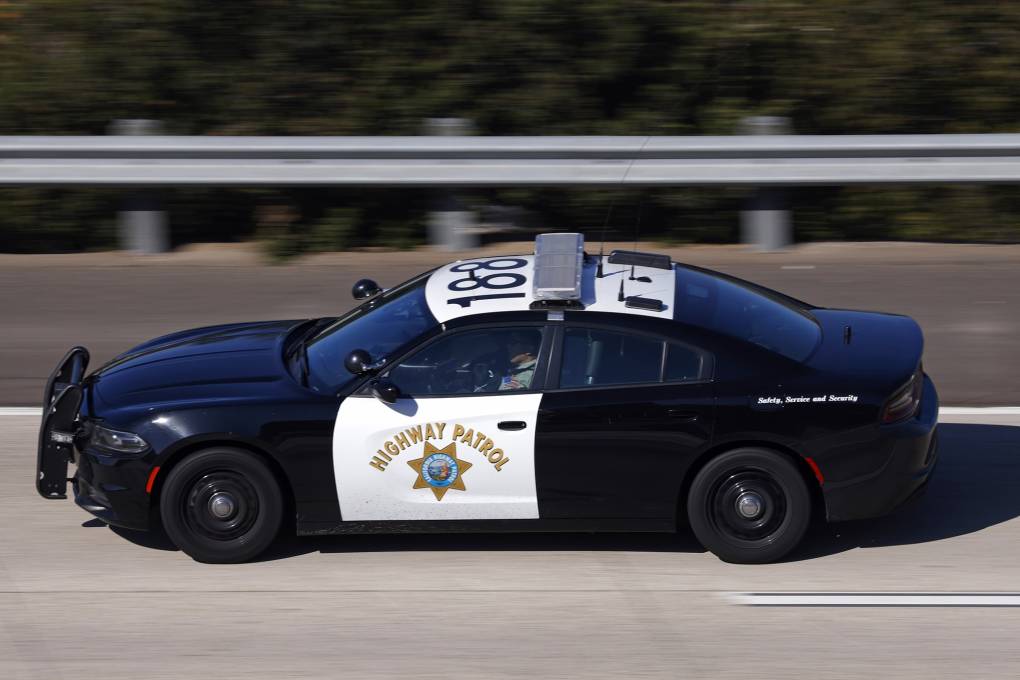
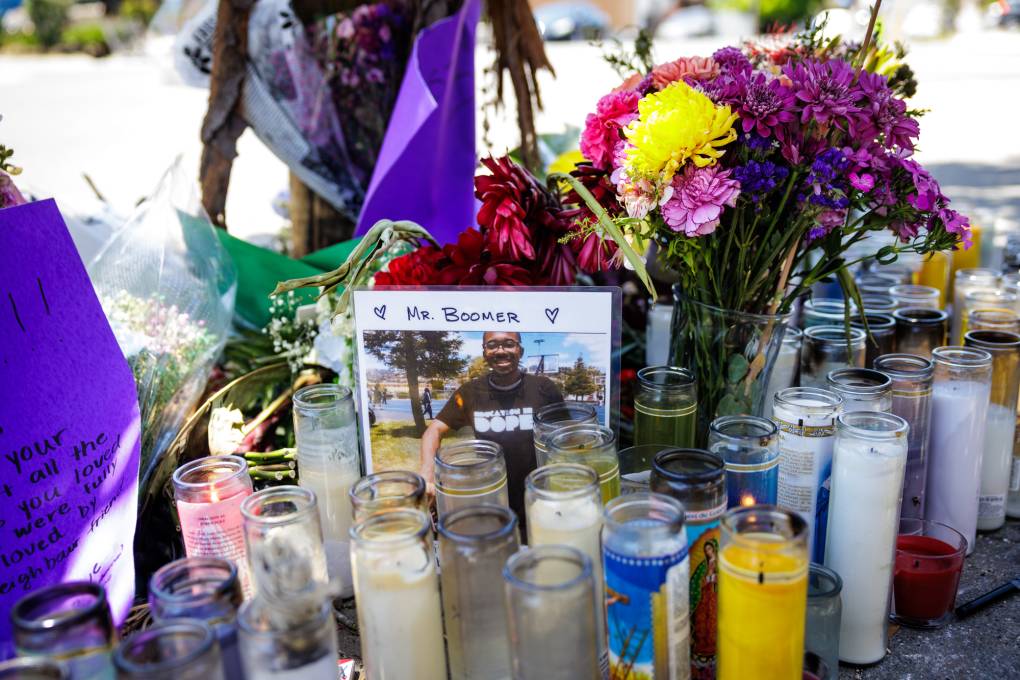
window.__IS_SSR__=true
window.__INITIAL_STATE__={
"attachmentsReducer": {
"audio_0": {
"type": "attachments",
"id": "audio_0",
"imgSizes": {
"kqedFullSize": {
"file": "https://ww2.kqed.org/news/wp-content/themes/KQED-unified/img/audio_bgs/background0.jpg"
}
}
},
"audio_1": {
"type": "attachments",
"id": "audio_1",
"imgSizes": {
"kqedFullSize": {
"file": "https://ww2.kqed.org/news/wp-content/themes/KQED-unified/img/audio_bgs/background1.jpg"
}
}
},
"audio_2": {
"type": "attachments",
"id": "audio_2",
"imgSizes": {
"kqedFullSize": {
"file": "https://ww2.kqed.org/news/wp-content/themes/KQED-unified/img/audio_bgs/background2.jpg"
}
}
},
"audio_3": {
"type": "attachments",
"id": "audio_3",
"imgSizes": {
"kqedFullSize": {
"file": "https://ww2.kqed.org/news/wp-content/themes/KQED-unified/img/audio_bgs/background3.jpg"
}
}
},
"audio_4": {
"type": "attachments",
"id": "audio_4",
"imgSizes": {
"kqedFullSize": {
"file": "https://ww2.kqed.org/news/wp-content/themes/KQED-unified/img/audio_bgs/background4.jpg"
}
}
},
"placeholder": {
"type": "attachments",
"id": "placeholder",
"imgSizes": {
"thumbnail": {
"file": "https://cdn.kqed.org/wp-content/uploads/2024/12/KQED-Default-Image-816638274-2000x1333-1-160x107.jpg",
"width": 160,
"height": 107,
"mimeType": "image/jpeg"
},
"medium": {
"file": "https://cdn.kqed.org/wp-content/uploads/2024/12/KQED-Default-Image-816638274-2000x1333-1-800x533.jpg",
"width": 800,
"height": 533,
"mimeType": "image/jpeg"
},
"medium_large": {
"file": "https://cdn.kqed.org/wp-content/uploads/2024/12/KQED-Default-Image-816638274-2000x1333-1-768x512.jpg",
"width": 768,
"height": 512,
"mimeType": "image/jpeg"
},
"large": {
"file": "https://cdn.kqed.org/wp-content/uploads/2024/12/KQED-Default-Image-816638274-2000x1333-1-1020x680.jpg",
"width": 1020,
"height": 680,
"mimeType": "image/jpeg"
},
"1536x1536": {
"file": "https://cdn.kqed.org/wp-content/uploads/2024/12/KQED-Default-Image-816638274-2000x1333-1-1536x1024.jpg",
"width": 1536,
"height": 1024,
"mimeType": "image/jpeg"
},
"fd-lrg": {
"file": "https://cdn.kqed.org/wp-content/uploads/2024/12/KQED-Default-Image-816638274-2000x1333-1-1536x1024.jpg",
"width": 1536,
"height": 1024,
"mimeType": "image/jpeg"
},
"fd-med": {
"file": "https://cdn.kqed.org/wp-content/uploads/2024/12/KQED-Default-Image-816638274-2000x1333-1-1020x680.jpg",
"width": 1020,
"height": 680,
"mimeType": "image/jpeg"
},
"fd-sm": {
"file": "https://cdn.kqed.org/wp-content/uploads/2024/12/KQED-Default-Image-816638274-2000x1333-1-800x533.jpg",
"width": 800,
"height": 533,
"mimeType": "image/jpeg"
},
"post-thumbnail": {
"file": "https://cdn.kqed.org/wp-content/uploads/2024/12/KQED-Default-Image-816638274-2000x1333-1-672x372.jpg",
"width": 672,
"height": 372,
"mimeType": "image/jpeg"
},
"twentyfourteen-full-width": {
"file": "https://cdn.kqed.org/wp-content/uploads/2024/12/KQED-Default-Image-816638274-2000x1333-1-1038x576.jpg",
"width": 1038,
"height": 576,
"mimeType": "image/jpeg"
},
"xxsmall": {
"file": "https://cdn.kqed.org/wp-content/uploads/2024/12/KQED-Default-Image-816638274-2000x1333-1-160x107.jpg",
"width": 160,
"height": 107,
"mimeType": "image/jpeg"
},
"xsmall": {
"file": "https://cdn.kqed.org/wp-content/uploads/2024/12/KQED-Default-Image-816638274-2000x1333-1-672x372.jpg",
"width": 672,
"height": 372,
"mimeType": "image/jpeg"
},
"small": {
"file": "https://cdn.kqed.org/wp-content/uploads/2024/12/KQED-Default-Image-816638274-2000x1333-1-672x372.jpg",
"width": 672,
"height": 372,
"mimeType": "image/jpeg"
},
"xlarge": {
"file": "https://cdn.kqed.org/wp-content/uploads/2024/12/KQED-Default-Image-816638274-2000x1333-1-1020x680.jpg",
"width": 1020,
"height": 680,
"mimeType": "image/jpeg"
},
"full-width": {
"file": "https://cdn.kqed.org/wp-content/uploads/2024/12/KQED-Default-Image-816638274-2000x1333-1-1920x1280.jpg",
"width": 1920,
"height": 1280,
"mimeType": "image/jpeg"
},
"guest-author-32": {
"file": "https://cdn.kqed.org/wp-content/uploads/2025/01/KQED-Default-Image-816638274-1333x1333-1-160x160.jpg",
"width": 32,
"height": 32,
"mimeType": "image/jpeg"
},
"guest-author-50": {
"file": "https://cdn.kqed.org/wp-content/uploads/2025/01/KQED-Default-Image-816638274-1333x1333-1-160x160.jpg",
"width": 50,
"height": 50,
"mimeType": "image/jpeg"
},
"guest-author-64": {
"file": "https://cdn.kqed.org/wp-content/uploads/2025/01/KQED-Default-Image-816638274-1333x1333-1-160x160.jpg",
"width": 64,
"height": 64,
"mimeType": "image/jpeg"
},
"guest-author-96": {
"file": "https://cdn.kqed.org/wp-content/uploads/2025/01/KQED-Default-Image-816638274-1333x1333-1-160x160.jpg",
"width": 96,
"height": 96,
"mimeType": "image/jpeg"
},
"guest-author-128": {
"file": "https://cdn.kqed.org/wp-content/uploads/2025/01/KQED-Default-Image-816638274-1333x1333-1-160x160.jpg",
"width": 128,
"height": 128,
"mimeType": "image/jpeg"
},
"detail": {
"file": "https://cdn.kqed.org/wp-content/uploads/2025/01/KQED-Default-Image-816638274-1333x1333-1-160x160.jpg",
"width": 160,
"height": 160,
"mimeType": "image/jpeg"
},
"kqedFullSize": {
"file": "https://cdn.kqed.org/wp-content/uploads/2024/12/KQED-Default-Image-816638274-2000x1333-1.jpg",
"width": 2000,
"height": 1333
}
}
},
"news_12042545": {
"type": "attachments",
"id": "news_12042545",
"meta": {
"index": "attachments_1716263798",
"site": "news",
"id": "12042545",
"found": true
},
"title": "California Highway Patrol",
"publishDate": 1748978289,
"status": "inherit",
"parent": 12042539,
"modified": 1757351055,
"caption": "A California Highway Patrol officer drives on State Route 52 on Sept. 28, 2024 in San Diego, California. CHP released new footage of a crash that has reignited debates over Oakland’s police chase rules. \r\n",
"credit": "Kevin Carter/Getty Images",
"altTag": null,
"description": null,
"imgSizes": {
"medium": {
"file": "https://cdn.kqed.org/wp-content/uploads/sites/10/2025/06/CHP-Getty-800x533.jpg",
"width": 800,
"height": 533,
"mimeType": "image/jpeg"
},
"large": {
"file": "https://cdn.kqed.org/wp-content/uploads/sites/10/2025/06/CHP-Getty-1020x680.jpg",
"width": 1020,
"height": 680,
"mimeType": "image/jpeg"
},
"thumbnail": {
"file": "https://cdn.kqed.org/wp-content/uploads/sites/10/2025/06/CHP-Getty-160x107.jpg",
"width": 160,
"height": 107,
"mimeType": "image/jpeg"
},
"1536x1536": {
"file": "https://cdn.kqed.org/wp-content/uploads/sites/10/2025/06/CHP-Getty-1536x1024.jpg",
"width": 1536,
"height": 1024,
"mimeType": "image/jpeg"
},
"post-thumbnail": {
"file": "https://cdn.kqed.org/wp-content/uploads/sites/10/2025/06/CHP-Getty-672x372.jpg",
"width": 672,
"height": 372,
"mimeType": "image/jpeg"
},
"twentyfourteen-full-width": {
"file": "https://cdn.kqed.org/wp-content/uploads/sites/10/2025/06/CHP-Getty-1038x576.jpg",
"width": 1038,
"height": 576,
"mimeType": "image/jpeg"
},
"full-width": {
"file": "https://cdn.kqed.org/wp-content/uploads/sites/10/2025/06/CHP-Getty-1920x1280.jpg",
"width": 1920,
"height": 1280,
"mimeType": "image/jpeg"
},
"kqedFullSize": {
"file": "https://cdn.kqed.org/wp-content/uploads/sites/10/2025/06/CHP-Getty.jpg",
"width": 2000,
"height": 1333
}
},
"isLoading": false,
"fetchFailed": false
},
"news_12042560": {
"type": "attachments",
"id": "news_12042560",
"meta": {
"index": "attachments_1716263798",
"site": "news",
"id": "12042560",
"found": true
},
"title": "250603-OAKLAND PURSUIT POLICY-MD-01-KQED",
"publishDate": 1748985924,
"status": "inherit",
"parent": 0,
"modified": 1748987125,
"caption": "A memorial for Marvin Boomer in Oakland on June 3, 2025. Boomer was killed when a suspect fleeing from the California Highway Patrol struck a fire hydrant, which hit the Castlemont High School teacher, who was out walking with his partner.",
"credit": "Martin do Nascimento/KQED",
"altTag": null,
"description": null,
"imgSizes": {
"medium": {
"file": "https://cdn.kqed.org/wp-content/uploads/sites/10/2025/06/250603-OAKLAND-PURSUIT-POLICY-MD-01-KQED-800x534.jpg",
"width": 800,
"height": 534,
"mimeType": "image/jpeg"
},
"large": {
"file": "https://cdn.kqed.org/wp-content/uploads/sites/10/2025/06/250603-OAKLAND-PURSUIT-POLICY-MD-01-KQED-1020x680.jpg",
"width": 1020,
"height": 680,
"mimeType": "image/jpeg"
},
"thumbnail": {
"file": "https://cdn.kqed.org/wp-content/uploads/sites/10/2025/06/250603-OAKLAND-PURSUIT-POLICY-MD-01-KQED-160x107.jpg",
"width": 160,
"height": 107,
"mimeType": "image/jpeg"
},
"1536x1536": {
"file": "https://cdn.kqed.org/wp-content/uploads/sites/10/2025/06/250603-OAKLAND-PURSUIT-POLICY-MD-01-KQED-1536x1025.jpg",
"width": 1536,
"height": 1025,
"mimeType": "image/jpeg"
},
"post-thumbnail": {
"file": "https://cdn.kqed.org/wp-content/uploads/sites/10/2025/06/250603-OAKLAND-PURSUIT-POLICY-MD-01-KQED-672x372.jpg",
"width": 672,
"height": 372,
"mimeType": "image/jpeg"
},
"twentyfourteen-full-width": {
"file": "https://cdn.kqed.org/wp-content/uploads/sites/10/2025/06/250603-OAKLAND-PURSUIT-POLICY-MD-01-KQED-1038x576.jpg",
"width": 1038,
"height": 576,
"mimeType": "image/jpeg"
},
"full-width": {
"file": "https://cdn.kqed.org/wp-content/uploads/sites/10/2025/06/250603-OAKLAND-PURSUIT-POLICY-MD-01-KQED-1920x1281.jpg",
"width": 1920,
"height": 1281,
"mimeType": "image/jpeg"
},
"kqedFullSize": {
"file": "https://cdn.kqed.org/wp-content/uploads/sites/10/2025/06/250603-OAKLAND-PURSUIT-POLICY-MD-01-KQED.jpg",
"width": 2000,
"height": 1334
}
},
"isLoading": false,
"fetchFailed": false
},
"news_12009389": {
"type": "attachments",
"id": "news_12009389",
"meta": {
"index": "attachments_1716263798",
"site": "news",
"id": "12009389",
"found": true
},
"title": "241010-RISEEASTDEEPDOWN-43-BL-KQED",
"publishDate": 1728931729,
"status": "inherit",
"parent": 0,
"modified": 1728931828,
"caption": "Attendees of a fundraising walking tour for the Rise East collective wait to cross International Boulevard in Oakland on Oct. 10, 2024.",
"credit": "Beth LaBerge/KQED",
"altTag": null,
"description": null,
"imgSizes": {
"medium": {
"file": "https://cdn.kqed.org/wp-content/uploads/sites/10/2024/10/241010-RISEEASTDEEPDOWN-43-BL-KQED-800x533.jpg",
"width": 800,
"height": 533,
"mimeType": "image/jpeg"
},
"large": {
"file": "https://cdn.kqed.org/wp-content/uploads/sites/10/2024/10/241010-RISEEASTDEEPDOWN-43-BL-KQED-1020x680.jpg",
"width": 1020,
"height": 680,
"mimeType": "image/jpeg"
},
"thumbnail": {
"file": "https://cdn.kqed.org/wp-content/uploads/sites/10/2024/10/241010-RISEEASTDEEPDOWN-43-BL-KQED-160x107.jpg",
"width": 160,
"height": 107,
"mimeType": "image/jpeg"
},
"1536x1536": {
"file": "https://cdn.kqed.org/wp-content/uploads/sites/10/2024/10/241010-RISEEASTDEEPDOWN-43-BL-KQED-1536x1024.jpg",
"width": 1536,
"height": 1024,
"mimeType": "image/jpeg"
},
"post-thumbnail": {
"file": "https://cdn.kqed.org/wp-content/uploads/sites/10/2024/10/241010-RISEEASTDEEPDOWN-43-BL-KQED-672x372.jpg",
"width": 672,
"height": 372,
"mimeType": "image/jpeg"
},
"twentyfourteen-full-width": {
"file": "https://cdn.kqed.org/wp-content/uploads/sites/10/2024/10/241010-RISEEASTDEEPDOWN-43-BL-KQED-1038x576.jpg",
"width": 1038,
"height": 576,
"mimeType": "image/jpeg"
},
"full-width": {
"file": "https://cdn.kqed.org/wp-content/uploads/sites/10/2024/10/241010-RISEEASTDEEPDOWN-43-BL-KQED-1920x1280.jpg",
"width": 1920,
"height": 1280,
"mimeType": "image/jpeg"
},
"kqedFullSize": {
"file": "https://cdn.kqed.org/wp-content/uploads/sites/10/2024/10/241010-RISEEASTDEEPDOWN-43-BL-KQED.jpg",
"width": 2000,
"height": 1333
}
},
"isLoading": false,
"fetchFailed": false
},
"news_12020002": {
"type": "attachments",
"id": "news_12020002",
"meta": {
"index": "attachments_1716263798",
"site": "news",
"id": "12020002",
"found": true
},
"title": "241010-RiseEastDeepDown-07-BL",
"publishDate": 1735589948,
"status": "inherit",
"parent": 0,
"modified": 1735590174,
"caption": "Selena Wilson, CEO of the East Oakland Youth Development Center, leads a fundraising walking tour for the Rise East collective along International Boulevard in Oakland on Oct. 10, 2024.",
"credit": "Beth LaBerge/KQED",
"altTag": null,
"description": null,
"imgSizes": {
"medium": {
"file": "https://cdn.kqed.org/wp-content/uploads/sites/10/2024/12/241010-RiseEastDeepDown-07-BL-800x533.jpg",
"width": 800,
"height": 533,
"mimeType": "image/jpeg"
},
"large": {
"file": "https://cdn.kqed.org/wp-content/uploads/sites/10/2024/12/241010-RiseEastDeepDown-07-BL-1020x680.jpg",
"width": 1020,
"height": 680,
"mimeType": "image/jpeg"
},
"thumbnail": {
"file": "https://cdn.kqed.org/wp-content/uploads/sites/10/2024/12/241010-RiseEastDeepDown-07-BL-160x107.jpg",
"width": 160,
"height": 107,
"mimeType": "image/jpeg"
},
"1536x1536": {
"file": "https://cdn.kqed.org/wp-content/uploads/sites/10/2024/12/241010-RiseEastDeepDown-07-BL-1536x1024.jpg",
"width": 1536,
"height": 1024,
"mimeType": "image/jpeg"
},
"post-thumbnail": {
"file": "https://cdn.kqed.org/wp-content/uploads/sites/10/2024/12/241010-RiseEastDeepDown-07-BL-672x372.jpg",
"width": 672,
"height": 372,
"mimeType": "image/jpeg"
},
"twentyfourteen-full-width": {
"file": "https://cdn.kqed.org/wp-content/uploads/sites/10/2024/12/241010-RiseEastDeepDown-07-BL-1038x576.jpg",
"width": 1038,
"height": 576,
"mimeType": "image/jpeg"
},
"full-width": {
"file": "https://cdn.kqed.org/wp-content/uploads/sites/10/2024/12/241010-RiseEastDeepDown-07-BL-1920x1280.jpg",
"width": 1920,
"height": 1280,
"mimeType": "image/jpeg"
},
"kqedFullSize": {
"file": "https://cdn.kqed.org/wp-content/uploads/sites/10/2024/12/241010-RiseEastDeepDown-07-BL.jpg",
"width": 2000,
"height": 1333
}
},
"isLoading": false,
"fetchFailed": false
},
"news_12037105": {
"type": "attachments",
"id": "news_12037105",
"meta": {
"index": "attachments_1716263798",
"site": "news",
"id": "12037105",
"found": true
},
"title": "The Federal Courthouse in Oakland on Aug. 16, 2023.",
"publishDate": 1745345804,
"status": "inherit",
"parent": 12037103,
"modified": 1745345829,
"caption": "The Federal Courthouse in Oakland on Aug. 16, 2023.",
"credit": "Martin do Nascimento/KQED",
"altTag": null,
"description": null,
"imgSizes": {
"medium": {
"file": "https://cdn.kqed.org/wp-content/uploads/sites/10/2025/04/230816-Dublin-Womens-Prison-Suit-MD-01_qed-800x533.jpg",
"width": 800,
"height": 533,
"mimeType": "image/jpeg"
},
"large": {
"file": "https://cdn.kqed.org/wp-content/uploads/sites/10/2025/04/230816-Dublin-Womens-Prison-Suit-MD-01_qed-1020x680.jpg",
"width": 1020,
"height": 680,
"mimeType": "image/jpeg"
},
"thumbnail": {
"file": "https://cdn.kqed.org/wp-content/uploads/sites/10/2025/04/230816-Dublin-Womens-Prison-Suit-MD-01_qed-160x107.jpg",
"width": 160,
"height": 107,
"mimeType": "image/jpeg"
},
"1536x1536": {
"file": "https://cdn.kqed.org/wp-content/uploads/sites/10/2025/04/230816-Dublin-Womens-Prison-Suit-MD-01_qed-1536x1024.jpg",
"width": 1536,
"height": 1024,
"mimeType": "image/jpeg"
},
"post-thumbnail": {
"file": "https://cdn.kqed.org/wp-content/uploads/sites/10/2025/04/230816-Dublin-Womens-Prison-Suit-MD-01_qed-672x372.jpg",
"width": 672,
"height": 372,
"mimeType": "image/jpeg"
},
"twentyfourteen-full-width": {
"file": "https://cdn.kqed.org/wp-content/uploads/sites/10/2025/04/230816-Dublin-Womens-Prison-Suit-MD-01_qed-1038x576.jpg",
"width": 1038,
"height": 576,
"mimeType": "image/jpeg"
},
"full-width": {
"file": "https://cdn.kqed.org/wp-content/uploads/sites/10/2025/04/230816-Dublin-Womens-Prison-Suit-MD-01_qed-1920x1280.jpg",
"width": 1920,
"height": 1280,
"mimeType": "image/jpeg"
},
"kqedFullSize": {
"file": "https://cdn.kqed.org/wp-content/uploads/sites/10/2025/04/230816-Dublin-Womens-Prison-Suit-MD-01_qed.jpg",
"width": 2000,
"height": 1333
}
},
"isLoading": false,
"fetchFailed": false
},
"news_12030531": {
"type": "attachments",
"id": "news_12030531",
"meta": {
"index": "attachments_1716263798",
"site": "news",
"id": "12030531",
"found": true
},
"title": "Stock Photography. Generic Boxing Image. Everlast",
"publishDate": 1741565488,
"status": "inherit",
"parent": 12030525,
"modified": 1768507687,
"caption": "Everlast boxing gloves and a medicine ball. ",
"credit": "Ross Land/Getty Images",
"altTag": null,
"description": null,
"imgSizes": {
"medium": {
"file": "https://cdn.kqed.org/wp-content/uploads/sites/10/2025/03/GettyImages-55804139_qed-800x530.jpg",
"width": 800,
"height": 530,
"mimeType": "image/jpeg"
},
"large": {
"file": "https://cdn.kqed.org/wp-content/uploads/sites/10/2025/03/GettyImages-55804139_qed-1020x676.jpg",
"width": 1020,
"height": 676,
"mimeType": "image/jpeg"
},
"thumbnail": {
"file": "https://cdn.kqed.org/wp-content/uploads/sites/10/2025/03/GettyImages-55804139_qed-160x106.jpg",
"width": 160,
"height": 106,
"mimeType": "image/jpeg"
},
"1536x1536": {
"file": "https://cdn.kqed.org/wp-content/uploads/sites/10/2025/03/GettyImages-55804139_qed-1536x1018.jpg",
"width": 1536,
"height": 1018,
"mimeType": "image/jpeg"
},
"post-thumbnail": {
"file": "https://cdn.kqed.org/wp-content/uploads/sites/10/2025/03/GettyImages-55804139_qed-672x372.jpg",
"width": 672,
"height": 372,
"mimeType": "image/jpeg"
},
"twentyfourteen-full-width": {
"file": "https://cdn.kqed.org/wp-content/uploads/sites/10/2025/03/GettyImages-55804139_qed-1038x576.jpg",
"width": 1038,
"height": 576,
"mimeType": "image/jpeg"
},
"full-width": {
"file": "https://cdn.kqed.org/wp-content/uploads/sites/10/2025/03/GettyImages-55804139_qed-1920x1272.jpg",
"width": 1920,
"height": 1272,
"mimeType": "image/jpeg"
},
"kqedFullSize": {
"file": "https://cdn.kqed.org/wp-content/uploads/sites/10/2025/03/GettyImages-55804139_qed.jpg",
"width": 2000,
"height": 1325
}
},
"isLoading": false,
"fetchFailed": false
},
"news_12029701": {
"type": "attachments",
"id": "news_12029701",
"meta": {
"index": "attachments_1716263798",
"site": "news",
"id": "12029701",
"found": true
},
"title": "250304-OAKLANDHIGHSTREETENCAMPMENT-19-BL-KQED",
"publishDate": 1741127852,
"status": "inherit",
"parent": 0,
"modified": 1741127893,
"caption": "Gilberto Gonzales, 64, packs belongings to move outside of his shelter on Alameda Avenue in Oakland on March 4, 2025, before crews move in to clear the area. He resided in the High Street encampment for 13 years.",
"credit": "Beth LaBerge/KQED",
"altTag": null,
"description": null,
"imgSizes": {
"medium": {
"file": "https://cdn.kqed.org/wp-content/uploads/sites/10/2025/03/250304-OAKLANDHIGHSTREETENCAMPMENT-19-BL-KQED-800x533.jpg",
"width": 800,
"height": 533,
"mimeType": "image/jpeg"
},
"large": {
"file": "https://cdn.kqed.org/wp-content/uploads/sites/10/2025/03/250304-OAKLANDHIGHSTREETENCAMPMENT-19-BL-KQED-1020x680.jpg",
"width": 1020,
"height": 680,
"mimeType": "image/jpeg"
},
"thumbnail": {
"file": "https://cdn.kqed.org/wp-content/uploads/sites/10/2025/03/250304-OAKLANDHIGHSTREETENCAMPMENT-19-BL-KQED-160x107.jpg",
"width": 160,
"height": 107,
"mimeType": "image/jpeg"
},
"1536x1536": {
"file": "https://cdn.kqed.org/wp-content/uploads/sites/10/2025/03/250304-OAKLANDHIGHSTREETENCAMPMENT-19-BL-KQED-1536x1024.jpg",
"width": 1536,
"height": 1024,
"mimeType": "image/jpeg"
},
"post-thumbnail": {
"file": "https://cdn.kqed.org/wp-content/uploads/sites/10/2025/03/250304-OAKLANDHIGHSTREETENCAMPMENT-19-BL-KQED-672x372.jpg",
"width": 672,
"height": 372,
"mimeType": "image/jpeg"
},
"twentyfourteen-full-width": {
"file": "https://cdn.kqed.org/wp-content/uploads/sites/10/2025/03/250304-OAKLANDHIGHSTREETENCAMPMENT-19-BL-KQED-1038x576.jpg",
"width": 1038,
"height": 576,
"mimeType": "image/jpeg"
},
"full-width": {
"file": "https://cdn.kqed.org/wp-content/uploads/sites/10/2025/03/250304-OAKLANDHIGHSTREETENCAMPMENT-19-BL-KQED-1920x1280.jpg",
"width": 1920,
"height": 1280,
"mimeType": "image/jpeg"
},
"kqedFullSize": {
"file": "https://cdn.kqed.org/wp-content/uploads/sites/10/2025/03/250304-OAKLANDHIGHSTREETENCAMPMENT-19-BL-KQED.jpg",
"width": 2000,
"height": 1333
}
},
"isLoading": false,
"fetchFailed": false
},
"news_12029452": {
"type": "attachments",
"id": "news_12029452",
"meta": {
"index": "attachments_1716263798",
"site": "news",
"id": "12029452",
"found": true
},
"title": "Boxing gloves on boxing ring",
"publishDate": 1741025376,
"status": "inherit",
"parent": 12029450,
"modified": 1741025445,
"caption": "Federal prosecutors have charged Solomon Howard, former executive director of the East Oakland Boxing Association, with mail fraud and tax evasion, alleging he embezzled over $100,000 — including a donation from Steph and Ayesha Curry.",
"credit": "Kathrin Ziegler/Getty Images",
"altTag": null,
"description": null,
"imgSizes": {
"medium": {
"file": "https://cdn.kqed.org/wp-content/uploads/sites/10/2025/03/BoxingGetty-800x550.jpg",
"width": 800,
"height": 550,
"mimeType": "image/jpeg"
},
"large": {
"file": "https://cdn.kqed.org/wp-content/uploads/sites/10/2025/03/BoxingGetty-1020x701.jpg",
"width": 1020,
"height": 701,
"mimeType": "image/jpeg"
},
"thumbnail": {
"file": "https://cdn.kqed.org/wp-content/uploads/sites/10/2025/03/BoxingGetty-160x110.jpg",
"width": 160,
"height": 110,
"mimeType": "image/jpeg"
},
"1536x1536": {
"file": "https://cdn.kqed.org/wp-content/uploads/sites/10/2025/03/BoxingGetty-1536x1056.jpg",
"width": 1536,
"height": 1056,
"mimeType": "image/jpeg"
},
"post-thumbnail": {
"file": "https://cdn.kqed.org/wp-content/uploads/sites/10/2025/03/BoxingGetty-672x372.jpg",
"width": 672,
"height": 372,
"mimeType": "image/jpeg"
},
"twentyfourteen-full-width": {
"file": "https://cdn.kqed.org/wp-content/uploads/sites/10/2025/03/BoxingGetty-1038x576.jpg",
"width": 1038,
"height": 576,
"mimeType": "image/jpeg"
},
"full-width": {
"file": "https://cdn.kqed.org/wp-content/uploads/sites/10/2025/03/BoxingGetty-1920x1320.jpg",
"width": 1920,
"height": 1320,
"mimeType": "image/jpeg"
},
"kqedFullSize": {
"file": "https://cdn.kqed.org/wp-content/uploads/sites/10/2025/03/BoxingGetty.jpg",
"width": 2000,
"height": 1375
}
},
"isLoading": false,
"fetchFailed": false
},
"news_12011589": {
"type": "attachments",
"id": "news_12011589",
"meta": {
"index": "attachments_1716263798",
"site": "news",
"id": "12011589",
"found": true
},
"title": "241029-OAKLANDSCHOLARSHIPSTUDENTS-26-BL-KQED",
"publishDate": 1730242137,
"status": "inherit",
"parent": 0,
"modified": 1730419640,
"caption": "The Northeastern University campus in Oakland on Oct. 29, 2024, formerly Mills College.",
"credit": "Beth LaBerge/KQED",
"altTag": null,
"description": null,
"imgSizes": {
"medium": {
"file": "https://cdn.kqed.org/wp-content/uploads/sites/10/2024/10/241029-OAKLANDSCHOLARSHIPSTUDENTS-26-BL-KQED-800x533.jpg",
"width": 800,
"height": 533,
"mimeType": "image/jpeg"
},
"large": {
"file": "https://cdn.kqed.org/wp-content/uploads/sites/10/2024/10/241029-OAKLANDSCHOLARSHIPSTUDENTS-26-BL-KQED-1020x680.jpg",
"width": 1020,
"height": 680,
"mimeType": "image/jpeg"
},
"thumbnail": {
"file": "https://cdn.kqed.org/wp-content/uploads/sites/10/2024/10/241029-OAKLANDSCHOLARSHIPSTUDENTS-26-BL-KQED-160x107.jpg",
"width": 160,
"height": 107,
"mimeType": "image/jpeg"
},
"1536x1536": {
"file": "https://cdn.kqed.org/wp-content/uploads/sites/10/2024/10/241029-OAKLANDSCHOLARSHIPSTUDENTS-26-BL-KQED-1536x1024.jpg",
"width": 1536,
"height": 1024,
"mimeType": "image/jpeg"
},
"post-thumbnail": {
"file": "https://cdn.kqed.org/wp-content/uploads/sites/10/2024/10/241029-OAKLANDSCHOLARSHIPSTUDENTS-26-BL-KQED-672x372.jpg",
"width": 672,
"height": 372,
"mimeType": "image/jpeg"
},
"twentyfourteen-full-width": {
"file": "https://cdn.kqed.org/wp-content/uploads/sites/10/2024/10/241029-OAKLANDSCHOLARSHIPSTUDENTS-26-BL-KQED-1038x576.jpg",
"width": 1038,
"height": 576,
"mimeType": "image/jpeg"
},
"full-width": {
"file": "https://cdn.kqed.org/wp-content/uploads/sites/10/2024/10/241029-OAKLANDSCHOLARSHIPSTUDENTS-26-BL-KQED-1920x1280.jpg",
"width": 1920,
"height": 1280,
"mimeType": "image/jpeg"
},
"kqedFullSize": {
"file": "https://cdn.kqed.org/wp-content/uploads/sites/10/2024/10/241029-OAKLANDSCHOLARSHIPSTUDENTS-26-BL-KQED.jpg",
"width": 2000,
"height": 1333
}
},
"isLoading": false,
"fetchFailed": false
},
"news_11969248": {
"type": "attachments",
"id": "news_11969248",
"meta": {
"index": "attachments_1716263798",
"site": "news",
"id": "11969248",
"found": true
},
"title": "231206-LateefahSimon-19-BL-KQED",
"publishDate": 1701973127,
"status": "inherit",
"parent": 12047037,
"modified": 1751576475,
"caption": "Lateefah Simon poses for a portrait on Dec. 6, 2023, after signing paperwork for her congressional campaign candidacy at the Alameda County Registrar of Voters Office in Oakland.",
"credit": "Beth LaBerge/KQED",
"altTag": null,
"description": null,
"imgSizes": {
"medium": {
"file": "https://cdn.kqed.org/wp-content/uploads/sites/10/2023/12/231206-LateefahSimon-19-BL-KQED-800x533.jpg",
"width": 800,
"height": 533,
"mimeType": "image/jpeg"
},
"large": {
"file": "https://cdn.kqed.org/wp-content/uploads/sites/10/2023/12/231206-LateefahSimon-19-BL-KQED-1020x680.jpg",
"width": 1020,
"height": 680,
"mimeType": "image/jpeg"
},
"thumbnail": {
"file": "https://cdn.kqed.org/wp-content/uploads/sites/10/2023/12/231206-LateefahSimon-19-BL-KQED-160x107.jpg",
"width": 160,
"height": 107,
"mimeType": "image/jpeg"
},
"1536x1536": {
"file": "https://cdn.kqed.org/wp-content/uploads/sites/10/2023/12/231206-LateefahSimon-19-BL-KQED-1536x1024.jpg",
"width": 1536,
"height": 1024,
"mimeType": "image/jpeg"
},
"post-thumbnail": {
"file": "https://cdn.kqed.org/wp-content/uploads/sites/10/2023/12/231206-LateefahSimon-19-BL-KQED-672x372.jpg",
"width": 672,
"height": 372,
"mimeType": "image/jpeg"
},
"twentyfourteen-full-width": {
"file": "https://cdn.kqed.org/wp-content/uploads/sites/10/2023/12/231206-LateefahSimon-19-BL-KQED-1038x576.jpg",
"width": 1038,
"height": 576,
"mimeType": "image/jpeg"
},
"full-width": {
"file": "https://cdn.kqed.org/wp-content/uploads/sites/10/2023/12/231206-LateefahSimon-19-BL-KQED-1920x1280.jpg",
"width": 1920,
"height": 1280,
"mimeType": "image/jpeg"
},
"kqedFullSize": {
"file": "https://cdn.kqed.org/wp-content/uploads/sites/10/2023/12/231206-LateefahSimon-19-BL-KQED.jpg",
"width": 2000,
"height": 1333
}
},
"isLoading": false,
"fetchFailed": false
},
"news_12008926": {
"type": "attachments",
"id": "news_12008926",
"meta": {
"index": "attachments_1716263798",
"site": "news",
"id": "12008926",
"found": true
},
"title": "Deep Down",
"publishDate": 1728592353,
"status": "inherit",
"parent": 12008909,
"modified": 1728592382,
"caption": "Last month, KQED launched “Deep Down,” an Instagram series that looks at Deep East Oakland with compassion and love. Produced by Olivia Cruz Mayeda, the series is guided by a central question: How could a $100 million investment bring Deep East Oakland's longtime residents relief?",
"credit": null,
"altTag": null,
"description": null,
"imgSizes": {
"medium": {
"file": "https://cdn.kqed.org/wp-content/uploads/sites/10/2024/10/Deep-Down-800x533.jpg",
"width": 800,
"height": 533,
"mimeType": "image/jpeg"
},
"large": {
"file": "https://cdn.kqed.org/wp-content/uploads/sites/10/2024/10/Deep-Down-1020x680.jpg",
"width": 1020,
"height": 680,
"mimeType": "image/jpeg"
},
"thumbnail": {
"file": "https://cdn.kqed.org/wp-content/uploads/sites/10/2024/10/Deep-Down-160x107.jpg",
"width": 160,
"height": 107,
"mimeType": "image/jpeg"
},
"1536x1536": {
"file": "https://cdn.kqed.org/wp-content/uploads/sites/10/2024/10/Deep-Down-1536x1024.jpg",
"width": 1536,
"height": 1024,
"mimeType": "image/jpeg"
},
"post-thumbnail": {
"file": "https://cdn.kqed.org/wp-content/uploads/sites/10/2024/10/Deep-Down-672x372.jpg",
"width": 672,
"height": 372,
"mimeType": "image/jpeg"
},
"twentyfourteen-full-width": {
"file": "https://cdn.kqed.org/wp-content/uploads/sites/10/2024/10/Deep-Down-1038x576.jpg",
"width": 1038,
"height": 576,
"mimeType": "image/jpeg"
},
"full-width": {
"file": "https://cdn.kqed.org/wp-content/uploads/sites/10/2024/10/Deep-Down-1920x1280.jpg",
"width": 1920,
"height": 1280,
"mimeType": "image/jpeg"
},
"kqedFullSize": {
"file": "https://cdn.kqed.org/wp-content/uploads/sites/10/2024/10/Deep-Down.jpg",
"width": 2000,
"height": 1333
}
},
"isLoading": false,
"fetchFailed": false
},
"news_11992891": {
"type": "attachments",
"id": "news_11992891",
"meta": {
"index": "attachments_1716263798",
"site": "news",
"id": "11992891",
"found": true
},
"title": "Seattle Mariners v Oakland Athletics",
"publishDate": 1719963193,
"status": "inherit",
"parent": 11992883,
"modified": 1719965246,
"caption": "During Tuesday’s meeting, the Oakland City Council voted 5–3 to approve a version of the city budget originally introduced by Mayor Sheng Thao’s office on May 24, with a contingency plan should the Coliseum sale not go through by September.",
"credit": "Thearon W. Henderson/Getty Images",
"altTag": null,
"description": null,
"imgSizes": {
"medium": {
"file": "https://cdn.kqed.org/wp-content/uploads/sites/10/2024/07/Oakland-Coliseum_-Getty-Images-800x540.jpg",
"width": 800,
"height": 540,
"mimeType": "image/jpeg"
},
"large": {
"file": "https://cdn.kqed.org/wp-content/uploads/sites/10/2024/07/Oakland-Coliseum_-Getty-Images-1020x689.jpg",
"width": 1020,
"height": 689,
"mimeType": "image/jpeg"
},
"thumbnail": {
"file": "https://cdn.kqed.org/wp-content/uploads/sites/10/2024/07/Oakland-Coliseum_-Getty-Images-160x108.jpg",
"width": 160,
"height": 108,
"mimeType": "image/jpeg"
},
"1536x1536": {
"file": "https://cdn.kqed.org/wp-content/uploads/sites/10/2024/07/Oakland-Coliseum_-Getty-Images-1536x1037.jpg",
"width": 1536,
"height": 1037,
"mimeType": "image/jpeg"
},
"post-thumbnail": {
"file": "https://cdn.kqed.org/wp-content/uploads/sites/10/2024/07/Oakland-Coliseum_-Getty-Images-672x372.jpg",
"width": 672,
"height": 372,
"mimeType": "image/jpeg"
},
"twentyfourteen-full-width": {
"file": "https://cdn.kqed.org/wp-content/uploads/sites/10/2024/07/Oakland-Coliseum_-Getty-Images-1038x576.jpg",
"width": 1038,
"height": 576,
"mimeType": "image/jpeg"
},
"full-width": {
"file": "https://cdn.kqed.org/wp-content/uploads/sites/10/2024/07/Oakland-Coliseum_-Getty-Images-1920x1296.jpg",
"width": 1920,
"height": 1296,
"mimeType": "image/jpeg"
},
"kqedFullSize": {
"file": "https://cdn.kqed.org/wp-content/uploads/sites/10/2024/07/Oakland-Coliseum_-Getty-Images.jpg",
"width": 2000,
"height": 1350
}
},
"isLoading": false,
"fetchFailed": false
}
},
"audioPlayerReducer": {
"postId": "stream_live",
"isPaused": true,
"isPlaying": false,
"pfsActive": false,
"pledgeModalIsOpen": true,
"playerDrawerIsOpen": false,
"liveAudioPlayStartedAt": 0,
"liveAudioPlayContext": ""
},
"authorsReducer": {
"matthewgreen": {
"type": "authors",
"id": "1263",
"meta": {
"index": "authors_1716337520",
"id": "1263",
"found": true
},
"name": "Matthew Green",
"firstName": "Matthew",
"lastName": "Green",
"slug": "matthewgreen",
"email": "mgreen@kqed.org",
"display_author_email": false,
"staff_mastheads": [],
"title": "KQED Editor/Reporter",
"bio": "Matthew Green is a digital media producer for KQED News. He previously produced \u003ca href=\"http://www.kqed.org/lowdown\">The Lowdown\u003c/a>, KQED’s multimedia news education blog. Matthew's written for numerous Bay Area publications, including the Oakland Tribune and San Francisco Chronicle. He also taught journalism classes at Fremont High School in East Oakland.\r\n\r\nEmail: mgreen@kqed.org; Twitter: @MGreenKQED",
"avatar": "https://secure.gravatar.com/avatar/3bf498d1267ca02c8494f33d8cfc575e?s=600&d=blank&r=g",
"twitter": "MGreenKQED",
"facebook": null,
"instagram": null,
"linkedin": null,
"sites": [
{
"site": "news",
"roles": []
},
{
"site": "lowdown",
"roles": []
},
{
"site": "science",
"roles": []
},
{
"site": "education",
"roles": []
},
{
"site": "quest",
"roles": []
},
{
"site": "liveblog",
"roles": []
}
],
"headData": {
"title": "Matthew Green | KQED",
"description": "KQED Editor/Reporter",
"ogImgSrc": "https://secure.gravatar.com/avatar/3bf498d1267ca02c8494f33d8cfc575e?s=600&d=blank&r=g",
"twImgSrc": "https://secure.gravatar.com/avatar/3bf498d1267ca02c8494f33d8cfc575e?s=600&d=blank&r=g"
},
"isLoading": false,
"link": "/author/matthewgreen"
},
"ecruzguevarra": {
"type": "authors",
"id": "8654",
"meta": {
"index": "authors_1716337520",
"id": "8654",
"found": true
},
"name": "Ericka Cruz Guevarra",
"firstName": "Ericka",
"lastName": "Cruz Guevarra",
"slug": "ecruzguevarra",
"email": "ecruzguevarra@kqed.org",
"display_author_email": true,
"staff_mastheads": [
"news"
],
"title": "Producer, The Bay Podcast",
"bio": "Ericka Cruz Guevarra is host of \u003ca href=\"https://www.kqed.org/podcasts/thebay\">\u003cem>The Bay\u003c/em>\u003c/a> podcast at KQED. Before host, she was the show’s producer. Her work in that capacity includes a three-part reported series on policing in Vallejo, which won a 2020 excellence in journalism award from the Society of Professional Journalists. Ericka has worked as a breaking news reporter at Oregon Public Broadcasting, helped produce the Code Switch podcast, and was KQED’s inaugural Raul Ramirez Diversity Fund intern. She’s also an alumna of NPR’s Next Generation Radio program. Send her an email if you have strong feelings about whether Fairfield and Suisun City are the Bay. Ericka is represented by SAG-AFTRA.",
"avatar": "https://secure.gravatar.com/avatar/accefc1de4bafc7e234b69bcb9b6f6536c130fd84709bc3069ef11a78787e1bb?s=600&d=blank&r=g",
"twitter": "NotoriousECG",
"bluesky": null,
"facebook": null,
"instagram": null,
"linkedin": null,
"sites": [
{
"site": "arts",
"roles": [
"subscriber"
]
},
{
"site": "news",
"roles": [
"editor",
"manage_categories"
]
},
{
"site": "futureofyou",
"roles": [
"subscriber"
]
},
{
"site": "stateofhealth",
"roles": [
"subscriber"
]
},
{
"site": "science",
"roles": [
"editor"
]
},
{
"site": "forum",
"roles": [
"subscriber"
]
}
],
"headData": {
"title": "Ericka Cruz Guevarra | KQED",
"description": "Producer, The Bay Podcast",
"ogImgSrc": "https://secure.gravatar.com/avatar/accefc1de4bafc7e234b69bcb9b6f6536c130fd84709bc3069ef11a78787e1bb?s=600&d=blank&r=g",
"twImgSrc": "https://secure.gravatar.com/avatar/accefc1de4bafc7e234b69bcb9b6f6536c130fd84709bc3069ef11a78787e1bb?s=600&d=blank&r=g"
},
"isLoading": false,
"link": "/author/ecruzguevarra"
},
"amontecillo": {
"type": "authors",
"id": "11649",
"meta": {
"index": "authors_1716337520",
"id": "11649",
"found": true
},
"name": "Alan Montecillo",
"firstName": "Alan",
"lastName": "Montecillo",
"slug": "amontecillo",
"email": "amontecillo@kqed.org",
"display_author_email": false,
"staff_mastheads": [
"news"
],
"title": "KQED Contributor",
"bio": "Alan Montecillo is the senior editor of \u003cem>\u003ca href=\"http://kqed.org/thebay\">The Bay\u003c/a>, \u003c/em> KQED's local news podcast. Before moving to the Bay Area, he worked as a senior talk show producer for WILL in Champaign-Urbana, Illinois and at Oregon Public Broadcasting in Portland, Oregon. He has won journalism awards from the Society of Professional Journalists Northern California, the Public Media Journalists Association, The Signal Awards, and has also received a regional Edward R. Murrow award. Alan is a Filipino American from Hong Kong and a graduate of Reed College.",
"avatar": "https://secure.gravatar.com/avatar/268f53a2066899ea9efdd8a5900218b17c822d9862cbc9326cccec53ef41d349?s=600&d=blank&r=g",
"twitter": "alanmontecillo",
"bluesky": null,
"facebook": null,
"instagram": null,
"linkedin": null,
"sites": [
{
"site": "",
"roles": [
"editor"
]
},
{
"site": "news",
"roles": [
"editor",
"manage_categories"
]
}
],
"headData": {
"title": "Alan Montecillo | KQED",
"description": "KQED Contributor",
"ogImgSrc": "https://secure.gravatar.com/avatar/268f53a2066899ea9efdd8a5900218b17c822d9862cbc9326cccec53ef41d349?s=600&d=blank&r=g",
"twImgSrc": "https://secure.gravatar.com/avatar/268f53a2066899ea9efdd8a5900218b17c822d9862cbc9326cccec53ef41d349?s=600&d=blank&r=g"
},
"isLoading": false,
"link": "/author/amontecillo"
},
"otaylor": {
"type": "authors",
"id": "11770",
"meta": {
"index": "authors_1716337520",
"id": "11770",
"found": true
},
"name": "Otis R. Taylor Jr.",
"firstName": "Otis R.",
"lastName": "Taylor Jr.",
"slug": "otaylor",
"email": "otaylor@kqed.org",
"display_author_email": false,
"staff_mastheads": [
"news"
],
"title": "KQED Editor",
"bio": null,
"avatar": "https://secure.gravatar.com/avatar/fe73e14d4842ac8e1c03d57def2530f57f1c5b0ca7d4a987ccc5bd90956cb7c6?s=600&d=blank&r=g",
"twitter": "otisrtaylorjr",
"bluesky": null,
"facebook": null,
"instagram": null,
"linkedin": null,
"sites": [
{
"site": "arts",
"roles": [
"subscriber"
]
},
{
"site": "news",
"roles": [
"subscriber"
]
},
{
"site": "science",
"roles": [
"subscriber"
]
},
{
"site": "liveblog",
"roles": [
"subscriber"
]
}
],
"headData": {
"title": "Otis R. Taylor Jr. | KQED",
"description": "KQED Editor",
"ogImgSrc": "https://secure.gravatar.com/avatar/fe73e14d4842ac8e1c03d57def2530f57f1c5b0ca7d4a987ccc5bd90956cb7c6?s=600&d=blank&r=g",
"twImgSrc": "https://secure.gravatar.com/avatar/fe73e14d4842ac8e1c03d57def2530f57f1c5b0ca7d4a987ccc5bd90956cb7c6?s=600&d=blank&r=g"
},
"isLoading": false,
"link": "/author/otaylor"
},
"afinney": {
"type": "authors",
"id": "11772",
"meta": {
"index": "authors_1716337520",
"id": "11772",
"found": true
},
"name": "Annelise Finney",
"firstName": "Annelise",
"lastName": "Finney",
"slug": "afinney",
"email": "afinney@kqed.org",
"display_author_email": true,
"staff_mastheads": [
"news"
],
"title": "Reporter",
"bio": "Annelise reports on reparations in California and East Bay politics. She co-produced the Sunday Music Drop, a limited-term radio series featuring Bay Area musicians that aired between Sept 2022 and Oct 2024. She joined KQED in 2021 as a general assignment reporter and is an alumna of KALW's Audio Academy. She was born and raised in the East Bay. She is currently away from KQED completing a year-long reporting project in Berlin, Germany as a Alexander Von Humboldt German Chancellor Fellow.",
"avatar": "https://secure.gravatar.com/avatar/5fded66cae47704cdfc5021cde0f3aa4?s=600&d=blank&r=g",
"twitter": null,
"facebook": null,
"instagram": null,
"linkedin": null,
"sites": [
{
"site": "news",
"roles": [
"editor"
]
},
{
"site": "liveblog",
"roles": [
"author"
]
}
],
"headData": {
"title": "Annelise Finney | KQED",
"description": "Reporter",
"ogImgSrc": "https://secure.gravatar.com/avatar/5fded66cae47704cdfc5021cde0f3aa4?s=600&d=blank&r=g",
"twImgSrc": "https://secure.gravatar.com/avatar/5fded66cae47704cdfc5021cde0f3aa4?s=600&d=blank&r=g"
},
"isLoading": false,
"link": "/author/afinney"
},
"jessicakariisa": {
"type": "authors",
"id": "11831",
"meta": {
"index": "authors_1716337520",
"id": "11831",
"found": true
},
"name": "Jessica Kariisa",
"firstName": "Jessica",
"lastName": "Kariisa",
"slug": "jessicakariisa",
"email": "jkariisa@kqed.org",
"display_author_email": false,
"staff_mastheads": [],
"title": "Producer, The Bay",
"bio": "Jessica Kariisa is the producer of The Bay. She first joined KQED as an intern for The California Report Magazine, after which she became an on-call producer. She reported a Bay Curious episode on the use of rap lyrics in criminal trials which won a Society of Professional Journalists award in 2023 for Excellence in Features Journalism and the 2023 Signal Award for Best Conversation Starter. She’s worked on podcasts for Snap Judgment and American Public Media. Before embarking on her audio career, she was a music journalist.\r\n\r\nJessica Kariisa is represented by SAG-AFTRA.",
"avatar": "https://secure.gravatar.com/avatar/522e97b28ac0b3d411621c0fde8f3419c7b71ea2c5c262c57c4bb600963f328c?s=600&d=blank&r=g",
"twitter": null,
"bluesky": null,
"facebook": null,
"instagram": null,
"linkedin": null,
"sites": [
{
"site": "arts",
"roles": [
"author"
]
},
{
"site": "news",
"roles": [
"editor",
"manage_categories"
]
}
],
"headData": {
"title": "Jessica Kariisa | KQED",
"description": "Producer, The Bay",
"ogImgSrc": "https://secure.gravatar.com/avatar/522e97b28ac0b3d411621c0fde8f3419c7b71ea2c5c262c57c4bb600963f328c?s=600&d=blank&r=g",
"twImgSrc": "https://secure.gravatar.com/avatar/522e97b28ac0b3d411621c0fde8f3419c7b71ea2c5c262c57c4bb600963f328c?s=600&d=blank&r=g"
},
"isLoading": false,
"link": "/author/jessicakariisa"
},
"kdebenedetti": {
"type": "authors",
"id": "11913",
"meta": {
"index": "authors_1716337520",
"id": "11913",
"found": true
},
"name": "Katie DeBenedetti",
"firstName": "Katie",
"lastName": "DeBenedetti",
"slug": "kdebenedetti",
"email": "kdebenedetti@kqed.org",
"display_author_email": false,
"staff_mastheads": [
"news",
"science"
],
"title": "KQED Contributor",
"bio": "Katie DeBenedetti is a digital reporter covering daily news for the Express Desk. Prior to joining KQED as a culture reporting intern in January 2024, she covered education and city government for the Napa Valley Register.",
"avatar": "https://secure.gravatar.com/avatar/6e31073cb8f7e4214ab03f42771d0f45?s=600&d=blank&r=g",
"twitter": null,
"facebook": null,
"instagram": null,
"linkedin": null,
"sites": [
{
"site": "news",
"roles": [
"author"
]
},
{
"site": "science",
"roles": [
"author"
]
},
{
"site": "liveblog",
"roles": [
"author"
]
}
],
"headData": {
"title": "Katie DeBenedetti | KQED",
"description": "KQED Contributor",
"ogImgSrc": "https://secure.gravatar.com/avatar/6e31073cb8f7e4214ab03f42771d0f45?s=600&d=blank&r=g",
"twImgSrc": "https://secure.gravatar.com/avatar/6e31073cb8f7e4214ab03f42771d0f45?s=600&d=blank&r=g"
},
"isLoading": false,
"link": "/author/kdebenedetti"
},
"slim": {
"type": "authors",
"id": "11920",
"meta": {
"index": "authors_1716337520",
"id": "11920",
"found": true
},
"name": "Samantha Lim",
"firstName": "Samantha",
"lastName": "Lim",
"slug": "slim",
"email": "slim@KQED.org",
"display_author_email": false,
"staff_mastheads": [],
"title": "KQED Contributor",
"bio": null,
"avatar": "https://secure.gravatar.com/avatar/82e592e6c15fe1a04d385e8ad0fb0b4e?s=600&d=blank&r=g",
"twitter": null,
"facebook": null,
"instagram": null,
"linkedin": null,
"sites": [
{
"site": "news",
"roles": []
}
],
"headData": {
"title": "Samantha Lim | KQED",
"description": "KQED Contributor",
"ogImgSrc": "https://secure.gravatar.com/avatar/82e592e6c15fe1a04d385e8ad0fb0b4e?s=600&d=blank&r=g",
"twImgSrc": "https://secure.gravatar.com/avatar/82e592e6c15fe1a04d385e8ad0fb0b4e?s=600&d=blank&r=g"
},
"isLoading": false,
"link": "/author/slim"
}
},
"pagesReducer": {
"news_tag_east-oakland": {
"type": "terms",
"id": "news_18066",
"meta": {
"index": "terms_1716263798",
"site": "news",
"id": "18066",
"score": 9.556055
},
"featImg": null,
"name": "east oakland",
"description": null,
"taxonomy": "tag",
"headData": {
"twImgId": null,
"twTitle": null,
"ogTitle": null,
"ogImgId": null,
"twDescription": null,
"description": null,
"title": "east oakland Archives | KQED News",
"ogDescription": null
},
"ttid": 18100,
"slug": "east-oakland",
"isLoading": false,
"title": "east oakland",
"pageMeta": {
"site": "news",
"WpPageTemplate": "page-topic-editorial",
"currentPage": 2
},
"blocks": [
{
"blockName": "kqed/post-list",
"attrs": {
"layout": "cardArticle2",
"query": "posts/news?tag=east-oakland",
"seeMore": false,
"paginated": true,
"page": 2
}
},
{
"blockName": "kqed/ad"
}
]
}
},
"pfsSessionReducer": {},
"postsReducer": {
"stream_live": {
"type": "live",
"id": "stream_live",
"audioUrl": "https://streams.kqed.org/kqedradio",
"title": "Live Stream",
"excerpt": "Live Stream information currently unavailable.",
"link": "/radio",
"featImg": "",
"label": {
"name": "KQED Live",
"link": "/"
}
},
"stream_kqedNewscast": {
"type": "posts",
"id": "stream_kqedNewscast",
"audioUrl": "https://www.kqed.org/.stream/anon/radio/RDnews/newscast.mp3?_=1",
"title": "KQED Newscast",
"featImg": "",
"label": {
"name": "88.5 FM",
"link": "/"
}
},
"news_12043904": {
"type": "posts",
"id": "news_12043904",
"meta": {
"index": "posts_1716263798",
"site": "news",
"id": "12043904",
"score": null,
"sort": [
1749756669000
]
},
"guestAuthors": [],
"slug": "oakland-watchdogs-say-chp-should-follow-opd-pursuit-policy-following-deadly-crash",
"title": "Oakland Watchdogs Say CHP Should Follow OPD Pursuit Policy After Deadly Crash",
"publishDate": 1749756669,
"format": "standard",
"headTitle": "Oakland Watchdogs Say CHP Should Follow OPD Pursuit Policy After Deadly Crash | KQED",
"labelTerm": {
"site": "news"
},
"content": "\u003cp>The \u003ca href=\"https://www.kqed.org/news/tag/california-highway-patrol\">California Highway Patrol\u003c/a> has released video footage showing the high-speed police chase that caused the \u003ca href=\"https://www.kqed.org/news/12042539/after-fatal-chp-pursuit-crash-oakland-police-watchdog-says-systemic-changes-are-needed\">death of an Oakland teacher \u003c/a>and reinvigorated debates surrounding pursuits and the state agency’s presence in the city last month.\u003c/p>\n\u003cp>The newly-released aerial footage shows suspect Eric Scott Hernandez-Garcia, 18, driving at dangerous speeds while fleeing CHP through the city’s streets during a chase that activists from the Anti Police Terror Project called “reckless.”\u003c/p>\n\u003cp>The organization, which said it works to eradicate police fear in communities of color, will rally Thursday to demand that highway patrol follow Oakland’s police pursuit policy, and that the city’s police commission reject a recent proposal by the city’s police chief to repeal it.\u003c/p>\n\u003cp>[ad fullwidth]\u003c/p>\n\u003cp>“Every year, police high-speed chases kill more people than hurricanes, tornadoes and floods combined. They don’t solve crime and they don’t prevent crime,” said Cat Brooks, the executive director of APTP. “It’s exhausting, we keep doing the same thing over and over, and now we have a police chief … that wants to roll back the very loose regulations that we have.”\u003c/p>\n\u003cp>During the pursuit, Hernandez-Garcia crashed twice, first ramming into the front of a minivan and, seconds later, skidding onto an East Oakland sidewalk, hitting a fire hydrant, a parked car and two pedestrians, including Castlemont High School teacher Marvin Boomer, who died on the scene.\u003c/p>\n\u003cp>The footage showed his car travelling about 80 miles per hour when he crashed.\u003c/p>\n\u003cfigure id=\"attachment_12043976\" class=\"wp-caption aligncenter\" style=\"max-width: 1999px\">\u003cimg loading=\"lazy\" decoding=\"async\" class=\"size-full wp-image-12043976\" src=\"https://cdn.kqed.org/wp-content/uploads/sites/10/2025/06/A79A6150-KQED_qed.jpg\" alt=\"\" width=\"1999\" height=\"1333\" srcset=\"https://cdn.kqed.org/wp-content/uploads/sites/10/2025/06/A79A6150-KQED_qed.jpg 1999w, https://cdn.kqed.org/wp-content/uploads/sites/10/2025/06/A79A6150-KQED_qed-160x107.jpg 160w, https://cdn.kqed.org/wp-content/uploads/sites/10/2025/06/A79A6150-KQED_qed-1536x1024.jpg 1536w\" sizes=\"auto, (max-width: 1999px) 100vw, 1999px\">\u003cfigcaption class=\"wp-caption-text\">A memorial for Marvin Boomer in Oakland on June 3, 2025. Boomer was killed when a suspect fleeing from the California Highway Patrol struck a fire hydrant, which struck the Castlemont High School teacher, who was out walking with his partner. \u003ccite>(Martin do Nascimento/KQED)\u003c/cite>\u003c/figcaption>\u003c/figure>\n\u003cp>The four-minute video compilation showed CHP officers first attempting to pull over Hernandez-Garcia, whose vehicle was wanted in association with a felony evading incident by the Alameda County Sheriff’s office, in a parking lot near 102nd Avenue and International Avenue around 7:30 p.m.\u003c/p>\n\u003cp>He fled, and the two-man police team pursued him. After about 30 seconds, they halted their chase after losing sight of Hernandez-Garcia due to the “reckless manner” of his driving, according to Shawna Pacheco, an assistant chief with CHP’s Golden Gate division.\u003c/p>\n\u003cp>An aerial team continued to follow Hernandez-Garcia as he weaved through residential streets and on and off Highway 880 at speeds topping 90 miles per hour for the next 13 minutes.\u003c/p>\n\u003cp>Eventually, the video showed him parking on the 1800 block of Fifth Street. Officers once again tried to apprehend him, but Hernandez-Garcia drove away in the vehicle.[aside postID=news_12042539 hero='https://cdn.kqed.org/wp-content/uploads/sites/10/2025/06/250603-OAKLAND-PURSUIT-POLICY-MD-01-KQED-1020x680.jpg']The two CHP officers resumed their vehicle pursuit, following him through more residential roads in East Oakland.\u003c/p>\n\u003cp>About 22 seconds later, the video showed Hernandez-Garcia crashing into a minivan while turning onto 21st Street, which caused minor injuries to its passengers.\u003c/p>\n\u003cp>The CHP vehicle stopped its pursuit at the site of that incident, the video shows, while Hernandez-Garcia continued, picking up speed for another 20 seconds before he appeared to lose control of the car while barrelling between two parked vehicles just before the intersection of 12th and 21st streets. The car skidded onto the sidewalk and hit Boomer and his partner, Oakland resident Nina Woodruff.\u003c/p>\n\u003cp>Boomer was pronounced dead at the scene, and Woodruff was transported to a local hospital with multiple injuries.\u003c/p>\n\u003cp>The incident came just as Oakland’s police commission has been tasked with reviewing the city’s pursuit policy, which restricts chases when a suspect is not putting themselves or others in imminent danger and limits police vehicles in pursuits on residential streets to traveling under 50 miles per hour.\u003c/p>\n\u003cp>In May, OPD Chief Floyd Mitchell requested that the commission further relax the policy, which he said “deviates from national best practice,” by eliminating the requirement that chasing officers gain approval to travel above 50 miles per hour. Brooks said the policy, even as it stands, is “loose,” and still allows officers to engage in chases, including at high speeds.\u003c/p>\n\u003cp>She believes restrictions should be placed on the risky missions, which some policing experts have said do little to lower crime.\u003c/p>\n\u003cfigure id=\"attachment_12042562\" class=\"wp-caption aligncenter\" style=\"max-width: 2000px\">\u003cimg loading=\"lazy\" decoding=\"async\" class=\"size-full wp-image-12042562\" src=\"https://cdn.kqed.org/wp-content/uploads/sites/10/2025/06/250603-OAKLAND-PURSUIT-POLICY-MD-03-KQED.jpg\" alt=\"\" width=\"2000\" height=\"1334\" srcset=\"https://cdn.kqed.org/wp-content/uploads/sites/10/2025/06/250603-OAKLAND-PURSUIT-POLICY-MD-03-KQED.jpg 2000w, https://cdn.kqed.org/wp-content/uploads/sites/10/2025/06/250603-OAKLAND-PURSUIT-POLICY-MD-03-KQED-800x534.jpg 800w, https://cdn.kqed.org/wp-content/uploads/sites/10/2025/06/250603-OAKLAND-PURSUIT-POLICY-MD-03-KQED-1020x680.jpg 1020w, https://cdn.kqed.org/wp-content/uploads/sites/10/2025/06/250603-OAKLAND-PURSUIT-POLICY-MD-03-KQED-160x107.jpg 160w, https://cdn.kqed.org/wp-content/uploads/sites/10/2025/06/250603-OAKLAND-PURSUIT-POLICY-MD-03-KQED-1536x1025.jpg 1536w, https://cdn.kqed.org/wp-content/uploads/sites/10/2025/06/250603-OAKLAND-PURSUIT-POLICY-MD-03-KQED-1920x1281.jpg 1920w\" sizes=\"auto, (max-width: 2000px) 100vw, 2000px\">\u003cfigcaption class=\"wp-caption-text\">A memorial for Marvin Boomer in Oakland on June 3, 2025. Boomer was killed when a suspect fleeing from the California Highway Patrol struck a fire hydrant, which struck the Castlemont High School teacher, who was out walking with his partner. \u003ccite>(Martin do Nascimento/KQED)\u003c/cite>\u003c/figcaption>\u003c/figure>\n\u003cp>“If a chase on residential streets is going above 50 miles an hour, the logical thing to do is stop,” Brooks said. “You have the driver’s license plate, right? … Stop. Unless somebody has seriously hurt themselves or somebody else, [the car is] a piece of property,” she said, referring to the allegedly stolen car driven by Hernandez-Garcia.\u003c/p>\n\u003cp>“It’s an inanimate object and your pursuit of that inanimate objective is costing people their lives.”\u003c/p>\n\u003cp>APTP and other advocacy groups, including Communities United for Restoring Justice, Urban Peace Movement and the Ella Baker Center, are also calling for the removal of the 120 CHP officers Gov. Gavin Newsom dispatched to Oakland last February.\u003c/p>\n\u003cp>As long as the officers — who were sent to assist with traffic enforcement, sideshows prevention and recovering stolen cars — remain, the groups are requesting that they follow the city’s pursuit policy, which does not apply to their agency.\u003c/p>\n\u003cp>“We want Gavin Newsom to immediately withdraw the 120 CHP officers that he flooded the city of Oakland with that have done nothing to lessen violent crime or carjackings but have done much harm to the community, including racial profiling,” Brooks said.\u003c/p>\n\u003cp>\u003c/p>\n",
"blocks": [],
"excerpt": "CHP released new footage of a crash that has reignited debates over Oakland’s police chase rules. ",
"status": "publish",
"parent": 0,
"modified": 1749762860,
"stats": {
"hasAudio": false,
"hasVideo": false,
"hasChartOrMap": false,
"iframeSrcs": [],
"hasGoogleForm": false,
"hasGallery": false,
"hasHearkenModule": false,
"hasPolis": false,
"paragraphCount": 23,
"wordCount": 1008
},
"headData": {
"title": "Oakland Watchdogs Say CHP Should Follow OPD Pursuit Policy After Deadly Crash | KQED",
"description": "CHP released new footage of a crash that has reignited debates over Oakland’s police chase rules. ",
"ogTitle": "",
"ogDescription": "",
"ogImgId": "",
"twTitle": "",
"twDescription": "",
"twImgId": "",
"schema": {
"@context": "https://schema.org",
"@type": "NewsArticle",
"headline": "Oakland Watchdogs Say CHP Should Follow OPD Pursuit Policy After Deadly Crash",
"datePublished": "2025-06-12T12:31:09-07:00",
"dateModified": "2025-06-12T14:14:20-07:00",
"image": "https://cdn.kqed.org/wp-content/uploads/2020/02/KQED-OG-Image@1x.png",
"isAccessibleForFree": "True",
"publisher": {
"@type": "NewsMediaOrganization",
"@id": "https://www.kqed.org/#organization",
"name": "KQED",
"logo": "https://cdn.kqed.org/wp-content/uploads/2020/02/KQED-OG-Image@1x.png",
"url": "https://www.kqed.org",
"sameAs": [
"https://www.facebook.com/KQED",
"https://twitter.com/KQED",
"https://www.instagram.com/kqed/",
"https://www.tiktok.com/@kqedofficial",
"https://www.linkedin.com/company/kqed",
"https://www.youtube.com/channel/UCeC0IOo7i1P_61zVUWbJ4nw"
]
}
}
},
"sticky": false,
"nprStoryId": "kqed-12043904",
"templateType": "standard",
"featuredImageType": "standard",
"excludeFromSiteSearch": "Include",
"articleAge": "0",
"path": "/news/12043904/oakland-watchdogs-say-chp-should-follow-opd-pursuit-policy-following-deadly-crash",
"audioTrackLength": null,
"parsedContent": [
{
"type": "contentString",
"content": "\u003cdiv class=\"post-body\">\u003cp>\u003cp>The \u003ca href=\"https://www.kqed.org/news/tag/california-highway-patrol\">California Highway Patrol\u003c/a> has released video footage showing the high-speed police chase that caused the \u003ca href=\"https://www.kqed.org/news/12042539/after-fatal-chp-pursuit-crash-oakland-police-watchdog-says-systemic-changes-are-needed\">death of an Oakland teacher \u003c/a>and reinvigorated debates surrounding pursuits and the state agency’s presence in the city last month.\u003c/p>\n\u003cp>The newly-released aerial footage shows suspect Eric Scott Hernandez-Garcia, 18, driving at dangerous speeds while fleeing CHP through the city’s streets during a chase that activists from the Anti Police Terror Project called “reckless.”\u003c/p>\n\u003cp>The organization, which said it works to eradicate police fear in communities of color, will rally Thursday to demand that highway patrol follow Oakland’s police pursuit policy, and that the city’s police commission reject a recent proposal by the city’s police chief to repeal it.\u003c/p>\n\u003cp>\u003c/p>\u003c/div>",
"attributes": {
"named": {},
"numeric": []
}
},
{
"type": "component",
"content": "",
"name": "ad",
"attributes": {
"named": {
"label": "fullwidth"
},
"numeric": [
"fullwidth"
]
}
},
{
"type": "contentString",
"content": "\u003cdiv class=\"post-body\">\u003cp>\u003c/p>\n\u003cp>“Every year, police high-speed chases kill more people than hurricanes, tornadoes and floods combined. They don’t solve crime and they don’t prevent crime,” said Cat Brooks, the executive director of APTP. “It’s exhausting, we keep doing the same thing over and over, and now we have a police chief … that wants to roll back the very loose regulations that we have.”\u003c/p>\n\u003cp>During the pursuit, Hernandez-Garcia crashed twice, first ramming into the front of a minivan and, seconds later, skidding onto an East Oakland sidewalk, hitting a fire hydrant, a parked car and two pedestrians, including Castlemont High School teacher Marvin Boomer, who died on the scene.\u003c/p>\n\u003cp>The footage showed his car travelling about 80 miles per hour when he crashed.\u003c/p>\n\u003cfigure id=\"attachment_12043976\" class=\"wp-caption aligncenter\" style=\"max-width: 1999px\">\u003cimg loading=\"lazy\" decoding=\"async\" class=\"size-full wp-image-12043976\" src=\"https://cdn.kqed.org/wp-content/uploads/sites/10/2025/06/A79A6150-KQED_qed.jpg\" alt=\"\" width=\"1999\" height=\"1333\" srcset=\"https://cdn.kqed.org/wp-content/uploads/sites/10/2025/06/A79A6150-KQED_qed.jpg 1999w, https://cdn.kqed.org/wp-content/uploads/sites/10/2025/06/A79A6150-KQED_qed-160x107.jpg 160w, https://cdn.kqed.org/wp-content/uploads/sites/10/2025/06/A79A6150-KQED_qed-1536x1024.jpg 1536w\" sizes=\"auto, (max-width: 1999px) 100vw, 1999px\">\u003cfigcaption class=\"wp-caption-text\">A memorial for Marvin Boomer in Oakland on June 3, 2025. Boomer was killed when a suspect fleeing from the California Highway Patrol struck a fire hydrant, which struck the Castlemont High School teacher, who was out walking with his partner. \u003ccite>(Martin do Nascimento/KQED)\u003c/cite>\u003c/figcaption>\u003c/figure>\n\u003cp>The four-minute video compilation showed CHP officers first attempting to pull over Hernandez-Garcia, whose vehicle was wanted in association with a felony evading incident by the Alameda County Sheriff’s office, in a parking lot near 102nd Avenue and International Avenue around 7:30 p.m.\u003c/p>\n\u003cp>He fled, and the two-man police team pursued him. After about 30 seconds, they halted their chase after losing sight of Hernandez-Garcia due to the “reckless manner” of his driving, according to Shawna Pacheco, an assistant chief with CHP’s Golden Gate division.\u003c/p>\n\u003cp>An aerial team continued to follow Hernandez-Garcia as he weaved through residential streets and on and off Highway 880 at speeds topping 90 miles per hour for the next 13 minutes.\u003c/p>\n\u003cp>Eventually, the video showed him parking on the 1800 block of Fifth Street. Officers once again tried to apprehend him, but Hernandez-Garcia drove away in the vehicle.\u003c/p>\u003c/div>",
"attributes": {
"named": {},
"numeric": []
}
},
{
"type": "component",
"content": "",
"name": "aside",
"attributes": {
"named": {
"postid": "news_12042539",
"hero": "https://cdn.kqed.org/wp-content/uploads/sites/10/2025/06/250603-OAKLAND-PURSUIT-POLICY-MD-01-KQED-1020x680.jpg",
"label": ""
},
"numeric": []
}
},
{
"type": "contentString",
"content": "\u003cdiv class=\"post-body\">\u003cp>The two CHP officers resumed their vehicle pursuit, following him through more residential roads in East Oakland.\u003c/p>\n\u003cp>About 22 seconds later, the video showed Hernandez-Garcia crashing into a minivan while turning onto 21st Street, which caused minor injuries to its passengers.\u003c/p>\n\u003cp>The CHP vehicle stopped its pursuit at the site of that incident, the video shows, while Hernandez-Garcia continued, picking up speed for another 20 seconds before he appeared to lose control of the car while barrelling between two parked vehicles just before the intersection of 12th and 21st streets. The car skidded onto the sidewalk and hit Boomer and his partner, Oakland resident Nina Woodruff.\u003c/p>\n\u003cp>Boomer was pronounced dead at the scene, and Woodruff was transported to a local hospital with multiple injuries.\u003c/p>\n\u003cp>The incident came just as Oakland’s police commission has been tasked with reviewing the city’s pursuit policy, which restricts chases when a suspect is not putting themselves or others in imminent danger and limits police vehicles in pursuits on residential streets to traveling under 50 miles per hour.\u003c/p>\n\u003cp>In May, OPD Chief Floyd Mitchell requested that the commission further relax the policy, which he said “deviates from national best practice,” by eliminating the requirement that chasing officers gain approval to travel above 50 miles per hour. Brooks said the policy, even as it stands, is “loose,” and still allows officers to engage in chases, including at high speeds.\u003c/p>\n\u003cp>She believes restrictions should be placed on the risky missions, which some policing experts have said do little to lower crime.\u003c/p>\n\u003cfigure id=\"attachment_12042562\" class=\"wp-caption aligncenter\" style=\"max-width: 2000px\">\u003cimg loading=\"lazy\" decoding=\"async\" class=\"size-full wp-image-12042562\" src=\"https://cdn.kqed.org/wp-content/uploads/sites/10/2025/06/250603-OAKLAND-PURSUIT-POLICY-MD-03-KQED.jpg\" alt=\"\" width=\"2000\" height=\"1334\" srcset=\"https://cdn.kqed.org/wp-content/uploads/sites/10/2025/06/250603-OAKLAND-PURSUIT-POLICY-MD-03-KQED.jpg 2000w, https://cdn.kqed.org/wp-content/uploads/sites/10/2025/06/250603-OAKLAND-PURSUIT-POLICY-MD-03-KQED-800x534.jpg 800w, https://cdn.kqed.org/wp-content/uploads/sites/10/2025/06/250603-OAKLAND-PURSUIT-POLICY-MD-03-KQED-1020x680.jpg 1020w, https://cdn.kqed.org/wp-content/uploads/sites/10/2025/06/250603-OAKLAND-PURSUIT-POLICY-MD-03-KQED-160x107.jpg 160w, https://cdn.kqed.org/wp-content/uploads/sites/10/2025/06/250603-OAKLAND-PURSUIT-POLICY-MD-03-KQED-1536x1025.jpg 1536w, https://cdn.kqed.org/wp-content/uploads/sites/10/2025/06/250603-OAKLAND-PURSUIT-POLICY-MD-03-KQED-1920x1281.jpg 1920w\" sizes=\"auto, (max-width: 2000px) 100vw, 2000px\">\u003cfigcaption class=\"wp-caption-text\">A memorial for Marvin Boomer in Oakland on June 3, 2025. Boomer was killed when a suspect fleeing from the California Highway Patrol struck a fire hydrant, which struck the Castlemont High School teacher, who was out walking with his partner. \u003ccite>(Martin do Nascimento/KQED)\u003c/cite>\u003c/figcaption>\u003c/figure>\n\u003cp>“If a chase on residential streets is going above 50 miles an hour, the logical thing to do is stop,” Brooks said. “You have the driver’s license plate, right? … Stop. Unless somebody has seriously hurt themselves or somebody else, [the car is] a piece of property,” she said, referring to the allegedly stolen car driven by Hernandez-Garcia.\u003c/p>\n\u003cp>“It’s an inanimate object and your pursuit of that inanimate objective is costing people their lives.”\u003c/p>\n\u003cp>APTP and other advocacy groups, including Communities United for Restoring Justice, Urban Peace Movement and the Ella Baker Center, are also calling for the removal of the 120 CHP officers Gov. Gavin Newsom dispatched to Oakland last February.\u003c/p>\n\u003cp>As long as the officers — who were sent to assist with traffic enforcement, sideshows prevention and recovering stolen cars — remain, the groups are requesting that they follow the city’s pursuit policy, which does not apply to their agency.\u003c/p>\n\u003cp>“We want Gavin Newsom to immediately withdraw the 120 CHP officers that he flooded the city of Oakland with that have done nothing to lessen violent crime or carjackings but have done much harm to the community, including racial profiling,” Brooks said.\u003c/p>\n\u003cp>\u003c/p>\n\u003c/div>\u003c/p>",
"attributes": {
"named": {},
"numeric": []
}
}
],
"link": "/news/12043904/oakland-watchdogs-say-chp-should-follow-opd-pursuit-policy-following-deadly-crash",
"authors": [
"11913"
],
"categories": [
"news_31795",
"news_34167",
"news_28250",
"news_8"
],
"tags": [
"news_21546",
"news_4100",
"news_18066",
"news_34054",
"news_5535",
"news_5557",
"news_22456"
],
"featImg": "news_12042545",
"label": "news"
},
"news_12042539": {
"type": "posts",
"id": "news_12042539",
"meta": {
"index": "posts_1716263798",
"site": "news",
"id": "12042539",
"score": null,
"sort": [
1748986266000
]
},
"guestAuthors": [],
"slug": "after-fatal-chp-pursuit-crash-oakland-police-watchdog-says-systemic-changes-are-needed",
"title": "After Fatal CHP Pursuit Crash, Oakland Police Watchdog Says Systemic Changes Are Needed",
"publishDate": 1748986266,
"format": "standard",
"headTitle": "After Fatal CHP Pursuit Crash, Oakland Police Watchdog Says Systemic Changes Are Needed | KQED",
"labelTerm": {
"site": "news"
},
"content": "\u003cp>One week after a high-speed California Highway Patrol chase led to a crash that \u003ca href=\"https://www.kqed.org/news/12042178/oakland-chp-pursuit-crash-kills-a-beloved-teacher-renewing-debate-over-police-chases\">killed a high school teacher\u003c/a> in Oakland, the city’s Police Commission said systemic changes are needed to address how local police apprehend suspects.\u003c/p>\n\u003cp>“Revisions to the pursuit policy alone will not resolve the underlying issues that led to this heartbreaking loss,” the commission said in a statement on Monday afternoon signed by Chair Ricardo Garcia-Acosta. “Police pursuits are a complex, multifaceted problem requiring urgent, coordinated action across city leadership, public safety agencies, and community partners.”\u003c/p>\n\u003cp>The pursuit policy revisions proposed by Oakland Police Chief Floyd Mitchell last month, a week before the fatal May 28 crash, would \u003ca href=\"https://drive.google.com/file/d/1p1PM8a3qLj2zhKqO2y02wRQ3Wbpm4WPr/view\">rescind a restriction on pursuits\u003c/a> established under former Police Chief LeRonne Armstrong in 2022. Under that restriction, officers who do not have a commander’s approval must end a police chase if the vehicles involved exceed 50 mph on city streets.\u003c/p>\n\u003cp>[ad fullwidth]\u003c/p>\n\u003cp>The CHP, however, is not required to follow OPD’s pursuit policy.\u003c/p>\n\u003cp>According to Mitchell, the policy is too restrictive, adding that it has resulted in fewer pursuits in cases where an officer has reason to believe a crime has been committed — a 47.7% decline from 2022 to 2024.\u003c/p>\n\u003cp>The Police Commission said in a statement that while it is still in the process of reviewing Mitchell’s proposal, it urges other city agencies, including OPD, the City Council’s Public Safety Committee and the Department of Violence Prevention, to also consider other public safety initiatives.\u003c/p>\n\u003cfigure id=\"attachment_12038002\" class=\"wp-caption aligncenter\" style=\"max-width: 2000px\">\u003cimg loading=\"lazy\" decoding=\"async\" class=\"size-full wp-image-12038002\" src=\"https://cdn.kqed.org/wp-content/uploads/sites/10/2025/04/250428-OPD-FILE-MD-01-KQED-1.jpg\" alt=\"\" width=\"2000\" height=\"1333\" srcset=\"https://cdn.kqed.org/wp-content/uploads/sites/10/2025/04/250428-OPD-FILE-MD-01-KQED-1.jpg 2000w, https://cdn.kqed.org/wp-content/uploads/sites/10/2025/04/250428-OPD-FILE-MD-01-KQED-1-800x533.jpg 800w, https://cdn.kqed.org/wp-content/uploads/sites/10/2025/04/250428-OPD-FILE-MD-01-KQED-1-1020x680.jpg 1020w, https://cdn.kqed.org/wp-content/uploads/sites/10/2025/04/250428-OPD-FILE-MD-01-KQED-1-160x107.jpg 160w, https://cdn.kqed.org/wp-content/uploads/sites/10/2025/04/250428-OPD-FILE-MD-01-KQED-1-1536x1024.jpg 1536w, https://cdn.kqed.org/wp-content/uploads/sites/10/2025/04/250428-OPD-FILE-MD-01-KQED-1-1920x1280.jpg 1920w\" sizes=\"auto, (max-width: 2000px) 100vw, 2000px\">\u003cfigcaption class=\"wp-caption-text\">An Oakland Police Department squad car in downtown Oakland on April 28, 2025. \u003ccite>(Martin do Nascimento/KQED)\u003c/cite>\u003c/figcaption>\u003c/figure>\n\u003cp>“This collaboration must include a thorough review of the pursuit policy’s alignment with broader public safety strategies, development of an enhanced community provider system of care, investments in technology and resources for safer apprehension methods, and clear public messaging that communicates a significant shift in our city’s approach,” the commission said.\u003c/p>\n\u003cp>Last week’s chase began after CHP officers saw Eric Scott Hernandez-Garcia, 18, driving a vehicle that was wanted in association with a felony evading incident, according to the agency.\u003c/p>\n\u003cp>When officers attempted to stop the car in a parking lot near the intersection of 102nd Avenue and International Boulevard, they said, Hernandez-Garcia fled the scene. Officers pursued him for around 30 seconds before discontinuing their ground chase while CHP aircraft continued to monitor Hernandez-Garcia from above, CHP said.[aside postID=news_12042178 hero='https://cdn.kqed.org/wp-content/uploads/sites/10/2024/08/240408-FCIDublin-026-BL_qed-1020x680.jpg']At one point, Hernandez-Garcia pulled over and began to exit the vehicle. When law enforcement approached him, however, he re-entered the car and a second ground pursuit ensued, CHP said, adding that the driver crashed into a minivan near Park Boulevard a few seconds later. The people in the minivan suffered minor injuries, and the pursuit was called off.\u003c/p>\n\u003cp>A few seconds later, around 7:45 p.m., the driver crashed into a fire hydrant and two pedestrians at the intersection of East 21st Street and 12th Avenue, killing one of the people and injuring the other.\u003c/p>\n\u003cp>Marvin Boomer, a beloved math teacher and academic coach at Castlemont High School in Oakland, was pronounced dead at the scene while his girlfriend, who was walking with him, was taken to the hospital for her injuries.\u003c/p>\n\u003cp>Boomer, 40, “was a source of light, always stepping up to help others, lead with kindness, and bring people together,” a \u003ca href=\"https://www.gofundme.com/f/honoring-dr-boomers-legacy?attribution_id=sl:9e2cda4b-3908-43f0-beeb-3b3d8e4a3d9e&lang=en_US&ts=1748728311&utm_campaign=fp_sharesheet&utm_content=amp13_t1-amp14_c-amp15_t3&utm_medium=customer&utm_source=copy_link&v=amp14_c\">GoFundMe\u003c/a> dedicated to Boomer said. “His warmth, wisdom, and joyful spirit left a lasting impact on his family and friends as well as the countless students, colleagues, and community members in his orbit.”\u003c/p>\n\u003cp>Hernandez-Garcia was arrested and booked into Santa Rita Jail on multiple felony charges, and CHP and the Oakland Police Department are investigating the incident. The Alameda County District Attorney’s Office said June 20 is his scheduled plea hearing.\u003c/p>\n\u003cp>\u003c/p>\n",
"blocks": [],
"excerpt": "The Oakland Police Commission said revisions to the local police pursuit policy alone won’t be enough to fix the underlying issues that led to last week’s deadly crash.",
"status": "publish",
"parent": 0,
"modified": 1748987055,
"stats": {
"hasAudio": false,
"hasVideo": false,
"hasChartOrMap": false,
"iframeSrcs": [],
"hasGoogleForm": false,
"hasGallery": false,
"hasHearkenModule": false,
"hasPolis": false,
"paragraphCount": 15,
"wordCount": 677
},
"headData": {
"title": "After Fatal CHP Pursuit Crash, Oakland Police Watchdog Says Systemic Changes Are Needed | KQED",
"description": "The Oakland Police Commission said revisions to the local police pursuit policy alone won’t be enough to fix the underlying issues that led to last week’s deadly crash.",
"ogTitle": "",
"ogDescription": "",
"ogImgId": "",
"twTitle": "",
"twDescription": "",
"twImgId": "",
"schema": {
"@context": "https://schema.org",
"@type": "NewsArticle",
"headline": "After Fatal CHP Pursuit Crash, Oakland Police Watchdog Says Systemic Changes Are Needed",
"datePublished": "2025-06-03T14:31:06-07:00",
"dateModified": "2025-06-03T14:44:15-07:00",
"image": "https://cdn.kqed.org/wp-content/uploads/2020/02/KQED-OG-Image@1x.png",
"isAccessibleForFree": "True",
"publisher": {
"@type": "NewsMediaOrganization",
"@id": "https://www.kqed.org/#organization",
"name": "KQED",
"logo": "https://cdn.kqed.org/wp-content/uploads/2020/02/KQED-OG-Image@1x.png",
"url": "https://www.kqed.org",
"sameAs": [
"https://www.facebook.com/KQED",
"https://twitter.com/KQED",
"https://www.instagram.com/kqed/",
"https://www.tiktok.com/@kqedofficial",
"https://www.linkedin.com/company/kqed",
"https://www.youtube.com/channel/UCeC0IOo7i1P_61zVUWbJ4nw"
]
}
}
},
"sticky": false,
"nprStoryId": "kqed-12042539",
"templateType": "standard",
"featuredImageType": "standard",
"excludeFromSiteSearch": "Include",
"articleAge": "0",
"path": "/news/12042539/after-fatal-chp-pursuit-crash-oakland-police-watchdog-says-systemic-changes-are-needed",
"audioTrackLength": null,
"parsedContent": [
{
"type": "contentString",
"content": "\u003cdiv class=\"post-body\">\u003cp>\u003cp>One week after a high-speed California Highway Patrol chase led to a crash that \u003ca href=\"https://www.kqed.org/news/12042178/oakland-chp-pursuit-crash-kills-a-beloved-teacher-renewing-debate-over-police-chases\">killed a high school teacher\u003c/a> in Oakland, the city’s Police Commission said systemic changes are needed to address how local police apprehend suspects.\u003c/p>\n\u003cp>“Revisions to the pursuit policy alone will not resolve the underlying issues that led to this heartbreaking loss,” the commission said in a statement on Monday afternoon signed by Chair Ricardo Garcia-Acosta. “Police pursuits are a complex, multifaceted problem requiring urgent, coordinated action across city leadership, public safety agencies, and community partners.”\u003c/p>\n\u003cp>The pursuit policy revisions proposed by Oakland Police Chief Floyd Mitchell last month, a week before the fatal May 28 crash, would \u003ca href=\"https://drive.google.com/file/d/1p1PM8a3qLj2zhKqO2y02wRQ3Wbpm4WPr/view\">rescind a restriction on pursuits\u003c/a> established under former Police Chief LeRonne Armstrong in 2022. Under that restriction, officers who do not have a commander’s approval must end a police chase if the vehicles involved exceed 50 mph on city streets.\u003c/p>\n\u003cp>\u003c/p>\u003c/div>",
"attributes": {
"named": {},
"numeric": []
}
},
{
"type": "component",
"content": "",
"name": "ad",
"attributes": {
"named": {
"label": "fullwidth"
},
"numeric": [
"fullwidth"
]
}
},
{
"type": "contentString",
"content": "\u003cdiv class=\"post-body\">\u003cp>\u003c/p>\n\u003cp>The CHP, however, is not required to follow OPD’s pursuit policy.\u003c/p>\n\u003cp>According to Mitchell, the policy is too restrictive, adding that it has resulted in fewer pursuits in cases where an officer has reason to believe a crime has been committed — a 47.7% decline from 2022 to 2024.\u003c/p>\n\u003cp>The Police Commission said in a statement that while it is still in the process of reviewing Mitchell’s proposal, it urges other city agencies, including OPD, the City Council’s Public Safety Committee and the Department of Violence Prevention, to also consider other public safety initiatives.\u003c/p>\n\u003cfigure id=\"attachment_12038002\" class=\"wp-caption aligncenter\" style=\"max-width: 2000px\">\u003cimg loading=\"lazy\" decoding=\"async\" class=\"size-full wp-image-12038002\" src=\"https://cdn.kqed.org/wp-content/uploads/sites/10/2025/04/250428-OPD-FILE-MD-01-KQED-1.jpg\" alt=\"\" width=\"2000\" height=\"1333\" srcset=\"https://cdn.kqed.org/wp-content/uploads/sites/10/2025/04/250428-OPD-FILE-MD-01-KQED-1.jpg 2000w, https://cdn.kqed.org/wp-content/uploads/sites/10/2025/04/250428-OPD-FILE-MD-01-KQED-1-800x533.jpg 800w, https://cdn.kqed.org/wp-content/uploads/sites/10/2025/04/250428-OPD-FILE-MD-01-KQED-1-1020x680.jpg 1020w, https://cdn.kqed.org/wp-content/uploads/sites/10/2025/04/250428-OPD-FILE-MD-01-KQED-1-160x107.jpg 160w, https://cdn.kqed.org/wp-content/uploads/sites/10/2025/04/250428-OPD-FILE-MD-01-KQED-1-1536x1024.jpg 1536w, https://cdn.kqed.org/wp-content/uploads/sites/10/2025/04/250428-OPD-FILE-MD-01-KQED-1-1920x1280.jpg 1920w\" sizes=\"auto, (max-width: 2000px) 100vw, 2000px\">\u003cfigcaption class=\"wp-caption-text\">An Oakland Police Department squad car in downtown Oakland on April 28, 2025. \u003ccite>(Martin do Nascimento/KQED)\u003c/cite>\u003c/figcaption>\u003c/figure>\n\u003cp>“This collaboration must include a thorough review of the pursuit policy’s alignment with broader public safety strategies, development of an enhanced community provider system of care, investments in technology and resources for safer apprehension methods, and clear public messaging that communicates a significant shift in our city’s approach,” the commission said.\u003c/p>\n\u003cp>Last week’s chase began after CHP officers saw Eric Scott Hernandez-Garcia, 18, driving a vehicle that was wanted in association with a felony evading incident, according to the agency.\u003c/p>\n\u003cp>When officers attempted to stop the car in a parking lot near the intersection of 102nd Avenue and International Boulevard, they said, Hernandez-Garcia fled the scene. Officers pursued him for around 30 seconds before discontinuing their ground chase while CHP aircraft continued to monitor Hernandez-Garcia from above, CHP said.\u003c/p>\u003c/div>",
"attributes": {
"named": {},
"numeric": []
}
},
{
"type": "component",
"content": "",
"name": "aside",
"attributes": {
"named": {
"postid": "news_12042178",
"hero": "https://cdn.kqed.org/wp-content/uploads/sites/10/2024/08/240408-FCIDublin-026-BL_qed-1020x680.jpg",
"label": ""
},
"numeric": []
}
},
{
"type": "contentString",
"content": "\u003cdiv class=\"post-body\">\u003cp>At one point, Hernandez-Garcia pulled over and began to exit the vehicle. When law enforcement approached him, however, he re-entered the car and a second ground pursuit ensued, CHP said, adding that the driver crashed into a minivan near Park Boulevard a few seconds later. The people in the minivan suffered minor injuries, and the pursuit was called off.\u003c/p>\n\u003cp>A few seconds later, around 7:45 p.m., the driver crashed into a fire hydrant and two pedestrians at the intersection of East 21st Street and 12th Avenue, killing one of the people and injuring the other.\u003c/p>\n\u003cp>Marvin Boomer, a beloved math teacher and academic coach at Castlemont High School in Oakland, was pronounced dead at the scene while his girlfriend, who was walking with him, was taken to the hospital for her injuries.\u003c/p>\n\u003cp>Boomer, 40, “was a source of light, always stepping up to help others, lead with kindness, and bring people together,” a \u003ca href=\"https://www.gofundme.com/f/honoring-dr-boomers-legacy?attribution_id=sl:9e2cda4b-3908-43f0-beeb-3b3d8e4a3d9e&lang=en_US&ts=1748728311&utm_campaign=fp_sharesheet&utm_content=amp13_t1-amp14_c-amp15_t3&utm_medium=customer&utm_source=copy_link&v=amp14_c\">GoFundMe\u003c/a> dedicated to Boomer said. “His warmth, wisdom, and joyful spirit left a lasting impact on his family and friends as well as the countless students, colleagues, and community members in his orbit.”\u003c/p>\n\u003cp>Hernandez-Garcia was arrested and booked into Santa Rita Jail on multiple felony charges, and CHP and the Oakland Police Department are investigating the incident. The Alameda County District Attorney’s Office said June 20 is his scheduled plea hearing.\u003c/p>\n\u003cp>\u003c/p>\n\u003c/div>\u003c/p>",
"attributes": {
"named": {},
"numeric": []
}
}
],
"link": "/news/12042539/after-fatal-chp-pursuit-crash-oakland-police-watchdog-says-systemic-changes-are-needed",
"authors": [
"11920"
],
"categories": [
"news_34167",
"news_28250",
"news_8"
],
"tags": [
"news_1386",
"news_21546",
"news_35349",
"news_4100",
"news_18066",
"news_35352",
"news_27626",
"news_34054"
],
"featImg": "news_12042560",
"label": "news"
},
"news_12041474": {
"type": "posts",
"id": "news_12041474",
"meta": {
"index": "posts_1716263798",
"site": "news",
"id": "12041474",
"score": null,
"sort": [
1748253634000
]
},
"guestAuthors": [],
"slug": "what-could-deep-east-oakland-do-with-100-million",
"title": "What Could Deep East Oakland Do With $100 Million?",
"publishDate": 1748253634,
"format": "audio",
"headTitle": "What Could Deep East Oakland Do With $100 Million? | KQED",
"labelTerm": {},
"content": "\u003cp>In 2023, Rise East, a \u003ca href=\"https://www.kqed.org/news/12021914/rise-east-unlocks-100-million-to-reimagine-east-oakland\">collective of East Oakland nonprofits\u003c/a>, received a $50 million grant a from national philanthropic organization. But there was a catch: The money could only be unlocked if Rise East could raise more $50 million more from local donors.\u003c/p>\n\u003cp>On Thursday, Rise East announced that they had done it. A\u003cspan data-slate-fragment=\"JTVCJTdCJTIydHlwZSUyMiUzQSUyMnBhcmFncmFwaCUyMiUyQyUyMmNoaWxkcmVuJTIyJTNBJTVCJTdCJTIydGV4dCUyMiUzQSUyMiUyMGFuZCUyMEVhc3QlMjBPYWtsYW5kZXJzJTIwaGF2ZSUyMGFscmVhZHklMjBiZWd1biUyMGRyZWFtaW5nJTIwYWJvdXQlMjB3aGF0JTIwdG8lMjBkbyUyMHdpdGglMjB0aGlzJTIwbW9uZXklMjB0byUyMGhlbHAlMjByZWltYWdpbmUlMjB0aGVpciUyMGNvbW11bml0aWVzLiUyMiU3RCU1RCU3RCU1RA==\">nd East Oaklanders have already begun dreaming about what to do with this money to help reimagine their communities.\u003c/span>\u003c/p>\n\u003cp>\u003c!-- iframe plugin v.4.3 wordpress.org/plugins/iframe/ -->\u003cbr>\n\u003ciframe loading=\"lazy\" frameborder=\"0\" height=\"200\" scrolling=\"no\" src=\"https://playlist.megaphone.fm?e=KQINC2153016274\" width=\"100%\" class=\"iframe-class\">\u003c/iframe>\u003c/p>\n\u003cp>\u003ci>This episode originally aired on \u003c/i>\u003ca href=\"https://www.kqed.org/news/12008909/100-million-is-coming-to-deep-east-oakland\">\u003ci>Oct. 11, 2024\u003c/i>\u003c/a>\u003ci>.\u003c/i>\u003c/p>\n\u003cp>\u003cb>Links:\u003c/b>\u003c/p>\n\u003cul>\n\u003cli>\u003ca href=\"https://www.kqed.org/news/12021914/rise-east-unlocks-100-million-to-reimagine-east-oakland\">Rise East Unlocks $100 Million to Reimagine East Oakland\u003c/a>\u003c/li>\n\u003cli>\u003ca href=\"https://www.kqed.org/forum/2010101909974/live-from-east-oakland-can-100-million-revitalize-oaklands-black-community\">Live From East Oakland: Can $100 Million Revitalize Oakland’s Black Community?\u003c/a>\u003c/li>\n\u003c/ul>\n\u003cp>\u003cem>\u003ci>Some members of the KQED podcast team are represented by The Screen Actors Guild, American Federation of Television and Radio Artists. San Francisco Northern California Local.\u003c/i>\u003c/em>\u003c/p>\n\u003cp>[ad fullwidth]\u003c/p>\u003cp>\u003c/p>\n",
"blocks": [],
"excerpt": "In 2023, Rise East, a collective of East Oakland nonprofits, received a $50 million grant a from national philanthropic organization. But there was a catch: The money could only be unlocked if Rise East could raise more $50 million more from local donors.",
"status": "publish",
"parent": 0,
"modified": 1775538202,
"stats": {
"hasAudio": true,
"hasVideo": false,
"hasChartOrMap": false,
"iframeSrcs": [],
"hasGoogleForm": false,
"hasGallery": false,
"hasHearkenModule": false,
"hasPolis": false,
"paragraphCount": 8,
"wordCount": 131
},
"headData": {
"title": "What Could Deep East Oakland Do With $100 Million? | KQED",
"description": "In 2023, Rise East, a collective of East Oakland nonprofits, received a $50 million grant a from national philanthropic organization. But there was a catch: The money could only be unlocked if Rise East could raise more $50 million more from local donors.",
"ogTitle": "",
"ogDescription": "",
"ogImgId": "",
"twTitle": "",
"twDescription": "",
"twImgId": "",
"schema": {
"@context": "https://schema.org",
"@type": "NewsArticle",
"headline": "What Could Deep East Oakland Do With $100 Million?",
"datePublished": "2025-05-26T03:00:34-07:00",
"dateModified": "2026-04-06T22:03:22-07:00",
"image": "https://cdn.kqed.org/wp-content/uploads/2020/02/KQED-OG-Image@1x.png",
"isAccessibleForFree": "True",
"publisher": {
"@type": "NewsMediaOrganization",
"@id": "https://www.kqed.org/#organization",
"name": "KQED",
"logo": "https://cdn.kqed.org/wp-content/uploads/2020/02/KQED-OG-Image@1x.png",
"url": "https://www.kqed.org",
"sameAs": [
"https://www.facebook.com/KQED",
"https://twitter.com/KQED",
"https://www.instagram.com/kqed/",
"https://www.tiktok.com/@kqedofficial",
"https://www.linkedin.com/company/kqed",
"https://www.youtube.com/channel/UCeC0IOo7i1P_61zVUWbJ4nw"
]
}
}
},
"primaryCategory": {
"termId": 8,
"slug": "news",
"name": "News"
},
"source": "The Bay",
"sourceUrl": "https://www.kqed.org/podcasts/thebay",
"audioUrl": "https://www.podtrac.com/pts/redirect.mp3/chrt.fm/track/G6C7C3/traffic.megaphone.fm/KQINC2153016274.mp3?updated=1748022311",
"sticky": false,
"nprStoryId": "kqed-12041474",
"templateType": "standard",
"featuredImageType": "standard",
"excludeFromSiteSearch": "Include",
"articleAge": "0",
"path": "/news/12041474/what-could-deep-east-oakland-do-with-100-million",
"audioTrackLength": null,
"parsedContent": [
{
"type": "contentString",
"content": "\u003cdiv class=\"post-body\">\u003cp>\u003cp>In 2023, Rise East, a \u003ca href=\"https://www.kqed.org/news/12021914/rise-east-unlocks-100-million-to-reimagine-east-oakland\">collective of East Oakland nonprofits\u003c/a>, received a $50 million grant a from national philanthropic organization. But there was a catch: The money could only be unlocked if Rise East could raise more $50 million more from local donors.\u003c/p>\n\u003cp>On Thursday, Rise East announced that they had done it. A\u003cspan data-slate-fragment=\"JTVCJTdCJTIydHlwZSUyMiUzQSUyMnBhcmFncmFwaCUyMiUyQyUyMmNoaWxkcmVuJTIyJTNBJTVCJTdCJTIydGV4dCUyMiUzQSUyMiUyMGFuZCUyMEVhc3QlMjBPYWtsYW5kZXJzJTIwaGF2ZSUyMGFscmVhZHklMjBiZWd1biUyMGRyZWFtaW5nJTIwYWJvdXQlMjB3aGF0JTIwdG8lMjBkbyUyMHdpdGglMjB0aGlzJTIwbW9uZXklMjB0byUyMGhlbHAlMjByZWltYWdpbmUlMjB0aGVpciUyMGNvbW11bml0aWVzLiUyMiU3RCU1RCU3RCU1RA==\">nd East Oaklanders have already begun dreaming about what to do with this money to help reimagine their communities.\u003c/span>\u003c/p>\n\u003cp>\u003c!-- iframe plugin v.4.3 wordpress.org/plugins/iframe/ -->\u003cbr>\n\u003ciframe loading=\"lazy\" frameborder=\"0\" height=\"200\" scrolling=\"no\" src=\"https://playlist.megaphone.fm?e=KQINC2153016274\" width=\"100%\" class=\"iframe-class\">\u003c/iframe>\u003c/p>\n\u003cp>\u003ci>This episode originally aired on \u003c/i>\u003ca href=\"https://www.kqed.org/news/12008909/100-million-is-coming-to-deep-east-oakland\">\u003ci>Oct. 11, 2024\u003c/i>\u003c/a>\u003ci>.\u003c/i>\u003c/p>\n\u003cp>\u003cb>Links:\u003c/b>\u003c/p>\n\u003cul>\n\u003cli>\u003ca href=\"https://www.kqed.org/news/12021914/rise-east-unlocks-100-million-to-reimagine-east-oakland\">Rise East Unlocks $100 Million to Reimagine East Oakland\u003c/a>\u003c/li>\n\u003cli>\u003ca href=\"https://www.kqed.org/forum/2010101909974/live-from-east-oakland-can-100-million-revitalize-oaklands-black-community\">Live From East Oakland: Can $100 Million Revitalize Oakland’s Black Community?\u003c/a>\u003c/li>\n\u003c/ul>\n\u003cp>\u003cem>\u003ci>Some members of the KQED podcast team are represented by The Screen Actors Guild, American Federation of Television and Radio Artists. San Francisco Northern California Local.\u003c/i>\u003c/em>\u003c/p>\n\u003cp>\u003c/p>\u003c/div>",
"attributes": {
"named": {},
"numeric": []
}
},
{
"type": "component",
"content": "",
"name": "ad",
"attributes": {
"named": {
"label": "fullwidth"
},
"numeric": [
"fullwidth"
]
}
},
{
"type": "contentString",
"content": "\u003cdiv class=\"post-body\">\u003cp>\u003c/p>\u003cp>\u003c/p>\n\u003c/div>\u003c/p>",
"attributes": {
"named": {},
"numeric": []
}
}
],
"link": "/news/12041474/what-could-deep-east-oakland-do-with-100-million",
"authors": [
"8654",
"11649",
"11831"
],
"categories": [
"news_8"
],
"tags": [
"news_34639",
"news_34638",
"news_18066",
"news_1761",
"news_33812",
"news_22598"
],
"featImg": "news_12009389",
"label": "source_news_12041474"
},
"news_12021914": {
"type": "posts",
"id": "news_12021914",
"meta": {
"index": "posts_1716263798",
"site": "news",
"id": "12021914",
"score": null,
"sort": [
1747929639000
]
},
"guestAuthors": [],
"slug": "rise-east-unlocks-100-million-to-reimagine-east-oakland",
"title": "Rise East Unlocks $100 Million to Reimagine East Oakland",
"publishDate": 1747929639,
"format": "video",
"headTitle": "Rise East Unlocks $100 Million to Reimagine East Oakland | KQED",
"labelTerm": {
"site": "news"
},
"content": "\u003cp>\u003cstrong>Rise East\u003c/strong> did \u003cem>it\u003c/em>.\u003c/p>\n\u003cp>In 2023, Rise East — anchored by a collective of nonprofits known as the 40×40 Council — received a $50 million grant from \u003cstrong>Blue Meridian Partners\u003c/strong>, a national philanthropic organization. But there was a catch: The money could only be unlocked if Rise East raised $50 million from local donors.\u003c/p>\n\u003cp>On the \u003ca href=\"https://www.kqed.org/forum/2010101909974/live-from-east-oakland-can-100-million-revitalize-oaklands-black-community\">Thursday episode of \u003cstrong>\u003cem>Forum\u003c/em>\u003c/strong>\u003c/a>, Rise East formally announced it had surpassed the goal. The work of investing $100 million in East Oakland to drive systemic change — with a focus on education, public safety and housing — has already begun.\u003c/p>\n\u003cp>What we’re talking about is a 40-square-block area — roughly from Interstate 580 to the San Francisco Bay and from Seminary Avenue to the San Leandro border — that has the densest concentration of Black people in Oakland. It’s where our shared history of disinvestment in Black communities can’t hide.\u003c/p>\n\u003cp>[ad fullwidth]\u003c/p>\n\u003cp>Rise East has a \u003ca href=\"https://www.riseeast.org/\">10-year plan\u003c/a> to address decades of harm. And it’s East Oakland natives who are leading the effort with hopes of keeping Black families in the neighborhood while encouraging the return of those displaced by economic barriers and systemic disinvestment.\u003c/p>\n\u003cp>\u003cstrong>Carolyn Johnson\u003c/strong>, CEO of the \u003cstrong>Black Cultural Zone,\u003c/strong> which, among other things, addresses the displacement of Black People and Black businesses in Oakland, emphasizes the need for affordable housing and job creation. For a community to exist and thrive, there has to be a place reserved for the community.\u003c/p>\n\u003cp>“There hasn’t been an effort like this that actually has the voices of folks who are born and raised in the area to be a part of the conversation,” Johnson told my colleague \u003cstrong>Brian Watt\u003c/strong> in November. “My vision is to see commercial corridors that are thriving, that are vibrant, that are filled with cultural artisans, makers.”\u003c/p>\n\u003cp>https://www.youtube.com/watch?v=lfO3NRN8jig\u003c/p>\n\u003cp>The Liberation Park project, a formerly abandoned lot that has been converted into a cultural hub, and the 8321 International Welcome Center are key Rise East initiatives. Johnson, who grew up in East Oakland, said Rise East is focused on healing and strengthening the Black community.\u003c/p>\n\u003cp>“If we don’t hold ‘place,’ we won’t be here,” she said. “So real estate is an important part, and really giving people opportunities to build economic wealth is critical.”\u003c/p>\n\u003cp>The $100 million is an investment in the health, safety and prosperity of East Oakland. It’s not enough to cure systemic inequities, but it can change the fortunes of a neighborhood and city.\u003c/p>\n\u003cp>The $100 million experiment offers a glimpse of \u003ca href=\"https://www.kqed.org/reparations\">what reparations could look like\u003c/a> — not as a payout, but as an investment in public safety, a response to the decades of mass incarceration that undermined a generation of Black and brown families and destabilized their communities. Ballooning police budgets won’t solve what that kind of harm has done.\u003c/p>\n\u003cfigure id=\"attachment_12020008\" class=\"wp-caption aligncenter\" style=\"max-width: 2000px\">\u003cimg loading=\"lazy\" decoding=\"async\" class=\"size-full wp-image-12020008\" src=\"https://cdn.kqed.org/wp-content/uploads/sites/10/2024/12/241010-RiseEastDeepDown-33-BL.jpg\" alt=\"\" width=\"2000\" height=\"1333\" srcset=\"https://cdn.kqed.org/wp-content/uploads/sites/10/2024/12/241010-RiseEastDeepDown-33-BL.jpg 2000w, https://cdn.kqed.org/wp-content/uploads/sites/10/2024/12/241010-RiseEastDeepDown-33-BL-800x533.jpg 800w, https://cdn.kqed.org/wp-content/uploads/sites/10/2024/12/241010-RiseEastDeepDown-33-BL-1020x680.jpg 1020w, https://cdn.kqed.org/wp-content/uploads/sites/10/2024/12/241010-RiseEastDeepDown-33-BL-160x107.jpg 160w, https://cdn.kqed.org/wp-content/uploads/sites/10/2024/12/241010-RiseEastDeepDown-33-BL-1536x1024.jpg 1536w, https://cdn.kqed.org/wp-content/uploads/sites/10/2024/12/241010-RiseEastDeepDown-33-BL-1920x1280.jpg 1920w\" sizes=\"auto, (max-width: 2000px) 100vw, 2000px\">\u003cfigcaption class=\"wp-caption-text\">Carolyn Johnson (center right), CEO of Black Culture Zone, leads a fundraising walking tour for the Rise East collective along International Boulevard in Oakland on Oct. 10, 2024. \u003ccite>(Beth LaBerge/KQED)\u003c/cite>\u003c/figcaption>\u003c/figure>\n\u003cp>Oakland residents deserve \u003ca href=\"https://www.kqed.org/news/12040935/barbara-lee-sworn-in-as-oaklands-mayor-says-today-marks-a-new-era\">hope that doesn’t hinge on an election\u003c/a>. Oakland is the birthplace and home of much of the \u003ca href=\"https://www.kqed.org/bayareahiphop\">Bay Area’s culture\u003c/a>. Just ask the people rooted there; the people determined to build the future they want to see. For KQED, \u003ca href=\"https://www.sfchronicle.com/author/olivia-cruz-mayeda/\">\u003cstrong>Olivia Cruz Mayeda\u003c/strong>\u003c/a> chronicled how the $100 million investment could bring its long-time residents relief in \u003cstrong>\u003cem>Deep Down\u003c/em>\u003c/strong>, \u003ca href=\"https://www.instagram.com/kqedarts/reel/DABtsbHyy2l/\">a five-part Instagram video series\u003c/a>.\u003c/p>\n\u003cp>\u003cem>Deep Down\u003c/em> captured the beauty and realness of East Oakland, as well as the artists, business owners, community leaders and residents who dream of a better future. The series centered East Oakland’s cultural intersections — \u003ca href=\"https://www.sfchronicle.com/eastbay/article/east-oakland-neighborhood-diversity-20279937.php\">Black, Japanese, Filipino, Indigenous and Latino families\u003c/a> living next to each other — that cracked under the weight of history.[aside postID=news_12008909 hero='https://cdn.kqed.org/wp-content/uploads/sites/10/2024/10/Deep-Down-1020x680.jpg']For a November 2023 \u003ca href=\"https://www.kqed.org/newsletters/political-breakdown\">\u003cstrong>\u003cem>Political Breakdown\u003c/em>\u003c/strong>\u003c/a> newsletter, I wrote about the disinvestment in East Oakland that began when the General Motors assembly plant closed and moved to Fremont in 1963. The closure started an exodus of resources, and white residents fled the city for the suburbs, attracted by low-interest housing loans and newly-built highways that made it easier to commute to work in downtown Oakland, San Francisco or the South Bay.\u003c/p>\n\u003cp>\u003ca href=\"https://www.kqed.org/news/11943263/americas-highway-system-is-a-monument-to-environmental-racism-and-a-history-of-inequity\">Black neighborhoods in Oakland were bulldozed to make room for the highways\u003c/a>. Urban renewal, redlining and police violence contributed to East Oakland’s decline. Predatory check-cashing stores replaced banks. The one-two punch of the foreclosure crisis and the Great Recession crushed Black homeowners. Between 2007 and 2011, more than 10,500 Oakland homes were foreclosed.\u003c/p>\n\u003cp>Rise East plans to focus on investments in education, community safety, health care, affordable housing and boosting the local economy — you know, the areas that simply can’t be addressed through a tough-on-crime approach. The decade-long, community-led effort will be driven by local nonprofits and leaders rooted in East Oakland.\u003c/p>\n\u003cfigure id=\"attachment_12020003\" class=\"wp-caption aligncenter\" style=\"max-width: 2000px\">\u003cimg loading=\"lazy\" decoding=\"async\" class=\"size-full wp-image-12020003\" src=\"https://cdn.kqed.org/wp-content/uploads/sites/10/2024/12/241010-RiseEastDeepDown-56-BL.jpg\" alt=\"\" width=\"2000\" height=\"1333\" srcset=\"https://cdn.kqed.org/wp-content/uploads/sites/10/2024/12/241010-RiseEastDeepDown-56-BL.jpg 2000w, https://cdn.kqed.org/wp-content/uploads/sites/10/2024/12/241010-RiseEastDeepDown-56-BL-800x533.jpg 800w, https://cdn.kqed.org/wp-content/uploads/sites/10/2024/12/241010-RiseEastDeepDown-56-BL-1020x680.jpg 1020w, https://cdn.kqed.org/wp-content/uploads/sites/10/2024/12/241010-RiseEastDeepDown-56-BL-160x107.jpg 160w, https://cdn.kqed.org/wp-content/uploads/sites/10/2024/12/241010-RiseEastDeepDown-56-BL-1536x1024.jpg 1536w, https://cdn.kqed.org/wp-content/uploads/sites/10/2024/12/241010-RiseEastDeepDown-56-BL-1920x1280.jpg 1920w\" sizes=\"auto, (max-width: 2000px) 100vw, 2000px\">\u003cfigcaption class=\"wp-caption-text\">The East Oakland Youth Development Center in Oakland on Oct. 10, 2024. \u003ccite>(Beth LaBerge/KQED)\u003c/cite>\u003c/figcaption>\u003c/figure>\n\u003cp>When I talked to \u003cstrong>Selena Wilson\u003c/strong>, CEO of the \u003ca href=\"https://eoydc.org/\">East Oakland Youth Development Center\u003c/a>, for the \u003cem>Political Breakdown\u003c/em> newsletter, she told me Rise East would succeed in raising $50 million. When we talked earlier this week, we reflected on how much Oakland — and the country — has changed in less than two years.\u003c/p>\n\u003cp>Oakland is in a \u003ca href=\"https://www.kqed.org/news/12038739/oakland-budget-keeps-fire-stations-closed-police-cuts-in-place-despite-new-sales-tax\">budget crisis\u003c/a> — and it could get worse. Same with the \u003ca href=\"https://www.kqed.org/news/12040189/ousd-after-school-programs-could-be-cut-by-at-least-50\">school district\u003c/a>. \u003ca href=\"https://www.kqed.org/news/12041026/new-trump-administration-rules-could-cut-off-crucial-federal-homelessness-funding\">Federal dollars are drying up\u003c/a>, and the cuts are coming fast. Philanthropy, once eager in the wake of George Floyd’s murder five years ago, is stepping back — cautious now, quiet.\u003c/p>\n\u003cp>\u003ca href=\"https://www.kqed.org/news/12034699/racial-justice-advocates-stay-course-dei-faces-mounting-attacks\">DEI has become a dirty word\u003c/a> in some circles, an easy target for people who’ve stopped pretending to care about systemic inequality. And \u003ca href=\"https://www.kqed.org/news/12033818/lgbtq-activists-rally-at-newsoms-home-demand-stronger-trans-rights-commitment\">queer and trans people are being demonized\u003c/a> — their existence politicized, their rights rolled back, their humanity debated like policy.\u003c/p>\n\u003cp>“The marginalized communities that we’re centering in this work are literally under attack in a different way, and so in that way the need has become even greater,” Wilson, an East Oakland native, said. “It’s kind of one of those two steps forward, three steps back, but we shall persist.”\u003c/p>\n\u003cp>We’re witnessing the renaissance of East Oakland.\u003c/p>\n\u003cp>“We are undeterred. We are not discouraged. We are lionized, if anything, to triple down,” Wilson said.\u003c/p>\n\u003cp>[ad floatright]\u003c/p>\n",
"blocks": [],
"excerpt": "Rise East successfully raised $50 million to unlock a matching grant to invest in a decade-long, community-led effort to rebuild and revitalize East Oakland through education, housing, public safety, and economic opportunity.",
"status": "publish",
"parent": 0,
"modified": 1747922628,
"stats": {
"hasAudio": false,
"hasVideo": true,
"hasChartOrMap": false,
"iframeSrcs": [],
"hasGoogleForm": false,
"hasGallery": false,
"hasHearkenModule": false,
"hasPolis": false,
"paragraphCount": 23,
"wordCount": 1120
},
"headData": {
"title": "Rise East Unlocks $100 Million to Reimagine East Oakland | KQED",
"description": "Rise East successfully raised $50 million to unlock a matching grant to invest in a decade-long, community-led effort to rebuild and revitalize East Oakland through education, housing, public safety, and economic opportunity.",
"ogTitle": "",
"ogDescription": "",
"ogImgId": "",
"twTitle": "",
"twDescription": "",
"twImgId": "",
"schema": {
"@context": "https://schema.org",
"@type": "NewsArticle",
"headline": "Rise East Unlocks $100 Million to Reimagine East Oakland",
"datePublished": "2025-05-22T09:00:39-07:00",
"dateModified": "2025-05-22T07:03:48-07:00",
"image": "https://cdn.kqed.org/wp-content/uploads/2020/02/KQED-OG-Image@1x.png",
"isAccessibleForFree": "True",
"publisher": {
"@type": "NewsMediaOrganization",
"@id": "https://www.kqed.org/#organization",
"name": "KQED",
"logo": "https://cdn.kqed.org/wp-content/uploads/2020/02/KQED-OG-Image@1x.png",
"url": "https://www.kqed.org",
"sameAs": [
"https://www.facebook.com/KQED",
"https://twitter.com/KQED",
"https://www.instagram.com/kqed/",
"https://www.tiktok.com/@kqedofficial",
"https://www.linkedin.com/company/kqed",
"https://www.youtube.com/channel/UCeC0IOo7i1P_61zVUWbJ4nw"
]
}
}
},
"videoEmbed": "https://youtu.be/tywuT0z_WY0",
"sticky": false,
"templateType": "standard",
"featuredImageType": "standard",
"excludeFromSiteSearch": "Include",
"articleAge": "0",
"path": "/news/12021914/rise-east-unlocks-100-million-to-reimagine-east-oakland",
"audioTrackLength": null,
"parsedContent": [
{
"type": "contentString",
"content": "\u003cdiv class=\"post-body\">\u003cp>\u003cp>\u003cstrong>Rise East\u003c/strong> did \u003cem>it\u003c/em>.\u003c/p>\n\u003cp>In 2023, Rise East — anchored by a collective of nonprofits known as the 40×40 Council — received a $50 million grant from \u003cstrong>Blue Meridian Partners\u003c/strong>, a national philanthropic organization. But there was a catch: The money could only be unlocked if Rise East raised $50 million from local donors.\u003c/p>\n\u003cp>On the \u003ca href=\"https://www.kqed.org/forum/2010101909974/live-from-east-oakland-can-100-million-revitalize-oaklands-black-community\">Thursday episode of \u003cstrong>\u003cem>Forum\u003c/em>\u003c/strong>\u003c/a>, Rise East formally announced it had surpassed the goal. The work of investing $100 million in East Oakland to drive systemic change — with a focus on education, public safety and housing — has already begun.\u003c/p>\n\u003cp>What we’re talking about is a 40-square-block area — roughly from Interstate 580 to the San Francisco Bay and from Seminary Avenue to the San Leandro border — that has the densest concentration of Black people in Oakland. It’s where our shared history of disinvestment in Black communities can’t hide.\u003c/p>\n\u003cp>\u003c/p>\u003c/div>",
"attributes": {
"named": {},
"numeric": []
}
},
{
"type": "component",
"content": "",
"name": "ad",
"attributes": {
"named": {
"label": "fullwidth"
},
"numeric": [
"fullwidth"
]
}
},
{
"type": "contentString",
"content": "\u003cdiv class=\"post-body\">\u003cp>\u003c/p>\n\u003cp>Rise East has a \u003ca href=\"https://www.riseeast.org/\">10-year plan\u003c/a> to address decades of harm. And it’s East Oakland natives who are leading the effort with hopes of keeping Black families in the neighborhood while encouraging the return of those displaced by economic barriers and systemic disinvestment.\u003c/p>\n\u003cp>\u003cstrong>Carolyn Johnson\u003c/strong>, CEO of the \u003cstrong>Black Cultural Zone,\u003c/strong> which, among other things, addresses the displacement of Black People and Black businesses in Oakland, emphasizes the need for affordable housing and job creation. For a community to exist and thrive, there has to be a place reserved for the community.\u003c/p>\n\u003cp>“There hasn’t been an effort like this that actually has the voices of folks who are born and raised in the area to be a part of the conversation,” Johnson told my colleague \u003cstrong>Brian Watt\u003c/strong> in November. “My vision is to see commercial corridors that are thriving, that are vibrant, that are filled with cultural artisans, makers.”\u003c/p>\u003c/p>\u003cp>\u003cspan class='utils-parseShortcode-shortcodes-__youtubeShortcode__embedYoutube'>\n \u003cspan class='utils-parseShortcode-shortcodes-__youtubeShortcode__embedYoutubeInside'>\n \u003ciframe\n loading='lazy'\n class='utils-parseShortcode-shortcodes-__youtubeShortcode__youtubePlayer'\n type='text/html'\n src='//www.youtube.com/embed/lfO3NRN8jig'\n title='//www.youtube.com/embed/lfO3NRN8jig'\n allowfullscreen='true'\n style='border:0;'>\u003c/iframe>\n \u003c/span>\n \u003c/span>\u003c/p>\u003cp>\u003cp>The Liberation Park project, a formerly abandoned lot that has been converted into a cultural hub, and the 8321 International Welcome Center are key Rise East initiatives. Johnson, who grew up in East Oakland, said Rise East is focused on healing and strengthening the Black community.\u003c/p>\n\u003cp>“If we don’t hold ‘place,’ we won’t be here,” she said. “So real estate is an important part, and really giving people opportunities to build economic wealth is critical.”\u003c/p>\n\u003cp>The $100 million is an investment in the health, safety and prosperity of East Oakland. It’s not enough to cure systemic inequities, but it can change the fortunes of a neighborhood and city.\u003c/p>\n\u003cp>The $100 million experiment offers a glimpse of \u003ca href=\"https://www.kqed.org/reparations\">what reparations could look like\u003c/a> — not as a payout, but as an investment in public safety, a response to the decades of mass incarceration that undermined a generation of Black and brown families and destabilized their communities. Ballooning police budgets won’t solve what that kind of harm has done.\u003c/p>\n\u003cfigure id=\"attachment_12020008\" class=\"wp-caption aligncenter\" style=\"max-width: 2000px\">\u003cimg loading=\"lazy\" decoding=\"async\" class=\"size-full wp-image-12020008\" src=\"https://cdn.kqed.org/wp-content/uploads/sites/10/2024/12/241010-RiseEastDeepDown-33-BL.jpg\" alt=\"\" width=\"2000\" height=\"1333\" srcset=\"https://cdn.kqed.org/wp-content/uploads/sites/10/2024/12/241010-RiseEastDeepDown-33-BL.jpg 2000w, https://cdn.kqed.org/wp-content/uploads/sites/10/2024/12/241010-RiseEastDeepDown-33-BL-800x533.jpg 800w, https://cdn.kqed.org/wp-content/uploads/sites/10/2024/12/241010-RiseEastDeepDown-33-BL-1020x680.jpg 1020w, https://cdn.kqed.org/wp-content/uploads/sites/10/2024/12/241010-RiseEastDeepDown-33-BL-160x107.jpg 160w, https://cdn.kqed.org/wp-content/uploads/sites/10/2024/12/241010-RiseEastDeepDown-33-BL-1536x1024.jpg 1536w, https://cdn.kqed.org/wp-content/uploads/sites/10/2024/12/241010-RiseEastDeepDown-33-BL-1920x1280.jpg 1920w\" sizes=\"auto, (max-width: 2000px) 100vw, 2000px\">\u003cfigcaption class=\"wp-caption-text\">Carolyn Johnson (center right), CEO of Black Culture Zone, leads a fundraising walking tour for the Rise East collective along International Boulevard in Oakland on Oct. 10, 2024. \u003ccite>(Beth LaBerge/KQED)\u003c/cite>\u003c/figcaption>\u003c/figure>\n\u003cp>Oakland residents deserve \u003ca href=\"https://www.kqed.org/news/12040935/barbara-lee-sworn-in-as-oaklands-mayor-says-today-marks-a-new-era\">hope that doesn’t hinge on an election\u003c/a>. Oakland is the birthplace and home of much of the \u003ca href=\"https://www.kqed.org/bayareahiphop\">Bay Area’s culture\u003c/a>. Just ask the people rooted there; the people determined to build the future they want to see. For KQED, \u003ca href=\"https://www.sfchronicle.com/author/olivia-cruz-mayeda/\">\u003cstrong>Olivia Cruz Mayeda\u003c/strong>\u003c/a> chronicled how the $100 million investment could bring its long-time residents relief in \u003cstrong>\u003cem>Deep Down\u003c/em>\u003c/strong>, \u003ca href=\"https://www.instagram.com/kqedarts/reel/DABtsbHyy2l/\">a five-part Instagram video series\u003c/a>.\u003c/p>\n\u003cp>\u003cem>Deep Down\u003c/em> captured the beauty and realness of East Oakland, as well as the artists, business owners, community leaders and residents who dream of a better future. The series centered East Oakland’s cultural intersections — \u003ca href=\"https://www.sfchronicle.com/eastbay/article/east-oakland-neighborhood-diversity-20279937.php\">Black, Japanese, Filipino, Indigenous and Latino families\u003c/a> living next to each other — that cracked under the weight of history.\u003c/p>\u003c/div>",
"attributes": {
"named": {},
"numeric": []
}
},
{
"type": "component",
"content": "",
"name": "aside",
"attributes": {
"named": {
"postid": "news_12008909",
"hero": "https://cdn.kqed.org/wp-content/uploads/sites/10/2024/10/Deep-Down-1020x680.jpg",
"label": ""
},
"numeric": []
}
},
{
"type": "contentString",
"content": "\u003cdiv class=\"post-body\">\u003cp>For a November 2023 \u003ca href=\"https://www.kqed.org/newsletters/political-breakdown\">\u003cstrong>\u003cem>Political Breakdown\u003c/em>\u003c/strong>\u003c/a> newsletter, I wrote about the disinvestment in East Oakland that began when the General Motors assembly plant closed and moved to Fremont in 1963. The closure started an exodus of resources, and white residents fled the city for the suburbs, attracted by low-interest housing loans and newly-built highways that made it easier to commute to work in downtown Oakland, San Francisco or the South Bay.\u003c/p>\n\u003cp>\u003ca href=\"https://www.kqed.org/news/11943263/americas-highway-system-is-a-monument-to-environmental-racism-and-a-history-of-inequity\">Black neighborhoods in Oakland were bulldozed to make room for the highways\u003c/a>. Urban renewal, redlining and police violence contributed to East Oakland’s decline. Predatory check-cashing stores replaced banks. The one-two punch of the foreclosure crisis and the Great Recession crushed Black homeowners. Between 2007 and 2011, more than 10,500 Oakland homes were foreclosed.\u003c/p>\n\u003cp>Rise East plans to focus on investments in education, community safety, health care, affordable housing and boosting the local economy — you know, the areas that simply can’t be addressed through a tough-on-crime approach. The decade-long, community-led effort will be driven by local nonprofits and leaders rooted in East Oakland.\u003c/p>\n\u003cfigure id=\"attachment_12020003\" class=\"wp-caption aligncenter\" style=\"max-width: 2000px\">\u003cimg loading=\"lazy\" decoding=\"async\" class=\"size-full wp-image-12020003\" src=\"https://cdn.kqed.org/wp-content/uploads/sites/10/2024/12/241010-RiseEastDeepDown-56-BL.jpg\" alt=\"\" width=\"2000\" height=\"1333\" srcset=\"https://cdn.kqed.org/wp-content/uploads/sites/10/2024/12/241010-RiseEastDeepDown-56-BL.jpg 2000w, https://cdn.kqed.org/wp-content/uploads/sites/10/2024/12/241010-RiseEastDeepDown-56-BL-800x533.jpg 800w, https://cdn.kqed.org/wp-content/uploads/sites/10/2024/12/241010-RiseEastDeepDown-56-BL-1020x680.jpg 1020w, https://cdn.kqed.org/wp-content/uploads/sites/10/2024/12/241010-RiseEastDeepDown-56-BL-160x107.jpg 160w, https://cdn.kqed.org/wp-content/uploads/sites/10/2024/12/241010-RiseEastDeepDown-56-BL-1536x1024.jpg 1536w, https://cdn.kqed.org/wp-content/uploads/sites/10/2024/12/241010-RiseEastDeepDown-56-BL-1920x1280.jpg 1920w\" sizes=\"auto, (max-width: 2000px) 100vw, 2000px\">\u003cfigcaption class=\"wp-caption-text\">The East Oakland Youth Development Center in Oakland on Oct. 10, 2024. \u003ccite>(Beth LaBerge/KQED)\u003c/cite>\u003c/figcaption>\u003c/figure>\n\u003cp>When I talked to \u003cstrong>Selena Wilson\u003c/strong>, CEO of the \u003ca href=\"https://eoydc.org/\">East Oakland Youth Development Center\u003c/a>, for the \u003cem>Political Breakdown\u003c/em> newsletter, she told me Rise East would succeed in raising $50 million. When we talked earlier this week, we reflected on how much Oakland — and the country — has changed in less than two years.\u003c/p>\n\u003cp>Oakland is in a \u003ca href=\"https://www.kqed.org/news/12038739/oakland-budget-keeps-fire-stations-closed-police-cuts-in-place-despite-new-sales-tax\">budget crisis\u003c/a> — and it could get worse. Same with the \u003ca href=\"https://www.kqed.org/news/12040189/ousd-after-school-programs-could-be-cut-by-at-least-50\">school district\u003c/a>. \u003ca href=\"https://www.kqed.org/news/12041026/new-trump-administration-rules-could-cut-off-crucial-federal-homelessness-funding\">Federal dollars are drying up\u003c/a>, and the cuts are coming fast. Philanthropy, once eager in the wake of George Floyd’s murder five years ago, is stepping back — cautious now, quiet.\u003c/p>\n\u003cp>\u003ca href=\"https://www.kqed.org/news/12034699/racial-justice-advocates-stay-course-dei-faces-mounting-attacks\">DEI has become a dirty word\u003c/a> in some circles, an easy target for people who’ve stopped pretending to care about systemic inequality. And \u003ca href=\"https://www.kqed.org/news/12033818/lgbtq-activists-rally-at-newsoms-home-demand-stronger-trans-rights-commitment\">queer and trans people are being demonized\u003c/a> — their existence politicized, their rights rolled back, their humanity debated like policy.\u003c/p>\n\u003cp>“The marginalized communities that we’re centering in this work are literally under attack in a different way, and so in that way the need has become even greater,” Wilson, an East Oakland native, said. “It’s kind of one of those two steps forward, three steps back, but we shall persist.”\u003c/p>\n\u003cp>We’re witnessing the renaissance of East Oakland.\u003c/p>\n\u003cp>“We are undeterred. We are not discouraged. We are lionized, if anything, to triple down,” Wilson said.\u003c/p>\n\u003cp>\u003c/p>\u003c/div>",
"attributes": {
"named": {},
"numeric": []
}
},
{
"type": "component",
"content": "",
"name": "ad",
"attributes": {
"named": {
"label": "floatright"
},
"numeric": [
"floatright"
]
}
},
{
"type": "contentString",
"content": "\u003cdiv class=\"post-body\">\u003cp>\u003c/p>\n\u003c/div>\u003c/p>",
"attributes": {
"named": {},
"numeric": []
}
}
],
"link": "/news/12021914/rise-east-unlocks-100-million-to-reimagine-east-oakland",
"authors": [
"11770"
],
"categories": [
"news_31795",
"news_28250",
"news_8"
],
"tags": [
"news_1386",
"news_28272",
"news_18538",
"news_22960",
"news_34638",
"news_18352",
"news_18066",
"news_33935",
"news_27626",
"news_5605",
"news_3424",
"news_34054",
"news_28497"
],
"featImg": "news_12020002",
"label": "news"
},
"news_12037103": {
"type": "posts",
"id": "news_12037103",
"meta": {
"index": "posts_1716263798",
"site": "news",
"id": "12037103",
"score": null,
"sort": [
1745452248000
]
},
"guestAuthors": [],
"slug": "former-oakland-youth-nonprofit-head-accused-of-pocketing-gifts-set-to-plead-guilty",
"title": "Former Oakland Youth Nonprofit Head Pleads Guilty to Stealing More Than $500,000",
"publishDate": 1745452248,
"format": "standard",
"headTitle": "Former Oakland Youth Nonprofit Head Pleads Guilty to Stealing More Than $500,000 | KQED",
"labelTerm": {
"site": "news"
},
"content": "\u003cp>\u003cem>Updated 4 p.m. Wednesday\u003c/em>\u003c/p>\n\u003cp>The former executive director of an \u003ca href=\"https://www.kqed.org/news/tag/east-oakland\">East Oakland\u003c/a> youth boxing program pleaded guilty Wednesday in federal court to one count of mail fraud and one count of tax evasion in connection with embezzling at least $549,000 from the organization, a figure significantly higher than had been previously reported.\u003c/p>\n\u003cp>The theft included a substantial donation presented by \u003ca href=\"https://www.kqed.org/news/12029450/steph-curry-surprised-oakland-youth-gym-with-50000-its-leader-kept-the-cash-feds-say\">Steph and Ayesha Curry\u003c/a>.\u003c/p>\n\u003cp>Shortly after taking the helm at the East Oakland Boxing Association in late 2016, Solomon Howard — whose legal name is Howard Solomon — became an authorized signatory on the organization’s Wells Fargo bank accounts and began transferring funds and donations into personal and business accounts he controlled at other banks, according to court documents and the plea agreement.\u003c/p>\n\u003cp>Howard, 38, used the embezzled funds and donations to pay for expenses that had no connection to his job — including a vacation rental, a new car and more than $100,000 of Amazon purchases — and falsely reported them as “program supplies” and other generic expenses, \u003ca href=\"https://cdn.kqed.org/wp-content/uploads/sites/10/2025/03/SolomonHowardCharges.pdf\" target=\"_blank\" rel=\"noopener\">according to federal charges (PDF)\u003c/a> filed in February.\u003c/p>\n\u003cp>[ad fullwidth]\u003c/p>\n\u003cp>On Wednesday, Howard acknowledged that he transferred the money without informing EOBA’s board or anyone else affiliated with the organization. He also admitted to tax evasion by failing to report the embezzled funds as income on his tax filings from 2017 through 2021, and by misstating expenses associated with two purported businesses he claimed were operating at a loss — causing an estimated $287,000 in tax losses to the IRS, according to court filings.\u003c/p>\n\u003cp>Howard is scheduled to be sentenced Aug. 14 by U.S. District Judge Yvonne Gonzalez Rogers. He faces a maximum sentence of 20 years in prison, a $250,000 fine or twice the gross gain from the fraud, and must pay at least $549,132 in restitution to the EOBA.\u003c/p>\n\u003cp>Howard’s attorney, Randy Sue Pollock, declined to comment.\u003c/p>\n\u003cfigure id=\"attachment_11960197\" class=\"wp-caption aligncenter\" style=\"max-width: 2560px\">\u003ca href=\"https://cdn.kqed.org/wp-content/uploads/sites/10/2023/09/AP23247692842290-scaled.jpg\">\u003cimg loading=\"lazy\" decoding=\"async\" class=\"size-full wp-image-11960197\" src=\"https://cdn.kqed.org/wp-content/uploads/sites/10/2023/09/AP23247692842290-scaled.jpg\" alt='A man and a woman stand on a stage speaking with a huge banner behind the that says, \"Eat. Learn. Play.\"' width=\"2560\" height=\"1707\" srcset=\"https://cdn.kqed.org/wp-content/uploads/sites/10/2023/09/AP23247692842290-scaled.jpg 2560w, https://cdn.kqed.org/wp-content/uploads/sites/10/2023/09/AP23247692842290-800x533.jpg 800w, https://cdn.kqed.org/wp-content/uploads/sites/10/2023/09/AP23247692842290-1020x680.jpg 1020w, https://cdn.kqed.org/wp-content/uploads/sites/10/2023/09/AP23247692842290-160x107.jpg 160w, https://cdn.kqed.org/wp-content/uploads/sites/10/2023/09/AP23247692842290-1536x1024.jpg 1536w, https://cdn.kqed.org/wp-content/uploads/sites/10/2023/09/AP23247692842290-2048x1365.jpg 2048w, https://cdn.kqed.org/wp-content/uploads/sites/10/2023/09/AP23247692842290-1920x1280.jpg 1920w\" sizes=\"auto, (max-width: 2560px) 100vw, 2560px\">\u003c/a>\u003cfigcaption class=\"wp-caption-text\">Golden State Warriors’ star Stephen Curry (right) speaks next to his wife, Ayesha Curry, during a charity event at Stanford Golf Course in Stanford, Aug. 28, 2023. The Currys are major philanthropists in the Bay Area, and their Eat. Learn. Play. Foundation supports youth in Oakland, the Bay Area and beyond. \u003ccite>(Jeff Chiu/AP Photo)\u003c/cite>\u003c/figcaption>\u003c/figure>\n\u003cp>Howard also admitted to pocketing a $50,000 check that the Currys \u003ca href=\"https://www.facebook.com/watch/?v=2377252442587352\">presented to him in 2019\u003c/a> as part of an episode of Ellen DeGeneres’ show, “Ellen’s Greatest Night of Giveaways.”\u003c/p>\n\u003cp>In the episode, Howard described the East Oakland Boxing Association as an after-school program “focused on keeping young folks off the streets and engaged in more holistic wellness activity.” He said it serves kids in “essentially kind of the forgotten part of Oakland, where a lot of poverty, crime, violence and negative activities happen.”\u003c/p>\n\u003cp>At the end of the episode, the Currys delivered a box-truck full of supplies and revealed the surprise check, donated by the show.\u003c/p>\n\u003cp>“Hopefully it goes a long way, man,” Steph Curry told Howard as the two men hugged.\u003c/p>\n\u003cp>“This was a devastating moment for our community but one that EOBA had been preparing for,” the organization said in a statement shortly after the charges were announced.\u003c/p>\n\u003cp>[aside postID=news_12029450 hero='https://cdn.kqed.org/wp-content/uploads/sites/10/2025/03/BoxingGetty-1020x701.jpg']\u003c/p>\n\u003cp>Founded in 1987, \u003ca href=\"https://www.eoba.org/youth-programs\">EOBA\u003c/a> offers boxing lessons to children and young adults, and provides a range of other youth development programming, including gardening, cooking and academic support. Most participants come from lower-income backgrounds.\u003c/p>\n\u003cp>“The kids that come to this program, they already don’t have much,” said Dawna Williams, EOBA’s interim executive director. That makes it that much harder to understand how “somebody [could] take it from them, what somebody entrusted us with.”\u003c/p>\n\u003cp>Williams said she was on the organization’s board of directors in 2021 when she began to notice numerous accounting irregularities. When she questioned Howard about it, he was suspiciously evasive, she said.\u003c/p>\n\u003cp>“We were met with lots of excuses and things like that,” she said. “And that was just like, ‘Oh no, something’s not right here. Something is really off.’”\u003c/p>\n\u003cp>As the board continued its probe, Howard abruptly laid off his entire staff of about nine people and then resigned, Williams said.\u003c/p>\n\u003cp>“He terminated everyone to kind of cover his tracks, I think,” she said. “We hired an independent accounting expert to come in and review our books, because he had also terminated the bookkeeper.”\u003c/p>\n\u003cp>“It was like a DOGE moment here,” she added, referring to Elon Musk’s Department of Government Efficiency.[aside postID=news_12030525 hero='https://cdn.kqed.org/wp-content/uploads/sites/10/2025/03/GettyImages-55804139_qed-1020x676.jpg']Williams said the board contacted the IRS in 2021, which referred the case to the U.S. Attorney’s Office.\u003c/p>\n\u003cp>“I knew that we could not allow somebody to do this to the kids and do this to the people who trusted us with this funding,” she said. “We knew that we had to find justice here. However long it took, whatever it took, we had to find justice.”\u003c/p>\n\u003cp>Since leaving EOBA, Howard has become a “transformational life coach,” \u003ca href=\"https://www.linkedin.com/in/solomonhoward/\">according to his LinkedIn profile\u003c/a>.\u003c/p>\n\u003cp>“He needs to have his day in court. And hopefully he makes some level of restitution,” Williams said. “I don’t think he’s remorseful at all.”\u003c/p>\n\u003cp>She said EOBA has since taken steps to ensure this will never happen again, including using an external bookkeeper and requiring multiple signatures on all checks.\u003c/p>\n\u003cp>\u003c/p>\n\u003cp>“The small mom-and-pop nonprofits, they do need to have someone who is professionally there to manage their books and have some level of oversight,” she said. “I’m happy for us to have that oversight. That just keeps us on our Ps and Qs, [so] this will never happen again for us.”\u003c/p>\n\n",
"blocks": [],
"excerpt": "The former executive director of the East Oakland Boxing Association admitted to stealing far more than what was previously reported. The theft included a $50,000 donation presented by Steph and Ayesha Curry. ",
"status": "publish",
"parent": 0,
"modified": 1745458614,
"stats": {
"hasAudio": false,
"hasVideo": false,
"hasChartOrMap": false,
"iframeSrcs": [],
"hasGoogleForm": false,
"hasGallery": false,
"hasHearkenModule": false,
"hasPolis": false,
"paragraphCount": 28,
"wordCount": 1023
},
"headData": {
"title": "Former Oakland Youth Nonprofit Head Pleads Guilty to Stealing More Than $500,000 | KQED",
"description": "The former executive director of the East Oakland Boxing Association admitted to stealing far more than what was previously reported. The theft included a $50,000 donation presented by Steph and Ayesha Curry. ",
"ogTitle": "",
"ogDescription": "",
"ogImgId": "",
"twTitle": "",
"twDescription": "",
"twImgId": "",
"schema": {
"@context": "https://schema.org",
"@type": "NewsArticle",
"headline": "Former Oakland Youth Nonprofit Head Pleads Guilty to Stealing More Than $500,000",
"datePublished": "2025-04-23T16:50:48-07:00",
"dateModified": "2025-04-23T18:36:54-07:00",
"image": "https://cdn.kqed.org/wp-content/uploads/2020/02/KQED-OG-Image@1x.png",
"isAccessibleForFree": "True",
"publisher": {
"@type": "NewsMediaOrganization",
"@id": "https://www.kqed.org/#organization",
"name": "KQED",
"logo": "https://cdn.kqed.org/wp-content/uploads/2020/02/KQED-OG-Image@1x.png",
"url": "https://www.kqed.org",
"sameAs": [
"https://www.facebook.com/KQED",
"https://twitter.com/KQED",
"https://www.instagram.com/kqed/",
"https://www.tiktok.com/@kqedofficial",
"https://www.linkedin.com/company/kqed",
"https://www.youtube.com/channel/UCeC0IOo7i1P_61zVUWbJ4nw"
]
}
}
},
"sticky": false,
"nprStoryId": "kqed-12037103",
"templateType": "standard",
"featuredImageType": "standard",
"excludeFromSiteSearch": "Include",
"articleAge": "0",
"path": "/news/12037103/former-oakland-youth-nonprofit-head-accused-of-pocketing-gifts-set-to-plead-guilty",
"audioTrackLength": null,
"parsedContent": [
{
"type": "contentString",
"content": "\u003cdiv class=\"post-body\">\u003cp>\u003cp>\u003cem>Updated 4 p.m. Wednesday\u003c/em>\u003c/p>\n\u003cp>The former executive director of an \u003ca href=\"https://www.kqed.org/news/tag/east-oakland\">East Oakland\u003c/a> youth boxing program pleaded guilty Wednesday in federal court to one count of mail fraud and one count of tax evasion in connection with embezzling at least $549,000 from the organization, a figure significantly higher than had been previously reported.\u003c/p>\n\u003cp>The theft included a substantial donation presented by \u003ca href=\"https://www.kqed.org/news/12029450/steph-curry-surprised-oakland-youth-gym-with-50000-its-leader-kept-the-cash-feds-say\">Steph and Ayesha Curry\u003c/a>.\u003c/p>\n\u003cp>Shortly after taking the helm at the East Oakland Boxing Association in late 2016, Solomon Howard — whose legal name is Howard Solomon — became an authorized signatory on the organization’s Wells Fargo bank accounts and began transferring funds and donations into personal and business accounts he controlled at other banks, according to court documents and the plea agreement.\u003c/p>\n\u003cp>Howard, 38, used the embezzled funds and donations to pay for expenses that had no connection to his job — including a vacation rental, a new car and more than $100,000 of Amazon purchases — and falsely reported them as “program supplies” and other generic expenses, \u003ca href=\"https://cdn.kqed.org/wp-content/uploads/sites/10/2025/03/SolomonHowardCharges.pdf\" target=\"_blank\" rel=\"noopener\">according to federal charges (PDF)\u003c/a> filed in February.\u003c/p>\n\u003cp>\u003c/p>\u003c/div>",
"attributes": {
"named": {},
"numeric": []
}
},
{
"type": "component",
"content": "",
"name": "ad",
"attributes": {
"named": {
"label": "fullwidth"
},
"numeric": [
"fullwidth"
]
}
},
{
"type": "contentString",
"content": "\u003cdiv class=\"post-body\">\u003cp>\u003c/p>\n\u003cp>On Wednesday, Howard acknowledged that he transferred the money without informing EOBA’s board or anyone else affiliated with the organization. He also admitted to tax evasion by failing to report the embezzled funds as income on his tax filings from 2017 through 2021, and by misstating expenses associated with two purported businesses he claimed were operating at a loss — causing an estimated $287,000 in tax losses to the IRS, according to court filings.\u003c/p>\n\u003cp>Howard is scheduled to be sentenced Aug. 14 by U.S. District Judge Yvonne Gonzalez Rogers. He faces a maximum sentence of 20 years in prison, a $250,000 fine or twice the gross gain from the fraud, and must pay at least $549,132 in restitution to the EOBA.\u003c/p>\n\u003cp>Howard’s attorney, Randy Sue Pollock, declined to comment.\u003c/p>\n\u003cfigure id=\"attachment_11960197\" class=\"wp-caption aligncenter\" style=\"max-width: 2560px\">\u003ca href=\"https://cdn.kqed.org/wp-content/uploads/sites/10/2023/09/AP23247692842290-scaled.jpg\">\u003cimg loading=\"lazy\" decoding=\"async\" class=\"size-full wp-image-11960197\" src=\"https://cdn.kqed.org/wp-content/uploads/sites/10/2023/09/AP23247692842290-scaled.jpg\" alt='A man and a woman stand on a stage speaking with a huge banner behind the that says, \"Eat. Learn. Play.\"' width=\"2560\" height=\"1707\" srcset=\"https://cdn.kqed.org/wp-content/uploads/sites/10/2023/09/AP23247692842290-scaled.jpg 2560w, https://cdn.kqed.org/wp-content/uploads/sites/10/2023/09/AP23247692842290-800x533.jpg 800w, https://cdn.kqed.org/wp-content/uploads/sites/10/2023/09/AP23247692842290-1020x680.jpg 1020w, https://cdn.kqed.org/wp-content/uploads/sites/10/2023/09/AP23247692842290-160x107.jpg 160w, https://cdn.kqed.org/wp-content/uploads/sites/10/2023/09/AP23247692842290-1536x1024.jpg 1536w, https://cdn.kqed.org/wp-content/uploads/sites/10/2023/09/AP23247692842290-2048x1365.jpg 2048w, https://cdn.kqed.org/wp-content/uploads/sites/10/2023/09/AP23247692842290-1920x1280.jpg 1920w\" sizes=\"auto, (max-width: 2560px) 100vw, 2560px\">\u003c/a>\u003cfigcaption class=\"wp-caption-text\">Golden State Warriors’ star Stephen Curry (right) speaks next to his wife, Ayesha Curry, during a charity event at Stanford Golf Course in Stanford, Aug. 28, 2023. The Currys are major philanthropists in the Bay Area, and their Eat. Learn. Play. Foundation supports youth in Oakland, the Bay Area and beyond. \u003ccite>(Jeff Chiu/AP Photo)\u003c/cite>\u003c/figcaption>\u003c/figure>\n\u003cp>Howard also admitted to pocketing a $50,000 check that the Currys \u003ca href=\"https://www.facebook.com/watch/?v=2377252442587352\">presented to him in 2019\u003c/a> as part of an episode of Ellen DeGeneres’ show, “Ellen’s Greatest Night of Giveaways.”\u003c/p>\n\u003cp>In the episode, Howard described the East Oakland Boxing Association as an after-school program “focused on keeping young folks off the streets and engaged in more holistic wellness activity.” He said it serves kids in “essentially kind of the forgotten part of Oakland, where a lot of poverty, crime, violence and negative activities happen.”\u003c/p>\n\u003cp>At the end of the episode, the Currys delivered a box-truck full of supplies and revealed the surprise check, donated by the show.\u003c/p>\n\u003cp>“Hopefully it goes a long way, man,” Steph Curry told Howard as the two men hugged.\u003c/p>\n\u003cp>“This was a devastating moment for our community but one that EOBA had been preparing for,” the organization said in a statement shortly after the charges were announced.\u003c/p>\n\u003cp>\u003c/p>\u003c/div>",
"attributes": {
"named": {},
"numeric": []
}
},
{
"type": "component",
"content": "",
"name": "aside",
"attributes": {
"named": {
"postid": "news_12029450",
"hero": "https://cdn.kqed.org/wp-content/uploads/sites/10/2025/03/BoxingGetty-1020x701.jpg",
"label": ""
},
"numeric": []
}
},
{
"type": "contentString",
"content": "\u003cdiv class=\"post-body\">\u003cp>\u003c/p>\n\u003cp>Founded in 1987, \u003ca href=\"https://www.eoba.org/youth-programs\">EOBA\u003c/a> offers boxing lessons to children and young adults, and provides a range of other youth development programming, including gardening, cooking and academic support. Most participants come from lower-income backgrounds.\u003c/p>\n\u003cp>“The kids that come to this program, they already don’t have much,” said Dawna Williams, EOBA’s interim executive director. That makes it that much harder to understand how “somebody [could] take it from them, what somebody entrusted us with.”\u003c/p>\n\u003cp>Williams said she was on the organization’s board of directors in 2021 when she began to notice numerous accounting irregularities. When she questioned Howard about it, he was suspiciously evasive, she said.\u003c/p>\n\u003cp>“We were met with lots of excuses and things like that,” she said. “And that was just like, ‘Oh no, something’s not right here. Something is really off.’”\u003c/p>\n\u003cp>As the board continued its probe, Howard abruptly laid off his entire staff of about nine people and then resigned, Williams said.\u003c/p>\n\u003cp>“He terminated everyone to kind of cover his tracks, I think,” she said. “We hired an independent accounting expert to come in and review our books, because he had also terminated the bookkeeper.”\u003c/p>\n\u003cp>“It was like a DOGE moment here,” she added, referring to Elon Musk’s Department of Government Efficiency.\u003c/p>\u003c/div>",
"attributes": {
"named": {},
"numeric": []
}
},
{
"type": "component",
"content": "",
"name": "aside",
"attributes": {
"named": {
"postid": "news_12030525",
"hero": "https://cdn.kqed.org/wp-content/uploads/sites/10/2025/03/GettyImages-55804139_qed-1020x676.jpg",
"label": ""
},
"numeric": []
}
},
{
"type": "contentString",
"content": "\u003cdiv class=\"post-body\">\u003cp>Williams said the board contacted the IRS in 2021, which referred the case to the U.S. Attorney’s Office.\u003c/p>\n\u003cp>“I knew that we could not allow somebody to do this to the kids and do this to the people who trusted us with this funding,” she said. “We knew that we had to find justice here. However long it took, whatever it took, we had to find justice.”\u003c/p>\n\u003cp>Since leaving EOBA, Howard has become a “transformational life coach,” \u003ca href=\"https://www.linkedin.com/in/solomonhoward/\">according to his LinkedIn profile\u003c/a>.\u003c/p>\n\u003cp>“He needs to have his day in court. And hopefully he makes some level of restitution,” Williams said. “I don’t think he’s remorseful at all.”\u003c/p>\n\u003cp>She said EOBA has since taken steps to ensure this will never happen again, including using an external bookkeeper and requiring multiple signatures on all checks.\u003c/p>\n\u003cp>\u003c/p>\n\u003cp>“The small mom-and-pop nonprofits, they do need to have someone who is professionally there to manage their books and have some level of oversight,” she said. “I’m happy for us to have that oversight. That just keeps us on our Ps and Qs, [so] this will never happen again for us.”\u003c/p>\n\n\u003c/div>\u003c/p>",
"attributes": {
"named": {},
"numeric": []
}
}
],
"link": "/news/12037103/former-oakland-youth-nonprofit-head-accused-of-pocketing-gifts-set-to-plead-guilty",
"authors": [
"1263"
],
"categories": [
"news_34167",
"news_28250",
"news_8"
],
"tags": [
"news_1386",
"news_33130",
"news_18538",
"news_17626",
"news_17725",
"news_18066",
"news_19954",
"news_34054",
"news_34078",
"news_18016"
],
"featImg": "news_12037105",
"label": "news"
},
"news_12030525": {
"type": "posts",
"id": "news_12030525",
"meta": {
"index": "posts_1716263798",
"site": "news",
"id": "12030525",
"score": null,
"sort": [
1741624229000
]
},
"guestAuthors": [],
"slug": "steph-currys-donation-among-funds-stolen-in-larger-theft-nonprofit-leader-claims",
"title": "Steph Curry’s Donation Among Funds Stolen in Larger Theft, Nonprofit Leader Claims",
"publishDate": 1741624229,
"format": "standard",
"headTitle": "Steph Curry’s Donation Among Funds Stolen in Larger Theft, Nonprofit Leader Claims | KQED",
"labelTerm": {
"site": "news"
},
"content": "\u003cp>The former head of an \u003ca href=\"https://www.kqed.org/news/tag/east-oakland\">East Oakland\u003c/a> youth boxing program stole significantly more money than the roughly $100,000 that prosecutors accused him of embezzling, according to its acting director.\u003c/p>\n\u003cp>“It’s substantially more than that. Substantially,” said Dawna Williams, the interim executive director of the East Oakland Boxing Association.\u003c/p>\n\u003cp>Williams, who declined to provide the exact amount, said the EOBA \u003ca href=\"https://www.kqed.org/news/12029450/steph-curry-surprised-oakland-youth-gym-with-50000-its-leader-kept-the-cash-feds-say\">reported the theft\u003c/a> to the Internal Revenue Service more than two years ago and that the $100,000 figure cited in the complaint was based on the most direct evidence of impropriety.\u003c/p>\n\u003cp>Solomon Howard, who served as the EOBA’s executive director from 2017-2021, is accused of using the East Oakland Boxing Association’s debit cards to make personal Amazon purchases — including a queen-size bed and a memory foam mattress — and falsely reporting them as “program supplies” and other generic descriptions, according to \u003ca href=\"https://cdn.kqed.org/wp-content/uploads/sites/10/2025/03/SolomonHowardCharges.pdf\">charges filed in February\u003c/a> in an Oakland federal court.\u003c/p>\n\u003cp>Howard pleaded not guilty last week in Oakland federal court to mail fraud and tax evasion, following accusations that he embezzled funds from the organization — including a $50,000 donation that Stephen and Ayesha Curry presented to him in 2019 on an episode Ellen DeGeneres’ show, “Ellen’s Greatest Night of Giveaways.”\u003c/p>\n\u003cp>[ad fullwidth]\u003c/p>\n\u003cp>Williams was on the organization’s board of directors in 2021 when she said board members began noticing numerous accounting irregularities. When the board questioned Howard, he was suspiciously evasive, she said.\u003c/p>\n\u003cp>“We were met with lots of excuses and things like that,” she said, noting that he “had the gift of gab.” “And that was just like, ‘Oh no, something’s not right here. Something is really off.’”\u003c/p>\n\u003cp>As the board continued questioning Howard, he abruptly laid off his entire staff of about nine people and then resigned, Williams, who became interim director in March 2024, said.\u003c/p>\n\u003cp>“He terminated everyone to kind of cover his tracks, I think,” she said. “We hired an independent accounting expert to come in and review our books because he had also terminated the bookkeeper.”\u003c/p>\n\u003cp>“It was like a DOGE moment here,” she added, referring to Elon Musk’s Department of Government Efficiency.\u003c/p>\n\u003cp>The evidence became irrefutable, Williams said.\u003c/p>\n\u003cp>“I knew that we could not allow somebody to do this to the kids and do this to the people who trusted us with this funding,” she said, noting that the IRS ultimately referred the case to the U.S. Attorney’s Office. “We knew that we had to find justice here. However long it took, whatever it took, we had to find justice.”\u003c/p>\n\u003cp>Prosecutors also allege that Howard used the organization’s funds to pay for a vacation rental, reporting it as business expense, and to purchase a Ford Explorer, which he later traded in for a Cadillac Escalade and registered in his own name.\u003c/p>\n\u003cp>“It’s all greed-related,” Williams said. “Literally, the things that he spent money on, he could have done those same things with the salary that he made, but he chose not to.”\u003c/p>\n\u003cp>Howard’s attorney declined KQED’s multiple requests for comment.\u003c/p>\n\u003cp>Founded in 1987, \u003ca href=\"https://www.eoba.org/youth-programs\">the East Oakland nonprofit\u003c/a> offers boxing lessons to children and young adults, as well as a range of other youth development programming, including gardening and academic support. Most participants come from low-income backgrounds.[aside postID=news_12029450 hero='https://cdn.kqed.org/wp-content/uploads/sites/10/2025/03/BoxingGetty.jpg']\u003c/p>\n\u003cp>“The kids that come to this program, they already don’t have much,” Williams said. That makes it that much harder to understand how “somebody [could] take it from them, what somebody entrusted us with.”\u003c/p>\n\u003cp>In the 2019 episode of DeGeneres’ show, Howard described the organization as an after-school program “focused on keeping young folks off the streets and engaged in more holistic wellness activity.” He said it serves kids in “essentially kind of the forgotten part of Oakland, where a lot of poverty, crime, violence and negative activities happen.”\u003c/p>\n\u003cp>At the end of the episode, the Currys delivered a box-truck full of supplies and revealed a surprise $50,000 donation from the show.\u003c/p>\n\u003cp>“Hopefully, it goes a long way, man,” Steph Curry told Howard as the two men hugged.\u003c/p>\n\u003cp>Prosecutors allege that Howard subsequently deposited that entire donation into his own personal account without the knowledge of EOBA staff or its board members.\u003c/p>\n\u003cp>If convicted of the charges, Howard faces up to 20 years in prison and a $250,000 fine, as well as restitution.\u003c/p>\n\u003cp>“He needs to have his day in court. And hopefully, he makes some level of restitution,” said Williams, who predicts there will be a plea deal. “I don’t think he’s remorseful at all.”\u003c/p>\n\u003cp>Williams said EOBA has since taken aggressive steps to ensure this will never happen again, including using an external bookkeeper and requiring multiple signatures on all checks.\u003c/p>\n\u003cp>“The small mom-and-pop nonprofits, they do need to have someone who is professionally there to manage their books and have some level of oversight,” she said, noting that this kind of theft is probably more common than most people realize. “I’m happy for us to have that oversight.\u003cbr>\nThat just keeps us on our Ps and Qs, [so] this will never happen again for us.”\u003c/p>\n\u003cp>\u003c/p>\n",
"blocks": [],
"excerpt": "The current head of the East Oakland Boxing Association said former director Solomon Howard embezzled more than prosecutors allege.",
"status": "publish",
"parent": 0,
"modified": 1745343083,
"stats": {
"hasAudio": false,
"hasVideo": false,
"hasChartOrMap": false,
"iframeSrcs": [],
"hasGoogleForm": false,
"hasGallery": false,
"hasHearkenModule": false,
"hasPolis": false,
"paragraphCount": 27,
"wordCount": 942
},
"headData": {
"title": "Steph Curry’s Donation Among Funds Stolen in Larger Theft, Nonprofit Leader Claims | KQED",
"description": "The current head of the East Oakland Boxing Association said former director Solomon Howard embezzled more than prosecutors allege.",
"ogTitle": "",
"ogDescription": "",
"ogImgId": "",
"twTitle": "",
"twDescription": "",
"twImgId": "",
"schema": {
"@context": "https://schema.org",
"@type": "NewsArticle",
"headline": "Steph Curry’s Donation Among Funds Stolen in Larger Theft, Nonprofit Leader Claims",
"datePublished": "2025-03-10T09:30:29-07:00",
"dateModified": "2025-04-22T10:31:23-07:00",
"image": "https://cdn.kqed.org/wp-content/uploads/2020/02/KQED-OG-Image@1x.png",
"isAccessibleForFree": "True",
"publisher": {
"@type": "NewsMediaOrganization",
"@id": "https://www.kqed.org/#organization",
"name": "KQED",
"logo": "https://cdn.kqed.org/wp-content/uploads/2020/02/KQED-OG-Image@1x.png",
"url": "https://www.kqed.org",
"sameAs": [
"https://www.facebook.com/KQED",
"https://twitter.com/KQED",
"https://www.instagram.com/kqed/",
"https://www.tiktok.com/@kqedofficial",
"https://www.linkedin.com/company/kqed",
"https://www.youtube.com/channel/UCeC0IOo7i1P_61zVUWbJ4nw"
]
}
}
},
"sticky": false,
"nprStoryId": "kqed-12030525",
"templateType": "standard",
"featuredImageType": "standard",
"excludeFromSiteSearch": "Include",
"articleAge": "0",
"path": "/news/12030525/steph-currys-donation-among-funds-stolen-in-larger-theft-nonprofit-leader-claims",
"audioTrackLength": null,
"parsedContent": [
{
"type": "contentString",
"content": "\u003cdiv class=\"post-body\">\u003cp>\u003cp>The former head of an \u003ca href=\"https://www.kqed.org/news/tag/east-oakland\">East Oakland\u003c/a> youth boxing program stole significantly more money than the roughly $100,000 that prosecutors accused him of embezzling, according to its acting director.\u003c/p>\n\u003cp>“It’s substantially more than that. Substantially,” said Dawna Williams, the interim executive director of the East Oakland Boxing Association.\u003c/p>\n\u003cp>Williams, who declined to provide the exact amount, said the EOBA \u003ca href=\"https://www.kqed.org/news/12029450/steph-curry-surprised-oakland-youth-gym-with-50000-its-leader-kept-the-cash-feds-say\">reported the theft\u003c/a> to the Internal Revenue Service more than two years ago and that the $100,000 figure cited in the complaint was based on the most direct evidence of impropriety.\u003c/p>\n\u003cp>Solomon Howard, who served as the EOBA’s executive director from 2017-2021, is accused of using the East Oakland Boxing Association’s debit cards to make personal Amazon purchases — including a queen-size bed and a memory foam mattress — and falsely reporting them as “program supplies” and other generic descriptions, according to \u003ca href=\"https://cdn.kqed.org/wp-content/uploads/sites/10/2025/03/SolomonHowardCharges.pdf\">charges filed in February\u003c/a> in an Oakland federal court.\u003c/p>\n\u003cp>Howard pleaded not guilty last week in Oakland federal court to mail fraud and tax evasion, following accusations that he embezzled funds from the organization — including a $50,000 donation that Stephen and Ayesha Curry presented to him in 2019 on an episode Ellen DeGeneres’ show, “Ellen’s Greatest Night of Giveaways.”\u003c/p>\n\u003cp>\u003c/p>\u003c/div>",
"attributes": {
"named": {},
"numeric": []
}
},
{
"type": "component",
"content": "",
"name": "ad",
"attributes": {
"named": {
"label": "fullwidth"
},
"numeric": [
"fullwidth"
]
}
},
{
"type": "contentString",
"content": "\u003cdiv class=\"post-body\">\u003cp>\u003c/p>\n\u003cp>Williams was on the organization’s board of directors in 2021 when she said board members began noticing numerous accounting irregularities. When the board questioned Howard, he was suspiciously evasive, she said.\u003c/p>\n\u003cp>“We were met with lots of excuses and things like that,” she said, noting that he “had the gift of gab.” “And that was just like, ‘Oh no, something’s not right here. Something is really off.’”\u003c/p>\n\u003cp>As the board continued questioning Howard, he abruptly laid off his entire staff of about nine people and then resigned, Williams, who became interim director in March 2024, said.\u003c/p>\n\u003cp>“He terminated everyone to kind of cover his tracks, I think,” she said. “We hired an independent accounting expert to come in and review our books because he had also terminated the bookkeeper.”\u003c/p>\n\u003cp>“It was like a DOGE moment here,” she added, referring to Elon Musk’s Department of Government Efficiency.\u003c/p>\n\u003cp>The evidence became irrefutable, Williams said.\u003c/p>\n\u003cp>“I knew that we could not allow somebody to do this to the kids and do this to the people who trusted us with this funding,” she said, noting that the IRS ultimately referred the case to the U.S. Attorney’s Office. “We knew that we had to find justice here. However long it took, whatever it took, we had to find justice.”\u003c/p>\n\u003cp>Prosecutors also allege that Howard used the organization’s funds to pay for a vacation rental, reporting it as business expense, and to purchase a Ford Explorer, which he later traded in for a Cadillac Escalade and registered in his own name.\u003c/p>\n\u003cp>“It’s all greed-related,” Williams said. “Literally, the things that he spent money on, he could have done those same things with the salary that he made, but he chose not to.”\u003c/p>\n\u003cp>Howard’s attorney declined KQED’s multiple requests for comment.\u003c/p>\n\u003cp>Founded in 1987, \u003ca href=\"https://www.eoba.org/youth-programs\">the East Oakland nonprofit\u003c/a> offers boxing lessons to children and young adults, as well as a range of other youth development programming, including gardening and academic support. Most participants come from low-income backgrounds.\u003c/p>\u003c/div>",
"attributes": {
"named": {},
"numeric": []
}
},
{
"type": "component",
"content": "",
"name": "aside",
"attributes": {
"named": {
"postid": "news_12029450",
"hero": "https://cdn.kqed.org/wp-content/uploads/sites/10/2025/03/BoxingGetty.jpg",
"label": ""
},
"numeric": []
}
},
{
"type": "contentString",
"content": "\u003cdiv class=\"post-body\">\u003cp>\u003c/p>\n\u003cp>“The kids that come to this program, they already don’t have much,” Williams said. That makes it that much harder to understand how “somebody [could] take it from them, what somebody entrusted us with.”\u003c/p>\n\u003cp>In the 2019 episode of DeGeneres’ show, Howard described the organization as an after-school program “focused on keeping young folks off the streets and engaged in more holistic wellness activity.” He said it serves kids in “essentially kind of the forgotten part of Oakland, where a lot of poverty, crime, violence and negative activities happen.”\u003c/p>\n\u003cp>At the end of the episode, the Currys delivered a box-truck full of supplies and revealed a surprise $50,000 donation from the show.\u003c/p>\n\u003cp>“Hopefully, it goes a long way, man,” Steph Curry told Howard as the two men hugged.\u003c/p>\n\u003cp>Prosecutors allege that Howard subsequently deposited that entire donation into his own personal account without the knowledge of EOBA staff or its board members.\u003c/p>\n\u003cp>If convicted of the charges, Howard faces up to 20 years in prison and a $250,000 fine, as well as restitution.\u003c/p>\n\u003cp>“He needs to have his day in court. And hopefully, he makes some level of restitution,” said Williams, who predicts there will be a plea deal. “I don’t think he’s remorseful at all.”\u003c/p>\n\u003cp>Williams said EOBA has since taken aggressive steps to ensure this will never happen again, including using an external bookkeeper and requiring multiple signatures on all checks.\u003c/p>\n\u003cp>“The small mom-and-pop nonprofits, they do need to have someone who is professionally there to manage their books and have some level of oversight,” she said, noting that this kind of theft is probably more common than most people realize. “I’m happy for us to have that oversight.\u003cbr>\nThat just keeps us on our Ps and Qs, [so] this will never happen again for us.”\u003c/p>\n\u003cp>\u003c/p>\n\u003c/div>\u003c/p>",
"attributes": {
"named": {},
"numeric": []
}
}
],
"link": "/news/12030525/steph-currys-donation-among-funds-stolen-in-larger-theft-nonprofit-leader-claims",
"authors": [
"1263"
],
"categories": [
"news_31795",
"news_8",
"news_10"
],
"tags": [
"news_17626",
"news_17725",
"news_18352",
"news_18066",
"news_27626",
"news_34054",
"news_34078",
"news_18016"
],
"featImg": "news_12030531",
"label": "news"
},
"news_12029645": {
"type": "posts",
"id": "news_12029645",
"meta": {
"index": "posts_1716263798",
"site": "news",
"id": "12029645",
"score": null,
"sort": [
1741186820000
]
},
"guestAuthors": [],
"slug": "oakland-clears-homeless-encampment-installs-shipping-container-barrier",
"title": "‘Nowhere to Go’: Unhoused Residents Displaced as Oakland Seals Off Encampment",
"publishDate": 1741186820,
"format": "standard",
"headTitle": "‘Nowhere to Go’: Unhoused Residents Displaced as Oakland Seals Off Encampment | KQED",
"labelTerm": {
"site": "news"
},
"content": "\u003cp>Gilberto Gonzales was one of the last holdouts on Tuesday, watching as a small army of workers cleared the encampment in \u003ca href=\"https://www.kqed.org/news/tag/oakland\">Oakland’s\u003c/a> Fruitvale District, where he’s lived for more than a decade.\u003c/p>\n\u003cp>Clad in a yellow safety vest and a brown fisherman’s cap, Gonzales said that after multiple warnings, the city had given him the final order to move his makeshift compound an hour before the clearing began.\u003c/p>\n\u003cp>“I don’t see nowhere to go,” he said, noting that the city had already confiscated his car. “Now I have to move to the other side of the street.”\u003c/p>\n\u003cp>[ad fullwidth]\u003c/p>\n\u003cp>Gonzales, 64, said he would gladly accept housing, but nothing the city has offered so far has been suitable.\u003c/p>\n\u003cp>“I’m a senior already, you know,” he said. “I see a lot of apartments for seniors, and I don’t know why I don’t get one of those apartments.”\u003c/p>\n\u003cfigure id=\"attachment_12029700\" class=\"wp-caption aligncenter\" style=\"max-width: 2000px\">\u003ca href=\"https://cdn.kqed.org/wp-content/uploads/sites/10/2025/03/250304-OAKLANDHIGHSTREETENCAMPMENT-17-BL-KQED.jpg\">\u003cimg loading=\"lazy\" decoding=\"async\" class=\"size-full wp-image-12029700\" src=\"https://cdn.kqed.org/wp-content/uploads/sites/10/2025/03/250304-OAKLANDHIGHSTREETENCAMPMENT-17-BL-KQED.jpg\" alt=\"\" width=\"2000\" height=\"1333\" srcset=\"https://cdn.kqed.org/wp-content/uploads/sites/10/2025/03/250304-OAKLANDHIGHSTREETENCAMPMENT-17-BL-KQED.jpg 2000w, https://cdn.kqed.org/wp-content/uploads/sites/10/2025/03/250304-OAKLANDHIGHSTREETENCAMPMENT-17-BL-KQED-800x533.jpg 800w, https://cdn.kqed.org/wp-content/uploads/sites/10/2025/03/250304-OAKLANDHIGHSTREETENCAMPMENT-17-BL-KQED-1020x680.jpg 1020w, https://cdn.kqed.org/wp-content/uploads/sites/10/2025/03/250304-OAKLANDHIGHSTREETENCAMPMENT-17-BL-KQED-160x107.jpg 160w, https://cdn.kqed.org/wp-content/uploads/sites/10/2025/03/250304-OAKLANDHIGHSTREETENCAMPMENT-17-BL-KQED-1536x1024.jpg 1536w, https://cdn.kqed.org/wp-content/uploads/sites/10/2025/03/250304-OAKLANDHIGHSTREETENCAMPMENT-17-BL-KQED-1920x1280.jpg 1920w\" sizes=\"auto, (max-width: 2000px) 100vw, 2000px\">\u003c/a>\u003cfigcaption class=\"wp-caption-text\">Gilberto Gonzales, 64, stands outside his shelter on Alameda Avenue in Oakland on March 4, 2025, before crews arrive to clear the area. \u003ccite>(Beth LaBerge/KQED)\u003c/cite>\u003c/figcaption>\u003c/figure>\n\u003cp>The city of Oakland last week began sweeping the large encampment that, for years, has occupied a privately owned vacant lot on Alameda Avenue, next to a Home Depot, under the shadow of Interstate 880.\u003c/p>\n\u003cp>But after multiple failed attempts in recent years to remove inhabitants and fence off the area, the city is now partnering with the property owner and a local container business to install a barrier of double-stacked shipping containers.\u003c/p>\n\u003cp>Oakland City Councilmember Noel Gallo, who represents the neighborhood, told KQED the property owner has “re-fenced it five times, but the day or two after we put up the fence, somebody tears it down, breaks in and moves in.”\u003c/p>\n\u003cp>Gallo said nearby business owners and residents have long complained about the encampment, citing frequent drug activity, abandoned cars and other nuisances. The city, he said, sued the Los Angeles-based property owner multiple times to address the blight, even placing a lien on his property in 2023 for \u003ca href=\"https://cdn.kqed.org/wp-content/uploads/sites/10/2025/03/4200-Alameda-Ave_lien.pdf\">failing to reimburse the city (PDF)\u003c/a> for $6,000 in abatement actions.\u003c/p>\n\u003cfigure id=\"attachment_12029703\" class=\"wp-caption aligncenter\" style=\"max-width: 2000px\">\u003ca href=\"https://cdn.kqed.org/wp-content/uploads/sites/10/2025/03/250304-OaklandHighStreetEncampment-14-BL_qed.jpg\">\u003cimg loading=\"lazy\" decoding=\"async\" class=\"size-full wp-image-12029703\" src=\"https://cdn.kqed.org/wp-content/uploads/sites/10/2025/03/250304-OaklandHighStreetEncampment-14-BL_qed.jpg\" alt=\"\" width=\"2000\" height=\"1333\" srcset=\"https://cdn.kqed.org/wp-content/uploads/sites/10/2025/03/250304-OaklandHighStreetEncampment-14-BL_qed.jpg 2000w, https://cdn.kqed.org/wp-content/uploads/sites/10/2025/03/250304-OaklandHighStreetEncampment-14-BL_qed-800x533.jpg 800w, https://cdn.kqed.org/wp-content/uploads/sites/10/2025/03/250304-OaklandHighStreetEncampment-14-BL_qed-1020x680.jpg 1020w, https://cdn.kqed.org/wp-content/uploads/sites/10/2025/03/250304-OaklandHighStreetEncampment-14-BL_qed-160x107.jpg 160w, https://cdn.kqed.org/wp-content/uploads/sites/10/2025/03/250304-OaklandHighStreetEncampment-14-BL_qed-1536x1024.jpg 1536w, https://cdn.kqed.org/wp-content/uploads/sites/10/2025/03/250304-OaklandHighStreetEncampment-14-BL_qed-1920x1280.jpg 1920w\" sizes=\"auto, (max-width: 2000px) 100vw, 2000px\">\u003c/a>\u003cfigcaption class=\"wp-caption-text\">A section of an encampment on Alameda Avenue in Oakland is cleared on March 4, 2025. A shipping container barrier now surrounds the property. \u003ccite>(Beth LaBerge/KQED)\u003c/cite>\u003c/figcaption>\u003c/figure>\n\u003cfigure id=\"attachment_12029766\" class=\"wp-caption aligncenter\" style=\"max-width: 2500px\">\u003ca href=\"https://cdn.kqed.org/wp-content/uploads/sites/10/2025/03/Copy-of-KQED-side-by-side-downpage-image-5.jpg\">\u003cimg loading=\"lazy\" decoding=\"async\" class=\"size-full wp-image-12029766\" src=\"https://cdn.kqed.org/wp-content/uploads/sites/10/2025/03/Copy-of-KQED-side-by-side-downpage-image-5.jpg\" alt=\"\" width=\"2500\" height=\"833\" srcset=\"https://cdn.kqed.org/wp-content/uploads/sites/10/2025/03/Copy-of-KQED-side-by-side-downpage-image-5.jpg 2500w, https://cdn.kqed.org/wp-content/uploads/sites/10/2025/03/Copy-of-KQED-side-by-side-downpage-image-5-800x267.jpg 800w, https://cdn.kqed.org/wp-content/uploads/sites/10/2025/03/Copy-of-KQED-side-by-side-downpage-image-5-1020x340.jpg 1020w, https://cdn.kqed.org/wp-content/uploads/sites/10/2025/03/Copy-of-KQED-side-by-side-downpage-image-5-160x53.jpg 160w, https://cdn.kqed.org/wp-content/uploads/sites/10/2025/03/Copy-of-KQED-side-by-side-downpage-image-5-1536x512.jpg 1536w, https://cdn.kqed.org/wp-content/uploads/sites/10/2025/03/Copy-of-KQED-side-by-side-downpage-image-5-2048x682.jpg 2048w, https://cdn.kqed.org/wp-content/uploads/sites/10/2025/03/Copy-of-KQED-side-by-side-downpage-image-5-1920x640.jpg 1920w\" sizes=\"auto, (max-width: 2500px) 100vw, 2500px\">\u003c/a>\u003cfigcaption class=\"wp-caption-text\">Left: A car sits on top of a shipping container barrier on property leased by Oakland Container Services. Right: A car is towed from an encampment on land leased by Oakland Container Services. \u003ccite>(Beth LaBerge/KQED)\u003c/cite>\u003c/figcaption>\u003c/figure>\n\u003cp>“The condition and the environmental surrounding of it was out of control,” Gallo said, adding that people in the encampment were given several months’ notice and offered services and housing options. “And certainly we don’t wanna [see] Home Depot leaving Oakland.”\u003c/p>\n\u003cp>The vacant land, which was previously used as a \u003ca href=\"https://www.waterboards.ca.gov/water_issues/programs/deed_restrict/docs/ekotek_4200alamedaave_oakland.pdf\">waste oil recycling facility\u003c/a> and is listed in the U.S. Environmental Protection Agency’s \u003ca href=\"https://cumulis.epa.gov/supercpad/CurSites/csitinfo.cfm?id=0901737\">Superfund site directory\u003c/a>, can’t be used for housing because of contamination issues, he added.\u003c/p>\n\u003cp>The move to use shipping containers comes as Oakland struggles to address its ongoing homelessness crisis. As of last year, the city counted 5,485 unhoused people, a nearly 9% increase since 2022, according to \u003ca href=\"https://www.kqed.org/news/tag/alameda-county\">Alameda County’s\u003c/a> latest \u003ca href=\"https://oaklandside.org/wp-content/uploads/2024/12/Alameda-County-2024-PIT-Homelessness-Report-FINAL-12.9.2024.pdf\">point-in-time count (PDF)\u003c/a>. Gallo said the city’s \u003ca href=\"https://www.kqed.org/news/12028114/audit-finds-overtime-waste-in-oakland-suggesting-a-widespread-spending-problem\">ongoing financial challenges\u003c/a> and its lack of available land for RV parking sites have only compounded the problem, as evidenced by the \u003ca href=\"https://oaklandside.org/wp-content/uploads/2024/06/View-Report-15.pdf\">dramatic proliferation of encampments\u003c/a> in recent years.\u003c/p>\n\u003cfigure id=\"attachment_12029696\" class=\"wp-caption aligncenter\" style=\"max-width: 2000px\">\u003ca href=\"https://cdn.kqed.org/wp-content/uploads/sites/10/2025/03/250304-OAKLANDHIGHSTREETENCAMPMENT-09-BL-KQED.jpg\">\u003cimg loading=\"lazy\" decoding=\"async\" class=\"size-full wp-image-12029696\" src=\"https://cdn.kqed.org/wp-content/uploads/sites/10/2025/03/250304-OAKLANDHIGHSTREETENCAMPMENT-09-BL-KQED.jpg\" alt=\"\" width=\"2000\" height=\"1333\" srcset=\"https://cdn.kqed.org/wp-content/uploads/sites/10/2025/03/250304-OAKLANDHIGHSTREETENCAMPMENT-09-BL-KQED.jpg 2000w, https://cdn.kqed.org/wp-content/uploads/sites/10/2025/03/250304-OAKLANDHIGHSTREETENCAMPMENT-09-BL-KQED-800x533.jpg 800w, https://cdn.kqed.org/wp-content/uploads/sites/10/2025/03/250304-OAKLANDHIGHSTREETENCAMPMENT-09-BL-KQED-1020x680.jpg 1020w, https://cdn.kqed.org/wp-content/uploads/sites/10/2025/03/250304-OAKLANDHIGHSTREETENCAMPMENT-09-BL-KQED-160x107.jpg 160w, https://cdn.kqed.org/wp-content/uploads/sites/10/2025/03/250304-OAKLANDHIGHSTREETENCAMPMENT-09-BL-KQED-1536x1024.jpg 1536w, https://cdn.kqed.org/wp-content/uploads/sites/10/2025/03/250304-OAKLANDHIGHSTREETENCAMPMENT-09-BL-KQED-1920x1280.jpg 1920w\" sizes=\"auto, (max-width: 2000px) 100vw, 2000px\">\u003c/a>\u003cfigcaption class=\"wp-caption-text\">Sam Itamar (left) speaks with Jeff Alberto, owner of Oakland Container Services, on a property along Alameda Avenue in Oakland on March 4, 2025. The site, formerly an encampment, is now being enclosed by a shipping container wall built by Alberto and his team. \u003ccite>(Beth LaBerge/KQED)\u003c/cite>\u003c/figcaption>\u003c/figure>\n\u003cp>By Tuesday afternoon, a semi-completed wall of containers had already sprung up along Alameda Avenue as workers scrambled to remove the remaining debris, including a plastic baby swing still hanging from the lone tree on the property. A caseworker with a local homeless support group spoke with the few lingering former residents.\u003c/p>\n\u003cp>Jeff Alberto, who owns Oakland Container Services, the business supplying the shipping containers, said he hopes to finish the job on Wednesday. “The plan is to go all the way down [from the freeway entrance] to the end of the street,” said Alberto, who grew up in the neighborhood.[aside postID=news_12029619 hero='https://cdn.kqed.org/wp-content/uploads/sites/10/2025/03/20241217-UnhousedDemonstrations-JY-355_qed.jpg']\u003c/p>\n\u003cp>It was a scene reminiscent of People’s Park, which UC Berkeley \u003ca href=\"https://www.kqed.org/news/11989984/six-months-after-peoples-park-closure-many-former-residents-and-supporters-struggle-to-adjust\">fortified with shipping containers\u003c/a> last January after protesters tore down fencing and destroyed construction equipment.\u003c/p>\n\u003cp>In exchange for providing the containers, Alberto is leasing the land from the property owner for his expanding container business. He partnered with Caltrans and the city to clear the property.\u003c/p>\n\u003cp>Alberto said he also helped transport containers to People’s Park last year, in what has become an unexpected niche for his business.\u003c/p>\n\u003cp>“On my email signatures, it says, ‘We do it all,’” he said. “Like, we don’t say no to anything, especially to make it look better.”\u003c/p>\n\u003cfigure id=\"attachment_12029769\" class=\"wp-caption aligncenter\" style=\"max-width: 2000px\">\u003cimg loading=\"lazy\" decoding=\"async\" class=\"size-full wp-image-12029769\" src=\"https://cdn.kqed.org/wp-content/uploads/sites/10/2025/03/250304-OaklandHighStreetEncampment-01-BL_qed.jpg\" alt=\"\" width=\"2000\" height=\"1333\" srcset=\"https://cdn.kqed.org/wp-content/uploads/sites/10/2025/03/250304-OaklandHighStreetEncampment-01-BL_qed.jpg 2000w, https://cdn.kqed.org/wp-content/uploads/sites/10/2025/03/250304-OaklandHighStreetEncampment-01-BL_qed-800x533.jpg 800w, https://cdn.kqed.org/wp-content/uploads/sites/10/2025/03/250304-OaklandHighStreetEncampment-01-BL_qed-1020x680.jpg 1020w, https://cdn.kqed.org/wp-content/uploads/sites/10/2025/03/250304-OaklandHighStreetEncampment-01-BL_qed-160x107.jpg 160w, https://cdn.kqed.org/wp-content/uploads/sites/10/2025/03/250304-OaklandHighStreetEncampment-01-BL_qed-1536x1024.jpg 1536w, https://cdn.kqed.org/wp-content/uploads/sites/10/2025/03/250304-OaklandHighStreetEncampment-01-BL_qed-1920x1280.jpg 1920w\" sizes=\"auto, (max-width: 2000px) 100vw, 2000px\">\u003cfigcaption class=\"wp-caption-text\">Jeff Alberto, owner of Oakland Container Services, walks along Alameda Avenue in Oakland on March 4, 2025, toward the land he is leasing for his container business. \u003ccite>(Beth LaBerge/KQED)\u003c/cite>\u003c/figcaption>\u003c/figure>\n\u003cp>Alberto doesn’t have any misgivings about blocking unhoused people from returning here. Most were offered housing, he said, but didn’t take it. Instead, they relocated a few blocks away.\u003c/p>\n\u003cp>“They had six years here to get their act together,” he said. “We shouldn’t suffer for all of this. I think it’s time for a change.”\u003c/p>\n\u003cp>\u003c/p>\n",
"blocks": [],
"excerpt": "The city last week began sweeping the large encampment that, for years, has occupied a privately owned vacant lot on Alameda Avenue, next to a Home Depot, in the Fruitvale District. The property is now walled off by shipping containers.",
"status": "publish",
"parent": 0,
"modified": 1741208705,
"stats": {
"hasAudio": false,
"hasVideo": false,
"hasChartOrMap": false,
"iframeSrcs": [],
"hasGoogleForm": false,
"hasGallery": false,
"hasHearkenModule": false,
"hasPolis": false,
"paragraphCount": 22,
"wordCount": 987
},
"headData": {
"title": "‘Nowhere to Go’: Unhoused Residents Displaced as Oakland Seals Off Encampment | KQED",
"description": "The city last week began sweeping the large encampment that, for years, has occupied a privately owned vacant lot on Alameda Avenue, next to a Home Depot, in the Fruitvale District. The property is now walled off by shipping containers.",
"ogTitle": "",
"ogDescription": "",
"ogImgId": "",
"twTitle": "",
"twDescription": "",
"twImgId": "",
"schema": {
"@context": "https://schema.org",
"@type": "NewsArticle",
"headline": "‘Nowhere to Go’: Unhoused Residents Displaced as Oakland Seals Off Encampment",
"datePublished": "2025-03-05T07:00:20-08:00",
"dateModified": "2025-03-05T13:05:05-08:00",
"image": "https://cdn.kqed.org/wp-content/uploads/2020/02/KQED-OG-Image@1x.png",
"isAccessibleForFree": "True",
"publisher": {
"@type": "NewsMediaOrganization",
"@id": "https://www.kqed.org/#organization",
"name": "KQED",
"logo": "https://cdn.kqed.org/wp-content/uploads/2020/02/KQED-OG-Image@1x.png",
"url": "https://www.kqed.org",
"sameAs": [
"https://www.facebook.com/KQED",
"https://twitter.com/KQED",
"https://www.instagram.com/kqed/",
"https://www.tiktok.com/@kqedofficial",
"https://www.linkedin.com/company/kqed",
"https://www.youtube.com/channel/UCeC0IOo7i1P_61zVUWbJ4nw"
]
}
}
},
"sticky": false,
"nprStoryId": "kqed-12029645",
"templateType": "standard",
"featuredImageType": "standard",
"excludeFromSiteSearch": "Include",
"articleAge": "0",
"path": "/news/12029645/oakland-clears-homeless-encampment-installs-shipping-container-barrier",
"audioTrackLength": null,
"parsedContent": [
{
"type": "contentString",
"content": "\u003cdiv class=\"post-body\">\u003cp>\u003cp>Gilberto Gonzales was one of the last holdouts on Tuesday, watching as a small army of workers cleared the encampment in \u003ca href=\"https://www.kqed.org/news/tag/oakland\">Oakland’s\u003c/a> Fruitvale District, where he’s lived for more than a decade.\u003c/p>\n\u003cp>Clad in a yellow safety vest and a brown fisherman’s cap, Gonzales said that after multiple warnings, the city had given him the final order to move his makeshift compound an hour before the clearing began.\u003c/p>\n\u003cp>“I don’t see nowhere to go,” he said, noting that the city had already confiscated his car. “Now I have to move to the other side of the street.”\u003c/p>\n\u003cp>\u003c/p>\u003c/div>",
"attributes": {
"named": {},
"numeric": []
}
},
{
"type": "component",
"content": "",
"name": "ad",
"attributes": {
"named": {
"label": "fullwidth"
},
"numeric": [
"fullwidth"
]
}
},
{
"type": "contentString",
"content": "\u003cdiv class=\"post-body\">\u003cp>\u003c/p>\n\u003cp>Gonzales, 64, said he would gladly accept housing, but nothing the city has offered so far has been suitable.\u003c/p>\n\u003cp>“I’m a senior already, you know,” he said. “I see a lot of apartments for seniors, and I don’t know why I don’t get one of those apartments.”\u003c/p>\n\u003cfigure id=\"attachment_12029700\" class=\"wp-caption aligncenter\" style=\"max-width: 2000px\">\u003ca href=\"https://cdn.kqed.org/wp-content/uploads/sites/10/2025/03/250304-OAKLANDHIGHSTREETENCAMPMENT-17-BL-KQED.jpg\">\u003cimg loading=\"lazy\" decoding=\"async\" class=\"size-full wp-image-12029700\" src=\"https://cdn.kqed.org/wp-content/uploads/sites/10/2025/03/250304-OAKLANDHIGHSTREETENCAMPMENT-17-BL-KQED.jpg\" alt=\"\" width=\"2000\" height=\"1333\" srcset=\"https://cdn.kqed.org/wp-content/uploads/sites/10/2025/03/250304-OAKLANDHIGHSTREETENCAMPMENT-17-BL-KQED.jpg 2000w, https://cdn.kqed.org/wp-content/uploads/sites/10/2025/03/250304-OAKLANDHIGHSTREETENCAMPMENT-17-BL-KQED-800x533.jpg 800w, https://cdn.kqed.org/wp-content/uploads/sites/10/2025/03/250304-OAKLANDHIGHSTREETENCAMPMENT-17-BL-KQED-1020x680.jpg 1020w, https://cdn.kqed.org/wp-content/uploads/sites/10/2025/03/250304-OAKLANDHIGHSTREETENCAMPMENT-17-BL-KQED-160x107.jpg 160w, https://cdn.kqed.org/wp-content/uploads/sites/10/2025/03/250304-OAKLANDHIGHSTREETENCAMPMENT-17-BL-KQED-1536x1024.jpg 1536w, https://cdn.kqed.org/wp-content/uploads/sites/10/2025/03/250304-OAKLANDHIGHSTREETENCAMPMENT-17-BL-KQED-1920x1280.jpg 1920w\" sizes=\"auto, (max-width: 2000px) 100vw, 2000px\">\u003c/a>\u003cfigcaption class=\"wp-caption-text\">Gilberto Gonzales, 64, stands outside his shelter on Alameda Avenue in Oakland on March 4, 2025, before crews arrive to clear the area. \u003ccite>(Beth LaBerge/KQED)\u003c/cite>\u003c/figcaption>\u003c/figure>\n\u003cp>The city of Oakland last week began sweeping the large encampment that, for years, has occupied a privately owned vacant lot on Alameda Avenue, next to a Home Depot, under the shadow of Interstate 880.\u003c/p>\n\u003cp>But after multiple failed attempts in recent years to remove inhabitants and fence off the area, the city is now partnering with the property owner and a local container business to install a barrier of double-stacked shipping containers.\u003c/p>\n\u003cp>Oakland City Councilmember Noel Gallo, who represents the neighborhood, told KQED the property owner has “re-fenced it five times, but the day or two after we put up the fence, somebody tears it down, breaks in and moves in.”\u003c/p>\n\u003cp>Gallo said nearby business owners and residents have long complained about the encampment, citing frequent drug activity, abandoned cars and other nuisances. The city, he said, sued the Los Angeles-based property owner multiple times to address the blight, even placing a lien on his property in 2023 for \u003ca href=\"https://cdn.kqed.org/wp-content/uploads/sites/10/2025/03/4200-Alameda-Ave_lien.pdf\">failing to reimburse the city (PDF)\u003c/a> for $6,000 in abatement actions.\u003c/p>\n\u003cfigure id=\"attachment_12029703\" class=\"wp-caption aligncenter\" style=\"max-width: 2000px\">\u003ca href=\"https://cdn.kqed.org/wp-content/uploads/sites/10/2025/03/250304-OaklandHighStreetEncampment-14-BL_qed.jpg\">\u003cimg loading=\"lazy\" decoding=\"async\" class=\"size-full wp-image-12029703\" src=\"https://cdn.kqed.org/wp-content/uploads/sites/10/2025/03/250304-OaklandHighStreetEncampment-14-BL_qed.jpg\" alt=\"\" width=\"2000\" height=\"1333\" srcset=\"https://cdn.kqed.org/wp-content/uploads/sites/10/2025/03/250304-OaklandHighStreetEncampment-14-BL_qed.jpg 2000w, https://cdn.kqed.org/wp-content/uploads/sites/10/2025/03/250304-OaklandHighStreetEncampment-14-BL_qed-800x533.jpg 800w, https://cdn.kqed.org/wp-content/uploads/sites/10/2025/03/250304-OaklandHighStreetEncampment-14-BL_qed-1020x680.jpg 1020w, https://cdn.kqed.org/wp-content/uploads/sites/10/2025/03/250304-OaklandHighStreetEncampment-14-BL_qed-160x107.jpg 160w, https://cdn.kqed.org/wp-content/uploads/sites/10/2025/03/250304-OaklandHighStreetEncampment-14-BL_qed-1536x1024.jpg 1536w, https://cdn.kqed.org/wp-content/uploads/sites/10/2025/03/250304-OaklandHighStreetEncampment-14-BL_qed-1920x1280.jpg 1920w\" sizes=\"auto, (max-width: 2000px) 100vw, 2000px\">\u003c/a>\u003cfigcaption class=\"wp-caption-text\">A section of an encampment on Alameda Avenue in Oakland is cleared on March 4, 2025. A shipping container barrier now surrounds the property. \u003ccite>(Beth LaBerge/KQED)\u003c/cite>\u003c/figcaption>\u003c/figure>\n\u003cfigure id=\"attachment_12029766\" class=\"wp-caption aligncenter\" style=\"max-width: 2500px\">\u003ca href=\"https://cdn.kqed.org/wp-content/uploads/sites/10/2025/03/Copy-of-KQED-side-by-side-downpage-image-5.jpg\">\u003cimg loading=\"lazy\" decoding=\"async\" class=\"size-full wp-image-12029766\" src=\"https://cdn.kqed.org/wp-content/uploads/sites/10/2025/03/Copy-of-KQED-side-by-side-downpage-image-5.jpg\" alt=\"\" width=\"2500\" height=\"833\" srcset=\"https://cdn.kqed.org/wp-content/uploads/sites/10/2025/03/Copy-of-KQED-side-by-side-downpage-image-5.jpg 2500w, https://cdn.kqed.org/wp-content/uploads/sites/10/2025/03/Copy-of-KQED-side-by-side-downpage-image-5-800x267.jpg 800w, https://cdn.kqed.org/wp-content/uploads/sites/10/2025/03/Copy-of-KQED-side-by-side-downpage-image-5-1020x340.jpg 1020w, https://cdn.kqed.org/wp-content/uploads/sites/10/2025/03/Copy-of-KQED-side-by-side-downpage-image-5-160x53.jpg 160w, https://cdn.kqed.org/wp-content/uploads/sites/10/2025/03/Copy-of-KQED-side-by-side-downpage-image-5-1536x512.jpg 1536w, https://cdn.kqed.org/wp-content/uploads/sites/10/2025/03/Copy-of-KQED-side-by-side-downpage-image-5-2048x682.jpg 2048w, https://cdn.kqed.org/wp-content/uploads/sites/10/2025/03/Copy-of-KQED-side-by-side-downpage-image-5-1920x640.jpg 1920w\" sizes=\"auto, (max-width: 2500px) 100vw, 2500px\">\u003c/a>\u003cfigcaption class=\"wp-caption-text\">Left: A car sits on top of a shipping container barrier on property leased by Oakland Container Services. Right: A car is towed from an encampment on land leased by Oakland Container Services. \u003ccite>(Beth LaBerge/KQED)\u003c/cite>\u003c/figcaption>\u003c/figure>\n\u003cp>“The condition and the environmental surrounding of it was out of control,” Gallo said, adding that people in the encampment were given several months’ notice and offered services and housing options. “And certainly we don’t wanna [see] Home Depot leaving Oakland.”\u003c/p>\n\u003cp>The vacant land, which was previously used as a \u003ca href=\"https://www.waterboards.ca.gov/water_issues/programs/deed_restrict/docs/ekotek_4200alamedaave_oakland.pdf\">waste oil recycling facility\u003c/a> and is listed in the U.S. Environmental Protection Agency’s \u003ca href=\"https://cumulis.epa.gov/supercpad/CurSites/csitinfo.cfm?id=0901737\">Superfund site directory\u003c/a>, can’t be used for housing because of contamination issues, he added.\u003c/p>\n\u003cp>The move to use shipping containers comes as Oakland struggles to address its ongoing homelessness crisis. As of last year, the city counted 5,485 unhoused people, a nearly 9% increase since 2022, according to \u003ca href=\"https://www.kqed.org/news/tag/alameda-county\">Alameda County’s\u003c/a> latest \u003ca href=\"https://oaklandside.org/wp-content/uploads/2024/12/Alameda-County-2024-PIT-Homelessness-Report-FINAL-12.9.2024.pdf\">point-in-time count (PDF)\u003c/a>. Gallo said the city’s \u003ca href=\"https://www.kqed.org/news/12028114/audit-finds-overtime-waste-in-oakland-suggesting-a-widespread-spending-problem\">ongoing financial challenges\u003c/a> and its lack of available land for RV parking sites have only compounded the problem, as evidenced by the \u003ca href=\"https://oaklandside.org/wp-content/uploads/2024/06/View-Report-15.pdf\">dramatic proliferation of encampments\u003c/a> in recent years.\u003c/p>\n\u003cfigure id=\"attachment_12029696\" class=\"wp-caption aligncenter\" style=\"max-width: 2000px\">\u003ca href=\"https://cdn.kqed.org/wp-content/uploads/sites/10/2025/03/250304-OAKLANDHIGHSTREETENCAMPMENT-09-BL-KQED.jpg\">\u003cimg loading=\"lazy\" decoding=\"async\" class=\"size-full wp-image-12029696\" src=\"https://cdn.kqed.org/wp-content/uploads/sites/10/2025/03/250304-OAKLANDHIGHSTREETENCAMPMENT-09-BL-KQED.jpg\" alt=\"\" width=\"2000\" height=\"1333\" srcset=\"https://cdn.kqed.org/wp-content/uploads/sites/10/2025/03/250304-OAKLANDHIGHSTREETENCAMPMENT-09-BL-KQED.jpg 2000w, https://cdn.kqed.org/wp-content/uploads/sites/10/2025/03/250304-OAKLANDHIGHSTREETENCAMPMENT-09-BL-KQED-800x533.jpg 800w, https://cdn.kqed.org/wp-content/uploads/sites/10/2025/03/250304-OAKLANDHIGHSTREETENCAMPMENT-09-BL-KQED-1020x680.jpg 1020w, https://cdn.kqed.org/wp-content/uploads/sites/10/2025/03/250304-OAKLANDHIGHSTREETENCAMPMENT-09-BL-KQED-160x107.jpg 160w, https://cdn.kqed.org/wp-content/uploads/sites/10/2025/03/250304-OAKLANDHIGHSTREETENCAMPMENT-09-BL-KQED-1536x1024.jpg 1536w, https://cdn.kqed.org/wp-content/uploads/sites/10/2025/03/250304-OAKLANDHIGHSTREETENCAMPMENT-09-BL-KQED-1920x1280.jpg 1920w\" sizes=\"auto, (max-width: 2000px) 100vw, 2000px\">\u003c/a>\u003cfigcaption class=\"wp-caption-text\">Sam Itamar (left) speaks with Jeff Alberto, owner of Oakland Container Services, on a property along Alameda Avenue in Oakland on March 4, 2025. The site, formerly an encampment, is now being enclosed by a shipping container wall built by Alberto and his team. \u003ccite>(Beth LaBerge/KQED)\u003c/cite>\u003c/figcaption>\u003c/figure>\n\u003cp>By Tuesday afternoon, a semi-completed wall of containers had already sprung up along Alameda Avenue as workers scrambled to remove the remaining debris, including a plastic baby swing still hanging from the lone tree on the property. A caseworker with a local homeless support group spoke with the few lingering former residents.\u003c/p>\n\u003cp>Jeff Alberto, who owns Oakland Container Services, the business supplying the shipping containers, said he hopes to finish the job on Wednesday. “The plan is to go all the way down [from the freeway entrance] to the end of the street,” said Alberto, who grew up in the neighborhood.\u003c/p>\u003c/div>",
"attributes": {
"named": {},
"numeric": []
}
},
{
"type": "component",
"content": "",
"name": "aside",
"attributes": {
"named": {
"postid": "news_12029619",
"hero": "https://cdn.kqed.org/wp-content/uploads/sites/10/2025/03/20241217-UnhousedDemonstrations-JY-355_qed.jpg",
"label": ""
},
"numeric": []
}
},
{
"type": "contentString",
"content": "\u003cdiv class=\"post-body\">\u003cp>\u003c/p>\n\u003cp>It was a scene reminiscent of People’s Park, which UC Berkeley \u003ca href=\"https://www.kqed.org/news/11989984/six-months-after-peoples-park-closure-many-former-residents-and-supporters-struggle-to-adjust\">fortified with shipping containers\u003c/a> last January after protesters tore down fencing and destroyed construction equipment.\u003c/p>\n\u003cp>In exchange for providing the containers, Alberto is leasing the land from the property owner for his expanding container business. He partnered with Caltrans and the city to clear the property.\u003c/p>\n\u003cp>Alberto said he also helped transport containers to People’s Park last year, in what has become an unexpected niche for his business.\u003c/p>\n\u003cp>“On my email signatures, it says, ‘We do it all,’” he said. “Like, we don’t say no to anything, especially to make it look better.”\u003c/p>\n\u003cfigure id=\"attachment_12029769\" class=\"wp-caption aligncenter\" style=\"max-width: 2000px\">\u003cimg loading=\"lazy\" decoding=\"async\" class=\"size-full wp-image-12029769\" src=\"https://cdn.kqed.org/wp-content/uploads/sites/10/2025/03/250304-OaklandHighStreetEncampment-01-BL_qed.jpg\" alt=\"\" width=\"2000\" height=\"1333\" srcset=\"https://cdn.kqed.org/wp-content/uploads/sites/10/2025/03/250304-OaklandHighStreetEncampment-01-BL_qed.jpg 2000w, https://cdn.kqed.org/wp-content/uploads/sites/10/2025/03/250304-OaklandHighStreetEncampment-01-BL_qed-800x533.jpg 800w, https://cdn.kqed.org/wp-content/uploads/sites/10/2025/03/250304-OaklandHighStreetEncampment-01-BL_qed-1020x680.jpg 1020w, https://cdn.kqed.org/wp-content/uploads/sites/10/2025/03/250304-OaklandHighStreetEncampment-01-BL_qed-160x107.jpg 160w, https://cdn.kqed.org/wp-content/uploads/sites/10/2025/03/250304-OaklandHighStreetEncampment-01-BL_qed-1536x1024.jpg 1536w, https://cdn.kqed.org/wp-content/uploads/sites/10/2025/03/250304-OaklandHighStreetEncampment-01-BL_qed-1920x1280.jpg 1920w\" sizes=\"auto, (max-width: 2000px) 100vw, 2000px\">\u003cfigcaption class=\"wp-caption-text\">Jeff Alberto, owner of Oakland Container Services, walks along Alameda Avenue in Oakland on March 4, 2025, toward the land he is leasing for his container business. \u003ccite>(Beth LaBerge/KQED)\u003c/cite>\u003c/figcaption>\u003c/figure>\n\u003cp>Alberto doesn’t have any misgivings about blocking unhoused people from returning here. Most were offered housing, he said, but didn’t take it. Instead, they relocated a few blocks away.\u003c/p>\n\u003cp>“They had six years here to get their act together,” he said. “We shouldn’t suffer for all of this. I think it’s time for a change.”\u003c/p>\n\u003cp>\u003c/p>\n\u003c/div>\u003c/p>",
"attributes": {
"named": {},
"numeric": []
}
}
],
"link": "/news/12029645/oakland-clears-homeless-encampment-installs-shipping-container-barrier",
"authors": [
"1263"
],
"categories": [
"news_31795",
"news_6266",
"news_8"
],
"tags": [
"news_3921",
"news_260",
"news_18066",
"news_27626",
"news_21214",
"news_4020",
"news_1775",
"news_34054"
],
"featImg": "news_12029701",
"label": "news"
},
"news_12029450": {
"type": "posts",
"id": "news_12029450",
"meta": {
"index": "posts_1716263798",
"site": "news",
"id": "12029450",
"score": null,
"sort": [
1741042087000
]
},
"guestAuthors": [],
"slug": "steph-curry-surprised-oakland-youth-gym-with-50000-its-leader-kept-the-cash-feds-say",
"title": "Steph Curry Surprised Oakland Youth Gym With $50,000. Its Leader Kept the Cash, Feds Say",
"publishDate": 1741042087,
"format": "standard",
"headTitle": "Steph Curry Surprised Oakland Youth Gym With $50,000. Its Leader Kept the Cash, Feds Say | KQED",
"labelTerm": {
"site": "news"
},
"content": "\u003cp>\u003cem>Updated 10:40 a.m. Friday\u003c/em>\u003c/p>\n\u003cp>The former head of an \u003ca href=\"https://www.kqed.org/news/tag/east-oakland\">East Oakland\u003c/a> youth boxing program pleaded not guilty on Monday to mail fraud and tax evasion following accusations that he embezzled more than $100,000 — including a $50,000 donation that Stephen and Ayesha Curry presented to the organization on TV.\u003c/p>\n\u003cp>Solomon Howard is accused of using the East Oakland Boxing Association’s debit cards to make personal Amazon purchases — including a queen-size bed and a memory foam mattress — falsely reporting them as “program supplies” and other generic descriptions, according to \u003ca href=\"https://cdn.kqed.org/wp-content/uploads/sites/10/2025/03/SolomonHowardCharges.pdf\">charges\u003c/a> filed last week in an Oakland federal court.\u003c/p>\n\u003cp>Federal prosecutors also allege that Howard, who led the organization from 2017 to 2021, used its funds to pay for a vacation rental, reporting it as a business expense, and to purchase a Ford Explorer, which he later traded in for a Cadillac Escalade and registered in his own name.\u003c/p>\n\u003cp>He is also accused of grossly underreporting his taxable income throughout much of his tenure as executive director.\u003c/p>\n\u003cp>[ad fullwidth]\u003c/p>\n\u003cp>Howard’s attorney declined to comment on Monday but confirmed that he had entered a not-guilty plea in court.\u003c/p>\n\u003cp>On Monday, Dawna Williams, EOBA’s interim executive director, also declined to comment, saying the organization was still in the process of notifying its funders about the charges against Howard.\u003c/p>\n\u003cp>In a statement released on Thursday, the organization called it a “devastating moment for our community but one that EOBA had been preparing for.”\u003c/p>\n\u003cp>“When we uncovered financial irregularities, we took action, raising concerns that led to a full investigation to protect our mission, our supporters, and — most importantly — the children who rely on us,” the statement said. “We condemn the alleged actions that led to the misuse of funds and betrayal of trust. … Despite this, EOBA remains steadfast in our commitment to rebuilding trust and ensuring this never happens again.”\u003c/p>\n\u003cp>Founded in 1987, the \u003ca href=\"https://www.eoba.org/youth-programs\">East Oakland nonprofit\u003c/a> offers boxing lessons to children and young adults, as well as a range of other youth development programming, including gardening and academic support.\u003c/p>\n\u003cp>EOBA drew national attention in 2019 when the Currys made a surprise visit to the organization as part of an episode of \u003ca href=\"https://www.facebook.com/watch/?v=2377252442587352\">Ellen DeGeneres’ show\u003c/a>, “Ellen’s Greatest Night of Giveaways.” On the show, the celebrity couple personally deliver a truck full of boxing equipment, computers and other gifts to the program.\u003c/p>\n\u003cp>“Solomon is a man after our own heart in terms of the work that he’s doing in the community,” the Golden State Warriors’ All-Star point guard tells his celebrity chef wife as they drive the truck to the gym.\u003c/p>\n\u003cp>In the episode, Howard describes the organization as an after-school program “focused on keeping young folks off the streets and engaged in more holistic wellness activity.” He says it serves kids in “essentially kind of the forgotten part of Oakland, where a lot of poverty, crime, violence and negative activities happen.”\u003c/p>\n\u003cp>At the end of the episode, the Currys reveal the surprise $50,000 donation. “Hopefully, it goes a long way, man,” Steph Curry tells Howard as the two men hug each other.\u003c/p>\n\u003cp>Howard subsequently deposited that entire donation into his own personal account without the knowledge of EOBA staff or its board members, prosecutors allege.\u003c/p>\n\u003cp>The media firm representing the Currys declined to comment but emphasized that the donation was facilitated by the producers of DeGeneres’ show and not given directly by the couple.\u003c/p>\n\u003cp>If convicted of the charges, Howard faces up to 20 years in prison and a $250,000 fine, as well as restitution.\u003c/p>\n\u003cp>\u003c/p>\n\u003cp>\u003cem>March 7: This story was updated to include a statement from the East Oakland Boxing Association.\u003c/em>\u003c/p>\n\n",
"blocks": [],
"excerpt": "Solomon Howard is accused of embezzling over $100,000 from the East Oakland Boxing Association, which Steph and Ayesha Curry visited on Ellen DeGeneres’ TV show. He pleaded not guilty.",
"status": "publish",
"parent": 0,
"modified": 1741373046,
"stats": {
"hasAudio": false,
"hasVideo": false,
"hasChartOrMap": false,
"iframeSrcs": [],
"hasGoogleForm": false,
"hasGallery": false,
"hasHearkenModule": false,
"hasPolis": false,
"paragraphCount": 20,
"wordCount": 642
},
"headData": {
"title": "Steph Curry Surprised Oakland Youth Gym With $50,000. Its Leader Kept the Cash, Feds Say | KQED",
"description": "Solomon Howard is accused of embezzling over $100,000 from the East Oakland Boxing Association, which Steph and Ayesha Curry visited on Ellen DeGeneres’ TV show. He pleaded not guilty.",
"ogTitle": "",
"ogDescription": "",
"ogImgId": "",
"twTitle": "",
"twDescription": "",
"twImgId": "",
"schema": {
"@context": "https://schema.org",
"@type": "NewsArticle",
"headline": "Steph Curry Surprised Oakland Youth Gym With $50,000. Its Leader Kept the Cash, Feds Say",
"datePublished": "2025-03-03T14:48:07-08:00",
"dateModified": "2025-03-07T10:44:06-08:00",
"image": "https://cdn.kqed.org/wp-content/uploads/2020/02/KQED-OG-Image@1x.png",
"isAccessibleForFree": "True",
"publisher": {
"@type": "NewsMediaOrganization",
"@id": "https://www.kqed.org/#organization",
"name": "KQED",
"logo": "https://cdn.kqed.org/wp-content/uploads/2020/02/KQED-OG-Image@1x.png",
"url": "https://www.kqed.org",
"sameAs": [
"https://www.facebook.com/KQED",
"https://twitter.com/KQED",
"https://www.instagram.com/kqed/",
"https://www.tiktok.com/@kqedofficial",
"https://www.linkedin.com/company/kqed",
"https://www.youtube.com/channel/UCeC0IOo7i1P_61zVUWbJ4nw"
]
}
}
},
"sticky": false,
"nprStoryId": "kqed-12029450",
"templateType": "standard",
"featuredImageType": "standard",
"excludeFromSiteSearch": "Include",
"articleAge": "0",
"path": "/news/12029450/steph-curry-surprised-oakland-youth-gym-with-50000-its-leader-kept-the-cash-feds-say",
"audioTrackLength": null,
"parsedContent": [
{
"type": "contentString",
"content": "\u003cdiv class=\"post-body\">\u003cp>\u003cp>\u003cem>Updated 10:40 a.m. Friday\u003c/em>\u003c/p>\n\u003cp>The former head of an \u003ca href=\"https://www.kqed.org/news/tag/east-oakland\">East Oakland\u003c/a> youth boxing program pleaded not guilty on Monday to mail fraud and tax evasion following accusations that he embezzled more than $100,000 — including a $50,000 donation that Stephen and Ayesha Curry presented to the organization on TV.\u003c/p>\n\u003cp>Solomon Howard is accused of using the East Oakland Boxing Association’s debit cards to make personal Amazon purchases — including a queen-size bed and a memory foam mattress — falsely reporting them as “program supplies” and other generic descriptions, according to \u003ca href=\"https://cdn.kqed.org/wp-content/uploads/sites/10/2025/03/SolomonHowardCharges.pdf\">charges\u003c/a> filed last week in an Oakland federal court.\u003c/p>\n\u003cp>Federal prosecutors also allege that Howard, who led the organization from 2017 to 2021, used its funds to pay for a vacation rental, reporting it as a business expense, and to purchase a Ford Explorer, which he later traded in for a Cadillac Escalade and registered in his own name.\u003c/p>\n\u003cp>He is also accused of grossly underreporting his taxable income throughout much of his tenure as executive director.\u003c/p>\n\u003cp>\u003c/p>\u003c/div>",
"attributes": {
"named": {},
"numeric": []
}
},
{
"type": "component",
"content": "",
"name": "ad",
"attributes": {
"named": {
"label": "fullwidth"
},
"numeric": [
"fullwidth"
]
}
},
{
"type": "contentString",
"content": "\u003cdiv class=\"post-body\">\u003cp>\u003c/p>\n\u003cp>Howard’s attorney declined to comment on Monday but confirmed that he had entered a not-guilty plea in court.\u003c/p>\n\u003cp>On Monday, Dawna Williams, EOBA’s interim executive director, also declined to comment, saying the organization was still in the process of notifying its funders about the charges against Howard.\u003c/p>\n\u003cp>In a statement released on Thursday, the organization called it a “devastating moment for our community but one that EOBA had been preparing for.”\u003c/p>\n\u003cp>“When we uncovered financial irregularities, we took action, raising concerns that led to a full investigation to protect our mission, our supporters, and — most importantly — the children who rely on us,” the statement said. “We condemn the alleged actions that led to the misuse of funds and betrayal of trust. … Despite this, EOBA remains steadfast in our commitment to rebuilding trust and ensuring this never happens again.”\u003c/p>\n\u003cp>Founded in 1987, the \u003ca href=\"https://www.eoba.org/youth-programs\">East Oakland nonprofit\u003c/a> offers boxing lessons to children and young adults, as well as a range of other youth development programming, including gardening and academic support.\u003c/p>\n\u003cp>EOBA drew national attention in 2019 when the Currys made a surprise visit to the organization as part of an episode of \u003ca href=\"https://www.facebook.com/watch/?v=2377252442587352\">Ellen DeGeneres’ show\u003c/a>, “Ellen’s Greatest Night of Giveaways.” On the show, the celebrity couple personally deliver a truck full of boxing equipment, computers and other gifts to the program.\u003c/p>\n\u003cp>“Solomon is a man after our own heart in terms of the work that he’s doing in the community,” the Golden State Warriors’ All-Star point guard tells his celebrity chef wife as they drive the truck to the gym.\u003c/p>\n\u003cp>In the episode, Howard describes the organization as an after-school program “focused on keeping young folks off the streets and engaged in more holistic wellness activity.” He says it serves kids in “essentially kind of the forgotten part of Oakland, where a lot of poverty, crime, violence and negative activities happen.”\u003c/p>\n\u003cp>At the end of the episode, the Currys reveal the surprise $50,000 donation. “Hopefully, it goes a long way, man,” Steph Curry tells Howard as the two men hug each other.\u003c/p>\n\u003cp>Howard subsequently deposited that entire donation into his own personal account without the knowledge of EOBA staff or its board members, prosecutors allege.\u003c/p>\n\u003cp>The media firm representing the Currys declined to comment but emphasized that the donation was facilitated by the producers of DeGeneres’ show and not given directly by the couple.\u003c/p>\n\u003cp>If convicted of the charges, Howard faces up to 20 years in prison and a $250,000 fine, as well as restitution.\u003c/p>\n\u003cp>\u003c/p>\n\u003cp>\u003cem>March 7: This story was updated to include a statement from the East Oakland Boxing Association.\u003c/em>\u003c/p>\n\n\u003c/div>\u003c/p>",
"attributes": {
"named": {},
"numeric": []
}
}
],
"link": "/news/12029450/steph-curry-surprised-oakland-youth-gym-with-50000-its-leader-kept-the-cash-feds-say",
"authors": [
"1263"
],
"categories": [
"news_31795",
"news_8",
"news_10"
],
"tags": [
"news_17626",
"news_17725",
"news_18352",
"news_18066",
"news_23052",
"news_25694",
"news_34324",
"news_34054",
"news_34078",
"news_18016",
"news_423"
],
"featImg": "news_12029452",
"label": "news"
},
"news_12026593": {
"type": "posts",
"id": "news_12026593",
"meta": {
"index": "posts_1716263798",
"site": "news",
"id": "12026593",
"score": null,
"sort": [
1739534431000
]
},
"guestAuthors": [],
"slug": "this-group-wants-private-university-police-in-east-oakland-its-stirred-controversy",
"title": "This Group Wants Private University Police in East Oakland. It’s Stirred Controversy",
"publishDate": 1739534431,
"format": "standard",
"headTitle": "This Group Wants Private University Police in East Oakland. It’s Stirred Controversy | KQED",
"labelTerm": {
"site": "news"
},
"content": "\u003cp>As \u003ca href=\"https://www.kqed.org/news/tag/oakland\">Oakland\u003c/a> continues to grapple with concerns about public safety, \u003ca href=\"https://www.kqed.org/news/12026938/oakland-leaders-propose-plan-reopen-fire-stations-budget-crisis-threatens-more-closures\">a budget crisis\u003c/a> and a beleaguered police department, community organizers launched a campaign this week to revive the idea of creating an independent Northeastern University police force that would also patrol parts of the city.\u003c/p>\n\u003cp>Conflicting reports on the grassroots initiative, however, have led to widespread concern and confusion among students and community members.\u003c/p>\n\u003cp>East Oakland Neighbors, an organization led by current and former city residents, is behind the latest campaign pushing for a police department that the private Northeastern University Oakland would operate. The organization said it did so after it was notified that the Oakland City Attorney’s Office rejected an original proposal from the university.\u003c/p>\n\u003cp>[ad fullwidth]\u003c/p>\n\u003cp>Clay Burch, the university’s regional security director and a former Oakland police captain, submitted that draft memorandum of understanding to the city last year to create an independent university police department that would function alongside but separate from the Oakland Police Department.\u003c/p>\n\u003cp>Its officers would possess the same powers as those in city police departments, such as the ability to carry a weapon and to use lethal force when necessary, and the department would share jurisdiction with OPD over East Oakland neighborhoods outside of campus, according to the MOU, which was rejected in January.\u003c/p>\n\u003cfigure id=\"attachment_12011586\" class=\"wp-caption alignnone\" style=\"max-width: 2000px\">\u003ca href=\"https://cdn.kqed.org/wp-content/uploads/sites/10/2024/10/241029-OAKLANDSCHOLARSHIPSTUDENTS-01-BL-KQED.jpg\">\u003cimg loading=\"lazy\" decoding=\"async\" class=\"size-full wp-image-12011586\" src=\"https://cdn.kqed.org/wp-content/uploads/sites/10/2024/10/241029-OAKLANDSCHOLARSHIPSTUDENTS-01-BL-KQED.jpg\" alt=\"\" width=\"2000\" height=\"1333\" srcset=\"https://cdn.kqed.org/wp-content/uploads/sites/10/2024/10/241029-OAKLANDSCHOLARSHIPSTUDENTS-01-BL-KQED.jpg 2000w, https://cdn.kqed.org/wp-content/uploads/sites/10/2024/10/241029-OAKLANDSCHOLARSHIPSTUDENTS-01-BL-KQED-800x533.jpg 800w, https://cdn.kqed.org/wp-content/uploads/sites/10/2024/10/241029-OAKLANDSCHOLARSHIPSTUDENTS-01-BL-KQED-1020x680.jpg 1020w, https://cdn.kqed.org/wp-content/uploads/sites/10/2024/10/241029-OAKLANDSCHOLARSHIPSTUDENTS-01-BL-KQED-160x107.jpg 160w, https://cdn.kqed.org/wp-content/uploads/sites/10/2024/10/241029-OAKLANDSCHOLARSHIPSTUDENTS-01-BL-KQED-1536x1024.jpg 1536w, https://cdn.kqed.org/wp-content/uploads/sites/10/2024/10/241029-OAKLANDSCHOLARSHIPSTUDENTS-01-BL-KQED-1920x1280.jpg 1920w\" sizes=\"auto, (max-width: 2000px) 100vw, 2000px\">\u003c/a>\u003cfigcaption class=\"wp-caption-text\">The Northeastern University campus in Oakland on Oct. 29, 2024, formerly Mills College. \u003ccite>(Beth LaBerge/KQED)\u003c/cite>\u003c/figcaption>\u003c/figure>\n\u003cp>“For Oakland specifically, first and foremost, the campus and its surroundings must be safe and inviting,” Burch said in a \u003ca href=\"https://www.eastoaklandneighbors.org/eon-blog-specialelection2025/clay-burch-letter-to-east-oaklanders\">“letter to East Oaklanders”\u003c/a> posted on the East Oakland Neighbors’ website last week. “This town needs a procedurally just, constitutional police force that not only enforces the law — actually enforces the law — but also incorporates robust community outreach.”\u003c/p>\n\u003cp>Although Burch is a Northeastern University employee and was cited as such in an \u003cem>Oaklandside\u003c/em> article that reported on the campaign on Monday, he told KQED that community members are leading the newest campaign, and a university spokesperson said that article “does not represent the facts.”\u003c/p>\n\u003cp>“Although much of the information was attributed to a Northeastern employee, none of it has been fact-checked with university leaders,” spokesperson Renata Nyul said in a statement. She did not specify what, if anything, was incorrect but said that the school has been in talks with the city about partnering in student safety initiatives.\u003c/p>\n\u003cp>Burch said in a statement to KQED that he is not leading the campaign run by East Oakland Neighbors and that his involvement has been misrepresented. He did not give further comments.\u003c/p>\n\u003cp>Stephanie Hayden, a Las Vegas resident who founded East Oakland Neighbors and used to live in Oakland, said the organization’s community outreach campaign will allow East Oakland residents to be a part of the conversation around new public safety ideas, with the goal of encouraging the city and Northeastern University to consider a revised version of the police proposal.\u003c/p>\n\u003cp>[aside postID=news_12011539 hero='https://cdn.kqed.org/wp-content/uploads/sites/10/2024/10/241029-OAKLANDSCHOLARSHIPSTUDENTS-17-BL-KQED.jpg']\u003c/p>\n\u003cp>“There’s no government involved in this, and Northeastern doesn’t have anything to do with us,” Hayden said.\u003c/p>\n\u003cp>Northeastern University’s California-based campus is \u003ca href=\"https://www.kqed.org/news/12011539/many-oakland-students-dont-go-to-college-this-new-scholarship-gives-some-a-chance\">located at the site of Mills College\u003c/a>, a former women’s liberal arts school in East Oakland. While the university itself is relatively secluded, rising crime rates in the area have led school officials to brainstorm ways of improving campus security and safety for the wider community.\u003c/p>\n\u003cp>However, several Oakland residents and students don’t believe that bringing in more officers will improve public safety and are worried that a police force operating outside of federal oversight and jurisdictional safeguards would pose a threat to the community.\u003c/p>\n\u003cp>“This lack of accountability is particularly alarming in a city like Oakland, where our police department \u003ca href=\"https://www.kqed.org/forum/2010101891855/oakland-police-departments-brutality-corruption-and-cover-up-and-long-road-toward-reform\">remains under federal oversight\u003c/a> after decades of violence, corruption and harm to our communities,” said Cat Brooks, co-founder of the Anti Police-Terror Project. “This new force would operate without those same checks, granting them even greater impunity to racially profile, assault and brutalize residents.”\u003c/p>\n\u003cp>Brooks added that if the university really wanted to support the Oakland community, it would invest in affordable housing, job training programs and mental health services for residents.\u003c/p>\n\u003cp>The potential cost of a university police force has also spurred backlash from students since this week’s campaign was publicized.\u003c/p>\n\u003cp>According to Michael Ford, a manager in the city’s Department of Transportation who volunteers with East Oakland Neighbors as a private citizen, Burch told him that the university would cover the total cost of the new police department, starting with $20 million for 20 officers.\u003c/p>\n\u003cfigure id=\"attachment_11855899\" class=\"wp-caption alignnone\" style=\"max-width: 1920px\">\u003ca href=\"https://cdn.kqed.org/wp-content/uploads/sites/10/2021/01/018_Oakland_MLKCarCaravan_01182021.jpg\">\u003cimg loading=\"lazy\" decoding=\"async\" class=\"size-full wp-image-11855899\" src=\"https://cdn.kqed.org/wp-content/uploads/sites/10/2021/01/018_Oakland_MLKCarCaravan_01182021.jpg\" alt=\"Cat Brooks, co-founder of Anti Police-Terror Project, speaks before a Martin Luther King Day car caravan starting at Middle Harbor Shoreline Park near the Port of Oakland on Jan. 18, 2021.\" width=\"1920\" height=\"1278\" srcset=\"https://cdn.kqed.org/wp-content/uploads/sites/10/2021/01/018_Oakland_MLKCarCaravan_01182021.jpg 1920w, https://cdn.kqed.org/wp-content/uploads/sites/10/2021/01/018_Oakland_MLKCarCaravan_01182021-800x533.jpg 800w, https://cdn.kqed.org/wp-content/uploads/sites/10/2021/01/018_Oakland_MLKCarCaravan_01182021-1020x679.jpg 1020w, https://cdn.kqed.org/wp-content/uploads/sites/10/2021/01/018_Oakland_MLKCarCaravan_01182021-160x107.jpg 160w, https://cdn.kqed.org/wp-content/uploads/sites/10/2021/01/018_Oakland_MLKCarCaravan_01182021-1536x1022.jpg 1536w\" sizes=\"auto, (max-width: 1920px) 100vw, 1920px\">\u003c/a>\u003cfigcaption class=\"wp-caption-text\">Cat Brooks, co-founder of Anti Police-Terror Project, speaks before a Martin Luther King Day car caravan leaves Middle Harbor Shoreline Park near the Port of Oakland on Jan. 18, 2021. \u003ccite>(BethLaBerge/KQED)\u003c/cite>\u003c/figcaption>\u003c/figure>\n\u003cp>“That’s not necessarily where I want to see my tuition go,” said William Holloway, a first-year student.\u003c/p>\n\u003cp>Several students are petitioning against the proposal after this week’s news was shared in a student and alumni group chat. One student who chose to remain anonymous out of fear of retribution from the university said many of them are concerned that an independent police department will further the strain between students and locals.\u003c/p>\n\u003cp>“A police force of this nature has no interest in improving East Oakland,” a petition addressed to Burch and Daniel Sachs, dean of Northeastern University’s Oakland campus, states. The petition specifically names Burch and East Oakland Neighbors as the driving forces behind the renewed push for the police department rather than the university itself.\u003c/p>\n\u003cp>“More police isn’t always the answer to societal issues, and it largely fuels tensions between locals and governing bodies,” said Holloway, who is not involved in the petition. “The addition of more rather than a change of how is not something that’s necessarily going to fix things.”\u003c/p>\n\u003cp>Some city officials support the idea of a Northeastern University police department. Councilmember Noel Gallo, who is interim City Council president, said he understands the school’s desire for improved safety, especially as the campus community grows.\u003c/p>\n\u003cp>[aside postID=news_12017244 hero='https://cdn.kqed.org/wp-content/uploads/sites/10/2024/09/04052023_downtownoaklandreactivation-181_qed.jpg']\u003c/p>\n\u003cp>Oakland does not have enough police officers and \u003ca href=\"https://www.kqed.org/news/12018688/oakland-broad-cuts-public-safety-city-agencies-amid-massive-deficit\">is facing a major budget crisis\u003c/a>, and the proposal is an opportunity to fix that, he said.\u003c/p>\n\u003cp>City Attorney Ryan Richardson, who helped review the original proposal by Burch, said a private university having its own peace officers is not unheard of. The University of the Pacific, the University of Southern California and Stanford University have done it before.\u003c/p>\n\u003cp>In the case of Northeastern University, however, the model Burch proposed isn’t authorized by California law, Richardson said, because it would create an independent, fully authorized police force outside of the local police department’s chain of command — which he called unprecedented in California. The city of Oakland would also be liable for everything the university police department does, according to the original MOU.\u003c/p>\n\u003cp>One option for private universities is to employ fully fledged peace officers who are working in the local jurisdiction’s police department as reserve officers, Richardson said. The other option is to hire officers who are not considered California peace officers and are limited in their scope of powers.\u003c/p>\n\u003cp>“It would be good to have some higher-level discussions about alternative pathways that we can all agree on and that will be upheld and are legal,” he said.\u003c/p>\n\u003cp>[ad floatright]\u003c/p>\n",
"blocks": [],
"excerpt": "Oakland community organizers launched a campaign to revive the idea of an independent Northeastern University police force that would also patrol much of East Oakland.",
"status": "publish",
"parent": 0,
"modified": 1739498906,
"stats": {
"hasAudio": false,
"hasVideo": false,
"hasChartOrMap": false,
"iframeSrcs": [],
"hasGoogleForm": false,
"hasGallery": false,
"hasHearkenModule": false,
"hasPolis": false,
"paragraphCount": 31,
"wordCount": 1301
},
"headData": {
"title": "This Group Wants Private University Police in East Oakland. It’s Stirred Controversy | KQED",
"description": "Oakland community organizers launched a campaign to revive the idea of an independent Northeastern University police force that would also patrol much of East Oakland.",
"ogTitle": "",
"ogDescription": "",
"ogImgId": "",
"twTitle": "",
"twDescription": "",
"twImgId": "",
"schema": {
"@context": "https://schema.org",
"@type": "NewsArticle",
"headline": "This Group Wants Private University Police in East Oakland. It’s Stirred Controversy",
"datePublished": "2025-02-14T04:00:31-08:00",
"dateModified": "2025-02-13T18:08:26-08:00",
"image": "https://cdn.kqed.org/wp-content/uploads/2020/02/KQED-OG-Image@1x.png",
"isAccessibleForFree": "True",
"publisher": {
"@type": "NewsMediaOrganization",
"@id": "https://www.kqed.org/#organization",
"name": "KQED",
"logo": "https://cdn.kqed.org/wp-content/uploads/2020/02/KQED-OG-Image@1x.png",
"url": "https://www.kqed.org",
"sameAs": [
"https://www.facebook.com/KQED",
"https://twitter.com/KQED",
"https://www.instagram.com/kqed/",
"https://www.tiktok.com/@kqedofficial",
"https://www.linkedin.com/company/kqed",
"https://www.youtube.com/channel/UCeC0IOo7i1P_61zVUWbJ4nw"
]
}
}
},
"sticky": false,
"excludeFromSiteSearch": "Include",
"articleAge": "0",
"path": "/news/12026593/this-group-wants-private-university-police-in-east-oakland-its-stirred-controversy",
"audioTrackLength": null,
"parsedContent": [
{
"type": "contentString",
"content": "\u003cdiv class=\"post-body\">\u003cp>\u003cp>As \u003ca href=\"https://www.kqed.org/news/tag/oakland\">Oakland\u003c/a> continues to grapple with concerns about public safety, \u003ca href=\"https://www.kqed.org/news/12026938/oakland-leaders-propose-plan-reopen-fire-stations-budget-crisis-threatens-more-closures\">a budget crisis\u003c/a> and a beleaguered police department, community organizers launched a campaign this week to revive the idea of creating an independent Northeastern University police force that would also patrol parts of the city.\u003c/p>\n\u003cp>Conflicting reports on the grassroots initiative, however, have led to widespread concern and confusion among students and community members.\u003c/p>\n\u003cp>East Oakland Neighbors, an organization led by current and former city residents, is behind the latest campaign pushing for a police department that the private Northeastern University Oakland would operate. The organization said it did so after it was notified that the Oakland City Attorney’s Office rejected an original proposal from the university.\u003c/p>\n\u003cp>\u003c/p>\u003c/div>",
"attributes": {
"named": {},
"numeric": []
}
},
{
"type": "component",
"content": "",
"name": "ad",
"attributes": {
"named": {
"label": "fullwidth"
},
"numeric": [
"fullwidth"
]
}
},
{
"type": "contentString",
"content": "\u003cdiv class=\"post-body\">\u003cp>\u003c/p>\n\u003cp>Clay Burch, the university’s regional security director and a former Oakland police captain, submitted that draft memorandum of understanding to the city last year to create an independent university police department that would function alongside but separate from the Oakland Police Department.\u003c/p>\n\u003cp>Its officers would possess the same powers as those in city police departments, such as the ability to carry a weapon and to use lethal force when necessary, and the department would share jurisdiction with OPD over East Oakland neighborhoods outside of campus, according to the MOU, which was rejected in January.\u003c/p>\n\u003cfigure id=\"attachment_12011586\" class=\"wp-caption alignnone\" style=\"max-width: 2000px\">\u003ca href=\"https://cdn.kqed.org/wp-content/uploads/sites/10/2024/10/241029-OAKLANDSCHOLARSHIPSTUDENTS-01-BL-KQED.jpg\">\u003cimg loading=\"lazy\" decoding=\"async\" class=\"size-full wp-image-12011586\" src=\"https://cdn.kqed.org/wp-content/uploads/sites/10/2024/10/241029-OAKLANDSCHOLARSHIPSTUDENTS-01-BL-KQED.jpg\" alt=\"\" width=\"2000\" height=\"1333\" srcset=\"https://cdn.kqed.org/wp-content/uploads/sites/10/2024/10/241029-OAKLANDSCHOLARSHIPSTUDENTS-01-BL-KQED.jpg 2000w, https://cdn.kqed.org/wp-content/uploads/sites/10/2024/10/241029-OAKLANDSCHOLARSHIPSTUDENTS-01-BL-KQED-800x533.jpg 800w, https://cdn.kqed.org/wp-content/uploads/sites/10/2024/10/241029-OAKLANDSCHOLARSHIPSTUDENTS-01-BL-KQED-1020x680.jpg 1020w, https://cdn.kqed.org/wp-content/uploads/sites/10/2024/10/241029-OAKLANDSCHOLARSHIPSTUDENTS-01-BL-KQED-160x107.jpg 160w, https://cdn.kqed.org/wp-content/uploads/sites/10/2024/10/241029-OAKLANDSCHOLARSHIPSTUDENTS-01-BL-KQED-1536x1024.jpg 1536w, https://cdn.kqed.org/wp-content/uploads/sites/10/2024/10/241029-OAKLANDSCHOLARSHIPSTUDENTS-01-BL-KQED-1920x1280.jpg 1920w\" sizes=\"auto, (max-width: 2000px) 100vw, 2000px\">\u003c/a>\u003cfigcaption class=\"wp-caption-text\">The Northeastern University campus in Oakland on Oct. 29, 2024, formerly Mills College. \u003ccite>(Beth LaBerge/KQED)\u003c/cite>\u003c/figcaption>\u003c/figure>\n\u003cp>“For Oakland specifically, first and foremost, the campus and its surroundings must be safe and inviting,” Burch said in a \u003ca href=\"https://www.eastoaklandneighbors.org/eon-blog-specialelection2025/clay-burch-letter-to-east-oaklanders\">“letter to East Oaklanders”\u003c/a> posted on the East Oakland Neighbors’ website last week. “This town needs a procedurally just, constitutional police force that not only enforces the law — actually enforces the law — but also incorporates robust community outreach.”\u003c/p>\n\u003cp>Although Burch is a Northeastern University employee and was cited as such in an \u003cem>Oaklandside\u003c/em> article that reported on the campaign on Monday, he told KQED that community members are leading the newest campaign, and a university spokesperson said that article “does not represent the facts.”\u003c/p>\n\u003cp>“Although much of the information was attributed to a Northeastern employee, none of it has been fact-checked with university leaders,” spokesperson Renata Nyul said in a statement. She did not specify what, if anything, was incorrect but said that the school has been in talks with the city about partnering in student safety initiatives.\u003c/p>\n\u003cp>Burch said in a statement to KQED that he is not leading the campaign run by East Oakland Neighbors and that his involvement has been misrepresented. He did not give further comments.\u003c/p>\n\u003cp>Stephanie Hayden, a Las Vegas resident who founded East Oakland Neighbors and used to live in Oakland, said the organization’s community outreach campaign will allow East Oakland residents to be a part of the conversation around new public safety ideas, with the goal of encouraging the city and Northeastern University to consider a revised version of the police proposal.\u003c/p>\n\u003cp>\u003c/p>\u003c/div>",
"attributes": {
"named": {},
"numeric": []
}
},
{
"type": "component",
"content": "",
"name": "aside",
"attributes": {
"named": {
"postid": "news_12011539",
"hero": "https://cdn.kqed.org/wp-content/uploads/sites/10/2024/10/241029-OAKLANDSCHOLARSHIPSTUDENTS-17-BL-KQED.jpg",
"label": ""
},
"numeric": []
}
},
{
"type": "contentString",
"content": "\u003cdiv class=\"post-body\">\u003cp>\u003c/p>\n\u003cp>“There’s no government involved in this, and Northeastern doesn’t have anything to do with us,” Hayden said.\u003c/p>\n\u003cp>Northeastern University’s California-based campus is \u003ca href=\"https://www.kqed.org/news/12011539/many-oakland-students-dont-go-to-college-this-new-scholarship-gives-some-a-chance\">located at the site of Mills College\u003c/a>, a former women’s liberal arts school in East Oakland. While the university itself is relatively secluded, rising crime rates in the area have led school officials to brainstorm ways of improving campus security and safety for the wider community.\u003c/p>\n\u003cp>However, several Oakland residents and students don’t believe that bringing in more officers will improve public safety and are worried that a police force operating outside of federal oversight and jurisdictional safeguards would pose a threat to the community.\u003c/p>\n\u003cp>“This lack of accountability is particularly alarming in a city like Oakland, where our police department \u003ca href=\"https://www.kqed.org/forum/2010101891855/oakland-police-departments-brutality-corruption-and-cover-up-and-long-road-toward-reform\">remains under federal oversight\u003c/a> after decades of violence, corruption and harm to our communities,” said Cat Brooks, co-founder of the Anti Police-Terror Project. “This new force would operate without those same checks, granting them even greater impunity to racially profile, assault and brutalize residents.”\u003c/p>\n\u003cp>Brooks added that if the university really wanted to support the Oakland community, it would invest in affordable housing, job training programs and mental health services for residents.\u003c/p>\n\u003cp>The potential cost of a university police force has also spurred backlash from students since this week’s campaign was publicized.\u003c/p>\n\u003cp>According to Michael Ford, a manager in the city’s Department of Transportation who volunteers with East Oakland Neighbors as a private citizen, Burch told him that the university would cover the total cost of the new police department, starting with $20 million for 20 officers.\u003c/p>\n\u003cfigure id=\"attachment_11855899\" class=\"wp-caption alignnone\" style=\"max-width: 1920px\">\u003ca href=\"https://cdn.kqed.org/wp-content/uploads/sites/10/2021/01/018_Oakland_MLKCarCaravan_01182021.jpg\">\u003cimg loading=\"lazy\" decoding=\"async\" class=\"size-full wp-image-11855899\" src=\"https://cdn.kqed.org/wp-content/uploads/sites/10/2021/01/018_Oakland_MLKCarCaravan_01182021.jpg\" alt=\"Cat Brooks, co-founder of Anti Police-Terror Project, speaks before a Martin Luther King Day car caravan starting at Middle Harbor Shoreline Park near the Port of Oakland on Jan. 18, 2021.\" width=\"1920\" height=\"1278\" srcset=\"https://cdn.kqed.org/wp-content/uploads/sites/10/2021/01/018_Oakland_MLKCarCaravan_01182021.jpg 1920w, https://cdn.kqed.org/wp-content/uploads/sites/10/2021/01/018_Oakland_MLKCarCaravan_01182021-800x533.jpg 800w, https://cdn.kqed.org/wp-content/uploads/sites/10/2021/01/018_Oakland_MLKCarCaravan_01182021-1020x679.jpg 1020w, https://cdn.kqed.org/wp-content/uploads/sites/10/2021/01/018_Oakland_MLKCarCaravan_01182021-160x107.jpg 160w, https://cdn.kqed.org/wp-content/uploads/sites/10/2021/01/018_Oakland_MLKCarCaravan_01182021-1536x1022.jpg 1536w\" sizes=\"auto, (max-width: 1920px) 100vw, 1920px\">\u003c/a>\u003cfigcaption class=\"wp-caption-text\">Cat Brooks, co-founder of Anti Police-Terror Project, speaks before a Martin Luther King Day car caravan leaves Middle Harbor Shoreline Park near the Port of Oakland on Jan. 18, 2021. \u003ccite>(BethLaBerge/KQED)\u003c/cite>\u003c/figcaption>\u003c/figure>\n\u003cp>“That’s not necessarily where I want to see my tuition go,” said William Holloway, a first-year student.\u003c/p>\n\u003cp>Several students are petitioning against the proposal after this week’s news was shared in a student and alumni group chat. One student who chose to remain anonymous out of fear of retribution from the university said many of them are concerned that an independent police department will further the strain between students and locals.\u003c/p>\n\u003cp>“A police force of this nature has no interest in improving East Oakland,” a petition addressed to Burch and Daniel Sachs, dean of Northeastern University’s Oakland campus, states. The petition specifically names Burch and East Oakland Neighbors as the driving forces behind the renewed push for the police department rather than the university itself.\u003c/p>\n\u003cp>“More police isn’t always the answer to societal issues, and it largely fuels tensions between locals and governing bodies,” said Holloway, who is not involved in the petition. “The addition of more rather than a change of how is not something that’s necessarily going to fix things.”\u003c/p>\n\u003cp>Some city officials support the idea of a Northeastern University police department. Councilmember Noel Gallo, who is interim City Council president, said he understands the school’s desire for improved safety, especially as the campus community grows.\u003c/p>\n\u003cp>\u003c/p>\u003c/div>",
"attributes": {
"named": {},
"numeric": []
}
},
{
"type": "component",
"content": "",
"name": "aside",
"attributes": {
"named": {
"postid": "news_12017244",
"hero": "https://cdn.kqed.org/wp-content/uploads/sites/10/2024/09/04052023_downtownoaklandreactivation-181_qed.jpg",
"label": ""
},
"numeric": []
}
},
{
"type": "contentString",
"content": "\u003cdiv class=\"post-body\">\u003cp>\u003c/p>\n\u003cp>Oakland does not have enough police officers and \u003ca href=\"https://www.kqed.org/news/12018688/oakland-broad-cuts-public-safety-city-agencies-amid-massive-deficit\">is facing a major budget crisis\u003c/a>, and the proposal is an opportunity to fix that, he said.\u003c/p>\n\u003cp>City Attorney Ryan Richardson, who helped review the original proposal by Burch, said a private university having its own peace officers is not unheard of. The University of the Pacific, the University of Southern California and Stanford University have done it before.\u003c/p>\n\u003cp>In the case of Northeastern University, however, the model Burch proposed isn’t authorized by California law, Richardson said, because it would create an independent, fully authorized police force outside of the local police department’s chain of command — which he called unprecedented in California. The city of Oakland would also be liable for everything the university police department does, according to the original MOU.\u003c/p>\n\u003cp>One option for private universities is to employ fully fledged peace officers who are working in the local jurisdiction’s police department as reserve officers, Richardson said. The other option is to hire officers who are not considered California peace officers and are limited in their scope of powers.\u003c/p>\n\u003cp>“It would be good to have some higher-level discussions about alternative pathways that we can all agree on and that will be upheld and are legal,” he said.\u003c/p>\n\u003cp>\u003c/p>\u003c/div>",
"attributes": {
"named": {},
"numeric": []
}
},
{
"type": "component",
"content": "",
"name": "ad",
"attributes": {
"named": {
"label": "floatright"
},
"numeric": [
"floatright"
]
}
},
{
"type": "contentString",
"content": "\u003cdiv class=\"post-body\">\u003cp>\u003c/p>\n\u003c/div>\u003c/p>",
"attributes": {
"named": {},
"numeric": []
}
}
],
"link": "/news/12026593/this-group-wants-private-university-police-in-east-oakland-its-stirred-controversy",
"authors": [
"11920"
],
"categories": [
"news_31795",
"news_18540",
"news_8"
],
"tags": [
"news_18538",
"news_18066",
"news_20013",
"news_27626",
"news_6200",
"news_34054",
"news_412",
"news_1526"
],
"featImg": "news_12011589",
"label": "news"
},
"news_12012363": {
"type": "posts",
"id": "news_12012363",
"meta": {
"index": "posts_1716263798",
"site": "news",
"id": "12012363",
"score": null,
"sort": [
1730919225000
]
},
"guestAuthors": [],
"slug": "lateefah-simon-leads-race-to-succeed-barbara-lee-in-californias-12th-congressional-district",
"title": "Lateefah Simon Leads Race to Succeed Barbara Lee in California’s 12th Congressional District",
"publishDate": 1730919225,
"format": "standard",
"headTitle": "Lateefah Simon Leads Race to Succeed Barbara Lee in California’s 12th Congressional District | KQED",
"labelTerm": {
"site": "news"
},
"content": "\u003cp>Lateefah Simon, a BART Board member, has a commanding lead to replace \u003ca href=\"https://www.kqed.org/news/tag/barbara-lee\">Rep. Barbara Lee\u003c/a>, who stepped down after 26 years representing Congressional District 12 in the East Bay. In initial results, Simon received 63% of the vote, while her opponent, Jennifer Tran, received 37%.\u003c/p>\n\u003cp>Simon’s connections with the Democratic Party made her an early favorite to represent the district, which spans Alameda County and includes Oakland, Alameda, Albany, Berkeley, Emeryville, Piedmont and San Leandro, with a population of more than 750,000 people.\u003c/p>\n\u003cp>She served as co-chair of Gov. Gavin Newsom’s task force on police reform in 2020. U.S. Sen. Alex Padilla endorsed Simon. So did Lee, her longtime mentor. In August, Simon drew attention on the national stage when \u003ca href=\"https://www.youtube.com/watch?v=Eft_aVFw3cY\">she spoke about her friendship\u003c/a> with \u003ca href=\"https://www.kqed.org/news/tag/kamala-harris\">Vice President Kamala Harris\u003c/a> at the \u003ca href=\"https://www.kqed.org/news/12001412/kamala-harris-and-the-biggest-speech-of-her-life-5-takeaways-from-the-dnc\">Democratic National Convention\u003c/a>.\u003c/p>\n\u003cp>[ad fullwidth]\u003c/p>\n\u003cp>Lee, who was in Washington, D.C., on Tuesday night, sent a video of encouragement to Simon.\u003c/p>\n\u003cp>“I am so honored to pass the baton to you,” she said. “Let us continue to stand up for the values of the 12th Congressional District and continue building a broad coalition, working together for a better world. Congratulations again, my sister.”\u003c/p>\n\u003cfigure id=\"attachment_12012952\" class=\"wp-caption aligncenter\" style=\"max-width: 2000px\">\u003cimg loading=\"lazy\" decoding=\"async\" class=\"size-full wp-image-12012952\" src=\"https://cdn.kqed.org/wp-content/uploads/sites/10/2024/11/241105-ELECTION-NIGHT-SIMON-PARTY-NK-02-KQED.jpg\" alt=\"\" width=\"2000\" height=\"1333\" srcset=\"https://cdn.kqed.org/wp-content/uploads/sites/10/2024/11/241105-ELECTION-NIGHT-SIMON-PARTY-NK-02-KQED.jpg 2000w, https://cdn.kqed.org/wp-content/uploads/sites/10/2024/11/241105-ELECTION-NIGHT-SIMON-PARTY-NK-02-KQED-800x533.jpg 800w, https://cdn.kqed.org/wp-content/uploads/sites/10/2024/11/241105-ELECTION-NIGHT-SIMON-PARTY-NK-02-KQED-1020x680.jpg 1020w, https://cdn.kqed.org/wp-content/uploads/sites/10/2024/11/241105-ELECTION-NIGHT-SIMON-PARTY-NK-02-KQED-160x107.jpg 160w, https://cdn.kqed.org/wp-content/uploads/sites/10/2024/11/241105-ELECTION-NIGHT-SIMON-PARTY-NK-02-KQED-1536x1024.jpg 1536w, https://cdn.kqed.org/wp-content/uploads/sites/10/2024/11/241105-ELECTION-NIGHT-SIMON-PARTY-NK-02-KQED-1920x1280.jpg 1920w\" sizes=\"(max-width: 2000px) 100vw, 2000px\">\u003cfigcaption class=\"wp-caption-text\">Lateefah Simon takes a selfie with a supporter at an election watch party at Town Fare in Oakland on Nov. 5, 2024. \u003ccite>(Nisa Khan/KQED)\u003c/cite>\u003c/figcaption>\u003c/figure>\n\u003cp>Spirits were high at Simon’s election watch party at the Oakland Museum of California. She took the stage at 9:30 p.m. and thanked the crowded room.\u003c/p>\n\u003cp>“When you send me to Washington D.C., understand that every single voice in this room and beyond — in the seven cities that we will represent — will be front and center,” she said.\u003c/p>\n\u003cp>Tran, a political newcomer and CSU East Bay ethnic studies professor, said the Democratic Party didn’t give her fair consideration. She aligned herself with the East Bay’s political moderates and wrongly accused Simon of supporting the movement to defund the police.\u003c/p>\n\u003cfigure id=\"attachment_12009507\" class=\"wp-caption aligncenter\" style=\"max-width: 2000px\">\u003cimg loading=\"lazy\" decoding=\"async\" class=\"size-full wp-image-12009507\" src=\"https://cdn.kqed.org/wp-content/uploads/sites/10/2024/10/241015-OAKLANDCHINATOWNTHAORECALL-26-BL-KQED-1.jpg\" alt=\"\" width=\"2000\" height=\"1333\" srcset=\"https://cdn.kqed.org/wp-content/uploads/sites/10/2024/10/241015-OAKLANDCHINATOWNTHAORECALL-26-BL-KQED-1.jpg 2000w, https://cdn.kqed.org/wp-content/uploads/sites/10/2024/10/241015-OAKLANDCHINATOWNTHAORECALL-26-BL-KQED-1-800x533.jpg 800w, https://cdn.kqed.org/wp-content/uploads/sites/10/2024/10/241015-OAKLANDCHINATOWNTHAORECALL-26-BL-KQED-1-1020x680.jpg 1020w, https://cdn.kqed.org/wp-content/uploads/sites/10/2024/10/241015-OAKLANDCHINATOWNTHAORECALL-26-BL-KQED-1-160x107.jpg 160w, https://cdn.kqed.org/wp-content/uploads/sites/10/2024/10/241015-OAKLANDCHINATOWNTHAORECALL-26-BL-KQED-1-1536x1024.jpg 1536w, https://cdn.kqed.org/wp-content/uploads/sites/10/2024/10/241015-OAKLANDCHINATOWNTHAORECALL-26-BL-KQED-1-1920x1280.jpg 1920w\" sizes=\"(max-width: 2000px) 100vw, 2000px\">\u003cfigcaption class=\"wp-caption-text\">Jennifer Tran speaks during a rally calling for the recall of Oakland Mayor Sheng Thao at Pacific Renaissance Plaza in Oakland on Oct. 15, 2024. \u003ccite>(Beth LaBerge/KQED)\u003c/cite>\u003c/figcaption>\u003c/figure>\n\u003cp>\u003ca href=\"https://www.instagram.com/p/DBkWyO7vSW8/\">In campaign ads\u003c/a>, Tran, who is president of Oakland’s Vietnamese Chamber of Commerce, railed against what she called “the corporate mega party” and criticized Simon for not agreeing to debate with her.\u003c/p>\n\u003cp>Simon fundraised over $2 million, while Tran’s war chest never broke $300,000.\u003c/p>\n\u003cp>At a campaign event on Saturday, Lee and Simon cast their ballots together at Mills College, their shared alma mater.\u003c/p>\n\u003cp>“Let me just say the very first time I voted was in 1972 \u003ca href=\"https://www.kqed.org/news/12001183/barbara-lee-on-protests-outside-dnc-their-voices-are-very-important\">for Shirley Chisholm for president\u003c/a>. And today I get to vote for Kamala Harris for president and Lateefah Simon for Congress. How good can it get?” Lee said, smiling in a black shirt that read “Trust Black Women” and featured photos of Harris, Simon, \u003ca href=\"https://www.kqed.org/news/12008296/mayor-london-breed-says-shes-just-getting-started\">San Francisco Mayor London Breed\u003c/a> and California Secretary of State Shirley Weber, among others.\u003c/p>\n\u003cfigure id=\"attachment_12012459\" class=\"wp-caption aligncenter\" style=\"max-width: 2000px\">\u003cimg loading=\"lazy\" decoding=\"async\" class=\"size-full wp-image-12012459\" src=\"https://cdn.kqed.org/wp-content/uploads/sites/10/2024/11/EastBayElection1.jpg\" alt=\"\" width=\"2000\" height=\"1500\" srcset=\"https://cdn.kqed.org/wp-content/uploads/sites/10/2024/11/EastBayElection1.jpg 2000w, https://cdn.kqed.org/wp-content/uploads/sites/10/2024/11/EastBayElection1-800x600.jpg 800w, https://cdn.kqed.org/wp-content/uploads/sites/10/2024/11/EastBayElection1-1020x765.jpg 1020w, https://cdn.kqed.org/wp-content/uploads/sites/10/2024/11/EastBayElection1-160x120.jpg 160w, https://cdn.kqed.org/wp-content/uploads/sites/10/2024/11/EastBayElection1-1536x1152.jpg 1536w, https://cdn.kqed.org/wp-content/uploads/sites/10/2024/11/EastBayElection1-1920x1440.jpg 1920w\" sizes=\"(max-width: 2000px) 100vw, 2000px\">\u003cfigcaption class=\"wp-caption-text\">Oakland City Councilmember Treva Reid (left), Congressional candidate Lateefah Simon and Congresswoman Barbara Lee (center) at a campaign event on Saturday, Nov. 2, 2024, at Mills College in Oakland. \u003ccite>(Annelise Finney/KQED)\u003c/cite>\u003c/figcaption>\u003c/figure>\n\u003cp>Simon, like Lee, is a single mom and has long championed women. At 19, Simon became the executive director of the San Francisco-based Young Women’s Freedom Center, a nonprofit focused on ending the incarceration of young women.\u003c/p>\n\u003cp>[aside label=\"Live 2024 Election Results\" link1='https://www.kqed.org/elections/results/bayarea,Learn about the results for every single race and measure across the nine Bay Area counties' hero=https://cdn.kqed.org/wp-content/uploads/sites/80/2024/10/Aside-Results-Bay-Area-2024-Primary-Election-1200x1200-1.png]\u003c/p>\n\u003cp>At 26, Simon became the youngest woman to be selected for the MacArthur Fellows Program, also known as the “Genius Grant.” Later, she worked in the \u003ca href=\"https://www.kqed.org/news/12009311/sf-shaped-pelosi-feinstein-newsom-harris-global-political-leaders\">San Francisco District Attorney’s Office under Harris\u003c/a>, directing the office’s anti-recidivism program for young people.\u003c/p>\n\u003cp>She serves on a series of boards, including the Board of Trustees for the California State University system and the Akonadi Foundation, an Oakland-based racial justice philanthropic organization.\u003c/p>\n\u003cp>On the campaign trail, Simon pledged to close loopholes in federal gun laws, invest in mental healthcare and addiction treatment, decrease defense spending and push for an immediate ceasefire in the Middle East.\u003c/p>\n\u003cp>“Barbara Lee is still, poll-wise, one of the most beloved electeds that we’ve had,” Simon said Saturday. “The folks here in the 12th district, they actually need someone to continue this legacy and shift material conditions.”\u003c/p>\n\u003cp>On Tuesday night at the Oakland Museum of California, Simon’s family showed up to support her, including her mother and her uncle, Timothy Simon.\u003c/p>\n\u003cp>“Lateefah was born in the revolution,” Timothy Simon said. “She was born of parents who believed in a Black economic agenda. She was born of grandparents who were part of the great migration here to California, seeking opportunity and fleeing those red states that Lateefah is about to take on in the House of Representatives.”\u003c/p>\n\u003cp>\u003cem>\u003ca href=\"https://www.kqed.org/author/nkhan\">Nisa Khan\u003c/a> contributed to this story.\u003c/em>\u003c/p>\n\u003cp>\u003c/p>\n",
"blocks": [],
"excerpt": "BART Board member Lateefah Simon leads with 63% of the vote to succeed Rep. Barbara Lee in East Bay’s District 12, surpassing Democrat Jennifer Tran’s 37%.",
"status": "publish",
"parent": 0,
"modified": 1730920281,
"stats": {
"hasAudio": false,
"hasVideo": false,
"hasChartOrMap": false,
"iframeSrcs": [],
"hasGoogleForm": false,
"hasGallery": false,
"hasHearkenModule": false,
"hasPolis": false,
"paragraphCount": 23,
"wordCount": 886
},
"headData": {
"title": "Lateefah Simon Leads Race to Succeed Barbara Lee in California’s 12th Congressional District | KQED",
"description": "BART Board member Lateefah Simon leads with 63% of the vote to succeed Rep. Barbara Lee in East Bay’s District 12, surpassing Democrat Jennifer Tran’s 37%.",
"ogTitle": "",
"ogDescription": "",
"ogImgId": "",
"twTitle": "",
"twDescription": "",
"twImgId": "",
"schema": {
"@context": "https://schema.org",
"@type": "NewsArticle",
"headline": "Lateefah Simon Leads Race to Succeed Barbara Lee in California’s 12th Congressional District",
"datePublished": "2024-11-06T10:53:45-08:00",
"dateModified": "2024-11-06T11:11:21-08:00",
"image": "https://cdn.kqed.org/wp-content/uploads/2020/02/KQED-OG-Image@1x.png",
"isAccessibleForFree": "True",
"publisher": {
"@type": "NewsMediaOrganization",
"@id": "https://www.kqed.org/#organization",
"name": "KQED",
"logo": "https://cdn.kqed.org/wp-content/uploads/2020/02/KQED-OG-Image@1x.png",
"url": "https://www.kqed.org",
"sameAs": [
"https://www.facebook.com/KQED",
"https://twitter.com/KQED",
"https://www.instagram.com/kqed/",
"https://www.tiktok.com/@kqedofficial",
"https://www.linkedin.com/company/kqed",
"https://www.youtube.com/channel/UCeC0IOo7i1P_61zVUWbJ4nw"
]
}
}
},
"sticky": false,
"nprStoryId": "kqed-12012363",
"excludeFromSiteSearch": "Include",
"articleAge": "0",
"path": "/news/12012363/lateefah-simon-leads-race-to-succeed-barbara-lee-in-californias-12th-congressional-district",
"audioTrackLength": null,
"parsedContent": [
{
"type": "contentString",
"content": "\u003cdiv class=\"post-body\">\u003cp>\u003cp>Lateefah Simon, a BART Board member, has a commanding lead to replace \u003ca href=\"https://www.kqed.org/news/tag/barbara-lee\">Rep. Barbara Lee\u003c/a>, who stepped down after 26 years representing Congressional District 12 in the East Bay. In initial results, Simon received 63% of the vote, while her opponent, Jennifer Tran, received 37%.\u003c/p>\n\u003cp>Simon’s connections with the Democratic Party made her an early favorite to represent the district, which spans Alameda County and includes Oakland, Alameda, Albany, Berkeley, Emeryville, Piedmont and San Leandro, with a population of more than 750,000 people.\u003c/p>\n\u003cp>She served as co-chair of Gov. Gavin Newsom’s task force on police reform in 2020. U.S. Sen. Alex Padilla endorsed Simon. So did Lee, her longtime mentor. In August, Simon drew attention on the national stage when \u003ca href=\"https://www.youtube.com/watch?v=Eft_aVFw3cY\">she spoke about her friendship\u003c/a> with \u003ca href=\"https://www.kqed.org/news/tag/kamala-harris\">Vice President Kamala Harris\u003c/a> at the \u003ca href=\"https://www.kqed.org/news/12001412/kamala-harris-and-the-biggest-speech-of-her-life-5-takeaways-from-the-dnc\">Democratic National Convention\u003c/a>.\u003c/p>\n\u003cp>\u003c/p>\u003c/div>",
"attributes": {
"named": {},
"numeric": []
}
},
{
"type": "component",
"content": "",
"name": "ad",
"attributes": {
"named": {
"label": "fullwidth"
},
"numeric": [
"fullwidth"
]
}
},
{
"type": "contentString",
"content": "\u003cdiv class=\"post-body\">\u003cp>\u003c/p>\n\u003cp>Lee, who was in Washington, D.C., on Tuesday night, sent a video of encouragement to Simon.\u003c/p>\n\u003cp>“I am so honored to pass the baton to you,” she said. “Let us continue to stand up for the values of the 12th Congressional District and continue building a broad coalition, working together for a better world. Congratulations again, my sister.”\u003c/p>\n\u003cfigure id=\"attachment_12012952\" class=\"wp-caption aligncenter\" style=\"max-width: 2000px\">\u003cimg loading=\"lazy\" decoding=\"async\" class=\"size-full wp-image-12012952\" src=\"https://cdn.kqed.org/wp-content/uploads/sites/10/2024/11/241105-ELECTION-NIGHT-SIMON-PARTY-NK-02-KQED.jpg\" alt=\"\" width=\"2000\" height=\"1333\" srcset=\"https://cdn.kqed.org/wp-content/uploads/sites/10/2024/11/241105-ELECTION-NIGHT-SIMON-PARTY-NK-02-KQED.jpg 2000w, https://cdn.kqed.org/wp-content/uploads/sites/10/2024/11/241105-ELECTION-NIGHT-SIMON-PARTY-NK-02-KQED-800x533.jpg 800w, https://cdn.kqed.org/wp-content/uploads/sites/10/2024/11/241105-ELECTION-NIGHT-SIMON-PARTY-NK-02-KQED-1020x680.jpg 1020w, https://cdn.kqed.org/wp-content/uploads/sites/10/2024/11/241105-ELECTION-NIGHT-SIMON-PARTY-NK-02-KQED-160x107.jpg 160w, https://cdn.kqed.org/wp-content/uploads/sites/10/2024/11/241105-ELECTION-NIGHT-SIMON-PARTY-NK-02-KQED-1536x1024.jpg 1536w, https://cdn.kqed.org/wp-content/uploads/sites/10/2024/11/241105-ELECTION-NIGHT-SIMON-PARTY-NK-02-KQED-1920x1280.jpg 1920w\" sizes=\"(max-width: 2000px) 100vw, 2000px\">\u003cfigcaption class=\"wp-caption-text\">Lateefah Simon takes a selfie with a supporter at an election watch party at Town Fare in Oakland on Nov. 5, 2024. \u003ccite>(Nisa Khan/KQED)\u003c/cite>\u003c/figcaption>\u003c/figure>\n\u003cp>Spirits were high at Simon’s election watch party at the Oakland Museum of California. She took the stage at 9:30 p.m. and thanked the crowded room.\u003c/p>\n\u003cp>“When you send me to Washington D.C., understand that every single voice in this room and beyond — in the seven cities that we will represent — will be front and center,” she said.\u003c/p>\n\u003cp>Tran, a political newcomer and CSU East Bay ethnic studies professor, said the Democratic Party didn’t give her fair consideration. She aligned herself with the East Bay’s political moderates and wrongly accused Simon of supporting the movement to defund the police.\u003c/p>\n\u003cfigure id=\"attachment_12009507\" class=\"wp-caption aligncenter\" style=\"max-width: 2000px\">\u003cimg loading=\"lazy\" decoding=\"async\" class=\"size-full wp-image-12009507\" src=\"https://cdn.kqed.org/wp-content/uploads/sites/10/2024/10/241015-OAKLANDCHINATOWNTHAORECALL-26-BL-KQED-1.jpg\" alt=\"\" width=\"2000\" height=\"1333\" srcset=\"https://cdn.kqed.org/wp-content/uploads/sites/10/2024/10/241015-OAKLANDCHINATOWNTHAORECALL-26-BL-KQED-1.jpg 2000w, https://cdn.kqed.org/wp-content/uploads/sites/10/2024/10/241015-OAKLANDCHINATOWNTHAORECALL-26-BL-KQED-1-800x533.jpg 800w, https://cdn.kqed.org/wp-content/uploads/sites/10/2024/10/241015-OAKLANDCHINATOWNTHAORECALL-26-BL-KQED-1-1020x680.jpg 1020w, https://cdn.kqed.org/wp-content/uploads/sites/10/2024/10/241015-OAKLANDCHINATOWNTHAORECALL-26-BL-KQED-1-160x107.jpg 160w, https://cdn.kqed.org/wp-content/uploads/sites/10/2024/10/241015-OAKLANDCHINATOWNTHAORECALL-26-BL-KQED-1-1536x1024.jpg 1536w, https://cdn.kqed.org/wp-content/uploads/sites/10/2024/10/241015-OAKLANDCHINATOWNTHAORECALL-26-BL-KQED-1-1920x1280.jpg 1920w\" sizes=\"(max-width: 2000px) 100vw, 2000px\">\u003cfigcaption class=\"wp-caption-text\">Jennifer Tran speaks during a rally calling for the recall of Oakland Mayor Sheng Thao at Pacific Renaissance Plaza in Oakland on Oct. 15, 2024. \u003ccite>(Beth LaBerge/KQED)\u003c/cite>\u003c/figcaption>\u003c/figure>\n\u003cp>\u003ca href=\"https://www.instagram.com/p/DBkWyO7vSW8/\">In campaign ads\u003c/a>, Tran, who is president of Oakland’s Vietnamese Chamber of Commerce, railed against what she called “the corporate mega party” and criticized Simon for not agreeing to debate with her.\u003c/p>\n\u003cp>Simon fundraised over $2 million, while Tran’s war chest never broke $300,000.\u003c/p>\n\u003cp>At a campaign event on Saturday, Lee and Simon cast their ballots together at Mills College, their shared alma mater.\u003c/p>\n\u003cp>“Let me just say the very first time I voted was in 1972 \u003ca href=\"https://www.kqed.org/news/12001183/barbara-lee-on-protests-outside-dnc-their-voices-are-very-important\">for Shirley Chisholm for president\u003c/a>. And today I get to vote for Kamala Harris for president and Lateefah Simon for Congress. How good can it get?” Lee said, smiling in a black shirt that read “Trust Black Women” and featured photos of Harris, Simon, \u003ca href=\"https://www.kqed.org/news/12008296/mayor-london-breed-says-shes-just-getting-started\">San Francisco Mayor London Breed\u003c/a> and California Secretary of State Shirley Weber, among others.\u003c/p>\n\u003cfigure id=\"attachment_12012459\" class=\"wp-caption aligncenter\" style=\"max-width: 2000px\">\u003cimg loading=\"lazy\" decoding=\"async\" class=\"size-full wp-image-12012459\" src=\"https://cdn.kqed.org/wp-content/uploads/sites/10/2024/11/EastBayElection1.jpg\" alt=\"\" width=\"2000\" height=\"1500\" srcset=\"https://cdn.kqed.org/wp-content/uploads/sites/10/2024/11/EastBayElection1.jpg 2000w, https://cdn.kqed.org/wp-content/uploads/sites/10/2024/11/EastBayElection1-800x600.jpg 800w, https://cdn.kqed.org/wp-content/uploads/sites/10/2024/11/EastBayElection1-1020x765.jpg 1020w, https://cdn.kqed.org/wp-content/uploads/sites/10/2024/11/EastBayElection1-160x120.jpg 160w, https://cdn.kqed.org/wp-content/uploads/sites/10/2024/11/EastBayElection1-1536x1152.jpg 1536w, https://cdn.kqed.org/wp-content/uploads/sites/10/2024/11/EastBayElection1-1920x1440.jpg 1920w\" sizes=\"(max-width: 2000px) 100vw, 2000px\">\u003cfigcaption class=\"wp-caption-text\">Oakland City Councilmember Treva Reid (left), Congressional candidate Lateefah Simon and Congresswoman Barbara Lee (center) at a campaign event on Saturday, Nov. 2, 2024, at Mills College in Oakland. \u003ccite>(Annelise Finney/KQED)\u003c/cite>\u003c/figcaption>\u003c/figure>\n\u003cp>Simon, like Lee, is a single mom and has long championed women. At 19, Simon became the executive director of the San Francisco-based Young Women’s Freedom Center, a nonprofit focused on ending the incarceration of young women.\u003c/p>\n\u003cp>\u003c/p>\u003c/div>",
"attributes": {
"named": {},
"numeric": []
}
},
{
"type": "component",
"content": "",
"name": "aside",
"attributes": {
"named": {
"label": "Live 2024 Election Results ",
"link1": "https://www.kqed.org/elections/results/bayarea,Learn about the results for every single race and measure across the nine Bay Area counties",
"hero": "https://cdn.kqed.org/wp-content/uploads/sites/80/2024/10/Aside-Results-Bay-Area-2024-Primary-Election-1200x1200-1.png"
},
"numeric": []
}
},
{
"type": "contentString",
"content": "\u003cdiv class=\"post-body\">\u003cp>\u003c/p>\n\u003cp>At 26, Simon became the youngest woman to be selected for the MacArthur Fellows Program, also known as the “Genius Grant.” Later, she worked in the \u003ca href=\"https://www.kqed.org/news/12009311/sf-shaped-pelosi-feinstein-newsom-harris-global-political-leaders\">San Francisco District Attorney’s Office under Harris\u003c/a>, directing the office’s anti-recidivism program for young people.\u003c/p>\n\u003cp>She serves on a series of boards, including the Board of Trustees for the California State University system and the Akonadi Foundation, an Oakland-based racial justice philanthropic organization.\u003c/p>\n\u003cp>On the campaign trail, Simon pledged to close loopholes in federal gun laws, invest in mental healthcare and addiction treatment, decrease defense spending and push for an immediate ceasefire in the Middle East.\u003c/p>\n\u003cp>“Barbara Lee is still, poll-wise, one of the most beloved electeds that we’ve had,” Simon said Saturday. “The folks here in the 12th district, they actually need someone to continue this legacy and shift material conditions.”\u003c/p>\n\u003cp>On Tuesday night at the Oakland Museum of California, Simon’s family showed up to support her, including her mother and her uncle, Timothy Simon.\u003c/p>\n\u003cp>“Lateefah was born in the revolution,” Timothy Simon said. “She was born of parents who believed in a Black economic agenda. She was born of grandparents who were part of the great migration here to California, seeking opportunity and fleeing those red states that Lateefah is about to take on in the House of Representatives.”\u003c/p>\n\u003cp>\u003cem>\u003ca href=\"https://www.kqed.org/author/nkhan\">Nisa Khan\u003c/a> contributed to this story.\u003c/em>\u003c/p>\n\u003cp>\u003c/p>\n\u003c/div>\u003c/p>",
"attributes": {
"named": {},
"numeric": []
}
}
],
"link": "/news/12012363/lateefah-simon-leads-race-to-succeed-barbara-lee-in-californias-12th-congressional-district",
"authors": [
"11772"
],
"categories": [
"news_31795",
"news_8",
"news_13"
],
"tags": [
"news_260",
"news_22185",
"news_129",
"news_18066",
"news_32839",
"news_23394",
"news_34377",
"news_61",
"news_28057",
"news_34054",
"news_17968"
],
"featImg": "news_11969248",
"label": "news"
},
"news_12008909": {
"type": "posts",
"id": "news_12008909",
"meta": {
"index": "posts_1716263798",
"site": "news",
"id": "12008909",
"score": null,
"sort": [
1728640818000
]
},
"guestAuthors": [],
"slug": "100-million-is-coming-to-deep-east-oakland",
"title": "$100 Million Is Coming to Deep East Oakland",
"publishDate": 1728640818,
"format": "audio",
"headTitle": "$100 Million Is Coming to Deep East Oakland | KQED",
"labelTerm": {},
"content": "\u003cp>\u003cspan style=\"font-weight: 400\">Deep East Oakland used to be a thriving community with movie theaters and bowling alleys. But the crack cocaine epidemic and decades of disinvestment hit the community hard. Now, a $100 million philanthropic investment is coming to this part of Oakland, and people from the community will decide how to use it. \u003c/span>\u003c/p>\n\u003cp>\u003cspan style=\"font-weight: 400\">Reporter Olivia Cruz Mayeda joins us to talk about ‘Deep Down,’ a new series on \u003c/span>\u003ca href=\"https://www.instagram.com/kqedarts/reel/DABtsbHyy2l/\">\u003cspan style=\"font-weight: 400\">KQED Arts and Culture \u003c/span>\u003c/a>\u003cspan style=\"font-weight: 400\">that explores the hopes and dreams of Deep East Oakland residents as they look towards this new investment.\u003c/span>\u003c/p>\n\u003cp>\u003c!-- iframe plugin v.4.3 wordpress.org/plugins/iframe/ -->\u003cbr>\n\u003ciframe loading=\"lazy\" frameborder=\"0\" height=\"200\" scrolling=\"no\" src=\"https://playlist.megaphone.fm?e=KQINC6193867907&light=true\" width=\"100%\" class=\"iframe-class\">\u003c/iframe>\u003c/p>\n\u003cp>\u003cem>This is a transcript of the episode.\u003c/em>\u003c/p>\n\u003cp>\u003cstrong>Ericka Cruz Guevarra: \u003c/strong>Hey, do you want to come help make The Bay? Well, we’re looking for an intern! This is a paid 16-hour a week internship. You’ll work with us next year from January 21st to June 27th and your deadline to apply is November 8th. Check out \u003ca href=\"https://kqed.applytojob.com/apply/ECNyMQ12yY/The-Bay-Podcast-Intern\">the link to apply,\u003c/a> and good luck.\u003c/p>\n\u003cp>[ad fullwidth]\u003c/p>\n\u003cp>I’m Ericka Cruz Guevarra and welcome to The Bay. Local news to keep you rooted. Years ago when Carolyn Johnson worked in private commercial real estate, she attended a workshop about the future of Oakland.\u003c/p>\n\u003cp>\u003cstrong>Carolyn Johnson: \u003c/strong>You know I went in that room and I was like, I was the only person of color, let alone Black person in the room. And the speaker gets up and he says, “How many of you have seen Hunger Games?” I’m saying, “Yeah, that sounds a little weird.” He literally said with his mouth, “Oakland’s going to be District 1.”\u003c/p>\n\u003cp>\u003cstrong>Ericka Cruz Guevarra: \u003c/strong>The speaker, Johnson says, then turned his focus to Deep East Oakland, where Johnson grew up. He talked about the area known as the ’80s, nicknamed The Killing Zone and how the goal was to take everything there now and make it disappear.\u003c/p>\n\u003cp>\u003cstrong>Carolyn Johnson:\u003c/strong> And people applauded. They don’t anticipate that \u003cem>we\u003c/em> will be in this city.\u003c/p>\n\u003cp>\u003cstrong>Ericka Cruz Guevarra: \u003c/strong>Deep East Oakland, really the southernmost part of The Town, has experienced decades of disinvestment and was hit hard by the crack cocaine epidemic. Now, $100 million in investments are coming to this part of the city. And longtime residents from Deep East Oakland, people like Carolyn Johnson, are calling the shots on what happens with this money.\u003c/p>\n\u003cp>\u003cstrong>Carolyn Johnson: \u003c/strong>And our goal is to really improve sort of how we live and thrive in East Oakland. So again, bringing back some of those things but being able to own those spaces so that we can hold them in a community sort of trust and stewardship by folks who used to live in East Oakland and who live there now and who do business in East Oakland.\u003c/p>\n\u003cp>\u003cstrong>Ericka Cruz Guevarra: \u003c/strong>Today, Reporter Olivia Cruz Mayeda talks with us about her docu-series ‘Deep Down,’ exploring what this historic investment could mean for Deep East Oakland and the longtime residents determined to see meaningful change.\u003c/p>\n\u003cp>\u003ci>\u003cspan style=\"font-weight: 400\">[SPONSOR MESSAGE]\u003c/span>\u003c/i>\u003ci>\u003c/i>\u003c/p>\n\u003cp>\u003cstrong>Ericka Cruz Guevarra:\u003c/strong> Olivia, I wonder if we can just talk first about what we mean when we say Deep East Oakland.\u003c/p>\n\u003cp>\u003cstrong>Olivia Cruz Mayeda:\u003c/strong> Yeah, that’s a really great question and it does vary depending on who you ask. But for the purposes of where this money is going, Deep East Oakland is a 40 by 40 block radius.\u003c/p>\n\u003cp>\u003cstrong>Ericka Cruz Guevarra:\u003c/strong> This is Olivia Cruz Mayeda, who reported and produced the docu-series ‘Deep Down’ for KQED on Deep East Oakland.\u003c/p>\n\u003cp>\u003cstrong>Olivia Cruz Mayeda:\u003c/strong> Its northernmost point is Seminary, and then Seminary basically to San Leandro and then between those two freeways. So up to the freeway and then down to where the Coliseum is. Deep East Oakland really is just South Oakland, but we don’t call anything South Oakland really, but it is.\u003c/p>\n\u003cp>\u003cstrong>Ericka Cruz Guevarra: \u003c/strong>But when we think of East Oakland, when you hear East Oakland, there is a sort of history that is so tied up into that. Right?\u003c/p>\n\u003cp>\u003cstrong>Olivia Cruz Mayeda:\u003c/strong> I think it’s understood by folks that live there, but also folks who are experts in studying different like economic factors in the Bay Area, that Deep East Oakland is a place that is particularly neglected.\u003c/p>\n\u003cp>\u003cstrong>Tony Green:\u003c/strong> You have to look at where you’ve been to understand where you can go.\u003c/p>\n\u003cp>\u003cstrong>Olivia Cruz Mayeda: \u003c/strong>Tony Green is a long time local historian and he’s also a teacher of social studies at Bishop O’Dowd High School, which is in Deep East Oakland. And he developed a curriculum about Black history and Black culture for students there, which was pretty revolutionary.\u003c/p>\n\u003cp>Where we first began was the second Great Migration of Black folks.\u003c/p>\n\u003cp>\u003cstrong>Tony Green:\u003c/strong> We traveled along this this southern route. It was called the Sunset Line. Right from New Orleans through San Francisco to West Oakland.\u003c/p>\n\u003cp>\u003cstrong>Olivia Cruz Mayeda: \u003c/strong> West Oakland was called the Harlem of the West back in that time because it was such a lively place. That migration of folks, a lot of them came from the South. And in Tony’s words, were like very hard working people who wanted to create a better life and community for themselves out here.\u003c/p>\n\u003cp>\u003cstrong>Tony Green: \u003c/strong>It was actually sort of a forced migration because of the way the Black folks were treated after slavery in the South. You know, from the lynchings to the burning some towns, etc. So you had this really driven, hard-working group of people who were viewing coming to the Bay, you know, as sort of the, the second great chance.\u003c/p>\n\u003cp>\u003cstrong>Olivia Cruz Mayeda:\u003c/strong> And that West Oakland community expanded out to East Oakland and Deep East Oakland as well. And there was just like a lot of community events. It was a very lively place.\u003c/p>\n\u003cp>\u003cstrong>Tony Green:\u003c/strong> You had the, I think it was called the Grand Prix, but then you had like little, you know, little motor speedway down there.\u003c/p>\n\u003cp>\u003cstrong>Olivia Cruz Mayeda: \u003c/strong>I heard that kids could get like, they had little permits that they could get to drive on the speedway.\u003c/p>\n\u003cp>\u003cstrong>Tony Green:\u003c/strong>Yeah. Yeah.\u003c/p>\n\u003cp>\u003cstrong>Olivia Cruz Mayeda: \u003c/strong>And then Tony kind of walked me through the crack cocaine epidemic, which he saw in real time.\u003c/p>\n\u003cp>\u003cstrong>Tony Green: \u003c/strong>So it would take over entire communities and people would act abnormally. Itcaused everything around it to sort of shrivel up and die. Right. Because because of the addictive nature of that drug.\u003c/p>\n\u003cp>\u003cstrong>Ericka Cruz Guevarra: \u003c/strong>We are talking about Deep East Oakland now because we’re also sort of in another moment of change for this corner of the city, which is there is this investment that’s coming, a sort of turning of the page in a way. What is this money, Olivia, and where is it coming from and why is it going to Deep East Oakland?\u003c/p>\n\u003cp>\u003cstrong>Olivia Cruz Mayeda: \u003c/strong>So the money comes from this philanthropic venture called Blue Meridian Partners. People might have heard them before because they’re attached to a lot of other institutions and philanthropic projects. Specifically, they chose Deep East Oakland to set up this match of $50 million. So they basically said, if you can find $50 million through other partners, organizations, individuals, private institutions, we will match that $50 million. So that total pot is $100 million.\u003c/p>\n\u003cp>But the people who are really making the decisions on the ground is called, this collective of organizations called Rise East, which is housed under the 40 x 40 Council. So that’s a couple of different Deep East Oakland organizations.\u003c/p>\n\u003cp>\u003cstrong>Ericka Cruz Guevarra:\u003c/strong> But has there ever been investment like this in Deep East Oakland?\u003c/p>\n\u003cp>\u003cstrong>Olivia Cruz Mayeda: \u003c/strong>Yeah, in my conversations with some of these folks who are now in these positions of power over this money, they’ve said that in the past there have been like philanthropic ventures out in Deep East Oakland and Oakland, but not in the same way and not in a way that feels like the decision making power is going to people who are from there. And I think in the Bay Area in general, a lot of communities are skeptical when this kind of money comes in.\u003c/p>\n\u003cp>\u003cstrong>Carolyn Johnson:\u003c/strong>Everybody who comes in, all these nonprofits, what are you doing with the money? So we’re as skeptical as them.\u003c/p>\n\u003cp>\u003cstrong>Olivia Cruz Mayeda:\u003c/strong> One of the people that we talked to in this series, Carolyn Johnson, she’s the CEO of the Black Cultural Zone. So for her and for other people that are part of this council, it’s really important that so many of them are born and raised there.\u003c/p>\n\u003cp>\u003cstrong>Carolyn Johnson :\u003c/strong> True Oakland natives or folks who are.,who have lived here for a really long time and know the history. And we’ve seen what hasn’t worked.\u003c/p>\n\u003cp>\u003cstrong>Olivia Cruz Mayeda: \u003c/strong>That’s what this money is all about, is making sure that people who are there now can stay there.\u003c/p>\n\u003cp>\u003cstrong>Ericka Cruz Guevarra: \u003c/strong>So it seems like we’re in this sort of pivotal moment in Deep East Oakland Olivia, and I know you spent time talking with residents there about what they want to see done with this money. What did you hear?\u003c/p>\n\u003cp>\u003cstrong>Olivia Cruz Mayeda: \u003c/strong>Number one that comes to mind is the houseless community there. When I talk to a lot of people and ask them, you know, if they had access to $100 million, what would they do with it? That was often like the first thing out of people’s mouths. was to like house and support houseless people out there.\u003c/p>\n\u003cp>But in general, just more investment, buying up real estate, giving loans to small business owners, creating education programs for local youth to be connected to jobs and sources of income. And they want to see more investment in the arts and culture scene there, for sure.\u003c/p>\n\u003cp>\u003cstrong>Drew Banga: \u003c/strong>There is nothing to do in this Oakland.\u003c/p>\n\u003cp>\u003cstrong>Olivia Cruz Mayeda: \u003c/strong>I talked to Drew Banga, who is an artist and DJ and music producer who’s from East Oakland.\u003c/p>\n\u003cp>\u003cstrong>Drew Banga: \u003c/strong>My mom used to talk about how it used to be a bowling alley in East Oakland. Used to be a roller skating rink in East Oakland. Used to be a movie theater in East Oakland. We don’t have any of those things.\u003c/p>\n\u003cp>\u003cstrong>Olivia Cruz Mayeda: \u003c/strong> A lot of people were saying that they have to leave Deep East Oakland to have fun, to go to parties, to, you know, go to a movie theater. They have to leave their own neighborhood, which is not true for a lot of people in the Bay Area.\u003c/p>\n\u003cp>\u003cstrong>Drew Banga: \u003c/strong>If I was able to put a club right next to the Coliseum and that be the place to be at every weekend, that would be lit.\u003c/p>\n\u003cp>\u003cstrong>Olivia Cruz Mayeda: \u003c/strong>Drew wants to see venues where, you know, he can spend a whole night and basically a whole weekend in Deep East Oakland. But as it stands now, he goes to, you know, downtown Oakland or he goes to the city or Berkeley or other places. But they would like to see, yeah, more investment in the enjoyment that people have.\u003c/p>\n\u003cp>\u003cstrong>Ericka Cruz Guevarra: \u003c/strong> And that’s a big element of it, too for Carolyn right? What did she tell you about what she and other community members actually are planning to do with the money as of now?\u003c/p>\n\u003cp>\u003cstrong>Olivia Cruz Mayeda: \u003c/strong>One of the places that they’ve already invested some of the money is Liberation Park, where they would like to see like a revitalized market place and renovated public housing also. And in general, I think they’re still planning this part, like their whole kind of real estate plan. But there’s a number of properties all across Deep East Oakland that they have their eye on. And one really big goal for them is to have a cultural hub every ten blocks.\u003c/p>\n\u003cp>\u003cstrong>Carolyn Johnson: \u003c/strong>So imagine roller skating over here, movies over there, tracks over here, places to go, clubs, food.\u003c/p>\n\u003cp>\u003cstrong>Olivia Cruz Mayeda: \u003c/strong>The way that, you know, in other parts of Oakland, other parts of the Bay, every neighborhood kind of has an area that people go for events and things like that. And that’s going to require them to acquire real estate to put these these hubs.\u003c/p>\n\u003cp>\u003cstrong>Ericka Cruz Guevarra: \u003c/strong>But now she’s sort of in a position where she can make some big decisions about what actually happens in in Deep East Oakland, is it fair to say that she’s excited about this opportunity and about this money and what it means?\u003c/p>\n\u003cp>\u003cstrong>Olivia Cruz Mayeda: \u003c/strong>I would say she’s excited, but I think the word that comes more to mind is motivated.\u003c/p>\n\u003cp>\u003cstrong>Carolyn Johnson: \u003c/strong>That $100 million is a drop in the bucket and we appreciate it.\u003c/p>\n\u003cp>\u003cstrong>Olivia Cruz Mayeda: \u003c/strong>While $100 million is a great start, for her it’s a start. She says, well, we’re already thinking about the next $100 million, really the next $500 million because $100 million sounds like a lot at face value. But in the Bay Area, it’s really not. And I think they’re already finding in this project that the money goes really fast, especially when we’re talking about real estate and competing with other developers who have so many more resources than community organizations do.\u003c/p>\n\u003cp>\u003cstrong>Carolyn Johnson: \u003c/strong>The real estate needs that we have, ten hubs costs about $1.75 billion to do because you’re not just doing the hub, you’re doing the ten blocks around it.\u003c/p>\n\u003cp>\u003cstrong>Olivia Cruz Mayeda: \u003c/strong>I think she feels a deep sense of responsibility.\u003c/p>\n\u003cp>\u003cstrong>Ericka Cruz Guevarra: \u003c/strong>So it sounds like there’s sort of a lot of things that people are envisioning for this this money, housing, arts and culture, education. How would you, I guess, describe what people have told you, that the sort of overarching themes here and their hopes ultimately for this money?\u003c/p>\n\u003cp>\u003cstrong>Olivia Cruz Mayeda: \u003c/strong>That’s a great question. I think people’s hopes for this money is to live a safe and fun life. That sounds so simple, but I think that’s true. And I think that’s what everyone wants and what everyone deserves.\u003c/p>\n\u003cp>\u003cstrong>Tony Green:\u003c/strong> Deep East Oakland can get back to where it used to be.\u003c/p>\n\u003cp>\u003cstrong>Olivia Cruz Mayeda:\u003c/strong> Tony Green talked about this idea of rootedness in Deep East Oakland so beautifully.\u003c/p>\n\u003cp>\u003cstrong>Tony Green :\u003c/strong>This investment of all of this money, it has to start in the roots. So you got to create a foundation and it might take you a full generation to realize the full potential of that investment. Right. But you have to start with the roots.\u003c/p>\n\u003cp>\u003cstrong>Olivia Cruz Mayeda: \u003c/strong>His hope is that young people who grow up in Deep East Oakland know the history of this place, know that Oakland has been a very thriving, beautiful place for Black folks in the past. Not that it was perfect by any means. But he wants them to be empowered to create the community that they would like to have.\u003c/p>\n\u003cp>\u003cstrong>Tony Green: \u003c/strong>I hope to see the next generation having an extreme sense of pride in Oakland. If the new generation works towards benefiting Oakland. Everyone in Oakland rises at the same pace.\u003c/p>\n\u003cp>\u003cstrong>Ericka Cruz Guevarra: \u003c/strong>What is the timeline, Olivia, and the current status of, of things with this hundred million dollars as of now?\u003c/p>\n\u003cp>\u003cstrong>Olivia Cruz Mayeda:\u003c/strong> I just spoke to someone from Rise East and they’re still fundraising the last $5 million of this money. They seem pretty confident that they’re going to get there since they’ve already raised that $45 million, which will then be matched to $100 million once it reaches 50. So that’s kind of where they are in the timeline.\u003c/p>\n\u003cp>They’re still fundraising, but they’ve already invested some of this money at Liberation Park and that renovation of that marketplace and housing and in educational programs. But it’s my understanding that people on this council are thinking a lot more long term than that because they feel like they have to.\u003c/p>\n\u003cp>We should always be highlighting these people who are making art and economic opportunities for their community.\u003c/p>\n\u003cp>\u003cstrong>Ericka Cruz Guevarra: \u003c/strong>Well, thank you so much, Olivia, for sharing your reporting with us. I appreciate it.\u003c/p>\n\u003cp>\u003cstrong>Olivia Cruz Mayeda: \u003c/strong>Thank you so much for having me.\u003c/p>\n\u003cp>\u003cstrong>Ericka Cruz Guevarra: \u003c/strong>That was Olivia Cruz Mayeda, a reporter and producer for ‘Deep Down,’ a social video series for KQED. You can find ‘Deep Down’ on the KQED Arts Instagram page. I highly recommend checking it out. It’s got some really, really beautiful visuals, including some really beautiful film photos by photographer Pablo Circa. And they’re in film, which just makes it that much better.\u003c/p>\n\u003cp>This 35 minute conversation with Olivia was cut down and edited by senior editor Alan Montecillo. Jessica Kariisa is our producer. She scored this episode and added all the tape.\u003c/p>\n\u003cp>[ad floatright]\u003c/p>\n\u003cp>Music courtesy of the Audio Network. The Bay is made by me, Alan Montecillo, and Jessica Kariisa with support from Jen Chien. Katie Sprenger, Maha Sanad and Holly Kernan. We are a production of listener supported KQED in San Francisco. I’m Ericka Cruz Guevarra. Thanks for listening. Peace.\u003c/p>\n\n",
"blocks": [],
"excerpt": "After decades of disinvestment, Deep East Oakland residents will decide how this historic investment will be used. ",
"status": "publish",
"parent": 0,
"modified": 1734476467,
"stats": {
"hasAudio": true,
"hasVideo": false,
"hasChartOrMap": false,
"iframeSrcs": [],
"hasGoogleForm": false,
"hasGallery": false,
"hasHearkenModule": false,
"hasPolis": false,
"paragraphCount": 77,
"wordCount": 2971
},
"headData": {
"title": "$100 Million Is Coming to Deep East Oakland | KQED",
"description": "After decades of disinvestment, Deep East Oakland residents will decide how this historic investment will be used. ",
"ogTitle": "",
"ogDescription": "",
"ogImgId": "",
"twTitle": "",
"twDescription": "",
"twImgId": "",
"schema": {
"@context": "https://schema.org",
"@type": "NewsArticle",
"headline": "$100 Million Is Coming to Deep East Oakland",
"datePublished": "2024-10-11T03:00:18-07:00",
"dateModified": "2024-12-17T15:01:07-08:00",
"image": "https://cdn.kqed.org/wp-content/uploads/2020/02/KQED-OG-Image@1x.png",
"isAccessibleForFree": "True",
"publisher": {
"@type": "NewsMediaOrganization",
"@id": "https://www.kqed.org/#organization",
"name": "KQED",
"logo": "https://cdn.kqed.org/wp-content/uploads/2020/02/KQED-OG-Image@1x.png",
"url": "https://www.kqed.org",
"sameAs": [
"https://www.facebook.com/KQED",
"https://twitter.com/KQED",
"https://www.instagram.com/kqed/",
"https://www.tiktok.com/@kqedofficial",
"https://www.linkedin.com/company/kqed",
"https://www.youtube.com/channel/UCeC0IOo7i1P_61zVUWbJ4nw"
]
}
}
},
"source": "The Bay",
"sourceUrl": "https://www.kqed.org/podcasts/thebay",
"audioUrl": "https://www.podtrac.com/pts/redirect.mp3/chrt.fm/track/G6C7C3/traffic.megaphone.fm/KQINC6193867907.mp3?updated=1728590402",
"sticky": false,
"nprStoryId": "kqed-12008909",
"excludeFromSiteSearch": "Include",
"articleAge": "0",
"path": "/news/12008909/100-million-is-coming-to-deep-east-oakland",
"audioTrackLength": null,
"parsedContent": [
{
"type": "contentString",
"content": "\u003cdiv class=\"post-body\">\u003cp>\u003cp>\u003cspan style=\"font-weight: 400\">Deep East Oakland used to be a thriving community with movie theaters and bowling alleys. But the crack cocaine epidemic and decades of disinvestment hit the community hard. Now, a $100 million philanthropic investment is coming to this part of Oakland, and people from the community will decide how to use it. \u003c/span>\u003c/p>\n\u003cp>\u003cspan style=\"font-weight: 400\">Reporter Olivia Cruz Mayeda joins us to talk about ‘Deep Down,’ a new series on \u003c/span>\u003ca href=\"https://www.instagram.com/kqedarts/reel/DABtsbHyy2l/\">\u003cspan style=\"font-weight: 400\">KQED Arts and Culture \u003c/span>\u003c/a>\u003cspan style=\"font-weight: 400\">that explores the hopes and dreams of Deep East Oakland residents as they look towards this new investment.\u003c/span>\u003c/p>\n\u003cp>\u003c!-- iframe plugin v.4.3 wordpress.org/plugins/iframe/ -->\u003cbr>\n\u003ciframe loading=\"lazy\" frameborder=\"0\" height=\"200\" scrolling=\"no\" src=\"https://playlist.megaphone.fm?e=KQINC6193867907&light=true\" width=\"100%\" class=\"iframe-class\">\u003c/iframe>\u003c/p>\n\u003cp>\u003cem>This is a transcript of the episode.\u003c/em>\u003c/p>\n\u003cp>\u003cstrong>Ericka Cruz Guevarra: \u003c/strong>Hey, do you want to come help make The Bay? Well, we’re looking for an intern! This is a paid 16-hour a week internship. You’ll work with us next year from January 21st to June 27th and your deadline to apply is November 8th. Check out \u003ca href=\"https://kqed.applytojob.com/apply/ECNyMQ12yY/The-Bay-Podcast-Intern\">the link to apply,\u003c/a> and good luck.\u003c/p>\n\u003cp>\u003c/p>\u003c/div>",
"attributes": {
"named": {},
"numeric": []
}
},
{
"type": "component",
"content": "",
"name": "ad",
"attributes": {
"named": {
"label": "fullwidth"
},
"numeric": [
"fullwidth"
]
}
},
{
"type": "contentString",
"content": "\u003cdiv class=\"post-body\">\u003cp>\u003c/p>\n\u003cp>I’m Ericka Cruz Guevarra and welcome to The Bay. Local news to keep you rooted. Years ago when Carolyn Johnson worked in private commercial real estate, she attended a workshop about the future of Oakland.\u003c/p>\n\u003cp>\u003cstrong>Carolyn Johnson: \u003c/strong>You know I went in that room and I was like, I was the only person of color, let alone Black person in the room. And the speaker gets up and he says, “How many of you have seen Hunger Games?” I’m saying, “Yeah, that sounds a little weird.” He literally said with his mouth, “Oakland’s going to be District 1.”\u003c/p>\n\u003cp>\u003cstrong>Ericka Cruz Guevarra: \u003c/strong>The speaker, Johnson says, then turned his focus to Deep East Oakland, where Johnson grew up. He talked about the area known as the ’80s, nicknamed The Killing Zone and how the goal was to take everything there now and make it disappear.\u003c/p>\n\u003cp>\u003cstrong>Carolyn Johnson:\u003c/strong> And people applauded. They don’t anticipate that \u003cem>we\u003c/em> will be in this city.\u003c/p>\n\u003cp>\u003cstrong>Ericka Cruz Guevarra: \u003c/strong>Deep East Oakland, really the southernmost part of The Town, has experienced decades of disinvestment and was hit hard by the crack cocaine epidemic. Now, $100 million in investments are coming to this part of the city. And longtime residents from Deep East Oakland, people like Carolyn Johnson, are calling the shots on what happens with this money.\u003c/p>\n\u003cp>\u003cstrong>Carolyn Johnson: \u003c/strong>And our goal is to really improve sort of how we live and thrive in East Oakland. So again, bringing back some of those things but being able to own those spaces so that we can hold them in a community sort of trust and stewardship by folks who used to live in East Oakland and who live there now and who do business in East Oakland.\u003c/p>\n\u003cp>\u003cstrong>Ericka Cruz Guevarra: \u003c/strong>Today, Reporter Olivia Cruz Mayeda talks with us about her docu-series ‘Deep Down,’ exploring what this historic investment could mean for Deep East Oakland and the longtime residents determined to see meaningful change.\u003c/p>\n\u003cp>\u003ci>\u003cspan style=\"font-weight: 400\">[SPONSOR MESSAGE]\u003c/span>\u003c/i>\u003ci>\u003c/i>\u003c/p>\n\u003cp>\u003cstrong>Ericka Cruz Guevarra:\u003c/strong> Olivia, I wonder if we can just talk first about what we mean when we say Deep East Oakland.\u003c/p>\n\u003cp>\u003cstrong>Olivia Cruz Mayeda:\u003c/strong> Yeah, that’s a really great question and it does vary depending on who you ask. But for the purposes of where this money is going, Deep East Oakland is a 40 by 40 block radius.\u003c/p>\n\u003cp>\u003cstrong>Ericka Cruz Guevarra:\u003c/strong> This is Olivia Cruz Mayeda, who reported and produced the docu-series ‘Deep Down’ for KQED on Deep East Oakland.\u003c/p>\n\u003cp>\u003cstrong>Olivia Cruz Mayeda:\u003c/strong> Its northernmost point is Seminary, and then Seminary basically to San Leandro and then between those two freeways. So up to the freeway and then down to where the Coliseum is. Deep East Oakland really is just South Oakland, but we don’t call anything South Oakland really, but it is.\u003c/p>\n\u003cp>\u003cstrong>Ericka Cruz Guevarra: \u003c/strong>But when we think of East Oakland, when you hear East Oakland, there is a sort of history that is so tied up into that. Right?\u003c/p>\n\u003cp>\u003cstrong>Olivia Cruz Mayeda:\u003c/strong> I think it’s understood by folks that live there, but also folks who are experts in studying different like economic factors in the Bay Area, that Deep East Oakland is a place that is particularly neglected.\u003c/p>\n\u003cp>\u003cstrong>Tony Green:\u003c/strong> You have to look at where you’ve been to understand where you can go.\u003c/p>\n\u003cp>\u003cstrong>Olivia Cruz Mayeda: \u003c/strong>Tony Green is a long time local historian and he’s also a teacher of social studies at Bishop O’Dowd High School, which is in Deep East Oakland. And he developed a curriculum about Black history and Black culture for students there, which was pretty revolutionary.\u003c/p>\n\u003cp>Where we first began was the second Great Migration of Black folks.\u003c/p>\n\u003cp>\u003cstrong>Tony Green:\u003c/strong> We traveled along this this southern route. It was called the Sunset Line. Right from New Orleans through San Francisco to West Oakland.\u003c/p>\n\u003cp>\u003cstrong>Olivia Cruz Mayeda: \u003c/strong> West Oakland was called the Harlem of the West back in that time because it was such a lively place. That migration of folks, a lot of them came from the South. And in Tony’s words, were like very hard working people who wanted to create a better life and community for themselves out here.\u003c/p>\n\u003cp>\u003cstrong>Tony Green: \u003c/strong>It was actually sort of a forced migration because of the way the Black folks were treated after slavery in the South. You know, from the lynchings to the burning some towns, etc. So you had this really driven, hard-working group of people who were viewing coming to the Bay, you know, as sort of the, the second great chance.\u003c/p>\n\u003cp>\u003cstrong>Olivia Cruz Mayeda:\u003c/strong> And that West Oakland community expanded out to East Oakland and Deep East Oakland as well. And there was just like a lot of community events. It was a very lively place.\u003c/p>\n\u003cp>\u003cstrong>Tony Green:\u003c/strong> You had the, I think it was called the Grand Prix, but then you had like little, you know, little motor speedway down there.\u003c/p>\n\u003cp>\u003cstrong>Olivia Cruz Mayeda: \u003c/strong>I heard that kids could get like, they had little permits that they could get to drive on the speedway.\u003c/p>\n\u003cp>\u003cstrong>Tony Green:\u003c/strong>Yeah. Yeah.\u003c/p>\n\u003cp>\u003cstrong>Olivia Cruz Mayeda: \u003c/strong>And then Tony kind of walked me through the crack cocaine epidemic, which he saw in real time.\u003c/p>\n\u003cp>\u003cstrong>Tony Green: \u003c/strong>So it would take over entire communities and people would act abnormally. Itcaused everything around it to sort of shrivel up and die. Right. Because because of the addictive nature of that drug.\u003c/p>\n\u003cp>\u003cstrong>Ericka Cruz Guevarra: \u003c/strong>We are talking about Deep East Oakland now because we’re also sort of in another moment of change for this corner of the city, which is there is this investment that’s coming, a sort of turning of the page in a way. What is this money, Olivia, and where is it coming from and why is it going to Deep East Oakland?\u003c/p>\n\u003cp>\u003cstrong>Olivia Cruz Mayeda: \u003c/strong>So the money comes from this philanthropic venture called Blue Meridian Partners. People might have heard them before because they’re attached to a lot of other institutions and philanthropic projects. Specifically, they chose Deep East Oakland to set up this match of $50 million. So they basically said, if you can find $50 million through other partners, organizations, individuals, private institutions, we will match that $50 million. So that total pot is $100 million.\u003c/p>\n\u003cp>But the people who are really making the decisions on the ground is called, this collective of organizations called Rise East, which is housed under the 40 x 40 Council. So that’s a couple of different Deep East Oakland organizations.\u003c/p>\n\u003cp>\u003cstrong>Ericka Cruz Guevarra:\u003c/strong> But has there ever been investment like this in Deep East Oakland?\u003c/p>\n\u003cp>\u003cstrong>Olivia Cruz Mayeda: \u003c/strong>Yeah, in my conversations with some of these folks who are now in these positions of power over this money, they’ve said that in the past there have been like philanthropic ventures out in Deep East Oakland and Oakland, but not in the same way and not in a way that feels like the decision making power is going to people who are from there. And I think in the Bay Area in general, a lot of communities are skeptical when this kind of money comes in.\u003c/p>\n\u003cp>\u003cstrong>Carolyn Johnson:\u003c/strong>Everybody who comes in, all these nonprofits, what are you doing with the money? So we’re as skeptical as them.\u003c/p>\n\u003cp>\u003cstrong>Olivia Cruz Mayeda:\u003c/strong> One of the people that we talked to in this series, Carolyn Johnson, she’s the CEO of the Black Cultural Zone. So for her and for other people that are part of this council, it’s really important that so many of them are born and raised there.\u003c/p>\n\u003cp>\u003cstrong>Carolyn Johnson :\u003c/strong> True Oakland natives or folks who are.,who have lived here for a really long time and know the history. And we’ve seen what hasn’t worked.\u003c/p>\n\u003cp>\u003cstrong>Olivia Cruz Mayeda: \u003c/strong>That’s what this money is all about, is making sure that people who are there now can stay there.\u003c/p>\n\u003cp>\u003cstrong>Ericka Cruz Guevarra: \u003c/strong>So it seems like we’re in this sort of pivotal moment in Deep East Oakland Olivia, and I know you spent time talking with residents there about what they want to see done with this money. What did you hear?\u003c/p>\n\u003cp>\u003cstrong>Olivia Cruz Mayeda: \u003c/strong>Number one that comes to mind is the houseless community there. When I talk to a lot of people and ask them, you know, if they had access to $100 million, what would they do with it? That was often like the first thing out of people’s mouths. was to like house and support houseless people out there.\u003c/p>\n\u003cp>But in general, just more investment, buying up real estate, giving loans to small business owners, creating education programs for local youth to be connected to jobs and sources of income. And they want to see more investment in the arts and culture scene there, for sure.\u003c/p>\n\u003cp>\u003cstrong>Drew Banga: \u003c/strong>There is nothing to do in this Oakland.\u003c/p>\n\u003cp>\u003cstrong>Olivia Cruz Mayeda: \u003c/strong>I talked to Drew Banga, who is an artist and DJ and music producer who’s from East Oakland.\u003c/p>\n\u003cp>\u003cstrong>Drew Banga: \u003c/strong>My mom used to talk about how it used to be a bowling alley in East Oakland. Used to be a roller skating rink in East Oakland. Used to be a movie theater in East Oakland. We don’t have any of those things.\u003c/p>\n\u003cp>\u003cstrong>Olivia Cruz Mayeda: \u003c/strong> A lot of people were saying that they have to leave Deep East Oakland to have fun, to go to parties, to, you know, go to a movie theater. They have to leave their own neighborhood, which is not true for a lot of people in the Bay Area.\u003c/p>\n\u003cp>\u003cstrong>Drew Banga: \u003c/strong>If I was able to put a club right next to the Coliseum and that be the place to be at every weekend, that would be lit.\u003c/p>\n\u003cp>\u003cstrong>Olivia Cruz Mayeda: \u003c/strong>Drew wants to see venues where, you know, he can spend a whole night and basically a whole weekend in Deep East Oakland. But as it stands now, he goes to, you know, downtown Oakland or he goes to the city or Berkeley or other places. But they would like to see, yeah, more investment in the enjoyment that people have.\u003c/p>\n\u003cp>\u003cstrong>Ericka Cruz Guevarra: \u003c/strong> And that’s a big element of it, too for Carolyn right? What did she tell you about what she and other community members actually are planning to do with the money as of now?\u003c/p>\n\u003cp>\u003cstrong>Olivia Cruz Mayeda: \u003c/strong>One of the places that they’ve already invested some of the money is Liberation Park, where they would like to see like a revitalized market place and renovated public housing also. And in general, I think they’re still planning this part, like their whole kind of real estate plan. But there’s a number of properties all across Deep East Oakland that they have their eye on. And one really big goal for them is to have a cultural hub every ten blocks.\u003c/p>\n\u003cp>\u003cstrong>Carolyn Johnson: \u003c/strong>So imagine roller skating over here, movies over there, tracks over here, places to go, clubs, food.\u003c/p>\n\u003cp>\u003cstrong>Olivia Cruz Mayeda: \u003c/strong>The way that, you know, in other parts of Oakland, other parts of the Bay, every neighborhood kind of has an area that people go for events and things like that. And that’s going to require them to acquire real estate to put these these hubs.\u003c/p>\n\u003cp>\u003cstrong>Ericka Cruz Guevarra: \u003c/strong>But now she’s sort of in a position where she can make some big decisions about what actually happens in in Deep East Oakland, is it fair to say that she’s excited about this opportunity and about this money and what it means?\u003c/p>\n\u003cp>\u003cstrong>Olivia Cruz Mayeda: \u003c/strong>I would say she’s excited, but I think the word that comes more to mind is motivated.\u003c/p>\n\u003cp>\u003cstrong>Carolyn Johnson: \u003c/strong>That $100 million is a drop in the bucket and we appreciate it.\u003c/p>\n\u003cp>\u003cstrong>Olivia Cruz Mayeda: \u003c/strong>While $100 million is a great start, for her it’s a start. She says, well, we’re already thinking about the next $100 million, really the next $500 million because $100 million sounds like a lot at face value. But in the Bay Area, it’s really not. And I think they’re already finding in this project that the money goes really fast, especially when we’re talking about real estate and competing with other developers who have so many more resources than community organizations do.\u003c/p>\n\u003cp>\u003cstrong>Carolyn Johnson: \u003c/strong>The real estate needs that we have, ten hubs costs about $1.75 billion to do because you’re not just doing the hub, you’re doing the ten blocks around it.\u003c/p>\n\u003cp>\u003cstrong>Olivia Cruz Mayeda: \u003c/strong>I think she feels a deep sense of responsibility.\u003c/p>\n\u003cp>\u003cstrong>Ericka Cruz Guevarra: \u003c/strong>So it sounds like there’s sort of a lot of things that people are envisioning for this this money, housing, arts and culture, education. How would you, I guess, describe what people have told you, that the sort of overarching themes here and their hopes ultimately for this money?\u003c/p>\n\u003cp>\u003cstrong>Olivia Cruz Mayeda: \u003c/strong>That’s a great question. I think people’s hopes for this money is to live a safe and fun life. That sounds so simple, but I think that’s true. And I think that’s what everyone wants and what everyone deserves.\u003c/p>\n\u003cp>\u003cstrong>Tony Green:\u003c/strong> Deep East Oakland can get back to where it used to be.\u003c/p>\n\u003cp>\u003cstrong>Olivia Cruz Mayeda:\u003c/strong> Tony Green talked about this idea of rootedness in Deep East Oakland so beautifully.\u003c/p>\n\u003cp>\u003cstrong>Tony Green :\u003c/strong>This investment of all of this money, it has to start in the roots. So you got to create a foundation and it might take you a full generation to realize the full potential of that investment. Right. But you have to start with the roots.\u003c/p>\n\u003cp>\u003cstrong>Olivia Cruz Mayeda: \u003c/strong>His hope is that young people who grow up in Deep East Oakland know the history of this place, know that Oakland has been a very thriving, beautiful place for Black folks in the past. Not that it was perfect by any means. But he wants them to be empowered to create the community that they would like to have.\u003c/p>\n\u003cp>\u003cstrong>Tony Green: \u003c/strong>I hope to see the next generation having an extreme sense of pride in Oakland. If the new generation works towards benefiting Oakland. Everyone in Oakland rises at the same pace.\u003c/p>\n\u003cp>\u003cstrong>Ericka Cruz Guevarra: \u003c/strong>What is the timeline, Olivia, and the current status of, of things with this hundred million dollars as of now?\u003c/p>\n\u003cp>\u003cstrong>Olivia Cruz Mayeda:\u003c/strong> I just spoke to someone from Rise East and they’re still fundraising the last $5 million of this money. They seem pretty confident that they’re going to get there since they’ve already raised that $45 million, which will then be matched to $100 million once it reaches 50. So that’s kind of where they are in the timeline.\u003c/p>\n\u003cp>They’re still fundraising, but they’ve already invested some of this money at Liberation Park and that renovation of that marketplace and housing and in educational programs. But it’s my understanding that people on this council are thinking a lot more long term than that because they feel like they have to.\u003c/p>\n\u003cp>We should always be highlighting these people who are making art and economic opportunities for their community.\u003c/p>\n\u003cp>\u003cstrong>Ericka Cruz Guevarra: \u003c/strong>Well, thank you so much, Olivia, for sharing your reporting with us. I appreciate it.\u003c/p>\n\u003cp>\u003cstrong>Olivia Cruz Mayeda: \u003c/strong>Thank you so much for having me.\u003c/p>\n\u003cp>\u003cstrong>Ericka Cruz Guevarra: \u003c/strong>That was Olivia Cruz Mayeda, a reporter and producer for ‘Deep Down,’ a social video series for KQED. You can find ‘Deep Down’ on the KQED Arts Instagram page. I highly recommend checking it out. It’s got some really, really beautiful visuals, including some really beautiful film photos by photographer Pablo Circa. And they’re in film, which just makes it that much better.\u003c/p>\n\u003cp>This 35 minute conversation with Olivia was cut down and edited by senior editor Alan Montecillo. Jessica Kariisa is our producer. She scored this episode and added all the tape.\u003c/p>\n\u003cp>\u003c/p>\u003c/div>",
"attributes": {
"named": {},
"numeric": []
}
},
{
"type": "component",
"content": "",
"name": "ad",
"attributes": {
"named": {
"label": "floatright"
},
"numeric": [
"floatright"
]
}
},
{
"type": "contentString",
"content": "\u003cdiv class=\"post-body\">\u003cp>\u003c/p>\n\u003cp>Music courtesy of the Audio Network. The Bay is made by me, Alan Montecillo, and Jessica Kariisa with support from Jen Chien. Katie Sprenger, Maha Sanad and Holly Kernan. We are a production of listener supported KQED in San Francisco. I’m Ericka Cruz Guevarra. Thanks for listening. Peace.\u003c/p>\n\n\u003c/div>\u003c/p>",
"attributes": {
"named": {},
"numeric": []
}
}
],
"link": "/news/12008909/100-million-is-coming-to-deep-east-oakland",
"authors": [
"8654",
"11649",
"11831"
],
"programs": [
"news_28779"
],
"categories": [
"news_8",
"news_33520"
],
"tags": [
"news_30652",
"news_34639",
"news_34638",
"news_18066",
"news_33935",
"news_33812",
"news_22598"
],
"featImg": "news_12008926",
"label": "source_news_12008909"
},
"news_12004710": {
"type": "posts",
"id": "news_12004710",
"meta": {
"index": "posts_1716263798",
"site": "news",
"id": "12004710",
"score": null,
"sort": [
1726480807000
]
},
"guestAuthors": [],
"slug": "the-oakland-coliseum-has-been-sold-what-now",
"title": "The Oakland Coliseum Has Been Sold. What Now?",
"publishDate": 1726480807,
"format": "audio",
"headTitle": "The Oakland Coliseum Has Been Sold. What Now? | KQED",
"labelTerm": {},
"content": "\u003cp>\u003cspan style=\"font-weight: 400\">Big changes are coming to the Oakland Coliseum. \u003c/span>\u003c/p>\n\u003cp>\u003cspan style=\"font-weight: 400\">Next Thursday, the A’s will play their last home game there. And earlier this month, the stadium was sold to the African American Sports and Entertainment Group, whose vision for the land includes a $5 billion housing and business development. \u003c/span>\u003c/p>\n\u003cp>\u003cspan style=\"font-weight: 400\">The Oaklandside’s Eli Wolfe explains what this sale means for the future of the Coliseum — and for the city of Oakland.\u003c/span>\u003c/p>\n\u003cdiv class=\"card card--enclosed grey\">\n\u003cp id=\"embed-code\" class=\"inconsolata\">\n\u003c!-- iframe plugin v.4.3 wordpress.org/plugins/iframe/ -->\u003cbr>\n\u003ciframe loading=\"lazy\" frameborder=\"0\" height=\"200\" scrolling=\"no\" src=\"https://playlist.megaphone.fm/?e=KQINC3370689122&light=true\" width=\"100%\" class=\"iframe-class\">\u003c/iframe>\n\u003c/p>\n\u003cp>\u003cem>This is a computer-generated transcript. While our team has reviewed it, there may be errors.\u003c/em>\u003c/p>\n\u003cp style=\"font-weight: 400\">\u003cstrong>Ericka Cruz Guevarra \u003c/strong>[00:00:55] I’m Ericka Cruz Guevara and welcome to the bay. Local news to keep you rooted here. There’s really nothing like getting off the Oakland Coliseum. Bart, stop with a bunch of strangers.\u003c/p>\n\u003cp style=\"font-weight: 400\">\u003cstrong>Ericka Cruz Guevarra \u003c/strong>[00:01:15] And walking out the station with a crowd of people all heading in the same direction, whether that be for a concert. Or an A’s game. But what goes down at this 120 acre coliseum complex is going to change. Next week, the A’s will play their last game in Oakland. And even bigger changes are on the way after the city of Oakland finalized a deal to sell its share of the Coliseum.\u003c/p>\n\u003cp style=\"font-weight: 400\">\u003cstrong>Sheng Thao \u003c/strong>[00:02:00] Together with community, with leadership, when local government, with private sector, we’re coming together to say we demand we demand to see a better, stronger and more prosperous Oakland. And these are the seeds that we’re planting today.\u003c/p>\n\u003cp style=\"font-weight: 400\">\u003cstrong>Ericka Cruz Guevarra \u003c/strong>[00:02:16] The sale to the African-American Sports and Entertainment group marks the end of an era for the Oakland Coliseum. Today, the future of the Coliseum.\u003c/p>\n\u003cp style=\"font-weight: 400\">\u003cstrong>Eli Wolfe \u003c/strong>[00:03:16] The Colosseum was first built in the 60s, and I don’t think it’s an exaggeration to say that it served literally tens of millions, if not hundreds of millions of fans.\u003c/p>\n\u003cp style=\"font-weight: 400\">\u003cstrong>Ericka Cruz Guevarra \u003c/strong>[00:03:31] Eli Wolfe is a city hall reporter for the Oakland side.\u003c/p>\n\u003cp style=\"font-weight: 400\">\u003cstrong>Eli Wolfe \u003c/strong>[00:03:35] It’s been a home for obviously the Oakland A’s.\u003c/p>\n\u003cp style=\"font-weight: 400\">\u003cstrong>TV announcer: \u003c/strong>[00:03:39] Oakland A’s have set a new American League record with their 20th consecutive win and this is a game nobody here will ever forget.\u003c/p>\n\u003cp style=\"font-weight: 400\">\u003cstrong>Eli Wolfe \u003c/strong>[00:03:49] But also for many, many years, it was where the Raiders NFL team played.\u003c/p>\n\u003cp style=\"font-weight: 400\">\u003cstrong>TV announcer \u003c/strong>[00:03:55] It’s at the 15 – he throws! Touchdown Raiders! Touchdown Raiders!\u003c/p>\n\u003cp style=\"font-weight: 400\">\u003cstrong>Eli Wolfe \u003c/strong>[00:04:01] And also the Warriors play better.\u003c/p>\n\u003cp style=\"font-weight: 400\">\u003cstrong>TV announcer: \u003c/strong>[00:04:05] The Golden State Warriors have pulled off the greatest upset in the history of the NBA playoffs.\u003c/p>\n\u003cp style=\"font-weight: 400\">\u003cstrong>Eli Wolfe \u003c/strong>[00:04:19] But the city lost three teams over about five years. And each time you lost one of these teams, I think you could sort of feel how irrelevant the Coliseum was becoming. It was this massive, I mean, truly massive piece of sports infrastructure in the middle of East Oakland. Once you have a stadium that has no sports teams playing in it, I mean, it really sticks out like this. A giant concrete thumb in the middle of the city.\u003c/p>\n\u003cp style=\"font-weight: 400\">\u003cstrong>Ericka Cruz Guevarra \u003c/strong>[00:04:46] And who exactly owned the Coliseum over the years?\u003c/p>\n\u003cp style=\"font-weight: 400\">\u003cstrong>Eli Wolfe \u003c/strong>[00:04:50] In recent years, the Coliseum has been jointly owned by the city of Oakland and Alameda County. So it was a publicly owned site that started to change a few years ago when Alameda County ended up selling its half of the Coliseum site to the A’s. It was a public private partnership for the Coliseum site. And I think one that made city officials a little bit uneasy. I think it’s easier to sort of negotiate with another public agency than a private developer. And we kind of saw what the drawbacks of that were when last year the A’s announced that they were leaving for Las Vegas.\u003c/p>\n\u003cp style=\"font-weight: 400\">\u003cstrong>TV newscaster: \u003c/strong>[00:05:35] After 56 years at the Oakland Coliseum. It is game over for the athletics in Oakland. The A’s announced this morning they will leave the East Bay in 2025.\u003c/p>\n\u003cp style=\"font-weight: 400\">\u003cstrong>Eli Wolfe \u003c/strong>[00:05:44] And that created this awkward situation where the city owned a stake in a stadium site that was not going to have a sports team to play there. And their co-owner was the sports team that was leaving.\u003c/p>\n\u003cp style=\"font-weight: 400\">\u003cstrong>Ericka Cruz Guevarra \u003c/strong>[00:06:02] Now the Coliseum is being sold off. I mean, why is this happening now?\u003c/p>\n\u003cp style=\"font-weight: 400\">\u003cstrong>Eli Wolfe \u003c/strong>[00:06:09] Even though this deal has been in the works for a while I think city officials would agree that this was a little bit expedited. And the reason it was is because Oakland was facing a severe budget shortfall this year. The budget that the city council approved back in July was relying on about $105 million from the sale, but about half of it would apply to this year’s budget. So the deadline that everybody was like nervously watching was whether the deal would get complete by September 1st. If it didn’t get complete by then, they were going to make a bunch of service cuts and layoffs to make sure that the budget is balanced.\u003c/p>\n\u003cp style=\"font-weight: 400\">\u003cstrong>Ericka Cruz Guevarra \u003c/strong>[00:06:57] Yeah. Now, let’s let’s talk about the sale. I know in the city of Oakland and the A’s have now sold the Coliseum to the African-American sports and entertainment group, as you mentioned. Who is this group? Can you tell me a little bit more about them?\u003c/p>\n\u003cp style=\"font-weight: 400\">\u003cstrong>Eli Wolfe \u003c/strong>[00:07:12] Yeah. So the African-American sports and entertainment group, if they were founded in 2020, they’re a black owned development firm. And their core mission really is to invest in sports and entertainment sites. They are co-founded by a guy named Ray Bobbitt. He’s an East Oak Wonder and he’s a big champion of the city. They got a lot of talent. They’ve got Robert Bobb, who’s a former city manager for Oakland. They have a developer named Allen Dones, who’s done the work all over the world. Bill Duffy, the former NBA player, and Travis Scott, who the former chair of the African-American Chamber of Commerce here. You know, their money comes from this company called Loop Capital, which is a black owned Chicago based investment firm. Last year when the city was announcing their exclusive negotiation agreement with the AASEG. One of the things that got noted at that time was this was going to be the biggest land transfer in Oakland history for a black owned firm.\u003c/p>\n\u003cp style=\"font-weight: 400\">\u003cstrong>Press conference intro \u003c/strong>[00:08:21] All right. Hello, everybody. Thank you for coming on Saturday night the city and has signed the purchase and sale agreement for their house.\u003c/p>\n\u003cp style=\"font-weight: 400\">\u003cstrong>Eli Wolfe \u003c/strong>[00:08:30] Over the weekend, the city and the ACG announced that they had finalized the deal. They were bumping music. It was beautiful outside. You know, everyone there was just like in an extremely good mood.\u003c/p>\n\u003cp style=\"font-weight: 400\">\u003cstrong>Press conference intro \u003c/strong>[00:08:43] Right now I’m going to start by bringing up Ray Bobbitt of African-American Sports and Entertainment Group. The guys up here grew up\u003c/p>\n\u003cp style=\"font-weight: 400\">\u003cstrong>Eli Wolfe \u003c/strong>[00:08:57] Ray Bobbitt got up and thing pretty much everybody under the sun who had been working on the deal.\u003c/p>\n\u003cp style=\"font-weight: 400\">\u003cstrong>Ray Bobbitt \u003c/strong>[00:09:02] Just wanted to start by thanking God for the opportunity. So that’s that’s very important. I waned to thank our entire community this has been a journey has been.\u003c/p>\n\u003cp style=\"font-weight: 400\">\u003cstrong>Eli Wolfe \u003c/strong>[00:09:13] It was sort of a victory lap for everybody who’d been involved in this.\u003c/p>\n\u003cp style=\"font-weight: 400\">\u003cstrong>Ray Bobbitt \u003c/strong>[00:09:17] The historic nature of a team that is from this community taking the stewardship of this incredibly iconic site. It’s a place that has represented so many important memories and so many important events for all of us.\u003c/p>\n\u003cp style=\"font-weight: 400\">\u003cstrong>Ericka Cruz Guevarra \u003c/strong>[00:09:34] It sounds like I imagine both sides are pretty happy about this deal.\u003c/p>\n\u003cp style=\"font-weight: 400\">\u003cstrong>Eli Wolfe \u003c/strong>[00:09:39] Yes, very much so for the mayor. For city officials, this isn’t just, you know, a giant economic engine that they’re sort of like jumpstarting in East Oakland. It’s also obviously, you know, a way to avoid really severe budget cuts this year.\u003c/p>\n\u003cp style=\"font-weight: 400\">\u003cstrong>Sheng Thao \u003c/strong>[00:09:54] What a momentous occasion, everyone. I’m excited. Are you all excited?\u003c/p>\n\u003cp style=\"font-weight: 400\">\u003cstrong>Eli Wolfe \u003c/strong>[00:10:01] You know, Mayor Sheng Thao, you know, spoke before all the stakeholders and she talked about the fact that this was a momentous and truly historic occasion.\u003c/p>\n\u003cp style=\"font-weight: 400\">\u003cstrong>Sheng Thao \u003c/strong>[00:10:12] You know, many people thought institutional capital was fleeing Oakland. It’s not the case when you are able to be innovative and think outside the box. You know what the Coliseum is. You know that this is the place to be in the Bay Area.\u003c/p>\n\u003cp style=\"font-weight: 400\">\u003cstrong>Ericka Cruz Guevarra \u003c/strong>[00:10:31] I mean, what do we know, Eli, about what the African-American sports and entertainment group plans to do with the Coliseum?\u003c/p>\n\u003cp style=\"font-weight: 400\">\u003cstrong>Eli Wolfe \u003c/strong>[00:10:39] That is the big question. And we still don’t have a ton of details on it, unfortunately. They had a vision of bringing in major league sports teams like a WNBA team. On the development side, you know, they’ve they’ve previously outlined these plans to build like, hotels, restaurants, you know, an outdoor amphitheater. I also believe they don’t have any plans to remove or renovate the stadium. It’s possible that will change over time, but I think they want to keep those venues in part because, you know, at least like with the smaller arena, they they can still hold concerts there. And the city and the county were hosting concerts for a long time there. And that was a big source of money to spend. And in the meantime, ACG has also agreed to this term sheet where it says, you know, as part of whatever development we do here, we’re going to create a community benefits plan. That’s going to include labor agreements for any construction that they do workforce training for residents that they hire. They’ve also promised that they’re going to make sure that any housing that they build is 25% affordable. So there’s a lot that they’ve sort of promised on top of the payments that they’re they’re making.\u003c/p>\n\u003cp style=\"font-weight: 400\">\u003cstrong>Ericka Cruz Guevarra \u003c/strong>[00:11:57] Yeah. I mean, it’s a huge, huge space . Mean whatever happens with it, I think it’s fair to say that it’s going to take years at least, right?\u003c/p>\n\u003cp style=\"font-weight: 400\">\u003cstrong>Eli Wolfe \u003c/strong>[00:12:07] Yeah. I mean, I think that, you know, as exciting as this is for a lot of folks, they shouldn’t get their hopes up that like overnight, they’re going to see, you know, buildings go up like it’s going to be a long timeline.\u003c/p>\n\u003cp style=\"font-weight: 400\">\u003cstrong>Ericka Cruz Guevarra \u003c/strong>[00:12:18] What else in the immediate future can we expect for the Coliseum?\u003c/p>\n\u003cp style=\"font-weight: 400\">\u003cstrong>Eli Wolfe \u003c/strong>[00:12:23] The root and soul soccer teams are going to be playing at the Coliseum in 2025. So that’s that’s going to be exciting for sports fans here. And then also earlier this year, the city decided to purchase a lot near the Coliseum. Were there plans to build a modular soccer stadium? And Oakland Pro Soccer, which owns The Roots, has a vision of holding games at that stadium probably in like 2026. So there’s still going to be sports at the Coliseum site for at least the next couple of years until whatever else happens.\u003c/p>\n\u003cp style=\"font-weight: 400\">\u003cstrong>Ericka Cruz Guevarra \u003c/strong>[00:12:55] Yes. I mean, it sounds like there’s still going to be some activity there, Lots of use for that space. But I do wonder if we know anything about what all of this change is going to mean for all the employees of the Coliseum who for decades have have been able to rely on steady work at the Coliseum. But it seems like now sort of a little more up in the air.\u003c/p>\n\u003cp style=\"font-weight: 400\">\u003cstrong>Eli Wolfe \u003c/strong>[00:13:19] I think that is still, like you said, up in the air. I don’t think it’s going to be good for many of them. Back in April, it was reported that the A’s president said that there would be layoffs when the team moves to Sacramento. It’s been reported, I think that that could impact thousands of workers, including hundreds of concession employees at the at the Coliseum right now. Yeah, I think that a big question and one that I think people should probably try to address is what happens to those workers.\u003c/p>\n\u003cp style=\"font-weight: 400\">\u003cstrong>Ericka Cruz Guevarra \u003c/strong>[00:13:51] I mean, just stepping back a little, Eli. Why do you think all of this is such a big deal?\u003c/p>\n\u003cp style=\"font-weight: 400\">\u003cstrong>Eli Wolfe \u003c/strong>[00:13:59] It’s sort of hard to explain unless you’re on the ground in Oakland like we talked about before. The city has lost three major sports teams over a very short period of time. For sports fans, that’s devastating. But it’s also really, I think, humiliating for residents. Oakland had a really rough go of the early years in the pandemic, and now the city is bracing for, you know, budget cuts and dealing with this really intense political atmosphere. I think there’s a feeling that in Oakland, like people have just been getting beat up by just life for the last few years. This is a part of the city that has a long history of disinvestment, and that’s really only recently started to change. So it’s really empowering to see this developer that wants to invest in the city and wants to invest in a big way. So it’s taking the L and turning it into a W.\u003c/p>\n\u003cp style=\"font-weight: 400\">\u003cstrong>Ericka Cruz Guevarra \u003c/strong>[00:15:00] Eli, thank you so much for sharing your reporting with us. I really appreciate it.\u003c/p>\n\u003cp style=\"font-weight: 400\">\u003cstrong>Eli Wolfe \u003c/strong>[00:15:04] Yeah, Thank you.\u003c/p>\n\u003c/div>\n\u003cp>[ad fullwidth]\u003c/p>\u003cp>[ad floatright]\u003c/p>\n",
"blocks": [],
"excerpt": "Earlier this month, the stadium was sold to the African American Sports and Entertainment Group, whose vision for the land includes a $5 billion housing and business development. ",
"status": "publish",
"parent": 0,
"modified": 1729131132,
"stats": {
"hasAudio": true,
"hasVideo": false,
"hasChartOrMap": false,
"iframeSrcs": [],
"hasGoogleForm": false,
"hasGallery": false,
"hasHearkenModule": false,
"hasPolis": false,
"paragraphCount": 6,
"wordCount": 2496
},
"headData": {
"title": "The Oakland Coliseum Has Been Sold. What Now? | KQED",
"description": "Earlier this month, the stadium was sold to the African American Sports and Entertainment Group, whose vision for the land includes a $5 billion housing and business development. ",
"ogTitle": "",
"ogDescription": "",
"ogImgId": "",
"twTitle": "",
"twDescription": "",
"twImgId": "",
"schema": {
"@context": "https://schema.org",
"@type": "NewsArticle",
"headline": "The Oakland Coliseum Has Been Sold. What Now?",
"datePublished": "2024-09-16T03:00:07-07:00",
"dateModified": "2024-10-16T19:12:12-07:00",
"image": "https://cdn.kqed.org/wp-content/uploads/2020/02/KQED-OG-Image@1x.png",
"isAccessibleForFree": "True",
"publisher": {
"@type": "NewsMediaOrganization",
"@id": "https://www.kqed.org/#organization",
"name": "KQED",
"logo": "https://cdn.kqed.org/wp-content/uploads/2020/02/KQED-OG-Image@1x.png",
"url": "https://www.kqed.org",
"sameAs": [
"https://www.facebook.com/KQED",
"https://twitter.com/KQED",
"https://www.instagram.com/kqed/",
"https://www.tiktok.com/@kqedofficial",
"https://www.linkedin.com/company/kqed",
"https://www.youtube.com/channel/UCeC0IOo7i1P_61zVUWbJ4nw"
]
}
}
},
"source": "The Bay",
"sourceUrl": "https://www.kqed.org/podcasts/thebay",
"audioUrl": "https://www.podtrac.com/pts/redirect.mp3/chrt.fm/track/G6C7C3/traffic.megaphone.fm/KQINC3370689122.mp3?updated=1726261188",
"sticky": false,
"nprStoryId": "kqed-12004710",
"excludeFromSiteSearch": "Include",
"articleAge": "0",
"path": "/news/12004710/the-oakland-coliseum-has-been-sold-what-now",
"audioTrackLength": null,
"parsedContent": [
{
"type": "contentString",
"content": "\u003cdiv class=\"post-body\">\u003cp>\u003cp>\u003cspan style=\"font-weight: 400\">Big changes are coming to the Oakland Coliseum. \u003c/span>\u003c/p>\n\u003cp>\u003cspan style=\"font-weight: 400\">Next Thursday, the A’s will play their last home game there. And earlier this month, the stadium was sold to the African American Sports and Entertainment Group, whose vision for the land includes a $5 billion housing and business development. \u003c/span>\u003c/p>\n\u003cp>\u003cspan style=\"font-weight: 400\">The Oaklandside’s Eli Wolfe explains what this sale means for the future of the Coliseum — and for the city of Oakland.\u003c/span>\u003c/p>\n\u003cdiv class=\"card card--enclosed grey\">\n\u003cp id=\"embed-code\" class=\"inconsolata\">\n\u003c!-- iframe plugin v.4.3 wordpress.org/plugins/iframe/ -->\u003cbr>\n\u003ciframe loading=\"lazy\" frameborder=\"0\" height=\"200\" scrolling=\"no\" src=\"https://playlist.megaphone.fm/?e=KQINC3370689122&light=true\" width=\"100%\" class=\"iframe-class\">\u003c/iframe>\n\u003c/p>\n\u003cp>\u003cem>This is a computer-generated transcript. While our team has reviewed it, there may be errors.\u003c/em>\u003c/p>\n\u003cp style=\"font-weight: 400\">\u003cstrong>Ericka Cruz Guevarra \u003c/strong>[00:00:55] I’m Ericka Cruz Guevara and welcome to the bay. Local news to keep you rooted here. There’s really nothing like getting off the Oakland Coliseum. Bart, stop with a bunch of strangers.\u003c/p>\n\u003cp style=\"font-weight: 400\">\u003cstrong>Ericka Cruz Guevarra \u003c/strong>[00:01:15] And walking out the station with a crowd of people all heading in the same direction, whether that be for a concert. Or an A’s game. But what goes down at this 120 acre coliseum complex is going to change. Next week, the A’s will play their last game in Oakland. And even bigger changes are on the way after the city of Oakland finalized a deal to sell its share of the Coliseum.\u003c/p>\n\u003cp style=\"font-weight: 400\">\u003cstrong>Sheng Thao \u003c/strong>[00:02:00] Together with community, with leadership, when local government, with private sector, we’re coming together to say we demand we demand to see a better, stronger and more prosperous Oakland. And these are the seeds that we’re planting today.\u003c/p>\n\u003cp style=\"font-weight: 400\">\u003cstrong>Ericka Cruz Guevarra \u003c/strong>[00:02:16] The sale to the African-American Sports and Entertainment group marks the end of an era for the Oakland Coliseum. Today, the future of the Coliseum.\u003c/p>\n\u003cp style=\"font-weight: 400\">\u003cstrong>Eli Wolfe \u003c/strong>[00:03:16] The Colosseum was first built in the 60s, and I don’t think it’s an exaggeration to say that it served literally tens of millions, if not hundreds of millions of fans.\u003c/p>\n\u003cp style=\"font-weight: 400\">\u003cstrong>Ericka Cruz Guevarra \u003c/strong>[00:03:31] Eli Wolfe is a city hall reporter for the Oakland side.\u003c/p>\n\u003cp style=\"font-weight: 400\">\u003cstrong>Eli Wolfe \u003c/strong>[00:03:35] It’s been a home for obviously the Oakland A’s.\u003c/p>\n\u003cp style=\"font-weight: 400\">\u003cstrong>TV announcer: \u003c/strong>[00:03:39] Oakland A’s have set a new American League record with their 20th consecutive win and this is a game nobody here will ever forget.\u003c/p>\n\u003cp style=\"font-weight: 400\">\u003cstrong>Eli Wolfe \u003c/strong>[00:03:49] But also for many, many years, it was where the Raiders NFL team played.\u003c/p>\n\u003cp style=\"font-weight: 400\">\u003cstrong>TV announcer \u003c/strong>[00:03:55] It’s at the 15 – he throws! Touchdown Raiders! Touchdown Raiders!\u003c/p>\n\u003cp style=\"font-weight: 400\">\u003cstrong>Eli Wolfe \u003c/strong>[00:04:01] And also the Warriors play better.\u003c/p>\n\u003cp style=\"font-weight: 400\">\u003cstrong>TV announcer: \u003c/strong>[00:04:05] The Golden State Warriors have pulled off the greatest upset in the history of the NBA playoffs.\u003c/p>\n\u003cp style=\"font-weight: 400\">\u003cstrong>Eli Wolfe \u003c/strong>[00:04:19] But the city lost three teams over about five years. And each time you lost one of these teams, I think you could sort of feel how irrelevant the Coliseum was becoming. It was this massive, I mean, truly massive piece of sports infrastructure in the middle of East Oakland. Once you have a stadium that has no sports teams playing in it, I mean, it really sticks out like this. A giant concrete thumb in the middle of the city.\u003c/p>\n\u003cp style=\"font-weight: 400\">\u003cstrong>Ericka Cruz Guevarra \u003c/strong>[00:04:46] And who exactly owned the Coliseum over the years?\u003c/p>\n\u003cp style=\"font-weight: 400\">\u003cstrong>Eli Wolfe \u003c/strong>[00:04:50] In recent years, the Coliseum has been jointly owned by the city of Oakland and Alameda County. So it was a publicly owned site that started to change a few years ago when Alameda County ended up selling its half of the Coliseum site to the A’s. It was a public private partnership for the Coliseum site. And I think one that made city officials a little bit uneasy. I think it’s easier to sort of negotiate with another public agency than a private developer. And we kind of saw what the drawbacks of that were when last year the A’s announced that they were leaving for Las Vegas.\u003c/p>\n\u003cp style=\"font-weight: 400\">\u003cstrong>TV newscaster: \u003c/strong>[00:05:35] After 56 years at the Oakland Coliseum. It is game over for the athletics in Oakland. The A’s announced this morning they will leave the East Bay in 2025.\u003c/p>\n\u003cp style=\"font-weight: 400\">\u003cstrong>Eli Wolfe \u003c/strong>[00:05:44] And that created this awkward situation where the city owned a stake in a stadium site that was not going to have a sports team to play there. And their co-owner was the sports team that was leaving.\u003c/p>\n\u003cp style=\"font-weight: 400\">\u003cstrong>Ericka Cruz Guevarra \u003c/strong>[00:06:02] Now the Coliseum is being sold off. I mean, why is this happening now?\u003c/p>\n\u003cp style=\"font-weight: 400\">\u003cstrong>Eli Wolfe \u003c/strong>[00:06:09] Even though this deal has been in the works for a while I think city officials would agree that this was a little bit expedited. And the reason it was is because Oakland was facing a severe budget shortfall this year. The budget that the city council approved back in July was relying on about $105 million from the sale, but about half of it would apply to this year’s budget. So the deadline that everybody was like nervously watching was whether the deal would get complete by September 1st. If it didn’t get complete by then, they were going to make a bunch of service cuts and layoffs to make sure that the budget is balanced.\u003c/p>\n\u003cp style=\"font-weight: 400\">\u003cstrong>Ericka Cruz Guevarra \u003c/strong>[00:06:57] Yeah. Now, let’s let’s talk about the sale. I know in the city of Oakland and the A’s have now sold the Coliseum to the African-American sports and entertainment group, as you mentioned. Who is this group? Can you tell me a little bit more about them?\u003c/p>\n\u003cp style=\"font-weight: 400\">\u003cstrong>Eli Wolfe \u003c/strong>[00:07:12] Yeah. So the African-American sports and entertainment group, if they were founded in 2020, they’re a black owned development firm. And their core mission really is to invest in sports and entertainment sites. They are co-founded by a guy named Ray Bobbitt. He’s an East Oak Wonder and he’s a big champion of the city. They got a lot of talent. They’ve got Robert Bobb, who’s a former city manager for Oakland. They have a developer named Allen Dones, who’s done the work all over the world. Bill Duffy, the former NBA player, and Travis Scott, who the former chair of the African-American Chamber of Commerce here. You know, their money comes from this company called Loop Capital, which is a black owned Chicago based investment firm. Last year when the city was announcing their exclusive negotiation agreement with the AASEG. One of the things that got noted at that time was this was going to be the biggest land transfer in Oakland history for a black owned firm.\u003c/p>\n\u003cp style=\"font-weight: 400\">\u003cstrong>Press conference intro \u003c/strong>[00:08:21] All right. Hello, everybody. Thank you for coming on Saturday night the city and has signed the purchase and sale agreement for their house.\u003c/p>\n\u003cp style=\"font-weight: 400\">\u003cstrong>Eli Wolfe \u003c/strong>[00:08:30] Over the weekend, the city and the ACG announced that they had finalized the deal. They were bumping music. It was beautiful outside. You know, everyone there was just like in an extremely good mood.\u003c/p>\n\u003cp style=\"font-weight: 400\">\u003cstrong>Press conference intro \u003c/strong>[00:08:43] Right now I’m going to start by bringing up Ray Bobbitt of African-American Sports and Entertainment Group. The guys up here grew up\u003c/p>\n\u003cp style=\"font-weight: 400\">\u003cstrong>Eli Wolfe \u003c/strong>[00:08:57] Ray Bobbitt got up and thing pretty much everybody under the sun who had been working on the deal.\u003c/p>\n\u003cp style=\"font-weight: 400\">\u003cstrong>Ray Bobbitt \u003c/strong>[00:09:02] Just wanted to start by thanking God for the opportunity. So that’s that’s very important. I waned to thank our entire community this has been a journey has been.\u003c/p>\n\u003cp style=\"font-weight: 400\">\u003cstrong>Eli Wolfe \u003c/strong>[00:09:13] It was sort of a victory lap for everybody who’d been involved in this.\u003c/p>\n\u003cp style=\"font-weight: 400\">\u003cstrong>Ray Bobbitt \u003c/strong>[00:09:17] The historic nature of a team that is from this community taking the stewardship of this incredibly iconic site. It’s a place that has represented so many important memories and so many important events for all of us.\u003c/p>\n\u003cp style=\"font-weight: 400\">\u003cstrong>Ericka Cruz Guevarra \u003c/strong>[00:09:34] It sounds like I imagine both sides are pretty happy about this deal.\u003c/p>\n\u003cp style=\"font-weight: 400\">\u003cstrong>Eli Wolfe \u003c/strong>[00:09:39] Yes, very much so for the mayor. For city officials, this isn’t just, you know, a giant economic engine that they’re sort of like jumpstarting in East Oakland. It’s also obviously, you know, a way to avoid really severe budget cuts this year.\u003c/p>\n\u003cp style=\"font-weight: 400\">\u003cstrong>Sheng Thao \u003c/strong>[00:09:54] What a momentous occasion, everyone. I’m excited. Are you all excited?\u003c/p>\n\u003cp style=\"font-weight: 400\">\u003cstrong>Eli Wolfe \u003c/strong>[00:10:01] You know, Mayor Sheng Thao, you know, spoke before all the stakeholders and she talked about the fact that this was a momentous and truly historic occasion.\u003c/p>\n\u003cp style=\"font-weight: 400\">\u003cstrong>Sheng Thao \u003c/strong>[00:10:12] You know, many people thought institutional capital was fleeing Oakland. It’s not the case when you are able to be innovative and think outside the box. You know what the Coliseum is. You know that this is the place to be in the Bay Area.\u003c/p>\n\u003cp style=\"font-weight: 400\">\u003cstrong>Ericka Cruz Guevarra \u003c/strong>[00:10:31] I mean, what do we know, Eli, about what the African-American sports and entertainment group plans to do with the Coliseum?\u003c/p>\n\u003cp style=\"font-weight: 400\">\u003cstrong>Eli Wolfe \u003c/strong>[00:10:39] That is the big question. And we still don’t have a ton of details on it, unfortunately. They had a vision of bringing in major league sports teams like a WNBA team. On the development side, you know, they’ve they’ve previously outlined these plans to build like, hotels, restaurants, you know, an outdoor amphitheater. I also believe they don’t have any plans to remove or renovate the stadium. It’s possible that will change over time, but I think they want to keep those venues in part because, you know, at least like with the smaller arena, they they can still hold concerts there. And the city and the county were hosting concerts for a long time there. And that was a big source of money to spend. And in the meantime, ACG has also agreed to this term sheet where it says, you know, as part of whatever development we do here, we’re going to create a community benefits plan. That’s going to include labor agreements for any construction that they do workforce training for residents that they hire. They’ve also promised that they’re going to make sure that any housing that they build is 25% affordable. So there’s a lot that they’ve sort of promised on top of the payments that they’re they’re making.\u003c/p>\n\u003cp style=\"font-weight: 400\">\u003cstrong>Ericka Cruz Guevarra \u003c/strong>[00:11:57] Yeah. I mean, it’s a huge, huge space . Mean whatever happens with it, I think it’s fair to say that it’s going to take years at least, right?\u003c/p>\n\u003cp style=\"font-weight: 400\">\u003cstrong>Eli Wolfe \u003c/strong>[00:12:07] Yeah. I mean, I think that, you know, as exciting as this is for a lot of folks, they shouldn’t get their hopes up that like overnight, they’re going to see, you know, buildings go up like it’s going to be a long timeline.\u003c/p>\n\u003cp style=\"font-weight: 400\">\u003cstrong>Ericka Cruz Guevarra \u003c/strong>[00:12:18] What else in the immediate future can we expect for the Coliseum?\u003c/p>\n\u003cp style=\"font-weight: 400\">\u003cstrong>Eli Wolfe \u003c/strong>[00:12:23] The root and soul soccer teams are going to be playing at the Coliseum in 2025. So that’s that’s going to be exciting for sports fans here. And then also earlier this year, the city decided to purchase a lot near the Coliseum. Were there plans to build a modular soccer stadium? And Oakland Pro Soccer, which owns The Roots, has a vision of holding games at that stadium probably in like 2026. So there’s still going to be sports at the Coliseum site for at least the next couple of years until whatever else happens.\u003c/p>\n\u003cp style=\"font-weight: 400\">\u003cstrong>Ericka Cruz Guevarra \u003c/strong>[00:12:55] Yes. I mean, it sounds like there’s still going to be some activity there, Lots of use for that space. But I do wonder if we know anything about what all of this change is going to mean for all the employees of the Coliseum who for decades have have been able to rely on steady work at the Coliseum. But it seems like now sort of a little more up in the air.\u003c/p>\n\u003cp style=\"font-weight: 400\">\u003cstrong>Eli Wolfe \u003c/strong>[00:13:19] I think that is still, like you said, up in the air. I don’t think it’s going to be good for many of them. Back in April, it was reported that the A’s president said that there would be layoffs when the team moves to Sacramento. It’s been reported, I think that that could impact thousands of workers, including hundreds of concession employees at the at the Coliseum right now. Yeah, I think that a big question and one that I think people should probably try to address is what happens to those workers.\u003c/p>\n\u003cp style=\"font-weight: 400\">\u003cstrong>Ericka Cruz Guevarra \u003c/strong>[00:13:51] I mean, just stepping back a little, Eli. Why do you think all of this is such a big deal?\u003c/p>\n\u003cp style=\"font-weight: 400\">\u003cstrong>Eli Wolfe \u003c/strong>[00:13:59] It’s sort of hard to explain unless you’re on the ground in Oakland like we talked about before. The city has lost three major sports teams over a very short period of time. For sports fans, that’s devastating. But it’s also really, I think, humiliating for residents. Oakland had a really rough go of the early years in the pandemic, and now the city is bracing for, you know, budget cuts and dealing with this really intense political atmosphere. I think there’s a feeling that in Oakland, like people have just been getting beat up by just life for the last few years. This is a part of the city that has a long history of disinvestment, and that’s really only recently started to change. So it’s really empowering to see this developer that wants to invest in the city and wants to invest in a big way. So it’s taking the L and turning it into a W.\u003c/p>\n\u003cp style=\"font-weight: 400\">\u003cstrong>Ericka Cruz Guevarra \u003c/strong>[00:15:00] Eli, thank you so much for sharing your reporting with us. I really appreciate it.\u003c/p>\n\u003cp style=\"font-weight: 400\">\u003cstrong>Eli Wolfe \u003c/strong>[00:15:04] Yeah, Thank you.\u003c/p>\n\u003c/div>\n\u003cp>\u003c/p>\u003c/div>",
"attributes": {
"named": {},
"numeric": []
}
},
{
"type": "component",
"content": "",
"name": "ad",
"attributes": {
"named": {
"label": "fullwidth"
},
"numeric": [
"fullwidth"
]
}
},
{
"type": "contentString",
"content": "\u003cdiv class=\"post-body\">\u003cp>\u003c/p>\u003cp>\u003c/p>\u003c/div>",
"attributes": {
"named": {},
"numeric": []
}
},
{
"type": "component",
"content": "",
"name": "ad",
"attributes": {
"named": {
"label": "floatright"
},
"numeric": [
"floatright"
]
}
},
{
"type": "contentString",
"content": "\u003cdiv class=\"post-body\">\u003cp>\u003c/p>\n\u003c/div>\u003c/p>",
"attributes": {
"named": {},
"numeric": []
}
}
],
"link": "/news/12004710/the-oakland-coliseum-has-been-sold-what-now",
"authors": [
"8654",
"11649",
"11831"
],
"categories": [
"news_8",
"news_33520"
],
"tags": [
"news_18066",
"news_33812",
"news_34054",
"news_161",
"news_17596",
"news_22598"
],
"featImg": "news_11992891",
"label": "source_news_12004710"
}
},
"podcastsReducer": {
"isFetching": false,
"fetchFailed": false,
"hasFetched": false,
"podcasts": {}
},
"radioProgramsReducer": {
"isFetching": false,
"fetchFailed": false,
"hasFetched": false,
"radioPrograms": {}
},
"radioSearchSegmentsReducer": {},
"programsReducer": {
"all-things-considered": {
"id": "all-things-considered",
"title": "All Things Considered",
"info": "Every weekday, \u003cem>All Things Considered\u003c/em> hosts Robert Siegel, Audie Cornish, Ari Shapiro, and Kelly McEvers present the program's trademark mix of news, interviews, commentaries, reviews, and offbeat features. Michel Martin hosts on the weekends.",
"airtime": "MON-FRI 1pm-2pm, 4:30pm-6:30pm\u003cbr />SAT-SUN 5pm-6pm",
"imageSrc": "https://cdn.kqed.org/wp-content/uploads/2024/04/All-Things-Considered-Podcast-Tile-360x360-1.jpg",
"officialWebsiteLink": "https://www.npr.org/programs/all-things-considered/",
"meta": {
"site": "news",
"source": "npr"
},
"link": "/radio/program/all-things-considered"
},
"american-suburb-podcast": {
"id": "american-suburb-podcast",
"title": "American Suburb: The Podcast",
"tagline": "The flip side of gentrification, told through one town",
"info": "Gentrification is changing cities across America, forcing people from neighborhoods they have long called home. Call them the displaced. Now those priced out of the Bay Area are looking for a better life in an unlikely place. American Suburb follows this migration to one California town along the Delta, 45 miles from San Francisco. But is this once sleepy suburb ready for them?",
"imageSrc": "https://cdn.kqed.org/wp-content/uploads/2024/04/American-Suburb-Podcast-Tile-703x703-1.jpg",
"officialWebsiteLink": "/news/series/american-suburb-podcast",
"meta": {
"site": "news",
"source": "kqed",
"order": 19
},
"link": "/news/series/american-suburb-podcast/",
"subscribe": {
"npr": "https://rpb3r.app.goo.gl/RBrW",
"apple": "https://itunes.apple.com/WebObjects/MZStore.woa/wa/viewPodcast?mt=2&id=1287748328",
"tuneIn": "https://tunein.com/radio/American-Suburb-p1086805/",
"rss": "https://ww2.kqed.org/news/series/american-suburb-podcast/feed/podcast",
"google": "https://podcasts.google.com/feed/aHR0cHM6Ly9mZWVkcy5tZWdhcGhvbmUuZm0vS1FJTkMzMDExODgxNjA5"
}
},
"baycurious": {
"id": "baycurious",
"title": "Bay Curious",
"tagline": "Exploring the Bay Area, one question at a time",
"info": "KQED’s new podcast, Bay Curious, gets to the bottom of the mysteries — both profound and peculiar — that give the Bay Area its unique identity. And we’ll do it with your help! You ask the questions. You decide what Bay Curious investigates. And you join us on the journey to find the answers.",
"imageSrc": "https://cdn.kqed.org/wp-content/uploads/2024/04/Bay-Curious-Podcast-Tile-703x703-1.jpg",
"imageAlt": "KQED Bay Curious",
"officialWebsiteLink": "/news/series/baycurious",
"meta": {
"site": "news",
"source": "kqed",
"order": 3
},
"link": "/podcasts/baycurious",
"subscribe": {
"apple": "https://podcasts.apple.com/us/podcast/bay-curious/id1172473406",
"npr": "https://www.npr.org/podcasts/500557090/bay-curious",
"rss": "https://ww2.kqed.org/news/category/bay-curious-podcast/feed/podcast",
"amazon": "https://music.amazon.com/podcasts/9a90d476-aa04-455d-9a4c-0871ed6216d4/bay-curious",
"stitcher": "https://www.stitcher.com/podcast/kqed/bay-curious",
"spotify": "https://open.spotify.com/show/6O76IdmhixfijmhTZLIJ8k"
}
},
"bbc-world-service": {
"id": "bbc-world-service",
"title": "BBC World Service",
"info": "The day's top stories from BBC News compiled twice daily in the week, once at weekends.",
"airtime": "MON-FRI 9pm-10pm, TUE-FRI 1am-2am",
"imageSrc": "https://cdn.kqed.org/wp-content/uploads/2024/04/BBC-World-Service-Podcast-Tile-360x360-1.jpg",
"officialWebsiteLink": "https://www.bbc.co.uk/sounds/play/live:bbc_world_service",
"meta": {
"site": "news",
"source": "BBC World Service"
},
"link": "/radio/program/bbc-world-service",
"subscribe": {
"apple": "https://itunes.apple.com/us/podcast/global-news-podcast/id135067274?mt=2",
"tuneIn": "https://tunein.com/radio/BBC-World-Service-p455581/",
"rss": "https://podcasts.files.bbci.co.uk/p02nq0gn.rss"
}
},
"californiareport": {
"id": "californiareport",
"title": "The California Report",
"tagline": "California, day by day",
"info": "KQED’s statewide radio news program providing daily coverage of issues, trends and public policy decisions.",
"imageSrc": "https://cdn.kqed.org/wp-content/uploads/2024/04/The-California-Report-Podcast-Tile-703x703-1.jpg",
"imageAlt": "KQED The California Report",
"officialWebsiteLink": "/californiareport",
"meta": {
"site": "news",
"source": "kqed",
"order": 8
},
"link": "/californiareport",
"subscribe": {
"apple": "https://podcasts.apple.com/us/podcast/kqeds-the-california-report/id79681292",
"amazon": "https://music.amazon.com/podcasts/26099305-72af-4542-9dde-ac1807fe36d5/kqed-s-the-california-report",
"npr": "https://www.npr.org/podcasts/432285393/the-california-report",
"stitcher": "https://www.stitcher.com/podcast/kqedfm-kqeds-the-california-report-podcast-8838",
"rss": "https://ww2.kqed.org/news/tag/tcram/feed/podcast"
}
},
"californiareportmagazine": {
"id": "californiareportmagazine",
"title": "The California Report Magazine",
"tagline": "Your state, your stories",
"info": "Every week, The California Report Magazine takes you on a road trip for the ears: to visit the places and meet the people who make California unique. The in-depth storytelling podcast from the California Report.",
"airtime": "FRI 4:30pm-5pm, 6:30pm-7pm, 11pm-11:30pm",
"imageSrc": "https://cdn.kqed.org/wp-content/uploads/2024/04/The-California-Report-Magazine-Podcast-Tile-703x703-1.jpg",
"imageAlt": "KQED The California Report Magazine",
"officialWebsiteLink": "/californiareportmagazine",
"meta": {
"site": "news",
"source": "kqed",
"order": 10
},
"link": "/californiareportmagazine",
"subscribe": {
"apple": "https://podcasts.apple.com/us/podcast/the-california-report-magazine/id1314750545",
"google": "https://podcasts.google.com/feed/aHR0cHM6Ly9mZWVkcy5tZWdhcGhvbmUuZm0vS1FJTkM3NjkwNjk1OTAz",
"npr": "https://www.npr.org/podcasts/564733126/the-california-report-magazine",
"stitcher": "https://www.stitcher.com/podcast/kqed/the-california-report-magazine",
"rss": "https://ww2.kqed.org/news/tag/tcrmag/feed/podcast"
}
},
"city-arts": {
"id": "city-arts",
"title": "City Arts & Lectures",
"info": "A one-hour radio program to hear celebrated writers, artists and thinkers address contemporary ideas and values, often discussing the creative process. Please note: tapes or transcripts are not available",
"imageSrc": "https://ww2.kqed.org/radio/wp-content/uploads/sites/50/2018/05/cityartsandlecture-300x300.jpg",
"officialWebsiteLink": "https://www.cityarts.net/",
"airtime": "SUN 1pm-2pm, TUE 10pm, WED 1am",
"meta": {
"site": "news",
"source": "City Arts & Lectures"
},
"link": "https://www.cityarts.net",
"subscribe": {
"tuneIn": "https://tunein.com/radio/City-Arts-and-Lectures-p692/",
"rss": "https://www.cityarts.net/feed/"
}
},
"closealltabs": {
"id": "closealltabs",
"title": "Close All Tabs",
"tagline": "Your irreverent guide to the trends redefining our world",
"info": "Close All Tabs breaks down how digital culture shapes our world through thoughtful insights and irreverent humor.",
"imageSrc": "https://cdn.kqed.org/wp-content/uploads/2025/02/CAT_2_Tile-scaled.jpg",
"imageAlt": "KQED Close All Tabs",
"officialWebsiteLink": "/podcasts/closealltabs",
"meta": {
"site": "news",
"source": "kqed",
"order": 1
},
"link": "/podcasts/closealltabs",
"subscribe": {
"apple": "https://podcasts.apple.com/us/podcast/close-all-tabs/id214663465",
"rss": "https://feeds.megaphone.fm/KQINC6993880386",
"amazon": "https://music.amazon.com/podcasts/92d9d4ac-67a3-4eed-b10a-fb45d45b1ef2/close-all-tabs",
"spotify": "https://open.spotify.com/show/6LAJFHnGK1pYXYzv6SIol6?si=deb0cae19813417c"
}
},
"code-switch-life-kit": {
"id": "code-switch-life-kit",
"title": "Code Switch / Life Kit",
"info": "\u003cem>Code Switch\u003c/em>, which listeners will hear in the first part of the hour, has fearless and much-needed conversations about race. Hosted by journalists of color, the show tackles the subject of race head-on, exploring how it impacts every part of society — from politics and pop culture to history, sports and more.\u003cbr />\u003cbr />\u003cem>Life Kit\u003c/em>, which will be in the second part of the hour, guides you through spaces and feelings no one prepares you for — from finances to mental health, from workplace microaggressions to imposter syndrome, from relationships to parenting. The show features experts with real world experience and shares their knowledge. Because everyone needs a little help being human.\u003cbr />\u003cbr />\u003ca href=\"https://www.npr.org/podcasts/510312/codeswitch\">\u003cem>Code Switch\u003c/em> offical site and podcast\u003c/a>\u003cbr />\u003ca href=\"https://www.npr.org/lifekit\">\u003cem>Life Kit\u003c/em> offical site and podcast\u003c/a>\u003cbr />",
"airtime": "SUN 9pm-10pm",
"imageSrc": "https://cdn.kqed.org/wp-content/uploads/2024/04/Code-Switch-Life-Kit-Podcast-Tile-360x360-1.jpg",
"meta": {
"site": "radio",
"source": "npr"
},
"link": "/radio/program/code-switch-life-kit",
"subscribe": {
"apple": "https://podcasts.apple.com/podcast/1112190608?mt=2&at=11l79Y&ct=nprdirectory",
"google": "https://podcasts.google.com/feed/aHR0cHM6Ly93d3cubnByLm9yZy9yc3MvcG9kY2FzdC5waHA_aWQ9NTEwMzEy",
"spotify": "https://open.spotify.com/show/3bExJ9JQpkwNhoHvaIIuyV",
"rss": "https://feeds.npr.org/510312/podcast.xml"
}
},
"commonwealth-club": {
"id": "commonwealth-club",
"title": "Commonwealth Club of California Podcast",
"info": "The Commonwealth Club of California is the nation's oldest and largest public affairs forum. As a non-partisan forum, The Club brings to the public airwaves diverse viewpoints on important topics. The Club's weekly radio broadcast - the oldest in the U.S., dating back to 1924 - is carried across the nation on public radio stations and is now podcasting. Our website archive features audio of our recent programs, as well as selected speeches from our long and distinguished history. This podcast feed is usually updated twice a week and is always un-edited.",
"airtime": "THU 10pm, FRI 1am",
"imageSrc": "https://cdn.kqed.org/wp-content/uploads/2024/04/Commonwealth-Club-Podcast-Tile-360x360-1.jpg",
"officialWebsiteLink": "https://www.commonwealthclub.org/podcasts",
"meta": {
"site": "news",
"source": "Commonwealth Club of California"
},
"link": "/radio/program/commonwealth-club",
"subscribe": {
"apple": "https://itunes.apple.com/us/podcast/commonwealth-club-of-california-podcast/id976334034?mt=2",
"google": "https://podcasts.google.com/feed/aHR0cDovL3d3dy5jb21tb253ZWFsdGhjbHViLm9yZy9hdWRpby9wb2RjYXN0L3dlZWtseS54bWw",
"tuneIn": "https://tunein.com/radio/Commonwealth-Club-of-California-p1060/"
}
},
"forum": {
"id": "forum",
"title": "Forum",
"tagline": "The conversation starts here",
"info": "KQED’s live call-in program discussing local, state, national and international issues, as well as in-depth interviews.",
"airtime": "MON-FRI 9am-11am, 10pm-11pm",
"imageSrc": "https://cdn.kqed.org/wp-content/uploads/2024/04/Forum-Podcast-Tile-703x703-1.jpg",
"imageAlt": "KQED Forum with Mina Kim and Alexis Madrigal",
"officialWebsiteLink": "/forum",
"meta": {
"site": "news",
"source": "kqed",
"order": 9
},
"link": "/forum",
"subscribe": {
"apple": "https://podcasts.apple.com/us/podcast/kqeds-forum/id73329719",
"google": "https://podcasts.google.com/feed/aHR0cHM6Ly9mZWVkcy5tZWdhcGhvbmUuZm0vS1FJTkM5NTU3MzgxNjMz",
"npr": "https://www.npr.org/podcasts/432307980/forum",
"stitcher": "https://www.stitcher.com/podcast/kqedfm-kqeds-forum-podcast",
"rss": "https://feeds.megaphone.fm/KQINC9557381633"
}
},
"freakonomics-radio": {
"id": "freakonomics-radio",
"title": "Freakonomics Radio",
"info": "Freakonomics Radio is a one-hour award-winning podcast and public-radio project hosted by Stephen Dubner, with co-author Steve Levitt as a regular guest. It is produced in partnership with WNYC.",
"imageSrc": "https://ww2.kqed.org/news/wp-content/uploads/sites/10/2018/05/freakonomicsRadio.png",
"officialWebsiteLink": "http://freakonomics.com/",
"airtime": "SUN 1am-2am, SAT 3pm-4pm",
"meta": {
"site": "radio",
"source": "WNYC"
},
"link": "/radio/program/freakonomics-radio",
"subscribe": {
"npr": "https://rpb3r.app.goo.gl/4s8b",
"apple": "https://itunes.apple.com/us/podcast/freakonomics-radio/id354668519",
"tuneIn": "https://tunein.com/podcasts/WNYC-Podcasts/Freakonomics-Radio-p272293/",
"rss": "https://feeds.feedburner.com/freakonomicsradio"
}
},
"fresh-air": {
"id": "fresh-air",
"title": "Fresh Air",
"info": "Hosted by Terry Gross, \u003cem>Fresh Air from WHYY\u003c/em> is the Peabody Award-winning weekday magazine of contemporary arts and issues. One of public radio's most popular programs, Fresh Air features intimate conversations with today's biggest luminaries.",
"airtime": "MON-FRI 7pm-8pm",
"imageSrc": "https://cdn.kqed.org/wp-content/uploads/2024/04/Fresh-Air-Podcast-Tile-360x360-1.jpg",
"officialWebsiteLink": "https://www.npr.org/programs/fresh-air/",
"meta": {
"site": "radio",
"source": "npr"
},
"link": "/radio/program/fresh-air",
"subscribe": {
"npr": "https://rpb3r.app.goo.gl/4s8b",
"apple": "https://itunes.apple.com/WebObjects/MZStore.woa/wa/viewPodcast?s=143441&mt=2&id=214089682&at=11l79Y&ct=nprdirectory",
"tuneIn": "https://tunein.com/radio/Fresh-Air-p17/",
"rss": "https://feeds.npr.org/381444908/podcast.xml"
}
},
"here-and-now": {
"id": "here-and-now",
"title": "Here & Now",
"info": "A live production of NPR and WBUR Boston, in collaboration with stations across the country, Here & Now reflects the fluid world of news as it's happening in the middle of the day, with timely, in-depth news, interviews and conversation. Hosted by Robin Young, Jeremy Hobson and Tonya Mosley.",
"airtime": "MON-THU 11am-12pm",
"imageSrc": "https://cdn.kqed.org/wp-content/uploads/2024/04/Here-And-Now-Podcast-Tile-360x360-1.jpg",
"officialWebsiteLink": "http://www.wbur.org/hereandnow",
"meta": {
"site": "news",
"source": "npr"
},
"link": "/radio/program/here-and-now",
"subsdcribe": {
"apple": "https://itunes.apple.com/WebObjects/MZStore.woa/wa/viewPodcast?mt=2&id=426698661",
"tuneIn": "https://tunein.com/radio/Here--Now-p211/",
"rss": "https://feeds.npr.org/510051/podcast.xml"
}
},
"hidden-brain": {
"id": "hidden-brain",
"title": "Hidden Brain",
"info": "Shankar Vedantam uses science and storytelling to reveal the unconscious patterns that drive human behavior, shape our choices and direct our relationships.",
"imageSrc": "https://ww2.kqed.org/radio/wp-content/uploads/sites/50/2018/05/hiddenbrain.jpg",
"officialWebsiteLink": "https://www.npr.org/series/423302056/hidden-brain",
"airtime": "SUN 7pm-8pm",
"meta": {
"site": "news",
"source": "NPR"
},
"link": "/radio/program/hidden-brain",
"subscribe": {
"apple": "https://itunes.apple.com/us/podcast/hidden-brain/id1028908750?mt=2",
"tuneIn": "https://tunein.com/podcasts/Science-Podcasts/Hidden-Brain-p787503/",
"rss": "https://feeds.npr.org/510308/podcast.xml"
}
},
"how-i-built-this": {
"id": "how-i-built-this",
"title": "How I Built This with Guy Raz",
"info": "Guy Raz dives into the stories behind some of the world's best known companies. How I Built This weaves a narrative journey about innovators, entrepreneurs and idealists—and the movements they built.",
"imageSrc": "https://ww2.kqed.org/news/wp-content/uploads/sites/10/2018/05/howIBuiltThis.png",
"officialWebsiteLink": "https://www.npr.org/podcasts/510313/how-i-built-this",
"airtime": "SUN 7:30pm-8pm",
"meta": {
"site": "news",
"source": "npr"
},
"link": "/radio/program/how-i-built-this",
"subscribe": {
"npr": "https://rpb3r.app.goo.gl/3zxy",
"apple": "https://itunes.apple.com/us/podcast/how-i-built-this-with-guy-raz/id1150510297?mt=2",
"tuneIn": "https://tunein.com/podcasts/Arts--Culture-Podcasts/How-I-Built-This-p910896/",
"rss": "https://feeds.npr.org/510313/podcast.xml"
}
},
"hyphenacion": {
"id": "hyphenacion",
"title": "Hyphenación",
"tagline": "Where conversation and cultura meet",
"info": "What kind of no sabo word is Hyphenación? For us, it’s about living within a hyphenation. Like being a third-gen Mexican-American from the Texas border now living that Bay Area Chicano life. Like Xorje! Each week we bring together a couple of hyphenated Latinos to talk all about personal life choices: family, careers, relationships, belonging … everything is on the table. ",
"imageSrc": "https://cdn.kqed.org/wp-content/uploads/2025/03/Hyphenacion_FinalAssets_PodcastTile.png",
"imageAlt": "KQED Hyphenación",
"officialWebsiteLink": "/podcasts/hyphenacion",
"meta": {
"site": "news",
"source": "kqed",
"order": 15
},
"link": "/podcasts/hyphenacion",
"subscribe": {
"apple": "https://podcasts.apple.com/us/podcast/hyphenaci%C3%B3n/id1191591838",
"spotify": "https://open.spotify.com/show/2p3Fifq96nw9BPcmFdIq0o?si=39209f7b25774f38",
"youtube": "https://www.youtube.com/c/kqedarts",
"amazon": "https://music.amazon.com/podcasts/6c3dd23c-93fb-4aab-97ba-1725fa6315f1/hyphenaci%C3%B3n",
"rss": "https://feeds.megaphone.fm/KQINC2275451163"
}
},
"jerrybrown": {
"id": "jerrybrown",
"title": "The Political Mind of Jerry Brown",
"tagline": "Lessons from a lifetime in politics",
"info": "The Political Mind of Jerry Brown brings listeners the wisdom of the former Governor, Mayor, and presidential candidate. Scott Shafer interviewed Brown for more than 40 hours, covering the former governor's life and half-century in the political game – and Brown has some lessons he'd like to share. ",
"imageSrc": "https://cdn.kqed.org/wp-content/uploads/2024/04/The-Political-Mind-of-Jerry-Brown-Podcast-Tile-703x703-1.jpg",
"imageAlt": "KQED The Political Mind of Jerry Brown",
"officialWebsiteLink": "/podcasts/jerrybrown",
"meta": {
"site": "news",
"source": "kqed",
"order": 18
},
"link": "/podcasts/jerrybrown",
"subscribe": {
"npr": "https://www.npr.org/podcasts/790253322/the-political-mind-of-jerry-brown",
"apple": "https://itunes.apple.com/us/podcast/id1492194549",
"rss": "https://ww2.kqed.org/news/series/jerrybrown/feed/podcast/",
"tuneIn": "http://tun.in/pjGcK",
"stitcher": "https://www.stitcher.com/podcast/kqed/the-political-mind-of-jerry-brown",
"spotify": "https://open.spotify.com/show/54C1dmuyFyKMFttY6X2j6r?si=K8SgRCoISNK6ZbjpXrX5-w",
"amazon": "https://music.amazon.com/podcasts/44420f75-3b0e-4301-ab3b-16da6b09e543/the-political-mind-of-jerry-brown"
}
},
"latino-usa": {
"id": "latino-usa",
"title": "Latino USA",
"airtime": "MON 1am-2am, SUN 6pm-7pm",
"info": "Latino USA, the radio journal of news and culture, is the only national, English-language radio program produced from a Latino perspective.",
"imageSrc": "https://ww2.kqed.org/radio/wp-content/uploads/sites/50/2018/04/latinoUsa.jpg",
"officialWebsiteLink": "http://latinousa.org/",
"meta": {
"site": "news",
"source": "npr"
},
"link": "/radio/program/latino-usa",
"subscribe": {
"npr": "https://rpb3r.app.goo.gl/xtTd",
"apple": "https://itunes.apple.com/WebObjects/MZStore.woa/wa/viewPodcast?s=143441&mt=2&id=79681317&at=11l79Y&ct=nprdirectory",
"tuneIn": "https://tunein.com/radio/Latino-USA-p621/",
"rss": "https://feeds.npr.org/510016/podcast.xml"
}
},
"marketplace": {
"id": "marketplace",
"title": "Marketplace",
"info": "Our flagship program, helmed by Kai Ryssdal, examines what the day in money delivered, through stories, conversations, newsworthy numbers and more. Updated Monday through Friday at about 3:30 p.m. PT.",
"airtime": "MON-FRI 4pm-4:30pm, MON-WED 6:30pm-7pm",
"imageSrc": "https://cdn.kqed.org/wp-content/uploads/2024/04/Marketplace-Podcast-Tile-360x360-1.jpg",
"officialWebsiteLink": "https://www.marketplace.org/",
"meta": {
"site": "news",
"source": "American Public Media"
},
"link": "/radio/program/marketplace",
"subscribe": {
"apple": "https://itunes.apple.com/WebObjects/MZStore.woa/wa/viewPodcast?s=143441&mt=2&id=201853034&at=11l79Y&ct=nprdirectory",
"tuneIn": "https://tunein.com/radio/APM-Marketplace-p88/",
"rss": "https://feeds.publicradio.org/public_feeds/marketplace-pm/rss/rss"
}
},
"masters-of-scale": {
"id": "masters-of-scale",
"title": "Masters of Scale",
"info": "Masters of Scale is an original podcast in which LinkedIn co-founder and Greylock Partner Reid Hoffman sets out to describe and prove theories that explain how great entrepreneurs take their companies from zero to a gazillion in ingenious fashion.",
"airtime": "Every other Wednesday June 12 through October 16 at 8pm (repeats Thursdays at 2am)",
"imageSrc": "https://cdn.kqed.org/wp-content/uploads/2024/04/Masters-of-Scale-Podcast-Tile-360x360-1.jpg",
"officialWebsiteLink": "https://mastersofscale.com/",
"meta": {
"site": "radio",
"source": "WaitWhat"
},
"link": "/radio/program/masters-of-scale",
"subscribe": {
"apple": "http://mastersofscale.app.link/",
"rss": "https://rss.art19.com/masters-of-scale"
}
},
"mindshift": {
"id": "mindshift",
"title": "MindShift",
"tagline": "A podcast about the future of learning and how we raise our kids",
"info": "The MindShift podcast explores the innovations in education that are shaping how kids learn. Hosts Ki Sung and Katrina Schwartz introduce listeners to educators, researchers, parents and students who are developing effective ways to improve how kids learn. We cover topics like how fed-up administrators are developing surprising tactics to deal with classroom disruptions; how listening to podcasts are helping kids develop reading skills; the consequences of overparenting; and why interdisciplinary learning can engage students on all ends of the traditional achievement spectrum. This podcast is part of the MindShift education site, a division of KQED News. KQED is an NPR/PBS member station based in San Francisco. You can also visit the MindShift website for episodes and supplemental blog posts or tweet us \u003ca href=\"https://twitter.com/MindShiftKQED\">@MindShiftKQED\u003c/a> or visit us at \u003ca href=\"/mindshift\">MindShift.KQED.org\u003c/a>",
"imageSrc": "https://cdn.kqed.org/wp-content/uploads/2024/04/Mindshift-Podcast-Tile-703x703-1.jpg",
"imageAlt": "KQED MindShift: How We Will Learn",
"officialWebsiteLink": "/mindshift/",
"meta": {
"site": "news",
"source": "kqed",
"order": 12
},
"link": "/podcasts/mindshift",
"subscribe": {
"apple": "https://podcasts.apple.com/us/podcast/mindshift-podcast/id1078765985",
"google": "https://podcasts.google.com/feed/aHR0cHM6Ly9mZWVkcy5tZWdhcGhvbmUuZm0vS1FJTkM1NzY0NjAwNDI5",
"npr": "https://www.npr.org/podcasts/464615685/mind-shift-podcast",
"stitcher": "https://www.stitcher.com/podcast/kqed/stories-teachers-share",
"spotify": "https://open.spotify.com/show/0MxSpNYZKNprFLCl7eEtyx"
}
},
"morning-edition": {
"id": "morning-edition",
"title": "Morning Edition",
"info": "\u003cem>Morning Edition\u003c/em> takes listeners around the country and the world with multi-faceted stories and commentaries every weekday. Hosts Steve Inskeep, David Greene and Rachel Martin bring you the latest breaking news and features to prepare you for the day.",
"airtime": "MON-FRI 3am-9am",
"imageSrc": "https://cdn.kqed.org/wp-content/uploads/2024/04/Morning-Edition-Podcast-Tile-360x360-1.jpg",
"officialWebsiteLink": "https://www.npr.org/programs/morning-edition/",
"meta": {
"site": "news",
"source": "npr"
},
"link": "/radio/program/morning-edition"
},
"onourwatch": {
"id": "onourwatch",
"title": "On Our Watch",
"tagline": "Deeply-reported investigative journalism",
"info": "For decades, the process for how police police themselves has been inconsistent – if not opaque. In some states, like California, these proceedings were completely hidden. After a new police transparency law unsealed scores of internal affairs files, our reporters set out to examine these cases and the shadow world of police discipline. On Our Watch brings listeners into the rooms where officers are questioned and witnesses are interrogated to find out who this system is really protecting. Is it the officers, or the public they've sworn to serve?",
"imageSrc": "https://cdn.kqed.org/wp-content/uploads/2024/04/On-Our-Watch-Podcast-Tile-703x703-1.jpg",
"imageAlt": "On Our Watch from NPR and KQED",
"officialWebsiteLink": "/podcasts/onourwatch",
"meta": {
"site": "news",
"source": "kqed",
"order": 11
},
"link": "/podcasts/onourwatch",
"subscribe": {
"apple": "https://podcasts.apple.com/podcast/id1567098962",
"google": "https://podcasts.google.com/feed/aHR0cHM6Ly9mZWVkcy5ucHIub3JnLzUxMDM2MC9wb2RjYXN0LnhtbD9zYz1nb29nbGVwb2RjYXN0cw",
"npr": "https://rpb3r.app.goo.gl/onourwatch",
"spotify": "https://open.spotify.com/show/0OLWoyizopu6tY1XiuX70x",
"tuneIn": "https://tunein.com/radio/On-Our-Watch-p1436229/",
"stitcher": "https://www.stitcher.com/show/on-our-watch",
"rss": "https://feeds.npr.org/510360/podcast.xml"
}
},
"on-the-media": {
"id": "on-the-media",
"title": "On The Media",
"info": "Our weekly podcast explores how the media 'sausage' is made, casts an incisive eye on fluctuations in the marketplace of ideas, and examines threats to the freedom of information and expression in America and abroad. For one hour a week, the show tries to lift the veil from the process of \"making media,\" especially news media, because it's through that lens that we see the world and the world sees us",
"airtime": "SUN 2pm-3pm, MON 12am-1am",
"imageSrc": "https://ww2.kqed.org/radio/wp-content/uploads/sites/50/2018/04/onTheMedia.png",
"officialWebsiteLink": "https://www.wnycstudios.org/shows/otm",
"meta": {
"site": "news",
"source": "wnyc"
},
"link": "/radio/program/on-the-media",
"subscribe": {
"apple": "https://itunes.apple.com/us/podcast/on-the-media/id73330715?mt=2",
"tuneIn": "https://tunein.com/radio/On-the-Media-p69/",
"rss": "http://feeds.wnyc.org/onthemedia"
}
},
"pbs-newshour": {
"id": "pbs-newshour",
"title": "PBS NewsHour",
"info": "Analysis, background reports and updates from the PBS NewsHour putting today's news in context.",
"airtime": "MON-FRI 3pm-4pm",
"imageSrc": "https://cdn.kqed.org/wp-content/uploads/2024/04/PBS-News-Hour-Podcast-Tile-360x360-1.jpg",
"officialWebsiteLink": "https://www.pbs.org/newshour/",
"meta": {
"site": "news",
"source": "pbs"
},
"link": "/radio/program/pbs-newshour",
"subscribe": {
"apple": "https://itunes.apple.com/us/podcast/pbs-newshour-full-show/id394432287?mt=2",
"tuneIn": "https://tunein.com/radio/PBS-NewsHour---Full-Show-p425698/",
"rss": "https://www.pbs.org/newshour/feeds/rss/podcasts/show"
}
},
"perspectives": {
"id": "perspectives",
"title": "Perspectives",
"tagline": "KQED's series of daily listener commentaries since 1991",
"info": "KQED's series of daily listener commentaries since 1991.",
"imageSrc": "https://cdn.kqed.org/wp-content/uploads/2025/01/Perspectives_Tile_Final.jpg",
"imageAlt": "KQED Perspectives",
"officialWebsiteLink": "/perspectives/",
"meta": {
"site": "radio",
"source": "kqed",
"order": 14
},
"link": "/perspectives",
"subscribe": {
"apple": "https://podcasts.apple.com/us/podcast/id73801135",
"npr": "https://www.npr.org/podcasts/432309616/perspectives",
"rss": "https://ww2.kqed.org/perspectives/category/perspectives/feed/",
"google": "https://podcasts.google.com/feed/aHR0cHM6Ly93dzIua3FlZC5vcmcvcGVyc3BlY3RpdmVzL2NhdGVnb3J5L3BlcnNwZWN0aXZlcy9mZWVkLw"
}
},
"planet-money": {
"id": "planet-money",
"title": "Planet Money",
"info": "The economy explained. Imagine you could call up a friend and say, Meet me at the bar and tell me what's going on with the economy. Now imagine that's actually a fun evening.",
"airtime": "SUN 3pm-4pm",
"imageSrc": "https://ww2.kqed.org/radio/wp-content/uploads/sites/50/2018/04/planetmoney.jpg",
"officialWebsiteLink": "https://www.npr.org/sections/money/",
"meta": {
"site": "news",
"source": "npr"
},
"link": "/radio/program/planet-money",
"subscribe": {
"npr": "https://rpb3r.app.goo.gl/M4f5",
"apple": "https://itunes.apple.com/us/podcast/planet-money/id290783428?mt=2",
"tuneIn": "https://tunein.com/podcasts/Business--Economics-Podcasts/Planet-Money-p164680/",
"rss": "https://feeds.npr.org/510289/podcast.xml"
}
},
"politicalbreakdown": {
"id": "politicalbreakdown",
"title": "Political Breakdown",
"tagline": "Politics from a personal perspective",
"info": "Political Breakdown is a new series that explores the political intersection of California and the nation. Each week hosts Scott Shafer and Marisa Lagos are joined with a new special guest to unpack politics -- with personality — and offer an insider’s glimpse at how politics happens.",
"airtime": "THU 6:30pm-7pm",
"imageSrc": "https://cdn.kqed.org/wp-content/uploads/2024/04/Political-Breakdown-2024-Podcast-Tile-703x703-1.jpg",
"imageAlt": "KQED Political Breakdown",
"officialWebsiteLink": "/podcasts/politicalbreakdown",
"meta": {
"site": "radio",
"source": "kqed",
"order": 5
},
"link": "/podcasts/politicalbreakdown",
"subscribe": {
"apple": "https://podcasts.apple.com/us/podcast/political-breakdown/id1327641087",
"amazon": "https://music.amazon.com/podcasts/e0c2d153-ad36-4c8d-901d-f1da6a724824/political-breakdown",
"npr": "https://www.npr.org/podcasts/572155894/political-breakdown",
"stitcher": "https://www.stitcher.com/podcast/kqed/political-breakdown",
"spotify": "https://open.spotify.com/show/07RVyIjIdk2WDuVehvBMoN",
"rss": "https://ww2.kqed.org/news/tag/political-breakdown/feed/podcast"
}
},
"possible": {
"id": "possible",
"title": "Possible",
"info": "Possible is hosted by entrepreneur Reid Hoffman and writer Aria Finger. Together in Possible, Hoffman and Finger lead enlightening discussions about building a brighter collective future. The show features interviews with visionary guests like Trevor Noah, Sam Altman and Janette Sadik-Khan. Possible paints an optimistic portrait of the world we can create through science, policy, business, art and our shared humanity. It asks: What if everything goes right for once? How can we get there? Each episode also includes a short fiction story generated by advanced AI GPT-4, serving as a thought-provoking springboard to speculate how humanity could leverage technology for good.",
"airtime": "SUN 2pm",
"imageSrc": "https://cdn.kqed.org/wp-content/uploads/2024/04/Possible-Podcast-Tile-360x360-1.jpg",
"officialWebsiteLink": "https://www.possible.fm/",
"meta": {
"site": "news",
"source": "Possible"
},
"link": "/radio/program/possible",
"subscribe": {
"apple": "https://podcasts.apple.com/us/podcast/possible/id1677184070",
"spotify": "https://open.spotify.com/show/730YpdUSNlMyPQwNnyjp4k"
}
},
"pri-the-world": {
"id": "pri-the-world",
"title": "PRI's The World: Latest Edition",
"info": "Each weekday, host Marco Werman and his team of producers bring you the world's most interesting stories in an hour of radio that reminds us just how small our planet really is.",
"airtime": "MON-FRI 2pm-3pm",
"imageSrc": "https://cdn.kqed.org/wp-content/uploads/2024/04/The-World-Podcast-Tile-360x360-1.jpg",
"officialWebsiteLink": "https://www.pri.org/programs/the-world",
"meta": {
"site": "news",
"source": "PRI"
},
"link": "/radio/program/pri-the-world",
"subscribe": {
"apple": "https://itunes.apple.com/us/podcast/pris-the-world-latest-edition/id278196007?mt=2",
"tuneIn": "https://tunein.com/podcasts/News--Politics-Podcasts/PRIs-The-World-p24/",
"rss": "http://feeds.feedburner.com/pri/theworld"
}
},
"radiolab": {
"id": "radiolab",
"title": "Radiolab",
"info": "A two-time Peabody Award-winner, Radiolab is an investigation told through sounds and stories, and centered around one big idea. In the Radiolab world, information sounds like music and science and culture collide. Hosted by Jad Abumrad and Robert Krulwich, the show is designed for listeners who demand skepticism, but appreciate wonder. WNYC Studios is the producer of other leading podcasts including Freakonomics Radio, Death, Sex & Money, On the Media and many more.",
"airtime": "SUN 12am-1am, SAT 2pm-3pm",
"imageSrc": "https://ww2.kqed.org/radio/wp-content/uploads/sites/50/2018/04/radiolab1400.png",
"officialWebsiteLink": "https://www.wnycstudios.org/shows/radiolab/",
"meta": {
"site": "science",
"source": "WNYC"
},
"link": "/radio/program/radiolab",
"subscribe": {
"apple": "https://itunes.apple.com/us/podcast/radiolab/id152249110?mt=2",
"tuneIn": "https://tunein.com/radio/RadioLab-p68032/",
"rss": "https://feeds.wnyc.org/radiolab"
}
},
"reveal": {
"id": "reveal",
"title": "Reveal",
"info": "Created by The Center for Investigative Reporting and PRX, Reveal is public radios first one-hour weekly radio show and podcast dedicated to investigative reporting. Credible, fact based and without a partisan agenda, Reveal combines the power and artistry of driveway moment storytelling with data-rich reporting on critically important issues. The result is stories that inform and inspire, arming our listeners with information to right injustices, hold the powerful accountable and improve lives.Reveal is hosted by Al Letson and showcases the award-winning work of CIR and newsrooms large and small across the nation. In a radio and podcast market crowded with choices, Reveal focuses on important and often surprising stories that illuminate the world for our listeners.",
"airtime": "SAT 4pm-5pm",
"imageSrc": "https://ww2.kqed.org/radio/wp-content/uploads/sites/50/2018/04/reveal300px.png",
"officialWebsiteLink": "https://www.revealnews.org/episodes/",
"meta": {
"site": "news",
"source": "npr"
},
"link": "/radio/program/reveal",
"subscribe": {
"apple": "https://itunes.apple.com/us/podcast/reveal/id886009669",
"tuneIn": "https://tunein.com/radio/Reveal-p679597/",
"rss": "http://feeds.revealradio.org/revealpodcast"
}
},
"rightnowish": {
"id": "rightnowish",
"title": "Rightnowish",
"tagline": "Art is where you find it",
"info": "Rightnowish digs into life in the Bay Area right now… ish. Journalist Pendarvis Harshaw takes us to galleries painted on the sides of liquor stores in West Oakland. We'll dance in warehouses in the Bayview, make smoothies with kids in South Berkeley, and listen to classical music in a 1984 Cutlass Supreme in Richmond. Every week, Pen talks to movers and shakers about how the Bay Area shapes what they create, and how they shape the place we call home.",
"imageSrc": "https://cdn.kqed.org/wp-content/uploads/2024/04/Rightnowish-Podcast-Tile-500x500-1.jpg",
"imageAlt": "KQED Rightnowish with Pendarvis Harshaw",
"officialWebsiteLink": "/podcasts/rightnowish",
"meta": {
"site": "arts",
"source": "kqed",
"order": 16
},
"link": "/podcasts/rightnowish",
"subscribe": {
"npr": "https://www.npr.org/podcasts/721590300/rightnowish",
"rss": "https://ww2.kqed.org/arts/programs/rightnowish/feed/podcast",
"apple": "https://podcasts.apple.com/us/podcast/rightnowish/id1482187648",
"stitcher": "https://www.stitcher.com/podcast/kqed/rightnowish",
"google": "https://podcasts.google.com/feed/aHR0cHM6Ly9mZWVkcy5tZWdhcGhvbmUuZm0vS1FJTkMxMjU5MTY3NDc4",
"spotify": "https://open.spotify.com/show/7kEJuafTzTVan7B78ttz1I"
}
},
"science-friday": {
"id": "science-friday",
"title": "Science Friday",
"info": "Science Friday is a weekly science talk show, broadcast live over public radio stations nationwide. Each week, the show focuses on science topics that are in the news and tries to bring an educated, balanced discussion to bear on the scientific issues at hand. Panels of expert guests join host Ira Flatow, a veteran science journalist, to discuss science and to take questions from listeners during the call-in portion of the program.",
"airtime": "FRI 11am-1pm",
"imageSrc": "https://cdn.kqed.org/wp-content/uploads/2024/04/Science-Friday-Podcast-Tile-360x360-1.jpg",
"officialWebsiteLink": "https://www.wnycstudios.org/shows/science-friday",
"meta": {
"site": "news",
"source": "npr"
},
"link": "/radio/program/science-friday",
"subscribe": {
"apple": "https://itunes.apple.com/WebObjects/MZStore.woa/wa/viewPodcast?s=143441&mt=2&id=73329284&at=11l79Y&ct=nprdirectory",
"tuneIn": "https://tunein.com/radio/Science-Friday-p394/",
"rss": "http://feeds.wnyc.org/science-friday"
}
},
"snap-judgment": {
"id": "snap-judgment",
"title": "Snap Judgment",
"tagline": "Real stories with killer beats",
"info": "The Snap Judgment radio show and podcast mixes real stories with killer beats to produce cinematic, dramatic radio. Snap's musical brand of storytelling dares listeners to see the world through the eyes of another. This is storytelling... with a BEAT!! Snap first aired on public radio stations nationwide in July 2010. Today, Snap Judgment airs on over 450 public radio stations and is brought to the airwaves by KQED & PRX.",
"airtime": "SAT 1pm-2pm, 9pm-10pm",
"imageSrc": "https://cdn.kqed.org/wp-content/uploads/2024/05/Snap-Judgment-Podcast-Tile-703x703-1.jpg",
"imageAlt": "KQED Snap Judgment",
"officialWebsiteLink": "https://snapjudgment.org",
"meta": {
"site": "arts",
"source": "kqed",
"order": 4
},
"link": "https://snapjudgment.org",
"subscribe": {
"apple": "https://podcasts.apple.com/us/podcast/snap-judgment/id283657561",
"npr": "https://www.npr.org/podcasts/449018144/snap-judgment",
"stitcher": "https://www.pandora.com/podcast/snap-judgment/PC:241?source=stitcher-sunset",
"spotify": "https://open.spotify.com/show/3Cct7ZWmxHNAtLgBTqjC5v",
"rss": "https://snap.feed.snapjudgment.org/"
}
},
"soldout": {
"id": "soldout",
"title": "SOLD OUT: Rethinking Housing in America",
"tagline": "A new future for housing",
"info": "Sold Out: Rethinking Housing in America",
"imageSrc": "https://cdn.kqed.org/wp-content/uploads/2024/04/Sold-Out-Podcast-Tile-703x703-1.jpg",
"imageAlt": "KQED Sold Out: Rethinking Housing in America",
"officialWebsiteLink": "/podcasts/soldout",
"meta": {
"site": "news",
"source": "kqed",
"order": 13
},
"link": "/podcasts/soldout",
"subscribe": {
"npr": "https://www.npr.org/podcasts/911586047/s-o-l-d-o-u-t-a-new-future-for-housing",
"apple": "https://podcasts.apple.com/us/podcast/introducing-sold-out-rethinking-housing-in-america/id1531354937",
"rss": "https://feeds.megaphone.fm/soldout",
"spotify": "https://open.spotify.com/show/38dTBSk2ISFoPiyYNoKn1X",
"stitcher": "https://www.stitcher.com/podcast/kqed/sold-out-rethinking-housing-in-america",
"tunein": "https://tunein.com/radio/SOLD-OUT-Rethinking-Housing-in-America-p1365871/"
}
},
"spooked": {
"id": "spooked",
"title": "Spooked",
"tagline": "True-life supernatural stories",
"info": "",
"imageSrc": "https://cdn.kqed.org/wp-content/uploads/2024/10/Spooked-Podcast-Tile-703x703-1.jpg",
"imageAlt": "KQED Spooked",
"officialWebsiteLink": "https://spookedpodcast.org/",
"meta": {
"site": "news",
"source": "kqed",
"order": 7
},
"link": "https://spookedpodcast.org/",
"subscribe": {
"apple": "https://podcasts.apple.com/us/podcast/spooked/id1279361017",
"npr": "https://www.npr.org/podcasts/549547848/snap-judgment-presents-spooked",
"spotify": "https://open.spotify.com/show/76571Rfl3m7PLJQZKQIGCT",
"rss": "https://feeds.simplecast.com/TBotaapn"
}
},
"tech-nation": {
"id": "tech-nation",
"title": "Tech Nation Radio Podcast",
"info": "Tech Nation is a weekly public radio program, hosted by Dr. Moira Gunn. Founded in 1993, it has grown from a simple interview show to a multi-faceted production, featuring conversations with noted technology and science leaders, and a weekly science and technology-related commentary.",
"airtime": "FRI 10pm",
"imageSrc": "https://cdn.kqed.org/wp-content/uploads/2024/04/Tech-Nation-Radio-Podcast-Tile-360x360-1.jpg",
"officialWebsiteLink": "http://technation.podomatic.com/",
"meta": {
"site": "science",
"source": "Tech Nation Media"
},
"link": "/radio/program/tech-nation",
"subscribe": {
"rss": "https://technation.podomatic.com/rss2.xml"
}
},
"ted-radio-hour": {
"id": "ted-radio-hour",
"title": "TED Radio Hour",
"info": "The TED Radio Hour is a journey through fascinating ideas, astonishing inventions, fresh approaches to old problems, and new ways to think and create.",
"airtime": "SUN 3pm-4pm, SAT 10pm-11pm",
"imageSrc": "https://ww2.kqed.org/radio/wp-content/uploads/sites/50/2018/04/tedRadioHour.jpg",
"officialWebsiteLink": "https://www.npr.org/programs/ted-radio-hour/?showDate=2018-06-22",
"meta": {
"site": "news",
"source": "npr"
},
"link": "/radio/program/ted-radio-hour",
"subscribe": {
"npr": "https://rpb3r.app.goo.gl/8vsS",
"apple": "https://itunes.apple.com/WebObjects/MZStore.woa/wa/viewPodcast?s=143441&mt=2&id=523121474&at=11l79Y&ct=nprdirectory",
"tuneIn": "https://tunein.com/radio/TED-Radio-Hour-p418021/",
"rss": "https://feeds.npr.org/510298/podcast.xml"
}
},
"thebay": {
"id": "thebay",
"title": "The Bay",
"tagline": "Local news to keep you rooted",
"info": "Host Devin Katayama walks you through the biggest story of the day with reporters and newsmakers.",
"imageSrc": "https://cdn.kqed.org/wp-content/uploads/2024/04/The-Bay-Podcast-Tile-703x703-1.jpg",
"imageAlt": "KQED The Bay",
"officialWebsiteLink": "/podcasts/thebay",
"meta": {
"site": "radio",
"source": "kqed",
"order": 2
},
"link": "/podcasts/thebay",
"subscribe": {
"apple": "https://podcasts.apple.com/us/podcast/the-bay/id1350043452",
"amazon": "https://music.amazon.com/podcasts/d800ea4c-7a2c-42f2-b861-edaf78a5db0b/the-bay",
"npr": "https://www.npr.org/podcasts/586725995/the-bay",
"stitcher": "https://www.stitcher.com/podcast/kqed/the-bay",
"spotify": "https://open.spotify.com/show/4BIKBKIujizLHlIlBNaAqQ",
"rss": "https://feeds.megaphone.fm/KQINC8259786327"
}
},
"thelatest": {
"id": "thelatest",
"title": "The Latest",
"tagline": "Trusted local news in real time",
"info": "",
"imageSrc": "https://cdn.kqed.org/wp-content/uploads/2025/05/The-Latest-2025-Podcast-Tile-703x703-1.jpg",
"imageAlt": "KQED The Latest",
"officialWebsiteLink": "/thelatest",
"meta": {
"site": "news",
"source": "kqed",
"order": 6
},
"link": "/thelatest",
"subscribe": {
"apple": "https://podcasts.apple.com/us/podcast/the-latest-from-kqed/id1197721799",
"npr": "https://www.npr.org/podcasts/1257949365/the-latest-from-k-q-e-d",
"spotify": "https://open.spotify.com/show/5KIIXMgM9GTi5AepwOYvIZ?si=bd3053fec7244dba",
"rss": "https://feeds.megaphone.fm/KQINC9137121918"
}
},
"theleap": {
"id": "theleap",
"title": "The Leap",
"tagline": "What if you closed your eyes, and jumped?",
"info": "Stories about people making dramatic, risky changes, told by award-winning public radio reporter Judy Campbell.",
"imageSrc": "https://cdn.kqed.org/wp-content/uploads/2024/04/The-Leap-Podcast-Tile-703x703-1.jpg",
"imageAlt": "KQED The Leap",
"officialWebsiteLink": "/podcasts/theleap",
"meta": {
"site": "news",
"source": "kqed",
"order": 17
},
"link": "/podcasts/theleap",
"subscribe": {
"apple": "https://podcasts.apple.com/us/podcast/the-leap/id1046668171",
"npr": "https://www.npr.org/podcasts/447248267/the-leap",
"stitcher": "https://www.stitcher.com/podcast/kqed/the-leap",
"spotify": "https://open.spotify.com/show/3sSlVHHzU0ytLwuGs1SD1U",
"rss": "https://ww2.kqed.org/news/programs/the-leap/feed/podcast"
}
},
"the-moth-radio-hour": {
"id": "the-moth-radio-hour",
"title": "The Moth Radio Hour",
"info": "Since its launch in 1997, The Moth has presented thousands of true stories, told live and without notes, to standing-room-only crowds worldwide. Moth storytellers stand alone, under a spotlight, with only a microphone and a roomful of strangers. The storyteller and the audience embark on a high-wire act of shared experience which is both terrifying and exhilarating. Since 2008, The Moth podcast has featured many of our favorite stories told live on Moth stages around the country. For information on all of our programs and live events, visit themoth.org.",
"airtime": "SAT 8pm-9pm and SUN 11am-12pm",
"imageSrc": "https://ww2.kqed.org/radio/wp-content/uploads/sites/50/2018/04/theMoth.jpg",
"officialWebsiteLink": "https://themoth.org/",
"meta": {
"site": "arts",
"source": "prx"
},
"link": "/radio/program/the-moth-radio-hour",
"subscribe": {
"apple": "https://itunes.apple.com/us/podcast/the-moth-podcast/id275699983?mt=2",
"tuneIn": "https://tunein.com/radio/The-Moth-p273888/",
"rss": "http://feeds.themoth.org/themothpodcast"
}
},
"the-new-yorker-radio-hour": {
"id": "the-new-yorker-radio-hour",
"title": "The New Yorker Radio Hour",
"info": "The New Yorker Radio Hour is a weekly program presented by the magazine's editor, David Remnick, and produced by WNYC Studios and The New Yorker. Each episode features a diverse mix of interviews, profiles, storytelling, and an occasional burst of humor inspired by the magazine, and shaped by its writers, artists, and editors. This isn't a radio version of a magazine, but something all its own, reflecting the rich possibilities of audio storytelling and conversation. Theme music for the show was composed and performed by Merrill Garbus of tUnE-YArDs.",
"airtime": "SAT 10am-11am",
"imageSrc": "https://cdn.kqed.org/wp-content/uploads/2024/04/The-New-Yorker-Podcast-Tile-360x360-1.jpg",
"officialWebsiteLink": "https://www.wnycstudios.org/shows/tnyradiohour",
"meta": {
"site": "arts",
"source": "WNYC"
},
"link": "/radio/program/the-new-yorker-radio-hour",
"subscribe": {
"apple": "https://itunes.apple.com/us/podcast/id1050430296",
"tuneIn": "https://tunein.com/podcasts/WNYC-Podcasts/New-Yorker-Radio-Hour-p803804/",
"rss": "https://feeds.feedburner.com/newyorkerradiohour"
}
},
"the-sam-sanders-show": {
"id": "the-sam-sanders-show",
"title": "The Sam Sanders Show",
"info": "One of public radio's most dynamic voices, Sam Sanders helped launch The NPR Politics Podcast and hosted NPR's hit show It's Been A Minute. Now, the award-winning host returns with something brand new, The Sam Sanders Show. Every week, Sam Sanders and friends dig into the culture that shapes our lives: what's driving the biggest trends, how artists really think, and even the memes you can't stop scrolling past. Sam is beloved for his way of unpacking the world and bringing you up close to fresh currents and engaging conversations. The Sam Sanders Show is smart, funny and always a good time.",
"airtime": "FRI 12-1pm AND SAT 11am-12pm",
"imageSrc": "https://cdn.kqed.org/wp-content/uploads/2025/11/The-Sam-Sanders-Show-Podcast-Tile-400x400-1.jpg",
"officialWebsiteLink": "https://www.kcrw.com/shows/the-sam-sanders-show/latest",
"meta": {
"site": "arts",
"source": "KCRW"
},
"link": "https://www.kcrw.com/shows/the-sam-sanders-show/latest",
"subscribe": {
"rss": "https://feed.cdnstream1.com/zjb/feed/download/ac/28/59/ac28594c-e1d0-4231-8728-61865cdc80e8.xml"
}
},
"the-splendid-table": {
"id": "the-splendid-table",
"title": "The Splendid Table",
"info": "\u003cem>The Splendid Table\u003c/em> hosts our nation's conversations about cooking, sustainability and food culture.",
"imageSrc": "https://cdn.kqed.org/wp-content/uploads/2024/04/The-Splendid-Table-Podcast-Tile-360x360-1.jpg",
"officialWebsiteLink": "https://www.splendidtable.org/",
"airtime": "SUN 10-11 pm",
"meta": {
"site": "radio",
"source": "npr"
},
"link": "/radio/program/the-splendid-table"
},
"this-american-life": {
"id": "this-american-life",
"title": "This American Life",
"info": "This American Life is a weekly public radio show, heard by 2.2 million people on more than 500 stations. Another 2.5 million people download the weekly podcast. It is hosted by Ira Glass, produced in collaboration with Chicago Public Media, delivered to stations by PRX The Public Radio Exchange, and has won all of the major broadcasting awards.",
"airtime": "SAT 12pm-1pm, 7pm-8pm",
"imageSrc": "https://ww2.kqed.org/radio/wp-content/uploads/sites/50/2018/04/thisAmericanLife.png",
"officialWebsiteLink": "https://www.thisamericanlife.org/",
"meta": {
"site": "news",
"source": "wbez"
},
"link": "/radio/program/this-american-life",
"subscribe": {
"apple": "https://itunes.apple.com/WebObjects/MZStore.woa/wa/viewPodcast?s=143441&mt=2&id=201671138&at=11l79Y&ct=nprdirectory",
"rss": "https://www.thisamericanlife.org/podcast/rss.xml"
}
},
"tinydeskradio": {
"id": "tinydeskradio",
"title": "Tiny Desk Radio",
"info": "We're bringing the best of Tiny Desk to the airwaves, only on public radio.",
"airtime": "SUN 8pm and SAT 9pm",
"imageSrc": "https://cdn.kqed.org/wp-content/uploads/2025/04/300x300-For-Member-Station-Logo-Tiny-Desk-Radio-@2x.png",
"officialWebsiteLink": "https://www.npr.org/series/g-s1-52030/tiny-desk-radio",
"meta": {
"site": "news",
"source": "npr"
},
"link": "/radio/program/tinydeskradio",
"subscribe": {
"rss": "https://feeds.npr.org/g-s1-52030/rss.xml"
}
},
"wait-wait-dont-tell-me": {
"id": "wait-wait-dont-tell-me",
"title": "Wait Wait... Don't Tell Me!",
"info": "Peter Sagal and Bill Kurtis host the weekly NPR News quiz show alongside some of the best and brightest news and entertainment personalities.",
"airtime": "SUN 10am-11am, SAT 11am-12pm, SAT 6pm-7pm",
"imageSrc": "https://cdn.kqed.org/wp-content/uploads/2024/04/Wait-Wait-Podcast-Tile-300x300-1.jpg",
"officialWebsiteLink": "https://www.npr.org/programs/wait-wait-dont-tell-me/",
"meta": {
"site": "news",
"source": "npr"
},
"link": "/radio/program/wait-wait-dont-tell-me",
"subscribe": {
"npr": "https://rpb3r.app.goo.gl/Xogv",
"apple": "https://itunes.apple.com/WebObjects/MZStore.woa/wa/viewPodcast?s=143441&mt=2&id=121493804&at=11l79Y&ct=nprdirectory",
"tuneIn": "https://tunein.com/radio/Wait-Wait-Dont-Tell-Me-p46/",
"rss": "https://feeds.npr.org/344098539/podcast.xml"
}
},
"weekend-edition-saturday": {
"id": "weekend-edition-saturday",
"title": "Weekend Edition Saturday",
"info": "Weekend Edition Saturday wraps up the week's news and offers a mix of analysis and features on a wide range of topics, including arts, sports, entertainment, and human interest stories. The two-hour program is hosted by NPR's Peabody Award-winning Scott Simon.",
"airtime": "SAT 5am-10am",
"imageSrc": "https://cdn.kqed.org/wp-content/uploads/2024/04/Weekend-Edition-Podcast-Tile-360x360-1.jpg",
"officialWebsiteLink": "https://www.npr.org/programs/weekend-edition-saturday/",
"meta": {
"site": "news",
"source": "npr"
},
"link": "/radio/program/weekend-edition-saturday"
},
"weekend-edition-sunday": {
"id": "weekend-edition-sunday",
"title": "Weekend Edition Sunday",
"info": "Weekend Edition Sunday features interviews with newsmakers, artists, scientists, politicians, musicians, writers, theologians and historians. The program has covered news events from Nelson Mandela's 1990 release from a South African prison to the capture of Saddam Hussein.",
"airtime": "SUN 5am-10am",
"imageSrc": "https://cdn.kqed.org/wp-content/uploads/2024/04/Weekend-Edition-Podcast-Tile-360x360-1.jpg",
"officialWebsiteLink": "https://www.npr.org/programs/weekend-edition-sunday/",
"meta": {
"site": "news",
"source": "npr"
},
"link": "/radio/program/weekend-edition-sunday"
}
},
"racesReducer": {},
"racesGenElectionReducer": {},
"racesGenElection2026Reducer": {},
"radioSchedulesReducer": {},
"listsReducer": {
"posts/news?tag=east-oakland": {
"isFetching": false,
"latestQuery": {
"from": 12,
"size": 12
},
"vitalsOnly": false,
"totalRequested": 12,
"isLoading": false,
"isLoadingMore": true,
"total": {
"value": 47,
"relation": "eq"
},
"items": [
"news_12043904",
"news_12042539",
"news_12041474",
"news_12021914",
"news_12037103",
"news_12030525",
"news_12029645",
"news_12029450",
"news_12026593",
"news_12012363",
"news_12008909",
"news_12004710"
],
"complete": true
}
},
"recallGuideReducer": {
"intros": {},
"policy": {},
"candidates": {}
},
"savedArticleReducer": {
"articles": [],
"status": {}
},
"newslettersReducer": {
"isFetching": false,
"fetchFailed": false,
"hasFetched": false,
"newsletters": {},
"isSubscribing": false,
"isUnsubscribing": false,
"subscribedNewsletters": {}
},
"termsReducer": {
"about": {
"name": "About",
"type": "terms",
"id": "about",
"slug": "about",
"link": "/about",
"taxonomy": "site"
},
"arts": {
"name": "Arts & Culture",
"grouping": [
"arts",
"pop",
"trulyca"
],
"description": "KQED Arts provides daily in-depth coverage of the Bay Area's music, art, film, performing arts, literature and arts news, as well as cultural commentary and criticism.",
"type": "terms",
"id": "arts",
"slug": "arts",
"link": "/arts",
"taxonomy": "site"
},
"artschool": {
"name": "Art School",
"parent": "arts",
"type": "terms",
"id": "artschool",
"slug": "artschool",
"link": "/artschool",
"taxonomy": "site"
},
"bayareabites": {
"name": "KQED food",
"grouping": [
"food",
"bayareabites",
"checkplease"
],
"parent": "food",
"type": "terms",
"id": "bayareabites",
"slug": "bayareabites",
"link": "/food",
"taxonomy": "site"
},
"bayareahiphop": {
"name": "Bay Area Hiphop",
"type": "terms",
"id": "bayareahiphop",
"slug": "bayareahiphop",
"link": "/bayareahiphop",
"taxonomy": "site"
},
"campaign21": {
"name": "Campaign 21",
"type": "terms",
"id": "campaign21",
"slug": "campaign21",
"link": "/campaign21",
"taxonomy": "site"
},
"careers": {
"name": "Careers",
"type": "terms",
"id": "careers",
"slug": "careers",
"link": "/careers",
"taxonomy": "site"
},
"checkplease": {
"name": "KQED food",
"grouping": [
"food",
"bayareabites",
"checkplease"
],
"parent": "food",
"type": "terms",
"id": "checkplease",
"slug": "checkplease",
"link": "/food",
"taxonomy": "site"
},
"education": {
"name": "Education",
"grouping": [
"education"
],
"type": "terms",
"id": "education",
"slug": "education",
"link": "/education",
"taxonomy": "site"
},
"elections": {
"name": "Elections",
"type": "terms",
"id": "elections",
"slug": "elections",
"link": "/elections",
"taxonomy": "site"
},
"events": {
"name": "Events",
"type": "terms",
"id": "events",
"slug": "events",
"link": "/events",
"taxonomy": "site"
},
"event": {
"name": "Event",
"alias": "events",
"type": "terms",
"id": "event",
"slug": "event",
"link": "/event",
"taxonomy": "site"
},
"filmschoolshorts": {
"name": "Film School Shorts",
"type": "terms",
"id": "filmschoolshorts",
"slug": "filmschoolshorts",
"link": "/filmschoolshorts",
"taxonomy": "site"
},
"food": {
"name": "KQED food",
"grouping": [
"food",
"bayareabites",
"checkplease"
],
"type": "terms",
"id": "food",
"slug": "food",
"link": "/food",
"taxonomy": "site"
},
"forum": {
"name": "Forum",
"relatedContentQuery": "posts/forum?",
"parent": "news",
"type": "terms",
"id": "forum",
"slug": "forum",
"link": "/forum",
"taxonomy": "site"
},
"futureofyou": {
"name": "Future of You",
"grouping": [
"science",
"futureofyou"
],
"parent": "science",
"type": "terms",
"id": "futureofyou",
"slug": "futureofyou",
"link": "/futureofyou",
"taxonomy": "site"
},
"jpepinheart": {
"name": "KQED food",
"relatedContentQuery": "posts/food,bayareabites,checkplease",
"parent": "food",
"type": "terms",
"id": "jpepinheart",
"slug": "jpepinheart",
"link": "/food",
"taxonomy": "site"
},
"liveblog": {
"name": "Live Blog",
"type": "terms",
"id": "liveblog",
"slug": "liveblog",
"link": "/liveblog",
"taxonomy": "site"
},
"livetv": {
"name": "Live TV",
"parent": "tv",
"type": "terms",
"id": "livetv",
"slug": "livetv",
"link": "/livetv",
"taxonomy": "site"
},
"lowdown": {
"name": "The Lowdown",
"relatedContentQuery": "posts/lowdown?",
"parent": "news",
"type": "terms",
"id": "lowdown",
"slug": "lowdown",
"link": "/lowdown",
"taxonomy": "site"
},
"mindshift": {
"name": "Mindshift",
"parent": "news",
"description": "MindShift explores the future of education by highlighting the innovative – and sometimes counterintuitive – ways educators and parents are helping all children succeed.",
"type": "terms",
"id": "mindshift",
"slug": "mindshift",
"link": "/mindshift",
"taxonomy": "site"
},
"news": {
"name": "News",
"grouping": [
"news",
"forum"
],
"type": "terms",
"id": "news",
"slug": "news",
"link": "/news",
"taxonomy": "site"
},
"newsletters": {
"name": "newsletters",
"type": "terms",
"id": "newsletters",
"slug": "newsletters",
"link": "/newsletters",
"taxonomy": "site"
},
"perspectives": {
"name": "Perspectives",
"parent": "radio",
"type": "terms",
"id": "perspectives",
"slug": "perspectives",
"link": "/perspectives",
"taxonomy": "site"
},
"podcasts": {
"name": "Podcasts",
"type": "terms",
"id": "podcasts",
"slug": "podcasts",
"link": "/podcasts",
"taxonomy": "site"
},
"pop": {
"name": "Pop",
"parent": "arts",
"type": "terms",
"id": "pop",
"slug": "pop",
"link": "/pop",
"taxonomy": "site"
},
"pressroom": {
"name": "Pressroom",
"type": "terms",
"id": "pressroom",
"slug": "pressroom",
"link": "/pressroom",
"taxonomy": "site"
},
"quest": {
"name": "Quest",
"parent": "science",
"type": "terms",
"id": "quest",
"slug": "quest",
"link": "/quest",
"taxonomy": "site"
},
"radio": {
"name": "Radio",
"grouping": [
"forum",
"perspectives"
],
"description": "Listen to KQED Public Radio – home of Forum and The California Report – on 88.5 FM in San Francisco, 89.3 FM in Sacramento, 88.3 FM in Santa Rosa and 88.1 FM in Martinez.",
"type": "terms",
"id": "radio",
"slug": "radio",
"link": "/radio",
"taxonomy": "site"
},
"root": {
"name": "KQED",
"image": "https://ww2.kqed.org/app/uploads/2020/02/KQED-OG-Image@1x.png",
"imageWidth": 1200,
"imageHeight": 630,
"headData": {
"title": "KQED | News, Radio, Podcasts, TV | Public Media for Northern California",
"description": "KQED provides public radio, television, and independent reporting on issues that matter to the Bay Area. We’re the NPR and PBS member station for Northern California."
},
"type": "terms",
"id": "root",
"slug": "root",
"link": "/root",
"taxonomy": "site"
},
"science": {
"name": "Science",
"grouping": [
"science",
"futureofyou"
],
"description": "KQED Science brings you award-winning science and environment coverage from the Bay Area and beyond.",
"type": "terms",
"id": "science",
"slug": "science",
"link": "/science",
"taxonomy": "site"
},
"stateofhealth": {
"name": "State of Health",
"parent": "science",
"type": "terms",
"id": "stateofhealth",
"slug": "stateofhealth",
"link": "/stateofhealth",
"taxonomy": "site"
},
"support": {
"name": "Support",
"type": "terms",
"id": "support",
"slug": "support",
"link": "/support",
"taxonomy": "site"
},
"thedolist": {
"name": "The Do List",
"parent": "arts",
"type": "terms",
"id": "thedolist",
"slug": "thedolist",
"link": "/thedolist",
"taxonomy": "site"
},
"trulyca": {
"name": "Truly CA",
"grouping": [
"arts",
"pop",
"trulyca"
],
"parent": "arts",
"type": "terms",
"id": "trulyca",
"slug": "trulyca",
"link": "/trulyca",
"taxonomy": "site"
},
"tv": {
"name": "TV",
"type": "terms",
"id": "tv",
"slug": "tv",
"link": "/tv",
"taxonomy": "site"
},
"voterguide": {
"name": "Voter Guide",
"parent": "elections",
"alias": "elections",
"type": "terms",
"id": "voterguide",
"slug": "voterguide",
"link": "/voterguide",
"taxonomy": "site"
},
"guiaelectoral": {
"name": "Guia Electoral",
"parent": "elections",
"alias": "elections",
"type": "terms",
"id": "guiaelectoral",
"slug": "guiaelectoral",
"link": "/guiaelectoral",
"taxonomy": "site"
},
"news_tag_east-oakland": {
"isLoading": true
},
"news_18066": {
"type": "terms",
"id": "news_18066",
"meta": {
"index": "terms_1716263798",
"site": "news",
"id": "18066",
"found": true
},
"relationships": {},
"featImg": null,
"name": "east oakland",
"description": null,
"taxonomy": "tag",
"headData": {
"twImgId": null,
"twTitle": null,
"ogTitle": null,
"ogImgId": null,
"twDescription": null,
"description": null,
"title": "east oakland Archives | KQED News",
"ogDescription": null
},
"ttid": 18100,
"slug": "east-oakland",
"isLoading": false,
"link": "/news/tag/east-oakland"
},
"source_news_12041474": {
"type": "terms",
"id": "source_news_12041474",
"meta": {
"override": true
},
"name": "The Bay",
"link": "https://www.kqed.org/podcasts/thebay",
"isLoading": false
},
"source_news_12008909": {
"type": "terms",
"id": "source_news_12008909",
"meta": {
"override": true
},
"name": "The Bay",
"link": "https://www.kqed.org/podcasts/thebay",
"isLoading": false
},
"source_news_12004710": {
"type": "terms",
"id": "source_news_12004710",
"meta": {
"override": true
},
"name": "The Bay",
"link": "https://www.kqed.org/podcasts/thebay",
"isLoading": false
},
"news_31795": {
"type": "terms",
"id": "news_31795",
"meta": {
"index": "terms_1716263798",
"site": "news",
"id": "31795",
"found": true
},
"relationships": {},
"featImg": null,
"name": "California",
"description": null,
"taxonomy": "category",
"headData": {
"twImgId": null,
"twTitle": null,
"ogTitle": null,
"ogImgId": null,
"twDescription": null,
"description": null,
"title": "California Archives | KQED News",
"ogDescription": null
},
"ttid": 31812,
"slug": "california",
"isLoading": false,
"link": "/news/category/california"
},
"news_34167": {
"type": "terms",
"id": "news_34167",
"meta": {
"index": "terms_1716263798",
"site": "news",
"id": "34167",
"found": true
},
"relationships": {},
"name": "Criminal Justice",
"slug": "criminal-justice",
"taxonomy": "category",
"description": null,
"featImg": null,
"headData": {
"title": "Criminal Justice Archives | KQED News",
"description": null,
"ogTitle": null,
"ogDescription": null,
"ogImgId": null,
"twTitle": null,
"twDescription": null,
"twImgId": null
},
"ttid": 34184,
"isLoading": false,
"link": "/news/category/criminal-justice"
},
"news_28250": {
"type": "terms",
"id": "news_28250",
"meta": {
"index": "terms_1716263798",
"site": "news",
"id": "28250",
"found": true
},
"relationships": {},
"featImg": null,
"name": "Local",
"description": null,
"taxonomy": "category",
"headData": {
"twImgId": null,
"twTitle": null,
"ogTitle": null,
"ogImgId": null,
"twDescription": null,
"description": null,
"title": "Local Archives | KQED News",
"ogDescription": null
},
"ttid": 28267,
"slug": "local",
"isLoading": false,
"link": "/news/category/local"
},
"news_8": {
"type": "terms",
"id": "news_8",
"meta": {
"index": "terms_1716263798",
"site": "news",
"id": "8",
"found": true
},
"relationships": {},
"featImg": null,
"name": "News",
"description": null,
"taxonomy": "category",
"headData": {
"twImgId": null,
"twTitle": null,
"ogTitle": null,
"ogImgId": null,
"twDescription": null,
"description": null,
"title": "News Archives | KQED News",
"ogDescription": null
},
"ttid": 8,
"slug": "news",
"isLoading": false,
"link": "/news/category/news"
},
"news_21546": {
"type": "terms",
"id": "news_21546",
"meta": {
"index": "terms_1716263798",
"site": "news",
"id": "21546",
"found": true
},
"relationships": {},
"featImg": null,
"name": "California Highway Patrol",
"description": null,
"taxonomy": "tag",
"headData": {
"twImgId": null,
"twTitle": null,
"ogTitle": null,
"ogImgId": null,
"twDescription": null,
"description": null,
"title": "California Highway Patrol Archives | KQED News",
"ogDescription": null
},
"ttid": 21563,
"slug": "california-highway-patrol",
"isLoading": false,
"link": "/news/tag/california-highway-patrol"
},
"news_4100": {
"type": "terms",
"id": "news_4100",
"meta": {
"index": "terms_1716263798",
"site": "news",
"id": "4100",
"found": true
},
"relationships": {},
"featImg": null,
"name": "CHP",
"description": null,
"taxonomy": "tag",
"headData": {
"twImgId": null,
"twTitle": null,
"ogTitle": null,
"ogImgId": null,
"twDescription": null,
"description": null,
"title": "CHP Archives | KQED News",
"ogDescription": null
},
"ttid": 4119,
"slug": "chp",
"isLoading": false,
"link": "/news/tag/chp"
},
"news_34054": {
"type": "terms",
"id": "news_34054",
"meta": {
"index": "terms_1716263798",
"site": "news",
"id": "34054",
"found": true
},
"relationships": {},
"featImg": null,
"name": "oakland",
"description": null,
"taxonomy": "tag",
"headData": {
"twImgId": null,
"twTitle": null,
"ogTitle": null,
"ogImgId": null,
"twDescription": null,
"description": null,
"title": "oakland Archives | KQED News",
"ogDescription": null
},
"ttid": 34071,
"slug": "oakland",
"isLoading": false,
"link": "/news/tag/oakland"
},
"news_5535": {
"type": "terms",
"id": "news_5535",
"meta": {
"index": "terms_1716263798",
"site": "news",
"id": "5535",
"found": true
},
"relationships": {},
"featImg": null,
"name": "pedestrian safety",
"description": null,
"taxonomy": "tag",
"headData": {
"twImgId": null,
"twTitle": null,
"ogTitle": null,
"ogImgId": null,
"twDescription": null,
"description": null,
"title": "pedestrian safety Archives | KQED News",
"ogDescription": null
},
"ttid": 5558,
"slug": "pedestrian-safety",
"isLoading": false,
"link": "/news/tag/pedestrian-safety"
},
"news_5557": {
"type": "terms",
"id": "news_5557",
"meta": {
"index": "terms_1716263798",
"site": "news",
"id": "5557",
"found": true
},
"relationships": {},
"featImg": null,
"name": "police pursuit",
"description": null,
"taxonomy": "tag",
"headData": {
"twImgId": null,
"twTitle": null,
"ogTitle": null,
"ogImgId": null,
"twDescription": null,
"description": null,
"title": "police pursuit Archives | KQED News",
"ogDescription": null
},
"ttid": 5580,
"slug": "police-pursuit",
"isLoading": false,
"link": "/news/tag/police-pursuit"
},
"news_22456": {
"type": "terms",
"id": "news_22456",
"meta": {
"index": "terms_1716263798",
"site": "news",
"id": "22456",
"found": true
},
"relationships": {},
"featImg": null,
"name": "public safety",
"description": null,
"taxonomy": "tag",
"headData": {
"twImgId": null,
"twTitle": null,
"ogTitle": null,
"ogImgId": null,
"twDescription": null,
"description": null,
"title": "public safety Archives | KQED News",
"ogDescription": null
},
"ttid": 22473,
"slug": "public-safety",
"isLoading": false,
"link": "/news/tag/public-safety"
},
"news_33745": {
"type": "terms",
"id": "news_33745",
"meta": {
"index": "terms_1716263798",
"site": "news",
"id": "33745",
"found": true
},
"relationships": {},
"featImg": null,
"name": "Criminal Justice",
"description": null,
"taxonomy": "interest",
"headData": {
"twImgId": null,
"twTitle": null,
"ogTitle": null,
"ogImgId": null,
"twDescription": null,
"description": null,
"title": "Criminal Justice Archives | KQED News",
"ogDescription": null
},
"ttid": 33762,
"slug": "criminal-justice",
"isLoading": false,
"link": "/news/interest/criminal-justice"
},
"news_33733": {
"type": "terms",
"id": "news_33733",
"meta": {
"index": "terms_1716263798",
"site": "news",
"id": "33733",
"found": true
},
"relationships": {},
"featImg": null,
"name": "News",
"description": null,
"taxonomy": "interest",
"headData": {
"twImgId": null,
"twTitle": null,
"ogTitle": null,
"ogImgId": null,
"twDescription": null,
"description": null,
"title": "News Archives | KQED News",
"ogDescription": null
},
"ttid": 33750,
"slug": "news",
"isLoading": false,
"link": "/news/interest/news"
},
"news_33730": {
"type": "terms",
"id": "news_33730",
"meta": {
"index": "terms_1716263798",
"site": "news",
"id": "33730",
"found": true
},
"relationships": {},
"featImg": null,
"name": "Oakland",
"description": null,
"taxonomy": "interest",
"headData": {
"twImgId": null,
"twTitle": null,
"ogTitle": null,
"ogImgId": null,
"twDescription": null,
"description": null,
"title": "Oakland Archives | KQED News",
"ogDescription": null
},
"ttid": 33747,
"slug": "oakland",
"isLoading": false,
"link": "/news/interest/oakland"
},
"news_1386": {
"type": "terms",
"id": "news_1386",
"meta": {
"index": "terms_1716263798",
"site": "news",
"id": "1386",
"found": true
},
"relationships": {},
"featImg": null,
"name": "Bay Area",
"description": null,
"taxonomy": "tag",
"headData": {
"twImgId": null,
"twTitle": null,
"ogTitle": null,
"ogImgId": null,
"twDescription": null,
"description": null,
"title": "Bay Area Archives | KQED News",
"ogDescription": null
},
"ttid": 1398,
"slug": "bay-area",
"isLoading": false,
"link": "/news/tag/bay-area"
},
"news_35349": {
"type": "terms",
"id": "news_35349",
"meta": {
"index": "terms_1716263798",
"site": "news",
"id": "35349",
"found": true
},
"relationships": {},
"name": "car crash",
"slug": "car-crash",
"taxonomy": "tag",
"description": null,
"featImg": null,
"headData": {
"title": "car crash | KQED News",
"description": null,
"ogTitle": null,
"ogDescription": null,
"ogImgId": null,
"twTitle": null,
"twDescription": null,
"twImgId": null
},
"ttid": 35366,
"isLoading": false,
"link": "/news/tag/car-crash"
},
"news_35352": {
"type": "terms",
"id": "news_35352",
"meta": {
"index": "terms_1716263798",
"site": "news",
"id": "35352",
"found": true
},
"relationships": {},
"name": "fatal collision",
"slug": "fatal-collision",
"taxonomy": "tag",
"description": null,
"featImg": null,
"headData": {
"title": "fatal collision | KQED News",
"description": null,
"ogTitle": null,
"ogDescription": null,
"ogImgId": null,
"twTitle": null,
"twDescription": null,
"twImgId": null
},
"ttid": 35369,
"isLoading": false,
"link": "/news/tag/fatal-collision"
},
"news_27626": {
"type": "terms",
"id": "news_27626",
"meta": {
"index": "terms_1716263798",
"site": "news",
"id": "27626",
"found": true
},
"relationships": {},
"featImg": null,
"name": "featured-news",
"description": null,
"taxonomy": "tag",
"headData": {
"twImgId": null,
"twTitle": null,
"ogTitle": null,
"ogImgId": null,
"twDescription": null,
"description": null,
"title": "featured-news Archives | KQED News",
"ogDescription": null
},
"ttid": 27643,
"slug": "featured-news",
"isLoading": false,
"link": "/news/tag/featured-news"
},
"news_34639": {
"type": "terms",
"id": "news_34639",
"meta": {
"index": "terms_1716263798",
"site": "news",
"id": "34639",
"found": true
},
"relationships": {},
"name": "deep down",
"slug": "deep-down",
"taxonomy": "tag",
"description": null,
"featImg": null,
"headData": {
"title": "deep down | KQED News",
"description": null,
"ogTitle": null,
"ogDescription": null,
"ogImgId": null,
"twTitle": null,
"twDescription": null,
"twImgId": null
},
"ttid": 34656,
"isLoading": false,
"link": "/news/tag/deep-down"
},
"news_34638": {
"type": "terms",
"id": "news_34638",
"meta": {
"index": "terms_1716263798",
"site": "news",
"id": "34638",
"found": true
},
"relationships": {},
"name": "deep east oakland",
"slug": "deep-east-oakland",
"taxonomy": "tag",
"description": null,
"featImg": null,
"headData": {
"title": "deep east oakland | KQED News",
"description": null,
"ogTitle": null,
"ogDescription": null,
"ogImgId": null,
"twTitle": null,
"twDescription": null,
"twImgId": null
},
"ttid": 34655,
"isLoading": false,
"link": "/news/tag/deep-east-oakland"
},
"news_1761": {
"type": "terms",
"id": "news_1761",
"meta": {
"index": "terms_1716263798",
"site": "news",
"id": "1761",
"found": true
},
"relationships": {},
"featImg": null,
"name": "economics",
"description": null,
"taxonomy": "tag",
"headData": {
"twImgId": null,
"twTitle": null,
"ogTitle": null,
"ogImgId": null,
"twDescription": null,
"description": null,
"title": "economics Archives | KQED News",
"ogDescription": null
},
"ttid": 1774,
"slug": "economics-2",
"isLoading": false,
"link": "/news/tag/economics-2"
},
"news_33812": {
"type": "terms",
"id": "news_33812",
"meta": {
"index": "terms_1716263798",
"site": "news",
"id": "33812",
"found": true
},
"relationships": {},
"featImg": null,
"name": "Interests",
"description": null,
"taxonomy": "tag",
"headData": {
"twImgId": null,
"twTitle": null,
"ogTitle": null,
"ogImgId": null,
"twDescription": null,
"description": null,
"title": "Interests Archives | KQED News",
"ogDescription": null
},
"ttid": 33829,
"slug": "interests",
"isLoading": false,
"link": "/news/tag/interests"
},
"news_22598": {
"type": "terms",
"id": "news_22598",
"meta": {
"index": "terms_1716263798",
"site": "news",
"id": "22598",
"found": true
},
"relationships": {},
"featImg": null,
"name": "The Bay",
"description": "\u003cimg class=\"alignnone size-medium wp-image-11638190\" src=\"https://ww2.kqed.org/news/wp-content/uploads/sites/10/2018/02/TheBay_1200x6301.png\" alt=\"\" />\r\n\u003cbr/>\r\n\r\nEvery good story starts local. So that’s where we start. \u003ci>The Bay\u003c/i> is storytelling for daily news. KQED host Devin Katayama talks with reporters to help us make sense of what’s happening in the Bay Area. One story. One conversation. One idea.\r\n\r\n\u003cstrong>Subscribe to The Bay:\u003c/strong>\r\n\r\n\u003ca href=\"https://itunes.apple.com/us/podcast/the-bay/id1350043452?mt=2\">\u003cimg src=\"https://ww2.kqed.org/news/wp-content/uploads/sites/10/2018/01/Listen_on_Apple_Podcasts_sRGB_US-e1515635079510.png\" />\u003c/a>",
"taxonomy": "tag",
"headData": {
"twImgId": null,
"twTitle": null,
"ogTitle": null,
"ogImgId": null,
"twDescription": null,
"description": "Every good story starts local. So that’s where we start. The Bay is storytelling for daily news. KQED host Devin Katayama talks with reporters to help us make sense of what’s happening in the Bay Area. One story. One conversation. One idea. Subscribe to The Bay:",
"title": "The Bay Archives | KQED News",
"ogDescription": null
},
"ttid": 22615,
"slug": "the-bay",
"isLoading": false,
"link": "/news/tag/the-bay"
},
"news_28272": {
"type": "terms",
"id": "news_28272",
"meta": {
"index": "terms_1716263798",
"site": "news",
"id": "28272",
"found": true
},
"relationships": {},
"featImg": null,
"name": "black californians",
"description": null,
"taxonomy": "tag",
"headData": {
"twImgId": null,
"twTitle": null,
"ogTitle": null,
"ogImgId": null,
"twDescription": null,
"description": null,
"title": "black californians Archives | KQED News",
"ogDescription": null
},
"ttid": 28289,
"slug": "black-californians",
"isLoading": false,
"link": "/news/tag/black-californians"
},
"news_18538": {
"type": "terms",
"id": "news_18538",
"meta": {
"index": "terms_1716263798",
"site": "news",
"id": "18538",
"found": true
},
"relationships": {},
"featImg": null,
"name": "California",
"description": null,
"taxonomy": "tag",
"headData": {
"twImgId": null,
"twTitle": null,
"ogTitle": null,
"ogImgId": null,
"twDescription": null,
"description": null,
"title": "California Archives | KQED News",
"ogDescription": null
},
"ttid": 31,
"slug": "california",
"isLoading": false,
"link": "/news/tag/california"
},
"news_22960": {
"type": "terms",
"id": "news_22960",
"meta": {
"index": "terms_1716263798",
"site": "news",
"id": "22960",
"found": true
},
"relationships": {},
"featImg": null,
"name": "community",
"description": null,
"taxonomy": "tag",
"headData": {
"twImgId": null,
"twTitle": null,
"ogTitle": null,
"ogImgId": null,
"twDescription": null,
"description": null,
"title": "community Archives | KQED News",
"ogDescription": null
},
"ttid": 22977,
"slug": "community",
"isLoading": false,
"link": "/news/tag/community"
},
"news_18352": {
"type": "terms",
"id": "news_18352",
"meta": {
"index": "terms_1716263798",
"site": "news",
"id": "18352",
"found": true
},
"relationships": {},
"featImg": null,
"name": "East Bay",
"description": null,
"taxonomy": "tag",
"headData": {
"twImgId": null,
"twTitle": null,
"ogTitle": null,
"ogImgId": null,
"twDescription": null,
"description": null,
"title": "East Bay Archives | KQED News",
"ogDescription": null
},
"ttid": 18386,
"slug": "east-bay",
"isLoading": false,
"link": "/news/tag/east-bay"
},
"news_33935": {
"type": "terms",
"id": "news_33935",
"meta": {
"index": "terms_1716263798",
"site": "news",
"id": "33935",
"found": true
},
"relationships": {},
"featImg": null,
"name": "featured-california-reparations",
"description": null,
"taxonomy": "tag",
"headData": {
"twImgId": null,
"twTitle": null,
"ogTitle": null,
"ogImgId": null,
"twDescription": null,
"description": null,
"title": "featured-california-reparations Archives | KQED News",
"ogDescription": null
},
"ttid": 33952,
"slug": "featured-california-reparations",
"isLoading": false,
"link": "/news/tag/featured-california-reparations"
},
"news_5605": {
"type": "terms",
"id": "news_5605",
"meta": {
"index": "terms_1716263798",
"site": "news",
"id": "5605",
"found": true
},
"relationships": {},
"featImg": null,
"name": "inequality",
"description": null,
"taxonomy": "tag",
"headData": {
"twImgId": null,
"twTitle": null,
"ogTitle": null,
"ogImgId": null,
"twDescription": null,
"description": null,
"title": "inequality Archives | KQED News",
"ogDescription": null
},
"ttid": 5629,
"slug": "inequality",
"isLoading": false,
"link": "/news/tag/inequality"
},
"news_3424": {
"type": "terms",
"id": "news_3424",
"meta": {
"index": "terms_1716263798",
"site": "news",
"id": "3424",
"found": true
},
"relationships": {},
"featImg": null,
"name": "nonprofits",
"description": null,
"taxonomy": "tag",
"headData": {
"twImgId": null,
"twTitle": null,
"ogTitle": null,
"ogImgId": null,
"twDescription": null,
"description": null,
"title": "nonprofits Archives | KQED News",
"ogDescription": null
},
"ttid": 3442,
"slug": "nonprofits",
"isLoading": false,
"link": "/news/tag/nonprofits"
},
"news_28497": {
"type": "terms",
"id": "news_28497",
"meta": {
"index": "terms_1716263798",
"site": "news",
"id": "28497",
"found": true
},
"relationships": {},
"featImg": null,
"name": "systemic racism",
"description": null,
"taxonomy": "tag",
"headData": {
"twImgId": null,
"twTitle": null,
"ogTitle": null,
"ogImgId": null,
"twDescription": null,
"description": null,
"title": "systemic racism Archives | KQED News",
"ogDescription": null
},
"ttid": 28514,
"slug": "systemic-racism",
"isLoading": false,
"link": "/news/tag/systemic-racism"
},
"news_33741": {
"type": "terms",
"id": "news_33741",
"meta": {
"index": "terms_1716263798",
"site": "news",
"id": "33741",
"found": true
},
"relationships": {},
"featImg": null,
"name": "East Bay",
"description": null,
"taxonomy": "interest",
"headData": {
"twImgId": null,
"twTitle": null,
"ogTitle": null,
"ogImgId": null,
"twDescription": null,
"description": null,
"title": "East Bay Archives | KQED News",
"ogDescription": null
},
"ttid": 33758,
"slug": "east-bay",
"isLoading": false,
"link": "/news/interest/east-bay"
},
"news_33130": {
"type": "terms",
"id": "news_33130",
"meta": {
"index": "terms_1716263798",
"site": "news",
"id": "33130",
"found": true
},
"relationships": {},
"featImg": null,
"name": "Bay Area sports",
"description": null,
"taxonomy": "tag",
"headData": {
"twImgId": null,
"twTitle": null,
"ogTitle": null,
"ogImgId": null,
"twDescription": null,
"description": null,
"title": "Bay Area sports Archives | KQED News",
"ogDescription": null
},
"ttid": 33147,
"slug": "bay-area-sports",
"isLoading": false,
"link": "/news/tag/bay-area-sports"
},
"news_17626": {
"type": "terms",
"id": "news_17626",
"meta": {
"index": "terms_1716263798",
"site": "news",
"id": "17626",
"found": true
},
"relationships": {},
"featImg": null,
"name": "crime",
"description": null,
"taxonomy": "tag",
"headData": {
"twImgId": null,
"twTitle": null,
"ogTitle": null,
"ogImgId": null,
"twDescription": null,
"description": null,
"title": "crime Archives | KQED News",
"ogDescription": null
},
"ttid": 17660,
"slug": "crime",
"isLoading": false,
"link": "/news/tag/crime"
},
"news_17725": {
"type": "terms",
"id": "news_17725",
"meta": {
"index": "terms_1716263798",
"site": "news",
"id": "17725",
"found": true
},
"relationships": {},
"featImg": null,
"name": "criminal justice",
"description": null,
"taxonomy": "tag",
"headData": {
"twImgId": null,
"twTitle": null,
"ogTitle": null,
"ogImgId": null,
"twDescription": null,
"description": null,
"title": "criminal justice Archives | KQED News",
"ogDescription": null
},
"ttid": 17759,
"slug": "criminal-justice",
"isLoading": false,
"link": "/news/tag/criminal-justice"
},
"news_19954": {
"type": "terms",
"id": "news_19954",
"meta": {
"index": "terms_1716263798",
"site": "news",
"id": "19954",
"found": true
},
"relationships": {},
"featImg": null,
"name": "Law and Justice",
"description": null,
"taxonomy": "tag",
"headData": {
"twImgId": null,
"twTitle": null,
"ogTitle": null,
"ogImgId": null,
"twDescription": null,
"description": null,
"title": "Law and Justice Archives | KQED News",
"ogDescription": null
},
"ttid": 19971,
"slug": "law-and-justice",
"isLoading": false,
"link": "/news/tag/law-and-justice"
},
"news_34078": {
"type": "terms",
"id": "news_34078",
"meta": {
"index": "terms_1716263798",
"site": "news",
"id": "34078",
"found": true
},
"relationships": {},
"featImg": null,
"name": "sports",
"description": null,
"taxonomy": "tag",
"headData": {
"twImgId": null,
"twTitle": null,
"ogTitle": null,
"ogImgId": null,
"twDescription": null,
"description": null,
"title": "sports Archives | KQED News",
"ogDescription": null
},
"ttid": 34095,
"slug": "sports",
"isLoading": false,
"link": "/news/tag/sports"
},
"news_18016": {
"type": "terms",
"id": "news_18016",
"meta": {
"index": "terms_1716263798",
"site": "news",
"id": "18016",
"found": true
},
"relationships": {},
"featImg": null,
"name": "Steph Curry",
"description": null,
"taxonomy": "tag",
"headData": {
"twImgId": null,
"twTitle": null,
"ogTitle": null,
"ogImgId": null,
"twDescription": null,
"description": null,
"title": "Steph Curry Archives | KQED News",
"ogDescription": null
},
"ttid": 18050,
"slug": "steph-curry",
"isLoading": false,
"link": "/news/tag/steph-curry"
},
"news_10": {
"type": "terms",
"id": "news_10",
"meta": {
"index": "terms_1716263798",
"site": "news",
"id": "10",
"found": true
},
"relationships": {},
"featImg": null,
"name": "Sports",
"description": null,
"taxonomy": "category",
"headData": {
"twImgId": null,
"twTitle": null,
"ogTitle": null,
"ogImgId": null,
"twDescription": null,
"description": null,
"title": "Sports Archives | KQED News",
"ogDescription": null
},
"ttid": 10,
"slug": "sports",
"isLoading": false,
"link": "/news/category/sports"
},
"news_6266": {
"type": "terms",
"id": "news_6266",
"meta": {
"index": "terms_1716263798",
"site": "news",
"id": "6266",
"found": true
},
"relationships": {},
"featImg": null,
"name": "Housing",
"description": null,
"taxonomy": "category",
"headData": {
"twImgId": null,
"twTitle": null,
"ogTitle": null,
"ogImgId": null,
"twDescription": null,
"description": null,
"title": "Housing Archives | KQED News",
"ogDescription": null
},
"ttid": 6290,
"slug": "housing",
"isLoading": false,
"link": "/news/category/housing"
},
"news_3921": {
"type": "terms",
"id": "news_3921",
"meta": {
"index": "terms_1716263798",
"site": "news",
"id": "3921",
"found": true
},
"relationships": {},
"featImg": null,
"name": "affordable housing",
"description": null,
"taxonomy": "tag",
"headData": {
"twImgId": null,
"twTitle": null,
"ogTitle": null,
"ogImgId": null,
"twDescription": null,
"description": null,
"title": "affordable housing Archives | KQED News",
"ogDescription": null
},
"ttid": 3940,
"slug": "affordable-housing",
"isLoading": false,
"link": "/news/tag/affordable-housing"
},
"news_260": {
"type": "terms",
"id": "news_260",
"meta": {
"index": "terms_1716263798",
"site": "news",
"id": "260",
"found": true
},
"relationships": {},
"featImg": null,
"name": "Alameda County",
"description": null,
"taxonomy": "tag",
"headData": {
"twImgId": null,
"twTitle": null,
"ogTitle": null,
"ogImgId": null,
"twDescription": null,
"description": null,
"title": "Alameda County Archives | KQED News",
"ogDescription": null
},
"ttid": 268,
"slug": "alameda-county",
"isLoading": false,
"link": "/news/tag/alameda-county"
},
"news_21214": {
"type": "terms",
"id": "news_21214",
"meta": {
"index": "terms_1716263798",
"site": "news",
"id": "21214",
"found": true
},
"relationships": {},
"featImg": null,
"name": "homeless encampments",
"description": null,
"taxonomy": "tag",
"headData": {
"twImgId": null,
"twTitle": null,
"ogTitle": null,
"ogImgId": null,
"twDescription": null,
"description": null,
"title": "homeless encampments Archives | KQED News",
"ogDescription": null
},
"ttid": 21231,
"slug": "homeless-encampments",
"isLoading": false,
"link": "/news/tag/homeless-encampments"
},
"news_4020": {
"type": "terms",
"id": "news_4020",
"meta": {
"index": "terms_1716263798",
"site": "news",
"id": "4020",
"found": true
},
"relationships": {},
"name": "Homelessness",
"slug": "homelessness",
"taxonomy": "tag",
"description": null,
"featImg": null,
"headData": {
"title": "Homelessness | KQED News",
"description": null,
"ogTitle": null,
"ogDescription": null,
"ogImgId": null,
"twTitle": null,
"twDescription": null,
"twImgId": null,
"metaRobotsNoIndex": "index"
},
"ttid": 4039,
"isLoading": false,
"link": "/news/tag/homelessness"
},
"news_1775": {
"type": "terms",
"id": "news_1775",
"meta": {
"index": "terms_1716263798",
"site": "news",
"id": "1775",
"found": true
},
"relationships": {},
"featImg": null,
"name": "housing",
"description": null,
"taxonomy": "tag",
"headData": {
"twImgId": null,
"twTitle": null,
"ogTitle": null,
"ogImgId": null,
"twDescription": null,
"description": null,
"title": "housing Archives | KQED News",
"ogDescription": null
},
"ttid": 1790,
"slug": "housing",
"isLoading": false,
"link": "/news/tag/housing"
},
"news_33739": {
"type": "terms",
"id": "news_33739",
"meta": {
"index": "terms_1716263798",
"site": "news",
"id": "33739",
"found": true
},
"relationships": {},
"featImg": null,
"name": "Housing",
"description": null,
"taxonomy": "interest",
"headData": {
"twImgId": null,
"twTitle": null,
"ogTitle": null,
"ogImgId": null,
"twDescription": null,
"description": null,
"title": "Housing Archives | KQED News",
"ogDescription": null
},
"ttid": 33756,
"slug": "housing",
"isLoading": false,
"link": "/news/interest/housing"
},
"news_23052": {
"type": "terms",
"id": "news_23052",
"meta": {
"index": "terms_1716263798",
"site": "news",
"id": "23052",
"found": true
},
"relationships": {},
"featImg": null,
"name": "fraud",
"description": null,
"taxonomy": "tag",
"headData": {
"twImgId": null,
"twTitle": null,
"ogTitle": null,
"ogImgId": null,
"twDescription": null,
"description": null,
"title": "fraud Archives | KQED News",
"ogDescription": null
},
"ttid": 23069,
"slug": "fraud",
"isLoading": false,
"link": "/news/tag/fraud"
},
"news_25694": {
"type": "terms",
"id": "news_25694",
"meta": {
"index": "terms_1716263798",
"site": "news",
"id": "25694",
"found": true
},
"relationships": {},
"featImg": null,
"name": "income taxes",
"description": null,
"taxonomy": "tag",
"headData": {
"twImgId": null,
"twTitle": null,
"ogTitle": null,
"ogImgId": null,
"twDescription": null,
"description": null,
"title": "income taxes Archives | KQED News",
"ogDescription": null
},
"ttid": 25711,
"slug": "income-taxes",
"isLoading": false,
"link": "/news/tag/income-taxes"
},
"news_34324": {
"type": "terms",
"id": "news_34324",
"meta": {
"index": "terms_1716263798",
"site": "news",
"id": "34324",
"found": true
},
"relationships": {},
"name": "mail theft",
"slug": "mail-theft",
"taxonomy": "tag",
"description": null,
"featImg": null,
"headData": {
"title": "mail theft Archives | KQED News",
"description": null,
"ogTitle": null,
"ogDescription": null,
"ogImgId": null,
"twTitle": null,
"twDescription": null,
"twImgId": null
},
"ttid": 34341,
"isLoading": false,
"link": "/news/tag/mail-theft"
},
"news_423": {
"type": "terms",
"id": "news_423",
"meta": {
"index": "terms_1716263798",
"site": "news",
"id": "423",
"found": true
},
"relationships": {},
"featImg": null,
"name": "taxes",
"description": null,
"taxonomy": "tag",
"headData": {
"twImgId": null,
"twTitle": null,
"ogTitle": null,
"ogImgId": null,
"twDescription": null,
"description": null,
"title": "taxes Archives | KQED News",
"ogDescription": null
},
"ttid": 432,
"slug": "taxes",
"isLoading": false,
"link": "/news/tag/taxes"
},
"news_18540": {
"type": "terms",
"id": "news_18540",
"meta": {
"index": "terms_1716263798",
"site": "news",
"id": "18540",
"found": true
},
"relationships": {},
"featImg": null,
"name": "Education",
"description": null,
"taxonomy": "category",
"headData": {
"twImgId": null,
"twTitle": null,
"ogTitle": null,
"ogImgId": null,
"twDescription": null,
"description": null,
"title": "Education Archives | KQED News",
"ogDescription": null
},
"ttid": 2595,
"slug": "education",
"isLoading": false,
"link": "/news/category/education"
},
"news_20013": {
"type": "terms",
"id": "news_20013",
"meta": {
"index": "terms_1716263798",
"site": "news",
"id": "20013",
"found": true
},
"relationships": {},
"featImg": null,
"name": "education",
"description": null,
"taxonomy": "tag",
"headData": {
"twImgId": null,
"twTitle": null,
"ogTitle": null,
"ogImgId": null,
"twDescription": null,
"description": null,
"title": "education Archives | KQED News",
"ogDescription": null
},
"ttid": 20030,
"slug": "education",
"isLoading": false,
"link": "/news/tag/education"
},
"news_6200": {
"type": "terms",
"id": "news_6200",
"meta": {
"index": "terms_1716263798",
"site": "news",
"id": "6200",
"found": true
},
"relationships": {},
"featImg": null,
"name": "Mills College",
"description": null,
"taxonomy": "tag",
"headData": {
"twImgId": null,
"twTitle": null,
"ogTitle": null,
"ogImgId": null,
"twDescription": null,
"description": null,
"title": "Mills College Archives | KQED News",
"ogDescription": null
},
"ttid": 6224,
"slug": "mills-college",
"isLoading": false,
"link": "/news/tag/mills-college"
},
"news_412": {
"type": "terms",
"id": "news_412",
"meta": {
"index": "terms_1716263798",
"site": "news",
"id": "412",
"found": true
},
"relationships": {},
"featImg": null,
"name": "Oakland police",
"description": null,
"taxonomy": "tag",
"headData": {
"twImgId": null,
"twTitle": null,
"ogTitle": null,
"ogImgId": null,
"twDescription": null,
"description": null,
"title": "Oakland police Archives | KQED News",
"ogDescription": null
},
"ttid": 421,
"slug": "oakland-police",
"isLoading": false,
"link": "/news/tag/oakland-police"
},
"news_1526": {
"type": "terms",
"id": "news_1526",
"meta": {
"index": "terms_1716263798",
"site": "news",
"id": "1526",
"found": true
},
"relationships": {},
"featImg": null,
"name": "OPD",
"description": null,
"taxonomy": "tag",
"headData": {
"twImgId": null,
"twTitle": null,
"ogTitle": null,
"ogImgId": null,
"twDescription": null,
"description": null,
"title": "OPD Archives | KQED News",
"ogDescription": null
},
"ttid": 1538,
"slug": "opd",
"isLoading": false,
"link": "/news/tag/opd"
},
"news_33738": {
"type": "terms",
"id": "news_33738",
"meta": {
"index": "terms_1716263798",
"site": "news",
"id": "33738",
"found": true
},
"relationships": {},
"featImg": null,
"name": "California",
"description": null,
"taxonomy": "interest",
"headData": {
"twImgId": null,
"twTitle": null,
"ogTitle": null,
"ogImgId": null,
"twDescription": null,
"description": null,
"title": "California Archives | KQED News",
"ogDescription": null
},
"ttid": 33755,
"slug": "california",
"isLoading": false,
"link": "/news/interest/california"
},
"news_33746": {
"type": "terms",
"id": "news_33746",
"meta": {
"index": "terms_1716263798",
"site": "news",
"id": "33746",
"found": true
},
"relationships": {},
"featImg": null,
"name": "Education",
"description": null,
"taxonomy": "interest",
"headData": {
"twImgId": null,
"twTitle": null,
"ogTitle": null,
"ogImgId": null,
"twDescription": null,
"description": null,
"title": "Education Archives | KQED News",
"ogDescription": null
},
"ttid": 33763,
"slug": "education",
"isLoading": false,
"link": "/news/interest/education"
},
"news_13": {
"type": "terms",
"id": "news_13",
"meta": {
"index": "terms_1716263798",
"site": "news",
"id": "13",
"found": true
},
"relationships": {},
"name": "Politics",
"slug": "politics",
"taxonomy": "category",
"description": null,
"featImg": null,
"headData": {
"title": "Politics | KQED News",
"description": null,
"ogTitle": null,
"ogDescription": null,
"ogImgId": null,
"twTitle": null,
"twDescription": null,
"twImgId": null
},
"ttid": 13,
"isLoading": false,
"link": "/news/category/politics"
},
"news_22185": {
"type": "terms",
"id": "news_22185",
"meta": {
"index": "terms_1716263798",
"site": "news",
"id": "22185",
"found": true
},
"relationships": {},
"featImg": null,
"name": "Barbara Lee",
"description": null,
"taxonomy": "tag",
"headData": {
"twImgId": null,
"twTitle": null,
"ogTitle": null,
"ogImgId": null,
"twDescription": null,
"description": null,
"title": "Barbara Lee Archives | KQED News",
"ogDescription": null
},
"ttid": 22202,
"slug": "barbara-lee",
"isLoading": false,
"link": "/news/tag/barbara-lee"
},
"news_129": {
"type": "terms",
"id": "news_129",
"meta": {
"index": "terms_1716263798",
"site": "news",
"id": "129",
"found": true
},
"relationships": {},
"featImg": null,
"name": "Berkeley",
"description": null,
"taxonomy": "tag",
"headData": {
"twImgId": null,
"twTitle": null,
"ogTitle": null,
"ogImgId": null,
"twDescription": null,
"description": null,
"title": "Berkeley Archives | KQED News",
"ogDescription": null
},
"ttid": 133,
"slug": "berkeley",
"isLoading": false,
"link": "/news/tag/berkeley"
},
"news_32839": {
"type": "terms",
"id": "news_32839",
"meta": {
"index": "terms_1716263798",
"site": "news",
"id": "32839",
"found": true
},
"relationships": {},
"featImg": null,
"name": "Election 2024",
"description": null,
"taxonomy": "tag",
"headData": {
"twImgId": null,
"twTitle": null,
"ogTitle": null,
"ogImgId": null,
"twDescription": null,
"description": null,
"title": "Election 2024 Archives | KQED News",
"ogDescription": null
},
"ttid": 32856,
"slug": "election-2024",
"isLoading": false,
"link": "/news/tag/election-2024"
},
"news_23394": {
"type": "terms",
"id": "news_23394",
"meta": {
"index": "terms_1716263798",
"site": "news",
"id": "23394",
"found": true
},
"relationships": {},
"featImg": null,
"name": "elections",
"description": null,
"taxonomy": "tag",
"headData": {
"twImgId": null,
"twTitle": null,
"ogTitle": null,
"ogImgId": null,
"twDescription": null,
"description": null,
"title": "elections Archives | KQED News",
"ogDescription": null
},
"ttid": 23411,
"slug": "elections",
"isLoading": false,
"link": "/news/tag/elections"
},
"news_34377": {
"type": "terms",
"id": "news_34377",
"meta": {
"index": "terms_1716263798",
"site": "news",
"id": "34377",
"found": true
},
"relationships": {},
"name": "featured-politics",
"slug": "featured-politics",
"taxonomy": "tag",
"description": null,
"featImg": null,
"headData": {
"title": "featured-politics Archives | KQED News",
"description": null,
"ogTitle": null,
"ogDescription": null,
"ogImgId": null,
"twTitle": null,
"twDescription": null,
"twImgId": null
},
"ttid": 34394,
"isLoading": false,
"link": "/news/tag/featured-politics"
},
"news_61": {
"type": "terms",
"id": "news_61",
"meta": {
"index": "terms_1716263798",
"site": "news",
"id": "61",
"found": true
},
"relationships": {},
"name": "Kamala Harris",
"slug": "kamala-harris",
"taxonomy": "tag",
"description": "Browse all our stories on Vice President Kamala Harris, including archive coverage of her accomplishments — and controversies — during her time in Bay Area and California politics before 2020.\r\n\r\nThe Oakland-born, Berkeley-raised Harris was San Francisco district attorney from 2004–10, California attorney general from 2011–17 and United States senator for California from 2017–21. In 2020, she became the first woman, the first Black woman and the first South Asian woman to be elected to vice president.",
"featImg": null,
"headData": {
"title": "Kamala Harris Archives | KQED News",
"description": "Browse all our stories on Vice President Kamala Harris, including archive coverage of her accomplishments — and controversies — during her time in Bay Area and California politics before 2020. The Oakland-born, Berkeley-raised Harris was San Francisco district attorney from 2004–10, California attorney general from 2011–17 and United States senator for California from 2017–21. In 2020, she became the first woman, the first Black woman and the first South Asian woman to be elected to vice president.",
"ogTitle": null,
"ogDescription": null,
"ogImgId": null,
"twTitle": null,
"twDescription": null,
"twImgId": null
},
"ttid": 62,
"isLoading": false,
"link": "/news/tag/kamala-harris"
},
"news_28057": {
"type": "terms",
"id": "news_28057",
"meta": {
"index": "terms_1716263798",
"site": "news",
"id": "28057",
"found": true
},
"relationships": {},
"featImg": null,
"name": "Lateefah Simon",
"description": null,
"taxonomy": "tag",
"headData": {
"twImgId": null,
"twTitle": null,
"ogTitle": null,
"ogImgId": null,
"twDescription": null,
"description": null,
"title": "Lateefah Simon Archives | KQED News",
"ogDescription": null
},
"ttid": 28074,
"slug": "lateefah-simon",
"isLoading": false,
"link": "/news/tag/lateefah-simon"
},
"news_17968": {
"type": "terms",
"id": "news_17968",
"meta": {
"index": "terms_1716263798",
"site": "news",
"id": "17968",
"found": true
},
"relationships": {},
"name": "Politics",
"slug": "politics",
"taxonomy": "tag",
"description": null,
"featImg": null,
"headData": {
"title": "Politics | KQED News",
"description": null,
"ogTitle": null,
"ogDescription": null,
"ogImgId": null,
"twTitle": null,
"twDescription": null,
"twImgId": null
},
"ttid": 18002,
"isLoading": false,
"link": "/news/tag/politics"
},
"news_33734": {
"type": "terms",
"id": "news_33734",
"meta": {
"index": "terms_1716263798",
"site": "news",
"id": "33734",
"found": true
},
"relationships": {},
"featImg": null,
"name": "Local Politics",
"description": null,
"taxonomy": "interest",
"headData": {
"twImgId": null,
"twTitle": null,
"ogTitle": null,
"ogImgId": null,
"twDescription": null,
"description": null,
"title": "Local Politics Archives | KQED News",
"ogDescription": null
},
"ttid": 33751,
"slug": "local-politics",
"isLoading": false,
"link": "/news/interest/local-politics"
},
"news_28779": {
"type": "terms",
"id": "news_28779",
"meta": {
"index": "terms_1716263798",
"site": "news",
"id": "28779",
"found": true
},
"relationships": {},
"featImg": null,
"name": "The Bay",
"description": null,
"taxonomy": "program",
"headData": {
"twImgId": null,
"twTitle": null,
"ogTitle": null,
"ogImgId": null,
"twDescription": null,
"description": "The Bay is a daily news and culture program from KQED that covers the latest headlines, trends, and stories that matter to the Bay Area.",
"title": "The Bay Area Archives | KQED",
"ogDescription": null
},
"ttid": 28796,
"slug": "the-bay",
"isLoading": false,
"link": "/news/program/the-bay"
},
"news_33520": {
"type": "terms",
"id": "news_33520",
"meta": {
"index": "terms_1716263798",
"site": "news",
"id": "33520",
"found": true
},
"relationships": {},
"featImg": null,
"name": "Podcast",
"description": null,
"taxonomy": "category",
"headData": {
"twImgId": null,
"twTitle": null,
"ogTitle": null,
"ogImgId": null,
"twDescription": null,
"description": null,
"title": "Podcast Archives | KQED News",
"ogDescription": null
},
"ttid": 33537,
"slug": "podcast",
"isLoading": false,
"link": "/news/category/podcast"
},
"news_30652": {
"type": "terms",
"id": "news_30652",
"meta": {
"index": "terms_1716263798",
"site": "news",
"id": "30652",
"found": true
},
"relationships": {},
"featImg": null,
"name": "california-reparations",
"description": null,
"taxonomy": "tag",
"headData": {
"twImgId": null,
"twTitle": null,
"ogTitle": null,
"ogImgId": null,
"twDescription": null,
"description": null,
"title": "california-reparations Archives | KQED News",
"ogDescription": null
},
"ttid": 30669,
"slug": "california-reparations",
"isLoading": false,
"link": "/news/tag/california-reparations"
},
"news_161": {
"type": "terms",
"id": "news_161",
"meta": {
"index": "terms_1716263798",
"site": "news",
"id": "161",
"found": true
},
"relationships": {},
"name": "Oakland As",
"slug": "oakland-as",
"taxonomy": "tag",
"description": null,
"featImg": null,
"headData": {
"title": "Oakland As | KQED News",
"description": null,
"ogTitle": null,
"ogDescription": null,
"ogImgId": null,
"twTitle": null,
"twDescription": null,
"twImgId": null
},
"ttid": 168,
"isLoading": false,
"link": "/news/tag/oakland-as"
},
"news_17596": {
"type": "terms",
"id": "news_17596",
"meta": {
"index": "terms_1716263798",
"site": "news",
"id": "17596",
"found": true
},
"relationships": {},
"featImg": null,
"name": "Oakland Coliseum",
"description": null,
"taxonomy": "tag",
"headData": {
"twImgId": null,
"twTitle": null,
"ogTitle": null,
"ogImgId": null,
"twDescription": null,
"description": null,
"title": "Oakland Coliseum Archives | KQED News",
"ogDescription": null
},
"ttid": 17630,
"slug": "oakland-coliseum",
"isLoading": false,
"link": "/news/tag/oakland-coliseum"
}
},
"userPermissionsReducer": {
"wpLoggedIn": false
},
"eventsReducer": {},
"fssReducer": {},
"tvDailyScheduleReducer": {},
"tvWeeklyScheduleReducer": {},
"tvPrimetimeScheduleReducer": {},
"tvMonthlyScheduleReducer": {},
"userAccountReducer": {
"user": {
"email": null,
"emailStatus": "EMAIL_UNVALIDATED",
"loggedStatus": "LOGGED_OUT",
"loggingChecked": false,
"articles": [],
"firstName": null,
"lastName": null,
"phoneNumber": null,
"fetchingMembership": false,
"membershipError": false,
"memberships": [
{
"id": null,
"startDate": null,
"firstName": null,
"lastName": null,
"familyNumber": null,
"memberNumber": null,
"memberSince": null,
"expirationDate": null,
"pfsEligible": false,
"isSustaining": false,
"membershipLevel": "Prospect",
"membershipStatus": "Non Member",
"lastGiftDate": null,
"renewalDate": null,
"lastDonationAmount": null
}
]
},
"authModal": {
"isOpen": false,
"view": "LANDING_VIEW"
},
"error": null
},
"youthMediaReducer": {},
"checkPleaseReducer": {
"filterData": {
"region": {
"key": "Restaurant Region",
"filters": [
"Any Region"
]
},
"cuisine": {
"key": "Restaurant Cuisine",
"filters": [
"Any Cuisine"
]
}
},
"restaurantDataById": {},
"restaurantIdsSorted": [],
"error": null
},
"userAgentReducer": {
"userAgent": "Mozilla/5.0 AppleWebKit/537.36 (KHTML, like Gecko; compatible; ClaudeBot/1.0; +claudebot@anthropic.com)",
"isBot": true
},
"requestOutcomesReducer": {
"notFound": []
}
}