window.__IS_SSR__=true
window.__INITIAL_STATE__={
"attachmentsReducer": {
"audio_0": {
"type": "attachments",
"id": "audio_0",
"imgSizes": {
"kqedFullSize": {
"file": "https://ww2.kqed.org/news/wp-content/themes/KQED-unified/img/audio_bgs/background0.jpg"
}
}
},
"audio_1": {
"type": "attachments",
"id": "audio_1",
"imgSizes": {
"kqedFullSize": {
"file": "https://ww2.kqed.org/news/wp-content/themes/KQED-unified/img/audio_bgs/background1.jpg"
}
}
},
"audio_2": {
"type": "attachments",
"id": "audio_2",
"imgSizes": {
"kqedFullSize": {
"file": "https://ww2.kqed.org/news/wp-content/themes/KQED-unified/img/audio_bgs/background2.jpg"
}
}
},
"audio_3": {
"type": "attachments",
"id": "audio_3",
"imgSizes": {
"kqedFullSize": {
"file": "https://ww2.kqed.org/news/wp-content/themes/KQED-unified/img/audio_bgs/background3.jpg"
}
}
},
"audio_4": {
"type": "attachments",
"id": "audio_4",
"imgSizes": {
"kqedFullSize": {
"file": "https://ww2.kqed.org/news/wp-content/themes/KQED-unified/img/audio_bgs/background4.jpg"
}
}
},
"placeholder": {
"type": "attachments",
"id": "placeholder",
"imgSizes": {
"thumbnail": {
"file": "https://cdn.kqed.org/wp-content/uploads/2024/12/KQED-Default-Image-816638274-2000x1333-1-160x107.jpg",
"width": 160,
"height": 107,
"mimeType": "image/jpeg"
},
"medium": {
"file": "https://cdn.kqed.org/wp-content/uploads/2024/12/KQED-Default-Image-816638274-2000x1333-1-800x533.jpg",
"width": 800,
"height": 533,
"mimeType": "image/jpeg"
},
"medium_large": {
"file": "https://cdn.kqed.org/wp-content/uploads/2024/12/KQED-Default-Image-816638274-2000x1333-1-768x512.jpg",
"width": 768,
"height": 512,
"mimeType": "image/jpeg"
},
"large": {
"file": "https://cdn.kqed.org/wp-content/uploads/2024/12/KQED-Default-Image-816638274-2000x1333-1-1020x680.jpg",
"width": 1020,
"height": 680,
"mimeType": "image/jpeg"
},
"1536x1536": {
"file": "https://cdn.kqed.org/wp-content/uploads/2024/12/KQED-Default-Image-816638274-2000x1333-1-1536x1024.jpg",
"width": 1536,
"height": 1024,
"mimeType": "image/jpeg"
},
"fd-lrg": {
"file": "https://cdn.kqed.org/wp-content/uploads/2024/12/KQED-Default-Image-816638274-2000x1333-1-1536x1024.jpg",
"width": 1536,
"height": 1024,
"mimeType": "image/jpeg"
},
"fd-med": {
"file": "https://cdn.kqed.org/wp-content/uploads/2024/12/KQED-Default-Image-816638274-2000x1333-1-1020x680.jpg",
"width": 1020,
"height": 680,
"mimeType": "image/jpeg"
},
"fd-sm": {
"file": "https://cdn.kqed.org/wp-content/uploads/2024/12/KQED-Default-Image-816638274-2000x1333-1-800x533.jpg",
"width": 800,
"height": 533,
"mimeType": "image/jpeg"
},
"post-thumbnail": {
"file": "https://cdn.kqed.org/wp-content/uploads/2024/12/KQED-Default-Image-816638274-2000x1333-1-672x372.jpg",
"width": 672,
"height": 372,
"mimeType": "image/jpeg"
},
"twentyfourteen-full-width": {
"file": "https://cdn.kqed.org/wp-content/uploads/2024/12/KQED-Default-Image-816638274-2000x1333-1-1038x576.jpg",
"width": 1038,
"height": 576,
"mimeType": "image/jpeg"
},
"xxsmall": {
"file": "https://cdn.kqed.org/wp-content/uploads/2024/12/KQED-Default-Image-816638274-2000x1333-1-160x107.jpg",
"width": 160,
"height": 107,
"mimeType": "image/jpeg"
},
"xsmall": {
"file": "https://cdn.kqed.org/wp-content/uploads/2024/12/KQED-Default-Image-816638274-2000x1333-1-672x372.jpg",
"width": 672,
"height": 372,
"mimeType": "image/jpeg"
},
"small": {
"file": "https://cdn.kqed.org/wp-content/uploads/2024/12/KQED-Default-Image-816638274-2000x1333-1-672x372.jpg",
"width": 672,
"height": 372,
"mimeType": "image/jpeg"
},
"xlarge": {
"file": "https://cdn.kqed.org/wp-content/uploads/2024/12/KQED-Default-Image-816638274-2000x1333-1-1020x680.jpg",
"width": 1020,
"height": 680,
"mimeType": "image/jpeg"
},
"full-width": {
"file": "https://cdn.kqed.org/wp-content/uploads/2024/12/KQED-Default-Image-816638274-2000x1333-1-1920x1280.jpg",
"width": 1920,
"height": 1280,
"mimeType": "image/jpeg"
},
"guest-author-32": {
"file": "https://cdn.kqed.org/wp-content/uploads/2025/01/KQED-Default-Image-816638274-1333x1333-1-160x160.jpg",
"width": 32,
"height": 32,
"mimeType": "image/jpeg"
},
"guest-author-50": {
"file": "https://cdn.kqed.org/wp-content/uploads/2025/01/KQED-Default-Image-816638274-1333x1333-1-160x160.jpg",
"width": 50,
"height": 50,
"mimeType": "image/jpeg"
},
"guest-author-64": {
"file": "https://cdn.kqed.org/wp-content/uploads/2025/01/KQED-Default-Image-816638274-1333x1333-1-160x160.jpg",
"width": 64,
"height": 64,
"mimeType": "image/jpeg"
},
"guest-author-96": {
"file": "https://cdn.kqed.org/wp-content/uploads/2025/01/KQED-Default-Image-816638274-1333x1333-1-160x160.jpg",
"width": 96,
"height": 96,
"mimeType": "image/jpeg"
},
"guest-author-128": {
"file": "https://cdn.kqed.org/wp-content/uploads/2025/01/KQED-Default-Image-816638274-1333x1333-1-160x160.jpg",
"width": 128,
"height": 128,
"mimeType": "image/jpeg"
},
"detail": {
"file": "https://cdn.kqed.org/wp-content/uploads/2025/01/KQED-Default-Image-816638274-1333x1333-1-160x160.jpg",
"width": 160,
"height": 160,
"mimeType": "image/jpeg"
},
"kqedFullSize": {
"file": "https://cdn.kqed.org/wp-content/uploads/2024/12/KQED-Default-Image-816638274-2000x1333-1.jpg",
"width": 2000,
"height": 1333
}
}
},
"news_11962881": {
"type": "attachments",
"id": "news_11962881",
"meta": {
"index": "attachments_1716263798",
"site": "news",
"id": "11962881",
"found": true
},
"parent": 11962877,
"imgSizes": {
"twentyfourteen-full-width": {
"file": "https://ww2.kqed.org/app/uploads/sites/10/2023/09/AP23272503321402-1024x576.jpg",
"width": 1024,
"mimeType": "image/jpeg",
"height": 576
},
"thumbnail": {
"file": "https://ww2.kqed.org/app/uploads/sites/10/2023/09/AP23272503321402-160x110.jpg",
"width": 160,
"mimeType": "image/jpeg",
"height": 110
},
"post-thumbnail": {
"file": "https://ww2.kqed.org/app/uploads/sites/10/2023/09/AP23272503321402-672x372.jpg",
"width": 672,
"mimeType": "image/jpeg",
"height": 372
},
"kqedFullSize": {
"file": "https://ww2.kqed.org/app/uploads/sites/10/2023/09/AP23272503321402.jpg",
"width": 1024,
"height": 707
},
"large": {
"file": "https://ww2.kqed.org/app/uploads/sites/10/2023/09/AP23272503321402-1020x704.jpg",
"width": 1020,
"mimeType": "image/jpeg",
"height": 704
},
"medium": {
"file": "https://ww2.kqed.org/app/uploads/sites/10/2023/09/AP23272503321402-800x552.jpg",
"width": 800,
"mimeType": "image/jpeg",
"height": 552
}
},
"publishDate": 1696013016,
"modified": 1696013914,
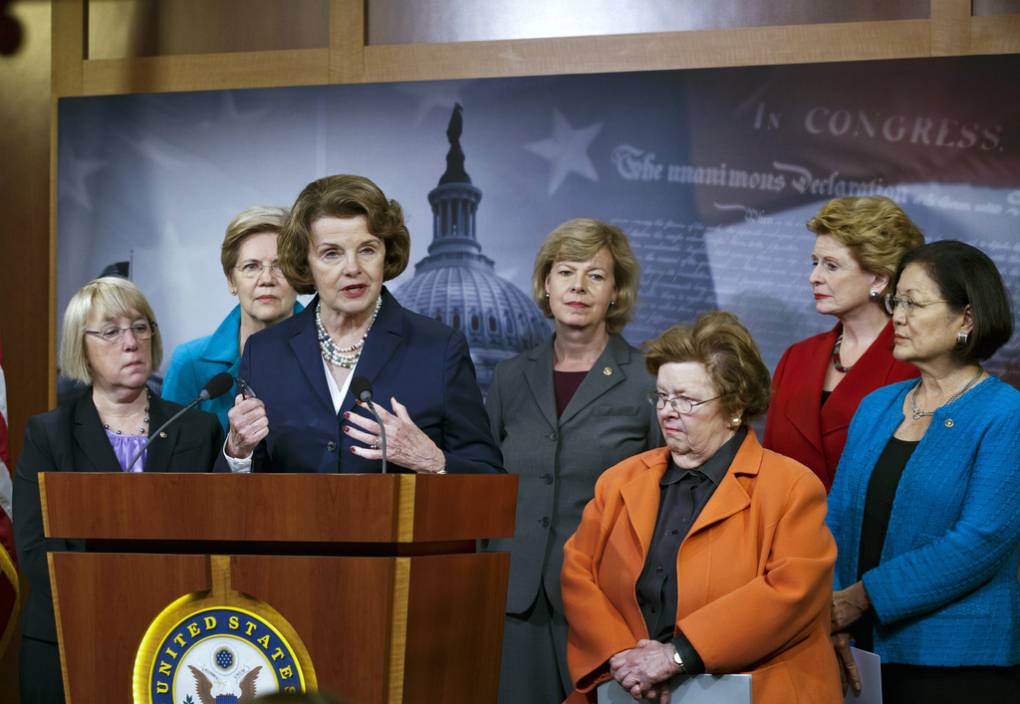
"caption": "California Democratic Sen. Dianne Feinstein, and a group of women senators gather at a news conference on Capitol Hill on June 4, 2014. From left are, Sen. Patty Murray (D-Wash.) Sen. Elizabeth Warren (D-Mass.) Feinstein, Sen. Tammy Baldwin (D-Wis.), Sen. Barbara A. Mikulski, (D-Md.), Sen. Mazie K. Hirono (D-Hawaii). Feinstein died Thursday night, at the age of 90.",
"description": null,
"title": "Obit Feinstein",
"credit": "J. Scott Applewhite/AP",
"status": "inherit",
"altTag": "Sen. Dianne Feinstein stands at a podium, surrounded by other female senators.",
"isLoading": false,
"fetchFailed": false
},
"news_11947244": {
"type": "attachments",
"id": "news_11947244",
"meta": {
"index": "attachments_1716263798",
"site": "news",
"id": "11947244",
"found": true
},
"parent": 0,
"imgSizes": {
"twentyfourteen-full-width": {
"file": "https://ww2.kqed.org/app/uploads/sites/10/2023/04/RS33369_102318_AW_DianeFeinstein_04-qut-1038x576.jpg",
"width": 1038,
"mimeType": "image/jpeg",
"height": 576
},
"thumbnail": {
"file": "https://ww2.kqed.org/app/uploads/sites/10/2023/04/RS33369_102318_AW_DianeFeinstein_04-qut-160x107.jpg",
"width": 160,
"mimeType": "image/jpeg",
"height": 107
},
"post-thumbnail": {
"file": "https://ww2.kqed.org/app/uploads/sites/10/2023/04/RS33369_102318_AW_DianeFeinstein_04-qut-672x372.jpg",
"width": 672,
"mimeType": "image/jpeg",
"height": 372
},
"kqedFullSize": {
"file": "https://ww2.kqed.org/app/uploads/sites/10/2023/04/RS33369_102318_AW_DianeFeinstein_04-qut.jpg",
"width": 1920,
"height": 1280
},
"large": {
"file": "https://ww2.kqed.org/app/uploads/sites/10/2023/04/RS33369_102318_AW_DianeFeinstein_04-qut-1020x680.jpg",
"width": 1020,
"mimeType": "image/jpeg",
"height": 680
},
"1536x1536": {
"file": "https://ww2.kqed.org/app/uploads/sites/10/2023/04/RS33369_102318_AW_DianeFeinstein_04-qut-1536x1024.jpg",
"width": 1536,
"mimeType": "image/jpeg",
"height": 1024
},
"medium": {
"file": "https://ww2.kqed.org/app/uploads/sites/10/2023/04/RS33369_102318_AW_DianeFeinstein_04-qut-800x533.jpg",
"width": 800,
"mimeType": "image/jpeg",
"height": 533
}
},
"publishDate": 1682029492,
"modified": 1696029077,
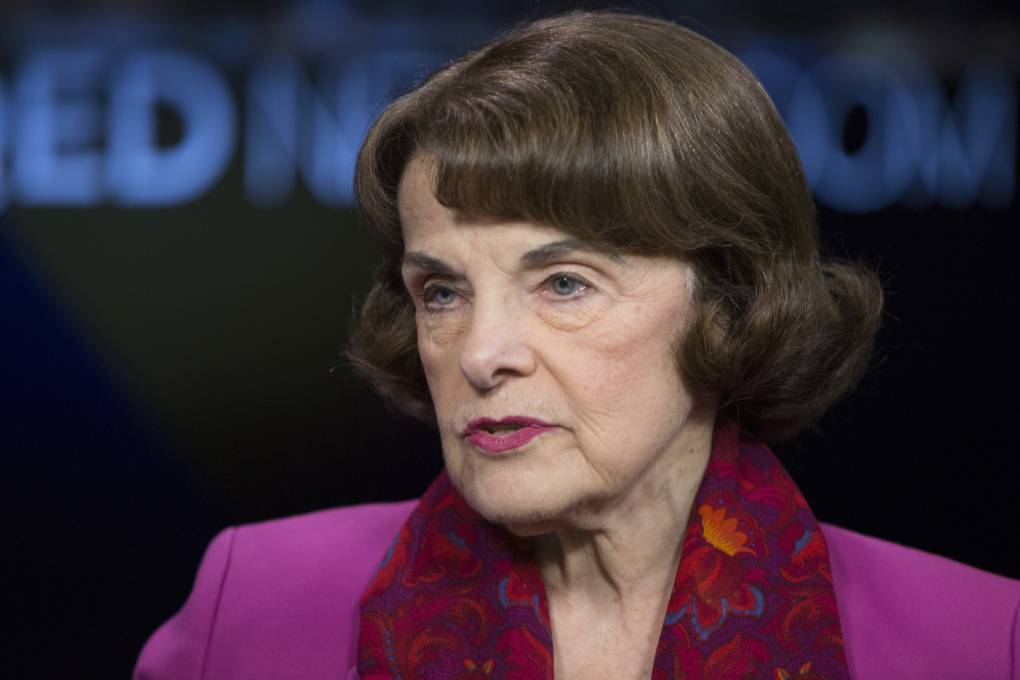
"caption": "Sen. Dianne Feinstein (D-Calif.) at the KQED studios for tapings of KQED Newsroom and Political Breakdown on Oct. 23, 2018.",
"description": null,
"title": "RS33369_102318_AW_DianeFeinstein_04-qut",
"credit": "Anne Wernikoff/KQED",
"status": "inherit",
"altTag": "An older white lade with brown short hair and a pink top and scarf speaks while looking away from the camera, seen from the shoulder up.",
"isLoading": false,
"fetchFailed": false
},
"news_11950115": {
"type": "attachments",
"id": "news_11950115",
"meta": {
"index": "attachments_1716263798",
"site": "news",
"id": "11950115",
"found": true
},
"parent": 11950102,
"imgSizes": {
"twentyfourteen-full-width": {
"file": "https://ww2.kqed.org/app/uploads/sites/10/2023/05/GettyImages-1253789774-1024x576.jpg",
"width": 1024,
"mimeType": "image/jpeg",
"height": 576
},
"thumbnail": {
"file": "https://ww2.kqed.org/app/uploads/sites/10/2023/05/GettyImages-1253789774-160x107.jpg",
"width": 160,
"mimeType": "image/jpeg",
"height": 107
},
"post-thumbnail": {
"file": "https://ww2.kqed.org/app/uploads/sites/10/2023/05/GettyImages-1253789774-672x372.jpg",
"width": 672,
"mimeType": "image/jpeg",
"height": 372
},
"kqedFullSize": {
"file": "https://ww2.kqed.org/app/uploads/sites/10/2023/05/GettyImages-1253789774.jpg",
"width": 1024,
"height": 683
},
"large": {
"file": "https://ww2.kqed.org/app/uploads/sites/10/2023/05/GettyImages-1253789774-1020x680.jpg",
"width": 1020,
"mimeType": "image/jpeg",
"height": 680
},
"medium": {
"file": "https://ww2.kqed.org/app/uploads/sites/10/2023/05/GettyImages-1253789774-800x534.jpg",
"width": 800,
"mimeType": "image/jpeg",
"height": 534
}
},
"publishDate": 1684451175,
"modified": 1694463193,
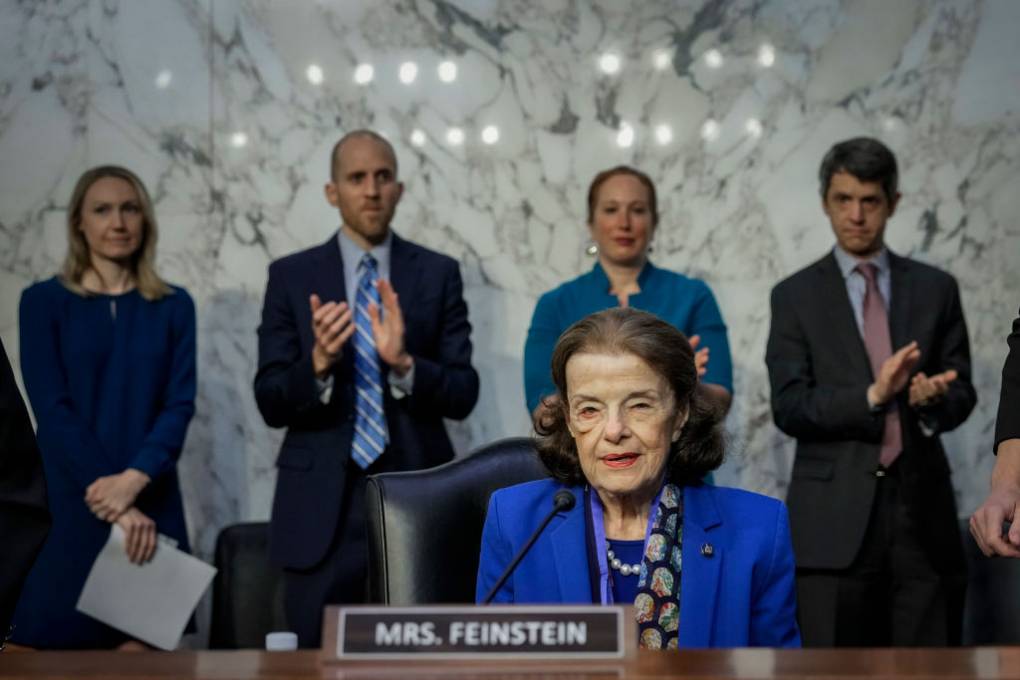
"caption": "California Sen. Dianne attends a Senate Judiciary Committee business hearing on May 11, 2023, following a 3-month medical absence from the Senate due to shingles. \n\n\n",
"description": null,
"title": "Senator Dianne Feinstein Returns To The Senate Judiciary Committee",
"credit": "Drew Angerer/Getty Images",
"status": "inherit",
"altTag": "An older white woman in a blue suit dress is seated as people stand behind her applauding.",
"isLoading": false,
"fetchFailed": false
},
"news_11957760": {
"type": "attachments",
"id": "news_11957760",
"meta": {
"index": "attachments_1716263798",
"site": "news",
"id": "11957760",
"found": true
},
"parent": 0,
"imgSizes": {
"twentyfourteen-full-width": {
"file": "https://ww2.kqed.org/app/uploads/sites/10/2023/08/Feinstein01-1038x576.jpg",
"width": 1038,
"mimeType": "image/jpeg",
"height": 576
},
"thumbnail": {
"file": "https://ww2.kqed.org/app/uploads/sites/10/2023/08/Feinstein01-160x107.jpg",
"width": 160,
"mimeType": "image/jpeg",
"height": 107
},
"post-thumbnail": {
"file": "https://ww2.kqed.org/app/uploads/sites/10/2023/08/Feinstein01-672x372.jpg",
"width": 672,
"mimeType": "image/jpeg",
"height": 372
},
"kqedFullSize": {
"file": "https://ww2.kqed.org/app/uploads/sites/10/2023/08/Feinstein01.jpg",
"width": 1920,
"height": 1280
},
"large": {
"file": "https://ww2.kqed.org/app/uploads/sites/10/2023/08/Feinstein01-1020x680.jpg",
"width": 1020,
"mimeType": "image/jpeg",
"height": 680
},
"1536x1536": {
"file": "https://ww2.kqed.org/app/uploads/sites/10/2023/08/Feinstein01-1536x1024.jpg",
"width": 1536,
"mimeType": "image/jpeg",
"height": 1024
},
"medium": {
"file": "https://ww2.kqed.org/app/uploads/sites/10/2023/08/Feinstein01-800x533.jpg",
"width": 800,
"mimeType": "image/jpeg",
"height": 533
}
},
"publishDate": 1691601984,
"modified": 1691602395,
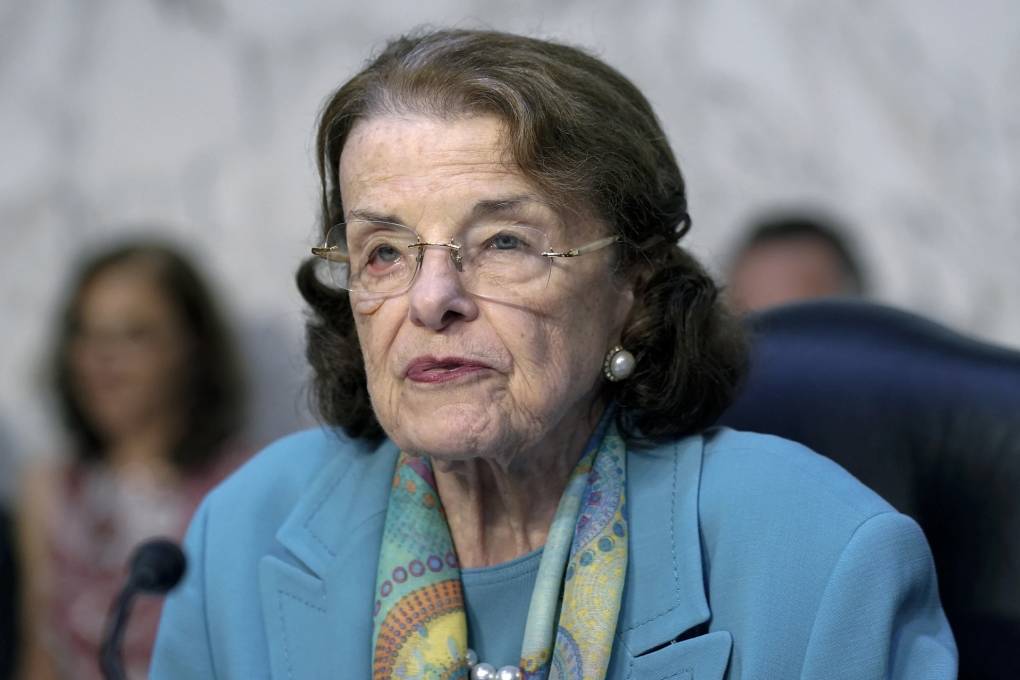
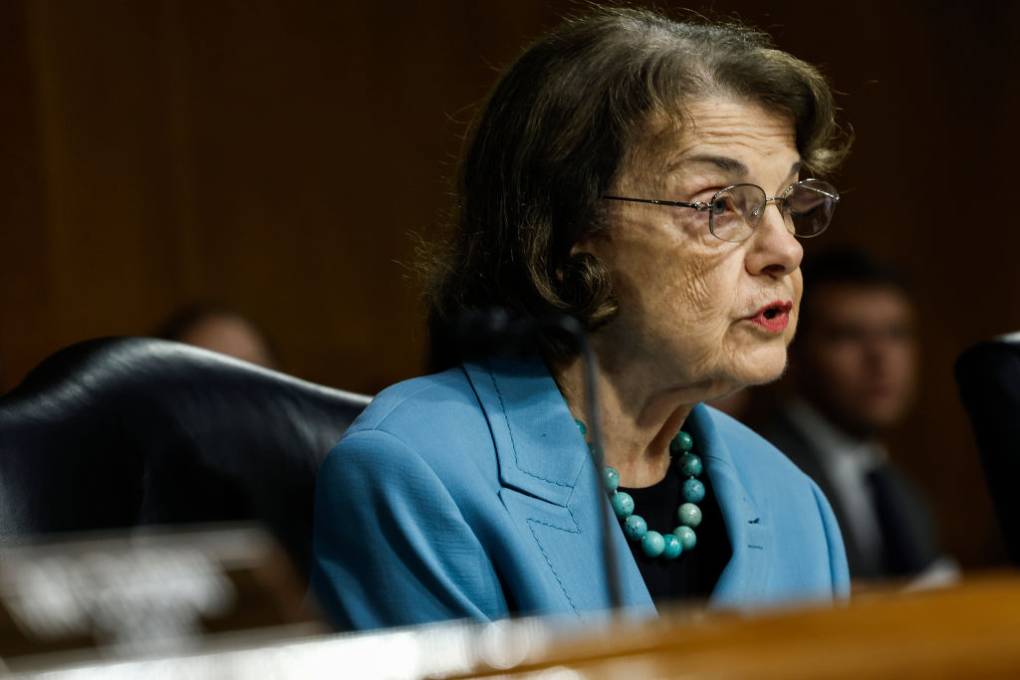
"caption": "Sen. Dianne Feinstein, 90, has faced mounting concerns about her health and her ability to perform duties. According to her office, the California Democrat fell at her home on Tuesday and briefly visited the hospital as a precaution. She returned home later that day. ",
"description": null,
"title": "Feinstein01",
"credit": "Mariam Zuhaib/AP",
"status": "inherit",
"altTag": "An older woman with short, brown hair and glasses wears a blue blazer, pearls and a somber face.",
"isLoading": false,
"fetchFailed": false
},
"news_11947050": {
"type": "attachments",
"id": "news_11947050",
"meta": {
"index": "attachments_1716263798",
"site": "news",
"id": "11947050",
"found": true
},
"parent": 11947049,
"imgSizes": {
"twentyfourteen-full-width": {
"file": "https://ww2.kqed.org/app/uploads/sites/10/2023/04/gettyimages-1466083175_wide-597455cdb228dd4504539e7afc14537f6cbe971a-1038x576.jpg",
"width": 1038,
"mimeType": "image/jpeg",
"height": 576
},
"thumbnail": {
"file": "https://ww2.kqed.org/app/uploads/sites/10/2023/04/gettyimages-1466083175_wide-597455cdb228dd4504539e7afc14537f6cbe971a-160x90.jpg",
"width": 160,
"mimeType": "image/jpeg",
"height": 90
},
"post-thumbnail": {
"file": "https://ww2.kqed.org/app/uploads/sites/10/2023/04/gettyimages-1466083175_wide-597455cdb228dd4504539e7afc14537f6cbe971a-672x372.jpg",
"width": 672,
"mimeType": "image/jpeg",
"height": 372
},
"kqedFullSize": {
"file": "https://ww2.kqed.org/app/uploads/sites/10/2023/04/gettyimages-1466083175_wide-597455cdb228dd4504539e7afc14537f6cbe971a-scaled.jpg",
"width": 2560,
"height": 1439
},
"2048x2048": {
"file": "https://ww2.kqed.org/app/uploads/sites/10/2023/04/gettyimages-1466083175_wide-597455cdb228dd4504539e7afc14537f6cbe971a-2048x1152.jpg",
"width": 2048,
"mimeType": "image/jpeg",
"height": 1152
},
"large": {
"file": "https://ww2.kqed.org/app/uploads/sites/10/2023/04/gettyimages-1466083175_wide-597455cdb228dd4504539e7afc14537f6cbe971a-1020x574.jpg",
"width": 1020,
"mimeType": "image/jpeg",
"height": 574
},
"1536x1536": {
"file": "https://ww2.kqed.org/app/uploads/sites/10/2023/04/gettyimages-1466083175_wide-597455cdb228dd4504539e7afc14537f6cbe971a-1536x864.jpg",
"width": 1536,
"mimeType": "image/jpeg",
"height": 864
},
"full-width": {
"file": "https://ww2.kqed.org/app/uploads/sites/10/2023/04/gettyimages-1466083175_wide-597455cdb228dd4504539e7afc14537f6cbe971a-1920x1080.jpg",
"width": 1920,
"mimeType": "image/jpeg",
"height": 1080
},
"medium": {
"file": "https://ww2.kqed.org/app/uploads/sites/10/2023/04/gettyimages-1466083175_wide-597455cdb228dd4504539e7afc14537f6cbe971a-800x450.jpg",
"width": 800,
"mimeType": "image/jpeg",
"height": 450
}
},
"publishDate": 1681844767,
"modified": 1681847040,
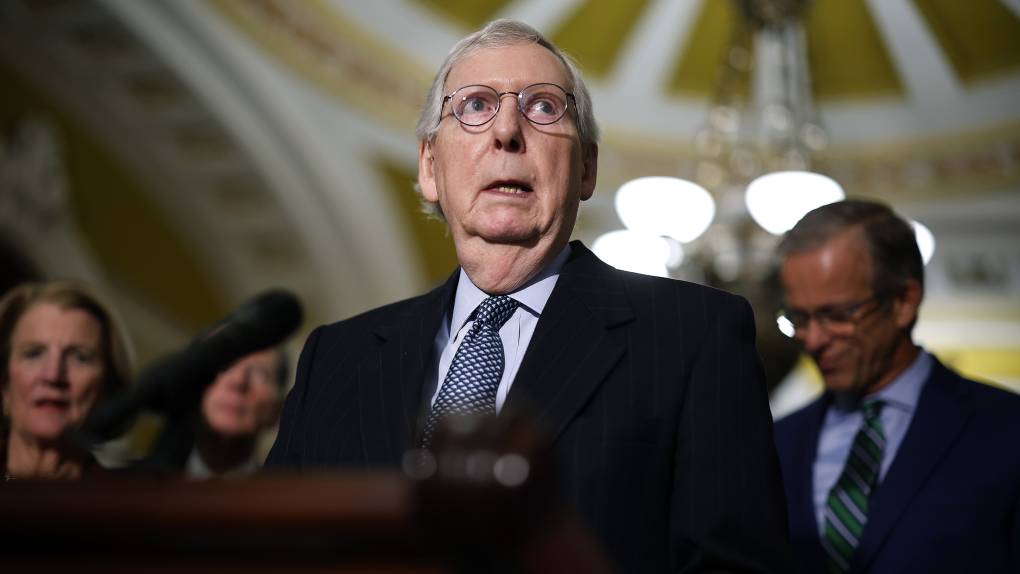
"caption": "Senate Minority Leader Mitch McConnell (R-Kentucky) talks to reporters following the weekly Senate Republican policy luncheon in the US Capitol on Feb. 14, 2023.",
"description": null,
"title": "Senate Minority Leader Mitch McConnell, R-Ky., pushed back at Democrats' effort to temporarily swap in another Democrat on the Senate Judiciary Committee as Sen. Dianne Feinstein, D-Calif., recovers from shingles.",
"credit": "Chip Somodevilla/Getty Images",
"status": "inherit",
"altTag": "Sen. Mitch McConnell speaks at a lectern, with people standing behind him.",
"isLoading": false,
"fetchFailed": false
},
"news_11946988": {
"type": "attachments",
"id": "news_11946988",
"meta": {
"index": "attachments_1716263798",
"site": "news",
"id": "11946988",
"found": true
},
"parent": 11946976,
"imgSizes": {
"twentyfourteen-full-width": {
"file": "https://ww2.kqed.org/app/uploads/sites/10/2023/04/GettyImages-1247142891-1024x576.jpg",
"width": 1024,
"mimeType": "image/jpeg",
"height": 576
},
"thumbnail": {
"file": "https://ww2.kqed.org/app/uploads/sites/10/2023/04/GettyImages-1247142891-160x107.jpg",
"width": 160,
"mimeType": "image/jpeg",
"height": 107
},
"post-thumbnail": {
"file": "https://ww2.kqed.org/app/uploads/sites/10/2023/04/GettyImages-1247142891-672x372.jpg",
"width": 672,
"mimeType": "image/jpeg",
"height": 372
},
"kqedFullSize": {
"file": "https://ww2.kqed.org/app/uploads/sites/10/2023/04/GettyImages-1247142891.jpg",
"width": 1024,
"height": 683
},
"large": {
"file": "https://ww2.kqed.org/app/uploads/sites/10/2023/04/GettyImages-1247142891-1020x680.jpg",
"width": 1020,
"mimeType": "image/jpeg",
"height": 680
},
"medium": {
"file": "https://ww2.kqed.org/app/uploads/sites/10/2023/04/GettyImages-1247142891-800x534.jpg",
"width": 800,
"mimeType": "image/jpeg",
"height": 534
}
},
"publishDate": 1681769281,
"modified": 1681771162,
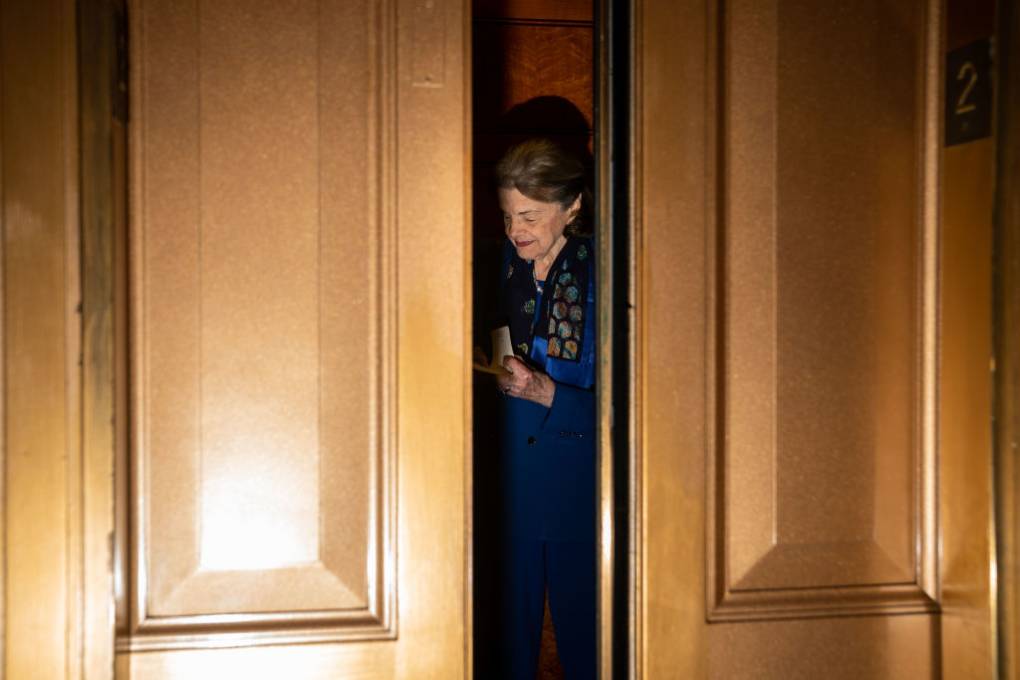
"caption": "Sen. Dianne Feinstein (D-Calif.) leaves the Senate chamber following a vote at the US Capitol on Tuesday, Feb. 14, 2023. Shortly thereafter, Feinstein was hospitalized with a case of shingles. California's longest-serving senator, Feinstein had previously announced she would not run for reelection next year, marking the end of one of the state's most storied political careers. She plans to remain in office through the end of her term.",
"description": null,
"title": "Senator Dianne Feinstein Announces She Will Not Seek Re-election",
"credit": "Kent Nishimura/Los Angeles Times via Getty Images",
"status": "inherit",
"altTag": "Sen. Dianne Feinstein is seen behind a slightly open large wooden door.",
"isLoading": false,
"fetchFailed": false
},
"news_11946789": {
"type": "attachments",
"id": "news_11946789",
"meta": {
"index": "attachments_1716263798",
"site": "news",
"id": "11946789",
"found": true
},
"parent": 11946788,
"imgSizes": {
"twentyfourteen-full-width": {
"file": "https://ww2.kqed.org/app/uploads/sites/10/2023/04/GettyImages-1246575044-1024x576.jpg",
"width": 1024,
"mimeType": "image/jpeg",
"height": 576
},
"thumbnail": {
"file": "https://ww2.kqed.org/app/uploads/sites/10/2023/04/GettyImages-1246575044-160x107.jpg",
"width": 160,
"mimeType": "image/jpeg",
"height": 107
},
"post-thumbnail": {
"file": "https://ww2.kqed.org/app/uploads/sites/10/2023/04/GettyImages-1246575044-672x372.jpg",
"width": 672,
"mimeType": "image/jpeg",
"height": 372
},
"kqedFullSize": {
"file": "https://ww2.kqed.org/app/uploads/sites/10/2023/04/GettyImages-1246575044.jpg",
"width": 1024,
"height": 683
},
"large": {
"file": "https://ww2.kqed.org/app/uploads/sites/10/2023/04/GettyImages-1246575044-1020x680.jpg",
"width": 1020,
"mimeType": "image/jpeg",
"height": 680
},
"medium": {
"file": "https://ww2.kqed.org/app/uploads/sites/10/2023/04/GettyImages-1246575044-800x534.jpg",
"width": 800,
"mimeType": "image/jpeg",
"height": 534
}
},
"publishDate": 1681519879,
"modified": 1681751440,
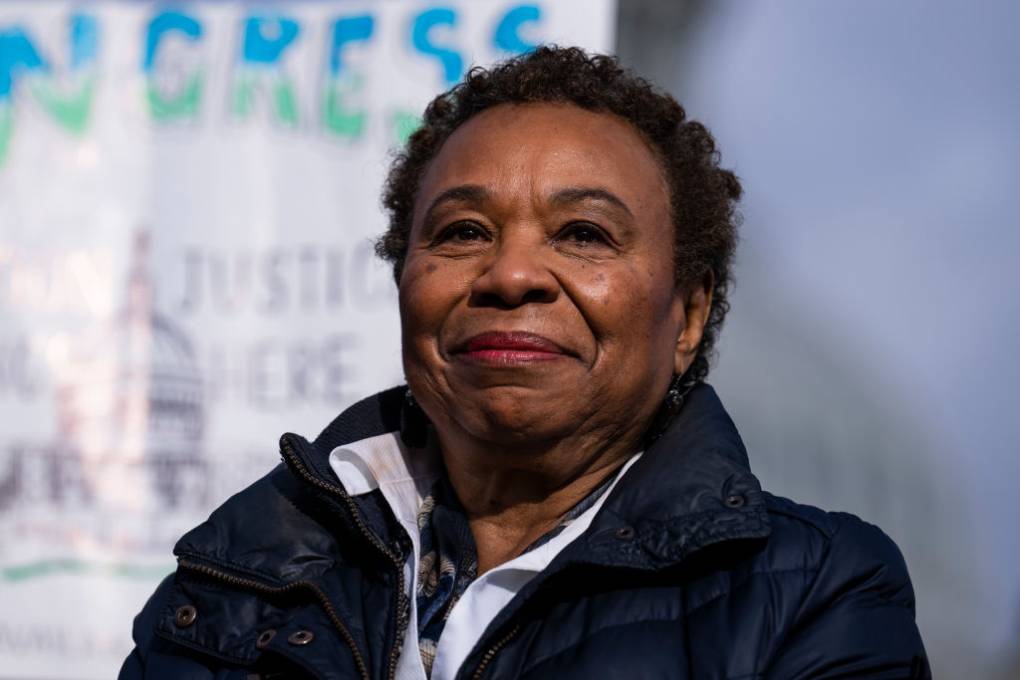
"caption": "Rep. Barbara Lee (D-Calif.) seen at a news conference with the Pro-Choice Caucus outside the US Capitol, on Jan. 26, 2023.",
"description": null,
"title": "Equal Access to Abortion Coverage in Health Insurance (EACH) Act",
"credit": "Tom Williams/CQ-Roll Call, Inc via Getty Images",
"status": "inherit",
"altTag": "An African American woman smiles toward the camera.",
"isLoading": false,
"fetchFailed": false
},
"news_11946539": {
"type": "attachments",
"id": "news_11946539",
"meta": {
"index": "attachments_1716263798",
"site": "news",
"id": "11946539",
"found": true
},
"parent": 0,
"imgSizes": {
"twentyfourteen-full-width": {
"file": "https://ww2.kqed.org/app/uploads/sites/10/2023/04/RS24974_GettyImages-669539602-qut-1038x576.jpg",
"width": 1038,
"mimeType": "image/jpeg",
"height": 576
},
"thumbnail": {
"file": "https://ww2.kqed.org/app/uploads/sites/10/2023/04/RS24974_GettyImages-669539602-qut-160x104.jpg",
"width": 160,
"mimeType": "image/jpeg",
"height": 104
},
"post-thumbnail": {
"file": "https://ww2.kqed.org/app/uploads/sites/10/2023/04/RS24974_GettyImages-669539602-qut-672x372.jpg",
"width": 672,
"mimeType": "image/jpeg",
"height": 372
},
"kqedFullSize": {
"file": "https://ww2.kqed.org/app/uploads/sites/10/2023/04/RS24974_GettyImages-669539602-qut.jpg",
"width": 1920,
"height": 1253
},
"large": {
"file": "https://ww2.kqed.org/app/uploads/sites/10/2023/04/RS24974_GettyImages-669539602-qut-1020x666.jpg",
"width": 1020,
"mimeType": "image/jpeg",
"height": 666
},
"1536x1536": {
"file": "https://ww2.kqed.org/app/uploads/sites/10/2023/04/RS24974_GettyImages-669539602-qut-1536x1002.jpg",
"width": 1536,
"mimeType": "image/jpeg",
"height": 1002
},
"medium": {
"file": "https://ww2.kqed.org/app/uploads/sites/10/2023/04/RS24974_GettyImages-669539602-qut-800x522.jpg",
"width": 800,
"mimeType": "image/jpeg",
"height": 522
}
},
"publishDate": 1681341042,
"modified": 1681410599,
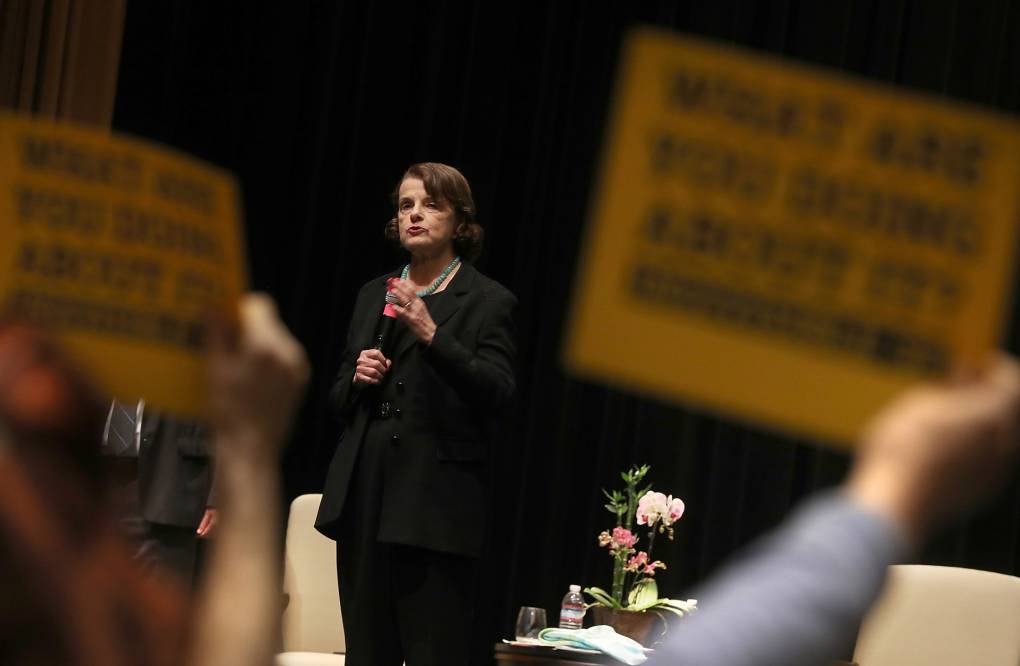
"caption": "US Sen. Dianne Feinstein (D-Calif.) speaks during a town hall-style meeting at the San Francisco Scottish Rite Masonic Center on April 17, 2017, in San Francisco. ",
"description": null,
"title": "Sen. Dianne Feinstein (D-CA) Holds Town Hall Meeting In San Francisco",
"credit": "Justin Sullivan/Getty Images",
"status": "inherit",
"altTag": "Sen. Dianne Feinstein wears a black pant suit as she speaks from a stage. In the foreground, many people's arms are seen holding black and yellow signs that are blurred.",
"isLoading": false,
"fetchFailed": false
},
"news_11942469": {
"type": "attachments",
"id": "news_11942469",
"meta": {
"index": "attachments_1716263798",
"site": "news",
"id": "11942469",
"found": true
},
"parent": 11942465,
"imgSizes": {
"twentyfourteen-full-width": {
"file": "https://ww2.kqed.org/app/uploads/sites/10/2023/03/GettyImages-1206294861-1024x576.jpg",
"width": 1024,
"mimeType": "image/jpeg",
"height": 576
},
"thumbnail": {
"file": "https://ww2.kqed.org/app/uploads/sites/10/2023/03/GettyImages-1206294861-160x112.jpg",
"width": 160,
"mimeType": "image/jpeg",
"height": 112
},
"post-thumbnail": {
"file": "https://ww2.kqed.org/app/uploads/sites/10/2023/03/GettyImages-1206294861-672x372.jpg",
"width": 672,
"mimeType": "image/jpeg",
"height": 372
},
"kqedFullSize": {
"file": "https://ww2.kqed.org/app/uploads/sites/10/2023/03/GettyImages-1206294861.jpg",
"width": 1024,
"height": 716
},
"large": {
"file": "https://ww2.kqed.org/app/uploads/sites/10/2023/03/GettyImages-1206294861-1020x713.jpg",
"width": 1020,
"mimeType": "image/jpeg",
"height": 713
},
"medium": {
"file": "https://ww2.kqed.org/app/uploads/sites/10/2023/03/GettyImages-1206294861-800x559.jpg",
"width": 800,
"mimeType": "image/jpeg",
"height": 559
}
},
"publishDate": 1677882358,
"modified": 1677882358,
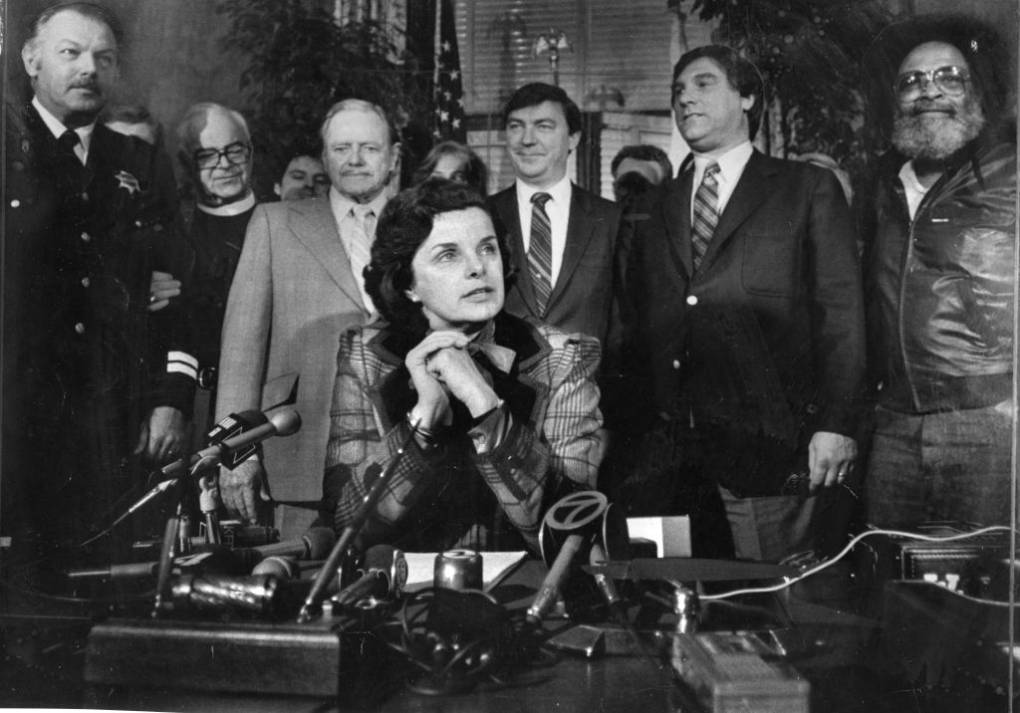
"caption": "Mayor Dianne Feinstein signing the anti-gun bill at City Hall ;behinder her are (l to r) Con Murphy, Francis McCarty Richard Hongisto, John Molinari and Cecil Williams ;Photo ran 06/29/1982, p. 1 (Photo by Steve Ringman/San Francisco Chronicle via Getty Images)",
"description": null,
"title": "Mayor Dianne Feinstein signing the anti-gun bill at City Hall",
"credit": null,
"status": "inherit",
"altTag": null,
"isLoading": false,
"fetchFailed": false
},
"news_11889415": {
"type": "attachments",
"id": "news_11889415",
"meta": {
"index": "attachments_1716263798",
"site": "news",
"id": "11889415",
"found": true
},
"parent": 11889414,
"imgSizes": {
"twentyfourteen-full-width": {
"file": "https://ww2.kqed.org/app/uploads/sites/10/2021/09/RS49465_031_Oakland_NAACPGeorgeFloyd_05252021-1038x576.jpg",
"width": 1038,
"mimeType": "image/jpeg",
"height": 576
},
"thumbnail": {
"file": "https://ww2.kqed.org/app/uploads/sites/10/2021/09/RS49465_031_Oakland_NAACPGeorgeFloyd_05252021-160x106.jpg",
"width": 160,
"mimeType": "image/jpeg",
"height": 106
},
"post-thumbnail": {
"file": "https://ww2.kqed.org/app/uploads/sites/10/2021/09/RS49465_031_Oakland_NAACPGeorgeFloyd_05252021-672x372.jpg",
"width": 672,
"mimeType": "image/jpeg",
"height": 372
},
"kqedFullSize": {
"file": "https://ww2.kqed.org/app/uploads/sites/10/2021/09/RS49465_031_Oakland_NAACPGeorgeFloyd_05252021-scaled.jpg",
"width": 2560,
"height": 1704
},
"2048x2048": {
"file": "https://ww2.kqed.org/app/uploads/sites/10/2021/09/RS49465_031_Oakland_NAACPGeorgeFloyd_05252021-2048x1363.jpg",
"width": 2048,
"mimeType": "image/jpeg",
"height": 1363
},
"large": {
"file": "https://ww2.kqed.org/app/uploads/sites/10/2021/09/RS49465_031_Oakland_NAACPGeorgeFloyd_05252021-1020x679.jpg",
"width": 1020,
"mimeType": "image/jpeg",
"height": 679
},
"1536x1536": {
"file": "https://ww2.kqed.org/app/uploads/sites/10/2021/09/RS49465_031_Oakland_NAACPGeorgeFloyd_05252021-1536x1022.jpg",
"width": 1536,
"mimeType": "image/jpeg",
"height": 1022
},
"full-width": {
"file": "https://ww2.kqed.org/app/uploads/sites/10/2021/09/RS49465_031_Oakland_NAACPGeorgeFloyd_05252021-1920x1278.jpg",
"width": 1920,
"mimeType": "image/jpeg",
"height": 1278
},
"medium": {
"file": "https://ww2.kqed.org/app/uploads/sites/10/2021/09/RS49465_031_Oakland_NAACPGeorgeFloyd_05252021-800x532.jpg",
"width": 800,
"mimeType": "image/jpeg",
"height": 532
}
},
"publishDate": 1632325050,
"modified": 1677008186,
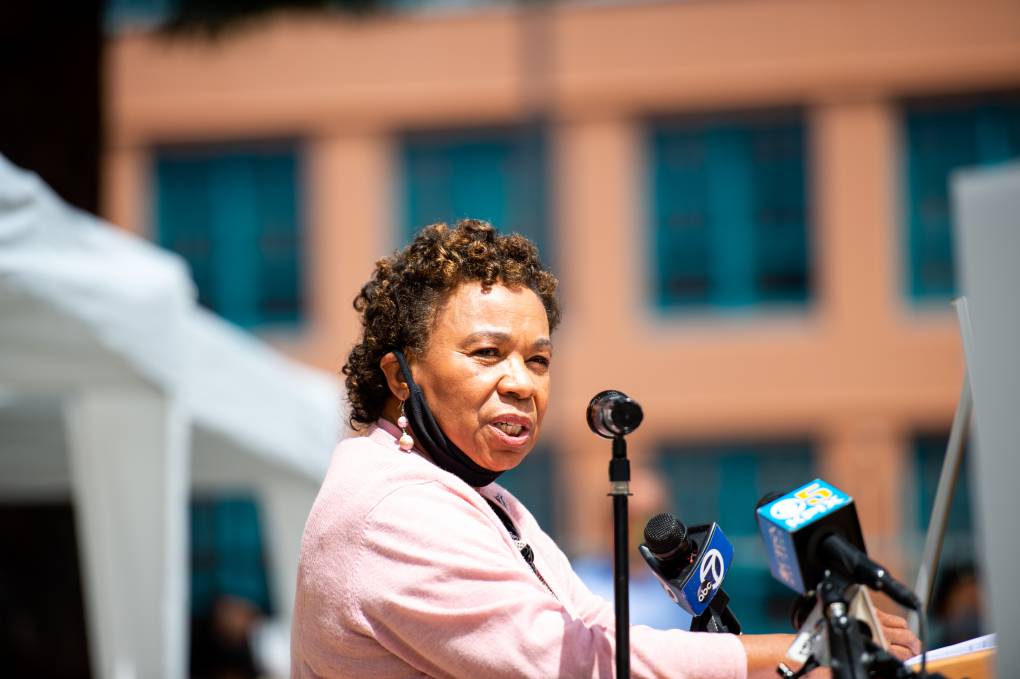
"caption": "US Rep. Barbara Lee speaks during a remembrance event to pay tribute to George Floyd held by the Oakland NAACP at Youth UpRising in Oakland on May 25, 2021.",
"description": null,
"title": "RS49465_031_Oakland_NAACPGeorgeFloyd_05252021",
"credit": "Beth LaBerge/KQED",
"status": "inherit",
"altTag": "Barbara Lee speaks in front of news microphones, wearing a light pink shirt with a mask under her chin.",
"isLoading": false,
"fetchFailed": false
},
"news_11941257": {
"type": "attachments",
"id": "news_11941257",
"meta": {
"index": "attachments_1716263798",
"site": "news",
"id": "11941257",
"found": true
},
"parent": 11941247,
"imgSizes": {
"twentyfourteen-full-width": {
"file": "https://ww2.kqed.org/app/uploads/sites/10/2023/02/RS33698_FEINSTEINVICTORY-13-qut-1038x576.jpg",
"width": 1038,
"mimeType": "image/jpeg",
"height": 576
},
"thumbnail": {
"file": "https://ww2.kqed.org/app/uploads/sites/10/2023/02/RS33698_FEINSTEINVICTORY-13-qut-160x107.jpg",
"width": 160,
"mimeType": "image/jpeg",
"height": 107
},
"post-thumbnail": {
"file": "https://ww2.kqed.org/app/uploads/sites/10/2023/02/RS33698_FEINSTEINVICTORY-13-qut-672x372.jpg",
"width": 672,
"mimeType": "image/jpeg",
"height": 372
},
"kqedFullSize": {
"file": "https://ww2.kqed.org/app/uploads/sites/10/2023/02/RS33698_FEINSTEINVICTORY-13-qut.jpg",
"width": 1100,
"height": 733
},
"large": {
"file": "https://ww2.kqed.org/app/uploads/sites/10/2023/02/RS33698_FEINSTEINVICTORY-13-qut-1020x680.jpg",
"width": 1020,
"mimeType": "image/jpeg",
"height": 680
},
"medium": {
"file": "https://ww2.kqed.org/app/uploads/sites/10/2023/02/RS33698_FEINSTEINVICTORY-13-qut-800x533.jpg",
"width": 800,
"mimeType": "image/jpeg",
"height": 533
}
},
"publishDate": 1676591024,
"modified": 1676591078,
"caption": "Senator Dianne Feinstein celebrates her victory in the 2018 election with supporters in San Francisco on November 6, 2018.",
"description": null,
"title": "RS33698_FEINSTEINVICTORY-13-qut",
"credit": "Samantha Shanahan/KQED",
"status": "inherit",
"altTag": null,
"isLoading": false,
"fetchFailed": false
},
"news_11940486": {
"type": "attachments",
"id": "news_11940486",
"meta": {
"index": "attachments_1716263798",
"site": "news",
"id": "11940486",
"found": true
},
"parent": 11940460,
"imgSizes": {
"twentyfourteen-full-width": {
"file": "https://ww2.kqed.org/app/uploads/sites/10/2023/02/GettyImages-1408299891-1024x576.jpg",
"width": 1024,
"mimeType": "image/jpeg",
"height": 576
},
"thumbnail": {
"file": "https://ww2.kqed.org/app/uploads/sites/10/2023/02/GettyImages-1408299891-160x107.jpg",
"width": 160,
"mimeType": "image/jpeg",
"height": 107
},
"post-thumbnail": {
"file": "https://ww2.kqed.org/app/uploads/sites/10/2023/02/GettyImages-1408299891-672x372.jpg",
"width": 672,
"mimeType": "image/jpeg",
"height": 372
},
"kqedFullSize": {
"file": "https://ww2.kqed.org/app/uploads/sites/10/2023/02/GettyImages-1408299891.jpg",
"width": 1024,
"height": 683
},
"large": {
"file": "https://ww2.kqed.org/app/uploads/sites/10/2023/02/GettyImages-1408299891-1020x680.jpg",
"width": 1020,
"mimeType": "image/jpeg",
"height": 680
},
"medium": {
"file": "https://ww2.kqed.org/app/uploads/sites/10/2023/02/GettyImages-1408299891-800x534.jpg",
"width": 800,
"mimeType": "image/jpeg",
"height": 534
}
},
"publishDate": 1675893216,
"modified": 1676471743,
"caption": null,
"description": "California Sen. Dianne Feinstein speaks during a Senate Judiciary Committee hearing on July 12, 2022, with abortion rights and anti-abortion rights activists.",
"title": "Senate Judiciary Committee Holds Hearing On Supreme Court Roe v Wade Opinion",
"credit": "Anna Moneymaker/Getty Images",
"status": "inherit",
"altTag": "Sen. Dianne Feinstein speaks into a microphone while sitting down.",
"isLoading": false,
"fetchFailed": false
}
},
"audioPlayerReducer": {
"postId": "stream_live",
"isPaused": true,
"isPlaying": false,
"pfsActive": false,
"pledgeModalIsOpen": true,
"playerDrawerIsOpen": false,
"liveAudioPlayStartedAt": 0,
"liveAudioPlayContext": ""
},
"authorsReducer": {
"byline_news_11962877": {
"type": "authors",
"id": "byline_news_11962877",
"meta": {
"override": true
},
"slug": "byline_news_11962877",
"name": "Michelle L. Price\u003cbr>The Associated Press",
"isLoading": false
},
"byline_news_11957755": {
"type": "authors",
"id": "byline_news_11957755",
"meta": {
"override": true
},
"slug": "byline_news_11957755",
"name": "\u003ca href=\"https://apnews.com/\">The Associated Press\u003c/a>",
"isLoading": false
},
"byline_news_11947049": {
"type": "authors",
"id": "byline_news_11947049",
"meta": {
"override": true
},
"slug": "byline_news_11947049",
"name": "\u003ca href=\"https://www.npr.org/people/617095374/deirdre-walsh\">Deidre Walsh\u003c/a> and \u003ca href=\"https://www.npr.org/people/468259099/barbara-sprunt\">Barbara Sprunt\u003c/a>",
"isLoading": false
},
"byline_news_11941047": {
"type": "authors",
"id": "byline_news_11941047",
"meta": {
"override": true
},
"slug": "byline_news_11941047",
"name": "Michael R. Blood\u003cbr>The Associated Press",
"isLoading": false
},
"scottshafer": {
"type": "authors",
"id": "255",
"meta": {
"index": "authors_1716337520",
"id": "255",
"found": true
},
"name": "Scott Shafer",
"firstName": "Scott",
"lastName": "Shafer",
"slug": "scottshafer",
"email": "sshafer@kqed.org",
"display_author_email": false,
"staff_mastheads": [
"news"
],
"title": "KQED Contributor",
"bio": "Scott Shafer is a senior editor with the KQED Politics and Government desk. He is co-host of Political Breakdown, the award-winning radio show and podcast with a personal take on the world of politics. Scott came to KQED in 1998 to host the statewide\u003cem> California Report\u003c/em>. Prior to that he had extended stints in politics and government\u003cem>.\u003c/em> He uses that inside experience at KQED in his, reporting, hosting and analysis for the politics desk. Scott collaborated \u003cem>Political Breakdown a\u003c/em>nd on \u003cem>The Political Mind of Jerry Brown, \u003c/em>an eight-part series about the life and extraordinary political career of the former governor. For fun, he plays water polo with the San Francisco Tsunami.",
"avatar": "https://secure.gravatar.com/avatar/a62ebae45b79d7aed1a39a0e3bf68104?s=600&d=blank&r=g",
"twitter": "scottshafer",
"bluesky": null,
"facebook": null,
"instagram": null,
"linkedin": null,
"sites": [
{
"site": "news",
"roles": [
"editor"
]
},
{
"site": "stateofhealth",
"roles": [
"author"
]
},
{
"site": "science",
"roles": [
"author"
]
},
{
"site": "forum",
"roles": [
"subscriber"
]
},
{
"site": "liveblog",
"roles": [
"author"
]
}
],
"headData": {
"title": "Scott Shafer | KQED",
"description": "KQED Contributor",
"ogImgSrc": "https://secure.gravatar.com/avatar/a62ebae45b79d7aed1a39a0e3bf68104?s=600&d=blank&r=g",
"twImgSrc": "https://secure.gravatar.com/avatar/a62ebae45b79d7aed1a39a0e3bf68104?s=600&d=blank&r=g"
},
"isLoading": false,
"link": "/author/scottshafer"
},
"mlagos": {
"type": "authors",
"id": "3239",
"meta": {
"index": "authors_1716337520",
"id": "3239",
"found": true
},
"name": "Marisa Lagos",
"firstName": "Marisa",
"lastName": "Lagos",
"slug": "mlagos",
"email": "mlagos@kqed.org",
"display_author_email": false,
"staff_mastheads": [
"news"
],
"title": "KQED Contributor",
"bio": "Marisa Lagos is a correspondent for KQED’s California Politics and Government Desk and co-hosts the award-winning show and podcast, Political Breakdown. At KQED, Lagos also conducts reporting, analysis and investigations into state, local and national politics for radio, TV, online and onstage. In 2022, she and co-host, Scott Shafer, moderated the only gubernatorial debate in California. In 2020, the \u003ci>Washington Post\u003c/i> named her one of the top political journalists in California; she was nominated for a Peabody and won several other awards for her work investigating the 2017 California wildfires. She has worked at the \u003ci>San Francisco Chronicle\u003c/i>, \u003ci>San Francisco Examiner\u003c/i> and \u003ci>Los Angeles Times\u003c/i>. A UC Santa Barbara graduate, she lives in San Francisco with her two sons and husband.",
"avatar": "https://secure.gravatar.com/avatar/a261a0d3696fc066871ef96b85b5e7d2?s=600&d=blank&r=g",
"twitter": "@mlagos",
"facebook": null,
"instagram": null,
"linkedin": null,
"sites": [
{
"site": "arts",
"roles": [
"author"
]
},
{
"site": "news",
"roles": [
"editor"
]
},
{
"site": "science",
"roles": [
"editor"
]
},
{
"site": "forum",
"roles": [
"author"
]
},
{
"site": "liveblog",
"roles": [
"author"
]
}
],
"headData": {
"title": "Marisa Lagos | KQED",
"description": "KQED Contributor",
"ogImgSrc": "https://secure.gravatar.com/avatar/a261a0d3696fc066871ef96b85b5e7d2?s=600&d=blank&r=g",
"twImgSrc": "https://secure.gravatar.com/avatar/a261a0d3696fc066871ef96b85b5e7d2?s=600&d=blank&r=g"
},
"isLoading": false,
"link": "/author/mlagos"
},
"amontecillo": {
"type": "authors",
"id": "11649",
"meta": {
"index": "authors_1716337520",
"id": "11649",
"found": true
},
"name": "Alan Montecillo",
"firstName": "Alan",
"lastName": "Montecillo",
"slug": "amontecillo",
"email": "amontecillo@kqed.org",
"display_author_email": false,
"staff_mastheads": [
"news"
],
"title": "KQED Contributor",
"bio": "Alan Montecillo is the senior editor of \u003cem>\u003ca href=\"http://kqed.org/thebay\">The Bay\u003c/a>, \u003c/em> KQED's local news podcast. Before moving to the Bay Area, he worked as a senior talk show producer for WILL in Champaign-Urbana, Illinois and at Oregon Public Broadcasting in Portland, Oregon. He has won journalism awards from the Society of Professional Journalists Northern California, the Public Media Journalists Association, The Signal Awards, and has also received a regional Edward R. Murrow award. Alan is a Filipino American from Hong Kong and a graduate of Reed College.",
"avatar": "https://secure.gravatar.com/avatar/d5e4e7a76481969ccba76f4e2b5ccabc?s=600&d=blank&r=g",
"twitter": "alanmontecillo",
"facebook": null,
"instagram": null,
"linkedin": null,
"sites": [
{
"site": "",
"roles": [
"editor"
]
},
{
"site": "news",
"roles": [
"editor",
"manage_categories"
]
}
],
"headData": {
"title": "Alan Montecillo | KQED",
"description": "KQED Contributor",
"ogImgSrc": "https://secure.gravatar.com/avatar/d5e4e7a76481969ccba76f4e2b5ccabc?s=600&d=blank&r=g",
"twImgSrc": "https://secure.gravatar.com/avatar/d5e4e7a76481969ccba76f4e2b5ccabc?s=600&d=blank&r=g"
},
"isLoading": false,
"link": "/author/amontecillo"
},
"mesquinca": {
"type": "authors",
"id": "11802",
"meta": {
"index": "authors_1716337520",
"id": "11802",
"found": true
},
"name": "Maria Esquinca",
"firstName": "Maria",
"lastName": "Esquinca",
"slug": "mesquinca",
"email": "mesquinca@kqed.org",
"display_author_email": false,
"staff_mastheads": [],
"title": "Producer, The Bay",
"bio": "María Esquinca is a producer of The Bay. Before that, she was a New York Women’s Foundation IGNITE Fellow at Latino USA. She worked at Radio Bilingue where she covered the San Joaquin Valley. Maria has interned at WLRN, News 21, The New York Times Student Journalism Institute and at Crain’s Detroit Business as a Dow Jones News Fund Business Reporting Intern. She is an MFA graduate from the University of Miami. In 2017, she graduated from the Walter Cronkite School of Journalism and Mass Communication with a Master of Mass Communication. A fronteriza, she was born in Ciudad Juárez, Chihuahua, Mexico and grew up in El Paso, Texas.",
"avatar": "https://secure.gravatar.com/avatar/77cedba18aae91da775038ba06dcd8d0?s=600&d=blank&r=g",
"twitter": "@m_esquinca",
"facebook": null,
"instagram": null,
"linkedin": null,
"sites": [
{
"site": "news",
"roles": []
}
],
"headData": {
"title": "Maria Esquinca | KQED",
"description": "Producer, The Bay",
"ogImgSrc": "https://secure.gravatar.com/avatar/77cedba18aae91da775038ba06dcd8d0?s=600&d=blank&r=g",
"twImgSrc": "https://secure.gravatar.com/avatar/77cedba18aae91da775038ba06dcd8d0?s=600&d=blank&r=g"
},
"isLoading": false,
"link": "/author/mesquinca"
}
},
"pagesReducer": {
"news_tag_dianne-feinstein": {
"type": "terms",
"id": "news_274",
"meta": {
"index": "terms_1716263798",
"site": "news",
"id": "274",
"score": 9.302365
},
"featImg": null,
"name": "Dianne Feinstein",
"description": null,
"taxonomy": "tag",
"headData": {
"twImgId": null,
"twTitle": null,
"ogTitle": null,
"ogImgId": null,
"twDescription": null,
"description": null,
"title": "Dianne Feinstein Archives | KQED News",
"ogDescription": null
},
"ttid": 282,
"slug": "dianne-feinstein",
"isLoading": false,
"title": "Dianne Feinstein",
"pageMeta": {
"site": "news",
"WpPageTemplate": "page-topic-editorial",
"currentPage": 2
},
"blocks": [
{
"blockName": "kqed/post-list",
"attrs": {
"layout": "cardArticle2",
"query": "posts/news?tag=dianne-feinstein",
"seeMore": false,
"paginated": true,
"page": 2
}
},
{
"blockName": "kqed/ad"
}
]
}
},
"pfsSessionReducer": {},
"postsReducer": {
"stream_live": {
"type": "live",
"id": "stream_live",
"audioUrl": "https://streams.kqed.org/kqedradio",
"title": "Live Stream",
"excerpt": "Live Stream information currently unavailable.",
"link": "/radio",
"featImg": "",
"label": {
"name": "KQED Live",
"link": "/"
}
},
"stream_kqedNewscast": {
"type": "posts",
"id": "stream_kqedNewscast",
"audioUrl": "https://www.kqed.org/.stream/anon/radio/RDnews/newscast.mp3?_=1",
"title": "KQED Newscast",
"featImg": "",
"label": {
"name": "88.5 FM",
"link": "/"
}
},
"news_11962877": {
"type": "posts",
"id": "news_11962877",
"meta": {
"index": "posts_1716263798",
"site": "news",
"id": "11962877",
"score": null,
"sort": [
1696014628000
]
},
"parent": 0,
"labelTerm": {
"site": "news"
},
"blocks": [],
"publishDate": 1696014628,
"format": "standard",
"title": "What Does Feinstein's Death Mean for Senate Control — and the Looming Government Shutdown?",
"headTitle": "What Does Feinstein’s Death Mean for Senate Control — and the Looming Government Shutdown? | KQED",
"content": "\u003cp>U.S. Sen. \u003ca href=\"https://www.kqed.org/news/11946670/dianne-feinstein-californias-longest-serving-us-senator-dies-at-age-90\">Dianne Feinstein’s death\u003c/a> creates a vacancy in the Senate at a time when her Democrats hold the slightest majority in the chamber.\u003c/p>\n\u003cp>Feinstein, a centrist Democrat who had represented California since 1992, \u003ca href=\"https://apnews.com/article/dianne-feinstein-medical-bills-senate-health-trust-42cdcaa61134f2597458d54a62e2437c\">had medical struggles in recent months\u003c/a> that already prompted questions about whether she’d resign and \u003ca href=\"https://www.kqed.org/news/11957755/sen-dianne-feinstein-back-home-from-hospital-after-falling\">who might replace her\u003c/a>.\u003c/p>\n\u003cp>Gov. Gavin Newsom \u003ca href=\"https://apnews.com/article/feinstein-replacement-newsom-democrat-death-528b55aa50d06aa3901b16c129aa3fe0\">is expected to pick a replacement soon\u003c/a>. An election to pick the state’s next senator serving a full six-year term is scheduled for next year.\u003c/p>\n\u003cp>Here’s a look at what Feinstein’s death means for the Senate at a critical time on Capitol Hill:\u003c/p>\n\u003ch2>How does it impact control of the Senate?\u003c/h2>\n\u003cp>Before Feinstein’s death, Democrats held a 51–49 majority. They had control of 48 seats, plus three independent members who generally vote with Democrats. Until her seat is filled, Democrats will be at least one vote short of a majority as they try to advance their priorities. There are no major votes currently looming in the Senate that are expected to fall totally along party lines.\u003c/p>\n\u003ch2>How will Feinstein’s seat be filled?\u003c/h2>\n\u003cp>Newsom, a Democrat, has the power to appoint a replacement for the rest of Feinstein’s term, which ends in January 2025.\u003c/p>\n\u003cp>[ad fullwidth]\u003c/p>\n\u003cp>The race to replace her in the fall 2024 election is already underway, with a primary scheduled for March. Reps. Katie Porter (Irvine) , Adam Schiff (Burbank), and Barbara Lee (Oakland) are among the top Democrats vying for the seat.\u003c/p>\n\u003cp>In the meantime, Newsom is expected to select a Democrat to fill the seat.\u003c/p>\n\u003ch2>How long will her seat be vacant?\u003c/h2>\n\u003cp>It’s not immediately clear how quickly Newsom will move to pick a replacement. No timeline is set forth in state law.\u003c/p>\n\u003cp>When then-Sen. Kamala Harris left her seat after being elected vice president in 2020, it went vacant for about two weeks until Newsom appointed then-Secretary of State Alex Padilla.\u003c/p>\n\u003ch2>Who will replace Feinstein?\u003c/h2>\n\u003cp>Harris’ departure from the Senate left Black women without any representation in the chamber. Newsom was under dual pressures to name either a Black woman or a Latino person to replace her, and he chose Padilla, who became California’s first Latino U.S. senator. After that, Newsom said that if Feinstein’s seat became vacant, he’d appoint a Black woman.\u003c/p>\n\u003cp>Newsom, who is seen as a potential 2028 Democratic presidential candidate, will face pressure to make good on his promise. He has already said he does not plan to select one of the Democratic candidates currently running for Feinstein’s seat, including Lee, who is a Black woman.\u003c/p>\n\u003cp>Newsom may choose merely a caretaker to hold the seat as a short-term replacement until someone is elected in November 2024.\u003c/p>\n\u003cp>San Francisco Mayor London Breed, who is Black, shied away from directly answering a question Friday about whether she would consider serving as a replacement if Newsom chose her.\u003c/p>\n\u003cp>Newsom could also appoint himself, though that is seen as unlikely.\u003c/p>\n\u003ch2>Is there any impact on the looming government shutdown?\u003c/h2>\n\u003cp>The biggest issue Congress is currently facing is the near-certain shutdown. Unlike in the bitterly divided House of Representatives, there has so far been overwhelming bipartisan support for Senate spending bills so far.\u003c/p>\n\u003cp>Still, if Newsom doesn’t appoint a replacement quickly, Senate Democrats could have a more difficult time winning enough votes as they try to keep the government open over the weekend.\u003c/p>\n\u003cp>It’s unlikely that Senate Minority Leader Mitch McConnell and his Republican caucus in the Senate will suddenly side with House Republicans pushing for a shutdown, but if that were to happen, it could make it tougher for Democrats, with their razor-thin majority, to bring in the votes they need to stave off a shutdown.\u003c/p>\n\u003cp>\u003c/p>\n\u003cp>\u003cem>Associated Press writer Mary Clare Jalonick in Washington contributed to this report.\u003c/em>\u003c/p>\n\n",
"stats": {
"hasVideo": false,
"hasChartOrMap": false,
"hasAudio": false,
"hasPolis": false,
"wordCount": 664,
"hasGoogleForm": false,
"hasGallery": false,
"hasHearkenModule": false,
"iframeSrcs": [],
"paragraphCount": 21
},
"modified": 1696014628,
"excerpt": "Sen. Dianne Feinstein's death creates a vacancy in the Senate at a time when her Democrats hold the slightest majority in the chamber, and as Congress braces for a likely government shutdown. ",
"headData": {
"twImgId": "",
"twTitle": "",
"ogTitle": "",
"ogImgId": "",
"twDescription": "",
"description": "Sen. Dianne Feinstein's death creates a vacancy in the Senate at a time when her Democrats hold the slightest majority in the chamber, and as Congress braces for a likely government shutdown. ",
"title": "What Does Feinstein's Death Mean for Senate Control — and the Looming Government Shutdown? | KQED",
"ogDescription": "",
"schema": {
"@context": "https://schema.org",
"@type": "NewsArticle",
"headline": "What Does Feinstein's Death Mean for Senate Control — and the Looming Government Shutdown?",
"datePublished": "2023-09-29T12:10:28-07:00",
"dateModified": "2023-09-29T12:10:28-07:00",
"image": "https://cdn.kqed.org/wp-content/uploads/2020/02/KQED-OG-Image@1x.png",
"isAccessibleForFree": "True",
"publisher": {
"@type": "NewsMediaOrganization",
"@id": "https://www.kqed.org/#organization",
"name": "KQED",
"logo": "https://cdn.kqed.org/wp-content/uploads/2020/02/KQED-OG-Image@1x.png",
"url": "https://www.kqed.org",
"sameAs": [
"https://www.facebook.com/KQED",
"https://twitter.com/KQED",
"https://www.instagram.com/kqed/",
"https://www.tiktok.com/@kqedofficial",
"https://www.linkedin.com/company/kqed",
"https://www.youtube.com/channel/UCeC0IOo7i1P_61zVUWbJ4nw"
]
}
}
},
"guestAuthors": [],
"slug": "what-does-feinsteins-death-mean-for-senate-control-and-the-looming-government-shutdown",
"status": "publish",
"nprByline": "Michelle L. Price\u003cbr>The Associated Press",
"excludeFromSiteSearch": "Include",
"showOnAuthorArchivePages": "No",
"articleAge": "0",
"path": "/news/11962877/what-does-feinsteins-death-mean-for-senate-control-and-the-looming-government-shutdown",
"audioTrackLength": null,
"parsedContent": [
{
"type": "contentString",
"content": "\u003cdiv class=\"post-body\">\u003cp>\u003cp>U.S. Sen. \u003ca href=\"https://www.kqed.org/news/11946670/dianne-feinstein-californias-longest-serving-us-senator-dies-at-age-90\">Dianne Feinstein’s death\u003c/a> creates a vacancy in the Senate at a time when her Democrats hold the slightest majority in the chamber.\u003c/p>\n\u003cp>Feinstein, a centrist Democrat who had represented California since 1992, \u003ca href=\"https://apnews.com/article/dianne-feinstein-medical-bills-senate-health-trust-42cdcaa61134f2597458d54a62e2437c\">had medical struggles in recent months\u003c/a> that already prompted questions about whether she’d resign and \u003ca href=\"https://www.kqed.org/news/11957755/sen-dianne-feinstein-back-home-from-hospital-after-falling\">who might replace her\u003c/a>.\u003c/p>\n\u003cp>Gov. Gavin Newsom \u003ca href=\"https://apnews.com/article/feinstein-replacement-newsom-democrat-death-528b55aa50d06aa3901b16c129aa3fe0\">is expected to pick a replacement soon\u003c/a>. An election to pick the state’s next senator serving a full six-year term is scheduled for next year.\u003c/p>\n\u003cp>Here’s a look at what Feinstein’s death means for the Senate at a critical time on Capitol Hill:\u003c/p>\n\u003ch2>How does it impact control of the Senate?\u003c/h2>\n\u003cp>Before Feinstein’s death, Democrats held a 51–49 majority. They had control of 48 seats, plus three independent members who generally vote with Democrats. Until her seat is filled, Democrats will be at least one vote short of a majority as they try to advance their priorities. There are no major votes currently looming in the Senate that are expected to fall totally along party lines.\u003c/p>\n\u003ch2>How will Feinstein’s seat be filled?\u003c/h2>\n\u003cp>Newsom, a Democrat, has the power to appoint a replacement for the rest of Feinstein’s term, which ends in January 2025.\u003c/p>\n\u003cp>\u003c/p>\u003c/div>",
"attributes": {
"named": {},
"numeric": []
}
},
{
"type": "component",
"content": "",
"name": "ad",
"attributes": {
"named": {
"label": "fullwidth"
},
"numeric": [
"fullwidth"
]
}
},
{
"type": "contentString",
"content": "\u003cdiv class=\"post-body\">\u003cp>\u003c/p>\n\u003cp>The race to replace her in the fall 2024 election is already underway, with a primary scheduled for March. Reps. Katie Porter (Irvine) , Adam Schiff (Burbank), and Barbara Lee (Oakland) are among the top Democrats vying for the seat.\u003c/p>\n\u003cp>In the meantime, Newsom is expected to select a Democrat to fill the seat.\u003c/p>\n\u003ch2>How long will her seat be vacant?\u003c/h2>\n\u003cp>It’s not immediately clear how quickly Newsom will move to pick a replacement. No timeline is set forth in state law.\u003c/p>\n\u003cp>When then-Sen. Kamala Harris left her seat after being elected vice president in 2020, it went vacant for about two weeks until Newsom appointed then-Secretary of State Alex Padilla.\u003c/p>\n\u003ch2>Who will replace Feinstein?\u003c/h2>\n\u003cp>Harris’ departure from the Senate left Black women without any representation in the chamber. Newsom was under dual pressures to name either a Black woman or a Latino person to replace her, and he chose Padilla, who became California’s first Latino U.S. senator. After that, Newsom said that if Feinstein’s seat became vacant, he’d appoint a Black woman.\u003c/p>\n\u003cp>Newsom, who is seen as a potential 2028 Democratic presidential candidate, will face pressure to make good on his promise. He has already said he does not plan to select one of the Democratic candidates currently running for Feinstein’s seat, including Lee, who is a Black woman.\u003c/p>\n\u003cp>Newsom may choose merely a caretaker to hold the seat as a short-term replacement until someone is elected in November 2024.\u003c/p>\n\u003cp>San Francisco Mayor London Breed, who is Black, shied away from directly answering a question Friday about whether she would consider serving as a replacement if Newsom chose her.\u003c/p>\n\u003cp>Newsom could also appoint himself, though that is seen as unlikely.\u003c/p>\n\u003ch2>Is there any impact on the looming government shutdown?\u003c/h2>\n\u003cp>The biggest issue Congress is currently facing is the near-certain shutdown. Unlike in the bitterly divided House of Representatives, there has so far been overwhelming bipartisan support for Senate spending bills so far.\u003c/p>\n\u003cp>Still, if Newsom doesn’t appoint a replacement quickly, Senate Democrats could have a more difficult time winning enough votes as they try to keep the government open over the weekend.\u003c/p>\n\u003cp>It’s unlikely that Senate Minority Leader Mitch McConnell and his Republican caucus in the Senate will suddenly side with House Republicans pushing for a shutdown, but if that were to happen, it could make it tougher for Democrats, with their razor-thin majority, to bring in the votes they need to stave off a shutdown.\u003c/p>\n\u003cp>\u003c/p>\n\u003cp>\u003cem>Associated Press writer Mary Clare Jalonick in Washington contributed to this report.\u003c/em>\u003c/p>\n\n\u003c/div>\u003c/p>",
"attributes": {
"named": {},
"numeric": []
}
}
],
"link": "/news/11962877/what-does-feinsteins-death-mean-for-senate-control-and-the-looming-government-shutdown",
"authors": [
"byline_news_11962877"
],
"categories": [
"news_8"
],
"tags": [
"news_18538",
"news_274",
"news_16",
"news_17628"
],
"featImg": "news_11962881",
"label": "news"
},
"news_11946670": {
"type": "posts",
"id": "news_11946670",
"meta": {
"index": "posts_1716263798",
"site": "news",
"id": "11946670",
"score": null,
"sort": [
1695993890000
]
},
"guestAuthors": [],
"slug": "dianne-feinstein-californias-longest-serving-us-senator-dies-at-age-90",
"title": "Senator Dianne Feinstein Dies at Age 90",
"publishDate": 1695993890,
"format": "standard",
"headTitle": "Senator Dianne Feinstein Dies at Age 90 | KQED",
"labelTerm": {
"site": "news"
},
"content": "\u003cp>\u003cstrong>\u003cem>Follow live ongoing coverage: \u003ca href=\"https://www.kqed.org/liveblog/dianne-feinstein-dies\">Senator Dianne Feinstein dies at 90: Live Updates\u003c/a>\u003c/em>\u003c/strong>\u003c/p>\n\u003cp>Dianne Feinstein, a champion of gun control who broke glass ceilings for women in local, state and national politics, died Thursday night, KQED has confirmed. She was 90 years old.\u003c/p>\n\u003cp>“Sadly, Senator Feinstein passed away last night at her home in Washington, D.C.,” Feinstein’s chief of staff James Sauls wrote in a statement Friday. “Her passing is a great loss for so many, from those who loved and cared for her to the people of California that she dedicated her life to serving.”\u003c/p>\n\u003cp>Feinstein was elected to the U.S. Senate from California in 1992 on a wave of support for female candidates nationwide known as the “Year of the Woman” and went on to become the longest serving U.S. Senator in California history. But her rise in politics began in 1978 when the city was jolted by two assassinations at City Hall. As president of the San Francisco Board of Supervisors, it was left to Feinstein to announce the stunning news.\u003c/p>\n\u003cp>Standing before a crowd of reporters outside the mayor’s office in San Francisco City Hall on November 27, 1978 — long before news traveled around the world instantaneously — Feinstein’s announcement was delivered with both anguish and self-control, an image that would define her political reputation as a strong leader.\u003c/p>\n\u003cfigure id=\"attachment_11946694\" class=\"wp-caption alignright\" style=\"max-width: 683px\">\u003cimg loading=\"lazy\" decoding=\"async\" class=\"size-full wp-image-11946694\" src=\"https://ww2.kqed.org/app/uploads/sites/10/2023/04/GettyImages-1298948404.jpg\" alt=\"\" width=\"683\" height=\"1024\" srcset=\"https://cdn.kqed.org/wp-content/uploads/sites/10/2023/04/GettyImages-1298948404.jpg 683w, https://cdn.kqed.org/wp-content/uploads/sites/10/2023/04/GettyImages-1298948404-160x240.jpg 160w\" sizes=\"(max-width: 683px) 100vw, 683px\">\u003cfigcaption class=\"wp-caption-text\">Dianne Feinstein bows her head for a moment of silence in memory of slain Mayor George Moscone and Supervisor Harvey Milk, just before the supervisors meeting on the day of the killings, Nov. 27, 1978. \u003ccite>(Jerry Telfer/San Francisco Chronicle via Getty Images)\u003c/cite>\u003c/figcaption>\u003c/figure>\n\u003cp>“Both Mayor Moscone and Supervisor Milk have been shot and killed,” she said as cries of shock and dismay rang out. “The suspect is Supervisor Dan White.”\u003c/p>\n\u003cp>Minutes earlier, Feinstein found Milk’s body down the hall from her office. It was a day seared into her memory. “I remember leaning over his body. … this is San Francisco, how can this be? How can this be? But it was,” Feinstein \u003ca href=\"https://www.kqed.org/news/11701374/i-get-things-done-dianne-feinstein-on-her-history-political-style-and-the-future-of-compromise-in-the-senate\">recounted to KQED in 2018.\u003c/a>\u003c/p>\n\u003cp>Upon Mayor George Moscone’s death, Feinstein became mayor — a job she held for nearly a decade, first as acting mayor before being elected twice to full four-year terms. Former San Francisco Mayor Willie Brown — a longtime political ally of hers — said Feinstein’s handling of the assassinations crisis cemented her reputation.\u003c/p>\n\u003cp>“It was a dramatic demonstration of how, in the face of total and complete disaster, somebody could stand up to settle the ship,” Brown said.\u003c/p>\n\u003cp>“She’s really a healer,” said Bay Area Council CEO Jim Wunderman in 2023 after Feinstein announced her retirement from the Senate.\u003c/p>\n\u003cp>Wunderman, who worked for Feinstein at City Hall when she was mayor, said “she first and foremost sees the opportunities to be able to bring people together in very difficult situations to solve extremely challenging problems. And she doesn’t shy away from it. You know, she kind of runs at the problem rather than running away from it.”\u003c/p>\n\u003cfigure id=\"attachment_11946782\" class=\"wp-caption alignnone\" style=\"max-width: 1024px\">\u003cimg loading=\"lazy\" decoding=\"async\" class=\"size-full wp-image-11946782\" src=\"https://ww2.kqed.org/app/uploads/sites/10/2050/12/GettyImages-541891634.jpg\" alt=\"A white woman in a red suit dress speaks at a press conference.\" width=\"1024\" height=\"725\" srcset=\"https://cdn.kqed.org/wp-content/uploads/sites/10/2050/12/GettyImages-541891634.jpg 1024w, https://cdn.kqed.org/wp-content/uploads/sites/10/2050/12/GettyImages-541891634-800x566.jpg 800w, https://cdn.kqed.org/wp-content/uploads/sites/10/2050/12/GettyImages-541891634-1020x722.jpg 1020w, https://cdn.kqed.org/wp-content/uploads/sites/10/2050/12/GettyImages-541891634-160x113.jpg 160w\" sizes=\"(max-width: 1024px) 100vw, 1024px\">\u003cfigcaption class=\"wp-caption-text\">Sen. Dianne Feinstein (D-Calif.) speaks as Sen. Richard Blumenthal (D-Conn.) looks on at a news conference on gun control at the US Capitol June 20, 2016 in Washington, DC. \u003ccite>(Alex Wong/Getty Images)\u003c/cite>\u003c/figcaption>\u003c/figure>\n\u003cp>As mayor, Feinstein governed from the center — winning support from business groups, law enforcement unions and the city’s more moderate-to-conservative voters. In a 2001 interview with C-SPAN, Feinstein attributed her political philosophy to her upbringing.\u003c/p>\n\u003cp>“My mother was a Democrat. My father was a Goldwater Republican. So we had a split family. It made for some very interesting dinner conversations,” she said.\u003c/p>\n\u003cp>Dianne Goldman was born in San Francisco in 1933, the oldest of three girls. Her father Leon Goldman was a surgeon and her mother, Betty, was a Russian immigrant who worked as a model. She did not have a particularly happy childhood. Years later Feinstein recounted how her mother would fly into fits of alcohol-fueled rage.[pullquote align=\"right\" size=\"medium\" citation=\"Dianne Feinstein\"]‘You have to rise from your own ashes. You have to learn in the process. And you have to really care. Really care that the government serves the people. That the government is honest. And I really believe that to my depth.’[/pullquote]Feinstein graduated from Stanford University in 1955 after studying political science. She eloped with her first husband, attorney Jack Berman, but they soon divorced. The two had a daughter, Katherine, who took the name of Feinstein’s second husband Bert Feinstein, who died of cancer in 1978.\u003c/p>\n\u003cp>Feinstein’s first foray into elected office came in 1969 when she ran a successful campaign for the San Francisco Board of Supervisors. By then she had established policy credentials as a member of state and local boards focused on criminal justice issues. In a crowded field of candidates, Feinstein finished first and became the first woman to be president of the board.\u003c/p>\n\u003cp>Feinstein tried to parlay that early success into higher office, running for mayor of San Francisco in 1971. She came in third. In 1973 she once again became president of the board of supervisors after topping the field. Two years later she waged a second campaign for mayor, but once again finished a disappointing third in an election that was eventually won by State Senator George Moscone.\u003c/p>\n\u003cp>In 1978, just hours before the City Hall assassinations, Feinstein mentioned that she was thinking of leaving politics altogether. The murders changed everything.\u003c/p>\n\u003cp>As mayor, Feinstein focused largely on the nuts and bolts of running a city. She took a hands-on interest in the workings of local government, regularly showing up at major fires and monitoring police radio calls. When the city’s renowned but aging cable cars were faced with extinction, Feinstein successfully rallied the business community to raise funds to refurbish them.\u003c/p>\n\u003cp>[ad fullwidth]\u003c/p>\n\u003cp>By then the AIDS epidemic was ravaging her city. The federal government under President Ronald Reagan mostly ignored it. As a young physician at San Francisco General Hospital, Dr. Paul Volberding often briefed Mayor Feinstein on what was needed to fight the disease.\u003c/p>\n\u003cp>“I don’t recall any moment in the early epidemic when I was told, ‘No, we can’t do that because we don’t have the resources.’ And that really goes to her leadership and a great credit to her,” said Volberding, who has since retired.\u003c/p>\n\u003cp>In 1984, San Francisco hosted the Democratic National Convention. Feinstein landed on the cover of \u003cem>Time Magazine\u003c/em>, making the short list to become presidential nominee Walter Mondale’s running mate, a position that ultimately went to Geraldine Ferraro.\u003c/p>\n\u003cfigure id=\"attachment_11946698\" class=\"wp-caption alignnone\" style=\"max-width: 1024px\">\u003cimg loading=\"lazy\" decoding=\"async\" class=\"size-full wp-image-11946698\" src=\"https://ww2.kqed.org/app/uploads/sites/10/2023/04/GettyImages-526599204.jpg\" alt='A white woman speaks to supporters at a convention with signs around her that read \"Dianne\"' width=\"1024\" height=\"699\" srcset=\"https://cdn.kqed.org/wp-content/uploads/sites/10/2023/04/GettyImages-526599204.jpg 1024w, https://cdn.kqed.org/wp-content/uploads/sites/10/2023/04/GettyImages-526599204-800x546.jpg 800w, https://cdn.kqed.org/wp-content/uploads/sites/10/2023/04/GettyImages-526599204-1020x696.jpg 1020w, https://cdn.kqed.org/wp-content/uploads/sites/10/2023/04/GettyImages-526599204-160x109.jpg 160w\" sizes=\"(max-width: 1024px) 100vw, 1024px\">\u003cfigcaption class=\"wp-caption-text\">Dianne Feinstein, then mayor of San Francisco, addresses the Democratic National Convention. She would be elected to the Senate in November of 1992. \u003ccite>(Mark Reinstein/Corbis via Getty Images)\u003c/cite>\u003c/figcaption>\u003c/figure>\n\u003cp>In 1990, after leaving the mayor’s office, Feinstein ran for governor. She won the Democratic primary but lost narrowly in November to Republican U.S. Senator Pete Wilson. But a year later, the political climate changed with the Senate confirmation hearings of Supreme Court nominee Clarence Thomas.\u003c/p>\n\u003cp>When law professor Anita Hill accused Thomas of sexual misconduct when they worked together, the Judiciary Committee questioned Hill’s integrity and motivation, as did Democratic Senator Howell Heflin of Alabama.\u003c/p>\n\u003cp>“Are you a scorned woman? Do you have a militant attitude relative to the area of civil rights?” Heflin said in one of many out-of-touch comments by senators that infuriated women.\u003c/p>\n\u003cp>Feinstein used those widely criticized hearings as a springboard to the U.S. Senate.\u003c/p>\n\u003cp>“Many people took a look at that all-male Judiciary Committee and frankly felt they badly botched the job,” Feinstein said.\u003c/p>\n\u003cp>Campaigning for the Senate in San Diego in 1992, Feinstein championed legislation to codify a woman’s right to an abortion into federal law.[aside label=\"Related Stories\" postID=\"news_11941047,news_11941247,news_11942511\"]“The Congress must pass it and the president must sign it. And if he vetoes it, we must override that veto,” she said.\u003c/p>\n\u003cp>Feinstein rode the moment to victory, part of a wave that tripled the number of women in the U.S. Senate from two to six.\u003c/p>\n\u003cp>In Washington, she championed gun control, overcoming stiff odds to pass a federal ban on assault weapons in 1994. Later that year she almost lost reelection to a self-funded millionaire, Michael Huffington, a Republican member of Congress from Santa Barbara.\u003c/p>\n\u003cp>In Washington, D.C., Feinstein developed a reputation as a workhorse, someone who did her homework and wasn’t afraid to rock the boat. She sponsored the Desert Protection Act, which successfully protected 9.6 million acres of open space in California, creating among other things the Death Valley and Joshua Tree National Parks.\u003c/p>\n\u003cp>Throughout her career Feinstein had to deal with men who underestimated and talked down to her. In a Senate Judiciary Committee hearing on gun violence in 2013, Feinstein chastised Texas Senator Ted Cruz who belittled her understanding of guns.\u003c/p>\n\u003cp>“I’m not a sixth grader. Senator, I’ve been on this committee for 20 years. I was a mayor for nine years. I walked in. I saw people shot. I’ve looked at bodies that have been shot with these weapons,” she said.\u003c/p>\n\u003cp>In 2014, over objections from the Obama administration, she took to the Senate floor to release a comprehensive report on torture by the CIA following the 9/11 attacks.\u003c/p>\n\u003cfigure id=\"attachment_11946700\" class=\"wp-caption alignnone\" style=\"max-width: 1024px\">\u003cimg loading=\"lazy\" decoding=\"async\" class=\"size-full wp-image-11946700\" src=\"https://ww2.kqed.org/app/uploads/sites/10/2023/04/GettyImages-451932837.jpg\" alt=\"A white woman in a red suit opens her arms to embrace an African American man in a blue suit on a runway.\" width=\"1024\" height=\"690\" srcset=\"https://cdn.kqed.org/wp-content/uploads/sites/10/2023/04/GettyImages-451932837.jpg 1024w, https://cdn.kqed.org/wp-content/uploads/sites/10/2023/04/GettyImages-451932837-800x539.jpg 800w, https://cdn.kqed.org/wp-content/uploads/sites/10/2023/04/GettyImages-451932837-1020x687.jpg 1020w, https://cdn.kqed.org/wp-content/uploads/sites/10/2023/04/GettyImages-451932837-160x108.jpg 160w\" sizes=\"(max-width: 1024px) 100vw, 1024px\">\u003cfigcaption class=\"wp-caption-text\">Former US President Barack Obama is greeted by Sen. Diane Feinstein (D-Calif.) upon arriving at San Francisco International Airport in San Francisco, on Nov. 25, 2013. \u003ccite>(JEWEL SAMAD/AFP via Getty Images)\u003c/cite>\u003c/figcaption>\u003c/figure>\n\u003cp>“Releasing this report is an important step to restore our values and show the world that we are, in fact, a just and lawful society,” Feinstein said on the Senate floor.\u003c/p>\n\u003cp>The 500-page summary report by the Senate Intelligence Committee Feinstein chaired revealed in stark detail CIA mistreatment of prisoners, things like waterboarding and sleep deprivation.\u003c/p>\n\u003cp>Tom Blanton, who heads the National Security Archive at George Washington University, says the investigation Feinstein directed made the intelligence community accountable.\u003c/p>\n\u003cp>“I think the Senate torture report was probably the high point of Senator Feinstein’s entire Senate career,” Blanton said.\u003c/p>\n\u003cfigure id=\"attachment_11946701\" class=\"wp-caption alignnone\" style=\"max-width: 1024px\">\u003cimg loading=\"lazy\" decoding=\"async\" class=\"size-full wp-image-11946701\" src=\"https://ww2.kqed.org/app/uploads/sites/10/2023/04/GettyImages-460203282.jpg\" alt=\"A white woman smiles while surrounded by journalists holding microphones to her.\" width=\"1024\" height=\"681\" srcset=\"https://cdn.kqed.org/wp-content/uploads/sites/10/2023/04/GettyImages-460203282.jpg 1024w, https://cdn.kqed.org/wp-content/uploads/sites/10/2023/04/GettyImages-460203282-800x532.jpg 800w, https://cdn.kqed.org/wp-content/uploads/sites/10/2023/04/GettyImages-460203282-1020x678.jpg 1020w, https://cdn.kqed.org/wp-content/uploads/sites/10/2023/04/GettyImages-460203282-160x106.jpg 160w\" sizes=\"(max-width: 1024px) 100vw, 1024px\">\u003cfigcaption class=\"wp-caption-text\">Sen. Dianne Feinstein (D-Calif.), chairwoman of the Senate Intelligence Committee, talks with reporters after sharing a report on the CIA and its torture methods, Dec. 9, 2014. \u003ccite>(Tom Williams/CQ Roll Call via Getty Images)\u003c/cite>\u003c/figcaption>\u003c/figure>\n\u003cp>Despite that leadership, Feinstein was often regarded as too conservative, especially for the Democratic Party, especially in California. And the election of Donald Trump in 2016 put Feinstein’s brand of bipartisanship even further out of step within her own party.\u003c/p>\n\u003cp>By the summer of 2017 Trump’s pattern of lies and racist comments was well established. During an onstage interview at the Commonwealth Club in San Francisco, when Feinstein was asked about how Democrats should deal with Trump, her response triggered audible gasps in the audience.\u003c/p>\n\u003cp>“Look, this man is going to be president most likely for the rest of this term. I just hope he has the ability to learn. And if he does, he can be a good president. And that’s my hope,” she said.\u003c/p>\n\u003cp>Her comments prompted critics to say that Feinstein was hopelessly out of touch with her state, which voted overwhelmingly for Hillary Clinton.\u003c/p>\n\u003cfigure id=\"attachment_11947243\" class=\"wp-caption alignnone\" style=\"max-width: 1920px\">\u003cimg loading=\"lazy\" decoding=\"async\" class=\"size-full wp-image-11947243\" src=\"https://ww2.kqed.org/app/uploads/sites/10/2023/04/RS33382_102318_AW_DianeFeinstein_17-qut.jpg\" alt=\"A white woman with a pink blazer jacket and red scarf seated in front of a microphone with a middle aged in a shirt and tie standing but bent over beside her saying something into a microphone.\" width=\"1920\" height=\"1280\" srcset=\"https://cdn.kqed.org/wp-content/uploads/sites/10/2023/04/RS33382_102318_AW_DianeFeinstein_17-qut.jpg 1920w, https://cdn.kqed.org/wp-content/uploads/sites/10/2023/04/RS33382_102318_AW_DianeFeinstein_17-qut-800x533.jpg 800w, https://cdn.kqed.org/wp-content/uploads/sites/10/2023/04/RS33382_102318_AW_DianeFeinstein_17-qut-1020x680.jpg 1020w, https://cdn.kqed.org/wp-content/uploads/sites/10/2023/04/RS33382_102318_AW_DianeFeinstein_17-qut-160x107.jpg 160w, https://cdn.kqed.org/wp-content/uploads/sites/10/2023/04/RS33382_102318_AW_DianeFeinstein_17-qut-1536x1024.jpg 1536w\" sizes=\"(max-width: 1920px) 100vw, 1920px\">\u003cfigcaption class=\"wp-caption-text\">Sen. Diane Feinstein (D-Calif.) during recordings at the KQED studios for tapings of KQED Newsroom and Political Breakdown on Oct. 23, 2018. \u003ccite>(Anne Wernikoff/KQED)\u003c/cite>\u003c/figcaption>\u003c/figure>\n\u003cp>Democrats who hoped Feinstein would step aside for a new generation of candidates were disappointed — even angry — when she sought and won another six-year term in 2018 at the age of 85. During her final term in office it was clear to many that Feinstein was not fully up to the task of representing 40 million Californians in the U.S. Media reports detailed concern among her colleagues that Feinstein, who was once a formidable presence in Washington, was losing her short-term memory and her effectiveness as a Senator.\u003c/p>\n\u003cp>\u003cspan style=\"font-weight: 400\">Earlier this year, a serious bout of shingles forced Feinstein to miss nearly a hundred votes while she recovered at home in San Francisco. When she returned to Washington three months later, she appeared even more frail with lingering side effects from shingles that limited her ability to work. Feinstein might have hoped her return to work would silence calls for her to resign, but her obviously diminished state only fueled concerns that she was unable to do the job. \u003c/span>\u003c/p>\n\u003cp>Former aide Jim Lazarus believes her reasons for staying in office, rather than enjoying retirement, were intensely personal.\u003c/p>\n\u003cp>“I just don’t think she could see what else to do on a daily, weekly, monthly basis. She felt well enough and alert enough and strong enough to serve,” Lazarus said.\u003c/p>\n\u003cp>In the 2001 interview with CSPAN, Feinstein compared herself to the city’s symbol of resilience — the phoenix.\u003c/p>\n\u003cp>“You have to rise from your own ashes. You have to learn in the process. And you have to really care. Really care that the government serves the people. That the government is honest. And I really believe that to my depth,” she said.\u003c/p>\n\u003cfigure id=\"attachment_11947240\" class=\"wp-caption alignnone\" style=\"max-width: 720px\">\u003cimg loading=\"lazy\" decoding=\"async\" class=\"size-full wp-image-11947240\" src=\"https://ww2.kqed.org/app/uploads/sites/10/2050/12/gettyimages-1466074311_720.jpg\" alt=\"An older white woman with a blue dress suit seen from the right profile, waist up.\" width=\"720\" height=\"480\" srcset=\"https://cdn.kqed.org/wp-content/uploads/sites/10/2050/12/gettyimages-1466074311_720.jpg 720w, https://cdn.kqed.org/wp-content/uploads/sites/10/2050/12/gettyimages-1466074311_720-160x107.jpg 160w\" sizes=\"(max-width: 720px) 100vw, 720px\">\u003cfigcaption class=\"wp-caption-text\">Sen. Dianne Feinstein (D-Calif.) leaves the Senate Chamber following a vote in the US Capitol on Feb. 14, 2023 in Washington, DC, the day Feinstein announced that she will not seek reelection in 2024. \u003ccite>(Chip Somodevilla/Getty Images)\u003c/cite>\u003c/figcaption>\u003c/figure>\n\u003cp>Feinstein’s most enduring legacy may be that she opened more doors for women in politics.\u003c/p>\n\u003cp>Malia Cohen, who served on the San Francisco Board of Supervisors before becoming State Controller in 2022, remembers meeting Feinstein at City Hall on a third grade field trip, where Feinstein told her class one of \u003cem>them\u003c/em> could be mayor one day.\u003c/p>\n\u003cp>“I believe that I’m standing on her shoulders. And I wouldn’t be here without her leadership,” Cohen said.\u003c/p>\n\u003cp>While some Democrats felt Feinstein was too moderate and stayed in office too long, she’ll also be remembered as a woman who led her city through moments of extraordinary grief and crises, and became an effective champion for important national issues in the U.S. Senate.\u003c/p>\n\u003cp>[ad floatright]\u003c/p>\n",
"blocks": [],
"excerpt": "A champion of gun control and a trailblazer for women in federal politics, Dianne Feinstein served as senator representing California since 1992. Her death comes after a series of health crises that called Feinstein's ability to carry out her duties into question, with some members of the Democratic Party having called for her to step down.",
"status": "publish",
"parent": 0,
"modified": 1727200383,
"stats": {
"hasAudio": false,
"hasVideo": false,
"hasChartOrMap": false,
"iframeSrcs": [],
"hasGoogleForm": false,
"hasGallery": false,
"hasHearkenModule": false,
"hasPolis": false,
"paragraphCount": 53,
"wordCount": 2454
},
"headData": {
"title": "Senator Dianne Feinstein Dies at Age 90 | KQED",
"description": "A champion of gun control and a trailblazer for women in federal politics, Dianne Feinstein served as senator representing California since 1992. Her death comes after a series of health crises that called Feinstein's ability to carry out her duties into question, with some members of the Democratic Party having called for her to step down.",
"ogTitle": "",
"ogDescription": "",
"ogImgId": "",
"twTitle": "",
"twDescription": "",
"twImgId": "",
"schema": {
"@context": "https://schema.org",
"@type": "NewsArticle",
"headline": "Senator Dianne Feinstein Dies at Age 90",
"datePublished": "2023-09-29T06:24:50-07:00",
"dateModified": "2024-09-24T10:53:03-07:00",
"image": "https://cdn.kqed.org/wp-content/uploads/2020/02/KQED-OG-Image@1x.png",
"isAccessibleForFree": "True",
"publisher": {
"@type": "NewsMediaOrganization",
"@id": "https://www.kqed.org/#organization",
"name": "KQED",
"logo": "https://cdn.kqed.org/wp-content/uploads/2020/02/KQED-OG-Image@1x.png",
"url": "https://www.kqed.org",
"sameAs": [
"https://www.facebook.com/KQED",
"https://twitter.com/KQED",
"https://www.instagram.com/kqed/",
"https://www.tiktok.com/@kqedofficial",
"https://www.linkedin.com/company/kqed",
"https://www.youtube.com/channel/UCeC0IOo7i1P_61zVUWbJ4nw"
]
}
}
},
"audioUrl": "https://www.podtrac.com/pts/redirect.mp3/chrt.fm/track/G6C7C3/traffic.megaphone.fm/KQINC7091285963.mp3?updated=1696035366",
"sticky": false,
"excludeFromSiteSearch": "Include",
"articleAge": "0",
"path": "/news/11946670/dianne-feinstein-californias-longest-serving-us-senator-dies-at-age-90",
"audioTrackLength": null,
"parsedContent": [
{
"type": "contentString",
"content": "\u003cdiv class=\"post-body\">\u003cp>\u003cp>\u003cstrong>\u003cem>Follow live ongoing coverage: \u003ca href=\"https://www.kqed.org/liveblog/dianne-feinstein-dies\">Senator Dianne Feinstein dies at 90: Live Updates\u003c/a>\u003c/em>\u003c/strong>\u003c/p>\n\u003cp>Dianne Feinstein, a champion of gun control who broke glass ceilings for women in local, state and national politics, died Thursday night, KQED has confirmed. She was 90 years old.\u003c/p>\n\u003cp>“Sadly, Senator Feinstein passed away last night at her home in Washington, D.C.,” Feinstein’s chief of staff James Sauls wrote in a statement Friday. “Her passing is a great loss for so many, from those who loved and cared for her to the people of California that she dedicated her life to serving.”\u003c/p>\n\u003cp>Feinstein was elected to the U.S. Senate from California in 1992 on a wave of support for female candidates nationwide known as the “Year of the Woman” and went on to become the longest serving U.S. Senator in California history. But her rise in politics began in 1978 when the city was jolted by two assassinations at City Hall. As president of the San Francisco Board of Supervisors, it was left to Feinstein to announce the stunning news.\u003c/p>\n\u003cp>Standing before a crowd of reporters outside the mayor’s office in San Francisco City Hall on November 27, 1978 — long before news traveled around the world instantaneously — Feinstein’s announcement was delivered with both anguish and self-control, an image that would define her political reputation as a strong leader.\u003c/p>\n\u003cfigure id=\"attachment_11946694\" class=\"wp-caption alignright\" style=\"max-width: 683px\">\u003cimg loading=\"lazy\" decoding=\"async\" class=\"size-full wp-image-11946694\" src=\"https://ww2.kqed.org/app/uploads/sites/10/2023/04/GettyImages-1298948404.jpg\" alt=\"\" width=\"683\" height=\"1024\" srcset=\"https://cdn.kqed.org/wp-content/uploads/sites/10/2023/04/GettyImages-1298948404.jpg 683w, https://cdn.kqed.org/wp-content/uploads/sites/10/2023/04/GettyImages-1298948404-160x240.jpg 160w\" sizes=\"(max-width: 683px) 100vw, 683px\">\u003cfigcaption class=\"wp-caption-text\">Dianne Feinstein bows her head for a moment of silence in memory of slain Mayor George Moscone and Supervisor Harvey Milk, just before the supervisors meeting on the day of the killings, Nov. 27, 1978. \u003ccite>(Jerry Telfer/San Francisco Chronicle via Getty Images)\u003c/cite>\u003c/figcaption>\u003c/figure>\n\u003cp>“Both Mayor Moscone and Supervisor Milk have been shot and killed,” she said as cries of shock and dismay rang out. “The suspect is Supervisor Dan White.”\u003c/p>\n\u003cp>Minutes earlier, Feinstein found Milk’s body down the hall from her office. It was a day seared into her memory. “I remember leaning over his body. … this is San Francisco, how can this be? How can this be? But it was,” Feinstein \u003ca href=\"https://www.kqed.org/news/11701374/i-get-things-done-dianne-feinstein-on-her-history-political-style-and-the-future-of-compromise-in-the-senate\">recounted to KQED in 2018.\u003c/a>\u003c/p>\n\u003cp>Upon Mayor George Moscone’s death, Feinstein became mayor — a job she held for nearly a decade, first as acting mayor before being elected twice to full four-year terms. Former San Francisco Mayor Willie Brown — a longtime political ally of hers — said Feinstein’s handling of the assassinations crisis cemented her reputation.\u003c/p>\n\u003cp>“It was a dramatic demonstration of how, in the face of total and complete disaster, somebody could stand up to settle the ship,” Brown said.\u003c/p>\n\u003cp>“She’s really a healer,” said Bay Area Council CEO Jim Wunderman in 2023 after Feinstein announced her retirement from the Senate.\u003c/p>\n\u003cp>Wunderman, who worked for Feinstein at City Hall when she was mayor, said “she first and foremost sees the opportunities to be able to bring people together in very difficult situations to solve extremely challenging problems. And she doesn’t shy away from it. You know, she kind of runs at the problem rather than running away from it.”\u003c/p>\n\u003cfigure id=\"attachment_11946782\" class=\"wp-caption alignnone\" style=\"max-width: 1024px\">\u003cimg loading=\"lazy\" decoding=\"async\" class=\"size-full wp-image-11946782\" src=\"https://ww2.kqed.org/app/uploads/sites/10/2050/12/GettyImages-541891634.jpg\" alt=\"A white woman in a red suit dress speaks at a press conference.\" width=\"1024\" height=\"725\" srcset=\"https://cdn.kqed.org/wp-content/uploads/sites/10/2050/12/GettyImages-541891634.jpg 1024w, https://cdn.kqed.org/wp-content/uploads/sites/10/2050/12/GettyImages-541891634-800x566.jpg 800w, https://cdn.kqed.org/wp-content/uploads/sites/10/2050/12/GettyImages-541891634-1020x722.jpg 1020w, https://cdn.kqed.org/wp-content/uploads/sites/10/2050/12/GettyImages-541891634-160x113.jpg 160w\" sizes=\"(max-width: 1024px) 100vw, 1024px\">\u003cfigcaption class=\"wp-caption-text\">Sen. Dianne Feinstein (D-Calif.) speaks as Sen. Richard Blumenthal (D-Conn.) looks on at a news conference on gun control at the US Capitol June 20, 2016 in Washington, DC. \u003ccite>(Alex Wong/Getty Images)\u003c/cite>\u003c/figcaption>\u003c/figure>\n\u003cp>As mayor, Feinstein governed from the center — winning support from business groups, law enforcement unions and the city’s more moderate-to-conservative voters. In a 2001 interview with C-SPAN, Feinstein attributed her political philosophy to her upbringing.\u003c/p>\n\u003cp>“My mother was a Democrat. My father was a Goldwater Republican. So we had a split family. It made for some very interesting dinner conversations,” she said.\u003c/p>\n\u003cp>Dianne Goldman was born in San Francisco in 1933, the oldest of three girls. Her father Leon Goldman was a surgeon and her mother, Betty, was a Russian immigrant who worked as a model. She did not have a particularly happy childhood. Years later Feinstein recounted how her mother would fly into fits of alcohol-fueled rage.\u003c/p>\u003c/div>",
"attributes": {
"named": {},
"numeric": []
}
},
{
"type": "component",
"content": "‘You have to rise from your own ashes. You have to learn in the process. And you have to really care. Really care that the government serves the people. That the government is honest. And I really believe that to my depth.’",
"name": "pullquote",
"attributes": {
"named": {
"align": "right",
"size": "medium",
"citation": "Dianne Feinstein",
"label": ""
},
"numeric": []
}
},
{
"type": "contentString",
"content": "\u003cdiv class=\"post-body\">\u003cp>Feinstein graduated from Stanford University in 1955 after studying political science. She eloped with her first husband, attorney Jack Berman, but they soon divorced. The two had a daughter, Katherine, who took the name of Feinstein’s second husband Bert Feinstein, who died of cancer in 1978.\u003c/p>\n\u003cp>Feinstein’s first foray into elected office came in 1969 when she ran a successful campaign for the San Francisco Board of Supervisors. By then she had established policy credentials as a member of state and local boards focused on criminal justice issues. In a crowded field of candidates, Feinstein finished first and became the first woman to be president of the board.\u003c/p>\n\u003cp>Feinstein tried to parlay that early success into higher office, running for mayor of San Francisco in 1971. She came in third. In 1973 she once again became president of the board of supervisors after topping the field. Two years later she waged a second campaign for mayor, but once again finished a disappointing third in an election that was eventually won by State Senator George Moscone.\u003c/p>\n\u003cp>In 1978, just hours before the City Hall assassinations, Feinstein mentioned that she was thinking of leaving politics altogether. The murders changed everything.\u003c/p>\n\u003cp>As mayor, Feinstein focused largely on the nuts and bolts of running a city. She took a hands-on interest in the workings of local government, regularly showing up at major fires and monitoring police radio calls. When the city’s renowned but aging cable cars were faced with extinction, Feinstein successfully rallied the business community to raise funds to refurbish them.\u003c/p>\n\u003cp>\u003c/p>\u003c/div>",
"attributes": {
"named": {},
"numeric": []
}
},
{
"type": "component",
"content": "",
"name": "ad",
"attributes": {
"named": {
"label": "fullwidth"
},
"numeric": [
"fullwidth"
]
}
},
{
"type": "contentString",
"content": "\u003cdiv class=\"post-body\">\u003cp>\u003c/p>\n\u003cp>By then the AIDS epidemic was ravaging her city. The federal government under President Ronald Reagan mostly ignored it. As a young physician at San Francisco General Hospital, Dr. Paul Volberding often briefed Mayor Feinstein on what was needed to fight the disease.\u003c/p>\n\u003cp>“I don’t recall any moment in the early epidemic when I was told, ‘No, we can’t do that because we don’t have the resources.’ And that really goes to her leadership and a great credit to her,” said Volberding, who has since retired.\u003c/p>\n\u003cp>In 1984, San Francisco hosted the Democratic National Convention. Feinstein landed on the cover of \u003cem>Time Magazine\u003c/em>, making the short list to become presidential nominee Walter Mondale’s running mate, a position that ultimately went to Geraldine Ferraro.\u003c/p>\n\u003cfigure id=\"attachment_11946698\" class=\"wp-caption alignnone\" style=\"max-width: 1024px\">\u003cimg loading=\"lazy\" decoding=\"async\" class=\"size-full wp-image-11946698\" src=\"https://ww2.kqed.org/app/uploads/sites/10/2023/04/GettyImages-526599204.jpg\" alt='A white woman speaks to supporters at a convention with signs around her that read \"Dianne\"' width=\"1024\" height=\"699\" srcset=\"https://cdn.kqed.org/wp-content/uploads/sites/10/2023/04/GettyImages-526599204.jpg 1024w, https://cdn.kqed.org/wp-content/uploads/sites/10/2023/04/GettyImages-526599204-800x546.jpg 800w, https://cdn.kqed.org/wp-content/uploads/sites/10/2023/04/GettyImages-526599204-1020x696.jpg 1020w, https://cdn.kqed.org/wp-content/uploads/sites/10/2023/04/GettyImages-526599204-160x109.jpg 160w\" sizes=\"(max-width: 1024px) 100vw, 1024px\">\u003cfigcaption class=\"wp-caption-text\">Dianne Feinstein, then mayor of San Francisco, addresses the Democratic National Convention. She would be elected to the Senate in November of 1992. \u003ccite>(Mark Reinstein/Corbis via Getty Images)\u003c/cite>\u003c/figcaption>\u003c/figure>\n\u003cp>In 1990, after leaving the mayor’s office, Feinstein ran for governor. She won the Democratic primary but lost narrowly in November to Republican U.S. Senator Pete Wilson. But a year later, the political climate changed with the Senate confirmation hearings of Supreme Court nominee Clarence Thomas.\u003c/p>\n\u003cp>When law professor Anita Hill accused Thomas of sexual misconduct when they worked together, the Judiciary Committee questioned Hill’s integrity and motivation, as did Democratic Senator Howell Heflin of Alabama.\u003c/p>\n\u003cp>“Are you a scorned woman? Do you have a militant attitude relative to the area of civil rights?” Heflin said in one of many out-of-touch comments by senators that infuriated women.\u003c/p>\n\u003cp>Feinstein used those widely criticized hearings as a springboard to the U.S. Senate.\u003c/p>\n\u003cp>“Many people took a look at that all-male Judiciary Committee and frankly felt they badly botched the job,” Feinstein said.\u003c/p>\n\u003cp>Campaigning for the Senate in San Diego in 1992, Feinstein championed legislation to codify a woman’s right to an abortion into federal law.\u003c/p>\u003c/div>",
"attributes": {
"named": {},
"numeric": []
}
},
{
"type": "component",
"content": "",
"name": "aside",
"attributes": {
"named": {
"label": "Related Stories ",
"postid": "news_11941047,news_11941247,news_11942511"
},
"numeric": []
}
},
{
"type": "contentString",
"content": "\u003cdiv class=\"post-body\">\u003cp>“The Congress must pass it and the president must sign it. And if he vetoes it, we must override that veto,” she said.\u003c/p>\n\u003cp>Feinstein rode the moment to victory, part of a wave that tripled the number of women in the U.S. Senate from two to six.\u003c/p>\n\u003cp>In Washington, she championed gun control, overcoming stiff odds to pass a federal ban on assault weapons in 1994. Later that year she almost lost reelection to a self-funded millionaire, Michael Huffington, a Republican member of Congress from Santa Barbara.\u003c/p>\n\u003cp>In Washington, D.C., Feinstein developed a reputation as a workhorse, someone who did her homework and wasn’t afraid to rock the boat. She sponsored the Desert Protection Act, which successfully protected 9.6 million acres of open space in California, creating among other things the Death Valley and Joshua Tree National Parks.\u003c/p>\n\u003cp>Throughout her career Feinstein had to deal with men who underestimated and talked down to her. In a Senate Judiciary Committee hearing on gun violence in 2013, Feinstein chastised Texas Senator Ted Cruz who belittled her understanding of guns.\u003c/p>\n\u003cp>“I’m not a sixth grader. Senator, I’ve been on this committee for 20 years. I was a mayor for nine years. I walked in. I saw people shot. I’ve looked at bodies that have been shot with these weapons,” she said.\u003c/p>\n\u003cp>In 2014, over objections from the Obama administration, she took to the Senate floor to release a comprehensive report on torture by the CIA following the 9/11 attacks.\u003c/p>\n\u003cfigure id=\"attachment_11946700\" class=\"wp-caption alignnone\" style=\"max-width: 1024px\">\u003cimg loading=\"lazy\" decoding=\"async\" class=\"size-full wp-image-11946700\" src=\"https://ww2.kqed.org/app/uploads/sites/10/2023/04/GettyImages-451932837.jpg\" alt=\"A white woman in a red suit opens her arms to embrace an African American man in a blue suit on a runway.\" width=\"1024\" height=\"690\" srcset=\"https://cdn.kqed.org/wp-content/uploads/sites/10/2023/04/GettyImages-451932837.jpg 1024w, https://cdn.kqed.org/wp-content/uploads/sites/10/2023/04/GettyImages-451932837-800x539.jpg 800w, https://cdn.kqed.org/wp-content/uploads/sites/10/2023/04/GettyImages-451932837-1020x687.jpg 1020w, https://cdn.kqed.org/wp-content/uploads/sites/10/2023/04/GettyImages-451932837-160x108.jpg 160w\" sizes=\"(max-width: 1024px) 100vw, 1024px\">\u003cfigcaption class=\"wp-caption-text\">Former US President Barack Obama is greeted by Sen. Diane Feinstein (D-Calif.) upon arriving at San Francisco International Airport in San Francisco, on Nov. 25, 2013. \u003ccite>(JEWEL SAMAD/AFP via Getty Images)\u003c/cite>\u003c/figcaption>\u003c/figure>\n\u003cp>“Releasing this report is an important step to restore our values and show the world that we are, in fact, a just and lawful society,” Feinstein said on the Senate floor.\u003c/p>\n\u003cp>The 500-page summary report by the Senate Intelligence Committee Feinstein chaired revealed in stark detail CIA mistreatment of prisoners, things like waterboarding and sleep deprivation.\u003c/p>\n\u003cp>Tom Blanton, who heads the National Security Archive at George Washington University, says the investigation Feinstein directed made the intelligence community accountable.\u003c/p>\n\u003cp>“I think the Senate torture report was probably the high point of Senator Feinstein’s entire Senate career,” Blanton said.\u003c/p>\n\u003cfigure id=\"attachment_11946701\" class=\"wp-caption alignnone\" style=\"max-width: 1024px\">\u003cimg loading=\"lazy\" decoding=\"async\" class=\"size-full wp-image-11946701\" src=\"https://ww2.kqed.org/app/uploads/sites/10/2023/04/GettyImages-460203282.jpg\" alt=\"A white woman smiles while surrounded by journalists holding microphones to her.\" width=\"1024\" height=\"681\" srcset=\"https://cdn.kqed.org/wp-content/uploads/sites/10/2023/04/GettyImages-460203282.jpg 1024w, https://cdn.kqed.org/wp-content/uploads/sites/10/2023/04/GettyImages-460203282-800x532.jpg 800w, https://cdn.kqed.org/wp-content/uploads/sites/10/2023/04/GettyImages-460203282-1020x678.jpg 1020w, https://cdn.kqed.org/wp-content/uploads/sites/10/2023/04/GettyImages-460203282-160x106.jpg 160w\" sizes=\"(max-width: 1024px) 100vw, 1024px\">\u003cfigcaption class=\"wp-caption-text\">Sen. Dianne Feinstein (D-Calif.), chairwoman of the Senate Intelligence Committee, talks with reporters after sharing a report on the CIA and its torture methods, Dec. 9, 2014. \u003ccite>(Tom Williams/CQ Roll Call via Getty Images)\u003c/cite>\u003c/figcaption>\u003c/figure>\n\u003cp>Despite that leadership, Feinstein was often regarded as too conservative, especially for the Democratic Party, especially in California. And the election of Donald Trump in 2016 put Feinstein’s brand of bipartisanship even further out of step within her own party.\u003c/p>\n\u003cp>By the summer of 2017 Trump’s pattern of lies and racist comments was well established. During an onstage interview at the Commonwealth Club in San Francisco, when Feinstein was asked about how Democrats should deal with Trump, her response triggered audible gasps in the audience.\u003c/p>\n\u003cp>“Look, this man is going to be president most likely for the rest of this term. I just hope he has the ability to learn. And if he does, he can be a good president. And that’s my hope,” she said.\u003c/p>\n\u003cp>Her comments prompted critics to say that Feinstein was hopelessly out of touch with her state, which voted overwhelmingly for Hillary Clinton.\u003c/p>\n\u003cfigure id=\"attachment_11947243\" class=\"wp-caption alignnone\" style=\"max-width: 1920px\">\u003cimg loading=\"lazy\" decoding=\"async\" class=\"size-full wp-image-11947243\" src=\"https://ww2.kqed.org/app/uploads/sites/10/2023/04/RS33382_102318_AW_DianeFeinstein_17-qut.jpg\" alt=\"A white woman with a pink blazer jacket and red scarf seated in front of a microphone with a middle aged in a shirt and tie standing but bent over beside her saying something into a microphone.\" width=\"1920\" height=\"1280\" srcset=\"https://cdn.kqed.org/wp-content/uploads/sites/10/2023/04/RS33382_102318_AW_DianeFeinstein_17-qut.jpg 1920w, https://cdn.kqed.org/wp-content/uploads/sites/10/2023/04/RS33382_102318_AW_DianeFeinstein_17-qut-800x533.jpg 800w, https://cdn.kqed.org/wp-content/uploads/sites/10/2023/04/RS33382_102318_AW_DianeFeinstein_17-qut-1020x680.jpg 1020w, https://cdn.kqed.org/wp-content/uploads/sites/10/2023/04/RS33382_102318_AW_DianeFeinstein_17-qut-160x107.jpg 160w, https://cdn.kqed.org/wp-content/uploads/sites/10/2023/04/RS33382_102318_AW_DianeFeinstein_17-qut-1536x1024.jpg 1536w\" sizes=\"(max-width: 1920px) 100vw, 1920px\">\u003cfigcaption class=\"wp-caption-text\">Sen. Diane Feinstein (D-Calif.) during recordings at the KQED studios for tapings of KQED Newsroom and Political Breakdown on Oct. 23, 2018. \u003ccite>(Anne Wernikoff/KQED)\u003c/cite>\u003c/figcaption>\u003c/figure>\n\u003cp>Democrats who hoped Feinstein would step aside for a new generation of candidates were disappointed — even angry — when she sought and won another six-year term in 2018 at the age of 85. During her final term in office it was clear to many that Feinstein was not fully up to the task of representing 40 million Californians in the U.S. Media reports detailed concern among her colleagues that Feinstein, who was once a formidable presence in Washington, was losing her short-term memory and her effectiveness as a Senator.\u003c/p>\n\u003cp>\u003cspan style=\"font-weight: 400\">Earlier this year, a serious bout of shingles forced Feinstein to miss nearly a hundred votes while she recovered at home in San Francisco. When she returned to Washington three months later, she appeared even more frail with lingering side effects from shingles that limited her ability to work. Feinstein might have hoped her return to work would silence calls for her to resign, but her obviously diminished state only fueled concerns that she was unable to do the job. \u003c/span>\u003c/p>\n\u003cp>Former aide Jim Lazarus believes her reasons for staying in office, rather than enjoying retirement, were intensely personal.\u003c/p>\n\u003cp>“I just don’t think she could see what else to do on a daily, weekly, monthly basis. She felt well enough and alert enough and strong enough to serve,” Lazarus said.\u003c/p>\n\u003cp>In the 2001 interview with CSPAN, Feinstein compared herself to the city’s symbol of resilience — the phoenix.\u003c/p>\n\u003cp>“You have to rise from your own ashes. You have to learn in the process. And you have to really care. Really care that the government serves the people. That the government is honest. And I really believe that to my depth,” she said.\u003c/p>\n\u003cfigure id=\"attachment_11947240\" class=\"wp-caption alignnone\" style=\"max-width: 720px\">\u003cimg loading=\"lazy\" decoding=\"async\" class=\"size-full wp-image-11947240\" src=\"https://ww2.kqed.org/app/uploads/sites/10/2050/12/gettyimages-1466074311_720.jpg\" alt=\"An older white woman with a blue dress suit seen from the right profile, waist up.\" width=\"720\" height=\"480\" srcset=\"https://cdn.kqed.org/wp-content/uploads/sites/10/2050/12/gettyimages-1466074311_720.jpg 720w, https://cdn.kqed.org/wp-content/uploads/sites/10/2050/12/gettyimages-1466074311_720-160x107.jpg 160w\" sizes=\"(max-width: 720px) 100vw, 720px\">\u003cfigcaption class=\"wp-caption-text\">Sen. Dianne Feinstein (D-Calif.) leaves the Senate Chamber following a vote in the US Capitol on Feb. 14, 2023 in Washington, DC, the day Feinstein announced that she will not seek reelection in 2024. \u003ccite>(Chip Somodevilla/Getty Images)\u003c/cite>\u003c/figcaption>\u003c/figure>\n\u003cp>Feinstein’s most enduring legacy may be that she opened more doors for women in politics.\u003c/p>\n\u003cp>Malia Cohen, who served on the San Francisco Board of Supervisors before becoming State Controller in 2022, remembers meeting Feinstein at City Hall on a third grade field trip, where Feinstein told her class one of \u003cem>them\u003c/em> could be mayor one day.\u003c/p>\n\u003cp>“I believe that I’m standing on her shoulders. And I wouldn’t be here without her leadership,” Cohen said.\u003c/p>\n\u003cp>While some Democrats felt Feinstein was too moderate and stayed in office too long, she’ll also be remembered as a woman who led her city through moments of extraordinary grief and crises, and became an effective champion for important national issues in the U.S. Senate.\u003c/p>\n\u003cp>\u003c/p>\u003c/div>",
"attributes": {
"named": {},
"numeric": []
}
},
{
"type": "component",
"content": "",
"name": "ad",
"attributes": {
"named": {
"label": "floatright"
},
"numeric": [
"floatright"
]
}
},
{
"type": "contentString",
"content": "\u003cdiv class=\"post-body\">\u003cp>\u003c/p>\n\u003c/div>\u003c/p>",
"attributes": {
"named": {},
"numeric": []
}
}
],
"link": "/news/11946670/dianne-feinstein-californias-longest-serving-us-senator-dies-at-age-90",
"authors": [
"255"
],
"categories": [
"news_31795",
"news_8",
"news_13"
],
"tags": [
"news_18538",
"news_274",
"news_27626",
"news_38",
"news_17628"
],
"featImg": "news_11947244",
"label": "news"
},
"news_11960637": {
"type": "posts",
"id": "news_11960637",
"meta": {
"index": "posts_1716263798",
"site": "news",
"id": "11960637",
"score": null,
"sort": [
1694465323000
]
},
"parent": 0,
"labelTerm": {
"site": "news"
},
"blocks": [],
"publishDate": 1694465323,
"format": "standard",
"title": "Legal Battle Over Feinstein's Late Husband's Assets Heads to Mediation",
"headTitle": "Legal Battle Over Feinstein’s Late Husband’s Assets Heads to Mediation | KQED",
"content": "\u003cp>A dispute between Sen. Dianne Feinstein and the trust overseeing her late husband Richard Blum’s sizable estate will head to \u003ca href=\"https://www.pon.harvard.edu/daily/mediation/navigating-the-mediation-process/\">mediation\u003c/a>, a process both sides agreed to at a San Francisco court hearing on Monday.\u003c/p>\n\u003cp>The agreement means that, for now at least, the lawsuits over Blum’s estate will not be tussled over in court; instead, both sides will sit down privately with a mediator to try to reach an agreement.\u003c/p>\n\u003cp>At issue are three lawsuits filed by Feinstein’s daughter, Katherine Feinstein, on behalf of her mother that challenge the trust established after the 2022 death of Blum, a prominent San Francisco investment banker and Katherine Feinstein’s stepfather.\u003c/p>\n\u003cp>The main suit alleges that the trustees have refused to disperse money to Sen. Feinstein, including to pay for her recent medical bills. It also accuses the trustees of elder abuse — for withholding resources from Sen. Feinstein — and of pursuing a course of action that would ultimately result in improperly funneling millions of dollars to Blum’s daughters rather than to Sen. Feinstein.\u003c/p>\n\u003cp>The second suit seeks to name Katherine Feinstein as a trustee, while the third is aimed at forcing the trust to sell a vacation home in Stinson Beach owned by Blum and Sen. Feinstein.\u003c/p>\n\u003cp>[ad fullwidth]\u003c/p>\n\u003cp>At Monday’s hearing, Judge Roger Picquet urged the parties to enter into a process known as mediation, emphasizing that both sides would be happier with that outcome, as opposed to pursuing the case in court.\u003c/p>\n\u003cp>[aside label=\"More Dianne Feinstein Coverage\" tag=\"dianne-feinstein\"]“I believe matters resolved by the parties themselves are often more satisfying than a jury making decisions,” said Picquet, a retired superior court judge from San Luis Obispo County who came to San Francisco to hear the case because Katherine Feinstein is a retired San Francisco judge, which posed a potential conflict of interest.\u003c/p>\n\u003cp>“If any case deserves an honest look or appraisal of mediation, this case does,” Picquet added.\u003c/p>\n\u003cp>Feinstein, 90, the oldest sitting member of Congress, has allowed her daughter to take the lead in this dispute, granting her power of attorney. Last week,\u003ca href=\"https://www.sfchronicle.com/politics/article/feinstein-lawsuit-18350373.php\"> the longtime Democratic senator told the \u003cem>San Francisco Chronicle \u003c/em>\u003c/a>that she delegated this authority to her daughter so she can focus on her work. But there are serious concerns about Feinstein’s health and mental acuity. This spring, soon after announcing\u003ca href=\"https://www.kqed.org/news/11941047/sen-dianne-feinstein-wont-seek-reelection-ending-groundbreaking-political-career'\"> she would not run for reelection in 2024\u003c/a>, Feinstein was \u003ca href=\"https://www.kqed.org/news/11950102/feinsteins-office-reveals-the-senators-previously-undisclosed-medical-complications-from-shingles#:~:text=Democratic%20Sen.,the%20virus%20earlier%20this%20year.\">hospitalized for shingles\u003c/a> and missed months of work. And in August, she was \u003ca href=\"https://www.kqed.org/news/11957755/sen-dianne-feinstein-back-home-from-hospital-after-falling\">briefly hospitalized again\u003c/a> after suffering a fall at her home in San Francisco.\u003c/p>\n\u003cp>While most trust cases move forward without public attention, this one has been watched closely, both because of Feinstein’s age and political stature, and because Blum was extraordinarily wealthy; \u003ca href=\"https://www.nytimes.com/2022/02/28/us/politics/richard-blum-dead.html\">some estimates place his net worth north of $1 billion. \u003c/a>\u003c/p>\n\u003cp>Lawyers for the trustees — former Blum business partners Michael Klein and Marc Scholvinck — immediately agreed to mediation. And while Feinstein’s attorney, John Hartog, also agreed, he asked the court, in the meantime, to compel the trust to sell the Stinson Beach property, arguing that the asset is “unproductive” financially and that Sen. Feinstein no longer wants it.\u003c/p>\n\u003cp>But Judge Picquet noted that renting out the property, as the trustees have suggested, could potentially be even more lucrative than it would be to sell it. Ultimately, he said, the question of what happens to that home, as well as another property co-owned by Blum and Feinstein in San Francisco, will all go before the mediator.\u003c/p>\n\u003cp>\u003c/p>\n\u003cp>The mediation is set to take place in November, and the parties will be back in court in January to update the judge on its progress.\u003c/p>\n\n",
"stats": {
"hasVideo": false,
"hasChartOrMap": false,
"hasAudio": false,
"hasPolis": false,
"wordCount": 631,
"hasGoogleForm": false,
"hasGallery": false,
"hasHearkenModule": false,
"iframeSrcs": [],
"paragraphCount": 15
},
"modified": 1694536356,
"excerpt": "At issue are 3 lawsuits filed by Feinstein’s daughter that challenge the management of a sizable trust established after the death of Feinstein's late husband Richard Blum, a prominent San Francisco investment banker. ",
"headData": {
"twImgId": "",
"twTitle": "",
"ogTitle": "",
"ogImgId": "",
"twDescription": "",
"description": "At issue are 3 lawsuits filed by Feinstein’s daughter that challenge the management of a sizable trust established after the death of Feinstein's late husband Richard Blum, a prominent San Francisco investment banker. ",
"title": "Legal Battle Over Feinstein's Late Husband's Assets Heads to Mediation | KQED",
"ogDescription": "",
"schema": {
"@context": "https://schema.org",
"@type": "NewsArticle",
"headline": "Legal Battle Over Feinstein's Late Husband's Assets Heads to Mediation",
"datePublished": "2023-09-11T13:48:43-07:00",
"dateModified": "2023-09-12T09:32:36-07:00",
"image": "https://cdn.kqed.org/wp-content/uploads/2020/02/KQED-OG-Image@1x.png",
"isAccessibleForFree": "True",
"publisher": {
"@type": "NewsMediaOrganization",
"@id": "https://www.kqed.org/#organization",
"name": "KQED",
"logo": "https://cdn.kqed.org/wp-content/uploads/2020/02/KQED-OG-Image@1x.png",
"url": "https://www.kqed.org",
"sameAs": [
"https://www.facebook.com/KQED",
"https://twitter.com/KQED",
"https://www.instagram.com/kqed/",
"https://www.tiktok.com/@kqedofficial",
"https://www.linkedin.com/company/kqed",
"https://www.youtube.com/channel/UCeC0IOo7i1P_61zVUWbJ4nw"
]
}
}
},
"guestAuthors": [],
"slug": "legal-battle-over-feinsteins-late-husbands-assets-heads-to-mediation",
"status": "publish",
"excludeFromSiteSearch": "Include",
"articleAge": "0",
"path": "/news/11960637/legal-battle-over-feinsteins-late-husbands-assets-heads-to-mediation",
"audioTrackLength": null,
"parsedContent": [
{
"type": "contentString",
"content": "\u003cdiv class=\"post-body\">\u003cp>\u003cp>A dispute between Sen. Dianne Feinstein and the trust overseeing her late husband Richard Blum’s sizable estate will head to \u003ca href=\"https://www.pon.harvard.edu/daily/mediation/navigating-the-mediation-process/\">mediation\u003c/a>, a process both sides agreed to at a San Francisco court hearing on Monday.\u003c/p>\n\u003cp>The agreement means that, for now at least, the lawsuits over Blum’s estate will not be tussled over in court; instead, both sides will sit down privately with a mediator to try to reach an agreement.\u003c/p>\n\u003cp>At issue are three lawsuits filed by Feinstein’s daughter, Katherine Feinstein, on behalf of her mother that challenge the trust established after the 2022 death of Blum, a prominent San Francisco investment banker and Katherine Feinstein’s stepfather.\u003c/p>\n\u003cp>The main suit alleges that the trustees have refused to disperse money to Sen. Feinstein, including to pay for her recent medical bills. It also accuses the trustees of elder abuse — for withholding resources from Sen. Feinstein — and of pursuing a course of action that would ultimately result in improperly funneling millions of dollars to Blum’s daughters rather than to Sen. Feinstein.\u003c/p>\n\u003cp>The second suit seeks to name Katherine Feinstein as a trustee, while the third is aimed at forcing the trust to sell a vacation home in Stinson Beach owned by Blum and Sen. Feinstein.\u003c/p>\n\u003cp>\u003c/p>\u003c/div>",
"attributes": {
"named": {},
"numeric": []
}
},
{
"type": "component",
"content": "",
"name": "ad",
"attributes": {
"named": {
"label": "fullwidth"
},
"numeric": [
"fullwidth"
]
}
},
{
"type": "contentString",
"content": "\u003cdiv class=\"post-body\">\u003cp>\u003c/p>\n\u003cp>At Monday’s hearing, Judge Roger Picquet urged the parties to enter into a process known as mediation, emphasizing that both sides would be happier with that outcome, as opposed to pursuing the case in court.\u003c/p>\n\u003cp>\u003c/p>\u003c/div>",
"attributes": {
"named": {},
"numeric": []
}
},
{
"type": "component",
"content": "",
"name": "aside",
"attributes": {
"named": {
"label": "More Dianne Feinstein Coverage ",
"tag": "dianne-feinstein"
},
"numeric": []
}
},
{
"type": "contentString",
"content": "\u003cdiv class=\"post-body\">\u003cp>“I believe matters resolved by the parties themselves are often more satisfying than a jury making decisions,” said Picquet, a retired superior court judge from San Luis Obispo County who came to San Francisco to hear the case because Katherine Feinstein is a retired San Francisco judge, which posed a potential conflict of interest.\u003c/p>\n\u003cp>“If any case deserves an honest look or appraisal of mediation, this case does,” Picquet added.\u003c/p>\n\u003cp>Feinstein, 90, the oldest sitting member of Congress, has allowed her daughter to take the lead in this dispute, granting her power of attorney. Last week,\u003ca href=\"https://www.sfchronicle.com/politics/article/feinstein-lawsuit-18350373.php\"> the longtime Democratic senator told the \u003cem>San Francisco Chronicle \u003c/em>\u003c/a>that she delegated this authority to her daughter so she can focus on her work. But there are serious concerns about Feinstein’s health and mental acuity. This spring, soon after announcing\u003ca href=\"https://www.kqed.org/news/11941047/sen-dianne-feinstein-wont-seek-reelection-ending-groundbreaking-political-career'\"> she would not run for reelection in 2024\u003c/a>, Feinstein was \u003ca href=\"https://www.kqed.org/news/11950102/feinsteins-office-reveals-the-senators-previously-undisclosed-medical-complications-from-shingles#:~:text=Democratic%20Sen.,the%20virus%20earlier%20this%20year.\">hospitalized for shingles\u003c/a> and missed months of work. And in August, she was \u003ca href=\"https://www.kqed.org/news/11957755/sen-dianne-feinstein-back-home-from-hospital-after-falling\">briefly hospitalized again\u003c/a> after suffering a fall at her home in San Francisco.\u003c/p>\n\u003cp>While most trust cases move forward without public attention, this one has been watched closely, both because of Feinstein’s age and political stature, and because Blum was extraordinarily wealthy; \u003ca href=\"https://www.nytimes.com/2022/02/28/us/politics/richard-blum-dead.html\">some estimates place his net worth north of $1 billion. \u003c/a>\u003c/p>\n\u003cp>Lawyers for the trustees — former Blum business partners Michael Klein and Marc Scholvinck — immediately agreed to mediation. And while Feinstein’s attorney, John Hartog, also agreed, he asked the court, in the meantime, to compel the trust to sell the Stinson Beach property, arguing that the asset is “unproductive” financially and that Sen. Feinstein no longer wants it.\u003c/p>\n\u003cp>But Judge Picquet noted that renting out the property, as the trustees have suggested, could potentially be even more lucrative than it would be to sell it. Ultimately, he said, the question of what happens to that home, as well as another property co-owned by Blum and Feinstein in San Francisco, will all go before the mediator.\u003c/p>\n\u003cp>\u003c/p>\n\u003cp>The mediation is set to take place in November, and the parties will be back in court in January to update the judge on its progress.\u003c/p>\n\n\u003c/div>\u003c/p>",
"attributes": {
"named": {},
"numeric": []
}
}
],
"link": "/news/11960637/legal-battle-over-feinsteins-late-husbands-assets-heads-to-mediation",
"authors": [
"3239"
],
"categories": [
"news_31795",
"news_8",
"news_13"
],
"tags": [
"news_274",
"news_27626",
"news_33160",
"news_17968",
"news_33161"
],
"featImg": "news_11950115",
"label": "news"
},
"news_11957755": {
"type": "posts",
"id": "news_11957755",
"meta": {
"index": "posts_1716263798",
"site": "news",
"id": "11957755",
"score": null,
"sort": [
1691606531000
]
},
"guestAuthors": [],
"slug": "sen-dianne-feinstein-back-home-from-hospital-after-falling",
"title": "Sen. Dianne Feinstein Back Home From Hospital After Falling",
"publishDate": 1691606531,
"format": "standard",
"headTitle": "Sen. Dianne Feinstein Back Home From Hospital After Falling | KQED",
"labelTerm": {
"site": "news"
},
"content": "\u003cp>U.S. Sen. \u003ca href=\"https://www.kqed.org/news/tag/dianne-feinstein\">Dianne Feinstein\u003c/a>, the oldest member of Congress, fell in her home and went to a hospital for a short time, her office said on Wednesday.\u003c/p>\n\u003cp>The 90-year-old California Democrat, who has faced mounting concerns about her health and her ability to perform the duties of a senator, “briefly went to the hospital yesterday afternoon as a precaution after a minor fall in her home,” her office said in a statement.\u003c/p>\n\u003cp>All of her scans were clear, and she returned home later Tuesday, said her spokesperson Adam Russell, who provided no further details.\u003c/p>\n\u003cp>[ad fullwidth]\u003c/p>\n\u003cp>The San Francisco hospital visit comes after Feinstein missed months of work in Washington earlier this year when she was hospitalized for the shingles virus and its side effects. Since her return to work in May, she has traveled the Capitol halls in a wheelchair and has often appeared confused and disoriented.\u003c/p>\n\u003cp>Feinstein has defended her ability to perform her job, though her office said in May that she was still experiencing vision and balance impairments from the shingles virus.\u003c/p>\n\u003cp>Feinstein, who took office in 1992, announced earlier this year that she would not seek reelection in 2024. Several Democrats have already entered the race to replace her.[aside postID=news_11947049 hero='https://ww2.kqed.org/app/uploads/sites/10/2023/04/gettyimages-1466083175_wide-597455cdb228dd4504539e7afc14537f6cbe971a-1020x574.jpg']During her hospitalization in the spring, some progressive House Democrats publicly called on her to resign, saying her absence had grounded the push to confirm President Joe Biden’s judicial nominees. However, leading Democrats, including Biden and Senate Majority Leader Chuck Schumer of New York, publicly stood beside her.\u003c/p>\n\u003cp>Nonetheless, Feinstein’s retirement plans have sparked a competitive Democratic contest to replace her, led by a trio of House lawmakers, U.S. Reps. Barbara Lee, Katie Porter and Adam Schiff.\u003c/p>\n\u003cp>If Feinstein resigns before the 2024 election, Democratic Gov. Gavin Newsom would name her replacement, potentially reordering the race to succeed her. The governor said in 2021 that he would nominate a Black woman to fill the seat if Feinstein, who’s white, were to step aside.\u003c/p>\n\u003cp>Lee is Black, and becoming the incumbent could be a decisive advantage in the contest, but it’s unknown if Newsom would consider Lee, given that she is already running for the seat. Porter and Schiff are white.[aside label='More on California Politics' tag='california-politics']Feinstein has had a storied political career that broke gender barriers as she rose from San Francisco’s City Hall to leadership posts in the U.S. Senate. She played key roles in political battles over issues including reproductive rights and environmental protection, gaining a reputation as a pragmatic centrist.\u003c/p>\n\u003cp>In recent years, however, she has taken a step back from senior roles at the Capitol. She relinquished the top Democratic spot on the Judiciary Committee in 2020 amid criticism from liberals on how she handled the confirmation of Justice Amy Coney Barrett. And earlier this year, she declined to serve as the Senate president pro tempore, the most senior member of the majority party who daily opens the Senate chamber, even though she was in line to do so.\u003c/p>\n\u003cp>Feinstein had also requested to be replaced on the Senate Judiciary panel during her 10-week hospital stay earlier this year, but Republicans declined to allow the replacement. Even after she returned, concerns continued that she would not be able to make it for every crucial vote.\u003c/p>\n\u003cp>The Senate is expected to resume work in Washington in early September.\u003c/p>\n\u003cp>\u003c/p>\n",
"blocks": [],
"excerpt": "Senate Majority Leader Chuck Schumer says he spoke with Feinstein after the California Democrat fell in her home and went to the hospital for a short time.",
"status": "publish",
"parent": 0,
"modified": 1728425467,
"stats": {
"hasAudio": false,
"hasVideo": false,
"hasChartOrMap": false,
"iframeSrcs": [],
"hasGoogleForm": false,
"hasGallery": false,
"hasHearkenModule": false,
"hasPolis": false,
"paragraphCount": 14,
"wordCount": 596
},
"headData": {
"title": "Sen. Dianne Feinstein Back Home From Hospital After Falling | KQED",
"description": "Senate Majority Leader Chuck Schumer says he spoke with Feinstein after the California Democrat fell in her home and went to the hospital for a short time.",
"ogTitle": "",
"ogDescription": "",
"ogImgId": "",
"twTitle": "",
"twDescription": "",
"twImgId": "",
"schema": {
"@context": "https://schema.org",
"@type": "NewsArticle",
"headline": "Sen. Dianne Feinstein Back Home From Hospital After Falling",
"datePublished": "2023-08-09T11:42:11-07:00",
"dateModified": "2024-10-08T15:11:07-07:00",
"image": "https://cdn.kqed.org/wp-content/uploads/2020/02/KQED-OG-Image@1x.png",
"isAccessibleForFree": "True",
"publisher": {
"@type": "NewsMediaOrganization",
"@id": "https://www.kqed.org/#organization",
"name": "KQED",
"logo": "https://cdn.kqed.org/wp-content/uploads/2020/02/KQED-OG-Image@1x.png",
"url": "https://www.kqed.org",
"sameAs": [
"https://www.facebook.com/KQED",
"https://twitter.com/KQED",
"https://www.instagram.com/kqed/",
"https://www.tiktok.com/@kqedofficial",
"https://www.linkedin.com/company/kqed",
"https://www.youtube.com/channel/UCeC0IOo7i1P_61zVUWbJ4nw"
]
}
}
},
"sticky": false,
"nprByline": "\u003ca href=\"https://apnews.com/\">The Associated Press\u003c/a>",
"excludeFromSiteSearch": "Include",
"showOnAuthorArchivePages": "No",
"articleAge": "0",
"path": "/news/11957755/sen-dianne-feinstein-back-home-from-hospital-after-falling",
"audioTrackLength": null,
"parsedContent": [
{
"type": "contentString",
"content": "\u003cdiv class=\"post-body\">\u003cp>\u003cp>U.S. Sen. \u003ca href=\"https://www.kqed.org/news/tag/dianne-feinstein\">Dianne Feinstein\u003c/a>, the oldest member of Congress, fell in her home and went to a hospital for a short time, her office said on Wednesday.\u003c/p>\n\u003cp>The 90-year-old California Democrat, who has faced mounting concerns about her health and her ability to perform the duties of a senator, “briefly went to the hospital yesterday afternoon as a precaution after a minor fall in her home,” her office said in a statement.\u003c/p>\n\u003cp>All of her scans were clear, and she returned home later Tuesday, said her spokesperson Adam Russell, who provided no further details.\u003c/p>\n\u003cp>\u003c/p>\u003c/div>",
"attributes": {
"named": {},
"numeric": []
}
},
{
"type": "component",
"content": "",
"name": "ad",
"attributes": {
"named": {
"label": "fullwidth"
},
"numeric": [
"fullwidth"
]
}
},
{
"type": "contentString",
"content": "\u003cdiv class=\"post-body\">\u003cp>\u003c/p>\n\u003cp>The San Francisco hospital visit comes after Feinstein missed months of work in Washington earlier this year when she was hospitalized for the shingles virus and its side effects. Since her return to work in May, she has traveled the Capitol halls in a wheelchair and has often appeared confused and disoriented.\u003c/p>\n\u003cp>Feinstein has defended her ability to perform her job, though her office said in May that she was still experiencing vision and balance impairments from the shingles virus.\u003c/p>\n\u003cp>Feinstein, who took office in 1992, announced earlier this year that she would not seek reelection in 2024. Several Democrats have already entered the race to replace her.\u003c/p>\u003c/div>",
"attributes": {
"named": {},
"numeric": []
}
},
{
"type": "component",
"content": "",
"name": "aside",
"attributes": {
"named": {
"postid": "news_11947049",
"hero": "https://ww2.kqed.org/app/uploads/sites/10/2023/04/gettyimages-1466083175_wide-597455cdb228dd4504539e7afc14537f6cbe971a-1020x574.jpg",
"label": ""
},
"numeric": []
}
},
{
"type": "contentString",
"content": "\u003cdiv class=\"post-body\">\u003cp>During her hospitalization in the spring, some progressive House Democrats publicly called on her to resign, saying her absence had grounded the push to confirm President Joe Biden’s judicial nominees. However, leading Democrats, including Biden and Senate Majority Leader Chuck Schumer of New York, publicly stood beside her.\u003c/p>\n\u003cp>Nonetheless, Feinstein’s retirement plans have sparked a competitive Democratic contest to replace her, led by a trio of House lawmakers, U.S. Reps. Barbara Lee, Katie Porter and Adam Schiff.\u003c/p>\n\u003cp>If Feinstein resigns before the 2024 election, Democratic Gov. Gavin Newsom would name her replacement, potentially reordering the race to succeed her. The governor said in 2021 that he would nominate a Black woman to fill the seat if Feinstein, who’s white, were to step aside.\u003c/p>\n\u003cp>Lee is Black, and becoming the incumbent could be a decisive advantage in the contest, but it’s unknown if Newsom would consider Lee, given that she is already running for the seat. Porter and Schiff are white.\u003c/p>\u003c/div>",
"attributes": {
"named": {},
"numeric": []
}
},
{
"type": "component",
"content": "",
"name": "aside",
"attributes": {
"named": {
"label": "More on California Politics ",
"tag": "california-politics"
},
"numeric": []
}
},
{
"type": "contentString",
"content": "\u003cdiv class=\"post-body\">\u003cp>Feinstein has had a storied political career that broke gender barriers as she rose from San Francisco’s City Hall to leadership posts in the U.S. Senate. She played key roles in political battles over issues including reproductive rights and environmental protection, gaining a reputation as a pragmatic centrist.\u003c/p>\n\u003cp>In recent years, however, she has taken a step back from senior roles at the Capitol. She relinquished the top Democratic spot on the Judiciary Committee in 2020 amid criticism from liberals on how she handled the confirmation of Justice Amy Coney Barrett. And earlier this year, she declined to serve as the Senate president pro tempore, the most senior member of the majority party who daily opens the Senate chamber, even though she was in line to do so.\u003c/p>\n\u003cp>Feinstein had also requested to be replaced on the Senate Judiciary panel during her 10-week hospital stay earlier this year, but Republicans declined to allow the replacement. Even after she returned, concerns continued that she would not be able to make it for every crucial vote.\u003c/p>\n\u003cp>The Senate is expected to resume work in Washington in early September.\u003c/p>\n\u003cp>\u003c/p>\n\u003c/div>\u003c/p>",
"attributes": {
"named": {},
"numeric": []
}
}
],
"link": "/news/11957755/sen-dianne-feinstein-back-home-from-hospital-after-falling",
"authors": [
"byline_news_11957755"
],
"categories": [
"news_8",
"news_13"
],
"tags": [
"news_20156",
"news_20251",
"news_274",
"news_17968"
],
"featImg": "news_11957760",
"label": "news"
},
"news_11947049": {
"type": "posts",
"id": "news_11947049",
"meta": {
"index": "posts_1716263798",
"site": "news",
"id": "11947049",
"score": null,
"sort": [
1681846285000
]
},
"parent": 0,
"labelTerm": {
"site": "news",
"term": 253
},
"blocks": [],
"publishDate": 1681846285,
"format": "standard",
"title": "McConnell Says Republicans Will Block Effort to Replace Feinstein on Senate Judiciary Committee",
"headTitle": "McConnell Says Republicans Will Block Effort to Replace Feinstein on Senate Judiciary Committee | KQED",
"content": "\u003cp>Senate Minority Leader Mitch McConnell said that Republicans would block an effort by Democrats to temporarily replace California Democratic Sen. Dianne Feinstein on the Senate Judiciary Committee as she recovers from shingles at home.\u003c/p>\n\u003cp>McConnell said the bulk of President Biden’s judicial nominees have bipartisan support, but replacing Feinstein would allow Democrats to approve nominees he labeled “unqualified.”\u003c/p>\n\u003cp>“So let’s be clear: Senate Republicans will not take part in sidelining a temporary absent colleague off a committee just so Democrats can force through their very worst nominees,” McConnell said Tuesday, while also calling Feinstein “a dear friend,” a “titanic figure,” and a “stateswoman.”\u003c/p>\n\u003cp>Feinstein, 89, has not voted since February, and says she needs more time to recuperate. Democrats have raised concerns that without her vote, Biden’s nominees are stalled in committee. California Democratic Rep. Ro Khanna called on Feinstein to resign last week, \u003ca href=\"https://www.npr.org/2023/04/13/1169808282/as-the-longest-serving-u-s-senator-takes-a-break-another-dem-wants-her-out-for-g\">telling NPR\u003c/a> she was an “absentee” senator. Another House Democrat, Minnesota Rep. Dean Phillips, agreed.\u003c/p>\n\u003cp>In response, Feinstein released a statement saying her recovery was taking longer than she anticipated, and she requested that Senate Majority Leader Chuck Schumer replace her on the Judiciary panel until she can return for votes in Washington — a request McConnell said was “extremely unusual.”\u003c/p>\n\u003cp>[ad fullwidth]\u003c/p>\n\u003cp>McConnell specified that there were “a small fraction” of nominees that cannot get any Republican votes in the committee. “The far left wants the full Senate to move a senator off a full committee so they can ram through a small sliver of nominees who are especially extreme or especially unqualified.”\u003c/p>\n\u003cp>[aside label=\"more Dianne Feinstein coverage\" tag=\"dianne-feinstein\"]Schumer has said he wanted to vote this week to have another Democrat take Feinstein’s place on the committee. But any move to change committee assignments would need 60 votes to pass, and Democrats are operating with a slim 51-49 majority.\u003c/p>\n\u003cp>Senate Democrats have broadly supported Feinstein’s request to give her more time to recover. But without GOP support to replace her, there will likely be new pressure on Feinstein.\u003c/p>\n\u003cp>Sen. Joni Ernst, R-Iowa, a member of the GOP leadership team, told reporters Monday, “I would not support [a replacement] at all. We’re not going to help the Democrats with that.”\u003c/p>\n\u003cp>Another Republican, Maine Sen. Susan Collins, criticized Democrats, saying Feinstein has “been an extraordinary senator and she’s a good friend of mine. During the past two years, there’s been a concerted campaign to force her off of the Judiciary Committee and I will have no part of that.”\u003c/p>\n\u003cp>Sen. Mazie Hirono, D-Hawaii, a member of the Judiciary Committee, said Monday, “I hope she comes back soon. I respect her a lot. Her voters voted her in for six years and I do think this is a decision that Dianne and her constituents should make.”\u003c/p>\n\u003cp>Sen. Richard Blumenthal, D-Connecticut, also a member of the Judiciary Committee, told NPR that the committee should press ahead with nominations and “we will use all of the rules and tools available.” He declined to give details but said Democrats have options. He also said Feinstein could be back “in a couple of weeks.”\u003c/p>\n\u003cp>Michigan Democratic Sen. Debbie Stabenow told reporters, “I think that she’s anxious to come back and so we’ll have to see. I think that she has been such — over the years — such a force, such a role model for me and that I just want her to be treated with respect, like everybody else. She’ll make the right decision.”\u003c/p>\n\u003cp>\u003c/p>\n\u003cp>It’s unclear if Democrats will follow through and still hold a vote on replacing Feinstein on the panel to put Republicans on the record. GOP lawmakers have also recently had absences due to medical issues. McConnell \u003ca href=\"https://www.npr.org/2023/03/13/1163232163/mitch-mcconnell-discharged-from-the-hospital-after-suffering-a-concussion-last-w\">recently missed\u003c/a> several weeks in the Senate after falling and suffering a concussion and a minor rib fracture in early March.\u003c/p>\n\u003cdiv class=\"fullattribution\">Copyright 2023 NPR. To see more, visit https://www.npr.org.\u003cimg decoding=\"async\" src=\"https://www.google-analytics.com/__utm.gif?utmac=UA-5828686-4&utmdt=McConnell+says+Republicans+will+block+effort+to+replace+Feinstein+on+Judiciary+panel&utme=8(APIKey)9(MDAxOTAwOTE4MDEyMTkxMDAzNjczZDljZA004)\">\u003c/div>\n\n",
"stats": {
"hasVideo": false,
"hasChartOrMap": false,
"hasAudio": false,
"hasPolis": false,
"wordCount": 703,
"hasGoogleForm": false,
"hasGallery": false,
"hasHearkenModule": false,
"iframeSrcs": [],
"paragraphCount": 16
},
"modified": 1681847043,
"excerpt": "The top Senate Republican said GOP senators are opposed to efforts by Democrats to temporarily replace the 89-year-old California senator, who is recovering at home from shingles.",
"headData": {
"twImgId": "",
"twTitle": "",
"ogTitle": "",
"ogImgId": "",
"twDescription": "",
"description": "The top Senate Republican said GOP senators are opposed to efforts by Democrats to temporarily replace the 89-year-old California senator, who is recovering at home from shingles.",
"title": "McConnell Says Republicans Will Block Effort to Replace Feinstein on Senate Judiciary Committee | KQED",
"ogDescription": "",
"schema": {
"@context": "https://schema.org",
"@type": "NewsArticle",
"headline": "McConnell Says Republicans Will Block Effort to Replace Feinstein on Senate Judiciary Committee",
"datePublished": "2023-04-18T12:31:25-07:00",
"dateModified": "2023-04-18T12:44:03-07:00",
"image": "https://cdn.kqed.org/wp-content/uploads/2020/02/KQED-OG-Image@1x.png",
"isAccessibleForFree": "True",
"publisher": {
"@type": "NewsMediaOrganization",
"@id": "https://www.kqed.org/#organization",
"name": "KQED",
"logo": "https://cdn.kqed.org/wp-content/uploads/2020/02/KQED-OG-Image@1x.png",
"url": "https://www.kqed.org",
"sameAs": [
"https://www.facebook.com/KQED",
"https://twitter.com/KQED",
"https://www.instagram.com/kqed/",
"https://www.tiktok.com/@kqedofficial",
"https://www.linkedin.com/company/kqed",
"https://www.youtube.com/channel/UCeC0IOo7i1P_61zVUWbJ4nw"
]
}
}
},
"guestAuthors": [],
"slug": "mcconnell-says-republicans-will-block-effort-to-replace-feinstein-on-senate-judiciary-committee",
"status": "publish",
"nprApiLink": "http://api.npr.org/query?id=1170624504&apiKey=MDAxOTAwOTE4MDEyMTkxMDAzNjczZDljZA004",
"nprStoryDate": "Tue, 18 Apr 2023 12:59:43 -0400",
"excludeFromSiteSearch": "Include",
"nprLastModifiedDate": "Tue, 18 Apr 2023 13:34:56 -0400",
"nprHtmlLink": "https://www.npr.org/2023/04/18/1170624504/mcconnell-says-republicans-will-block-effort-to-replace-feinstein-on-judiciary-p?ft=nprml&f=1170624504",
"nprImageAgency": "Getty Images",
"nprStoryId": "1170624504",
"nprByline": "\u003ca href=\"https://www.npr.org/people/617095374/deirdre-walsh\">Deidre Walsh\u003c/a> and \u003ca href=\"https://www.npr.org/people/468259099/barbara-sprunt\">Barbara Sprunt\u003c/a>",
"nprImageCredit": "Chip Somodevilla",
"showOnAuthorArchivePages": "No",
"articleAge": "0",
"nprRetrievedStory": "1",
"nprPubDate": "Tue, 18 Apr 2023 13:34:00 -0400",
"path": "/news/11947049/mcconnell-says-republicans-will-block-effort-to-replace-feinstein-on-senate-judiciary-committee",
"audioTrackLength": null,
"parsedContent": [
{
"type": "contentString",
"content": "\u003cdiv class=\"post-body\">\u003cp>\u003cp>Senate Minority Leader Mitch McConnell said that Republicans would block an effort by Democrats to temporarily replace California Democratic Sen. Dianne Feinstein on the Senate Judiciary Committee as she recovers from shingles at home.\u003c/p>\n\u003cp>McConnell said the bulk of President Biden’s judicial nominees have bipartisan support, but replacing Feinstein would allow Democrats to approve nominees he labeled “unqualified.”\u003c/p>\n\u003cp>“So let’s be clear: Senate Republicans will not take part in sidelining a temporary absent colleague off a committee just so Democrats can force through their very worst nominees,” McConnell said Tuesday, while also calling Feinstein “a dear friend,” a “titanic figure,” and a “stateswoman.”\u003c/p>\n\u003cp>Feinstein, 89, has not voted since February, and says she needs more time to recuperate. Democrats have raised concerns that without her vote, Biden’s nominees are stalled in committee. California Democratic Rep. Ro Khanna called on Feinstein to resign last week, \u003ca href=\"https://www.npr.org/2023/04/13/1169808282/as-the-longest-serving-u-s-senator-takes-a-break-another-dem-wants-her-out-for-g\">telling NPR\u003c/a> she was an “absentee” senator. Another House Democrat, Minnesota Rep. Dean Phillips, agreed.\u003c/p>\n\u003cp>In response, Feinstein released a statement saying her recovery was taking longer than she anticipated, and she requested that Senate Majority Leader Chuck Schumer replace her on the Judiciary panel until she can return for votes in Washington — a request McConnell said was “extremely unusual.”\u003c/p>\n\u003cp>\u003c/p>\u003c/div>",
"attributes": {
"named": {},
"numeric": []
}
},
{
"type": "component",
"content": "",
"name": "ad",
"attributes": {
"named": {
"label": "fullwidth"
},
"numeric": [
"fullwidth"
]
}
},
{
"type": "contentString",
"content": "\u003cdiv class=\"post-body\">\u003cp>\u003c/p>\n\u003cp>McConnell specified that there were “a small fraction” of nominees that cannot get any Republican votes in the committee. “The far left wants the full Senate to move a senator off a full committee so they can ram through a small sliver of nominees who are especially extreme or especially unqualified.”\u003c/p>\n\u003cp>\u003c/p>\u003c/div>",
"attributes": {
"named": {},
"numeric": []
}
},
{
"type": "component",
"content": "",
"name": "aside",
"attributes": {
"named": {
"label": "more Dianne Feinstein coverage ",
"tag": "dianne-feinstein"
},
"numeric": []
}
},
{
"type": "contentString",
"content": "\u003cdiv class=\"post-body\">\u003cp>Schumer has said he wanted to vote this week to have another Democrat take Feinstein’s place on the committee. But any move to change committee assignments would need 60 votes to pass, and Democrats are operating with a slim 51-49 majority.\u003c/p>\n\u003cp>Senate Democrats have broadly supported Feinstein’s request to give her more time to recover. But without GOP support to replace her, there will likely be new pressure on Feinstein.\u003c/p>\n\u003cp>Sen. Joni Ernst, R-Iowa, a member of the GOP leadership team, told reporters Monday, “I would not support [a replacement] at all. We’re not going to help the Democrats with that.”\u003c/p>\n\u003cp>Another Republican, Maine Sen. Susan Collins, criticized Democrats, saying Feinstein has “been an extraordinary senator and she’s a good friend of mine. During the past two years, there’s been a concerted campaign to force her off of the Judiciary Committee and I will have no part of that.”\u003c/p>\n\u003cp>Sen. Mazie Hirono, D-Hawaii, a member of the Judiciary Committee, said Monday, “I hope she comes back soon. I respect her a lot. Her voters voted her in for six years and I do think this is a decision that Dianne and her constituents should make.”\u003c/p>\n\u003cp>Sen. Richard Blumenthal, D-Connecticut, also a member of the Judiciary Committee, told NPR that the committee should press ahead with nominations and “we will use all of the rules and tools available.” He declined to give details but said Democrats have options. He also said Feinstein could be back “in a couple of weeks.”\u003c/p>\n\u003cp>Michigan Democratic Sen. Debbie Stabenow told reporters, “I think that she’s anxious to come back and so we’ll have to see. I think that she has been such — over the years — such a force, such a role model for me and that I just want her to be treated with respect, like everybody else. She’ll make the right decision.”\u003c/p>\n\u003cp>\u003c/p>\n\u003cp>It’s unclear if Democrats will follow through and still hold a vote on replacing Feinstein on the panel to put Republicans on the record. GOP lawmakers have also recently had absences due to medical issues. McConnell \u003ca href=\"https://www.npr.org/2023/03/13/1163232163/mitch-mcconnell-discharged-from-the-hospital-after-suffering-a-concussion-last-w\">recently missed\u003c/a> several weeks in the Senate after falling and suffering a concussion and a minor rib fracture in early March.\u003c/p>\n\u003cdiv class=\"fullattribution\">Copyright 2023 NPR. To see more, visit https://www.npr.org.\u003cimg decoding=\"async\" src=\"https://www.google-analytics.com/__utm.gif?utmac=UA-5828686-4&utmdt=McConnell+says+Republicans+will+block+effort+to+replace+Feinstein+on+Judiciary+panel&utme=8(APIKey)9(MDAxOTAwOTE4MDEyMTkxMDAzNjczZDljZA004)\">\u003c/div>\n\n\u003c/div>\u003c/p>",
"attributes": {
"named": {},
"numeric": []
}
}
],
"link": "/news/11947049/mcconnell-says-republicans-will-block-effort-to-replace-feinstein-on-senate-judiciary-committee",
"authors": [
"byline_news_11947049"
],
"categories": [
"news_8",
"news_13"
],
"tags": [
"news_32651",
"news_274",
"news_21171",
"news_18536",
"news_24023"
],
"affiliates": [
"news_253"
],
"featImg": "news_11947050",
"label": "news_253"
},
"news_11946976": {
"type": "posts",
"id": "news_11946976",
"meta": {
"index": "posts_1716263798",
"site": "news",
"id": "11946976",
"score": null,
"sort": [
1681771537000
]
},
"parent": 0,
"labelTerm": {
"site": "news"
},
"blocks": [],
"publishDate": 1681771537,
"format": "standard",
"title": "Pressure Mounts on Feinstein to Return to DC, as Democrats Scramble to Confirm Federal Judges",
"headTitle": "Pressure Mounts on Feinstein to Return to DC, as Democrats Scramble to Confirm Federal Judges | KQED",
"content": "\u003cp>In 1993, shortly after becoming California’s first female senator, Dianne Feinstein joined the embattled Senate Judiciary Committee, breaking its all-male stronghold. She went on to become the top-ranking Democrat on the panel — the first woman to assume that role.\u003c/p>\n\u003cp>But now, three decades later, it’s her \u003cem>absence\u003c/em> from that key committee that is making headlines and causing headaches for her fellow Democrats.\u003c/p>\n\u003cp>The 89-year-old senator from San Francisco has been out of work since she was \u003ca href=\"https://www.cbsnews.com/news/dianne-feinstein-shingles-hospitalized/\">diagnosed with a case of shingles\u003c/a> in late February. Her prolonged recovery has prevented her from returning to the Senate, where her vote is essential to advancing President Biden’s judicial nominees.\u003c/p>\n\u003cp>There are \u003ca href=\"https://www.acslaw.org/judicial-nominations/\">currently 36 pending judicial nominees\u003c/a>, according to the American Constitution Society. Of those, 12 — including four from California — must first be voted on in the Judiciary Committee before receiving a final confirmation vote in the Senate. Feinstein’s absence makes that more difficult, if not impossible.\u003c/p>\n\u003cp>[ad fullwidth]\u003c/p>\n\u003cp>Feinstein reportedly spoke to Senate Majority Leader Chuck Schumer on Sunday and assured him she’d return to work soon, but her office hasn’t indicated exactly when she’ll be strong enough to fly back to Washington, D.C.\u003c/p>\n\u003cp>In recent weeks, Feinstein’s D.C. office has also lost several key members, including her chief of staff, David Grannis, who left to become executive director of the Commission on the National Defense Strategy.\u003c/p>\n\u003cp>Shortly before her departure in February, Feinstein, who is California’s longest-serving senator, announced \u003ca href=\"https://www.kqed.org/news/11941047/sen-dianne-feinstein-wont-seek-reelection-ending-groundbreaking-political-career\">she would not run for reelection\u003c/a> next year, but plans to remain in office through the end of her term.\u003c/p>\n\u003cp>Last week, amid mounting pressure for her to return, Feinstein asked Schumer to appoint another Democrat to temporarily replace her on the committee. Ordinarily that would be fairly routine, but apparently it’s not in this case, where a key Democratic goal of confirming more judges hangs in the balance.\u003c/p>\n\u003cp>“The Senate is very arcane in terms of its procedures,” said Carl Tobias, professor at the University of Richmond School of Law. “And it turns out that one senator can block that type of request unless you have 60 votes for cloture (a process for ending debate) to pass a resolution that allows something like that replacement to happen.”\u003c/p>\n\u003cp>Tobias says the issue could also be resolved if a Republican member of the committee were to vote in favor of the judicial nominees, which would break any deadlock in Feinstein’s absence.\u003c/p>\n\u003cp>“And they’re not controversial,” Tobias said of the dozen nominees now awaiting a committee vote. “There weren’t any problems with them from the Republican side I think even in committee, when they had the hearings.”\u003c/p>\n\u003cp>One possible yes vote, Tobias notes, could come from South Carolina Sen. Lindsey Graham, the ranking Republican on the committee, whom Tobias calls “an institutionalist.”\u003c/p>\n\u003cp>“I think he was saying nice things about Sen. Feinstein and has a good relationship with her,” Tobias said. “And so it could all work out well without dragging on for a long time yet.”\u003c/p>\n\u003cp>[aside label=\"related coverage\" tag=\"dianne-feinstein\"]But at least two Republican senators on the committee — Tom Cotton of Arkansas and Marsha Blackburn of Tennessee — have said they would not join a unanimous consent vote, which would be the fastest way to replace Feinstein on the committee. And Senate Minority Leader Mitch McConnell, who also was recently in the hospital — for a concussion — and just returned to the Senate Monday after more than a month’s absence, has not yet indicated whether he will cooperate with Schumer’s request to replace Feinstein.\u003c/p>\n\u003cp>Among California’s Democratic congressional delegation, only Ro Khanna, from Fremont, has \u003ca href=\"https://www.kqed.org/news/11946577/feinsteins-prolonged-absence-frustrates-senate-democrats\">publicly called on Feinstein to retire\u003c/a>. “Because Sen. Feinstein has been absent since February, I said enough is enough,” Khanna said last week. “We’ve got to tell the truth that Sen. Feinstein simply hasn’t been doing her job. And that’s why I called on her to resign.”\u003c/p>\n\u003cp>But other high-profile Democrats, including House Speaker Emerita Nancy Pelosi, have stood by her.\u003c/p>\n\u003cp>“It’s interesting to me. I don’t know what political agendas are at work that are going after Sen. Feinstein in that way,” Pelosi said last week, suggesting some degree of sexism was at play. “I’ve never seen them go after a man who was sick in the Senate in that way.”\u003c/p>\n\u003cp>New York Democratic Sen. Kirsten Gillibrand also pushed back on those calling for Feinstein’s resignation.\u003c/p>\n\u003cp>“She’s a team player, and she’s an extraordinary member of the Senate. It’s her right,” \u003ca href=\"https://www.cnn.com/videos/politics/2023/04/16/kirsten-gillibrand-dianne-feinstein-resignation-calls-sotu-tapper-vpx.cnn\">Gillibrand told CNN on Sunday\u003c/a>. “She’s been voted by her state to be senator for six years. She has the right, in my opinion, to decide when she steps down.”\u003c/p>\n\u003cp>\u003c/p>\n",
"stats": {
"hasVideo": false,
"hasChartOrMap": false,
"hasAudio": false,
"hasPolis": false,
"wordCount": 864,
"hasGoogleForm": false,
"hasGallery": false,
"hasHearkenModule": false,
"iframeSrcs": [],
"paragraphCount": 21
},
"modified": 1681772032,
"excerpt": "The 89-year-old senator's prolonged recovery from shingles has prevented her from returning to the Senate, where her vote is essential for advancing President Biden’s judicial nominees.",
"headData": {
"twImgId": "",
"twTitle": "",
"ogTitle": "",
"ogImgId": "",
"twDescription": "",
"description": "The 89-year-old senator's prolonged recovery from shingles has prevented her from returning to the Senate, where her vote is essential for advancing President Biden’s judicial nominees.",
"title": "Pressure Mounts on Feinstein to Return to DC, as Democrats Scramble to Confirm Federal Judges | KQED",
"ogDescription": "",
"schema": {
"@context": "https://schema.org",
"@type": "NewsArticle",
"headline": "Pressure Mounts on Feinstein to Return to DC, as Democrats Scramble to Confirm Federal Judges",
"datePublished": "2023-04-17T15:45:37-07:00",
"dateModified": "2023-04-17T15:53:52-07:00",
"image": "https://cdn.kqed.org/wp-content/uploads/2020/02/KQED-OG-Image@1x.png",
"isAccessibleForFree": "True",
"publisher": {
"@type": "NewsMediaOrganization",
"@id": "https://www.kqed.org/#organization",
"name": "KQED",
"logo": "https://cdn.kqed.org/wp-content/uploads/2020/02/KQED-OG-Image@1x.png",
"url": "https://www.kqed.org",
"sameAs": [
"https://www.facebook.com/KQED",
"https://twitter.com/KQED",
"https://www.instagram.com/kqed/",
"https://www.tiktok.com/@kqedofficial",
"https://www.linkedin.com/company/kqed",
"https://www.youtube.com/channel/UCeC0IOo7i1P_61zVUWbJ4nw"
]
}
}
},
"guestAuthors": [],
"slug": "pressure-mounts-on-feinstein-to-return-to-dc-as-democrats-scramble-to-confirm-federal-judges",
"status": "publish",
"excludeFromSiteSearch": "Include",
"articleAge": "0",
"path": "/news/11946976/pressure-mounts-on-feinstein-to-return-to-dc-as-democrats-scramble-to-confirm-federal-judges",
"audioTrackLength": null,
"parsedContent": [
{
"type": "contentString",
"content": "\u003cdiv class=\"post-body\">\u003cp>\u003cp>In 1993, shortly after becoming California’s first female senator, Dianne Feinstein joined the embattled Senate Judiciary Committee, breaking its all-male stronghold. She went on to become the top-ranking Democrat on the panel — the first woman to assume that role.\u003c/p>\n\u003cp>But now, three decades later, it’s her \u003cem>absence\u003c/em> from that key committee that is making headlines and causing headaches for her fellow Democrats.\u003c/p>\n\u003cp>The 89-year-old senator from San Francisco has been out of work since she was \u003ca href=\"https://www.cbsnews.com/news/dianne-feinstein-shingles-hospitalized/\">diagnosed with a case of shingles\u003c/a> in late February. Her prolonged recovery has prevented her from returning to the Senate, where her vote is essential to advancing President Biden’s judicial nominees.\u003c/p>\n\u003cp>There are \u003ca href=\"https://www.acslaw.org/judicial-nominations/\">currently 36 pending judicial nominees\u003c/a>, according to the American Constitution Society. Of those, 12 — including four from California — must first be voted on in the Judiciary Committee before receiving a final confirmation vote in the Senate. Feinstein’s absence makes that more difficult, if not impossible.\u003c/p>\n\u003cp>\u003c/p>\u003c/div>",
"attributes": {
"named": {},
"numeric": []
}
},
{
"type": "component",
"content": "",
"name": "ad",
"attributes": {
"named": {
"label": "fullwidth"
},
"numeric": [
"fullwidth"
]
}
},
{
"type": "contentString",
"content": "\u003cdiv class=\"post-body\">\u003cp>\u003c/p>\n\u003cp>Feinstein reportedly spoke to Senate Majority Leader Chuck Schumer on Sunday and assured him she’d return to work soon, but her office hasn’t indicated exactly when she’ll be strong enough to fly back to Washington, D.C.\u003c/p>\n\u003cp>In recent weeks, Feinstein’s D.C. office has also lost several key members, including her chief of staff, David Grannis, who left to become executive director of the Commission on the National Defense Strategy.\u003c/p>\n\u003cp>Shortly before her departure in February, Feinstein, who is California’s longest-serving senator, announced \u003ca href=\"https://www.kqed.org/news/11941047/sen-dianne-feinstein-wont-seek-reelection-ending-groundbreaking-political-career\">she would not run for reelection\u003c/a> next year, but plans to remain in office through the end of her term.\u003c/p>\n\u003cp>Last week, amid mounting pressure for her to return, Feinstein asked Schumer to appoint another Democrat to temporarily replace her on the committee. Ordinarily that would be fairly routine, but apparently it’s not in this case, where a key Democratic goal of confirming more judges hangs in the balance.\u003c/p>\n\u003cp>“The Senate is very arcane in terms of its procedures,” said Carl Tobias, professor at the University of Richmond School of Law. “And it turns out that one senator can block that type of request unless you have 60 votes for cloture (a process for ending debate) to pass a resolution that allows something like that replacement to happen.”\u003c/p>\n\u003cp>Tobias says the issue could also be resolved if a Republican member of the committee were to vote in favor of the judicial nominees, which would break any deadlock in Feinstein’s absence.\u003c/p>\n\u003cp>“And they’re not controversial,” Tobias said of the dozen nominees now awaiting a committee vote. “There weren’t any problems with them from the Republican side I think even in committee, when they had the hearings.”\u003c/p>\n\u003cp>One possible yes vote, Tobias notes, could come from South Carolina Sen. Lindsey Graham, the ranking Republican on the committee, whom Tobias calls “an institutionalist.”\u003c/p>\n\u003cp>“I think he was saying nice things about Sen. Feinstein and has a good relationship with her,” Tobias said. “And so it could all work out well without dragging on for a long time yet.”\u003c/p>\n\u003cp>\u003c/p>\u003c/div>",
"attributes": {
"named": {},
"numeric": []
}
},
{
"type": "component",
"content": "",
"name": "aside",
"attributes": {
"named": {
"label": "related coverage ",
"tag": "dianne-feinstein"
},
"numeric": []
}
},
{
"type": "contentString",
"content": "\u003cdiv class=\"post-body\">\u003cp>But at least two Republican senators on the committee — Tom Cotton of Arkansas and Marsha Blackburn of Tennessee — have said they would not join a unanimous consent vote, which would be the fastest way to replace Feinstein on the committee. And Senate Minority Leader Mitch McConnell, who also was recently in the hospital — for a concussion — and just returned to the Senate Monday after more than a month’s absence, has not yet indicated whether he will cooperate with Schumer’s request to replace Feinstein.\u003c/p>\n\u003cp>Among California’s Democratic congressional delegation, only Ro Khanna, from Fremont, has \u003ca href=\"https://www.kqed.org/news/11946577/feinsteins-prolonged-absence-frustrates-senate-democrats\">publicly called on Feinstein to retire\u003c/a>. “Because Sen. Feinstein has been absent since February, I said enough is enough,” Khanna said last week. “We’ve got to tell the truth that Sen. Feinstein simply hasn’t been doing her job. And that’s why I called on her to resign.”\u003c/p>\n\u003cp>But other high-profile Democrats, including House Speaker Emerita Nancy Pelosi, have stood by her.\u003c/p>\n\u003cp>“It’s interesting to me. I don’t know what political agendas are at work that are going after Sen. Feinstein in that way,” Pelosi said last week, suggesting some degree of sexism was at play. “I’ve never seen them go after a man who was sick in the Senate in that way.”\u003c/p>\n\u003cp>New York Democratic Sen. Kirsten Gillibrand also pushed back on those calling for Feinstein’s resignation.\u003c/p>\n\u003cp>“She’s a team player, and she’s an extraordinary member of the Senate. It’s her right,” \u003ca href=\"https://www.cnn.com/videos/politics/2023/04/16/kirsten-gillibrand-dianne-feinstein-resignation-calls-sotu-tapper-vpx.cnn\">Gillibrand told CNN on Sunday\u003c/a>. “She’s been voted by her state to be senator for six years. She has the right, in my opinion, to decide when she steps down.”\u003c/p>\n\u003cp>\u003c/p>\n\u003c/div>\u003c/p>",
"attributes": {
"named": {},
"numeric": []
}
}
],
"link": "/news/11946976/pressure-mounts-on-feinstein-to-return-to-dc-as-democrats-scramble-to-confirm-federal-judges",
"authors": [
"255"
],
"categories": [
"news_8",
"news_13"
],
"tags": [
"news_18538",
"news_274",
"news_27626",
"news_17968",
"news_6238",
"news_21246",
"news_17628"
],
"featImg": "news_11946988",
"label": "news"
},
"news_11946788": {
"type": "posts",
"id": "news_11946788",
"meta": {
"index": "posts_1716263798",
"site": "news",
"id": "11946788",
"score": null,
"sort": [
1681524715000
]
},
"parent": 0,
"labelTerm": {
"site": "news"
},
"blocks": [],
"publishDate": 1681524715,
"format": "standard",
"title": "Rep. Barbara Lee Says She'd Accept Senate Seat Appointment, if Newsom Chose Her",
"headTitle": "Rep. Barbara Lee Says She’d Accept Senate Seat Appointment, if Newsom Chose Her | KQED",
"content": "\u003cp>With \u003ca href=\"https://www.kqed.org/news/11946577/feinsteins-prolonged-absence-frustrates-senate-democrats\">calls for Sen. Dianne Feinstein to resign her Senate seat growing\u003c/a>, East Bay U.S. Rep. Barbara Lee (D-Oakland) told KQED today that she would accept an appointment to the job, if Gov. Gavin Newsom offered it to her.\u003c/p>\n\u003cp>Feinstein is at home in San Francisco recovering from shingles, but her absence from the Judiciary Committee, which is evenly divided between Republicans and Democrats, means her party is unable to vote on dozens of President Biden’s judicial nominees and send them to the full Senate for a confirmation vote.\u003c/p>\n\u003cp>“I am really hoping and praying that Senator Feinstein has a speedy and full recovery,” Lee said. “And the concern right now for me personally is about her health.”[aside label=\"Related Stories\" postID=\"news_11941420,news_11946577\"]In 2021, Newsom said that if Feinstein’s seat opened up before the end of her term in 2024, \u003ca href=\"https://www.latimes.com/california/story/2023-04-13/gov-gavin-newson-sen-dianne-feinstein-promise-to-appoint-a-black-woman\">he would appoint a Black woman\u003c/a> to fill the position.\u003c/p>\n\u003cp>Pressed on whether she would accept such an appointment if it were offered, Lee said, “I’m running for it and I certainly want to win in a race, so certainly. But what I’m saying to you is that’s premature. We’re hoping for a speedy recovery for Senator Feinstein. And I’m continuing to run in this election to win.”\u003c/p>\n\u003cp>Some have suggested that with the Senate race underway, it would be unfair to the other candidates — and possibly voters who support them — for Newsom to pick Lee over Adam Schiff (D-Burbank) and Katie Porter (D-Irvine), and that selecting a Black woman as a caretaker who would not herself run for the job makes more sense.\u003c/p>\n\u003cp>When asked about that, Lee simply reiterated that “I’m focusing on getting endorsements. I’m focusing on raising money and I’m focusing on winning this race.”[pullquote align=\"right\" size=\"medium\" citation=\"Rep. Barbara Lee (D-Oakland)\"]‘I’m focusing on getting endorsements. I’m focusing on raising money and I’m focusing on winning this race.’[/pullquote] In her campaign for Feinstein’s seat, Lee is making the absence of any Black women in the U.S. Senate a cornerstone of her message to voters.\u003c/p>\n\u003cp>Lee’s campaign against better-known and better-financed Democrats, Schiff and Porter, is something of an uphill battle. According to campaign finance filings, Schiff raised $6.5 million in the first quarter of the year, while Porter raised $4.5 million, to just $1.5 million for Lee.\u003c/p>\n\u003cp>But if Lee were to accept an appointment from the governor, it would allow her to run for election as a sitting U.S. senator, giving her chances a considerable boost.\u003c/p>\n\u003cp>Earlier this week Feinstein said she is asking Senate Majority Leader Chuck Schumer to temporarily name another Democrat to the Judiciary Committee until she is able to return to work. However, that might be easier said than done, as it would require cooperation from at least some Senate Republicans, who would be under pressure not to help Democrats confirm judges whom the vast majority of Republicans oppose.\u003c/p>\n\u003cp> \u003c/p>\n\u003cp>[ad fullwidth]\u003c/p>\n\u003cp>\u003c/p>\n",
"stats": {
"hasVideo": false,
"hasChartOrMap": false,
"hasAudio": false,
"hasPolis": false,
"wordCount": 544,
"hasGoogleForm": false,
"hasGallery": false,
"hasHearkenModule": false,
"iframeSrcs": [],
"paragraphCount": 11
},
"modified": 1681751753,
"excerpt": "Oakland Rep. Barbara Lee, who had announced her run for Senate on Feb. 21, told KQED she would 'certainly' accept it, but added that it was premature and that Sen. Feinstein's health was foremost on her mind.",
"headData": {
"twImgId": "",
"twTitle": "",
"ogTitle": "",
"ogImgId": "",
"twDescription": "",
"description": "Oakland Rep. Barbara Lee, who had announced her run for Senate on Feb. 21, told KQED she would 'certainly' accept it, but added that it was premature and that Sen. Feinstein's health was foremost on her mind.",
"title": "Rep. Barbara Lee Says She'd Accept Senate Seat Appointment, if Newsom Chose Her | KQED",
"ogDescription": "",
"schema": {
"@context": "https://schema.org",
"@type": "NewsArticle",
"headline": "Rep. Barbara Lee Says She'd Accept Senate Seat Appointment, if Newsom Chose Her",
"datePublished": "2023-04-14T19:11:55-07:00",
"dateModified": "2023-04-17T10:15:53-07:00",
"image": "https://cdn.kqed.org/wp-content/uploads/2020/02/KQED-OG-Image@1x.png",
"isAccessibleForFree": "True",
"publisher": {
"@type": "NewsMediaOrganization",
"@id": "https://www.kqed.org/#organization",
"name": "KQED",
"logo": "https://cdn.kqed.org/wp-content/uploads/2020/02/KQED-OG-Image@1x.png",
"url": "https://www.kqed.org",
"sameAs": [
"https://www.facebook.com/KQED",
"https://twitter.com/KQED",
"https://www.instagram.com/kqed/",
"https://www.tiktok.com/@kqedofficial",
"https://www.linkedin.com/company/kqed",
"https://www.youtube.com/channel/UCeC0IOo7i1P_61zVUWbJ4nw"
]
}
}
},
"guestAuthors": [],
"slug": "rep-barbara-lee-says-shed-accept-senate-seat-appointment-if-newsom-chooses-her",
"status": "publish",
"excludeFromSiteSearch": "Include",
"articleAge": "0",
"path": "/news/11946788/rep-barbara-lee-says-shed-accept-senate-seat-appointment-if-newsom-chooses-her",
"audioTrackLength": null,
"parsedContent": [
{
"type": "contentString",
"content": "\u003cdiv class=\"post-body\">\u003cp>\u003cp>With \u003ca href=\"https://www.kqed.org/news/11946577/feinsteins-prolonged-absence-frustrates-senate-democrats\">calls for Sen. Dianne Feinstein to resign her Senate seat growing\u003c/a>, East Bay U.S. Rep. Barbara Lee (D-Oakland) told KQED today that she would accept an appointment to the job, if Gov. Gavin Newsom offered it to her.\u003c/p>\n\u003cp>Feinstein is at home in San Francisco recovering from shingles, but her absence from the Judiciary Committee, which is evenly divided between Republicans and Democrats, means her party is unable to vote on dozens of President Biden’s judicial nominees and send them to the full Senate for a confirmation vote.\u003c/p>\n\u003cp>“I am really hoping and praying that Senator Feinstein has a speedy and full recovery,” Lee said. “And the concern right now for me personally is about her health.”\u003c/p>\u003c/div>",
"attributes": {
"named": {},
"numeric": []
}
},
{
"type": "component",
"content": "",
"name": "aside",
"attributes": {
"named": {
"label": "Related Stories ",
"postid": "news_11941420,news_11946577"
},
"numeric": []
}
},
{
"type": "contentString",
"content": "\u003cdiv class=\"post-body\">\u003cp>In 2021, Newsom said that if Feinstein’s seat opened up before the end of her term in 2024, \u003ca href=\"https://www.latimes.com/california/story/2023-04-13/gov-gavin-newson-sen-dianne-feinstein-promise-to-appoint-a-black-woman\">he would appoint a Black woman\u003c/a> to fill the position.\u003c/p>\n\u003cp>Pressed on whether she would accept such an appointment if it were offered, Lee said, “I’m running for it and I certainly want to win in a race, so certainly. But what I’m saying to you is that’s premature. We’re hoping for a speedy recovery for Senator Feinstein. And I’m continuing to run in this election to win.”\u003c/p>\n\u003cp>Some have suggested that with the Senate race underway, it would be unfair to the other candidates — and possibly voters who support them — for Newsom to pick Lee over Adam Schiff (D-Burbank) and Katie Porter (D-Irvine), and that selecting a Black woman as a caretaker who would not herself run for the job makes more sense.\u003c/p>\n\u003cp>When asked about that, Lee simply reiterated that “I’m focusing on getting endorsements. I’m focusing on raising money and I’m focusing on winning this race.”\u003c/p>\u003c/div>",
"attributes": {
"named": {},
"numeric": []
}
},
{
"type": "component",
"content": "‘I’m focusing on getting endorsements. I’m focusing on raising money and I’m focusing on winning this race.’",
"name": "pullquote",
"attributes": {
"named": {
"align": "right",
"size": "medium",
"citation": "Rep. Barbara Lee (D-Oakland)",
"label": ""
},
"numeric": []
}
},
{
"type": "contentString",
"content": "\u003cdiv class=\"post-body\">\u003cp> In her campaign for Feinstein’s seat, Lee is making the absence of any Black women in the U.S. Senate a cornerstone of her message to voters.\u003c/p>\n\u003cp>Lee’s campaign against better-known and better-financed Democrats, Schiff and Porter, is something of an uphill battle. According to campaign finance filings, Schiff raised $6.5 million in the first quarter of the year, while Porter raised $4.5 million, to just $1.5 million for Lee.\u003c/p>\n\u003cp>But if Lee were to accept an appointment from the governor, it would allow her to run for election as a sitting U.S. senator, giving her chances a considerable boost.\u003c/p>\n\u003cp>Earlier this week Feinstein said she is asking Senate Majority Leader Chuck Schumer to temporarily name another Democrat to the Judiciary Committee until she is able to return to work. However, that might be easier said than done, as it would require cooperation from at least some Senate Republicans, who would be under pressure not to help Democrats confirm judges whom the vast majority of Republicans oppose.\u003c/p>\n\u003cp> \u003c/p>\n\u003cp>\u003c/p>\u003c/div>",
"attributes": {
"named": {},
"numeric": []
}
},
{
"type": "component",
"content": "",
"name": "ad",
"attributes": {
"named": {
"label": "fullwidth"
},
"numeric": [
"fullwidth"
]
}
},
{
"type": "contentString",
"content": "\u003cdiv class=\"post-body\">\u003cp>\u003c/p>\n\u003cp>\u003c/p>\n\u003c/div>\u003c/p>",
"attributes": {
"named": {},
"numeric": []
}
}
],
"link": "/news/11946788/rep-barbara-lee-says-shed-accept-senate-seat-appointment-if-newsom-chooses-her",
"authors": [
"255"
],
"categories": [
"news_31795",
"news_8",
"news_13"
],
"tags": [
"news_22185",
"news_18538",
"news_274",
"news_27626",
"news_17628"
],
"featImg": "news_11946789",
"label": "news"
},
"news_11946577": {
"type": "posts",
"id": "news_11946577",
"meta": {
"index": "posts_1716263798",
"site": "news",
"id": "11946577",
"score": null,
"sort": [
1681404825000
]
},
"guestAuthors": [],
"slug": "feinsteins-prolonged-absence-frustrates-senate-democrats",
"title": "Feinstein's Prolonged Absence Frustrates Senate Democrats",
"publishDate": 1681404825,
"format": "standard",
"headTitle": "Feinstein’s Prolonged Absence Frustrates Senate Democrats | KQED",
"labelTerm": {
"site": "news"
},
"content": "\u003cp>With a growing backlog of unconfirmed judicial nominees bottled up in the U.S. Senate Judiciary Committee, \u003ca href=\"https://www.kqed.org/news/11941047/sen-dianne-feinstein-wont-seek-reelection-ending-groundbreaking-political-career\">Sen. Dianne Feinstein\u003c/a> issued a statement Wednesday saying she’s asked Majority Leader Chuck Schumer to temporarily name another Democrat to the panel until she is able to return to work.\u003c/p>\n\u003cp>“When I was first diagnosed with shingles, I expected to return by the end of the March work period. Unfortunately, my return to Washington has been delayed due to continued complications related to my diagnosis,” the statement said.\u003c/p>\n\u003cp>“I understand that my absence could delay the important work of the Judiciary Committee, so I’ve asked Leader Schumer to ask the Senate to allow another Democratic senator to temporarily serve until I’m able to resume my committee work.”\u003c/p>\n\u003cp>[ad fullwidth]\u003c/p>\n\u003cp>But pressure on Feinstein to step aside more permanently is mounting.\u003c/p>\n\u003cp>Bay Area Democrat Ro Khanna (D-Fremont) on Wednesday called on Feinstein to give up the seat she has held for more than 30 years.\u003c/p>\n\u003cp>Khanna, who has endorsed East Bay U.S. Rep. Barbara Lee in the race to replace Feinstein after she leaves at the end of next year, called on Feinstein to resign to enable the Senate to confirm a backlog of judicial nominations.\u003c/p>\n\u003cfigure id=\"attachment_11946548\" class=\"wp-caption aligncenter\" style=\"max-width: 1920px\">\u003cimg loading=\"lazy\" decoding=\"async\" class=\"wp-image-11946548 size-full\" src=\"https://ww2.kqed.org/app/uploads/sites/10/2023/04/RS38646_IMG_0438-qut.jpg\" alt=\"An Indian man with dark hair and eyes wears a light blue business suit and busy orange and green tie sits on a wooden bench outside. He sits crossed-legged with his arms folded on his knee. He looks to the right of the camera. Crowds of people and children are pictured behind him.\" width=\"1920\" height=\"1280\" srcset=\"https://cdn.kqed.org/wp-content/uploads/sites/10/2023/04/RS38646_IMG_0438-qut.jpg 1920w, https://cdn.kqed.org/wp-content/uploads/sites/10/2023/04/RS38646_IMG_0438-qut-800x533.jpg 800w, https://cdn.kqed.org/wp-content/uploads/sites/10/2023/04/RS38646_IMG_0438-qut-1020x680.jpg 1020w, https://cdn.kqed.org/wp-content/uploads/sites/10/2023/04/RS38646_IMG_0438-qut-160x107.jpg 160w, https://cdn.kqed.org/wp-content/uploads/sites/10/2023/04/RS38646_IMG_0438-qut-1536x1024.jpg 1536w\" sizes=\"(max-width: 1920px) 100vw, 1920px\">\u003cfigcaption class=\"wp-caption-text\">US Rep. Ro Khanna of California’s 17th District on Aug. 24, 2019. \u003ccite>(Sruti Mamidanna/KQED)\u003c/cite>\u003c/figcaption>\u003c/figure>\n\u003cp>“We need to put the country ahead of personal loyalty. While she has had a lifetime of public service, it is obvious she can no longer fulfill her duties,” Khanna said on Twitter.\u003c/p>\n\u003cp>Khanna noted the recent decision from a Trump-appointed judge to reverse the FDA’s 2000 approval of the drug mifepristone, which is used in medical abortions.\u003c/p>\n\u003cp>“The ruling by an extremist judge in Texas has made it clear that Democrats must act with speed and urgency to confirm judicial nominees who will protect the right to an abortion. Senator Feinstein is unable to fulfill her duties and for the good of the people, she should resign,” Khanna said.[pullquote size=\"medium\" align=\"right\" citation=\"US Rep. Ro Khanna (D-Fremont)\"]‘Senator Feinstein is unable to fulfill her duties and for the good of the people, she should resign.’[/pullquote]Even if Schumer appoints another Democrat to take Feinstein’s spot on the Judiciary Committee, it’s by no means certain that would fix the problem with confirming judges. Senate rules require unanimous consent from all senators to change a committee member.\u003c/p>\n\u003cp>“The problem with that is that any Republican can object to that,” said Khanna. “I anticipate they will object to that. And that is what is my concern. Now, what happens if they object to it and we have the same problem, that we don’t have our judges being confirmed?”\u003c/p>\n\u003cp>Without unanimous consent to replace Feinstein on the committee, Democrats would need to pursue another track, which would require 60 votes, meaning several Republicans would need to cooperate.\u003c/p>\n\u003cp>Khanna is often out of lockstep with his party. In 2021, he was the last Democrat in California’s congressional delegation to endorse U.S. Sen. Alex Padilla, who was up for election after being appointed to the job by Gov. Gavin Newsom.\u003c/p>\n\u003cp>Asked for her thoughts on Feinstein’s status and whether she should step aside, Speaker Emerita Nancy Pelosi pushed back.\u003c/p>\n\u003cp>“It’s interesting to me, I don’t know what political agendas are at work that are going after Senator Feinstein in that way,” Pelosi said in San Francisco Wednesday. “I’ve never seen them go after a man who was sick in the Senate in that way.”\u003c/p>\n\u003cp>But while Khanna is the first elected Democrat from California to openly call on Feinstein to step down, he is unlikely to be the last. Her absence from the evenly divided Senate Judiciary Committee blocks Democrats’ ability to move President Joe Biden’s nominations for the federal bench to a confirmation vote of the full Senate floor.[aside label='More on California' tag='california']Feinstein’s legacy as a groundbreaking Democrat — she was the first woman to serve on the Senate Judiciary Committee — has kept most Democrats from speaking out. But for more than a year, there have been \u003ca href=\"https://www.kqed.org/news/11940460/long-before-feinstein-another-california-senator-faced-questions-about-mental-fitness\">whispers from her Senate colleagues\u003c/a> — mostly unnamed — that the 89-year-old senator has been losing her mental acuity.\u003c/p>\n\u003cp>“There’s been some deterioration in her mental acuity. Many senators, many of her colleagues, have mentioned that to me,” said congressional scholar Norman Ornstein of the American Enterprise Institute.\u003c/p>\n\u003cp>“You cannot force her to resign,” he added. “You cannot expel her. But what you can do is move her off the [Judiciary] committee. Replace her with another Democrat to get that necessary one-vote margin to begin to move these confirmations through.”\u003c/p>\n\u003cp>Feinstein has missed most of the Senate votes this year, which includes more than two dozen for judicial nominations with some of those from California.\u003c/p>\n\u003cp>“It can be very, very difficult to fill those vacancies,” said Jessica Levinson of Loyola Law School in Los Angeles. “So for the Democrats, I think it makes every sense in the world to take the steps necessary to be able to move these judicial nominations,” especially given that “there’s this looming clock that just is starting to tick faster and faster and faster\u003ci>” \u003c/i>as the 2024 election approaches.[pullquote size=\"medium\" align=\"right\" citation=\"Norman Ornstein, congressional scholar, American Enterprise Institute\"]‘We need to have judges confirmed so that we can recapture some of the balance of the federal judiciary. And right now, Dianne Feinstein, not because of her own choosing, nonetheless, is an obstacle.’[/pullquote]“We need to have judges confirmed so that we can recapture some of the balance of the federal judiciary,” Ornstein said. “And right now, Dianne Feinstein, not because of her own choosing, nonetheless, is an obstacle.”\u003c/p>\n\u003cp>The American Constitution Society (ACS) tracks vacancies in the federal judiciary and the progress of judicial nominations. According to the ACS, there are now 36 pending vacancies awaiting a vote by the Judiciary Committee and 18 awaiting a vote on the Senate floor. Six more nominees are waiting for a hearing by the Judiciary Committee.\u003c/p>\n\u003cp>“Ongoing absences are impairing not only the Senate’s ability to confirm judges, but the Senate Judiciary Committee’s ability to advance nominations,” said ACS President Russ Feingold, a former U.S. senator from Wisconsin who served with Feinstein on the Judiciary Committee before he was defeated in 2010.\u003c/p>\n\u003cfigure id=\"attachment_11946594\" class=\"wp-caption aligncenter\" style=\"max-width: 1920px\">\u003cimg loading=\"lazy\" decoding=\"async\" class=\"wp-image-11946594 size-full\" src=\"https://ww2.kqed.org/app/uploads/sites/10/2023/04/GettyImages-1247142684.jpg\" alt=\"An older white woman with light, brown hair and a blue business suit stands next to another man with gray hair and a gray suit. He holds a yellow folder and is showing the woman a document inside a government building.\" width=\"1920\" height=\"1280\" srcset=\"https://cdn.kqed.org/wp-content/uploads/sites/10/2023/04/GettyImages-1247142684.jpg 1920w, https://cdn.kqed.org/wp-content/uploads/sites/10/2023/04/GettyImages-1247142684-800x533.jpg 800w, https://cdn.kqed.org/wp-content/uploads/sites/10/2023/04/GettyImages-1247142684-1020x680.jpg 1020w, https://cdn.kqed.org/wp-content/uploads/sites/10/2023/04/GettyImages-1247142684-160x107.jpg 160w, https://cdn.kqed.org/wp-content/uploads/sites/10/2023/04/GettyImages-1247142684-1536x1024.jpg 1536w\" sizes=\"(max-width: 1920px) 100vw, 1920px\">\u003cfigcaption class=\"wp-caption-text\">Sen. Dianne Feinstein (D-Calif.) chats with a staffer as she leaves the Senate chamber following a vote at the US Capitol on Tuesday, Feb. 14, 2023, in Washington, DC. Feinstein, California’s longest-serving senator, announced she will not run for reelection next year, marking the end of one of the state’s most storied political careers. Despite ongoing health concerns, she plans to remain in office through the end of her term. \u003ccite>(Kent Nishimura/Los Angeles Times via Getty Images)\u003c/cite>\u003c/figcaption>\u003c/figure>\n\u003cp>“If Senator Feinstein expects to be unable to participate in Judiciary Committee activities much longer, she could significantly help the situation by taking the necessary steps to enable another senator to take her seat on the Committee.”\u003c/p>\n\u003cp>While Feinstein is vowing to return to work in Washington, it’s by no means certain that she’ll be able to. If she decides to resign before her term ends, Newsom could choose someone to fill out her term. In 2021, Newsom said he would name a Black woman to the seat if he had the opportunity. At the time, Rep. Barbara Lee’s name was floated as a possible appointment.\u003c/p>\n\u003cp>With the 2024 Senate campaign now in full swing, however, and Lee one of three prominent Democrats running, along with Congressmembers Adam Schiff and Katie Porter, it’s unlikely Newsom would want to upend voters’ opportunity to choose a successor. But he could name a caretaker who promised not to run for a full six-year term.\u003c/p>\n\u003cp>The U.S. Senate will reconvene Monday, April 17, after a two-week recess, and if Schumer can move quickly to name another Democrat to the Judiciary Committee, it could name pending nominations as soon as Tuesday.\u003c/p>\n\u003cp>\u003cem>This story has been updated.\u003c/em>\u003c/p>\n\u003cp>[ad floatright]\u003c/p>\n",
"blocks": [],
"excerpt": "Sen. Dianne Feinstein issued a statement Wednesday that said she’s asked Majority Leader Chuck Schumer to temporarily name another Democrat to the US Senate Judiciary Committee until she is able to return to work.",
"status": "publish",
"parent": 0,
"modified": 1728425487,
"stats": {
"hasAudio": false,
"hasVideo": false,
"hasChartOrMap": false,
"iframeSrcs": [],
"hasGoogleForm": false,
"hasGallery": false,
"hasHearkenModule": false,
"hasPolis": false,
"paragraphCount": 28,
"wordCount": 1435
},
"headData": {
"title": "Feinstein's Prolonged Absence Frustrates Senate Democrats | KQED",
"description": "Sen. Dianne Feinstein issued a statement Wednesday that said she’s asked Majority Leader Chuck Schumer to temporarily name another Democrat to the US Senate Judiciary Committee until she is able to return to work.",
"ogTitle": "",
"ogDescription": "",
"ogImgId": "",
"twTitle": "",
"twDescription": "",
"twImgId": "",
"schema": {
"@context": "https://schema.org",
"@type": "NewsArticle",
"headline": "Feinstein's Prolonged Absence Frustrates Senate Democrats",
"datePublished": "2023-04-13T09:53:45-07:00",
"dateModified": "2024-10-08T15:11:27-07:00",
"image": "https://cdn.kqed.org/wp-content/uploads/2020/02/KQED-OG-Image@1x.png",
"isAccessibleForFree": "True",
"publisher": {
"@type": "NewsMediaOrganization",
"@id": "https://www.kqed.org/#organization",
"name": "KQED",
"logo": "https://cdn.kqed.org/wp-content/uploads/2020/02/KQED-OG-Image@1x.png",
"url": "https://www.kqed.org",
"sameAs": [
"https://www.facebook.com/KQED",
"https://twitter.com/KQED",
"https://www.instagram.com/kqed/",
"https://www.tiktok.com/@kqedofficial",
"https://www.linkedin.com/company/kqed",
"https://www.youtube.com/channel/UCeC0IOo7i1P_61zVUWbJ4nw"
]
}
}
},
"sticky": false,
"excludeFromSiteSearch": "Include",
"articleAge": "0",
"path": "/news/11946577/feinsteins-prolonged-absence-frustrates-senate-democrats",
"audioTrackLength": null,
"parsedContent": [
{
"type": "contentString",
"content": "\u003cdiv class=\"post-body\">\u003cp>\u003cp>With a growing backlog of unconfirmed judicial nominees bottled up in the U.S. Senate Judiciary Committee, \u003ca href=\"https://www.kqed.org/news/11941047/sen-dianne-feinstein-wont-seek-reelection-ending-groundbreaking-political-career\">Sen. Dianne Feinstein\u003c/a> issued a statement Wednesday saying she’s asked Majority Leader Chuck Schumer to temporarily name another Democrat to the panel until she is able to return to work.\u003c/p>\n\u003cp>“When I was first diagnosed with shingles, I expected to return by the end of the March work period. Unfortunately, my return to Washington has been delayed due to continued complications related to my diagnosis,” the statement said.\u003c/p>\n\u003cp>“I understand that my absence could delay the important work of the Judiciary Committee, so I’ve asked Leader Schumer to ask the Senate to allow another Democratic senator to temporarily serve until I’m able to resume my committee work.”\u003c/p>\n\u003cp>\u003c/p>\u003c/div>",
"attributes": {
"named": {},
"numeric": []
}
},
{
"type": "component",
"content": "",
"name": "ad",
"attributes": {
"named": {
"label": "fullwidth"
},
"numeric": [
"fullwidth"
]
}
},
{
"type": "contentString",
"content": "\u003cdiv class=\"post-body\">\u003cp>\u003c/p>\n\u003cp>But pressure on Feinstein to step aside more permanently is mounting.\u003c/p>\n\u003cp>Bay Area Democrat Ro Khanna (D-Fremont) on Wednesday called on Feinstein to give up the seat she has held for more than 30 years.\u003c/p>\n\u003cp>Khanna, who has endorsed East Bay U.S. Rep. Barbara Lee in the race to replace Feinstein after she leaves at the end of next year, called on Feinstein to resign to enable the Senate to confirm a backlog of judicial nominations.\u003c/p>\n\u003cfigure id=\"attachment_11946548\" class=\"wp-caption aligncenter\" style=\"max-width: 1920px\">\u003cimg loading=\"lazy\" decoding=\"async\" class=\"wp-image-11946548 size-full\" src=\"https://ww2.kqed.org/app/uploads/sites/10/2023/04/RS38646_IMG_0438-qut.jpg\" alt=\"An Indian man with dark hair and eyes wears a light blue business suit and busy orange and green tie sits on a wooden bench outside. He sits crossed-legged with his arms folded on his knee. He looks to the right of the camera. Crowds of people and children are pictured behind him.\" width=\"1920\" height=\"1280\" srcset=\"https://cdn.kqed.org/wp-content/uploads/sites/10/2023/04/RS38646_IMG_0438-qut.jpg 1920w, https://cdn.kqed.org/wp-content/uploads/sites/10/2023/04/RS38646_IMG_0438-qut-800x533.jpg 800w, https://cdn.kqed.org/wp-content/uploads/sites/10/2023/04/RS38646_IMG_0438-qut-1020x680.jpg 1020w, https://cdn.kqed.org/wp-content/uploads/sites/10/2023/04/RS38646_IMG_0438-qut-160x107.jpg 160w, https://cdn.kqed.org/wp-content/uploads/sites/10/2023/04/RS38646_IMG_0438-qut-1536x1024.jpg 1536w\" sizes=\"(max-width: 1920px) 100vw, 1920px\">\u003cfigcaption class=\"wp-caption-text\">US Rep. Ro Khanna of California’s 17th District on Aug. 24, 2019. \u003ccite>(Sruti Mamidanna/KQED)\u003c/cite>\u003c/figcaption>\u003c/figure>\n\u003cp>“We need to put the country ahead of personal loyalty. While she has had a lifetime of public service, it is obvious she can no longer fulfill her duties,” Khanna said on Twitter.\u003c/p>\n\u003cp>Khanna noted the recent decision from a Trump-appointed judge to reverse the FDA’s 2000 approval of the drug mifepristone, which is used in medical abortions.\u003c/p>\n\u003cp>“The ruling by an extremist judge in Texas has made it clear that Democrats must act with speed and urgency to confirm judicial nominees who will protect the right to an abortion. Senator Feinstein is unable to fulfill her duties and for the good of the people, she should resign,” Khanna said.\u003c/p>\u003c/div>",
"attributes": {
"named": {},
"numeric": []
}
},
{
"type": "component",
"content": "‘Senator Feinstein is unable to fulfill her duties and for the good of the people, she should resign.’",
"name": "pullquote",
"attributes": {
"named": {
"size": "medium",
"align": "right",
"citation": "US Rep. Ro Khanna (D-Fremont)",
"label": ""
},
"numeric": []
}
},
{
"type": "contentString",
"content": "\u003cdiv class=\"post-body\">\u003cp>Even if Schumer appoints another Democrat to take Feinstein’s spot on the Judiciary Committee, it’s by no means certain that would fix the problem with confirming judges. Senate rules require unanimous consent from all senators to change a committee member.\u003c/p>\n\u003cp>“The problem with that is that any Republican can object to that,” said Khanna. “I anticipate they will object to that. And that is what is my concern. Now, what happens if they object to it and we have the same problem, that we don’t have our judges being confirmed?”\u003c/p>\n\u003cp>Without unanimous consent to replace Feinstein on the committee, Democrats would need to pursue another track, which would require 60 votes, meaning several Republicans would need to cooperate.\u003c/p>\n\u003cp>Khanna is often out of lockstep with his party. In 2021, he was the last Democrat in California’s congressional delegation to endorse U.S. Sen. Alex Padilla, who was up for election after being appointed to the job by Gov. Gavin Newsom.\u003c/p>\n\u003cp>Asked for her thoughts on Feinstein’s status and whether she should step aside, Speaker Emerita Nancy Pelosi pushed back.\u003c/p>\n\u003cp>“It’s interesting to me, I don’t know what political agendas are at work that are going after Senator Feinstein in that way,” Pelosi said in San Francisco Wednesday. “I’ve never seen them go after a man who was sick in the Senate in that way.”\u003c/p>\n\u003cp>But while Khanna is the first elected Democrat from California to openly call on Feinstein to step down, he is unlikely to be the last. Her absence from the evenly divided Senate Judiciary Committee blocks Democrats’ ability to move President Joe Biden’s nominations for the federal bench to a confirmation vote of the full Senate floor.\u003c/p>\u003c/div>",
"attributes": {
"named": {},
"numeric": []
}
},
{
"type": "component",
"content": "",
"name": "aside",
"attributes": {
"named": {
"label": "More on California ",
"tag": "california"
},
"numeric": []
}
},
{
"type": "contentString",
"content": "\u003cdiv class=\"post-body\">\u003cp>Feinstein’s legacy as a groundbreaking Democrat — she was the first woman to serve on the Senate Judiciary Committee — has kept most Democrats from speaking out. But for more than a year, there have been \u003ca href=\"https://www.kqed.org/news/11940460/long-before-feinstein-another-california-senator-faced-questions-about-mental-fitness\">whispers from her Senate colleagues\u003c/a> — mostly unnamed — that the 89-year-old senator has been losing her mental acuity.\u003c/p>\n\u003cp>“There’s been some deterioration in her mental acuity. Many senators, many of her colleagues, have mentioned that to me,” said congressional scholar Norman Ornstein of the American Enterprise Institute.\u003c/p>\n\u003cp>“You cannot force her to resign,” he added. “You cannot expel her. But what you can do is move her off the [Judiciary] committee. Replace her with another Democrat to get that necessary one-vote margin to begin to move these confirmations through.”\u003c/p>\n\u003cp>Feinstein has missed most of the Senate votes this year, which includes more than two dozen for judicial nominations with some of those from California.\u003c/p>\n\u003cp>“It can be very, very difficult to fill those vacancies,” said Jessica Levinson of Loyola Law School in Los Angeles. “So for the Democrats, I think it makes every sense in the world to take the steps necessary to be able to move these judicial nominations,” especially given that “there’s this looming clock that just is starting to tick faster and faster and faster\u003ci>” \u003c/i>as the 2024 election approaches.\u003c/p>\u003c/div>",
"attributes": {
"named": {},
"numeric": []
}
},
{
"type": "component",
"content": "‘We need to have judges confirmed so that we can recapture some of the balance of the federal judiciary. And right now, Dianne Feinstein, not because of her own choosing, nonetheless, is an obstacle.’",
"name": "pullquote",
"attributes": {
"named": {
"size": "medium",
"align": "right",
"citation": "Norman Ornstein, congressional scholar, American Enterprise Institute",
"label": ""
},
"numeric": []
}
},
{
"type": "contentString",
"content": "\u003cdiv class=\"post-body\">\u003cp>“We need to have judges confirmed so that we can recapture some of the balance of the federal judiciary,” Ornstein said. “And right now, Dianne Feinstein, not because of her own choosing, nonetheless, is an obstacle.”\u003c/p>\n\u003cp>The American Constitution Society (ACS) tracks vacancies in the federal judiciary and the progress of judicial nominations. According to the ACS, there are now 36 pending vacancies awaiting a vote by the Judiciary Committee and 18 awaiting a vote on the Senate floor. Six more nominees are waiting for a hearing by the Judiciary Committee.\u003c/p>\n\u003cp>“Ongoing absences are impairing not only the Senate’s ability to confirm judges, but the Senate Judiciary Committee’s ability to advance nominations,” said ACS President Russ Feingold, a former U.S. senator from Wisconsin who served with Feinstein on the Judiciary Committee before he was defeated in 2010.\u003c/p>\n\u003cfigure id=\"attachment_11946594\" class=\"wp-caption aligncenter\" style=\"max-width: 1920px\">\u003cimg loading=\"lazy\" decoding=\"async\" class=\"wp-image-11946594 size-full\" src=\"https://ww2.kqed.org/app/uploads/sites/10/2023/04/GettyImages-1247142684.jpg\" alt=\"An older white woman with light, brown hair and a blue business suit stands next to another man with gray hair and a gray suit. He holds a yellow folder and is showing the woman a document inside a government building.\" width=\"1920\" height=\"1280\" srcset=\"https://cdn.kqed.org/wp-content/uploads/sites/10/2023/04/GettyImages-1247142684.jpg 1920w, https://cdn.kqed.org/wp-content/uploads/sites/10/2023/04/GettyImages-1247142684-800x533.jpg 800w, https://cdn.kqed.org/wp-content/uploads/sites/10/2023/04/GettyImages-1247142684-1020x680.jpg 1020w, https://cdn.kqed.org/wp-content/uploads/sites/10/2023/04/GettyImages-1247142684-160x107.jpg 160w, https://cdn.kqed.org/wp-content/uploads/sites/10/2023/04/GettyImages-1247142684-1536x1024.jpg 1536w\" sizes=\"(max-width: 1920px) 100vw, 1920px\">\u003cfigcaption class=\"wp-caption-text\">Sen. Dianne Feinstein (D-Calif.) chats with a staffer as she leaves the Senate chamber following a vote at the US Capitol on Tuesday, Feb. 14, 2023, in Washington, DC. Feinstein, California’s longest-serving senator, announced she will not run for reelection next year, marking the end of one of the state’s most storied political careers. Despite ongoing health concerns, she plans to remain in office through the end of her term. \u003ccite>(Kent Nishimura/Los Angeles Times via Getty Images)\u003c/cite>\u003c/figcaption>\u003c/figure>\n\u003cp>“If Senator Feinstein expects to be unable to participate in Judiciary Committee activities much longer, she could significantly help the situation by taking the necessary steps to enable another senator to take her seat on the Committee.”\u003c/p>\n\u003cp>While Feinstein is vowing to return to work in Washington, it’s by no means certain that she’ll be able to. If she decides to resign before her term ends, Newsom could choose someone to fill out her term. In 2021, Newsom said he would name a Black woman to the seat if he had the opportunity. At the time, Rep. Barbara Lee’s name was floated as a possible appointment.\u003c/p>\n\u003cp>With the 2024 Senate campaign now in full swing, however, and Lee one of three prominent Democrats running, along with Congressmembers Adam Schiff and Katie Porter, it’s unlikely Newsom would want to upend voters’ opportunity to choose a successor. But he could name a caretaker who promised not to run for a full six-year term.\u003c/p>\n\u003cp>The U.S. Senate will reconvene Monday, April 17, after a two-week recess, and if Schumer can move quickly to name another Democrat to the Judiciary Committee, it could name pending nominations as soon as Tuesday.\u003c/p>\n\u003cp>\u003cem>This story has been updated.\u003c/em>\u003c/p>\n\u003cp>\u003c/p>\u003c/div>",
"attributes": {
"named": {},
"numeric": []
}
},
{
"type": "component",
"content": "",
"name": "ad",
"attributes": {
"named": {
"label": "floatright"
},
"numeric": [
"floatright"
]
}
},
{
"type": "contentString",
"content": "\u003cdiv class=\"post-body\">\u003cp>\u003c/p>\n\u003c/div>\u003c/p>",
"attributes": {
"named": {},
"numeric": []
}
}
],
"link": "/news/11946577/feinsteins-prolonged-absence-frustrates-senate-democrats",
"authors": [
"255"
],
"categories": [
"news_8",
"news_13"
],
"tags": [
"news_18538",
"news_21983",
"news_176",
"news_274",
"news_152",
"news_17968",
"news_6238"
],
"featImg": "news_11946539",
"label": "news"
},
"news_11942511": {
"type": "posts",
"id": "news_11942511",
"meta": {
"index": "posts_1716263798",
"site": "news",
"id": "11942511",
"score": null,
"sort": [
1678100428000
]
},
"parent": 0,
"labelTerm": {},
"blocks": [],
"publishDate": 1678100428,
"format": "audio",
"title": "Dianne Feinstein’s San Francisco Roots",
"headTitle": "Dianne Feinstein’s San Francisco Roots | KQED",
"content": "\u003cp>\u003ca href=\"#episode-transcript\">\u003ci>\u003cspan style=\"font-weight: 400\">View the full episode transcript.\u003c/span>\u003c/i>\u003c/a>\u003c/p>\n\u003cp>\u003cspan style=\"font-weight: 400\">Sen. Dianne Feinstein is retiring after more than 30 years in Washington. Her retirement has gotten many people talking about her legacy and career in the U.S. Senate.\u003c/span>\u003c/p>\n\u003cp>\u003cspan style=\"font-weight: 400\">But before that, Feinstein was a local official in her hometown of San Francisco. In 1969, she won a seat on the Board of Supervisors and eventually became Board President. In 1978, she became mayor after the shocking assassinations of Supervisor Harvey Milk and Mayor George Moscone. Feinstein would serve in that role until 1988.\u003c/span>\u003c/p>\n\u003cp>\u003cstrong>Guest: \u003c/strong>Scott Shafer, senior editor of KQED’s California politics and government desk\u003c/p>\n\u003cp id=\"embed-code\" class=\"inconsolata\">\n\u003c!-- iframe plugin v.4.3 wordpress.org/plugins/iframe/ -->\u003cbr>\n\u003ciframe loading=\"lazy\" frameborder=\"0\" height=\"200\" scrolling=\"no\" src=\"https://playlist.megaphone.fm/?e=KQINC4000481943&light=true\" width=\"100%\" class=\"iframe-class\">\u003c/iframe>\n\u003c/p>\n\u003cp>[ad fullwidth]\u003c/p>\n\u003cp>\u003cstrong>Links:\u003c/strong>\u003c/p>\n\u003cul>\n\u003cli>\u003ca href=\"https://www.kqed.org/about/17653/help-make-the-bay-even-better\">The Bay Survey\u003c/a>\u003c/li>\n\u003c/ul>\n\u003ch2 id=\"episode-transcript\">Episode Transcript\u003c/h2>\n\u003cp>\u003ci>\u003cspan style=\"font-weight: 400\">This is a computer-generated transcript. While our team has reviewed it, there may be errors.\u003c/span>\u003c/i>\u003c/p>\n\u003cp>\u003cb>Alan Montecillo: \u003c/b>\u003cspan style=\"font-weight: 400\">I’m Alan Montecillo in for Ericka Cruz Guevarra, and welcome to The Bay. Local news to keep you rooted. By now, you probably know that Senator Dianne Feinstein is retiring at the end of her term next year after representing California in the US Senate since 1992. But before she was in Washington, Feinstein was known best for her time in San Francisco in the seventies and eighties. She led the city through some difficult and turbulent times. She also became well known across the country for being one of just a few women in elected office. \u003c/span>\u003c/p>\n\u003cp>\u003ci>\u003c/i>\u003cb>Dianne Feinstein: \u003c/b>\u003cspan style=\"font-weight: 400\">I look to building San Francisco’s future through leadership, honesty and creativity. So, let’s end once and for all the nonsense that a woman is not capable of providing the strength and toughness necessary to do this. \u003c/span>\u003ci>\u003cspan style=\"font-weight: 400\">[00:01:39][16.6] \u003c/span>\u003c/i>\u003c/p>\n\u003cp>\u003cb>Alan Montecillo: \u003c/b>\u003cspan style=\"font-weight: 400\">Today: when Dianne Feinstein was mayor of San Francisco. \u003c/span>\u003c/p>\n\u003cp>\u003cb>Scott Shafer: \u003c/b>\u003cspan style=\"font-weight: 400\">Dianne Feinstein was born Dianne Goldman in 1933 in San Francisco. \u003c/span>\u003c/p>\n\u003cp>\u003cb>Alan Montecillo: \u003c/b>\u003cspan style=\"font-weight: 400\">Scott Shafer is senior editor of KQED’s California Politics and Government Desk. \u003c/span>\u003c/p>\n\u003cp>\u003cb>Scott Shafer: \u003c/b>\u003cspan style=\"font-weight: 400\">Her father was a well-known surgeon. Her mother was an immigrant from Russia, a former model. Her parents were both Jewish, but she went to Sacred Heart, which is a Catholic school, very disciplined, you know, very academic. She did not have a happy childhood. She had two younger sisters. Her mother was known to drink a lot. She would fly off into a rage for no particular reason. She learned to be an adult as a young kid because she had to take care of her younger sisters. And I think you can see some of that behavior in her as a political figure, somebody who was sort of in charge. She went to Stanford. She focused on political science. She got involved in student government. Found out she was pretty good at \u003c/span>\u003cspan style=\"font-weight: 400\">it and liked it. And obviously, that’s what she pursued in 1969. \u003c/span>\u003c/p>\n\u003cp>\u003cb>Alan Montecillo: \u003c/b>\u003cspan style=\"font-weight: 400\">She decides to run for the board of supervisors. I believe this is her first run for office. What are her big issues when she decides to run citywide? \u003c/span>\u003c/p>\n\u003cp>\u003cb>Scott Shafer: \u003c/b>\u003cspan style=\"font-weight: 400\">She’s always been focused on sort of the nuts and bolts of government. And that was certainly what she was looking at when she was running that first time. She was closely aligned with business groups. She cared a lot about the economy of the city, the level of taxation, services like Muni. It raised a lot of money. She was on television, the very first candidate running for the Board of supervisors in San Francisco that ever actually advertised on TV. \u003c/span>\u003c/p>\n\u003cp>\u003cb>Interviewer: \u003c/b>\u003ci>\u003cspan style=\"font-weight: 400\"> \u003c/span>\u003c/i>\u003cspan style=\"font-weight: 400\">What do you think that the new people can do that the old ones haven’t? \u003c/span>\u003c/p>\n\u003cp>\u003cb>Dianne Feinstein: \u003c/b>\u003ci>\u003cspan style=\"font-weight: 400\"> \u003c/span>\u003c/i>\u003cspan style=\"font-weight: 400\">Well, I don’t think the board has really done their homework when it comes to taxation. There are other kinds of taxes which are fair. \u003c/span>\u003c/p>\n\u003cp>\u003cb>Scott Shafer: \u003c/b>\u003cspan style=\"font-weight: 400\">You know, seeing her in those early, early clips, you know, in 1969, I always think of her as a serious-minded politician, somebody who really had her nose to the grindstone and was looking at the budget and reading bills and legislation. \u003c/span>\u003c/p>\n\u003cp>\u003cb>Dianne Feinstein: \u003c/b>\u003cspan style=\"font-weight: 400\">I think we can come up with law enforcement programs that really can afford a greater degree of public protection. And I, for one, intend to speak out very loudly about this pollution of our Bay with our sewage. As you know, when it rains, all of our raw sewage is dumped into the Bay.\u003c/span>\u003c/p>\n\u003cp>\u003cb>Scott Shafer: \u003c/b>\u003cspan style=\"font-weight: 400\">She very much appealed to sort of the center of San Francisco politics. And she came in first place, which – and then she became the [San Francisco] Board of Supervisors president – the first woman to do that. \u003c/span>\u003c/p>\n\u003cp>\u003cb>Alan Montecillo: \u003c/b>\u003cspan style=\"font-weight: 400\">This was also a time, as you mentioned, where there were just way, way way fewer women in elected office. You mentioned she was the only woman who ran in that supervisor’s race in 1969. How much did that come up when she was campaigning and how did she talk about it at that time? \u003c/span>\u003c/p>\n\u003cp>\u003cb>Scott Shafer: \u003c/b>\u003cspan style=\"font-weight: 400\">I don’t think she made a big deal of it. \u003c/span>\u003c/p>\n\u003cp>\u003cb>News anchor: \u003c/b>\u003ci>\u003cspan style=\"font-weight: 400\">[00:05:18] \u003c/span>\u003c/i>\u003cspan style=\"font-weight: 400\">Dianne Feinstein is the kind of woman many ladies could dislike if she wasn’t so appealing. She does everything well. She is bright, poised, attractive and capable. \u003c/span>\u003c/p>\n\u003cp>\u003cb>Scott Shafer: \u003c/b>\u003cspan style=\"font-weight: 400\">I don’t think she wanted to draw attention to the fact that she was a woman. If she was asked about it – and she was, you know, later, after she got elected – she would say things like, well, you know, as long as a woman can maintain her femininity and be proper, I think that she can still be a good politician. Just very not wanting to color too far outside the lines.\u003c/span>\u003c/p>\n\u003cp>\u003cb>News anchor: \u003c/b>\u003cspan style=\"font-weight: 400\">Mrs. Feinstein, how do you feel about being a woman involved in politics? Do you think that that’s an asset or a liability, or do you think it’s a factor perhaps in your victory or in your effectiveness? \u003c/span>\u003c/p>\n\u003cp>\u003cb>Dianne Feinstein: \u003c/b>\u003cspan style=\"font-weight: 400\">Well, I think it’s an asset, actually. I think if a woman is able to retain her femininity, if she’s able to use it with taste and wisely, if she also has a good brain and common sense and uses these ingredients as well, I think she can be enormously effective. \u003c/span>\u003c/p>\n\u003cp>\u003cb>Scott Shafer: \u003c/b>\u003cspan style=\"font-weight: 400\">And that was something that later in her career, even though she was breaking these glass ceilings, I think a lot of women felt that she didn’t lean into the feminist movement enough. \u003c/span>\u003ci>\u003cspan style=\"font-weight: 400\">[00:06:28][8.3] \u003c/span>\u003c/i>\u003c/p>\n\u003cp>\u003cb>Alan Montecillo: \u003c/b>\u003cspan style=\"font-weight: 400\">Feinstein gets elected to the board in 1969, eventually becomes the board president. She does run for mayor in ’71 and ’75 and loses both times. In 1978, she does become the mayor, but kind of through one of the darkest moments in San Francisco history. I’m talking, of course, about the assassinations of Harvey Milk and George Mosconi. Remind me, walk me through the lead up to that day. What was going on in San Francisco?\u003c/span>\u003c/p>\n\u003cp>\u003cb>Scott Shafer: \u003c/b>\u003cspan style=\"font-weight: 400\">Wow. I mean, 1978 as a year was a traumatic year for Dianne Feinstein, personally and professionally. Her husband, Bert, who was the love of her life, by all accounts, died. We had the horrible spectacle of hundreds of people dying in Jonestown. \u003c/span>\u003c/p>\n\u003cp>\u003cb>News anchor: \u003c/b>\u003cspan style=\"font-weight: 400\">I also have to warn you, as we begin this special report, that what you’re about to see almost defies description. And some of you may not want to watch it. \u003c/span>\u003c/p>\n\u003cp>\u003cb>Scott Shafer:\u003c/b>\u003ci>\u003cspan style=\"font-weight: 400\"> \u003c/span>\u003c/i>\u003cspan style=\"font-weight: 400\">…which was a compound down in Guyana in South America. It was led by Jim Jones, who was a preacher in San Francisco, very politically connected. \u003c/span>\u003c/p>\n\u003cp>\u003cb>News anchor: \u003c/b>\u003cspan style=\"font-weight: 400\">As soon as these pictures from Jonestown cleared our newsroom, everybody, even a lot of hardened news people reacted in horror and disbelief. The word on everybody’s lips was shades of Auschwitz. \u003c/span>\u003c/p>\n\u003cp>\u003cb>Scott Shafer: \u003c/b>\u003cspan style=\"font-weight: 400\">And so the city was reeling. And then just like ten days or so later, shots rang out in city hall. The mayor, George Mosconi, who was a beloved progressive, [was] shot and killed by Dan White, who was a member of the Board of Supervisors. He then walked down the hall, shot and killed Harvey Milk, the first openly gay member of the Board of [Supervisors], and Feinstein found his body. \u003c/span>\u003c/p>\n\u003cp>\u003cb>Alan Montecillo: \u003c/b>\u003cspan style=\"font-weight: 400\">There’s, of course, this very well known clip of Acting Mayor Feinstein having to essentially break this news to the public. What do you remember from that footage? \u003c/span>\u003c/p>\n\u003cp>\u003cb>Scott Shafer: \u003c/b>\u003cspan style=\"font-weight: 400\">Every time I see that footage, it sends a chill up and down my spine. And I’ve seen it many times. \u003c/span>\u003c/p>\n\u003cp>\u003cb>News anchor: \u003c/b>\u003cspan style=\"font-weight: 400\">Both Mayor Moscone and Supervisor Harvey Milk have been shot and killed. \u003c/span>\u003c/p>\n\u003cp>\u003cb>Crowd: \u003c/b>\u003cspan style=\"font-weight: 400\">[HORRIFIED GASPS FROM CROWD]\u003c/span>\u003c/p>\n\u003cp>\u003cb>Scott Shafer: \u003c/b>\u003cspan style=\"font-weight: 400\">Her self-control, her looking straight out into the middle distance and breaking the news. I mean, nowadays we all find out about news instantaneously on our phones. But the idea \u003c/span>\u003cspan style=\"font-weight: 400\">that you could have, you know, an assassinated mayor and an assassinated supervisor in the building and no one knew. So, she delivered the news to a press corps and others who were assembled outside the mayor’s office. And so, what really stands out was just her shock, you know, her grief, but also holding it together and being strong in a moment when the wheels were falling off the city. \u003c/span>\u003c/p>\n\u003cp>\u003cb>Alan Montecillo: \u003c/b>\u003cspan style=\"font-weight: 400\">Does Feinstein ever kind of open up later in life about what that day was like for her? \u003c/span>\u003c/p>\n\u003cp>\u003cb>Scott Shafer: \u003c/b>\u003cspan style=\"font-weight: 400\">She does. She talked with me and Marisa Lagos on Political Breakdown about it. \u003c/span>\u003c/p>\n\u003cp>\u003cb>Dianne Feinstein: \u003c/b>\u003cspan style=\"font-weight: 400\">It’s still very traumatic for me to look back on candidly. And I would give up anything if they had not happened.\u003c/span>\u003c/p>\n\u003cp>\u003cb>Scott Shafer: \u003c/b>\u003cspan style=\"font-weight: 400\">Ironically, hours before the assassinations, Dianne Feinstein had mentioned to people that she was thinking of getting out of politics. \u003c/span>\u003c/p>\n\u003cp>\u003cb>Dianne Feinstein: \u003c/b>\u003cspan style=\"font-weight: 400\">I had run for mayor, and I was defeated. And I was convinced I would never be mayor. My husband had died. I had a daughter. And I just thought enough was enough. \u003c/span>\u003c/p>\n\u003cp>\u003cb>Scott Shafer: \u003c/b>\u003cspan style=\"font-weight: 400\">And Dianne Feinstein herself had been the subject of attempted violence. In 1976, there was a radical anti-capitalist group that planted a bomb outside her house in Pacific Heights. It didn’t go off. She wasn’t hurt. They also shot out her windows in a beach house that she had in Marin. So, she was, you know, no stranger to violence. But I think the level of violence was just too much for so many people in San Francisco to bear. But she held it together. \u003c/span>\u003c/p>\n\u003cp>\u003cb>Alan Montecillo: \u003c/b>\u003cspan style=\"font-weight: 400\">So, Dianne Feinstein becomes the mayor in 1978 in the wake of this horrific tragedy. You’ve already mentioned that this was an extremely chaotic time in San Francisco. I mean, what does she inherit as she steps right into the job? \u003c/span>\u003c/p>\n\u003cp>\u003cb>Scott Shafer:\u003c/b>\u003cspan style=\"font-weight: 400\">Well, the first thing she has to do is to begin to heal the city, bring the city back together after the assassinations, after Jonestown. And she really focused on the nuts and bolts of city government. One of her big campaigns as mayor early on was to save the cable cars. They needed a lot of repair. They were old. And she said, no, we can’t shut these down. These are an iconic symbol of San Francisco. And she led, you know, a group of businesspeople to raise the money to renovate the cable cars. The other thing I should point out, in terms of taking over as mayor, 1978 was a big year in politics in that voters in November of that year had passed Proposition 13, which was the so-called property tax revolt. And so the finances of cities and counties and state \u003c/span>\u003cspan style=\"font-weight: 400\">government were sort of thrown up into upheaval. And so mayors, including Feinstein, had to deal with this sort of huge disruption in revenue sources. And that was the kind of thing she focused on. It was those, you know – really meat and potatoes, you know, make sure the potholes are filled, make sure the police department has enough staffing and that sort of thing, make sure the buses are running on time. And it was in that environment that we saw the dawn of the AIDS epidemic, which was landed right on her desk. \u003c/span>\u003c/p>\n\u003cp>\u003cb>News anchor:\u003c/b> T\u003cspan style=\"font-weight: 400\">his depression of the immune system can lead to a rare form of cancer, Kaposi’s sarcoma, which shows up as those purple spots. This cancer has a death rate of 80% two years after diagnosis. This is not a benign disease.\u003c/span>\u003c/p>\n\u003cp>\u003cb>Alan Montecillo: \u003c/b>\u003ci>\u003cspan style=\"font-weight: 400\">[00:12:28] \u003c/span>\u003c/i>\u003cspan style=\"font-weight: 400\">Yeah, let’s talk about that. Tell me more about Dianne Feinstein’s response to the AIDS crisis in San Francisco. \u003c/span>\u003c/p>\n\u003cp>\u003cb>Scott Shafer:\u003c/b>\u003ci>\u003cspan style=\"font-weight: 400\"> \u003c/span>\u003c/i>\u003cspan style=\"font-weight: 400\">Dianne Feinstein really stepped up during the AIDS epidemic. I mean, it didn’t even have a name at that point. They called it GRID: Gay Related Immune Deficiency. At that point, there were a couple, just a very small number of these mysterious illnesses that had broken out among gay men. It was very troubling. And it, you know, quickly became clear that this was spreading rather fast. And at that time, Ronald Reagan was president. We had a Republican governor, George Deukmejian. And especially the Reagan administration did literally nothing helpful. And so it fell to San Francisco and Mayor Feinstein. And from the very beginning, as early as 1981-82, she put money in the city budget to investigate what was happening and put together the infrastructure of what became known as the San Francisco Model.\u003c/span>\u003c/p>\n\u003cp>\u003cb>Paul Volberding: \u003c/b>\u003cspan style=\"font-weight: 400\">San Francisco got a lot of credit for the San Francisco model of response to the AIDS epidemic. And really, a lot of that can be traced back to Dianne Feinstein’s leadership. \u003c/span>\u003c/p>\n\u003cp>\u003cb>Scott Shafer: \u003c/b>\u003cspan style=\"font-weight: 400\">People like Paul Volberding, who was a young AIDS doc at San Francisco General Hospital, would go to her and brief her on what was happening. \u003c/span>\u003c/p>\n\u003cp>\u003cb>Paul Volberding: \u003c/b>\u003cspan style=\"font-weight: 400\">We were learning a lot very quickly and she wanted to, and I think she wanted to have policies that reflected the best knowledge at the time. In contrast to some places in the country, she really let that science lead her to her approach to this. \u003c/span>\u003c/p>\n\u003cp>\u003cb>Scott Shafer: \u003c/b>\u003cspan style=\"font-weight: 400\">She came from a medical background. She had been married to a doctor. Her father was a doctor. She was very interested in data. But when others, like Mayor Koch in New York, were doing nothing or not enough, she really, really embraced it and took the lead on putting together the system that got the city through a very, very dark time.\u003c/span>\u003c/p>\n\u003cp>\u003cb>Paul Volberding: \u003c/b>\u003cspan style=\"font-weight: 400\">When we needed money to, you know, hire more doctors to develop more space at San Francisco General Hospital to bring people together, to look at research questions in the community, that support for that seemed to me to be always easy. \u003c/span>\u003c/p>\n\u003cp>\u003cb>Scott Shafer: \u003c/b>\u003cspan style=\"font-weight: 400\">The one big thing that she did that was very controversial is San Francisco had gay bathhouses, and even though the virus hadn’t been discovered yet, it wasn’t clear what was causing AIDS, there was a sense among public health people that whatever it was was being spread by sexual contact among men, and she wanted to close down the bathhouses, and it became a big mess. Ultimately, she got her way. The bathhouses shut down, which I think many would say was the right thing to do. \u003c/span>\u003c/p>\n\u003cp>\u003cb>Alan Montecillo: \u003c/b>\u003cspan style=\"font-weight: 400\">What was her relationship with the gay community like when she was mayor? \u003c/span>\u003c/p>\n\u003cp>\u003cb>Scott Shafer: \u003c/b>\u003cspan style=\"font-weight: 400\">Well, you have to, I think, look at it in the context of her time. You know, in the late seventies, there weren’t a lot of openly gay elected officials. You know, Harvey Milk had been shot and killed. It was somewhat risky in many places to even align yourself politically with the gay community. She did that, you know, and so she won support in her early campaigns for supervisor and later, you know, for mayor. However, she wasn’t beloved universally. \u003c/span>\u003c/p>\n\u003cp>\u003cb>News anchor: \u003c/b>\u003cspan style=\"font-weight: 400\">Feinstein is often criticized by gays for not feeling comfortable with the whole subject of homosexuality. Gays attack her for what they consider her inability to control alleged police harassment of gays. \u003c/span>\u003c/p>\n\u003cp>\u003cb>Scott Shafer: \u003c/b>\u003cspan style=\"font-weight: 400\">She vetoed a piece of legislation that would have created domestic partnerships in San Francisco for same sex couples. She never rode in the gay Pride parades to this day because I think she’s just so proper. \u003c/span>\u003c/p>\n\u003cp>\u003cb>News anchor: \u003c/b>\u003cspan style=\"font-weight: 400\">Here, she proclaims Lesbian Gay Freedom Week and boosts the gay parade in which she has never personally participated. \u003c/span>\u003c/p>\n\u003cp>\u003cb>Scott Shafer: \u003c/b>\u003cspan style=\"font-weight: 400\">There was a well-known, civic, gay activist who said once about Dianne Feinstein, she doesn’t care what we do in bed as long as we’re in bed by 11 o’clock. So, I would say it was very mixed. And also, the gay community tends to be a lot more liberal on issues. She was for the death penalty. She was very pro-business. But at the same time, I think looking back, she gets, you know, total credit for how she handled the AIDS epidemic. \u003c/span>\u003c/p>\n\u003cp>\u003cb>Alan Montecillo: \u003c/b>\u003cspan style=\"font-weight: 400\">In the end, was she a popular mayor? \u003c/span>\u003c/p>\n\u003cp>\u003cb>Scott Shafer: \u003c/b>\u003cspan style=\"font-weight: 400\">Absolutely. I mean, I would say there were people who really disliked Dianne Feinstein. I think there were people who felt she was too conservative, that she was kind of a prude. You know, in a city that is known for kind of outrageousness. But I think her time as mayor has aged well. \u003c/span>\u003c/p>\n\u003cp>\u003cb>Alan Montecillo: \u003c/b>\u003cspan style=\"font-weight: 400\">How and when does she eventually kind of make the leap from the local to the national stage? We know her now as a senator, but how does that leap happen? \u003c/span>\u003c/p>\n\u003cp>\u003cb>Scott Shafer:\u003c/b>\u003cspan style=\"font-weight: 400\">Well, in some ways, 1984. San Francisco hosted the Democratic National Convention, where Walter Mondale nominates Geraldine Ferraro to be the first woman on a major party ticket. And just before the convention, Dianne Feinstein and Geraldine Ferraro are on the cover of Time magazine. Their photos, or pictures of them are there with the title “Why Not a Woman for Vice President?” So, by then, she was already developing a national profile. Everything changes in 1991, when Clarence Thomas is nominated by President Bush to be on the U.S. Supreme Court and there are allegations of sexual harassment and worse from Anita Hill.\u003c/span>\u003c/p>\n\u003cp>\u003cb>Anita Hill: \u003c/b>\u003cspan style=\"font-weight: 400\">He talked about pornographic materials depicting individuals with large penises or large breasts involved in various sex acts. \u003c/span>\u003c/p>\n\u003cp>\u003cb>Scott Shafer: \u003c/b>\u003cspan style=\"font-weight: 400\">The Judiciary Committee, which held hearings into the confirmation of Thomas and which also talked with and i\u003c/span>\u003cspan style=\"font-weight: 400\">nterviewed Anita Hill, was all white males, mostly older, including Joe Biden, who was the chair. And they treated Anita Hill disrespectfully. \u003c/span>\u003c/p>\n\u003cp>\u003cb>Joe Biden:\u003c/b>\u003ci>\u003cspan style=\"font-weight: 400\"> \u003c/span>\u003c/i>\u003cspan style=\"font-weight: 400\">It is appropriate to ask Professor Hill anything any member wishes to ask her to plumb the depths of her credibility. \u003c/span>\u003c/p>\n\u003cp>\u003cb>Alan Simpson: \u003c/b>\u003cspan style=\"font-weight: 400\">Why in God’s name would you ever speak to a man like that the rest of your life?\u003c/span>\u003c/p>\n\u003cp>\u003cb>Howell Heflin: \u003c/b>\u003cspan style=\"font-weight: 400\">I’ve got to determine what your motivation might be. Are you a scorned woman? Are you interested in writing a book? \u003c/span>\u003c/p>\n\u003cp>\u003cb>Scott Shafer: \u003c/b>\u003cspan style=\"font-weight: 400\">Clarence Thomas barely got confirmed. I think he got 51 [or 52] votes. And Feinstein and many others saw that as an indication that we needed to get more women into government in Washington.\u003c/span>\u003c/p>\n\u003cp>\u003cb>Dianne Feinstein: \u003c/b>\u003ci>\u003cspan style=\"font-weight: 400\">[00:19:13] \u003c/span>\u003c/i>\u003cspan style=\"font-weight: 400\">Tonight, history is being made. \u003c/span>\u003ci>\u003cspan style=\"font-weight: 400\">[00:19:15][2.3] \u003c/span>\u003c/i>\u003c/p>\n\u003cp>\u003cb>Scott Shafer: \u003c/b>\u003cspan style=\"font-weight: 400\">Dianne Feinstein, this Jewish woman from San Francisco becomes senator along with Barbara Boxer, who had been in the house of representatives from Marin.\u003c/span>\u003c/p>\n\u003cp>\u003cb>Dianne Feinstein: \u003c/b>\u003ci>\u003cspan style=\"font-weight: 400\"> \u003c/span>\u003c/i>\u003cspan style=\"font-weight: 400\">We will be the Cagney Lacey one-two punch for the state of California. \u003c/span>\u003c/p>\n\u003cp>\u003cb>Scott Shafer: \u003c/b>\u003ci>\u003cspan style=\"font-weight: 400\"> \u003c/span>\u003c/i>\u003cspan style=\"font-weight: 400\">And so, 1992 was really the year that she and others broke through in the so-called “Year of the Woman.” The number of women in the Senate went from 2 to 6. \u003c/span>\u003c/p>\n\u003cp>\u003cb>Alan Montecillo: \u003c/b>\u003cspan style=\"font-weight: 400\">Tripling. \u003c/span>\u003c/p>\n\u003cp>\u003cb>Scott Shafer: \u003c/b>\u003cspan style=\"font-weight: 400\">Yeah, tripled. Yes, exactly. It’s much higher now, thankfully. But nonetheless, that was really her big splash, I think, on the national scene. \u003c/span>\u003c/p>\n\u003cp>\u003cb>Dianne Feinstein: \u003c/b>\u003cspan style=\"font-weight: 400\">So, Washington, ready or not, here we come. \u003c/span>\u003c/p>\n\u003cp>\u003cb>Alan Montecillo: \u003c/b>\u003cspan style=\"font-weight: 400\">We’re talking about this because, of course, Senator Feinstein is retiring. This marks more than 50 years of public service. A lot of the conversation now, understandably, is about her time as a U.S. senator. But when you look back at her time \u003c/span>\u003cspan style=\"font-weight: 400\">in San Francisco in the ’70s and ’80s, what stands out to you the most? And what do you want to make sure people don’t forget as they think about her long career? \u003c/span>\u003c/p>\n\u003cp>\u003cb>Scott Shafer: \u003c/b>\u003cspan style=\"font-weight: 400\">Dianne Feinstein broke glass ceilings. She was a pioneer. She went places that no other woman had. She opened the door to a lot of other women running for office. She was somebody who steadied the ship at a time when the city was in crisis. She guided the city through a terrible, almost unimaginable – today – AIDS epidemic. HIV AIDS was a death sentence for everyone who got it at that time. And she got the city through that. She managed to hold the city together. And someone who was, you know, very competent, not always beloved, not always in line with the liberal values of the city, but someone who tried to do the right thing and broke a lot of glass ceilings along the way. \u003c/span>\u003c/p>\n\u003cp>\u003cb>Alan Montecillo: \u003c/b>\u003cspan style=\"font-weight: 400\">Scott, thanks so much. \u003c/span>\u003c/p>\n\u003cp>\u003cb>Scott Shafer: \u003c/b>\u003cspan style=\"font-weight: 400\">You’re welcome. \u003c/span>\u003c/p>\n\u003cp>[ad floatright]\u003c/p>\n\u003cp>\u003cb>Alan Montecillo: \u003c/b>\u003cspan style=\"font-weight: 400\">That was Scott Shafer, senior editor of KQED’s California Politics and Government Desk. This conversation was cut and edited by producer Maria Esquinca. I added the music and the tape. The audio you heard in this episode was courtesy of San Francisco State’s Bay Area TV Archive, KQED archives and C-SPAN. If you haven’t yet, please consider filling out our listener survey. It takes just 8 minutes and it’s a great chance to tell us directly what you like about the show and what you want to hear more of. The Bay is a production of KQED in San Francisco. I’m Alan Montecillo in for Ericka Cruz Guevarra. Talk to you next time.\u003c/span>\u003c/p>\n\n",
"stats": {
"hasVideo": false,
"hasChartOrMap": false,
"hasAudio": true,
"hasPolis": false,
"wordCount": 3859,
"hasGoogleForm": false,
"hasGallery": false,
"hasHearkenModule": false,
"iframeSrcs": [],
"paragraphCount": 84
},
"modified": 1700682801,
"excerpt": "Sen. Dianne Feinstein is retiring after more than 30 years in Washington.\r\n",
"headData": {
"twImgId": "",
"twTitle": "",
"ogTitle": "",
"ogImgId": "",
"twDescription": "",
"description": "Sen. Dianne Feinstein is retiring after more than 30 years in Washington.\r\n",
"title": "Dianne Feinstein’s San Francisco Roots | KQED",
"ogDescription": "",
"schema": {
"@context": "https://schema.org",
"@type": "NewsArticle",
"headline": "Dianne Feinstein’s San Francisco Roots",
"datePublished": "2023-03-06T03:00:28-08:00",
"dateModified": "2023-11-22T11:53:21-08:00",
"image": "https://cdn.kqed.org/wp-content/uploads/2020/02/KQED-OG-Image@1x.png",
"isAccessibleForFree": "True",
"publisher": {
"@type": "NewsMediaOrganization",
"@id": "https://www.kqed.org/#organization",
"name": "KQED",
"logo": "https://cdn.kqed.org/wp-content/uploads/2020/02/KQED-OG-Image@1x.png",
"url": "https://www.kqed.org",
"sameAs": [
"https://www.facebook.com/KQED",
"https://twitter.com/KQED",
"https://www.instagram.com/kqed/",
"https://www.tiktok.com/@kqedofficial",
"https://www.linkedin.com/company/kqed",
"https://www.youtube.com/channel/UCeC0IOo7i1P_61zVUWbJ4nw"
]
}
}
},
"guestAuthors": [],
"slug": "dianne-feinsteins-s-f-roots",
"status": "publish",
"sourceUrl": "https://www.kqed.org/podcasts/thebay",
"audioUrl": "https://www.podtrac.com/pts/redirect.mp3/chrt.fm/track/A511B8/traffic.megaphone.fm/KQINC4000481943.mp3?updated=1677890069",
"excludeFromSiteSearch": "Include",
"source": "The Bay",
"articleAge": "0",
"path": "/news/11942511/dianne-feinsteins-s-f-roots",
"audioTrackLength": null,
"parsedContent": [
{
"type": "contentString",
"content": "\u003cdiv class=\"post-body\">\u003cp>\u003cp>\u003ca href=\"#episode-transcript\">\u003ci>\u003cspan style=\"font-weight: 400\">View the full episode transcript.\u003c/span>\u003c/i>\u003c/a>\u003c/p>\n\u003cp>\u003cspan style=\"font-weight: 400\">Sen. Dianne Feinstein is retiring after more than 30 years in Washington. Her retirement has gotten many people talking about her legacy and career in the U.S. Senate.\u003c/span>\u003c/p>\n\u003cp>\u003cspan style=\"font-weight: 400\">But before that, Feinstein was a local official in her hometown of San Francisco. In 1969, she won a seat on the Board of Supervisors and eventually became Board President. In 1978, she became mayor after the shocking assassinations of Supervisor Harvey Milk and Mayor George Moscone. Feinstein would serve in that role until 1988.\u003c/span>\u003c/p>\n\u003cp>\u003cstrong>Guest: \u003c/strong>Scott Shafer, senior editor of KQED’s California politics and government desk\u003c/p>\n\u003cp id=\"embed-code\" class=\"inconsolata\">\n\u003c!-- iframe plugin v.4.3 wordpress.org/plugins/iframe/ -->\u003cbr>\n\u003ciframe loading=\"lazy\" frameborder=\"0\" height=\"200\" scrolling=\"no\" src=\"https://playlist.megaphone.fm/?e=KQINC4000481943&light=true\" width=\"100%\" class=\"iframe-class\">\u003c/iframe>\n\u003c/p>\n\u003cp>\u003c/p>\u003c/div>",
"attributes": {
"named": {},
"numeric": []
}
},
{
"type": "component",
"content": "",
"name": "ad",
"attributes": {
"named": {
"label": "fullwidth"
},
"numeric": [
"fullwidth"
]
}
},
{
"type": "contentString",
"content": "\u003cdiv class=\"post-body\">\u003cp>\u003c/p>\n\u003cp>\u003cstrong>Links:\u003c/strong>\u003c/p>\n\u003cul>\n\u003cli>\u003ca href=\"https://www.kqed.org/about/17653/help-make-the-bay-even-better\">The Bay Survey\u003c/a>\u003c/li>\n\u003c/ul>\u003c/div>",
"attributes": {
"named": {},
"numeric": []
}
},
{
"type": "contentString",
"content": "\u003cdiv class=\"post-content post-body\">\u003ch2 id=\"episode-transcript\">Episode Transcript\u003c/h2>\n\u003cp>\u003ci>\u003cspan style=\"font-weight: 400\">This is a computer-generated transcript. While our team has reviewed it, there may be errors.\u003c/span>\u003c/i>\u003c/p>\n\u003cp>\u003cb>Alan Montecillo: \u003c/b>\u003cspan style=\"font-weight: 400\">I’m Alan Montecillo in for Ericka Cruz Guevarra, and welcome to The Bay. Local news to keep you rooted. By now, you probably know that Senator Dianne Feinstein is retiring at the end of her term next year after representing California in the US Senate since 1992. But before she was in Washington, Feinstein was known best for her time in San Francisco in the seventies and eighties. She led the city through some difficult and turbulent times. She also became well known across the country for being one of just a few women in elected office. \u003c/span>\u003c/p>\n\u003cp>\u003ci>\u003c/i>\u003cb>Dianne Feinstein: \u003c/b>\u003cspan style=\"font-weight: 400\">I look to building San Francisco’s future through leadership, honesty and creativity. So, let’s end once and for all the nonsense that a woman is not capable of providing the strength and toughness necessary to do this. \u003c/span>\u003ci>\u003cspan style=\"font-weight: 400\">[00:01:39][16.6] \u003c/span>\u003c/i>\u003c/p>\n\u003cp>\u003cb>Alan Montecillo: \u003c/b>\u003cspan style=\"font-weight: 400\">Today: when Dianne Feinstein was mayor of San Francisco. \u003c/span>\u003c/p>\n\u003cp>\u003cb>Scott Shafer: \u003c/b>\u003cspan style=\"font-weight: 400\">Dianne Feinstein was born Dianne Goldman in 1933 in San Francisco. \u003c/span>\u003c/p>\n\u003cp>\u003cb>Alan Montecillo: \u003c/b>\u003cspan style=\"font-weight: 400\">Scott Shafer is senior editor of KQED’s California Politics and Government Desk. \u003c/span>\u003c/p>\n\u003cp>\u003cb>Scott Shafer: \u003c/b>\u003cspan style=\"font-weight: 400\">Her father was a well-known surgeon. Her mother was an immigrant from Russia, a former model. Her parents were both Jewish, but she went to Sacred Heart, which is a Catholic school, very disciplined, you know, very academic. She did not have a happy childhood. She had two younger sisters. Her mother was known to drink a lot. She would fly off into a rage for no particular reason. She learned to be an adult as a young kid because she had to take care of her younger sisters. And I think you can see some of that behavior in her as a political figure, somebody who was sort of in charge. She went to Stanford. She focused on political science. She got involved in student government. Found out she was pretty good at \u003c/span>\u003cspan style=\"font-weight: 400\">it and liked it. And obviously, that’s what she pursued in 1969. \u003c/span>\u003c/p>\n\u003cp>\u003cb>Alan Montecillo: \u003c/b>\u003cspan style=\"font-weight: 400\">She decides to run for the board of supervisors. I believe this is her first run for office. What are her big issues when she decides to run citywide? \u003c/span>\u003c/p>\n\u003cp>\u003cb>Scott Shafer: \u003c/b>\u003cspan style=\"font-weight: 400\">She’s always been focused on sort of the nuts and bolts of government. And that was certainly what she was looking at when she was running that first time. She was closely aligned with business groups. She cared a lot about the economy of the city, the level of taxation, services like Muni. It raised a lot of money. She was on television, the very first candidate running for the Board of supervisors in San Francisco that ever actually advertised on TV. \u003c/span>\u003c/p>\n\u003cp>\u003cb>Interviewer: \u003c/b>\u003ci>\u003cspan style=\"font-weight: 400\"> \u003c/span>\u003c/i>\u003cspan style=\"font-weight: 400\">What do you think that the new people can do that the old ones haven’t? \u003c/span>\u003c/p>\n\u003cp>\u003cb>Dianne Feinstein: \u003c/b>\u003ci>\u003cspan style=\"font-weight: 400\"> \u003c/span>\u003c/i>\u003cspan style=\"font-weight: 400\">Well, I don’t think the board has really done their homework when it comes to taxation. There are other kinds of taxes which are fair. \u003c/span>\u003c/p>\n\u003cp>\u003cb>Scott Shafer: \u003c/b>\u003cspan style=\"font-weight: 400\">You know, seeing her in those early, early clips, you know, in 1969, I always think of her as a serious-minded politician, somebody who really had her nose to the grindstone and was looking at the budget and reading bills and legislation. \u003c/span>\u003c/p>\n\u003cp>\u003cb>Dianne Feinstein: \u003c/b>\u003cspan style=\"font-weight: 400\">I think we can come up with law enforcement programs that really can afford a greater degree of public protection. And I, for one, intend to speak out very loudly about this pollution of our Bay with our sewage. As you know, when it rains, all of our raw sewage is dumped into the Bay.\u003c/span>\u003c/p>\n\u003cp>\u003cb>Scott Shafer: \u003c/b>\u003cspan style=\"font-weight: 400\">She very much appealed to sort of the center of San Francisco politics. And she came in first place, which – and then she became the [San Francisco] Board of Supervisors president – the first woman to do that. \u003c/span>\u003c/p>\n\u003cp>\u003cb>Alan Montecillo: \u003c/b>\u003cspan style=\"font-weight: 400\">This was also a time, as you mentioned, where there were just way, way way fewer women in elected office. You mentioned she was the only woman who ran in that supervisor’s race in 1969. How much did that come up when she was campaigning and how did she talk about it at that time? \u003c/span>\u003c/p>\n\u003cp>\u003cb>Scott Shafer: \u003c/b>\u003cspan style=\"font-weight: 400\">I don’t think she made a big deal of it. \u003c/span>\u003c/p>\n\u003cp>\u003cb>News anchor: \u003c/b>\u003ci>\u003cspan style=\"font-weight: 400\">[00:05:18] \u003c/span>\u003c/i>\u003cspan style=\"font-weight: 400\">Dianne Feinstein is the kind of woman many ladies could dislike if she wasn’t so appealing. She does everything well. She is bright, poised, attractive and capable. \u003c/span>\u003c/p>\n\u003cp>\u003cb>Scott Shafer: \u003c/b>\u003cspan style=\"font-weight: 400\">I don’t think she wanted to draw attention to the fact that she was a woman. If she was asked about it – and she was, you know, later, after she got elected – she would say things like, well, you know, as long as a woman can maintain her femininity and be proper, I think that she can still be a good politician. Just very not wanting to color too far outside the lines.\u003c/span>\u003c/p>\n\u003cp>\u003cb>News anchor: \u003c/b>\u003cspan style=\"font-weight: 400\">Mrs. Feinstein, how do you feel about being a woman involved in politics? Do you think that that’s an asset or a liability, or do you think it’s a factor perhaps in your victory or in your effectiveness? \u003c/span>\u003c/p>\n\u003cp>\u003cb>Dianne Feinstein: \u003c/b>\u003cspan style=\"font-weight: 400\">Well, I think it’s an asset, actually. I think if a woman is able to retain her femininity, if she’s able to use it with taste and wisely, if she also has a good brain and common sense and uses these ingredients as well, I think she can be enormously effective. \u003c/span>\u003c/p>\n\u003cp>\u003cb>Scott Shafer: \u003c/b>\u003cspan style=\"font-weight: 400\">And that was something that later in her career, even though she was breaking these glass ceilings, I think a lot of women felt that she didn’t lean into the feminist movement enough. \u003c/span>\u003ci>\u003cspan style=\"font-weight: 400\">[00:06:28][8.3] \u003c/span>\u003c/i>\u003c/p>\n\u003cp>\u003cb>Alan Montecillo: \u003c/b>\u003cspan style=\"font-weight: 400\">Feinstein gets elected to the board in 1969, eventually becomes the board president. She does run for mayor in ’71 and ’75 and loses both times. In 1978, she does become the mayor, but kind of through one of the darkest moments in San Francisco history. I’m talking, of course, about the assassinations of Harvey Milk and George Mosconi. Remind me, walk me through the lead up to that day. What was going on in San Francisco?\u003c/span>\u003c/p>\n\u003cp>\u003cb>Scott Shafer: \u003c/b>\u003cspan style=\"font-weight: 400\">Wow. I mean, 1978 as a year was a traumatic year for Dianne Feinstein, personally and professionally. Her husband, Bert, who was the love of her life, by all accounts, died. We had the horrible spectacle of hundreds of people dying in Jonestown. \u003c/span>\u003c/p>\n\u003cp>\u003cb>News anchor: \u003c/b>\u003cspan style=\"font-weight: 400\">I also have to warn you, as we begin this special report, that what you’re about to see almost defies description. And some of you may not want to watch it. \u003c/span>\u003c/p>\n\u003cp>\u003cb>Scott Shafer:\u003c/b>\u003ci>\u003cspan style=\"font-weight: 400\"> \u003c/span>\u003c/i>\u003cspan style=\"font-weight: 400\">…which was a compound down in Guyana in South America. It was led by Jim Jones, who was a preacher in San Francisco, very politically connected. \u003c/span>\u003c/p>\n\u003cp>\u003cb>News anchor: \u003c/b>\u003cspan style=\"font-weight: 400\">As soon as these pictures from Jonestown cleared our newsroom, everybody, even a lot of hardened news people reacted in horror and disbelief. The word on everybody’s lips was shades of Auschwitz. \u003c/span>\u003c/p>\n\u003cp>\u003cb>Scott Shafer: \u003c/b>\u003cspan style=\"font-weight: 400\">And so the city was reeling. And then just like ten days or so later, shots rang out in city hall. The mayor, George Mosconi, who was a beloved progressive, [was] shot and killed by Dan White, who was a member of the Board of Supervisors. He then walked down the hall, shot and killed Harvey Milk, the first openly gay member of the Board of [Supervisors], and Feinstein found his body. \u003c/span>\u003c/p>\n\u003cp>\u003cb>Alan Montecillo: \u003c/b>\u003cspan style=\"font-weight: 400\">There’s, of course, this very well known clip of Acting Mayor Feinstein having to essentially break this news to the public. What do you remember from that footage? \u003c/span>\u003c/p>\n\u003cp>\u003cb>Scott Shafer: \u003c/b>\u003cspan style=\"font-weight: 400\">Every time I see that footage, it sends a chill up and down my spine. And I’ve seen it many times. \u003c/span>\u003c/p>\n\u003cp>\u003cb>News anchor: \u003c/b>\u003cspan style=\"font-weight: 400\">Both Mayor Moscone and Supervisor Harvey Milk have been shot and killed. \u003c/span>\u003c/p>\n\u003cp>\u003cb>Crowd: \u003c/b>\u003cspan style=\"font-weight: 400\">[HORRIFIED GASPS FROM CROWD]\u003c/span>\u003c/p>\n\u003cp>\u003cb>Scott Shafer: \u003c/b>\u003cspan style=\"font-weight: 400\">Her self-control, her looking straight out into the middle distance and breaking the news. I mean, nowadays we all find out about news instantaneously on our phones. But the idea \u003c/span>\u003cspan style=\"font-weight: 400\">that you could have, you know, an assassinated mayor and an assassinated supervisor in the building and no one knew. So, she delivered the news to a press corps and others who were assembled outside the mayor’s office. And so, what really stands out was just her shock, you know, her grief, but also holding it together and being strong in a moment when the wheels were falling off the city. \u003c/span>\u003c/p>\n\u003cp>\u003cb>Alan Montecillo: \u003c/b>\u003cspan style=\"font-weight: 400\">Does Feinstein ever kind of open up later in life about what that day was like for her? \u003c/span>\u003c/p>\n\u003cp>\u003cb>Scott Shafer: \u003c/b>\u003cspan style=\"font-weight: 400\">She does. She talked with me and Marisa Lagos on Political Breakdown about it. \u003c/span>\u003c/p>\n\u003cp>\u003cb>Dianne Feinstein: \u003c/b>\u003cspan style=\"font-weight: 400\">It’s still very traumatic for me to look back on candidly. And I would give up anything if they had not happened.\u003c/span>\u003c/p>\n\u003cp>\u003cb>Scott Shafer: \u003c/b>\u003cspan style=\"font-weight: 400\">Ironically, hours before the assassinations, Dianne Feinstein had mentioned to people that she was thinking of getting out of politics. \u003c/span>\u003c/p>\n\u003cp>\u003cb>Dianne Feinstein: \u003c/b>\u003cspan style=\"font-weight: 400\">I had run for mayor, and I was defeated. And I was convinced I would never be mayor. My husband had died. I had a daughter. And I just thought enough was enough. \u003c/span>\u003c/p>\n\u003cp>\u003cb>Scott Shafer: \u003c/b>\u003cspan style=\"font-weight: 400\">And Dianne Feinstein herself had been the subject of attempted violence. In 1976, there was a radical anti-capitalist group that planted a bomb outside her house in Pacific Heights. It didn’t go off. She wasn’t hurt. They also shot out her windows in a beach house that she had in Marin. So, she was, you know, no stranger to violence. But I think the level of violence was just too much for so many people in San Francisco to bear. But she held it together. \u003c/span>\u003c/p>\n\u003cp>\u003cb>Alan Montecillo: \u003c/b>\u003cspan style=\"font-weight: 400\">So, Dianne Feinstein becomes the mayor in 1978 in the wake of this horrific tragedy. You’ve already mentioned that this was an extremely chaotic time in San Francisco. I mean, what does she inherit as she steps right into the job? \u003c/span>\u003c/p>\n\u003cp>\u003cb>Scott Shafer:\u003c/b>\u003cspan style=\"font-weight: 400\">Well, the first thing she has to do is to begin to heal the city, bring the city back together after the assassinations, after Jonestown. And she really focused on the nuts and bolts of city government. One of her big campaigns as mayor early on was to save the cable cars. They needed a lot of repair. They were old. And she said, no, we can’t shut these down. These are an iconic symbol of San Francisco. And she led, you know, a group of businesspeople to raise the money to renovate the cable cars. The other thing I should point out, in terms of taking over as mayor, 1978 was a big year in politics in that voters in November of that year had passed Proposition 13, which was the so-called property tax revolt. And so the finances of cities and counties and state \u003c/span>\u003cspan style=\"font-weight: 400\">government were sort of thrown up into upheaval. And so mayors, including Feinstein, had to deal with this sort of huge disruption in revenue sources. And that was the kind of thing she focused on. It was those, you know – really meat and potatoes, you know, make sure the potholes are filled, make sure the police department has enough staffing and that sort of thing, make sure the buses are running on time. And it was in that environment that we saw the dawn of the AIDS epidemic, which was landed right on her desk. \u003c/span>\u003c/p>\n\u003cp>\u003cb>News anchor:\u003c/b> T\u003cspan style=\"font-weight: 400\">his depression of the immune system can lead to a rare form of cancer, Kaposi’s sarcoma, which shows up as those purple spots. This cancer has a death rate of 80% two years after diagnosis. This is not a benign disease.\u003c/span>\u003c/p>\n\u003cp>\u003cb>Alan Montecillo: \u003c/b>\u003ci>\u003cspan style=\"font-weight: 400\">[00:12:28] \u003c/span>\u003c/i>\u003cspan style=\"font-weight: 400\">Yeah, let’s talk about that. Tell me more about Dianne Feinstein’s response to the AIDS crisis in San Francisco. \u003c/span>\u003c/p>\n\u003cp>\u003cb>Scott Shafer:\u003c/b>\u003ci>\u003cspan style=\"font-weight: 400\"> \u003c/span>\u003c/i>\u003cspan style=\"font-weight: 400\">Dianne Feinstein really stepped up during the AIDS epidemic. I mean, it didn’t even have a name at that point. They called it GRID: Gay Related Immune Deficiency. At that point, there were a couple, just a very small number of these mysterious illnesses that had broken out among gay men. It was very troubling. And it, you know, quickly became clear that this was spreading rather fast. And at that time, Ronald Reagan was president. We had a Republican governor, George Deukmejian. And especially the Reagan administration did literally nothing helpful. And so it fell to San Francisco and Mayor Feinstein. And from the very beginning, as early as 1981-82, she put money in the city budget to investigate what was happening and put together the infrastructure of what became known as the San Francisco Model.\u003c/span>\u003c/p>\n\u003cp>\u003cb>Paul Volberding: \u003c/b>\u003cspan style=\"font-weight: 400\">San Francisco got a lot of credit for the San Francisco model of response to the AIDS epidemic. And really, a lot of that can be traced back to Dianne Feinstein’s leadership. \u003c/span>\u003c/p>\n\u003cp>\u003cb>Scott Shafer: \u003c/b>\u003cspan style=\"font-weight: 400\">People like Paul Volberding, who was a young AIDS doc at San Francisco General Hospital, would go to her and brief her on what was happening. \u003c/span>\u003c/p>\n\u003cp>\u003cb>Paul Volberding: \u003c/b>\u003cspan style=\"font-weight: 400\">We were learning a lot very quickly and she wanted to, and I think she wanted to have policies that reflected the best knowledge at the time. In contrast to some places in the country, she really let that science lead her to her approach to this. \u003c/span>\u003c/p>\n\u003cp>\u003cb>Scott Shafer: \u003c/b>\u003cspan style=\"font-weight: 400\">She came from a medical background. She had been married to a doctor. Her father was a doctor. She was very interested in data. But when others, like Mayor Koch in New York, were doing nothing or not enough, she really, really embraced it and took the lead on putting together the system that got the city through a very, very dark time.\u003c/span>\u003c/p>\n\u003cp>\u003cb>Paul Volberding: \u003c/b>\u003cspan style=\"font-weight: 400\">When we needed money to, you know, hire more doctors to develop more space at San Francisco General Hospital to bring people together, to look at research questions in the community, that support for that seemed to me to be always easy. \u003c/span>\u003c/p>\n\u003cp>\u003cb>Scott Shafer: \u003c/b>\u003cspan style=\"font-weight: 400\">The one big thing that she did that was very controversial is San Francisco had gay bathhouses, and even though the virus hadn’t been discovered yet, it wasn’t clear what was causing AIDS, there was a sense among public health people that whatever it was was being spread by sexual contact among men, and she wanted to close down the bathhouses, and it became a big mess. Ultimately, she got her way. The bathhouses shut down, which I think many would say was the right thing to do. \u003c/span>\u003c/p>\n\u003cp>\u003cb>Alan Montecillo: \u003c/b>\u003cspan style=\"font-weight: 400\">What was her relationship with the gay community like when she was mayor? \u003c/span>\u003c/p>\n\u003cp>\u003cb>Scott Shafer: \u003c/b>\u003cspan style=\"font-weight: 400\">Well, you have to, I think, look at it in the context of her time. You know, in the late seventies, there weren’t a lot of openly gay elected officials. You know, Harvey Milk had been shot and killed. It was somewhat risky in many places to even align yourself politically with the gay community. She did that, you know, and so she won support in her early campaigns for supervisor and later, you know, for mayor. However, she wasn’t beloved universally. \u003c/span>\u003c/p>\n\u003cp>\u003cb>News anchor: \u003c/b>\u003cspan style=\"font-weight: 400\">Feinstein is often criticized by gays for not feeling comfortable with the whole subject of homosexuality. Gays attack her for what they consider her inability to control alleged police harassment of gays. \u003c/span>\u003c/p>\n\u003cp>\u003cb>Scott Shafer: \u003c/b>\u003cspan style=\"font-weight: 400\">She vetoed a piece of legislation that would have created domestic partnerships in San Francisco for same sex couples. She never rode in the gay Pride parades to this day because I think she’s just so proper. \u003c/span>\u003c/p>\n\u003cp>\u003cb>News anchor: \u003c/b>\u003cspan style=\"font-weight: 400\">Here, she proclaims Lesbian Gay Freedom Week and boosts the gay parade in which she has never personally participated. \u003c/span>\u003c/p>\n\u003cp>\u003cb>Scott Shafer: \u003c/b>\u003cspan style=\"font-weight: 400\">There was a well-known, civic, gay activist who said once about Dianne Feinstein, she doesn’t care what we do in bed as long as we’re in bed by 11 o’clock. So, I would say it was very mixed. And also, the gay community tends to be a lot more liberal on issues. She was for the death penalty. She was very pro-business. But at the same time, I think looking back, she gets, you know, total credit for how she handled the AIDS epidemic. \u003c/span>\u003c/p>\n\u003cp>\u003cb>Alan Montecillo: \u003c/b>\u003cspan style=\"font-weight: 400\">In the end, was she a popular mayor? \u003c/span>\u003c/p>\n\u003cp>\u003cb>Scott Shafer: \u003c/b>\u003cspan style=\"font-weight: 400\">Absolutely. I mean, I would say there were people who really disliked Dianne Feinstein. I think there were people who felt she was too conservative, that she was kind of a prude. You know, in a city that is known for kind of outrageousness. But I think her time as mayor has aged well. \u003c/span>\u003c/p>\n\u003cp>\u003cb>Alan Montecillo: \u003c/b>\u003cspan style=\"font-weight: 400\">How and when does she eventually kind of make the leap from the local to the national stage? We know her now as a senator, but how does that leap happen? \u003c/span>\u003c/p>\n\u003cp>\u003cb>Scott Shafer:\u003c/b>\u003cspan style=\"font-weight: 400\">Well, in some ways, 1984. San Francisco hosted the Democratic National Convention, where Walter Mondale nominates Geraldine Ferraro to be the first woman on a major party ticket. And just before the convention, Dianne Feinstein and Geraldine Ferraro are on the cover of Time magazine. Their photos, or pictures of them are there with the title “Why Not a Woman for Vice President?” So, by then, she was already developing a national profile. Everything changes in 1991, when Clarence Thomas is nominated by President Bush to be on the U.S. Supreme Court and there are allegations of sexual harassment and worse from Anita Hill.\u003c/span>\u003c/p>\n\u003cp>\u003cb>Anita Hill: \u003c/b>\u003cspan style=\"font-weight: 400\">He talked about pornographic materials depicting individuals with large penises or large breasts involved in various sex acts. \u003c/span>\u003c/p>\n\u003cp>\u003cb>Scott Shafer: \u003c/b>\u003cspan style=\"font-weight: 400\">The Judiciary Committee, which held hearings into the confirmation of Thomas and which also talked with and i\u003c/span>\u003cspan style=\"font-weight: 400\">nterviewed Anita Hill, was all white males, mostly older, including Joe Biden, who was the chair. And they treated Anita Hill disrespectfully. \u003c/span>\u003c/p>\n\u003cp>\u003cb>Joe Biden:\u003c/b>\u003ci>\u003cspan style=\"font-weight: 400\"> \u003c/span>\u003c/i>\u003cspan style=\"font-weight: 400\">It is appropriate to ask Professor Hill anything any member wishes to ask her to plumb the depths of her credibility. \u003c/span>\u003c/p>\n\u003cp>\u003cb>Alan Simpson: \u003c/b>\u003cspan style=\"font-weight: 400\">Why in God’s name would you ever speak to a man like that the rest of your life?\u003c/span>\u003c/p>\n\u003cp>\u003cb>Howell Heflin: \u003c/b>\u003cspan style=\"font-weight: 400\">I’ve got to determine what your motivation might be. Are you a scorned woman? Are you interested in writing a book? \u003c/span>\u003c/p>\n\u003cp>\u003cb>Scott Shafer: \u003c/b>\u003cspan style=\"font-weight: 400\">Clarence Thomas barely got confirmed. I think he got 51 [or 52] votes. And Feinstein and many others saw that as an indication that we needed to get more women into government in Washington.\u003c/span>\u003c/p>\n\u003cp>\u003cb>Dianne Feinstein: \u003c/b>\u003ci>\u003cspan style=\"font-weight: 400\">[00:19:13] \u003c/span>\u003c/i>\u003cspan style=\"font-weight: 400\">Tonight, history is being made. \u003c/span>\u003ci>\u003cspan style=\"font-weight: 400\">[00:19:15][2.3] \u003c/span>\u003c/i>\u003c/p>\n\u003cp>\u003cb>Scott Shafer: \u003c/b>\u003cspan style=\"font-weight: 400\">Dianne Feinstein, this Jewish woman from San Francisco becomes senator along with Barbara Boxer, who had been in the house of representatives from Marin.\u003c/span>\u003c/p>\n\u003cp>\u003cb>Dianne Feinstein: \u003c/b>\u003ci>\u003cspan style=\"font-weight: 400\"> \u003c/span>\u003c/i>\u003cspan style=\"font-weight: 400\">We will be the Cagney Lacey one-two punch for the state of California. \u003c/span>\u003c/p>\n\u003cp>\u003cb>Scott Shafer: \u003c/b>\u003ci>\u003cspan style=\"font-weight: 400\"> \u003c/span>\u003c/i>\u003cspan style=\"font-weight: 400\">And so, 1992 was really the year that she and others broke through in the so-called “Year of the Woman.” The number of women in the Senate went from 2 to 6. \u003c/span>\u003c/p>\n\u003cp>\u003cb>Alan Montecillo: \u003c/b>\u003cspan style=\"font-weight: 400\">Tripling. \u003c/span>\u003c/p>\n\u003cp>\u003cb>Scott Shafer: \u003c/b>\u003cspan style=\"font-weight: 400\">Yeah, tripled. Yes, exactly. It’s much higher now, thankfully. But nonetheless, that was really her big splash, I think, on the national scene. \u003c/span>\u003c/p>\n\u003cp>\u003cb>Dianne Feinstein: \u003c/b>\u003cspan style=\"font-weight: 400\">So, Washington, ready or not, here we come. \u003c/span>\u003c/p>\n\u003cp>\u003cb>Alan Montecillo: \u003c/b>\u003cspan style=\"font-weight: 400\">We’re talking about this because, of course, Senator Feinstein is retiring. This marks more than 50 years of public service. A lot of the conversation now, understandably, is about her time as a U.S. senator. But when you look back at her time \u003c/span>\u003cspan style=\"font-weight: 400\">in San Francisco in the ’70s and ’80s, what stands out to you the most? And what do you want to make sure people don’t forget as they think about her long career? \u003c/span>\u003c/p>\n\u003cp>\u003cb>Scott Shafer: \u003c/b>\u003cspan style=\"font-weight: 400\">Dianne Feinstein broke glass ceilings. She was a pioneer. She went places that no other woman had. She opened the door to a lot of other women running for office. She was somebody who steadied the ship at a time when the city was in crisis. She guided the city through a terrible, almost unimaginable – today – AIDS epidemic. HIV AIDS was a death sentence for everyone who got it at that time. And she got the city through that. She managed to hold the city together. And someone who was, you know, very competent, not always beloved, not always in line with the liberal values of the city, but someone who tried to do the right thing and broke a lot of glass ceilings along the way. \u003c/span>\u003c/p>\n\u003cp>\u003cb>Alan Montecillo: \u003c/b>\u003cspan style=\"font-weight: 400\">Scott, thanks so much. \u003c/span>\u003c/p>\n\u003cp>\u003cb>Scott Shafer: \u003c/b>\u003cspan style=\"font-weight: 400\">You’re welcome. \u003c/span>\u003c/p>\n\u003cp>\u003c/p>\n\u003cp>\u003cb>Alan Montecillo: \u003c/b>\u003cspan style=\"font-weight: 400\">That was Scott Shafer, senior editor of KQED’s California Politics and Government Desk. This conversation was cut and edited by producer Maria Esquinca. I added the music and the tape. The audio you heard in this episode was courtesy of San Francisco State’s Bay Area TV Archive, KQED archives and C-SPAN. If you haven’t yet, please consider filling out our listener survey. It takes just 8 minutes and it’s a great chance to tell us directly what you like about the show and what you want to hear more of. The Bay is a production of KQED in San Francisco. I’m Alan Montecillo in for Ericka Cruz Guevarra. Talk to you next time.\u003c/span>\u003c/p>\n\n\u003c/div>"
}
],
"link": "/news/11942511/dianne-feinsteins-s-f-roots",
"authors": [
"11649",
"255",
"11802"
],
"programs": [
"news_28779"
],
"categories": [
"news_8",
"news_33520"
],
"tags": [
"news_274",
"news_24023",
"news_22598"
],
"featImg": "news_11942469",
"label": "source_news_11942511"
},
"news_11941420": {
"type": "posts",
"id": "news_11941420",
"meta": {
"index": "posts_1716263798",
"site": "news",
"id": "11941420",
"score": null,
"sort": [
1676990453000
]
},
"parent": 0,
"labelTerm": {
"site": "news"
},
"blocks": [],
"publishDate": 1676990453,
"format": "standard",
"title": "Oakland Rep. Barbara Lee Announces Bid for Dianne Feinstein's US Senate Seat",
"headTitle": "KQED News",
"content": "\u003cp>Oakland Rep. Barbara Lee, a longtime advocate for progressive issues and a leader in social justice and anti-war causes, on Tuesday formally announced her run for Dianne Feinstein’s highly coveted U.S. Senate seat.\u003c/p>\n\u003cp>In a \u003ca href=\"https://www.youtube.com/watch?v=-TX25hZ42FY\">video\u003c/a> released by her Senate campaign, Lee leans on her biography: growing up in the segregated South, her successful fight to integrate her high school cheerleading squad, escaping a violent marriage, her time as an unhoused mother and her determination to attend college as a single mom.\u003c/p>\n\u003cp>\"To do nothing has never been an option for me,\" Lee says in the nearly three-minute video produced by the political consulting firm Left Hook. The veteran Democrat, who is 76, also addresses those who say her age might be a liability.\u003c/p>\n\u003cp>\"For those who say my time has passed, well, when does making change go out of style?\" she asks in the video.\u003c/p>\n\u003cp>Lee has represented Oakland and neighboring East Bay cities in the U.S. Congress since 1998, when she won a special election to replace Ron Dellums — for whom she once worked as a staff member — after he resigned the seat. She has been easily reelected every two years since then.\u003c/p>\n\u003cp>[ad fullwidth]\u003c/p>\n\u003cp>Even before heading to Washington, Lee had a long history in public office, including stints in California’s state Assembly and Senate.\u003c/p>\n\u003cp>Lee is the third prominent Democratic member of Congress from California to join the increasingly crowded field of candidates seeking to replace Feinstein, who last week announced her plans to retire at the end of the current term after serving for more than 30 years. Even before Feinstein’s decision was made public, nationally recognized Reps. Katie Porter, of Orange County, and Adam Schiff, of Los Angeles, had already jumped into the race.\u003c/p>\n\u003cp>An aide to Lee says her campaign — launched during Black History Month — will emphasize the importance of representation in national government and remind voters that there are currently no Black women in the U.S. Senate. Kamala Harris, the last Black woman to serve in that chamber, resigned her seat in 2021 to become U.S. vice president. [aside label=\"More Stories on Sen. Dianne Feinstein\" tag=\"dianne-feinstein\"] \"[Lee] has been a lifelong champion and fighter for racial justice and equality,\" said Steve Phillips, founder of Democracy in Color, a San Francisco-based political organization, and author of the book \u003cem>How We Win the Civil War\u003c/em>. \"And there are very few people in politics in this country, period, who can put their resumes up against Barbara Lee’s on that front.\"\u003c/p>\n\u003cp>Lee was born in 1946 in El Paso, where her mother worked with the NAACP to integrate the University of Texas. After she and her family moved to Southern California in 1960, Lee picked up the mantle of civil rights warrior. As she told KQED’s Political Breakdown in 2018, she fought to integrate her high school cheerleading squad in the San Fernando Valley.\u003c/p>\n\u003cp>\"I was literally 15 years old, and I said, 'I really want to be a cheerleader and I can't because I don't look right,'\" Lee said. She teamed up with the NAACP, which approached the school and urged them to change the process for selecting cheerleaders to make it more fair.\u003c/p>\n\u003cp>\"And guess what? I won. So I was the first African American cheerleader at San Fernando High,\" Lee recalled.\u003c/p>\n\u003cp>Years later, as a single mother on public assistance, Lee went on to attend Mills College in Oakland, where she headed up its Black Student Union. In 1972, she invited Shirley Chisholm, the first Black woman elected to Congress, who was running for president that year, to speak to students on campus. The experience helped fuel her interest in politics.\u003c/p>\n\u003cp>\"She said, 'You have got to register to vote and get involved because you can't stay on the outside, you know, looking in and fighting from the outside,'\" Lee told KQED.\u003c/p>\n\u003cp>Around that time, Lee also coordinated fundraising efforts for the Oakland mayoral campaign of Black Panthers’ leader Bobby Seale, and later went on to work for Rep. Dellums, whose seat she would eventually take over.\u003c/p>\n\u003cp>In Congress in 2001, Lee gained national recognition when she famously cast the lone vote against giving President George W. Bush the authority to go to war with Afghanistan just days after the 9/11 attacks.\u003c/p>\n\u003cp>\"Our country is in a state of mourning,\" she said before casting her vote. \"Some of us must say, 'Let's step back for a moment. Let's just pause just for a minute and think through the implications of our actions today so that this does not spiral out of control.'\"\u003c/p>\n\u003cp>Just after casting the lone dissenting vote, Lee told KQED that some friends and colleagues had urged her to change her mind and support the war authorization. \"They said, ‘Barbara, you cannot let this one red light (signifying a no vote) stay up on that where you've got to change it. This is going to kill you literally, and your political life,\" she said.\u003c/p>\n\u003cp>But she stood her ground, and her vote against the war has stood the test of time, as the U.S. did in fact get mired in Afghanistan for nearly 20 years, costing thousands of lives, with little to show for it. In a blatant indication of defeat, Pres. Joe Biden in 2021 withdrew U.S. troops under violent, chaotic conditions, after the U.S.-backed president fled the country, leaving it under the control of the Taliban, much as it had been when the U.S. entered the conflict two decades earlier.\u003c/p>\n\u003cp>In her bid to replace Feinstein, who is 89 and has faced questions about her mental fitness, Lee, who will be 78 in November 2024, will also have to overcome the issue of age.\u003c/p>\n\u003cp>\"I don't think it's a question just of chronological age as much as attitude in relationship to the status quo,\" said Phillips of Democracy in Color. \"For young people, I think it's who's the biggest challenger to the status quo.\" [pullquote size='medium' align='right' citation=\"Steve Phillips, founder, Democracy in Color\"]'For young people, I think it's who's the biggest challenger to the status quo.'[/pullquote] At times Lee has used her credibility with the Democratic Party’s most liberal members to build bridges with moderates. After the bitter Democratic presidential primary in 2016 left supporters of Sen. Bernie Sanders angry toward the Democratic establishment and nominee Hillary Clinton, Lee helped mend the intraparty fissures that erupted at the Democratic National Convention that year, by hosting a unity event with Rev. Jesse Jackson.\u003c/p>\n\u003cp>Perhaps Lee’s biggest struggle of all will be raising enough money to compete with the likes of Schiff and Porter, who are both \u003ca href=\"https://www.kqed.org/news/11936335/california-politicians-stash-35-million-in-unused-campaign-funds-some-of-them-years-after-leaving-office\">prolific fundraisers\u003c/a>. According to campaign finance reports filed with the Federal Election Commission, \u003ca href=\"https://www.fec.gov/data/committee/C00331769/\">Lee ended 2022 with just $52,353\u003c/a> in her account. By comparison, Schiff ended the year with nearly $21 million while Porter had $7.4 million left after an expensive reelection campaign.\u003c/p>\n\u003cp>Before Lee formally announced her candidacy, former San Francisco Mayor Willie Brown, who served with Lee in the state Assembly decades ago, noted that fundraising was not her greatest strength.\u003c/p>\n\u003cp>\"She has all kinds of problems raising money,\" he said. \"She never will ask people for money. She doesn’t even ask me for money!\"\u003c/p>\n\u003cp>But Ludovic Blain, director of the California Donor Table, a statewide fundraising organization that invests in communities of color, said he believes a variety of progressive donors will step forward to support her.\u003c/p>\n\u003cp>\"Some of the same folks who supported folks like Stacey Abrams (in Georgia) on the other side of the country,\" he said. \"So I think that there is money for her to raise both from larger donors and from regular folk around the state and around the country.\"\u003c/p>\n\u003cp>Phillips noted that while Schiff and Porter have larger national profiles than Lee does, she’ll stand out to many voters as the only well-known candidate of color currently in the race.\u003c/p>\n\u003cp>\"So the majority of voters in California are people of color,\" Phillips said. \"Whoever California elects needs to represent, in particular, the communities of color that are under attack in our state and nationally from some of their would-be Senate colleagues.\"\u003c/p>\n\u003cp>But at the end of the day, Lee said in her 2018 KQED interview, \"You have to be authentic.\"\u003c/p>\n\u003cp>[ad floatright]\u003c/p>\n\u003cp>\"You have to really be able to let people know that you're there on their side and bring them in. And listen,\" she said.\u003c/p>\n\n",
"stats": {
"hasVideo": false,
"hasChartOrMap": false,
"hasAudio": false,
"hasPolis": false,
"wordCount": 1453,
"hasGoogleForm": false,
"hasGallery": false,
"hasHearkenModule": false,
"iframeSrcs": [],
"paragraphCount": 31
},
"modified": 1677008929,
"excerpt": "Barbara Lee, a longtime advocate for progressive issues and a leader in social justice and anti-war causes, has represented Oakland and neighboring East Bay cities in the US Congress since 1998.",
"headData": {
"twImgId": "",
"twTitle": "",
"ogTitle": "",
"ogImgId": "",
"twDescription": "",
"description": "Barbara Lee, a longtime advocate for progressive issues and a leader in social justice and anti-war causes, has represented Oakland and neighboring East Bay cities in the US Congress since 1998.",
"title": "Oakland Rep. Barbara Lee Announces Bid for Dianne Feinstein's US Senate Seat | KQED",
"ogDescription": "",
"schema": {
"@context": "https://schema.org",
"@type": "NewsArticle",
"headline": "Oakland Rep. Barbara Lee Announces Bid for Dianne Feinstein's US Senate Seat",
"datePublished": "2023-02-21T06:40:53-08:00",
"dateModified": "2023-02-21T11:48:49-08:00",
"image": "https://cdn.kqed.org/wp-content/uploads/2020/02/KQED-OG-Image@1x.png",
"isAccessibleForFree": "True",
"publisher": {
"@type": "NewsMediaOrganization",
"@id": "https://www.kqed.org/#organization",
"name": "KQED",
"logo": "https://cdn.kqed.org/wp-content/uploads/2020/02/KQED-OG-Image@1x.png",
"url": "https://www.kqed.org",
"sameAs": [
"https://www.facebook.com/KQED",
"https://twitter.com/KQED",
"https://www.instagram.com/kqed/",
"https://www.tiktok.com/@kqedofficial",
"https://www.linkedin.com/company/kqed",
"https://www.youtube.com/channel/UCeC0IOo7i1P_61zVUWbJ4nw"
]
}
}
},
"guestAuthors": [],
"slug": "oakland-congresswoman-barbara-lee-announces-bid-for-dianne-feinsteins-u-s-senate-seat",
"status": "publish",
"excludeFromSiteSearch": "Include",
"articleAge": "0",
"path": "/news/11941420/oakland-congresswoman-barbara-lee-announces-bid-for-dianne-feinsteins-u-s-senate-seat",
"audioTrackLength": null,
"parsedContent": [
{
"type": "contentString",
"content": "\u003cdiv class=\"post-body\">\u003cp>\u003cp>Oakland Rep. Barbara Lee, a longtime advocate for progressive issues and a leader in social justice and anti-war causes, on Tuesday formally announced her run for Dianne Feinstein’s highly coveted U.S. Senate seat.\u003c/p>\n\u003cp>In a \u003ca href=\"https://www.youtube.com/watch?v=-TX25hZ42FY\">video\u003c/a> released by her Senate campaign, Lee leans on her biography: growing up in the segregated South, her successful fight to integrate her high school cheerleading squad, escaping a violent marriage, her time as an unhoused mother and her determination to attend college as a single mom.\u003c/p>\n\u003cp>\"To do nothing has never been an option for me,\" Lee says in the nearly three-minute video produced by the political consulting firm Left Hook. The veteran Democrat, who is 76, also addresses those who say her age might be a liability.\u003c/p>\n\u003cp>\"For those who say my time has passed, well, when does making change go out of style?\" she asks in the video.\u003c/p>\n\u003cp>Lee has represented Oakland and neighboring East Bay cities in the U.S. Congress since 1998, when she won a special election to replace Ron Dellums — for whom she once worked as a staff member — after he resigned the seat. She has been easily reelected every two years since then.\u003c/p>\n\u003cp>\u003c/p>\u003c/div>",
"attributes": {
"named": {},
"numeric": []
}
},
{
"type": "component",
"content": "",
"name": "ad",
"attributes": {
"named": {
"label": "fullwidth"
},
"numeric": [
"fullwidth"
]
}
},
{
"type": "contentString",
"content": "\u003cdiv class=\"post-body\">\u003cp>\u003c/p>\n\u003cp>Even before heading to Washington, Lee had a long history in public office, including stints in California’s state Assembly and Senate.\u003c/p>\n\u003cp>Lee is the third prominent Democratic member of Congress from California to join the increasingly crowded field of candidates seeking to replace Feinstein, who last week announced her plans to retire at the end of the current term after serving for more than 30 years. Even before Feinstein’s decision was made public, nationally recognized Reps. Katie Porter, of Orange County, and Adam Schiff, of Los Angeles, had already jumped into the race.\u003c/p>\n\u003cp>An aide to Lee says her campaign — launched during Black History Month — will emphasize the importance of representation in national government and remind voters that there are currently no Black women in the U.S. Senate. Kamala Harris, the last Black woman to serve in that chamber, resigned her seat in 2021 to become U.S. vice president. \u003c/p>\u003c/div>",
"attributes": {
"named": {},
"numeric": []
}
},
{
"type": "component",
"content": "",
"name": "aside",
"attributes": {
"named": {
"label": "More Stories on Sen. Dianne Feinstein ",
"tag": "dianne-feinstein"
},
"numeric": []
}
},
{
"type": "contentString",
"content": "\u003cdiv class=\"post-body\">\u003cp> \"[Lee] has been a lifelong champion and fighter for racial justice and equality,\" said Steve Phillips, founder of Democracy in Color, a San Francisco-based political organization, and author of the book \u003cem>How We Win the Civil War\u003c/em>. \"And there are very few people in politics in this country, period, who can put their resumes up against Barbara Lee’s on that front.\"\u003c/p>\n\u003cp>Lee was born in 1946 in El Paso, where her mother worked with the NAACP to integrate the University of Texas. After she and her family moved to Southern California in 1960, Lee picked up the mantle of civil rights warrior. As she told KQED’s Political Breakdown in 2018, she fought to integrate her high school cheerleading squad in the San Fernando Valley.\u003c/p>\n\u003cp>\"I was literally 15 years old, and I said, 'I really want to be a cheerleader and I can't because I don't look right,'\" Lee said. She teamed up with the NAACP, which approached the school and urged them to change the process for selecting cheerleaders to make it more fair.\u003c/p>\n\u003cp>\"And guess what? I won. So I was the first African American cheerleader at San Fernando High,\" Lee recalled.\u003c/p>\n\u003cp>Years later, as a single mother on public assistance, Lee went on to attend Mills College in Oakland, where she headed up its Black Student Union. In 1972, she invited Shirley Chisholm, the first Black woman elected to Congress, who was running for president that year, to speak to students on campus. The experience helped fuel her interest in politics.\u003c/p>\n\u003cp>\"She said, 'You have got to register to vote and get involved because you can't stay on the outside, you know, looking in and fighting from the outside,'\" Lee told KQED.\u003c/p>\n\u003cp>Around that time, Lee also coordinated fundraising efforts for the Oakland mayoral campaign of Black Panthers’ leader Bobby Seale, and later went on to work for Rep. Dellums, whose seat she would eventually take over.\u003c/p>\n\u003cp>In Congress in 2001, Lee gained national recognition when she famously cast the lone vote against giving President George W. Bush the authority to go to war with Afghanistan just days after the 9/11 attacks.\u003c/p>\n\u003cp>\"Our country is in a state of mourning,\" she said before casting her vote. \"Some of us must say, 'Let's step back for a moment. Let's just pause just for a minute and think through the implications of our actions today so that this does not spiral out of control.'\"\u003c/p>\n\u003cp>Just after casting the lone dissenting vote, Lee told KQED that some friends and colleagues had urged her to change her mind and support the war authorization. \"They said, ‘Barbara, you cannot let this one red light (signifying a no vote) stay up on that where you've got to change it. This is going to kill you literally, and your political life,\" she said.\u003c/p>\n\u003cp>But she stood her ground, and her vote against the war has stood the test of time, as the U.S. did in fact get mired in Afghanistan for nearly 20 years, costing thousands of lives, with little to show for it. In a blatant indication of defeat, Pres. Joe Biden in 2021 withdrew U.S. troops under violent, chaotic conditions, after the U.S.-backed president fled the country, leaving it under the control of the Taliban, much as it had been when the U.S. entered the conflict two decades earlier.\u003c/p>\n\u003cp>In her bid to replace Feinstein, who is 89 and has faced questions about her mental fitness, Lee, who will be 78 in November 2024, will also have to overcome the issue of age.\u003c/p>\n\u003cp>\"I don't think it's a question just of chronological age as much as attitude in relationship to the status quo,\" said Phillips of Democracy in Color. \"For young people, I think it's who's the biggest challenger to the status quo.\" \u003c/p>\u003c/div>",
"attributes": {
"named": {},
"numeric": []
}
},
{
"type": "component",
"content": "'For young people, I think it's who's the biggest challenger to the status quo.'",
"name": "pullquote",
"attributes": {
"named": {
"size": "medium",
"align": "right",
"citation": "Steve Phillips, founder, Democracy in Color",
"label": ""
},
"numeric": []
}
},
{
"type": "contentString",
"content": "\u003cdiv class=\"post-body\">\u003cp> At times Lee has used her credibility with the Democratic Party’s most liberal members to build bridges with moderates. After the bitter Democratic presidential primary in 2016 left supporters of Sen. Bernie Sanders angry toward the Democratic establishment and nominee Hillary Clinton, Lee helped mend the intraparty fissures that erupted at the Democratic National Convention that year, by hosting a unity event with Rev. Jesse Jackson.\u003c/p>\n\u003cp>Perhaps Lee’s biggest struggle of all will be raising enough money to compete with the likes of Schiff and Porter, who are both \u003ca href=\"https://www.kqed.org/news/11936335/california-politicians-stash-35-million-in-unused-campaign-funds-some-of-them-years-after-leaving-office\">prolific fundraisers\u003c/a>. According to campaign finance reports filed with the Federal Election Commission, \u003ca href=\"https://www.fec.gov/data/committee/C00331769/\">Lee ended 2022 with just $52,353\u003c/a> in her account. By comparison, Schiff ended the year with nearly $21 million while Porter had $7.4 million left after an expensive reelection campaign.\u003c/p>\n\u003cp>Before Lee formally announced her candidacy, former San Francisco Mayor Willie Brown, who served with Lee in the state Assembly decades ago, noted that fundraising was not her greatest strength.\u003c/p>\n\u003cp>\"She has all kinds of problems raising money,\" he said. \"She never will ask people for money. She doesn’t even ask me for money!\"\u003c/p>\n\u003cp>But Ludovic Blain, director of the California Donor Table, a statewide fundraising organization that invests in communities of color, said he believes a variety of progressive donors will step forward to support her.\u003c/p>\n\u003cp>\"Some of the same folks who supported folks like Stacey Abrams (in Georgia) on the other side of the country,\" he said. \"So I think that there is money for her to raise both from larger donors and from regular folk around the state and around the country.\"\u003c/p>\n\u003cp>Phillips noted that while Schiff and Porter have larger national profiles than Lee does, she’ll stand out to many voters as the only well-known candidate of color currently in the race.\u003c/p>\n\u003cp>\"So the majority of voters in California are people of color,\" Phillips said. \"Whoever California elects needs to represent, in particular, the communities of color that are under attack in our state and nationally from some of their would-be Senate colleagues.\"\u003c/p>\n\u003cp>But at the end of the day, Lee said in her 2018 KQED interview, \"You have to be authentic.\"\u003c/p>\n\u003cp>\u003c/p>\u003c/div>",
"attributes": {
"named": {},
"numeric": []
}
},
{
"type": "component",
"content": "",
"name": "ad",
"attributes": {
"named": {
"label": "floatright"
},
"numeric": [
"floatright"
]
}
},
{
"type": "contentString",
"content": "\u003cdiv class=\"post-body\">\u003cp>\u003c/p>\n\u003cp>\"You have to really be able to let people know that you're there on their side and bring them in. And listen,\" she said.\u003c/p>\n\n\u003c/div>\u003c/p>",
"attributes": {
"named": {},
"numeric": []
}
}
],
"link": "/news/11941420/oakland-congresswoman-barbara-lee-announces-bid-for-dianne-feinsteins-u-s-senate-seat",
"authors": [
"255"
],
"categories": [
"news_8",
"news_13"
],
"tags": [
"news_22185",
"news_18538",
"news_274",
"news_27626",
"news_18",
"news_17968",
"news_24023",
"news_17628"
],
"featImg": "news_11889415",
"label": "news"
},
"news_11941247": {
"type": "posts",
"id": "news_11941247",
"meta": {
"index": "posts_1716263798",
"site": "news",
"id": "11941247",
"score": null,
"sort": [
1676600739000
]
},
"parent": 0,
"labelTerm": {},
"blocks": [],
"publishDate": 1676600739,
"format": "audio",
"title": "DiFi's Exit Marks End of an Era in California Politics",
"headTitle": "DiFi’s Exit Marks End of an Era in California Politics | KQED",
"content": "\u003cp>Scott and Marisa talk about the controversial firing of Oakland’s police chief before reflecting on the career of Senator Dianne Feinstein, who announced this week that she won’t be running for another term in 2024. And Shira Stein, Washington correspondent for the San Francisco Chronicle, joins to discuss reaction to Feinstein’s retirement in D.C. and Feinstein’s legacy on gun control.\u003c/p>\n\u003cp>[ad fullwidth]\u003c/p>\u003cp>\u003c/p>\n",
"stats": {
"hasVideo": false,
"hasChartOrMap": false,
"hasAudio": false,
"hasPolis": false,
"wordCount": 71,
"hasGoogleForm": false,
"hasGallery": false,
"hasHearkenModule": false,
"iframeSrcs": [],
"paragraphCount": 3
},
"modified": 1700874701,
"excerpt": "Plus, examining Oakland Mayor Sheng Thao's decision to fire Police Chief LeRonne Armstrong",
"headData": {
"twImgId": "",
"twTitle": "",
"ogTitle": "",
"ogImgId": "",
"twDescription": "",
"description": "Plus, examining Oakland Mayor Sheng Thao's decision to fire Police Chief LeRonne Armstrong",
"title": "DiFi's Exit Marks End of an Era in California Politics | KQED",
"ogDescription": "",
"schema": {
"@context": "https://schema.org",
"@type": "NewsArticle",
"headline": "DiFi's Exit Marks End of an Era in California Politics",
"datePublished": "2023-02-16T18:25:39-08:00",
"dateModified": "2023-11-24T17:11:41-08:00",
"image": "https://cdn.kqed.org/wp-content/uploads/2020/02/KQED-OG-Image@1x.png",
"isAccessibleForFree": "True",
"publisher": {
"@type": "NewsMediaOrganization",
"@id": "https://www.kqed.org/#organization",
"name": "KQED",
"logo": "https://cdn.kqed.org/wp-content/uploads/2020/02/KQED-OG-Image@1x.png",
"url": "https://www.kqed.org",
"sameAs": [
"https://www.facebook.com/KQED",
"https://twitter.com/KQED",
"https://www.instagram.com/kqed/",
"https://www.tiktok.com/@kqedofficial",
"https://www.linkedin.com/company/kqed",
"https://www.youtube.com/channel/UCeC0IOo7i1P_61zVUWbJ4nw"
]
}
}
},
"guestAuthors": [],
"slug": "difis-exit-marks-end-of-an-era-in-california-politics",
"status": "publish",
"audioUrl": "https://www.podtrac.com/pts/redirect.mp3/traffic.megaphone.fm/KQINC8828999034.mp3",
"excludeFromSiteSearch": "Include",
"source": "Political Breakdown",
"articleAge": "0",
"path": "/news/11941247/difis-exit-marks-end-of-an-era-in-california-politics",
"audioDuration": 1810000,
"audioTrackLength": null,
"parsedContent": [
{
"type": "contentString",
"content": "\u003cdiv class=\"post-body\">\u003cp>\u003cp>Scott and Marisa talk about the controversial firing of Oakland’s police chief before reflecting on the career of Senator Dianne Feinstein, who announced this week that she won’t be running for another term in 2024. And Shira Stein, Washington correspondent for the San Francisco Chronicle, joins to discuss reaction to Feinstein’s retirement in D.C. and Feinstein’s legacy on gun control.\u003c/p>\n\u003cp>\u003c/p>\u003c/div>",
"attributes": {
"named": {},
"numeric": []
}
},
{
"type": "component",
"content": "",
"name": "ad",
"attributes": {
"named": {
"label": "fullwidth"
},
"numeric": [
"fullwidth"
]
}
},
{
"type": "contentString",
"content": "\u003cdiv class=\"post-body\">\u003cp>\u003c/p>\u003cp>\u003c/p>\n\u003c/div>\u003c/p>",
"attributes": {
"named": {},
"numeric": []
}
}
],
"link": "/news/11941247/difis-exit-marks-end-of-an-era-in-california-politics",
"authors": [
"255",
"3239"
],
"programs": [
"news_33544"
],
"categories": [
"news_8",
"news_33520"
],
"tags": [
"news_274",
"news_22235"
],
"featImg": "news_11941257",
"label": "source_news_11941247"
},
"news_11941047": {
"type": "posts",
"id": "news_11941047",
"meta": {
"index": "posts_1716263798",
"site": "news",
"id": "11941047",
"score": null,
"sort": [
1676403928000
]
},
"guestAuthors": [],
"slug": "sen-dianne-feinstein-wont-seek-reelection-ending-groundbreaking-political-career",
"title": "Sen. Dianne Feinstein to Retire at End of Term, Ending Groundbreaking Political Career",
"publishDate": 1676403928,
"format": "standard",
"headTitle": "Sen. Dianne Feinstein to Retire at End of Term, Ending Groundbreaking Political Career | KQED",
"labelTerm": {
"site": "news"
},
"content": "\u003cp>Sen. Dianne Feinstein announced Tuesday she will not seek reelection in 2024, signaling the end of a groundbreaking political career spanning six decades, in which she shattered gender barriers and left a mark on political battles over reproductive rights, gun control and environmental protection.\u003c/p>\n\u003cp>“I am announcing today I will not run for reelection in 2024 but intend to accomplish as much for California as I can through the end of next year when my term ends,” Feinstein said in a statement.[pullquote align=\"right\" size=\"medium\" citation=\"Senate Majority Leader Chuck Schumer\"]‘She’s a legend. A legend in California as the first woman senator, a legend in this Senate.’[/pullquote]“Even with a divided Congress, we can still pass bills that will improve lives,” she said. “Each of us was sent here to solve problems. That’s what I’ve done for the last 30 years, and that’s what I plan to do for the next two years. My thanks to the people of California for allowing me to serve them.”\u003c/p>\n\u003cp>Speaking to reporters in Washington on Tuesday, Feinstein said, “There’s times for all things under the sun.”\u003c/p>\n\u003cp>She added, “I think that will be the right time, towards the end of next year.”\u003c/p>\n\u003cp>The announcement was widely expected. Feinstein, who turns 90 in June, was first elected to the U.S. Senate in 1992 and is currently the oldest serving member of Congress.\u003c/p>\n\u003cp>In recent years, questions have been raised about her cognitive health and memory, though she has defended her effectiveness in representing a state that is home to nearly 40 million people.\u003c/p>\n\u003cp>In advance of her announcement, a field of Democratic candidates had already begun assembling for what is likely to be a fierce campaign to replace her in a heavily Democratic state. In January, Reps. \u003ca href=\"https://www.kqed.org/news/11937601/orange-county-democrat-katie-porter-launches-bid-for-dianne-feinsteins-senate-seat\">Katie Porter\u003c/a> and \u003ca href=\"https://www.kqed.org/news/11939215/los-angeles-democrat-adam-schiff-a-key-trump-critic-running-for-feinsteins-senate-seat\">Adam Schiff\u003c/a> both threw their hats in the ring, with other high-profile candidates likely to follow.\u003c/p>\n\u003cp>Feinstein is one of the Senate’s few remaining veterans of the so-called “Year of the Woman,” referring to several women who were elected to the male-dominated chamber during the 1992 election. But even before she moved to Washington, Feinstein had already broken multiple barriers in her home city, and become one of the most prominent women in American politics.\u003c/p>\n\u003cp>In the 1970s, Feinstein became the first woman to serve as president of the San Francisco Board of Supervisors. She then became the city’s first female mayor, following the November 1978 assassinations of then-Mayor George Moscone and City Supervisor Harvey Milk by a former supervisor, Dan White. Feinstein found Milk’s body.\u003c/p>\n\u003cp>In Washington, she became the first woman to head the Senate Intelligence Committee and the first woman to serve as the Judiciary Committee’s top Democrat.\u003c/p>\n\u003cp>“I recognize that women have had to fight for everything they have gotten, every right,” she told The Associated Press in 2005.\u003c/p>\n\u003cp>Long known for her keen mind and razor-sharp tongue, Feinstein gained a reputation as a pragmatic centrist who left a mark on political battles over issues ranging from reproductive rights to environmental protection.\u003c/p>\n\u003cp>Feinstein is particularly closely associated with efforts to broaden gun restrictions. Early in her career, the Senate approved her amendment to ban manufacturing and sales of certain types of assault weapons as part of a crime bill that President Bill Clinton signed into law in 1994. The ban expired 10 years later and was never replaced, but it remained a trademark issue in a career that was molded by gun violence.\u003c/p>\n\u003cp>She was also known for reaching out to Republicans to find middle ground. While that may have helped her notch legislative accomplishments in Washington, it chafed some in a Democratic Party that has moved increasingly to the left in recent years.\u003c/p>\n\u003cp>That frustration was on display during her last reelection campaign in 2018. The California Democratic Party endorsed a liberal rival for her seat, with some delegates complaining Feinstein had been in Washington too long and hadn’t stood strong enough for immigrants.\u003c/p>\n\u003cp>She also infuriated liberals in 2020 when she closed out confirmation hearings for Justice Amy Coney Barrett by embracing Senate Judiciary Committee Chair Lindsey Graham, a Republican, and thanking him for a job well done.\u003c/p>\n\u003cp>Liberal advocacy groups that had fiercely opposed Barrett’s nomination to replace the late liberal icon Justice Ruth Bader Ginsburg called for Feinstein to step down from the Judiciary Committee leadership. A month later, she announced she would remain on the committee but relinquish her position as the top Democrat.[aside label=\"More on Dianne Feinstein\" tag=\"dianne-feinstein\"]But such tensions were laid aside on Capitol Hill on Tuesday, where Democrats praised her career. At a closed-door lunch of Democratic senators, attendees broke into rounds of applause for Feinstein after Senate Majority Leader Chuck Schumer announced her decision.\u003c/p>\n\u003cp>“She’s a legend,” Schumer later told reporters. “A legend in California as the first woman senator, a legend in this Senate. She was the leader on so many different issues, assault weapons, environment, women’s rights, and so much else. She approached everything studiously and carefully.”\u003c/p>\n\u003cp>Feinstein told her colleagues that the \u003ca href=\"https://www.sfchronicle.com/bayarea/article/Richard-Blum-dies-S-F-financier-UC-regent-and-16953104.php\">recent death of her husband\u003c/a>, Richard Blum, had taken a major toll, and that she was ready to step away from public life after finishing this term, Sen. Elizabeth Warren, D-Mass., said after the meeting.\u003c/p>\n\u003cp>“Senator Feinstein made history,” said Warren. “She changed this country and she was a woman on the front lines in fights, like access to assault weapons, and national security and intelligence.”\u003c/p>\n\u003cp>Warren added, “Every other woman in public office owes a special debt to Dianne Feinstein.”\u003c/p>\n\u003cp>In her home state, the long-serving senator was lionized for her historic tenure in public service.\u003c/p>\n\u003cp>“Senator Feinstein is a trailblazer in every sense of the word,” San Francisco Mayor London Breed said in a statement. “From becoming San Francisco’s first female Mayor in 1978 to being sworn in as California’s first female Senator in 1992, she has always served our city, state, and country with conviction and honor.”\u003c/p>\n\u003cp>Democratic U.S. Rep. Nancy Pelosi, the former House speaker, called her San Francisco neighbor “a titan” of the Senate “with a record that stands among the finest in history.” Pelosi noted that Feinstein also steered billions of federal dollars to California for environmental protection, among a long list of her other accomplishments.\u003c/p>\n\u003cp>“For the past thirty years, California and our Country has been magnificently served by the leadership of Senator Feinstein: from our national security and personal safety, to the health of our people and our planet, to the strength of our Democracy,” Pelosi said.\u003c/p>\n\u003cp>\u003ci>This story includes reporting from KQED’s Matthew Green.\u003c/i>\u003c/p>\n\u003cp>[ad fullwidth]\u003c/p>\n\u003cp>[ad floatright]\u003c/p>\n",
"blocks": [],
"excerpt": "Feinstein, who turns 90 in June, has held her seat for three decades, and is currently the oldest serving member of Congress. Her announcement signals the end of a storied political career.",
"status": "publish",
"parent": 0,
"modified": 1728425515,
"stats": {
"hasAudio": false,
"hasVideo": false,
"hasChartOrMap": false,
"iframeSrcs": [],
"hasGoogleForm": false,
"hasGallery": false,
"hasHearkenModule": false,
"hasPolis": false,
"paragraphCount": 28,
"wordCount": 1180
},
"headData": {
"title": "Sen. Dianne Feinstein to Retire at End of Term, Ending Groundbreaking Political Career | KQED",
"description": "Feinstein, who turns 90 in June, has held her seat for three decades, and is currently the oldest serving member of Congress. Her announcement signals the end of a storied political career.",
"ogTitle": "",
"ogDescription": "",
"ogImgId": "",
"twTitle": "",
"twDescription": "",
"twImgId": "",
"schema": {
"@context": "https://schema.org",
"@type": "NewsArticle",
"headline": "Sen. Dianne Feinstein to Retire at End of Term, Ending Groundbreaking Political Career",
"datePublished": "2023-02-14T11:45:28-08:00",
"dateModified": "2024-10-08T15:11:55-07:00",
"image": "https://cdn.kqed.org/wp-content/uploads/2020/02/KQED-OG-Image@1x.png",
"isAccessibleForFree": "True",
"publisher": {
"@type": "NewsMediaOrganization",
"@id": "https://www.kqed.org/#organization",
"name": "KQED",
"logo": "https://cdn.kqed.org/wp-content/uploads/2020/02/KQED-OG-Image@1x.png",
"url": "https://www.kqed.org",
"sameAs": [
"https://www.facebook.com/KQED",
"https://twitter.com/KQED",
"https://www.instagram.com/kqed/",
"https://www.tiktok.com/@kqedofficial",
"https://www.linkedin.com/company/kqed",
"https://www.youtube.com/channel/UCeC0IOo7i1P_61zVUWbJ4nw"
]
}
}
},
"sticky": false,
"nprByline": "Michael R. Blood\u003cbr>The Associated Press",
"excludeFromSiteSearch": "Include",
"showOnAuthorArchivePages": "No",
"articleAge": "0",
"path": "/news/11941047/sen-dianne-feinstein-wont-seek-reelection-ending-groundbreaking-political-career",
"audioTrackLength": null,
"parsedContent": [
{
"type": "contentString",
"content": "\u003cdiv class=\"post-body\">\u003cp>\u003cp>Sen. Dianne Feinstein announced Tuesday she will not seek reelection in 2024, signaling the end of a groundbreaking political career spanning six decades, in which she shattered gender barriers and left a mark on political battles over reproductive rights, gun control and environmental protection.\u003c/p>\n\u003cp>“I am announcing today I will not run for reelection in 2024 but intend to accomplish as much for California as I can through the end of next year when my term ends,” Feinstein said in a statement.\u003c/p>\u003c/div>",
"attributes": {
"named": {},
"numeric": []
}
},
{
"type": "component",
"content": "‘She’s a legend. A legend in California as the first woman senator, a legend in this Senate.’",
"name": "pullquote",
"attributes": {
"named": {
"align": "right",
"size": "medium",
"citation": "Senate Majority Leader Chuck Schumer",
"label": ""
},
"numeric": []
}
},
{
"type": "contentString",
"content": "\u003cdiv class=\"post-body\">\u003cp>“Even with a divided Congress, we can still pass bills that will improve lives,” she said. “Each of us was sent here to solve problems. That’s what I’ve done for the last 30 years, and that’s what I plan to do for the next two years. My thanks to the people of California for allowing me to serve them.”\u003c/p>\n\u003cp>Speaking to reporters in Washington on Tuesday, Feinstein said, “There’s times for all things under the sun.”\u003c/p>\n\u003cp>She added, “I think that will be the right time, towards the end of next year.”\u003c/p>\n\u003cp>The announcement was widely expected. Feinstein, who turns 90 in June, was first elected to the U.S. Senate in 1992 and is currently the oldest serving member of Congress.\u003c/p>\n\u003cp>In recent years, questions have been raised about her cognitive health and memory, though she has defended her effectiveness in representing a state that is home to nearly 40 million people.\u003c/p>\n\u003cp>In advance of her announcement, a field of Democratic candidates had already begun assembling for what is likely to be a fierce campaign to replace her in a heavily Democratic state. In January, Reps. \u003ca href=\"https://www.kqed.org/news/11937601/orange-county-democrat-katie-porter-launches-bid-for-dianne-feinsteins-senate-seat\">Katie Porter\u003c/a> and \u003ca href=\"https://www.kqed.org/news/11939215/los-angeles-democrat-adam-schiff-a-key-trump-critic-running-for-feinsteins-senate-seat\">Adam Schiff\u003c/a> both threw their hats in the ring, with other high-profile candidates likely to follow.\u003c/p>\n\u003cp>Feinstein is one of the Senate’s few remaining veterans of the so-called “Year of the Woman,” referring to several women who were elected to the male-dominated chamber during the 1992 election. But even before she moved to Washington, Feinstein had already broken multiple barriers in her home city, and become one of the most prominent women in American politics.\u003c/p>\n\u003cp>In the 1970s, Feinstein became the first woman to serve as president of the San Francisco Board of Supervisors. She then became the city’s first female mayor, following the November 1978 assassinations of then-Mayor George Moscone and City Supervisor Harvey Milk by a former supervisor, Dan White. Feinstein found Milk’s body.\u003c/p>\n\u003cp>In Washington, she became the first woman to head the Senate Intelligence Committee and the first woman to serve as the Judiciary Committee’s top Democrat.\u003c/p>\n\u003cp>“I recognize that women have had to fight for everything they have gotten, every right,” she told The Associated Press in 2005.\u003c/p>\n\u003cp>Long known for her keen mind and razor-sharp tongue, Feinstein gained a reputation as a pragmatic centrist who left a mark on political battles over issues ranging from reproductive rights to environmental protection.\u003c/p>\n\u003cp>Feinstein is particularly closely associated with efforts to broaden gun restrictions. Early in her career, the Senate approved her amendment to ban manufacturing and sales of certain types of assault weapons as part of a crime bill that President Bill Clinton signed into law in 1994. The ban expired 10 years later and was never replaced, but it remained a trademark issue in a career that was molded by gun violence.\u003c/p>\n\u003cp>She was also known for reaching out to Republicans to find middle ground. While that may have helped her notch legislative accomplishments in Washington, it chafed some in a Democratic Party that has moved increasingly to the left in recent years.\u003c/p>\n\u003cp>That frustration was on display during her last reelection campaign in 2018. The California Democratic Party endorsed a liberal rival for her seat, with some delegates complaining Feinstein had been in Washington too long and hadn’t stood strong enough for immigrants.\u003c/p>\n\u003cp>She also infuriated liberals in 2020 when she closed out confirmation hearings for Justice Amy Coney Barrett by embracing Senate Judiciary Committee Chair Lindsey Graham, a Republican, and thanking him for a job well done.\u003c/p>\n\u003cp>Liberal advocacy groups that had fiercely opposed Barrett’s nomination to replace the late liberal icon Justice Ruth Bader Ginsburg called for Feinstein to step down from the Judiciary Committee leadership. A month later, she announced she would remain on the committee but relinquish her position as the top Democrat.\u003c/p>\u003c/div>",
"attributes": {
"named": {},
"numeric": []
}
},
{
"type": "component",
"content": "",
"name": "aside",
"attributes": {
"named": {
"label": "More on Dianne Feinstein ",
"tag": "dianne-feinstein"
},
"numeric": []
}
},
{
"type": "contentString",
"content": "\u003cdiv class=\"post-body\">\u003cp>But such tensions were laid aside on Capitol Hill on Tuesday, where Democrats praised her career. At a closed-door lunch of Democratic senators, attendees broke into rounds of applause for Feinstein after Senate Majority Leader Chuck Schumer announced her decision.\u003c/p>\n\u003cp>“She’s a legend,” Schumer later told reporters. “A legend in California as the first woman senator, a legend in this Senate. She was the leader on so many different issues, assault weapons, environment, women’s rights, and so much else. She approached everything studiously and carefully.”\u003c/p>\n\u003cp>Feinstein told her colleagues that the \u003ca href=\"https://www.sfchronicle.com/bayarea/article/Richard-Blum-dies-S-F-financier-UC-regent-and-16953104.php\">recent death of her husband\u003c/a>, Richard Blum, had taken a major toll, and that she was ready to step away from public life after finishing this term, Sen. Elizabeth Warren, D-Mass., said after the meeting.\u003c/p>\n\u003cp>“Senator Feinstein made history,” said Warren. “She changed this country and she was a woman on the front lines in fights, like access to assault weapons, and national security and intelligence.”\u003c/p>\n\u003cp>Warren added, “Every other woman in public office owes a special debt to Dianne Feinstein.”\u003c/p>\n\u003cp>In her home state, the long-serving senator was lionized for her historic tenure in public service.\u003c/p>\n\u003cp>“Senator Feinstein is a trailblazer in every sense of the word,” San Francisco Mayor London Breed said in a statement. “From becoming San Francisco’s first female Mayor in 1978 to being sworn in as California’s first female Senator in 1992, she has always served our city, state, and country with conviction and honor.”\u003c/p>\n\u003cp>Democratic U.S. Rep. Nancy Pelosi, the former House speaker, called her San Francisco neighbor “a titan” of the Senate “with a record that stands among the finest in history.” Pelosi noted that Feinstein also steered billions of federal dollars to California for environmental protection, among a long list of her other accomplishments.\u003c/p>\n\u003cp>“For the past thirty years, California and our Country has been magnificently served by the leadership of Senator Feinstein: from our national security and personal safety, to the health of our people and our planet, to the strength of our Democracy,” Pelosi said.\u003c/p>\n\u003cp>\u003ci>This story includes reporting from KQED’s Matthew Green.\u003c/i>\u003c/p>\n\u003cp>\u003c/p>\u003c/div>",
"attributes": {
"named": {},
"numeric": []
}
},
{
"type": "component",
"content": "",
"name": "ad",
"attributes": {
"named": {
"label": "fullwidth"
},
"numeric": [
"fullwidth"
]
}
},
{
"type": "contentString",
"content": "\u003cdiv class=\"post-body\">\u003cp>\u003c/p>\n\u003cp>\u003c/p>\u003c/div>",
"attributes": {
"named": {},
"numeric": []
}
},
{
"type": "component",
"content": "",
"name": "ad",
"attributes": {
"named": {
"label": "floatright"
},
"numeric": [
"floatright"
]
}
},
{
"type": "contentString",
"content": "\u003cdiv class=\"post-body\">\u003cp>\u003c/p>\n\u003c/div>\u003c/p>",
"attributes": {
"named": {},
"numeric": []
}
}
],
"link": "/news/11941047/sen-dianne-feinstein-wont-seek-reelection-ending-groundbreaking-political-career",
"authors": [
"byline_news_11941047"
],
"categories": [
"news_8"
],
"tags": [
"news_20716",
"news_274",
"news_24206",
"news_17968",
"news_17628"
],
"featImg": "news_11940486",
"label": "news"
}
},
"podcastsReducer": {
"isFetching": false,
"fetchFailed": false,
"hasFetched": false,
"podcasts": {}
},
"radioProgramsReducer": {
"isFetching": false,
"fetchFailed": false,
"hasFetched": false,
"radioPrograms": {}
},
"programsReducer": {
"all-things-considered": {
"id": "all-things-considered",
"title": "All Things Considered",
"info": "Every weekday, \u003cem>All Things Considered\u003c/em> hosts Robert Siegel, Audie Cornish, Ari Shapiro, and Kelly McEvers present the program's trademark mix of news, interviews, commentaries, reviews, and offbeat features. Michel Martin hosts on the weekends.",
"airtime": "MON-FRI 1pm-2pm, 4:30pm-6:30pm\u003cbr />SAT-SUN 5pm-6pm",
"imageSrc": "https://cdn.kqed.org/wp-content/uploads/2024/04/All-Things-Considered-Podcast-Tile-360x360-1.jpg",
"officialWebsiteLink": "https://www.npr.org/programs/all-things-considered/",
"meta": {
"site": "news",
"source": "npr"
},
"link": "/radio/program/all-things-considered"
},
"american-suburb-podcast": {
"id": "american-suburb-podcast",
"title": "American Suburb: The Podcast",
"tagline": "The flip side of gentrification, told through one town",
"info": "Gentrification is changing cities across America, forcing people from neighborhoods they have long called home. Call them the displaced. Now those priced out of the Bay Area are looking for a better life in an unlikely place. American Suburb follows this migration to one California town along the Delta, 45 miles from San Francisco. But is this once sleepy suburb ready for them?",
"imageSrc": "https://cdn.kqed.org/wp-content/uploads/2024/04/American-Suburb-Podcast-Tile-703x703-1.jpg",
"officialWebsiteLink": "/news/series/american-suburb-podcast",
"meta": {
"site": "news",
"source": "kqed",
"order": 19
},
"link": "/news/series/american-suburb-podcast/",
"subscribe": {
"npr": "https://rpb3r.app.goo.gl/RBrW",
"apple": "https://itunes.apple.com/WebObjects/MZStore.woa/wa/viewPodcast?mt=2&id=1287748328",
"tuneIn": "https://tunein.com/radio/American-Suburb-p1086805/",
"rss": "https://ww2.kqed.org/news/series/american-suburb-podcast/feed/podcast",
"google": "https://podcasts.google.com/feed/aHR0cHM6Ly9mZWVkcy5tZWdhcGhvbmUuZm0vS1FJTkMzMDExODgxNjA5"
}
},
"baycurious": {
"id": "baycurious",
"title": "Bay Curious",
"tagline": "Exploring the Bay Area, one question at a time",
"info": "KQED’s new podcast, Bay Curious, gets to the bottom of the mysteries — both profound and peculiar — that give the Bay Area its unique identity. And we’ll do it with your help! You ask the questions. You decide what Bay Curious investigates. And you join us on the journey to find the answers.",
"imageSrc": "https://cdn.kqed.org/wp-content/uploads/2024/04/Bay-Curious-Podcast-Tile-703x703-1.jpg",
"imageAlt": "KQED Bay Curious",
"officialWebsiteLink": "/news/series/baycurious",
"meta": {
"site": "news",
"source": "kqed",
"order": 3
},
"link": "/podcasts/baycurious",
"subscribe": {
"apple": "https://podcasts.apple.com/us/podcast/bay-curious/id1172473406",
"npr": "https://www.npr.org/podcasts/500557090/bay-curious",
"rss": "https://ww2.kqed.org/news/category/bay-curious-podcast/feed/podcast",
"amazon": "https://music.amazon.com/podcasts/9a90d476-aa04-455d-9a4c-0871ed6216d4/bay-curious",
"stitcher": "https://www.stitcher.com/podcast/kqed/bay-curious",
"spotify": "https://open.spotify.com/show/6O76IdmhixfijmhTZLIJ8k"
}
},
"bbc-world-service": {
"id": "bbc-world-service",
"title": "BBC World Service",
"info": "The day's top stories from BBC News compiled twice daily in the week, once at weekends.",
"airtime": "MON-FRI 9pm-10pm, TUE-FRI 1am-2am",
"imageSrc": "https://cdn.kqed.org/wp-content/uploads/2024/04/BBC-World-Service-Podcast-Tile-360x360-1.jpg",
"officialWebsiteLink": "https://www.bbc.co.uk/sounds/play/live:bbc_world_service",
"meta": {
"site": "news",
"source": "BBC World Service"
},
"link": "/radio/program/bbc-world-service",
"subscribe": {
"apple": "https://itunes.apple.com/us/podcast/global-news-podcast/id135067274?mt=2",
"tuneIn": "https://tunein.com/radio/BBC-World-Service-p455581/",
"rss": "https://podcasts.files.bbci.co.uk/p02nq0gn.rss"
}
},
"californiareport": {
"id": "californiareport",
"title": "The California Report",
"tagline": "California, day by day",
"info": "KQED’s statewide radio news program providing daily coverage of issues, trends and public policy decisions.",
"imageSrc": "https://cdn.kqed.org/wp-content/uploads/2024/04/The-California-Report-Podcast-Tile-703x703-1.jpg",
"imageAlt": "KQED The California Report",
"officialWebsiteLink": "/californiareport",
"meta": {
"site": "news",
"source": "kqed",
"order": 8
},
"link": "/californiareport",
"subscribe": {
"apple": "https://podcasts.apple.com/us/podcast/kqeds-the-california-report/id79681292",
"amazon": "https://music.amazon.com/podcasts/26099305-72af-4542-9dde-ac1807fe36d5/kqed-s-the-california-report",
"npr": "https://www.npr.org/podcasts/432285393/the-california-report",
"stitcher": "https://www.stitcher.com/podcast/kqedfm-kqeds-the-california-report-podcast-8838",
"rss": "https://ww2.kqed.org/news/tag/tcram/feed/podcast"
}
},
"californiareportmagazine": {
"id": "californiareportmagazine",
"title": "The California Report Magazine",
"tagline": "Your state, your stories",
"info": "Every week, The California Report Magazine takes you on a road trip for the ears: to visit the places and meet the people who make California unique. The in-depth storytelling podcast from the California Report.",
"airtime": "FRI 4:30pm-5pm, 6:30pm-7pm, 11pm-11:30pm",
"imageSrc": "https://cdn.kqed.org/wp-content/uploads/2024/04/The-California-Report-Magazine-Podcast-Tile-703x703-1.jpg",
"imageAlt": "KQED The California Report Magazine",
"officialWebsiteLink": "/californiareportmagazine",
"meta": {
"site": "news",
"source": "kqed",
"order": 10
},
"link": "/californiareportmagazine",
"subscribe": {
"apple": "https://podcasts.apple.com/us/podcast/the-california-report-magazine/id1314750545",
"google": "https://podcasts.google.com/feed/aHR0cHM6Ly9mZWVkcy5tZWdhcGhvbmUuZm0vS1FJTkM3NjkwNjk1OTAz",
"npr": "https://www.npr.org/podcasts/564733126/the-california-report-magazine",
"stitcher": "https://www.stitcher.com/podcast/kqed/the-california-report-magazine",
"rss": "https://ww2.kqed.org/news/tag/tcrmag/feed/podcast"
}
},
"city-arts": {
"id": "city-arts",
"title": "City Arts & Lectures",
"info": "A one-hour radio program to hear celebrated writers, artists and thinkers address contemporary ideas and values, often discussing the creative process. Please note: tapes or transcripts are not available",
"imageSrc": "https://ww2.kqed.org/radio/wp-content/uploads/sites/50/2018/05/cityartsandlecture-300x300.jpg",
"officialWebsiteLink": "https://www.cityarts.net/",
"airtime": "SUN 1pm-2pm, TUE 10pm, WED 1am",
"meta": {
"site": "news",
"source": "City Arts & Lectures"
},
"link": "https://www.cityarts.net",
"subscribe": {
"tuneIn": "https://tunein.com/radio/City-Arts-and-Lectures-p692/",
"rss": "https://www.cityarts.net/feed/"
}
},
"closealltabs": {
"id": "closealltabs",
"title": "Close All Tabs",
"tagline": "Your irreverent guide to the trends redefining our world",
"info": "Close All Tabs breaks down how digital culture shapes our world through thoughtful insights and irreverent humor.",
"imageSrc": "https://cdn.kqed.org/wp-content/uploads/2025/02/CAT_2_Tile-scaled.jpg",
"imageAlt": "KQED Close All Tabs",
"officialWebsiteLink": "/podcasts/closealltabs",
"meta": {
"site": "news",
"source": "kqed",
"order": 1
},
"link": "/podcasts/closealltabs",
"subscribe": {
"apple": "https://podcasts.apple.com/us/podcast/close-all-tabs/id214663465",
"rss": "https://feeds.megaphone.fm/KQINC6993880386",
"amazon": "https://music.amazon.com/podcasts/92d9d4ac-67a3-4eed-b10a-fb45d45b1ef2/close-all-tabs",
"spotify": "https://open.spotify.com/show/6LAJFHnGK1pYXYzv6SIol6?si=deb0cae19813417c"
}
},
"code-switch-life-kit": {
"id": "code-switch-life-kit",
"title": "Code Switch / Life Kit",
"info": "\u003cem>Code Switch\u003c/em>, which listeners will hear in the first part of the hour, has fearless and much-needed conversations about race. Hosted by journalists of color, the show tackles the subject of race head-on, exploring how it impacts every part of society — from politics and pop culture to history, sports and more.\u003cbr />\u003cbr />\u003cem>Life Kit\u003c/em>, which will be in the second part of the hour, guides you through spaces and feelings no one prepares you for — from finances to mental health, from workplace microaggressions to imposter syndrome, from relationships to parenting. The show features experts with real world experience and shares their knowledge. Because everyone needs a little help being human.\u003cbr />\u003cbr />\u003ca href=\"https://www.npr.org/podcasts/510312/codeswitch\">\u003cem>Code Switch\u003c/em> offical site and podcast\u003c/a>\u003cbr />\u003ca href=\"https://www.npr.org/lifekit\">\u003cem>Life Kit\u003c/em> offical site and podcast\u003c/a>\u003cbr />",
"airtime": "SUN 9pm-10pm",
"imageSrc": "https://cdn.kqed.org/wp-content/uploads/2024/04/Code-Switch-Life-Kit-Podcast-Tile-360x360-1.jpg",
"meta": {
"site": "radio",
"source": "npr"
},
"link": "/radio/program/code-switch-life-kit",
"subscribe": {
"apple": "https://podcasts.apple.com/podcast/1112190608?mt=2&at=11l79Y&ct=nprdirectory",
"google": "https://podcasts.google.com/feed/aHR0cHM6Ly93d3cubnByLm9yZy9yc3MvcG9kY2FzdC5waHA_aWQ9NTEwMzEy",
"spotify": "https://open.spotify.com/show/3bExJ9JQpkwNhoHvaIIuyV",
"rss": "https://feeds.npr.org/510312/podcast.xml"
}
},
"commonwealth-club": {
"id": "commonwealth-club",
"title": "Commonwealth Club of California Podcast",
"info": "The Commonwealth Club of California is the nation's oldest and largest public affairs forum. As a non-partisan forum, The Club brings to the public airwaves diverse viewpoints on important topics. The Club's weekly radio broadcast - the oldest in the U.S., dating back to 1924 - is carried across the nation on public radio stations and is now podcasting. Our website archive features audio of our recent programs, as well as selected speeches from our long and distinguished history. This podcast feed is usually updated twice a week and is always un-edited.",
"airtime": "THU 10pm, FRI 1am",
"imageSrc": "https://cdn.kqed.org/wp-content/uploads/2024/04/Commonwealth-Club-Podcast-Tile-360x360-1.jpg",
"officialWebsiteLink": "https://www.commonwealthclub.org/podcasts",
"meta": {
"site": "news",
"source": "Commonwealth Club of California"
},
"link": "/radio/program/commonwealth-club",
"subscribe": {
"apple": "https://itunes.apple.com/us/podcast/commonwealth-club-of-california-podcast/id976334034?mt=2",
"google": "https://podcasts.google.com/feed/aHR0cDovL3d3dy5jb21tb253ZWFsdGhjbHViLm9yZy9hdWRpby9wb2RjYXN0L3dlZWtseS54bWw",
"tuneIn": "https://tunein.com/radio/Commonwealth-Club-of-California-p1060/"
}
},
"forum": {
"id": "forum",
"title": "Forum",
"tagline": "The conversation starts here",
"info": "KQED’s live call-in program discussing local, state, national and international issues, as well as in-depth interviews.",
"airtime": "MON-FRI 9am-11am, 10pm-11pm",
"imageSrc": "https://cdn.kqed.org/wp-content/uploads/2024/04/Forum-Podcast-Tile-703x703-1.jpg",
"imageAlt": "KQED Forum with Mina Kim and Alexis Madrigal",
"officialWebsiteLink": "/forum",
"meta": {
"site": "news",
"source": "kqed",
"order": 9
},
"link": "/forum",
"subscribe": {
"apple": "https://podcasts.apple.com/us/podcast/kqeds-forum/id73329719",
"google": "https://podcasts.google.com/feed/aHR0cHM6Ly9mZWVkcy5tZWdhcGhvbmUuZm0vS1FJTkM5NTU3MzgxNjMz",
"npr": "https://www.npr.org/podcasts/432307980/forum",
"stitcher": "https://www.stitcher.com/podcast/kqedfm-kqeds-forum-podcast",
"rss": "https://feeds.megaphone.fm/KQINC9557381633"
}
},
"freakonomics-radio": {
"id": "freakonomics-radio",
"title": "Freakonomics Radio",
"info": "Freakonomics Radio is a one-hour award-winning podcast and public-radio project hosted by Stephen Dubner, with co-author Steve Levitt as a regular guest. It is produced in partnership with WNYC.",
"imageSrc": "https://ww2.kqed.org/news/wp-content/uploads/sites/10/2018/05/freakonomicsRadio.png",
"officialWebsiteLink": "http://freakonomics.com/",
"airtime": "SUN 1am-2am, SAT 3pm-4pm",
"meta": {
"site": "radio",
"source": "WNYC"
},
"link": "/radio/program/freakonomics-radio",
"subscribe": {
"npr": "https://rpb3r.app.goo.gl/4s8b",
"apple": "https://itunes.apple.com/us/podcast/freakonomics-radio/id354668519",
"tuneIn": "https://tunein.com/podcasts/WNYC-Podcasts/Freakonomics-Radio-p272293/",
"rss": "https://feeds.feedburner.com/freakonomicsradio"
}
},
"fresh-air": {
"id": "fresh-air",
"title": "Fresh Air",
"info": "Hosted by Terry Gross, \u003cem>Fresh Air from WHYY\u003c/em> is the Peabody Award-winning weekday magazine of contemporary arts and issues. One of public radio's most popular programs, Fresh Air features intimate conversations with today's biggest luminaries.",
"airtime": "MON-FRI 7pm-8pm",
"imageSrc": "https://cdn.kqed.org/wp-content/uploads/2024/04/Fresh-Air-Podcast-Tile-360x360-1.jpg",
"officialWebsiteLink": "https://www.npr.org/programs/fresh-air/",
"meta": {
"site": "radio",
"source": "npr"
},
"link": "/radio/program/fresh-air",
"subscribe": {
"npr": "https://rpb3r.app.goo.gl/4s8b",
"apple": "https://itunes.apple.com/WebObjects/MZStore.woa/wa/viewPodcast?s=143441&mt=2&id=214089682&at=11l79Y&ct=nprdirectory",
"tuneIn": "https://tunein.com/radio/Fresh-Air-p17/",
"rss": "https://feeds.npr.org/381444908/podcast.xml"
}
},
"here-and-now": {
"id": "here-and-now",
"title": "Here & Now",
"info": "A live production of NPR and WBUR Boston, in collaboration with stations across the country, Here & Now reflects the fluid world of news as it's happening in the middle of the day, with timely, in-depth news, interviews and conversation. Hosted by Robin Young, Jeremy Hobson and Tonya Mosley.",
"airtime": "MON-THU 11am-12pm",
"imageSrc": "https://cdn.kqed.org/wp-content/uploads/2024/04/Here-And-Now-Podcast-Tile-360x360-1.jpg",
"officialWebsiteLink": "http://www.wbur.org/hereandnow",
"meta": {
"site": "news",
"source": "npr"
},
"link": "/radio/program/here-and-now",
"subsdcribe": {
"apple": "https://itunes.apple.com/WebObjects/MZStore.woa/wa/viewPodcast?mt=2&id=426698661",
"tuneIn": "https://tunein.com/radio/Here--Now-p211/",
"rss": "https://feeds.npr.org/510051/podcast.xml"
}
},
"hidden-brain": {
"id": "hidden-brain",
"title": "Hidden Brain",
"info": "Shankar Vedantam uses science and storytelling to reveal the unconscious patterns that drive human behavior, shape our choices and direct our relationships.",
"imageSrc": "https://ww2.kqed.org/radio/wp-content/uploads/sites/50/2018/05/hiddenbrain.jpg",
"officialWebsiteLink": "https://www.npr.org/series/423302056/hidden-brain",
"airtime": "SUN 7pm-8pm",
"meta": {
"site": "news",
"source": "NPR"
},
"link": "/radio/program/hidden-brain",
"subscribe": {
"apple": "https://itunes.apple.com/us/podcast/hidden-brain/id1028908750?mt=2",
"tuneIn": "https://tunein.com/podcasts/Science-Podcasts/Hidden-Brain-p787503/",
"rss": "https://feeds.npr.org/510308/podcast.xml"
}
},
"how-i-built-this": {
"id": "how-i-built-this",
"title": "How I Built This with Guy Raz",
"info": "Guy Raz dives into the stories behind some of the world's best known companies. How I Built This weaves a narrative journey about innovators, entrepreneurs and idealists—and the movements they built.",
"imageSrc": "https://ww2.kqed.org/news/wp-content/uploads/sites/10/2018/05/howIBuiltThis.png",
"officialWebsiteLink": "https://www.npr.org/podcasts/510313/how-i-built-this",
"airtime": "SUN 7:30pm-8pm",
"meta": {
"site": "news",
"source": "npr"
},
"link": "/radio/program/how-i-built-this",
"subscribe": {
"npr": "https://rpb3r.app.goo.gl/3zxy",
"apple": "https://itunes.apple.com/us/podcast/how-i-built-this-with-guy-raz/id1150510297?mt=2",
"tuneIn": "https://tunein.com/podcasts/Arts--Culture-Podcasts/How-I-Built-This-p910896/",
"rss": "https://feeds.npr.org/510313/podcast.xml"
}
},
"hyphenacion": {
"id": "hyphenacion",
"title": "Hyphenación",
"tagline": "Where conversation and cultura meet",
"info": "What kind of no sabo word is Hyphenación? For us, it’s about living within a hyphenation. Like being a third-gen Mexican-American from the Texas border now living that Bay Area Chicano life. Like Xorje! Each week we bring together a couple of hyphenated Latinos to talk all about personal life choices: family, careers, relationships, belonging … everything is on the table. ",
"imageSrc": "https://cdn.kqed.org/wp-content/uploads/2025/03/Hyphenacion_FinalAssets_PodcastTile.png",
"imageAlt": "KQED Hyphenación",
"officialWebsiteLink": "/podcasts/hyphenacion",
"meta": {
"site": "news",
"source": "kqed",
"order": 15
},
"link": "/podcasts/hyphenacion",
"subscribe": {
"apple": "https://podcasts.apple.com/us/podcast/hyphenaci%C3%B3n/id1191591838",
"spotify": "https://open.spotify.com/show/2p3Fifq96nw9BPcmFdIq0o?si=39209f7b25774f38",
"youtube": "https://www.youtube.com/c/kqedarts",
"amazon": "https://music.amazon.com/podcasts/6c3dd23c-93fb-4aab-97ba-1725fa6315f1/hyphenaci%C3%B3n",
"rss": "https://feeds.megaphone.fm/KQINC2275451163"
}
},
"jerrybrown": {
"id": "jerrybrown",
"title": "The Political Mind of Jerry Brown",
"tagline": "Lessons from a lifetime in politics",
"info": "The Political Mind of Jerry Brown brings listeners the wisdom of the former Governor, Mayor, and presidential candidate. Scott Shafer interviewed Brown for more than 40 hours, covering the former governor's life and half-century in the political game – and Brown has some lessons he'd like to share. ",
"imageSrc": "https://cdn.kqed.org/wp-content/uploads/2024/04/The-Political-Mind-of-Jerry-Brown-Podcast-Tile-703x703-1.jpg",
"imageAlt": "KQED The Political Mind of Jerry Brown",
"officialWebsiteLink": "/podcasts/jerrybrown",
"meta": {
"site": "news",
"source": "kqed",
"order": 18
},
"link": "/podcasts/jerrybrown",
"subscribe": {
"npr": "https://www.npr.org/podcasts/790253322/the-political-mind-of-jerry-brown",
"apple": "https://itunes.apple.com/us/podcast/id1492194549",
"rss": "https://ww2.kqed.org/news/series/jerrybrown/feed/podcast/",
"tuneIn": "http://tun.in/pjGcK",
"stitcher": "https://www.stitcher.com/podcast/kqed/the-political-mind-of-jerry-brown",
"spotify": "https://open.spotify.com/show/54C1dmuyFyKMFttY6X2j6r?si=K8SgRCoISNK6ZbjpXrX5-w",
"amazon": "https://music.amazon.com/podcasts/44420f75-3b0e-4301-ab3b-16da6b09e543/the-political-mind-of-jerry-brown"
}
},
"latino-usa": {
"id": "latino-usa",
"title": "Latino USA",
"airtime": "MON 1am-2am, SUN 6pm-7pm",
"info": "Latino USA, the radio journal of news and culture, is the only national, English-language radio program produced from a Latino perspective.",
"imageSrc": "https://ww2.kqed.org/radio/wp-content/uploads/sites/50/2018/04/latinoUsa.jpg",
"officialWebsiteLink": "http://latinousa.org/",
"meta": {
"site": "news",
"source": "npr"
},
"link": "/radio/program/latino-usa",
"subscribe": {
"npr": "https://rpb3r.app.goo.gl/xtTd",
"apple": "https://itunes.apple.com/WebObjects/MZStore.woa/wa/viewPodcast?s=143441&mt=2&id=79681317&at=11l79Y&ct=nprdirectory",
"tuneIn": "https://tunein.com/radio/Latino-USA-p621/",
"rss": "https://feeds.npr.org/510016/podcast.xml"
}
},
"marketplace": {
"id": "marketplace",
"title": "Marketplace",
"info": "Our flagship program, helmed by Kai Ryssdal, examines what the day in money delivered, through stories, conversations, newsworthy numbers and more. Updated Monday through Friday at about 3:30 p.m. PT.",
"airtime": "MON-FRI 4pm-4:30pm, MON-WED 6:30pm-7pm",
"imageSrc": "https://cdn.kqed.org/wp-content/uploads/2024/04/Marketplace-Podcast-Tile-360x360-1.jpg",
"officialWebsiteLink": "https://www.marketplace.org/",
"meta": {
"site": "news",
"source": "American Public Media"
},
"link": "/radio/program/marketplace",
"subscribe": {
"apple": "https://itunes.apple.com/WebObjects/MZStore.woa/wa/viewPodcast?s=143441&mt=2&id=201853034&at=11l79Y&ct=nprdirectory",
"tuneIn": "https://tunein.com/radio/APM-Marketplace-p88/",
"rss": "https://feeds.publicradio.org/public_feeds/marketplace-pm/rss/rss"
}
},
"masters-of-scale": {
"id": "masters-of-scale",
"title": "Masters of Scale",
"info": "Masters of Scale is an original podcast in which LinkedIn co-founder and Greylock Partner Reid Hoffman sets out to describe and prove theories that explain how great entrepreneurs take their companies from zero to a gazillion in ingenious fashion.",
"airtime": "Every other Wednesday June 12 through October 16 at 8pm (repeats Thursdays at 2am)",
"imageSrc": "https://cdn.kqed.org/wp-content/uploads/2024/04/Masters-of-Scale-Podcast-Tile-360x360-1.jpg",
"officialWebsiteLink": "https://mastersofscale.com/",
"meta": {
"site": "radio",
"source": "WaitWhat"
},
"link": "/radio/program/masters-of-scale",
"subscribe": {
"apple": "http://mastersofscale.app.link/",
"rss": "https://rss.art19.com/masters-of-scale"
}
},
"mindshift": {
"id": "mindshift",
"title": "MindShift",
"tagline": "A podcast about the future of learning and how we raise our kids",
"info": "The MindShift podcast explores the innovations in education that are shaping how kids learn. Hosts Ki Sung and Katrina Schwartz introduce listeners to educators, researchers, parents and students who are developing effective ways to improve how kids learn. We cover topics like how fed-up administrators are developing surprising tactics to deal with classroom disruptions; how listening to podcasts are helping kids develop reading skills; the consequences of overparenting; and why interdisciplinary learning can engage students on all ends of the traditional achievement spectrum. This podcast is part of the MindShift education site, a division of KQED News. KQED is an NPR/PBS member station based in San Francisco. You can also visit the MindShift website for episodes and supplemental blog posts or tweet us \u003ca href=\"https://twitter.com/MindShiftKQED\">@MindShiftKQED\u003c/a> or visit us at \u003ca href=\"/mindshift\">MindShift.KQED.org\u003c/a>",
"imageSrc": "https://cdn.kqed.org/wp-content/uploads/2024/04/Mindshift-Podcast-Tile-703x703-1.jpg",
"imageAlt": "KQED MindShift: How We Will Learn",
"officialWebsiteLink": "/mindshift/",
"meta": {
"site": "news",
"source": "kqed",
"order": 12
},
"link": "/podcasts/mindshift",
"subscribe": {
"apple": "https://podcasts.apple.com/us/podcast/mindshift-podcast/id1078765985",
"google": "https://podcasts.google.com/feed/aHR0cHM6Ly9mZWVkcy5tZWdhcGhvbmUuZm0vS1FJTkM1NzY0NjAwNDI5",
"npr": "https://www.npr.org/podcasts/464615685/mind-shift-podcast",
"stitcher": "https://www.stitcher.com/podcast/kqed/stories-teachers-share",
"spotify": "https://open.spotify.com/show/0MxSpNYZKNprFLCl7eEtyx"
}
},
"morning-edition": {
"id": "morning-edition",
"title": "Morning Edition",
"info": "\u003cem>Morning Edition\u003c/em> takes listeners around the country and the world with multi-faceted stories and commentaries every weekday. Hosts Steve Inskeep, David Greene and Rachel Martin bring you the latest breaking news and features to prepare you for the day.",
"airtime": "MON-FRI 3am-9am",
"imageSrc": "https://cdn.kqed.org/wp-content/uploads/2024/04/Morning-Edition-Podcast-Tile-360x360-1.jpg",
"officialWebsiteLink": "https://www.npr.org/programs/morning-edition/",
"meta": {
"site": "news",
"source": "npr"
},
"link": "/radio/program/morning-edition"
},
"onourwatch": {
"id": "onourwatch",
"title": "On Our Watch",
"tagline": "Deeply-reported investigative journalism",
"info": "For decades, the process for how police police themselves has been inconsistent – if not opaque. In some states, like California, these proceedings were completely hidden. After a new police transparency law unsealed scores of internal affairs files, our reporters set out to examine these cases and the shadow world of police discipline. On Our Watch brings listeners into the rooms where officers are questioned and witnesses are interrogated to find out who this system is really protecting. Is it the officers, or the public they've sworn to serve?",
"imageSrc": "https://cdn.kqed.org/wp-content/uploads/2024/04/On-Our-Watch-Podcast-Tile-703x703-1.jpg",
"imageAlt": "On Our Watch from NPR and KQED",
"officialWebsiteLink": "/podcasts/onourwatch",
"meta": {
"site": "news",
"source": "kqed",
"order": 11
},
"link": "/podcasts/onourwatch",
"subscribe": {
"apple": "https://podcasts.apple.com/podcast/id1567098962",
"google": "https://podcasts.google.com/feed/aHR0cHM6Ly9mZWVkcy5ucHIub3JnLzUxMDM2MC9wb2RjYXN0LnhtbD9zYz1nb29nbGVwb2RjYXN0cw",
"npr": "https://rpb3r.app.goo.gl/onourwatch",
"spotify": "https://open.spotify.com/show/0OLWoyizopu6tY1XiuX70x",
"tuneIn": "https://tunein.com/radio/On-Our-Watch-p1436229/",
"stitcher": "https://www.stitcher.com/show/on-our-watch",
"rss": "https://feeds.npr.org/510360/podcast.xml"
}
},
"on-the-media": {
"id": "on-the-media",
"title": "On The Media",
"info": "Our weekly podcast explores how the media 'sausage' is made, casts an incisive eye on fluctuations in the marketplace of ideas, and examines threats to the freedom of information and expression in America and abroad. For one hour a week, the show tries to lift the veil from the process of \"making media,\" especially news media, because it's through that lens that we see the world and the world sees us",
"airtime": "SUN 2pm-3pm, MON 12am-1am",
"imageSrc": "https://ww2.kqed.org/radio/wp-content/uploads/sites/50/2018/04/onTheMedia.png",
"officialWebsiteLink": "https://www.wnycstudios.org/shows/otm",
"meta": {
"site": "news",
"source": "wnyc"
},
"link": "/radio/program/on-the-media",
"subscribe": {
"apple": "https://itunes.apple.com/us/podcast/on-the-media/id73330715?mt=2",
"tuneIn": "https://tunein.com/radio/On-the-Media-p69/",
"rss": "http://feeds.wnyc.org/onthemedia"
}
},
"pbs-newshour": {
"id": "pbs-newshour",
"title": "PBS NewsHour",
"info": "Analysis, background reports and updates from the PBS NewsHour putting today's news in context.",
"airtime": "MON-FRI 3pm-4pm",
"imageSrc": "https://cdn.kqed.org/wp-content/uploads/2024/04/PBS-News-Hour-Podcast-Tile-360x360-1.jpg",
"officialWebsiteLink": "https://www.pbs.org/newshour/",
"meta": {
"site": "news",
"source": "pbs"
},
"link": "/radio/program/pbs-newshour",
"subscribe": {
"apple": "https://itunes.apple.com/us/podcast/pbs-newshour-full-show/id394432287?mt=2",
"tuneIn": "https://tunein.com/radio/PBS-NewsHour---Full-Show-p425698/",
"rss": "https://www.pbs.org/newshour/feeds/rss/podcasts/show"
}
},
"perspectives": {
"id": "perspectives",
"title": "Perspectives",
"tagline": "KQED's series of daily listener commentaries since 1991",
"info": "KQED's series of daily listener commentaries since 1991.",
"imageSrc": "https://cdn.kqed.org/wp-content/uploads/2025/01/Perspectives_Tile_Final.jpg",
"imageAlt": "KQED Perspectives",
"officialWebsiteLink": "/perspectives/",
"meta": {
"site": "radio",
"source": "kqed",
"order": 14
},
"link": "/perspectives",
"subscribe": {
"apple": "https://podcasts.apple.com/us/podcast/id73801135",
"npr": "https://www.npr.org/podcasts/432309616/perspectives",
"rss": "https://ww2.kqed.org/perspectives/category/perspectives/feed/",
"google": "https://podcasts.google.com/feed/aHR0cHM6Ly93dzIua3FlZC5vcmcvcGVyc3BlY3RpdmVzL2NhdGVnb3J5L3BlcnNwZWN0aXZlcy9mZWVkLw"
}
},
"planet-money": {
"id": "planet-money",
"title": "Planet Money",
"info": "The economy explained. Imagine you could call up a friend and say, Meet me at the bar and tell me what's going on with the economy. Now imagine that's actually a fun evening.",
"airtime": "SUN 3pm-4pm",
"imageSrc": "https://ww2.kqed.org/radio/wp-content/uploads/sites/50/2018/04/planetmoney.jpg",
"officialWebsiteLink": "https://www.npr.org/sections/money/",
"meta": {
"site": "news",
"source": "npr"
},
"link": "/radio/program/planet-money",
"subscribe": {
"npr": "https://rpb3r.app.goo.gl/M4f5",
"apple": "https://itunes.apple.com/us/podcast/planet-money/id290783428?mt=2",
"tuneIn": "https://tunein.com/podcasts/Business--Economics-Podcasts/Planet-Money-p164680/",
"rss": "https://feeds.npr.org/510289/podcast.xml"
}
},
"politicalbreakdown": {
"id": "politicalbreakdown",
"title": "Political Breakdown",
"tagline": "Politics from a personal perspective",
"info": "Political Breakdown is a new series that explores the political intersection of California and the nation. Each week hosts Scott Shafer and Marisa Lagos are joined with a new special guest to unpack politics -- with personality — and offer an insider’s glimpse at how politics happens.",
"airtime": "THU 6:30pm-7pm",
"imageSrc": "https://cdn.kqed.org/wp-content/uploads/2024/04/Political-Breakdown-2024-Podcast-Tile-703x703-1.jpg",
"imageAlt": "KQED Political Breakdown",
"officialWebsiteLink": "/podcasts/politicalbreakdown",
"meta": {
"site": "radio",
"source": "kqed",
"order": 5
},
"link": "/podcasts/politicalbreakdown",
"subscribe": {
"apple": "https://podcasts.apple.com/us/podcast/political-breakdown/id1327641087",
"amazon": "https://music.amazon.com/podcasts/e0c2d153-ad36-4c8d-901d-f1da6a724824/political-breakdown",
"npr": "https://www.npr.org/podcasts/572155894/political-breakdown",
"stitcher": "https://www.stitcher.com/podcast/kqed/political-breakdown",
"spotify": "https://open.spotify.com/show/07RVyIjIdk2WDuVehvBMoN",
"rss": "https://ww2.kqed.org/news/tag/political-breakdown/feed/podcast"
}
},
"possible": {
"id": "possible",
"title": "Possible",
"info": "Possible is hosted by entrepreneur Reid Hoffman and writer Aria Finger. Together in Possible, Hoffman and Finger lead enlightening discussions about building a brighter collective future. The show features interviews with visionary guests like Trevor Noah, Sam Altman and Janette Sadik-Khan. Possible paints an optimistic portrait of the world we can create through science, policy, business, art and our shared humanity. It asks: What if everything goes right for once? How can we get there? Each episode also includes a short fiction story generated by advanced AI GPT-4, serving as a thought-provoking springboard to speculate how humanity could leverage technology for good.",
"airtime": "SUN 2pm",
"imageSrc": "https://cdn.kqed.org/wp-content/uploads/2024/04/Possible-Podcast-Tile-360x360-1.jpg",
"officialWebsiteLink": "https://www.possible.fm/",
"meta": {
"site": "news",
"source": "Possible"
},
"link": "/radio/program/possible",
"subscribe": {
"apple": "https://podcasts.apple.com/us/podcast/possible/id1677184070",
"spotify": "https://open.spotify.com/show/730YpdUSNlMyPQwNnyjp4k"
}
},
"pri-the-world": {
"id": "pri-the-world",
"title": "PRI's The World: Latest Edition",
"info": "Each weekday, host Marco Werman and his team of producers bring you the world's most interesting stories in an hour of radio that reminds us just how small our planet really is.",
"airtime": "MON-FRI 2pm-3pm",
"imageSrc": "https://cdn.kqed.org/wp-content/uploads/2024/04/The-World-Podcast-Tile-360x360-1.jpg",
"officialWebsiteLink": "https://www.pri.org/programs/the-world",
"meta": {
"site": "news",
"source": "PRI"
},
"link": "/radio/program/pri-the-world",
"subscribe": {
"apple": "https://itunes.apple.com/us/podcast/pris-the-world-latest-edition/id278196007?mt=2",
"tuneIn": "https://tunein.com/podcasts/News--Politics-Podcasts/PRIs-The-World-p24/",
"rss": "http://feeds.feedburner.com/pri/theworld"
}
},
"radiolab": {
"id": "radiolab",
"title": "Radiolab",
"info": "A two-time Peabody Award-winner, Radiolab is an investigation told through sounds and stories, and centered around one big idea. In the Radiolab world, information sounds like music and science and culture collide. Hosted by Jad Abumrad and Robert Krulwich, the show is designed for listeners who demand skepticism, but appreciate wonder. WNYC Studios is the producer of other leading podcasts including Freakonomics Radio, Death, Sex & Money, On the Media and many more.",
"airtime": "SUN 12am-1am, SAT 2pm-3pm",
"imageSrc": "https://ww2.kqed.org/radio/wp-content/uploads/sites/50/2018/04/radiolab1400.png",
"officialWebsiteLink": "https://www.wnycstudios.org/shows/radiolab/",
"meta": {
"site": "science",
"source": "WNYC"
},
"link": "/radio/program/radiolab",
"subscribe": {
"apple": "https://itunes.apple.com/us/podcast/radiolab/id152249110?mt=2",
"tuneIn": "https://tunein.com/radio/RadioLab-p68032/",
"rss": "https://feeds.wnyc.org/radiolab"
}
},
"reveal": {
"id": "reveal",
"title": "Reveal",
"info": "Created by The Center for Investigative Reporting and PRX, Reveal is public radios first one-hour weekly radio show and podcast dedicated to investigative reporting. Credible, fact based and without a partisan agenda, Reveal combines the power and artistry of driveway moment storytelling with data-rich reporting on critically important issues. The result is stories that inform and inspire, arming our listeners with information to right injustices, hold the powerful accountable and improve lives.Reveal is hosted by Al Letson and showcases the award-winning work of CIR and newsrooms large and small across the nation. In a radio and podcast market crowded with choices, Reveal focuses on important and often surprising stories that illuminate the world for our listeners.",
"airtime": "SAT 4pm-5pm",
"imageSrc": "https://ww2.kqed.org/radio/wp-content/uploads/sites/50/2018/04/reveal300px.png",
"officialWebsiteLink": "https://www.revealnews.org/episodes/",
"meta": {
"site": "news",
"source": "npr"
},
"link": "/radio/program/reveal",
"subscribe": {
"apple": "https://itunes.apple.com/us/podcast/reveal/id886009669",
"tuneIn": "https://tunein.com/radio/Reveal-p679597/",
"rss": "http://feeds.revealradio.org/revealpodcast"
}
},
"rightnowish": {
"id": "rightnowish",
"title": "Rightnowish",
"tagline": "Art is where you find it",
"info": "Rightnowish digs into life in the Bay Area right now… ish. Journalist Pendarvis Harshaw takes us to galleries painted on the sides of liquor stores in West Oakland. We'll dance in warehouses in the Bayview, make smoothies with kids in South Berkeley, and listen to classical music in a 1984 Cutlass Supreme in Richmond. Every week, Pen talks to movers and shakers about how the Bay Area shapes what they create, and how they shape the place we call home.",
"imageSrc": "https://cdn.kqed.org/wp-content/uploads/2024/04/Rightnowish-Podcast-Tile-500x500-1.jpg",
"imageAlt": "KQED Rightnowish with Pendarvis Harshaw",
"officialWebsiteLink": "/podcasts/rightnowish",
"meta": {
"site": "arts",
"source": "kqed",
"order": 16
},
"link": "/podcasts/rightnowish",
"subscribe": {
"npr": "https://www.npr.org/podcasts/721590300/rightnowish",
"rss": "https://ww2.kqed.org/arts/programs/rightnowish/feed/podcast",
"apple": "https://podcasts.apple.com/us/podcast/rightnowish/id1482187648",
"stitcher": "https://www.stitcher.com/podcast/kqed/rightnowish",
"google": "https://podcasts.google.com/feed/aHR0cHM6Ly9mZWVkcy5tZWdhcGhvbmUuZm0vS1FJTkMxMjU5MTY3NDc4",
"spotify": "https://open.spotify.com/show/7kEJuafTzTVan7B78ttz1I"
}
},
"science-friday": {
"id": "science-friday",
"title": "Science Friday",
"info": "Science Friday is a weekly science talk show, broadcast live over public radio stations nationwide. Each week, the show focuses on science topics that are in the news and tries to bring an educated, balanced discussion to bear on the scientific issues at hand. Panels of expert guests join host Ira Flatow, a veteran science journalist, to discuss science and to take questions from listeners during the call-in portion of the program.",
"airtime": "FRI 11am-1pm",
"imageSrc": "https://cdn.kqed.org/wp-content/uploads/2024/04/Science-Friday-Podcast-Tile-360x360-1.jpg",
"officialWebsiteLink": "https://www.wnycstudios.org/shows/science-friday",
"meta": {
"site": "news",
"source": "npr"
},
"link": "/radio/program/science-friday",
"subscribe": {
"apple": "https://itunes.apple.com/WebObjects/MZStore.woa/wa/viewPodcast?s=143441&mt=2&id=73329284&at=11l79Y&ct=nprdirectory",
"tuneIn": "https://tunein.com/radio/Science-Friday-p394/",
"rss": "http://feeds.wnyc.org/science-friday"
}
},
"snap-judgment": {
"id": "snap-judgment",
"title": "Snap Judgment",
"tagline": "Real stories with killer beats",
"info": "The Snap Judgment radio show and podcast mixes real stories with killer beats to produce cinematic, dramatic radio. Snap's musical brand of storytelling dares listeners to see the world through the eyes of another. This is storytelling... with a BEAT!! Snap first aired on public radio stations nationwide in July 2010. Today, Snap Judgment airs on over 450 public radio stations and is brought to the airwaves by KQED & PRX.",
"airtime": "SAT 1pm-2pm, 9pm-10pm",
"imageSrc": "https://cdn.kqed.org/wp-content/uploads/2024/05/Snap-Judgment-Podcast-Tile-703x703-1.jpg",
"imageAlt": "KQED Snap Judgment",
"officialWebsiteLink": "https://snapjudgment.org",
"meta": {
"site": "arts",
"source": "kqed",
"order": 4
},
"link": "https://snapjudgment.org",
"subscribe": {
"apple": "https://podcasts.apple.com/us/podcast/snap-judgment/id283657561",
"npr": "https://www.npr.org/podcasts/449018144/snap-judgment",
"stitcher": "https://www.pandora.com/podcast/snap-judgment/PC:241?source=stitcher-sunset",
"spotify": "https://open.spotify.com/show/3Cct7ZWmxHNAtLgBTqjC5v",
"rss": "https://snap.feed.snapjudgment.org/"
}
},
"soldout": {
"id": "soldout",
"title": "SOLD OUT: Rethinking Housing in America",
"tagline": "A new future for housing",
"info": "Sold Out: Rethinking Housing in America",
"imageSrc": "https://cdn.kqed.org/wp-content/uploads/2024/04/Sold-Out-Podcast-Tile-703x703-1.jpg",
"imageAlt": "KQED Sold Out: Rethinking Housing in America",
"officialWebsiteLink": "/podcasts/soldout",
"meta": {
"site": "news",
"source": "kqed",
"order": 13
},
"link": "/podcasts/soldout",
"subscribe": {
"npr": "https://www.npr.org/podcasts/911586047/s-o-l-d-o-u-t-a-new-future-for-housing",
"apple": "https://podcasts.apple.com/us/podcast/introducing-sold-out-rethinking-housing-in-america/id1531354937",
"rss": "https://feeds.megaphone.fm/soldout",
"spotify": "https://open.spotify.com/show/38dTBSk2ISFoPiyYNoKn1X",
"stitcher": "https://www.stitcher.com/podcast/kqed/sold-out-rethinking-housing-in-america",
"tunein": "https://tunein.com/radio/SOLD-OUT-Rethinking-Housing-in-America-p1365871/"
}
},
"spooked": {
"id": "spooked",
"title": "Spooked",
"tagline": "True-life supernatural stories",
"info": "",
"imageSrc": "https://cdn.kqed.org/wp-content/uploads/2024/10/Spooked-Podcast-Tile-703x703-1.jpg",
"imageAlt": "KQED Spooked",
"officialWebsiteLink": "https://spookedpodcast.org/",
"meta": {
"site": "news",
"source": "kqed",
"order": 7
},
"link": "https://spookedpodcast.org/",
"subscribe": {
"apple": "https://podcasts.apple.com/us/podcast/spooked/id1279361017",
"npr": "https://www.npr.org/podcasts/549547848/snap-judgment-presents-spooked",
"spotify": "https://open.spotify.com/show/76571Rfl3m7PLJQZKQIGCT",
"rss": "https://feeds.simplecast.com/TBotaapn"
}
},
"tech-nation": {
"id": "tech-nation",
"title": "Tech Nation Radio Podcast",
"info": "Tech Nation is a weekly public radio program, hosted by Dr. Moira Gunn. Founded in 1993, it has grown from a simple interview show to a multi-faceted production, featuring conversations with noted technology and science leaders, and a weekly science and technology-related commentary.",
"airtime": "FRI 10pm",
"imageSrc": "https://cdn.kqed.org/wp-content/uploads/2024/04/Tech-Nation-Radio-Podcast-Tile-360x360-1.jpg",
"officialWebsiteLink": "http://technation.podomatic.com/",
"meta": {
"site": "science",
"source": "Tech Nation Media"
},
"link": "/radio/program/tech-nation",
"subscribe": {
"rss": "https://technation.podomatic.com/rss2.xml"
}
},
"ted-radio-hour": {
"id": "ted-radio-hour",
"title": "TED Radio Hour",
"info": "The TED Radio Hour is a journey through fascinating ideas, astonishing inventions, fresh approaches to old problems, and new ways to think and create.",
"airtime": "SUN 3pm-4pm, SAT 10pm-11pm",
"imageSrc": "https://ww2.kqed.org/radio/wp-content/uploads/sites/50/2018/04/tedRadioHour.jpg",
"officialWebsiteLink": "https://www.npr.org/programs/ted-radio-hour/?showDate=2018-06-22",
"meta": {
"site": "news",
"source": "npr"
},
"link": "/radio/program/ted-radio-hour",
"subscribe": {
"npr": "https://rpb3r.app.goo.gl/8vsS",
"apple": "https://itunes.apple.com/WebObjects/MZStore.woa/wa/viewPodcast?s=143441&mt=2&id=523121474&at=11l79Y&ct=nprdirectory",
"tuneIn": "https://tunein.com/radio/TED-Radio-Hour-p418021/",
"rss": "https://feeds.npr.org/510298/podcast.xml"
}
},
"thebay": {
"id": "thebay",
"title": "The Bay",
"tagline": "Local news to keep you rooted",
"info": "Host Devin Katayama walks you through the biggest story of the day with reporters and newsmakers.",
"imageSrc": "https://cdn.kqed.org/wp-content/uploads/2024/04/The-Bay-Podcast-Tile-703x703-1.jpg",
"imageAlt": "KQED The Bay",
"officialWebsiteLink": "/podcasts/thebay",
"meta": {
"site": "radio",
"source": "kqed",
"order": 2
},
"link": "/podcasts/thebay",
"subscribe": {
"apple": "https://podcasts.apple.com/us/podcast/the-bay/id1350043452",
"amazon": "https://music.amazon.com/podcasts/d800ea4c-7a2c-42f2-b861-edaf78a5db0b/the-bay",
"npr": "https://www.npr.org/podcasts/586725995/the-bay",
"stitcher": "https://www.stitcher.com/podcast/kqed/the-bay",
"spotify": "https://open.spotify.com/show/4BIKBKIujizLHlIlBNaAqQ",
"rss": "https://feeds.megaphone.fm/KQINC8259786327"
}
},
"thelatest": {
"id": "thelatest",
"title": "The Latest",
"tagline": "Trusted local news in real time",
"info": "",
"imageSrc": "https://cdn.kqed.org/wp-content/uploads/2025/05/The-Latest-2025-Podcast-Tile-703x703-1.jpg",
"imageAlt": "KQED The Latest",
"officialWebsiteLink": "/thelatest",
"meta": {
"site": "news",
"source": "kqed",
"order": 6
},
"link": "/thelatest",
"subscribe": {
"apple": "https://podcasts.apple.com/us/podcast/the-latest-from-kqed/id1197721799",
"npr": "https://www.npr.org/podcasts/1257949365/the-latest-from-k-q-e-d",
"spotify": "https://open.spotify.com/show/5KIIXMgM9GTi5AepwOYvIZ?si=bd3053fec7244dba",
"rss": "https://feeds.megaphone.fm/KQINC9137121918"
}
},
"theleap": {
"id": "theleap",
"title": "The Leap",
"tagline": "What if you closed your eyes, and jumped?",
"info": "Stories about people making dramatic, risky changes, told by award-winning public radio reporter Judy Campbell.",
"imageSrc": "https://cdn.kqed.org/wp-content/uploads/2024/04/The-Leap-Podcast-Tile-703x703-1.jpg",
"imageAlt": "KQED The Leap",
"officialWebsiteLink": "/podcasts/theleap",
"meta": {
"site": "news",
"source": "kqed",
"order": 17
},
"link": "/podcasts/theleap",
"subscribe": {
"apple": "https://podcasts.apple.com/us/podcast/the-leap/id1046668171",
"npr": "https://www.npr.org/podcasts/447248267/the-leap",
"stitcher": "https://www.stitcher.com/podcast/kqed/the-leap",
"spotify": "https://open.spotify.com/show/3sSlVHHzU0ytLwuGs1SD1U",
"rss": "https://ww2.kqed.org/news/programs/the-leap/feed/podcast"
}
},
"the-moth-radio-hour": {
"id": "the-moth-radio-hour",
"title": "The Moth Radio Hour",
"info": "Since its launch in 1997, The Moth has presented thousands of true stories, told live and without notes, to standing-room-only crowds worldwide. Moth storytellers stand alone, under a spotlight, with only a microphone and a roomful of strangers. The storyteller and the audience embark on a high-wire act of shared experience which is both terrifying and exhilarating. Since 2008, The Moth podcast has featured many of our favorite stories told live on Moth stages around the country. For information on all of our programs and live events, visit themoth.org.",
"airtime": "SAT 8pm-9pm and SUN 11am-12pm",
"imageSrc": "https://ww2.kqed.org/radio/wp-content/uploads/sites/50/2018/04/theMoth.jpg",
"officialWebsiteLink": "https://themoth.org/",
"meta": {
"site": "arts",
"source": "prx"
},
"link": "/radio/program/the-moth-radio-hour",
"subscribe": {
"apple": "https://itunes.apple.com/us/podcast/the-moth-podcast/id275699983?mt=2",
"tuneIn": "https://tunein.com/radio/The-Moth-p273888/",
"rss": "http://feeds.themoth.org/themothpodcast"
}
},
"the-new-yorker-radio-hour": {
"id": "the-new-yorker-radio-hour",
"title": "The New Yorker Radio Hour",
"info": "The New Yorker Radio Hour is a weekly program presented by the magazine's editor, David Remnick, and produced by WNYC Studios and The New Yorker. Each episode features a diverse mix of interviews, profiles, storytelling, and an occasional burst of humor inspired by the magazine, and shaped by its writers, artists, and editors. This isn't a radio version of a magazine, but something all its own, reflecting the rich possibilities of audio storytelling and conversation. Theme music for the show was composed and performed by Merrill Garbus of tUnE-YArDs.",
"airtime": "SAT 10am-11am",
"imageSrc": "https://cdn.kqed.org/wp-content/uploads/2024/04/The-New-Yorker-Podcast-Tile-360x360-1.jpg",
"officialWebsiteLink": "https://www.wnycstudios.org/shows/tnyradiohour",
"meta": {
"site": "arts",
"source": "WNYC"
},
"link": "/radio/program/the-new-yorker-radio-hour",
"subscribe": {
"apple": "https://itunes.apple.com/us/podcast/id1050430296",
"tuneIn": "https://tunein.com/podcasts/WNYC-Podcasts/New-Yorker-Radio-Hour-p803804/",
"rss": "https://feeds.feedburner.com/newyorkerradiohour"
}
},
"the-sam-sanders-show": {
"id": "the-sam-sanders-show",
"title": "The Sam Sanders Show",
"info": "One of public radio's most dynamic voices, Sam Sanders helped launch The NPR Politics Podcast and hosted NPR's hit show It's Been A Minute. Now, the award-winning host returns with something brand new, The Sam Sanders Show. Every week, Sam Sanders and friends dig into the culture that shapes our lives: what's driving the biggest trends, how artists really think, and even the memes you can't stop scrolling past. Sam is beloved for his way of unpacking the world and bringing you up close to fresh currents and engaging conversations. The Sam Sanders Show is smart, funny and always a good time.",
"airtime": "FRI 12-1pm AND SAT 11am-12pm",
"imageSrc": "https://cdn.kqed.org/wp-content/uploads/2025/11/The-Sam-Sanders-Show-Podcast-Tile-400x400-1.jpg",
"officialWebsiteLink": "https://www.kcrw.com/shows/the-sam-sanders-show/latest",
"meta": {
"site": "arts",
"source": "KCRW"
},
"link": "https://www.kcrw.com/shows/the-sam-sanders-show/latest",
"subscribe": {
"rss": "https://feed.cdnstream1.com/zjb/feed/download/ac/28/59/ac28594c-e1d0-4231-8728-61865cdc80e8.xml"
}
},
"the-splendid-table": {
"id": "the-splendid-table",
"title": "The Splendid Table",
"info": "\u003cem>The Splendid Table\u003c/em> hosts our nation's conversations about cooking, sustainability and food culture.",
"imageSrc": "https://cdn.kqed.org/wp-content/uploads/2024/04/The-Splendid-Table-Podcast-Tile-360x360-1.jpg",
"officialWebsiteLink": "https://www.splendidtable.org/",
"airtime": "SUN 10-11 pm",
"meta": {
"site": "radio",
"source": "npr"
},
"link": "/radio/program/the-splendid-table"
},
"this-american-life": {
"id": "this-american-life",
"title": "This American Life",
"info": "This American Life is a weekly public radio show, heard by 2.2 million people on more than 500 stations. Another 2.5 million people download the weekly podcast. It is hosted by Ira Glass, produced in collaboration with Chicago Public Media, delivered to stations by PRX The Public Radio Exchange, and has won all of the major broadcasting awards.",
"airtime": "SAT 12pm-1pm, 7pm-8pm",
"imageSrc": "https://ww2.kqed.org/radio/wp-content/uploads/sites/50/2018/04/thisAmericanLife.png",
"officialWebsiteLink": "https://www.thisamericanlife.org/",
"meta": {
"site": "news",
"source": "wbez"
},
"link": "/radio/program/this-american-life",
"subscribe": {
"apple": "https://itunes.apple.com/WebObjects/MZStore.woa/wa/viewPodcast?s=143441&mt=2&id=201671138&at=11l79Y&ct=nprdirectory",
"rss": "https://www.thisamericanlife.org/podcast/rss.xml"
}
},
"tinydeskradio": {
"id": "tinydeskradio",
"title": "Tiny Desk Radio",
"info": "We're bringing the best of Tiny Desk to the airwaves, only on public radio.",
"airtime": "SUN 8pm and SAT 9pm",
"imageSrc": "https://cdn.kqed.org/wp-content/uploads/2025/04/300x300-For-Member-Station-Logo-Tiny-Desk-Radio-@2x.png",
"officialWebsiteLink": "https://www.npr.org/series/g-s1-52030/tiny-desk-radio",
"meta": {
"site": "news",
"source": "npr"
},
"link": "/radio/program/tinydeskradio",
"subscribe": {
"rss": "https://feeds.npr.org/g-s1-52030/rss.xml"
}
},
"wait-wait-dont-tell-me": {
"id": "wait-wait-dont-tell-me",
"title": "Wait Wait... Don't Tell Me!",
"info": "Peter Sagal and Bill Kurtis host the weekly NPR News quiz show alongside some of the best and brightest news and entertainment personalities.",
"airtime": "SUN 10am-11am, SAT 11am-12pm, SAT 6pm-7pm",
"imageSrc": "https://cdn.kqed.org/wp-content/uploads/2024/04/Wait-Wait-Podcast-Tile-300x300-1.jpg",
"officialWebsiteLink": "https://www.npr.org/programs/wait-wait-dont-tell-me/",
"meta": {
"site": "news",
"source": "npr"
},
"link": "/radio/program/wait-wait-dont-tell-me",
"subscribe": {
"npr": "https://rpb3r.app.goo.gl/Xogv",
"apple": "https://itunes.apple.com/WebObjects/MZStore.woa/wa/viewPodcast?s=143441&mt=2&id=121493804&at=11l79Y&ct=nprdirectory",
"tuneIn": "https://tunein.com/radio/Wait-Wait-Dont-Tell-Me-p46/",
"rss": "https://feeds.npr.org/344098539/podcast.xml"
}
},
"weekend-edition-saturday": {
"id": "weekend-edition-saturday",
"title": "Weekend Edition Saturday",
"info": "Weekend Edition Saturday wraps up the week's news and offers a mix of analysis and features on a wide range of topics, including arts, sports, entertainment, and human interest stories. The two-hour program is hosted by NPR's Peabody Award-winning Scott Simon.",
"airtime": "SAT 5am-10am",
"imageSrc": "https://cdn.kqed.org/wp-content/uploads/2024/04/Weekend-Edition-Podcast-Tile-360x360-1.jpg",
"officialWebsiteLink": "https://www.npr.org/programs/weekend-edition-saturday/",
"meta": {
"site": "news",
"source": "npr"
},
"link": "/radio/program/weekend-edition-saturday"
},
"weekend-edition-sunday": {
"id": "weekend-edition-sunday",
"title": "Weekend Edition Sunday",
"info": "Weekend Edition Sunday features interviews with newsmakers, artists, scientists, politicians, musicians, writers, theologians and historians. The program has covered news events from Nelson Mandela's 1990 release from a South African prison to the capture of Saddam Hussein.",
"airtime": "SUN 5am-10am",
"imageSrc": "https://cdn.kqed.org/wp-content/uploads/2024/04/Weekend-Edition-Podcast-Tile-360x360-1.jpg",
"officialWebsiteLink": "https://www.npr.org/programs/weekend-edition-sunday/",
"meta": {
"site": "news",
"source": "npr"
},
"link": "/radio/program/weekend-edition-sunday"
}
},
"racesReducer": {},
"racesGenElectionReducer": {},
"racesGenElection2026Reducer": {},
"radioSchedulesReducer": {},
"listsReducer": {
"posts/news?tag=dianne-feinstein": {
"isFetching": false,
"latestQuery": {
"from": 12,
"size": 12
},
"vitalsOnly": false,
"totalRequested": 12,
"isLoading": false,
"isLoadingMore": true,
"total": {
"value": 136,
"relation": "eq"
},
"items": [
"news_11962877",
"news_11946670",
"news_11960637",
"news_11957755",
"news_11947049",
"news_11946976",
"news_11946788",
"news_11946577",
"news_11942511",
"news_11941420",
"news_11941247",
"news_11941047"
],
"complete": true
}
},
"recallGuideReducer": {
"intros": {},
"policy": {},
"candidates": {}
},
"savedArticleReducer": {
"articles": [],
"status": {}
},
"newslettersReducer": {
"isFetching": false,
"fetchFailed": false,
"hasFetched": false,
"newsletters": {},
"isSubscribing": false,
"isUnsubscribing": false,
"subscribedNewsletters": {}
},
"termsReducer": {
"about": {
"name": "About",
"type": "terms",
"id": "about",
"slug": "about",
"link": "/about",
"taxonomy": "site"
},
"arts": {
"name": "Arts & Culture",
"grouping": [
"arts",
"pop",
"trulyca"
],
"description": "KQED Arts provides daily in-depth coverage of the Bay Area's music, art, film, performing arts, literature and arts news, as well as cultural commentary and criticism.",
"type": "terms",
"id": "arts",
"slug": "arts",
"link": "/arts",
"taxonomy": "site"
},
"artschool": {
"name": "Art School",
"parent": "arts",
"type": "terms",
"id": "artschool",
"slug": "artschool",
"link": "/artschool",
"taxonomy": "site"
},
"bayareabites": {
"name": "KQED food",
"grouping": [
"food",
"bayareabites",
"checkplease"
],
"parent": "food",
"type": "terms",
"id": "bayareabites",
"slug": "bayareabites",
"link": "/food",
"taxonomy": "site"
},
"bayareahiphop": {
"name": "Bay Area Hiphop",
"type": "terms",
"id": "bayareahiphop",
"slug": "bayareahiphop",
"link": "/bayareahiphop",
"taxonomy": "site"
},
"campaign21": {
"name": "Campaign 21",
"type": "terms",
"id": "campaign21",
"slug": "campaign21",
"link": "/campaign21",
"taxonomy": "site"
},
"careers": {
"name": "Careers",
"type": "terms",
"id": "careers",
"slug": "careers",
"link": "/careers",
"taxonomy": "site"
},
"checkplease": {
"name": "KQED food",
"grouping": [
"food",
"bayareabites",
"checkplease"
],
"parent": "food",
"type": "terms",
"id": "checkplease",
"slug": "checkplease",
"link": "/food",
"taxonomy": "site"
},
"education": {
"name": "Education",
"grouping": [
"education"
],
"type": "terms",
"id": "education",
"slug": "education",
"link": "/education",
"taxonomy": "site"
},
"elections": {
"name": "Elections",
"type": "terms",
"id": "elections",
"slug": "elections",
"link": "/elections",
"taxonomy": "site"
},
"events": {
"name": "Events",
"type": "terms",
"id": "events",
"slug": "events",
"link": "/events",
"taxonomy": "site"
},
"event": {
"name": "Event",
"alias": "events",
"type": "terms",
"id": "event",
"slug": "event",
"link": "/event",
"taxonomy": "site"
},
"filmschoolshorts": {
"name": "Film School Shorts",
"type": "terms",
"id": "filmschoolshorts",
"slug": "filmschoolshorts",
"link": "/filmschoolshorts",
"taxonomy": "site"
},
"food": {
"name": "KQED food",
"grouping": [
"food",
"bayareabites",
"checkplease"
],
"type": "terms",
"id": "food",
"slug": "food",
"link": "/food",
"taxonomy": "site"
},
"forum": {
"name": "Forum",
"relatedContentQuery": "posts/forum?",
"parent": "news",
"type": "terms",
"id": "forum",
"slug": "forum",
"link": "/forum",
"taxonomy": "site"
},
"futureofyou": {
"name": "Future of You",
"grouping": [
"science",
"futureofyou"
],
"parent": "science",
"type": "terms",
"id": "futureofyou",
"slug": "futureofyou",
"link": "/futureofyou",
"taxonomy": "site"
},
"jpepinheart": {
"name": "KQED food",
"relatedContentQuery": "posts/food,bayareabites,checkplease",
"parent": "food",
"type": "terms",
"id": "jpepinheart",
"slug": "jpepinheart",
"link": "/food",
"taxonomy": "site"
},
"liveblog": {
"name": "Live Blog",
"type": "terms",
"id": "liveblog",
"slug": "liveblog",
"link": "/liveblog",
"taxonomy": "site"
},
"livetv": {
"name": "Live TV",
"parent": "tv",
"type": "terms",
"id": "livetv",
"slug": "livetv",
"link": "/livetv",
"taxonomy": "site"
},
"lowdown": {
"name": "The Lowdown",
"relatedContentQuery": "posts/lowdown?",
"parent": "news",
"type": "terms",
"id": "lowdown",
"slug": "lowdown",
"link": "/lowdown",
"taxonomy": "site"
},
"mindshift": {
"name": "Mindshift",
"parent": "news",
"description": "MindShift explores the future of education by highlighting the innovative – and sometimes counterintuitive – ways educators and parents are helping all children succeed.",
"type": "terms",
"id": "mindshift",
"slug": "mindshift",
"link": "/mindshift",
"taxonomy": "site"
},
"news": {
"name": "News",
"grouping": [
"news",
"forum"
],
"type": "terms",
"id": "news",
"slug": "news",
"link": "/news",
"taxonomy": "site"
},
"newsletters": {
"name": "newsletters",
"type": "terms",
"id": "newsletters",
"slug": "newsletters",
"link": "/newsletters",
"taxonomy": "site"
},
"perspectives": {
"name": "Perspectives",
"parent": "radio",
"type": "terms",
"id": "perspectives",
"slug": "perspectives",
"link": "/perspectives",
"taxonomy": "site"
},
"podcasts": {
"name": "Podcasts",
"type": "terms",
"id": "podcasts",
"slug": "podcasts",
"link": "/podcasts",
"taxonomy": "site"
},
"pop": {
"name": "Pop",
"parent": "arts",
"type": "terms",
"id": "pop",
"slug": "pop",
"link": "/pop",
"taxonomy": "site"
},
"pressroom": {
"name": "Pressroom",
"type": "terms",
"id": "pressroom",
"slug": "pressroom",
"link": "/pressroom",
"taxonomy": "site"
},
"quest": {
"name": "Quest",
"parent": "science",
"type": "terms",
"id": "quest",
"slug": "quest",
"link": "/quest",
"taxonomy": "site"
},
"radio": {
"name": "Radio",
"grouping": [
"forum",
"perspectives"
],
"description": "Listen to KQED Public Radio – home of Forum and The California Report – on 88.5 FM in San Francisco, 89.3 FM in Sacramento, 88.3 FM in Santa Rosa and 88.1 FM in Martinez.",
"type": "terms",
"id": "radio",
"slug": "radio",
"link": "/radio",
"taxonomy": "site"
},
"root": {
"name": "KQED",
"image": "https://ww2.kqed.org/app/uploads/2020/02/KQED-OG-Image@1x.png",
"imageWidth": 1200,
"imageHeight": 630,
"headData": {
"title": "KQED | News, Radio, Podcasts, TV | Public Media for Northern California",
"description": "KQED provides public radio, television, and independent reporting on issues that matter to the Bay Area. We’re the NPR and PBS member station for Northern California."
},
"type": "terms",
"id": "root",
"slug": "root",
"link": "/root",
"taxonomy": "site"
},
"science": {
"name": "Science",
"grouping": [
"science",
"futureofyou"
],
"description": "KQED Science brings you award-winning science and environment coverage from the Bay Area and beyond.",
"type": "terms",
"id": "science",
"slug": "science",
"link": "/science",
"taxonomy": "site"
},
"stateofhealth": {
"name": "State of Health",
"parent": "science",
"type": "terms",
"id": "stateofhealth",
"slug": "stateofhealth",
"link": "/stateofhealth",
"taxonomy": "site"
},
"support": {
"name": "Support",
"type": "terms",
"id": "support",
"slug": "support",
"link": "/support",
"taxonomy": "site"
},
"thedolist": {
"name": "The Do List",
"parent": "arts",
"type": "terms",
"id": "thedolist",
"slug": "thedolist",
"link": "/thedolist",
"taxonomy": "site"
},
"trulyca": {
"name": "Truly CA",
"grouping": [
"arts",
"pop",
"trulyca"
],
"parent": "arts",
"type": "terms",
"id": "trulyca",
"slug": "trulyca",
"link": "/trulyca",
"taxonomy": "site"
},
"tv": {
"name": "TV",
"type": "terms",
"id": "tv",
"slug": "tv",
"link": "/tv",
"taxonomy": "site"
},
"voterguide": {
"name": "Voter Guide",
"parent": "elections",
"alias": "elections",
"type": "terms",
"id": "voterguide",
"slug": "voterguide",
"link": "/voterguide",
"taxonomy": "site"
},
"guiaelectoral": {
"name": "Guia Electoral",
"parent": "elections",
"alias": "elections",
"type": "terms",
"id": "guiaelectoral",
"slug": "guiaelectoral",
"link": "/guiaelectoral",
"taxonomy": "site"
},
"news_tag_dianne-feinstein": {
"isLoading": true
},
"news_274": {
"type": "terms",
"id": "news_274",
"meta": {
"index": "terms_1716263798",
"site": "news",
"id": "274",
"found": true
},
"relationships": {},
"featImg": null,
"name": "Dianne Feinstein",
"description": null,
"taxonomy": "tag",
"headData": {
"twImgId": null,
"twTitle": null,
"ogTitle": null,
"ogImgId": null,
"twDescription": null,
"description": null,
"title": "Dianne Feinstein Archives | KQED News",
"ogDescription": null
},
"ttid": 282,
"slug": "dianne-feinstein",
"isLoading": false,
"link": "/news/tag/dianne-feinstein"
},
"source_news_11942511": {
"type": "terms",
"id": "source_news_11942511",
"meta": {
"override": true
},
"name": "The Bay",
"link": "https://www.kqed.org/podcasts/thebay",
"isLoading": false
},
"source_news_11941247": {
"type": "terms",
"id": "source_news_11941247",
"meta": {
"override": true
},
"name": "Political Breakdown",
"isLoading": false
},
"news_8": {
"type": "terms",
"id": "news_8",
"meta": {
"index": "terms_1716263798",
"site": "news",
"id": "8",
"found": true
},
"relationships": {},
"featImg": null,
"name": "News",
"description": null,
"taxonomy": "category",
"headData": {
"twImgId": null,
"twTitle": null,
"ogTitle": null,
"ogImgId": null,
"twDescription": null,
"description": null,
"title": "News Archives | KQED News",
"ogDescription": null
},
"ttid": 8,
"slug": "news",
"isLoading": false,
"link": "/news/category/news"
},
"news_18538": {
"type": "terms",
"id": "news_18538",
"meta": {
"index": "terms_1716263798",
"site": "news",
"id": "18538",
"found": true
},
"relationships": {},
"featImg": null,
"name": "California",
"description": null,
"taxonomy": "tag",
"headData": {
"twImgId": null,
"twTitle": null,
"ogTitle": null,
"ogImgId": null,
"twDescription": null,
"description": null,
"title": "California Archives | KQED News",
"ogDescription": null
},
"ttid": 31,
"slug": "california",
"isLoading": false,
"link": "/news/tag/california"
},
"news_16": {
"type": "terms",
"id": "news_16",
"meta": {
"index": "terms_1716263798",
"site": "news",
"id": "16",
"found": true
},
"relationships": {},
"featImg": null,
"name": "Gavin Newsom",
"description": null,
"taxonomy": "tag",
"headData": {
"twImgId": null,
"twTitle": null,
"ogTitle": null,
"ogImgId": null,
"twDescription": null,
"description": null,
"title": "Gavin Newsom Archives | KQED News",
"ogDescription": null
},
"ttid": 16,
"slug": "gavin-newsom",
"isLoading": false,
"link": "/news/tag/gavin-newsom"
},
"news_17628": {
"type": "terms",
"id": "news_17628",
"meta": {
"index": "terms_1716263798",
"site": "news",
"id": "17628",
"found": true
},
"relationships": {},
"featImg": null,
"name": "U.S. Senate",
"description": null,
"taxonomy": "tag",
"headData": {
"twImgId": null,
"twTitle": null,
"ogTitle": null,
"ogImgId": null,
"twDescription": null,
"description": null,
"title": "U.S. Senate Archives | KQED News",
"ogDescription": null
},
"ttid": 17662,
"slug": "u-s-senate",
"isLoading": false,
"link": "/news/tag/u-s-senate"
},
"news_31795": {
"type": "terms",
"id": "news_31795",
"meta": {
"index": "terms_1716263798",
"site": "news",
"id": "31795",
"found": true
},
"relationships": {},
"featImg": null,
"name": "California",
"description": null,
"taxonomy": "category",
"headData": {
"twImgId": null,
"twTitle": null,
"ogTitle": null,
"ogImgId": null,
"twDescription": null,
"description": null,
"title": "California Archives | KQED News",
"ogDescription": null
},
"ttid": 31812,
"slug": "california",
"isLoading": false,
"link": "/news/category/california"
},
"news_13": {
"type": "terms",
"id": "news_13",
"meta": {
"index": "terms_1716263798",
"site": "news",
"id": "13",
"found": true
},
"relationships": {},
"name": "Politics",
"slug": "politics",
"taxonomy": "category",
"description": null,
"featImg": null,
"headData": {
"title": "Politics | KQED News",
"description": null,
"ogTitle": null,
"ogDescription": null,
"ogImgId": null,
"twTitle": null,
"twDescription": null,
"twImgId": null
},
"ttid": 13,
"isLoading": false,
"link": "/news/category/politics"
},
"news_27626": {
"type": "terms",
"id": "news_27626",
"meta": {
"index": "terms_1716263798",
"site": "news",
"id": "27626",
"found": true
},
"relationships": {},
"featImg": null,
"name": "featured-news",
"description": null,
"taxonomy": "tag",
"headData": {
"twImgId": null,
"twTitle": null,
"ogTitle": null,
"ogImgId": null,
"twDescription": null,
"description": null,
"title": "featured-news Archives | KQED News",
"ogDescription": null
},
"ttid": 27643,
"slug": "featured-news",
"isLoading": false,
"link": "/news/tag/featured-news"
},
"news_38": {
"type": "terms",
"id": "news_38",
"meta": {
"index": "terms_1716263798",
"site": "news",
"id": "38",
"found": true
},
"relationships": {},
"featImg": null,
"name": "San Francisco",
"description": null,
"taxonomy": "tag",
"headData": {
"twImgId": null,
"twTitle": null,
"ogTitle": null,
"ogImgId": null,
"twDescription": null,
"description": null,
"title": "San Francisco Archives | KQED News",
"ogDescription": null
},
"ttid": 58,
"slug": "san-francisco",
"isLoading": false,
"link": "/news/tag/san-francisco"
},
"news_17968": {
"type": "terms",
"id": "news_17968",
"meta": {
"index": "terms_1716263798",
"site": "news",
"id": "17968",
"found": true
},
"relationships": {},
"name": "Politics",
"slug": "politics",
"taxonomy": "tag",
"description": null,
"featImg": null,
"headData": {
"title": "Politics | KQED News",
"description": null,
"ogTitle": null,
"ogDescription": null,
"ogImgId": null,
"twTitle": null,
"twDescription": null,
"twImgId": null
},
"ttid": 18002,
"isLoading": false,
"link": "/news/tag/politics"
},
"news_20156": {
"type": "terms",
"id": "news_20156",
"meta": {
"index": "terms_1716263798",
"site": "news",
"id": "20156",
"found": true
},
"relationships": {},
"featImg": null,
"name": "California Democratic Party",
"description": null,
"taxonomy": "tag",
"headData": {
"twImgId": null,
"twTitle": null,
"ogTitle": null,
"ogImgId": null,
"twDescription": null,
"description": null,
"title": "California Democratic Party Archives | KQED News",
"ogDescription": null
},
"ttid": 20173,
"slug": "california-democratic-party",
"isLoading": false,
"link": "/news/tag/california-democratic-party"
},
"news_20251": {
"type": "terms",
"id": "news_20251",
"meta": {
"index": "terms_1716263798",
"site": "news",
"id": "20251",
"found": true
},
"relationships": {},
"featImg": null,
"name": "California Democrats",
"description": null,
"taxonomy": "tag",
"headData": {
"twImgId": null,
"twTitle": null,
"ogTitle": null,
"ogImgId": null,
"twDescription": null,
"description": null,
"title": "California Democrats Archives | KQED News",
"ogDescription": null
},
"ttid": 20268,
"slug": "california-democrats",
"isLoading": false,
"link": "/news/tag/california-democrats"
},
"news_21171": {
"type": "terms",
"id": "news_21171",
"meta": {
"index": "terms_1716263798",
"site": "news",
"id": "21171",
"found": true
},
"relationships": {},
"featImg": null,
"name": "Mitch McConnell",
"description": null,
"taxonomy": "tag",
"headData": {
"twImgId": null,
"twTitle": null,
"ogTitle": null,
"ogImgId": null,
"twDescription": null,
"description": null,
"title": "Mitch McConnell Archives | KQED News",
"ogDescription": null
},
"ttid": 21188,
"slug": "mitch-mcconnell",
"isLoading": false,
"link": "/news/tag/mitch-mcconnell"
},
"news_24023": {
"type": "terms",
"id": "news_24023",
"meta": {
"index": "terms_1716263798",
"site": "news",
"id": "24023",
"found": true
},
"relationships": {},
"featImg": null,
"name": "Senate",
"description": null,
"taxonomy": "tag",
"headData": {
"twImgId": null,
"twTitle": null,
"ogTitle": null,
"ogImgId": null,
"twDescription": null,
"description": null,
"title": "Senate Archives | KQED News",
"ogDescription": null
},
"ttid": 24040,
"slug": "senate",
"isLoading": false,
"link": "/news/tag/senate"
},
"news_253": {
"type": "terms",
"id": "news_253",
"meta": {
"index": "terms_1716263798",
"site": "news",
"id": "253",
"found": true
},
"relationships": {},
"featImg": null,
"name": "NPR",
"description": null,
"taxonomy": "affiliate",
"headData": {
"twImgId": null,
"twTitle": null,
"ogTitle": null,
"ogImgId": null,
"twDescription": null,
"description": "KQED is the NPR station for the Bay Area, providing award-winning news, programming, and community engagement.",
"title": "NPR Archives - Get the Latest News and Reports from California | KQED",
"ogDescription": null
},
"ttid": 7083,
"slug": "npr",
"isLoading": false,
"link": "/news/affiliate/npr"
},
"news_6238": {
"type": "terms",
"id": "news_6238",
"meta": {
"index": "terms_1716263798",
"site": "news",
"id": "6238",
"found": true
},
"relationships": {},
"featImg": null,
"name": "Ro Khanna",
"description": null,
"taxonomy": "tag",
"headData": {
"twImgId": null,
"twTitle": null,
"ogTitle": null,
"ogImgId": null,
"twDescription": null,
"description": null,
"title": "Ro Khanna Archives | KQED News",
"ogDescription": null
},
"ttid": 6262,
"slug": "ro-khanna",
"isLoading": false,
"link": "/news/tag/ro-khanna"
},
"news_21246": {
"type": "terms",
"id": "news_21246",
"meta": {
"index": "terms_1716263798",
"site": "news",
"id": "21246",
"found": true
},
"relationships": {},
"featImg": null,
"name": "Senate Judiciary Committee",
"description": null,
"taxonomy": "tag",
"headData": {
"twImgId": null,
"twTitle": null,
"ogTitle": null,
"ogImgId": null,
"twDescription": null,
"description": null,
"title": "Senate Judiciary Committee Archives | KQED News",
"ogDescription": null
},
"ttid": 21263,
"slug": "senate-judiciary-committee",
"isLoading": false,
"link": "/news/tag/senate-judiciary-committee"
},
"news_22185": {
"type": "terms",
"id": "news_22185",
"meta": {
"index": "terms_1716263798",
"site": "news",
"id": "22185",
"found": true
},
"relationships": {},
"featImg": null,
"name": "Barbara Lee",
"description": null,
"taxonomy": "tag",
"headData": {
"twImgId": null,
"twTitle": null,
"ogTitle": null,
"ogImgId": null,
"twDescription": null,
"description": null,
"title": "Barbara Lee Archives | KQED News",
"ogDescription": null
},
"ttid": 22202,
"slug": "barbara-lee",
"isLoading": false,
"link": "/news/tag/barbara-lee"
},
"news_21983": {
"type": "terms",
"id": "news_21983",
"meta": {
"index": "terms_1716263798",
"site": "news",
"id": "21983",
"found": true
},
"relationships": {},
"featImg": null,
"name": "democratic party",
"description": null,
"taxonomy": "tag",
"headData": {
"twImgId": null,
"twTitle": null,
"ogTitle": null,
"ogImgId": null,
"twDescription": null,
"description": null,
"title": "democratic party Archives | KQED News",
"ogDescription": null
},
"ttid": 22000,
"slug": "democratic-party",
"isLoading": false,
"link": "/news/tag/democratic-party"
},
"news_176": {
"type": "terms",
"id": "news_176",
"meta": {
"index": "terms_1716263798",
"site": "news",
"id": "176",
"found": true
},
"relationships": {},
"featImg": null,
"name": "Democrats",
"description": null,
"taxonomy": "tag",
"headData": {
"twImgId": null,
"twTitle": null,
"ogTitle": null,
"ogImgId": null,
"twDescription": null,
"description": null,
"title": "Democrats Archives | KQED News",
"ogDescription": null
},
"ttid": 183,
"slug": "democrats",
"isLoading": false,
"link": "/news/tag/democrats"
},
"news_152": {
"type": "terms",
"id": "news_152",
"meta": {
"index": "terms_1716263798",
"site": "news",
"id": "152",
"found": true
},
"relationships": {},
"featImg": null,
"name": "Government",
"description": null,
"taxonomy": "tag",
"headData": {
"twImgId": null,
"twTitle": null,
"ogTitle": null,
"ogImgId": null,
"twDescription": null,
"description": null,
"title": "Government Archives | KQED News",
"ogDescription": null
},
"ttid": 159,
"slug": "government",
"isLoading": false,
"link": "/news/tag/government"
},
"news_28779": {
"type": "terms",
"id": "news_28779",
"meta": {
"index": "terms_1716263798",
"site": "news",
"id": "28779",
"found": true
},
"relationships": {},
"featImg": null,
"name": "The Bay",
"description": null,
"taxonomy": "program",
"headData": {
"twImgId": null,
"twTitle": null,
"ogTitle": null,
"ogImgId": null,
"twDescription": null,
"description": "The Bay is a daily news and culture program from KQED that covers the latest headlines, trends, and stories that matter to the Bay Area.",
"title": "The Bay Area Archives | KQED",
"ogDescription": null
},
"ttid": 28796,
"slug": "the-bay",
"isLoading": false,
"link": "/news/program/the-bay"
},
"news_33520": {
"type": "terms",
"id": "news_33520",
"meta": {
"index": "terms_1716263798",
"site": "news",
"id": "33520",
"found": true
},
"relationships": {},
"featImg": null,
"name": "Podcast",
"description": null,
"taxonomy": "category",
"headData": {
"twImgId": null,
"twTitle": null,
"ogTitle": null,
"ogImgId": null,
"twDescription": null,
"description": null,
"title": "Podcast Archives | KQED News",
"ogDescription": null
},
"ttid": 33537,
"slug": "podcast",
"isLoading": false,
"link": "/news/category/podcast"
},
"news_22598": {
"type": "terms",
"id": "news_22598",
"meta": {
"index": "terms_1716263798",
"site": "news",
"id": "22598",
"found": true
},
"relationships": {},
"featImg": null,
"name": "The Bay",
"description": "\u003cimg class=\"alignnone size-medium wp-image-11638190\" src=\"https://ww2.kqed.org/news/wp-content/uploads/sites/10/2018/02/TheBay_1200x6301.png\" alt=\"\" />\r\n\u003cbr/>\r\n\r\nEvery good story starts local. So that’s where we start. \u003ci>The Bay\u003c/i> is storytelling for daily news. KQED host Devin Katayama talks with reporters to help us make sense of what’s happening in the Bay Area. One story. One conversation. One idea.\r\n\r\n\u003cstrong>Subscribe to The Bay:\u003c/strong>\r\n\r\n\u003ca href=\"https://itunes.apple.com/us/podcast/the-bay/id1350043452?mt=2\">\u003cimg src=\"https://ww2.kqed.org/news/wp-content/uploads/sites/10/2018/01/Listen_on_Apple_Podcasts_sRGB_US-e1515635079510.png\" />\u003c/a>",
"taxonomy": "tag",
"headData": {
"twImgId": null,
"twTitle": null,
"ogTitle": null,
"ogImgId": null,
"twDescription": null,
"description": "Every good story starts local. So that’s where we start. The Bay is storytelling for daily news. KQED host Devin Katayama talks with reporters to help us make sense of what’s happening in the Bay Area. One story. One conversation. One idea. Subscribe to The Bay:",
"title": "The Bay Archives | KQED News",
"ogDescription": null
},
"ttid": 22615,
"slug": "the-bay",
"isLoading": false,
"link": "/news/tag/the-bay"
},
"news_33544": {
"type": "terms",
"id": "news_33544",
"meta": {
"index": "terms_1716263798",
"site": "news",
"id": "33544",
"found": true
},
"relationships": {},
"featImg": null,
"name": "Political Breakdown",
"description": null,
"taxonomy": "program",
"headData": {
"twImgId": null,
"twTitle": null,
"ogTitle": null,
"ogImgId": null,
"twDescription": null,
"description": null,
"title": "Political Breakdown Archives | KQED News",
"ogDescription": null
},
"ttid": 33561,
"slug": "political-breakdown",
"isLoading": false,
"link": "/news/program/political-breakdown"
},
"news_22235": {
"type": "terms",
"id": "news_22235",
"meta": {
"index": "terms_1716263798",
"site": "news",
"id": "22235",
"found": true
},
"relationships": {},
"featImg": null,
"name": "Political Breakdown",
"description": "\u003cimg class=\"alignnone size-medium wp-image-11638190\" src=\"https://ww2.kqed.org/news/wp-content/uploads/sites/10/2018/01/PB-for-FB-links.png\" alt=\"\" />\r\n\r\nJoin hosts\u003cstrong> Scott Shafer\u003c/strong> and \u003cstrong>Marisa Lagos\u003c/strong> as they unpack the week in politics with a California perspective. Featuring interviews with reporters and other insiders involved in the craft of politics—including elected officials, candidates, pollsters, campaign managers, fundraisers, and other political players—\u003ci>Political Breakdown \u003c/i>pulls back the curtain to offer an insider’s glimpse at how politics works today.\r\n\r\n\u003ca href=\"https://itunes.apple.com/us/podcast/political-breakdown/id1327641087?mt=2\">\u003cimg src=\"https://ww2.kqed.org/news/wp-content/uploads/sites/10/2018/01/Listen_on_Apple_Podcasts_sRGB_US-e1515635079510.png\" />\u003c/a>",
"taxonomy": "tag",
"headData": {
"twImgId": null,
"twTitle": null,
"ogTitle": null,
"ogImgId": null,
"twDescription": null,
"description": "Join hosts Scott Shafer and Marisa Lagos as they unpack the week in politics with a California perspective. Featuring interviews with reporters and other insiders involved in the craft of politics—including elected officials, candidates, pollsters, campaign managers, fundraisers, and other political players—Political Breakdown pulls back the curtain to offer an insider’s glimpse at how politics works today.",
"title": "Political Breakdown Archives | KQED News",
"ogDescription": null
},
"ttid": 22252,
"slug": "political-breakdown",
"isLoading": false,
"link": "/news/tag/political-breakdown"
},
"news_20716": {
"type": "terms",
"id": "news_20716",
"meta": {
"index": "terms_1716263798",
"site": "news",
"id": "20716",
"found": true
},
"relationships": {},
"featImg": null,
"name": "Adam Schiff",
"description": null,
"taxonomy": "tag",
"headData": {
"twImgId": null,
"twTitle": null,
"ogTitle": null,
"ogImgId": null,
"twDescription": null,
"description": null,
"title": "Adam Schiff Archives | KQED News",
"ogDescription": null
},
"ttid": 20733,
"slug": "adam-schiff",
"isLoading": false,
"link": "/news/tag/adam-schiff"
},
"news_24206": {
"type": "terms",
"id": "news_24206",
"meta": {
"index": "terms_1716263798",
"site": "news",
"id": "24206",
"found": true
},
"relationships": {},
"featImg": null,
"name": "Katie Porter",
"description": null,
"taxonomy": "tag",
"headData": {
"twImgId": null,
"twTitle": null,
"ogTitle": null,
"ogImgId": null,
"twDescription": null,
"description": null,
"title": "Katie Porter Archives | KQED News",
"ogDescription": null
},
"ttid": 24223,
"slug": "katie-porter",
"isLoading": false,
"link": "/news/tag/katie-porter"
}
},
"userPermissionsReducer": {
"wpLoggedIn": false
},
"eventsReducer": {},
"fssReducer": {},
"tvDailyScheduleReducer": {},
"tvWeeklyScheduleReducer": {},
"tvPrimetimeScheduleReducer": {},
"tvMonthlyScheduleReducer": {},
"userAccountReducer": {
"user": {
"email": null,
"emailStatus": "EMAIL_UNVALIDATED",
"loggedStatus": "LOGGED_OUT",
"loggingChecked": false,
"articles": [],
"firstName": null,
"lastName": null,
"phoneNumber": null,
"fetchingMembership": false,
"membershipError": false,
"memberships": [
{
"id": null,
"startDate": null,
"firstName": null,
"lastName": null,
"familyNumber": null,
"memberNumber": null,
"memberSince": null,
"expirationDate": null,
"pfsEligible": false,
"isSustaining": false,
"membershipLevel": "Prospect",
"membershipStatus": "Non Member",
"lastGiftDate": null,
"renewalDate": null,
"lastDonationAmount": null
}
]
},
"authModal": {
"isOpen": false,
"view": "LANDING_VIEW"
},
"error": null
},
"youthMediaReducer": {},
"checkPleaseReducer": {
"filterData": {
"region": {
"key": "Restaurant Region",
"filters": [
"Any Region"
]
},
"cuisine": {
"key": "Restaurant Cuisine",
"filters": [
"Any Cuisine"
]
}
},
"restaurantDataById": {},
"restaurantIdsSorted": [],
"error": null
},
"userAgentReducer": {
"userAgent": "Mozilla/5.0 AppleWebKit/537.36 (KHTML, like Gecko; compatible; ClaudeBot/1.0; +claudebot@anthropic.com)",
"isBot": true
}
}