window.__IS_SSR__=true
window.__INITIAL_STATE__={
"attachmentsReducer": {
"audio_0": {
"type": "attachments",
"id": "audio_0",
"imgSizes": {
"kqedFullSize": {
"file": "https://ww2.kqed.org/news/wp-content/themes/KQED-unified/img/audio_bgs/background0.jpg"
}
}
},
"audio_1": {
"type": "attachments",
"id": "audio_1",
"imgSizes": {
"kqedFullSize": {
"file": "https://ww2.kqed.org/news/wp-content/themes/KQED-unified/img/audio_bgs/background1.jpg"
}
}
},
"audio_2": {
"type": "attachments",
"id": "audio_2",
"imgSizes": {
"kqedFullSize": {
"file": "https://ww2.kqed.org/news/wp-content/themes/KQED-unified/img/audio_bgs/background2.jpg"
}
}
},
"audio_3": {
"type": "attachments",
"id": "audio_3",
"imgSizes": {
"kqedFullSize": {
"file": "https://ww2.kqed.org/news/wp-content/themes/KQED-unified/img/audio_bgs/background3.jpg"
}
}
},
"audio_4": {
"type": "attachments",
"id": "audio_4",
"imgSizes": {
"kqedFullSize": {
"file": "https://ww2.kqed.org/news/wp-content/themes/KQED-unified/img/audio_bgs/background4.jpg"
}
}
},
"placeholder": {
"type": "attachments",
"id": "placeholder",
"imgSizes": {
"thumbnail": {
"file": "https://cdn.kqed.org/wp-content/uploads/2024/12/KQED-Default-Image-816638274-2000x1333-1-160x107.jpg",
"width": 160,
"height": 107,
"mimeType": "image/jpeg"
},
"medium": {
"file": "https://cdn.kqed.org/wp-content/uploads/2024/12/KQED-Default-Image-816638274-2000x1333-1-800x533.jpg",
"width": 800,
"height": 533,
"mimeType": "image/jpeg"
},
"medium_large": {
"file": "https://cdn.kqed.org/wp-content/uploads/2024/12/KQED-Default-Image-816638274-2000x1333-1-768x512.jpg",
"width": 768,
"height": 512,
"mimeType": "image/jpeg"
},
"large": {
"file": "https://cdn.kqed.org/wp-content/uploads/2024/12/KQED-Default-Image-816638274-2000x1333-1-1020x680.jpg",
"width": 1020,
"height": 680,
"mimeType": "image/jpeg"
},
"1536x1536": {
"file": "https://cdn.kqed.org/wp-content/uploads/2024/12/KQED-Default-Image-816638274-2000x1333-1-1536x1024.jpg",
"width": 1536,
"height": 1024,
"mimeType": "image/jpeg"
},
"fd-lrg": {
"file": "https://cdn.kqed.org/wp-content/uploads/2024/12/KQED-Default-Image-816638274-2000x1333-1-1536x1024.jpg",
"width": 1536,
"height": 1024,
"mimeType": "image/jpeg"
},
"fd-med": {
"file": "https://cdn.kqed.org/wp-content/uploads/2024/12/KQED-Default-Image-816638274-2000x1333-1-1020x680.jpg",
"width": 1020,
"height": 680,
"mimeType": "image/jpeg"
},
"fd-sm": {
"file": "https://cdn.kqed.org/wp-content/uploads/2024/12/KQED-Default-Image-816638274-2000x1333-1-800x533.jpg",
"width": 800,
"height": 533,
"mimeType": "image/jpeg"
},
"post-thumbnail": {
"file": "https://cdn.kqed.org/wp-content/uploads/2024/12/KQED-Default-Image-816638274-2000x1333-1-672x372.jpg",
"width": 672,
"height": 372,
"mimeType": "image/jpeg"
},
"twentyfourteen-full-width": {
"file": "https://cdn.kqed.org/wp-content/uploads/2024/12/KQED-Default-Image-816638274-2000x1333-1-1038x576.jpg",
"width": 1038,
"height": 576,
"mimeType": "image/jpeg"
},
"xxsmall": {
"file": "https://cdn.kqed.org/wp-content/uploads/2024/12/KQED-Default-Image-816638274-2000x1333-1-160x107.jpg",
"width": 160,
"height": 107,
"mimeType": "image/jpeg"
},
"xsmall": {
"file": "https://cdn.kqed.org/wp-content/uploads/2024/12/KQED-Default-Image-816638274-2000x1333-1-672x372.jpg",
"width": 672,
"height": 372,
"mimeType": "image/jpeg"
},
"small": {
"file": "https://cdn.kqed.org/wp-content/uploads/2024/12/KQED-Default-Image-816638274-2000x1333-1-672x372.jpg",
"width": 672,
"height": 372,
"mimeType": "image/jpeg"
},
"xlarge": {
"file": "https://cdn.kqed.org/wp-content/uploads/2024/12/KQED-Default-Image-816638274-2000x1333-1-1020x680.jpg",
"width": 1020,
"height": 680,
"mimeType": "image/jpeg"
},
"full-width": {
"file": "https://cdn.kqed.org/wp-content/uploads/2024/12/KQED-Default-Image-816638274-2000x1333-1-1920x1280.jpg",
"width": 1920,
"height": 1280,
"mimeType": "image/jpeg"
},
"guest-author-32": {
"file": "https://cdn.kqed.org/wp-content/uploads/2025/01/KQED-Default-Image-816638274-1333x1333-1-160x160.jpg",
"width": 32,
"height": 32,
"mimeType": "image/jpeg"
},
"guest-author-50": {
"file": "https://cdn.kqed.org/wp-content/uploads/2025/01/KQED-Default-Image-816638274-1333x1333-1-160x160.jpg",
"width": 50,
"height": 50,
"mimeType": "image/jpeg"
},
"guest-author-64": {
"file": "https://cdn.kqed.org/wp-content/uploads/2025/01/KQED-Default-Image-816638274-1333x1333-1-160x160.jpg",
"width": 64,
"height": 64,
"mimeType": "image/jpeg"
},
"guest-author-96": {
"file": "https://cdn.kqed.org/wp-content/uploads/2025/01/KQED-Default-Image-816638274-1333x1333-1-160x160.jpg",
"width": 96,
"height": 96,
"mimeType": "image/jpeg"
},
"guest-author-128": {
"file": "https://cdn.kqed.org/wp-content/uploads/2025/01/KQED-Default-Image-816638274-1333x1333-1-160x160.jpg",
"width": 128,
"height": 128,
"mimeType": "image/jpeg"
},
"detail": {
"file": "https://cdn.kqed.org/wp-content/uploads/2025/01/KQED-Default-Image-816638274-1333x1333-1-160x160.jpg",
"width": 160,
"height": 160,
"mimeType": "image/jpeg"
},
"kqedFullSize": {
"file": "https://cdn.kqed.org/wp-content/uploads/2024/12/KQED-Default-Image-816638274-2000x1333-1.jpg",
"width": 2000,
"height": 1333
}
}
},
"news_11840179": {
"type": "attachments",
"id": "news_11840179",
"meta": {
"index": "attachments_1716263798",
"site": "news",
"id": "11840179",
"found": true
},
"parent": 11840177,
"imgSizes": {
"apple_news_ca_landscape_5_5": {
"file": "https://ww2.kqed.org/app/uploads/sites/10/2020/09/RS30879_SeaLevel_014-qut-1044x783.jpg",
"width": 1044,
"mimeType": "image/jpeg",
"height": 783
},
"apple_news_ca_square_4_0": {
"file": "https://ww2.kqed.org/app/uploads/sites/10/2020/09/RS30879_SeaLevel_014-qut-470x470.jpg",
"width": 470,
"mimeType": "image/jpeg",
"height": 470
},
"twentyfourteen-full-width": {
"file": "https://ww2.kqed.org/app/uploads/sites/10/2020/09/RS30879_SeaLevel_014-qut-1038x576.jpg",
"width": 1038,
"mimeType": "image/jpeg",
"height": 576
},
"thumbnail": {
"file": "https://ww2.kqed.org/app/uploads/sites/10/2020/09/RS30879_SeaLevel_014-qut-160x107.jpg",
"width": 160,
"mimeType": "image/jpeg",
"height": 107
},
"post-thumbnail": {
"file": "https://ww2.kqed.org/app/uploads/sites/10/2020/09/RS30879_SeaLevel_014-qut-672x372.jpg",
"width": 672,
"mimeType": "image/jpeg",
"height": 372
},
"kqedFullSize": {
"file": "https://ww2.kqed.org/app/uploads/sites/10/2020/09/RS30879_SeaLevel_014-qut.jpg",
"width": 1920,
"height": 1280
},
"apple_news_ca_landscape_4_7": {
"file": "https://ww2.kqed.org/app/uploads/sites/10/2020/09/RS30879_SeaLevel_014-qut-632x474.jpg",
"width": 632,
"mimeType": "image/jpeg",
"height": 474
},
"large": {
"file": "https://ww2.kqed.org/app/uploads/sites/10/2020/09/RS30879_SeaLevel_014-qut-1020x680.jpg",
"width": 1020,
"mimeType": "image/jpeg",
"height": 680
},
"apple_news_ca_landscape_4_0": {
"file": "https://ww2.kqed.org/app/uploads/sites/10/2020/09/RS30879_SeaLevel_014-qut-536x402.jpg",
"width": 536,
"mimeType": "image/jpeg",
"height": 402
},
"apple_news_ca_portrait_12_9": {
"file": "https://ww2.kqed.org/app/uploads/sites/10/2020/09/RS30879_SeaLevel_014-qut-1122x1280.jpg",
"width": 1122,
"mimeType": "image/jpeg",
"height": 1280
},
"medium": {
"file": "https://ww2.kqed.org/app/uploads/sites/10/2020/09/RS30879_SeaLevel_014-qut-800x533.jpg",
"width": 800,
"mimeType": "image/jpeg",
"height": 533
},
"apple_news_ca_portrait_4_0": {
"file": "https://ww2.kqed.org/app/uploads/sites/10/2020/09/RS30879_SeaLevel_014-qut-354x472.jpg",
"width": 354,
"mimeType": "image/jpeg",
"height": 472
},
"apple_news_ca_portrait_9_7": {
"file": "https://ww2.kqed.org/app/uploads/sites/10/2020/09/RS30879_SeaLevel_014-qut-840x1120.jpg",
"width": 840,
"mimeType": "image/jpeg",
"height": 1120
},
"apple_news_ca_landscape_12_9": {
"file": "https://ww2.kqed.org/app/uploads/sites/10/2020/09/RS30879_SeaLevel_014-qut-1832x1280.jpg",
"width": 1832,
"mimeType": "image/jpeg",
"height": 1280
},
"apple_news_ca_square_9_7": {
"file": "https://ww2.kqed.org/app/uploads/sites/10/2020/09/RS30879_SeaLevel_014-qut-1104x1104.jpg",
"width": 1104,
"mimeType": "image/jpeg",
"height": 1104
},
"1536x1536": {
"file": "https://ww2.kqed.org/app/uploads/sites/10/2020/09/RS30879_SeaLevel_014-qut-1536x1024.jpg",
"width": 1536,
"mimeType": "image/jpeg",
"height": 1024
},
"apple_news_ca_portrait_4_7": {
"file": "https://ww2.kqed.org/app/uploads/sites/10/2020/09/RS30879_SeaLevel_014-qut-414x552.jpg",
"width": 414,
"mimeType": "image/jpeg",
"height": 552
},
"apple_news_ca_square_12_9": {
"file": "https://ww2.kqed.org/app/uploads/sites/10/2020/09/RS30879_SeaLevel_014-qut-1472x1280.jpg",
"width": 1472,
"mimeType": "image/jpeg",
"height": 1280
},
"apple_news_ca_portrait_5_5": {
"file": "https://ww2.kqed.org/app/uploads/sites/10/2020/09/RS30879_SeaLevel_014-qut-687x916.jpg",
"width": 687,
"mimeType": "image/jpeg",
"height": 916
},
"apple_news_ca_square_4_7": {
"file": "https://ww2.kqed.org/app/uploads/sites/10/2020/09/RS30879_SeaLevel_014-qut-550x550.jpg",
"width": 550,
"mimeType": "image/jpeg",
"height": 550
},
"apple_news_ca_landscape_9_7": {
"file": "https://ww2.kqed.org/app/uploads/sites/10/2020/09/RS30879_SeaLevel_014-qut-1376x1032.jpg",
"width": 1376,
"mimeType": "image/jpeg",
"height": 1032
},
"apple_news_ca_square_5_5": {
"file": "https://ww2.kqed.org/app/uploads/sites/10/2020/09/RS30879_SeaLevel_014-qut-912x912.jpg",
"width": 912,
"mimeType": "image/jpeg",
"height": 912
}
},
"publishDate": 1601403728,
"modified": 1601403899,
"caption": "California is allowing outdoor playgrounds to reopen on Sept. 29, 2020.",
"description": null,
"title": "SEALEVEL",
"credit": "Lauren Hanussak/KQED",
"status": "inherit",
"isLoading": false,
"fetchFailed": false
},
"news_11831199": {
"type": "attachments",
"id": "news_11831199",
"meta": {
"index": "attachments_1716263798",
"site": "news",
"id": "11831199",
"found": true
},
"parent": 11830886,
"imgSizes": {
"apple_news_ca_landscape_5_5": {
"file": "https://ww2.kqed.org/app/uploads/sites/10/2020/07/Jeannie-1044x783.jpg",
"width": 1044,
"mimeType": "image/jpeg",
"height": 783
},
"apple_news_ca_square_4_0": {
"file": "https://ww2.kqed.org/app/uploads/sites/10/2020/07/Jeannie-470x470.jpg",
"width": 470,
"mimeType": "image/jpeg",
"height": 470
},
"twentyfourteen-full-width": {
"file": "https://ww2.kqed.org/app/uploads/sites/10/2020/07/Jeannie-1038x576.jpg",
"width": 1038,
"mimeType": "image/jpeg",
"height": 576
},
"thumbnail": {
"file": "https://ww2.kqed.org/app/uploads/sites/10/2020/07/Jeannie-160x108.jpg",
"width": 160,
"mimeType": "image/jpeg",
"height": 108
},
"post-thumbnail": {
"file": "https://ww2.kqed.org/app/uploads/sites/10/2020/07/Jeannie-672x372.jpg",
"width": 672,
"mimeType": "image/jpeg",
"height": 372
},
"kqedFullSize": {
"file": "https://ww2.kqed.org/app/uploads/sites/10/2020/07/Jeannie.jpg",
"width": 1900,
"height": 1280
},
"apple_news_ca_landscape_4_7": {
"file": "https://ww2.kqed.org/app/uploads/sites/10/2020/07/Jeannie-632x474.jpg",
"width": 632,
"mimeType": "image/jpeg",
"height": 474
},
"large": {
"file": "https://ww2.kqed.org/app/uploads/sites/10/2020/07/Jeannie-1020x687.jpg",
"width": 1020,
"mimeType": "image/jpeg",
"height": 687
},
"apple_news_ca_landscape_4_0": {
"file": "https://ww2.kqed.org/app/uploads/sites/10/2020/07/Jeannie-536x402.jpg",
"width": 536,
"mimeType": "image/jpeg",
"height": 402
},
"apple_news_ca_portrait_12_9": {
"file": "https://ww2.kqed.org/app/uploads/sites/10/2020/07/Jeannie-1122x1280.jpg",
"width": 1122,
"mimeType": "image/jpeg",
"height": 1280
},
"medium": {
"file": "https://ww2.kqed.org/app/uploads/sites/10/2020/07/Jeannie-800x539.jpg",
"width": 800,
"mimeType": "image/jpeg",
"height": 539
},
"apple_news_ca_portrait_4_0": {
"file": "https://ww2.kqed.org/app/uploads/sites/10/2020/07/Jeannie-354x472.jpg",
"width": 354,
"mimeType": "image/jpeg",
"height": 472
},
"apple_news_ca_portrait_9_7": {
"file": "https://ww2.kqed.org/app/uploads/sites/10/2020/07/Jeannie-840x1120.jpg",
"width": 840,
"mimeType": "image/jpeg",
"height": 1120
},
"apple_news_ca_landscape_12_9": {
"file": "https://ww2.kqed.org/app/uploads/sites/10/2020/07/Jeannie-1832x1280.jpg",
"width": 1832,
"mimeType": "image/jpeg",
"height": 1280
},
"apple_news_ca_square_9_7": {
"file": "https://ww2.kqed.org/app/uploads/sites/10/2020/07/Jeannie-1104x1104.jpg",
"width": 1104,
"mimeType": "image/jpeg",
"height": 1104
},
"1536x1536": {
"file": "https://ww2.kqed.org/app/uploads/sites/10/2020/07/Jeannie-1536x1035.jpg",
"width": 1536,
"mimeType": "image/jpeg",
"height": 1035
},
"apple_news_ca_portrait_4_7": {
"file": "https://ww2.kqed.org/app/uploads/sites/10/2020/07/Jeannie-414x552.jpg",
"width": 414,
"mimeType": "image/jpeg",
"height": 552
},
"apple_news_ca_square_12_9": {
"file": "https://ww2.kqed.org/app/uploads/sites/10/2020/07/Jeannie-1472x1280.jpg",
"width": 1472,
"mimeType": "image/jpeg",
"height": 1280
},
"apple_news_ca_portrait_5_5": {
"file": "https://ww2.kqed.org/app/uploads/sites/10/2020/07/Jeannie-687x916.jpg",
"width": 687,
"mimeType": "image/jpeg",
"height": 916
},
"apple_news_ca_square_4_7": {
"file": "https://ww2.kqed.org/app/uploads/sites/10/2020/07/Jeannie-550x550.jpg",
"width": 550,
"mimeType": "image/jpeg",
"height": 550
},
"apple_news_ca_landscape_9_7": {
"file": "https://ww2.kqed.org/app/uploads/sites/10/2020/07/Jeannie-1376x1032.jpg",
"width": 1376,
"mimeType": "image/jpeg",
"height": 1032
},
"apple_news_ca_square_5_5": {
"file": "https://ww2.kqed.org/app/uploads/sites/10/2020/07/Jeannie-912x912.jpg",
"width": 912,
"mimeType": "image/jpeg",
"height": 912
}
},
"publishDate": 1596123542,
"modified": 1596142147,
"caption": "Jeannie Pham, who grew up translating and interpreting for her parents, at age 9.",
"description": "Jeannie Pham, who grew up translating and interpreting for her parents, at age 9.",
"title": "translation",
"credit": "Courtesy Jeannie Pham",
"status": "inherit",
"isLoading": false,
"fetchFailed": false
},
"news_11828645": {
"type": "attachments",
"id": "news_11828645",
"meta": {
"index": "attachments_1716263798",
"site": "news",
"id": "11828645",
"found": true
},
"parent": 11828620,
"imgSizes": {
"apple_news_ca_landscape_5_5": {
"file": "https://ww2.kqed.org/app/uploads/sites/10/2020/07/GettyImages-1211223326-1-1044x783.jpg",
"width": 1044,
"mimeType": "image/jpeg",
"height": 783
},
"apple_news_ca_square_4_0": {
"file": "https://ww2.kqed.org/app/uploads/sites/10/2020/07/GettyImages-1211223326-1-470x470.jpg",
"width": 470,
"mimeType": "image/jpeg",
"height": 470
},
"twentyfourteen-full-width": {
"file": "https://ww2.kqed.org/app/uploads/sites/10/2020/07/GettyImages-1211223326-1-1038x576.jpg",
"width": 1038,
"mimeType": "image/jpeg",
"height": 576
},
"thumbnail": {
"file": "https://ww2.kqed.org/app/uploads/sites/10/2020/07/GettyImages-1211223326-1-160x113.jpg",
"width": 160,
"mimeType": "image/jpeg",
"height": 113
},
"post-thumbnail": {
"file": "https://ww2.kqed.org/app/uploads/sites/10/2020/07/GettyImages-1211223326-1-672x372.jpg",
"width": 672,
"mimeType": "image/jpeg",
"height": 372
},
"kqedFullSize": {
"file": "https://ww2.kqed.org/app/uploads/sites/10/2020/07/GettyImages-1211223326-1.jpg",
"width": 1900,
"height": 1341
},
"apple_news_ca_landscape_4_7": {
"file": "https://ww2.kqed.org/app/uploads/sites/10/2020/07/GettyImages-1211223326-1-632x474.jpg",
"width": 632,
"mimeType": "image/jpeg",
"height": 474
},
"large": {
"file": "https://ww2.kqed.org/app/uploads/sites/10/2020/07/GettyImages-1211223326-1-1020x720.jpg",
"width": 1020,
"mimeType": "image/jpeg",
"height": 720
},
"apple_news_ca_landscape_4_0": {
"file": "https://ww2.kqed.org/app/uploads/sites/10/2020/07/GettyImages-1211223326-1-536x402.jpg",
"width": 536,
"mimeType": "image/jpeg",
"height": 402
},
"apple_news_ca_portrait_12_9": {
"file": "https://ww2.kqed.org/app/uploads/sites/10/2020/07/GettyImages-1211223326-1-1122x1341.jpg",
"width": 1122,
"mimeType": "image/jpeg",
"height": 1341
},
"medium": {
"file": "https://ww2.kqed.org/app/uploads/sites/10/2020/07/GettyImages-1211223326-1-800x565.jpg",
"width": 800,
"mimeType": "image/jpeg",
"height": 565
},
"apple_news_ca_portrait_4_0": {
"file": "https://ww2.kqed.org/app/uploads/sites/10/2020/07/GettyImages-1211223326-1-354x472.jpg",
"width": 354,
"mimeType": "image/jpeg",
"height": 472
},
"apple_news_ca_portrait_9_7": {
"file": "https://ww2.kqed.org/app/uploads/sites/10/2020/07/GettyImages-1211223326-1-840x1120.jpg",
"width": 840,
"mimeType": "image/jpeg",
"height": 1120
},
"apple_news_ca_landscape_12_9": {
"file": "https://ww2.kqed.org/app/uploads/sites/10/2020/07/GettyImages-1211223326-1-1832x1341.jpg",
"width": 1832,
"mimeType": "image/jpeg",
"height": 1341
},
"apple_news_ca_square_9_7": {
"file": "https://ww2.kqed.org/app/uploads/sites/10/2020/07/GettyImages-1211223326-1-1104x1104.jpg",
"width": 1104,
"mimeType": "image/jpeg",
"height": 1104
},
"1536x1536": {
"file": "https://ww2.kqed.org/app/uploads/sites/10/2020/07/GettyImages-1211223326-1-1536x1084.jpg",
"width": 1536,
"mimeType": "image/jpeg",
"height": 1084
},
"apple_news_ca_portrait_4_7": {
"file": "https://ww2.kqed.org/app/uploads/sites/10/2020/07/GettyImages-1211223326-1-414x552.jpg",
"width": 414,
"mimeType": "image/jpeg",
"height": 552
},
"apple_news_ca_square_12_9": {
"file": "https://ww2.kqed.org/app/uploads/sites/10/2020/07/GettyImages-1211223326-1-1472x1341.jpg",
"width": 1472,
"mimeType": "image/jpeg",
"height": 1341
},
"apple_news_ca_portrait_5_5": {
"file": "https://ww2.kqed.org/app/uploads/sites/10/2020/07/GettyImages-1211223326-1-687x916.jpg",
"width": 687,
"mimeType": "image/jpeg",
"height": 916
},
"apple_news_ca_square_4_7": {
"file": "https://ww2.kqed.org/app/uploads/sites/10/2020/07/GettyImages-1211223326-1-550x550.jpg",
"width": 550,
"mimeType": "image/jpeg",
"height": 550
},
"apple_news_ca_landscape_9_7": {
"file": "https://ww2.kqed.org/app/uploads/sites/10/2020/07/GettyImages-1211223326-1-1376x1032.jpg",
"width": 1376,
"mimeType": "image/jpeg",
"height": 1032
},
"apple_news_ca_square_5_5": {
"file": "https://ww2.kqed.org/app/uploads/sites/10/2020/07/GettyImages-1211223326-1-912x912.jpg",
"width": 912,
"mimeType": "image/jpeg",
"height": 912
}
},
"publishDate": 1594528475,
"modified": 1594528847,
"caption": "Jose Vatres (R) holds his son Aidin who reacts as nurse practitioner Alexander Panis (L) takes a nasal swab sample to test for COVID-19 at a mobile testing station in a public school parking area in Compton, California, just south of Los Angeles, on April 28, 2020. - St. John's Well Child and Family Center is providing COVID-19 testing sites in African-American and Latino communities which have been neglected in terms of testing as compared to wealthier areas of Los Angeles County.",
"description": "Jose Vatres (R) holds his son Aidin who reacts as nurse practitioner Alexander Panis (L) takes a nasal swab sample to test for COVID-19 at a mobile testing station in a public school parking area in Compton, California, just south of Los Angeles, on April 28, 2020. - St. John's Well Child and Family Center is providing COVID-19 testing sites in African-American and Latino communities which have been neglected in terms of testing as compared to wealthier areas of Los Angeles County.",
"title": "GettyImages-1211223326 (1)",
"credit": "Robyn Beck/AFP",
"status": "inherit",
"isLoading": false,
"fetchFailed": false
},
"news_11826451": {
"type": "attachments",
"id": "news_11826451",
"meta": {
"index": "attachments_1716263798",
"site": "news",
"id": "11826451",
"found": true
},
"parent": 11826450,
"imgSizes": {
"apple_news_ca_landscape_5_5": {
"file": "https://ww2.kqed.org/app/uploads/sites/10/2020/06/1920_GettyImages-1057019686-1044x783.jpg",
"width": 1044,
"mimeType": "image/jpeg",
"height": 783
},
"apple_news_ca_square_4_0": {
"file": "https://ww2.kqed.org/app/uploads/sites/10/2020/06/1920_GettyImages-1057019686-470x470.jpg",
"width": 470,
"mimeType": "image/jpeg",
"height": 470
},
"twentyfourteen-full-width": {
"file": "https://ww2.kqed.org/app/uploads/sites/10/2020/06/1920_GettyImages-1057019686-1038x576.jpg",
"width": 1038,
"mimeType": "image/jpeg",
"height": 576
},
"thumbnail": {
"file": "https://ww2.kqed.org/app/uploads/sites/10/2020/06/1920_GettyImages-1057019686-160x90.jpg",
"width": 160,
"mimeType": "image/jpeg",
"height": 90
},
"post-thumbnail": {
"file": "https://ww2.kqed.org/app/uploads/sites/10/2020/06/1920_GettyImages-1057019686-672x372.jpg",
"width": 672,
"mimeType": "image/jpeg",
"height": 372
},
"kqedFullSize": {
"file": "https://ww2.kqed.org/app/uploads/sites/10/2020/06/1920_GettyImages-1057019686-scaled.jpg",
"width": 2560,
"height": 1440
},
"2048x2048": {
"file": "https://ww2.kqed.org/app/uploads/sites/10/2020/06/1920_GettyImages-1057019686-2048x1152.jpg",
"width": 2048,
"mimeType": "image/jpeg",
"height": 1152
},
"apple_news_ca_landscape_4_7": {
"file": "https://ww2.kqed.org/app/uploads/sites/10/2020/06/1920_GettyImages-1057019686-632x474.jpg",
"width": 632,
"mimeType": "image/jpeg",
"height": 474
},
"large": {
"file": "https://ww2.kqed.org/app/uploads/sites/10/2020/06/1920_GettyImages-1057019686-1020x574.jpg",
"width": 1020,
"mimeType": "image/jpeg",
"height": 574
},
"apple_news_ca_landscape_4_0": {
"file": "https://ww2.kqed.org/app/uploads/sites/10/2020/06/1920_GettyImages-1057019686-536x402.jpg",
"width": 536,
"mimeType": "image/jpeg",
"height": 402
},
"apple_news_ca_portrait_12_9": {
"file": "https://ww2.kqed.org/app/uploads/sites/10/2020/06/1920_GettyImages-1057019686-1122x1496.jpg",
"width": 1122,
"mimeType": "image/jpeg",
"height": 1496
},
"medium": {
"file": "https://ww2.kqed.org/app/uploads/sites/10/2020/06/1920_GettyImages-1057019686-800x450.jpg",
"width": 800,
"mimeType": "image/jpeg",
"height": 450
},
"apple_news_ca_portrait_4_0": {
"file": "https://ww2.kqed.org/app/uploads/sites/10/2020/06/1920_GettyImages-1057019686-354x472.jpg",
"width": 354,
"mimeType": "image/jpeg",
"height": 472
},
"apple_news_ca_portrait_9_7": {
"file": "https://ww2.kqed.org/app/uploads/sites/10/2020/06/1920_GettyImages-1057019686-840x1120.jpg",
"width": 840,
"mimeType": "image/jpeg",
"height": 1120
},
"apple_news_ca_landscape_12_9": {
"file": "https://ww2.kqed.org/app/uploads/sites/10/2020/06/1920_GettyImages-1057019686-1832x1374.jpg",
"width": 1832,
"mimeType": "image/jpeg",
"height": 1374
},
"apple_news_ca_square_9_7": {
"file": "https://ww2.kqed.org/app/uploads/sites/10/2020/06/1920_GettyImages-1057019686-1104x1104.jpg",
"width": 1104,
"mimeType": "image/jpeg",
"height": 1104
},
"1536x1536": {
"file": "https://ww2.kqed.org/app/uploads/sites/10/2020/06/1920_GettyImages-1057019686-1536x864.jpg",
"width": 1536,
"mimeType": "image/jpeg",
"height": 864
},
"apple_news_ca_portrait_4_7": {
"file": "https://ww2.kqed.org/app/uploads/sites/10/2020/06/1920_GettyImages-1057019686-414x552.jpg",
"width": 414,
"mimeType": "image/jpeg",
"height": 552
},
"apple_news_ca_square_12_9": {
"file": "https://ww2.kqed.org/app/uploads/sites/10/2020/06/1920_GettyImages-1057019686-1472x1472.jpg",
"width": 1472,
"mimeType": "image/jpeg",
"height": 1472
},
"apple_news_ca_portrait_5_5": {
"file": "https://ww2.kqed.org/app/uploads/sites/10/2020/06/1920_GettyImages-1057019686-687x916.jpg",
"width": 687,
"mimeType": "image/jpeg",
"height": 916
},
"full-width": {
"file": "https://ww2.kqed.org/app/uploads/sites/10/2020/06/1920_GettyImages-1057019686-1920x1080.jpg",
"width": 1920,
"mimeType": "image/jpeg",
"height": 1080
},
"apple_news_ca_square_4_7": {
"file": "https://ww2.kqed.org/app/uploads/sites/10/2020/06/1920_GettyImages-1057019686-550x550.jpg",
"width": 550,
"mimeType": "image/jpeg",
"height": 550
},
"apple_news_ca_landscape_9_7": {
"file": "https://ww2.kqed.org/app/uploads/sites/10/2020/06/1920_GettyImages-1057019686-1376x1032.jpg",
"width": 1376,
"mimeType": "image/jpeg",
"height": 1032
},
"apple_news_ca_square_5_5": {
"file": "https://ww2.kqed.org/app/uploads/sites/10/2020/06/1920_GettyImages-1057019686-912x912.jpg",
"width": 912,
"mimeType": "image/jpeg",
"height": 912
}
},
"publishDate": 1593227856,
"modified": 1593227965,
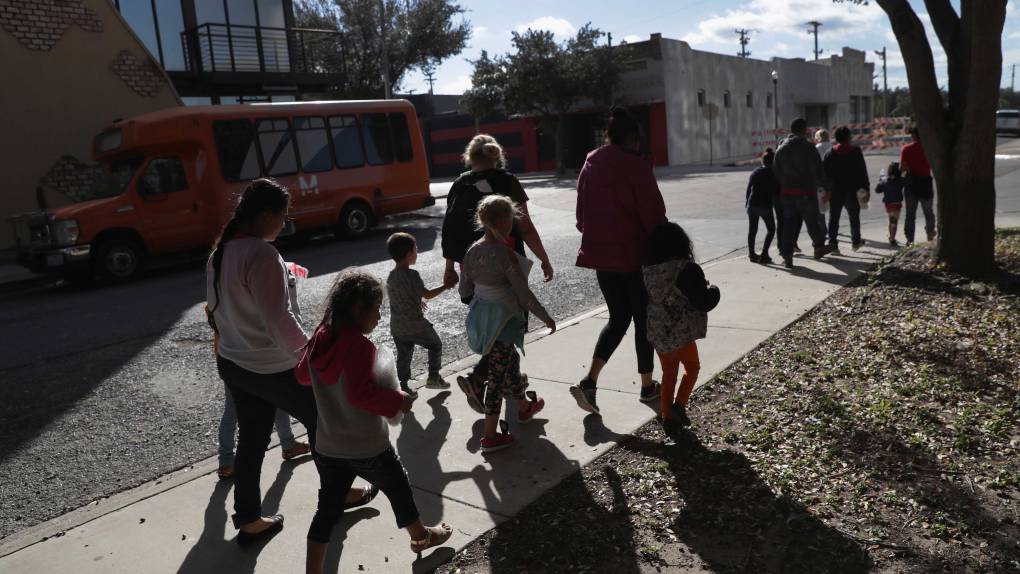
"caption": "People seeking political asylum walk to an aid center after being released from U.S. government detention on November 3, 2018 in McAllen, Texas. ",
"description": "People seeking political asylum walk to an aid center after being released from U.S. government detention on November 3, 2018 in McAllen, Texas. ",
"title": "Number Of Immigrant Asylum Seekers Surges In Texas' Rio Grande Valley",
"credit": "John Moore/Getty Images",
"status": "inherit",
"isLoading": false,
"fetchFailed": false
},
"news_11816530": {
"type": "attachments",
"id": "news_11816530",
"meta": {
"index": "attachments_1716263798",
"site": "news",
"id": "11816530",
"found": true
},
"parent": 11816529,
"imgSizes": {
"apple_news_ca_landscape_5_5": {
"file": "https://ww2.kqed.org/app/uploads/sites/10/2020/05/gettyimages-1170066991-e8c3c1e6012283177acc0e94751aea5583dd6dde-1044x783.jpg",
"width": 1044,
"mimeType": "image/jpeg",
"height": 783
},
"apple_news_ca_square_4_0": {
"file": "https://ww2.kqed.org/app/uploads/sites/10/2020/05/gettyimages-1170066991-e8c3c1e6012283177acc0e94751aea5583dd6dde-470x470.jpg",
"width": 470,
"mimeType": "image/jpeg",
"height": 470
},
"twentyfourteen-full-width": {
"file": "https://ww2.kqed.org/app/uploads/sites/10/2020/05/gettyimages-1170066991-e8c3c1e6012283177acc0e94751aea5583dd6dde-1038x576.jpg",
"width": 1038,
"mimeType": "image/jpeg",
"height": 576
},
"thumbnail": {
"file": "https://ww2.kqed.org/app/uploads/sites/10/2020/05/gettyimages-1170066991-e8c3c1e6012283177acc0e94751aea5583dd6dde-160x120.jpg",
"width": 160,
"mimeType": "image/jpeg",
"height": 120
},
"post-thumbnail": {
"file": "https://ww2.kqed.org/app/uploads/sites/10/2020/05/gettyimages-1170066991-e8c3c1e6012283177acc0e94751aea5583dd6dde-672x372.jpg",
"width": 672,
"mimeType": "image/jpeg",
"height": 372
},
"kqedFullSize": {
"file": "https://ww2.kqed.org/app/uploads/sites/10/2020/05/gettyimages-1170066991-e8c3c1e6012283177acc0e94751aea5583dd6dde-e1588793794543.jpg",
"width": 1920,
"height": 1440
},
"apple_news_ca_landscape_4_7": {
"file": "https://ww2.kqed.org/app/uploads/sites/10/2020/05/gettyimages-1170066991-e8c3c1e6012283177acc0e94751aea5583dd6dde-632x474.jpg",
"width": 632,
"mimeType": "image/jpeg",
"height": 474
},
"large": {
"file": "https://ww2.kqed.org/app/uploads/sites/10/2020/05/gettyimages-1170066991-e8c3c1e6012283177acc0e94751aea5583dd6dde-1020x765.jpg",
"width": 1020,
"mimeType": "image/jpeg",
"height": 765
},
"apple_news_ca_landscape_4_0": {
"file": "https://ww2.kqed.org/app/uploads/sites/10/2020/05/gettyimages-1170066991-e8c3c1e6012283177acc0e94751aea5583dd6dde-536x402.jpg",
"width": 536,
"mimeType": "image/jpeg",
"height": 402
},
"apple_news_ca_portrait_12_9": {
"file": "https://ww2.kqed.org/app/uploads/sites/10/2020/05/gettyimages-1170066991-e8c3c1e6012283177acc0e94751aea5583dd6dde-1122x1496.jpg",
"width": 1122,
"mimeType": "image/jpeg",
"height": 1496
},
"medium": {
"file": "https://ww2.kqed.org/app/uploads/sites/10/2020/05/gettyimages-1170066991-e8c3c1e6012283177acc0e94751aea5583dd6dde-800x600.jpg",
"width": 800,
"mimeType": "image/jpeg",
"height": 600
},
"apple_news_ca_portrait_4_0": {
"file": "https://ww2.kqed.org/app/uploads/sites/10/2020/05/gettyimages-1170066991-e8c3c1e6012283177acc0e94751aea5583dd6dde-354x472.jpg",
"width": 354,
"mimeType": "image/jpeg",
"height": 472
},
"apple_news_ca_portrait_9_7": {
"file": "https://ww2.kqed.org/app/uploads/sites/10/2020/05/gettyimages-1170066991-e8c3c1e6012283177acc0e94751aea5583dd6dde-840x1120.jpg",
"width": 840,
"mimeType": "image/jpeg",
"height": 1120
},
"apple_news_ca_landscape_12_9": {
"file": "https://ww2.kqed.org/app/uploads/sites/10/2020/05/gettyimages-1170066991-e8c3c1e6012283177acc0e94751aea5583dd6dde-1832x1374.jpg",
"width": 1832,
"mimeType": "image/jpeg",
"height": 1374
},
"apple_news_ca_square_9_7": {
"file": "https://ww2.kqed.org/app/uploads/sites/10/2020/05/gettyimages-1170066991-e8c3c1e6012283177acc0e94751aea5583dd6dde-1104x1104.jpg",
"width": 1104,
"mimeType": "image/jpeg",
"height": 1104
},
"apple_news_ca_portrait_4_7": {
"file": "https://ww2.kqed.org/app/uploads/sites/10/2020/05/gettyimages-1170066991-e8c3c1e6012283177acc0e94751aea5583dd6dde-414x552.jpg",
"width": 414,
"mimeType": "image/jpeg",
"height": 552
},
"apple_news_ca_square_12_9": {
"file": "https://ww2.kqed.org/app/uploads/sites/10/2020/05/gettyimages-1170066991-e8c3c1e6012283177acc0e94751aea5583dd6dde-1472x1472.jpg",
"width": 1472,
"mimeType": "image/jpeg",
"height": 1472
},
"apple_news_ca_portrait_5_5": {
"file": "https://ww2.kqed.org/app/uploads/sites/10/2020/05/gettyimages-1170066991-e8c3c1e6012283177acc0e94751aea5583dd6dde-687x916.jpg",
"width": 687,
"mimeType": "image/jpeg",
"height": 916
},
"full-width": {
"file": "https://ww2.kqed.org/app/uploads/sites/10/2020/05/gettyimages-1170066991-e8c3c1e6012283177acc0e94751aea5583dd6dde-1920x1440.jpg",
"width": 1920,
"mimeType": "image/jpeg",
"height": 1440
},
"apple_news_ca_square_4_7": {
"file": "https://ww2.kqed.org/app/uploads/sites/10/2020/05/gettyimages-1170066991-e8c3c1e6012283177acc0e94751aea5583dd6dde-550x550.jpg",
"width": 550,
"mimeType": "image/jpeg",
"height": 550
},
"apple_news_ca_landscape_9_7": {
"file": "https://ww2.kqed.org/app/uploads/sites/10/2020/05/gettyimages-1170066991-e8c3c1e6012283177acc0e94751aea5583dd6dde-1376x1032.jpg",
"width": 1376,
"mimeType": "image/jpeg",
"height": 1032
},
"apple_news_ca_square_5_5": {
"file": "https://ww2.kqed.org/app/uploads/sites/10/2020/05/gettyimages-1170066991-e8c3c1e6012283177acc0e94751aea5583dd6dde-912x912.jpg",
"width": 912,
"mimeType": "image/jpeg",
"height": 912
}
},
"publishDate": 1588793669,
"modified": 1588793783,
"caption": "Immigrant rights group CASA, along with the Institute for Constitutional Advocacy and Protection at Georgetown University Law Center, filed a federal class-action lawsuit Tuesday.",
"description": "Immigrant rights group CASA, along with the Institute for Constitutional Advocacy and Protection at Georgetown University Law Center, filed a federal class-action lawsuit Tuesday.",
"title": "Immigrant rights group CASA, along with the Institute for Constitutional Advocacy and Protection at Georgetown University Law Center, filed a federal class-action lawsuit Tuesday.",
"credit": "Andrew Caballero-Reynolds/AFP via Getty Images",
"status": "inherit",
"isLoading": false,
"fetchFailed": false
},
"news_11816460": {
"type": "attachments",
"id": "news_11816460",
"meta": {
"index": "attachments_1716263798",
"site": "news",
"id": "11816460",
"found": true
},
"parent": 11815627,
"imgSizes": {
"apple_news_ca_landscape_5_5": {
"file": "https://ww2.kqed.org/app/uploads/sites/10/2020/05/iStock-1173266366-1044x783.jpg",
"width": 1044,
"mimeType": "image/jpeg",
"height": 783
},
"apple_news_ca_square_4_0": {
"file": "https://ww2.kqed.org/app/uploads/sites/10/2020/05/iStock-1173266366-470x470.jpg",
"width": 470,
"mimeType": "image/jpeg",
"height": 470
},
"twentyfourteen-full-width": {
"file": "https://ww2.kqed.org/app/uploads/sites/10/2020/05/iStock-1173266366-1038x576.jpg",
"width": 1038,
"mimeType": "image/jpeg",
"height": 576
},
"thumbnail": {
"file": "https://ww2.kqed.org/app/uploads/sites/10/2020/05/iStock-1173266366-160x107.jpg",
"width": 160,
"mimeType": "image/jpeg",
"height": 107
},
"post-thumbnail": {
"file": "https://ww2.kqed.org/app/uploads/sites/10/2020/05/iStock-1173266366-672x372.jpg",
"width": 672,
"mimeType": "image/jpeg",
"height": 372
},
"kqedFullSize": {
"file": "https://ww2.kqed.org/app/uploads/sites/10/2020/05/iStock-1173266366-e1588738971811.jpg",
"width": 1920,
"height": 1280
},
"apple_news_ca_landscape_4_7": {
"file": "https://ww2.kqed.org/app/uploads/sites/10/2020/05/iStock-1173266366-632x474.jpg",
"width": 632,
"mimeType": "image/jpeg",
"height": 474
},
"large": {
"file": "https://ww2.kqed.org/app/uploads/sites/10/2020/05/iStock-1173266366-1020x680.jpg",
"width": 1020,
"mimeType": "image/jpeg",
"height": 680
},
"apple_news_ca_landscape_4_0": {
"file": "https://ww2.kqed.org/app/uploads/sites/10/2020/05/iStock-1173266366-536x402.jpg",
"width": 536,
"mimeType": "image/jpeg",
"height": 402
},
"apple_news_ca_portrait_12_9": {
"file": "https://ww2.kqed.org/app/uploads/sites/10/2020/05/iStock-1173266366-1122x1414.jpg",
"width": 1122,
"mimeType": "image/jpeg",
"height": 1414
},
"medium": {
"file": "https://ww2.kqed.org/app/uploads/sites/10/2020/05/iStock-1173266366-800x533.jpg",
"width": 800,
"mimeType": "image/jpeg",
"height": 533
},
"apple_news_ca_portrait_4_0": {
"file": "https://ww2.kqed.org/app/uploads/sites/10/2020/05/iStock-1173266366-354x472.jpg",
"width": 354,
"mimeType": "image/jpeg",
"height": 472
},
"apple_news_ca_portrait_9_7": {
"file": "https://ww2.kqed.org/app/uploads/sites/10/2020/05/iStock-1173266366-840x1120.jpg",
"width": 840,
"mimeType": "image/jpeg",
"height": 1120
},
"apple_news_ca_landscape_12_9": {
"file": "https://ww2.kqed.org/app/uploads/sites/10/2020/05/iStock-1173266366-1832x1374.jpg",
"width": 1832,
"mimeType": "image/jpeg",
"height": 1374
},
"apple_news_ca_square_9_7": {
"file": "https://ww2.kqed.org/app/uploads/sites/10/2020/05/iStock-1173266366-1104x1104.jpg",
"width": 1104,
"mimeType": "image/jpeg",
"height": 1104
},
"apple_news_ca_portrait_4_7": {
"file": "https://ww2.kqed.org/app/uploads/sites/10/2020/05/iStock-1173266366-414x552.jpg",
"width": 414,
"mimeType": "image/jpeg",
"height": 552
},
"apple_news_ca_square_12_9": {
"file": "https://ww2.kqed.org/app/uploads/sites/10/2020/05/iStock-1173266366-1472x1414.jpg",
"width": 1472,
"mimeType": "image/jpeg",
"height": 1414
},
"apple_news_ca_portrait_5_5": {
"file": "https://ww2.kqed.org/app/uploads/sites/10/2020/05/iStock-1173266366-687x916.jpg",
"width": 687,
"mimeType": "image/jpeg",
"height": 916
},
"full-width": {
"file": "https://ww2.kqed.org/app/uploads/sites/10/2020/05/iStock-1173266366-1920x1280.jpg",
"width": 1920,
"mimeType": "image/jpeg",
"height": 1280
},
"apple_news_ca_square_4_7": {
"file": "https://ww2.kqed.org/app/uploads/sites/10/2020/05/iStock-1173266366-550x550.jpg",
"width": 550,
"mimeType": "image/jpeg",
"height": 550
},
"apple_news_ca_landscape_9_7": {
"file": "https://ww2.kqed.org/app/uploads/sites/10/2020/05/iStock-1173266366-1376x1032.jpg",
"width": 1376,
"mimeType": "image/jpeg",
"height": 1032
},
"apple_news_ca_square_5_5": {
"file": "https://ww2.kqed.org/app/uploads/sites/10/2020/05/iStock-1173266366-912x912.jpg",
"width": 912,
"mimeType": "image/jpeg",
"height": 912
}
},
"publishDate": 1588738912,
"modified": 1588739132,
"caption": "Calls to child abuse hotlines, which are often made made by school officials, plummeted in April.",
"description": null,
"title": "Back to school",
"credit": "Anna Stills/iStock",
"status": "inherit",
"isLoading": false,
"fetchFailed": false
},
"news_11812800": {
"type": "attachments",
"id": "news_11812800",
"meta": {
"index": "attachments_1716263798",
"site": "news",
"id": "11812800",
"found": true
},
"parent": 11812389,
"imgSizes": {
"apple_news_ca_landscape_5_5": {
"file": "https://ww2.kqed.org/app/uploads/sites/10/2020/04/002_KQED_SanLeandro_OliviaBya_AddressRemoved_04132020-1044x783.jpg",
"width": 1044,
"mimeType": "image/jpeg",
"height": 783
},
"apple_news_ca_square_4_0": {
"file": "https://ww2.kqed.org/app/uploads/sites/10/2020/04/002_KQED_SanLeandro_OliviaBya_AddressRemoved_04132020-470x470.jpg",
"width": 470,
"mimeType": "image/jpeg",
"height": 470
},
"twentyfourteen-full-width": {
"file": "https://ww2.kqed.org/app/uploads/sites/10/2020/04/002_KQED_SanLeandro_OliviaBya_AddressRemoved_04132020-1038x576.jpg",
"width": 1038,
"mimeType": "image/jpeg",
"height": 576
},
"thumbnail": {
"file": "https://ww2.kqed.org/app/uploads/sites/10/2020/04/002_KQED_SanLeandro_OliviaBya_AddressRemoved_04132020-160x107.jpg",
"width": 160,
"mimeType": "image/jpeg",
"height": 107
},
"post-thumbnail": {
"file": "https://ww2.kqed.org/app/uploads/sites/10/2020/04/002_KQED_SanLeandro_OliviaBya_AddressRemoved_04132020-672x372.jpg",
"width": 672,
"mimeType": "image/jpeg",
"height": 372
},
"kqedFullSize": {
"file": "https://ww2.kqed.org/app/uploads/sites/10/2020/04/002_KQED_SanLeandro_OliviaBya_AddressRemoved_04132020.jpg",
"width": 1920,
"height": 1280
},
"apple_news_ca_landscape_4_7": {
"file": "https://ww2.kqed.org/app/uploads/sites/10/2020/04/002_KQED_SanLeandro_OliviaBya_AddressRemoved_04132020-632x474.jpg",
"width": 632,
"mimeType": "image/jpeg",
"height": 474
},
"large": {
"file": "https://ww2.kqed.org/app/uploads/sites/10/2020/04/002_KQED_SanLeandro_OliviaBya_AddressRemoved_04132020-1020x680.jpg",
"width": 1020,
"mimeType": "image/jpeg",
"height": 680
},
"apple_news_ca_landscape_4_0": {
"file": "https://ww2.kqed.org/app/uploads/sites/10/2020/04/002_KQED_SanLeandro_OliviaBya_AddressRemoved_04132020-536x402.jpg",
"width": 536,
"mimeType": "image/jpeg",
"height": 402
},
"apple_news_ca_portrait_12_9": {
"file": "https://ww2.kqed.org/app/uploads/sites/10/2020/04/002_KQED_SanLeandro_OliviaBya_AddressRemoved_04132020-1122x1280.jpg",
"width": 1122,
"mimeType": "image/jpeg",
"height": 1280
},
"medium": {
"file": "https://ww2.kqed.org/app/uploads/sites/10/2020/04/002_KQED_SanLeandro_OliviaBya_AddressRemoved_04132020-800x533.jpg",
"width": 800,
"mimeType": "image/jpeg",
"height": 533
},
"apple_news_ca_portrait_4_0": {
"file": "https://ww2.kqed.org/app/uploads/sites/10/2020/04/002_KQED_SanLeandro_OliviaBya_AddressRemoved_04132020-354x472.jpg",
"width": 354,
"mimeType": "image/jpeg",
"height": 472
},
"apple_news_ca_portrait_9_7": {
"file": "https://ww2.kqed.org/app/uploads/sites/10/2020/04/002_KQED_SanLeandro_OliviaBya_AddressRemoved_04132020-840x1120.jpg",
"width": 840,
"mimeType": "image/jpeg",
"height": 1120
},
"apple_news_ca_landscape_12_9": {
"file": "https://ww2.kqed.org/app/uploads/sites/10/2020/04/002_KQED_SanLeandro_OliviaBya_AddressRemoved_04132020-1832x1280.jpg",
"width": 1832,
"mimeType": "image/jpeg",
"height": 1280
},
"apple_news_ca_square_9_7": {
"file": "https://ww2.kqed.org/app/uploads/sites/10/2020/04/002_KQED_SanLeandro_OliviaBya_AddressRemoved_04132020-1104x1104.jpg",
"width": 1104,
"mimeType": "image/jpeg",
"height": 1104
},
"apple_news_ca_portrait_4_7": {
"file": "https://ww2.kqed.org/app/uploads/sites/10/2020/04/002_KQED_SanLeandro_OliviaBya_AddressRemoved_04132020-414x552.jpg",
"width": 414,
"mimeType": "image/jpeg",
"height": 552
},
"apple_news_ca_square_12_9": {
"file": "https://ww2.kqed.org/app/uploads/sites/10/2020/04/002_KQED_SanLeandro_OliviaBya_AddressRemoved_04132020-1472x1280.jpg",
"width": 1472,
"mimeType": "image/jpeg",
"height": 1280
},
"apple_news_ca_portrait_5_5": {
"file": "https://ww2.kqed.org/app/uploads/sites/10/2020/04/002_KQED_SanLeandro_OliviaBya_AddressRemoved_04132020-687x916.jpg",
"width": 687,
"mimeType": "image/jpeg",
"height": 916
},
"full-width": {
"file": "https://ww2.kqed.org/app/uploads/sites/10/2020/04/002_KQED_SanLeandro_OliviaBya_AddressRemoved_04132020-1920x1280.jpg",
"width": 1920,
"mimeType": "image/jpeg",
"height": 1280
},
"apple_news_ca_square_4_7": {
"file": "https://ww2.kqed.org/app/uploads/sites/10/2020/04/002_KQED_SanLeandro_OliviaBya_AddressRemoved_04132020-550x550.jpg",
"width": 550,
"mimeType": "image/jpeg",
"height": 550
},
"apple_news_ca_landscape_9_7": {
"file": "https://ww2.kqed.org/app/uploads/sites/10/2020/04/002_KQED_SanLeandro_OliviaBya_AddressRemoved_04132020-1376x1032.jpg",
"width": 1376,
"mimeType": "image/jpeg",
"height": 1032
},
"apple_news_ca_square_5_5": {
"file": "https://ww2.kqed.org/app/uploads/sites/10/2020/04/002_KQED_SanLeandro_OliviaBya_AddressRemoved_04132020-912x912.jpg",
"width": 912,
"mimeType": "image/jpeg",
"height": 912
}
},
"publishDate": 1587101461,
"modified": 1587167378,
"caption": "Olivia Bye and her family in San Leandro on April 13, 2020. The house number has been removed to protect the family's privacy.",
"description": null,
"title": "002_KQED_SanLeandro_OliviaBya_AddressRemoved_04132020",
"credit": "Beth LaBerge/KQED",
"status": "inherit",
"isLoading": false,
"fetchFailed": false
},
"news_11807453": {
"type": "attachments",
"id": "news_11807453",
"meta": {
"index": "attachments_1716263798",
"site": "news",
"id": "11807453",
"found": true
},
"parent": 11807392,
"imgSizes": {
"apple_news_ca_landscape_5_5": {
"file": "https://ww2.kqed.org/app/uploads/sites/10/2020/03/ChildrenCourtClosure_031920-1044x783.jpg",
"width": 1044,
"mimeType": "image/jpeg",
"height": 783
},
"apple_news_ca_square_4_0": {
"file": "https://ww2.kqed.org/app/uploads/sites/10/2020/03/ChildrenCourtClosure_031920-470x470.jpg",
"width": 470,
"mimeType": "image/jpeg",
"height": 470
},
"twentyfourteen-full-width": {
"file": "https://ww2.kqed.org/app/uploads/sites/10/2020/03/ChildrenCourtClosure_031920-1038x576.jpg",
"width": 1038,
"mimeType": "image/jpeg",
"height": 576
},
"thumbnail": {
"file": "https://ww2.kqed.org/app/uploads/sites/10/2020/03/ChildrenCourtClosure_031920-160x121.jpg",
"width": 160,
"mimeType": "image/jpeg",
"height": 121
},
"post-thumbnail": {
"file": "https://ww2.kqed.org/app/uploads/sites/10/2020/03/ChildrenCourtClosure_031920-672x372.jpg",
"width": 672,
"mimeType": "image/jpeg",
"height": 372
},
"kqedFullSize": {
"file": "https://ww2.kqed.org/app/uploads/sites/10/2020/03/ChildrenCourtClosure_031920.jpg",
"width": 1920,
"height": 1455
},
"apple_news_ca_landscape_4_7": {
"file": "https://ww2.kqed.org/app/uploads/sites/10/2020/03/ChildrenCourtClosure_031920-632x474.jpg",
"width": 632,
"mimeType": "image/jpeg",
"height": 474
},
"large": {
"file": "https://ww2.kqed.org/app/uploads/sites/10/2020/03/ChildrenCourtClosure_031920-1020x773.jpg",
"width": 1020,
"mimeType": "image/jpeg",
"height": 773
},
"apple_news_ca_landscape_4_0": {
"file": "https://ww2.kqed.org/app/uploads/sites/10/2020/03/ChildrenCourtClosure_031920-536x402.jpg",
"width": 536,
"mimeType": "image/jpeg",
"height": 402
},
"apple_news_ca_portrait_12_9": {
"file": "https://ww2.kqed.org/app/uploads/sites/10/2020/03/ChildrenCourtClosure_031920-1122x1455.jpg",
"width": 1122,
"mimeType": "image/jpeg",
"height": 1455
},
"medium": {
"file": "https://ww2.kqed.org/app/uploads/sites/10/2020/03/ChildrenCourtClosure_031920-800x606.jpg",
"width": 800,
"mimeType": "image/jpeg",
"height": 606
},
"apple_news_ca_portrait_4_0": {
"file": "https://ww2.kqed.org/app/uploads/sites/10/2020/03/ChildrenCourtClosure_031920-354x472.jpg",
"width": 354,
"mimeType": "image/jpeg",
"height": 472
},
"apple_news_ca_portrait_9_7": {
"file": "https://ww2.kqed.org/app/uploads/sites/10/2020/03/ChildrenCourtClosure_031920-840x1120.jpg",
"width": 840,
"mimeType": "image/jpeg",
"height": 1120
},
"apple_news_ca_landscape_12_9": {
"file": "https://ww2.kqed.org/app/uploads/sites/10/2020/03/ChildrenCourtClosure_031920-1832x1374.jpg",
"width": 1832,
"mimeType": "image/jpeg",
"height": 1374
},
"apple_news_ca_square_9_7": {
"file": "https://ww2.kqed.org/app/uploads/sites/10/2020/03/ChildrenCourtClosure_031920-1104x1104.jpg",
"width": 1104,
"mimeType": "image/jpeg",
"height": 1104
},
"apple_news_ca_portrait_4_7": {
"file": "https://ww2.kqed.org/app/uploads/sites/10/2020/03/ChildrenCourtClosure_031920-414x552.jpg",
"width": 414,
"mimeType": "image/jpeg",
"height": 552
},
"apple_news_ca_square_12_9": {
"file": "https://ww2.kqed.org/app/uploads/sites/10/2020/03/ChildrenCourtClosure_031920-1472x1455.jpg",
"width": 1472,
"mimeType": "image/jpeg",
"height": 1455
},
"apple_news_ca_portrait_5_5": {
"file": "https://ww2.kqed.org/app/uploads/sites/10/2020/03/ChildrenCourtClosure_031920-687x916.jpg",
"width": 687,
"mimeType": "image/jpeg",
"height": 916
},
"full-width": {
"file": "https://ww2.kqed.org/app/uploads/sites/10/2020/03/ChildrenCourtClosure_031920-1920x1455.jpg",
"width": 1920,
"mimeType": "image/jpeg",
"height": 1455
},
"apple_news_ca_square_4_7": {
"file": "https://ww2.kqed.org/app/uploads/sites/10/2020/03/ChildrenCourtClosure_031920-550x550.jpg",
"width": 550,
"mimeType": "image/jpeg",
"height": 550
},
"apple_news_ca_landscape_9_7": {
"file": "https://ww2.kqed.org/app/uploads/sites/10/2020/03/ChildrenCourtClosure_031920-1376x1032.jpg",
"width": 1376,
"mimeType": "image/jpeg",
"height": 1032
},
"apple_news_ca_square_5_5": {
"file": "https://ww2.kqed.org/app/uploads/sites/10/2020/03/ChildrenCourtClosure_031920-912x912.jpg",
"width": 912,
"mimeType": "image/jpeg",
"height": 912
}
},
"publishDate": 1584593835,
"modified": 1584653162,
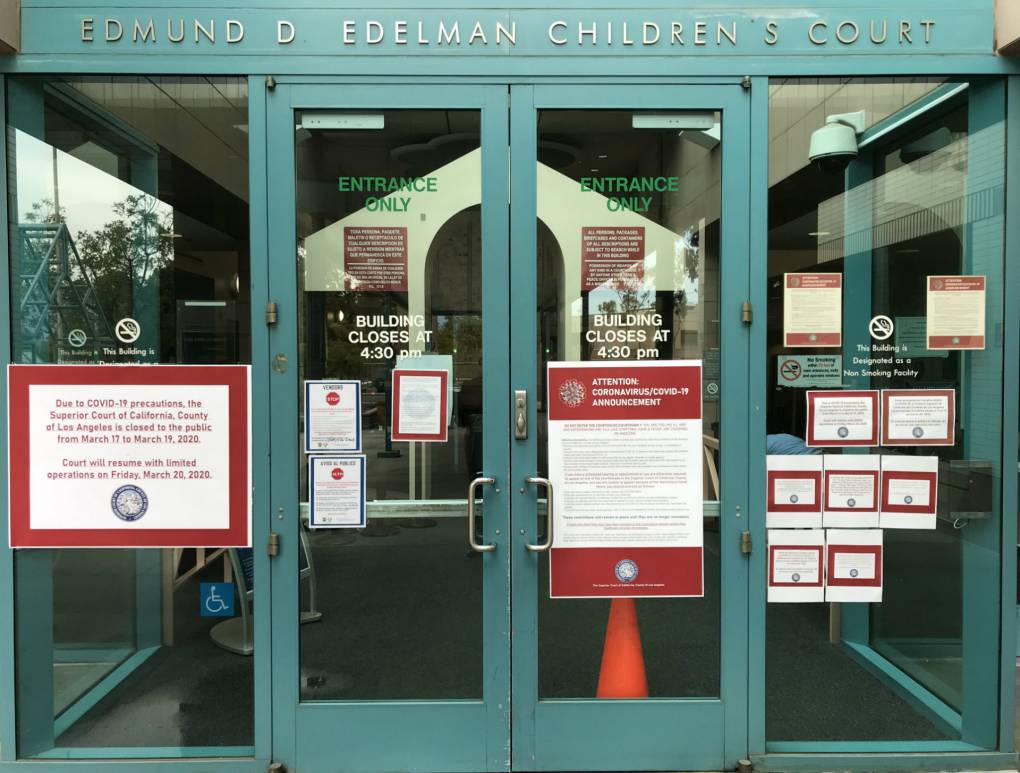
"caption": "The Edmund D. Edelman Children's Courthouse in Los Angeles.",
"description": null,
"title": "ChildrenCourtClosure_031920",
"credit": "Dennis Smeal/KQED",
"status": "inherit",
"isLoading": false,
"fetchFailed": false
},
"news_11805644": {
"type": "attachments",
"id": "news_11805644",
"meta": {
"index": "attachments_1716263798",
"site": "news",
"id": "11805644",
"found": true
},
"parent": 11805444,
"imgSizes": {
"apple_news_ca_landscape_5_5": {
"file": "https://ww2.kqed.org/app/uploads/sites/10/2020/03/Happy-Kids-1044x783.jpg",
"width": 1044,
"mimeType": "image/jpeg",
"height": 783
},
"apple_news_ca_square_4_0": {
"file": "https://ww2.kqed.org/app/uploads/sites/10/2020/03/Happy-Kids-470x470.jpg",
"width": 470,
"mimeType": "image/jpeg",
"height": 470
},
"twentyfourteen-full-width": {
"file": "https://ww2.kqed.org/app/uploads/sites/10/2020/03/Happy-Kids-1038x576.jpg",
"width": 1038,
"mimeType": "image/jpeg",
"height": 576
},
"thumbnail": {
"file": "https://ww2.kqed.org/app/uploads/sites/10/2020/03/Happy-Kids-160x99.jpg",
"width": 160,
"mimeType": "image/jpeg",
"height": 99
},
"post-thumbnail": {
"file": "https://ww2.kqed.org/app/uploads/sites/10/2020/03/Happy-Kids-672x372.jpg",
"width": 672,
"mimeType": "image/jpeg",
"height": 372
},
"kqedFullSize": {
"file": "https://ww2.kqed.org/app/uploads/sites/10/2020/03/Happy-Kids.jpg",
"width": 1920,
"height": 1183
},
"apple_news_ca_landscape_4_7": {
"file": "https://ww2.kqed.org/app/uploads/sites/10/2020/03/Happy-Kids-632x474.jpg",
"width": 632,
"mimeType": "image/jpeg",
"height": 474
},
"large": {
"file": "https://ww2.kqed.org/app/uploads/sites/10/2020/03/Happy-Kids-1020x628.jpg",
"width": 1020,
"mimeType": "image/jpeg",
"height": 628
},
"apple_news_ca_landscape_4_0": {
"file": "https://ww2.kqed.org/app/uploads/sites/10/2020/03/Happy-Kids-536x402.jpg",
"width": 536,
"mimeType": "image/jpeg",
"height": 402
},
"apple_news_ca_portrait_12_9": {
"file": "https://ww2.kqed.org/app/uploads/sites/10/2020/03/Happy-Kids-1122x1183.jpg",
"width": 1122,
"mimeType": "image/jpeg",
"height": 1183
},
"medium": {
"file": "https://ww2.kqed.org/app/uploads/sites/10/2020/03/Happy-Kids-800x493.jpg",
"width": 800,
"mimeType": "image/jpeg",
"height": 493
},
"apple_news_ca_portrait_4_0": {
"file": "https://ww2.kqed.org/app/uploads/sites/10/2020/03/Happy-Kids-354x472.jpg",
"width": 354,
"mimeType": "image/jpeg",
"height": 472
},
"apple_news_ca_portrait_9_7": {
"file": "https://ww2.kqed.org/app/uploads/sites/10/2020/03/Happy-Kids-840x1120.jpg",
"width": 840,
"mimeType": "image/jpeg",
"height": 1120
},
"apple_news_ca_landscape_12_9": {
"file": "https://ww2.kqed.org/app/uploads/sites/10/2020/03/Happy-Kids-1832x1183.jpg",
"width": 1832,
"mimeType": "image/jpeg",
"height": 1183
},
"apple_news_ca_square_9_7": {
"file": "https://ww2.kqed.org/app/uploads/sites/10/2020/03/Happy-Kids-1104x1104.jpg",
"width": 1104,
"mimeType": "image/jpeg",
"height": 1104
},
"apple_news_ca_portrait_4_7": {
"file": "https://ww2.kqed.org/app/uploads/sites/10/2020/03/Happy-Kids-414x552.jpg",
"width": 414,
"mimeType": "image/jpeg",
"height": 552
},
"apple_news_ca_square_12_9": {
"file": "https://ww2.kqed.org/app/uploads/sites/10/2020/03/Happy-Kids-1472x1183.jpg",
"width": 1472,
"mimeType": "image/jpeg",
"height": 1183
},
"apple_news_ca_portrait_5_5": {
"file": "https://ww2.kqed.org/app/uploads/sites/10/2020/03/Happy-Kids-687x916.jpg",
"width": 687,
"mimeType": "image/jpeg",
"height": 916
},
"full-width": {
"file": "https://ww2.kqed.org/app/uploads/sites/10/2020/03/Happy-Kids-1920x1183.jpg",
"width": 1920,
"mimeType": "image/jpeg",
"height": 1183
},
"apple_news_ca_square_4_7": {
"file": "https://ww2.kqed.org/app/uploads/sites/10/2020/03/Happy-Kids-550x550.jpg",
"width": 550,
"mimeType": "image/jpeg",
"height": 550
},
"apple_news_ca_landscape_9_7": {
"file": "https://ww2.kqed.org/app/uploads/sites/10/2020/03/Happy-Kids-1376x1032.jpg",
"width": 1376,
"mimeType": "image/jpeg",
"height": 1032
},
"apple_news_ca_square_5_5": {
"file": "https://ww2.kqed.org/app/uploads/sites/10/2020/03/Happy-Kids-912x912.jpg",
"width": 912,
"mimeType": "image/jpeg",
"height": 912
}
},
"publishDate": 1583528470,
"modified": 1583528570,
"caption": "Dr. Michele Borba says children are hardwired for empathy, but it goes dormant unless we cultivate it. ",
"description": null,
"title": "Happy Kids",
"credit": "Rawpixel/iStock",
"status": "inherit",
"isLoading": false,
"fetchFailed": false
},
"arts_13875687": {
"type": "attachments",
"id": "arts_13875687",
"meta": {
"index": "attachments_1716263798",
"site": "arts",
"id": "13875687",
"found": true
},
"parent": 13875678,
"imgSizes": {
"thumbnail": {
"file": "https://ww2.kqed.org/app/uploads/sites/2/2020/02/Coronavirus.comicsMAIN.comc_-160x90.jpg",
"width": 160,
"mimeType": "image/jpeg",
"height": 90
},
"post-thumbnail": {
"file": "https://ww2.kqed.org/app/uploads/sites/2/2020/02/Coronavirus.comicsMAIN.comc_-672x372.jpg",
"width": 672,
"mimeType": "image/jpeg",
"height": 372
},
"kqedFullSize": {
"file": "https://ww2.kqed.org/app/uploads/sites/2/2020/02/Coronavirus.comicsMAIN.comc_.jpg",
"width": 800,
"height": 450
},
"medium": {
"file": "https://ww2.kqed.org/app/uploads/sites/2/2020/02/Coronavirus.comicsMAIN.comc_-800x450.jpg",
"width": 800,
"mimeType": "image/jpeg",
"height": 450
},
"medium_large": {
"file": "https://ww2.kqed.org/app/uploads/sites/2/2020/02/Coronavirus.comicsMAIN.comc_-768x432.jpg",
"width": 768,
"mimeType": "image/jpeg",
"height": 432
}
},
"publishDate": 1582920707,
"modified": 1582920731,
"caption": null,
"description": null,
"title": "Coronavirus.comicsMAIN.comc",
"credit": "Malaka Gharib/ NPR",
"status": "inherit",
"isLoading": false,
"fetchFailed": false
},
"news_11802634": {
"type": "attachments",
"id": "news_11802634",
"meta": {
"index": "attachments_1716263798",
"site": "news",
"id": "11802634",
"found": true
},
"parent": 11802629,
"imgSizes": {
"apple_news_ca_landscape_5_5": {
"file": "https://ww2.kqed.org/app/uploads/sites/10/2020/02/Child-Reading-Book-1044x783.jpg",
"width": 1044,
"mimeType": "image/jpeg",
"height": 783
},
"apple_news_ca_square_4_0": {
"file": "https://ww2.kqed.org/app/uploads/sites/10/2020/02/Child-Reading-Book-470x470.jpg",
"width": 470,
"mimeType": "image/jpeg",
"height": 470
},
"twentyfourteen-full-width": {
"file": "https://ww2.kqed.org/app/uploads/sites/10/2020/02/Child-Reading-Book-1038x576.jpg",
"width": 1038,
"mimeType": "image/jpeg",
"height": 576
},
"thumbnail": {
"file": "https://ww2.kqed.org/app/uploads/sites/10/2020/02/Child-Reading-Book-160x120.jpg",
"width": 160,
"mimeType": "image/jpeg",
"height": 120
},
"post-thumbnail": {
"file": "https://ww2.kqed.org/app/uploads/sites/10/2020/02/Child-Reading-Book-672x372.jpg",
"width": 672,
"mimeType": "image/jpeg",
"height": 372
},
"kqedFullSize": {
"file": "https://ww2.kqed.org/app/uploads/sites/10/2020/02/Child-Reading-Book.jpg",
"width": 1920,
"height": 1440
},
"apple_news_ca_landscape_4_7": {
"file": "https://ww2.kqed.org/app/uploads/sites/10/2020/02/Child-Reading-Book-632x474.jpg",
"width": 632,
"mimeType": "image/jpeg",
"height": 474
},
"large": {
"file": "https://ww2.kqed.org/app/uploads/sites/10/2020/02/Child-Reading-Book-1020x765.jpg",
"width": 1020,
"mimeType": "image/jpeg",
"height": 765
},
"apple_news_ca_landscape_4_0": {
"file": "https://ww2.kqed.org/app/uploads/sites/10/2020/02/Child-Reading-Book-536x402.jpg",
"width": 536,
"mimeType": "image/jpeg",
"height": 402
},
"apple_news_ca_portrait_12_9": {
"file": "https://ww2.kqed.org/app/uploads/sites/10/2020/02/Child-Reading-Book-1122x1440.jpg",
"width": 1122,
"mimeType": "image/jpeg",
"height": 1440
},
"medium": {
"file": "https://ww2.kqed.org/app/uploads/sites/10/2020/02/Child-Reading-Book-800x600.jpg",
"width": 800,
"mimeType": "image/jpeg",
"height": 600
},
"apple_news_ca_portrait_4_0": {
"file": "https://ww2.kqed.org/app/uploads/sites/10/2020/02/Child-Reading-Book-354x472.jpg",
"width": 354,
"mimeType": "image/jpeg",
"height": 472
},
"apple_news_ca_portrait_9_7": {
"file": "https://ww2.kqed.org/app/uploads/sites/10/2020/02/Child-Reading-Book-840x1120.jpg",
"width": 840,
"mimeType": "image/jpeg",
"height": 1120
},
"apple_news_ca_landscape_12_9": {
"file": "https://ww2.kqed.org/app/uploads/sites/10/2020/02/Child-Reading-Book-1832x1374.jpg",
"width": 1832,
"mimeType": "image/jpeg",
"height": 1374
},
"apple_news_ca_square_9_7": {
"file": "https://ww2.kqed.org/app/uploads/sites/10/2020/02/Child-Reading-Book-1104x1104.jpg",
"width": 1104,
"mimeType": "image/jpeg",
"height": 1104
},
"apple_news_ca_portrait_4_7": {
"file": "https://ww2.kqed.org/app/uploads/sites/10/2020/02/Child-Reading-Book-414x552.jpg",
"width": 414,
"mimeType": "image/jpeg",
"height": 552
},
"apple_news_ca_square_12_9": {
"file": "https://ww2.kqed.org/app/uploads/sites/10/2020/02/Child-Reading-Book-1472x1440.jpg",
"width": 1472,
"mimeType": "image/jpeg",
"height": 1440
},
"apple_news_ca_portrait_5_5": {
"file": "https://ww2.kqed.org/app/uploads/sites/10/2020/02/Child-Reading-Book-687x916.jpg",
"width": 687,
"mimeType": "image/jpeg",
"height": 916
},
"full-width": {
"file": "https://ww2.kqed.org/app/uploads/sites/10/2020/02/Child-Reading-Book-1920x1440.jpg",
"width": 1920,
"mimeType": "image/jpeg",
"height": 1440
},
"apple_news_ca_square_4_7": {
"file": "https://ww2.kqed.org/app/uploads/sites/10/2020/02/Child-Reading-Book-550x550.jpg",
"width": 550,
"mimeType": "image/jpeg",
"height": 550
},
"apple_news_ca_landscape_9_7": {
"file": "https://ww2.kqed.org/app/uploads/sites/10/2020/02/Child-Reading-Book-1376x1032.jpg",
"width": 1376,
"mimeType": "image/jpeg",
"height": 1032
},
"apple_news_ca_square_5_5": {
"file": "https://ww2.kqed.org/app/uploads/sites/10/2020/02/Child-Reading-Book-912x912.jpg",
"width": 912,
"mimeType": "image/jpeg",
"height": 912
}
},
"publishDate": 1582236657,
"modified": 1582241653,
"caption": "The lawsuit's plaintiffs claimed it was the 'first in the nation' to seek to establish access to literacy as a constitutional right.",
"description": "The lawsuit's plaintiffs claimed it was the 'first in the nation' to seek to establish access to literacy as a constitutional right.",
"title": "Child-Reading-Book",
"credit": "Getty Images",
"status": "inherit",
"isLoading": false,
"fetchFailed": false
},
"news_11800513": {
"type": "attachments",
"id": "news_11800513",
"meta": {
"index": "attachments_1716263798",
"site": "news",
"id": "11800513",
"found": true
},
"parent": 11800507,
"imgSizes": {
"apple_news_ca_landscape_5_5": {
"file": "https://ww2.kqed.org/app/uploads/sites/10/2020/02/Richmond-Teachers-Union-Members-1044x783.jpg",
"width": 1044,
"mimeType": "image/jpeg",
"height": 783
},
"apple_news_ca_square_4_0": {
"file": "https://ww2.kqed.org/app/uploads/sites/10/2020/02/Richmond-Teachers-Union-Members-470x470.jpg",
"width": 470,
"mimeType": "image/jpeg",
"height": 470
},
"twentyfourteen-full-width": {
"file": "https://ww2.kqed.org/app/uploads/sites/10/2020/02/Richmond-Teachers-Union-Members-1038x576.jpg",
"width": 1038,
"mimeType": "image/jpeg",
"height": 576
},
"thumbnail": {
"file": "https://ww2.kqed.org/app/uploads/sites/10/2020/02/Richmond-Teachers-Union-Members-160x100.jpg",
"width": 160,
"mimeType": "image/jpeg",
"height": 100
},
"post-thumbnail": {
"file": "https://ww2.kqed.org/app/uploads/sites/10/2020/02/Richmond-Teachers-Union-Members-672x372.jpg",
"width": 672,
"mimeType": "image/jpeg",
"height": 372
},
"kqedFullSize": {
"file": "https://ww2.kqed.org/app/uploads/sites/10/2020/02/Richmond-Teachers-Union-Members.jpg",
"width": 1920,
"height": 1200
},
"apple_news_ca_landscape_4_7": {
"file": "https://ww2.kqed.org/app/uploads/sites/10/2020/02/Richmond-Teachers-Union-Members-632x474.jpg",
"width": 632,
"mimeType": "image/jpeg",
"height": 474
},
"large": {
"file": "https://ww2.kqed.org/app/uploads/sites/10/2020/02/Richmond-Teachers-Union-Members-1020x638.jpg",
"width": 1020,
"mimeType": "image/jpeg",
"height": 638
},
"apple_news_ca_landscape_4_0": {
"file": "https://ww2.kqed.org/app/uploads/sites/10/2020/02/Richmond-Teachers-Union-Members-536x402.jpg",
"width": 536,
"mimeType": "image/jpeg",
"height": 402
},
"apple_news_ca_portrait_12_9": {
"file": "https://ww2.kqed.org/app/uploads/sites/10/2020/02/Richmond-Teachers-Union-Members-1122x1200.jpg",
"width": 1122,
"mimeType": "image/jpeg",
"height": 1200
},
"medium": {
"file": "https://ww2.kqed.org/app/uploads/sites/10/2020/02/Richmond-Teachers-Union-Members-800x500.jpg",
"width": 800,
"mimeType": "image/jpeg",
"height": 500
},
"apple_news_ca_portrait_4_0": {
"file": "https://ww2.kqed.org/app/uploads/sites/10/2020/02/Richmond-Teachers-Union-Members-354x472.jpg",
"width": 354,
"mimeType": "image/jpeg",
"height": 472
},
"apple_news_ca_portrait_9_7": {
"file": "https://ww2.kqed.org/app/uploads/sites/10/2020/02/Richmond-Teachers-Union-Members-840x1120.jpg",
"width": 840,
"mimeType": "image/jpeg",
"height": 1120
},
"apple_news_ca_landscape_12_9": {
"file": "https://ww2.kqed.org/app/uploads/sites/10/2020/02/Richmond-Teachers-Union-Members-1832x1200.jpg",
"width": 1832,
"mimeType": "image/jpeg",
"height": 1200
},
"apple_news_ca_square_9_7": {
"file": "https://ww2.kqed.org/app/uploads/sites/10/2020/02/Richmond-Teachers-Union-Members-1104x1104.jpg",
"width": 1104,
"mimeType": "image/jpeg",
"height": 1104
},
"apple_news_ca_portrait_4_7": {
"file": "https://ww2.kqed.org/app/uploads/sites/10/2020/02/Richmond-Teachers-Union-Members-414x552.jpg",
"width": 414,
"mimeType": "image/jpeg",
"height": 552
},
"apple_news_ca_square_12_9": {
"file": "https://ww2.kqed.org/app/uploads/sites/10/2020/02/Richmond-Teachers-Union-Members-1472x1200.jpg",
"width": 1472,
"mimeType": "image/jpeg",
"height": 1200
},
"apple_news_ca_portrait_5_5": {
"file": "https://ww2.kqed.org/app/uploads/sites/10/2020/02/Richmond-Teachers-Union-Members-687x916.jpg",
"width": 687,
"mimeType": "image/jpeg",
"height": 916
},
"full-width": {
"file": "https://ww2.kqed.org/app/uploads/sites/10/2020/02/Richmond-Teachers-Union-Members-1920x1200.jpg",
"width": 1920,
"mimeType": "image/jpeg",
"height": 1200
},
"apple_news_ca_square_4_7": {
"file": "https://ww2.kqed.org/app/uploads/sites/10/2020/02/Richmond-Teachers-Union-Members-550x550.jpg",
"width": 550,
"mimeType": "image/jpeg",
"height": 550
},
"apple_news_ca_landscape_9_7": {
"file": "https://ww2.kqed.org/app/uploads/sites/10/2020/02/Richmond-Teachers-Union-Members-1376x1032.jpg",
"width": 1376,
"mimeType": "image/jpeg",
"height": 1032
},
"apple_news_ca_square_5_5": {
"file": "https://ww2.kqed.org/app/uploads/sites/10/2020/02/Richmond-Teachers-Union-Members-912x912.jpg",
"width": 912,
"mimeType": "image/jpeg",
"height": 912
}
},
"publishDate": 1581026868,
"modified": 1581026994,
"caption": "Demetrio Gonzalez-Hoy, president of the United Teachers of Richmond union (left) is flanked by other union representatives as he speaks to the West Contra Costa School Board about budget cuts on Dec. 11, 2019.",
"description": "Demetrio Gonzalez-Hoy, president of the United Teachers of Richmond union (left) is flanked by other union representatives as he speaks to the West Contra Costa School Board about budget cuts on Dec. 11, 2019.",
"title": "Richmond-Teachers-Union-Members",
"credit": "Theresa Harrington/EdSource",
"status": "inherit",
"isLoading": false,
"fetchFailed": false
}
},
"audioPlayerReducer": {
"postId": "stream_live",
"isPaused": true,
"isPlaying": false,
"pfsActive": false,
"pledgeModalIsOpen": true,
"playerDrawerIsOpen": false,
"liveAudioPlayStartedAt": 0,
"liveAudioPlayContext": ""
},
"authorsReducer": {
"byline_news_11840177": {
"type": "authors",
"id": "byline_news_11840177",
"meta": {
"override": true
},
"slug": "byline_news_11840177",
"name": "\u003ca href=\"https://www.kpbs.org/staff/claire-trageser/\">Claire Trageser\u003c/a>\u003cbr>KPBS",
"isLoading": false
},
"byline_news_11828620": {
"type": "authors",
"id": "byline_news_11828620",
"meta": {
"override": true
},
"slug": "byline_news_11828620",
"name": "Elizabeth Aguilera \u003cbr />CalMatters\u003cbr>",
"isLoading": false
},
"byline_news_11826450": {
"type": "authors",
"id": "byline_news_11826450",
"meta": {
"override": true
},
"slug": "byline_news_11826450",
"name": "Nomaan Merchant \u003cbr> Associated Press ",
"isLoading": false
},
"byline_news_11816529": {
"type": "authors",
"id": "byline_news_11816529",
"meta": {
"override": true
},
"slug": "byline_news_11816529",
"name": "Marisa Peñaloza",
"isLoading": false
},
"byline_news_11807392": {
"type": "authors",
"id": "byline_news_11807392",
"meta": {
"override": true
},
"slug": "byline_news_11807392",
"name": "\u003ca href=\"https://twitter.com/deepafern?lang=en\">Deepa Fernandes\u003c/a>",
"isLoading": false
},
"byline_arts_13875678": {
"type": "authors",
"id": "byline_arts_13875678",
"meta": {
"override": true
},
"slug": "byline_arts_13875678",
"name": "Malaka Gharib",
"isLoading": false
},
"byline_news_11802629": {
"type": "authors",
"id": "byline_news_11802629",
"meta": {
"override": true
},
"slug": "byline_news_11802629",
"name": "\u003ca href=\"https://calmatters.org/author/ricardo-cano/\">Ricardo Cano\u003c/a>",
"isLoading": false
},
"byline_news_11800507": {
"type": "authors",
"id": "byline_news_11800507",
"meta": {
"override": true
},
"slug": "byline_news_11800507",
"name": "\u003cstrong>\u003ca href=\"https://edsource.org/author/tharrington\">Theresa Harrington\u003c/a>\u003c/strong>",
"isLoading": false
},
"sasha-khokha": {
"type": "authors",
"id": "254",
"meta": {
"index": "authors_1716337520",
"id": "254",
"found": true
},
"name": "Sasha Khokha",
"firstName": "Sasha",
"lastName": "Khokha",
"slug": "sasha-khokha",
"email": "skhokha@kqed.org",
"display_author_email": true,
"staff_mastheads": [
"news"
],
"title": "Host, The California Report Magazine",
"bio": "Sasha Khokha is the host of \u003cem>The California Report's \u003c/em> weekly magazine program, which takes listeners on sound-rich excursions to meet the people that make the Golden State unique -- through audio documentaries and long-form stories. As \u003cem>The California Report's\u003c/em> Central Valley Bureau Chief based in Fresno for nearly a dozen years, Sasha brought the lives and concerns of rural Californians to listeners around the state. Her reporting helped expose the hidden price immigrant women janitors and farmworkers may pay to keep their jobs: sexual assault at work. It inspired two new California laws to protect them from sexual harassment. She was a key member of the reporting team for the Frontline film \u003cem>Rape on the Night Shift, \u003c/em>which was nominated for two national Emmys. Sasha has also won a national Edward R. Murrow and a national PRNDI award for investigative reporting, as well as multiple prizes from the Society for Professional Journalists. Sasha is a proud alum of the UC Berkeley Graduate School of Journalism and Brown University and a member of the South Asian Journalists Association.",
"avatar": "https://secure.gravatar.com/avatar/e4b5e1541aaeea2aa356aa1fb2a68950?s=600&d=blank&r=g",
"twitter": "KQEDSashaKhokha",
"facebook": null,
"instagram": null,
"linkedin": null,
"sites": [
{
"site": "news",
"roles": [
"editor"
]
},
{
"site": "stateofhealth",
"roles": [
"author"
]
},
{
"site": "science",
"roles": [
"author"
]
},
{
"site": "quest",
"roles": [
"subscriber"
]
}
],
"headData": {
"title": "Sasha Khokha | KQED",
"description": "Host, The California Report Magazine",
"ogImgSrc": "https://secure.gravatar.com/avatar/e4b5e1541aaeea2aa356aa1fb2a68950?s=600&d=blank&r=g",
"twImgSrc": "https://secure.gravatar.com/avatar/e4b5e1541aaeea2aa356aa1fb2a68950?s=600&d=blank&r=g"
},
"isLoading": false,
"link": "/author/sasha-khokha"
},
"carlysevern": {
"type": "authors",
"id": "3243",
"meta": {
"index": "authors_1716337520",
"id": "3243",
"found": true
},
"name": "Carly Severn",
"firstName": "Carly",
"lastName": "Severn",
"slug": "carlysevern",
"email": "csevern@kqed.org",
"display_author_email": false,
"staff_mastheads": [
"news"
],
"title": "Senior Editor, Audience News ",
"bio": "Carly is KQED's Senior Editor of Audience News on the Digital News team, and has reported for the California Report Magazine, Bay Curious and KQED Arts. She's formerly the host of \u003ca href=\"http://ww2.kqed.org/pop/category/the-cooler/\" rel=\"noopener noreferrer\">The Cooler\u003c/a> podcast.",
"avatar": "https://secure.gravatar.com/avatar/54037bf5c128fe678f0ef26cec97a93f2e7f220a22d7285703328f12c42c1b1d?s=600&d=blank&r=g",
"twitter": "teacupinthebay",
"bluesky": null,
"facebook": null,
"instagram": null,
"linkedin": null,
"sites": [
{
"site": "",
"roles": [
"editor"
]
},
{
"site": "arts",
"roles": [
"editor"
]
},
{
"site": "news",
"roles": [
"administrator"
]
},
{
"site": "pop",
"roles": [
"editor"
]
},
{
"site": "futureofyou",
"roles": [
"editor"
]
},
{
"site": "about",
"roles": [
"administrator"
]
},
{
"site": "mindshift",
"roles": [
"editor"
]
},
{
"site": "bayareabites",
"roles": [
"editor"
]
},
{
"site": "stateofhealth",
"roles": [
"editor"
]
},
{
"site": "science",
"roles": [
"editor"
]
},
{
"site": "food",
"roles": [
"contributor"
]
},
{
"site": "forum",
"roles": [
"editor"
]
},
{
"site": "perspectives",
"roles": [
"administrator"
]
},
{
"site": "liveblog",
"roles": [
"editor"
]
}
],
"headData": {
"title": "Carly Severn | KQED",
"description": "Senior Editor, Audience News ",
"ogImgSrc": "https://secure.gravatar.com/avatar/54037bf5c128fe678f0ef26cec97a93f2e7f220a22d7285703328f12c42c1b1d?s=600&d=blank&r=g",
"twImgSrc": "https://secure.gravatar.com/avatar/54037bf5c128fe678f0ef26cec97a93f2e7f220a22d7285703328f12c42c1b1d?s=600&d=blank&r=g"
},
"isLoading": false,
"link": "/author/carlysevern"
},
"afont": {
"type": "authors",
"id": "8637",
"meta": {
"index": "authors_1716337520",
"id": "8637",
"found": true
},
"name": "Amanda Font",
"firstName": "Amanda",
"lastName": "Font",
"slug": "afont",
"email": "afont@kqed.org",
"display_author_email": false,
"staff_mastheads": [],
"title": "KQED Contributor",
"bio": "Amanda Font is a producer on \u003cem>The Latest\u003c/em> podcast, and the host and co-producer of the series \u003cem>Audible Cosmos\u003c/em>. She has previously worked as a producer and reporter on the \u003cem>Bay Curious\u003c/em> podcast, and director of \u003cem>The California Report Magazine\u003c/em>. She grew up in the deserts of Southern California and moved north for the trees. Amanda earned a B.A. from the BECA program at San Francisco State, where she worked in the university's radio station. Amanda Font is represented by SAG-AFTRA.",
"avatar": "https://secure.gravatar.com/avatar/d9e81cf0117d5849b9cfb7ab4b1422f1?s=600&d=blank&r=g",
"twitter": null,
"facebook": null,
"instagram": null,
"linkedin": null,
"sites": [
{
"site": "news",
"roles": [
"add_users",
"create_users"
]
},
{
"site": "science",
"roles": []
},
{
"site": "forum",
"roles": [
"administrator"
]
},
{
"site": "perspectives",
"roles": [
"administrator"
]
},
{
"site": "radio",
"roles": [
"administrator"
]
}
],
"headData": {
"title": "Amanda Font | KQED",
"description": "KQED Contributor",
"ogImgSrc": "https://secure.gravatar.com/avatar/d9e81cf0117d5849b9cfb7ab4b1422f1?s=600&d=blank&r=g",
"twImgSrc": "https://secure.gravatar.com/avatar/d9e81cf0117d5849b9cfb7ab4b1422f1?s=600&d=blank&r=g"
},
"isLoading": false,
"link": "/author/afont"
},
"lblanco": {
"type": "authors",
"id": "11357",
"meta": {
"index": "authors_1716337520",
"id": "11357",
"found": true
},
"name": "Lina Blanco",
"firstName": "Lina",
"lastName": "Blanco",
"slug": "lblanco",
"email": "lblanco@kqed.org",
"display_author_email": false,
"staff_mastheads": [],
"title": null,
"bio": "Lina was a Senior Engagement Platforms Manager for KQED News, producing engagement strategies on social media at \u003ca href=\"https://twitter.com/KQEDnews\">@KQEDNews, \u003c/a>via \u003ca href=\"https://www.kqed.org/about/newsletters/\">KQED's daily newsletter\u003c/a> as well as texting campaigns with KQED readers and listeners. She also co-produces for KQED's bilingual news hub \u003ca href=\"https://www.instagram.com/kqedenespanol/\">KQED en Español\u003c/a>.\r\n\r\nLina previously worked for \u003ca href=\"https://kqed.org/arts\">KQED Arts\u003c/a> — supporting audience engagement efforts on the weekly \u003ca href=\"https://www.kqed.org/podcasts/rightnowish\">\u003cem>Rightnowish\u003c/em> \u003c/a>podcast, Webby-winning video series \u003ca href=\"https://www.kqed.org/if-cities-could-dance\">\u003cem>If Cities Could Dance\u003c/em>\u003c/a>, and daily Arts & Culture reporting. She won a \u003ca href=\"https://www.kqed.org/pressroom/10884/murrow\">National 2019 Edward R. Murrow Award for Excellence in Social Media\u003c/a> for KQED's series \u003cem>The Hustle\u003c/em>.\r\n\r\nBefore KQED, Lina worked as a graphic designer and digital storytelling facilitator at the \u003ca href=\"https://www.nativehealth.org/\">Native American Health Center\u003c/a>.\r\n\r\nShe's mom to a senior Chihuahua (plus one black cat) and lives in West Sonoma County on a small farmstead.",
"avatar": "https://secure.gravatar.com/avatar/77ec326d67223c38a436b87bcfd2a2e8?s=600&d=mm&r=g",
"twitter": "LinaBlanco",
"facebook": null,
"instagram": null,
"linkedin": null,
"sites": [
{
"site": "arts",
"roles": [
"subscriber"
]
},
{
"site": "news",
"roles": [
"subscriber"
]
},
{
"site": "pop",
"roles": [
"administrator"
]
},
{
"site": "about",
"roles": [
"administrator"
]
},
{
"site": "bayareabites",
"roles": [
"editor"
]
},
{
"site": "science",
"roles": [
"editor"
]
},
{
"site": "checkplease",
"roles": [
"editor"
]
},
{
"site": "food",
"roles": []
},
{
"site": "perspectives",
"roles": [
"editor"
]
}
],
"headData": {
"title": "Lina Blanco | KQED",
"description": null,
"ogImgSrc": "https://secure.gravatar.com/avatar/77ec326d67223c38a436b87bcfd2a2e8?s=600&d=mm&r=g",
"twImgSrc": "https://secure.gravatar.com/avatar/77ec326d67223c38a436b87bcfd2a2e8?s=600&d=mm&r=g"
},
"isLoading": false,
"link": "/author/lblanco"
},
"aehsanipour": {
"type": "authors",
"id": "11580",
"meta": {
"index": "authors_1716337520",
"id": "11580",
"found": true
},
"name": "Asal Ehsanipour",
"firstName": "Asal",
"lastName": "Ehsanipour",
"slug": "aehsanipour",
"email": "aehsanipour@kqed.org",
"display_author_email": false,
"staff_mastheads": [],
"title": "Reporter and Producer",
"bio": "Asal Ehsanipour is a producer and reporter for Rightnowish, Bay Curious and The California Report Magazine. She is also a producer for \u003ca href=\"https://www.thedoubleshift.com/\">The Double Shift\u003c/a>, a podcast about a new generation of working mothers. In 2018, Asal was named an Emerging Journalist Fellow by the Journalism and Women’s Symposium. Her work has appeared on KQED, KALW, PRI’s The World, and in several food and travel publications.",
"avatar": "https://secure.gravatar.com/avatar/c0e210438f5dca1b76921ff9f0eada52?s=600&d=blank&r=g",
"twitter": null,
"facebook": null,
"instagram": null,
"linkedin": null,
"sites": [
{
"site": "arts",
"roles": []
},
{
"site": "news",
"roles": [
"author",
"edit_others_posts"
]
}
],
"headData": {
"title": "Asal Ehsanipour | KQED",
"description": "Reporter and Producer",
"ogImgSrc": "https://secure.gravatar.com/avatar/c0e210438f5dca1b76921ff9f0eada52?s=600&d=blank&r=g",
"twImgSrc": "https://secure.gravatar.com/avatar/c0e210438f5dca1b76921ff9f0eada52?s=600&d=blank&r=g"
},
"isLoading": false,
"link": "/author/aehsanipour"
},
"mgonzalessiler": {
"type": "authors",
"id": "11657",
"meta": {
"index": "authors_1716337520",
"id": "11657",
"found": true
},
"name": "Marco Siler-Gonzales",
"firstName": "Marco",
"lastName": "Siler-Gonzales",
"slug": "mgonzalessiler",
"email": "mgonzalessiler@kqed.org",
"display_author_email": false,
"staff_mastheads": [],
"title": "KQED Contributor",
"bio": null,
"avatar": "https://secure.gravatar.com/avatar/e960972bbaa44ee0e051b1f68c97753c?s=600&d=blank&r=g",
"twitter": null,
"facebook": null,
"instagram": null,
"linkedin": null,
"sites": [
{
"site": "news",
"roles": [
"author"
]
}
],
"headData": {
"title": "Marco Siler-Gonzales | KQED",
"description": "KQED Contributor",
"ogImgSrc": "https://secure.gravatar.com/avatar/e960972bbaa44ee0e051b1f68c97753c?s=600&d=blank&r=g",
"twImgSrc": "https://secure.gravatar.com/avatar/e960972bbaa44ee0e051b1f68c97753c?s=600&d=blank&r=g"
},
"isLoading": false,
"link": "/author/mgonzalessiler"
}
},
"pagesReducer": {
"news_tag_children": {
"type": "terms",
"id": "news_2043",
"meta": {
"index": "terms_1716263798",
"site": "news",
"id": "2043",
"score": 8.282925
},
"featImg": null,
"name": "children",
"description": null,
"taxonomy": "tag",
"headData": {
"twImgId": null,
"twTitle": null,
"ogTitle": null,
"ogImgId": null,
"twDescription": null,
"description": null,
"title": "children Archives | KQED News",
"ogDescription": null
},
"ttid": 2058,
"slug": "children",
"isLoading": false,
"title": "children",
"pageMeta": {
"site": "news",
"WpPageTemplate": "page-topic-editorial",
"currentPage": 7
},
"blocks": [
{
"blockName": "kqed/post-list",
"attrs": {
"layout": "cardArticle2",
"query": "posts/news?tag=children",
"seeMore": false,
"paginated": true,
"page": 7
}
},
{
"blockName": "kqed/ad"
}
]
}
},
"pfsSessionReducer": {},
"postsReducer": {
"stream_live": {
"type": "live",
"id": "stream_live",
"audioUrl": "https://streams.kqed.org/kqedradio",
"title": "Live Stream",
"excerpt": "Live Stream information currently unavailable.",
"link": "/radio",
"featImg": "",
"label": {
"name": "KQED Live",
"link": "/"
}
},
"stream_kqedNewscast": {
"type": "posts",
"id": "stream_kqedNewscast",
"audioUrl": "https://www.kqed.org/.stream/anon/radio/RDnews/newscast.mp3?_=1",
"title": "KQED Newscast",
"featImg": "",
"label": {
"name": "88.5 FM",
"link": "/"
}
},
"news_11840177": {
"type": "posts",
"id": "news_11840177",
"meta": {
"index": "posts_1716263798",
"site": "news",
"id": "11840177",
"score": null,
"sort": [
1601405371000
]
},
"parent": 0,
"labelTerm": {},
"blocks": [],
"publishDate": 1601405371,
"format": "standard",
"disqusTitle": "Outdoor Playgrounds in California Can Now Open",
"title": "Outdoor Playgrounds in California Can Now Open",
"headTitle": "KPBS | KQED News",
"content": "\u003cp>All outdoor playgrounds across California can now reopen as of Tuesday, according to an \u003ca href=\"https://www.cdph.ca.gov/Programs/CID/DCDC/Pages/COVID-19/Outdoor%20Playgrounds%20and%20other%20Outdoor%20Recreational%20Facilities.aspx\">announcement\u003c/a> from the California Department of Public Health.\u003c/p>\n\u003cp>After being blocked from slides and swings for six months due to the COVID-19 pandemic, kids can now use any outdoor playground regardless of what tier their county falls in.\u003c/p>\n\u003cp>But there are a few new rules:\u003c/p>\n\u003cul>\n\u003cli>Everyone age two and up must wear a face mask.\u003c/li>\n\u003cli>Different households should keep 6 feet apart, and families should come back later if a playground is too crowded to make social distancing possible.\u003c/li>\n\u003cli>Families should limit their visits to 30 minutes when others are present.\u003c/li>\n\u003cli>No eating or drinking.\u003c/li>\n\u003cli>Wash hands before and after.\u003c/li>\n\u003cli>Caregivers must supervise children to make sure they follow these rules.\u003c/li>\n\u003c/ul>\n\u003cp>The change came after KPBS found that public playgrounds in the state were closed indefinitely and officials had no plans to reopen them. This prompted state Assemblymember Lorena Gonzalez to write a letter to the governor asking for guidance on reopening playgrounds, and then draft another \u003ca href=\"https://www.kpbs.org/news/2020/sep/17/lawmakers-push-statewide-reopening-playgrounds/\">letter signed by 23 state representatives\u003c/a>.\u003c/p>\n\u003cp>[pullquote size=\"medium\" align=\"right\" citation=\"Assemblymember Lorena Gonzalez\"]'Unfortunately, so much of the focus is on things with economic impact that they forget the obvious things.'[/pullquote]\u003c/p>\n\u003cp>\"I'm very happy about this change and I think the state probably just forgot to open them,\" Gonzalez said. \"Unfortunately, so much of the focus is on things with economic impact that they forget the obvious things.\"\u003c/p>\n\u003cp>She said she was glad to see the state act quickly after the KPBS story and her letter, and that the new rules about handwashing and social distancing \"seemed obvious.\"\u003c/p>\n\u003cp>\"It's what any Mom or Dad would do anyway,\" she said. \"I think this is great, hopefully now we can do schools.\"\u003c/p>\n\u003cp>The state also has new guidance for cities and other playground operators. They include:\u003c/p>\n\u003cul>\n\u003cli>increasing the cleaning of frequently touched surfaces;\u003c/li>\n\u003cli>providing handwashing stations or sanitizer; posting the maximum number of children allowed at the entrance of each playground;\u003c/li>\n\u003cli>and posting the maximum occupancy of each play structure to allow for \"6 foot vertical and horizontal distancing.\"\u003c/li>\n\u003c/ul>\n\u003cp>[ad fullwidth]\u003c/p>\n\u003cp>On Monday night, San Diego Mayor Kevin Faulconer \u003ca href=\"https://twitter.com/Kevin_Faulconer/status/1310807968753971200\">posted on Twitter\u003c/a> that he directed \"staff to prepare playgrounds for a safe reopening based on new guidance just issued by the state in response to our bipartisan calls for common sense.\"\u003c/p>\n\u003cp>Since the beginning of the pandemic, playgrounds across the city have been wrapped in orange fencing and caution tape. The barriers have been replaced, sometimes daily, when kids or their parents pull them down.\u003c/p>\n\u003cp>[aside tag=\"coronavirus\" label=\"related coverage\"]\u003c/p>\n\u003cp>Playgrounds were not part of any phased reopening plans at the local or state level, even though a growing body of evidence shows that COVID-19 is much more likely to be passed when breathing and talking, not by touching surfaces.\u003c/p>\n\u003cp>Many parents were furious that playgrounds remained closed while indoor places like bars and restaurants opened.\u003c/p>\n\u003cp>Four-year-old James McCann, who lives in San Diego's University Heights and had been mourning the loss of his local Trolley Barn Park playground, was very excited to hear the news.\u003c/p>\n\u003cp>\"What else are you going to do besides the swings?\" his mother Elizabeth McCann asked.\u003c/p>\n\u003cp>\"I'm going to play on the slide,\" he said.\u003c/p>\n\u003cp>Of course, it's still up to parents to decide whether it's safe for their kids. Luckily for James, Elizabeth McCann is in.\u003c/p>\n\u003cp>\"If it's not too crowded and we'll bring our hand sanitizer, maybe some cleaning supplies to wipe a few things down first,\" she said.\u003c/p>\n\u003cp>\u003c/p>\n",
"disqusIdentifier": "11840177 https://ww2.kqed.org/news/?p=11840177",
"disqusUrl": "https://ww2.kqed.org/news/2020/09/29/outdoor-playgrounds-in-california-can-now-open/",
"stats": {
"hasVideo": false,
"hasChartOrMap": false,
"hasAudio": false,
"hasPolis": false,
"wordCount": 602,
"hasGoogleForm": false,
"hasGallery": false,
"hasHearkenModule": false,
"iframeSrcs": [],
"paragraphCount": 21
},
"modified": 1601409516,
"excerpt": "After being blocked from slides and swings for six months due to the COVID-19 pandemic, kids can now use any outdoor playground regardless of what tier their county falls in, according to new state guidelines.",
"headData": {
"twImgId": "",
"twTitle": "",
"ogTitle": "",
"ogImgId": "",
"twDescription": "",
"description": "After being blocked from slides and swings for six months due to the COVID-19 pandemic, kids can now use any outdoor playground regardless of what tier their county falls in, according to new state guidelines.",
"title": "Outdoor Playgrounds in California Can Now Open | KQED",
"ogDescription": "",
"schema": {
"@context": "https://schema.org",
"@type": "NewsArticle",
"headline": "Outdoor Playgrounds in California Can Now Open",
"datePublished": "2020-09-29T11:49:31-07:00",
"dateModified": "2020-09-29T12:58:36-07:00",
"image": "https://cdn.kqed.org/wp-content/uploads/2020/02/KQED-OG-Image@1x.png",
"isAccessibleForFree": "True",
"publisher": {
"@type": "NewsMediaOrganization",
"@id": "https://www.kqed.org/#organization",
"name": "KQED",
"logo": "https://cdn.kqed.org/wp-content/uploads/2020/02/KQED-OG-Image@1x.png",
"url": "https://www.kqed.org",
"sameAs": [
"https://www.facebook.com/KQED",
"https://twitter.com/KQED",
"https://www.instagram.com/kqed/",
"https://www.tiktok.com/@kqedofficial",
"https://www.linkedin.com/company/kqed",
"https://www.youtube.com/channel/UCeC0IOo7i1P_61zVUWbJ4nw"
]
}
}
},
"guestAuthors": [],
"slug": "outdoor-playgrounds-in-california-can-now-open",
"status": "publish",
"sourceUrl": "https://www.kqed.org/coronavirus",
"nprByline": "\u003ca href=\"https://www.kpbs.org/staff/claire-trageser/\">Claire Trageser\u003c/a>\u003cbr>KPBS",
"source": "Coronavirus",
"path": "/news/11840177/outdoor-playgrounds-in-california-can-now-open",
"audioTrackLength": null,
"parsedContent": [
{
"type": "contentString",
"content": "\u003cdiv class=\"post-body\">\u003cp>\u003cp>All outdoor playgrounds across California can now reopen as of Tuesday, according to an \u003ca href=\"https://www.cdph.ca.gov/Programs/CID/DCDC/Pages/COVID-19/Outdoor%20Playgrounds%20and%20other%20Outdoor%20Recreational%20Facilities.aspx\">announcement\u003c/a> from the California Department of Public Health.\u003c/p>\n\u003cp>After being blocked from slides and swings for six months due to the COVID-19 pandemic, kids can now use any outdoor playground regardless of what tier their county falls in.\u003c/p>\n\u003cp>But there are a few new rules:\u003c/p>\n\u003cul>\n\u003cli>Everyone age two and up must wear a face mask.\u003c/li>\n\u003cli>Different households should keep 6 feet apart, and families should come back later if a playground is too crowded to make social distancing possible.\u003c/li>\n\u003cli>Families should limit their visits to 30 minutes when others are present.\u003c/li>\n\u003cli>No eating or drinking.\u003c/li>\n\u003cli>Wash hands before and after.\u003c/li>\n\u003cli>Caregivers must supervise children to make sure they follow these rules.\u003c/li>\n\u003c/ul>\n\u003cp>The change came after KPBS found that public playgrounds in the state were closed indefinitely and officials had no plans to reopen them. This prompted state Assemblymember Lorena Gonzalez to write a letter to the governor asking for guidance on reopening playgrounds, and then draft another \u003ca href=\"https://www.kpbs.org/news/2020/sep/17/lawmakers-push-statewide-reopening-playgrounds/\">letter signed by 23 state representatives\u003c/a>.\u003c/p>\n\u003cp>\u003c/p>\u003c/div>",
"attributes": {
"named": {},
"numeric": []
}
},
{
"type": "component",
"content": "'Unfortunately, so much of the focus is on things with economic impact that they forget the obvious things.'",
"name": "pullquote",
"attributes": {
"named": {
"size": "medium",
"align": "right",
"citation": "Assemblymember Lorena Gonzalez",
"label": ""
},
"numeric": []
}
},
{
"type": "contentString",
"content": "\u003cdiv class=\"post-body\">\u003cp>\u003c/p>\n\u003cp>\"I'm very happy about this change and I think the state probably just forgot to open them,\" Gonzalez said. \"Unfortunately, so much of the focus is on things with economic impact that they forget the obvious things.\"\u003c/p>\n\u003cp>She said she was glad to see the state act quickly after the KPBS story and her letter, and that the new rules about handwashing and social distancing \"seemed obvious.\"\u003c/p>\n\u003cp>\"It's what any Mom or Dad would do anyway,\" she said. \"I think this is great, hopefully now we can do schools.\"\u003c/p>\n\u003cp>The state also has new guidance for cities and other playground operators. They include:\u003c/p>\n\u003cul>\n\u003cli>increasing the cleaning of frequently touched surfaces;\u003c/li>\n\u003cli>providing handwashing stations or sanitizer; posting the maximum number of children allowed at the entrance of each playground;\u003c/li>\n\u003cli>and posting the maximum occupancy of each play structure to allow for \"6 foot vertical and horizontal distancing.\"\u003c/li>\n\u003c/ul>\n\u003cp>\u003c/p>\u003c/div>",
"attributes": {
"named": {},
"numeric": []
}
},
{
"type": "component",
"content": "",
"name": "ad",
"attributes": {
"named": {
"label": "fullwidth"
},
"numeric": [
"fullwidth"
]
}
},
{
"type": "contentString",
"content": "\u003cdiv class=\"post-body\">\u003cp>\u003c/p>\n\u003cp>On Monday night, San Diego Mayor Kevin Faulconer \u003ca href=\"https://twitter.com/Kevin_Faulconer/status/1310807968753971200\">posted on Twitter\u003c/a> that he directed \"staff to prepare playgrounds for a safe reopening based on new guidance just issued by the state in response to our bipartisan calls for common sense.\"\u003c/p>\n\u003cp>Since the beginning of the pandemic, playgrounds across the city have been wrapped in orange fencing and caution tape. The barriers have been replaced, sometimes daily, when kids or their parents pull them down.\u003c/p>\n\u003cp>\u003c/p>\u003c/div>",
"attributes": {
"named": {},
"numeric": []
}
},
{
"type": "component",
"content": "",
"name": "aside",
"attributes": {
"named": {
"tag": "coronavirus",
"label": "related coverage "
},
"numeric": []
}
},
{
"type": "contentString",
"content": "\u003cdiv class=\"post-body\">\u003cp>\u003c/p>\n\u003cp>Playgrounds were not part of any phased reopening plans at the local or state level, even though a growing body of evidence shows that COVID-19 is much more likely to be passed when breathing and talking, not by touching surfaces.\u003c/p>\n\u003cp>Many parents were furious that playgrounds remained closed while indoor places like bars and restaurants opened.\u003c/p>\n\u003cp>Four-year-old James McCann, who lives in San Diego's University Heights and had been mourning the loss of his local Trolley Barn Park playground, was very excited to hear the news.\u003c/p>\n\u003cp>\"What else are you going to do besides the swings?\" his mother Elizabeth McCann asked.\u003c/p>\n\u003cp>\"I'm going to play on the slide,\" he said.\u003c/p>\n\u003cp>Of course, it's still up to parents to decide whether it's safe for their kids. Luckily for James, Elizabeth McCann is in.\u003c/p>\n\u003cp>\"If it's not too crowded and we'll bring our hand sanitizer, maybe some cleaning supplies to wipe a few things down first,\" she said.\u003c/p>\n\u003cp>\u003c/p>\n\u003c/div>\u003c/p>",
"attributes": {
"named": {},
"numeric": []
}
}
],
"link": "/news/11840177/outdoor-playgrounds-in-california-can-now-open",
"authors": [
"byline_news_11840177"
],
"categories": [
"news_8"
],
"tags": [
"news_18538",
"news_2043",
"news_27350",
"news_26062",
"news_4486"
],
"affiliates": [
"news_7054"
],
"featImg": "news_11840179",
"label": "source_news_11840177"
},
"news_11830886": {
"type": "posts",
"id": "news_11830886",
"meta": {
"index": "posts_1716263798",
"site": "news",
"id": "11830886",
"score": null,
"sort": [
1596148724000
]
},
"parent": 0,
"labelTerm": {
"site": "news"
},
"blocks": [],
"publishDate": 1596148724,
"format": "image",
"disqusTitle": "'I Had to Stand Up for My Parents': Your Childhood Memories of Translating for Family",
"title": "'I Had to Stand Up for My Parents': Your Childhood Memories of Translating for Family",
"headTitle": "KQED News",
"content": "\u003cp>When a 10-year-old girl named Maggie \u003ca href=\"https://www.kqed.org/forum/2010101878641/coronavirus-disproportinately-hits-latinos-in-california\">called KQED Forum\u003c/a> recently to ask a COVID-19 question on behalf of her parents, thousands of listeners heard her interpret from Spanish to English live on air — and recognized their own childhood in that moment.\u003c/p>\n\u003cp>KQED's Adriana Morga was one of them. And when she \u003ca href=\"https://www.kqed.org/news/11829745/when-a-10-year-old-translated-for-her-parents-on-live-radio-thousands-recognized-themselves\">wrote a story\u003c/a> about that experience, and how Maggie's call \"represented the epitome of what immigrant children have to do in order to get information to their parents,\" it struck another chord with our readers.\u003c/p>\n\u003cp>\u003ca href=\"https://www.kqed.org/news/11829745/when-a-10-year-old-translated-for-her-parents-on-live-radio-thousands-recognized-themselves#hearken\">We asked you\u003c/a> whether Maggie's story reminded you of your own experiences growing up. The stories you sent were moving, proud, painful, bittersweet and frank, each one emphasizing the shared aspects that unite your experiences across place and culture.\u003c/p>\n\u003cfigure id=\"attachment_11829854\" class=\"wp-caption aligncenter\" style=\"max-width: 1900px\">\u003cimg class=\"size-full wp-image-11829854\" src=\"https://ww2.kqed.org/app/uploads/sites/10/2020/07/Maggie1.jpg\" alt=\"\" width=\"1900\" height=\"1280\" srcset=\"https://ww2.kqed.org/app/uploads/sites/10/2020/07/Maggie1.jpg 1900w, https://ww2.kqed.org/app/uploads/sites/10/2020/07/Maggie1-800x539.jpg 800w, https://ww2.kqed.org/app/uploads/sites/10/2020/07/Maggie1-1020x687.jpg 1020w, https://ww2.kqed.org/app/uploads/sites/10/2020/07/Maggie1-160x108.jpg 160w, https://ww2.kqed.org/app/uploads/sites/10/2020/07/Maggie1-1536x1035.jpg 1536w\" sizes=\"(max-width: 1900px) 100vw, 1900px\">\u003cfigcaption class=\"wp-caption-text\">Maggie Carillo, who called KQED Forum to ask a coronavirus question on behalf of her parents \u003ccite>(Courtesy Rosibel Vazquez Alvarado)\u003c/cite>\u003c/figcaption>\u003c/figure>\n\u003cp>Your stories also reveal the full responsibility young multilingual family members now face while navigating the coronavirus crisis on behalf of their loved ones — and the sheer weight of that potentially lifesaving role. That's why we've collected \u003ca href=\"#resources\">a list of resources\u003c/a> to support kids like Maggie, or any families looking for multilingual information about COVID-19.\u003c/p>\n\u003cp>Scroll to read your stories and find those resources.\u003c/p>\n\u003cp>\u003cem>Some of these responses have been edited for length.\u003c/em>\u003c/p>\n\u003ch3>Being someone like Maggie for your family can be a heavy responsibility...\u003c/h3>\n\u003cp>When I saw the tweet about Maggie, I cried. It was the first time I have ever heard or read anything in my whole life that so completely resonated with my experience as a young immigrant child translating for my mother. We immigrated to the Peninsula Bay Area when I was 5 years old, from Ukraine. I made so many calls, sent so many messages, did so many tasks as a kid that required me to translate between Ukrainian and English. These experiences forced me and many other kids to grow up too quickly. It’s now only exacerbated during these tumultuous times. Now I work in the state Legislature, hoping to be a part of improving how information is shared with all communities in our state, especially those most in need like Maggie’s family. — \u003cstrong>Anya\u003c/strong>\u003c/p>\n\u003cp>I could share so many stories of parent/teacher conferences, doctor's visits, immigration appointments or visits from the landlord (among other things) when I would hear the familiar \"Ven, ven, Marisol... Dime qué dijo.\" Over the years, I picked up on certain words that I knew were important to know in preparation for these encounters, but there was always that moment of panic when an unfamiliar word would pop up. I would immediately imagine the possibility of being held back a grade, or having to pay extra for something, or leading to a misdiagnosis. Nothing that bad ever happened, but that pressure was always present. (As a teacher) my hope now is to be a part of and create learning communities and spaces where our students and our families can engage without having to imagine worst-case scenarios. — \u003cstrong>Marisol\u003c/strong>\u003c/p>\n\u003cfigure id=\"attachment_11831200\" class=\"wp-caption aligncenter\" style=\"max-width: 1900px\">\u003cimg class=\"size-full wp-image-11831200\" src=\"https://ww2.kqed.org/app/uploads/sites/10/2020/07/Glenda.jpg\" alt=\"\" width=\"1900\" height=\"1280\" srcset=\"https://ww2.kqed.org/app/uploads/sites/10/2020/07/Glenda.jpg 1900w, https://ww2.kqed.org/app/uploads/sites/10/2020/07/Glenda-800x539.jpg 800w, https://ww2.kqed.org/app/uploads/sites/10/2020/07/Glenda-1020x687.jpg 1020w, https://ww2.kqed.org/app/uploads/sites/10/2020/07/Glenda-160x108.jpg 160w, https://ww2.kqed.org/app/uploads/sites/10/2020/07/Glenda-1536x1035.jpg 1536w\" sizes=\"(max-width: 1900px) 100vw, 1900px\">\u003cfigcaption class=\"wp-caption-text\">'Being the child of an immigrant always comes with its own series of 'club rules',' said Glenda Cota, who grew up supporting her family with her language skills. \u003ccite>(Glenda Cota)\u003c/cite>\u003c/figcaption>\u003c/figure>\n\u003ch3>...but for many, there are positive memories and pride\u003c/h3>\n\u003cp>Being the child of an immigrant always comes with its own series of \"club rules.\" If you know them, you know them. It’s a hard club to be a part of at times, but I’m happy to be a part of it. I’m happy to sacrifice my time and energy to an immigrant parent who has sacrificed so much, for me to be American. — \u003cstrong>Glenda Cota\u003c/strong>\u003c/p>\n\u003cp>(At 8 years old) I had to go to my grandmother's doctor's appointments specifically to translate. It was just her and I, navigating our way through public transportation. I was intimidated by the front desk ladies, and scared of hospitals, afraid to miss important information to translate. However I was proud to stick up for my grandmother (the staff was not always kind) and be able to help her. To this day I still feel the same compassion to help translate for co-workers, family members and strangers that I see that need help. We all need the power of information. — \u003cstrong>Zara\u003c/strong>\u003c/p>\n\u003cp>There was a period of time where I resented it a bit, because I felt like I was forced to grow up very quickly in order to help out when my parents didn't understand something. However, I learned to embrace my role because it was my way of giving back to my parents, for all that they have done for me. Growing up under the circumstances that I did is what forged the distinct Chicanx identity I have today. I knew what I was doing was important and bigger than me. I was helping my family navigate a system that I'd later learn was tricky and discriminatory. — \u003cstrong>Omar Vega\u003c/strong>\u003c/p>\n\u003cfigure id=\"attachment_11831201\" class=\"wp-caption aligncenter\" style=\"max-width: 1900px\">\u003cimg class=\"size-full wp-image-11831201\" src=\"https://ww2.kqed.org/app/uploads/sites/10/2020/07/Omar.jpeg\" alt=\"\" width=\"1900\" height=\"1280\" srcset=\"https://ww2.kqed.org/app/uploads/sites/10/2020/07/Omar.jpeg 1900w, https://ww2.kqed.org/app/uploads/sites/10/2020/07/Omar-800x539.jpeg 800w, https://ww2.kqed.org/app/uploads/sites/10/2020/07/Omar-1020x687.jpeg 1020w, https://ww2.kqed.org/app/uploads/sites/10/2020/07/Omar-160x108.jpeg 160w, https://ww2.kqed.org/app/uploads/sites/10/2020/07/Omar-1536x1035.jpeg 1536w\" sizes=\"(max-width: 1900px) 100vw, 1900px\">\u003cfigcaption class=\"wp-caption-text\">'Growing up under the circumstances that I did is what forged the distinct Chicanx identity I have today,' said Omar Vega, pictured here age 7. \u003ccite>(Omar Vega)\u003c/cite>\u003c/figcaption>\u003c/figure>\n\u003ch3>Your childhood experiences can steer your career path\u003c/h3>\n\u003cp>My Vietnamese refugee parents resettled in Santa Ana, California after fleeing from the Vietnam War. Growing up, I translated documents for my parents and helped them navigate life here in the United States. I learned how to be an advocate at an early age because I had to stand up for my parents when I saw them experience discrimination. I am the first in my family to pursue a Master's degree and I chose to work in education because I want to work with youth who have gone through similar experiences. I want them to know that coming from an immigrant family is their superpower and to encourage them to keep advocating for their families even when times are hard. I also want to challenge our government agencies to be more inclusive of these immigrant experiences. Having translated documents is just the bare minimum. — \u003cstrong>Kathy Tran\u003c/strong>\u003c/p>\n\u003cfigure id=\"attachment_11831202\" class=\"wp-caption aligncenter\" style=\"max-width: 1900px\">\u003cimg class=\"size-full wp-image-11831202\" src=\"https://ww2.kqed.org/app/uploads/sites/10/2020/07/Kathy-Tran.jpg\" alt=\"\" width=\"1900\" height=\"1280\" srcset=\"https://ww2.kqed.org/app/uploads/sites/10/2020/07/Kathy-Tran.jpg 1900w, https://ww2.kqed.org/app/uploads/sites/10/2020/07/Kathy-Tran-800x539.jpg 800w, https://ww2.kqed.org/app/uploads/sites/10/2020/07/Kathy-Tran-1020x687.jpg 1020w, https://ww2.kqed.org/app/uploads/sites/10/2020/07/Kathy-Tran-160x108.jpg 160w, https://ww2.kqed.org/app/uploads/sites/10/2020/07/Kathy-Tran-1536x1035.jpg 1536w\" sizes=\"(max-width: 1900px) 100vw, 1900px\">\u003cfigcaption class=\"wp-caption-text\">'I learned how to be an advocate at an early age because I had to stand up for my parents when I saw them experience discrimination,' said Kathy Tran, pictured here with her father. \u003ccite>(Kathy Tran)\u003c/cite>\u003c/figcaption>\u003c/figure>\n\u003cp>When I was 14, I translated for my grandmother when she was battling cancer. That experience has left an indelible mark on my life. Because of those early experiences translating for my family, I have pursued a career in science, and am now working on my masters in public health at UC Berkeley and applying to medical school. — \u003cstrong>Daniel Mota\u003c/strong>\u003c/p>\n\u003cp>I began interpreting for my parents as a child at school, stores, doctor's offices and pretty much anywhere my parents needed services. Both my parents are indigenous Mexicans, whose primary language is Mixteco and secondary language is Spanish. I was raised speaking Spanish, and so I primarily interpreted from English to Spanish and vice versa. I have dedicated my entire life to advocate for those that can’t be heard, and today I’m a proud co-founder of Herencia Indigena (Indigenous Heritage). We specialize in training trilingual individuals to become qualified advocates/interpreters for hospitals, clinics and government agencies both private and public. — \u003cstrong>Irebid Gilbert\u003c/strong>\u003c/p>\n\u003cfigure id=\"attachment_11831203\" class=\"wp-caption aligncenter\" style=\"max-width: 1900px\">\u003cimg class=\"size-full wp-image-11831203\" src=\"https://ww2.kqed.org/app/uploads/sites/10/2020/07/Daniel-Mota.jpg\" alt=\"\" width=\"1900\" height=\"1280\" srcset=\"https://ww2.kqed.org/app/uploads/sites/10/2020/07/Daniel-Mota.jpg 1900w, https://ww2.kqed.org/app/uploads/sites/10/2020/07/Daniel-Mota-800x539.jpg 800w, https://ww2.kqed.org/app/uploads/sites/10/2020/07/Daniel-Mota-1020x687.jpg 1020w, https://ww2.kqed.org/app/uploads/sites/10/2020/07/Daniel-Mota-160x108.jpg 160w, https://ww2.kqed.org/app/uploads/sites/10/2020/07/Daniel-Mota-1536x1035.jpg 1536w\" sizes=\"(max-width: 1900px) 100vw, 1900px\">\u003cfigcaption class=\"wp-caption-text\">Translating for his grandmother during her cancer treatment 'left an indelible mark on my life,' said Daniel Mota, and led him into the career path he's pursuing today. \u003ccite>(Daniel Mota)\u003c/cite>\u003c/figcaption>\u003c/figure>\n\u003ch3>For many, there's a standout memory that lingers\u003c/h3>\n\u003cp>As a second-generation Vietnamese American, my parents relied on me often to look over everything from utility bills to dealing with landlords. One moment stands out to me when I was a teenager and having to write a letter to appeal to the landlord who wanted to take my family's whole security deposit, which would have been a lot of money. I remember trying to use everything I learned in English composition classes to write this letter, and I recall feeling a great sense of justice. We didn't end up getting that security deposit back, but I'm glad I was able to help my parents regardless. — \u003cstrong>Jeannie Pham\u003c/strong>\u003c/p>\n\u003cp>When I was six-years-old, I traveled to Mexico with my grandmother. Upon our return we were held at immigration at LAX and the TSA agents expected me, a six-year-old child, to explain my grandmother’s immigration status and to translate a very complex conversation using words I had never heard before. It was so scary. I did my best because I was worried my grandmother would be deported, because I was told by the TSA agent if my grandmother could not give them the information they needed she would be sent back to Mexico. I did not completely comprehend everything that was being said, yet I was expected to translate. — \u003cstrong>Anonymous\u003c/strong>\u003c/p>\n\u003cfigure id=\"attachment_11831204\" class=\"wp-caption aligncenter\" style=\"max-width: 1900px\">\u003cimg class=\"size-full wp-image-11831204\" src=\"https://ww2.kqed.org/app/uploads/sites/10/2020/07/Irebid.jpg\" alt=\"\" width=\"1900\" height=\"1280\" srcset=\"https://ww2.kqed.org/app/uploads/sites/10/2020/07/Irebid.jpg 1900w, https://ww2.kqed.org/app/uploads/sites/10/2020/07/Irebid-800x539.jpg 800w, https://ww2.kqed.org/app/uploads/sites/10/2020/07/Irebid-1020x687.jpg 1020w, https://ww2.kqed.org/app/uploads/sites/10/2020/07/Irebid-160x108.jpg 160w, https://ww2.kqed.org/app/uploads/sites/10/2020/07/Irebid-1536x1035.jpg 1536w\" sizes=\"(max-width: 1900px) 100vw, 1900px\">\u003cfigcaption class=\"wp-caption-text\">Interpreting for her Indigenous Mexican parents led Irebid Gilbert (right, with siblings Vianey and Judith) on the career path she has today. \u003ccite>(Irebid Gilbert)\u003c/cite>\u003c/figcaption>\u003c/figure>\n\u003cp>My mother had a court date for a traffic citation (come to think of it, this may be where my fear of public speaking began). She took me as the designated interpreter. As I stood before the judge and hearing mother tell me \"dile, dile lo que te dije\" (tell him, tell him what I told you), I froze. When I finally spoke, my voice was low and timid. I no longer recall what I said but luckily the judge sympathized with me. He asked me my age (I must have been 13 or 14 at the time) and then proceeded to tell me there were careers in the future for me. Nevertheless, the look I got from my mother told me I had failed. Many years later, I did in fact become a trained interpreter. Although that particular memory is bittersweet, I recognize the dire need for my mother to want to relay her thoughts and emotions, something perhaps she felt only a family member could do. — \u003cstrong>Anonymous\u003c/strong>\u003c/p>\n\u003cp>One of the most memorable (recollections) was how my mother loved the show \"Friends,\" but did not understand a lot of the jokes. So I would translate it for her. — \u003cstrong>Anonymous\u003c/strong>\u003c/p>\n\u003cfigure id=\"attachment_11831205\" class=\"wp-caption aligncenter\" style=\"max-width: 1900px\">\u003cimg class=\"size-full wp-image-11831205\" src=\"https://ww2.kqed.org/app/uploads/sites/10/2020/07/Sally.jpg\" alt=\"\" width=\"1900\" height=\"1280\" srcset=\"https://ww2.kqed.org/app/uploads/sites/10/2020/07/Sally.jpg 1900w, https://ww2.kqed.org/app/uploads/sites/10/2020/07/Sally-800x539.jpg 800w, https://ww2.kqed.org/app/uploads/sites/10/2020/07/Sally-1020x687.jpg 1020w, https://ww2.kqed.org/app/uploads/sites/10/2020/07/Sally-160x108.jpg 160w, https://ww2.kqed.org/app/uploads/sites/10/2020/07/Sally-1536x1035.jpg 1536w\" sizes=\"(max-width: 1900px) 100vw, 1900px\">\u003cfigcaption class=\"wp-caption-text\">As a child, Sally Seraphin translated for Haitian relatives who were newly arrived in the U.S. With COVID-19, she said, the responsibility of kids doing this kind of work for families 'is doubly hard.' \u003ccite>(Sally Seraphin)\u003c/cite>\u003c/figcaption>\u003c/figure>\n\u003cp>One summer day, when I was 9, I was home alone with my mom. That's why, when the phone rang and it was her boss, she asked me to translate for her. I introduced myself to the man on the other end of the phone and he brusquely, and without preamble, said \"Tell your mom I'm laying her off, so she doesn't have to come to work on Monday.\" I didn't know what that meant so I asked him if she could go on Tuesday. — \u003cstrong>Anonymous\u003c/strong>\u003c/p>\n\u003ch3>You frequently tackled complex adult administrative work...\u003c/h3>\n\u003cp>As a young girl, I often translated for Haitian relatives who were newly arrived in the U.S. I would take them on rounds to all the usual places one needs to go in order to get established in a new land, such as the Social Security Administration. It taught me a sort of resourcefulness and built my resilience, but it was also a challenging burden for someone so young. Under normal circumstances, the life of an immigrant child is not carefree and often complicated by real economic hardship. With COVID their work is doubly hard. Immigrant children and families deserve better support. — \u003cstrong>Sally Seraphin\u003c/strong>\u003c/p>\n\u003cfigure id=\"attachment_11831206\" class=\"wp-caption aligncenter\" style=\"max-width: 1900px\">\u003cimg class=\"size-full wp-image-11831206\" src=\"https://ww2.kqed.org/app/uploads/sites/10/2020/07/Elodia.jpg\" alt=\"\" width=\"1900\" height=\"1280\" srcset=\"https://ww2.kqed.org/app/uploads/sites/10/2020/07/Elodia.jpg 1900w, https://ww2.kqed.org/app/uploads/sites/10/2020/07/Elodia-800x539.jpg 800w, https://ww2.kqed.org/app/uploads/sites/10/2020/07/Elodia-1020x687.jpg 1020w, https://ww2.kqed.org/app/uploads/sites/10/2020/07/Elodia-160x108.jpg 160w, https://ww2.kqed.org/app/uploads/sites/10/2020/07/Elodia-1536x1035.jpg 1536w\" sizes=\"(max-width: 1900px) 100vw, 1900px\">\u003cfigcaption class=\"wp-caption-text\">Elodia Caballero said she began supporting her parents with her language skills 'as soon as I learned to write and read in English.' \u003ccite>(Elodia Caballero)\u003c/cite>\u003c/figcaption>\u003c/figure>\n\u003cp>As soon as I learned to write and read in English, it was my responsibility to fill out applications and write letters of earned household income so my siblings and I could get Medicaid. I was also responsible for reading all government and official documents for my family. I had a hard time reading the documents, and don't know if I told them the right thing every time. — \u003cstrong>Elodia Caballero\u003c/strong>\u003c/p>\n\u003cp>As the oldest kid, just having turned 13 when we arrived (in San Francisco from Mexico in 1984), I remember the many times I translated for my parents things that children should not be aware or exposed to. My mother became pregnant shortly after our arrival and I had to go to her medical appointments and translate. One time I had to translate the risk of her pregnancy and the possibility that her baby in the womb might have Down syndrome. Even as a teen or young adult, translating legal and financial issues is intense as one becomes fully aware of the fragility of our family’s situation. — \u003cstrong>Maru Salazar\u003c/strong>\u003c/p>\n\u003cfigure id=\"attachment_11831209\" class=\"wp-caption aligncenter\" style=\"max-width: 1900px\">\u003cimg class=\"size-full wp-image-11831209\" src=\"https://ww2.kqed.org/app/uploads/sites/10/2020/07/Angel-and-Manuel.jpg\" alt=\"\" width=\"1900\" height=\"1280\" srcset=\"https://ww2.kqed.org/app/uploads/sites/10/2020/07/Angel-and-Manuel.jpg 1900w, https://ww2.kqed.org/app/uploads/sites/10/2020/07/Angel-and-Manuel-800x539.jpg 800w, https://ww2.kqed.org/app/uploads/sites/10/2020/07/Angel-and-Manuel-1020x687.jpg 1020w, https://ww2.kqed.org/app/uploads/sites/10/2020/07/Angel-and-Manuel-160x108.jpg 160w, https://ww2.kqed.org/app/uploads/sites/10/2020/07/Angel-and-Manuel-1536x1035.jpg 1536w\" sizes=\"(max-width: 1900px) 100vw, 1900px\">\u003cfigcaption class=\"wp-caption-text\">Angel Luis Martinez, now 80 (pictured here around the age of 12 with his uncle Manuel) said navigating the attitudes of U.S. officials after he and his family arrived from Puerto Rico left 'a bitter taste in my soul.' \u003ccite>(Angel Luis Martinez)\u003c/cite>\u003c/figcaption>\u003c/figure>\n\u003ch3>...and you learned a lot about adult systems of power and discrimination\u003c/h3>\n\u003cp>I am 80 years old and arrived in NYC from Puerto Rico in 1947. I was the oldest child in our family and the first one to learn English. I still have a bitter taste in my soul from having to translate the scorn of the then-called \"home relief\" (later welfare, later AFDC) workers who queried every aspect of our lives. I send Maggie love and admiration. — \u003cstrong>Angel Luis Martinez\u003c/strong>\u003c/p>\n\u003cp>My parents were hard-working immigrants from Nicaragua. While they eventually became somewhat fluent, I was the one they depended upon to navigate their dealings in their adopted country. It was always so interesting to hear the change of tone, clarification or additional information I would get once I took over, when they were having a hard time communicating with others. So sad that so many others did not have the benefit of a daughter who could go toe-to-toe with those who sought to take advantage of their lack of English-speaking skills! — \u003cstrong>Anita Martinez\u003c/strong>\u003c/p>\n\u003cfigure id=\"attachment_11831211\" class=\"wp-caption aligncenter\" style=\"max-width: 1900px\">\u003cimg class=\"size-full wp-image-11831211\" src=\"https://ww2.kqed.org/app/uploads/sites/10/2020/07/Anita-Carlos.jpg\" alt=\"\" width=\"1900\" height=\"1280\" srcset=\"https://ww2.kqed.org/app/uploads/sites/10/2020/07/Anita-Carlos.jpg 1900w, https://ww2.kqed.org/app/uploads/sites/10/2020/07/Anita-Carlos-800x539.jpg 800w, https://ww2.kqed.org/app/uploads/sites/10/2020/07/Anita-Carlos-1020x687.jpg 1020w, https://ww2.kqed.org/app/uploads/sites/10/2020/07/Anita-Carlos-160x108.jpg 160w, https://ww2.kqed.org/app/uploads/sites/10/2020/07/Anita-Carlos-1536x1035.jpg 1536w\" sizes=\"(max-width: 1900px) 100vw, 1900px\">\u003cfigcaption class=\"wp-caption-text\">Anita Martinez (here with brother Carlos) recalls translating for her Nicaraguan parents, and observing the 'change of tone ... I would get once I took over, when they were having a hard time communicating with others.' \u003ccite>(Anita Martinez)\u003c/cite>\u003c/figcaption>\u003c/figure>\n\u003cp>I remember feeling frustrated and fearful trying to make sense of bills, notices, and other official documents. At the same time, there was such an acute awareness that I had to do it. I remember accompanying my parents to health care appointments to fill out forms and translate. I don’t ever recall anyone questioning it. Why did that ever seem acceptable? I’m now a health care professional and it’s one reason I feel so strongly about advocating for appropriate and consistent access to language resources. It’s not OK for a child to be in a position to interpret important information for others. Our immigrant parents deserve better. — \u003cstrong>Anonymous\u003c/strong>\u003c/p>\n\u003cp>[ad fullwidth]\u003c/p>\n\u003cp>In the '90s, medical letters were sent in English only, so imagine having to translate life-changing medical notices at 8 years old to your parents. It took advocates years of fighting for language access to be available in publicly funded places like rec centers, libraries, public transit, DMVs, public hospitals, etc in San Francisco. As a kid of monolingual immigrant parents, you learn early on how to navigate large institutions like courts, hospitals, schools, etc. It's a feeling that never leaves you. You witness at a young age how these institutions make your relatives matter less just because they don't speak English. You grow up with a \"get shit done because no one else will help you\" mentality. More people need to know our stories. Having language access allows for immigrant communities to thrive and regain agency. — \u003cstrong>Vida\u003c/strong>\u003c/p>\n\u003ch3>\u003ca id=\"resources\">\u003c/a>Multilingual Resources for Families\u003c/h3>\n\u003cp>\u003cstrong>COVID-19 Information from the Centers for Disease Control and Prevention (CDC)\u003c/strong>\u003c/p>\n\u003cp>The CDC's website is available in Spanish \u003ca href=\"https://www.cdc.gov/spanish/\">here\u003c/a>. The organization also has printable information about the coronavirus and preventing the spread of COVID-19 available in 64 languages \u003ca href=\"https://wwwn.cdc.gov/pubs/other-languages?Sort=Lang%3A%3Aasc\">here\u003c/a>.\u003c/p>\n\u003cp>\u003cstrong>KQED en Español\u003c/strong>\u003c/p>\n\u003cp>We have coronavirus information, guides and advice available in Spanish \u003ca href=\"https://www.kqed.org/elcoronavirus\">here\u003c/a>. Sign up for the bilingual \u003ca href=\"https://www.kqed.org/elcoronavirus\">newsletter\u003c/a>.\u003c/p>\n\u003cp>\u003cstrong>Legal Assistance\u003c/strong>\u003c/p>\n\u003cp>\u003ca href=\"https://www.centrolegal.org/\">Centro Legal de la Raza\u003c/a>\u003c/p>\n\u003cp>\u003cstrong>Financial\u003c/strong>\u003c/p>\n\u003cp>\u003ca href=\"https://missionassetfund.org/immigrant-families-grant/\">Mission Asset Fund's Immigrant Families Fund\u003c/a>\u003c/p>\n\u003cp>\u003cstrong>Housing & Shelter\u003c/strong>\u003c/p>\n\u003cp>\u003ca href=\"https://baylegal.org/homepage/baylegals-covid-19-response/resources-and-news-for-tenants-during-the-covid-19-emergency/\">Bay Area Legal Aid's 'How to Protect Yourself If You Can’t Pay Rent On-Time During the Emergency' guide \u003c/a>is available in:\u003c/p>\n\u003cul>\n\u003cli>\u003ca href=\"https://baylegal.org/covid-19-protecciones-para-inquilinos/\">Español\u003c/a>\u003c/li>\n\u003cli>\u003ca href=\"https://baylegal.org/covid-19-bao-ve-nguoi-thue-nha/\">Trong tiếng việt\u003c/a>\u003c/li>\n\u003cli>\u003ca href=\"https://baylegal.org/covid-19%e6%96%b0%e5%86%a0%e7%97%85%e6%af%92-%e7%a7%9f%e5%ae%a2%e4%bf%9d%e9%9a%9c/\">用中文(表達\u003c/a>\u003c/li>\n\u003c/ul>\n\u003cp>\u003cstrong>Tenants Rights Consultation\u003c/strong>\u003cbr>\n\u003ca href=\"https://www.centrolegal.org/tenants-rights/\">Centro Legal de la Raza\u003c/a>\u003c/p>\n\u003cp>\u003cstrong>Free Shelters in San Francisco via \u003ca href=\"http://www.freeprintshop.org/\">Free Print Shop\u003c/a>\u003c/strong>\u003c/p>\n\u003cul>\n\u003cli>\u003ca href=\"http://www.freeprintshop.org/download/shelter_english.pdf\">English \u003c/a>\u003c/li>\n\u003cli>\u003ca href=\"http://www.freeprintshop.org/download/shelter_spanish.pdf\">Español \u003c/a>\u003c/li>\n\u003c/ul>\n\u003cp>\u003cstrong>Bay Area Newspapers and Media\u003c/strong>\u003c/p>\n\u003cp>El Tecolote\u003c/p>\n\u003cul>\n\u003cli>\u003ca href=\"http://eltecolote.org/content/en/\">English\u003c/a>\u003c/li>\n\u003cli>\u003ca href=\"http://eltecolote.org/content/es/\">Español\u003c/a>\u003c/li>\n\u003c/ul>\n\u003cp>El Tímpano\u003c/p>\n\u003cul>\n\u003cli>\u003ca href=\"https://www.eltimpano.org/\">English\u003c/a>\u003c/li>\n\u003cli>\u003ca href=\"https://www.eltimpano.org/pagina-de-inicio\">Español\u003c/a>\u003c/li>\n\u003c/ul>\n\u003cp>The Oaklandside\u003c/p>\n\u003cul>\n\u003cli>\u003ca href=\"https://oaklandside.org/\">English\u003c/a>\u003c/li>\n\u003cli>\u003ca href=\"https://oaklandside.org/tag/en-espanol/\">Español\u003c/a>\u003c/li>\n\u003c/ul>\n\u003cp>Mission Local\u003c/p>\n\u003cul>\n\u003cli>\u003ca href=\"https://missionlocal.org/\">English \u003c/a>\u003c/li>\n\u003cli>\u003ca href=\"https://missionlocal.org/es/\">Español\u003c/a>\u003c/li>\n\u003c/ul>\n\u003cp>El Observador\u003c/p>\n\u003cul>\n\u003cli>\u003ca href=\"https://el-observador.com/\">English + español\u003c/a>\u003c/li>\n\u003c/ul>\n\u003cp>Univision KDTF\u003c/p>\n\u003cul>\n\u003cli>\u003ca href=\"https://www.univision.com/local/san-francisco-kdtv\">Español\u003c/a>\u003c/li>\n\u003c/ul>\n\u003cp>Kstati\u003c/p>\n\u003cul>\n\u003cli>\u003ca href=\"https://issuu.com/kstatinews\">Pусский\u003c/a>\u003c/li>\n\u003c/ul>\n\u003cp>KTSF\u003c/p>\n\u003cul>\n\u003cli>\u003ca href=\"https://www.ktsf.com/\">中國傳統的\u003c/a>\u003c/li>\n\u003c/ul>\n\u003cp>\u003cstrong>Immigration/Migration\u003c/strong>\u003c/p>\n\u003cp>\u003cspan style=\"font-weight: 400\">State of California's COVID-19 Guide for Immigrant Californians\u003c/span>\u003c/p>\n\u003cul>\n\u003cli>\u003cspan style=\"font-weight: 400\">\u003ca href=\"https://files.covid19.ca.gov/pdf/wp/listos_covid_19_immigrant_guidance_es_daf.pdf\">Español\u003c/a>\u003c/span>\u003c/li>\n\u003cli>\u003ca href=\"https://files.covid19.ca.gov/pdf/wp/covid-19-immigrant-guidance_ch-traditional-accessible-2.pdf\">中國傳統的\u003c/a>\u003c/li>\n\u003cli>\u003ca href=\"https://files.covid19.ca.gov/pdf/COVID_immigrant_guidance-zh-Hans.pdf\">简体中文\u003c/a>\u003c/li>\n\u003cli>\u003ca href=\"https://files.covid19.ca.gov/pdf/COVID_immigrant_guidance-ko.pdf\">한국어\u003c/a>\u003c/li>\n\u003cli>\u003ca href=\"https://files.covid19.ca.gov/pdf/COVID_immigrant_guidance_Tagalog.pdf\">Tagalog\u003c/a>\u003c/li>\n\u003cli>\u003ca href=\"https://files.covid19.ca.gov/pdf/COVID_immigrant_guidance_Vietnamese.pdf\">Tiếng Việt\u003c/a>\u003c/li>\n\u003c/ul>\n\u003cp>\u003ca href=\"https://carecensf.org/\">Carecen SF\u003c/a>\u003c/p>\n\u003cp>[ad floatright]\u003c/p>\n",
"disqusIdentifier": "11830886 https://ww2.kqed.org/news/?p=11830886",
"disqusUrl": "https://ww2.kqed.org/news/2020/07/30/i-had-to-stand-up-for-my-parents-your-childhood-memories-of-translating-for-family/",
"stats": {
"hasVideo": false,
"hasChartOrMap": false,
"hasAudio": false,
"hasPolis": false,
"wordCount": 2956,
"hasGoogleForm": false,
"hasGallery": false,
"hasHearkenModule": false,
"iframeSrcs": [],
"paragraphCount": 52
},
"modified": 1596151352,
"excerpt": "Many kids grow up acting as a translator or interpreter for their families. Here are your stories.",
"headData": {
"twImgId": "",
"twTitle": "",
"ogTitle": "",
"ogImgId": "",
"twDescription": "",
"description": "Many kids grow up acting as a translator or interpreter for their families. These are your stories.",
"title": "'I Had to Stand Up for My Parents': Your Childhood Memories of Translating for Family | KQED",
"ogDescription": "",
"schema": {
"@context": "https://schema.org",
"@type": "NewsArticle",
"headline": "'I Had to Stand Up for My Parents': Your Childhood Memories of Translating for Family",
"datePublished": "2020-07-30T15:38:44-07:00",
"dateModified": "2020-07-30T16:22:32-07:00",
"image": "https://cdn.kqed.org/wp-content/uploads/2020/02/KQED-OG-Image@1x.png",
"isAccessibleForFree": "True",
"publisher": {
"@type": "NewsMediaOrganization",
"@id": "https://www.kqed.org/#organization",
"name": "KQED",
"logo": "https://cdn.kqed.org/wp-content/uploads/2020/02/KQED-OG-Image@1x.png",
"url": "https://www.kqed.org",
"sameAs": [
"https://www.facebook.com/KQED",
"https://twitter.com/KQED",
"https://www.instagram.com/kqed/",
"https://www.tiktok.com/@kqedofficial",
"https://www.linkedin.com/company/kqed",
"https://www.youtube.com/channel/UCeC0IOo7i1P_61zVUWbJ4nw"
]
}
}
},
"guestAuthors": [],
"slug": "i-had-to-stand-up-for-my-parents-your-childhood-memories-of-translating-for-family",
"status": "publish",
"path": "/news/11830886/i-had-to-stand-up-for-my-parents-your-childhood-memories-of-translating-for-family",
"audioTrackLength": null,
"parsedContent": [
{
"type": "contentString",
"content": "\u003cdiv class=\"post-body\">\u003cp>\u003cp>When a 10-year-old girl named Maggie \u003ca href=\"https://www.kqed.org/forum/2010101878641/coronavirus-disproportinately-hits-latinos-in-california\">called KQED Forum\u003c/a> recently to ask a COVID-19 question on behalf of her parents, thousands of listeners heard her interpret from Spanish to English live on air — and recognized their own childhood in that moment.\u003c/p>\n\u003cp>KQED's Adriana Morga was one of them. And when she \u003ca href=\"https://www.kqed.org/news/11829745/when-a-10-year-old-translated-for-her-parents-on-live-radio-thousands-recognized-themselves\">wrote a story\u003c/a> about that experience, and how Maggie's call \"represented the epitome of what immigrant children have to do in order to get information to their parents,\" it struck another chord with our readers.\u003c/p>\n\u003cp>\u003ca href=\"https://www.kqed.org/news/11829745/when-a-10-year-old-translated-for-her-parents-on-live-radio-thousands-recognized-themselves#hearken\">We asked you\u003c/a> whether Maggie's story reminded you of your own experiences growing up. The stories you sent were moving, proud, painful, bittersweet and frank, each one emphasizing the shared aspects that unite your experiences across place and culture.\u003c/p>\n\u003cfigure id=\"attachment_11829854\" class=\"wp-caption aligncenter\" style=\"max-width: 1900px\">\u003cimg class=\"size-full wp-image-11829854\" src=\"https://ww2.kqed.org/app/uploads/sites/10/2020/07/Maggie1.jpg\" alt=\"\" width=\"1900\" height=\"1280\" srcset=\"https://ww2.kqed.org/app/uploads/sites/10/2020/07/Maggie1.jpg 1900w, https://ww2.kqed.org/app/uploads/sites/10/2020/07/Maggie1-800x539.jpg 800w, https://ww2.kqed.org/app/uploads/sites/10/2020/07/Maggie1-1020x687.jpg 1020w, https://ww2.kqed.org/app/uploads/sites/10/2020/07/Maggie1-160x108.jpg 160w, https://ww2.kqed.org/app/uploads/sites/10/2020/07/Maggie1-1536x1035.jpg 1536w\" sizes=\"(max-width: 1900px) 100vw, 1900px\">\u003cfigcaption class=\"wp-caption-text\">Maggie Carillo, who called KQED Forum to ask a coronavirus question on behalf of her parents \u003ccite>(Courtesy Rosibel Vazquez Alvarado)\u003c/cite>\u003c/figcaption>\u003c/figure>\n\u003cp>Your stories also reveal the full responsibility young multilingual family members now face while navigating the coronavirus crisis on behalf of their loved ones — and the sheer weight of that potentially lifesaving role. That's why we've collected \u003ca href=\"#resources\">a list of resources\u003c/a> to support kids like Maggie, or any families looking for multilingual information about COVID-19.\u003c/p>\n\u003cp>Scroll to read your stories and find those resources.\u003c/p>\n\u003cp>\u003cem>Some of these responses have been edited for length.\u003c/em>\u003c/p>\n\u003ch3>Being someone like Maggie for your family can be a heavy responsibility...\u003c/h3>\n\u003cp>When I saw the tweet about Maggie, I cried. It was the first time I have ever heard or read anything in my whole life that so completely resonated with my experience as a young immigrant child translating for my mother. We immigrated to the Peninsula Bay Area when I was 5 years old, from Ukraine. I made so many calls, sent so many messages, did so many tasks as a kid that required me to translate between Ukrainian and English. These experiences forced me and many other kids to grow up too quickly. It’s now only exacerbated during these tumultuous times. Now I work in the state Legislature, hoping to be a part of improving how information is shared with all communities in our state, especially those most in need like Maggie’s family. — \u003cstrong>Anya\u003c/strong>\u003c/p>\n\u003cp>I could share so many stories of parent/teacher conferences, doctor's visits, immigration appointments or visits from the landlord (among other things) when I would hear the familiar \"Ven, ven, Marisol... Dime qué dijo.\" Over the years, I picked up on certain words that I knew were important to know in preparation for these encounters, but there was always that moment of panic when an unfamiliar word would pop up. I would immediately imagine the possibility of being held back a grade, or having to pay extra for something, or leading to a misdiagnosis. Nothing that bad ever happened, but that pressure was always present. (As a teacher) my hope now is to be a part of and create learning communities and spaces where our students and our families can engage without having to imagine worst-case scenarios. — \u003cstrong>Marisol\u003c/strong>\u003c/p>\n\u003cfigure id=\"attachment_11831200\" class=\"wp-caption aligncenter\" style=\"max-width: 1900px\">\u003cimg class=\"size-full wp-image-11831200\" src=\"https://ww2.kqed.org/app/uploads/sites/10/2020/07/Glenda.jpg\" alt=\"\" width=\"1900\" height=\"1280\" srcset=\"https://ww2.kqed.org/app/uploads/sites/10/2020/07/Glenda.jpg 1900w, https://ww2.kqed.org/app/uploads/sites/10/2020/07/Glenda-800x539.jpg 800w, https://ww2.kqed.org/app/uploads/sites/10/2020/07/Glenda-1020x687.jpg 1020w, https://ww2.kqed.org/app/uploads/sites/10/2020/07/Glenda-160x108.jpg 160w, https://ww2.kqed.org/app/uploads/sites/10/2020/07/Glenda-1536x1035.jpg 1536w\" sizes=\"(max-width: 1900px) 100vw, 1900px\">\u003cfigcaption class=\"wp-caption-text\">'Being the child of an immigrant always comes with its own series of 'club rules',' said Glenda Cota, who grew up supporting her family with her language skills. \u003ccite>(Glenda Cota)\u003c/cite>\u003c/figcaption>\u003c/figure>\n\u003ch3>...but for many, there are positive memories and pride\u003c/h3>\n\u003cp>Being the child of an immigrant always comes with its own series of \"club rules.\" If you know them, you know them. It’s a hard club to be a part of at times, but I’m happy to be a part of it. I’m happy to sacrifice my time and energy to an immigrant parent who has sacrificed so much, for me to be American. — \u003cstrong>Glenda Cota\u003c/strong>\u003c/p>\n\u003cp>(At 8 years old) I had to go to my grandmother's doctor's appointments specifically to translate. It was just her and I, navigating our way through public transportation. I was intimidated by the front desk ladies, and scared of hospitals, afraid to miss important information to translate. However I was proud to stick up for my grandmother (the staff was not always kind) and be able to help her. To this day I still feel the same compassion to help translate for co-workers, family members and strangers that I see that need help. We all need the power of information. — \u003cstrong>Zara\u003c/strong>\u003c/p>\n\u003cp>There was a period of time where I resented it a bit, because I felt like I was forced to grow up very quickly in order to help out when my parents didn't understand something. However, I learned to embrace my role because it was my way of giving back to my parents, for all that they have done for me. Growing up under the circumstances that I did is what forged the distinct Chicanx identity I have today. I knew what I was doing was important and bigger than me. I was helping my family navigate a system that I'd later learn was tricky and discriminatory. — \u003cstrong>Omar Vega\u003c/strong>\u003c/p>\n\u003cfigure id=\"attachment_11831201\" class=\"wp-caption aligncenter\" style=\"max-width: 1900px\">\u003cimg class=\"size-full wp-image-11831201\" src=\"https://ww2.kqed.org/app/uploads/sites/10/2020/07/Omar.jpeg\" alt=\"\" width=\"1900\" height=\"1280\" srcset=\"https://ww2.kqed.org/app/uploads/sites/10/2020/07/Omar.jpeg 1900w, https://ww2.kqed.org/app/uploads/sites/10/2020/07/Omar-800x539.jpeg 800w, https://ww2.kqed.org/app/uploads/sites/10/2020/07/Omar-1020x687.jpeg 1020w, https://ww2.kqed.org/app/uploads/sites/10/2020/07/Omar-160x108.jpeg 160w, https://ww2.kqed.org/app/uploads/sites/10/2020/07/Omar-1536x1035.jpeg 1536w\" sizes=\"(max-width: 1900px) 100vw, 1900px\">\u003cfigcaption class=\"wp-caption-text\">'Growing up under the circumstances that I did is what forged the distinct Chicanx identity I have today,' said Omar Vega, pictured here age 7. \u003ccite>(Omar Vega)\u003c/cite>\u003c/figcaption>\u003c/figure>\n\u003ch3>Your childhood experiences can steer your career path\u003c/h3>\n\u003cp>My Vietnamese refugee parents resettled in Santa Ana, California after fleeing from the Vietnam War. Growing up, I translated documents for my parents and helped them navigate life here in the United States. I learned how to be an advocate at an early age because I had to stand up for my parents when I saw them experience discrimination. I am the first in my family to pursue a Master's degree and I chose to work in education because I want to work with youth who have gone through similar experiences. I want them to know that coming from an immigrant family is their superpower and to encourage them to keep advocating for their families even when times are hard. I also want to challenge our government agencies to be more inclusive of these immigrant experiences. Having translated documents is just the bare minimum. — \u003cstrong>Kathy Tran\u003c/strong>\u003c/p>\n\u003cfigure id=\"attachment_11831202\" class=\"wp-caption aligncenter\" style=\"max-width: 1900px\">\u003cimg class=\"size-full wp-image-11831202\" src=\"https://ww2.kqed.org/app/uploads/sites/10/2020/07/Kathy-Tran.jpg\" alt=\"\" width=\"1900\" height=\"1280\" srcset=\"https://ww2.kqed.org/app/uploads/sites/10/2020/07/Kathy-Tran.jpg 1900w, https://ww2.kqed.org/app/uploads/sites/10/2020/07/Kathy-Tran-800x539.jpg 800w, https://ww2.kqed.org/app/uploads/sites/10/2020/07/Kathy-Tran-1020x687.jpg 1020w, https://ww2.kqed.org/app/uploads/sites/10/2020/07/Kathy-Tran-160x108.jpg 160w, https://ww2.kqed.org/app/uploads/sites/10/2020/07/Kathy-Tran-1536x1035.jpg 1536w\" sizes=\"(max-width: 1900px) 100vw, 1900px\">\u003cfigcaption class=\"wp-caption-text\">'I learned how to be an advocate at an early age because I had to stand up for my parents when I saw them experience discrimination,' said Kathy Tran, pictured here with her father. \u003ccite>(Kathy Tran)\u003c/cite>\u003c/figcaption>\u003c/figure>\n\u003cp>When I was 14, I translated for my grandmother when she was battling cancer. That experience has left an indelible mark on my life. Because of those early experiences translating for my family, I have pursued a career in science, and am now working on my masters in public health at UC Berkeley and applying to medical school. — \u003cstrong>Daniel Mota\u003c/strong>\u003c/p>\n\u003cp>I began interpreting for my parents as a child at school, stores, doctor's offices and pretty much anywhere my parents needed services. Both my parents are indigenous Mexicans, whose primary language is Mixteco and secondary language is Spanish. I was raised speaking Spanish, and so I primarily interpreted from English to Spanish and vice versa. I have dedicated my entire life to advocate for those that can’t be heard, and today I’m a proud co-founder of Herencia Indigena (Indigenous Heritage). We specialize in training trilingual individuals to become qualified advocates/interpreters for hospitals, clinics and government agencies both private and public. — \u003cstrong>Irebid Gilbert\u003c/strong>\u003c/p>\n\u003cfigure id=\"attachment_11831203\" class=\"wp-caption aligncenter\" style=\"max-width: 1900px\">\u003cimg class=\"size-full wp-image-11831203\" src=\"https://ww2.kqed.org/app/uploads/sites/10/2020/07/Daniel-Mota.jpg\" alt=\"\" width=\"1900\" height=\"1280\" srcset=\"https://ww2.kqed.org/app/uploads/sites/10/2020/07/Daniel-Mota.jpg 1900w, https://ww2.kqed.org/app/uploads/sites/10/2020/07/Daniel-Mota-800x539.jpg 800w, https://ww2.kqed.org/app/uploads/sites/10/2020/07/Daniel-Mota-1020x687.jpg 1020w, https://ww2.kqed.org/app/uploads/sites/10/2020/07/Daniel-Mota-160x108.jpg 160w, https://ww2.kqed.org/app/uploads/sites/10/2020/07/Daniel-Mota-1536x1035.jpg 1536w\" sizes=\"(max-width: 1900px) 100vw, 1900px\">\u003cfigcaption class=\"wp-caption-text\">Translating for his grandmother during her cancer treatment 'left an indelible mark on my life,' said Daniel Mota, and led him into the career path he's pursuing today. \u003ccite>(Daniel Mota)\u003c/cite>\u003c/figcaption>\u003c/figure>\n\u003ch3>For many, there's a standout memory that lingers\u003c/h3>\n\u003cp>As a second-generation Vietnamese American, my parents relied on me often to look over everything from utility bills to dealing with landlords. One moment stands out to me when I was a teenager and having to write a letter to appeal to the landlord who wanted to take my family's whole security deposit, which would have been a lot of money. I remember trying to use everything I learned in English composition classes to write this letter, and I recall feeling a great sense of justice. We didn't end up getting that security deposit back, but I'm glad I was able to help my parents regardless. — \u003cstrong>Jeannie Pham\u003c/strong>\u003c/p>\n\u003cp>When I was six-years-old, I traveled to Mexico with my grandmother. Upon our return we were held at immigration at LAX and the TSA agents expected me, a six-year-old child, to explain my grandmother’s immigration status and to translate a very complex conversation using words I had never heard before. It was so scary. I did my best because I was worried my grandmother would be deported, because I was told by the TSA agent if my grandmother could not give them the information they needed she would be sent back to Mexico. I did not completely comprehend everything that was being said, yet I was expected to translate. — \u003cstrong>Anonymous\u003c/strong>\u003c/p>\n\u003cfigure id=\"attachment_11831204\" class=\"wp-caption aligncenter\" style=\"max-width: 1900px\">\u003cimg class=\"size-full wp-image-11831204\" src=\"https://ww2.kqed.org/app/uploads/sites/10/2020/07/Irebid.jpg\" alt=\"\" width=\"1900\" height=\"1280\" srcset=\"https://ww2.kqed.org/app/uploads/sites/10/2020/07/Irebid.jpg 1900w, https://ww2.kqed.org/app/uploads/sites/10/2020/07/Irebid-800x539.jpg 800w, https://ww2.kqed.org/app/uploads/sites/10/2020/07/Irebid-1020x687.jpg 1020w, https://ww2.kqed.org/app/uploads/sites/10/2020/07/Irebid-160x108.jpg 160w, https://ww2.kqed.org/app/uploads/sites/10/2020/07/Irebid-1536x1035.jpg 1536w\" sizes=\"(max-width: 1900px) 100vw, 1900px\">\u003cfigcaption class=\"wp-caption-text\">Interpreting for her Indigenous Mexican parents led Irebid Gilbert (right, with siblings Vianey and Judith) on the career path she has today. \u003ccite>(Irebid Gilbert)\u003c/cite>\u003c/figcaption>\u003c/figure>\n\u003cp>My mother had a court date for a traffic citation (come to think of it, this may be where my fear of public speaking began). She took me as the designated interpreter. As I stood before the judge and hearing mother tell me \"dile, dile lo que te dije\" (tell him, tell him what I told you), I froze. When I finally spoke, my voice was low and timid. I no longer recall what I said but luckily the judge sympathized with me. He asked me my age (I must have been 13 or 14 at the time) and then proceeded to tell me there were careers in the future for me. Nevertheless, the look I got from my mother told me I had failed. Many years later, I did in fact become a trained interpreter. Although that particular memory is bittersweet, I recognize the dire need for my mother to want to relay her thoughts and emotions, something perhaps she felt only a family member could do. — \u003cstrong>Anonymous\u003c/strong>\u003c/p>\n\u003cp>One of the most memorable (recollections) was how my mother loved the show \"Friends,\" but did not understand a lot of the jokes. So I would translate it for her. — \u003cstrong>Anonymous\u003c/strong>\u003c/p>\n\u003cfigure id=\"attachment_11831205\" class=\"wp-caption aligncenter\" style=\"max-width: 1900px\">\u003cimg class=\"size-full wp-image-11831205\" src=\"https://ww2.kqed.org/app/uploads/sites/10/2020/07/Sally.jpg\" alt=\"\" width=\"1900\" height=\"1280\" srcset=\"https://ww2.kqed.org/app/uploads/sites/10/2020/07/Sally.jpg 1900w, https://ww2.kqed.org/app/uploads/sites/10/2020/07/Sally-800x539.jpg 800w, https://ww2.kqed.org/app/uploads/sites/10/2020/07/Sally-1020x687.jpg 1020w, https://ww2.kqed.org/app/uploads/sites/10/2020/07/Sally-160x108.jpg 160w, https://ww2.kqed.org/app/uploads/sites/10/2020/07/Sally-1536x1035.jpg 1536w\" sizes=\"(max-width: 1900px) 100vw, 1900px\">\u003cfigcaption class=\"wp-caption-text\">As a child, Sally Seraphin translated for Haitian relatives who were newly arrived in the U.S. With COVID-19, she said, the responsibility of kids doing this kind of work for families 'is doubly hard.' \u003ccite>(Sally Seraphin)\u003c/cite>\u003c/figcaption>\u003c/figure>\n\u003cp>One summer day, when I was 9, I was home alone with my mom. That's why, when the phone rang and it was her boss, she asked me to translate for her. I introduced myself to the man on the other end of the phone and he brusquely, and without preamble, said \"Tell your mom I'm laying her off, so she doesn't have to come to work on Monday.\" I didn't know what that meant so I asked him if she could go on Tuesday. — \u003cstrong>Anonymous\u003c/strong>\u003c/p>\n\u003ch3>You frequently tackled complex adult administrative work...\u003c/h3>\n\u003cp>As a young girl, I often translated for Haitian relatives who were newly arrived in the U.S. I would take them on rounds to all the usual places one needs to go in order to get established in a new land, such as the Social Security Administration. It taught me a sort of resourcefulness and built my resilience, but it was also a challenging burden for someone so young. Under normal circumstances, the life of an immigrant child is not carefree and often complicated by real economic hardship. With COVID their work is doubly hard. Immigrant children and families deserve better support. — \u003cstrong>Sally Seraphin\u003c/strong>\u003c/p>\n\u003cfigure id=\"attachment_11831206\" class=\"wp-caption aligncenter\" style=\"max-width: 1900px\">\u003cimg class=\"size-full wp-image-11831206\" src=\"https://ww2.kqed.org/app/uploads/sites/10/2020/07/Elodia.jpg\" alt=\"\" width=\"1900\" height=\"1280\" srcset=\"https://ww2.kqed.org/app/uploads/sites/10/2020/07/Elodia.jpg 1900w, https://ww2.kqed.org/app/uploads/sites/10/2020/07/Elodia-800x539.jpg 800w, https://ww2.kqed.org/app/uploads/sites/10/2020/07/Elodia-1020x687.jpg 1020w, https://ww2.kqed.org/app/uploads/sites/10/2020/07/Elodia-160x108.jpg 160w, https://ww2.kqed.org/app/uploads/sites/10/2020/07/Elodia-1536x1035.jpg 1536w\" sizes=\"(max-width: 1900px) 100vw, 1900px\">\u003cfigcaption class=\"wp-caption-text\">Elodia Caballero said she began supporting her parents with her language skills 'as soon as I learned to write and read in English.' \u003ccite>(Elodia Caballero)\u003c/cite>\u003c/figcaption>\u003c/figure>\n\u003cp>As soon as I learned to write and read in English, it was my responsibility to fill out applications and write letters of earned household income so my siblings and I could get Medicaid. I was also responsible for reading all government and official documents for my family. I had a hard time reading the documents, and don't know if I told them the right thing every time. — \u003cstrong>Elodia Caballero\u003c/strong>\u003c/p>\n\u003cp>As the oldest kid, just having turned 13 when we arrived (in San Francisco from Mexico in 1984), I remember the many times I translated for my parents things that children should not be aware or exposed to. My mother became pregnant shortly after our arrival and I had to go to her medical appointments and translate. One time I had to translate the risk of her pregnancy and the possibility that her baby in the womb might have Down syndrome. Even as a teen or young adult, translating legal and financial issues is intense as one becomes fully aware of the fragility of our family’s situation. — \u003cstrong>Maru Salazar\u003c/strong>\u003c/p>\n\u003cfigure id=\"attachment_11831209\" class=\"wp-caption aligncenter\" style=\"max-width: 1900px\">\u003cimg class=\"size-full wp-image-11831209\" src=\"https://ww2.kqed.org/app/uploads/sites/10/2020/07/Angel-and-Manuel.jpg\" alt=\"\" width=\"1900\" height=\"1280\" srcset=\"https://ww2.kqed.org/app/uploads/sites/10/2020/07/Angel-and-Manuel.jpg 1900w, https://ww2.kqed.org/app/uploads/sites/10/2020/07/Angel-and-Manuel-800x539.jpg 800w, https://ww2.kqed.org/app/uploads/sites/10/2020/07/Angel-and-Manuel-1020x687.jpg 1020w, https://ww2.kqed.org/app/uploads/sites/10/2020/07/Angel-and-Manuel-160x108.jpg 160w, https://ww2.kqed.org/app/uploads/sites/10/2020/07/Angel-and-Manuel-1536x1035.jpg 1536w\" sizes=\"(max-width: 1900px) 100vw, 1900px\">\u003cfigcaption class=\"wp-caption-text\">Angel Luis Martinez, now 80 (pictured here around the age of 12 with his uncle Manuel) said navigating the attitudes of U.S. officials after he and his family arrived from Puerto Rico left 'a bitter taste in my soul.' \u003ccite>(Angel Luis Martinez)\u003c/cite>\u003c/figcaption>\u003c/figure>\n\u003ch3>...and you learned a lot about adult systems of power and discrimination\u003c/h3>\n\u003cp>I am 80 years old and arrived in NYC from Puerto Rico in 1947. I was the oldest child in our family and the first one to learn English. I still have a bitter taste in my soul from having to translate the scorn of the then-called \"home relief\" (later welfare, later AFDC) workers who queried every aspect of our lives. I send Maggie love and admiration. — \u003cstrong>Angel Luis Martinez\u003c/strong>\u003c/p>\n\u003cp>My parents were hard-working immigrants from Nicaragua. While they eventually became somewhat fluent, I was the one they depended upon to navigate their dealings in their adopted country. It was always so interesting to hear the change of tone, clarification or additional information I would get once I took over, when they were having a hard time communicating with others. So sad that so many others did not have the benefit of a daughter who could go toe-to-toe with those who sought to take advantage of their lack of English-speaking skills! — \u003cstrong>Anita Martinez\u003c/strong>\u003c/p>\n\u003cfigure id=\"attachment_11831211\" class=\"wp-caption aligncenter\" style=\"max-width: 1900px\">\u003cimg class=\"size-full wp-image-11831211\" src=\"https://ww2.kqed.org/app/uploads/sites/10/2020/07/Anita-Carlos.jpg\" alt=\"\" width=\"1900\" height=\"1280\" srcset=\"https://ww2.kqed.org/app/uploads/sites/10/2020/07/Anita-Carlos.jpg 1900w, https://ww2.kqed.org/app/uploads/sites/10/2020/07/Anita-Carlos-800x539.jpg 800w, https://ww2.kqed.org/app/uploads/sites/10/2020/07/Anita-Carlos-1020x687.jpg 1020w, https://ww2.kqed.org/app/uploads/sites/10/2020/07/Anita-Carlos-160x108.jpg 160w, https://ww2.kqed.org/app/uploads/sites/10/2020/07/Anita-Carlos-1536x1035.jpg 1536w\" sizes=\"(max-width: 1900px) 100vw, 1900px\">\u003cfigcaption class=\"wp-caption-text\">Anita Martinez (here with brother Carlos) recalls translating for her Nicaraguan parents, and observing the 'change of tone ... I would get once I took over, when they were having a hard time communicating with others.' \u003ccite>(Anita Martinez)\u003c/cite>\u003c/figcaption>\u003c/figure>\n\u003cp>I remember feeling frustrated and fearful trying to make sense of bills, notices, and other official documents. At the same time, there was such an acute awareness that I had to do it. I remember accompanying my parents to health care appointments to fill out forms and translate. I don’t ever recall anyone questioning it. Why did that ever seem acceptable? I’m now a health care professional and it’s one reason I feel so strongly about advocating for appropriate and consistent access to language resources. It’s not OK for a child to be in a position to interpret important information for others. Our immigrant parents deserve better. — \u003cstrong>Anonymous\u003c/strong>\u003c/p>\n\u003cp>\u003c/p>\u003c/div>",
"attributes": {
"named": {},
"numeric": []
}
},
{
"type": "component",
"content": "",
"name": "ad",
"attributes": {
"named": {
"label": "fullwidth"
},
"numeric": [
"fullwidth"
]
}
},
{
"type": "contentString",
"content": "\u003cdiv class=\"post-body\">\u003cp>\u003c/p>\n\u003cp>In the '90s, medical letters were sent in English only, so imagine having to translate life-changing medical notices at 8 years old to your parents. It took advocates years of fighting for language access to be available in publicly funded places like rec centers, libraries, public transit, DMVs, public hospitals, etc in San Francisco. As a kid of monolingual immigrant parents, you learn early on how to navigate large institutions like courts, hospitals, schools, etc. It's a feeling that never leaves you. You witness at a young age how these institutions make your relatives matter less just because they don't speak English. You grow up with a \"get shit done because no one else will help you\" mentality. More people need to know our stories. Having language access allows for immigrant communities to thrive and regain agency. — \u003cstrong>Vida\u003c/strong>\u003c/p>\n\u003ch3>\u003ca id=\"resources\">\u003c/a>Multilingual Resources for Families\u003c/h3>\n\u003cp>\u003cstrong>COVID-19 Information from the Centers for Disease Control and Prevention (CDC)\u003c/strong>\u003c/p>\n\u003cp>The CDC's website is available in Spanish \u003ca href=\"https://www.cdc.gov/spanish/\">here\u003c/a>. The organization also has printable information about the coronavirus and preventing the spread of COVID-19 available in 64 languages \u003ca href=\"https://wwwn.cdc.gov/pubs/other-languages?Sort=Lang%3A%3Aasc\">here\u003c/a>.\u003c/p>\n\u003cp>\u003cstrong>KQED en Español\u003c/strong>\u003c/p>\n\u003cp>We have coronavirus information, guides and advice available in Spanish \u003ca href=\"https://www.kqed.org/elcoronavirus\">here\u003c/a>. Sign up for the bilingual \u003ca href=\"https://www.kqed.org/elcoronavirus\">newsletter\u003c/a>.\u003c/p>\n\u003cp>\u003cstrong>Legal Assistance\u003c/strong>\u003c/p>\n\u003cp>\u003ca href=\"https://www.centrolegal.org/\">Centro Legal de la Raza\u003c/a>\u003c/p>\n\u003cp>\u003cstrong>Financial\u003c/strong>\u003c/p>\n\u003cp>\u003ca href=\"https://missionassetfund.org/immigrant-families-grant/\">Mission Asset Fund's Immigrant Families Fund\u003c/a>\u003c/p>\n\u003cp>\u003cstrong>Housing & Shelter\u003c/strong>\u003c/p>\n\u003cp>\u003ca href=\"https://baylegal.org/homepage/baylegals-covid-19-response/resources-and-news-for-tenants-during-the-covid-19-emergency/\">Bay Area Legal Aid's 'How to Protect Yourself If You Can’t Pay Rent On-Time During the Emergency' guide \u003c/a>is available in:\u003c/p>\n\u003cul>\n\u003cli>\u003ca href=\"https://baylegal.org/covid-19-protecciones-para-inquilinos/\">Español\u003c/a>\u003c/li>\n\u003cli>\u003ca href=\"https://baylegal.org/covid-19-bao-ve-nguoi-thue-nha/\">Trong tiếng việt\u003c/a>\u003c/li>\n\u003cli>\u003ca href=\"https://baylegal.org/covid-19%e6%96%b0%e5%86%a0%e7%97%85%e6%af%92-%e7%a7%9f%e5%ae%a2%e4%bf%9d%e9%9a%9c/\">用中文(表達\u003c/a>\u003c/li>\n\u003c/ul>\n\u003cp>\u003cstrong>Tenants Rights Consultation\u003c/strong>\u003cbr>\n\u003ca href=\"https://www.centrolegal.org/tenants-rights/\">Centro Legal de la Raza\u003c/a>\u003c/p>\n\u003cp>\u003cstrong>Free Shelters in San Francisco via \u003ca href=\"http://www.freeprintshop.org/\">Free Print Shop\u003c/a>\u003c/strong>\u003c/p>\n\u003cul>\n\u003cli>\u003ca href=\"http://www.freeprintshop.org/download/shelter_english.pdf\">English \u003c/a>\u003c/li>\n\u003cli>\u003ca href=\"http://www.freeprintshop.org/download/shelter_spanish.pdf\">Español \u003c/a>\u003c/li>\n\u003c/ul>\n\u003cp>\u003cstrong>Bay Area Newspapers and Media\u003c/strong>\u003c/p>\n\u003cp>El Tecolote\u003c/p>\n\u003cul>\n\u003cli>\u003ca href=\"http://eltecolote.org/content/en/\">English\u003c/a>\u003c/li>\n\u003cli>\u003ca href=\"http://eltecolote.org/content/es/\">Español\u003c/a>\u003c/li>\n\u003c/ul>\n\u003cp>El Tímpano\u003c/p>\n\u003cul>\n\u003cli>\u003ca href=\"https://www.eltimpano.org/\">English\u003c/a>\u003c/li>\n\u003cli>\u003ca href=\"https://www.eltimpano.org/pagina-de-inicio\">Español\u003c/a>\u003c/li>\n\u003c/ul>\n\u003cp>The Oaklandside\u003c/p>\n\u003cul>\n\u003cli>\u003ca href=\"https://oaklandside.org/\">English\u003c/a>\u003c/li>\n\u003cli>\u003ca href=\"https://oaklandside.org/tag/en-espanol/\">Español\u003c/a>\u003c/li>\n\u003c/ul>\n\u003cp>Mission Local\u003c/p>\n\u003cul>\n\u003cli>\u003ca href=\"https://missionlocal.org/\">English \u003c/a>\u003c/li>\n\u003cli>\u003ca href=\"https://missionlocal.org/es/\">Español\u003c/a>\u003c/li>\n\u003c/ul>\n\u003cp>El Observador\u003c/p>\n\u003cul>\n\u003cli>\u003ca href=\"https://el-observador.com/\">English + español\u003c/a>\u003c/li>\n\u003c/ul>\n\u003cp>Univision KDTF\u003c/p>\n\u003cul>\n\u003cli>\u003ca href=\"https://www.univision.com/local/san-francisco-kdtv\">Español\u003c/a>\u003c/li>\n\u003c/ul>\n\u003cp>Kstati\u003c/p>\n\u003cul>\n\u003cli>\u003ca href=\"https://issuu.com/kstatinews\">Pусский\u003c/a>\u003c/li>\n\u003c/ul>\n\u003cp>KTSF\u003c/p>\n\u003cul>\n\u003cli>\u003ca href=\"https://www.ktsf.com/\">中國傳統的\u003c/a>\u003c/li>\n\u003c/ul>\n\u003cp>\u003cstrong>Immigration/Migration\u003c/strong>\u003c/p>\n\u003cp>\u003cspan style=\"font-weight: 400\">State of California's COVID-19 Guide for Immigrant Californians\u003c/span>\u003c/p>\n\u003cul>\n\u003cli>\u003cspan style=\"font-weight: 400\">\u003ca href=\"https://files.covid19.ca.gov/pdf/wp/listos_covid_19_immigrant_guidance_es_daf.pdf\">Español\u003c/a>\u003c/span>\u003c/li>\n\u003cli>\u003ca href=\"https://files.covid19.ca.gov/pdf/wp/covid-19-immigrant-guidance_ch-traditional-accessible-2.pdf\">中國傳統的\u003c/a>\u003c/li>\n\u003cli>\u003ca href=\"https://files.covid19.ca.gov/pdf/COVID_immigrant_guidance-zh-Hans.pdf\">简体中文\u003c/a>\u003c/li>\n\u003cli>\u003ca href=\"https://files.covid19.ca.gov/pdf/COVID_immigrant_guidance-ko.pdf\">한국어\u003c/a>\u003c/li>\n\u003cli>\u003ca href=\"https://files.covid19.ca.gov/pdf/COVID_immigrant_guidance_Tagalog.pdf\">Tagalog\u003c/a>\u003c/li>\n\u003cli>\u003ca href=\"https://files.covid19.ca.gov/pdf/COVID_immigrant_guidance_Vietnamese.pdf\">Tiếng Việt\u003c/a>\u003c/li>\n\u003c/ul>\n\u003cp>\u003ca href=\"https://carecensf.org/\">Carecen SF\u003c/a>\u003c/p>\n\u003cp>\u003c/p>\u003c/div>",
"attributes": {
"named": {},
"numeric": []
}
},
{
"type": "component",
"content": "",
"name": "ad",
"attributes": {
"named": {
"label": "floatright"
},
"numeric": [
"floatright"
]
}
},
{
"type": "contentString",
"content": "\u003cdiv class=\"post-body\">\u003cp>\u003c/p>\n\u003c/div>\u003c/p>",
"attributes": {
"named": {},
"numeric": []
}
}
],
"link": "/news/11830886/i-had-to-stand-up-for-my-parents-your-childhood-memories-of-translating-for-family",
"authors": [
"3243",
"11357"
],
"categories": [
"news_457",
"news_1169",
"news_8"
],
"tags": [
"news_18538",
"news_2043",
"news_18143",
"news_20202",
"news_17762",
"news_28331"
],
"featImg": "news_11831199",
"label": "news"
},
"news_11828620": {
"type": "posts",
"id": "news_11828620",
"meta": {
"index": "posts_1716263798",
"site": "news",
"id": "11828620",
"score": null,
"sort": [
1594558801000
]
},
"parent": 0,
"labelTerm": {},
"blocks": [],
"publishDate": 1594558801,
"format": "standard",
"disqusTitle": "The Virus and the Vulnerable: Latino Children Suffer Higher Rates of COVID-19",
"title": "The Virus and the Vulnerable: Latino Children Suffer Higher Rates of COVID-19",
"headTitle": "KQED News",
"content": "\u003cp>The baby’s father was the first to get sick.\u003c/p>\n\u003cp>As a cook in Los Angeles, Ramon Lopez never stopped going to the restaurant while other kinds of workers could log in from home. He ran all the family’s errands, buying groceries and putting gas in the car.\u003c/p>\n\u003cp>He developed a fever, dry cough and body pain. When he lost his sense of smell, his wife, Florida Santiago, took him to a hospital where he tested positive for COVID-19, she recounted.\u003c/p>\n\u003cp>A week later, 8-month-old Jesus started fussing and had a similar dry cough for several days. Thankfully, he never got a fever, his mother said, but Baby Jesus tested positive. Then Santiago got sick, too, and is awaiting test results for herself and the couple’s three other children.\u003c/p>\n\u003cp>“Since this began we have been trying very hard to take care of the kids and ourselves,” said Santiago, whose family of six shares a one-bedroom apartment. “The only thing we can think is that when my husband went out to work. But we just don’t know.”\u003c/p>\n\u003cp>[ad fullwidth]\u003c/p>\n\u003cp>As COVID-19 ravages California and the nation, the number of children infected is also rising, especially among Latino children. They are testing positive at higher rates than other groups of children, accounting for the majority of all California cases among those under 18. Latino minors make up 67% of the cases where race/ethnicity is known, despite being only 48% of the state’s population of kids.\u003c/p>\n\u003cp>That’s nearly 9,700 Latino children who have been stricken by the virus, according to data from the California Department of Public Health. Nearly a quarter of them live in Los Angeles County—and likely more, since neither the state nor the county have complete race and ethnicity records for children who test positive.\u003c/p>\n\u003cp>Statewide, kids under 18 make up 8% of all coronavirus cases and, so far, none of the deaths, according to the state. Nationwide, more than 165,000 children have tested positive, making up 7% of the total cases; at least 58 have died, according to the American Academy of Pediatrics.[pullquote size=\"medium\" align=\"right\" citation=\"Dr. Shunling Tsang, Associate Medical Director of Quality for Riverside University Health System.\"]\"As we have more kids who become positive, my concern is it’s a matter of time before we may see increasing deaths in our younger population and that may include kids.”[/pullquote]\u003c/p>\n\u003cp>Medical experts say the rate of infection among Latino kids is a reflection of several factors, laid bare by the pandemic.\u003c/p>\n\u003cp>“A good proportion of Latinos are essential workers. They have to go and work in sectors that require them to be exposed to the virus and often without personal protective equipment,” said Dr. Sergio Aguilar-Gaxiola, director of the UC Davis Center for Reducing Health Disparities.\u003c/p>\n\u003cp>“They tend to live in close quarters, so if the breadwinner goes out and comes home they often come to a household in which there are many people and … cannot keep appropriate distance if they are positive.”\u003c/p>\n\u003cp>Many Latinos also lack access to health care and have higher rates of underlying conditions like diabetes and asthma, which can lead to complications for those who contract COVID-19.\u003c/p>\n\u003cp>Among adults, Latinos account for more than half of California’s cases and 42% of the deaths, despite being only 36% of the population. Nationally, Latinos make up 35% of the positive cases, and are 18% of the population, according to the Centers for Disease Control and Prevention.\u003c/p>\n\u003cp>California physicians who treat Latino families said they were not surprised to see their littlest patients reflected in the case numbers, given their parents’ jobs and housing conditions.\u003c/p>\n\u003cp>“The good news is that most of those children seem to be doing clinically fine. Most are not getting hospitalized or need step-up supportive care,” said Dr. Zarin Tejani, a pediatrician at Venice Family Clinic. “What we are seeing is they are getting sick from someone in their home they are exposed to.”\u003c/p>\n\u003cp>But physicians worry that if the numbers continue to climb, some children could be severely affected. A rare post-infection multisystem inflammatory syndrome has been detected in a growing number of children across the country that has been connected to coronavirus infection. Kids who get the syndrome are landing in the hospital with symptoms that include fever, rash and abdominal pain. If not properly treated, a child’s heart and major organs can be damaged.\u003c/p>\n\u003cp>In California, the Department of Public Health said it does not receive information from counties regarding all of the children who have been hospitalized. Of the data it has received, 143 children who tested positive were hospitalized. Of those, 95— or 66%— were Latino.\u003c/p>\n\u003cp>“As we have more kids who become positive, my concern is it’s a matter of time before we may see increasing deaths in our younger population and that may include kids,” said Dr. Shunling Tsang, Associate Medical Director of Quality for Riverside University Health System.\u003c/p>\n\u003cp>Latinos are not genetically predisposed to the virus but the circumstances of their lives expose them to coronavirus more than other groups, said Dr. Margarita Loeza, a family physician at the Venice Family Clinic.\u003c/p>\n\u003cp>“The poorest will carry the burden of disease,” she said. “Our country is set up so unjustly that this is where we are.”\u003c/p>\n\u003cp>Many Latinos work in low-paying fields that require attendance—service and restaurant jobs, farm work, factories and health care jobs—placing them more at risk.\u003c/p>\n\u003cp>While not all Latinos live in poverty, many struggle to make ends meet and even more have been pushed to the financial brink since the pandemic began. According to a survey in April by the Pew Research Center, about half of Latinos report that they or someone in their household lost a job or experienced a pay cut since the pandemic began, compared to a third of all adults.\u003c/p>\n\u003cp>For Joanna, who asked that her last name not be used, coronavirus came home with her husband, who works in construction in Los Angeles.\u003c/p>\n\u003cp>She and her 18-month-old daughter tested positive.\u003c/p>\n\u003cp>“She started with a fever, and because her dad only had what we thought was a stomach bug, I thought the fever was from her teething,” Joanna said. “It was very scary because then she had two seizures and I had to take her to the emergency room.”\u003c/p>\n\u003cp>Her 3-year-old has been symptom-free and Joanna is trying to keep it that way by keeping the children apart, wearing a mask and disinfecting their home regularly.\u003c/p>\n\u003cp>Research is showing that, among those getting sick, going to work is the biggest factor. A study in San Francisco’s Mission District, conducted by the University of California, San Francisco, with community organizations, tested 3,000 people—-about 44% of whom were Latino. The results showed that Latinos accounted for nearly all of the infections, and nearly all of them said they could not work from home.\u003c/p>\n\u003cp>“The virus exploits pre-existing vulnerabilities in our society,” said Dr. Diane Havlir, chief of the UCSF Division of HIV, Infectious Diseases and Global Medicine at Zuckerberg San Francisco General Hospital and Trauma Center.\u003c/p>\n\u003cp>One of those vulnerabilities is housing conditions, Aguilar-Gaxiola said. Latino families may live in multigenerational households or share apartments with other families, making social distancing and self-isolation non-existent.\u003c/p>\n\u003cp>Some families are able to separate or stay with other relatives, but it’s rare, hard to do and causes increased stress, said Michelle Aguilar, a pediatrician at Venice Family Clinic.\u003c/p>\n\u003cp>“There is no way to do ideal isolation in shared homes, multiple family members sharing a single room or multigenerational housing,” Aguilar said. “It’s so many layers of difficulty and stress that this pandemic has brought to our families.”\u003c/p>\n\u003cp>A study by the Public Policy Institute of California in May found that essential workers who could not work at home more often live in crowded housing. And it is more common among Latinos, especially those working in farming and food preparation.\u003c/p>\n\u003cp>When Santiago’s husband was diagnosed— and their 8-month-old son later tested positive—- her husband would sleep in the living room. She took the bedroom with the four children, but maintaining distance in a one-bedroom apartment has been difficult. If their three older children test negative, Santiago said they will stay with her sister until the rest of the family is in the clear.\u003c/p>\n\u003cp>As the state focuses on the rising number of cases, Gov. Gavin Newsom announced a new public service awareness campaign on Thursday. It includes TV and radio spots in Spanish and other languages, as well as billboards to encourage people to wear masks and maintain distance.\u003c/p>\n\u003cp>Some county health officials are also ramping up efforts to reach Latinos, especially in Spanish, said Christine Ramsey, spokeswoman for Riverside University Health System.\u003c/p>\n\u003cp>Riverside has already been doing outreach via Spanish public service announcements on television and radio and via billboards and now intends to intensify those efforts. More recently, the county launched an electronic Spanish weekly newsletter related to COVID-19.\u003c/p>\n\u003cp>Having that information could be critical, given another factor.\u003c/p>\n\u003cp>Latinos have a higher rate of chronic conditions including diabetes, hypertension, asthma and other conditions that lead to more complications when layered with COVID-19, said Aguilar-Gaxiola, who called the confluence a “perfect storm.”[aside tag=\"covid-19\" label=\"More coronavirus coverage\"]\u003c/p>\n\u003cp>And that is also true for kids. Latino children have a higher risk of developing diabetes and obesity, which could create complications if they are infected, he said.\u003c/p>\n\u003cp>While no Latino minors have died of the disease in California, young adults and those of parenting age have become critically ill and died, leaving children without parents, Aguilar-Gaxiola said.\u003c/p>\n\u003cp>Latinos 18 to 34 make up 58% of the positive cases and nearly a third of the deaths, despite being 45 percent of Californians in this age group. And among 35- to 49-year-olds, Latinos make up 59% of the cases and more than three-quarters of the deaths, while only accounting for 41 percent of Californians this age.\u003c/p>\n\u003cp>When 30-year-old Joanna was so sick with chills, a headache, fatigue and weakness, she took days off working from home to stay in bed. She said she wondered what would happen if the virus took a turn for the worst.\u003c/p>\n\u003cp>“You worry about your kids, you wonder what is going to happen to them if something happens,” she said. “As a mother, I know no one is going to take care of my kids better than I can.”\u003c/p>\n\u003cp>[ad floatright]\u003c/p>\n\u003cp>\u003cem>\u003ca href=\"https://calmatters.org/\">CalMatters.org\u003c/a> is a nonprofit, nonpartisan media venture explaining California policies and politics.\u003c/em>\u003c/p>\n\n",
"disqusIdentifier": "11828620 https://ww2.kqed.org/news/?p=11828620",
"disqusUrl": "https://ww2.kqed.org/news/2020/07/12/the-virus-and-the-vulnerable-latino-children-suffer-higher-rates-of-covid-19/",
"stats": {
"hasVideo": false,
"hasChartOrMap": false,
"hasAudio": false,
"hasPolis": false,
"wordCount": 1850,
"hasGoogleForm": false,
"hasGallery": false,
"hasHearkenModule": false,
"iframeSrcs": [],
"paragraphCount": 46
},
"modified": 1594564101,
"excerpt": "As COVID-19 ravages California and the nation, the number of children infected is also rising, especially among Latino children. They are testing positive at higher rates than other groups of children, accounting for the majority of all California cases among those under 18. Latino minors make up 67% of the cases where race/ethnicity is known, despite being only 48% of the state’s population of kids.",
"headData": {
"twImgId": "",
"twTitle": "",
"ogTitle": "",
"ogImgId": "",
"twDescription": "",
"description": "As COVID-19 ravages California and the nation, the number of children infected is also rising, especially among Latino children. They are testing positive at higher rates than other groups of children, accounting for the majority of all California cases among those under 18. Latino minors make up 67% of the cases where race/ethnicity is known, despite being only 48% of the state’s population of kids.",
"title": "The Virus and the Vulnerable: Latino Children Suffer Higher Rates of COVID-19 | KQED",
"ogDescription": "",
"schema": {
"@context": "https://schema.org",
"@type": "NewsArticle",
"headline": "The Virus and the Vulnerable: Latino Children Suffer Higher Rates of COVID-19",
"datePublished": "2020-07-12T06:00:01-07:00",
"dateModified": "2020-07-12T07:28:21-07:00",
"image": "https://cdn.kqed.org/wp-content/uploads/2020/02/KQED-OG-Image@1x.png",
"isAccessibleForFree": "True",
"publisher": {
"@type": "NewsMediaOrganization",
"@id": "https://www.kqed.org/#organization",
"name": "KQED",
"logo": "https://cdn.kqed.org/wp-content/uploads/2020/02/KQED-OG-Image@1x.png",
"url": "https://www.kqed.org",
"sameAs": [
"https://www.facebook.com/KQED",
"https://twitter.com/KQED",
"https://www.instagram.com/kqed/",
"https://www.tiktok.com/@kqedofficial",
"https://www.linkedin.com/company/kqed",
"https://www.youtube.com/channel/UCeC0IOo7i1P_61zVUWbJ4nw"
]
}
}
},
"guestAuthors": [],
"slug": "the-virus-and-the-vulnerable-latino-children-suffer-higher-rates-of-covid-19",
"status": "publish",
"sourceUrl": "http://www.calmatters.org/",
"nprByline": "Elizabeth Aguilera \u003cbr />CalMatters\u003cbr>",
"source": "CalMatters",
"path": "/news/11828620/the-virus-and-the-vulnerable-latino-children-suffer-higher-rates-of-covid-19",
"audioTrackLength": null,
"parsedContent": [
{
"type": "contentString",
"content": "\u003cdiv class=\"post-body\">\u003cp>\u003cp>The baby’s father was the first to get sick.\u003c/p>\n\u003cp>As a cook in Los Angeles, Ramon Lopez never stopped going to the restaurant while other kinds of workers could log in from home. He ran all the family’s errands, buying groceries and putting gas in the car.\u003c/p>\n\u003cp>He developed a fever, dry cough and body pain. When he lost his sense of smell, his wife, Florida Santiago, took him to a hospital where he tested positive for COVID-19, she recounted.\u003c/p>\n\u003cp>A week later, 8-month-old Jesus started fussing and had a similar dry cough for several days. Thankfully, he never got a fever, his mother said, but Baby Jesus tested positive. Then Santiago got sick, too, and is awaiting test results for herself and the couple’s three other children.\u003c/p>\n\u003cp>“Since this began we have been trying very hard to take care of the kids and ourselves,” said Santiago, whose family of six shares a one-bedroom apartment. “The only thing we can think is that when my husband went out to work. But we just don’t know.”\u003c/p>\n\u003cp>\u003c/p>\u003c/div>",
"attributes": {
"named": {},
"numeric": []
}
},
{
"type": "component",
"content": "",
"name": "ad",
"attributes": {
"named": {
"label": "fullwidth"
},
"numeric": [
"fullwidth"
]
}
},
{
"type": "contentString",
"content": "\u003cdiv class=\"post-body\">\u003cp>\u003c/p>\n\u003cp>As COVID-19 ravages California and the nation, the number of children infected is also rising, especially among Latino children. They are testing positive at higher rates than other groups of children, accounting for the majority of all California cases among those under 18. Latino minors make up 67% of the cases where race/ethnicity is known, despite being only 48% of the state’s population of kids.\u003c/p>\n\u003cp>That’s nearly 9,700 Latino children who have been stricken by the virus, according to data from the California Department of Public Health. Nearly a quarter of them live in Los Angeles County—and likely more, since neither the state nor the county have complete race and ethnicity records for children who test positive.\u003c/p>\n\u003cp>Statewide, kids under 18 make up 8% of all coronavirus cases and, so far, none of the deaths, according to the state. Nationwide, more than 165,000 children have tested positive, making up 7% of the total cases; at least 58 have died, according to the American Academy of Pediatrics.\u003c/p>\u003c/div>",
"attributes": {
"named": {},
"numeric": []
}
},
{
"type": "component",
"content": "\"As we have more kids who become positive, my concern is it’s a matter of time before we may see increasing deaths in our younger population and that may include kids.”",
"name": "pullquote",
"attributes": {
"named": {
"size": "medium",
"align": "right",
"citation": "Dr. Shunling Tsang, Associate Medical Director of Quality for Riverside University Health System.",
"label": ""
},
"numeric": []
}
},
{
"type": "contentString",
"content": "\u003cdiv class=\"post-body\">\u003cp>\u003c/p>\n\u003cp>Medical experts say the rate of infection among Latino kids is a reflection of several factors, laid bare by the pandemic.\u003c/p>\n\u003cp>“A good proportion of Latinos are essential workers. They have to go and work in sectors that require them to be exposed to the virus and often without personal protective equipment,” said Dr. Sergio Aguilar-Gaxiola, director of the UC Davis Center for Reducing Health Disparities.\u003c/p>\n\u003cp>“They tend to live in close quarters, so if the breadwinner goes out and comes home they often come to a household in which there are many people and … cannot keep appropriate distance if they are positive.”\u003c/p>\n\u003cp>Many Latinos also lack access to health care and have higher rates of underlying conditions like diabetes and asthma, which can lead to complications for those who contract COVID-19.\u003c/p>\n\u003cp>Among adults, Latinos account for more than half of California’s cases and 42% of the deaths, despite being only 36% of the population. Nationally, Latinos make up 35% of the positive cases, and are 18% of the population, according to the Centers for Disease Control and Prevention.\u003c/p>\n\u003cp>California physicians who treat Latino families said they were not surprised to see their littlest patients reflected in the case numbers, given their parents’ jobs and housing conditions.\u003c/p>\n\u003cp>“The good news is that most of those children seem to be doing clinically fine. Most are not getting hospitalized or need step-up supportive care,” said Dr. Zarin Tejani, a pediatrician at Venice Family Clinic. “What we are seeing is they are getting sick from someone in their home they are exposed to.”\u003c/p>\n\u003cp>But physicians worry that if the numbers continue to climb, some children could be severely affected. A rare post-infection multisystem inflammatory syndrome has been detected in a growing number of children across the country that has been connected to coronavirus infection. Kids who get the syndrome are landing in the hospital with symptoms that include fever, rash and abdominal pain. If not properly treated, a child’s heart and major organs can be damaged.\u003c/p>\n\u003cp>In California, the Department of Public Health said it does not receive information from counties regarding all of the children who have been hospitalized. Of the data it has received, 143 children who tested positive were hospitalized. Of those, 95— or 66%— were Latino.\u003c/p>\n\u003cp>“As we have more kids who become positive, my concern is it’s a matter of time before we may see increasing deaths in our younger population and that may include kids,” said Dr. Shunling Tsang, Associate Medical Director of Quality for Riverside University Health System.\u003c/p>\n\u003cp>Latinos are not genetically predisposed to the virus but the circumstances of their lives expose them to coronavirus more than other groups, said Dr. Margarita Loeza, a family physician at the Venice Family Clinic.\u003c/p>\n\u003cp>“The poorest will carry the burden of disease,” she said. “Our country is set up so unjustly that this is where we are.”\u003c/p>\n\u003cp>Many Latinos work in low-paying fields that require attendance—service and restaurant jobs, farm work, factories and health care jobs—placing them more at risk.\u003c/p>\n\u003cp>While not all Latinos live in poverty, many struggle to make ends meet and even more have been pushed to the financial brink since the pandemic began. According to a survey in April by the Pew Research Center, about half of Latinos report that they or someone in their household lost a job or experienced a pay cut since the pandemic began, compared to a third of all adults.\u003c/p>\n\u003cp>For Joanna, who asked that her last name not be used, coronavirus came home with her husband, who works in construction in Los Angeles.\u003c/p>\n\u003cp>She and her 18-month-old daughter tested positive.\u003c/p>\n\u003cp>“She started with a fever, and because her dad only had what we thought was a stomach bug, I thought the fever was from her teething,” Joanna said. “It was very scary because then she had two seizures and I had to take her to the emergency room.”\u003c/p>\n\u003cp>Her 3-year-old has been symptom-free and Joanna is trying to keep it that way by keeping the children apart, wearing a mask and disinfecting their home regularly.\u003c/p>\n\u003cp>Research is showing that, among those getting sick, going to work is the biggest factor. A study in San Francisco’s Mission District, conducted by the University of California, San Francisco, with community organizations, tested 3,000 people—-about 44% of whom were Latino. The results showed that Latinos accounted for nearly all of the infections, and nearly all of them said they could not work from home.\u003c/p>\n\u003cp>“The virus exploits pre-existing vulnerabilities in our society,” said Dr. Diane Havlir, chief of the UCSF Division of HIV, Infectious Diseases and Global Medicine at Zuckerberg San Francisco General Hospital and Trauma Center.\u003c/p>\n\u003cp>One of those vulnerabilities is housing conditions, Aguilar-Gaxiola said. Latino families may live in multigenerational households or share apartments with other families, making social distancing and self-isolation non-existent.\u003c/p>\n\u003cp>Some families are able to separate or stay with other relatives, but it’s rare, hard to do and causes increased stress, said Michelle Aguilar, a pediatrician at Venice Family Clinic.\u003c/p>\n\u003cp>“There is no way to do ideal isolation in shared homes, multiple family members sharing a single room or multigenerational housing,” Aguilar said. “It’s so many layers of difficulty and stress that this pandemic has brought to our families.”\u003c/p>\n\u003cp>A study by the Public Policy Institute of California in May found that essential workers who could not work at home more often live in crowded housing. And it is more common among Latinos, especially those working in farming and food preparation.\u003c/p>\n\u003cp>When Santiago’s husband was diagnosed— and their 8-month-old son later tested positive—- her husband would sleep in the living room. She took the bedroom with the four children, but maintaining distance in a one-bedroom apartment has been difficult. If their three older children test negative, Santiago said they will stay with her sister until the rest of the family is in the clear.\u003c/p>\n\u003cp>As the state focuses on the rising number of cases, Gov. Gavin Newsom announced a new public service awareness campaign on Thursday. It includes TV and radio spots in Spanish and other languages, as well as billboards to encourage people to wear masks and maintain distance.\u003c/p>\n\u003cp>Some county health officials are also ramping up efforts to reach Latinos, especially in Spanish, said Christine Ramsey, spokeswoman for Riverside University Health System.\u003c/p>\n\u003cp>Riverside has already been doing outreach via Spanish public service announcements on television and radio and via billboards and now intends to intensify those efforts. More recently, the county launched an electronic Spanish weekly newsletter related to COVID-19.\u003c/p>\n\u003cp>Having that information could be critical, given another factor.\u003c/p>\n\u003cp>Latinos have a higher rate of chronic conditions including diabetes, hypertension, asthma and other conditions that lead to more complications when layered with COVID-19, said Aguilar-Gaxiola, who called the confluence a “perfect storm.”\u003c/p>\u003c/div>",
"attributes": {
"named": {},
"numeric": []
}
},
{
"type": "component",
"content": "",
"name": "aside",
"attributes": {
"named": {
"tag": "covid-19",
"label": "More coronavirus coverage "
},
"numeric": []
}
},
{
"type": "contentString",
"content": "\u003cdiv class=\"post-body\">\u003cp>\u003c/p>\n\u003cp>And that is also true for kids. Latino children have a higher risk of developing diabetes and obesity, which could create complications if they are infected, he said.\u003c/p>\n\u003cp>While no Latino minors have died of the disease in California, young adults and those of parenting age have become critically ill and died, leaving children without parents, Aguilar-Gaxiola said.\u003c/p>\n\u003cp>Latinos 18 to 34 make up 58% of the positive cases and nearly a third of the deaths, despite being 45 percent of Californians in this age group. And among 35- to 49-year-olds, Latinos make up 59% of the cases and more than three-quarters of the deaths, while only accounting for 41 percent of Californians this age.\u003c/p>\n\u003cp>When 30-year-old Joanna was so sick with chills, a headache, fatigue and weakness, she took days off working from home to stay in bed. She said she wondered what would happen if the virus took a turn for the worst.\u003c/p>\n\u003cp>“You worry about your kids, you wonder what is going to happen to them if something happens,” she said. “As a mother, I know no one is going to take care of my kids better than I can.”\u003c/p>\n\u003cp>\u003c/p>\u003c/div>",
"attributes": {
"named": {},
"numeric": []
}
},
{
"type": "component",
"content": "",
"name": "ad",
"attributes": {
"named": {
"label": "floatright"
},
"numeric": [
"floatright"
]
}
},
{
"type": "contentString",
"content": "\u003cdiv class=\"post-body\">\u003cp>\u003c/p>\n\u003cp>\u003cem>\u003ca href=\"https://calmatters.org/\">CalMatters.org\u003c/a> is a nonprofit, nonpartisan media venture explaining California policies and politics.\u003c/em>\u003c/p>\n\n\u003c/div>\u003c/p>",
"attributes": {
"named": {},
"numeric": []
}
}
],
"link": "/news/11828620/the-virus-and-the-vulnerable-latino-children-suffer-higher-rates-of-covid-19",
"authors": [
"byline_news_11828620"
],
"categories": [
"news_8"
],
"tags": [
"news_2043",
"news_27350",
"news_27504",
"news_21405",
"news_27626",
"news_2968",
"news_20605"
],
"featImg": "news_11828645",
"label": "source_news_11828620"
},
"news_11826450": {
"type": "posts",
"id": "news_11826450",
"meta": {
"index": "posts_1716263798",
"site": "news",
"id": "11826450",
"score": null,
"sort": [
1593228070000
]
},
"guestAuthors": [],
"slug": "judge-us-must-free-migrant-children-from-family-detention",
"title": "Judge: US Must Free Migrant Children from Family Detention",
"publishDate": 1593228070,
"format": "standard",
"headTitle": "Judge: US Must Free Migrant Children from Family Detention | KQED",
"labelTerm": {},
"content": "\u003cp>A federal judge on Friday ordered the release of children held with their parents in U.S. immigration jails and denounced the Trump administration’s prolonged detention of families during the coronavirus pandemic.\u003c/p>\n\u003cp>U.S. District Judge Dolly Gee’s order applies to children held for more than 20 days at three family detention centers in Texas and Pennsylvania operated by U.S. Immigration and Customs Enforcement. Some have been detained since last year.\u003c/p>\n\u003cp>Citing the recent spread of the virus in two of the three facilities, Gee set a deadline of July 17 for children to either be released with their parents or sent to family sponsors.\u003c/p>\n\u003cp>The family detention centers “are ‘on fire’ and there is no more time for half measures,” she wrote.\u003c/p>\n\u003cp>In May, ICE said it was detaining 184 children at the three detention centers, which are separate from U.S. Department of Health and Human Services facilities for unaccompanied children that were holding around 1,000 children in early June. The numbers in both systems have fallen significantly since earlier in the Trump administration because the U.S. is \u003ca href=\"https://apnews.com/2f57cfa2e0c8e3ffe8f3b92af59e1c52\" target=\"_blank\" rel=\"noopener noreferrer\">expelling most people trying to cross the border\u003c/a> or requiring them to \u003ca href=\"https://apnews.com/d35b53b2564d0b40ca0761450e434eca\" target=\"_blank\" rel=\"noopener noreferrer\">wait for their immigration cases in Mexico\u003c/a>.\u003c/p>\n\u003cp>[ad fullwidth]\u003c/p>\n\u003cp>Gee oversees a long-running court settlement governing the U.S. government’s treatment of immigrant children known as the Flores agreement. Her order does not directly apply to the parents detained with their children.\u003c/p>\n\u003cp>But most parents last month \u003ca href=\"https://apnews.com/0cf36c3c15b6ce24c9486ab52ce86faf\" target=\"_blank\" rel=\"noopener noreferrer\">refused to designate a sponsor\u003c/a> when ICE officials unexpectedly asked them who could take their children if the adults remained detained, according to lawyers for the families. The agency said then it was conducting a “routine parole review consistent with the law” and Gee’s previous orders.\u003c/p>\n\u003cp>Advocates contend that ICE should release all families from detention especially as the coronavirus has spread rapidly through immigration detention. In court filings revealed Thursday, ICE said \u003ca href=\"https://apnews.com/a3437ad23267482e0775f1fef5cb5ee7\" target=\"_blank\" rel=\"noopener noreferrer\">11 children and parents have tested positive for COVID-19\u003c/a> at the family detention center in Karnes City, Texas.\u003c/p>\n\u003cp>At the detention center in nearby Dilley, \u003ca href=\"https://apnews.com/705d2e3d490781b1a9ad8afe83e20fdd\" target=\"_blank\" rel=\"noopener noreferrer\">at least three parents and children\u003c/a> — including a child who turned 2 this week — were placed in isolation after two private contractors and an ICE official tested positive for the virus.\u003c/p>\n\u003cp>Amy Maldonado, an attorney who works with detained families, said Gee “clearly recognized that the government is not willing to protect the health and safety of the children, which is their obligation.”\u003c/p>\n\u003cp>“They need to make the sensible choice and release the parents to care for their children,” she said of the government.\u003c/p>\n\u003cp>For most people, the new coronavirus causes mild or moderate symptoms, such as fever and cough that clear up in two to three weeks. For some, especially older adults and people with existing health problems, it can cause more severe illness, including pneumonia and death. The vast majority of people recover.\u003c/p>\n\u003cp>\u003c/p>\n\u003cp>More than 2,500 people in ICE custody have tested positive for COVID-19. The agency says it has released at least 900 people considered to have heightened medical risk and reduced the populations at its three family detention centers. But in court filings last month, ICE said it considered most of the people in family detention to be flight risks because they had pending deportation orders or cases under review.\u003c/p>\n\n",
"blocks": [],
"excerpt": "U.S. District Judge Dolly Gee’s order applies to children held for more than 20 days at three family detention centers in Texas and Pennsylvania operated by U.S. Immigration and Customs Enforcement. Some have been detained since last year.",
"status": "publish",
"parent": 0,
"modified": 1721125445,
"stats": {
"hasAudio": false,
"hasVideo": false,
"hasChartOrMap": false,
"iframeSrcs": [],
"hasGoogleForm": false,
"hasGallery": false,
"hasHearkenModule": false,
"hasPolis": false,
"paragraphCount": 15,
"wordCount": 568
},
"headData": {
"title": "Judge: US Must Free Migrant Children from Family Detention | KQED",
"description": "U.S. District Judge Dolly Gee’s order applies to children held for more than 20 days at three family detention centers in Texas and Pennsylvania operated by U.S. Immigration and Customs Enforcement. Some have been detained since last year.",
"ogTitle": "",
"ogDescription": "",
"ogImgId": "",
"twTitle": "",
"twDescription": "",
"twImgId": "",
"schema": {
"@context": "https://schema.org",
"@type": "NewsArticle",
"headline": "Judge: US Must Free Migrant Children from Family Detention",
"datePublished": "2020-06-26T20:21:10-07:00",
"dateModified": "2024-07-16T03:24:05-07:00",
"image": "https://cdn.kqed.org/wp-content/uploads/2020/02/KQED-OG-Image@1x.png",
"isAccessibleForFree": "True",
"publisher": {
"@type": "NewsMediaOrganization",
"@id": "https://www.kqed.org/#organization",
"name": "KQED",
"logo": "https://cdn.kqed.org/wp-content/uploads/2020/02/KQED-OG-Image@1x.png",
"url": "https://www.kqed.org",
"sameAs": [
"https://www.facebook.com/KQED",
"https://twitter.com/KQED",
"https://www.instagram.com/kqed/",
"https://www.tiktok.com/@kqedofficial",
"https://www.linkedin.com/company/kqed",
"https://www.youtube.com/channel/UCeC0IOo7i1P_61zVUWbJ4nw"
]
}
}
},
"source": "News",
"sourceUrl": "http://kqed.org/",
"sticky": false,
"nprByline": "Nomaan Merchant \u003cbr> Associated Press ",
"path": "/news/11826450/judge-us-must-free-migrant-children-from-family-detention",
"audioTrackLength": null,
"parsedContent": [
{
"type": "contentString",
"content": "\u003cdiv class=\"post-body\">\u003cp>\u003cp>A federal judge on Friday ordered the release of children held with their parents in U.S. immigration jails and denounced the Trump administration’s prolonged detention of families during the coronavirus pandemic.\u003c/p>\n\u003cp>U.S. District Judge Dolly Gee’s order applies to children held for more than 20 days at three family detention centers in Texas and Pennsylvania operated by U.S. Immigration and Customs Enforcement. Some have been detained since last year.\u003c/p>\n\u003cp>Citing the recent spread of the virus in two of the three facilities, Gee set a deadline of July 17 for children to either be released with their parents or sent to family sponsors.\u003c/p>\n\u003cp>The family detention centers “are ‘on fire’ and there is no more time for half measures,” she wrote.\u003c/p>\n\u003cp>In May, ICE said it was detaining 184 children at the three detention centers, which are separate from U.S. Department of Health and Human Services facilities for unaccompanied children that were holding around 1,000 children in early June. The numbers in both systems have fallen significantly since earlier in the Trump administration because the U.S. is \u003ca href=\"https://apnews.com/2f57cfa2e0c8e3ffe8f3b92af59e1c52\" target=\"_blank\" rel=\"noopener noreferrer\">expelling most people trying to cross the border\u003c/a> or requiring them to \u003ca href=\"https://apnews.com/d35b53b2564d0b40ca0761450e434eca\" target=\"_blank\" rel=\"noopener noreferrer\">wait for their immigration cases in Mexico\u003c/a>.\u003c/p>\n\u003cp>\u003c/p>\u003c/div>",
"attributes": {
"named": {},
"numeric": []
}
},
{
"type": "component",
"content": "",
"name": "ad",
"attributes": {
"named": {
"label": "fullwidth"
},
"numeric": [
"fullwidth"
]
}
},
{
"type": "contentString",
"content": "\u003cdiv class=\"post-body\">\u003cp>\u003c/p>\n\u003cp>Gee oversees a long-running court settlement governing the U.S. government’s treatment of immigrant children known as the Flores agreement. Her order does not directly apply to the parents detained with their children.\u003c/p>\n\u003cp>But most parents last month \u003ca href=\"https://apnews.com/0cf36c3c15b6ce24c9486ab52ce86faf\" target=\"_blank\" rel=\"noopener noreferrer\">refused to designate a sponsor\u003c/a> when ICE officials unexpectedly asked them who could take their children if the adults remained detained, according to lawyers for the families. The agency said then it was conducting a “routine parole review consistent with the law” and Gee’s previous orders.\u003c/p>\n\u003cp>Advocates contend that ICE should release all families from detention especially as the coronavirus has spread rapidly through immigration detention. In court filings revealed Thursday, ICE said \u003ca href=\"https://apnews.com/a3437ad23267482e0775f1fef5cb5ee7\" target=\"_blank\" rel=\"noopener noreferrer\">11 children and parents have tested positive for COVID-19\u003c/a> at the family detention center in Karnes City, Texas.\u003c/p>\n\u003cp>At the detention center in nearby Dilley, \u003ca href=\"https://apnews.com/705d2e3d490781b1a9ad8afe83e20fdd\" target=\"_blank\" rel=\"noopener noreferrer\">at least three parents and children\u003c/a> — including a child who turned 2 this week — were placed in isolation after two private contractors and an ICE official tested positive for the virus.\u003c/p>\n\u003cp>Amy Maldonado, an attorney who works with detained families, said Gee “clearly recognized that the government is not willing to protect the health and safety of the children, which is their obligation.”\u003c/p>\n\u003cp>“They need to make the sensible choice and release the parents to care for their children,” she said of the government.\u003c/p>\n\u003cp>For most people, the new coronavirus causes mild or moderate symptoms, such as fever and cough that clear up in two to three weeks. For some, especially older adults and people with existing health problems, it can cause more severe illness, including pneumonia and death. The vast majority of people recover.\u003c/p>\n\u003cp>\u003c/p>\n\u003cp>More than 2,500 people in ICE custody have tested positive for COVID-19. The agency says it has released at least 900 people considered to have heightened medical risk and reduced the populations at its three family detention centers. But in court filings last month, ICE said it considered most of the people in family detention to be flight risks because they had pending deportation orders or cases under review.\u003c/p>\n\n\u003c/div>\u003c/p>",
"attributes": {
"named": {},
"numeric": []
}
}
],
"link": "/news/11826450/judge-us-must-free-migrant-children-from-family-detention",
"authors": [
"byline_news_11826450"
],
"categories": [
"news_1169",
"news_6188",
"news_8"
],
"tags": [
"news_2043",
"news_17725",
"news_24253",
"news_27626",
"news_20202",
"news_25296"
],
"featImg": "news_11826451",
"label": "source_news_11826450"
},
"news_11816529": {
"type": "posts",
"id": "news_11816529",
"meta": {
"index": "posts_1716263798",
"site": "news",
"id": "11816529",
"score": null,
"sort": [
1588799479000
]
},
"parent": 0,
"labelTerm": {},
"blocks": [],
"publishDate": 1588799479,
"format": "audio",
"disqusTitle": "Lawsuit Alleges CARES Act Excludes U.S. Citizen Children of Undocumented Immigrants",
"title": "Lawsuit Alleges CARES Act Excludes U.S. Citizen Children of Undocumented Immigrants",
"headTitle": "KQED News",
"content": "\u003cp>U.S. citizen children of undocumented parents who are excluded from the $2 trillion federal coronavirus relief package filed a federal class-action lawsuit Tuesday.\u003c/p>\n\u003cp>The \u003ca href=\"https://www.documentcloud.org/documents/6882448-RV-v-Mnuchin-Complaint-as-Filed.html\">lawsuit was filed\u003c/a> in federal court in Maryland by the \u003ca href=\"https://www.law.georgetown.edu/icap/\">Institute for Constitutional Advocacy and Protection\u003c/a> at Georgetown University Law Center along with CASA, a nonprofit immigrant rights organization serving the Washington, D.C.-area and Pennsylvania, on behalf of seven children, ranging in age from 7 months old to 9 years old, and their parents.\u003c/p>\n\u003cp>\"My daughter is a U.S. citizen,\" said Carmen, the mother of one child in the lawsuit who did not want to give her full name because of her immigration status.\u003c/p>\n\u003cp>\"Just as any other U.S. citizen child, my daughter deserves to have equal rights,\" especially during this pandemic, Carmen said. \"It's an injustice.\"\u003c/p>\n\u003cp>As job losses continue to increase nationwide due to the public health pandemic, the federal government's enormous Coronavirus Aid, Relief, and Economic Security Act, signed into law March 27, provides an economic lifeline to millions of people who pay taxes using their Social Security number instead of the \u003ca href=\"https://www.irs.gov/individuals/individual-taxpayer-identification-number\">individual taxpayer identification number\u003c/a>, or ITIN, used by Carmen and many other undocumented immigrants.\u003c/p>\n\u003cp>[pullquote size=\"medium\" align=\"right\" citation=\"Mary McCord, lead attorney for the class-action lawsuit\"]'It's one thing to discriminate against undocumented immigrants, which our system does, but it's a whole different thing to discriminate against U.S. citizen children.'[/pullquote]\u003c/p>\n\u003cp>Every eligible individual receives a $1,200 check if the person has an \u003ca href=\"https://www.npr.org/2020/03/26/822224393/show-me-the-relief-money-no-promises-on-when-coronavirus-checks-are-coming\">income of less than $75,000 \u003c/a>per year, or $2,400 if a couple files taxes jointly. If the income is higher, the amount varies. Individual taxpayers' children also qualify for $500 per child under the age of 17.\u003c/p>\n\u003cp>Carmen said she pays income tax every year using her ITIN. Before the pandemic she worked two jobs in the food industry — one at a catering company and another at a pizzeria.\u003c/p>\n\u003cp>\"This is the first time I'm home without an income,\" she said. \"I'm using my voice to advocate on behalf of my daughter.\"\u003c/p>\n\u003cp>Carmen came to the U.S. from Lima, Peru, in 2001. She said she's concerned about her and her daughter's future in this pandemic.\u003c/p>\n\u003cp>\"It's a hard reality we are living,\" she said, pleading with public officials not to abandon children like hers during the crisis. \"I hope their hearts soften and their minds open to see that our children are also the future of the country.\"\u003c/p>\n\u003cp>[ad fullwidth]\u003c/p>\n\u003cp>Mary McCord is the lead attorney for the class-action lawsuit.\u003c/p>\n\u003cp>\"The lawsuit is based on the equal protection violation of the CARES Act that discriminates and excludes U.S. children,\" said McCord, a visiting professor at Georgetown University Law Center. \"It's one thing to discriminate against the undocumented immigrants, which our system does, but it's a whole different thing to discriminate against U.S. citizen children.\"\u003c/p>\n\u003cp>[aside postID=news_11812710 hero='https://ww2.kqed.org/app/uploads/sites/10/2020/04/1920_GettyImages-522274800-1-1020x680.jpg']\u003c/p>\n\u003cp>McCord estimates there are millions of children of undocumented immigrants in the country and said that these youths are being \"treated as second-class citizens\" with the denial of the CARES Act benefit.\u003c/p>\n\u003cp>More importantly, McCord said, it's nonsensical to deny these U.S. citizen children the benefit of the relief package because they already qualify for other public benefit programs such as the Supplemental Nutrition Assistance Program, or SNAP benefits, as well as Temporary Assistance for Needy Families, or TANF.\u003c/p>\n\u003cp>\"Under the Constitution, U.S. citizens cannot be discriminated against based on alienage,\" McCord said. \"These children have no say in who they're born to, and yet they're being treated differently than other U.S. citizen children. And that's why so many of the other public benefits programs still do cover U.S. citizen children, because otherwise it would be discriminatory.\"\u003c/p>\n\u003cp>Nicholas Katz, CASA's senior manager of legal services, said the way the CARES Act is being implemented runs counter to its promise.\u003c/p>\n\u003cp>\"The purpose of the CARES Act is to help the most vulnerable members of our society during this difficult time,\" Katz said in written statements. \"Immigrants make up almost a fifth of [front-line] workers during this pandemic. It is an absolute outrage that we are relying on immigrant families to care for our loved ones and provide our essential supplies and yet denying their children the support they are entitled to as U.S. citizens.\"\u003c/p>\n\u003cp>This case doesn't have a precedent, though two lawsuits in Maryland and Illinois have been filed against the U.S. government on behalf of couples of mixed immigration status. They were denied CARES Act relief because one of them is an undocumented immigrant, while the other is a U.S. citizen. \u003c/p>\n\u003cdiv class=\"fullattribution\">Copyright 2020 NPR. To see more, visit \u003ca href=\"https://www.npr.org\">NPR.org\u003c/a>.\u003cbr>\n\u003cimg src=\"https://www.google-analytics.com/__utm.gif?utmac=UA-5828686-4&utmdt=Lawsuit+Alleges+CARES+Act+Excludes+U.S.+Citizen+Children+Of+Undocumented+Immigrants&utme=8(APIKey)9(MDAxOTAwOTE4MDEyMTkxMDAzNjczZDljZA004)\">\u003c/div>\n\u003cp>\u003c/p>\n",
"disqusIdentifier": "11816529 https://ww2.kqed.org/news/?p=11816529",
"disqusUrl": "https://ww2.kqed.org/news/2020/05/06/lawsuit-alleges-cares-act-excludes-u-s-citizen-children-of-undocumented-immigrants/",
"stats": {
"hasVideo": false,
"hasChartOrMap": false,
"hasAudio": false,
"hasPolis": false,
"wordCount": 820,
"hasGoogleForm": false,
"hasGallery": false,
"hasHearkenModule": false,
"iframeSrcs": [],
"paragraphCount": 22
},
"modified": 1588803001,
"excerpt": "Advocates say denying these children benefits provided in the federal coronavirus relief package is akin to them being 'treated as second-class citizens.'",
"headData": {
"twImgId": "",
"twTitle": "",
"ogTitle": "",
"ogImgId": "",
"twDescription": "",
"description": "Advocates say denying these children benefits provided in the federal coronavirus relief package is akin to them being 'treated as second-class citizens.'",
"title": "Lawsuit Alleges CARES Act Excludes U.S. Citizen Children of Undocumented Immigrants | KQED",
"ogDescription": "",
"schema": {
"@context": "https://schema.org",
"@type": "NewsArticle",
"headline": "Lawsuit Alleges CARES Act Excludes U.S. Citizen Children of Undocumented Immigrants",
"datePublished": "2020-05-06T14:11:19-07:00",
"dateModified": "2020-05-06T15:10:01-07:00",
"image": "https://cdn.kqed.org/wp-content/uploads/2020/02/KQED-OG-Image@1x.png",
"isAccessibleForFree": "True",
"publisher": {
"@type": "NewsMediaOrganization",
"@id": "https://www.kqed.org/#organization",
"name": "KQED",
"logo": "https://cdn.kqed.org/wp-content/uploads/2020/02/KQED-OG-Image@1x.png",
"url": "https://www.kqed.org",
"sameAs": [
"https://www.facebook.com/KQED",
"https://twitter.com/KQED",
"https://www.instagram.com/kqed/",
"https://www.tiktok.com/@kqedofficial",
"https://www.linkedin.com/company/kqed",
"https://www.youtube.com/channel/UCeC0IOo7i1P_61zVUWbJ4nw"
]
}
}
},
"guestAuthors": [],
"slug": "lawsuit-alleges-cares-act-excludes-u-s-citizen-children-of-undocumented-immigrants",
"status": "publish",
"nprApiLink": "http://api.npr.org/query?id=850770390&apiKey=MDAxOTAwOTE4MDEyMTkxMDAzNjczZDljZA004",
"nprStoryDate": "Tue, 05 May 2020 15:27:00 -0400",
"nprLastModifiedDate": "Tue, 05 May 2020 19:48:52 -0400",
"nprHtmlLink": "https://www.npr.org/2020/05/05/850770390/lawsuit-alleges-cares-act-excludes-u-s-citizen-children-of-undocumented-immigran?ft=nprml&f=850770390",
"nprImageAgency": "AFP via Getty Images",
"source": "NPR",
"nprStoryId": "850770390",
"sourceUrl": "https://www.npr.org/",
"audioUrl": "https://traffic.omny.fm/d/clips/0af137ef-751e-4b19-a055-aaef00d2d578/ffca7e9f-6831-41c5-bcaf-aaef00f5a073/af1e9563-4709-4fb5-8b33-abb3010cda5a/audio.mp3",
"nprByline": "Marisa Peñaloza",
"nprImageCredit": "Andrew Caballero-Reynolds",
"nprRetrievedStory": "1",
"nprPubDate": "Tue, 05 May 2020 19:48:00 -0400",
"path": "/news/11816529/lawsuit-alleges-cares-act-excludes-u-s-citizen-children-of-undocumented-immigrants",
"audioDuration": 99000,
"audioTrackLength": null,
"parsedContent": [
{
"type": "contentString",
"content": "\u003cdiv class=\"post-body\">\u003cp>\u003cp>U.S. citizen children of undocumented parents who are excluded from the $2 trillion federal coronavirus relief package filed a federal class-action lawsuit Tuesday.\u003c/p>\n\u003cp>The \u003ca href=\"https://www.documentcloud.org/documents/6882448-RV-v-Mnuchin-Complaint-as-Filed.html\">lawsuit was filed\u003c/a> in federal court in Maryland by the \u003ca href=\"https://www.law.georgetown.edu/icap/\">Institute for Constitutional Advocacy and Protection\u003c/a> at Georgetown University Law Center along with CASA, a nonprofit immigrant rights organization serving the Washington, D.C.-area and Pennsylvania, on behalf of seven children, ranging in age from 7 months old to 9 years old, and their parents.\u003c/p>\n\u003cp>\"My daughter is a U.S. citizen,\" said Carmen, the mother of one child in the lawsuit who did not want to give her full name because of her immigration status.\u003c/p>\n\u003cp>\"Just as any other U.S. citizen child, my daughter deserves to have equal rights,\" especially during this pandemic, Carmen said. \"It's an injustice.\"\u003c/p>\n\u003cp>As job losses continue to increase nationwide due to the public health pandemic, the federal government's enormous Coronavirus Aid, Relief, and Economic Security Act, signed into law March 27, provides an economic lifeline to millions of people who pay taxes using their Social Security number instead of the \u003ca href=\"https://www.irs.gov/individuals/individual-taxpayer-identification-number\">individual taxpayer identification number\u003c/a>, or ITIN, used by Carmen and many other undocumented immigrants.\u003c/p>\n\u003cp>\u003c/p>\u003c/div>",
"attributes": {
"named": {},
"numeric": []
}
},
{
"type": "component",
"content": "'It's one thing to discriminate against undocumented immigrants, which our system does, but it's a whole different thing to discriminate against U.S. citizen children.'",
"name": "pullquote",
"attributes": {
"named": {
"size": "medium",
"align": "right",
"citation": "Mary McCord, lead attorney for the class-action lawsuit",
"label": ""
},
"numeric": []
}
},
{
"type": "contentString",
"content": "\u003cdiv class=\"post-body\">\u003cp>\u003c/p>\n\u003cp>Every eligible individual receives a $1,200 check if the person has an \u003ca href=\"https://www.npr.org/2020/03/26/822224393/show-me-the-relief-money-no-promises-on-when-coronavirus-checks-are-coming\">income of less than $75,000 \u003c/a>per year, or $2,400 if a couple files taxes jointly. If the income is higher, the amount varies. Individual taxpayers' children also qualify for $500 per child under the age of 17.\u003c/p>\n\u003cp>Carmen said she pays income tax every year using her ITIN. Before the pandemic she worked two jobs in the food industry — one at a catering company and another at a pizzeria.\u003c/p>\n\u003cp>\"This is the first time I'm home without an income,\" she said. \"I'm using my voice to advocate on behalf of my daughter.\"\u003c/p>\n\u003cp>Carmen came to the U.S. from Lima, Peru, in 2001. She said she's concerned about her and her daughter's future in this pandemic.\u003c/p>\n\u003cp>\"It's a hard reality we are living,\" she said, pleading with public officials not to abandon children like hers during the crisis. \"I hope their hearts soften and their minds open to see that our children are also the future of the country.\"\u003c/p>\n\u003cp>\u003c/p>\u003c/div>",
"attributes": {
"named": {},
"numeric": []
}
},
{
"type": "component",
"content": "",
"name": "ad",
"attributes": {
"named": {
"label": "fullwidth"
},
"numeric": [
"fullwidth"
]
}
},
{
"type": "contentString",
"content": "\u003cdiv class=\"post-body\">\u003cp>\u003c/p>\n\u003cp>Mary McCord is the lead attorney for the class-action lawsuit.\u003c/p>\n\u003cp>\"The lawsuit is based on the equal protection violation of the CARES Act that discriminates and excludes U.S. children,\" said McCord, a visiting professor at Georgetown University Law Center. \"It's one thing to discriminate against the undocumented immigrants, which our system does, but it's a whole different thing to discriminate against U.S. citizen children.\"\u003c/p>\n\u003cp>\u003c/p>\u003c/div>",
"attributes": {
"named": {},
"numeric": []
}
},
{
"type": "component",
"content": "",
"name": "aside",
"attributes": {
"named": {
"postid": "news_11812710",
"hero": "https://ww2.kqed.org/app/uploads/sites/10/2020/04/1920_GettyImages-522274800-1-1020x680.jpg",
"label": ""
},
"numeric": []
}
},
{
"type": "contentString",
"content": "\u003cdiv class=\"post-body\">\u003cp>\u003c/p>\n\u003cp>McCord estimates there are millions of children of undocumented immigrants in the country and said that these youths are being \"treated as second-class citizens\" with the denial of the CARES Act benefit.\u003c/p>\n\u003cp>More importantly, McCord said, it's nonsensical to deny these U.S. citizen children the benefit of the relief package because they already qualify for other public benefit programs such as the Supplemental Nutrition Assistance Program, or SNAP benefits, as well as Temporary Assistance for Needy Families, or TANF.\u003c/p>\n\u003cp>\"Under the Constitution, U.S. citizens cannot be discriminated against based on alienage,\" McCord said. \"These children have no say in who they're born to, and yet they're being treated differently than other U.S. citizen children. And that's why so many of the other public benefits programs still do cover U.S. citizen children, because otherwise it would be discriminatory.\"\u003c/p>\n\u003cp>Nicholas Katz, CASA's senior manager of legal services, said the way the CARES Act is being implemented runs counter to its promise.\u003c/p>\n\u003cp>\"The purpose of the CARES Act is to help the most vulnerable members of our society during this difficult time,\" Katz said in written statements. \"Immigrants make up almost a fifth of [front-line] workers during this pandemic. It is an absolute outrage that we are relying on immigrant families to care for our loved ones and provide our essential supplies and yet denying their children the support they are entitled to as U.S. citizens.\"\u003c/p>\n\u003cp>This case doesn't have a precedent, though two lawsuits in Maryland and Illinois have been filed against the U.S. government on behalf of couples of mixed immigration status. They were denied CARES Act relief because one of them is an undocumented immigrant, while the other is a U.S. citizen. \u003c/p>\n\u003cdiv class=\"fullattribution\">Copyright 2020 NPR. To see more, visit \u003ca href=\"https://www.npr.org\">NPR.org\u003c/a>.\u003cbr>\n\u003cimg src=\"https://www.google-analytics.com/__utm.gif?utmac=UA-5828686-4&utmdt=Lawsuit+Alleges+CARES+Act+Excludes+U.S.+Citizen+Children+Of+Undocumented+Immigrants&utme=8(APIKey)9(MDAxOTAwOTE4MDEyMTkxMDAzNjczZDljZA004)\">\u003c/div>\n\u003cp>\u003c/p>\n\u003c/div>\u003c/p>",
"attributes": {
"named": {},
"numeric": []
}
}
],
"link": "/news/11816529/lawsuit-alleges-cares-act-excludes-u-s-citizen-children-of-undocumented-immigrants",
"authors": [
"byline_news_11816529"
],
"categories": [
"news_1169",
"news_6188",
"news_8"
],
"tags": [
"news_2043",
"news_27350",
"news_20202",
"news_397"
],
"featImg": "news_11816530",
"label": "source_news_11816529"
},
"news_11815627": {
"type": "posts",
"id": "news_11815627",
"meta": {
"index": "posts_1716263798",
"site": "news",
"id": "11815627",
"score": null,
"sort": [
1588773609000
]
},
"parent": 0,
"labelTerm": {
"site": "news"
},
"blocks": [],
"publishDate": 1588773609,
"format": "standard",
"disqusTitle": "Bay Area Counties Report Steep Drop in Calls to Child Abuse Hotlines During Pandemic",
"title": "Bay Area Counties Report Steep Drop in Calls to Child Abuse Hotlines During Pandemic",
"headTitle": "KQED News",
"content": "\u003cp>Bay Area counties are reporting a steep drop in calls to their child abuse hotlines since stay-at-home orders took effect, a trend concerning to child welfare advocates who fear many instances of abuse are currently going unreported.\u003c/p>\n\u003cp>San Francisco, San Mateo, Santa Clara and Marin counties have all reported a 50% to 60% drop in calls and referrals in April compared to last year, according to county records.\u003c/p>\n\u003cp>[pullquote align=\"righ\" size=\"medium\" citation=\"Bree Marchman, director of Marin County Health and Human Services Child Welfare Division\"]'We know that child abuse and neglect continue to occur. The fact that our referral numbers are so low suggests that we just aren't hearing about the issues happening.'[/pullquote]\u003c/p>\n\u003cp>\"We know that child abuse and neglect continue to occur,\" said Bree Marchman, director of Marin County Health and Human Services Child Welfare Division. \"The fact that our referral numbers are so low suggests that we just aren't hearing about the issues happening.\"\u003c/p>\n\u003cp>Social service agencies are usually alerted to potential child abuse instances through mandated reporters, like teachers, who are required under state law to call if they have reason to believe a child is being abused. But that's far less likely to happen with kids out of school and families forced to shelter in place due to the coronavirus, Marchman said. She noted that abuse and neglect are more likely to occur during times of crisis.\u003c/p>\n\u003cp>[ad fullwidth] \u003c/p>\n\u003cp>\"So the fact that we’re hearing fewer calls coming in really says to us people aren’t seeing what’s happening,\" Marchman said. \"That makes sense because school teachers, school personnel are the most common reporters to our hotline and now that schools are not in session, they don’t have those natural opportunities to hear from kids that some things aren't going right at home.”\u003c/p>\n\u003ch3>\u003cstrong>Prevention and Support\u003c/strong>\u003c/h3>\n\u003cp>The best way to stop abuse is to get help before things get worse, said Kristin Mateer, executive director of East Bay Children’s Law Offices. Most outreach programs and family resource centers have temporarily moved online and are checking in with families via phone, email and video conference, she said.\u003c/p>\n\u003cp>[aside label=\"related coverage\" tag=\"child-abuse\"]\"Parents can call when they’re overwhelmed or stressed out. There are people trained to make referrals to all sorts of services,\" Mateer said. \"The really important part is to get people the help they need before a child would become our client.\u003c/p>\n\u003cp>Children who are victims of abuse or neglect often suffer from declining mental health, Mateer said, especially when they can’t access in-person resources and support.\u003c/p>\n\u003cp>“One of the issues that falls under abuse and neglect are children with mental issues whose parents can’t meet their needs and aren’t getting them the help they need,” Mateer said.\u003c/p>\n\u003ch3>Bay Area Social Service Hotlines\u003c/h3>\n\u003cp>\u003ca href=\"https://safeandsound.org/covid-19/\" target=\"_blank\" rel=\"noopener noreferrer\">Safe and Sound\u003c/a>: A child abuse prevention program providing 24-hour support to parents and families: 415-441-5437.\u003c/p>\n\u003cp>\u003ca href=\"https://familypaths.org/\" target=\"_blank\" rel=\"noopener noreferrer\">Family Paths\u003c/a>: A stress helpline for parents in need of support: 1-800-829-3777.\u003c/p>\n\u003cp>\u003ca href=\"https://www.crisissupport.org/programs/crisis-line/\" target=\"_blank\" rel=\"noopener noreferrer\">Crisis Support Services of Alameda County\u003c/a>: To support children suffering from mental health issues and who may be experiencing suicidal thoughts: 1-800-309-2131. There is also a national hotline: 1-800-273-8255.\u003c/p>\n\u003cp>\u003ca href=\"http://www.standffov.org/\" target=\"_blank\" rel=\"noopener noreferrer\">STAND! For Families Free of Violence\u003c/a>: A 24-hour, toll-free crisis line: 1-888-215-5555.\u003c/p>\n\u003cp>\u003ca href=\"https://www.first5sf.org/family-resource-centers/\" target=\"_blank\" rel=\"noopener noreferrer\">First 5 San Francisco Family Resource Centers\u003c/a>: A network of 26 sites around San Francisco that offer parental support, information and referrals. Many services can currently be access online or by phone, and some sites are offering food and diaper security during the pandemic.\u003c/p>\n\u003cp>\u003c/p>\n",
"disqusIdentifier": "11815627 https://ww2.kqed.org/news/?p=11815627",
"disqusUrl": "https://ww2.kqed.org/news/2020/05/06/social-workers-alarmed-by-steep-drop-in-bay-area-child-abuse-hotline-calls-during-pandemic/",
"stats": {
"hasVideo": false,
"hasChartOrMap": false,
"hasAudio": false,
"hasPolis": false,
"wordCount": 621,
"hasGoogleForm": false,
"hasGallery": false,
"hasHearkenModule": false,
"iframeSrcs": [],
"paragraphCount": 17
},
"modified": 1588791011,
"excerpt": "With schools and other youth facilities closed due to COVID-19 shelter-in-place orders, calls to Bay Area child abuse hotlines have plummeted.",
"headData": {
"twImgId": "",
"twTitle": "",
"ogTitle": "",
"ogImgId": "",
"twDescription": "",
"description": "Calls to child abuse hotlines have plummeted since shelter in place took effect, but advocates say abuse increases during times of crisis.",
"title": "Bay Area Counties Report Steep Drop in Calls to Child Abuse Hotlines During Pandemic | KQED",
"ogDescription": "",
"schema": {
"@context": "https://schema.org",
"@type": "NewsArticle",
"headline": "Bay Area Counties Report Steep Drop in Calls to Child Abuse Hotlines During Pandemic",
"datePublished": "2020-05-06T07:00:09-07:00",
"dateModified": "2020-05-06T11:50:11-07:00",
"image": "https://cdn.kqed.org/wp-content/uploads/2020/02/KQED-OG-Image@1x.png",
"isAccessibleForFree": "True",
"publisher": {
"@type": "NewsMediaOrganization",
"@id": "https://www.kqed.org/#organization",
"name": "KQED",
"logo": "https://cdn.kqed.org/wp-content/uploads/2020/02/KQED-OG-Image@1x.png",
"url": "https://www.kqed.org",
"sameAs": [
"https://www.facebook.com/KQED",
"https://twitter.com/KQED",
"https://www.instagram.com/kqed/",
"https://www.tiktok.com/@kqedofficial",
"https://www.linkedin.com/company/kqed",
"https://www.youtube.com/channel/UCeC0IOo7i1P_61zVUWbJ4nw"
]
}
}
},
"guestAuthors": [],
"slug": "social-workers-alarmed-by-steep-drop-in-bay-area-child-abuse-hotline-calls-during-pandemic",
"status": "publish",
"path": "/news/11815627/social-workers-alarmed-by-steep-drop-in-bay-area-child-abuse-hotline-calls-during-pandemic",
"audioTrackLength": null,
"parsedContent": [
{
"type": "contentString",
"content": "\u003cdiv class=\"post-body\">\u003cp>\u003cp>Bay Area counties are reporting a steep drop in calls to their child abuse hotlines since stay-at-home orders took effect, a trend concerning to child welfare advocates who fear many instances of abuse are currently going unreported.\u003c/p>\n\u003cp>San Francisco, San Mateo, Santa Clara and Marin counties have all reported a 50% to 60% drop in calls and referrals in April compared to last year, according to county records.\u003c/p>\n\u003cp>\u003c/p>\u003c/div>",
"attributes": {
"named": {},
"numeric": []
}
},
{
"type": "component",
"content": "'We know that child abuse and neglect continue to occur. The fact that our referral numbers are so low suggests that we just aren't hearing about the issues happening.'",
"name": "pullquote",
"attributes": {
"named": {
"align": "righ",
"size": "medium",
"citation": "Bree Marchman, director of Marin County Health and Human Services Child Welfare Division",
"label": ""
},
"numeric": []
}
},
{
"type": "contentString",
"content": "\u003cdiv class=\"post-body\">\u003cp>\u003c/p>\n\u003cp>\"We know that child abuse and neglect continue to occur,\" said Bree Marchman, director of Marin County Health and Human Services Child Welfare Division. \"The fact that our referral numbers are so low suggests that we just aren't hearing about the issues happening.\"\u003c/p>\n\u003cp>Social service agencies are usually alerted to potential child abuse instances through mandated reporters, like teachers, who are required under state law to call if they have reason to believe a child is being abused. But that's far less likely to happen with kids out of school and families forced to shelter in place due to the coronavirus, Marchman said. She noted that abuse and neglect are more likely to occur during times of crisis.\u003c/p>\n\u003cp>\u003c/p>\u003c/div>",
"attributes": {
"named": {},
"numeric": []
}
},
{
"type": "component",
"content": "",
"name": "ad",
"attributes": {
"named": {
"label": "fullwidth"
},
"numeric": [
"fullwidth"
]
}
},
{
"type": "contentString",
"content": "\u003cdiv class=\"post-body\">\u003cp> \u003c/p>\n\u003cp>\"So the fact that we’re hearing fewer calls coming in really says to us people aren’t seeing what’s happening,\" Marchman said. \"That makes sense because school teachers, school personnel are the most common reporters to our hotline and now that schools are not in session, they don’t have those natural opportunities to hear from kids that some things aren't going right at home.”\u003c/p>\n\u003ch3>\u003cstrong>Prevention and Support\u003c/strong>\u003c/h3>\n\u003cp>The best way to stop abuse is to get help before things get worse, said Kristin Mateer, executive director of East Bay Children’s Law Offices. Most outreach programs and family resource centers have temporarily moved online and are checking in with families via phone, email and video conference, she said.\u003c/p>\n\u003cp>\u003c/p>\u003c/div>",
"attributes": {
"named": {},
"numeric": []
}
},
{
"type": "component",
"content": "",
"name": "aside",
"attributes": {
"named": {
"label": "related coverage ",
"tag": "child-abuse"
},
"numeric": []
}
},
{
"type": "contentString",
"content": "\u003cdiv class=\"post-body\">\u003cp>\"Parents can call when they’re overwhelmed or stressed out. There are people trained to make referrals to all sorts of services,\" Mateer said. \"The really important part is to get people the help they need before a child would become our client.\u003c/p>\n\u003cp>Children who are victims of abuse or neglect often suffer from declining mental health, Mateer said, especially when they can’t access in-person resources and support.\u003c/p>\n\u003cp>“One of the issues that falls under abuse and neglect are children with mental issues whose parents can’t meet their needs and aren’t getting them the help they need,” Mateer said.\u003c/p>\n\u003ch3>Bay Area Social Service Hotlines\u003c/h3>\n\u003cp>\u003ca href=\"https://safeandsound.org/covid-19/\" target=\"_blank\" rel=\"noopener noreferrer\">Safe and Sound\u003c/a>: A child abuse prevention program providing 24-hour support to parents and families: 415-441-5437.\u003c/p>\n\u003cp>\u003ca href=\"https://familypaths.org/\" target=\"_blank\" rel=\"noopener noreferrer\">Family Paths\u003c/a>: A stress helpline for parents in need of support: 1-800-829-3777.\u003c/p>\n\u003cp>\u003ca href=\"https://www.crisissupport.org/programs/crisis-line/\" target=\"_blank\" rel=\"noopener noreferrer\">Crisis Support Services of Alameda County\u003c/a>: To support children suffering from mental health issues and who may be experiencing suicidal thoughts: 1-800-309-2131. There is also a national hotline: 1-800-273-8255.\u003c/p>\n\u003cp>\u003ca href=\"http://www.standffov.org/\" target=\"_blank\" rel=\"noopener noreferrer\">STAND! For Families Free of Violence\u003c/a>: A 24-hour, toll-free crisis line: 1-888-215-5555.\u003c/p>\n\u003cp>\u003ca href=\"https://www.first5sf.org/family-resource-centers/\" target=\"_blank\" rel=\"noopener noreferrer\">First 5 San Francisco Family Resource Centers\u003c/a>: A network of 26 sites around San Francisco that offer parental support, information and referrals. Many services can currently be access online or by phone, and some sites are offering food and diaper security during the pandemic.\u003c/p>\n\u003cp>\u003c/p>\n\u003c/div>\u003c/p>",
"attributes": {
"named": {},
"numeric": []
}
}
],
"link": "/news/11815627/social-workers-alarmed-by-steep-drop-in-bay-area-child-abuse-hotline-calls-during-pandemic",
"authors": [
"11657"
],
"categories": [
"news_8"
],
"tags": [
"news_5559",
"news_2043",
"news_27350",
"news_27504",
"news_27638",
"news_27879"
],
"featImg": "news_11816460",
"label": "news"
},
"news_11812389": {
"type": "posts",
"id": "news_11812389",
"meta": {
"index": "posts_1716263798",
"site": "news",
"id": "11812389",
"score": null,
"sort": [
1587166262000
]
},
"parent": 0,
"labelTerm": {
"site": "news",
"term": 26731
},
"blocks": [],
"publishDate": 1587166262,
"format": "image",
"disqusTitle": "'Haven't Hugged My Mom in a Month:' Kids of Health Care Workers Feel the Strain",
"title": "'Haven't Hugged My Mom in a Month:' Kids of Health Care Workers Feel the Strain",
"headTitle": "The California Report Magazine | KQED News",
"content": "\u003cp>As front line health care workers dedicate long hours to caring for patients during the COVID-19 crisis, life has changed for their own families — especially their children.\u003c/p>\n\u003cp>Some hospital workers are staying away from their families to protect their kids. Others are living in the same house and taking extra precautions to avoid passing along the virus. Many children of nurses and doctors are navigating the unpredictability of life without regular school, along with the stress of worrying about their parents. Here's a look inside the lives of four families' kids.\u003c/p>\n\u003cfigure id=\"attachment_11812791\" class=\"wp-caption alignnone\" style=\"max-width: 800px\">\u003cimg class=\"size-medium wp-image-11812791\" src=\"https://ww2.kqed.org/app/uploads/sites/10/2020/04/RS42802_002_KQED_Oakland_TamuBustos_04162020-qut-800x533.jpg\" alt=\"\" width=\"800\" height=\"533\" srcset=\"https://ww2.kqed.org/app/uploads/sites/10/2020/04/RS42802_002_KQED_Oakland_TamuBustos_04162020-qut-800x533.jpg 800w, https://ww2.kqed.org/app/uploads/sites/10/2020/04/RS42802_002_KQED_Oakland_TamuBustos_04162020-qut-160x107.jpg 160w, https://ww2.kqed.org/app/uploads/sites/10/2020/04/RS42802_002_KQED_Oakland_TamuBustos_04162020-qut-1020x680.jpg 1020w, https://ww2.kqed.org/app/uploads/sites/10/2020/04/RS42802_002_KQED_Oakland_TamuBustos_04162020-qut.jpg 1920w\" sizes=\"(max-width: 800px) 100vw, 800px\">\u003cfigcaption class=\"wp-caption-text\">Tamu Bustos outside of Highland Hospital in Oakland on April 16, 2020. \u003ccite>(Beth LaBerge/KQED)\u003c/cite>\u003c/figcaption>\u003c/figure>\n\u003ch3>When Mom Comes Home, She Stays Outside\u003c/h3>\n\u003cp>\u003cem>Marshall Rocha, 15, and Marina Rocha, 18, in Clovis\u003c/em>\u003c/p>\n\u003cp>For Marshall and Marina Rocha, the spread of coronavirus means they can’t hug their mom.\u003c/p>\n\u003cp>The teen siblings live in Clovis, near Fresno. Their mom, Tamu Bustos, works as an ER nurse at Highland Hospital in Oakland. She sleeps in a trailer in the Bay Area, but when she gets a day off, she makes the three-hour drive home to see her kids. With the coronavirus outbreak, those visits have gotten tougher.\u003c/p>\n\u003cp>Tamu doesn’t want to put her children at risk, so she avoids going inside the house where the kids stay with their dad while she’s at work. She also limits how often she visits her kids and for how long — sometimes for as little as an hour at a time.\u003c/p>\n\u003cp>https://youtu.be/C4SFJaE-y5I\u003c/p>\n\u003cp>“Obviously we can’t touch each other,” said Marshall, who is a sophomore in high school. “I'd love to give her a hug, and make sure she's fine because I'm a mama's boy. I love my mom. She's really sweet, kind and amazing. I really don't know what I would do if she got hurt or sick.”\u003c/p>\n\u003cp>Last time they saw their mom, they noticed a change.\u003c/p>\n\u003cp>“Her eyes started to bag and darken,” Marina, a senior, explained. “It's clear she's not getting as much sleep. She looked like she lost a lot of weight from stress alone.”\u003c/p>\n\u003cp>Anytime they do see her, they stay much more than six feet apart.\u003c/p>\n\u003cp>[pullquote size=\"medium\" align=\"right\" citation=\"Marina Rocha, 18\"]'We have a more real connection, we have a more real perception of life as well. On the topic of death — we already know what she wants when she dies. ... We can talk about things like that because that's what she faces every day.'[/pullquote]\u003c/p>\n\u003cp>On a recent visit, they went to a drive-thru burger joint and talked to each other from separate cars. Another time, the siblings walked to the school down the street from their house. The kids sat on one side of the stadium while their mom sat on the other, and they had breakfast together.\u003c/p>\n\u003cp>The coronavirus has also impacted Marina and Marshall’s bigger celebrations, too. Last week, Marina celebrated her 18th birthday without a big party, but her mom got a day off work and stood far away as Marina blew out her candles. Marina won’t get a high school graduation this year, either, but she said all of these milestones don’t mean as much as they did.\u003c/p>\n\u003cp>“We get to hear all the horror stories of the ER room,” said Marina. “You realize this is not something to joke around about. There are people who actually don’t get the same opportunities you do.”\u003c/p>\n\u003cfigure id=\"attachment_11812875\" class=\"wp-caption alignnone\" style=\"max-width: 800px\">\u003cimg class=\"size-medium wp-image-11812875\" src=\"https://ww2.kqed.org/app/uploads/sites/10/2020/04/IMG_0041-3-800x571.jpg\" alt=\"\" width=\"800\" height=\"571\" srcset=\"https://ww2.kqed.org/app/uploads/sites/10/2020/04/IMG_0041-3-800x571.jpg 800w, https://ww2.kqed.org/app/uploads/sites/10/2020/04/IMG_0041-3-160x114.jpg 160w, https://ww2.kqed.org/app/uploads/sites/10/2020/04/IMG_0041-3-1020x729.jpg 1020w, https://ww2.kqed.org/app/uploads/sites/10/2020/04/IMG_0041-3-1920x1371.jpg 1920w\" sizes=\"(max-width: 800px) 100vw, 800px\">\u003cfigcaption class=\"wp-caption-text\">Tamu Bustos and her children, Marshall and Marina Rocha, pose for a family photo on vacation in Australia. \u003ccite>(Courtesy of Tamu Bustos)\u003c/cite>\u003c/figcaption>\u003c/figure>\n\u003cp>Marina and Marshall say they’re worried about their mom, but say she’s one tough cookie.\u003c/p>\n\u003cp>“In all honesty, the best word I can say is ‘hardass,’” Marina said. “The joke with her has always been that it doesn't matter if you start to bleed or you break a bone, you just put a Band-Aid on it. But at the same time, she loves us and she tries to be there for us.”\u003c/p>\n\u003cp>“We have a more real connection, we have a more real perception of life as well,” she continued. “On the topic of death — we already know what she wants when she dies. It's a very normal conversation for us. We can talk about things like that because that's what she faces every day.”\u003c/p>\n\u003cp>Marina said watching her mom hasn’t inspired her to become a nurse — she said she values sleep too much. But she isn’t sleeping much these days. Instead she said she lays in bed at night, imagining the worst case scenarios of what could happen to her mom.\u003c/p>\n\u003cp>Marina has to be her mom’s alarm clock sometimes — calling to wake her up for a night shift. Other times, Marina and Marshall stay up late just for the opportunity to talk to their mom on the phone. They say they speak every day, asking when she’ll come home and telling her how much they miss her.\u003c/p>\n\u003cp>\u003c!-- iframe plugin v.4.3 wordpress.org/plugins/iframe/ -->\u003cbr>\n\u003ciframe src=\"https://omny.fm/shows/kqed-segmented-audio/hear-tamu-bustos-call-her-kids/embed\" width=\"100%\" height=\"180\" frameborder=\"0\" scrolling=\"yes\" class=\"iframe-class\">\u003c/iframe>\u003c/p>\n\u003cp>It’s been really hard for Tamu not to get to see her kids, she said.\u003c/p>\n\u003cp>“When the world is talking about social distancing, I go to an empty trailer after work and get to talk to my kids by phone,” she said. “I’m completely alone. I don’t get to see my friends. Or my family. I’m 100% alone. I don’t get to be a mom. I don’t get to be a friend. I don’t get to be an active participant in my family. I can’t even hug my kids.”\u003c/p>\n\u003cp>But Tamu says her kids are her heroes through all of this.\u003c/p>\n\u003cp>\"I can only promise my kids that I will be safe and I will call them tomorrow. I just hope this is the one promise I don’t break. I hope this is over soon. I hope to have life back again,\" Tamu wrote in a text to KQED. \"I can’t wait to sit on the couch with a kid on each side of me as I fall asleep holding them.\"\u003c/p>\n\u003cfigure class=\"wp-caption alignnone\" style=\"max-width: 800px\">\u003cimg class=\"size-medium wp-image-11812669\" src=\"https://ww2.kqed.org/app/uploads/sites/10/2020/04/RS42761_004_KQED_SanLeandro_OliviaBye_04132020-qut-800x533.jpg\" alt=\"\" width=\"800\" height=\"533\" srcset=\"https://ww2.kqed.org/app/uploads/sites/10/2020/04/RS42761_004_KQED_SanLeandro_OliviaBye_04132020-qut-800x533.jpg 800w, https://ww2.kqed.org/app/uploads/sites/10/2020/04/RS42761_004_KQED_SanLeandro_OliviaBye_04132020-qut-160x107.jpg 160w, https://ww2.kqed.org/app/uploads/sites/10/2020/04/RS42761_004_KQED_SanLeandro_OliviaBye_04132020-qut-1020x680.jpg 1020w, https://ww2.kqed.org/app/uploads/sites/10/2020/04/RS42761_004_KQED_SanLeandro_OliviaBye_04132020-qut.jpg 1920w\" sizes=\"(max-width: 800px) 100vw, 800px\">\u003cfigcaption class=\"wp-caption-text\">Olivia Bye in San Leandro on April 13, 2020.\u003c/figcaption>\u003c/figure>\n\u003ch3>Health Complications. And Then, the Coronavirus Hit\u003c/h3>\n\u003cp>\u003cem>Olivia Bye, 14, in San Leandro\u003c/em>\u003c/p>\n\u003cp>Olivia Bye, 14, likes her independence. But since the coronavirus outbreak, she’s had to be even more self-sufficient than usual. Olivia’s mom, Berenice Perez, is an emergency room doctor at a hospital in Oakland, and works long hours either treating COVID-19 patients directly or doing administrative work to address the hospital’s response to the crisis. Olivia’s dad works in IT tech support, a job requiring him to go into the office each day.\u003c/p>\n\u003cp>Olivia says the transition to spending days home alone hasn’t been too difficult. She prepares easy meals like pasta and grilled cheese to get her through the day, which she spends attending Zoom classes in advance of her eighth grade graduation. Despite those adjustments, Olivia says the biggest challenge has been worrying about her mom.\u003c/p>\n\u003cp>“My mom doesn't like to talk about [the coronavirus] a whole lot when she comes [home] from work,” said Olivia. “Sometimes we’ll have discussions about it, but it's her whole life now. So when she comes home she likes to have a little break and not to think about it constantly because she already does at the hospital.”\u003c/p>\n\u003cp>\u003cspan style=\"font-weight: 400\">Berenice\u003c/span> takes diligent precautions to ensure she doesn’t spread the virus around the house. She follows a system of leaving her protective coverall outside the door, sealing it in a bag, throwing it in the laundry, and quickly hopping in the shower — all while cleaning the surfaces she’s touched along the way. She also occasionally eats dinner on the other side of the room and sleeps in Olivia’s older sister’s empty bed.\u003c/p>\n\u003cp>[pullquote size=\"medium\" align=\"right\" citation=\"Olivia Bye, 14\"]'I think the days where it feels really hard for me are the same days that it feels really hard for my mom.'[/pullquote]\u003c/p>\n\u003cp>All these precautions are extra important, Olivia said, because her mom had a hole in her heart that caused a small stroke last April, and had a procedure to close the hole in November. Berenice said she isn’t more susceptible to facing complications as a result of COVID- 19 than other women of her age. But it’s been challenging for the family to reconcile her recent health scare with the unknowns of the pandemic.\u003c/p>\n\u003cp>“I can tell that she's always nervous and on edge about it,” Olivia said. “She didn't really expect this to be her new reality. But it's her job, so she's just trying to figure out how to make it less scary. But she's always going to have a constant worry in the back of her mind.”\u003c/p>\n\u003cp>Olivia is worried, too. She said it’s been difficult to stay positive about the situation.\u003c/p>\n\u003cp>“I think the days where it feels really hard for me are the same days that it feels really hard for my mom,” she said. “It’s hard to know what the bright side could be. I guess I try and think it's not going to last forever. It is going to get better at some point.”\u003c/p>\n\u003cp>These days, Olivia calms her mind by connecting with friends and keeping up on her schoolwork. She also writes fictional stories to help her process her feelings. She’s even writing a character whose parent also suffers from health challenges.\u003c/p>\n\u003cp>“I can form any reality I want with this,” she said. “And I incorporate my feelings into the story as an outlet.”\u003c/p>\n\u003cp>[ad fullwidth]\u003c/p>\n\u003cfigure id=\"attachment_11812498\" class=\"wp-caption alignnone\" style=\"max-width: 800px\">\u003cimg class=\"size-medium wp-image-11812498\" src=\"https://ww2.kqed.org/app/uploads/sites/10/2020/04/RS42780_alt_1004-800x945.jpg\" alt=\"\" width=\"800\" height=\"945\" srcset=\"https://ww2.kqed.org/app/uploads/sites/10/2020/04/RS42780_alt_1004-800x945.jpg 800w, https://ww2.kqed.org/app/uploads/sites/10/2020/04/RS42780_alt_1004-160x189.jpg 160w, https://ww2.kqed.org/app/uploads/sites/10/2020/04/RS42780_alt_1004-1020x1204.jpg 1020w, https://ww2.kqed.org/app/uploads/sites/10/2020/04/RS42780_alt_1004.jpg 1461w\" sizes=\"(max-width: 800px) 100vw, 800px\">\u003cfigcaption class=\"wp-caption-text\">The Skarbinski family is dealing with both parents being on the front lines of the coronavirus pandemic. \u003ccite>(Courtesy of the Skarbinski family)\u003c/cite>\u003c/figcaption>\u003c/figure>\n\u003ch3>When Both Parents Work on the Front Lines\u003c/h3>\n\u003cp>\u003cem>Isan Skarbinski, 12; Nadja Skarbinski, 10; and Lev Skarbinski, 7; in Berkeley\u003c/em>\u003c/p>\n\u003cp>For the Skarbinski siblings, home life has shifted dramatically with the spread of the coronavirus. Their dad is an infectious disease doctor and their mom is a medical epidemiologist — both working on the frontline of the pandemic. The kids admit the adjustment has been tough.\u003c/p>\n\u003cp>“It's kind of hard because a lot of the time they're not here, especially my dad,” said Isan, a sixth grader. “My mom is working from home now, but before that she was working and coming home at 11 o’clock. And my dad is working all the time.”\u003c/p>\n\u003cp>Though their mother now works from home, her days are still long and filled with taking meetings and contact tracing the virus. The kids don’t want to interrupt her. That leaves Isan, the oldest, to care for his youngest siblings throughout the day.\u003c/p>\n\u003cp>[pullquote size=\"medium\" align=\"right\" citation=\"Nadja Skarbinski, 10\"]'I worry that [my dad] is going to get the virus and that he won't survive. He can't say it's gonna be okay because, if it's not, he'd be lying. So he doesn't really respond.'[/pullquote]\u003c/p>\n\u003cp>“My brother is helping me a lot,” said seven-year-old Lev. “He gets me on all of my [Zoom] classes.” The two also do homework and build the Star Wars Millennium Falcon Lego set together most days.\u003c/p>\n\u003cp>When their parents have finally clocked out of work each night, Isan said they often talk quietly about the coronavirus amongst each other. But the kids would rather avoid talking about the pandemic.\u003c/p>\n\u003cp>“We try not to talk about COVID at home,” Isan said. “We avoid it because if we talk about it for the rest of the night it just gets to be no fun.”\u003c/p>\n\u003cp>Nadja, 10, agrees. “We don't really like to hear it because it's not very reassuring that it's ever going to end,” she said.\u003c/p>\n\u003cp>Nadja most openly expresses how challenging it’s been to juggle schoolwork and her worry about her parents. She’s the most concerned about her dad, who works at a hospital treating COVID- 19 patients.\u003c/p>\n\u003cp>[aside tag=\"coronavirus\" label=\"Related Coverage\"]\u003c/p>\n\u003cp>“I worry that [my dad] is going to get the virus and that he won't survive,” she said. “He can't say it's gonna be okay because if it's not, he'd be lying. So he doesn't really respond.”\u003c/p>\n\u003cp>When the worry gets to be too much, Nadja takes some alone time in her room, reads a book and reassures herself it’ll be okay.\u003c/p>\n\u003cp>The Skarbinski kids say there are many happy moments, too. Their dad gets home past bedtime, but the time they have together is always fun.\u003c/p>\n\u003cp>“Most of the time when we see him we just play,” said Isan. “Our time with him has changed. We obviously have less, but it's more play time … All the time we can get with him we play with him.”\u003c/p>\n\u003cp>On their parents’ days off, they’ll play music together as a family or spend time outside in the backyard. On Easter, they were able to organize a special Polish brunch.\u003c/p>\n\u003cp>“I know, in the end, the virus can't go on forever,” Nadja said. “It's going to end somehow.”\u003c/p>\n\u003cfigure id=\"attachment_11812691\" class=\"wp-caption alignnone\" style=\"max-width: 800px\">\u003cimg class=\"size-medium wp-image-11812691\" src=\"https://ww2.kqed.org/app/uploads/sites/10/2020/04/RS42798_RS42797_alt_1005-qut-800x659.jpg\" alt=\"\" width=\"800\" height=\"659\" srcset=\"https://ww2.kqed.org/app/uploads/sites/10/2020/04/RS42798_RS42797_alt_1005-qut-800x659.jpg 800w, https://ww2.kqed.org/app/uploads/sites/10/2020/04/RS42798_RS42797_alt_1005-qut-160x132.jpg 160w, https://ww2.kqed.org/app/uploads/sites/10/2020/04/RS42798_RS42797_alt_1005-qut-1020x840.jpg 1020w, https://ww2.kqed.org/app/uploads/sites/10/2020/04/RS42798_RS42797_alt_1005-qut.jpg 1920w\" sizes=\"(max-width: 800px) 100vw, 800px\">\u003cfigcaption class=\"wp-caption-text\">Bela Gonzales, 14, and her brother Louie Licea, 15, have been taking care of their little sister and running the house while their parents have been working long shifts during the COVID- 19 crisis. They also dyed their hair a matching shade of pink while sheltered in place at home. \u003ccite>(Courtsy of Veronica Licea)\u003c/cite>\u003c/figcaption>\u003c/figure>\n\u003ch3>More Tension at Home, But It's Brought Them Closer\u003c/h3>\n\u003cp>\u003cem>Bela Gonzales, 14; Louie Licea, 15; Mia Licea, 4 in Alameda\u003c/em>\u003c/p>\n\u003cp>Bela and Louie’s mom, Veronica, is an ER nurse at Kaiser Oakland. Their dad is a firefighter paramedic. Both parents are putting in longer hours with the coronavirus crisis.\u003c/p>\n\u003cp>“Honestly, I feel that the hardest thing is the tension in my house,\" said 14-year-old Bela. “Since both of my parents are in the medical field, they're both feeling so much stress. There's just so much tension between everybody in our house.”\u003c/p>\n\u003cp>[pullquote size=\"medium\" align=\"right\" citation=\"Bela Gonzales, 14\"]'We have to find ways to keep ourselves on track rather than relying on them to keep us on track. A positive of this would be that it’s teaching us a lot of responsibility.'[/pullquote]\u003c/p>\n\u003cp>“You gotta separate yourself a little bit and give them their space that they need,” added Louie, 15.\u003c/p>\n\u003cp>Both kids say they’ve had to learn to rely more on themselves and each other, rather than their parents, who are working long hours.\u003c/p>\n\u003cp>“We have to find ways to keep ourselves on track rather than relying on them to keep us on track. A positive of this would be that it’s teaching us a lot of responsibility,\" Bela said.\u003c/p>\n\u003cp>Bela and Louie have had to step up with child care for their four-year-old sister, Mia. They feed her, bathe her and put her to bed, because their mom works until midnight at the hospital.\u003c/p>\n\u003cp>Louie said the hardest thing is wondering what kinds of dangers his parents are actually facing on the job when he can’t talk to them.\u003c/p>\n\u003cfigure id=\"attachment_11812690\" class=\"wp-caption alignright\" style=\"max-width: 382px\">\u003cimg class=\" wp-image-11812690\" src=\"https://ww2.kqed.org/app/uploads/sites/10/2020/04/RS42796_IMG_8210-qut-800x1067.jpg\" alt=\"\" width=\"382\" height=\"509\" srcset=\"https://ww2.kqed.org/app/uploads/sites/10/2020/04/RS42796_IMG_8210-qut-800x1067.jpg 800w, https://ww2.kqed.org/app/uploads/sites/10/2020/04/RS42796_IMG_8210-qut-160x213.jpg 160w, https://ww2.kqed.org/app/uploads/sites/10/2020/04/RS42796_IMG_8210-qut-1020x1360.jpg 1020w, https://ww2.kqed.org/app/uploads/sites/10/2020/04/RS42796_IMG_8210-qut.jpg 1920w, https://ww2.kqed.org/app/uploads/sites/10/2020/04/RS42796_IMG_8210-qut-1122x1496.jpg 1122w, https://ww2.kqed.org/app/uploads/sites/10/2020/04/RS42796_IMG_8210-qut-840x1120.jpg 840w, https://ww2.kqed.org/app/uploads/sites/10/2020/04/RS42796_IMG_8210-qut-687x916.jpg 687w, https://ww2.kqed.org/app/uploads/sites/10/2020/04/RS42796_IMG_8210-qut-414x552.jpg 414w, https://ww2.kqed.org/app/uploads/sites/10/2020/04/RS42796_IMG_8210-qut-354x472.jpg 354w\" sizes=\"(max-width: 382px) 100vw, 382px\">\u003cfigcaption class=\"wp-caption-text\">Firefighter paramedic Louie Licea with his family: Bela Gonzales, 14, ER nurse Veronica Licea, Mia Licea 4, and Louie Licea II, 15. \u003ccite>(Courtesy of Veronica Licea)\u003c/cite>\u003c/figcaption>\u003c/figure>\n\u003cp>“I'm always thinking, ‘I wonder if she's dealing with any patients. I wonder if he's going on any calls for patients.’ It's just hard because you don't really know what's going on,\" he said.\u003c/p>\n\u003cp>Bela says it’s hard to find appropriate ways to communicate with their parents about what they’re seeing at work. “Because this is such a sensitive topic for them,” she said. “We're not on the front lines. We're not seeing the people that have this illness. And they are.”\u003c/p>\n\u003cp>Bela and Louie say their family is close-knit. They love to watch movies together and share meals. So their biggest fear is that if a parent gets sick, someone else in the family will, too.\u003c/p>\n\u003cp>“And if they both get it, then we would really have to start being more responsible than we are right now,” Louie said.\u003c/p>\n\u003cp>To relax, he’s been playing T-ball in the backyard and hanging out with their puppy. But mostly, he’s been teaming up with Bela on chores and hanging out with her. The crisis, they both say, has brought them closer as siblings. They even dyed their hair a matching shade of pink.\u003c/p>\n\u003cp>“We talk to each other a lot,” Louie said. “Especially now, we’ve started telling each other what we’re scared of and how it’s making us feel about them going to work. We’re just trying to be there for each other.”\u003c/p>\n\u003cp>Bela has some advice for other kids whose parents are frontline responders.\u003c/p>\n\u003cp>“Talk to your parents,” she said. “Even if you lash out at them because of how frustrated you are, your parents will always understand where it’s coming from and how you’re feeling. They’re always going to try their best to make you not feel like that. Just know you’re not alone. It’s gonna suck for a little while.”\u003c/p>\n\u003cp>[ad floatright]\u003c/p>\n",
"disqusIdentifier": "11812389 https://ww2.kqed.org/news/?p=11812389",
"disqusUrl": "https://ww2.kqed.org/news/2020/04/17/havent-hugged-my-mom-in-a-month-kids-of-health-care-workers-feel-the-strain/",
"stats": {
"hasVideo": false,
"hasChartOrMap": false,
"hasAudio": false,
"hasPolis": false,
"wordCount": 3078,
"hasGoogleForm": false,
"hasGallery": false,
"hasHearkenModule": false,
"iframeSrcs": [],
"paragraphCount": 72
},
"modified": 1587168652,
"excerpt": "As front line health care workers dedicate long hours to caring for patients during the COVID-19 crisis, life has changed for their own families — especially their children. Here's a look inside the lives of four families' kids.",
"headData": {
"twImgId": "",
"twTitle": "",
"ogTitle": "",
"ogImgId": "",
"twDescription": "",
"description": "As front line health care workers dedicate long hours to caring for patients during the COVID-19 crisis, life has changed for their own families — especially their children. Here's a look inside the lives of four families' kids.",
"title": "'Haven't Hugged My Mom in a Month:' Kids of Health Care Workers Feel the Strain | KQED",
"ogDescription": "",
"schema": {
"@context": "https://schema.org",
"@type": "NewsArticle",
"headline": "'Haven't Hugged My Mom in a Month:' Kids of Health Care Workers Feel the Strain",
"datePublished": "2020-04-17T16:31:02-07:00",
"dateModified": "2020-04-17T17:10:52-07:00",
"image": "https://cdn.kqed.org/wp-content/uploads/2020/02/KQED-OG-Image@1x.png",
"isAccessibleForFree": "True",
"publisher": {
"@type": "NewsMediaOrganization",
"@id": "https://www.kqed.org/#organization",
"name": "KQED",
"logo": "https://cdn.kqed.org/wp-content/uploads/2020/02/KQED-OG-Image@1x.png",
"url": "https://www.kqed.org",
"sameAs": [
"https://www.facebook.com/KQED",
"https://twitter.com/KQED",
"https://www.instagram.com/kqed/",
"https://www.tiktok.com/@kqedofficial",
"https://www.linkedin.com/company/kqed",
"https://www.youtube.com/channel/UCeC0IOo7i1P_61zVUWbJ4nw"
]
}
}
},
"guestAuthors": [],
"slug": "havent-hugged-my-mom-in-a-month-kids-of-health-care-workers-feel-the-strain",
"status": "publish",
"audioUrl": "https://traffic.omny.fm/d/clips/0af137ef-751e-4b19-a055-aaef00d2d578/ffca7e9f-6831-41c5-bcaf-aaef00f5a073/209c0fcb-5fd4-4562-bed9-aba100028020/audio.mp3",
"path": "/news/11812389/havent-hugged-my-mom-in-a-month-kids-of-health-care-workers-feel-the-strain",
"audioTrackLength": null,
"parsedContent": [
{
"type": "contentString",
"content": "\u003cdiv class=\"post-body\">\u003cp>\u003cp>As front line health care workers dedicate long hours to caring for patients during the COVID-19 crisis, life has changed for their own families — especially their children.\u003c/p>\n\u003cp>Some hospital workers are staying away from their families to protect their kids. Others are living in the same house and taking extra precautions to avoid passing along the virus. Many children of nurses and doctors are navigating the unpredictability of life without regular school, along with the stress of worrying about their parents. Here's a look inside the lives of four families' kids.\u003c/p>\n\u003cfigure id=\"attachment_11812791\" class=\"wp-caption alignnone\" style=\"max-width: 800px\">\u003cimg class=\"size-medium wp-image-11812791\" src=\"https://ww2.kqed.org/app/uploads/sites/10/2020/04/RS42802_002_KQED_Oakland_TamuBustos_04162020-qut-800x533.jpg\" alt=\"\" width=\"800\" height=\"533\" srcset=\"https://ww2.kqed.org/app/uploads/sites/10/2020/04/RS42802_002_KQED_Oakland_TamuBustos_04162020-qut-800x533.jpg 800w, https://ww2.kqed.org/app/uploads/sites/10/2020/04/RS42802_002_KQED_Oakland_TamuBustos_04162020-qut-160x107.jpg 160w, https://ww2.kqed.org/app/uploads/sites/10/2020/04/RS42802_002_KQED_Oakland_TamuBustos_04162020-qut-1020x680.jpg 1020w, https://ww2.kqed.org/app/uploads/sites/10/2020/04/RS42802_002_KQED_Oakland_TamuBustos_04162020-qut.jpg 1920w\" sizes=\"(max-width: 800px) 100vw, 800px\">\u003cfigcaption class=\"wp-caption-text\">Tamu Bustos outside of Highland Hospital in Oakland on April 16, 2020. \u003ccite>(Beth LaBerge/KQED)\u003c/cite>\u003c/figcaption>\u003c/figure>\n\u003ch3>When Mom Comes Home, She Stays Outside\u003c/h3>\n\u003cp>\u003cem>Marshall Rocha, 15, and Marina Rocha, 18, in Clovis\u003c/em>\u003c/p>\n\u003cp>For Marshall and Marina Rocha, the spread of coronavirus means they can’t hug their mom.\u003c/p>\n\u003cp>The teen siblings live in Clovis, near Fresno. Their mom, Tamu Bustos, works as an ER nurse at Highland Hospital in Oakland. She sleeps in a trailer in the Bay Area, but when she gets a day off, she makes the three-hour drive home to see her kids. With the coronavirus outbreak, those visits have gotten tougher.\u003c/p>\n\u003cp>Tamu doesn’t want to put her children at risk, so she avoids going inside the house where the kids stay with their dad while she’s at work. She also limits how often she visits her kids and for how long — sometimes for as little as an hour at a time.\u003c/p>\u003c/p>\u003cp>\u003cspan class='utils-parseShortcode-shortcodes-__youtubeShortcode__embedYoutube'>\n \u003cspan class='utils-parseShortcode-shortcodes-__youtubeShortcode__embedYoutubeInside'>\n \u003ciframe\n loading='lazy'\n class='utils-parseShortcode-shortcodes-__youtubeShortcode__youtubePlayer'\n type='text/html'\n src='//www.youtube.com/embed/C4SFJaE-y5I'\n title='//www.youtube.com/embed/C4SFJaE-y5I'\n allowfullscreen='true'\n style='border:0;'>\u003c/iframe>\n \u003c/span>\n \u003c/span>\u003c/p>\u003cp>\u003cp>“Obviously we can’t touch each other,” said Marshall, who is a sophomore in high school. “I'd love to give her a hug, and make sure she's fine because I'm a mama's boy. I love my mom. She's really sweet, kind and amazing. I really don't know what I would do if she got hurt or sick.”\u003c/p>\n\u003cp>Last time they saw their mom, they noticed a change.\u003c/p>\n\u003cp>“Her eyes started to bag and darken,” Marina, a senior, explained. “It's clear she's not getting as much sleep. She looked like she lost a lot of weight from stress alone.”\u003c/p>\n\u003cp>Anytime they do see her, they stay much more than six feet apart.\u003c/p>\n\u003cp>\u003c/p>\u003c/div>",
"attributes": {
"named": {},
"numeric": []
}
},
{
"type": "component",
"content": "'We have a more real connection, we have a more real perception of life as well. On the topic of death — we already know what she wants when she dies. ... We can talk about things like that because that's what she faces every day.'",
"name": "pullquote",
"attributes": {
"named": {
"size": "medium",
"align": "right",
"citation": "Marina Rocha, 18",
"label": ""
},
"numeric": []
}
},
{
"type": "contentString",
"content": "\u003cdiv class=\"post-body\">\u003cp>\u003c/p>\n\u003cp>On a recent visit, they went to a drive-thru burger joint and talked to each other from separate cars. Another time, the siblings walked to the school down the street from their house. The kids sat on one side of the stadium while their mom sat on the other, and they had breakfast together.\u003c/p>\n\u003cp>The coronavirus has also impacted Marina and Marshall’s bigger celebrations, too. Last week, Marina celebrated her 18th birthday without a big party, but her mom got a day off work and stood far away as Marina blew out her candles. Marina won’t get a high school graduation this year, either, but she said all of these milestones don’t mean as much as they did.\u003c/p>\n\u003cp>“We get to hear all the horror stories of the ER room,” said Marina. “You realize this is not something to joke around about. There are people who actually don’t get the same opportunities you do.”\u003c/p>\n\u003cfigure id=\"attachment_11812875\" class=\"wp-caption alignnone\" style=\"max-width: 800px\">\u003cimg class=\"size-medium wp-image-11812875\" src=\"https://ww2.kqed.org/app/uploads/sites/10/2020/04/IMG_0041-3-800x571.jpg\" alt=\"\" width=\"800\" height=\"571\" srcset=\"https://ww2.kqed.org/app/uploads/sites/10/2020/04/IMG_0041-3-800x571.jpg 800w, https://ww2.kqed.org/app/uploads/sites/10/2020/04/IMG_0041-3-160x114.jpg 160w, https://ww2.kqed.org/app/uploads/sites/10/2020/04/IMG_0041-3-1020x729.jpg 1020w, https://ww2.kqed.org/app/uploads/sites/10/2020/04/IMG_0041-3-1920x1371.jpg 1920w\" sizes=\"(max-width: 800px) 100vw, 800px\">\u003cfigcaption class=\"wp-caption-text\">Tamu Bustos and her children, Marshall and Marina Rocha, pose for a family photo on vacation in Australia. \u003ccite>(Courtesy of Tamu Bustos)\u003c/cite>\u003c/figcaption>\u003c/figure>\n\u003cp>Marina and Marshall say they’re worried about their mom, but say she’s one tough cookie.\u003c/p>\n\u003cp>“In all honesty, the best word I can say is ‘hardass,’” Marina said. “The joke with her has always been that it doesn't matter if you start to bleed or you break a bone, you just put a Band-Aid on it. But at the same time, she loves us and she tries to be there for us.”\u003c/p>\n\u003cp>“We have a more real connection, we have a more real perception of life as well,” she continued. “On the topic of death — we already know what she wants when she dies. It's a very normal conversation for us. We can talk about things like that because that's what she faces every day.”\u003c/p>\n\u003cp>Marina said watching her mom hasn’t inspired her to become a nurse — she said she values sleep too much. But she isn’t sleeping much these days. Instead she said she lays in bed at night, imagining the worst case scenarios of what could happen to her mom.\u003c/p>\n\u003cp>Marina has to be her mom’s alarm clock sometimes — calling to wake her up for a night shift. Other times, Marina and Marshall stay up late just for the opportunity to talk to their mom on the phone. They say they speak every day, asking when she’ll come home and telling her how much they miss her.\u003c/p>\n\u003cp>\u003c!-- iframe plugin v.4.3 wordpress.org/plugins/iframe/ -->\u003cbr>\n\u003ciframe src=\"https://omny.fm/shows/kqed-segmented-audio/hear-tamu-bustos-call-her-kids/embed\" width=\"100%\" height=\"180\" frameborder=\"0\" scrolling=\"yes\" class=\"iframe-class\">\u003c/iframe>\u003c/p>\n\u003cp>It’s been really hard for Tamu not to get to see her kids, she said.\u003c/p>\n\u003cp>“When the world is talking about social distancing, I go to an empty trailer after work and get to talk to my kids by phone,” she said. “I’m completely alone. I don’t get to see my friends. Or my family. I’m 100% alone. I don’t get to be a mom. I don’t get to be a friend. I don’t get to be an active participant in my family. I can’t even hug my kids.”\u003c/p>\n\u003cp>But Tamu says her kids are her heroes through all of this.\u003c/p>\n\u003cp>\"I can only promise my kids that I will be safe and I will call them tomorrow. I just hope this is the one promise I don’t break. I hope this is over soon. I hope to have life back again,\" Tamu wrote in a text to KQED. \"I can’t wait to sit on the couch with a kid on each side of me as I fall asleep holding them.\"\u003c/p>\n\u003cfigure class=\"wp-caption alignnone\" style=\"max-width: 800px\">\u003cimg class=\"size-medium wp-image-11812669\" src=\"https://ww2.kqed.org/app/uploads/sites/10/2020/04/RS42761_004_KQED_SanLeandro_OliviaBye_04132020-qut-800x533.jpg\" alt=\"\" width=\"800\" height=\"533\" srcset=\"https://ww2.kqed.org/app/uploads/sites/10/2020/04/RS42761_004_KQED_SanLeandro_OliviaBye_04132020-qut-800x533.jpg 800w, https://ww2.kqed.org/app/uploads/sites/10/2020/04/RS42761_004_KQED_SanLeandro_OliviaBye_04132020-qut-160x107.jpg 160w, https://ww2.kqed.org/app/uploads/sites/10/2020/04/RS42761_004_KQED_SanLeandro_OliviaBye_04132020-qut-1020x680.jpg 1020w, https://ww2.kqed.org/app/uploads/sites/10/2020/04/RS42761_004_KQED_SanLeandro_OliviaBye_04132020-qut.jpg 1920w\" sizes=\"(max-width: 800px) 100vw, 800px\">\u003cfigcaption class=\"wp-caption-text\">Olivia Bye in San Leandro on April 13, 2020.\u003c/figcaption>\u003c/figure>\n\u003ch3>Health Complications. And Then, the Coronavirus Hit\u003c/h3>\n\u003cp>\u003cem>Olivia Bye, 14, in San Leandro\u003c/em>\u003c/p>\n\u003cp>Olivia Bye, 14, likes her independence. But since the coronavirus outbreak, she’s had to be even more self-sufficient than usual. Olivia’s mom, Berenice Perez, is an emergency room doctor at a hospital in Oakland, and works long hours either treating COVID-19 patients directly or doing administrative work to address the hospital’s response to the crisis. Olivia’s dad works in IT tech support, a job requiring him to go into the office each day.\u003c/p>\n\u003cp>Olivia says the transition to spending days home alone hasn’t been too difficult. She prepares easy meals like pasta and grilled cheese to get her through the day, which she spends attending Zoom classes in advance of her eighth grade graduation. Despite those adjustments, Olivia says the biggest challenge has been worrying about her mom.\u003c/p>\n\u003cp>“My mom doesn't like to talk about [the coronavirus] a whole lot when she comes [home] from work,” said Olivia. “Sometimes we’ll have discussions about it, but it's her whole life now. So when she comes home she likes to have a little break and not to think about it constantly because she already does at the hospital.”\u003c/p>\n\u003cp>\u003cspan style=\"font-weight: 400\">Berenice\u003c/span> takes diligent precautions to ensure she doesn’t spread the virus around the house. She follows a system of leaving her protective coverall outside the door, sealing it in a bag, throwing it in the laundry, and quickly hopping in the shower — all while cleaning the surfaces she’s touched along the way. She also occasionally eats dinner on the other side of the room and sleeps in Olivia’s older sister’s empty bed.\u003c/p>\n\u003cp>\u003c/p>\u003c/div>",
"attributes": {
"named": {},
"numeric": []
}
},
{
"type": "component",
"content": "'I think the days where it feels really hard for me are the same days that it feels really hard for my mom.'",
"name": "pullquote",
"attributes": {
"named": {
"size": "medium",
"align": "right",
"citation": "Olivia Bye, 14",
"label": ""
},
"numeric": []
}
},
{
"type": "contentString",
"content": "\u003cdiv class=\"post-body\">\u003cp>\u003c/p>\n\u003cp>All these precautions are extra important, Olivia said, because her mom had a hole in her heart that caused a small stroke last April, and had a procedure to close the hole in November. Berenice said she isn’t more susceptible to facing complications as a result of COVID- 19 than other women of her age. But it’s been challenging for the family to reconcile her recent health scare with the unknowns of the pandemic.\u003c/p>\n\u003cp>“I can tell that she's always nervous and on edge about it,” Olivia said. “She didn't really expect this to be her new reality. But it's her job, so she's just trying to figure out how to make it less scary. But she's always going to have a constant worry in the back of her mind.”\u003c/p>\n\u003cp>Olivia is worried, too. She said it’s been difficult to stay positive about the situation.\u003c/p>\n\u003cp>“I think the days where it feels really hard for me are the same days that it feels really hard for my mom,” she said. “It’s hard to know what the bright side could be. I guess I try and think it's not going to last forever. It is going to get better at some point.”\u003c/p>\n\u003cp>These days, Olivia calms her mind by connecting with friends and keeping up on her schoolwork. She also writes fictional stories to help her process her feelings. She’s even writing a character whose parent also suffers from health challenges.\u003c/p>\n\u003cp>“I can form any reality I want with this,” she said. “And I incorporate my feelings into the story as an outlet.”\u003c/p>\n\u003cp>\u003c/p>\u003c/div>",
"attributes": {
"named": {},
"numeric": []
}
},
{
"type": "component",
"content": "",
"name": "ad",
"attributes": {
"named": {
"label": "fullwidth"
},
"numeric": [
"fullwidth"
]
}
},
{
"type": "contentString",
"content": "\u003cdiv class=\"post-body\">\u003cp>\u003c/p>\n\u003cfigure id=\"attachment_11812498\" class=\"wp-caption alignnone\" style=\"max-width: 800px\">\u003cimg class=\"size-medium wp-image-11812498\" src=\"https://ww2.kqed.org/app/uploads/sites/10/2020/04/RS42780_alt_1004-800x945.jpg\" alt=\"\" width=\"800\" height=\"945\" srcset=\"https://ww2.kqed.org/app/uploads/sites/10/2020/04/RS42780_alt_1004-800x945.jpg 800w, https://ww2.kqed.org/app/uploads/sites/10/2020/04/RS42780_alt_1004-160x189.jpg 160w, https://ww2.kqed.org/app/uploads/sites/10/2020/04/RS42780_alt_1004-1020x1204.jpg 1020w, https://ww2.kqed.org/app/uploads/sites/10/2020/04/RS42780_alt_1004.jpg 1461w\" sizes=\"(max-width: 800px) 100vw, 800px\">\u003cfigcaption class=\"wp-caption-text\">The Skarbinski family is dealing with both parents being on the front lines of the coronavirus pandemic. \u003ccite>(Courtesy of the Skarbinski family)\u003c/cite>\u003c/figcaption>\u003c/figure>\n\u003ch3>When Both Parents Work on the Front Lines\u003c/h3>\n\u003cp>\u003cem>Isan Skarbinski, 12; Nadja Skarbinski, 10; and Lev Skarbinski, 7; in Berkeley\u003c/em>\u003c/p>\n\u003cp>For the Skarbinski siblings, home life has shifted dramatically with the spread of the coronavirus. Their dad is an infectious disease doctor and their mom is a medical epidemiologist — both working on the frontline of the pandemic. The kids admit the adjustment has been tough.\u003c/p>\n\u003cp>“It's kind of hard because a lot of the time they're not here, especially my dad,” said Isan, a sixth grader. “My mom is working from home now, but before that she was working and coming home at 11 o’clock. And my dad is working all the time.”\u003c/p>\n\u003cp>Though their mother now works from home, her days are still long and filled with taking meetings and contact tracing the virus. The kids don’t want to interrupt her. That leaves Isan, the oldest, to care for his youngest siblings throughout the day.\u003c/p>\n\u003cp>\u003c/p>\u003c/div>",
"attributes": {
"named": {},
"numeric": []
}
},
{
"type": "component",
"content": "'I worry that [my dad] is going to get the virus and that he won't survive. He can't say it's gonna be okay because, if it's not, he'd be lying. So he doesn't really respond.'",
"name": "pullquote",
"attributes": {
"named": {
"size": "medium",
"align": "right",
"citation": "Nadja Skarbinski, 10",
"label": ""
},
"numeric": []
}
},
{
"type": "contentString",
"content": "\u003cdiv class=\"post-body\">\u003cp>\u003c/p>\n\u003cp>“My brother is helping me a lot,” said seven-year-old Lev. “He gets me on all of my [Zoom] classes.” The two also do homework and build the Star Wars Millennium Falcon Lego set together most days.\u003c/p>\n\u003cp>When their parents have finally clocked out of work each night, Isan said they often talk quietly about the coronavirus amongst each other. But the kids would rather avoid talking about the pandemic.\u003c/p>\n\u003cp>“We try not to talk about COVID at home,” Isan said. “We avoid it because if we talk about it for the rest of the night it just gets to be no fun.”\u003c/p>\n\u003cp>Nadja, 10, agrees. “We don't really like to hear it because it's not very reassuring that it's ever going to end,” she said.\u003c/p>\n\u003cp>Nadja most openly expresses how challenging it’s been to juggle schoolwork and her worry about her parents. She’s the most concerned about her dad, who works at a hospital treating COVID- 19 patients.\u003c/p>\n\u003cp>\u003c/p>\u003c/div>",
"attributes": {
"named": {},
"numeric": []
}
},
{
"type": "component",
"content": "",
"name": "aside",
"attributes": {
"named": {
"tag": "coronavirus",
"label": "Related Coverage "
},
"numeric": []
}
},
{
"type": "contentString",
"content": "\u003cdiv class=\"post-body\">\u003cp>\u003c/p>\n\u003cp>“I worry that [my dad] is going to get the virus and that he won't survive,” she said. “He can't say it's gonna be okay because if it's not, he'd be lying. So he doesn't really respond.”\u003c/p>\n\u003cp>When the worry gets to be too much, Nadja takes some alone time in her room, reads a book and reassures herself it’ll be okay.\u003c/p>\n\u003cp>The Skarbinski kids say there are many happy moments, too. Their dad gets home past bedtime, but the time they have together is always fun.\u003c/p>\n\u003cp>“Most of the time when we see him we just play,” said Isan. “Our time with him has changed. We obviously have less, but it's more play time … All the time we can get with him we play with him.”\u003c/p>\n\u003cp>On their parents’ days off, they’ll play music together as a family or spend time outside in the backyard. On Easter, they were able to organize a special Polish brunch.\u003c/p>\n\u003cp>“I know, in the end, the virus can't go on forever,” Nadja said. “It's going to end somehow.”\u003c/p>\n\u003cfigure id=\"attachment_11812691\" class=\"wp-caption alignnone\" style=\"max-width: 800px\">\u003cimg class=\"size-medium wp-image-11812691\" src=\"https://ww2.kqed.org/app/uploads/sites/10/2020/04/RS42798_RS42797_alt_1005-qut-800x659.jpg\" alt=\"\" width=\"800\" height=\"659\" srcset=\"https://ww2.kqed.org/app/uploads/sites/10/2020/04/RS42798_RS42797_alt_1005-qut-800x659.jpg 800w, https://ww2.kqed.org/app/uploads/sites/10/2020/04/RS42798_RS42797_alt_1005-qut-160x132.jpg 160w, https://ww2.kqed.org/app/uploads/sites/10/2020/04/RS42798_RS42797_alt_1005-qut-1020x840.jpg 1020w, https://ww2.kqed.org/app/uploads/sites/10/2020/04/RS42798_RS42797_alt_1005-qut.jpg 1920w\" sizes=\"(max-width: 800px) 100vw, 800px\">\u003cfigcaption class=\"wp-caption-text\">Bela Gonzales, 14, and her brother Louie Licea, 15, have been taking care of their little sister and running the house while their parents have been working long shifts during the COVID- 19 crisis. They also dyed their hair a matching shade of pink while sheltered in place at home. \u003ccite>(Courtsy of Veronica Licea)\u003c/cite>\u003c/figcaption>\u003c/figure>\n\u003ch3>More Tension at Home, But It's Brought Them Closer\u003c/h3>\n\u003cp>\u003cem>Bela Gonzales, 14; Louie Licea, 15; Mia Licea, 4 in Alameda\u003c/em>\u003c/p>\n\u003cp>Bela and Louie’s mom, Veronica, is an ER nurse at Kaiser Oakland. Their dad is a firefighter paramedic. Both parents are putting in longer hours with the coronavirus crisis.\u003c/p>\n\u003cp>“Honestly, I feel that the hardest thing is the tension in my house,\" said 14-year-old Bela. “Since both of my parents are in the medical field, they're both feeling so much stress. There's just so much tension between everybody in our house.”\u003c/p>\n\u003cp>\u003c/p>\u003c/div>",
"attributes": {
"named": {},
"numeric": []
}
},
{
"type": "component",
"content": "'We have to find ways to keep ourselves on track rather than relying on them to keep us on track. A positive of this would be that it’s teaching us a lot of responsibility.'",
"name": "pullquote",
"attributes": {
"named": {
"size": "medium",
"align": "right",
"citation": "Bela Gonzales, 14",
"label": ""
},
"numeric": []
}
},
{
"type": "contentString",
"content": "\u003cdiv class=\"post-body\">\u003cp>\u003c/p>\n\u003cp>“You gotta separate yourself a little bit and give them their space that they need,” added Louie, 15.\u003c/p>\n\u003cp>Both kids say they’ve had to learn to rely more on themselves and each other, rather than their parents, who are working long hours.\u003c/p>\n\u003cp>“We have to find ways to keep ourselves on track rather than relying on them to keep us on track. A positive of this would be that it’s teaching us a lot of responsibility,\" Bela said.\u003c/p>\n\u003cp>Bela and Louie have had to step up with child care for their four-year-old sister, Mia. They feed her, bathe her and put her to bed, because their mom works until midnight at the hospital.\u003c/p>\n\u003cp>Louie said the hardest thing is wondering what kinds of dangers his parents are actually facing on the job when he can’t talk to them.\u003c/p>\n\u003cfigure id=\"attachment_11812690\" class=\"wp-caption alignright\" style=\"max-width: 382px\">\u003cimg class=\" wp-image-11812690\" src=\"https://ww2.kqed.org/app/uploads/sites/10/2020/04/RS42796_IMG_8210-qut-800x1067.jpg\" alt=\"\" width=\"382\" height=\"509\" srcset=\"https://ww2.kqed.org/app/uploads/sites/10/2020/04/RS42796_IMG_8210-qut-800x1067.jpg 800w, https://ww2.kqed.org/app/uploads/sites/10/2020/04/RS42796_IMG_8210-qut-160x213.jpg 160w, https://ww2.kqed.org/app/uploads/sites/10/2020/04/RS42796_IMG_8210-qut-1020x1360.jpg 1020w, https://ww2.kqed.org/app/uploads/sites/10/2020/04/RS42796_IMG_8210-qut.jpg 1920w, https://ww2.kqed.org/app/uploads/sites/10/2020/04/RS42796_IMG_8210-qut-1122x1496.jpg 1122w, https://ww2.kqed.org/app/uploads/sites/10/2020/04/RS42796_IMG_8210-qut-840x1120.jpg 840w, https://ww2.kqed.org/app/uploads/sites/10/2020/04/RS42796_IMG_8210-qut-687x916.jpg 687w, https://ww2.kqed.org/app/uploads/sites/10/2020/04/RS42796_IMG_8210-qut-414x552.jpg 414w, https://ww2.kqed.org/app/uploads/sites/10/2020/04/RS42796_IMG_8210-qut-354x472.jpg 354w\" sizes=\"(max-width: 382px) 100vw, 382px\">\u003cfigcaption class=\"wp-caption-text\">Firefighter paramedic Louie Licea with his family: Bela Gonzales, 14, ER nurse Veronica Licea, Mia Licea 4, and Louie Licea II, 15. \u003ccite>(Courtesy of Veronica Licea)\u003c/cite>\u003c/figcaption>\u003c/figure>\n\u003cp>“I'm always thinking, ‘I wonder if she's dealing with any patients. I wonder if he's going on any calls for patients.’ It's just hard because you don't really know what's going on,\" he said.\u003c/p>\n\u003cp>Bela says it’s hard to find appropriate ways to communicate with their parents about what they’re seeing at work. “Because this is such a sensitive topic for them,” she said. “We're not on the front lines. We're not seeing the people that have this illness. And they are.”\u003c/p>\n\u003cp>Bela and Louie say their family is close-knit. They love to watch movies together and share meals. So their biggest fear is that if a parent gets sick, someone else in the family will, too.\u003c/p>\n\u003cp>“And if they both get it, then we would really have to start being more responsible than we are right now,” Louie said.\u003c/p>\n\u003cp>To relax, he’s been playing T-ball in the backyard and hanging out with their puppy. But mostly, he’s been teaming up with Bela on chores and hanging out with her. The crisis, they both say, has brought them closer as siblings. They even dyed their hair a matching shade of pink.\u003c/p>\n\u003cp>“We talk to each other a lot,” Louie said. “Especially now, we’ve started telling each other what we’re scared of and how it’s making us feel about them going to work. We’re just trying to be there for each other.”\u003c/p>\n\u003cp>Bela has some advice for other kids whose parents are frontline responders.\u003c/p>\n\u003cp>“Talk to your parents,” she said. “Even if you lash out at them because of how frustrated you are, your parents will always understand where it’s coming from and how you’re feeling. They’re always going to try their best to make you not feel like that. Just know you’re not alone. It’s gonna suck for a little while.”\u003c/p>\n\u003cp>\u003c/p>\u003c/div>",
"attributes": {
"named": {},
"numeric": []
}
},
{
"type": "component",
"content": "",
"name": "ad",
"attributes": {
"named": {
"label": "floatright"
},
"numeric": [
"floatright"
]
}
},
{
"type": "contentString",
"content": "\u003cdiv class=\"post-body\">\u003cp>\u003c/p>\n\u003c/div>\u003c/p>",
"attributes": {
"named": {},
"numeric": []
}
}
],
"link": "/news/11812389/havent-hugged-my-mom-in-a-month-kids-of-health-care-workers-feel-the-strain",
"authors": [
"254",
"11580"
],
"programs": [
"news_72",
"news_26731"
],
"categories": [
"news_457",
"news_8"
],
"tags": [
"news_2043",
"news_27350",
"news_27504",
"news_24939"
],
"featImg": "news_11812800",
"label": "news_26731"
},
"news_11807392": {
"type": "posts",
"id": "news_11807392",
"meta": {
"index": "posts_1716263798",
"site": "news",
"id": "11807392",
"score": null,
"sort": [
1584621155000
]
},
"parent": 0,
"labelTerm": {},
"blocks": [],
"publishDate": 1584621155,
"format": "audio",
"disqusTitle": "What Happens When Courthouses That Hear Abuse Cases Shut Down?",
"title": "What Happens When Courthouses That Hear Abuse Cases Shut Down?",
"headTitle": "The California Report | KQED News",
"content": "\u003cp>It was a scene of confusion and despair early Tuesday morning in front of one of the nation’s largest children’s courthouses in Los Angeles as parents, some with children and babies in tow, stood helplessly outside the closed building. \u003c/p>\n\u003cp>“The notice on the courthouse door says that the court is closed for three days and doesn't really provide a lot of information about what to do,” said Leslie Heimov, executive director of the Children's Law Center of California, who was informed of the temporary closure the night before.\u003c/p>\n\u003cp>Heimov and her staff attorneys provide legal representation to children in the child welfare system in Los Angeles and Sacramento. On Tuesday, Heimov found herself explaining the closure to a confused parent. \u003c/p>\n\u003cp>“They were all told to come to court, so they're showing up, some of them taking public transportation, some with their babies with them,” she said. “Not surprisingly [it’s] a lot of very distressed folks.”\u003c/p>\n\u003cp>The Edmund D. Edelman Children's Courthouse in Los Angeles County's Monterey Park hears cases that relate to allegations of abuse or neglect of a child. Parents with a scheduled hearing check in at 8:30 a.m. Many show up early to wait throughout the day for their cases to be called. Some are there to regain custody of their children, and others are there to show their progress on a court-mandated plan before reunification can occur. Some parents might also learn at that courthouse that their parental rights have been terminated. \u003c/p>\n\u003cp>[ad fullwidth]\u003c/p>\n\u003cp>Now the courthouse is closed due to concerns over the spread of the coronavirus, along with others across California, including in \u003ca href=\"https://www.saccourt.ca.gov/general/coronavirus.aspx\">Sacramento\u003c/a>, \u003ca href=\"http://www.sanmateocourt.org/juvenileCovid19.pdf\">San Mateo\u003c/a> and other Bay Area counties. \u003c/p>\n\u003cp>Children get their own attorney in all dependency court proceedings primarily to ensure that the child’s welfare is paramount. Heimov worried that the precautionary court closures might have other harmful impacts to the children that she and her staff attorneys represent.\u003c/p>\n\u003cp>“What we worry about is the child's emotional well-being,” Heimov said. “Are they scared? Is there something they need? Do they maybe have a medical condition that we don't know about and we need to make sure they get the proper medications? Have they been separated from their siblings?” \u003c/p>\n\u003cp>[aside label=\"More Coverage\" tag=\"coronavirus\"]\u003c/p>\n\u003cp>Heimov said she understands the seriousness of the current public health crisis.\u003c/p>\n\u003cp>“While we take our civic duty to flatten the curve extremely seriously, we also recognize that there are some situations where there are equally as important concerns for the welfare of a child or of the family that need to be addressed timely and can't be put on hold indefinitely,” Heimov said. \u003c/p>\n\u003cp>On Wednesday, the Los Angeles Superior Court confirmed through an administrative order that the courts will remain closed until April 16 except for time-sensitive and essential functions. For child abuse or neglect cases, this means that only the most urgent will get a hearing, especially if it involves the imminent safety of a child. All other routine court functions will be delayed for 30 days.\u003c/p>\n\u003cp>This worries Janine Townsend, a grandmother from Perris, California, who relies on a court order for guaranteed visitation with her grandson. \u003c/p>\n\u003cp>“I'm hoping we get a visit on Friday,” Townsend said. \u003c/p>\n\u003cp>Her grandson was removed from his parents and placed with a foster family. The foster mother hasn’t been compliant with her visits, Townsend said. She is worried that it may be a long time before she can see him again. \u003c/p>\n\u003cp>“They’re saying this can go on for months,” Townsend said. \u003c/p>\n\u003cp>Bobby Cagle, who heads the Los Angeles County Department of Children and Family Services, the nation’s largest child welfare agency, said visits with family members will continue. \u003c/p>\n\u003cp>In the case that a physical visit cannot occur, department social workers are encouraging families to do virtual visits. \u003c/p>\n\u003cp>“We're doing things like telephone calls, FaceTime, Skype,” he said.\u003c/p>\n\u003cp>[pullquote size='medium' align='left' citation=\"Bobby Cagle, Los Angeles County Department of Children and Family Services\"]'We know that families are worried about their children. The children [also] need to hear from their families so that they can be calmed in the situation as well.'[/pullquote]\u003c/p>\n\u003cp>Cagle advised family members to call their social worker if they are told by a foster parent that a visit cannot happen. \u003c/p>\n\u003cp>“If they feel like they're not getting what they need from the caseworker, they can always call a supervisor,” Cagle said.\u003c/p>\n\u003cp>Cagle acknowledged the extra anxiety of the current shelter-in-place orders might have for families. \u003c/p>\n\u003cp>“We know that families are worried about their children,” Cagle said. “The children [also] need to hear from their families so that they can be calmed in the situation as well.”\u003c/p>\n\u003cp>Monthly home visits by a social worker to all children in foster care will also continue, Cagle said, and where possible, video conferencing will be used. \u003c/p>\n\u003cp>Cagle said he's also worried about a dramatic drop in the number of calls received by the department hotline number, which gets between 500 to 1,000 calls per day reporting alleged child abuse or neglect. The decrease occurred since public schools closed on Monday. \u003c/p>\n\u003cp>“Schools are one of the three primary drivers of the volume of calls that come into our hotline,” Cagle said. “What we have seen is a 30% to 50% decrease in the amount of calls ... over the last couple of days.”\u003c/p>\n\u003cp>Teachers are often the ones that notice when a child might be the victim of abuse, and they call the hotline. Now, children are confined at home, which also worries domestic violence advocates. \u003c/p>\n\u003cp>“Often staying home is not the safest plan because the abuser, the person hurting them, knows where they live or they live together,” said Carmen MacDonald, director of legal services at the Los Angeles Center for Law and Justice.\u003c/p>\n\u003cp>“If the home is the place that you're experiencing domestic violence and now you've been told to stay at home, I'm very concerned that survivors are going to be less safe and the children are impacted who are witnessing domestic violence, and now children are home full time,” McDonald said. \u003c/p>\n\u003cp>[pullquote size='medium' align='right' citation=\"Carmen MacDonald, Los Angeles Center for Law and Justice\"]'If the home is the place that you're experiencing domestic violence and now you've been told to stay at home, I'm very concerned that survivors are going to be less safe and the children are impacted who are witnessing domestic violence, and now children are home full time.'[/pullquote]\u003c/p>\n\u003cp>When it comes to domestic violence, schools also play a critical role in helping women get out of dangerous situations, she said. But with the closures, “the child's not going to school to tell their teacher what's happening at home.” \u003c/p>\n\u003cp>The Los Angeles Superior Court announced that all restraining orders due to expire would automatically be extended 21 days, which McDonald applauded. Yet she said she's worried about women who need a hearing and won’t get one. Police stations can issue an order that tells the accused abuser to “stay away” for up to seven days, but this is not the same level of protection a victim can get through the courts, which has other remedies available to help the victim stay safe and protect her children. \u003c/p>\n\u003cp>“We already have a population that is isolated that's now being forced into further isolation,” McDonald said. “And often the batterer is the one telling them no one's going to help you and now that’s really true.” \u003c/p>\n\u003cp>If you suspect a child is the victim of abuse or neglect, call DCFS child protection hotline in L.A. County at 1-800-540-4000.\u003c/p>\n\u003cp>[ad floatright]\u003c/p>\n\u003cp>\u003cem>Deepa Fernandes is a reporting fellow at Pacific Oaks College, which is funded in part by First 5 LA.\u003c/em>\u003c/p>\n\n",
"disqusIdentifier": "11807392 https://ww2.kqed.org/news/?p=11807392",
"disqusUrl": "https://ww2.kqed.org/news/2020/03/19/what-happens-when-courthouses-where-abuse-cases-are-heard-shut-down/",
"stats": {
"hasVideo": false,
"hasChartOrMap": false,
"hasAudio": false,
"hasPolis": false,
"wordCount": 1370,
"hasGoogleForm": false,
"hasGallery": false,
"hasHearkenModule": false,
"iframeSrcs": [],
"paragraphCount": 38
},
"modified": 1584653166,
"excerpt": "Courthouses across California have shut down due to the coronavirus. Advocates are worried about how the closures could impact children who've been abused and domestic violence victims.",
"headData": {
"twImgId": "",
"twTitle": "",
"ogTitle": "",
"ogImgId": "",
"twDescription": "",
"description": "Courthouses across California have shut down due to the coronavirus. Advocates are worried about how the closures could impact children.",
"title": "What Happens When Courthouses That Hear Abuse Cases Shut Down? | KQED",
"ogDescription": "",
"schema": {
"@context": "https://schema.org",
"@type": "NewsArticle",
"headline": "What Happens When Courthouses That Hear Abuse Cases Shut Down?",
"datePublished": "2020-03-19T05:32:35-07:00",
"dateModified": "2020-03-19T14:26:06-07:00",
"image": "https://cdn.kqed.org/wp-content/uploads/2020/02/KQED-OG-Image@1x.png",
"isAccessibleForFree": "True",
"publisher": {
"@type": "NewsMediaOrganization",
"@id": "https://www.kqed.org/#organization",
"name": "KQED",
"logo": "https://cdn.kqed.org/wp-content/uploads/2020/02/KQED-OG-Image@1x.png",
"url": "https://www.kqed.org",
"sameAs": [
"https://www.facebook.com/KQED",
"https://twitter.com/KQED",
"https://www.instagram.com/kqed/",
"https://www.tiktok.com/@kqedofficial",
"https://www.linkedin.com/company/kqed",
"https://www.youtube.com/channel/UCeC0IOo7i1P_61zVUWbJ4nw"
]
}
}
},
"guestAuthors": [],
"slug": "what-happens-when-courthouses-where-abuse-cases-are-heard-shut-down",
"status": "publish",
"sourceUrl": "https://www.kqed.org/coronavirus",
"audioUrl": "https://traffic.omny.fm/d/clips/0af137ef-751e-4b19-a055-aaef00d2d578/ffca7e9f-6831-41c5-bcaf-aaef00f5a073/301b7341-36b3-44e4-9b99-ab830151f4ca/audio.mp3",
"nprByline": "\u003ca href=\"https://twitter.com/deepafern?lang=en\">Deepa Fernandes\u003c/a>",
"source": "Coronavirus",
"path": "/news/11807392/what-happens-when-courthouses-where-abuse-cases-are-heard-shut-down",
"audioTrackLength": null,
"parsedContent": [
{
"type": "contentString",
"content": "\u003cdiv class=\"post-body\">\u003cp>\u003cp>It was a scene of confusion and despair early Tuesday morning in front of one of the nation’s largest children’s courthouses in Los Angeles as parents, some with children and babies in tow, stood helplessly outside the closed building. \u003c/p>\n\u003cp>“The notice on the courthouse door says that the court is closed for three days and doesn't really provide a lot of information about what to do,” said Leslie Heimov, executive director of the Children's Law Center of California, who was informed of the temporary closure the night before.\u003c/p>\n\u003cp>Heimov and her staff attorneys provide legal representation to children in the child welfare system in Los Angeles and Sacramento. On Tuesday, Heimov found herself explaining the closure to a confused parent. \u003c/p>\n\u003cp>“They were all told to come to court, so they're showing up, some of them taking public transportation, some with their babies with them,” she said. “Not surprisingly [it’s] a lot of very distressed folks.”\u003c/p>\n\u003cp>The Edmund D. Edelman Children's Courthouse in Los Angeles County's Monterey Park hears cases that relate to allegations of abuse or neglect of a child. Parents with a scheduled hearing check in at 8:30 a.m. Many show up early to wait throughout the day for their cases to be called. Some are there to regain custody of their children, and others are there to show their progress on a court-mandated plan before reunification can occur. Some parents might also learn at that courthouse that their parental rights have been terminated. \u003c/p>\n\u003cp>\u003c/p>\u003c/div>",
"attributes": {
"named": {},
"numeric": []
}
},
{
"type": "component",
"content": "",
"name": "ad",
"attributes": {
"named": {
"label": "fullwidth"
},
"numeric": [
"fullwidth"
]
}
},
{
"type": "contentString",
"content": "\u003cdiv class=\"post-body\">\u003cp>\u003c/p>\n\u003cp>Now the courthouse is closed due to concerns over the spread of the coronavirus, along with others across California, including in \u003ca href=\"https://www.saccourt.ca.gov/general/coronavirus.aspx\">Sacramento\u003c/a>, \u003ca href=\"http://www.sanmateocourt.org/juvenileCovid19.pdf\">San Mateo\u003c/a> and other Bay Area counties. \u003c/p>\n\u003cp>Children get their own attorney in all dependency court proceedings primarily to ensure that the child’s welfare is paramount. Heimov worried that the precautionary court closures might have other harmful impacts to the children that she and her staff attorneys represent.\u003c/p>\n\u003cp>“What we worry about is the child's emotional well-being,” Heimov said. “Are they scared? Is there something they need? Do they maybe have a medical condition that we don't know about and we need to make sure they get the proper medications? Have they been separated from their siblings?” \u003c/p>\n\u003cp>\u003c/p>\u003c/div>",
"attributes": {
"named": {},
"numeric": []
}
},
{
"type": "component",
"content": "",
"name": "aside",
"attributes": {
"named": {
"label": "More Coverage ",
"tag": "coronavirus"
},
"numeric": []
}
},
{
"type": "contentString",
"content": "\u003cdiv class=\"post-body\">\u003cp>\u003c/p>\n\u003cp>Heimov said she understands the seriousness of the current public health crisis.\u003c/p>\n\u003cp>“While we take our civic duty to flatten the curve extremely seriously, we also recognize that there are some situations where there are equally as important concerns for the welfare of a child or of the family that need to be addressed timely and can't be put on hold indefinitely,” Heimov said. \u003c/p>\n\u003cp>On Wednesday, the Los Angeles Superior Court confirmed through an administrative order that the courts will remain closed until April 16 except for time-sensitive and essential functions. For child abuse or neglect cases, this means that only the most urgent will get a hearing, especially if it involves the imminent safety of a child. All other routine court functions will be delayed for 30 days.\u003c/p>\n\u003cp>This worries Janine Townsend, a grandmother from Perris, California, who relies on a court order for guaranteed visitation with her grandson. \u003c/p>\n\u003cp>“I'm hoping we get a visit on Friday,” Townsend said. \u003c/p>\n\u003cp>Her grandson was removed from his parents and placed with a foster family. The foster mother hasn’t been compliant with her visits, Townsend said. She is worried that it may be a long time before she can see him again. \u003c/p>\n\u003cp>“They’re saying this can go on for months,” Townsend said. \u003c/p>\n\u003cp>Bobby Cagle, who heads the Los Angeles County Department of Children and Family Services, the nation’s largest child welfare agency, said visits with family members will continue. \u003c/p>\n\u003cp>In the case that a physical visit cannot occur, department social workers are encouraging families to do virtual visits. \u003c/p>\n\u003cp>“We're doing things like telephone calls, FaceTime, Skype,” he said.\u003c/p>\n\u003cp>\u003c/p>\u003c/div>",
"attributes": {
"named": {},
"numeric": []
}
},
{
"type": "component",
"content": "'We know that families are worried about their children. The children [also] need to hear from their families so that they can be calmed in the situation as well.'",
"name": "pullquote",
"attributes": {
"named": {
"size": "medium",
"align": "left",
"citation": "Bobby Cagle, Los Angeles County Department of Children and Family Services",
"label": ""
},
"numeric": []
}
},
{
"type": "contentString",
"content": "\u003cdiv class=\"post-body\">\u003cp>\u003c/p>\n\u003cp>Cagle advised family members to call their social worker if they are told by a foster parent that a visit cannot happen. \u003c/p>\n\u003cp>“If they feel like they're not getting what they need from the caseworker, they can always call a supervisor,” Cagle said.\u003c/p>\n\u003cp>Cagle acknowledged the extra anxiety of the current shelter-in-place orders might have for families. \u003c/p>\n\u003cp>“We know that families are worried about their children,” Cagle said. “The children [also] need to hear from their families so that they can be calmed in the situation as well.”\u003c/p>\n\u003cp>Monthly home visits by a social worker to all children in foster care will also continue, Cagle said, and where possible, video conferencing will be used. \u003c/p>\n\u003cp>Cagle said he's also worried about a dramatic drop in the number of calls received by the department hotline number, which gets between 500 to 1,000 calls per day reporting alleged child abuse or neglect. The decrease occurred since public schools closed on Monday. \u003c/p>\n\u003cp>“Schools are one of the three primary drivers of the volume of calls that come into our hotline,” Cagle said. “What we have seen is a 30% to 50% decrease in the amount of calls ... over the last couple of days.”\u003c/p>\n\u003cp>Teachers are often the ones that notice when a child might be the victim of abuse, and they call the hotline. Now, children are confined at home, which also worries domestic violence advocates. \u003c/p>\n\u003cp>“Often staying home is not the safest plan because the abuser, the person hurting them, knows where they live or they live together,” said Carmen MacDonald, director of legal services at the Los Angeles Center for Law and Justice.\u003c/p>\n\u003cp>“If the home is the place that you're experiencing domestic violence and now you've been told to stay at home, I'm very concerned that survivors are going to be less safe and the children are impacted who are witnessing domestic violence, and now children are home full time,” McDonald said. \u003c/p>\n\u003cp>\u003c/p>\u003c/div>",
"attributes": {
"named": {},
"numeric": []
}
},
{
"type": "component",
"content": "'If the home is the place that you're experiencing domestic violence and now you've been told to stay at home, I'm very concerned that survivors are going to be less safe and the children are impacted who are witnessing domestic violence, and now children are home full time.'",
"name": "pullquote",
"attributes": {
"named": {
"size": "medium",
"align": "right",
"citation": "Carmen MacDonald, Los Angeles Center for Law and Justice",
"label": ""
},
"numeric": []
}
},
{
"type": "contentString",
"content": "\u003cdiv class=\"post-body\">\u003cp>\u003c/p>\n\u003cp>When it comes to domestic violence, schools also play a critical role in helping women get out of dangerous situations, she said. But with the closures, “the child's not going to school to tell their teacher what's happening at home.” \u003c/p>\n\u003cp>The Los Angeles Superior Court announced that all restraining orders due to expire would automatically be extended 21 days, which McDonald applauded. Yet she said she's worried about women who need a hearing and won’t get one. Police stations can issue an order that tells the accused abuser to “stay away” for up to seven days, but this is not the same level of protection a victim can get through the courts, which has other remedies available to help the victim stay safe and protect her children. \u003c/p>\n\u003cp>“We already have a population that is isolated that's now being forced into further isolation,” McDonald said. “And often the batterer is the one telling them no one's going to help you and now that’s really true.” \u003c/p>\n\u003cp>If you suspect a child is the victim of abuse or neglect, call DCFS child protection hotline in L.A. County at 1-800-540-4000.\u003c/p>\n\u003cp>\u003c/p>\u003c/div>",
"attributes": {
"named": {},
"numeric": []
}
},
{
"type": "component",
"content": "",
"name": "ad",
"attributes": {
"named": {
"label": "floatright"
},
"numeric": [
"floatright"
]
}
},
{
"type": "contentString",
"content": "\u003cdiv class=\"post-body\">\u003cp>\u003c/p>\n\u003cp>\u003cem>Deepa Fernandes is a reporting fellow at Pacific Oaks College, which is funded in part by First 5 LA.\u003c/em>\u003c/p>\n\n\u003c/div>\u003c/p>",
"attributes": {
"named": {},
"numeric": []
}
}
],
"link": "/news/11807392/what-happens-when-courthouses-where-abuse-cases-are-heard-shut-down",
"authors": [
"byline_news_11807392"
],
"programs": [
"news_72"
],
"categories": [
"news_457",
"news_6188",
"news_8"
],
"tags": [
"news_18538",
"news_5559",
"news_2043",
"news_27350",
"news_17825",
"news_27504",
"news_17762"
],
"featImg": "news_11807453",
"label": "source_news_11807392"
},
"news_11805444": {
"type": "posts",
"id": "news_11805444",
"meta": {
"index": "posts_1716263798",
"site": "news",
"id": "11805444",
"score": null,
"sort": [
1583521286000
]
},
"parent": 0,
"labelTerm": {
"site": "news"
},
"blocks": [],
"publishDate": 1583521286,
"format": "standard",
"disqusTitle": "9 Tips for Raising More Empathetic Kids",
"title": "9 Tips for Raising More Empathetic Kids",
"headTitle": "KQED News",
"content": "\u003cp>In the age of the selfie, Dr. Michele Borba says self obsession has led to the erosion of empathy in kids. \"Children are hard wired for empathy. But unless we cultivate it, it lies dormant,\" she said.\u003c/p>\n\u003cp>At a recent event held at the Exploratorium, Borba said long term research showed an alarming societal shift. Since 2000, empathy in American kids, she said, \"began to nosedive faster than any other group of kids in the world. It has now nosedived 40 percent. While narcissism... has gone up 58 percent.\"\u003c/p>\n\u003cp>In her book \"UnSelfie: Why Empathetic Kids Succeed in Our All-About-Me World,\" Borba lays out nine ways to raise kids who are more caring, compassionate, and concerned about others.\u003c/p>\n\u003ch3>1. Emotional Literacy: Encourage Discussing Feelings\u003c/h3>\n\u003cp>Emotional literacy, says Borba, is the gateway to empathy. \"Empathy is feeling with someone,\" she said at a recent event.\u003c/p>\n\u003cp>You can't feel with someone, if you don't know how the person feels.\" She recommends talking about emotions with your kids. Give them the words to describe their emotions, and learn how to read them in other people. Encourage them to speak openly about their feelings.\u003c/p>\n\u003cp>Another tip to help them maintain connection: when you're talking to someone, make sure you're focused on the speaker. Look at their eyes, not down at a device or somewhere else. Parents should be modeling this behavior as well, so phone down when you're talking to your kids.\u003c/p>\n\u003ch3>2. Moral Identity: Focus on Principles\u003c/h3>\n\u003cp>When we praise children, we tend to focus on their cognitive, social and physical strengths. But equally important, are their moral accomplishments. \"We're also not as intentional as we used to be, when cultivating empathy,\" she said. Instead of \"What kind thing did you do?\" the focus is often on \"What did you get?\" in terms of a grade.\u003c/p>\n\u003cp>Border encourages caretakers to figure out their personal core beliefs by talking about character strengths. What kind of principles does your family follow? Take note of when they're being caring and helpful, and they'll start to think of themselves as caring and helpful people. \"You act how you see yourself to be,\" Borba said.\u003c/p>\n\u003cp>Overpraising, however, can diminish empathy. Kids will start to see these behaviors as expectations to be met, rather that virtues to be embodied. If a child comes to expect accolades for every instance of \"good\" behavior, it may be time to rein it in. \"It's about striking a balance between building self-esteem while avoiding self-centeredness,\" Borba said.\u003c/p>\n\u003ch3>3. Perspective Taking and Discipline\u003c/h3>\n\u003cfigure id=\"attachment_11805457\">\n\u003cfigure id=\"attachment_11805457\" class=\"wp-caption alignnone\" style=\"max-width: 1920px\">\u003cimg class=\"wp-image-11805457 size-full\" src=\"https://ww2.kqed.org/app/uploads/sites/10/2020/03/Borba-Focused-Listening.jpg\" alt=\"\" width=\"1920\" height=\"1080\" srcset=\"https://ww2.kqed.org/app/uploads/sites/10/2020/03/Borba-Focused-Listening.jpg 1920w, https://ww2.kqed.org/app/uploads/sites/10/2020/03/Borba-Focused-Listening-160x90.jpg 160w, https://ww2.kqed.org/app/uploads/sites/10/2020/03/Borba-Focused-Listening-800x450.jpg 800w, https://ww2.kqed.org/app/uploads/sites/10/2020/03/Borba-Focused-Listening-1020x574.jpg 1020w\" sizes=\"(max-width: 1920px) 100vw, 1920px\">\u003cfigcaption class=\"wp-caption-text\">Dr. Michele Borba (left) listens while making eye contact with an audience member at anevent at the Exploratorium. \u003ccite>(Alex Lim/KQED)\u003c/cite>\u003c/figcaption>\u003c/figure>\n\u003c/figure>\n\u003cp>According to Borba, parents discipline their kids an average of fifty times a day. Many of those actions requiring discipline are related to the child being inconsiderate. Borba calls these \"empathy-stretching opportunities.\" Simply put, try to get your kid to imagine themselves in the other shoes. Did they say something mean to their friend that upset them? How would they feel if the tables were turned? How can they make it up to their friend?\u003c/p>\n\u003cp>When disciplining though, avoid displaying the kinds of behaviors you don't want your kids to emulate. Borba says decades of research has shown that spanking kids leads them to display aggression and antisocial behavior. Yelling damages the parent-child relationship and creates a poor model. Even time-outs can make kids feel rejected, at a moment when what they really need is support. If parents are thinking about using rewards to enforce good behavior, that can backfire too. Instead of empathy they'll develop an expectation that the only reason to be kind is if they get something out of it.\u003c/p>\n\u003ch3>4. Moral Imagination: Use Books\u003c/h3>\n\u003cp>Don't underestimate the power of a parable. Or, in this case, any kind of book. There are countless examples of books featuring characters faced with moral dilemmas. Borba recommends reading books over digital entertainment options, to develop a child's imagination. The added benefit is that when adults read with children, they can take time in the middle of the story to talk about what's happening and ask questions about what they would do if they were in the character's quandary.\u003c/p>\n\u003ch3>5. Self-Regulation: Identify 'Body Alarms'\u003c/h3>\n\u003cp>Emotional self regulation can be a challenge for both kids and adults. When we feel stressed of angry it can trigger a physical reaction. We might clench our fists or teeth, we may get a headache or stomach ache. Borba said teaching your kids to identify their \"body alarms\" let's them know when they need to take a minute to decompress or do something calming, like deep breathing.\u003c/p>\n\u003cp>Modeling emotional self-regulation is the best way to help your kids learn it. \u003ca href=\"https://www.npr.org/sections/goatsandsoda/2019/03/13/685533353/a-playful-way-to-teach-kids-to-control-their-anger\" target=\"_blank\" rel=\"noopener noreferrer\">Inuit parents\u003c/a> have been using a calm and collected strategy in child-rearing for generations.\u003c/p>\n\u003ch3>6. Practicing Kindness\u003c/h3>\n\u003cp>This may seem like an obvious one, but Borba has found that parents often focus on getting their kids to strive for achievement and success over cultivating their personality. \"One of the best ways to build empathy is also having our kids see it in action,\" Borba said.\u003cbr>\nDefine what it means to be a kind person by demonstrating kindness in front of your child. Then help them come up ways to show it themselves. Get your kids into the practice of doing kind things, whether it's inviting another child to play with them or paying someone a compliment. When kids think about what might make someone happy and why, it reinforces empathy.\u003c/p>\n\u003ch3>7. Collaboration & Teamwork\u003c/h3>\n\u003cp>There's no 'I' in 'empathy.' The hyper-competitiveness of today's world reinforces an \"I'm better than you\" mentality in kids, which makes them less empathetic. Shift the focus from 'me' and 'us,' when it comes to school and your own family. Provide opportunities for them to collaborate with other kids and hold family meetings where you can problem solve together.\u003c/p>\n\u003ch3>8. Moral Courage\u003c/h3>\n\u003cp>If kids see someone else being bullied, will they intervene? Do they know how to intervene? \"What every child has told me that we're failing to do,\" Borba said, \"is show them how.\"\u003c/p>\n\u003cp>Run through strategies on how to diffuse a bully situation with your child. That could include just going up and standing next to the kid being bullied or going to get a teacher. \"We've got to be a little more specific on saying, 'Let's figure out some things you can do,' and then they'll be more likely to be compassionate.\"\u003c/p>\n\u003cp>When children talk about someone being a bully, believe them and follow up. Borba has found that many children say they worry they won't be believed by adults, or that the adult won't act, leaving the child open to retaliation. If they don't think they can trust you, they're more likely to just remain a bystander the next time something happens. \u003ca href=\"https://ww2.kqed.org/app/uploads/sites/10/2020/03/Borba-Slide.jpg\">\u003cimg class=\"alignleft size-medium wp-image-11805652\" src=\"https://ww2.kqed.org/app/uploads/sites/10/2020/03/Borba-Slide-800x500.jpg\" alt=\"\" width=\"800\" height=\"500\" srcset=\"https://ww2.kqed.org/app/uploads/sites/10/2020/03/Borba-Slide.jpg 800w, https://ww2.kqed.org/app/uploads/sites/10/2020/03/Borba-Slide-160x100.jpg 160w\" sizes=\"(max-width: 800px) 100vw, 800px\">\u003c/a>\u003c/p>\n\u003ch3>9. Altruistic Leadership\u003c/h3>\n\u003cp>Ask a kid what they want to be when they grow up, and the answer might include options like sports star, pop star, or famous actor. In \"UnSelfie\u003cem>,\" \u003c/em>Borba says kids are growing up in a world that has become obsessed with celebrities who flaunt possessions, appearance and consumption over character values like compassion, charity and generosity.\u003c/p>\n\u003cp>Help kids become changemakers by giving them opportunities for leadership and emphasizing the importance of societal contribution. Do things together to give back, like volunteer at a charity or gather used clothes and toys for donation. \"The culture is changing. Our parenting styles are changing. Technology has come,\" Borba said, \"It means we've got to be a little more intentional if we want to raise strong, good kids.\"\u003c/p>\n\u003cp>[ad fullwidth]\u003c/p>\n\u003cp>[ad floatright]\u003c/p>\n",
"disqusIdentifier": "11805444 https://ww2.kqed.org/news/?p=11805444",
"disqusUrl": "https://ww2.kqed.org/news/2020/03/06/9-tips-for-raising-more-empathetic-kids/",
"stats": {
"hasVideo": false,
"hasChartOrMap": false,
"hasAudio": false,
"hasPolis": false,
"wordCount": 1317,
"hasGoogleForm": false,
"hasGallery": false,
"hasHearkenModule": false,
"iframeSrcs": [],
"paragraphCount": 23
},
"modified": 1583606534,
"excerpt": "Author, Dr. Michele Borba says self obsession has led to the erosion of empathy in kids. \"Children are hard wired for empathy. But unless we cultivate it, it lies dormant,\" she said.",
"headData": {
"twImgId": "",
"twTitle": "",
"ogTitle": "",
"ogImgId": "",
"twDescription": "",
"description": "Author, Dr. Michele Borba says self obsession has led to the erosion of empathy in kids. "Children are hard wired for empathy. But unless we cultivate it, it lies dormant," she said.",
"title": "9 Tips for Raising More Empathetic Kids | KQED",
"ogDescription": "",
"schema": {
"@context": "https://schema.org",
"@type": "NewsArticle",
"headline": "9 Tips for Raising More Empathetic Kids",
"datePublished": "2020-03-06T11:01:26-08:00",
"dateModified": "2020-03-07T10:42:14-08:00",
"image": "https://cdn.kqed.org/wp-content/uploads/2020/02/KQED-OG-Image@1x.png",
"isAccessibleForFree": "True",
"publisher": {
"@type": "NewsMediaOrganization",
"@id": "https://www.kqed.org/#organization",
"name": "KQED",
"logo": "https://cdn.kqed.org/wp-content/uploads/2020/02/KQED-OG-Image@1x.png",
"url": "https://www.kqed.org",
"sameAs": [
"https://www.facebook.com/KQED",
"https://twitter.com/KQED",
"https://www.instagram.com/kqed/",
"https://www.tiktok.com/@kqedofficial",
"https://www.linkedin.com/company/kqed",
"https://www.youtube.com/channel/UCeC0IOo7i1P_61zVUWbJ4nw"
]
}
}
},
"guestAuthors": [],
"slug": "9-tips-for-raising-more-empathetic-kids",
"status": "publish",
"path": "/news/11805444/9-tips-for-raising-more-empathetic-kids",
"audioTrackLength": null,
"parsedContent": [
{
"type": "contentString",
"content": "\u003cdiv class=\"post-body\">\u003cp>\u003cp>In the age of the selfie, Dr. Michele Borba says self obsession has led to the erosion of empathy in kids. \"Children are hard wired for empathy. But unless we cultivate it, it lies dormant,\" she said.\u003c/p>\n\u003cp>At a recent event held at the Exploratorium, Borba said long term research showed an alarming societal shift. Since 2000, empathy in American kids, she said, \"began to nosedive faster than any other group of kids in the world. It has now nosedived 40 percent. While narcissism... has gone up 58 percent.\"\u003c/p>\n\u003cp>In her book \"UnSelfie: Why Empathetic Kids Succeed in Our All-About-Me World,\" Borba lays out nine ways to raise kids who are more caring, compassionate, and concerned about others.\u003c/p>\n\u003ch3>1. Emotional Literacy: Encourage Discussing Feelings\u003c/h3>\n\u003cp>Emotional literacy, says Borba, is the gateway to empathy. \"Empathy is feeling with someone,\" she said at a recent event.\u003c/p>\n\u003cp>You can't feel with someone, if you don't know how the person feels.\" She recommends talking about emotions with your kids. Give them the words to describe their emotions, and learn how to read them in other people. Encourage them to speak openly about their feelings.\u003c/p>\n\u003cp>Another tip to help them maintain connection: when you're talking to someone, make sure you're focused on the speaker. Look at their eyes, not down at a device or somewhere else. Parents should be modeling this behavior as well, so phone down when you're talking to your kids.\u003c/p>\n\u003ch3>2. Moral Identity: Focus on Principles\u003c/h3>\n\u003cp>When we praise children, we tend to focus on their cognitive, social and physical strengths. But equally important, are their moral accomplishments. \"We're also not as intentional as we used to be, when cultivating empathy,\" she said. Instead of \"What kind thing did you do?\" the focus is often on \"What did you get?\" in terms of a grade.\u003c/p>\n\u003cp>Border encourages caretakers to figure out their personal core beliefs by talking about character strengths. What kind of principles does your family follow? Take note of when they're being caring and helpful, and they'll start to think of themselves as caring and helpful people. \"You act how you see yourself to be,\" Borba said.\u003c/p>\n\u003cp>Overpraising, however, can diminish empathy. Kids will start to see these behaviors as expectations to be met, rather that virtues to be embodied. If a child comes to expect accolades for every instance of \"good\" behavior, it may be time to rein it in. \"It's about striking a balance between building self-esteem while avoiding self-centeredness,\" Borba said.\u003c/p>\n\u003ch3>3. Perspective Taking and Discipline\u003c/h3>\n\u003cfigure id=\"attachment_11805457\">\n\u003cfigure id=\"attachment_11805457\" class=\"wp-caption alignnone\" style=\"max-width: 1920px\">\u003cimg class=\"wp-image-11805457 size-full\" src=\"https://ww2.kqed.org/app/uploads/sites/10/2020/03/Borba-Focused-Listening.jpg\" alt=\"\" width=\"1920\" height=\"1080\" srcset=\"https://ww2.kqed.org/app/uploads/sites/10/2020/03/Borba-Focused-Listening.jpg 1920w, https://ww2.kqed.org/app/uploads/sites/10/2020/03/Borba-Focused-Listening-160x90.jpg 160w, https://ww2.kqed.org/app/uploads/sites/10/2020/03/Borba-Focused-Listening-800x450.jpg 800w, https://ww2.kqed.org/app/uploads/sites/10/2020/03/Borba-Focused-Listening-1020x574.jpg 1020w\" sizes=\"(max-width: 1920px) 100vw, 1920px\">\u003cfigcaption class=\"wp-caption-text\">Dr. Michele Borba (left) listens while making eye contact with an audience member at anevent at the Exploratorium. \u003ccite>(Alex Lim/KQED)\u003c/cite>\u003c/figcaption>\u003c/figure>\n\u003c/figure>\n\u003cp>According to Borba, parents discipline their kids an average of fifty times a day. Many of those actions requiring discipline are related to the child being inconsiderate. Borba calls these \"empathy-stretching opportunities.\" Simply put, try to get your kid to imagine themselves in the other shoes. Did they say something mean to their friend that upset them? How would they feel if the tables were turned? How can they make it up to their friend?\u003c/p>\n\u003cp>When disciplining though, avoid displaying the kinds of behaviors you don't want your kids to emulate. Borba says decades of research has shown that spanking kids leads them to display aggression and antisocial behavior. Yelling damages the parent-child relationship and creates a poor model. Even time-outs can make kids feel rejected, at a moment when what they really need is support. If parents are thinking about using rewards to enforce good behavior, that can backfire too. Instead of empathy they'll develop an expectation that the only reason to be kind is if they get something out of it.\u003c/p>\n\u003ch3>4. Moral Imagination: Use Books\u003c/h3>\n\u003cp>Don't underestimate the power of a parable. Or, in this case, any kind of book. There are countless examples of books featuring characters faced with moral dilemmas. Borba recommends reading books over digital entertainment options, to develop a child's imagination. The added benefit is that when adults read with children, they can take time in the middle of the story to talk about what's happening and ask questions about what they would do if they were in the character's quandary.\u003c/p>\n\u003ch3>5. Self-Regulation: Identify 'Body Alarms'\u003c/h3>\n\u003cp>Emotional self regulation can be a challenge for both kids and adults. When we feel stressed of angry it can trigger a physical reaction. We might clench our fists or teeth, we may get a headache or stomach ache. Borba said teaching your kids to identify their \"body alarms\" let's them know when they need to take a minute to decompress or do something calming, like deep breathing.\u003c/p>\n\u003cp>Modeling emotional self-regulation is the best way to help your kids learn it. \u003ca href=\"https://www.npr.org/sections/goatsandsoda/2019/03/13/685533353/a-playful-way-to-teach-kids-to-control-their-anger\" target=\"_blank\" rel=\"noopener noreferrer\">Inuit parents\u003c/a> have been using a calm and collected strategy in child-rearing for generations.\u003c/p>\n\u003ch3>6. Practicing Kindness\u003c/h3>\n\u003cp>This may seem like an obvious one, but Borba has found that parents often focus on getting their kids to strive for achievement and success over cultivating their personality. \"One of the best ways to build empathy is also having our kids see it in action,\" Borba said.\u003cbr>\nDefine what it means to be a kind person by demonstrating kindness in front of your child. Then help them come up ways to show it themselves. Get your kids into the practice of doing kind things, whether it's inviting another child to play with them or paying someone a compliment. When kids think about what might make someone happy and why, it reinforces empathy.\u003c/p>\n\u003ch3>7. Collaboration & Teamwork\u003c/h3>\n\u003cp>There's no 'I' in 'empathy.' The hyper-competitiveness of today's world reinforces an \"I'm better than you\" mentality in kids, which makes them less empathetic. Shift the focus from 'me' and 'us,' when it comes to school and your own family. Provide opportunities for them to collaborate with other kids and hold family meetings where you can problem solve together.\u003c/p>\n\u003ch3>8. Moral Courage\u003c/h3>\n\u003cp>If kids see someone else being bullied, will they intervene? Do they know how to intervene? \"What every child has told me that we're failing to do,\" Borba said, \"is show them how.\"\u003c/p>\n\u003cp>Run through strategies on how to diffuse a bully situation with your child. That could include just going up and standing next to the kid being bullied or going to get a teacher. \"We've got to be a little more specific on saying, 'Let's figure out some things you can do,' and then they'll be more likely to be compassionate.\"\u003c/p>\n\u003cp>When children talk about someone being a bully, believe them and follow up. Borba has found that many children say they worry they won't be believed by adults, or that the adult won't act, leaving the child open to retaliation. If they don't think they can trust you, they're more likely to just remain a bystander the next time something happens. \u003ca href=\"https://ww2.kqed.org/app/uploads/sites/10/2020/03/Borba-Slide.jpg\">\u003cimg class=\"alignleft size-medium wp-image-11805652\" src=\"https://ww2.kqed.org/app/uploads/sites/10/2020/03/Borba-Slide-800x500.jpg\" alt=\"\" width=\"800\" height=\"500\" srcset=\"https://ww2.kqed.org/app/uploads/sites/10/2020/03/Borba-Slide.jpg 800w, https://ww2.kqed.org/app/uploads/sites/10/2020/03/Borba-Slide-160x100.jpg 160w\" sizes=\"(max-width: 800px) 100vw, 800px\">\u003c/a>\u003c/p>\n\u003ch3>9. Altruistic Leadership\u003c/h3>\n\u003cp>Ask a kid what they want to be when they grow up, and the answer might include options like sports star, pop star, or famous actor. In \"UnSelfie\u003cem>,\" \u003c/em>Borba says kids are growing up in a world that has become obsessed with celebrities who flaunt possessions, appearance and consumption over character values like compassion, charity and generosity.\u003c/p>\n\u003cp>Help kids become changemakers by giving them opportunities for leadership and emphasizing the importance of societal contribution. Do things together to give back, like volunteer at a charity or gather used clothes and toys for donation. \"The culture is changing. Our parenting styles are changing. Technology has come,\" Borba said, \"It means we've got to be a little more intentional if we want to raise strong, good kids.\"\u003c/p>\n\u003cp>\u003c/p>\u003c/div>",
"attributes": {
"named": {},
"numeric": []
}
},
{
"type": "component",
"content": "",
"name": "ad",
"attributes": {
"named": {
"label": "fullwidth"
},
"numeric": [
"fullwidth"
]
}
},
{
"type": "contentString",
"content": "\u003cdiv class=\"post-body\">\u003cp>\u003c/p>\n\u003cp>\u003c/p>\u003c/div>",
"attributes": {
"named": {},
"numeric": []
}
},
{
"type": "component",
"content": "",
"name": "ad",
"attributes": {
"named": {
"label": "floatright"
},
"numeric": [
"floatright"
]
}
},
{
"type": "contentString",
"content": "\u003cdiv class=\"post-body\">\u003cp>\u003c/p>\n\u003c/div>\u003c/p>",
"attributes": {
"named": {},
"numeric": []
}
}
],
"link": "/news/11805444/9-tips-for-raising-more-empathetic-kids",
"authors": [
"8637"
],
"categories": [
"news_18540",
"news_8"
],
"tags": [
"news_2043",
"news_20013",
"news_21636",
"news_17762"
],
"featImg": "news_11805644",
"label": "news"
},
"arts_13875678": {
"type": "posts",
"id": "arts_13875678",
"meta": {
"index": "posts_1716263798",
"site": "arts",
"id": "13875678",
"score": null,
"sort": [
1582895040000
]
},
"guestAuthors": [],
"slug": "just-for-kids-a-comic-exploring-the-new-coronavirus",
"title": "Just For Kids: A Comic Exploring The New Coronavirus",
"publishDate": 1582895040,
"format": "aside",
"headTitle": "Just For Kids: A Comic Exploring The New Coronavirus | KQED",
"labelTerm": {
"term": 137,
"site": "arts"
},
"content": "\u003cp>Kids, this comic is for you.\u003c/p>\n\u003cp>It’s based on a radio story that NPR education reporter Cory Turner did. He asked some experts what kids might want to know about the new coronavirus discovered in China.\u003c/p>\n\u003cp>To make this comic, we’ve used his interviews with \u003ca href=\"https://socialwork.illinois.edu/faculty-staff/tara-powell/?doing_wp_cron=1582845301.1810801029205322265625\">Tara Powell\u003c/a> at the University of Illinois School of Social Work, \u003ca href=\"https://www.medschool.lsuhsc.edu/Pediatrics/faculty_detail.aspx?name=osofsky_joy\">Joy Osofsky\u003c/a> at the LSU Health Sciences Center in New Orleans and\u003ca href=\"https://www.linkedin.com/in/krystal-lewis-011a7227/\"> Krystal Lewis\u003c/a> at the National Institute of Mental Health.\u003c/p>\n\u003cp>Print and fold \u003ca href=\"https://drive.google.com/file/d/1PYrKYfOBa4p-azI5z_46KJMbi1FSmL_Y/view?usp=sharing\">\u003cstrong>a zine version of this comic\u003c/strong>\u003c/a> here. Here are \u003ca href=\"https://www.youtube.com/watch?v=Ixqr9e3wCxI\">\u003cstrong>directions\u003c/strong>\u003c/a> on how to fold it. To read this comic in Chinese, \u003ca href=\"https://www.npr.org/sections/goatsandsoda/2020/03/06/811752935/\">\u003cstrong>click here.\u003c/strong>\u003c/a>\u003c/p>\n\u003cfigure id=\"attachment_13876201\" class=\"wp-caption aligncenter\" style=\"max-width: 800px\">\u003cimg loading=\"lazy\" decoding=\"async\" class=\"size-full wp-image-13876201\" src=\"https://ww2.kqed.org/app/uploads/sites/2/2020/02/cov_1_web_custom.jpg\" alt=\"Malaka Gharib / NPR\" width=\"800\" height=\"1750\" srcset=\"https://cdn.kqed.org/wp-content/uploads/sites/2/2020/02/cov_1_web_custom.jpg 800w, https://cdn.kqed.org/wp-content/uploads/sites/2/2020/02/cov_1_web_custom-160x350.jpg 160w, https://cdn.kqed.org/wp-content/uploads/sites/2/2020/02/cov_1_web_custom-768x1680.jpg 768w\" sizes=\"(max-width: 800px) 100vw, 800px\">\u003cfigcaption class=\"wp-caption-text\">Malaka Gharib / NPR\u003c/figcaption>\u003c/figure>\n\u003cfigure id=\"attachment_13876203\" class=\"wp-caption aligncenter\" style=\"max-width: 800px\">\u003cimg loading=\"lazy\" decoding=\"async\" class=\"wp-image-13876203 size-full\" src=\"https://ww2.kqed.org/app/uploads/sites/2/2020/02/cov_3_web_custom.jpg\" alt=\"Malaka Gharib / NPR\" width=\"800\" height=\"2105\" srcset=\"https://cdn.kqed.org/wp-content/uploads/sites/2/2020/02/cov_3_web_custom.jpg 800w, https://cdn.kqed.org/wp-content/uploads/sites/2/2020/02/cov_3_web_custom-160x421.jpg 160w, https://cdn.kqed.org/wp-content/uploads/sites/2/2020/02/cov_3_web_custom-768x2021.jpg 768w\" sizes=\"(max-width: 800px) 100vw, 800px\">\u003cfigcaption class=\"wp-caption-text\">Malaka Gharib / NPR\u003c/figcaption>\u003c/figure>\n\u003cfigure id=\"attachment_13876204\" class=\"wp-caption aligncenter\" style=\"max-width: 800px\">\u003cimg loading=\"lazy\" decoding=\"async\" class=\"wp-image-13876204 size-full\" src=\"https://ww2.kqed.org/app/uploads/sites/2/2020/02/cov_4_web_custom.jpg\" alt=\"Malaka Gharib / NPR\" width=\"800\" height=\"2105\" srcset=\"https://cdn.kqed.org/wp-content/uploads/sites/2/2020/02/cov_4_web_custom.jpg 800w, https://cdn.kqed.org/wp-content/uploads/sites/2/2020/02/cov_4_web_custom-160x421.jpg 160w, https://cdn.kqed.org/wp-content/uploads/sites/2/2020/02/cov_4_web_custom-768x2021.jpg 768w\" sizes=\"(max-width: 800px) 100vw, 800px\">\u003cfigcaption class=\"wp-caption-text\">Malaka Gharib / NPR\u003c/figcaption>\u003c/figure>\n\u003cfigure id=\"attachment_13876205\" class=\"wp-caption aligncenter\" style=\"max-width: 800px\">\u003cimg loading=\"lazy\" decoding=\"async\" class=\"wp-image-13876205 size-full\" src=\"https://ww2.kqed.org/app/uploads/sites/2/2020/02/cov_5_web_custom.jpg\" alt=\"Malaka Gharib / NPR\" width=\"800\" height=\"2250\" srcset=\"https://cdn.kqed.org/wp-content/uploads/sites/2/2020/02/cov_5_web_custom.jpg 800w, https://cdn.kqed.org/wp-content/uploads/sites/2/2020/02/cov_5_web_custom-160x450.jpg 160w, https://cdn.kqed.org/wp-content/uploads/sites/2/2020/02/cov_5_web_custom-768x2160.jpg 768w\" sizes=\"(max-width: 800px) 100vw, 800px\">\u003cfigcaption class=\"wp-caption-text\">Malaka Gharib / NPR\u003c/figcaption>\u003c/figure>\n\u003cfigure id=\"attachment_13876206\" class=\"wp-caption aligncenter\" style=\"max-width: 800px\">\u003cimg loading=\"lazy\" decoding=\"async\" class=\"wp-image-13876206 size-full\" src=\"https://ww2.kqed.org/app/uploads/sites/2/2020/02/cov_6_m-web_custom.jpg\" alt=\"Malaka Gharib / NPR\" width=\"800\" height=\"1320\" srcset=\"https://cdn.kqed.org/wp-content/uploads/sites/2/2020/02/cov_6_m-web_custom.jpg 800w, https://cdn.kqed.org/wp-content/uploads/sites/2/2020/02/cov_6_m-web_custom-160x264.jpg 160w, https://cdn.kqed.org/wp-content/uploads/sites/2/2020/02/cov_6_m-web_custom-768x1267.jpg 768w\" sizes=\"(max-width: 800px) 100vw, 800px\">\u003cfigcaption class=\"wp-caption-text\">Malaka Gharib / NPR\u003c/figcaption>\u003c/figure>\n\u003cp>\u003cem>Malaka Gharib is an NPR editor and the author and illustrator of \u003c/em>\u003ca href=\"https://www.penguinrandomhouse.com/books/575400/i-was-their-american-dream-by-malaka-gharib/\">I Was Their American Dream: A Graphic Memoir\u003c/a>, \u003cem>about being first-generation Filipino Egyptian American. \u003c/em>\u003c/p>\n\u003cdiv class=\"fullattribution\">Copyright 2020 \u003ca href=\"https://www.npr.org\">NPR\u003c/a>.\u003c/div>\n\u003cp>[ad fullwidth]\u003c/p>\u003cp>\u003c/p>\n",
"blocks": [],
"excerpt": "You may have heard the word \"coronavirus\" online or on TV. You probably have a lot of questions. Check out our comic to get some answers — and print out a zine version at home.",
"status": "publish",
"parent": 0,
"modified": 1721114399,
"stats": {
"hasAudio": false,
"hasVideo": false,
"hasChartOrMap": false,
"iframeSrcs": [],
"hasGoogleForm": false,
"hasGallery": false,
"hasHearkenModule": false,
"hasPolis": false,
"paragraphCount": 7,
"wordCount": 154
},
"headData": {
"title": "Just For Kids: A Comic Exploring The New Coronavirus | KQED",
"description": "You may have heard the word "coronavirus" online or on TV. You probably have a lot of questions. Check out our comic to get some answers — and print out a zine version at home.",
"ogTitle": "",
"ogDescription": "",
"ogImgId": "",
"twTitle": "",
"twDescription": "",
"twImgId": "",
"schema": {
"@context": "https://schema.org",
"@type": "Article",
"headline": "Just For Kids: A Comic Exploring The New Coronavirus",
"datePublished": "2020-02-28T05:04:00-08:00",
"dateModified": "2024-07-16T00:19:59-07:00",
"image": "https://cdn.kqed.org/wp-content/uploads/2020/02/KQED-OG-Image@1x.png"
}
},
"sticky": false,
"nprByline": "Malaka Gharib",
"nprImageAgency": "Malaka Gharib/ NPR",
"nprStoryId": "809580453",
"nprApiLink": "http://api.npr.org/query?id=809580453&apiKey=MDAxOTAwOTE4MDEyMTkxMDAzNjczZDljZA004",
"nprHtmlLink": "https://www.npr.org/sections/goatsandsoda/2020/02/28/809580453/just-for-kids-a-comic-exploring-the-new-coronavirus?ft=nprml&f=809580453",
"nprRetrievedStory": "1",
"nprPubDate": "Fri, 06 Mar 2020 16:28:00 -0500",
"nprStoryDate": "Fri, 28 Feb 2020 05:04:00 -0500",
"nprLastModifiedDate": "Fri, 06 Mar 2020 16:28:26 -0500",
"nprAudio": "https://ondemand.npr.org/anon.npr-mp3/npr/me/2020/02/20200228_me_just_for_kids_a_comic_exploring_the_new_coronavirus_.mp3?orgId=1&topicId=1031&aggIds=812054919&d=225&p=3&story=809580453&ft=nprml&f=809580453",
"nprAudioM3u": "http://api.npr.org/m3u/1810269062-f83412.m3u?orgId=1&topicId=1031&aggIds=812054919&d=225&p=3&story=809580453&ft=nprml&f=809580453",
"templateType": "standard",
"featuredImageType": "standard",
"path": "/arts/13875678/just-for-kids-a-comic-exploring-the-new-coronavirus",
"audioUrl": "https://ondemand.npr.org/anon.npr-mp3/npr/me/2020/02/20200228_me_just_for_kids_a_comic_exploring_the_new_coronavirus_.mp3?orgId=1&topicId=1031&aggIds=812054919&d=225&p=3&story=809580453&ft=nprml&f=809580453",
"audioTrackLength": null,
"parsedContent": [
{
"type": "contentString",
"content": "\u003cdiv class=\"post-body\">\u003cp>\u003cp>Kids, this comic is for you.\u003c/p>\n\u003cp>It’s based on a radio story that NPR education reporter Cory Turner did. He asked some experts what kids might want to know about the new coronavirus discovered in China.\u003c/p>\n\u003cp>To make this comic, we’ve used his interviews with \u003ca href=\"https://socialwork.illinois.edu/faculty-staff/tara-powell/?doing_wp_cron=1582845301.1810801029205322265625\">Tara Powell\u003c/a> at the University of Illinois School of Social Work, \u003ca href=\"https://www.medschool.lsuhsc.edu/Pediatrics/faculty_detail.aspx?name=osofsky_joy\">Joy Osofsky\u003c/a> at the LSU Health Sciences Center in New Orleans and\u003ca href=\"https://www.linkedin.com/in/krystal-lewis-011a7227/\"> Krystal Lewis\u003c/a> at the National Institute of Mental Health.\u003c/p>\n\u003cp>Print and fold \u003ca href=\"https://drive.google.com/file/d/1PYrKYfOBa4p-azI5z_46KJMbi1FSmL_Y/view?usp=sharing\">\u003cstrong>a zine version of this comic\u003c/strong>\u003c/a> here. Here are \u003ca href=\"https://www.youtube.com/watch?v=Ixqr9e3wCxI\">\u003cstrong>directions\u003c/strong>\u003c/a> on how to fold it. To read this comic in Chinese, \u003ca href=\"https://www.npr.org/sections/goatsandsoda/2020/03/06/811752935/\">\u003cstrong>click here.\u003c/strong>\u003c/a>\u003c/p>\n\u003cfigure id=\"attachment_13876201\" class=\"wp-caption aligncenter\" style=\"max-width: 800px\">\u003cimg loading=\"lazy\" decoding=\"async\" class=\"size-full wp-image-13876201\" src=\"https://ww2.kqed.org/app/uploads/sites/2/2020/02/cov_1_web_custom.jpg\" alt=\"Malaka Gharib / NPR\" width=\"800\" height=\"1750\" srcset=\"https://cdn.kqed.org/wp-content/uploads/sites/2/2020/02/cov_1_web_custom.jpg 800w, https://cdn.kqed.org/wp-content/uploads/sites/2/2020/02/cov_1_web_custom-160x350.jpg 160w, https://cdn.kqed.org/wp-content/uploads/sites/2/2020/02/cov_1_web_custom-768x1680.jpg 768w\" sizes=\"(max-width: 800px) 100vw, 800px\">\u003cfigcaption class=\"wp-caption-text\">Malaka Gharib / NPR\u003c/figcaption>\u003c/figure>\n\u003cfigure id=\"attachment_13876203\" class=\"wp-caption aligncenter\" style=\"max-width: 800px\">\u003cimg loading=\"lazy\" decoding=\"async\" class=\"wp-image-13876203 size-full\" src=\"https://ww2.kqed.org/app/uploads/sites/2/2020/02/cov_3_web_custom.jpg\" alt=\"Malaka Gharib / NPR\" width=\"800\" height=\"2105\" srcset=\"https://cdn.kqed.org/wp-content/uploads/sites/2/2020/02/cov_3_web_custom.jpg 800w, https://cdn.kqed.org/wp-content/uploads/sites/2/2020/02/cov_3_web_custom-160x421.jpg 160w, https://cdn.kqed.org/wp-content/uploads/sites/2/2020/02/cov_3_web_custom-768x2021.jpg 768w\" sizes=\"(max-width: 800px) 100vw, 800px\">\u003cfigcaption class=\"wp-caption-text\">Malaka Gharib / NPR\u003c/figcaption>\u003c/figure>\n\u003cfigure id=\"attachment_13876204\" class=\"wp-caption aligncenter\" style=\"max-width: 800px\">\u003cimg loading=\"lazy\" decoding=\"async\" class=\"wp-image-13876204 size-full\" src=\"https://ww2.kqed.org/app/uploads/sites/2/2020/02/cov_4_web_custom.jpg\" alt=\"Malaka Gharib / NPR\" width=\"800\" height=\"2105\" srcset=\"https://cdn.kqed.org/wp-content/uploads/sites/2/2020/02/cov_4_web_custom.jpg 800w, https://cdn.kqed.org/wp-content/uploads/sites/2/2020/02/cov_4_web_custom-160x421.jpg 160w, https://cdn.kqed.org/wp-content/uploads/sites/2/2020/02/cov_4_web_custom-768x2021.jpg 768w\" sizes=\"(max-width: 800px) 100vw, 800px\">\u003cfigcaption class=\"wp-caption-text\">Malaka Gharib / NPR\u003c/figcaption>\u003c/figure>\n\u003cfigure id=\"attachment_13876205\" class=\"wp-caption aligncenter\" style=\"max-width: 800px\">\u003cimg loading=\"lazy\" decoding=\"async\" class=\"wp-image-13876205 size-full\" src=\"https://ww2.kqed.org/app/uploads/sites/2/2020/02/cov_5_web_custom.jpg\" alt=\"Malaka Gharib / NPR\" width=\"800\" height=\"2250\" srcset=\"https://cdn.kqed.org/wp-content/uploads/sites/2/2020/02/cov_5_web_custom.jpg 800w, https://cdn.kqed.org/wp-content/uploads/sites/2/2020/02/cov_5_web_custom-160x450.jpg 160w, https://cdn.kqed.org/wp-content/uploads/sites/2/2020/02/cov_5_web_custom-768x2160.jpg 768w\" sizes=\"(max-width: 800px) 100vw, 800px\">\u003cfigcaption class=\"wp-caption-text\">Malaka Gharib / NPR\u003c/figcaption>\u003c/figure>\n\u003cfigure id=\"attachment_13876206\" class=\"wp-caption aligncenter\" style=\"max-width: 800px\">\u003cimg loading=\"lazy\" decoding=\"async\" class=\"wp-image-13876206 size-full\" src=\"https://ww2.kqed.org/app/uploads/sites/2/2020/02/cov_6_m-web_custom.jpg\" alt=\"Malaka Gharib / NPR\" width=\"800\" height=\"1320\" srcset=\"https://cdn.kqed.org/wp-content/uploads/sites/2/2020/02/cov_6_m-web_custom.jpg 800w, https://cdn.kqed.org/wp-content/uploads/sites/2/2020/02/cov_6_m-web_custom-160x264.jpg 160w, https://cdn.kqed.org/wp-content/uploads/sites/2/2020/02/cov_6_m-web_custom-768x1267.jpg 768w\" sizes=\"(max-width: 800px) 100vw, 800px\">\u003cfigcaption class=\"wp-caption-text\">Malaka Gharib / NPR\u003c/figcaption>\u003c/figure>\n\u003cp>\u003cem>Malaka Gharib is an NPR editor and the author and illustrator of \u003c/em>\u003ca href=\"https://www.penguinrandomhouse.com/books/575400/i-was-their-american-dream-by-malaka-gharib/\">I Was Their American Dream: A Graphic Memoir\u003c/a>, \u003cem>about being first-generation Filipino Egyptian American. \u003c/em>\u003c/p>\n\u003cdiv class=\"fullattribution\">Copyright 2020 \u003ca href=\"https://www.npr.org\">NPR\u003c/a>.\u003c/div>\n\u003cp>\u003c/p>\u003c/div>",
"attributes": {
"named": {},
"numeric": []
}
},
{
"type": "component",
"content": "",
"name": "ad",
"attributes": {
"named": {
"label": "fullwidth"
},
"numeric": [
"fullwidth"
]
}
},
{
"type": "contentString",
"content": "\u003cdiv class=\"post-body\">\u003cp>\u003c/p>\u003cp>\u003c/p>\n\u003c/div>\u003c/p>",
"attributes": {
"named": {},
"numeric": []
}
}
],
"link": "/arts/13875678/just-for-kids-a-comic-exploring-the-new-coronavirus",
"authors": [
"byline_arts_13875678"
],
"categories": [
"arts_1",
"arts_235",
"arts_70"
],
"tags": [
"arts_7584",
"arts_10126",
"arts_10127",
"arts_930",
"arts_746",
"arts_596",
"arts_973"
],
"affiliates": [
"arts_137"
],
"featImg": "arts_13875687",
"label": "arts_137"
},
"news_11802629": {
"type": "posts",
"id": "news_11802629",
"meta": {
"index": "posts_1716263798",
"site": "news",
"id": "11802629",
"score": null,
"sort": [
1582241731000
]
},
"guestAuthors": [],
"slug": "california-will-pay-50m-in-lawsuit-claiming-it-violated-kids-rights-by-not-teaching-them-to-read",
"title": "California Will Pay $50M in Lawsuit Claiming it Violated Kids' Rights by Not Teaching Them to Read",
"publishDate": 1582241731,
"format": "standard",
"headTitle": "California Will Pay $50M in Lawsuit Claiming it Violated Kids’ Rights by Not Teaching Them to Read | KQED",
"labelTerm": {},
"content": "\u003cp>The state of California on Thursday agreed to settle a years-long, high-profile lawsuit that accused the state of depriving low-income students of color of their constitutional right to a basic education — by failing to teach them reading skills.\u003c/p>\n\u003cp>Under an agreement reached with the plaintiffs in the complaint, \u003ca href=\"https://media2.mofo.com/documents/171205-ellla-t-v-california-complaint.pdf\">Ella T. v. State of California\u003c/a>, the state will provide $50 million specifically to improve literacy in the 75 California elementary schools with the highest concentration of third-graders scoring in the bottom tier of the state’s standardized reading exam.\u003c/p>\n\u003cp>[pullquote size=\"medium\" align=\"right\" citation=\"Mark Rosenbaum, lead attorney in the lawsuit\"]‘We brought this case because achievement of literacy for all children remains the single most urgent crisis in California today.’[/pullquote]\u003c/p>\n\u003cp>The agreement, part of which needs the Legislature’s approval, also requires the state to advise public schools how to reduce disparities in discipline of students of color, according to an outline of the agreement provided by Public Counsel, the pro-bono firm representing the suit’s plaintiffs.\u003c/p>\n\u003cp>Public Counsel celebrated Superior Court Judge Rupert Byrdsong’s approval of the settlement, calling it “a historic first step forward towards affirming the (right to literacy) for all children in California.”\u003c/p>\n\u003cp>“We brought this case because achievement of literacy for all children remains the single most urgent crisis in California today,” Mark Rosenbaum, Public Counsel’s lead attorney in the lawsuit, said in prepared remarks. “This settlement is a milestone in that struggle. It is not the endpoint, nor was it ever intended to be. No one — and I’m sure Governor (Gavin) Newsom, State Board of Education President (Linda) Darling-Hammond, and (State) Superintendent (Tony) Thurmond agree — should take this as the last word, or anything close.”\u003c/p>\n\u003cp>Vicky Waters, a press secretary for the governor, said in a statement: “California is committed to closing opportunity gaps by directing extra support and resources to school districts and schools that serve students who need extra help.” She noted that California rejiggered its school funding formula in 2013 to target additional money to schools with a greater share of disadvantaged students, and added that Newsom’s 2020-21 budget would steer $600 million in “opportunity grants” to low-performing, high-poverty schools.\u003c/p>\n\u003cp>“Today’s announced settlement builds further on these proposed investments and focuses on strengthening early literacy programs, which are critical to a child’s later success in school,” Waters said.\u003c/p>\n\u003cp>But \u003ca href=\"https://calmatters.org/explainers/achievement-gap-california-explainer-schools-education-disparities-explained/\">California’s attempts at reform have led to mixed results\u003c/a>: While some gaps in achievement have narrowed, the gap between black students and their white and Asian peers has remained mostly stagnant. The slow improvement in results has fueled growing calls from some legislators and civil rights advocates to \u003ca href=\"https://calmatters.org/education/2020/01/follow-the-money-are-changes-coming-for-california-school-funding-law/\">strengthen oversight\u003c/a> of how school districts spend extra money intended for students who are low-income, English learners and in foster care.\u003c/p>\n\u003cp>[ad fullwidth]\u003c/p>\n\u003cp>Introduced in Los Angeles County Superior Court in December 2017, the lawsuit listed the California Department of Education and State Board of Education as defendants. Plaintiffs claimed it was the “first in the nation” to seek to establish access to literacy as a constitutional right.\u003c/p>\n\u003cp>The plaintiffs included current and former students of three California elementary schools with some of the lowest reading proficiency marks in California: La Salle Avenue Elementary in Los Angeles Unified School District, Van Buren Elementary in Stockton Unified and the Inglewood charter school Children of Promise Preparatory Academy. The suit sought to hold the state responsible for the students’ poor literacy, noting that 11 of the country’s 26 lowest-performing large school districts were based in California.\u003c/p>\n\u003cp>Ella T., a 7-year-old black student at La Salle Elementary when the complaint was introduced, did not receive the “intensive support” and interventions she needed by the time she left first grade reading below kindergarten level, according to the suit.\u003c/p>\n\u003cp>[aside label='Related Coverage' tag='schools']Several other students of color represented in the complaint also were several grade levels behind in reading literacy. One black student who attended La Salle, identified in the suit as 11-year-old Russell W., did a book report for his fifth-grade class on “The Cat in the Hat,” a book meant for kindergarten readers.\u003c/p>\n\u003cp>Thursday’s settlement did not establish any precedent over whether students have a constitutional right to access to literacy, plaintiffs’ attorneys said. But they added that the settlement doesn’t ban them from suing the state over the issue again if it doesn’t follow through on improving literacy for disadvantaged students — the complaint’s central issue.\u003c/p>\n\u003cp>Statewide reading and math proficiency under the Smarter Balanced exam has inched up about an \u003ca href=\"https://calmatters.org/education/k-12-education/2019/10/california-schools-test-scores-2019-achievement-gap-caaspp-smarter-balanced/\">average of 1 percentage point each year\u003c/a> since the test debuted in 2015. About 51% of California students read at grade level, but there \u003ca href=\"https://calmatters.org/explainers/achievement-gap-california-explainer-schools-education-disparities-explained/\">remain yawning racial and ethnic gaps\u003c/a> in reading literacy and student achievement — even more so when student poverty is taken into consideration.\u003c/p>\n\u003cp>In third-grade reading, for example, about 26% of the state’s economically disadvantaged black students read at grade level in 2019. At the time the complaint was filed, only 3% of third-graders at La Salle were proficient in reading, compared with 7% at Van Buren and 10% at the Children of Promise charter.\u003c/p>\n\u003cp>\u003ca href=\"http://calmatters.org/\">CalMatters.org\u003c/a> is a nonprofit, nonpartisan media venture explaining California policies and politics.\u003c/p>\n\u003cp>\u003c/p>\n",
"blocks": [],
"excerpt": "The state's settlement payout to needy schools, announced Thursday, resolves a sweeping lawsuit that put California on trial for failing to give low-income students equal access to literacy instruction.",
"status": "publish",
"parent": 0,
"modified": 1721109844,
"stats": {
"hasAudio": false,
"hasVideo": false,
"hasChartOrMap": false,
"iframeSrcs": [],
"hasGoogleForm": false,
"hasGallery": false,
"hasHearkenModule": false,
"hasPolis": false,
"paragraphCount": 19,
"wordCount": 943
},
"headData": {
"title": "California Will Pay $50M in Lawsuit Claiming it Violated Kids' Rights by Not Teaching Them to Read | KQED",
"description": "The state's settlement payout to needy schools, announced Thursday, resolves a sweeping lawsuit that put California on trial for failing to give low-income students equal access to literacy instruction.",
"ogTitle": "",
"ogDescription": "",
"ogImgId": "",
"twTitle": "",
"twDescription": "",
"twImgId": "",
"schema": {
"@context": "https://schema.org",
"@type": "NewsArticle",
"headline": "California Will Pay $50M in Lawsuit Claiming it Violated Kids' Rights by Not Teaching Them to Read",
"datePublished": "2020-02-20T15:35:31-08:00",
"dateModified": "2024-07-15T23:04:04-07:00",
"image": "https://cdn.kqed.org/wp-content/uploads/2020/02/KQED-OG-Image@1x.png",
"isAccessibleForFree": "True",
"publisher": {
"@type": "NewsMediaOrganization",
"@id": "https://www.kqed.org/#organization",
"name": "KQED",
"logo": "https://cdn.kqed.org/wp-content/uploads/2020/02/KQED-OG-Image@1x.png",
"url": "https://www.kqed.org",
"sameAs": [
"https://www.facebook.com/KQED",
"https://twitter.com/KQED",
"https://www.instagram.com/kqed/",
"https://www.tiktok.com/@kqedofficial",
"https://www.linkedin.com/company/kqed",
"https://www.youtube.com/channel/UCeC0IOo7i1P_61zVUWbJ4nw"
]
}
}
},
"source": "CALmatters",
"sourceUrl": "https://calmatters.org/",
"sticky": false,
"nprByline": "\u003ca href=\"https://calmatters.org/author/ricardo-cano/\">Ricardo Cano\u003c/a>",
"path": "/news/11802629/california-will-pay-50m-in-lawsuit-claiming-it-violated-kids-rights-by-not-teaching-them-to-read",
"audioTrackLength": null,
"parsedContent": [
{
"type": "contentString",
"content": "\u003cdiv class=\"post-body\">\u003cp>\u003cp>The state of California on Thursday agreed to settle a years-long, high-profile lawsuit that accused the state of depriving low-income students of color of their constitutional right to a basic education — by failing to teach them reading skills.\u003c/p>\n\u003cp>Under an agreement reached with the plaintiffs in the complaint, \u003ca href=\"https://media2.mofo.com/documents/171205-ellla-t-v-california-complaint.pdf\">Ella T. v. State of California\u003c/a>, the state will provide $50 million specifically to improve literacy in the 75 California elementary schools with the highest concentration of third-graders scoring in the bottom tier of the state’s standardized reading exam.\u003c/p>\n\u003cp>\u003c/p>\u003c/div>",
"attributes": {
"named": {},
"numeric": []
}
},
{
"type": "component",
"content": "‘We brought this case because achievement of literacy for all children remains the single most urgent crisis in California today.’",
"name": "pullquote",
"attributes": {
"named": {
"size": "medium",
"align": "right",
"citation": "Mark Rosenbaum, lead attorney in the lawsuit",
"label": ""
},
"numeric": []
}
},
{
"type": "contentString",
"content": "\u003cdiv class=\"post-body\">\u003cp>\u003c/p>\n\u003cp>The agreement, part of which needs the Legislature’s approval, also requires the state to advise public schools how to reduce disparities in discipline of students of color, according to an outline of the agreement provided by Public Counsel, the pro-bono firm representing the suit’s plaintiffs.\u003c/p>\n\u003cp>Public Counsel celebrated Superior Court Judge Rupert Byrdsong’s approval of the settlement, calling it “a historic first step forward towards affirming the (right to literacy) for all children in California.”\u003c/p>\n\u003cp>“We brought this case because achievement of literacy for all children remains the single most urgent crisis in California today,” Mark Rosenbaum, Public Counsel’s lead attorney in the lawsuit, said in prepared remarks. “This settlement is a milestone in that struggle. It is not the endpoint, nor was it ever intended to be. No one — and I’m sure Governor (Gavin) Newsom, State Board of Education President (Linda) Darling-Hammond, and (State) Superintendent (Tony) Thurmond agree — should take this as the last word, or anything close.”\u003c/p>\n\u003cp>Vicky Waters, a press secretary for the governor, said in a statement: “California is committed to closing opportunity gaps by directing extra support and resources to school districts and schools that serve students who need extra help.” She noted that California rejiggered its school funding formula in 2013 to target additional money to schools with a greater share of disadvantaged students, and added that Newsom’s 2020-21 budget would steer $600 million in “opportunity grants” to low-performing, high-poverty schools.\u003c/p>\n\u003cp>“Today’s announced settlement builds further on these proposed investments and focuses on strengthening early literacy programs, which are critical to a child’s later success in school,” Waters said.\u003c/p>\n\u003cp>But \u003ca href=\"https://calmatters.org/explainers/achievement-gap-california-explainer-schools-education-disparities-explained/\">California’s attempts at reform have led to mixed results\u003c/a>: While some gaps in achievement have narrowed, the gap between black students and their white and Asian peers has remained mostly stagnant. The slow improvement in results has fueled growing calls from some legislators and civil rights advocates to \u003ca href=\"https://calmatters.org/education/2020/01/follow-the-money-are-changes-coming-for-california-school-funding-law/\">strengthen oversight\u003c/a> of how school districts spend extra money intended for students who are low-income, English learners and in foster care.\u003c/p>\n\u003cp>\u003c/p>\u003c/div>",
"attributes": {
"named": {},
"numeric": []
}
},
{
"type": "component",
"content": "",
"name": "ad",
"attributes": {
"named": {
"label": "fullwidth"
},
"numeric": [
"fullwidth"
]
}
},
{
"type": "contentString",
"content": "\u003cdiv class=\"post-body\">\u003cp>\u003c/p>\n\u003cp>Introduced in Los Angeles County Superior Court in December 2017, the lawsuit listed the California Department of Education and State Board of Education as defendants. Plaintiffs claimed it was the “first in the nation” to seek to establish access to literacy as a constitutional right.\u003c/p>\n\u003cp>The plaintiffs included current and former students of three California elementary schools with some of the lowest reading proficiency marks in California: La Salle Avenue Elementary in Los Angeles Unified School District, Van Buren Elementary in Stockton Unified and the Inglewood charter school Children of Promise Preparatory Academy. The suit sought to hold the state responsible for the students’ poor literacy, noting that 11 of the country’s 26 lowest-performing large school districts were based in California.\u003c/p>\n\u003cp>Ella T., a 7-year-old black student at La Salle Elementary when the complaint was introduced, did not receive the “intensive support” and interventions she needed by the time she left first grade reading below kindergarten level, according to the suit.\u003c/p>\n\u003cp>\u003c/p>\u003c/div>",
"attributes": {
"named": {},
"numeric": []
}
},
{
"type": "component",
"content": "",
"name": "aside",
"attributes": {
"named": {
"label": "Related Coverage ",
"tag": "schools"
},
"numeric": []
}
},
{
"type": "contentString",
"content": "\u003cdiv class=\"post-body\">\u003cp>Several other students of color represented in the complaint also were several grade levels behind in reading literacy. One black student who attended La Salle, identified in the suit as 11-year-old Russell W., did a book report for his fifth-grade class on “The Cat in the Hat,” a book meant for kindergarten readers.\u003c/p>\n\u003cp>Thursday’s settlement did not establish any precedent over whether students have a constitutional right to access to literacy, plaintiffs’ attorneys said. But they added that the settlement doesn’t ban them from suing the state over the issue again if it doesn’t follow through on improving literacy for disadvantaged students — the complaint’s central issue.\u003c/p>\n\u003cp>Statewide reading and math proficiency under the Smarter Balanced exam has inched up about an \u003ca href=\"https://calmatters.org/education/k-12-education/2019/10/california-schools-test-scores-2019-achievement-gap-caaspp-smarter-balanced/\">average of 1 percentage point each year\u003c/a> since the test debuted in 2015. About 51% of California students read at grade level, but there \u003ca href=\"https://calmatters.org/explainers/achievement-gap-california-explainer-schools-education-disparities-explained/\">remain yawning racial and ethnic gaps\u003c/a> in reading literacy and student achievement — even more so when student poverty is taken into consideration.\u003c/p>\n\u003cp>In third-grade reading, for example, about 26% of the state’s economically disadvantaged black students read at grade level in 2019. At the time the complaint was filed, only 3% of third-graders at La Salle were proficient in reading, compared with 7% at Van Buren and 10% at the Children of Promise charter.\u003c/p>\n\u003cp>\u003ca href=\"http://calmatters.org/\">CalMatters.org\u003c/a> is a nonprofit, nonpartisan media venture explaining California policies and politics.\u003c/p>\n\u003cp>\u003c/p>\n\u003c/div>\u003c/p>",
"attributes": {
"named": {},
"numeric": []
}
}
],
"link": "/news/11802629/california-will-pay-50m-in-lawsuit-claiming-it-violated-kids-rights-by-not-teaching-them-to-read",
"authors": [
"byline_news_11802629"
],
"programs": [
"news_72"
],
"categories": [
"news_18540",
"news_6188",
"news_8",
"news_13"
],
"tags": [
"news_2043",
"news_20013",
"news_17762",
"news_17968",
"news_18500",
"news_2998"
],
"featImg": "news_11802634",
"label": "source_news_11802629"
},
"news_11800507": {
"type": "posts",
"id": "news_11800507",
"meta": {
"index": "posts_1716263798",
"site": "news",
"id": "11800507",
"score": null,
"sort": [
1581031069000
]
},
"guestAuthors": [],
"slug": "east-bay-school-district-weighs-laying-off-250-teachers",
"title": "East Bay School District Weighs Laying Off 250 Teachers",
"publishDate": 1581031069,
"format": "standard",
"headTitle": "East Bay School District Weighs Laying Off 250 Teachers | KQED",
"labelTerm": {},
"content": "\u003cp>Laying off 250 teachers and increasing class sizes are among the potentially unavoidable budget-cutting options facing West Contra Costa Unified School District, the district’s superintendent said.\u003c/p>\n\u003cp>The Richmond-based district covers the cities of El Cerrito, San Pablo, Pinole, and Hercules and the unincorporated areas of East Richmond Heights, El Sobrante, Kensington, North Richmond, Bayview-Montalvin Manor and Tara Hills. \u003c/p>\n\u003cp>To come up with cuts totaling $32 million for 2020-21, “layoffs may be an unavoidable part of the solution,” said Superintendent Matthew Duffy in a \u003ca href=\"https://www.wccusd.net/site/default.aspx?PageType=3&DomainID=1&ModuleInstanceID=21184&ViewID=6446EE88-D30C-497E-9316-3F8874B3E108&RenderLoc=0&FlexDataID=65075&PageID=1\">recent budget update\u003c/a>, adding that cuts to central office administrators “sadly will be severe.”\u003c/p>\n\u003cp>In a message to the community that includes Richmond and surrounding areas, Duffy wrote: “All of the reductions that will be made are painful and will in some way change the way this district provides services. As we tackle this problem and search for solutions, I want you to know that we are keenly aware of the potential impact these decisions will have on the programs and services the district provides to students and families.”\u003c/p>\n\u003cp>The district and teachers’ union met Wednesday to negotiate the teacher cuts, as well as alternative cost-cutting options, which are expected to save $16 million.\u003c/p>\n\u003cp>“They have indicated that if we don’t come to some sort of agreement, they will be laying off 250 members and that doesn’t include other (non-teaching) staff,” said Demetrio Gonzalez-Hoy, president of the United Teachers of Richmond union. “So, we believe they could actually lay off about 400 employees.”\u003c/p>\n\u003cp>[ad fullwidth]\u003c/p>\n\u003cp>In addition to the teacher layoffs, the district proposes other cuts: $6 million in contracts, $2 million in school site funds, $2 million by eliminating the positions of 10 high-level administrators, and negotiating the remaining $6 million with its three other unions that represent non-teaching workers such as instructional assistants, as well as supervisors and administrators.\u003c/p>\n\u003cp>The district needs to make the cuts to balance its budget in the wake of ballooning deficits that the district has been grappling with since June.\u003c/p>\n\u003cp>“It is important for the community to know that the central office will sacrifice enormously in order to help balance our budget,” Duffy said, explaining that these reductions are being made “to keep cuts away from the classrooms.”\u003c/p>\n\u003cp>However, classrooms are also expected to be deeply affected, said Gonzalez-Hoy. He and officials from the district’s other unions are trying to hammer out one-year agreements with the district for cuts, in the hopes that they could be reinstated the following year.\u003c/p>\n\u003cp>\u003cimg loading=\"lazy\" decoding=\"async\" src=\"https://ww2.kqed.org/app/uploads/sites/10/2020/02/West-Contra-Costa-Unified-Map-800x512.jpg\" alt=\"A map of the West Contra Costa Unified School District\" width=\"800\" height=\"512\" class=\"aligncenter size-medium wp-image-11800543\" srcset=\"https://cdn.kqed.org/wp-content/uploads/sites/10/2020/02/West-Contra-Costa-Unified-Map.jpg 800w, https://cdn.kqed.org/wp-content/uploads/sites/10/2020/02/West-Contra-Costa-Unified-Map-160x102.jpg 160w\" sizes=\"(max-width: 800px) 100vw, 800px\">\u003c/p>\n\u003cp>Expressing shock and dismay, teachers’ union leaders said they did not agree with anything the district laid out in its \u003ca href=\"https://drive.google.com/file/d/1FTe1a1TUUJSRlvkj3cqHh54ebv7-sgD-/view\">initial proposal\u003c/a>, which included the elimination of stipends for teachers who attend special education and other extra meetings, and a school-wide class-size average of 28, with an average of 34 in grades 7-8, 39 in secondary core classes and 55 in physical education and some performing arts courses. The district also proposed increasing counselor loads to 700 students to eliminate about 16 counselor positions and eliminating stipends for special credentials and degrees, as well as for leading departments or training.\u003c/p>\n\u003cp>“The class sizes they were proposing were egregious,” Gonzalez-Hoy said. “We haven’t had them that high in over 16 years.”\u003c/p>\n\u003cp>To emphasize the union’s priorities and concerns, its site rep council — which includes representatives from each of the district’s 55 schools — adopted a \u003ca href=\"https://drive.google.com/file/d/1UBUA0ITwBl4NJRAXrBTNaLJTUIcfgUsB/view\">resolution\u003c/a> that blamed the budget problem on “gross fiscal mismanagement” of funds that it predicted would disproportionately affect students of color, English learners and special education students and teachers, “consequently intensifying structural racism on historically targeted communities and exacerbating social justice, the opportunity gap and racial wealth gap.”\u003c/p>\n\u003cp>Tony Wold, the district’s associate superintendent for business services, said he is optimistic that the district will be able to come up with cuts collaboratively with the unions. He also said no special education services will be cut.\u003c/p>\n\u003cp>“These cuts will hurt,” he said. “But we need to make them. We need to move forward.”\u003c/p>\n\u003cp>[aside label='Related Coverage' tag='teachers']\u003c/p>\n\u003cp>Besides the teachers’ union, Wold is trying to negotiate cuts of $2 million with the Teamsters Union that represents non-teaching positions such as instructional assistants, $1.25 million with the School Supervisors Association that represents managers who do not oversee teachers and $3.25 million with the West Contra Costa Administrators Association that represents principals and other administrators who oversee educational programs.\u003c/p>\n\u003cp>The board expects to vote on the first $8 million in cuts Feb. 12 and to finalize cuts by Feb. 26 or March 11, before it issues preliminary layoff notices to teachers and certificated management by March 15. In an effort to reduce the number of layoffs, the district is offering a $2,000 bonus to all permanent certificated union employees and $1,500 to all non-teaching union employees who notify it by Feb. 14 if they intend to resign or retire at the end of the school year.\u003c/p>\n\u003cp>If the unions do not come to agreement before March 15, Wold said the district will need to send preliminary layoff notices to all teachers who may lose their jobs, but added that those would not be finalized until May. He said layoff notices for non-teaching staff members must be approved by April 11.\u003c/p>\n\u003cp>Both Wold and Gonzalez-Hoy said they are hoping that voters will approve a ballot measure proposed in November that would provide more funding to schools statewide, which could ease the district’s budget concerns for 2021-22, when it anticipates it will need to cut another $16 million. Wold pointed out that other districts such as Oakland Unified and San Diego Unified are also having to make cuts, but Gonzalez-Hoy said West Contra Costa’s fiscal problems are in part due to overspending and lax fiscal controls over the past few years.\u003c/p>\n\u003cp>Wold, who was hired in August, agreed that the district has made budgeting mistakes in the past. Now, he said the district is cutting as much as possible by figuring out the base level of staffing that it needs at every school, then it hopes to “rebuild” based on district priorities, which include focusing special attention on high-needs students such as those who are low-income, English learners, foster youth and African American.\u003c/p>\n\u003cp>“Not everyone’s going to get everything they want,” he said, referring to union negotiations, as well as community feedback. “But everyone’s invested in solutions.”\u003c/p>\n\u003cp>\u003cem>Editor’s Note: As a special project, \u003ca href=\"https://edsource.org/\">EdSource\u003c/a> is tracking developments this year in the Oakland Unified and West Contra Costa Unified School districts as a way to illustrate some of the most urgent challenges facing many urban districts in California. West Contra Costa Unified includes Richmond, El Cerrito and several other East Bay communities.\u003c/em>\u003c/p>\n\u003cp>[ad floatright]\u003c/p>\n",
"blocks": [],
"excerpt": "The Richmond-based West Contra Costa Unified School District says it needs to cut $32 million from next year's budget, including $16 million from teacher positions.",
"status": "publish",
"parent": 0,
"modified": 1721120740,
"stats": {
"hasAudio": false,
"hasVideo": false,
"hasChartOrMap": false,
"iframeSrcs": [],
"hasGoogleForm": false,
"hasGallery": false,
"hasHearkenModule": false,
"hasPolis": false,
"paragraphCount": 26,
"wordCount": 1194
},
"headData": {
"title": "East Bay School District Weighs Laying Off 250 Teachers | KQED",
"description": "The Richmond-based West Contra Costa Unified School District says it needs to cut $32 million from next year's budget, including $16 million from teacher positions.",
"ogTitle": "",
"ogDescription": "",
"ogImgId": "",
"twTitle": "",
"twDescription": "",
"twImgId": "",
"schema": {
"@context": "https://schema.org",
"@type": "NewsArticle",
"headline": "East Bay School District Weighs Laying Off 250 Teachers",
"datePublished": "2020-02-06T15:17:49-08:00",
"dateModified": "2024-07-16T02:05:40-07:00",
"image": "https://cdn.kqed.org/wp-content/uploads/2020/02/KQED-OG-Image@1x.png",
"isAccessibleForFree": "True",
"publisher": {
"@type": "NewsMediaOrganization",
"@id": "https://www.kqed.org/#organization",
"name": "KQED",
"logo": "https://cdn.kqed.org/wp-content/uploads/2020/02/KQED-OG-Image@1x.png",
"url": "https://www.kqed.org",
"sameAs": [
"https://www.facebook.com/KQED",
"https://twitter.com/KQED",
"https://www.instagram.com/kqed/",
"https://www.tiktok.com/@kqedofficial",
"https://www.linkedin.com/company/kqed",
"https://www.youtube.com/channel/UCeC0IOo7i1P_61zVUWbJ4nw"
]
}
}
},
"source": "EdSource",
"sourceUrl": "https://edsource.org/",
"sticky": false,
"nprByline": "\u003cstrong>\u003ca href=\"https://edsource.org/author/tharrington\">Theresa Harrington\u003c/a>\u003c/strong>",
"path": "/news/11800507/east-bay-school-district-weighs-laying-off-250-teachers",
"audioTrackLength": null,
"parsedContent": [
{
"type": "contentString",
"content": "\u003cdiv class=\"post-body\">\u003cp>\u003cp>Laying off 250 teachers and increasing class sizes are among the potentially unavoidable budget-cutting options facing West Contra Costa Unified School District, the district’s superintendent said.\u003c/p>\n\u003cp>The Richmond-based district covers the cities of El Cerrito, San Pablo, Pinole, and Hercules and the unincorporated areas of East Richmond Heights, El Sobrante, Kensington, North Richmond, Bayview-Montalvin Manor and Tara Hills. \u003c/p>\n\u003cp>To come up with cuts totaling $32 million for 2020-21, “layoffs may be an unavoidable part of the solution,” said Superintendent Matthew Duffy in a \u003ca href=\"https://www.wccusd.net/site/default.aspx?PageType=3&DomainID=1&ModuleInstanceID=21184&ViewID=6446EE88-D30C-497E-9316-3F8874B3E108&RenderLoc=0&FlexDataID=65075&PageID=1\">recent budget update\u003c/a>, adding that cuts to central office administrators “sadly will be severe.”\u003c/p>\n\u003cp>In a message to the community that includes Richmond and surrounding areas, Duffy wrote: “All of the reductions that will be made are painful and will in some way change the way this district provides services. As we tackle this problem and search for solutions, I want you to know that we are keenly aware of the potential impact these decisions will have on the programs and services the district provides to students and families.”\u003c/p>\n\u003cp>The district and teachers’ union met Wednesday to negotiate the teacher cuts, as well as alternative cost-cutting options, which are expected to save $16 million.\u003c/p>\n\u003cp>“They have indicated that if we don’t come to some sort of agreement, they will be laying off 250 members and that doesn’t include other (non-teaching) staff,” said Demetrio Gonzalez-Hoy, president of the United Teachers of Richmond union. “So, we believe they could actually lay off about 400 employees.”\u003c/p>\n\u003cp>\u003c/p>\u003c/div>",
"attributes": {
"named": {},
"numeric": []
}
},
{
"type": "component",
"content": "",
"name": "ad",
"attributes": {
"named": {
"label": "fullwidth"
},
"numeric": [
"fullwidth"
]
}
},
{
"type": "contentString",
"content": "\u003cdiv class=\"post-body\">\u003cp>\u003c/p>\n\u003cp>In addition to the teacher layoffs, the district proposes other cuts: $6 million in contracts, $2 million in school site funds, $2 million by eliminating the positions of 10 high-level administrators, and negotiating the remaining $6 million with its three other unions that represent non-teaching workers such as instructional assistants, as well as supervisors and administrators.\u003c/p>\n\u003cp>The district needs to make the cuts to balance its budget in the wake of ballooning deficits that the district has been grappling with since June.\u003c/p>\n\u003cp>“It is important for the community to know that the central office will sacrifice enormously in order to help balance our budget,” Duffy said, explaining that these reductions are being made “to keep cuts away from the classrooms.”\u003c/p>\n\u003cp>However, classrooms are also expected to be deeply affected, said Gonzalez-Hoy. He and officials from the district’s other unions are trying to hammer out one-year agreements with the district for cuts, in the hopes that they could be reinstated the following year.\u003c/p>\n\u003cp>\u003cimg loading=\"lazy\" decoding=\"async\" src=\"https://ww2.kqed.org/app/uploads/sites/10/2020/02/West-Contra-Costa-Unified-Map-800x512.jpg\" alt=\"A map of the West Contra Costa Unified School District\" width=\"800\" height=\"512\" class=\"aligncenter size-medium wp-image-11800543\" srcset=\"https://cdn.kqed.org/wp-content/uploads/sites/10/2020/02/West-Contra-Costa-Unified-Map.jpg 800w, https://cdn.kqed.org/wp-content/uploads/sites/10/2020/02/West-Contra-Costa-Unified-Map-160x102.jpg 160w\" sizes=\"(max-width: 800px) 100vw, 800px\">\u003c/p>\n\u003cp>Expressing shock and dismay, teachers’ union leaders said they did not agree with anything the district laid out in its \u003ca href=\"https://drive.google.com/file/d/1FTe1a1TUUJSRlvkj3cqHh54ebv7-sgD-/view\">initial proposal\u003c/a>, which included the elimination of stipends for teachers who attend special education and other extra meetings, and a school-wide class-size average of 28, with an average of 34 in grades 7-8, 39 in secondary core classes and 55 in physical education and some performing arts courses. The district also proposed increasing counselor loads to 700 students to eliminate about 16 counselor positions and eliminating stipends for special credentials and degrees, as well as for leading departments or training.\u003c/p>\n\u003cp>“The class sizes they were proposing were egregious,” Gonzalez-Hoy said. “We haven’t had them that high in over 16 years.”\u003c/p>\n\u003cp>To emphasize the union’s priorities and concerns, its site rep council — which includes representatives from each of the district’s 55 schools — adopted a \u003ca href=\"https://drive.google.com/file/d/1UBUA0ITwBl4NJRAXrBTNaLJTUIcfgUsB/view\">resolution\u003c/a> that blamed the budget problem on “gross fiscal mismanagement” of funds that it predicted would disproportionately affect students of color, English learners and special education students and teachers, “consequently intensifying structural racism on historically targeted communities and exacerbating social justice, the opportunity gap and racial wealth gap.”\u003c/p>\n\u003cp>Tony Wold, the district’s associate superintendent for business services, said he is optimistic that the district will be able to come up with cuts collaboratively with the unions. He also said no special education services will be cut.\u003c/p>\n\u003cp>“These cuts will hurt,” he said. “But we need to make them. We need to move forward.”\u003c/p>\n\u003cp>\u003c/p>\u003c/div>",
"attributes": {
"named": {},
"numeric": []
}
},
{
"type": "component",
"content": "",
"name": "aside",
"attributes": {
"named": {
"label": "Related Coverage ",
"tag": "teachers"
},
"numeric": []
}
},
{
"type": "contentString",
"content": "\u003cdiv class=\"post-body\">\u003cp>\u003c/p>\n\u003cp>Besides the teachers’ union, Wold is trying to negotiate cuts of $2 million with the Teamsters Union that represents non-teaching positions such as instructional assistants, $1.25 million with the School Supervisors Association that represents managers who do not oversee teachers and $3.25 million with the West Contra Costa Administrators Association that represents principals and other administrators who oversee educational programs.\u003c/p>\n\u003cp>The board expects to vote on the first $8 million in cuts Feb. 12 and to finalize cuts by Feb. 26 or March 11, before it issues preliminary layoff notices to teachers and certificated management by March 15. In an effort to reduce the number of layoffs, the district is offering a $2,000 bonus to all permanent certificated union employees and $1,500 to all non-teaching union employees who notify it by Feb. 14 if they intend to resign or retire at the end of the school year.\u003c/p>\n\u003cp>If the unions do not come to agreement before March 15, Wold said the district will need to send preliminary layoff notices to all teachers who may lose their jobs, but added that those would not be finalized until May. He said layoff notices for non-teaching staff members must be approved by April 11.\u003c/p>\n\u003cp>Both Wold and Gonzalez-Hoy said they are hoping that voters will approve a ballot measure proposed in November that would provide more funding to schools statewide, which could ease the district’s budget concerns for 2021-22, when it anticipates it will need to cut another $16 million. Wold pointed out that other districts such as Oakland Unified and San Diego Unified are also having to make cuts, but Gonzalez-Hoy said West Contra Costa’s fiscal problems are in part due to overspending and lax fiscal controls over the past few years.\u003c/p>\n\u003cp>Wold, who was hired in August, agreed that the district has made budgeting mistakes in the past. Now, he said the district is cutting as much as possible by figuring out the base level of staffing that it needs at every school, then it hopes to “rebuild” based on district priorities, which include focusing special attention on high-needs students such as those who are low-income, English learners, foster youth and African American.\u003c/p>\n\u003cp>“Not everyone’s going to get everything they want,” he said, referring to union negotiations, as well as community feedback. “But everyone’s invested in solutions.”\u003c/p>\n\u003cp>\u003cem>Editor’s Note: As a special project, \u003ca href=\"https://edsource.org/\">EdSource\u003c/a> is tracking developments this year in the Oakland Unified and West Contra Costa Unified School districts as a way to illustrate some of the most urgent challenges facing many urban districts in California. West Contra Costa Unified includes Richmond, El Cerrito and several other East Bay communities.\u003c/em>\u003c/p>\n\u003cp>\u003c/p>\u003c/div>",
"attributes": {
"named": {},
"numeric": []
}
},
{
"type": "component",
"content": "",
"name": "ad",
"attributes": {
"named": {
"label": "floatright"
},
"numeric": [
"floatright"
]
}
},
{
"type": "contentString",
"content": "\u003cdiv class=\"post-body\">\u003cp>\u003c/p>\n\u003c/div>\u003c/p>",
"attributes": {
"named": {},
"numeric": []
}
}
],
"link": "/news/11800507/east-bay-school-district-weighs-laying-off-250-teachers",
"authors": [
"byline_news_11800507"
],
"categories": [
"news_18540",
"news_8"
],
"tags": [
"news_2043",
"news_20013",
"news_19904",
"news_352",
"news_579",
"news_2044",
"news_794",
"news_27458"
],
"featImg": "news_11800513",
"label": "source_news_11800507"
}
},
"podcastsReducer": {
"isFetching": false,
"fetchFailed": false,
"hasFetched": false,
"podcasts": {}
},
"radioProgramsReducer": {
"isFetching": false,
"fetchFailed": false,
"hasFetched": false,
"radioPrograms": {}
},
"radioSearchSegmentsReducer": {},
"programsReducer": {
"all-things-considered": {
"id": "all-things-considered",
"title": "All Things Considered",
"info": "Every weekday, \u003cem>All Things Considered\u003c/em> hosts Robert Siegel, Audie Cornish, Ari Shapiro, and Kelly McEvers present the program's trademark mix of news, interviews, commentaries, reviews, and offbeat features. Michel Martin hosts on the weekends.",
"airtime": "MON-FRI 1pm-2pm, 4:30pm-6:30pm\u003cbr />SAT-SUN 5pm-6pm",
"imageSrc": "https://cdn.kqed.org/wp-content/uploads/2024/04/All-Things-Considered-Podcast-Tile-360x360-1.jpg",
"officialWebsiteLink": "https://www.npr.org/programs/all-things-considered/",
"meta": {
"site": "news",
"source": "npr"
},
"link": "/radio/program/all-things-considered"
},
"american-suburb-podcast": {
"id": "american-suburb-podcast",
"title": "American Suburb: The Podcast",
"tagline": "The flip side of gentrification, told through one town",
"info": "Gentrification is changing cities across America, forcing people from neighborhoods they have long called home. Call them the displaced. Now those priced out of the Bay Area are looking for a better life in an unlikely place. American Suburb follows this migration to one California town along the Delta, 45 miles from San Francisco. But is this once sleepy suburb ready for them?",
"imageSrc": "https://cdn.kqed.org/wp-content/uploads/2024/04/American-Suburb-Podcast-Tile-703x703-1.jpg",
"officialWebsiteLink": "/news/series/american-suburb-podcast",
"meta": {
"site": "news",
"source": "kqed",
"order": 19
},
"link": "/news/series/american-suburb-podcast/",
"subscribe": {
"npr": "https://rpb3r.app.goo.gl/RBrW",
"apple": "https://itunes.apple.com/WebObjects/MZStore.woa/wa/viewPodcast?mt=2&id=1287748328",
"tuneIn": "https://tunein.com/radio/American-Suburb-p1086805/",
"rss": "https://ww2.kqed.org/news/series/american-suburb-podcast/feed/podcast",
"google": "https://podcasts.google.com/feed/aHR0cHM6Ly9mZWVkcy5tZWdhcGhvbmUuZm0vS1FJTkMzMDExODgxNjA5"
}
},
"baycurious": {
"id": "baycurious",
"title": "Bay Curious",
"tagline": "Exploring the Bay Area, one question at a time",
"info": "KQED’s new podcast, Bay Curious, gets to the bottom of the mysteries — both profound and peculiar — that give the Bay Area its unique identity. And we’ll do it with your help! You ask the questions. You decide what Bay Curious investigates. And you join us on the journey to find the answers.",
"imageSrc": "https://cdn.kqed.org/wp-content/uploads/2024/04/Bay-Curious-Podcast-Tile-703x703-1.jpg",
"imageAlt": "KQED Bay Curious",
"officialWebsiteLink": "/news/series/baycurious",
"meta": {
"site": "news",
"source": "kqed",
"order": 3
},
"link": "/podcasts/baycurious",
"subscribe": {
"apple": "https://podcasts.apple.com/us/podcast/bay-curious/id1172473406",
"npr": "https://www.npr.org/podcasts/500557090/bay-curious",
"rss": "https://ww2.kqed.org/news/category/bay-curious-podcast/feed/podcast",
"amazon": "https://music.amazon.com/podcasts/9a90d476-aa04-455d-9a4c-0871ed6216d4/bay-curious",
"stitcher": "https://www.stitcher.com/podcast/kqed/bay-curious",
"spotify": "https://open.spotify.com/show/6O76IdmhixfijmhTZLIJ8k"
}
},
"bbc-world-service": {
"id": "bbc-world-service",
"title": "BBC World Service",
"info": "The day's top stories from BBC News compiled twice daily in the week, once at weekends.",
"airtime": "MON-FRI 9pm-10pm, TUE-FRI 1am-2am",
"imageSrc": "https://cdn.kqed.org/wp-content/uploads/2024/04/BBC-World-Service-Podcast-Tile-360x360-1.jpg",
"officialWebsiteLink": "https://www.bbc.co.uk/sounds/play/live:bbc_world_service",
"meta": {
"site": "news",
"source": "BBC World Service"
},
"link": "/radio/program/bbc-world-service",
"subscribe": {
"apple": "https://itunes.apple.com/us/podcast/global-news-podcast/id135067274?mt=2",
"tuneIn": "https://tunein.com/radio/BBC-World-Service-p455581/",
"rss": "https://podcasts.files.bbci.co.uk/p02nq0gn.rss"
}
},
"californiareport": {
"id": "californiareport",
"title": "The California Report",
"tagline": "California, day by day",
"info": "KQED’s statewide radio news program providing daily coverage of issues, trends and public policy decisions.",
"imageSrc": "https://cdn.kqed.org/wp-content/uploads/2024/04/The-California-Report-Podcast-Tile-703x703-1.jpg",
"imageAlt": "KQED The California Report",
"officialWebsiteLink": "/californiareport",
"meta": {
"site": "news",
"source": "kqed",
"order": 8
},
"link": "/californiareport",
"subscribe": {
"apple": "https://podcasts.apple.com/us/podcast/kqeds-the-california-report/id79681292",
"amazon": "https://music.amazon.com/podcasts/26099305-72af-4542-9dde-ac1807fe36d5/kqed-s-the-california-report",
"npr": "https://www.npr.org/podcasts/432285393/the-california-report",
"stitcher": "https://www.stitcher.com/podcast/kqedfm-kqeds-the-california-report-podcast-8838",
"rss": "https://ww2.kqed.org/news/tag/tcram/feed/podcast"
}
},
"californiareportmagazine": {
"id": "californiareportmagazine",
"title": "The California Report Magazine",
"tagline": "Your state, your stories",
"info": "Every week, The California Report Magazine takes you on a road trip for the ears: to visit the places and meet the people who make California unique. The in-depth storytelling podcast from the California Report.",
"airtime": "FRI 4:30pm-5pm, 6:30pm-7pm, 11pm-11:30pm",
"imageSrc": "https://cdn.kqed.org/wp-content/uploads/2024/04/The-California-Report-Magazine-Podcast-Tile-703x703-1.jpg",
"imageAlt": "KQED The California Report Magazine",
"officialWebsiteLink": "/californiareportmagazine",
"meta": {
"site": "news",
"source": "kqed",
"order": 10
},
"link": "/californiareportmagazine",
"subscribe": {
"apple": "https://podcasts.apple.com/us/podcast/the-california-report-magazine/id1314750545",
"google": "https://podcasts.google.com/feed/aHR0cHM6Ly9mZWVkcy5tZWdhcGhvbmUuZm0vS1FJTkM3NjkwNjk1OTAz",
"npr": "https://www.npr.org/podcasts/564733126/the-california-report-magazine",
"stitcher": "https://www.stitcher.com/podcast/kqed/the-california-report-magazine",
"rss": "https://ww2.kqed.org/news/tag/tcrmag/feed/podcast"
}
},
"city-arts": {
"id": "city-arts",
"title": "City Arts & Lectures",
"info": "A one-hour radio program to hear celebrated writers, artists and thinkers address contemporary ideas and values, often discussing the creative process. Please note: tapes or transcripts are not available",
"imageSrc": "https://ww2.kqed.org/radio/wp-content/uploads/sites/50/2018/05/cityartsandlecture-300x300.jpg",
"officialWebsiteLink": "https://www.cityarts.net/",
"airtime": "SUN 1pm-2pm, TUE 10pm, WED 1am",
"meta": {
"site": "news",
"source": "City Arts & Lectures"
},
"link": "https://www.cityarts.net",
"subscribe": {
"tuneIn": "https://tunein.com/radio/City-Arts-and-Lectures-p692/",
"rss": "https://www.cityarts.net/feed/"
}
},
"closealltabs": {
"id": "closealltabs",
"title": "Close All Tabs",
"tagline": "Your irreverent guide to the trends redefining our world",
"info": "Close All Tabs breaks down how digital culture shapes our world through thoughtful insights and irreverent humor.",
"imageSrc": "https://cdn.kqed.org/wp-content/uploads/2025/02/CAT_2_Tile-scaled.jpg",
"imageAlt": "KQED Close All Tabs",
"officialWebsiteLink": "/podcasts/closealltabs",
"meta": {
"site": "news",
"source": "kqed",
"order": 1
},
"link": "/podcasts/closealltabs",
"subscribe": {
"apple": "https://podcasts.apple.com/us/podcast/close-all-tabs/id214663465",
"rss": "https://feeds.megaphone.fm/KQINC6993880386",
"amazon": "https://music.amazon.com/podcasts/92d9d4ac-67a3-4eed-b10a-fb45d45b1ef2/close-all-tabs",
"spotify": "https://open.spotify.com/show/6LAJFHnGK1pYXYzv6SIol6?si=deb0cae19813417c"
}
},
"code-switch-life-kit": {
"id": "code-switch-life-kit",
"title": "Code Switch / Life Kit",
"info": "\u003cem>Code Switch\u003c/em>, which listeners will hear in the first part of the hour, has fearless and much-needed conversations about race. Hosted by journalists of color, the show tackles the subject of race head-on, exploring how it impacts every part of society — from politics and pop culture to history, sports and more.\u003cbr />\u003cbr />\u003cem>Life Kit\u003c/em>, which will be in the second part of the hour, guides you through spaces and feelings no one prepares you for — from finances to mental health, from workplace microaggressions to imposter syndrome, from relationships to parenting. The show features experts with real world experience and shares their knowledge. Because everyone needs a little help being human.\u003cbr />\u003cbr />\u003ca href=\"https://www.npr.org/podcasts/510312/codeswitch\">\u003cem>Code Switch\u003c/em> offical site and podcast\u003c/a>\u003cbr />\u003ca href=\"https://www.npr.org/lifekit\">\u003cem>Life Kit\u003c/em> offical site and podcast\u003c/a>\u003cbr />",
"airtime": "SUN 9pm-10pm",
"imageSrc": "https://cdn.kqed.org/wp-content/uploads/2024/04/Code-Switch-Life-Kit-Podcast-Tile-360x360-1.jpg",
"meta": {
"site": "radio",
"source": "npr"
},
"link": "/radio/program/code-switch-life-kit",
"subscribe": {
"apple": "https://podcasts.apple.com/podcast/1112190608?mt=2&at=11l79Y&ct=nprdirectory",
"google": "https://podcasts.google.com/feed/aHR0cHM6Ly93d3cubnByLm9yZy9yc3MvcG9kY2FzdC5waHA_aWQ9NTEwMzEy",
"spotify": "https://open.spotify.com/show/3bExJ9JQpkwNhoHvaIIuyV",
"rss": "https://feeds.npr.org/510312/podcast.xml"
}
},
"commonwealth-club": {
"id": "commonwealth-club",
"title": "Commonwealth Club of California Podcast",
"info": "The Commonwealth Club of California is the nation's oldest and largest public affairs forum. As a non-partisan forum, The Club brings to the public airwaves diverse viewpoints on important topics. The Club's weekly radio broadcast - the oldest in the U.S., dating back to 1924 - is carried across the nation on public radio stations and is now podcasting. Our website archive features audio of our recent programs, as well as selected speeches from our long and distinguished history. This podcast feed is usually updated twice a week and is always un-edited.",
"airtime": "THU 10pm, FRI 1am",
"imageSrc": "https://cdn.kqed.org/wp-content/uploads/2024/04/Commonwealth-Club-Podcast-Tile-360x360-1.jpg",
"officialWebsiteLink": "https://www.commonwealthclub.org/podcasts",
"meta": {
"site": "news",
"source": "Commonwealth Club of California"
},
"link": "/radio/program/commonwealth-club",
"subscribe": {
"apple": "https://itunes.apple.com/us/podcast/commonwealth-club-of-california-podcast/id976334034?mt=2",
"google": "https://podcasts.google.com/feed/aHR0cDovL3d3dy5jb21tb253ZWFsdGhjbHViLm9yZy9hdWRpby9wb2RjYXN0L3dlZWtseS54bWw",
"tuneIn": "https://tunein.com/radio/Commonwealth-Club-of-California-p1060/"
}
},
"forum": {
"id": "forum",
"title": "Forum",
"tagline": "The conversation starts here",
"info": "KQED’s live call-in program discussing local, state, national and international issues, as well as in-depth interviews.",
"airtime": "MON-FRI 9am-11am, 10pm-11pm",
"imageSrc": "https://cdn.kqed.org/wp-content/uploads/2024/04/Forum-Podcast-Tile-703x703-1.jpg",
"imageAlt": "KQED Forum with Mina Kim and Alexis Madrigal",
"officialWebsiteLink": "/forum",
"meta": {
"site": "news",
"source": "kqed",
"order": 9
},
"link": "/forum",
"subscribe": {
"apple": "https://podcasts.apple.com/us/podcast/kqeds-forum/id73329719",
"google": "https://podcasts.google.com/feed/aHR0cHM6Ly9mZWVkcy5tZWdhcGhvbmUuZm0vS1FJTkM5NTU3MzgxNjMz",
"npr": "https://www.npr.org/podcasts/432307980/forum",
"stitcher": "https://www.stitcher.com/podcast/kqedfm-kqeds-forum-podcast",
"rss": "https://feeds.megaphone.fm/KQINC9557381633"
}
},
"freakonomics-radio": {
"id": "freakonomics-radio",
"title": "Freakonomics Radio",
"info": "Freakonomics Radio is a one-hour award-winning podcast and public-radio project hosted by Stephen Dubner, with co-author Steve Levitt as a regular guest. It is produced in partnership with WNYC.",
"imageSrc": "https://ww2.kqed.org/news/wp-content/uploads/sites/10/2018/05/freakonomicsRadio.png",
"officialWebsiteLink": "http://freakonomics.com/",
"airtime": "SUN 1am-2am, SAT 3pm-4pm",
"meta": {
"site": "radio",
"source": "WNYC"
},
"link": "/radio/program/freakonomics-radio",
"subscribe": {
"npr": "https://rpb3r.app.goo.gl/4s8b",
"apple": "https://itunes.apple.com/us/podcast/freakonomics-radio/id354668519",
"tuneIn": "https://tunein.com/podcasts/WNYC-Podcasts/Freakonomics-Radio-p272293/",
"rss": "https://feeds.feedburner.com/freakonomicsradio"
}
},
"fresh-air": {
"id": "fresh-air",
"title": "Fresh Air",
"info": "Hosted by Terry Gross, \u003cem>Fresh Air from WHYY\u003c/em> is the Peabody Award-winning weekday magazine of contemporary arts and issues. One of public radio's most popular programs, Fresh Air features intimate conversations with today's biggest luminaries.",
"airtime": "MON-FRI 7pm-8pm",
"imageSrc": "https://cdn.kqed.org/wp-content/uploads/2024/04/Fresh-Air-Podcast-Tile-360x360-1.jpg",
"officialWebsiteLink": "https://www.npr.org/programs/fresh-air/",
"meta": {
"site": "radio",
"source": "npr"
},
"link": "/radio/program/fresh-air",
"subscribe": {
"npr": "https://rpb3r.app.goo.gl/4s8b",
"apple": "https://itunes.apple.com/WebObjects/MZStore.woa/wa/viewPodcast?s=143441&mt=2&id=214089682&at=11l79Y&ct=nprdirectory",
"tuneIn": "https://tunein.com/radio/Fresh-Air-p17/",
"rss": "https://feeds.npr.org/381444908/podcast.xml"
}
},
"here-and-now": {
"id": "here-and-now",
"title": "Here & Now",
"info": "A live production of NPR and WBUR Boston, in collaboration with stations across the country, Here & Now reflects the fluid world of news as it's happening in the middle of the day, with timely, in-depth news, interviews and conversation. Hosted by Robin Young, Jeremy Hobson and Tonya Mosley.",
"airtime": "MON-THU 11am-12pm",
"imageSrc": "https://cdn.kqed.org/wp-content/uploads/2024/04/Here-And-Now-Podcast-Tile-360x360-1.jpg",
"officialWebsiteLink": "http://www.wbur.org/hereandnow",
"meta": {
"site": "news",
"source": "npr"
},
"link": "/radio/program/here-and-now",
"subsdcribe": {
"apple": "https://itunes.apple.com/WebObjects/MZStore.woa/wa/viewPodcast?mt=2&id=426698661",
"tuneIn": "https://tunein.com/radio/Here--Now-p211/",
"rss": "https://feeds.npr.org/510051/podcast.xml"
}
},
"hidden-brain": {
"id": "hidden-brain",
"title": "Hidden Brain",
"info": "Shankar Vedantam uses science and storytelling to reveal the unconscious patterns that drive human behavior, shape our choices and direct our relationships.",
"imageSrc": "https://ww2.kqed.org/radio/wp-content/uploads/sites/50/2018/05/hiddenbrain.jpg",
"officialWebsiteLink": "https://www.npr.org/series/423302056/hidden-brain",
"airtime": "SUN 7pm-8pm",
"meta": {
"site": "news",
"source": "NPR"
},
"link": "/radio/program/hidden-brain",
"subscribe": {
"apple": "https://itunes.apple.com/us/podcast/hidden-brain/id1028908750?mt=2",
"tuneIn": "https://tunein.com/podcasts/Science-Podcasts/Hidden-Brain-p787503/",
"rss": "https://feeds.npr.org/510308/podcast.xml"
}
},
"how-i-built-this": {
"id": "how-i-built-this",
"title": "How I Built This with Guy Raz",
"info": "Guy Raz dives into the stories behind some of the world's best known companies. How I Built This weaves a narrative journey about innovators, entrepreneurs and idealists—and the movements they built.",
"imageSrc": "https://ww2.kqed.org/news/wp-content/uploads/sites/10/2018/05/howIBuiltThis.png",
"officialWebsiteLink": "https://www.npr.org/podcasts/510313/how-i-built-this",
"airtime": "SUN 7:30pm-8pm",
"meta": {
"site": "news",
"source": "npr"
},
"link": "/radio/program/how-i-built-this",
"subscribe": {
"npr": "https://rpb3r.app.goo.gl/3zxy",
"apple": "https://itunes.apple.com/us/podcast/how-i-built-this-with-guy-raz/id1150510297?mt=2",
"tuneIn": "https://tunein.com/podcasts/Arts--Culture-Podcasts/How-I-Built-This-p910896/",
"rss": "https://feeds.npr.org/510313/podcast.xml"
}
},
"hyphenacion": {
"id": "hyphenacion",
"title": "Hyphenación",
"tagline": "Where conversation and cultura meet",
"info": "What kind of no sabo word is Hyphenación? For us, it’s about living within a hyphenation. Like being a third-gen Mexican-American from the Texas border now living that Bay Area Chicano life. Like Xorje! Each week we bring together a couple of hyphenated Latinos to talk all about personal life choices: family, careers, relationships, belonging … everything is on the table. ",
"imageSrc": "https://cdn.kqed.org/wp-content/uploads/2025/03/Hyphenacion_FinalAssets_PodcastTile.png",
"imageAlt": "KQED Hyphenación",
"officialWebsiteLink": "/podcasts/hyphenacion",
"meta": {
"site": "news",
"source": "kqed",
"order": 15
},
"link": "/podcasts/hyphenacion",
"subscribe": {
"apple": "https://podcasts.apple.com/us/podcast/hyphenaci%C3%B3n/id1191591838",
"spotify": "https://open.spotify.com/show/2p3Fifq96nw9BPcmFdIq0o?si=39209f7b25774f38",
"youtube": "https://www.youtube.com/c/kqedarts",
"amazon": "https://music.amazon.com/podcasts/6c3dd23c-93fb-4aab-97ba-1725fa6315f1/hyphenaci%C3%B3n",
"rss": "https://feeds.megaphone.fm/KQINC2275451163"
}
},
"jerrybrown": {
"id": "jerrybrown",
"title": "The Political Mind of Jerry Brown",
"tagline": "Lessons from a lifetime in politics",
"info": "The Political Mind of Jerry Brown brings listeners the wisdom of the former Governor, Mayor, and presidential candidate. Scott Shafer interviewed Brown for more than 40 hours, covering the former governor's life and half-century in the political game – and Brown has some lessons he'd like to share. ",
"imageSrc": "https://cdn.kqed.org/wp-content/uploads/2024/04/The-Political-Mind-of-Jerry-Brown-Podcast-Tile-703x703-1.jpg",
"imageAlt": "KQED The Political Mind of Jerry Brown",
"officialWebsiteLink": "/podcasts/jerrybrown",
"meta": {
"site": "news",
"source": "kqed",
"order": 18
},
"link": "/podcasts/jerrybrown",
"subscribe": {
"npr": "https://www.npr.org/podcasts/790253322/the-political-mind-of-jerry-brown",
"apple": "https://itunes.apple.com/us/podcast/id1492194549",
"rss": "https://ww2.kqed.org/news/series/jerrybrown/feed/podcast/",
"tuneIn": "http://tun.in/pjGcK",
"stitcher": "https://www.stitcher.com/podcast/kqed/the-political-mind-of-jerry-brown",
"spotify": "https://open.spotify.com/show/54C1dmuyFyKMFttY6X2j6r?si=K8SgRCoISNK6ZbjpXrX5-w",
"amazon": "https://music.amazon.com/podcasts/44420f75-3b0e-4301-ab3b-16da6b09e543/the-political-mind-of-jerry-brown"
}
},
"latino-usa": {
"id": "latino-usa",
"title": "Latino USA",
"airtime": "MON 1am-2am, SUN 6pm-7pm",
"info": "Latino USA, the radio journal of news and culture, is the only national, English-language radio program produced from a Latino perspective.",
"imageSrc": "https://ww2.kqed.org/radio/wp-content/uploads/sites/50/2018/04/latinoUsa.jpg",
"officialWebsiteLink": "http://latinousa.org/",
"meta": {
"site": "news",
"source": "npr"
},
"link": "/radio/program/latino-usa",
"subscribe": {
"npr": "https://rpb3r.app.goo.gl/xtTd",
"apple": "https://itunes.apple.com/WebObjects/MZStore.woa/wa/viewPodcast?s=143441&mt=2&id=79681317&at=11l79Y&ct=nprdirectory",
"tuneIn": "https://tunein.com/radio/Latino-USA-p621/",
"rss": "https://feeds.npr.org/510016/podcast.xml"
}
},
"marketplace": {
"id": "marketplace",
"title": "Marketplace",
"info": "Our flagship program, helmed by Kai Ryssdal, examines what the day in money delivered, through stories, conversations, newsworthy numbers and more. Updated Monday through Friday at about 3:30 p.m. PT.",
"airtime": "MON-FRI 4pm-4:30pm, MON-WED 6:30pm-7pm",
"imageSrc": "https://cdn.kqed.org/wp-content/uploads/2024/04/Marketplace-Podcast-Tile-360x360-1.jpg",
"officialWebsiteLink": "https://www.marketplace.org/",
"meta": {
"site": "news",
"source": "American Public Media"
},
"link": "/radio/program/marketplace",
"subscribe": {
"apple": "https://itunes.apple.com/WebObjects/MZStore.woa/wa/viewPodcast?s=143441&mt=2&id=201853034&at=11l79Y&ct=nprdirectory",
"tuneIn": "https://tunein.com/radio/APM-Marketplace-p88/",
"rss": "https://feeds.publicradio.org/public_feeds/marketplace-pm/rss/rss"
}
},
"masters-of-scale": {
"id": "masters-of-scale",
"title": "Masters of Scale",
"info": "Masters of Scale is an original podcast in which LinkedIn co-founder and Greylock Partner Reid Hoffman sets out to describe and prove theories that explain how great entrepreneurs take their companies from zero to a gazillion in ingenious fashion.",
"airtime": "Every other Wednesday June 12 through October 16 at 8pm (repeats Thursdays at 2am)",
"imageSrc": "https://cdn.kqed.org/wp-content/uploads/2024/04/Masters-of-Scale-Podcast-Tile-360x360-1.jpg",
"officialWebsiteLink": "https://mastersofscale.com/",
"meta": {
"site": "radio",
"source": "WaitWhat"
},
"link": "/radio/program/masters-of-scale",
"subscribe": {
"apple": "http://mastersofscale.app.link/",
"rss": "https://rss.art19.com/masters-of-scale"
}
},
"mindshift": {
"id": "mindshift",
"title": "MindShift",
"tagline": "A podcast about the future of learning and how we raise our kids",
"info": "The MindShift podcast explores the innovations in education that are shaping how kids learn. Hosts Ki Sung and Katrina Schwartz introduce listeners to educators, researchers, parents and students who are developing effective ways to improve how kids learn. We cover topics like how fed-up administrators are developing surprising tactics to deal with classroom disruptions; how listening to podcasts are helping kids develop reading skills; the consequences of overparenting; and why interdisciplinary learning can engage students on all ends of the traditional achievement spectrum. This podcast is part of the MindShift education site, a division of KQED News. KQED is an NPR/PBS member station based in San Francisco. You can also visit the MindShift website for episodes and supplemental blog posts or tweet us \u003ca href=\"https://twitter.com/MindShiftKQED\">@MindShiftKQED\u003c/a> or visit us at \u003ca href=\"/mindshift\">MindShift.KQED.org\u003c/a>",
"imageSrc": "https://cdn.kqed.org/wp-content/uploads/2024/04/Mindshift-Podcast-Tile-703x703-1.jpg",
"imageAlt": "KQED MindShift: How We Will Learn",
"officialWebsiteLink": "/mindshift/",
"meta": {
"site": "news",
"source": "kqed",
"order": 12
},
"link": "/podcasts/mindshift",
"subscribe": {
"apple": "https://podcasts.apple.com/us/podcast/mindshift-podcast/id1078765985",
"google": "https://podcasts.google.com/feed/aHR0cHM6Ly9mZWVkcy5tZWdhcGhvbmUuZm0vS1FJTkM1NzY0NjAwNDI5",
"npr": "https://www.npr.org/podcasts/464615685/mind-shift-podcast",
"stitcher": "https://www.stitcher.com/podcast/kqed/stories-teachers-share",
"spotify": "https://open.spotify.com/show/0MxSpNYZKNprFLCl7eEtyx"
}
},
"morning-edition": {
"id": "morning-edition",
"title": "Morning Edition",
"info": "\u003cem>Morning Edition\u003c/em> takes listeners around the country and the world with multi-faceted stories and commentaries every weekday. Hosts Steve Inskeep, David Greene and Rachel Martin bring you the latest breaking news and features to prepare you for the day.",
"airtime": "MON-FRI 3am-9am",
"imageSrc": "https://cdn.kqed.org/wp-content/uploads/2024/04/Morning-Edition-Podcast-Tile-360x360-1.jpg",
"officialWebsiteLink": "https://www.npr.org/programs/morning-edition/",
"meta": {
"site": "news",
"source": "npr"
},
"link": "/radio/program/morning-edition"
},
"onourwatch": {
"id": "onourwatch",
"title": "On Our Watch",
"tagline": "Deeply-reported investigative journalism",
"info": "For decades, the process for how police police themselves has been inconsistent – if not opaque. In some states, like California, these proceedings were completely hidden. After a new police transparency law unsealed scores of internal affairs files, our reporters set out to examine these cases and the shadow world of police discipline. On Our Watch brings listeners into the rooms where officers are questioned and witnesses are interrogated to find out who this system is really protecting. Is it the officers, or the public they've sworn to serve?",
"imageSrc": "https://cdn.kqed.org/wp-content/uploads/2024/04/On-Our-Watch-Podcast-Tile-703x703-1.jpg",
"imageAlt": "On Our Watch from NPR and KQED",
"officialWebsiteLink": "/podcasts/onourwatch",
"meta": {
"site": "news",
"source": "kqed",
"order": 11
},
"link": "/podcasts/onourwatch",
"subscribe": {
"apple": "https://podcasts.apple.com/podcast/id1567098962",
"google": "https://podcasts.google.com/feed/aHR0cHM6Ly9mZWVkcy5ucHIub3JnLzUxMDM2MC9wb2RjYXN0LnhtbD9zYz1nb29nbGVwb2RjYXN0cw",
"npr": "https://rpb3r.app.goo.gl/onourwatch",
"spotify": "https://open.spotify.com/show/0OLWoyizopu6tY1XiuX70x",
"tuneIn": "https://tunein.com/radio/On-Our-Watch-p1436229/",
"stitcher": "https://www.stitcher.com/show/on-our-watch",
"rss": "https://feeds.npr.org/510360/podcast.xml"
}
},
"on-the-media": {
"id": "on-the-media",
"title": "On The Media",
"info": "Our weekly podcast explores how the media 'sausage' is made, casts an incisive eye on fluctuations in the marketplace of ideas, and examines threats to the freedom of information and expression in America and abroad. For one hour a week, the show tries to lift the veil from the process of \"making media,\" especially news media, because it's through that lens that we see the world and the world sees us",
"airtime": "SUN 2pm-3pm, MON 12am-1am",
"imageSrc": "https://ww2.kqed.org/radio/wp-content/uploads/sites/50/2018/04/onTheMedia.png",
"officialWebsiteLink": "https://www.wnycstudios.org/shows/otm",
"meta": {
"site": "news",
"source": "wnyc"
},
"link": "/radio/program/on-the-media",
"subscribe": {
"apple": "https://itunes.apple.com/us/podcast/on-the-media/id73330715?mt=2",
"tuneIn": "https://tunein.com/radio/On-the-Media-p69/",
"rss": "http://feeds.wnyc.org/onthemedia"
}
},
"pbs-newshour": {
"id": "pbs-newshour",
"title": "PBS NewsHour",
"info": "Analysis, background reports and updates from the PBS NewsHour putting today's news in context.",
"airtime": "MON-FRI 3pm-4pm",
"imageSrc": "https://cdn.kqed.org/wp-content/uploads/2024/04/PBS-News-Hour-Podcast-Tile-360x360-1.jpg",
"officialWebsiteLink": "https://www.pbs.org/newshour/",
"meta": {
"site": "news",
"source": "pbs"
},
"link": "/radio/program/pbs-newshour",
"subscribe": {
"apple": "https://itunes.apple.com/us/podcast/pbs-newshour-full-show/id394432287?mt=2",
"tuneIn": "https://tunein.com/radio/PBS-NewsHour---Full-Show-p425698/",
"rss": "https://www.pbs.org/newshour/feeds/rss/podcasts/show"
}
},
"perspectives": {
"id": "perspectives",
"title": "Perspectives",
"tagline": "KQED's series of daily listener commentaries since 1991",
"info": "KQED's series of daily listener commentaries since 1991.",
"imageSrc": "https://cdn.kqed.org/wp-content/uploads/2025/01/Perspectives_Tile_Final.jpg",
"imageAlt": "KQED Perspectives",
"officialWebsiteLink": "/perspectives/",
"meta": {
"site": "radio",
"source": "kqed",
"order": 14
},
"link": "/perspectives",
"subscribe": {
"apple": "https://podcasts.apple.com/us/podcast/id73801135",
"npr": "https://www.npr.org/podcasts/432309616/perspectives",
"rss": "https://ww2.kqed.org/perspectives/category/perspectives/feed/",
"google": "https://podcasts.google.com/feed/aHR0cHM6Ly93dzIua3FlZC5vcmcvcGVyc3BlY3RpdmVzL2NhdGVnb3J5L3BlcnNwZWN0aXZlcy9mZWVkLw"
}
},
"planet-money": {
"id": "planet-money",
"title": "Planet Money",
"info": "The economy explained. Imagine you could call up a friend and say, Meet me at the bar and tell me what's going on with the economy. Now imagine that's actually a fun evening.",
"airtime": "SUN 3pm-4pm",
"imageSrc": "https://ww2.kqed.org/radio/wp-content/uploads/sites/50/2018/04/planetmoney.jpg",
"officialWebsiteLink": "https://www.npr.org/sections/money/",
"meta": {
"site": "news",
"source": "npr"
},
"link": "/radio/program/planet-money",
"subscribe": {
"npr": "https://rpb3r.app.goo.gl/M4f5",
"apple": "https://itunes.apple.com/us/podcast/planet-money/id290783428?mt=2",
"tuneIn": "https://tunein.com/podcasts/Business--Economics-Podcasts/Planet-Money-p164680/",
"rss": "https://feeds.npr.org/510289/podcast.xml"
}
},
"politicalbreakdown": {
"id": "politicalbreakdown",
"title": "Political Breakdown",
"tagline": "Politics from a personal perspective",
"info": "Political Breakdown is a new series that explores the political intersection of California and the nation. Each week hosts Scott Shafer and Marisa Lagos are joined with a new special guest to unpack politics -- with personality — and offer an insider’s glimpse at how politics happens.",
"airtime": "THU 6:30pm-7pm",
"imageSrc": "https://cdn.kqed.org/wp-content/uploads/2024/04/Political-Breakdown-2024-Podcast-Tile-703x703-1.jpg",
"imageAlt": "KQED Political Breakdown",
"officialWebsiteLink": "/podcasts/politicalbreakdown",
"meta": {
"site": "radio",
"source": "kqed",
"order": 5
},
"link": "/podcasts/politicalbreakdown",
"subscribe": {
"apple": "https://podcasts.apple.com/us/podcast/political-breakdown/id1327641087",
"amazon": "https://music.amazon.com/podcasts/e0c2d153-ad36-4c8d-901d-f1da6a724824/political-breakdown",
"npr": "https://www.npr.org/podcasts/572155894/political-breakdown",
"stitcher": "https://www.stitcher.com/podcast/kqed/political-breakdown",
"spotify": "https://open.spotify.com/show/07RVyIjIdk2WDuVehvBMoN",
"rss": "https://ww2.kqed.org/news/tag/political-breakdown/feed/podcast"
}
},
"possible": {
"id": "possible",
"title": "Possible",
"info": "Possible is hosted by entrepreneur Reid Hoffman and writer Aria Finger. Together in Possible, Hoffman and Finger lead enlightening discussions about building a brighter collective future. The show features interviews with visionary guests like Trevor Noah, Sam Altman and Janette Sadik-Khan. Possible paints an optimistic portrait of the world we can create through science, policy, business, art and our shared humanity. It asks: What if everything goes right for once? How can we get there? Each episode also includes a short fiction story generated by advanced AI GPT-4, serving as a thought-provoking springboard to speculate how humanity could leverage technology for good.",
"airtime": "SUN 2pm",
"imageSrc": "https://cdn.kqed.org/wp-content/uploads/2024/04/Possible-Podcast-Tile-360x360-1.jpg",
"officialWebsiteLink": "https://www.possible.fm/",
"meta": {
"site": "news",
"source": "Possible"
},
"link": "/radio/program/possible",
"subscribe": {
"apple": "https://podcasts.apple.com/us/podcast/possible/id1677184070",
"spotify": "https://open.spotify.com/show/730YpdUSNlMyPQwNnyjp4k"
}
},
"pri-the-world": {
"id": "pri-the-world",
"title": "PRI's The World: Latest Edition",
"info": "Each weekday, host Marco Werman and his team of producers bring you the world's most interesting stories in an hour of radio that reminds us just how small our planet really is.",
"airtime": "MON-FRI 2pm-3pm",
"imageSrc": "https://cdn.kqed.org/wp-content/uploads/2024/04/The-World-Podcast-Tile-360x360-1.jpg",
"officialWebsiteLink": "https://www.pri.org/programs/the-world",
"meta": {
"site": "news",
"source": "PRI"
},
"link": "/radio/program/pri-the-world",
"subscribe": {
"apple": "https://itunes.apple.com/us/podcast/pris-the-world-latest-edition/id278196007?mt=2",
"tuneIn": "https://tunein.com/podcasts/News--Politics-Podcasts/PRIs-The-World-p24/",
"rss": "http://feeds.feedburner.com/pri/theworld"
}
},
"radiolab": {
"id": "radiolab",
"title": "Radiolab",
"info": "A two-time Peabody Award-winner, Radiolab is an investigation told through sounds and stories, and centered around one big idea. In the Radiolab world, information sounds like music and science and culture collide. Hosted by Jad Abumrad and Robert Krulwich, the show is designed for listeners who demand skepticism, but appreciate wonder. WNYC Studios is the producer of other leading podcasts including Freakonomics Radio, Death, Sex & Money, On the Media and many more.",
"airtime": "SUN 12am-1am, SAT 2pm-3pm",
"imageSrc": "https://ww2.kqed.org/radio/wp-content/uploads/sites/50/2018/04/radiolab1400.png",
"officialWebsiteLink": "https://www.wnycstudios.org/shows/radiolab/",
"meta": {
"site": "science",
"source": "WNYC"
},
"link": "/radio/program/radiolab",
"subscribe": {
"apple": "https://itunes.apple.com/us/podcast/radiolab/id152249110?mt=2",
"tuneIn": "https://tunein.com/radio/RadioLab-p68032/",
"rss": "https://feeds.wnyc.org/radiolab"
}
},
"reveal": {
"id": "reveal",
"title": "Reveal",
"info": "Created by The Center for Investigative Reporting and PRX, Reveal is public radios first one-hour weekly radio show and podcast dedicated to investigative reporting. Credible, fact based and without a partisan agenda, Reveal combines the power and artistry of driveway moment storytelling with data-rich reporting on critically important issues. The result is stories that inform and inspire, arming our listeners with information to right injustices, hold the powerful accountable and improve lives.Reveal is hosted by Al Letson and showcases the award-winning work of CIR and newsrooms large and small across the nation. In a radio and podcast market crowded with choices, Reveal focuses on important and often surprising stories that illuminate the world for our listeners.",
"airtime": "SAT 4pm-5pm",
"imageSrc": "https://ww2.kqed.org/radio/wp-content/uploads/sites/50/2018/04/reveal300px.png",
"officialWebsiteLink": "https://www.revealnews.org/episodes/",
"meta": {
"site": "news",
"source": "npr"
},
"link": "/radio/program/reveal",
"subscribe": {
"apple": "https://itunes.apple.com/us/podcast/reveal/id886009669",
"tuneIn": "https://tunein.com/radio/Reveal-p679597/",
"rss": "http://feeds.revealradio.org/revealpodcast"
}
},
"rightnowish": {
"id": "rightnowish",
"title": "Rightnowish",
"tagline": "Art is where you find it",
"info": "Rightnowish digs into life in the Bay Area right now… ish. Journalist Pendarvis Harshaw takes us to galleries painted on the sides of liquor stores in West Oakland. We'll dance in warehouses in the Bayview, make smoothies with kids in South Berkeley, and listen to classical music in a 1984 Cutlass Supreme in Richmond. Every week, Pen talks to movers and shakers about how the Bay Area shapes what they create, and how they shape the place we call home.",
"imageSrc": "https://cdn.kqed.org/wp-content/uploads/2024/04/Rightnowish-Podcast-Tile-500x500-1.jpg",
"imageAlt": "KQED Rightnowish with Pendarvis Harshaw",
"officialWebsiteLink": "/podcasts/rightnowish",
"meta": {
"site": "arts",
"source": "kqed",
"order": 16
},
"link": "/podcasts/rightnowish",
"subscribe": {
"npr": "https://www.npr.org/podcasts/721590300/rightnowish",
"rss": "https://ww2.kqed.org/arts/programs/rightnowish/feed/podcast",
"apple": "https://podcasts.apple.com/us/podcast/rightnowish/id1482187648",
"stitcher": "https://www.stitcher.com/podcast/kqed/rightnowish",
"google": "https://podcasts.google.com/feed/aHR0cHM6Ly9mZWVkcy5tZWdhcGhvbmUuZm0vS1FJTkMxMjU5MTY3NDc4",
"spotify": "https://open.spotify.com/show/7kEJuafTzTVan7B78ttz1I"
}
},
"science-friday": {
"id": "science-friday",
"title": "Science Friday",
"info": "Science Friday is a weekly science talk show, broadcast live over public radio stations nationwide. Each week, the show focuses on science topics that are in the news and tries to bring an educated, balanced discussion to bear on the scientific issues at hand. Panels of expert guests join host Ira Flatow, a veteran science journalist, to discuss science and to take questions from listeners during the call-in portion of the program.",
"airtime": "FRI 11am-1pm",
"imageSrc": "https://cdn.kqed.org/wp-content/uploads/2024/04/Science-Friday-Podcast-Tile-360x360-1.jpg",
"officialWebsiteLink": "https://www.wnycstudios.org/shows/science-friday",
"meta": {
"site": "news",
"source": "npr"
},
"link": "/radio/program/science-friday",
"subscribe": {
"apple": "https://itunes.apple.com/WebObjects/MZStore.woa/wa/viewPodcast?s=143441&mt=2&id=73329284&at=11l79Y&ct=nprdirectory",
"tuneIn": "https://tunein.com/radio/Science-Friday-p394/",
"rss": "http://feeds.wnyc.org/science-friday"
}
},
"snap-judgment": {
"id": "snap-judgment",
"title": "Snap Judgment",
"tagline": "Real stories with killer beats",
"info": "The Snap Judgment radio show and podcast mixes real stories with killer beats to produce cinematic, dramatic radio. Snap's musical brand of storytelling dares listeners to see the world through the eyes of another. This is storytelling... with a BEAT!! Snap first aired on public radio stations nationwide in July 2010. Today, Snap Judgment airs on over 450 public radio stations and is brought to the airwaves by KQED & PRX.",
"airtime": "SAT 1pm-2pm, 9pm-10pm",
"imageSrc": "https://cdn.kqed.org/wp-content/uploads/2024/05/Snap-Judgment-Podcast-Tile-703x703-1.jpg",
"imageAlt": "KQED Snap Judgment",
"officialWebsiteLink": "https://snapjudgment.org",
"meta": {
"site": "arts",
"source": "kqed",
"order": 4
},
"link": "https://snapjudgment.org",
"subscribe": {
"apple": "https://podcasts.apple.com/us/podcast/snap-judgment/id283657561",
"npr": "https://www.npr.org/podcasts/449018144/snap-judgment",
"stitcher": "https://www.pandora.com/podcast/snap-judgment/PC:241?source=stitcher-sunset",
"spotify": "https://open.spotify.com/show/3Cct7ZWmxHNAtLgBTqjC5v",
"rss": "https://snap.feed.snapjudgment.org/"
}
},
"soldout": {
"id": "soldout",
"title": "SOLD OUT: Rethinking Housing in America",
"tagline": "A new future for housing",
"info": "Sold Out: Rethinking Housing in America",
"imageSrc": "https://cdn.kqed.org/wp-content/uploads/2024/04/Sold-Out-Podcast-Tile-703x703-1.jpg",
"imageAlt": "KQED Sold Out: Rethinking Housing in America",
"officialWebsiteLink": "/podcasts/soldout",
"meta": {
"site": "news",
"source": "kqed",
"order": 13
},
"link": "/podcasts/soldout",
"subscribe": {
"npr": "https://www.npr.org/podcasts/911586047/s-o-l-d-o-u-t-a-new-future-for-housing",
"apple": "https://podcasts.apple.com/us/podcast/introducing-sold-out-rethinking-housing-in-america/id1531354937",
"rss": "https://feeds.megaphone.fm/soldout",
"spotify": "https://open.spotify.com/show/38dTBSk2ISFoPiyYNoKn1X",
"stitcher": "https://www.stitcher.com/podcast/kqed/sold-out-rethinking-housing-in-america",
"tunein": "https://tunein.com/radio/SOLD-OUT-Rethinking-Housing-in-America-p1365871/"
}
},
"spooked": {
"id": "spooked",
"title": "Spooked",
"tagline": "True-life supernatural stories",
"info": "",
"imageSrc": "https://cdn.kqed.org/wp-content/uploads/2024/10/Spooked-Podcast-Tile-703x703-1.jpg",
"imageAlt": "KQED Spooked",
"officialWebsiteLink": "https://spookedpodcast.org/",
"meta": {
"site": "news",
"source": "kqed",
"order": 7
},
"link": "https://spookedpodcast.org/",
"subscribe": {
"apple": "https://podcasts.apple.com/us/podcast/spooked/id1279361017",
"npr": "https://www.npr.org/podcasts/549547848/snap-judgment-presents-spooked",
"spotify": "https://open.spotify.com/show/76571Rfl3m7PLJQZKQIGCT",
"rss": "https://feeds.simplecast.com/TBotaapn"
}
},
"tech-nation": {
"id": "tech-nation",
"title": "Tech Nation Radio Podcast",
"info": "Tech Nation is a weekly public radio program, hosted by Dr. Moira Gunn. Founded in 1993, it has grown from a simple interview show to a multi-faceted production, featuring conversations with noted technology and science leaders, and a weekly science and technology-related commentary.",
"airtime": "FRI 10pm",
"imageSrc": "https://cdn.kqed.org/wp-content/uploads/2024/04/Tech-Nation-Radio-Podcast-Tile-360x360-1.jpg",
"officialWebsiteLink": "http://technation.podomatic.com/",
"meta": {
"site": "science",
"source": "Tech Nation Media"
},
"link": "/radio/program/tech-nation",
"subscribe": {
"rss": "https://technation.podomatic.com/rss2.xml"
}
},
"ted-radio-hour": {
"id": "ted-radio-hour",
"title": "TED Radio Hour",
"info": "The TED Radio Hour is a journey through fascinating ideas, astonishing inventions, fresh approaches to old problems, and new ways to think and create.",
"airtime": "SUN 3pm-4pm, SAT 10pm-11pm",
"imageSrc": "https://ww2.kqed.org/radio/wp-content/uploads/sites/50/2018/04/tedRadioHour.jpg",
"officialWebsiteLink": "https://www.npr.org/programs/ted-radio-hour/?showDate=2018-06-22",
"meta": {
"site": "news",
"source": "npr"
},
"link": "/radio/program/ted-radio-hour",
"subscribe": {
"npr": "https://rpb3r.app.goo.gl/8vsS",
"apple": "https://itunes.apple.com/WebObjects/MZStore.woa/wa/viewPodcast?s=143441&mt=2&id=523121474&at=11l79Y&ct=nprdirectory",
"tuneIn": "https://tunein.com/radio/TED-Radio-Hour-p418021/",
"rss": "https://feeds.npr.org/510298/podcast.xml"
}
},
"thebay": {
"id": "thebay",
"title": "The Bay",
"tagline": "Local news to keep you rooted",
"info": "Host Devin Katayama walks you through the biggest story of the day with reporters and newsmakers.",
"imageSrc": "https://cdn.kqed.org/wp-content/uploads/2024/04/The-Bay-Podcast-Tile-703x703-1.jpg",
"imageAlt": "KQED The Bay",
"officialWebsiteLink": "/podcasts/thebay",
"meta": {
"site": "radio",
"source": "kqed",
"order": 2
},
"link": "/podcasts/thebay",
"subscribe": {
"apple": "https://podcasts.apple.com/us/podcast/the-bay/id1350043452",
"amazon": "https://music.amazon.com/podcasts/d800ea4c-7a2c-42f2-b861-edaf78a5db0b/the-bay",
"npr": "https://www.npr.org/podcasts/586725995/the-bay",
"stitcher": "https://www.stitcher.com/podcast/kqed/the-bay",
"spotify": "https://open.spotify.com/show/4BIKBKIujizLHlIlBNaAqQ",
"rss": "https://feeds.megaphone.fm/KQINC8259786327"
}
},
"thelatest": {
"id": "thelatest",
"title": "The Latest",
"tagline": "Trusted local news in real time",
"info": "",
"imageSrc": "https://cdn.kqed.org/wp-content/uploads/2025/05/The-Latest-2025-Podcast-Tile-703x703-1.jpg",
"imageAlt": "KQED The Latest",
"officialWebsiteLink": "/thelatest",
"meta": {
"site": "news",
"source": "kqed",
"order": 6
},
"link": "/thelatest",
"subscribe": {
"apple": "https://podcasts.apple.com/us/podcast/the-latest-from-kqed/id1197721799",
"npr": "https://www.npr.org/podcasts/1257949365/the-latest-from-k-q-e-d",
"spotify": "https://open.spotify.com/show/5KIIXMgM9GTi5AepwOYvIZ?si=bd3053fec7244dba",
"rss": "https://feeds.megaphone.fm/KQINC9137121918"
}
},
"theleap": {
"id": "theleap",
"title": "The Leap",
"tagline": "What if you closed your eyes, and jumped?",
"info": "Stories about people making dramatic, risky changes, told by award-winning public radio reporter Judy Campbell.",
"imageSrc": "https://cdn.kqed.org/wp-content/uploads/2024/04/The-Leap-Podcast-Tile-703x703-1.jpg",
"imageAlt": "KQED The Leap",
"officialWebsiteLink": "/podcasts/theleap",
"meta": {
"site": "news",
"source": "kqed",
"order": 17
},
"link": "/podcasts/theleap",
"subscribe": {
"apple": "https://podcasts.apple.com/us/podcast/the-leap/id1046668171",
"npr": "https://www.npr.org/podcasts/447248267/the-leap",
"stitcher": "https://www.stitcher.com/podcast/kqed/the-leap",
"spotify": "https://open.spotify.com/show/3sSlVHHzU0ytLwuGs1SD1U",
"rss": "https://ww2.kqed.org/news/programs/the-leap/feed/podcast"
}
},
"the-moth-radio-hour": {
"id": "the-moth-radio-hour",
"title": "The Moth Radio Hour",
"info": "Since its launch in 1997, The Moth has presented thousands of true stories, told live and without notes, to standing-room-only crowds worldwide. Moth storytellers stand alone, under a spotlight, with only a microphone and a roomful of strangers. The storyteller and the audience embark on a high-wire act of shared experience which is both terrifying and exhilarating. Since 2008, The Moth podcast has featured many of our favorite stories told live on Moth stages around the country. For information on all of our programs and live events, visit themoth.org.",
"airtime": "SAT 8pm-9pm and SUN 11am-12pm",
"imageSrc": "https://ww2.kqed.org/radio/wp-content/uploads/sites/50/2018/04/theMoth.jpg",
"officialWebsiteLink": "https://themoth.org/",
"meta": {
"site": "arts",
"source": "prx"
},
"link": "/radio/program/the-moth-radio-hour",
"subscribe": {
"apple": "https://itunes.apple.com/us/podcast/the-moth-podcast/id275699983?mt=2",
"tuneIn": "https://tunein.com/radio/The-Moth-p273888/",
"rss": "http://feeds.themoth.org/themothpodcast"
}
},
"the-new-yorker-radio-hour": {
"id": "the-new-yorker-radio-hour",
"title": "The New Yorker Radio Hour",
"info": "The New Yorker Radio Hour is a weekly program presented by the magazine's editor, David Remnick, and produced by WNYC Studios and The New Yorker. Each episode features a diverse mix of interviews, profiles, storytelling, and an occasional burst of humor inspired by the magazine, and shaped by its writers, artists, and editors. This isn't a radio version of a magazine, but something all its own, reflecting the rich possibilities of audio storytelling and conversation. Theme music for the show was composed and performed by Merrill Garbus of tUnE-YArDs.",
"airtime": "SAT 10am-11am",
"imageSrc": "https://cdn.kqed.org/wp-content/uploads/2024/04/The-New-Yorker-Podcast-Tile-360x360-1.jpg",
"officialWebsiteLink": "https://www.wnycstudios.org/shows/tnyradiohour",
"meta": {
"site": "arts",
"source": "WNYC"
},
"link": "/radio/program/the-new-yorker-radio-hour",
"subscribe": {
"apple": "https://itunes.apple.com/us/podcast/id1050430296",
"tuneIn": "https://tunein.com/podcasts/WNYC-Podcasts/New-Yorker-Radio-Hour-p803804/",
"rss": "https://feeds.feedburner.com/newyorkerradiohour"
}
},
"the-sam-sanders-show": {
"id": "the-sam-sanders-show",
"title": "The Sam Sanders Show",
"info": "One of public radio's most dynamic voices, Sam Sanders helped launch The NPR Politics Podcast and hosted NPR's hit show It's Been A Minute. Now, the award-winning host returns with something brand new, The Sam Sanders Show. Every week, Sam Sanders and friends dig into the culture that shapes our lives: what's driving the biggest trends, how artists really think, and even the memes you can't stop scrolling past. Sam is beloved for his way of unpacking the world and bringing you up close to fresh currents and engaging conversations. The Sam Sanders Show is smart, funny and always a good time.",
"airtime": "FRI 12-1pm AND SAT 11am-12pm",
"imageSrc": "https://cdn.kqed.org/wp-content/uploads/2025/11/The-Sam-Sanders-Show-Podcast-Tile-400x400-1.jpg",
"officialWebsiteLink": "https://www.kcrw.com/shows/the-sam-sanders-show/latest",
"meta": {
"site": "arts",
"source": "KCRW"
},
"link": "https://www.kcrw.com/shows/the-sam-sanders-show/latest",
"subscribe": {
"rss": "https://feed.cdnstream1.com/zjb/feed/download/ac/28/59/ac28594c-e1d0-4231-8728-61865cdc80e8.xml"
}
},
"the-splendid-table": {
"id": "the-splendid-table",
"title": "The Splendid Table",
"info": "\u003cem>The Splendid Table\u003c/em> hosts our nation's conversations about cooking, sustainability and food culture.",
"imageSrc": "https://cdn.kqed.org/wp-content/uploads/2024/04/The-Splendid-Table-Podcast-Tile-360x360-1.jpg",
"officialWebsiteLink": "https://www.splendidtable.org/",
"airtime": "SUN 10-11 pm",
"meta": {
"site": "radio",
"source": "npr"
},
"link": "/radio/program/the-splendid-table"
},
"this-american-life": {
"id": "this-american-life",
"title": "This American Life",
"info": "This American Life is a weekly public radio show, heard by 2.2 million people on more than 500 stations. Another 2.5 million people download the weekly podcast. It is hosted by Ira Glass, produced in collaboration with Chicago Public Media, delivered to stations by PRX The Public Radio Exchange, and has won all of the major broadcasting awards.",
"airtime": "SAT 12pm-1pm, 7pm-8pm",
"imageSrc": "https://ww2.kqed.org/radio/wp-content/uploads/sites/50/2018/04/thisAmericanLife.png",
"officialWebsiteLink": "https://www.thisamericanlife.org/",
"meta": {
"site": "news",
"source": "wbez"
},
"link": "/radio/program/this-american-life",
"subscribe": {
"apple": "https://itunes.apple.com/WebObjects/MZStore.woa/wa/viewPodcast?s=143441&mt=2&id=201671138&at=11l79Y&ct=nprdirectory",
"rss": "https://www.thisamericanlife.org/podcast/rss.xml"
}
},
"tinydeskradio": {
"id": "tinydeskradio",
"title": "Tiny Desk Radio",
"info": "We're bringing the best of Tiny Desk to the airwaves, only on public radio.",
"airtime": "SUN 8pm and SAT 9pm",
"imageSrc": "https://cdn.kqed.org/wp-content/uploads/2025/04/300x300-For-Member-Station-Logo-Tiny-Desk-Radio-@2x.png",
"officialWebsiteLink": "https://www.npr.org/series/g-s1-52030/tiny-desk-radio",
"meta": {
"site": "news",
"source": "npr"
},
"link": "/radio/program/tinydeskradio",
"subscribe": {
"rss": "https://feeds.npr.org/g-s1-52030/rss.xml"
}
},
"wait-wait-dont-tell-me": {
"id": "wait-wait-dont-tell-me",
"title": "Wait Wait... Don't Tell Me!",
"info": "Peter Sagal and Bill Kurtis host the weekly NPR News quiz show alongside some of the best and brightest news and entertainment personalities.",
"airtime": "SUN 10am-11am, SAT 11am-12pm, SAT 6pm-7pm",
"imageSrc": "https://cdn.kqed.org/wp-content/uploads/2024/04/Wait-Wait-Podcast-Tile-300x300-1.jpg",
"officialWebsiteLink": "https://www.npr.org/programs/wait-wait-dont-tell-me/",
"meta": {
"site": "news",
"source": "npr"
},
"link": "/radio/program/wait-wait-dont-tell-me",
"subscribe": {
"npr": "https://rpb3r.app.goo.gl/Xogv",
"apple": "https://itunes.apple.com/WebObjects/MZStore.woa/wa/viewPodcast?s=143441&mt=2&id=121493804&at=11l79Y&ct=nprdirectory",
"tuneIn": "https://tunein.com/radio/Wait-Wait-Dont-Tell-Me-p46/",
"rss": "https://feeds.npr.org/344098539/podcast.xml"
}
},
"weekend-edition-saturday": {
"id": "weekend-edition-saturday",
"title": "Weekend Edition Saturday",
"info": "Weekend Edition Saturday wraps up the week's news and offers a mix of analysis and features on a wide range of topics, including arts, sports, entertainment, and human interest stories. The two-hour program is hosted by NPR's Peabody Award-winning Scott Simon.",
"airtime": "SAT 5am-10am",
"imageSrc": "https://cdn.kqed.org/wp-content/uploads/2024/04/Weekend-Edition-Podcast-Tile-360x360-1.jpg",
"officialWebsiteLink": "https://www.npr.org/programs/weekend-edition-saturday/",
"meta": {
"site": "news",
"source": "npr"
},
"link": "/radio/program/weekend-edition-saturday"
},
"weekend-edition-sunday": {
"id": "weekend-edition-sunday",
"title": "Weekend Edition Sunday",
"info": "Weekend Edition Sunday features interviews with newsmakers, artists, scientists, politicians, musicians, writers, theologians and historians. The program has covered news events from Nelson Mandela's 1990 release from a South African prison to the capture of Saddam Hussein.",
"airtime": "SUN 5am-10am",
"imageSrc": "https://cdn.kqed.org/wp-content/uploads/2024/04/Weekend-Edition-Podcast-Tile-360x360-1.jpg",
"officialWebsiteLink": "https://www.npr.org/programs/weekend-edition-sunday/",
"meta": {
"site": "news",
"source": "npr"
},
"link": "/radio/program/weekend-edition-sunday"
}
},
"racesReducer": {},
"racesGenElectionReducer": {},
"racesGenElection2026Reducer": {},
"radioSchedulesReducer": {},
"listsReducer": {
"posts/news?tag=children": {
"isFetching": false,
"latestQuery": {
"from": 72,
"size": 12
},
"vitalsOnly": false,
"totalRequested": 12,
"isLoading": false,
"isLoadingMore": true,
"total": {
"value": 129,
"relation": "eq"
},
"items": [
"news_11840177",
"news_11830886",
"news_11828620",
"news_11826450",
"news_11816529",
"news_11815627",
"news_11812389",
"news_11807392",
"news_11805444",
"arts_13875678",
"news_11802629",
"news_11800507"
],
"complete": true
}
},
"recallGuideReducer": {
"intros": {},
"policy": {},
"candidates": {}
},
"savedArticleReducer": {
"articles": [],
"status": {}
},
"newslettersReducer": {
"isFetching": false,
"fetchFailed": false,
"hasFetched": false,
"newsletters": {},
"isSubscribing": false,
"isUnsubscribing": false,
"subscribedNewsletters": {}
},
"termsReducer": {
"about": {
"name": "About",
"type": "terms",
"id": "about",
"slug": "about",
"link": "/about",
"taxonomy": "site"
},
"arts": {
"name": "Arts & Culture",
"grouping": [
"arts",
"pop",
"trulyca"
],
"description": "KQED Arts provides daily in-depth coverage of the Bay Area's music, art, film, performing arts, literature and arts news, as well as cultural commentary and criticism.",
"type": "terms",
"id": "arts",
"slug": "arts",
"link": "/arts",
"taxonomy": "site"
},
"artschool": {
"name": "Art School",
"parent": "arts",
"type": "terms",
"id": "artschool",
"slug": "artschool",
"link": "/artschool",
"taxonomy": "site"
},
"bayareabites": {
"name": "KQED food",
"grouping": [
"food",
"bayareabites",
"checkplease"
],
"parent": "food",
"type": "terms",
"id": "bayareabites",
"slug": "bayareabites",
"link": "/food",
"taxonomy": "site"
},
"bayareahiphop": {
"name": "Bay Area Hiphop",
"type": "terms",
"id": "bayareahiphop",
"slug": "bayareahiphop",
"link": "/bayareahiphop",
"taxonomy": "site"
},
"campaign21": {
"name": "Campaign 21",
"type": "terms",
"id": "campaign21",
"slug": "campaign21",
"link": "/campaign21",
"taxonomy": "site"
},
"careers": {
"name": "Careers",
"type": "terms",
"id": "careers",
"slug": "careers",
"link": "/careers",
"taxonomy": "site"
},
"checkplease": {
"name": "KQED food",
"grouping": [
"food",
"bayareabites",
"checkplease"
],
"parent": "food",
"type": "terms",
"id": "checkplease",
"slug": "checkplease",
"link": "/food",
"taxonomy": "site"
},
"education": {
"name": "Education",
"grouping": [
"education"
],
"type": "terms",
"id": "education",
"slug": "education",
"link": "/education",
"taxonomy": "site"
},
"elections": {
"name": "Elections",
"type": "terms",
"id": "elections",
"slug": "elections",
"link": "/elections",
"taxonomy": "site"
},
"events": {
"name": "Events",
"type": "terms",
"id": "events",
"slug": "events",
"link": "/events",
"taxonomy": "site"
},
"event": {
"name": "Event",
"alias": "events",
"type": "terms",
"id": "event",
"slug": "event",
"link": "/event",
"taxonomy": "site"
},
"filmschoolshorts": {
"name": "Film School Shorts",
"type": "terms",
"id": "filmschoolshorts",
"slug": "filmschoolshorts",
"link": "/filmschoolshorts",
"taxonomy": "site"
},
"food": {
"name": "KQED food",
"grouping": [
"food",
"bayareabites",
"checkplease"
],
"type": "terms",
"id": "food",
"slug": "food",
"link": "/food",
"taxonomy": "site"
},
"forum": {
"name": "Forum",
"relatedContentQuery": "posts/forum?",
"parent": "news",
"type": "terms",
"id": "forum",
"slug": "forum",
"link": "/forum",
"taxonomy": "site"
},
"futureofyou": {
"name": "Future of You",
"grouping": [
"science",
"futureofyou"
],
"parent": "science",
"type": "terms",
"id": "futureofyou",
"slug": "futureofyou",
"link": "/futureofyou",
"taxonomy": "site"
},
"jpepinheart": {
"name": "KQED food",
"relatedContentQuery": "posts/food,bayareabites,checkplease",
"parent": "food",
"type": "terms",
"id": "jpepinheart",
"slug": "jpepinheart",
"link": "/food",
"taxonomy": "site"
},
"liveblog": {
"name": "Live Blog",
"type": "terms",
"id": "liveblog",
"slug": "liveblog",
"link": "/liveblog",
"taxonomy": "site"
},
"livetv": {
"name": "Live TV",
"parent": "tv",
"type": "terms",
"id": "livetv",
"slug": "livetv",
"link": "/livetv",
"taxonomy": "site"
},
"lowdown": {
"name": "The Lowdown",
"relatedContentQuery": "posts/lowdown?",
"parent": "news",
"type": "terms",
"id": "lowdown",
"slug": "lowdown",
"link": "/lowdown",
"taxonomy": "site"
},
"mindshift": {
"name": "Mindshift",
"parent": "news",
"description": "MindShift explores the future of education by highlighting the innovative – and sometimes counterintuitive – ways educators and parents are helping all children succeed.",
"type": "terms",
"id": "mindshift",
"slug": "mindshift",
"link": "/mindshift",
"taxonomy": "site"
},
"news": {
"name": "News",
"grouping": [
"news",
"forum"
],
"type": "terms",
"id": "news",
"slug": "news",
"link": "/news",
"taxonomy": "site"
},
"newsletters": {
"name": "newsletters",
"type": "terms",
"id": "newsletters",
"slug": "newsletters",
"link": "/newsletters",
"taxonomy": "site"
},
"perspectives": {
"name": "Perspectives",
"parent": "radio",
"type": "terms",
"id": "perspectives",
"slug": "perspectives",
"link": "/perspectives",
"taxonomy": "site"
},
"podcasts": {
"name": "Podcasts",
"type": "terms",
"id": "podcasts",
"slug": "podcasts",
"link": "/podcasts",
"taxonomy": "site"
},
"pop": {
"name": "Pop",
"parent": "arts",
"type": "terms",
"id": "pop",
"slug": "pop",
"link": "/pop",
"taxonomy": "site"
},
"pressroom": {
"name": "Pressroom",
"type": "terms",
"id": "pressroom",
"slug": "pressroom",
"link": "/pressroom",
"taxonomy": "site"
},
"quest": {
"name": "Quest",
"parent": "science",
"type": "terms",
"id": "quest",
"slug": "quest",
"link": "/quest",
"taxonomy": "site"
},
"radio": {
"name": "Radio",
"grouping": [
"forum",
"perspectives"
],
"description": "Listen to KQED Public Radio – home of Forum and The California Report – on 88.5 FM in San Francisco, 89.3 FM in Sacramento, 88.3 FM in Santa Rosa and 88.1 FM in Martinez.",
"type": "terms",
"id": "radio",
"slug": "radio",
"link": "/radio",
"taxonomy": "site"
},
"root": {
"name": "KQED",
"image": "https://ww2.kqed.org/app/uploads/2020/02/KQED-OG-Image@1x.png",
"imageWidth": 1200,
"imageHeight": 630,
"headData": {
"title": "KQED | News, Radio, Podcasts, TV | Public Media for Northern California",
"description": "KQED provides public radio, television, and independent reporting on issues that matter to the Bay Area. We’re the NPR and PBS member station for Northern California."
},
"type": "terms",
"id": "root",
"slug": "root",
"link": "/root",
"taxonomy": "site"
},
"science": {
"name": "Science",
"grouping": [
"science",
"futureofyou"
],
"description": "KQED Science brings you award-winning science and environment coverage from the Bay Area and beyond.",
"type": "terms",
"id": "science",
"slug": "science",
"link": "/science",
"taxonomy": "site"
},
"stateofhealth": {
"name": "State of Health",
"parent": "science",
"type": "terms",
"id": "stateofhealth",
"slug": "stateofhealth",
"link": "/stateofhealth",
"taxonomy": "site"
},
"support": {
"name": "Support",
"type": "terms",
"id": "support",
"slug": "support",
"link": "/support",
"taxonomy": "site"
},
"thedolist": {
"name": "The Do List",
"parent": "arts",
"type": "terms",
"id": "thedolist",
"slug": "thedolist",
"link": "/thedolist",
"taxonomy": "site"
},
"trulyca": {
"name": "Truly CA",
"grouping": [
"arts",
"pop",
"trulyca"
],
"parent": "arts",
"type": "terms",
"id": "trulyca",
"slug": "trulyca",
"link": "/trulyca",
"taxonomy": "site"
},
"tv": {
"name": "TV",
"type": "terms",
"id": "tv",
"slug": "tv",
"link": "/tv",
"taxonomy": "site"
},
"voterguide": {
"name": "Voter Guide",
"parent": "elections",
"alias": "elections",
"type": "terms",
"id": "voterguide",
"slug": "voterguide",
"link": "/voterguide",
"taxonomy": "site"
},
"guiaelectoral": {
"name": "Guia Electoral",
"parent": "elections",
"alias": "elections",
"type": "terms",
"id": "guiaelectoral",
"slug": "guiaelectoral",
"link": "/guiaelectoral",
"taxonomy": "site"
},
"news_tag_children": {
"isLoading": true
},
"news_2043": {
"type": "terms",
"id": "news_2043",
"meta": {
"index": "terms_1716263798",
"site": "news",
"id": "2043",
"found": true
},
"relationships": {},
"featImg": null,
"name": "children",
"description": null,
"taxonomy": "tag",
"headData": {
"twImgId": null,
"twTitle": null,
"ogTitle": null,
"ogImgId": null,
"twDescription": null,
"description": null,
"title": "children Archives | KQED News",
"ogDescription": null
},
"ttid": 2058,
"slug": "children",
"isLoading": false,
"link": "/news/tag/children"
},
"source_news_11840177": {
"type": "terms",
"id": "source_news_11840177",
"meta": {
"override": true
},
"name": "Coronavirus",
"link": "https://www.kqed.org/coronavirus",
"isLoading": false
},
"source_news_11828620": {
"type": "terms",
"id": "source_news_11828620",
"meta": {
"override": true
},
"name": "CalMatters",
"link": "http://www.calmatters.org/",
"isLoading": false
},
"source_news_11826450": {
"type": "terms",
"id": "source_news_11826450",
"meta": {
"override": true
},
"name": "News",
"link": "http://kqed.org/",
"isLoading": false
},
"source_news_11816529": {
"type": "terms",
"id": "source_news_11816529",
"meta": {
"override": true
},
"name": "NPR",
"link": "https://www.npr.org/",
"isLoading": false
},
"source_news_11807392": {
"type": "terms",
"id": "source_news_11807392",
"meta": {
"override": true
},
"name": "Coronavirus",
"link": "https://www.kqed.org/coronavirus",
"isLoading": false
},
"source_news_11802629": {
"type": "terms",
"id": "source_news_11802629",
"meta": {
"override": true
},
"name": "CALmatters",
"link": "https://calmatters.org/",
"isLoading": false
},
"source_news_11800507": {
"type": "terms",
"id": "source_news_11800507",
"meta": {
"override": true
},
"name": "EdSource",
"link": "https://edsource.org/",
"isLoading": false
},
"news_8": {
"type": "terms",
"id": "news_8",
"meta": {
"index": "terms_1716263798",
"site": "news",
"id": "8",
"found": true
},
"relationships": {},
"featImg": null,
"name": "News",
"description": null,
"taxonomy": "category",
"headData": {
"twImgId": null,
"twTitle": null,
"ogTitle": null,
"ogImgId": null,
"twDescription": null,
"description": null,
"title": "News Archives | KQED News",
"ogDescription": null
},
"ttid": 8,
"slug": "news",
"isLoading": false,
"link": "/news/category/news"
},
"news_18538": {
"type": "terms",
"id": "news_18538",
"meta": {
"index": "terms_1716263798",
"site": "news",
"id": "18538",
"found": true
},
"relationships": {},
"featImg": null,
"name": "California",
"description": null,
"taxonomy": "tag",
"headData": {
"twImgId": null,
"twTitle": null,
"ogTitle": null,
"ogImgId": null,
"twDescription": null,
"description": null,
"title": "California Archives | KQED News",
"ogDescription": null
},
"ttid": 31,
"slug": "california",
"isLoading": false,
"link": "/news/tag/california"
},
"news_27350": {
"type": "terms",
"id": "news_27350",
"meta": {
"index": "terms_1716263798",
"site": "news",
"id": "27350",
"found": true
},
"relationships": {},
"featImg": null,
"name": "coronavirus",
"description": null,
"taxonomy": "tag",
"headData": {
"twImgId": null,
"twTitle": null,
"ogTitle": null,
"ogImgId": null,
"twDescription": null,
"description": null,
"title": "coronavirus Archives | KQED News",
"ogDescription": null
},
"ttid": 27367,
"slug": "coronavirus",
"isLoading": false,
"link": "/news/tag/coronavirus"
},
"news_26062": {
"type": "terms",
"id": "news_26062",
"meta": {
"index": "terms_1716263798",
"site": "news",
"id": "26062",
"found": true
},
"relationships": {},
"featImg": null,
"name": "lorena gonzalez",
"description": null,
"taxonomy": "tag",
"headData": {
"twImgId": null,
"twTitle": null,
"ogTitle": null,
"ogImgId": null,
"twDescription": null,
"description": null,
"title": "lorena gonzalez Archives | KQED News",
"ogDescription": null
},
"ttid": 26079,
"slug": "lorena-gonzalez",
"isLoading": false,
"link": "/news/tag/lorena-gonzalez"
},
"news_4486": {
"type": "terms",
"id": "news_4486",
"meta": {
"index": "terms_1716263798",
"site": "news",
"id": "4486",
"found": true
},
"relationships": {},
"featImg": null,
"name": "San Diego",
"description": null,
"taxonomy": "tag",
"headData": {
"twImgId": null,
"twTitle": null,
"ogTitle": null,
"ogImgId": null,
"twDescription": null,
"description": null,
"title": "San Diego Archives | KQED News",
"ogDescription": null
},
"ttid": 4505,
"slug": "san-diego",
"isLoading": false,
"link": "/news/tag/san-diego"
},
"news_7054": {
"type": "terms",
"id": "news_7054",
"meta": {
"index": "terms_1716263798",
"site": "news",
"id": "7054",
"found": true
},
"relationships": {},
"featImg": null,
"name": "KPBS",
"description": null,
"taxonomy": "affiliate",
"headData": {
"twImgId": null,
"twTitle": null,
"ogTitle": null,
"ogImgId": null,
"twDescription": null,
"description": null,
"title": "KPBS Archives | KQED Arts",
"ogDescription": null
},
"ttid": 7081,
"slug": "kpbs",
"isLoading": false,
"link": "/news/affiliate/kpbs"
},
"news_457": {
"type": "terms",
"id": "news_457",
"meta": {
"index": "terms_1716263798",
"site": "news",
"id": "457",
"found": true
},
"relationships": {},
"featImg": null,
"name": "Health",
"description": null,
"taxonomy": "category",
"headData": {
"twImgId": null,
"twTitle": null,
"ogTitle": null,
"ogImgId": null,
"twDescription": null,
"description": null,
"title": "Health Archives | KQED News",
"ogDescription": null
},
"ttid": 16998,
"slug": "health",
"isLoading": false,
"link": "/news/category/health"
},
"news_1169": {
"type": "terms",
"id": "news_1169",
"meta": {
"index": "terms_1716263798",
"site": "news",
"id": "1169",
"found": true
},
"relationships": {},
"featImg": null,
"name": "Immigration",
"description": null,
"taxonomy": "category",
"headData": {
"twImgId": null,
"twTitle": null,
"ogTitle": null,
"ogImgId": null,
"twDescription": null,
"description": null,
"title": "Immigration Archives | KQED News",
"ogDescription": null
},
"ttid": 1180,
"slug": "immigration",
"isLoading": false,
"link": "/news/category/immigration"
},
"news_18143": {
"type": "terms",
"id": "news_18143",
"meta": {
"index": "terms_1716263798",
"site": "news",
"id": "18143",
"found": true
},
"relationships": {},
"featImg": null,
"name": "family",
"description": null,
"taxonomy": "tag",
"headData": {
"twImgId": null,
"twTitle": null,
"ogTitle": null,
"ogImgId": null,
"twDescription": null,
"description": null,
"title": "family Archives | KQED News",
"ogDescription": null
},
"ttid": 18177,
"slug": "family",
"isLoading": false,
"link": "/news/tag/family"
},
"news_20202": {
"type": "terms",
"id": "news_20202",
"meta": {
"index": "terms_1716263798",
"site": "news",
"id": "20202",
"found": true
},
"relationships": {},
"featImg": null,
"name": "immigration",
"description": null,
"taxonomy": "tag",
"headData": {
"twImgId": null,
"twTitle": null,
"ogTitle": null,
"ogImgId": null,
"twDescription": null,
"description": null,
"title": "immigration Archives | KQED News",
"ogDescription": null
},
"ttid": 20219,
"slug": "immigration",
"isLoading": false,
"link": "/news/tag/immigration"
},
"news_17762": {
"type": "terms",
"id": "news_17762",
"meta": {
"index": "terms_1716263798",
"site": "news",
"id": "17762",
"found": true
},
"relationships": {},
"featImg": null,
"name": "kids",
"description": null,
"taxonomy": "tag",
"headData": {
"twImgId": null,
"twTitle": null,
"ogTitle": null,
"ogImgId": null,
"twDescription": null,
"description": null,
"title": "kids Archives | KQED News",
"ogDescription": null
},
"ttid": 17796,
"slug": "kids",
"isLoading": false,
"link": "/news/tag/kids"
},
"news_27504": {
"type": "terms",
"id": "news_27504",
"meta": {
"index": "terms_1716263798",
"site": "news",
"id": "27504",
"found": true
},
"relationships": {},
"featImg": null,
"name": "covid-19",
"description": null,
"taxonomy": "tag",
"headData": {
"twImgId": null,
"twTitle": null,
"ogTitle": null,
"ogImgId": null,
"twDescription": null,
"description": null,
"title": "covid-19 Archives | KQED News",
"ogDescription": null
},
"ttid": 27521,
"slug": "covid-19",
"isLoading": false,
"link": "/news/tag/covid-19"
},
"news_21405": {
"type": "terms",
"id": "news_21405",
"meta": {
"index": "terms_1716263798",
"site": "news",
"id": "21405",
"found": true
},
"relationships": {},
"featImg": null,
"name": "equity",
"description": null,
"taxonomy": "tag",
"headData": {
"twImgId": null,
"twTitle": null,
"ogTitle": null,
"ogImgId": null,
"twDescription": null,
"description": null,
"title": "equity Archives | KQED News",
"ogDescription": null
},
"ttid": 21422,
"slug": "equity",
"isLoading": false,
"link": "/news/tag/equity"
},
"news_27626": {
"type": "terms",
"id": "news_27626",
"meta": {
"index": "terms_1716263798",
"site": "news",
"id": "27626",
"found": true
},
"relationships": {},
"featImg": null,
"name": "featured-news",
"description": null,
"taxonomy": "tag",
"headData": {
"twImgId": null,
"twTitle": null,
"ogTitle": null,
"ogImgId": null,
"twDescription": null,
"description": null,
"title": "featured-news Archives | KQED News",
"ogDescription": null
},
"ttid": 27643,
"slug": "featured-news",
"isLoading": false,
"link": "/news/tag/featured-news"
},
"news_2968": {
"type": "terms",
"id": "news_2968",
"meta": {
"index": "terms_1716263798",
"site": "news",
"id": "2968",
"found": true
},
"relationships": {},
"name": "Hispanic",
"slug": "hispanic",
"taxonomy": "tag",
"description": null,
"featImg": null,
"headData": {
"title": "Hispanic | KQED News",
"description": null,
"ogTitle": null,
"ogDescription": null,
"ogImgId": null,
"twTitle": null,
"twDescription": null,
"twImgId": null,
"metaRobotsNoIndex": "noindex"
},
"ttid": 2986,
"isLoading": false,
"link": "/news/tag/hispanic"
},
"news_20605": {
"type": "terms",
"id": "news_20605",
"meta": {
"index": "terms_1716263798",
"site": "news",
"id": "20605",
"found": true
},
"relationships": {},
"featImg": null,
"name": "Latino",
"description": null,
"taxonomy": "tag",
"headData": {
"twImgId": null,
"twTitle": null,
"ogTitle": null,
"ogImgId": null,
"twDescription": null,
"description": null,
"title": "Latino Archives | KQED News",
"ogDescription": null
},
"ttid": 20622,
"slug": "latino",
"isLoading": false,
"link": "/news/tag/latino"
},
"news_6188": {
"type": "terms",
"id": "news_6188",
"meta": {
"index": "terms_1716263798",
"site": "news",
"id": "6188",
"found": true
},
"relationships": {},
"featImg": null,
"name": "Law and Justice",
"description": null,
"taxonomy": "category",
"headData": {
"twImgId": null,
"twTitle": null,
"ogTitle": null,
"ogImgId": null,
"twDescription": null,
"description": null,
"title": "Law and Justice Archives | KQED News",
"ogDescription": null
},
"ttid": 6212,
"slug": "law-and-justice",
"isLoading": false,
"link": "/news/category/law-and-justice"
},
"news_17725": {
"type": "terms",
"id": "news_17725",
"meta": {
"index": "terms_1716263798",
"site": "news",
"id": "17725",
"found": true
},
"relationships": {},
"featImg": null,
"name": "criminal justice",
"description": null,
"taxonomy": "tag",
"headData": {
"twImgId": null,
"twTitle": null,
"ogTitle": null,
"ogImgId": null,
"twDescription": null,
"description": null,
"title": "criminal justice Archives | KQED News",
"ogDescription": null
},
"ttid": 17759,
"slug": "criminal-justice",
"isLoading": false,
"link": "/news/tag/criminal-justice"
},
"news_24253": {
"type": "terms",
"id": "news_24253",
"meta": {
"index": "terms_1716263798",
"site": "news",
"id": "24253",
"found": true
},
"relationships": {},
"featImg": null,
"name": "detention",
"description": null,
"taxonomy": "tag",
"headData": {
"twImgId": null,
"twTitle": null,
"ogTitle": null,
"ogImgId": null,
"twDescription": null,
"description": null,
"title": "detention Archives | KQED News",
"ogDescription": null
},
"ttid": 24270,
"slug": "detention",
"isLoading": false,
"link": "/news/tag/detention"
},
"news_25296": {
"type": "terms",
"id": "news_25296",
"meta": {
"index": "terms_1716263798",
"site": "news",
"id": "25296",
"found": true
},
"relationships": {},
"featImg": null,
"name": "migration",
"description": null,
"taxonomy": "tag",
"headData": {
"twImgId": null,
"twTitle": null,
"ogTitle": null,
"ogImgId": null,
"twDescription": null,
"description": null,
"title": "migration Archives | KQED News",
"ogDescription": null
},
"ttid": 25313,
"slug": "migration",
"isLoading": false,
"link": "/news/tag/migration"
},
"news_397": {
"type": "terms",
"id": "news_397",
"meta": {
"index": "terms_1716263798",
"site": "news",
"id": "397",
"found": true
},
"relationships": {},
"featImg": null,
"name": "stimulus",
"description": null,
"taxonomy": "tag",
"headData": {
"twImgId": null,
"twTitle": null,
"ogTitle": null,
"ogImgId": null,
"twDescription": null,
"description": null,
"title": "stimulus Archives | KQED News",
"ogDescription": null
},
"ttid": 405,
"slug": "stimulus",
"isLoading": false,
"link": "/news/tag/stimulus"
},
"news_5559": {
"type": "terms",
"id": "news_5559",
"meta": {
"index": "terms_1716263798",
"site": "news",
"id": "5559",
"found": true
},
"relationships": {},
"featImg": null,
"name": "child abuse",
"description": null,
"taxonomy": "tag",
"headData": {
"twImgId": null,
"twTitle": null,
"ogTitle": null,
"ogImgId": null,
"twDescription": null,
"description": null,
"title": "child abuse Archives | KQED News",
"ogDescription": null
},
"ttid": 5582,
"slug": "child-abuse",
"isLoading": false,
"link": "/news/tag/child-abuse"
},
"news_27638": {
"type": "terms",
"id": "news_27638",
"meta": {
"index": "terms_1716263798",
"site": "news",
"id": "27638",
"found": true
},
"relationships": {},
"featImg": null,
"name": "shelter-in-place",
"description": null,
"taxonomy": "tag",
"headData": {
"twImgId": null,
"twTitle": null,
"ogTitle": null,
"ogImgId": null,
"twDescription": null,
"description": null,
"title": "shelter-in-place Archives | KQED News",
"ogDescription": null
},
"ttid": 27655,
"slug": "shelter-in-place",
"isLoading": false,
"link": "/news/tag/shelter-in-place"
},
"news_27879": {
"type": "terms",
"id": "news_27879",
"meta": {
"index": "terms_1716263798",
"site": "news",
"id": "27879",
"found": true
},
"relationships": {},
"featImg": null,
"name": "stay-at-home",
"description": null,
"taxonomy": "tag",
"headData": {
"twImgId": null,
"twTitle": null,
"ogTitle": null,
"ogImgId": null,
"twDescription": null,
"description": null,
"title": "stay-at-home Archives | KQED News",
"ogDescription": null
},
"ttid": 27896,
"slug": "stay-at-home",
"isLoading": false,
"link": "/news/tag/stay-at-home"
},
"news_72": {
"type": "terms",
"id": "news_72",
"meta": {
"index": "terms_1716263798",
"site": "news",
"id": "72",
"found": true
},
"relationships": {},
"featImg": "https://ww2.kqed.org/app/uploads/sites/10/2014/10/TCR-2-Logo-Web-Banners-03.png",
"name": "The California Report",
"description": null,
"taxonomy": "program",
"headData": {
"twImgId": null,
"twTitle": null,
"ogTitle": null,
"ogImgId": null,
"twDescription": null,
"description": null,
"title": "The California Report Archives | KQED News",
"ogDescription": null
},
"ttid": 6969,
"slug": "the-california-report",
"isLoading": false,
"link": "/news/program/the-california-report"
},
"news_26731": {
"type": "terms",
"id": "news_26731",
"meta": {
"index": "terms_1716263798",
"site": "news",
"id": "26731",
"found": true
},
"relationships": {},
"featImg": null,
"name": "The California Report Magazine",
"description": null,
"taxonomy": "program",
"headData": {
"twImgId": null,
"twTitle": null,
"ogTitle": null,
"ogImgId": null,
"twDescription": null,
"description": null,
"title": "The California Report Magazine Archives | KQED News",
"ogDescription": null
},
"ttid": 26748,
"slug": "the-california-report-magazine",
"isLoading": false,
"link": "/news/program/the-california-report-magazine"
},
"news_24939": {
"type": "terms",
"id": "news_24939",
"meta": {
"index": "terms_1716263798",
"site": "news",
"id": "24939",
"found": true
},
"relationships": {},
"featImg": null,
"name": "health care workers",
"description": null,
"taxonomy": "tag",
"headData": {
"twImgId": null,
"twTitle": null,
"ogTitle": null,
"ogImgId": null,
"twDescription": null,
"description": null,
"title": "health care workers Archives | KQED News",
"ogDescription": null
},
"ttid": 24956,
"slug": "health-care-workers",
"isLoading": false,
"link": "/news/tag/health-care-workers"
},
"news_17825": {
"type": "terms",
"id": "news_17825",
"meta": {
"index": "terms_1716263798",
"site": "news",
"id": "17825",
"found": true
},
"relationships": {},
"featImg": null,
"name": "courts",
"description": null,
"taxonomy": "tag",
"headData": {
"twImgId": null,
"twTitle": null,
"ogTitle": null,
"ogImgId": null,
"twDescription": null,
"description": null,
"title": "courts Archives | KQED News",
"ogDescription": null
},
"ttid": 17859,
"slug": "courts",
"isLoading": false,
"link": "/news/tag/courts"
},
"news_18540": {
"type": "terms",
"id": "news_18540",
"meta": {
"index": "terms_1716263798",
"site": "news",
"id": "18540",
"found": true
},
"relationships": {},
"featImg": null,
"name": "Education",
"description": null,
"taxonomy": "category",
"headData": {
"twImgId": null,
"twTitle": null,
"ogTitle": null,
"ogImgId": null,
"twDescription": null,
"description": null,
"title": "Education Archives | KQED News",
"ogDescription": null
},
"ttid": 2595,
"slug": "education",
"isLoading": false,
"link": "/news/category/education"
},
"news_20013": {
"type": "terms",
"id": "news_20013",
"meta": {
"index": "terms_1716263798",
"site": "news",
"id": "20013",
"found": true
},
"relationships": {},
"featImg": null,
"name": "education",
"description": null,
"taxonomy": "tag",
"headData": {
"twImgId": null,
"twTitle": null,
"ogTitle": null,
"ogImgId": null,
"twDescription": null,
"description": null,
"title": "education Archives | KQED News",
"ogDescription": null
},
"ttid": 20030,
"slug": "education",
"isLoading": false,
"link": "/news/tag/education"
},
"news_21636": {
"type": "terms",
"id": "news_21636",
"meta": {
"index": "terms_1716263798",
"site": "news",
"id": "21636",
"found": true
},
"relationships": {},
"featImg": null,
"name": "empathy",
"description": null,
"taxonomy": "tag",
"headData": {
"twImgId": null,
"twTitle": null,
"ogTitle": null,
"ogImgId": null,
"twDescription": null,
"description": null,
"title": "empathy Archives | KQED News",
"ogDescription": null
},
"ttid": 21653,
"slug": "empathy",
"isLoading": false,
"link": "/news/tag/empathy"
},
"arts_1": {
"type": "terms",
"id": "arts_1",
"meta": {
"index": "terms_1716263798",
"site": "arts",
"id": "1",
"found": true
},
"relationships": {},
"featImg": null,
"name": "Arts",
"description": null,
"taxonomy": "category",
"headData": {
"twImgId": null,
"twTitle": null,
"ogTitle": null,
"ogImgId": null,
"twDescription": null,
"description": null,
"title": "Arts Archives | KQED Arts",
"ogDescription": null
},
"ttid": 1,
"slug": "arts",
"isLoading": false,
"link": "/arts/category/arts"
},
"arts_235": {
"type": "terms",
"id": "arts_235",
"meta": {
"index": "terms_1716263798",
"site": "arts",
"id": "235",
"found": true
},
"relationships": {},
"featImg": null,
"name": "News",
"description": null,
"taxonomy": "category",
"headData": {
"twImgId": null,
"twTitle": null,
"ogTitle": null,
"ogImgId": null,
"twDescription": null,
"description": null,
"title": "News Archives | KQED Arts",
"ogDescription": null
},
"ttid": 236,
"slug": "news",
"isLoading": false,
"link": "/arts/category/news"
},
"arts_70": {
"type": "terms",
"id": "arts_70",
"meta": {
"index": "terms_1716263798",
"site": "arts",
"id": "70",
"found": true
},
"relationships": {},
"featImg": null,
"name": "Visual Arts",
"description": null,
"taxonomy": "category",
"headData": {
"twImgId": null,
"twTitle": null,
"ogTitle": null,
"ogImgId": null,
"twDescription": null,
"description": null,
"title": "Visual Arts Archives | KQED Arts",
"ogDescription": null
},
"ttid": 71,
"slug": "visualarts",
"isLoading": false,
"link": "/arts/category/visualarts"
},
"arts_7584": {
"type": "terms",
"id": "arts_7584",
"meta": {
"index": "terms_1716263798",
"site": "arts",
"id": "7584",
"found": true
},
"relationships": {},
"featImg": null,
"name": "comic books",
"description": null,
"taxonomy": "tag",
"headData": {
"twImgId": null,
"twTitle": null,
"ogTitle": null,
"ogImgId": null,
"twDescription": null,
"description": null,
"title": "comic books Archives | KQED Arts",
"ogDescription": null
},
"ttid": 7596,
"slug": "comic-books",
"isLoading": false,
"link": "/arts/tag/comic-books"
},
"arts_10126": {
"type": "terms",
"id": "arts_10126",
"meta": {
"index": "terms_1716263798",
"site": "arts",
"id": "10126",
"found": true
},
"relationships": {},
"featImg": null,
"name": "coronavirus",
"description": null,
"taxonomy": "tag",
"headData": {
"twImgId": null,
"twTitle": null,
"ogTitle": null,
"ogImgId": null,
"twDescription": null,
"description": null,
"title": "coronavirus Archives | KQED Arts",
"ogDescription": null
},
"ttid": 10138,
"slug": "coronavirus",
"isLoading": false,
"link": "/arts/tag/coronavirus"
},
"arts_10127": {
"type": "terms",
"id": "arts_10127",
"meta": {
"index": "terms_1716263798",
"site": "arts",
"id": "10127",
"found": true
},
"relationships": {},
"featImg": null,
"name": "covid-19",
"description": null,
"taxonomy": "tag",
"headData": {
"twImgId": null,
"twTitle": null,
"ogTitle": null,
"ogImgId": null,
"twDescription": null,
"description": null,
"title": "covid-19 Archives | KQED Arts",
"ogDescription": null
},
"ttid": 10139,
"slug": "covid-19",
"isLoading": false,
"link": "/arts/tag/covid-19"
},
"arts_930": {
"type": "terms",
"id": "arts_930",
"meta": {
"index": "terms_1716263798",
"site": "arts",
"id": "930",
"found": true
},
"relationships": {},
"featImg": null,
"name": "kids",
"description": null,
"taxonomy": "tag",
"headData": {
"twImgId": null,
"twTitle": null,
"ogTitle": null,
"ogImgId": null,
"twDescription": null,
"description": null,
"title": "kids Archives | KQED Arts",
"ogDescription": null
},
"ttid": 948,
"slug": "kids",
"isLoading": false,
"link": "/arts/tag/kids"
},
"arts_746": {
"type": "terms",
"id": "arts_746",
"meta": {
"index": "terms_1716263798",
"site": "arts",
"id": "746",
"found": true
},
"relationships": {},
"featImg": null,
"name": "news",
"description": null,
"taxonomy": "tag",
"headData": {
"twImgId": null,
"twTitle": null,
"ogTitle": null,
"ogImgId": null,
"twDescription": null,
"description": null,
"title": "news Archives | KQED Arts",
"ogDescription": null
},
"ttid": 764,
"slug": "news-2",
"isLoading": false,
"link": "/arts/tag/news-2"
},
"arts_596": {
"type": "terms",
"id": "arts_596",
"meta": {
"index": "terms_1716263798",
"site": "arts",
"id": "596",
"found": true
},
"relationships": {},
"featImg": null,
"name": "ntv",
"description": null,
"taxonomy": "tag",
"headData": {
"twImgId": null,
"twTitle": null,
"ogTitle": null,
"ogImgId": null,
"twDescription": null,
"description": null,
"title": "ntv Archives | KQED Arts",
"ogDescription": null
},
"ttid": 602,
"slug": "ntv",
"isLoading": false,
"link": "/arts/tag/ntv"
},
"arts_973": {
"type": "terms",
"id": "arts_973",
"meta": {
"index": "terms_1716263798",
"site": "arts",
"id": "973",
"found": true
},
"relationships": {},
"featImg": null,
"name": "science",
"description": null,
"taxonomy": "tag",
"headData": {
"twImgId": null,
"twTitle": null,
"ogTitle": null,
"ogImgId": null,
"twDescription": null,
"description": null,
"title": "science Archives | KQED Arts",
"ogDescription": null
},
"ttid": 991,
"slug": "science",
"isLoading": false,
"link": "/arts/tag/science"
},
"arts_137": {
"type": "terms",
"id": "arts_137",
"meta": {
"index": "terms_1716263798",
"site": "arts",
"id": "137",
"found": true
},
"relationships": {},
"featImg": "https://ww2.kqed.org/app/uploads/sites/2/2014/04/logo-npr-lg1.png",
"name": "NPR",
"description": null,
"taxonomy": "affiliate",
"headData": {
"twImgId": null,
"twTitle": null,
"ogTitle": null,
"ogImgId": null,
"twDescription": null,
"description": null,
"title": "NPR Archives | KQED Arts",
"ogDescription": null
},
"ttid": 138,
"slug": "npr",
"isLoading": false,
"link": "/arts/affiliate/npr"
},
"news_13": {
"type": "terms",
"id": "news_13",
"meta": {
"index": "terms_1716263798",
"site": "news",
"id": "13",
"found": true
},
"relationships": {},
"name": "Politics",
"slug": "politics",
"taxonomy": "category",
"description": null,
"featImg": null,
"headData": {
"title": "Politics | KQED News",
"description": null,
"ogTitle": null,
"ogDescription": null,
"ogImgId": null,
"twTitle": null,
"twDescription": null,
"twImgId": null
},
"ttid": 13,
"isLoading": false,
"link": "/news/category/politics"
},
"news_17968": {
"type": "terms",
"id": "news_17968",
"meta": {
"index": "terms_1716263798",
"site": "news",
"id": "17968",
"found": true
},
"relationships": {},
"name": "Politics",
"slug": "politics",
"taxonomy": "tag",
"description": null,
"featImg": null,
"headData": {
"title": "Politics | KQED News",
"description": null,
"ogTitle": null,
"ogDescription": null,
"ogImgId": null,
"twTitle": null,
"twDescription": null,
"twImgId": null
},
"ttid": 18002,
"isLoading": false,
"link": "/news/tag/politics"
},
"news_18500": {
"type": "terms",
"id": "news_18500",
"meta": {
"index": "terms_1716263798",
"site": "news",
"id": "18500",
"found": true
},
"relationships": {},
"featImg": null,
"name": "reading",
"description": null,
"taxonomy": "tag",
"headData": {
"twImgId": null,
"twTitle": null,
"ogTitle": null,
"ogImgId": null,
"twDescription": null,
"description": null,
"title": "reading Archives | KQED News",
"ogDescription": null
},
"ttid": 18534,
"slug": "reading",
"isLoading": false,
"link": "/news/tag/reading"
},
"news_2998": {
"type": "terms",
"id": "news_2998",
"meta": {
"index": "terms_1716263798",
"site": "news",
"id": "2998",
"found": true
},
"relationships": {},
"featImg": null,
"name": "schools",
"description": null,
"taxonomy": "tag",
"headData": {
"twImgId": null,
"twTitle": null,
"ogTitle": null,
"ogImgId": null,
"twDescription": null,
"description": null,
"title": "schools Archives | KQED News",
"ogDescription": null
},
"ttid": 3016,
"slug": "schools",
"isLoading": false,
"link": "/news/tag/schools"
},
"news_19904": {
"type": "terms",
"id": "news_19904",
"meta": {
"index": "terms_1716263798",
"site": "news",
"id": "19904",
"found": true
},
"relationships": {},
"name": "Labor",
"slug": "labor",
"taxonomy": "tag",
"description": null,
"featImg": null,
"headData": {
"title": "Labor | KQED News",
"description": null,
"ogTitle": null,
"ogDescription": null,
"ogImgId": null,
"twTitle": null,
"twDescription": null,
"twImgId": null
},
"ttid": 19921,
"isLoading": false,
"link": "/news/tag/labor"
},
"news_352": {
"type": "terms",
"id": "news_352",
"meta": {
"index": "terms_1716263798",
"site": "news",
"id": "352",
"found": true
},
"relationships": {},
"featImg": null,
"name": "layoffs",
"description": null,
"taxonomy": "tag",
"headData": {
"twImgId": null,
"twTitle": null,
"ogTitle": null,
"ogImgId": null,
"twDescription": null,
"description": null,
"title": "layoffs Archives | KQED News",
"ogDescription": null
},
"ttid": 360,
"slug": "layoffs",
"isLoading": false,
"link": "/news/tag/layoffs"
},
"news_579": {
"type": "terms",
"id": "news_579",
"meta": {
"index": "terms_1716263798",
"site": "news",
"id": "579",
"found": true
},
"relationships": {},
"featImg": null,
"name": "Richmond",
"description": null,
"taxonomy": "tag",
"headData": {
"twImgId": null,
"twTitle": null,
"ogTitle": null,
"ogImgId": null,
"twDescription": null,
"description": null,
"title": "Richmond Archives | KQED News",
"ogDescription": null
},
"ttid": 2717,
"slug": "richmond",
"isLoading": false,
"link": "/news/tag/richmond"
},
"news_2044": {
"type": "terms",
"id": "news_2044",
"meta": {
"index": "terms_1716263798",
"site": "news",
"id": "2044",
"found": true
},
"relationships": {},
"featImg": null,
"name": "teachers",
"description": null,
"taxonomy": "tag",
"headData": {
"twImgId": null,
"twTitle": null,
"ogTitle": null,
"ogImgId": null,
"twDescription": null,
"description": null,
"title": "teachers Archives | KQED News",
"ogDescription": null
},
"ttid": 2059,
"slug": "teachers",
"isLoading": false,
"link": "/news/tag/teachers"
},
"news_794": {
"type": "terms",
"id": "news_794",
"meta": {
"index": "terms_1716263798",
"site": "news",
"id": "794",
"found": true
},
"relationships": {},
"name": "Unions",
"slug": "unions",
"taxonomy": "tag",
"description": null,
"featImg": null,
"headData": {
"title": "Unions | KQED News",
"description": null,
"ogTitle": null,
"ogDescription": null,
"ogImgId": null,
"twTitle": null,
"twDescription": null,
"twImgId": null
},
"ttid": 804,
"isLoading": false,
"link": "/news/tag/unions"
},
"news_27458": {
"type": "terms",
"id": "news_27458",
"meta": {
"index": "terms_1716263798",
"site": "news",
"id": "27458",
"found": true
},
"relationships": {},
"featImg": null,
"name": "West Contra Costa Unified School District",
"description": null,
"taxonomy": "tag",
"headData": {
"twImgId": null,
"twTitle": null,
"ogTitle": null,
"ogImgId": null,
"twDescription": null,
"description": null,
"title": "West Contra Costa Unified School District Archives | KQED News",
"ogDescription": null
},
"ttid": 27475,
"slug": "west-contra-costa-unified-school-district",
"isLoading": false,
"link": "/news/tag/west-contra-costa-unified-school-district"
}
},
"userPermissionsReducer": {
"wpLoggedIn": false
},
"eventsReducer": {},
"fssReducer": {},
"tvDailyScheduleReducer": {},
"tvWeeklyScheduleReducer": {},
"tvPrimetimeScheduleReducer": {},
"tvMonthlyScheduleReducer": {},
"userAccountReducer": {
"user": {
"email": null,
"emailStatus": "EMAIL_UNVALIDATED",
"loggedStatus": "LOGGED_OUT",
"loggingChecked": false,
"articles": [],
"firstName": null,
"lastName": null,
"phoneNumber": null,
"fetchingMembership": false,
"membershipError": false,
"memberships": [
{
"id": null,
"startDate": null,
"firstName": null,
"lastName": null,
"familyNumber": null,
"memberNumber": null,
"memberSince": null,
"expirationDate": null,
"pfsEligible": false,
"isSustaining": false,
"membershipLevel": "Prospect",
"membershipStatus": "Non Member",
"lastGiftDate": null,
"renewalDate": null,
"lastDonationAmount": null
}
]
},
"authModal": {
"isOpen": false,
"view": "LANDING_VIEW"
},
"error": null
},
"youthMediaReducer": {},
"checkPleaseReducer": {
"filterData": {
"region": {
"key": "Restaurant Region",
"filters": [
"Any Region"
]
},
"cuisine": {
"key": "Restaurant Cuisine",
"filters": [
"Any Cuisine"
]
}
},
"restaurantDataById": {},
"restaurantIdsSorted": [],
"error": null
},
"userAgentReducer": {
"userAgent": "Mozilla/5.0 AppleWebKit/537.36 (KHTML, like Gecko; compatible; ClaudeBot/1.0; +claudebot@anthropic.com)",
"isBot": true
},
"requestOutcomesReducer": {
"notFound": []
}
}