window.__IS_SSR__=true
window.__INITIAL_STATE__={
"attachmentsReducer": {
"audio_0": {
"type": "attachments",
"id": "audio_0",
"imgSizes": {
"kqedFullSize": {
"file": "https://ww2.kqed.org/news/wp-content/themes/KQED-unified/img/audio_bgs/background0.jpg"
}
}
},
"audio_1": {
"type": "attachments",
"id": "audio_1",
"imgSizes": {
"kqedFullSize": {
"file": "https://ww2.kqed.org/news/wp-content/themes/KQED-unified/img/audio_bgs/background1.jpg"
}
}
},
"audio_2": {
"type": "attachments",
"id": "audio_2",
"imgSizes": {
"kqedFullSize": {
"file": "https://ww2.kqed.org/news/wp-content/themes/KQED-unified/img/audio_bgs/background2.jpg"
}
}
},
"audio_3": {
"type": "attachments",
"id": "audio_3",
"imgSizes": {
"kqedFullSize": {
"file": "https://ww2.kqed.org/news/wp-content/themes/KQED-unified/img/audio_bgs/background3.jpg"
}
}
},
"audio_4": {
"type": "attachments",
"id": "audio_4",
"imgSizes": {
"kqedFullSize": {
"file": "https://ww2.kqed.org/news/wp-content/themes/KQED-unified/img/audio_bgs/background4.jpg"
}
}
},
"placeholder": {
"type": "attachments",
"id": "placeholder",
"imgSizes": {
"thumbnail": {
"file": "https://cdn.kqed.org/wp-content/uploads/2024/12/KQED-Default-Image-816638274-2000x1333-1-160x107.jpg",
"width": 160,
"height": 107,
"mimeType": "image/jpeg"
},
"medium": {
"file": "https://cdn.kqed.org/wp-content/uploads/2024/12/KQED-Default-Image-816638274-2000x1333-1-800x533.jpg",
"width": 800,
"height": 533,
"mimeType": "image/jpeg"
},
"medium_large": {
"file": "https://cdn.kqed.org/wp-content/uploads/2024/12/KQED-Default-Image-816638274-2000x1333-1-768x512.jpg",
"width": 768,
"height": 512,
"mimeType": "image/jpeg"
},
"large": {
"file": "https://cdn.kqed.org/wp-content/uploads/2024/12/KQED-Default-Image-816638274-2000x1333-1-1020x680.jpg",
"width": 1020,
"height": 680,
"mimeType": "image/jpeg"
},
"1536x1536": {
"file": "https://cdn.kqed.org/wp-content/uploads/2024/12/KQED-Default-Image-816638274-2000x1333-1-1536x1024.jpg",
"width": 1536,
"height": 1024,
"mimeType": "image/jpeg"
},
"fd-lrg": {
"file": "https://cdn.kqed.org/wp-content/uploads/2024/12/KQED-Default-Image-816638274-2000x1333-1-1536x1024.jpg",
"width": 1536,
"height": 1024,
"mimeType": "image/jpeg"
},
"fd-med": {
"file": "https://cdn.kqed.org/wp-content/uploads/2024/12/KQED-Default-Image-816638274-2000x1333-1-1020x680.jpg",
"width": 1020,
"height": 680,
"mimeType": "image/jpeg"
},
"fd-sm": {
"file": "https://cdn.kqed.org/wp-content/uploads/2024/12/KQED-Default-Image-816638274-2000x1333-1-800x533.jpg",
"width": 800,
"height": 533,
"mimeType": "image/jpeg"
},
"post-thumbnail": {
"file": "https://cdn.kqed.org/wp-content/uploads/2024/12/KQED-Default-Image-816638274-2000x1333-1-672x372.jpg",
"width": 672,
"height": 372,
"mimeType": "image/jpeg"
},
"twentyfourteen-full-width": {
"file": "https://cdn.kqed.org/wp-content/uploads/2024/12/KQED-Default-Image-816638274-2000x1333-1-1038x576.jpg",
"width": 1038,
"height": 576,
"mimeType": "image/jpeg"
},
"xxsmall": {
"file": "https://cdn.kqed.org/wp-content/uploads/2024/12/KQED-Default-Image-816638274-2000x1333-1-160x107.jpg",
"width": 160,
"height": 107,
"mimeType": "image/jpeg"
},
"xsmall": {
"file": "https://cdn.kqed.org/wp-content/uploads/2024/12/KQED-Default-Image-816638274-2000x1333-1-672x372.jpg",
"width": 672,
"height": 372,
"mimeType": "image/jpeg"
},
"small": {
"file": "https://cdn.kqed.org/wp-content/uploads/2024/12/KQED-Default-Image-816638274-2000x1333-1-672x372.jpg",
"width": 672,
"height": 372,
"mimeType": "image/jpeg"
},
"xlarge": {
"file": "https://cdn.kqed.org/wp-content/uploads/2024/12/KQED-Default-Image-816638274-2000x1333-1-1020x680.jpg",
"width": 1020,
"height": 680,
"mimeType": "image/jpeg"
},
"full-width": {
"file": "https://cdn.kqed.org/wp-content/uploads/2024/12/KQED-Default-Image-816638274-2000x1333-1-1920x1280.jpg",
"width": 1920,
"height": 1280,
"mimeType": "image/jpeg"
},
"guest-author-32": {
"file": "https://cdn.kqed.org/wp-content/uploads/2025/01/KQED-Default-Image-816638274-1333x1333-1-160x160.jpg",
"width": 32,
"height": 32,
"mimeType": "image/jpeg"
},
"guest-author-50": {
"file": "https://cdn.kqed.org/wp-content/uploads/2025/01/KQED-Default-Image-816638274-1333x1333-1-160x160.jpg",
"width": 50,
"height": 50,
"mimeType": "image/jpeg"
},
"guest-author-64": {
"file": "https://cdn.kqed.org/wp-content/uploads/2025/01/KQED-Default-Image-816638274-1333x1333-1-160x160.jpg",
"width": 64,
"height": 64,
"mimeType": "image/jpeg"
},
"guest-author-96": {
"file": "https://cdn.kqed.org/wp-content/uploads/2025/01/KQED-Default-Image-816638274-1333x1333-1-160x160.jpg",
"width": 96,
"height": 96,
"mimeType": "image/jpeg"
},
"guest-author-128": {
"file": "https://cdn.kqed.org/wp-content/uploads/2025/01/KQED-Default-Image-816638274-1333x1333-1-160x160.jpg",
"width": 128,
"height": 128,
"mimeType": "image/jpeg"
},
"detail": {
"file": "https://cdn.kqed.org/wp-content/uploads/2025/01/KQED-Default-Image-816638274-1333x1333-1-160x160.jpg",
"width": 160,
"height": 160,
"mimeType": "image/jpeg"
},
"kqedFullSize": {
"file": "https://cdn.kqed.org/wp-content/uploads/2024/12/KQED-Default-Image-816638274-2000x1333-1.jpg",
"width": 2000,
"height": 1333
}
}
},
"news_11841859": {
"type": "attachments",
"id": "news_11841859",
"meta": {
"index": "attachments_1716263798",
"site": "news",
"id": "11841859",
"found": true
},
"parent": 11841345,
"imgSizes": {
"apple_news_ca_landscape_5_5": {
"file": "https://ww2.kqed.org/app/uploads/sites/10/2020/10/RS45273_002_KQED_ElectionStockPhotos_JoshYule_10062020-qut-1044x783.jpg",
"width": 1044,
"mimeType": "image/jpeg",
"height": 783
},
"apple_news_ca_square_4_0": {
"file": "https://ww2.kqed.org/app/uploads/sites/10/2020/10/RS45273_002_KQED_ElectionStockPhotos_JoshYule_10062020-qut-470x470.jpg",
"width": 470,
"mimeType": "image/jpeg",
"height": 470
},
"twentyfourteen-full-width": {
"file": "https://ww2.kqed.org/app/uploads/sites/10/2020/10/RS45273_002_KQED_ElectionStockPhotos_JoshYule_10062020-qut-1038x576.jpg",
"width": 1038,
"mimeType": "image/jpeg",
"height": 576
},
"thumbnail": {
"file": "https://ww2.kqed.org/app/uploads/sites/10/2020/10/RS45273_002_KQED_ElectionStockPhotos_JoshYule_10062020-qut-160x107.jpg",
"width": 160,
"mimeType": "image/jpeg",
"height": 107
},
"post-thumbnail": {
"file": "https://ww2.kqed.org/app/uploads/sites/10/2020/10/RS45273_002_KQED_ElectionStockPhotos_JoshYule_10062020-qut-672x372.jpg",
"width": 672,
"mimeType": "image/jpeg",
"height": 372
},
"kqedFullSize": {
"file": "https://ww2.kqed.org/app/uploads/sites/10/2020/10/RS45273_002_KQED_ElectionStockPhotos_JoshYule_10062020-qut.jpg",
"width": 1920,
"height": 1280
},
"apple_news_ca_landscape_4_7": {
"file": "https://ww2.kqed.org/app/uploads/sites/10/2020/10/RS45273_002_KQED_ElectionStockPhotos_JoshYule_10062020-qut-632x474.jpg",
"width": 632,
"mimeType": "image/jpeg",
"height": 474
},
"large": {
"file": "https://ww2.kqed.org/app/uploads/sites/10/2020/10/RS45273_002_KQED_ElectionStockPhotos_JoshYule_10062020-qut-1020x680.jpg",
"width": 1020,
"mimeType": "image/jpeg",
"height": 680
},
"apple_news_ca_landscape_4_0": {
"file": "https://ww2.kqed.org/app/uploads/sites/10/2020/10/RS45273_002_KQED_ElectionStockPhotos_JoshYule_10062020-qut-536x402.jpg",
"width": 536,
"mimeType": "image/jpeg",
"height": 402
},
"apple_news_ca_portrait_12_9": {
"file": "https://ww2.kqed.org/app/uploads/sites/10/2020/10/RS45273_002_KQED_ElectionStockPhotos_JoshYule_10062020-qut-1122x1280.jpg",
"width": 1122,
"mimeType": "image/jpeg",
"height": 1280
},
"medium": {
"file": "https://ww2.kqed.org/app/uploads/sites/10/2020/10/RS45273_002_KQED_ElectionStockPhotos_JoshYule_10062020-qut-800x533.jpg",
"width": 800,
"mimeType": "image/jpeg",
"height": 533
},
"apple_news_ca_portrait_4_0": {
"file": "https://ww2.kqed.org/app/uploads/sites/10/2020/10/RS45273_002_KQED_ElectionStockPhotos_JoshYule_10062020-qut-354x472.jpg",
"width": 354,
"mimeType": "image/jpeg",
"height": 472
},
"apple_news_ca_portrait_9_7": {
"file": "https://ww2.kqed.org/app/uploads/sites/10/2020/10/RS45273_002_KQED_ElectionStockPhotos_JoshYule_10062020-qut-840x1120.jpg",
"width": 840,
"mimeType": "image/jpeg",
"height": 1120
},
"apple_news_ca_landscape_12_9": {
"file": "https://ww2.kqed.org/app/uploads/sites/10/2020/10/RS45273_002_KQED_ElectionStockPhotos_JoshYule_10062020-qut-1832x1280.jpg",
"width": 1832,
"mimeType": "image/jpeg",
"height": 1280
},
"apple_news_ca_square_9_7": {
"file": "https://ww2.kqed.org/app/uploads/sites/10/2020/10/RS45273_002_KQED_ElectionStockPhotos_JoshYule_10062020-qut-1104x1104.jpg",
"width": 1104,
"mimeType": "image/jpeg",
"height": 1104
},
"1536x1536": {
"file": "https://ww2.kqed.org/app/uploads/sites/10/2020/10/RS45273_002_KQED_ElectionStockPhotos_JoshYule_10062020-qut-1536x1024.jpg",
"width": 1536,
"mimeType": "image/jpeg",
"height": 1024
},
"apple_news_ca_portrait_4_7": {
"file": "https://ww2.kqed.org/app/uploads/sites/10/2020/10/RS45273_002_KQED_ElectionStockPhotos_JoshYule_10062020-qut-414x552.jpg",
"width": 414,
"mimeType": "image/jpeg",
"height": 552
},
"apple_news_ca_square_12_9": {
"file": "https://ww2.kqed.org/app/uploads/sites/10/2020/10/RS45273_002_KQED_ElectionStockPhotos_JoshYule_10062020-qut-1472x1280.jpg",
"width": 1472,
"mimeType": "image/jpeg",
"height": 1280
},
"apple_news_ca_portrait_5_5": {
"file": "https://ww2.kqed.org/app/uploads/sites/10/2020/10/RS45273_002_KQED_ElectionStockPhotos_JoshYule_10062020-qut-687x916.jpg",
"width": 687,
"mimeType": "image/jpeg",
"height": 916
},
"apple_news_ca_square_4_7": {
"file": "https://ww2.kqed.org/app/uploads/sites/10/2020/10/RS45273_002_KQED_ElectionStockPhotos_JoshYule_10062020-qut-550x550.jpg",
"width": 550,
"mimeType": "image/jpeg",
"height": 550
},
"apple_news_ca_landscape_9_7": {
"file": "https://ww2.kqed.org/app/uploads/sites/10/2020/10/RS45273_002_KQED_ElectionStockPhotos_JoshYule_10062020-qut-1376x1032.jpg",
"width": 1376,
"mimeType": "image/jpeg",
"height": 1032
},
"apple_news_ca_square_5_5": {
"file": "https://ww2.kqed.org/app/uploads/sites/10/2020/10/RS45273_002_KQED_ElectionStockPhotos_JoshYule_10062020-qut-912x912.jpg",
"width": 912,
"mimeType": "image/jpeg",
"height": 912
}
},
"publishDate": 1602357853,
"modified": 1602359096,
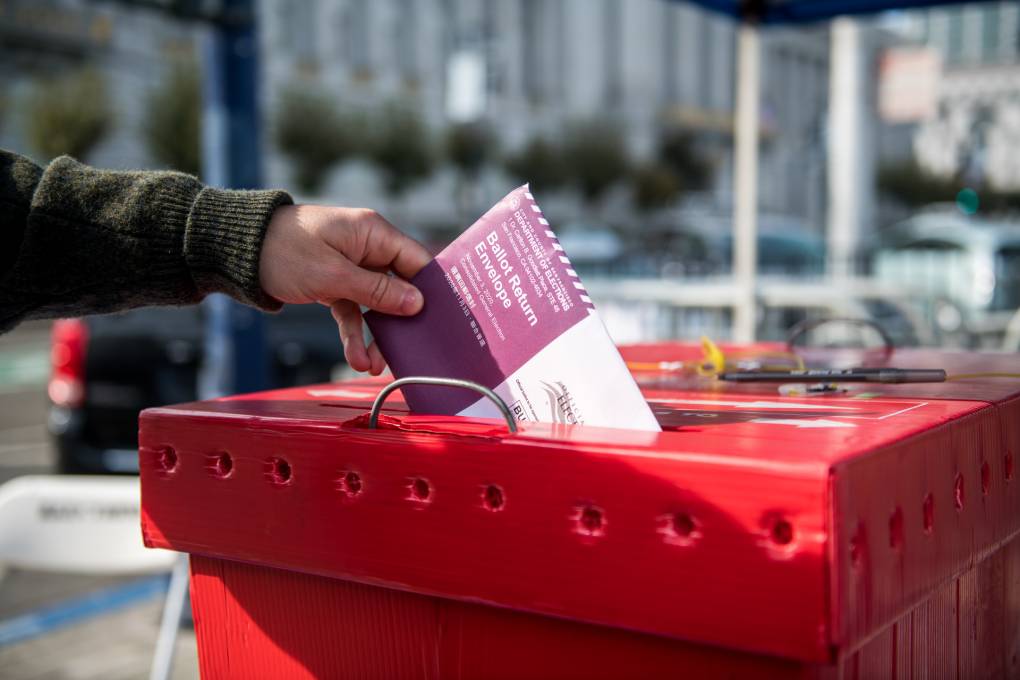
"caption": "A San Francisco resident drops off a mail-in ballot at a voting center near City Hall on Oct. 6, 2020.",
"description": null,
"title": "RS45273_002_KQED_ElectionStockPhotos_JoshYule_10062020-qut",
"credit": "Beth LaBerge/KQED",
"status": "inherit",
"isLoading": false,
"fetchFailed": false
},
"news_11841865": {
"type": "attachments",
"id": "news_11841865",
"meta": {
"index": "attachments_1716263798",
"site": "news",
"id": "11841865",
"found": true
},
"parent": 11841631,
"imgSizes": {
"apple_news_ca_landscape_5_5": {
"file": "https://ww2.kqed.org/app/uploads/sites/10/2020/10/1920_GettyImages-1228445882-1044x783.jpg",
"width": 1044,
"mimeType": "image/jpeg",
"height": 783
},
"apple_news_ca_square_4_0": {
"file": "https://ww2.kqed.org/app/uploads/sites/10/2020/10/1920_GettyImages-1228445882-470x470.jpg",
"width": 470,
"mimeType": "image/jpeg",
"height": 470
},
"twentyfourteen-full-width": {
"file": "https://ww2.kqed.org/app/uploads/sites/10/2020/10/1920_GettyImages-1228445882-1038x576.jpg",
"width": 1038,
"mimeType": "image/jpeg",
"height": 576
},
"thumbnail": {
"file": "https://ww2.kqed.org/app/uploads/sites/10/2020/10/1920_GettyImages-1228445882-160x90.jpg",
"width": 160,
"mimeType": "image/jpeg",
"height": 90
},
"post-thumbnail": {
"file": "https://ww2.kqed.org/app/uploads/sites/10/2020/10/1920_GettyImages-1228445882-672x372.jpg",
"width": 672,
"mimeType": "image/jpeg",
"height": 372
},
"kqedFullSize": {
"file": "https://ww2.kqed.org/app/uploads/sites/10/2020/10/1920_GettyImages-1228445882-scaled.jpg",
"width": 2560,
"height": 1440
},
"2048x2048": {
"file": "https://ww2.kqed.org/app/uploads/sites/10/2020/10/1920_GettyImages-1228445882-2048x1152.jpg",
"width": 2048,
"mimeType": "image/jpeg",
"height": 1152
},
"apple_news_ca_landscape_4_7": {
"file": "https://ww2.kqed.org/app/uploads/sites/10/2020/10/1920_GettyImages-1228445882-632x474.jpg",
"width": 632,
"mimeType": "image/jpeg",
"height": 474
},
"large": {
"file": "https://ww2.kqed.org/app/uploads/sites/10/2020/10/1920_GettyImages-1228445882-1020x574.jpg",
"width": 1020,
"mimeType": "image/jpeg",
"height": 574
},
"apple_news_ca_landscape_4_0": {
"file": "https://ww2.kqed.org/app/uploads/sites/10/2020/10/1920_GettyImages-1228445882-536x402.jpg",
"width": 536,
"mimeType": "image/jpeg",
"height": 402
},
"apple_news_ca_portrait_12_9": {
"file": "https://ww2.kqed.org/app/uploads/sites/10/2020/10/1920_GettyImages-1228445882-1122x1496.jpg",
"width": 1122,
"mimeType": "image/jpeg",
"height": 1496
},
"medium": {
"file": "https://ww2.kqed.org/app/uploads/sites/10/2020/10/1920_GettyImages-1228445882-800x450.jpg",
"width": 800,
"mimeType": "image/jpeg",
"height": 450
},
"apple_news_ca_portrait_4_0": {
"file": "https://ww2.kqed.org/app/uploads/sites/10/2020/10/1920_GettyImages-1228445882-354x472.jpg",
"width": 354,
"mimeType": "image/jpeg",
"height": 472
},
"apple_news_ca_portrait_9_7": {
"file": "https://ww2.kqed.org/app/uploads/sites/10/2020/10/1920_GettyImages-1228445882-840x1120.jpg",
"width": 840,
"mimeType": "image/jpeg",
"height": 1120
},
"apple_news_ca_landscape_12_9": {
"file": "https://ww2.kqed.org/app/uploads/sites/10/2020/10/1920_GettyImages-1228445882-1832x1374.jpg",
"width": 1832,
"mimeType": "image/jpeg",
"height": 1374
},
"apple_news_ca_square_9_7": {
"file": "https://ww2.kqed.org/app/uploads/sites/10/2020/10/1920_GettyImages-1228445882-1104x1104.jpg",
"width": 1104,
"mimeType": "image/jpeg",
"height": 1104
},
"1536x1536": {
"file": "https://ww2.kqed.org/app/uploads/sites/10/2020/10/1920_GettyImages-1228445882-1536x864.jpg",
"width": 1536,
"mimeType": "image/jpeg",
"height": 864
},
"apple_news_ca_portrait_4_7": {
"file": "https://ww2.kqed.org/app/uploads/sites/10/2020/10/1920_GettyImages-1228445882-414x552.jpg",
"width": 414,
"mimeType": "image/jpeg",
"height": 552
},
"apple_news_ca_square_12_9": {
"file": "https://ww2.kqed.org/app/uploads/sites/10/2020/10/1920_GettyImages-1228445882-1472x1472.jpg",
"width": 1472,
"mimeType": "image/jpeg",
"height": 1472
},
"apple_news_ca_portrait_5_5": {
"file": "https://ww2.kqed.org/app/uploads/sites/10/2020/10/1920_GettyImages-1228445882-687x916.jpg",
"width": 687,
"mimeType": "image/jpeg",
"height": 916
},
"full-width": {
"file": "https://ww2.kqed.org/app/uploads/sites/10/2020/10/1920_GettyImages-1228445882-1920x1080.jpg",
"width": 1920,
"mimeType": "image/jpeg",
"height": 1080
},
"apple_news_ca_square_4_7": {
"file": "https://ww2.kqed.org/app/uploads/sites/10/2020/10/1920_GettyImages-1228445882-550x550.jpg",
"width": 550,
"mimeType": "image/jpeg",
"height": 550
},
"apple_news_ca_landscape_9_7": {
"file": "https://ww2.kqed.org/app/uploads/sites/10/2020/10/1920_GettyImages-1228445882-1376x1032.jpg",
"width": 1376,
"mimeType": "image/jpeg",
"height": 1032
},
"apple_news_ca_square_5_5": {
"file": "https://ww2.kqed.org/app/uploads/sites/10/2020/10/1920_GettyImages-1228445882-912x912.jpg",
"width": 912,
"mimeType": "image/jpeg",
"height": 912
}
},
"publishDate": 1602436073,
"modified": 1602436340,
"caption": "An instructor walks through the room as students from different schools and in different grades follow their online classes from desks separated by plastic barriers at the Westwood STAR Tutoring & Enrichment Center on September 10, 2020 in Los Angeles, California.",
"description": null,
"title": "TOPSHOT-US-HEALTH-VIRUS-EDUCATION",
"credit": "Robyn Beck/AFP via Getty Images",
"status": "inherit",
"isLoading": false,
"fetchFailed": false
},
"news_11841851": {
"type": "attachments",
"id": "news_11841851",
"meta": {
"index": "attachments_1716263798",
"site": "news",
"id": "11841851",
"found": true
},
"parent": 11841850,
"imgSizes": {
"apple_news_ca_landscape_5_5": {
"file": "https://ww2.kqed.org/app/uploads/sites/10/2020/10/1920_GettyImages-1228606132-copy-1044x783.jpg",
"width": 1044,
"mimeType": "image/jpeg",
"height": 783
},
"apple_news_ca_square_4_0": {
"file": "https://ww2.kqed.org/app/uploads/sites/10/2020/10/1920_GettyImages-1228606132-copy-470x470.jpg",
"width": 470,
"mimeType": "image/jpeg",
"height": 470
},
"twentyfourteen-full-width": {
"file": "https://ww2.kqed.org/app/uploads/sites/10/2020/10/1920_GettyImages-1228606132-copy-1038x576.jpg",
"width": 1038,
"mimeType": "image/jpeg",
"height": 576
},
"thumbnail": {
"file": "https://ww2.kqed.org/app/uploads/sites/10/2020/10/1920_GettyImages-1228606132-copy-160x90.jpg",
"width": 160,
"mimeType": "image/jpeg",
"height": 90
},
"post-thumbnail": {
"file": "https://ww2.kqed.org/app/uploads/sites/10/2020/10/1920_GettyImages-1228606132-copy-672x372.jpg",
"width": 672,
"mimeType": "image/jpeg",
"height": 372
},
"kqedFullSize": {
"file": "https://ww2.kqed.org/app/uploads/sites/10/2020/10/1920_GettyImages-1228606132-copy-scaled.jpg",
"width": 2560,
"height": 1440
},
"2048x2048": {
"file": "https://ww2.kqed.org/app/uploads/sites/10/2020/10/1920_GettyImages-1228606132-copy-2048x1152.jpg",
"width": 2048,
"mimeType": "image/jpeg",
"height": 1152
},
"apple_news_ca_landscape_4_7": {
"file": "https://ww2.kqed.org/app/uploads/sites/10/2020/10/1920_GettyImages-1228606132-copy-632x474.jpg",
"width": 632,
"mimeType": "image/jpeg",
"height": 474
},
"large": {
"file": "https://ww2.kqed.org/app/uploads/sites/10/2020/10/1920_GettyImages-1228606132-copy-1020x574.jpg",
"width": 1020,
"mimeType": "image/jpeg",
"height": 574
},
"apple_news_ca_landscape_4_0": {
"file": "https://ww2.kqed.org/app/uploads/sites/10/2020/10/1920_GettyImages-1228606132-copy-536x402.jpg",
"width": 536,
"mimeType": "image/jpeg",
"height": 402
},
"apple_news_ca_portrait_12_9": {
"file": "https://ww2.kqed.org/app/uploads/sites/10/2020/10/1920_GettyImages-1228606132-copy-1122x1496.jpg",
"width": 1122,
"mimeType": "image/jpeg",
"height": 1496
},
"medium": {
"file": "https://ww2.kqed.org/app/uploads/sites/10/2020/10/1920_GettyImages-1228606132-copy-800x450.jpg",
"width": 800,
"mimeType": "image/jpeg",
"height": 450
},
"apple_news_ca_portrait_4_0": {
"file": "https://ww2.kqed.org/app/uploads/sites/10/2020/10/1920_GettyImages-1228606132-copy-354x472.jpg",
"width": 354,
"mimeType": "image/jpeg",
"height": 472
},
"apple_news_ca_portrait_9_7": {
"file": "https://ww2.kqed.org/app/uploads/sites/10/2020/10/1920_GettyImages-1228606132-copy-840x1120.jpg",
"width": 840,
"mimeType": "image/jpeg",
"height": 1120
},
"apple_news_ca_landscape_12_9": {
"file": "https://ww2.kqed.org/app/uploads/sites/10/2020/10/1920_GettyImages-1228606132-copy-1832x1374.jpg",
"width": 1832,
"mimeType": "image/jpeg",
"height": 1374
},
"apple_news_ca_square_9_7": {
"file": "https://ww2.kqed.org/app/uploads/sites/10/2020/10/1920_GettyImages-1228606132-copy-1104x1104.jpg",
"width": 1104,
"mimeType": "image/jpeg",
"height": 1104
},
"1536x1536": {
"file": "https://ww2.kqed.org/app/uploads/sites/10/2020/10/1920_GettyImages-1228606132-copy-1536x864.jpg",
"width": 1536,
"mimeType": "image/jpeg",
"height": 864
},
"apple_news_ca_portrait_4_7": {
"file": "https://ww2.kqed.org/app/uploads/sites/10/2020/10/1920_GettyImages-1228606132-copy-414x552.jpg",
"width": 414,
"mimeType": "image/jpeg",
"height": 552
},
"apple_news_ca_square_12_9": {
"file": "https://ww2.kqed.org/app/uploads/sites/10/2020/10/1920_GettyImages-1228606132-copy-1472x1472.jpg",
"width": 1472,
"mimeType": "image/jpeg",
"height": 1472
},
"apple_news_ca_portrait_5_5": {
"file": "https://ww2.kqed.org/app/uploads/sites/10/2020/10/1920_GettyImages-1228606132-copy-687x916.jpg",
"width": 687,
"mimeType": "image/jpeg",
"height": 916
},
"full-width": {
"file": "https://ww2.kqed.org/app/uploads/sites/10/2020/10/1920_GettyImages-1228606132-copy-1920x1080.jpg",
"width": 1920,
"mimeType": "image/jpeg",
"height": 1080
},
"apple_news_ca_square_4_7": {
"file": "https://ww2.kqed.org/app/uploads/sites/10/2020/10/1920_GettyImages-1228606132-copy-550x550.jpg",
"width": 550,
"mimeType": "image/jpeg",
"height": 550
},
"apple_news_ca_landscape_9_7": {
"file": "https://ww2.kqed.org/app/uploads/sites/10/2020/10/1920_GettyImages-1228606132-copy-1376x1032.jpg",
"width": 1376,
"mimeType": "image/jpeg",
"height": 1032
},
"apple_news_ca_square_5_5": {
"file": "https://ww2.kqed.org/app/uploads/sites/10/2020/10/1920_GettyImages-1228606132-copy-912x912.jpg",
"width": 912,
"mimeType": "image/jpeg",
"height": 912
}
},
"publishDate": 1602345912,
"modified": 1602346000,
"caption": "Joshua Trees are silhouetted against a late afternoon sun in a hazy and smoky sky resulting from the Bobcat Fire on September 19, 2020 in Juniper Hills, California. ",
"description": null,
"title": "US-FIRES",
"credit": "Frederic J. BROWN / AFP via Getty Images",
"status": "inherit",
"isLoading": false,
"fetchFailed": false
},
"news_11841802": {
"type": "attachments",
"id": "news_11841802",
"meta": {
"index": "attachments_1716263798",
"site": "news",
"id": "11841802",
"found": true
},
"parent": 11841792,
"imgSizes": {
"apple_news_ca_landscape_5_5": {
"file": "https://ww2.kqed.org/app/uploads/sites/10/2020/10/RS2417_81097020-1044x783.jpg",
"width": 1044,
"mimeType": "image/jpeg",
"height": 783
},
"apple_news_ca_square_4_0": {
"file": "https://ww2.kqed.org/app/uploads/sites/10/2020/10/RS2417_81097020-470x470.jpg",
"width": 470,
"mimeType": "image/jpeg",
"height": 470
},
"twentyfourteen-full-width": {
"file": "https://ww2.kqed.org/app/uploads/sites/10/2020/10/RS2417_81097020-1038x576.jpg",
"width": 1038,
"mimeType": "image/jpeg",
"height": 576
},
"thumbnail": {
"file": "https://ww2.kqed.org/app/uploads/sites/10/2020/10/RS2417_81097020-160x108.jpg",
"width": 160,
"mimeType": "image/jpeg",
"height": 108
},
"post-thumbnail": {
"file": "https://ww2.kqed.org/app/uploads/sites/10/2020/10/RS2417_81097020-672x372.jpg",
"width": 672,
"mimeType": "image/jpeg",
"height": 372
},
"kqedFullSize": {
"file": "https://ww2.kqed.org/app/uploads/sites/10/2020/10/RS2417_81097020-scaled.jpg",
"width": 2560,
"height": 1729
},
"2048x2048": {
"file": "https://ww2.kqed.org/app/uploads/sites/10/2020/10/RS2417_81097020-2048x1383.jpg",
"width": 2048,
"mimeType": "image/jpeg",
"height": 1383
},
"apple_news_ca_landscape_4_7": {
"file": "https://ww2.kqed.org/app/uploads/sites/10/2020/10/RS2417_81097020-632x474.jpg",
"width": 632,
"mimeType": "image/jpeg",
"height": 474
},
"large": {
"file": "https://ww2.kqed.org/app/uploads/sites/10/2020/10/RS2417_81097020-1020x689.jpg",
"width": 1020,
"mimeType": "image/jpeg",
"height": 689
},
"apple_news_ca_landscape_4_0": {
"file": "https://ww2.kqed.org/app/uploads/sites/10/2020/10/RS2417_81097020-536x402.jpg",
"width": 536,
"mimeType": "image/jpeg",
"height": 402
},
"apple_news_ca_portrait_12_9": {
"file": "https://ww2.kqed.org/app/uploads/sites/10/2020/10/RS2417_81097020-1122x1496.jpg",
"width": 1122,
"mimeType": "image/jpeg",
"height": 1496
},
"medium": {
"file": "https://ww2.kqed.org/app/uploads/sites/10/2020/10/RS2417_81097020-800x540.jpg",
"width": 800,
"mimeType": "image/jpeg",
"height": 540
},
"apple_news_ca_portrait_4_0": {
"file": "https://ww2.kqed.org/app/uploads/sites/10/2020/10/RS2417_81097020-354x472.jpg",
"width": 354,
"mimeType": "image/jpeg",
"height": 472
},
"apple_news_ca_portrait_9_7": {
"file": "https://ww2.kqed.org/app/uploads/sites/10/2020/10/RS2417_81097020-840x1120.jpg",
"width": 840,
"mimeType": "image/jpeg",
"height": 1120
},
"apple_news_ca_landscape_12_9": {
"file": "https://ww2.kqed.org/app/uploads/sites/10/2020/10/RS2417_81097020-1832x1374.jpg",
"width": 1832,
"mimeType": "image/jpeg",
"height": 1374
},
"apple_news_ca_square_9_7": {
"file": "https://ww2.kqed.org/app/uploads/sites/10/2020/10/RS2417_81097020-1104x1104.jpg",
"width": 1104,
"mimeType": "image/jpeg",
"height": 1104
},
"1536x1536": {
"file": "https://ww2.kqed.org/app/uploads/sites/10/2020/10/RS2417_81097020-1536x1037.jpg",
"width": 1536,
"mimeType": "image/jpeg",
"height": 1037
},
"apple_news_ca_portrait_4_7": {
"file": "https://ww2.kqed.org/app/uploads/sites/10/2020/10/RS2417_81097020-414x552.jpg",
"width": 414,
"mimeType": "image/jpeg",
"height": 552
},
"apple_news_ca_square_12_9": {
"file": "https://ww2.kqed.org/app/uploads/sites/10/2020/10/RS2417_81097020-1472x1472.jpg",
"width": 1472,
"mimeType": "image/jpeg",
"height": 1472
},
"apple_news_ca_portrait_5_5": {
"file": "https://ww2.kqed.org/app/uploads/sites/10/2020/10/RS2417_81097020-687x916.jpg",
"width": 687,
"mimeType": "image/jpeg",
"height": 916
},
"full-width": {
"file": "https://ww2.kqed.org/app/uploads/sites/10/2020/10/RS2417_81097020-1920x1297.jpg",
"width": 1920,
"mimeType": "image/jpeg",
"height": 1297
},
"apple_news_ca_square_4_7": {
"file": "https://ww2.kqed.org/app/uploads/sites/10/2020/10/RS2417_81097020-550x550.jpg",
"width": 550,
"mimeType": "image/jpeg",
"height": 550
},
"apple_news_ca_landscape_9_7": {
"file": "https://ww2.kqed.org/app/uploads/sites/10/2020/10/RS2417_81097020-1376x1032.jpg",
"width": 1376,
"mimeType": "image/jpeg",
"height": 1032
},
"apple_news_ca_square_5_5": {
"file": "https://ww2.kqed.org/app/uploads/sites/10/2020/10/RS2417_81097020-912x912.jpg",
"width": 912,
"mimeType": "image/jpeg",
"height": 912
}
},
"publishDate": 1602286974,
"modified": 1602287080,
"caption": "SAN FRANCISCO - MAY 15, 2008: Stuart Gaffney (L) and his partner John Lewis hold a California flag in front of the California Supreme Court May 15, 2008 in San Francisco, California. The California Supreme Court voted 4-3 to overturn a ban on gay marriage in California making it the second state where gays and lesbians can marry. ",
"description": null,
"title": "California Supreme Court Rules On Gay Marriage",
"credit": "Justin Sullivan/Getty Images",
"status": "inherit",
"isLoading": false,
"fetchFailed": false
},
"news_11841620": {
"type": "attachments",
"id": "news_11841620",
"meta": {
"index": "attachments_1716263798",
"site": "news",
"id": "11841620",
"found": true
},
"parent": 11841618,
"imgSizes": {
"apple_news_ca_landscape_5_5": {
"file": "https://ww2.kqed.org/app/uploads/sites/10/2020/10/RS45254_IMG_2690-qut-1044x783.jpg",
"width": 1044,
"mimeType": "image/jpeg",
"height": 783
},
"apple_news_ca_square_4_0": {
"file": "https://ww2.kqed.org/app/uploads/sites/10/2020/10/RS45254_IMG_2690-qut-470x470.jpg",
"width": 470,
"mimeType": "image/jpeg",
"height": 470
},
"twentyfourteen-full-width": {
"file": "https://ww2.kqed.org/app/uploads/sites/10/2020/10/RS45254_IMG_2690-qut-1038x576.jpg",
"width": 1038,
"mimeType": "image/jpeg",
"height": 576
},
"thumbnail": {
"file": "https://ww2.kqed.org/app/uploads/sites/10/2020/10/RS45254_IMG_2690-qut-160x120.jpg",
"width": 160,
"mimeType": "image/jpeg",
"height": 120
},
"post-thumbnail": {
"file": "https://ww2.kqed.org/app/uploads/sites/10/2020/10/RS45254_IMG_2690-qut-672x372.jpg",
"width": 672,
"mimeType": "image/jpeg",
"height": 372
},
"kqedFullSize": {
"file": "https://ww2.kqed.org/app/uploads/sites/10/2020/10/RS45254_IMG_2690-qut.jpg",
"width": 1920,
"height": 1440
},
"apple_news_ca_landscape_4_7": {
"file": "https://ww2.kqed.org/app/uploads/sites/10/2020/10/RS45254_IMG_2690-qut-632x474.jpg",
"width": 632,
"mimeType": "image/jpeg",
"height": 474
},
"large": {
"file": "https://ww2.kqed.org/app/uploads/sites/10/2020/10/RS45254_IMG_2690-qut-1020x765.jpg",
"width": 1020,
"mimeType": "image/jpeg",
"height": 765
},
"apple_news_ca_landscape_4_0": {
"file": "https://ww2.kqed.org/app/uploads/sites/10/2020/10/RS45254_IMG_2690-qut-536x402.jpg",
"width": 536,
"mimeType": "image/jpeg",
"height": 402
},
"apple_news_ca_portrait_12_9": {
"file": "https://ww2.kqed.org/app/uploads/sites/10/2020/10/RS45254_IMG_2690-qut-1122x1440.jpg",
"width": 1122,
"mimeType": "image/jpeg",
"height": 1440
},
"medium": {
"file": "https://ww2.kqed.org/app/uploads/sites/10/2020/10/RS45254_IMG_2690-qut-800x600.jpg",
"width": 800,
"mimeType": "image/jpeg",
"height": 600
},
"apple_news_ca_portrait_4_0": {
"file": "https://ww2.kqed.org/app/uploads/sites/10/2020/10/RS45254_IMG_2690-qut-354x472.jpg",
"width": 354,
"mimeType": "image/jpeg",
"height": 472
},
"apple_news_ca_portrait_9_7": {
"file": "https://ww2.kqed.org/app/uploads/sites/10/2020/10/RS45254_IMG_2690-qut-840x1120.jpg",
"width": 840,
"mimeType": "image/jpeg",
"height": 1120
},
"apple_news_ca_landscape_12_9": {
"file": "https://ww2.kqed.org/app/uploads/sites/10/2020/10/RS45254_IMG_2690-qut-1832x1374.jpg",
"width": 1832,
"mimeType": "image/jpeg",
"height": 1374
},
"apple_news_ca_square_9_7": {
"file": "https://ww2.kqed.org/app/uploads/sites/10/2020/10/RS45254_IMG_2690-qut-1104x1104.jpg",
"width": 1104,
"mimeType": "image/jpeg",
"height": 1104
},
"1536x1536": {
"file": "https://ww2.kqed.org/app/uploads/sites/10/2020/10/RS45254_IMG_2690-qut-1536x1152.jpg",
"width": 1536,
"mimeType": "image/jpeg",
"height": 1152
},
"apple_news_ca_portrait_4_7": {
"file": "https://ww2.kqed.org/app/uploads/sites/10/2020/10/RS45254_IMG_2690-qut-414x552.jpg",
"width": 414,
"mimeType": "image/jpeg",
"height": 552
},
"apple_news_ca_square_12_9": {
"file": "https://ww2.kqed.org/app/uploads/sites/10/2020/10/RS45254_IMG_2690-qut-1472x1440.jpg",
"width": 1472,
"mimeType": "image/jpeg",
"height": 1440
},
"apple_news_ca_portrait_5_5": {
"file": "https://ww2.kqed.org/app/uploads/sites/10/2020/10/RS45254_IMG_2690-qut-687x916.jpg",
"width": 687,
"mimeType": "image/jpeg",
"height": 916
},
"apple_news_ca_square_4_7": {
"file": "https://ww2.kqed.org/app/uploads/sites/10/2020/10/RS45254_IMG_2690-qut-550x550.jpg",
"width": 550,
"mimeType": "image/jpeg",
"height": 550
},
"apple_news_ca_landscape_9_7": {
"file": "https://ww2.kqed.org/app/uploads/sites/10/2020/10/RS45254_IMG_2690-qut-1376x1032.jpg",
"width": 1376,
"mimeType": "image/jpeg",
"height": 1032
},
"apple_news_ca_square_5_5": {
"file": "https://ww2.kqed.org/app/uploads/sites/10/2020/10/RS45254_IMG_2690-qut-912x912.jpg",
"width": 912,
"mimeType": "image/jpeg",
"height": 912
}
},
"publishDate": 1602203449,
"modified": 1602285641,
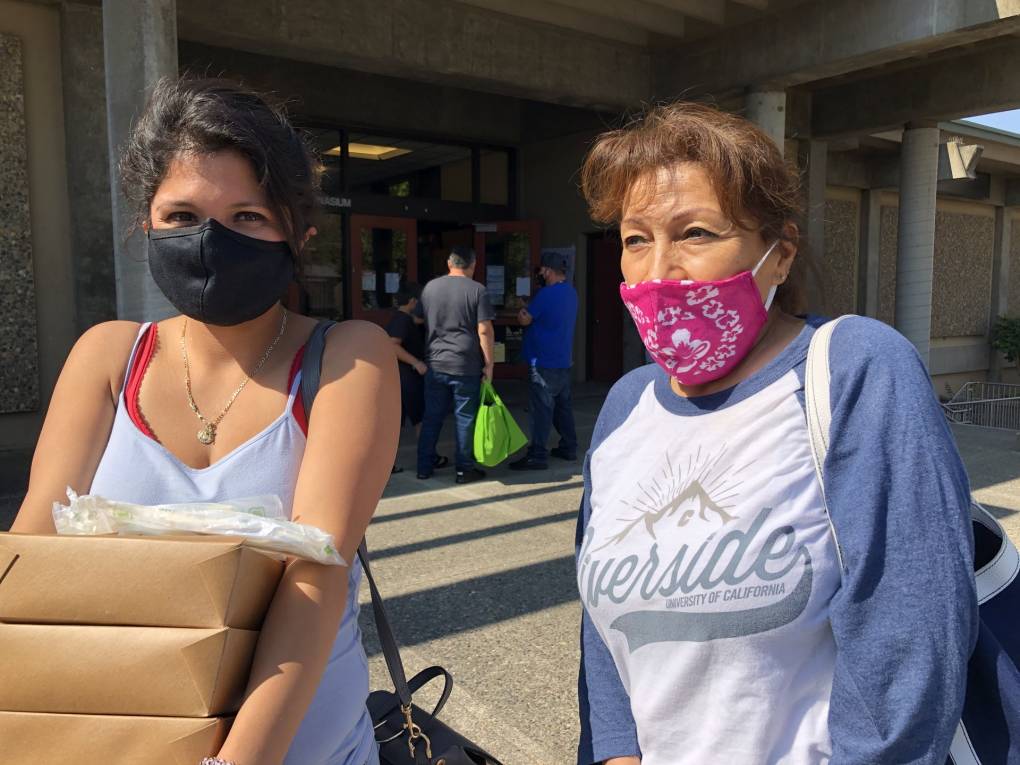
"caption": "Yalitza Garcia (left) and sister-in-law Silvia Arroyo gather boxed lunches at an evacuation center at Napa Valley College on Oct. 5, 2020. Both women said the pandemic and wildfires have meant income losses.",
"description": "Yalitza Garcia (left) and sister-in-law Silvia Arroyo gather boxed lunches at an evacuation center at Napa Valley College on Oct. 5, 2020. Both women said the pandemic and wildfires have meant income losses.",
"title": "RS45254_IMG_2690-qut",
"credit": "Farida Jhabvala Romero/KQED",
"status": "inherit",
"isLoading": false,
"fetchFailed": false
},
"news_11841456": {
"type": "attachments",
"id": "news_11841456",
"meta": {
"index": "attachments_1716263798",
"site": "news",
"id": "11841456",
"found": true
},
"parent": 11841209,
"imgSizes": {
"apple_news_ca_landscape_5_5": {
"file": "https://ww2.kqed.org/app/uploads/sites/10/2020/10/4782382889_0bdc0a2a25_o-1044x783.jpg",
"width": 1044,
"mimeType": "image/jpeg",
"height": 783
},
"apple_news_ca_square_4_0": {
"file": "https://ww2.kqed.org/app/uploads/sites/10/2020/10/4782382889_0bdc0a2a25_o-470x470.jpg",
"width": 470,
"mimeType": "image/jpeg",
"height": 470
},
"twentyfourteen-full-width": {
"file": "https://ww2.kqed.org/app/uploads/sites/10/2020/10/4782382889_0bdc0a2a25_o-1038x576.jpg",
"width": 1038,
"mimeType": "image/jpeg",
"height": 576
},
"thumbnail": {
"file": "https://ww2.kqed.org/app/uploads/sites/10/2020/10/4782382889_0bdc0a2a25_o-160x107.jpg",
"width": 160,
"mimeType": "image/jpeg",
"height": 107
},
"post-thumbnail": {
"file": "https://ww2.kqed.org/app/uploads/sites/10/2020/10/4782382889_0bdc0a2a25_o-672x372.jpg",
"width": 672,
"mimeType": "image/jpeg",
"height": 372
},
"kqedFullSize": {
"file": "https://ww2.kqed.org/app/uploads/sites/10/2020/10/4782382889_0bdc0a2a25_o-scaled.jpg",
"width": 2560,
"height": 1707
},
"2048x2048": {
"file": "https://ww2.kqed.org/app/uploads/sites/10/2020/10/4782382889_0bdc0a2a25_o-2048x1365.jpg",
"width": 2048,
"mimeType": "image/jpeg",
"height": 1365
},
"apple_news_ca_landscape_4_7": {
"file": "https://ww2.kqed.org/app/uploads/sites/10/2020/10/4782382889_0bdc0a2a25_o-632x474.jpg",
"width": 632,
"mimeType": "image/jpeg",
"height": 474
},
"large": {
"file": "https://ww2.kqed.org/app/uploads/sites/10/2020/10/4782382889_0bdc0a2a25_o-1020x680.jpg",
"width": 1020,
"mimeType": "image/jpeg",
"height": 680
},
"apple_news_ca_landscape_4_0": {
"file": "https://ww2.kqed.org/app/uploads/sites/10/2020/10/4782382889_0bdc0a2a25_o-536x402.jpg",
"width": 536,
"mimeType": "image/jpeg",
"height": 402
},
"apple_news_ca_portrait_12_9": {
"file": "https://ww2.kqed.org/app/uploads/sites/10/2020/10/4782382889_0bdc0a2a25_o-1122x1496.jpg",
"width": 1122,
"mimeType": "image/jpeg",
"height": 1496
},
"medium": {
"file": "https://ww2.kqed.org/app/uploads/sites/10/2020/10/4782382889_0bdc0a2a25_o-800x533.jpg",
"width": 800,
"mimeType": "image/jpeg",
"height": 533
},
"apple_news_ca_portrait_4_0": {
"file": "https://ww2.kqed.org/app/uploads/sites/10/2020/10/4782382889_0bdc0a2a25_o-354x472.jpg",
"width": 354,
"mimeType": "image/jpeg",
"height": 472
},
"apple_news_ca_portrait_9_7": {
"file": "https://ww2.kqed.org/app/uploads/sites/10/2020/10/4782382889_0bdc0a2a25_o-840x1120.jpg",
"width": 840,
"mimeType": "image/jpeg",
"height": 1120
},
"apple_news_ca_landscape_12_9": {
"file": "https://ww2.kqed.org/app/uploads/sites/10/2020/10/4782382889_0bdc0a2a25_o-1832x1374.jpg",
"width": 1832,
"mimeType": "image/jpeg",
"height": 1374
},
"apple_news_ca_square_9_7": {
"file": "https://ww2.kqed.org/app/uploads/sites/10/2020/10/4782382889_0bdc0a2a25_o-1104x1104.jpg",
"width": 1104,
"mimeType": "image/jpeg",
"height": 1104
},
"1536x1536": {
"file": "https://ww2.kqed.org/app/uploads/sites/10/2020/10/4782382889_0bdc0a2a25_o-1536x1024.jpg",
"width": 1536,
"mimeType": "image/jpeg",
"height": 1024
},
"apple_news_ca_portrait_4_7": {
"file": "https://ww2.kqed.org/app/uploads/sites/10/2020/10/4782382889_0bdc0a2a25_o-414x552.jpg",
"width": 414,
"mimeType": "image/jpeg",
"height": 552
},
"apple_news_ca_square_12_9": {
"file": "https://ww2.kqed.org/app/uploads/sites/10/2020/10/4782382889_0bdc0a2a25_o-1472x1472.jpg",
"width": 1472,
"mimeType": "image/jpeg",
"height": 1472
},
"apple_news_ca_portrait_5_5": {
"file": "https://ww2.kqed.org/app/uploads/sites/10/2020/10/4782382889_0bdc0a2a25_o-687x916.jpg",
"width": 687,
"mimeType": "image/jpeg",
"height": 916
},
"full-width": {
"file": "https://ww2.kqed.org/app/uploads/sites/10/2020/10/4782382889_0bdc0a2a25_o-1920x1280.jpg",
"width": 1920,
"mimeType": "image/jpeg",
"height": 1280
},
"apple_news_ca_square_4_7": {
"file": "https://ww2.kqed.org/app/uploads/sites/10/2020/10/4782382889_0bdc0a2a25_o-550x550.jpg",
"width": 550,
"mimeType": "image/jpeg",
"height": 550
},
"apple_news_ca_landscape_9_7": {
"file": "https://ww2.kqed.org/app/uploads/sites/10/2020/10/4782382889_0bdc0a2a25_o-1376x1032.jpg",
"width": 1376,
"mimeType": "image/jpeg",
"height": 1032
},
"apple_news_ca_square_5_5": {
"file": "https://ww2.kqed.org/app/uploads/sites/10/2020/10/4782382889_0bdc0a2a25_o-912x912.jpg",
"width": 912,
"mimeType": "image/jpeg",
"height": 912
}
},
"publishDate": 1602109045,
"modified": 1602109201,
"caption": "If California voters approve Proposition 25, it would mean the end of cash bail in the state.",
"description": "If California voters approve Proposition 25, it would mean the end of cash bail in the state.",
"title": "4782382889_0bdc0a2a25_o",
"credit": "\u003ca href=\"https://www.flickr.com/photos/thomashawk/\">Thomas Hawk\u003c/a>/Flickr",
"status": "inherit",
"isLoading": false,
"fetchFailed": false
},
"news_11841188": {
"type": "attachments",
"id": "news_11841188",
"meta": {
"index": "attachments_1716263798",
"site": "news",
"id": "11841188",
"found": true
},
"parent": 11841059,
"imgSizes": {
"apple_news_ca_landscape_5_5": {
"file": "https://ww2.kqed.org/app/uploads/sites/10/2020/10/RS45239_031_KQED_SanFrancisco_VotingCenter_10052020-qut-1044x783.jpg",
"width": 1044,
"mimeType": "image/jpeg",
"height": 783
},
"apple_news_ca_square_4_0": {
"file": "https://ww2.kqed.org/app/uploads/sites/10/2020/10/RS45239_031_KQED_SanFrancisco_VotingCenter_10052020-qut-470x470.jpg",
"width": 470,
"mimeType": "image/jpeg",
"height": 470
},
"twentyfourteen-full-width": {
"file": "https://ww2.kqed.org/app/uploads/sites/10/2020/10/RS45239_031_KQED_SanFrancisco_VotingCenter_10052020-qut-1038x576.jpg",
"width": 1038,
"mimeType": "image/jpeg",
"height": 576
},
"thumbnail": {
"file": "https://ww2.kqed.org/app/uploads/sites/10/2020/10/RS45239_031_KQED_SanFrancisco_VotingCenter_10052020-qut-160x107.jpg",
"width": 160,
"mimeType": "image/jpeg",
"height": 107
},
"post-thumbnail": {
"file": "https://ww2.kqed.org/app/uploads/sites/10/2020/10/RS45239_031_KQED_SanFrancisco_VotingCenter_10052020-qut-672x372.jpg",
"width": 672,
"mimeType": "image/jpeg",
"height": 372
},
"kqedFullSize": {
"file": "https://ww2.kqed.org/app/uploads/sites/10/2020/10/RS45239_031_KQED_SanFrancisco_VotingCenter_10052020-qut.jpg",
"width": 1920,
"height": 1280
},
"apple_news_ca_landscape_4_7": {
"file": "https://ww2.kqed.org/app/uploads/sites/10/2020/10/RS45239_031_KQED_SanFrancisco_VotingCenter_10052020-qut-632x474.jpg",
"width": 632,
"mimeType": "image/jpeg",
"height": 474
},
"large": {
"file": "https://ww2.kqed.org/app/uploads/sites/10/2020/10/RS45239_031_KQED_SanFrancisco_VotingCenter_10052020-qut-1020x680.jpg",
"width": 1020,
"mimeType": "image/jpeg",
"height": 680
},
"apple_news_ca_landscape_4_0": {
"file": "https://ww2.kqed.org/app/uploads/sites/10/2020/10/RS45239_031_KQED_SanFrancisco_VotingCenter_10052020-qut-536x402.jpg",
"width": 536,
"mimeType": "image/jpeg",
"height": 402
},
"apple_news_ca_portrait_12_9": {
"file": "https://ww2.kqed.org/app/uploads/sites/10/2020/10/RS45239_031_KQED_SanFrancisco_VotingCenter_10052020-qut-1122x1280.jpg",
"width": 1122,
"mimeType": "image/jpeg",
"height": 1280
},
"medium": {
"file": "https://ww2.kqed.org/app/uploads/sites/10/2020/10/RS45239_031_KQED_SanFrancisco_VotingCenter_10052020-qut-800x533.jpg",
"width": 800,
"mimeType": "image/jpeg",
"height": 533
},
"apple_news_ca_portrait_4_0": {
"file": "https://ww2.kqed.org/app/uploads/sites/10/2020/10/RS45239_031_KQED_SanFrancisco_VotingCenter_10052020-qut-354x472.jpg",
"width": 354,
"mimeType": "image/jpeg",
"height": 472
},
"apple_news_ca_portrait_9_7": {
"file": "https://ww2.kqed.org/app/uploads/sites/10/2020/10/RS45239_031_KQED_SanFrancisco_VotingCenter_10052020-qut-840x1120.jpg",
"width": 840,
"mimeType": "image/jpeg",
"height": 1120
},
"apple_news_ca_landscape_12_9": {
"file": "https://ww2.kqed.org/app/uploads/sites/10/2020/10/RS45239_031_KQED_SanFrancisco_VotingCenter_10052020-qut-1832x1280.jpg",
"width": 1832,
"mimeType": "image/jpeg",
"height": 1280
},
"apple_news_ca_square_9_7": {
"file": "https://ww2.kqed.org/app/uploads/sites/10/2020/10/RS45239_031_KQED_SanFrancisco_VotingCenter_10052020-qut-1104x1104.jpg",
"width": 1104,
"mimeType": "image/jpeg",
"height": 1104
},
"1536x1536": {
"file": "https://ww2.kqed.org/app/uploads/sites/10/2020/10/RS45239_031_KQED_SanFrancisco_VotingCenter_10052020-qut-1536x1024.jpg",
"width": 1536,
"mimeType": "image/jpeg",
"height": 1024
},
"apple_news_ca_portrait_4_7": {
"file": "https://ww2.kqed.org/app/uploads/sites/10/2020/10/RS45239_031_KQED_SanFrancisco_VotingCenter_10052020-qut-414x552.jpg",
"width": 414,
"mimeType": "image/jpeg",
"height": 552
},
"apple_news_ca_square_12_9": {
"file": "https://ww2.kqed.org/app/uploads/sites/10/2020/10/RS45239_031_KQED_SanFrancisco_VotingCenter_10052020-qut-1472x1280.jpg",
"width": 1472,
"mimeType": "image/jpeg",
"height": 1280
},
"apple_news_ca_portrait_5_5": {
"file": "https://ww2.kqed.org/app/uploads/sites/10/2020/10/RS45239_031_KQED_SanFrancisco_VotingCenter_10052020-qut-687x916.jpg",
"width": 687,
"mimeType": "image/jpeg",
"height": 916
},
"apple_news_ca_square_4_7": {
"file": "https://ww2.kqed.org/app/uploads/sites/10/2020/10/RS45239_031_KQED_SanFrancisco_VotingCenter_10052020-qut-550x550.jpg",
"width": 550,
"mimeType": "image/jpeg",
"height": 550
},
"apple_news_ca_landscape_9_7": {
"file": "https://ww2.kqed.org/app/uploads/sites/10/2020/10/RS45239_031_KQED_SanFrancisco_VotingCenter_10052020-qut-1376x1032.jpg",
"width": 1376,
"mimeType": "image/jpeg",
"height": 1032
},
"apple_news_ca_square_5_5": {
"file": "https://ww2.kqed.org/app/uploads/sites/10/2020/10/RS45239_031_KQED_SanFrancisco_VotingCenter_10052020-qut-912x912.jpg",
"width": 912,
"mimeType": "image/jpeg",
"height": 912
}
},
"publishDate": 1602004450,
"modified": 1602535598,
"caption": "A voter receives an \"I Voted\" sticker at a new outdoor voting center near Civic Center Plaza in San Francisco on Oct. 5, 2020, the first day of early voting.",
"description": "A voter receives an \"I Voted\" sticker at a new outdoor voting center near Civic Center Plaza in San Francisco on Oct. 5, 2020, the first day of early voting.",
"title": "RS45239_031_KQED_SanFrancisco_VotingCenter_10052020-qut",
"credit": "Beth LaBerge/KQED",
"status": "inherit",
"isLoading": false,
"fetchFailed": false
},
"news_11841105": {
"type": "attachments",
"id": "news_11841105",
"meta": {
"index": "attachments_1716263798",
"site": "news",
"id": "11841105",
"found": true
},
"parent": 11841005,
"imgSizes": {
"apple_news_ca_landscape_5_5": {
"file": "https://ww2.kqed.org/app/uploads/sites/10/2020/10/iStock-538176790-1044x783.jpg",
"width": 1044,
"mimeType": "image/jpeg",
"height": 783
},
"apple_news_ca_square_4_0": {
"file": "https://ww2.kqed.org/app/uploads/sites/10/2020/10/iStock-538176790-470x470.jpg",
"width": 470,
"mimeType": "image/jpeg",
"height": 470
},
"twentyfourteen-full-width": {
"file": "https://ww2.kqed.org/app/uploads/sites/10/2020/10/iStock-538176790-1038x576.jpg",
"width": 1038,
"mimeType": "image/jpeg",
"height": 576
},
"thumbnail": {
"file": "https://ww2.kqed.org/app/uploads/sites/10/2020/10/iStock-538176790-160x107.jpg",
"width": 160,
"mimeType": "image/jpeg",
"height": 107
},
"post-thumbnail": {
"file": "https://ww2.kqed.org/app/uploads/sites/10/2020/10/iStock-538176790-672x372.jpg",
"width": 672,
"mimeType": "image/jpeg",
"height": 372
},
"kqedFullSize": {
"file": "https://ww2.kqed.org/app/uploads/sites/10/2020/10/iStock-538176790.jpg",
"width": 2120,
"height": 1414
},
"2048x2048": {
"file": "https://ww2.kqed.org/app/uploads/sites/10/2020/10/iStock-538176790-2048x1366.jpg",
"width": 2048,
"mimeType": "image/jpeg",
"height": 1366
},
"apple_news_ca_landscape_4_7": {
"file": "https://ww2.kqed.org/app/uploads/sites/10/2020/10/iStock-538176790-632x474.jpg",
"width": 632,
"mimeType": "image/jpeg",
"height": 474
},
"large": {
"file": "https://ww2.kqed.org/app/uploads/sites/10/2020/10/iStock-538176790-1020x680.jpg",
"width": 1020,
"mimeType": "image/jpeg",
"height": 680
},
"apple_news_ca_landscape_4_0": {
"file": "https://ww2.kqed.org/app/uploads/sites/10/2020/10/iStock-538176790-536x402.jpg",
"width": 536,
"mimeType": "image/jpeg",
"height": 402
},
"apple_news_ca_portrait_12_9": {
"file": "https://ww2.kqed.org/app/uploads/sites/10/2020/10/iStock-538176790-1122x1414.jpg",
"width": 1122,
"mimeType": "image/jpeg",
"height": 1414
},
"medium": {
"file": "https://ww2.kqed.org/app/uploads/sites/10/2020/10/iStock-538176790-800x534.jpg",
"width": 800,
"mimeType": "image/jpeg",
"height": 534
},
"apple_news_ca_portrait_4_0": {
"file": "https://ww2.kqed.org/app/uploads/sites/10/2020/10/iStock-538176790-354x472.jpg",
"width": 354,
"mimeType": "image/jpeg",
"height": 472
},
"apple_news_ca_portrait_9_7": {
"file": "https://ww2.kqed.org/app/uploads/sites/10/2020/10/iStock-538176790-840x1120.jpg",
"width": 840,
"mimeType": "image/jpeg",
"height": 1120
},
"apple_news_ca_landscape_12_9": {
"file": "https://ww2.kqed.org/app/uploads/sites/10/2020/10/iStock-538176790-1832x1374.jpg",
"width": 1832,
"mimeType": "image/jpeg",
"height": 1374
},
"apple_news_ca_square_9_7": {
"file": "https://ww2.kqed.org/app/uploads/sites/10/2020/10/iStock-538176790-1104x1104.jpg",
"width": 1104,
"mimeType": "image/jpeg",
"height": 1104
},
"1536x1536": {
"file": "https://ww2.kqed.org/app/uploads/sites/10/2020/10/iStock-538176790-1536x1024.jpg",
"width": 1536,
"mimeType": "image/jpeg",
"height": 1024
},
"apple_news_ca_portrait_4_7": {
"file": "https://ww2.kqed.org/app/uploads/sites/10/2020/10/iStock-538176790-414x552.jpg",
"width": 414,
"mimeType": "image/jpeg",
"height": 552
},
"apple_news_ca_square_12_9": {
"file": "https://ww2.kqed.org/app/uploads/sites/10/2020/10/iStock-538176790-1472x1414.jpg",
"width": 1472,
"mimeType": "image/jpeg",
"height": 1414
},
"apple_news_ca_portrait_5_5": {
"file": "https://ww2.kqed.org/app/uploads/sites/10/2020/10/iStock-538176790-687x916.jpg",
"width": 687,
"mimeType": "image/jpeg",
"height": 916
},
"full-width": {
"file": "https://ww2.kqed.org/app/uploads/sites/10/2020/10/iStock-538176790-1920x1281.jpg",
"width": 1920,
"mimeType": "image/jpeg",
"height": 1281
},
"apple_news_ca_square_4_7": {
"file": "https://ww2.kqed.org/app/uploads/sites/10/2020/10/iStock-538176790-550x550.jpg",
"width": 550,
"mimeType": "image/jpeg",
"height": 550
},
"apple_news_ca_landscape_9_7": {
"file": "https://ww2.kqed.org/app/uploads/sites/10/2020/10/iStock-538176790-1376x1032.jpg",
"width": 1376,
"mimeType": "image/jpeg",
"height": 1032
},
"apple_news_ca_square_5_5": {
"file": "https://ww2.kqed.org/app/uploads/sites/10/2020/10/iStock-538176790-912x912.jpg",
"width": 912,
"mimeType": "image/jpeg",
"height": 912
}
},
"publishDate": 1601938968,
"modified": 1601939275,
"caption": "In-home caregivers who provide care for a family member - largely women of color in California - would have been eligible for unemployment insurance under a new state bill vetoed by Gov. Gavin Newsom last week.",
"description": "In-home caregivers who provide care for a family member - largely women of color in California - would have been eligible for unemployment insurance under a new state bill vetoed by Gov. Gavin Newsom last week.",
"title": "Senior Woman Talking With Black Doctor In Hospice",
"credit": "Getty Images",
"status": "inherit",
"isLoading": false,
"fetchFailed": false
},
"news_11841048": {
"type": "attachments",
"id": "news_11841048",
"meta": {
"index": "attachments_1716263798",
"site": "news",
"id": "11841048",
"found": true
},
"parent": 11841037,
"imgSizes": {
"apple_news_ca_square_4_0": {
"file": "https://ww2.kqed.org/app/uploads/sites/10/2020/10/GettyImages-1277931684-470x470.jpg",
"width": 470,
"mimeType": "image/jpeg",
"height": 470
},
"twentyfourteen-full-width": {
"file": "https://ww2.kqed.org/app/uploads/sites/10/2020/10/GettyImages-1277931684-1024x576.jpg",
"width": 1024,
"mimeType": "image/jpeg",
"height": 576
},
"thumbnail": {
"file": "https://ww2.kqed.org/app/uploads/sites/10/2020/10/GettyImages-1277931684-160x109.jpg",
"width": 160,
"mimeType": "image/jpeg",
"height": 109
},
"post-thumbnail": {
"file": "https://ww2.kqed.org/app/uploads/sites/10/2020/10/GettyImages-1277931684-672x372.jpg",
"width": 672,
"mimeType": "image/jpeg",
"height": 372
},
"kqedFullSize": {
"file": "https://ww2.kqed.org/app/uploads/sites/10/2020/10/GettyImages-1277931684.jpg",
"width": 1024,
"height": 700
},
"apple_news_ca_landscape_4_7": {
"file": "https://ww2.kqed.org/app/uploads/sites/10/2020/10/GettyImages-1277931684-632x474.jpg",
"width": 632,
"mimeType": "image/jpeg",
"height": 474
},
"large": {
"file": "https://ww2.kqed.org/app/uploads/sites/10/2020/10/GettyImages-1277931684-1020x697.jpg",
"width": 1020,
"mimeType": "image/jpeg",
"height": 697
},
"apple_news_ca_landscape_4_0": {
"file": "https://ww2.kqed.org/app/uploads/sites/10/2020/10/GettyImages-1277931684-536x402.jpg",
"width": 536,
"mimeType": "image/jpeg",
"height": 402
},
"medium": {
"file": "https://ww2.kqed.org/app/uploads/sites/10/2020/10/GettyImages-1277931684-800x547.jpg",
"width": 800,
"mimeType": "image/jpeg",
"height": 547
},
"apple_news_ca_portrait_4_0": {
"file": "https://ww2.kqed.org/app/uploads/sites/10/2020/10/GettyImages-1277931684-354x472.jpg",
"width": 354,
"mimeType": "image/jpeg",
"height": 472
},
"apple_news_ca_portrait_9_7": {
"file": "https://ww2.kqed.org/app/uploads/sites/10/2020/10/GettyImages-1277931684-840x700.jpg",
"width": 840,
"mimeType": "image/jpeg",
"height": 700
},
"apple_news_ca_portrait_4_7": {
"file": "https://ww2.kqed.org/app/uploads/sites/10/2020/10/GettyImages-1277931684-414x552.jpg",
"width": 414,
"mimeType": "image/jpeg",
"height": 552
},
"apple_news_ca_portrait_5_5": {
"file": "https://ww2.kqed.org/app/uploads/sites/10/2020/10/GettyImages-1277931684-687x700.jpg",
"width": 687,
"mimeType": "image/jpeg",
"height": 700
},
"apple_news_ca_square_4_7": {
"file": "https://ww2.kqed.org/app/uploads/sites/10/2020/10/GettyImages-1277931684-550x550.jpg",
"width": 550,
"mimeType": "image/jpeg",
"height": 550
},
"apple_news_ca_square_5_5": {
"file": "https://ww2.kqed.org/app/uploads/sites/10/2020/10/GettyImages-1277931684-912x700.jpg",
"width": 912,
"mimeType": "image/jpeg",
"height": 700
}
},
"publishDate": 1601923661,
"modified": 1601923909,
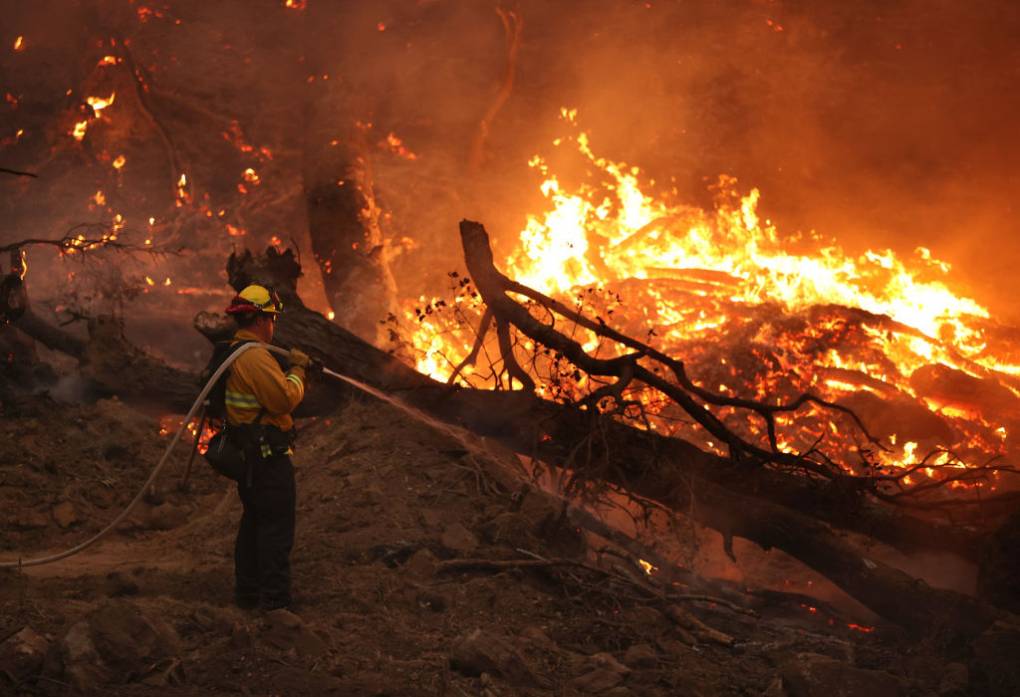
"caption": "A firefighter sprays water on hot spots from the Glass Fire near the city of Calistoga on Oct. 1, 2020. Fire crews made steady progress over the weekend, increasing containment of the blaze to 30%. ",
"description": null,
"title": "Cluster Of Destructive Wildfires Burns Through Napa And Sonoma Counties In California",
"credit": "Justin Sullivan/Getty Images",
"status": "inherit",
"isLoading": false,
"fetchFailed": false
},
"news_11826079": {
"type": "attachments",
"id": "news_11826079",
"meta": {
"index": "attachments_1716263798",
"site": "news",
"id": "11826079",
"found": true
},
"parent": 11826042,
"imgSizes": {
"apple_news_ca_landscape_5_5": {
"file": "https://ww2.kqed.org/app/uploads/sites/10/2020/06/RS30257_GettyImages-941502788-qut-1044x783.jpg",
"width": 1044,
"mimeType": "image/jpeg",
"height": 783
},
"apple_news_ca_square_4_0": {
"file": "https://ww2.kqed.org/app/uploads/sites/10/2020/06/RS30257_GettyImages-941502788-qut-470x470.jpg",
"width": 470,
"mimeType": "image/jpeg",
"height": 470
},
"twentyfourteen-full-width": {
"file": "https://ww2.kqed.org/app/uploads/sites/10/2020/06/RS30257_GettyImages-941502788-qut-1038x576.jpg",
"width": 1038,
"mimeType": "image/jpeg",
"height": 576
},
"thumbnail": {
"file": "https://ww2.kqed.org/app/uploads/sites/10/2020/06/RS30257_GettyImages-941502788-qut-160x109.jpg",
"width": 160,
"mimeType": "image/jpeg",
"height": 109
},
"post-thumbnail": {
"file": "https://ww2.kqed.org/app/uploads/sites/10/2020/06/RS30257_GettyImages-941502788-qut-672x372.jpg",
"width": 672,
"mimeType": "image/jpeg",
"height": 372
},
"kqedFullSize": {
"file": "https://ww2.kqed.org/app/uploads/sites/10/2020/06/RS30257_GettyImages-941502788-qut.jpg",
"width": 1920,
"height": 1306
},
"apple_news_ca_landscape_4_7": {
"file": "https://ww2.kqed.org/app/uploads/sites/10/2020/06/RS30257_GettyImages-941502788-qut-632x474.jpg",
"width": 632,
"mimeType": "image/jpeg",
"height": 474
},
"large": {
"file": "https://ww2.kqed.org/app/uploads/sites/10/2020/06/RS30257_GettyImages-941502788-qut-1020x694.jpg",
"width": 1020,
"mimeType": "image/jpeg",
"height": 694
},
"apple_news_ca_landscape_4_0": {
"file": "https://ww2.kqed.org/app/uploads/sites/10/2020/06/RS30257_GettyImages-941502788-qut-536x402.jpg",
"width": 536,
"mimeType": "image/jpeg",
"height": 402
},
"apple_news_ca_portrait_12_9": {
"file": "https://ww2.kqed.org/app/uploads/sites/10/2020/06/RS30257_GettyImages-941502788-qut-1122x1306.jpg",
"width": 1122,
"mimeType": "image/jpeg",
"height": 1306
},
"medium": {
"file": "https://ww2.kqed.org/app/uploads/sites/10/2020/06/RS30257_GettyImages-941502788-qut-800x544.jpg",
"width": 800,
"mimeType": "image/jpeg",
"height": 544
},
"apple_news_ca_portrait_4_0": {
"file": "https://ww2.kqed.org/app/uploads/sites/10/2020/06/RS30257_GettyImages-941502788-qut-354x472.jpg",
"width": 354,
"mimeType": "image/jpeg",
"height": 472
},
"apple_news_ca_portrait_9_7": {
"file": "https://ww2.kqed.org/app/uploads/sites/10/2020/06/RS30257_GettyImages-941502788-qut-840x1120.jpg",
"width": 840,
"mimeType": "image/jpeg",
"height": 1120
},
"apple_news_ca_landscape_12_9": {
"file": "https://ww2.kqed.org/app/uploads/sites/10/2020/06/RS30257_GettyImages-941502788-qut-1832x1306.jpg",
"width": 1832,
"mimeType": "image/jpeg",
"height": 1306
},
"apple_news_ca_square_9_7": {
"file": "https://ww2.kqed.org/app/uploads/sites/10/2020/06/RS30257_GettyImages-941502788-qut-1104x1104.jpg",
"width": 1104,
"mimeType": "image/jpeg",
"height": 1104
},
"1536x1536": {
"file": "https://ww2.kqed.org/app/uploads/sites/10/2020/06/RS30257_GettyImages-941502788-qut-1536x1045.jpg",
"width": 1536,
"mimeType": "image/jpeg",
"height": 1045
},
"apple_news_ca_portrait_4_7": {
"file": "https://ww2.kqed.org/app/uploads/sites/10/2020/06/RS30257_GettyImages-941502788-qut-414x552.jpg",
"width": 414,
"mimeType": "image/jpeg",
"height": 552
},
"apple_news_ca_square_12_9": {
"file": "https://ww2.kqed.org/app/uploads/sites/10/2020/06/RS30257_GettyImages-941502788-qut-1472x1306.jpg",
"width": 1472,
"mimeType": "image/jpeg",
"height": 1306
},
"apple_news_ca_portrait_5_5": {
"file": "https://ww2.kqed.org/app/uploads/sites/10/2020/06/RS30257_GettyImages-941502788-qut-687x916.jpg",
"width": 687,
"mimeType": "image/jpeg",
"height": 916
},
"apple_news_ca_square_4_7": {
"file": "https://ww2.kqed.org/app/uploads/sites/10/2020/06/RS30257_GettyImages-941502788-qut-550x550.jpg",
"width": 550,
"mimeType": "image/jpeg",
"height": 550
},
"apple_news_ca_landscape_9_7": {
"file": "https://ww2.kqed.org/app/uploads/sites/10/2020/06/RS30257_GettyImages-941502788-qut-1376x1032.jpg",
"width": 1376,
"mimeType": "image/jpeg",
"height": 1032
},
"apple_news_ca_square_5_5": {
"file": "https://ww2.kqed.org/app/uploads/sites/10/2020/06/RS30257_GettyImages-941502788-qut-912x912.jpg",
"width": 912,
"mimeType": "image/jpeg",
"height": 912
}
},
"publishDate": 1593044619,
"modified": 1601683140,
"caption": "Assemblywoman Shirley Weber (D-San Diego) authored Proposition 16, a measure that would overturn California's ban on affirmative action.",
"description": "Assemblywoman Shirley Weber (D-San Diego) authored Proposition 16, a measure that would overturn California's ban on affirmative action.",
"title": "California Lawmakers Announce Bill To Alter Police Use Of Lethal Force Policy",
"credit": "Justin Sullivan/Getty Images",
"status": "inherit",
"isLoading": false,
"fetchFailed": false
},
"news_11840991": {
"type": "attachments",
"id": "news_11840991",
"meta": {
"index": "attachments_1716263798",
"site": "news",
"id": "11840991",
"found": true
},
"parent": 11840987,
"imgSizes": {
"apple_news_ca_landscape_5_5": {
"file": "https://ww2.kqed.org/app/uploads/sites/10/2020/10/RS45163_023_KQED_Napa_GlassFire_09302020-qut-1044x783.jpg",
"width": 1044,
"mimeType": "image/jpeg",
"height": 783
},
"apple_news_ca_square_4_0": {
"file": "https://ww2.kqed.org/app/uploads/sites/10/2020/10/RS45163_023_KQED_Napa_GlassFire_09302020-qut-470x470.jpg",
"width": 470,
"mimeType": "image/jpeg",
"height": 470
},
"twentyfourteen-full-width": {
"file": "https://ww2.kqed.org/app/uploads/sites/10/2020/10/RS45163_023_KQED_Napa_GlassFire_09302020-qut-1038x576.jpg",
"width": 1038,
"mimeType": "image/jpeg",
"height": 576
},
"thumbnail": {
"file": "https://ww2.kqed.org/app/uploads/sites/10/2020/10/RS45163_023_KQED_Napa_GlassFire_09302020-qut-160x107.jpg",
"width": 160,
"mimeType": "image/jpeg",
"height": 107
},
"post-thumbnail": {
"file": "https://ww2.kqed.org/app/uploads/sites/10/2020/10/RS45163_023_KQED_Napa_GlassFire_09302020-qut-672x372.jpg",
"width": 672,
"mimeType": "image/jpeg",
"height": 372
},
"kqedFullSize": {
"file": "https://ww2.kqed.org/app/uploads/sites/10/2020/10/RS45163_023_KQED_Napa_GlassFire_09302020-qut.jpg",
"width": 1920,
"height": 1280
},
"apple_news_ca_landscape_4_7": {
"file": "https://ww2.kqed.org/app/uploads/sites/10/2020/10/RS45163_023_KQED_Napa_GlassFire_09302020-qut-632x474.jpg",
"width": 632,
"mimeType": "image/jpeg",
"height": 474
},
"large": {
"file": "https://ww2.kqed.org/app/uploads/sites/10/2020/10/RS45163_023_KQED_Napa_GlassFire_09302020-qut-1020x680.jpg",
"width": 1020,
"mimeType": "image/jpeg",
"height": 680
},
"apple_news_ca_landscape_4_0": {
"file": "https://ww2.kqed.org/app/uploads/sites/10/2020/10/RS45163_023_KQED_Napa_GlassFire_09302020-qut-536x402.jpg",
"width": 536,
"mimeType": "image/jpeg",
"height": 402
},
"apple_news_ca_portrait_12_9": {
"file": "https://ww2.kqed.org/app/uploads/sites/10/2020/10/RS45163_023_KQED_Napa_GlassFire_09302020-qut-1122x1280.jpg",
"width": 1122,
"mimeType": "image/jpeg",
"height": 1280
},
"medium": {
"file": "https://ww2.kqed.org/app/uploads/sites/10/2020/10/RS45163_023_KQED_Napa_GlassFire_09302020-qut-800x533.jpg",
"width": 800,
"mimeType": "image/jpeg",
"height": 533
},
"apple_news_ca_portrait_4_0": {
"file": "https://ww2.kqed.org/app/uploads/sites/10/2020/10/RS45163_023_KQED_Napa_GlassFire_09302020-qut-354x472.jpg",
"width": 354,
"mimeType": "image/jpeg",
"height": 472
},
"apple_news_ca_portrait_9_7": {
"file": "https://ww2.kqed.org/app/uploads/sites/10/2020/10/RS45163_023_KQED_Napa_GlassFire_09302020-qut-840x1120.jpg",
"width": 840,
"mimeType": "image/jpeg",
"height": 1120
},
"apple_news_ca_landscape_12_9": {
"file": "https://ww2.kqed.org/app/uploads/sites/10/2020/10/RS45163_023_KQED_Napa_GlassFire_09302020-qut-1832x1280.jpg",
"width": 1832,
"mimeType": "image/jpeg",
"height": 1280
},
"apple_news_ca_square_9_7": {
"file": "https://ww2.kqed.org/app/uploads/sites/10/2020/10/RS45163_023_KQED_Napa_GlassFire_09302020-qut-1104x1104.jpg",
"width": 1104,
"mimeType": "image/jpeg",
"height": 1104
},
"1536x1536": {
"file": "https://ww2.kqed.org/app/uploads/sites/10/2020/10/RS45163_023_KQED_Napa_GlassFire_09302020-qut-1536x1024.jpg",
"width": 1536,
"mimeType": "image/jpeg",
"height": 1024
},
"apple_news_ca_portrait_4_7": {
"file": "https://ww2.kqed.org/app/uploads/sites/10/2020/10/RS45163_023_KQED_Napa_GlassFire_09302020-qut-414x552.jpg",
"width": 414,
"mimeType": "image/jpeg",
"height": 552
},
"apple_news_ca_square_12_9": {
"file": "https://ww2.kqed.org/app/uploads/sites/10/2020/10/RS45163_023_KQED_Napa_GlassFire_09302020-qut-1472x1280.jpg",
"width": 1472,
"mimeType": "image/jpeg",
"height": 1280
},
"apple_news_ca_portrait_5_5": {
"file": "https://ww2.kqed.org/app/uploads/sites/10/2020/10/RS45163_023_KQED_Napa_GlassFire_09302020-qut-687x916.jpg",
"width": 687,
"mimeType": "image/jpeg",
"height": 916
},
"apple_news_ca_square_4_7": {
"file": "https://ww2.kqed.org/app/uploads/sites/10/2020/10/RS45163_023_KQED_Napa_GlassFire_09302020-qut-550x550.jpg",
"width": 550,
"mimeType": "image/jpeg",
"height": 550
},
"apple_news_ca_landscape_9_7": {
"file": "https://ww2.kqed.org/app/uploads/sites/10/2020/10/RS45163_023_KQED_Napa_GlassFire_09302020-qut-1376x1032.jpg",
"width": 1376,
"mimeType": "image/jpeg",
"height": 1032
},
"apple_news_ca_square_5_5": {
"file": "https://ww2.kqed.org/app/uploads/sites/10/2020/10/RS45163_023_KQED_Napa_GlassFire_09302020-qut-912x912.jpg",
"width": 912,
"mimeType": "image/jpeg",
"height": 912
}
},
"publishDate": 1601827893,
"modified": 1601828041,
"caption": "The Glass Fire burns in the hillside above Old Lawley Toll Road and Hwy 29 north of Calistoga on Sept. 30, 2020.",
"description": null,
"title": "RS45163_023_KQED_Napa_GlassFire_09302020-qut",
"credit": "Beth LaBerge/KQED",
"status": "inherit",
"isLoading": false,
"fetchFailed": false
},
"news_11840938": {
"type": "attachments",
"id": "news_11840938",
"meta": {
"index": "attachments_1716263798",
"site": "news",
"id": "11840938",
"found": true
},
"parent": 11840935,
"imgSizes": {
"apple_news_ca_landscape_5_5": {
"file": "https://ww2.kqed.org/app/uploads/sites/10/2020/10/RS45179_041_KQED_Napa_GlassFire_09302020-qut-1044x783.jpg",
"width": 1044,
"mimeType": "image/jpeg",
"height": 783
},
"apple_news_ca_square_4_0": {
"file": "https://ww2.kqed.org/app/uploads/sites/10/2020/10/RS45179_041_KQED_Napa_GlassFire_09302020-qut-470x470.jpg",
"width": 470,
"mimeType": "image/jpeg",
"height": 470
},
"twentyfourteen-full-width": {
"file": "https://ww2.kqed.org/app/uploads/sites/10/2020/10/RS45179_041_KQED_Napa_GlassFire_09302020-qut-1038x576.jpg",
"width": 1038,
"mimeType": "image/jpeg",
"height": 576
},
"thumbnail": {
"file": "https://ww2.kqed.org/app/uploads/sites/10/2020/10/RS45179_041_KQED_Napa_GlassFire_09302020-qut-160x107.jpg",
"width": 160,
"mimeType": "image/jpeg",
"height": 107
},
"post-thumbnail": {
"file": "https://ww2.kqed.org/app/uploads/sites/10/2020/10/RS45179_041_KQED_Napa_GlassFire_09302020-qut-672x372.jpg",
"width": 672,
"mimeType": "image/jpeg",
"height": 372
},
"kqedFullSize": {
"file": "https://ww2.kqed.org/app/uploads/sites/10/2020/10/RS45179_041_KQED_Napa_GlassFire_09302020-qut.jpg",
"width": 1920,
"height": 1280
},
"apple_news_ca_landscape_4_7": {
"file": "https://ww2.kqed.org/app/uploads/sites/10/2020/10/RS45179_041_KQED_Napa_GlassFire_09302020-qut-632x474.jpg",
"width": 632,
"mimeType": "image/jpeg",
"height": 474
},
"large": {
"file": "https://ww2.kqed.org/app/uploads/sites/10/2020/10/RS45179_041_KQED_Napa_GlassFire_09302020-qut-1020x680.jpg",
"width": 1020,
"mimeType": "image/jpeg",
"height": 680
},
"apple_news_ca_landscape_4_0": {
"file": "https://ww2.kqed.org/app/uploads/sites/10/2020/10/RS45179_041_KQED_Napa_GlassFire_09302020-qut-536x402.jpg",
"width": 536,
"mimeType": "image/jpeg",
"height": 402
},
"apple_news_ca_portrait_12_9": {
"file": "https://ww2.kqed.org/app/uploads/sites/10/2020/10/RS45179_041_KQED_Napa_GlassFire_09302020-qut-1122x1280.jpg",
"width": 1122,
"mimeType": "image/jpeg",
"height": 1280
},
"medium": {
"file": "https://ww2.kqed.org/app/uploads/sites/10/2020/10/RS45179_041_KQED_Napa_GlassFire_09302020-qut-800x533.jpg",
"width": 800,
"mimeType": "image/jpeg",
"height": 533
},
"apple_news_ca_portrait_4_0": {
"file": "https://ww2.kqed.org/app/uploads/sites/10/2020/10/RS45179_041_KQED_Napa_GlassFire_09302020-qut-354x472.jpg",
"width": 354,
"mimeType": "image/jpeg",
"height": 472
},
"apple_news_ca_portrait_9_7": {
"file": "https://ww2.kqed.org/app/uploads/sites/10/2020/10/RS45179_041_KQED_Napa_GlassFire_09302020-qut-840x1120.jpg",
"width": 840,
"mimeType": "image/jpeg",
"height": 1120
},
"apple_news_ca_landscape_12_9": {
"file": "https://ww2.kqed.org/app/uploads/sites/10/2020/10/RS45179_041_KQED_Napa_GlassFire_09302020-qut-1832x1280.jpg",
"width": 1832,
"mimeType": "image/jpeg",
"height": 1280
},
"apple_news_ca_square_9_7": {
"file": "https://ww2.kqed.org/app/uploads/sites/10/2020/10/RS45179_041_KQED_Napa_GlassFire_09302020-qut-1104x1104.jpg",
"width": 1104,
"mimeType": "image/jpeg",
"height": 1104
},
"1536x1536": {
"file": "https://ww2.kqed.org/app/uploads/sites/10/2020/10/RS45179_041_KQED_Napa_GlassFire_09302020-qut-1536x1024.jpg",
"width": 1536,
"mimeType": "image/jpeg",
"height": 1024
},
"apple_news_ca_portrait_4_7": {
"file": "https://ww2.kqed.org/app/uploads/sites/10/2020/10/RS45179_041_KQED_Napa_GlassFire_09302020-qut-414x552.jpg",
"width": 414,
"mimeType": "image/jpeg",
"height": 552
},
"apple_news_ca_square_12_9": {
"file": "https://ww2.kqed.org/app/uploads/sites/10/2020/10/RS45179_041_KQED_Napa_GlassFire_09302020-qut-1472x1280.jpg",
"width": 1472,
"mimeType": "image/jpeg",
"height": 1280
},
"apple_news_ca_portrait_5_5": {
"file": "https://ww2.kqed.org/app/uploads/sites/10/2020/10/RS45179_041_KQED_Napa_GlassFire_09302020-qut-687x916.jpg",
"width": 687,
"mimeType": "image/jpeg",
"height": 916
},
"apple_news_ca_square_4_7": {
"file": "https://ww2.kqed.org/app/uploads/sites/10/2020/10/RS45179_041_KQED_Napa_GlassFire_09302020-qut-550x550.jpg",
"width": 550,
"mimeType": "image/jpeg",
"height": 550
},
"apple_news_ca_landscape_9_7": {
"file": "https://ww2.kqed.org/app/uploads/sites/10/2020/10/RS45179_041_KQED_Napa_GlassFire_09302020-qut-1376x1032.jpg",
"width": 1376,
"mimeType": "image/jpeg",
"height": 1032
},
"apple_news_ca_square_5_5": {
"file": "https://ww2.kqed.org/app/uploads/sites/10/2020/10/RS45179_041_KQED_Napa_GlassFire_09302020-qut-912x912.jpg",
"width": 912,
"mimeType": "image/jpeg",
"height": 912
}
},
"publishDate": 1601738242,
"modified": 1601738269,
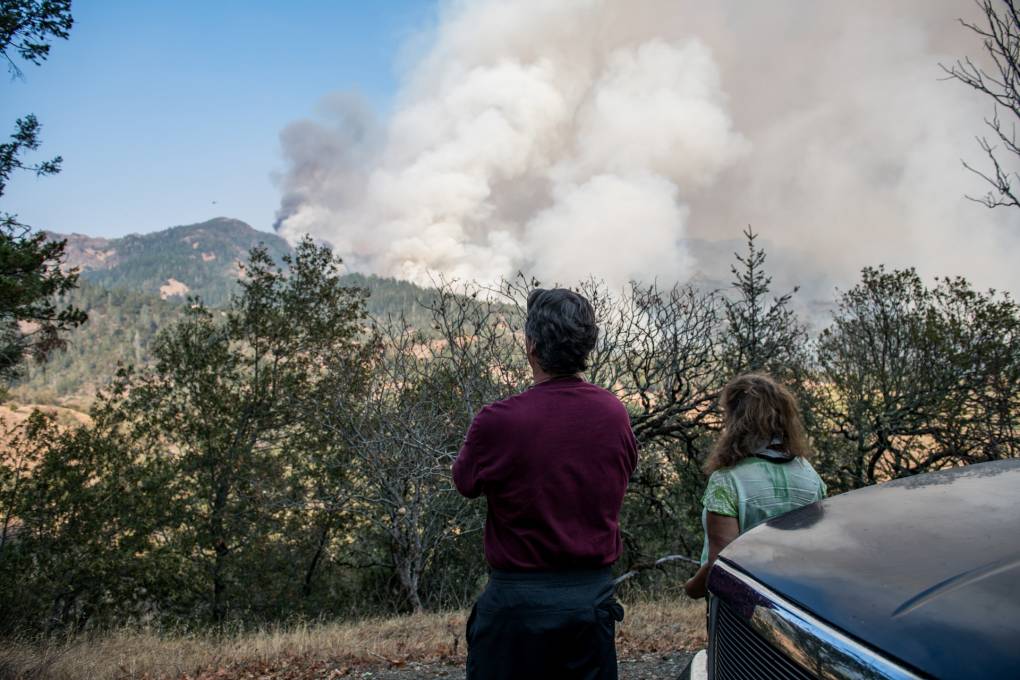
"caption": "Doug and Susie Van Horn, from Kelseyville, watch as the Glass Fire burns a ridge north of Calistoga on Sept. 30, 2020.",
"description": null,
"title": "RS45179_041_KQED_Napa_GlassFire_09302020-qut",
"credit": "Beth LaBerge/KQED",
"status": "inherit",
"isLoading": false,
"fetchFailed": false
}
},
"audioPlayerReducer": {
"postId": "stream_live",
"isPaused": true,
"isPlaying": false,
"pfsActive": false,
"pledgeModalIsOpen": true,
"playerDrawerIsOpen": false,
"liveAudioPlayStartedAt": 0,
"liveAudioPlayContext": ""
},
"authorsReducer": {
"byline_news_11841631": {
"type": "authors",
"id": "byline_news_11841631",
"meta": {
"override": true
},
"slug": "byline_news_11841631",
"name": "Ricardo Cano",
"isLoading": false
},
"byline_news_11841850": {
"type": "authors",
"id": "byline_news_11841850",
"meta": {
"override": true
},
"slug": "byline_news_11841850",
"name": "Brian Melley \u003cbr> Associated Press",
"isLoading": false
},
"gmarzorati": {
"type": "authors",
"id": "227",
"meta": {
"index": "authors_1716337520",
"id": "227",
"found": true
},
"name": "Guy Marzorati",
"firstName": "Guy",
"lastName": "Marzorati",
"slug": "gmarzorati",
"email": "gmarzorati@KQED.org",
"display_author_email": true,
"staff_mastheads": [
"news"
],
"title": "Correspondent",
"bio": "Guy Marzorati is a correspondent on KQED's California Politics and Government Desk, based in San Jose. A graduate of Santa Clara University, Guy joined KQED in 2013. He reports on state and local politics and produces KQED's digital voter guide.",
"avatar": "https://secure.gravatar.com/avatar/e7038b8dbfd55b104369b76b1cd0b9de?s=600&d=blank&r=g",
"twitter": "guymarzorati",
"facebook": null,
"instagram": null,
"linkedin": null,
"sites": [
{
"site": "",
"roles": [
"editor"
]
},
{
"site": "news",
"roles": [
"editor"
]
},
{
"site": "science",
"roles": [
"editor"
]
},
{
"site": "forum",
"roles": [
"editor"
]
},
{
"site": "elections",
"roles": [
"editor"
]
},
{
"site": "liveblog",
"roles": [
"editor"
]
}
],
"headData": {
"title": "Guy Marzorati | KQED",
"description": "Correspondent",
"ogImgSrc": "https://secure.gravatar.com/avatar/e7038b8dbfd55b104369b76b1cd0b9de?s=600&d=blank&r=g",
"twImgSrc": "https://secure.gravatar.com/avatar/e7038b8dbfd55b104369b76b1cd0b9de?s=600&d=blank&r=g"
},
"isLoading": false,
"link": "/author/gmarzorati"
},
"kqed": {
"type": "authors",
"id": "236",
"meta": {
"index": "authors_1716337520",
"id": "236",
"found": true
},
"name": "KQED News Staff",
"firstName": "KQED News Staff",
"lastName": null,
"slug": "kqed",
"email": "faq@kqed.org",
"display_author_email": false,
"staff_mastheads": [],
"title": null,
"bio": null,
"avatar": "https://secure.gravatar.com/avatar/ef0e801a68c4c54afa9180db14084167?s=600&d=blank&r=g",
"twitter": null,
"facebook": null,
"instagram": null,
"linkedin": null,
"sites": [
{
"site": "arts",
"roles": [
"contributor"
]
},
{
"site": "news",
"roles": [
"editor"
]
},
{
"site": "futureofyou",
"roles": [
"author"
]
}
],
"headData": {
"title": "KQED News Staff | KQED",
"description": null,
"ogImgSrc": "https://secure.gravatar.com/avatar/ef0e801a68c4c54afa9180db14084167?s=600&d=blank&r=g",
"twImgSrc": "https://secure.gravatar.com/avatar/ef0e801a68c4c54afa9180db14084167?s=600&d=blank&r=g"
},
"isLoading": false,
"link": "/author/kqed"
},
"matthewgreen": {
"type": "authors",
"id": "1263",
"meta": {
"index": "authors_1716337520",
"id": "1263",
"found": true
},
"name": "Matthew Green",
"firstName": "Matthew",
"lastName": "Green",
"slug": "matthewgreen",
"email": "mgreen@kqed.org",
"display_author_email": false,
"staff_mastheads": [],
"title": "KQED Editor/Reporter",
"bio": "Matthew Green is a digital media producer for KQED News. He previously produced \u003ca href=\"http://www.kqed.org/lowdown\">The Lowdown\u003c/a>, KQED’s multimedia news education blog. Matthew's written for numerous Bay Area publications, including the Oakland Tribune and San Francisco Chronicle. He also taught journalism classes at Fremont High School in East Oakland.\r\n\r\nEmail: mgreen@kqed.org; Twitter: @MGreenKQED",
"avatar": "https://secure.gravatar.com/avatar/3bf498d1267ca02c8494f33d8cfc575e?s=600&d=blank&r=g",
"twitter": "MGreenKQED",
"facebook": null,
"instagram": null,
"linkedin": null,
"sites": [
{
"site": "news",
"roles": []
},
{
"site": "lowdown",
"roles": []
},
{
"site": "science",
"roles": []
},
{
"site": "education",
"roles": []
},
{
"site": "quest",
"roles": []
},
{
"site": "liveblog",
"roles": []
}
],
"headData": {
"title": "Matthew Green | KQED",
"description": "KQED Editor/Reporter",
"ogImgSrc": "https://secure.gravatar.com/avatar/3bf498d1267ca02c8494f33d8cfc575e?s=600&d=blank&r=g",
"twImgSrc": "https://secure.gravatar.com/avatar/3bf498d1267ca02c8494f33d8cfc575e?s=600&d=blank&r=g"
},
"isLoading": false,
"link": "/author/matthewgreen"
},
"mlagos": {
"type": "authors",
"id": "3239",
"meta": {
"index": "authors_1716337520",
"id": "3239",
"found": true
},
"name": "Marisa Lagos",
"firstName": "Marisa",
"lastName": "Lagos",
"slug": "mlagos",
"email": "mlagos@kqed.org",
"display_author_email": false,
"staff_mastheads": [
"news"
],
"title": "KQED Contributor",
"bio": "Marisa Lagos is a correspondent for KQED’s California Politics and Government Desk and co-hosts the award-winning show and podcast, Political Breakdown. At KQED, Lagos also conducts reporting, analysis and investigations into state, local and national politics for radio, TV, online and onstage. In 2022, she and co-host, Scott Shafer, moderated the only gubernatorial debate in California. In 2020, the \u003ci>Washington Post\u003c/i> named her one of the top political journalists in California; she was nominated for a Peabody and won several other awards for her work investigating the 2017 California wildfires. She has worked at the \u003ci>San Francisco Chronicle\u003c/i>, \u003ci>San Francisco Examiner\u003c/i> and \u003ci>Los Angeles Times\u003c/i>. A UC Santa Barbara graduate, she lives in San Francisco with her two sons and husband.",
"avatar": "https://secure.gravatar.com/avatar/a261a0d3696fc066871ef96b85b5e7d2?s=600&d=blank&r=g",
"twitter": "@mlagos",
"facebook": null,
"instagram": null,
"linkedin": null,
"sites": [
{
"site": "arts",
"roles": [
"author"
]
},
{
"site": "news",
"roles": [
"editor"
]
},
{
"site": "science",
"roles": [
"editor"
]
},
{
"site": "forum",
"roles": [
"author"
]
},
{
"site": "liveblog",
"roles": [
"author"
]
}
],
"headData": {
"title": "Marisa Lagos | KQED",
"description": "KQED Contributor",
"ogImgSrc": "https://secure.gravatar.com/avatar/a261a0d3696fc066871ef96b85b5e7d2?s=600&d=blank&r=g",
"twImgSrc": "https://secure.gravatar.com/avatar/a261a0d3696fc066871ef96b85b5e7d2?s=600&d=blank&r=g"
},
"isLoading": false,
"link": "/author/mlagos"
},
"carlysevern": {
"type": "authors",
"id": "3243",
"meta": {
"index": "authors_1716337520",
"id": "3243",
"found": true
},
"name": "Carly Severn",
"firstName": "Carly",
"lastName": "Severn",
"slug": "carlysevern",
"email": "csevern@kqed.org",
"display_author_email": false,
"staff_mastheads": [
"news"
],
"title": "Senior Editor, Audience News ",
"bio": "Carly is KQED's Senior Editor of Audience News on the Digital News team, and has reported for the California Report Magazine, Bay Curious and KQED Arts. She's formerly the host of \u003ca href=\"http://ww2.kqed.org/pop/category/the-cooler/\" rel=\"noopener noreferrer\">The Cooler\u003c/a> podcast.",
"avatar": "https://secure.gravatar.com/avatar/2d8d6765f186e64c798cf7f0c8088a41?s=600&d=blank&r=g",
"twitter": "teacupinthebay",
"facebook": null,
"instagram": null,
"linkedin": null,
"sites": [
{
"site": "",
"roles": [
"editor"
]
},
{
"site": "arts",
"roles": [
"editor"
]
},
{
"site": "news",
"roles": [
"administrator"
]
},
{
"site": "pop",
"roles": [
"editor"
]
},
{
"site": "futureofyou",
"roles": [
"editor"
]
},
{
"site": "about",
"roles": [
"administrator"
]
},
{
"site": "mindshift",
"roles": [
"editor"
]
},
{
"site": "bayareabites",
"roles": [
"editor"
]
},
{
"site": "stateofhealth",
"roles": [
"editor"
]
},
{
"site": "science",
"roles": [
"editor"
]
},
{
"site": "food",
"roles": [
"contributor"
]
},
{
"site": "forum",
"roles": [
"editor"
]
},
{
"site": "perspectives",
"roles": [
"administrator"
]
},
{
"site": "liveblog",
"roles": [
"editor"
]
}
],
"headData": {
"title": "Carly Severn | KQED",
"description": "Senior Editor, Audience News ",
"ogImgSrc": "https://secure.gravatar.com/avatar/2d8d6765f186e64c798cf7f0c8088a41?s=600&d=blank&r=g",
"twImgSrc": "https://secure.gravatar.com/avatar/2d8d6765f186e64c798cf7f0c8088a41?s=600&d=blank&r=g"
},
"isLoading": false,
"link": "/author/carlysevern"
},
"fjhabvala": {
"type": "authors",
"id": "8659",
"meta": {
"index": "authors_1716337520",
"id": "8659",
"found": true
},
"name": "Farida Jhabvala Romero",
"firstName": "Farida",
"lastName": "Jhabvala Romero",
"slug": "fjhabvala",
"email": "fjhabvala@kqed.org",
"display_author_email": true,
"staff_mastheads": [
"news"
],
"title": "KQED Contributor",
"bio": "\u003cspan style=\"font-weight: 400;\">Farida Jhabvala Romero is a Labor Correspondent for KQED. She previously covered immigration. Farida was \u003ca href=\"https://www.ccnma.org/2022-most-influential-latina-journalists\">named\u003c/a> one of the 10 Most Influential Latina Journalists in California in 2022 by the California Chicano News Media Association. Her work has won awards from the Society of Professional Journalists (Northern California), as well as a national and regional Edward M. Murrow Award for the collaborative reporting projects “Dangerous Air” and “Graying California.” \u003c/span>\u003cspan style=\"font-weight: 400;\">Before joining KQED, Farida worked as a producer at Radio Bilingüe, a national public radio network. Farida earned her master’s degree in journalism from Stanford University.\u003c/span>",
"avatar": "https://secure.gravatar.com/avatar/c3ab27c5554b67b478f80971e515aa02?s=600&d=blank&r=g",
"twitter": "FaridaJhabvala",
"facebook": null,
"instagram": null,
"linkedin": "https://www.linkedin.com/in/faridajhabvala/",
"sites": [
{
"site": "news",
"roles": [
"editor"
]
},
{
"site": "stateofhealth",
"roles": [
"author"
]
}
],
"headData": {
"title": "Farida Jhabvala Romero | KQED",
"description": "KQED Contributor",
"ogImgSrc": "https://secure.gravatar.com/avatar/c3ab27c5554b67b478f80971e515aa02?s=600&d=blank&r=g",
"twImgSrc": "https://secure.gravatar.com/avatar/c3ab27c5554b67b478f80971e515aa02?s=600&d=blank&r=g"
},
"isLoading": false,
"link": "/author/fjhabvala"
},
"korr": {
"type": "authors",
"id": "11200",
"meta": {
"index": "authors_1716337520",
"id": "11200",
"found": true
},
"name": "Katie Orr",
"firstName": "Katie",
"lastName": "Orr",
"slug": "korr",
"email": "korr@kqed.org",
"display_author_email": false,
"staff_mastheads": [],
"title": "KQED Contributor",
"bio": "Katie Orr was a Sacramento-based reporter for KQED's Politics and Government Desk, covering the state Capitol and a variety of issues including women in politics, voting and elections and legislation. Prior to joining KQED in 2016, Katie was state government reporter for Capital Public Radio in Sacramento. She's also worked for KPBS in San Diego, where she covered City Hall.\r\n\r\nKatie received her masters degree in political science from San Diego State University and holds a Bachelors degree in broadcast journalism from Arizona State University.\r\n\r\nIn 2015 Katie won a national Clarion Award for a series of stories she did on women in California politics. She's been honored by the Society for Professional Journalists and, in 2013, was named by \u003cem>The Washington Post\u003c/em> as one of the country's top state Capitol reporters. She's also reported for the award-winning documentary series \u003cem>The View from Here \u003c/em>and was part of the team that won national PRNDI and Gabriel Awards in 2015. She lives in Sacramento with her husband. Twitter: @1KatieOrr",
"avatar": "https://secure.gravatar.com/avatar/41a40b25845adc78f50808670860449e?s=600&d=blank&r=g",
"twitter": "1katieorr",
"facebook": null,
"instagram": null,
"linkedin": null,
"sites": [
{
"site": "news",
"roles": [
"subscriber"
]
},
{
"site": "stateofhealth",
"roles": [
"author"
]
},
{
"site": "forum",
"roles": [
"author"
]
}
],
"headData": {
"title": "Katie Orr | KQED",
"description": "KQED Contributor",
"ogImgSrc": "https://secure.gravatar.com/avatar/41a40b25845adc78f50808670860449e?s=600&d=blank&r=g",
"twImgSrc": "https://secure.gravatar.com/avatar/41a40b25845adc78f50808670860449e?s=600&d=blank&r=g"
},
"isLoading": false,
"link": "/author/korr"
},
"lsarah": {
"type": "authors",
"id": "11626",
"meta": {
"index": "authors_1716337520",
"id": "11626",
"found": true
},
"name": "Lakshmi Sarah",
"firstName": "Lakshmi",
"lastName": "Sarah",
"slug": "lsarah",
"email": "lsarah@kqed.org",
"display_author_email": false,
"staff_mastheads": [],
"title": "Digital Producer",
"bio": "Lakshmi Sarah is an educator, author and journalist with a focus on innovative storytelling. She has worked with newspapers, radio and magazines from Ahmedabad, India to Los Angeles, California. She has written and produced for Die Zeit, Global Voices, AJ+, KQED, Fusion Media Group and the New York Times.",
"avatar": "https://secure.gravatar.com/avatar/652dcaecd8b28826fc17a8b2d6bb4e93?s=600&d=blank&r=g",
"twitter": "lakitalki",
"facebook": null,
"instagram": "https://www.instagram.com/laki.talki/",
"linkedin": "https://www.linkedin.com/in/lakisarah/",
"sites": [
{
"site": "arts",
"roles": []
},
{
"site": "news",
"roles": []
},
{
"site": "bayareabites",
"roles": []
},
{
"site": "science",
"roles": []
}
],
"headData": {
"title": "Lakshmi Sarah | KQED",
"description": "Digital Producer",
"ogImgSrc": "https://secure.gravatar.com/avatar/652dcaecd8b28826fc17a8b2d6bb4e93?s=600&d=blank&r=g",
"twImgSrc": "https://secure.gravatar.com/avatar/652dcaecd8b28826fc17a8b2d6bb4e93?s=600&d=blank&r=g"
},
"isLoading": false,
"link": "/author/lsarah"
},
"nsparling": {
"type": "authors",
"id": "11655",
"meta": {
"index": "authors_1716337520",
"id": "11655",
"found": true
},
"name": "Nina Sparling",
"firstName": "Nina",
"lastName": "Sparling",
"slug": "nsparling",
"email": "nsparling@kqed.org",
"display_author_email": false,
"staff_mastheads": [],
"title": "KQED Contributor",
"bio": null,
"avatar": "https://secure.gravatar.com/avatar/4f605141f48bfba20520677de109f9bc?s=600&d=blank&r=g",
"twitter": null,
"facebook": null,
"instagram": null,
"linkedin": null,
"sites": [
{
"site": "",
"roles": [
"editor"
]
},
{
"site": "news",
"roles": [
"author"
]
},
{
"site": "forum",
"roles": [
"editor"
]
},
{
"site": "perspectives",
"roles": [
"editor"
]
}
],
"headData": {
"title": "Nina Sparling | KQED",
"description": "KQED Contributor",
"ogImgSrc": "https://secure.gravatar.com/avatar/4f605141f48bfba20520677de109f9bc?s=600&d=blank&r=g",
"twImgSrc": "https://secure.gravatar.com/avatar/4f605141f48bfba20520677de109f9bc?s=600&d=blank&r=g"
},
"isLoading": false,
"link": "/author/nsparling"
},
"jrodriguez": {
"type": "authors",
"id": "11690",
"meta": {
"index": "authors_1716337520",
"id": "11690",
"found": true
},
"name": "Joe Fitzgerald Rodriguez",
"firstName": "Joe",
"lastName": "Fitzgerald Rodriguez",
"slug": "jrodriguez",
"email": "jrodriguez@kqed.org",
"display_author_email": true,
"staff_mastheads": [
"news"
],
"title": "Reporter and Producer",
"bio": "Joe Fitzgerald Rodriguez is a reporter and digital producer for KQED covering politics. Joe most recently wrote for the \u003cem>San Francisco Examiner\u003c/em> as a political columnist covering The City. He was raised in San Francisco and has spent his reporting career in his beloved, foggy, city by the bay. Joe was 12-years-old when he conducted his first interview in journalism, grilling former San Francisco Mayor Willie Brown for the Marina Middle School newspaper, \u003cem>The Penguin Press, \u003c/em>and he continues to report on the San Francisco Bay Area to this day.",
"avatar": "https://secure.gravatar.com/avatar/2247beb0564c1e9c62228d5649d2edac?s=600&d=blank&r=g",
"twitter": "FitztheReporter",
"facebook": null,
"instagram": "https://www.instagram.com/fitzthereporter/",
"linkedin": null,
"sites": [
{
"site": "",
"roles": [
"editor"
]
},
{
"site": "arts",
"roles": [
"editor"
]
},
{
"site": "news",
"roles": [
"editor"
]
},
{
"site": "science",
"roles": [
"editor"
]
},
{
"site": "elections",
"roles": [
"editor"
]
},
{
"site": "liveblog",
"roles": [
"editor"
]
}
],
"headData": {
"title": "Joe Fitzgerald Rodriguez | KQED",
"description": "Reporter and Producer",
"ogImgSrc": "https://secure.gravatar.com/avatar/2247beb0564c1e9c62228d5649d2edac?s=600&d=blank&r=g",
"twImgSrc": "https://secure.gravatar.com/avatar/2247beb0564c1e9c62228d5649d2edac?s=600&d=blank&r=g"
},
"isLoading": false,
"link": "/author/jrodriguez"
}
},
"pagesReducer": {
"news_tag_california": {
"type": "terms",
"id": "news_18538",
"meta": {
"index": "terms_1716263798",
"site": "news",
"id": "18538",
"score": 6.8450828
},
"featImg": null,
"name": "California",
"description": null,
"taxonomy": "tag",
"headData": {
"twImgId": null,
"twTitle": null,
"ogTitle": null,
"ogImgId": null,
"twDescription": null,
"description": null,
"title": "California Archives | KQED News",
"ogDescription": null
},
"ttid": 31,
"slug": "california",
"isLoading": false,
"title": "California",
"pageMeta": {
"site": "news",
"WpPageTemplate": "page-topic-editorial",
"currentPage": 193
},
"blocks": [
{
"blockName": "kqed/post-list",
"attrs": {
"layout": "cardArticle2",
"query": "posts/news?tag=california",
"seeMore": false,
"paginated": true,
"page": 193
}
},
{
"blockName": "kqed/ad"
}
]
}
},
"pfsSessionReducer": {},
"postsReducer": {
"stream_live": {
"type": "live",
"id": "stream_live",
"audioUrl": "https://streams.kqed.org/kqedradio",
"title": "Live Stream",
"excerpt": "Live Stream information currently unavailable.",
"link": "/radio",
"featImg": "",
"label": {
"name": "KQED Live",
"link": "/"
}
},
"stream_kqedNewscast": {
"type": "posts",
"id": "stream_kqedNewscast",
"audioUrl": "https://www.kqed.org/.stream/anon/radio/RDnews/newscast.mp3?_=1",
"title": "KQED Newscast",
"featImg": "",
"label": {
"name": "88.5 FM",
"link": "/"
}
},
"news_11841345": {
"type": "posts",
"id": "news_11841345",
"meta": {
"index": "posts_1716263798",
"site": "news",
"id": "11841345",
"score": null,
"sort": [
1602489678000
]
},
"guestAuthors": [],
"slug": "proposition-17-and-the-history-of-voting-rights-for-formerly-incarcerated-californians",
"title": "Proposition 17 and the History of Voting Rights for Formerly Incarcerated Californians",
"publishDate": 1602489678,
"format": "audio",
"headTitle": "Proposition 17 and the History of Voting Rights for Formerly Incarcerated Californians | KQED",
"labelTerm": {
"site": "news"
},
"content": "\u003cp>Voting rights was a topic of spirited debate at California’s first Constitutional Convention.\u003c/p>\n\u003cp>The 48 delegates gathered in Monterey in the fall of 1849 argued over whether to extend the right to vote to former Mexican citizens and Indigenous people; how long gold-seeking migrants would need to reside in the state to cast a ballot; and whether dueling should be punished with the loss of the franchise — also known as the right to vote.\u003c/p>\n\u003cp>At that time, there was little discussion about the voting rights of Californians convicted of crimes. The issue was settled quickly and quietly, and the resolution would remain largely untouched for more than a century. [pullquote size=\"medium\" align=\"right\" citation=\"Assemblyman Kevin McCarty (D-Sacramento), the author of Proposition 17\"]‘If you look at the percentage of people who are on parole and can’t vote, they are people of color … California, for all our progressiveness, we’re really behind the curve on this.’ [/pullquote]\u003c/p>\n\u003cp>More recently, in the 60s and 70s, California’s courts and the electorate took a new look at the disenfranchisement of formerly incarcerated people, and in 1974, voting rights were extended to all Californians convicted of a felony, upon completion of their parole term.\u003c/p>\n\u003cp>Now, California voters are weighing whether to approve another change to voting rights for former prisoners. Proposition 17 on the November ballot would restore voting rights to parolees upon their release from state prison — before successfully completing their parole.\u003c/p>\n\u003cp>[ad fullwidth]\u003c/p>\n\u003cp>Its passage would mark the latest turn in the state’s winding history of voting rights for Californians in the criminal justice system — a history driven by oscillating views on what crimes, and which Californians, should be punished with the loss of the right to vote.\u003c/p>\n\u003cp>“Part of this back and forth, and the level of disagreement we still have about these issues, is rooted in this disagreement about what punishment is and what rehabilitation is,” said Pippa Holloway, professor of history at the University of Richmond, in Virginia.\u003c/p>\n\u003ch3>Infamous Crimes\u003c/h3>\n\u003cp>With little controversy, California’s constitutional delegates approved Article II, Section 5 of the state’s constitution in 1849, which stated that “No idiot or insane person, or person convicted of any infamous crime, shall be entitled to the privileges of an elector.”\u003c/p>\n\u003cp>But what was an \u003cem>infamous\u003c/em> crime?\u003c/p>\n\u003cp>The term was a hold-over from English law that made its way into many U.S. state constitutions, including California’s, said Holloway, author of “Living in Infamy: Felon Disfranchisement and the History of American Citizenship.”\u003c/p>\n\u003cfigure id=\"attachment_11841889\" class=\"wp-caption alignright\" style=\"max-width: 641px\">\u003cimg loading=\"lazy\" decoding=\"async\" class=\"size-full wp-image-11841889\" src=\"https://ww2.kqed.org/app/uploads/sites/10/2020/10/Stanley_Mosk.jpg\" alt=\"\" width=\"641\" height=\"800\" srcset=\"https://cdn.kqed.org/wp-content/uploads/sites/10/2020/10/Stanley_Mosk.jpg 641w, https://cdn.kqed.org/wp-content/uploads/sites/10/2020/10/Stanley_Mosk-160x200.jpg 160w\" sizes=\"(max-width: 641px) 100vw, 641px\">\u003cfigcaption class=\"wp-caption-text\">Stanley Mosk, Associate Justice of the California Supreme Court, 1964-2001. \u003ccite>(Courtesy of California State Library)\u003c/cite>\u003c/figcaption>\u003c/figure>\n\u003cp>‘Infamous’ could refer to the severity or social impact of the crime, but also to the severity of the resulting punishment, such as a branding or whipping that could leave a permanent mark on the prisoner.\u003c/p>\n\u003cp>In early American history, the impreciseness of the term led to some surprising applications of disenfranchisement.\u003c/p>\n\u003cp>“The really most obvious and jarring example of this is the crime of murder. Under historic American interpretations of the law, murder was not an infamous crime,” Holloway said. “And the belief was that murder, as well as other certain crimes of violence, were not infamous because there was a belief that a violent act might be kind of pure, that it didn’t evidence planning, it didn’t evidence a broader social malice.”\u003c/p>\n\u003cp>After the Civil War, lawmakers and judges in southern states used the flexibility of the term to exclude African American voters, by lowering the bar for crimes deemed ‘infamous.’\u003c/p>\n\u003cp>In California, application of the law varied. Most courts through the early 20th century equated an ‘infamous crime’ with a felony. But the legislature confused matters by specifying the loss of voting rights for embezzlement or \u003cspan style=\"font-weight: 400\">misappropriation \u003c/span>of public funds. As a result, interpretation was largely left to county clerks and election officials.\u003c/p>\n\u003ch3>\u003cstrong>A New Focus on the ‘Integrity of the Elective Process’ \u003c/strong>\u003c/h3>\n\u003cp>In the spring of 1966, the California Supreme Court issued a ruling that upended previous practices of felon disenfranchisement.\u003c/p>\n\u003cp>The case involved James Otsuka, a Los Angeles resident who lost his right to vote after he was imprisoned for being a conscientious objector to the second World War. He had served his sentence decades earlier, and petitioned the court for the right to vote.\u003c/p>\n\u003cp>The court not only sided with Otsuka, they also demanded that voting rights only be stripped of Californians convicted of crimes that directly threatened the election process, like voter fraud.\u003c/p>\n\u003cp>“\u003cspan style=\"font-weight: 400\">The unreasonableness of a classification disfranchising all former felons, regardless of their crime, is readily demonstrable,” wrote Justice Stanley Mosk, in \u003ca href=\"https://scocal.stanford.edu/opinion/otsuka-v-hite-27340#FFN_19\" target=\"_blank\" rel=\"noopener noreferrer\">the majority opinion\u003c/a>. \u003c/span>\u003c/p>\n\u003cp>“It raises the spectre of citizens automatically deprived of their right to vote upon conviction, for example, of seduction under promise of marriage…wife-beating…failure to provide family support…conduct which is but little detrimental to society at large and is totally unrelated to the goal of preservation of the integrity of the elective process.” [aside tag=\"election2020\" label=\"More Related Stories\"]\u003c/p>\n\u003cp>The 4-3 ruling in \u003cem>Otsuka v. Hite \u003c/em>left California with “a distinctly modern interpretation,” of infamous crimes, Holloway said — one judging that only threats to the ballot box should result in a loss of voting rights.\u003c/p>\n\u003cp>But as critics of the ruling predicted, the new standard of ‘infamous crimes’ was again difficult for local election officials to put into practice.\u003c/p>\n\u003cp>“By what standard is the Registrar of Voters to determine whether one convicted of crime is thereby branded as a ‘threat to the integrity of the elective process’?” wondered Justice Louis Burke, in his dissent. “For example, would murder qualify?”\u003c/p>\n\u003cp>Scattershot implementation of the ruling meant the decision to exclude Californians convicted of felonies would largely rest with county officials for the next decade.\u003c/p>\n\u003ch3>\u003cstrong>Voters End Confusion with Proposition 10\u003c/strong>\u003c/h3>\n\u003cp>A survey of California counties in 1972 found that voting rights for former inmates varied county by county. Some local election officials refused to restore voting rights to any former prisoner, others created a list of crimes resulting in permanent disenfranchisement — and still others considered each former inmates’ case separately.\u003c/p>\n\u003cp>Courts were also divided on the issue: the California Supreme Court ruled in 1973 that permanent voter exclusion following a conviction for an ‘infamous crime’ violated equal protections rights. A year later, the U.S. Supreme Court overturned that decision in \u003cem>Richardson v. Ramirez, \u003c/em>ruling that convicted felons had no constitutional right to vote. The decision justified the \u003ca href=\"https://www.ncsl.org/research/elections-and-campaigns/felon-voting-rights.aspx\" target=\"_blank\" rel=\"noopener noreferrer\">disenfranchisement laws\u003c/a> that now exist in dozens of states.\u003c/p>\n\u003cp>The issue was finally decided on the ballot. In 1974, the state Legislature put Proposition 10 before voters, which proposed to eliminate the “infamous crime” statue from the state constitution. In its place, it proposed the “disqualification of electors while mentally incompetent or imprisoned or on parole for the conviction of a felony.”\u003c/p>\n\u003cp>The measure was backed by Democrats, including San Francisco Sen. George Moscone and Los Angeles Assemblyman Julian Dixon. They argued against lifelong disenfranchisement, and sought to end the patchwork of county-level decisions on voting rights.\u003c/p>\n\u003cp>“The objective of reintegrating ex-felons into society is dramatically impeded by continued restriction of the right to vote,” they wrote in that year’s voter information guide.\u003c/p>\n\u003cp>The Los Angeles Times reported at the time that Proposition 10 was among the measures that “failed to cause much controversy during the fall election campaign.” And on Election Day, as California voters sent Jerry Brown to the governor’s office for the first time, Proposition 10 was approved with 56% of the vote.\u003c/p>\n\u003cp>That left California’s law on felon disenfranchisement as it exists today: voting rights can only be restored to those convicted of a felony upon completion of their parole term — a period of supervision following an inmates’ release from prison.\u003c/p>\n\u003cp>Democrats and groups like the League of Women Voters had succeeded in ending the uncertainty of the ‘infamous crime’ statute and moved the state away from lifetime disfranchisement of former inmates.\u003c/p>\n\u003cp>But as with so many California ballot measures, Proposition 10 carried an underlying consequence: by aligning disenfranchisement with any felony (instead of specific crimes that threatened the “\u003cspan style=\"font-weight: 400\">integrity of the elective process”\u003c/span>) it married suffrage to an expanding criminal justice system that disproportionately impacted Black and Latino Californians.\u003c/p>\n\u003ch3>\u003cstrong>A Modern ‘Poll Tax’? \u003c/strong>\u003c/h3>\n\u003cp>Over the ensuing decades, the number of Californians on parole for a felony skyrocketed. A \u003ca href=\"https://www.law.berkeley.edu/files/bccj/CA_in_Context_Policy_Brief_Sept_2012_Final.pdf\" target=\"_blank\" rel=\"noopener noreferrer\">report from the UC Berkeley School of Law\u003c/a> found an incredible 708% increase in the state’s parole population between 1980 and 2010 — among the largest jumps in the nation over that period.\u003c/p>\n\u003cp>Jose Gonzalez is among the Californians whose parole term is set for life. He spent nearly two decades in state prison for his involvement in a murder as a teenager.\u003c/p>\n\u003cp>“By the time I was 17, I was already sentenced and sitting in a state maximum security adult facility,” Gonzalez said.\u003c/p>\n\u003cp>After his release, Gonzalez got a degree and is now working and raising his son, but his lifetime parole term prevents him from voting.\u003c/p>\n\u003cp>“As a taxpayer, as a regular person, you want to have a say,” Gonzalez said. “And if you feel like you don’t, then at the worst you’re not invested in your community. You don’t have that attachment.”\u003c/p>\n\u003cp>Black and Latino Californians are disproportionately represented among parolees, \u003ca href=\"https://www.ppic.org/publication/californias-changing-parole-population/\" target=\"_blank\" rel=\"noopener noreferrer\">according to a study from the Public Policy Institute of California\u003c/a>. By the end of 2016, Black Californians accounted for 6% of the state’s adult population, but 26% of the state’s parole population. And Latinos made up 35% of the adult population, but 40% of those on parole.\u003c/p>\n\u003cp>Assemblyman Kevin McCarty (D-Sacramento), the author of Proposition 17 on this year’s ballot, said the racial makeup of the state’s parole population makes the current punishment of disenfranchisement “really kind of like poll taxes.”\u003c/p>\n\u003cp>\u003cb>\u003c/b>\u003cem>“\u003c/em>If you look at the percentage of people who are on parole and can’t vote, they are people of color,” McCarty said. “California, for all our progressiveness, we’re really behind the curve on this\u003ci>.” \u003c/i>\u003c/p>\n\u003cp>Progressives seeking to expand voting rights for formerly incarcerated Californians have chosen not to go as far as the arguments of the 1960s and 1970s, when jurists questioned the very premise of stripping voting rights for crimes that have no relation to the electoral process.\u003c/p>\n\u003cp>Instead, they have slowly chipped away at a declining population of disqualified voters. Recent criminal justice reforms have nearly cut the state’s parole population in half over the last decade. And a 2016 law restored the right to vote for those convicted of a felony who are serving time in county jail or in county post-release supervision programs.\u003c/p>\n\u003cp>Proposition 17, placed on the ballot by the state legislature this summer, is the latest move to regain the vote for those formerly incarcerated. It would join California with 17 other states that already allow parolees to vote.\u003c/p>\n\u003cp>Republicans in the legislature were nearly unified in opposition — arguing that disenfranchisement is a fitting punishment for the state’s remaining parole population.\u003c/p>\n\u003cp>“We’re dealing with murderers and rapists, not low-level offenders but utmost serious offenders,” said Senator Jim Nielsen (R-Tehama). \u003ci>“\u003c/i>With the franchise to vote, they become more full participants in society — society that they’ve already shown their disdain for.”\u003cb>\u003c/b>\u003c/p>\n\u003cp>The decision to reopen the voting rights debate to the relatively limited group of 40,000 parolees is ultimately a political compromise, said James Binnall, professor of Law, Criminology, and Criminal Justice at California State University, Long Beach.\u003c/p>\n\u003cp>But the conversation about voting rights in California could urge a re-examination, and not for the first time, of the premise for removing civic rights from those in the criminal justice system.\u003c/p>\n\u003cp>Supporters of Proposition 17 say they are not looking ahead to any larger enfranchisement push beyond California parolees. But Maine and Vermont have already gone further, and never strip voting rights for a felony conviction so that even inmates can vote.\u003c/p>\n\u003cp>[ad floatright]\u003c/p>\n\u003cp>“Having that discussion about why we draw lines and why reform efforts aim at certain people and leave others behind” is a “good thing,” Binnall said. “And [questioning] what that does to the folks you leave behind. Are you solidifying their ‘badness’ by not aiming a reform effort at them?”\u003c/p>\n\n",
"blocks": [],
"excerpt": "The passage of Proposition 17 would mark the latest turn in the state's winding history of voting rights for Californians in the criminal justice system.",
"status": "publish",
"parent": 0,
"modified": 1721127094,
"stats": {
"hasAudio": false,
"hasVideo": false,
"hasChartOrMap": false,
"iframeSrcs": [],
"hasGoogleForm": false,
"hasGallery": false,
"hasHearkenModule": false,
"hasPolis": false,
"paragraphCount": 52,
"wordCount": 2172
},
"headData": {
"title": "Proposition 17 and the History of Voting Rights for Formerly Incarcerated Californians | KQED",
"description": "The passage of Proposition 17 would mark the latest turn in the state's winding history of voting rights for Californians in the criminal justice system.",
"ogTitle": "",
"ogDescription": "",
"ogImgId": "",
"twTitle": "",
"twDescription": "",
"twImgId": "",
"schema": {
"@context": "https://schema.org",
"@type": "NewsArticle",
"headline": "Proposition 17 and the History of Voting Rights for Formerly Incarcerated Californians",
"datePublished": "2020-10-12T01:01:18-07:00",
"dateModified": "2024-07-16T03:51:34-07:00",
"image": "https://cdn.kqed.org/wp-content/uploads/2020/02/KQED-OG-Image@1x.png",
"isAccessibleForFree": "True",
"publisher": {
"@type": "NewsMediaOrganization",
"@id": "https://www.kqed.org/#organization",
"name": "KQED",
"logo": "https://cdn.kqed.org/wp-content/uploads/2020/02/KQED-OG-Image@1x.png",
"url": "https://www.kqed.org",
"sameAs": [
"https://www.facebook.com/KQED",
"https://twitter.com/KQED",
"https://www.instagram.com/kqed/",
"https://www.tiktok.com/@kqedofficial",
"https://www.linkedin.com/company/kqed",
"https://www.youtube.com/channel/UCeC0IOo7i1P_61zVUWbJ4nw"
]
}
}
},
"audioUrl": "https://traffic.omny.fm/d/clips/0af137ef-751e-4b19-a055-aaef00d2d578/ffca7e9f-6831-41c5-bcaf-aaef00f5a073/a825414f-0ffc-490d-bc19-ac52010e6dd8/audio.mp3",
"sticky": false,
"path": "/news/11841345/proposition-17-and-the-history-of-voting-rights-for-formerly-incarcerated-californians",
"audioDuration": 206000,
"audioTrackLength": null,
"parsedContent": [
{
"type": "contentString",
"content": "\u003cdiv class=\"post-body\">\u003cp>\u003cp>Voting rights was a topic of spirited debate at California’s first Constitutional Convention.\u003c/p>\n\u003cp>The 48 delegates gathered in Monterey in the fall of 1849 argued over whether to extend the right to vote to former Mexican citizens and Indigenous people; how long gold-seeking migrants would need to reside in the state to cast a ballot; and whether dueling should be punished with the loss of the franchise — also known as the right to vote.\u003c/p>\n\u003cp>At that time, there was little discussion about the voting rights of Californians convicted of crimes. The issue was settled quickly and quietly, and the resolution would remain largely untouched for more than a century. \u003c/p>\u003c/div>",
"attributes": {
"named": {},
"numeric": []
}
},
{
"type": "component",
"content": "‘If you look at the percentage of people who are on parole and can’t vote, they are people of color … California, for all our progressiveness, we’re really behind the curve on this.’ ",
"name": "pullquote",
"attributes": {
"named": {
"size": "medium",
"align": "right",
"citation": "Assemblyman Kevin McCarty (D-Sacramento), the author of Proposition 17",
"label": ""
},
"numeric": []
}
},
{
"type": "contentString",
"content": "\u003cdiv class=\"post-body\">\u003cp>\u003c/p>\n\u003cp>More recently, in the 60s and 70s, California’s courts and the electorate took a new look at the disenfranchisement of formerly incarcerated people, and in 1974, voting rights were extended to all Californians convicted of a felony, upon completion of their parole term.\u003c/p>\n\u003cp>Now, California voters are weighing whether to approve another change to voting rights for former prisoners. Proposition 17 on the November ballot would restore voting rights to parolees upon their release from state prison — before successfully completing their parole.\u003c/p>\n\u003cp>\u003c/p>\u003c/div>",
"attributes": {
"named": {},
"numeric": []
}
},
{
"type": "component",
"content": "",
"name": "ad",
"attributes": {
"named": {
"label": "fullwidth"
},
"numeric": [
"fullwidth"
]
}
},
{
"type": "contentString",
"content": "\u003cdiv class=\"post-body\">\u003cp>\u003c/p>\n\u003cp>Its passage would mark the latest turn in the state’s winding history of voting rights for Californians in the criminal justice system — a history driven by oscillating views on what crimes, and which Californians, should be punished with the loss of the right to vote.\u003c/p>\n\u003cp>“Part of this back and forth, and the level of disagreement we still have about these issues, is rooted in this disagreement about what punishment is and what rehabilitation is,” said Pippa Holloway, professor of history at the University of Richmond, in Virginia.\u003c/p>\n\u003ch3>Infamous Crimes\u003c/h3>\n\u003cp>With little controversy, California’s constitutional delegates approved Article II, Section 5 of the state’s constitution in 1849, which stated that “No idiot or insane person, or person convicted of any infamous crime, shall be entitled to the privileges of an elector.”\u003c/p>\n\u003cp>But what was an \u003cem>infamous\u003c/em> crime?\u003c/p>\n\u003cp>The term was a hold-over from English law that made its way into many U.S. state constitutions, including California’s, said Holloway, author of “Living in Infamy: Felon Disfranchisement and the History of American Citizenship.”\u003c/p>\n\u003cfigure id=\"attachment_11841889\" class=\"wp-caption alignright\" style=\"max-width: 641px\">\u003cimg loading=\"lazy\" decoding=\"async\" class=\"size-full wp-image-11841889\" src=\"https://ww2.kqed.org/app/uploads/sites/10/2020/10/Stanley_Mosk.jpg\" alt=\"\" width=\"641\" height=\"800\" srcset=\"https://cdn.kqed.org/wp-content/uploads/sites/10/2020/10/Stanley_Mosk.jpg 641w, https://cdn.kqed.org/wp-content/uploads/sites/10/2020/10/Stanley_Mosk-160x200.jpg 160w\" sizes=\"(max-width: 641px) 100vw, 641px\">\u003cfigcaption class=\"wp-caption-text\">Stanley Mosk, Associate Justice of the California Supreme Court, 1964-2001. \u003ccite>(Courtesy of California State Library)\u003c/cite>\u003c/figcaption>\u003c/figure>\n\u003cp>‘Infamous’ could refer to the severity or social impact of the crime, but also to the severity of the resulting punishment, such as a branding or whipping that could leave a permanent mark on the prisoner.\u003c/p>\n\u003cp>In early American history, the impreciseness of the term led to some surprising applications of disenfranchisement.\u003c/p>\n\u003cp>“The really most obvious and jarring example of this is the crime of murder. Under historic American interpretations of the law, murder was not an infamous crime,” Holloway said. “And the belief was that murder, as well as other certain crimes of violence, were not infamous because there was a belief that a violent act might be kind of pure, that it didn’t evidence planning, it didn’t evidence a broader social malice.”\u003c/p>\n\u003cp>After the Civil War, lawmakers and judges in southern states used the flexibility of the term to exclude African American voters, by lowering the bar for crimes deemed ‘infamous.’\u003c/p>\n\u003cp>In California, application of the law varied. Most courts through the early 20th century equated an ‘infamous crime’ with a felony. But the legislature confused matters by specifying the loss of voting rights for embezzlement or \u003cspan style=\"font-weight: 400\">misappropriation \u003c/span>of public funds. As a result, interpretation was largely left to county clerks and election officials.\u003c/p>\n\u003ch3>\u003cstrong>A New Focus on the ‘Integrity of the Elective Process’ \u003c/strong>\u003c/h3>\n\u003cp>In the spring of 1966, the California Supreme Court issued a ruling that upended previous practices of felon disenfranchisement.\u003c/p>\n\u003cp>The case involved James Otsuka, a Los Angeles resident who lost his right to vote after he was imprisoned for being a conscientious objector to the second World War. He had served his sentence decades earlier, and petitioned the court for the right to vote.\u003c/p>\n\u003cp>The court not only sided with Otsuka, they also demanded that voting rights only be stripped of Californians convicted of crimes that directly threatened the election process, like voter fraud.\u003c/p>\n\u003cp>“\u003cspan style=\"font-weight: 400\">The unreasonableness of a classification disfranchising all former felons, regardless of their crime, is readily demonstrable,” wrote Justice Stanley Mosk, in \u003ca href=\"https://scocal.stanford.edu/opinion/otsuka-v-hite-27340#FFN_19\" target=\"_blank\" rel=\"noopener noreferrer\">the majority opinion\u003c/a>. \u003c/span>\u003c/p>\n\u003cp>“It raises the spectre of citizens automatically deprived of their right to vote upon conviction, for example, of seduction under promise of marriage…wife-beating…failure to provide family support…conduct which is but little detrimental to society at large and is totally unrelated to the goal of preservation of the integrity of the elective process.” \u003c/p>\u003c/div>",
"attributes": {
"named": {},
"numeric": []
}
},
{
"type": "component",
"content": "",
"name": "aside",
"attributes": {
"named": {
"tag": "election2020",
"label": "More Related Stories "
},
"numeric": []
}
},
{
"type": "contentString",
"content": "\u003cdiv class=\"post-body\">\u003cp>\u003c/p>\n\u003cp>The 4-3 ruling in \u003cem>Otsuka v. Hite \u003c/em>left California with “a distinctly modern interpretation,” of infamous crimes, Holloway said — one judging that only threats to the ballot box should result in a loss of voting rights.\u003c/p>\n\u003cp>But as critics of the ruling predicted, the new standard of ‘infamous crimes’ was again difficult for local election officials to put into practice.\u003c/p>\n\u003cp>“By what standard is the Registrar of Voters to determine whether one convicted of crime is thereby branded as a ‘threat to the integrity of the elective process’?” wondered Justice Louis Burke, in his dissent. “For example, would murder qualify?”\u003c/p>\n\u003cp>Scattershot implementation of the ruling meant the decision to exclude Californians convicted of felonies would largely rest with county officials for the next decade.\u003c/p>\n\u003ch3>\u003cstrong>Voters End Confusion with Proposition 10\u003c/strong>\u003c/h3>\n\u003cp>A survey of California counties in 1972 found that voting rights for former inmates varied county by county. Some local election officials refused to restore voting rights to any former prisoner, others created a list of crimes resulting in permanent disenfranchisement — and still others considered each former inmates’ case separately.\u003c/p>\n\u003cp>Courts were also divided on the issue: the California Supreme Court ruled in 1973 that permanent voter exclusion following a conviction for an ‘infamous crime’ violated equal protections rights. A year later, the U.S. Supreme Court overturned that decision in \u003cem>Richardson v. Ramirez, \u003c/em>ruling that convicted felons had no constitutional right to vote. The decision justified the \u003ca href=\"https://www.ncsl.org/research/elections-and-campaigns/felon-voting-rights.aspx\" target=\"_blank\" rel=\"noopener noreferrer\">disenfranchisement laws\u003c/a> that now exist in dozens of states.\u003c/p>\n\u003cp>The issue was finally decided on the ballot. In 1974, the state Legislature put Proposition 10 before voters, which proposed to eliminate the “infamous crime” statue from the state constitution. In its place, it proposed the “disqualification of electors while mentally incompetent or imprisoned or on parole for the conviction of a felony.”\u003c/p>\n\u003cp>The measure was backed by Democrats, including San Francisco Sen. George Moscone and Los Angeles Assemblyman Julian Dixon. They argued against lifelong disenfranchisement, and sought to end the patchwork of county-level decisions on voting rights.\u003c/p>\n\u003cp>“The objective of reintegrating ex-felons into society is dramatically impeded by continued restriction of the right to vote,” they wrote in that year’s voter information guide.\u003c/p>\n\u003cp>The Los Angeles Times reported at the time that Proposition 10 was among the measures that “failed to cause much controversy during the fall election campaign.” And on Election Day, as California voters sent Jerry Brown to the governor’s office for the first time, Proposition 10 was approved with 56% of the vote.\u003c/p>\n\u003cp>That left California’s law on felon disenfranchisement as it exists today: voting rights can only be restored to those convicted of a felony upon completion of their parole term — a period of supervision following an inmates’ release from prison.\u003c/p>\n\u003cp>Democrats and groups like the League of Women Voters had succeeded in ending the uncertainty of the ‘infamous crime’ statute and moved the state away from lifetime disfranchisement of former inmates.\u003c/p>\n\u003cp>But as with so many California ballot measures, Proposition 10 carried an underlying consequence: by aligning disenfranchisement with any felony (instead of specific crimes that threatened the “\u003cspan style=\"font-weight: 400\">integrity of the elective process”\u003c/span>) it married suffrage to an expanding criminal justice system that disproportionately impacted Black and Latino Californians.\u003c/p>\n\u003ch3>\u003cstrong>A Modern ‘Poll Tax’? \u003c/strong>\u003c/h3>\n\u003cp>Over the ensuing decades, the number of Californians on parole for a felony skyrocketed. A \u003ca href=\"https://www.law.berkeley.edu/files/bccj/CA_in_Context_Policy_Brief_Sept_2012_Final.pdf\" target=\"_blank\" rel=\"noopener noreferrer\">report from the UC Berkeley School of Law\u003c/a> found an incredible 708% increase in the state’s parole population between 1980 and 2010 — among the largest jumps in the nation over that period.\u003c/p>\n\u003cp>Jose Gonzalez is among the Californians whose parole term is set for life. He spent nearly two decades in state prison for his involvement in a murder as a teenager.\u003c/p>\n\u003cp>“By the time I was 17, I was already sentenced and sitting in a state maximum security adult facility,” Gonzalez said.\u003c/p>\n\u003cp>After his release, Gonzalez got a degree and is now working and raising his son, but his lifetime parole term prevents him from voting.\u003c/p>\n\u003cp>“As a taxpayer, as a regular person, you want to have a say,” Gonzalez said. “And if you feel like you don’t, then at the worst you’re not invested in your community. You don’t have that attachment.”\u003c/p>\n\u003cp>Black and Latino Californians are disproportionately represented among parolees, \u003ca href=\"https://www.ppic.org/publication/californias-changing-parole-population/\" target=\"_blank\" rel=\"noopener noreferrer\">according to a study from the Public Policy Institute of California\u003c/a>. By the end of 2016, Black Californians accounted for 6% of the state’s adult population, but 26% of the state’s parole population. And Latinos made up 35% of the adult population, but 40% of those on parole.\u003c/p>\n\u003cp>Assemblyman Kevin McCarty (D-Sacramento), the author of Proposition 17 on this year’s ballot, said the racial makeup of the state’s parole population makes the current punishment of disenfranchisement “really kind of like poll taxes.”\u003c/p>\n\u003cp>\u003cb>\u003c/b>\u003cem>“\u003c/em>If you look at the percentage of people who are on parole and can’t vote, they are people of color,” McCarty said. “California, for all our progressiveness, we’re really behind the curve on this\u003ci>.” \u003c/i>\u003c/p>\n\u003cp>Progressives seeking to expand voting rights for formerly incarcerated Californians have chosen not to go as far as the arguments of the 1960s and 1970s, when jurists questioned the very premise of stripping voting rights for crimes that have no relation to the electoral process.\u003c/p>\n\u003cp>Instead, they have slowly chipped away at a declining population of disqualified voters. Recent criminal justice reforms have nearly cut the state’s parole population in half over the last decade. And a 2016 law restored the right to vote for those convicted of a felony who are serving time in county jail or in county post-release supervision programs.\u003c/p>\n\u003cp>Proposition 17, placed on the ballot by the state legislature this summer, is the latest move to regain the vote for those formerly incarcerated. It would join California with 17 other states that already allow parolees to vote.\u003c/p>\n\u003cp>Republicans in the legislature were nearly unified in opposition — arguing that disenfranchisement is a fitting punishment for the state’s remaining parole population.\u003c/p>\n\u003cp>“We’re dealing with murderers and rapists, not low-level offenders but utmost serious offenders,” said Senator Jim Nielsen (R-Tehama). \u003ci>“\u003c/i>With the franchise to vote, they become more full participants in society — society that they’ve already shown their disdain for.”\u003cb>\u003c/b>\u003c/p>\n\u003cp>The decision to reopen the voting rights debate to the relatively limited group of 40,000 parolees is ultimately a political compromise, said James Binnall, professor of Law, Criminology, and Criminal Justice at California State University, Long Beach.\u003c/p>\n\u003cp>But the conversation about voting rights in California could urge a re-examination, and not for the first time, of the premise for removing civic rights from those in the criminal justice system.\u003c/p>\n\u003cp>Supporters of Proposition 17 say they are not looking ahead to any larger enfranchisement push beyond California parolees. But Maine and Vermont have already gone further, and never strip voting rights for a felony conviction so that even inmates can vote.\u003c/p>\n\u003cp>\u003c/p>\u003c/div>",
"attributes": {
"named": {},
"numeric": []
}
},
{
"type": "component",
"content": "",
"name": "ad",
"attributes": {
"named": {
"label": "floatright"
},
"numeric": [
"floatright"
]
}
},
{
"type": "contentString",
"content": "\u003cdiv class=\"post-body\">\u003cp>\u003c/p>\n\u003cp>“Having that discussion about why we draw lines and why reform efforts aim at certain people and leave others behind” is a “good thing,” Binnall said. “And [questioning] what that does to the folks you leave behind. Are you solidifying their ‘badness’ by not aiming a reform effort at them?”\u003c/p>\n\n\u003c/div>\u003c/p>",
"attributes": {
"named": {},
"numeric": []
}
}
],
"link": "/news/11841345/proposition-17-and-the-history-of-voting-rights-for-formerly-incarcerated-californians",
"authors": [
"227"
],
"categories": [
"news_6188",
"news_8",
"news_13"
],
"tags": [
"news_18538",
"news_17725",
"news_28756",
"news_27626",
"news_28654",
"news_17968"
],
"featImg": "news_11841859",
"label": "news"
},
"news_11841631": {
"type": "posts",
"id": "news_11841631",
"meta": {
"index": "posts_1716263798",
"site": "news",
"id": "11841631",
"score": null,
"sort": [
1602437508000
]
},
"guestAuthors": [],
"slug": "school-reopenings-and-hybrid-learning-look-different-across-california",
"title": "School Reopenings and Hybrid Learning Look Different Across California",
"publishDate": 1602437508,
"format": "standard",
"headTitle": "School Reopenings and Hybrid Learning Look Different Across California | KQED",
"labelTerm": {},
"content": "\u003cp>The night before the first day of in-person instruction for elementary students in San Diego County’s Poway Unified School District, principals sent families detailed instructions on how to drop off their children.\u003c/p>\n\u003cp>The following Thursday morning, “welcome back” balloons adorned campuses’ front gates and school employees took students’ temperatures as they waited inside their parents’ cars. Principals from other schools in the district watched the process unfold, looking for processes they could implement at their own soon-to-reopen schools.\u003c/p>\n\u003cp>So began for Poway the hybrid learning experiment playing out \u003ca href=\"https://www.nytimes.com/2020/09/25/nyregion/all-eyes-are-on-new-york-can-it-pull-off-hybrid-learning-in-schools.html\" target=\"_blank\" rel=\"noreferrer noopener\">across the country\u003c/a>.\u003c/p>\n\u003cp>In Poway, one of the largest California school districts to attempt reopening campuses, elementary students learning in person will attend their school in cohorts for part of each weekday — either morning or afternoon — and learn asynchronously, or on their own, the rest of the school day. Families also have the choice to keep their students in full-time remote learning programs.\u003c/p>\n\u003cp>All of Poway’s 26 elementary schools will be open for a hybrid learning option Oct. 12. While the smaller continuation high school will launch its hybrid program this week — kids will alternate days on campus — still to be determined is how the district of more than 36,000 students will bring back its middle- and high-school students on campuses.\u003c/p>\n\u003cp>[ad fullwidth]\u003c/p>\n\u003cp>“It’s not even that you’re building the plane as you’re flying,” Marian Kim Phelps, Poway’s superintendent, said. “We’re actually flying the plane and inventing what we’re building as we’re going.”\u003c/p>\n\u003ch3>Can’t please everyone\u003c/h3>\n\u003cp>As more California schools gain permission from the state to offer in-person instruction, they are grappling with a massive logistical puzzle: How, exactly, do you operate schools within schools, where some students attend classes in person in some form while others learn remotely full-time?\u003c/p>\n\u003cp>Giving families the option to choose between a hybrid, or blended, model — meaning students split their time learning on campus and at home — and full-time remote learning appears to be the course that many of the state’s school districts are charting toward. [pullquote size=\"medium\" align=\"right\" citation=\"Jim hanlon, Chico Unified School District\"]‘We have parents on one end of the spectrum begging us to reopen the schools, and we have parents clearly on the other side saying it is absolutely foolish to open the schools. And then there’s a whole bunch of people in between.’[/pullquote]\u003c/p>\n\u003cp>Some of that is born out of necessity. The state \u003ca href=\"https://calmatters.org/education/2020/06/california-schools-reopening-guidelines/\">signaled this summer\u003c/a> that schools would likely have to implement some form of \u003ca href=\"https://www.cde.ca.gov/ls/he/hn/documents/strongertogether.pdf\" target=\"_blank\" rel=\"noreferrer noopener\">hybrid scheduling\u003c/a> in order to reduce class sizes and implement the social distancing and \u003ca href=\"https://calmatters.org/education/2020/09/california-school-reopening/\">safety measures\u003c/a> that help mitigate the spread of the coronavirus.\u003c/p>\n\u003cp>The plans to give families a choice also reflect the fact that, in any given community across the state, there are widely diverging thoughts from families and educators on when, how and if schools should physically reopen.\u003c/p>\n\u003cp>“We have parents on one end of the spectrum begging us to reopen the schools, and we have parents clearly on the other side saying it is absolutely foolish to open the schools. And then there’s a whole bunch of people in between,” said Jim Hanlon, an assistant superintendent in Chico Unified.\u003c/p>\n\u003cp>The largest school district in Butte County has tentatively circled Oct. 19 as its transition date toward a hybrid learning option. Hanlon said while it’s not possible to satisfy everyone in the community, the district plans to “offer options where everyone along that spectrum can have a choice that they’re at least OK with.”\u003c/p>\n\u003cp>Adding to the complexity, the preferences from teachers and parents do not neatly align in some Poway campuses, Phelps said, noting that at one campus, 80% of staff want to return in person, compared with 40% of families at that school.\u003c/p>\n\u003cp>Meanwhile, secondary schools present an altogether different challenge in a district the size of Poway’s because older students have multiple teachers, likely requiring a different approach from elementary schools. One possibility could be “simultaneous learning,” Phelps said, in which teachers instruct a cohort of students in person while another group of pupils tune into lessons online at home.\u003c/p>\n\u003ch3>Hybrid headaches\u003c/h3>\n\u003cp>Hybrid models vary widely across the state, with some school systems offering to bring students back one day a week, others planning on doing so on alternating days and still other schools planning on five days a week under a shortened schedule.\u003c/p>\n\u003cp>Western Placer Unified, a district of 9,700 students, settled on the latter option as it began its hybrid program Tuesday, in part because most parents in the community told the district a 5-day schedule gave their families the most stability, according to district superintendent Scott Leaman. With roughly 30% of students enrolled in full-time remote learning, teachers in Western Placer will have groups of students both learning in-person and remotely, he said.\u003c/p>\n\u003cp>Teachers will have the flexibility to determine how they will handle the two cohorts, with some potentially teaching their in-person cohort in the mornings and remote group in the afternoon, or simultaneously.\u003c/p>\n\u003cp>“When you look from district to district, everyone’s making decisions based on their student population and how they need to service their students,” Leaman said.\u003c/p>\n\u003cp>\u003cimg loading=\"lazy\" decoding=\"async\" class=\"size-full wp-image-11841869 alignright\" src=\"https://ww2.kqed.org/app/uploads/sites/10/2020/10/Screen-Shot-2020-10-11-at-10.18.04-AM.png\" alt=\"\" width=\"388\" height=\"673\" srcset=\"https://cdn.kqed.org/wp-content/uploads/sites/10/2020/10/Screen-Shot-2020-10-11-at-10.18.04-AM.png 388w, https://cdn.kqed.org/wp-content/uploads/sites/10/2020/10/Screen-Shot-2020-10-11-at-10.18.04-AM-160x278.png 160w\" sizes=\"(max-width: 388px) 100vw, 388px\">\u003c/p>\n\u003cp>As schools attempt to move toward hybrid schedules, the thorniest issues are ones that schools did not have to contemplate in normal times. Mid-year recalibrations to school schedules could make it difficult for some students to remain with the same teacher or even in the same school, as some districts mull whether to \u003ca href=\"https://www.desertsun.com/story/news/education/2020/10/06/desert-sands-set-vote-hybrid-school-reopening-plan-protest/3631002001/\" target=\"_blank\" rel=\"noreferrer noopener\">dedicate separate virtual schools\u003c/a> to educate students in remote learning.\u003c/p>\n\u003cp>Several school districts are hiring more personnel to handle the \u003ca href=\"https://www.chalkbeat.org/2020/10/1/21497795/teaching-in-person-and-virtual-students-at-once-is-an-instructional-nightmare-some-educators-say\" target=\"_blank\" rel=\"noreferrer noopener\">demanding workloads\u003c/a> of teachers in hybrid classrooms. Chico, for instance, hired 12 extra teachers to help operate its online academy, where enrollment this year shot up, and has reclassified some of its classified employees to help clean and sanitize classrooms as cohorts of elementary students switch out during the school day.\u003c/p>\n\u003cp>Poway, among the largest 25 districts in the state, added custodial staff and 28 teachers for its elementary schools, alone. Teachers there have the option to teach in person or remotely, said Phelps, the superintendent, with in-person elementary teachers leading two cohorts of students each weekday in the morning and afternoon.\u003c/p>\n\u003ch3>Fall of uncertainty\u003c/h3>\n\u003cp>As of Tuesday October 6, 43 counties have moved out of the state’s most restrictive tier in the \u003ca href=\"https://covid19.ca.gov/safer-economy/\" target=\"_blank\" rel=\"noreferrer noopener\">four color-coded list\u003c/a> governing business and school reopenings. That means that, theoretically, schools representing 59% of the state’s 6.1 million K-12 students will be allowed by the state to offer in-person instruction by the end of the October if their counties remain outside of the purple tier, the most restrictive tier signaling “widespread” transmission of the virus.\u003c/p>\n\u003cp>But for the first time since the state introduced its tiered list in \u003ca href=\"https://www.latimes.com/california/story/2020-08-29/when-can-schools-reopen-under-new-state-rules-its-all-about-color-tiers-and-waivers\" target=\"_blank\" rel=\"noreferrer noopener\">late August\u003c/a>,\u003cstrong> \u003c/strong>some counties have \u003ca href=\"https://www.latimes.com/california/story/2020-10-06/2-counties-move-back-on-states-covid-19-reopening-plan\" target=\"_blank\" rel=\"noreferrer noopener\">fallen back\u003c/a> into more restrictive tiers, highlighting the fluidity of local public-health pictures. With flu season underway and coronavirus cases across the state plateauing, it’s not clear whether infections across California will stay low enough for sustained runs at in-person learning before the end of the calendar year.\u003c/p>\n\u003cp>The state’s top health official said on October 6 that school reopenings \u003ca href=\"https://www.sacbee.com/news/coronavirus/article246264885.html\" target=\"_blank\" rel=\"noreferrer noopener\">have not factored\u003c/a> toward rising cases in California.[aside tag=\"education\" label=\"More Related Stories\"]\u003c/p>\n\u003cp>Currently, a large majority of California school districts are doing full-time remote learning. Several large, urban districts have begun to set target dates for in-person instruction, though timelines are uncertain for some of the state’s largest district. Some \u003ca href=\"https://calmatters.org/education/2020/08/rural-california-schools-in-person/\">small and rural schools\u003c/a> are already doing hybrid learning.\u003c/p>\n\u003cp>Several school systems that have green lights for reopening are holding off on immediate reopenings as they wrestle with \u003ca href=\"https://calmatters.org/health/2020/09/schools-questions-covid-testing-costs/\">how to test employees and students for the virus\u003c/a> and trace cases. State and federal governments have largely taken a hands-off approach on these pressing issues, adding to local tensions.\u003c/p>\n\u003cp>In Poway, bringing students back on campuses was a decision that was “in the best educational and social wellness for our children,” Phelps said.\u003c/p>\n\u003cp>Still, limited staffing and classroom space could cap the extent to which students might be able to return on campus. Education leaders and advocates have urged the federal government to help reopen schools with added safety measures, such as testing, though latest discussions \u003ca href=\"https://www.bbc.com/news/world-us-canada-54443057\" target=\"_blank\" rel=\"noreferrer noopener\">have stalled\u003c/a>.\u003c/p>\n\u003cp>[ad floatright]\u003c/p>\n\u003cp>“We don’t have (the) kind of money to pay for hiring a whole new staff essentially to run a whole new school for every one school, two schools within a school,” Phelps said.\u003c/p>\n\u003cdiv class=\"wp-block-group newspack-pattern donation__style-2\">\n\u003cdiv class=\"wp-block-group__inner-container\">\u003c/div>\n\u003c/div>\n\n",
"blocks": [],
"excerpt": "As schools get the green light to reopen, the form their teaching will take will vary widely, sometimes even within the same district.",
"status": "publish",
"parent": 0,
"modified": 1721127139,
"stats": {
"hasAudio": false,
"hasVideo": false,
"hasChartOrMap": false,
"iframeSrcs": [],
"hasGoogleForm": false,
"hasGallery": false,
"hasHearkenModule": false,
"hasPolis": false,
"paragraphCount": 32,
"wordCount": 1518
},
"headData": {
"title": "School Reopenings and Hybrid Learning Look Different Across California | KQED",
"description": "As schools get the green light to reopen, the form their teaching will take will vary widely, sometimes even within the same district.",
"ogTitle": "",
"ogDescription": "",
"ogImgId": "",
"twTitle": "",
"twDescription": "",
"twImgId": "",
"schema": {
"@context": "https://schema.org",
"@type": "NewsArticle",
"headline": "School Reopenings and Hybrid Learning Look Different Across California",
"datePublished": "2020-10-11T10:31:48-07:00",
"dateModified": "2024-07-16T03:52:19-07:00",
"image": "https://cdn.kqed.org/wp-content/uploads/2020/02/KQED-OG-Image@1x.png",
"isAccessibleForFree": "True",
"publisher": {
"@type": "NewsMediaOrganization",
"@id": "https://www.kqed.org/#organization",
"name": "KQED",
"logo": "https://cdn.kqed.org/wp-content/uploads/2020/02/KQED-OG-Image@1x.png",
"url": "https://www.kqed.org",
"sameAs": [
"https://www.facebook.com/KQED",
"https://twitter.com/KQED",
"https://www.instagram.com/kqed/",
"https://www.tiktok.com/@kqedofficial",
"https://www.linkedin.com/company/kqed",
"https://www.youtube.com/channel/UCeC0IOo7i1P_61zVUWbJ4nw"
]
}
}
},
"source": "Calmatters",
"sourceUrl": "https://calmatters.org/education/2020/10/school-reopening-hybrid-learning-california/",
"sticky": false,
"nprByline": "Ricardo Cano",
"path": "/news/11841631/school-reopenings-and-hybrid-learning-look-different-across-california",
"audioTrackLength": null,
"parsedContent": [
{
"type": "contentString",
"content": "\u003cdiv class=\"post-body\">\u003cp>\u003cp>The night before the first day of in-person instruction for elementary students in San Diego County’s Poway Unified School District, principals sent families detailed instructions on how to drop off their children.\u003c/p>\n\u003cp>The following Thursday morning, “welcome back” balloons adorned campuses’ front gates and school employees took students’ temperatures as they waited inside their parents’ cars. Principals from other schools in the district watched the process unfold, looking for processes they could implement at their own soon-to-reopen schools.\u003c/p>\n\u003cp>So began for Poway the hybrid learning experiment playing out \u003ca href=\"https://www.nytimes.com/2020/09/25/nyregion/all-eyes-are-on-new-york-can-it-pull-off-hybrid-learning-in-schools.html\" target=\"_blank\" rel=\"noreferrer noopener\">across the country\u003c/a>.\u003c/p>\n\u003cp>In Poway, one of the largest California school districts to attempt reopening campuses, elementary students learning in person will attend their school in cohorts for part of each weekday — either morning or afternoon — and learn asynchronously, or on their own, the rest of the school day. Families also have the choice to keep their students in full-time remote learning programs.\u003c/p>\n\u003cp>All of Poway’s 26 elementary schools will be open for a hybrid learning option Oct. 12. While the smaller continuation high school will launch its hybrid program this week — kids will alternate days on campus — still to be determined is how the district of more than 36,000 students will bring back its middle- and high-school students on campuses.\u003c/p>\n\u003cp>\u003c/p>\u003c/div>",
"attributes": {
"named": {},
"numeric": []
}
},
{
"type": "component",
"content": "",
"name": "ad",
"attributes": {
"named": {
"label": "fullwidth"
},
"numeric": [
"fullwidth"
]
}
},
{
"type": "contentString",
"content": "\u003cdiv class=\"post-body\">\u003cp>\u003c/p>\n\u003cp>“It’s not even that you’re building the plane as you’re flying,” Marian Kim Phelps, Poway’s superintendent, said. “We’re actually flying the plane and inventing what we’re building as we’re going.”\u003c/p>\n\u003ch3>Can’t please everyone\u003c/h3>\n\u003cp>As more California schools gain permission from the state to offer in-person instruction, they are grappling with a massive logistical puzzle: How, exactly, do you operate schools within schools, where some students attend classes in person in some form while others learn remotely full-time?\u003c/p>\n\u003cp>Giving families the option to choose between a hybrid, or blended, model — meaning students split their time learning on campus and at home — and full-time remote learning appears to be the course that many of the state’s school districts are charting toward. \u003c/p>\u003c/div>",
"attributes": {
"named": {},
"numeric": []
}
},
{
"type": "component",
"content": "‘We have parents on one end of the spectrum begging us to reopen the schools, and we have parents clearly on the other side saying it is absolutely foolish to open the schools. And then there’s a whole bunch of people in between.’",
"name": "pullquote",
"attributes": {
"named": {
"size": "medium",
"align": "right",
"citation": "Jim hanlon, Chico Unified School District",
"label": ""
},
"numeric": []
}
},
{
"type": "contentString",
"content": "\u003cdiv class=\"post-body\">\u003cp>\u003c/p>\n\u003cp>Some of that is born out of necessity. The state \u003ca href=\"https://calmatters.org/education/2020/06/california-schools-reopening-guidelines/\">signaled this summer\u003c/a> that schools would likely have to implement some form of \u003ca href=\"https://www.cde.ca.gov/ls/he/hn/documents/strongertogether.pdf\" target=\"_blank\" rel=\"noreferrer noopener\">hybrid scheduling\u003c/a> in order to reduce class sizes and implement the social distancing and \u003ca href=\"https://calmatters.org/education/2020/09/california-school-reopening/\">safety measures\u003c/a> that help mitigate the spread of the coronavirus.\u003c/p>\n\u003cp>The plans to give families a choice also reflect the fact that, in any given community across the state, there are widely diverging thoughts from families and educators on when, how and if schools should physically reopen.\u003c/p>\n\u003cp>“We have parents on one end of the spectrum begging us to reopen the schools, and we have parents clearly on the other side saying it is absolutely foolish to open the schools. And then there’s a whole bunch of people in between,” said Jim Hanlon, an assistant superintendent in Chico Unified.\u003c/p>\n\u003cp>The largest school district in Butte County has tentatively circled Oct. 19 as its transition date toward a hybrid learning option. Hanlon said while it’s not possible to satisfy everyone in the community, the district plans to “offer options where everyone along that spectrum can have a choice that they’re at least OK with.”\u003c/p>\n\u003cp>Adding to the complexity, the preferences from teachers and parents do not neatly align in some Poway campuses, Phelps said, noting that at one campus, 80% of staff want to return in person, compared with 40% of families at that school.\u003c/p>\n\u003cp>Meanwhile, secondary schools present an altogether different challenge in a district the size of Poway’s because older students have multiple teachers, likely requiring a different approach from elementary schools. One possibility could be “simultaneous learning,” Phelps said, in which teachers instruct a cohort of students in person while another group of pupils tune into lessons online at home.\u003c/p>\n\u003ch3>Hybrid headaches\u003c/h3>\n\u003cp>Hybrid models vary widely across the state, with some school systems offering to bring students back one day a week, others planning on doing so on alternating days and still other schools planning on five days a week under a shortened schedule.\u003c/p>\n\u003cp>Western Placer Unified, a district of 9,700 students, settled on the latter option as it began its hybrid program Tuesday, in part because most parents in the community told the district a 5-day schedule gave their families the most stability, according to district superintendent Scott Leaman. With roughly 30% of students enrolled in full-time remote learning, teachers in Western Placer will have groups of students both learning in-person and remotely, he said.\u003c/p>\n\u003cp>Teachers will have the flexibility to determine how they will handle the two cohorts, with some potentially teaching their in-person cohort in the mornings and remote group in the afternoon, or simultaneously.\u003c/p>\n\u003cp>“When you look from district to district, everyone’s making decisions based on their student population and how they need to service their students,” Leaman said.\u003c/p>\n\u003cp>\u003cimg loading=\"lazy\" decoding=\"async\" class=\"size-full wp-image-11841869 alignright\" src=\"https://ww2.kqed.org/app/uploads/sites/10/2020/10/Screen-Shot-2020-10-11-at-10.18.04-AM.png\" alt=\"\" width=\"388\" height=\"673\" srcset=\"https://cdn.kqed.org/wp-content/uploads/sites/10/2020/10/Screen-Shot-2020-10-11-at-10.18.04-AM.png 388w, https://cdn.kqed.org/wp-content/uploads/sites/10/2020/10/Screen-Shot-2020-10-11-at-10.18.04-AM-160x278.png 160w\" sizes=\"(max-width: 388px) 100vw, 388px\">\u003c/p>\n\u003cp>As schools attempt to move toward hybrid schedules, the thorniest issues are ones that schools did not have to contemplate in normal times. Mid-year recalibrations to school schedules could make it difficult for some students to remain with the same teacher or even in the same school, as some districts mull whether to \u003ca href=\"https://www.desertsun.com/story/news/education/2020/10/06/desert-sands-set-vote-hybrid-school-reopening-plan-protest/3631002001/\" target=\"_blank\" rel=\"noreferrer noopener\">dedicate separate virtual schools\u003c/a> to educate students in remote learning.\u003c/p>\n\u003cp>Several school districts are hiring more personnel to handle the \u003ca href=\"https://www.chalkbeat.org/2020/10/1/21497795/teaching-in-person-and-virtual-students-at-once-is-an-instructional-nightmare-some-educators-say\" target=\"_blank\" rel=\"noreferrer noopener\">demanding workloads\u003c/a> of teachers in hybrid classrooms. Chico, for instance, hired 12 extra teachers to help operate its online academy, where enrollment this year shot up, and has reclassified some of its classified employees to help clean and sanitize classrooms as cohorts of elementary students switch out during the school day.\u003c/p>\n\u003cp>Poway, among the largest 25 districts in the state, added custodial staff and 28 teachers for its elementary schools, alone. Teachers there have the option to teach in person or remotely, said Phelps, the superintendent, with in-person elementary teachers leading two cohorts of students each weekday in the morning and afternoon.\u003c/p>\n\u003ch3>Fall of uncertainty\u003c/h3>\n\u003cp>As of Tuesday October 6, 43 counties have moved out of the state’s most restrictive tier in the \u003ca href=\"https://covid19.ca.gov/safer-economy/\" target=\"_blank\" rel=\"noreferrer noopener\">four color-coded list\u003c/a> governing business and school reopenings. That means that, theoretically, schools representing 59% of the state’s 6.1 million K-12 students will be allowed by the state to offer in-person instruction by the end of the October if their counties remain outside of the purple tier, the most restrictive tier signaling “widespread” transmission of the virus.\u003c/p>\n\u003cp>But for the first time since the state introduced its tiered list in \u003ca href=\"https://www.latimes.com/california/story/2020-08-29/when-can-schools-reopen-under-new-state-rules-its-all-about-color-tiers-and-waivers\" target=\"_blank\" rel=\"noreferrer noopener\">late August\u003c/a>,\u003cstrong> \u003c/strong>some counties have \u003ca href=\"https://www.latimes.com/california/story/2020-10-06/2-counties-move-back-on-states-covid-19-reopening-plan\" target=\"_blank\" rel=\"noreferrer noopener\">fallen back\u003c/a> into more restrictive tiers, highlighting the fluidity of local public-health pictures. With flu season underway and coronavirus cases across the state plateauing, it’s not clear whether infections across California will stay low enough for sustained runs at in-person learning before the end of the calendar year.\u003c/p>\n\u003cp>The state’s top health official said on October 6 that school reopenings \u003ca href=\"https://www.sacbee.com/news/coronavirus/article246264885.html\" target=\"_blank\" rel=\"noreferrer noopener\">have not factored\u003c/a> toward rising cases in California.\u003c/p>\u003c/div>",
"attributes": {
"named": {},
"numeric": []
}
},
{
"type": "component",
"content": "",
"name": "aside",
"attributes": {
"named": {
"tag": "education",
"label": "More Related Stories "
},
"numeric": []
}
},
{
"type": "contentString",
"content": "\u003cdiv class=\"post-body\">\u003cp>\u003c/p>\n\u003cp>Currently, a large majority of California school districts are doing full-time remote learning. Several large, urban districts have begun to set target dates for in-person instruction, though timelines are uncertain for some of the state’s largest district. Some \u003ca href=\"https://calmatters.org/education/2020/08/rural-california-schools-in-person/\">small and rural schools\u003c/a> are already doing hybrid learning.\u003c/p>\n\u003cp>Several school systems that have green lights for reopening are holding off on immediate reopenings as they wrestle with \u003ca href=\"https://calmatters.org/health/2020/09/schools-questions-covid-testing-costs/\">how to test employees and students for the virus\u003c/a> and trace cases. State and federal governments have largely taken a hands-off approach on these pressing issues, adding to local tensions.\u003c/p>\n\u003cp>In Poway, bringing students back on campuses was a decision that was “in the best educational and social wellness for our children,” Phelps said.\u003c/p>\n\u003cp>Still, limited staffing and classroom space could cap the extent to which students might be able to return on campus. Education leaders and advocates have urged the federal government to help reopen schools with added safety measures, such as testing, though latest discussions \u003ca href=\"https://www.bbc.com/news/world-us-canada-54443057\" target=\"_blank\" rel=\"noreferrer noopener\">have stalled\u003c/a>.\u003c/p>\n\u003cp>\u003c/p>\u003c/div>",
"attributes": {
"named": {},
"numeric": []
}
},
{
"type": "component",
"content": "",
"name": "ad",
"attributes": {
"named": {
"label": "floatright"
},
"numeric": [
"floatright"
]
}
},
{
"type": "contentString",
"content": "\u003cdiv class=\"post-body\">\u003cp>\u003c/p>\n\u003cp>“We don’t have (the) kind of money to pay for hiring a whole new staff essentially to run a whole new school for every one school, two schools within a school,” Phelps said.\u003c/p>\n\u003cdiv class=\"wp-block-group newspack-pattern donation__style-2\">\n\u003cdiv class=\"wp-block-group__inner-container\">\u003c/div>\n\u003c/div>\n\n\u003c/div>\u003c/p>",
"attributes": {
"named": {},
"numeric": []
}
}
],
"link": "/news/11841631/school-reopenings-and-hybrid-learning-look-different-across-california",
"authors": [
"byline_news_11841631"
],
"categories": [
"news_18540",
"news_8"
],
"tags": [
"news_18538",
"news_20013",
"news_27626",
"news_20661",
"news_2998"
],
"featImg": "news_11841865",
"label": "source_news_11841631"
},
"news_11841850": {
"type": "posts",
"id": "news_11841850",
"meta": {
"index": "posts_1716263798",
"site": "news",
"id": "11841850",
"score": null,
"sort": [
1602350537000
]
},
"guestAuthors": [],
"slug": "gov-gavin-newsom-calls-for-protecting-30-of-state-land",
"title": "Gov. Gavin Newsom Calls for Protecting 30% of State Land",
"publishDate": 1602350537,
"format": "standard",
"headTitle": "Gov. Gavin Newsom Calls for Protecting 30% of State Land | KQED",
"labelTerm": {
"site": "news"
},
"content": "\u003cp>Gov. Gavin Newsom signed an executive order on October 7 to protect nearly a third of California’s land and coastal waters in his latest effort to fight climate change.\u003c/p>\n\u003cp>He directed state agencies to pursue actions that will use the state’s lands and waters to absorb climate-warming carbon from the atmosphere.\u003c/p>\n\u003cp>Newsom, who made the announcement in a walnut orchard outside of Sacramento, said innovative farming practices, restoring wetlands, better forest management, planting more trees and increasing the number of parks are all potential tools.\u003c/p>\n\u003cp>The goal is part of a larger global effort to protect 30% of the Earth. California is the first state to join 38 countries that have made similar commitments, Newsom said. [aside tag=\"environment\" label=\"More Related Stories\"]\u003c/p>\n\u003cp>“Thirty by 2030 is the mandate,” Newsom said. “California, as the fifth-largest economy in the world, needs to flex its muscles, needs to assert itself, and to advance that cause, not only as it relates to its global impacts but hopefully jump-start similar efforts in other states across this country.”\u003c/p>\n\u003cp>State Senate Republican leader Shannon Grove of Bakersfield, in the state’s vast Central Valley farming region, called the order overly broad and said it could increase the cost of land and might have other unknown impacts on farming and grazing.\u003c/p>\n\u003cp>The order “will have potentially catastrophic implications to housing and the state’s ability to supply the world’s food,” Grove said in a statement.\u003c/p>\n\u003cp>This is the second major climate change directive from the governor since a string of massive wildfires broke out in mid-August.\u003c/p>\n\u003cp>Last month, Newsom directed state regulators to come up with rules to \u003ca href=\"https://www.kqed.org/news/11839533/gov-newsom-wants-to-ban-gas-powered-car-sales-by-2035-is-this-a-big-deal\" target=\"_blank\" rel=\"noopener noreferrer\">ban sales of new gas-powered passenger cars and trucks by 2035\u003c/a>. He said that plan will reduce greenhouse gas emissions by 35%.\u003c/p>\n\u003cp>The automobile announcement was criticized by the White House. The U.S. Environmental Protection Agency’s chief questioned the legality of the move.\u003c/p>\n\u003cp>Newsom said this latest effort would build on the state’s legacy of protecting open space, the environment and biodiversity.\u003c/p>\n\u003cp>While more than half of California land is owned by the state or federal government, the U.S. Geological Survey estimates that only 22% of lands is currently considered protected.\u003c/p>\n\u003cp>The state thinks it could reach the 30% goal through further conservation efforts on public lands, according to the California Natural Resources Agency. But it wants to get private landowners and the federal government to improve conservation to optimize the role trees, soils and wetlands play in absorbing carbon, said Wade Crowfoot, secretary of natural resources.\u003c/p>\n\u003cp>“When someone thinks about taking action on climate change they think about putting solar on the rooftop or turning off the lights or buying an electric vehicle,” Crowfoot said. ”Today the governor elevated nature-based solutions to both combat climate change and build our resilience to these climate impacts.”\u003c/p>\n\u003cp>The state said it doesn’t anticipate acquiring costly new lands or requiring significant funding.\u003c/p>\n\u003cp>[ad fullwidth]\u003c/p>\n\u003cp>Practices that could be put in place include easements to conserve land, better soil practices in farming that helps absorb carbon and retain water and clearing out undergrowth to make forests healthier and more efficient at soaking up greenhouse gases. On the state’s lengthy coastline, it could also expand its marine-protected waters and restore wetlands.\u003c/p>\n\u003cp>The news was welcomed by several environmental groups, including some that cheered its impact on threatened species.\u003c/p>\n\u003cp>“Governor Newsom’s commitment is a watershed moment in the national movement to act on climate, confront the biodiversity crisis, and restore our lands and waters,” Collin O’Mara, president and CEO of the National Wildlife Federation, said in a statement.\u003c/p>\n\u003cp>The California Farm Bureau Federation said it is skeptical of the increased use of executive orders. But it is “cautiously optimistic” growers, ranchers and loggers would have a say in how the order is put into action.\u003c/p>\n\u003cp>“Actions stemming from this executive order should not intensify the existing regulatory environment that favors large businesses over small, and should not favor preservation over the use of renewable resources for public benefit,” Farm Bureau President Jamie Johansson said in a statement.\u003c/p>\n\u003cp>Newsom said the effort would not seek to curtail commercial uses on federal lands, such as logging, grazing or mining. He said it was aimed at conservation, not “taking something away.”\u003c/p>\n\u003cp>Food & Water Action California said the announcement failed to address the fossil fuel industry and thousands of gas and oil drilling permits issued by the state that contribute to climate change.\u003c/p>\n\u003cp>“Until Newsom acknowledges the urgent need to halt new oil and gas drilling instead of encouraging it, he can never be taken seriously as a climate leader,” state director Alexandra Nagy said in a statement. “Governor Newsom needs to go back to the drawing board and tackle the state’s biggest polluters head-on.”\u003c/p>\n\u003cp>\u003c/p>\n",
"blocks": [],
"excerpt": "The goal is part of a larger global effort to protect 30% of the Earth. California is the first state to join 38 countries that have made similar commitments, Newsom said.",
"status": "publish",
"parent": 0,
"modified": 1726001093,
"stats": {
"hasAudio": false,
"hasVideo": false,
"hasChartOrMap": false,
"iframeSrcs": [],
"hasGoogleForm": false,
"hasGallery": false,
"hasHearkenModule": false,
"hasPolis": false,
"paragraphCount": 25,
"wordCount": 841
},
"headData": {
"title": "Gov. Gavin Newsom Calls for Protecting 30% of State Land | KQED",
"description": "The goal is part of a larger global effort to protect 30% of the Earth. California is the first state to join 38 countries that have made similar commitments, Newsom said.",
"ogTitle": "",
"ogDescription": "",
"ogImgId": "",
"twTitle": "",
"twDescription": "",
"twImgId": "",
"schema": {
"@context": "https://schema.org",
"@type": "NewsArticle",
"headline": "Gov. Gavin Newsom Calls for Protecting 30% of State Land",
"datePublished": "2020-10-10T10:22:17-07:00",
"dateModified": "2024-09-10T13:44:53-07:00",
"image": "https://cdn.kqed.org/wp-content/uploads/2020/02/KQED-OG-Image@1x.png",
"isAccessibleForFree": "True",
"publisher": {
"@type": "NewsMediaOrganization",
"@id": "https://www.kqed.org/#organization",
"name": "KQED",
"logo": "https://cdn.kqed.org/wp-content/uploads/2020/02/KQED-OG-Image@1x.png",
"url": "https://www.kqed.org",
"sameAs": [
"https://www.facebook.com/KQED",
"https://twitter.com/KQED",
"https://www.instagram.com/kqed/",
"https://www.tiktok.com/@kqedofficial",
"https://www.linkedin.com/company/kqed",
"https://www.youtube.com/channel/UCeC0IOo7i1P_61zVUWbJ4nw"
]
}
}
},
"sticky": false,
"nprByline": "Brian Melley \u003cbr> Associated Press",
"path": "/news/11841850/gov-gavin-newsom-calls-for-protecting-30-of-state-land",
"audioTrackLength": null,
"parsedContent": [
{
"type": "contentString",
"content": "\u003cdiv class=\"post-body\">\u003cp>\u003cp>Gov. Gavin Newsom signed an executive order on October 7 to protect nearly a third of California’s land and coastal waters in his latest effort to fight climate change.\u003c/p>\n\u003cp>He directed state agencies to pursue actions that will use the state’s lands and waters to absorb climate-warming carbon from the atmosphere.\u003c/p>\n\u003cp>Newsom, who made the announcement in a walnut orchard outside of Sacramento, said innovative farming practices, restoring wetlands, better forest management, planting more trees and increasing the number of parks are all potential tools.\u003c/p>\n\u003cp>The goal is part of a larger global effort to protect 30% of the Earth. California is the first state to join 38 countries that have made similar commitments, Newsom said. \u003c/p>\u003c/div>",
"attributes": {
"named": {},
"numeric": []
}
},
{
"type": "component",
"content": "",
"name": "aside",
"attributes": {
"named": {
"tag": "environment",
"label": "More Related Stories "
},
"numeric": []
}
},
{
"type": "contentString",
"content": "\u003cdiv class=\"post-body\">\u003cp>\u003c/p>\n\u003cp>“Thirty by 2030 is the mandate,” Newsom said. “California, as the fifth-largest economy in the world, needs to flex its muscles, needs to assert itself, and to advance that cause, not only as it relates to its global impacts but hopefully jump-start similar efforts in other states across this country.”\u003c/p>\n\u003cp>State Senate Republican leader Shannon Grove of Bakersfield, in the state’s vast Central Valley farming region, called the order overly broad and said it could increase the cost of land and might have other unknown impacts on farming and grazing.\u003c/p>\n\u003cp>The order “will have potentially catastrophic implications to housing and the state’s ability to supply the world’s food,” Grove said in a statement.\u003c/p>\n\u003cp>This is the second major climate change directive from the governor since a string of massive wildfires broke out in mid-August.\u003c/p>\n\u003cp>Last month, Newsom directed state regulators to come up with rules to \u003ca href=\"https://www.kqed.org/news/11839533/gov-newsom-wants-to-ban-gas-powered-car-sales-by-2035-is-this-a-big-deal\" target=\"_blank\" rel=\"noopener noreferrer\">ban sales of new gas-powered passenger cars and trucks by 2035\u003c/a>. He said that plan will reduce greenhouse gas emissions by 35%.\u003c/p>\n\u003cp>The automobile announcement was criticized by the White House. The U.S. Environmental Protection Agency’s chief questioned the legality of the move.\u003c/p>\n\u003cp>Newsom said this latest effort would build on the state’s legacy of protecting open space, the environment and biodiversity.\u003c/p>\n\u003cp>While more than half of California land is owned by the state or federal government, the U.S. Geological Survey estimates that only 22% of lands is currently considered protected.\u003c/p>\n\u003cp>The state thinks it could reach the 30% goal through further conservation efforts on public lands, according to the California Natural Resources Agency. But it wants to get private landowners and the federal government to improve conservation to optimize the role trees, soils and wetlands play in absorbing carbon, said Wade Crowfoot, secretary of natural resources.\u003c/p>\n\u003cp>“When someone thinks about taking action on climate change they think about putting solar on the rooftop or turning off the lights or buying an electric vehicle,” Crowfoot said. ”Today the governor elevated nature-based solutions to both combat climate change and build our resilience to these climate impacts.”\u003c/p>\n\u003cp>The state said it doesn’t anticipate acquiring costly new lands or requiring significant funding.\u003c/p>\n\u003cp>\u003c/p>\u003c/div>",
"attributes": {
"named": {},
"numeric": []
}
},
{
"type": "component",
"content": "",
"name": "ad",
"attributes": {
"named": {
"label": "fullwidth"
},
"numeric": [
"fullwidth"
]
}
},
{
"type": "contentString",
"content": "\u003cdiv class=\"post-body\">\u003cp>\u003c/p>\n\u003cp>Practices that could be put in place include easements to conserve land, better soil practices in farming that helps absorb carbon and retain water and clearing out undergrowth to make forests healthier and more efficient at soaking up greenhouse gases. On the state’s lengthy coastline, it could also expand its marine-protected waters and restore wetlands.\u003c/p>\n\u003cp>The news was welcomed by several environmental groups, including some that cheered its impact on threatened species.\u003c/p>\n\u003cp>“Governor Newsom’s commitment is a watershed moment in the national movement to act on climate, confront the biodiversity crisis, and restore our lands and waters,” Collin O’Mara, president and CEO of the National Wildlife Federation, said in a statement.\u003c/p>\n\u003cp>The California Farm Bureau Federation said it is skeptical of the increased use of executive orders. But it is “cautiously optimistic” growers, ranchers and loggers would have a say in how the order is put into action.\u003c/p>\n\u003cp>“Actions stemming from this executive order should not intensify the existing regulatory environment that favors large businesses over small, and should not favor preservation over the use of renewable resources for public benefit,” Farm Bureau President Jamie Johansson said in a statement.\u003c/p>\n\u003cp>Newsom said the effort would not seek to curtail commercial uses on federal lands, such as logging, grazing or mining. He said it was aimed at conservation, not “taking something away.”\u003c/p>\n\u003cp>Food & Water Action California said the announcement failed to address the fossil fuel industry and thousands of gas and oil drilling permits issued by the state that contribute to climate change.\u003c/p>\n\u003cp>“Until Newsom acknowledges the urgent need to halt new oil and gas drilling instead of encouraging it, he can never be taken seriously as a climate leader,” state director Alexandra Nagy said in a statement. “Governor Newsom needs to go back to the drawing board and tackle the state’s biggest polluters head-on.”\u003c/p>\n\u003cp>\u003c/p>\n\u003c/div>\u003c/p>",
"attributes": {
"named": {},
"numeric": []
}
}
],
"link": "/news/11841850/gov-gavin-newsom-calls-for-protecting-30-of-state-land",
"authors": [
"byline_news_11841850"
],
"categories": [
"news_34165",
"news_8",
"news_356"
],
"tags": [
"news_18538",
"news_255",
"news_20023",
"news_16"
],
"featImg": "news_11841851",
"label": "news"
},
"news_11841792": {
"type": "posts",
"id": "news_11841792",
"meta": {
"index": "posts_1716263798",
"site": "news",
"id": "11841792",
"score": null,
"sort": [
1602289154000
]
},
"guestAuthors": [],
"slug": "the-california-report-turns-25-part-1-ca-on-the-forefront-of-progressive-change",
"title": "The California Report Turns 25 Part 1: CA on the Forefront of Progressive Change",
"publishDate": 1602289154,
"format": "audio",
"headTitle": "The California Report Turns 25 Part 1: CA on the Forefront of Progressive Change | KQED",
"labelTerm": {
"term": 26731,
"site": "news"
},
"content": "\u003cp>October marks the 25th anniversary of The California Report, and this week, we’re kicking off the first in a series of shows celebrating 25 years on the air. In this first installment, we’ll listen back to stories that showcase some of the ways the state has been a trailblazer. From passing first-in-the-nation climate change initiatives, to legalizing medical marijuana, to galvanizing the immigrants-right movement and marrying same-sex couples at San Francisco City Hall back in 2004, our state is often on the frontlines of progressive change. Host Sasha Khokha is joined by Scott Shafer, senior editor for KQED’s Politics and Government Desk and former host of The California Report.\u003c/p>\n\u003cp>[ad fullwidth]\u003c/p>\u003cp>\u003c/p>\n",
"blocks": [],
"excerpt": "We kick off our 25th anniversary celebration with a look back at some of California's most trailblazing legislation. ",
"status": "publish",
"parent": 0,
"modified": 1726001095,
"stats": {
"hasAudio": false,
"hasVideo": false,
"hasChartOrMap": false,
"iframeSrcs": [],
"hasGoogleForm": false,
"hasGallery": false,
"hasHearkenModule": false,
"hasPolis": false,
"paragraphCount": 3,
"wordCount": 122
},
"headData": {
"title": "The California Report Turns 25 Part 1: CA on the Forefront of Progressive Change | KQED",
"description": "We kick off our 25th anniversary celebration with a look back at some of California's most trailblazing legislation.",
"ogTitle": "",
"ogDescription": "",
"ogImgId": "",
"twTitle": "",
"twDescription": "",
"twImgId": "",
"socialDescription": "We kick off our 25th anniversary celebration with a look back at some of California's most trailblazing legislation.",
"schema": {
"@context": "https://schema.org",
"@type": "NewsArticle",
"headline": "The California Report Turns 25 Part 1: CA on the Forefront of Progressive Change",
"datePublished": "2020-10-09T17:19:14-07:00",
"dateModified": "2024-09-10T13:44:55-07:00",
"image": "https://cdn.kqed.org/wp-content/uploads/2020/02/KQED-OG-Image@1x.png",
"isAccessibleForFree": "True",
"publisher": {
"@type": "NewsMediaOrganization",
"@id": "https://www.kqed.org/#organization",
"name": "KQED",
"logo": "https://cdn.kqed.org/wp-content/uploads/2020/02/KQED-OG-Image@1x.png",
"url": "https://www.kqed.org",
"sameAs": [
"https://www.facebook.com/KQED",
"https://twitter.com/KQED",
"https://www.instagram.com/kqed/",
"https://www.tiktok.com/@kqedofficial",
"https://www.linkedin.com/company/kqed",
"https://www.youtube.com/channel/UCeC0IOo7i1P_61zVUWbJ4nw"
]
}
}
},
"audioUrl": "https://www.podtrac.com/pts/redirect.mp3/traffic.megaphone.fm/KQINC9979420874.mp3",
"sticky": false,
"path": "/news/11841792/the-california-report-turns-25-part-1-ca-on-the-forefront-of-progressive-change",
"audioTrackLength": null,
"parsedContent": [
{
"type": "contentString",
"content": "\u003cdiv class=\"post-body\">\u003cp>\u003cp>October marks the 25th anniversary of The California Report, and this week, we’re kicking off the first in a series of shows celebrating 25 years on the air. In this first installment, we’ll listen back to stories that showcase some of the ways the state has been a trailblazer. From passing first-in-the-nation climate change initiatives, to legalizing medical marijuana, to galvanizing the immigrants-right movement and marrying same-sex couples at San Francisco City Hall back in 2004, our state is often on the frontlines of progressive change. Host Sasha Khokha is joined by Scott Shafer, senior editor for KQED’s Politics and Government Desk and former host of The California Report.\u003c/p>\n\u003cp>\u003c/p>\u003c/div>",
"attributes": {
"named": {},
"numeric": []
}
},
{
"type": "component",
"content": "",
"name": "ad",
"attributes": {
"named": {
"label": "fullwidth"
},
"numeric": [
"fullwidth"
]
}
},
{
"type": "contentString",
"content": "\u003cdiv class=\"post-body\">\u003cp>\u003c/p>\u003cp>\u003c/p>\n\u003c/div>\u003c/p>",
"attributes": {
"named": {},
"numeric": []
}
}
],
"link": "/news/11841792/the-california-report-turns-25-part-1-ca-on-the-forefront-of-progressive-change",
"authors": [
"236"
],
"programs": [
"news_72",
"news_26731"
],
"categories": [
"news_34165",
"news_21291"
],
"tags": [
"news_18538",
"news_255",
"news_2626",
"news_24303",
"news_431",
"news_21268",
"news_22018"
],
"featImg": "news_11841802",
"label": "news_26731"
},
"news_11841618": {
"type": "posts",
"id": "news_11841618",
"meta": {
"index": "posts_1716263798",
"site": "news",
"id": "11841618",
"score": null,
"sort": [
1602272542000
]
},
"parent": 0,
"labelTerm": {
"site": "news"
},
"blocks": [],
"publishDate": 1602272542,
"format": "standard",
"disqusTitle": "Immigrant Workers Power Napa Valley's Economy – But Fires and COVID-19 Are Destroying Jobs",
"title": "Immigrant Workers Power Napa Valley's Economy – But Fires and COVID-19 Are Destroying Jobs",
"headTitle": "KQED News",
"content": "\u003cp>\u003cem>\u003ca href=\"https://www.kqed.org/news/11842308/los-trabajadores-inmigrantes-impulsan-la-economia-del-valle-de-napa-pero-los-incendios-y-el-covid-19-estan-eliminando-esos-trabajos\">Leer en Español\u003c/a>\u003c/em>\u003c/p>\n\u003cp>Carlos Arnulfo Vergara, an evacuee forced to flee from the Glass Fire burning in Napa and Sonoma counties, arrived at an emergency center at Napa Valley College earlier this week with a furrowed brow.\u003c/p>\n\u003cp>Vergara, a farmworker for more than two decades, had planned on working the entire harvest season. But the destruction wrought by recent wildfires in the form of scorched vineyards and smoke-damaged grapes has cut short many local vineyard and winery jobs, he said.\u003c/p>\n\u003cp>“It’s over. The fire came and finished everything,” said Vergara, 59, an immigrant from Mexico who lives at the \u003ca href=\"https://www.countyofnapa.org/467/Housing-Authority\">Calistoga Farmworker Center\u003c/a>. “I’m not going to work the rest of October or November. That’s money that won’t go into my pocket.”\u003c/p>\n\u003cp>[pullquote size=\"medium\" align=\"right\" citation=\"Jenny Ocón, executive director of UpValley Family Centers\"]'It’s just devastating for the community. It’s been one thing after another.'[/pullquote]\u003c/p>\n\u003cp>The immediate danger to thousands of residents of Calistoga, St. Helena and other Napa Valley communities has subsided as firefighters continue to make progress against the \u003ca href=\"https://www.fire.ca.gov/incidents/2020/9/27/glass-fire/\">Glass Fire\u003c/a>, which has charred over 67,000 acres since igniting on Sept. 27 and is now nearly 75% contained.\u003c/p>\n\u003cp>But many of the region’s Latino immigrant workers – who are key to the local economy – say this year’s wildfires have intensified another danger: income and job losses.\u003c/p>\n\u003cp>[ad fullwidth]\u003c/p>\n\u003cp>Since the start of the coronavirus pandemic, many local families have struggled financially as shelter-in-place measures hampered tourism, restaurants and wine businesses, said Jenny Ocón, executive director for UpValley Family Centers.\u003c/p>\n\u003cp>“It’s just devastating for the community. It’s been one thing after another,” she said. “And in particular, the immigrant community is pretty hard-hit because often certain members are not eligible for federal benefits.”\u003c/p>\n\u003cp>Undocumented immigrants are ineligible for unemployment insurance, coronavirus aid or other government benefits — even when they pay taxes. And more than half of California’s farmworkers are undocumented, according to \u003ca href=\"https://www.doleta.gov/naws/research/data-tables/\">estimates\u003c/a> by the U.S. Department of Labor.\u003c/p>\n\u003cp>UpValley and other nonprofits in the Napa Valley Community Organizations Active in Disaster (COAD) network have channeled more than $150,000 in private donations to provide evacuees with emergency gift cards for gas, groceries and other basic needs, said Ocón.\u003c/p>\n\u003cp>But she foresees more long-term help will be needed, including rental assistance for vulnerable residents.\u003c/p>\n\u003cfigure id=\"attachment_11841621\" class=\"wp-caption aligncenter\" style=\"max-width: 1920px\">\u003cimg class=\"size-full wp-image-11841621\" src=\"https://ww2.kqed.org/app/uploads/sites/10/2020/10/RS45256_IMG_2701-qut.jpg\" alt=\"\" width=\"1920\" height=\"1440\" srcset=\"https://ww2.kqed.org/app/uploads/sites/10/2020/10/RS45256_IMG_2701-qut.jpg 1920w, https://ww2.kqed.org/app/uploads/sites/10/2020/10/RS45256_IMG_2701-qut-800x600.jpg 800w, https://ww2.kqed.org/app/uploads/sites/10/2020/10/RS45256_IMG_2701-qut-1020x765.jpg 1020w, https://ww2.kqed.org/app/uploads/sites/10/2020/10/RS45256_IMG_2701-qut-160x120.jpg 160w, https://ww2.kqed.org/app/uploads/sites/10/2020/10/RS45256_IMG_2701-qut-1536x1152.jpg 1536w, https://ww2.kqed.org/app/uploads/sites/10/2020/10/RS45256_IMG_2701-qut-1832x1374.jpg 1832w, https://ww2.kqed.org/app/uploads/sites/10/2020/10/RS45256_IMG_2701-qut-1376x1032.jpg 1376w, https://ww2.kqed.org/app/uploads/sites/10/2020/10/RS45256_IMG_2701-qut-1044x783.jpg 1044w, https://ww2.kqed.org/app/uploads/sites/10/2020/10/RS45256_IMG_2701-qut-632x474.jpg 632w, https://ww2.kqed.org/app/uploads/sites/10/2020/10/RS45256_IMG_2701-qut-536x402.jpg 536w\" sizes=\"(max-width: 1920px) 100vw, 1920px\">\u003cfigcaption class=\"wp-caption-text\">Susana Garcia-Sanchez at UpValley Family Centers holds gift cards for evacuees to purchase food, gas and other basic needs. The nonprofit is part of a network, Napa Valley Community Organizations Active in Disaster, that has distributed more than $150,000 in gift cards to local evacuees. \u003ccite>(Farida Jhabvala Romero/KQED)\u003c/cite>\u003c/figcaption>\u003c/figure>\n\u003cp>Before the Glass Fire destroyed more than 300 homes in Napa County, some low-income families were already struggling to afford rent. This new loss of housing stock could make it even more difficult for them to continue living in the area, Ocón said.\u003c/p>\n\u003cp>“I do think it will displace some families,” she said. “Housing is already really expensive here.”\u003c/p>\n\u003cp>The median rent in the city of Napa is more than $2,400 a month, according to \u003ca href=\"https://napavalleyregister.com/news/local/city-napa-tenants-need-47-an-hour-to-afford-median-rent/article_5967495b-7352-5c54-a895-e56e49ca113f.htm\" target=\"_blank\" rel=\"noopener noreferrer\">city officials\u003c/a>.\u003c/p>\n\u003cp>The displacement of workers could spell trouble for restaurants, hotels, wineries and vineyards that rely on low-wage immigrant workers to be competitive, said Sonoma State University economics professor Robert Eyler.\u003c/p>\n\u003cp>“Once they want to hire workers back in earnest, they might find a labor market that doesn't have as much supply as they used to,” he said.\u003c/p>\n\u003cp>[aside label='Related Coverage' tag='farmworkers']Eyler estimates that more than 80% of Napa County’s economy is connected in some way to tourism or the wine industry.\u003c/p>\n\u003cp>“If people can’t find work here and other states are opening more quickly and have fewer COVID cases, have fewer fires affecting their agriculture and hospitality, people might move on,” said Eyler, who grew up in the area.\u003c/p>\n\u003cp>Low-wage workers facing food insecurity and the inability to pay rent will need more long-term support to hang on in the region, he said, but the pandemic and decreased tax revenues have shrunk local and state budgets.\u003c/p>\n\u003cp>Yalitza Garcia, another evacuee, said she lost her six-year job as a waitress at a restaurant in Yountville during the pandemic.\u003c/p>\n\u003cp>In June, she found another position as a server, but the restaurant — which can only seat up to 25% of its capacity indoors — lost customers as the smoky air meant patrons couldn’t sit outdoors either, she said.\u003c/p>\n\u003cp>“It’s really difficult,” said Garcia, the mother of two young children. “My wages have gone down a lot.”\u003c/p>\n\u003cp>She is one of nearly 2,000 evacuees the county of Napa has helped shelter in hotel rooms during the Glass Fire, according to county officials.\u003c/p>\n\u003cp>Garcia came to the evacuation center with Silvia Arroyo, her sister-in-law, to get boxed lunches for relatives staying at their hotel.\u003c/p>\n\u003cp>Arroyo, a house cleaner, said the fire burnt two houses in St. Helena where she worked. She had already lost clients and income during the pandemic.\u003c/p>\n\u003cp>Both women said they were grateful for the immediate aid of food and hotel rooms to shelter in. But they are also applying for rental assistance from the county, which could keep their families housed until they can make more money, Garcia said.\u003c/p>\n\u003cp>“But we have to wait,” she said. “Because a lot of other people have also applied.”\u003c/p>\n\u003ch3>Resources for Immigrant Workers\u003c/h3>\n\u003cp>These organizations offer cash assistance to undocumented immigrants in wine country:\u003c/p>\n\u003cul>\n\u003cli>\u003ca href=\"https://undocufund.org/\">UndocuFund for Disaster Relief in Sonoma County\u003c/a>\u003c/li>\n\u003cli>\u003ca href=\"http://www.upvalleyfamilycenters.org/\">UpValley Relief Fund (includes Napa and Lake counties)\u003c/a>\u003c/li>\n\u003cli>\u003ca href=\"https://www.onthemovebayarea.org/ncrc\">Down Valley Relief Fund (Napa County)\u003c/a>\u003c/li>\n\u003c/ul>\n\u003cp>Find a full list of organizations providing assistance in Northern California \u003ca href=\"https://www.immigrantfundca.org/northern-california\">here\u003c/a> via the California Immigrant Resilience Fund.\u003c/p>\n\u003cp>Find COVID-19-related resources from the state of California for immigrants in Spanish, Vietnamese and other languages \u003ca href=\"https://covid19.ca.gov/guide-immigrant-californians/\">here\u003c/a>.\u003c/p>\n\u003cp>\u003c/p>\n",
"disqusIdentifier": "11841618 https://ww2.kqed.org/news/?p=11841618",
"disqusUrl": "https://ww2.kqed.org/news/2020/10/09/immigrant-workers-power-napa-valleys-economy-but-fires-and-covid-are-destroying-jobs/",
"stats": {
"hasVideo": false,
"hasChartOrMap": false,
"hasAudio": false,
"hasPolis": false,
"wordCount": 1030,
"hasGoogleForm": false,
"hasGallery": false,
"hasHearkenModule": false,
"iframeSrcs": [],
"paragraphCount": 33
},
"modified": 1603220322,
"excerpt": "Without steady income, low-income Latino families could be displaced, advocates fear. ",
"headData": {
"twImgId": "",
"twTitle": "",
"ogTitle": "",
"ogImgId": "",
"twDescription": "",
"description": "Without steady income, low-income Latino families could be displaced, advocates fear. ",
"title": "Immigrant Workers Power Napa Valley's Economy – But Fires and COVID-19 Are Destroying Jobs | KQED",
"ogDescription": "",
"schema": {
"@context": "https://schema.org",
"@type": "NewsArticle",
"headline": "Immigrant Workers Power Napa Valley's Economy – But Fires and COVID-19 Are Destroying Jobs",
"datePublished": "2020-10-09T12:42:22-07:00",
"dateModified": "2020-10-20T11:58:42-07:00",
"image": "https://cdn.kqed.org/wp-content/uploads/2020/02/KQED-OG-Image@1x.png",
"isAccessibleForFree": "True",
"publisher": {
"@type": "NewsMediaOrganization",
"@id": "https://www.kqed.org/#organization",
"name": "KQED",
"logo": "https://cdn.kqed.org/wp-content/uploads/2020/02/KQED-OG-Image@1x.png",
"url": "https://www.kqed.org",
"sameAs": [
"https://www.facebook.com/KQED",
"https://twitter.com/KQED",
"https://www.instagram.com/kqed/",
"https://www.tiktok.com/@kqedofficial",
"https://www.linkedin.com/company/kqed",
"https://www.youtube.com/channel/UCeC0IOo7i1P_61zVUWbJ4nw"
]
}
}
},
"guestAuthors": [],
"slug": "immigrant-workers-power-napa-valleys-economy-but-fires-and-covid-are-destroying-jobs",
"status": "publish",
"audioUrl": "https://traffic.omny.fm/d/clips/0af137ef-751e-4b19-a055-aaef00d2d578/ffca7e9f-6831-41c5-bcaf-aaef00f5a073/33e61d2e-79a5-46f9-99bb-ac4e012e71a8/audio.mp3",
"path": "/news/11841618/immigrant-workers-power-napa-valleys-economy-but-fires-and-covid-are-destroying-jobs",
"audioTrackLength": null,
"parsedContent": [
{
"type": "contentString",
"content": "\u003cdiv class=\"post-body\">\u003cp>\u003cp>\u003cem>\u003ca href=\"https://www.kqed.org/news/11842308/los-trabajadores-inmigrantes-impulsan-la-economia-del-valle-de-napa-pero-los-incendios-y-el-covid-19-estan-eliminando-esos-trabajos\">Leer en Español\u003c/a>\u003c/em>\u003c/p>\n\u003cp>Carlos Arnulfo Vergara, an evacuee forced to flee from the Glass Fire burning in Napa and Sonoma counties, arrived at an emergency center at Napa Valley College earlier this week with a furrowed brow.\u003c/p>\n\u003cp>Vergara, a farmworker for more than two decades, had planned on working the entire harvest season. But the destruction wrought by recent wildfires in the form of scorched vineyards and smoke-damaged grapes has cut short many local vineyard and winery jobs, he said.\u003c/p>\n\u003cp>“It’s over. The fire came and finished everything,” said Vergara, 59, an immigrant from Mexico who lives at the \u003ca href=\"https://www.countyofnapa.org/467/Housing-Authority\">Calistoga Farmworker Center\u003c/a>. “I’m not going to work the rest of October or November. That’s money that won’t go into my pocket.”\u003c/p>\n\u003cp>\u003c/p>\u003c/div>",
"attributes": {
"named": {},
"numeric": []
}
},
{
"type": "component",
"content": "'It’s just devastating for the community. It’s been one thing after another.'",
"name": "pullquote",
"attributes": {
"named": {
"size": "medium",
"align": "right",
"citation": "Jenny Ocón, executive director of UpValley Family Centers",
"label": ""
},
"numeric": []
}
},
{
"type": "contentString",
"content": "\u003cdiv class=\"post-body\">\u003cp>\u003c/p>\n\u003cp>The immediate danger to thousands of residents of Calistoga, St. Helena and other Napa Valley communities has subsided as firefighters continue to make progress against the \u003ca href=\"https://www.fire.ca.gov/incidents/2020/9/27/glass-fire/\">Glass Fire\u003c/a>, which has charred over 67,000 acres since igniting on Sept. 27 and is now nearly 75% contained.\u003c/p>\n\u003cp>But many of the region’s Latino immigrant workers – who are key to the local economy – say this year’s wildfires have intensified another danger: income and job losses.\u003c/p>\n\u003cp>\u003c/p>\u003c/div>",
"attributes": {
"named": {},
"numeric": []
}
},
{
"type": "component",
"content": "",
"name": "ad",
"attributes": {
"named": {
"label": "fullwidth"
},
"numeric": [
"fullwidth"
]
}
},
{
"type": "contentString",
"content": "\u003cdiv class=\"post-body\">\u003cp>\u003c/p>\n\u003cp>Since the start of the coronavirus pandemic, many local families have struggled financially as shelter-in-place measures hampered tourism, restaurants and wine businesses, said Jenny Ocón, executive director for UpValley Family Centers.\u003c/p>\n\u003cp>“It’s just devastating for the community. It’s been one thing after another,” she said. “And in particular, the immigrant community is pretty hard-hit because often certain members are not eligible for federal benefits.”\u003c/p>\n\u003cp>Undocumented immigrants are ineligible for unemployment insurance, coronavirus aid or other government benefits — even when they pay taxes. And more than half of California’s farmworkers are undocumented, according to \u003ca href=\"https://www.doleta.gov/naws/research/data-tables/\">estimates\u003c/a> by the U.S. Department of Labor.\u003c/p>\n\u003cp>UpValley and other nonprofits in the Napa Valley Community Organizations Active in Disaster (COAD) network have channeled more than $150,000 in private donations to provide evacuees with emergency gift cards for gas, groceries and other basic needs, said Ocón.\u003c/p>\n\u003cp>But she foresees more long-term help will be needed, including rental assistance for vulnerable residents.\u003c/p>\n\u003cfigure id=\"attachment_11841621\" class=\"wp-caption aligncenter\" style=\"max-width: 1920px\">\u003cimg class=\"size-full wp-image-11841621\" src=\"https://ww2.kqed.org/app/uploads/sites/10/2020/10/RS45256_IMG_2701-qut.jpg\" alt=\"\" width=\"1920\" height=\"1440\" srcset=\"https://ww2.kqed.org/app/uploads/sites/10/2020/10/RS45256_IMG_2701-qut.jpg 1920w, https://ww2.kqed.org/app/uploads/sites/10/2020/10/RS45256_IMG_2701-qut-800x600.jpg 800w, https://ww2.kqed.org/app/uploads/sites/10/2020/10/RS45256_IMG_2701-qut-1020x765.jpg 1020w, https://ww2.kqed.org/app/uploads/sites/10/2020/10/RS45256_IMG_2701-qut-160x120.jpg 160w, https://ww2.kqed.org/app/uploads/sites/10/2020/10/RS45256_IMG_2701-qut-1536x1152.jpg 1536w, https://ww2.kqed.org/app/uploads/sites/10/2020/10/RS45256_IMG_2701-qut-1832x1374.jpg 1832w, https://ww2.kqed.org/app/uploads/sites/10/2020/10/RS45256_IMG_2701-qut-1376x1032.jpg 1376w, https://ww2.kqed.org/app/uploads/sites/10/2020/10/RS45256_IMG_2701-qut-1044x783.jpg 1044w, https://ww2.kqed.org/app/uploads/sites/10/2020/10/RS45256_IMG_2701-qut-632x474.jpg 632w, https://ww2.kqed.org/app/uploads/sites/10/2020/10/RS45256_IMG_2701-qut-536x402.jpg 536w\" sizes=\"(max-width: 1920px) 100vw, 1920px\">\u003cfigcaption class=\"wp-caption-text\">Susana Garcia-Sanchez at UpValley Family Centers holds gift cards for evacuees to purchase food, gas and other basic needs. The nonprofit is part of a network, Napa Valley Community Organizations Active in Disaster, that has distributed more than $150,000 in gift cards to local evacuees. \u003ccite>(Farida Jhabvala Romero/KQED)\u003c/cite>\u003c/figcaption>\u003c/figure>\n\u003cp>Before the Glass Fire destroyed more than 300 homes in Napa County, some low-income families were already struggling to afford rent. This new loss of housing stock could make it even more difficult for them to continue living in the area, Ocón said.\u003c/p>\n\u003cp>“I do think it will displace some families,” she said. “Housing is already really expensive here.”\u003c/p>\n\u003cp>The median rent in the city of Napa is more than $2,400 a month, according to \u003ca href=\"https://napavalleyregister.com/news/local/city-napa-tenants-need-47-an-hour-to-afford-median-rent/article_5967495b-7352-5c54-a895-e56e49ca113f.htm\" target=\"_blank\" rel=\"noopener noreferrer\">city officials\u003c/a>.\u003c/p>\n\u003cp>The displacement of workers could spell trouble for restaurants, hotels, wineries and vineyards that rely on low-wage immigrant workers to be competitive, said Sonoma State University economics professor Robert Eyler.\u003c/p>\n\u003cp>“Once they want to hire workers back in earnest, they might find a labor market that doesn't have as much supply as they used to,” he said.\u003c/p>\n\u003cp>\u003c/p>\u003c/div>",
"attributes": {
"named": {},
"numeric": []
}
},
{
"type": "component",
"content": "",
"name": "aside",
"attributes": {
"named": {
"label": "Related Coverage ",
"tag": "farmworkers"
},
"numeric": []
}
},
{
"type": "contentString",
"content": "\u003cdiv class=\"post-body\">\u003cp>Eyler estimates that more than 80% of Napa County’s economy is connected in some way to tourism or the wine industry.\u003c/p>\n\u003cp>“If people can’t find work here and other states are opening more quickly and have fewer COVID cases, have fewer fires affecting their agriculture and hospitality, people might move on,” said Eyler, who grew up in the area.\u003c/p>\n\u003cp>Low-wage workers facing food insecurity and the inability to pay rent will need more long-term support to hang on in the region, he said, but the pandemic and decreased tax revenues have shrunk local and state budgets.\u003c/p>\n\u003cp>Yalitza Garcia, another evacuee, said she lost her six-year job as a waitress at a restaurant in Yountville during the pandemic.\u003c/p>\n\u003cp>In June, she found another position as a server, but the restaurant — which can only seat up to 25% of its capacity indoors — lost customers as the smoky air meant patrons couldn’t sit outdoors either, she said.\u003c/p>\n\u003cp>“It’s really difficult,” said Garcia, the mother of two young children. “My wages have gone down a lot.”\u003c/p>\n\u003cp>She is one of nearly 2,000 evacuees the county of Napa has helped shelter in hotel rooms during the Glass Fire, according to county officials.\u003c/p>\n\u003cp>Garcia came to the evacuation center with Silvia Arroyo, her sister-in-law, to get boxed lunches for relatives staying at their hotel.\u003c/p>\n\u003cp>Arroyo, a house cleaner, said the fire burnt two houses in St. Helena where she worked. She had already lost clients and income during the pandemic.\u003c/p>\n\u003cp>Both women said they were grateful for the immediate aid of food and hotel rooms to shelter in. But they are also applying for rental assistance from the county, which could keep their families housed until they can make more money, Garcia said.\u003c/p>\n\u003cp>“But we have to wait,” she said. “Because a lot of other people have also applied.”\u003c/p>\n\u003ch3>Resources for Immigrant Workers\u003c/h3>\n\u003cp>These organizations offer cash assistance to undocumented immigrants in wine country:\u003c/p>\n\u003cul>\n\u003cli>\u003ca href=\"https://undocufund.org/\">UndocuFund for Disaster Relief in Sonoma County\u003c/a>\u003c/li>\n\u003cli>\u003ca href=\"http://www.upvalleyfamilycenters.org/\">UpValley Relief Fund (includes Napa and Lake counties)\u003c/a>\u003c/li>\n\u003cli>\u003ca href=\"https://www.onthemovebayarea.org/ncrc\">Down Valley Relief Fund (Napa County)\u003c/a>\u003c/li>\n\u003c/ul>\n\u003cp>Find a full list of organizations providing assistance in Northern California \u003ca href=\"https://www.immigrantfundca.org/northern-california\">here\u003c/a> via the California Immigrant Resilience Fund.\u003c/p>\n\u003cp>Find COVID-19-related resources from the state of California for immigrants in Spanish, Vietnamese and other languages \u003ca href=\"https://covid19.ca.gov/guide-immigrant-californians/\">here\u003c/a>.\u003c/p>\n\u003cp>\u003c/p>\n\u003c/div>\u003c/p>",
"attributes": {
"named": {},
"numeric": []
}
}
],
"link": "/news/11841618/immigrant-workers-power-napa-valleys-economy-but-fires-and-covid-are-destroying-jobs",
"authors": [
"8659"
],
"categories": [
"news_24114",
"news_1169",
"news_8"
],
"tags": [
"news_18538",
"news_18269",
"news_27626",
"news_20202",
"news_19904",
"news_20605",
"news_6565",
"news_4981",
"news_4463",
"news_21765",
"news_21991"
],
"featImg": "news_11841620",
"label": "news"
},
"news_11841209": {
"type": "posts",
"id": "news_11841209",
"meta": {
"index": "posts_1716263798",
"site": "news",
"id": "11841209",
"score": null,
"sort": [
1602112169000
]
},
"guestAuthors": [],
"slug": "proposition-25-would-end-cash-bail-so-why-are-some-progressive-groups-against-it",
"title": "Proposition 25 Would End Cash Bail. So Why Are Some Progressive Groups Against It?",
"publishDate": 1602112169,
"format": "standard",
"headTitle": "Proposition 25 Would End Cash Bail. So Why Are Some Progressive Groups Against It? | KQED",
"labelTerm": {
"site": "news"
},
"content": "\u003cp>When California lawmakers \u003ca href=\"https://www.kqed.org/news/11487659/bail-reform-bill-approved-by-senate-assembly-next-up\">began debating\u003c/a> whether to reform the state’s cash bail system more than three years ago, progressive groups supported the change.\u003c/p>\n\u003cp>But the \u003ca href=\"https://www.kqed.org/news/11689184/gov-brown-signs-bill-ending-cash-bail-in-california\">compromise legislation that emerged\u003c/a> following more than a year of debate in the state Capitol \u003ca href=\"https://www.kqed.org/news/11687273/bill-to-end-cash-bail-in-california-moves-forward-but-loses-some-support\">splintered the coalition on the left\u003c/a>. Now, state voters are being asked whether to uphold that law — \u003ca href=\"http://leginfo.legislature.ca.gov/faces/billNavClient.xhtml?bill_id=201720180SB10\">Senate Bill 10\u003c/a> — after the bail industry gathered enough signatures to put a referendum on it on this November’s ballot.\u003c/p>\n\u003cp>If passed, Proposition 25 would let SB 10 take effect — ending cash bail as a way for people accused of a crime to secure their release before a trial. But in a strange twist, some progressive civil rights groups are siding with the bail industry and law enforcement to effectively keep bail in place.\u003c/p>\n\u003cp>They worry that the new law will result in more, not fewer, people being kept behind bars as they await trial.\u003c/p>\n\u003cp>“I can’t predict what will happen, but I can say that the system they’ve set up is going to allow for expanded incarceration and expanded pretrial supervision including electronic monitoring, all of which is going to lead to more incarceration,” said John Raphling, a researcher for Human Rights Watch in Los Angeles.\u003c/p>\n\u003cp>[ad fullwidth]\u003c/p>\n\u003cp>Raphling wants voters to reject Proposition 25. Since the ballot measure is a referendum on SB 10, which was \u003ca href=\"https://www.kqed.org/news/11689184/gov-brown-signs-bill-ending-cash-bail-in-california\">signed by then-Gov. Jerry Brown\u003c/a> in 2018 — a “yes” vote will allow the legislation to take effect and a “no” vote would overturn the law. Under state law, a referendum puts a new law on hold until voters can weigh in — meaning the 2018 law never went into effect. If Proposition 25 passes, California would become the first state in the nation to completely outlaw money bail.\u003c/p>\n\u003cp>Proposition 25’s backers say Raphling and other opponents are wrong, and that the measure will actually lead to fewer people being held in jail pretrial, and make the system more fair.\u003c/p>\n\u003cp>John Bauters, budget advocacy director for the criminal justice reform group Californians for Safety and Justice, pointed to a study by the Public Policy Institute of California which found that the change would result in more than 142,000 people each year spending less time in jail.\u003c/p>\n\u003cp>Bauters said the new system that would be set up under Proposition 25 would ensure that people don’t lose their jobs, their homes or custody of their kids while they languish in jail.\u003c/p>\n\u003cp>“There’s tons of statistics and data about how people who are held pretrial are more likely to plead guilty to things they didn’t commit,” he said. “People who are released pretrial actually get a more pure form of justice.”\u003c/p>\n\u003ch3>What Does the Law Do?\u003c/h3>\n\u003cp>The 2018 bill, SB 10, made money bail illegal in California.\u003c/p>\n\u003cp>If voters decide to uphold SB 10 by passing Proposition 25, the state would replace bail with a system that generally requires people arrested for misdemeanors to be automatically let go before trial — and for those accused of violent felonies to be kept in jail.\u003c/p>\n\u003cp>Those accused of lower-level felonies would go before a judge who could keep them in jail or put conditions on their release. Those conditions could include things like mandatory drug treatment, or a weekly probation check-in. The judge’s decision would in part be based on the results of a risk assessment tool that would essentially measure a person’s likelihood of re-offending or skipping out on court.\u003c/p>\n\u003cp>Each county would have to adopt their own risk assessment tool.\u003c/p>\n\u003cp>Those tools — based on algorithms that ‘learn’ more about risk profiles as more data about criminal defendants is entered into them — have become one of the flash points for those opposed to the bail law and Proposition 25.\u003c/p>\n\u003ch3>Too Much Power for Algorithms and Judges?\u003c/h3>\n\u003cp>Raphling, for example, warns that these risk assessment tools could be biased or misleading themselves, noting that someone’s risk of being rearrested can be as much about policing decisions and the color of their skin as that person’s actual conduct.\u003c/p>\n\u003cp>[pullquote size=\"medium\" align=\"right\" citation=\"John Raphling, Human Rights Watch researcher\"]‘The bail bond industry is a parasite. They are bloodsuckers. But the blood wouldn’t be available to them if it wasn’t for judges and law enforcement.’[/pullquote]What Proposition 25 does, he said, is make these algorithms “the gatekeeper” to someone’s freedom before trial. And even more concerning, he and other opponents say, is that the entire system gives judges way too much power to decide who leaves and who stays in jail before a trial.\u003c/p>\n\u003cp>“If you’re low risk, then (under Prop. 25) you’re likely to get out — but the judges can always override any decision of risk assessment,” he said. “In my research, I’ve found that they overwhelmingly override in favor of locking people up … and there’s real questions about the accuracy of those (risk assessments).”\u003c/p>\n\u003cp>Insha Rahman, a former public defender who is now vice president of advocacy and initiatives at the Vera Institute of Justice in New York, agrees. She said there’s no reason to think that judges would behave differently because Proposition 25 still gives them the power to hold people in jail.\u003c/p>\n\u003cp>“When it comes to public safety, across the board, we tend to just use our discretion to detain. That’s what the system has historically done,” she said.\u003c/p>\n\u003ch3>Decreasing Racial Bias?\u003c/h3>\n\u003cp>But Santa Barbara Probation Chief Tanja Heitman, whose county has been experimenting with alternatives to money bail, said she believes risk assessments can actually help reduce racial disparities.\u003c/p>\n\u003cp>“I will never suggest that risk assessments are perfect. They are an evolving science and they continue to improve,’ she said. “As long as there’s over-policing in communities of color, as long as there is those inherent disparities in access to health care and educational employment opportunities, there’s going to be disparities in arrest rates that are then going to impact the criminal justice system.”\u003c/p>\n\u003cp>But in Santa Barbara County, she said, she has seen the risk assessments help erase racial biases in the juvenile criminal justice system. Youths of color are 2.6 times more likely to get arrested by law enforcement than white juveniles, she said; but their release rates were identical. The disparities among races reemerged when it came to charging decisions by prosecutors, she said.\u003c/p>\n\u003cp>“I think probation officers are just as likely to allow biases unintentionally to creep into their decision making if they don’t have an assessment tool to help guide them, if they don’t have an assessment tool to ground to them,” she said.\u003c/p>\n\u003cp>[aside label='Related Coverage' tag='bail']While many police and prosecutors groups oppose Proposition 25, Heitman and other probation officials believe it will make communities safer.\u003c/p>\n\u003cp>“We know that money bail doesn’t make us safe, but allowing people to stay connected to their families, to continue working (while they await trial) — that’s what’s going to enable them to be successful and improve our community overall,” she said.\u003c/p>\n\u003cp>Raphling, however, points out that Heitman and other probation departments have an incentive to support Proposition 25: They will gain power and funding because their responsibilities will be expanded to include more pretrial defendants under the measure.\u003c/p>\n\u003cp>The bail industry is funding the opposition. But Raphling said his opposition to Proposition 25 doesn’t mean he and others support that industry.\u003c/p>\n\u003cp>“The bail bond industry is a parasite. They are bloodsuckers. But the blood wouldn’t be available to them if it wasn’t for judges and law enforcement,” he said.\u003c/p>\n\u003cp>If voters reject Proposition 25 — and with it, the 2018 law — supporters believe that state lawmakers would be prohibited from taking up the question of completely eliminating bail again, ensuring that the industry will continue to operate in California.\u003c/p>\n\u003cp>But Raphling and others say the Legislature could still come up with an alternative system that would sideline the money bail industry without outlawing it altogether.\u003c/p>\n\u003cp>[ad floatright]\u003c/p>\n",
"blocks": [],
"excerpt": "In a strange twist, some progressive civil rights groups are siding with the bail industry and law enforcement to effectively keep bail in place.",
"status": "publish",
"parent": 0,
"modified": 1722892201,
"stats": {
"hasAudio": false,
"hasVideo": false,
"hasChartOrMap": false,
"iframeSrcs": [],
"hasGoogleForm": false,
"hasGallery": false,
"hasHearkenModule": false,
"hasPolis": false,
"paragraphCount": 33,
"wordCount": 1420
},
"headData": {
"title": "Proposition 25 Would End Cash Bail. So Why Are Some Progressive Groups Against It? | KQED",
"description": "In a strange twist, some progressive civil rights groups are siding with the bail industry and law enforcement to effectively keep bail in place.",
"ogTitle": "",
"ogDescription": "",
"ogImgId": "",
"twTitle": "",
"twDescription": "",
"twImgId": "",
"socialDescription": "In a strange twist, some progressive civil rights groups are siding with the bail industry and law enforcement to effectively keep bail in place.",
"schema": {
"@context": "https://schema.org",
"@type": "NewsArticle",
"headline": "Proposition 25 Would End Cash Bail. So Why Are Some Progressive Groups Against It?",
"datePublished": "2020-10-07T16:09:29-07:00",
"dateModified": "2024-08-05T14:10:01-07:00",
"image": "https://cdn.kqed.org/wp-content/uploads/2020/02/KQED-OG-Image@1x.png",
"isAccessibleForFree": "True",
"publisher": {
"@type": "NewsMediaOrganization",
"@id": "https://www.kqed.org/#organization",
"name": "KQED",
"logo": "https://cdn.kqed.org/wp-content/uploads/2020/02/KQED-OG-Image@1x.png",
"url": "https://www.kqed.org",
"sameAs": [
"https://www.facebook.com/KQED",
"https://twitter.com/KQED",
"https://www.instagram.com/kqed/",
"https://www.tiktok.com/@kqedofficial",
"https://www.linkedin.com/company/kqed",
"https://www.youtube.com/channel/UCeC0IOo7i1P_61zVUWbJ4nw"
]
}
}
},
"sticky": false,
"path": "/news/11841209/proposition-25-would-end-cash-bail-so-why-are-some-progressive-groups-against-it",
"audioTrackLength": null,
"parsedContent": [
{
"type": "contentString",
"content": "\u003cdiv class=\"post-body\">\u003cp>\u003cp>When California lawmakers \u003ca href=\"https://www.kqed.org/news/11487659/bail-reform-bill-approved-by-senate-assembly-next-up\">began debating\u003c/a> whether to reform the state’s cash bail system more than three years ago, progressive groups supported the change.\u003c/p>\n\u003cp>But the \u003ca href=\"https://www.kqed.org/news/11689184/gov-brown-signs-bill-ending-cash-bail-in-california\">compromise legislation that emerged\u003c/a> following more than a year of debate in the state Capitol \u003ca href=\"https://www.kqed.org/news/11687273/bill-to-end-cash-bail-in-california-moves-forward-but-loses-some-support\">splintered the coalition on the left\u003c/a>. Now, state voters are being asked whether to uphold that law — \u003ca href=\"http://leginfo.legislature.ca.gov/faces/billNavClient.xhtml?bill_id=201720180SB10\">Senate Bill 10\u003c/a> — after the bail industry gathered enough signatures to put a referendum on it on this November’s ballot.\u003c/p>\n\u003cp>If passed, Proposition 25 would let SB 10 take effect — ending cash bail as a way for people accused of a crime to secure their release before a trial. But in a strange twist, some progressive civil rights groups are siding with the bail industry and law enforcement to effectively keep bail in place.\u003c/p>\n\u003cp>They worry that the new law will result in more, not fewer, people being kept behind bars as they await trial.\u003c/p>\n\u003cp>“I can’t predict what will happen, but I can say that the system they’ve set up is going to allow for expanded incarceration and expanded pretrial supervision including electronic monitoring, all of which is going to lead to more incarceration,” said John Raphling, a researcher for Human Rights Watch in Los Angeles.\u003c/p>\n\u003cp>\u003c/p>\u003c/div>",
"attributes": {
"named": {},
"numeric": []
}
},
{
"type": "component",
"content": "",
"name": "ad",
"attributes": {
"named": {
"label": "fullwidth"
},
"numeric": [
"fullwidth"
]
}
},
{
"type": "contentString",
"content": "\u003cdiv class=\"post-body\">\u003cp>\u003c/p>\n\u003cp>Raphling wants voters to reject Proposition 25. Since the ballot measure is a referendum on SB 10, which was \u003ca href=\"https://www.kqed.org/news/11689184/gov-brown-signs-bill-ending-cash-bail-in-california\">signed by then-Gov. Jerry Brown\u003c/a> in 2018 — a “yes” vote will allow the legislation to take effect and a “no” vote would overturn the law. Under state law, a referendum puts a new law on hold until voters can weigh in — meaning the 2018 law never went into effect. If Proposition 25 passes, California would become the first state in the nation to completely outlaw money bail.\u003c/p>\n\u003cp>Proposition 25’s backers say Raphling and other opponents are wrong, and that the measure will actually lead to fewer people being held in jail pretrial, and make the system more fair.\u003c/p>\n\u003cp>John Bauters, budget advocacy director for the criminal justice reform group Californians for Safety and Justice, pointed to a study by the Public Policy Institute of California which found that the change would result in more than 142,000 people each year spending less time in jail.\u003c/p>\n\u003cp>Bauters said the new system that would be set up under Proposition 25 would ensure that people don’t lose their jobs, their homes or custody of their kids while they languish in jail.\u003c/p>\n\u003cp>“There’s tons of statistics and data about how people who are held pretrial are more likely to plead guilty to things they didn’t commit,” he said. “People who are released pretrial actually get a more pure form of justice.”\u003c/p>\n\u003ch3>What Does the Law Do?\u003c/h3>\n\u003cp>The 2018 bill, SB 10, made money bail illegal in California.\u003c/p>\n\u003cp>If voters decide to uphold SB 10 by passing Proposition 25, the state would replace bail with a system that generally requires people arrested for misdemeanors to be automatically let go before trial — and for those accused of violent felonies to be kept in jail.\u003c/p>\n\u003cp>Those accused of lower-level felonies would go before a judge who could keep them in jail or put conditions on their release. Those conditions could include things like mandatory drug treatment, or a weekly probation check-in. The judge’s decision would in part be based on the results of a risk assessment tool that would essentially measure a person’s likelihood of re-offending or skipping out on court.\u003c/p>\n\u003cp>Each county would have to adopt their own risk assessment tool.\u003c/p>\n\u003cp>Those tools — based on algorithms that ‘learn’ more about risk profiles as more data about criminal defendants is entered into them — have become one of the flash points for those opposed to the bail law and Proposition 25.\u003c/p>\n\u003ch3>Too Much Power for Algorithms and Judges?\u003c/h3>\n\u003cp>Raphling, for example, warns that these risk assessment tools could be biased or misleading themselves, noting that someone’s risk of being rearrested can be as much about policing decisions and the color of their skin as that person’s actual conduct.\u003c/p>\n\u003cp>\u003c/p>\u003c/div>",
"attributes": {
"named": {},
"numeric": []
}
},
{
"type": "component",
"content": "‘The bail bond industry is a parasite. They are bloodsuckers. But the blood wouldn’t be available to them if it wasn’t for judges and law enforcement.’",
"name": "pullquote",
"attributes": {
"named": {
"size": "medium",
"align": "right",
"citation": "John Raphling, Human Rights Watch researcher",
"label": ""
},
"numeric": []
}
},
{
"type": "contentString",
"content": "\u003cdiv class=\"post-body\">\u003cp>What Proposition 25 does, he said, is make these algorithms “the gatekeeper” to someone’s freedom before trial. And even more concerning, he and other opponents say, is that the entire system gives judges way too much power to decide who leaves and who stays in jail before a trial.\u003c/p>\n\u003cp>“If you’re low risk, then (under Prop. 25) you’re likely to get out — but the judges can always override any decision of risk assessment,” he said. “In my research, I’ve found that they overwhelmingly override in favor of locking people up … and there’s real questions about the accuracy of those (risk assessments).”\u003c/p>\n\u003cp>Insha Rahman, a former public defender who is now vice president of advocacy and initiatives at the Vera Institute of Justice in New York, agrees. She said there’s no reason to think that judges would behave differently because Proposition 25 still gives them the power to hold people in jail.\u003c/p>\n\u003cp>“When it comes to public safety, across the board, we tend to just use our discretion to detain. That’s what the system has historically done,” she said.\u003c/p>\n\u003ch3>Decreasing Racial Bias?\u003c/h3>\n\u003cp>But Santa Barbara Probation Chief Tanja Heitman, whose county has been experimenting with alternatives to money bail, said she believes risk assessments can actually help reduce racial disparities.\u003c/p>\n\u003cp>“I will never suggest that risk assessments are perfect. They are an evolving science and they continue to improve,’ she said. “As long as there’s over-policing in communities of color, as long as there is those inherent disparities in access to health care and educational employment opportunities, there’s going to be disparities in arrest rates that are then going to impact the criminal justice system.”\u003c/p>\n\u003cp>But in Santa Barbara County, she said, she has seen the risk assessments help erase racial biases in the juvenile criminal justice system. Youths of color are 2.6 times more likely to get arrested by law enforcement than white juveniles, she said; but their release rates were identical. The disparities among races reemerged when it came to charging decisions by prosecutors, she said.\u003c/p>\n\u003cp>“I think probation officers are just as likely to allow biases unintentionally to creep into their decision making if they don’t have an assessment tool to help guide them, if they don’t have an assessment tool to ground to them,” she said.\u003c/p>\n\u003cp>\u003c/p>\u003c/div>",
"attributes": {
"named": {},
"numeric": []
}
},
{
"type": "component",
"content": "",
"name": "aside",
"attributes": {
"named": {
"label": "Related Coverage ",
"tag": "bail"
},
"numeric": []
}
},
{
"type": "contentString",
"content": "\u003cdiv class=\"post-body\">\u003cp>While many police and prosecutors groups oppose Proposition 25, Heitman and other probation officials believe it will make communities safer.\u003c/p>\n\u003cp>“We know that money bail doesn’t make us safe, but allowing people to stay connected to their families, to continue working (while they await trial) — that’s what’s going to enable them to be successful and improve our community overall,” she said.\u003c/p>\n\u003cp>Raphling, however, points out that Heitman and other probation departments have an incentive to support Proposition 25: They will gain power and funding because their responsibilities will be expanded to include more pretrial defendants under the measure.\u003c/p>\n\u003cp>The bail industry is funding the opposition. But Raphling said his opposition to Proposition 25 doesn’t mean he and others support that industry.\u003c/p>\n\u003cp>“The bail bond industry is a parasite. They are bloodsuckers. But the blood wouldn’t be available to them if it wasn’t for judges and law enforcement,” he said.\u003c/p>\n\u003cp>If voters reject Proposition 25 — and with it, the 2018 law — supporters believe that state lawmakers would be prohibited from taking up the question of completely eliminating bail again, ensuring that the industry will continue to operate in California.\u003c/p>\n\u003cp>But Raphling and others say the Legislature could still come up with an alternative system that would sideline the money bail industry without outlawing it altogether.\u003c/p>\n\u003cp>\u003c/p>\u003c/div>",
"attributes": {
"named": {},
"numeric": []
}
},
{
"type": "component",
"content": "",
"name": "ad",
"attributes": {
"named": {
"label": "floatright"
},
"numeric": [
"floatright"
]
}
},
{
"type": "contentString",
"content": "\u003cdiv class=\"post-body\">\u003cp>\u003c/p>\n\u003c/div>\u003c/p>",
"attributes": {
"named": {},
"numeric": []
}
}
],
"link": "/news/11841209/proposition-25-would-end-cash-bail-so-why-are-some-progressive-groups-against-it",
"authors": [
"3239"
],
"categories": [
"news_6188",
"news_8",
"news_13"
],
"tags": [
"news_18821",
"news_24889",
"news_18862",
"news_18538",
"news_24036",
"news_28756",
"news_17968",
"news_145"
],
"featImg": "news_11841456",
"label": "news"
},
"news_11841059": {
"type": "posts",
"id": "news_11841059",
"meta": {
"index": "posts_1716263798",
"site": "news",
"id": "11841059",
"score": null,
"sort": [
1602016642000
]
},
"parent": 0,
"labelTerm": {
"site": "news"
},
"blocks": [],
"publishDate": 1602016642,
"format": "standard",
"disqusTitle": "How to Find Your Early Voting Site or Ballot Drop-Off Location",
"title": "How to Find Your Early Voting Site or Ballot Drop-Off Location",
"headTitle": "KQED News",
"content": "\u003cp>\u003cem>This post was updated on Friday, Oct. 30 at 10:10 am. \u003c/em>\u003cstrong>\u003ca href=\"https://www.kqed.org/news/11842102/donde-entrego-mi-boleta-electoral-como-encontrar-su-centro-de-votacion\">\u003cem>Leer en español\u003c/em>\u003c/a>\u003c/strong>\u003c/p>\n\u003cp>In these last days of the 2020 election, are you wondering where to vote early in person this election? Or where to drop off your completed mail-in ballot in the Bay Area? Read on.\u003c/p>\n\u003cp>\u003cstrong>Skip straight to: \u003c/strong>\u003c/p>\n\u003cul>\n\u003cli>\u003ca href=\"#find\">How to find your early voting site or ballot drop-off location\u003c/a>\u003c/li>\n\u003cli>\u003ca href=\"#county\">See if your county permits you to vote at any voting location\u003c/a>\u003c/li>\n\u003c/ul>\n\u003ch3>Dropping Off Your Mail-In Ballot\u003c/h3>\n\u003cp>This year, because of the COVID-19 pandemic, \u003ca href=\"https://www.sos.ca.gov/elections/voter-registration/vote-mail/\">every registered voter in California received a mail-in ballot\u003c/a> without requesting it, in an attempt to avoid crowding at the polls.\u003c/p>\n\u003cp>\u003cstrong>If you haven't submitted your ballot yet, at this stage it's recommended you submit it by hand at a drop box specifically for vote-by-mail ballots. You can do that up to and including Election Day at 8 p.m. \u003ca href=\"#find\">Find your nearest drop box\u003c/a>.\u003c/strong>\u003c/p>\n\u003cp>You \u003cem>could\u003c/em> still mail your completed ballot via the United States Postal Service at any collection box — the envelope doesn't require a stamp, and it'll be counted as long as it's postmarked by Election Day. But because the United States Post Office is \u003ca href=\"https://www.kqed.org/news/11840343/how-to-make-sure-your-mail-in-ballot-isnt-rejected-in-california\">recommending mailing your ballot no less than one week before Election Day\u003c/a>, and that date has now passed, using a drop box is now the best way to really ensure your ballot reaches your county elections office in time to be counted.\u003c/p>\n\u003cp>\u003cspan style=\"font-weight: 400;\">[aside postID=news_11841547,news_11839465,news_11840343]\u003c/span>\u003c/p>\n\u003cp>You can also still \u003ca href=\"https://www.kqed.org/news/11835370/wheres-my-ballot-track-your-mail-in-vote-with-new-tool#signup\">sign up to track your ballot's progress\u003c/a>, and be reassured that it's on its way.\u003c/p>\n\u003ch3>When Is Early Voting Available in the Bay Area?\u003c/h3>\n\u003cp>Now! As of October 5, in-person voting became available at every county registrar's office in the Bay Area. More early voting locations will open across the Bay Area starting October 31 (or October 30 in Contra Costa County). \u003cstrong>\u003ca href=\"#find\">Find where to vote early in your county\u003c/a>.\u003c/strong>\u003c/p>\n\u003cp>Remember: Bring the ballot you were mailed along with you when you go to vote in person. (Why? People who opt to vote-by-mail \u003cem>always\u003c/em> have to bring their ballot with them if they decide to vote in person, as proof they didn't already mail it and aren't therefore voting twice — and this year, because all registered voters in California got a ballot in the mail , they all became mail-in voters by default.)\u003c/p>\n\u003cp>If you forget your ballot, or didn't receive one, you can still vote in person, but you may be required to vote provisionally (a vote that's subject to extra checks, i.e., that you're actually registered to vote in California, or that you didn't already complete and mail your ballot.) This extra layer of confirmation takes time, and therefore means your vote might not be counted on Election Day itself — although it'll eventually be counted.\u003c/p>\n\u003cp>The deadline to \u003ca href=\"https://www.sos.ca.gov/elections/voter-registration/\">register to vote online\u003c/a> was October 19. If you missed that deadline, don't worry: you can still register afterwards at one of these early voting locations via what's called \u003ca href=\"https://www.sos.ca.gov/elections/voter-registration/same-day-reg\">Same Day Voter Registration\u003c/a> (also known as Conditional Voter Registration.) You can then fill out and submit your ballot there and then.\u003c/p>\n\u003cp>In addition to voter registration, many voting locations also offer replacement ballots, accessible voting machines and language assistance for voters.\u003c/p>\n\u003cp>[ad fullwidth]\u003c/p>\n\u003ch3>\u003ca id=\"find\">\u003c/a>\u003cstrong>How to Find Your Early Voting Site or Ballot Drop-Off Location in California:\u003c/strong>\u003c/h3>\n\u003cul>\n\u003cli>Visit the \u003ca href=\"https://caearlyvoting.sos.ca.gov/\">State of California lookup tool\u003c/a>\u003c/li>\n\u003cli>Enter your county — adding your city or zip code will give more localized results, but it's optional\u003c/li>\n\u003cli>Check the \"Early Voting\" and/or \"Drop Off Location\" boxes\u003c/li>\n\u003cli>Hit \"Search\" to see all of the early voting and drop off locations in that specified area\u003c/li>\n\u003c/ul>\n\u003ch3>\u003ca id=\"county\">\u003c/a>What's Different About In-Person Voting for \u003cem>Your\u003c/em> County This Year?\u003c/h3>\n\u003cp>Under a new state law, California counties now have greater flexibility for how they plan to offer in-person voting this election. Here’s how Bay Area counties are planning to hold the vote.\u003c/p>\n\u003cp>\u003cb data-stringify-type=\"bold\">Alameda: \u003c/b>Alameda County is opening 100 voting locations, down from the 800 polling places opened in 2018. But the county is offering early voting at all locations starting October 31, and early voting is now available at the Registrar of Voters’ Office. And any voter in the county can vote at any voting location — there will be no assigned polling places.\u003c/p>\n\u003cp>\u003cb data-stringify-type=\"bold\">Contra Costa: \u003c/b>Contra Costa County is operating its polling places as usual this year, with each voter assigned to a polling place. Early voting is now available at the Registrar of Voters' Office, and will be available at more than a dozen locations starting October 30.\u003c/p>\n\u003cp>\u003cb data-stringify-type=\"bold\">Marin: \u003c/b>Marin County is opening fewer polling places than in years past. Early voting is now available at the Registrar of Voters' Office and all polling places will be open for early voting starting October 31. Each voter will still be assigned a specific polling place.\u003c/p>\n\u003cp>\u003cb data-stringify-type=\"bold\">Napa: \u003c/b>Napa County operates under the Voters Choice Act. That means they will continue to allow any voter in the county to vote at any voting location. Early voting is now available at the Registrar of Voters’ Office, and all locations will open for early voting on October 31st.\u003c/p>\n\u003cp>\u003cb data-stringify-type=\"bold\">San Francisco: \u003c/b>San Francisco is operating its polling places as usual this year, with each voter assigned to a polling place. Early voting is available now outside of Bill Graham Civic Auditorium throughout October.\u003c/p>\n\u003cp>\u003cb data-stringify-type=\"bold\">San Mateo: \u003c/b>San Mateo County operates under the Voters Choice Act. That means they will continue to allow any voter in the county to vote at any voting location. Early voting is available now at the Elections Division office, the County Clerk’s office, and the South San Francisco Main Library. All locations will open for early voting on October 31st.\u003c/p>\n\u003cp>\u003cb data-stringify-type=\"bold\">Santa Clara:\u003c/b> Santa Clara County operates under the Voters Choice Act. That means they will continue to allow any voter in the county to vote at any voting location. Early voting is now available at the Registrar of Voters’ Office, and all locations will open for early voting starting October 31.\u003c/p>\n\u003cp>\u003cb data-stringify-type=\"bold\">Solano:\u003c/b>\u003cb data-stringify-type=\"bold\"> \u003c/b>Solano County is operating its polling places as usual this year, with each voter assigned to a polling place. Early voting is now available at the Registrar of Voters’ Office.\u003c/p>\n\u003cp>\u003cb data-stringify-type=\"bold\">Sonoma: \u003c/b>Sonoma County is opening fewer voting locations than in years past. Early voting is now available at the Registrar of Voters’ Office, and all locations will open for early voting on October 31. Any voter in the county can vote at any voting location — there will be no assigned polling places.\u003c/p>\n\u003ch3>What Else Do You Want to Know About Voting This Year?\u003c/h3>\n\u003cp>[hearken id=\"6426\" src=\"https://modules.wearehearken.com/kqed/embed/6426.js\"]\u003c/p>\n\u003cp>[ad floatright]\u003c/p>\n",
"disqusIdentifier": "11841059 https://ww2.kqed.org/news/?p=11841059",
"disqusUrl": "https://ww2.kqed.org/news/2020/10/06/how-to-find-your-early-voting-site-or-ballot-drop-off-location/",
"stats": {
"hasVideo": false,
"hasChartOrMap": false,
"hasAudio": false,
"hasPolis": false,
"wordCount": 1151,
"hasGoogleForm": false,
"hasGallery": false,
"hasHearkenModule": true,
"iframeSrcs": [],
"paragraphCount": 26
},
"modified": 1604092356,
"excerpt": "Early voting in California has begun. Here's how to find your early voting location, or where to drop off your mail-in ballot.",
"headData": {
"twImgId": "",
"twTitle": "",
"ogTitle": "",
"ogImgId": "",
"twDescription": "",
"description": "Early voting in California has begun. Here's how to find your early voting location, or where to drop off your mail-in ballot.",
"title": "How to Find Your Early Voting Site or Ballot Drop-Off Location | KQED",
"ogDescription": "",
"schema": {
"@context": "https://schema.org",
"@type": "NewsArticle",
"headline": "How to Find Your Early Voting Site or Ballot Drop-Off Location",
"datePublished": "2020-10-06T13:37:22-07:00",
"dateModified": "2020-10-30T14:12:36-07:00",
"image": "https://cdn.kqed.org/wp-content/uploads/2020/02/KQED-OG-Image@1x.png",
"isAccessibleForFree": "True",
"publisher": {
"@type": "NewsMediaOrganization",
"@id": "https://www.kqed.org/#organization",
"name": "KQED",
"logo": "https://cdn.kqed.org/wp-content/uploads/2020/02/KQED-OG-Image@1x.png",
"url": "https://www.kqed.org",
"sameAs": [
"https://www.facebook.com/KQED",
"https://twitter.com/KQED",
"https://www.instagram.com/kqed/",
"https://www.tiktok.com/@kqedofficial",
"https://www.linkedin.com/company/kqed",
"https://www.youtube.com/channel/UCeC0IOo7i1P_61zVUWbJ4nw"
]
}
}
},
"guestAuthors": [],
"slug": "how-to-find-your-early-voting-site-or-ballot-drop-off-location",
"status": "publish",
"path": "/news/11841059/how-to-find-your-early-voting-site-or-ballot-drop-off-location",
"audioTrackLength": null,
"parsedContent": [
{
"type": "contentString",
"content": "\u003cdiv class=\"post-body\">\u003cp>\u003cp>\u003cem>This post was updated on Friday, Oct. 30 at 10:10 am. \u003c/em>\u003cstrong>\u003ca href=\"https://www.kqed.org/news/11842102/donde-entrego-mi-boleta-electoral-como-encontrar-su-centro-de-votacion\">\u003cem>Leer en español\u003c/em>\u003c/a>\u003c/strong>\u003c/p>\n\u003cp>In these last days of the 2020 election, are you wondering where to vote early in person this election? Or where to drop off your completed mail-in ballot in the Bay Area? Read on.\u003c/p>\n\u003cp>\u003cstrong>Skip straight to: \u003c/strong>\u003c/p>\n\u003cul>\n\u003cli>\u003ca href=\"#find\">How to find your early voting site or ballot drop-off location\u003c/a>\u003c/li>\n\u003cli>\u003ca href=\"#county\">See if your county permits you to vote at any voting location\u003c/a>\u003c/li>\n\u003c/ul>\n\u003ch3>Dropping Off Your Mail-In Ballot\u003c/h3>\n\u003cp>This year, because of the COVID-19 pandemic, \u003ca href=\"https://www.sos.ca.gov/elections/voter-registration/vote-mail/\">every registered voter in California received a mail-in ballot\u003c/a> without requesting it, in an attempt to avoid crowding at the polls.\u003c/p>\n\u003cp>\u003cstrong>If you haven't submitted your ballot yet, at this stage it's recommended you submit it by hand at a drop box specifically for vote-by-mail ballots. You can do that up to and including Election Day at 8 p.m. \u003ca href=\"#find\">Find your nearest drop box\u003c/a>.\u003c/strong>\u003c/p>\n\u003cp>You \u003cem>could\u003c/em> still mail your completed ballot via the United States Postal Service at any collection box — the envelope doesn't require a stamp, and it'll be counted as long as it's postmarked by Election Day. But because the United States Post Office is \u003ca href=\"https://www.kqed.org/news/11840343/how-to-make-sure-your-mail-in-ballot-isnt-rejected-in-california\">recommending mailing your ballot no less than one week before Election Day\u003c/a>, and that date has now passed, using a drop box is now the best way to really ensure your ballot reaches your county elections office in time to be counted.\u003c/p>\n\u003cp>\u003cspan style=\"font-weight: 400;\">\u003c/p>\u003c/div>",
"attributes": {
"named": {},
"numeric": []
}
},
{
"type": "component",
"content": "",
"name": "aside",
"attributes": {
"named": {
"postid": "news_11841547,news_11839465,news_11840343",
"label": ""
},
"numeric": []
}
},
{
"type": "contentString",
"content": "\u003cdiv class=\"post-body\">\u003cp>\u003c/span>\u003c/p>\n\u003cp>You can also still \u003ca href=\"https://www.kqed.org/news/11835370/wheres-my-ballot-track-your-mail-in-vote-with-new-tool#signup\">sign up to track your ballot's progress\u003c/a>, and be reassured that it's on its way.\u003c/p>\n\u003ch3>When Is Early Voting Available in the Bay Area?\u003c/h3>\n\u003cp>Now! As of October 5, in-person voting became available at every county registrar's office in the Bay Area. More early voting locations will open across the Bay Area starting October 31 (or October 30 in Contra Costa County). \u003cstrong>\u003ca href=\"#find\">Find where to vote early in your county\u003c/a>.\u003c/strong>\u003c/p>\n\u003cp>Remember: Bring the ballot you were mailed along with you when you go to vote in person. (Why? People who opt to vote-by-mail \u003cem>always\u003c/em> have to bring their ballot with them if they decide to vote in person, as proof they didn't already mail it and aren't therefore voting twice — and this year, because all registered voters in California got a ballot in the mail , they all became mail-in voters by default.)\u003c/p>\n\u003cp>If you forget your ballot, or didn't receive one, you can still vote in person, but you may be required to vote provisionally (a vote that's subject to extra checks, i.e., that you're actually registered to vote in California, or that you didn't already complete and mail your ballot.) This extra layer of confirmation takes time, and therefore means your vote might not be counted on Election Day itself — although it'll eventually be counted.\u003c/p>\n\u003cp>The deadline to \u003ca href=\"https://www.sos.ca.gov/elections/voter-registration/\">register to vote online\u003c/a> was October 19. If you missed that deadline, don't worry: you can still register afterwards at one of these early voting locations via what's called \u003ca href=\"https://www.sos.ca.gov/elections/voter-registration/same-day-reg\">Same Day Voter Registration\u003c/a> (also known as Conditional Voter Registration.) You can then fill out and submit your ballot there and then.\u003c/p>\n\u003cp>In addition to voter registration, many voting locations also offer replacement ballots, accessible voting machines and language assistance for voters.\u003c/p>\n\u003cp>\u003c/p>\u003c/div>",
"attributes": {
"named": {},
"numeric": []
}
},
{
"type": "component",
"content": "",
"name": "ad",
"attributes": {
"named": {
"label": "fullwidth"
},
"numeric": [
"fullwidth"
]
}
},
{
"type": "contentString",
"content": "\u003cdiv class=\"post-body\">\u003cp>\u003c/p>\n\u003ch3>\u003ca id=\"find\">\u003c/a>\u003cstrong>How to Find Your Early Voting Site or Ballot Drop-Off Location in California:\u003c/strong>\u003c/h3>\n\u003cul>\n\u003cli>Visit the \u003ca href=\"https://caearlyvoting.sos.ca.gov/\">State of California lookup tool\u003c/a>\u003c/li>\n\u003cli>Enter your county — adding your city or zip code will give more localized results, but it's optional\u003c/li>\n\u003cli>Check the \"Early Voting\" and/or \"Drop Off Location\" boxes\u003c/li>\n\u003cli>Hit \"Search\" to see all of the early voting and drop off locations in that specified area\u003c/li>\n\u003c/ul>\n\u003ch3>\u003ca id=\"county\">\u003c/a>What's Different About In-Person Voting for \u003cem>Your\u003c/em> County This Year?\u003c/h3>\n\u003cp>Under a new state law, California counties now have greater flexibility for how they plan to offer in-person voting this election. Here’s how Bay Area counties are planning to hold the vote.\u003c/p>\n\u003cp>\u003cb data-stringify-type=\"bold\">Alameda: \u003c/b>Alameda County is opening 100 voting locations, down from the 800 polling places opened in 2018. But the county is offering early voting at all locations starting October 31, and early voting is now available at the Registrar of Voters’ Office. And any voter in the county can vote at any voting location — there will be no assigned polling places.\u003c/p>\n\u003cp>\u003cb data-stringify-type=\"bold\">Contra Costa: \u003c/b>Contra Costa County is operating its polling places as usual this year, with each voter assigned to a polling place. Early voting is now available at the Registrar of Voters' Office, and will be available at more than a dozen locations starting October 30.\u003c/p>\n\u003cp>\u003cb data-stringify-type=\"bold\">Marin: \u003c/b>Marin County is opening fewer polling places than in years past. Early voting is now available at the Registrar of Voters' Office and all polling places will be open for early voting starting October 31. Each voter will still be assigned a specific polling place.\u003c/p>\n\u003cp>\u003cb data-stringify-type=\"bold\">Napa: \u003c/b>Napa County operates under the Voters Choice Act. That means they will continue to allow any voter in the county to vote at any voting location. Early voting is now available at the Registrar of Voters’ Office, and all locations will open for early voting on October 31st.\u003c/p>\n\u003cp>\u003cb data-stringify-type=\"bold\">San Francisco: \u003c/b>San Francisco is operating its polling places as usual this year, with each voter assigned to a polling place. Early voting is available now outside of Bill Graham Civic Auditorium throughout October.\u003c/p>\n\u003cp>\u003cb data-stringify-type=\"bold\">San Mateo: \u003c/b>San Mateo County operates under the Voters Choice Act. That means they will continue to allow any voter in the county to vote at any voting location. Early voting is available now at the Elections Division office, the County Clerk’s office, and the South San Francisco Main Library. All locations will open for early voting on October 31st.\u003c/p>\n\u003cp>\u003cb data-stringify-type=\"bold\">Santa Clara:\u003c/b> Santa Clara County operates under the Voters Choice Act. That means they will continue to allow any voter in the county to vote at any voting location. Early voting is now available at the Registrar of Voters’ Office, and all locations will open for early voting starting October 31.\u003c/p>\n\u003cp>\u003cb data-stringify-type=\"bold\">Solano:\u003c/b>\u003cb data-stringify-type=\"bold\"> \u003c/b>Solano County is operating its polling places as usual this year, with each voter assigned to a polling place. Early voting is now available at the Registrar of Voters’ Office.\u003c/p>\n\u003cp>\u003cb data-stringify-type=\"bold\">Sonoma: \u003c/b>Sonoma County is opening fewer voting locations than in years past. Early voting is now available at the Registrar of Voters’ Office, and all locations will open for early voting on October 31. Any voter in the county can vote at any voting location — there will be no assigned polling places.\u003c/p>\n\u003ch3>What Else Do You Want to Know About Voting This Year?\u003c/h3>\n\u003cp>\u003c/p>\u003c/div>",
"attributes": {
"named": {},
"numeric": []
}
},
{
"type": "component",
"content": "",
"name": "hearken",
"attributes": {
"named": {
"id": "6426",
"src": "https://modules.wearehearken.com/kqed/embed/6426.js",
"label": ""
},
"numeric": []
}
},
{
"type": "contentString",
"content": "\u003cdiv class=\"post-body\">\u003cp>\u003c/p>\n\u003cp>\u003c/p>\u003c/div>",
"attributes": {
"named": {},
"numeric": []
}
},
{
"type": "component",
"content": "",
"name": "ad",
"attributes": {
"named": {
"label": "floatright"
},
"numeric": [
"floatright"
]
}
},
{
"type": "contentString",
"content": "\u003cdiv class=\"post-body\">\u003cp>\u003c/p>\n\u003c/div>\u003c/p>",
"attributes": {
"named": {},
"numeric": []
}
}
],
"link": "/news/11841059/how-to-find-your-early-voting-site-or-ballot-drop-off-location",
"authors": [
"3243",
"227"
],
"categories": [
"news_8",
"news_13"
],
"tags": [
"news_18538",
"news_28632",
"news_27370",
"news_28639",
"news_27645",
"news_28403",
"news_17968",
"news_27808",
"news_2027"
],
"featImg": "news_11841188",
"label": "news"
},
"news_11841005": {
"type": "posts",
"id": "news_11841005",
"meta": {
"index": "posts_1716263798",
"site": "news",
"id": "11841005",
"score": null,
"sort": [
1601940614000
]
},
"guestAuthors": [],
"slug": "left-behind-newsom-vetoes-unemployment-benefits-for-family-caregivers",
"title": "'Left Behind': Newsom Vetoes Unemployment Benefits for Family Caregivers",
"publishDate": 1601940614,
"format": "standard",
"headTitle": "‘Left Behind’: Newsom Vetoes Unemployment Benefits for Family Caregivers | KQED",
"labelTerm": {
"site": "news"
},
"content": "\u003cp>Cathyleen Williams has been fighting for a financial safety net for California’s in-home caregivers since her own son, Caleb, died in 2016.\u003c/p>\n\u003cp>She took full-time care of Caleb for nearly 10 years after he was born with a heart defect, as he battled health complications and surgeries. Williams was paid minimum wage for that care through California’s In-Home Supportive Services (\u003ca href=\"https://www.cdss.ca.gov/in-home-supportive-services\">IHSS\u003c/a>) Program, which compensates an estimated 120,000 people statewide for providing in-home care to their elderly or disabled parents, spouses or children.\u003c/p>\n\u003cp>Williams was in her mid-40s when Caleb passed away. The loss was a deep and heavy weight, but what came after kept her fighting to ensure no other mother or caregiver would undergo the same experience: she lost not only her son, but her employment as well — and California doesn’t allow in-home family caregivers to collect unemployment benefits when the child, spouse or parent they’re caring for dies. Non-family caregivers in the IHSS program get state unemployment insurance in these situations — caregivers in the same family do not.\u003c/p>\n\u003cp>[pullquote size=\"medium\" align=\"right\" citation=\"Cathyleen Williams\"]‘I just feel like the governor turned his back… Who is going to take care of these mamas now? None of this makes sense to me.’[/pullquote]\u003c/p>\n\u003cp>Williams’ years-long fight culminated in \u003ca href=\"https://leginfo.legislature.ca.gov/faces/billTextClient.xhtml?bill_id=201920200AB1993\">Assembly Bill 1993\u003c/a>, which would have allowed caregivers to file for unemployment upon the death of the loved one they’d been caring for under the IHSS program. The provider population currently ineligible is approximately 22% of the state’s total IHSS provider population, according to the bill \u003ca href=\"https://leginfo.legislature.ca.gov/faces/billAnalysisClient.xhtml?bill_id=201920200AB1993\">analysis\u003c/a>.\u003c/p>\n\u003cp>Gov. Gavin Newsom vetoed AB 1993 last week.\u003c/p>\n\u003cp>[ad fullwidth]\u003c/p>\n\u003cp>In a veto \u003ca href=\"https://www.gov.ca.gov/wp-content/uploads/2020/09/AB-1993.pdf\">message\u003c/a>, Newsom blamed the “significant new borrowing of federal funds” which he said the bill would have required, and which would have “[increased] interest costs borne by the state General Fund that were not included in the 2020 Budget.” Newsom referenced the COVID-19 pandemic and said boosting protections and benefits for in-home caregivers “is critical” — but he insisted that any further protections “must be developed through the budget process.”\u003c/p>\n\u003cp>“I have not stopped since Caleb died,” Williams told KQED in the days after Newsom vetoed the bill. “It was bad when Caleb died, but at least I could seek employment. In the middle of a worldwide pandemic, I just feel like the governor turned his back … Who is going to take care of these mamas now? None of this makes sense to me.”\u003c/p>\n\u003cfigure id=\"attachment_11841008\" class=\"wp-caption alignright\" style=\"max-width: 800px\">\u003cimg loading=\"lazy\" decoding=\"async\" class=\"size-medium wp-image-11841008\" src=\"https://ww2.kqed.org/app/uploads/sites/10/2020/10/IMG_3068-800x1000.jpg\" alt=\"\" width=\"800\" height=\"1000\" srcset=\"https://cdn.kqed.org/wp-content/uploads/sites/10/2020/10/IMG_3068-800x1000.jpg 800w, https://cdn.kqed.org/wp-content/uploads/sites/10/2020/10/IMG_3068-1020x1275.jpg 1020w, https://cdn.kqed.org/wp-content/uploads/sites/10/2020/10/IMG_3068-160x200.jpg 160w, https://cdn.kqed.org/wp-content/uploads/sites/10/2020/10/IMG_3068.jpg 1080w\" sizes=\"(max-width: 800px) 100vw, 800px\">\u003cfigcaption class=\"wp-caption-text\">Cathyleen Williams cared for her son Caleb, who had a rare birth defect all of his life. \u003ccite>(Courtesy of Cathyleen Williams)\u003c/cite>\u003c/figcaption>\u003c/figure>\n\u003cp>Kristina Bas Hamilton, legislative director of United Domestic Workers of America (UDW)/AFSCME Local 3930, said 85% of the people doing this work across California are women of color.\u003c/p>\n\u003cp>“We’re supposed to be about California for all,” she said. “To exclude domestic workers and people working in homes dates back to slavery. There is no safety net.”\u003c/p>\n\u003cp>Assemblymember Sydney Kamlager (D-Los Angeles), who co-sponsored the bill, echoed Bas Hamilton.\u003c/p>\n\u003cp>Vetoing AB 1993 is a “missed an opportunity for California to right a historic wrong,” Kamlager said in a statement via email.\u003c/p>\n\u003cp>Kamlager added that “parent and spouse IHSS providers were excluded from basic worker protections long ago because labor performed by wives and mothers and especially labor performed by women of color was not valued by lawmakers.”\u003c/p>\n\u003cp>Providers are primarily “Black and brown wives and mothers who left careers outside the home to care for their disabled children and spouses,” Kamlager said. “They deserve the basic protection of unemployment, just like every other IHSS provider.”\u003c/p>\n\u003cp>Kamlager wrote a \u003ca href=\"https://medium.com/@skamlager/why-family-caregivers-need-a-safety-net-259c63fde68f\" target=\"_blank\" rel=\"noopener noreferrer\">Medium post\u003c/a> in May telling the story of another mother in El Dorado, California.\u003c/p>\n\u003cp>Caregivers working these jobs often earn just above minimum wage.\u003c/p>\n\u003cp>“Unemployment insurance has never been more important for frontline-working Californians like us,” said United Domestic Worker (UDW) president and IHSS provider Editha Adams in a statement.\u003c/p>\n\u003cp>Williams, who lost her son four years ago, said she will keep fighting. She’s started \u003ca href=\"https://www.babiessospecial.org/\" target=\"_blank\" rel=\"noopener noreferrer\">Babies So Special\u003c/a>, a nonprofit to help others going through similar situations to hers.\u003c/p>\n\u003cp>“We expected Governor Newsom to have the courage to lead by example and take action to break down systemic racism and sexism by signing AB 1993,” said Doug Moore, UDW executive director in a statement. “Instead he chose to leave caregivers behind.”\u003c/p>\n\u003ch3>Resources for Family In-Home Caregivers:\u003c/h3>\n\u003cp>Some IHSS workers may be able to \u003ca href=\"https://edd.ca.gov/about_edd/coronavirus-2019/pandemic-unemployment-assistance.htm\">file for Pandemic Unemployment Assistance (PUA)\u003c/a> if a child or spouse passes away due to the pandemic.\u003c/p>\n\u003cp>\u003ca href=\"https://www.babiessospecial.org/\" target=\"_blank\" rel=\"noopener noreferrer\">Babies So Special\u003c/a>, Williams’ nonprofit is working to bridge the gap for other parents in need.\u003c/p>\n\u003cp>\u003cem>KQED’s David Marks contributed to this story.\u003c/em>\u003c/p>\n\u003cp>\u003c/p>\n",
"blocks": [],
"excerpt": "Assemblymember Sydney Kamlager, who co-sponsored the vetoed bill, said it's a 'missed opportunity' for California to right a historic wrong.",
"status": "publish",
"parent": 0,
"modified": 1722643834,
"stats": {
"hasAudio": false,
"hasVideo": false,
"hasChartOrMap": false,
"iframeSrcs": [],
"hasGoogleForm": false,
"hasGallery": false,
"hasHearkenModule": false,
"hasPolis": false,
"paragraphCount": 24,
"wordCount": 837
},
"headData": {
"title": "'Left Behind': Newsom Vetoes Unemployment Benefits for Family Caregivers | KQED",
"description": "Assemblymember Sydney Kamlager, who co-sponsored the vetoed bill, said it's a 'missed opportunity' for California to right a historic wrong.",
"ogTitle": "",
"ogDescription": "",
"ogImgId": "",
"twTitle": "",
"twDescription": "",
"twImgId": "",
"schema": {
"@context": "https://schema.org",
"@type": "NewsArticle",
"headline": "'Left Behind': Newsom Vetoes Unemployment Benefits for Family Caregivers",
"datePublished": "2020-10-05T16:30:14-07:00",
"dateModified": "2024-08-02T17:10:34-07:00",
"image": "https://cdn.kqed.org/wp-content/uploads/2020/02/KQED-OG-Image@1x.png",
"isAccessibleForFree": "True",
"publisher": {
"@type": "NewsMediaOrganization",
"@id": "https://www.kqed.org/#organization",
"name": "KQED",
"logo": "https://cdn.kqed.org/wp-content/uploads/2020/02/KQED-OG-Image@1x.png",
"url": "https://www.kqed.org",
"sameAs": [
"https://www.facebook.com/KQED",
"https://twitter.com/KQED",
"https://www.instagram.com/kqed/",
"https://www.tiktok.com/@kqedofficial",
"https://www.linkedin.com/company/kqed",
"https://www.youtube.com/channel/UCeC0IOo7i1P_61zVUWbJ4nw"
]
}
}
},
"sticky": false,
"path": "/news/11841005/left-behind-newsom-vetoes-unemployment-benefits-for-family-caregivers",
"audioTrackLength": null,
"parsedContent": [
{
"type": "contentString",
"content": "\u003cdiv class=\"post-body\">\u003cp>\u003cp>Cathyleen Williams has been fighting for a financial safety net for California’s in-home caregivers since her own son, Caleb, died in 2016.\u003c/p>\n\u003cp>She took full-time care of Caleb for nearly 10 years after he was born with a heart defect, as he battled health complications and surgeries. Williams was paid minimum wage for that care through California’s In-Home Supportive Services (\u003ca href=\"https://www.cdss.ca.gov/in-home-supportive-services\">IHSS\u003c/a>) Program, which compensates an estimated 120,000 people statewide for providing in-home care to their elderly or disabled parents, spouses or children.\u003c/p>\n\u003cp>Williams was in her mid-40s when Caleb passed away. The loss was a deep and heavy weight, but what came after kept her fighting to ensure no other mother or caregiver would undergo the same experience: she lost not only her son, but her employment as well — and California doesn’t allow in-home family caregivers to collect unemployment benefits when the child, spouse or parent they’re caring for dies. Non-family caregivers in the IHSS program get state unemployment insurance in these situations — caregivers in the same family do not.\u003c/p>\n\u003cp>\u003c/p>\u003c/div>",
"attributes": {
"named": {},
"numeric": []
}
},
{
"type": "component",
"content": "‘I just feel like the governor turned his back… Who is going to take care of these mamas now? None of this makes sense to me.’",
"name": "pullquote",
"attributes": {
"named": {
"size": "medium",
"align": "right",
"citation": "Cathyleen Williams",
"label": ""
},
"numeric": []
}
},
{
"type": "contentString",
"content": "\u003cdiv class=\"post-body\">\u003cp>\u003c/p>\n\u003cp>Williams’ years-long fight culminated in \u003ca href=\"https://leginfo.legislature.ca.gov/faces/billTextClient.xhtml?bill_id=201920200AB1993\">Assembly Bill 1993\u003c/a>, which would have allowed caregivers to file for unemployment upon the death of the loved one they’d been caring for under the IHSS program. The provider population currently ineligible is approximately 22% of the state’s total IHSS provider population, according to the bill \u003ca href=\"https://leginfo.legislature.ca.gov/faces/billAnalysisClient.xhtml?bill_id=201920200AB1993\">analysis\u003c/a>.\u003c/p>\n\u003cp>Gov. Gavin Newsom vetoed AB 1993 last week.\u003c/p>\n\u003cp>\u003c/p>\u003c/div>",
"attributes": {
"named": {},
"numeric": []
}
},
{
"type": "component",
"content": "",
"name": "ad",
"attributes": {
"named": {
"label": "fullwidth"
},
"numeric": [
"fullwidth"
]
}
},
{
"type": "contentString",
"content": "\u003cdiv class=\"post-body\">\u003cp>\u003c/p>\n\u003cp>In a veto \u003ca href=\"https://www.gov.ca.gov/wp-content/uploads/2020/09/AB-1993.pdf\">message\u003c/a>, Newsom blamed the “significant new borrowing of federal funds” which he said the bill would have required, and which would have “[increased] interest costs borne by the state General Fund that were not included in the 2020 Budget.” Newsom referenced the COVID-19 pandemic and said boosting protections and benefits for in-home caregivers “is critical” — but he insisted that any further protections “must be developed through the budget process.”\u003c/p>\n\u003cp>“I have not stopped since Caleb died,” Williams told KQED in the days after Newsom vetoed the bill. “It was bad when Caleb died, but at least I could seek employment. In the middle of a worldwide pandemic, I just feel like the governor turned his back … Who is going to take care of these mamas now? None of this makes sense to me.”\u003c/p>\n\u003cfigure id=\"attachment_11841008\" class=\"wp-caption alignright\" style=\"max-width: 800px\">\u003cimg loading=\"lazy\" decoding=\"async\" class=\"size-medium wp-image-11841008\" src=\"https://ww2.kqed.org/app/uploads/sites/10/2020/10/IMG_3068-800x1000.jpg\" alt=\"\" width=\"800\" height=\"1000\" srcset=\"https://cdn.kqed.org/wp-content/uploads/sites/10/2020/10/IMG_3068-800x1000.jpg 800w, https://cdn.kqed.org/wp-content/uploads/sites/10/2020/10/IMG_3068-1020x1275.jpg 1020w, https://cdn.kqed.org/wp-content/uploads/sites/10/2020/10/IMG_3068-160x200.jpg 160w, https://cdn.kqed.org/wp-content/uploads/sites/10/2020/10/IMG_3068.jpg 1080w\" sizes=\"(max-width: 800px) 100vw, 800px\">\u003cfigcaption class=\"wp-caption-text\">Cathyleen Williams cared for her son Caleb, who had a rare birth defect all of his life. \u003ccite>(Courtesy of Cathyleen Williams)\u003c/cite>\u003c/figcaption>\u003c/figure>\n\u003cp>Kristina Bas Hamilton, legislative director of United Domestic Workers of America (UDW)/AFSCME Local 3930, said 85% of the people doing this work across California are women of color.\u003c/p>\n\u003cp>“We’re supposed to be about California for all,” she said. “To exclude domestic workers and people working in homes dates back to slavery. There is no safety net.”\u003c/p>\n\u003cp>Assemblymember Sydney Kamlager (D-Los Angeles), who co-sponsored the bill, echoed Bas Hamilton.\u003c/p>\n\u003cp>Vetoing AB 1993 is a “missed an opportunity for California to right a historic wrong,” Kamlager said in a statement via email.\u003c/p>\n\u003cp>Kamlager added that “parent and spouse IHSS providers were excluded from basic worker protections long ago because labor performed by wives and mothers and especially labor performed by women of color was not valued by lawmakers.”\u003c/p>\n\u003cp>Providers are primarily “Black and brown wives and mothers who left careers outside the home to care for their disabled children and spouses,” Kamlager said. “They deserve the basic protection of unemployment, just like every other IHSS provider.”\u003c/p>\n\u003cp>Kamlager wrote a \u003ca href=\"https://medium.com/@skamlager/why-family-caregivers-need-a-safety-net-259c63fde68f\" target=\"_blank\" rel=\"noopener noreferrer\">Medium post\u003c/a> in May telling the story of another mother in El Dorado, California.\u003c/p>\n\u003cp>Caregivers working these jobs often earn just above minimum wage.\u003c/p>\n\u003cp>“Unemployment insurance has never been more important for frontline-working Californians like us,” said United Domestic Worker (UDW) president and IHSS provider Editha Adams in a statement.\u003c/p>\n\u003cp>Williams, who lost her son four years ago, said she will keep fighting. She’s started \u003ca href=\"https://www.babiessospecial.org/\" target=\"_blank\" rel=\"noopener noreferrer\">Babies So Special\u003c/a>, a nonprofit to help others going through similar situations to hers.\u003c/p>\n\u003cp>“We expected Governor Newsom to have the courage to lead by example and take action to break down systemic racism and sexism by signing AB 1993,” said Doug Moore, UDW executive director in a statement. “Instead he chose to leave caregivers behind.”\u003c/p>\n\u003ch3>Resources for Family In-Home Caregivers:\u003c/h3>\n\u003cp>Some IHSS workers may be able to \u003ca href=\"https://edd.ca.gov/about_edd/coronavirus-2019/pandemic-unemployment-assistance.htm\">file for Pandemic Unemployment Assistance (PUA)\u003c/a> if a child or spouse passes away due to the pandemic.\u003c/p>\n\u003cp>\u003ca href=\"https://www.babiessospecial.org/\" target=\"_blank\" rel=\"noopener noreferrer\">Babies So Special\u003c/a>, Williams’ nonprofit is working to bridge the gap for other parents in need.\u003c/p>\n\u003cp>\u003cem>KQED’s David Marks contributed to this story.\u003c/em>\u003c/p>\n\u003cp>\u003c/p>\n\u003c/div>\u003c/p>",
"attributes": {
"named": {},
"numeric": []
}
}
],
"link": "/news/11841005/left-behind-newsom-vetoes-unemployment-benefits-for-family-caregivers",
"authors": [
"11626"
],
"categories": [
"news_1758",
"news_8",
"news_13"
],
"tags": [
"news_18538",
"news_16",
"news_19904",
"news_17968",
"news_19960",
"news_1631",
"news_631",
"news_27765"
],
"featImg": "news_11841105",
"label": "news"
},
"news_11841037": {
"type": "posts",
"id": "news_11841037",
"meta": {
"index": "posts_1716263798",
"site": "news",
"id": "11841037",
"score": null,
"sort": [
1601937993000
]
},
"guestAuthors": [],
"slug": "crews-make-gains-on-glass-fire-allowing-thousands-of-residents-to-return-home",
"title": "Crews Make Gains on Glass Fire, Allowing Thousands to Return Home",
"publishDate": 1601937993,
"format": "standard",
"headTitle": "Crews Make Gains on Glass Fire, Allowing Thousands to Return Home | KQED",
"labelTerm": {
"site": "news"
},
"content": "\u003cp>\u003cstrong>\u003ca href=\"#orders\">Skip to latest evacuation orders and shelter information\u003c/a>\u003c/strong>\u003c/p>\n\u003cp>\u003cb>Update, 10 a.m. Tuesday:\u003c/b>\u003cspan style=\"font-weight: 400\"> As of the morning of Oct. 6, the Glass Fire had burned 66,840 acres and was 50% contained. It had destroyed over 1,000 structures, including 310 single-family residences in Sonoma County and 290 in Napa County. Nearly 21,785 other structures were still under threat. \u003c/span>\u003c/p>\n\u003cp>\u003cstrong>Original post, 3:30 p.m. Monday:\u003cbr>\n\u003c/strong>Firefighters made steady progress over the weekend in their battle to rein in the Glass Fire in Napa and Sonoma counties, keeping much of the fire at bay, despite windy, critically dry conditions and temperatures that reached into the triple digits.\u003c/p>\n\u003cp>Crews by Monday morning had increased \u003ca href=\"https://twitter.com/CALFIRELNU/status/1313121953985687552\">containment of the voracious blaze\u003c/a> to 30%, successfully holding control lines and allowing thousands of residents to return to their homes.\u003c/p>\n\u003cp>Warnings of powerful winds that officials feared could further drive flames never fully materialized, and ground crews received much-need assistance from above, as skies in some areas cleared enough to allow large air tankers — previously sidelined because of smoke — to drop retardant on some of the most active parts of the fire.\u003c/p>\n\u003cp>“In certain areas, we were able to get quite a bit of aircraft in. So we really pounded a couple different areas hard with aircraft,” Cal Fire spokesman Scott McLean said. “If the weather does what is predicted, we’re on that glide path I hope. But that doesn’t diminish the amount of work that still needs to be done.”\u003c/p>\n\u003cp>https://twitter.com/CALFIRECZU/status/1313151205397262345\u003c/p>\n\u003cp>The fire, which ignited Sept. 27 in the hills above the Napa Valley and spread rapidly westward toward Santa Rosa, has already charred more than 65,500 acres in Sonoma and Napa counties, destroying at least 1,200 structures, including nearly 500 single-family residences in both counties. Almost 22,000 structures are still under threat.\u003c/p>\n\u003cp>The Glass Fire is the fourth major blaze in the region in three years — burning between the scars of previous blazes — and comes just ahead of the third anniversary of the 2017 Tubbs Fire which killed 22 people.\u003c/p>\n\u003cp>[aside postID=\"news_11833686,news_11834132,news_11840375\" label=\"Wildfire Resources\"]More than 2,700 firefighters continued to work in revolving 24-hour shifts on the Glass Fire, one of the state’s top firefighting priorities among the 23 major blazes currently burning across California. Fire officials on Monday offered a fairly optimistic outlook, reporting no major movement of the fire for several days near the communities of St. Helena and Calistoga on the eastern side of the Napa Valley, as well as to the east, near the hillside community of Angwin.\u003c/p>\n\u003cp>“Everything’s looking really good. we’ve had no movement of the fire in there,” said Cal Fire Battalion Chief Sean Norman at a Monday morning briefing.\u003c/p>\n\u003cp>Control lines in Sonoma County’s Sugarloaf Ridge State Park had also held through the weekend, Norman said, blocking flames from reaching the adjacent community of Kenwood. And further west, on the Highway 12 corridor into the community of Oakmont on the outskirts of Santa Rosa, the fire hadn’t advanced in over four days, he added. All operations in that area are now centered around “mopping up” hot spots, with most evacuation orders reduced to warnings.\u003c/p>\n\u003cp>“We’re feeling good about our lines,” Norman said. “We don’t consider the fire contained or controlled — it’ll be weeks before we get to that benchmark. But that doesn’t mean we feel an imminent threat to any specific community.”\u003c/p>\n\u003cp>On Sunday, officials reduced evacuation orders to warnings for both the Oakmont and Kenwood communities, as well as those living along the Porter Creek Road corridor and the Mark West Springs drainage.\u003c/p>\n\u003cp>\u003c!-- iframe plugin v.4.3 wordpress.org/plugins/iframe/ -->\u003cbr>\n\u003ciframe loading=\"lazy\" src=\"https://sonomacounty.maps.arcgis.com/apps/webappviewer/index.html?id=69a0e54e9e2b48c086d122027b21c961\" width=\"800\" height=\"600\" scrolling=\"yes\" class=\"iframe-class\" frameborder=\"0\">\u003c/iframe>\u003c/p>\n\u003cp>“Welcome back all the residents of Oakmont. I’m glad your home,” said Santa Rosa Fire Chief Tony Gossner on Monday morning, urging residents to stay off the roads if possible.\u003c/p>\n\u003cp>In Napa County, residents of Calistoga — who had been under evacuation orders since last Monday — were also allowed to return to their homes Sunday, even as new evacuation orders were issued for areas to the north near Mount St. Helena and into the southern edge of Lake County.\u003c/p>\n\u003cp>\u003c!-- iframe plugin v.4.3 wordpress.org/plugins/iframe/ -->\u003cbr>\n\u003ciframe loading=\"lazy\" src=\"https://www.arcgis.com/apps/webappviewer/index.html?id=83d73b75423c4201aecd08e15fa8e6e7\" width=\"1000\" height=\"600\" scrolling=\"yes\" class=\"iframe-class\" frameborder=\"0\">\u003c/iframe>\u003c/p>\n\u003cp>That region, of steep, rugged terrain and heavy fuel loads, remained the biggest challenge for firefighters, where shifting winds on Sunday repelled ground crews and sent a huge tower of smoke high above the ridge, Norman said.\u003c/p>\n\u003cp>https://twitter.com/i/status/1312893257936904193\u003c/p>\n\u003cp>Officials also said high temperatures and winds were expected to diminish throughout the week, yielding more favorable conditions for firefighting operations.\u003c/p>\n\u003cp>“I think with pretty high confidence we can say that we’ve gotten past the peak of the most extreme conditions that we’ve seen across the fire since its initiation a week or so ago,” Cal Fire meteorologist Tom Bird said Monday. He added, however, that above-average temperatures and very low humidity would likely linger until Wednesday, when slowing northeast winds would allow a marine layer to form, bringing moisture and noticeably cooler temperatures — at least until next week, when dry hazardous conditions could return.\u003c/p>\n\u003cp>“That will really work in our favor,” Bird said. “Going forward, we are trending in a better direction.”\u003c/p>\n\u003cp>The positive outlook came as California reached a grim milestone — wildfires have now burned over 4 million acres this year.\u003c/p>\n\u003cp>Cal Fire said the state hit that mark Sunday with about two months still remaining in the fire season. The previous record was set two years ago when wildfires destroyed 1.67 million acres.\u003c/p>\n\u003cp>[ad fullwidth]\u003c/p>\n\u003cp>Since the beginning of the year, more than 8,200 California wildfires have scorched “well over 4 million acres” or 6,250 square miles, killing 31 people and destroying more than 8,400 buildings, Cal Fire reported on Sunday.\u003c/p>\n\u003cp>Numerous studies have linked bigger wildfires in America to climate change from the burning of coal, oil and gas. Scientists say climate change has made California much drier, meaning trees and other plants are more flammable.\u003c/p>\n\u003cp>One of those fires — the still active \u003ca href=\"https://www.fire.ca.gov/incidents/2020/8/16/august-complex-includes-doe-fire/\">August Complex\u003c/a> in Northern California’s Coast Range — surpassed 1 million acres on Monday, more than double the previous record of any single incident. The blaze, which began when dozens of smaller fires were ignited by lightning in mid-August in Mendocino National Forest, has burned more than 1,500 square miles and is just over 50% contained.\u003c/p>\n\u003cp>“The 4 million mark is unfathomable. It boggles the mind, and it takes your breath away,” said Cal Fire’s McLean. “And that number will grow.”\u003c/p>\n\u003ch3>\u003ca id=\"orders\">\u003c/a>Latest Evacuation Information\u003c/h3>\n\u003cul>\n\u003cli>\u003ca href=\"https://sonomacounty.maps.arcgis.com/apps/webappviewer/index.html?id=69a0e54e9e2b48c086d122027b21c961\" target=\"_blank\" rel=\"noopener noreferrer\">Sonoma County evacuation map\u003c/a>\u003c/li>\n\u003c/ul>\n\u003cul>\n\u003cli>\u003ca href=\"https://www.arcgis.com/apps/webappviewer/index.html?id=83d73b75423c4201aecd08e15fa8e6e7\" target=\"_blank\" rel=\"noopener noreferrer\">Napa County evacuation map\u003c/a>\u003c/li>\n\u003c/ul>\n\u003cul>\n\u003cli>\u003ca href=\"https://twitter.com/CALFIRELNU/\">Cal Fire Twitter updates\u003c/a>\u003c/li>\n\u003c/ul>\n\u003cul>\n\u003cli>\u003ca href=\"https://local.nixle.com/napa-county-oes/\">Napa County evacuation information\u003c/a>\u003c/li>\n\u003c/ul>\n\u003cul>\n\u003cli>\u003ca href=\"https://local.nixle.com/city-of-calistoga/\">City of Calistoga evacuation information\u003c/a>\u003c/li>\n\u003c/ul>\n\u003cul>\n\u003cli>\u003ca href=\"https://local.nixle.com/sonoma-county-sheriffs-office/\">Sonoma County evacuation information\u003c/a>\u003c/li>\n\u003c/ul>\n\u003cul>\n\u003cli>Santa Rosa Evacuation Information: \u003ca href=\"https://srcity.org/3365/Evacuation-Orders\">here\u003c/a> and \u003ca href=\"https://local.nixle.com/santa-rosa-police-department/\">here\u003c/a>\u003c/li>\n\u003c/ul>\n\u003ch3>Latest Evacuation Center Information\u003c/h3>\n\u003cul>\n\u003cli>\u003ca href=\"https://socoemergency.org/emergency/wildfire/evacuation-centers/\">Sonoma County\u003c/a>\u003c/li>\n\u003c/ul>\n\u003cul>\n\u003cli>\u003ca href=\"https://www.countyofnapa.org/CivicAlerts.aspx?AID=203\">Napa County\u003c/a>\u003c/li>\n\u003c/ul>\n\u003ch3>Road Closures Information:\u003c/h3>\n\u003cul>\n\u003cli>\u003ca href=\"https://t.co/bK4p5hxcwl\">Current road closure information in Napa County\u003c/a>\u003c/li>\n\u003c/ul>\n\u003cul>\n\u003cli>\u003ca href=\"https://roadclosures-sonomacounty.hub.arcgis.com/\">Current road closure information in Sonoma County\u003c/a>\u003c/li>\n\u003c/ul>\n\u003ch3>Animal Evacuations Center(s)\u003c/h3>\n\u003cul>\n\u003cli>\u003ca href=\"http://www.napacart.org\">Napa County\u003c/a>\u003c/li>\n\u003c/ul>\n\u003cul>\n\u003cli>\u003ca href=\"http://www.sonomacountyfair.com/animal-evacuation.php\">Sonoma County\u003c/a>\u003c/li>\n\u003c/ul>\n\u003cp>\u003cem>This story includes additional reporting from the Associated Press.\u003c/em>\u003c/p>\n\u003cp>[ad floatright]\u003c/p>\n",
"blocks": [],
"excerpt": "The blaze ravaging parts of Sonoma and Napa counties was 30% contained on Monday, with weather conditions expected to improve through the week. ",
"status": "publish",
"parent": 0,
"modified": 1721126829,
"stats": {
"hasAudio": false,
"hasVideo": false,
"hasChartOrMap": true,
"iframeSrcs": [
"https://sonomacounty.maps.arcgis.com/apps/webappviewer/index.html",
"https://www.arcgis.com/apps/webappviewer/index.html"
],
"hasGoogleForm": false,
"hasGallery": false,
"hasHearkenModule": false,
"hasPolis": false,
"paragraphCount": 30,
"wordCount": 1225
},
"headData": {
"title": "Crews Make Gains on Glass Fire, Allowing Thousands to Return Home | KQED",
"description": "The blaze ravaging parts of Sonoma and Napa counties was 30% contained on Monday, with weather conditions expected to improve through the week. ",
"ogTitle": "",
"ogDescription": "",
"ogImgId": "",
"twTitle": "",
"twDescription": "",
"twImgId": "",
"schema": {
"@context": "https://schema.org",
"@type": "NewsArticle",
"headline": "Crews Make Gains on Glass Fire, Allowing Thousands to Return Home",
"datePublished": "2020-10-05T15:46:33-07:00",
"dateModified": "2024-07-16T03:47:09-07:00",
"image": "https://cdn.kqed.org/wp-content/uploads/2020/02/KQED-OG-Image@1x.png",
"isAccessibleForFree": "True",
"publisher": {
"@type": "NewsMediaOrganization",
"@id": "https://www.kqed.org/#organization",
"name": "KQED",
"logo": "https://cdn.kqed.org/wp-content/uploads/2020/02/KQED-OG-Image@1x.png",
"url": "https://www.kqed.org",
"sameAs": [
"https://www.facebook.com/KQED",
"https://twitter.com/KQED",
"https://www.instagram.com/kqed/",
"https://www.tiktok.com/@kqedofficial",
"https://www.linkedin.com/company/kqed",
"https://www.youtube.com/channel/UCeC0IOo7i1P_61zVUWbJ4nw"
]
}
}
},
"sticky": false,
"path": "/news/11841037/crews-make-gains-on-glass-fire-allowing-thousands-of-residents-to-return-home",
"audioTrackLength": null,
"parsedContent": [
{
"type": "contentString",
"content": "\u003cdiv class=\"post-body\">\u003cp>\u003cp>\u003cstrong>\u003ca href=\"#orders\">Skip to latest evacuation orders and shelter information\u003c/a>\u003c/strong>\u003c/p>\n\u003cp>\u003cb>Update, 10 a.m. Tuesday:\u003c/b>\u003cspan style=\"font-weight: 400\"> As of the morning of Oct. 6, the Glass Fire had burned 66,840 acres and was 50% contained. It had destroyed over 1,000 structures, including 310 single-family residences in Sonoma County and 290 in Napa County. Nearly 21,785 other structures were still under threat. \u003c/span>\u003c/p>\n\u003cp>\u003cstrong>Original post, 3:30 p.m. Monday:\u003cbr>\n\u003c/strong>Firefighters made steady progress over the weekend in their battle to rein in the Glass Fire in Napa and Sonoma counties, keeping much of the fire at bay, despite windy, critically dry conditions and temperatures that reached into the triple digits.\u003c/p>\n\u003cp>Crews by Monday morning had increased \u003ca href=\"https://twitter.com/CALFIRELNU/status/1313121953985687552\">containment of the voracious blaze\u003c/a> to 30%, successfully holding control lines and allowing thousands of residents to return to their homes.\u003c/p>\n\u003cp>Warnings of powerful winds that officials feared could further drive flames never fully materialized, and ground crews received much-need assistance from above, as skies in some areas cleared enough to allow large air tankers — previously sidelined because of smoke — to drop retardant on some of the most active parts of the fire.\u003c/p>\n\u003cp>“In certain areas, we were able to get quite a bit of aircraft in. So we really pounded a couple different areas hard with aircraft,” Cal Fire spokesman Scott McLean said. “If the weather does what is predicted, we’re on that glide path I hope. But that doesn’t diminish the amount of work that still needs to be done.”\u003c/p>\u003c/p>\u003c/div>",
"attributes": {
"named": {},
"numeric": []
}
},
{
"type": "component",
"content": "",
"name": "singleTwitterStatus",
"attributes": {
"named": {
"id": "1313151205397262345"
},
"numeric": []
}
},
{
"type": "contentString",
"content": "\u003cdiv class=\"post-body\">\u003cp>\n\u003cp>The fire, which ignited Sept. 27 in the hills above the Napa Valley and spread rapidly westward toward Santa Rosa, has already charred more than 65,500 acres in Sonoma and Napa counties, destroying at least 1,200 structures, including nearly 500 single-family residences in both counties. Almost 22,000 structures are still under threat.\u003c/p>\n\u003cp>The Glass Fire is the fourth major blaze in the region in three years — burning between the scars of previous blazes — and comes just ahead of the third anniversary of the 2017 Tubbs Fire which killed 22 people.\u003c/p>\n\u003cp>\u003c/p>\u003c/div>",
"attributes": {
"named": {},
"numeric": []
}
},
{
"type": "component",
"content": "",
"name": "aside",
"attributes": {
"named": {
"postid": "news_11833686,news_11834132,news_11840375",
"label": "Wildfire Resources "
},
"numeric": []
}
},
{
"type": "contentString",
"content": "\u003cdiv class=\"post-body\">\u003cp>More than 2,700 firefighters continued to work in revolving 24-hour shifts on the Glass Fire, one of the state’s top firefighting priorities among the 23 major blazes currently burning across California. Fire officials on Monday offered a fairly optimistic outlook, reporting no major movement of the fire for several days near the communities of St. Helena and Calistoga on the eastern side of the Napa Valley, as well as to the east, near the hillside community of Angwin.\u003c/p>\n\u003cp>“Everything’s looking really good. we’ve had no movement of the fire in there,” said Cal Fire Battalion Chief Sean Norman at a Monday morning briefing.\u003c/p>\n\u003cp>Control lines in Sonoma County’s Sugarloaf Ridge State Park had also held through the weekend, Norman said, blocking flames from reaching the adjacent community of Kenwood. And further west, on the Highway 12 corridor into the community of Oakmont on the outskirts of Santa Rosa, the fire hadn’t advanced in over four days, he added. All operations in that area are now centered around “mopping up” hot spots, with most evacuation orders reduced to warnings.\u003c/p>\n\u003cp>“We’re feeling good about our lines,” Norman said. “We don’t consider the fire contained or controlled — it’ll be weeks before we get to that benchmark. But that doesn’t mean we feel an imminent threat to any specific community.”\u003c/p>\n\u003cp>On Sunday, officials reduced evacuation orders to warnings for both the Oakmont and Kenwood communities, as well as those living along the Porter Creek Road corridor and the Mark West Springs drainage.\u003c/p>\n\u003cp>\u003c!-- iframe plugin v.4.3 wordpress.org/plugins/iframe/ -->\u003cbr>\n\u003ciframe loading=\"lazy\" src=\"https://sonomacounty.maps.arcgis.com/apps/webappviewer/index.html?id=69a0e54e9e2b48c086d122027b21c961\" width=\"800\" height=\"600\" scrolling=\"yes\" class=\"iframe-class\" frameborder=\"0\">\u003c/iframe>\u003c/p>\n\u003cp>“Welcome back all the residents of Oakmont. I’m glad your home,” said Santa Rosa Fire Chief Tony Gossner on Monday morning, urging residents to stay off the roads if possible.\u003c/p>\n\u003cp>In Napa County, residents of Calistoga — who had been under evacuation orders since last Monday — were also allowed to return to their homes Sunday, even as new evacuation orders were issued for areas to the north near Mount St. Helena and into the southern edge of Lake County.\u003c/p>\n\u003cp>\u003c!-- iframe plugin v.4.3 wordpress.org/plugins/iframe/ -->\u003cbr>\n\u003ciframe loading=\"lazy\" src=\"https://www.arcgis.com/apps/webappviewer/index.html?id=83d73b75423c4201aecd08e15fa8e6e7\" width=\"1000\" height=\"600\" scrolling=\"yes\" class=\"iframe-class\" frameborder=\"0\">\u003c/iframe>\u003c/p>\n\u003cp>That region, of steep, rugged terrain and heavy fuel loads, remained the biggest challenge for firefighters, where shifting winds on Sunday repelled ground crews and sent a huge tower of smoke high above the ridge, Norman said.\u003c/p>\u003c/p>\u003c/div>",
"attributes": {
"named": {},
"numeric": []
}
},
{
"type": "component",
"content": "",
"name": "singleTwitterStatus",
"attributes": {
"named": {
"id": "1312893257936904193"
},
"numeric": []
}
},
{
"type": "contentString",
"content": "\u003cdiv class=\"post-body\">\u003cp>\n\u003cp>Officials also said high temperatures and winds were expected to diminish throughout the week, yielding more favorable conditions for firefighting operations.\u003c/p>\n\u003cp>“I think with pretty high confidence we can say that we’ve gotten past the peak of the most extreme conditions that we’ve seen across the fire since its initiation a week or so ago,” Cal Fire meteorologist Tom Bird said Monday. He added, however, that above-average temperatures and very low humidity would likely linger until Wednesday, when slowing northeast winds would allow a marine layer to form, bringing moisture and noticeably cooler temperatures — at least until next week, when dry hazardous conditions could return.\u003c/p>\n\u003cp>“That will really work in our favor,” Bird said. “Going forward, we are trending in a better direction.”\u003c/p>\n\u003cp>The positive outlook came as California reached a grim milestone — wildfires have now burned over 4 million acres this year.\u003c/p>\n\u003cp>Cal Fire said the state hit that mark Sunday with about two months still remaining in the fire season. The previous record was set two years ago when wildfires destroyed 1.67 million acres.\u003c/p>\n\u003cp>\u003c/p>\u003c/div>",
"attributes": {
"named": {},
"numeric": []
}
},
{
"type": "component",
"content": "",
"name": "ad",
"attributes": {
"named": {
"label": "fullwidth"
},
"numeric": [
"fullwidth"
]
}
},
{
"type": "contentString",
"content": "\u003cdiv class=\"post-body\">\u003cp>\u003c/p>\n\u003cp>Since the beginning of the year, more than 8,200 California wildfires have scorched “well over 4 million acres” or 6,250 square miles, killing 31 people and destroying more than 8,400 buildings, Cal Fire reported on Sunday.\u003c/p>\n\u003cp>Numerous studies have linked bigger wildfires in America to climate change from the burning of coal, oil and gas. Scientists say climate change has made California much drier, meaning trees and other plants are more flammable.\u003c/p>\n\u003cp>One of those fires — the still active \u003ca href=\"https://www.fire.ca.gov/incidents/2020/8/16/august-complex-includes-doe-fire/\">August Complex\u003c/a> in Northern California’s Coast Range — surpassed 1 million acres on Monday, more than double the previous record of any single incident. The blaze, which began when dozens of smaller fires were ignited by lightning in mid-August in Mendocino National Forest, has burned more than 1,500 square miles and is just over 50% contained.\u003c/p>\n\u003cp>“The 4 million mark is unfathomable. It boggles the mind, and it takes your breath away,” said Cal Fire’s McLean. “And that number will grow.”\u003c/p>\n\u003ch3>\u003ca id=\"orders\">\u003c/a>Latest Evacuation Information\u003c/h3>\n\u003cul>\n\u003cli>\u003ca href=\"https://sonomacounty.maps.arcgis.com/apps/webappviewer/index.html?id=69a0e54e9e2b48c086d122027b21c961\" target=\"_blank\" rel=\"noopener noreferrer\">Sonoma County evacuation map\u003c/a>\u003c/li>\n\u003c/ul>\n\u003cul>\n\u003cli>\u003ca href=\"https://www.arcgis.com/apps/webappviewer/index.html?id=83d73b75423c4201aecd08e15fa8e6e7\" target=\"_blank\" rel=\"noopener noreferrer\">Napa County evacuation map\u003c/a>\u003c/li>\n\u003c/ul>\n\u003cul>\n\u003cli>\u003ca href=\"https://twitter.com/CALFIRELNU/\">Cal Fire Twitter updates\u003c/a>\u003c/li>\n\u003c/ul>\n\u003cul>\n\u003cli>\u003ca href=\"https://local.nixle.com/napa-county-oes/\">Napa County evacuation information\u003c/a>\u003c/li>\n\u003c/ul>\n\u003cul>\n\u003cli>\u003ca href=\"https://local.nixle.com/city-of-calistoga/\">City of Calistoga evacuation information\u003c/a>\u003c/li>\n\u003c/ul>\n\u003cul>\n\u003cli>\u003ca href=\"https://local.nixle.com/sonoma-county-sheriffs-office/\">Sonoma County evacuation information\u003c/a>\u003c/li>\n\u003c/ul>\n\u003cul>\n\u003cli>Santa Rosa Evacuation Information: \u003ca href=\"https://srcity.org/3365/Evacuation-Orders\">here\u003c/a> and \u003ca href=\"https://local.nixle.com/santa-rosa-police-department/\">here\u003c/a>\u003c/li>\n\u003c/ul>\n\u003ch3>Latest Evacuation Center Information\u003c/h3>\n\u003cul>\n\u003cli>\u003ca href=\"https://socoemergency.org/emergency/wildfire/evacuation-centers/\">Sonoma County\u003c/a>\u003c/li>\n\u003c/ul>\n\u003cul>\n\u003cli>\u003ca href=\"https://www.countyofnapa.org/CivicAlerts.aspx?AID=203\">Napa County\u003c/a>\u003c/li>\n\u003c/ul>\n\u003ch3>Road Closures Information:\u003c/h3>\n\u003cul>\n\u003cli>\u003ca href=\"https://t.co/bK4p5hxcwl\">Current road closure information in Napa County\u003c/a>\u003c/li>\n\u003c/ul>\n\u003cul>\n\u003cli>\u003ca href=\"https://roadclosures-sonomacounty.hub.arcgis.com/\">Current road closure information in Sonoma County\u003c/a>\u003c/li>\n\u003c/ul>\n\u003ch3>Animal Evacuations Center(s)\u003c/h3>\n\u003cul>\n\u003cli>\u003ca href=\"http://www.napacart.org\">Napa County\u003c/a>\u003c/li>\n\u003c/ul>\n\u003cul>\n\u003cli>\u003ca href=\"http://www.sonomacountyfair.com/animal-evacuation.php\">Sonoma County\u003c/a>\u003c/li>\n\u003c/ul>\n\u003cp>\u003cem>This story includes additional reporting from the Associated Press.\u003c/em>\u003c/p>\n\u003cp>\u003c/p>\u003c/div>",
"attributes": {
"named": {},
"numeric": []
}
},
{
"type": "component",
"content": "",
"name": "ad",
"attributes": {
"named": {
"label": "floatright"
},
"numeric": [
"floatright"
]
}
},
{
"type": "contentString",
"content": "\u003cdiv class=\"post-body\">\u003cp>\u003c/p>\n\u003c/div>\u003c/p>",
"attributes": {
"named": {},
"numeric": []
}
}
],
"link": "/news/11841037/crews-make-gains-on-glass-fire-allowing-thousands-of-residents-to-return-home",
"authors": [
"1263"
],
"categories": [
"news_19906",
"news_8",
"news_356"
],
"tags": [
"news_6383",
"news_18538",
"news_28610",
"news_27626",
"news_28199",
"news_28600",
"news_474",
"news_28604",
"news_4981",
"news_4463"
],
"featImg": "news_11841048",
"label": "news"
},
"news_11840639": {
"type": "posts",
"id": "news_11840639",
"meta": {
"index": "posts_1716263798",
"site": "news",
"id": "11840639",
"score": null,
"sort": [
1601830835000
]
},
"guestAuthors": [],
"slug": "many-californians-hesitant-to-end-states-affirmative-action-ban-poll-shows",
"title": "Many Californians Hesitant to End State's Affirmative Action Ban, Poll Shows",
"publishDate": 1601830835,
"format": "standard",
"headTitle": "Many Californians Hesitant to End State’s Affirmative Action Ban, Poll Shows | KQED",
"labelTerm": {
"site": "news"
},
"content": "\u003cp>The killing of George Floyd by Minneapolis police this past spring sparked protests across the country, including \u003ca href=\"https://www.kqed.org/news/tag/george-floyd/\">throughout the Bay Area\u003c/a>. Amidst the marches and emotion of an ongoing national reckoning over systemic racial injustice in the United States, California lawmakers saw an opportunity to harness public opinion in hopes of overturning the state’s ban on affirmative action in public education, hiring and contracting.\u003c/p>\n\u003cp>Assemblywoman Shirley Weber, D-San Diego, who chairs the Legislative Black Caucus, jumped at the chance. This past legislative session she introduced Proposition 16, a constitutional amendment to overturn Proposition 209, the 1996 ballot measure that banned affirmative action in the state.\u003c/p>\n\u003cp>“California’s regressive ban on equal opportunity programs, such as affirmative action, denies women and people of color a level playing field in the workplace and in education,” she said.\u003c/p>\n\u003cp>Affirmative action programs are designed to promote opportunities for certain under-represented groups which may have faced discrimination in the past. The ban passed by California voters prohibited the state from considering race, sex and ethnicity in public college admissions, hiring and contracting.\u003c/p>\n\u003cp>[pullquote size=\"medium\" align=\"right\" citation=\"Janelle Scott, UC Berkeley Graduate School of Education\"]‘It’s a hard campaign to convince people that maybe some of our systems … are actually leaving people out through no fault of their own.’[/pullquote]\u003c/p>\n\u003cp>\u003ca href=\"https://ballotpedia.org/California_Proposition_209,_Affirmative_Action_Initiative_(1996)\">Proposition 209\u003c/a> was one of several conservative measures backed by then-Gov. Pete Wilson in the 1990s. Those included \u003ca href=\"https://www.kqed.org/news/10346251/political-effects-linger-20-years-after-prop-187-targeted-illegal-immigration\" target=\"_blank\" rel=\"noopener noreferrer\">Proposition 187\u003c/a>, which sought to ban undocumented immigrants from accessing state services. That measure passed, but was later found to be unconstitutional. A third measure, Proposition 227, effectively banned bilingual education in the state. \u003ca href=\"https://www.kqed.org/news/tag/proposition-58\" target=\"_blank\" rel=\"noopener noreferrer\">Voters overturned that ban\u003c/a> in 2016.\u003c/p>\n\u003cp>The state Legislature easily approved placing Weber’s amendment ending the affirmative action ban on the November ballot. And what’s now known as Proposition 16 has drawn high-profile supporters, including Sen. Kamala Harris and Gov. Gavin Newsom. It also has a substantial war chest. Advocates have raised more than $16 million while opponents have raised about $1 million.\u003c/p>\n\u003cp>And yet, \u003ca href=\"https://www.kqed.org/news/11838267/poll-shows-affirmative-action-property-tax-ballot-measures-struggling\" target=\"_blank\" rel=\"noopener noreferrer\">recent polls\u003c/a> show it struggling, with just about one-third of voters saying they support the measure. The rest are either opposed or undecided.\u003c/p>\n\u003cp>[ad fullwidth]\u003c/p>\n\u003cp>Janelle Scott, a professor in UC Berkeley’s Graduate School of Education, said one of the reasons Proposition 16 is struggling is because Californians have gotten used to living with an affirmative action ban for so long.\u003c/p>\n\u003cp>“I think it’s a hard campaign to convince people that maybe some of our systems or processes are actually leaving people out through no fault of their own,” Scott said.\u003c/p>\n\u003cp>On the other hand, the recent college admission scandals demonstrate that some wealthy students get their own kind of preferential treatment.\u003c/p>\n\u003cp>As Scott notes, a recent state audit of the UC system \u003ca href=\"https://www.kqed.org/news/11839078/state-auditor-uc-wrongly-admitted-well-connected-students-42-at-berkeley\">singled out Berkeley for improperly admitting 55 students\u003c/a> who were connected to the UC Regents, major donors or staff.\u003c/p>\n\u003cp>“There’s been a different kind of affirmative action in place for wealthy people,” she said, “and, really, maybe some internal reckoning about people who have had access to preferential admissions through their wealth or political or social connection.”\u003c/p>\n\u003cp>There are conflicting studies, but \u003ca href=\"http://zacharybleemer.com/wp-content/uploads/2020/08/AA_Mismatch_Paper.pdf\">a recent study\u003c/a> commissioned by the University of California Office of the President found long-lasting effects from the affirmative action ban, including “[causing] UC’s 10,000 annual underrepresented minority (URM) freshman applicants to cascade into lower-quality public and private universities” from 1994-2002.\u003c/p>\n\u003cp>But Gail Heriot, a law professor at the private University of San Diego who works with the No on 16 campaign, dismisses that study. She points out much of the data used is not publicly available. She said race should not be a factor in college admissions.\u003c/p>\n\u003cp>“Standards can vary from school to school,” she said. “Some schools may look for pure academic talent. Other schools may take into consideration athletic talent, entrepreneurial talent, leadership talent. All of these things. Just not race.”\u003c/p>\n\u003cp>[aside tag=\"politics\" label=\"More Politics\"]\u003c/p>\n\u003cp>Backers of Proposition 16 know they have a tough road ahead.\u003c/p>\n\u003cp>Yes on 16 Campaign Consultant Nicole Derse said the measure can be confusing since it’s asking voters to overturn the 24-year-old proposition that initially enacted the ban (a “yes” vote on Proposition 16 is a rejection of the state’s ban on affirmative action).\u003c/p>\n\u003cp>“But our own internal polling shows that once voters learn what Prop. 16 is, once they understand that it’s a step to take action around systemic racism and gender discrimination, and to take action in state education, contracting and jobs and promotions, they come our way,” she said.\u003c/p>\n\u003cp>With the presidential election, a pandemic and 11 other statewide measures on the ballot, getting voters’ attention will be difficult.\u003c/p>\n\u003cp>Still, supporters of affirmative action are hoping they can capitalize on the moment and break through with voters.\u003c/p>\n\u003cp>\u003c/p>\n",
"blocks": [],
"excerpt": "Proposition 16, which would overturn California's ban on affirmative action, is struggling, polls show. About one-third of voters say they support the measure.",
"status": "publish",
"parent": 0,
"modified": 1722891860,
"stats": {
"hasAudio": false,
"hasVideo": false,
"hasChartOrMap": false,
"iframeSrcs": [],
"hasGoogleForm": false,
"hasGallery": false,
"hasHearkenModule": false,
"hasPolis": false,
"paragraphCount": 24,
"wordCount": 846
},
"headData": {
"title": "Many Californians Hesitant to End State's Affirmative Action Ban, Poll Shows | KQED",
"description": "Proposition 16, which would overturn California's ban on affirmative action, is struggling. About one-third of voters say they support the measure.",
"ogTitle": "",
"ogDescription": "",
"ogImgId": "",
"twTitle": "",
"twDescription": "",
"twImgId": "",
"socialDescription": "Proposition 16, which would overturn California's ban on affirmative action, is struggling. About one-third of voters say they support the measure.",
"schema": {
"@context": "https://schema.org",
"@type": "NewsArticle",
"headline": "Many Californians Hesitant to End State's Affirmative Action Ban, Poll Shows",
"datePublished": "2020-10-04T10:00:35-07:00",
"dateModified": "2024-08-05T14:04:20-07:00",
"image": "https://cdn.kqed.org/wp-content/uploads/2020/02/KQED-OG-Image@1x.png",
"isAccessibleForFree": "True",
"publisher": {
"@type": "NewsMediaOrganization",
"@id": "https://www.kqed.org/#organization",
"name": "KQED",
"logo": "https://cdn.kqed.org/wp-content/uploads/2020/02/KQED-OG-Image@1x.png",
"url": "https://www.kqed.org",
"sameAs": [
"https://www.facebook.com/KQED",
"https://twitter.com/KQED",
"https://www.instagram.com/kqed/",
"https://www.tiktok.com/@kqedofficial",
"https://www.linkedin.com/company/kqed",
"https://www.youtube.com/channel/UCeC0IOo7i1P_61zVUWbJ4nw"
]
}
}
},
"sticky": false,
"path": "/news/11840639/many-californians-hesitant-to-end-states-affirmative-action-ban-poll-shows",
"audioTrackLength": null,
"parsedContent": [
{
"type": "contentString",
"content": "\u003cdiv class=\"post-body\">\u003cp>\u003cp>The killing of George Floyd by Minneapolis police this past spring sparked protests across the country, including \u003ca href=\"https://www.kqed.org/news/tag/george-floyd/\">throughout the Bay Area\u003c/a>. Amidst the marches and emotion of an ongoing national reckoning over systemic racial injustice in the United States, California lawmakers saw an opportunity to harness public opinion in hopes of overturning the state’s ban on affirmative action in public education, hiring and contracting.\u003c/p>\n\u003cp>Assemblywoman Shirley Weber, D-San Diego, who chairs the Legislative Black Caucus, jumped at the chance. This past legislative session she introduced Proposition 16, a constitutional amendment to overturn Proposition 209, the 1996 ballot measure that banned affirmative action in the state.\u003c/p>\n\u003cp>“California’s regressive ban on equal opportunity programs, such as affirmative action, denies women and people of color a level playing field in the workplace and in education,” she said.\u003c/p>\n\u003cp>Affirmative action programs are designed to promote opportunities for certain under-represented groups which may have faced discrimination in the past. The ban passed by California voters prohibited the state from considering race, sex and ethnicity in public college admissions, hiring and contracting.\u003c/p>\n\u003cp>\u003c/p>\u003c/div>",
"attributes": {
"named": {},
"numeric": []
}
},
{
"type": "component",
"content": "‘It’s a hard campaign to convince people that maybe some of our systems … are actually leaving people out through no fault of their own.’",
"name": "pullquote",
"attributes": {
"named": {
"size": "medium",
"align": "right",
"citation": "Janelle Scott, UC Berkeley Graduate School of Education",
"label": ""
},
"numeric": []
}
},
{
"type": "contentString",
"content": "\u003cdiv class=\"post-body\">\u003cp>\u003c/p>\n\u003cp>\u003ca href=\"https://ballotpedia.org/California_Proposition_209,_Affirmative_Action_Initiative_(1996)\">Proposition 209\u003c/a> was one of several conservative measures backed by then-Gov. Pete Wilson in the 1990s. Those included \u003ca href=\"https://www.kqed.org/news/10346251/political-effects-linger-20-years-after-prop-187-targeted-illegal-immigration\" target=\"_blank\" rel=\"noopener noreferrer\">Proposition 187\u003c/a>, which sought to ban undocumented immigrants from accessing state services. That measure passed, but was later found to be unconstitutional. A third measure, Proposition 227, effectively banned bilingual education in the state. \u003ca href=\"https://www.kqed.org/news/tag/proposition-58\" target=\"_blank\" rel=\"noopener noreferrer\">Voters overturned that ban\u003c/a> in 2016.\u003c/p>\n\u003cp>The state Legislature easily approved placing Weber’s amendment ending the affirmative action ban on the November ballot. And what’s now known as Proposition 16 has drawn high-profile supporters, including Sen. Kamala Harris and Gov. Gavin Newsom. It also has a substantial war chest. Advocates have raised more than $16 million while opponents have raised about $1 million.\u003c/p>\n\u003cp>And yet, \u003ca href=\"https://www.kqed.org/news/11838267/poll-shows-affirmative-action-property-tax-ballot-measures-struggling\" target=\"_blank\" rel=\"noopener noreferrer\">recent polls\u003c/a> show it struggling, with just about one-third of voters saying they support the measure. The rest are either opposed or undecided.\u003c/p>\n\u003cp>\u003c/p>\u003c/div>",
"attributes": {
"named": {},
"numeric": []
}
},
{
"type": "component",
"content": "",
"name": "ad",
"attributes": {
"named": {
"label": "fullwidth"
},
"numeric": [
"fullwidth"
]
}
},
{
"type": "contentString",
"content": "\u003cdiv class=\"post-body\">\u003cp>\u003c/p>\n\u003cp>Janelle Scott, a professor in UC Berkeley’s Graduate School of Education, said one of the reasons Proposition 16 is struggling is because Californians have gotten used to living with an affirmative action ban for so long.\u003c/p>\n\u003cp>“I think it’s a hard campaign to convince people that maybe some of our systems or processes are actually leaving people out through no fault of their own,” Scott said.\u003c/p>\n\u003cp>On the other hand, the recent college admission scandals demonstrate that some wealthy students get their own kind of preferential treatment.\u003c/p>\n\u003cp>As Scott notes, a recent state audit of the UC system \u003ca href=\"https://www.kqed.org/news/11839078/state-auditor-uc-wrongly-admitted-well-connected-students-42-at-berkeley\">singled out Berkeley for improperly admitting 55 students\u003c/a> who were connected to the UC Regents, major donors or staff.\u003c/p>\n\u003cp>“There’s been a different kind of affirmative action in place for wealthy people,” she said, “and, really, maybe some internal reckoning about people who have had access to preferential admissions through their wealth or political or social connection.”\u003c/p>\n\u003cp>There are conflicting studies, but \u003ca href=\"http://zacharybleemer.com/wp-content/uploads/2020/08/AA_Mismatch_Paper.pdf\">a recent study\u003c/a> commissioned by the University of California Office of the President found long-lasting effects from the affirmative action ban, including “[causing] UC’s 10,000 annual underrepresented minority (URM) freshman applicants to cascade into lower-quality public and private universities” from 1994-2002.\u003c/p>\n\u003cp>But Gail Heriot, a law professor at the private University of San Diego who works with the No on 16 campaign, dismisses that study. She points out much of the data used is not publicly available. She said race should not be a factor in college admissions.\u003c/p>\n\u003cp>“Standards can vary from school to school,” she said. “Some schools may look for pure academic talent. Other schools may take into consideration athletic talent, entrepreneurial talent, leadership talent. All of these things. Just not race.”\u003c/p>\n\u003cp>\u003c/p>\u003c/div>",
"attributes": {
"named": {},
"numeric": []
}
},
{
"type": "component",
"content": "",
"name": "aside",
"attributes": {
"named": {
"tag": "politics",
"label": "More Politics "
},
"numeric": []
}
},
{
"type": "contentString",
"content": "\u003cdiv class=\"post-body\">\u003cp>\u003c/p>\n\u003cp>Backers of Proposition 16 know they have a tough road ahead.\u003c/p>\n\u003cp>Yes on 16 Campaign Consultant Nicole Derse said the measure can be confusing since it’s asking voters to overturn the 24-year-old proposition that initially enacted the ban (a “yes” vote on Proposition 16 is a rejection of the state’s ban on affirmative action).\u003c/p>\n\u003cp>“But our own internal polling shows that once voters learn what Prop. 16 is, once they understand that it’s a step to take action around systemic racism and gender discrimination, and to take action in state education, contracting and jobs and promotions, they come our way,” she said.\u003c/p>\n\u003cp>With the presidential election, a pandemic and 11 other statewide measures on the ballot, getting voters’ attention will be difficult.\u003c/p>\n\u003cp>Still, supporters of affirmative action are hoping they can capitalize on the moment and break through with voters.\u003c/p>\n\u003cp>\u003c/p>\n\u003c/div>\u003c/p>",
"attributes": {
"named": {},
"numeric": []
}
}
],
"link": "/news/11840639/many-californians-hesitant-to-end-states-affirmative-action-ban-poll-shows",
"authors": [
"11200"
],
"categories": [
"news_8",
"news_13"
],
"tags": [
"news_1895",
"news_18538",
"news_913",
"news_28756",
"news_17968",
"news_28626",
"news_25419"
],
"featImg": "news_11826079",
"label": "news"
},
"news_11840987": {
"type": "posts",
"id": "news_11840987",
"meta": {
"index": "posts_1716263798",
"site": "news",
"id": "11840987",
"score": null,
"sort": [
1601829753000
]
},
"guestAuthors": [],
"slug": "glass-fire-continues-as-california-wildfires-burn-over-4-million-acres",
"title": "Glass Fire Continues as California Wildfires Burn Over 4 Million Acres",
"publishDate": 1601829753,
"format": "standard",
"headTitle": "Glass Fire Continues as California Wildfires Burn Over 4 Million Acres | KQED",
"labelTerm": {
"site": "news"
},
"content": "\u003cp>\u003cem>Updated 6 p.m. Sunday \u003c/em>\u003c/p>\n\u003cp>\u003cstrong>\u003ca href=\"#orders\">Skip to latest evacuation orders and shelter information\u003c/a>\u003c/strong>\u003c/p>\n\u003cp>\u003ci>\u003ca href=\"#ask\">Tell us: What do you want to know about wildfire evacuations in a pandemic?\u003c/a>\u003c/i>\u003c/p>\n\u003cp class=\"Component-root-0-2-145 Component-p-0-2-136\">The state reached a grim milestone — over 4 million acres have burned this year by wildfires Cal Fire announced during a Sunday morning briefing. The number is more than double the previous record for the most land burned in a single year.\u003c/p>\n\u003cp class=\"Component-root-0-2-136 Component-p-0-2-127\">Cal Fire said the state hit the milestone Sunday with about two months remaining in the fire season. The previous record was set two years ago when wildfires destroyed 1.67 million acres. About 17,000 firefighters are still battling nearly two dozen major blazes throughout the state.\u003c/p>\n\u003cp>Despite the frightening totals, zeroing in on Glass Fire, some progress had been made over the weekend.\u003c/p>\n\u003cp>Glass Fire is 26% contained as of Sunday evening, according to Cal Fire, with 64,900 acres burning so far and roughly 235 structures destroyed in Sonoma alone. About 36,000 people remain evacuated, Cal Fire said, meaning some tens of thousands have been able to return home.\u003c/p>\n\u003cp>Sean Norman, a Cal Fire section chief, sounded an optimistic tone in a briefing Sunday evening.\u003c/p>\n\u003cp>“We’re feeling good about our lines,” he said. “We don’t consider the fire contained or controlled, it’ll be weeks before we get to that benchmark. But that doesn’t mean we feel an imminent threat to any specific community.”\u003c/p>\n\u003cp class=\"Component-root-0-2-136 Component-p-0-2-127\">Evacuation orders were reduced to evacuation \u003cem>warnings \u003c/em>in parts of Sonoma County, Sunday afternoon, effective 3 p.m. For a full listening of areas downgraded to an evacuation warning, check Cal Fire’s post \u003ca href=\"https://twitter.com/CALFIRELNU/status/1312875144608575488\">here\u003c/a>.\u003c/p>\n\u003cp class=\"Component-root-0-2-136 Component-p-0-2-127\">Parts of Lake County were issued evacuation warnings by Cal Fire Sunday afternoon at about 4 p.m., including the areas south of Rancheria Road, East of the Lake/Sonoma County line, north of the Lake/Napa County line, and west of Highway 29, among other areas. For a full listing, \u003ca href=\"https://twitter.com/CALFIRELNU/status/1312892511208140800\">check here\u003c/a>.\u003c/p>\n\u003cp>https://twitter.com/Weather_West/status/1312882412456562689\u003c/p>\n\u003cp>Heavy winds returned to the North Bay Saturday evening, prompting the emergency officials to renew a red flag warning for the area. Strong winds can increase oxygen supplies for wildfires, helping them burn quicker, spread embers, and also dry out fuel like brush, creating the conditions for a stronger blaze. Saturday evening’s winds were expected to approach from the northwest at 15-25 miles-per-hour, with 25-35 mile-per-hour gusts, according to the National Weather Service.\u003c/p>\n\u003cp>https://twitter.com/NWSBayArea/status/1312893257936904193\u003c/p>\n\u003cp>[pullquote align=\"right\" size=\"medium\" citation=\"Calistoga Mayor Chris Canning\"]‘There is something different, there is something odd, there is something wrong, and it’s year after year after year.[/pullquote]\u003c/p>\n\u003cp>Above-average temperatures at higher elevations, along with low humidity and huge buildups of downed trees and dried vegetation, hindered any major containment gains during the week as more than 2,500 firefighters battled the blaze in alternating 24-hour shifts.\u003c/p>\n\u003cp>The firefight intensified in the east, in the hills above the Napa Valley, where flames continued to pose a major threat to several communities.\u003c/p>\n\u003cp>By Friday morning, the fire was hovering on the outskirts of Calistoga. Fire crews scrambled to stave off the flames, blocking them from crossing Highway 29 in the Palisades mountain range north of the city.\u003c/p>\n\u003cp>“Due to the topography and so forth it’s been very difficult for us to place good direct control lines in there,” Brunton said. “So we’ve had to go structure by structure prepping those structures and preparing and extinguishing fires as we can in that area.”\u003c/p>\n\u003cp>More crews and equipment were deployed in and around the town of 5,300 people, known for its hot springs, mud baths and wineries.\u003c/p>\n\u003cp>https://twitter.com/kentphotos/status/1311867215365378048\u003c/p>\n\u003cp>All of Calistoga and the surrounding area remained under mandatory evacuation orders Friday, where a hazardous layer of smoke continued to shroud the sky, preventing air tankers from attacking the fire from above.\u003c/p>\n\u003cp>\u003c!-- iframe plugin v.4.3 wordpress.org/plugins/iframe/ -->\u003cbr>\n\u003ciframe loading=\"lazy\" src=\"https://www.arcgis.com/apps/webappviewer/index.html?id=83d73b75423c4201aecd08e15fa8e6e7\" width=\"1000\" height=\"600\" scrolling=\"yes\" class=\"iframe-class\" frameborder=\"0\">\u003c/iframe>\u003c/p>\n\u003cp>“This our second time being evacuated as an entire city. First time was in 2017 for the Tubbs Fire, and that was the first time in our history since 1863,” said Calistoga Mayor Chris Canning. “We’re tired of it.”\u003c/p>\n\u003cp>Regardless of where people stand on the root causes of the fires, he said, there’s no denying that conditions in the region have changed dramatically.\u003c/p>\n\u003cp>“There is something different, there is something odd, there is something wrong, and it’s year after year after year,” he said.\u003c/p>\n\u003cp>Crews on Friday were also working to establish control lines above the community of Oakville and beefed up efforts to protect the hillside community of Angwin, where clearer skies have allowed helicopters to drop retardant, Brunton said.\u003c/p>\n\u003cp>Additionally, crews have been sent to the Highway 29 corridor on the floor of the Napa Valley, where anticipated wind gusts from the north could blow embers onto dry vegetation.\u003c/p>\n\u003cp>The Glass Fire, which erupted during a high-wind event on Sunday, has destroyed more than 400 homes and commercial buildings across both counties and continued to threaten more than 28,800 others. No deaths or major injuries have been reported so far.\u003c/p>\n\u003cp>Fire and public safety officials warned that more evacuations are possible, and asked residents to remain vigilant, stay out of evacuation zones and stop demanding that officers let them back into off-limit neighborhoods.\u003c/p>\n\u003cp>\u003c!-- iframe plugin v.4.3 wordpress.org/plugins/iframe/ -->\u003cbr>\n\u003ciframe loading=\"lazy\" src=\"https://sonomacounty.maps.arcgis.com/apps/webappviewer/index.html?id=69a0e54e9e2b48c086d122027b21c961\" width=\"800\" height=\"600\" scrolling=\"yes\" class=\"iframe-class\" frameborder=\"0\">\u003c/iframe>\u003c/p>\n\u003cp>The National Weather Service’s red flag warning of gusts of up to 30 mph and hot, dry air, was in effect through early Saturday morning for the North Bay mountains. It also covered the East Bay Hills and Diablo Range, the Santa Cruz mountains and Los Padres National Forest, where the \u003ca href=\"https://inciweb.nwcg.gov/incident/7018/\">Dolan Fire\u003c/a> is burning.\u003c/p>\n\u003cp>https://twitter.com/NWSBayArea/status/1312367434670587904\u003c/p>\n\u003cp>The Glass Fire is one of 23 wildfires currently burning across California, and among the more than 8,200 that have burned this year.\u003c/p>\n\u003cp>California wildfires have already killed 30 people and incinerated hundreds of homes in what is already the worst fire season on record. Virtually all the damage has been done since mid-August, when five of the six largest fires in state history erupted after a major a series of lightning strikes.\u003c/p>\n\u003cp>[ad fullwidth]\u003c/p>\n\u003cp>Numerous studies have linked bigger wildfires in America to climate change from the burning of coal, oil and gas. Scientists say climate change has made California much drier, resulting in much more flammable trees and other vegetation.\u003c/p>\n\u003cp>[aside postID=\"news_11833686,news_11834132,news_11840375\" label=\"Wildfire Resources\"]Gov. Gavin Newsom toured fire-ravaged Napa County on Thursday and said the state was putting “all we have in terms of resources” into firefighting, particularly over the 36 hours of the windy period.\u003c/p>\n\u003cp>“I’ve got four young kids in elementary school and I can’t imagine for the children and parents, the families, that may be seeing these images, what’s going through your minds,” Newsom said, standing in front of a burned-out elementary school building.\u003c/p>\n\u003cp>“We’re in it for the long haul. We’re not just here for a moment. We’re here to rebuild and to reimagine your school,” he said, adding: “We have your backs.”\u003c/p>\n\u003cp>The Glass Fire is the fourth major blaze in the region in three years — burning between the scars of previous blazes — and comes just ahead of the third anniversary of the 2017 Tubbs Fire which killed 22 people.\u003c/p>\n\u003cp>Newsom said people there have been “torn asunder by wildfires seemingly every single year, this drumbeat, where people are exhausted, concerned, anxious about their fate and their future.”\u003c/p>\n\u003cp>In Shasta County about 150 miles to the north, the Zogg Fire — which also erupted during Sunday’s high winds and grew quickly — has killed four people.\u003c/p>\n\u003cp>The Shasta County Sheriff’s office released two of their names Thursday: Karin King, 79, who was found on the road where the fire started, and Kenneth Vossen, 52, who suffered serious burns and later died in a hospital. Both were from the small town of Igo.\u003c/p>\n\u003cp>Hurricane Marie, spinning in the Pacific southwest of Baja California, was expected to weaken by the middle of next week but leftover tropical moisture may be pulled northward and bring “impressive rainfall” to Northern California, forecasters said.\u003c/p>\n\u003ch3>\u003ca id=\"orders\">\u003c/a>Latest Evacuation Information\u003c/h3>\n\u003cul>\n\u003cli>\u003ca href=\"https://sonomacounty.maps.arcgis.com/apps/webappviewer/index.html?id=69a0e54e9e2b48c086d122027b21c961\" target=\"_blank\" rel=\"noopener noreferrer\">Sonoma County evacuation map\u003c/a>\u003c/li>\n\u003c/ul>\n\u003cul>\n\u003cli>\u003ca href=\"https://www.arcgis.com/apps/webappviewer/index.html?id=83d73b75423c4201aecd08e15fa8e6e7\" target=\"_blank\" rel=\"noopener noreferrer\">Napa County evacuation map\u003c/a>\u003c/li>\n\u003c/ul>\n\u003cul>\n\u003cli>\u003ca href=\"https://twitter.com/CALFIRELNU/\">Cal Fire Twitter updates\u003c/a>\u003c/li>\n\u003c/ul>\n\u003cul>\n\u003cli>\u003ca href=\"https://local.nixle.com/napa-county-oes/\">Napa County evacuation information\u003c/a>\u003c/li>\n\u003c/ul>\n\u003cul>\n\u003cli>\u003ca href=\"https://local.nixle.com/city-of-calistoga/\">City of Calistoga evacuation information\u003c/a>\u003c/li>\n\u003c/ul>\n\u003cul>\n\u003cli>\u003ca href=\"https://local.nixle.com/sonoma-county-sheriffs-office/\">Sonoma County evacuation information\u003c/a>\u003c/li>\n\u003c/ul>\n\u003cul>\n\u003cli>Santa Rosa Evacuation Information: \u003ca href=\"https://srcity.org/3365/Evacuation-Orders\">here\u003c/a> and \u003ca href=\"https://local.nixle.com/santa-rosa-police-department/\">here\u003c/a>\u003c/li>\n\u003c/ul>\n\u003ch3>Latest Evacuation Center Information\u003c/h3>\n\u003cul>\n\u003cli>\u003ca href=\"https://socoemergency.org/emergency/wildfire/evacuation-centers/\">Sonoma County\u003c/a>\u003c/li>\n\u003c/ul>\n\u003cul>\n\u003cli>\u003ca href=\"https://www.countyofnapa.org/CivicAlerts.aspx?AID=203\">Napa County\u003c/a>\u003c/li>\n\u003c/ul>\n\u003ch3>Road Closures Information:\u003c/h3>\n\u003cul>\n\u003cli>\u003ca href=\"https://t.co/bK4p5hxcwl\">Current road closure information in Napa County\u003c/a>\u003c/li>\n\u003c/ul>\n\u003cul>\n\u003cli>\u003ca href=\"https://roadclosures-sonomacounty.hub.arcgis.com/\">Current road closure information in Sonoma County\u003c/a>\u003c/li>\n\u003c/ul>\n\u003ch3>Animal Evacuations Center(s)\u003c/h3>\n\u003cul>\n\u003cli>\u003ca href=\"http://www.napacart.org\">Napa County\u003c/a>\u003c/li>\n\u003c/ul>\n\u003cul>\n\u003cli>\u003ca href=\"http://www.sonomacountyfair.com/animal-evacuation.php\">Sonoma County\u003c/a>\u003c/li>\n\u003c/ul>\n\u003cp>\u003cem>This story includes additional reporting from KQED’s Alex Emslie and the Associated Press.\u003c/em>\u003c/p>\n\u003ch3>\u003ca id=\"ask\">\u003c/a>Tell us: What do you want to know about wildfire evacuations during a pandemic?\u003c/h3>\n\u003cp>[hearken id=\"6208\" src=\"https://modules.wearehearken.com/kqed/embed/6208.js\"]\u003c/p>\n\u003cp>[ad floatright]\u003c/p>\n",
"blocks": [],
"excerpt": "Fire crews continued battling the Glass Fire in the North Bay.",
"status": "publish",
"parent": 0,
"modified": 1721126833,
"stats": {
"hasAudio": false,
"hasVideo": false,
"hasChartOrMap": true,
"iframeSrcs": [
"https://www.arcgis.com/apps/webappviewer/index.html",
"https://sonomacounty.maps.arcgis.com/apps/webappviewer/index.html"
],
"hasGoogleForm": false,
"hasGallery": false,
"hasHearkenModule": true,
"hasPolis": false,
"paragraphCount": 40,
"wordCount": 1535
},
"headData": {
"title": "Glass Fire Continues as California Wildfires Burn Over 4 Million Acres | KQED",
"description": "Fire crews continued battling the Glass Fire in the North Bay.",
"ogTitle": "",
"ogDescription": "",
"ogImgId": "",
"twTitle": "",
"twDescription": "",
"twImgId": "",
"schema": {
"@context": "https://schema.org",
"@type": "NewsArticle",
"headline": "Glass Fire Continues as California Wildfires Burn Over 4 Million Acres",
"datePublished": "2020-10-04T09:42:33-07:00",
"dateModified": "2024-07-16T03:47:13-07:00",
"image": "https://cdn.kqed.org/wp-content/uploads/2020/02/KQED-OG-Image@1x.png",
"isAccessibleForFree": "True",
"publisher": {
"@type": "NewsMediaOrganization",
"@id": "https://www.kqed.org/#organization",
"name": "KQED",
"logo": "https://cdn.kqed.org/wp-content/uploads/2020/02/KQED-OG-Image@1x.png",
"url": "https://www.kqed.org",
"sameAs": [
"https://www.facebook.com/KQED",
"https://twitter.com/KQED",
"https://www.instagram.com/kqed/",
"https://www.tiktok.com/@kqedofficial",
"https://www.linkedin.com/company/kqed",
"https://www.youtube.com/channel/UCeC0IOo7i1P_61zVUWbJ4nw"
]
}
}
},
"sticky": false,
"path": "/news/11840987/glass-fire-continues-as-california-wildfires-burn-over-4-million-acres",
"audioTrackLength": null,
"parsedContent": [
{
"type": "contentString",
"content": "\u003cdiv class=\"post-body\">\u003cp>\u003cp>\u003cem>Updated 6 p.m. Sunday \u003c/em>\u003c/p>\n\u003cp>\u003cstrong>\u003ca href=\"#orders\">Skip to latest evacuation orders and shelter information\u003c/a>\u003c/strong>\u003c/p>\n\u003cp>\u003ci>\u003ca href=\"#ask\">Tell us: What do you want to know about wildfire evacuations in a pandemic?\u003c/a>\u003c/i>\u003c/p>\n\u003cp class=\"Component-root-0-2-145 Component-p-0-2-136\">The state reached a grim milestone — over 4 million acres have burned this year by wildfires Cal Fire announced during a Sunday morning briefing. The number is more than double the previous record for the most land burned in a single year.\u003c/p>\n\u003cp class=\"Component-root-0-2-136 Component-p-0-2-127\">Cal Fire said the state hit the milestone Sunday with about two months remaining in the fire season. The previous record was set two years ago when wildfires destroyed 1.67 million acres. About 17,000 firefighters are still battling nearly two dozen major blazes throughout the state.\u003c/p>\n\u003cp>Despite the frightening totals, zeroing in on Glass Fire, some progress had been made over the weekend.\u003c/p>\n\u003cp>Glass Fire is 26% contained as of Sunday evening, according to Cal Fire, with 64,900 acres burning so far and roughly 235 structures destroyed in Sonoma alone. About 36,000 people remain evacuated, Cal Fire said, meaning some tens of thousands have been able to return home.\u003c/p>\n\u003cp>Sean Norman, a Cal Fire section chief, sounded an optimistic tone in a briefing Sunday evening.\u003c/p>\n\u003cp>“We’re feeling good about our lines,” he said. “We don’t consider the fire contained or controlled, it’ll be weeks before we get to that benchmark. But that doesn’t mean we feel an imminent threat to any specific community.”\u003c/p>\n\u003cp class=\"Component-root-0-2-136 Component-p-0-2-127\">Evacuation orders were reduced to evacuation \u003cem>warnings \u003c/em>in parts of Sonoma County, Sunday afternoon, effective 3 p.m. For a full listening of areas downgraded to an evacuation warning, check Cal Fire’s post \u003ca href=\"https://twitter.com/CALFIRELNU/status/1312875144608575488\">here\u003c/a>.\u003c/p>\n\u003cp class=\"Component-root-0-2-136 Component-p-0-2-127\">Parts of Lake County were issued evacuation warnings by Cal Fire Sunday afternoon at about 4 p.m., including the areas south of Rancheria Road, East of the Lake/Sonoma County line, north of the Lake/Napa County line, and west of Highway 29, among other areas. For a full listing, \u003ca href=\"https://twitter.com/CALFIRELNU/status/1312892511208140800\">check here\u003c/a>.\u003c/p>\u003c/p>\u003c/div>",
"attributes": {
"named": {},
"numeric": []
}
},
{
"type": "component",
"content": "",
"name": "singleTwitterStatus",
"attributes": {
"named": {
"id": "1312882412456562689"
},
"numeric": []
}
},
{
"type": "contentString",
"content": "\u003cdiv class=\"post-body\">\u003cp>\n\u003cp>Heavy winds returned to the North Bay Saturday evening, prompting the emergency officials to renew a red flag warning for the area. Strong winds can increase oxygen supplies for wildfires, helping them burn quicker, spread embers, and also dry out fuel like brush, creating the conditions for a stronger blaze. Saturday evening’s winds were expected to approach from the northwest at 15-25 miles-per-hour, with 25-35 mile-per-hour gusts, according to the National Weather Service.\u003c/p>\u003c/p>\u003c/div>",
"attributes": {
"named": {},
"numeric": []
}
},
{
"type": "component",
"content": "",
"name": "singleTwitterStatus",
"attributes": {
"named": {
"id": "1312893257936904193"
},
"numeric": []
}
},
{
"type": "contentString",
"content": "\u003cdiv class=\"post-body\">\u003cp>\n\u003cp>\u003c/p>\u003c/div>",
"attributes": {
"named": {},
"numeric": []
}
},
{
"type": "component",
"content": "‘There is something different, there is something odd, there is something wrong, and it’s year after year after year.",
"name": "pullquote",
"attributes": {
"named": {
"align": "right",
"size": "medium",
"citation": "Calistoga Mayor Chris Canning",
"label": ""
},
"numeric": []
}
},
{
"type": "contentString",
"content": "\u003cdiv class=\"post-body\">\u003cp>\u003c/p>\n\u003cp>Above-average temperatures at higher elevations, along with low humidity and huge buildups of downed trees and dried vegetation, hindered any major containment gains during the week as more than 2,500 firefighters battled the blaze in alternating 24-hour shifts.\u003c/p>\n\u003cp>The firefight intensified in the east, in the hills above the Napa Valley, where flames continued to pose a major threat to several communities.\u003c/p>\n\u003cp>By Friday morning, the fire was hovering on the outskirts of Calistoga. Fire crews scrambled to stave off the flames, blocking them from crossing Highway 29 in the Palisades mountain range north of the city.\u003c/p>\n\u003cp>“Due to the topography and so forth it’s been very difficult for us to place good direct control lines in there,” Brunton said. “So we’ve had to go structure by structure prepping those structures and preparing and extinguishing fires as we can in that area.”\u003c/p>\n\u003cp>More crews and equipment were deployed in and around the town of 5,300 people, known for its hot springs, mud baths and wineries.\u003c/p>\u003c/p>\u003c/div>",
"attributes": {
"named": {},
"numeric": []
}
},
{
"type": "component",
"content": "",
"name": "singleTwitterStatus",
"attributes": {
"named": {
"id": "1311867215365378048"
},
"numeric": []
}
},
{
"type": "contentString",
"content": "\u003cdiv class=\"post-body\">\u003cp>\n\u003cp>All of Calistoga and the surrounding area remained under mandatory evacuation orders Friday, where a hazardous layer of smoke continued to shroud the sky, preventing air tankers from attacking the fire from above.\u003c/p>\n\u003cp>\u003c!-- iframe plugin v.4.3 wordpress.org/plugins/iframe/ -->\u003cbr>\n\u003ciframe loading=\"lazy\" src=\"https://www.arcgis.com/apps/webappviewer/index.html?id=83d73b75423c4201aecd08e15fa8e6e7\" width=\"1000\" height=\"600\" scrolling=\"yes\" class=\"iframe-class\" frameborder=\"0\">\u003c/iframe>\u003c/p>\n\u003cp>“This our second time being evacuated as an entire city. First time was in 2017 for the Tubbs Fire, and that was the first time in our history since 1863,” said Calistoga Mayor Chris Canning. “We’re tired of it.”\u003c/p>\n\u003cp>Regardless of where people stand on the root causes of the fires, he said, there’s no denying that conditions in the region have changed dramatically.\u003c/p>\n\u003cp>“There is something different, there is something odd, there is something wrong, and it’s year after year after year,” he said.\u003c/p>\n\u003cp>Crews on Friday were also working to establish control lines above the community of Oakville and beefed up efforts to protect the hillside community of Angwin, where clearer skies have allowed helicopters to drop retardant, Brunton said.\u003c/p>\n\u003cp>Additionally, crews have been sent to the Highway 29 corridor on the floor of the Napa Valley, where anticipated wind gusts from the north could blow embers onto dry vegetation.\u003c/p>\n\u003cp>The Glass Fire, which erupted during a high-wind event on Sunday, has destroyed more than 400 homes and commercial buildings across both counties and continued to threaten more than 28,800 others. No deaths or major injuries have been reported so far.\u003c/p>\n\u003cp>Fire and public safety officials warned that more evacuations are possible, and asked residents to remain vigilant, stay out of evacuation zones and stop demanding that officers let them back into off-limit neighborhoods.\u003c/p>\n\u003cp>\u003c!-- iframe plugin v.4.3 wordpress.org/plugins/iframe/ -->\u003cbr>\n\u003ciframe loading=\"lazy\" src=\"https://sonomacounty.maps.arcgis.com/apps/webappviewer/index.html?id=69a0e54e9e2b48c086d122027b21c961\" width=\"800\" height=\"600\" scrolling=\"yes\" class=\"iframe-class\" frameborder=\"0\">\u003c/iframe>\u003c/p>\n\u003cp>The National Weather Service’s red flag warning of gusts of up to 30 mph and hot, dry air, was in effect through early Saturday morning for the North Bay mountains. It also covered the East Bay Hills and Diablo Range, the Santa Cruz mountains and Los Padres National Forest, where the \u003ca href=\"https://inciweb.nwcg.gov/incident/7018/\">Dolan Fire\u003c/a> is burning.\u003c/p>\u003c/p>\u003c/div>",
"attributes": {
"named": {},
"numeric": []
}
},
{
"type": "component",
"content": "",
"name": "singleTwitterStatus",
"attributes": {
"named": {
"id": "1312367434670587904"
},
"numeric": []
}
},
{
"type": "contentString",
"content": "\u003cdiv class=\"post-body\">\u003cp>\n\u003cp>The Glass Fire is one of 23 wildfires currently burning across California, and among the more than 8,200 that have burned this year.\u003c/p>\n\u003cp>California wildfires have already killed 30 people and incinerated hundreds of homes in what is already the worst fire season on record. Virtually all the damage has been done since mid-August, when five of the six largest fires in state history erupted after a major a series of lightning strikes.\u003c/p>\n\u003cp>\u003c/p>\u003c/div>",
"attributes": {
"named": {},
"numeric": []
}
},
{
"type": "component",
"content": "",
"name": "ad",
"attributes": {
"named": {
"label": "fullwidth"
},
"numeric": [
"fullwidth"
]
}
},
{
"type": "contentString",
"content": "\u003cdiv class=\"post-body\">\u003cp>\u003c/p>\n\u003cp>Numerous studies have linked bigger wildfires in America to climate change from the burning of coal, oil and gas. Scientists say climate change has made California much drier, resulting in much more flammable trees and other vegetation.\u003c/p>\n\u003cp>\u003c/p>\u003c/div>",
"attributes": {
"named": {},
"numeric": []
}
},
{
"type": "component",
"content": "",
"name": "aside",
"attributes": {
"named": {
"postid": "news_11833686,news_11834132,news_11840375",
"label": "Wildfire Resources "
},
"numeric": []
}
},
{
"type": "contentString",
"content": "\u003cdiv class=\"post-body\">\u003cp>Gov. Gavin Newsom toured fire-ravaged Napa County on Thursday and said the state was putting “all we have in terms of resources” into firefighting, particularly over the 36 hours of the windy period.\u003c/p>\n\u003cp>“I’ve got four young kids in elementary school and I can’t imagine for the children and parents, the families, that may be seeing these images, what’s going through your minds,” Newsom said, standing in front of a burned-out elementary school building.\u003c/p>\n\u003cp>“We’re in it for the long haul. We’re not just here for a moment. We’re here to rebuild and to reimagine your school,” he said, adding: “We have your backs.”\u003c/p>\n\u003cp>The Glass Fire is the fourth major blaze in the region in three years — burning between the scars of previous blazes — and comes just ahead of the third anniversary of the 2017 Tubbs Fire which killed 22 people.\u003c/p>\n\u003cp>Newsom said people there have been “torn asunder by wildfires seemingly every single year, this drumbeat, where people are exhausted, concerned, anxious about their fate and their future.”\u003c/p>\n\u003cp>In Shasta County about 150 miles to the north, the Zogg Fire — which also erupted during Sunday’s high winds and grew quickly — has killed four people.\u003c/p>\n\u003cp>The Shasta County Sheriff’s office released two of their names Thursday: Karin King, 79, who was found on the road where the fire started, and Kenneth Vossen, 52, who suffered serious burns and later died in a hospital. Both were from the small town of Igo.\u003c/p>\n\u003cp>Hurricane Marie, spinning in the Pacific southwest of Baja California, was expected to weaken by the middle of next week but leftover tropical moisture may be pulled northward and bring “impressive rainfall” to Northern California, forecasters said.\u003c/p>\n\u003ch3>\u003ca id=\"orders\">\u003c/a>Latest Evacuation Information\u003c/h3>\n\u003cul>\n\u003cli>\u003ca href=\"https://sonomacounty.maps.arcgis.com/apps/webappviewer/index.html?id=69a0e54e9e2b48c086d122027b21c961\" target=\"_blank\" rel=\"noopener noreferrer\">Sonoma County evacuation map\u003c/a>\u003c/li>\n\u003c/ul>\n\u003cul>\n\u003cli>\u003ca href=\"https://www.arcgis.com/apps/webappviewer/index.html?id=83d73b75423c4201aecd08e15fa8e6e7\" target=\"_blank\" rel=\"noopener noreferrer\">Napa County evacuation map\u003c/a>\u003c/li>\n\u003c/ul>\n\u003cul>\n\u003cli>\u003ca href=\"https://twitter.com/CALFIRELNU/\">Cal Fire Twitter updates\u003c/a>\u003c/li>\n\u003c/ul>\n\u003cul>\n\u003cli>\u003ca href=\"https://local.nixle.com/napa-county-oes/\">Napa County evacuation information\u003c/a>\u003c/li>\n\u003c/ul>\n\u003cul>\n\u003cli>\u003ca href=\"https://local.nixle.com/city-of-calistoga/\">City of Calistoga evacuation information\u003c/a>\u003c/li>\n\u003c/ul>\n\u003cul>\n\u003cli>\u003ca href=\"https://local.nixle.com/sonoma-county-sheriffs-office/\">Sonoma County evacuation information\u003c/a>\u003c/li>\n\u003c/ul>\n\u003cul>\n\u003cli>Santa Rosa Evacuation Information: \u003ca href=\"https://srcity.org/3365/Evacuation-Orders\">here\u003c/a> and \u003ca href=\"https://local.nixle.com/santa-rosa-police-department/\">here\u003c/a>\u003c/li>\n\u003c/ul>\n\u003ch3>Latest Evacuation Center Information\u003c/h3>\n\u003cul>\n\u003cli>\u003ca href=\"https://socoemergency.org/emergency/wildfire/evacuation-centers/\">Sonoma County\u003c/a>\u003c/li>\n\u003c/ul>\n\u003cul>\n\u003cli>\u003ca href=\"https://www.countyofnapa.org/CivicAlerts.aspx?AID=203\">Napa County\u003c/a>\u003c/li>\n\u003c/ul>\n\u003ch3>Road Closures Information:\u003c/h3>\n\u003cul>\n\u003cli>\u003ca href=\"https://t.co/bK4p5hxcwl\">Current road closure information in Napa County\u003c/a>\u003c/li>\n\u003c/ul>\n\u003cul>\n\u003cli>\u003ca href=\"https://roadclosures-sonomacounty.hub.arcgis.com/\">Current road closure information in Sonoma County\u003c/a>\u003c/li>\n\u003c/ul>\n\u003ch3>Animal Evacuations Center(s)\u003c/h3>\n\u003cul>\n\u003cli>\u003ca href=\"http://www.napacart.org\">Napa County\u003c/a>\u003c/li>\n\u003c/ul>\n\u003cul>\n\u003cli>\u003ca href=\"http://www.sonomacountyfair.com/animal-evacuation.php\">Sonoma County\u003c/a>\u003c/li>\n\u003c/ul>\n\u003cp>\u003cem>This story includes additional reporting from KQED’s Alex Emslie and the Associated Press.\u003c/em>\u003c/p>\n\u003ch3>\u003ca id=\"ask\">\u003c/a>Tell us: What do you want to know about wildfire evacuations during a pandemic?\u003c/h3>\n\u003cp>\u003c/p>\u003c/div>",
"attributes": {
"named": {},
"numeric": []
}
},
{
"type": "component",
"content": "",
"name": "hearken",
"attributes": {
"named": {
"id": "6208",
"src": "https://modules.wearehearken.com/kqed/embed/6208.js",
"label": ""
},
"numeric": []
}
},
{
"type": "contentString",
"content": "\u003cdiv class=\"post-body\">\u003cp>\u003c/p>\n\u003cp>\u003c/p>\u003c/div>",
"attributes": {
"named": {},
"numeric": []
}
},
{
"type": "component",
"content": "",
"name": "ad",
"attributes": {
"named": {
"label": "floatright"
},
"numeric": [
"floatright"
]
}
},
{
"type": "contentString",
"content": "\u003cdiv class=\"post-body\">\u003cp>\u003c/p>\n\u003c/div>\u003c/p>",
"attributes": {
"named": {},
"numeric": []
}
}
],
"link": "/news/11840987/glass-fire-continues-as-california-wildfires-burn-over-4-million-acres",
"authors": [
"11626",
"11690",
"11655"
],
"categories": [
"news_19906",
"news_8",
"news_356"
],
"tags": [
"news_6383",
"news_18538",
"news_28610",
"news_28199",
"news_28600",
"news_474",
"news_28604",
"news_4981",
"news_4463"
],
"featImg": "news_11840991",
"label": "news"
},
"news_11840935": {
"type": "posts",
"id": "news_11840935",
"meta": {
"index": "posts_1716263798",
"site": "news",
"id": "11840935",
"score": null,
"sort": [
1601739501000
]
},
"guestAuthors": [],
"slug": "glass-fire-continues-as-red-flag-warning-expires",
"title": "Gusty Winds Threaten 'Treacherous' Glass Fire Effort",
"publishDate": 1601739501,
"format": "standard",
"headTitle": "Gusty Winds Threaten ‘Treacherous’ Glass Fire Effort | KQED",
"labelTerm": {
"site": "news"
},
"content": "\u003cp>\u003cstrong>\u003ca href=\"#orders\">Skip to latest evacuation orders and shelter information\u003c/a>\u003c/strong>\u003c/p>\n\u003cp>\u003ci>\u003ca href=\"#ask\">Tell us: What do you want to know about wildfire evacuations in a pandemic?\u003c/a>\u003c/i>\u003c/p>\n\u003cp class=\"Component-root-0-2-145 Component-p-0-2-136\">Heavy winds are returning to the North Bay Saturday evening, prompting the emergency officials to renew a red flag warning for the area. It remains in effect through Sunday morning.\u003c/p>\n\u003cp>“Today’s clearing smoke allowed for very hot, dry conditions to develop in (the North Bay),” the National Weather Service Bay Area wrote on Twitter, late Saturday afternoon. “Gusty northwest winds returned with the sharp temperate gradient.”\u003c/p>\n\u003cp>Strong winds can increase oxygen supplies for wildfires, helping them burn quicker, spread embers, and also dry out fuel like brush, creating the conditions for a stronger blaze. Saturday evening’s winds are expected to approach from the northwest at 15-25 miles-per-hour, with 25-35 mile-per-hour gusts, according to the National Weather Service.\u003c/p>\n\u003cp>https://twitter.com/CALFIRELNU/status/1312544241822834688\u003c/p>\n\u003cp class=\"Component-root-0-2-145 Component-p-0-2-136\">The dire warning arrives as the state is poised to reach a grim milestone: 4 million acres burned this year by wildfires — an area larger than the state of Connecticut. As of Saturday morning, California is only about 20,000 acres from reaching the unprecedented figure, fire officials said.\u003c/p>\n\u003cp>At a community update on Facebook live on Saturday afternoon, Napa County Fire Chief Geoff Belyea said this fire is particularly difficult.\u003c/p>\n\u003cp>“Crews are still making progress, the terrain there as many of the locals know is very treacherous and it’s been slow going because of that terrain, but they continue to make progress,” he said.\u003c/p>\n\u003cp>Battling winds, high temperatures and intensely dry conditions, firefighters in the North Bay’s wine country worked through the night Friday to slow the spread of the \u003ca href=\"https://www.fire.ca.gov/incidents/2020/9/27/glass-fire/\">Glass Fire\u003c/a>.\u003c/p>\n\u003cp>By Saturday afternoon, the blaze had charred 62,360 acres in Napa and Sonoma counties, \u003ca href=\"https://twitter.com/CALFIRELNU/status/1312029577288482823\">Cal Fire said\u003c/a>. The fire is 10% contained and as of Saturday morning, 28,835 structures were still threatened.\u003c/p>\n\u003cp>[pullquote align=\"right\" size=\"medium\" citation=\"Calistoga Mayor Chris Canning\"]‘There is something different, there is something odd, there is something wrong, and it’s year after year after year.[/pullquote]\u003c/p>\n\u003cp>Above-average temperatures at higher elevations, along with low humidity and huge buildups of downed trees and dried vegetation, hindered any major containment gains during the week as more than 2,500 firefighters battled the blaze in alternating 24-hour shifts.\u003c/p>\n\u003cp>https://twitter.com/NWSBayArea/status/1312542282503970816\u003c/p>\n\u003cp>The firefight intensified in the east, in the hills above the Napa Valley, where flames continued to pose a major threat to several communities.\u003c/p>\n\u003cp>By Friday morning, the fire was hovering on the outskirts of Calistoga. Fire crews scrambled to stave off the flames, blocking them from crossing Highway 29 in the Palisades mountain range north of the city.\u003c/p>\n\u003cp>“Due to the topography and so forth it’s been very difficult for us to place good direct control lines in there,” Brunton said. “So we’ve had to go structure by structure prepping those structures and preparing and extinguishing fires as we can in that area.”\u003c/p>\n\u003cp>More crews and equipment were deployed in and around the town of 5,300 people, known for its hot springs, mud baths and wineries.\u003c/p>\n\u003cp>https://twitter.com/kentphotos/status/1311867215365378048\u003c/p>\n\u003cp>All of Calistoga and the surrounding area remained under mandatory evacuation orders Friday, where a hazardous layer of smoke continued to shroud the sky, preventing air tankers from attacking the fire from above.\u003c/p>\n\u003cp>\u003c!-- iframe plugin v.4.3 wordpress.org/plugins/iframe/ -->\u003cbr>\n\u003ciframe loading=\"lazy\" src=\"https://www.arcgis.com/apps/webappviewer/index.html?id=83d73b75423c4201aecd08e15fa8e6e7\" width=\"1000\" height=\"600\" scrolling=\"yes\" class=\"iframe-class\" frameborder=\"0\">\u003c/iframe>\u003c/p>\n\u003cp>“This our second time being evacuated as an entire city. First time was in 2017 for the Tubbs Fire, and that was the first time in our history since 1863,” said Calistoga Mayor Chris Canning. “We’re tired of it.”\u003c/p>\n\u003cp>Regardless of where people stand on the root causes of the fires, he said, there’s no denying that conditions in the region have changed dramatically.\u003c/p>\n\u003cp>“There is something different, there is something odd, there is something wrong, and it’s year after year after year,” he said.\u003c/p>\n\u003cp>Crews on Friday were also working to establish control lines above the community of Oakville and beefed up efforts to protect the hillside community of Angwin, where clearer skies have allowed helicopters to drop retardant, Brunton said.\u003c/p>\n\u003cp>Additionally, crews have been sent to the Highway 29 corridor on the floor of the Napa Valley, where anticipated wind gusts from the north could blow embers onto dry vegetation.\u003c/p>\n\u003cp>The Glass Fire, which erupted during a high-wind event on Sunday, has destroyed more than 400 homes and commercial buildings across both counties and continued to threaten more than 28,800 others. No deaths or major injuries have been reported so far.\u003c/p>\n\u003cp>Fire and public safety officials warned that more evacuations are possible, and asked residents to remain vigilant, stay out of evacuation zones and stop demanding that officers let them back into off-limit neighborhoods.\u003c/p>\n\u003cp>\u003c!-- iframe plugin v.4.3 wordpress.org/plugins/iframe/ -->\u003cbr>\n\u003ciframe loading=\"lazy\" src=\"https://sonomacounty.maps.arcgis.com/apps/webappviewer/index.html?id=69a0e54e9e2b48c086d122027b21c961\" width=\"800\" height=\"600\" scrolling=\"yes\" class=\"iframe-class\" frameborder=\"0\">\u003c/iframe>\u003c/p>\n\u003cp>The National Weather Service’s red flag warning of gusts of up to 30 mph and hot, dry air, was in effect through early Saturday morning for the North Bay mountains. It also covers the East Bay Hills and Diablo Range, the Santa Cruz mountains and Los Padres National Forest, where the \u003ca href=\"https://inciweb.nwcg.gov/incident/7018/\">Dolan Fire\u003c/a> is burning.\u003c/p>\n\u003cp>If firefighters can keep the flames at bay through the wind event, there’s a good chance they’ll be able to make steady progress containing the fire next week, said Cal Fire Incident Commander Billy See.\u003c/p>\n\u003cp>https://twitter.com/NWSBayArea/status/1312367434670587904\u003c/p>\n\u003cp>The Glass Fire is one of 23 wildfires currently burning across California, and among the more than 8,200 that have burned this year.\u003c/p>\n\u003cp>California wildfires have already killed 30 people and incinerated hundreds of homes in what is already the worst fire season on record. Virtually all the damage has been done since mid-August, when five of the six largest fires in state history erupted after a major a series of lightning strikes.\u003c/p>\n\u003cp>[ad fullwidth]\u003c/p>\n\u003cp>Numerous studies have linked bigger wildfires in America to climate change from the burning of coal, oil and gas. Scientists say climate change has made California much drier, resulting in much more flammable trees and other vegetation.\u003c/p>\n\u003cp>[aside postID=\"news_11833686,news_11834132,news_11840375\" label=\"Wildfire Resources\"]Gov. Gavin Newsom toured fire-ravaged Napa County on Thursday and said the state was putting “all we have in terms of resources” into firefighting, particularly over the 36 hours of the windy period.\u003c/p>\n\u003cp>“I’ve got four young kids in elementary school and I can’t imagine for the children and parents, the families, that may be seeing these images, what’s going through your minds,” Newsom said, standing in front of a burned-out elementary school building.\u003c/p>\n\u003cp>“We’re in it for the long haul. We’re not just here for a moment. We’re here to rebuild and to reimagine your school,” he said, adding: “We have your backs.”\u003c/p>\n\u003cp>The Glass Fire is the fourth major blaze in the region in three years — burning between the scars of previous blazes — and comes just ahead of the third anniversary of the 2017 Tubbs Fire which killed 22 people.\u003c/p>\n\u003cp>Newsom said people there have been “torn asunder by wildfires seemingly every single year, this drumbeat, where people are exhausted, concerned, anxious about their fate and their future.”\u003c/p>\n\u003cp>In Shasta County about 150 miles to the north, the Zogg Fire — which also erupted during Sunday’s high winds and grew quickly — has killed four people.\u003c/p>\n\u003cp>The Shasta County Sheriff’s office released two of their names Thursday: Karin King, 79, who was found on the road where the fire started, and Kenneth Vossen, 52, who suffered serious burns and later died in a hospital. Both were from the small town of Igo.\u003c/p>\n\u003cp>Hurricane Marie, spinning in the Pacific southwest of Baja California, was expected to weaken by the middle of next week but leftover tropical moisture may be pulled northward and bring “impressive rainfall” to Northern California, forecasters said.\u003c/p>\n\u003cp>“Obviously a forecast at over 180+ hours out will change a lot, but confidence is increasing for at least some wet weather late next week,” the National Weather Service’s San Francisco Bay Area office said.\u003c/p>\n\u003ch3>\u003ca id=\"orders\">\u003c/a>Latest Evacuation Information\u003c/h3>\n\u003cul>\n\u003cli>\u003ca href=\"https://sonomacounty.maps.arcgis.com/apps/webappviewer/index.html?id=69a0e54e9e2b48c086d122027b21c961\" target=\"_blank\" rel=\"noopener noreferrer\">Sonoma County evacuation map\u003c/a>\u003c/li>\n\u003c/ul>\n\u003cul>\n\u003cli>\u003ca href=\"https://www.arcgis.com/apps/webappviewer/index.html?id=83d73b75423c4201aecd08e15fa8e6e7\" target=\"_blank\" rel=\"noopener noreferrer\">Napa County evacuation map\u003c/a>\u003c/li>\n\u003c/ul>\n\u003cul>\n\u003cli>\u003ca href=\"https://twitter.com/CALFIRELNU/\">Cal Fire Twitter updates\u003c/a>\u003c/li>\n\u003c/ul>\n\u003cul>\n\u003cli>\u003ca href=\"https://local.nixle.com/napa-county-oes/\">Napa County evacuation information\u003c/a>\u003c/li>\n\u003c/ul>\n\u003cul>\n\u003cli>\u003ca href=\"https://local.nixle.com/city-of-calistoga/\">City of Calistoga evacuation information\u003c/a>\u003c/li>\n\u003c/ul>\n\u003cul>\n\u003cli>\u003ca href=\"https://local.nixle.com/sonoma-county-sheriffs-office/\">Sonoma County evacuation information\u003c/a>\u003c/li>\n\u003c/ul>\n\u003cul>\n\u003cli>Santa Rosa Evacuation Information: \u003ca href=\"https://srcity.org/3365/Evacuation-Orders\">here\u003c/a> and \u003ca href=\"https://local.nixle.com/santa-rosa-police-department/\">here\u003c/a>\u003c/li>\n\u003c/ul>\n\u003ch3>Latest Evacuation Center Information\u003c/h3>\n\u003cul>\n\u003cli>\u003ca href=\"https://socoemergency.org/emergency/wildfire/evacuation-centers/\">Sonoma County\u003c/a>\u003c/li>\n\u003c/ul>\n\u003cul>\n\u003cli>\u003ca href=\"https://www.countyofnapa.org/CivicAlerts.aspx?AID=203\">Napa County\u003c/a>\u003c/li>\n\u003c/ul>\n\u003ch3>Road Closures Information:\u003c/h3>\n\u003cul>\n\u003cli>\u003ca href=\"https://t.co/bK4p5hxcwl\">Current road closure information in Napa County\u003c/a>\u003c/li>\n\u003c/ul>\n\u003cul>\n\u003cli>\u003ca href=\"https://roadclosures-sonomacounty.hub.arcgis.com/\">Current road closure information in Sonoma County\u003c/a>\u003c/li>\n\u003c/ul>\n\u003ch3>Animal Evacuations Center(s)\u003c/h3>\n\u003cul>\n\u003cli>\u003ca href=\"http://www.napacart.org\">Napa County\u003c/a>\u003c/li>\n\u003c/ul>\n\u003cul>\n\u003cli>\u003ca href=\"http://www.sonomacountyfair.com/animal-evacuation.php\">Sonoma County\u003c/a>\u003c/li>\n\u003c/ul>\n\u003cp>\u003cem>This story includes additional reporting from KQED’s Alex Emslie and the Associated Press.\u003c/em>\u003c/p>\n\u003ch3>\u003ca id=\"ask\">\u003c/a>Tell us: What do you want to know about wildfire evacuations during a pandemic?\u003c/h3>\n\u003cp>[hearken id=\"6208\" src=\"https://modules.wearehearken.com/kqed/embed/6208.js\"]\u003c/p>\n\u003cp>[ad floatright]\u003c/p>\n",
"blocks": [],
"excerpt": "Fire crews continued battling the Glass Fire in the North Bay, but containment efforts were hindered by strong winds and intensely dry conditions.",
"status": "publish",
"parent": 0,
"modified": 1721126839,
"stats": {
"hasAudio": false,
"hasVideo": false,
"hasChartOrMap": true,
"iframeSrcs": [
"https://www.arcgis.com/apps/webappviewer/index.html",
"https://sonomacounty.maps.arcgis.com/apps/webappviewer/index.html"
],
"hasGoogleForm": false,
"hasGallery": false,
"hasHearkenModule": true,
"hasPolis": false,
"paragraphCount": 42,
"wordCount": 1518
},
"headData": {
"title": "Gusty Winds Threaten 'Treacherous' Glass Fire Effort | KQED",
"description": "Fire crews continued battling the Glass Fire in the North Bay, but containment efforts were hindered by strong winds and intensely dry conditions.",
"ogTitle": "",
"ogDescription": "",
"ogImgId": "",
"twTitle": "",
"twDescription": "",
"twImgId": "",
"schema": {
"@context": "https://schema.org",
"@type": "NewsArticle",
"headline": "Gusty Winds Threaten 'Treacherous' Glass Fire Effort",
"datePublished": "2020-10-03T08:38:21-07:00",
"dateModified": "2024-07-16T03:47:19-07:00",
"image": "https://cdn.kqed.org/wp-content/uploads/2020/02/KQED-OG-Image@1x.png",
"isAccessibleForFree": "True",
"publisher": {
"@type": "NewsMediaOrganization",
"@id": "https://www.kqed.org/#organization",
"name": "KQED",
"logo": "https://cdn.kqed.org/wp-content/uploads/2020/02/KQED-OG-Image@1x.png",
"url": "https://www.kqed.org",
"sameAs": [
"https://www.facebook.com/KQED",
"https://twitter.com/KQED",
"https://www.instagram.com/kqed/",
"https://www.tiktok.com/@kqedofficial",
"https://www.linkedin.com/company/kqed",
"https://www.youtube.com/channel/UCeC0IOo7i1P_61zVUWbJ4nw"
]
}
}
},
"sticky": false,
"path": "/news/11840935/glass-fire-continues-as-red-flag-warning-expires",
"audioTrackLength": null,
"parsedContent": [
{
"type": "contentString",
"content": "\u003cdiv class=\"post-body\">\u003cp>\u003cp>\u003cstrong>\u003ca href=\"#orders\">Skip to latest evacuation orders and shelter information\u003c/a>\u003c/strong>\u003c/p>\n\u003cp>\u003ci>\u003ca href=\"#ask\">Tell us: What do you want to know about wildfire evacuations in a pandemic?\u003c/a>\u003c/i>\u003c/p>\n\u003cp class=\"Component-root-0-2-145 Component-p-0-2-136\">Heavy winds are returning to the North Bay Saturday evening, prompting the emergency officials to renew a red flag warning for the area. It remains in effect through Sunday morning.\u003c/p>\n\u003cp>“Today’s clearing smoke allowed for very hot, dry conditions to develop in (the North Bay),” the National Weather Service Bay Area wrote on Twitter, late Saturday afternoon. “Gusty northwest winds returned with the sharp temperate gradient.”\u003c/p>\n\u003cp>Strong winds can increase oxygen supplies for wildfires, helping them burn quicker, spread embers, and also dry out fuel like brush, creating the conditions for a stronger blaze. Saturday evening’s winds are expected to approach from the northwest at 15-25 miles-per-hour, with 25-35 mile-per-hour gusts, according to the National Weather Service.\u003c/p>\u003c/p>\u003c/div>",
"attributes": {
"named": {},
"numeric": []
}
},
{
"type": "component",
"content": "",
"name": "singleTwitterStatus",
"attributes": {
"named": {
"id": "1312544241822834688"
},
"numeric": []
}
},
{
"type": "contentString",
"content": "\u003cdiv class=\"post-body\">\u003cp>\n\u003cp class=\"Component-root-0-2-145 Component-p-0-2-136\">The dire warning arrives as the state is poised to reach a grim milestone: 4 million acres burned this year by wildfires — an area larger than the state of Connecticut. As of Saturday morning, California is only about 20,000 acres from reaching the unprecedented figure, fire officials said.\u003c/p>\n\u003cp>At a community update on Facebook live on Saturday afternoon, Napa County Fire Chief Geoff Belyea said this fire is particularly difficult.\u003c/p>\n\u003cp>“Crews are still making progress, the terrain there as many of the locals know is very treacherous and it’s been slow going because of that terrain, but they continue to make progress,” he said.\u003c/p>\n\u003cp>Battling winds, high temperatures and intensely dry conditions, firefighters in the North Bay’s wine country worked through the night Friday to slow the spread of the \u003ca href=\"https://www.fire.ca.gov/incidents/2020/9/27/glass-fire/\">Glass Fire\u003c/a>.\u003c/p>\n\u003cp>By Saturday afternoon, the blaze had charred 62,360 acres in Napa and Sonoma counties, \u003ca href=\"https://twitter.com/CALFIRELNU/status/1312029577288482823\">Cal Fire said\u003c/a>. The fire is 10% contained and as of Saturday morning, 28,835 structures were still threatened.\u003c/p>\n\u003cp>\u003c/p>\u003c/div>",
"attributes": {
"named": {},
"numeric": []
}
},
{
"type": "component",
"content": "‘There is something different, there is something odd, there is something wrong, and it’s year after year after year.",
"name": "pullquote",
"attributes": {
"named": {
"align": "right",
"size": "medium",
"citation": "Calistoga Mayor Chris Canning",
"label": ""
},
"numeric": []
}
},
{
"type": "contentString",
"content": "\u003cdiv class=\"post-body\">\u003cp>\u003c/p>\n\u003cp>Above-average temperatures at higher elevations, along with low humidity and huge buildups of downed trees and dried vegetation, hindered any major containment gains during the week as more than 2,500 firefighters battled the blaze in alternating 24-hour shifts.\u003c/p>\u003c/p>\u003c/div>",
"attributes": {
"named": {},
"numeric": []
}
},
{
"type": "component",
"content": "",
"name": "singleTwitterStatus",
"attributes": {
"named": {
"id": "1312542282503970816"
},
"numeric": []
}
},
{
"type": "contentString",
"content": "\u003cdiv class=\"post-body\">\u003cp>\n\u003cp>The firefight intensified in the east, in the hills above the Napa Valley, where flames continued to pose a major threat to several communities.\u003c/p>\n\u003cp>By Friday morning, the fire was hovering on the outskirts of Calistoga. Fire crews scrambled to stave off the flames, blocking them from crossing Highway 29 in the Palisades mountain range north of the city.\u003c/p>\n\u003cp>“Due to the topography and so forth it’s been very difficult for us to place good direct control lines in there,” Brunton said. “So we’ve had to go structure by structure prepping those structures and preparing and extinguishing fires as we can in that area.”\u003c/p>\n\u003cp>More crews and equipment were deployed in and around the town of 5,300 people, known for its hot springs, mud baths and wineries.\u003c/p>\u003c/p>\u003c/div>",
"attributes": {
"named": {},
"numeric": []
}
},
{
"type": "component",
"content": "",
"name": "singleTwitterStatus",
"attributes": {
"named": {
"id": "1311867215365378048"
},
"numeric": []
}
},
{
"type": "contentString",
"content": "\u003cdiv class=\"post-body\">\u003cp>\n\u003cp>All of Calistoga and the surrounding area remained under mandatory evacuation orders Friday, where a hazardous layer of smoke continued to shroud the sky, preventing air tankers from attacking the fire from above.\u003c/p>\n\u003cp>\u003c!-- iframe plugin v.4.3 wordpress.org/plugins/iframe/ -->\u003cbr>\n\u003ciframe loading=\"lazy\" src=\"https://www.arcgis.com/apps/webappviewer/index.html?id=83d73b75423c4201aecd08e15fa8e6e7\" width=\"1000\" height=\"600\" scrolling=\"yes\" class=\"iframe-class\" frameborder=\"0\">\u003c/iframe>\u003c/p>\n\u003cp>“This our second time being evacuated as an entire city. First time was in 2017 for the Tubbs Fire, and that was the first time in our history since 1863,” said Calistoga Mayor Chris Canning. “We’re tired of it.”\u003c/p>\n\u003cp>Regardless of where people stand on the root causes of the fires, he said, there’s no denying that conditions in the region have changed dramatically.\u003c/p>\n\u003cp>“There is something different, there is something odd, there is something wrong, and it’s year after year after year,” he said.\u003c/p>\n\u003cp>Crews on Friday were also working to establish control lines above the community of Oakville and beefed up efforts to protect the hillside community of Angwin, where clearer skies have allowed helicopters to drop retardant, Brunton said.\u003c/p>\n\u003cp>Additionally, crews have been sent to the Highway 29 corridor on the floor of the Napa Valley, where anticipated wind gusts from the north could blow embers onto dry vegetation.\u003c/p>\n\u003cp>The Glass Fire, which erupted during a high-wind event on Sunday, has destroyed more than 400 homes and commercial buildings across both counties and continued to threaten more than 28,800 others. No deaths or major injuries have been reported so far.\u003c/p>\n\u003cp>Fire and public safety officials warned that more evacuations are possible, and asked residents to remain vigilant, stay out of evacuation zones and stop demanding that officers let them back into off-limit neighborhoods.\u003c/p>\n\u003cp>\u003c!-- iframe plugin v.4.3 wordpress.org/plugins/iframe/ -->\u003cbr>\n\u003ciframe loading=\"lazy\" src=\"https://sonomacounty.maps.arcgis.com/apps/webappviewer/index.html?id=69a0e54e9e2b48c086d122027b21c961\" width=\"800\" height=\"600\" scrolling=\"yes\" class=\"iframe-class\" frameborder=\"0\">\u003c/iframe>\u003c/p>\n\u003cp>The National Weather Service’s red flag warning of gusts of up to 30 mph and hot, dry air, was in effect through early Saturday morning for the North Bay mountains. It also covers the East Bay Hills and Diablo Range, the Santa Cruz mountains and Los Padres National Forest, where the \u003ca href=\"https://inciweb.nwcg.gov/incident/7018/\">Dolan Fire\u003c/a> is burning.\u003c/p>\n\u003cp>If firefighters can keep the flames at bay through the wind event, there’s a good chance they’ll be able to make steady progress containing the fire next week, said Cal Fire Incident Commander Billy See.\u003c/p>\u003c/p>\u003c/div>",
"attributes": {
"named": {},
"numeric": []
}
},
{
"type": "component",
"content": "",
"name": "singleTwitterStatus",
"attributes": {
"named": {
"id": "1312367434670587904"
},
"numeric": []
}
},
{
"type": "contentString",
"content": "\u003cdiv class=\"post-body\">\u003cp>\n\u003cp>The Glass Fire is one of 23 wildfires currently burning across California, and among the more than 8,200 that have burned this year.\u003c/p>\n\u003cp>California wildfires have already killed 30 people and incinerated hundreds of homes in what is already the worst fire season on record. Virtually all the damage has been done since mid-August, when five of the six largest fires in state history erupted after a major a series of lightning strikes.\u003c/p>\n\u003cp>\u003c/p>\u003c/div>",
"attributes": {
"named": {},
"numeric": []
}
},
{
"type": "component",
"content": "",
"name": "ad",
"attributes": {
"named": {
"label": "fullwidth"
},
"numeric": [
"fullwidth"
]
}
},
{
"type": "contentString",
"content": "\u003cdiv class=\"post-body\">\u003cp>\u003c/p>\n\u003cp>Numerous studies have linked bigger wildfires in America to climate change from the burning of coal, oil and gas. Scientists say climate change has made California much drier, resulting in much more flammable trees and other vegetation.\u003c/p>\n\u003cp>\u003c/p>\u003c/div>",
"attributes": {
"named": {},
"numeric": []
}
},
{
"type": "component",
"content": "",
"name": "aside",
"attributes": {
"named": {
"postid": "news_11833686,news_11834132,news_11840375",
"label": "Wildfire Resources "
},
"numeric": []
}
},
{
"type": "contentString",
"content": "\u003cdiv class=\"post-body\">\u003cp>Gov. Gavin Newsom toured fire-ravaged Napa County on Thursday and said the state was putting “all we have in terms of resources” into firefighting, particularly over the 36 hours of the windy period.\u003c/p>\n\u003cp>“I’ve got four young kids in elementary school and I can’t imagine for the children and parents, the families, that may be seeing these images, what’s going through your minds,” Newsom said, standing in front of a burned-out elementary school building.\u003c/p>\n\u003cp>“We’re in it for the long haul. We’re not just here for a moment. We’re here to rebuild and to reimagine your school,” he said, adding: “We have your backs.”\u003c/p>\n\u003cp>The Glass Fire is the fourth major blaze in the region in three years — burning between the scars of previous blazes — and comes just ahead of the third anniversary of the 2017 Tubbs Fire which killed 22 people.\u003c/p>\n\u003cp>Newsom said people there have been “torn asunder by wildfires seemingly every single year, this drumbeat, where people are exhausted, concerned, anxious about their fate and their future.”\u003c/p>\n\u003cp>In Shasta County about 150 miles to the north, the Zogg Fire — which also erupted during Sunday’s high winds and grew quickly — has killed four people.\u003c/p>\n\u003cp>The Shasta County Sheriff’s office released two of their names Thursday: Karin King, 79, who was found on the road where the fire started, and Kenneth Vossen, 52, who suffered serious burns and later died in a hospital. Both were from the small town of Igo.\u003c/p>\n\u003cp>Hurricane Marie, spinning in the Pacific southwest of Baja California, was expected to weaken by the middle of next week but leftover tropical moisture may be pulled northward and bring “impressive rainfall” to Northern California, forecasters said.\u003c/p>\n\u003cp>“Obviously a forecast at over 180+ hours out will change a lot, but confidence is increasing for at least some wet weather late next week,” the National Weather Service’s San Francisco Bay Area office said.\u003c/p>\n\u003ch3>\u003ca id=\"orders\">\u003c/a>Latest Evacuation Information\u003c/h3>\n\u003cul>\n\u003cli>\u003ca href=\"https://sonomacounty.maps.arcgis.com/apps/webappviewer/index.html?id=69a0e54e9e2b48c086d122027b21c961\" target=\"_blank\" rel=\"noopener noreferrer\">Sonoma County evacuation map\u003c/a>\u003c/li>\n\u003c/ul>\n\u003cul>\n\u003cli>\u003ca href=\"https://www.arcgis.com/apps/webappviewer/index.html?id=83d73b75423c4201aecd08e15fa8e6e7\" target=\"_blank\" rel=\"noopener noreferrer\">Napa County evacuation map\u003c/a>\u003c/li>\n\u003c/ul>\n\u003cul>\n\u003cli>\u003ca href=\"https://twitter.com/CALFIRELNU/\">Cal Fire Twitter updates\u003c/a>\u003c/li>\n\u003c/ul>\n\u003cul>\n\u003cli>\u003ca href=\"https://local.nixle.com/napa-county-oes/\">Napa County evacuation information\u003c/a>\u003c/li>\n\u003c/ul>\n\u003cul>\n\u003cli>\u003ca href=\"https://local.nixle.com/city-of-calistoga/\">City of Calistoga evacuation information\u003c/a>\u003c/li>\n\u003c/ul>\n\u003cul>\n\u003cli>\u003ca href=\"https://local.nixle.com/sonoma-county-sheriffs-office/\">Sonoma County evacuation information\u003c/a>\u003c/li>\n\u003c/ul>\n\u003cul>\n\u003cli>Santa Rosa Evacuation Information: \u003ca href=\"https://srcity.org/3365/Evacuation-Orders\">here\u003c/a> and \u003ca href=\"https://local.nixle.com/santa-rosa-police-department/\">here\u003c/a>\u003c/li>\n\u003c/ul>\n\u003ch3>Latest Evacuation Center Information\u003c/h3>\n\u003cul>\n\u003cli>\u003ca href=\"https://socoemergency.org/emergency/wildfire/evacuation-centers/\">Sonoma County\u003c/a>\u003c/li>\n\u003c/ul>\n\u003cul>\n\u003cli>\u003ca href=\"https://www.countyofnapa.org/CivicAlerts.aspx?AID=203\">Napa County\u003c/a>\u003c/li>\n\u003c/ul>\n\u003ch3>Road Closures Information:\u003c/h3>\n\u003cul>\n\u003cli>\u003ca href=\"https://t.co/bK4p5hxcwl\">Current road closure information in Napa County\u003c/a>\u003c/li>\n\u003c/ul>\n\u003cul>\n\u003cli>\u003ca href=\"https://roadclosures-sonomacounty.hub.arcgis.com/\">Current road closure information in Sonoma County\u003c/a>\u003c/li>\n\u003c/ul>\n\u003ch3>Animal Evacuations Center(s)\u003c/h3>\n\u003cul>\n\u003cli>\u003ca href=\"http://www.napacart.org\">Napa County\u003c/a>\u003c/li>\n\u003c/ul>\n\u003cul>\n\u003cli>\u003ca href=\"http://www.sonomacountyfair.com/animal-evacuation.php\">Sonoma County\u003c/a>\u003c/li>\n\u003c/ul>\n\u003cp>\u003cem>This story includes additional reporting from KQED’s Alex Emslie and the Associated Press.\u003c/em>\u003c/p>\n\u003ch3>\u003ca id=\"ask\">\u003c/a>Tell us: What do you want to know about wildfire evacuations during a pandemic?\u003c/h3>\n\u003cp>\u003c/p>\u003c/div>",
"attributes": {
"named": {},
"numeric": []
}
},
{
"type": "component",
"content": "",
"name": "hearken",
"attributes": {
"named": {
"id": "6208",
"src": "https://modules.wearehearken.com/kqed/embed/6208.js",
"label": ""
},
"numeric": []
}
},
{
"type": "contentString",
"content": "\u003cdiv class=\"post-body\">\u003cp>\u003c/p>\n\u003cp>\u003c/p>\u003c/div>",
"attributes": {
"named": {},
"numeric": []
}
},
{
"type": "component",
"content": "",
"name": "ad",
"attributes": {
"named": {
"label": "floatright"
},
"numeric": [
"floatright"
]
}
},
{
"type": "contentString",
"content": "\u003cdiv class=\"post-body\">\u003cp>\u003c/p>\n\u003c/div>\u003c/p>",
"attributes": {
"named": {},
"numeric": []
}
}
],
"link": "/news/11840935/glass-fire-continues-as-red-flag-warning-expires",
"authors": [
"11626",
"11690"
],
"categories": [
"news_19906",
"news_8",
"news_356"
],
"tags": [
"news_6383",
"news_18538",
"news_28610",
"news_28199",
"news_28600",
"news_474",
"news_28604",
"news_4981",
"news_4463"
],
"featImg": "news_11840938",
"label": "news"
}
},
"podcastsReducer": {
"isFetching": false,
"fetchFailed": false,
"hasFetched": false,
"podcasts": {}
},
"radioProgramsReducer": {
"isFetching": false,
"fetchFailed": false,
"hasFetched": false,
"radioPrograms": {}
},
"programsReducer": {
"all-things-considered": {
"id": "all-things-considered",
"title": "All Things Considered",
"info": "Every weekday, \u003cem>All Things Considered\u003c/em> hosts Robert Siegel, Audie Cornish, Ari Shapiro, and Kelly McEvers present the program's trademark mix of news, interviews, commentaries, reviews, and offbeat features. Michel Martin hosts on the weekends.",
"airtime": "MON-FRI 1pm-2pm, 4:30pm-6:30pm\u003cbr />SAT-SUN 5pm-6pm",
"imageSrc": "https://cdn.kqed.org/wp-content/uploads/2024/04/All-Things-Considered-Podcast-Tile-360x360-1.jpg",
"officialWebsiteLink": "https://www.npr.org/programs/all-things-considered/",
"meta": {
"site": "news",
"source": "npr"
},
"link": "/radio/program/all-things-considered"
},
"american-suburb-podcast": {
"id": "american-suburb-podcast",
"title": "American Suburb: The Podcast",
"tagline": "The flip side of gentrification, told through one town",
"info": "Gentrification is changing cities across America, forcing people from neighborhoods they have long called home. Call them the displaced. Now those priced out of the Bay Area are looking for a better life in an unlikely place. American Suburb follows this migration to one California town along the Delta, 45 miles from San Francisco. But is this once sleepy suburb ready for them?",
"imageSrc": "https://cdn.kqed.org/wp-content/uploads/2024/04/American-Suburb-Podcast-Tile-703x703-1.jpg",
"officialWebsiteLink": "/news/series/american-suburb-podcast",
"meta": {
"site": "news",
"source": "kqed",
"order": 19
},
"link": "/news/series/american-suburb-podcast/",
"subscribe": {
"npr": "https://rpb3r.app.goo.gl/RBrW",
"apple": "https://itunes.apple.com/WebObjects/MZStore.woa/wa/viewPodcast?mt=2&id=1287748328",
"tuneIn": "https://tunein.com/radio/American-Suburb-p1086805/",
"rss": "https://ww2.kqed.org/news/series/american-suburb-podcast/feed/podcast",
"google": "https://podcasts.google.com/feed/aHR0cHM6Ly9mZWVkcy5tZWdhcGhvbmUuZm0vS1FJTkMzMDExODgxNjA5"
}
},
"baycurious": {
"id": "baycurious",
"title": "Bay Curious",
"tagline": "Exploring the Bay Area, one question at a time",
"info": "KQED’s new podcast, Bay Curious, gets to the bottom of the mysteries — both profound and peculiar — that give the Bay Area its unique identity. And we’ll do it with your help! You ask the questions. You decide what Bay Curious investigates. And you join us on the journey to find the answers.",
"imageSrc": "https://cdn.kqed.org/wp-content/uploads/2024/04/Bay-Curious-Podcast-Tile-703x703-1.jpg",
"imageAlt": "KQED Bay Curious",
"officialWebsiteLink": "/news/series/baycurious",
"meta": {
"site": "news",
"source": "kqed",
"order": 3
},
"link": "/podcasts/baycurious",
"subscribe": {
"apple": "https://podcasts.apple.com/us/podcast/bay-curious/id1172473406",
"npr": "https://www.npr.org/podcasts/500557090/bay-curious",
"rss": "https://ww2.kqed.org/news/category/bay-curious-podcast/feed/podcast",
"amazon": "https://music.amazon.com/podcasts/9a90d476-aa04-455d-9a4c-0871ed6216d4/bay-curious",
"stitcher": "https://www.stitcher.com/podcast/kqed/bay-curious",
"spotify": "https://open.spotify.com/show/6O76IdmhixfijmhTZLIJ8k"
}
},
"bbc-world-service": {
"id": "bbc-world-service",
"title": "BBC World Service",
"info": "The day's top stories from BBC News compiled twice daily in the week, once at weekends.",
"airtime": "MON-FRI 9pm-10pm, TUE-FRI 1am-2am",
"imageSrc": "https://cdn.kqed.org/wp-content/uploads/2024/04/BBC-World-Service-Podcast-Tile-360x360-1.jpg",
"officialWebsiteLink": "https://www.bbc.co.uk/sounds/play/live:bbc_world_service",
"meta": {
"site": "news",
"source": "BBC World Service"
},
"link": "/radio/program/bbc-world-service",
"subscribe": {
"apple": "https://itunes.apple.com/us/podcast/global-news-podcast/id135067274?mt=2",
"tuneIn": "https://tunein.com/radio/BBC-World-Service-p455581/",
"rss": "https://podcasts.files.bbci.co.uk/p02nq0gn.rss"
}
},
"californiareport": {
"id": "californiareport",
"title": "The California Report",
"tagline": "California, day by day",
"info": "KQED’s statewide radio news program providing daily coverage of issues, trends and public policy decisions.",
"imageSrc": "https://cdn.kqed.org/wp-content/uploads/2024/04/The-California-Report-Podcast-Tile-703x703-1.jpg",
"imageAlt": "KQED The California Report",
"officialWebsiteLink": "/californiareport",
"meta": {
"site": "news",
"source": "kqed",
"order": 8
},
"link": "/californiareport",
"subscribe": {
"apple": "https://podcasts.apple.com/us/podcast/kqeds-the-california-report/id79681292",
"amazon": "https://music.amazon.com/podcasts/26099305-72af-4542-9dde-ac1807fe36d5/kqed-s-the-california-report",
"npr": "https://www.npr.org/podcasts/432285393/the-california-report",
"stitcher": "https://www.stitcher.com/podcast/kqedfm-kqeds-the-california-report-podcast-8838",
"rss": "https://ww2.kqed.org/news/tag/tcram/feed/podcast"
}
},
"californiareportmagazine": {
"id": "californiareportmagazine",
"title": "The California Report Magazine",
"tagline": "Your state, your stories",
"info": "Every week, The California Report Magazine takes you on a road trip for the ears: to visit the places and meet the people who make California unique. The in-depth storytelling podcast from the California Report.",
"airtime": "FRI 4:30pm-5pm, 6:30pm-7pm, 11pm-11:30pm",
"imageSrc": "https://cdn.kqed.org/wp-content/uploads/2024/04/The-California-Report-Magazine-Podcast-Tile-703x703-1.jpg",
"imageAlt": "KQED The California Report Magazine",
"officialWebsiteLink": "/californiareportmagazine",
"meta": {
"site": "news",
"source": "kqed",
"order": 10
},
"link": "/californiareportmagazine",
"subscribe": {
"apple": "https://podcasts.apple.com/us/podcast/the-california-report-magazine/id1314750545",
"google": "https://podcasts.google.com/feed/aHR0cHM6Ly9mZWVkcy5tZWdhcGhvbmUuZm0vS1FJTkM3NjkwNjk1OTAz",
"npr": "https://www.npr.org/podcasts/564733126/the-california-report-magazine",
"stitcher": "https://www.stitcher.com/podcast/kqed/the-california-report-magazine",
"rss": "https://ww2.kqed.org/news/tag/tcrmag/feed/podcast"
}
},
"city-arts": {
"id": "city-arts",
"title": "City Arts & Lectures",
"info": "A one-hour radio program to hear celebrated writers, artists and thinkers address contemporary ideas and values, often discussing the creative process. Please note: tapes or transcripts are not available",
"imageSrc": "https://ww2.kqed.org/radio/wp-content/uploads/sites/50/2018/05/cityartsandlecture-300x300.jpg",
"officialWebsiteLink": "https://www.cityarts.net/",
"airtime": "SUN 1pm-2pm, TUE 10pm, WED 1am",
"meta": {
"site": "news",
"source": "City Arts & Lectures"
},
"link": "https://www.cityarts.net",
"subscribe": {
"tuneIn": "https://tunein.com/radio/City-Arts-and-Lectures-p692/",
"rss": "https://www.cityarts.net/feed/"
}
},
"closealltabs": {
"id": "closealltabs",
"title": "Close All Tabs",
"tagline": "Your irreverent guide to the trends redefining our world",
"info": "Close All Tabs breaks down how digital culture shapes our world through thoughtful insights and irreverent humor.",
"imageSrc": "https://cdn.kqed.org/wp-content/uploads/2025/02/CAT_2_Tile-scaled.jpg",
"imageAlt": "KQED Close All Tabs",
"officialWebsiteLink": "/podcasts/closealltabs",
"meta": {
"site": "news",
"source": "kqed",
"order": 1
},
"link": "/podcasts/closealltabs",
"subscribe": {
"apple": "https://podcasts.apple.com/us/podcast/close-all-tabs/id214663465",
"rss": "https://feeds.megaphone.fm/KQINC6993880386",
"amazon": "https://music.amazon.com/podcasts/92d9d4ac-67a3-4eed-b10a-fb45d45b1ef2/close-all-tabs",
"spotify": "https://open.spotify.com/show/6LAJFHnGK1pYXYzv6SIol6?si=deb0cae19813417c"
}
},
"code-switch-life-kit": {
"id": "code-switch-life-kit",
"title": "Code Switch / Life Kit",
"info": "\u003cem>Code Switch\u003c/em>, which listeners will hear in the first part of the hour, has fearless and much-needed conversations about race. Hosted by journalists of color, the show tackles the subject of race head-on, exploring how it impacts every part of society — from politics and pop culture to history, sports and more.\u003cbr />\u003cbr />\u003cem>Life Kit\u003c/em>, which will be in the second part of the hour, guides you through spaces and feelings no one prepares you for — from finances to mental health, from workplace microaggressions to imposter syndrome, from relationships to parenting. The show features experts with real world experience and shares their knowledge. Because everyone needs a little help being human.\u003cbr />\u003cbr />\u003ca href=\"https://www.npr.org/podcasts/510312/codeswitch\">\u003cem>Code Switch\u003c/em> offical site and podcast\u003c/a>\u003cbr />\u003ca href=\"https://www.npr.org/lifekit\">\u003cem>Life Kit\u003c/em> offical site and podcast\u003c/a>\u003cbr />",
"airtime": "SUN 9pm-10pm",
"imageSrc": "https://cdn.kqed.org/wp-content/uploads/2024/04/Code-Switch-Life-Kit-Podcast-Tile-360x360-1.jpg",
"meta": {
"site": "radio",
"source": "npr"
},
"link": "/radio/program/code-switch-life-kit",
"subscribe": {
"apple": "https://podcasts.apple.com/podcast/1112190608?mt=2&at=11l79Y&ct=nprdirectory",
"google": "https://podcasts.google.com/feed/aHR0cHM6Ly93d3cubnByLm9yZy9yc3MvcG9kY2FzdC5waHA_aWQ9NTEwMzEy",
"spotify": "https://open.spotify.com/show/3bExJ9JQpkwNhoHvaIIuyV",
"rss": "https://feeds.npr.org/510312/podcast.xml"
}
},
"commonwealth-club": {
"id": "commonwealth-club",
"title": "Commonwealth Club of California Podcast",
"info": "The Commonwealth Club of California is the nation's oldest and largest public affairs forum. As a non-partisan forum, The Club brings to the public airwaves diverse viewpoints on important topics. The Club's weekly radio broadcast - the oldest in the U.S., dating back to 1924 - is carried across the nation on public radio stations and is now podcasting. Our website archive features audio of our recent programs, as well as selected speeches from our long and distinguished history. This podcast feed is usually updated twice a week and is always un-edited.",
"airtime": "THU 10pm, FRI 1am",
"imageSrc": "https://cdn.kqed.org/wp-content/uploads/2024/04/Commonwealth-Club-Podcast-Tile-360x360-1.jpg",
"officialWebsiteLink": "https://www.commonwealthclub.org/podcasts",
"meta": {
"site": "news",
"source": "Commonwealth Club of California"
},
"link": "/radio/program/commonwealth-club",
"subscribe": {
"apple": "https://itunes.apple.com/us/podcast/commonwealth-club-of-california-podcast/id976334034?mt=2",
"google": "https://podcasts.google.com/feed/aHR0cDovL3d3dy5jb21tb253ZWFsdGhjbHViLm9yZy9hdWRpby9wb2RjYXN0L3dlZWtseS54bWw",
"tuneIn": "https://tunein.com/radio/Commonwealth-Club-of-California-p1060/"
}
},
"forum": {
"id": "forum",
"title": "Forum",
"tagline": "The conversation starts here",
"info": "KQED’s live call-in program discussing local, state, national and international issues, as well as in-depth interviews.",
"airtime": "MON-FRI 9am-11am, 10pm-11pm",
"imageSrc": "https://cdn.kqed.org/wp-content/uploads/2024/04/Forum-Podcast-Tile-703x703-1.jpg",
"imageAlt": "KQED Forum with Mina Kim and Alexis Madrigal",
"officialWebsiteLink": "/forum",
"meta": {
"site": "news",
"source": "kqed",
"order": 9
},
"link": "/forum",
"subscribe": {
"apple": "https://podcasts.apple.com/us/podcast/kqeds-forum/id73329719",
"google": "https://podcasts.google.com/feed/aHR0cHM6Ly9mZWVkcy5tZWdhcGhvbmUuZm0vS1FJTkM5NTU3MzgxNjMz",
"npr": "https://www.npr.org/podcasts/432307980/forum",
"stitcher": "https://www.stitcher.com/podcast/kqedfm-kqeds-forum-podcast",
"rss": "https://feeds.megaphone.fm/KQINC9557381633"
}
},
"freakonomics-radio": {
"id": "freakonomics-radio",
"title": "Freakonomics Radio",
"info": "Freakonomics Radio is a one-hour award-winning podcast and public-radio project hosted by Stephen Dubner, with co-author Steve Levitt as a regular guest. It is produced in partnership with WNYC.",
"imageSrc": "https://ww2.kqed.org/news/wp-content/uploads/sites/10/2018/05/freakonomicsRadio.png",
"officialWebsiteLink": "http://freakonomics.com/",
"airtime": "SUN 1am-2am, SAT 3pm-4pm",
"meta": {
"site": "radio",
"source": "WNYC"
},
"link": "/radio/program/freakonomics-radio",
"subscribe": {
"npr": "https://rpb3r.app.goo.gl/4s8b",
"apple": "https://itunes.apple.com/us/podcast/freakonomics-radio/id354668519",
"tuneIn": "https://tunein.com/podcasts/WNYC-Podcasts/Freakonomics-Radio-p272293/",
"rss": "https://feeds.feedburner.com/freakonomicsradio"
}
},
"fresh-air": {
"id": "fresh-air",
"title": "Fresh Air",
"info": "Hosted by Terry Gross, \u003cem>Fresh Air from WHYY\u003c/em> is the Peabody Award-winning weekday magazine of contemporary arts and issues. One of public radio's most popular programs, Fresh Air features intimate conversations with today's biggest luminaries.",
"airtime": "MON-FRI 7pm-8pm",
"imageSrc": "https://cdn.kqed.org/wp-content/uploads/2024/04/Fresh-Air-Podcast-Tile-360x360-1.jpg",
"officialWebsiteLink": "https://www.npr.org/programs/fresh-air/",
"meta": {
"site": "radio",
"source": "npr"
},
"link": "/radio/program/fresh-air",
"subscribe": {
"npr": "https://rpb3r.app.goo.gl/4s8b",
"apple": "https://itunes.apple.com/WebObjects/MZStore.woa/wa/viewPodcast?s=143441&mt=2&id=214089682&at=11l79Y&ct=nprdirectory",
"tuneIn": "https://tunein.com/radio/Fresh-Air-p17/",
"rss": "https://feeds.npr.org/381444908/podcast.xml"
}
},
"here-and-now": {
"id": "here-and-now",
"title": "Here & Now",
"info": "A live production of NPR and WBUR Boston, in collaboration with stations across the country, Here & Now reflects the fluid world of news as it's happening in the middle of the day, with timely, in-depth news, interviews and conversation. Hosted by Robin Young, Jeremy Hobson and Tonya Mosley.",
"airtime": "MON-THU 11am-12pm",
"imageSrc": "https://cdn.kqed.org/wp-content/uploads/2024/04/Here-And-Now-Podcast-Tile-360x360-1.jpg",
"officialWebsiteLink": "http://www.wbur.org/hereandnow",
"meta": {
"site": "news",
"source": "npr"
},
"link": "/radio/program/here-and-now",
"subsdcribe": {
"apple": "https://itunes.apple.com/WebObjects/MZStore.woa/wa/viewPodcast?mt=2&id=426698661",
"tuneIn": "https://tunein.com/radio/Here--Now-p211/",
"rss": "https://feeds.npr.org/510051/podcast.xml"
}
},
"hidden-brain": {
"id": "hidden-brain",
"title": "Hidden Brain",
"info": "Shankar Vedantam uses science and storytelling to reveal the unconscious patterns that drive human behavior, shape our choices and direct our relationships.",
"imageSrc": "https://ww2.kqed.org/radio/wp-content/uploads/sites/50/2018/05/hiddenbrain.jpg",
"officialWebsiteLink": "https://www.npr.org/series/423302056/hidden-brain",
"airtime": "SUN 7pm-8pm",
"meta": {
"site": "news",
"source": "NPR"
},
"link": "/radio/program/hidden-brain",
"subscribe": {
"apple": "https://itunes.apple.com/us/podcast/hidden-brain/id1028908750?mt=2",
"tuneIn": "https://tunein.com/podcasts/Science-Podcasts/Hidden-Brain-p787503/",
"rss": "https://feeds.npr.org/510308/podcast.xml"
}
},
"how-i-built-this": {
"id": "how-i-built-this",
"title": "How I Built This with Guy Raz",
"info": "Guy Raz dives into the stories behind some of the world's best known companies. How I Built This weaves a narrative journey about innovators, entrepreneurs and idealists—and the movements they built.",
"imageSrc": "https://ww2.kqed.org/news/wp-content/uploads/sites/10/2018/05/howIBuiltThis.png",
"officialWebsiteLink": "https://www.npr.org/podcasts/510313/how-i-built-this",
"airtime": "SUN 7:30pm-8pm",
"meta": {
"site": "news",
"source": "npr"
},
"link": "/radio/program/how-i-built-this",
"subscribe": {
"npr": "https://rpb3r.app.goo.gl/3zxy",
"apple": "https://itunes.apple.com/us/podcast/how-i-built-this-with-guy-raz/id1150510297?mt=2",
"tuneIn": "https://tunein.com/podcasts/Arts--Culture-Podcasts/How-I-Built-This-p910896/",
"rss": "https://feeds.npr.org/510313/podcast.xml"
}
},
"hyphenacion": {
"id": "hyphenacion",
"title": "Hyphenación",
"tagline": "Where conversation and cultura meet",
"info": "What kind of no sabo word is Hyphenación? For us, it’s about living within a hyphenation. Like being a third-gen Mexican-American from the Texas border now living that Bay Area Chicano life. Like Xorje! Each week we bring together a couple of hyphenated Latinos to talk all about personal life choices: family, careers, relationships, belonging … everything is on the table. ",
"imageSrc": "https://cdn.kqed.org/wp-content/uploads/2025/03/Hyphenacion_FinalAssets_PodcastTile.png",
"imageAlt": "KQED Hyphenación",
"officialWebsiteLink": "/podcasts/hyphenacion",
"meta": {
"site": "news",
"source": "kqed",
"order": 15
},
"link": "/podcasts/hyphenacion",
"subscribe": {
"apple": "https://podcasts.apple.com/us/podcast/hyphenaci%C3%B3n/id1191591838",
"spotify": "https://open.spotify.com/show/2p3Fifq96nw9BPcmFdIq0o?si=39209f7b25774f38",
"youtube": "https://www.youtube.com/c/kqedarts",
"amazon": "https://music.amazon.com/podcasts/6c3dd23c-93fb-4aab-97ba-1725fa6315f1/hyphenaci%C3%B3n",
"rss": "https://feeds.megaphone.fm/KQINC2275451163"
}
},
"jerrybrown": {
"id": "jerrybrown",
"title": "The Political Mind of Jerry Brown",
"tagline": "Lessons from a lifetime in politics",
"info": "The Political Mind of Jerry Brown brings listeners the wisdom of the former Governor, Mayor, and presidential candidate. Scott Shafer interviewed Brown for more than 40 hours, covering the former governor's life and half-century in the political game – and Brown has some lessons he'd like to share. ",
"imageSrc": "https://cdn.kqed.org/wp-content/uploads/2024/04/The-Political-Mind-of-Jerry-Brown-Podcast-Tile-703x703-1.jpg",
"imageAlt": "KQED The Political Mind of Jerry Brown",
"officialWebsiteLink": "/podcasts/jerrybrown",
"meta": {
"site": "news",
"source": "kqed",
"order": 18
},
"link": "/podcasts/jerrybrown",
"subscribe": {
"npr": "https://www.npr.org/podcasts/790253322/the-political-mind-of-jerry-brown",
"apple": "https://itunes.apple.com/us/podcast/id1492194549",
"rss": "https://ww2.kqed.org/news/series/jerrybrown/feed/podcast/",
"tuneIn": "http://tun.in/pjGcK",
"stitcher": "https://www.stitcher.com/podcast/kqed/the-political-mind-of-jerry-brown",
"spotify": "https://open.spotify.com/show/54C1dmuyFyKMFttY6X2j6r?si=K8SgRCoISNK6ZbjpXrX5-w",
"amazon": "https://music.amazon.com/podcasts/44420f75-3b0e-4301-ab3b-16da6b09e543/the-political-mind-of-jerry-brown"
}
},
"latino-usa": {
"id": "latino-usa",
"title": "Latino USA",
"airtime": "MON 1am-2am, SUN 6pm-7pm",
"info": "Latino USA, the radio journal of news and culture, is the only national, English-language radio program produced from a Latino perspective.",
"imageSrc": "https://ww2.kqed.org/radio/wp-content/uploads/sites/50/2018/04/latinoUsa.jpg",
"officialWebsiteLink": "http://latinousa.org/",
"meta": {
"site": "news",
"source": "npr"
},
"link": "/radio/program/latino-usa",
"subscribe": {
"npr": "https://rpb3r.app.goo.gl/xtTd",
"apple": "https://itunes.apple.com/WebObjects/MZStore.woa/wa/viewPodcast?s=143441&mt=2&id=79681317&at=11l79Y&ct=nprdirectory",
"tuneIn": "https://tunein.com/radio/Latino-USA-p621/",
"rss": "https://feeds.npr.org/510016/podcast.xml"
}
},
"marketplace": {
"id": "marketplace",
"title": "Marketplace",
"info": "Our flagship program, helmed by Kai Ryssdal, examines what the day in money delivered, through stories, conversations, newsworthy numbers and more. Updated Monday through Friday at about 3:30 p.m. PT.",
"airtime": "MON-FRI 4pm-4:30pm, MON-WED 6:30pm-7pm",
"imageSrc": "https://cdn.kqed.org/wp-content/uploads/2024/04/Marketplace-Podcast-Tile-360x360-1.jpg",
"officialWebsiteLink": "https://www.marketplace.org/",
"meta": {
"site": "news",
"source": "American Public Media"
},
"link": "/radio/program/marketplace",
"subscribe": {
"apple": "https://itunes.apple.com/WebObjects/MZStore.woa/wa/viewPodcast?s=143441&mt=2&id=201853034&at=11l79Y&ct=nprdirectory",
"tuneIn": "https://tunein.com/radio/APM-Marketplace-p88/",
"rss": "https://feeds.publicradio.org/public_feeds/marketplace-pm/rss/rss"
}
},
"masters-of-scale": {
"id": "masters-of-scale",
"title": "Masters of Scale",
"info": "Masters of Scale is an original podcast in which LinkedIn co-founder and Greylock Partner Reid Hoffman sets out to describe and prove theories that explain how great entrepreneurs take their companies from zero to a gazillion in ingenious fashion.",
"airtime": "Every other Wednesday June 12 through October 16 at 8pm (repeats Thursdays at 2am)",
"imageSrc": "https://cdn.kqed.org/wp-content/uploads/2024/04/Masters-of-Scale-Podcast-Tile-360x360-1.jpg",
"officialWebsiteLink": "https://mastersofscale.com/",
"meta": {
"site": "radio",
"source": "WaitWhat"
},
"link": "/radio/program/masters-of-scale",
"subscribe": {
"apple": "http://mastersofscale.app.link/",
"rss": "https://rss.art19.com/masters-of-scale"
}
},
"mindshift": {
"id": "mindshift",
"title": "MindShift",
"tagline": "A podcast about the future of learning and how we raise our kids",
"info": "The MindShift podcast explores the innovations in education that are shaping how kids learn. Hosts Ki Sung and Katrina Schwartz introduce listeners to educators, researchers, parents and students who are developing effective ways to improve how kids learn. We cover topics like how fed-up administrators are developing surprising tactics to deal with classroom disruptions; how listening to podcasts are helping kids develop reading skills; the consequences of overparenting; and why interdisciplinary learning can engage students on all ends of the traditional achievement spectrum. This podcast is part of the MindShift education site, a division of KQED News. KQED is an NPR/PBS member station based in San Francisco. You can also visit the MindShift website for episodes and supplemental blog posts or tweet us \u003ca href=\"https://twitter.com/MindShiftKQED\">@MindShiftKQED\u003c/a> or visit us at \u003ca href=\"/mindshift\">MindShift.KQED.org\u003c/a>",
"imageSrc": "https://cdn.kqed.org/wp-content/uploads/2024/04/Mindshift-Podcast-Tile-703x703-1.jpg",
"imageAlt": "KQED MindShift: How We Will Learn",
"officialWebsiteLink": "/mindshift/",
"meta": {
"site": "news",
"source": "kqed",
"order": 12
},
"link": "/podcasts/mindshift",
"subscribe": {
"apple": "https://podcasts.apple.com/us/podcast/mindshift-podcast/id1078765985",
"google": "https://podcasts.google.com/feed/aHR0cHM6Ly9mZWVkcy5tZWdhcGhvbmUuZm0vS1FJTkM1NzY0NjAwNDI5",
"npr": "https://www.npr.org/podcasts/464615685/mind-shift-podcast",
"stitcher": "https://www.stitcher.com/podcast/kqed/stories-teachers-share",
"spotify": "https://open.spotify.com/show/0MxSpNYZKNprFLCl7eEtyx"
}
},
"morning-edition": {
"id": "morning-edition",
"title": "Morning Edition",
"info": "\u003cem>Morning Edition\u003c/em> takes listeners around the country and the world with multi-faceted stories and commentaries every weekday. Hosts Steve Inskeep, David Greene and Rachel Martin bring you the latest breaking news and features to prepare you for the day.",
"airtime": "MON-FRI 3am-9am",
"imageSrc": "https://cdn.kqed.org/wp-content/uploads/2024/04/Morning-Edition-Podcast-Tile-360x360-1.jpg",
"officialWebsiteLink": "https://www.npr.org/programs/morning-edition/",
"meta": {
"site": "news",
"source": "npr"
},
"link": "/radio/program/morning-edition"
},
"onourwatch": {
"id": "onourwatch",
"title": "On Our Watch",
"tagline": "Deeply-reported investigative journalism",
"info": "For decades, the process for how police police themselves has been inconsistent – if not opaque. In some states, like California, these proceedings were completely hidden. After a new police transparency law unsealed scores of internal affairs files, our reporters set out to examine these cases and the shadow world of police discipline. On Our Watch brings listeners into the rooms where officers are questioned and witnesses are interrogated to find out who this system is really protecting. Is it the officers, or the public they've sworn to serve?",
"imageSrc": "https://cdn.kqed.org/wp-content/uploads/2024/04/On-Our-Watch-Podcast-Tile-703x703-1.jpg",
"imageAlt": "On Our Watch from NPR and KQED",
"officialWebsiteLink": "/podcasts/onourwatch",
"meta": {
"site": "news",
"source": "kqed",
"order": 11
},
"link": "/podcasts/onourwatch",
"subscribe": {
"apple": "https://podcasts.apple.com/podcast/id1567098962",
"google": "https://podcasts.google.com/feed/aHR0cHM6Ly9mZWVkcy5ucHIub3JnLzUxMDM2MC9wb2RjYXN0LnhtbD9zYz1nb29nbGVwb2RjYXN0cw",
"npr": "https://rpb3r.app.goo.gl/onourwatch",
"spotify": "https://open.spotify.com/show/0OLWoyizopu6tY1XiuX70x",
"tuneIn": "https://tunein.com/radio/On-Our-Watch-p1436229/",
"stitcher": "https://www.stitcher.com/show/on-our-watch",
"rss": "https://feeds.npr.org/510360/podcast.xml"
}
},
"on-the-media": {
"id": "on-the-media",
"title": "On The Media",
"info": "Our weekly podcast explores how the media 'sausage' is made, casts an incisive eye on fluctuations in the marketplace of ideas, and examines threats to the freedom of information and expression in America and abroad. For one hour a week, the show tries to lift the veil from the process of \"making media,\" especially news media, because it's through that lens that we see the world and the world sees us",
"airtime": "SUN 2pm-3pm, MON 12am-1am",
"imageSrc": "https://ww2.kqed.org/radio/wp-content/uploads/sites/50/2018/04/onTheMedia.png",
"officialWebsiteLink": "https://www.wnycstudios.org/shows/otm",
"meta": {
"site": "news",
"source": "wnyc"
},
"link": "/radio/program/on-the-media",
"subscribe": {
"apple": "https://itunes.apple.com/us/podcast/on-the-media/id73330715?mt=2",
"tuneIn": "https://tunein.com/radio/On-the-Media-p69/",
"rss": "http://feeds.wnyc.org/onthemedia"
}
},
"pbs-newshour": {
"id": "pbs-newshour",
"title": "PBS NewsHour",
"info": "Analysis, background reports and updates from the PBS NewsHour putting today's news in context.",
"airtime": "MON-FRI 3pm-4pm",
"imageSrc": "https://cdn.kqed.org/wp-content/uploads/2024/04/PBS-News-Hour-Podcast-Tile-360x360-1.jpg",
"officialWebsiteLink": "https://www.pbs.org/newshour/",
"meta": {
"site": "news",
"source": "pbs"
},
"link": "/radio/program/pbs-newshour",
"subscribe": {
"apple": "https://itunes.apple.com/us/podcast/pbs-newshour-full-show/id394432287?mt=2",
"tuneIn": "https://tunein.com/radio/PBS-NewsHour---Full-Show-p425698/",
"rss": "https://www.pbs.org/newshour/feeds/rss/podcasts/show"
}
},
"perspectives": {
"id": "perspectives",
"title": "Perspectives",
"tagline": "KQED's series of daily listener commentaries since 1991",
"info": "KQED's series of daily listener commentaries since 1991.",
"imageSrc": "https://cdn.kqed.org/wp-content/uploads/2025/01/Perspectives_Tile_Final.jpg",
"imageAlt": "KQED Perspectives",
"officialWebsiteLink": "/perspectives/",
"meta": {
"site": "radio",
"source": "kqed",
"order": 14
},
"link": "/perspectives",
"subscribe": {
"apple": "https://podcasts.apple.com/us/podcast/id73801135",
"npr": "https://www.npr.org/podcasts/432309616/perspectives",
"rss": "https://ww2.kqed.org/perspectives/category/perspectives/feed/",
"google": "https://podcasts.google.com/feed/aHR0cHM6Ly93dzIua3FlZC5vcmcvcGVyc3BlY3RpdmVzL2NhdGVnb3J5L3BlcnNwZWN0aXZlcy9mZWVkLw"
}
},
"planet-money": {
"id": "planet-money",
"title": "Planet Money",
"info": "The economy explained. Imagine you could call up a friend and say, Meet me at the bar and tell me what's going on with the economy. Now imagine that's actually a fun evening.",
"airtime": "SUN 3pm-4pm",
"imageSrc": "https://ww2.kqed.org/radio/wp-content/uploads/sites/50/2018/04/planetmoney.jpg",
"officialWebsiteLink": "https://www.npr.org/sections/money/",
"meta": {
"site": "news",
"source": "npr"
},
"link": "/radio/program/planet-money",
"subscribe": {
"npr": "https://rpb3r.app.goo.gl/M4f5",
"apple": "https://itunes.apple.com/us/podcast/planet-money/id290783428?mt=2",
"tuneIn": "https://tunein.com/podcasts/Business--Economics-Podcasts/Planet-Money-p164680/",
"rss": "https://feeds.npr.org/510289/podcast.xml"
}
},
"politicalbreakdown": {
"id": "politicalbreakdown",
"title": "Political Breakdown",
"tagline": "Politics from a personal perspective",
"info": "Political Breakdown is a new series that explores the political intersection of California and the nation. Each week hosts Scott Shafer and Marisa Lagos are joined with a new special guest to unpack politics -- with personality — and offer an insider’s glimpse at how politics happens.",
"airtime": "THU 6:30pm-7pm",
"imageSrc": "https://cdn.kqed.org/wp-content/uploads/2024/04/Political-Breakdown-2024-Podcast-Tile-703x703-1.jpg",
"imageAlt": "KQED Political Breakdown",
"officialWebsiteLink": "/podcasts/politicalbreakdown",
"meta": {
"site": "radio",
"source": "kqed",
"order": 5
},
"link": "/podcasts/politicalbreakdown",
"subscribe": {
"apple": "https://podcasts.apple.com/us/podcast/political-breakdown/id1327641087",
"amazon": "https://music.amazon.com/podcasts/e0c2d153-ad36-4c8d-901d-f1da6a724824/political-breakdown",
"npr": "https://www.npr.org/podcasts/572155894/political-breakdown",
"stitcher": "https://www.stitcher.com/podcast/kqed/political-breakdown",
"spotify": "https://open.spotify.com/show/07RVyIjIdk2WDuVehvBMoN",
"rss": "https://ww2.kqed.org/news/tag/political-breakdown/feed/podcast"
}
},
"possible": {
"id": "possible",
"title": "Possible",
"info": "Possible is hosted by entrepreneur Reid Hoffman and writer Aria Finger. Together in Possible, Hoffman and Finger lead enlightening discussions about building a brighter collective future. The show features interviews with visionary guests like Trevor Noah, Sam Altman and Janette Sadik-Khan. Possible paints an optimistic portrait of the world we can create through science, policy, business, art and our shared humanity. It asks: What if everything goes right for once? How can we get there? Each episode also includes a short fiction story generated by advanced AI GPT-4, serving as a thought-provoking springboard to speculate how humanity could leverage technology for good.",
"airtime": "SUN 2pm",
"imageSrc": "https://cdn.kqed.org/wp-content/uploads/2024/04/Possible-Podcast-Tile-360x360-1.jpg",
"officialWebsiteLink": "https://www.possible.fm/",
"meta": {
"site": "news",
"source": "Possible"
},
"link": "/radio/program/possible",
"subscribe": {
"apple": "https://podcasts.apple.com/us/podcast/possible/id1677184070",
"spotify": "https://open.spotify.com/show/730YpdUSNlMyPQwNnyjp4k"
}
},
"pri-the-world": {
"id": "pri-the-world",
"title": "PRI's The World: Latest Edition",
"info": "Each weekday, host Marco Werman and his team of producers bring you the world's most interesting stories in an hour of radio that reminds us just how small our planet really is.",
"airtime": "MON-FRI 2pm-3pm",
"imageSrc": "https://cdn.kqed.org/wp-content/uploads/2024/04/The-World-Podcast-Tile-360x360-1.jpg",
"officialWebsiteLink": "https://www.pri.org/programs/the-world",
"meta": {
"site": "news",
"source": "PRI"
},
"link": "/radio/program/pri-the-world",
"subscribe": {
"apple": "https://itunes.apple.com/us/podcast/pris-the-world-latest-edition/id278196007?mt=2",
"tuneIn": "https://tunein.com/podcasts/News--Politics-Podcasts/PRIs-The-World-p24/",
"rss": "http://feeds.feedburner.com/pri/theworld"
}
},
"radiolab": {
"id": "radiolab",
"title": "Radiolab",
"info": "A two-time Peabody Award-winner, Radiolab is an investigation told through sounds and stories, and centered around one big idea. In the Radiolab world, information sounds like music and science and culture collide. Hosted by Jad Abumrad and Robert Krulwich, the show is designed for listeners who demand skepticism, but appreciate wonder. WNYC Studios is the producer of other leading podcasts including Freakonomics Radio, Death, Sex & Money, On the Media and many more.",
"airtime": "SUN 12am-1am, SAT 2pm-3pm",
"imageSrc": "https://ww2.kqed.org/radio/wp-content/uploads/sites/50/2018/04/radiolab1400.png",
"officialWebsiteLink": "https://www.wnycstudios.org/shows/radiolab/",
"meta": {
"site": "science",
"source": "WNYC"
},
"link": "/radio/program/radiolab",
"subscribe": {
"apple": "https://itunes.apple.com/us/podcast/radiolab/id152249110?mt=2",
"tuneIn": "https://tunein.com/radio/RadioLab-p68032/",
"rss": "https://feeds.wnyc.org/radiolab"
}
},
"reveal": {
"id": "reveal",
"title": "Reveal",
"info": "Created by The Center for Investigative Reporting and PRX, Reveal is public radios first one-hour weekly radio show and podcast dedicated to investigative reporting. Credible, fact based and without a partisan agenda, Reveal combines the power and artistry of driveway moment storytelling with data-rich reporting on critically important issues. The result is stories that inform and inspire, arming our listeners with information to right injustices, hold the powerful accountable and improve lives.Reveal is hosted by Al Letson and showcases the award-winning work of CIR and newsrooms large and small across the nation. In a radio and podcast market crowded with choices, Reveal focuses on important and often surprising stories that illuminate the world for our listeners.",
"airtime": "SAT 4pm-5pm",
"imageSrc": "https://ww2.kqed.org/radio/wp-content/uploads/sites/50/2018/04/reveal300px.png",
"officialWebsiteLink": "https://www.revealnews.org/episodes/",
"meta": {
"site": "news",
"source": "npr"
},
"link": "/radio/program/reveal",
"subscribe": {
"apple": "https://itunes.apple.com/us/podcast/reveal/id886009669",
"tuneIn": "https://tunein.com/radio/Reveal-p679597/",
"rss": "http://feeds.revealradio.org/revealpodcast"
}
},
"rightnowish": {
"id": "rightnowish",
"title": "Rightnowish",
"tagline": "Art is where you find it",
"info": "Rightnowish digs into life in the Bay Area right now… ish. Journalist Pendarvis Harshaw takes us to galleries painted on the sides of liquor stores in West Oakland. We'll dance in warehouses in the Bayview, make smoothies with kids in South Berkeley, and listen to classical music in a 1984 Cutlass Supreme in Richmond. Every week, Pen talks to movers and shakers about how the Bay Area shapes what they create, and how they shape the place we call home.",
"imageSrc": "https://cdn.kqed.org/wp-content/uploads/2024/04/Rightnowish-Podcast-Tile-500x500-1.jpg",
"imageAlt": "KQED Rightnowish with Pendarvis Harshaw",
"officialWebsiteLink": "/podcasts/rightnowish",
"meta": {
"site": "arts",
"source": "kqed",
"order": 16
},
"link": "/podcasts/rightnowish",
"subscribe": {
"npr": "https://www.npr.org/podcasts/721590300/rightnowish",
"rss": "https://ww2.kqed.org/arts/programs/rightnowish/feed/podcast",
"apple": "https://podcasts.apple.com/us/podcast/rightnowish/id1482187648",
"stitcher": "https://www.stitcher.com/podcast/kqed/rightnowish",
"google": "https://podcasts.google.com/feed/aHR0cHM6Ly9mZWVkcy5tZWdhcGhvbmUuZm0vS1FJTkMxMjU5MTY3NDc4",
"spotify": "https://open.spotify.com/show/7kEJuafTzTVan7B78ttz1I"
}
},
"science-friday": {
"id": "science-friday",
"title": "Science Friday",
"info": "Science Friday is a weekly science talk show, broadcast live over public radio stations nationwide. Each week, the show focuses on science topics that are in the news and tries to bring an educated, balanced discussion to bear on the scientific issues at hand. Panels of expert guests join host Ira Flatow, a veteran science journalist, to discuss science and to take questions from listeners during the call-in portion of the program.",
"airtime": "FRI 11am-1pm",
"imageSrc": "https://cdn.kqed.org/wp-content/uploads/2024/04/Science-Friday-Podcast-Tile-360x360-1.jpg",
"officialWebsiteLink": "https://www.wnycstudios.org/shows/science-friday",
"meta": {
"site": "news",
"source": "npr"
},
"link": "/radio/program/science-friday",
"subscribe": {
"apple": "https://itunes.apple.com/WebObjects/MZStore.woa/wa/viewPodcast?s=143441&mt=2&id=73329284&at=11l79Y&ct=nprdirectory",
"tuneIn": "https://tunein.com/radio/Science-Friday-p394/",
"rss": "http://feeds.wnyc.org/science-friday"
}
},
"snap-judgment": {
"id": "snap-judgment",
"title": "Snap Judgment",
"tagline": "Real stories with killer beats",
"info": "The Snap Judgment radio show and podcast mixes real stories with killer beats to produce cinematic, dramatic radio. Snap's musical brand of storytelling dares listeners to see the world through the eyes of another. This is storytelling... with a BEAT!! Snap first aired on public radio stations nationwide in July 2010. Today, Snap Judgment airs on over 450 public radio stations and is brought to the airwaves by KQED & PRX.",
"airtime": "SAT 1pm-2pm, 9pm-10pm",
"imageSrc": "https://cdn.kqed.org/wp-content/uploads/2024/05/Snap-Judgment-Podcast-Tile-703x703-1.jpg",
"imageAlt": "KQED Snap Judgment",
"officialWebsiteLink": "https://snapjudgment.org",
"meta": {
"site": "arts",
"source": "kqed",
"order": 4
},
"link": "https://snapjudgment.org",
"subscribe": {
"apple": "https://podcasts.apple.com/us/podcast/snap-judgment/id283657561",
"npr": "https://www.npr.org/podcasts/449018144/snap-judgment",
"stitcher": "https://www.pandora.com/podcast/snap-judgment/PC:241?source=stitcher-sunset",
"spotify": "https://open.spotify.com/show/3Cct7ZWmxHNAtLgBTqjC5v",
"rss": "https://snap.feed.snapjudgment.org/"
}
},
"soldout": {
"id": "soldout",
"title": "SOLD OUT: Rethinking Housing in America",
"tagline": "A new future for housing",
"info": "Sold Out: Rethinking Housing in America",
"imageSrc": "https://cdn.kqed.org/wp-content/uploads/2024/04/Sold-Out-Podcast-Tile-703x703-1.jpg",
"imageAlt": "KQED Sold Out: Rethinking Housing in America",
"officialWebsiteLink": "/podcasts/soldout",
"meta": {
"site": "news",
"source": "kqed",
"order": 13
},
"link": "/podcasts/soldout",
"subscribe": {
"npr": "https://www.npr.org/podcasts/911586047/s-o-l-d-o-u-t-a-new-future-for-housing",
"apple": "https://podcasts.apple.com/us/podcast/introducing-sold-out-rethinking-housing-in-america/id1531354937",
"rss": "https://feeds.megaphone.fm/soldout",
"spotify": "https://open.spotify.com/show/38dTBSk2ISFoPiyYNoKn1X",
"stitcher": "https://www.stitcher.com/podcast/kqed/sold-out-rethinking-housing-in-america",
"tunein": "https://tunein.com/radio/SOLD-OUT-Rethinking-Housing-in-America-p1365871/"
}
},
"spooked": {
"id": "spooked",
"title": "Spooked",
"tagline": "True-life supernatural stories",
"info": "",
"imageSrc": "https://cdn.kqed.org/wp-content/uploads/2024/10/Spooked-Podcast-Tile-703x703-1.jpg",
"imageAlt": "KQED Spooked",
"officialWebsiteLink": "https://spookedpodcast.org/",
"meta": {
"site": "news",
"source": "kqed",
"order": 7
},
"link": "https://spookedpodcast.org/",
"subscribe": {
"apple": "https://podcasts.apple.com/us/podcast/spooked/id1279361017",
"npr": "https://www.npr.org/podcasts/549547848/snap-judgment-presents-spooked",
"spotify": "https://open.spotify.com/show/76571Rfl3m7PLJQZKQIGCT",
"rss": "https://feeds.simplecast.com/TBotaapn"
}
},
"tech-nation": {
"id": "tech-nation",
"title": "Tech Nation Radio Podcast",
"info": "Tech Nation is a weekly public radio program, hosted by Dr. Moira Gunn. Founded in 1993, it has grown from a simple interview show to a multi-faceted production, featuring conversations with noted technology and science leaders, and a weekly science and technology-related commentary.",
"airtime": "FRI 10pm",
"imageSrc": "https://cdn.kqed.org/wp-content/uploads/2024/04/Tech-Nation-Radio-Podcast-Tile-360x360-1.jpg",
"officialWebsiteLink": "http://technation.podomatic.com/",
"meta": {
"site": "science",
"source": "Tech Nation Media"
},
"link": "/radio/program/tech-nation",
"subscribe": {
"rss": "https://technation.podomatic.com/rss2.xml"
}
},
"ted-radio-hour": {
"id": "ted-radio-hour",
"title": "TED Radio Hour",
"info": "The TED Radio Hour is a journey through fascinating ideas, astonishing inventions, fresh approaches to old problems, and new ways to think and create.",
"airtime": "SUN 3pm-4pm, SAT 10pm-11pm",
"imageSrc": "https://ww2.kqed.org/radio/wp-content/uploads/sites/50/2018/04/tedRadioHour.jpg",
"officialWebsiteLink": "https://www.npr.org/programs/ted-radio-hour/?showDate=2018-06-22",
"meta": {
"site": "news",
"source": "npr"
},
"link": "/radio/program/ted-radio-hour",
"subscribe": {
"npr": "https://rpb3r.app.goo.gl/8vsS",
"apple": "https://itunes.apple.com/WebObjects/MZStore.woa/wa/viewPodcast?s=143441&mt=2&id=523121474&at=11l79Y&ct=nprdirectory",
"tuneIn": "https://tunein.com/radio/TED-Radio-Hour-p418021/",
"rss": "https://feeds.npr.org/510298/podcast.xml"
}
},
"thebay": {
"id": "thebay",
"title": "The Bay",
"tagline": "Local news to keep you rooted",
"info": "Host Devin Katayama walks you through the biggest story of the day with reporters and newsmakers.",
"imageSrc": "https://cdn.kqed.org/wp-content/uploads/2024/04/The-Bay-Podcast-Tile-703x703-1.jpg",
"imageAlt": "KQED The Bay",
"officialWebsiteLink": "/podcasts/thebay",
"meta": {
"site": "radio",
"source": "kqed",
"order": 2
},
"link": "/podcasts/thebay",
"subscribe": {
"apple": "https://podcasts.apple.com/us/podcast/the-bay/id1350043452",
"amazon": "https://music.amazon.com/podcasts/d800ea4c-7a2c-42f2-b861-edaf78a5db0b/the-bay",
"npr": "https://www.npr.org/podcasts/586725995/the-bay",
"stitcher": "https://www.stitcher.com/podcast/kqed/the-bay",
"spotify": "https://open.spotify.com/show/4BIKBKIujizLHlIlBNaAqQ",
"rss": "https://feeds.megaphone.fm/KQINC8259786327"
}
},
"thelatest": {
"id": "thelatest",
"title": "The Latest",
"tagline": "Trusted local news in real time",
"info": "",
"imageSrc": "https://cdn.kqed.org/wp-content/uploads/2025/05/The-Latest-2025-Podcast-Tile-703x703-1.jpg",
"imageAlt": "KQED The Latest",
"officialWebsiteLink": "/thelatest",
"meta": {
"site": "news",
"source": "kqed",
"order": 6
},
"link": "/thelatest",
"subscribe": {
"apple": "https://podcasts.apple.com/us/podcast/the-latest-from-kqed/id1197721799",
"npr": "https://www.npr.org/podcasts/1257949365/the-latest-from-k-q-e-d",
"spotify": "https://open.spotify.com/show/5KIIXMgM9GTi5AepwOYvIZ?si=bd3053fec7244dba",
"rss": "https://feeds.megaphone.fm/KQINC9137121918"
}
},
"theleap": {
"id": "theleap",
"title": "The Leap",
"tagline": "What if you closed your eyes, and jumped?",
"info": "Stories about people making dramatic, risky changes, told by award-winning public radio reporter Judy Campbell.",
"imageSrc": "https://cdn.kqed.org/wp-content/uploads/2024/04/The-Leap-Podcast-Tile-703x703-1.jpg",
"imageAlt": "KQED The Leap",
"officialWebsiteLink": "/podcasts/theleap",
"meta": {
"site": "news",
"source": "kqed",
"order": 17
},
"link": "/podcasts/theleap",
"subscribe": {
"apple": "https://podcasts.apple.com/us/podcast/the-leap/id1046668171",
"npr": "https://www.npr.org/podcasts/447248267/the-leap",
"stitcher": "https://www.stitcher.com/podcast/kqed/the-leap",
"spotify": "https://open.spotify.com/show/3sSlVHHzU0ytLwuGs1SD1U",
"rss": "https://ww2.kqed.org/news/programs/the-leap/feed/podcast"
}
},
"the-moth-radio-hour": {
"id": "the-moth-radio-hour",
"title": "The Moth Radio Hour",
"info": "Since its launch in 1997, The Moth has presented thousands of true stories, told live and without notes, to standing-room-only crowds worldwide. Moth storytellers stand alone, under a spotlight, with only a microphone and a roomful of strangers. The storyteller and the audience embark on a high-wire act of shared experience which is both terrifying and exhilarating. Since 2008, The Moth podcast has featured many of our favorite stories told live on Moth stages around the country. For information on all of our programs and live events, visit themoth.org.",
"airtime": "SAT 8pm-9pm and SUN 11am-12pm",
"imageSrc": "https://ww2.kqed.org/radio/wp-content/uploads/sites/50/2018/04/theMoth.jpg",
"officialWebsiteLink": "https://themoth.org/",
"meta": {
"site": "arts",
"source": "prx"
},
"link": "/radio/program/the-moth-radio-hour",
"subscribe": {
"apple": "https://itunes.apple.com/us/podcast/the-moth-podcast/id275699983?mt=2",
"tuneIn": "https://tunein.com/radio/The-Moth-p273888/",
"rss": "http://feeds.themoth.org/themothpodcast"
}
},
"the-new-yorker-radio-hour": {
"id": "the-new-yorker-radio-hour",
"title": "The New Yorker Radio Hour",
"info": "The New Yorker Radio Hour is a weekly program presented by the magazine's editor, David Remnick, and produced by WNYC Studios and The New Yorker. Each episode features a diverse mix of interviews, profiles, storytelling, and an occasional burst of humor inspired by the magazine, and shaped by its writers, artists, and editors. This isn't a radio version of a magazine, but something all its own, reflecting the rich possibilities of audio storytelling and conversation. Theme music for the show was composed and performed by Merrill Garbus of tUnE-YArDs.",
"airtime": "SAT 10am-11am",
"imageSrc": "https://cdn.kqed.org/wp-content/uploads/2024/04/The-New-Yorker-Podcast-Tile-360x360-1.jpg",
"officialWebsiteLink": "https://www.wnycstudios.org/shows/tnyradiohour",
"meta": {
"site": "arts",
"source": "WNYC"
},
"link": "/radio/program/the-new-yorker-radio-hour",
"subscribe": {
"apple": "https://itunes.apple.com/us/podcast/id1050430296",
"tuneIn": "https://tunein.com/podcasts/WNYC-Podcasts/New-Yorker-Radio-Hour-p803804/",
"rss": "https://feeds.feedburner.com/newyorkerradiohour"
}
},
"the-sam-sanders-show": {
"id": "the-sam-sanders-show",
"title": "The Sam Sanders Show",
"info": "One of public radio's most dynamic voices, Sam Sanders helped launch The NPR Politics Podcast and hosted NPR's hit show It's Been A Minute. Now, the award-winning host returns with something brand new, The Sam Sanders Show. Every week, Sam Sanders and friends dig into the culture that shapes our lives: what's driving the biggest trends, how artists really think, and even the memes you can't stop scrolling past. Sam is beloved for his way of unpacking the world and bringing you up close to fresh currents and engaging conversations. The Sam Sanders Show is smart, funny and always a good time.",
"airtime": "FRI 12-1pm AND SAT 11am-12pm",
"imageSrc": "https://cdn.kqed.org/wp-content/uploads/2025/11/The-Sam-Sanders-Show-Podcast-Tile-400x400-1.jpg",
"officialWebsiteLink": "https://www.kcrw.com/shows/the-sam-sanders-show/latest",
"meta": {
"site": "arts",
"source": "KCRW"
},
"link": "https://www.kcrw.com/shows/the-sam-sanders-show/latest",
"subscribe": {
"rss": "https://feed.cdnstream1.com/zjb/feed/download/ac/28/59/ac28594c-e1d0-4231-8728-61865cdc80e8.xml"
}
},
"the-splendid-table": {
"id": "the-splendid-table",
"title": "The Splendid Table",
"info": "\u003cem>The Splendid Table\u003c/em> hosts our nation's conversations about cooking, sustainability and food culture.",
"imageSrc": "https://cdn.kqed.org/wp-content/uploads/2024/04/The-Splendid-Table-Podcast-Tile-360x360-1.jpg",
"officialWebsiteLink": "https://www.splendidtable.org/",
"airtime": "SUN 10-11 pm",
"meta": {
"site": "radio",
"source": "npr"
},
"link": "/radio/program/the-splendid-table"
},
"this-american-life": {
"id": "this-american-life",
"title": "This American Life",
"info": "This American Life is a weekly public radio show, heard by 2.2 million people on more than 500 stations. Another 2.5 million people download the weekly podcast. It is hosted by Ira Glass, produced in collaboration with Chicago Public Media, delivered to stations by PRX The Public Radio Exchange, and has won all of the major broadcasting awards.",
"airtime": "SAT 12pm-1pm, 7pm-8pm",
"imageSrc": "https://ww2.kqed.org/radio/wp-content/uploads/sites/50/2018/04/thisAmericanLife.png",
"officialWebsiteLink": "https://www.thisamericanlife.org/",
"meta": {
"site": "news",
"source": "wbez"
},
"link": "/radio/program/this-american-life",
"subscribe": {
"apple": "https://itunes.apple.com/WebObjects/MZStore.woa/wa/viewPodcast?s=143441&mt=2&id=201671138&at=11l79Y&ct=nprdirectory",
"rss": "https://www.thisamericanlife.org/podcast/rss.xml"
}
},
"tinydeskradio": {
"id": "tinydeskradio",
"title": "Tiny Desk Radio",
"info": "We're bringing the best of Tiny Desk to the airwaves, only on public radio.",
"airtime": "SUN 8pm and SAT 9pm",
"imageSrc": "https://cdn.kqed.org/wp-content/uploads/2025/04/300x300-For-Member-Station-Logo-Tiny-Desk-Radio-@2x.png",
"officialWebsiteLink": "https://www.npr.org/series/g-s1-52030/tiny-desk-radio",
"meta": {
"site": "news",
"source": "npr"
},
"link": "/radio/program/tinydeskradio",
"subscribe": {
"rss": "https://feeds.npr.org/g-s1-52030/rss.xml"
}
},
"wait-wait-dont-tell-me": {
"id": "wait-wait-dont-tell-me",
"title": "Wait Wait... Don't Tell Me!",
"info": "Peter Sagal and Bill Kurtis host the weekly NPR News quiz show alongside some of the best and brightest news and entertainment personalities.",
"airtime": "SUN 10am-11am, SAT 11am-12pm, SAT 6pm-7pm",
"imageSrc": "https://cdn.kqed.org/wp-content/uploads/2024/04/Wait-Wait-Podcast-Tile-300x300-1.jpg",
"officialWebsiteLink": "https://www.npr.org/programs/wait-wait-dont-tell-me/",
"meta": {
"site": "news",
"source": "npr"
},
"link": "/radio/program/wait-wait-dont-tell-me",
"subscribe": {
"npr": "https://rpb3r.app.goo.gl/Xogv",
"apple": "https://itunes.apple.com/WebObjects/MZStore.woa/wa/viewPodcast?s=143441&mt=2&id=121493804&at=11l79Y&ct=nprdirectory",
"tuneIn": "https://tunein.com/radio/Wait-Wait-Dont-Tell-Me-p46/",
"rss": "https://feeds.npr.org/344098539/podcast.xml"
}
},
"weekend-edition-saturday": {
"id": "weekend-edition-saturday",
"title": "Weekend Edition Saturday",
"info": "Weekend Edition Saturday wraps up the week's news and offers a mix of analysis and features on a wide range of topics, including arts, sports, entertainment, and human interest stories. The two-hour program is hosted by NPR's Peabody Award-winning Scott Simon.",
"airtime": "SAT 5am-10am",
"imageSrc": "https://cdn.kqed.org/wp-content/uploads/2024/04/Weekend-Edition-Podcast-Tile-360x360-1.jpg",
"officialWebsiteLink": "https://www.npr.org/programs/weekend-edition-saturday/",
"meta": {
"site": "news",
"source": "npr"
},
"link": "/radio/program/weekend-edition-saturday"
},
"weekend-edition-sunday": {
"id": "weekend-edition-sunday",
"title": "Weekend Edition Sunday",
"info": "Weekend Edition Sunday features interviews with newsmakers, artists, scientists, politicians, musicians, writers, theologians and historians. The program has covered news events from Nelson Mandela's 1990 release from a South African prison to the capture of Saddam Hussein.",
"airtime": "SUN 5am-10am",
"imageSrc": "https://cdn.kqed.org/wp-content/uploads/2024/04/Weekend-Edition-Podcast-Tile-360x360-1.jpg",
"officialWebsiteLink": "https://www.npr.org/programs/weekend-edition-sunday/",
"meta": {
"site": "news",
"source": "npr"
},
"link": "/radio/program/weekend-edition-sunday"
}
},
"racesReducer": {},
"racesGenElectionReducer": {},
"racesGenElection2026Reducer": {},
"radioSchedulesReducer": {},
"listsReducer": {
"posts/news?tag=california": {
"isFetching": false,
"latestQuery": {
"from": 2304,
"size": 12
},
"vitalsOnly": false,
"totalRequested": 12,
"isLoading": false,
"isLoadingMore": true,
"total": {
"value": 2769,
"relation": "eq"
},
"items": [
"news_11841345",
"news_11841631",
"news_11841850",
"news_11841792",
"news_11841618",
"news_11841209",
"news_11841059",
"news_11841005",
"news_11841037",
"news_11840639",
"news_11840987",
"news_11840935"
],
"complete": true
}
},
"recallGuideReducer": {
"intros": {},
"policy": {},
"candidates": {}
},
"savedArticleReducer": {
"articles": [],
"status": {}
},
"newslettersReducer": {
"isFetching": false,
"fetchFailed": false,
"hasFetched": false,
"newsletters": {},
"isSubscribing": false,
"isUnsubscribing": false,
"subscribedNewsletters": {}
},
"termsReducer": {
"about": {
"name": "About",
"type": "terms",
"id": "about",
"slug": "about",
"link": "/about",
"taxonomy": "site"
},
"arts": {
"name": "Arts & Culture",
"grouping": [
"arts",
"pop",
"trulyca"
],
"description": "KQED Arts provides daily in-depth coverage of the Bay Area's music, art, film, performing arts, literature and arts news, as well as cultural commentary and criticism.",
"type": "terms",
"id": "arts",
"slug": "arts",
"link": "/arts",
"taxonomy": "site"
},
"artschool": {
"name": "Art School",
"parent": "arts",
"type": "terms",
"id": "artschool",
"slug": "artschool",
"link": "/artschool",
"taxonomy": "site"
},
"bayareabites": {
"name": "KQED food",
"grouping": [
"food",
"bayareabites",
"checkplease"
],
"parent": "food",
"type": "terms",
"id": "bayareabites",
"slug": "bayareabites",
"link": "/food",
"taxonomy": "site"
},
"bayareahiphop": {
"name": "Bay Area Hiphop",
"type": "terms",
"id": "bayareahiphop",
"slug": "bayareahiphop",
"link": "/bayareahiphop",
"taxonomy": "site"
},
"campaign21": {
"name": "Campaign 21",
"type": "terms",
"id": "campaign21",
"slug": "campaign21",
"link": "/campaign21",
"taxonomy": "site"
},
"careers": {
"name": "Careers",
"type": "terms",
"id": "careers",
"slug": "careers",
"link": "/careers",
"taxonomy": "site"
},
"checkplease": {
"name": "KQED food",
"grouping": [
"food",
"bayareabites",
"checkplease"
],
"parent": "food",
"type": "terms",
"id": "checkplease",
"slug": "checkplease",
"link": "/food",
"taxonomy": "site"
},
"education": {
"name": "Education",
"grouping": [
"education"
],
"type": "terms",
"id": "education",
"slug": "education",
"link": "/education",
"taxonomy": "site"
},
"elections": {
"name": "Elections",
"type": "terms",
"id": "elections",
"slug": "elections",
"link": "/elections",
"taxonomy": "site"
},
"events": {
"name": "Events",
"type": "terms",
"id": "events",
"slug": "events",
"link": "/events",
"taxonomy": "site"
},
"event": {
"name": "Event",
"alias": "events",
"type": "terms",
"id": "event",
"slug": "event",
"link": "/event",
"taxonomy": "site"
},
"filmschoolshorts": {
"name": "Film School Shorts",
"type": "terms",
"id": "filmschoolshorts",
"slug": "filmschoolshorts",
"link": "/filmschoolshorts",
"taxonomy": "site"
},
"food": {
"name": "KQED food",
"grouping": [
"food",
"bayareabites",
"checkplease"
],
"type": "terms",
"id": "food",
"slug": "food",
"link": "/food",
"taxonomy": "site"
},
"forum": {
"name": "Forum",
"relatedContentQuery": "posts/forum?",
"parent": "news",
"type": "terms",
"id": "forum",
"slug": "forum",
"link": "/forum",
"taxonomy": "site"
},
"futureofyou": {
"name": "Future of You",
"grouping": [
"science",
"futureofyou"
],
"parent": "science",
"type": "terms",
"id": "futureofyou",
"slug": "futureofyou",
"link": "/futureofyou",
"taxonomy": "site"
},
"jpepinheart": {
"name": "KQED food",
"relatedContentQuery": "posts/food,bayareabites,checkplease",
"parent": "food",
"type": "terms",
"id": "jpepinheart",
"slug": "jpepinheart",
"link": "/food",
"taxonomy": "site"
},
"liveblog": {
"name": "Live Blog",
"type": "terms",
"id": "liveblog",
"slug": "liveblog",
"link": "/liveblog",
"taxonomy": "site"
},
"livetv": {
"name": "Live TV",
"parent": "tv",
"type": "terms",
"id": "livetv",
"slug": "livetv",
"link": "/livetv",
"taxonomy": "site"
},
"lowdown": {
"name": "The Lowdown",
"relatedContentQuery": "posts/lowdown?",
"parent": "news",
"type": "terms",
"id": "lowdown",
"slug": "lowdown",
"link": "/lowdown",
"taxonomy": "site"
},
"mindshift": {
"name": "Mindshift",
"parent": "news",
"description": "MindShift explores the future of education by highlighting the innovative – and sometimes counterintuitive – ways educators and parents are helping all children succeed.",
"type": "terms",
"id": "mindshift",
"slug": "mindshift",
"link": "/mindshift",
"taxonomy": "site"
},
"news": {
"name": "News",
"grouping": [
"news",
"forum"
],
"type": "terms",
"id": "news",
"slug": "news",
"link": "/news",
"taxonomy": "site"
},
"newsletters": {
"name": "newsletters",
"type": "terms",
"id": "newsletters",
"slug": "newsletters",
"link": "/newsletters",
"taxonomy": "site"
},
"perspectives": {
"name": "Perspectives",
"parent": "radio",
"type": "terms",
"id": "perspectives",
"slug": "perspectives",
"link": "/perspectives",
"taxonomy": "site"
},
"podcasts": {
"name": "Podcasts",
"type": "terms",
"id": "podcasts",
"slug": "podcasts",
"link": "/podcasts",
"taxonomy": "site"
},
"pop": {
"name": "Pop",
"parent": "arts",
"type": "terms",
"id": "pop",
"slug": "pop",
"link": "/pop",
"taxonomy": "site"
},
"pressroom": {
"name": "Pressroom",
"type": "terms",
"id": "pressroom",
"slug": "pressroom",
"link": "/pressroom",
"taxonomy": "site"
},
"quest": {
"name": "Quest",
"parent": "science",
"type": "terms",
"id": "quest",
"slug": "quest",
"link": "/quest",
"taxonomy": "site"
},
"radio": {
"name": "Radio",
"grouping": [
"forum",
"perspectives"
],
"description": "Listen to KQED Public Radio – home of Forum and The California Report – on 88.5 FM in San Francisco, 89.3 FM in Sacramento, 88.3 FM in Santa Rosa and 88.1 FM in Martinez.",
"type": "terms",
"id": "radio",
"slug": "radio",
"link": "/radio",
"taxonomy": "site"
},
"root": {
"name": "KQED",
"image": "https://ww2.kqed.org/app/uploads/2020/02/KQED-OG-Image@1x.png",
"imageWidth": 1200,
"imageHeight": 630,
"headData": {
"title": "KQED | News, Radio, Podcasts, TV | Public Media for Northern California",
"description": "KQED provides public radio, television, and independent reporting on issues that matter to the Bay Area. We’re the NPR and PBS member station for Northern California."
},
"type": "terms",
"id": "root",
"slug": "root",
"link": "/root",
"taxonomy": "site"
},
"science": {
"name": "Science",
"grouping": [
"science",
"futureofyou"
],
"description": "KQED Science brings you award-winning science and environment coverage from the Bay Area and beyond.",
"type": "terms",
"id": "science",
"slug": "science",
"link": "/science",
"taxonomy": "site"
},
"stateofhealth": {
"name": "State of Health",
"parent": "science",
"type": "terms",
"id": "stateofhealth",
"slug": "stateofhealth",
"link": "/stateofhealth",
"taxonomy": "site"
},
"support": {
"name": "Support",
"type": "terms",
"id": "support",
"slug": "support",
"link": "/support",
"taxonomy": "site"
},
"thedolist": {
"name": "The Do List",
"parent": "arts",
"type": "terms",
"id": "thedolist",
"slug": "thedolist",
"link": "/thedolist",
"taxonomy": "site"
},
"trulyca": {
"name": "Truly CA",
"grouping": [
"arts",
"pop",
"trulyca"
],
"parent": "arts",
"type": "terms",
"id": "trulyca",
"slug": "trulyca",
"link": "/trulyca",
"taxonomy": "site"
},
"tv": {
"name": "TV",
"type": "terms",
"id": "tv",
"slug": "tv",
"link": "/tv",
"taxonomy": "site"
},
"voterguide": {
"name": "Voter Guide",
"parent": "elections",
"alias": "elections",
"type": "terms",
"id": "voterguide",
"slug": "voterguide",
"link": "/voterguide",
"taxonomy": "site"
},
"guiaelectoral": {
"name": "Guia Electoral",
"parent": "elections",
"alias": "elections",
"type": "terms",
"id": "guiaelectoral",
"slug": "guiaelectoral",
"link": "/guiaelectoral",
"taxonomy": "site"
},
"news_tag_california": {
"isLoading": true
},
"news_18538": {
"type": "terms",
"id": "news_18538",
"meta": {
"index": "terms_1716263798",
"site": "news",
"id": "18538",
"found": true
},
"relationships": {},
"featImg": null,
"name": "California",
"description": null,
"taxonomy": "tag",
"headData": {
"twImgId": null,
"twTitle": null,
"ogTitle": null,
"ogImgId": null,
"twDescription": null,
"description": null,
"title": "California Archives | KQED News",
"ogDescription": null
},
"ttid": 31,
"slug": "california",
"isLoading": false,
"link": "/news/tag/california"
},
"source_news_11841631": {
"type": "terms",
"id": "source_news_11841631",
"meta": {
"override": true
},
"name": "Calmatters",
"link": "https://calmatters.org/education/2020/10/school-reopening-hybrid-learning-california/",
"isLoading": false
},
"news_6188": {
"type": "terms",
"id": "news_6188",
"meta": {
"index": "terms_1716263798",
"site": "news",
"id": "6188",
"found": true
},
"relationships": {},
"featImg": null,
"name": "Law and Justice",
"description": null,
"taxonomy": "category",
"headData": {
"twImgId": null,
"twTitle": null,
"ogTitle": null,
"ogImgId": null,
"twDescription": null,
"description": null,
"title": "Law and Justice Archives | KQED News",
"ogDescription": null
},
"ttid": 6212,
"slug": "law-and-justice",
"isLoading": false,
"link": "/news/category/law-and-justice"
},
"news_8": {
"type": "terms",
"id": "news_8",
"meta": {
"index": "terms_1716263798",
"site": "news",
"id": "8",
"found": true
},
"relationships": {},
"featImg": null,
"name": "News",
"description": null,
"taxonomy": "category",
"headData": {
"twImgId": null,
"twTitle": null,
"ogTitle": null,
"ogImgId": null,
"twDescription": null,
"description": null,
"title": "News Archives | KQED News",
"ogDescription": null
},
"ttid": 8,
"slug": "news",
"isLoading": false,
"link": "/news/category/news"
},
"news_13": {
"type": "terms",
"id": "news_13",
"meta": {
"index": "terms_1716263798",
"site": "news",
"id": "13",
"found": true
},
"relationships": {},
"name": "Politics",
"slug": "politics",
"taxonomy": "category",
"description": null,
"featImg": null,
"headData": {
"title": "Politics | KQED News",
"description": null,
"ogTitle": null,
"ogDescription": null,
"ogImgId": null,
"twTitle": null,
"twDescription": null,
"twImgId": null
},
"ttid": 13,
"isLoading": false,
"link": "/news/category/politics"
},
"news_17725": {
"type": "terms",
"id": "news_17725",
"meta": {
"index": "terms_1716263798",
"site": "news",
"id": "17725",
"found": true
},
"relationships": {},
"featImg": null,
"name": "criminal justice",
"description": null,
"taxonomy": "tag",
"headData": {
"twImgId": null,
"twTitle": null,
"ogTitle": null,
"ogImgId": null,
"twDescription": null,
"description": null,
"title": "criminal justice Archives | KQED News",
"ogDescription": null
},
"ttid": 17759,
"slug": "criminal-justice",
"isLoading": false,
"link": "/news/tag/criminal-justice"
},
"news_28756": {
"type": "terms",
"id": "news_28756",
"meta": {
"index": "terms_1716263798",
"site": "news",
"id": "28756",
"found": true
},
"relationships": {},
"name": "Election 2020",
"slug": "election-2020",
"taxonomy": "tag",
"description": null,
"featImg": null,
"headData": {
"title": "Election 2020 | KQED News",
"description": null,
"ogTitle": null,
"ogDescription": null,
"ogImgId": null,
"twTitle": null,
"twDescription": null,
"twImgId": null
},
"ttid": 28773,
"isLoading": false,
"link": "/news/tag/election-2020"
},
"news_27626": {
"type": "terms",
"id": "news_27626",
"meta": {
"index": "terms_1716263798",
"site": "news",
"id": "27626",
"found": true
},
"relationships": {},
"featImg": null,
"name": "featured-news",
"description": null,
"taxonomy": "tag",
"headData": {
"twImgId": null,
"twTitle": null,
"ogTitle": null,
"ogImgId": null,
"twDescription": null,
"description": null,
"title": "featured-news Archives | KQED News",
"ogDescription": null
},
"ttid": 27643,
"slug": "featured-news",
"isLoading": false,
"link": "/news/tag/featured-news"
},
"news_28654": {
"type": "terms",
"id": "news_28654",
"meta": {
"index": "terms_1716263798",
"site": "news",
"id": "28654",
"found": true
},
"relationships": {},
"featImg": null,
"name": "incarcerated",
"description": null,
"taxonomy": "tag",
"headData": {
"twImgId": null,
"twTitle": null,
"ogTitle": null,
"ogImgId": null,
"twDescription": null,
"description": null,
"title": "incarcerated Archives | KQED News",
"ogDescription": null
},
"ttid": 28671,
"slug": "incarcerated",
"isLoading": false,
"link": "/news/tag/incarcerated"
},
"news_17968": {
"type": "terms",
"id": "news_17968",
"meta": {
"index": "terms_1716263798",
"site": "news",
"id": "17968",
"found": true
},
"relationships": {},
"name": "Politics",
"slug": "politics",
"taxonomy": "tag",
"description": null,
"featImg": null,
"headData": {
"title": "Politics | KQED News",
"description": null,
"ogTitle": null,
"ogDescription": null,
"ogImgId": null,
"twTitle": null,
"twDescription": null,
"twImgId": null
},
"ttid": 18002,
"isLoading": false,
"link": "/news/tag/politics"
},
"news_18540": {
"type": "terms",
"id": "news_18540",
"meta": {
"index": "terms_1716263798",
"site": "news",
"id": "18540",
"found": true
},
"relationships": {},
"featImg": null,
"name": "Education",
"description": null,
"taxonomy": "category",
"headData": {
"twImgId": null,
"twTitle": null,
"ogTitle": null,
"ogImgId": null,
"twDescription": null,
"description": null,
"title": "Education Archives | KQED News",
"ogDescription": null
},
"ttid": 2595,
"slug": "education",
"isLoading": false,
"link": "/news/category/education"
},
"news_20013": {
"type": "terms",
"id": "news_20013",
"meta": {
"index": "terms_1716263798",
"site": "news",
"id": "20013",
"found": true
},
"relationships": {},
"featImg": null,
"name": "education",
"description": null,
"taxonomy": "tag",
"headData": {
"twImgId": null,
"twTitle": null,
"ogTitle": null,
"ogImgId": null,
"twDescription": null,
"description": null,
"title": "education Archives | KQED News",
"ogDescription": null
},
"ttid": 20030,
"slug": "education",
"isLoading": false,
"link": "/news/tag/education"
},
"news_20661": {
"type": "terms",
"id": "news_20661",
"meta": {
"index": "terms_1716263798",
"site": "news",
"id": "20661",
"found": true
},
"relationships": {},
"featImg": null,
"name": "online learning",
"description": null,
"taxonomy": "tag",
"headData": {
"twImgId": null,
"twTitle": null,
"ogTitle": null,
"ogImgId": null,
"twDescription": null,
"description": null,
"title": "online learning Archives | KQED News",
"ogDescription": null
},
"ttid": 20678,
"slug": "online-learning",
"isLoading": false,
"link": "/news/tag/online-learning"
},
"news_2998": {
"type": "terms",
"id": "news_2998",
"meta": {
"index": "terms_1716263798",
"site": "news",
"id": "2998",
"found": true
},
"relationships": {},
"featImg": null,
"name": "schools",
"description": null,
"taxonomy": "tag",
"headData": {
"twImgId": null,
"twTitle": null,
"ogTitle": null,
"ogImgId": null,
"twDescription": null,
"description": null,
"title": "schools Archives | KQED News",
"ogDescription": null
},
"ttid": 3016,
"slug": "schools",
"isLoading": false,
"link": "/news/tag/schools"
},
"news_34165": {
"type": "terms",
"id": "news_34165",
"meta": {
"index": "terms_1716263798",
"site": "news",
"id": "34165",
"found": true
},
"relationships": {},
"name": "Climate",
"slug": "climate",
"taxonomy": "category",
"description": null,
"featImg": null,
"headData": {
"title": "Climate Archives | KQED News",
"description": null,
"ogTitle": null,
"ogDescription": null,
"ogImgId": null,
"twTitle": null,
"twDescription": null,
"twImgId": null
},
"ttid": 34182,
"isLoading": false,
"link": "/news/category/climate"
},
"news_356": {
"type": "terms",
"id": "news_356",
"meta": {
"index": "terms_1716263798",
"site": "news",
"id": "356",
"found": true
},
"relationships": {},
"featImg": null,
"name": "Science",
"description": null,
"taxonomy": "category",
"headData": {
"twImgId": null,
"twTitle": null,
"ogTitle": null,
"ogImgId": null,
"twDescription": null,
"description": null,
"title": "Science Archives | KQED News",
"ogDescription": null
},
"ttid": 364,
"slug": "science",
"isLoading": false,
"link": "/news/category/science"
},
"news_255": {
"type": "terms",
"id": "news_255",
"meta": {
"index": "terms_1716263798",
"site": "news",
"id": "255",
"found": true
},
"relationships": {},
"featImg": null,
"name": "climate change",
"description": null,
"taxonomy": "tag",
"headData": {
"twImgId": null,
"twTitle": null,
"ogTitle": null,
"ogImgId": null,
"twDescription": null,
"description": null,
"title": "climate change Archives | KQED News",
"ogDescription": null
},
"ttid": 263,
"slug": "climate-change",
"isLoading": false,
"link": "/news/tag/climate-change"
},
"news_20023": {
"type": "terms",
"id": "news_20023",
"meta": {
"index": "terms_1716263798",
"site": "news",
"id": "20023",
"found": true
},
"relationships": {},
"featImg": null,
"name": "environment",
"description": null,
"taxonomy": "tag",
"headData": {
"twImgId": null,
"twTitle": null,
"ogTitle": null,
"ogImgId": null,
"twDescription": null,
"description": null,
"title": "environment Archives | KQED News",
"ogDescription": null
},
"ttid": 20040,
"slug": "environment",
"isLoading": false,
"link": "/news/tag/environment"
},
"news_16": {
"type": "terms",
"id": "news_16",
"meta": {
"index": "terms_1716263798",
"site": "news",
"id": "16",
"found": true
},
"relationships": {},
"featImg": null,
"name": "Gavin Newsom",
"description": null,
"taxonomy": "tag",
"headData": {
"twImgId": null,
"twTitle": null,
"ogTitle": null,
"ogImgId": null,
"twDescription": null,
"description": null,
"title": "Gavin Newsom Archives | KQED News",
"ogDescription": null
},
"ttid": 16,
"slug": "gavin-newsom",
"isLoading": false,
"link": "/news/tag/gavin-newsom"
},
"news_72": {
"type": "terms",
"id": "news_72",
"meta": {
"index": "terms_1716263798",
"site": "news",
"id": "72",
"found": true
},
"relationships": {},
"featImg": "https://ww2.kqed.org/app/uploads/sites/10/2014/10/TCR-2-Logo-Web-Banners-03.png",
"name": "The California Report",
"description": null,
"taxonomy": "program",
"headData": {
"twImgId": null,
"twTitle": null,
"ogTitle": null,
"ogImgId": null,
"twDescription": null,
"description": null,
"title": "The California Report Archives | KQED News",
"ogDescription": null
},
"ttid": 6969,
"slug": "the-california-report",
"isLoading": false,
"link": "/news/program/the-california-report"
},
"news_26731": {
"type": "terms",
"id": "news_26731",
"meta": {
"index": "terms_1716263798",
"site": "news",
"id": "26731",
"found": true
},
"relationships": {},
"featImg": null,
"name": "The California Report Magazine",
"description": null,
"taxonomy": "program",
"headData": {
"twImgId": null,
"twTitle": null,
"ogTitle": null,
"ogImgId": null,
"twDescription": null,
"description": null,
"title": "The California Report Magazine Archives | KQED News",
"ogDescription": null
},
"ttid": 26748,
"slug": "the-california-report-magazine",
"isLoading": false,
"link": "/news/program/the-california-report-magazine"
},
"news_21291": {
"type": "terms",
"id": "news_21291",
"meta": {
"index": "terms_1716263798",
"site": "news",
"id": "21291",
"found": true
},
"relationships": {},
"featImg": null,
"name": "Uncategorized",
"description": null,
"taxonomy": "category",
"headData": {
"twImgId": null,
"twTitle": null,
"ogTitle": null,
"ogImgId": null,
"twDescription": null,
"description": null,
"title": "Uncategorized Archives | KQED News",
"ogDescription": null
},
"ttid": 21308,
"slug": "uncategorized",
"isLoading": false,
"link": "/news/category/uncategorized"
},
"news_2626": {
"type": "terms",
"id": "news_2626",
"meta": {
"index": "terms_1716263798",
"site": "news",
"id": "2626",
"found": true
},
"relationships": {},
"featImg": null,
"name": "Gay marriage",
"description": null,
"taxonomy": "tag",
"headData": {
"twImgId": null,
"twTitle": null,
"ogTitle": null,
"ogImgId": null,
"twDescription": null,
"description": null,
"title": "Gay marriage Archives | KQED News",
"ogDescription": null
},
"ttid": 2642,
"slug": "gay-marriage",
"isLoading": false,
"link": "/news/tag/gay-marriage"
},
"news_24303": {
"type": "terms",
"id": "news_24303",
"meta": {
"index": "terms_1716263798",
"site": "news",
"id": "24303",
"found": true
},
"relationships": {},
"featImg": null,
"name": "immigration policy",
"description": null,
"taxonomy": "tag",
"headData": {
"twImgId": null,
"twTitle": null,
"ogTitle": null,
"ogImgId": null,
"twDescription": null,
"description": null,
"title": "immigration policy Archives | KQED News",
"ogDescription": null
},
"ttid": 24320,
"slug": "immigration-policy",
"isLoading": false,
"link": "/news/tag/immigration-policy"
},
"news_431": {
"type": "terms",
"id": "news_431",
"meta": {
"index": "terms_1716263798",
"site": "news",
"id": "431",
"found": true
},
"relationships": {},
"featImg": null,
"name": "medical marijuana",
"description": null,
"taxonomy": "tag",
"headData": {
"twImgId": null,
"twTitle": null,
"ogTitle": null,
"ogImgId": null,
"twDescription": null,
"description": null,
"title": "medical marijuana Archives | KQED News",
"ogDescription": null
},
"ttid": 440,
"slug": "medical-marijuana",
"isLoading": false,
"link": "/news/tag/medical-marijuana"
},
"news_21268": {
"type": "terms",
"id": "news_21268",
"meta": {
"index": "terms_1716263798",
"site": "news",
"id": "21268",
"found": true
},
"relationships": {},
"featImg": null,
"name": "tcrarchive",
"description": null,
"taxonomy": "tag",
"headData": {
"twImgId": null,
"twTitle": null,
"ogTitle": null,
"ogImgId": null,
"twDescription": null,
"description": null,
"title": "tcrarchive Archives | KQED News",
"ogDescription": null
},
"ttid": 21285,
"slug": "tcrarchive",
"isLoading": false,
"link": "/news/tag/tcrarchive"
},
"news_22018": {
"type": "terms",
"id": "news_22018",
"meta": {
"index": "terms_1716263798",
"site": "news",
"id": "22018",
"found": true
},
"relationships": {},
"featImg": null,
"name": "TCRMag",
"description": null,
"taxonomy": "tag",
"headData": {
"twImgId": null,
"twTitle": null,
"ogTitle": null,
"ogImgId": null,
"twDescription": null,
"description": null,
"title": "TCRMag Archives | KQED News",
"ogDescription": null
},
"ttid": 22035,
"slug": "tcrmag",
"isLoading": false,
"link": "/news/tag/tcrmag"
},
"news_24114": {
"type": "terms",
"id": "news_24114",
"meta": {
"index": "terms_1716263798",
"site": "news",
"id": "24114",
"found": true
},
"relationships": {},
"featImg": null,
"name": "Food",
"description": null,
"taxonomy": "category",
"headData": {
"twImgId": null,
"twTitle": null,
"ogTitle": null,
"ogImgId": null,
"twDescription": null,
"description": null,
"title": "Food Archives | KQED News",
"ogDescription": null
},
"ttid": 24131,
"slug": "food",
"isLoading": false,
"link": "/news/category/food"
},
"news_1169": {
"type": "terms",
"id": "news_1169",
"meta": {
"index": "terms_1716263798",
"site": "news",
"id": "1169",
"found": true
},
"relationships": {},
"featImg": null,
"name": "Immigration",
"description": null,
"taxonomy": "category",
"headData": {
"twImgId": null,
"twTitle": null,
"ogTitle": null,
"ogImgId": null,
"twDescription": null,
"description": null,
"title": "Immigration Archives | KQED News",
"ogDescription": null
},
"ttid": 1180,
"slug": "immigration",
"isLoading": false,
"link": "/news/category/immigration"
},
"news_18269": {
"type": "terms",
"id": "news_18269",
"meta": {
"index": "terms_1716263798",
"site": "news",
"id": "18269",
"found": true
},
"relationships": {},
"featImg": null,
"name": "farmworkers",
"description": null,
"taxonomy": "tag",
"headData": {
"twImgId": null,
"twTitle": null,
"ogTitle": null,
"ogImgId": null,
"twDescription": null,
"description": null,
"title": "farmworkers Archives | KQED News",
"ogDescription": null
},
"ttid": 18303,
"slug": "farmworkers",
"isLoading": false,
"link": "/news/tag/farmworkers"
},
"news_20202": {
"type": "terms",
"id": "news_20202",
"meta": {
"index": "terms_1716263798",
"site": "news",
"id": "20202",
"found": true
},
"relationships": {},
"featImg": null,
"name": "immigration",
"description": null,
"taxonomy": "tag",
"headData": {
"twImgId": null,
"twTitle": null,
"ogTitle": null,
"ogImgId": null,
"twDescription": null,
"description": null,
"title": "immigration Archives | KQED News",
"ogDescription": null
},
"ttid": 20219,
"slug": "immigration",
"isLoading": false,
"link": "/news/tag/immigration"
},
"news_19904": {
"type": "terms",
"id": "news_19904",
"meta": {
"index": "terms_1716263798",
"site": "news",
"id": "19904",
"found": true
},
"relationships": {},
"name": "Labor",
"slug": "labor",
"taxonomy": "tag",
"description": null,
"featImg": null,
"headData": {
"title": "Labor | KQED News",
"description": null,
"ogTitle": null,
"ogDescription": null,
"ogImgId": null,
"twTitle": null,
"twDescription": null,
"twImgId": null
},
"ttid": 19921,
"isLoading": false,
"link": "/news/tag/labor"
},
"news_20605": {
"type": "terms",
"id": "news_20605",
"meta": {
"index": "terms_1716263798",
"site": "news",
"id": "20605",
"found": true
},
"relationships": {},
"featImg": null,
"name": "Latino",
"description": null,
"taxonomy": "tag",
"headData": {
"twImgId": null,
"twTitle": null,
"ogTitle": null,
"ogImgId": null,
"twDescription": null,
"description": null,
"title": "Latino Archives | KQED News",
"ogDescription": null
},
"ttid": 20622,
"slug": "latino",
"isLoading": false,
"link": "/news/tag/latino"
},
"news_6565": {
"type": "terms",
"id": "news_6565",
"meta": {
"index": "terms_1716263798",
"site": "news",
"id": "6565",
"found": true
},
"relationships": {},
"featImg": null,
"name": "Napa County",
"description": null,
"taxonomy": "tag",
"headData": {
"twImgId": null,
"twTitle": null,
"ogTitle": null,
"ogImgId": null,
"twDescription": null,
"description": null,
"title": "Napa County Archives | KQED News",
"ogDescription": null
},
"ttid": 6589,
"slug": "napa-county",
"isLoading": false,
"link": "/news/tag/napa-county"
},
"news_4981": {
"type": "terms",
"id": "news_4981",
"meta": {
"index": "terms_1716263798",
"site": "news",
"id": "4981",
"found": true
},
"relationships": {},
"featImg": null,
"name": "Sonoma County",
"description": null,
"taxonomy": "tag",
"headData": {
"twImgId": null,
"twTitle": null,
"ogTitle": null,
"ogImgId": null,
"twDescription": null,
"description": null,
"title": "Sonoma County Archives | KQED News",
"ogDescription": null
},
"ttid": 5000,
"slug": "sonoma-county",
"isLoading": false,
"link": "/news/tag/sonoma-county"
},
"news_4463": {
"type": "terms",
"id": "news_4463",
"meta": {
"index": "terms_1716263798",
"site": "news",
"id": "4463",
"found": true
},
"relationships": {},
"featImg": null,
"name": "wildfires",
"description": null,
"taxonomy": "tag",
"headData": {
"twImgId": null,
"twTitle": null,
"ogTitle": null,
"ogImgId": null,
"twDescription": null,
"description": null,
"title": "wildfires Archives | KQED News",
"ogDescription": null
},
"ttid": 4482,
"slug": "wildfires",
"isLoading": false,
"link": "/news/tag/wildfires"
},
"news_21765": {
"type": "terms",
"id": "news_21765",
"meta": {
"index": "terms_1716263798",
"site": "news",
"id": "21765",
"found": true
},
"relationships": {},
"featImg": null,
"name": "wine country",
"description": null,
"taxonomy": "tag",
"headData": {
"twImgId": null,
"twTitle": null,
"ogTitle": null,
"ogImgId": null,
"twDescription": null,
"description": null,
"title": "wine country Archives | KQED News",
"ogDescription": null
},
"ttid": 21782,
"slug": "wine-country",
"isLoading": false,
"link": "/news/tag/wine-country"
},
"news_21991": {
"type": "terms",
"id": "news_21991",
"meta": {
"index": "terms_1716263798",
"site": "news",
"id": "21991",
"found": true
},
"relationships": {},
"featImg": null,
"name": "wineries",
"description": null,
"taxonomy": "tag",
"headData": {
"twImgId": null,
"twTitle": null,
"ogTitle": null,
"ogImgId": null,
"twDescription": null,
"description": null,
"title": "wineries Archives | KQED News",
"ogDescription": null
},
"ttid": 22008,
"slug": "wineries",
"isLoading": false,
"link": "/news/tag/wineries"
},
"news_18821": {
"type": "terms",
"id": "news_18821",
"meta": {
"index": "terms_1716263798",
"site": "news",
"id": "18821",
"found": true
},
"relationships": {},
"featImg": null,
"name": "bail",
"description": null,
"taxonomy": "tag",
"headData": {
"twImgId": null,
"twTitle": null,
"ogTitle": null,
"ogImgId": null,
"twDescription": null,
"description": null,
"title": "bail Archives | KQED News",
"ogDescription": null
},
"ttid": 18838,
"slug": "bail",
"isLoading": false,
"link": "/news/tag/bail"
},
"news_24889": {
"type": "terms",
"id": "news_24889",
"meta": {
"index": "terms_1716263798",
"site": "news",
"id": "24889",
"found": true
},
"relationships": {},
"featImg": null,
"name": "bail reform",
"description": null,
"taxonomy": "tag",
"headData": {
"twImgId": null,
"twTitle": null,
"ogTitle": null,
"ogImgId": null,
"twDescription": null,
"description": null,
"title": "bail reform Archives | KQED News",
"ogDescription": null
},
"ttid": 24906,
"slug": "bail-reform",
"isLoading": false,
"link": "/news/tag/bail-reform"
},
"news_18862": {
"type": "terms",
"id": "news_18862",
"meta": {
"index": "terms_1716263798",
"site": "news",
"id": "18862",
"found": true
},
"relationships": {},
"featImg": null,
"name": "ballot measures",
"description": null,
"taxonomy": "tag",
"headData": {
"twImgId": null,
"twTitle": null,
"ogTitle": null,
"ogImgId": null,
"twDescription": null,
"description": null,
"title": "ballot measures Archives | KQED News",
"ogDescription": null
},
"ttid": 18879,
"slug": "ballot-measures",
"isLoading": false,
"link": "/news/tag/ballot-measures"
},
"news_24036": {
"type": "terms",
"id": "news_24036",
"meta": {
"index": "terms_1716263798",
"site": "news",
"id": "24036",
"found": true
},
"relationships": {},
"featImg": null,
"name": "cash bail",
"description": null,
"taxonomy": "tag",
"headData": {
"twImgId": null,
"twTitle": null,
"ogTitle": null,
"ogImgId": null,
"twDescription": null,
"description": null,
"title": "cash bail Archives | KQED News",
"ogDescription": null
},
"ttid": 24053,
"slug": "cash-bail",
"isLoading": false,
"link": "/news/tag/cash-bail"
},
"news_145": {
"type": "terms",
"id": "news_145",
"meta": {
"index": "terms_1716263798",
"site": "news",
"id": "145",
"found": true
},
"relationships": {},
"featImg": null,
"name": "Proposition 25",
"description": null,
"taxonomy": "tag",
"headData": {
"twImgId": null,
"twTitle": null,
"ogTitle": null,
"ogImgId": null,
"twDescription": null,
"description": null,
"title": "Proposition 25 Archives | KQED News",
"ogDescription": null
},
"ttid": 151,
"slug": "proposition-25",
"isLoading": false,
"link": "/news/tag/proposition-25"
},
"news_28632": {
"type": "terms",
"id": "news_28632",
"meta": {
"index": "terms_1716263798",
"site": "news",
"id": "28632",
"found": true
},
"relationships": {},
"featImg": null,
"name": "early voting",
"description": null,
"taxonomy": "tag",
"headData": {
"twImgId": null,
"twTitle": null,
"ogTitle": null,
"ogImgId": null,
"twDescription": null,
"description": null,
"title": "early voting Archives | KQED News",
"ogDescription": null
},
"ttid": 28649,
"slug": "early-voting",
"isLoading": false,
"link": "/news/tag/early-voting"
},
"news_27370": {
"type": "terms",
"id": "news_27370",
"meta": {
"index": "terms_1716263798",
"site": "news",
"id": "27370",
"found": true
},
"relationships": {},
"name": "Election2020",
"slug": "election2020",
"taxonomy": "tag",
"description": null,
"featImg": null,
"headData": {
"title": "Election2020 | KQED News",
"description": null,
"ogTitle": null,
"ogDescription": null,
"ogImgId": null,
"twTitle": null,
"twDescription": null,
"twImgId": null
},
"ttid": 27387,
"isLoading": false,
"link": "/news/tag/election2020"
},
"news_28639": {
"type": "terms",
"id": "news_28639",
"meta": {
"index": "terms_1716263798",
"site": "news",
"id": "28639",
"found": true
},
"relationships": {},
"featImg": null,
"name": "Election Explainers",
"description": null,
"taxonomy": "tag",
"headData": {
"twImgId": null,
"twTitle": null,
"ogTitle": null,
"ogImgId": null,
"twDescription": null,
"description": null,
"title": "Election Explainers Archives | KQED News",
"ogDescription": null
},
"ttid": 28656,
"slug": "election-explainers",
"isLoading": false,
"link": "/news/tag/election-explainers"
},
"news_28403": {
"type": "terms",
"id": "news_28403",
"meta": {
"index": "terms_1716263798",
"site": "news",
"id": "28403",
"found": true
},
"relationships": {},
"featImg": null,
"name": "mail-in voting",
"description": null,
"taxonomy": "tag",
"headData": {
"twImgId": null,
"twTitle": null,
"ogTitle": null,
"ogImgId": null,
"twDescription": null,
"description": null,
"title": "mail-in voting Archives | KQED News",
"ogDescription": null
},
"ttid": 28420,
"slug": "mail-in-voting",
"isLoading": false,
"link": "/news/tag/mail-in-voting"
},
"news_27808": {
"type": "terms",
"id": "news_27808",
"meta": {
"index": "terms_1716263798",
"site": "news",
"id": "27808",
"found": true
},
"relationships": {},
"featImg": null,
"name": "resource",
"description": null,
"taxonomy": "tag",
"headData": {
"twImgId": null,
"twTitle": null,
"ogTitle": null,
"ogImgId": null,
"twDescription": null,
"description": null,
"title": "resource Archives | KQED News",
"ogDescription": null
},
"ttid": 27825,
"slug": "resource",
"isLoading": false,
"link": "/news/tag/resource"
},
"news_2027": {
"type": "terms",
"id": "news_2027",
"meta": {
"index": "terms_1716263798",
"site": "news",
"id": "2027",
"found": true
},
"relationships": {},
"featImg": null,
"name": "voting",
"description": null,
"taxonomy": "tag",
"headData": {
"twImgId": null,
"twTitle": null,
"ogTitle": null,
"ogImgId": null,
"twDescription": null,
"description": null,
"title": "voting Archives | KQED News",
"ogDescription": null
},
"ttid": 2042,
"slug": "voting",
"isLoading": false,
"link": "/news/tag/voting"
},
"news_1758": {
"type": "terms",
"id": "news_1758",
"meta": {
"index": "terms_1716263798",
"site": "news",
"id": "1758",
"found": true
},
"relationships": {},
"featImg": null,
"name": "Economy",
"description": null,
"taxonomy": "category",
"headData": {
"twImgId": null,
"twTitle": null,
"ogTitle": null,
"ogImgId": null,
"twDescription": null,
"description": "Full coverage of the economy",
"title": "Economy Archives | KQED News",
"ogDescription": null
},
"ttid": 2648,
"slug": "economy",
"isLoading": false,
"link": "/news/category/economy"
},
"news_19960": {
"type": "terms",
"id": "news_19960",
"meta": {
"index": "terms_1716263798",
"site": "news",
"id": "19960",
"found": true
},
"relationships": {},
"featImg": null,
"name": "public health",
"description": null,
"taxonomy": "tag",
"headData": {
"twImgId": null,
"twTitle": null,
"ogTitle": null,
"ogImgId": null,
"twDescription": null,
"description": null,
"title": "public health Archives | KQED News",
"ogDescription": null
},
"ttid": 19977,
"slug": "public-health",
"isLoading": false,
"link": "/news/tag/public-health"
},
"news_1631": {
"type": "terms",
"id": "news_1631",
"meta": {
"index": "terms_1716263798",
"site": "news",
"id": "1631",
"found": true
},
"relationships": {},
"name": "Technology",
"slug": "technology",
"taxonomy": "tag",
"description": null,
"featImg": null,
"headData": {
"title": "Technology | KQED News",
"description": null,
"ogTitle": null,
"ogDescription": null,
"ogImgId": null,
"twTitle": null,
"twDescription": null,
"twImgId": null
},
"ttid": 1643,
"isLoading": false,
"link": "/news/tag/technology"
},
"news_631": {
"type": "terms",
"id": "news_631",
"meta": {
"index": "terms_1716263798",
"site": "news",
"id": "631",
"found": true
},
"relationships": {},
"featImg": null,
"name": "unemployment",
"description": null,
"taxonomy": "tag",
"headData": {
"twImgId": null,
"twTitle": null,
"ogTitle": null,
"ogImgId": null,
"twDescription": null,
"description": null,
"title": "unemployment Archives | KQED News",
"ogDescription": null
},
"ttid": 640,
"slug": "unemployment",
"isLoading": false,
"link": "/news/tag/unemployment"
},
"news_27765": {
"type": "terms",
"id": "news_27765",
"meta": {
"index": "terms_1716263798",
"site": "news",
"id": "27765",
"found": true
},
"relationships": {},
"featImg": null,
"name": "unemployment insurance",
"description": null,
"taxonomy": "tag",
"headData": {
"twImgId": null,
"twTitle": null,
"ogTitle": null,
"ogImgId": null,
"twDescription": null,
"description": null,
"title": "unemployment insurance Archives | KQED News",
"ogDescription": null
},
"ttid": 27782,
"slug": "unemployment-insurance",
"isLoading": false,
"link": "/news/tag/unemployment-insurance"
},
"news_19906": {
"type": "terms",
"id": "news_19906",
"meta": {
"index": "terms_1716263798",
"site": "news",
"id": "19906",
"found": true
},
"relationships": {},
"featImg": null,
"name": "Environment",
"description": null,
"taxonomy": "category",
"headData": {
"twImgId": null,
"twTitle": null,
"ogTitle": null,
"ogImgId": null,
"twDescription": null,
"description": null,
"title": "Environment Archives | KQED News",
"ogDescription": null
},
"ttid": 19923,
"slug": "environment",
"isLoading": false,
"link": "/news/category/environment"
},
"news_6383": {
"type": "terms",
"id": "news_6383",
"meta": {
"index": "terms_1716263798",
"site": "news",
"id": "6383",
"found": true
},
"relationships": {},
"featImg": null,
"name": "Cal Fire",
"description": null,
"taxonomy": "tag",
"headData": {
"twImgId": null,
"twTitle": null,
"ogTitle": null,
"ogImgId": null,
"twDescription": null,
"description": null,
"title": "Cal Fire Archives | KQED News",
"ogDescription": null
},
"ttid": 6407,
"slug": "cal-fire",
"isLoading": false,
"link": "/news/tag/cal-fire"
},
"news_28610": {
"type": "terms",
"id": "news_28610",
"meta": {
"index": "terms_1716263798",
"site": "news",
"id": "28610",
"found": true
},
"relationships": {},
"featImg": null,
"name": "Calistoga",
"description": null,
"taxonomy": "tag",
"headData": {
"twImgId": null,
"twTitle": null,
"ogTitle": null,
"ogImgId": null,
"twDescription": null,
"description": null,
"title": "Calistoga Archives | KQED News",
"ogDescription": null
},
"ttid": 28627,
"slug": "calistoga",
"isLoading": false,
"link": "/news/tag/calistoga"
},
"news_28199": {
"type": "terms",
"id": "news_28199",
"meta": {
"index": "terms_1716263798",
"site": "news",
"id": "28199",
"found": true
},
"relationships": {},
"featImg": null,
"name": "featured-science",
"description": null,
"taxonomy": "tag",
"headData": {
"twImgId": null,
"twTitle": null,
"ogTitle": null,
"ogImgId": null,
"twDescription": null,
"description": null,
"title": "featured-science Archives | KQED News",
"ogDescription": null
},
"ttid": 28216,
"slug": "featured-science",
"isLoading": false,
"link": "/news/tag/featured-science"
},
"news_28600": {
"type": "terms",
"id": "news_28600",
"meta": {
"index": "terms_1716263798",
"site": "news",
"id": "28600",
"found": true
},
"relationships": {},
"featImg": null,
"name": "glass fire",
"description": null,
"taxonomy": "tag",
"headData": {
"twImgId": null,
"twTitle": null,
"ogTitle": null,
"ogImgId": null,
"twDescription": null,
"description": null,
"title": "glass fire Archives | KQED News",
"ogDescription": null
},
"ttid": 28617,
"slug": "glass-fire",
"isLoading": false,
"link": "/news/tag/glass-fire"
},
"news_474": {
"type": "terms",
"id": "news_474",
"meta": {
"index": "terms_1716263798",
"site": "news",
"id": "474",
"found": true
},
"relationships": {},
"featImg": null,
"name": "Santa Rosa",
"description": null,
"taxonomy": "tag",
"headData": {
"twImgId": null,
"twTitle": null,
"ogTitle": null,
"ogImgId": null,
"twDescription": null,
"description": null,
"title": "Santa Rosa Archives | KQED News",
"ogDescription": null
},
"ttid": 483,
"slug": "santa-rosa",
"isLoading": false,
"link": "/news/tag/santa-rosa"
},
"news_28604": {
"type": "terms",
"id": "news_28604",
"meta": {
"index": "terms_1716263798",
"site": "news",
"id": "28604",
"found": true
},
"relationships": {},
"featImg": null,
"name": "Shady Fire",
"description": null,
"taxonomy": "tag",
"headData": {
"twImgId": null,
"twTitle": null,
"ogTitle": null,
"ogImgId": null,
"twDescription": null,
"description": null,
"title": "Shady Fire Archives | KQED News",
"ogDescription": null
},
"ttid": 28621,
"slug": "shady-fire",
"isLoading": false,
"link": "/news/tag/shady-fire"
},
"news_1895": {
"type": "terms",
"id": "news_1895",
"meta": {
"index": "terms_1716263798",
"site": "news",
"id": "1895",
"found": true
},
"relationships": {},
"featImg": null,
"name": "affirmative action",
"description": null,
"taxonomy": "tag",
"headData": {
"twImgId": null,
"twTitle": null,
"ogTitle": null,
"ogImgId": null,
"twDescription": null,
"description": null,
"title": "affirmative action Archives | KQED News",
"ogDescription": null
},
"ttid": 1910,
"slug": "affirmative-action",
"isLoading": false,
"link": "/news/tag/affirmative-action"
},
"news_913": {
"type": "terms",
"id": "news_913",
"meta": {
"index": "terms_1716263798",
"site": "news",
"id": "913",
"found": true
},
"relationships": {},
"featImg": null,
"name": "California Assembly",
"description": null,
"taxonomy": "tag",
"headData": {
"twImgId": null,
"twTitle": null,
"ogTitle": null,
"ogImgId": null,
"twDescription": null,
"description": null,
"title": "California Assembly Archives | KQED News",
"ogDescription": null
},
"ttid": 923,
"slug": "california-assembly",
"isLoading": false,
"link": "/news/tag/california-assembly"
},
"news_28626": {
"type": "terms",
"id": "news_28626",
"meta": {
"index": "terms_1716263798",
"site": "news",
"id": "28626",
"found": true
},
"relationships": {},
"featImg": null,
"name": "proposition 16",
"description": null,
"taxonomy": "tag",
"headData": {
"twImgId": null,
"twTitle": null,
"ogTitle": null,
"ogImgId": null,
"twDescription": null,
"description": null,
"title": "proposition 16 Archives | KQED News",
"ogDescription": null
},
"ttid": 28643,
"slug": "proposition-16",
"isLoading": false,
"link": "/news/tag/proposition-16"
},
"news_25419": {
"type": "terms",
"id": "news_25419",
"meta": {
"index": "terms_1716263798",
"site": "news",
"id": "25419",
"found": true
},
"relationships": {},
"featImg": null,
"name": "Shirley Weber",
"description": null,
"taxonomy": "tag",
"headData": {
"twImgId": null,
"twTitle": null,
"ogTitle": null,
"ogImgId": null,
"twDescription": null,
"description": null,
"title": "Shirley Weber Archives | KQED News",
"ogDescription": null
},
"ttid": 25436,
"slug": "shirley-weber",
"isLoading": false,
"link": "/news/tag/shirley-weber"
}
},
"userPermissionsReducer": {
"wpLoggedIn": false
},
"eventsReducer": {},
"fssReducer": {},
"tvDailyScheduleReducer": {},
"tvWeeklyScheduleReducer": {},
"tvPrimetimeScheduleReducer": {},
"tvMonthlyScheduleReducer": {},
"userAccountReducer": {
"user": {
"email": null,
"emailStatus": "EMAIL_UNVALIDATED",
"loggedStatus": "LOGGED_OUT",
"loggingChecked": false,
"articles": [],
"firstName": null,
"lastName": null,
"phoneNumber": null,
"fetchingMembership": false,
"membershipError": false,
"memberships": [
{
"id": null,
"startDate": null,
"firstName": null,
"lastName": null,
"familyNumber": null,
"memberNumber": null,
"memberSince": null,
"expirationDate": null,
"pfsEligible": false,
"isSustaining": false,
"membershipLevel": "Prospect",
"membershipStatus": "Non Member",
"lastGiftDate": null,
"renewalDate": null,
"lastDonationAmount": null
}
]
},
"authModal": {
"isOpen": false,
"view": "LANDING_VIEW"
},
"error": null
},
"youthMediaReducer": {},
"checkPleaseReducer": {
"filterData": {
"region": {
"key": "Restaurant Region",
"filters": [
"Any Region"
]
},
"cuisine": {
"key": "Restaurant Cuisine",
"filters": [
"Any Cuisine"
]
}
},
"restaurantDataById": {},
"restaurantIdsSorted": [],
"error": null
},
"userAgentReducer": {
"userAgent": "Mozilla/5.0 AppleWebKit/537.36 (KHTML, like Gecko; compatible; ClaudeBot/1.0; +claudebot@anthropic.com)",
"isBot": true
}
}