window.__IS_SSR__=true
window.__INITIAL_STATE__={
"attachmentsReducer": {
"audio_0": {
"type": "attachments",
"id": "audio_0",
"imgSizes": {
"kqedFullSize": {
"file": "https://ww2.kqed.org/news/wp-content/themes/KQED-unified/img/audio_bgs/background0.jpg"
}
}
},
"audio_1": {
"type": "attachments",
"id": "audio_1",
"imgSizes": {
"kqedFullSize": {
"file": "https://ww2.kqed.org/news/wp-content/themes/KQED-unified/img/audio_bgs/background1.jpg"
}
}
},
"audio_2": {
"type": "attachments",
"id": "audio_2",
"imgSizes": {
"kqedFullSize": {
"file": "https://ww2.kqed.org/news/wp-content/themes/KQED-unified/img/audio_bgs/background2.jpg"
}
}
},
"audio_3": {
"type": "attachments",
"id": "audio_3",
"imgSizes": {
"kqedFullSize": {
"file": "https://ww2.kqed.org/news/wp-content/themes/KQED-unified/img/audio_bgs/background3.jpg"
}
}
},
"audio_4": {
"type": "attachments",
"id": "audio_4",
"imgSizes": {
"kqedFullSize": {
"file": "https://ww2.kqed.org/news/wp-content/themes/KQED-unified/img/audio_bgs/background4.jpg"
}
}
},
"placeholder": {
"type": "attachments",
"id": "placeholder",
"imgSizes": {
"thumbnail": {
"file": "https://cdn.kqed.org/wp-content/uploads/2024/12/KQED-Default-Image-816638274-2000x1333-1-160x107.jpg",
"width": 160,
"height": 107,
"mimeType": "image/jpeg"
},
"medium": {
"file": "https://cdn.kqed.org/wp-content/uploads/2024/12/KQED-Default-Image-816638274-2000x1333-1-800x533.jpg",
"width": 800,
"height": 533,
"mimeType": "image/jpeg"
},
"medium_large": {
"file": "https://cdn.kqed.org/wp-content/uploads/2024/12/KQED-Default-Image-816638274-2000x1333-1-768x512.jpg",
"width": 768,
"height": 512,
"mimeType": "image/jpeg"
},
"large": {
"file": "https://cdn.kqed.org/wp-content/uploads/2024/12/KQED-Default-Image-816638274-2000x1333-1-1020x680.jpg",
"width": 1020,
"height": 680,
"mimeType": "image/jpeg"
},
"1536x1536": {
"file": "https://cdn.kqed.org/wp-content/uploads/2024/12/KQED-Default-Image-816638274-2000x1333-1-1536x1024.jpg",
"width": 1536,
"height": 1024,
"mimeType": "image/jpeg"
},
"fd-lrg": {
"file": "https://cdn.kqed.org/wp-content/uploads/2024/12/KQED-Default-Image-816638274-2000x1333-1-1536x1024.jpg",
"width": 1536,
"height": 1024,
"mimeType": "image/jpeg"
},
"fd-med": {
"file": "https://cdn.kqed.org/wp-content/uploads/2024/12/KQED-Default-Image-816638274-2000x1333-1-1020x680.jpg",
"width": 1020,
"height": 680,
"mimeType": "image/jpeg"
},
"fd-sm": {
"file": "https://cdn.kqed.org/wp-content/uploads/2024/12/KQED-Default-Image-816638274-2000x1333-1-800x533.jpg",
"width": 800,
"height": 533,
"mimeType": "image/jpeg"
},
"post-thumbnail": {
"file": "https://cdn.kqed.org/wp-content/uploads/2024/12/KQED-Default-Image-816638274-2000x1333-1-672x372.jpg",
"width": 672,
"height": 372,
"mimeType": "image/jpeg"
},
"twentyfourteen-full-width": {
"file": "https://cdn.kqed.org/wp-content/uploads/2024/12/KQED-Default-Image-816638274-2000x1333-1-1038x576.jpg",
"width": 1038,
"height": 576,
"mimeType": "image/jpeg"
},
"xxsmall": {
"file": "https://cdn.kqed.org/wp-content/uploads/2024/12/KQED-Default-Image-816638274-2000x1333-1-160x107.jpg",
"width": 160,
"height": 107,
"mimeType": "image/jpeg"
},
"xsmall": {
"file": "https://cdn.kqed.org/wp-content/uploads/2024/12/KQED-Default-Image-816638274-2000x1333-1-672x372.jpg",
"width": 672,
"height": 372,
"mimeType": "image/jpeg"
},
"small": {
"file": "https://cdn.kqed.org/wp-content/uploads/2024/12/KQED-Default-Image-816638274-2000x1333-1-672x372.jpg",
"width": 672,
"height": 372,
"mimeType": "image/jpeg"
},
"xlarge": {
"file": "https://cdn.kqed.org/wp-content/uploads/2024/12/KQED-Default-Image-816638274-2000x1333-1-1020x680.jpg",
"width": 1020,
"height": 680,
"mimeType": "image/jpeg"
},
"full-width": {
"file": "https://cdn.kqed.org/wp-content/uploads/2024/12/KQED-Default-Image-816638274-2000x1333-1-1920x1280.jpg",
"width": 1920,
"height": 1280,
"mimeType": "image/jpeg"
},
"guest-author-32": {
"file": "https://cdn.kqed.org/wp-content/uploads/2025/01/KQED-Default-Image-816638274-1333x1333-1-160x160.jpg",
"width": 32,
"height": 32,
"mimeType": "image/jpeg"
},
"guest-author-50": {
"file": "https://cdn.kqed.org/wp-content/uploads/2025/01/KQED-Default-Image-816638274-1333x1333-1-160x160.jpg",
"width": 50,
"height": 50,
"mimeType": "image/jpeg"
},
"guest-author-64": {
"file": "https://cdn.kqed.org/wp-content/uploads/2025/01/KQED-Default-Image-816638274-1333x1333-1-160x160.jpg",
"width": 64,
"height": 64,
"mimeType": "image/jpeg"
},
"guest-author-96": {
"file": "https://cdn.kqed.org/wp-content/uploads/2025/01/KQED-Default-Image-816638274-1333x1333-1-160x160.jpg",
"width": 96,
"height": 96,
"mimeType": "image/jpeg"
},
"guest-author-128": {
"file": "https://cdn.kqed.org/wp-content/uploads/2025/01/KQED-Default-Image-816638274-1333x1333-1-160x160.jpg",
"width": 128,
"height": 128,
"mimeType": "image/jpeg"
},
"detail": {
"file": "https://cdn.kqed.org/wp-content/uploads/2025/01/KQED-Default-Image-816638274-1333x1333-1-160x160.jpg",
"width": 160,
"height": 160,
"mimeType": "image/jpeg"
},
"kqedFullSize": {
"file": "https://cdn.kqed.org/wp-content/uploads/2024/12/KQED-Default-Image-816638274-2000x1333-1.jpg",
"width": 2000,
"height": 1333
}
}
},
"news_11874843": {
"type": "attachments",
"id": "news_11874843",
"meta": {
"index": "attachments_1716263798",
"site": "news",
"id": "11874843",
"found": true
},
"parent": 11874704,
"imgSizes": {
"twentyfourteen-full-width": {
"file": "https://ww2.kqed.org/app/uploads/sites/10/2021/05/Juanita-Laughing-1950s-e1661558291210-1038x576.jpg",
"width": 1038,
"mimeType": "image/jpeg",
"height": 576
},
"thumbnail": {
"file": "https://ww2.kqed.org/app/uploads/sites/10/2021/05/Juanita-Laughing-1950s-e1661558291210-160x118.jpg",
"width": 160,
"mimeType": "image/jpeg",
"height": 118
},
"post-thumbnail": {
"file": "https://ww2.kqed.org/app/uploads/sites/10/2021/05/Juanita-Laughing-1950s-e1661558291210-672x372.jpg",
"width": 672,
"mimeType": "image/jpeg",
"height": 372
},
"kqedFullSize": {
"file": "https://ww2.kqed.org/app/uploads/sites/10/2021/05/Juanita-Laughing-1950s-e1661558291210.jpg",
"width": 1921,
"height": 1420
},
"2048x2048": {
"file": "https://ww2.kqed.org/app/uploads/sites/10/2021/05/Juanita-Laughing-1950s-1647x2048.jpg",
"width": 1647,
"mimeType": "image/jpeg",
"height": 2048
},
"large": {
"file": "https://ww2.kqed.org/app/uploads/sites/10/2021/05/Juanita-Laughing-1950s-e1661558291210-1020x754.jpg",
"width": 1020,
"mimeType": "image/jpeg",
"height": 754
},
"1536x1536": {
"file": "https://ww2.kqed.org/app/uploads/sites/10/2021/05/Juanita-Laughing-1950s-e1661558291210-1536x1135.jpg",
"width": 1536,
"mimeType": "image/jpeg",
"height": 1135
},
"medium": {
"file": "https://ww2.kqed.org/app/uploads/sites/10/2021/05/Juanita-Laughing-1950s-e1661558291210-800x591.jpg",
"width": 800,
"mimeType": "image/jpeg",
"height": 591
}
},
"publishDate": 1621640557,
"modified": 1661559331,
"caption": "Juanita Moore in the 1950s.",
"description": "Juanita Moore in the 1950s.",
"title": "Juanita Moore",
"credit": null,
"status": "inherit",
"altTag": "A woman with coffee-and-cream skin and a cap of black wavy hair is laughing, her eyes closed, her hands crossed on her sternum. She wears a necklace of purple stones and a pink, short-sleeved top. The background behind her is light blue-grey.",
"isLoading": false,
"fetchFailed": false
},
"news_11922792": {
"type": "attachments",
"id": "news_11922792",
"meta": {
"index": "attachments_1716263798",
"site": "news",
"id": "11922792",
"found": true
},
"parent": 11922786,
"imgSizes": {
"twentyfourteen-full-width": {
"file": "https://ww2.kqed.org/app/uploads/sites/10/2022/08/RS56290_034_KQED_OaklandReparationsListeningSession_05282022-qut-1038x576.jpg",
"width": 1038,
"mimeType": "image/jpeg",
"height": 576
},
"thumbnail": {
"file": "https://ww2.kqed.org/app/uploads/sites/10/2022/08/RS56290_034_KQED_OaklandReparationsListeningSession_05282022-qut-160x107.jpg",
"width": 160,
"mimeType": "image/jpeg",
"height": 107
},
"post-thumbnail": {
"file": "https://ww2.kqed.org/app/uploads/sites/10/2022/08/RS56290_034_KQED_OaklandReparationsListeningSession_05282022-qut-672x372.jpg",
"width": 672,
"mimeType": "image/jpeg",
"height": 372
},
"kqedFullSize": {
"file": "https://ww2.kqed.org/app/uploads/sites/10/2022/08/RS56290_034_KQED_OaklandReparationsListeningSession_05282022-qut.jpg",
"width": 1920,
"height": 1278
},
"large": {
"file": "https://ww2.kqed.org/app/uploads/sites/10/2022/08/RS56290_034_KQED_OaklandReparationsListeningSession_05282022-qut-1020x679.jpg",
"width": 1020,
"mimeType": "image/jpeg",
"height": 679
},
"1536x1536": {
"file": "https://ww2.kqed.org/app/uploads/sites/10/2022/08/RS56290_034_KQED_OaklandReparationsListeningSession_05282022-qut-1536x1022.jpg",
"width": 1536,
"mimeType": "image/jpeg",
"height": 1022
},
"medium": {
"file": "https://ww2.kqed.org/app/uploads/sites/10/2022/08/RS56290_034_KQED_OaklandReparationsListeningSession_05282022-qut-800x533.jpg",
"width": 800,
"mimeType": "image/jpeg",
"height": 533
}
},
"publishDate": 1660759088,
"modified": 1660759530,
"caption": "Chris Lodgson speaks during a California Reparations Listening Session at the California Ballroom in Oakland on May 28, 2022. ",
"description": null,
"title": "RS56290_034_KQED_OaklandReparationsListeningSession_05282022-qut",
"credit": "Beth LaBerge/KQED",
"status": "inherit",
"altTag": "Two Black men sit in front of red cloth at a table. One speaks into a microphone.",
"isLoading": false,
"fetchFailed": false
},
"news_11922557": {
"type": "attachments",
"id": "news_11922557",
"meta": {
"index": "attachments_1716263798",
"site": "news",
"id": "11922557",
"found": true
},
"parent": 11922513,
"imgSizes": {
"twentyfourteen-full-width": {
"file": "https://ww2.kqed.org/app/uploads/sites/10/2022/08/LEAD-IMAGE-DSCF2173-1038x576.jpg",
"width": 1038,
"mimeType": "image/jpeg",
"height": 576
},
"thumbnail": {
"file": "https://ww2.kqed.org/app/uploads/sites/10/2022/08/LEAD-IMAGE-DSCF2173-160x107.jpg",
"width": 160,
"mimeType": "image/jpeg",
"height": 107
},
"post-thumbnail": {
"file": "https://ww2.kqed.org/app/uploads/sites/10/2022/08/LEAD-IMAGE-DSCF2173-672x372.jpg",
"width": 672,
"mimeType": "image/jpeg",
"height": 372
},
"kqedFullSize": {
"file": "https://ww2.kqed.org/app/uploads/sites/10/2022/08/LEAD-IMAGE-DSCF2173.jpg",
"width": 2000,
"height": 1333
},
"large": {
"file": "https://ww2.kqed.org/app/uploads/sites/10/2022/08/LEAD-IMAGE-DSCF2173-1020x680.jpg",
"width": 1020,
"mimeType": "image/jpeg",
"height": 680
},
"1536x1536": {
"file": "https://ww2.kqed.org/app/uploads/sites/10/2022/08/LEAD-IMAGE-DSCF2173-1536x1024.jpg",
"width": 1536,
"mimeType": "image/jpeg",
"height": 1024
},
"full-width": {
"file": "https://ww2.kqed.org/app/uploads/sites/10/2022/08/LEAD-IMAGE-DSCF2173-1920x1280.jpg",
"width": 1920,
"mimeType": "image/jpeg",
"height": 1280
},
"medium": {
"file": "https://ww2.kqed.org/app/uploads/sites/10/2022/08/LEAD-IMAGE-DSCF2173-800x533.jpg",
"width": 800,
"mimeType": "image/jpeg",
"height": 533
}
},
"publishDate": 1660595863,
"modified": 1660681509,
"caption": "A burned sign greets travelers in Grizzly Flat, Aug. 17, 2021. ",
"description": "A burned sign greets travelers in Grizzly Flat, Calif. Tuesday, August 17, 2021. ",
"title": "Grizzly Flat",
"credit": "Andrew Nixon/CapRadio",
"status": "inherit",
"altTag": "Tall, bare, burned tree trunks rise from an ashy forest floor as white smoke drifts through the trees. In the left foreground, a metal sign burnt white with black spots reads Grizzly Flat.",
"isLoading": false,
"fetchFailed": false
},
"news_11922456": {
"type": "attachments",
"id": "news_11922456",
"meta": {
"index": "attachments_1716263798",
"site": "news",
"id": "11922456",
"found": true
},
"parent": 11922444,
"imgSizes": {
"thumbnail": {
"file": "https://ww2.kqed.org/app/uploads/sites/10/2022/08/CA_Wildfires-160x90.png",
"width": 160,
"mimeType": "image/png",
"height": 90
},
"post-thumbnail": {
"file": "https://ww2.kqed.org/app/uploads/sites/10/2022/08/CA_Wildfires-672x372.png",
"width": 672,
"mimeType": "image/png",
"height": 372
},
"kqedFullSize": {
"file": "https://ww2.kqed.org/app/uploads/sites/10/2022/08/CA_Wildfires.png",
"width": 682,
"height": 384
}
},
"publishDate": 1660352612,
"modified": 1660352612,
"caption": null,
"description": null,
"title": "CA_Wildfires",
"credit": null,
"status": "inherit",
"altTag": null,
"isLoading": false,
"fetchFailed": false
},
"news_11921874": {
"type": "attachments",
"id": "news_11921874",
"meta": {
"index": "attachments_1716263798",
"site": "news",
"id": "11921874",
"found": true
},
"parent": 11921871,
"imgSizes": {
"twentyfourteen-full-width": {
"file": "https://ww2.kqed.org/app/uploads/sites/10/2022/08/Image-from-iOS-1038x576.jpg",
"width": 1038,
"mimeType": "image/jpeg",
"height": 576
},
"thumbnail": {
"file": "https://ww2.kqed.org/app/uploads/sites/10/2022/08/Image-from-iOS-160x90.jpg",
"width": 160,
"mimeType": "image/jpeg",
"height": 90
},
"post-thumbnail": {
"file": "https://ww2.kqed.org/app/uploads/sites/10/2022/08/Image-from-iOS-672x372.jpg",
"width": 672,
"mimeType": "image/jpeg",
"height": 372
},
"kqedFullSize": {
"file": "https://ww2.kqed.org/app/uploads/sites/10/2022/08/Image-from-iOS.jpg",
"width": 1918,
"height": 1080
},
"large": {
"file": "https://ww2.kqed.org/app/uploads/sites/10/2022/08/Image-from-iOS-1020x574.jpg",
"width": 1020,
"mimeType": "image/jpeg",
"height": 574
},
"1536x1536": {
"file": "https://ww2.kqed.org/app/uploads/sites/10/2022/08/Image-from-iOS-1536x865.jpg",
"width": 1536,
"mimeType": "image/jpeg",
"height": 865
},
"medium": {
"file": "https://ww2.kqed.org/app/uploads/sites/10/2022/08/Image-from-iOS-800x450.jpg",
"width": 800,
"mimeType": "image/jpeg",
"height": 450
}
},
"publishDate": 1659743551,
"modified": 1659743674,
"caption": "Jeremy C. Owens, Monica Z. Lam, Rachael Myrow, and Abbie Langston.",
"description": null,
"title": "Image-from-iOS",
"credit": "Christopher J Beale",
"status": "inherit",
"altTag": null,
"isLoading": false,
"fetchFailed": false
},
"news_11921319": {
"type": "attachments",
"id": "news_11921319",
"meta": {
"index": "attachments_1716263798",
"site": "news",
"id": "11921319",
"found": true
},
"parent": 11921266,
"imgSizes": {
"twentyfourteen-full-width": {
"file": "https://ww2.kqed.org/app/uploads/sites/10/2022/08/GettyImages-1286630563-1038x576.jpg",
"width": 1038,
"mimeType": "image/jpeg",
"height": 576
},
"thumbnail": {
"file": "https://ww2.kqed.org/app/uploads/sites/10/2022/08/GettyImages-1286630563-160x107.jpg",
"width": 160,
"mimeType": "image/jpeg",
"height": 107
},
"post-thumbnail": {
"file": "https://ww2.kqed.org/app/uploads/sites/10/2022/08/GettyImages-1286630563-672x372.jpg",
"width": 672,
"mimeType": "image/jpeg",
"height": 372
},
"kqedFullSize": {
"file": "https://ww2.kqed.org/app/uploads/sites/10/2022/08/GettyImages-1286630563-scaled.jpg",
"width": 2560,
"height": 1707
},
"2048x2048": {
"file": "https://ww2.kqed.org/app/uploads/sites/10/2022/08/GettyImages-1286630563-2048x1365.jpg",
"width": 2048,
"mimeType": "image/jpeg",
"height": 1365
},
"large": {
"file": "https://ww2.kqed.org/app/uploads/sites/10/2022/08/GettyImages-1286630563-1020x680.jpg",
"width": 1020,
"mimeType": "image/jpeg",
"height": 680
},
"1536x1536": {
"file": "https://ww2.kqed.org/app/uploads/sites/10/2022/08/GettyImages-1286630563-1536x1024.jpg",
"width": 1536,
"mimeType": "image/jpeg",
"height": 1024
},
"full-width": {
"file": "https://ww2.kqed.org/app/uploads/sites/10/2022/08/GettyImages-1286630563-1920x1280.jpg",
"width": 1920,
"mimeType": "image/jpeg",
"height": 1280
},
"medium": {
"file": "https://ww2.kqed.org/app/uploads/sites/10/2022/08/GettyImages-1286630563-800x533.jpg",
"width": 800,
"mimeType": "image/jpeg",
"height": 533
}
},
"publishDate": 1659474458,
"modified": 1661522244,
"caption": null,
"description": "Maya Katz-Ali charges her electric car at a station along Lakeshore Avenue in Oakland. Katz-Ali bought the car in 2020 with the help of an incentive through the state's Clean Cars for All program, designed to help lower-income Californians purchase zero-emissions vehicles. But experts say the programs have been plagued by such long wait lists — and, in some cases, inadequate funding — that many who want to take advantage of the subsidies cannot.",
"title": "SFChronicleElectricCars",
"credit": "Santiago Mejia/The San Francisco Chronicle via Getty Images",
"status": "inherit",
"altTag": "a person fuels an electric car",
"isLoading": false,
"fetchFailed": false
},
"news_11920956": {
"type": "attachments",
"id": "news_11920956",
"meta": {
"index": "attachments_1716263798",
"site": "news",
"id": "11920956",
"found": true
},
"parent": 11920913,
"imgSizes": {
"twentyfourteen-full-width": {
"file": "https://ww2.kqed.org/app/uploads/sites/10/2022/07/RS18780_Screen-Shot-2015-06-25-at-4.30.35-PM-qut-1038x576.jpg",
"width": 1038,
"mimeType": "image/jpeg",
"height": 576
},
"thumbnail": {
"file": "https://ww2.kqed.org/app/uploads/sites/10/2022/07/RS18780_Screen-Shot-2015-06-25-at-4.30.35-PM-qut-160x90.jpg",
"width": 160,
"mimeType": "image/jpeg",
"height": 90
},
"post-thumbnail": {
"file": "https://ww2.kqed.org/app/uploads/sites/10/2022/07/RS18780_Screen-Shot-2015-06-25-at-4.30.35-PM-qut-672x372.jpg",
"width": 672,
"mimeType": "image/jpeg",
"height": 372
},
"kqedFullSize": {
"file": "https://ww2.kqed.org/app/uploads/sites/10/2022/07/RS18780_Screen-Shot-2015-06-25-at-4.30.35-PM-qut.jpg",
"width": 1920,
"height": 1080
},
"large": {
"file": "https://ww2.kqed.org/app/uploads/sites/10/2022/07/RS18780_Screen-Shot-2015-06-25-at-4.30.35-PM-qut-1020x574.jpg",
"width": 1020,
"mimeType": "image/jpeg",
"height": 574
},
"1536x1536": {
"file": "https://ww2.kqed.org/app/uploads/sites/10/2022/07/RS18780_Screen-Shot-2015-06-25-at-4.30.35-PM-qut-1536x864.jpg",
"width": 1536,
"mimeType": "image/jpeg",
"height": 864
},
"medium": {
"file": "https://ww2.kqed.org/app/uploads/sites/10/2022/07/RS18780_Screen-Shot-2015-06-25-at-4.30.35-PM-qut-800x450.jpg",
"width": 800,
"mimeType": "image/jpeg",
"height": 450
}
},
"publishDate": 1659127540,
"modified": 1659142194,
"caption": "Children play at a Bay Area elementary school. Despite tiny numbers of infections in children, the risk of monkeypox to kids may naturally be on the minds of parents and caregivers across the country.",
"description": null,
"title": "RS18780_Screen Shot 2015-06-25 at 4.30.35 PM-qut",
"credit": "Adam Grossberg/KQED",
"status": "inherit",
"altTag": "four children run across a playground, photographed from behind, with no faces visible",
"isLoading": false,
"fetchFailed": false
},
"news_11920965": {
"type": "attachments",
"id": "news_11920965",
"meta": {
"index": "attachments_1716263798",
"site": "news",
"id": "11920965",
"found": true
},
"parent": 11920867,
"imgSizes": {
"twentyfourteen-full-width": {
"file": "https://ww2.kqed.org/app/uploads/sites/10/2022/07/RS57480_Photo-by-Todd-Trapani-Pexels-qut-1038x576.jpg",
"width": 1038,
"mimeType": "image/jpeg",
"height": 576
},
"thumbnail": {
"file": "https://ww2.kqed.org/app/uploads/sites/10/2022/07/RS57480_Photo-by-Todd-Trapani-Pexels-qut-160x107.jpg",
"width": 160,
"mimeType": "image/jpeg",
"height": 107
},
"post-thumbnail": {
"file": "https://ww2.kqed.org/app/uploads/sites/10/2022/07/RS57480_Photo-by-Todd-Trapani-Pexels-qut-672x372.jpg",
"width": 672,
"mimeType": "image/jpeg",
"height": 372
},
"kqedFullSize": {
"file": "https://ww2.kqed.org/app/uploads/sites/10/2022/07/RS57480_Photo-by-Todd-Trapani-Pexels-qut.jpg",
"width": 1920,
"height": 1281
},
"large": {
"file": "https://ww2.kqed.org/app/uploads/sites/10/2022/07/RS57480_Photo-by-Todd-Trapani-Pexels-qut-1020x681.jpg",
"width": 1020,
"mimeType": "image/jpeg",
"height": 681
},
"1536x1536": {
"file": "https://ww2.kqed.org/app/uploads/sites/10/2022/07/RS57480_Photo-by-Todd-Trapani-Pexels-qut-1536x1025.jpg",
"width": 1536,
"mimeType": "image/jpeg",
"height": 1025
},
"medium": {
"file": "https://ww2.kqed.org/app/uploads/sites/10/2022/07/RS57480_Photo-by-Todd-Trapani-Pexels-qut-800x534.jpg",
"width": 800,
"mimeType": "image/jpeg",
"height": 534
}
},
"publishDate": 1659128315,
"modified": 1659128388,
"caption": "What's better than camping? Camping for free.",
"description": null,
"title": "RS57480_Photo by Todd Trapani Pexels-qut",
"credit": "Todd Trapani via Pexels",
"status": "inherit",
"altTag": "An orange tent sits in a wooded glade, surrounded by trees. On the left of the image the sun catches the lens and creates a flare effect.",
"isLoading": false,
"fetchFailed": false
},
"news_11920957": {
"type": "attachments",
"id": "news_11920957",
"meta": {
"index": "attachments_1716263798",
"site": "news",
"id": "11920957",
"found": true
},
"parent": 11920898,
"imgSizes": {
"twentyfourteen-full-width": {
"file": "https://ww2.kqed.org/app/uploads/sites/10/2022/07/GettyImages-1197447255-1038x576.jpg",
"width": 1038,
"mimeType": "image/jpeg",
"height": 576
},
"thumbnail": {
"file": "https://ww2.kqed.org/app/uploads/sites/10/2022/07/GettyImages-1197447255-160x107.jpg",
"width": 160,
"mimeType": "image/jpeg",
"height": 107
},
"post-thumbnail": {
"file": "https://ww2.kqed.org/app/uploads/sites/10/2022/07/GettyImages-1197447255-672x372.jpg",
"width": 672,
"mimeType": "image/jpeg",
"height": 372
},
"kqedFullSize": {
"file": "https://ww2.kqed.org/app/uploads/sites/10/2022/07/GettyImages-1197447255-scaled.jpg",
"width": 2560,
"height": 1707
},
"2048x2048": {
"file": "https://ww2.kqed.org/app/uploads/sites/10/2022/07/GettyImages-1197447255-2048x1365.jpg",
"width": 2048,
"mimeType": "image/jpeg",
"height": 1365
},
"large": {
"file": "https://ww2.kqed.org/app/uploads/sites/10/2022/07/GettyImages-1197447255-1020x680.jpg",
"width": 1020,
"mimeType": "image/jpeg",
"height": 680
},
"1536x1536": {
"file": "https://ww2.kqed.org/app/uploads/sites/10/2022/07/GettyImages-1197447255-1536x1024.jpg",
"width": 1536,
"mimeType": "image/jpeg",
"height": 1024
},
"full-width": {
"file": "https://ww2.kqed.org/app/uploads/sites/10/2022/07/GettyImages-1197447255-1920x1280.jpg",
"width": 1920,
"mimeType": "image/jpeg",
"height": 1280
},
"medium": {
"file": "https://ww2.kqed.org/app/uploads/sites/10/2022/07/GettyImages-1197447255-800x533.jpg",
"width": 800,
"mimeType": "image/jpeg",
"height": 533
}
},
"publishDate": 1659127739,
"modified": 1659131480,
"caption": "Alexis Stanley displays her insulin kit. Gov. Gavin Newsom announced this month that California would invest $100 million to develop three types of insulin products and a manufacturing facility.",
"description": null,
"title": "DOUNIAMAG-US-CANADA-POLITICS-HEALTH-INSURANCE",
"credit": "Kerem Yucel/AFP via Getty Images",
"status": "inherit",
"altTag": "Someone holds an insulin kit.",
"isLoading": false,
"fetchFailed": false
},
"news_11920277": {
"type": "attachments",
"id": "news_11920277",
"meta": {
"index": "attachments_1716263798",
"site": "news",
"id": "11920277",
"found": true
},
"parent": 11920270,
"imgSizes": {
"twentyfourteen-full-width": {
"file": "https://ww2.kqed.org/app/uploads/sites/10/2022/07/GettyImages-1242055768-1024x576.jpg",
"width": 1024,
"mimeType": "image/jpeg",
"height": 576
},
"thumbnail": {
"file": "https://ww2.kqed.org/app/uploads/sites/10/2022/07/GettyImages-1242055768-160x107.jpg",
"width": 160,
"mimeType": "image/jpeg",
"height": 107
},
"post-thumbnail": {
"file": "https://ww2.kqed.org/app/uploads/sites/10/2022/07/GettyImages-1242055768-672x372.jpg",
"width": 672,
"mimeType": "image/jpeg",
"height": 372
},
"kqedFullSize": {
"file": "https://ww2.kqed.org/app/uploads/sites/10/2022/07/GettyImages-1242055768.jpg",
"width": 1024,
"height": 683
},
"large": {
"file": "https://ww2.kqed.org/app/uploads/sites/10/2022/07/GettyImages-1242055768-1020x680.jpg",
"width": 1020,
"mimeType": "image/jpeg",
"height": 680
},
"medium": {
"file": "https://ww2.kqed.org/app/uploads/sites/10/2022/07/GettyImages-1242055768-800x534.jpg",
"width": 800,
"mimeType": "image/jpeg",
"height": 534
}
},
"publishDate": 1658520078,
"modified": 1658855724,
"caption": "Mia Tretta (center), who was shot in the stomach with a ghost gun during a school shooting in 2019, embraces Gov. Gavin Newsom moments after he signed SB 1327 — a law allowing citizens to sue gunmakers — on July 22, 2022, in Los Angeles.",
"description": null,
"title": "California Gov. Newsom Highlights New State Efforts To Stem Gun Violence",
"credit": "David McNew/Getty Images",
"status": "inherit",
"altTag": "Gov. Gavin Newsom embraces a young woman at a press event.",
"isLoading": false,
"fetchFailed": false
},
"news_11920162": {
"type": "attachments",
"id": "news_11920162",
"meta": {
"index": "attachments_1716263798",
"site": "news",
"id": "11920162",
"found": true
},
"parent": 11920137,
"imgSizes": {
"twentyfourteen-full-width": {
"file": "https://ww2.kqed.org/app/uploads/sites/10/2022/07/RS57390_GettyImages-1234637846-qut-1038x576.jpg",
"width": 1038,
"mimeType": "image/jpeg",
"height": 576
},
"thumbnail": {
"file": "https://ww2.kqed.org/app/uploads/sites/10/2022/07/RS57390_GettyImages-1234637846-qut-160x106.jpg",
"width": 160,
"mimeType": "image/jpeg",
"height": 106
},
"post-thumbnail": {
"file": "https://ww2.kqed.org/app/uploads/sites/10/2022/07/RS57390_GettyImages-1234637846-qut-672x372.jpg",
"width": 672,
"mimeType": "image/jpeg",
"height": 372
},
"kqedFullSize": {
"file": "https://ww2.kqed.org/app/uploads/sites/10/2022/07/RS57390_GettyImages-1234637846-qut.jpg",
"width": 1920,
"height": 1277
},
"large": {
"file": "https://ww2.kqed.org/app/uploads/sites/10/2022/07/RS57390_GettyImages-1234637846-qut-1020x678.jpg",
"width": 1020,
"mimeType": "image/jpeg",
"height": 678
},
"1536x1536": {
"file": "https://ww2.kqed.org/app/uploads/sites/10/2022/07/RS57390_GettyImages-1234637846-qut-1536x1022.jpg",
"width": 1536,
"mimeType": "image/jpeg",
"height": 1022
},
"medium": {
"file": "https://ww2.kqed.org/app/uploads/sites/10/2022/07/RS57390_GettyImages-1234637846-qut-800x532.jpg",
"width": 800,
"mimeType": "image/jpeg",
"height": 532
}
},
"publishDate": 1658444902,
"modified": 1658445153,
"caption": "First graders raise their hands on the first day of school at a Southern California elementary school in Aug., 2021. A persistent teacher shortage has forced many California school districts to hire teachers who aren’t fully credentialed or are teaching out of their subject areas.",
"description": null,
"title": "First Day of School",
"credit": "Jeff Gritchen/MediaNews Group/Orange County Register via Getty Images",
"status": "inherit",
"altTag": "Five children of various racial backgrounds seated at tables, wearing masks, raising their hands for a teacher who is out of frame",
"isLoading": false,
"fetchFailed": false
},
"news_11919847": {
"type": "attachments",
"id": "news_11919847",
"meta": {
"index": "attachments_1716263798",
"site": "news",
"id": "11919847",
"found": true
},
"parent": 0,
"imgSizes": {
"twentyfourteen-full-width": {
"file": "https://ww2.kqed.org/app/uploads/sites/10/2022/07/RS56337_024_KQED_BigBasinRedwoods_05262022-qut-1038x576.jpg",
"width": 1038,
"mimeType": "image/jpeg",
"height": 576
},
"thumbnail": {
"file": "https://ww2.kqed.org/app/uploads/sites/10/2022/07/RS56337_024_KQED_BigBasinRedwoods_05262022-qut-160x107.jpg",
"width": 160,
"mimeType": "image/jpeg",
"height": 107
},
"post-thumbnail": {
"file": "https://ww2.kqed.org/app/uploads/sites/10/2022/07/RS56337_024_KQED_BigBasinRedwoods_05262022-qut-672x372.jpg",
"width": 672,
"mimeType": "image/jpeg",
"height": 372
},
"kqedFullSize": {
"file": "https://ww2.kqed.org/app/uploads/sites/10/2022/07/RS56337_024_KQED_BigBasinRedwoods_05262022-qut.jpg",
"width": 1920,
"height": 1280
},
"large": {
"file": "https://ww2.kqed.org/app/uploads/sites/10/2022/07/RS56337_024_KQED_BigBasinRedwoods_05262022-qut-1020x680.jpg",
"width": 1020,
"mimeType": "image/jpeg",
"height": 680
},
"1536x1536": {
"file": "https://ww2.kqed.org/app/uploads/sites/10/2022/07/RS56337_024_KQED_BigBasinRedwoods_05262022-qut-1536x1024.jpg",
"width": 1536,
"mimeType": "image/jpeg",
"height": 1024
},
"medium": {
"file": "https://ww2.kqed.org/app/uploads/sites/10/2022/07/RS56337_024_KQED_BigBasinRedwoods_05262022-qut-800x533.jpg",
"width": 800,
"mimeType": "image/jpeg",
"height": 533
}
},
"publishDate": 1658245474,
"modified": 1658245730,
"caption": "New growth emerges on and around burned redwoods at Big Basin Redwoods State Park on May 26, 2022.",
"description": null,
"title": "RS56337_024_KQED_BigBasinRedwoods_05262022-qut",
"credit": "Beth LaBerge/KQED",
"status": "inherit",
"altTag": "A redwood tree trunk, blackened and charred by fire, with a bright green piece of foliage in the foreground.",
"isLoading": false,
"fetchFailed": false
}
},
"audioPlayerReducer": {
"postId": "stream_live",
"isPaused": true,
"isPlaying": false,
"pfsActive": false,
"pledgeModalIsOpen": true,
"playerDrawerIsOpen": false,
"liveAudioPlayStartedAt": 0,
"liveAudioPlayContext": ""
},
"authorsReducer": {
"byline_news_11922786": {
"type": "authors",
"id": "byline_news_11922786",
"meta": {
"override": true
},
"slug": "byline_news_11922786",
"name": "Jaclyn Diaz",
"isLoading": false
},
"byline_news_11922513": {
"type": "authors",
"id": "byline_news_11922513",
"meta": {
"override": true
},
"slug": "byline_news_11922513",
"name": "Scott Rodd (CapRadio), George LeVines (The California Newsroom), Emily Zentner (CapRadio)",
"isLoading": false
},
"byline_news_11921266": {
"type": "authors",
"id": "byline_news_11921266",
"meta": {
"override": true
},
"slug": "byline_news_11921266",
"name": "Nadia Lopez",
"isLoading": false
},
"byline_news_11920898": {
"type": "authors",
"id": "byline_news_11920898",
"meta": {
"override": true
},
"slug": "byline_news_11920898",
"name": "Adam Beam\u003cbr>The Associated Press",
"isLoading": false
},
"byline_news_11920137": {
"type": "authors",
"id": "byline_news_11920137",
"meta": {
"override": true
},
"slug": "byline_news_11920137",
"name": "\u003ca href=\"https://calmatters.org/author/joe-hong/\">Joe Hong\u003c/a> and \u003ca href=\"https://calmatters.org/author/ericayee/\">Erica Yee\u003c/a>",
"isLoading": false
},
"kqed": {
"type": "authors",
"id": "236",
"meta": {
"index": "authors_1716337520",
"id": "236",
"found": true
},
"name": "KQED News Staff",
"firstName": "KQED News Staff",
"lastName": null,
"slug": "kqed",
"email": "faq@kqed.org",
"display_author_email": false,
"staff_mastheads": [],
"title": null,
"bio": null,
"avatar": "https://secure.gravatar.com/avatar/ef0e801a68c4c54afa9180db14084167?s=600&d=blank&r=g",
"twitter": null,
"facebook": null,
"instagram": null,
"linkedin": null,
"sites": [
{
"site": "arts",
"roles": [
"contributor"
]
},
{
"site": "news",
"roles": [
"editor"
]
},
{
"site": "futureofyou",
"roles": [
"author"
]
}
],
"headData": {
"title": "KQED News Staff | KQED",
"description": null,
"ogImgSrc": "https://secure.gravatar.com/avatar/ef0e801a68c4c54afa9180db14084167?s=600&d=blank&r=g",
"twImgSrc": "https://secure.gravatar.com/avatar/ef0e801a68c4c54afa9180db14084167?s=600&d=blank&r=g"
},
"isLoading": false,
"link": "/author/kqed"
},
"kqednewsstaffandwires": {
"type": "authors",
"id": "237",
"meta": {
"index": "authors_1716337520",
"id": "237",
"found": true
},
"name": "KQED News Staff and Wires",
"firstName": "KQED News Staff and Wires",
"lastName": null,
"slug": "kqednewsstaffandwires",
"email": "onlinenewsstaff@kqed.org",
"display_author_email": false,
"staff_mastheads": [],
"title": null,
"bio": null,
"avatar": "https://secure.gravatar.com/avatar/72295af8ebbfbd19a4948f5271285664?s=600&d=blank&r=g",
"twitter": null,
"facebook": null,
"instagram": null,
"linkedin": null,
"sites": [
{
"site": "arts",
"roles": [
"contributor"
]
},
{
"site": "news",
"roles": [
"contributor"
]
},
{
"site": "lowdown",
"roles": [
"author"
]
},
{
"site": "stateofhealth",
"roles": [
"contributor"
]
},
{
"site": "food",
"roles": [
"author"
]
}
],
"headData": {
"title": "KQED News Staff and Wires | KQED",
"description": null,
"ogImgSrc": "https://secure.gravatar.com/avatar/72295af8ebbfbd19a4948f5271285664?s=600&d=blank&r=g",
"twImgSrc": "https://secure.gravatar.com/avatar/72295af8ebbfbd19a4948f5271285664?s=600&d=blank&r=g"
},
"isLoading": false,
"link": "/author/kqednewsstaffandwires"
},
"mlam": {
"type": "authors",
"id": "244",
"meta": {
"index": "authors_1716337520",
"id": "244",
"found": true
},
"name": "Monica Lam",
"firstName": "Monica Z.",
"lastName": "Lam",
"slug": "mlam",
"email": "mlam@kqed.org",
"display_author_email": true,
"staff_mastheads": [
"news"
],
"title": "KQED Senior Producer",
"bio": "Monica is senior producer of the weekly current affairs program, \"KQED Newsroom.\" She's also served as senior editor of digital content at KQED. She likes to report and edit as well as produce video and take photos.\r\n\r\nBefore joining KQED, Monica worked at the Center for Investigative Reporting, where she examined conditions inside \u003cspan style=\"font-weight: 400;\">maximum security \u003c/span>prisons and abuse in state-run institutions for the developmentally disabled. Prior to that, she produced and directed \u003cem>Journey of the Bonesetter's Daughter,\u003c/em> a documentary that follows novelist Amy Tan as she creates an opera based on her family history.\r\n\r\nMonica's work has been honored with a duPont Award, five Emmys, regional and national Murrow Awards, and has been recognized by Investigative Reporters and Editors, the Society of Professional Journalists, Religion Newswriters Association and the San Francisco Peninsula Press Club. Monica studied urban studies at Stanford University and earned a master's in journalism at University of California at Berkeley. Follow her on twitter: @monicazlam",
"avatar": "https://secure.gravatar.com/avatar/018c474b2b71f43e0e6ca9b15a0ad36f?s=600&d=blank&r=g",
"twitter": "@monicazlam",
"facebook": null,
"instagram": null,
"linkedin": null,
"sites": [
{
"site": "arts",
"roles": [
"administrator"
]
},
{
"site": "news",
"roles": [
"editor"
]
},
{
"site": "trulyca",
"roles": [
"editor"
]
},
{
"site": "science",
"roles": [
"editor"
]
},
{
"site": "breakingnews",
"roles": [
"editor"
]
}
],
"headData": {
"title": "Monica Lam | KQED",
"description": "KQED Senior Producer",
"ogImgSrc": "https://secure.gravatar.com/avatar/018c474b2b71f43e0e6ca9b15a0ad36f?s=600&d=blank&r=g",
"twImgSrc": "https://secure.gravatar.com/avatar/018c474b2b71f43e0e6ca9b15a0ad36f?s=600&d=blank&r=g"
},
"isLoading": false,
"link": "/author/mlam"
},
"scottshafer": {
"type": "authors",
"id": "255",
"meta": {
"index": "authors_1716337520",
"id": "255",
"found": true
},
"name": "Scott Shafer",
"firstName": "Scott",
"lastName": "Shafer",
"slug": "scottshafer",
"email": "sshafer@kqed.org",
"display_author_email": false,
"staff_mastheads": [
"news"
],
"title": "KQED Contributor",
"bio": "Scott Shafer is a senior editor with the KQED Politics and Government desk. He is co-host of Political Breakdown, the award-winning radio show and podcast with a personal take on the world of politics. Scott came to KQED in 1998 to host the statewide\u003cem> California Report\u003c/em>. Prior to that he had extended stints in politics and government\u003cem>.\u003c/em> He uses that inside experience at KQED in his, reporting, hosting and analysis for the politics desk. Scott collaborated \u003cem>Political Breakdown a\u003c/em>nd on \u003cem>The Political Mind of Jerry Brown, \u003c/em>an eight-part series about the life and extraordinary political career of the former governor. For fun, he plays water polo with the San Francisco Tsunami.",
"avatar": "https://secure.gravatar.com/avatar/a62ebae45b79d7aed1a39a0e3bf68104?s=600&d=blank&r=g",
"twitter": "scottshafer",
"bluesky": null,
"facebook": null,
"instagram": null,
"linkedin": null,
"sites": [
{
"site": "news",
"roles": [
"editor"
]
},
{
"site": "stateofhealth",
"roles": [
"author"
]
},
{
"site": "science",
"roles": [
"author"
]
},
{
"site": "forum",
"roles": [
"subscriber"
]
},
{
"site": "liveblog",
"roles": [
"author"
]
}
],
"headData": {
"title": "Scott Shafer | KQED",
"description": "KQED Contributor",
"ogImgSrc": "https://secure.gravatar.com/avatar/a62ebae45b79d7aed1a39a0e3bf68104?s=600&d=blank&r=g",
"twImgSrc": "https://secure.gravatar.com/avatar/a62ebae45b79d7aed1a39a0e3bf68104?s=600&d=blank&r=g"
},
"isLoading": false,
"link": "/author/scottshafer"
},
"carlysevern": {
"type": "authors",
"id": "3243",
"meta": {
"index": "authors_1716337520",
"id": "3243",
"found": true
},
"name": "Carly Severn",
"firstName": "Carly",
"lastName": "Severn",
"slug": "carlysevern",
"email": "csevern@kqed.org",
"display_author_email": false,
"staff_mastheads": [
"news"
],
"title": "Senior Editor, Audience News ",
"bio": "Carly is KQED's Senior Editor of Audience News on the Digital News team, and has reported for the California Report Magazine, Bay Curious and KQED Arts. She's formerly the host of \u003ca href=\"http://ww2.kqed.org/pop/category/the-cooler/\" rel=\"noopener noreferrer\">The Cooler\u003c/a> podcast.",
"avatar": "https://secure.gravatar.com/avatar/2d8d6765f186e64c798cf7f0c8088a41?s=600&d=blank&r=g",
"twitter": "teacupinthebay",
"facebook": null,
"instagram": null,
"linkedin": null,
"sites": [
{
"site": "",
"roles": [
"editor"
]
},
{
"site": "arts",
"roles": [
"editor"
]
},
{
"site": "news",
"roles": [
"administrator"
]
},
{
"site": "pop",
"roles": [
"editor"
]
},
{
"site": "futureofyou",
"roles": [
"editor"
]
},
{
"site": "about",
"roles": [
"administrator"
]
},
{
"site": "mindshift",
"roles": [
"editor"
]
},
{
"site": "bayareabites",
"roles": [
"editor"
]
},
{
"site": "stateofhealth",
"roles": [
"editor"
]
},
{
"site": "science",
"roles": [
"editor"
]
},
{
"site": "food",
"roles": [
"contributor"
]
},
{
"site": "forum",
"roles": [
"editor"
]
},
{
"site": "perspectives",
"roles": [
"administrator"
]
},
{
"site": "liveblog",
"roles": [
"editor"
]
}
],
"headData": {
"title": "Carly Severn | KQED",
"description": "Senior Editor, Audience News ",
"ogImgSrc": "https://secure.gravatar.com/avatar/2d8d6765f186e64c798cf7f0c8088a41?s=600&d=blank&r=g",
"twImgSrc": "https://secure.gravatar.com/avatar/2d8d6765f186e64c798cf7f0c8088a41?s=600&d=blank&r=g"
},
"isLoading": false,
"link": "/author/carlysevern"
},
"cconsaul": {
"type": "authors",
"id": "11348",
"meta": {
"index": "authors_1716337520",
"id": "11348",
"found": true
},
"name": "cconsaul",
"firstName": "Crystal",
"lastName": "Consaul",
"slug": "cconsaul",
"email": "cconsaul@KQED.org",
"display_author_email": false,
"staff_mastheads": [
"news"
],
"title": "KQED Contributor",
"bio": null,
"avatar": "https://secure.gravatar.com/avatar/8b8d24f11c03c676413e88183c348f13?s=600&d=blank&r=g",
"twitter": null,
"facebook": null,
"instagram": null,
"linkedin": null,
"sites": [
{
"site": "arts",
"roles": [
"author"
]
},
{
"site": "news",
"roles": [
"administrator"
]
},
{
"site": "forum",
"roles": [
"editor"
]
}
],
"headData": {
"title": "cconsaul | KQED",
"description": "KQED Contributor",
"ogImgSrc": "https://secure.gravatar.com/avatar/8b8d24f11c03c676413e88183c348f13?s=600&d=blank&r=g",
"twImgSrc": "https://secure.gravatar.com/avatar/8b8d24f11c03c676413e88183c348f13?s=600&d=blank&r=g"
},
"isLoading": false,
"link": "/author/cconsaul"
},
"smohamad": {
"type": "authors",
"id": "11631",
"meta": {
"index": "authors_1716337520",
"id": "11631",
"found": true
},
"name": "Sarah Mohamad",
"firstName": "Sarah",
"lastName": "Mohamad",
"slug": "smohamad",
"email": "smohamad@KQED.org",
"display_author_email": true,
"staff_mastheads": [],
"title": "Engagement Producer and Reporter, KQED Science",
"bio": "Sarah Mohamad is an audience engagement reporter and producer for KQED Science. She reports on audience-focused science and environment stories and manages the team's social media, newsletter, and engagement efforts. Prior to this role, she played a key role as project manager for NSF's \u003ca href=\"https://www.kqed.org/crackingthecode\">\u003cem>Cracking the Code: Influencing Millennial Science Engagement\u003c/em> \u003c/a>audience research.",
"avatar": "https://secure.gravatar.com/avatar/e6224957cd82d015183756ddde1f928013a563d7ca2e4565f8c4de1ec64886c5?s=600&d=blank&r=g",
"twitter": "sarahkmohamad",
"bluesky": null,
"facebook": null,
"instagram": null,
"linkedin": null,
"sites": [
{
"site": "arts",
"roles": [
"editor"
]
},
{
"site": "news",
"roles": [
"editor"
]
},
{
"site": "about",
"roles": [
"editor"
]
},
{
"site": "science",
"roles": [
"editor"
]
}
],
"headData": {
"title": "Sarah Mohamad | KQED",
"description": "Engagement Producer and Reporter, KQED Science",
"ogImgSrc": "https://secure.gravatar.com/avatar/e6224957cd82d015183756ddde1f928013a563d7ca2e4565f8c4de1ec64886c5?s=600&d=blank&r=g",
"twImgSrc": "https://secure.gravatar.com/avatar/e6224957cd82d015183756ddde1f928013a563d7ca2e4565f8c4de1ec64886c5?s=600&d=blank&r=g"
},
"isLoading": false,
"link": "/author/smohamad"
},
"nnavarro": {
"type": "authors",
"id": "11756",
"meta": {
"index": "authors_1716337520",
"id": "11756",
"found": true
},
"name": "Natalia Navarro",
"firstName": "Natalia",
"lastName": "Navarro",
"slug": "nnavarro",
"email": "nnavarro@kqed.org",
"display_author_email": true,
"staff_mastheads": [
"news"
],
"title": "Afternoon News Anchor",
"bio": "Natalia Navarro is KQED's afternoon radio news anchor. She came to KQED in 2021 from Colorado Public Radio, where she was a reporter and host. She has received several awards for her work covering daily and breaking news from professional organizations such as the San Francisco Press Club, Society of Professional Journalists and the Colorado Broadcasters Association. Natalia is originally from Tucson, Arizona, where she got her start in journalism writing for the Arizona Daily Star, Arizona Public Media and the Tucson Weekly. Natalia earned her bachelor's degree in journalism and economics, and her master's degree in journalism from the University of Arizona.",
"avatar": "https://secure.gravatar.com/avatar/45f866ea8b5c52bf1fa4c236dd0c03c2?s=600&d=blank&r=g",
"twitter": "@NataliaVNavarro",
"facebook": null,
"instagram": null,
"linkedin": null,
"sites": [
{
"site": "news",
"roles": [
"editor"
]
}
],
"headData": {
"title": "Natalia Navarro | KQED",
"description": "Afternoon News Anchor",
"ogImgSrc": "https://secure.gravatar.com/avatar/45f866ea8b5c52bf1fa4c236dd0c03c2?s=600&d=blank&r=g",
"twImgSrc": "https://secure.gravatar.com/avatar/45f866ea8b5c52bf1fa4c236dd0c03c2?s=600&d=blank&r=g"
},
"isLoading": false,
"link": "/author/nnavarro"
}
},
"pagesReducer": {
"news_tag_california": {
"type": "terms",
"id": "news_18538",
"meta": {
"index": "terms_1716263798",
"site": "news",
"id": "18538",
"score": 6.8456903
},
"featImg": null,
"name": "California",
"description": null,
"taxonomy": "tag",
"headData": {
"twImgId": null,
"twTitle": null,
"ogTitle": null,
"ogImgId": null,
"twDescription": null,
"description": null,
"title": "California Archives | KQED News",
"ogDescription": null
},
"ttid": 31,
"slug": "california",
"isLoading": false,
"title": "California",
"pageMeta": {
"site": "news",
"WpPageTemplate": "page-topic-editorial",
"currentPage": 164
},
"blocks": [
{
"blockName": "kqed/post-list",
"attrs": {
"layout": "cardArticle2",
"query": "posts/news?tag=california",
"seeMore": false,
"paginated": true,
"page": 164
}
},
{
"blockName": "kqed/ad"
}
]
}
},
"pfsSessionReducer": {},
"postsReducer": {
"stream_live": {
"type": "live",
"id": "stream_live",
"audioUrl": "https://streams.kqed.org/kqedradio",
"title": "Live Stream",
"excerpt": "Live Stream information currently unavailable.",
"link": "/radio",
"featImg": "",
"label": {
"name": "KQED Live",
"link": "/"
}
},
"stream_kqedNewscast": {
"type": "posts",
"id": "stream_kqedNewscast",
"audioUrl": "https://www.kqed.org/.stream/anon/radio/RDnews/newscast.mp3?_=1",
"title": "KQED Newscast",
"featImg": "",
"label": {
"name": "88.5 FM",
"link": "/"
}
},
"news_11923653": {
"type": "posts",
"id": "news_11923653",
"meta": {
"index": "posts_1716263798",
"site": "news",
"id": "11923653",
"score": null,
"sort": [
1661547628000
]
},
"guestAuthors": [],
"slug": "a-reporter-reflects-on-coping-when-your-community-is-the-news-two-actresses-of-color-receive-long-awaited-recognition",
"title": "A Reporter Reflects on Coping When Your Community Is the News; Two Actresses of Color Receive Long-Awaited Recognition",
"publishDate": 1661547628,
"format": "standard",
"headTitle": "A Reporter Reflects on Coping When Your Community Is the News; Two Actresses of Color Receive Long-Awaited Recognition | KQED",
"labelTerm": {},
"content": "\u003cp>\u003cem>\u003ca href=\"http://itunes.apple.com/us/podcast/the-california-report-magazine/id1314750545?mt=2\" target=\"_blank\" rel=\"noopener noreferrer\">Listen to this and more in-depth storytelling by subscribing to The California Report Magazine podcast.\u003c/a>\u003c/em>\u003c/p>\n\u003ch2>\u003ca href=\"https://www.kqed.org/news/11921896/remembering-joy-a-personal-story-from-ecg\">A Reporter Reflects on Coping When Your Community is the News\u003c/a>\u003c/h2>\n\u003cp>What does it means to be a journalist when the story you’re reporting on also affects you? That’s a question Ericka Cruz Guevarra, host of the KQED podcast The Bay, explored on a recent episode. She shares her story about a camping trip she went on with her best friend during the pandemic. But it’s also a story about the mental health impact of reporting the news when you’re a journalist of color. Ericka originally wrote and produced it for Hella Asian, a live community event hosted at KQED by the San Francisco chapter of the Asian American Journalists Association.\u003c/p>\n\u003ch2>\u003cb data-stringify-type=\"bold\">\u003ca href=\"https://ww2.kqed.org/news/2022/08/26/an-apology-and-a-star-belated-recognition-for-two-hollywood-women-of-color\">A Long-Awaited Apology, and Hollywood Star, for Two Actresses of Color\u003c/a>\u003cbr>\n\u003c/b>\u003c/h2>\n\u003cp>We have an update on two stories we’ve brought you about two women of color who’ve had to struggle hard to get recognition in Hollywood. Native American actress and activist Sacheen Littlefeather recently received an official apology from The Academy of Motion Picture Arts & Sciences for the abuse she endured at the 1973 Oscars, and the impact it had on her career. Actress Juanita Moore appeared in more than 80 films and TV shows, but wasn’t always credited for her work. In 1959, she became the fifth Black actor in movie-making history to be nominated for an Oscar. The pioneering actress will finally be honored with her very own star on the Hollywood Walk of Fame.\u003c/p>\n\u003cp>[ad fullwidth]\u003c/p>\n\u003cp>\u003c/p>\n",
"blocks": [],
"excerpt": null,
"status": "publish",
"parent": 0,
"modified": 1721156440,
"stats": {
"hasAudio": false,
"hasVideo": false,
"hasChartOrMap": false,
"iframeSrcs": [],
"hasGoogleForm": false,
"hasGallery": false,
"hasHearkenModule": false,
"hasPolis": false,
"paragraphCount": 5,
"wordCount": 273
},
"headData": {
"title": "A Reporter Reflects on Coping When Your Community Is the News; Two Actresses of Color Receive Long-Awaited Recognition | KQED",
"description": "Listen to this and more in-depth storytelling by subscribing to The California Report Magazine podcast. A Reporter Reflects on Coping When Your Community is the News What does it means to be a journalist when the story you’re reporting on also affects you? That’s a question Ericka Cruz Guevarra, host of the KQED podcast The",
"ogTitle": "",
"ogDescription": "",
"ogImgId": "",
"twTitle": "",
"twDescription": "",
"twImgId": "",
"schema": {
"@context": "https://schema.org",
"@type": "NewsArticle",
"headline": "A Reporter Reflects on Coping When Your Community Is the News; Two Actresses of Color Receive Long-Awaited Recognition",
"datePublished": "2022-08-26T14:00:28-07:00",
"dateModified": "2024-07-16T12:00:40-07:00",
"image": "https://cdn.kqed.org/wp-content/uploads/2020/02/KQED-OG-Image@1x.png",
"isAccessibleForFree": "True",
"publisher": {
"@type": "NewsMediaOrganization",
"@id": "https://www.kqed.org/#organization",
"name": "KQED",
"logo": "https://cdn.kqed.org/wp-content/uploads/2020/02/KQED-OG-Image@1x.png",
"url": "https://www.kqed.org",
"sameAs": [
"https://www.facebook.com/KQED",
"https://twitter.com/KQED",
"https://www.instagram.com/kqed/",
"https://www.tiktok.com/@kqedofficial",
"https://www.linkedin.com/company/kqed",
"https://www.youtube.com/channel/UCeC0IOo7i1P_61zVUWbJ4nw"
]
}
}
},
"source": "The California Report Magazine",
"sourceUrl": "https://www.kqed.org/news/tag/tcrmag/ ",
"audioUrl": "https://www.podtrac.com/pts/redirect.mp3/traffic.megaphone.fm/KQINC6101655439.mp3?updated=1661530159",
"sticky": false,
"excludeFromSiteSearch": "Include",
"path": "/news/11923653/a-reporter-reflects-on-coping-when-your-community-is-the-news-two-actresses-of-color-receive-long-awaited-recognition",
"audioTrackLength": null,
"parsedContent": [
{
"type": "contentString",
"content": "\u003cdiv class=\"post-body\">\u003cp>\u003cp>\u003cem>\u003ca href=\"http://itunes.apple.com/us/podcast/the-california-report-magazine/id1314750545?mt=2\" target=\"_blank\" rel=\"noopener noreferrer\">Listen to this and more in-depth storytelling by subscribing to The California Report Magazine podcast.\u003c/a>\u003c/em>\u003c/p>\n\u003ch2>\u003ca href=\"https://www.kqed.org/news/11921896/remembering-joy-a-personal-story-from-ecg\">A Reporter Reflects on Coping When Your Community is the News\u003c/a>\u003c/h2>\n\u003cp>What does it means to be a journalist when the story you’re reporting on also affects you? That’s a question Ericka Cruz Guevarra, host of the KQED podcast The Bay, explored on a recent episode. She shares her story about a camping trip she went on with her best friend during the pandemic. But it’s also a story about the mental health impact of reporting the news when you’re a journalist of color. Ericka originally wrote and produced it for Hella Asian, a live community event hosted at KQED by the San Francisco chapter of the Asian American Journalists Association.\u003c/p>\n\u003ch2>\u003cb data-stringify-type=\"bold\">\u003ca href=\"https://ww2.kqed.org/news/2022/08/26/an-apology-and-a-star-belated-recognition-for-two-hollywood-women-of-color\">A Long-Awaited Apology, and Hollywood Star, for Two Actresses of Color\u003c/a>\u003cbr>\n\u003c/b>\u003c/h2>\n\u003cp>We have an update on two stories we’ve brought you about two women of color who’ve had to struggle hard to get recognition in Hollywood. Native American actress and activist Sacheen Littlefeather recently received an official apology from The Academy of Motion Picture Arts & Sciences for the abuse she endured at the 1973 Oscars, and the impact it had on her career. Actress Juanita Moore appeared in more than 80 films and TV shows, but wasn’t always credited for her work. In 1959, she became the fifth Black actor in movie-making history to be nominated for an Oscar. The pioneering actress will finally be honored with her very own star on the Hollywood Walk of Fame.\u003c/p>\n\u003cp>\u003c/p>\u003c/div>",
"attributes": {
"named": {},
"numeric": []
}
},
{
"type": "component",
"content": "",
"name": "ad",
"attributes": {
"named": {
"label": "fullwidth"
},
"numeric": [
"fullwidth"
]
}
},
{
"type": "contentString",
"content": "\u003cdiv class=\"post-body\">\u003cp>\u003c/p>\n\u003cp>\u003c/p>\n\u003c/div>\u003c/p>",
"attributes": {
"named": {},
"numeric": []
}
}
],
"link": "/news/11923653/a-reporter-reflects-on-coping-when-your-community-is-the-news-two-actresses-of-color-receive-long-awaited-recognition",
"authors": [
"236"
],
"programs": [
"news_72",
"news_26731"
],
"categories": [
"news_8"
],
"tags": [
"news_19133",
"news_18538"
],
"featImg": "news_11874843",
"label": "source_news_11923653"
},
"news_11922786": {
"type": "posts",
"id": "news_11922786",
"meta": {
"index": "posts_1716263798",
"site": "news",
"id": "11922786",
"score": null,
"sort": [
1660762713000
]
},
"guestAuthors": [],
"slug": "california-becomes-the-first-state-to-break-down-black-employee-data-by-lineage",
"title": "California Becomes the First State to Break Down Black Employee Data by Lineage",
"publishDate": 1660762713,
"format": "standard",
"headTitle": "California Becomes the First State to Break Down Black Employee Data by Lineage | KQED",
"labelTerm": {
"site": "news"
},
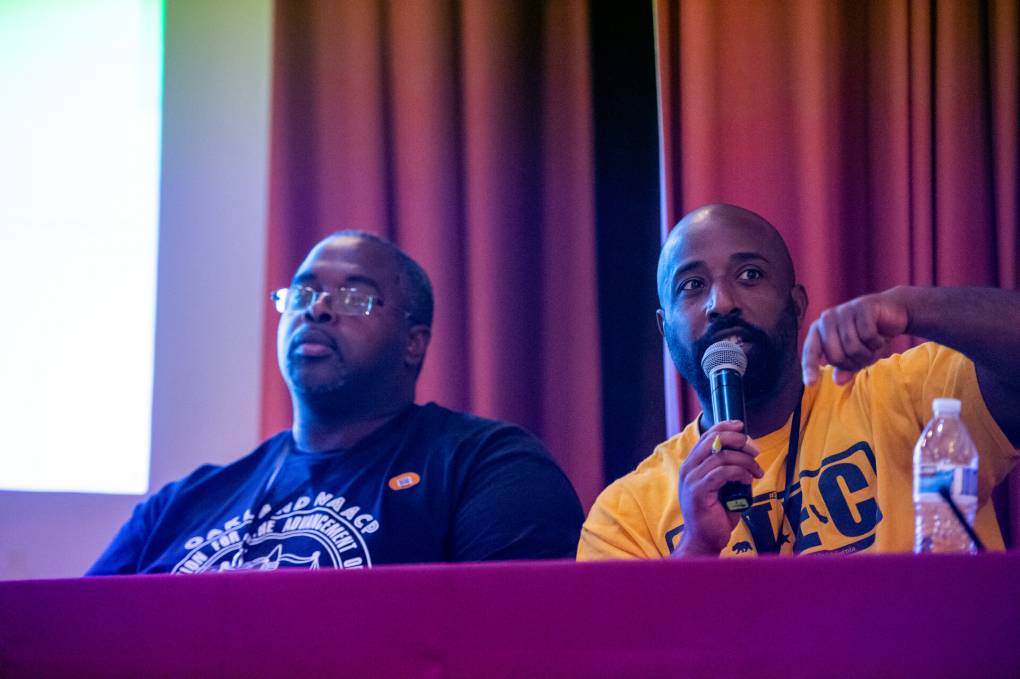
"content": "\u003cp>California is the first state to require its agencies to present a separate demographic category for descendants of enslaved people when collecting state employee data.\u003c/p>\n\u003cp>According to a \u003ca href=\"https://leginfo.legislature.ca.gov/faces/billTextClient.xhtml?bill_id=202120220SB189&utm_campaign=SB189+DIRECT+LINK#:~:text=knowledge%20or%20control.-,SEC.%2014.%C2%A0Section%208310.6%20is%20added%20to%20the%20Government%20Code,who%20have%20no%20ancestors%20who%20were%20enslaved%20in%20the%20United%20States.,-SEC.%2015\" target=\"_blank\" rel=\"noopener noreferrer\">recently signed law\u003c/a>, the State Controller’s Office and the Department of Human Resources can start collecting this information as soon as Jan. 1, 2024.[pullquote size=\"medium\" align=\"right\" citation=\"Chris Lodgson, Organizer with Coalition for a Just and Equitable California\"]‘You can’t fix a problem until you see it, until you acknowledge it.’[/pullquote]\u003c/p>\n\u003cp>These demographic categories will include African Americans who are descendants of people who were enslaved in the United States and Black employees who are not descendants of people who were enslaved in the United States.\u003c/p>\n\u003cp>The data collected will be included in a public state report on or after Jan. 1, 2025. \u003c/p>\n\u003cp>Employees will not be required to disclose this demographic information, but advocates who have been pushing for this expansion of data collection say it is for the Black community’s benefit, according to the Coalition for a Just and Equitable California.[aside tag=\"reparations\" label=\"More Related Stories\"] \u003c/p>\n\u003cp>In recent years, the state has been working to determine whether the state will pay reparations to Black Californians, particularly those who are descendants of slaves. And this year, the California Reparations Task Force \u003ca href=\"https://www.kqed.org/news/11909471/unpacking-reparations-eligibility-in-california\" target=\"_blank\" rel=\"noopener noreferrer\">affirmed lineage-based eligibility\u003c/a> for state reparations — meaning people who can prove they are descendants of slaves would be eligible. \u003c/p>\n\u003cp>“Not only will this historic legislation provide critical and timely information to California’s Reparations Task Force, which recently affirmed lineage based eligibility for California Reparations, this legislation begins the process of recognizing the identity and peoplehood of African Americans/American\u003cbr>\nFreedmen in California whose ancestors came to America in chains, were enslaved for hundreds of years, suffered Jim Crow, and yet managed to build the most powerful and wealthiest country in the world,” the Coalition for a Just and Equitable California said in its news release.\u003c/p>\n\u003cp>The statement went on to say, “In addition, this legislation is a model for states and localities across the country seeking to take serious steps toward repairing the damage done to the identities and livelihoods of African Americans/American Freedmen for over 400 years.”\u003c/p>\n\u003cp>Chris Lodgson, the lead organizer of the Coalition for a Just and Equitable California, told \u003ca href=\"https://www.axios.com/2022/08/10/california-descendants-slavery-data-disaggregation\" target=\"_blank\" rel=\"noopener noreferrer\">Axios \u003c/a>that Black Californians who are descendants of U.S. slaves are subject to shocking economic disparities and oppression.[aside postID=\"news_11914748\"]\u003c/p>\n\u003cp>Lodgson told the news outlet that this mandate to collect detailed demographic information from state employees will open the door to revealing disparities in income, careers and leadership within California state agencies.\u003c/p>\n\u003cp>“You can’t fix a problem until you see it, until you acknowledge it,” Lodgson told Axios.\u003c/p>\n\u003cp>Copyright 2022 NPR.\u003c/p>\n\u003cp>[ad fullwidth]\u003c/p>\n\u003cp>\u003c/p>\n",
"blocks": [],
"excerpt": "Employees won't be required to disclose their information, but advocates who support this data collection say the data will shed light on more hidden disparities.",
"status": "publish",
"parent": 0,
"modified": 1721134294,
"stats": {
"hasAudio": false,
"hasVideo": false,
"hasChartOrMap": false,
"iframeSrcs": [],
"hasGoogleForm": false,
"hasGallery": false,
"hasHearkenModule": false,
"hasPolis": false,
"paragraphCount": 14,
"wordCount": 475
},
"headData": {
"title": "California Becomes the First State to Break Down Black Employee Data by Lineage | KQED",
"description": "Employees won't be required to disclose their information, but advocates who support this data collection say the data will shed light on more hidden disparities.",
"ogTitle": "",
"ogDescription": "",
"ogImgId": "",
"twTitle": "",
"twDescription": "",
"twImgId": "",
"schema": {
"@context": "https://schema.org",
"@type": "NewsArticle",
"headline": "California Becomes the First State to Break Down Black Employee Data by Lineage",
"datePublished": "2022-08-17T11:58:33-07:00",
"dateModified": "2024-07-16T05:51:34-07:00",
"image": "https://cdn.kqed.org/wp-content/uploads/2020/02/KQED-OG-Image@1x.png",
"isAccessibleForFree": "True",
"publisher": {
"@type": "NewsMediaOrganization",
"@id": "https://www.kqed.org/#organization",
"name": "KQED",
"logo": "https://cdn.kqed.org/wp-content/uploads/2020/02/KQED-OG-Image@1x.png",
"url": "https://www.kqed.org",
"sameAs": [
"https://www.facebook.com/KQED",
"https://twitter.com/KQED",
"https://www.instagram.com/kqed/",
"https://www.tiktok.com/@kqedofficial",
"https://www.linkedin.com/company/kqed",
"https://www.youtube.com/channel/UCeC0IOo7i1P_61zVUWbJ4nw"
]
}
}
},
"sticky": false,
"nprByline": "Jaclyn Diaz",
"nprStoryId": "1117631210",
"nprApiLink": "http://api.npr.org/query?id=1117631210&apiKey=MDAxOTAwOTE4MDEyMTkxMDAzNjczZDljZA004",
"nprHtmlLink": "https://www.npr.org/2022/08/16/1117631210/california-becomes-the-first-state-to-break-down-black-employee-data-by-lineage?ft=nprml&f=1117631210",
"nprRetrievedStory": "1",
"nprPubDate": "Tue, 16 Aug 2022 15:45:00 -0400",
"nprStoryDate": "Tue, 16 Aug 2022 15:45:06 -0400",
"nprLastModifiedDate": "Tue, 16 Aug 2022 15:45:35 -0400",
"excludeFromSiteSearch": "Include",
"showOnAuthorArchivePages": "No",
"path": "/news/11922786/california-becomes-the-first-state-to-break-down-black-employee-data-by-lineage",
"audioTrackLength": null,
"parsedContent": [
{
"type": "contentString",
"content": "\u003cdiv class=\"post-body\">\u003cp>\u003cp>California is the first state to require its agencies to present a separate demographic category for descendants of enslaved people when collecting state employee data.\u003c/p>\n\u003cp>According to a \u003ca href=\"https://leginfo.legislature.ca.gov/faces/billTextClient.xhtml?bill_id=202120220SB189&utm_campaign=SB189+DIRECT+LINK#:~:text=knowledge%20or%20control.-,SEC.%2014.%C2%A0Section%208310.6%20is%20added%20to%20the%20Government%20Code,who%20have%20no%20ancestors%20who%20were%20enslaved%20in%20the%20United%20States.,-SEC.%2015\" target=\"_blank\" rel=\"noopener noreferrer\">recently signed law\u003c/a>, the State Controller’s Office and the Department of Human Resources can start collecting this information as soon as Jan. 1, 2024.\u003c/p>\u003c/div>",
"attributes": {
"named": {},
"numeric": []
}
},
{
"type": "component",
"content": "‘You can’t fix a problem until you see it, until you acknowledge it.’",
"name": "pullquote",
"attributes": {
"named": {
"size": "medium",
"align": "right",
"citation": "Chris Lodgson, Organizer with Coalition for a Just and Equitable California",
"label": ""
},
"numeric": []
}
},
{
"type": "contentString",
"content": "\u003cdiv class=\"post-body\">\u003cp>\u003c/p>\n\u003cp>These demographic categories will include African Americans who are descendants of people who were enslaved in the United States and Black employees who are not descendants of people who were enslaved in the United States.\u003c/p>\n\u003cp>The data collected will be included in a public state report on or after Jan. 1, 2025. \u003c/p>\n\u003cp>Employees will not be required to disclose this demographic information, but advocates who have been pushing for this expansion of data collection say it is for the Black community’s benefit, according to the Coalition for a Just and Equitable California.\u003c/p>\u003c/div>",
"attributes": {
"named": {},
"numeric": []
}
},
{
"type": "component",
"content": "",
"name": "aside",
"attributes": {
"named": {
"tag": "reparations",
"label": "More Related Stories "
},
"numeric": []
}
},
{
"type": "contentString",
"content": "\u003cdiv class=\"post-body\">\u003cp> \u003c/p>\n\u003cp>In recent years, the state has been working to determine whether the state will pay reparations to Black Californians, particularly those who are descendants of slaves. And this year, the California Reparations Task Force \u003ca href=\"https://www.kqed.org/news/11909471/unpacking-reparations-eligibility-in-california\" target=\"_blank\" rel=\"noopener noreferrer\">affirmed lineage-based eligibility\u003c/a> for state reparations — meaning people who can prove they are descendants of slaves would be eligible. \u003c/p>\n\u003cp>“Not only will this historic legislation provide critical and timely information to California’s Reparations Task Force, which recently affirmed lineage based eligibility for California Reparations, this legislation begins the process of recognizing the identity and peoplehood of African Americans/American\u003cbr>\nFreedmen in California whose ancestors came to America in chains, were enslaved for hundreds of years, suffered Jim Crow, and yet managed to build the most powerful and wealthiest country in the world,” the Coalition for a Just and Equitable California said in its news release.\u003c/p>\n\u003cp>The statement went on to say, “In addition, this legislation is a model for states and localities across the country seeking to take serious steps toward repairing the damage done to the identities and livelihoods of African Americans/American Freedmen for over 400 years.”\u003c/p>\n\u003cp>Chris Lodgson, the lead organizer of the Coalition for a Just and Equitable California, told \u003ca href=\"https://www.axios.com/2022/08/10/california-descendants-slavery-data-disaggregation\" target=\"_blank\" rel=\"noopener noreferrer\">Axios \u003c/a>that Black Californians who are descendants of U.S. slaves are subject to shocking economic disparities and oppression.\u003c/p>\u003c/div>",
"attributes": {
"named": {},
"numeric": []
}
},
{
"type": "component",
"content": "",
"name": "aside",
"attributes": {
"named": {
"postid": "news_11914748",
"label": ""
},
"numeric": []
}
},
{
"type": "contentString",
"content": "\u003cdiv class=\"post-body\">\u003cp>\u003c/p>\n\u003cp>Lodgson told the news outlet that this mandate to collect detailed demographic information from state employees will open the door to revealing disparities in income, careers and leadership within California state agencies.\u003c/p>\n\u003cp>“You can’t fix a problem until you see it, until you acknowledge it,” Lodgson told Axios.\u003c/p>\n\u003cp>Copyright 2022 NPR.\u003c/p>\n\u003cp>\u003c/p>\u003c/div>",
"attributes": {
"named": {},
"numeric": []
}
},
{
"type": "component",
"content": "",
"name": "ad",
"attributes": {
"named": {
"label": "fullwidth"
},
"numeric": [
"fullwidth"
]
}
},
{
"type": "contentString",
"content": "\u003cdiv class=\"post-body\">\u003cp>\u003c/p>\n\u003cp>\u003c/p>\n\u003c/div>\u003c/p>",
"attributes": {
"named": {},
"numeric": []
}
}
],
"link": "/news/11922786/california-becomes-the-first-state-to-break-down-black-employee-data-by-lineage",
"authors": [
"byline_news_11922786"
],
"categories": [
"news_8",
"news_13"
],
"tags": [
"news_18538",
"news_2923"
],
"featImg": "news_11922792",
"label": "news"
},
"news_11922513": {
"type": "posts",
"id": "news_11922513",
"meta": {
"index": "posts_1716263798",
"site": "news",
"id": "11922513",
"score": null,
"sort": [
1660656669000
]
},
"guestAuthors": [],
"slug": "stalled-u-s-forest-service-project-could-have-protected-california-town-from-caldor-fire-destruction",
"title": "Stalled US Forest Service Project Could Have Protected California Town From Caldor Fire Destruction",
"publishDate": 1660656669,
"format": "standard",
"headTitle": "Stalled US Forest Service Project Could Have Protected California Town From Caldor Fire Destruction | KQED",
"labelTerm": {},
"content": "\u003cp>Before the Caldor Fire sparked one year ago this week — before its 150-foot flames devoured century-old ponderosa pines in California’s Sierra Nevada, and before it destroyed more than 400 of the 600 homes in Grizzly Flats — Mark Almer had a plan.\u003c/p>\n\u003cp>The 60-year-old retired fire inspector had spent over a decade fireproofing his Grizzly Flats home, trading wood deck boards for composite material and replacing traditional siding with a protective cement shell.\u003c/p>\n\u003cp>“Hardening the home is huge,” he said. “But it’s just one piece of the puzzle.”\u003c/p>\n\u003cp>Almer had an even bigger plan to protect his community.\u003c/p>\n\u003cp>For more than a decade, he’s led the Grizzly Flats Fire Safe Council, a group of two-dozen volunteers that raised money for wildfire mitigation projects, educated the town’s roughly 1,400 residents about defensible space and regularly gathered local, state and federal fire officials to help improve their fire response plan.\u003c/p>\n\u003cp>The Caldor Fire would be the council’s ultimate test.\u003c/p>\n\u003cfigure id=\"attachment_11922564\" class=\"wp-caption aligncenter\" style=\"max-width: 800px\">\u003ca href=\"https://ww2.kqed.org/app/uploads/sites/10/2022/08/ALMERBQ3A8396.jpg\">\u003cimg loading=\"lazy\" decoding=\"async\" class=\"size-medium wp-image-11922564\" src=\"https://ww2.kqed.org/app/uploads/sites/10/2022/08/ALMERBQ3A8396-800x534.jpg\" alt='A man with pale skin wearing a light sage t-shirt and SF Giants ball cap stands in front of a light blue home with white painted wood railing and steps leading to the front door. A round logo on his shirt reads \"hashtag Grizzly Flats Strong\" over an image of trees and a mountain.' width=\"800\" height=\"534\" srcset=\"https://cdn.kqed.org/wp-content/uploads/sites/10/2022/08/ALMERBQ3A8396-800x534.jpg 800w, https://cdn.kqed.org/wp-content/uploads/sites/10/2022/08/ALMERBQ3A8396-1020x680.jpg 1020w, https://cdn.kqed.org/wp-content/uploads/sites/10/2022/08/ALMERBQ3A8396-160x107.jpg 160w, https://cdn.kqed.org/wp-content/uploads/sites/10/2022/08/ALMERBQ3A8396-1536x1025.jpg 1536w, https://cdn.kqed.org/wp-content/uploads/sites/10/2022/08/ALMERBQ3A8396-1920x1281.jpg 1920w, https://cdn.kqed.org/wp-content/uploads/sites/10/2022/08/ALMERBQ3A8396.jpg 2000w\" sizes=\"(max-width: 800px) 100vw, 800px\">\u003c/a>\u003cfigcaption class=\"wp-caption-text\">Mark Almer poses outside his Grizzly Flats home on Thursday, Aug. 4, 2022. \u003ccite>(Andrew Nixon/CapRadio)\u003c/cite>\u003c/figcaption>\u003c/figure>\n\u003cp>On August 16, 2021, two days after the fire ignited, gusty winds pushed the flames out like billowing sails, spreading across thousands of acres overloaded with shrubs and trees in the neighboring Eldorado National Forest.\u003c/p>\n\u003cp>Almer and his wife didn’t grab much on their way out the door. Their six cats, corralled into six crates, took up most of the car space.\u003c/p>\n\u003cp>He was more concerned about making sure everyone else in the community got out safely. Before the official evacuation order came, Almer called his next door neighbor, Victor Diaz.\u003c/p>\n\u003cp>“I thought we still had time,” Diaz said in a recent interview.\u003c/p>\n\u003cp>But Almer’s voice indicated otherwise. An even-keeled speaker with a clean vocabulary, Almer barked his warning with a rare four-letter word that Diaz declined to repeat.\u003c/p>\n\u003cp>“You need to get the beep out,” Diaz recalled.\u003c/p>\n\u003cfigure id=\"attachment_11922598\" class=\"wp-caption aligncenter\" style=\"max-width: 800px\">\u003ca href=\"https://ww2.kqed.org/app/uploads/sites/10/2022/08/Flames-Photo-scaled.jpeg\">\u003cimg loading=\"lazy\" decoding=\"async\" class=\"size-medium wp-image-11922598\" src=\"https://ww2.kqed.org/app/uploads/sites/10/2022/08/Flames-Photo-800x600.jpeg\" alt=\"Dark orange and red glow through the silhouette of burnt trees and branches. Yellow and white flames are visible on a distant ridge through the forest, with white hotspots in the foreground.\" width=\"800\" height=\"600\" srcset=\"https://cdn.kqed.org/wp-content/uploads/sites/10/2022/08/Flames-Photo-800x600.jpeg 800w, https://cdn.kqed.org/wp-content/uploads/sites/10/2022/08/Flames-Photo-1020x765.jpeg 1020w, https://cdn.kqed.org/wp-content/uploads/sites/10/2022/08/Flames-Photo-160x120.jpeg 160w, https://cdn.kqed.org/wp-content/uploads/sites/10/2022/08/Flames-Photo-1536x1152.jpeg 1536w, https://cdn.kqed.org/wp-content/uploads/sites/10/2022/08/Flames-Photo-2048x1536.jpeg 2048w, https://cdn.kqed.org/wp-content/uploads/sites/10/2022/08/Flames-Photo-1920x1440.jpeg 1920w\" sizes=\"(max-width: 800px) 100vw, 800px\">\u003c/a>\u003cfigcaption class=\"wp-caption-text\">The Caldor Fire burns south of Grizzly Flats on Aug. 15, 2021. \u003ccite>(Courtesy Eric Henton)\u003c/cite>\u003c/figcaption>\u003c/figure>\n\u003cp>Diaz, his wife, their six kids and the family dog raced down Grizzly Flat Road in a two-car caravan, leaving behind the fire’s red glow and the home they’d never see again.\u003c/p>\n\u003cp>Many residents knew this day might come. At a community meeting in the early 2000s, the U.S. Forest Service, with chilling foresight, had warned that a wildfire mirroring the Caldor Fire’s burn progression could easily wipe Grizzly Flats off the map.\u003c/p>\n\u003cp>In the years that followed, the Forest Service took steps to prevent such a catastrophe. But a nine-month investigation by CapRadio and The California Newsroom, a public media collaboration, found that the Forest Service’s plan to protect Grizzly Flats fell far short:\u003c/p>\n\u003cul>\n\u003cli>After the community meeting, the Forest Service took a decade to announce a comprehensive 15,000-acre forest management and fire mitigation plan, called the Trestle Forest Health Project. It aimed to “reduce the threat of large high intensity wildfire and threats to Grizzly Flat[s]” and other nearby landowners by removing excess brush and vegetation that fuel increasingly devastating wildfires, according to project documents.\u003c/li>\n\u003cli>The Forest Service originally committed to finishing the Trestle Project by 2020 — a year before the Caldor Fire would later ignite. Due to a complex web of regulatory delays, logistical challenges and resource shortages, the agency pushed back the completion date to as late as 2032 — three decades after its initial warning to Grizzly Flats.\u003c/li>\n\u003cli>The Forest Service’s data overstated Trestle Project accomplishments, claiming the agency completed work on at least 24% of the project before the Caldor Fire. \u003ca href=\"https://www.capradio.org/grizzly-flats-methodology\">Original analysis of corrected Forest Service data provided by the agency shows only 14% completion\u003c/a>. The agency confirmed the inaccurate information had been online for more than a month; it updated its database less than a week before publication of this story.\u003c/li>\n\u003cli>The corrected data also suggests that in the decade-and-a-half leading up to the Caldor Fire, the Forest Service completed 15,000 acres of fuel reduction work within a five-mile buffer around Grizzly Flats — coincidentally, the same number of planned acres in the Trestle Project. However, the actual coverage of that work was limited to 5,800 acres because of the agency’s decades-long and highly criticized practice of counting repeat treatments on the same parcel. Furthermore, the majority of that work occurred several miles from the town’s border.\u003c/li>\n\u003cli>The Forest Service failed to complete sections of the Trestle Project along the southern border of Grizzly Flats, identified as “first priority” due to the area’s susceptibility to wildfire. Instead, the agency prioritized removing trees — often far from the town’s borders and not a part of the “first priority” area — that generate revenue.\u003c/li>\n\u003cli>Despite more than five requests, the Forest Service failed to provide complete data on its national wildland fire management budget, citing a recent data transfer in which it lost some information from the past two decades. The agency also could not provide similar budget information at the regional and forest level, saying numerous changes to the budget structure and process over the last 20 years made retrieving the data especially difficult and would render any analysis “incomparable.”\u003c/li>\n\u003c/ul>\n\u003cp>\u003c!-- iframe plugin v.4.3 wordpress.org/plugins/iframe/ -->\u003cbr>\n\u003ciframe loading=\"lazy\" src=\"https://projects.capradio.org/grizzly-flats-forest-management\" style=\"border: 0px #FFFFFF none;\" name=\"myiFrame\" scrolling=\"no\" marginheight=\"0px\" marginwidth=\"0px\" allowfullscreen width=\"100%\" height=\"700px\" class=\"iframe-class\" frameborder=\"0\">\u003c/iframe>\u003c/p>\n\u003cp>Agency leaders say a slew of hurdles stood in the way of the project’s completion: limited funding, pushback from environmentalists and fewer opportunities to complete essential prescribed burns due to staff shortages and climate change.\u003c/p>\n\u003cp>“I am committed to doing everything I possibly can to mitigate [wildfire risks] on our landscapes,” said Forest Service Chief Randy Moore in an interview.\u003c/p>\n\u003cp>When asked if his agency bears any responsibility for the devastation in Grizzly Flats as a result of the stalled Trestle Project, he cited financial constraints.\u003c/p>\n\u003cp>“I mean, do[es] anybody bear any responsibility for not having the budget to do the work that we need to do?”\u003c/p>\n\u003cp>\u003ca href=\"https://www.fs.usda.gov/detailfull/r5/home/?cid=stelprdb5289758&width=full\">The Eldorado National Forest falls under the Forest Service’s Pacific Southwest Region\u003c/a>, which Moore led from 2007 to July 2021, when he was appointed chief by President Joe Biden’s administration. He assumed office just a few weeks before the Caldor Fire ignited. Moore declined multiple opportunities to say whether completing the Trestle Project would have resulted in a different outcome in Grizzly Flats.\u003c/p>\n\u003cfigure id=\"attachment_11922570\" class=\"wp-caption alignright\" style=\"max-width: 800px\">\u003ca href=\"https://ww2.kqed.org/app/uploads/sites/10/2022/08/MOORE51419974631_abd86cdfe9_o-scaled-e1660598505892.jpg\">\u003cimg loading=\"lazy\" decoding=\"async\" class=\"size-medium wp-image-11922570\" src=\"https://ww2.kqed.org/app/uploads/sites/10/2022/08/MOORE51419974631_abd86cdfe9_o-scaled-e1660598505892-800x752.jpg\" alt=\"An image of a man with coffee skin and short-cropped hair, wearing a black uniform with a forest service patch on the arm, in front of an American flag and a U.S. Forest Service flag. The first service flag is dark green with an orange logo .\" width=\"800\" height=\"752\" srcset=\"https://cdn.kqed.org/wp-content/uploads/sites/10/2022/08/MOORE51419974631_abd86cdfe9_o-scaled-e1660598505892-800x752.jpg 800w, https://cdn.kqed.org/wp-content/uploads/sites/10/2022/08/MOORE51419974631_abd86cdfe9_o-scaled-e1660598505892-1020x959.jpg 1020w, https://cdn.kqed.org/wp-content/uploads/sites/10/2022/08/MOORE51419974631_abd86cdfe9_o-scaled-e1660598505892-160x150.jpg 160w, https://cdn.kqed.org/wp-content/uploads/sites/10/2022/08/MOORE51419974631_abd86cdfe9_o-scaled-e1660598505892-1536x1445.jpg 1536w, https://cdn.kqed.org/wp-content/uploads/sites/10/2022/08/MOORE51419974631_abd86cdfe9_o-scaled-e1660598505892-1920x1806.jpg 1920w, https://cdn.kqed.org/wp-content/uploads/sites/10/2022/08/MOORE51419974631_abd86cdfe9_o-scaled-e1660598505892.jpg 2048w\" sizes=\"(max-width: 800px) 100vw, 800px\">\u003c/a>\u003cfigcaption class=\"wp-caption-text\">United States Department of Agriculture Forest Service Chief Randy Moore on Aug. 25, 2021. \u003ccite>(Tom Witham/USDA)\u003c/cite>\u003c/figcaption>\u003c/figure>\n\u003cp>“I’m not really sure why we keep talking about that question,” he said.\u003c/p>\n\u003cp>After reviewing this investigation’s findings, a dozen sources — including wildfire experts, career firefighters, former Forest Service officials and residents — said they believe Grizzly Flats would have stood a better chance of surviving the Caldor Fire if the Trestle Project had been completed.\u003c/p>\n\u003cp>Among the sources was one of the project’s key architects, former Eldorado National Forest District Ranger Duane Nelson.\u003c/p>\n\u003cp>“There would have been a very high probability that Grizzly Flats would not have burned in the Caldor Fire” if the Forest Service completed the Trestle Project, Nelson, 67, said in an interview. “It could’ve meant survival.”\u003c/p>\n\u003ch2>\u003cstrong>An early warning\u003c/strong>\u003c/h2>\n\u003cp>On a chilly day this past March, Almer sat in his idling white Toyota Tundra pickup next to where the Grizzly Flats Community Church once stood. The small yellow chapel bordered by white picket fencing had vanished, along with most of the community, in the Caldor Fire’s wake. From the driver’s seat, Almer observed rows of charred metal chairs facing an absent pulpit.\u003c/p>\n\u003cp>“It’s kind of eerie,” he remarked, “as if they were still ready to accept parishioners.”\u003c/p>\n\u003cfigure id=\"attachment_11922572\" class=\"wp-caption aligncenter\" style=\"max-width: 800px\">\u003ca href=\"https://ww2.kqed.org/app/uploads/sites/10/2022/08/Community-Church-After-Fire-scaled.jpg\">\u003cimg loading=\"lazy\" decoding=\"async\" class=\"size-medium wp-image-11922572\" src=\"https://ww2.kqed.org/app/uploads/sites/10/2022/08/Community-Church-After-Fire-800x360.jpg\" alt=\"A burnt tree trunk lies crossways over the image on a forest floor white with ash. In the background, tall burnt tree trunks and branches spread across the image.\" width=\"800\" height=\"360\" srcset=\"https://cdn.kqed.org/wp-content/uploads/sites/10/2022/08/Community-Church-After-Fire-800x360.jpg 800w, https://cdn.kqed.org/wp-content/uploads/sites/10/2022/08/Community-Church-After-Fire-1020x459.jpg 1020w, https://cdn.kqed.org/wp-content/uploads/sites/10/2022/08/Community-Church-After-Fire-160x72.jpg 160w, https://cdn.kqed.org/wp-content/uploads/sites/10/2022/08/Community-Church-After-Fire-1536x692.jpg 1536w, https://cdn.kqed.org/wp-content/uploads/sites/10/2022/08/Community-Church-After-Fire-2048x922.jpg 2048w, https://cdn.kqed.org/wp-content/uploads/sites/10/2022/08/Community-Church-After-Fire-1920x865.jpg 1920w\" sizes=\"(max-width: 800px) 100vw, 800px\">\u003c/a>\u003cfigcaption class=\"wp-caption-text\">The remains of the Grizzly Flats Community Church after the Caldor Fire, Sept. 2021. \u003ccite>(Courtesy Bill Brown)\u003c/cite>\u003c/figcaption>\u003c/figure>\n\u003cp>The church is where local Forest Service officials, in the early 2000s, held their town meeting to warn residents about wildfires. Grizzly Flats is surrounded on three sides by the Eldorado National Forest; the agency acknowledged that a devastating fire would likely rip across federal land before reaching town. Using a PowerPoint to show fire modeling scenarios, they gamed out all the ways Grizzly Flats could go up in smoke.\u003c/p>\n\u003cp>“It was important for us to start talking to people and make sure that they had the information that we had about what our models were showing,” said Kathy Hardy, a former district ranger who attended the meeting.\u003c/p>\n\u003cp>One scenario showed what would happen if the fire started a few miles south of town in the Eldorado National Forest, close to where the Caldor Fire would ignite years later.\u003c/p>\n\u003cp>“The modeling said that it would take out Grizzly Flats within about 24 hours,” Almer recently recalled. “Well, 20 years later, that’s pretty much exactly what happened.”\u003c/p>\n\u003cp>The Forest Service has not provided records related to the meeting in response to a Freedom of Information Act request filed in December 2021.\u003c/p>\n\u003cp>As Forest Service officials flipped through presentation slides, residents shifted uncomfortably in their metal chairs. This was a town that had just installed its first all-way stop sign. The Grizzly Pines School had recently earned a Distinguished School Award from the California Department of Education despite having only 36 students. The place, in many ways, was idyllic — so remotely located and so small that it had no grocery store, no gas station, no diner, not even a local bar. Now, the Forest Service was telling them, with data to back it up, that their town and their lives sat in Mother Nature’s crosshairs.\u003c/p>\n\u003cdiv class=\"mceTemp\">\u003c/div>\n\u003cfigure id=\"attachment_11922588\" class=\"wp-caption aligncenter\" style=\"max-width: 800px\">\u003ca href=\"https://ww2.kqed.org/app/uploads/sites/10/2022/08/WALTERTYLERDSCF2225.jpg\">\u003cimg loading=\"lazy\" decoding=\"async\" class=\"size-medium wp-image-11922588\" src=\"https://ww2.kqed.org/app/uploads/sites/10/2022/08/WALTERTYLERDSCF2225-800x533.jpg\" alt=\"A huge heap of burnt metal, pipes and ashy detritus fill the foreground, with a pocket of flames still burning. In the background is the metal scaffolding of a children's playground with slide and swingset. In the far left background are some ashy green trees.\" width=\"800\" height=\"533\" srcset=\"https://cdn.kqed.org/wp-content/uploads/sites/10/2022/08/WALTERTYLERDSCF2225-800x533.jpg 800w, https://cdn.kqed.org/wp-content/uploads/sites/10/2022/08/WALTERTYLERDSCF2225-1020x680.jpg 1020w, https://cdn.kqed.org/wp-content/uploads/sites/10/2022/08/WALTERTYLERDSCF2225-160x107.jpg 160w, https://cdn.kqed.org/wp-content/uploads/sites/10/2022/08/WALTERTYLERDSCF2225-1536x1024.jpg 1536w, https://cdn.kqed.org/wp-content/uploads/sites/10/2022/08/WALTERTYLERDSCF2225-1920x1280.jpg 1920w, https://cdn.kqed.org/wp-content/uploads/sites/10/2022/08/WALTERTYLERDSCF2225.jpg 2000w\" sizes=\"(max-width: 800px) 100vw, 800px\">\u003c/a>\u003cfigcaption class=\"wp-caption-text\">A gas leak burns the day after the Caldor Fire hit Walter Tyler Elementary School in Grizzly Flats, Aug. 17, 2021. \u003ccite>(Andrew Nixon/CapRadio)\u003c/cite>\u003c/figcaption>\u003c/figure>\n\u003ch2>\u003cstrong>Two fire plans, two timelines\u003c/strong>\u003c/h2>\n\u003cp>Grizzly Flats wasn’t the only town in peril. For years, the federal government had been wringing its hands over the nation’s growing wildfire crisis. \u003ca href=\"https://www.nifc.gov/fire-information/statistics/wildfires\">In 2000, wildfires burned over 7 million acres across the country\u003c/a> — a stunning total at the time, and a harbinger for even worse years to come.\u003c/p>\n\u003cp>In response, the U.S. Department of Agriculture and Department of the Interior — the agencies that managed much of the land that had been scorched — developed a \u003ca href=\"https://www.fs.fed.us/database/budgetoffice/NFP_final32601.pdf\">National Fire Plan\u003c/a>. It emphasized forest management and fuel reduction as key preventive measures. Methods traditionally used by the federal government include commercial thinning (cutting some trees to be sold as timber or wood pellets), removing brush with heavy machinery (a process known as mastication), and prescribed burning (intentionally setting lower-intensity fires that benefit the landscape).\u003c/p>\n\u003cp>To figure out where to put its resources, the Forest Service — which operates under the USDA — helped compile \u003ca href=\"https://www.federalregister.gov/documents/2001/08/17/01-20592/urban-wildland-interface-communities-within-the-vicinity-of-federal-lands-that-are-at-high-risk-from#citation-1-p43384\">a list of communities nationwide at “high risk from wildfire.”\u003c/a> It included thousands of communities, identified primarily for being in the “wildland-urban interface” or WUI, a term used to describe the intersection of developed land and the natural environment.\u003c/p>\n\u003cp>Buried on the list was “Grizzly Flat.”\u003c/p>\n\u003cp>(The town, throughout history, has been referred to as “Grizzly Flat” and “Grizzly Flats.” The latter is more common.)\u003c/p>\n\u003cp>Shortly after the Forest Service’s cautionary meeting at the local church, Almer and two-dozen other residents formed the Grizzly Flats Fire Safe Council. They set up an informational phone line, installed a nine-foot community bulletin board at the post office and started an adopt-a-hydrant program, which got residents to shovel out hydrants after snowstorms.\u003c/p>\n\u003cfigure id=\"attachment_11922590\" class=\"wp-caption alignright\" style=\"max-width: 800px\">\u003ca href=\"https://ww2.kqed.org/app/uploads/sites/10/2022/08/GFFSC-BBQ-2018.jpeg\">\u003cimg loading=\"lazy\" decoding=\"async\" class=\"size-medium wp-image-11922590\" src=\"https://ww2.kqed.org/app/uploads/sites/10/2022/08/GFFSC-BBQ-2018-800x533.jpeg\" alt=\"People sit eating and talking at long tables covered with red or orange tablecloths. Strings of lights are overhead, with dark green trees in the background. Vases of fresh orange, yellow and white flowers adorn the tables.\" width=\"800\" height=\"533\" srcset=\"https://cdn.kqed.org/wp-content/uploads/sites/10/2022/08/GFFSC-BBQ-2018-800x533.jpeg 800w, https://cdn.kqed.org/wp-content/uploads/sites/10/2022/08/GFFSC-BBQ-2018-1020x680.jpeg 1020w, https://cdn.kqed.org/wp-content/uploads/sites/10/2022/08/GFFSC-BBQ-2018-160x107.jpeg 160w, https://cdn.kqed.org/wp-content/uploads/sites/10/2022/08/GFFSC-BBQ-2018-1536x1024.jpeg 1536w, https://cdn.kqed.org/wp-content/uploads/sites/10/2022/08/GFFSC-BBQ-2018.jpeg 1824w\" sizes=\"(max-width: 800px) 100vw, 800px\">\u003c/a>\u003cfigcaption class=\"wp-caption-text\">The Grizzly Flats Fire Safe Council holds its 14th annual barbecue, July 21, 2018. \u003ccite>(Courtesy Grizzly Flats Fire Safe Council)\u003c/cite>\u003c/figcaption>\u003c/figure>\n\u003cp>The council served as an essential community thread in the simple quilt of Grizzly Flats.\u003c/p>\n\u003cp>“There was no government, there was no mayor,” said Kathy Melvin, 78, who joined the council in 2007. “There was just the fire safe council, the church and the school. Everything kind of revolved around those entities because we didn’t have anything else.”\u003c/p>\n\u003cp>Within a couple years of its founding, the council commissioned its own community wildfire protection plan. The 74-page document laid out plans to clear evacuation routes and assist residents with defensible space around homes.\u003c/p>\n\u003cp>It also proposed a series of fuel-reduction projects, including an ambitious “shaded fuel break” in the shape of a horseshoe around Grizzly Flats. Shaded fuel breaks remove ground vegetation to reduce wildfire intensity and provide a staging area for firefighters. The horseshoe covered the east, north and west sides of town; the community was banking on the Forest Service to tackle fuel reduction work along the southern border to complete the protective buffer.\u003c/p>\n\u003cfigure id=\"attachment_11922589\" class=\"wp-caption alignleft\" style=\"max-width: 631px\">\u003ca href=\"https://ww2.kqed.org/app/uploads/sites/10/2022/08/2006-GFFSC-shaded-fuel-break-plan.png\">\u003cimg loading=\"lazy\" decoding=\"async\" class=\"size-full wp-image-11922589\" src=\"https://ww2.kqed.org/app/uploads/sites/10/2022/08/2006-GFFSC-shaded-fuel-break-plan.png\" alt=\"\" width=\"631\" height=\"466\" srcset=\"https://cdn.kqed.org/wp-content/uploads/sites/10/2022/08/2006-GFFSC-shaded-fuel-break-plan.png 631w, https://cdn.kqed.org/wp-content/uploads/sites/10/2022/08/2006-GFFSC-shaded-fuel-break-plan-160x118.png 160w\" sizes=\"(max-width: 631px) 100vw, 631px\">\u003c/a>\u003cfigcaption class=\"wp-caption-text\">A 2006 map of the Grizzly Flats Fire Safe Council’s planned fuel breaks around three sides of the community. \u003ccite>(Courtesy Grizzly Flats Fire Safe Council)\u003c/cite>\u003c/figcaption>\u003c/figure>\n\u003cp>The plan would cost millions of dollars, and the council raised money however it could. An area couple hosted 150 people at their home for a wine tasting under paper lanterns and summer stars. The council held annual barbecues. What money it couldn’t raise, it made up for with grants.\u003c/p>\n\u003cp>The efforts paid off. Over the next 15 years, the fire safe council cleared more than 1,500 acres of fire-prone vegetation around town, completing almost all of the horseshoe fuel break at a cost of nearly $2 million. \u003ca href=\"https://www.iafc.org/press-releases/press-release/partnership-announces-2018-wildfire-mitigation-awardees\">The council even earned national recognition for its productivity and wildfire mitigation work\u003c/a>.\u003c/p>\n\u003cp>\u003ca href=\"https://ww2.kqed.org/app/uploads/sites/10/2022/08/GFFSC-BBQ-2018.jpeg\"> \u003c/a>Meanwhile, most of the Forest Service land to the south of Grizzly Flats remained dense and overgrown — a reminder to residents that their community was dangerously exposed.\u003c/p>\n\u003ch2>\u003cstrong>‘Big, hairy, audacious goal’\u003c/strong>\u003c/h2>\n\u003cp>As a district ranger in the Eldorado National Forest, Duane Nelson started each day with a clean, pressed uniform and aimed to clock out with dirty shirtsleeves and muddy boots.\u003c/p>\n\u003cp>“I wasn’t going to just be a ranger sitting in the office behind a computer all the time,” he said. “I made a promise to myself that I would be out looking at projects, checking up on crews or going by fire stations.”[pullquote size='small' align='left' citation='Duane Nelson, former district ranger, Eldorado National Forest']‘We needed to reverse this massive fuels accumulation that had developed over 100 years of overly aggressive fire suppression.’[/pullquote]His 38-year career in the Forest Service can be traced to a childhood vacation to the Rocky Mountains. Sitting in the back of his family’s faux wood-paneled Ford Country Squire, he watched hours of hypnotic prairielands roll by. All of a sudden, purple mountaintops pierced the horizon, surrounded by timber canyons.\u003c/p>\n\u003cp>“It’s an image that’s been in my head ever since,” he said.\u003c/p>\n\u003cp>Nelson earned a degree in forestry and left his Midwest roots behind, preferring the mountains and conifer forests of Northern California.\u003c/p>\n\u003cp>When he took over as the Eldorado National Forest’s Placerville District Ranger in 2007, he didn’t like what he saw. The majority of his district was dense, dry and prone to catastrophic wildfires — especially around Grizzly Flats.\u003c/p>\n\u003cp>A few years before Nelson arrived, the district had thinned and burned 1,000 acres to the south of Grizzly Flats, including areas along the town’s southern border. But other fuel reduction efforts were scattered and piecemeal, often deep in woods and miles from town.\u003c/p>\n\u003cp>So Nelson devised what he called a “big, hairy, audacious goal.” He wanted to reduce forest congestion across his entire district.\u003c/p>\n\u003cfigure id=\"attachment_11922592\" class=\"wp-caption aligncenter\" style=\"max-width: 800px\">\u003ca href=\"https://ww2.kqed.org/app/uploads/sites/10/2022/08/Nelson_2.jpg\">\u003cimg loading=\"lazy\" decoding=\"async\" class=\"size-medium wp-image-11922592\" src=\"https://ww2.kqed.org/app/uploads/sites/10/2022/08/Nelson_2-800x600.jpg\" alt=\"A man with pale skin wearing a white hardhat, yellow shirt and black pants stands on a cleared area of soil and green grasses, with trees and white smoke in the background. He carries a map and wears a pack at the small of his back and a walkie talkie in front.\" width=\"800\" height=\"600\" srcset=\"https://cdn.kqed.org/wp-content/uploads/sites/10/2022/08/Nelson_2-800x600.jpg 800w, https://cdn.kqed.org/wp-content/uploads/sites/10/2022/08/Nelson_2-1020x765.jpg 1020w, https://cdn.kqed.org/wp-content/uploads/sites/10/2022/08/Nelson_2-160x120.jpg 160w, https://cdn.kqed.org/wp-content/uploads/sites/10/2022/08/Nelson_2.jpg 1280w\" sizes=\"(max-width: 800px) 100vw, 800px\">\u003c/a>\u003cfigcaption class=\"wp-caption-text\">Duane Nelson, former Placerville district ranger, during an annual live fire training in the late 2000s near Grizzly Flats. \u003ccite>(Courtesy Duane Nelson)\u003c/cite>\u003c/figcaption>\u003c/figure>\n\u003cp>To do that, he said, “We needed to reverse this massive fuels accumulation that had developed over 100 years of overly aggressive fire suppression.”\u003c/p>\n\u003cp>Before the advent of modern firefighting, naturally occurring fires served the important role of balancing ecosystems and preventing the accumulation of fuels. For millennia, indigenous communities set fire to forests and wildlands for a variety of reasons, including hunting and cultural practices, which also kept the land in check. But according to fire ecologists and historians, the federal government’s century-long practice of snuffing out every wildfire, instead of letting them perform their natural role on the landscape, has left forests overloaded. Combined with hotter, drier conditions caused by climate change, the heavy fuel loads are spurring bigger, more destructive blazes.\u003c/p>\n\u003cp>Nelson helped devise the Trestle Project as a big step toward his goal. It would create a miles-wide fuel reduction buffer east and south of Grizzly Flats.\u003c/p>\n\u003cp>When the Forest Service finally announced the project in 2013, the agency sent a letter to residents describing 16,000 acres of planned work. (A miscalculation led to the document overstating the work by nearly 1,000 acres. The actual number was just over 15,000.) It laid out an expeditious — and optimistic — timeline. The analysis was supposed to take about a year, with the forest management work scheduled to wrap up by 2020.\u003c/p>\n\u003cp>Almost immediately the project encountered an onslaught of hurdles and delays.\u003c/p>\n\u003cp>“It’s sad to think about what could have been,” said Michael Wara, a \u003ca href=\"https://twitter.com/MichaelWWara/status/1541784173047709696?s=20&t=NPO1IzD-aF1yaQXcj4-mFg\">climate policy expert at Stanford University who recently toured Grizzly Flats\u003c/a>. “[If] all this work was done by 2020, Grizzly Flats might still be there.”\u003c/p>\n\u003cfigure id=\"attachment_11922636\" class=\"wp-caption aligncenter\" style=\"max-width: 800px\">\u003ca href=\"https://ww2.kqed.org/app/uploads/sites/10/2022/08/GATEDSCF2157.jpg\">\u003cimg loading=\"lazy\" decoding=\"async\" class=\"size-medium wp-image-11922636\" src=\"https://ww2.kqed.org/app/uploads/sites/10/2022/08/GATEDSCF2157-800x533.jpg\" alt=\"Thick stands of burnt trees with ashen branches line a red dirt road. A metal gate bars the road. White smoke hangs in the air. \" width=\"800\" height=\"533\" srcset=\"https://cdn.kqed.org/wp-content/uploads/sites/10/2022/08/GATEDSCF2157-800x533.jpg 800w, https://cdn.kqed.org/wp-content/uploads/sites/10/2022/08/GATEDSCF2157-1020x680.jpg 1020w, https://cdn.kqed.org/wp-content/uploads/sites/10/2022/08/GATEDSCF2157-160x107.jpg 160w, https://cdn.kqed.org/wp-content/uploads/sites/10/2022/08/GATEDSCF2157-1536x1024.jpg 1536w, https://cdn.kqed.org/wp-content/uploads/sites/10/2022/08/GATEDSCF2157-1920x1280.jpg 1920w, https://cdn.kqed.org/wp-content/uploads/sites/10/2022/08/GATEDSCF2157.jpg 2000w\" sizes=\"(max-width: 800px) 100vw, 800px\">\u003c/a>\u003cfigcaption class=\"wp-caption-text\">Grizzly Flats, Aug. 17, 2021. \u003ccite>(Andrew Nixon/CapRadio)\u003c/cite>\u003c/figcaption>\u003c/figure>\n\u003ch2>\u003cstrong>‘We don’t have that kind of time any longer’\u003c/strong>\u003c/h2>\n\u003cp>One of the most aggressive objections to the Trestle Project came from Chad Hanson, co-founder of the John Muir Project, a nonprofit that aims to protect biodiversity in national forests and fiercely opposes tree removal. One of Hanson’s primary concerns was the spotted owl, which is designated as “threatened” under the Endangered Species Act.\u003c/p>\n\u003cp>In a written objection to the Forest Service in 2015, Hanson argued the Trestle Project would “pose a serious and unacceptable threat to owl populations on the Eldorado National Forest.”\u003c/p>\n\u003cp>Elsewhere, \u003ca href=\"https://www.nytimes.com/2022/07/30/opinion/california-wildfires-oak-fire-yosemite-sequoias.html\">Hanson has argued that commercial tree removal could exacerbate wildfire intensity\u003c/a>. Leading fire scientists have publicly pushed back against a number of Hanson’s claims; \u003ca href=\"https://www.sacbee.com/news/california/fires/article254957722.html\">one expert even called his positions “self-serving garbage.”\u003c/a>\u003c/p>\n\u003cp>The project’s 296-page environmental impact statement devoted dozens of pages to analyzing potential impacts on the spotted owl. The report also invited public comment that demanded thoroughly researched responses from the Forest Service. The agency developed alternative maps, taking into account spotted owls and sensitive species of frog and trout.\u003c/p>\n\u003cp>The Forest Service also put out other reports, including \u003ca href=\"https://www.documentcloud.org/documents/22131479-fuels-and-fire-analysis-trestle-forest-health-project\">one that identified a likely ignition point very close to where the Caldor Fire would later start\u003c/a>.\u003c/p>\n\u003cp>As the Forest Service spun out reams of paperwork, Almer reminded the agency that Grizzly Flats remained woefully exposed to wildfires that were growing more severe every year.\u003c/p>\n\u003cp>“The most aggressive treatment of the [Trestle Project’s] fire fuels is critical to preventing the ‘loss of our community,’” wrote Almer in a 2015 public comment about the project on behalf of the Grizzly Flats Fire Safe Council. “Everything that can be done, must be done.”\u003c/p>\n\u003cp>He followed up this plea with a 2017 letter addressed to Randy Moore, who at the time led the agency’s Pacific Southwest Region.\u003c/p>\n\u003cfigure id=\"attachment_11922594\" class=\"wp-caption alignright\" style=\"max-width: 800px\">\u003ca href=\"https://ww2.kqed.org/app/uploads/sites/10/2022/08/Almer-letter-to-Moore-with-page-tear.png\">\u003cimg loading=\"lazy\" decoding=\"async\" class=\"size-medium wp-image-11922594\" src=\"https://ww2.kqed.org/app/uploads/sites/10/2022/08/Almer-letter-to-Moore-with-page-tear-800x491.png\" alt=\"\" width=\"800\" height=\"491\" srcset=\"https://cdn.kqed.org/wp-content/uploads/sites/10/2022/08/Almer-letter-to-Moore-with-page-tear-800x491.png 800w, https://cdn.kqed.org/wp-content/uploads/sites/10/2022/08/Almer-letter-to-Moore-with-page-tear-160x98.png 160w, https://cdn.kqed.org/wp-content/uploads/sites/10/2022/08/Almer-letter-to-Moore-with-page-tear.png 822w\" sizes=\"(max-width: 800px) 100vw, 800px\">\u003c/a>\u003cfigcaption class=\"wp-caption-text\">Mark Almer sent a letter to then-regional forester Randy Moore, imploring the Forest Service to quickly and thoroughly tackle the Trestle Project in order to protect Grizzly Flats, May 12, 2017. \u003ccite>(US Forest Service)\u003c/cite>\u003c/figcaption>\u003c/figure>\n\u003cp>“Maximum treatment must be given to the defense and threat zones abutting Grizzly Flats … to prevent spot fires from a wildland fire igniting homes within the community,” Almer wrote in his letter.\u003c/p>\n\u003cp>In an interview, Moore said he did not recall the letter from Almer. The threat Grizzly Flats faced “is not unique,” he said. “I can tell you that that’s going to be common for a number of communities all across the West.”\u003c/p>\n\u003cp>The Forest Service acknowledges that its regulatory approval process for desperately needed forest management projects can be a slog. But trying to streamline it is a delicate balance.\u003c/p>\n\u003cp>As Scot Rogers, the current Placerville district ranger, said in an interview, it’s essential that “the American public has an opportunity to engage in the management of their lands.” But, he added, “That doesn’t necessarily mean that we need to get lost in a sea of analysis and unable to actually execute these projects — because we don’t have that kind of time any longer.”\u003c/p>\n\u003cp>The Trestle Project wasn’t approved until late 2017, more than four years after its announcement and more than a decade after the agency called the initial meeting at the church.\u003c/p>\n\u003cp>But by that time Duane Nelson, one of the project’s main architects, was gone. Burnout had set in, exacerbated by persistent staffing shortages. Sleepless nights left his nerves shot.\u003c/p>\n\u003cp>“If it’s hot, dry and windy, rangers don’t sleep,” he said.\u003c/p>\n\u003cp>Nelson retired in early 2017, a year before he’d originally planned. Before submitting his notice, he took a drive through his district, following the backroads that bisected dense tree stands. He wanted to see the condition of the forest before making his official decision. Driving through the Trestle Project area, he envisioned the southern border of Grizzly Flats cleared of brush and returned to something like its natural condition after prescribed burning.\u003c/p>\n\u003cp>“We had done a lot of good things,” he said, reflecting on his retirement. “But there was still a lot of work that needed to be done.”\u003c/p>\n\u003ch2>\u003cstrong>Stalled out\u003c/strong>\u003c/h2>\n\u003cp>Over the next four years, the Forest Service completed only a fraction of the Trestle Project.\u003c/p>\n\u003cp>It called for fuel reduction across more than 15,000 acres of land around Grizzly Flats, but completed work on just over 2,000 of those acres.\u003c/p>\n\u003cfigure id=\"attachment_11922595\" class=\"wp-caption aligncenter\" style=\"max-width: 800px\">\u003ca href=\"https://ww2.kqed.org/app/uploads/sites/10/2022/08/CELLBQ3A8103.jpg\">\u003cimg loading=\"lazy\" decoding=\"async\" class=\"size-medium wp-image-11922595\" src=\"https://ww2.kqed.org/app/uploads/sites/10/2022/08/CELLBQ3A8103-800x534.jpg\" alt=\"A cell phone tower is disguised as a tree with green branches of the same length sticking out on all sides. It's the only thing in the landscape that isn't charred and blackened. \" width=\"800\" height=\"534\" srcset=\"https://cdn.kqed.org/wp-content/uploads/sites/10/2022/08/CELLBQ3A8103-800x534.jpg 800w, https://cdn.kqed.org/wp-content/uploads/sites/10/2022/08/CELLBQ3A8103-1020x680.jpg 1020w, https://cdn.kqed.org/wp-content/uploads/sites/10/2022/08/CELLBQ3A8103-160x107.jpg 160w, https://cdn.kqed.org/wp-content/uploads/sites/10/2022/08/CELLBQ3A8103-1536x1025.jpg 1536w, https://cdn.kqed.org/wp-content/uploads/sites/10/2022/08/CELLBQ3A8103-1920x1281.jpg 1920w, https://cdn.kqed.org/wp-content/uploads/sites/10/2022/08/CELLBQ3A8103.jpg 2000w\" sizes=\"(max-width: 800px) 100vw, 800px\">\u003c/a>\u003cfigcaption class=\"wp-caption-text\">A cellphone tower disguised as a tree is the only green ‘tree’ near the center of Grizzly Flats, Aug. 4, 2022. \u003ccite>(Andrew Nixon/CapRadio)\u003c/cite>\u003c/figcaption>\u003c/figure>\n\u003cp>Prescribed fire, considered crucial by fire scientists, was nowhere to be found. The project called for more than 10,000 acres of intentional low-intensity fire, but the agency only completed 136 acres of “pile burns,” the process of collecting and burning logs and vegetation that is widely considered much less impactful.\u003c/p>\n\u003cp>The agency instead prioritized commercial tree thinning, which generates revenue that offsets costs.\u003c/p>\n\u003cp>Generally, commercial thinning and other treatments designed to reduce fuel loads are a necessary precursor to prescribed fires, according to Rogers.\u003c/p>\n\u003cp>“Largely, we’re not going to be able to put fire on the ground before that work is completed,” he said.\u003c/p>\n\u003cp>But Trestle Project reports and Forest Service data show the vast majority of the planned prescribed fire was intended as the first treatment.\u003c/p>\n\u003cp>Wildfire researchers and former Forest Service officials say it’s disappointing the agency would focus on commercial thinning over other forms of treatment.\u003c/p>\n\u003cp>“The evidence that commercial thinning really reduces risk is not that good,” said Wara, the Stanford climate policy expert. “If you thin and then burn in an area, then you get dramatic risk reduction.”\u003c/p>\n\u003cp>Meanwhile, areas adjacent to the community that the Forest Service identified as “first priority” were left untouched and overgrown. One stands out: The highly overgrown — and highly combustible — southern border, which would have dovetailed with the buffer zone that Mark Almer and the Grizzly Flats Fire Safe Council worked on for over a decade.\u003c/p>\n\u003cp>“The part that didn’t get treated was the part we should have been most worried about,” said Hugh Safford, who spent two decades as the Forest Service’s senior ecologist in California before retiring in late 2021.\u003c/p>\n\u003cp>The steep, dense and dry south-facing terrain made it one of the more complicated parts of the project, but also the most essential, Safford noted.\u003c/p>\n\u003cfigure id=\"attachment_11922580\" class=\"wp-caption aligncenter\" style=\"max-width: 800px\">\u003ca href=\"https://ww2.kqed.org/app/uploads/sites/10/2022/08/Flames-Photo-2-scaled.jpeg\">\u003cimg loading=\"lazy\" decoding=\"async\" class=\"size-medium wp-image-11922580\" src=\"https://ww2.kqed.org/app/uploads/sites/10/2022/08/Flames-Photo-2-800x600.jpeg\" alt=\"White-yellow flames and an orange sky show through shadows of burnt trees. The flames and colors and reflected in a stream to the lower left of the image. A dark embankment is in the center right of the image.\" width=\"800\" height=\"600\" srcset=\"https://cdn.kqed.org/wp-content/uploads/sites/10/2022/08/Flames-Photo-2-800x600.jpeg 800w, https://cdn.kqed.org/wp-content/uploads/sites/10/2022/08/Flames-Photo-2-1020x765.jpeg 1020w, https://cdn.kqed.org/wp-content/uploads/sites/10/2022/08/Flames-Photo-2-160x120.jpeg 160w, https://cdn.kqed.org/wp-content/uploads/sites/10/2022/08/Flames-Photo-2-1536x1152.jpeg 1536w, https://cdn.kqed.org/wp-content/uploads/sites/10/2022/08/Flames-Photo-2-2048x1536.jpeg 2048w, https://cdn.kqed.org/wp-content/uploads/sites/10/2022/08/Flames-Photo-2-1920x1440.jpeg 1920w\" sizes=\"(max-width: 800px) 100vw, 800px\">\u003c/a>\u003cfigcaption class=\"wp-caption-text\">The Caldor Fire burns south of Grizzly Flats on Aug. 15, 2021. \u003ccite>(Courtesy Eric Henton)\u003c/cite>\u003c/figcaption>\u003c/figure>\n\u003cp>Melvin, the longtime fire safe council member, lived on the south end of Grizzly Flats and shared a property line with the Forest Service for nearly four decades. Her house was among the first in town to face the Caldor Fire’s wrath.\u003c/p>\n\u003cp>She took defensible space seriously, clearing shrubs “down to the dirt” before every fire season. By contrast, she said, the nearby Forest Service land remained overgrown with trees, brush and highly flammable mountain misery shrubs.\u003c/p>\n\u003cp>Melvin kept her expectations about the Trestle Project in check.\u003c/p>\n\u003cp>“The history of the Forest Service, in the time that we lived there, was that everything took forever,” she said. “I wish they had done more.”\u003c/p>\n\u003ch2>\u003cstrong>No money, no mitigation\u003c/strong>\u003c/h2>\n\u003cp>In a series of interviews, Forest Service officials offered an array of reasons why efforts like the Trestle Project face delays and are sometimes not completed.\u003c/p>\n\u003cp>At the top of the list: money.\u003c/p>\n\u003cp>“Let’s not make any bones about this,” said Chief Moore in an interview. “We do not have the funding to do the level of work that needs to be done out there.”\u003c/p>\n\u003cp>Compared to the soaring costs of preparing for and fighting wildfire, spending on hazardous fuels reduction has barely increased over the last 15 years when adjusted for inflation, according to incomplete data provided by the agency.\u003c/p>\n\u003cp>That doesn’t mean all projects struggle to secure funding. From 2008 to 2019, a partnership of private organizations and government agencies, including the Forest Service, pulled together $150 million and \u003ca href=\"https://tahoe.ca.gov/wp-content/uploads/sites/257/2019/08/Lake-Tahoe-Basin-Forest-Action-Plan.pdf\">tackled 57,000 acres of fuel reduction around Lake Tahoe, not far from Grizzly Flats\u003c/a>.\u003c/p>\n\u003cp>Chief Moore \u003ca href=\"https://www.youtube.com/watch?v=wYttPaT6a0U\">lauded those efforts around Tahoe during testimony before Congress in March\u003c/a>.\u003c/p>\n\u003cp>\u003c!-- iframe plugin v.4.3 wordpress.org/plugins/iframe/ -->\u003cbr>\n\u003ciframe loading=\"lazy\" width=\"800\" height=\"530\" src=\"https://www.c-span.org/video/standalone/?518626-1/house-hearing-wildfire-management\" allowfullscreen=\"allowfullscreen\" frameborder=\"0\" scrolling=\"yes\" class=\"iframe-class\">\u003c/iframe>\u003c/p>\n\u003cp>“Last year, the Caldor Fire in California blew right through scattered small treatments on the Eldorado National Forest,” he testified, “then hit an area of treatment at-scale on the Lake Tahoe Basin Management Unit.”\u003c/p>\n\u003cp>The work, he said, allowed firefighters to engage with the Caldor Fire and keep it “from burning into South Lake Tahoe.”\u003c/p>\n\u003cp>The Forest Service repeatedly declined to — or could not — provide basic budget information for the agency’s nationwide wildfire management work, the Pacific Southwest Region and the Eldorado National Forest. The agency also could not provide funding information related to the Trestle Project.\u003c/p>\n\u003cp>In December, CapRadio and the California Newsroom filed a FOIA request for detailed budget information from the Eldorado National Forest, which remains pending.\u003c/p>\n\u003cp>Forest Service officials described the process of securing funding for specific projects as fluid and sometimes unpredictable.\u003c/p>\n\u003cp>“[The] budget is not a one-and-done thing,” said Erin Uloth, Acting Deputy Director of Strategic Planning, Budget, and Accountability for the agency. “It’s a very ongoing, constantly shifting, evolving thing.”\u003c/p>\n\u003cp>And since Congress routinely delays funding to the agency — doling out money on an interim basis as politicians in Washington clash over the federal budget — it’s not always clear how much will be available for individual national forests.\u003c/p>\n\u003cp>The Forest Service conceded as much in Trestle Project documents: “With several other large-scale projects occurring on the [Eldorado National] Forest, it is unlikely that funding for this project will be prioritized over funding for other projects.”\u003c/p>\n\u003cp>The Forest Service estimated timber sales would have covered about 80% of the $1.3 million cost for commercial tree thinning.\u003c/p>\n\u003cp>The real challenge is funding prescribed fires. Setting controlled burns under the Trestle Project would have cost about $3 million, according to project documents.\u003c/p>\n\u003cp>The \u003ca href=\"https://www.fs.usda.gov/sites/default/files/WCS-CommunicationAid.pdf\">bipartisan infrastructure law signed last year sets aside roughly $3 billion\u003c/a> over five years for restoring ecosystems and fuels reduction. Chief Moore called it “a shot in the arm” for future forest management projects, but said more money is required to tackle the work needed across the Western U.S. The Inflation Reduction Act plans to provide $1.8 billion to the Forest Service for hazardous fuels reduction projects.\u003c/p>\n\u003cp>The money can’t come soon enough.\u003c/p>\n\u003cp>As former district ranger Nelson put it, the agency’s inability to get work done isn’t isolated to the Trestle Project and Grizzly Flats. Across the increasingly dry and fire-prone West, he said, the Forest Service has “over-promised and under-delivered on fire mitigation — work that could have changed fire behavior on these landscapes.”\u003c/p>\n\u003ch2>\u003cstrong>Climate and crews\u003c/strong>\u003c/h2>\n\u003cp>Forest Service employees call them “Goldilocks days” — the brief window when weather, moisture levels, personnel demands and air quality all line up so prescribed burns can be done safely. Those days are becoming increasingly rare as hotter temperatures, severe drought and erratic weather patterns become facts of everyday life.\u003c/p>\n\u003cp>Rogers, the current Placerville district ranger, said his unit had a prescribed burn planned for spring of 2021, months before the Caldor Fire ignited.\u003c/p>\n\u003cp>“We had to cancel because conditions just weren’t quite right,” he said. “The historic drought conditions really cannot be overstated.”\u003c/p>\n\u003cp>Even Goldilocks days come with an asterisk. Concerns over escaped prescribed fires have also stymied plans. \u003ca href=\"https://www.fs.usda.gov/inside-fs/leadership/chiefs-desk-reviewing-our-prescribed-fire-program\">Less than 1% of prescribed burns get out of control\u003c/a>, according to the Forest Service. But the ones that do can be devastating, creating PR nightmares and souring public support for this increasingly essential method of fuel reduction. Most recently, \u003ca href=\"https://www.nytimes.com/2022/06/21/us/new-mexico-wildfire-forest-service.html\">the Calf Canyon/Hermits Peak Fire in New Mexico, which destroyed hundreds of homes\u003c/a>, started after two Forest Service prescribed fires escaped.\u003c/p>\n\u003cp>Prescribed burns run amok can cause risk-aversion within the agency — from district rangers all the way to the top. Forest Service Chief Moore announced \u003ca href=\"https://www.fs.usda.gov/news/releases/statement-forest-service-chief-randy-moore-announcing-pause-prescribed-fire\">separate agency-wide prescribed burn suspensions this year\u003c/a> and \u003ca href=\"https://www.npr.org/2021/08/09/1026137249/with-extreme-fires-burning-forest-service-stops-good-fires-too\">last year\u003c/a>. Before Moore stepped in as chief, the \u003ca href=\"https://www.reuters.com/article/us-health-coronavirus-usa-wildfires/trump-administration-halts-wildfire-prevention-tool-in-california-over-coronavirus-idUSKCN21X1HD\">Trump administration had suspended the practice in California\u003c/a> in 2020.\u003c/p>\n\u003cp>Moore said this year’s pause only impacted “about 10%” of the agency’s planned prescribed burns, since most are done in the fall and early spring. But \u003ca href=\"https://www.npr.org/2022/07/03/1108748259/ecologists-wildfire-plans-climate-change\">many prescribed-fire experts say\u003c/a> the \u003ca href=\"https://twitter.com/lenyaqd/status/1528010302834413568?s=20&t=qpZlp7ORP7OLoyaWJ6nZow\">move is a dangerous step backward\u003c/a>.\u003c/p>\n\u003cp>Then there’s the staffing problem. Setting and managing a prescribed fire requires a lot of personnel. Longer and more extreme fire seasons mean crews ping-pong from district to district and fire to fire, often remaining on the frontlines for weeks at a time with no break. That prevents them from managing prescribed burns and tackling other vegetation reduction projects in their home districts.\u003c/p>\n\u003cp>The Forest Service struggles to retain staff due to the untenable stress of working extreme fires and stagnant pay. President Biden vowed to improve firefighter wages, but \u003ca href=\"https://www.npr.org/2022/06/11/1103982837/federal-firefighters-waiting-for-pay-raises-they-hope-will-help-fill-their-ranks\">getting money to people on the frontlines has been a slow process\u003c/a>. After a time-consuming analysis of which regions struggled most with high vacancy rates, \u003ca href=\"https://www.usda.gov/sites/default/files/documents/interagency-faqs.pdf\">the federal government concluded\u003c/a> “it is difficult to recruit or retain wildland firefighters in every geographic area.”\u003c/p>\n\u003cp>Lawmakers and labor unions are pushing the Forest Service to get the money out the door quickly.\u003c/p>\n\u003cp>“Employees are living in their trucks, vans, hammocks, or are ‘couch-surfing’ while working for the Forest Service,” wrote Randy Erwin, National President of the National Federation of Federal Employees, \u003ca href=\"https://www.usda.gov/sites/default/files/documents/interagency-faqs.pdf\">in a recent letter to the heads of the USDA and the Forest Service\u003c/a>. “This is most often not by choice but out of necessity.”\u003c/p>\n\u003ch2>\u003cstrong>‘We did our job’\u003c/strong>\u003c/h2>\n\u003cp>The day after Grizzly Flats burned, in August of 2021, former district ranger Duane Nelson had a call to make.\u003c/p>\n\u003cp>He had moved to southwestern Colorado after retiring from the Forest Service. He watched from afar as the Caldor Fire barreled through the Trestle Project area, leveled Grizzly Flats and then took off across the Eldorado National Forest.\u003c/p>\n\u003cp>“It was hugely frustrating,” he said. “My entire ranger district basically burned up.”\u003c/p>\n\u003cp>Frustration quickly gave way to anguish. Standing in a grocery store parking lot as shopping carts rattled by, Nelson dialed a close friend he hadn’t seen in years — Mark Almer.\u003c/p>\n\u003cp>“All I could say to him before I started crying was, ‘Mark, I’m so sorry,’” Nelson said. “Because I felt like we had not done all that we had hoped.”\u003c/p>\n\u003cp>The two men had worked for years toward the same goal — protecting Grizzly Flats — on opposite sides of the Forest Service boundary.\u003c/p>\n\u003cfigure id=\"attachment_11922603\" class=\"wp-caption aligncenter\" style=\"max-width: 800px\">\u003ca href=\"https://ww2.kqed.org/app/uploads/sites/10/2022/08/POSTOFFICEBQ3A8073.jpg\">\u003cimg loading=\"lazy\" decoding=\"async\" class=\"size-medium wp-image-11922603\" src=\"https://ww2.kqed.org/app/uploads/sites/10/2022/08/POSTOFFICEBQ3A8073-800x534.jpg\" alt=\"An American flag flies atop a sliver pole at the corner of a cement pad covered by burnt and rusted metal. A row of burnt trees are in the background. \" width=\"800\" height=\"534\" srcset=\"https://cdn.kqed.org/wp-content/uploads/sites/10/2022/08/POSTOFFICEBQ3A8073-800x534.jpg 800w, https://cdn.kqed.org/wp-content/uploads/sites/10/2022/08/POSTOFFICEBQ3A8073-1020x680.jpg 1020w, https://cdn.kqed.org/wp-content/uploads/sites/10/2022/08/POSTOFFICEBQ3A8073-160x107.jpg 160w, https://cdn.kqed.org/wp-content/uploads/sites/10/2022/08/POSTOFFICEBQ3A8073-1536x1025.jpg 1536w, https://cdn.kqed.org/wp-content/uploads/sites/10/2022/08/POSTOFFICEBQ3A8073-1920x1281.jpg 1920w, https://cdn.kqed.org/wp-content/uploads/sites/10/2022/08/POSTOFFICEBQ3A8073.jpg 2000w\" sizes=\"(max-width: 800px) 100vw, 800px\">\u003c/a>\u003cfigcaption class=\"wp-caption-text\">Nearly a year after the Caldor Fire, the Grizzly Flats Post Office remains a rubble pile, Aug. 4, 2022. \u003ccite>(Andrew Nixon/CapRadio)\u003c/cite>\u003c/figcaption>\u003c/figure>\n\u003cp>Nelson said he’s still processing the tragedy of the Caldor Fire.\u003c/p>\n\u003cp>“I’m not going to say I felt guilt,” he said. “We had done a lot of work trying to make that area as resilient to fire as possible. But what I did feel was remorse.”\u003c/p>\n\u003cp>Almer placed no blame on Nelson or the Forest Service for the devastation of the Caldor Fire. He gave them credit for at least drawing up a plan to protect the community, even if the Trestle Project fell years behind schedule.\u003c/p>\n\u003cp>“We’re neighbors, and neighbors take care of each other,” he said. “But sometimes, the best intentions don’t happen quickly.”\u003c/p>\n\u003cp>While the fire safe council’s efforts didn’t prevent the Caldor Fire from destroying most of Grizzly Flats, Almer views their work as a success.\u003c/p>\n\u003cp>“If everybody got out of here alive, then we did our job,” said Almer, noting that residents safely evacuated along routes cleared by the council. “People can rebuild — people can replace their stuff. But you can’t replace somebody’s life.”\u003c/p>\n\u003cp>Wara, the Stanford climate policy expert, marveled at the council’s dedication and handiwork after a recent trip to Grizzly Flats.\u003c/p>\n\u003cp>“I was driving those roads and said, how did no one get killed in this fire?” he recalled. “How is it that everyone got out? And the answer is, the community invested.”\u003c/p>\n\u003cfigure id=\"attachment_11922604\" class=\"wp-caption alignleft\" style=\"max-width: 480px\">\u003ca href=\"https://ww2.kqed.org/app/uploads/sites/10/2022/08/EVACUTATIONNOTEPHOTOIMG_6314-e1660605153170.jpg\">\u003cimg loading=\"lazy\" decoding=\"async\" class=\"size-full wp-image-11922604\" src=\"https://ww2.kqed.org/app/uploads/sites/10/2022/08/EVACUTATIONNOTEPHOTOIMG_6314-e1660605153170.jpg\" alt='A white piece of paper taped on a door reads: \"Evacuated 8-16, 22:18 hours.' width=\"480\" height=\"390\" srcset=\"https://cdn.kqed.org/wp-content/uploads/sites/10/2022/08/EVACUTATIONNOTEPHOTOIMG_6314-e1660605153170.jpg 480w, https://cdn.kqed.org/wp-content/uploads/sites/10/2022/08/EVACUTATIONNOTEPHOTOIMG_6314-e1660605153170-160x130.jpg 160w\" sizes=\"(max-width: 480px) 100vw, 480px\">\u003c/a>\u003cfigcaption class=\"wp-caption-text\">A note Mark Almer left taped to the front door of his home on Aug. 16, 2021. \u003ccite>(Courtesy Mark Almer)\u003c/cite>\u003c/figcaption>\u003c/figure>\n\u003cp>Almer’s home survived a flurry of embers, some the size of baseballs. He spent 12 weeks in a Sacramento hotel with his wife and six cats, waiting to return to a barely recognizable neighborhood.\u003c/p>\n\u003cp>Others in the community, including residents who lost everything in the fire, are more critical of the Forest Service. In interviews, some laid blame at the agency’s feet.\u003c/p>\n\u003cp>“They did predict it, and they knew it was going to happen,” said Grant Ingram, a retired firefighter who now owns a fire-mapping business. The local fire district commissioned him to examine what happened before, during and after the Caldor Fire.\u003c/p>\n\u003cp>“If it’s predictable,” he added, “it’s preventable.”\u003c/p>\n\u003ch2>\u003cstrong>Uncertain future\u003c/strong>\u003c/h2>\n\u003cp>Today, Grizzly Flats is stuck in a negotiation between devastation and recovery. One of the only green trees left in town isn’t a tree at all. It’s a rehabbed cell tower, covered with fake green boughs, across the street from where the Community Church once stood. The tower’s vibrant color contrasts with the remaining real trees, all of them burned like a forest of spent match sticks.\u003c/p>\n\u003cp>Up the road, a confused twister of scorched mail carts and collapsed P.O. boxes is all that’s left of the post office. An American flag flies above the rubble. In the parking lot, a couple of charred four-by-fours support a blackened crossbeam — the only remnants of the community bulletin board built by the Grizzly Flats Fire Safe Council over a decade ago.\u003c/p>\n\u003cp>While a few wood frames have gone up where homes once stood, it’s unclear how many Caldor Fire survivors will return to Grizzly Flats. Many are looking at homes elsewhere, ready for a new beginning.\u003c/p>\n\u003cp>Kathy Melvin, the longtime fire safe council member, lost her home. She recently purchased a new one in the suburbs of Sacramento. She’s holding onto her land in Grizzly Flats, maybe for her children to rebuild one day.\u003c/p>\n\u003cfigure id=\"attachment_11922635\" class=\"wp-caption aligncenter\" style=\"max-width: 800px\">\u003ca href=\"https://ww2.kqed.org/app/uploads/sites/10/2022/08/DIAZBQ3A8301.jpg\">\u003cimg loading=\"lazy\" decoding=\"async\" class=\"size-medium wp-image-11922635\" src=\"https://ww2.kqed.org/app/uploads/sites/10/2022/08/DIAZBQ3A8301-800x534.jpg\" alt=\"A man with light skin, black hair and a black beard sits on the foundation of a home being built. He's sitting in a doorway, framed walls rising beside him. He's wearing a blue short-sleeved shirt with narrow white stripes and blue jeans. \" width=\"800\" height=\"534\" srcset=\"https://cdn.kqed.org/wp-content/uploads/sites/10/2022/08/DIAZBQ3A8301-800x534.jpg 800w, https://cdn.kqed.org/wp-content/uploads/sites/10/2022/08/DIAZBQ3A8301-1020x680.jpg 1020w, https://cdn.kqed.org/wp-content/uploads/sites/10/2022/08/DIAZBQ3A8301-160x107.jpg 160w, https://cdn.kqed.org/wp-content/uploads/sites/10/2022/08/DIAZBQ3A8301-1536x1025.jpg 1536w, https://cdn.kqed.org/wp-content/uploads/sites/10/2022/08/DIAZBQ3A8301-1920x1281.jpg 1920w, https://cdn.kqed.org/wp-content/uploads/sites/10/2022/08/DIAZBQ3A8301.jpg 2000w\" sizes=\"(max-width: 800px) 100vw, 800px\">\u003c/a>\u003cfigcaption class=\"wp-caption-text\">Victor Diaz sits on the foundation of the new home he is building to replace his home lost in the Caldor Fire, Aug. 4, 2022. \u003ccite>(Andrew Nixon/CapRadio)\u003c/cite>\u003c/figcaption>\u003c/figure>\n\u003cp>Victor Diaz, who escaped with his wife and six kids after Almer called and told him to evacuate, also lost his house. The entire family has been living in an RV since winter, next to where their new home is being built.\u003c/p>\n\u003cfigure id=\"attachment_11922611\" class=\"wp-caption aligncenter\" style=\"max-width: 800px\">\u003ca href=\"https://ww2.kqed.org/app/uploads/sites/10/2022/08/DIAZFAMILYBQ3A8203.jpg\">\u003cimg loading=\"lazy\" decoding=\"async\" class=\"size-medium wp-image-11922611\" src=\"https://ww2.kqed.org/app/uploads/sites/10/2022/08/DIAZFAMILYBQ3A8203-800x534.jpg\" alt=\"A man and his wife with their six children and in front of an RV where they live. The family has light brown skin and dark hair. The children range in age from 5 to 11. They wear jeans with t-shirts in blue, white, or pink.\" width=\"800\" height=\"534\" srcset=\"https://cdn.kqed.org/wp-content/uploads/sites/10/2022/08/DIAZFAMILYBQ3A8203-800x534.jpg 800w, https://cdn.kqed.org/wp-content/uploads/sites/10/2022/08/DIAZFAMILYBQ3A8203-1020x680.jpg 1020w, https://cdn.kqed.org/wp-content/uploads/sites/10/2022/08/DIAZFAMILYBQ3A8203-160x107.jpg 160w, https://cdn.kqed.org/wp-content/uploads/sites/10/2022/08/DIAZFAMILYBQ3A8203-1536x1025.jpg 1536w, https://cdn.kqed.org/wp-content/uploads/sites/10/2022/08/DIAZFAMILYBQ3A8203-1920x1281.jpg 1920w, https://cdn.kqed.org/wp-content/uploads/sites/10/2022/08/DIAZFAMILYBQ3A8203.jpg 2000w\" sizes=\"(max-width: 800px) 100vw, 800px\">\u003c/a>\u003cfigcaption class=\"wp-caption-text\">Victor Diaz and his wife, Safiro, pose with their children (left to right), Anna, 5; Gabriel, 6; Esteban, 8; Adaia, 13; Daila, 11; and Sofia, 2, outside their RV they all share as a home, Aug. 4, 2022. \u003ccite>(Andrew Nixon/CapRadio)\u003c/cite>\u003c/figcaption>\u003c/figure>\n\u003cp>On a warm afternoon in late July, Almer stood on his fire-resilient deck and talked about a bright future for his town — even if it’s a distant one. He’s continuing to lead the fire safe council. And he’s optimistic that Grizzly Flats will eventually get a new community center; \u003ca href=\"https://eldoradocf.org\">the nonprofit El Dorado Community Foundation\u003c/a> has already raised at least a quarter million dollars toward the effort.\u003c/p>\n\u003cp>“The community will never look the way it did before the fire in our lifetime,” he said. “We know that the community will come back — how quickly and in what form, we’re not quite sure.”\u003c/p>\n\u003cfigure id=\"attachment_11922612\" class=\"wp-caption aligncenter\" style=\"max-width: 800px\">\u003ca href=\"https://ww2.kqed.org/app/uploads/sites/10/2022/08/REBUILTBQ3A8440.jpg\">\u003cimg loading=\"lazy\" decoding=\"async\" class=\"size-medium wp-image-11922612\" src=\"https://ww2.kqed.org/app/uploads/sites/10/2022/08/REBUILTBQ3A8440-800x534.jpg\" alt=\"A view through a window from inside a home being built. The view shows a tent in the foreground and a trailer in the background, with burnt trees and patches of green growing from the burnt ground.\" width=\"800\" height=\"534\" srcset=\"https://cdn.kqed.org/wp-content/uploads/sites/10/2022/08/REBUILTBQ3A8440-800x534.jpg 800w, https://cdn.kqed.org/wp-content/uploads/sites/10/2022/08/REBUILTBQ3A8440-1020x680.jpg 1020w, https://cdn.kqed.org/wp-content/uploads/sites/10/2022/08/REBUILTBQ3A8440-160x107.jpg 160w, https://cdn.kqed.org/wp-content/uploads/sites/10/2022/08/REBUILTBQ3A8440-1536x1025.jpg 1536w, https://cdn.kqed.org/wp-content/uploads/sites/10/2022/08/REBUILTBQ3A8440-1920x1281.jpg 1920w, https://cdn.kqed.org/wp-content/uploads/sites/10/2022/08/REBUILTBQ3A8440.jpg 2000w\" sizes=\"(max-width: 800px) 100vw, 800px\">\u003c/a>\u003cfigcaption class=\"wp-caption-text\">A tent and RV can be seen from a home being rebuilt after the Caldor Fire, Aug. 4, 2022. \u003ccite>(Andrew Nixon/CapRadio)\u003c/cite>\u003c/figcaption>\u003c/figure>\n\u003cp>Almer has already started the rebuilding process, fixing the things within his reach. He replaced the wood fence along his property that burned in the fire and the storage unit that holds cords of wood.\u003c/p>\n\u003cp>But some things he won’t replace. Pointing down at his deck, he called attention to several dark spots caused by scorching embers.\u003c/p>\n\u003cp>“We have spare pieces of decking,” he said. “I haven’t wanted to change it out, because it’s a reminder how fortunate we are.”\u003c/p>\n\u003cp>\u003cem>The California Newsroom is a collaboration of California public radio stations, NPR and CalMatters.\u003c/em>\u003c/p>\n\u003cp>[ad fullwidth]\u003c/p>\n\u003cp>[ad floatright]\u003c/p>\n",
"blocks": [],
"excerpt": "A nine-month investigation by CapRadio and The California Newsroom, a public media collaboration, found that the Forest Service's plan to protect Grizzly Flats fell far short.\r\n",
"status": "publish",
"parent": 0,
"modified": 1727905285,
"stats": {
"hasAudio": false,
"hasVideo": false,
"hasChartOrMap": true,
"iframeSrcs": [
"https://projects.capradio.org/grizzly-flats-forest-management"
],
"hasGoogleForm": false,
"hasGallery": false,
"hasHearkenModule": false,
"hasPolis": false,
"paragraphCount": 152,
"wordCount": 6542
},
"headData": {
"title": "Stalled US Forest Service Project Could Have Protected California Town From Caldor Fire Destruction | KQED",
"description": "A nine-month investigation by CapRadio and The California Newsroom, a public media collaboration, found that the Forest Service's plan to protect Grizzly Flats fell far short.\r\n",
"ogTitle": "",
"ogDescription": "",
"ogImgId": "",
"twTitle": "",
"twDescription": "",
"twImgId": "",
"schema": {
"@context": "https://schema.org",
"@type": "NewsArticle",
"headline": "Stalled US Forest Service Project Could Have Protected California Town From Caldor Fire Destruction",
"datePublished": "2022-08-16T06:31:09-07:00",
"dateModified": "2024-10-02T14:41:25-07:00",
"image": "https://cdn.kqed.org/wp-content/uploads/2020/02/KQED-OG-Image@1x.png",
"isAccessibleForFree": "True",
"publisher": {
"@type": "NewsMediaOrganization",
"@id": "https://www.kqed.org/#organization",
"name": "KQED",
"logo": "https://cdn.kqed.org/wp-content/uploads/2020/02/KQED-OG-Image@1x.png",
"url": "https://www.kqed.org",
"sameAs": [
"https://www.facebook.com/KQED",
"https://twitter.com/KQED",
"https://www.instagram.com/kqed/",
"https://www.tiktok.com/@kqedofficial",
"https://www.linkedin.com/company/kqed",
"https://www.youtube.com/channel/UCeC0IOo7i1P_61zVUWbJ4nw"
]
}
}
},
"source": "The California Newsroom",
"audioUrl": "https://traffic.omny.fm/d/clips/0af137ef-751e-4b19-a055-aaef00d2d578/ffca7e9f-6831-41c5-bcaf-aaef00f5a073/395e3012-dfe2-4291-a915-aef3010941b8/audio.mp3",
"sticky": false,
"nprByline": "Scott Rodd (CapRadio), George LeVines (The California Newsroom), Emily Zentner (CapRadio)",
"excludeFromSiteSearch": "Include",
"showOnAuthorArchivePages": "No",
"path": "/news/11922513/stalled-u-s-forest-service-project-could-have-protected-california-town-from-caldor-fire-destruction",
"audioTrackLength": null,
"parsedContent": [
{
"type": "contentString",
"content": "\u003cdiv class=\"post-body\">\u003cp>\u003cp>Before the Caldor Fire sparked one year ago this week — before its 150-foot flames devoured century-old ponderosa pines in California’s Sierra Nevada, and before it destroyed more than 400 of the 600 homes in Grizzly Flats — Mark Almer had a plan.\u003c/p>\n\u003cp>The 60-year-old retired fire inspector had spent over a decade fireproofing his Grizzly Flats home, trading wood deck boards for composite material and replacing traditional siding with a protective cement shell.\u003c/p>\n\u003cp>“Hardening the home is huge,” he said. “But it’s just one piece of the puzzle.”\u003c/p>\n\u003cp>Almer had an even bigger plan to protect his community.\u003c/p>\n\u003cp>For more than a decade, he’s led the Grizzly Flats Fire Safe Council, a group of two-dozen volunteers that raised money for wildfire mitigation projects, educated the town’s roughly 1,400 residents about defensible space and regularly gathered local, state and federal fire officials to help improve their fire response plan.\u003c/p>\n\u003cp>The Caldor Fire would be the council’s ultimate test.\u003c/p>\n\u003cfigure id=\"attachment_11922564\" class=\"wp-caption aligncenter\" style=\"max-width: 800px\">\u003ca href=\"https://ww2.kqed.org/app/uploads/sites/10/2022/08/ALMERBQ3A8396.jpg\">\u003cimg loading=\"lazy\" decoding=\"async\" class=\"size-medium wp-image-11922564\" src=\"https://ww2.kqed.org/app/uploads/sites/10/2022/08/ALMERBQ3A8396-800x534.jpg\" alt='A man with pale skin wearing a light sage t-shirt and SF Giants ball cap stands in front of a light blue home with white painted wood railing and steps leading to the front door. A round logo on his shirt reads \"hashtag Grizzly Flats Strong\" over an image of trees and a mountain.' width=\"800\" height=\"534\" srcset=\"https://cdn.kqed.org/wp-content/uploads/sites/10/2022/08/ALMERBQ3A8396-800x534.jpg 800w, https://cdn.kqed.org/wp-content/uploads/sites/10/2022/08/ALMERBQ3A8396-1020x680.jpg 1020w, https://cdn.kqed.org/wp-content/uploads/sites/10/2022/08/ALMERBQ3A8396-160x107.jpg 160w, https://cdn.kqed.org/wp-content/uploads/sites/10/2022/08/ALMERBQ3A8396-1536x1025.jpg 1536w, https://cdn.kqed.org/wp-content/uploads/sites/10/2022/08/ALMERBQ3A8396-1920x1281.jpg 1920w, https://cdn.kqed.org/wp-content/uploads/sites/10/2022/08/ALMERBQ3A8396.jpg 2000w\" sizes=\"(max-width: 800px) 100vw, 800px\">\u003c/a>\u003cfigcaption class=\"wp-caption-text\">Mark Almer poses outside his Grizzly Flats home on Thursday, Aug. 4, 2022. \u003ccite>(Andrew Nixon/CapRadio)\u003c/cite>\u003c/figcaption>\u003c/figure>\n\u003cp>On August 16, 2021, two days after the fire ignited, gusty winds pushed the flames out like billowing sails, spreading across thousands of acres overloaded with shrubs and trees in the neighboring Eldorado National Forest.\u003c/p>\n\u003cp>Almer and his wife didn’t grab much on their way out the door. Their six cats, corralled into six crates, took up most of the car space.\u003c/p>\n\u003cp>He was more concerned about making sure everyone else in the community got out safely. Before the official evacuation order came, Almer called his next door neighbor, Victor Diaz.\u003c/p>\n\u003cp>“I thought we still had time,” Diaz said in a recent interview.\u003c/p>\n\u003cp>But Almer’s voice indicated otherwise. An even-keeled speaker with a clean vocabulary, Almer barked his warning with a rare four-letter word that Diaz declined to repeat.\u003c/p>\n\u003cp>“You need to get the beep out,” Diaz recalled.\u003c/p>\n\u003cfigure id=\"attachment_11922598\" class=\"wp-caption aligncenter\" style=\"max-width: 800px\">\u003ca href=\"https://ww2.kqed.org/app/uploads/sites/10/2022/08/Flames-Photo-scaled.jpeg\">\u003cimg loading=\"lazy\" decoding=\"async\" class=\"size-medium wp-image-11922598\" src=\"https://ww2.kqed.org/app/uploads/sites/10/2022/08/Flames-Photo-800x600.jpeg\" alt=\"Dark orange and red glow through the silhouette of burnt trees and branches. Yellow and white flames are visible on a distant ridge through the forest, with white hotspots in the foreground.\" width=\"800\" height=\"600\" srcset=\"https://cdn.kqed.org/wp-content/uploads/sites/10/2022/08/Flames-Photo-800x600.jpeg 800w, https://cdn.kqed.org/wp-content/uploads/sites/10/2022/08/Flames-Photo-1020x765.jpeg 1020w, https://cdn.kqed.org/wp-content/uploads/sites/10/2022/08/Flames-Photo-160x120.jpeg 160w, https://cdn.kqed.org/wp-content/uploads/sites/10/2022/08/Flames-Photo-1536x1152.jpeg 1536w, https://cdn.kqed.org/wp-content/uploads/sites/10/2022/08/Flames-Photo-2048x1536.jpeg 2048w, https://cdn.kqed.org/wp-content/uploads/sites/10/2022/08/Flames-Photo-1920x1440.jpeg 1920w\" sizes=\"(max-width: 800px) 100vw, 800px\">\u003c/a>\u003cfigcaption class=\"wp-caption-text\">The Caldor Fire burns south of Grizzly Flats on Aug. 15, 2021. \u003ccite>(Courtesy Eric Henton)\u003c/cite>\u003c/figcaption>\u003c/figure>\n\u003cp>Diaz, his wife, their six kids and the family dog raced down Grizzly Flat Road in a two-car caravan, leaving behind the fire’s red glow and the home they’d never see again.\u003c/p>\n\u003cp>Many residents knew this day might come. At a community meeting in the early 2000s, the U.S. Forest Service, with chilling foresight, had warned that a wildfire mirroring the Caldor Fire’s burn progression could easily wipe Grizzly Flats off the map.\u003c/p>\n\u003cp>In the years that followed, the Forest Service took steps to prevent such a catastrophe. But a nine-month investigation by CapRadio and The California Newsroom, a public media collaboration, found that the Forest Service’s plan to protect Grizzly Flats fell far short:\u003c/p>\n\u003cul>\n\u003cli>After the community meeting, the Forest Service took a decade to announce a comprehensive 15,000-acre forest management and fire mitigation plan, called the Trestle Forest Health Project. It aimed to “reduce the threat of large high intensity wildfire and threats to Grizzly Flat[s]” and other nearby landowners by removing excess brush and vegetation that fuel increasingly devastating wildfires, according to project documents.\u003c/li>\n\u003cli>The Forest Service originally committed to finishing the Trestle Project by 2020 — a year before the Caldor Fire would later ignite. Due to a complex web of regulatory delays, logistical challenges and resource shortages, the agency pushed back the completion date to as late as 2032 — three decades after its initial warning to Grizzly Flats.\u003c/li>\n\u003cli>The Forest Service’s data overstated Trestle Project accomplishments, claiming the agency completed work on at least 24% of the project before the Caldor Fire. \u003ca href=\"https://www.capradio.org/grizzly-flats-methodology\">Original analysis of corrected Forest Service data provided by the agency shows only 14% completion\u003c/a>. The agency confirmed the inaccurate information had been online for more than a month; it updated its database less than a week before publication of this story.\u003c/li>\n\u003cli>The corrected data also suggests that in the decade-and-a-half leading up to the Caldor Fire, the Forest Service completed 15,000 acres of fuel reduction work within a five-mile buffer around Grizzly Flats — coincidentally, the same number of planned acres in the Trestle Project. However, the actual coverage of that work was limited to 5,800 acres because of the agency’s decades-long and highly criticized practice of counting repeat treatments on the same parcel. Furthermore, the majority of that work occurred several miles from the town’s border.\u003c/li>\n\u003cli>The Forest Service failed to complete sections of the Trestle Project along the southern border of Grizzly Flats, identified as “first priority” due to the area’s susceptibility to wildfire. Instead, the agency prioritized removing trees — often far from the town’s borders and not a part of the “first priority” area — that generate revenue.\u003c/li>\n\u003cli>Despite more than five requests, the Forest Service failed to provide complete data on its national wildland fire management budget, citing a recent data transfer in which it lost some information from the past two decades. The agency also could not provide similar budget information at the regional and forest level, saying numerous changes to the budget structure and process over the last 20 years made retrieving the data especially difficult and would render any analysis “incomparable.”\u003c/li>\n\u003c/ul>\n\u003cp>\u003c!-- iframe plugin v.4.3 wordpress.org/plugins/iframe/ -->\u003cbr>\n\u003ciframe loading=\"lazy\" src=\"https://projects.capradio.org/grizzly-flats-forest-management\" style=\"border: 0px #FFFFFF none;\" name=\"myiFrame\" scrolling=\"no\" marginheight=\"0px\" marginwidth=\"0px\" allowfullscreen width=\"100%\" height=\"700px\" class=\"iframe-class\" frameborder=\"0\">\u003c/iframe>\u003c/p>\n\u003cp>Agency leaders say a slew of hurdles stood in the way of the project’s completion: limited funding, pushback from environmentalists and fewer opportunities to complete essential prescribed burns due to staff shortages and climate change.\u003c/p>\n\u003cp>“I am committed to doing everything I possibly can to mitigate [wildfire risks] on our landscapes,” said Forest Service Chief Randy Moore in an interview.\u003c/p>\n\u003cp>When asked if his agency bears any responsibility for the devastation in Grizzly Flats as a result of the stalled Trestle Project, he cited financial constraints.\u003c/p>\n\u003cp>“I mean, do[es] anybody bear any responsibility for not having the budget to do the work that we need to do?”\u003c/p>\n\u003cp>\u003ca href=\"https://www.fs.usda.gov/detailfull/r5/home/?cid=stelprdb5289758&width=full\">The Eldorado National Forest falls under the Forest Service’s Pacific Southwest Region\u003c/a>, which Moore led from 2007 to July 2021, when he was appointed chief by President Joe Biden’s administration. He assumed office just a few weeks before the Caldor Fire ignited. Moore declined multiple opportunities to say whether completing the Trestle Project would have resulted in a different outcome in Grizzly Flats.\u003c/p>\n\u003cfigure id=\"attachment_11922570\" class=\"wp-caption alignright\" style=\"max-width: 800px\">\u003ca href=\"https://ww2.kqed.org/app/uploads/sites/10/2022/08/MOORE51419974631_abd86cdfe9_o-scaled-e1660598505892.jpg\">\u003cimg loading=\"lazy\" decoding=\"async\" class=\"size-medium wp-image-11922570\" src=\"https://ww2.kqed.org/app/uploads/sites/10/2022/08/MOORE51419974631_abd86cdfe9_o-scaled-e1660598505892-800x752.jpg\" alt=\"An image of a man with coffee skin and short-cropped hair, wearing a black uniform with a forest service patch on the arm, in front of an American flag and a U.S. Forest Service flag. The first service flag is dark green with an orange logo .\" width=\"800\" height=\"752\" srcset=\"https://cdn.kqed.org/wp-content/uploads/sites/10/2022/08/MOORE51419974631_abd86cdfe9_o-scaled-e1660598505892-800x752.jpg 800w, https://cdn.kqed.org/wp-content/uploads/sites/10/2022/08/MOORE51419974631_abd86cdfe9_o-scaled-e1660598505892-1020x959.jpg 1020w, https://cdn.kqed.org/wp-content/uploads/sites/10/2022/08/MOORE51419974631_abd86cdfe9_o-scaled-e1660598505892-160x150.jpg 160w, https://cdn.kqed.org/wp-content/uploads/sites/10/2022/08/MOORE51419974631_abd86cdfe9_o-scaled-e1660598505892-1536x1445.jpg 1536w, https://cdn.kqed.org/wp-content/uploads/sites/10/2022/08/MOORE51419974631_abd86cdfe9_o-scaled-e1660598505892-1920x1806.jpg 1920w, https://cdn.kqed.org/wp-content/uploads/sites/10/2022/08/MOORE51419974631_abd86cdfe9_o-scaled-e1660598505892.jpg 2048w\" sizes=\"(max-width: 800px) 100vw, 800px\">\u003c/a>\u003cfigcaption class=\"wp-caption-text\">United States Department of Agriculture Forest Service Chief Randy Moore on Aug. 25, 2021. \u003ccite>(Tom Witham/USDA)\u003c/cite>\u003c/figcaption>\u003c/figure>\n\u003cp>“I’m not really sure why we keep talking about that question,” he said.\u003c/p>\n\u003cp>After reviewing this investigation’s findings, a dozen sources — including wildfire experts, career firefighters, former Forest Service officials and residents — said they believe Grizzly Flats would have stood a better chance of surviving the Caldor Fire if the Trestle Project had been completed.\u003c/p>\n\u003cp>Among the sources was one of the project’s key architects, former Eldorado National Forest District Ranger Duane Nelson.\u003c/p>\n\u003cp>“There would have been a very high probability that Grizzly Flats would not have burned in the Caldor Fire” if the Forest Service completed the Trestle Project, Nelson, 67, said in an interview. “It could’ve meant survival.”\u003c/p>\n\u003ch2>\u003cstrong>An early warning\u003c/strong>\u003c/h2>\n\u003cp>On a chilly day this past March, Almer sat in his idling white Toyota Tundra pickup next to where the Grizzly Flats Community Church once stood. The small yellow chapel bordered by white picket fencing had vanished, along with most of the community, in the Caldor Fire’s wake. From the driver’s seat, Almer observed rows of charred metal chairs facing an absent pulpit.\u003c/p>\n\u003cp>“It’s kind of eerie,” he remarked, “as if they were still ready to accept parishioners.”\u003c/p>\n\u003cfigure id=\"attachment_11922572\" class=\"wp-caption aligncenter\" style=\"max-width: 800px\">\u003ca href=\"https://ww2.kqed.org/app/uploads/sites/10/2022/08/Community-Church-After-Fire-scaled.jpg\">\u003cimg loading=\"lazy\" decoding=\"async\" class=\"size-medium wp-image-11922572\" src=\"https://ww2.kqed.org/app/uploads/sites/10/2022/08/Community-Church-After-Fire-800x360.jpg\" alt=\"A burnt tree trunk lies crossways over the image on a forest floor white with ash. In the background, tall burnt tree trunks and branches spread across the image.\" width=\"800\" height=\"360\" srcset=\"https://cdn.kqed.org/wp-content/uploads/sites/10/2022/08/Community-Church-After-Fire-800x360.jpg 800w, https://cdn.kqed.org/wp-content/uploads/sites/10/2022/08/Community-Church-After-Fire-1020x459.jpg 1020w, https://cdn.kqed.org/wp-content/uploads/sites/10/2022/08/Community-Church-After-Fire-160x72.jpg 160w, https://cdn.kqed.org/wp-content/uploads/sites/10/2022/08/Community-Church-After-Fire-1536x692.jpg 1536w, https://cdn.kqed.org/wp-content/uploads/sites/10/2022/08/Community-Church-After-Fire-2048x922.jpg 2048w, https://cdn.kqed.org/wp-content/uploads/sites/10/2022/08/Community-Church-After-Fire-1920x865.jpg 1920w\" sizes=\"(max-width: 800px) 100vw, 800px\">\u003c/a>\u003cfigcaption class=\"wp-caption-text\">The remains of the Grizzly Flats Community Church after the Caldor Fire, Sept. 2021. \u003ccite>(Courtesy Bill Brown)\u003c/cite>\u003c/figcaption>\u003c/figure>\n\u003cp>The church is where local Forest Service officials, in the early 2000s, held their town meeting to warn residents about wildfires. Grizzly Flats is surrounded on three sides by the Eldorado National Forest; the agency acknowledged that a devastating fire would likely rip across federal land before reaching town. Using a PowerPoint to show fire modeling scenarios, they gamed out all the ways Grizzly Flats could go up in smoke.\u003c/p>\n\u003cp>“It was important for us to start talking to people and make sure that they had the information that we had about what our models were showing,” said Kathy Hardy, a former district ranger who attended the meeting.\u003c/p>\n\u003cp>One scenario showed what would happen if the fire started a few miles south of town in the Eldorado National Forest, close to where the Caldor Fire would ignite years later.\u003c/p>\n\u003cp>“The modeling said that it would take out Grizzly Flats within about 24 hours,” Almer recently recalled. “Well, 20 years later, that’s pretty much exactly what happened.”\u003c/p>\n\u003cp>The Forest Service has not provided records related to the meeting in response to a Freedom of Information Act request filed in December 2021.\u003c/p>\n\u003cp>As Forest Service officials flipped through presentation slides, residents shifted uncomfortably in their metal chairs. This was a town that had just installed its first all-way stop sign. The Grizzly Pines School had recently earned a Distinguished School Award from the California Department of Education despite having only 36 students. The place, in many ways, was idyllic — so remotely located and so small that it had no grocery store, no gas station, no diner, not even a local bar. Now, the Forest Service was telling them, with data to back it up, that their town and their lives sat in Mother Nature’s crosshairs.\u003c/p>\n\u003cdiv class=\"mceTemp\">\u003c/div>\n\u003cfigure id=\"attachment_11922588\" class=\"wp-caption aligncenter\" style=\"max-width: 800px\">\u003ca href=\"https://ww2.kqed.org/app/uploads/sites/10/2022/08/WALTERTYLERDSCF2225.jpg\">\u003cimg loading=\"lazy\" decoding=\"async\" class=\"size-medium wp-image-11922588\" src=\"https://ww2.kqed.org/app/uploads/sites/10/2022/08/WALTERTYLERDSCF2225-800x533.jpg\" alt=\"A huge heap of burnt metal, pipes and ashy detritus fill the foreground, with a pocket of flames still burning. In the background is the metal scaffolding of a children's playground with slide and swingset. In the far left background are some ashy green trees.\" width=\"800\" height=\"533\" srcset=\"https://cdn.kqed.org/wp-content/uploads/sites/10/2022/08/WALTERTYLERDSCF2225-800x533.jpg 800w, https://cdn.kqed.org/wp-content/uploads/sites/10/2022/08/WALTERTYLERDSCF2225-1020x680.jpg 1020w, https://cdn.kqed.org/wp-content/uploads/sites/10/2022/08/WALTERTYLERDSCF2225-160x107.jpg 160w, https://cdn.kqed.org/wp-content/uploads/sites/10/2022/08/WALTERTYLERDSCF2225-1536x1024.jpg 1536w, https://cdn.kqed.org/wp-content/uploads/sites/10/2022/08/WALTERTYLERDSCF2225-1920x1280.jpg 1920w, https://cdn.kqed.org/wp-content/uploads/sites/10/2022/08/WALTERTYLERDSCF2225.jpg 2000w\" sizes=\"(max-width: 800px) 100vw, 800px\">\u003c/a>\u003cfigcaption class=\"wp-caption-text\">A gas leak burns the day after the Caldor Fire hit Walter Tyler Elementary School in Grizzly Flats, Aug. 17, 2021. \u003ccite>(Andrew Nixon/CapRadio)\u003c/cite>\u003c/figcaption>\u003c/figure>\n\u003ch2>\u003cstrong>Two fire plans, two timelines\u003c/strong>\u003c/h2>\n\u003cp>Grizzly Flats wasn’t the only town in peril. For years, the federal government had been wringing its hands over the nation’s growing wildfire crisis. \u003ca href=\"https://www.nifc.gov/fire-information/statistics/wildfires\">In 2000, wildfires burned over 7 million acres across the country\u003c/a> — a stunning total at the time, and a harbinger for even worse years to come.\u003c/p>\n\u003cp>In response, the U.S. Department of Agriculture and Department of the Interior — the agencies that managed much of the land that had been scorched — developed a \u003ca href=\"https://www.fs.fed.us/database/budgetoffice/NFP_final32601.pdf\">National Fire Plan\u003c/a>. It emphasized forest management and fuel reduction as key preventive measures. Methods traditionally used by the federal government include commercial thinning (cutting some trees to be sold as timber or wood pellets), removing brush with heavy machinery (a process known as mastication), and prescribed burning (intentionally setting lower-intensity fires that benefit the landscape).\u003c/p>\n\u003cp>To figure out where to put its resources, the Forest Service — which operates under the USDA — helped compile \u003ca href=\"https://www.federalregister.gov/documents/2001/08/17/01-20592/urban-wildland-interface-communities-within-the-vicinity-of-federal-lands-that-are-at-high-risk-from#citation-1-p43384\">a list of communities nationwide at “high risk from wildfire.”\u003c/a> It included thousands of communities, identified primarily for being in the “wildland-urban interface” or WUI, a term used to describe the intersection of developed land and the natural environment.\u003c/p>\n\u003cp>Buried on the list was “Grizzly Flat.”\u003c/p>\n\u003cp>(The town, throughout history, has been referred to as “Grizzly Flat” and “Grizzly Flats.” The latter is more common.)\u003c/p>\n\u003cp>Shortly after the Forest Service’s cautionary meeting at the local church, Almer and two-dozen other residents formed the Grizzly Flats Fire Safe Council. They set up an informational phone line, installed a nine-foot community bulletin board at the post office and started an adopt-a-hydrant program, which got residents to shovel out hydrants after snowstorms.\u003c/p>\n\u003cfigure id=\"attachment_11922590\" class=\"wp-caption alignright\" style=\"max-width: 800px\">\u003ca href=\"https://ww2.kqed.org/app/uploads/sites/10/2022/08/GFFSC-BBQ-2018.jpeg\">\u003cimg loading=\"lazy\" decoding=\"async\" class=\"size-medium wp-image-11922590\" src=\"https://ww2.kqed.org/app/uploads/sites/10/2022/08/GFFSC-BBQ-2018-800x533.jpeg\" alt=\"People sit eating and talking at long tables covered with red or orange tablecloths. Strings of lights are overhead, with dark green trees in the background. Vases of fresh orange, yellow and white flowers adorn the tables.\" width=\"800\" height=\"533\" srcset=\"https://cdn.kqed.org/wp-content/uploads/sites/10/2022/08/GFFSC-BBQ-2018-800x533.jpeg 800w, https://cdn.kqed.org/wp-content/uploads/sites/10/2022/08/GFFSC-BBQ-2018-1020x680.jpeg 1020w, https://cdn.kqed.org/wp-content/uploads/sites/10/2022/08/GFFSC-BBQ-2018-160x107.jpeg 160w, https://cdn.kqed.org/wp-content/uploads/sites/10/2022/08/GFFSC-BBQ-2018-1536x1024.jpeg 1536w, https://cdn.kqed.org/wp-content/uploads/sites/10/2022/08/GFFSC-BBQ-2018.jpeg 1824w\" sizes=\"(max-width: 800px) 100vw, 800px\">\u003c/a>\u003cfigcaption class=\"wp-caption-text\">The Grizzly Flats Fire Safe Council holds its 14th annual barbecue, July 21, 2018. \u003ccite>(Courtesy Grizzly Flats Fire Safe Council)\u003c/cite>\u003c/figcaption>\u003c/figure>\n\u003cp>The council served as an essential community thread in the simple quilt of Grizzly Flats.\u003c/p>\n\u003cp>“There was no government, there was no mayor,” said Kathy Melvin, 78, who joined the council in 2007. “There was just the fire safe council, the church and the school. Everything kind of revolved around those entities because we didn’t have anything else.”\u003c/p>\n\u003cp>Within a couple years of its founding, the council commissioned its own community wildfire protection plan. The 74-page document laid out plans to clear evacuation routes and assist residents with defensible space around homes.\u003c/p>\n\u003cp>It also proposed a series of fuel-reduction projects, including an ambitious “shaded fuel break” in the shape of a horseshoe around Grizzly Flats. Shaded fuel breaks remove ground vegetation to reduce wildfire intensity and provide a staging area for firefighters. The horseshoe covered the east, north and west sides of town; the community was banking on the Forest Service to tackle fuel reduction work along the southern border to complete the protective buffer.\u003c/p>\n\u003cfigure id=\"attachment_11922589\" class=\"wp-caption alignleft\" style=\"max-width: 631px\">\u003ca href=\"https://ww2.kqed.org/app/uploads/sites/10/2022/08/2006-GFFSC-shaded-fuel-break-plan.png\">\u003cimg loading=\"lazy\" decoding=\"async\" class=\"size-full wp-image-11922589\" src=\"https://ww2.kqed.org/app/uploads/sites/10/2022/08/2006-GFFSC-shaded-fuel-break-plan.png\" alt=\"\" width=\"631\" height=\"466\" srcset=\"https://cdn.kqed.org/wp-content/uploads/sites/10/2022/08/2006-GFFSC-shaded-fuel-break-plan.png 631w, https://cdn.kqed.org/wp-content/uploads/sites/10/2022/08/2006-GFFSC-shaded-fuel-break-plan-160x118.png 160w\" sizes=\"(max-width: 631px) 100vw, 631px\">\u003c/a>\u003cfigcaption class=\"wp-caption-text\">A 2006 map of the Grizzly Flats Fire Safe Council’s planned fuel breaks around three sides of the community. \u003ccite>(Courtesy Grizzly Flats Fire Safe Council)\u003c/cite>\u003c/figcaption>\u003c/figure>\n\u003cp>The plan would cost millions of dollars, and the council raised money however it could. An area couple hosted 150 people at their home for a wine tasting under paper lanterns and summer stars. The council held annual barbecues. What money it couldn’t raise, it made up for with grants.\u003c/p>\n\u003cp>The efforts paid off. Over the next 15 years, the fire safe council cleared more than 1,500 acres of fire-prone vegetation around town, completing almost all of the horseshoe fuel break at a cost of nearly $2 million. \u003ca href=\"https://www.iafc.org/press-releases/press-release/partnership-announces-2018-wildfire-mitigation-awardees\">The council even earned national recognition for its productivity and wildfire mitigation work\u003c/a>.\u003c/p>\n\u003cp>\u003ca href=\"https://ww2.kqed.org/app/uploads/sites/10/2022/08/GFFSC-BBQ-2018.jpeg\"> \u003c/a>Meanwhile, most of the Forest Service land to the south of Grizzly Flats remained dense and overgrown — a reminder to residents that their community was dangerously exposed.\u003c/p>\n\u003ch2>\u003cstrong>‘Big, hairy, audacious goal’\u003c/strong>\u003c/h2>\n\u003cp>As a district ranger in the Eldorado National Forest, Duane Nelson started each day with a clean, pressed uniform and aimed to clock out with dirty shirtsleeves and muddy boots.\u003c/p>\n\u003cp>“I wasn’t going to just be a ranger sitting in the office behind a computer all the time,” he said. “I made a promise to myself that I would be out looking at projects, checking up on crews or going by fire stations.”\u003c/p>\u003c/div>",
"attributes": {
"named": {},
"numeric": []
}
},
{
"type": "component",
"content": "‘We needed to reverse this massive fuels accumulation that had developed over 100 years of overly aggressive fire suppression.’",
"name": "pullquote",
"attributes": {
"named": {
"size": "small",
"align": "left",
"citation": "Duane Nelson, former district ranger, Eldorado National Forest",
"label": ""
},
"numeric": []
}
},
{
"type": "contentString",
"content": "\u003cdiv class=\"post-body\">\u003cp>His 38-year career in the Forest Service can be traced to a childhood vacation to the Rocky Mountains. Sitting in the back of his family’s faux wood-paneled Ford Country Squire, he watched hours of hypnotic prairielands roll by. All of a sudden, purple mountaintops pierced the horizon, surrounded by timber canyons.\u003c/p>\n\u003cp>“It’s an image that’s been in my head ever since,” he said.\u003c/p>\n\u003cp>Nelson earned a degree in forestry and left his Midwest roots behind, preferring the mountains and conifer forests of Northern California.\u003c/p>\n\u003cp>When he took over as the Eldorado National Forest’s Placerville District Ranger in 2007, he didn’t like what he saw. The majority of his district was dense, dry and prone to catastrophic wildfires — especially around Grizzly Flats.\u003c/p>\n\u003cp>A few years before Nelson arrived, the district had thinned and burned 1,000 acres to the south of Grizzly Flats, including areas along the town’s southern border. But other fuel reduction efforts were scattered and piecemeal, often deep in woods and miles from town.\u003c/p>\n\u003cp>So Nelson devised what he called a “big, hairy, audacious goal.” He wanted to reduce forest congestion across his entire district.\u003c/p>\n\u003cfigure id=\"attachment_11922592\" class=\"wp-caption aligncenter\" style=\"max-width: 800px\">\u003ca href=\"https://ww2.kqed.org/app/uploads/sites/10/2022/08/Nelson_2.jpg\">\u003cimg loading=\"lazy\" decoding=\"async\" class=\"size-medium wp-image-11922592\" src=\"https://ww2.kqed.org/app/uploads/sites/10/2022/08/Nelson_2-800x600.jpg\" alt=\"A man with pale skin wearing a white hardhat, yellow shirt and black pants stands on a cleared area of soil and green grasses, with trees and white smoke in the background. He carries a map and wears a pack at the small of his back and a walkie talkie in front.\" width=\"800\" height=\"600\" srcset=\"https://cdn.kqed.org/wp-content/uploads/sites/10/2022/08/Nelson_2-800x600.jpg 800w, https://cdn.kqed.org/wp-content/uploads/sites/10/2022/08/Nelson_2-1020x765.jpg 1020w, https://cdn.kqed.org/wp-content/uploads/sites/10/2022/08/Nelson_2-160x120.jpg 160w, https://cdn.kqed.org/wp-content/uploads/sites/10/2022/08/Nelson_2.jpg 1280w\" sizes=\"(max-width: 800px) 100vw, 800px\">\u003c/a>\u003cfigcaption class=\"wp-caption-text\">Duane Nelson, former Placerville district ranger, during an annual live fire training in the late 2000s near Grizzly Flats. \u003ccite>(Courtesy Duane Nelson)\u003c/cite>\u003c/figcaption>\u003c/figure>\n\u003cp>To do that, he said, “We needed to reverse this massive fuels accumulation that had developed over 100 years of overly aggressive fire suppression.”\u003c/p>\n\u003cp>Before the advent of modern firefighting, naturally occurring fires served the important role of balancing ecosystems and preventing the accumulation of fuels. For millennia, indigenous communities set fire to forests and wildlands for a variety of reasons, including hunting and cultural practices, which also kept the land in check. But according to fire ecologists and historians, the federal government’s century-long practice of snuffing out every wildfire, instead of letting them perform their natural role on the landscape, has left forests overloaded. Combined with hotter, drier conditions caused by climate change, the heavy fuel loads are spurring bigger, more destructive blazes.\u003c/p>\n\u003cp>Nelson helped devise the Trestle Project as a big step toward his goal. It would create a miles-wide fuel reduction buffer east and south of Grizzly Flats.\u003c/p>\n\u003cp>When the Forest Service finally announced the project in 2013, the agency sent a letter to residents describing 16,000 acres of planned work. (A miscalculation led to the document overstating the work by nearly 1,000 acres. The actual number was just over 15,000.) It laid out an expeditious — and optimistic — timeline. The analysis was supposed to take about a year, with the forest management work scheduled to wrap up by 2020.\u003c/p>\n\u003cp>Almost immediately the project encountered an onslaught of hurdles and delays.\u003c/p>\n\u003cp>“It’s sad to think about what could have been,” said Michael Wara, a \u003ca href=\"https://twitter.com/MichaelWWara/status/1541784173047709696?s=20&t=NPO1IzD-aF1yaQXcj4-mFg\">climate policy expert at Stanford University who recently toured Grizzly Flats\u003c/a>. “[If] all this work was done by 2020, Grizzly Flats might still be there.”\u003c/p>\n\u003cfigure id=\"attachment_11922636\" class=\"wp-caption aligncenter\" style=\"max-width: 800px\">\u003ca href=\"https://ww2.kqed.org/app/uploads/sites/10/2022/08/GATEDSCF2157.jpg\">\u003cimg loading=\"lazy\" decoding=\"async\" class=\"size-medium wp-image-11922636\" src=\"https://ww2.kqed.org/app/uploads/sites/10/2022/08/GATEDSCF2157-800x533.jpg\" alt=\"Thick stands of burnt trees with ashen branches line a red dirt road. A metal gate bars the road. White smoke hangs in the air. \" width=\"800\" height=\"533\" srcset=\"https://cdn.kqed.org/wp-content/uploads/sites/10/2022/08/GATEDSCF2157-800x533.jpg 800w, https://cdn.kqed.org/wp-content/uploads/sites/10/2022/08/GATEDSCF2157-1020x680.jpg 1020w, https://cdn.kqed.org/wp-content/uploads/sites/10/2022/08/GATEDSCF2157-160x107.jpg 160w, https://cdn.kqed.org/wp-content/uploads/sites/10/2022/08/GATEDSCF2157-1536x1024.jpg 1536w, https://cdn.kqed.org/wp-content/uploads/sites/10/2022/08/GATEDSCF2157-1920x1280.jpg 1920w, https://cdn.kqed.org/wp-content/uploads/sites/10/2022/08/GATEDSCF2157.jpg 2000w\" sizes=\"(max-width: 800px) 100vw, 800px\">\u003c/a>\u003cfigcaption class=\"wp-caption-text\">Grizzly Flats, Aug. 17, 2021. \u003ccite>(Andrew Nixon/CapRadio)\u003c/cite>\u003c/figcaption>\u003c/figure>\n\u003ch2>\u003cstrong>‘We don’t have that kind of time any longer’\u003c/strong>\u003c/h2>\n\u003cp>One of the most aggressive objections to the Trestle Project came from Chad Hanson, co-founder of the John Muir Project, a nonprofit that aims to protect biodiversity in national forests and fiercely opposes tree removal. One of Hanson’s primary concerns was the spotted owl, which is designated as “threatened” under the Endangered Species Act.\u003c/p>\n\u003cp>In a written objection to the Forest Service in 2015, Hanson argued the Trestle Project would “pose a serious and unacceptable threat to owl populations on the Eldorado National Forest.”\u003c/p>\n\u003cp>Elsewhere, \u003ca href=\"https://www.nytimes.com/2022/07/30/opinion/california-wildfires-oak-fire-yosemite-sequoias.html\">Hanson has argued that commercial tree removal could exacerbate wildfire intensity\u003c/a>. Leading fire scientists have publicly pushed back against a number of Hanson’s claims; \u003ca href=\"https://www.sacbee.com/news/california/fires/article254957722.html\">one expert even called his positions “self-serving garbage.”\u003c/a>\u003c/p>\n\u003cp>The project’s 296-page environmental impact statement devoted dozens of pages to analyzing potential impacts on the spotted owl. The report also invited public comment that demanded thoroughly researched responses from the Forest Service. The agency developed alternative maps, taking into account spotted owls and sensitive species of frog and trout.\u003c/p>\n\u003cp>The Forest Service also put out other reports, including \u003ca href=\"https://www.documentcloud.org/documents/22131479-fuels-and-fire-analysis-trestle-forest-health-project\">one that identified a likely ignition point very close to where the Caldor Fire would later start\u003c/a>.\u003c/p>\n\u003cp>As the Forest Service spun out reams of paperwork, Almer reminded the agency that Grizzly Flats remained woefully exposed to wildfires that were growing more severe every year.\u003c/p>\n\u003cp>“The most aggressive treatment of the [Trestle Project’s] fire fuels is critical to preventing the ‘loss of our community,’” wrote Almer in a 2015 public comment about the project on behalf of the Grizzly Flats Fire Safe Council. “Everything that can be done, must be done.”\u003c/p>\n\u003cp>He followed up this plea with a 2017 letter addressed to Randy Moore, who at the time led the agency’s Pacific Southwest Region.\u003c/p>\n\u003cfigure id=\"attachment_11922594\" class=\"wp-caption alignright\" style=\"max-width: 800px\">\u003ca href=\"https://ww2.kqed.org/app/uploads/sites/10/2022/08/Almer-letter-to-Moore-with-page-tear.png\">\u003cimg loading=\"lazy\" decoding=\"async\" class=\"size-medium wp-image-11922594\" src=\"https://ww2.kqed.org/app/uploads/sites/10/2022/08/Almer-letter-to-Moore-with-page-tear-800x491.png\" alt=\"\" width=\"800\" height=\"491\" srcset=\"https://cdn.kqed.org/wp-content/uploads/sites/10/2022/08/Almer-letter-to-Moore-with-page-tear-800x491.png 800w, https://cdn.kqed.org/wp-content/uploads/sites/10/2022/08/Almer-letter-to-Moore-with-page-tear-160x98.png 160w, https://cdn.kqed.org/wp-content/uploads/sites/10/2022/08/Almer-letter-to-Moore-with-page-tear.png 822w\" sizes=\"(max-width: 800px) 100vw, 800px\">\u003c/a>\u003cfigcaption class=\"wp-caption-text\">Mark Almer sent a letter to then-regional forester Randy Moore, imploring the Forest Service to quickly and thoroughly tackle the Trestle Project in order to protect Grizzly Flats, May 12, 2017. \u003ccite>(US Forest Service)\u003c/cite>\u003c/figcaption>\u003c/figure>\n\u003cp>“Maximum treatment must be given to the defense and threat zones abutting Grizzly Flats … to prevent spot fires from a wildland fire igniting homes within the community,” Almer wrote in his letter.\u003c/p>\n\u003cp>In an interview, Moore said he did not recall the letter from Almer. The threat Grizzly Flats faced “is not unique,” he said. “I can tell you that that’s going to be common for a number of communities all across the West.”\u003c/p>\n\u003cp>The Forest Service acknowledges that its regulatory approval process for desperately needed forest management projects can be a slog. But trying to streamline it is a delicate balance.\u003c/p>\n\u003cp>As Scot Rogers, the current Placerville district ranger, said in an interview, it’s essential that “the American public has an opportunity to engage in the management of their lands.” But, he added, “That doesn’t necessarily mean that we need to get lost in a sea of analysis and unable to actually execute these projects — because we don’t have that kind of time any longer.”\u003c/p>\n\u003cp>The Trestle Project wasn’t approved until late 2017, more than four years after its announcement and more than a decade after the agency called the initial meeting at the church.\u003c/p>\n\u003cp>But by that time Duane Nelson, one of the project’s main architects, was gone. Burnout had set in, exacerbated by persistent staffing shortages. Sleepless nights left his nerves shot.\u003c/p>\n\u003cp>“If it’s hot, dry and windy, rangers don’t sleep,” he said.\u003c/p>\n\u003cp>Nelson retired in early 2017, a year before he’d originally planned. Before submitting his notice, he took a drive through his district, following the backroads that bisected dense tree stands. He wanted to see the condition of the forest before making his official decision. Driving through the Trestle Project area, he envisioned the southern border of Grizzly Flats cleared of brush and returned to something like its natural condition after prescribed burning.\u003c/p>\n\u003cp>“We had done a lot of good things,” he said, reflecting on his retirement. “But there was still a lot of work that needed to be done.”\u003c/p>\n\u003ch2>\u003cstrong>Stalled out\u003c/strong>\u003c/h2>\n\u003cp>Over the next four years, the Forest Service completed only a fraction of the Trestle Project.\u003c/p>\n\u003cp>It called for fuel reduction across more than 15,000 acres of land around Grizzly Flats, but completed work on just over 2,000 of those acres.\u003c/p>\n\u003cfigure id=\"attachment_11922595\" class=\"wp-caption aligncenter\" style=\"max-width: 800px\">\u003ca href=\"https://ww2.kqed.org/app/uploads/sites/10/2022/08/CELLBQ3A8103.jpg\">\u003cimg loading=\"lazy\" decoding=\"async\" class=\"size-medium wp-image-11922595\" src=\"https://ww2.kqed.org/app/uploads/sites/10/2022/08/CELLBQ3A8103-800x534.jpg\" alt=\"A cell phone tower is disguised as a tree with green branches of the same length sticking out on all sides. It's the only thing in the landscape that isn't charred and blackened. \" width=\"800\" height=\"534\" srcset=\"https://cdn.kqed.org/wp-content/uploads/sites/10/2022/08/CELLBQ3A8103-800x534.jpg 800w, https://cdn.kqed.org/wp-content/uploads/sites/10/2022/08/CELLBQ3A8103-1020x680.jpg 1020w, https://cdn.kqed.org/wp-content/uploads/sites/10/2022/08/CELLBQ3A8103-160x107.jpg 160w, https://cdn.kqed.org/wp-content/uploads/sites/10/2022/08/CELLBQ3A8103-1536x1025.jpg 1536w, https://cdn.kqed.org/wp-content/uploads/sites/10/2022/08/CELLBQ3A8103-1920x1281.jpg 1920w, https://cdn.kqed.org/wp-content/uploads/sites/10/2022/08/CELLBQ3A8103.jpg 2000w\" sizes=\"(max-width: 800px) 100vw, 800px\">\u003c/a>\u003cfigcaption class=\"wp-caption-text\">A cellphone tower disguised as a tree is the only green ‘tree’ near the center of Grizzly Flats, Aug. 4, 2022. \u003ccite>(Andrew Nixon/CapRadio)\u003c/cite>\u003c/figcaption>\u003c/figure>\n\u003cp>Prescribed fire, considered crucial by fire scientists, was nowhere to be found. The project called for more than 10,000 acres of intentional low-intensity fire, but the agency only completed 136 acres of “pile burns,” the process of collecting and burning logs and vegetation that is widely considered much less impactful.\u003c/p>\n\u003cp>The agency instead prioritized commercial tree thinning, which generates revenue that offsets costs.\u003c/p>\n\u003cp>Generally, commercial thinning and other treatments designed to reduce fuel loads are a necessary precursor to prescribed fires, according to Rogers.\u003c/p>\n\u003cp>“Largely, we’re not going to be able to put fire on the ground before that work is completed,” he said.\u003c/p>\n\u003cp>But Trestle Project reports and Forest Service data show the vast majority of the planned prescribed fire was intended as the first treatment.\u003c/p>\n\u003cp>Wildfire researchers and former Forest Service officials say it’s disappointing the agency would focus on commercial thinning over other forms of treatment.\u003c/p>\n\u003cp>“The evidence that commercial thinning really reduces risk is not that good,” said Wara, the Stanford climate policy expert. “If you thin and then burn in an area, then you get dramatic risk reduction.”\u003c/p>\n\u003cp>Meanwhile, areas adjacent to the community that the Forest Service identified as “first priority” were left untouched and overgrown. One stands out: The highly overgrown — and highly combustible — southern border, which would have dovetailed with the buffer zone that Mark Almer and the Grizzly Flats Fire Safe Council worked on for over a decade.\u003c/p>\n\u003cp>“The part that didn’t get treated was the part we should have been most worried about,” said Hugh Safford, who spent two decades as the Forest Service’s senior ecologist in California before retiring in late 2021.\u003c/p>\n\u003cp>The steep, dense and dry south-facing terrain made it one of the more complicated parts of the project, but also the most essential, Safford noted.\u003c/p>\n\u003cfigure id=\"attachment_11922580\" class=\"wp-caption aligncenter\" style=\"max-width: 800px\">\u003ca href=\"https://ww2.kqed.org/app/uploads/sites/10/2022/08/Flames-Photo-2-scaled.jpeg\">\u003cimg loading=\"lazy\" decoding=\"async\" class=\"size-medium wp-image-11922580\" src=\"https://ww2.kqed.org/app/uploads/sites/10/2022/08/Flames-Photo-2-800x600.jpeg\" alt=\"White-yellow flames and an orange sky show through shadows of burnt trees. The flames and colors and reflected in a stream to the lower left of the image. A dark embankment is in the center right of the image.\" width=\"800\" height=\"600\" srcset=\"https://cdn.kqed.org/wp-content/uploads/sites/10/2022/08/Flames-Photo-2-800x600.jpeg 800w, https://cdn.kqed.org/wp-content/uploads/sites/10/2022/08/Flames-Photo-2-1020x765.jpeg 1020w, https://cdn.kqed.org/wp-content/uploads/sites/10/2022/08/Flames-Photo-2-160x120.jpeg 160w, https://cdn.kqed.org/wp-content/uploads/sites/10/2022/08/Flames-Photo-2-1536x1152.jpeg 1536w, https://cdn.kqed.org/wp-content/uploads/sites/10/2022/08/Flames-Photo-2-2048x1536.jpeg 2048w, https://cdn.kqed.org/wp-content/uploads/sites/10/2022/08/Flames-Photo-2-1920x1440.jpeg 1920w\" sizes=\"(max-width: 800px) 100vw, 800px\">\u003c/a>\u003cfigcaption class=\"wp-caption-text\">The Caldor Fire burns south of Grizzly Flats on Aug. 15, 2021. \u003ccite>(Courtesy Eric Henton)\u003c/cite>\u003c/figcaption>\u003c/figure>\n\u003cp>Melvin, the longtime fire safe council member, lived on the south end of Grizzly Flats and shared a property line with the Forest Service for nearly four decades. Her house was among the first in town to face the Caldor Fire’s wrath.\u003c/p>\n\u003cp>She took defensible space seriously, clearing shrubs “down to the dirt” before every fire season. By contrast, she said, the nearby Forest Service land remained overgrown with trees, brush and highly flammable mountain misery shrubs.\u003c/p>\n\u003cp>Melvin kept her expectations about the Trestle Project in check.\u003c/p>\n\u003cp>“The history of the Forest Service, in the time that we lived there, was that everything took forever,” she said. “I wish they had done more.”\u003c/p>\n\u003ch2>\u003cstrong>No money, no mitigation\u003c/strong>\u003c/h2>\n\u003cp>In a series of interviews, Forest Service officials offered an array of reasons why efforts like the Trestle Project face delays and are sometimes not completed.\u003c/p>\n\u003cp>At the top of the list: money.\u003c/p>\n\u003cp>“Let’s not make any bones about this,” said Chief Moore in an interview. “We do not have the funding to do the level of work that needs to be done out there.”\u003c/p>\n\u003cp>Compared to the soaring costs of preparing for and fighting wildfire, spending on hazardous fuels reduction has barely increased over the last 15 years when adjusted for inflation, according to incomplete data provided by the agency.\u003c/p>\n\u003cp>That doesn’t mean all projects struggle to secure funding. From 2008 to 2019, a partnership of private organizations and government agencies, including the Forest Service, pulled together $150 million and \u003ca href=\"https://tahoe.ca.gov/wp-content/uploads/sites/257/2019/08/Lake-Tahoe-Basin-Forest-Action-Plan.pdf\">tackled 57,000 acres of fuel reduction around Lake Tahoe, not far from Grizzly Flats\u003c/a>.\u003c/p>\n\u003cp>Chief Moore \u003ca href=\"https://www.youtube.com/watch?v=wYttPaT6a0U\">lauded those efforts around Tahoe during testimony before Congress in March\u003c/a>.\u003c/p>\n\u003cp>\u003c!-- iframe plugin v.4.3 wordpress.org/plugins/iframe/ -->\u003cbr>\n\u003ciframe loading=\"lazy\" width=\"800\" height=\"530\" src=\"https://www.c-span.org/video/standalone/?518626-1/house-hearing-wildfire-management\" allowfullscreen=\"allowfullscreen\" frameborder=\"0\" scrolling=\"yes\" class=\"iframe-class\">\u003c/iframe>\u003c/p>\n\u003cp>“Last year, the Caldor Fire in California blew right through scattered small treatments on the Eldorado National Forest,” he testified, “then hit an area of treatment at-scale on the Lake Tahoe Basin Management Unit.”\u003c/p>\n\u003cp>The work, he said, allowed firefighters to engage with the Caldor Fire and keep it “from burning into South Lake Tahoe.”\u003c/p>\n\u003cp>The Forest Service repeatedly declined to — or could not — provide basic budget information for the agency’s nationwide wildfire management work, the Pacific Southwest Region and the Eldorado National Forest. The agency also could not provide funding information related to the Trestle Project.\u003c/p>\n\u003cp>In December, CapRadio and the California Newsroom filed a FOIA request for detailed budget information from the Eldorado National Forest, which remains pending.\u003c/p>\n\u003cp>Forest Service officials described the process of securing funding for specific projects as fluid and sometimes unpredictable.\u003c/p>\n\u003cp>“[The] budget is not a one-and-done thing,” said Erin Uloth, Acting Deputy Director of Strategic Planning, Budget, and Accountability for the agency. “It’s a very ongoing, constantly shifting, evolving thing.”\u003c/p>\n\u003cp>And since Congress routinely delays funding to the agency — doling out money on an interim basis as politicians in Washington clash over the federal budget — it’s not always clear how much will be available for individual national forests.\u003c/p>\n\u003cp>The Forest Service conceded as much in Trestle Project documents: “With several other large-scale projects occurring on the [Eldorado National] Forest, it is unlikely that funding for this project will be prioritized over funding for other projects.”\u003c/p>\n\u003cp>The Forest Service estimated timber sales would have covered about 80% of the $1.3 million cost for commercial tree thinning.\u003c/p>\n\u003cp>The real challenge is funding prescribed fires. Setting controlled burns under the Trestle Project would have cost about $3 million, according to project documents.\u003c/p>\n\u003cp>The \u003ca href=\"https://www.fs.usda.gov/sites/default/files/WCS-CommunicationAid.pdf\">bipartisan infrastructure law signed last year sets aside roughly $3 billion\u003c/a> over five years for restoring ecosystems and fuels reduction. Chief Moore called it “a shot in the arm” for future forest management projects, but said more money is required to tackle the work needed across the Western U.S. The Inflation Reduction Act plans to provide $1.8 billion to the Forest Service for hazardous fuels reduction projects.\u003c/p>\n\u003cp>The money can’t come soon enough.\u003c/p>\n\u003cp>As former district ranger Nelson put it, the agency’s inability to get work done isn’t isolated to the Trestle Project and Grizzly Flats. Across the increasingly dry and fire-prone West, he said, the Forest Service has “over-promised and under-delivered on fire mitigation — work that could have changed fire behavior on these landscapes.”\u003c/p>\n\u003ch2>\u003cstrong>Climate and crews\u003c/strong>\u003c/h2>\n\u003cp>Forest Service employees call them “Goldilocks days” — the brief window when weather, moisture levels, personnel demands and air quality all line up so prescribed burns can be done safely. Those days are becoming increasingly rare as hotter temperatures, severe drought and erratic weather patterns become facts of everyday life.\u003c/p>\n\u003cp>Rogers, the current Placerville district ranger, said his unit had a prescribed burn planned for spring of 2021, months before the Caldor Fire ignited.\u003c/p>\n\u003cp>“We had to cancel because conditions just weren’t quite right,” he said. “The historic drought conditions really cannot be overstated.”\u003c/p>\n\u003cp>Even Goldilocks days come with an asterisk. Concerns over escaped prescribed fires have also stymied plans. \u003ca href=\"https://www.fs.usda.gov/inside-fs/leadership/chiefs-desk-reviewing-our-prescribed-fire-program\">Less than 1% of prescribed burns get out of control\u003c/a>, according to the Forest Service. But the ones that do can be devastating, creating PR nightmares and souring public support for this increasingly essential method of fuel reduction. Most recently, \u003ca href=\"https://www.nytimes.com/2022/06/21/us/new-mexico-wildfire-forest-service.html\">the Calf Canyon/Hermits Peak Fire in New Mexico, which destroyed hundreds of homes\u003c/a>, started after two Forest Service prescribed fires escaped.\u003c/p>\n\u003cp>Prescribed burns run amok can cause risk-aversion within the agency — from district rangers all the way to the top. Forest Service Chief Moore announced \u003ca href=\"https://www.fs.usda.gov/news/releases/statement-forest-service-chief-randy-moore-announcing-pause-prescribed-fire\">separate agency-wide prescribed burn suspensions this year\u003c/a> and \u003ca href=\"https://www.npr.org/2021/08/09/1026137249/with-extreme-fires-burning-forest-service-stops-good-fires-too\">last year\u003c/a>. Before Moore stepped in as chief, the \u003ca href=\"https://www.reuters.com/article/us-health-coronavirus-usa-wildfires/trump-administration-halts-wildfire-prevention-tool-in-california-over-coronavirus-idUSKCN21X1HD\">Trump administration had suspended the practice in California\u003c/a> in 2020.\u003c/p>\n\u003cp>Moore said this year’s pause only impacted “about 10%” of the agency’s planned prescribed burns, since most are done in the fall and early spring. But \u003ca href=\"https://www.npr.org/2022/07/03/1108748259/ecologists-wildfire-plans-climate-change\">many prescribed-fire experts say\u003c/a> the \u003ca href=\"https://twitter.com/lenyaqd/status/1528010302834413568?s=20&t=qpZlp7ORP7OLoyaWJ6nZow\">move is a dangerous step backward\u003c/a>.\u003c/p>\n\u003cp>Then there’s the staffing problem. Setting and managing a prescribed fire requires a lot of personnel. Longer and more extreme fire seasons mean crews ping-pong from district to district and fire to fire, often remaining on the frontlines for weeks at a time with no break. That prevents them from managing prescribed burns and tackling other vegetation reduction projects in their home districts.\u003c/p>\n\u003cp>The Forest Service struggles to retain staff due to the untenable stress of working extreme fires and stagnant pay. President Biden vowed to improve firefighter wages, but \u003ca href=\"https://www.npr.org/2022/06/11/1103982837/federal-firefighters-waiting-for-pay-raises-they-hope-will-help-fill-their-ranks\">getting money to people on the frontlines has been a slow process\u003c/a>. After a time-consuming analysis of which regions struggled most with high vacancy rates, \u003ca href=\"https://www.usda.gov/sites/default/files/documents/interagency-faqs.pdf\">the federal government concluded\u003c/a> “it is difficult to recruit or retain wildland firefighters in every geographic area.”\u003c/p>\n\u003cp>Lawmakers and labor unions are pushing the Forest Service to get the money out the door quickly.\u003c/p>\n\u003cp>“Employees are living in their trucks, vans, hammocks, or are ‘couch-surfing’ while working for the Forest Service,” wrote Randy Erwin, National President of the National Federation of Federal Employees, \u003ca href=\"https://www.usda.gov/sites/default/files/documents/interagency-faqs.pdf\">in a recent letter to the heads of the USDA and the Forest Service\u003c/a>. “This is most often not by choice but out of necessity.”\u003c/p>\n\u003ch2>\u003cstrong>‘We did our job’\u003c/strong>\u003c/h2>\n\u003cp>The day after Grizzly Flats burned, in August of 2021, former district ranger Duane Nelson had a call to make.\u003c/p>\n\u003cp>He had moved to southwestern Colorado after retiring from the Forest Service. He watched from afar as the Caldor Fire barreled through the Trestle Project area, leveled Grizzly Flats and then took off across the Eldorado National Forest.\u003c/p>\n\u003cp>“It was hugely frustrating,” he said. “My entire ranger district basically burned up.”\u003c/p>\n\u003cp>Frustration quickly gave way to anguish. Standing in a grocery store parking lot as shopping carts rattled by, Nelson dialed a close friend he hadn’t seen in years — Mark Almer.\u003c/p>\n\u003cp>“All I could say to him before I started crying was, ‘Mark, I’m so sorry,’” Nelson said. “Because I felt like we had not done all that we had hoped.”\u003c/p>\n\u003cp>The two men had worked for years toward the same goal — protecting Grizzly Flats — on opposite sides of the Forest Service boundary.\u003c/p>\n\u003cfigure id=\"attachment_11922603\" class=\"wp-caption aligncenter\" style=\"max-width: 800px\">\u003ca href=\"https://ww2.kqed.org/app/uploads/sites/10/2022/08/POSTOFFICEBQ3A8073.jpg\">\u003cimg loading=\"lazy\" decoding=\"async\" class=\"size-medium wp-image-11922603\" src=\"https://ww2.kqed.org/app/uploads/sites/10/2022/08/POSTOFFICEBQ3A8073-800x534.jpg\" alt=\"An American flag flies atop a sliver pole at the corner of a cement pad covered by burnt and rusted metal. A row of burnt trees are in the background. \" width=\"800\" height=\"534\" srcset=\"https://cdn.kqed.org/wp-content/uploads/sites/10/2022/08/POSTOFFICEBQ3A8073-800x534.jpg 800w, https://cdn.kqed.org/wp-content/uploads/sites/10/2022/08/POSTOFFICEBQ3A8073-1020x680.jpg 1020w, https://cdn.kqed.org/wp-content/uploads/sites/10/2022/08/POSTOFFICEBQ3A8073-160x107.jpg 160w, https://cdn.kqed.org/wp-content/uploads/sites/10/2022/08/POSTOFFICEBQ3A8073-1536x1025.jpg 1536w, https://cdn.kqed.org/wp-content/uploads/sites/10/2022/08/POSTOFFICEBQ3A8073-1920x1281.jpg 1920w, https://cdn.kqed.org/wp-content/uploads/sites/10/2022/08/POSTOFFICEBQ3A8073.jpg 2000w\" sizes=\"(max-width: 800px) 100vw, 800px\">\u003c/a>\u003cfigcaption class=\"wp-caption-text\">Nearly a year after the Caldor Fire, the Grizzly Flats Post Office remains a rubble pile, Aug. 4, 2022. \u003ccite>(Andrew Nixon/CapRadio)\u003c/cite>\u003c/figcaption>\u003c/figure>\n\u003cp>Nelson said he’s still processing the tragedy of the Caldor Fire.\u003c/p>\n\u003cp>“I’m not going to say I felt guilt,” he said. “We had done a lot of work trying to make that area as resilient to fire as possible. But what I did feel was remorse.”\u003c/p>\n\u003cp>Almer placed no blame on Nelson or the Forest Service for the devastation of the Caldor Fire. He gave them credit for at least drawing up a plan to protect the community, even if the Trestle Project fell years behind schedule.\u003c/p>\n\u003cp>“We’re neighbors, and neighbors take care of each other,” he said. “But sometimes, the best intentions don’t happen quickly.”\u003c/p>\n\u003cp>While the fire safe council’s efforts didn’t prevent the Caldor Fire from destroying most of Grizzly Flats, Almer views their work as a success.\u003c/p>\n\u003cp>“If everybody got out of here alive, then we did our job,” said Almer, noting that residents safely evacuated along routes cleared by the council. “People can rebuild — people can replace their stuff. But you can’t replace somebody’s life.”\u003c/p>\n\u003cp>Wara, the Stanford climate policy expert, marveled at the council’s dedication and handiwork after a recent trip to Grizzly Flats.\u003c/p>\n\u003cp>“I was driving those roads and said, how did no one get killed in this fire?” he recalled. “How is it that everyone got out? And the answer is, the community invested.”\u003c/p>\n\u003cfigure id=\"attachment_11922604\" class=\"wp-caption alignleft\" style=\"max-width: 480px\">\u003ca href=\"https://ww2.kqed.org/app/uploads/sites/10/2022/08/EVACUTATIONNOTEPHOTOIMG_6314-e1660605153170.jpg\">\u003cimg loading=\"lazy\" decoding=\"async\" class=\"size-full wp-image-11922604\" src=\"https://ww2.kqed.org/app/uploads/sites/10/2022/08/EVACUTATIONNOTEPHOTOIMG_6314-e1660605153170.jpg\" alt='A white piece of paper taped on a door reads: \"Evacuated 8-16, 22:18 hours.' width=\"480\" height=\"390\" srcset=\"https://cdn.kqed.org/wp-content/uploads/sites/10/2022/08/EVACUTATIONNOTEPHOTOIMG_6314-e1660605153170.jpg 480w, https://cdn.kqed.org/wp-content/uploads/sites/10/2022/08/EVACUTATIONNOTEPHOTOIMG_6314-e1660605153170-160x130.jpg 160w\" sizes=\"(max-width: 480px) 100vw, 480px\">\u003c/a>\u003cfigcaption class=\"wp-caption-text\">A note Mark Almer left taped to the front door of his home on Aug. 16, 2021. \u003ccite>(Courtesy Mark Almer)\u003c/cite>\u003c/figcaption>\u003c/figure>\n\u003cp>Almer’s home survived a flurry of embers, some the size of baseballs. He spent 12 weeks in a Sacramento hotel with his wife and six cats, waiting to return to a barely recognizable neighborhood.\u003c/p>\n\u003cp>Others in the community, including residents who lost everything in the fire, are more critical of the Forest Service. In interviews, some laid blame at the agency’s feet.\u003c/p>\n\u003cp>“They did predict it, and they knew it was going to happen,” said Grant Ingram, a retired firefighter who now owns a fire-mapping business. The local fire district commissioned him to examine what happened before, during and after the Caldor Fire.\u003c/p>\n\u003cp>“If it’s predictable,” he added, “it’s preventable.”\u003c/p>\n\u003ch2>\u003cstrong>Uncertain future\u003c/strong>\u003c/h2>\n\u003cp>Today, Grizzly Flats is stuck in a negotiation between devastation and recovery. One of the only green trees left in town isn’t a tree at all. It’s a rehabbed cell tower, covered with fake green boughs, across the street from where the Community Church once stood. The tower’s vibrant color contrasts with the remaining real trees, all of them burned like a forest of spent match sticks.\u003c/p>\n\u003cp>Up the road, a confused twister of scorched mail carts and collapsed P.O. boxes is all that’s left of the post office. An American flag flies above the rubble. In the parking lot, a couple of charred four-by-fours support a blackened crossbeam — the only remnants of the community bulletin board built by the Grizzly Flats Fire Safe Council over a decade ago.\u003c/p>\n\u003cp>While a few wood frames have gone up where homes once stood, it’s unclear how many Caldor Fire survivors will return to Grizzly Flats. Many are looking at homes elsewhere, ready for a new beginning.\u003c/p>\n\u003cp>Kathy Melvin, the longtime fire safe council member, lost her home. She recently purchased a new one in the suburbs of Sacramento. She’s holding onto her land in Grizzly Flats, maybe for her children to rebuild one day.\u003c/p>\n\u003cfigure id=\"attachment_11922635\" class=\"wp-caption aligncenter\" style=\"max-width: 800px\">\u003ca href=\"https://ww2.kqed.org/app/uploads/sites/10/2022/08/DIAZBQ3A8301.jpg\">\u003cimg loading=\"lazy\" decoding=\"async\" class=\"size-medium wp-image-11922635\" src=\"https://ww2.kqed.org/app/uploads/sites/10/2022/08/DIAZBQ3A8301-800x534.jpg\" alt=\"A man with light skin, black hair and a black beard sits on the foundation of a home being built. He's sitting in a doorway, framed walls rising beside him. He's wearing a blue short-sleeved shirt with narrow white stripes and blue jeans. \" width=\"800\" height=\"534\" srcset=\"https://cdn.kqed.org/wp-content/uploads/sites/10/2022/08/DIAZBQ3A8301-800x534.jpg 800w, https://cdn.kqed.org/wp-content/uploads/sites/10/2022/08/DIAZBQ3A8301-1020x680.jpg 1020w, https://cdn.kqed.org/wp-content/uploads/sites/10/2022/08/DIAZBQ3A8301-160x107.jpg 160w, https://cdn.kqed.org/wp-content/uploads/sites/10/2022/08/DIAZBQ3A8301-1536x1025.jpg 1536w, https://cdn.kqed.org/wp-content/uploads/sites/10/2022/08/DIAZBQ3A8301-1920x1281.jpg 1920w, https://cdn.kqed.org/wp-content/uploads/sites/10/2022/08/DIAZBQ3A8301.jpg 2000w\" sizes=\"(max-width: 800px) 100vw, 800px\">\u003c/a>\u003cfigcaption class=\"wp-caption-text\">Victor Diaz sits on the foundation of the new home he is building to replace his home lost in the Caldor Fire, Aug. 4, 2022. \u003ccite>(Andrew Nixon/CapRadio)\u003c/cite>\u003c/figcaption>\u003c/figure>\n\u003cp>Victor Diaz, who escaped with his wife and six kids after Almer called and told him to evacuate, also lost his house. The entire family has been living in an RV since winter, next to where their new home is being built.\u003c/p>\n\u003cfigure id=\"attachment_11922611\" class=\"wp-caption aligncenter\" style=\"max-width: 800px\">\u003ca href=\"https://ww2.kqed.org/app/uploads/sites/10/2022/08/DIAZFAMILYBQ3A8203.jpg\">\u003cimg loading=\"lazy\" decoding=\"async\" class=\"size-medium wp-image-11922611\" src=\"https://ww2.kqed.org/app/uploads/sites/10/2022/08/DIAZFAMILYBQ3A8203-800x534.jpg\" alt=\"A man and his wife with their six children and in front of an RV where they live. The family has light brown skin and dark hair. The children range in age from 5 to 11. They wear jeans with t-shirts in blue, white, or pink.\" width=\"800\" height=\"534\" srcset=\"https://cdn.kqed.org/wp-content/uploads/sites/10/2022/08/DIAZFAMILYBQ3A8203-800x534.jpg 800w, https://cdn.kqed.org/wp-content/uploads/sites/10/2022/08/DIAZFAMILYBQ3A8203-1020x680.jpg 1020w, https://cdn.kqed.org/wp-content/uploads/sites/10/2022/08/DIAZFAMILYBQ3A8203-160x107.jpg 160w, https://cdn.kqed.org/wp-content/uploads/sites/10/2022/08/DIAZFAMILYBQ3A8203-1536x1025.jpg 1536w, https://cdn.kqed.org/wp-content/uploads/sites/10/2022/08/DIAZFAMILYBQ3A8203-1920x1281.jpg 1920w, https://cdn.kqed.org/wp-content/uploads/sites/10/2022/08/DIAZFAMILYBQ3A8203.jpg 2000w\" sizes=\"(max-width: 800px) 100vw, 800px\">\u003c/a>\u003cfigcaption class=\"wp-caption-text\">Victor Diaz and his wife, Safiro, pose with their children (left to right), Anna, 5; Gabriel, 6; Esteban, 8; Adaia, 13; Daila, 11; and Sofia, 2, outside their RV they all share as a home, Aug. 4, 2022. \u003ccite>(Andrew Nixon/CapRadio)\u003c/cite>\u003c/figcaption>\u003c/figure>\n\u003cp>On a warm afternoon in late July, Almer stood on his fire-resilient deck and talked about a bright future for his town — even if it’s a distant one. He’s continuing to lead the fire safe council. And he’s optimistic that Grizzly Flats will eventually get a new community center; \u003ca href=\"https://eldoradocf.org\">the nonprofit El Dorado Community Foundation\u003c/a> has already raised at least a quarter million dollars toward the effort.\u003c/p>\n\u003cp>“The community will never look the way it did before the fire in our lifetime,” he said. “We know that the community will come back — how quickly and in what form, we’re not quite sure.”\u003c/p>\n\u003cfigure id=\"attachment_11922612\" class=\"wp-caption aligncenter\" style=\"max-width: 800px\">\u003ca href=\"https://ww2.kqed.org/app/uploads/sites/10/2022/08/REBUILTBQ3A8440.jpg\">\u003cimg loading=\"lazy\" decoding=\"async\" class=\"size-medium wp-image-11922612\" src=\"https://ww2.kqed.org/app/uploads/sites/10/2022/08/REBUILTBQ3A8440-800x534.jpg\" alt=\"A view through a window from inside a home being built. The view shows a tent in the foreground and a trailer in the background, with burnt trees and patches of green growing from the burnt ground.\" width=\"800\" height=\"534\" srcset=\"https://cdn.kqed.org/wp-content/uploads/sites/10/2022/08/REBUILTBQ3A8440-800x534.jpg 800w, https://cdn.kqed.org/wp-content/uploads/sites/10/2022/08/REBUILTBQ3A8440-1020x680.jpg 1020w, https://cdn.kqed.org/wp-content/uploads/sites/10/2022/08/REBUILTBQ3A8440-160x107.jpg 160w, https://cdn.kqed.org/wp-content/uploads/sites/10/2022/08/REBUILTBQ3A8440-1536x1025.jpg 1536w, https://cdn.kqed.org/wp-content/uploads/sites/10/2022/08/REBUILTBQ3A8440-1920x1281.jpg 1920w, https://cdn.kqed.org/wp-content/uploads/sites/10/2022/08/REBUILTBQ3A8440.jpg 2000w\" sizes=\"(max-width: 800px) 100vw, 800px\">\u003c/a>\u003cfigcaption class=\"wp-caption-text\">A tent and RV can be seen from a home being rebuilt after the Caldor Fire, Aug. 4, 2022. \u003ccite>(Andrew Nixon/CapRadio)\u003c/cite>\u003c/figcaption>\u003c/figure>\n\u003cp>Almer has already started the rebuilding process, fixing the things within his reach. He replaced the wood fence along his property that burned in the fire and the storage unit that holds cords of wood.\u003c/p>\n\u003cp>But some things he won’t replace. Pointing down at his deck, he called attention to several dark spots caused by scorching embers.\u003c/p>\n\u003cp>“We have spare pieces of decking,” he said. “I haven’t wanted to change it out, because it’s a reminder how fortunate we are.”\u003c/p>\n\u003cp>\u003cem>The California Newsroom is a collaboration of California public radio stations, NPR and CalMatters.\u003c/em>\u003c/p>\n\u003cp>\u003c/p>\u003c/div>",
"attributes": {
"named": {},
"numeric": []
}
},
{
"type": "component",
"content": "",
"name": "ad",
"attributes": {
"named": {
"label": "fullwidth"
},
"numeric": [
"fullwidth"
]
}
},
{
"type": "contentString",
"content": "\u003cdiv class=\"post-body\">\u003cp>\u003c/p>\n\u003cp>\u003c/p>\u003c/div>",
"attributes": {
"named": {},
"numeric": []
}
},
{
"type": "component",
"content": "",
"name": "ad",
"attributes": {
"named": {
"label": "floatright"
},
"numeric": [
"floatright"
]
}
},
{
"type": "contentString",
"content": "\u003cdiv class=\"post-body\">\u003cp>\u003c/p>\n\u003c/div>\u003c/p>",
"attributes": {
"named": {},
"numeric": []
}
}
],
"link": "/news/11922513/stalled-u-s-forest-service-project-could-have-protected-california-town-from-caldor-fire-destruction",
"authors": [
"byline_news_11922513"
],
"programs": [
"news_72"
],
"categories": [
"news_34165",
"news_19906",
"news_8",
"news_33520",
"news_356"
],
"tags": [
"news_29842",
"news_18538",
"news_19204",
"news_28199",
"news_27775",
"news_25000",
"news_4463"
],
"featImg": "news_11922557",
"label": "source_news_11922513"
},
"news_11922444": {
"type": "posts",
"id": "news_11922444",
"meta": {
"index": "posts_1716263798",
"site": "news",
"id": "11922444",
"score": null,
"sort": [
1660352795000
]
},
"guestAuthors": [],
"slug": "cal-fire-director-joe-tyler",
"title": "CAL FIRE Director Joe Tyler | Mickaboo Companion Bird Rescue",
"publishDate": 1660352795,
"format": "video",
"headTitle": "CAL FIRE Director Joe Tyler | Mickaboo Companion Bird Rescue | KQED",
"labelTerm": {
"term": 7052,
"site": "news"
},
"content": "\u003cp>\u003cb>CAL FIRE Director Joe Tyler\u003c/b>\u003c/p>\n\u003cp>\u003cspan style=\"font-weight: 400\">As firefighters battle the McKinney Fire in Siskiyou County, we talk with CAL FIRE Director\u003c/span> \u003cspan style=\"font-weight: 400\">and 31-year veteran of the department, \u003c/span>\u003cb>Chief Joe Tyler,\u003c/b>\u003cspan style=\"font-weight: 400\"> about the agency’s approach to fighting wildfires. We also get his response to a \u003c/span>\u003ca href=\"https://www.kqed.org/science/1979560/cal-fire-fumbles-key-responsibilities-to-prevent-catastrophic-wildfires-despite-historic-budget\">\u003cspan style=\"font-weight: 400\">KQED and CapRadio investigation\u003c/span>\u003c/a>\u003cspan style=\"font-weight: 400\"> that found that the agency has fumbled key responsibilities in preventing catastrophic wildfires.\u003c/span>\u003c/p>\n\u003cp> \u003c/p>\n\u003cp>\u003cb>Something Beautiful: Mickaboo Companion Bird Rescue\u003c/b>\u003c/p>\n\u003cp>\u003cspan style=\"font-weight: 400\">Every year thousands of wild birds are captured and brought to the United States to be sold as pets. While some parrots, parakeets, and others find loving homes, some become victims of abuse and neglect. This week’s Something Beautiful is Mickaboo Bird Companion Rescue in San Jose, where exotic birds of a feather have found a place to flock together. \u003c/span>\u003c/p>\n\u003cp>[ad fullwidth]\u003c/p>\u003cp>\u003c/p>\n",
"blocks": [],
"excerpt": null,
"status": "publish",
"parent": 0,
"modified": 1722638128,
"stats": {
"hasAudio": false,
"hasVideo": false,
"hasChartOrMap": false,
"iframeSrcs": [],
"hasGoogleForm": false,
"hasGallery": false,
"hasHearkenModule": false,
"hasPolis": false,
"paragraphCount": 6,
"wordCount": 134
},
"headData": {
"title": "CAL FIRE Director Joe Tyler | Mickaboo Companion Bird Rescue | KQED",
"description": "CAL FIRE Director Joe Tyler As firefighters battle the McKinney Fire in Siskiyou County, we talk with CAL FIRE Director and 31-year veteran of the department, Chief Joe Tyler, about the agency’s approach to fighting wildfires. We also get his response to a KQED and CapRadio investigation that found that the agency has fumbled key responsibilities in preventing catastrophic wildfires. Something Beautiful: Mickaboo Companion Bird Rescue Every year thousands of wild birds are captured and brought to the United States to be sold as pets. While some parrots, parakeets, and others find loving homes, some become victims of abuse",
"ogTitle": "",
"ogDescription": "",
"ogImgId": "",
"twTitle": "",
"twDescription": "",
"twImgId": "",
"schema": {
"@context": "https://schema.org",
"@type": "NewsArticle",
"headline": "CAL FIRE Director Joe Tyler | Mickaboo Companion Bird Rescue",
"datePublished": "2022-08-12T18:06:35-07:00",
"dateModified": "2024-08-02T15:35:28-07:00",
"image": "https://cdn.kqed.org/wp-content/uploads/2020/02/KQED-OG-Image@1x.png",
"isAccessibleForFree": "True",
"publisher": {
"@type": "NewsMediaOrganization",
"@id": "https://www.kqed.org/#organization",
"name": "KQED",
"logo": "https://cdn.kqed.org/wp-content/uploads/2020/02/KQED-OG-Image@1x.png",
"url": "https://www.kqed.org",
"sameAs": [
"https://www.facebook.com/KQED",
"https://twitter.com/KQED",
"https://www.instagram.com/kqed/",
"https://www.tiktok.com/@kqedofficial",
"https://www.linkedin.com/company/kqed",
"https://www.youtube.com/channel/UCeC0IOo7i1P_61zVUWbJ4nw"
]
}
}
},
"videoEmbed": "https://youtu.be/3rlK3m5oYJ0",
"sticky": false,
"excludeFromSiteSearch": "Include",
"path": "/news/11922444/cal-fire-director-joe-tyler",
"audioTrackLength": null,
"parsedContent": [
{
"type": "contentString",
"content": "\u003cdiv class=\"post-body\">\u003cp>\u003cp>\u003cb>CAL FIRE Director Joe Tyler\u003c/b>\u003c/p>\n\u003cp>\u003cspan style=\"font-weight: 400\">As firefighters battle the McKinney Fire in Siskiyou County, we talk with CAL FIRE Director\u003c/span> \u003cspan style=\"font-weight: 400\">and 31-year veteran of the department, \u003c/span>\u003cb>Chief Joe Tyler,\u003c/b>\u003cspan style=\"font-weight: 400\"> about the agency’s approach to fighting wildfires. We also get his response to a \u003c/span>\u003ca href=\"https://www.kqed.org/science/1979560/cal-fire-fumbles-key-responsibilities-to-prevent-catastrophic-wildfires-despite-historic-budget\">\u003cspan style=\"font-weight: 400\">KQED and CapRadio investigation\u003c/span>\u003c/a>\u003cspan style=\"font-weight: 400\"> that found that the agency has fumbled key responsibilities in preventing catastrophic wildfires.\u003c/span>\u003c/p>\n\u003cp> \u003c/p>\n\u003cp>\u003cb>Something Beautiful: Mickaboo Companion Bird Rescue\u003c/b>\u003c/p>\n\u003cp>\u003cspan style=\"font-weight: 400\">Every year thousands of wild birds are captured and brought to the United States to be sold as pets. While some parrots, parakeets, and others find loving homes, some become victims of abuse and neglect. This week’s Something Beautiful is Mickaboo Bird Companion Rescue in San Jose, where exotic birds of a feather have found a place to flock together. \u003c/span>\u003c/p>\n\u003cp>\u003c/p>\u003c/div>",
"attributes": {
"named": {},
"numeric": []
}
},
{
"type": "component",
"content": "",
"name": "ad",
"attributes": {
"named": {
"label": "fullwidth"
},
"numeric": [
"fullwidth"
]
}
},
{
"type": "contentString",
"content": "\u003cdiv class=\"post-body\">\u003cp>\u003c/p>\u003cp>\u003c/p>\n\u003c/div>\u003c/p>",
"attributes": {
"named": {},
"numeric": []
}
}
],
"link": "/news/11922444/cal-fire-director-joe-tyler",
"authors": [
"11348"
],
"programs": [
"news_7052"
],
"categories": [
"news_19906",
"news_356"
],
"tags": [
"news_18538",
"news_255",
"news_17601",
"news_212",
"news_23831",
"news_18512",
"news_20297",
"news_95",
"news_4463"
],
"featImg": "news_11922456",
"label": "news_7052"
},
"news_11921871": {
"type": "posts",
"id": "news_11921871",
"meta": {
"index": "posts_1716263798",
"site": "news",
"id": "11921871",
"score": null,
"sort": [
1659743924000
]
},
"guestAuthors": [],
"slug": "are-people-and-businesses-leaving-the-golden-state-remembering-bill-russell",
"title": "Are People and Businesses Leaving the Golden State? | Remembering Bill Russell",
"publishDate": 1659743924,
"format": "video",
"headTitle": "Are People and Businesses Leaving the Golden State? | Remembering Bill Russell | KQED",
"labelTerm": {
"term": 7052,
"site": "news"
},
"content": "\u003cp>\u003cb>Smithfield Foods Factory Closes\u003c/b>\u003c/p>\n\u003cp>\u003cspan style=\"font-weight: 400\">Last week, the meat-packing giant Smithfield Foods announced it will close its factory in Vernon, CA, citing the high cost of doing business in the Golden State. About 1,800 employees will lose their jobs in February next year, although some could relocate to other Smithfield facilities outside of California.\u003c/span>\u003c/p>\n\u003cp>\u003cspan style=\"font-weight: 400\">We talk to New York Times economics correspondent \u003c/span>\u003cb>Kurtis Lee, \u003c/b>\u003cspan style=\"font-weight: 400\">who reported on the Smithfield Foods story and what it says about doing business in California.\u003c/span>\u003c/p>\n\u003cp>\u003cb>Are People Leaving the Golden State?\u003c/b>\u003c/p>\n\u003cp>\u003cspan style=\"font-weight: 400\">The pandemic and high housing prices are often cited as fueling a wave of departures from the San Francisco Bay area, but are people and businesses actually fleeing in search of better opportunities elsewhere? We look at shifts in the Bay Area’s demographics and workforce. \u003c/span>\u003c/p>\n\u003cp>[ad fullwidth]\u003c/p>\n\u003cp>\u003cspan style=\"font-weight: 400\">Guests:\u003c/span>\u003c/p>\n\u003cul>\n\u003cli style=\"font-weight: 400\">\u003cspan style=\"font-weight: 400\">Abbie Langston, Director of Equitable Economy, PolicyLink\u003c/span>\u003c/li>\n\u003cli style=\"font-weight: 400\">\u003cspan style=\"font-weight: 400\">Rachael Myrow, KQED Silicon Valley Desk senior editor\u003c/span>\u003c/li>\n\u003cli style=\"font-weight: 400\">\u003cspan style=\"font-weight: 400\">Jeremy C. Owens, San Francisco bureau chief, MarketWatch \u003c/span>\u003c/li>\n\u003c/ul>\n\u003cp>\u003cb>Something Beautiful: Bill Russell\u003c/b>\u003c/p>\n\u003cp>\u003c/p>\n\u003cp>\u003cspan style=\"font-weight: 400\">Last Sunday, the Bay Area and the basketball world lost an icon: Bill Russell is arguably the greatest champion the sport has ever seen. Yet, Russell’s legacy off the court is where he really left a mark. This week’s Something Beautiful celebrates Bill Russell’s impact on sports and the civil rights movement. \u003c/span>\u003c/p>\n\n",
"blocks": [],
"excerpt": null,
"status": "publish",
"parent": 0,
"modified": 1721158894,
"stats": {
"hasAudio": false,
"hasVideo": false,
"hasChartOrMap": false,
"iframeSrcs": [],
"hasGoogleForm": false,
"hasGallery": false,
"hasHearkenModule": false,
"hasPolis": false,
"paragraphCount": 10,
"wordCount": 225
},
"headData": {
"title": "Are People and Businesses Leaving the Golden State? | Remembering Bill Russell | KQED",
"description": "Smithfield Foods Factory Closes Last week, the meat-packing giant Smithfield Foods announced it will close its factory in Vernon, CA, citing the high cost of doing business in the Golden State. About 1,800 employees will lose their jobs in February next year, although some could relocate to other Smithfield facilities outside of California. We talk",
"ogTitle": "",
"ogDescription": "",
"ogImgId": "",
"twTitle": "",
"twDescription": "",
"twImgId": "",
"schema": {
"@context": "https://schema.org",
"@type": "NewsArticle",
"headline": "Are People and Businesses Leaving the Golden State? | Remembering Bill Russell",
"datePublished": "2022-08-05T16:58:44-07:00",
"dateModified": "2024-07-16T12:41:34-07:00",
"image": "https://cdn.kqed.org/wp-content/uploads/2020/02/KQED-OG-Image@1x.png",
"isAccessibleForFree": "True",
"publisher": {
"@type": "NewsMediaOrganization",
"@id": "https://www.kqed.org/#organization",
"name": "KQED",
"logo": "https://cdn.kqed.org/wp-content/uploads/2020/02/KQED-OG-Image@1x.png",
"url": "https://www.kqed.org",
"sameAs": [
"https://www.facebook.com/KQED",
"https://twitter.com/KQED",
"https://www.instagram.com/kqed/",
"https://www.tiktok.com/@kqedofficial",
"https://www.linkedin.com/company/kqed",
"https://www.youtube.com/channel/UCeC0IOo7i1P_61zVUWbJ4nw"
]
}
}
},
"videoEmbed": "https://youtu.be/n5m1lXwqcfA",
"sticky": false,
"excludeFromSiteSearch": "Include",
"path": "/news/11921871/are-people-and-businesses-leaving-the-golden-state-remembering-bill-russell",
"audioTrackLength": null,
"parsedContent": [
{
"type": "contentString",
"content": "\u003cdiv class=\"post-body\">\u003cp>\u003cp>\u003cb>Smithfield Foods Factory Closes\u003c/b>\u003c/p>\n\u003cp>\u003cspan style=\"font-weight: 400\">Last week, the meat-packing giant Smithfield Foods announced it will close its factory in Vernon, CA, citing the high cost of doing business in the Golden State. About 1,800 employees will lose their jobs in February next year, although some could relocate to other Smithfield facilities outside of California.\u003c/span>\u003c/p>\n\u003cp>\u003cspan style=\"font-weight: 400\">We talk to New York Times economics correspondent \u003c/span>\u003cb>Kurtis Lee, \u003c/b>\u003cspan style=\"font-weight: 400\">who reported on the Smithfield Foods story and what it says about doing business in California.\u003c/span>\u003c/p>\n\u003cp>\u003cb>Are People Leaving the Golden State?\u003c/b>\u003c/p>\n\u003cp>\u003cspan style=\"font-weight: 400\">The pandemic and high housing prices are often cited as fueling a wave of departures from the San Francisco Bay area, but are people and businesses actually fleeing in search of better opportunities elsewhere? We look at shifts in the Bay Area’s demographics and workforce. \u003c/span>\u003c/p>\n\u003cp>\u003c/p>\u003c/div>",
"attributes": {
"named": {},
"numeric": []
}
},
{
"type": "component",
"content": "",
"name": "ad",
"attributes": {
"named": {
"label": "fullwidth"
},
"numeric": [
"fullwidth"
]
}
},
{
"type": "contentString",
"content": "\u003cdiv class=\"post-body\">\u003cp>\u003c/p>\n\u003cp>\u003cspan style=\"font-weight: 400\">Guests:\u003c/span>\u003c/p>\n\u003cul>\n\u003cli style=\"font-weight: 400\">\u003cspan style=\"font-weight: 400\">Abbie Langston, Director of Equitable Economy, PolicyLink\u003c/span>\u003c/li>\n\u003cli style=\"font-weight: 400\">\u003cspan style=\"font-weight: 400\">Rachael Myrow, KQED Silicon Valley Desk senior editor\u003c/span>\u003c/li>\n\u003cli style=\"font-weight: 400\">\u003cspan style=\"font-weight: 400\">Jeremy C. Owens, San Francisco bureau chief, MarketWatch \u003c/span>\u003c/li>\n\u003c/ul>\n\u003cp>\u003cb>Something Beautiful: Bill Russell\u003c/b>\u003c/p>\n\u003cp>\u003c/p>\n\u003cp>\u003cspan style=\"font-weight: 400\">Last Sunday, the Bay Area and the basketball world lost an icon: Bill Russell is arguably the greatest champion the sport has ever seen. Yet, Russell’s legacy off the court is where he really left a mark. This week’s Something Beautiful celebrates Bill Russell’s impact on sports and the civil rights movement. \u003c/span>\u003c/p>\n\n\u003c/div>\u003c/p>",
"attributes": {
"named": {},
"numeric": []
}
}
],
"link": "/news/11921871/are-people-and-businesses-leaving-the-golden-state-remembering-bill-russell",
"authors": [
"237",
"244"
],
"programs": [
"news_7052"
],
"categories": [
"news_1758",
"news_6266",
"news_1169",
"news_28250",
"news_8",
"news_10"
],
"tags": [
"news_18538",
"news_20627",
"news_2011",
"news_38"
],
"featImg": "news_11921874",
"label": "news_7052"
},
"news_11921266": {
"type": "posts",
"id": "news_11921266",
"meta": {
"index": "posts_1716263798",
"site": "news",
"id": "11921266",
"score": null,
"sort": [
1659484090000
]
},
"parent": 0,
"labelTerm": {
"site": "news",
"term": 18481
},
"blocks": [],
"publishDate": 1659484090,
"format": "standard",
"disqusTitle": "Electric Cars Remain Out of Reach for Many Lower-Income Californians as State Incentive Programs Run Dry",
"title": "Electric Cars Remain Out of Reach for Many Lower-Income Californians as State Incentive Programs Run Dry",
"headTitle": "CALmatters | KQED News",
"content": "\u003cp>When Tulare resident Quentin Nelms heard California was offering a hefty state subsidy to help lower-income residents buy electric cars, he applied right away.\u003c/p>\n\u003cp>But it wasn’t as easy as he thought it would be.\u003c/p>\n\u003cp>Nelms spent four months on a waitlist before he was accepted into one of the state’s clean-car incentive programs in January. He qualified for $9,500 that he planned to use to buy a 2022 Ford Mustang Mach-E. But after discovering that several dealerships had raised the car’s price by more than $10,000 during the time it took to get the grant, he could no longer afford the roughly $53,000 cost.\u003c/p>\n\u003cp>“We got into this program and it’s not helping like it’s supposed to,” Nelms said. “It’s useless at this time because there’s nothing out there, and the cars that you do find, everything’s gone up in price.”\u003c/p>\n\u003cp>Affordable and efficient electric vehicles are critical to California’s efforts to tackle climate change and clean up its polluted air — by 2035, the state plans to \u003ca href=\"https://calmatters.org/environment/2022/06/electric-car-mandate-california/\">ban all new sales of gas-powered cars\u003c/a>.\u003c/p>\n\u003cp>[ad fullwidth]\u003c/p>\n\u003cp>But the state’s incentives and rebates for lower-income people who purchase electric cars have suffered from inconsistent and inadequate funding.\u003c/p>\n\u003cp>This year’s funding for some of the programs ran out in April — the waitlists have been shut down because of the backlogs. And even for the rebates that are still available, the obstacles are substantial: Program administrators are inundated with requests for the money, resulting in months-long waits — at the same time that prices are surging and electric cars are in short supply.\u003c/p>\n\u003cp>The troubled state subsidy programs raise a crucial question: Can California enact a mandate that requires 100% of all new cars to be zero emissions when a large portion of the population can’t buy them?[aside label=\"Related Stories\" postID=\"science_1947909,science_1919070\"]If most Californians can’t afford to replace their old, higher-polluting gas-powered cars, many of Gov. Gavin Newsom’s climate goals are in jeopardy, along with statewide efforts to clean up the nation’s worst air pollution.\u003c/p>\n\u003cp>New electric cars \u003ca href=\"https://ev.pge.com/vehicles/\">range in price from $25,000 to $180,000\u003c/a>. Many models, including Ford’s popular Mustang and F150 Lightning electric truck, are \u003ca href=\"https://www.ford.com/trucks/f150/f150-lightning-electric-truck/\">sold out\u003c/a>, with long waiting lists.\u003c/p>\n\u003cp>“As California transitions to an electric future, these vehicle markups are definitely pricing our clients out,” said Maria Ruiz, a supervisor at the \u003ca href=\"https://evequity.com/\">EV Equity Program\u003c/a>, which was launched by a Central Valley coalition of clean-air advocacy organizations. “We’ve seen markups as high as $15,000. So that sadly has been a big challenge.”\u003c/p>\n\u003cp>So far, it’s unclear how successful the state’s subsidy programs have been in cutting greenhouse gases because the Air Resources Board has failed to adequately measure it, \u003ca href=\"http://auditor.ca.gov/reports/2020-114/summary.html\">according to an audit\u003c/a> by the state’s Legislative Analyst’s Office.[pullquote align=\"right\" size=\"medium\" citation=\"Maria Ruiz, the EV Equity Program\"]'As California transitions to an electric future, these vehicle markups are definitely pricing our clients out. We’ve seen markups as high as $15,000.'[/pullquote]Since 2010, California has allocated more than $1.84 billion to a hodgepodge of three programs: the \u003ca href=\"http://ww2.arb.ca.gov/sites/default/files/movingca/vehiclescrap.html\">Clean Cars 4 All Program\u003c/a>, the \u003ca href=\"https://cleanvehiclerebate.org/en\">Clean Vehicle Rebate Project\u003c/a> and the \u003ca href=\"https://cleanvehiclegrants.org/\">Clean Vehicle Assistance Program\u003c/a>, according to Air Resources Board data. In exchange, over those 12 years, about half a million Californians have received grants or rebates for buying cleaner cars or replacing older cars.\u003c/p>\n\u003cp>The Clean Vehicle Rebate Project, which receives the bulk of the state’s funding, has distributed 478,364 rebates since its launch in 2010, while the Clean Vehicle Assistance program has assisted buyers in purchasing 4,438 clean vehicles since 2018. Clean Cars 4 All, which only serves residents in the state’s most polluted regions, has taken 12,800 pre-2007 model year cars off the road since its launch in 2015.\u003c/p>\n\u003cp>All of the programs, which award up to $7,000 or $9,500 toward the purchase of an electric car, have income limits. The rebate project is for residents with incomes up to $135,000. Clean Vehicle Assistance and most Clean Cars 4 All programs accept applications from residents with incomes at or below 400% of the federal poverty level — equivalent to $54,360 for an individual. (The U.S. Senate also \u003ca href=\"https://www.democrats.senate.gov/imo/media/doc/inflation_reduction_act_of_2022.pdf\">appears poised to enact\u003c/a> a $7,500 federal tax credit for individuals with incomes less than $150,000.)\u003c/p>\n\u003cp>“Before the pandemic and the rise in prices, we do have evidence that these (state) programs were sort of effective and encouraged people to buy electric vehicles,” said \u003ca href=\"https://economics.ucdavis.edu/people/emuehleg\">Erich Muehlegger\u003c/a>, an associate professor of economics at University of California, Davis. “But the challenge right now is that these programs are facing really, really strong headwinds because of the high prices of electric vehicles.”\u003cbr>\n\u003c!-- iframe plugin v.4.3 wordpress.org/plugins/iframe/ -->\u003cbr>\n\u003ciframe src=\"https://e.infogram.com/d1630aca-7cf7-4bca-9865-963d13435c5e?src=embed\" title=\"Low-income EV programs\" width=\"800\" height=\"680\" scrolling=\"no\" frameborder=\"0\" style=\"border:none;\" allowfullscreen=\"allowfullscreen\" class=\"iframe-class\">\u003c/iframe>\u003cbr>\nMuehlegger said supply chain delays and high demand have triggered a widespread shortage of new and used cars.\u003c/p>\n\u003cp>While pandemic-induced price hikes have hit both gas-powered and electric cars, he said the sticker shock is likely most extreme in the electric vehicle market due to higher demand and shortages of components, like microchips. Fewer electric cars are in supply, straining the market, creating long wait lists for new models and driving up prices for the new and used vehicles that remain on dealers’ lots.\u003c/p>\n\u003cp>“We have to make sure there’s a whole range of vehicles that are zero emission, and we’ve essentially got just a little over a decade to try to get there,” said \u003ca href=\"https://www.law.berkeley.edu/research/clee/about/people/ethan-elkind/\">Ethan Elkind\u003c/a>, an attorney who directs the climate program at the Center for Law, Energy and the Environment at UC Berkeley Law.\u003c/p>\n\u003cp>The lack of inventory and high prices have forced some program participants like Nelms to give up the state money they qualified for. Nelms is no longer planning to buy a car anytime soon; he will keep using his 2016 Honda Civic for now — which means California lost the opportunity to replace a higher-polluting car with a zero-emission one.\u003c/p>\n\u003cfigure id=\"attachment_11921312\" class=\"wp-caption aligncenter\" style=\"max-width: 800px\">\u003ca href=\"https://ww2.kqed.org/app/uploads/sites/10/2022/08/072622_EVPortrait_LV_CM_002-1.jpg\">\u003cimg class=\"size-medium wp-image-11921312\" src=\"https://ww2.kqed.org/app/uploads/sites/10/2022/08/072622_EVPortrait_LV_CM_002-1-800x533.jpg\" alt=\"A young Latino man in a white t-shirt stands for a portrait in front of green trees\" width=\"800\" height=\"533\" srcset=\"https://ww2.kqed.org/app/uploads/sites/10/2022/08/072622_EVPortrait_LV_CM_002-1-800x533.jpg 800w, https://ww2.kqed.org/app/uploads/sites/10/2022/08/072622_EVPortrait_LV_CM_002-1-1020x680.jpg 1020w, https://ww2.kqed.org/app/uploads/sites/10/2022/08/072622_EVPortrait_LV_CM_002-1-160x107.jpg 160w, https://ww2.kqed.org/app/uploads/sites/10/2022/08/072622_EVPortrait_LV_CM_002-1-1536x1024.jpg 1536w, https://ww2.kqed.org/app/uploads/sites/10/2022/08/072622_EVPortrait_LV_CM_002-1-1920x1280.jpg 1920w, https://ww2.kqed.org/app/uploads/sites/10/2022/08/072622_EVPortrait_LV_CM_002-1.jpg 2000w\" sizes=\"(max-width: 800px) 100vw, 800px\">\u003c/a>\u003cfigcaption class=\"wp-caption-text\">Quentin Nelms, who lives in Tulare, qualified for a state subsidy but the electric car's cost rose too fast. \u003ccite>(Larry Valenzuela, CalMatters/CatchLight Local)\u003c/cite>\u003c/figcaption>\u003c/figure>\n\u003cp>“This program is what I was hoping to count on, but once all the prices were going up, that hope just kind of disappeared,” Nelms said. “Right now I’m not able to do anything, so I just had to let the grant go.”\u003c/p>\n\u003cp>In addition to the $9,500 in state money that would have gone to a dealer, Nelms knew he needed to scrape together other funds to afford the roughly $800 in monthly payments for a Mach-E. He was approved for a loan and planned on applying for another federal rebate program. His 20-year-old son also picked up a part-time job to help with the payments.\u003c/p>\n\u003cp>But the dealership markups quickly changed Nelms’ mind. He didn’t want to risk having negative equity — when the amount of money owed on a car is more than the amount that it’s worth.\u003c/p>\n\u003cp>Though he had to forfeit the grant, he said he’d consider applying to the Clean Vehicle Assistance program again when the car market stabilizes.\u003c/p>\n\u003cp>For now, he said, he’ll have to pay high gas prices.\u003c/p>\n\u003cp>“Inflation, it’s never been this bad,” Nelms said. “There’s always things that happen in life that can hold you back, but that’s what growth is, having to work harder and push yourself and get through these tough things.”\u003c/p>\n\u003ch2>Programs run out of funding\u003c/h2>\n\u003cp>Following a 2020 executive order from Newsom, the Air Resources Board has drafted a \u003ca href=\"https://ww2.arb.ca.gov/rulemaking/2022/advanced-clean-cars-ii?utm_medium=email&utm_source=govdelivery\">proposed regulation\u003c/a> that would phase out gas cars, beginning with 35% of 2026 models. The aim is to put 5 million zero-emission cars on California’s roads by 2030 and slash tailpipe emissions, California’s largest source of planet-warming pollutants.\u003c/p>\n\u003cp>But one of the biggest challenges with the transition to electrification is the financial obstacles faced by lower-income households.\u003c/p>\n\u003cp>The state’s programs designed to help them have been plagued with inconsistent and inadequate funding ever since they were launched years ago.\u003c/p>\n\u003cp>Most of the funding — $1.27 billion of the total $1.84 billion over the past decade — has come from the state’s cap-and-trade program, a market for buying and selling greenhouse gas credits that fluctuates in quarterly earnings. The rest is supplied in the state budget, which is approved by the Legislature and governor.\u003c/p>\n\u003cp>Lisa Macumber, an Air Resources Board official who oversees vehicle incentive programs, said insufficient funding has shut down the programs several times throughout the years. Some years, there are so many applicants that there’s barely enough money to keep the programs open for six months, let alone an entire year, she said.\u003c/p>\n\u003cp>While applications for the Clean Vehicle Rebate Project, the biggest of the programs, are still being accepted, the volumes are high and the delays substantial: People must wait on average more than two months to be notified if they’re selected or rejected, and then they must wait longer to receive the money.\u003c/p>\n\u003cp>Last fall and winter, it was even worse because of the pandemic. People were waiting an average of eight months before their requests were processed, Macumber said.\u003c/p>\n\u003cp>Another program, Clean Vehicle Assistance, closed in April because funds ran out; the waitlist is closed to new applicants due to backlogs. The San Joaquin Valley’s and San Diego’s Clean Cars 4 All programs also are shut down due to depleted funds, although those programs in the Los Angeles basin, Bay Area and Sacramento recently reopened for applications.\u003c/p>\n\u003cp>Macumber said more funding from a \u003ca href=\"https://www.gov.ca.gov/2022/01/26/governor-newsom-outlines-historic-10-billion-zero-emission-vehicle-package-to-lead-the-worlds-transition-to-clean-energy-combat-climate-change/\">$10 billion zero-emission vehicle investment\u003c/a> in the state budget is on the way, but it’s unclear when that money will come through.\u003c/p>\n\u003cp>“It’s a very challenging landscape,” Macumber said. “Our programs have to be able to adjust based on the funding we receive each year.” That leads to confusion for residents, she said.\u003c/p>\n\u003cp>Californians who need the funds the most — those with incomes below 225% of the federal poverty level — are not accessing the program as quickly as other income groups. (The \u003ca href=\"https://www.cdph.ca.gov/Programs/CID/DOA/Pages/OA_ADAP_Federal_Poverty_Guideline_Chart.aspx\">federal poverty level\u003c/a> is $13,590 for an individual.)\u003c/p>\n\u003cp>“Higher income groups were able to go through the process and purchase new zero emission vehicles faster, resulting in depleting funds quickly,” Macumber said. “The majority of very low-income consumers need help through the application process and need more time to find proper, mostly used, vehicles. By the time they’re at the point to purchase their vehicles, funds are not available.”\u003c/p>\n\u003ch2>Efforts to streamline subsidies\u003c/h2>\n\u003cp>Some lawmakers worry that these problems are standing in the way of making cars accessible to those who would benefit the most because they live in regions with some of the poorest air quality.\u003c/p>\n\u003cp>State Sen. Monique Limón, a Democrat from Santa Barbara, said a bureaucratic application process is creating obstacles for the state’s neediest residents.\u003c/p>\n\u003cp>This year, Limón introduced a bill, \u003ca href=\"https://leginfo.legislature.ca.gov/faces/billTextClient.xhtml?bill_id=202120220SB1230\">SB 1230\u003c/a>, that would streamline the application process and expand Clean Cars 4 All to residents who don’t live in the participating regional air districts. An online portal would allow people to submit one application for all of the programs.\u003c/p>\n\u003cp>The bill will be heard by the Assembly Appropriations Committee on Aug. 3.\u003c/p>\n\u003cp>“Often people will have an urgent need for a new vehicle and it can take up to several weeks or months to get approved through some of these programs,” Limón said. “We are trying to speed up that application process. Getting more zero emission vehicles on the road will help us equitably reach our climate goals while also correcting systemic problems that have allowed communities of color to bear the brunt of the climate crisis.”\u003c/p>\n\u003cfigure id=\"attachment_11921334\" class=\"wp-caption aligncenter\" style=\"max-width: 2560px\">\u003ca href=\"https://ww2.kqed.org/app/uploads/sites/10/2022/08/GettyImages-1405480814-scaled.jpg\">\u003cimg class=\"size-full wp-image-11921334\" src=\"https://ww2.kqed.org/app/uploads/sites/10/2022/08/GettyImages-1405480814-scaled.jpg\" alt=\"electric cars parked in a parking lot\" width=\"2560\" height=\"1707\" srcset=\"https://ww2.kqed.org/app/uploads/sites/10/2022/08/GettyImages-1405480814-scaled.jpg 2560w, https://ww2.kqed.org/app/uploads/sites/10/2022/08/GettyImages-1405480814-800x533.jpg 800w, https://ww2.kqed.org/app/uploads/sites/10/2022/08/GettyImages-1405480814-1020x680.jpg 1020w, https://ww2.kqed.org/app/uploads/sites/10/2022/08/GettyImages-1405480814-160x107.jpg 160w, https://ww2.kqed.org/app/uploads/sites/10/2022/08/GettyImages-1405480814-1536x1024.jpg 1536w, https://ww2.kqed.org/app/uploads/sites/10/2022/08/GettyImages-1405480814-2048x1365.jpg 2048w, https://ww2.kqed.org/app/uploads/sites/10/2022/08/GettyImages-1405480814-1920x1280.jpg 1920w\" sizes=\"(max-width: 2560px) 100vw, 2560px\">\u003c/a>\u003cfigcaption class=\"wp-caption-text\">Brand new Tesla cars sit in a parking lot at a Tesla showroom in Corte Madera. The average price for a new electric car has surged 22% in the past year. \u003ccite>(Justin Sullivan/Getty Images)\u003c/cite>\u003c/figcaption>\u003c/figure>\n\u003cp>The air board also is working on combining the Clean Vehicle Assistance and Clean Cars 4 All programs and \u003ca href=\"https://ww2.arb.ca.gov/sites/default/files/2022-06/CC4A%20Website%20FAQs-060322%20Final_MAP.pdf\">expanding them statewide\u003c/a> to provide access to 4 million more residents in or near low-income communities outside of the regions that already participate.\u003c/p>\n\u003cp>Eligibility criteria also will change. They currently operate on a first-come, first-served basis for income-eligible residents in ZIP codes considered disadvantaged. The board plans to change to a “needs-based” approach that also prioritizes applicants who qualify for public assistance programs, such as Medicaid, Supplemental Security Income, CalWorks or Section 8 housing.\u003c/p>\n\u003cp>“There are so many low-income consumers that don’t reside in a disadvantaged community,” Macumber said. “If you live in a disadvantaged community, you’re immediately prioritized. It’s also important to ensure that low-income consumers that reside right outside still have opportunities to access these funds.”\u003c/p>\n\u003cp>The statewide program will not replace the regional Clean Cars 4 All programs and instead work in tandem with them, she said.[pullquote align=\"right\" size=\"medium\" citation=\"Jessica James, General Motors\"]'We know now that when you move really fast … there’s a lot of opportunity for people to slip through the cracks or for certain populations to get left behind.'[/pullquote]However, environmentalists and community grassroots organizations worry it could harm their efforts to assist people in disadvantaged areas and create more confusion.\u003c/p>\n\u003cp>“The number one priority for us is making sure that we’re not disrupting and not overriding the community partnerships that are currently in place,” said Chris Chavez, deputy policy director at the Coalition for Clean Air, an environmental advocacy group. “What we want to make sure is, as we’re expanding throughout the state, that we don’t lose sight and don’t lose focus on disadvantaged communities because those are the ones with the greatest burdens, the greatest vulnerabilities and greatest barriers to clean transportation.”\u003c/p>\n\u003cp>Chavez worries that the statewide program could “compete” with regional incentive programs. If that happens, he said the regional programs could potentially lose funding and no longer be able to operate in the areas that they’re currently serving.\u003c/p>\n\u003ch2>Charging is a big obstacle, too\u003c/h2>\n\u003cp>The lack of rebates and long waitlists aren’t the only obstacles in getting Californians to universally buy electric vehicles. For many, a lack of charging infrastructure in their homes and communities is a big hurdle.\u003c/p>\n\u003cp>Most public charging stations are clustered in urban, coastal areas. About 1.2 million chargers will be needed for the 8 million zero-emission cars expected by 2030. State data shows that currently there are only about 80,000 with another 123,000 on the way — falling far short.\u003c/p>\n\u003cp>Elkind, of UC Berkeley Law, said the lack of available charging stations is particularly tough for renters and people in rural areas.\u003c/p>\n\u003cp>“It’s a huge advantage to have an electric vehicle, especially with the rising gas prices,” he said. “It’s just a question of what public charging infrastructure is out there.”\u003c/p>\n\u003cfigure id=\"attachment_11921344\" class=\"wp-caption aligncenter\" style=\"max-width: 2560px\">\u003ca href=\"https://ww2.kqed.org/app/uploads/sites/10/2022/08/GettyImages-1383559844-scaled.jpg\">\u003cimg class=\"size-full wp-image-11921344\" src=\"https://ww2.kqed.org/app/uploads/sites/10/2022/08/GettyImages-1383559844-scaled.jpg\" alt=\"an electric car charges at a charging station \" width=\"2560\" height=\"1707\" srcset=\"https://ww2.kqed.org/app/uploads/sites/10/2022/08/GettyImages-1383559844-scaled.jpg 2560w, https://ww2.kqed.org/app/uploads/sites/10/2022/08/GettyImages-1383559844-800x533.jpg 800w, https://ww2.kqed.org/app/uploads/sites/10/2022/08/GettyImages-1383559844-1020x680.jpg 1020w, https://ww2.kqed.org/app/uploads/sites/10/2022/08/GettyImages-1383559844-160x107.jpg 160w, https://ww2.kqed.org/app/uploads/sites/10/2022/08/GettyImages-1383559844-1536x1024.jpg 1536w, https://ww2.kqed.org/app/uploads/sites/10/2022/08/GettyImages-1383559844-2048x1365.jpg 2048w, https://ww2.kqed.org/app/uploads/sites/10/2022/08/GettyImages-1383559844-1920x1280.jpg 1920w\" sizes=\"(max-width: 2560px) 100vw, 2560px\">\u003c/a>\u003cfigcaption class=\"wp-caption-text\">An electric vehicle recharges its battery at the East Crissy Field charge station in San Francisco. Experts say a lack of public charging infrastructure is making it more challenging for many Californians to switch to electric cars. \u003ccite>(Justin Sullivan/Getty Images)\u003c/cite>\u003c/figcaption>\u003c/figure>\n\u003cp>Many renters don’t have a dedicated place to park their vehicle and plug it in, especially if they’re in an apartment building without a parking garage, Elkind said. He said more chargers at workplaces and more superchargers in communities could be a good alternative for people who lack home chargers.\u003c/p>\n\u003cp>Building more charging infrastructure in rural areas is especially important because residents tend to drive many more miles than people in suburban or urban areas. They need longer-range vehicles with powerful chargers.\u003c/p>\n\u003ch2>Lack of inventory at dealerships\u003c/h2>\n\u003cp>Jessica James, General Motors’ program manager of its climate equity fund, said the automaker has made it a priority to eliminate gas cars in the next decade, but acknowledged that the rapid move towards electrification could leave many vulnerable communities behind. Though General Motors is trying to expand its fleet of new vehicles, supply chain problems are making it difficult.\u003c/p>\n\u003cp>“We know now that when you move really fast — or take an entire industry and kind of rebuild it — that there’s a lot of opportunity for people to slip through the cracks or for certain populations to get left behind,” James said. “We’re doing everything we can to bring new EV products to market as fast as we possibly can, but those product development timelines are a little longer than we all wish they were.”\u003c/p>\n\u003cp>Tom Knox, executive director of Valley Clean Air Now, works with the region’s air district to help low-income and disadvantaged residents like Nelms apply for state rebates. Some nonprofit organizations are negotiating with dealers to lower used car prices for people who qualify for state incentives. But dealerships struggled during the pandemic and their supplies of electric cars are low.\u003c/p>\n\u003cp>[ad floatright]\u003c/p>\n\u003cp>“Solving the inventory problem is the single most valuable thing that could happen within the equity programs,” he said, adding that he’s optimistic that the market will improve in 12 to 18 months. “It’s starting to head in the right direction, but it’s still an enormous challenge for our customers.”\u003c/p>\n\n",
"disqusIdentifier": "11921266 https://ww2.kqed.org/news/?p=11921266",
"disqusUrl": "https://ww2.kqed.org/news/2022/08/02/electric-cars-remain-out-of-reach-for-many-lower-income-californians-as-state-incentive-programs-run-dry/",
"stats": {
"hasVideo": false,
"hasChartOrMap": true,
"hasAudio": false,
"hasPolis": false,
"wordCount": 3053,
"hasGoogleForm": false,
"hasGallery": false,
"hasHearkenModule": false,
"iframeSrcs": [
"https://e.infogram.com/d1630aca-7cf7-4bca-9865-963d13435c5e"
],
"paragraphCount": 58
},
"modified": 1661206721,
"excerpt": "With a zero-emissions mandate on the horizon, state subsidies to make electric cars more affordable been plagued by long wait lists, and some have run out of funding. ",
"headData": {
"twImgId": "",
"twTitle": "",
"ogTitle": "",
"ogImgId": "",
"twDescription": "",
"description": "With a zero-emissions mandate on the horizon, state subsidies to make electric cars more affordable been plagued by long wait lists, and some have run out of funding. ",
"title": "Electric Cars Remain Out of Reach for Many Lower-Income Californians as State Incentive Programs Run Dry | KQED",
"ogDescription": "",
"schema": {
"@context": "https://schema.org",
"@type": "NewsArticle",
"headline": "Electric Cars Remain Out of Reach for Many Lower-Income Californians as State Incentive Programs Run Dry",
"datePublished": "2022-08-02T16:48:10-07:00",
"dateModified": "2022-08-22T15:18:41-07:00",
"image": "https://cdn.kqed.org/wp-content/uploads/2020/02/KQED-OG-Image@1x.png",
"isAccessibleForFree": "True",
"publisher": {
"@type": "NewsMediaOrganization",
"@id": "https://www.kqed.org/#organization",
"name": "KQED",
"logo": "https://cdn.kqed.org/wp-content/uploads/2020/02/KQED-OG-Image@1x.png",
"url": "https://www.kqed.org",
"sameAs": [
"https://www.facebook.com/KQED",
"https://twitter.com/KQED",
"https://www.instagram.com/kqed/",
"https://www.tiktok.com/@kqedofficial",
"https://www.linkedin.com/company/kqed",
"https://www.youtube.com/channel/UCeC0IOo7i1P_61zVUWbJ4nw"
]
}
}
},
"guestAuthors": [],
"slug": "electric-cars-remain-out-of-reach-for-many-lower-income-californians-as-state-incentive-programs-run-dry",
"status": "publish",
"nprByline": "Nadia Lopez",
"excludeFromSiteSearch": "Include",
"showOnAuthorArchivePages": "No",
"path": "/news/11921266/electric-cars-remain-out-of-reach-for-many-lower-income-californians-as-state-incentive-programs-run-dry",
"audioTrackLength": null,
"parsedContent": [
{
"type": "contentString",
"content": "\u003cdiv class=\"post-body\">\u003cp>\u003cp>When Tulare resident Quentin Nelms heard California was offering a hefty state subsidy to help lower-income residents buy electric cars, he applied right away.\u003c/p>\n\u003cp>But it wasn’t as easy as he thought it would be.\u003c/p>\n\u003cp>Nelms spent four months on a waitlist before he was accepted into one of the state’s clean-car incentive programs in January. He qualified for $9,500 that he planned to use to buy a 2022 Ford Mustang Mach-E. But after discovering that several dealerships had raised the car’s price by more than $10,000 during the time it took to get the grant, he could no longer afford the roughly $53,000 cost.\u003c/p>\n\u003cp>“We got into this program and it’s not helping like it’s supposed to,” Nelms said. “It’s useless at this time because there’s nothing out there, and the cars that you do find, everything’s gone up in price.”\u003c/p>\n\u003cp>Affordable and efficient electric vehicles are critical to California’s efforts to tackle climate change and clean up its polluted air — by 2035, the state plans to \u003ca href=\"https://calmatters.org/environment/2022/06/electric-car-mandate-california/\">ban all new sales of gas-powered cars\u003c/a>.\u003c/p>\n\u003cp>\u003c/p>\u003c/div>",
"attributes": {
"named": {},
"numeric": []
}
},
{
"type": "component",
"content": "",
"name": "ad",
"attributes": {
"named": {
"label": "fullwidth"
},
"numeric": [
"fullwidth"
]
}
},
{
"type": "contentString",
"content": "\u003cdiv class=\"post-body\">\u003cp>\u003c/p>\n\u003cp>But the state’s incentives and rebates for lower-income people who purchase electric cars have suffered from inconsistent and inadequate funding.\u003c/p>\n\u003cp>This year’s funding for some of the programs ran out in April — the waitlists have been shut down because of the backlogs. And even for the rebates that are still available, the obstacles are substantial: Program administrators are inundated with requests for the money, resulting in months-long waits — at the same time that prices are surging and electric cars are in short supply.\u003c/p>\n\u003cp>The troubled state subsidy programs raise a crucial question: Can California enact a mandate that requires 100% of all new cars to be zero emissions when a large portion of the population can’t buy them?\u003c/p>\u003c/div>",
"attributes": {
"named": {},
"numeric": []
}
},
{
"type": "component",
"content": "",
"name": "aside",
"attributes": {
"named": {
"label": "Related Stories ",
"postid": "science_1947909,science_1919070"
},
"numeric": []
}
},
{
"type": "contentString",
"content": "\u003cdiv class=\"post-body\">\u003cp>If most Californians can’t afford to replace their old, higher-polluting gas-powered cars, many of Gov. Gavin Newsom’s climate goals are in jeopardy, along with statewide efforts to clean up the nation’s worst air pollution.\u003c/p>\n\u003cp>New electric cars \u003ca href=\"https://ev.pge.com/vehicles/\">range in price from $25,000 to $180,000\u003c/a>. Many models, including Ford’s popular Mustang and F150 Lightning electric truck, are \u003ca href=\"https://www.ford.com/trucks/f150/f150-lightning-electric-truck/\">sold out\u003c/a>, with long waiting lists.\u003c/p>\n\u003cp>“As California transitions to an electric future, these vehicle markups are definitely pricing our clients out,” said Maria Ruiz, a supervisor at the \u003ca href=\"https://evequity.com/\">EV Equity Program\u003c/a>, which was launched by a Central Valley coalition of clean-air advocacy organizations. “We’ve seen markups as high as $15,000. So that sadly has been a big challenge.”\u003c/p>\n\u003cp>So far, it’s unclear how successful the state’s subsidy programs have been in cutting greenhouse gases because the Air Resources Board has failed to adequately measure it, \u003ca href=\"http://auditor.ca.gov/reports/2020-114/summary.html\">according to an audit\u003c/a> by the state’s Legislative Analyst’s Office.\u003c/p>\u003c/div>",
"attributes": {
"named": {},
"numeric": []
}
},
{
"type": "component",
"content": "'As California transitions to an electric future, these vehicle markups are definitely pricing our clients out. We’ve seen markups as high as $15,000.'",
"name": "pullquote",
"attributes": {
"named": {
"align": "right",
"size": "medium",
"citation": "Maria Ruiz, the EV Equity Program",
"label": ""
},
"numeric": []
}
},
{
"type": "contentString",
"content": "\u003cdiv class=\"post-body\">\u003cp>Since 2010, California has allocated more than $1.84 billion to a hodgepodge of three programs: the \u003ca href=\"http://ww2.arb.ca.gov/sites/default/files/movingca/vehiclescrap.html\">Clean Cars 4 All Program\u003c/a>, the \u003ca href=\"https://cleanvehiclerebate.org/en\">Clean Vehicle Rebate Project\u003c/a> and the \u003ca href=\"https://cleanvehiclegrants.org/\">Clean Vehicle Assistance Program\u003c/a>, according to Air Resources Board data. In exchange, over those 12 years, about half a million Californians have received grants or rebates for buying cleaner cars or replacing older cars.\u003c/p>\n\u003cp>The Clean Vehicle Rebate Project, which receives the bulk of the state’s funding, has distributed 478,364 rebates since its launch in 2010, while the Clean Vehicle Assistance program has assisted buyers in purchasing 4,438 clean vehicles since 2018. Clean Cars 4 All, which only serves residents in the state’s most polluted regions, has taken 12,800 pre-2007 model year cars off the road since its launch in 2015.\u003c/p>\n\u003cp>All of the programs, which award up to $7,000 or $9,500 toward the purchase of an electric car, have income limits. The rebate project is for residents with incomes up to $135,000. Clean Vehicle Assistance and most Clean Cars 4 All programs accept applications from residents with incomes at or below 400% of the federal poverty level — equivalent to $54,360 for an individual. (The U.S. Senate also \u003ca href=\"https://www.democrats.senate.gov/imo/media/doc/inflation_reduction_act_of_2022.pdf\">appears poised to enact\u003c/a> a $7,500 federal tax credit for individuals with incomes less than $150,000.)\u003c/p>\n\u003cp>“Before the pandemic and the rise in prices, we do have evidence that these (state) programs were sort of effective and encouraged people to buy electric vehicles,” said \u003ca href=\"https://economics.ucdavis.edu/people/emuehleg\">Erich Muehlegger\u003c/a>, an associate professor of economics at University of California, Davis. “But the challenge right now is that these programs are facing really, really strong headwinds because of the high prices of electric vehicles.”\u003cbr>\n\u003c!-- iframe plugin v.4.3 wordpress.org/plugins/iframe/ -->\u003cbr>\n\u003ciframe src=\"https://e.infogram.com/d1630aca-7cf7-4bca-9865-963d13435c5e?src=embed\" title=\"Low-income EV programs\" width=\"800\" height=\"680\" scrolling=\"no\" frameborder=\"0\" style=\"border:none;\" allowfullscreen=\"allowfullscreen\" class=\"iframe-class\">\u003c/iframe>\u003cbr>\nMuehlegger said supply chain delays and high demand have triggered a widespread shortage of new and used cars.\u003c/p>\n\u003cp>While pandemic-induced price hikes have hit both gas-powered and electric cars, he said the sticker shock is likely most extreme in the electric vehicle market due to higher demand and shortages of components, like microchips. Fewer electric cars are in supply, straining the market, creating long wait lists for new models and driving up prices for the new and used vehicles that remain on dealers’ lots.\u003c/p>\n\u003cp>“We have to make sure there’s a whole range of vehicles that are zero emission, and we’ve essentially got just a little over a decade to try to get there,” said \u003ca href=\"https://www.law.berkeley.edu/research/clee/about/people/ethan-elkind/\">Ethan Elkind\u003c/a>, an attorney who directs the climate program at the Center for Law, Energy and the Environment at UC Berkeley Law.\u003c/p>\n\u003cp>The lack of inventory and high prices have forced some program participants like Nelms to give up the state money they qualified for. Nelms is no longer planning to buy a car anytime soon; he will keep using his 2016 Honda Civic for now — which means California lost the opportunity to replace a higher-polluting car with a zero-emission one.\u003c/p>\n\u003cfigure id=\"attachment_11921312\" class=\"wp-caption aligncenter\" style=\"max-width: 800px\">\u003ca href=\"https://ww2.kqed.org/app/uploads/sites/10/2022/08/072622_EVPortrait_LV_CM_002-1.jpg\">\u003cimg class=\"size-medium wp-image-11921312\" src=\"https://ww2.kqed.org/app/uploads/sites/10/2022/08/072622_EVPortrait_LV_CM_002-1-800x533.jpg\" alt=\"A young Latino man in a white t-shirt stands for a portrait in front of green trees\" width=\"800\" height=\"533\" srcset=\"https://ww2.kqed.org/app/uploads/sites/10/2022/08/072622_EVPortrait_LV_CM_002-1-800x533.jpg 800w, https://ww2.kqed.org/app/uploads/sites/10/2022/08/072622_EVPortrait_LV_CM_002-1-1020x680.jpg 1020w, https://ww2.kqed.org/app/uploads/sites/10/2022/08/072622_EVPortrait_LV_CM_002-1-160x107.jpg 160w, https://ww2.kqed.org/app/uploads/sites/10/2022/08/072622_EVPortrait_LV_CM_002-1-1536x1024.jpg 1536w, https://ww2.kqed.org/app/uploads/sites/10/2022/08/072622_EVPortrait_LV_CM_002-1-1920x1280.jpg 1920w, https://ww2.kqed.org/app/uploads/sites/10/2022/08/072622_EVPortrait_LV_CM_002-1.jpg 2000w\" sizes=\"(max-width: 800px) 100vw, 800px\">\u003c/a>\u003cfigcaption class=\"wp-caption-text\">Quentin Nelms, who lives in Tulare, qualified for a state subsidy but the electric car's cost rose too fast. \u003ccite>(Larry Valenzuela, CalMatters/CatchLight Local)\u003c/cite>\u003c/figcaption>\u003c/figure>\n\u003cp>“This program is what I was hoping to count on, but once all the prices were going up, that hope just kind of disappeared,” Nelms said. “Right now I’m not able to do anything, so I just had to let the grant go.”\u003c/p>\n\u003cp>In addition to the $9,500 in state money that would have gone to a dealer, Nelms knew he needed to scrape together other funds to afford the roughly $800 in monthly payments for a Mach-E. He was approved for a loan and planned on applying for another federal rebate program. His 20-year-old son also picked up a part-time job to help with the payments.\u003c/p>\n\u003cp>But the dealership markups quickly changed Nelms’ mind. He didn’t want to risk having negative equity — when the amount of money owed on a car is more than the amount that it’s worth.\u003c/p>\n\u003cp>Though he had to forfeit the grant, he said he’d consider applying to the Clean Vehicle Assistance program again when the car market stabilizes.\u003c/p>\n\u003cp>For now, he said, he’ll have to pay high gas prices.\u003c/p>\n\u003cp>“Inflation, it’s never been this bad,” Nelms said. “There’s always things that happen in life that can hold you back, but that’s what growth is, having to work harder and push yourself and get through these tough things.”\u003c/p>\n\u003ch2>Programs run out of funding\u003c/h2>\n\u003cp>Following a 2020 executive order from Newsom, the Air Resources Board has drafted a \u003ca href=\"https://ww2.arb.ca.gov/rulemaking/2022/advanced-clean-cars-ii?utm_medium=email&utm_source=govdelivery\">proposed regulation\u003c/a> that would phase out gas cars, beginning with 35% of 2026 models. The aim is to put 5 million zero-emission cars on California’s roads by 2030 and slash tailpipe emissions, California’s largest source of planet-warming pollutants.\u003c/p>\n\u003cp>But one of the biggest challenges with the transition to electrification is the financial obstacles faced by lower-income households.\u003c/p>\n\u003cp>The state’s programs designed to help them have been plagued with inconsistent and inadequate funding ever since they were launched years ago.\u003c/p>\n\u003cp>Most of the funding — $1.27 billion of the total $1.84 billion over the past decade — has come from the state’s cap-and-trade program, a market for buying and selling greenhouse gas credits that fluctuates in quarterly earnings. The rest is supplied in the state budget, which is approved by the Legislature and governor.\u003c/p>\n\u003cp>Lisa Macumber, an Air Resources Board official who oversees vehicle incentive programs, said insufficient funding has shut down the programs several times throughout the years. Some years, there are so many applicants that there’s barely enough money to keep the programs open for six months, let alone an entire year, she said.\u003c/p>\n\u003cp>While applications for the Clean Vehicle Rebate Project, the biggest of the programs, are still being accepted, the volumes are high and the delays substantial: People must wait on average more than two months to be notified if they’re selected or rejected, and then they must wait longer to receive the money.\u003c/p>\n\u003cp>Last fall and winter, it was even worse because of the pandemic. People were waiting an average of eight months before their requests were processed, Macumber said.\u003c/p>\n\u003cp>Another program, Clean Vehicle Assistance, closed in April because funds ran out; the waitlist is closed to new applicants due to backlogs. The San Joaquin Valley’s and San Diego’s Clean Cars 4 All programs also are shut down due to depleted funds, although those programs in the Los Angeles basin, Bay Area and Sacramento recently reopened for applications.\u003c/p>\n\u003cp>Macumber said more funding from a \u003ca href=\"https://www.gov.ca.gov/2022/01/26/governor-newsom-outlines-historic-10-billion-zero-emission-vehicle-package-to-lead-the-worlds-transition-to-clean-energy-combat-climate-change/\">$10 billion zero-emission vehicle investment\u003c/a> in the state budget is on the way, but it’s unclear when that money will come through.\u003c/p>\n\u003cp>“It’s a very challenging landscape,” Macumber said. “Our programs have to be able to adjust based on the funding we receive each year.” That leads to confusion for residents, she said.\u003c/p>\n\u003cp>Californians who need the funds the most — those with incomes below 225% of the federal poverty level — are not accessing the program as quickly as other income groups. (The \u003ca href=\"https://www.cdph.ca.gov/Programs/CID/DOA/Pages/OA_ADAP_Federal_Poverty_Guideline_Chart.aspx\">federal poverty level\u003c/a> is $13,590 for an individual.)\u003c/p>\n\u003cp>“Higher income groups were able to go through the process and purchase new zero emission vehicles faster, resulting in depleting funds quickly,” Macumber said. “The majority of very low-income consumers need help through the application process and need more time to find proper, mostly used, vehicles. By the time they’re at the point to purchase their vehicles, funds are not available.”\u003c/p>\n\u003ch2>Efforts to streamline subsidies\u003c/h2>\n\u003cp>Some lawmakers worry that these problems are standing in the way of making cars accessible to those who would benefit the most because they live in regions with some of the poorest air quality.\u003c/p>\n\u003cp>State Sen. Monique Limón, a Democrat from Santa Barbara, said a bureaucratic application process is creating obstacles for the state’s neediest residents.\u003c/p>\n\u003cp>This year, Limón introduced a bill, \u003ca href=\"https://leginfo.legislature.ca.gov/faces/billTextClient.xhtml?bill_id=202120220SB1230\">SB 1230\u003c/a>, that would streamline the application process and expand Clean Cars 4 All to residents who don’t live in the participating regional air districts. An online portal would allow people to submit one application for all of the programs.\u003c/p>\n\u003cp>The bill will be heard by the Assembly Appropriations Committee on Aug. 3.\u003c/p>\n\u003cp>“Often people will have an urgent need for a new vehicle and it can take up to several weeks or months to get approved through some of these programs,” Limón said. “We are trying to speed up that application process. Getting more zero emission vehicles on the road will help us equitably reach our climate goals while also correcting systemic problems that have allowed communities of color to bear the brunt of the climate crisis.”\u003c/p>\n\u003cfigure id=\"attachment_11921334\" class=\"wp-caption aligncenter\" style=\"max-width: 2560px\">\u003ca href=\"https://ww2.kqed.org/app/uploads/sites/10/2022/08/GettyImages-1405480814-scaled.jpg\">\u003cimg class=\"size-full wp-image-11921334\" src=\"https://ww2.kqed.org/app/uploads/sites/10/2022/08/GettyImages-1405480814-scaled.jpg\" alt=\"electric cars parked in a parking lot\" width=\"2560\" height=\"1707\" srcset=\"https://ww2.kqed.org/app/uploads/sites/10/2022/08/GettyImages-1405480814-scaled.jpg 2560w, https://ww2.kqed.org/app/uploads/sites/10/2022/08/GettyImages-1405480814-800x533.jpg 800w, https://ww2.kqed.org/app/uploads/sites/10/2022/08/GettyImages-1405480814-1020x680.jpg 1020w, https://ww2.kqed.org/app/uploads/sites/10/2022/08/GettyImages-1405480814-160x107.jpg 160w, https://ww2.kqed.org/app/uploads/sites/10/2022/08/GettyImages-1405480814-1536x1024.jpg 1536w, https://ww2.kqed.org/app/uploads/sites/10/2022/08/GettyImages-1405480814-2048x1365.jpg 2048w, https://ww2.kqed.org/app/uploads/sites/10/2022/08/GettyImages-1405480814-1920x1280.jpg 1920w\" sizes=\"(max-width: 2560px) 100vw, 2560px\">\u003c/a>\u003cfigcaption class=\"wp-caption-text\">Brand new Tesla cars sit in a parking lot at a Tesla showroom in Corte Madera. The average price for a new electric car has surged 22% in the past year. \u003ccite>(Justin Sullivan/Getty Images)\u003c/cite>\u003c/figcaption>\u003c/figure>\n\u003cp>The air board also is working on combining the Clean Vehicle Assistance and Clean Cars 4 All programs and \u003ca href=\"https://ww2.arb.ca.gov/sites/default/files/2022-06/CC4A%20Website%20FAQs-060322%20Final_MAP.pdf\">expanding them statewide\u003c/a> to provide access to 4 million more residents in or near low-income communities outside of the regions that already participate.\u003c/p>\n\u003cp>Eligibility criteria also will change. They currently operate on a first-come, first-served basis for income-eligible residents in ZIP codes considered disadvantaged. The board plans to change to a “needs-based” approach that also prioritizes applicants who qualify for public assistance programs, such as Medicaid, Supplemental Security Income, CalWorks or Section 8 housing.\u003c/p>\n\u003cp>“There are so many low-income consumers that don’t reside in a disadvantaged community,” Macumber said. “If you live in a disadvantaged community, you’re immediately prioritized. It’s also important to ensure that low-income consumers that reside right outside still have opportunities to access these funds.”\u003c/p>\n\u003cp>The statewide program will not replace the regional Clean Cars 4 All programs and instead work in tandem with them, she said.\u003c/p>\u003c/div>",
"attributes": {
"named": {},
"numeric": []
}
},
{
"type": "component",
"content": "'We know now that when you move really fast … there’s a lot of opportunity for people to slip through the cracks or for certain populations to get left behind.'",
"name": "pullquote",
"attributes": {
"named": {
"align": "right",
"size": "medium",
"citation": "Jessica James, General Motors",
"label": ""
},
"numeric": []
}
},
{
"type": "contentString",
"content": "\u003cdiv class=\"post-body\">\u003cp>However, environmentalists and community grassroots organizations worry it could harm their efforts to assist people in disadvantaged areas and create more confusion.\u003c/p>\n\u003cp>“The number one priority for us is making sure that we’re not disrupting and not overriding the community partnerships that are currently in place,” said Chris Chavez, deputy policy director at the Coalition for Clean Air, an environmental advocacy group. “What we want to make sure is, as we’re expanding throughout the state, that we don’t lose sight and don’t lose focus on disadvantaged communities because those are the ones with the greatest burdens, the greatest vulnerabilities and greatest barriers to clean transportation.”\u003c/p>\n\u003cp>Chavez worries that the statewide program could “compete” with regional incentive programs. If that happens, he said the regional programs could potentially lose funding and no longer be able to operate in the areas that they’re currently serving.\u003c/p>\n\u003ch2>Charging is a big obstacle, too\u003c/h2>\n\u003cp>The lack of rebates and long waitlists aren’t the only obstacles in getting Californians to universally buy electric vehicles. For many, a lack of charging infrastructure in their homes and communities is a big hurdle.\u003c/p>\n\u003cp>Most public charging stations are clustered in urban, coastal areas. About 1.2 million chargers will be needed for the 8 million zero-emission cars expected by 2030. State data shows that currently there are only about 80,000 with another 123,000 on the way — falling far short.\u003c/p>\n\u003cp>Elkind, of UC Berkeley Law, said the lack of available charging stations is particularly tough for renters and people in rural areas.\u003c/p>\n\u003cp>“It’s a huge advantage to have an electric vehicle, especially with the rising gas prices,” he said. “It’s just a question of what public charging infrastructure is out there.”\u003c/p>\n\u003cfigure id=\"attachment_11921344\" class=\"wp-caption aligncenter\" style=\"max-width: 2560px\">\u003ca href=\"https://ww2.kqed.org/app/uploads/sites/10/2022/08/GettyImages-1383559844-scaled.jpg\">\u003cimg class=\"size-full wp-image-11921344\" src=\"https://ww2.kqed.org/app/uploads/sites/10/2022/08/GettyImages-1383559844-scaled.jpg\" alt=\"an electric car charges at a charging station \" width=\"2560\" height=\"1707\" srcset=\"https://ww2.kqed.org/app/uploads/sites/10/2022/08/GettyImages-1383559844-scaled.jpg 2560w, https://ww2.kqed.org/app/uploads/sites/10/2022/08/GettyImages-1383559844-800x533.jpg 800w, https://ww2.kqed.org/app/uploads/sites/10/2022/08/GettyImages-1383559844-1020x680.jpg 1020w, https://ww2.kqed.org/app/uploads/sites/10/2022/08/GettyImages-1383559844-160x107.jpg 160w, https://ww2.kqed.org/app/uploads/sites/10/2022/08/GettyImages-1383559844-1536x1024.jpg 1536w, https://ww2.kqed.org/app/uploads/sites/10/2022/08/GettyImages-1383559844-2048x1365.jpg 2048w, https://ww2.kqed.org/app/uploads/sites/10/2022/08/GettyImages-1383559844-1920x1280.jpg 1920w\" sizes=\"(max-width: 2560px) 100vw, 2560px\">\u003c/a>\u003cfigcaption class=\"wp-caption-text\">An electric vehicle recharges its battery at the East Crissy Field charge station in San Francisco. Experts say a lack of public charging infrastructure is making it more challenging for many Californians to switch to electric cars. \u003ccite>(Justin Sullivan/Getty Images)\u003c/cite>\u003c/figcaption>\u003c/figure>\n\u003cp>Many renters don’t have a dedicated place to park their vehicle and plug it in, especially if they’re in an apartment building without a parking garage, Elkind said. He said more chargers at workplaces and more superchargers in communities could be a good alternative for people who lack home chargers.\u003c/p>\n\u003cp>Building more charging infrastructure in rural areas is especially important because residents tend to drive many more miles than people in suburban or urban areas. They need longer-range vehicles with powerful chargers.\u003c/p>\n\u003ch2>Lack of inventory at dealerships\u003c/h2>\n\u003cp>Jessica James, General Motors’ program manager of its climate equity fund, said the automaker has made it a priority to eliminate gas cars in the next decade, but acknowledged that the rapid move towards electrification could leave many vulnerable communities behind. Though General Motors is trying to expand its fleet of new vehicles, supply chain problems are making it difficult.\u003c/p>\n\u003cp>“We know now that when you move really fast — or take an entire industry and kind of rebuild it — that there’s a lot of opportunity for people to slip through the cracks or for certain populations to get left behind,” James said. “We’re doing everything we can to bring new EV products to market as fast as we possibly can, but those product development timelines are a little longer than we all wish they were.”\u003c/p>\n\u003cp>Tom Knox, executive director of Valley Clean Air Now, works with the region’s air district to help low-income and disadvantaged residents like Nelms apply for state rebates. Some nonprofit organizations are negotiating with dealers to lower used car prices for people who qualify for state incentives. But dealerships struggled during the pandemic and their supplies of electric cars are low.\u003c/p>\n\u003cp>\u003c/p>\u003c/div>",
"attributes": {
"named": {},
"numeric": []
}
},
{
"type": "component",
"content": "",
"name": "ad",
"attributes": {
"named": {
"label": "floatright"
},
"numeric": [
"floatright"
]
}
},
{
"type": "contentString",
"content": "\u003cdiv class=\"post-body\">\u003cp>\u003c/p>\n\u003cp>“Solving the inventory problem is the single most valuable thing that could happen within the equity programs,” he said, adding that he’s optimistic that the market will improve in 12 to 18 months. “It’s starting to head in the right direction, but it’s still an enormous challenge for our customers.”\u003c/p>\n\n\u003c/div>\u003c/p>",
"attributes": {
"named": {},
"numeric": []
}
}
],
"link": "/news/11921266/electric-cars-remain-out-of-reach-for-many-lower-income-californians-as-state-incentive-programs-run-dry",
"authors": [
"byline_news_11921266"
],
"categories": [
"news_8"
],
"tags": [
"news_18538",
"news_21693",
"news_22457",
"news_21348"
],
"affiliates": [
"news_18481"
],
"featImg": "news_11921319",
"label": "news_18481"
},
"news_11920913": {
"type": "posts",
"id": "news_11920913",
"meta": {
"index": "posts_1716263798",
"site": "news",
"id": "11920913",
"score": null,
"sort": [
1659133213000
]
},
"guestAuthors": [],
"slug": "can-kids-get-monkeypox-what-we-know-right-now-for-parents-and-caregivers",
"title": "Can Kids Get Monkeypox? What We Know Right Now, for Parents and Caregivers",
"publishDate": 1659133213,
"format": "standard",
"headTitle": "Can Kids Get Monkeypox? What We Know Right Now, for Parents and Caregivers | KQED",
"labelTerm": {
"site": "news"
},
"content": "\u003cp>Monkeypox has existed for decades, but we’re now seeing multiple outbreaks across the United States. According to the Centers for Disease Control and Prevention, over 4,600 cases have been detected nationwide.\u003c/p>\n\u003cp>Monkeypox is related to the smallpox virus, but it’s generally less severe and “much less contagious” than smallpox, according to the California Department of Public Health. While the symptoms — including a rash that causes lesions — can be very painful, the CDC says monkeypox is “rarely fatal,” and that “over 99% of people who get this form of the disease are likely to survive.” Being sick with monkeypox typically lasts 2-4 weeks.\u003c/p>\n\u003cp>As of July 25, there were \u003ca href=\"https://www.cnn.com/2022/07/22/health/monkeypox-children-vaccine/index.html\">only two known cases of monkeypox in kids in the United States\u003c/a>. One of those children diagnosed with monkeypox is a California toddler. And despite these very small numbers, the risk of monkeypox to kids might naturally be on the minds of some parents and caregivers across the country.\u003c/p>\n\u003cp>KQED spoke to Dr. Yvonne Maldonado, professor of pediatrics and infectious diseases at Stanford University, about what you need to know about monkeypox in children at the moment. Her overarching message: “We shouldn’t panic” about monkeypox and kids right now.\u003c/p>\n\u003cp>“I think it’s really helpful for families to just know what the facts are at this point,” says Maldonado.\u003c/p>\n\u003cp>[ad fullwidth]\u003c/p>\n\u003ch2>Anyone can get monkeypox, but right now, the risk to kids looks small\u003c/h2>\n\u003cp>“There’s no major risk for children” right now, says Maldonado.\u003c/p>\n\u003cp>Maldonado stresses there’s still just so much we don’t know, and can’t accurately predict yet. But because adults have been impacted by the monkeypox outbreak, “it’s not unreasonable to expect that there may be some spread into household contacts, especially children,” she says.\u003c/p>\n\u003cp>Monkeypox spreads from close physical contact with an infected person, including sustained face-to-face exposure via respiratory droplets. It also spreads through contact with items that have previously touched the rash or fluids of an infected person, which could include touching or sharing clothes, bedsheets or towels.\u003c/p>\n\u003cp>Monkeypox is not a sexually transmitted infection (STI). You cannot get monkeypox from casual conversations, or by passing someone with monkeypox (say, in a store) or briefly touching surfaces like doorknobs.\u003c/p>\n\u003cp>All of this means that “better containment” for people who may have been infected with monkeypox — isolating from other family members, for example — is one of the ways we can prevent the spread of monkeypox, along with better access to monkeypox vaccines.\u003c/p>\n\u003cp>Anyone can get monkeypox, but as we learn more about the current outbreak in the U.S., we’re seeing that infections are particularly affecting communities of gay and bisexual men, and men who have sex with men. The World Health Organization notes that trans people and gender-diverse people “may also be more vulnerable in the context of the current outbreak.”\u003c/p>\n\u003cp>“We are hoping that we can contain this, but there will still be some spread for an unknown period of time,” says Maldonado.\u003c/p>\n\u003cp>[aside label='Monkeypox Resources' tag='monkeypox-resources-and-explainers']\u003c/p>\n\u003ch2>It’s possible to mistake many common rashes in kids for monkeypox\u003c/h2>\n\u003cp>Parents and caregivers know that rashes can be common in kids, and that figuring out what a particular rash could be — and if it’s a cause for real worry or necessitates a call to a pediatrician — can be hard. Adding concerns about monkeypox into that mix, especially at this time of year, could only make things tougher.\u003c/p>\n\u003cp>“This is summer virus season and there’s just a lot of viruses out there that cause fevers and rashes in little kids,” says Maldonado. “This is the bread and butter of pediatrics, seeing kids with colds, rashes, fevers. That’s very, very common.”\u003c/p>\n\u003cp>Maldonado says that when she first saw pictures of monkeypox rashes from this current outbreak, “some of the lesions — the less serious ones — really look like virus lesions that little kids can get. And I was worried that parents would just get panicked if they thought their kid had monkeypox, but probably it’s just a local virus.”\u003c/p>\n\u003cp>“The main message right now is that it’s rare in kids,” says Maldonado. “It still is much rarer than just being around a bunch of other kids and catching a summer virus.”\u003c/p>\n\u003cp>Despite what the name might suggest, monkeypox is not related to chickenpox at all — so your child’s chickenpox vaccination will not offer any protection against monkeypox. (If you personally got a smallpox vaccination as a kid before routine smallpox vaccines ended in 1972 in the U.S., that could be a different story. \u003ca href=\"https://www.kqed.org/news/11920455/where-can-i-find-a-monkeypox-vaccine-near-me#smallpoxvaccinechild\">Read more about smallpox vaccines and monkeypox.\u003c/a>)\u003c/p>\n\u003cp>Get more information with \u003ca href=\"https://www.nhs.uk/conditions/rashes-babies-and-children/\">this visual guide to rashes in children and babies from the U.K. National Health Service\u003c/a>, and also \u003ca href=\"https://www.sutterhealth.org/health/childrens-health/common-rashes-in-kids-what-to-know\">this pediatric rash explainer from Sutter Health\u003c/a>.\u003c/p>\n\u003ch2>We don’t know a lot yet about how monkeypox affects kids\u003c/h2>\n\u003cp>Monkeypox has existed for decades, with the first case among humans registered in 1970. (The disease is called monkeypox because it was first found in 1958 in monkeys.)\u003c/p>\n\u003cp>“There’s two major strains that we know of, and it’s really been hard to get a lot of information about childhood disease,” says Maldonado. “But we do know that children under 8, at least with the previous strains of monkeypox — not necessarily with the current strain that we’re seeing circulate around the world, but those previous strains — seem to (be showing) more severe disease compared to adults.” Kids older than 8 years old, she says, “tend not to have as severe disease.”\u003c/p>\n\u003cp>Monkeypox is rarely fatal, and Maldonado says that in the context of this particular outbreak, the “major concern” for patients seems to be the rash the disease causes, and the painful nature of those lesions or pustules. And certainly, people who’ve had the disease recently \u003ca href=\"https://laist.com/news/health/lesions-debilitating-pain-monkeypox-experience\">have spoken about the often intense pain they’ve experienced during their infections\u003c/a>.\u003c/p>\n\u003cp>“But fortunately, we haven’t seen terribly severe disease, and I think that’s really important to remember,” says Maldonado.\u003c/p>\n\u003ch2>Kids could have options for monkeypox vaccines and treatment if needed\u003c/h2>\n\u003cp>The monkeypox vaccine being offered in the United States right now is called Jynneos — a two-dose vaccine that’s also used to prevent smallpox.\u003c/p>\n\u003cp>Right now, Jynneos is only generally available for people age 18 and older, although “the CDC does have a special approval for giving the vaccine to children under 18,” says Maldonado. “But that needs to be given with some paperwork involved, because it’s really not officially released by the FDA for general use.”\u003c/p>\n\u003cp>The CDC recommends that the vaccine be given to a person within four days of the date they were exposed to monkeypox, for the best chance of preventing onset of the disease. If a person gets the vaccine between four and 14 days of being exposed, the vaccine may reduce the symptoms of monkeypox, but may not prevent the disease altogether.\u003c/p>\n\u003cp>Supplies of the monkeypox vaccine in the Bay Area are distributed directly from the California Department of Public Health, who get their supply from the federal government. And right now, availability is still very limited and demand is high.\u003c/p>\n\u003cfigure id=\"attachment_11919138\" class=\"wp-caption aligncenter\" style=\"max-width: 1920px\">\u003cimg loading=\"lazy\" decoding=\"async\" class=\"size-full wp-image-11919138\" src=\"https://ww2.kqed.org/app/uploads/sites/10/2022/07/RS57175_GettyImages-1241638108-qut.jpg\" alt=\"\" width=\"1920\" height=\"1378\" srcset=\"https://cdn.kqed.org/wp-content/uploads/sites/10/2022/07/RS57175_GettyImages-1241638108-qut.jpg 1920w, https://cdn.kqed.org/wp-content/uploads/sites/10/2022/07/RS57175_GettyImages-1241638108-qut-800x574.jpg 800w, https://cdn.kqed.org/wp-content/uploads/sites/10/2022/07/RS57175_GettyImages-1241638108-qut-1020x732.jpg 1020w, https://cdn.kqed.org/wp-content/uploads/sites/10/2022/07/RS57175_GettyImages-1241638108-qut-160x115.jpg 160w, https://cdn.kqed.org/wp-content/uploads/sites/10/2022/07/RS57175_GettyImages-1241638108-qut-1536x1102.jpg 1536w\" sizes=\"(max-width: 1920px) 100vw, 1920px\">\u003cfigcaption class=\"wp-caption-text\">A vial of the Jynneos monkeypox vaccine. \u003ccite>(Bill O'Leary/The Washington Post via Getty Images)\u003c/cite>\u003c/figcaption>\u003c/figure>\n\u003cp>Currently, the antiviral drug Tecovirimat (also known as TPOXX or ST-246) is being used to treat those experiencing severe monkeypox. The FDA already has approved Tecovirimat to treat smallpox, and has recently expanded its use for monkeypox among adults and children.\u003c/p>\n\u003cp>But as with giving the Jynneos vaccine to kids, treating children – and adults, in fact — with TPOXX also gets complicated because of regulation. Maldonado says this treatment similarly has “some paperwork involved, because it’s really not officially released by the FDA for general use” for monkeypox, because it’s licensed for smallpox.\u003c/p>\n\u003cp>“That doesn’t mean it can’t be used,” she says, but if a provider wants to use TPOXX to treat monkeypox, “there need to be forms that are filled out, going over the risks and benefits of the drug and the fact that they’d have to be informed consent.”\u003c/p>\n\u003cp>“So it is a little bit harder administratively to get a hold of, but there is that drug available — and it’s available for all age groups,” says Maldonado.\u003c/p>\n\u003ch2>You’ll see monkeypox symptoms — and that’s a good thing\u003c/h2>\n\u003cp>Unlike COVID, monkeypox “isn’t one of those diseases where you can be asymptomatic,” notes Maldonado.\u003c/p>\n\u003cp>She says it’s “very unlikely” we’ll see cases where a child is infectious but has no symptoms. “We have not seen that, for example, yet in the adults.”\u003c/p>\n\u003cp>This means that if a family is concerned their child might have monkeypox, “it would have to be most likely because they knew either that somebody very close to them or in the family was infected, or that somebody close to them or in the family was exposed, or that their child had symptoms that were similar to monkeypox,” says Maldonado. And unlike COVID, the visible symptoms of monkeypox mean it’s far more likely a person will realize they have it.\u003c/p>\n\u003ch2>Schools might see a renewed focus on hygiene and sanitation\u003c/h2>\n\u003cp>Maldonado emphasizes that it’s “really too early to tell what’s going to happen in schools” when kids return after the summer break.\u003c/p>\n\u003cp>But she already suspects that heightened sanitary practices “are just going to be very helpful here” — and that the experience and familiarity that students and school officials already have with these practices because of COVID could be beneficial.\u003c/p>\n\u003cp>“This is really a disease that’s transmitted by very close skin-to-skin contact, by very close and long-duration respiratory contact, as well as contact with contaminated clothing or other materials,” says Maldonado. “So those are things that I think we can control better in school settings than, for example, just coughing or breathing on each other [as with COVID]. That’s a lot harder to control.”\u003c/p>\n\u003cp>Ultimately, “I suspect we’ll just have to wait and see,” she says.\u003c/p>\n\u003ch2>As with COVID, sick kids should be kept away from group settings\u003c/h2>\n\u003cp>Schools might also think about keeping kids who have symptoms or a potential exposure to monkeypox away from the school setting temporarily, and away from other students, says Maldonado.\u003c/p>\n\u003cp>As for other settings in which kids will have physical contact, such as athletic leagues, Maldonado says the people running those organizations should keep doing what they’ve hopefully been doing through COVID, and continue to ask parents and caregivers not to bring their kids into these settings if they suspect they’re sick.\u003c/p>\n\u003cp>“We should always say that ‘no matter where you are and what you think you’re sick with, you shouldn’t really be in large gatherings if you have active respiratory or other illnesses,’” says Maldonado. “And so that would be the same.”\u003c/p>\n\u003cp>[ad floatright]\u003c/p>\n",
"blocks": [],
"excerpt": "Despite tiny numbers of infections in children, the risk of monkeypox to kids may naturally be on the minds of parents and caregivers across the country. Here's what we know so far.",
"status": "publish",
"parent": 0,
"modified": 1726005664,
"stats": {
"hasAudio": false,
"hasVideo": false,
"hasChartOrMap": false,
"iframeSrcs": [],
"hasGoogleForm": false,
"hasGallery": false,
"hasHearkenModule": false,
"hasPolis": false,
"paragraphCount": 43,
"wordCount": 1964
},
"headData": {
"title": "Can Kids Get Monkeypox? What We Know Right Now, for Parents and Caregivers | KQED",
"description": "Despite tiny numbers of infections in children, the risk of monkeypox to kids may naturally be on the minds of parents and caregivers across the country. Here's what we know so far.",
"ogTitle": "",
"ogDescription": "",
"ogImgId": "",
"twTitle": "",
"twDescription": "",
"twImgId": "",
"schema": {
"@context": "https://schema.org",
"@type": "NewsArticle",
"headline": "Can Kids Get Monkeypox? What We Know Right Now, for Parents and Caregivers",
"datePublished": "2022-07-29T15:20:13-07:00",
"dateModified": "2024-09-10T15:01:04-07:00",
"image": "https://cdn.kqed.org/wp-content/uploads/2020/02/KQED-OG-Image@1x.png",
"isAccessibleForFree": "True",
"publisher": {
"@type": "NewsMediaOrganization",
"@id": "https://www.kqed.org/#organization",
"name": "KQED",
"logo": "https://cdn.kqed.org/wp-content/uploads/2020/02/KQED-OG-Image@1x.png",
"url": "https://www.kqed.org",
"sameAs": [
"https://www.facebook.com/KQED",
"https://twitter.com/KQED",
"https://www.instagram.com/kqed/",
"https://www.tiktok.com/@kqedofficial",
"https://www.linkedin.com/company/kqed",
"https://www.youtube.com/channel/UCeC0IOo7i1P_61zVUWbJ4nw"
]
}
}
},
"audioUrl": "https://traffic.omny.fm/d/clips/0af137ef-751e-4b19-a055-aaef00d2d578/ffca7e9f-6831-41c5-bcaf-aaef00f5a073/660f040d-2f95-4702-9b28-aedf018b7b2c/audio.mp3",
"sticky": false,
"excludeFromSiteSearch": "Include",
"path": "/news/11920913/can-kids-get-monkeypox-what-we-know-right-now-for-parents-and-caregivers",
"audioTrackLength": null,
"parsedContent": [
{
"type": "contentString",
"content": "\u003cdiv class=\"post-body\">\u003cp>\u003cp>Monkeypox has existed for decades, but we’re now seeing multiple outbreaks across the United States. According to the Centers for Disease Control and Prevention, over 4,600 cases have been detected nationwide.\u003c/p>\n\u003cp>Monkeypox is related to the smallpox virus, but it’s generally less severe and “much less contagious” than smallpox, according to the California Department of Public Health. While the symptoms — including a rash that causes lesions — can be very painful, the CDC says monkeypox is “rarely fatal,” and that “over 99% of people who get this form of the disease are likely to survive.” Being sick with monkeypox typically lasts 2-4 weeks.\u003c/p>\n\u003cp>As of July 25, there were \u003ca href=\"https://www.cnn.com/2022/07/22/health/monkeypox-children-vaccine/index.html\">only two known cases of monkeypox in kids in the United States\u003c/a>. One of those children diagnosed with monkeypox is a California toddler. And despite these very small numbers, the risk of monkeypox to kids might naturally be on the minds of some parents and caregivers across the country.\u003c/p>\n\u003cp>KQED spoke to Dr. Yvonne Maldonado, professor of pediatrics and infectious diseases at Stanford University, about what you need to know about monkeypox in children at the moment. Her overarching message: “We shouldn’t panic” about monkeypox and kids right now.\u003c/p>\n\u003cp>“I think it’s really helpful for families to just know what the facts are at this point,” says Maldonado.\u003c/p>\n\u003cp>\u003c/p>\u003c/div>",
"attributes": {
"named": {},
"numeric": []
}
},
{
"type": "component",
"content": "",
"name": "ad",
"attributes": {
"named": {
"label": "fullwidth"
},
"numeric": [
"fullwidth"
]
}
},
{
"type": "contentString",
"content": "\u003cdiv class=\"post-body\">\u003cp>\u003c/p>\n\u003ch2>Anyone can get monkeypox, but right now, the risk to kids looks small\u003c/h2>\n\u003cp>“There’s no major risk for children” right now, says Maldonado.\u003c/p>\n\u003cp>Maldonado stresses there’s still just so much we don’t know, and can’t accurately predict yet. But because adults have been impacted by the monkeypox outbreak, “it’s not unreasonable to expect that there may be some spread into household contacts, especially children,” she says.\u003c/p>\n\u003cp>Monkeypox spreads from close physical contact with an infected person, including sustained face-to-face exposure via respiratory droplets. It also spreads through contact with items that have previously touched the rash or fluids of an infected person, which could include touching or sharing clothes, bedsheets or towels.\u003c/p>\n\u003cp>Monkeypox is not a sexually transmitted infection (STI). You cannot get monkeypox from casual conversations, or by passing someone with monkeypox (say, in a store) or briefly touching surfaces like doorknobs.\u003c/p>\n\u003cp>All of this means that “better containment” for people who may have been infected with monkeypox — isolating from other family members, for example — is one of the ways we can prevent the spread of monkeypox, along with better access to monkeypox vaccines.\u003c/p>\n\u003cp>Anyone can get monkeypox, but as we learn more about the current outbreak in the U.S., we’re seeing that infections are particularly affecting communities of gay and bisexual men, and men who have sex with men. The World Health Organization notes that trans people and gender-diverse people “may also be more vulnerable in the context of the current outbreak.”\u003c/p>\n\u003cp>“We are hoping that we can contain this, but there will still be some spread for an unknown period of time,” says Maldonado.\u003c/p>\n\u003cp>\u003c/p>\u003c/div>",
"attributes": {
"named": {},
"numeric": []
}
},
{
"type": "component",
"content": "",
"name": "aside",
"attributes": {
"named": {
"label": "Monkeypox Resources ",
"tag": "monkeypox-resources-and-explainers"
},
"numeric": []
}
},
{
"type": "contentString",
"content": "\u003cdiv class=\"post-body\">\u003cp>\u003c/p>\n\u003ch2>It’s possible to mistake many common rashes in kids for monkeypox\u003c/h2>\n\u003cp>Parents and caregivers know that rashes can be common in kids, and that figuring out what a particular rash could be — and if it’s a cause for real worry or necessitates a call to a pediatrician — can be hard. Adding concerns about monkeypox into that mix, especially at this time of year, could only make things tougher.\u003c/p>\n\u003cp>“This is summer virus season and there’s just a lot of viruses out there that cause fevers and rashes in little kids,” says Maldonado. “This is the bread and butter of pediatrics, seeing kids with colds, rashes, fevers. That’s very, very common.”\u003c/p>\n\u003cp>Maldonado says that when she first saw pictures of monkeypox rashes from this current outbreak, “some of the lesions — the less serious ones — really look like virus lesions that little kids can get. And I was worried that parents would just get panicked if they thought their kid had monkeypox, but probably it’s just a local virus.”\u003c/p>\n\u003cp>“The main message right now is that it’s rare in kids,” says Maldonado. “It still is much rarer than just being around a bunch of other kids and catching a summer virus.”\u003c/p>\n\u003cp>Despite what the name might suggest, monkeypox is not related to chickenpox at all — so your child’s chickenpox vaccination will not offer any protection against monkeypox. (If you personally got a smallpox vaccination as a kid before routine smallpox vaccines ended in 1972 in the U.S., that could be a different story. \u003ca href=\"https://www.kqed.org/news/11920455/where-can-i-find-a-monkeypox-vaccine-near-me#smallpoxvaccinechild\">Read more about smallpox vaccines and monkeypox.\u003c/a>)\u003c/p>\n\u003cp>Get more information with \u003ca href=\"https://www.nhs.uk/conditions/rashes-babies-and-children/\">this visual guide to rashes in children and babies from the U.K. National Health Service\u003c/a>, and also \u003ca href=\"https://www.sutterhealth.org/health/childrens-health/common-rashes-in-kids-what-to-know\">this pediatric rash explainer from Sutter Health\u003c/a>.\u003c/p>\n\u003ch2>We don’t know a lot yet about how monkeypox affects kids\u003c/h2>\n\u003cp>Monkeypox has existed for decades, with the first case among humans registered in 1970. (The disease is called monkeypox because it was first found in 1958 in monkeys.)\u003c/p>\n\u003cp>“There’s two major strains that we know of, and it’s really been hard to get a lot of information about childhood disease,” says Maldonado. “But we do know that children under 8, at least with the previous strains of monkeypox — not necessarily with the current strain that we’re seeing circulate around the world, but those previous strains — seem to (be showing) more severe disease compared to adults.” Kids older than 8 years old, she says, “tend not to have as severe disease.”\u003c/p>\n\u003cp>Monkeypox is rarely fatal, and Maldonado says that in the context of this particular outbreak, the “major concern” for patients seems to be the rash the disease causes, and the painful nature of those lesions or pustules. And certainly, people who’ve had the disease recently \u003ca href=\"https://laist.com/news/health/lesions-debilitating-pain-monkeypox-experience\">have spoken about the often intense pain they’ve experienced during their infections\u003c/a>.\u003c/p>\n\u003cp>“But fortunately, we haven’t seen terribly severe disease, and I think that’s really important to remember,” says Maldonado.\u003c/p>\n\u003ch2>Kids could have options for monkeypox vaccines and treatment if needed\u003c/h2>\n\u003cp>The monkeypox vaccine being offered in the United States right now is called Jynneos — a two-dose vaccine that’s also used to prevent smallpox.\u003c/p>\n\u003cp>Right now, Jynneos is only generally available for people age 18 and older, although “the CDC does have a special approval for giving the vaccine to children under 18,” says Maldonado. “But that needs to be given with some paperwork involved, because it’s really not officially released by the FDA for general use.”\u003c/p>\n\u003cp>The CDC recommends that the vaccine be given to a person within four days of the date they were exposed to monkeypox, for the best chance of preventing onset of the disease. If a person gets the vaccine between four and 14 days of being exposed, the vaccine may reduce the symptoms of monkeypox, but may not prevent the disease altogether.\u003c/p>\n\u003cp>Supplies of the monkeypox vaccine in the Bay Area are distributed directly from the California Department of Public Health, who get their supply from the federal government. And right now, availability is still very limited and demand is high.\u003c/p>\n\u003cfigure id=\"attachment_11919138\" class=\"wp-caption aligncenter\" style=\"max-width: 1920px\">\u003cimg loading=\"lazy\" decoding=\"async\" class=\"size-full wp-image-11919138\" src=\"https://ww2.kqed.org/app/uploads/sites/10/2022/07/RS57175_GettyImages-1241638108-qut.jpg\" alt=\"\" width=\"1920\" height=\"1378\" srcset=\"https://cdn.kqed.org/wp-content/uploads/sites/10/2022/07/RS57175_GettyImages-1241638108-qut.jpg 1920w, https://cdn.kqed.org/wp-content/uploads/sites/10/2022/07/RS57175_GettyImages-1241638108-qut-800x574.jpg 800w, https://cdn.kqed.org/wp-content/uploads/sites/10/2022/07/RS57175_GettyImages-1241638108-qut-1020x732.jpg 1020w, https://cdn.kqed.org/wp-content/uploads/sites/10/2022/07/RS57175_GettyImages-1241638108-qut-160x115.jpg 160w, https://cdn.kqed.org/wp-content/uploads/sites/10/2022/07/RS57175_GettyImages-1241638108-qut-1536x1102.jpg 1536w\" sizes=\"(max-width: 1920px) 100vw, 1920px\">\u003cfigcaption class=\"wp-caption-text\">A vial of the Jynneos monkeypox vaccine. \u003ccite>(Bill O'Leary/The Washington Post via Getty Images)\u003c/cite>\u003c/figcaption>\u003c/figure>\n\u003cp>Currently, the antiviral drug Tecovirimat (also known as TPOXX or ST-246) is being used to treat those experiencing severe monkeypox. The FDA already has approved Tecovirimat to treat smallpox, and has recently expanded its use for monkeypox among adults and children.\u003c/p>\n\u003cp>But as with giving the Jynneos vaccine to kids, treating children – and adults, in fact — with TPOXX also gets complicated because of regulation. Maldonado says this treatment similarly has “some paperwork involved, because it’s really not officially released by the FDA for general use” for monkeypox, because it’s licensed for smallpox.\u003c/p>\n\u003cp>“That doesn’t mean it can’t be used,” she says, but if a provider wants to use TPOXX to treat monkeypox, “there need to be forms that are filled out, going over the risks and benefits of the drug and the fact that they’d have to be informed consent.”\u003c/p>\n\u003cp>“So it is a little bit harder administratively to get a hold of, but there is that drug available — and it’s available for all age groups,” says Maldonado.\u003c/p>\n\u003ch2>You’ll see monkeypox symptoms — and that’s a good thing\u003c/h2>\n\u003cp>Unlike COVID, monkeypox “isn’t one of those diseases where you can be asymptomatic,” notes Maldonado.\u003c/p>\n\u003cp>She says it’s “very unlikely” we’ll see cases where a child is infectious but has no symptoms. “We have not seen that, for example, yet in the adults.”\u003c/p>\n\u003cp>This means that if a family is concerned their child might have monkeypox, “it would have to be most likely because they knew either that somebody very close to them or in the family was infected, or that somebody close to them or in the family was exposed, or that their child had symptoms that were similar to monkeypox,” says Maldonado. And unlike COVID, the visible symptoms of monkeypox mean it’s far more likely a person will realize they have it.\u003c/p>\n\u003ch2>Schools might see a renewed focus on hygiene and sanitation\u003c/h2>\n\u003cp>Maldonado emphasizes that it’s “really too early to tell what’s going to happen in schools” when kids return after the summer break.\u003c/p>\n\u003cp>But she already suspects that heightened sanitary practices “are just going to be very helpful here” — and that the experience and familiarity that students and school officials already have with these practices because of COVID could be beneficial.\u003c/p>\n\u003cp>“This is really a disease that’s transmitted by very close skin-to-skin contact, by very close and long-duration respiratory contact, as well as contact with contaminated clothing or other materials,” says Maldonado. “So those are things that I think we can control better in school settings than, for example, just coughing or breathing on each other [as with COVID]. That’s a lot harder to control.”\u003c/p>\n\u003cp>Ultimately, “I suspect we’ll just have to wait and see,” she says.\u003c/p>\n\u003ch2>As with COVID, sick kids should be kept away from group settings\u003c/h2>\n\u003cp>Schools might also think about keeping kids who have symptoms or a potential exposure to monkeypox away from the school setting temporarily, and away from other students, says Maldonado.\u003c/p>\n\u003cp>As for other settings in which kids will have physical contact, such as athletic leagues, Maldonado says the people running those organizations should keep doing what they’ve hopefully been doing through COVID, and continue to ask parents and caregivers not to bring their kids into these settings if they suspect they’re sick.\u003c/p>\n\u003cp>“We should always say that ‘no matter where you are and what you think you’re sick with, you shouldn’t really be in large gatherings if you have active respiratory or other illnesses,’” says Maldonado. “And so that would be the same.”\u003c/p>\n\u003cp>\u003c/p>\u003c/div>",
"attributes": {
"named": {},
"numeric": []
}
},
{
"type": "component",
"content": "",
"name": "ad",
"attributes": {
"named": {
"label": "floatright"
},
"numeric": [
"floatright"
]
}
},
{
"type": "contentString",
"content": "\u003cdiv class=\"post-body\">\u003cp>\u003c/p>\n\u003c/div>\u003c/p>",
"attributes": {
"named": {},
"numeric": []
}
}
],
"link": "/news/11920913/can-kids-get-monkeypox-what-we-know-right-now-for-parents-and-caregivers",
"authors": [
"3243",
"11756"
],
"categories": [
"news_457",
"news_8",
"news_356"
],
"tags": [
"news_18538",
"news_2043",
"news_18543",
"news_31133",
"news_31382",
"news_31325"
],
"featImg": "news_11920956",
"label": "news"
},
"news_11920867": {
"type": "posts",
"id": "news_11920867",
"meta": {
"index": "posts_1716263798",
"site": "news",
"id": "11920867",
"score": null,
"sort": [
1659132242000
]
},
"guestAuthors": [],
"slug": "how-to-find-free-camping-in-californias-national-forests",
"title": "How to Find Free Camping in California's National Forests",
"publishDate": 1659132242,
"format": "standard",
"headTitle": "How to Find Free Camping in California’s National Forests | KQED",
"labelTerm": {
"site": "news"
},
"content": "\u003cp>It can be tough to reserve a camping site at the last minute. In most cases,\u003ca href=\"https://www.kqed.org/news/11450483/cant-get-that-camping-spot-it-could-be-bots\"> you’ll need to reserve months in advance\u003c/a>, and last-minute planners might be left with limited options.\u003c/p>\n\u003cp>One solution for the adventurer in you: Explore free \u003ca href=\"https://www.fs.usda.gov/detailfull/fishlake/recreation/?cid=stelprdb5121831\">dispersed camping\u003c/a> opportunities in one of \u003ca href=\"https://www.fs.usda.gov/\">California’s national forests\u003c/a>.\u003c/p>\n\u003cp>\u003ca href=\"https://www.fs.usda.gov/detailfull/fishlake/recreation/?cid=stelprdb5121831\">Dispersed camping means camping outside a designated developed campground\u003c/a>, with little or no facilities or services available. You can also take advantage of slightly more developed campgrounds that are still free.\u003c/p>\n\u003cp>Fortunately for us, California is home to 20 beautiful national forests — two of which are shared with other states. We have the most national forests in any state in the country, which widens our options for outdoor adventures. And let’s face it, with inflation being top of mind for many people right now, saving costs on travel might sound appealing.\u003c/p>\n\u003cp>Keep reading for our top recommendations for free camping opportunities at national forests close to home. Remember: Things can change fast with closures — especially during wildfire season, sadly. For latest alerts and updates, be sure to visit \u003ca href=\"https://www.fs.usda.gov/\">the official U.S. national forest website\u003c/a>.\u003c/p>\n\u003cp>You could also independently begin your hunt for free camping spots on this \u003ca href=\"https://www.fs.fed.us/ivm/index.html\">interactive map from the United States Forest Service (USFS)\u003c/a>, and free apps like \u003ca href=\"https://freecampsites.net/\">FreeCampsites\u003c/a>, \u003ca href=\"https://freeroam.app/\">FreeRoam\u003c/a>, and Google Maps are great places to start. And you can find dispersed camping available on \u003ca href=\"https://www.blm.gov/programs/recreation/camping\">Bureau of Land Management (BLM) land\u003c/a>.\u003c/p>\n\u003cp>\u003cstrong>Jump to:\u003c/strong>\u003c/p>\n\u003cul>\n\u003cli>\u003cstrong>\u003ca href=\"#freecamping\">What to know before embarking on a dispersed camping trip\u003c/a>\u003c/strong>\u003c/li>\n\u003cli>\u003cstrong>\u003ca href=\"#rentcamping\">Where to rent camping gear in the Bay Area\u003c/a>\u003c/strong>\u003c/li>\n\u003c/ul>\n\u003ch2>Free camping sites in California national forests\u003c/h2>\n\u003cp>Free camping is a great way to enjoy the outdoors; but remember, more often than not, there will be no or limited amenities like potable water and toilets on the grounds if a camping spot is free. We’ve picked 14 free dispersed camping sites across eight different national forests that have \u003cem>some\u003c/em> facilities (like vault toilets and campfire rings).\u003c/p>\n\u003cp>All these spots are under six hours’ drive away from San Francisco. (Just remember to bring a map with you in case you find yourself with no cell service.)\u003c/p>\n\u003ch2>Stanislaus National Forest\u003c/h2>\n\u003cp>\u003ca href=\"https://www.fs.usda.gov/recarea/stanislaus/recarea/?recid=14847\">Hermit Valley Campground\u003c/a> in the Stanislaus National Forest is a free campsite near towns like Bear Valley, Lake Alpine and Markleeville and is only about four hours away from San Francisco. There are a number of campfire rings on this site, but no potable water. South Lake Tahoe is about 1.5 hours away and Yosemite is about 2.5 hours away.\u003c/p>\n\u003cfigure id=\"attachment_11920958\" class=\"wp-caption alignnone\" style=\"max-width: 1920px\">\u003cimg loading=\"lazy\" decoding=\"async\" class=\"size-full wp-image-11920958\" src=\"https://ww2.kqed.org/app/uploads/sites/10/2022/07/RS57478_51366413955_7c93c7368a_k-qut.jpg\" alt=\"A large brown wooden sign that says STANISLAUS NATIONAL FOREST in yellow lettering, with a silver car visible behind it and a hill in the background\" width=\"1920\" height=\"1280\" srcset=\"https://cdn.kqed.org/wp-content/uploads/sites/10/2022/07/RS57478_51366413955_7c93c7368a_k-qut.jpg 1920w, https://cdn.kqed.org/wp-content/uploads/sites/10/2022/07/RS57478_51366413955_7c93c7368a_k-qut-800x533.jpg 800w, https://cdn.kqed.org/wp-content/uploads/sites/10/2022/07/RS57478_51366413955_7c93c7368a_k-qut-1020x680.jpg 1020w, https://cdn.kqed.org/wp-content/uploads/sites/10/2022/07/RS57478_51366413955_7c93c7368a_k-qut-160x107.jpg 160w, https://cdn.kqed.org/wp-content/uploads/sites/10/2022/07/RS57478_51366413955_7c93c7368a_k-qut-1536x1024.jpg 1536w\" sizes=\"(max-width: 1920px) 100vw, 1920px\">\u003cfigcaption class=\"wp-caption-text\">The entrance to Stanislaus National Forest, which offers free dispersed camping opportunities. \u003ccite>(David Prasad via Flickr Creative Commons)\u003c/cite>\u003c/figcaption>\u003c/figure>\n\u003cp>\u003ca href=\"https://www.fs.usda.gov/recarea/stanislaus/recreation/camping-cabins/recarea/?recid=14973&actid=34\">Cherry Lake is another recommended area for dispersed camping\u003c/a> within Stanislaus National Forest. Dispersed camping is available around the lake at least 100 feet from the high-water mark. \u003ca href=\"https://www.fs.usda.gov/recarea/stanislaus/recreation/camping-cabins/recarea/?recid=14973&actid=34\">See USFS’s website for more information.\u003c/a>\u003c/p>\n\u003ch2>Sierra National Forest\u003c/h2>\n\u003cp>The Sierra National Forest boasts a ton of dispersed camping opportunities to explore. \u003ca href=\"https://www.fs.usda.gov/recarea/sierra/recreation/camping-cabins/recarea/?recid=45504&actid=29\">Kirch Flat Campground\u003c/a> is one of the many recommended spots on camping websites like \u003ca href=\"https://thedyrt.com/\">The Dyrt\u003c/a> and \u003ca href=\"https://campendium.com/\">Campendium\u003c/a>.\u003c/p>\n\u003cp>Although it can get very hot in the summer months, this spot would be a great free camping opportunity in the spring and fall months. Many visit here to enjoy the beautiful canyon scenery of the Kings River. The campground is equipped with picnic tables, fire rings and vault toilets.\u003c/p>\n\u003ch2>Inyo National Forest\u003c/h2>\n\u003cp>\u003ca href=\"https://www.fs.usda.gov/recarea/inyo/recarea/?recid=20588\">Glass Creek Campground\u003c/a> near Mammoth Lakes in the Inyo National Forests is another great free camping site that accommodates RVs up to 45 feet long. This is a popular spot with campfire rings, picnic tables and vault toilets.\u003c/p>\n\u003cp>\u003ca href=\"https://www.campendium.com/glass-creek-campground\">Campers have mentioned that there’s a good amount of rainbow trout\u003c/a> at Glass Creek, which runs through this campground, and is a great spot for some fishing. The nearest town is June Lake, which is a great spot for hiking, fishing and camping. You can also \u003ca href=\"https://www.recreation.gov/camping/campgrounds/232268\">find reservable campsites in June Lake\u003c/a>.\u003c/p>\n\u003ch2>Mendocino National Forest\u003c/h2>\n\u003cp>\u003ca href=\"https://www.fs.usda.gov/recarea/mendocino/recarea/?recid=80296\">Grizzly Flat Dispersed Campground\u003c/a> in Mendocino National Forest’s Yuki Wilderness is another option for dispersed camping. Due to its location in a coniferous pine and spruce forest, it’s relatively cool.\u003c/p>\n\u003cp>There are a few campfire rings and vault toilets, but no picnic tables. This spot is not recommended for RVs and large vehicles.\u003c/p>\n\u003ch2>Lassen National Forest\u003c/h2>\n\u003cp>\u003ca href=\"https://www.fs.usda.gov/recarea/lassen/recarea/?recid=11268\">Black Rock Campground in Ishi Wilderness\u003c/a> in Lassen National Forest is about 4.5 hours away from San Francisco. There are six sites available for primitive dispersed camping with campfire rings.\u003c/p>\n\u003cp>There are no toilets or potable water, so be sure to plan for this trip if you’re heading out here. The closest towns to this campground are Chico, Chester and Red Bluff.\u003c/p>\n\u003ch2>Klamath National Forest\u003c/h2>\n\u003cp>\u003ca href=\"https://www.fs.usda.gov/recarea/klamath/recarea/?recid=13170\">Orr Lake Campground in the Klamath National Forest\u003c/a> is a great spot for dispersed camping, and Orr Lake is a great destination for those who love fishing, nature viewing, water activities and riparian wildlife viewing along the lakeshore. There are eight free camping sites available on a first-come-first-serve basis with vault toilets, campfire rings, barbecue grills and picnic tables. The closest towns to this campground are Bray and Macdoel.\u003c/p>\n\u003cp>Another recommended free camping site in Klamath National Forest? \u003ca href=\"https://www.fs.usda.gov/recarea/klamath/recarea/?recid=13055\">Beaver Creek Campground.\u003c/a> Like many other campgrounds, its busiest season is in the summer. Here you’ll find vault toilets and a total of eight campsites, on the banks of the scenic Beaver Creek. The closest towns are Klamath River and Yreka.\u003c/p>\n\u003cp>For both of these campsites, do bring your own water for cooking, washing and other uses as these locations do not have potable water.\u003c/p>\n\u003cfigure id=\"attachment_11920961\" class=\"wp-caption alignnone\" style=\"max-width: 1920px\">\u003cimg loading=\"lazy\" decoding=\"async\" class=\"size-full wp-image-11920961\" src=\"https://ww2.kqed.org/app/uploads/sites/10/2022/07/RS57479_pexels-anastassiya-golovko-8659561-qut.jpg\" alt=\"A forest scene with thin trees reaching into the sky, photographed from inside a yellow-orange tent.\" width=\"1920\" height=\"1280\" srcset=\"https://cdn.kqed.org/wp-content/uploads/sites/10/2022/07/RS57479_pexels-anastassiya-golovko-8659561-qut.jpg 1920w, https://cdn.kqed.org/wp-content/uploads/sites/10/2022/07/RS57479_pexels-anastassiya-golovko-8659561-qut-800x533.jpg 800w, https://cdn.kqed.org/wp-content/uploads/sites/10/2022/07/RS57479_pexels-anastassiya-golovko-8659561-qut-1020x680.jpg 1020w, https://cdn.kqed.org/wp-content/uploads/sites/10/2022/07/RS57479_pexels-anastassiya-golovko-8659561-qut-160x107.jpg 160w, https://cdn.kqed.org/wp-content/uploads/sites/10/2022/07/RS57479_pexels-anastassiya-golovko-8659561-qut-1536x1024.jpg 1536w\" sizes=\"(max-width: 1920px) 100vw, 1920px\">\u003cfigcaption class=\"wp-caption-text\">Dispersed camping is a great way to stay in California’s national forests, and it’s free. \u003ccite>(Anastassiya Golovko via Pexels)\u003c/cite>\u003c/figcaption>\u003c/figure>\n\u003ch2>Modoc National Forest\u003c/h2>\n\u003cp>In the northeast corner of California, Modoc National Forest is home to more than 300 species of wildlife and a great, quiet getaway from the crowded trails and campgrounds of the Sierra Nevada forests.\u003c/p>\n\u003cp>There are a number of \u003ca href=\"https://www.fs.usda.gov/activity/modoc/recreation/camping-cabins/?recid=71240&actid=34\">dispersed and reservable camping opportunities\u003c/a> to choose from, but a great option would be to explore spots near Medicine Lake within \u003ca href=\"https://www.fs.usda.gov/recarea/modoc/recreation/camping-cabins/recarea/?recid=71248&actid=34\">the Doublehead Ranger District\u003c/a>. Spots like Blanche Lake, Payne Springs, and Schonchin Springs campgrounds are all open this season and offer free, first-come-first-serve spots.\u003c/p>\n\u003cp>The nearest town to these three campsites is McCloud, which is about 45 miles away. Most of these sites have potable water and vault toilets near their campgrounds.\u003c/p>\n\u003cp>If you’re OK with paid options (about $14 per night), the Medicine Lake Campground is your best bet. There are a total of 75 campsites at the Medicine Lake Campground and \u003ca href=\"https://www.recreation.gov/camping/campgrounds/255303\">15 of them are reservable on Recreation.gov.\u003c/a>\u003c/p>\n\u003ch2>Sequoia National Forest\u003c/h2>\n\u003cp>If you’re looking to head out into Sequoia National Forest, there are many options for \u003ca href=\"https://www.fs.usda.gov/activity/sequoia/recreation/camping-cabins/?recid=79563&actid=34\">dispersed camping within the three Ranger districts\u003c/a>.\u003c/p>\n\u003cp>The Kern River Ranger District has nine dispersed camping sites that you can choose from. \u003ca href=\"https://www.fs.usda.gov/recarea/sequoia/recreation/camping-cabins/recarea/?recid=79676&actid=34\">Chico Flat is a great place to camp\u003c/a> if you want to be in the vicinity of Lake Isabella. \u003ca href=\"https://www.fs.usda.gov/recarea/sequoia/recreation/camping-cabins/recarea/?recid=79680&actid=34\">Corral Creek Dispersed Campground is a less crowded option\u003c/a> and is located on the north fork of the Kern River.\u003c/p>\n\u003cp>Restrooms here might be open in the summer months. \u003ca href=\"https://www.fs.usda.gov/recarea/sequoia/recreation/camping-cabins/recarea/?recid=79860&actid=34\">Springhill Dispersed Area\u003c/a> is one of the largest dispersed camping sites along the Kern River, but it may still be challenging to secure a spot — so it’s advised to arrive early.\u003c/p>\n\u003cp>[ad fullwidth]\u003c/p>\n\u003ch2>\u003ca id=\"freecamping\">\u003c/a>What to know before embarking on a free dispersed camping trip\u003c/h2>\n\u003cp>With free camping comes great responsibility.\u003c/p>\n\u003cp>Here are some general must-knows before embarking on your camping adventure:\u003c/p>\n\u003col>\n\u003cli>Have a backup plan in case you’re not able to find a suitable free camping spot for your needs (or if you’re just not feeling up for it). Find the nearest town and locate hotels or cabins in the area.\u003c/li>\n\u003cli>When camping at a free dispersed campsite, be sure to find a spot that has been used for camping before by looking for clear signs of tire tracks, a fire pit and flattened ground.\u003c/li>\n\u003cli>You’ll need to be self-contained and prepared for a life without basic amenities (like potable water).\u003c/li>\n\u003cli>The maximum number of days to camp on dispersed camping locations is usually 14 days.\u003c/li>\n\u003cli>Your campsite needs to be 100 feet away from any water source (like streams and lakes).\u003c/li>\n\u003cli>Follow \u003ca href=\"https://www.fs.usda.gov/detailfull/sierra/recreation/?cid=stelprdb5121850&width=full\">the Leave No Trace guidelines\u003c/a>.\u003c/li>\n\u003cli>Check weather forecasts.\u003c/li>\n\u003cli>Know the fire restrictions at your campsite before starting a campfire. See if you’ll need a paid campfire permit. \u003ca href=\"https://www.kqed.org/science/1975665/camping-this-fire-season-heres-how-to-prepare-and-stay-safe\">Get more tips on how to stay safe if you’re camping during fire season.\u003c/a>\u003c/li>\n\u003cli>You’ll need to be bear aware. Bring bear spray with you and know what to do if a bear approaches your campsite.\u003c/li>\n\u003cli>When possible, camp on bare soil to avoid damaging plants and grass.\u003c/li>\n\u003c/ol>\n\u003cp>For more, check out \u003ca href=\"https://www.fs.usda.gov/detailfull/sierra/recreation/?cid=stelprdb5121831\">this USFS guide to free dispersed camping\u003c/a>.\u003c/p>\n\u003ch2>\u003ca id=\"rentcamping\">\u003c/a>Where to rent camping gear in the Bay Area\u003c/h2>\n\u003cp>When shopping for camping gear, the list adds up — and things can get super expensive, super fast.\u003c/p>\n\u003cp>If purchasing camping gear is not the best investment for you, you can rent gear at places like \u003ca href=\"https://www.rei.com/\">REI\u003c/a>, \u003ca href=\"https://shop.sportsbasement.com/\">Sports Basement\u003c/a>, \u003ca href=\"https://www.outdoorsgeek.com/\">Outdoors Geek\u003c/a>, and \u003ca href=\"https://arriveoutdoors.com/\">Arrive Outdoors\u003c/a>.\u003c/p>\n\u003cp>Be sure you’re equipped with proper shelter and bedding, cooking and cleaning supplies, medicine and first aid kits, personal hygiene products, and enough food and water. \u003ca href=\"https://www.nps.gov/subjects/camping/what-to-bring.htm\">Here’s a helpful camping essentials checklist\u003c/a> for what to bring, to start you off.\u003c/p>\n\u003cp>Looking for more developed camping sites? \u003ca href=\"https://www.recreation.gov/\">Here’s where you can search and book your next camping adventure.\u003c/a>\u003c/p>\n\u003cp>[ad floatright]\u003c/p>\n",
"blocks": [],
"excerpt": "Here are our picks for free dispersed camping spots near you around California's national forests, all within six hours' drive of San Francisco.",
"status": "publish",
"parent": 0,
"modified": 1721134080,
"stats": {
"hasAudio": false,
"hasVideo": false,
"hasChartOrMap": false,
"iframeSrcs": [],
"hasGoogleForm": false,
"hasGallery": false,
"hasHearkenModule": false,
"hasPolis": false,
"paragraphCount": 38,
"wordCount": 1619
},
"headData": {
"title": "How to Find Free Camping in California's National Forests | KQED",
"description": "Here are our picks for free dispersed camping spots near you around California's national forests, all within six hours' drive of San Francisco.",
"ogTitle": "",
"ogDescription": "",
"ogImgId": "",
"twTitle": "",
"twDescription": "",
"twImgId": "",
"schema": {
"@context": "https://schema.org",
"@type": "NewsArticle",
"headline": "How to Find Free Camping in California's National Forests",
"datePublished": "2022-07-29T15:04:02-07:00",
"dateModified": "2024-07-16T05:48:00-07:00",
"image": "https://cdn.kqed.org/wp-content/uploads/2020/02/KQED-OG-Image@1x.png",
"isAccessibleForFree": "True",
"publisher": {
"@type": "NewsMediaOrganization",
"@id": "https://www.kqed.org/#organization",
"name": "KQED",
"logo": "https://cdn.kqed.org/wp-content/uploads/2020/02/KQED-OG-Image@1x.png",
"url": "https://www.kqed.org",
"sameAs": [
"https://www.facebook.com/KQED",
"https://twitter.com/KQED",
"https://www.instagram.com/kqed/",
"https://www.tiktok.com/@kqedofficial",
"https://www.linkedin.com/company/kqed",
"https://www.youtube.com/channel/UCeC0IOo7i1P_61zVUWbJ4nw"
]
}
}
},
"sticky": false,
"excludeFromSiteSearch": "Include",
"path": "/news/11920867/how-to-find-free-camping-in-californias-national-forests",
"audioTrackLength": null,
"parsedContent": [
{
"type": "contentString",
"content": "\u003cdiv class=\"post-body\">\u003cp>\u003cp>It can be tough to reserve a camping site at the last minute. In most cases,\u003ca href=\"https://www.kqed.org/news/11450483/cant-get-that-camping-spot-it-could-be-bots\"> you’ll need to reserve months in advance\u003c/a>, and last-minute planners might be left with limited options.\u003c/p>\n\u003cp>One solution for the adventurer in you: Explore free \u003ca href=\"https://www.fs.usda.gov/detailfull/fishlake/recreation/?cid=stelprdb5121831\">dispersed camping\u003c/a> opportunities in one of \u003ca href=\"https://www.fs.usda.gov/\">California’s national forests\u003c/a>.\u003c/p>\n\u003cp>\u003ca href=\"https://www.fs.usda.gov/detailfull/fishlake/recreation/?cid=stelprdb5121831\">Dispersed camping means camping outside a designated developed campground\u003c/a>, with little or no facilities or services available. You can also take advantage of slightly more developed campgrounds that are still free.\u003c/p>\n\u003cp>Fortunately for us, California is home to 20 beautiful national forests — two of which are shared with other states. We have the most national forests in any state in the country, which widens our options for outdoor adventures. And let’s face it, with inflation being top of mind for many people right now, saving costs on travel might sound appealing.\u003c/p>\n\u003cp>Keep reading for our top recommendations for free camping opportunities at national forests close to home. Remember: Things can change fast with closures — especially during wildfire season, sadly. For latest alerts and updates, be sure to visit \u003ca href=\"https://www.fs.usda.gov/\">the official U.S. national forest website\u003c/a>.\u003c/p>\n\u003cp>You could also independently begin your hunt for free camping spots on this \u003ca href=\"https://www.fs.fed.us/ivm/index.html\">interactive map from the United States Forest Service (USFS)\u003c/a>, and free apps like \u003ca href=\"https://freecampsites.net/\">FreeCampsites\u003c/a>, \u003ca href=\"https://freeroam.app/\">FreeRoam\u003c/a>, and Google Maps are great places to start. And you can find dispersed camping available on \u003ca href=\"https://www.blm.gov/programs/recreation/camping\">Bureau of Land Management (BLM) land\u003c/a>.\u003c/p>\n\u003cp>\u003cstrong>Jump to:\u003c/strong>\u003c/p>\n\u003cul>\n\u003cli>\u003cstrong>\u003ca href=\"#freecamping\">What to know before embarking on a dispersed camping trip\u003c/a>\u003c/strong>\u003c/li>\n\u003cli>\u003cstrong>\u003ca href=\"#rentcamping\">Where to rent camping gear in the Bay Area\u003c/a>\u003c/strong>\u003c/li>\n\u003c/ul>\n\u003ch2>Free camping sites in California national forests\u003c/h2>\n\u003cp>Free camping is a great way to enjoy the outdoors; but remember, more often than not, there will be no or limited amenities like potable water and toilets on the grounds if a camping spot is free. We’ve picked 14 free dispersed camping sites across eight different national forests that have \u003cem>some\u003c/em> facilities (like vault toilets and campfire rings).\u003c/p>\n\u003cp>All these spots are under six hours’ drive away from San Francisco. (Just remember to bring a map with you in case you find yourself with no cell service.)\u003c/p>\n\u003ch2>Stanislaus National Forest\u003c/h2>\n\u003cp>\u003ca href=\"https://www.fs.usda.gov/recarea/stanislaus/recarea/?recid=14847\">Hermit Valley Campground\u003c/a> in the Stanislaus National Forest is a free campsite near towns like Bear Valley, Lake Alpine and Markleeville and is only about four hours away from San Francisco. There are a number of campfire rings on this site, but no potable water. South Lake Tahoe is about 1.5 hours away and Yosemite is about 2.5 hours away.\u003c/p>\n\u003cfigure id=\"attachment_11920958\" class=\"wp-caption alignnone\" style=\"max-width: 1920px\">\u003cimg loading=\"lazy\" decoding=\"async\" class=\"size-full wp-image-11920958\" src=\"https://ww2.kqed.org/app/uploads/sites/10/2022/07/RS57478_51366413955_7c93c7368a_k-qut.jpg\" alt=\"A large brown wooden sign that says STANISLAUS NATIONAL FOREST in yellow lettering, with a silver car visible behind it and a hill in the background\" width=\"1920\" height=\"1280\" srcset=\"https://cdn.kqed.org/wp-content/uploads/sites/10/2022/07/RS57478_51366413955_7c93c7368a_k-qut.jpg 1920w, https://cdn.kqed.org/wp-content/uploads/sites/10/2022/07/RS57478_51366413955_7c93c7368a_k-qut-800x533.jpg 800w, https://cdn.kqed.org/wp-content/uploads/sites/10/2022/07/RS57478_51366413955_7c93c7368a_k-qut-1020x680.jpg 1020w, https://cdn.kqed.org/wp-content/uploads/sites/10/2022/07/RS57478_51366413955_7c93c7368a_k-qut-160x107.jpg 160w, https://cdn.kqed.org/wp-content/uploads/sites/10/2022/07/RS57478_51366413955_7c93c7368a_k-qut-1536x1024.jpg 1536w\" sizes=\"(max-width: 1920px) 100vw, 1920px\">\u003cfigcaption class=\"wp-caption-text\">The entrance to Stanislaus National Forest, which offers free dispersed camping opportunities. \u003ccite>(David Prasad via Flickr Creative Commons)\u003c/cite>\u003c/figcaption>\u003c/figure>\n\u003cp>\u003ca href=\"https://www.fs.usda.gov/recarea/stanislaus/recreation/camping-cabins/recarea/?recid=14973&actid=34\">Cherry Lake is another recommended area for dispersed camping\u003c/a> within Stanislaus National Forest. Dispersed camping is available around the lake at least 100 feet from the high-water mark. \u003ca href=\"https://www.fs.usda.gov/recarea/stanislaus/recreation/camping-cabins/recarea/?recid=14973&actid=34\">See USFS’s website for more information.\u003c/a>\u003c/p>\n\u003ch2>Sierra National Forest\u003c/h2>\n\u003cp>The Sierra National Forest boasts a ton of dispersed camping opportunities to explore. \u003ca href=\"https://www.fs.usda.gov/recarea/sierra/recreation/camping-cabins/recarea/?recid=45504&actid=29\">Kirch Flat Campground\u003c/a> is one of the many recommended spots on camping websites like \u003ca href=\"https://thedyrt.com/\">The Dyrt\u003c/a> and \u003ca href=\"https://campendium.com/\">Campendium\u003c/a>.\u003c/p>\n\u003cp>Although it can get very hot in the summer months, this spot would be a great free camping opportunity in the spring and fall months. Many visit here to enjoy the beautiful canyon scenery of the Kings River. The campground is equipped with picnic tables, fire rings and vault toilets.\u003c/p>\n\u003ch2>Inyo National Forest\u003c/h2>\n\u003cp>\u003ca href=\"https://www.fs.usda.gov/recarea/inyo/recarea/?recid=20588\">Glass Creek Campground\u003c/a> near Mammoth Lakes in the Inyo National Forests is another great free camping site that accommodates RVs up to 45 feet long. This is a popular spot with campfire rings, picnic tables and vault toilets.\u003c/p>\n\u003cp>\u003ca href=\"https://www.campendium.com/glass-creek-campground\">Campers have mentioned that there’s a good amount of rainbow trout\u003c/a> at Glass Creek, which runs through this campground, and is a great spot for some fishing. The nearest town is June Lake, which is a great spot for hiking, fishing and camping. You can also \u003ca href=\"https://www.recreation.gov/camping/campgrounds/232268\">find reservable campsites in June Lake\u003c/a>.\u003c/p>\n\u003ch2>Mendocino National Forest\u003c/h2>\n\u003cp>\u003ca href=\"https://www.fs.usda.gov/recarea/mendocino/recarea/?recid=80296\">Grizzly Flat Dispersed Campground\u003c/a> in Mendocino National Forest’s Yuki Wilderness is another option for dispersed camping. Due to its location in a coniferous pine and spruce forest, it’s relatively cool.\u003c/p>\n\u003cp>There are a few campfire rings and vault toilets, but no picnic tables. This spot is not recommended for RVs and large vehicles.\u003c/p>\n\u003ch2>Lassen National Forest\u003c/h2>\n\u003cp>\u003ca href=\"https://www.fs.usda.gov/recarea/lassen/recarea/?recid=11268\">Black Rock Campground in Ishi Wilderness\u003c/a> in Lassen National Forest is about 4.5 hours away from San Francisco. There are six sites available for primitive dispersed camping with campfire rings.\u003c/p>\n\u003cp>There are no toilets or potable water, so be sure to plan for this trip if you’re heading out here. The closest towns to this campground are Chico, Chester and Red Bluff.\u003c/p>\n\u003ch2>Klamath National Forest\u003c/h2>\n\u003cp>\u003ca href=\"https://www.fs.usda.gov/recarea/klamath/recarea/?recid=13170\">Orr Lake Campground in the Klamath National Forest\u003c/a> is a great spot for dispersed camping, and Orr Lake is a great destination for those who love fishing, nature viewing, water activities and riparian wildlife viewing along the lakeshore. There are eight free camping sites available on a first-come-first-serve basis with vault toilets, campfire rings, barbecue grills and picnic tables. The closest towns to this campground are Bray and Macdoel.\u003c/p>\n\u003cp>Another recommended free camping site in Klamath National Forest? \u003ca href=\"https://www.fs.usda.gov/recarea/klamath/recarea/?recid=13055\">Beaver Creek Campground.\u003c/a> Like many other campgrounds, its busiest season is in the summer. Here you’ll find vault toilets and a total of eight campsites, on the banks of the scenic Beaver Creek. The closest towns are Klamath River and Yreka.\u003c/p>\n\u003cp>For both of these campsites, do bring your own water for cooking, washing and other uses as these locations do not have potable water.\u003c/p>\n\u003cfigure id=\"attachment_11920961\" class=\"wp-caption alignnone\" style=\"max-width: 1920px\">\u003cimg loading=\"lazy\" decoding=\"async\" class=\"size-full wp-image-11920961\" src=\"https://ww2.kqed.org/app/uploads/sites/10/2022/07/RS57479_pexels-anastassiya-golovko-8659561-qut.jpg\" alt=\"A forest scene with thin trees reaching into the sky, photographed from inside a yellow-orange tent.\" width=\"1920\" height=\"1280\" srcset=\"https://cdn.kqed.org/wp-content/uploads/sites/10/2022/07/RS57479_pexels-anastassiya-golovko-8659561-qut.jpg 1920w, https://cdn.kqed.org/wp-content/uploads/sites/10/2022/07/RS57479_pexels-anastassiya-golovko-8659561-qut-800x533.jpg 800w, https://cdn.kqed.org/wp-content/uploads/sites/10/2022/07/RS57479_pexels-anastassiya-golovko-8659561-qut-1020x680.jpg 1020w, https://cdn.kqed.org/wp-content/uploads/sites/10/2022/07/RS57479_pexels-anastassiya-golovko-8659561-qut-160x107.jpg 160w, https://cdn.kqed.org/wp-content/uploads/sites/10/2022/07/RS57479_pexels-anastassiya-golovko-8659561-qut-1536x1024.jpg 1536w\" sizes=\"(max-width: 1920px) 100vw, 1920px\">\u003cfigcaption class=\"wp-caption-text\">Dispersed camping is a great way to stay in California’s national forests, and it’s free. \u003ccite>(Anastassiya Golovko via Pexels)\u003c/cite>\u003c/figcaption>\u003c/figure>\n\u003ch2>Modoc National Forest\u003c/h2>\n\u003cp>In the northeast corner of California, Modoc National Forest is home to more than 300 species of wildlife and a great, quiet getaway from the crowded trails and campgrounds of the Sierra Nevada forests.\u003c/p>\n\u003cp>There are a number of \u003ca href=\"https://www.fs.usda.gov/activity/modoc/recreation/camping-cabins/?recid=71240&actid=34\">dispersed and reservable camping opportunities\u003c/a> to choose from, but a great option would be to explore spots near Medicine Lake within \u003ca href=\"https://www.fs.usda.gov/recarea/modoc/recreation/camping-cabins/recarea/?recid=71248&actid=34\">the Doublehead Ranger District\u003c/a>. Spots like Blanche Lake, Payne Springs, and Schonchin Springs campgrounds are all open this season and offer free, first-come-first-serve spots.\u003c/p>\n\u003cp>The nearest town to these three campsites is McCloud, which is about 45 miles away. Most of these sites have potable water and vault toilets near their campgrounds.\u003c/p>\n\u003cp>If you’re OK with paid options (about $14 per night), the Medicine Lake Campground is your best bet. There are a total of 75 campsites at the Medicine Lake Campground and \u003ca href=\"https://www.recreation.gov/camping/campgrounds/255303\">15 of them are reservable on Recreation.gov.\u003c/a>\u003c/p>\n\u003ch2>Sequoia National Forest\u003c/h2>\n\u003cp>If you’re looking to head out into Sequoia National Forest, there are many options for \u003ca href=\"https://www.fs.usda.gov/activity/sequoia/recreation/camping-cabins/?recid=79563&actid=34\">dispersed camping within the three Ranger districts\u003c/a>.\u003c/p>\n\u003cp>The Kern River Ranger District has nine dispersed camping sites that you can choose from. \u003ca href=\"https://www.fs.usda.gov/recarea/sequoia/recreation/camping-cabins/recarea/?recid=79676&actid=34\">Chico Flat is a great place to camp\u003c/a> if you want to be in the vicinity of Lake Isabella. \u003ca href=\"https://www.fs.usda.gov/recarea/sequoia/recreation/camping-cabins/recarea/?recid=79680&actid=34\">Corral Creek Dispersed Campground is a less crowded option\u003c/a> and is located on the north fork of the Kern River.\u003c/p>\n\u003cp>Restrooms here might be open in the summer months. \u003ca href=\"https://www.fs.usda.gov/recarea/sequoia/recreation/camping-cabins/recarea/?recid=79860&actid=34\">Springhill Dispersed Area\u003c/a> is one of the largest dispersed camping sites along the Kern River, but it may still be challenging to secure a spot — so it’s advised to arrive early.\u003c/p>\n\u003cp>\u003c/p>\u003c/div>",
"attributes": {
"named": {},
"numeric": []
}
},
{
"type": "component",
"content": "",
"name": "ad",
"attributes": {
"named": {
"label": "fullwidth"
},
"numeric": [
"fullwidth"
]
}
},
{
"type": "contentString",
"content": "\u003cdiv class=\"post-body\">\u003cp>\u003c/p>\n\u003ch2>\u003ca id=\"freecamping\">\u003c/a>What to know before embarking on a free dispersed camping trip\u003c/h2>\n\u003cp>With free camping comes great responsibility.\u003c/p>\n\u003cp>Here are some general must-knows before embarking on your camping adventure:\u003c/p>\n\u003col>\n\u003cli>Have a backup plan in case you’re not able to find a suitable free camping spot for your needs (or if you’re just not feeling up for it). Find the nearest town and locate hotels or cabins in the area.\u003c/li>\n\u003cli>When camping at a free dispersed campsite, be sure to find a spot that has been used for camping before by looking for clear signs of tire tracks, a fire pit and flattened ground.\u003c/li>\n\u003cli>You’ll need to be self-contained and prepared for a life without basic amenities (like potable water).\u003c/li>\n\u003cli>The maximum number of days to camp on dispersed camping locations is usually 14 days.\u003c/li>\n\u003cli>Your campsite needs to be 100 feet away from any water source (like streams and lakes).\u003c/li>\n\u003cli>Follow \u003ca href=\"https://www.fs.usda.gov/detailfull/sierra/recreation/?cid=stelprdb5121850&width=full\">the Leave No Trace guidelines\u003c/a>.\u003c/li>\n\u003cli>Check weather forecasts.\u003c/li>\n\u003cli>Know the fire restrictions at your campsite before starting a campfire. See if you’ll need a paid campfire permit. \u003ca href=\"https://www.kqed.org/science/1975665/camping-this-fire-season-heres-how-to-prepare-and-stay-safe\">Get more tips on how to stay safe if you’re camping during fire season.\u003c/a>\u003c/li>\n\u003cli>You’ll need to be bear aware. Bring bear spray with you and know what to do if a bear approaches your campsite.\u003c/li>\n\u003cli>When possible, camp on bare soil to avoid damaging plants and grass.\u003c/li>\n\u003c/ol>\n\u003cp>For more, check out \u003ca href=\"https://www.fs.usda.gov/detailfull/sierra/recreation/?cid=stelprdb5121831\">this USFS guide to free dispersed camping\u003c/a>.\u003c/p>\n\u003ch2>\u003ca id=\"rentcamping\">\u003c/a>Where to rent camping gear in the Bay Area\u003c/h2>\n\u003cp>When shopping for camping gear, the list adds up — and things can get super expensive, super fast.\u003c/p>\n\u003cp>If purchasing camping gear is not the best investment for you, you can rent gear at places like \u003ca href=\"https://www.rei.com/\">REI\u003c/a>, \u003ca href=\"https://shop.sportsbasement.com/\">Sports Basement\u003c/a>, \u003ca href=\"https://www.outdoorsgeek.com/\">Outdoors Geek\u003c/a>, and \u003ca href=\"https://arriveoutdoors.com/\">Arrive Outdoors\u003c/a>.\u003c/p>\n\u003cp>Be sure you’re equipped with proper shelter and bedding, cooking and cleaning supplies, medicine and first aid kits, personal hygiene products, and enough food and water. \u003ca href=\"https://www.nps.gov/subjects/camping/what-to-bring.htm\">Here’s a helpful camping essentials checklist\u003c/a> for what to bring, to start you off.\u003c/p>\n\u003cp>Looking for more developed camping sites? \u003ca href=\"https://www.recreation.gov/\">Here’s where you can search and book your next camping adventure.\u003c/a>\u003c/p>\n\u003cp>\u003c/p>\u003c/div>",
"attributes": {
"named": {},
"numeric": []
}
},
{
"type": "component",
"content": "",
"name": "ad",
"attributes": {
"named": {
"label": "floatright"
},
"numeric": [
"floatright"
]
}
},
{
"type": "contentString",
"content": "\u003cdiv class=\"post-body\">\u003cp>\u003c/p>\n\u003c/div>\u003c/p>",
"attributes": {
"named": {},
"numeric": []
}
}
],
"link": "/news/11920867/how-to-find-free-camping-in-californias-national-forests",
"authors": [
"11631"
],
"categories": [
"news_8"
],
"tags": [
"news_18538",
"news_20023",
"news_1855"
],
"featImg": "news_11920965",
"label": "news"
},
"news_11920898": {
"type": "posts",
"id": "news_11920898",
"meta": {
"index": "posts_1716263798",
"site": "news",
"id": "11920898",
"score": null,
"sort": [
1659132018000
]
},
"guestAuthors": [],
"slug": "to-make-insulin-affordable-california-aims-to-create-its-own-brand",
"title": "To Make Insulin Affordable, California Aims to Create Its Own Brand",
"publishDate": 1659132018,
"format": "standard",
"headTitle": "To Make Insulin Affordable, California Aims to Create Its Own Brand | KQED",
"labelTerm": {
"site": "news"
},
"content": "\u003cp>A vial of insulin cost $25 in 1995, back when Chris Noble was 5 years old and just learning how to manage his Type 1 diabetes with the help of his parents and his doctors.\u003c/p>\n\u003cp>Nearly three decades later, Noble says that same vial of insulin costs more than $300 — a 12-fold increase for something he and millions like him can’t live without.\u003c/p>\n\u003cp>“It’s as essential as water,” Noble said.\u003c/p>\n\u003cp>Health care advocates have bemoaned for years that insulin, while inexpensive to produce, is held hostage by a U.S. health care system stubbornly resistant to reforms as companies monopolize and maximize profits.\u003c/p>\n\u003cp class=\"p1\">Now, with several insulin patents nearing their expiration dates, California is looking to disrupt that market by making its own insulin and selling it for a much cheaper price. Last month, after a few years of study, state lawmakers approved $100 million for the project, with $50 million dedicated to developing three types of insulin and the rest set aside to invest in a manufacturing facility.\u003c/p>\n\u003cp>[ad fullwidth]\u003c/p>\n\u003cp>Gov. Gavin Newsom and state lawmakers still have many details to work out, including contracting with a private company to do most of the work. But the budget was a put-his-money-where-his-mouth-is moment for Newsom, who has been calling for the state to launch its own brand of generic drugs to lower the overall price of medication.\u003c/p>\n\u003cp>“Nothing epitomizes market failures more than the cost of insulin,” Newsom said in a video posted to his Twitter account. “California is now taking matters into our own hands.”\u003c/p>\n\u003cp>https://twitter.com/GavinNewsom/status/1545122879649374209\u003c/p>\n\u003cp>This wouldn’t be the first time California has made its own medicine. In 1990, about half of all cases of infant botulism — a rare illness that affects the large intestine — were in California. The California Department of Public Health got a federal grant to develop and test a treatment. The treatment won federal approval in 2003, and California has been making it ever since.\u003c/p>\n\u003cp>But the market for infant botulism treatments is small, with about 110 cases reported each year, according to the U.S. Centers for Disease Control and Prevention. One course of California’s botulism treatment costs more than $57,000, according to a legislative analysis.\u003c/p>\n\u003cp>Meanwhile, about 7 million people in the United States require insulin to manage their diabetes. The human body converts most of the food we eat into sugar. The pancreas then produces insulin, which converts that sugar into energy. People who have diabetes don’t produce enough insulin. People with Type 1 diabetes must take insulin every day to survive.[aside label=\"Related Stories\" postID=\"stateofhealth_24623,news_11026460\"]Insulin was first discovered in the 1920s by a team of Canadian scientists. They sold the patent to the University of Toronto for just $1, hoping the school would license the product to multiple companies to prevent a monopoly that would lead to high prices.\u003c/p>\n\u003cp>But over time, the insulin market was slowly cornered. Today, just three companies produce most of the world’s insulin. In the United States, the line between an insulin manufacturer and a patient is not straight. It zigs and zags between insurance companies and pharmacy benefit managers — third parties that manage prescription drug benefits for health plans.\u003c/p>\n\u003cp>It’s that system that has kept the cost of insulin much higher in the United States than in other countries, as more companies benefit from the higher price tag, said Kasia Lipska, an associate professor at the Yale School of Medicine.\u003c/p>\n\u003cp>“It creates this really weird incentive,” Lipska said.\u003c/p>\n\u003cp>California will try to break that incentive. The reason more companies haven’t entered the insulin market is because if they did, the established manufacturers would just undercut them, making it impossible to recoup their investment, said Anthony Wright, executive director of Health Access California, a consumer advocacy group.\u003c/p>\n\u003cp>But California is in a different position because aside from selling insulin, it also buys the product every year for the millions of people on its publicly funded health plans. That means if California’s product drives down the price of insulin across the market, the state would still benefit.\u003c/p>\n\u003cp>“That’s why California’s market power matters,” Wright said. “To a Wall Street investor, driving down the cost of insulin means you might not be able to get your investment back. To California, driving down the price of insulin is a real savings to both taxpayers as well as to our residents.”\u003c/p>\n\u003cp>Still, there’s no guarantee California’s plan will work. For one thing, insurers and pharmacy benefit managers might not cover California’s insulin products, making it more difficult for patients to get them.\u003c/p>\n\u003cp>Sarah Sutton, director of public affairs for Pharmaceutical Research and Manufacturers of America, said a better idea would be for California to focus on “commonsense solutions” to address the role pharmacy benefit managers play in insulin pricing.\u003c/p>\n\u003cp>“That would bring real relief to patients right now,” she said.\u003c/p>\n\u003cp>Dr. Mark Ghaly, secretary of the California Health and Human Services Agency, said he hopes a state as large as California making its own insulin would significantly diminish the role of pharmacy benefit managers in insulin pricing.\u003c/p>\n\u003cp>If successful, Ghaly said, he thinks the price of California-branded insulin would be so competitive that patients could buy it off the shelf cheaper than going through their insurance plan.\u003c/p>\n\u003cp>\u003c/p>\n\u003cp>“We expect to save hundreds of millions of dollars for California because of this,” Ghaly said. “This gives us an opportunity to create a blueprint for health care affordability that has been so far out of reach for states and, frankly, the federal government, and it’s really exciting to see where it can go.”\u003c/p>\n\n",
"blocks": [],
"excerpt": "State lawmakers approved $100 million to develop three types of insulin products and invest in a manufacturing facility.",
"status": "publish",
"parent": 0,
"modified": 1726005668,
"stats": {
"hasAudio": false,
"hasVideo": false,
"hasChartOrMap": false,
"iframeSrcs": [],
"hasGoogleForm": false,
"hasGallery": false,
"hasHearkenModule": false,
"hasPolis": false,
"paragraphCount": 23,
"wordCount": 994
},
"headData": {
"title": "To Make Insulin Affordable, California Aims to Create Its Own Brand | KQED",
"description": "State lawmakers approved $100 million to develop three types of insulin products and invest in a manufacturing facility.",
"ogTitle": "",
"ogDescription": "",
"ogImgId": "",
"twTitle": "",
"twDescription": "",
"twImgId": "",
"schema": {
"@context": "https://schema.org",
"@type": "NewsArticle",
"headline": "To Make Insulin Affordable, California Aims to Create Its Own Brand",
"datePublished": "2022-07-29T15:00:18-07:00",
"dateModified": "2024-09-10T15:01:08-07:00",
"image": "https://cdn.kqed.org/wp-content/uploads/2020/02/KQED-OG-Image@1x.png",
"isAccessibleForFree": "True",
"publisher": {
"@type": "NewsMediaOrganization",
"@id": "https://www.kqed.org/#organization",
"name": "KQED",
"logo": "https://cdn.kqed.org/wp-content/uploads/2020/02/KQED-OG-Image@1x.png",
"url": "https://www.kqed.org",
"sameAs": [
"https://www.facebook.com/KQED",
"https://twitter.com/KQED",
"https://www.instagram.com/kqed/",
"https://www.tiktok.com/@kqedofficial",
"https://www.linkedin.com/company/kqed",
"https://www.youtube.com/channel/UCeC0IOo7i1P_61zVUWbJ4nw"
]
}
}
},
"sticky": false,
"nprByline": "Adam Beam\u003cbr>The Associated Press",
"excludeFromSiteSearch": "Include",
"showOnAuthorArchivePages": "No",
"path": "/news/11920898/to-make-insulin-affordable-california-aims-to-create-its-own-brand",
"audioTrackLength": null,
"parsedContent": [
{
"type": "contentString",
"content": "\u003cdiv class=\"post-body\">\u003cp>\u003cp>A vial of insulin cost $25 in 1995, back when Chris Noble was 5 years old and just learning how to manage his Type 1 diabetes with the help of his parents and his doctors.\u003c/p>\n\u003cp>Nearly three decades later, Noble says that same vial of insulin costs more than $300 — a 12-fold increase for something he and millions like him can’t live without.\u003c/p>\n\u003cp>“It’s as essential as water,” Noble said.\u003c/p>\n\u003cp>Health care advocates have bemoaned for years that insulin, while inexpensive to produce, is held hostage by a U.S. health care system stubbornly resistant to reforms as companies monopolize and maximize profits.\u003c/p>\n\u003cp class=\"p1\">Now, with several insulin patents nearing their expiration dates, California is looking to disrupt that market by making its own insulin and selling it for a much cheaper price. Last month, after a few years of study, state lawmakers approved $100 million for the project, with $50 million dedicated to developing three types of insulin and the rest set aside to invest in a manufacturing facility.\u003c/p>\n\u003cp>\u003c/p>\u003c/div>",
"attributes": {
"named": {},
"numeric": []
}
},
{
"type": "component",
"content": "",
"name": "ad",
"attributes": {
"named": {
"label": "fullwidth"
},
"numeric": [
"fullwidth"
]
}
},
{
"type": "contentString",
"content": "\u003cdiv class=\"post-body\">\u003cp>\u003c/p>\n\u003cp>Gov. Gavin Newsom and state lawmakers still have many details to work out, including contracting with a private company to do most of the work. But the budget was a put-his-money-where-his-mouth-is moment for Newsom, who has been calling for the state to launch its own brand of generic drugs to lower the overall price of medication.\u003c/p>\n\u003cp>“Nothing epitomizes market failures more than the cost of insulin,” Newsom said in a video posted to his Twitter account. “California is now taking matters into our own hands.”\u003c/p>\u003c/p>\u003c/div>",
"attributes": {
"named": {},
"numeric": []
}
},
{
"type": "component",
"content": "",
"name": "singleTwitterStatus",
"attributes": {
"named": {
"id": "1545122879649374209"
},
"numeric": []
}
},
{
"type": "contentString",
"content": "\u003cdiv class=\"post-body\">\u003cp>\n\u003cp>This wouldn’t be the first time California has made its own medicine. In 1990, about half of all cases of infant botulism — a rare illness that affects the large intestine — were in California. The California Department of Public Health got a federal grant to develop and test a treatment. The treatment won federal approval in 2003, and California has been making it ever since.\u003c/p>\n\u003cp>But the market for infant botulism treatments is small, with about 110 cases reported each year, according to the U.S. Centers for Disease Control and Prevention. One course of California’s botulism treatment costs more than $57,000, according to a legislative analysis.\u003c/p>\n\u003cp>Meanwhile, about 7 million people in the United States require insulin to manage their diabetes. The human body converts most of the food we eat into sugar. The pancreas then produces insulin, which converts that sugar into energy. People who have diabetes don’t produce enough insulin. People with Type 1 diabetes must take insulin every day to survive.\u003c/p>\u003c/div>",
"attributes": {
"named": {},
"numeric": []
}
},
{
"type": "component",
"content": "",
"name": "aside",
"attributes": {
"named": {
"label": "Related Stories ",
"postid": "stateofhealth_24623,news_11026460"
},
"numeric": []
}
},
{
"type": "contentString",
"content": "\u003cdiv class=\"post-body\">\u003cp>Insulin was first discovered in the 1920s by a team of Canadian scientists. They sold the patent to the University of Toronto for just $1, hoping the school would license the product to multiple companies to prevent a monopoly that would lead to high prices.\u003c/p>\n\u003cp>But over time, the insulin market was slowly cornered. Today, just three companies produce most of the world’s insulin. In the United States, the line between an insulin manufacturer and a patient is not straight. It zigs and zags between insurance companies and pharmacy benefit managers — third parties that manage prescription drug benefits for health plans.\u003c/p>\n\u003cp>It’s that system that has kept the cost of insulin much higher in the United States than in other countries, as more companies benefit from the higher price tag, said Kasia Lipska, an associate professor at the Yale School of Medicine.\u003c/p>\n\u003cp>“It creates this really weird incentive,” Lipska said.\u003c/p>\n\u003cp>California will try to break that incentive. The reason more companies haven’t entered the insulin market is because if they did, the established manufacturers would just undercut them, making it impossible to recoup their investment, said Anthony Wright, executive director of Health Access California, a consumer advocacy group.\u003c/p>\n\u003cp>But California is in a different position because aside from selling insulin, it also buys the product every year for the millions of people on its publicly funded health plans. That means if California’s product drives down the price of insulin across the market, the state would still benefit.\u003c/p>\n\u003cp>“That’s why California’s market power matters,” Wright said. “To a Wall Street investor, driving down the cost of insulin means you might not be able to get your investment back. To California, driving down the price of insulin is a real savings to both taxpayers as well as to our residents.”\u003c/p>\n\u003cp>Still, there’s no guarantee California’s plan will work. For one thing, insurers and pharmacy benefit managers might not cover California’s insulin products, making it more difficult for patients to get them.\u003c/p>\n\u003cp>Sarah Sutton, director of public affairs for Pharmaceutical Research and Manufacturers of America, said a better idea would be for California to focus on “commonsense solutions” to address the role pharmacy benefit managers play in insulin pricing.\u003c/p>\n\u003cp>“That would bring real relief to patients right now,” she said.\u003c/p>\n\u003cp>Dr. Mark Ghaly, secretary of the California Health and Human Services Agency, said he hopes a state as large as California making its own insulin would significantly diminish the role of pharmacy benefit managers in insulin pricing.\u003c/p>\n\u003cp>If successful, Ghaly said, he thinks the price of California-branded insulin would be so competitive that patients could buy it off the shelf cheaper than going through their insurance plan.\u003c/p>\n\u003cp>\u003c/p>\n\u003cp>“We expect to save hundreds of millions of dollars for California because of this,” Ghaly said. “This gives us an opportunity to create a blueprint for health care affordability that has been so far out of reach for states and, frankly, the federal government, and it’s really exciting to see where it can go.”\u003c/p>\n\n\u003c/div>\u003c/p>",
"attributes": {
"named": {},
"numeric": []
}
}
],
"link": "/news/11920898/to-make-insulin-affordable-california-aims-to-create-its-own-brand",
"authors": [
"byline_news_11920898"
],
"categories": [
"news_457",
"news_8"
],
"tags": [
"news_18538",
"news_16",
"news_18543"
],
"featImg": "news_11920957",
"label": "news"
},
"news_11920270": {
"type": "posts",
"id": "news_11920270",
"meta": {
"index": "posts_1716263798",
"site": "news",
"id": "11920270",
"score": null,
"sort": [
1658521928000
]
},
"guestAuthors": [],
"slug": "taking-a-cue-from-texas-abortion-ban-newsom-signs-law-allowing-citizens-to-sue-gun-industry",
"title": "Newsom Signs New Gun Law Modeled After Texas Abortion Ban, Empowering Citizens to Sue Gun Industry",
"publishDate": 1658521928,
"format": "standard",
"headTitle": "Newsom Signs New Gun Law Modeled After Texas Abortion Ban, Empowering Citizens to Sue Gun Industry | KQED",
"labelTerm": {
"site": "news"
},
"content": "\u003cp>Gov. Gavin Newsom signed legislation Friday making California the first state to allow individual citizens to sue gun makers and sellers who violate state law.\u003c/p>\n\u003cp>\u003ca href=\"https://leginfo.legislature.ca.gov/faces/billNavClient.xhtml?bill_id=202120220SB1327\">SB 1327\u003c/a>, authored by state Sen. Bob Hertzberg, D-San Fernando Valley, allows individuals to file civil lawsuits against anyone who imports, distributes, manufactures or sells illegal firearms in California, including assault weapons and hard-to-trace ghost guns — both of which are prohibited under the state’s restrictive gun laws.[aside label=\"related coverage\" tag=\"gun-control\"]\u003c/p>\n\u003cp>The controversial, high-profile move fulfills a promise Newsom made after the U.S. Supreme Court in December \u003ca href=\"https://www.npr.org/2021/12/10/1053628779/supreme-court-refuse-to-block-texas-abortion-law-as-legal-fights-move-forward\">allowed a Texas anti-abortion-rights law to take effect\u003c/a>. It comes a day after the governor signed a package of eight other bills aimed at further restricting access to guns.\u003c/p>\n\u003cp>Flanked by state Attorney General Rob Bonta, lawmakers and gun violence survivors, Newsom signed the bill at Santa Monica College, where six people were killed in 2013 when a gunman opened fire with an AR-15-type semi-automatic assault weapon that the shooter assembled using component parts without serial numbers. Under the new law, victims of so-called ghost guns will be allowed to sue the companies that manufacture and sell them.\u003c/p>\n\u003cp>Newsom called the legislation “perhaps the most impactful thing we have done in California in decades … allowing 40 million Californians to enforce the law.”\u003c/p>\n\u003cp>[ad fullwidth]\u003c/p>\n\u003cp>Referring to gun rights’ supporters and the firearm industry lobby, Newsom said, \u003cstrong>“\u003c/strong>We are sick and tired of being on the defense in this movement. It’s time to put \u003cem>them\u003c/em> on the defense.”\u003c/p>\n\u003cp>Newsom implored other states to act more boldly if the federal government fails to do so.\u003c/p>\n\u003cp>“I hope other Democratic governors in other states take notice. We need to take these guns off the streets,” he said. “Let’s meet this moment and let’s not have any more moments saying, ‘We could have, would have and should have.’”\u003c/p>\n\u003cp>The new law, set to go into effect in January, allows citizens to sue violators for $10,000 per weapon involved in a crime. Gun dealers who illegally sell firearms to anyone younger than 21 are also liable for the same damages.\u003c/p>\n\u003cp>Newsom was introduced on Friday by Mia Tretta, who in 2019 was hit in the stomach by a bullet fired from a ghost gun during a mass shooting at her Santa Clarita high school. “You, Gov. Newsom, are saving lives,” she said.\u003c/p>\n\u003cp>At the signing, Hertzberg also pledged that the Legislature would continue sending Newsom bills intended to further prevent gun violence. “If it takes another 100 laws, so be it to protect our citizens,” he said.\u003c/p>\n\u003cfigure id=\"attachment_11920274\" class=\"wp-caption alignright\" style=\"max-width: 351px\">\u003ca href=\"https://ww2.kqed.org/app/uploads/sites/10/2022/07/newsom-texas.jpeg\">\u003cimg loading=\"lazy\" decoding=\"async\" class=\"wp-image-11920274\" src=\"https://ww2.kqed.org/app/uploads/sites/10/2022/07/newsom-texas.jpeg\" alt=\"a poster that repurposes an anti-abortion statement to address about gun violence.\" width=\"351\" height=\"739\" srcset=\"https://cdn.kqed.org/wp-content/uploads/sites/10/2022/07/newsom-texas.jpeg 1200w, https://cdn.kqed.org/wp-content/uploads/sites/10/2022/07/newsom-texas-800x1685.jpeg 800w, https://cdn.kqed.org/wp-content/uploads/sites/10/2022/07/newsom-texas-1020x2148.jpeg 1020w, https://cdn.kqed.org/wp-content/uploads/sites/10/2022/07/newsom-texas-160x337.jpeg 160w, https://cdn.kqed.org/wp-content/uploads/sites/10/2022/07/newsom-texas-729x1536.jpeg 729w, https://cdn.kqed.org/wp-content/uploads/sites/10/2022/07/newsom-texas-973x2048.jpeg 973w\" sizes=\"(max-width: 351px) 100vw, 351px\">\u003c/a>\u003cfigcaption class=\"wp-caption-text\">The ad Gov. Gavin Newsom ran in several Texas newspapers on Friday, repurposing an anti-abortion-rights quote from Texas Gov. Greg Abbott. \u003ccite>(Courtesy of Office of the Governor of California)\u003c/cite>\u003c/figcaption>\u003c/figure>\n\u003cp>The bill signing comes a month after the U.S. Supreme Court \u003ca href=\"https://www.npr.org/2022/06/24/1102305878/supreme-court-abortion-roe-v-wade-decision-overturn\">overturned Roe v. Wade\u003c/a> and the constitutional right to have an abortion, and also \u003ca href=\"https://www.nytimes.com/2022/06/23/us/supreme-court-ny-open-carry-gun-law.html\">struck down a New York law \u003c/a>that placed strict limits on carrying concealed firearms in public.\u003c/p>\n\u003cp>On Thursday, Newsom also signed a package of bills with more restrained impacts than SB 1327. They include measures that bar anyone from making more than three guns a year or making any guns with a 3D printer without obtaining a state-issued license. Other measures require schools to periodically inform parents about the safe storage of firearms, prohibit gun sales on state property, boost inspections of gun dealers, and add child and elder abuse to the list of crimes that block gun ownership.\u003c/p>\n\u003cp>Two weeks ago Newsom signed another bill introduced by San Francisco Democratic Assemblymember Phil Ting that allows individuals, as well as state and local governments, to sue gun manufacturers for negligence that results in injury or death. The bill creates a code of conduct for firearms makers and allows civil lawsuits for violations.\u003c/p>\n\u003cp>The new laws come amid a rise in gun violence in recent years — both in California and nationwide — and a spate of mass shootings in just the last few months, including one at a school in Uvalde, Texas, in late May that left 19 children and two teachers dead, and a July 4 massacre in Highland Park, Illinois, that killed seven people and injured dozens more.\u003c/p>\n\u003cp>Many of California’s new gun control laws are more than likely to face legal challenges, some possibly making their way to the U.S. Supreme Court.\u003c/p>\n\u003cp>To elevate his ongoing political jousting match with Texas Gov. Greg Abbott — an anti-abortion-rights, pro-gun-rights Republican — Newsom also ran an ad Friday \u003ca href=\"https://thehill.com/homenews/state-watch/3570623-newsom-runs-ads-in-texas-newspapers-hitting-abbott-on-guns-abortion/\">in several Texas newspapers\u003c/a> repurposing a statement Abbott made \u003ca href=\"https://www.texastribune.org/2021/05/18/texas-heartbeat-bill-abortions-law/\">when he signed his state’s anti-abortion-rights law\u003c/a> last year. In the ad, the word “abortion” is crossed out and replaced with “gun violence” as the cause of children’s deaths.\u003c/p>\n\u003cp>“If Texas can ban abortion and endanger lives, California can ban deadly weapons of war and save lives,” Newsom said in a statement announcing the ad. “If Governor Abbott truly wants to protect the right to life, I urge him to follow California’s lead.”\u003c/p>\n\u003cp>The ad follows a \u003ca href=\"https://www.youtube.com/watch?v=6anO63fQyVc\">video message Newsom aired in Florida\u003c/a> last month attacking Gov. Ron DeSantis over his support for laws restricting LGBTQ+ rights.\u003c/p>\n\u003cp>Newsom has flatly denied that these out-of-state ad campaigns are intended to promote his rumored run for president, but they have successfully garnered the attention of national media outlets and Democrats hungry for outspoken leaders willing to forcefully take on the Supreme Court, the gun industry and the Republican establishment.\u003c/p>\n\u003cp>Indeed, Newsom has declared himself to be “pro-life,” borrowing the phrase used by anti-abortion-rights activists and turning it against them, the gun lobby and others who oppose restrictions on firearms.\u003c/p>\n\u003cp>\u003c/p>\n\u003cp>Asked Friday if he was considering a run for president, Newsom reiterated his previous position that he has “subzero” interest.\u003c/p>\n\n",
"blocks": [],
"excerpt": "SB 1327 allows individuals to file civil lawsuits against firearms companies for illegally manufacturing, selling, transporting or distributing guns in California, including assault weapons and hard-to-trace ghost guns.",
"status": "publish",
"parent": 0,
"modified": 1721133977,
"stats": {
"hasAudio": false,
"hasVideo": false,
"hasChartOrMap": false,
"iframeSrcs": [],
"hasGoogleForm": false,
"hasGallery": false,
"hasHearkenModule": false,
"hasPolis": false,
"paragraphCount": 24,
"wordCount": 1030
},
"headData": {
"title": "Newsom Signs New Gun Law Modeled After Texas Abortion Ban, Empowering Citizens to Sue Gun Industry | KQED",
"description": "SB 1327 allows individuals to file civil lawsuits against firearms companies for illegally manufacturing, selling, transporting or distributing guns in California, including assault weapons and hard-to-trace ghost guns.",
"ogTitle": "",
"ogDescription": "",
"ogImgId": "",
"twTitle": "",
"twDescription": "",
"twImgId": "",
"schema": {
"@context": "https://schema.org",
"@type": "NewsArticle",
"headline": "Newsom Signs New Gun Law Modeled After Texas Abortion Ban, Empowering Citizens to Sue Gun Industry",
"datePublished": "2022-07-22T13:32:08-07:00",
"dateModified": "2024-07-16T05:46:17-07:00",
"image": "https://cdn.kqed.org/wp-content/uploads/2020/02/KQED-OG-Image@1x.png",
"isAccessibleForFree": "True",
"publisher": {
"@type": "NewsMediaOrganization",
"@id": "https://www.kqed.org/#organization",
"name": "KQED",
"logo": "https://cdn.kqed.org/wp-content/uploads/2020/02/KQED-OG-Image@1x.png",
"url": "https://www.kqed.org",
"sameAs": [
"https://www.facebook.com/KQED",
"https://twitter.com/KQED",
"https://www.instagram.com/kqed/",
"https://www.tiktok.com/@kqedofficial",
"https://www.linkedin.com/company/kqed",
"https://www.youtube.com/channel/UCeC0IOo7i1P_61zVUWbJ4nw"
]
}
}
},
"sticky": false,
"excludeFromSiteSearch": "Include",
"path": "/news/11920270/taking-a-cue-from-texas-abortion-ban-newsom-signs-law-allowing-citizens-to-sue-gun-industry",
"audioTrackLength": null,
"parsedContent": [
{
"type": "contentString",
"content": "\u003cdiv class=\"post-body\">\u003cp>\u003cp>Gov. Gavin Newsom signed legislation Friday making California the first state to allow individual citizens to sue gun makers and sellers who violate state law.\u003c/p>\n\u003cp>\u003ca href=\"https://leginfo.legislature.ca.gov/faces/billNavClient.xhtml?bill_id=202120220SB1327\">SB 1327\u003c/a>, authored by state Sen. Bob Hertzberg, D-San Fernando Valley, allows individuals to file civil lawsuits against anyone who imports, distributes, manufactures or sells illegal firearms in California, including assault weapons and hard-to-trace ghost guns — both of which are prohibited under the state’s restrictive gun laws.\u003c/p>\u003c/div>",
"attributes": {
"named": {},
"numeric": []
}
},
{
"type": "component",
"content": "",
"name": "aside",
"attributes": {
"named": {
"label": "related coverage ",
"tag": "gun-control"
},
"numeric": []
}
},
{
"type": "contentString",
"content": "\u003cdiv class=\"post-body\">\u003cp>\u003c/p>\n\u003cp>The controversial, high-profile move fulfills a promise Newsom made after the U.S. Supreme Court in December \u003ca href=\"https://www.npr.org/2021/12/10/1053628779/supreme-court-refuse-to-block-texas-abortion-law-as-legal-fights-move-forward\">allowed a Texas anti-abortion-rights law to take effect\u003c/a>. It comes a day after the governor signed a package of eight other bills aimed at further restricting access to guns.\u003c/p>\n\u003cp>Flanked by state Attorney General Rob Bonta, lawmakers and gun violence survivors, Newsom signed the bill at Santa Monica College, where six people were killed in 2013 when a gunman opened fire with an AR-15-type semi-automatic assault weapon that the shooter assembled using component parts without serial numbers. Under the new law, victims of so-called ghost guns will be allowed to sue the companies that manufacture and sell them.\u003c/p>\n\u003cp>Newsom called the legislation “perhaps the most impactful thing we have done in California in decades … allowing 40 million Californians to enforce the law.”\u003c/p>\n\u003cp>\u003c/p>\u003c/div>",
"attributes": {
"named": {},
"numeric": []
}
},
{
"type": "component",
"content": "",
"name": "ad",
"attributes": {
"named": {
"label": "fullwidth"
},
"numeric": [
"fullwidth"
]
}
},
{
"type": "contentString",
"content": "\u003cdiv class=\"post-body\">\u003cp>\u003c/p>\n\u003cp>Referring to gun rights’ supporters and the firearm industry lobby, Newsom said, \u003cstrong>“\u003c/strong>We are sick and tired of being on the defense in this movement. It’s time to put \u003cem>them\u003c/em> on the defense.”\u003c/p>\n\u003cp>Newsom implored other states to act more boldly if the federal government fails to do so.\u003c/p>\n\u003cp>“I hope other Democratic governors in other states take notice. We need to take these guns off the streets,” he said. “Let’s meet this moment and let’s not have any more moments saying, ‘We could have, would have and should have.’”\u003c/p>\n\u003cp>The new law, set to go into effect in January, allows citizens to sue violators for $10,000 per weapon involved in a crime. Gun dealers who illegally sell firearms to anyone younger than 21 are also liable for the same damages.\u003c/p>\n\u003cp>Newsom was introduced on Friday by Mia Tretta, who in 2019 was hit in the stomach by a bullet fired from a ghost gun during a mass shooting at her Santa Clarita high school. “You, Gov. Newsom, are saving lives,” she said.\u003c/p>\n\u003cp>At the signing, Hertzberg also pledged that the Legislature would continue sending Newsom bills intended to further prevent gun violence. “If it takes another 100 laws, so be it to protect our citizens,” he said.\u003c/p>\n\u003cfigure id=\"attachment_11920274\" class=\"wp-caption alignright\" style=\"max-width: 351px\">\u003ca href=\"https://ww2.kqed.org/app/uploads/sites/10/2022/07/newsom-texas.jpeg\">\u003cimg loading=\"lazy\" decoding=\"async\" class=\"wp-image-11920274\" src=\"https://ww2.kqed.org/app/uploads/sites/10/2022/07/newsom-texas.jpeg\" alt=\"a poster that repurposes an anti-abortion statement to address about gun violence.\" width=\"351\" height=\"739\" srcset=\"https://cdn.kqed.org/wp-content/uploads/sites/10/2022/07/newsom-texas.jpeg 1200w, https://cdn.kqed.org/wp-content/uploads/sites/10/2022/07/newsom-texas-800x1685.jpeg 800w, https://cdn.kqed.org/wp-content/uploads/sites/10/2022/07/newsom-texas-1020x2148.jpeg 1020w, https://cdn.kqed.org/wp-content/uploads/sites/10/2022/07/newsom-texas-160x337.jpeg 160w, https://cdn.kqed.org/wp-content/uploads/sites/10/2022/07/newsom-texas-729x1536.jpeg 729w, https://cdn.kqed.org/wp-content/uploads/sites/10/2022/07/newsom-texas-973x2048.jpeg 973w\" sizes=\"(max-width: 351px) 100vw, 351px\">\u003c/a>\u003cfigcaption class=\"wp-caption-text\">The ad Gov. Gavin Newsom ran in several Texas newspapers on Friday, repurposing an anti-abortion-rights quote from Texas Gov. Greg Abbott. \u003ccite>(Courtesy of Office of the Governor of California)\u003c/cite>\u003c/figcaption>\u003c/figure>\n\u003cp>The bill signing comes a month after the U.S. Supreme Court \u003ca href=\"https://www.npr.org/2022/06/24/1102305878/supreme-court-abortion-roe-v-wade-decision-overturn\">overturned Roe v. Wade\u003c/a> and the constitutional right to have an abortion, and also \u003ca href=\"https://www.nytimes.com/2022/06/23/us/supreme-court-ny-open-carry-gun-law.html\">struck down a New York law \u003c/a>that placed strict limits on carrying concealed firearms in public.\u003c/p>\n\u003cp>On Thursday, Newsom also signed a package of bills with more restrained impacts than SB 1327. They include measures that bar anyone from making more than three guns a year or making any guns with a 3D printer without obtaining a state-issued license. Other measures require schools to periodically inform parents about the safe storage of firearms, prohibit gun sales on state property, boost inspections of gun dealers, and add child and elder abuse to the list of crimes that block gun ownership.\u003c/p>\n\u003cp>Two weeks ago Newsom signed another bill introduced by San Francisco Democratic Assemblymember Phil Ting that allows individuals, as well as state and local governments, to sue gun manufacturers for negligence that results in injury or death. The bill creates a code of conduct for firearms makers and allows civil lawsuits for violations.\u003c/p>\n\u003cp>The new laws come amid a rise in gun violence in recent years — both in California and nationwide — and a spate of mass shootings in just the last few months, including one at a school in Uvalde, Texas, in late May that left 19 children and two teachers dead, and a July 4 massacre in Highland Park, Illinois, that killed seven people and injured dozens more.\u003c/p>\n\u003cp>Many of California’s new gun control laws are more than likely to face legal challenges, some possibly making their way to the U.S. Supreme Court.\u003c/p>\n\u003cp>To elevate his ongoing political jousting match with Texas Gov. Greg Abbott — an anti-abortion-rights, pro-gun-rights Republican — Newsom also ran an ad Friday \u003ca href=\"https://thehill.com/homenews/state-watch/3570623-newsom-runs-ads-in-texas-newspapers-hitting-abbott-on-guns-abortion/\">in several Texas newspapers\u003c/a> repurposing a statement Abbott made \u003ca href=\"https://www.texastribune.org/2021/05/18/texas-heartbeat-bill-abortions-law/\">when he signed his state’s anti-abortion-rights law\u003c/a> last year. In the ad, the word “abortion” is crossed out and replaced with “gun violence” as the cause of children’s deaths.\u003c/p>\n\u003cp>“If Texas can ban abortion and endanger lives, California can ban deadly weapons of war and save lives,” Newsom said in a statement announcing the ad. “If Governor Abbott truly wants to protect the right to life, I urge him to follow California’s lead.”\u003c/p>\n\u003cp>The ad follows a \u003ca href=\"https://www.youtube.com/watch?v=6anO63fQyVc\">video message Newsom aired in Florida\u003c/a> last month attacking Gov. Ron DeSantis over his support for laws restricting LGBTQ+ rights.\u003c/p>\n\u003cp>Newsom has flatly denied that these out-of-state ad campaigns are intended to promote his rumored run for president, but they have successfully garnered the attention of national media outlets and Democrats hungry for outspoken leaders willing to forcefully take on the Supreme Court, the gun industry and the Republican establishment.\u003c/p>\n\u003cp>Indeed, Newsom has declared himself to be “pro-life,” borrowing the phrase used by anti-abortion-rights activists and turning it against them, the gun lobby and others who oppose restrictions on firearms.\u003c/p>\n\u003cp>\u003c/p>\n\u003cp>Asked Friday if he was considering a run for president, Newsom reiterated his previous position that he has “subzero” interest.\u003c/p>\n\n\u003c/div>\u003c/p>",
"attributes": {
"named": {},
"numeric": []
}
}
],
"link": "/news/11920270/taking-a-cue-from-texas-abortion-ban-newsom-signs-law-allowing-citizens-to-sue-gun-industry",
"authors": [
"255"
],
"categories": [
"news_6188",
"news_8",
"news_13"
],
"tags": [
"news_866",
"news_18538",
"news_27626",
"news_16",
"news_2795",
"news_1103",
"news_17968"
],
"featImg": "news_11920277",
"label": "news"
},
"news_11920137": {
"type": "posts",
"id": "news_11920137",
"meta": {
"index": "posts_1716263798",
"site": "news",
"id": "11920137",
"score": null,
"sort": [
1658445215000
]
},
"guestAuthors": [],
"slug": "low-income-students-are-more-likely-to-be-in-classrooms-with-underqualified-teachers",
"title": "Low-Income Students Are More Likely to Be in Classrooms With Underqualified Teachers",
"publishDate": 1658445215,
"format": "standard",
"headTitle": "Low-Income Students Are More Likely to Be in Classrooms With Underqualified Teachers | KQED",
"labelTerm": {},
"content": "\u003cp>New California education data helps tell an old story: Schools with higher rates of low-income students have more underqualified teachers.\u003c/p>\n\u003cp>A CalMatters analysis of teacher credentialing data released this month by the California Department of Education found this correlation statewide as well as within districts.\u003c/p>\n\u003cp>The state’s data from the 2020-21 school year details the percentage of classes by school and district that were taught by fully credentialed teachers, intern teachers or teachers without proper subject credentials. The data also shows the percentage of classes taught by “experienced” teachers – those with more than two years of experience.\u003c/p>\n\u003cp>The CalMatters analysis crossed the state’s data with student demographic information for the state’s 10 largest school districts – which collectively serve about a sixth of California’s public school students. It compared the 10 schools with the highest percentages of students qualifying for \u003ca href=\"https://www.cde.ca.gov/ls/nu/rs/scales2021.asp\">free or reduced price meals\u003c/a> to the 10 schools with the lowest percentages of those students at each of the districts.\u003c/p>\n\u003cp>[ad fullwidth]\u003c/p>\n\u003cp>Statewide, 83% of classes were taught by fully credentialed teachers in the 2020-21 school year. But at eight of the 10 largest school districts, classes at schools with the highest percentages of low-income students were more likely to be taught by a teacher without full credentials than at schools with the lowest percentages. Los Angeles Unified had the largest disparity among non-charter schools – the rate of fully credentialed teachers was 22% higher at schools serving more affluent families.\u003c/p>\n\u003cp>\u003c!-- iframe plugin v.4.3 wordpress.org/plugins/iframe/ -->\u003cbr>\n\u003ciframe loading=\"lazy\" src=\"https://flo.uri.sh/visualisation/10603814/embed\" title=\"Interactive or visual content\" class=\"flourish-embed-iframe\" frameborder=\"0\" scrolling=\"no\" style=\"width:100%;height:600px;\" sandbox=\"allow-same-origin allow-forms allow-scripts allow-downloads allow-popups allow-popups-to-escape-sandbox allow-top-navigation-by-user-activation\" width=\"100%\" height=\"500\">\u003c/iframe>\u003c/p>\n\u003cp>The 2020-21 school year was the first full school year under the pandemic, which brought a \u003ca href=\"https://calmatters.org/education/k-12-education/2022/03/california-teacher-shortage/\">pre-existing shortage\u003c/a> of fully credentialed teachers to a \u003ca href=\"https://calmatters.org/education/2022/01/covid-school-closings/\">breaking point\u003c/a>. Educators and experts interviewed by CalMatters said early retirements surged and other teachers left the profession, sometimes in the middle of the school year. School administrators said they rushed to get vacancies filled, often hiring teachers without full credentials. Substitute teachers were also in short supply, \u003ca href=\"https://calmatters.org/education/2022/05/substitute-teacher-shortage-california/\">especially for schools\u003c/a> with high rates of low-income students.\u003c/p>\n\u003cp>Marcus Funches, who oversees human resources at San Bernardino City Unified, said the district has battled a teacher shortage for years. To fill vacancies, the district hired teachers who lacked a full credential as long as they demonstrated a commitment to staying in the district. Earning a full or “clear” credential typically requires a bachelor’s degree, completion of a credentialing program at a university and working as a student teacher. There can be additional testing or coursework requirements, \u003ca href=\"https://www.ctc.ca.gov/credentials/teach\">depending on the grade\u003c/a> you want to teach.\u003c/p>\n\u003cp>“If those teachers are interns, but they have a passion for our students, those are the educators we’re looking for because they’re apt to stay,” he said. “They’re not going to leave when the going gets tough.”\u003c/p>\n\u003cp>But Kai Matthews, a project director at UCLA’s Center for the Transformation of Schools, said low-income students – defined as those qualifying for free or reduced price meals — have always had less access to better-prepared teachers, mostly because their schools were underfunded. And schools serving more affluent families are able to fundraise to pay teacher salaries, allowing them to reduce class sizes.\u003c/p>\n\u003cp>The socioeconomic disparity among schools is often coupled with racial disparities, Matthews said. A preliminary study she’s conducting shows that barriers to the teaching profession result in fewer qualified and experienced teachers of color, while students of color are more likely to be in classrooms taught by underqualified teachers.\u003c/p>\n\u003cp>“What does it mean if we keep sending less-prepared teachers to less-resourced schools?” Matthews said. “There’s no additional pay, just additional heartache and struggle for teachers.”\u003c/p>\n\u003cp>\u003c!-- iframe plugin v.4.3 wordpress.org/plugins/iframe/ -->\u003cbr>\n\u003ciframe loading=\"lazy\" width=\"”800″\" height=\"”900″\" sandbox=\"”allow-scripts\" layout=\"”responsive”\" frameborder=\"”0″\" resizable=\"””\" src=\"%E2%80%9Dhttps://calmatters-teacher-credentials.netlify.app/%E2%80%9D\" class=\"”i-amphtml-layout-responsive\" i-amphtml-layout slot=\"i-amphtml-svc\" scrolling=\"yes\">\u003c/iframe>\u003c/p>\n\u003cp>At Los Angeles Unified, the largest district in the state, the 10 schools with the greatest share of low-income students reported 76.3% of classes were taught by fully credentialed teachers. At the 10 schools with the smallest percentages of low-income students, 98% were taught by fully credentialed teachers. Los Angeles Unified spokesperson Shannon Haber said the district is working to address these disparities for the upcoming school year.\u003c/p>\n\u003cp>The disparities at the state’s largest school districts are the product of historical underfunding of public education as well as a system of teacher preparation that presents barriers to aspiring educators who come from low-income backgrounds, Matthews said. The credentialing process includes being a student teacher, which means working without pay to fulfill the teaching hours required. Additionally, the relatively low teacher salaries compared to those of other college-educated professionals can deter prospective teachers.\u003c/p>\n\u003cp>The state data, released for the first time, isn’t a perfect snapshot of teacher qualifications or experience. Statewide, credentialing data was missing for the teachers who teach about 7% of public school classes.\u003c/p>\n\u003cp>“From my understanding, there could have been a transition from one teacher to another or a mid-year resignation,” said Funches, the human resources director at San Bernardino City Unified. “It’s just a matter of not having all the information.”\u003c/p>\n\u003cp>[pullquote size=\"medium\" align=\"right\" citation=\"Kai Matthews, project director at UCLA’s Center for the Transformation of Schools\"]‘What does it mean if we keep sending less-prepared teachers to less-resourced schools?’[/pullquote]Officials at San Juan Unified in Sacramento County contested the data published by the state. According to the data, 75% of classes in schools with the highest rates of low-income students were taught by teachers with more than two years of experience. At schools with lowest rates of low-income students, 92% of classes were taught by experienced teachers.\u003c/p>\n\u003cp>However, San Juan Unified spokesperson Raj Rai said the district’s own data shows some of the schools actually have higher percentages of experienced teachers. Rai said the district would work with the state to address the discrepancy.\u003c/p>\n\u003cp>In at least one case, the percentage of classes taught by inexperienced teachers doesn’t match the percentage of inexperienced teachers at a district. At Long Beach Unified, the state’s data shows that 80% of the classes at the district’s 10 highest-poverty schools are taught by teachers with more than two years of experience. However, the \u003ca href=\"https://www.lbschools.net/Asset/Files/State-and-Federal-Programs/LCAP-Federal-Addendum-Revision-Feb-2022.pdf#page=20\">district’s own report\u003c/a> shows about 94% of teachers at those schools have more than two years of experience.\u003c/p>\n\u003cp>Despite problems with the data for some districts, experts like Matthews say this data collection will help policymakers allocate funding more equitably.\u003c/p>\n\u003cp>“I think we need to get serious about resources,” she said. “How much longer are we going to ask these schools that serve a majority of students of color to make do?”\u003c/p>\n\u003ch2 id=\"h-an-old-story\">An old story\u003c/h2>\n\u003cp>California’s low-income students have long been less likely to have fully qualified teachers. A \u003ca href=\"https://www.wested.org/wp-content/uploads/2016/11/139958902632022.stp1999full-3.pdf\">1999 study\u003c/a> conducted by The Center for the Future of Teaching and Learning found that “More than 1 in every 10 classrooms in the state are staffed by teachers who have not met the state’s minimum requirements.” The study also found that a student in a school with a large percentage of low-income students was six times as likely to have a teacher without the proper credentials. Twenty-two years later, about 17% of classes in public schools are taught by teachers with less than full credentials, according to the state data from the 2020-21 school year.\u003c/p>\n\u003cp>Many experts arrive at the same explanation for the disparities: an historically uneven distribution of funding. For years, schools serving more low-income families received less money because the property taxes in their communities generated less revenue.\u003c/p>\n\u003cp>Today, California distributes money more equitably to public school districts. Under the state’s Local Control Funding Formula, schools with more English learners, foster children and students qualifying for free or reduced-price meals generate more money for their districts.\u003c/p>\n\u003cp>But experts say this aspirationally equitable method of funding is often offset by other costs at schools serving low-income communities. Schools in these neighborhoods are more likely to be older and require more repairs, said Saroja Warner, director for talent development and diversity at the research nonprofit WestEd. These communities also may be food deserts and tend to have fewer public libraries.\u003c/p>\n\u003cp>“It’s sort of this perfect storm in high-poverty communities,” Warner said. “Teachers are another thing they don’t have access to.”\u003c/p>\n\u003cp>[aside postID=news_11895538 hero='https://ww2.kqed.org/app/uploads/sites/10/2021/11/Oak_Tech_008-1200x750-1-1020x638.jpeg']Kristin Bijur, who oversees human resources at San Francisco Unified, said private fundraising in her district allows schools in affluent communities to fund their own teacher salaries. Those schools can hire more teachers and reduce class sizes. Schools in low-income neighborhoods, on the other hand, struggle to hire and retain qualified and experienced teachers despite getting additional state funding and federal Title I money for low-income students.\u003c/p>\n\u003cp>“The amount of private fundraising in San Francisco is a huge problem,” Bijur said. “That erases the strategy of Title I, which is an attempt to reckon with systemic racism.”\u003c/p>\n\u003cp>Additionally, class sizes are set without considering that students in low-income communities, who tend to struggle more with food and housing insecurities as well as other traumas outside their classrooms, might need more individualized attention.\u003c/p>\n\u003cp>“Right now we’re applying the same staffing ratio to all the schools,” Bijur said. “We haven’t yet changed the conditions of teaching in high-poverty schools, which in the Bay Area tend to be schools with high numbers of Black and brown students.”\u003c/p>\n\u003ch2 id=\"h-students-and-teachers-of-color-lose\">Students and teachers of color lose\u003c/h2>\n\u003cp>Matthews, the UCLA expert, said a preliminary study conducted by her team shows that teachers without full credentials are more likely to be people of color. They are often stuck in the credentialing pipeline because they can’t afford to take an unpaid year to work as a teacher-in-training.\u003c/p>\n\u003cp>“Getting a teaching credential is expensive,” Matthews said. “Not only are students of color receiving less, but the teachers who are getting less than stellar credentials are teachers of color.”\u003c/p>\n\u003cp>In rural districts, Matthews said, the lack of nearby colleges and universities to recruit from results in a labor shortage for schools. And while some districts have the marketing budgets to hold teacher hiring fairs, others are stuck in these “pipeline deserts.”\u003c/p>\n\u003cp>“These are counties where there isn’t a teacher preparation program in a 50-mile radius,” she said. “You don’t even have the pipeline that’s being generated there. It’s almost impossible to get teachers to go to these areas that aren’t their hometowns.”\u003c/p>\n\u003cp>According to the CalMatters analysis, rural and smaller school districts had a disproportionate percentage of teachers with substandard credentials and less experience. While 83% of classes statewide were taught by fully credentialed teachers, that was the case for only 77% of classes at California’s smallest districts. And 90% of classes statewide were taught by teachers with more than two years of experience compared to 82% at small, rural districts.\u003c/p>\n\u003cp>[pullquote size=\"medium\" align=\"right\" citation=\"Saroja Warner, director for talent development and diversity at the research nonprofit WestEd\"]‘It’s sort of this perfect storm in high-poverty communities. Teachers are another thing they don’t have access to.’[/pullquote]Linda Darling-Hammond, the president of California’s State Board of Education and CEO of the education research center the Learning Policy Institute, said research shows that a fully credentialed teacher is the biggest factor contributing to student success. But keeping qualified and experienced teachers at the schools that need them most, she said, means creating working conditions that entice educators. Compensation is the most obvious way to keep teachers, she said.\u003c/p>\n\u003cp>“First, I would make sure teacher salaries were comparable to other professions that have college degrees,” Darling-Hammond said. “Teachers are on average paid 85% of what their college-educated peers make.”\u003c/p>\n\u003cp>Teachers union leaders said beyond compensation, districts need to reduce class sizes and make sure principals and administrators are supporting teachers to retain quality educators.\u003c/p>\n\u003cp>“What is the promise once they get here?” said Cecily Myart-Cruz, president of United Teachers Los Angeles, Los Angeles Unified’s teachers union. “Are we willing to lower class sizes? Are we willing to give them the professional development they need?”\u003c/p>\n\u003cp>But Myart-Cruz said she does not want raises or bonuses for just the teachers who work at schools with high rates of low-income students. She wants an overall increase in teacher pay and smaller class sizes across the district.\u003c/p>\n\u003cp>Ashley Alcalá, the president of the San Bernardino City Unified School District’s teachers union, also said she wants to see pay raises across the district. In San Bernardino, nearly all of the schools have a majority of students who are low-income.\u003c/p>\n\u003cp>“When the majority of schools are high-poverty, it doesn’t really make a difference where you’re teaching,” she said. “We’re going to be competing with surrounding districts if we don’t raise the salaries for everyone.”\u003c/p>\n\u003cp>[aside label='More Education Coverage' tag='education']Alcalá said the state data only tells half the story. She said while more experienced teachers tend to be more effective educators, she said newly credentialed teachers might also bring more enthusiasm and a willingness to try new methods.\u003c/p>\n\u003cp>“It’s frustrating,” Alcalá said. “If you have the right working conditions then people will stay. If you have an administrator who supports their employees and a school that has a culture that has a positive working environment, then people will choose to stay.”\u003c/p>\n\u003cp>Myart-Cruz and Alcalá say you can’t just target high-poverty schools with more money. They say the state needs to fix the entire education system.\u003c/p>\n\u003cp>“When you do surveys, it’s not the money that keeps teachers at a school,” Alcalá said. “It’s the culture, and it’s the administrators that teachers are drawn to.”\u003c/p>\n\u003cp>The state in recent years has funneled billions of dollars into addressing the teacher shortage. The most recent effort has been the Golden State Teacher Grant Program, which gives college students $20,000 in grants if they commit to teaching for four years at a school where at least 55% of students are English learners, foster children or students who qualify for free or reduced-price meals.\u003c/p>\n\u003cp>Darling-Hammond said she’s hopeful about the grant, saying four years is enough time for teachers to get invested and stay in their school communities as long as they receive the compensation and training they need from their school and district leaders.\u003c/p>\n\u003cp>Teachers union leaders agree with experts that compensation and smaller class sizes help attract and retain fully credentialed teachers. But building a healthy and stimulating environment for both students and teachers will make a school a more enjoyable place to work and to learn. This means hiring more mental health counselors as well as more art and drama teachers.\u003c/p>\n\u003cp>“The whole system is broken in its design,” Myart-Cruz said. “I want to see a holistic solution.”\u003c/p>\n\u003cp>[ad floatright]\u003c/p>\n",
"blocks": [],
"excerpt": "A persistent teacher shortage has forced many California school districts to hire teachers who aren’t fully credentialed or are teaching out of their subject areas. More of those teachers are teaching classes at schools with high percentages of low-income students, undermining efforts to achieve academic parity with more affluent schools.",
"status": "publish",
"parent": 0,
"modified": 1721132077,
"stats": {
"hasAudio": false,
"hasVideo": false,
"hasChartOrMap": true,
"iframeSrcs": [
"https://flo.uri.sh/visualisation/10603814/embed",
"%E2%80%9Dhttps://calmatters-teacher-credentials.netlify.app/%E2%80%9D"
],
"hasGoogleForm": false,
"hasGallery": false,
"hasHearkenModule": false,
"hasPolis": false,
"paragraphCount": 53,
"wordCount": 2637
},
"headData": {
"title": "Low-Income Students Are More Likely to Be in Classrooms With Underqualified Teachers | KQED",
"description": "A persistent teacher shortage has forced many California school districts to hire teachers who aren’t fully credentialed or are teaching out of their subject areas. More of those teachers are teaching classes at schools with high percentages of low-income students, undermining efforts to achieve academic parity with more affluent schools.",
"ogTitle": "",
"ogDescription": "",
"ogImgId": "",
"twTitle": "",
"twDescription": "",
"twImgId": "",
"schema": {
"@context": "https://schema.org",
"@type": "NewsArticle",
"headline": "Low-Income Students Are More Likely to Be in Classrooms With Underqualified Teachers",
"datePublished": "2022-07-21T16:13:35-07:00",
"dateModified": "2024-07-16T05:14:37-07:00",
"image": "https://cdn.kqed.org/wp-content/uploads/2020/02/KQED-OG-Image@1x.png",
"isAccessibleForFree": "True",
"publisher": {
"@type": "NewsMediaOrganization",
"@id": "https://www.kqed.org/#organization",
"name": "KQED",
"logo": "https://cdn.kqed.org/wp-content/uploads/2020/02/KQED-OG-Image@1x.png",
"url": "https://www.kqed.org",
"sameAs": [
"https://www.facebook.com/KQED",
"https://twitter.com/KQED",
"https://www.instagram.com/kqed/",
"https://www.tiktok.com/@kqedofficial",
"https://www.linkedin.com/company/kqed",
"https://www.youtube.com/channel/UCeC0IOo7i1P_61zVUWbJ4nw"
]
}
}
},
"source": "CALMATTERS",
"sourceUrl": "https://calmatters.org/",
"sticky": false,
"nprByline": "\u003ca href=\"https://calmatters.org/author/joe-hong/\">Joe Hong\u003c/a> and \u003ca href=\"https://calmatters.org/author/ericayee/\">Erica Yee\u003c/a>",
"excludeFromSiteSearch": "Include",
"showOnAuthorArchivePages": "No",
"path": "/news/11920137/low-income-students-are-more-likely-to-be-in-classrooms-with-underqualified-teachers",
"audioTrackLength": null,
"parsedContent": [
{
"type": "contentString",
"content": "\u003cdiv class=\"post-body\">\u003cp>\u003cp>New California education data helps tell an old story: Schools with higher rates of low-income students have more underqualified teachers.\u003c/p>\n\u003cp>A CalMatters analysis of teacher credentialing data released this month by the California Department of Education found this correlation statewide as well as within districts.\u003c/p>\n\u003cp>The state’s data from the 2020-21 school year details the percentage of classes by school and district that were taught by fully credentialed teachers, intern teachers or teachers without proper subject credentials. The data also shows the percentage of classes taught by “experienced” teachers – those with more than two years of experience.\u003c/p>\n\u003cp>The CalMatters analysis crossed the state’s data with student demographic information for the state’s 10 largest school districts – which collectively serve about a sixth of California’s public school students. It compared the 10 schools with the highest percentages of students qualifying for \u003ca href=\"https://www.cde.ca.gov/ls/nu/rs/scales2021.asp\">free or reduced price meals\u003c/a> to the 10 schools with the lowest percentages of those students at each of the districts.\u003c/p>\n\u003cp>\u003c/p>\u003c/div>",
"attributes": {
"named": {},
"numeric": []
}
},
{
"type": "component",
"content": "",
"name": "ad",
"attributes": {
"named": {
"label": "fullwidth"
},
"numeric": [
"fullwidth"
]
}
},
{
"type": "contentString",
"content": "\u003cdiv class=\"post-body\">\u003cp>\u003c/p>\n\u003cp>Statewide, 83% of classes were taught by fully credentialed teachers in the 2020-21 school year. But at eight of the 10 largest school districts, classes at schools with the highest percentages of low-income students were more likely to be taught by a teacher without full credentials than at schools with the lowest percentages. Los Angeles Unified had the largest disparity among non-charter schools – the rate of fully credentialed teachers was 22% higher at schools serving more affluent families.\u003c/p>\n\u003cp>\u003c!-- iframe plugin v.4.3 wordpress.org/plugins/iframe/ -->\u003cbr>\n\u003ciframe loading=\"lazy\" src=\"https://flo.uri.sh/visualisation/10603814/embed\" title=\"Interactive or visual content\" class=\"flourish-embed-iframe\" frameborder=\"0\" scrolling=\"no\" style=\"width:100%;height:600px;\" sandbox=\"allow-same-origin allow-forms allow-scripts allow-downloads allow-popups allow-popups-to-escape-sandbox allow-top-navigation-by-user-activation\" width=\"100%\" height=\"500\">\u003c/iframe>\u003c/p>\n\u003cp>The 2020-21 school year was the first full school year under the pandemic, which brought a \u003ca href=\"https://calmatters.org/education/k-12-education/2022/03/california-teacher-shortage/\">pre-existing shortage\u003c/a> of fully credentialed teachers to a \u003ca href=\"https://calmatters.org/education/2022/01/covid-school-closings/\">breaking point\u003c/a>. Educators and experts interviewed by CalMatters said early retirements surged and other teachers left the profession, sometimes in the middle of the school year. School administrators said they rushed to get vacancies filled, often hiring teachers without full credentials. Substitute teachers were also in short supply, \u003ca href=\"https://calmatters.org/education/2022/05/substitute-teacher-shortage-california/\">especially for schools\u003c/a> with high rates of low-income students.\u003c/p>\n\u003cp>Marcus Funches, who oversees human resources at San Bernardino City Unified, said the district has battled a teacher shortage for years. To fill vacancies, the district hired teachers who lacked a full credential as long as they demonstrated a commitment to staying in the district. Earning a full or “clear” credential typically requires a bachelor’s degree, completion of a credentialing program at a university and working as a student teacher. There can be additional testing or coursework requirements, \u003ca href=\"https://www.ctc.ca.gov/credentials/teach\">depending on the grade\u003c/a> you want to teach.\u003c/p>\n\u003cp>“If those teachers are interns, but they have a passion for our students, those are the educators we’re looking for because they’re apt to stay,” he said. “They’re not going to leave when the going gets tough.”\u003c/p>\n\u003cp>But Kai Matthews, a project director at UCLA’s Center for the Transformation of Schools, said low-income students – defined as those qualifying for free or reduced price meals — have always had less access to better-prepared teachers, mostly because their schools were underfunded. And schools serving more affluent families are able to fundraise to pay teacher salaries, allowing them to reduce class sizes.\u003c/p>\n\u003cp>The socioeconomic disparity among schools is often coupled with racial disparities, Matthews said. A preliminary study she’s conducting shows that barriers to the teaching profession result in fewer qualified and experienced teachers of color, while students of color are more likely to be in classrooms taught by underqualified teachers.\u003c/p>\n\u003cp>“What does it mean if we keep sending less-prepared teachers to less-resourced schools?” Matthews said. “There’s no additional pay, just additional heartache and struggle for teachers.”\u003c/p>\n\u003cp>\u003c!-- iframe plugin v.4.3 wordpress.org/plugins/iframe/ -->\u003cbr>\n\u003ciframe loading=\"lazy\" width=\"”800″\" height=\"”900″\" sandbox=\"”allow-scripts\" layout=\"”responsive”\" frameborder=\"”0″\" resizable=\"””\" src=\"%E2%80%9Dhttps://calmatters-teacher-credentials.netlify.app/%E2%80%9D\" class=\"”i-amphtml-layout-responsive\" i-amphtml-layout slot=\"i-amphtml-svc\" scrolling=\"yes\">\u003c/iframe>\u003c/p>\n\u003cp>At Los Angeles Unified, the largest district in the state, the 10 schools with the greatest share of low-income students reported 76.3% of classes were taught by fully credentialed teachers. At the 10 schools with the smallest percentages of low-income students, 98% were taught by fully credentialed teachers. Los Angeles Unified spokesperson Shannon Haber said the district is working to address these disparities for the upcoming school year.\u003c/p>\n\u003cp>The disparities at the state’s largest school districts are the product of historical underfunding of public education as well as a system of teacher preparation that presents barriers to aspiring educators who come from low-income backgrounds, Matthews said. The credentialing process includes being a student teacher, which means working without pay to fulfill the teaching hours required. Additionally, the relatively low teacher salaries compared to those of other college-educated professionals can deter prospective teachers.\u003c/p>\n\u003cp>The state data, released for the first time, isn’t a perfect snapshot of teacher qualifications or experience. Statewide, credentialing data was missing for the teachers who teach about 7% of public school classes.\u003c/p>\n\u003cp>“From my understanding, there could have been a transition from one teacher to another or a mid-year resignation,” said Funches, the human resources director at San Bernardino City Unified. “It’s just a matter of not having all the information.”\u003c/p>\n\u003cp>\u003c/p>\u003c/div>",
"attributes": {
"named": {},
"numeric": []
}
},
{
"type": "component",
"content": "‘What does it mean if we keep sending less-prepared teachers to less-resourced schools?’",
"name": "pullquote",
"attributes": {
"named": {
"size": "medium",
"align": "right",
"citation": "Kai Matthews, project director at UCLA’s Center for the Transformation of Schools",
"label": ""
},
"numeric": []
}
},
{
"type": "contentString",
"content": "\u003cdiv class=\"post-body\">\u003cp>Officials at San Juan Unified in Sacramento County contested the data published by the state. According to the data, 75% of classes in schools with the highest rates of low-income students were taught by teachers with more than two years of experience. At schools with lowest rates of low-income students, 92% of classes were taught by experienced teachers.\u003c/p>\n\u003cp>However, San Juan Unified spokesperson Raj Rai said the district’s own data shows some of the schools actually have higher percentages of experienced teachers. Rai said the district would work with the state to address the discrepancy.\u003c/p>\n\u003cp>In at least one case, the percentage of classes taught by inexperienced teachers doesn’t match the percentage of inexperienced teachers at a district. At Long Beach Unified, the state’s data shows that 80% of the classes at the district’s 10 highest-poverty schools are taught by teachers with more than two years of experience. However, the \u003ca href=\"https://www.lbschools.net/Asset/Files/State-and-Federal-Programs/LCAP-Federal-Addendum-Revision-Feb-2022.pdf#page=20\">district’s own report\u003c/a> shows about 94% of teachers at those schools have more than two years of experience.\u003c/p>\n\u003cp>Despite problems with the data for some districts, experts like Matthews say this data collection will help policymakers allocate funding more equitably.\u003c/p>\n\u003cp>“I think we need to get serious about resources,” she said. “How much longer are we going to ask these schools that serve a majority of students of color to make do?”\u003c/p>\n\u003ch2 id=\"h-an-old-story\">An old story\u003c/h2>\n\u003cp>California’s low-income students have long been less likely to have fully qualified teachers. A \u003ca href=\"https://www.wested.org/wp-content/uploads/2016/11/139958902632022.stp1999full-3.pdf\">1999 study\u003c/a> conducted by The Center for the Future of Teaching and Learning found that “More than 1 in every 10 classrooms in the state are staffed by teachers who have not met the state’s minimum requirements.” The study also found that a student in a school with a large percentage of low-income students was six times as likely to have a teacher without the proper credentials. Twenty-two years later, about 17% of classes in public schools are taught by teachers with less than full credentials, according to the state data from the 2020-21 school year.\u003c/p>\n\u003cp>Many experts arrive at the same explanation for the disparities: an historically uneven distribution of funding. For years, schools serving more low-income families received less money because the property taxes in their communities generated less revenue.\u003c/p>\n\u003cp>Today, California distributes money more equitably to public school districts. Under the state’s Local Control Funding Formula, schools with more English learners, foster children and students qualifying for free or reduced-price meals generate more money for their districts.\u003c/p>\n\u003cp>But experts say this aspirationally equitable method of funding is often offset by other costs at schools serving low-income communities. Schools in these neighborhoods are more likely to be older and require more repairs, said Saroja Warner, director for talent development and diversity at the research nonprofit WestEd. These communities also may be food deserts and tend to have fewer public libraries.\u003c/p>\n\u003cp>“It’s sort of this perfect storm in high-poverty communities,” Warner said. “Teachers are another thing they don’t have access to.”\u003c/p>\n\u003cp>\u003c/p>\u003c/div>",
"attributes": {
"named": {},
"numeric": []
}
},
{
"type": "component",
"content": "",
"name": "aside",
"attributes": {
"named": {
"postid": "news_11895538",
"hero": "https://ww2.kqed.org/app/uploads/sites/10/2021/11/Oak_Tech_008-1200x750-1-1020x638.jpeg",
"label": ""
},
"numeric": []
}
},
{
"type": "contentString",
"content": "\u003cdiv class=\"post-body\">\u003cp>Kristin Bijur, who oversees human resources at San Francisco Unified, said private fundraising in her district allows schools in affluent communities to fund their own teacher salaries. Those schools can hire more teachers and reduce class sizes. Schools in low-income neighborhoods, on the other hand, struggle to hire and retain qualified and experienced teachers despite getting additional state funding and federal Title I money for low-income students.\u003c/p>\n\u003cp>“The amount of private fundraising in San Francisco is a huge problem,” Bijur said. “That erases the strategy of Title I, which is an attempt to reckon with systemic racism.”\u003c/p>\n\u003cp>Additionally, class sizes are set without considering that students in low-income communities, who tend to struggle more with food and housing insecurities as well as other traumas outside their classrooms, might need more individualized attention.\u003c/p>\n\u003cp>“Right now we’re applying the same staffing ratio to all the schools,” Bijur said. “We haven’t yet changed the conditions of teaching in high-poverty schools, which in the Bay Area tend to be schools with high numbers of Black and brown students.”\u003c/p>\n\u003ch2 id=\"h-students-and-teachers-of-color-lose\">Students and teachers of color lose\u003c/h2>\n\u003cp>Matthews, the UCLA expert, said a preliminary study conducted by her team shows that teachers without full credentials are more likely to be people of color. They are often stuck in the credentialing pipeline because they can’t afford to take an unpaid year to work as a teacher-in-training.\u003c/p>\n\u003cp>“Getting a teaching credential is expensive,” Matthews said. “Not only are students of color receiving less, but the teachers who are getting less than stellar credentials are teachers of color.”\u003c/p>\n\u003cp>In rural districts, Matthews said, the lack of nearby colleges and universities to recruit from results in a labor shortage for schools. And while some districts have the marketing budgets to hold teacher hiring fairs, others are stuck in these “pipeline deserts.”\u003c/p>\n\u003cp>“These are counties where there isn’t a teacher preparation program in a 50-mile radius,” she said. “You don’t even have the pipeline that’s being generated there. It’s almost impossible to get teachers to go to these areas that aren’t their hometowns.”\u003c/p>\n\u003cp>According to the CalMatters analysis, rural and smaller school districts had a disproportionate percentage of teachers with substandard credentials and less experience. While 83% of classes statewide were taught by fully credentialed teachers, that was the case for only 77% of classes at California’s smallest districts. And 90% of classes statewide were taught by teachers with more than two years of experience compared to 82% at small, rural districts.\u003c/p>\n\u003cp>\u003c/p>\u003c/div>",
"attributes": {
"named": {},
"numeric": []
}
},
{
"type": "component",
"content": "‘It’s sort of this perfect storm in high-poverty communities. Teachers are another thing they don’t have access to.’",
"name": "pullquote",
"attributes": {
"named": {
"size": "medium",
"align": "right",
"citation": "Saroja Warner, director for talent development and diversity at the research nonprofit WestEd",
"label": ""
},
"numeric": []
}
},
{
"type": "contentString",
"content": "\u003cdiv class=\"post-body\">\u003cp>Linda Darling-Hammond, the president of California’s State Board of Education and CEO of the education research center the Learning Policy Institute, said research shows that a fully credentialed teacher is the biggest factor contributing to student success. But keeping qualified and experienced teachers at the schools that need them most, she said, means creating working conditions that entice educators. Compensation is the most obvious way to keep teachers, she said.\u003c/p>\n\u003cp>“First, I would make sure teacher salaries were comparable to other professions that have college degrees,” Darling-Hammond said. “Teachers are on average paid 85% of what their college-educated peers make.”\u003c/p>\n\u003cp>Teachers union leaders said beyond compensation, districts need to reduce class sizes and make sure principals and administrators are supporting teachers to retain quality educators.\u003c/p>\n\u003cp>“What is the promise once they get here?” said Cecily Myart-Cruz, president of United Teachers Los Angeles, Los Angeles Unified’s teachers union. “Are we willing to lower class sizes? Are we willing to give them the professional development they need?”\u003c/p>\n\u003cp>But Myart-Cruz said she does not want raises or bonuses for just the teachers who work at schools with high rates of low-income students. She wants an overall increase in teacher pay and smaller class sizes across the district.\u003c/p>\n\u003cp>Ashley Alcalá, the president of the San Bernardino City Unified School District’s teachers union, also said she wants to see pay raises across the district. In San Bernardino, nearly all of the schools have a majority of students who are low-income.\u003c/p>\n\u003cp>“When the majority of schools are high-poverty, it doesn’t really make a difference where you’re teaching,” she said. “We’re going to be competing with surrounding districts if we don’t raise the salaries for everyone.”\u003c/p>\n\u003cp>\u003c/p>\u003c/div>",
"attributes": {
"named": {},
"numeric": []
}
},
{
"type": "component",
"content": "",
"name": "aside",
"attributes": {
"named": {
"label": "More Education Coverage ",
"tag": "education"
},
"numeric": []
}
},
{
"type": "contentString",
"content": "\u003cdiv class=\"post-body\">\u003cp>Alcalá said the state data only tells half the story. She said while more experienced teachers tend to be more effective educators, she said newly credentialed teachers might also bring more enthusiasm and a willingness to try new methods.\u003c/p>\n\u003cp>“It’s frustrating,” Alcalá said. “If you have the right working conditions then people will stay. If you have an administrator who supports their employees and a school that has a culture that has a positive working environment, then people will choose to stay.”\u003c/p>\n\u003cp>Myart-Cruz and Alcalá say you can’t just target high-poverty schools with more money. They say the state needs to fix the entire education system.\u003c/p>\n\u003cp>“When you do surveys, it’s not the money that keeps teachers at a school,” Alcalá said. “It’s the culture, and it’s the administrators that teachers are drawn to.”\u003c/p>\n\u003cp>The state in recent years has funneled billions of dollars into addressing the teacher shortage. The most recent effort has been the Golden State Teacher Grant Program, which gives college students $20,000 in grants if they commit to teaching for four years at a school where at least 55% of students are English learners, foster children or students who qualify for free or reduced-price meals.\u003c/p>\n\u003cp>Darling-Hammond said she’s hopeful about the grant, saying four years is enough time for teachers to get invested and stay in their school communities as long as they receive the compensation and training they need from their school and district leaders.\u003c/p>\n\u003cp>Teachers union leaders agree with experts that compensation and smaller class sizes help attract and retain fully credentialed teachers. But building a healthy and stimulating environment for both students and teachers will make a school a more enjoyable place to work and to learn. This means hiring more mental health counselors as well as more art and drama teachers.\u003c/p>\n\u003cp>“The whole system is broken in its design,” Myart-Cruz said. “I want to see a holistic solution.”\u003c/p>\n\u003cp>\u003c/p>\u003c/div>",
"attributes": {
"named": {},
"numeric": []
}
},
{
"type": "component",
"content": "",
"name": "ad",
"attributes": {
"named": {
"label": "floatright"
},
"numeric": [
"floatright"
]
}
},
{
"type": "contentString",
"content": "\u003cdiv class=\"post-body\">\u003cp>\u003c/p>\n\u003c/div>\u003c/p>",
"attributes": {
"named": {},
"numeric": []
}
}
],
"link": "/news/11920137/low-income-students-are-more-likely-to-be-in-classrooms-with-underqualified-teachers",
"authors": [
"byline_news_11920137"
],
"categories": [
"news_18540",
"news_8"
],
"tags": [
"news_18538",
"news_20013",
"news_30211",
"news_21405",
"news_18434",
"news_2044"
],
"affiliates": [
"news_18481"
],
"featImg": "news_11920162",
"label": "source_news_11920137"
},
"news_11919474": {
"type": "posts",
"id": "news_11919474",
"meta": {
"index": "posts_1716263798",
"site": "news",
"id": "11919474",
"score": null,
"sort": [
1658351794000
]
},
"guestAuthors": [],
"slug": "as-big-basin-finally-reopens-indigenous-stewardship-key-among-plans-for-parks-rebirth",
"title": "As Big Basin Finally Reopens, Indigenous Stewardship Key Among Plans for Park's Rebirth",
"publishDate": 1658351794,
"format": "image",
"headTitle": "As Big Basin Finally Reopens, Indigenous Stewardship Key Among Plans for Park’s Rebirth | KQED",
"labelTerm": {
"site": "news"
},
"content": "\u003cp>[dropcap]T[/dropcap]he ancient trees of Big Basin Redwoods State Park, deep in the Santa Cruz mountains, are some of the tallest living things on the planet. A quarter of a million visitors from around the world usually visit this place every year — that was, until August 2020, when \u003ca href=\"https://www.kqed.org/news/11837196/after-fire-a-charred-big-basin-looks-to-the-future-and-new-life\">the massive CZU Lightning Complex wildfire ripped through the forest\u003c/a>, scorching 97% of the park’s 22,500 acres and forcing its closure to the public.\u003c/p>\n\u003cp>In the nearly two years since, Big Basin has been the site of a mammoth cleanup and recovery operation. And now, \u003ca href=\"https://www.parks.ca.gov/NewsRelease/1104\">a limited reopening of the park will finally take place this week\u003c/a> — starting Friday, July 22, the public can once more walk under some of these towering old-growth redwoods.\u003c/p>\n\u003cp>But safely reopening even a small section of the park is no mean feat, even after 23 months of intense recovery work and preparation. And those tasked with reopening Big Basin’s gates must navigate often-complex, intertwining needs, from Indigenous tribal partners working to regain meaningful access to ancestral lands, to park visitors eager to hike and bike under the big trees again.\u003c/p>\n\u003cp>And against a backdrop of California’s new wildfire reality, the park’s reopening provides a look at how, after such destruction, a place like Big Basin could seize the chance for a truly different kind of rebirth.\u003c/p>\n\u003cfigure id=\"attachment_11919876\" class=\"wp-caption aligncenter\" style=\"max-width: 600px\">\u003cimg loading=\"lazy\" decoding=\"async\" class=\"wp-image-11919876 size-full\" src=\"https://ww2.kqed.org/app/uploads/sites/10/2022/07/001_KQED_BigBasin_09102020-SMALLER.gif\" alt=\"The image dissolves from a road surrounded by blackened and brown trees, with two park officials walking down it away from the camera, into an image showing that same round surrounded by green banks and those same trees, still blackened by fire by sprouting countless bright green shoots.\" width=\"600\" height=\"399\">\u003cfigcaption class=\"wp-caption-text\">A before-and-after GIF showing the same road in Big Basin in September 2020, after the CZU Lightning Complex Fire, and in May 2022. \u003ccite>(Beth LaBerge/KQED)\u003c/cite>\u003c/figcaption>\u003c/figure>\n\u003ch2>A reopened park\u003c/h2>\n\u003cp>Ahead of the July 22 limited reopening, the resolute, repeated message from park officials is that visiting Big Basin will be different than before.\u003c/p>\n\u003cp>One of the biggest changes to the visitor experience is the introduction of a day-use reservation system for parking. There’ll be no parking available within Big Basin without a reservation, and no possibility of overnight stays.\u003c/p>\n\u003cp>Forty-five spaces per day, for $8 each, will become available up to 60 days in advance, with a limited number of additional reservations released three days before. No day-of, drive-up entry will be available, and parks officials warn reservations will almost certainly fill up several weeks in advance. (\u003ca href=\"https://thatsmypark.org/parks-and-beaches/big-basin-redwoods-state-park/\">Make a day-use reservation for Big Basin\u003c/a>, and \u003ca href=\"https://calendar.google.com/calendar/u/0/embed?src=reservebigbasin@thatsmypark.org&ctz=America/Los_Angeles\">see the schedule of available parking spots at Big Basin\u003c/a>.)\u003c/p>\n\u003cfigure id=\"attachment_11919850\" class=\"wp-caption alignnone\" style=\"max-width: 1920px\">\u003cimg loading=\"lazy\" decoding=\"async\" class=\"wp-image-11919850 size-full\" src=\"https://ww2.kqed.org/app/uploads/sites/10/2022/07/RS56348_033_KQED_BigBasinRedwoods_05262022-qut.jpg\" alt=\"A photograph of fire-scarred redwoods at Big Basin soaring into a blue sky, shot from below at a steep angle. There is bright green foliage growing on the branchless black trunks.\" width=\"1920\" height=\"1280\" srcset=\"https://cdn.kqed.org/wp-content/uploads/sites/10/2022/07/RS56348_033_KQED_BigBasinRedwoods_05262022-qut.jpg 1920w, https://cdn.kqed.org/wp-content/uploads/sites/10/2022/07/RS56348_033_KQED_BigBasinRedwoods_05262022-qut-800x533.jpg 800w, https://cdn.kqed.org/wp-content/uploads/sites/10/2022/07/RS56348_033_KQED_BigBasinRedwoods_05262022-qut-1020x680.jpg 1020w, https://cdn.kqed.org/wp-content/uploads/sites/10/2022/07/RS56348_033_KQED_BigBasinRedwoods_05262022-qut-160x107.jpg 160w, https://cdn.kqed.org/wp-content/uploads/sites/10/2022/07/RS56348_033_KQED_BigBasinRedwoods_05262022-qut-1536x1024.jpg 1536w\" sizes=\"(max-width: 1920px) 100vw, 1920px\">\u003cfigcaption class=\"wp-caption-text\">New growth emerges at Big Basin Redwoods State Park on May 26, 2022. \u003ccite>(Beth LaBerge/KQED)\u003c/cite>\u003c/figcaption>\u003c/figure>\n\u003cp>The way to visit Big Basin from July 22 onward without a parking reservation will be on foot or by bicycle, accessible via drop-off or by taking \u003ca href=\"https://www.scmtd.com/en/routes/20202/35\">Santa Cruz Metro Bus Route 35, which will run four trips serving Big Basin on weekends only\u003c/a>.\u003c/p>\n\u003cp>Another major change is the amount of the park that’ll be accessible to visitors. The majority of this vast space will remain closed to the public, owing to the innumerable hazards that fire-damaged trees and infrastructure still pose throughout the park. This means visitors will only be able to explore a small amount of Big Basin, including the Redwood Loop trail and access to about 18 miles of fire roads near the historic park core. Bikes will be allowed on some of these fire roads.\u003c/p>\n\u003cp>https://twitter.com/KQEDnews/status/1529948093537406976\u003c/p>\n\u003cp>The reopening of Big Basin also brings the reopening of Highway 236, which runs through the park. Even without a day-use reservation, motorists may once again use the highway to travel through the park. Although you won’t be able to stop or park anywhere along the way, it’s a way to get a glimpse of Big Basin and see the forest’s recovery.\u003c/p>\n\u003ch2>A survival story\u003c/h2>\n\u003cp>Photographs from the days after the CZU fire show \u003ca href=\"https://www.kqed.org/news/11837196/after-fire-a-charred-big-basin-looks-to-the-future-and-new-life\">a scorched, smoky landscape that’s almost alien-looking\u003c/a>. Today, Big Basin once again looks very different.\u003c/p>\n\u003cp>Driving into the park for the first time since the fire, it’s impossible not to be struck by the charring on the trunks of these redwoods. But all around, sprouting from the jet-black trunks and branches is bright green regrowth — so vivid against the black of the burns that it looks like the work of a camera filter.\u003c/p>\n\u003cp>“Most of the redwoods have survived,” says California State Parks Santa Cruz District Superintendent Chris Spohrer, adding that this regeneration is “a remarkable thing that redwoods can do.”\u003c/p>\n\u003cfigure id=\"attachment_11919846\" class=\"wp-caption alignnone\" style=\"max-width: 1920px\">\u003cimg loading=\"lazy\" decoding=\"async\" class=\"wp-image-11919846 size-full\" src=\"https://ww2.kqed.org/app/uploads/sites/10/2022/07/RS56329_015_KQED_BigBasinRedwoods_05262022-qut.jpg\" alt=\"Chris Spohrer, an older man who presents as white, stands in front of fire-blackened redwoods that have much green foliage growing off them. He is wearing a California State Parks uniform of a green jacket with California state seal on the arm, and a wide-brimmed yellow hat.\" width=\"1920\" height=\"1280\" srcset=\"https://cdn.kqed.org/wp-content/uploads/sites/10/2022/07/RS56329_015_KQED_BigBasinRedwoods_05262022-qut.jpg 1920w, https://cdn.kqed.org/wp-content/uploads/sites/10/2022/07/RS56329_015_KQED_BigBasinRedwoods_05262022-qut-800x533.jpg 800w, https://cdn.kqed.org/wp-content/uploads/sites/10/2022/07/RS56329_015_KQED_BigBasinRedwoods_05262022-qut-1020x680.jpg 1020w, https://cdn.kqed.org/wp-content/uploads/sites/10/2022/07/RS56329_015_KQED_BigBasinRedwoods_05262022-qut-160x107.jpg 160w, https://cdn.kqed.org/wp-content/uploads/sites/10/2022/07/RS56329_015_KQED_BigBasinRedwoods_05262022-qut-1536x1024.jpg 1536w\" sizes=\"(max-width: 1920px) 100vw, 1920px\">\u003cfigcaption class=\"wp-caption-text\">Chris Spohrer, state parks superintendent in the Santa Cruz area, stands in front of burned redwood trees at Big Basin Redwoods State Park on May 26, 2022. \u003ccite>(Beth LaBerge/KQED)\u003c/cite>\u003c/figcaption>\u003c/figure>\n\u003cp>The few redwoods that did fall during the fire — or were so damaged and hazardous that they had to be removed afterward — are almost all being repurposed as lumber products throughout Big Basin: as decking on which visitors can walk, and as split-rail fencing.\u003c/p>\n\u003cp>The trees that didn’t survive the CZU fire were mainly Douglas firs, which lack the resilience to fire that redwoods have. But amid the dead firs, there’s regrowth all around in Big Basin. In the understory, the above-ground trunks of trees such as live oaks and madrones may be visibly dead, but their bases are sprouting and regenerating from their roots.\u003c/p>\n\u003cp>As a fire-follower shrub, ceanothus (also called California lilac) has come back “in abundance” across the forest floor — something Spohrer calls “part of the succession of the forest.”\u003c/p>\n\u003cp>The ongoing recovery and reopening of Big Basin is supported by a massive fundraising drive by the \u003ca href=\"https://sempervirens.org/\">Sempervirens Fund\u003c/a> — California’s oldest land trust, established in 1900.\u003c/p>\n\u003cp>Founded by a handful of redwoods enthusiasts in the Santa Cruz mountains, the Sempervirens Fund was responsible for lobbying for the creation of Big Basin itself in 1902, making it California’s very first state park.\u003c/p>\n\u003cfigure id=\"attachment_11919849\" class=\"wp-caption alignnone\" style=\"max-width: 1920px\">\u003cimg loading=\"lazy\" decoding=\"async\" class=\"wp-image-11919849 size-full\" src=\"https://ww2.kqed.org/app/uploads/sites/10/2022/07/RS56344_030_KQED_BigBasinRedwoods_05262022-qut.jpg\" alt=\"A bright yellow digger performs cleanup in Big Basin in the middle of a redwood grove, where blackened tree trunks have bright green foliage growing off them.\" width=\"1920\" height=\"1280\" srcset=\"https://cdn.kqed.org/wp-content/uploads/sites/10/2022/07/RS56344_030_KQED_BigBasinRedwoods_05262022-qut.jpg 1920w, https://cdn.kqed.org/wp-content/uploads/sites/10/2022/07/RS56344_030_KQED_BigBasinRedwoods_05262022-qut-800x533.jpg 800w, https://cdn.kqed.org/wp-content/uploads/sites/10/2022/07/RS56344_030_KQED_BigBasinRedwoods_05262022-qut-1020x680.jpg 1020w, https://cdn.kqed.org/wp-content/uploads/sites/10/2022/07/RS56344_030_KQED_BigBasinRedwoods_05262022-qut-160x107.jpg 160w, https://cdn.kqed.org/wp-content/uploads/sites/10/2022/07/RS56344_030_KQED_BigBasinRedwoods_05262022-qut-1536x1024.jpg 1536w\" sizes=\"(max-width: 1920px) 100vw, 1920px\">\u003cfigcaption class=\"wp-caption-text\">A construction crew works near the former headquarters at Big Basin Redwoods State Park on May 26, 2022. \u003ccite>(Beth LaBerge/KQED)\u003c/cite>\u003c/figcaption>\u003c/figure>\n\u003cp>Sara Barth, Sempervirens’ executive director, knows that for those people who loved visiting Big Basin, that first trip back might be emotional — and also jarring to see how the place they remembered has changed.\u003c/p>\n\u003cp>“They’re going to see these charred trunks,” says Barth, but “please remember that most of those trees are very much alive, and this is part of a natural process.\u003c/p>\n\u003cp>[aside postID=news_11837196 hero='https://ww2.kqed.org/app/uploads/sites/10/2020/09/RS44851_043_KQED_BigBasin_Fire_09102020-qut.jpg']“It’s really hard to kill a redwood — really hard. And that’s a great thing. It’s why they live thousands and thousands of years.\u003c/p>\n\u003cp>“These forests are meant to burn. And in some ways the fire has been, for much of the forest, a very good thing. And so while it’s tremendously sad that the way you remembered it is not the way it’s going to be, the future is bright for this forest. This is what nature wants — and needs — to happen.\u003c/p>\n\u003cp>“We have to surrender to the fact that we’re on nature’s timeline, and take heart in the resilience and the greenery that you’re going to see when you’re here.”\u003c/p>\n\u003ch2>Tribal partnership\u003c/h2>\n\u003cp>Big Basin wants to be, as Spohrer puts it, “a model in the future of how you can manage old-growth redwood in the face of a changing climate.” But officials want to rebuild the park in other ways — and they make frequent reference to the deep collaboration between California State Parks and Big Basin’s tribal partners.\u003c/p>\n\u003cp>The CZU fire, and the reimagining of Big Basin it forced, has been “an opportunity to get back to the table, to think about the entirety of a park plan and have our tribal partners with us during that time,” says Spohrer, with “a real focus on active stewardship.”\u003c/p>\n\u003cfigure id=\"attachment_11919853\" class=\"wp-caption alignnone\" style=\"max-width: 1920px\">\u003cimg loading=\"lazy\" decoding=\"async\" class=\"wp-image-11919853 size-full\" src=\"https://ww2.kqed.org/app/uploads/sites/10/2022/07/RS56353_039_KQED_BigBasinRedwoods_05262022-qut.jpg\" alt=\"A photograph of fire-scarred redwoods at Big Basin soaring into a blue sky, shot from below at a steep angle. There is bright green foliage growing on the branchless black trunks.\" width=\"1920\" height=\"1280\" srcset=\"https://cdn.kqed.org/wp-content/uploads/sites/10/2022/07/RS56353_039_KQED_BigBasinRedwoods_05262022-qut.jpg 1920w, https://cdn.kqed.org/wp-content/uploads/sites/10/2022/07/RS56353_039_KQED_BigBasinRedwoods_05262022-qut-800x533.jpg 800w, https://cdn.kqed.org/wp-content/uploads/sites/10/2022/07/RS56353_039_KQED_BigBasinRedwoods_05262022-qut-1020x680.jpg 1020w, https://cdn.kqed.org/wp-content/uploads/sites/10/2022/07/RS56353_039_KQED_BigBasinRedwoods_05262022-qut-160x107.jpg 160w, https://cdn.kqed.org/wp-content/uploads/sites/10/2022/07/RS56353_039_KQED_BigBasinRedwoods_05262022-qut-1536x1024.jpg 1536w\" sizes=\"(max-width: 1920px) 100vw, 1920px\">\u003cfigcaption class=\"wp-caption-text\">New growth can be seen through a burned redwood tree at Big Basin Redwoods State Park on May 26, 2022. \u003ccite>(Beth LaBerge/KQED)\u003c/cite>\u003c/figcaption>\u003c/figure>\n\u003cp>Those tribal partners include the Amah Mutsun Tribal Band, a group whose members are the descendants of the Indigenous peoples whose villages and territories fell “under \u003ca href=\"https://amahmutsun.org/history\">the sphere of influence of Missions San Juan Bautista (Mutsun) and Santa Cruz (Awaswas)\u003c/a> during the late 18th, 19th and early 20th centuries,” according to the tribe’s website.\u003c/p>\n\u003cp>The Amah Mutsun’s traditional territory encompasses some or all of what are called San Benito, Monterey, Santa Cruz, Santa Clara and San Mateo counties today. And Big Basin itself is in the traditional tribal territory of the Awaswas people, explains Valentin Lopez, Chairman of the Amah Mutsun Tribal Band.\u003c/p>\n\u003cp>There are no living survivors of the Awaswas people. It’s for that reason, says Lopez, that the Amah Mutsun “feel that it’s very important that we ensure that their lands are spoken for. That the Awaswas ancestors are remembered and never forgotten. And that’s why we work here.”\u003c/p>\n\u003cp>In 2013, \u003ca href=\"https://www.amahmutsunlandtrust.org/our-vision\">the Amah Mutsun formally established their Land Trust\u003c/a>, a vehicle by which the tribal band pursues the conservation and restoration of Indigenous resources — both natural and cultural — within these traditional territories, to steward these lands and restore historic ecological practices. (The Amah Mutsun Land Trust was also supported and sponsored in its genesis by the Sempervirens Fund.)\u003c/p>\n\u003cp>It’s this same ethos that Lopez and the Amah Mutsun want to bring to Big Basin, says Lopez: “to bring back the traditional ways of stewarding and managing these lands.”\u003c/p>\n\u003cp>Concrete ecological asks made by the Amah Mutsun include the management of tree volume.\u003c/p>\n\u003cp>Maximizing tree growth on land like this “does not make a healthy forest,” says Lopez, who is advocating to reduce the number of trees to increase sunlight on the forest floor: “That right there is really important to take care of the insects, the birds, the four-legged who depend on that landscape there for their foods, and their materials — for their survival.”\u003c/p>\n\u003cp>Related is the Amah Mutsun’s request to increase the amount of open meadow within the park, of the kind historically stewarded by Indigenous people there. Such open meadowland was “really important to ensure the biodiversity within the forest,” says Lopez.\u003c/p>\n\u003cp>Already, Big Basin’s natural recovery after the CZU fire provides a glimpse of that sort of change: wildflowers in bloom, like violets, recently carpeted areas of the forest floor. These are “things that you wouldn’t necessarily have seen as much under the full canopy cover prior to the fire,” Spohrer says.\u003c/p>\n\u003ch2>Rebuilding for wildfire\u003c/h2>\n\u003cp>Big Basin lost numerous historic visitor buildings in the fire, many of which had been established deep within the forest, like the camp store and the nature museum. Now, a lesser-known area of Big Basin called Saddle Mountain — a place Spohrer calls “something that you kind of drove by on your way down into the headquarters” previously — will soon become the home of a new welcome base, with visitor services, parking and a shuttle to take people into the park.\u003c/p>\n\u003cfigure id=\"attachment_11919851\" class=\"wp-caption alignnone\" style=\"max-width: 1920px\">\u003cimg loading=\"lazy\" decoding=\"async\" class=\"wp-image-11919851 size-full\" src=\"https://ww2.kqed.org/app/uploads/sites/10/2022/07/RS56351_035_KQED_BigBasinRedwoods_05262022-qut.jpg\" alt=\"A grey-colored stone fireplace and chimney stand in the middle of a redwood grove, with chainlink fencing around it and bright green foliage growing below\" width=\"1920\" height=\"1280\" srcset=\"https://cdn.kqed.org/wp-content/uploads/sites/10/2022/07/RS56351_035_KQED_BigBasinRedwoods_05262022-qut.jpg 1920w, https://cdn.kqed.org/wp-content/uploads/sites/10/2022/07/RS56351_035_KQED_BigBasinRedwoods_05262022-qut-800x533.jpg 800w, https://cdn.kqed.org/wp-content/uploads/sites/10/2022/07/RS56351_035_KQED_BigBasinRedwoods_05262022-qut-1020x680.jpg 1020w, https://cdn.kqed.org/wp-content/uploads/sites/10/2022/07/RS56351_035_KQED_BigBasinRedwoods_05262022-qut-160x107.jpg 160w, https://cdn.kqed.org/wp-content/uploads/sites/10/2022/07/RS56351_035_KQED_BigBasinRedwoods_05262022-qut-1536x1024.jpg 1536w\" sizes=\"(max-width: 1920px) 100vw, 1920px\">\u003cfigcaption class=\"wp-caption-text\">A stone fireplace and chimney remain from the Old Lodge at Big Basin Redwoods State Park on May 26, 2022. \u003ccite>(Beth LaBerge/KQED)\u003c/cite>\u003c/figcaption>\u003c/figure>\n\u003cp>Relocating that infrastructure to this new space isn’t just about making the most of a spot that was less harmed by the CZU fire. It’s about moving away from a parks model that places buildings in ancient old-growth redwoods.\u003c/p>\n\u003cp>There are several reasons for this shift at Big Basin. For visitors, the park’s decision not to rebuild the structures that burned among the redwoods in 2020 will “allow the ancient forests to be a place where people can have a really natural experience in that forest,” says Spohrer. Officials also don’t want to “reestablish structures in a place where it’s nearly impossible to defend them,” says Spohrer. “That is not something we want to repeat.”\u003c/p>\n\u003cp>Another reason for moving away from pairing old-growth trees with buildings is still visibly scorched onto the forest floor at Big Basin where those visitor structures once stood — namely, the ferocity with which human-made structures can burn. Not only is it “nearly impossible to protect structures in an environment like this,” says Spohrer, but several of the old-growth redwoods that stretched above those historic buildings were affected greatly by the intensity of the structure fires below them.\u003c/p>\n\u003cp>Amid the optimism of planning for Big Basin’s future is the ever-present need to safeguard against the next big fire. Prescribed burning is a large part of that conversation.\u003c/p>\n\u003cfigure id=\"attachment_11919855\" class=\"wp-caption alignnone\" style=\"max-width: 1920px\">\u003cimg loading=\"lazy\" decoding=\"async\" class=\"wp-image-11919855 size-full\" src=\"https://ww2.kqed.org/app/uploads/sites/10/2022/07/RS56355_042_KQED_BigBasinRedwoods_05262022-qut.jpg\" alt=\"Fire-scarred redwoods at Big Basin, with bright green foliage growing on the branchless black trunks. One trunk in the foreground has no foliage, and is leaning at an angle. Bright green grass grows below.\" width=\"1920\" height=\"1280\" srcset=\"https://cdn.kqed.org/wp-content/uploads/sites/10/2022/07/RS56355_042_KQED_BigBasinRedwoods_05262022-qut.jpg 1920w, https://cdn.kqed.org/wp-content/uploads/sites/10/2022/07/RS56355_042_KQED_BigBasinRedwoods_05262022-qut-800x533.jpg 800w, https://cdn.kqed.org/wp-content/uploads/sites/10/2022/07/RS56355_042_KQED_BigBasinRedwoods_05262022-qut-1020x680.jpg 1020w, https://cdn.kqed.org/wp-content/uploads/sites/10/2022/07/RS56355_042_KQED_BigBasinRedwoods_05262022-qut-160x107.jpg 160w, https://cdn.kqed.org/wp-content/uploads/sites/10/2022/07/RS56355_042_KQED_BigBasinRedwoods_05262022-qut-1536x1024.jpg 1536w\" sizes=\"(max-width: 1920px) 100vw, 1920px\">\u003cfigcaption class=\"wp-caption-text\">New growth emerges at Big Basin Redwoods State Park on May 26, 2022. \u003ccite>(Beth LaBerge/KQED)\u003c/cite>\u003c/figcaption>\u003c/figure>\n\u003cp>“For a healthy forest for future generations, we have to really consider the idea of expanding prescribed fire,” says Spohrer. “This park has had a long history of prescribed fire to protect and enhance old growth, but we have to upscale that and we have to think bigger.”\u003c/p>\n\u003cp>Before colonization, \u003ca href=\"https://www.kqed.org/science/1973196/the-karuk-used-fire-to-manage-the-forest-for-centuries-now-they-want-to-do-that-again\">prescribed fire was a key part of Indigenous stewardship\u003c/a> of California’s lands. Tribes held annual controlled burns to clear out underbrush and to encourage the new growth of plants in a managed way. When those Indigenous communities were forcibly removed from their lands by colonizers, who also banned religious ceremonies, this cultural burning was severely throttled. Both California and federal authorities instead pursued a policy of swiftly extinguishing wildfires — \u003ca href=\"https://www.kqed.org/news/11835084/to-manage-wildfire-california-looks-to-what-tribes-have-known-all-along\">an approach that is only just beginning to be reversed\u003c/a>.\u003c/p>\n\u003cp>Most recently, a history of prescribed fire around Yosemite National Park’s iconic Mariposa Grove — a group of giant, ancient sequoias in the park — \u003ca href=\"https://www.kqed.org/science/1979849/decades-of-good-fires-save-yosemites-iconic-grove-of-ancient-sequoia-trees\">has been hailed as an instrumental force in defending those trees against the Washburn Fire\u003c/a>. Prescribed burns reduced forest fuels in the area, and permitted the fire to move through the grove without inflicting damage on the sequoias themselves.\u003c/p>\n\u003cp>This need for “good fire” has affected every aspect of the Big Basin redesign, Spohrer says: “By being selective and thoughtful about where we place infrastructure, whether it’s buildings or it’s trails or anything that’s the built environment, we can set ourselves up for the ability to do successful prescribed burning in this area.”\u003c/p>\n\u003ch2>‘Restoring the sacredness to the ground’\u003c/h2>\n\u003cp>“I think when you come into this park now as it is even today [post-fire], you can start to experience what this forest felt like prior to when it started being more developed,” says Spohrer, who calls this “a significant change” that’s “been influenced by our tribal partners.”\u003c/p>\n\u003cp>But this kind of physical evolution isn’t just about changing the way Big Basin looks and feels for the general public visitor base. For Lopez, it’s also about being clear on the kind of unique, special access and presence that the Amah Mutsun want, and need.\u003c/p>\n\u003cp>For Lopez, meaningful access to Big Basin for the region’s Indigenous people is key — not temporary stints, or brief allowances in the forest, but the kind of physical and spiritual presence that deepens connection to the land. And the active stewardship that Big Basin officials speak about starts, “first and foremost,” he says, “with restoring the sacredness to the ground.”\u003c/p>\n\u003cp>One aspect of this access, Lopez says, is about enabling ceremony: designating a place to gather in the forest, a place to hold tribal meetings. There’s also discussion of what kind of physical buildings could be built at Big Basin for ceremonial purposes, such as a roundhouse that could be used “not just by the Amah Mutsun, but by multiple tribes,” says Lopez.\u003c/p>\n\u003cfigure id=\"attachment_11919857\" class=\"wp-caption alignnone\" style=\"max-width: 1920px\">\u003cimg loading=\"lazy\" decoding=\"async\" class=\"wp-image-11919857 size-full\" src=\"https://ww2.kqed.org/app/uploads/sites/10/2022/07/RS56383_060_KQED_BigBasinRedwoods_05262022-qut.jpg\" alt=\"Grey-colored steps with railings on either side, shot from below, with redwoods behind them.\" width=\"1920\" height=\"1280\" srcset=\"https://cdn.kqed.org/wp-content/uploads/sites/10/2022/07/RS56383_060_KQED_BigBasinRedwoods_05262022-qut.jpg 1920w, https://cdn.kqed.org/wp-content/uploads/sites/10/2022/07/RS56383_060_KQED_BigBasinRedwoods_05262022-qut-800x533.jpg 800w, https://cdn.kqed.org/wp-content/uploads/sites/10/2022/07/RS56383_060_KQED_BigBasinRedwoods_05262022-qut-1020x680.jpg 1020w, https://cdn.kqed.org/wp-content/uploads/sites/10/2022/07/RS56383_060_KQED_BigBasinRedwoods_05262022-qut-160x107.jpg 160w, https://cdn.kqed.org/wp-content/uploads/sites/10/2022/07/RS56383_060_KQED_BigBasinRedwoods_05262022-qut-1536x1024.jpg 1536w\" sizes=\"(max-width: 1920px) 100vw, 1920px\">\u003cfigcaption class=\"wp-caption-text\">Steps lead to what once was the Headquarters Administration Building at Big Basin Redwoods State Park on May 26, 2022. \u003ccite>(Beth LaBerge/KQED)\u003c/cite>\u003c/figcaption>\u003c/figure>\n\u003cp>And just as with the Amah Mutsun’s Land Trust, research into the land and Indigenous practices once used there is a key concern for the tribal group when it comes to Big Basin — as is how such research requires physical access. The tribal band’s members want “to study how our ancestors stewarded and managed and lived in the forest,” explains Lopez. “What were their food sources? Where did they fish? What were their trade routes? What were the places of the rites of passage or coming-of-age ceremonies?”\u003c/p>\n\u003cp>Lopez is also keen to include concrete specifics in the conversations around Indigenous partnership in Big Basin’s future — the kinds of granular details that can often get left out of revisioning plans. He says the Amah Mutsun want to work with park officials to find a way for tribal members “that are stewarding Mother Earth and taking care of it in the traditional Indigenous ways” to be financially compensated for their work, rather than having to do it for free.\u003c/p>\n\u003cp>Lopez has spoken in previous years about how \u003ca href=\"https://www.santacruzsentinel.com/2012/12/21/healing-ceremonies-recall-california-mission-heritage/\">many of the Amah Mutsun Tribal Band can no longer afford to live in their ancestral territories\u003c/a>, instead having to relocate to areas like the Central Valley. Noting that several tribal members would be “traveling from great distances” to do work in Big Basin, Lopez says, “This should be compensated at a fair rate that is equivalent to others who steward the lands as well, for other organizations.”\u003c/p>\n\u003cp>When it comes to conversations between California park authorities and tribal representatives, “we’re not shy,” says Lopez. “And that’s based on the relationship and the trust that we have so far.”\u003c/p>\n\u003cfigure id=\"attachment_11919874\" class=\"wp-caption aligncenter\" style=\"max-width: 600px\">\u003cimg loading=\"lazy\" decoding=\"async\" class=\"wp-image-11919874 size-full\" src=\"https://ww2.kqed.org/app/uploads/sites/10/2022/07/001_KQED_BigBasin_09102020-1.gif\" alt=\"An image of a fire-blackened redwood stump -- taken in 2020 after the fire, with brown scorched foliage all around -- dissolves into a more recent image of the same tree, still darkened with burns but surrounded by bright green foliage above and below.\" width=\"600\" height=\"400\">\u003cfigcaption class=\"wp-caption-text\">A before-and-after GIF showing the same redwood grove in Big Basin in September 2020, after the CZU Lightning Complex Fire, and in May 2022. \u003ccite>(Beth LaBerge/KQED)\u003c/cite>\u003c/figcaption>\u003c/figure>\n\u003cp>For the Amah Mutsun, meaningful access to Big Basin also means California State Parks acknowledging tribal members as being the ones with “decision-making authority on everything related to our culture,” says Lopez. Yes, the group could “ask to hold a ceremony” in Big Basin, he notes — and park officials could grant or deny that request. But this kind of formality around ceremonial gathering within the park — wherein the Amah Mutsun aren’t able to steer the process themselves, for what could potentially be multiday events — could then plunge tribal members into a world of event-planning bureaucracy, and a permit process that covers every aspect from crowd numbers and parking to trash cans and bathrooms, says Lopez.\u003c/p>\n\u003cp>“That’s not what we want. We want the tribal people to have those kinds of decision-making authorities,” he says. “And that’s the voice that we will be asking for.”\u003c/p>\n\u003ch2>Truth telling\u003c/h2>\n\u003cp>“Our creation stories of multiple tribes tell us a Creator gave us the responsibility to take care of Mother Earth and all living things,” says Lopez. “Because this responsibility was given to us by Creator, we are the only ones that have the moral authority — a moral obligation to take care of these lands. And so that’s what we want to do: We want to work with these lands to fulfill our obligation to the Awaswas, and to Creator.”[pullquote size=\"medium\" align=\"right\" citation=\"Valentin Lopez, chair, Amah Mutsun Tribal Band\"]‘If we’re ever going to have a healthy relationship with the state of California, a healthy relationship with land trusts, open space districts … parks, etc., they have to acknowledge and understand the history of our area — the true history, not the fabricated history.’[/pullquote]That moral obligation is one from which California’s Indigenous communities have been physically obstructed for several centuries. The Amah Mutsun’s work with Big Basin officials comes as many \u003ca href=\"https://www.kqed.org/education/535779/land-back-the-indigenous-fight-to-reclaim-stolen-lands\">Indigenous communities across the United States continue to advocate for the landback movement\u003c/a>, and for the return of lands to the Native stewardship they were forcibly wrested from. It’s a history and a context Lopez wants to make clear — because “within our territory, every inch of land was stolen from us — every inch of the counties that make up the greater Bay Area,” he says. “And all of California, for that matter.”\u003c/p>\n\u003cfigure id=\"attachment_11919848\" class=\"wp-caption alignnone\" style=\"max-width: 1920px\">\u003cimg loading=\"lazy\" decoding=\"async\" class=\"wp-image-11919848 size-full\" src=\"https://ww2.kqed.org/app/uploads/sites/10/2022/07/RS56341_028_KQED_BigBasinRedwoods_05262022-qut.jpg\" alt=\"A green and black construction vehicle sits among a brown pile of lumber, against a backdrop of redwood trees.\" width=\"1920\" height=\"1280\" srcset=\"https://cdn.kqed.org/wp-content/uploads/sites/10/2022/07/RS56341_028_KQED_BigBasinRedwoods_05262022-qut.jpg 1920w, https://cdn.kqed.org/wp-content/uploads/sites/10/2022/07/RS56341_028_KQED_BigBasinRedwoods_05262022-qut-800x533.jpg 800w, https://cdn.kqed.org/wp-content/uploads/sites/10/2022/07/RS56341_028_KQED_BigBasinRedwoods_05262022-qut-1020x680.jpg 1020w, https://cdn.kqed.org/wp-content/uploads/sites/10/2022/07/RS56341_028_KQED_BigBasinRedwoods_05262022-qut-160x107.jpg 160w, https://cdn.kqed.org/wp-content/uploads/sites/10/2022/07/RS56341_028_KQED_BigBasinRedwoods_05262022-qut-1536x1024.jpg 1536w\" sizes=\"(max-width: 1920px) 100vw, 1920px\">\u003cfigcaption class=\"wp-caption-text\">Piles of lumber sit near burned redwood trees with new growth at Big Basin Redwoods State Park on May 26, 2022. \u003ccite>(Beth LaBerge/KQED)\u003c/cite>\u003c/figcaption>\u003c/figure>\n\u003cp>While the tribal band has “a strong relationship with [California] State Parks” forged through steady progress and trust-building, Lopez says that “if we’re ever going to have a healthy relationship with the state of California, a healthy relationship with land trusts, open space districts, city/county parks, etc., they have to acknowledge and understand the history of our area — the true history, not the fabricated history, that’s told in schools and other institutions like state parks.”\u003c/p>\n\u003cp>Interpretation and documentation — that is, whose histories get told within a place like Big Basin, and whose voices are amplified — is a common theme from park authorities in discussions about the park’s future. “We’re trying to tell more inclusive stories,” says Spohrer, adding “there’s going to be … more focus on the history of stewardship here from Native people.”\u003c/p>\n\u003cp>“One of the things that we’ve really encouraged — and that I’m really pleased to see Parks embrace — is the idea that the interpretive elements here at Big Basin should touch upon every group of humanity that has touched this landscape,” says Barth, the Sempervirens Fund CEO. “And it’s a far more diverse story and diverse group of people than has traditionally been represented here.”\u003c/p>\n\u003cp>For Lopez, these corrective measures can’t come soon enough. Of California State Parks interpretation in general, “you read the history that’s on those boards or their interpretive signs and stuff like that — you know, the older ones, they don’t say a darn thing about Indigenous people,” he says.\u003c/p>\n\u003cp>“It’s kind of like the land was cleared and they just came in and claimed it, you know? And this was one of the most populated areas in North America.”\u003c/p>\n\u003cp>For Lopez and the Amah Mutsun, the deep wounds of California’s history of genocide and cultural erasure targeted at the state’s Native American communities make the need to return Big Basin in some way to Indigenous stewardship all the more urgent — for restitution, and for healing.\u003c/p>\n\u003cp>“There was a lot of brutality, an incredible amount of brutality. And that has to be acknowledged. And perpetrators such as the state of California, they have to acknowledge their responsibility for that violence,” says Lopez.\u003c/p>\n\u003cp>“They have to understand that for them to heal as a perpetrator, they need to respect the Indigenous people and they need to work with us to help us restore our culture. To restore our spirituality. To restore our environments. To restore our Indigenous knowledge. And to restore our identities and humanity.”\u003c/p>\n\u003cp>[ad fullwidth]\u003c/p>\n\u003cp>“We understand that it’s very difficult for non-Indigenous people to understand what we’re asking for, or what we need,” stresses Lopez. “Or to understand how to have a relationship with the tribe … But we appreciate them taking the time to try and understand — to listen, to learn. But for us to keep the conversations going, what we’re looking for is a healthy relationship.\u003c/p>\n\u003cp>“We cannot have a healthy relationship if they think that this land is theirs because they bought it.”\u003c/p>\n\u003ch2>Looking to the future\u003c/h2>\n\u003cp>The fact that two years on, the majority of the park will still remain inaccessible to the public upon reopening is a testament to the devastating nature of the CZU Lightning Complex Fire and the enormity of the task facing park authorities to make this land safe for the public again.\u003c/p>\n\u003cp>Spohrer says that, in the name of reopening Big Basin, park authorities continue to “focus on elements that we can do more quickly, along with opening up the trails.” For example, restoring the backcountry trails in the wilderness of Big Basin will be a far longer process, he warns.\u003c/p>\n\u003cp>“It’s been a long haul,” says Spohrer, “a tough climb out from a devastating fire.”\u003c/p>\n\u003cp>Another much-loved element of Big Basin lost to the 2020 fire were the four campgrounds. Spohrer says that officials’ “overarching principle” is to “try and retain the amount of camping recreation that we had in the park prior to the fire.” But he notes that of all the elements of Big Basin’s return, camping is one of the ones that will take the longest because of the sheer amount of infrastructure camping facilities demand — and that it’ll be several years until campers can return to the park.\u003c/p>\n\u003cp>For Big Basin staff, talk of rebuilding the campgrounds comes with particularly raw memories of the campground evacuation that took place when the flames of the CZU fire began to become visible on the horizon: “a flaming front,” as Spohrer puts it, that “moved extremely rapidly” toward the campers gathered below. That night in August 2020, the campgrounds were full with summer vacationers, who were all successfully evacuated from the park.\u003c/p>\n\u003cfigure id=\"attachment_11919845\" class=\"wp-caption alignnone\" style=\"max-width: 1920px\">\u003cimg loading=\"lazy\" decoding=\"async\" class=\"wp-image-11919845 size-full\" src=\"https://ww2.kqed.org/app/uploads/sites/10/2022/07/RS56328_011_KQED_BigBasinRedwoods_05262022-qut.jpg\" alt=\"A person wearing a California State Parks uniform and a yellow wide-brimmed hat turns away from the camera to point at the redwoods behind them.\" width=\"1920\" height=\"1278\" srcset=\"https://cdn.kqed.org/wp-content/uploads/sites/10/2022/07/RS56328_011_KQED_BigBasinRedwoods_05262022-qut.jpg 1920w, https://cdn.kqed.org/wp-content/uploads/sites/10/2022/07/RS56328_011_KQED_BigBasinRedwoods_05262022-qut-800x533.jpg 800w, https://cdn.kqed.org/wp-content/uploads/sites/10/2022/07/RS56328_011_KQED_BigBasinRedwoods_05262022-qut-1020x679.jpg 1020w, https://cdn.kqed.org/wp-content/uploads/sites/10/2022/07/RS56328_011_KQED_BigBasinRedwoods_05262022-qut-160x107.jpg 160w, https://cdn.kqed.org/wp-content/uploads/sites/10/2022/07/RS56328_011_KQED_BigBasinRedwoods_05262022-qut-1536x1022.jpg 1536w\" sizes=\"(max-width: 1920px) 100vw, 1920px\">\u003cfigcaption class=\"wp-caption-text\">Chris Spohrer, state parks superintendent in the Santa Cruz area, stands in front of burned redwood trees at Big Basin Redwoods State Park on May 26, 2022. \u003ccite>(Beth LaBerge/KQED)\u003c/cite>\u003c/figcaption>\u003c/figure>\n\u003cp>“It was remarkable how quickly our staff was able to respond and to successfully get everybody out without loss of life,” says Spohrer. But those same staff who scrambled to evacuate campers lived close by, in park housing that had stood in Big Basin since the 1950s, and they had no time to go back and save their own possessions. Six of the seven homes burned to the ground, and “they and their families pretty much lost everything,” Spohrer says.\u003c/p>\n\u003cp>“Everybody in this region that was affected by the fire has been in a recovery mode,” he says. “It takes its toll for sure.”\u003c/p>\n\u003cp>In many ways, it’s possible to see Big Basin as the inaugural test case for how a beloved California land rebirths itself after fire. What choices will that land’s most recent stewards make — and whose voices and needs are brought to the table, perhaps for the first time? What could it look like to work with fire, not against it, and remake a place not for newness, but in the spirit of intentional return to older ways?\u003c/p>\n\u003cfigure id=\"attachment_11919856\" class=\"wp-caption alignnone\" style=\"max-width: 1920px\">\u003cimg loading=\"lazy\" decoding=\"async\" class=\"wp-image-11919856 size-full\" src=\"https://ww2.kqed.org/app/uploads/sites/10/2022/07/RS56366_053_KQED_BigBasinRedwoods_05262022-qut.jpg\" alt=\"A blackened fallen redwood tree trunk lies in a bright green meadow. Yellow wildflowers are in the foreground.\" width=\"1920\" height=\"1280\" srcset=\"https://cdn.kqed.org/wp-content/uploads/sites/10/2022/07/RS56366_053_KQED_BigBasinRedwoods_05262022-qut.jpg 1920w, https://cdn.kqed.org/wp-content/uploads/sites/10/2022/07/RS56366_053_KQED_BigBasinRedwoods_05262022-qut-800x533.jpg 800w, https://cdn.kqed.org/wp-content/uploads/sites/10/2022/07/RS56366_053_KQED_BigBasinRedwoods_05262022-qut-1020x680.jpg 1020w, https://cdn.kqed.org/wp-content/uploads/sites/10/2022/07/RS56366_053_KQED_BigBasinRedwoods_05262022-qut-160x107.jpg 160w, https://cdn.kqed.org/wp-content/uploads/sites/10/2022/07/RS56366_053_KQED_BigBasinRedwoods_05262022-qut-1536x1024.jpg 1536w\" sizes=\"(max-width: 1920px) 100vw, 1920px\">\u003cfigcaption class=\"wp-caption-text\">Tall grass and wildflowers grow in a meadow at Big Basin Redwoods State Park on May 26, 2022. \u003ccite>(Beth LaBerge/KQED)\u003c/cite>\u003c/figcaption>\u003c/figure>\n\u003cp>“We feel confident that we can find ways to reach agreements to allow Indigenous people to once again come back to these lands, and to take care of them in the traditional ways, and to restore sacredness to these grounds,” says Lopez. “And to have a voice in how Big Basin — and those lands of Big Basin — are managed and stewarded.”\u003c/p>\n\u003cp>“And it’s going to take time,” he says.\u003c/p>\n\u003cp>As California wildfires get bigger and hotter, and more national and state parks potentially lie in fire’s path, these are choices those places might have to make soon, too.\u003c/p>\n\u003cp>As Spohrer acknowledges, at Big Basin “we are — either fortunately, or unfortunately — getting to be the first to do that.”\u003c/p>\n\u003cp>[ad floatright]\u003c/p>\n",
"blocks": [],
"excerpt": "Big Basin Redwoods State Park finally gets a limited reopening this week, nearly two years after a devastating wildfire. Appeals for renewed forms of Indigenous stewardship are part of its rebirth.",
"status": "publish",
"parent": 0,
"modified": 1722638146,
"stats": {
"hasAudio": false,
"hasVideo": false,
"hasChartOrMap": false,
"iframeSrcs": [],
"hasGoogleForm": false,
"hasGallery": false,
"hasHearkenModule": false,
"hasPolis": false,
"paragraphCount": 78,
"wordCount": 4757
},
"headData": {
"title": "As Big Basin Finally Reopens, Indigenous Stewardship Key Among Plans for Park's Rebirth | KQED",
"description": "Big Basin Redwoods State Park finally gets a limited reopening this week, nearly two years after a devastating wildfire. Appeals for renewed forms of Indigenous stewardship are part of its rebirth.",
"ogTitle": "",
"ogDescription": "",
"ogImgId": "",
"twTitle": "",
"twDescription": "",
"twImgId": "",
"schema": {
"@context": "https://schema.org",
"@type": "NewsArticle",
"headline": "As Big Basin Finally Reopens, Indigenous Stewardship Key Among Plans for Park's Rebirth",
"datePublished": "2022-07-20T14:16:34-07:00",
"dateModified": "2024-08-02T15:35:46-07:00",
"image": "https://cdn.kqed.org/wp-content/uploads/2020/02/KQED-OG-Image@1x.png",
"isAccessibleForFree": "True",
"publisher": {
"@type": "NewsMediaOrganization",
"@id": "https://www.kqed.org/#organization",
"name": "KQED",
"logo": "https://cdn.kqed.org/wp-content/uploads/2020/02/KQED-OG-Image@1x.png",
"url": "https://www.kqed.org",
"sameAs": [
"https://www.facebook.com/KQED",
"https://twitter.com/KQED",
"https://www.instagram.com/kqed/",
"https://www.tiktok.com/@kqedofficial",
"https://www.linkedin.com/company/kqed",
"https://www.youtube.com/channel/UCeC0IOo7i1P_61zVUWbJ4nw"
]
}
}
},
"sticky": false,
"excludeFromSiteSearch": "Include",
"path": "/news/11919474/as-big-basin-finally-reopens-indigenous-stewardship-key-among-plans-for-parks-rebirth",
"audioTrackLength": null,
"parsedContent": [
{
"type": "contentString",
"content": "\u003cdiv class=\"post-body\">\u003cp>\u003cp>\u003c/p>\u003cp>\u003cspan class=\"utils-parseShortcode-shortcodes-__dropcapShortcode__dropcap\">T\u003c/span>\u003c/p>\u003cp>he ancient trees of Big Basin Redwoods State Park, deep in the Santa Cruz mountains, are some of the tallest living things on the planet. A quarter of a million visitors from around the world usually visit this place every year — that was, until August 2020, when \u003ca href=\"https://www.kqed.org/news/11837196/after-fire-a-charred-big-basin-looks-to-the-future-and-new-life\">the massive CZU Lightning Complex wildfire ripped through the forest\u003c/a>, scorching 97% of the park’s 22,500 acres and forcing its closure to the public.\u003c/p>\n\u003cp>In the nearly two years since, Big Basin has been the site of a mammoth cleanup and recovery operation. And now, \u003ca href=\"https://www.parks.ca.gov/NewsRelease/1104\">a limited reopening of the park will finally take place this week\u003c/a> — starting Friday, July 22, the public can once more walk under some of these towering old-growth redwoods.\u003c/p>\n\u003cp>But safely reopening even a small section of the park is no mean feat, even after 23 months of intense recovery work and preparation. And those tasked with reopening Big Basin’s gates must navigate often-complex, intertwining needs, from Indigenous tribal partners working to regain meaningful access to ancestral lands, to park visitors eager to hike and bike under the big trees again.\u003c/p>\n\u003cp>And against a backdrop of California’s new wildfire reality, the park’s reopening provides a look at how, after such destruction, a place like Big Basin could seize the chance for a truly different kind of rebirth.\u003c/p>\n\u003cfigure id=\"attachment_11919876\" class=\"wp-caption aligncenter\" style=\"max-width: 600px\">\u003cimg loading=\"lazy\" decoding=\"async\" class=\"wp-image-11919876 size-full\" src=\"https://ww2.kqed.org/app/uploads/sites/10/2022/07/001_KQED_BigBasin_09102020-SMALLER.gif\" alt=\"The image dissolves from a road surrounded by blackened and brown trees, with two park officials walking down it away from the camera, into an image showing that same round surrounded by green banks and those same trees, still blackened by fire by sprouting countless bright green shoots.\" width=\"600\" height=\"399\">\u003cfigcaption class=\"wp-caption-text\">A before-and-after GIF showing the same road in Big Basin in September 2020, after the CZU Lightning Complex Fire, and in May 2022. \u003ccite>(Beth LaBerge/KQED)\u003c/cite>\u003c/figcaption>\u003c/figure>\n\u003ch2>A reopened park\u003c/h2>\n\u003cp>Ahead of the July 22 limited reopening, the resolute, repeated message from park officials is that visiting Big Basin will be different than before.\u003c/p>\n\u003cp>One of the biggest changes to the visitor experience is the introduction of a day-use reservation system for parking. There’ll be no parking available within Big Basin without a reservation, and no possibility of overnight stays.\u003c/p>\n\u003cp>Forty-five spaces per day, for $8 each, will become available up to 60 days in advance, with a limited number of additional reservations released three days before. No day-of, drive-up entry will be available, and parks officials warn reservations will almost certainly fill up several weeks in advance. (\u003ca href=\"https://thatsmypark.org/parks-and-beaches/big-basin-redwoods-state-park/\">Make a day-use reservation for Big Basin\u003c/a>, and \u003ca href=\"https://calendar.google.com/calendar/u/0/embed?src=reservebigbasin@thatsmypark.org&ctz=America/Los_Angeles\">see the schedule of available parking spots at Big Basin\u003c/a>.)\u003c/p>\n\u003cfigure id=\"attachment_11919850\" class=\"wp-caption alignnone\" style=\"max-width: 1920px\">\u003cimg loading=\"lazy\" decoding=\"async\" class=\"wp-image-11919850 size-full\" src=\"https://ww2.kqed.org/app/uploads/sites/10/2022/07/RS56348_033_KQED_BigBasinRedwoods_05262022-qut.jpg\" alt=\"A photograph of fire-scarred redwoods at Big Basin soaring into a blue sky, shot from below at a steep angle. There is bright green foliage growing on the branchless black trunks.\" width=\"1920\" height=\"1280\" srcset=\"https://cdn.kqed.org/wp-content/uploads/sites/10/2022/07/RS56348_033_KQED_BigBasinRedwoods_05262022-qut.jpg 1920w, https://cdn.kqed.org/wp-content/uploads/sites/10/2022/07/RS56348_033_KQED_BigBasinRedwoods_05262022-qut-800x533.jpg 800w, https://cdn.kqed.org/wp-content/uploads/sites/10/2022/07/RS56348_033_KQED_BigBasinRedwoods_05262022-qut-1020x680.jpg 1020w, https://cdn.kqed.org/wp-content/uploads/sites/10/2022/07/RS56348_033_KQED_BigBasinRedwoods_05262022-qut-160x107.jpg 160w, https://cdn.kqed.org/wp-content/uploads/sites/10/2022/07/RS56348_033_KQED_BigBasinRedwoods_05262022-qut-1536x1024.jpg 1536w\" sizes=\"(max-width: 1920px) 100vw, 1920px\">\u003cfigcaption class=\"wp-caption-text\">New growth emerges at Big Basin Redwoods State Park on May 26, 2022. \u003ccite>(Beth LaBerge/KQED)\u003c/cite>\u003c/figcaption>\u003c/figure>\n\u003cp>The way to visit Big Basin from July 22 onward without a parking reservation will be on foot or by bicycle, accessible via drop-off or by taking \u003ca href=\"https://www.scmtd.com/en/routes/20202/35\">Santa Cruz Metro Bus Route 35, which will run four trips serving Big Basin on weekends only\u003c/a>.\u003c/p>\n\u003cp>Another major change is the amount of the park that’ll be accessible to visitors. The majority of this vast space will remain closed to the public, owing to the innumerable hazards that fire-damaged trees and infrastructure still pose throughout the park. This means visitors will only be able to explore a small amount of Big Basin, including the Redwood Loop trail and access to about 18 miles of fire roads near the historic park core. Bikes will be allowed on some of these fire roads.\u003c/p>\u003c/p>\u003c/div>",
"attributes": {
"named": {},
"numeric": []
}
},
{
"type": "component",
"content": "",
"name": "singleTwitterStatus",
"attributes": {
"named": {
"id": "1529948093537406976"
},
"numeric": []
}
},
{
"type": "contentString",
"content": "\u003cdiv class=\"post-body\">\u003cp>\n\u003cp>The reopening of Big Basin also brings the reopening of Highway 236, which runs through the park. Even without a day-use reservation, motorists may once again use the highway to travel through the park. Although you won’t be able to stop or park anywhere along the way, it’s a way to get a glimpse of Big Basin and see the forest’s recovery.\u003c/p>\n\u003ch2>A survival story\u003c/h2>\n\u003cp>Photographs from the days after the CZU fire show \u003ca href=\"https://www.kqed.org/news/11837196/after-fire-a-charred-big-basin-looks-to-the-future-and-new-life\">a scorched, smoky landscape that’s almost alien-looking\u003c/a>. Today, Big Basin once again looks very different.\u003c/p>\n\u003cp>Driving into the park for the first time since the fire, it’s impossible not to be struck by the charring on the trunks of these redwoods. But all around, sprouting from the jet-black trunks and branches is bright green regrowth — so vivid against the black of the burns that it looks like the work of a camera filter.\u003c/p>\n\u003cp>“Most of the redwoods have survived,” says California State Parks Santa Cruz District Superintendent Chris Spohrer, adding that this regeneration is “a remarkable thing that redwoods can do.”\u003c/p>\n\u003cfigure id=\"attachment_11919846\" class=\"wp-caption alignnone\" style=\"max-width: 1920px\">\u003cimg loading=\"lazy\" decoding=\"async\" class=\"wp-image-11919846 size-full\" src=\"https://ww2.kqed.org/app/uploads/sites/10/2022/07/RS56329_015_KQED_BigBasinRedwoods_05262022-qut.jpg\" alt=\"Chris Spohrer, an older man who presents as white, stands in front of fire-blackened redwoods that have much green foliage growing off them. He is wearing a California State Parks uniform of a green jacket with California state seal on the arm, and a wide-brimmed yellow hat.\" width=\"1920\" height=\"1280\" srcset=\"https://cdn.kqed.org/wp-content/uploads/sites/10/2022/07/RS56329_015_KQED_BigBasinRedwoods_05262022-qut.jpg 1920w, https://cdn.kqed.org/wp-content/uploads/sites/10/2022/07/RS56329_015_KQED_BigBasinRedwoods_05262022-qut-800x533.jpg 800w, https://cdn.kqed.org/wp-content/uploads/sites/10/2022/07/RS56329_015_KQED_BigBasinRedwoods_05262022-qut-1020x680.jpg 1020w, https://cdn.kqed.org/wp-content/uploads/sites/10/2022/07/RS56329_015_KQED_BigBasinRedwoods_05262022-qut-160x107.jpg 160w, https://cdn.kqed.org/wp-content/uploads/sites/10/2022/07/RS56329_015_KQED_BigBasinRedwoods_05262022-qut-1536x1024.jpg 1536w\" sizes=\"(max-width: 1920px) 100vw, 1920px\">\u003cfigcaption class=\"wp-caption-text\">Chris Spohrer, state parks superintendent in the Santa Cruz area, stands in front of burned redwood trees at Big Basin Redwoods State Park on May 26, 2022. \u003ccite>(Beth LaBerge/KQED)\u003c/cite>\u003c/figcaption>\u003c/figure>\n\u003cp>The few redwoods that did fall during the fire — or were so damaged and hazardous that they had to be removed afterward — are almost all being repurposed as lumber products throughout Big Basin: as decking on which visitors can walk, and as split-rail fencing.\u003c/p>\n\u003cp>The trees that didn’t survive the CZU fire were mainly Douglas firs, which lack the resilience to fire that redwoods have. But amid the dead firs, there’s regrowth all around in Big Basin. In the understory, the above-ground trunks of trees such as live oaks and madrones may be visibly dead, but their bases are sprouting and regenerating from their roots.\u003c/p>\n\u003cp>As a fire-follower shrub, ceanothus (also called California lilac) has come back “in abundance” across the forest floor — something Spohrer calls “part of the succession of the forest.”\u003c/p>\n\u003cp>The ongoing recovery and reopening of Big Basin is supported by a massive fundraising drive by the \u003ca href=\"https://sempervirens.org/\">Sempervirens Fund\u003c/a> — California’s oldest land trust, established in 1900.\u003c/p>\n\u003cp>Founded by a handful of redwoods enthusiasts in the Santa Cruz mountains, the Sempervirens Fund was responsible for lobbying for the creation of Big Basin itself in 1902, making it California’s very first state park.\u003c/p>\n\u003cfigure id=\"attachment_11919849\" class=\"wp-caption alignnone\" style=\"max-width: 1920px\">\u003cimg loading=\"lazy\" decoding=\"async\" class=\"wp-image-11919849 size-full\" src=\"https://ww2.kqed.org/app/uploads/sites/10/2022/07/RS56344_030_KQED_BigBasinRedwoods_05262022-qut.jpg\" alt=\"A bright yellow digger performs cleanup in Big Basin in the middle of a redwood grove, where blackened tree trunks have bright green foliage growing off them.\" width=\"1920\" height=\"1280\" srcset=\"https://cdn.kqed.org/wp-content/uploads/sites/10/2022/07/RS56344_030_KQED_BigBasinRedwoods_05262022-qut.jpg 1920w, https://cdn.kqed.org/wp-content/uploads/sites/10/2022/07/RS56344_030_KQED_BigBasinRedwoods_05262022-qut-800x533.jpg 800w, https://cdn.kqed.org/wp-content/uploads/sites/10/2022/07/RS56344_030_KQED_BigBasinRedwoods_05262022-qut-1020x680.jpg 1020w, https://cdn.kqed.org/wp-content/uploads/sites/10/2022/07/RS56344_030_KQED_BigBasinRedwoods_05262022-qut-160x107.jpg 160w, https://cdn.kqed.org/wp-content/uploads/sites/10/2022/07/RS56344_030_KQED_BigBasinRedwoods_05262022-qut-1536x1024.jpg 1536w\" sizes=\"(max-width: 1920px) 100vw, 1920px\">\u003cfigcaption class=\"wp-caption-text\">A construction crew works near the former headquarters at Big Basin Redwoods State Park on May 26, 2022. \u003ccite>(Beth LaBerge/KQED)\u003c/cite>\u003c/figcaption>\u003c/figure>\n\u003cp>Sara Barth, Sempervirens’ executive director, knows that for those people who loved visiting Big Basin, that first trip back might be emotional — and also jarring to see how the place they remembered has changed.\u003c/p>\n\u003cp>“They’re going to see these charred trunks,” says Barth, but “please remember that most of those trees are very much alive, and this is part of a natural process.\u003c/p>\n\u003cp>\u003c/p>\u003c/div>",
"attributes": {
"named": {},
"numeric": []
}
},
{
"type": "component",
"content": "",
"name": "aside",
"attributes": {
"named": {
"postid": "news_11837196",
"hero": "https://ww2.kqed.org/app/uploads/sites/10/2020/09/RS44851_043_KQED_BigBasin_Fire_09102020-qut.jpg",
"label": ""
},
"numeric": []
}
},
{
"type": "contentString",
"content": "\u003cdiv class=\"post-body\">\u003cp>“It’s really hard to kill a redwood — really hard. And that’s a great thing. It’s why they live thousands and thousands of years.\u003c/p>\n\u003cp>“These forests are meant to burn. And in some ways the fire has been, for much of the forest, a very good thing. And so while it’s tremendously sad that the way you remembered it is not the way it’s going to be, the future is bright for this forest. This is what nature wants — and needs — to happen.\u003c/p>\n\u003cp>“We have to surrender to the fact that we’re on nature’s timeline, and take heart in the resilience and the greenery that you’re going to see when you’re here.”\u003c/p>\n\u003ch2>Tribal partnership\u003c/h2>\n\u003cp>Big Basin wants to be, as Spohrer puts it, “a model in the future of how you can manage old-growth redwood in the face of a changing climate.” But officials want to rebuild the park in other ways — and they make frequent reference to the deep collaboration between California State Parks and Big Basin’s tribal partners.\u003c/p>\n\u003cp>The CZU fire, and the reimagining of Big Basin it forced, has been “an opportunity to get back to the table, to think about the entirety of a park plan and have our tribal partners with us during that time,” says Spohrer, with “a real focus on active stewardship.”\u003c/p>\n\u003cfigure id=\"attachment_11919853\" class=\"wp-caption alignnone\" style=\"max-width: 1920px\">\u003cimg loading=\"lazy\" decoding=\"async\" class=\"wp-image-11919853 size-full\" src=\"https://ww2.kqed.org/app/uploads/sites/10/2022/07/RS56353_039_KQED_BigBasinRedwoods_05262022-qut.jpg\" alt=\"A photograph of fire-scarred redwoods at Big Basin soaring into a blue sky, shot from below at a steep angle. There is bright green foliage growing on the branchless black trunks.\" width=\"1920\" height=\"1280\" srcset=\"https://cdn.kqed.org/wp-content/uploads/sites/10/2022/07/RS56353_039_KQED_BigBasinRedwoods_05262022-qut.jpg 1920w, https://cdn.kqed.org/wp-content/uploads/sites/10/2022/07/RS56353_039_KQED_BigBasinRedwoods_05262022-qut-800x533.jpg 800w, https://cdn.kqed.org/wp-content/uploads/sites/10/2022/07/RS56353_039_KQED_BigBasinRedwoods_05262022-qut-1020x680.jpg 1020w, https://cdn.kqed.org/wp-content/uploads/sites/10/2022/07/RS56353_039_KQED_BigBasinRedwoods_05262022-qut-160x107.jpg 160w, https://cdn.kqed.org/wp-content/uploads/sites/10/2022/07/RS56353_039_KQED_BigBasinRedwoods_05262022-qut-1536x1024.jpg 1536w\" sizes=\"(max-width: 1920px) 100vw, 1920px\">\u003cfigcaption class=\"wp-caption-text\">New growth can be seen through a burned redwood tree at Big Basin Redwoods State Park on May 26, 2022. \u003ccite>(Beth LaBerge/KQED)\u003c/cite>\u003c/figcaption>\u003c/figure>\n\u003cp>Those tribal partners include the Amah Mutsun Tribal Band, a group whose members are the descendants of the Indigenous peoples whose villages and territories fell “under \u003ca href=\"https://amahmutsun.org/history\">the sphere of influence of Missions San Juan Bautista (Mutsun) and Santa Cruz (Awaswas)\u003c/a> during the late 18th, 19th and early 20th centuries,” according to the tribe’s website.\u003c/p>\n\u003cp>The Amah Mutsun’s traditional territory encompasses some or all of what are called San Benito, Monterey, Santa Cruz, Santa Clara and San Mateo counties today. And Big Basin itself is in the traditional tribal territory of the Awaswas people, explains Valentin Lopez, Chairman of the Amah Mutsun Tribal Band.\u003c/p>\n\u003cp>There are no living survivors of the Awaswas people. It’s for that reason, says Lopez, that the Amah Mutsun “feel that it’s very important that we ensure that their lands are spoken for. That the Awaswas ancestors are remembered and never forgotten. And that’s why we work here.”\u003c/p>\n\u003cp>In 2013, \u003ca href=\"https://www.amahmutsunlandtrust.org/our-vision\">the Amah Mutsun formally established their Land Trust\u003c/a>, a vehicle by which the tribal band pursues the conservation and restoration of Indigenous resources — both natural and cultural — within these traditional territories, to steward these lands and restore historic ecological practices. (The Amah Mutsun Land Trust was also supported and sponsored in its genesis by the Sempervirens Fund.)\u003c/p>\n\u003cp>It’s this same ethos that Lopez and the Amah Mutsun want to bring to Big Basin, says Lopez: “to bring back the traditional ways of stewarding and managing these lands.”\u003c/p>\n\u003cp>Concrete ecological asks made by the Amah Mutsun include the management of tree volume.\u003c/p>\n\u003cp>Maximizing tree growth on land like this “does not make a healthy forest,” says Lopez, who is advocating to reduce the number of trees to increase sunlight on the forest floor: “That right there is really important to take care of the insects, the birds, the four-legged who depend on that landscape there for their foods, and their materials — for their survival.”\u003c/p>\n\u003cp>Related is the Amah Mutsun’s request to increase the amount of open meadow within the park, of the kind historically stewarded by Indigenous people there. Such open meadowland was “really important to ensure the biodiversity within the forest,” says Lopez.\u003c/p>\n\u003cp>Already, Big Basin’s natural recovery after the CZU fire provides a glimpse of that sort of change: wildflowers in bloom, like violets, recently carpeted areas of the forest floor. These are “things that you wouldn’t necessarily have seen as much under the full canopy cover prior to the fire,” Spohrer says.\u003c/p>\n\u003ch2>Rebuilding for wildfire\u003c/h2>\n\u003cp>Big Basin lost numerous historic visitor buildings in the fire, many of which had been established deep within the forest, like the camp store and the nature museum. Now, a lesser-known area of Big Basin called Saddle Mountain — a place Spohrer calls “something that you kind of drove by on your way down into the headquarters” previously — will soon become the home of a new welcome base, with visitor services, parking and a shuttle to take people into the park.\u003c/p>\n\u003cfigure id=\"attachment_11919851\" class=\"wp-caption alignnone\" style=\"max-width: 1920px\">\u003cimg loading=\"lazy\" decoding=\"async\" class=\"wp-image-11919851 size-full\" src=\"https://ww2.kqed.org/app/uploads/sites/10/2022/07/RS56351_035_KQED_BigBasinRedwoods_05262022-qut.jpg\" alt=\"A grey-colored stone fireplace and chimney stand in the middle of a redwood grove, with chainlink fencing around it and bright green foliage growing below\" width=\"1920\" height=\"1280\" srcset=\"https://cdn.kqed.org/wp-content/uploads/sites/10/2022/07/RS56351_035_KQED_BigBasinRedwoods_05262022-qut.jpg 1920w, https://cdn.kqed.org/wp-content/uploads/sites/10/2022/07/RS56351_035_KQED_BigBasinRedwoods_05262022-qut-800x533.jpg 800w, https://cdn.kqed.org/wp-content/uploads/sites/10/2022/07/RS56351_035_KQED_BigBasinRedwoods_05262022-qut-1020x680.jpg 1020w, https://cdn.kqed.org/wp-content/uploads/sites/10/2022/07/RS56351_035_KQED_BigBasinRedwoods_05262022-qut-160x107.jpg 160w, https://cdn.kqed.org/wp-content/uploads/sites/10/2022/07/RS56351_035_KQED_BigBasinRedwoods_05262022-qut-1536x1024.jpg 1536w\" sizes=\"(max-width: 1920px) 100vw, 1920px\">\u003cfigcaption class=\"wp-caption-text\">A stone fireplace and chimney remain from the Old Lodge at Big Basin Redwoods State Park on May 26, 2022. \u003ccite>(Beth LaBerge/KQED)\u003c/cite>\u003c/figcaption>\u003c/figure>\n\u003cp>Relocating that infrastructure to this new space isn’t just about making the most of a spot that was less harmed by the CZU fire. It’s about moving away from a parks model that places buildings in ancient old-growth redwoods.\u003c/p>\n\u003cp>There are several reasons for this shift at Big Basin. For visitors, the park’s decision not to rebuild the structures that burned among the redwoods in 2020 will “allow the ancient forests to be a place where people can have a really natural experience in that forest,” says Spohrer. Officials also don’t want to “reestablish structures in a place where it’s nearly impossible to defend them,” says Spohrer. “That is not something we want to repeat.”\u003c/p>\n\u003cp>Another reason for moving away from pairing old-growth trees with buildings is still visibly scorched onto the forest floor at Big Basin where those visitor structures once stood — namely, the ferocity with which human-made structures can burn. Not only is it “nearly impossible to protect structures in an environment like this,” says Spohrer, but several of the old-growth redwoods that stretched above those historic buildings were affected greatly by the intensity of the structure fires below them.\u003c/p>\n\u003cp>Amid the optimism of planning for Big Basin’s future is the ever-present need to safeguard against the next big fire. Prescribed burning is a large part of that conversation.\u003c/p>\n\u003cfigure id=\"attachment_11919855\" class=\"wp-caption alignnone\" style=\"max-width: 1920px\">\u003cimg loading=\"lazy\" decoding=\"async\" class=\"wp-image-11919855 size-full\" src=\"https://ww2.kqed.org/app/uploads/sites/10/2022/07/RS56355_042_KQED_BigBasinRedwoods_05262022-qut.jpg\" alt=\"Fire-scarred redwoods at Big Basin, with bright green foliage growing on the branchless black trunks. One trunk in the foreground has no foliage, and is leaning at an angle. Bright green grass grows below.\" width=\"1920\" height=\"1280\" srcset=\"https://cdn.kqed.org/wp-content/uploads/sites/10/2022/07/RS56355_042_KQED_BigBasinRedwoods_05262022-qut.jpg 1920w, https://cdn.kqed.org/wp-content/uploads/sites/10/2022/07/RS56355_042_KQED_BigBasinRedwoods_05262022-qut-800x533.jpg 800w, https://cdn.kqed.org/wp-content/uploads/sites/10/2022/07/RS56355_042_KQED_BigBasinRedwoods_05262022-qut-1020x680.jpg 1020w, https://cdn.kqed.org/wp-content/uploads/sites/10/2022/07/RS56355_042_KQED_BigBasinRedwoods_05262022-qut-160x107.jpg 160w, https://cdn.kqed.org/wp-content/uploads/sites/10/2022/07/RS56355_042_KQED_BigBasinRedwoods_05262022-qut-1536x1024.jpg 1536w\" sizes=\"(max-width: 1920px) 100vw, 1920px\">\u003cfigcaption class=\"wp-caption-text\">New growth emerges at Big Basin Redwoods State Park on May 26, 2022. \u003ccite>(Beth LaBerge/KQED)\u003c/cite>\u003c/figcaption>\u003c/figure>\n\u003cp>“For a healthy forest for future generations, we have to really consider the idea of expanding prescribed fire,” says Spohrer. “This park has had a long history of prescribed fire to protect and enhance old growth, but we have to upscale that and we have to think bigger.”\u003c/p>\n\u003cp>Before colonization, \u003ca href=\"https://www.kqed.org/science/1973196/the-karuk-used-fire-to-manage-the-forest-for-centuries-now-they-want-to-do-that-again\">prescribed fire was a key part of Indigenous stewardship\u003c/a> of California’s lands. Tribes held annual controlled burns to clear out underbrush and to encourage the new growth of plants in a managed way. When those Indigenous communities were forcibly removed from their lands by colonizers, who also banned religious ceremonies, this cultural burning was severely throttled. Both California and federal authorities instead pursued a policy of swiftly extinguishing wildfires — \u003ca href=\"https://www.kqed.org/news/11835084/to-manage-wildfire-california-looks-to-what-tribes-have-known-all-along\">an approach that is only just beginning to be reversed\u003c/a>.\u003c/p>\n\u003cp>Most recently, a history of prescribed fire around Yosemite National Park’s iconic Mariposa Grove — a group of giant, ancient sequoias in the park — \u003ca href=\"https://www.kqed.org/science/1979849/decades-of-good-fires-save-yosemites-iconic-grove-of-ancient-sequoia-trees\">has been hailed as an instrumental force in defending those trees against the Washburn Fire\u003c/a>. Prescribed burns reduced forest fuels in the area, and permitted the fire to move through the grove without inflicting damage on the sequoias themselves.\u003c/p>\n\u003cp>This need for “good fire” has affected every aspect of the Big Basin redesign, Spohrer says: “By being selective and thoughtful about where we place infrastructure, whether it’s buildings or it’s trails or anything that’s the built environment, we can set ourselves up for the ability to do successful prescribed burning in this area.”\u003c/p>\n\u003ch2>‘Restoring the sacredness to the ground’\u003c/h2>\n\u003cp>“I think when you come into this park now as it is even today [post-fire], you can start to experience what this forest felt like prior to when it started being more developed,” says Spohrer, who calls this “a significant change” that’s “been influenced by our tribal partners.”\u003c/p>\n\u003cp>But this kind of physical evolution isn’t just about changing the way Big Basin looks and feels for the general public visitor base. For Lopez, it’s also about being clear on the kind of unique, special access and presence that the Amah Mutsun want, and need.\u003c/p>\n\u003cp>For Lopez, meaningful access to Big Basin for the region’s Indigenous people is key — not temporary stints, or brief allowances in the forest, but the kind of physical and spiritual presence that deepens connection to the land. And the active stewardship that Big Basin officials speak about starts, “first and foremost,” he says, “with restoring the sacredness to the ground.”\u003c/p>\n\u003cp>One aspect of this access, Lopez says, is about enabling ceremony: designating a place to gather in the forest, a place to hold tribal meetings. There’s also discussion of what kind of physical buildings could be built at Big Basin for ceremonial purposes, such as a roundhouse that could be used “not just by the Amah Mutsun, but by multiple tribes,” says Lopez.\u003c/p>\n\u003cfigure id=\"attachment_11919857\" class=\"wp-caption alignnone\" style=\"max-width: 1920px\">\u003cimg loading=\"lazy\" decoding=\"async\" class=\"wp-image-11919857 size-full\" src=\"https://ww2.kqed.org/app/uploads/sites/10/2022/07/RS56383_060_KQED_BigBasinRedwoods_05262022-qut.jpg\" alt=\"Grey-colored steps with railings on either side, shot from below, with redwoods behind them.\" width=\"1920\" height=\"1280\" srcset=\"https://cdn.kqed.org/wp-content/uploads/sites/10/2022/07/RS56383_060_KQED_BigBasinRedwoods_05262022-qut.jpg 1920w, https://cdn.kqed.org/wp-content/uploads/sites/10/2022/07/RS56383_060_KQED_BigBasinRedwoods_05262022-qut-800x533.jpg 800w, https://cdn.kqed.org/wp-content/uploads/sites/10/2022/07/RS56383_060_KQED_BigBasinRedwoods_05262022-qut-1020x680.jpg 1020w, https://cdn.kqed.org/wp-content/uploads/sites/10/2022/07/RS56383_060_KQED_BigBasinRedwoods_05262022-qut-160x107.jpg 160w, https://cdn.kqed.org/wp-content/uploads/sites/10/2022/07/RS56383_060_KQED_BigBasinRedwoods_05262022-qut-1536x1024.jpg 1536w\" sizes=\"(max-width: 1920px) 100vw, 1920px\">\u003cfigcaption class=\"wp-caption-text\">Steps lead to what once was the Headquarters Administration Building at Big Basin Redwoods State Park on May 26, 2022. \u003ccite>(Beth LaBerge/KQED)\u003c/cite>\u003c/figcaption>\u003c/figure>\n\u003cp>And just as with the Amah Mutsun’s Land Trust, research into the land and Indigenous practices once used there is a key concern for the tribal group when it comes to Big Basin — as is how such research requires physical access. The tribal band’s members want “to study how our ancestors stewarded and managed and lived in the forest,” explains Lopez. “What were their food sources? Where did they fish? What were their trade routes? What were the places of the rites of passage or coming-of-age ceremonies?”\u003c/p>\n\u003cp>Lopez is also keen to include concrete specifics in the conversations around Indigenous partnership in Big Basin’s future — the kinds of granular details that can often get left out of revisioning plans. He says the Amah Mutsun want to work with park officials to find a way for tribal members “that are stewarding Mother Earth and taking care of it in the traditional Indigenous ways” to be financially compensated for their work, rather than having to do it for free.\u003c/p>\n\u003cp>Lopez has spoken in previous years about how \u003ca href=\"https://www.santacruzsentinel.com/2012/12/21/healing-ceremonies-recall-california-mission-heritage/\">many of the Amah Mutsun Tribal Band can no longer afford to live in their ancestral territories\u003c/a>, instead having to relocate to areas like the Central Valley. Noting that several tribal members would be “traveling from great distances” to do work in Big Basin, Lopez says, “This should be compensated at a fair rate that is equivalent to others who steward the lands as well, for other organizations.”\u003c/p>\n\u003cp>When it comes to conversations between California park authorities and tribal representatives, “we’re not shy,” says Lopez. “And that’s based on the relationship and the trust that we have so far.”\u003c/p>\n\u003cfigure id=\"attachment_11919874\" class=\"wp-caption aligncenter\" style=\"max-width: 600px\">\u003cimg loading=\"lazy\" decoding=\"async\" class=\"wp-image-11919874 size-full\" src=\"https://ww2.kqed.org/app/uploads/sites/10/2022/07/001_KQED_BigBasin_09102020-1.gif\" alt=\"An image of a fire-blackened redwood stump -- taken in 2020 after the fire, with brown scorched foliage all around -- dissolves into a more recent image of the same tree, still darkened with burns but surrounded by bright green foliage above and below.\" width=\"600\" height=\"400\">\u003cfigcaption class=\"wp-caption-text\">A before-and-after GIF showing the same redwood grove in Big Basin in September 2020, after the CZU Lightning Complex Fire, and in May 2022. \u003ccite>(Beth LaBerge/KQED)\u003c/cite>\u003c/figcaption>\u003c/figure>\n\u003cp>For the Amah Mutsun, meaningful access to Big Basin also means California State Parks acknowledging tribal members as being the ones with “decision-making authority on everything related to our culture,” says Lopez. Yes, the group could “ask to hold a ceremony” in Big Basin, he notes — and park officials could grant or deny that request. But this kind of formality around ceremonial gathering within the park — wherein the Amah Mutsun aren’t able to steer the process themselves, for what could potentially be multiday events — could then plunge tribal members into a world of event-planning bureaucracy, and a permit process that covers every aspect from crowd numbers and parking to trash cans and bathrooms, says Lopez.\u003c/p>\n\u003cp>“That’s not what we want. We want the tribal people to have those kinds of decision-making authorities,” he says. “And that’s the voice that we will be asking for.”\u003c/p>\n\u003ch2>Truth telling\u003c/h2>\n\u003cp>“Our creation stories of multiple tribes tell us a Creator gave us the responsibility to take care of Mother Earth and all living things,” says Lopez. “Because this responsibility was given to us by Creator, we are the only ones that have the moral authority — a moral obligation to take care of these lands. And so that’s what we want to do: We want to work with these lands to fulfill our obligation to the Awaswas, and to Creator.”\u003c/p>\u003c/div>",
"attributes": {
"named": {},
"numeric": []
}
},
{
"type": "component",
"content": "‘If we’re ever going to have a healthy relationship with the state of California, a healthy relationship with land trusts, open space districts … parks, etc., they have to acknowledge and understand the history of our area — the true history, not the fabricated history.’",
"name": "pullquote",
"attributes": {
"named": {
"size": "medium",
"align": "right",
"citation": "Valentin Lopez, chair, Amah Mutsun Tribal Band",
"label": ""
},
"numeric": []
}
},
{
"type": "contentString",
"content": "\u003cdiv class=\"post-body\">\u003cp>That moral obligation is one from which California’s Indigenous communities have been physically obstructed for several centuries. The Amah Mutsun’s work with Big Basin officials comes as many \u003ca href=\"https://www.kqed.org/education/535779/land-back-the-indigenous-fight-to-reclaim-stolen-lands\">Indigenous communities across the United States continue to advocate for the landback movement\u003c/a>, and for the return of lands to the Native stewardship they were forcibly wrested from. It’s a history and a context Lopez wants to make clear — because “within our territory, every inch of land was stolen from us — every inch of the counties that make up the greater Bay Area,” he says. “And all of California, for that matter.”\u003c/p>\n\u003cfigure id=\"attachment_11919848\" class=\"wp-caption alignnone\" style=\"max-width: 1920px\">\u003cimg loading=\"lazy\" decoding=\"async\" class=\"wp-image-11919848 size-full\" src=\"https://ww2.kqed.org/app/uploads/sites/10/2022/07/RS56341_028_KQED_BigBasinRedwoods_05262022-qut.jpg\" alt=\"A green and black construction vehicle sits among a brown pile of lumber, against a backdrop of redwood trees.\" width=\"1920\" height=\"1280\" srcset=\"https://cdn.kqed.org/wp-content/uploads/sites/10/2022/07/RS56341_028_KQED_BigBasinRedwoods_05262022-qut.jpg 1920w, https://cdn.kqed.org/wp-content/uploads/sites/10/2022/07/RS56341_028_KQED_BigBasinRedwoods_05262022-qut-800x533.jpg 800w, https://cdn.kqed.org/wp-content/uploads/sites/10/2022/07/RS56341_028_KQED_BigBasinRedwoods_05262022-qut-1020x680.jpg 1020w, https://cdn.kqed.org/wp-content/uploads/sites/10/2022/07/RS56341_028_KQED_BigBasinRedwoods_05262022-qut-160x107.jpg 160w, https://cdn.kqed.org/wp-content/uploads/sites/10/2022/07/RS56341_028_KQED_BigBasinRedwoods_05262022-qut-1536x1024.jpg 1536w\" sizes=\"(max-width: 1920px) 100vw, 1920px\">\u003cfigcaption class=\"wp-caption-text\">Piles of lumber sit near burned redwood trees with new growth at Big Basin Redwoods State Park on May 26, 2022. \u003ccite>(Beth LaBerge/KQED)\u003c/cite>\u003c/figcaption>\u003c/figure>\n\u003cp>While the tribal band has “a strong relationship with [California] State Parks” forged through steady progress and trust-building, Lopez says that “if we’re ever going to have a healthy relationship with the state of California, a healthy relationship with land trusts, open space districts, city/county parks, etc., they have to acknowledge and understand the history of our area — the true history, not the fabricated history, that’s told in schools and other institutions like state parks.”\u003c/p>\n\u003cp>Interpretation and documentation — that is, whose histories get told within a place like Big Basin, and whose voices are amplified — is a common theme from park authorities in discussions about the park’s future. “We’re trying to tell more inclusive stories,” says Spohrer, adding “there’s going to be … more focus on the history of stewardship here from Native people.”\u003c/p>\n\u003cp>“One of the things that we’ve really encouraged — and that I’m really pleased to see Parks embrace — is the idea that the interpretive elements here at Big Basin should touch upon every group of humanity that has touched this landscape,” says Barth, the Sempervirens Fund CEO. “And it’s a far more diverse story and diverse group of people than has traditionally been represented here.”\u003c/p>\n\u003cp>For Lopez, these corrective measures can’t come soon enough. Of California State Parks interpretation in general, “you read the history that’s on those boards or their interpretive signs and stuff like that — you know, the older ones, they don’t say a darn thing about Indigenous people,” he says.\u003c/p>\n\u003cp>“It’s kind of like the land was cleared and they just came in and claimed it, you know? And this was one of the most populated areas in North America.”\u003c/p>\n\u003cp>For Lopez and the Amah Mutsun, the deep wounds of California’s history of genocide and cultural erasure targeted at the state’s Native American communities make the need to return Big Basin in some way to Indigenous stewardship all the more urgent — for restitution, and for healing.\u003c/p>\n\u003cp>“There was a lot of brutality, an incredible amount of brutality. And that has to be acknowledged. And perpetrators such as the state of California, they have to acknowledge their responsibility for that violence,” says Lopez.\u003c/p>\n\u003cp>“They have to understand that for them to heal as a perpetrator, they need to respect the Indigenous people and they need to work with us to help us restore our culture. To restore our spirituality. To restore our environments. To restore our Indigenous knowledge. And to restore our identities and humanity.”\u003c/p>\n\u003cp>\u003c/p>\u003c/div>",
"attributes": {
"named": {},
"numeric": []
}
},
{
"type": "component",
"content": "",
"name": "ad",
"attributes": {
"named": {
"label": "fullwidth"
},
"numeric": [
"fullwidth"
]
}
},
{
"type": "contentString",
"content": "\u003cdiv class=\"post-body\">\u003cp>\u003c/p>\n\u003cp>“We understand that it’s very difficult for non-Indigenous people to understand what we’re asking for, or what we need,” stresses Lopez. “Or to understand how to have a relationship with the tribe … But we appreciate them taking the time to try and understand — to listen, to learn. But for us to keep the conversations going, what we’re looking for is a healthy relationship.\u003c/p>\n\u003cp>“We cannot have a healthy relationship if they think that this land is theirs because they bought it.”\u003c/p>\n\u003ch2>Looking to the future\u003c/h2>\n\u003cp>The fact that two years on, the majority of the park will still remain inaccessible to the public upon reopening is a testament to the devastating nature of the CZU Lightning Complex Fire and the enormity of the task facing park authorities to make this land safe for the public again.\u003c/p>\n\u003cp>Spohrer says that, in the name of reopening Big Basin, park authorities continue to “focus on elements that we can do more quickly, along with opening up the trails.” For example, restoring the backcountry trails in the wilderness of Big Basin will be a far longer process, he warns.\u003c/p>\n\u003cp>“It’s been a long haul,” says Spohrer, “a tough climb out from a devastating fire.”\u003c/p>\n\u003cp>Another much-loved element of Big Basin lost to the 2020 fire were the four campgrounds. Spohrer says that officials’ “overarching principle” is to “try and retain the amount of camping recreation that we had in the park prior to the fire.” But he notes that of all the elements of Big Basin’s return, camping is one of the ones that will take the longest because of the sheer amount of infrastructure camping facilities demand — and that it’ll be several years until campers can return to the park.\u003c/p>\n\u003cp>For Big Basin staff, talk of rebuilding the campgrounds comes with particularly raw memories of the campground evacuation that took place when the flames of the CZU fire began to become visible on the horizon: “a flaming front,” as Spohrer puts it, that “moved extremely rapidly” toward the campers gathered below. That night in August 2020, the campgrounds were full with summer vacationers, who were all successfully evacuated from the park.\u003c/p>\n\u003cfigure id=\"attachment_11919845\" class=\"wp-caption alignnone\" style=\"max-width: 1920px\">\u003cimg loading=\"lazy\" decoding=\"async\" class=\"wp-image-11919845 size-full\" src=\"https://ww2.kqed.org/app/uploads/sites/10/2022/07/RS56328_011_KQED_BigBasinRedwoods_05262022-qut.jpg\" alt=\"A person wearing a California State Parks uniform and a yellow wide-brimmed hat turns away from the camera to point at the redwoods behind them.\" width=\"1920\" height=\"1278\" srcset=\"https://cdn.kqed.org/wp-content/uploads/sites/10/2022/07/RS56328_011_KQED_BigBasinRedwoods_05262022-qut.jpg 1920w, https://cdn.kqed.org/wp-content/uploads/sites/10/2022/07/RS56328_011_KQED_BigBasinRedwoods_05262022-qut-800x533.jpg 800w, https://cdn.kqed.org/wp-content/uploads/sites/10/2022/07/RS56328_011_KQED_BigBasinRedwoods_05262022-qut-1020x679.jpg 1020w, https://cdn.kqed.org/wp-content/uploads/sites/10/2022/07/RS56328_011_KQED_BigBasinRedwoods_05262022-qut-160x107.jpg 160w, https://cdn.kqed.org/wp-content/uploads/sites/10/2022/07/RS56328_011_KQED_BigBasinRedwoods_05262022-qut-1536x1022.jpg 1536w\" sizes=\"(max-width: 1920px) 100vw, 1920px\">\u003cfigcaption class=\"wp-caption-text\">Chris Spohrer, state parks superintendent in the Santa Cruz area, stands in front of burned redwood trees at Big Basin Redwoods State Park on May 26, 2022. \u003ccite>(Beth LaBerge/KQED)\u003c/cite>\u003c/figcaption>\u003c/figure>\n\u003cp>“It was remarkable how quickly our staff was able to respond and to successfully get everybody out without loss of life,” says Spohrer. But those same staff who scrambled to evacuate campers lived close by, in park housing that had stood in Big Basin since the 1950s, and they had no time to go back and save their own possessions. Six of the seven homes burned to the ground, and “they and their families pretty much lost everything,” Spohrer says.\u003c/p>\n\u003cp>“Everybody in this region that was affected by the fire has been in a recovery mode,” he says. “It takes its toll for sure.”\u003c/p>\n\u003cp>In many ways, it’s possible to see Big Basin as the inaugural test case for how a beloved California land rebirths itself after fire. What choices will that land’s most recent stewards make — and whose voices and needs are brought to the table, perhaps for the first time? What could it look like to work with fire, not against it, and remake a place not for newness, but in the spirit of intentional return to older ways?\u003c/p>\n\u003cfigure id=\"attachment_11919856\" class=\"wp-caption alignnone\" style=\"max-width: 1920px\">\u003cimg loading=\"lazy\" decoding=\"async\" class=\"wp-image-11919856 size-full\" src=\"https://ww2.kqed.org/app/uploads/sites/10/2022/07/RS56366_053_KQED_BigBasinRedwoods_05262022-qut.jpg\" alt=\"A blackened fallen redwood tree trunk lies in a bright green meadow. Yellow wildflowers are in the foreground.\" width=\"1920\" height=\"1280\" srcset=\"https://cdn.kqed.org/wp-content/uploads/sites/10/2022/07/RS56366_053_KQED_BigBasinRedwoods_05262022-qut.jpg 1920w, https://cdn.kqed.org/wp-content/uploads/sites/10/2022/07/RS56366_053_KQED_BigBasinRedwoods_05262022-qut-800x533.jpg 800w, https://cdn.kqed.org/wp-content/uploads/sites/10/2022/07/RS56366_053_KQED_BigBasinRedwoods_05262022-qut-1020x680.jpg 1020w, https://cdn.kqed.org/wp-content/uploads/sites/10/2022/07/RS56366_053_KQED_BigBasinRedwoods_05262022-qut-160x107.jpg 160w, https://cdn.kqed.org/wp-content/uploads/sites/10/2022/07/RS56366_053_KQED_BigBasinRedwoods_05262022-qut-1536x1024.jpg 1536w\" sizes=\"(max-width: 1920px) 100vw, 1920px\">\u003cfigcaption class=\"wp-caption-text\">Tall grass and wildflowers grow in a meadow at Big Basin Redwoods State Park on May 26, 2022. \u003ccite>(Beth LaBerge/KQED)\u003c/cite>\u003c/figcaption>\u003c/figure>\n\u003cp>“We feel confident that we can find ways to reach agreements to allow Indigenous people to once again come back to these lands, and to take care of them in the traditional ways, and to restore sacredness to these grounds,” says Lopez. “And to have a voice in how Big Basin — and those lands of Big Basin — are managed and stewarded.”\u003c/p>\n\u003cp>“And it’s going to take time,” he says.\u003c/p>\n\u003cp>As California wildfires get bigger and hotter, and more national and state parks potentially lie in fire’s path, these are choices those places might have to make soon, too.\u003c/p>\n\u003cp>As Spohrer acknowledges, at Big Basin “we are — either fortunately, or unfortunately — getting to be the first to do that.”\u003c/p>\n\u003cp>\u003c/p>\u003c/div>",
"attributes": {
"named": {},
"numeric": []
}
},
{
"type": "component",
"content": "",
"name": "ad",
"attributes": {
"named": {
"label": "floatright"
},
"numeric": [
"floatright"
]
}
},
{
"type": "contentString",
"content": "\u003cdiv class=\"post-body\">\u003cp>\u003c/p>\n\u003c/div>\u003c/p>",
"attributes": {
"named": {},
"numeric": []
}
}
],
"link": "/news/11919474/as-big-basin-finally-reopens-indigenous-stewardship-key-among-plans-for-parks-rebirth",
"authors": [
"3243"
],
"categories": [
"news_19906",
"news_8"
],
"tags": [
"news_18538",
"news_20023",
"news_27626",
"news_27966",
"news_1262",
"news_21801",
"news_4463"
],
"featImg": "news_11919847",
"label": "news"
}
},
"podcastsReducer": {
"isFetching": false,
"fetchFailed": false,
"hasFetched": false,
"podcasts": {}
},
"radioProgramsReducer": {
"isFetching": false,
"fetchFailed": false,
"hasFetched": false,
"radioPrograms": {}
},
"programsReducer": {
"all-things-considered": {
"id": "all-things-considered",
"title": "All Things Considered",
"info": "Every weekday, \u003cem>All Things Considered\u003c/em> hosts Robert Siegel, Audie Cornish, Ari Shapiro, and Kelly McEvers present the program's trademark mix of news, interviews, commentaries, reviews, and offbeat features. Michel Martin hosts on the weekends.",
"airtime": "MON-FRI 1pm-2pm, 4:30pm-6:30pm\u003cbr />SAT-SUN 5pm-6pm",
"imageSrc": "https://cdn.kqed.org/wp-content/uploads/2024/04/All-Things-Considered-Podcast-Tile-360x360-1.jpg",
"officialWebsiteLink": "https://www.npr.org/programs/all-things-considered/",
"meta": {
"site": "news",
"source": "npr"
},
"link": "/radio/program/all-things-considered"
},
"american-suburb-podcast": {
"id": "american-suburb-podcast",
"title": "American Suburb: The Podcast",
"tagline": "The flip side of gentrification, told through one town",
"info": "Gentrification is changing cities across America, forcing people from neighborhoods they have long called home. Call them the displaced. Now those priced out of the Bay Area are looking for a better life in an unlikely place. American Suburb follows this migration to one California town along the Delta, 45 miles from San Francisco. But is this once sleepy suburb ready for them?",
"imageSrc": "https://cdn.kqed.org/wp-content/uploads/2024/04/American-Suburb-Podcast-Tile-703x703-1.jpg",
"officialWebsiteLink": "/news/series/american-suburb-podcast",
"meta": {
"site": "news",
"source": "kqed",
"order": 19
},
"link": "/news/series/american-suburb-podcast/",
"subscribe": {
"npr": "https://rpb3r.app.goo.gl/RBrW",
"apple": "https://itunes.apple.com/WebObjects/MZStore.woa/wa/viewPodcast?mt=2&id=1287748328",
"tuneIn": "https://tunein.com/radio/American-Suburb-p1086805/",
"rss": "https://ww2.kqed.org/news/series/american-suburb-podcast/feed/podcast",
"google": "https://podcasts.google.com/feed/aHR0cHM6Ly9mZWVkcy5tZWdhcGhvbmUuZm0vS1FJTkMzMDExODgxNjA5"
}
},
"baycurious": {
"id": "baycurious",
"title": "Bay Curious",
"tagline": "Exploring the Bay Area, one question at a time",
"info": "KQED’s new podcast, Bay Curious, gets to the bottom of the mysteries — both profound and peculiar — that give the Bay Area its unique identity. And we’ll do it with your help! You ask the questions. You decide what Bay Curious investigates. And you join us on the journey to find the answers.",
"imageSrc": "https://cdn.kqed.org/wp-content/uploads/2024/04/Bay-Curious-Podcast-Tile-703x703-1.jpg",
"imageAlt": "KQED Bay Curious",
"officialWebsiteLink": "/news/series/baycurious",
"meta": {
"site": "news",
"source": "kqed",
"order": 3
},
"link": "/podcasts/baycurious",
"subscribe": {
"apple": "https://podcasts.apple.com/us/podcast/bay-curious/id1172473406",
"npr": "https://www.npr.org/podcasts/500557090/bay-curious",
"rss": "https://ww2.kqed.org/news/category/bay-curious-podcast/feed/podcast",
"amazon": "https://music.amazon.com/podcasts/9a90d476-aa04-455d-9a4c-0871ed6216d4/bay-curious",
"stitcher": "https://www.stitcher.com/podcast/kqed/bay-curious",
"spotify": "https://open.spotify.com/show/6O76IdmhixfijmhTZLIJ8k"
}
},
"bbc-world-service": {
"id": "bbc-world-service",
"title": "BBC World Service",
"info": "The day's top stories from BBC News compiled twice daily in the week, once at weekends.",
"airtime": "MON-FRI 9pm-10pm, TUE-FRI 1am-2am",
"imageSrc": "https://cdn.kqed.org/wp-content/uploads/2024/04/BBC-World-Service-Podcast-Tile-360x360-1.jpg",
"officialWebsiteLink": "https://www.bbc.co.uk/sounds/play/live:bbc_world_service",
"meta": {
"site": "news",
"source": "BBC World Service"
},
"link": "/radio/program/bbc-world-service",
"subscribe": {
"apple": "https://itunes.apple.com/us/podcast/global-news-podcast/id135067274?mt=2",
"tuneIn": "https://tunein.com/radio/BBC-World-Service-p455581/",
"rss": "https://podcasts.files.bbci.co.uk/p02nq0gn.rss"
}
},
"californiareport": {
"id": "californiareport",
"title": "The California Report",
"tagline": "California, day by day",
"info": "KQED’s statewide radio news program providing daily coverage of issues, trends and public policy decisions.",
"imageSrc": "https://cdn.kqed.org/wp-content/uploads/2024/04/The-California-Report-Podcast-Tile-703x703-1.jpg",
"imageAlt": "KQED The California Report",
"officialWebsiteLink": "/californiareport",
"meta": {
"site": "news",
"source": "kqed",
"order": 8
},
"link": "/californiareport",
"subscribe": {
"apple": "https://podcasts.apple.com/us/podcast/kqeds-the-california-report/id79681292",
"amazon": "https://music.amazon.com/podcasts/26099305-72af-4542-9dde-ac1807fe36d5/kqed-s-the-california-report",
"npr": "https://www.npr.org/podcasts/432285393/the-california-report",
"stitcher": "https://www.stitcher.com/podcast/kqedfm-kqeds-the-california-report-podcast-8838",
"rss": "https://ww2.kqed.org/news/tag/tcram/feed/podcast"
}
},
"californiareportmagazine": {
"id": "californiareportmagazine",
"title": "The California Report Magazine",
"tagline": "Your state, your stories",
"info": "Every week, The California Report Magazine takes you on a road trip for the ears: to visit the places and meet the people who make California unique. The in-depth storytelling podcast from the California Report.",
"airtime": "FRI 4:30pm-5pm, 6:30pm-7pm, 11pm-11:30pm",
"imageSrc": "https://cdn.kqed.org/wp-content/uploads/2024/04/The-California-Report-Magazine-Podcast-Tile-703x703-1.jpg",
"imageAlt": "KQED The California Report Magazine",
"officialWebsiteLink": "/californiareportmagazine",
"meta": {
"site": "news",
"source": "kqed",
"order": 10
},
"link": "/californiareportmagazine",
"subscribe": {
"apple": "https://podcasts.apple.com/us/podcast/the-california-report-magazine/id1314750545",
"google": "https://podcasts.google.com/feed/aHR0cHM6Ly9mZWVkcy5tZWdhcGhvbmUuZm0vS1FJTkM3NjkwNjk1OTAz",
"npr": "https://www.npr.org/podcasts/564733126/the-california-report-magazine",
"stitcher": "https://www.stitcher.com/podcast/kqed/the-california-report-magazine",
"rss": "https://ww2.kqed.org/news/tag/tcrmag/feed/podcast"
}
},
"city-arts": {
"id": "city-arts",
"title": "City Arts & Lectures",
"info": "A one-hour radio program to hear celebrated writers, artists and thinkers address contemporary ideas and values, often discussing the creative process. Please note: tapes or transcripts are not available",
"imageSrc": "https://ww2.kqed.org/radio/wp-content/uploads/sites/50/2018/05/cityartsandlecture-300x300.jpg",
"officialWebsiteLink": "https://www.cityarts.net/",
"airtime": "SUN 1pm-2pm, TUE 10pm, WED 1am",
"meta": {
"site": "news",
"source": "City Arts & Lectures"
},
"link": "https://www.cityarts.net",
"subscribe": {
"tuneIn": "https://tunein.com/radio/City-Arts-and-Lectures-p692/",
"rss": "https://www.cityarts.net/feed/"
}
},
"closealltabs": {
"id": "closealltabs",
"title": "Close All Tabs",
"tagline": "Your irreverent guide to the trends redefining our world",
"info": "Close All Tabs breaks down how digital culture shapes our world through thoughtful insights and irreverent humor.",
"imageSrc": "https://cdn.kqed.org/wp-content/uploads/2025/02/CAT_2_Tile-scaled.jpg",
"imageAlt": "KQED Close All Tabs",
"officialWebsiteLink": "/podcasts/closealltabs",
"meta": {
"site": "news",
"source": "kqed",
"order": 1
},
"link": "/podcasts/closealltabs",
"subscribe": {
"apple": "https://podcasts.apple.com/us/podcast/close-all-tabs/id214663465",
"rss": "https://feeds.megaphone.fm/KQINC6993880386",
"amazon": "https://music.amazon.com/podcasts/92d9d4ac-67a3-4eed-b10a-fb45d45b1ef2/close-all-tabs",
"spotify": "https://open.spotify.com/show/6LAJFHnGK1pYXYzv6SIol6?si=deb0cae19813417c"
}
},
"code-switch-life-kit": {
"id": "code-switch-life-kit",
"title": "Code Switch / Life Kit",
"info": "\u003cem>Code Switch\u003c/em>, which listeners will hear in the first part of the hour, has fearless and much-needed conversations about race. Hosted by journalists of color, the show tackles the subject of race head-on, exploring how it impacts every part of society — from politics and pop culture to history, sports and more.\u003cbr />\u003cbr />\u003cem>Life Kit\u003c/em>, which will be in the second part of the hour, guides you through spaces and feelings no one prepares you for — from finances to mental health, from workplace microaggressions to imposter syndrome, from relationships to parenting. The show features experts with real world experience and shares their knowledge. Because everyone needs a little help being human.\u003cbr />\u003cbr />\u003ca href=\"https://www.npr.org/podcasts/510312/codeswitch\">\u003cem>Code Switch\u003c/em> offical site and podcast\u003c/a>\u003cbr />\u003ca href=\"https://www.npr.org/lifekit\">\u003cem>Life Kit\u003c/em> offical site and podcast\u003c/a>\u003cbr />",
"airtime": "SUN 9pm-10pm",
"imageSrc": "https://cdn.kqed.org/wp-content/uploads/2024/04/Code-Switch-Life-Kit-Podcast-Tile-360x360-1.jpg",
"meta": {
"site": "radio",
"source": "npr"
},
"link": "/radio/program/code-switch-life-kit",
"subscribe": {
"apple": "https://podcasts.apple.com/podcast/1112190608?mt=2&at=11l79Y&ct=nprdirectory",
"google": "https://podcasts.google.com/feed/aHR0cHM6Ly93d3cubnByLm9yZy9yc3MvcG9kY2FzdC5waHA_aWQ9NTEwMzEy",
"spotify": "https://open.spotify.com/show/3bExJ9JQpkwNhoHvaIIuyV",
"rss": "https://feeds.npr.org/510312/podcast.xml"
}
},
"commonwealth-club": {
"id": "commonwealth-club",
"title": "Commonwealth Club of California Podcast",
"info": "The Commonwealth Club of California is the nation's oldest and largest public affairs forum. As a non-partisan forum, The Club brings to the public airwaves diverse viewpoints on important topics. The Club's weekly radio broadcast - the oldest in the U.S., dating back to 1924 - is carried across the nation on public radio stations and is now podcasting. Our website archive features audio of our recent programs, as well as selected speeches from our long and distinguished history. This podcast feed is usually updated twice a week and is always un-edited.",
"airtime": "THU 10pm, FRI 1am",
"imageSrc": "https://cdn.kqed.org/wp-content/uploads/2024/04/Commonwealth-Club-Podcast-Tile-360x360-1.jpg",
"officialWebsiteLink": "https://www.commonwealthclub.org/podcasts",
"meta": {
"site": "news",
"source": "Commonwealth Club of California"
},
"link": "/radio/program/commonwealth-club",
"subscribe": {
"apple": "https://itunes.apple.com/us/podcast/commonwealth-club-of-california-podcast/id976334034?mt=2",
"google": "https://podcasts.google.com/feed/aHR0cDovL3d3dy5jb21tb253ZWFsdGhjbHViLm9yZy9hdWRpby9wb2RjYXN0L3dlZWtseS54bWw",
"tuneIn": "https://tunein.com/radio/Commonwealth-Club-of-California-p1060/"
}
},
"forum": {
"id": "forum",
"title": "Forum",
"tagline": "The conversation starts here",
"info": "KQED’s live call-in program discussing local, state, national and international issues, as well as in-depth interviews.",
"airtime": "MON-FRI 9am-11am, 10pm-11pm",
"imageSrc": "https://cdn.kqed.org/wp-content/uploads/2024/04/Forum-Podcast-Tile-703x703-1.jpg",
"imageAlt": "KQED Forum with Mina Kim and Alexis Madrigal",
"officialWebsiteLink": "/forum",
"meta": {
"site": "news",
"source": "kqed",
"order": 9
},
"link": "/forum",
"subscribe": {
"apple": "https://podcasts.apple.com/us/podcast/kqeds-forum/id73329719",
"google": "https://podcasts.google.com/feed/aHR0cHM6Ly9mZWVkcy5tZWdhcGhvbmUuZm0vS1FJTkM5NTU3MzgxNjMz",
"npr": "https://www.npr.org/podcasts/432307980/forum",
"stitcher": "https://www.stitcher.com/podcast/kqedfm-kqeds-forum-podcast",
"rss": "https://feeds.megaphone.fm/KQINC9557381633"
}
},
"freakonomics-radio": {
"id": "freakonomics-radio",
"title": "Freakonomics Radio",
"info": "Freakonomics Radio is a one-hour award-winning podcast and public-radio project hosted by Stephen Dubner, with co-author Steve Levitt as a regular guest. It is produced in partnership with WNYC.",
"imageSrc": "https://ww2.kqed.org/news/wp-content/uploads/sites/10/2018/05/freakonomicsRadio.png",
"officialWebsiteLink": "http://freakonomics.com/",
"airtime": "SUN 1am-2am, SAT 3pm-4pm",
"meta": {
"site": "radio",
"source": "WNYC"
},
"link": "/radio/program/freakonomics-radio",
"subscribe": {
"npr": "https://rpb3r.app.goo.gl/4s8b",
"apple": "https://itunes.apple.com/us/podcast/freakonomics-radio/id354668519",
"tuneIn": "https://tunein.com/podcasts/WNYC-Podcasts/Freakonomics-Radio-p272293/",
"rss": "https://feeds.feedburner.com/freakonomicsradio"
}
},
"fresh-air": {
"id": "fresh-air",
"title": "Fresh Air",
"info": "Hosted by Terry Gross, \u003cem>Fresh Air from WHYY\u003c/em> is the Peabody Award-winning weekday magazine of contemporary arts and issues. One of public radio's most popular programs, Fresh Air features intimate conversations with today's biggest luminaries.",
"airtime": "MON-FRI 7pm-8pm",
"imageSrc": "https://cdn.kqed.org/wp-content/uploads/2024/04/Fresh-Air-Podcast-Tile-360x360-1.jpg",
"officialWebsiteLink": "https://www.npr.org/programs/fresh-air/",
"meta": {
"site": "radio",
"source": "npr"
},
"link": "/radio/program/fresh-air",
"subscribe": {
"npr": "https://rpb3r.app.goo.gl/4s8b",
"apple": "https://itunes.apple.com/WebObjects/MZStore.woa/wa/viewPodcast?s=143441&mt=2&id=214089682&at=11l79Y&ct=nprdirectory",
"tuneIn": "https://tunein.com/radio/Fresh-Air-p17/",
"rss": "https://feeds.npr.org/381444908/podcast.xml"
}
},
"here-and-now": {
"id": "here-and-now",
"title": "Here & Now",
"info": "A live production of NPR and WBUR Boston, in collaboration with stations across the country, Here & Now reflects the fluid world of news as it's happening in the middle of the day, with timely, in-depth news, interviews and conversation. Hosted by Robin Young, Jeremy Hobson and Tonya Mosley.",
"airtime": "MON-THU 11am-12pm",
"imageSrc": "https://cdn.kqed.org/wp-content/uploads/2024/04/Here-And-Now-Podcast-Tile-360x360-1.jpg",
"officialWebsiteLink": "http://www.wbur.org/hereandnow",
"meta": {
"site": "news",
"source": "npr"
},
"link": "/radio/program/here-and-now",
"subsdcribe": {
"apple": "https://itunes.apple.com/WebObjects/MZStore.woa/wa/viewPodcast?mt=2&id=426698661",
"tuneIn": "https://tunein.com/radio/Here--Now-p211/",
"rss": "https://feeds.npr.org/510051/podcast.xml"
}
},
"hidden-brain": {
"id": "hidden-brain",
"title": "Hidden Brain",
"info": "Shankar Vedantam uses science and storytelling to reveal the unconscious patterns that drive human behavior, shape our choices and direct our relationships.",
"imageSrc": "https://ww2.kqed.org/radio/wp-content/uploads/sites/50/2018/05/hiddenbrain.jpg",
"officialWebsiteLink": "https://www.npr.org/series/423302056/hidden-brain",
"airtime": "SUN 7pm-8pm",
"meta": {
"site": "news",
"source": "NPR"
},
"link": "/radio/program/hidden-brain",
"subscribe": {
"apple": "https://itunes.apple.com/us/podcast/hidden-brain/id1028908750?mt=2",
"tuneIn": "https://tunein.com/podcasts/Science-Podcasts/Hidden-Brain-p787503/",
"rss": "https://feeds.npr.org/510308/podcast.xml"
}
},
"how-i-built-this": {
"id": "how-i-built-this",
"title": "How I Built This with Guy Raz",
"info": "Guy Raz dives into the stories behind some of the world's best known companies. How I Built This weaves a narrative journey about innovators, entrepreneurs and idealists—and the movements they built.",
"imageSrc": "https://ww2.kqed.org/news/wp-content/uploads/sites/10/2018/05/howIBuiltThis.png",
"officialWebsiteLink": "https://www.npr.org/podcasts/510313/how-i-built-this",
"airtime": "SUN 7:30pm-8pm",
"meta": {
"site": "news",
"source": "npr"
},
"link": "/radio/program/how-i-built-this",
"subscribe": {
"npr": "https://rpb3r.app.goo.gl/3zxy",
"apple": "https://itunes.apple.com/us/podcast/how-i-built-this-with-guy-raz/id1150510297?mt=2",
"tuneIn": "https://tunein.com/podcasts/Arts--Culture-Podcasts/How-I-Built-This-p910896/",
"rss": "https://feeds.npr.org/510313/podcast.xml"
}
},
"hyphenacion": {
"id": "hyphenacion",
"title": "Hyphenación",
"tagline": "Where conversation and cultura meet",
"info": "What kind of no sabo word is Hyphenación? For us, it’s about living within a hyphenation. Like being a third-gen Mexican-American from the Texas border now living that Bay Area Chicano life. Like Xorje! Each week we bring together a couple of hyphenated Latinos to talk all about personal life choices: family, careers, relationships, belonging … everything is on the table. ",
"imageSrc": "https://cdn.kqed.org/wp-content/uploads/2025/03/Hyphenacion_FinalAssets_PodcastTile.png",
"imageAlt": "KQED Hyphenación",
"officialWebsiteLink": "/podcasts/hyphenacion",
"meta": {
"site": "news",
"source": "kqed",
"order": 15
},
"link": "/podcasts/hyphenacion",
"subscribe": {
"apple": "https://podcasts.apple.com/us/podcast/hyphenaci%C3%B3n/id1191591838",
"spotify": "https://open.spotify.com/show/2p3Fifq96nw9BPcmFdIq0o?si=39209f7b25774f38",
"youtube": "https://www.youtube.com/c/kqedarts",
"amazon": "https://music.amazon.com/podcasts/6c3dd23c-93fb-4aab-97ba-1725fa6315f1/hyphenaci%C3%B3n",
"rss": "https://feeds.megaphone.fm/KQINC2275451163"
}
},
"jerrybrown": {
"id": "jerrybrown",
"title": "The Political Mind of Jerry Brown",
"tagline": "Lessons from a lifetime in politics",
"info": "The Political Mind of Jerry Brown brings listeners the wisdom of the former Governor, Mayor, and presidential candidate. Scott Shafer interviewed Brown for more than 40 hours, covering the former governor's life and half-century in the political game – and Brown has some lessons he'd like to share. ",
"imageSrc": "https://cdn.kqed.org/wp-content/uploads/2024/04/The-Political-Mind-of-Jerry-Brown-Podcast-Tile-703x703-1.jpg",
"imageAlt": "KQED The Political Mind of Jerry Brown",
"officialWebsiteLink": "/podcasts/jerrybrown",
"meta": {
"site": "news",
"source": "kqed",
"order": 18
},
"link": "/podcasts/jerrybrown",
"subscribe": {
"npr": "https://www.npr.org/podcasts/790253322/the-political-mind-of-jerry-brown",
"apple": "https://itunes.apple.com/us/podcast/id1492194549",
"rss": "https://ww2.kqed.org/news/series/jerrybrown/feed/podcast/",
"tuneIn": "http://tun.in/pjGcK",
"stitcher": "https://www.stitcher.com/podcast/kqed/the-political-mind-of-jerry-brown",
"spotify": "https://open.spotify.com/show/54C1dmuyFyKMFttY6X2j6r?si=K8SgRCoISNK6ZbjpXrX5-w",
"amazon": "https://music.amazon.com/podcasts/44420f75-3b0e-4301-ab3b-16da6b09e543/the-political-mind-of-jerry-brown"
}
},
"latino-usa": {
"id": "latino-usa",
"title": "Latino USA",
"airtime": "MON 1am-2am, SUN 6pm-7pm",
"info": "Latino USA, the radio journal of news and culture, is the only national, English-language radio program produced from a Latino perspective.",
"imageSrc": "https://ww2.kqed.org/radio/wp-content/uploads/sites/50/2018/04/latinoUsa.jpg",
"officialWebsiteLink": "http://latinousa.org/",
"meta": {
"site": "news",
"source": "npr"
},
"link": "/radio/program/latino-usa",
"subscribe": {
"npr": "https://rpb3r.app.goo.gl/xtTd",
"apple": "https://itunes.apple.com/WebObjects/MZStore.woa/wa/viewPodcast?s=143441&mt=2&id=79681317&at=11l79Y&ct=nprdirectory",
"tuneIn": "https://tunein.com/radio/Latino-USA-p621/",
"rss": "https://feeds.npr.org/510016/podcast.xml"
}
},
"marketplace": {
"id": "marketplace",
"title": "Marketplace",
"info": "Our flagship program, helmed by Kai Ryssdal, examines what the day in money delivered, through stories, conversations, newsworthy numbers and more. Updated Monday through Friday at about 3:30 p.m. PT.",
"airtime": "MON-FRI 4pm-4:30pm, MON-WED 6:30pm-7pm",
"imageSrc": "https://cdn.kqed.org/wp-content/uploads/2024/04/Marketplace-Podcast-Tile-360x360-1.jpg",
"officialWebsiteLink": "https://www.marketplace.org/",
"meta": {
"site": "news",
"source": "American Public Media"
},
"link": "/radio/program/marketplace",
"subscribe": {
"apple": "https://itunes.apple.com/WebObjects/MZStore.woa/wa/viewPodcast?s=143441&mt=2&id=201853034&at=11l79Y&ct=nprdirectory",
"tuneIn": "https://tunein.com/radio/APM-Marketplace-p88/",
"rss": "https://feeds.publicradio.org/public_feeds/marketplace-pm/rss/rss"
}
},
"masters-of-scale": {
"id": "masters-of-scale",
"title": "Masters of Scale",
"info": "Masters of Scale is an original podcast in which LinkedIn co-founder and Greylock Partner Reid Hoffman sets out to describe and prove theories that explain how great entrepreneurs take their companies from zero to a gazillion in ingenious fashion.",
"airtime": "Every other Wednesday June 12 through October 16 at 8pm (repeats Thursdays at 2am)",
"imageSrc": "https://cdn.kqed.org/wp-content/uploads/2024/04/Masters-of-Scale-Podcast-Tile-360x360-1.jpg",
"officialWebsiteLink": "https://mastersofscale.com/",
"meta": {
"site": "radio",
"source": "WaitWhat"
},
"link": "/radio/program/masters-of-scale",
"subscribe": {
"apple": "http://mastersofscale.app.link/",
"rss": "https://rss.art19.com/masters-of-scale"
}
},
"mindshift": {
"id": "mindshift",
"title": "MindShift",
"tagline": "A podcast about the future of learning and how we raise our kids",
"info": "The MindShift podcast explores the innovations in education that are shaping how kids learn. Hosts Ki Sung and Katrina Schwartz introduce listeners to educators, researchers, parents and students who are developing effective ways to improve how kids learn. We cover topics like how fed-up administrators are developing surprising tactics to deal with classroom disruptions; how listening to podcasts are helping kids develop reading skills; the consequences of overparenting; and why interdisciplinary learning can engage students on all ends of the traditional achievement spectrum. This podcast is part of the MindShift education site, a division of KQED News. KQED is an NPR/PBS member station based in San Francisco. You can also visit the MindShift website for episodes and supplemental blog posts or tweet us \u003ca href=\"https://twitter.com/MindShiftKQED\">@MindShiftKQED\u003c/a> or visit us at \u003ca href=\"/mindshift\">MindShift.KQED.org\u003c/a>",
"imageSrc": "https://cdn.kqed.org/wp-content/uploads/2024/04/Mindshift-Podcast-Tile-703x703-1.jpg",
"imageAlt": "KQED MindShift: How We Will Learn",
"officialWebsiteLink": "/mindshift/",
"meta": {
"site": "news",
"source": "kqed",
"order": 12
},
"link": "/podcasts/mindshift",
"subscribe": {
"apple": "https://podcasts.apple.com/us/podcast/mindshift-podcast/id1078765985",
"google": "https://podcasts.google.com/feed/aHR0cHM6Ly9mZWVkcy5tZWdhcGhvbmUuZm0vS1FJTkM1NzY0NjAwNDI5",
"npr": "https://www.npr.org/podcasts/464615685/mind-shift-podcast",
"stitcher": "https://www.stitcher.com/podcast/kqed/stories-teachers-share",
"spotify": "https://open.spotify.com/show/0MxSpNYZKNprFLCl7eEtyx"
}
},
"morning-edition": {
"id": "morning-edition",
"title": "Morning Edition",
"info": "\u003cem>Morning Edition\u003c/em> takes listeners around the country and the world with multi-faceted stories and commentaries every weekday. Hosts Steve Inskeep, David Greene and Rachel Martin bring you the latest breaking news and features to prepare you for the day.",
"airtime": "MON-FRI 3am-9am",
"imageSrc": "https://cdn.kqed.org/wp-content/uploads/2024/04/Morning-Edition-Podcast-Tile-360x360-1.jpg",
"officialWebsiteLink": "https://www.npr.org/programs/morning-edition/",
"meta": {
"site": "news",
"source": "npr"
},
"link": "/radio/program/morning-edition"
},
"onourwatch": {
"id": "onourwatch",
"title": "On Our Watch",
"tagline": "Deeply-reported investigative journalism",
"info": "For decades, the process for how police police themselves has been inconsistent – if not opaque. In some states, like California, these proceedings were completely hidden. After a new police transparency law unsealed scores of internal affairs files, our reporters set out to examine these cases and the shadow world of police discipline. On Our Watch brings listeners into the rooms where officers are questioned and witnesses are interrogated to find out who this system is really protecting. Is it the officers, or the public they've sworn to serve?",
"imageSrc": "https://cdn.kqed.org/wp-content/uploads/2024/04/On-Our-Watch-Podcast-Tile-703x703-1.jpg",
"imageAlt": "On Our Watch from NPR and KQED",
"officialWebsiteLink": "/podcasts/onourwatch",
"meta": {
"site": "news",
"source": "kqed",
"order": 11
},
"link": "/podcasts/onourwatch",
"subscribe": {
"apple": "https://podcasts.apple.com/podcast/id1567098962",
"google": "https://podcasts.google.com/feed/aHR0cHM6Ly9mZWVkcy5ucHIub3JnLzUxMDM2MC9wb2RjYXN0LnhtbD9zYz1nb29nbGVwb2RjYXN0cw",
"npr": "https://rpb3r.app.goo.gl/onourwatch",
"spotify": "https://open.spotify.com/show/0OLWoyizopu6tY1XiuX70x",
"tuneIn": "https://tunein.com/radio/On-Our-Watch-p1436229/",
"stitcher": "https://www.stitcher.com/show/on-our-watch",
"rss": "https://feeds.npr.org/510360/podcast.xml"
}
},
"on-the-media": {
"id": "on-the-media",
"title": "On The Media",
"info": "Our weekly podcast explores how the media 'sausage' is made, casts an incisive eye on fluctuations in the marketplace of ideas, and examines threats to the freedom of information and expression in America and abroad. For one hour a week, the show tries to lift the veil from the process of \"making media,\" especially news media, because it's through that lens that we see the world and the world sees us",
"airtime": "SUN 2pm-3pm, MON 12am-1am",
"imageSrc": "https://ww2.kqed.org/radio/wp-content/uploads/sites/50/2018/04/onTheMedia.png",
"officialWebsiteLink": "https://www.wnycstudios.org/shows/otm",
"meta": {
"site": "news",
"source": "wnyc"
},
"link": "/radio/program/on-the-media",
"subscribe": {
"apple": "https://itunes.apple.com/us/podcast/on-the-media/id73330715?mt=2",
"tuneIn": "https://tunein.com/radio/On-the-Media-p69/",
"rss": "http://feeds.wnyc.org/onthemedia"
}
},
"pbs-newshour": {
"id": "pbs-newshour",
"title": "PBS NewsHour",
"info": "Analysis, background reports and updates from the PBS NewsHour putting today's news in context.",
"airtime": "MON-FRI 3pm-4pm",
"imageSrc": "https://cdn.kqed.org/wp-content/uploads/2024/04/PBS-News-Hour-Podcast-Tile-360x360-1.jpg",
"officialWebsiteLink": "https://www.pbs.org/newshour/",
"meta": {
"site": "news",
"source": "pbs"
},
"link": "/radio/program/pbs-newshour",
"subscribe": {
"apple": "https://itunes.apple.com/us/podcast/pbs-newshour-full-show/id394432287?mt=2",
"tuneIn": "https://tunein.com/radio/PBS-NewsHour---Full-Show-p425698/",
"rss": "https://www.pbs.org/newshour/feeds/rss/podcasts/show"
}
},
"perspectives": {
"id": "perspectives",
"title": "Perspectives",
"tagline": "KQED's series of daily listener commentaries since 1991",
"info": "KQED's series of daily listener commentaries since 1991.",
"imageSrc": "https://cdn.kqed.org/wp-content/uploads/2025/01/Perspectives_Tile_Final.jpg",
"imageAlt": "KQED Perspectives",
"officialWebsiteLink": "/perspectives/",
"meta": {
"site": "radio",
"source": "kqed",
"order": 14
},
"link": "/perspectives",
"subscribe": {
"apple": "https://podcasts.apple.com/us/podcast/id73801135",
"npr": "https://www.npr.org/podcasts/432309616/perspectives",
"rss": "https://ww2.kqed.org/perspectives/category/perspectives/feed/",
"google": "https://podcasts.google.com/feed/aHR0cHM6Ly93dzIua3FlZC5vcmcvcGVyc3BlY3RpdmVzL2NhdGVnb3J5L3BlcnNwZWN0aXZlcy9mZWVkLw"
}
},
"planet-money": {
"id": "planet-money",
"title": "Planet Money",
"info": "The economy explained. Imagine you could call up a friend and say, Meet me at the bar and tell me what's going on with the economy. Now imagine that's actually a fun evening.",
"airtime": "SUN 3pm-4pm",
"imageSrc": "https://ww2.kqed.org/radio/wp-content/uploads/sites/50/2018/04/planetmoney.jpg",
"officialWebsiteLink": "https://www.npr.org/sections/money/",
"meta": {
"site": "news",
"source": "npr"
},
"link": "/radio/program/planet-money",
"subscribe": {
"npr": "https://rpb3r.app.goo.gl/M4f5",
"apple": "https://itunes.apple.com/us/podcast/planet-money/id290783428?mt=2",
"tuneIn": "https://tunein.com/podcasts/Business--Economics-Podcasts/Planet-Money-p164680/",
"rss": "https://feeds.npr.org/510289/podcast.xml"
}
},
"politicalbreakdown": {
"id": "politicalbreakdown",
"title": "Political Breakdown",
"tagline": "Politics from a personal perspective",
"info": "Political Breakdown is a new series that explores the political intersection of California and the nation. Each week hosts Scott Shafer and Marisa Lagos are joined with a new special guest to unpack politics -- with personality — and offer an insider’s glimpse at how politics happens.",
"airtime": "THU 6:30pm-7pm",
"imageSrc": "https://cdn.kqed.org/wp-content/uploads/2024/04/Political-Breakdown-2024-Podcast-Tile-703x703-1.jpg",
"imageAlt": "KQED Political Breakdown",
"officialWebsiteLink": "/podcasts/politicalbreakdown",
"meta": {
"site": "radio",
"source": "kqed",
"order": 5
},
"link": "/podcasts/politicalbreakdown",
"subscribe": {
"apple": "https://podcasts.apple.com/us/podcast/political-breakdown/id1327641087",
"amazon": "https://music.amazon.com/podcasts/e0c2d153-ad36-4c8d-901d-f1da6a724824/political-breakdown",
"npr": "https://www.npr.org/podcasts/572155894/political-breakdown",
"stitcher": "https://www.stitcher.com/podcast/kqed/political-breakdown",
"spotify": "https://open.spotify.com/show/07RVyIjIdk2WDuVehvBMoN",
"rss": "https://ww2.kqed.org/news/tag/political-breakdown/feed/podcast"
}
},
"possible": {
"id": "possible",
"title": "Possible",
"info": "Possible is hosted by entrepreneur Reid Hoffman and writer Aria Finger. Together in Possible, Hoffman and Finger lead enlightening discussions about building a brighter collective future. The show features interviews with visionary guests like Trevor Noah, Sam Altman and Janette Sadik-Khan. Possible paints an optimistic portrait of the world we can create through science, policy, business, art and our shared humanity. It asks: What if everything goes right for once? How can we get there? Each episode also includes a short fiction story generated by advanced AI GPT-4, serving as a thought-provoking springboard to speculate how humanity could leverage technology for good.",
"airtime": "SUN 2pm",
"imageSrc": "https://cdn.kqed.org/wp-content/uploads/2024/04/Possible-Podcast-Tile-360x360-1.jpg",
"officialWebsiteLink": "https://www.possible.fm/",
"meta": {
"site": "news",
"source": "Possible"
},
"link": "/radio/program/possible",
"subscribe": {
"apple": "https://podcasts.apple.com/us/podcast/possible/id1677184070",
"spotify": "https://open.spotify.com/show/730YpdUSNlMyPQwNnyjp4k"
}
},
"pri-the-world": {
"id": "pri-the-world",
"title": "PRI's The World: Latest Edition",
"info": "Each weekday, host Marco Werman and his team of producers bring you the world's most interesting stories in an hour of radio that reminds us just how small our planet really is.",
"airtime": "MON-FRI 2pm-3pm",
"imageSrc": "https://cdn.kqed.org/wp-content/uploads/2024/04/The-World-Podcast-Tile-360x360-1.jpg",
"officialWebsiteLink": "https://www.pri.org/programs/the-world",
"meta": {
"site": "news",
"source": "PRI"
},
"link": "/radio/program/pri-the-world",
"subscribe": {
"apple": "https://itunes.apple.com/us/podcast/pris-the-world-latest-edition/id278196007?mt=2",
"tuneIn": "https://tunein.com/podcasts/News--Politics-Podcasts/PRIs-The-World-p24/",
"rss": "http://feeds.feedburner.com/pri/theworld"
}
},
"radiolab": {
"id": "radiolab",
"title": "Radiolab",
"info": "A two-time Peabody Award-winner, Radiolab is an investigation told through sounds and stories, and centered around one big idea. In the Radiolab world, information sounds like music and science and culture collide. Hosted by Jad Abumrad and Robert Krulwich, the show is designed for listeners who demand skepticism, but appreciate wonder. WNYC Studios is the producer of other leading podcasts including Freakonomics Radio, Death, Sex & Money, On the Media and many more.",
"airtime": "SUN 12am-1am, SAT 2pm-3pm",
"imageSrc": "https://ww2.kqed.org/radio/wp-content/uploads/sites/50/2018/04/radiolab1400.png",
"officialWebsiteLink": "https://www.wnycstudios.org/shows/radiolab/",
"meta": {
"site": "science",
"source": "WNYC"
},
"link": "/radio/program/radiolab",
"subscribe": {
"apple": "https://itunes.apple.com/us/podcast/radiolab/id152249110?mt=2",
"tuneIn": "https://tunein.com/radio/RadioLab-p68032/",
"rss": "https://feeds.wnyc.org/radiolab"
}
},
"reveal": {
"id": "reveal",
"title": "Reveal",
"info": "Created by The Center for Investigative Reporting and PRX, Reveal is public radios first one-hour weekly radio show and podcast dedicated to investigative reporting. Credible, fact based and without a partisan agenda, Reveal combines the power and artistry of driveway moment storytelling with data-rich reporting on critically important issues. The result is stories that inform and inspire, arming our listeners with information to right injustices, hold the powerful accountable and improve lives.Reveal is hosted by Al Letson and showcases the award-winning work of CIR and newsrooms large and small across the nation. In a radio and podcast market crowded with choices, Reveal focuses on important and often surprising stories that illuminate the world for our listeners.",
"airtime": "SAT 4pm-5pm",
"imageSrc": "https://ww2.kqed.org/radio/wp-content/uploads/sites/50/2018/04/reveal300px.png",
"officialWebsiteLink": "https://www.revealnews.org/episodes/",
"meta": {
"site": "news",
"source": "npr"
},
"link": "/radio/program/reveal",
"subscribe": {
"apple": "https://itunes.apple.com/us/podcast/reveal/id886009669",
"tuneIn": "https://tunein.com/radio/Reveal-p679597/",
"rss": "http://feeds.revealradio.org/revealpodcast"
}
},
"rightnowish": {
"id": "rightnowish",
"title": "Rightnowish",
"tagline": "Art is where you find it",
"info": "Rightnowish digs into life in the Bay Area right now… ish. Journalist Pendarvis Harshaw takes us to galleries painted on the sides of liquor stores in West Oakland. We'll dance in warehouses in the Bayview, make smoothies with kids in South Berkeley, and listen to classical music in a 1984 Cutlass Supreme in Richmond. Every week, Pen talks to movers and shakers about how the Bay Area shapes what they create, and how they shape the place we call home.",
"imageSrc": "https://cdn.kqed.org/wp-content/uploads/2024/04/Rightnowish-Podcast-Tile-500x500-1.jpg",
"imageAlt": "KQED Rightnowish with Pendarvis Harshaw",
"officialWebsiteLink": "/podcasts/rightnowish",
"meta": {
"site": "arts",
"source": "kqed",
"order": 16
},
"link": "/podcasts/rightnowish",
"subscribe": {
"npr": "https://www.npr.org/podcasts/721590300/rightnowish",
"rss": "https://ww2.kqed.org/arts/programs/rightnowish/feed/podcast",
"apple": "https://podcasts.apple.com/us/podcast/rightnowish/id1482187648",
"stitcher": "https://www.stitcher.com/podcast/kqed/rightnowish",
"google": "https://podcasts.google.com/feed/aHR0cHM6Ly9mZWVkcy5tZWdhcGhvbmUuZm0vS1FJTkMxMjU5MTY3NDc4",
"spotify": "https://open.spotify.com/show/7kEJuafTzTVan7B78ttz1I"
}
},
"science-friday": {
"id": "science-friday",
"title": "Science Friday",
"info": "Science Friday is a weekly science talk show, broadcast live over public radio stations nationwide. Each week, the show focuses on science topics that are in the news and tries to bring an educated, balanced discussion to bear on the scientific issues at hand. Panels of expert guests join host Ira Flatow, a veteran science journalist, to discuss science and to take questions from listeners during the call-in portion of the program.",
"airtime": "FRI 11am-1pm",
"imageSrc": "https://cdn.kqed.org/wp-content/uploads/2024/04/Science-Friday-Podcast-Tile-360x360-1.jpg",
"officialWebsiteLink": "https://www.wnycstudios.org/shows/science-friday",
"meta": {
"site": "news",
"source": "npr"
},
"link": "/radio/program/science-friday",
"subscribe": {
"apple": "https://itunes.apple.com/WebObjects/MZStore.woa/wa/viewPodcast?s=143441&mt=2&id=73329284&at=11l79Y&ct=nprdirectory",
"tuneIn": "https://tunein.com/radio/Science-Friday-p394/",
"rss": "http://feeds.wnyc.org/science-friday"
}
},
"snap-judgment": {
"id": "snap-judgment",
"title": "Snap Judgment",
"tagline": "Real stories with killer beats",
"info": "The Snap Judgment radio show and podcast mixes real stories with killer beats to produce cinematic, dramatic radio. Snap's musical brand of storytelling dares listeners to see the world through the eyes of another. This is storytelling... with a BEAT!! Snap first aired on public radio stations nationwide in July 2010. Today, Snap Judgment airs on over 450 public radio stations and is brought to the airwaves by KQED & PRX.",
"airtime": "SAT 1pm-2pm, 9pm-10pm",
"imageSrc": "https://cdn.kqed.org/wp-content/uploads/2024/05/Snap-Judgment-Podcast-Tile-703x703-1.jpg",
"imageAlt": "KQED Snap Judgment",
"officialWebsiteLink": "https://snapjudgment.org",
"meta": {
"site": "arts",
"source": "kqed",
"order": 4
},
"link": "https://snapjudgment.org",
"subscribe": {
"apple": "https://podcasts.apple.com/us/podcast/snap-judgment/id283657561",
"npr": "https://www.npr.org/podcasts/449018144/snap-judgment",
"stitcher": "https://www.pandora.com/podcast/snap-judgment/PC:241?source=stitcher-sunset",
"spotify": "https://open.spotify.com/show/3Cct7ZWmxHNAtLgBTqjC5v",
"rss": "https://snap.feed.snapjudgment.org/"
}
},
"soldout": {
"id": "soldout",
"title": "SOLD OUT: Rethinking Housing in America",
"tagline": "A new future for housing",
"info": "Sold Out: Rethinking Housing in America",
"imageSrc": "https://cdn.kqed.org/wp-content/uploads/2024/04/Sold-Out-Podcast-Tile-703x703-1.jpg",
"imageAlt": "KQED Sold Out: Rethinking Housing in America",
"officialWebsiteLink": "/podcasts/soldout",
"meta": {
"site": "news",
"source": "kqed",
"order": 13
},
"link": "/podcasts/soldout",
"subscribe": {
"npr": "https://www.npr.org/podcasts/911586047/s-o-l-d-o-u-t-a-new-future-for-housing",
"apple": "https://podcasts.apple.com/us/podcast/introducing-sold-out-rethinking-housing-in-america/id1531354937",
"rss": "https://feeds.megaphone.fm/soldout",
"spotify": "https://open.spotify.com/show/38dTBSk2ISFoPiyYNoKn1X",
"stitcher": "https://www.stitcher.com/podcast/kqed/sold-out-rethinking-housing-in-america",
"tunein": "https://tunein.com/radio/SOLD-OUT-Rethinking-Housing-in-America-p1365871/"
}
},
"spooked": {
"id": "spooked",
"title": "Spooked",
"tagline": "True-life supernatural stories",
"info": "",
"imageSrc": "https://cdn.kqed.org/wp-content/uploads/2024/10/Spooked-Podcast-Tile-703x703-1.jpg",
"imageAlt": "KQED Spooked",
"officialWebsiteLink": "https://spookedpodcast.org/",
"meta": {
"site": "news",
"source": "kqed",
"order": 7
},
"link": "https://spookedpodcast.org/",
"subscribe": {
"apple": "https://podcasts.apple.com/us/podcast/spooked/id1279361017",
"npr": "https://www.npr.org/podcasts/549547848/snap-judgment-presents-spooked",
"spotify": "https://open.spotify.com/show/76571Rfl3m7PLJQZKQIGCT",
"rss": "https://feeds.simplecast.com/TBotaapn"
}
},
"tech-nation": {
"id": "tech-nation",
"title": "Tech Nation Radio Podcast",
"info": "Tech Nation is a weekly public radio program, hosted by Dr. Moira Gunn. Founded in 1993, it has grown from a simple interview show to a multi-faceted production, featuring conversations with noted technology and science leaders, and a weekly science and technology-related commentary.",
"airtime": "FRI 10pm",
"imageSrc": "https://cdn.kqed.org/wp-content/uploads/2024/04/Tech-Nation-Radio-Podcast-Tile-360x360-1.jpg",
"officialWebsiteLink": "http://technation.podomatic.com/",
"meta": {
"site": "science",
"source": "Tech Nation Media"
},
"link": "/radio/program/tech-nation",
"subscribe": {
"rss": "https://technation.podomatic.com/rss2.xml"
}
},
"ted-radio-hour": {
"id": "ted-radio-hour",
"title": "TED Radio Hour",
"info": "The TED Radio Hour is a journey through fascinating ideas, astonishing inventions, fresh approaches to old problems, and new ways to think and create.",
"airtime": "SUN 3pm-4pm, SAT 10pm-11pm",
"imageSrc": "https://ww2.kqed.org/radio/wp-content/uploads/sites/50/2018/04/tedRadioHour.jpg",
"officialWebsiteLink": "https://www.npr.org/programs/ted-radio-hour/?showDate=2018-06-22",
"meta": {
"site": "news",
"source": "npr"
},
"link": "/radio/program/ted-radio-hour",
"subscribe": {
"npr": "https://rpb3r.app.goo.gl/8vsS",
"apple": "https://itunes.apple.com/WebObjects/MZStore.woa/wa/viewPodcast?s=143441&mt=2&id=523121474&at=11l79Y&ct=nprdirectory",
"tuneIn": "https://tunein.com/radio/TED-Radio-Hour-p418021/",
"rss": "https://feeds.npr.org/510298/podcast.xml"
}
},
"thebay": {
"id": "thebay",
"title": "The Bay",
"tagline": "Local news to keep you rooted",
"info": "Host Devin Katayama walks you through the biggest story of the day with reporters and newsmakers.",
"imageSrc": "https://cdn.kqed.org/wp-content/uploads/2024/04/The-Bay-Podcast-Tile-703x703-1.jpg",
"imageAlt": "KQED The Bay",
"officialWebsiteLink": "/podcasts/thebay",
"meta": {
"site": "radio",
"source": "kqed",
"order": 2
},
"link": "/podcasts/thebay",
"subscribe": {
"apple": "https://podcasts.apple.com/us/podcast/the-bay/id1350043452",
"amazon": "https://music.amazon.com/podcasts/d800ea4c-7a2c-42f2-b861-edaf78a5db0b/the-bay",
"npr": "https://www.npr.org/podcasts/586725995/the-bay",
"stitcher": "https://www.stitcher.com/podcast/kqed/the-bay",
"spotify": "https://open.spotify.com/show/4BIKBKIujizLHlIlBNaAqQ",
"rss": "https://feeds.megaphone.fm/KQINC8259786327"
}
},
"thelatest": {
"id": "thelatest",
"title": "The Latest",
"tagline": "Trusted local news in real time",
"info": "",
"imageSrc": "https://cdn.kqed.org/wp-content/uploads/2025/05/The-Latest-2025-Podcast-Tile-703x703-1.jpg",
"imageAlt": "KQED The Latest",
"officialWebsiteLink": "/thelatest",
"meta": {
"site": "news",
"source": "kqed",
"order": 6
},
"link": "/thelatest",
"subscribe": {
"apple": "https://podcasts.apple.com/us/podcast/the-latest-from-kqed/id1197721799",
"npr": "https://www.npr.org/podcasts/1257949365/the-latest-from-k-q-e-d",
"spotify": "https://open.spotify.com/show/5KIIXMgM9GTi5AepwOYvIZ?si=bd3053fec7244dba",
"rss": "https://feeds.megaphone.fm/KQINC9137121918"
}
},
"theleap": {
"id": "theleap",
"title": "The Leap",
"tagline": "What if you closed your eyes, and jumped?",
"info": "Stories about people making dramatic, risky changes, told by award-winning public radio reporter Judy Campbell.",
"imageSrc": "https://cdn.kqed.org/wp-content/uploads/2024/04/The-Leap-Podcast-Tile-703x703-1.jpg",
"imageAlt": "KQED The Leap",
"officialWebsiteLink": "/podcasts/theleap",
"meta": {
"site": "news",
"source": "kqed",
"order": 17
},
"link": "/podcasts/theleap",
"subscribe": {
"apple": "https://podcasts.apple.com/us/podcast/the-leap/id1046668171",
"npr": "https://www.npr.org/podcasts/447248267/the-leap",
"stitcher": "https://www.stitcher.com/podcast/kqed/the-leap",
"spotify": "https://open.spotify.com/show/3sSlVHHzU0ytLwuGs1SD1U",
"rss": "https://ww2.kqed.org/news/programs/the-leap/feed/podcast"
}
},
"the-moth-radio-hour": {
"id": "the-moth-radio-hour",
"title": "The Moth Radio Hour",
"info": "Since its launch in 1997, The Moth has presented thousands of true stories, told live and without notes, to standing-room-only crowds worldwide. Moth storytellers stand alone, under a spotlight, with only a microphone and a roomful of strangers. The storyteller and the audience embark on a high-wire act of shared experience which is both terrifying and exhilarating. Since 2008, The Moth podcast has featured many of our favorite stories told live on Moth stages around the country. For information on all of our programs and live events, visit themoth.org.",
"airtime": "SAT 8pm-9pm and SUN 11am-12pm",
"imageSrc": "https://ww2.kqed.org/radio/wp-content/uploads/sites/50/2018/04/theMoth.jpg",
"officialWebsiteLink": "https://themoth.org/",
"meta": {
"site": "arts",
"source": "prx"
},
"link": "/radio/program/the-moth-radio-hour",
"subscribe": {
"apple": "https://itunes.apple.com/us/podcast/the-moth-podcast/id275699983?mt=2",
"tuneIn": "https://tunein.com/radio/The-Moth-p273888/",
"rss": "http://feeds.themoth.org/themothpodcast"
}
},
"the-new-yorker-radio-hour": {
"id": "the-new-yorker-radio-hour",
"title": "The New Yorker Radio Hour",
"info": "The New Yorker Radio Hour is a weekly program presented by the magazine's editor, David Remnick, and produced by WNYC Studios and The New Yorker. Each episode features a diverse mix of interviews, profiles, storytelling, and an occasional burst of humor inspired by the magazine, and shaped by its writers, artists, and editors. This isn't a radio version of a magazine, but something all its own, reflecting the rich possibilities of audio storytelling and conversation. Theme music for the show was composed and performed by Merrill Garbus of tUnE-YArDs.",
"airtime": "SAT 10am-11am",
"imageSrc": "https://cdn.kqed.org/wp-content/uploads/2024/04/The-New-Yorker-Podcast-Tile-360x360-1.jpg",
"officialWebsiteLink": "https://www.wnycstudios.org/shows/tnyradiohour",
"meta": {
"site": "arts",
"source": "WNYC"
},
"link": "/radio/program/the-new-yorker-radio-hour",
"subscribe": {
"apple": "https://itunes.apple.com/us/podcast/id1050430296",
"tuneIn": "https://tunein.com/podcasts/WNYC-Podcasts/New-Yorker-Radio-Hour-p803804/",
"rss": "https://feeds.feedburner.com/newyorkerradiohour"
}
},
"the-sam-sanders-show": {
"id": "the-sam-sanders-show",
"title": "The Sam Sanders Show",
"info": "One of public radio's most dynamic voices, Sam Sanders helped launch The NPR Politics Podcast and hosted NPR's hit show It's Been A Minute. Now, the award-winning host returns with something brand new, The Sam Sanders Show. Every week, Sam Sanders and friends dig into the culture that shapes our lives: what's driving the biggest trends, how artists really think, and even the memes you can't stop scrolling past. Sam is beloved for his way of unpacking the world and bringing you up close to fresh currents and engaging conversations. The Sam Sanders Show is smart, funny and always a good time.",
"airtime": "FRI 12-1pm AND SAT 11am-12pm",
"imageSrc": "https://cdn.kqed.org/wp-content/uploads/2025/11/The-Sam-Sanders-Show-Podcast-Tile-400x400-1.jpg",
"officialWebsiteLink": "https://www.kcrw.com/shows/the-sam-sanders-show/latest",
"meta": {
"site": "arts",
"source": "KCRW"
},
"link": "https://www.kcrw.com/shows/the-sam-sanders-show/latest",
"subscribe": {
"rss": "https://feed.cdnstream1.com/zjb/feed/download/ac/28/59/ac28594c-e1d0-4231-8728-61865cdc80e8.xml"
}
},
"the-splendid-table": {
"id": "the-splendid-table",
"title": "The Splendid Table",
"info": "\u003cem>The Splendid Table\u003c/em> hosts our nation's conversations about cooking, sustainability and food culture.",
"imageSrc": "https://cdn.kqed.org/wp-content/uploads/2024/04/The-Splendid-Table-Podcast-Tile-360x360-1.jpg",
"officialWebsiteLink": "https://www.splendidtable.org/",
"airtime": "SUN 10-11 pm",
"meta": {
"site": "radio",
"source": "npr"
},
"link": "/radio/program/the-splendid-table"
},
"this-american-life": {
"id": "this-american-life",
"title": "This American Life",
"info": "This American Life is a weekly public radio show, heard by 2.2 million people on more than 500 stations. Another 2.5 million people download the weekly podcast. It is hosted by Ira Glass, produced in collaboration with Chicago Public Media, delivered to stations by PRX The Public Radio Exchange, and has won all of the major broadcasting awards.",
"airtime": "SAT 12pm-1pm, 7pm-8pm",
"imageSrc": "https://ww2.kqed.org/radio/wp-content/uploads/sites/50/2018/04/thisAmericanLife.png",
"officialWebsiteLink": "https://www.thisamericanlife.org/",
"meta": {
"site": "news",
"source": "wbez"
},
"link": "/radio/program/this-american-life",
"subscribe": {
"apple": "https://itunes.apple.com/WebObjects/MZStore.woa/wa/viewPodcast?s=143441&mt=2&id=201671138&at=11l79Y&ct=nprdirectory",
"rss": "https://www.thisamericanlife.org/podcast/rss.xml"
}
},
"tinydeskradio": {
"id": "tinydeskradio",
"title": "Tiny Desk Radio",
"info": "We're bringing the best of Tiny Desk to the airwaves, only on public radio.",
"airtime": "SUN 8pm and SAT 9pm",
"imageSrc": "https://cdn.kqed.org/wp-content/uploads/2025/04/300x300-For-Member-Station-Logo-Tiny-Desk-Radio-@2x.png",
"officialWebsiteLink": "https://www.npr.org/series/g-s1-52030/tiny-desk-radio",
"meta": {
"site": "news",
"source": "npr"
},
"link": "/radio/program/tinydeskradio",
"subscribe": {
"rss": "https://feeds.npr.org/g-s1-52030/rss.xml"
}
},
"wait-wait-dont-tell-me": {
"id": "wait-wait-dont-tell-me",
"title": "Wait Wait... Don't Tell Me!",
"info": "Peter Sagal and Bill Kurtis host the weekly NPR News quiz show alongside some of the best and brightest news and entertainment personalities.",
"airtime": "SUN 10am-11am, SAT 11am-12pm, SAT 6pm-7pm",
"imageSrc": "https://cdn.kqed.org/wp-content/uploads/2024/04/Wait-Wait-Podcast-Tile-300x300-1.jpg",
"officialWebsiteLink": "https://www.npr.org/programs/wait-wait-dont-tell-me/",
"meta": {
"site": "news",
"source": "npr"
},
"link": "/radio/program/wait-wait-dont-tell-me",
"subscribe": {
"npr": "https://rpb3r.app.goo.gl/Xogv",
"apple": "https://itunes.apple.com/WebObjects/MZStore.woa/wa/viewPodcast?s=143441&mt=2&id=121493804&at=11l79Y&ct=nprdirectory",
"tuneIn": "https://tunein.com/radio/Wait-Wait-Dont-Tell-Me-p46/",
"rss": "https://feeds.npr.org/344098539/podcast.xml"
}
},
"weekend-edition-saturday": {
"id": "weekend-edition-saturday",
"title": "Weekend Edition Saturday",
"info": "Weekend Edition Saturday wraps up the week's news and offers a mix of analysis and features on a wide range of topics, including arts, sports, entertainment, and human interest stories. The two-hour program is hosted by NPR's Peabody Award-winning Scott Simon.",
"airtime": "SAT 5am-10am",
"imageSrc": "https://cdn.kqed.org/wp-content/uploads/2024/04/Weekend-Edition-Podcast-Tile-360x360-1.jpg",
"officialWebsiteLink": "https://www.npr.org/programs/weekend-edition-saturday/",
"meta": {
"site": "news",
"source": "npr"
},
"link": "/radio/program/weekend-edition-saturday"
},
"weekend-edition-sunday": {
"id": "weekend-edition-sunday",
"title": "Weekend Edition Sunday",
"info": "Weekend Edition Sunday features interviews with newsmakers, artists, scientists, politicians, musicians, writers, theologians and historians. The program has covered news events from Nelson Mandela's 1990 release from a South African prison to the capture of Saddam Hussein.",
"airtime": "SUN 5am-10am",
"imageSrc": "https://cdn.kqed.org/wp-content/uploads/2024/04/Weekend-Edition-Podcast-Tile-360x360-1.jpg",
"officialWebsiteLink": "https://www.npr.org/programs/weekend-edition-sunday/",
"meta": {
"site": "news",
"source": "npr"
},
"link": "/radio/program/weekend-edition-sunday"
}
},
"racesReducer": {},
"racesGenElectionReducer": {},
"racesGenElection2026Reducer": {},
"radioSchedulesReducer": {},
"listsReducer": {
"posts/news?tag=california": {
"isFetching": false,
"latestQuery": {
"from": 1956,
"size": 12
},
"vitalsOnly": false,
"totalRequested": 12,
"isLoading": false,
"isLoadingMore": true,
"total": {
"value": 2771,
"relation": "eq"
},
"items": [
"news_11923653",
"news_11922786",
"news_11922513",
"news_11922444",
"news_11921871",
"news_11921266",
"news_11920913",
"news_11920867",
"news_11920898",
"news_11920270",
"news_11920137",
"news_11919474"
],
"complete": true
}
},
"recallGuideReducer": {
"intros": {},
"policy": {},
"candidates": {}
},
"savedArticleReducer": {
"articles": [],
"status": {}
},
"newslettersReducer": {
"isFetching": false,
"fetchFailed": false,
"hasFetched": false,
"newsletters": {},
"isSubscribing": false,
"isUnsubscribing": false,
"subscribedNewsletters": {}
},
"termsReducer": {
"about": {
"name": "About",
"type": "terms",
"id": "about",
"slug": "about",
"link": "/about",
"taxonomy": "site"
},
"arts": {
"name": "Arts & Culture",
"grouping": [
"arts",
"pop",
"trulyca"
],
"description": "KQED Arts provides daily in-depth coverage of the Bay Area's music, art, film, performing arts, literature and arts news, as well as cultural commentary and criticism.",
"type": "terms",
"id": "arts",
"slug": "arts",
"link": "/arts",
"taxonomy": "site"
},
"artschool": {
"name": "Art School",
"parent": "arts",
"type": "terms",
"id": "artschool",
"slug": "artschool",
"link": "/artschool",
"taxonomy": "site"
},
"bayareabites": {
"name": "KQED food",
"grouping": [
"food",
"bayareabites",
"checkplease"
],
"parent": "food",
"type": "terms",
"id": "bayareabites",
"slug": "bayareabites",
"link": "/food",
"taxonomy": "site"
},
"bayareahiphop": {
"name": "Bay Area Hiphop",
"type": "terms",
"id": "bayareahiphop",
"slug": "bayareahiphop",
"link": "/bayareahiphop",
"taxonomy": "site"
},
"campaign21": {
"name": "Campaign 21",
"type": "terms",
"id": "campaign21",
"slug": "campaign21",
"link": "/campaign21",
"taxonomy": "site"
},
"careers": {
"name": "Careers",
"type": "terms",
"id": "careers",
"slug": "careers",
"link": "/careers",
"taxonomy": "site"
},
"checkplease": {
"name": "KQED food",
"grouping": [
"food",
"bayareabites",
"checkplease"
],
"parent": "food",
"type": "terms",
"id": "checkplease",
"slug": "checkplease",
"link": "/food",
"taxonomy": "site"
},
"education": {
"name": "Education",
"grouping": [
"education"
],
"type": "terms",
"id": "education",
"slug": "education",
"link": "/education",
"taxonomy": "site"
},
"elections": {
"name": "Elections",
"type": "terms",
"id": "elections",
"slug": "elections",
"link": "/elections",
"taxonomy": "site"
},
"events": {
"name": "Events",
"type": "terms",
"id": "events",
"slug": "events",
"link": "/events",
"taxonomy": "site"
},
"event": {
"name": "Event",
"alias": "events",
"type": "terms",
"id": "event",
"slug": "event",
"link": "/event",
"taxonomy": "site"
},
"filmschoolshorts": {
"name": "Film School Shorts",
"type": "terms",
"id": "filmschoolshorts",
"slug": "filmschoolshorts",
"link": "/filmschoolshorts",
"taxonomy": "site"
},
"food": {
"name": "KQED food",
"grouping": [
"food",
"bayareabites",
"checkplease"
],
"type": "terms",
"id": "food",
"slug": "food",
"link": "/food",
"taxonomy": "site"
},
"forum": {
"name": "Forum",
"relatedContentQuery": "posts/forum?",
"parent": "news",
"type": "terms",
"id": "forum",
"slug": "forum",
"link": "/forum",
"taxonomy": "site"
},
"futureofyou": {
"name": "Future of You",
"grouping": [
"science",
"futureofyou"
],
"parent": "science",
"type": "terms",
"id": "futureofyou",
"slug": "futureofyou",
"link": "/futureofyou",
"taxonomy": "site"
},
"jpepinheart": {
"name": "KQED food",
"relatedContentQuery": "posts/food,bayareabites,checkplease",
"parent": "food",
"type": "terms",
"id": "jpepinheart",
"slug": "jpepinheart",
"link": "/food",
"taxonomy": "site"
},
"liveblog": {
"name": "Live Blog",
"type": "terms",
"id": "liveblog",
"slug": "liveblog",
"link": "/liveblog",
"taxonomy": "site"
},
"livetv": {
"name": "Live TV",
"parent": "tv",
"type": "terms",
"id": "livetv",
"slug": "livetv",
"link": "/livetv",
"taxonomy": "site"
},
"lowdown": {
"name": "The Lowdown",
"relatedContentQuery": "posts/lowdown?",
"parent": "news",
"type": "terms",
"id": "lowdown",
"slug": "lowdown",
"link": "/lowdown",
"taxonomy": "site"
},
"mindshift": {
"name": "Mindshift",
"parent": "news",
"description": "MindShift explores the future of education by highlighting the innovative – and sometimes counterintuitive – ways educators and parents are helping all children succeed.",
"type": "terms",
"id": "mindshift",
"slug": "mindshift",
"link": "/mindshift",
"taxonomy": "site"
},
"news": {
"name": "News",
"grouping": [
"news",
"forum"
],
"type": "terms",
"id": "news",
"slug": "news",
"link": "/news",
"taxonomy": "site"
},
"newsletters": {
"name": "newsletters",
"type": "terms",
"id": "newsletters",
"slug": "newsletters",
"link": "/newsletters",
"taxonomy": "site"
},
"perspectives": {
"name": "Perspectives",
"parent": "radio",
"type": "terms",
"id": "perspectives",
"slug": "perspectives",
"link": "/perspectives",
"taxonomy": "site"
},
"podcasts": {
"name": "Podcasts",
"type": "terms",
"id": "podcasts",
"slug": "podcasts",
"link": "/podcasts",
"taxonomy": "site"
},
"pop": {
"name": "Pop",
"parent": "arts",
"type": "terms",
"id": "pop",
"slug": "pop",
"link": "/pop",
"taxonomy": "site"
},
"pressroom": {
"name": "Pressroom",
"type": "terms",
"id": "pressroom",
"slug": "pressroom",
"link": "/pressroom",
"taxonomy": "site"
},
"quest": {
"name": "Quest",
"parent": "science",
"type": "terms",
"id": "quest",
"slug": "quest",
"link": "/quest",
"taxonomy": "site"
},
"radio": {
"name": "Radio",
"grouping": [
"forum",
"perspectives"
],
"description": "Listen to KQED Public Radio – home of Forum and The California Report – on 88.5 FM in San Francisco, 89.3 FM in Sacramento, 88.3 FM in Santa Rosa and 88.1 FM in Martinez.",
"type": "terms",
"id": "radio",
"slug": "radio",
"link": "/radio",
"taxonomy": "site"
},
"root": {
"name": "KQED",
"image": "https://ww2.kqed.org/app/uploads/2020/02/KQED-OG-Image@1x.png",
"imageWidth": 1200,
"imageHeight": 630,
"headData": {
"title": "KQED | News, Radio, Podcasts, TV | Public Media for Northern California",
"description": "KQED provides public radio, television, and independent reporting on issues that matter to the Bay Area. We’re the NPR and PBS member station for Northern California."
},
"type": "terms",
"id": "root",
"slug": "root",
"link": "/root",
"taxonomy": "site"
},
"science": {
"name": "Science",
"grouping": [
"science",
"futureofyou"
],
"description": "KQED Science brings you award-winning science and environment coverage from the Bay Area and beyond.",
"type": "terms",
"id": "science",
"slug": "science",
"link": "/science",
"taxonomy": "site"
},
"stateofhealth": {
"name": "State of Health",
"parent": "science",
"type": "terms",
"id": "stateofhealth",
"slug": "stateofhealth",
"link": "/stateofhealth",
"taxonomy": "site"
},
"support": {
"name": "Support",
"type": "terms",
"id": "support",
"slug": "support",
"link": "/support",
"taxonomy": "site"
},
"thedolist": {
"name": "The Do List",
"parent": "arts",
"type": "terms",
"id": "thedolist",
"slug": "thedolist",
"link": "/thedolist",
"taxonomy": "site"
},
"trulyca": {
"name": "Truly CA",
"grouping": [
"arts",
"pop",
"trulyca"
],
"parent": "arts",
"type": "terms",
"id": "trulyca",
"slug": "trulyca",
"link": "/trulyca",
"taxonomy": "site"
},
"tv": {
"name": "TV",
"type": "terms",
"id": "tv",
"slug": "tv",
"link": "/tv",
"taxonomy": "site"
},
"voterguide": {
"name": "Voter Guide",
"parent": "elections",
"alias": "elections",
"type": "terms",
"id": "voterguide",
"slug": "voterguide",
"link": "/voterguide",
"taxonomy": "site"
},
"guiaelectoral": {
"name": "Guia Electoral",
"parent": "elections",
"alias": "elections",
"type": "terms",
"id": "guiaelectoral",
"slug": "guiaelectoral",
"link": "/guiaelectoral",
"taxonomy": "site"
},
"news_tag_california": {
"isLoading": true
},
"news_18538": {
"type": "terms",
"id": "news_18538",
"meta": {
"index": "terms_1716263798",
"site": "news",
"id": "18538",
"found": true
},
"relationships": {},
"featImg": null,
"name": "California",
"description": null,
"taxonomy": "tag",
"headData": {
"twImgId": null,
"twTitle": null,
"ogTitle": null,
"ogImgId": null,
"twDescription": null,
"description": null,
"title": "California Archives | KQED News",
"ogDescription": null
},
"ttid": 31,
"slug": "california",
"isLoading": false,
"link": "/news/tag/california"
},
"source_news_11923653": {
"type": "terms",
"id": "source_news_11923653",
"meta": {
"override": true
},
"name": "The California Report Magazine",
"link": "https://www.kqed.org/news/tag/tcrmag/ ",
"isLoading": false
},
"source_news_11922513": {
"type": "terms",
"id": "source_news_11922513",
"meta": {
"override": true
},
"name": "The California Newsroom",
"isLoading": false
},
"source_news_11920137": {
"type": "terms",
"id": "source_news_11920137",
"meta": {
"override": true
},
"name": "CALMATTERS",
"link": "https://calmatters.org/",
"isLoading": false
},
"news_72": {
"type": "terms",
"id": "news_72",
"meta": {
"index": "terms_1716263798",
"site": "news",
"id": "72",
"found": true
},
"relationships": {},
"featImg": "https://ww2.kqed.org/app/uploads/sites/10/2014/10/TCR-2-Logo-Web-Banners-03.png",
"name": "The California Report",
"description": null,
"taxonomy": "program",
"headData": {
"twImgId": null,
"twTitle": null,
"ogTitle": null,
"ogImgId": null,
"twDescription": null,
"description": null,
"title": "The California Report Archives | KQED News",
"ogDescription": null
},
"ttid": 6969,
"slug": "the-california-report",
"isLoading": false,
"link": "/news/program/the-california-report"
},
"news_26731": {
"type": "terms",
"id": "news_26731",
"meta": {
"index": "terms_1716263798",
"site": "news",
"id": "26731",
"found": true
},
"relationships": {},
"featImg": null,
"name": "The California Report Magazine",
"description": null,
"taxonomy": "program",
"headData": {
"twImgId": null,
"twTitle": null,
"ogTitle": null,
"ogImgId": null,
"twDescription": null,
"description": null,
"title": "The California Report Magazine Archives | KQED News",
"ogDescription": null
},
"ttid": 26748,
"slug": "the-california-report-magazine",
"isLoading": false,
"link": "/news/program/the-california-report-magazine"
},
"news_8": {
"type": "terms",
"id": "news_8",
"meta": {
"index": "terms_1716263798",
"site": "news",
"id": "8",
"found": true
},
"relationships": {},
"featImg": null,
"name": "News",
"description": null,
"taxonomy": "category",
"headData": {
"twImgId": null,
"twTitle": null,
"ogTitle": null,
"ogImgId": null,
"twDescription": null,
"description": null,
"title": "News Archives | KQED News",
"ogDescription": null
},
"ttid": 8,
"slug": "news",
"isLoading": false,
"link": "/news/category/news"
},
"news_19133": {
"type": "terms",
"id": "news_19133",
"meta": {
"index": "terms_1716263798",
"site": "news",
"id": "19133",
"found": true
},
"relationships": {},
"featImg": null,
"name": "Arts",
"description": null,
"taxonomy": "tag",
"headData": {
"twImgId": null,
"twTitle": null,
"ogTitle": null,
"ogImgId": null,
"twDescription": null,
"description": null,
"title": "Arts Archives | KQED News",
"ogDescription": null
},
"ttid": 19150,
"slug": "arts",
"isLoading": false,
"link": "/news/tag/arts"
},
"news_13": {
"type": "terms",
"id": "news_13",
"meta": {
"index": "terms_1716263798",
"site": "news",
"id": "13",
"found": true
},
"relationships": {},
"name": "Politics",
"slug": "politics",
"taxonomy": "category",
"description": null,
"featImg": null,
"headData": {
"title": "Politics | KQED News",
"description": null,
"ogTitle": null,
"ogDescription": null,
"ogImgId": null,
"twTitle": null,
"twDescription": null,
"twImgId": null
},
"ttid": 13,
"isLoading": false,
"link": "/news/category/politics"
},
"news_2923": {
"type": "terms",
"id": "news_2923",
"meta": {
"index": "terms_1716263798",
"site": "news",
"id": "2923",
"found": true
},
"relationships": {},
"featImg": null,
"name": "reparations",
"description": null,
"taxonomy": "tag",
"headData": {
"twImgId": null,
"twTitle": null,
"ogTitle": null,
"ogImgId": null,
"twDescription": null,
"description": null,
"title": "reparations Archives | KQED News",
"ogDescription": null
},
"ttid": 2941,
"slug": "reparations",
"isLoading": false,
"link": "/news/tag/reparations"
},
"news_34165": {
"type": "terms",
"id": "news_34165",
"meta": {
"index": "terms_1716263798",
"site": "news",
"id": "34165",
"found": true
},
"relationships": {},
"name": "Climate",
"slug": "climate",
"taxonomy": "category",
"description": null,
"featImg": null,
"headData": {
"title": "Climate Archives | KQED News",
"description": null,
"ogTitle": null,
"ogDescription": null,
"ogImgId": null,
"twTitle": null,
"twDescription": null,
"twImgId": null
},
"ttid": 34182,
"isLoading": false,
"link": "/news/category/climate"
},
"news_19906": {
"type": "terms",
"id": "news_19906",
"meta": {
"index": "terms_1716263798",
"site": "news",
"id": "19906",
"found": true
},
"relationships": {},
"featImg": null,
"name": "Environment",
"description": null,
"taxonomy": "category",
"headData": {
"twImgId": null,
"twTitle": null,
"ogTitle": null,
"ogImgId": null,
"twDescription": null,
"description": null,
"title": "Environment Archives | KQED News",
"ogDescription": null
},
"ttid": 19923,
"slug": "environment",
"isLoading": false,
"link": "/news/category/environment"
},
"news_33520": {
"type": "terms",
"id": "news_33520",
"meta": {
"index": "terms_1716263798",
"site": "news",
"id": "33520",
"found": true
},
"relationships": {},
"featImg": null,
"name": "Podcast",
"description": null,
"taxonomy": "category",
"headData": {
"twImgId": null,
"twTitle": null,
"ogTitle": null,
"ogImgId": null,
"twDescription": null,
"description": null,
"title": "Podcast Archives | KQED News",
"ogDescription": null
},
"ttid": 33537,
"slug": "podcast",
"isLoading": false,
"link": "/news/category/podcast"
},
"news_356": {
"type": "terms",
"id": "news_356",
"meta": {
"index": "terms_1716263798",
"site": "news",
"id": "356",
"found": true
},
"relationships": {},
"featImg": null,
"name": "Science",
"description": null,
"taxonomy": "category",
"headData": {
"twImgId": null,
"twTitle": null,
"ogTitle": null,
"ogImgId": null,
"twDescription": null,
"description": null,
"title": "Science Archives | KQED News",
"ogDescription": null
},
"ttid": 364,
"slug": "science",
"isLoading": false,
"link": "/news/category/science"
},
"news_29842": {
"type": "terms",
"id": "news_29842",
"meta": {
"index": "terms_1716263798",
"site": "news",
"id": "29842",
"found": true
},
"relationships": {},
"featImg": null,
"name": "caldor fire",
"description": null,
"taxonomy": "tag",
"headData": {
"twImgId": null,
"twTitle": null,
"ogTitle": null,
"ogImgId": null,
"twDescription": null,
"description": null,
"title": "caldor fire Archives | KQED News",
"ogDescription": null
},
"ttid": 29859,
"slug": "caldor-fire",
"isLoading": false,
"link": "/news/tag/caldor-fire"
},
"news_19204": {
"type": "terms",
"id": "news_19204",
"meta": {
"index": "terms_1716263798",
"site": "news",
"id": "19204",
"found": true
},
"relationships": {},
"featImg": null,
"name": "climate",
"description": null,
"taxonomy": "tag",
"headData": {
"twImgId": null,
"twTitle": null,
"ogTitle": null,
"ogImgId": null,
"twDescription": null,
"description": null,
"title": "climate Archives | KQED News",
"ogDescription": null
},
"ttid": 19221,
"slug": "climate",
"isLoading": false,
"link": "/news/tag/climate"
},
"news_28199": {
"type": "terms",
"id": "news_28199",
"meta": {
"index": "terms_1716263798",
"site": "news",
"id": "28199",
"found": true
},
"relationships": {},
"featImg": null,
"name": "featured-science",
"description": null,
"taxonomy": "tag",
"headData": {
"twImgId": null,
"twTitle": null,
"ogTitle": null,
"ogImgId": null,
"twDescription": null,
"description": null,
"title": "featured-science Archives | KQED News",
"ogDescription": null
},
"ttid": 28216,
"slug": "featured-science",
"isLoading": false,
"link": "/news/tag/featured-science"
},
"news_27775": {
"type": "terms",
"id": "news_27775",
"meta": {
"index": "terms_1716263798",
"site": "news",
"id": "27775",
"found": true
},
"relationships": {},
"featImg": null,
"name": "kqed en español",
"description": null,
"taxonomy": "tag",
"headData": {
"twImgId": null,
"twTitle": null,
"ogTitle": null,
"ogImgId": null,
"twDescription": null,
"description": null,
"title": "kqed en español Archives | KQED News",
"ogDescription": null
},
"ttid": 27792,
"slug": "kqed-en-espanol",
"isLoading": false,
"link": "/news/tag/kqed-en-espanol"
},
"news_25000": {
"type": "terms",
"id": "news_25000",
"meta": {
"index": "terms_1716263798",
"site": "news",
"id": "25000",
"found": true
},
"relationships": {},
"featImg": null,
"name": "us forest service",
"description": null,
"taxonomy": "tag",
"headData": {
"twImgId": null,
"twTitle": null,
"ogTitle": null,
"ogImgId": null,
"twDescription": null,
"description": null,
"title": "us forest service Archives | KQED News",
"ogDescription": null
},
"ttid": 25017,
"slug": "us-forest-service",
"isLoading": false,
"link": "/news/tag/us-forest-service"
},
"news_4463": {
"type": "terms",
"id": "news_4463",
"meta": {
"index": "terms_1716263798",
"site": "news",
"id": "4463",
"found": true
},
"relationships": {},
"featImg": null,
"name": "wildfires",
"description": null,
"taxonomy": "tag",
"headData": {
"twImgId": null,
"twTitle": null,
"ogTitle": null,
"ogImgId": null,
"twDescription": null,
"description": null,
"title": "wildfires Archives | KQED News",
"ogDescription": null
},
"ttid": 4482,
"slug": "wildfires",
"isLoading": false,
"link": "/news/tag/wildfires"
},
"news_7052": {
"type": "terms",
"id": "news_7052",
"meta": {
"index": "terms_1716263798",
"site": "news",
"id": "7052",
"found": true
},
"relationships": {
"ogImgId": {
"data": {
"type": "attachments",
"id": "news_117396"
}
}
},
"featImg": "https://ww2.kqed.org/app/uploads/sites/10/2014/10/KQED-Newsroom-Logo-Web-Banners-051.png",
"name": "KQED Newsroom",
"description": null,
"taxonomy": "program",
"headData": {
"twImgId": null,
"twTitle": null,
"ogTitle": "KQED Newsroom",
"ogImgId": "news_117396",
"twDescription": null,
"description": "KQED Newsroom airs every Friday on KQED-9",
"title": "KQED Newsroom | KQED Arts",
"ogDescription": "KQED Newsroom is our weekly show highlighting the issues that matter most to the people of Northern California."
},
"ttid": 7078,
"slug": "kqed-newsroom",
"isLoading": false,
"link": "/news/program/kqed-newsroom"
},
"news_255": {
"type": "terms",
"id": "news_255",
"meta": {
"index": "terms_1716263798",
"site": "news",
"id": "255",
"found": true
},
"relationships": {},
"featImg": null,
"name": "climate change",
"description": null,
"taxonomy": "tag",
"headData": {
"twImgId": null,
"twTitle": null,
"ogTitle": null,
"ogImgId": null,
"twDescription": null,
"description": null,
"title": "climate change Archives | KQED News",
"ogDescription": null
},
"ttid": 263,
"slug": "climate-change",
"isLoading": false,
"link": "/news/tag/climate-change"
},
"news_17601": {
"type": "terms",
"id": "news_17601",
"meta": {
"index": "terms_1716263798",
"site": "news",
"id": "17601",
"found": true
},
"relationships": {},
"featImg": null,
"name": "Drought",
"description": null,
"taxonomy": "tag",
"headData": {
"twImgId": null,
"twTitle": null,
"ogTitle": null,
"ogImgId": null,
"twDescription": null,
"description": null,
"title": "Drought Archives | KQED News",
"ogDescription": null
},
"ttid": 17635,
"slug": "drought",
"isLoading": false,
"link": "/news/tag/drought"
},
"news_212": {
"type": "terms",
"id": "news_212",
"meta": {
"index": "terms_1716263798",
"site": "news",
"id": "212",
"found": true
},
"relationships": {},
"featImg": null,
"name": "Fire",
"description": null,
"taxonomy": "tag",
"headData": {
"twImgId": null,
"twTitle": null,
"ogTitle": null,
"ogImgId": null,
"twDescription": null,
"description": null,
"title": "Fire Archives | KQED News",
"ogDescription": null
},
"ttid": 220,
"slug": "fire",
"isLoading": false,
"link": "/news/tag/fire"
},
"news_23831": {
"type": "terms",
"id": "news_23831",
"meta": {
"index": "terms_1716263798",
"site": "news",
"id": "23831",
"found": true
},
"relationships": {},
"featImg": null,
"name": "firefighter safety",
"description": null,
"taxonomy": "tag",
"headData": {
"twImgId": null,
"twTitle": null,
"ogTitle": null,
"ogImgId": null,
"twDescription": null,
"description": null,
"title": "firefighter safety Archives | KQED News",
"ogDescription": null
},
"ttid": 23848,
"slug": "firefighter-safety",
"isLoading": false,
"link": "/news/tag/firefighter-safety"
},
"news_18512": {
"type": "terms",
"id": "news_18512",
"meta": {
"index": "terms_1716263798",
"site": "news",
"id": "18512",
"found": true
},
"relationships": {},
"featImg": null,
"name": "firefighters",
"description": null,
"taxonomy": "tag",
"headData": {
"twImgId": null,
"twTitle": null,
"ogTitle": null,
"ogImgId": null,
"twDescription": null,
"description": null,
"title": "firefighters Archives | KQED News",
"ogDescription": null
},
"ttid": 18546,
"slug": "firefighters",
"isLoading": false,
"link": "/news/tag/firefighters"
},
"news_20297": {
"type": "terms",
"id": "news_20297",
"meta": {
"index": "terms_1716263798",
"site": "news",
"id": "20297",
"found": true
},
"relationships": {},
"featImg": "https://ww2.kqed.org/app/uploads/sites/10/2014/10/KQED-Newsroom-Logo-Web-Banners-051.png",
"name": "KQED Newsroom Full Episodes",
"description": null,
"taxonomy": "tag",
"headData": {
"twImgId": null,
"twTitle": null,
"ogTitle": null,
"ogImgId": null,
"twDescription": null,
"description": null,
"title": "KQED Newsroom Full Episodes Archives | KQED News",
"ogDescription": null
},
"ttid": 20314,
"slug": "kqed-newsroom-episode",
"isLoading": false,
"link": "/news/tag/kqed-newsroom-episode"
},
"news_95": {
"type": "terms",
"id": "news_95",
"meta": {
"index": "terms_1716263798",
"site": "news",
"id": "95",
"found": true
},
"relationships": {},
"featImg": null,
"name": "Sacramento",
"description": null,
"taxonomy": "tag",
"headData": {
"twImgId": null,
"twTitle": null,
"ogTitle": null,
"ogImgId": null,
"twDescription": null,
"description": null,
"title": "Sacramento Archives | KQED News",
"ogDescription": null
},
"ttid": 411,
"slug": "sacramento",
"isLoading": false,
"link": "/news/tag/sacramento"
},
"news_1758": {
"type": "terms",
"id": "news_1758",
"meta": {
"index": "terms_1716263798",
"site": "news",
"id": "1758",
"found": true
},
"relationships": {},
"featImg": null,
"name": "Economy",
"description": null,
"taxonomy": "category",
"headData": {
"twImgId": null,
"twTitle": null,
"ogTitle": null,
"ogImgId": null,
"twDescription": null,
"description": "Full coverage of the economy",
"title": "Economy Archives | KQED News",
"ogDescription": null
},
"ttid": 2648,
"slug": "economy",
"isLoading": false,
"link": "/news/category/economy"
},
"news_6266": {
"type": "terms",
"id": "news_6266",
"meta": {
"index": "terms_1716263798",
"site": "news",
"id": "6266",
"found": true
},
"relationships": {},
"featImg": null,
"name": "Housing",
"description": null,
"taxonomy": "category",
"headData": {
"twImgId": null,
"twTitle": null,
"ogTitle": null,
"ogImgId": null,
"twDescription": null,
"description": null,
"title": "Housing Archives | KQED News",
"ogDescription": null
},
"ttid": 6290,
"slug": "housing",
"isLoading": false,
"link": "/news/category/housing"
},
"news_1169": {
"type": "terms",
"id": "news_1169",
"meta": {
"index": "terms_1716263798",
"site": "news",
"id": "1169",
"found": true
},
"relationships": {},
"featImg": null,
"name": "Immigration",
"description": null,
"taxonomy": "category",
"headData": {
"twImgId": null,
"twTitle": null,
"ogTitle": null,
"ogImgId": null,
"twDescription": null,
"description": null,
"title": "Immigration Archives | KQED News",
"ogDescription": null
},
"ttid": 1180,
"slug": "immigration",
"isLoading": false,
"link": "/news/category/immigration"
},
"news_28250": {
"type": "terms",
"id": "news_28250",
"meta": {
"index": "terms_1716263798",
"site": "news",
"id": "28250",
"found": true
},
"relationships": {},
"featImg": null,
"name": "Local",
"description": null,
"taxonomy": "category",
"headData": {
"twImgId": null,
"twTitle": null,
"ogTitle": null,
"ogImgId": null,
"twDescription": null,
"description": null,
"title": "Local Archives | KQED News",
"ogDescription": null
},
"ttid": 28267,
"slug": "local",
"isLoading": false,
"link": "/news/category/local"
},
"news_10": {
"type": "terms",
"id": "news_10",
"meta": {
"index": "terms_1716263798",
"site": "news",
"id": "10",
"found": true
},
"relationships": {},
"featImg": null,
"name": "Sports",
"description": null,
"taxonomy": "category",
"headData": {
"twImgId": null,
"twTitle": null,
"ogTitle": null,
"ogImgId": null,
"twDescription": null,
"description": null,
"title": "Sports Archives | KQED News",
"ogDescription": null
},
"ttid": 10,
"slug": "sports",
"isLoading": false,
"link": "/news/category/sports"
},
"news_20627": {
"type": "terms",
"id": "news_20627",
"meta": {
"index": "terms_1716263798",
"site": "news",
"id": "20627",
"found": true
},
"relationships": {},
"featImg": null,
"name": "New York Times",
"description": null,
"taxonomy": "tag",
"headData": {
"twImgId": null,
"twTitle": null,
"ogTitle": null,
"ogImgId": null,
"twDescription": null,
"description": null,
"title": "New York Times Archives | KQED News",
"ogDescription": null
},
"ttid": 20644,
"slug": "new-york-times",
"isLoading": false,
"link": "/news/tag/new-york-times"
},
"news_2011": {
"type": "terms",
"id": "news_2011",
"meta": {
"index": "terms_1716263798",
"site": "news",
"id": "2011",
"found": true
},
"relationships": {},
"featImg": null,
"name": "Rachael Myrow",
"description": null,
"taxonomy": "tag",
"headData": {
"twImgId": null,
"twTitle": null,
"ogTitle": null,
"ogImgId": null,
"twDescription": null,
"description": null,
"title": "Rachael Myrow Archives | KQED News",
"ogDescription": null
},
"ttid": 2026,
"slug": "rachael-myrow-2",
"isLoading": false,
"link": "/news/tag/rachael-myrow-2"
},
"news_38": {
"type": "terms",
"id": "news_38",
"meta": {
"index": "terms_1716263798",
"site": "news",
"id": "38",
"found": true
},
"relationships": {},
"featImg": null,
"name": "San Francisco",
"description": null,
"taxonomy": "tag",
"headData": {
"twImgId": null,
"twTitle": null,
"ogTitle": null,
"ogImgId": null,
"twDescription": null,
"description": null,
"title": "San Francisco Archives | KQED News",
"ogDescription": null
},
"ttid": 58,
"slug": "san-francisco",
"isLoading": false,
"link": "/news/tag/san-francisco"
},
"news_21693": {
"type": "terms",
"id": "news_21693",
"meta": {
"index": "terms_1716263798",
"site": "news",
"id": "21693",
"found": true
},
"relationships": {},
"featImg": null,
"name": "Car emissions",
"description": null,
"taxonomy": "tag",
"headData": {
"twImgId": null,
"twTitle": null,
"ogTitle": null,
"ogImgId": null,
"twDescription": null,
"description": null,
"title": "Car emissions Archives | KQED News",
"ogDescription": null
},
"ttid": 21710,
"slug": "car-emissions",
"isLoading": false,
"link": "/news/tag/car-emissions"
},
"news_22457": {
"type": "terms",
"id": "news_22457",
"meta": {
"index": "terms_1716263798",
"site": "news",
"id": "22457",
"found": true
},
"relationships": {},
"featImg": null,
"name": "electric cars",
"description": null,
"taxonomy": "tag",
"headData": {
"twImgId": null,
"twTitle": null,
"ogTitle": null,
"ogImgId": null,
"twDescription": null,
"description": null,
"title": "electric cars Archives | KQED News",
"ogDescription": null
},
"ttid": 22474,
"slug": "electric-cars",
"isLoading": false,
"link": "/news/tag/electric-cars"
},
"news_21348": {
"type": "terms",
"id": "news_21348",
"meta": {
"index": "terms_1716263798",
"site": "news",
"id": "21348",
"found": true
},
"relationships": {},
"featImg": null,
"name": "electric vehicles;",
"description": null,
"taxonomy": "tag",
"headData": {
"twImgId": null,
"twTitle": null,
"ogTitle": null,
"ogImgId": null,
"twDescription": null,
"description": null,
"title": "electric vehicles; Archives | KQED News",
"ogDescription": null
},
"ttid": 21365,
"slug": "electric-vehicles",
"isLoading": false,
"link": "/news/tag/electric-vehicles"
},
"news_18481": {
"type": "terms",
"id": "news_18481",
"meta": {
"index": "terms_1716263798",
"site": "news",
"id": "18481",
"found": true
},
"relationships": {},
"featImg": null,
"name": "CALmatters",
"description": null,
"taxonomy": "affiliate",
"headData": {
"twImgId": null,
"twTitle": null,
"ogTitle": null,
"ogImgId": null,
"twDescription": null,
"description": null,
"title": "CALmatters Archives | KQED Arts",
"ogDescription": null
},
"ttid": 18515,
"slug": "calmatters",
"isLoading": false,
"link": "/news/affiliate/calmatters"
},
"news_457": {
"type": "terms",
"id": "news_457",
"meta": {
"index": "terms_1716263798",
"site": "news",
"id": "457",
"found": true
},
"relationships": {},
"featImg": null,
"name": "Health",
"description": null,
"taxonomy": "category",
"headData": {
"twImgId": null,
"twTitle": null,
"ogTitle": null,
"ogImgId": null,
"twDescription": null,
"description": null,
"title": "Health Archives | KQED News",
"ogDescription": null
},
"ttid": 16998,
"slug": "health",
"isLoading": false,
"link": "/news/category/health"
},
"news_2043": {
"type": "terms",
"id": "news_2043",
"meta": {
"index": "terms_1716263798",
"site": "news",
"id": "2043",
"found": true
},
"relationships": {},
"featImg": null,
"name": "children",
"description": null,
"taxonomy": "tag",
"headData": {
"twImgId": null,
"twTitle": null,
"ogTitle": null,
"ogImgId": null,
"twDescription": null,
"description": null,
"title": "children Archives | KQED News",
"ogDescription": null
},
"ttid": 2058,
"slug": "children",
"isLoading": false,
"link": "/news/tag/children"
},
"news_18543": {
"type": "terms",
"id": "news_18543",
"meta": {
"index": "terms_1716263798",
"site": "news",
"id": "18543",
"found": true
},
"relationships": {},
"featImg": null,
"name": "Health",
"description": null,
"taxonomy": "tag",
"headData": {
"twImgId": null,
"twTitle": null,
"ogTitle": null,
"ogImgId": null,
"twDescription": null,
"description": null,
"title": "Health Archives | KQED News",
"ogDescription": null
},
"ttid": 466,
"slug": "health",
"isLoading": false,
"link": "/news/tag/health"
},
"news_31133": {
"type": "terms",
"id": "news_31133",
"meta": {
"index": "terms_1716263798",
"site": "news",
"id": "31133",
"found": true
},
"relationships": {},
"featImg": null,
"name": "Monkeypox",
"description": null,
"taxonomy": "tag",
"headData": {
"twImgId": null,
"twTitle": null,
"ogTitle": null,
"ogImgId": null,
"twDescription": null,
"description": null,
"title": "Monkeypox Archives | KQED News",
"ogDescription": null
},
"ttid": 31150,
"slug": "monkeypox",
"isLoading": false,
"link": "/news/tag/monkeypox"
},
"news_31382": {
"type": "terms",
"id": "news_31382",
"meta": {
"index": "terms_1716263798",
"site": "news",
"id": "31382",
"found": true
},
"relationships": {},
"featImg": null,
"name": "monkeypox resources and explainers",
"description": null,
"taxonomy": "tag",
"headData": {
"twImgId": null,
"twTitle": null,
"ogTitle": null,
"ogImgId": null,
"twDescription": null,
"description": null,
"title": "monkeypox resources and explainers Archives | KQED News",
"ogDescription": null
},
"ttid": 31399,
"slug": "monkeypox-resources-and-explainers",
"isLoading": false,
"link": "/news/tag/monkeypox-resources-and-explainers"
},
"news_31325": {
"type": "terms",
"id": "news_31325",
"meta": {
"index": "terms_1716263798",
"site": "news",
"id": "31325",
"found": true
},
"relationships": {},
"name": "Mpox vaccine",
"slug": "mpox-vaccine",
"taxonomy": "tag",
"description": null,
"featImg": null,
"headData": {
"title": "Mpox vaccine | KQED News",
"description": null,
"ogTitle": null,
"ogDescription": null,
"ogImgId": null,
"twTitle": null,
"twDescription": null,
"twImgId": null
},
"ttid": 31342,
"isLoading": false,
"link": "/news/tag/mpox-vaccine"
},
"news_20023": {
"type": "terms",
"id": "news_20023",
"meta": {
"index": "terms_1716263798",
"site": "news",
"id": "20023",
"found": true
},
"relationships": {},
"featImg": null,
"name": "environment",
"description": null,
"taxonomy": "tag",
"headData": {
"twImgId": null,
"twTitle": null,
"ogTitle": null,
"ogImgId": null,
"twDescription": null,
"description": null,
"title": "environment Archives | KQED News",
"ogDescription": null
},
"ttid": 20040,
"slug": "environment",
"isLoading": false,
"link": "/news/tag/environment"
},
"news_1855": {
"type": "terms",
"id": "news_1855",
"meta": {
"index": "terms_1716263798",
"site": "news",
"id": "1855",
"found": true
},
"relationships": {},
"featImg": null,
"name": "travel",
"description": null,
"taxonomy": "tag",
"headData": {
"twImgId": null,
"twTitle": null,
"ogTitle": null,
"ogImgId": null,
"twDescription": null,
"description": null,
"title": "travel Archives | KQED News",
"ogDescription": null
},
"ttid": 1870,
"slug": "travel",
"isLoading": false,
"link": "/news/tag/travel"
},
"news_16": {
"type": "terms",
"id": "news_16",
"meta": {
"index": "terms_1716263798",
"site": "news",
"id": "16",
"found": true
},
"relationships": {},
"featImg": null,
"name": "Gavin Newsom",
"description": null,
"taxonomy": "tag",
"headData": {
"twImgId": null,
"twTitle": null,
"ogTitle": null,
"ogImgId": null,
"twDescription": null,
"description": null,
"title": "Gavin Newsom Archives | KQED News",
"ogDescription": null
},
"ttid": 16,
"slug": "gavin-newsom",
"isLoading": false,
"link": "/news/tag/gavin-newsom"
},
"news_6188": {
"type": "terms",
"id": "news_6188",
"meta": {
"index": "terms_1716263798",
"site": "news",
"id": "6188",
"found": true
},
"relationships": {},
"featImg": null,
"name": "Law and Justice",
"description": null,
"taxonomy": "category",
"headData": {
"twImgId": null,
"twTitle": null,
"ogTitle": null,
"ogImgId": null,
"twDescription": null,
"description": null,
"title": "Law and Justice Archives | KQED News",
"ogDescription": null
},
"ttid": 6212,
"slug": "law-and-justice",
"isLoading": false,
"link": "/news/category/law-and-justice"
},
"news_866": {
"type": "terms",
"id": "news_866",
"meta": {
"index": "terms_1716263798",
"site": "news",
"id": "866",
"found": true
},
"relationships": {},
"featImg": null,
"name": "abortion",
"description": null,
"taxonomy": "tag",
"headData": {
"twImgId": null,
"twTitle": null,
"ogTitle": null,
"ogImgId": null,
"twDescription": null,
"description": null,
"title": "abortion Archives | KQED News",
"ogDescription": null
},
"ttid": 876,
"slug": "abortion",
"isLoading": false,
"link": "/news/tag/abortion"
},
"news_27626": {
"type": "terms",
"id": "news_27626",
"meta": {
"index": "terms_1716263798",
"site": "news",
"id": "27626",
"found": true
},
"relationships": {},
"featImg": null,
"name": "featured-news",
"description": null,
"taxonomy": "tag",
"headData": {
"twImgId": null,
"twTitle": null,
"ogTitle": null,
"ogImgId": null,
"twDescription": null,
"description": null,
"title": "featured-news Archives | KQED News",
"ogDescription": null
},
"ttid": 27643,
"slug": "featured-news",
"isLoading": false,
"link": "/news/tag/featured-news"
},
"news_2795": {
"type": "terms",
"id": "news_2795",
"meta": {
"index": "terms_1716263798",
"site": "news",
"id": "2795",
"found": true
},
"relationships": {},
"featImg": null,
"name": "gun control",
"description": null,
"taxonomy": "tag",
"headData": {
"twImgId": null,
"twTitle": null,
"ogTitle": null,
"ogImgId": null,
"twDescription": null,
"description": null,
"title": "gun control Archives | KQED News",
"ogDescription": null
},
"ttid": 2813,
"slug": "gun-control",
"isLoading": false,
"link": "/news/tag/gun-control"
},
"news_1103": {
"type": "terms",
"id": "news_1103",
"meta": {
"index": "terms_1716263798",
"site": "news",
"id": "1103",
"found": true
},
"relationships": {},
"featImg": null,
"name": "guns",
"description": null,
"taxonomy": "tag",
"headData": {
"twImgId": null,
"twTitle": null,
"ogTitle": null,
"ogImgId": null,
"twDescription": null,
"description": null,
"title": "guns Archives | KQED News",
"ogDescription": null
},
"ttid": 1114,
"slug": "guns",
"isLoading": false,
"link": "/news/tag/guns"
},
"news_17968": {
"type": "terms",
"id": "news_17968",
"meta": {
"index": "terms_1716263798",
"site": "news",
"id": "17968",
"found": true
},
"relationships": {},
"name": "Politics",
"slug": "politics",
"taxonomy": "tag",
"description": null,
"featImg": null,
"headData": {
"title": "Politics | KQED News",
"description": null,
"ogTitle": null,
"ogDescription": null,
"ogImgId": null,
"twTitle": null,
"twDescription": null,
"twImgId": null
},
"ttid": 18002,
"isLoading": false,
"link": "/news/tag/politics"
},
"news_18540": {
"type": "terms",
"id": "news_18540",
"meta": {
"index": "terms_1716263798",
"site": "news",
"id": "18540",
"found": true
},
"relationships": {},
"featImg": null,
"name": "Education",
"description": null,
"taxonomy": "category",
"headData": {
"twImgId": null,
"twTitle": null,
"ogTitle": null,
"ogImgId": null,
"twDescription": null,
"description": null,
"title": "Education Archives | KQED News",
"ogDescription": null
},
"ttid": 2595,
"slug": "education",
"isLoading": false,
"link": "/news/category/education"
},
"news_20013": {
"type": "terms",
"id": "news_20013",
"meta": {
"index": "terms_1716263798",
"site": "news",
"id": "20013",
"found": true
},
"relationships": {},
"featImg": null,
"name": "education",
"description": null,
"taxonomy": "tag",
"headData": {
"twImgId": null,
"twTitle": null,
"ogTitle": null,
"ogImgId": null,
"twDescription": null,
"description": null,
"title": "education Archives | KQED News",
"ogDescription": null
},
"ttid": 20030,
"slug": "education",
"isLoading": false,
"link": "/news/tag/education"
},
"news_30211": {
"type": "terms",
"id": "news_30211",
"meta": {
"index": "terms_1716263798",
"site": "news",
"id": "30211",
"found": true
},
"relationships": {},
"featImg": null,
"name": "education equity",
"description": null,
"taxonomy": "tag",
"headData": {
"twImgId": null,
"twTitle": null,
"ogTitle": null,
"ogImgId": null,
"twDescription": null,
"description": null,
"title": "education equity Archives | KQED News",
"ogDescription": null
},
"ttid": 30228,
"slug": "education-equity",
"isLoading": false,
"link": "/news/tag/education-equity"
},
"news_21405": {
"type": "terms",
"id": "news_21405",
"meta": {
"index": "terms_1716263798",
"site": "news",
"id": "21405",
"found": true
},
"relationships": {},
"featImg": null,
"name": "equity",
"description": null,
"taxonomy": "tag",
"headData": {
"twImgId": null,
"twTitle": null,
"ogTitle": null,
"ogImgId": null,
"twDescription": null,
"description": null,
"title": "equity Archives | KQED News",
"ogDescription": null
},
"ttid": 21422,
"slug": "equity",
"isLoading": false,
"link": "/news/tag/equity"
},
"news_18434": {
"type": "terms",
"id": "news_18434",
"meta": {
"index": "terms_1716263798",
"site": "news",
"id": "18434",
"found": true
},
"relationships": {},
"featImg": null,
"name": "teacher shortage",
"description": null,
"taxonomy": "tag",
"headData": {
"twImgId": null,
"twTitle": null,
"ogTitle": null,
"ogImgId": null,
"twDescription": null,
"description": null,
"title": "teacher shortage Archives | KQED News",
"ogDescription": null
},
"ttid": 18468,
"slug": "teacher-shortage",
"isLoading": false,
"link": "/news/tag/teacher-shortage"
},
"news_2044": {
"type": "terms",
"id": "news_2044",
"meta": {
"index": "terms_1716263798",
"site": "news",
"id": "2044",
"found": true
},
"relationships": {},
"featImg": null,
"name": "teachers",
"description": null,
"taxonomy": "tag",
"headData": {
"twImgId": null,
"twTitle": null,
"ogTitle": null,
"ogImgId": null,
"twDescription": null,
"description": null,
"title": "teachers Archives | KQED News",
"ogDescription": null
},
"ttid": 2059,
"slug": "teachers",
"isLoading": false,
"link": "/news/tag/teachers"
},
"news_27966": {
"type": "terms",
"id": "news_27966",
"meta": {
"index": "terms_1716263798",
"site": "news",
"id": "27966",
"found": true
},
"relationships": {},
"featImg": null,
"name": "indigenous",
"description": null,
"taxonomy": "tag",
"headData": {
"twImgId": null,
"twTitle": null,
"ogTitle": null,
"ogImgId": null,
"twDescription": null,
"description": null,
"title": "indigenous Archives | KQED News",
"ogDescription": null
},
"ttid": 27983,
"slug": "indigenous",
"isLoading": false,
"link": "/news/tag/indigenous"
},
"news_1262": {
"type": "terms",
"id": "news_1262",
"meta": {
"index": "terms_1716263798",
"site": "news",
"id": "1262",
"found": true
},
"relationships": {},
"featImg": null,
"name": "native americans",
"description": null,
"taxonomy": "tag",
"headData": {
"twImgId": null,
"twTitle": null,
"ogTitle": null,
"ogImgId": null,
"twDescription": null,
"description": null,
"title": "native americans Archives | KQED News",
"ogDescription": null
},
"ttid": 1274,
"slug": "native-americans",
"isLoading": false,
"link": "/news/tag/native-americans"
},
"news_21801": {
"type": "terms",
"id": "news_21801",
"meta": {
"index": "terms_1716263798",
"site": "news",
"id": "21801",
"found": true
},
"relationships": {},
"featImg": null,
"name": "Santa Cruz Mountains",
"description": null,
"taxonomy": "tag",
"headData": {
"twImgId": null,
"twTitle": null,
"ogTitle": null,
"ogImgId": null,
"twDescription": null,
"description": null,
"title": "Santa Cruz Mountains Archives | KQED News",
"ogDescription": null
},
"ttid": 21818,
"slug": "santa-cruz-mountains",
"isLoading": false,
"link": "/news/tag/santa-cruz-mountains"
}
},
"userPermissionsReducer": {
"wpLoggedIn": false
},
"eventsReducer": {},
"fssReducer": {},
"tvDailyScheduleReducer": {},
"tvWeeklyScheduleReducer": {},
"tvPrimetimeScheduleReducer": {},
"tvMonthlyScheduleReducer": {},
"userAccountReducer": {
"user": {
"email": null,
"emailStatus": "EMAIL_UNVALIDATED",
"loggedStatus": "LOGGED_OUT",
"loggingChecked": false,
"articles": [],
"firstName": null,
"lastName": null,
"phoneNumber": null,
"fetchingMembership": false,
"membershipError": false,
"memberships": [
{
"id": null,
"startDate": null,
"firstName": null,
"lastName": null,
"familyNumber": null,
"memberNumber": null,
"memberSince": null,
"expirationDate": null,
"pfsEligible": false,
"isSustaining": false,
"membershipLevel": "Prospect",
"membershipStatus": "Non Member",
"lastGiftDate": null,
"renewalDate": null,
"lastDonationAmount": null
}
]
},
"authModal": {
"isOpen": false,
"view": "LANDING_VIEW"
},
"error": null
},
"youthMediaReducer": {},
"checkPleaseReducer": {
"filterData": {
"region": {
"key": "Restaurant Region",
"filters": [
"Any Region"
]
},
"cuisine": {
"key": "Restaurant Cuisine",
"filters": [
"Any Cuisine"
]
}
},
"restaurantDataById": {},
"restaurantIdsSorted": [],
"error": null
},
"userAgentReducer": {
"userAgent": "Mozilla/5.0 AppleWebKit/537.36 (KHTML, like Gecko; compatible; ClaudeBot/1.0; +claudebot@anthropic.com)",
"isBot": true
}
}