window.__IS_SSR__=true
window.__INITIAL_STATE__={
"attachmentsReducer": {
"audio_0": {
"type": "attachments",
"id": "audio_0",
"imgSizes": {
"kqedFullSize": {
"file": "https://ww2.kqed.org/news/wp-content/themes/KQED-unified/img/audio_bgs/background0.jpg"
}
}
},
"audio_1": {
"type": "attachments",
"id": "audio_1",
"imgSizes": {
"kqedFullSize": {
"file": "https://ww2.kqed.org/news/wp-content/themes/KQED-unified/img/audio_bgs/background1.jpg"
}
}
},
"audio_2": {
"type": "attachments",
"id": "audio_2",
"imgSizes": {
"kqedFullSize": {
"file": "https://ww2.kqed.org/news/wp-content/themes/KQED-unified/img/audio_bgs/background2.jpg"
}
}
},
"audio_3": {
"type": "attachments",
"id": "audio_3",
"imgSizes": {
"kqedFullSize": {
"file": "https://ww2.kqed.org/news/wp-content/themes/KQED-unified/img/audio_bgs/background3.jpg"
}
}
},
"audio_4": {
"type": "attachments",
"id": "audio_4",
"imgSizes": {
"kqedFullSize": {
"file": "https://ww2.kqed.org/news/wp-content/themes/KQED-unified/img/audio_bgs/background4.jpg"
}
}
},
"placeholder": {
"type": "attachments",
"id": "placeholder",
"imgSizes": {
"thumbnail": {
"file": "https://cdn.kqed.org/wp-content/uploads/2024/12/KQED-Default-Image-816638274-2000x1333-1-160x107.jpg",
"width": 160,
"height": 107,
"mimeType": "image/jpeg"
},
"medium": {
"file": "https://cdn.kqed.org/wp-content/uploads/2024/12/KQED-Default-Image-816638274-2000x1333-1-800x533.jpg",
"width": 800,
"height": 533,
"mimeType": "image/jpeg"
},
"medium_large": {
"file": "https://cdn.kqed.org/wp-content/uploads/2024/12/KQED-Default-Image-816638274-2000x1333-1-768x512.jpg",
"width": 768,
"height": 512,
"mimeType": "image/jpeg"
},
"large": {
"file": "https://cdn.kqed.org/wp-content/uploads/2024/12/KQED-Default-Image-816638274-2000x1333-1-1020x680.jpg",
"width": 1020,
"height": 680,
"mimeType": "image/jpeg"
},
"1536x1536": {
"file": "https://cdn.kqed.org/wp-content/uploads/2024/12/KQED-Default-Image-816638274-2000x1333-1-1536x1024.jpg",
"width": 1536,
"height": 1024,
"mimeType": "image/jpeg"
},
"fd-lrg": {
"file": "https://cdn.kqed.org/wp-content/uploads/2024/12/KQED-Default-Image-816638274-2000x1333-1-1536x1024.jpg",
"width": 1536,
"height": 1024,
"mimeType": "image/jpeg"
},
"fd-med": {
"file": "https://cdn.kqed.org/wp-content/uploads/2024/12/KQED-Default-Image-816638274-2000x1333-1-1020x680.jpg",
"width": 1020,
"height": 680,
"mimeType": "image/jpeg"
},
"fd-sm": {
"file": "https://cdn.kqed.org/wp-content/uploads/2024/12/KQED-Default-Image-816638274-2000x1333-1-800x533.jpg",
"width": 800,
"height": 533,
"mimeType": "image/jpeg"
},
"post-thumbnail": {
"file": "https://cdn.kqed.org/wp-content/uploads/2024/12/KQED-Default-Image-816638274-2000x1333-1-672x372.jpg",
"width": 672,
"height": 372,
"mimeType": "image/jpeg"
},
"twentyfourteen-full-width": {
"file": "https://cdn.kqed.org/wp-content/uploads/2024/12/KQED-Default-Image-816638274-2000x1333-1-1038x576.jpg",
"width": 1038,
"height": 576,
"mimeType": "image/jpeg"
},
"xxsmall": {
"file": "https://cdn.kqed.org/wp-content/uploads/2024/12/KQED-Default-Image-816638274-2000x1333-1-160x107.jpg",
"width": 160,
"height": 107,
"mimeType": "image/jpeg"
},
"xsmall": {
"file": "https://cdn.kqed.org/wp-content/uploads/2024/12/KQED-Default-Image-816638274-2000x1333-1-672x372.jpg",
"width": 672,
"height": 372,
"mimeType": "image/jpeg"
},
"small": {
"file": "https://cdn.kqed.org/wp-content/uploads/2024/12/KQED-Default-Image-816638274-2000x1333-1-672x372.jpg",
"width": 672,
"height": 372,
"mimeType": "image/jpeg"
},
"xlarge": {
"file": "https://cdn.kqed.org/wp-content/uploads/2024/12/KQED-Default-Image-816638274-2000x1333-1-1020x680.jpg",
"width": 1020,
"height": 680,
"mimeType": "image/jpeg"
},
"full-width": {
"file": "https://cdn.kqed.org/wp-content/uploads/2024/12/KQED-Default-Image-816638274-2000x1333-1-1920x1280.jpg",
"width": 1920,
"height": 1280,
"mimeType": "image/jpeg"
},
"guest-author-32": {
"file": "https://cdn.kqed.org/wp-content/uploads/2025/01/KQED-Default-Image-816638274-1333x1333-1-160x160.jpg",
"width": 32,
"height": 32,
"mimeType": "image/jpeg"
},
"guest-author-50": {
"file": "https://cdn.kqed.org/wp-content/uploads/2025/01/KQED-Default-Image-816638274-1333x1333-1-160x160.jpg",
"width": 50,
"height": 50,
"mimeType": "image/jpeg"
},
"guest-author-64": {
"file": "https://cdn.kqed.org/wp-content/uploads/2025/01/KQED-Default-Image-816638274-1333x1333-1-160x160.jpg",
"width": 64,
"height": 64,
"mimeType": "image/jpeg"
},
"guest-author-96": {
"file": "https://cdn.kqed.org/wp-content/uploads/2025/01/KQED-Default-Image-816638274-1333x1333-1-160x160.jpg",
"width": 96,
"height": 96,
"mimeType": "image/jpeg"
},
"guest-author-128": {
"file": "https://cdn.kqed.org/wp-content/uploads/2025/01/KQED-Default-Image-816638274-1333x1333-1-160x160.jpg",
"width": 128,
"height": 128,
"mimeType": "image/jpeg"
},
"detail": {
"file": "https://cdn.kqed.org/wp-content/uploads/2025/01/KQED-Default-Image-816638274-1333x1333-1-160x160.jpg",
"width": 160,
"height": 160,
"mimeType": "image/jpeg"
},
"kqedFullSize": {
"file": "https://cdn.kqed.org/wp-content/uploads/2024/12/KQED-Default-Image-816638274-2000x1333-1.jpg",
"width": 2000,
"height": 1333
}
}
},
"news_11905187": {
"type": "attachments",
"id": "news_11905187",
"meta": {
"index": "attachments_1716263798",
"site": "news",
"id": "11905187",
"found": true
},
"parent": 11905181,
"imgSizes": {
"twentyfourteen-full-width": {
"file": "https://ww2.kqed.org/app/uploads/sites/10/2022/02/020922-CALAIM-MHN-16-CM-1024x576.jpg",
"width": 1024,
"mimeType": "image/jpeg",
"height": 576
},
"thumbnail": {
"file": "https://ww2.kqed.org/app/uploads/sites/10/2022/02/020922-CALAIM-MHN-16-CM-160x107.jpg",
"width": 160,
"mimeType": "image/jpeg",
"height": 107
},
"post-thumbnail": {
"file": "https://ww2.kqed.org/app/uploads/sites/10/2022/02/020922-CALAIM-MHN-16-CM-672x372.jpg",
"width": 672,
"mimeType": "image/jpeg",
"height": 372
},
"kqedFullSize": {
"file": "https://ww2.kqed.org/app/uploads/sites/10/2022/02/020922-CALAIM-MHN-16-CM.jpg",
"width": 1024,
"height": 682
},
"large": {
"file": "https://ww2.kqed.org/app/uploads/sites/10/2022/02/020922-CALAIM-MHN-16-CM-1020x679.jpg",
"width": 1020,
"mimeType": "image/jpeg",
"height": 679
},
"medium": {
"file": "https://ww2.kqed.org/app/uploads/sites/10/2022/02/020922-CALAIM-MHN-16-CM-800x533.jpg",
"width": 800,
"mimeType": "image/jpeg",
"height": 533
}
},
"publishDate": 1644894131,
"modified": 1644966301,
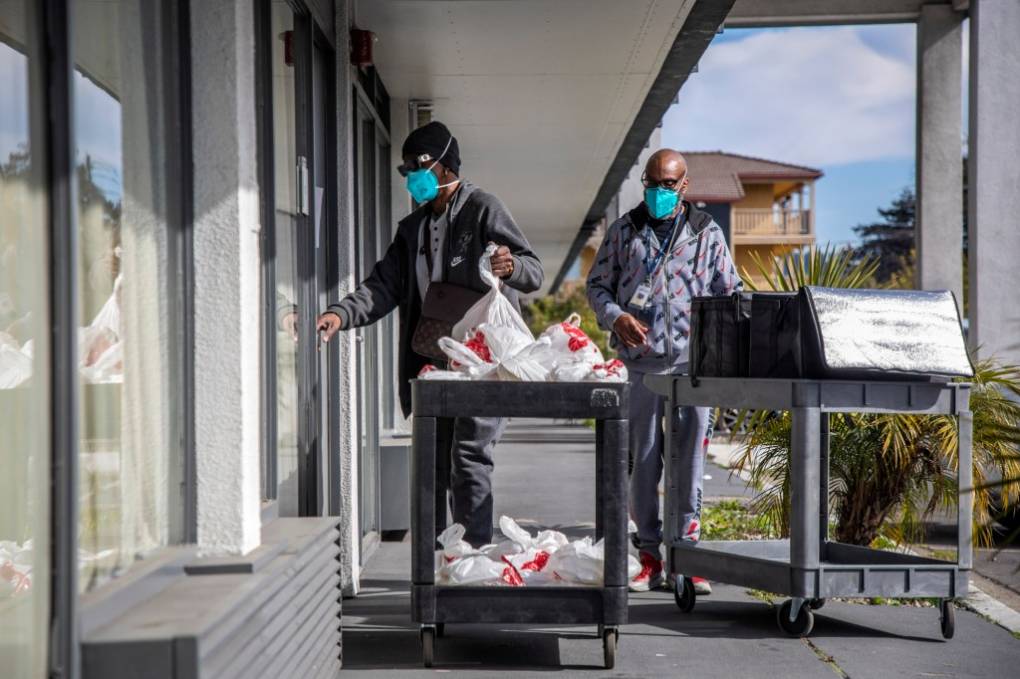
"caption": "Terry Harper (left) and Frank Scott deliver meals to occupants at the Radisson Hotel in Oakland. Edward El has stayed at this hotel as part of a Project Roomkey shelter but will soon be moving into his own apartment after spending much of the past 16 years unhoused.",
"description": "Terry Harper (left) and Frank Scott deliver meals to occupants at the Radisson Hotel in Oakland.",
"title": "020922-CALAIM-MHN-16-CM",
"credit": "Martin do Nascimento/CalMatters",
"status": "inherit",
"altTag": "Two people push carts down a hotel hallway. The carts are full of food and bags and the people pushing the carts are wearing masks.",
"isLoading": false,
"fetchFailed": false
},
"news_11895054": {
"type": "attachments",
"id": "news_11895054",
"meta": {
"index": "attachments_1716263798",
"site": "news",
"id": "11895054",
"found": true
},
"parent": 11895041,
"imgSizes": {
"twentyfourteen-full-width": {
"file": "https://ww2.kqed.org/app/uploads/sites/10/2021/11/3-CHAN-2K-1-1038x576.jpeg",
"width": 1038,
"mimeType": "image/jpeg",
"height": 576
},
"thumbnail": {
"file": "https://ww2.kqed.org/app/uploads/sites/10/2021/11/3-CHAN-2K-1-160x121.jpeg",
"width": 160,
"mimeType": "image/jpeg",
"height": 121
},
"post-thumbnail": {
"file": "https://ww2.kqed.org/app/uploads/sites/10/2021/11/3-CHAN-2K-1-672x372.jpeg",
"width": 672,
"mimeType": "image/jpeg",
"height": 372
},
"kqedFullSize": {
"file": "https://ww2.kqed.org/app/uploads/sites/10/2021/11/3-CHAN-2K-1.jpeg",
"width": 1911,
"height": 1446
},
"large": {
"file": "https://ww2.kqed.org/app/uploads/sites/10/2021/11/3-CHAN-2K-1-1020x772.jpeg",
"width": 1020,
"mimeType": "image/jpeg",
"height": 772
},
"1536x1536": {
"file": "https://ww2.kqed.org/app/uploads/sites/10/2021/11/3-CHAN-2K-1-1536x1162.jpeg",
"width": 1536,
"mimeType": "image/jpeg",
"height": 1162
},
"medium": {
"file": "https://ww2.kqed.org/app/uploads/sites/10/2021/11/3-CHAN-2K-1-800x605.jpeg",
"width": 800,
"mimeType": "image/jpeg",
"height": 605
}
},
"publishDate": 1635983245,
"modified": 1635990273,
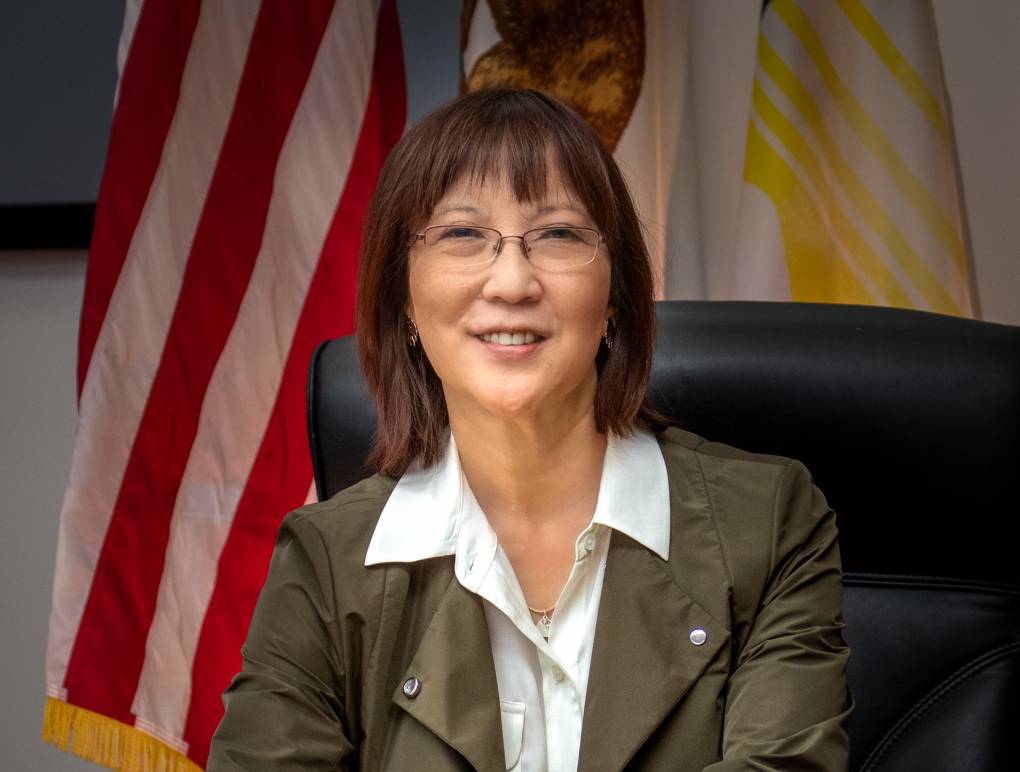
"caption": "Alameda County Supervisor Wilma Chan, who died after being hit by a car in Alameda on Nov. 3, 2021. ",
"description": null,
"title": "3-CHAN-2K",
"credit": "Alameda County Board of Supervisors",
"status": "inherit",
"altTag": "A woman, smiling and wearing glasses, an olive blazer, and a white blouse with a wide collar sits, at a desk in front of an American flag.",
"isLoading": false,
"fetchFailed": false
},
"news_11885672": {
"type": "attachments",
"id": "news_11885672",
"meta": {
"index": "attachments_1716263798",
"site": "news",
"id": "11885672",
"found": true
},
"parent": 11885647,
"imgSizes": {
"twentyfourteen-full-width": {
"file": "https://ww2.kqed.org/app/uploads/sites/10/2021/08/RS50631_007_Alameda_ChildrenCOVID_08172021-qut-1038x576.jpg",
"width": 1038,
"mimeType": "image/jpeg",
"height": 576
},
"thumbnail": {
"file": "https://ww2.kqed.org/app/uploads/sites/10/2021/08/RS50631_007_Alameda_ChildrenCOVID_08172021-qut-160x107.jpg",
"width": 160,
"mimeType": "image/jpeg",
"height": 107
},
"post-thumbnail": {
"file": "https://ww2.kqed.org/app/uploads/sites/10/2021/08/RS50631_007_Alameda_ChildrenCOVID_08172021-qut-672x372.jpg",
"width": 672,
"mimeType": "image/jpeg",
"height": 372
},
"kqedFullSize": {
"file": "https://ww2.kqed.org/app/uploads/sites/10/2021/08/RS50631_007_Alameda_ChildrenCOVID_08172021-qut.jpg",
"width": 1920,
"height": 1280
},
"large": {
"file": "https://ww2.kqed.org/app/uploads/sites/10/2021/08/RS50631_007_Alameda_ChildrenCOVID_08172021-qut-1020x680.jpg",
"width": 1020,
"mimeType": "image/jpeg",
"height": 680
},
"1536x1536": {
"file": "https://ww2.kqed.org/app/uploads/sites/10/2021/08/RS50631_007_Alameda_ChildrenCOVID_08172021-qut-1536x1024.jpg",
"width": 1536,
"mimeType": "image/jpeg",
"height": 1024
},
"medium": {
"file": "https://ww2.kqed.org/app/uploads/sites/10/2021/08/RS50631_007_Alameda_ChildrenCOVID_08172021-qut-800x533.jpg",
"width": 800,
"mimeType": "image/jpeg",
"height": 533
}
},
"publishDate": 1629399597,
"modified": 1629418495,
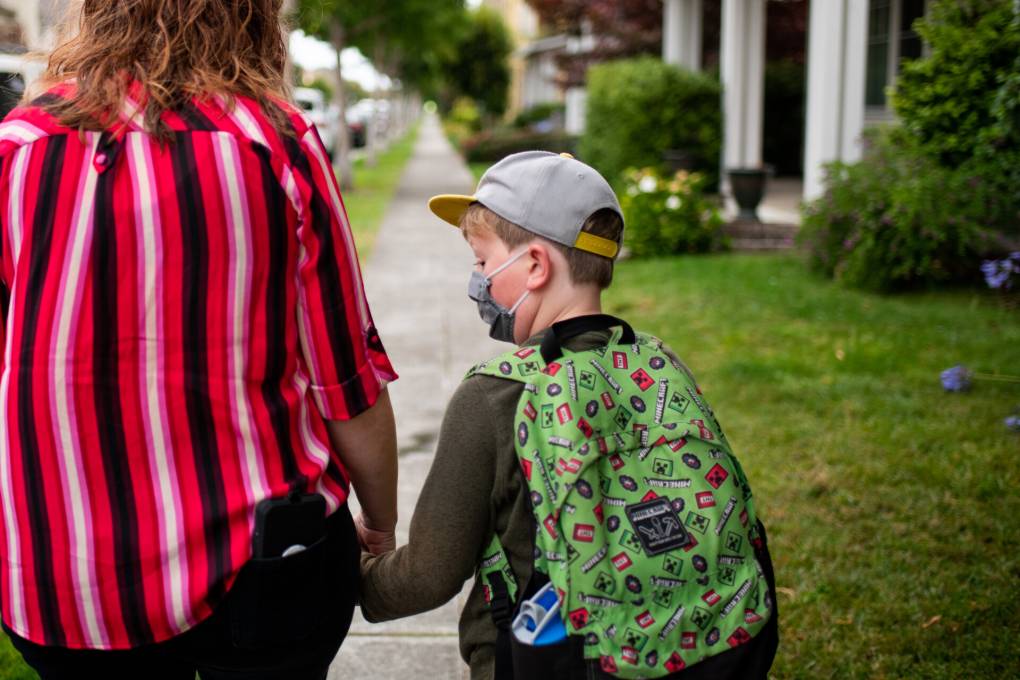
"caption": "Stephanie Chenard holds hands with her son Desmond, 8, as they walk to his school in Alameda on Aug. 17, 2021. Chenard shared with KQED how she felt when she heard earlier this month that four COVID-19 cases were reported in four different schools of the Oakland Unified School District. “It’s already started,” she said through a text message.",
"description": "Stephanie Chenard holds hands with her son Desmond, 8, as they walk to his school in Alameda on August 17, 2021.",
"title": "RS50631_007_Alameda_ChildrenCOVID_08172021-qut",
"credit": "Beth LaBerge/KQED",
"status": "inherit",
"altTag": "A parent and a child walk on a sidewalk, facing away from the camera. The parent is wearing a red blouse with black and white stripes and the child is wearing a baseball cap and carries a green backpack.",
"isLoading": false,
"fetchFailed": false
},
"news_11837458": {
"type": "attachments",
"id": "news_11837458",
"meta": {
"index": "attachments_1716263798",
"site": "news",
"id": "11837458",
"found": true
},
"parent": 11837317,
"imgSizes": {
"apple_news_ca_landscape_5_5": {
"file": "https://ww2.kqed.org/app/uploads/sites/10/2020/09/RS44789_003_KQED_SanFrancisco_OrangeSky_09092020-qut-1044x783.jpg",
"width": 1044,
"mimeType": "image/jpeg",
"height": 783
},
"apple_news_ca_square_4_0": {
"file": "https://ww2.kqed.org/app/uploads/sites/10/2020/09/RS44789_003_KQED_SanFrancisco_OrangeSky_09092020-qut-470x470.jpg",
"width": 470,
"mimeType": "image/jpeg",
"height": 470
},
"twentyfourteen-full-width": {
"file": "https://ww2.kqed.org/app/uploads/sites/10/2020/09/RS44789_003_KQED_SanFrancisco_OrangeSky_09092020-qut-1038x576.jpg",
"width": 1038,
"mimeType": "image/jpeg",
"height": 576
},
"thumbnail": {
"file": "https://ww2.kqed.org/app/uploads/sites/10/2020/09/RS44789_003_KQED_SanFrancisco_OrangeSky_09092020-qut-160x107.jpg",
"width": 160,
"mimeType": "image/jpeg",
"height": 107
},
"post-thumbnail": {
"file": "https://ww2.kqed.org/app/uploads/sites/10/2020/09/RS44789_003_KQED_SanFrancisco_OrangeSky_09092020-qut-672x372.jpg",
"width": 672,
"mimeType": "image/jpeg",
"height": 372
},
"kqedFullSize": {
"file": "https://ww2.kqed.org/app/uploads/sites/10/2020/09/RS44789_003_KQED_SanFrancisco_OrangeSky_09092020-qut.jpg",
"width": 1920,
"height": 1280
},
"apple_news_ca_landscape_4_7": {
"file": "https://ww2.kqed.org/app/uploads/sites/10/2020/09/RS44789_003_KQED_SanFrancisco_OrangeSky_09092020-qut-632x474.jpg",
"width": 632,
"mimeType": "image/jpeg",
"height": 474
},
"large": {
"file": "https://ww2.kqed.org/app/uploads/sites/10/2020/09/RS44789_003_KQED_SanFrancisco_OrangeSky_09092020-qut-1020x680.jpg",
"width": 1020,
"mimeType": "image/jpeg",
"height": 680
},
"apple_news_ca_landscape_4_0": {
"file": "https://ww2.kqed.org/app/uploads/sites/10/2020/09/RS44789_003_KQED_SanFrancisco_OrangeSky_09092020-qut-536x402.jpg",
"width": 536,
"mimeType": "image/jpeg",
"height": 402
},
"apple_news_ca_portrait_12_9": {
"file": "https://ww2.kqed.org/app/uploads/sites/10/2020/09/RS44789_003_KQED_SanFrancisco_OrangeSky_09092020-qut-1122x1280.jpg",
"width": 1122,
"mimeType": "image/jpeg",
"height": 1280
},
"medium": {
"file": "https://ww2.kqed.org/app/uploads/sites/10/2020/09/RS44789_003_KQED_SanFrancisco_OrangeSky_09092020-qut-800x533.jpg",
"width": 800,
"mimeType": "image/jpeg",
"height": 533
},
"apple_news_ca_portrait_4_0": {
"file": "https://ww2.kqed.org/app/uploads/sites/10/2020/09/RS44789_003_KQED_SanFrancisco_OrangeSky_09092020-qut-354x472.jpg",
"width": 354,
"mimeType": "image/jpeg",
"height": 472
},
"apple_news_ca_portrait_9_7": {
"file": "https://ww2.kqed.org/app/uploads/sites/10/2020/09/RS44789_003_KQED_SanFrancisco_OrangeSky_09092020-qut-840x1120.jpg",
"width": 840,
"mimeType": "image/jpeg",
"height": 1120
},
"apple_news_ca_landscape_12_9": {
"file": "https://ww2.kqed.org/app/uploads/sites/10/2020/09/RS44789_003_KQED_SanFrancisco_OrangeSky_09092020-qut-1832x1280.jpg",
"width": 1832,
"mimeType": "image/jpeg",
"height": 1280
},
"apple_news_ca_square_9_7": {
"file": "https://ww2.kqed.org/app/uploads/sites/10/2020/09/RS44789_003_KQED_SanFrancisco_OrangeSky_09092020-qut-1104x1104.jpg",
"width": 1104,
"mimeType": "image/jpeg",
"height": 1104
},
"1536x1536": {
"file": "https://ww2.kqed.org/app/uploads/sites/10/2020/09/RS44789_003_KQED_SanFrancisco_OrangeSky_09092020-qut-1536x1024.jpg",
"width": 1536,
"mimeType": "image/jpeg",
"height": 1024
},
"apple_news_ca_portrait_4_7": {
"file": "https://ww2.kqed.org/app/uploads/sites/10/2020/09/RS44789_003_KQED_SanFrancisco_OrangeSky_09092020-qut-414x552.jpg",
"width": 414,
"mimeType": "image/jpeg",
"height": 552
},
"apple_news_ca_square_12_9": {
"file": "https://ww2.kqed.org/app/uploads/sites/10/2020/09/RS44789_003_KQED_SanFrancisco_OrangeSky_09092020-qut-1472x1280.jpg",
"width": 1472,
"mimeType": "image/jpeg",
"height": 1280
},
"apple_news_ca_portrait_5_5": {
"file": "https://ww2.kqed.org/app/uploads/sites/10/2020/09/RS44789_003_KQED_SanFrancisco_OrangeSky_09092020-qut-687x916.jpg",
"width": 687,
"mimeType": "image/jpeg",
"height": 916
},
"apple_news_ca_square_4_7": {
"file": "https://ww2.kqed.org/app/uploads/sites/10/2020/09/RS44789_003_KQED_SanFrancisco_OrangeSky_09092020-qut-550x550.jpg",
"width": 550,
"mimeType": "image/jpeg",
"height": 550
},
"apple_news_ca_landscape_9_7": {
"file": "https://ww2.kqed.org/app/uploads/sites/10/2020/09/RS44789_003_KQED_SanFrancisco_OrangeSky_09092020-qut-1376x1032.jpg",
"width": 1376,
"mimeType": "image/jpeg",
"height": 1032
},
"apple_news_ca_square_5_5": {
"file": "https://ww2.kqed.org/app/uploads/sites/10/2020/09/RS44789_003_KQED_SanFrancisco_OrangeSky_09092020-qut-912x912.jpg",
"width": 912,
"mimeType": "image/jpeg",
"height": 912
}
},
"publishDate": 1599785523,
"modified": 1599849656,
"caption": "A view of the San Francisco skyline from Dolores Park in San Francisco on Sept. 9, 2020.",
"description": "A view of the San Francisco skyline from Dolores Park in San Francisco on Sep. 9, 2020.",
"title": "RS44789_003_KQED_SanFrancisco_OrangeSky_09092020-qut",
"credit": "Beth LaBerge/KQED",
"status": "inherit",
"isLoading": false,
"fetchFailed": false
},
"news_11884096": {
"type": "attachments",
"id": "news_11884096",
"meta": {
"index": "attachments_1716263798",
"site": "news",
"id": "11884096",
"found": true
},
"parent": 11883979,
"imgSizes": {
"twentyfourteen-full-width": {
"file": "https://ww2.kqed.org/app/uploads/sites/10/2021/08/IMG_5419-1038x576.jpg",
"width": 1038,
"mimeType": "image/jpeg",
"height": 576
},
"thumbnail": {
"file": "https://ww2.kqed.org/app/uploads/sites/10/2021/08/IMG_5419-160x107.jpg",
"width": 160,
"mimeType": "image/jpeg",
"height": 107
},
"post-thumbnail": {
"file": "https://ww2.kqed.org/app/uploads/sites/10/2021/08/IMG_5419-672x372.jpg",
"width": 672,
"mimeType": "image/jpeg",
"height": 372
},
"kqedFullSize": {
"file": "https://ww2.kqed.org/app/uploads/sites/10/2021/08/IMG_5419-scaled.jpg",
"width": 2560,
"height": 1706
},
"2048x2048": {
"file": "https://ww2.kqed.org/app/uploads/sites/10/2021/08/IMG_5419-2048x1365.jpg",
"width": 2048,
"mimeType": "image/jpeg",
"height": 1365
},
"large": {
"file": "https://ww2.kqed.org/app/uploads/sites/10/2021/08/IMG_5419-1020x680.jpg",
"width": 1020,
"mimeType": "image/jpeg",
"height": 680
},
"1536x1536": {
"file": "https://ww2.kqed.org/app/uploads/sites/10/2021/08/IMG_5419-1536x1024.jpg",
"width": 1536,
"mimeType": "image/jpeg",
"height": 1024
},
"full-width": {
"file": "https://ww2.kqed.org/app/uploads/sites/10/2021/08/IMG_5419-1920x1280.jpg",
"width": 1920,
"mimeType": "image/jpeg",
"height": 1280
},
"medium": {
"file": "https://ww2.kqed.org/app/uploads/sites/10/2021/08/IMG_5419-800x533.jpg",
"width": 800,
"mimeType": "image/jpeg",
"height": 533
}
},
"publishDate": 1628261407,
"modified": 1628294563,
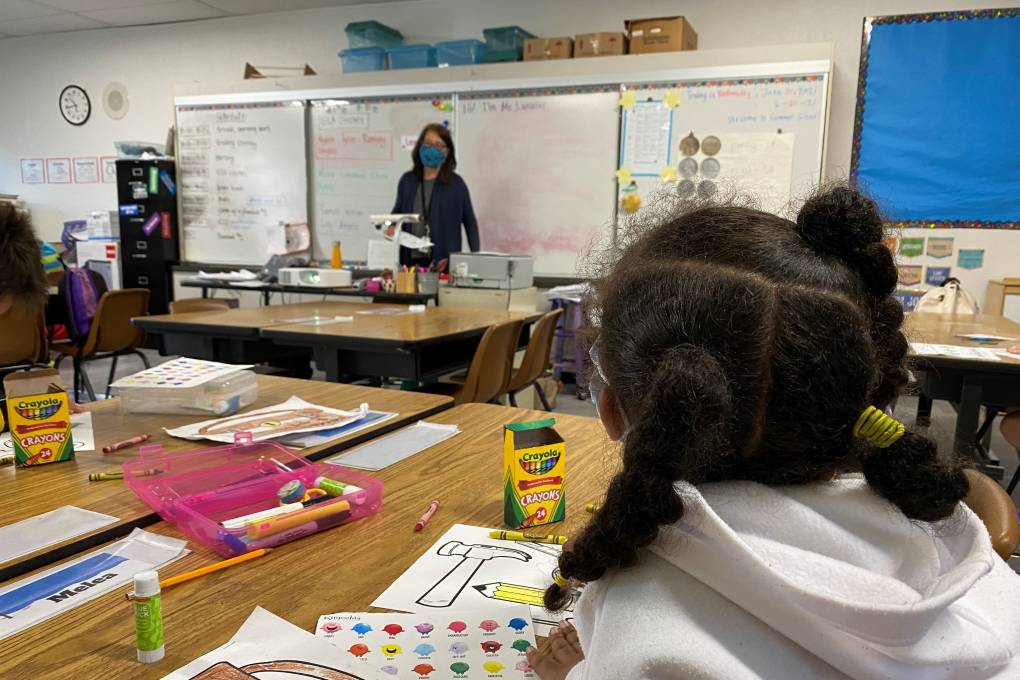
"caption": "Social worker Vinita Lee helps third graders in Castro Valley Unified's summer school program understand how to handle their emotions by creating a 'toolbox' of responses. This year, CVUSD tripled summer school attendance with the goal of providing more students with the tools they may need to return to in-person learning.",
"description": "Social worker, Vinita Lee, helps third graders in Castro Valley Unified's summer school program understand how to handle their emotions by creating a 'tool box' of responses.",
"title": "IMG_5419",
"credit": "Julia McEvoy/KQED",
"status": "inherit",
"altTag": "The view from behind a student's shoulder inside a classroom. The whiteboard is visible and a teacher stands in front of it, teaching a lesson. The student is sitting at their desk and both the student and teacher are wearing facemasks and are keeping distance from each other.",
"isLoading": false,
"fetchFailed": false
},
"news_11881289": {
"type": "attachments",
"id": "news_11881289",
"meta": {
"index": "attachments_1716263798",
"site": "news",
"id": "11881289",
"found": true
},
"parent": 11881276,
"imgSizes": {
"twentyfourteen-full-width": {
"file": "https://ww2.kqed.org/app/uploads/sites/10/2021/07/GettyImages-1231366608-1038x576.jpg",
"width": 1038,
"mimeType": "image/jpeg",
"height": 576
},
"thumbnail": {
"file": "https://ww2.kqed.org/app/uploads/sites/10/2021/07/GettyImages-1231366608-160x107.jpg",
"width": 160,
"mimeType": "image/jpeg",
"height": 107
},
"post-thumbnail": {
"file": "https://ww2.kqed.org/app/uploads/sites/10/2021/07/GettyImages-1231366608-672x372.jpg",
"width": 672,
"mimeType": "image/jpeg",
"height": 372
},
"kqedFullSize": {
"file": "https://ww2.kqed.org/app/uploads/sites/10/2021/07/GettyImages-1231366608.jpg",
"width": 1920,
"height": 1280
},
"large": {
"file": "https://ww2.kqed.org/app/uploads/sites/10/2021/07/GettyImages-1231366608-1020x680.jpg",
"width": 1020,
"mimeType": "image/jpeg",
"height": 680
},
"1536x1536": {
"file": "https://ww2.kqed.org/app/uploads/sites/10/2021/07/GettyImages-1231366608-1536x1024.jpg",
"width": 1536,
"mimeType": "image/jpeg",
"height": 1024
},
"medium": {
"file": "https://ww2.kqed.org/app/uploads/sites/10/2021/07/GettyImages-1231366608-800x533.jpg",
"width": 800,
"mimeType": "image/jpeg",
"height": 533
}
},
"publishDate": 1626376470,
"modified": 1626376587,
"caption": "Steve Filson carries a photo of his daughter Jessica Filson, who died in January 2020 of opioids, during a news conference on opioid deaths on February 24, 2021 in Los Angeles, California.",
"description": "Steve Filson carries a photo of his daughter Jessica Filson, who died in January 2020 of opioids, during a news conference on opioid deaths on February 24, 2021 in Los Angeles, California.",
"title": "US-VIRUS-HEALTH-DRUGS-OPIOID",
"credit": "Patrick T. FALLON/AFP via Getty Images",
"status": "inherit",
"altTag": null,
"isLoading": false,
"fetchFailed": false
},
"news_11874800": {
"type": "attachments",
"id": "news_11874800",
"meta": {
"index": "attachments_1716263798",
"site": "news",
"id": "11874800",
"found": true
},
"parent": 11874691,
"imgSizes": {
"twentyfourteen-full-width": {
"file": "https://ww2.kqed.org/app/uploads/sites/10/2021/05/RS48973_028_Hayward_Promotoras_05102021-1038x576.jpg",
"width": 1038,
"mimeType": "image/jpeg",
"height": 576
},
"thumbnail": {
"file": "https://ww2.kqed.org/app/uploads/sites/10/2021/05/RS48973_028_Hayward_Promotoras_05102021-160x107.jpg",
"width": 160,
"mimeType": "image/jpeg",
"height": 107
},
"post-thumbnail": {
"file": "https://ww2.kqed.org/app/uploads/sites/10/2021/05/RS48973_028_Hayward_Promotoras_05102021-672x372.jpg",
"width": 672,
"mimeType": "image/jpeg",
"height": 372
},
"kqedFullSize": {
"file": "https://ww2.kqed.org/app/uploads/sites/10/2021/05/RS48973_028_Hayward_Promotoras_05102021.jpg",
"width": 1920,
"height": 1280
},
"large": {
"file": "https://ww2.kqed.org/app/uploads/sites/10/2021/05/RS48973_028_Hayward_Promotoras_05102021-1020x680.jpg",
"width": 1020,
"mimeType": "image/jpeg",
"height": 680
},
"1536x1536": {
"file": "https://ww2.kqed.org/app/uploads/sites/10/2021/05/RS48973_028_Hayward_Promotoras_05102021-1536x1024.jpg",
"width": 1536,
"mimeType": "image/jpeg",
"height": 1024
},
"medium": {
"file": "https://ww2.kqed.org/app/uploads/sites/10/2021/05/RS48973_028_Hayward_Promotoras_05102021-800x533.jpg",
"width": 800,
"mimeType": "image/jpeg",
"height": 533
}
},
"publishDate": 1621631894,
"modified": 1621632180,
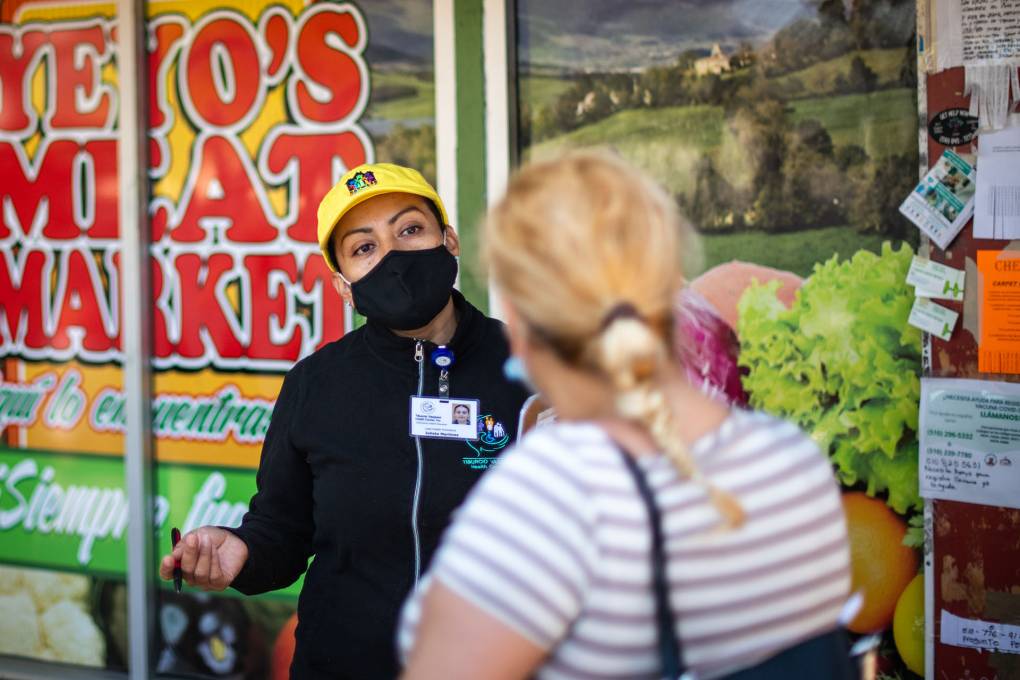
"caption": "Community health worker, or promotora, Julieta Martinez speaks with a customer at Yeyo’s Meat Market about the COVID-19 vaccine during an outreach event in South Hayward on May 10, 2021.",
"description": "Community health worker, or promotora, Julieta Martinez speaks with a customer at Yeyo’s Meat Market about the COVID-19 vaccine during an outreach event in South Hayward on May 10, 2021.",
"title": "RS48973_028_Hayward_Promotoras_05102021",
"credit": "Beth LaBerge/KQED",
"status": "inherit",
"altTag": null,
"isLoading": false,
"fetchFailed": false
},
"news_11872220": {
"type": "attachments",
"id": "news_11872220",
"meta": {
"index": "attachments_1716263798",
"site": "news",
"id": "11872220",
"found": true
},
"parent": 11872161,
"imgSizes": {
"twentyfourteen-full-width": {
"file": "https://ww2.kqed.org/app/uploads/sites/10/2021/05/RS45480_028_KQED_Oakland_RegistrarofVoters_10272020-qut-1038x576.jpg",
"width": 1038,
"mimeType": "image/jpeg",
"height": 576
},
"thumbnail": {
"file": "https://ww2.kqed.org/app/uploads/sites/10/2021/05/RS45480_028_KQED_Oakland_RegistrarofVoters_10272020-qut-160x107.jpg",
"width": 160,
"mimeType": "image/jpeg",
"height": 107
},
"post-thumbnail": {
"file": "https://ww2.kqed.org/app/uploads/sites/10/2021/05/RS45480_028_KQED_Oakland_RegistrarofVoters_10272020-qut-672x372.jpg",
"width": 672,
"mimeType": "image/jpeg",
"height": 372
},
"kqedFullSize": {
"file": "https://ww2.kqed.org/app/uploads/sites/10/2021/05/RS45480_028_KQED_Oakland_RegistrarofVoters_10272020-qut.jpg",
"width": 1920,
"height": 1280
},
"large": {
"file": "https://ww2.kqed.org/app/uploads/sites/10/2021/05/RS45480_028_KQED_Oakland_RegistrarofVoters_10272020-qut-1020x680.jpg",
"width": 1020,
"mimeType": "image/jpeg",
"height": 680
},
"1536x1536": {
"file": "https://ww2.kqed.org/app/uploads/sites/10/2021/05/RS45480_028_KQED_Oakland_RegistrarofVoters_10272020-qut-1536x1024.jpg",
"width": 1536,
"mimeType": "image/jpeg",
"height": 1024
},
"medium": {
"file": "https://ww2.kqed.org/app/uploads/sites/10/2021/05/RS45480_028_KQED_Oakland_RegistrarofVoters_10272020-qut-800x533.jpg",
"width": 800,
"mimeType": "image/jpeg",
"height": 533
}
},
"publishDate": 1620169627,
"modified": 1620174617,
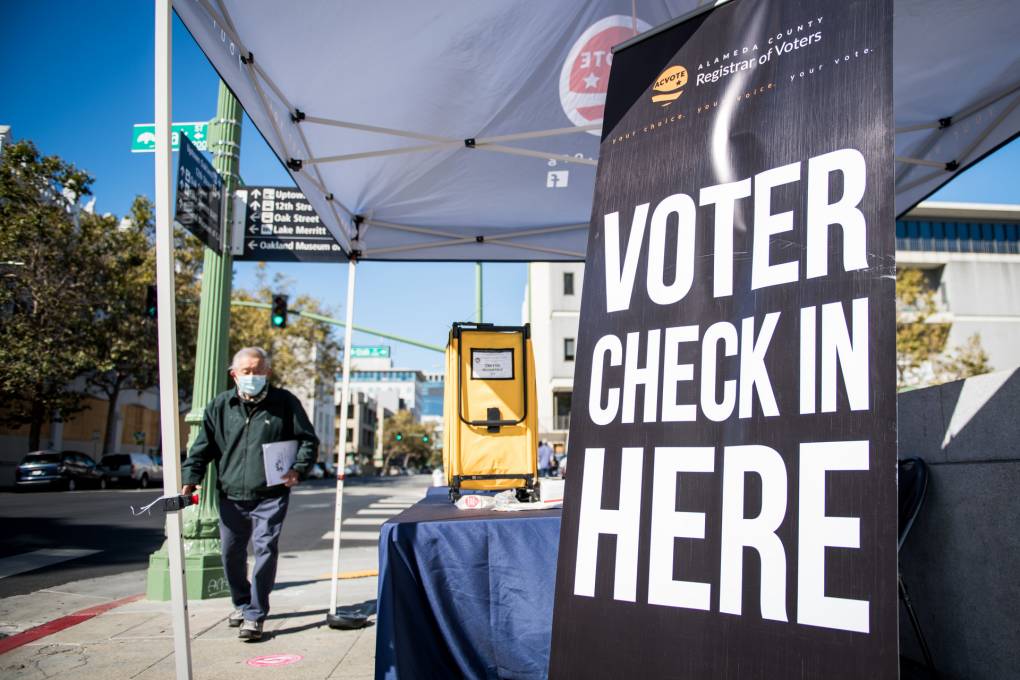
"caption": "A voter check-in tent at the Alameda County Registrar of Voters on Oct. 27, 2020.",
"description": "A voter check-in tent at the Alameda County Registrar of Voters on Oct. 27, 2020.",
"title": "RS45480_028_KQED_Oakland_RegistrarofVoters_10272020-qut",
"credit": "Beth LaBerge/KQED",
"status": "inherit",
"altTag": null,
"isLoading": false,
"fetchFailed": false
},
"news_11855975": {
"type": "attachments",
"id": "news_11855975",
"meta": {
"index": "attachments_1716263798",
"site": "news",
"id": "11855975",
"found": true
},
"parent": 11854891,
"imgSizes": {
"apple_news_ca_landscape_5_5": {
"file": "https://ww2.kqed.org/app/uploads/sites/10/2021/01/Santa_Rita_Jail_administrative_entrance-1-copy-1044x783.jpg",
"width": 1044,
"mimeType": "image/jpeg",
"height": 783
},
"apple_news_ca_square_4_0": {
"file": "https://ww2.kqed.org/app/uploads/sites/10/2021/01/Santa_Rita_Jail_administrative_entrance-1-copy-470x470.jpg",
"width": 470,
"mimeType": "image/jpeg",
"height": 470
},
"twentyfourteen-full-width": {
"file": "https://ww2.kqed.org/app/uploads/sites/10/2021/01/Santa_Rita_Jail_administrative_entrance-1-copy-1038x576.jpg",
"width": 1038,
"mimeType": "image/jpeg",
"height": 576
},
"thumbnail": {
"file": "https://ww2.kqed.org/app/uploads/sites/10/2021/01/Santa_Rita_Jail_administrative_entrance-1-copy-160x90.jpg",
"width": 160,
"mimeType": "image/jpeg",
"height": 90
},
"post-thumbnail": {
"file": "https://ww2.kqed.org/app/uploads/sites/10/2021/01/Santa_Rita_Jail_administrative_entrance-1-copy-672x372.jpg",
"width": 672,
"mimeType": "image/jpeg",
"height": 372
},
"kqedFullSize": {
"file": "https://ww2.kqed.org/app/uploads/sites/10/2021/01/Santa_Rita_Jail_administrative_entrance-1-copy.jpg",
"width": 2550,
"height": 1435
},
"2048x2048": {
"file": "https://ww2.kqed.org/app/uploads/sites/10/2021/01/Santa_Rita_Jail_administrative_entrance-1-copy-2048x1153.jpg",
"width": 2048,
"mimeType": "image/jpeg",
"height": 1153
},
"apple_news_ca_landscape_4_7": {
"file": "https://ww2.kqed.org/app/uploads/sites/10/2021/01/Santa_Rita_Jail_administrative_entrance-1-copy-632x474.jpg",
"width": 632,
"mimeType": "image/jpeg",
"height": 474
},
"large": {
"file": "https://ww2.kqed.org/app/uploads/sites/10/2021/01/Santa_Rita_Jail_administrative_entrance-1-copy-1020x574.jpg",
"width": 1020,
"mimeType": "image/jpeg",
"height": 574
},
"apple_news_ca_landscape_4_0": {
"file": "https://ww2.kqed.org/app/uploads/sites/10/2021/01/Santa_Rita_Jail_administrative_entrance-1-copy-536x402.jpg",
"width": 536,
"mimeType": "image/jpeg",
"height": 402
},
"apple_news_ca_portrait_12_9": {
"file": "https://ww2.kqed.org/app/uploads/sites/10/2021/01/Santa_Rita_Jail_administrative_entrance-1-copy-1122x1435.jpg",
"width": 1122,
"mimeType": "image/jpeg",
"height": 1435
},
"medium": {
"file": "https://ww2.kqed.org/app/uploads/sites/10/2021/01/Santa_Rita_Jail_administrative_entrance-1-copy-800x450.jpg",
"width": 800,
"mimeType": "image/jpeg",
"height": 450
},
"apple_news_ca_portrait_4_0": {
"file": "https://ww2.kqed.org/app/uploads/sites/10/2021/01/Santa_Rita_Jail_administrative_entrance-1-copy-354x472.jpg",
"width": 354,
"mimeType": "image/jpeg",
"height": 472
},
"apple_news_ca_portrait_9_7": {
"file": "https://ww2.kqed.org/app/uploads/sites/10/2021/01/Santa_Rita_Jail_administrative_entrance-1-copy-840x1120.jpg",
"width": 840,
"mimeType": "image/jpeg",
"height": 1120
},
"apple_news_ca_landscape_12_9": {
"file": "https://ww2.kqed.org/app/uploads/sites/10/2021/01/Santa_Rita_Jail_administrative_entrance-1-copy-1832x1374.jpg",
"width": 1832,
"mimeType": "image/jpeg",
"height": 1374
},
"apple_news_ca_square_9_7": {
"file": "https://ww2.kqed.org/app/uploads/sites/10/2021/01/Santa_Rita_Jail_administrative_entrance-1-copy-1104x1104.jpg",
"width": 1104,
"mimeType": "image/jpeg",
"height": 1104
},
"1536x1536": {
"file": "https://ww2.kqed.org/app/uploads/sites/10/2021/01/Santa_Rita_Jail_administrative_entrance-1-copy-1536x864.jpg",
"width": 1536,
"mimeType": "image/jpeg",
"height": 864
},
"apple_news_ca_portrait_4_7": {
"file": "https://ww2.kqed.org/app/uploads/sites/10/2021/01/Santa_Rita_Jail_administrative_entrance-1-copy-414x552.jpg",
"width": 414,
"mimeType": "image/jpeg",
"height": 552
},
"apple_news_ca_square_12_9": {
"file": "https://ww2.kqed.org/app/uploads/sites/10/2021/01/Santa_Rita_Jail_administrative_entrance-1-copy-1472x1435.jpg",
"width": 1472,
"mimeType": "image/jpeg",
"height": 1435
},
"apple_news_ca_portrait_5_5": {
"file": "https://ww2.kqed.org/app/uploads/sites/10/2021/01/Santa_Rita_Jail_administrative_entrance-1-copy-687x916.jpg",
"width": 687,
"mimeType": "image/jpeg",
"height": 916
},
"full-width": {
"file": "https://ww2.kqed.org/app/uploads/sites/10/2021/01/Santa_Rita_Jail_administrative_entrance-1-copy-1920x1080.jpg",
"width": 1920,
"mimeType": "image/jpeg",
"height": 1080
},
"apple_news_ca_square_4_7": {
"file": "https://ww2.kqed.org/app/uploads/sites/10/2021/01/Santa_Rita_Jail_administrative_entrance-1-copy-550x550.jpg",
"width": 550,
"mimeType": "image/jpeg",
"height": 550
},
"apple_news_ca_landscape_9_7": {
"file": "https://ww2.kqed.org/app/uploads/sites/10/2021/01/Santa_Rita_Jail_administrative_entrance-1-copy-1376x1032.jpg",
"width": 1376,
"mimeType": "image/jpeg",
"height": 1032
},
"apple_news_ca_square_5_5": {
"file": "https://ww2.kqed.org/app/uploads/sites/10/2021/01/Santa_Rita_Jail_administrative_entrance-1-copy-912x912.jpg",
"width": 912,
"mimeType": "image/jpeg",
"height": 912
}
},
"publishDate": 1611085055,
"modified": 1611104846,
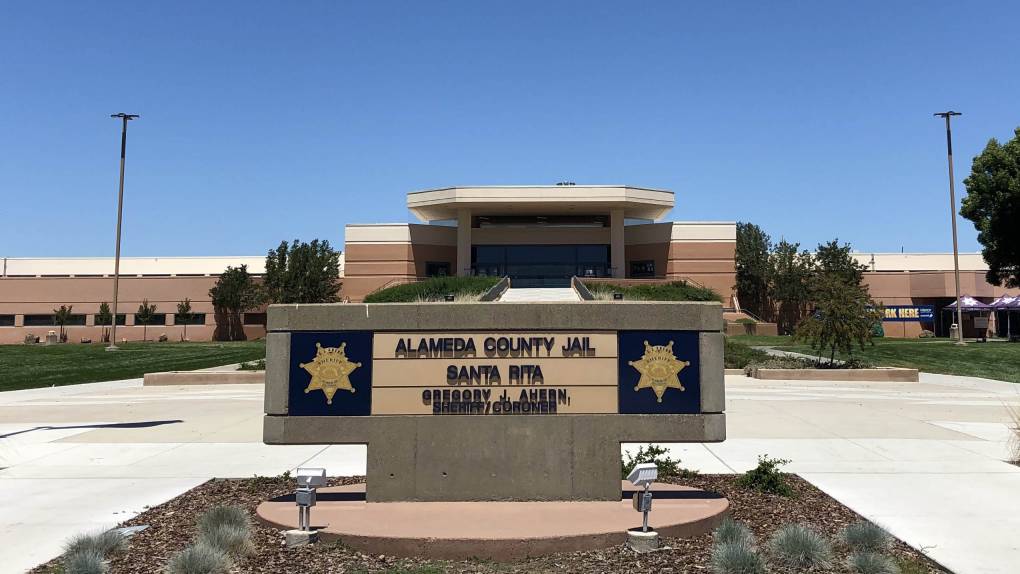
"caption": "Administrative entrance to Santa Rita Jail.",
"description": "Administrative entrance to Santa Rita jail.",
"title": "Santa_Rita_Jail_administrative_entrance (1) copy",
"credit": "Courtesy of Jesstess87/Wikimedia Commons ",
"status": "inherit",
"altTag": "Administrative entrance to Santa Rita jail.",
"isLoading": false,
"fetchFailed": false
},
"news_11855899": {
"type": "attachments",
"id": "news_11855899",
"meta": {
"index": "attachments_1716263798",
"site": "news",
"id": "11855899",
"found": true
},
"parent": 11855869,
"imgSizes": {
"apple_news_ca_landscape_5_5": {
"file": "https://ww2.kqed.org/app/uploads/sites/10/2021/01/018_Oakland_MLKCarCaravan_01182021-1044x783.jpg",
"width": 1044,
"mimeType": "image/jpeg",
"height": 783
},
"apple_news_ca_square_4_0": {
"file": "https://ww2.kqed.org/app/uploads/sites/10/2021/01/018_Oakland_MLKCarCaravan_01182021-470x470.jpg",
"width": 470,
"mimeType": "image/jpeg",
"height": 470
},
"twentyfourteen-full-width": {
"file": "https://ww2.kqed.org/app/uploads/sites/10/2021/01/018_Oakland_MLKCarCaravan_01182021-1038x576.jpg",
"width": 1038,
"mimeType": "image/jpeg",
"height": 576
},
"thumbnail": {
"file": "https://ww2.kqed.org/app/uploads/sites/10/2021/01/018_Oakland_MLKCarCaravan_01182021-160x107.jpg",
"width": 160,
"mimeType": "image/jpeg",
"height": 107
},
"post-thumbnail": {
"file": "https://ww2.kqed.org/app/uploads/sites/10/2021/01/018_Oakland_MLKCarCaravan_01182021-672x372.jpg",
"width": 672,
"mimeType": "image/jpeg",
"height": 372
},
"kqedFullSize": {
"file": "https://ww2.kqed.org/app/uploads/sites/10/2021/01/018_Oakland_MLKCarCaravan_01182021.jpg",
"width": 1920,
"height": 1278
},
"apple_news_ca_landscape_4_7": {
"file": "https://ww2.kqed.org/app/uploads/sites/10/2021/01/018_Oakland_MLKCarCaravan_01182021-632x474.jpg",
"width": 632,
"mimeType": "image/jpeg",
"height": 474
},
"large": {
"file": "https://ww2.kqed.org/app/uploads/sites/10/2021/01/018_Oakland_MLKCarCaravan_01182021-1020x679.jpg",
"width": 1020,
"mimeType": "image/jpeg",
"height": 679
},
"apple_news_ca_landscape_4_0": {
"file": "https://ww2.kqed.org/app/uploads/sites/10/2021/01/018_Oakland_MLKCarCaravan_01182021-536x402.jpg",
"width": 536,
"mimeType": "image/jpeg",
"height": 402
},
"apple_news_ca_portrait_12_9": {
"file": "https://ww2.kqed.org/app/uploads/sites/10/2021/01/018_Oakland_MLKCarCaravan_01182021-1122x1278.jpg",
"width": 1122,
"mimeType": "image/jpeg",
"height": 1278
},
"medium": {
"file": "https://ww2.kqed.org/app/uploads/sites/10/2021/01/018_Oakland_MLKCarCaravan_01182021-800x533.jpg",
"width": 800,
"mimeType": "image/jpeg",
"height": 533
},
"apple_news_ca_portrait_4_0": {
"file": "https://ww2.kqed.org/app/uploads/sites/10/2021/01/018_Oakland_MLKCarCaravan_01182021-354x472.jpg",
"width": 354,
"mimeType": "image/jpeg",
"height": 472
},
"apple_news_ca_portrait_9_7": {
"file": "https://ww2.kqed.org/app/uploads/sites/10/2021/01/018_Oakland_MLKCarCaravan_01182021-840x1120.jpg",
"width": 840,
"mimeType": "image/jpeg",
"height": 1120
},
"apple_news_ca_landscape_12_9": {
"file": "https://ww2.kqed.org/app/uploads/sites/10/2021/01/018_Oakland_MLKCarCaravan_01182021-1832x1278.jpg",
"width": 1832,
"mimeType": "image/jpeg",
"height": 1278
},
"apple_news_ca_square_9_7": {
"file": "https://ww2.kqed.org/app/uploads/sites/10/2021/01/018_Oakland_MLKCarCaravan_01182021-1104x1104.jpg",
"width": 1104,
"mimeType": "image/jpeg",
"height": 1104
},
"1536x1536": {
"file": "https://ww2.kqed.org/app/uploads/sites/10/2021/01/018_Oakland_MLKCarCaravan_01182021-1536x1022.jpg",
"width": 1536,
"mimeType": "image/jpeg",
"height": 1022
},
"apple_news_ca_portrait_4_7": {
"file": "https://ww2.kqed.org/app/uploads/sites/10/2021/01/018_Oakland_MLKCarCaravan_01182021-414x552.jpg",
"width": 414,
"mimeType": "image/jpeg",
"height": 552
},
"apple_news_ca_square_12_9": {
"file": "https://ww2.kqed.org/app/uploads/sites/10/2021/01/018_Oakland_MLKCarCaravan_01182021-1472x1278.jpg",
"width": 1472,
"mimeType": "image/jpeg",
"height": 1278
},
"apple_news_ca_portrait_5_5": {
"file": "https://ww2.kqed.org/app/uploads/sites/10/2021/01/018_Oakland_MLKCarCaravan_01182021-687x916.jpg",
"width": 687,
"mimeType": "image/jpeg",
"height": 916
},
"apple_news_ca_square_4_7": {
"file": "https://ww2.kqed.org/app/uploads/sites/10/2021/01/018_Oakland_MLKCarCaravan_01182021-550x550.jpg",
"width": 550,
"mimeType": "image/jpeg",
"height": 550
},
"apple_news_ca_landscape_9_7": {
"file": "https://ww2.kqed.org/app/uploads/sites/10/2021/01/018_Oakland_MLKCarCaravan_01182021-1376x1032.jpg",
"width": 1376,
"mimeType": "image/jpeg",
"height": 1032
},
"apple_news_ca_square_5_5": {
"file": "https://ww2.kqed.org/app/uploads/sites/10/2021/01/018_Oakland_MLKCarCaravan_01182021-912x912.jpg",
"width": 912,
"mimeType": "image/jpeg",
"height": 912
}
},
"publishDate": 1611023703,
"modified": 1611028802,
"caption": "Cat Brooks, co-founder of Anti Police-Terror Project, speaks before a Martin Luther King Day car caravan leaves Middle Harbor Shoreline Park near the Port of Oakland on Jan. 18, 2021.",
"description": null,
"title": "018_Oakland_MLKCarCaravan_01182021",
"credit": "BethLaBerge/KQED",
"status": "inherit",
"altTag": "Cat Brooks, co-founder of Anti Police-Terror Project, speaks before a Martin Luther King Day car caravan starting at Middle Harbor Shoreline Park near the Port of Oakland on Jan. 18, 2021.",
"isLoading": false,
"fetchFailed": false
},
"news_11853813": {
"type": "attachments",
"id": "news_11853813",
"meta": {
"index": "attachments_1716263798",
"site": "news",
"id": "11853813",
"found": true
},
"parent": 11853540,
"imgSizes": {
"apple_news_ca_landscape_5_5": {
"file": "https://ww2.kqed.org/app/uploads/sites/10/2021/01/1280px-Aerial_view_of_Santa_Rita_Jail-1044x783.jpg",
"width": 1044,
"mimeType": "image/jpeg",
"height": 783
},
"apple_news_ca_square_4_0": {
"file": "https://ww2.kqed.org/app/uploads/sites/10/2021/01/1280px-Aerial_view_of_Santa_Rita_Jail-470x470.jpg",
"width": 470,
"mimeType": "image/jpeg",
"height": 470
},
"twentyfourteen-full-width": {
"file": "https://ww2.kqed.org/app/uploads/sites/10/2021/01/1280px-Aerial_view_of_Santa_Rita_Jail-1038x576.jpg",
"width": 1038,
"mimeType": "image/jpeg",
"height": 576
},
"thumbnail": {
"file": "https://ww2.kqed.org/app/uploads/sites/10/2021/01/1280px-Aerial_view_of_Santa_Rita_Jail-160x105.jpg",
"width": 160,
"mimeType": "image/jpeg",
"height": 105
},
"post-thumbnail": {
"file": "https://ww2.kqed.org/app/uploads/sites/10/2021/01/1280px-Aerial_view_of_Santa_Rita_Jail-672x372.jpg",
"width": 672,
"mimeType": "image/jpeg",
"height": 372
},
"kqedFullSize": {
"file": "https://ww2.kqed.org/app/uploads/sites/10/2021/01/1280px-Aerial_view_of_Santa_Rita_Jail.jpg",
"width": 1280,
"height": 837
},
"apple_news_ca_landscape_4_7": {
"file": "https://ww2.kqed.org/app/uploads/sites/10/2021/01/1280px-Aerial_view_of_Santa_Rita_Jail-632x474.jpg",
"width": 632,
"mimeType": "image/jpeg",
"height": 474
},
"large": {
"file": "https://ww2.kqed.org/app/uploads/sites/10/2021/01/1280px-Aerial_view_of_Santa_Rita_Jail-1020x667.jpg",
"width": 1020,
"mimeType": "image/jpeg",
"height": 667
},
"apple_news_ca_landscape_4_0": {
"file": "https://ww2.kqed.org/app/uploads/sites/10/2021/01/1280px-Aerial_view_of_Santa_Rita_Jail-536x402.jpg",
"width": 536,
"mimeType": "image/jpeg",
"height": 402
},
"apple_news_ca_portrait_12_9": {
"file": "https://ww2.kqed.org/app/uploads/sites/10/2021/01/1280px-Aerial_view_of_Santa_Rita_Jail-1122x837.jpg",
"width": 1122,
"mimeType": "image/jpeg",
"height": 837
},
"medium": {
"file": "https://ww2.kqed.org/app/uploads/sites/10/2021/01/1280px-Aerial_view_of_Santa_Rita_Jail-800x523.jpg",
"width": 800,
"mimeType": "image/jpeg",
"height": 523
},
"apple_news_ca_portrait_4_0": {
"file": "https://ww2.kqed.org/app/uploads/sites/10/2021/01/1280px-Aerial_view_of_Santa_Rita_Jail-354x472.jpg",
"width": 354,
"mimeType": "image/jpeg",
"height": 472
},
"apple_news_ca_portrait_9_7": {
"file": "https://ww2.kqed.org/app/uploads/sites/10/2021/01/1280px-Aerial_view_of_Santa_Rita_Jail-840x837.jpg",
"width": 840,
"mimeType": "image/jpeg",
"height": 837
},
"apple_news_ca_square_9_7": {
"file": "https://ww2.kqed.org/app/uploads/sites/10/2021/01/1280px-Aerial_view_of_Santa_Rita_Jail-1104x837.jpg",
"width": 1104,
"mimeType": "image/jpeg",
"height": 837
},
"apple_news_ca_portrait_4_7": {
"file": "https://ww2.kqed.org/app/uploads/sites/10/2021/01/1280px-Aerial_view_of_Santa_Rita_Jail-414x552.jpg",
"width": 414,
"mimeType": "image/jpeg",
"height": 552
},
"apple_news_ca_portrait_5_5": {
"file": "https://ww2.kqed.org/app/uploads/sites/10/2021/01/1280px-Aerial_view_of_Santa_Rita_Jail-687x837.jpg",
"width": 687,
"mimeType": "image/jpeg",
"height": 837
},
"apple_news_ca_square_4_7": {
"file": "https://ww2.kqed.org/app/uploads/sites/10/2021/01/1280px-Aerial_view_of_Santa_Rita_Jail-550x550.jpg",
"width": 550,
"mimeType": "image/jpeg",
"height": 550
},
"apple_news_ca_square_5_5": {
"file": "https://ww2.kqed.org/app/uploads/sites/10/2021/01/1280px-Aerial_view_of_Santa_Rita_Jail-912x837.jpg",
"width": 912,
"mimeType": "image/jpeg",
"height": 837
}
},
"publishDate": 1609891636,
"modified": 1609894121,
"caption": "An aerial view of the housing units at Santa Rita Jail in Dublin, California.",
"description": "Aerial view of the housing units at Santa Rita Jail.",
"title": "1280px-Aerial_view_of_Santa_Rita_Jail",
"credit": "Jesstess87/Wikimedia",
"status": "inherit",
"altTag": null,
"isLoading": false,
"fetchFailed": false
},
"news_11851852": {
"type": "attachments",
"id": "news_11851852",
"meta": {
"index": "attachments_1716263798",
"site": "news",
"id": "11851852",
"found": true
},
"parent": 11851601,
"imgSizes": {
"apple_news_ca_landscape_5_5": {
"file": "https://ww2.kqed.org/app/uploads/sites/10/2020/12/RS45475_023_KQED_Oakland_RegistrarofVoters_10272020-qut-1044x783.jpg",
"width": 1044,
"mimeType": "image/jpeg",
"height": 783
},
"apple_news_ca_square_4_0": {
"file": "https://ww2.kqed.org/app/uploads/sites/10/2020/12/RS45475_023_KQED_Oakland_RegistrarofVoters_10272020-qut-470x470.jpg",
"width": 470,
"mimeType": "image/jpeg",
"height": 470
},
"twentyfourteen-full-width": {
"file": "https://ww2.kqed.org/app/uploads/sites/10/2020/12/RS45475_023_KQED_Oakland_RegistrarofVoters_10272020-qut-1038x576.jpg",
"width": 1038,
"mimeType": "image/jpeg",
"height": 576
},
"thumbnail": {
"file": "https://ww2.kqed.org/app/uploads/sites/10/2020/12/RS45475_023_KQED_Oakland_RegistrarofVoters_10272020-qut-160x107.jpg",
"width": 160,
"mimeType": "image/jpeg",
"height": 107
},
"post-thumbnail": {
"file": "https://ww2.kqed.org/app/uploads/sites/10/2020/12/RS45475_023_KQED_Oakland_RegistrarofVoters_10272020-qut-672x372.jpg",
"width": 672,
"mimeType": "image/jpeg",
"height": 372
},
"kqedFullSize": {
"file": "https://ww2.kqed.org/app/uploads/sites/10/2020/12/RS45475_023_KQED_Oakland_RegistrarofVoters_10272020-qut.jpg",
"width": 1920,
"height": 1280
},
"apple_news_ca_landscape_4_7": {
"file": "https://ww2.kqed.org/app/uploads/sites/10/2020/12/RS45475_023_KQED_Oakland_RegistrarofVoters_10272020-qut-632x474.jpg",
"width": 632,
"mimeType": "image/jpeg",
"height": 474
},
"large": {
"file": "https://ww2.kqed.org/app/uploads/sites/10/2020/12/RS45475_023_KQED_Oakland_RegistrarofVoters_10272020-qut-1020x680.jpg",
"width": 1020,
"mimeType": "image/jpeg",
"height": 680
},
"apple_news_ca_landscape_4_0": {
"file": "https://ww2.kqed.org/app/uploads/sites/10/2020/12/RS45475_023_KQED_Oakland_RegistrarofVoters_10272020-qut-536x402.jpg",
"width": 536,
"mimeType": "image/jpeg",
"height": 402
},
"apple_news_ca_portrait_12_9": {
"file": "https://ww2.kqed.org/app/uploads/sites/10/2020/12/RS45475_023_KQED_Oakland_RegistrarofVoters_10272020-qut-1122x1280.jpg",
"width": 1122,
"mimeType": "image/jpeg",
"height": 1280
},
"medium": {
"file": "https://ww2.kqed.org/app/uploads/sites/10/2020/12/RS45475_023_KQED_Oakland_RegistrarofVoters_10272020-qut-800x533.jpg",
"width": 800,
"mimeType": "image/jpeg",
"height": 533
},
"apple_news_ca_portrait_4_0": {
"file": "https://ww2.kqed.org/app/uploads/sites/10/2020/12/RS45475_023_KQED_Oakland_RegistrarofVoters_10272020-qut-354x472.jpg",
"width": 354,
"mimeType": "image/jpeg",
"height": 472
},
"apple_news_ca_portrait_9_7": {
"file": "https://ww2.kqed.org/app/uploads/sites/10/2020/12/RS45475_023_KQED_Oakland_RegistrarofVoters_10272020-qut-840x1120.jpg",
"width": 840,
"mimeType": "image/jpeg",
"height": 1120
},
"apple_news_ca_landscape_12_9": {
"file": "https://ww2.kqed.org/app/uploads/sites/10/2020/12/RS45475_023_KQED_Oakland_RegistrarofVoters_10272020-qut-1832x1280.jpg",
"width": 1832,
"mimeType": "image/jpeg",
"height": 1280
},
"apple_news_ca_square_9_7": {
"file": "https://ww2.kqed.org/app/uploads/sites/10/2020/12/RS45475_023_KQED_Oakland_RegistrarofVoters_10272020-qut-1104x1104.jpg",
"width": 1104,
"mimeType": "image/jpeg",
"height": 1104
},
"1536x1536": {
"file": "https://ww2.kqed.org/app/uploads/sites/10/2020/12/RS45475_023_KQED_Oakland_RegistrarofVoters_10272020-qut-1536x1024.jpg",
"width": 1536,
"mimeType": "image/jpeg",
"height": 1024
},
"apple_news_ca_portrait_4_7": {
"file": "https://ww2.kqed.org/app/uploads/sites/10/2020/12/RS45475_023_KQED_Oakland_RegistrarofVoters_10272020-qut-414x552.jpg",
"width": 414,
"mimeType": "image/jpeg",
"height": 552
},
"apple_news_ca_square_12_9": {
"file": "https://ww2.kqed.org/app/uploads/sites/10/2020/12/RS45475_023_KQED_Oakland_RegistrarofVoters_10272020-qut-1472x1280.jpg",
"width": 1472,
"mimeType": "image/jpeg",
"height": 1280
},
"apple_news_ca_portrait_5_5": {
"file": "https://ww2.kqed.org/app/uploads/sites/10/2020/12/RS45475_023_KQED_Oakland_RegistrarofVoters_10272020-qut-687x916.jpg",
"width": 687,
"mimeType": "image/jpeg",
"height": 916
},
"apple_news_ca_square_4_7": {
"file": "https://ww2.kqed.org/app/uploads/sites/10/2020/12/RS45475_023_KQED_Oakland_RegistrarofVoters_10272020-qut-550x550.jpg",
"width": 550,
"mimeType": "image/jpeg",
"height": 550
},
"apple_news_ca_landscape_9_7": {
"file": "https://ww2.kqed.org/app/uploads/sites/10/2020/12/RS45475_023_KQED_Oakland_RegistrarofVoters_10272020-qut-1376x1032.jpg",
"width": 1376,
"mimeType": "image/jpeg",
"height": 1032
},
"apple_news_ca_square_5_5": {
"file": "https://ww2.kqed.org/app/uploads/sites/10/2020/12/RS45475_023_KQED_Oakland_RegistrarofVoters_10272020-qut-912x912.jpg",
"width": 912,
"mimeType": "image/jpeg",
"height": 912
}
},
"publishDate": 1608317287,
"modified": 1608317325,
"caption": "A Vote by Mail ballot collection box at the Alameda County Registrar of Voters in Oakland on Oct. 27, 2020.",
"description": null,
"title": "RS45475_023_KQED_Oakland_RegistrarofVoters_10272020-qut",
"credit": "Beth LaBerge/KQED",
"status": "inherit",
"altTag": null,
"isLoading": false,
"fetchFailed": false
}
},
"audioPlayerReducer": {
"postId": "stream_live",
"isPaused": true,
"isPlaying": false,
"pfsActive": false,
"pledgeModalIsOpen": true,
"playerDrawerIsOpen": false,
"liveAudioPlayStartedAt": 0,
"liveAudioPlayContext": ""
},
"authorsReducer": {
"byline_news_11905181": {
"type": "authors",
"id": "byline_news_11905181",
"meta": {
"override": true
},
"slug": "byline_news_11905181",
"name": "\u003ca href=\"https://calmatters.org/author/kristen-hwang/\">Kristen Hwang\u003c/a>",
"isLoading": false
},
"byline_news_11881276": {
"type": "authors",
"id": "byline_news_11881276",
"meta": {
"override": true
},
"slug": "byline_news_11881276",
"name": "\u003ca href=\"https://www.npr.org/people/14562108/bill-chappell\">Bill Chappell\u003c/a>",
"isLoading": false
},
"gmarzorati": {
"type": "authors",
"id": "227",
"meta": {
"index": "authors_1716337520",
"id": "227",
"found": true
},
"name": "Guy Marzorati",
"firstName": "Guy",
"lastName": "Marzorati",
"slug": "gmarzorati",
"email": "gmarzorati@KQED.org",
"display_author_email": true,
"staff_mastheads": [
"news"
],
"title": "Correspondent",
"bio": "Guy Marzorati is a correspondent on KQED's California Politics and Government Desk, based in San Jose. A graduate of Santa Clara University, Guy joined KQED in 2013. He reports on state and local politics and produces KQED's digital voter guide.",
"avatar": "https://secure.gravatar.com/avatar/e7038b8dbfd55b104369b76b1cd0b9de?s=600&d=blank&r=g",
"twitter": "guymarzorati",
"facebook": null,
"instagram": null,
"linkedin": null,
"sites": [
{
"site": "",
"roles": [
"editor"
]
},
{
"site": "news",
"roles": [
"editor"
]
},
{
"site": "science",
"roles": [
"editor"
]
},
{
"site": "forum",
"roles": [
"editor"
]
},
{
"site": "elections",
"roles": [
"editor"
]
},
{
"site": "liveblog",
"roles": [
"editor"
]
}
],
"headData": {
"title": "Guy Marzorati | KQED",
"description": "Correspondent",
"ogImgSrc": "https://secure.gravatar.com/avatar/e7038b8dbfd55b104369b76b1cd0b9de?s=600&d=blank&r=g",
"twImgSrc": "https://secure.gravatar.com/avatar/e7038b8dbfd55b104369b76b1cd0b9de?s=600&d=blank&r=g"
},
"isLoading": false,
"link": "/author/gmarzorati"
},
"jmcevoy": {
"type": "authors",
"id": "231",
"meta": {
"index": "authors_1716337520",
"id": "231",
"found": true
},
"name": "Julia McEvoy",
"firstName": "Julia",
"lastName": "McEvoy",
"slug": "jmcevoy",
"email": "jmcevoy@KQED.org",
"display_author_email": true,
"staff_mastheads": [
"news"
],
"title": "KQED Senior Editor",
"bio": "Julia McEvoy is KQED's Senior Editor, Education Equity.\r\n\r\nJulia heads KQED’s education coverage examining inequities students face in Bay Area and California schools, and reports on what it will take to educate the next generation.\r\n\r\nJulia's editorial work has received a Peabody Award, a Casey Medal for Coverage of Children and Families, several Edward R. Murrow awards, as well as awards from the Public Radio News Directors Inc. and the Society for Professional Journalists.",
"avatar": "https://secure.gravatar.com/avatar/aec3ce21abe02b302fd33638abd56a22?s=600&d=blank&r=g",
"twitter": "juliamcevoy1",
"facebook": null,
"instagram": null,
"linkedin": null,
"sites": [
{
"site": "news",
"roles": []
},
{
"site": "stateofhealth",
"roles": [
"author"
]
}
],
"headData": {
"title": "Julia McEvoy | KQED",
"description": "KQED Senior Editor",
"ogImgSrc": "https://secure.gravatar.com/avatar/aec3ce21abe02b302fd33638abd56a22?s=600&d=blank&r=g",
"twImgSrc": "https://secure.gravatar.com/avatar/aec3ce21abe02b302fd33638abd56a22?s=600&d=blank&r=g"
},
"isLoading": false,
"link": "/author/jmcevoy"
},
"matthewgreen": {
"type": "authors",
"id": "1263",
"meta": {
"index": "authors_1716337520",
"id": "1263",
"found": true
},
"name": "Matthew Green",
"firstName": "Matthew",
"lastName": "Green",
"slug": "matthewgreen",
"email": "mgreen@kqed.org",
"display_author_email": false,
"staff_mastheads": [],
"title": "KQED Editor/Reporter",
"bio": "Matthew Green is a digital media producer for KQED News. He previously produced \u003ca href=\"http://www.kqed.org/lowdown\">The Lowdown\u003c/a>, KQED’s multimedia news education blog. Matthew's written for numerous Bay Area publications, including the Oakland Tribune and San Francisco Chronicle. He also taught journalism classes at Fremont High School in East Oakland.\r\n\r\nEmail: mgreen@kqed.org; Twitter: @MGreenKQED",
"avatar": "https://secure.gravatar.com/avatar/3bf498d1267ca02c8494f33d8cfc575e?s=600&d=blank&r=g",
"twitter": "MGreenKQED",
"facebook": null,
"instagram": null,
"linkedin": null,
"sites": [
{
"site": "news",
"roles": []
},
{
"site": "lowdown",
"roles": []
},
{
"site": "science",
"roles": []
},
{
"site": "education",
"roles": []
},
{
"site": "quest",
"roles": []
},
{
"site": "liveblog",
"roles": []
}
],
"headData": {
"title": "Matthew Green | KQED",
"description": "KQED Editor/Reporter",
"ogImgSrc": "https://secure.gravatar.com/avatar/3bf498d1267ca02c8494f33d8cfc575e?s=600&d=blank&r=g",
"twImgSrc": "https://secure.gravatar.com/avatar/3bf498d1267ca02c8494f33d8cfc575e?s=600&d=blank&r=g"
},
"isLoading": false,
"link": "/author/matthewgreen"
},
"clei": {
"type": "authors",
"id": "8617",
"meta": {
"index": "authors_1716337520",
"id": "8617",
"found": true
},
"name": "Cecilia Lei",
"firstName": "Cecilia",
"lastName": "Lei",
"slug": "clei",
"email": "clei@KQED.org",
"display_author_email": false,
"staff_mastheads": [],
"title": "KQED Contributor",
"bio": "Cecilia Lei is an on-call host and producer for KQED News and Podcasts. Previously, she was the executive producer and host of the San Francisco Chronicle's daily news podcast, 'Fifth and Mission'. Cecilia is a graduate of UC Berkeley’s Graduate School of Journalism and the former president of the Asian American Journalists Association San Francisco Bay Area chapter.",
"avatar": "https://secure.gravatar.com/avatar/40975f1f88fccf628ee537bf6ffc2af8?s=600&d=blank&r=g",
"twitter": null,
"facebook": null,
"instagram": null,
"linkedin": null,
"sites": [
{
"site": "arts",
"roles": [
"contributor"
]
},
{
"site": "news",
"roles": [
"author",
"read_private_posts"
]
},
{
"site": "about",
"roles": [
"editor"
]
}
],
"headData": {
"title": "Cecilia Lei | KQED",
"description": "KQED Contributor",
"ogImgSrc": "https://secure.gravatar.com/avatar/40975f1f88fccf628ee537bf6ffc2af8?s=600&d=blank&r=g",
"twImgSrc": "https://secure.gravatar.com/avatar/40975f1f88fccf628ee537bf6ffc2af8?s=600&d=blank&r=g"
},
"isLoading": false,
"link": "/author/clei"
},
"fjhabvala": {
"type": "authors",
"id": "8659",
"meta": {
"index": "authors_1716337520",
"id": "8659",
"found": true
},
"name": "Farida Jhabvala Romero",
"firstName": "Farida",
"lastName": "Jhabvala Romero",
"slug": "fjhabvala",
"email": "fjhabvala@kqed.org",
"display_author_email": true,
"staff_mastheads": [
"news"
],
"title": "KQED Contributor",
"bio": "Farida Jhabvala Romero is a Labor Correspondent for KQED. She previously covered immigration. Farida was \u003ca href=\"https://www.ccnma.org/2022-most-influential-latina-journalists\">named\u003c/a> one of the 10 Most Influential Latina Journalists in California in 2022 by the California Chicano News Media Association. Her work has won awards from the Society of Professional Journalists (Northern California), as well as a national and regional Edward M. Murrow Award for the collaborative reporting projects “Dangerous Air” and “Graying California.” Before joining KQED, Farida worked as a producer at Radio Bilingüe, a national public radio network. Farida earned her master’s degree in journalism from Stanford University.",
"avatar": "https://secure.gravatar.com/avatar/f9f022d4e2609741874222a1e9d41f48fea74011aa7c615eef91d9a50c944ebe?s=600&d=blank&r=g",
"twitter": "FaridaJhabvala",
"bluesky": null,
"facebook": null,
"instagram": null,
"linkedin": "https://www.linkedin.com/in/faridajhabvala/",
"sites": [
{
"site": "news",
"roles": [
"editor"
]
},
{
"site": "stateofhealth",
"roles": [
"author"
]
},
{
"site": "liveblog",
"roles": [
"author"
]
}
],
"headData": {
"title": "Farida Jhabvala Romero | KQED",
"description": "KQED Contributor",
"ogImgSrc": "https://secure.gravatar.com/avatar/f9f022d4e2609741874222a1e9d41f48fea74011aa7c615eef91d9a50c944ebe?s=600&d=blank&r=g",
"twImgSrc": "https://secure.gravatar.com/avatar/f9f022d4e2609741874222a1e9d41f48fea74011aa7c615eef91d9a50c944ebe?s=600&d=blank&r=g"
},
"isLoading": false,
"link": "/author/fjhabvala"
},
"lesleymcclurg": {
"type": "authors",
"id": "11229",
"meta": {
"index": "authors_1716337520",
"id": "11229",
"found": true
},
"name": "Lesley McClurg",
"firstName": "Lesley",
"lastName": "McClurg",
"slug": "lesleymcclurg",
"email": "lmcclurg@KQED.org",
"display_author_email": false,
"staff_mastheads": [
"news",
"science"
],
"title": "KQED Health Correspondent",
"bio": "Lesley McClurg is a health correspondent and fill-in host whose work is regularly rebroadcast on NPR and PBS programs. She’s earned multiple regional Emmy awards, a national and a regional Edward R. Murrow award, and was named Best Beat Reporter by the Association of Health Care Journalists. The Society of Professional Journalists has recognized her work several times, and the Society of Environmental Journalists spotlighted her coverage of California’s historic drought.\r\n\r\nBefore joining KQED in 2016, Lesley covered food and sustainability for Capital Public Radio, environmental issues for Colorado Public Radio, and reported for KUOW and KCTS 9 in Seattle. Away from the newsroom, she loves skiing with her daughter, mountain biking with her partner, and playing with Ollie, the family’s goldendoodle. On deadline, she runs almost entirely on chocolate chips.\r\n\r\n ",
"avatar": "https://secure.gravatar.com/avatar/bab49e972ea10c774fe0f5e29dba1722b158f7c0d58a360923d1389d380b2978?s=600&d=blank&r=g",
"twitter": "lesleywmcclurg",
"bluesky": null,
"facebook": null,
"instagram": null,
"linkedin": null,
"sites": [
{
"site": "arts",
"roles": [
"author"
]
},
{
"site": "news",
"roles": [
"editor"
]
},
{
"site": "futureofyou",
"roles": [
"editor"
]
},
{
"site": "stateofhealth",
"roles": [
"author"
]
},
{
"site": "science",
"roles": [
"editor"
]
},
{
"site": "quest",
"roles": [
"subscriber"
]
},
{
"site": "forum",
"roles": [
"administrator"
]
},
{
"site": "liveblog",
"roles": [
"author"
]
}
],
"headData": {
"title": "Lesley McClurg | KQED",
"description": "KQED Health Correspondent",
"ogImgSrc": "https://secure.gravatar.com/avatar/bab49e972ea10c774fe0f5e29dba1722b158f7c0d58a360923d1389d380b2978?s=600&d=blank&r=g",
"twImgSrc": "https://secure.gravatar.com/avatar/bab49e972ea10c774fe0f5e29dba1722b158f7c0d58a360923d1389d380b2978?s=600&d=blank&r=g"
},
"isLoading": false,
"link": "/author/lesleymcclurg"
},
"lsarah": {
"type": "authors",
"id": "11626",
"meta": {
"index": "authors_1716337520",
"id": "11626",
"found": true
},
"name": "Lakshmi Sarah",
"firstName": "Lakshmi",
"lastName": "Sarah",
"slug": "lsarah",
"email": "lsarah@kqed.org",
"display_author_email": false,
"staff_mastheads": [],
"title": "Digital Producer",
"bio": "Lakshmi Sarah is an educator, author and journalist with a focus on innovative storytelling. She has worked with newspapers, radio and magazines from Ahmedabad, India to Los Angeles, California. She has written and produced for Die Zeit, Global Voices, AJ+, KQED, Fusion Media Group and the New York Times.",
"avatar": "https://secure.gravatar.com/avatar/652dcaecd8b28826fc17a8b2d6bb4e93?s=600&d=blank&r=g",
"twitter": "lakitalki",
"facebook": null,
"instagram": "https://www.instagram.com/laki.talki/",
"linkedin": "https://www.linkedin.com/in/lakisarah/",
"sites": [
{
"site": "arts",
"roles": []
},
{
"site": "news",
"roles": []
},
{
"site": "bayareabites",
"roles": []
},
{
"site": "science",
"roles": []
}
],
"headData": {
"title": "Lakshmi Sarah | KQED",
"description": "Digital Producer",
"ogImgSrc": "https://secure.gravatar.com/avatar/652dcaecd8b28826fc17a8b2d6bb4e93?s=600&d=blank&r=g",
"twImgSrc": "https://secure.gravatar.com/avatar/652dcaecd8b28826fc17a8b2d6bb4e93?s=600&d=blank&r=g"
},
"isLoading": false,
"link": "/author/lsarah"
},
"ebaldassari": {
"type": "authors",
"id": "11652",
"meta": {
"index": "authors_1716337520",
"id": "11652",
"found": true
},
"name": "Erin Baldassari",
"firstName": "Erin",
"lastName": "Baldassari",
"slug": "ebaldassari",
"email": "ebaldassari@KQED.org",
"display_author_email": true,
"staff_mastheads": [
"news"
],
"title": "Staff Writer",
"bio": "Erin Baldassari covers housing for KQED. She's a former print journalist and most recently worked as the transportation reporter for the \u003cem>Mercury News\u003c/em> and \u003cem>East Bay Times. \u003c/em>There, she focused on how the Bay Area’s housing shortage has changed the way people move around the region. She also served on the \u003cem>East Bay Times\u003c/em>’ 2017 Pulitzer Prize-winning team for coverage of the Ghost Ship Fire in Oakland. Prior to that, Erin worked as a breaking news and general assignment reporter for a variety of outlets in the Bay Area and the greater Boston area. A Tufts University alumna, Erin grew up in the foothills of the Sierra Nevada mountains and in Sonoma County. She is a life-long KQED listener.",
"avatar": "https://secure.gravatar.com/avatar/5e95cad64a8ca08288082212e199d2b0cbeb4fd8e8ef5339395f361032bbe005?s=600&d=blank&r=g",
"twitter": "e_baldi",
"bluesky": null,
"facebook": null,
"instagram": null,
"linkedin": null,
"sites": [
{
"site": "news",
"roles": [
"edit_others_posts",
"editor"
]
},
{
"site": "science",
"roles": [
"editor"
]
},
{
"site": "liveblog",
"roles": [
"editor"
]
}
],
"headData": {
"title": "Erin Baldassari | KQED",
"description": "Staff Writer",
"ogImgSrc": "https://secure.gravatar.com/avatar/5e95cad64a8ca08288082212e199d2b0cbeb4fd8e8ef5339395f361032bbe005?s=600&d=blank&r=g",
"twImgSrc": "https://secure.gravatar.com/avatar/5e95cad64a8ca08288082212e199d2b0cbeb4fd8e8ef5339395f361032bbe005?s=600&d=blank&r=g"
},
"isLoading": false,
"link": "/author/ebaldassari"
},
"blaberge": {
"type": "authors",
"id": "11667",
"meta": {
"index": "authors_1716337520",
"id": "11667",
"found": true
},
"name": "Beth LaBerge",
"firstName": "Beth",
"lastName": "LaBerge",
"slug": "blaberge",
"email": "blaberge@KQED.org",
"display_author_email": true,
"staff_mastheads": [
"news"
],
"title": "Photographer, News",
"bio": "Beth LaBerge is a visual journalist for \u003ca href=\"https://www.kqed.org/news\">KQED News\u003c/a>.",
"avatar": "https://secure.gravatar.com/avatar/ce49ecd7a1306685637b45a1f6f5dedfc4ae9481966eb596fea5160466dd6319?s=600&d=blank&r=g",
"twitter": null,
"bluesky": null,
"facebook": null,
"instagram": "https://www.instagram.com/bethlaberge/",
"linkedin": null,
"sites": [
{
"site": "arts",
"roles": [
"editor",
"manage_categories"
]
},
{
"site": "news",
"roles": [
"editor",
"edit_plugins",
"manage_categories"
]
},
{
"site": "science",
"roles": [
"editor",
"contributor",
"author",
"manage_categories"
]
},
{
"site": "perspectives",
"roles": [
"editor"
]
},
{
"site": "liveblog",
"roles": [
"editor"
]
}
],
"headData": {
"title": "Beth LaBerge | KQED",
"description": "Photographer, News",
"ogImgSrc": "https://secure.gravatar.com/avatar/ce49ecd7a1306685637b45a1f6f5dedfc4ae9481966eb596fea5160466dd6319?s=600&d=blank&r=g",
"twImgSrc": "https://secure.gravatar.com/avatar/ce49ecd7a1306685637b45a1f6f5dedfc4ae9481966eb596fea5160466dd6319?s=600&d=blank&r=g"
},
"isLoading": false,
"link": "/author/blaberge"
}
},
"pagesReducer": {
"news_tag_alameda-county": {
"type": "terms",
"id": "news_260",
"meta": {
"index": "terms_1716263798",
"site": "news",
"id": "260",
"score": 9.556095
},
"featImg": null,
"name": "Alameda County",
"description": null,
"taxonomy": "tag",
"headData": {
"twImgId": null,
"twTitle": null,
"ogTitle": null,
"ogImgId": null,
"twDescription": null,
"description": null,
"title": "Alameda County Archives | KQED News",
"ogDescription": null
},
"ttid": 268,
"slug": "alameda-county",
"isLoading": false,
"title": "Alameda County",
"pageMeta": {
"site": "news",
"WpPageTemplate": "page-topic-editorial",
"currentPage": 16
},
"blocks": [
{
"blockName": "kqed/post-list",
"attrs": {
"layout": "cardArticle2",
"query": "posts/news?tag=alameda-county",
"seeMore": false,
"paginated": true,
"page": 16
}
},
{
"blockName": "kqed/ad"
}
]
}
},
"pfsSessionReducer": {},
"postsReducer": {
"stream_live": {
"type": "live",
"id": "stream_live",
"audioUrl": "https://streams.kqed.org/kqedradio",
"title": "Live Stream",
"excerpt": "Live Stream information currently unavailable.",
"link": "/radio",
"featImg": "",
"label": {
"name": "KQED Live",
"link": "/"
}
},
"stream_kqedNewscast": {
"type": "posts",
"id": "stream_kqedNewscast",
"audioUrl": "https://www.kqed.org/.stream/anon/radio/RDnews/newscast.mp3?_=1",
"title": "KQED Newscast",
"featImg": "",
"label": {
"name": "88.5 FM",
"link": "/"
}
},
"news_11905181": {
"type": "posts",
"id": "news_11905181",
"meta": {
"index": "posts_1716263798",
"site": "news",
"id": "11905181",
"score": null,
"sort": [
1644955258000
]
},
"guestAuthors": [],
"slug": "california-reformed-medi-cal-to-include-whole-person-care-is-it-working",
"title": "California Reformed Medi-Cal to Include 'Whole Person Care' — Is It Working?",
"publishDate": 1644955258,
"format": "standard",
"headTitle": "California Reformed Medi-Cal to Include ‘Whole Person Care’ — Is It Working? | KQED",
"labelTerm": {
"term": 18481,
"site": "news"
},
"content": "\u003cp>At 66, Edward El has a new lease on life — literally. In two weeks, he’ll move into his own apartment in Berkeley after spending the better part of the past 16 years unhoused.\u003c/p>\n\u003cp>Years ago, a back injury and pinched nerves in his legs made standing and walking painful, and he was laid off from his construction job. He ended up in “shelter after shelter after shelter.”\u003c/p>\n\u003cp>But nine months ago, El moved into one of 12 Project Roomkey shelters in Alameda County designed to reduce COVID-19 among the unhoused population. He was connected with a housing navigator, a counselor and medical staff. They helped El apply for affordable housing and rental assistance vouchers, and coordinated with landlords who would give unhoused renters a chance.\u003c/p>\n\u003cfigure id=\"attachment_11905186\" class=\"wp-caption alignnone\" style=\"max-width: 1536px\">\u003cimg loading=\"lazy\" decoding=\"async\" class=\"size-full wp-image-11905186\" src=\"https://ww2.kqed.org/app/uploads/sites/10/2022/02/020922-CALAIM-MHN-14-CM.jpg\" alt=\"A man, wearing a hoodie, beanie and a face mask, sits on a chair in an indoor space. He looks to the side, a bit away from the camera.\" width=\"1536\" height=\"1025\" srcset=\"https://cdn.kqed.org/wp-content/uploads/sites/10/2022/02/020922-CALAIM-MHN-14-CM.jpg 1536w, https://cdn.kqed.org/wp-content/uploads/sites/10/2022/02/020922-CALAIM-MHN-14-CM-800x534.jpg 800w, https://cdn.kqed.org/wp-content/uploads/sites/10/2022/02/020922-CALAIM-MHN-14-CM-1020x681.jpg 1020w, https://cdn.kqed.org/wp-content/uploads/sites/10/2022/02/020922-CALAIM-MHN-14-CM-160x107.jpg 160w\" sizes=\"auto, (max-width: 1536px) 100vw, 1536px\">\u003cfigcaption class=\"wp-caption-text\">As Edward El prepares to move to a permanent home, he has enrolled in Medi-Cal. He said he couldn’t have navigated the array of complex systems if it weren’t for his new case management team. ‘I’m happy. They knew about programs that I didn’t know about that allowed me to get a place,’ he said. \u003ccite>(Martin do Nascimento/CalMatters)\u003c/cite>\u003c/figcaption>\u003c/figure>\n\u003cp>Now El will pay a fraction of the cost to live in an area where one-bedroom apartments often exceed $3,000 per month.\u003c/p>\n\u003cp>The team also made sure that El was enrolled in Medi-Cal and had transportation to his doctor’s appointments. He said he couldn’t have navigated the array of complex systems if it weren’t for his new case management team. “I’m happy. They knew about programs that I didn’t know about that allowed me to get a place,” he said.\u003c/p>\n\u003cp>Intensive case management like this is an example of the ambitious, sweeping changes California made to Medi-Cal beginning in January under an initiative it’s calling CalAIM, or California Advancing and Innovating Medi-Cal.\u003c/p>\n\u003cp>Medi-Cal \u003ca href=\"https://www.chcf.org/publication/2021-edition-medi-cal-facts-figures/\">offers medical insurance to lower-income Californians\u003c/a>, serving as a lifeline for nearly half the state’s children, 1 in 5 adults and 2 million seniors and people with disabilities. But the program is inefficient: More than half of Medi-Cal’s \u003ca href=\"https://calmatters.org/health/coronavirus/2021/07/medi-cal-covid-vaccinations/\">roughly $133 billion annual budget is spent on just 5% of the program’s highest-needs individuals\u003c/a> — people with multiple complex health problems compounded by homelessness, poverty, substance abuse, mental illness or incarceration, \u003ca href=\"https://www.dhcs.ca.gov/CalAIM/Documents/CalAIM-ECM-a11y.pdf\">according the Department of Health Care Services\u003c/a>.\u003c/p>\n\u003cp>[pullquote align=\"right\" size=\"medium\" citation=\"Edward El, CalAIM beneficiary\"]‘I’m happy. They knew about programs that I didn’t know about that allowed me to get a place.’[/pullquote]Over the next five years, CalAIM will seek to address the upstream drivers of deteriorating health — things like food insecurity and housing instability — in an effort to reduce costly emergency department visits, hospitalizations and nursing home stays. The program redesign is based on “whole person care” principles, which help people avoid situations that worsen their physical and mental health.\u003c/p>\n\u003cp>“This was designed at the county level to identify very high-risk populations — oftentimes people who were coming to the emergency room five to 10 times a month.” said Erica Murray, president and CEO of the California Association of Public Hospitals and Health Systems.\u003c/p>\n\u003cp>In his January budget, \u003ca href=\"https://www.ebudget.ca.gov/2022-23/pdf/GovernorsBudget/4000.pdf\">Gov. Gavin Newsom proposed $8 billion over five years to implement the program\u003c/a>, about 6% of Medi-Cal’s total budget. Included are temporary payments to managed care plans to offer enhanced case management and other services.\u003c/p>\n\u003cp>These so-called social determinants of health have not been historically covered by health insurance like Medi-Cal. Yet they have an outsized impact on people who often struggle with economic instability, poor nutrition, discrimination, violence and disproportionate exposure to polluted air and water.\u003c/p>\n\u003cp>“One of my patients calls it social deterrents to health,” said Alameda County Medical Director Dr. Kathleen Clanon.\u003c/p>\n\u003cp>No other state has mounted such a comprehensive program that wraps in so many elements. The scale is unprecedented, too: Medi-Cal provides health insurance for more than 13 million people.\u003c/p>\n\u003cp>[aside postID=\"news_11887815\" hero=\"https://ww2.kqed.org/app/uploads/sites/10/2021/09/GettyImages-1233456190-1020x680.jpg\"]“This is a big deal. Not only is California taking the lead but also setting a precedent for potentially other states to follow it,” said Anthony Wright, executive director of Health Access California, a consumer advocate group.\u003c/p>\n\u003cp>Pilot programs in 25 counties helped get CalAIM off the ground. Roughly \u003ca href=\"https://healthpolicy.ucla.edu/publications/Documents/PDF/2020/wholepersoncare-report-jan2020.pdf\">108,000 Medi-Cal patients were enrolled in county pilots\u003c/a> and \u003ca href=\"https://healthpolicy.ucla.edu/publications/Documents/PDF/2020/First-Interim-Evaluation-CA-HHP-Report-sep2020.pdf\">15,000 in managed care pilots during a two-year period\u003c/a>, according to an early analysis by UCLA researchers. As a result of the success, federal officials granted a waiver allowing CalAIM to move forward for the next five years.\u003c/p>\n\u003cp>In Placer County, David Norris, 67, was one of the patients who benefited from the experimental programs.\u003c/p>\n\u003cp>Norris ended up in a homeless shelter after his mother, for whom he was a long-term caregiver, died. He earns $900 a month in Social Security and retirement, but it’s not enough for rent and living expenses. In April, an infected foot wound spread to the bone and cost Norris his left leg. Another infection resulted in more trips to the ER and subsequent surgeries. Several months later, a fight at the shelter ended in a shove, a fall and a broken right leg.\u003c/p>\n\u003cp>His caseworker, Todd Perbetsky, helped him enroll in Medi-Cal, find a nursing home where he could recuperate and apply for a housing voucher. He’s now helping Norris find permanent housing after leaving the nursing home.\u003c/p>\n\u003cp>“These are definitely people that are falling through the cracks,” Perbetsky said. “They may not meet the criteria of some programs. They may need linkage to services. They can have tons of barriers to even getting their CalFresh turned on or other benefits they qualify for.”\u003c/p>\n\u003cp>Norris called Perbetsky a “hell of a godsend. If you don’t know the ins and outs, you just get spit out. You get absolutely no help at all. That’s where Todd … helps me and people like me navigate the waters and get all squared away.”\u003c/p>\n\u003cp>[ad fullwidth]\u003c/p>\n\u003ch2>\u003cstrong>Creating a one-stop shop\u003c/strong>\u003c/h2>\n\u003cp>Wraparound services aren’t new, but they haven’t always been easy to access, nor have they been directly connected to medical care. Walk through the wrong door and you might not get any help at all.\u003c/p>\n\u003cp>An unhoused patient who suffers from addiction and mental health issues and has diabetes would have to approach three different county departments and a doctor to get all their needs addressed, and even then they’re likely to get lost in the system.\u003c/p>\n\u003cp>“It’s a little bit like if you needed to get ingredients for a meal and instead of just going to the supermarket, you had to go to different stores to get your proteins and your fruits and your grains and your vegetables. And at those stores, you had to pay with different cards and navigate different rules about what you could buy,” said Melora Simon, a senior strategist at the California Health Care Foundation.\u003c/p>\n\u003cp>[aside postID=\"news_11894981\" hero=\"https://ww2.kqed.org/app/uploads/sites/10/2021/11/NPR-fentanyl-1-1020x766.jpg\"]This fragmentation frequently causes barriers to health care and is one of the primary reasons the Department of Health Care Services is focused on reforming Medi-Cal under CalAIM.\u003c/p>\n\u003cp>One such barrier is making sure patients don’t get lost between systems that don’t traditionally talk to one another.\u003c/p>\n\u003cp>Clanon, who also works as a physician in Alameda County, said a few years ago a pregnant, HIV-positive patient needed to begin HIV treatment but had left the usual encampment she stayed in and couldn’t be found. A nurse spent more than an hour calling local emergency departments, homeless shelters and case managers to see whether anyone had seen the patient, with no luck.\u003c/p>\n\u003cp>Had the system been integrated, Clanon’s patient would have been flagged as needing critical medical care any time she entered a homeless shelter, emergency department, substance abuse center or mental health facility.\u003c/p>\n\u003cp>“CalAIM is trying to fix the problem of disparate systems of care both among and between different counties and among and between different parts of the health care system,” said Diana Douglas, a health policy expert with Health Access California.\u003c/p>\n\u003ch2>\u003cstrong>Accountability and missing pieces\u003c/strong>\u003c/h2>\n\u003cp>Since 2016, California has dedicated more than $3 billion in state and federal funds to experiment with doing just that.\u003c/p>\n\u003cp>Four years after launch, the pilots demonstrated “substantial evidence” of improved follow-up after hospitalization for mental illness, increased participation in substance abuse treatment and decreased use of emergency services, among other metrics, \u003ca href=\"https://healthpolicy.ucla.edu/publications/Documents/PDF/2020/First-Interim-Evaluation-CA-HHP-Report-sep2020.pdf\">according to the UCLA analysis\u003c/a>.\u003c/p>\n\u003cp>In Contra Costa County, more than 12,000 patients were enrolled in the pilot annually, and the county health department hired more than 100 public health nurses, mental health specialists, community health workers, homeless service specialists, substance abuse specialists and social workers to provide coordinated case management.\u003c/p>\n\u003cp>“Most of them were types of positions that existed in the county before, but they were very siloed,” said Emily Parmenter, the pilot’s program manager at Contra Costa County Health Services. “So we brought them all together in these multidisciplinary teams where they had a wealth of experience … and were able to provide case consultations across divisions.”\u003c/p>\n\u003cp>Medi-Cal patients who enrolled in the Contra Costa pilot experienced medical emergencies less frequently than nonenrolled patients.\u003c/p>\n\u003cp>“We found that after being involved in the program for a year, our hospital admission rates decreased by 25% … and our [emergency department] rates were 14% lower compared to the control group,” Parmenter said.\u003c/p>\n\u003cp>[pullquote align=\"right\" size=\"medium\" citation=\"Emily Parmenter, Contra Costa Health Services\"]‘We found that after being involved in the program for a year, our hospital admission rates decreased by 25%.’[/pullquote]UCLA researcher Nadereh Pourat, who conducted the pilot evaluation, said her team has just begun to analyze the impact on specific health conditions, such as blood pressure and congestive heart failure, as well as cost-effectiveness.\u003c/p>\n\u003cp>Despite their promise — or perhaps because of it — advocates say the transition from pilot programs to CalAIM will need to be watched carefully.\u003c/p>\n\u003cp>Responsibility has now shifted from county health departments to health care plans, which don’t always meet quality benchmarks. And health care plans in the 33 counties that did not have pilots are starting from scratch.\u003c/p>\n\u003cp>“There are serious concerns about Medi-Cal [health care] plans on the ground being able to implement some of the work necessary for CalAIM to really be effective and live up to its potential,” health policy expert Douglas said.\u003c/p>\n\u003cp>“In some cases, plans struggle to deliver quality care across what we think of as very basic measures: childhood immunizations, are people getting mammograms on time, just very basic preventive care and chronic disease management,” she said.\u003c/p>\n\u003cfigure id=\"attachment_11905185\" class=\"wp-caption alignnone\" style=\"max-width: 1024px\">\u003cimg loading=\"lazy\" decoding=\"async\" class=\"size-full wp-image-11905185\" src=\"https://ww2.kqed.org/app/uploads/sites/10/2022/02/020922-CALAIM-MHN-10-CM_11.jpg\" alt=\"Two people sit at a table, handling paperwork. One person has their backed to the camera, the other one sits across from them.\" width=\"1024\" height=\"682\" srcset=\"https://cdn.kqed.org/wp-content/uploads/sites/10/2022/02/020922-CALAIM-MHN-10-CM_11.jpg 1024w, https://cdn.kqed.org/wp-content/uploads/sites/10/2022/02/020922-CALAIM-MHN-10-CM_11-800x533.jpg 800w, https://cdn.kqed.org/wp-content/uploads/sites/10/2022/02/020922-CALAIM-MHN-10-CM_11-1020x679.jpg 1020w, https://cdn.kqed.org/wp-content/uploads/sites/10/2022/02/020922-CALAIM-MHN-10-CM_11-160x107.jpg 160w\" sizes=\"auto, (max-width: 1024px) 100vw, 1024px\">\u003cfigcaption class=\"wp-caption-text\">Alameda County intake specialist Annie Wyley meets with a Medi-Cal patient in the repurposed dining room at the Radisson Hotel in Oakland. \u003ccite>(Martin do Nascimento/CalMatters)\u003c/cite>\u003c/figcaption>\u003c/figure>\n\u003cp>Accountability is especially important for improving equity among communities of color, advocates say.\u003c/p>\n\u003cp>“Communities of color are disproportionately impacted by these same factors: lack of housing, lack of income, lack of food security,” said Cary Sanders, senior policy director for the California Pan-Ethnic Health Network.\u003c/p>\n\u003cp>Health plans need to provide services that are “linguistically and culturally appropriate,” Sanders said.\u003c/p>\n\u003cp>One critical piece of the pilot programs that was left out of CalAIM is legal aid. In counties that funded legal aid during the pilot programs, lawyers and paralegals were stationed in medical clinics to assist patients who needed help with benefit denials, eviction notices, immigration issues or domestic abuse cases.\u003c/p>\n\u003cp>Frequently patients and even their doctors don’t realize that their issue could use the help of a lawyer, said Daniel Nesbit, managing attorney for medical legal partnerships with California Rural Legal Assistance. Nesbit said that during the pilot program in Monterey County his team helped 700 clients with more than 1,000 cases.\u003c/p>\n\u003cp>“A really good example is someone struggling with some sort of medical condition, and it’s making it hard for them to go to work every day and do their job to the full extent,” Nesbit said. “They might not know, for example, that they have a possible right to a reasonable accommodation under the Americans with Disabilities Act.”\u003c/p>\n\u003cp>Alameda and Contra Costa counties, which contracted with Bay Area Legal Aid to participate in the pilot, hired five additional attorneys dedicated to assisting Medi-Cal patients. The partnership helped reach people who ordinarily wouldn’t be able to access legal aid because their disability prevented them from attending an appointment or they didn’t have a phone number or an address. Case managers were able to link people to the attorneys, accounting for 300 referrals a year.\u003c/p>\n\u003cp>But when the pilot ended in December and state funding dried up, attorneys were reassigned and are no longer able to focus on Medi-Cal patients.\u003c/p>\n\u003cp>[pullquote align=\"right\" size=\"medium\" citation=\"Diana Douglas, Health Access California\"]‘There are serious concerns about Medi-Cal [health care] … being able to implement some of the work necessary for CalAIM to really be effective.’[/pullquote]“I’m still getting emails and phone calls from the case managers I worked with who I think are now kind of scrambling to figure out how to help,” said Abby Khodayari, an attorney who worked in Contra Costa County’s program. “Case managers are hoping to get help analyzing eviction notices and figuring out the validity of them. It’s hard not having dedicated time to be able to spend working on those issues.”\u003c/p>\n\u003cp>While legal services aren’t explicitly named as one of 14 preapproved services under CalAIM, the Department of Health Care Services said health care plans could integrate them as part of supportive housing services, which are covered.\u003c/p>\n\u003cp>But attorneys say it’s unlikely to happen unless plans get specific guarantees that CalAIM will cover the cost. They hope that subsequent phases of CalAIM will include legal aid.\u003c/p>\n\u003cp>“There hasn’t been a health plan here in LA who’s come forward and said we want to offer these legal services,” said Gerson Sorto, a managing attorney with Neighborhood Legal Services of Los Angeles County.\u003c/p>\n\u003cp>Los Angeles County has continued funding their partnership through the summer, but there’s no permanent money in sight. “As of today, there is no funding secured or confirmed beyond June 30,” Sorto said.\u003c/p>\n\u003ch2>\u003cstrong>Life under ‘whole person care’\u003c/strong>\u003c/h2>\n\u003cp>Back at the Radisson Hotel in Oakland, the shelter where El is waiting patiently to move into his new apartment, he watches a home renovation show on the television. He likes to see how the hosts redesign the interior and gets ideas for his own future home.\u003c/p>\n\u003cp>Before losing his job, El lived in an apartment near Lake Merritt but hasn’t had a place to call his own in years. After he enrolled in Alameda County’s pilot program, things started turning around for him.\u003c/p>\n\u003cp>“These people really respect you and help if you ask for it,” El said.\u003c/p>\n\u003cp>Part of the program is connecting Medi-Cal patients to peers with similar backgrounds.\u003c/p>\n\u003cp>[aside label='More Housing Coverage' tag='housing']“You can’t tell them ‘do this and do that.’ You walk alongside someone and support whatever they’ve got going on,” said Michael Webb, a CalAIM peer support navigator who experienced addiction and homelessness. “Most importantly,” he said, “[is] someone to listen. I might not have any answer at all but there’s power in listening.”\u003c/p>\n\u003cp>Down the hall from El’s room, shelter monitors are delivering lunch to residents who can’t make it to the dining room. Lunch is a chicken sandwich, banana, salad and a soda, but those with dietary restrictions or certain medical conditions like diabetes get tailored meals.\u003c/p>\n\u003cp>As part of the CalAIM program, caretakers perform wellness checks on shelter residents with disabilities, helping them clean, bathe and use the restroom.\u003c/p>\n\u003cp>In the lobby, an intake worker asks a new guest about his seizure disorder and works to link him to his CalAIM team of health care providers, case workers and housing navigators. As the program grows, millions more Californians may benefit. On this day alone, the Oakland team expects to sign up eight new people.\u003cbr>\n[ad fullwidth]\u003c/p>\n\u003cp>[ad floatright]\u003c/p>\n",
"blocks": [],
"excerpt": "California's first-of-its-kind Medi-Cal reform aims to help lower-income patients navigate problems like homelessness, poverty and substance abuse that can harm health.",
"status": "publish",
"parent": 0,
"modified": 1740521061,
"stats": {
"hasAudio": false,
"hasVideo": false,
"hasChartOrMap": false,
"iframeSrcs": [],
"hasGoogleForm": false,
"hasGallery": false,
"hasHearkenModule": false,
"hasPolis": false,
"paragraphCount": 62,
"wordCount": 2856
},
"headData": {
"title": "California Reformed Medi-Cal to Include 'Whole Person Care' — Is It Working? | KQED",
"description": "California's first-of-its-kind Medi-Cal reform aims to help lower-income patients navigate problems like homelessness, poverty and substance abuse that can harm health.",
"ogTitle": "",
"ogDescription": "",
"ogImgId": "",
"twTitle": "",
"twDescription": "",
"twImgId": "",
"schema": {
"@context": "https://schema.org",
"@type": "NewsArticle",
"headline": "California Reformed Medi-Cal to Include 'Whole Person Care' — Is It Working?",
"datePublished": "2022-02-15T12:00:58-08:00",
"dateModified": "2025-02-25T14:04:21-08:00",
"image": "https://cdn.kqed.org/wp-content/uploads/2020/02/KQED-OG-Image@1x.png",
"isAccessibleForFree": "True",
"publisher": {
"@type": "NewsMediaOrganization",
"@id": "https://www.kqed.org/#organization",
"name": "KQED",
"logo": "https://cdn.kqed.org/wp-content/uploads/2020/02/KQED-OG-Image@1x.png",
"url": "https://www.kqed.org",
"sameAs": [
"https://www.facebook.com/KQED",
"https://twitter.com/KQED",
"https://www.instagram.com/kqed/",
"https://www.tiktok.com/@kqedofficial",
"https://www.linkedin.com/company/kqed",
"https://www.youtube.com/channel/UCeC0IOo7i1P_61zVUWbJ4nw"
]
}
}
},
"sticky": false,
"nprByline": "\u003ca href=\"https://calmatters.org/author/kristen-hwang/\">Kristen Hwang\u003c/a>",
"excludeFromSiteSearch": "Include",
"showOnAuthorArchivePages": "No",
"path": "/news/11905181/california-reformed-medi-cal-to-include-whole-person-care-is-it-working",
"audioTrackLength": null,
"parsedContent": [
{
"type": "contentString",
"content": "\u003cdiv class=\"post-body\">\u003cp>\u003cp>At 66, Edward El has a new lease on life — literally. In two weeks, he’ll move into his own apartment in Berkeley after spending the better part of the past 16 years unhoused.\u003c/p>\n\u003cp>Years ago, a back injury and pinched nerves in his legs made standing and walking painful, and he was laid off from his construction job. He ended up in “shelter after shelter after shelter.”\u003c/p>\n\u003cp>But nine months ago, El moved into one of 12 Project Roomkey shelters in Alameda County designed to reduce COVID-19 among the unhoused population. He was connected with a housing navigator, a counselor and medical staff. They helped El apply for affordable housing and rental assistance vouchers, and coordinated with landlords who would give unhoused renters a chance.\u003c/p>\n\u003cfigure id=\"attachment_11905186\" class=\"wp-caption alignnone\" style=\"max-width: 1536px\">\u003cimg loading=\"lazy\" decoding=\"async\" class=\"size-full wp-image-11905186\" src=\"https://ww2.kqed.org/app/uploads/sites/10/2022/02/020922-CALAIM-MHN-14-CM.jpg\" alt=\"A man, wearing a hoodie, beanie and a face mask, sits on a chair in an indoor space. He looks to the side, a bit away from the camera.\" width=\"1536\" height=\"1025\" srcset=\"https://cdn.kqed.org/wp-content/uploads/sites/10/2022/02/020922-CALAIM-MHN-14-CM.jpg 1536w, https://cdn.kqed.org/wp-content/uploads/sites/10/2022/02/020922-CALAIM-MHN-14-CM-800x534.jpg 800w, https://cdn.kqed.org/wp-content/uploads/sites/10/2022/02/020922-CALAIM-MHN-14-CM-1020x681.jpg 1020w, https://cdn.kqed.org/wp-content/uploads/sites/10/2022/02/020922-CALAIM-MHN-14-CM-160x107.jpg 160w\" sizes=\"auto, (max-width: 1536px) 100vw, 1536px\">\u003cfigcaption class=\"wp-caption-text\">As Edward El prepares to move to a permanent home, he has enrolled in Medi-Cal. He said he couldn’t have navigated the array of complex systems if it weren’t for his new case management team. ‘I’m happy. They knew about programs that I didn’t know about that allowed me to get a place,’ he said. \u003ccite>(Martin do Nascimento/CalMatters)\u003c/cite>\u003c/figcaption>\u003c/figure>\n\u003cp>Now El will pay a fraction of the cost to live in an area where one-bedroom apartments often exceed $3,000 per month.\u003c/p>\n\u003cp>The team also made sure that El was enrolled in Medi-Cal and had transportation to his doctor’s appointments. He said he couldn’t have navigated the array of complex systems if it weren’t for his new case management team. “I’m happy. They knew about programs that I didn’t know about that allowed me to get a place,” he said.\u003c/p>\n\u003cp>Intensive case management like this is an example of the ambitious, sweeping changes California made to Medi-Cal beginning in January under an initiative it’s calling CalAIM, or California Advancing and Innovating Medi-Cal.\u003c/p>\n\u003cp>Medi-Cal \u003ca href=\"https://www.chcf.org/publication/2021-edition-medi-cal-facts-figures/\">offers medical insurance to lower-income Californians\u003c/a>, serving as a lifeline for nearly half the state’s children, 1 in 5 adults and 2 million seniors and people with disabilities. But the program is inefficient: More than half of Medi-Cal’s \u003ca href=\"https://calmatters.org/health/coronavirus/2021/07/medi-cal-covid-vaccinations/\">roughly $133 billion annual budget is spent on just 5% of the program’s highest-needs individuals\u003c/a> — people with multiple complex health problems compounded by homelessness, poverty, substance abuse, mental illness or incarceration, \u003ca href=\"https://www.dhcs.ca.gov/CalAIM/Documents/CalAIM-ECM-a11y.pdf\">according the Department of Health Care Services\u003c/a>.\u003c/p>\n\u003cp>\u003c/p>\u003c/div>",
"attributes": {
"named": {},
"numeric": []
}
},
{
"type": "component",
"content": "‘I’m happy. They knew about programs that I didn’t know about that allowed me to get a place.’",
"name": "pullquote",
"attributes": {
"named": {
"align": "right",
"size": "medium",
"citation": "Edward El, CalAIM beneficiary",
"label": ""
},
"numeric": []
}
},
{
"type": "contentString",
"content": "\u003cdiv class=\"post-body\">\u003cp>Over the next five years, CalAIM will seek to address the upstream drivers of deteriorating health — things like food insecurity and housing instability — in an effort to reduce costly emergency department visits, hospitalizations and nursing home stays. The program redesign is based on “whole person care” principles, which help people avoid situations that worsen their physical and mental health.\u003c/p>\n\u003cp>“This was designed at the county level to identify very high-risk populations — oftentimes people who were coming to the emergency room five to 10 times a month.” said Erica Murray, president and CEO of the California Association of Public Hospitals and Health Systems.\u003c/p>\n\u003cp>In his January budget, \u003ca href=\"https://www.ebudget.ca.gov/2022-23/pdf/GovernorsBudget/4000.pdf\">Gov. Gavin Newsom proposed $8 billion over five years to implement the program\u003c/a>, about 6% of Medi-Cal’s total budget. Included are temporary payments to managed care plans to offer enhanced case management and other services.\u003c/p>\n\u003cp>These so-called social determinants of health have not been historically covered by health insurance like Medi-Cal. Yet they have an outsized impact on people who often struggle with economic instability, poor nutrition, discrimination, violence and disproportionate exposure to polluted air and water.\u003c/p>\n\u003cp>“One of my patients calls it social deterrents to health,” said Alameda County Medical Director Dr. Kathleen Clanon.\u003c/p>\n\u003cp>No other state has mounted such a comprehensive program that wraps in so many elements. The scale is unprecedented, too: Medi-Cal provides health insurance for more than 13 million people.\u003c/p>\n\u003cp>\u003c/p>\u003c/div>",
"attributes": {
"named": {},
"numeric": []
}
},
{
"type": "component",
"content": "",
"name": "aside",
"attributes": {
"named": {
"postid": "news_11887815",
"hero": "https://ww2.kqed.org/app/uploads/sites/10/2021/09/GettyImages-1233456190-1020x680.jpg",
"label": ""
},
"numeric": []
}
},
{
"type": "contentString",
"content": "\u003cdiv class=\"post-body\">\u003cp>“This is a big deal. Not only is California taking the lead but also setting a precedent for potentially other states to follow it,” said Anthony Wright, executive director of Health Access California, a consumer advocate group.\u003c/p>\n\u003cp>Pilot programs in 25 counties helped get CalAIM off the ground. Roughly \u003ca href=\"https://healthpolicy.ucla.edu/publications/Documents/PDF/2020/wholepersoncare-report-jan2020.pdf\">108,000 Medi-Cal patients were enrolled in county pilots\u003c/a> and \u003ca href=\"https://healthpolicy.ucla.edu/publications/Documents/PDF/2020/First-Interim-Evaluation-CA-HHP-Report-sep2020.pdf\">15,000 in managed care pilots during a two-year period\u003c/a>, according to an early analysis by UCLA researchers. As a result of the success, federal officials granted a waiver allowing CalAIM to move forward for the next five years.\u003c/p>\n\u003cp>In Placer County, David Norris, 67, was one of the patients who benefited from the experimental programs.\u003c/p>\n\u003cp>Norris ended up in a homeless shelter after his mother, for whom he was a long-term caregiver, died. He earns $900 a month in Social Security and retirement, but it’s not enough for rent and living expenses. In April, an infected foot wound spread to the bone and cost Norris his left leg. Another infection resulted in more trips to the ER and subsequent surgeries. Several months later, a fight at the shelter ended in a shove, a fall and a broken right leg.\u003c/p>\n\u003cp>His caseworker, Todd Perbetsky, helped him enroll in Medi-Cal, find a nursing home where he could recuperate and apply for a housing voucher. He’s now helping Norris find permanent housing after leaving the nursing home.\u003c/p>\n\u003cp>“These are definitely people that are falling through the cracks,” Perbetsky said. “They may not meet the criteria of some programs. They may need linkage to services. They can have tons of barriers to even getting their CalFresh turned on or other benefits they qualify for.”\u003c/p>\n\u003cp>Norris called Perbetsky a “hell of a godsend. If you don’t know the ins and outs, you just get spit out. You get absolutely no help at all. That’s where Todd … helps me and people like me navigate the waters and get all squared away.”\u003c/p>\n\u003cp>\u003c/p>\u003c/div>",
"attributes": {
"named": {},
"numeric": []
}
},
{
"type": "component",
"content": "",
"name": "ad",
"attributes": {
"named": {
"label": "fullwidth"
},
"numeric": [
"fullwidth"
]
}
},
{
"type": "contentString",
"content": "\u003cdiv class=\"post-body\">\u003cp>\u003c/p>\n\u003ch2>\u003cstrong>Creating a one-stop shop\u003c/strong>\u003c/h2>\n\u003cp>Wraparound services aren’t new, but they haven’t always been easy to access, nor have they been directly connected to medical care. Walk through the wrong door and you might not get any help at all.\u003c/p>\n\u003cp>An unhoused patient who suffers from addiction and mental health issues and has diabetes would have to approach three different county departments and a doctor to get all their needs addressed, and even then they’re likely to get lost in the system.\u003c/p>\n\u003cp>“It’s a little bit like if you needed to get ingredients for a meal and instead of just going to the supermarket, you had to go to different stores to get your proteins and your fruits and your grains and your vegetables. And at those stores, you had to pay with different cards and navigate different rules about what you could buy,” said Melora Simon, a senior strategist at the California Health Care Foundation.\u003c/p>\n\u003cp>\u003c/p>\u003c/div>",
"attributes": {
"named": {},
"numeric": []
}
},
{
"type": "component",
"content": "",
"name": "aside",
"attributes": {
"named": {
"postid": "news_11894981",
"hero": "https://ww2.kqed.org/app/uploads/sites/10/2021/11/NPR-fentanyl-1-1020x766.jpg",
"label": ""
},
"numeric": []
}
},
{
"type": "contentString",
"content": "\u003cdiv class=\"post-body\">\u003cp>This fragmentation frequently causes barriers to health care and is one of the primary reasons the Department of Health Care Services is focused on reforming Medi-Cal under CalAIM.\u003c/p>\n\u003cp>One such barrier is making sure patients don’t get lost between systems that don’t traditionally talk to one another.\u003c/p>\n\u003cp>Clanon, who also works as a physician in Alameda County, said a few years ago a pregnant, HIV-positive patient needed to begin HIV treatment but had left the usual encampment she stayed in and couldn’t be found. A nurse spent more than an hour calling local emergency departments, homeless shelters and case managers to see whether anyone had seen the patient, with no luck.\u003c/p>\n\u003cp>Had the system been integrated, Clanon’s patient would have been flagged as needing critical medical care any time she entered a homeless shelter, emergency department, substance abuse center or mental health facility.\u003c/p>\n\u003cp>“CalAIM is trying to fix the problem of disparate systems of care both among and between different counties and among and between different parts of the health care system,” said Diana Douglas, a health policy expert with Health Access California.\u003c/p>\n\u003ch2>\u003cstrong>Accountability and missing pieces\u003c/strong>\u003c/h2>\n\u003cp>Since 2016, California has dedicated more than $3 billion in state and federal funds to experiment with doing just that.\u003c/p>\n\u003cp>Four years after launch, the pilots demonstrated “substantial evidence” of improved follow-up after hospitalization for mental illness, increased participation in substance abuse treatment and decreased use of emergency services, among other metrics, \u003ca href=\"https://healthpolicy.ucla.edu/publications/Documents/PDF/2020/First-Interim-Evaluation-CA-HHP-Report-sep2020.pdf\">according to the UCLA analysis\u003c/a>.\u003c/p>\n\u003cp>In Contra Costa County, more than 12,000 patients were enrolled in the pilot annually, and the county health department hired more than 100 public health nurses, mental health specialists, community health workers, homeless service specialists, substance abuse specialists and social workers to provide coordinated case management.\u003c/p>\n\u003cp>“Most of them were types of positions that existed in the county before, but they were very siloed,” said Emily Parmenter, the pilot’s program manager at Contra Costa County Health Services. “So we brought them all together in these multidisciplinary teams where they had a wealth of experience … and were able to provide case consultations across divisions.”\u003c/p>\n\u003cp>Medi-Cal patients who enrolled in the Contra Costa pilot experienced medical emergencies less frequently than nonenrolled patients.\u003c/p>\n\u003cp>“We found that after being involved in the program for a year, our hospital admission rates decreased by 25% … and our [emergency department] rates were 14% lower compared to the control group,” Parmenter said.\u003c/p>\n\u003cp>\u003c/p>\u003c/div>",
"attributes": {
"named": {},
"numeric": []
}
},
{
"type": "component",
"content": "‘We found that after being involved in the program for a year, our hospital admission rates decreased by 25%.’",
"name": "pullquote",
"attributes": {
"named": {
"align": "right",
"size": "medium",
"citation": "Emily Parmenter, Contra Costa Health Services",
"label": ""
},
"numeric": []
}
},
{
"type": "contentString",
"content": "\u003cdiv class=\"post-body\">\u003cp>UCLA researcher Nadereh Pourat, who conducted the pilot evaluation, said her team has just begun to analyze the impact on specific health conditions, such as blood pressure and congestive heart failure, as well as cost-effectiveness.\u003c/p>\n\u003cp>Despite their promise — or perhaps because of it — advocates say the transition from pilot programs to CalAIM will need to be watched carefully.\u003c/p>\n\u003cp>Responsibility has now shifted from county health departments to health care plans, which don’t always meet quality benchmarks. And health care plans in the 33 counties that did not have pilots are starting from scratch.\u003c/p>\n\u003cp>“There are serious concerns about Medi-Cal [health care] plans on the ground being able to implement some of the work necessary for CalAIM to really be effective and live up to its potential,” health policy expert Douglas said.\u003c/p>\n\u003cp>“In some cases, plans struggle to deliver quality care across what we think of as very basic measures: childhood immunizations, are people getting mammograms on time, just very basic preventive care and chronic disease management,” she said.\u003c/p>\n\u003cfigure id=\"attachment_11905185\" class=\"wp-caption alignnone\" style=\"max-width: 1024px\">\u003cimg loading=\"lazy\" decoding=\"async\" class=\"size-full wp-image-11905185\" src=\"https://ww2.kqed.org/app/uploads/sites/10/2022/02/020922-CALAIM-MHN-10-CM_11.jpg\" alt=\"Two people sit at a table, handling paperwork. One person has their backed to the camera, the other one sits across from them.\" width=\"1024\" height=\"682\" srcset=\"https://cdn.kqed.org/wp-content/uploads/sites/10/2022/02/020922-CALAIM-MHN-10-CM_11.jpg 1024w, https://cdn.kqed.org/wp-content/uploads/sites/10/2022/02/020922-CALAIM-MHN-10-CM_11-800x533.jpg 800w, https://cdn.kqed.org/wp-content/uploads/sites/10/2022/02/020922-CALAIM-MHN-10-CM_11-1020x679.jpg 1020w, https://cdn.kqed.org/wp-content/uploads/sites/10/2022/02/020922-CALAIM-MHN-10-CM_11-160x107.jpg 160w\" sizes=\"auto, (max-width: 1024px) 100vw, 1024px\">\u003cfigcaption class=\"wp-caption-text\">Alameda County intake specialist Annie Wyley meets with a Medi-Cal patient in the repurposed dining room at the Radisson Hotel in Oakland. \u003ccite>(Martin do Nascimento/CalMatters)\u003c/cite>\u003c/figcaption>\u003c/figure>\n\u003cp>Accountability is especially important for improving equity among communities of color, advocates say.\u003c/p>\n\u003cp>“Communities of color are disproportionately impacted by these same factors: lack of housing, lack of income, lack of food security,” said Cary Sanders, senior policy director for the California Pan-Ethnic Health Network.\u003c/p>\n\u003cp>Health plans need to provide services that are “linguistically and culturally appropriate,” Sanders said.\u003c/p>\n\u003cp>One critical piece of the pilot programs that was left out of CalAIM is legal aid. In counties that funded legal aid during the pilot programs, lawyers and paralegals were stationed in medical clinics to assist patients who needed help with benefit denials, eviction notices, immigration issues or domestic abuse cases.\u003c/p>\n\u003cp>Frequently patients and even their doctors don’t realize that their issue could use the help of a lawyer, said Daniel Nesbit, managing attorney for medical legal partnerships with California Rural Legal Assistance. Nesbit said that during the pilot program in Monterey County his team helped 700 clients with more than 1,000 cases.\u003c/p>\n\u003cp>“A really good example is someone struggling with some sort of medical condition, and it’s making it hard for them to go to work every day and do their job to the full extent,” Nesbit said. “They might not know, for example, that they have a possible right to a reasonable accommodation under the Americans with Disabilities Act.”\u003c/p>\n\u003cp>Alameda and Contra Costa counties, which contracted with Bay Area Legal Aid to participate in the pilot, hired five additional attorneys dedicated to assisting Medi-Cal patients. The partnership helped reach people who ordinarily wouldn’t be able to access legal aid because their disability prevented them from attending an appointment or they didn’t have a phone number or an address. Case managers were able to link people to the attorneys, accounting for 300 referrals a year.\u003c/p>\n\u003cp>But when the pilot ended in December and state funding dried up, attorneys were reassigned and are no longer able to focus on Medi-Cal patients.\u003c/p>\n\u003cp>\u003c/p>\u003c/div>",
"attributes": {
"named": {},
"numeric": []
}
},
{
"type": "component",
"content": "‘There are serious concerns about Medi-Cal [health care] … being able to implement some of the work necessary for CalAIM to really be effective.’",
"name": "pullquote",
"attributes": {
"named": {
"align": "right",
"size": "medium",
"citation": "Diana Douglas, Health Access California",
"label": ""
},
"numeric": []
}
},
{
"type": "contentString",
"content": "\u003cdiv class=\"post-body\">\u003cp>“I’m still getting emails and phone calls from the case managers I worked with who I think are now kind of scrambling to figure out how to help,” said Abby Khodayari, an attorney who worked in Contra Costa County’s program. “Case managers are hoping to get help analyzing eviction notices and figuring out the validity of them. It’s hard not having dedicated time to be able to spend working on those issues.”\u003c/p>\n\u003cp>While legal services aren’t explicitly named as one of 14 preapproved services under CalAIM, the Department of Health Care Services said health care plans could integrate them as part of supportive housing services, which are covered.\u003c/p>\n\u003cp>But attorneys say it’s unlikely to happen unless plans get specific guarantees that CalAIM will cover the cost. They hope that subsequent phases of CalAIM will include legal aid.\u003c/p>\n\u003cp>“There hasn’t been a health plan here in LA who’s come forward and said we want to offer these legal services,” said Gerson Sorto, a managing attorney with Neighborhood Legal Services of Los Angeles County.\u003c/p>\n\u003cp>Los Angeles County has continued funding their partnership through the summer, but there’s no permanent money in sight. “As of today, there is no funding secured or confirmed beyond June 30,” Sorto said.\u003c/p>\n\u003ch2>\u003cstrong>Life under ‘whole person care’\u003c/strong>\u003c/h2>\n\u003cp>Back at the Radisson Hotel in Oakland, the shelter where El is waiting patiently to move into his new apartment, he watches a home renovation show on the television. He likes to see how the hosts redesign the interior and gets ideas for his own future home.\u003c/p>\n\u003cp>Before losing his job, El lived in an apartment near Lake Merritt but hasn’t had a place to call his own in years. After he enrolled in Alameda County’s pilot program, things started turning around for him.\u003c/p>\n\u003cp>“These people really respect you and help if you ask for it,” El said.\u003c/p>\n\u003cp>Part of the program is connecting Medi-Cal patients to peers with similar backgrounds.\u003c/p>\n\u003cp>\u003c/p>\u003c/div>",
"attributes": {
"named": {},
"numeric": []
}
},
{
"type": "component",
"content": "",
"name": "aside",
"attributes": {
"named": {
"label": "More Housing Coverage ",
"tag": "housing"
},
"numeric": []
}
},
{
"type": "contentString",
"content": "\u003cdiv class=\"post-body\">\u003cp>“You can’t tell them ‘do this and do that.’ You walk alongside someone and support whatever they’ve got going on,” said Michael Webb, a CalAIM peer support navigator who experienced addiction and homelessness. “Most importantly,” he said, “[is] someone to listen. I might not have any answer at all but there’s power in listening.”\u003c/p>\n\u003cp>Down the hall from El’s room, shelter monitors are delivering lunch to residents who can’t make it to the dining room. Lunch is a chicken sandwich, banana, salad and a soda, but those with dietary restrictions or certain medical conditions like diabetes get tailored meals.\u003c/p>\n\u003cp>As part of the CalAIM program, caretakers perform wellness checks on shelter residents with disabilities, helping them clean, bathe and use the restroom.\u003c/p>\n\u003cp>In the lobby, an intake worker asks a new guest about his seizure disorder and works to link him to his CalAIM team of health care providers, case workers and housing navigators. As the program grows, millions more Californians may benefit. On this day alone, the Oakland team expects to sign up eight new people.\u003cbr>\n\u003c/p>\u003c/div>",
"attributes": {
"named": {},
"numeric": []
}
},
{
"type": "component",
"content": "",
"name": "ad",
"attributes": {
"named": {
"label": "fullwidth"
},
"numeric": [
"fullwidth"
]
}
},
{
"type": "contentString",
"content": "\u003cdiv class=\"post-body\">\u003cp>\u003c/p>\n\u003cp>\u003c/p>\u003c/div>",
"attributes": {
"named": {},
"numeric": []
}
},
{
"type": "component",
"content": "",
"name": "ad",
"attributes": {
"named": {
"label": "floatright"
},
"numeric": [
"floatright"
]
}
},
{
"type": "contentString",
"content": "\u003cdiv class=\"post-body\">\u003cp>\u003c/p>\n\u003c/div>\u003c/p>",
"attributes": {
"named": {},
"numeric": []
}
}
],
"link": "/news/11905181/california-reformed-medi-cal-to-include-whole-person-care-is-it-working",
"authors": [
"byline_news_11905181"
],
"categories": [
"news_457",
"news_6266",
"news_8"
],
"tags": [
"news_260",
"news_1467",
"news_16",
"news_18543",
"news_4020",
"news_1775",
"news_2605",
"news_28146"
],
"affiliates": [
"news_18481"
],
"featImg": "news_11905187",
"label": "news_18481"
},
"news_11895041": {
"type": "posts",
"id": "news_11895041",
"meta": {
"index": "posts_1716263798",
"site": "news",
"id": "11895041",
"score": null,
"sort": [
1635985668000
]
},
"guestAuthors": [],
"slug": "alameda-county-supervisor-wilma-chan-dies-after-being-hit-by-vehicle",
"title": "Alameda County Supervisor Wilma Chan Dies After Being Hit by Vehicle",
"publishDate": 1635985668,
"format": "standard",
"headTitle": "Alameda County Supervisor Wilma Chan Dies After Being Hit by Vehicle | KQED",
"labelTerm": {
"site": "news"
},
"content": "\u003cp>Alameda County Supervisor Wilma Chan, an advocate for health care access and a political trailblazer for Asian Americans in the East Bay, died Wednesday afternoon after being hit by a vehicle while walking her dog across the street in the city of Alameda, her staff said.\u003c/p>\n\u003cp>Chan, 72, suffered a serious head injury and was rushed to Highland Hospital, where doctors were unable to revive her. She was pronounced dead at 2:30 p.m.\u003c/p>\n\u003cp>In 1994, Chan became the first Asian American to win election to the Alameda County Board of Supervisors, representing the 3rd District, which includes the cities of Alameda, San Leandro and sections of East Oakland and Chinatown. The longstanding Democratic politician was elected to the state Assembly in 2000, representing the 16th District, where she served three terms and became that house’s first Asian American majority leader.\u003c/p>\n\u003cp>In 2010, Chan reclaimed her seat on the county Board of Supervisors, a post she had held ever since.\u003c/p>\n\u003cp>“During her 30-year career in public service, Supervisor Chan had been a staunch advocate for children, families, the elderly, affordable housing, and health care for the uninsured,” Dave Brown, Chan’s chief of staff, wrote in a statement.\u003c/p>\n\u003cp>https://twitter.com/AsmMiaBonta/status/1456052551955062786\u003c/p>\n\u003cp>“Many of us who came after her, she helped us and laid the foundation,” said Alice Lai-Bitker, the former president of the board.\u003c/p>\n\u003cp>Lai-Bitker remembers first meeting Chan as a volunteer — hoping to help Chan in her run for the Oakland school board.\u003c/p>\n\u003cp>“I went to a campaign party — I couldn’t even get in the door,” said Lai-Bitker, who went on to campaign for Chan during her run for supervisor, and serve as an aide in her office.\u003c/p>\n\u003cp>“She was a wonderful boss and she had great vision and leadership skills,” said Lai-Bitker. “She was a great role model.”\u003c/p>\n\u003cp>While in the state Assembly, Chan became chair of the health committee, and wrote bills to limit hospital costs and increase transparency in patient billing.\u003c/p>\n\u003cp>“Wilma Chan was smart, she was savvy, she was principled and she was pragmatic and that made her extraordinarily effective as a health care champion and on other issues as well,” said Anthony Wright, executive director of Health Access California, a health care consumer advocacy group.\u003c/p>\n\u003cp>Wright points to Chan’s Hospital Fair Pricing Act of 2006, which protected uninsured Californians from high hospital bills and her legislation (vetoed by Governor Arnold Schwarzenegger) to expand health coverage to all children in the state.\u003c/p>\n\u003cp>And Wright argues that Chan deserves credit for the expansion of health care nationwide: A bill she wrote to increase transparency of health care costs led to the disclosure of expensive medical bills. Those bills were cited in national coverage during the debate over the Affordable Care Act in 2010.\u003c/p>\n\u003cp>[ad fullwidth]\u003c/p>\n\u003cp>“The tragedy of her loss is you can only imagine how much more she could have given and done,” Wright added.\u003c/p>\n\u003cp>Assemblymember Mia Bonta, D-Alameda, said she had just begun working with Chan on food justice legislation.\u003c/p>\n\u003cp>“[The bill] would allow every child and low-income person to have the fundamental right to feel like they could go to sleep with the nutrition that they needed,” said Bonta.\u003c/p>\n\u003cp>“She’s going to be incredibly missed,” Bonta added.\u003c/p>\n\u003cp>The city of Alameda released a statement, not naming Chan, that detailed a pedestrian-vehicle collision that occurred on Wednesday at around 8 a.m. at the intersection of Shore Line Drive and Grand Street, which has a three-way stop sign. The city had already \u003ca href=\"https://www.alamedaca.gov/files/assets/public/departments/alameda/transportation/vision-zero/highinjurycorridors_allmodesupdate.pdf\">labeled it a “high crash intersection,”\u003c/a> and said safety enhancements had been added last year in an effort to make pedestrians more visible to motorists.\u003c/p>\n\u003cp>The driver, “an adult female, remained on the scene and is cooperating with the investigation,” the statement read. “At this time, the cause of the collision is yet to be determined.”\u003c/p>\n\u003cp>Chan is survived by two children and two grandchildren.\u003c/p>\n\u003cp>\u003c/p>\n",
"blocks": [],
"excerpt": "The longtime Democratic politician suffered a serious head injury after being struck by a vehicle while walking her dog in Alameda. Chan, 72, was rushed to Highland Hospital, where doctors were unable to revive her.",
"status": "publish",
"parent": 0,
"modified": 1721131354,
"stats": {
"hasAudio": false,
"hasVideo": false,
"hasChartOrMap": false,
"iframeSrcs": [],
"hasGoogleForm": false,
"hasGallery": false,
"hasHearkenModule": false,
"hasPolis": false,
"paragraphCount": 22,
"wordCount": 691
},
"headData": {
"title": "Alameda County Supervisor Wilma Chan Dies After Being Hit by Vehicle | KQED",
"description": "The longtime Democratic politician suffered a serious head injury after being struck by a vehicle while walking her dog in Alameda. Chan, 72, was rushed to Highland Hospital, where doctors were unable to revive her.",
"ogTitle": "",
"ogDescription": "",
"ogImgId": "",
"twTitle": "",
"twDescription": "",
"twImgId": "",
"schema": {
"@context": "https://schema.org",
"@type": "NewsArticle",
"headline": "Alameda County Supervisor Wilma Chan Dies After Being Hit by Vehicle",
"datePublished": "2021-11-03T17:27:48-07:00",
"dateModified": "2024-07-16T05:02:34-07:00",
"image": "https://cdn.kqed.org/wp-content/uploads/2020/02/KQED-OG-Image@1x.png",
"isAccessibleForFree": "True",
"publisher": {
"@type": "NewsMediaOrganization",
"@id": "https://www.kqed.org/#organization",
"name": "KQED",
"logo": "https://cdn.kqed.org/wp-content/uploads/2020/02/KQED-OG-Image@1x.png",
"url": "https://www.kqed.org",
"sameAs": [
"https://www.facebook.com/KQED",
"https://twitter.com/KQED",
"https://www.instagram.com/kqed/",
"https://www.tiktok.com/@kqedofficial",
"https://www.linkedin.com/company/kqed",
"https://www.youtube.com/channel/UCeC0IOo7i1P_61zVUWbJ4nw"
]
}
}
},
"sticky": false,
"excludeFromSiteSearch": "Include",
"path": "/news/11895041/alameda-county-supervisor-wilma-chan-dies-after-being-hit-by-vehicle",
"audioTrackLength": null,
"parsedContent": [
{
"type": "contentString",
"content": "\u003cdiv class=\"post-body\">\u003cp>\u003cp>Alameda County Supervisor Wilma Chan, an advocate for health care access and a political trailblazer for Asian Americans in the East Bay, died Wednesday afternoon after being hit by a vehicle while walking her dog across the street in the city of Alameda, her staff said.\u003c/p>\n\u003cp>Chan, 72, suffered a serious head injury and was rushed to Highland Hospital, where doctors were unable to revive her. She was pronounced dead at 2:30 p.m.\u003c/p>\n\u003cp>In 1994, Chan became the first Asian American to win election to the Alameda County Board of Supervisors, representing the 3rd District, which includes the cities of Alameda, San Leandro and sections of East Oakland and Chinatown. The longstanding Democratic politician was elected to the state Assembly in 2000, representing the 16th District, where she served three terms and became that house’s first Asian American majority leader.\u003c/p>\n\u003cp>In 2010, Chan reclaimed her seat on the county Board of Supervisors, a post she had held ever since.\u003c/p>\n\u003cp>“During her 30-year career in public service, Supervisor Chan had been a staunch advocate for children, families, the elderly, affordable housing, and health care for the uninsured,” Dave Brown, Chan’s chief of staff, wrote in a statement.\u003c/p>\u003c/p>\u003c/div>",
"attributes": {
"named": {},
"numeric": []
}
},
{
"type": "component",
"content": "",
"name": "singleTwitterStatus",
"attributes": {
"named": {
"id": "1456052551955062786"
},
"numeric": []
}
},
{
"type": "contentString",
"content": "\u003cdiv class=\"post-body\">\u003cp>\n\u003cp>“Many of us who came after her, she helped us and laid the foundation,” said Alice Lai-Bitker, the former president of the board.\u003c/p>\n\u003cp>Lai-Bitker remembers first meeting Chan as a volunteer — hoping to help Chan in her run for the Oakland school board.\u003c/p>\n\u003cp>“I went to a campaign party — I couldn’t even get in the door,” said Lai-Bitker, who went on to campaign for Chan during her run for supervisor, and serve as an aide in her office.\u003c/p>\n\u003cp>“She was a wonderful boss and she had great vision and leadership skills,” said Lai-Bitker. “She was a great role model.”\u003c/p>\n\u003cp>While in the state Assembly, Chan became chair of the health committee, and wrote bills to limit hospital costs and increase transparency in patient billing.\u003c/p>\n\u003cp>“Wilma Chan was smart, she was savvy, she was principled and she was pragmatic and that made her extraordinarily effective as a health care champion and on other issues as well,” said Anthony Wright, executive director of Health Access California, a health care consumer advocacy group.\u003c/p>\n\u003cp>Wright points to Chan’s Hospital Fair Pricing Act of 2006, which protected uninsured Californians from high hospital bills and her legislation (vetoed by Governor Arnold Schwarzenegger) to expand health coverage to all children in the state.\u003c/p>\n\u003cp>And Wright argues that Chan deserves credit for the expansion of health care nationwide: A bill she wrote to increase transparency of health care costs led to the disclosure of expensive medical bills. Those bills were cited in national coverage during the debate over the Affordable Care Act in 2010.\u003c/p>\n\u003cp>\u003c/p>\u003c/div>",
"attributes": {
"named": {},
"numeric": []
}
},
{
"type": "component",
"content": "",
"name": "ad",
"attributes": {
"named": {
"label": "fullwidth"
},
"numeric": [
"fullwidth"
]
}
},
{
"type": "contentString",
"content": "\u003cdiv class=\"post-body\">\u003cp>\u003c/p>\n\u003cp>“The tragedy of her loss is you can only imagine how much more she could have given and done,” Wright added.\u003c/p>\n\u003cp>Assemblymember Mia Bonta, D-Alameda, said she had just begun working with Chan on food justice legislation.\u003c/p>\n\u003cp>“[The bill] would allow every child and low-income person to have the fundamental right to feel like they could go to sleep with the nutrition that they needed,” said Bonta.\u003c/p>\n\u003cp>“She’s going to be incredibly missed,” Bonta added.\u003c/p>\n\u003cp>The city of Alameda released a statement, not naming Chan, that detailed a pedestrian-vehicle collision that occurred on Wednesday at around 8 a.m. at the intersection of Shore Line Drive and Grand Street, which has a three-way stop sign. The city had already \u003ca href=\"https://www.alamedaca.gov/files/assets/public/departments/alameda/transportation/vision-zero/highinjurycorridors_allmodesupdate.pdf\">labeled it a “high crash intersection,”\u003c/a> and said safety enhancements had been added last year in an effort to make pedestrians more visible to motorists.\u003c/p>\n\u003cp>The driver, “an adult female, remained on the scene and is cooperating with the investigation,” the statement read. “At this time, the cause of the collision is yet to be determined.”\u003c/p>\n\u003cp>Chan is survived by two children and two grandchildren.\u003c/p>\n\u003cp>\u003c/p>\n\u003c/div>\u003c/p>",
"attributes": {
"named": {},
"numeric": []
}
}
],
"link": "/news/11895041/alameda-county-supervisor-wilma-chan-dies-after-being-hit-by-vehicle",
"authors": [
"227",
"1263"
],
"categories": [
"news_8"
],
"tags": [
"news_18848",
"news_260",
"news_17968"
],
"featImg": "news_11895054",
"label": "news"
},
"news_11885647": {
"type": "posts",
"id": "news_11885647",
"meta": {
"index": "posts_1716263798",
"site": "news",
"id": "11885647",
"score": null,
"sort": [
1629408900000
]
},
"guestAuthors": [],
"slug": "what-if-your-kid-brings-covid-19-home-heres-how-these-families-dealt-with-it",
"title": "What If Your Kid Brings COVID-19 Home? Here's How These Families Dealt With It",
"publishDate": 1629408900,
"format": "standard",
"headTitle": "What If Your Kid Brings COVID-19 Home? Here’s How These Families Dealt With It | KQED",
"labelTerm": {
"site": "news"
},
"content": "\u003cp>\u003cem>This story has been updated.\u003c/em>\u003c/p>\n\u003cp>“We were so careful,” said Alysha Johnson, a resident of Discovery Bay in Contra Costa County. “I’m a germaphobe. When this whole thing happened, we didn’t leave the house for six months.”\u003c/p>\n\u003cp>Johnson was crushed when her toddler, River, caught COVID-19 at a summer play group in late July.\u003c/p>\n\u003cp>“It was a pretty big deal how sick he got,” said Johnson. “It wasn’t just a little sniffle.”\u003c/p>\n\u003cp>Her 2-year-old suffered a sore throat, a cough and a fever of 104 degrees. The bout lasted more than a week and sickened Johnson, her sister and her boyfriend — all of whom were vaccinated.\u003c/p>\n\u003cfigure id=\"attachment_11885701\" class=\"wp-caption alignnone\" style=\"max-width: 1920px\">\u003cimg loading=\"lazy\" decoding=\"async\" class=\"size-full wp-image-11885701\" src=\"https://ww2.kqed.org/app/uploads/sites/10/2021/08/RS50667_024_DiscoveryBay_ChildrenCOVID_08162021-qut.jpg\" alt=\"A parent carries a baby in one hand and a baby bottle in the other. The parent is sitting on a big, brown couch in the living room of their house.\" width=\"1920\" height=\"1280\" srcset=\"https://cdn.kqed.org/wp-content/uploads/sites/10/2021/08/RS50667_024_DiscoveryBay_ChildrenCOVID_08162021-qut.jpg 1920w, https://cdn.kqed.org/wp-content/uploads/sites/10/2021/08/RS50667_024_DiscoveryBay_ChildrenCOVID_08162021-qut-800x533.jpg 800w, https://cdn.kqed.org/wp-content/uploads/sites/10/2021/08/RS50667_024_DiscoveryBay_ChildrenCOVID_08162021-qut-1020x680.jpg 1020w, https://cdn.kqed.org/wp-content/uploads/sites/10/2021/08/RS50667_024_DiscoveryBay_ChildrenCOVID_08162021-qut-160x107.jpg 160w, https://cdn.kqed.org/wp-content/uploads/sites/10/2021/08/RS50667_024_DiscoveryBay_ChildrenCOVID_08162021-qut-1536x1024.jpg 1536w\" sizes=\"(max-width: 1920px) 100vw, 1920px\">\u003cfigcaption class=\"wp-caption-text\">Alysha Johnson holds her son River while giving him a bottle in the family’s home in Discovery Bay in Contra Costa County on Aug. 16, 2021. When they and their family tested positive for COVID-19, they quarantined together in the house. \u003ccite>(Beth LaBerge/KQED)\u003c/cite>\u003c/figcaption>\u003c/figure>\n\u003cp>“It felt like a really bad sinus cold,” Johnson said. “I felt exhausted. I lost my sense of taste and smell. That was the most bizarre sensation.”\u003c/p>\n\u003cp>Johnson is relieved she had her shots protecting her against a more severe case of COVID-19. But the fact that kids are transmitting the coronavirus to family members is unnerving many parents as children head back to school, especially as a coronavirus vaccine for kids under 12 is not yet available.\u003c/p>\n\u003cp>During the first week of school, 58 students and 10 staff members tested positive in Oakland Unified School District schools. The tallies are much higher in other parts of the country. Last week, more than 3,000 students and staff had to quarantine in\u003ca href=\"https://www.brevardschools.org/cms/lib/FL02201431/Centricity/Domain/10805/Dashboard%20-%2008.13.21%20to%2008.16.21.pdf\"> Florida’s Brevard Public Schools\u003c/a>. And in Hawaii, many schools are pulling the plug and \u003ca href=\"https://www.civilbeat.org/2021/08/facing-new-covid-cases-waianae-school-returns-to-distance-learning/\">returning to remote learning\u003c/a>.\u003c/p>\n\u003cfigure id=\"attachment_11885705\" class=\"wp-caption alignnone\" style=\"max-width: 1920px\">\u003cimg loading=\"lazy\" decoding=\"async\" class=\"size-full wp-image-11885705\" src=\"https://ww2.kqed.org/app/uploads/sites/10/2021/08/RS50653_010_DiscoveryBay_ChildrenCOVID_08162021-qut.jpg\" alt=\"A parent carries their small child in their arms. Both have their bathing suits on and the child wears inflatable lifesavers as both are in the pool. Both are looking up at the sky. Behind them is a backyard and palm trees.\" width=\"1920\" height=\"1280\" srcset=\"https://cdn.kqed.org/wp-content/uploads/sites/10/2021/08/RS50653_010_DiscoveryBay_ChildrenCOVID_08162021-qut.jpg 1920w, https://cdn.kqed.org/wp-content/uploads/sites/10/2021/08/RS50653_010_DiscoveryBay_ChildrenCOVID_08162021-qut-800x533.jpg 800w, https://cdn.kqed.org/wp-content/uploads/sites/10/2021/08/RS50653_010_DiscoveryBay_ChildrenCOVID_08162021-qut-1020x680.jpg 1020w, https://cdn.kqed.org/wp-content/uploads/sites/10/2021/08/RS50653_010_DiscoveryBay_ChildrenCOVID_08162021-qut-160x107.jpg 160w, https://cdn.kqed.org/wp-content/uploads/sites/10/2021/08/RS50653_010_DiscoveryBay_ChildrenCOVID_08162021-qut-1536x1024.jpg 1536w\" sizes=\"(max-width: 1920px) 100vw, 1920px\">\u003cfigcaption class=\"wp-caption-text\">Alysha Johnson holds her son River on Aug. 16, 2021, at their home in Discovery Bay. When River contracted COVID-19 during the summer, his body temperature rose to 104 degrees. “It was a pretty big deal how sick he got,” said Johnson. “It wasn’t just a little sniffle.” \u003ccite>(Beth LaBerge/KQED)\u003c/cite>\u003c/figcaption>\u003c/figure>\n\u003cp>Nationwide about 121,000 children tested positive for the virus from August 5 to 12, \u003ca href=\"https://www.aap.org/en/pages/2019-novel-coronavirus-covid-19-infections/children-and-covid-19-state-level-data-report/\">according to the American Academy of Pediatrics and the Children’s Hospital Association\u003c/a>. That’s a 23% increase over the prior week.\u003c/p>\n\u003cp>“Time and time again we’re seeing kids return to school and then come home either after an exposure or sick themselves,” said Dr. Nicole Braxley, an emergency medicine physician at Mercy San Juan Medical Center in Carmichael. “The virus sheds for a couple of days before the patient has symptoms. Entire families are suddenly exposed.”\u003c/p>\n\u003cfigure id=\"attachment_11885711\" class=\"wp-caption alignnone\" style=\"max-width: 1920px\">\u003cimg loading=\"lazy\" decoding=\"async\" class=\"size-full wp-image-11885711\" src=\"https://ww2.kqed.org/app/uploads/sites/10/2021/08/RS50638_014_Alameda_ChildrenCOVID_08172021-qut.jpg\" alt=\"\" width=\"1920\" height=\"1280\" srcset=\"https://cdn.kqed.org/wp-content/uploads/sites/10/2021/08/RS50638_014_Alameda_ChildrenCOVID_08172021-qut.jpg 1920w, https://cdn.kqed.org/wp-content/uploads/sites/10/2021/08/RS50638_014_Alameda_ChildrenCOVID_08172021-qut-800x533.jpg 800w, https://cdn.kqed.org/wp-content/uploads/sites/10/2021/08/RS50638_014_Alameda_ChildrenCOVID_08172021-qut-1020x680.jpg 1020w, https://cdn.kqed.org/wp-content/uploads/sites/10/2021/08/RS50638_014_Alameda_ChildrenCOVID_08172021-qut-160x107.jpg 160w, https://cdn.kqed.org/wp-content/uploads/sites/10/2021/08/RS50638_014_Alameda_ChildrenCOVID_08172021-qut-1536x1024.jpg 1536w\" sizes=\"(max-width: 1920px) 100vw, 1920px\">\u003cfigcaption class=\"wp-caption-text\">Stephanie Chenard says goodbye to her son, Desmond, before he goes into his school in Alameda on Aug. 17, 2021. In July, Desmond tested positive for COVID-19. While Desmond’s case was mild and he quickly recovered, this experience has left the family wary of possible infections at school. \u003ccite>(Beth LaBerge/KQED)\u003c/cite>\u003c/figcaption>\u003c/figure>\n\u003ch3>‘The longest few days of my life’\u003c/h3>\n\u003cp>Stephanie Chenard’s 8-year-old son Desmond started third grade in Alameda this Tuesday. That evening after her son returned from his first day of classes, she received an email. The district reported \u003ca href=\"https://www.alameda.k12.ca.us/cvdashboard\">four positive COVID-19 cases\u003c/a> in four different schools.\u003c/p>\n\u003cp>“It’s already started,” Chenard texted KQED after receiving the email, including a tearful emoji in her message.\u003c/p>\n\u003cp>She knows firsthand how much a mild pediatric case can upend family life. About a month ago Desmond started to lose his appetite. He quickly developed a fever. Chenard grimaced when he tested positive for COVID-19. The news devastated her son.\u003c/p>\n\u003cp>“He just burst out into tears,” she said.\u003c/p>\n\u003cp>The family canceled a long-awaited summer trip to Lake Tahoe. Instead they quarantined at home.\u003c/p>\n\u003cp>[pullquote align=\"right\" size=\"medium\" citation=\"Stephanie Chenard, Mother of Desmond, 8\"]‘The exposure felt like a moral failing.’[/pullquote]Chenard, a 49-year-old college administrator, started making calls. She notified her son’s summer camp. They suspended all activity. She alerted the public swimming pool. She fretted about whether to notify the organizers of a summer music festival. The hardest call was to a friend who had just had an organ transplant.\u003c/p>\n\u003cp>“The exposure felt like a moral failing,” said Chenard.\u003c/p>\n\u003cp>Fortunately Chenard’s son’s case was mild. His fever broke the same day it started.\u003c/p>\n\u003cp>“Desmond was only sick for eight hours, but I spent 45 hours on notifications alone,” she said.\u003c/p>\n\u003cp>The family’s quarantine also required both parents to juggle work and child care. Fortunately neither parent caught the virus. Chenard feels grateful she and her husband are vaccinated.\u003c/p>\n\u003cp>Some families are not so lucky.\u003c/p>\n\u003cp>Jace Garcia caught COVID-19 playing soccer with a friend in Sacramento earlier this month. The virus struck the 11-year-old in the middle of the night. Jace woke up vomiting.\u003c/p>\n\u003cp>He curled up in the bathroom around the toilet. Body aches racked his slim calves, feet, chest and head.\u003c/p>\n\u003cp>“Everything was just squeezing that part of the body towards the bone,” said Jace.\u003c/p>\n\u003cfigure id=\"attachment_11885715\" class=\"wp-caption alignnone\" style=\"max-width: 1238px\">\u003cimg loading=\"lazy\" decoding=\"async\" class=\"size-full wp-image-11885715\" src=\"https://ww2.kqed.org/app/uploads/sites/10/2021/08/ricojace1.png\" alt=\"A parent and a child take a selfie. Both are smiling and wear Oakland A's gear.\" width=\"1238\" height=\"826\" srcset=\"https://cdn.kqed.org/wp-content/uploads/sites/10/2021/08/ricojace1.png 1238w, https://cdn.kqed.org/wp-content/uploads/sites/10/2021/08/ricojace1-800x534.png 800w, https://cdn.kqed.org/wp-content/uploads/sites/10/2021/08/ricojace1-1020x681.png 1020w, https://cdn.kqed.org/wp-content/uploads/sites/10/2021/08/ricojace1-160x107.png 160w\" sizes=\"(max-width: 1238px) 100vw, 1238px\">\u003cfigcaption class=\"wp-caption-text\">Rico Garcia, left, and Jace Garcia attend an Oakland A’s game before the start of the pandemic. In August of this year, both father and son contracted COVID-19. “As a parent, you feel helpless,” said Garcia. \u003ccite>(Courtesy of Rico Garcia)\u003c/cite>\u003c/figcaption>\u003c/figure>\n\u003cp>His fever spiked around 104 degrees. He shivered under a pile of blankets. Even playing video games did not offer relief.\u003c/p>\n\u003cp>“Every time I would click down, I would get a tingling sensation in my hand,” said Jace. He tossed the controllers aside. “I felt dizzy.”\u003cbr>\nThe only advice doctors offered was to try to stay hydrated.\u003c/p>\n\u003cp>“As a parent, you feel helpless,” said Rico Garcia, Jace’s dad. “It was like the longest few days of my life.”\u003c/p>\n\u003cp>He worried he might contract the virus. Each morning he anxiously took a rapid test. He hoped his vaccine would offer protection, but on the fourth morning Rico tested positive. Within 24 hours the symptoms set in.\u003c/p>\n\u003cp>“It felt like a terrible head cold,” said Garcia. “My brain was foggy. I couldn’t think straight.”\u003c/p>\n\u003cp>[aside postID=\"news_11855623\" hero=\"https://ww2.kqed.org/app/uploads/sites/10/2021/02/Vaccination-Prep-1020x680.jpg\"]Then he lost his voice. He called in sick to the radio station where he’s a DJ. Then one morning at breakfast, things got weird.\u003c/p>\n\u003cp>“My first sip of coffee was amazing,” Garcia said. “My ninth and tenth sip tasted like hot water. In the snap of a finger my sense of taste and smell was gone. I went as far as to cut a lime open and bite into it and tasted nothing.”\u003c/p>\n\u003cp>Eventually Garcia’s ex-wife also caught the virus from their son. A teacher, she is currently quarantining. Jace is still fighting a lingering cough and congestion. He’s also missing the first 10 days of sixth grade.\u003c/p>\n\u003cp>Epidemiologists say \u003ca href=\"https://www.cdc.gov/vaccines/covid-19/health-departments/breakthrough-cases.html\">breakthrough cases\u003c/a> are on the rise all around the U.S., though estimates vary widely because tallies depend on community masking, testing availability and the level of virus circulating regionally.\u003c/p>\n\u003cp>“Symptoms can be absent or so mild in the vaccinated, many dismiss this as a cold or seasonal allergies,” \u003ca href=\"https://profiles.ucsf.edu/peter.chin-hong\">Dr. Peter Chin-Hong\u003c/a>, a UCSF professor and infectious disease specialist explains in an email. “In other words, you don’t know what you don’t know.”\u003c/p>\n\u003cp>An \u003ca href=\"https://www.kqed.org/news/11883110/the-war-has-changed-a-cdc-document-gives-new-details-on-the-dangers-of-the-delta-variant\">internal presentation\u003c/a> from the Centers of Disease Control and Prevention estimates about 35,000 people a week contract a symptomatic breakthrough infection in the U.S. In the week leading up to July 24, about 384,000 people across the country tested positive for COVID-19, which indicates about 9% of new cases were breakthrough infections.\u003c/p>\n\u003cp>Chin-Hong says this is likely an underestimate of the true total, but shouldn’t undermine the vaccines’ effectiveness in peoples’ minds.\u003c/p>\n\u003cp>“At the end of the day, one can say why focus on breakthrough infections, as the vaccines are really meant to prevent people getting serious disease and dying — which they are still spectacular at,” he says.\u003c/p>\n\u003cp>[ad fullwidth]\u003c/p>\n\u003ch3>Weighing the risks\u003c/h3>\n\u003cp>[pullquote align=\"right\" size=\"medium\" citation=\"Saun-Toy Trotter, Psychotherapist, UCSF Benioff Children's Hospital\"]‘Young people experienced more depression and anxiety because of the level of isolation … One element of their well-being is being with peers, learning, stretching, struggling, growing and connecting.’[/pullquote]Until this summer, doctors said it was unusual for kids to pass the virus to a parent, especially someone who was vaccinated. But that’s changing as the delta variant takes hold. The new strain appears to be twice as contagious as the original.\u003c/p>\n\u003cp>It’s still rare for a child to experience a severe case or hospitalization or to die from the coronavirus. In states where \u003ca href=\"https://www.aap.org/en/pages/2019-novel-coronavirus-covid-19-infections/children-and-covid-19-state-level-data-report/\">data is available\u003c/a>, fewer than 2% of all pediatric COVID-19 cases required hospitalization and fewer than 0.03% are fatal.\u003c/p>\n\u003cp>Yet, as schools open and more students test positive, parents and teachers find themselves trying to weigh the risks. Mental health experts learned the lockdown was hard on all of us, especially children — a fact underscored by the \u003ca href=\"https://www.cdc.gov/mmwr/volumes/69/wr/mm6945a3.htm\">spike in emergency room visits\u003c/a> among kids for mental health issues last year.\u003c/p>\n\u003cp>“Young people experienced more depression and anxiety because of the level of isolation,” said Saun-Toy Trotter, a psychotherapist and a program manager at UCSF Benioff Children’s Hospital in Oakland. She stresses screens cannot replace in-person interaction.\u003c/p>\n\u003cp>[aside label ='Related Coverage' tag='coronavirus']“One element of their well-being is being with peers, learning, stretching, struggling, growing and connecting.”\u003c/p>\n\u003cp>Trotter recommends parents ask doctors and teachers lots of questions to weigh the risks. Schools can mitigate transmission through masks, vaccines and ventilation. Sometimes it’s as easy as opening both a window and a door to create a cross-breeze.\u003c/p>\n\u003cp>Before her son started middle school last week, Trotter sent a few emails to school administrators. The responses helped ease her mind. She says in-person learning is the right place for her son, at least for now. She’s watching the data closely.\u003cbr>\n[ad fullwidth]\u003c/p>\n\u003cp>[ad floatright]\u003c/p>\n",
"blocks": [],
"excerpt": "Three families shared their experiences after finding out their kids had contracted COVID-19 — and how that informed their decisions to return to in-person learning.",
"status": "publish",
"parent": 0,
"modified": 1721128954,
"stats": {
"hasAudio": false,
"hasVideo": false,
"hasChartOrMap": false,
"iframeSrcs": [],
"hasGoogleForm": false,
"hasGallery": false,
"hasHearkenModule": false,
"hasPolis": false,
"paragraphCount": 46,
"wordCount": 1788
},
"headData": {
"title": "What If Your Kid Brings COVID-19 Home? Here's How These Families Dealt With It | KQED",
"description": "Three families shared their experiences after finding out their kids had contracted COVID-19 — and how that informed their decisions to return to in-person learning.",
"ogTitle": "",
"ogDescription": "",
"ogImgId": "",
"twTitle": "",
"twDescription": "",
"twImgId": "",
"schema": {
"@context": "https://schema.org",
"@type": "NewsArticle",
"headline": "What If Your Kid Brings COVID-19 Home? Here's How These Families Dealt With It",
"datePublished": "2021-08-19T14:35:00-07:00",
"dateModified": "2024-07-16T04:22:34-07:00",
"image": "https://cdn.kqed.org/wp-content/uploads/2020/02/KQED-OG-Image@1x.png",
"isAccessibleForFree": "True",
"publisher": {
"@type": "NewsMediaOrganization",
"@id": "https://www.kqed.org/#organization",
"name": "KQED",
"logo": "https://cdn.kqed.org/wp-content/uploads/2020/02/KQED-OG-Image@1x.png",
"url": "https://www.kqed.org",
"sameAs": [
"https://www.facebook.com/KQED",
"https://twitter.com/KQED",
"https://www.instagram.com/kqed/",
"https://www.tiktok.com/@kqedofficial",
"https://www.linkedin.com/company/kqed",
"https://www.youtube.com/channel/UCeC0IOo7i1P_61zVUWbJ4nw"
]
}
}
},
"audioUrl": "https://traffic.omny.fm/d/clips/0af137ef-751e-4b19-a055-aaef00d2d578/ffca7e9f-6831-41c5-bcaf-aaef00f5a073/4c5d8c87-0e20-4432-86b0-ad8a0122aa07/audio.mp3",
"sticky": false,
"path": "/news/11885647/what-if-your-kid-brings-covid-19-home-heres-how-these-families-dealt-with-it",
"audioTrackLength": null,
"parsedContent": [
{
"type": "contentString",
"content": "\u003cdiv class=\"post-body\">\u003cp>\u003cp>\u003cem>This story has been updated.\u003c/em>\u003c/p>\n\u003cp>“We were so careful,” said Alysha Johnson, a resident of Discovery Bay in Contra Costa County. “I’m a germaphobe. When this whole thing happened, we didn’t leave the house for six months.”\u003c/p>\n\u003cp>Johnson was crushed when her toddler, River, caught COVID-19 at a summer play group in late July.\u003c/p>\n\u003cp>“It was a pretty big deal how sick he got,” said Johnson. “It wasn’t just a little sniffle.”\u003c/p>\n\u003cp>Her 2-year-old suffered a sore throat, a cough and a fever of 104 degrees. The bout lasted more than a week and sickened Johnson, her sister and her boyfriend — all of whom were vaccinated.\u003c/p>\n\u003cfigure id=\"attachment_11885701\" class=\"wp-caption alignnone\" style=\"max-width: 1920px\">\u003cimg loading=\"lazy\" decoding=\"async\" class=\"size-full wp-image-11885701\" src=\"https://ww2.kqed.org/app/uploads/sites/10/2021/08/RS50667_024_DiscoveryBay_ChildrenCOVID_08162021-qut.jpg\" alt=\"A parent carries a baby in one hand and a baby bottle in the other. The parent is sitting on a big, brown couch in the living room of their house.\" width=\"1920\" height=\"1280\" srcset=\"https://cdn.kqed.org/wp-content/uploads/sites/10/2021/08/RS50667_024_DiscoveryBay_ChildrenCOVID_08162021-qut.jpg 1920w, https://cdn.kqed.org/wp-content/uploads/sites/10/2021/08/RS50667_024_DiscoveryBay_ChildrenCOVID_08162021-qut-800x533.jpg 800w, https://cdn.kqed.org/wp-content/uploads/sites/10/2021/08/RS50667_024_DiscoveryBay_ChildrenCOVID_08162021-qut-1020x680.jpg 1020w, https://cdn.kqed.org/wp-content/uploads/sites/10/2021/08/RS50667_024_DiscoveryBay_ChildrenCOVID_08162021-qut-160x107.jpg 160w, https://cdn.kqed.org/wp-content/uploads/sites/10/2021/08/RS50667_024_DiscoveryBay_ChildrenCOVID_08162021-qut-1536x1024.jpg 1536w\" sizes=\"(max-width: 1920px) 100vw, 1920px\">\u003cfigcaption class=\"wp-caption-text\">Alysha Johnson holds her son River while giving him a bottle in the family’s home in Discovery Bay in Contra Costa County on Aug. 16, 2021. When they and their family tested positive for COVID-19, they quarantined together in the house. \u003ccite>(Beth LaBerge/KQED)\u003c/cite>\u003c/figcaption>\u003c/figure>\n\u003cp>“It felt like a really bad sinus cold,” Johnson said. “I felt exhausted. I lost my sense of taste and smell. That was the most bizarre sensation.”\u003c/p>\n\u003cp>Johnson is relieved she had her shots protecting her against a more severe case of COVID-19. But the fact that kids are transmitting the coronavirus to family members is unnerving many parents as children head back to school, especially as a coronavirus vaccine for kids under 12 is not yet available.\u003c/p>\n\u003cp>During the first week of school, 58 students and 10 staff members tested positive in Oakland Unified School District schools. The tallies are much higher in other parts of the country. Last week, more than 3,000 students and staff had to quarantine in\u003ca href=\"https://www.brevardschools.org/cms/lib/FL02201431/Centricity/Domain/10805/Dashboard%20-%2008.13.21%20to%2008.16.21.pdf\"> Florida’s Brevard Public Schools\u003c/a>. And in Hawaii, many schools are pulling the plug and \u003ca href=\"https://www.civilbeat.org/2021/08/facing-new-covid-cases-waianae-school-returns-to-distance-learning/\">returning to remote learning\u003c/a>.\u003c/p>\n\u003cfigure id=\"attachment_11885705\" class=\"wp-caption alignnone\" style=\"max-width: 1920px\">\u003cimg loading=\"lazy\" decoding=\"async\" class=\"size-full wp-image-11885705\" src=\"https://ww2.kqed.org/app/uploads/sites/10/2021/08/RS50653_010_DiscoveryBay_ChildrenCOVID_08162021-qut.jpg\" alt=\"A parent carries their small child in their arms. Both have their bathing suits on and the child wears inflatable lifesavers as both are in the pool. Both are looking up at the sky. Behind them is a backyard and palm trees.\" width=\"1920\" height=\"1280\" srcset=\"https://cdn.kqed.org/wp-content/uploads/sites/10/2021/08/RS50653_010_DiscoveryBay_ChildrenCOVID_08162021-qut.jpg 1920w, https://cdn.kqed.org/wp-content/uploads/sites/10/2021/08/RS50653_010_DiscoveryBay_ChildrenCOVID_08162021-qut-800x533.jpg 800w, https://cdn.kqed.org/wp-content/uploads/sites/10/2021/08/RS50653_010_DiscoveryBay_ChildrenCOVID_08162021-qut-1020x680.jpg 1020w, https://cdn.kqed.org/wp-content/uploads/sites/10/2021/08/RS50653_010_DiscoveryBay_ChildrenCOVID_08162021-qut-160x107.jpg 160w, https://cdn.kqed.org/wp-content/uploads/sites/10/2021/08/RS50653_010_DiscoveryBay_ChildrenCOVID_08162021-qut-1536x1024.jpg 1536w\" sizes=\"(max-width: 1920px) 100vw, 1920px\">\u003cfigcaption class=\"wp-caption-text\">Alysha Johnson holds her son River on Aug. 16, 2021, at their home in Discovery Bay. When River contracted COVID-19 during the summer, his body temperature rose to 104 degrees. “It was a pretty big deal how sick he got,” said Johnson. “It wasn’t just a little sniffle.” \u003ccite>(Beth LaBerge/KQED)\u003c/cite>\u003c/figcaption>\u003c/figure>\n\u003cp>Nationwide about 121,000 children tested positive for the virus from August 5 to 12, \u003ca href=\"https://www.aap.org/en/pages/2019-novel-coronavirus-covid-19-infections/children-and-covid-19-state-level-data-report/\">according to the American Academy of Pediatrics and the Children’s Hospital Association\u003c/a>. That’s a 23% increase over the prior week.\u003c/p>\n\u003cp>“Time and time again we’re seeing kids return to school and then come home either after an exposure or sick themselves,” said Dr. Nicole Braxley, an emergency medicine physician at Mercy San Juan Medical Center in Carmichael. “The virus sheds for a couple of days before the patient has symptoms. Entire families are suddenly exposed.”\u003c/p>\n\u003cfigure id=\"attachment_11885711\" class=\"wp-caption alignnone\" style=\"max-width: 1920px\">\u003cimg loading=\"lazy\" decoding=\"async\" class=\"size-full wp-image-11885711\" src=\"https://ww2.kqed.org/app/uploads/sites/10/2021/08/RS50638_014_Alameda_ChildrenCOVID_08172021-qut.jpg\" alt=\"\" width=\"1920\" height=\"1280\" srcset=\"https://cdn.kqed.org/wp-content/uploads/sites/10/2021/08/RS50638_014_Alameda_ChildrenCOVID_08172021-qut.jpg 1920w, https://cdn.kqed.org/wp-content/uploads/sites/10/2021/08/RS50638_014_Alameda_ChildrenCOVID_08172021-qut-800x533.jpg 800w, https://cdn.kqed.org/wp-content/uploads/sites/10/2021/08/RS50638_014_Alameda_ChildrenCOVID_08172021-qut-1020x680.jpg 1020w, https://cdn.kqed.org/wp-content/uploads/sites/10/2021/08/RS50638_014_Alameda_ChildrenCOVID_08172021-qut-160x107.jpg 160w, https://cdn.kqed.org/wp-content/uploads/sites/10/2021/08/RS50638_014_Alameda_ChildrenCOVID_08172021-qut-1536x1024.jpg 1536w\" sizes=\"(max-width: 1920px) 100vw, 1920px\">\u003cfigcaption class=\"wp-caption-text\">Stephanie Chenard says goodbye to her son, Desmond, before he goes into his school in Alameda on Aug. 17, 2021. In July, Desmond tested positive for COVID-19. While Desmond’s case was mild and he quickly recovered, this experience has left the family wary of possible infections at school. \u003ccite>(Beth LaBerge/KQED)\u003c/cite>\u003c/figcaption>\u003c/figure>\n\u003ch3>‘The longest few days of my life’\u003c/h3>\n\u003cp>Stephanie Chenard’s 8-year-old son Desmond started third grade in Alameda this Tuesday. That evening after her son returned from his first day of classes, she received an email. The district reported \u003ca href=\"https://www.alameda.k12.ca.us/cvdashboard\">four positive COVID-19 cases\u003c/a> in four different schools.\u003c/p>\n\u003cp>“It’s already started,” Chenard texted KQED after receiving the email, including a tearful emoji in her message.\u003c/p>\n\u003cp>She knows firsthand how much a mild pediatric case can upend family life. About a month ago Desmond started to lose his appetite. He quickly developed a fever. Chenard grimaced when he tested positive for COVID-19. The news devastated her son.\u003c/p>\n\u003cp>“He just burst out into tears,” she said.\u003c/p>\n\u003cp>The family canceled a long-awaited summer trip to Lake Tahoe. Instead they quarantined at home.\u003c/p>\n\u003cp>\u003c/p>\u003c/div>",
"attributes": {
"named": {},
"numeric": []
}
},
{
"type": "component",
"content": "‘The exposure felt like a moral failing.’",
"name": "pullquote",
"attributes": {
"named": {
"align": "right",
"size": "medium",
"citation": "Stephanie Chenard, Mother of Desmond, 8",
"label": ""
},
"numeric": []
}
},
{
"type": "contentString",
"content": "\u003cdiv class=\"post-body\">\u003cp>Chenard, a 49-year-old college administrator, started making calls. She notified her son’s summer camp. They suspended all activity. She alerted the public swimming pool. She fretted about whether to notify the organizers of a summer music festival. The hardest call was to a friend who had just had an organ transplant.\u003c/p>\n\u003cp>“The exposure felt like a moral failing,” said Chenard.\u003c/p>\n\u003cp>Fortunately Chenard’s son’s case was mild. His fever broke the same day it started.\u003c/p>\n\u003cp>“Desmond was only sick for eight hours, but I spent 45 hours on notifications alone,” she said.\u003c/p>\n\u003cp>The family’s quarantine also required both parents to juggle work and child care. Fortunately neither parent caught the virus. Chenard feels grateful she and her husband are vaccinated.\u003c/p>\n\u003cp>Some families are not so lucky.\u003c/p>\n\u003cp>Jace Garcia caught COVID-19 playing soccer with a friend in Sacramento earlier this month. The virus struck the 11-year-old in the middle of the night. Jace woke up vomiting.\u003c/p>\n\u003cp>He curled up in the bathroom around the toilet. Body aches racked his slim calves, feet, chest and head.\u003c/p>\n\u003cp>“Everything was just squeezing that part of the body towards the bone,” said Jace.\u003c/p>\n\u003cfigure id=\"attachment_11885715\" class=\"wp-caption alignnone\" style=\"max-width: 1238px\">\u003cimg loading=\"lazy\" decoding=\"async\" class=\"size-full wp-image-11885715\" src=\"https://ww2.kqed.org/app/uploads/sites/10/2021/08/ricojace1.png\" alt=\"A parent and a child take a selfie. Both are smiling and wear Oakland A's gear.\" width=\"1238\" height=\"826\" srcset=\"https://cdn.kqed.org/wp-content/uploads/sites/10/2021/08/ricojace1.png 1238w, https://cdn.kqed.org/wp-content/uploads/sites/10/2021/08/ricojace1-800x534.png 800w, https://cdn.kqed.org/wp-content/uploads/sites/10/2021/08/ricojace1-1020x681.png 1020w, https://cdn.kqed.org/wp-content/uploads/sites/10/2021/08/ricojace1-160x107.png 160w\" sizes=\"(max-width: 1238px) 100vw, 1238px\">\u003cfigcaption class=\"wp-caption-text\">Rico Garcia, left, and Jace Garcia attend an Oakland A’s game before the start of the pandemic. In August of this year, both father and son contracted COVID-19. “As a parent, you feel helpless,” said Garcia. \u003ccite>(Courtesy of Rico Garcia)\u003c/cite>\u003c/figcaption>\u003c/figure>\n\u003cp>His fever spiked around 104 degrees. He shivered under a pile of blankets. Even playing video games did not offer relief.\u003c/p>\n\u003cp>“Every time I would click down, I would get a tingling sensation in my hand,” said Jace. He tossed the controllers aside. “I felt dizzy.”\u003cbr>\nThe only advice doctors offered was to try to stay hydrated.\u003c/p>\n\u003cp>“As a parent, you feel helpless,” said Rico Garcia, Jace’s dad. “It was like the longest few days of my life.”\u003c/p>\n\u003cp>He worried he might contract the virus. Each morning he anxiously took a rapid test. He hoped his vaccine would offer protection, but on the fourth morning Rico tested positive. Within 24 hours the symptoms set in.\u003c/p>\n\u003cp>“It felt like a terrible head cold,” said Garcia. “My brain was foggy. I couldn’t think straight.”\u003c/p>\n\u003cp>\u003c/p>\u003c/div>",
"attributes": {
"named": {},
"numeric": []
}
},
{
"type": "component",
"content": "",
"name": "aside",
"attributes": {
"named": {
"postid": "news_11855623",
"hero": "https://ww2.kqed.org/app/uploads/sites/10/2021/02/Vaccination-Prep-1020x680.jpg",
"label": ""
},
"numeric": []
}
},
{
"type": "contentString",
"content": "\u003cdiv class=\"post-body\">\u003cp>Then he lost his voice. He called in sick to the radio station where he’s a DJ. Then one morning at breakfast, things got weird.\u003c/p>\n\u003cp>“My first sip of coffee was amazing,” Garcia said. “My ninth and tenth sip tasted like hot water. In the snap of a finger my sense of taste and smell was gone. I went as far as to cut a lime open and bite into it and tasted nothing.”\u003c/p>\n\u003cp>Eventually Garcia’s ex-wife also caught the virus from their son. A teacher, she is currently quarantining. Jace is still fighting a lingering cough and congestion. He’s also missing the first 10 days of sixth grade.\u003c/p>\n\u003cp>Epidemiologists say \u003ca href=\"https://www.cdc.gov/vaccines/covid-19/health-departments/breakthrough-cases.html\">breakthrough cases\u003c/a> are on the rise all around the U.S., though estimates vary widely because tallies depend on community masking, testing availability and the level of virus circulating regionally.\u003c/p>\n\u003cp>“Symptoms can be absent or so mild in the vaccinated, many dismiss this as a cold or seasonal allergies,” \u003ca href=\"https://profiles.ucsf.edu/peter.chin-hong\">Dr. Peter Chin-Hong\u003c/a>, a UCSF professor and infectious disease specialist explains in an email. “In other words, you don’t know what you don’t know.”\u003c/p>\n\u003cp>An \u003ca href=\"https://www.kqed.org/news/11883110/the-war-has-changed-a-cdc-document-gives-new-details-on-the-dangers-of-the-delta-variant\">internal presentation\u003c/a> from the Centers of Disease Control and Prevention estimates about 35,000 people a week contract a symptomatic breakthrough infection in the U.S. In the week leading up to July 24, about 384,000 people across the country tested positive for COVID-19, which indicates about 9% of new cases were breakthrough infections.\u003c/p>\n\u003cp>Chin-Hong says this is likely an underestimate of the true total, but shouldn’t undermine the vaccines’ effectiveness in peoples’ minds.\u003c/p>\n\u003cp>“At the end of the day, one can say why focus on breakthrough infections, as the vaccines are really meant to prevent people getting serious disease and dying — which they are still spectacular at,” he says.\u003c/p>\n\u003cp>\u003c/p>\u003c/div>",
"attributes": {
"named": {},
"numeric": []
}
},
{
"type": "component",
"content": "",
"name": "ad",
"attributes": {
"named": {
"label": "fullwidth"
},
"numeric": [
"fullwidth"
]
}
},
{
"type": "contentString",
"content": "\u003cdiv class=\"post-body\">\u003cp>\u003c/p>\n\u003ch3>Weighing the risks\u003c/h3>\n\u003cp>\u003c/p>\u003c/div>",
"attributes": {
"named": {},
"numeric": []
}
},
{
"type": "component",
"content": "‘Young people experienced more depression and anxiety because of the level of isolation … One element of their well-being is being with peers, learning, stretching, struggling, growing and connecting.’",
"name": "pullquote",
"attributes": {
"named": {
"align": "right",
"size": "medium",
"citation": "Saun-Toy Trotter, Psychotherapist, UCSF Benioff Children's Hospital",
"label": ""
},
"numeric": []
}
},
{
"type": "contentString",
"content": "\u003cdiv class=\"post-body\">\u003cp>Until this summer, doctors said it was unusual for kids to pass the virus to a parent, especially someone who was vaccinated. But that’s changing as the delta variant takes hold. The new strain appears to be twice as contagious as the original.\u003c/p>\n\u003cp>It’s still rare for a child to experience a severe case or hospitalization or to die from the coronavirus. In states where \u003ca href=\"https://www.aap.org/en/pages/2019-novel-coronavirus-covid-19-infections/children-and-covid-19-state-level-data-report/\">data is available\u003c/a>, fewer than 2% of all pediatric COVID-19 cases required hospitalization and fewer than 0.03% are fatal.\u003c/p>\n\u003cp>Yet, as schools open and more students test positive, parents and teachers find themselves trying to weigh the risks. Mental health experts learned the lockdown was hard on all of us, especially children — a fact underscored by the \u003ca href=\"https://www.cdc.gov/mmwr/volumes/69/wr/mm6945a3.htm\">spike in emergency room visits\u003c/a> among kids for mental health issues last year.\u003c/p>\n\u003cp>“Young people experienced more depression and anxiety because of the level of isolation,” said Saun-Toy Trotter, a psychotherapist and a program manager at UCSF Benioff Children’s Hospital in Oakland. She stresses screens cannot replace in-person interaction.\u003c/p>\n\u003cp>\u003c/p>\u003c/div>",
"attributes": {
"named": {},
"numeric": []
}
},
{
"type": "component",
"content": "",
"name": "aside",
"attributes": {
"named": {
"label": "Related Coverage ",
"tag": "coronavirus"
},
"numeric": []
}
},
{
"type": "contentString",
"content": "\u003cdiv class=\"post-body\">\u003cp>“One element of their well-being is being with peers, learning, stretching, struggling, growing and connecting.”\u003c/p>\n\u003cp>Trotter recommends parents ask doctors and teachers lots of questions to weigh the risks. Schools can mitigate transmission through masks, vaccines and ventilation. Sometimes it’s as easy as opening both a window and a door to create a cross-breeze.\u003c/p>\n\u003cp>Before her son started middle school last week, Trotter sent a few emails to school administrators. The responses helped ease her mind. She says in-person learning is the right place for her son, at least for now. She’s watching the data closely.\u003cbr>\n\u003c/p>\u003c/div>",
"attributes": {
"named": {},
"numeric": []
}
},
{
"type": "component",
"content": "",
"name": "ad",
"attributes": {
"named": {
"label": "fullwidth"
},
"numeric": [
"fullwidth"
]
}
},
{
"type": "contentString",
"content": "\u003cdiv class=\"post-body\">\u003cp>\u003c/p>\n\u003cp>\u003c/p>\u003c/div>",
"attributes": {
"named": {},
"numeric": []
}
},
{
"type": "component",
"content": "",
"name": "ad",
"attributes": {
"named": {
"label": "floatright"
},
"numeric": [
"floatright"
]
}
},
{
"type": "contentString",
"content": "\u003cdiv class=\"post-body\">\u003cp>\u003c/p>\n\u003c/div>\u003c/p>",
"attributes": {
"named": {},
"numeric": []
}
}
],
"link": "/news/11885647/what-if-your-kid-brings-covid-19-home-heres-how-these-families-dealt-with-it",
"authors": [
"11229"
],
"categories": [
"news_18540",
"news_457",
"news_8"
],
"tags": [
"news_260",
"news_1467",
"news_27350",
"news_27504",
"news_29122",
"news_27666",
"news_20013",
"news_23333",
"news_27626",
"news_17762",
"news_3366",
"news_28515",
"news_98"
],
"featImg": "news_11885672",
"label": "news"
},
"news_11884731": {
"type": "posts",
"id": "news_11884731",
"meta": {
"index": "posts_1716263798",
"site": "news",
"id": "11884731",
"score": null,
"sort": [
1628886623000
]
},
"guestAuthors": [],
"slug": "poor-air-quality-from-wildfire-smoke-worsens-covid-19-cases-deaths-study-finds",
"title": "Poor Air Quality From Wildfire Smoke Worsens COVID-19 Cases, Deaths, Study Finds",
"publishDate": 1628886623,
"format": "standard",
"headTitle": "Poor Air Quality From Wildfire Smoke Worsens COVID-19 Cases, Deaths, Study Finds | KQED",
"labelTerm": {
"term": 72,
"site": "news"
},
"content": "\u003cp>On Sept. 9, 2020, the Bay Area sky turned so hazy, it hid the sun from view and glowed an ominous dark orange. In the days that followed, dangerous air pollution in the region skyrocketed as dozens of wildfires burned throughout California, in what became the largest wildfire season recorded in modern state history.\u003c/p>\n\u003cp>But like other essential workers, Maribel Villanueva, 46, kept working, caring for children full-time at a day care in East Oakland. She walked and took a 20-minute bus ride to work wearing a cloth mask, which didn’t protect her from the worst of the smoke, said Maribel’s sister, Susana. She developed a loud cough, and on Sept. 17, Maribel was hospitalized with COVID-19.\u003c/p>\n\u003cp>“Before we even knew that she had COVID, she had cold-like symptoms and said, ‘You know, I think it was the smoke that really affected me. And that’s why I have this cough,’” said Susana, 42, who lived with Maribel and other relatives in their home in Oakland.\u003c/p>\n\u003cp>Susana will never know for certain the extent of the smoke’s harm to her sister’s lungs. But two weeks later, on Oct. 2, Maribel died at a hospital from respiratory failure, pneumonia and COVID-19, according to her death certificate. A single mom, she left behind a son who just turned 11 years old.\u003c/p>\n\u003cp>The two natural disasters — the coronavirus and record-setting Western wildfires spewing air toxins — converged to exacerbate the pandemic’s health toll last year in California, Oregon and Washington, according to a \u003ca href=\"https://advances.sciencemag.org/content/7/33/eabi8789\">study\u003c/a> published Friday in the journal Science Advances.\u003c/p>\n\u003cp>[ad fullwidth]\u003c/p>\n\u003cp>Wildfire smoke produces high levels of tiny, harmful particulate matter, so-called \u003ca href=\"https://www.dir.ca.gov/dosh/wildfire/worker-protection-from-wildfire-smoke.html\">PM 2.5\u003c/a>, that can travel suspended in air thousands of miles away.[aside tag=\"wildfires\" label=\"More wildfire coverage\"]\u003c/p>\n\u003cp>In California alone, between mid-March and mid-December 2020, exposure to high levels of PM 2.5 contributed to about 1,000 COVID-19 deaths and 26,600 cases in counties where the smoke was found to amplify coronavirus cases or mortality. The researchers of the study, from Harvard University and other institutions, provided KQED with \u003ca href=\"https://analysis-1.maps.arcgis.com/apps/dashboards/c0df43781aeb4085954676f4e9ca9bf9\">county numbers\u003c/a> in advance of publication.\u003c/p>\n\u003cp>Alameda County, where Maribel Villanueva lived, faced one of the biggest spikes in COVID-19 deaths linked to wildfire smoke pollution out of the 92 counties the researchers analyzed.\u003c/p>\n\u003ch3>\u003cstrong>Smoke increases risk of lung infections\u003c/strong>\u003c/h3>\n\u003cp>Inhaling wildfire smoke can cause inflammation in the lungs and hurt the immune system’s response, making people more prone to severe respiratory tract infections, including from COVID-19, according to medical experts and the \u003ca href=\"https://www.cdc.gov/coronavirus/2019-ncov/php/smoke-faq.html\">Centers for Disease Control and Prevention\u003c/a>.\u003c/p>\n\u003cp>“It made perfect sense to me that the bad wildfire smoke season we had in 2020 here in Northern California would lead to increased risk of COVID-19,” said John Balmes, a pulmonologist at UCSF who reviewed the study for KQED.\u003c/p>\n\u003cfigure id=\"attachment_11884786\" class=\"wp-caption aligncenter\" style=\"max-width: 1920px\">\u003cimg loading=\"lazy\" decoding=\"async\" class=\"size-full wp-image-11884786\" src=\"https://ww2.kqed.org/app/uploads/sites/10/2021/08/RS50615_IMG_3916-qut.jpg\" alt=\"\" width=\"1920\" height=\"1440\" srcset=\"https://cdn.kqed.org/wp-content/uploads/sites/10/2021/08/RS50615_IMG_3916-qut.jpg 1920w, https://cdn.kqed.org/wp-content/uploads/sites/10/2021/08/RS50615_IMG_3916-qut-800x600.jpg 800w, https://cdn.kqed.org/wp-content/uploads/sites/10/2021/08/RS50615_IMG_3916-qut-1020x765.jpg 1020w, https://cdn.kqed.org/wp-content/uploads/sites/10/2021/08/RS50615_IMG_3916-qut-160x120.jpg 160w, https://cdn.kqed.org/wp-content/uploads/sites/10/2021/08/RS50615_IMG_3916-qut-1536x1152.jpg 1536w\" sizes=\"(max-width: 1920px) 100vw, 1920px\">\u003cfigcaption class=\"wp-caption-text\">Susana Villanueva holds a photo of her sister Maribel at her home in Oakland on Aug. 3, 2021. Maribel, a day care worker and single mom, developed a cough after inhaling wildfire smoke in Sept. 2020. She died weeks later from COVID-19. \u003ccite>(Farida Jhabvala Romero/KQED)\u003c/cite>\u003c/figcaption>\u003c/figure>\n\u003cp>Previous research has linked air pollution to worse COVID-19 health outcomes, including a recent \u003ca href=\"https://www.nature.com/articles/s41370-021-00366-w?utm_medium=affiliate&utm_source=commission_junction&utm_campaign=3_nsn6445_deeplink_PID100107555&utm_content=deeplink\">study\u003c/a> that found that higher PM 2.5 from wildfire smoke led to 18% more COVID-19 cases in Reno, Nevada.\u003c/p>\n\u003cp>But this is the first investigation that quantifies the extra number of coronavirus cases and deaths due to wildfire pollution in multiple states, said senior author Francesca Dominici, a professor of biostatistics at the Harvard T.H. Chan School of Public Health.\u003c/p>\n\u003cp>Dominici said the study makes a clear link between climate change and the pandemic. \u003ca href=\"https://science2017.globalchange.gov/chapter/8/\">Climate experts\u003c/a> have established that the warming climate is a major driver of drought and heat conditions that lead to more frequent and catastrophic blazes.\u003c/p>\n\u003cp>“We now know that these wildfires, because of their very high levels of PM 2.5, are making the pandemic worse,” said Dominici. “Wildfire [smoke] exposure and COVID are actually a really dangerous combination.”\u003c/p>\n\u003cp>Dominici’s research team developed a statistical model that crunched county-level data on the coronavirus, smoke and PM 2.5 to estimate excess COVID-19 cases and deaths up to four weeks after a day of extra air pollution due to the blazes.\u003c/p>\n\u003cp>While wildfire smoke exacerbated the coronavirus health burden in most counties, the smoke seemed to have a “protective effect” leading to fewer coronavirus cases or deaths in others, including Los Angeles and San Mateo. That’s because there are many other factors at play, such as adherence to mask mandates, said Dominici.\u003c/p>\n\u003cp>“It’s entirely possible that during wildfire days people stayed indoors more, and this contained … the spread of the disease,” she said. “And so people were actually exposed less to the levels of PM 2.5 during these days.”\u003c/p>\n\u003ch3>\u003cstrong>‘Like he was drowning’\u003c/strong>\u003c/h3>\n\u003cp>Adrian Sanchez, 72, lived in South Hayward, in a lower-income ZIP code that has suffered one of the highest rates of COVID-19 deaths in Alameda County.\u003c/p>\n\u003cp>The former forklift operator died from the coronavirus on Dec. 5, and lived with both Type 2 diabetes and asthma — two conditions that make COVID-19 and smoke more dangerous.\u003c/p>\n\u003cp>His wife of 46 years, Eudelia, remembers Adrian struggling to breathe on heavy smoke days last summer and fall. He felt “like he was drowning” because of his asthma, she said in Spanish.\u003c/p>\n\u003cp>“It’s going to be very difficult for us to recover. The pain is always going to be there,” said Eudelia, 68, who believes the smoke pollution harmed her husband’s health.\u003c/p>\n\u003cp>“Obviously, if the smoke impacts people who are healthy, can you imagine what it does to those who are already sick?” she asked.\u003c/p>\n\u003cp>During the worst of last year’s wildfire season, between mid-August and mid-October, 162 people in Alameda County died from the coronavirus, according to an analysis of county records by the \u003ca href=\"https://documentingcovid19.io/\">Documenting COVID-19 project\u003c/a> from the Brown Institute for Media Innovation, a collaboration between Columbia and Stanford universities, in collaboration with KQED.\u003c/p>\n\u003cp>County medical examiner data, which includes the occupation of those who died, shows that nearly all of the deceased under age 65 were in frontline jobs, including janitors, delivery drivers, caregivers and construction workers.\u003c/p>\n\u003cfigure id=\"attachment_11885028\" class=\"wp-caption aligncenter\" style=\"max-width: 1920px\">\u003cimg loading=\"lazy\" decoding=\"async\" class=\"wp-image-11885028 size-full\" src=\"https://ww2.kqed.org/app/uploads/sites/10/2021/08/RS49775_018_Oakland_MaribelVillanueva_06102021-1.jpg\" alt=\"\" width=\"1920\" height=\"1329\" srcset=\"https://cdn.kqed.org/wp-content/uploads/sites/10/2021/08/RS49775_018_Oakland_MaribelVillanueva_06102021-1.jpg 1920w, https://cdn.kqed.org/wp-content/uploads/sites/10/2021/08/RS49775_018_Oakland_MaribelVillanueva_06102021-1-800x554.jpg 800w, https://cdn.kqed.org/wp-content/uploads/sites/10/2021/08/RS49775_018_Oakland_MaribelVillanueva_06102021-1-1020x706.jpg 1020w, https://cdn.kqed.org/wp-content/uploads/sites/10/2021/08/RS49775_018_Oakland_MaribelVillanueva_06102021-1-160x111.jpg 160w, https://cdn.kqed.org/wp-content/uploads/sites/10/2021/08/RS49775_018_Oakland_MaribelVillanueva_06102021-1-1536x1063.jpg 1536w\" sizes=\"(max-width: 1920px) 100vw, 1920px\">\u003cfigcaption class=\"wp-caption-text\">Susana Villanueva at home in Oakland with Maribel’s son David Lara, 11. After Maribel’s death last fall, Susana and her husband took custody of David. \u003ccite>(Beth LaBerge/KQED)\u003c/cite>\u003c/figcaption>\u003c/figure>\n\u003ch3>\u003cstrong>Air pollution as environmental justice issue\u003c/strong>\u003c/h3>\n\u003cp>To protect themselves, people should avoid smoke as much as possible and wear N95 masks when they venture outdoors.\u003c/p>\n\u003cp>Inside buildings, using central air conditioning or \u003ca href=\"https://ww2.arb.ca.gov/list-carb-certified-air-cleaning-devices\">air cleaners\u003c/a> cuts down particulate matter, said Amy MacPherson, a spokesperson with the California Air Resources Board, or CARB, which is tasked with protecting the public from air pollution.[pullquote size=\"medium\" align=\"right\" citation=\"Eudelia Sanchez\"]‘It’s going to be very difficult for us to recover. The pain is always going to be there.’[/pullquote]\u003c/p>\n\u003cp>“The single most effective way to protect yourself from wildfire smoke is to stay indoors, with windows and doors shut,” said MacPherson.\u003c/p>\n\u003cp>But avoiding smoke is often unrealistic for millions of people who work outside the home and toil outdoors in industries such as construction or agriculture, or who rely on public transportation.\u003c/p>\n\u003cp>These workers often live in lower-income communities of color, in older homes that lack air purifiers and that smoke can easily penetrate, said Balmes, the UCSF physician who has researched the impacts of air pollution on lung health for nearly 40 years.\u003c/p>\n\u003cp>He added that those same communities, with less access to medical care or healthy foods, also suffer disproportionately from chronic conditions such as heart disease and diabetes that can worsen COVID-19 symptoms.\u003c/p>\n\u003cp>“Exposure to air pollution in general and wildfire smoke in particular, tends to be greater for low-income people of color, but then they’re also at greater risk for COVID-19,” said Balmes. “So it’s an environmental justice issue that our society should be dealing with.”\u003c/p>\n\u003cp>Local governments should do more to provide free N95 masks and portable air filters to lower-wage families, especially essential workers, said Balmes, who was first appointed as a member of CARB by Gov. Arnold Schwarzenegger.\u003c/p>\n\u003cp>The agency is planning to provide \u003ca href=\"https://ww2.arb.ca.gov/our-work/programs/wildfire-smoke-clean-air-center-grant/about\">$5 million\u003c/a> in the next few months to local communities to upgrade ventilation systems and purchase portable air cleaners. The goal is to set up a “network of clean air centers” to help vulnerable populations get relief from the smoke, said CARB spokesperson MacPherson.\u003c/p>\n\u003cp>Last week, the Bay Area Air Quality Management District \u003ca href=\"https://www.baaqmd.gov/news-and-events/page-resources/2021-news/081021-ramp\">announced\u003c/a> it will offer portable air filtration units to about 2,000 lower-income residents diagnosed with asthma, and who are particularly at risk from the pollution expected this wildfire season.\u003c/p>\n\u003cp>And a \u003ca href=\"https://www.congress.gov/bill/117th-congress/senate-bill/2419?q=%7B%22search%22%3A%5B%22Wildfire+smoke+emergency+of+2021%22%5D%7D&s=1&r=1\">bill\u003c/a> introduced last month by California and Oregon senators would allow the president to declare a “smoke emergency” and direct funds, equipment, personnel and other resources to set up smoke shelters, air purifiers and air monitors in affected communities.\u003c/p>\n\u003cp>Families of both Adrian Sanchez and Maribel Villanueva, the day care worker, said they didn’t have an air purifier at home or N95 masks to wear when they went outdoors.\u003c/p>\n\u003cp>After Maribel’s funeral, her sister Susana took custody of Maribel’s young son. The family gathered during his 11th birthday celebration at Susana’s home. But as he stared at his red velvet cake, the boy looked like he was going to cry, missing his mom, said Susana.\u003c/p>\n\u003cp>“I tell him, ‘I will never be able to replace your mom, but I’m here. We love you. I want you to know that we care for you,”’ she said. “So just taking it one day at a time.”\u003c/p>\n\u003cp>[ad floatright]\u003c/p>\n\u003cp>\u003cem>Jake Kincaid and Derek Kravitz of the Documenting COVID-19 project contributed data analysis on COVID-19 deaths in Alameda County during wildfire season for this report.\u003c/em>\u003c/p>\n\n",
"blocks": [],
"excerpt": "The coronavirus and record-setting Western wildfires converged to exacerbate the pandemic’s health toll last year, according to a new study published in the journal Science Advances. ",
"status": "publish",
"parent": 0,
"modified": 1722638243,
"stats": {
"hasAudio": false,
"hasVideo": false,
"hasChartOrMap": false,
"iframeSrcs": [],
"hasGoogleForm": false,
"hasGallery": false,
"hasHearkenModule": false,
"hasPolis": false,
"paragraphCount": 41,
"wordCount": 1735
},
"headData": {
"title": "Poor Air Quality From Wildfire Smoke Worsens COVID-19 Cases, Deaths, Study Finds | KQED",
"description": "The coronavirus and record-setting Western wildfires converged to exacerbate the pandemic’s health toll last year, according to a new study published in the journal Science Advances. ",
"ogTitle": "",
"ogDescription": "",
"ogImgId": "",
"twTitle": "",
"twDescription": "",
"twImgId": "",
"schema": {
"@context": "https://schema.org",
"@type": "NewsArticle",
"headline": "Poor Air Quality From Wildfire Smoke Worsens COVID-19 Cases, Deaths, Study Finds",
"datePublished": "2021-08-13T13:30:23-07:00",
"dateModified": "2024-08-02T15:37:23-07:00",
"image": "https://cdn.kqed.org/wp-content/uploads/2020/02/KQED-OG-Image@1x.png",
"isAccessibleForFree": "True",
"publisher": {
"@type": "NewsMediaOrganization",
"@id": "https://www.kqed.org/#organization",
"name": "KQED",
"logo": "https://cdn.kqed.org/wp-content/uploads/2020/02/KQED-OG-Image@1x.png",
"url": "https://www.kqed.org",
"sameAs": [
"https://www.facebook.com/KQED",
"https://twitter.com/KQED",
"https://www.instagram.com/kqed/",
"https://www.tiktok.com/@kqedofficial",
"https://www.linkedin.com/company/kqed",
"https://www.youtube.com/channel/UCeC0IOo7i1P_61zVUWbJ4nw"
]
}
}
},
"audioUrl": "https://traffic.omny.fm/d/clips/0af137ef-751e-4b19-a055-aaef00d2d578/ffca7e9f-6831-41c5-bcaf-aaef00f5a073/7f687efb-ad75-4303-919b-ad86011e6a97/audio.mp3",
"sticky": false,
"path": "/news/11884731/poor-air-quality-from-wildfire-smoke-worsens-covid-19-cases-deaths-study-finds",
"audioDuration": 256000,
"audioTrackLength": null,
"parsedContent": [
{
"type": "contentString",
"content": "\u003cdiv class=\"post-body\">\u003cp>\u003cp>On Sept. 9, 2020, the Bay Area sky turned so hazy, it hid the sun from view and glowed an ominous dark orange. In the days that followed, dangerous air pollution in the region skyrocketed as dozens of wildfires burned throughout California, in what became the largest wildfire season recorded in modern state history.\u003c/p>\n\u003cp>But like other essential workers, Maribel Villanueva, 46, kept working, caring for children full-time at a day care in East Oakland. She walked and took a 20-minute bus ride to work wearing a cloth mask, which didn’t protect her from the worst of the smoke, said Maribel’s sister, Susana. She developed a loud cough, and on Sept. 17, Maribel was hospitalized with COVID-19.\u003c/p>\n\u003cp>“Before we even knew that she had COVID, she had cold-like symptoms and said, ‘You know, I think it was the smoke that really affected me. And that’s why I have this cough,’” said Susana, 42, who lived with Maribel and other relatives in their home in Oakland.\u003c/p>\n\u003cp>Susana will never know for certain the extent of the smoke’s harm to her sister’s lungs. But two weeks later, on Oct. 2, Maribel died at a hospital from respiratory failure, pneumonia and COVID-19, according to her death certificate. A single mom, she left behind a son who just turned 11 years old.\u003c/p>\n\u003cp>The two natural disasters — the coronavirus and record-setting Western wildfires spewing air toxins — converged to exacerbate the pandemic’s health toll last year in California, Oregon and Washington, according to a \u003ca href=\"https://advances.sciencemag.org/content/7/33/eabi8789\">study\u003c/a> published Friday in the journal Science Advances.\u003c/p>\n\u003cp>\u003c/p>\u003c/div>",
"attributes": {
"named": {},
"numeric": []
}
},
{
"type": "component",
"content": "",
"name": "ad",
"attributes": {
"named": {
"label": "fullwidth"
},
"numeric": [
"fullwidth"
]
}
},
{
"type": "contentString",
"content": "\u003cdiv class=\"post-body\">\u003cp>\u003c/p>\n\u003cp>Wildfire smoke produces high levels of tiny, harmful particulate matter, so-called \u003ca href=\"https://www.dir.ca.gov/dosh/wildfire/worker-protection-from-wildfire-smoke.html\">PM 2.5\u003c/a>, that can travel suspended in air thousands of miles away.\u003c/p>\u003c/div>",
"attributes": {
"named": {},
"numeric": []
}
},
{
"type": "component",
"content": "",
"name": "aside",
"attributes": {
"named": {
"tag": "wildfires",
"label": "More wildfire coverage "
},
"numeric": []
}
},
{
"type": "contentString",
"content": "\u003cdiv class=\"post-body\">\u003cp>\u003c/p>\n\u003cp>In California alone, between mid-March and mid-December 2020, exposure to high levels of PM 2.5 contributed to about 1,000 COVID-19 deaths and 26,600 cases in counties where the smoke was found to amplify coronavirus cases or mortality. The researchers of the study, from Harvard University and other institutions, provided KQED with \u003ca href=\"https://analysis-1.maps.arcgis.com/apps/dashboards/c0df43781aeb4085954676f4e9ca9bf9\">county numbers\u003c/a> in advance of publication.\u003c/p>\n\u003cp>Alameda County, where Maribel Villanueva lived, faced one of the biggest spikes in COVID-19 deaths linked to wildfire smoke pollution out of the 92 counties the researchers analyzed.\u003c/p>\n\u003ch3>\u003cstrong>Smoke increases risk of lung infections\u003c/strong>\u003c/h3>\n\u003cp>Inhaling wildfire smoke can cause inflammation in the lungs and hurt the immune system’s response, making people more prone to severe respiratory tract infections, including from COVID-19, according to medical experts and the \u003ca href=\"https://www.cdc.gov/coronavirus/2019-ncov/php/smoke-faq.html\">Centers for Disease Control and Prevention\u003c/a>.\u003c/p>\n\u003cp>“It made perfect sense to me that the bad wildfire smoke season we had in 2020 here in Northern California would lead to increased risk of COVID-19,” said John Balmes, a pulmonologist at UCSF who reviewed the study for KQED.\u003c/p>\n\u003cfigure id=\"attachment_11884786\" class=\"wp-caption aligncenter\" style=\"max-width: 1920px\">\u003cimg loading=\"lazy\" decoding=\"async\" class=\"size-full wp-image-11884786\" src=\"https://ww2.kqed.org/app/uploads/sites/10/2021/08/RS50615_IMG_3916-qut.jpg\" alt=\"\" width=\"1920\" height=\"1440\" srcset=\"https://cdn.kqed.org/wp-content/uploads/sites/10/2021/08/RS50615_IMG_3916-qut.jpg 1920w, https://cdn.kqed.org/wp-content/uploads/sites/10/2021/08/RS50615_IMG_3916-qut-800x600.jpg 800w, https://cdn.kqed.org/wp-content/uploads/sites/10/2021/08/RS50615_IMG_3916-qut-1020x765.jpg 1020w, https://cdn.kqed.org/wp-content/uploads/sites/10/2021/08/RS50615_IMG_3916-qut-160x120.jpg 160w, https://cdn.kqed.org/wp-content/uploads/sites/10/2021/08/RS50615_IMG_3916-qut-1536x1152.jpg 1536w\" sizes=\"(max-width: 1920px) 100vw, 1920px\">\u003cfigcaption class=\"wp-caption-text\">Susana Villanueva holds a photo of her sister Maribel at her home in Oakland on Aug. 3, 2021. Maribel, a day care worker and single mom, developed a cough after inhaling wildfire smoke in Sept. 2020. She died weeks later from COVID-19. \u003ccite>(Farida Jhabvala Romero/KQED)\u003c/cite>\u003c/figcaption>\u003c/figure>\n\u003cp>Previous research has linked air pollution to worse COVID-19 health outcomes, including a recent \u003ca href=\"https://www.nature.com/articles/s41370-021-00366-w?utm_medium=affiliate&utm_source=commission_junction&utm_campaign=3_nsn6445_deeplink_PID100107555&utm_content=deeplink\">study\u003c/a> that found that higher PM 2.5 from wildfire smoke led to 18% more COVID-19 cases in Reno, Nevada.\u003c/p>\n\u003cp>But this is the first investigation that quantifies the extra number of coronavirus cases and deaths due to wildfire pollution in multiple states, said senior author Francesca Dominici, a professor of biostatistics at the Harvard T.H. Chan School of Public Health.\u003c/p>\n\u003cp>Dominici said the study makes a clear link between climate change and the pandemic. \u003ca href=\"https://science2017.globalchange.gov/chapter/8/\">Climate experts\u003c/a> have established that the warming climate is a major driver of drought and heat conditions that lead to more frequent and catastrophic blazes.\u003c/p>\n\u003cp>“We now know that these wildfires, because of their very high levels of PM 2.5, are making the pandemic worse,” said Dominici. “Wildfire [smoke] exposure and COVID are actually a really dangerous combination.”\u003c/p>\n\u003cp>Dominici’s research team developed a statistical model that crunched county-level data on the coronavirus, smoke and PM 2.5 to estimate excess COVID-19 cases and deaths up to four weeks after a day of extra air pollution due to the blazes.\u003c/p>\n\u003cp>While wildfire smoke exacerbated the coronavirus health burden in most counties, the smoke seemed to have a “protective effect” leading to fewer coronavirus cases or deaths in others, including Los Angeles and San Mateo. That’s because there are many other factors at play, such as adherence to mask mandates, said Dominici.\u003c/p>\n\u003cp>“It’s entirely possible that during wildfire days people stayed indoors more, and this contained … the spread of the disease,” she said. “And so people were actually exposed less to the levels of PM 2.5 during these days.”\u003c/p>\n\u003ch3>\u003cstrong>‘Like he was drowning’\u003c/strong>\u003c/h3>\n\u003cp>Adrian Sanchez, 72, lived in South Hayward, in a lower-income ZIP code that has suffered one of the highest rates of COVID-19 deaths in Alameda County.\u003c/p>\n\u003cp>The former forklift operator died from the coronavirus on Dec. 5, and lived with both Type 2 diabetes and asthma — two conditions that make COVID-19 and smoke more dangerous.\u003c/p>\n\u003cp>His wife of 46 years, Eudelia, remembers Adrian struggling to breathe on heavy smoke days last summer and fall. He felt “like he was drowning” because of his asthma, she said in Spanish.\u003c/p>\n\u003cp>“It’s going to be very difficult for us to recover. The pain is always going to be there,” said Eudelia, 68, who believes the smoke pollution harmed her husband’s health.\u003c/p>\n\u003cp>“Obviously, if the smoke impacts people who are healthy, can you imagine what it does to those who are already sick?” she asked.\u003c/p>\n\u003cp>During the worst of last year’s wildfire season, between mid-August and mid-October, 162 people in Alameda County died from the coronavirus, according to an analysis of county records by the \u003ca href=\"https://documentingcovid19.io/\">Documenting COVID-19 project\u003c/a> from the Brown Institute for Media Innovation, a collaboration between Columbia and Stanford universities, in collaboration with KQED.\u003c/p>\n\u003cp>County medical examiner data, which includes the occupation of those who died, shows that nearly all of the deceased under age 65 were in frontline jobs, including janitors, delivery drivers, caregivers and construction workers.\u003c/p>\n\u003cfigure id=\"attachment_11885028\" class=\"wp-caption aligncenter\" style=\"max-width: 1920px\">\u003cimg loading=\"lazy\" decoding=\"async\" class=\"wp-image-11885028 size-full\" src=\"https://ww2.kqed.org/app/uploads/sites/10/2021/08/RS49775_018_Oakland_MaribelVillanueva_06102021-1.jpg\" alt=\"\" width=\"1920\" height=\"1329\" srcset=\"https://cdn.kqed.org/wp-content/uploads/sites/10/2021/08/RS49775_018_Oakland_MaribelVillanueva_06102021-1.jpg 1920w, https://cdn.kqed.org/wp-content/uploads/sites/10/2021/08/RS49775_018_Oakland_MaribelVillanueva_06102021-1-800x554.jpg 800w, https://cdn.kqed.org/wp-content/uploads/sites/10/2021/08/RS49775_018_Oakland_MaribelVillanueva_06102021-1-1020x706.jpg 1020w, https://cdn.kqed.org/wp-content/uploads/sites/10/2021/08/RS49775_018_Oakland_MaribelVillanueva_06102021-1-160x111.jpg 160w, https://cdn.kqed.org/wp-content/uploads/sites/10/2021/08/RS49775_018_Oakland_MaribelVillanueva_06102021-1-1536x1063.jpg 1536w\" sizes=\"(max-width: 1920px) 100vw, 1920px\">\u003cfigcaption class=\"wp-caption-text\">Susana Villanueva at home in Oakland with Maribel’s son David Lara, 11. After Maribel’s death last fall, Susana and her husband took custody of David. \u003ccite>(Beth LaBerge/KQED)\u003c/cite>\u003c/figcaption>\u003c/figure>\n\u003ch3>\u003cstrong>Air pollution as environmental justice issue\u003c/strong>\u003c/h3>\n\u003cp>To protect themselves, people should avoid smoke as much as possible and wear N95 masks when they venture outdoors.\u003c/p>\n\u003cp>Inside buildings, using central air conditioning or \u003ca href=\"https://ww2.arb.ca.gov/list-carb-certified-air-cleaning-devices\">air cleaners\u003c/a> cuts down particulate matter, said Amy MacPherson, a spokesperson with the California Air Resources Board, or CARB, which is tasked with protecting the public from air pollution.\u003c/p>\u003c/div>",
"attributes": {
"named": {},
"numeric": []
}
},
{
"type": "component",
"content": "‘It’s going to be very difficult for us to recover. The pain is always going to be there.’",
"name": "pullquote",
"attributes": {
"named": {
"size": "medium",
"align": "right",
"citation": "Eudelia Sanchez",
"label": ""
},
"numeric": []
}
},
{
"type": "contentString",
"content": "\u003cdiv class=\"post-body\">\u003cp>\u003c/p>\n\u003cp>“The single most effective way to protect yourself from wildfire smoke is to stay indoors, with windows and doors shut,” said MacPherson.\u003c/p>\n\u003cp>But avoiding smoke is often unrealistic for millions of people who work outside the home and toil outdoors in industries such as construction or agriculture, or who rely on public transportation.\u003c/p>\n\u003cp>These workers often live in lower-income communities of color, in older homes that lack air purifiers and that smoke can easily penetrate, said Balmes, the UCSF physician who has researched the impacts of air pollution on lung health for nearly 40 years.\u003c/p>\n\u003cp>He added that those same communities, with less access to medical care or healthy foods, also suffer disproportionately from chronic conditions such as heart disease and diabetes that can worsen COVID-19 symptoms.\u003c/p>\n\u003cp>“Exposure to air pollution in general and wildfire smoke in particular, tends to be greater for low-income people of color, but then they’re also at greater risk for COVID-19,” said Balmes. “So it’s an environmental justice issue that our society should be dealing with.”\u003c/p>\n\u003cp>Local governments should do more to provide free N95 masks and portable air filters to lower-wage families, especially essential workers, said Balmes, who was first appointed as a member of CARB by Gov. Arnold Schwarzenegger.\u003c/p>\n\u003cp>The agency is planning to provide \u003ca href=\"https://ww2.arb.ca.gov/our-work/programs/wildfire-smoke-clean-air-center-grant/about\">$5 million\u003c/a> in the next few months to local communities to upgrade ventilation systems and purchase portable air cleaners. The goal is to set up a “network of clean air centers” to help vulnerable populations get relief from the smoke, said CARB spokesperson MacPherson.\u003c/p>\n\u003cp>Last week, the Bay Area Air Quality Management District \u003ca href=\"https://www.baaqmd.gov/news-and-events/page-resources/2021-news/081021-ramp\">announced\u003c/a> it will offer portable air filtration units to about 2,000 lower-income residents diagnosed with asthma, and who are particularly at risk from the pollution expected this wildfire season.\u003c/p>\n\u003cp>And a \u003ca href=\"https://www.congress.gov/bill/117th-congress/senate-bill/2419?q=%7B%22search%22%3A%5B%22Wildfire+smoke+emergency+of+2021%22%5D%7D&s=1&r=1\">bill\u003c/a> introduced last month by California and Oregon senators would allow the president to declare a “smoke emergency” and direct funds, equipment, personnel and other resources to set up smoke shelters, air purifiers and air monitors in affected communities.\u003c/p>\n\u003cp>Families of both Adrian Sanchez and Maribel Villanueva, the day care worker, said they didn’t have an air purifier at home or N95 masks to wear when they went outdoors.\u003c/p>\n\u003cp>After Maribel’s funeral, her sister Susana took custody of Maribel’s young son. The family gathered during his 11th birthday celebration at Susana’s home. But as he stared at his red velvet cake, the boy looked like he was going to cry, missing his mom, said Susana.\u003c/p>\n\u003cp>“I tell him, ‘I will never be able to replace your mom, but I’m here. We love you. I want you to know that we care for you,”’ she said. “So just taking it one day at a time.”\u003c/p>\n\u003cp>\u003c/p>\u003c/div>",
"attributes": {
"named": {},
"numeric": []
}
},
{
"type": "component",
"content": "",
"name": "ad",
"attributes": {
"named": {
"label": "floatright"
},
"numeric": [
"floatright"
]
}
},
{
"type": "contentString",
"content": "\u003cdiv class=\"post-body\">\u003cp>\u003c/p>\n\u003cp>\u003cem>Jake Kincaid and Derek Kravitz of the Documenting COVID-19 project contributed data analysis on COVID-19 deaths in Alameda County during wildfire season for this report.\u003c/em>\u003c/p>\n\n\u003c/div>\u003c/p>",
"attributes": {
"named": {},
"numeric": []
}
}
],
"link": "/news/11884731/poor-air-quality-from-wildfire-smoke-worsens-covid-19-cases-deaths-study-finds",
"authors": [
"8659"
],
"programs": [
"news_72"
],
"categories": [
"news_19906",
"news_457",
"news_8",
"news_356"
],
"tags": [
"news_260",
"news_27504",
"news_28199",
"news_4463"
],
"featImg": "news_11837458",
"label": "news_72"
},
"news_11883979": {
"type": "posts",
"id": "news_11883979",
"meta": {
"index": "posts_1716263798",
"site": "news",
"id": "11883979",
"score": null,
"sort": [
1628291675000
]
},
"guestAuthors": [],
"slug": "in-castro-valley-students-and-teachers-work-together-to-heal-the-scars-of-the-pandemic",
"title": "In Castro Valley, Students and Teachers Work Together to Heal the Scars of the Pandemic",
"publishDate": 1628291675,
"format": "standard",
"headTitle": "In Castro Valley, Students and Teachers Work Together to Heal the Scars of the Pandemic | KQED",
"labelTerm": {
"site": "news"
},
"content": "\u003cp>Jocelyn Barajas is bent over a soup of crushed strawberries, holding a pipette.\u003c/p>\n\u003cp>She’s a rising high school freshman in Castro Valley taking summer classes this year. Her science class has started a new experiment, with their goal being to extract DNA from strawberries.\u003c/p>\n\u003cp>At first, Jocelyn was not thrilled with the idea of summer school. Going through her last year of middle school during a pandemic made her lose some faith in education. All her classes were online and she says teachers never gave kids a chance to share what they were going through.\u003c/p>\n\u003cp>“People probably went through depression and we didn’t know about it because we always had our camera offs,” she said. “We never had or could have spoken because there was so little time in all of our virtual classes.”\u003cbr>\n[ad fullwidth]\u003cbr>\nSeveral of Jocelyn’s classmates at Castro Valley High School feel the same way. Online learning made it really difficult for them to engage with what they were learning about.\u003c/p>\n\u003cp>“Every time I was on a Zoom call or a Google Meet call, I would just storm out and go to a different couch and just watch YouTube,” said Rico Lupian, another incoming freshman.\u003c/p>\n\u003cp>[pullquote align=\"right\" size=\"medium\" citation=\"Jocelyn Barajas, Rising High School Freshman\"]‘People probably went through depression and we didn’t know about it because we always had our cameras off.’[/pullquote]Months of isolation away from the classroom has helped bring down the emotional well-being among many students in the Castro Valley Unified School District, they and their teachers told KQED. School officials hope to start the healing process through art and increased access to mental health professionals.\u003c/p>\n\u003cp>To help students readjust to classroom life before the new school year, officials at CVUSD tripled summer school attendance. But experienced educators, like Jazz Monique Hudson, noticed something was off when the students started coming in.\u003c/p>\n\u003cp>She is an \u003ca href=\"http://www.jazzhudson.com/about/\">arts educator \u003c/a>who teaches writing and poetry as part of the \u003ca href=\"https://www.fsmei.org\">Freedom Soul Media Education Initiatives\u003c/a>, which uses a culturally relevant curriculum. “We cannot approach education the same way we did before,” she said. “Not at all.”\u003c/p>\n\u003cfigure id=\"attachment_11884099\" class=\"wp-caption alignnone\" style=\"max-width: 2560px\">\u003cimg loading=\"lazy\" decoding=\"async\" class=\"size-full wp-image-11884099\" src=\"https://ww2.kqed.org/app/uploads/sites/10/2021/08/IMG_5449-scaled.jpg\" alt=\"A head shot of Jazz Monique Hudson. She is wearing a dark-colored jacket and is smiling at the camera. Behind her is a school building.\" width=\"2560\" height=\"1920\" srcset=\"https://cdn.kqed.org/wp-content/uploads/sites/10/2021/08/IMG_5449-scaled.jpg 2560w, https://cdn.kqed.org/wp-content/uploads/sites/10/2021/08/IMG_5449-800x600.jpg 800w, https://cdn.kqed.org/wp-content/uploads/sites/10/2021/08/IMG_5449-1020x765.jpg 1020w, https://cdn.kqed.org/wp-content/uploads/sites/10/2021/08/IMG_5449-160x120.jpg 160w, https://cdn.kqed.org/wp-content/uploads/sites/10/2021/08/IMG_5449-1536x1152.jpg 1536w, https://cdn.kqed.org/wp-content/uploads/sites/10/2021/08/IMG_5449-2048x1536.jpg 2048w, https://cdn.kqed.org/wp-content/uploads/sites/10/2021/08/IMG_5449-1920x1440.jpg 1920w\" sizes=\"auto, (max-width: 2560px) 100vw, 2560px\">\u003cfigcaption class=\"wp-caption-text\">Jazz Monique Hudson is an arts educator and Oakland youth poet laureate who teaches writing and poetry in Castro Valley Unified School District. For her, working with kids in person again has been an opportunity to learn more about how they’ve been processing trauma and what she can do to support them. \u003ccite>(Julia McEvoy/KQED)\u003c/cite>\u003c/figcaption>\u003c/figure>\n\u003cp>“[We must process] things around anxiety and, like, learning how to be back in the classroom,” she explained. “Let alone use a pencil and paper, because it’s been all on a Chromebook.”\u003c/p>\n\u003cp>Hudson gave her students a writing assignment the first week: to write down who they are. When she noticed that a lot of them were struggling to get something down on paper, she stopped the whole lesson and asked them to share instead what they were feeling at the moment.\u003c/p>\n\u003cp>[pullquote align=\"right\" size=\"medium\" citation=\"Jazz Monique Hudson, Artist and Educator\"]‘The pandemic was a trauma and a harm and it should be treated as such.’[/pullquote]“A lot of the journal prompts were, ‘I’m feeling anxiety about being in a classroom. I don’t know how to talk to people. I don’t know how to make friends’,” she said.\u003c/p>\n\u003cp>In teaching, Hudson explains, resiliency among children can sometimes be understood as the process of a person learning how to restore themselves back to a feeling of wholeness after a difficult or traumatic event.\u003c/p>\n\u003cp>“But I’ve never seen a situation of a person moving into resiliency and going back to who they were before that trauma or before that harm,” she said. “The pandemic was a trauma and a harm and it should be treated as such.”\u003c/p>\n\u003cfigure id=\"attachment_11884098\" class=\"wp-caption alignnone\" style=\"max-width: 2560px\">\u003cimg loading=\"lazy\" decoding=\"async\" class=\"wp-image-11884098 size-full\" src=\"https://ww2.kqed.org/app/uploads/sites/10/2021/08/IMG_5387-scaled.jpg\" alt=\"A whiteboard with a big piece of paper attached to it. On the big piece of paper, there are several categories drawn with a marker. The large piece of paper is titled 'Mental Health,' and the categories are, 'I'm great!', 'I'm okay,' 'I'm meh,' 'I'm struggling,' and 'Please check-in.' There are many post-its in the first two categories.\" width=\"2560\" height=\"1920\" srcset=\"https://cdn.kqed.org/wp-content/uploads/sites/10/2021/08/IMG_5387-scaled.jpg 2560w, https://cdn.kqed.org/wp-content/uploads/sites/10/2021/08/IMG_5387-800x600.jpg 800w, https://cdn.kqed.org/wp-content/uploads/sites/10/2021/08/IMG_5387-1020x765.jpg 1020w, https://cdn.kqed.org/wp-content/uploads/sites/10/2021/08/IMG_5387-160x120.jpg 160w, https://cdn.kqed.org/wp-content/uploads/sites/10/2021/08/IMG_5387-1536x1152.jpg 1536w, https://cdn.kqed.org/wp-content/uploads/sites/10/2021/08/IMG_5387-2048x1536.jpg 2048w, https://cdn.kqed.org/wp-content/uploads/sites/10/2021/08/IMG_5387-1920x1440.jpg 1920w\" sizes=\"auto, (max-width: 2560px) 100vw, 2560px\">\u003cfigcaption class=\"wp-caption-text\">Daily activities, like sharing with the class how you’re feeling, are meant to help students stay connected to their emotions and articulate what’s going in their lives. Jazz Monique Hudson, educator at Castro Valley Unified, says that months of online learning and isolation have made it harder for students to communicate. “We cannot approach education the same way we did before,” she said. \u003ccite>(Julia McEvoy/KQED)\u003c/cite>\u003c/figcaption>\u003c/figure>\n\u003ch3>Fostering Mental Wellness\u003c/h3>\n\u003cp>As part of the summer school experience, the district enlisted a team of artists to teach writing courses over the summer, where students could talk about their emotions.\u003c/p>\n\u003cp>One of these artists is a 2016 Oakland Youth Poet Laureate, \u003ca href=\"https://www.youtube.com/watch?v=dLml8bvLnmY\">Azariah Cole-Shephard\u003c/a>. She’s had conversations with several of her students to learn how they’ve dealt with everything that’s happened during the pandemic. What’s struck her is how the past year has so deeply eroded their sense of self-worth.\u003c/p>\n\u003cp>[pullquote align=\"right\" size=\"medium\" citation=\"Azariah Cole-Shepard, Artist and Educator\"]‘Poetry is an important vehicle for trauma management and mental wellness because it teaches you how to cope with the things that are going on around you.’[/pullquote]Some of her students have complicated relationships with their parents or family members, and being in close quarters with them for over a year has affected their well-being.\u003c/p>\n\u003cp>Many openly hear, she said, “that they’re incapable of things.”\u003c/p>\n\u003cp>In Cole-Shephard’s classroom, students can write about what’s been going on in their lives, using poetry as a tool to understand a little more what they’re feeling.\u003c/p>\n\u003cp>“Poetry is an important vehicle for trauma management and mental wellness because it teaches you how to cope with the things that are going on around you, but then also serves as a vehicle for guidance in the healing process,” she said.\u003c/p>\n\u003cp>She hopes that in her class, students can understand that just because they’re going through a dark time in life, they don’t need to stay in it.\u003c/p>\n\u003cp>“Giving them the ability to do things like create images to go along with the poetry or create comic strips that incorporate a story,” she said, are activities that are resonating with the students.\u003c/p>\n\u003cp>KQED spoke with several students enrolled in the summer school program to understand what’s on their minds a few days before the fall semester starts on Aug. 10.\u003c/p>\n\u003cp>Jocelyn, the incoming high school freshman, said most of her family came down with COVID-19. Her brother is rarely home because he has to work.\u003c/p>\n\u003cp>“So I was pretty lonely, which is why I had to move in with my grandparents,” Jocelyn said.\u003c/p>\n\u003cp>Jocelyn’s grades also suffered while she struggled with learning from home. She said the quality of her educational experience dropped.\u003c/p>\n\u003cp>“We didn’t learn a lot,” Jocelyn said. “We got less than what we deserved.”\u003c/p>\n\u003cp>One of her classmates, Gracelynn Nichol, also had to move in with her grandparents after her mother lost her job. “It was rough. My mom still doesn’t have a job,” she said. “My mental health was so messed up during the whole pandemic.”\u003c/p>\n\u003cp>And for Rico Lupian, being at home all the time made it harder to process the hard news of COVID-19 infections in his family. “My mom’s sister got COVID. She’s cured now,” he said. “And then her whole family got COVID.”\u003c/p>\n\u003cfigure id=\"attachment_11884100\" class=\"wp-caption alignnone\" style=\"max-width: 2560px\">\u003cimg loading=\"lazy\" decoding=\"async\" class=\"wp-image-11884100 size-full\" src=\"https://ww2.kqed.org/app/uploads/sites/10/2021/08/IMG_5396-scaled.jpg\" alt=\"A teacher explains something to a student at the student's desk. The teacher has long, curly hair and is wearing a white shirt. The teacher reads and points to some papers. The student is sitting down at their desk and looks at what the teacher points at.\" width=\"2560\" height=\"1920\" srcset=\"https://cdn.kqed.org/wp-content/uploads/sites/10/2021/08/IMG_5396-scaled.jpg 2560w, https://cdn.kqed.org/wp-content/uploads/sites/10/2021/08/IMG_5396-800x600.jpg 800w, https://cdn.kqed.org/wp-content/uploads/sites/10/2021/08/IMG_5396-1020x765.jpg 1020w, https://cdn.kqed.org/wp-content/uploads/sites/10/2021/08/IMG_5396-160x120.jpg 160w, https://cdn.kqed.org/wp-content/uploads/sites/10/2021/08/IMG_5396-1536x1152.jpg 1536w, https://cdn.kqed.org/wp-content/uploads/sites/10/2021/08/IMG_5396-2048x1536.jpg 2048w, https://cdn.kqed.org/wp-content/uploads/sites/10/2021/08/IMG_5396-1920x1440.jpg 1920w\" sizes=\"auto, (max-width: 2560px) 100vw, 2560px\">\u003cfigcaption class=\"wp-caption-text\">A writing class at Castro Valley High’s summer school program. \u003ccite>(Julia McEvoy)\u003c/cite>\u003c/figcaption>\u003c/figure>\n\u003ch3>‘A Veil Has Been Lifted Off the Adults’ Eyes’\u003c/h3>\n\u003cp>While many students kept their computer cameras off during distance learning, others did not. In those cases, distance learning allowed teachers to see inside kids’ homes, giving them a real look — albeit through computer screens — at what some families and students were experiencing during the pandemic.\u003c/p>\n\u003cp>Marion Meadows, the district’s head of behavioral health, shared what some of the teachers noticed through their virtual classrooms.\u003c/p>\n\u003cp>“They could see depression,” she said. “They could see kids using drugs in the background, they could see their family life.”\u003c/p>\n\u003cp>Learning more about how students are experiencing the pandemic was a wake-up call for teachers, who in turn relayed what they saw to administrators.\u003c/p>\n\u003cp>“It’s like a veil has been lifted off the adults’ eyes,” Meadows said.\u003c/p>\n\u003cp>Besides preparing classroom discussions about mental health and trauma management, Meadows says district teachers spent the past year developing anti-racist lesson plans for every single grade. If teachers intend to connect with their students, she says, they’ve got to understand how the pandemic replicated racist systems already in place.\u003c/p>\n\u003cp>[aside label ='Related Coverage' tag='distance-learning']“Lack of access to health care, socioeconomic disparities, health disparities,” she explained. “The pandemic worsened it and then added an academic piece on it and an isolation piece on it.”\u003c/p>\n\u003cp>Thanks to the \u003ca href=\"https://oese.ed.gov/offices/education-stabilization-fund/elementary-secondary-school-emergency-relief-fund/\">Elementary and Secondary School Emergency Relief Fund\u003c/a>, part of the federal government’s CARES Act, the district has money to actually translate the teachers’ plans into action.\u003c/p>\n\u003cp>It spent some of those dollars to hire more social workers and restorative justice practitioners who could train teachers on how to create spaces where students feel safe talking about what’s bothering them. It even launched parent support circles to help families cope with stress.\u003c/p>\n\u003cp>For many students, going back to school itself is the start of healing. Seeing the inside of a classroom once again signaled that things are going back to normal. Rico thinks there is something to that.\u003c/p>\n\u003cp>“I finally get to see all my friends,” he said. “I get to make new friends and it just feels good just to be in school.”\u003cbr>\n[ad fullwidth]\u003c/p>\n\u003cp>[ad floatright]\u003c/p>\n",
"blocks": [],
"excerpt": "When some Castro Valley students returned for in-person learning after months of isolation, teachers realized something was different about their mental health.",
"status": "publish",
"parent": 0,
"modified": 1740613370,
"stats": {
"hasAudio": false,
"hasVideo": false,
"hasChartOrMap": false,
"iframeSrcs": [],
"hasGoogleForm": false,
"hasGallery": false,
"hasHearkenModule": false,
"hasPolis": false,
"paragraphCount": 40,
"wordCount": 1689
},
"headData": {
"title": "In Castro Valley, Students and Teachers Work Together to Heal the Scars of the Pandemic | KQED",
"description": "When some Castro Valley students returned for in-person learning after months of isolation, teachers realized something was different about their mental health.",
"ogTitle": "",
"ogDescription": "",
"ogImgId": "",
"twTitle": "",
"twDescription": "",
"twImgId": "",
"schema": {
"@context": "https://schema.org",
"@type": "NewsArticle",
"headline": "In Castro Valley, Students and Teachers Work Together to Heal the Scars of the Pandemic",
"datePublished": "2021-08-06T16:14:35-07:00",
"dateModified": "2025-02-26T15:42:50-08:00",
"image": "https://cdn.kqed.org/wp-content/uploads/2020/02/KQED-OG-Image@1x.png",
"isAccessibleForFree": "True",
"publisher": {
"@type": "NewsMediaOrganization",
"@id": "https://www.kqed.org/#organization",
"name": "KQED",
"logo": "https://cdn.kqed.org/wp-content/uploads/2020/02/KQED-OG-Image@1x.png",
"url": "https://www.kqed.org",
"sameAs": [
"https://www.facebook.com/KQED",
"https://twitter.com/KQED",
"https://www.instagram.com/kqed/",
"https://www.tiktok.com/@kqedofficial",
"https://www.linkedin.com/company/kqed",
"https://www.youtube.com/channel/UCeC0IOo7i1P_61zVUWbJ4nw"
]
}
}
},
"audioUrl": "https://traffic.omny.fm/d/clips/0af137ef-751e-4b19-a055-aaef00d2d578/ffca7e9f-6831-41c5-bcaf-aaef00f5a073/0a216b05-f5f0-47f3-b4bc-ad7a011770cb/audio.mp3",
"sticky": false,
"path": "/news/11883979/in-castro-valley-students-and-teachers-work-together-to-heal-the-scars-of-the-pandemic",
"audioTrackLength": null,
"parsedContent": [
{
"type": "contentString",
"content": "\u003cdiv class=\"post-body\">\u003cp>\u003cp>Jocelyn Barajas is bent over a soup of crushed strawberries, holding a pipette.\u003c/p>\n\u003cp>She’s a rising high school freshman in Castro Valley taking summer classes this year. Her science class has started a new experiment, with their goal being to extract DNA from strawberries.\u003c/p>\n\u003cp>At first, Jocelyn was not thrilled with the idea of summer school. Going through her last year of middle school during a pandemic made her lose some faith in education. All her classes were online and she says teachers never gave kids a chance to share what they were going through.\u003c/p>\n\u003cp>“People probably went through depression and we didn’t know about it because we always had our camera offs,” she said. “We never had or could have spoken because there was so little time in all of our virtual classes.”\u003cbr>\n\u003c/p>\u003c/div>",
"attributes": {
"named": {},
"numeric": []
}
},
{
"type": "component",
"content": "",
"name": "ad",
"attributes": {
"named": {
"label": "fullwidth"
},
"numeric": [
"fullwidth"
]
}
},
{
"type": "contentString",
"content": "\u003cdiv class=\"post-body\">\u003cp>\u003cbr>\nSeveral of Jocelyn’s classmates at Castro Valley High School feel the same way. Online learning made it really difficult for them to engage with what they were learning about.\u003c/p>\n\u003cp>“Every time I was on a Zoom call or a Google Meet call, I would just storm out and go to a different couch and just watch YouTube,” said Rico Lupian, another incoming freshman.\u003c/p>\n\u003cp>\u003c/p>\u003c/div>",
"attributes": {
"named": {},
"numeric": []
}
},
{
"type": "component",
"content": "‘People probably went through depression and we didn’t know about it because we always had our cameras off.’",
"name": "pullquote",
"attributes": {
"named": {
"align": "right",
"size": "medium",
"citation": "Jocelyn Barajas, Rising High School Freshman",
"label": ""
},
"numeric": []
}
},
{
"type": "contentString",
"content": "\u003cdiv class=\"post-body\">\u003cp>Months of isolation away from the classroom has helped bring down the emotional well-being among many students in the Castro Valley Unified School District, they and their teachers told KQED. School officials hope to start the healing process through art and increased access to mental health professionals.\u003c/p>\n\u003cp>To help students readjust to classroom life before the new school year, officials at CVUSD tripled summer school attendance. But experienced educators, like Jazz Monique Hudson, noticed something was off when the students started coming in.\u003c/p>\n\u003cp>She is an \u003ca href=\"http://www.jazzhudson.com/about/\">arts educator \u003c/a>who teaches writing and poetry as part of the \u003ca href=\"https://www.fsmei.org\">Freedom Soul Media Education Initiatives\u003c/a>, which uses a culturally relevant curriculum. “We cannot approach education the same way we did before,” she said. “Not at all.”\u003c/p>\n\u003cfigure id=\"attachment_11884099\" class=\"wp-caption alignnone\" style=\"max-width: 2560px\">\u003cimg loading=\"lazy\" decoding=\"async\" class=\"size-full wp-image-11884099\" src=\"https://ww2.kqed.org/app/uploads/sites/10/2021/08/IMG_5449-scaled.jpg\" alt=\"A head shot of Jazz Monique Hudson. She is wearing a dark-colored jacket and is smiling at the camera. Behind her is a school building.\" width=\"2560\" height=\"1920\" srcset=\"https://cdn.kqed.org/wp-content/uploads/sites/10/2021/08/IMG_5449-scaled.jpg 2560w, https://cdn.kqed.org/wp-content/uploads/sites/10/2021/08/IMG_5449-800x600.jpg 800w, https://cdn.kqed.org/wp-content/uploads/sites/10/2021/08/IMG_5449-1020x765.jpg 1020w, https://cdn.kqed.org/wp-content/uploads/sites/10/2021/08/IMG_5449-160x120.jpg 160w, https://cdn.kqed.org/wp-content/uploads/sites/10/2021/08/IMG_5449-1536x1152.jpg 1536w, https://cdn.kqed.org/wp-content/uploads/sites/10/2021/08/IMG_5449-2048x1536.jpg 2048w, https://cdn.kqed.org/wp-content/uploads/sites/10/2021/08/IMG_5449-1920x1440.jpg 1920w\" sizes=\"auto, (max-width: 2560px) 100vw, 2560px\">\u003cfigcaption class=\"wp-caption-text\">Jazz Monique Hudson is an arts educator and Oakland youth poet laureate who teaches writing and poetry in Castro Valley Unified School District. For her, working with kids in person again has been an opportunity to learn more about how they’ve been processing trauma and what she can do to support them. \u003ccite>(Julia McEvoy/KQED)\u003c/cite>\u003c/figcaption>\u003c/figure>\n\u003cp>“[We must process] things around anxiety and, like, learning how to be back in the classroom,” she explained. “Let alone use a pencil and paper, because it’s been all on a Chromebook.”\u003c/p>\n\u003cp>Hudson gave her students a writing assignment the first week: to write down who they are. When she noticed that a lot of them were struggling to get something down on paper, she stopped the whole lesson and asked them to share instead what they were feeling at the moment.\u003c/p>\n\u003cp>\u003c/p>\u003c/div>",
"attributes": {
"named": {},
"numeric": []
}
},
{
"type": "component",
"content": "‘The pandemic was a trauma and a harm and it should be treated as such.’",
"name": "pullquote",
"attributes": {
"named": {
"align": "right",
"size": "medium",
"citation": "Jazz Monique Hudson, Artist and Educator",
"label": ""
},
"numeric": []
}
},
{
"type": "contentString",
"content": "\u003cdiv class=\"post-body\">\u003cp>“A lot of the journal prompts were, ‘I’m feeling anxiety about being in a classroom. I don’t know how to talk to people. I don’t know how to make friends’,” she said.\u003c/p>\n\u003cp>In teaching, Hudson explains, resiliency among children can sometimes be understood as the process of a person learning how to restore themselves back to a feeling of wholeness after a difficult or traumatic event.\u003c/p>\n\u003cp>“But I’ve never seen a situation of a person moving into resiliency and going back to who they were before that trauma or before that harm,” she said. “The pandemic was a trauma and a harm and it should be treated as such.”\u003c/p>\n\u003cfigure id=\"attachment_11884098\" class=\"wp-caption alignnone\" style=\"max-width: 2560px\">\u003cimg loading=\"lazy\" decoding=\"async\" class=\"wp-image-11884098 size-full\" src=\"https://ww2.kqed.org/app/uploads/sites/10/2021/08/IMG_5387-scaled.jpg\" alt=\"A whiteboard with a big piece of paper attached to it. On the big piece of paper, there are several categories drawn with a marker. The large piece of paper is titled 'Mental Health,' and the categories are, 'I'm great!', 'I'm okay,' 'I'm meh,' 'I'm struggling,' and 'Please check-in.' There are many post-its in the first two categories.\" width=\"2560\" height=\"1920\" srcset=\"https://cdn.kqed.org/wp-content/uploads/sites/10/2021/08/IMG_5387-scaled.jpg 2560w, https://cdn.kqed.org/wp-content/uploads/sites/10/2021/08/IMG_5387-800x600.jpg 800w, https://cdn.kqed.org/wp-content/uploads/sites/10/2021/08/IMG_5387-1020x765.jpg 1020w, https://cdn.kqed.org/wp-content/uploads/sites/10/2021/08/IMG_5387-160x120.jpg 160w, https://cdn.kqed.org/wp-content/uploads/sites/10/2021/08/IMG_5387-1536x1152.jpg 1536w, https://cdn.kqed.org/wp-content/uploads/sites/10/2021/08/IMG_5387-2048x1536.jpg 2048w, https://cdn.kqed.org/wp-content/uploads/sites/10/2021/08/IMG_5387-1920x1440.jpg 1920w\" sizes=\"auto, (max-width: 2560px) 100vw, 2560px\">\u003cfigcaption class=\"wp-caption-text\">Daily activities, like sharing with the class how you’re feeling, are meant to help students stay connected to their emotions and articulate what’s going in their lives. Jazz Monique Hudson, educator at Castro Valley Unified, says that months of online learning and isolation have made it harder for students to communicate. “We cannot approach education the same way we did before,” she said. \u003ccite>(Julia McEvoy/KQED)\u003c/cite>\u003c/figcaption>\u003c/figure>\n\u003ch3>Fostering Mental Wellness\u003c/h3>\n\u003cp>As part of the summer school experience, the district enlisted a team of artists to teach writing courses over the summer, where students could talk about their emotions.\u003c/p>\n\u003cp>One of these artists is a 2016 Oakland Youth Poet Laureate, \u003ca href=\"https://www.youtube.com/watch?v=dLml8bvLnmY\">Azariah Cole-Shephard\u003c/a>. She’s had conversations with several of her students to learn how they’ve dealt with everything that’s happened during the pandemic. What’s struck her is how the past year has so deeply eroded their sense of self-worth.\u003c/p>\n\u003cp>\u003c/p>\u003c/div>",
"attributes": {
"named": {},
"numeric": []
}
},
{
"type": "component",
"content": "‘Poetry is an important vehicle for trauma management and mental wellness because it teaches you how to cope with the things that are going on around you.’",
"name": "pullquote",
"attributes": {
"named": {
"align": "right",
"size": "medium",
"citation": "Azariah Cole-Shepard, Artist and Educator",
"label": ""
},
"numeric": []
}
},
{
"type": "contentString",
"content": "\u003cdiv class=\"post-body\">\u003cp>Some of her students have complicated relationships with their parents or family members, and being in close quarters with them for over a year has affected their well-being.\u003c/p>\n\u003cp>Many openly hear, she said, “that they’re incapable of things.”\u003c/p>\n\u003cp>In Cole-Shephard’s classroom, students can write about what’s been going on in their lives, using poetry as a tool to understand a little more what they’re feeling.\u003c/p>\n\u003cp>“Poetry is an important vehicle for trauma management and mental wellness because it teaches you how to cope with the things that are going on around you, but then also serves as a vehicle for guidance in the healing process,” she said.\u003c/p>\n\u003cp>She hopes that in her class, students can understand that just because they’re going through a dark time in life, they don’t need to stay in it.\u003c/p>\n\u003cp>“Giving them the ability to do things like create images to go along with the poetry or create comic strips that incorporate a story,” she said, are activities that are resonating with the students.\u003c/p>\n\u003cp>KQED spoke with several students enrolled in the summer school program to understand what’s on their minds a few days before the fall semester starts on Aug. 10.\u003c/p>\n\u003cp>Jocelyn, the incoming high school freshman, said most of her family came down with COVID-19. Her brother is rarely home because he has to work.\u003c/p>\n\u003cp>“So I was pretty lonely, which is why I had to move in with my grandparents,” Jocelyn said.\u003c/p>\n\u003cp>Jocelyn’s grades also suffered while she struggled with learning from home. She said the quality of her educational experience dropped.\u003c/p>\n\u003cp>“We didn’t learn a lot,” Jocelyn said. “We got less than what we deserved.”\u003c/p>\n\u003cp>One of her classmates, Gracelynn Nichol, also had to move in with her grandparents after her mother lost her job. “It was rough. My mom still doesn’t have a job,” she said. “My mental health was so messed up during the whole pandemic.”\u003c/p>\n\u003cp>And for Rico Lupian, being at home all the time made it harder to process the hard news of COVID-19 infections in his family. “My mom’s sister got COVID. She’s cured now,” he said. “And then her whole family got COVID.”\u003c/p>\n\u003cfigure id=\"attachment_11884100\" class=\"wp-caption alignnone\" style=\"max-width: 2560px\">\u003cimg loading=\"lazy\" decoding=\"async\" class=\"wp-image-11884100 size-full\" src=\"https://ww2.kqed.org/app/uploads/sites/10/2021/08/IMG_5396-scaled.jpg\" alt=\"A teacher explains something to a student at the student's desk. The teacher has long, curly hair and is wearing a white shirt. The teacher reads and points to some papers. The student is sitting down at their desk and looks at what the teacher points at.\" width=\"2560\" height=\"1920\" srcset=\"https://cdn.kqed.org/wp-content/uploads/sites/10/2021/08/IMG_5396-scaled.jpg 2560w, https://cdn.kqed.org/wp-content/uploads/sites/10/2021/08/IMG_5396-800x600.jpg 800w, https://cdn.kqed.org/wp-content/uploads/sites/10/2021/08/IMG_5396-1020x765.jpg 1020w, https://cdn.kqed.org/wp-content/uploads/sites/10/2021/08/IMG_5396-160x120.jpg 160w, https://cdn.kqed.org/wp-content/uploads/sites/10/2021/08/IMG_5396-1536x1152.jpg 1536w, https://cdn.kqed.org/wp-content/uploads/sites/10/2021/08/IMG_5396-2048x1536.jpg 2048w, https://cdn.kqed.org/wp-content/uploads/sites/10/2021/08/IMG_5396-1920x1440.jpg 1920w\" sizes=\"auto, (max-width: 2560px) 100vw, 2560px\">\u003cfigcaption class=\"wp-caption-text\">A writing class at Castro Valley High’s summer school program. \u003ccite>(Julia McEvoy)\u003c/cite>\u003c/figcaption>\u003c/figure>\n\u003ch3>‘A Veil Has Been Lifted Off the Adults’ Eyes’\u003c/h3>\n\u003cp>While many students kept their computer cameras off during distance learning, others did not. In those cases, distance learning allowed teachers to see inside kids’ homes, giving them a real look — albeit through computer screens — at what some families and students were experiencing during the pandemic.\u003c/p>\n\u003cp>Marion Meadows, the district’s head of behavioral health, shared what some of the teachers noticed through their virtual classrooms.\u003c/p>\n\u003cp>“They could see depression,” she said. “They could see kids using drugs in the background, they could see their family life.”\u003c/p>\n\u003cp>Learning more about how students are experiencing the pandemic was a wake-up call for teachers, who in turn relayed what they saw to administrators.\u003c/p>\n\u003cp>“It’s like a veil has been lifted off the adults’ eyes,” Meadows said.\u003c/p>\n\u003cp>Besides preparing classroom discussions about mental health and trauma management, Meadows says district teachers spent the past year developing anti-racist lesson plans for every single grade. If teachers intend to connect with their students, she says, they’ve got to understand how the pandemic replicated racist systems already in place.\u003c/p>\n\u003cp>\u003c/p>\u003c/div>",
"attributes": {
"named": {},
"numeric": []
}
},
{
"type": "component",
"content": "",
"name": "aside",
"attributes": {
"named": {
"label": "Related Coverage ",
"tag": "distance-learning"
},
"numeric": []
}
},
{
"type": "contentString",
"content": "\u003cdiv class=\"post-body\">\u003cp>“Lack of access to health care, socioeconomic disparities, health disparities,” she explained. “The pandemic worsened it and then added an academic piece on it and an isolation piece on it.”\u003c/p>\n\u003cp>Thanks to the \u003ca href=\"https://oese.ed.gov/offices/education-stabilization-fund/elementary-secondary-school-emergency-relief-fund/\">Elementary and Secondary School Emergency Relief Fund\u003c/a>, part of the federal government’s CARES Act, the district has money to actually translate the teachers’ plans into action.\u003c/p>\n\u003cp>It spent some of those dollars to hire more social workers and restorative justice practitioners who could train teachers on how to create spaces where students feel safe talking about what’s bothering them. It even launched parent support circles to help families cope with stress.\u003c/p>\n\u003cp>For many students, going back to school itself is the start of healing. Seeing the inside of a classroom once again signaled that things are going back to normal. Rico thinks there is something to that.\u003c/p>\n\u003cp>“I finally get to see all my friends,” he said. “I get to make new friends and it just feels good just to be in school.”\u003cbr>\n\u003c/p>\u003c/div>",
"attributes": {
"named": {},
"numeric": []
}
},
{
"type": "component",
"content": "",
"name": "ad",
"attributes": {
"named": {
"label": "fullwidth"
},
"numeric": [
"fullwidth"
]
}
},
{
"type": "contentString",
"content": "\u003cdiv class=\"post-body\">\u003cp>\u003c/p>\n\u003cp>\u003c/p>\u003c/div>",
"attributes": {
"named": {},
"numeric": []
}
},
{
"type": "component",
"content": "",
"name": "ad",
"attributes": {
"named": {
"label": "floatright"
},
"numeric": [
"floatright"
]
}
},
{
"type": "contentString",
"content": "\u003cdiv class=\"post-body\">\u003cp>\u003c/p>\n\u003c/div>\u003c/p>",
"attributes": {
"named": {},
"numeric": []
}
}
],
"link": "/news/11883979/in-castro-valley-students-and-teachers-work-together-to-heal-the-scars-of-the-pandemic",
"authors": [
"231"
],
"categories": [
"news_18540",
"news_8"
],
"tags": [
"news_260",
"news_5012",
"news_27666",
"news_20013",
"news_2109",
"news_3457"
],
"featImg": "news_11884096",
"label": "news"
},
"news_11881276": {
"type": "posts",
"id": "news_11881276",
"meta": {
"index": "posts_1716263798",
"site": "news",
"id": "11881276",
"score": null,
"sort": [
1626376788000
]
},
"parent": 0,
"labelTerm": {},
"blocks": [],
"publishDate": 1626376788,
"format": "standard",
"disqusTitle": "A Record Number of People Died From Drug Overdoses in the U.S. During the First Year of COVID-19",
"title": "A Record Number of People Died From Drug Overdoses in the U.S. During the First Year of COVID-19",
"headTitle": "KQED News",
"content": "\u003cp>More than 93,000 people died of a drug overdose in the U.S. last year — a record number that reflects a rise of nearly 30% from 2019, according to new data released by the Centers for Disease Control and Prevention. Officials said the increase was driven by \u003ca href=\"https://www.npr.org/sections/health-shots/2021/04/22/989833102/overdose-deaths-surged-in-pandemic-as-more-drugs-were-laced-with-fentanyl\" target=\"_blank\" rel=\"noopener noreferrer\">the lethal prevalence of fentanyl\u003c/a> as well as pandemic-related stressors and problems in accessing care.\u003c/p>\n\u003cp>\"This is the highest number of overdose deaths ever recorded in a 12-month period, and the largest increase since at least 1999,\" Dr. Nora Volkow, director of the National Institute on Drug Abuse, told NPR.\u003c/p>\n\u003cp>[pullquote size=\"medium\" align=\"right\" citation=\"Dr. Nora Volkow, director of the National Institute on Drug Abuse\"]'This is the highest number of overdose deaths ever recorded in a 12-month period, and the largest increase since at least 1999.'[/pullquote]An \u003ca href=\"https://www.kqed.org/news/11874651/fentanyl-is-killing-more-people-in-the-pandemic-in-santa-clara-county-victims-are-getting-younger\" target=\"_blank\" rel=\"noopener noreferrer\">analysis by KQED\u003c/a> and \u003ca href=\"https://documentingcovid19.io/home\" target=\"_blank\" rel=\"noopener noreferrer\">Documenting COVID-19\u003c/a>, a project run by Columbia University’s Brown Institute for Media Innovation, found that the number of fentanyl overdoses rose sharply from 2019 to 2020 in three Bay Area counties: 170% in Santa Clara County, 68% in San Francisco and 29% in Alameda County.\u003c/p>\n\u003cp>The national data is provisional as states are still reporting their tallies to the CDC's \u003ca href=\"https://www.cdc.gov/nchs/nvss/vsrr/drug-overdose-data.htm\" target=\"_blank\" rel=\"noopener noreferrer\">National Center for Health Statistics\u003c/a>. But even with some data not yet complete, the numbers tell a dire story.\u003c/p>\n\u003cp>Ten states are predicted to have at least a 40% rise in drug overdose deaths from the previous 12-month span, according to the CDC: Vermont, Kentucky, South Carolina, West Virginia, Louisiana, California, Tennessee, Nebraska, Arkansas and Virginia.\u003c/p>\n\u003cp>Volkow, whose agency is part of the National Institutes of Health, calls the data \"chilling.\" It's another sign, she said, that both the COVID-19 pandemic and the opioid crisis are whipsawing the country with deadly effects.\u003c/p>\n\u003cp>\"This has been an incredibly uncertain and stressful time for many people, and we are seeing an increase in drug consumption, difficulty in accessing lifesaving treatments for substance use disorders and a tragic rise in overdose deaths,\" Volkow said.\u003c/p>\n\u003cp>She added that people between the ages of 35 and 44 accounted for the highest number of deaths.\u003c/p>\n\u003cp>While the provisional data doesn't provide a breakdown by race and ethnicity, other recent studies suggest that at least \u003ca href=\"https://www.npr.org/2021/03/03/970964576/drug-overdose-deaths-surge-among-black-americans-during-pandemic\" target=\"_blank\" rel=\"noopener noreferrer\">in Philadelphia and California\u003c/a>, the sharpest rise in overdose fatalities last year was among Black residents. And other studies have shown that even before the pandemic, overdose rates in Black communities were rising much faster than among white Americans.\u003c/p>\n\u003cp>Drug overdoses accounted for roughly one-quarter as many deaths as COVID-19 did in 2020, using the CDC's number of \u003ca href=\"https://www.cdc.gov/mmwr/volumes/70/wr/mm7014e1.htm\" target=\"_blank\" rel=\"noopener noreferrer\">375,000 pandemic deaths\u003c/a> last year.\u003c/p>\n\u003cp>The provisional 93,331 U.S. drug overdose deaths are a sharp increase from the 72,151 deaths estimated in 2019. Deaths in 2020 from opioids alone — 69,710 — nearly eclipsed the total number of fatal overdoses in the previous year, although deaths involving other drugs such as methamphetamine and cocaine also contributed to the increase.\u003c/p>\n\u003cp>[ad fullwidth]\u003c/p>\n\u003cp>It's urgent, Volkow said, for governments and agencies to widen access to treatment for people who are suffering from substance use disorders.\u003c/p>\n\u003cp>As NPR's Brian Mann \u003ca href=\"https://www.npr.org/2021/06/19/1006891729/overdose-deaths-rose-during-the-war-on-drugs-but-efforts-to-reduce-them-face-bac\" target=\"_blank\" rel=\"noopener noreferrer\">reported last month\u003c/a>, \"If current trends continue, illicit drugs will soon kill more Americans every day than COVID-19.\"\u003c/p>\n\u003cp>Before 2016, more Americans died from heroin overdoses annually than from powerful synthetic opioids such as fentanyl, according to the CDC. But the number of lives lost to overdoses from synthetic opioids has soared since then.\u003c/p>\n\u003cp>Roughly 57,000 people died from synthetic opioids (predominantly fentanyl) last year, compared with around 13,000 people who died from heroin overdoses.\u003c/p>\n\u003cp>[aside label=\"Related Stories\" postID=news_11874651,news_11874753,forum_2010101883209]Fentanyl's properties are similar to morphine — but it's \"50 to 100 times more potent,\" \u003ca href=\"https://www.drugabuse.gov/drug-topics/fentanyl\" target=\"_blank\" rel=\"noopener noreferrer\">according to the National Institute on Drug Abuse\u003c/a>. It is also frequently cut into other illegal drugs, including cocaine. That dangerous trend has triggered outreach efforts to \u003ca href=\"https://www.npr.org/2021/07/05/1013203805/party-drugs-are-being-increasingly-laced-with-fentanyl\" target=\"_blank\" rel=\"noopener noreferrer\">train people in using naloxone\u003c/a>, which can reverse an opioid overdose.\u003c/p>\n\u003cp>The federal government has been taking steps to address drug addiction and overdoses, said Chuck Ingoglia, President and CEO of the National Council for Mental Wellbeing.\u003c/p>\n\u003cp>\"Congress recently has appropriated lots of new dollars to try to address this,\" he said. \"And it's been interesting to see that the Biden-Harris administration is really prioritizing the full continuum of interventions, everything from harm reduction to increased treatment capacity.\"\u003c/p>\n\u003cp>He said \u003ca href=\"https://appropriations.house.gov/news/press-releases/appropriations-committee-releases-fiscal-year-2021-labor-hhs-education-funding\" target=\"_blank\" rel=\"noopener noreferrer\">the House appropriations bill\u003c/a> also includes funding for \u003ca href=\"https://www.npr.org/2021/06/17/1007805678/needle-exchanges-access-to-safer-narcotics-could-save-lives-but-its-a-tough-sell\" target=\"_blank\" rel=\"noopener noreferrer\">syringe exchange programs\u003c/a>, which he said is the first time the federal government has explicitly called for this \"vital component of harm reduction interventions.\" But unless there is long-term funding to create a system to address drug addiction, Ingoglia said, it may be hard to prevent overdoses in the long run.\u003c/p>\n\u003cp>\u003cem>NPR health correspondent Rhitu Chatterjee contributed to this report.\u003c/em>\u003c/p>\n\u003cdiv class=\"fullattribution\">Copyright 2021 NPR. To see more, visit https://www.npr.org.\u003cimg src=\"https://www.google-analytics.com/__utm.gif?utmac=UA-5828686-4&utmdt=Drug+Overdoses+Killed+A+Record+Number+Of+Americans+In+2020%2C+Jumping+By+Nearly+30%25&utme=8(APIKey)9(MDAxOTAwOTE4MDEyMTkxMDAzNjczZDljZA004)\">\u003c/div>\n\u003cp>\u003c/p>\n",
"disqusIdentifier": "11881276 https://ww2.kqed.org/news/?p=11881276",
"disqusUrl": "https://ww2.kqed.org/news/2021/07/15/a-record-number-of-people-died-from-drug-overdoses-in-the-u-s-during-the-first-year-of-covid-19/",
"stats": {
"hasVideo": false,
"hasChartOrMap": false,
"hasAudio": false,
"hasPolis": false,
"wordCount": 830,
"hasGoogleForm": false,
"hasGallery": false,
"hasHearkenModule": false,
"iframeSrcs": [],
"paragraphCount": 22
},
"modified": 1626376788,
"excerpt": "More than 93,000 people died of a drug overdose in the U.S. last year, according to new CDC data. Fentanyl and other synthetic opioids accounted primarily for the rise, which the pandemic exacerbated.",
"headData": {
"twImgId": "",
"twTitle": "",
"ogTitle": "",
"ogImgId": "",
"twDescription": "",
"description": "More than 93,000 people died of a drug overdose in the U.S. last year, according to new CDC data. Fentanyl and other synthetic opioids accounted primarily for the rise, which the pandemic exacerbated.",
"title": "A Record Number of People Died From Drug Overdoses in the U.S. During the First Year of COVID-19 | KQED",
"ogDescription": "",
"schema": {
"@context": "https://schema.org",
"@type": "NewsArticle",
"headline": "A Record Number of People Died From Drug Overdoses in the U.S. During the First Year of COVID-19",
"datePublished": "2021-07-15T12:19:48-07:00",
"dateModified": "2021-07-15T12:19:48-07:00",
"image": "https://cdn.kqed.org/wp-content/uploads/2020/02/KQED-OG-Image@1x.png",
"isAccessibleForFree": "True",
"publisher": {
"@type": "NewsMediaOrganization",
"@id": "https://www.kqed.org/#organization",
"name": "KQED",
"logo": "https://cdn.kqed.org/wp-content/uploads/2020/02/KQED-OG-Image@1x.png",
"url": "https://www.kqed.org",
"sameAs": [
"https://www.facebook.com/KQED",
"https://twitter.com/KQED",
"https://www.instagram.com/kqed/",
"https://www.tiktok.com/@kqedofficial",
"https://www.linkedin.com/company/kqed",
"https://www.youtube.com/channel/UCeC0IOo7i1P_61zVUWbJ4nw"
]
}
}
},
"guestAuthors": [],
"slug": "a-record-number-of-people-died-from-drug-overdoses-in-the-u-s-during-the-first-year-of-covid-19",
"status": "publish",
"sourceUrl": "https://www.npr.org/",
"nprApiLink": "http://api.npr.org/query?id=1016029270&apiKey=MDAxOTAwOTE4MDEyMTkxMDAzNjczZDljZA004",
"nprByline": "\u003ca href=\"https://www.npr.org/people/14562108/bill-chappell\">Bill Chappell\u003c/a>",
"nprStoryDate": "Wed, 14 Jul 2021 16:14:24 -0400",
"nprLastModifiedDate": "Wed, 14 Jul 2021 19:39:21 -0400",
"nprHtmlLink": "https://www.npr.org/2021/07/14/1016029270/drug-overdoses-killed-a-record-number-of-americans-in-2020-jumping-by-nearly-30?ft=nprml&f=1016029270",
"nprImageAgency": "AP",
"nprImageCredit": "Kathy Willens",
"source": "NPR",
"nprStoryId": "1016029270",
"nprRetrievedStory": "1",
"nprPubDate": "Wed, 14 Jul 2021 19:39:00 -0400",
"path": "/news/11881276/a-record-number-of-people-died-from-drug-overdoses-in-the-u-s-during-the-first-year-of-covid-19",
"audioTrackLength": null,
"parsedContent": [
{
"type": "contentString",
"content": "\u003cdiv class=\"post-body\">\u003cp>\u003cp>More than 93,000 people died of a drug overdose in the U.S. last year — a record number that reflects a rise of nearly 30% from 2019, according to new data released by the Centers for Disease Control and Prevention. Officials said the increase was driven by \u003ca href=\"https://www.npr.org/sections/health-shots/2021/04/22/989833102/overdose-deaths-surged-in-pandemic-as-more-drugs-were-laced-with-fentanyl\" target=\"_blank\" rel=\"noopener noreferrer\">the lethal prevalence of fentanyl\u003c/a> as well as pandemic-related stressors and problems in accessing care.\u003c/p>\n\u003cp>\"This is the highest number of overdose deaths ever recorded in a 12-month period, and the largest increase since at least 1999,\" Dr. Nora Volkow, director of the National Institute on Drug Abuse, told NPR.\u003c/p>\n\u003cp>\u003c/p>\u003c/div>",
"attributes": {
"named": {},
"numeric": []
}
},
{
"type": "component",
"content": "'This is the highest number of overdose deaths ever recorded in a 12-month period, and the largest increase since at least 1999.'",
"name": "pullquote",
"attributes": {
"named": {
"size": "medium",
"align": "right",
"citation": "Dr. Nora Volkow, director of the National Institute on Drug Abuse",
"label": ""
},
"numeric": []
}
},
{
"type": "contentString",
"content": "\u003cdiv class=\"post-body\">\u003cp>An \u003ca href=\"https://www.kqed.org/news/11874651/fentanyl-is-killing-more-people-in-the-pandemic-in-santa-clara-county-victims-are-getting-younger\" target=\"_blank\" rel=\"noopener noreferrer\">analysis by KQED\u003c/a> and \u003ca href=\"https://documentingcovid19.io/home\" target=\"_blank\" rel=\"noopener noreferrer\">Documenting COVID-19\u003c/a>, a project run by Columbia University’s Brown Institute for Media Innovation, found that the number of fentanyl overdoses rose sharply from 2019 to 2020 in three Bay Area counties: 170% in Santa Clara County, 68% in San Francisco and 29% in Alameda County.\u003c/p>\n\u003cp>The national data is provisional as states are still reporting their tallies to the CDC's \u003ca href=\"https://www.cdc.gov/nchs/nvss/vsrr/drug-overdose-data.htm\" target=\"_blank\" rel=\"noopener noreferrer\">National Center for Health Statistics\u003c/a>. But even with some data not yet complete, the numbers tell a dire story.\u003c/p>\n\u003cp>Ten states are predicted to have at least a 40% rise in drug overdose deaths from the previous 12-month span, according to the CDC: Vermont, Kentucky, South Carolina, West Virginia, Louisiana, California, Tennessee, Nebraska, Arkansas and Virginia.\u003c/p>\n\u003cp>Volkow, whose agency is part of the National Institutes of Health, calls the data \"chilling.\" It's another sign, she said, that both the COVID-19 pandemic and the opioid crisis are whipsawing the country with deadly effects.\u003c/p>\n\u003cp>\"This has been an incredibly uncertain and stressful time for many people, and we are seeing an increase in drug consumption, difficulty in accessing lifesaving treatments for substance use disorders and a tragic rise in overdose deaths,\" Volkow said.\u003c/p>\n\u003cp>She added that people between the ages of 35 and 44 accounted for the highest number of deaths.\u003c/p>\n\u003cp>While the provisional data doesn't provide a breakdown by race and ethnicity, other recent studies suggest that at least \u003ca href=\"https://www.npr.org/2021/03/03/970964576/drug-overdose-deaths-surge-among-black-americans-during-pandemic\" target=\"_blank\" rel=\"noopener noreferrer\">in Philadelphia and California\u003c/a>, the sharpest rise in overdose fatalities last year was among Black residents. And other studies have shown that even before the pandemic, overdose rates in Black communities were rising much faster than among white Americans.\u003c/p>\n\u003cp>Drug overdoses accounted for roughly one-quarter as many deaths as COVID-19 did in 2020, using the CDC's number of \u003ca href=\"https://www.cdc.gov/mmwr/volumes/70/wr/mm7014e1.htm\" target=\"_blank\" rel=\"noopener noreferrer\">375,000 pandemic deaths\u003c/a> last year.\u003c/p>\n\u003cp>The provisional 93,331 U.S. drug overdose deaths are a sharp increase from the 72,151 deaths estimated in 2019. Deaths in 2020 from opioids alone — 69,710 — nearly eclipsed the total number of fatal overdoses in the previous year, although deaths involving other drugs such as methamphetamine and cocaine also contributed to the increase.\u003c/p>\n\u003cp>\u003c/p>\u003c/div>",
"attributes": {
"named": {},
"numeric": []
}
},
{
"type": "component",
"content": "",
"name": "ad",
"attributes": {
"named": {
"label": "fullwidth"
},
"numeric": [
"fullwidth"
]
}
},
{
"type": "contentString",
"content": "\u003cdiv class=\"post-body\">\u003cp>\u003c/p>\n\u003cp>It's urgent, Volkow said, for governments and agencies to widen access to treatment for people who are suffering from substance use disorders.\u003c/p>\n\u003cp>As NPR's Brian Mann \u003ca href=\"https://www.npr.org/2021/06/19/1006891729/overdose-deaths-rose-during-the-war-on-drugs-but-efforts-to-reduce-them-face-bac\" target=\"_blank\" rel=\"noopener noreferrer\">reported last month\u003c/a>, \"If current trends continue, illicit drugs will soon kill more Americans every day than COVID-19.\"\u003c/p>\n\u003cp>Before 2016, more Americans died from heroin overdoses annually than from powerful synthetic opioids such as fentanyl, according to the CDC. But the number of lives lost to overdoses from synthetic opioids has soared since then.\u003c/p>\n\u003cp>Roughly 57,000 people died from synthetic opioids (predominantly fentanyl) last year, compared with around 13,000 people who died from heroin overdoses.\u003c/p>\n\u003cp>\u003c/p>\u003c/div>",
"attributes": {
"named": {},
"numeric": []
}
},
{
"type": "component",
"content": "",
"name": "aside",
"attributes": {
"named": {
"label": "Related Stories ",
"postid": "news_11874651,news_11874753,forum_2010101883209"
},
"numeric": []
}
},
{
"type": "contentString",
"content": "\u003cdiv class=\"post-body\">\u003cp>Fentanyl's properties are similar to morphine — but it's \"50 to 100 times more potent,\" \u003ca href=\"https://www.drugabuse.gov/drug-topics/fentanyl\" target=\"_blank\" rel=\"noopener noreferrer\">according to the National Institute on Drug Abuse\u003c/a>. It is also frequently cut into other illegal drugs, including cocaine. That dangerous trend has triggered outreach efforts to \u003ca href=\"https://www.npr.org/2021/07/05/1013203805/party-drugs-are-being-increasingly-laced-with-fentanyl\" target=\"_blank\" rel=\"noopener noreferrer\">train people in using naloxone\u003c/a>, which can reverse an opioid overdose.\u003c/p>\n\u003cp>The federal government has been taking steps to address drug addiction and overdoses, said Chuck Ingoglia, President and CEO of the National Council for Mental Wellbeing.\u003c/p>\n\u003cp>\"Congress recently has appropriated lots of new dollars to try to address this,\" he said. \"And it's been interesting to see that the Biden-Harris administration is really prioritizing the full continuum of interventions, everything from harm reduction to increased treatment capacity.\"\u003c/p>\n\u003cp>He said \u003ca href=\"https://appropriations.house.gov/news/press-releases/appropriations-committee-releases-fiscal-year-2021-labor-hhs-education-funding\" target=\"_blank\" rel=\"noopener noreferrer\">the House appropriations bill\u003c/a> also includes funding for \u003ca href=\"https://www.npr.org/2021/06/17/1007805678/needle-exchanges-access-to-safer-narcotics-could-save-lives-but-its-a-tough-sell\" target=\"_blank\" rel=\"noopener noreferrer\">syringe exchange programs\u003c/a>, which he said is the first time the federal government has explicitly called for this \"vital component of harm reduction interventions.\" But unless there is long-term funding to create a system to address drug addiction, Ingoglia said, it may be hard to prevent overdoses in the long run.\u003c/p>\n\u003cp>\u003cem>NPR health correspondent Rhitu Chatterjee contributed to this report.\u003c/em>\u003c/p>\n\u003cdiv class=\"fullattribution\">Copyright 2021 NPR. To see more, visit https://www.npr.org.\u003cimg src=\"https://www.google-analytics.com/__utm.gif?utmac=UA-5828686-4&utmdt=Drug+Overdoses+Killed+A+Record+Number+Of+Americans+In+2020%2C+Jumping+By+Nearly+30%25&utme=8(APIKey)9(MDAxOTAwOTE4MDEyMTkxMDAzNjczZDljZA004)\">\u003c/div>\n\u003cp>\u003c/p>\n\u003c/div>\u003c/p>",
"attributes": {
"named": {},
"numeric": []
}
}
],
"link": "/news/11881276/a-record-number-of-people-died-from-drug-overdoses-in-the-u-s-during-the-first-year-of-covid-19",
"authors": [
"byline_news_11881276"
],
"categories": [
"news_457",
"news_8"
],
"tags": [
"news_21434",
"news_260",
"news_25968",
"news_26003",
"news_23051",
"news_22774",
"news_38",
"news_18188"
],
"featImg": "news_11881289",
"label": "source_news_11881276"
},
"news_11874691": {
"type": "posts",
"id": "news_11874691",
"meta": {
"index": "posts_1716263798",
"site": "news",
"id": "11874691",
"score": null,
"sort": [
1621632431000
]
},
"guestAuthors": [],
"slug": "in-hardest-hit-parts-of-alameda-county-residents-need-more-vaccine-info-access",
"title": "In Hardest-Hit Parts of Alameda County, Residents Need More Vaccine Info, Access",
"publishDate": 1621632431,
"format": "standard",
"headTitle": "In Hardest-Hit Parts of Alameda County, Residents Need More Vaccine Info, Access | KQED",
"labelTerm": {
"site": "news"
},
"content": "\u003cp>In the parking lot of a small supermarket in South Hayward, a handful of volunteers with the Tiburcio Vasquez Health Center asked shoppers in Spanish if they had received the COVID-19 vaccine, and if not, encouraged them to book an appointment.\u003c/p>\n\u003cp>One of the community health workers — known among Latino immigrants as \u003cem>promotoras\u003c/em> — struck up a conversation with a woman who got out of a pickup truck holding a baby and a toddler dressed in pajamas.\u003c/p>\n\u003cp>[pullquote size=\"medium\" align=\"right\" citation=\"Guadalupe Perez, Tiburcio Vasquez Health Center promotora\"]‘Some people say, ‘No, I don’t want to go in, especially because I heard somebody got sick. So I don’t want to get sick and miss work.’’[/pullquote]The woman, Mayra Contreras, said she was still deciding whether to get the shot, and needed more information. But she said her hands are full working as a babysitter and helping her own children keep up with virtual school at home.\u003c/p>\n\u003cp>“I’m going to think about it,” said Contreras, 36, after accepting a bilingual flyer dispelling \u003ca href=\"https://www.cdc.gov/coronavirus/2019-ncov/vaccines/facts.html\">common myths\u003c/a> about the vaccine and explaining how to sign up. “It’s also because of time. Life is just stressful with kids.”\u003c/p>\n\u003cp>Contreras is one of tens of thousands of residents in ZIP Code 94544 who don’t yet have the shot against the deadly disease. South Hayward, as well as East Oakland and other working-class neighborhoods along the I-880 highway, are lagging behind the rest of Alameda County in \u003ca href=\"https://covid-19.acgov.org/data.page\">vaccination rates\u003c/a> even though they are the very places where people have suffered the highest rates of illness and death from COVID-19.\u003c/p>\n\u003cp>As demand for doses dwindled at mega vaccination sites such as at the Oakland Coliseum, which is \u003ca href=\"https://covid-19.acgov.org/covid19-assets/docs/press/press-release-2021.05.05.pdf\">set to close\u003c/a> on Sunday, Bay Area public health officials are shifting strategies to target communities where a greater proportion of eligible people remain unvaccinated.\u003c/p>\n\u003cp>[ad fullwidth]\u003c/p>\n\u003cp>In South Hayward, health workers say, some adults are holding out because of unreliable information they got from friends or social media. But others are busy with two jobs, trying to make up income they lost earlier in the pandemic, and find it challenging to take time off to get the shot and recover from possible \u003ca href=\"https://www.cdc.gov/coronavirus/2019-ncov/vaccines/expect/after.html\">side effects\u003c/a>, said Guadalupe Perez, a long-time \u003cem>promotora\u003c/em> with the Tiburcio Vasquez clinic.\u003c/p>\n\u003cp>“Some people say, ‘No, I don’t want to go in, especially because I heard somebody got sick. So I don’t want to get sick and miss work,’ ” said Perez. She recommends they weigh the risks of getting seriously ill from the coronavirus versus the short-term tiredness and chills they might feel from the vaccine.\u003c/p>\n\u003cfigure id=\"attachment_11874708\" class=\"wp-caption aligncenter\" style=\"max-width: 1920px\">\u003cimg loading=\"lazy\" decoding=\"async\" class=\"size-full wp-image-11874708\" src=\"https://ww2.kqed.org/app/uploads/sites/10/2021/05/RS48958_012_Hayward_Promotoras_05102021-qut.jpg\" alt=\"\" width=\"1920\" height=\"1280\" srcset=\"https://cdn.kqed.org/wp-content/uploads/sites/10/2021/05/RS48958_012_Hayward_Promotoras_05102021-qut.jpg 1920w, https://cdn.kqed.org/wp-content/uploads/sites/10/2021/05/RS48958_012_Hayward_Promotoras_05102021-qut-800x533.jpg 800w, https://cdn.kqed.org/wp-content/uploads/sites/10/2021/05/RS48958_012_Hayward_Promotoras_05102021-qut-1020x680.jpg 1020w, https://cdn.kqed.org/wp-content/uploads/sites/10/2021/05/RS48958_012_Hayward_Promotoras_05102021-qut-160x107.jpg 160w, https://cdn.kqed.org/wp-content/uploads/sites/10/2021/05/RS48958_012_Hayward_Promotoras_05102021-qut-1536x1024.jpg 1536w\" sizes=\"auto, (max-width: 1920px) 100vw, 1920px\">\u003cfigcaption class=\"wp-caption-text\">Health outreach worker Guadalupe Perez speaks with a customer at Yeyo’s Meat Market about the COVID-19 vaccine in South Hayward on May 10, 2021. \u003ccite>(Beth LaBerge/KQED)\u003c/cite>\u003c/figcaption>\u003c/figure>\n\u003cp>In California, all employees who work for more than 30 days in a year for the same employer are entitled to up to 24 hours of \u003ca href=\"https://www.dir.ca.gov/covid/paid-sick-leave.html\">paid sick leave\u003c/a> they can use to get vaccinated and recover, regardless of their immigration status.\u003c/p>\n\u003cp>The state has mandated COVID-19-related sick leave of \u003ca href=\"https://www.dir.ca.gov/dlse/COVID19Resources/FAQ-for-SPSL-2021.html\">up to 80 hours\u003c/a> for larger employers through September. But many low-wage and front-line workers don’t know they have that right, or they fear retaliation if they assert it, according to a recent \u003ca href=\"https://www.kqed.org/news/11870797/low-wage-workers-lack-covid-protections-fear-retaliation-california-survey-shows\">survey\u003c/a> of hundreds of workers in the restaurant, home health care, janitorial and additional industries.\u003c/p>\n\u003cp>Others who are eligible for the COVID-19 vaccine have delayed it because of lingering medical questions.\u003c/p>\n\u003cp>Norma Bernabe, a tortilla factory worker, said she and her family want to get vaccinated, but they are unsure of when to do it safely. She was very ill with the coronavirus in March, she said, and her husband and 13-year-old son were also sick.\u003c/p>\n\u003cp>[aside postID=news_11866749 hero='https://ww2.kqed.org/app/uploads/sites/10/2021/03/LatinoCovidDeaths-1020x689.jpg']“My husband heard we had to wait 90 days, but I don’t know,” said Bernabe, who also lives in South Hayward, before entering Yeyo’s Meat Market on Gading Road. “That’s why we haven’t made an appointment.”\u003c/p>\n\u003cp>The Centers for Disease Control and Prevention \u003ca href=\"https://covid-19.acgov.org/vaccines-faq#medical\">recommends\u003c/a> most infected people get vaccinated as soon as they finish their isolation period and COVID-19 symptoms disappear, but those who were treated with monoclonal antibodies or convalescent plasma should wait 90 days.\u003c/p>\n\u003cp>Perez, the \u003cem>promotora\u003c/em>, suggested Bernabe check with her doctor first, and then sign up for the shot.\u003c/p>\n\u003cp>As of late last month, 121 people residing in ZIP code 94544 had died due to the virus, more than in any other ZIP code in the county, according to the Alameda County Health Department.\u003c/p>\n\u003cp>The next ZIP code over, 94541, which includes the Cherryland neighborhood, registered the second highest number of COVID-19 fatalities in the county: 107. Both of the populous ZIP codes — where more than 40% of residents identify as Latino and more than a third are immigrants — also had the county’s highest rates of coronavirus deaths per capita.\u003c/p>\n\u003cp>Most of those who died were elderly, including residents at more than a dozen long-term care facilities in those ZIP codes. But many of the younger victims were front-line workers — including an airline mechanic, a butcher, a cook, a dishwasher, a registered nurse and a street sweeper, according to county death records obtained by KQED and the \u003ca href=\"https://documentingcovid19.io/\" target=\"_blank\" rel=\"noopener noreferrer\">Documenting COVID-19\u003c/a> project at Columbia University’s Brown Institute for Media Innovation.\u003c/p>\n\u003cp>[aside tag=\"latinos\" label=\"More Latino coverage\"]Despite the death toll in 94544 and 94541, barely half of the residents 16 and older there are fully vaccinated as of this week, compared to nearly 60% for the entire county, and closer to 80% in wealthier ZIP codes in the Berkeley and Oakland hills.\u003c/p>\n\u003cp>“We have a ways to go,” said Dr. Nicholas Moss, Alameda County health officer. “And it’s compounded by the fact that these are often communities that, because of COVID restrictions and the economic impacts, were in a very difficult spot going into the vaccination campaign.”\u003c/p>\n\u003cp>Latinos in the county got a later start getting vaccinated, he said, because they tend to be younger and fewer of them work in health care jobs, so they didn’t qualify for the early tiers of eligibility. In addition, residents who are not fluent in English or face technology barriers, had a harder time signing up for appointments when vaccine supply was limited, he said.\u003c/p>\n\u003cp>“It’s been a confusing process,” said Moss. “The information has been confusing about when you’re eligible and how to sign up and where we go.”\u003c/p>\n\u003cp>But now that there are enough doses and everyone age 12 and older is eligible, county health officials are focusing on building up the vaccination efforts of community clinics, private health care providers and pharmacies in areas officials consider high priority.\u003c/p>\n\u003cfigure id=\"attachment_11874784\" class=\"wp-caption alignnone\" style=\"max-width: 800px\">\u003cimg loading=\"lazy\" decoding=\"async\" class=\"size-medium wp-image-11874784\" src=\"https://ww2.kqed.org/app/uploads/sites/10/2021/05/RS48963_017_Hayward_Promotoras_05102021-qut-800x533.jpg\" alt=\"\" width=\"800\" height=\"533\" srcset=\"https://cdn.kqed.org/wp-content/uploads/sites/10/2021/05/RS48963_017_Hayward_Promotoras_05102021-qut-800x533.jpg 800w, https://cdn.kqed.org/wp-content/uploads/sites/10/2021/05/RS48963_017_Hayward_Promotoras_05102021-qut-1020x680.jpg 1020w, https://cdn.kqed.org/wp-content/uploads/sites/10/2021/05/RS48963_017_Hayward_Promotoras_05102021-qut-160x107.jpg 160w, https://cdn.kqed.org/wp-content/uploads/sites/10/2021/05/RS48963_017_Hayward_Promotoras_05102021-qut-1536x1024.jpg 1536w, https://cdn.kqed.org/wp-content/uploads/sites/10/2021/05/RS48963_017_Hayward_Promotoras_05102021-qut.jpg 1920w\" sizes=\"auto, (max-width: 800px) 100vw, 800px\">\u003cfigcaption class=\"wp-caption-text\">Community health workers, or promotoras, explain how to sign up for the COVID-19 vaccine and dispel common myths at Yeyo’s Meat Market in South Hayward on May 10, 2021. \u003ccite>(Beth LaBerge/KQED)\u003c/cite>\u003c/figcaption>\u003c/figure>\n\u003cp>To protect more people living in 94544, the county plans to launch a new vaccination site there that will stay open after hours and on Sundays, said Kimi Watkins-Tartt, who directs the Alameda County Public Health Department. That will supplement vaccine clinics at local health centers, like Tiburcio Vasquez, where shots are offered mostly during the work day and on Saturdays.\u003c/p>\n\u003cp>[pullquote size=\"medium\" align=\"right\" citation=\"Dr. Nicholas Moss, Alameda County health officer\"]‘These are often communities that, because of COVID restrictions and the economic impacts, were in a very difficult spot going into the vaccination campaign.’[/pullquote]The county also plans to hold several pop-up clinics at events, schools and businesses, said Watkins-Tartt, to give people more opportunities to get their questions answered and feel comfortable about the vaccine.\u003c/p>\n\u003cp>“We are adding to what’s already there,” she said. “We also just want to be in the community and wait for people to get ready, because even though we want people to get vaccinated as quickly as possible, we also know that a lot of this is also building trust.”\u003c/p>\n\u003cp>The county has already opened an inoculation site at the Hayward Adult School, in ZIP code 94541, and held pop-up clinics at local assisted living centers and other housing facilities, as well as at the Muhajireen Mosque in 94544 — all of which have helped to push up vaccination rates, said health officials.\u003c/p>\n\u003cp>With the virus still circulating as the state prepares to fully reopen next month and remove most mask mandates and social distancing requirements for people who are fully vaccinated, county officials plan to be in South Hayward and other impacted neighborhoods “indefinitely,” said Moss, the county health officer.\u003c/p>\n\u003cp>“I’ve come to believe that COVID is not going away any time soon, that people are going to get vaccinated or they’ll get COVID,” he said. “I don’t think people are going to be able to avoid it and avoid vaccination.”\u003c/p>\n\u003cp>[ad floatright]\u003c/p>\n",
"blocks": [],
"excerpt": "South Hayward, East Oakland and other working-class neighborhoods along the I-880 highway are lagging behind the rest of Alameda County in vaccination rates, even though they are the very places where people have suffered the highest rates of illness and death from COVID-19.",
"status": "publish",
"parent": 0,
"modified": 1740699681,
"stats": {
"hasAudio": false,
"hasVideo": false,
"hasChartOrMap": false,
"iframeSrcs": [],
"hasGoogleForm": false,
"hasGallery": false,
"hasHearkenModule": false,
"hasPolis": false,
"paragraphCount": 31,
"wordCount": 1585
},
"headData": {
"title": "In Hardest-Hit Parts of Alameda County, Residents Need More Vaccine Info, Access | KQED",
"description": "South Hayward, East Oakland and other working-class neighborhoods along the I-880 highway are lagging behind the rest of Alameda County in vaccination rates, even though they are the very places where people have suffered the highest rates of illness and death from COVID-19.",
"ogTitle": "",
"ogDescription": "",
"ogImgId": "",
"twTitle": "",
"twDescription": "",
"twImgId": "",
"schema": {
"@context": "https://schema.org",
"@type": "NewsArticle",
"headline": "In Hardest-Hit Parts of Alameda County, Residents Need More Vaccine Info, Access",
"datePublished": "2021-05-21T14:27:11-07:00",
"dateModified": "2025-02-27T15:41:21-08:00",
"image": "https://cdn.kqed.org/wp-content/uploads/2020/02/KQED-OG-Image@1x.png",
"isAccessibleForFree": "True",
"publisher": {
"@type": "NewsMediaOrganization",
"@id": "https://www.kqed.org/#organization",
"name": "KQED",
"logo": "https://cdn.kqed.org/wp-content/uploads/2020/02/KQED-OG-Image@1x.png",
"url": "https://www.kqed.org",
"sameAs": [
"https://www.facebook.com/KQED",
"https://twitter.com/KQED",
"https://www.instagram.com/kqed/",
"https://www.tiktok.com/@kqedofficial",
"https://www.linkedin.com/company/kqed",
"https://www.youtube.com/channel/UCeC0IOo7i1P_61zVUWbJ4nw"
]
}
}
},
"audioUrl": "https://traffic.omny.fm/d/clips/0af137ef-751e-4b19-a055-aaef00d2d578/ffca7e9f-6831-4[…]f-aaef00f5a073/e7b34460-3e7f-439b-afde-ad2e0123260f/audio.mp3",
"sticky": false,
"path": "/news/11874691/in-hardest-hit-parts-of-alameda-county-residents-need-more-vaccine-info-access",
"audioTrackLength": null,
"parsedContent": [
{
"type": "contentString",
"content": "\u003cdiv class=\"post-body\">\u003cp>\u003cp>In the parking lot of a small supermarket in South Hayward, a handful of volunteers with the Tiburcio Vasquez Health Center asked shoppers in Spanish if they had received the COVID-19 vaccine, and if not, encouraged them to book an appointment.\u003c/p>\n\u003cp>One of the community health workers — known among Latino immigrants as \u003cem>promotoras\u003c/em> — struck up a conversation with a woman who got out of a pickup truck holding a baby and a toddler dressed in pajamas.\u003c/p>\n\u003cp>\u003c/p>\u003c/div>",
"attributes": {
"named": {},
"numeric": []
}
},
{
"type": "component",
"content": "‘Some people say, ‘No, I don’t want to go in, especially because I heard somebody got sick. So I don’t want to get sick and miss work.’’",
"name": "pullquote",
"attributes": {
"named": {
"size": "medium",
"align": "right",
"citation": "Guadalupe Perez, Tiburcio Vasquez Health Center promotora",
"label": ""
},
"numeric": []
}
},
{
"type": "contentString",
"content": "\u003cdiv class=\"post-body\">\u003cp>The woman, Mayra Contreras, said she was still deciding whether to get the shot, and needed more information. But she said her hands are full working as a babysitter and helping her own children keep up with virtual school at home.\u003c/p>\n\u003cp>“I’m going to think about it,” said Contreras, 36, after accepting a bilingual flyer dispelling \u003ca href=\"https://www.cdc.gov/coronavirus/2019-ncov/vaccines/facts.html\">common myths\u003c/a> about the vaccine and explaining how to sign up. “It’s also because of time. Life is just stressful with kids.”\u003c/p>\n\u003cp>Contreras is one of tens of thousands of residents in ZIP Code 94544 who don’t yet have the shot against the deadly disease. South Hayward, as well as East Oakland and other working-class neighborhoods along the I-880 highway, are lagging behind the rest of Alameda County in \u003ca href=\"https://covid-19.acgov.org/data.page\">vaccination rates\u003c/a> even though they are the very places where people have suffered the highest rates of illness and death from COVID-19.\u003c/p>\n\u003cp>As demand for doses dwindled at mega vaccination sites such as at the Oakland Coliseum, which is \u003ca href=\"https://covid-19.acgov.org/covid19-assets/docs/press/press-release-2021.05.05.pdf\">set to close\u003c/a> on Sunday, Bay Area public health officials are shifting strategies to target communities where a greater proportion of eligible people remain unvaccinated.\u003c/p>\n\u003cp>\u003c/p>\u003c/div>",
"attributes": {
"named": {},
"numeric": []
}
},
{
"type": "component",
"content": "",
"name": "ad",
"attributes": {
"named": {
"label": "fullwidth"
},
"numeric": [
"fullwidth"
]
}
},
{
"type": "contentString",
"content": "\u003cdiv class=\"post-body\">\u003cp>\u003c/p>\n\u003cp>In South Hayward, health workers say, some adults are holding out because of unreliable information they got from friends or social media. But others are busy with two jobs, trying to make up income they lost earlier in the pandemic, and find it challenging to take time off to get the shot and recover from possible \u003ca href=\"https://www.cdc.gov/coronavirus/2019-ncov/vaccines/expect/after.html\">side effects\u003c/a>, said Guadalupe Perez, a long-time \u003cem>promotora\u003c/em> with the Tiburcio Vasquez clinic.\u003c/p>\n\u003cp>“Some people say, ‘No, I don’t want to go in, especially because I heard somebody got sick. So I don’t want to get sick and miss work,’ ” said Perez. She recommends they weigh the risks of getting seriously ill from the coronavirus versus the short-term tiredness and chills they might feel from the vaccine.\u003c/p>\n\u003cfigure id=\"attachment_11874708\" class=\"wp-caption aligncenter\" style=\"max-width: 1920px\">\u003cimg loading=\"lazy\" decoding=\"async\" class=\"size-full wp-image-11874708\" src=\"https://ww2.kqed.org/app/uploads/sites/10/2021/05/RS48958_012_Hayward_Promotoras_05102021-qut.jpg\" alt=\"\" width=\"1920\" height=\"1280\" srcset=\"https://cdn.kqed.org/wp-content/uploads/sites/10/2021/05/RS48958_012_Hayward_Promotoras_05102021-qut.jpg 1920w, https://cdn.kqed.org/wp-content/uploads/sites/10/2021/05/RS48958_012_Hayward_Promotoras_05102021-qut-800x533.jpg 800w, https://cdn.kqed.org/wp-content/uploads/sites/10/2021/05/RS48958_012_Hayward_Promotoras_05102021-qut-1020x680.jpg 1020w, https://cdn.kqed.org/wp-content/uploads/sites/10/2021/05/RS48958_012_Hayward_Promotoras_05102021-qut-160x107.jpg 160w, https://cdn.kqed.org/wp-content/uploads/sites/10/2021/05/RS48958_012_Hayward_Promotoras_05102021-qut-1536x1024.jpg 1536w\" sizes=\"auto, (max-width: 1920px) 100vw, 1920px\">\u003cfigcaption class=\"wp-caption-text\">Health outreach worker Guadalupe Perez speaks with a customer at Yeyo’s Meat Market about the COVID-19 vaccine in South Hayward on May 10, 2021. \u003ccite>(Beth LaBerge/KQED)\u003c/cite>\u003c/figcaption>\u003c/figure>\n\u003cp>In California, all employees who work for more than 30 days in a year for the same employer are entitled to up to 24 hours of \u003ca href=\"https://www.dir.ca.gov/covid/paid-sick-leave.html\">paid sick leave\u003c/a> they can use to get vaccinated and recover, regardless of their immigration status.\u003c/p>\n\u003cp>The state has mandated COVID-19-related sick leave of \u003ca href=\"https://www.dir.ca.gov/dlse/COVID19Resources/FAQ-for-SPSL-2021.html\">up to 80 hours\u003c/a> for larger employers through September. But many low-wage and front-line workers don’t know they have that right, or they fear retaliation if they assert it, according to a recent \u003ca href=\"https://www.kqed.org/news/11870797/low-wage-workers-lack-covid-protections-fear-retaliation-california-survey-shows\">survey\u003c/a> of hundreds of workers in the restaurant, home health care, janitorial and additional industries.\u003c/p>\n\u003cp>Others who are eligible for the COVID-19 vaccine have delayed it because of lingering medical questions.\u003c/p>\n\u003cp>Norma Bernabe, a tortilla factory worker, said she and her family want to get vaccinated, but they are unsure of when to do it safely. She was very ill with the coronavirus in March, she said, and her husband and 13-year-old son were also sick.\u003c/p>\n\u003cp>\u003c/p>\u003c/div>",
"attributes": {
"named": {},
"numeric": []
}
},
{
"type": "component",
"content": "",
"name": "aside",
"attributes": {
"named": {
"postid": "news_11866749",
"hero": "https://ww2.kqed.org/app/uploads/sites/10/2021/03/LatinoCovidDeaths-1020x689.jpg",
"label": ""
},
"numeric": []
}
},
{
"type": "contentString",
"content": "\u003cdiv class=\"post-body\">\u003cp>“My husband heard we had to wait 90 days, but I don’t know,” said Bernabe, who also lives in South Hayward, before entering Yeyo’s Meat Market on Gading Road. “That’s why we haven’t made an appointment.”\u003c/p>\n\u003cp>The Centers for Disease Control and Prevention \u003ca href=\"https://covid-19.acgov.org/vaccines-faq#medical\">recommends\u003c/a> most infected people get vaccinated as soon as they finish their isolation period and COVID-19 symptoms disappear, but those who were treated with monoclonal antibodies or convalescent plasma should wait 90 days.\u003c/p>\n\u003cp>Perez, the \u003cem>promotora\u003c/em>, suggested Bernabe check with her doctor first, and then sign up for the shot.\u003c/p>\n\u003cp>As of late last month, 121 people residing in ZIP code 94544 had died due to the virus, more than in any other ZIP code in the county, according to the Alameda County Health Department.\u003c/p>\n\u003cp>The next ZIP code over, 94541, which includes the Cherryland neighborhood, registered the second highest number of COVID-19 fatalities in the county: 107. Both of the populous ZIP codes — where more than 40% of residents identify as Latino and more than a third are immigrants — also had the county’s highest rates of coronavirus deaths per capita.\u003c/p>\n\u003cp>Most of those who died were elderly, including residents at more than a dozen long-term care facilities in those ZIP codes. But many of the younger victims were front-line workers — including an airline mechanic, a butcher, a cook, a dishwasher, a registered nurse and a street sweeper, according to county death records obtained by KQED and the \u003ca href=\"https://documentingcovid19.io/\" target=\"_blank\" rel=\"noopener noreferrer\">Documenting COVID-19\u003c/a> project at Columbia University’s Brown Institute for Media Innovation.\u003c/p>\n\u003cp>\u003c/p>\u003c/div>",
"attributes": {
"named": {},
"numeric": []
}
},
{
"type": "component",
"content": "",
"name": "aside",
"attributes": {
"named": {
"tag": "latinos",
"label": "More Latino coverage "
},
"numeric": []
}
},
{
"type": "contentString",
"content": "\u003cdiv class=\"post-body\">\u003cp>Despite the death toll in 94544 and 94541, barely half of the residents 16 and older there are fully vaccinated as of this week, compared to nearly 60% for the entire county, and closer to 80% in wealthier ZIP codes in the Berkeley and Oakland hills.\u003c/p>\n\u003cp>“We have a ways to go,” said Dr. Nicholas Moss, Alameda County health officer. “And it’s compounded by the fact that these are often communities that, because of COVID restrictions and the economic impacts, were in a very difficult spot going into the vaccination campaign.”\u003c/p>\n\u003cp>Latinos in the county got a later start getting vaccinated, he said, because they tend to be younger and fewer of them work in health care jobs, so they didn’t qualify for the early tiers of eligibility. In addition, residents who are not fluent in English or face technology barriers, had a harder time signing up for appointments when vaccine supply was limited, he said.\u003c/p>\n\u003cp>“It’s been a confusing process,” said Moss. “The information has been confusing about when you’re eligible and how to sign up and where we go.”\u003c/p>\n\u003cp>But now that there are enough doses and everyone age 12 and older is eligible, county health officials are focusing on building up the vaccination efforts of community clinics, private health care providers and pharmacies in areas officials consider high priority.\u003c/p>\n\u003cfigure id=\"attachment_11874784\" class=\"wp-caption alignnone\" style=\"max-width: 800px\">\u003cimg loading=\"lazy\" decoding=\"async\" class=\"size-medium wp-image-11874784\" src=\"https://ww2.kqed.org/app/uploads/sites/10/2021/05/RS48963_017_Hayward_Promotoras_05102021-qut-800x533.jpg\" alt=\"\" width=\"800\" height=\"533\" srcset=\"https://cdn.kqed.org/wp-content/uploads/sites/10/2021/05/RS48963_017_Hayward_Promotoras_05102021-qut-800x533.jpg 800w, https://cdn.kqed.org/wp-content/uploads/sites/10/2021/05/RS48963_017_Hayward_Promotoras_05102021-qut-1020x680.jpg 1020w, https://cdn.kqed.org/wp-content/uploads/sites/10/2021/05/RS48963_017_Hayward_Promotoras_05102021-qut-160x107.jpg 160w, https://cdn.kqed.org/wp-content/uploads/sites/10/2021/05/RS48963_017_Hayward_Promotoras_05102021-qut-1536x1024.jpg 1536w, https://cdn.kqed.org/wp-content/uploads/sites/10/2021/05/RS48963_017_Hayward_Promotoras_05102021-qut.jpg 1920w\" sizes=\"auto, (max-width: 800px) 100vw, 800px\">\u003cfigcaption class=\"wp-caption-text\">Community health workers, or promotoras, explain how to sign up for the COVID-19 vaccine and dispel common myths at Yeyo’s Meat Market in South Hayward on May 10, 2021. \u003ccite>(Beth LaBerge/KQED)\u003c/cite>\u003c/figcaption>\u003c/figure>\n\u003cp>To protect more people living in 94544, the county plans to launch a new vaccination site there that will stay open after hours and on Sundays, said Kimi Watkins-Tartt, who directs the Alameda County Public Health Department. That will supplement vaccine clinics at local health centers, like Tiburcio Vasquez, where shots are offered mostly during the work day and on Saturdays.\u003c/p>\n\u003cp>\u003c/p>\u003c/div>",
"attributes": {
"named": {},
"numeric": []
}
},
{
"type": "component",
"content": "‘These are often communities that, because of COVID restrictions and the economic impacts, were in a very difficult spot going into the vaccination campaign.’",
"name": "pullquote",
"attributes": {
"named": {
"size": "medium",
"align": "right",
"citation": "Dr. Nicholas Moss, Alameda County health officer",
"label": ""
},
"numeric": []
}
},
{
"type": "contentString",
"content": "\u003cdiv class=\"post-body\">\u003cp>The county also plans to hold several pop-up clinics at events, schools and businesses, said Watkins-Tartt, to give people more opportunities to get their questions answered and feel comfortable about the vaccine.\u003c/p>\n\u003cp>“We are adding to what’s already there,” she said. “We also just want to be in the community and wait for people to get ready, because even though we want people to get vaccinated as quickly as possible, we also know that a lot of this is also building trust.”\u003c/p>\n\u003cp>The county has already opened an inoculation site at the Hayward Adult School, in ZIP code 94541, and held pop-up clinics at local assisted living centers and other housing facilities, as well as at the Muhajireen Mosque in 94544 — all of which have helped to push up vaccination rates, said health officials.\u003c/p>\n\u003cp>With the virus still circulating as the state prepares to fully reopen next month and remove most mask mandates and social distancing requirements for people who are fully vaccinated, county officials plan to be in South Hayward and other impacted neighborhoods “indefinitely,” said Moss, the county health officer.\u003c/p>\n\u003cp>“I’ve come to believe that COVID is not going away any time soon, that people are going to get vaccinated or they’ll get COVID,” he said. “I don’t think people are going to be able to avoid it and avoid vaccination.”\u003c/p>\n\u003cp>\u003c/p>\u003c/div>",
"attributes": {
"named": {},
"numeric": []
}
},
{
"type": "component",
"content": "",
"name": "ad",
"attributes": {
"named": {
"label": "floatright"
},
"numeric": [
"floatright"
]
}
},
{
"type": "contentString",
"content": "\u003cdiv class=\"post-body\">\u003cp>\u003c/p>\n\u003c/div>\u003c/p>",
"attributes": {
"named": {},
"numeric": []
}
}
],
"link": "/news/11874691/in-hardest-hit-parts-of-alameda-county-residents-need-more-vaccine-info-access",
"authors": [
"8659"
],
"categories": [
"news_457",
"news_1169",
"news_8"
],
"tags": [
"news_260",
"news_27350",
"news_27504",
"news_21405",
"news_27626",
"news_18543",
"news_20202",
"news_18142",
"news_3228",
"news_981"
],
"featImg": "news_11874800",
"label": "news"
},
"news_11872161": {
"type": "posts",
"id": "news_11872161",
"meta": {
"index": "posts_1716263798",
"site": "news",
"id": "11872161",
"score": null,
"sort": [
1620175803000
]
},
"guestAuthors": [],
"slug": "voting-rights-advocates-take-aim-at-alameda-registrar-after-devastating-errors-in-2020-election",
"title": "Voting Rights Advocates Take Aim at Alameda Registrar After 'Devastating Errors' in 2020 Election",
"publishDate": 1620175803,
"format": "audio",
"headTitle": "Voting Rights Advocates Take Aim at Alameda Registrar After ‘Devastating Errors’ in 2020 Election | KQED",
"labelTerm": {
"site": "news"
},
"content": "\u003cp>Voting rights advocates lobbed criticisms at the top elections official in Alameda County, and the county’s five-member board of supervisors, during a Tuesday hearing reviewing the 2020 election.\u003c/p>\n\u003cp>For the first time since a series of \u003ca href=\"https://www.kqed.org/news/11851601/voting-issues-in-alameda-county-raise-questions-about-election-management\" target=\"_blank\" rel=\"noopener noreferrer\">issues plagued the county in the administration\u003c/a> of the November election, Alameda County Registrar Tim Dupuis spoke publicly before the board to defend his office. He also detailed his plans to improve the voting process before the county is set to hold multiple elections later this year.\u003c/p>\n\u003cp>But voting rights attorneys at the hearing expressed little confidence in the county’s elections leadership after an election in which ballots were inadvertently discarded, ballot language requirements were flouted and advocates struggled to communicate with the registrar’s office.\u003c/p>\n\u003cp>“I am sorry to say that I have never felt that this office and its leadership meet the standards set by the elections officials around the rest of California,” \u003ca href=\"https://twitter.com/_jonathanstein?lang=en\">Jonathan Mehta Stein\u003c/a>, executive director of California Common Cause, told the board. “I felt this way before the devastating errors in the November 2020 elections.”\u003c/p>\n\u003cp>[aside label=\"More on Alameda County voting issues\" postID=\"news_11851601\"]\u003c/p>\n\u003cp>Dupuis reminded supervisors that his office had to implement changes in the voting process amid the COVID-19 pandemic while facing historic levels of voter turnout. Only after a fiery public comment from Stein did supervisors vow to revisit the issue before future elections.\u003c/p>\n\u003cp>“The pandemic hit right as we were finishing the [March 2020] primary, and to layer [high turnout] on top of it makes this one of the most historic November elections we’ve seen in this county,” said Dupuis. \u003cspan style=\"font-weight: 400\">“Something of this scale always has opportunities for improvement.”\u003c/span>\u003c/p>\n\u003cp>Helen Hutchison, a board member and former president of \u003ca href=\"https://lwvc.org/about/people/helen-hutchison\">the League of Women Voters of California\u003c/a>, said Alameda was hardly alone among counties dealing with unique circumstances.\u003c/p>\n\u003cp>“All elections officials in California were under the same pressures as Alameda County in this November election, but no other county had such a high number of reported problems,” she said.\u003c/p>\n\u003cp>[ad fullwidth]\u003c/p>\n\u003cp>The election issues first cropped up when voting began in October. The county was late in setting up the majority of the 60 drop boxes it used to collect mail ballots, citing a delay from a vendor.\u003c/p>\n\u003cp>Voting rights advocates have been especially critical of the county’s failure to meet language access requirements for limited English proficient voters. By law, voting sites must display sample ballots in locally prevalent languages.\u003c/p>\n\u003cp>A 2014 estimate from The Greenlining Insitute found that Alameda County has more than 117,000 limited-English proficient citizens of voting age. Similar language access failures in the past have \u003ca href=\"https://www.justice.gov/crt/cases-raising-claims-under-language-minority-provisions-voting-rights-act\" target=\"_blank\" rel=\"noopener noreferrer\">landed the county under consent decrees\u003c/a> with the U.S. Department of Justice.\u003c/p>\n\u003cp>Attorneys for the ACLU and Asian Americans Advancing Justice — Asian Law Caucus said that many voting sites in Alameda County did not post such sample ballots, \u003ca href=\"https://www.advancingjustice-alc.org/wp-content/uploads/2020/09/Language-Access-November-2020-.pdf\">known as facsimile ballots\u003c/a>, or make them available in looseleaf form. And poll workers at some sites did not know about the sample ballot requirements, the attorneys say.\u003c/p>\n\u003cp>Dupuis said the county’s switch to countywide voting, in which voters can cast their ballot at any location rather than being assigned to a specific polling place, made the printing requirement “not practical.”\u003c/p>\n\u003cp>“We would have had to print out at least 10,000 facsimile ballots for all 100 of our locations, which would be confusing to our voters [and] would also be difficult to manage,” he said.\u003c/p>\n\u003cp>Advocates countered that the county could have at least posted a sample ballot for each language, which they only did after prodding from voting rights lawyers, or set up a designated area in the voting location with sample ballot information.\u003c/p>\n\u003cp>The registrar’s process for training poll workers was also questioned, specifically in an incident that voting rights advocates said led to the disenfranchisement of \u003ca href=\"https://www.kqed.org/news/11851601/voting-issues-in-alameda-county-raise-questions-about-election-management\">more than 100 voters who left a Mills College polling place with their ballot in hand\u003c/a>.\u003c/p>\n\u003cp>For more than three days, poll workers at the site mistakenly told voters that the ballots they printed from touchscreen machines were receipts.\u003c/p>\n\u003cp>“We don’t know precisely how that came across,” said Dupuis, who said the county was able to track down and process 35 of the estimated 160 ballots taken home by voters.\u003c/p>\n\u003cp>Going forward, the registrar committed to adding signage, reminding voters that the printout is their ballot, along with a prompt on the touchscreen to deposit the printed ballot into a trolley.\u003c/p>\n\u003cp>Poll workers at the location said they were not properly trained and that the registrar’s office was not responsive to their requests for help.\u003c/p>\n\u003cp>“This is unacceptable,” said Claire Calderón, one of the Mills College poll workers at the site who spoke at Tuesday’s hearing. “We were volunteers with inadequate training who reached out repeatedly for help navigating brand new systems, and we were repeatedly dismissed.”\u003c/p>\n\u003cp>[pullquote size=\"medium\" align=\"right\" citation=\"Jonathan Mehta Stein, executive director, California Common Cause\"]‘I am sorry to say that I have never felt that this office and its leadership meet the standards set by the elections officials around the rest of California.’[/pullquote]\u003c/p>\n\u003cp>Following the presentation, supervisors were complimentary of Dupuis, and none of the supervisors questioned the registrar about the issues raised by advocates.\u003c/p>\n\u003cp>“I’m highly confident that you’re running a great program,” said Supervisor David Haubert.\u003c/p>\n\u003cp>Moments later, Mehta Stein, of California Common Cause, blasted the board during his public comment.\u003c/p>\n\u003cp>“I cannot help but notice that none of the supervisors today used their opportunity after the presentation to address the Mills College situation or to speak up for disenfranchised constituents,” he said.\u003c/p>\n\u003cp>Supervisors Keith Carson and Nate Miley responded that the board’s Personnel, Administration and Legislation committee could consider further action before the county’s next election, a June 29 primary for the vacant 18th Assembly District.\u003c/p>\n\u003cp>And while they recommended forming a working group of county officials and voting rights advocates, no formal action was taken.\u003c/p>\n\u003cp>“We do take these matters very seriously,” said Miley. “This is the first time we’ve had public condemnation of this nature.”\u003c/p>\n\u003cp>The county will also have to prepare for a potential runoff in the AD 18 race, along with a gubernatorial recall election and an Alameda County Employees’ Retirement Association election later this year.\u003c/p>\n\u003cp>“I was pleasantly surprised by the turn that it took, the tone toward the end of the meeting,” said ACLU voting rights attorney Christina Fletes-Romo, in an interview after the hearing. “We want to have a collaborative relationship with this registrar.”\u003c/p>\n\u003cp>[ad floatright]\u003c/p>\n",
"blocks": [],
"excerpt": "For the first time since issues arose in the November election, Registrar Tim Dupuis spoke publicly before the Alameda County Board of Supervisors. ",
"status": "publish",
"parent": 0,
"modified": 1728430473,
"stats": {
"hasAudio": false,
"hasVideo": false,
"hasChartOrMap": false,
"iframeSrcs": [],
"hasGoogleForm": false,
"hasGallery": false,
"hasHearkenModule": false,
"hasPolis": false,
"paragraphCount": 34,
"wordCount": 1149
},
"headData": {
"title": "Voting Rights Advocates Take Aim at Alameda Registrar After 'Devastating Errors' in 2020 Election | KQED",
"description": "For the first time since issues arose in the November election, Registrar Tim Dupuis spoke publicly before the Alameda County Board of Supervisors. ",
"ogTitle": "",
"ogDescription": "",
"ogImgId": "",
"twTitle": "",
"twDescription": "",
"twImgId": "",
"schema": {
"@context": "https://schema.org",
"@type": "NewsArticle",
"headline": "Voting Rights Advocates Take Aim at Alameda Registrar After 'Devastating Errors' in 2020 Election",
"datePublished": "2021-05-04T17:50:03-07:00",
"dateModified": "2024-10-08T16:34:33-07:00",
"image": "https://cdn.kqed.org/wp-content/uploads/2020/02/KQED-OG-Image@1x.png",
"isAccessibleForFree": "True",
"publisher": {
"@type": "NewsMediaOrganization",
"@id": "https://www.kqed.org/#organization",
"name": "KQED",
"logo": "https://cdn.kqed.org/wp-content/uploads/2020/02/KQED-OG-Image@1x.png",
"url": "https://www.kqed.org",
"sameAs": [
"https://www.facebook.com/KQED",
"https://twitter.com/KQED",
"https://www.instagram.com/kqed/",
"https://www.tiktok.com/@kqedofficial",
"https://www.linkedin.com/company/kqed",
"https://www.youtube.com/channel/UCeC0IOo7i1P_61zVUWbJ4nw"
]
}
}
},
"audioUrl": "https://www.kqed.org/.stream/anon/radio/RDnews/2021/05/MarzoratiAlamedaRegistrar.mp3",
"sticky": false,
"path": "/news/11872161/voting-rights-advocates-take-aim-at-alameda-registrar-after-devastating-errors-in-2020-election",
"audioDuration": 104000,
"audioTrackLength": null,
"parsedContent": [
{
"type": "contentString",
"content": "\u003cdiv class=\"post-body\">\u003cp>\u003cp>Voting rights advocates lobbed criticisms at the top elections official in Alameda County, and the county’s five-member board of supervisors, during a Tuesday hearing reviewing the 2020 election.\u003c/p>\n\u003cp>For the first time since a series of \u003ca href=\"https://www.kqed.org/news/11851601/voting-issues-in-alameda-county-raise-questions-about-election-management\" target=\"_blank\" rel=\"noopener noreferrer\">issues plagued the county in the administration\u003c/a> of the November election, Alameda County Registrar Tim Dupuis spoke publicly before the board to defend his office. He also detailed his plans to improve the voting process before the county is set to hold multiple elections later this year.\u003c/p>\n\u003cp>But voting rights attorneys at the hearing expressed little confidence in the county’s elections leadership after an election in which ballots were inadvertently discarded, ballot language requirements were flouted and advocates struggled to communicate with the registrar’s office.\u003c/p>\n\u003cp>“I am sorry to say that I have never felt that this office and its leadership meet the standards set by the elections officials around the rest of California,” \u003ca href=\"https://twitter.com/_jonathanstein?lang=en\">Jonathan Mehta Stein\u003c/a>, executive director of California Common Cause, told the board. “I felt this way before the devastating errors in the November 2020 elections.”\u003c/p>\n\u003cp>\u003c/p>\u003c/div>",
"attributes": {
"named": {},
"numeric": []
}
},
{
"type": "component",
"content": "",
"name": "aside",
"attributes": {
"named": {
"label": "More on Alameda County voting issues ",
"postid": "news_11851601"
},
"numeric": []
}
},
{
"type": "contentString",
"content": "\u003cdiv class=\"post-body\">\u003cp>\u003c/p>\n\u003cp>Dupuis reminded supervisors that his office had to implement changes in the voting process amid the COVID-19 pandemic while facing historic levels of voter turnout. Only after a fiery public comment from Stein did supervisors vow to revisit the issue before future elections.\u003c/p>\n\u003cp>“The pandemic hit right as we were finishing the [March 2020] primary, and to layer [high turnout] on top of it makes this one of the most historic November elections we’ve seen in this county,” said Dupuis. \u003cspan style=\"font-weight: 400\">“Something of this scale always has opportunities for improvement.”\u003c/span>\u003c/p>\n\u003cp>Helen Hutchison, a board member and former president of \u003ca href=\"https://lwvc.org/about/people/helen-hutchison\">the League of Women Voters of California\u003c/a>, said Alameda was hardly alone among counties dealing with unique circumstances.\u003c/p>\n\u003cp>“All elections officials in California were under the same pressures as Alameda County in this November election, but no other county had such a high number of reported problems,” she said.\u003c/p>\n\u003cp>\u003c/p>\u003c/div>",
"attributes": {
"named": {},
"numeric": []
}
},
{
"type": "component",
"content": "",
"name": "ad",
"attributes": {
"named": {
"label": "fullwidth"
},
"numeric": [
"fullwidth"
]
}
},
{
"type": "contentString",
"content": "\u003cdiv class=\"post-body\">\u003cp>\u003c/p>\n\u003cp>The election issues first cropped up when voting began in October. The county was late in setting up the majority of the 60 drop boxes it used to collect mail ballots, citing a delay from a vendor.\u003c/p>\n\u003cp>Voting rights advocates have been especially critical of the county’s failure to meet language access requirements for limited English proficient voters. By law, voting sites must display sample ballots in locally prevalent languages.\u003c/p>\n\u003cp>A 2014 estimate from The Greenlining Insitute found that Alameda County has more than 117,000 limited-English proficient citizens of voting age. Similar language access failures in the past have \u003ca href=\"https://www.justice.gov/crt/cases-raising-claims-under-language-minority-provisions-voting-rights-act\" target=\"_blank\" rel=\"noopener noreferrer\">landed the county under consent decrees\u003c/a> with the U.S. Department of Justice.\u003c/p>\n\u003cp>Attorneys for the ACLU and Asian Americans Advancing Justice — Asian Law Caucus said that many voting sites in Alameda County did not post such sample ballots, \u003ca href=\"https://www.advancingjustice-alc.org/wp-content/uploads/2020/09/Language-Access-November-2020-.pdf\">known as facsimile ballots\u003c/a>, or make them available in looseleaf form. And poll workers at some sites did not know about the sample ballot requirements, the attorneys say.\u003c/p>\n\u003cp>Dupuis said the county’s switch to countywide voting, in which voters can cast their ballot at any location rather than being assigned to a specific polling place, made the printing requirement “not practical.”\u003c/p>\n\u003cp>“We would have had to print out at least 10,000 facsimile ballots for all 100 of our locations, which would be confusing to our voters [and] would also be difficult to manage,” he said.\u003c/p>\n\u003cp>Advocates countered that the county could have at least posted a sample ballot for each language, which they only did after prodding from voting rights lawyers, or set up a designated area in the voting location with sample ballot information.\u003c/p>\n\u003cp>The registrar’s process for training poll workers was also questioned, specifically in an incident that voting rights advocates said led to the disenfranchisement of \u003ca href=\"https://www.kqed.org/news/11851601/voting-issues-in-alameda-county-raise-questions-about-election-management\">more than 100 voters who left a Mills College polling place with their ballot in hand\u003c/a>.\u003c/p>\n\u003cp>For more than three days, poll workers at the site mistakenly told voters that the ballots they printed from touchscreen machines were receipts.\u003c/p>\n\u003cp>“We don’t know precisely how that came across,” said Dupuis, who said the county was able to track down and process 35 of the estimated 160 ballots taken home by voters.\u003c/p>\n\u003cp>Going forward, the registrar committed to adding signage, reminding voters that the printout is their ballot, along with a prompt on the touchscreen to deposit the printed ballot into a trolley.\u003c/p>\n\u003cp>Poll workers at the location said they were not properly trained and that the registrar’s office was not responsive to their requests for help.\u003c/p>\n\u003cp>“This is unacceptable,” said Claire Calderón, one of the Mills College poll workers at the site who spoke at Tuesday’s hearing. “We were volunteers with inadequate training who reached out repeatedly for help navigating brand new systems, and we were repeatedly dismissed.”\u003c/p>\n\u003cp>\u003c/p>\u003c/div>",
"attributes": {
"named": {},
"numeric": []
}
},
{
"type": "component",
"content": "‘I am sorry to say that I have never felt that this office and its leadership meet the standards set by the elections officials around the rest of California.’",
"name": "pullquote",
"attributes": {
"named": {
"size": "medium",
"align": "right",
"citation": "Jonathan Mehta Stein, executive director, California Common Cause",
"label": ""
},
"numeric": []
}
},
{
"type": "contentString",
"content": "\u003cdiv class=\"post-body\">\u003cp>\u003c/p>\n\u003cp>Following the presentation, supervisors were complimentary of Dupuis, and none of the supervisors questioned the registrar about the issues raised by advocates.\u003c/p>\n\u003cp>“I’m highly confident that you’re running a great program,” said Supervisor David Haubert.\u003c/p>\n\u003cp>Moments later, Mehta Stein, of California Common Cause, blasted the board during his public comment.\u003c/p>\n\u003cp>“I cannot help but notice that none of the supervisors today used their opportunity after the presentation to address the Mills College situation or to speak up for disenfranchised constituents,” he said.\u003c/p>\n\u003cp>Supervisors Keith Carson and Nate Miley responded that the board’s Personnel, Administration and Legislation committee could consider further action before the county’s next election, a June 29 primary for the vacant 18th Assembly District.\u003c/p>\n\u003cp>And while they recommended forming a working group of county officials and voting rights advocates, no formal action was taken.\u003c/p>\n\u003cp>“We do take these matters very seriously,” said Miley. “This is the first time we’ve had public condemnation of this nature.”\u003c/p>\n\u003cp>The county will also have to prepare for a potential runoff in the AD 18 race, along with a gubernatorial recall election and an Alameda County Employees’ Retirement Association election later this year.\u003c/p>\n\u003cp>“I was pleasantly surprised by the turn that it took, the tone toward the end of the meeting,” said ACLU voting rights attorney Christina Fletes-Romo, in an interview after the hearing. “We want to have a collaborative relationship with this registrar.”\u003c/p>\n\u003cp>\u003c/p>\u003c/div>",
"attributes": {
"named": {},
"numeric": []
}
},
{
"type": "component",
"content": "",
"name": "ad",
"attributes": {
"named": {
"label": "floatright"
},
"numeric": [
"floatright"
]
}
},
{
"type": "contentString",
"content": "\u003cdiv class=\"post-body\">\u003cp>\u003c/p>\n\u003c/div>\u003c/p>",
"attributes": {
"named": {},
"numeric": []
}
}
],
"link": "/news/11872161/voting-rights-advocates-take-aim-at-alameda-registrar-after-devastating-errors-in-2020-election",
"authors": [
"227"
],
"categories": [
"news_8",
"news_13"
],
"tags": [
"news_260",
"news_28756",
"news_27626",
"news_17968"
],
"featImg": "news_11872220",
"label": "news"
},
"news_11854891": {
"type": "posts",
"id": "news_11854891",
"meta": {
"index": "posts_1716263798",
"site": "news",
"id": "11854891",
"score": null,
"sort": [
1611103573000
]
},
"parent": 0,
"labelTerm": {
"site": "news"
},
"blocks": [],
"publishDate": 1611103573,
"format": "standard",
"disqusTitle": "Poor Food Quality Compounds COVID-19 Risks at Santa Rita Jail, Advocates Say",
"title": "Poor Food Quality Compounds COVID-19 Risks at Santa Rita Jail, Advocates Say",
"headTitle": "KQED News",
"content": "\u003cp>Last week, advocates hosted a \u003ca href=\"https://www.youtube.com/watch?v=-cge7ikQT_U\" target=\"_blank\" rel=\"noopener noreferrer\">virtual press conference\u003c/a> to discuss what they say is a growing outbreak of COVID-19 in Alameda County's Santa Rita Jail in the wake of an \u003ca href=\"https://www.kqed.org/news/11853540/im-the-only-one-doing-it-the-cal-law-student-tracking-covid-cases-at-santa-rita-jail\" target=\"_blank\" rel=\"noopener noreferrer\">alarming spike in cases at the facility in late December\u003c/a>.\u003c/p>\n\u003cp>Legal advocates and family members with loved ones detained inside have specifically highlighted \u003ca href=\"https://srjsolidarity.org/2020/11/17/paralegal-details-multitude-of-ways-the-jail-kitchen-does-not-meet-health-and-safety-food-service-standards/\" target=\"_blank\" rel=\"noopener noreferrer\">poor food quality and sanitation issues\u003c/a> as COVID-19 risk factors for those incarcerated.\u003c/p>\n\u003cp>\"Namira,\" who wished to remain anonymous for fear of retribution against her or her husband who is incarcerated at Santa Rita Jail, told KQED that conditions are jam-packed. “I’d say that there are shelters for animals that are way cleaner and better,” she said.\u003c/p>\n\u003cp>“As soon as he entered Santa Rita Jail, he started feeling sick. Initially, I said no, it’s just the environment,” Namira said.\u003c/p>\n\u003cp>But then, on the phone, she heard her spouse coughing. After talking to him, she called the main Santa Rita Jail number asking for medical attention. They told her to wait until the next morning, but she called again after a few hours. \u003c/p>\n\u003cp>[pullquote size=\"medium\" align=\"right\" citation=\"Namira, whose husband tested positive for COVID-19 in Santa Rita Jail\"]'I’d say that there are shelters for animals that are way cleaner and better.'[/pullquote]\u003c/p>\n\u003cp>“If there is nobody outside to be there for you — to speak on your behalf, they are very casual,” Namira said. Her husband tested positive for COVID-19 at the end of December and is now at the jail infirmary.\u003c/p>\n\u003cp>“He went inside totally healthy,” Namira said. “You can say the inmates did something wrong, but that doesn't mean they should be put in an inhuman situation ... They’re not getting proper meals,” she added. “You have to yell for a day or two to get one or two Tylenols.”\u003c/p>\n\u003cp>“I’m suffering every moment,” she told KQED in tears. “When I hear he’s not getting food — I can’t eat food. Right now I’m healthy, but it’s like I’m going through the same thing.\"\u003c/p>\n\u003cp>[ad fullwidth]\u003c/p>\n\u003cp>Last Monday’s press conference touched on why meals may be a challenge for Santa Rita Jail.\u003c/p>\n\u003cp>[aside tag=\"cdcr, prison\" label=\"Related Stories\"]“The major services are all for-profit functions,” said civil rights attorney Yolanda Huang speaking on the Zoom press conference. \u003c/p>\n\u003cp>“The food is for-profit. The medical care is for-profit,\" Huang said. \"And when you have that system, then there is a direct incentive to reduce the quality of the medical care or the amount of medical care that's available, as well as the amount of food and the quality of the food.”\u003c/p>\n\u003cp>Sgt. Ray Kelly, a spokesman for the Alameda County Sheriff's Office, which runs the jail, says using a private corporation to run the kitchen is a common cost-saving measure used throughout the country.\u003c/p>\n\u003cp>He said that Aramark, the company that runs the jail's kitchen, was chosen by the county's Board of Supervisors.\u003c/p>\n\u003cp>\"They may be for-profit corporations, but they save taxpayers millions of dollars,\" Kelly said.\u003c/p>\n\u003cp>He also highlighted the benefit of the jail's kitchen program, which allows inmate kitchen workers to earn credits while in custody.\u003c/p>\n\u003cp>But Huang said the cost savings may be detrimental for those incarcerated in Santa Rita Jail, and that under the last contract she saw, the jail's budget was limited to $1.39 per meal, per inmate. She claims the jail skimps on nutritional requirements, such as the amount of vegetables given to each incarcerated person.\u003c/p>\n\u003cp>“They're getting away with it because there's no way to hold them accountable,” Huang said. “What are we really having the community learn when the institution that is supposed to be enforcing the rules can so flagrantly break the rules?”\u003c/p>\n\u003cp>\u003c/p>\n",
"disqusIdentifier": "11854891 https://ww2.kqed.org/news/?p=11854891",
"disqusUrl": "https://ww2.kqed.org/news/2021/01/19/poor-food-quality-compounds-covid-19-risks-at-santa-rita-jail-advocates-say/",
"stats": {
"hasVideo": false,
"hasChartOrMap": false,
"hasAudio": false,
"hasPolis": false,
"wordCount": 674,
"hasGoogleForm": false,
"hasGallery": false,
"hasHearkenModule": false,
"iframeSrcs": [],
"paragraphCount": 20
},
"modified": 1611104868,
"excerpt": "Legal advocates and family members with loved ones incarcerated at Santa Rita Jail have specifically highlighted poor food quality and sanitation issues as COVID-19 risk factors.",
"headData": {
"twImgId": "",
"twTitle": "",
"ogTitle": "",
"ogImgId": "",
"twDescription": "",
"description": "Legal advocates and family members with loved ones incarcerated at Santa Rita Jail have specifically highlighted poor food quality and sanitation issues as COVID-19 risk factors.",
"title": "Poor Food Quality Compounds COVID-19 Risks at Santa Rita Jail, Advocates Say | KQED",
"ogDescription": "",
"schema": {
"@context": "https://schema.org",
"@type": "NewsArticle",
"headline": "Poor Food Quality Compounds COVID-19 Risks at Santa Rita Jail, Advocates Say",
"datePublished": "2021-01-19T16:46:13-08:00",
"dateModified": "2021-01-19T17:07:48-08:00",
"image": "https://cdn.kqed.org/wp-content/uploads/2020/02/KQED-OG-Image@1x.png",
"isAccessibleForFree": "True",
"publisher": {
"@type": "NewsMediaOrganization",
"@id": "https://www.kqed.org/#organization",
"name": "KQED",
"logo": "https://cdn.kqed.org/wp-content/uploads/2020/02/KQED-OG-Image@1x.png",
"url": "https://www.kqed.org",
"sameAs": [
"https://www.facebook.com/KQED",
"https://twitter.com/KQED",
"https://www.instagram.com/kqed/",
"https://www.tiktok.com/@kqedofficial",
"https://www.linkedin.com/company/kqed",
"https://www.youtube.com/channel/UCeC0IOo7i1P_61zVUWbJ4nw"
]
}
}
},
"guestAuthors": [],
"slug": "poor-food-quality-compounds-covid-19-risks-at-santa-rita-jail-advocates-say",
"status": "publish",
"path": "/news/11854891/poor-food-quality-compounds-covid-19-risks-at-santa-rita-jail-advocates-say",
"audioTrackLength": null,
"parsedContent": [
{
"type": "contentString",
"content": "\u003cdiv class=\"post-body\">\u003cp>\u003cp>Last week, advocates hosted a \u003ca href=\"https://www.youtube.com/watch?v=-cge7ikQT_U\" target=\"_blank\" rel=\"noopener noreferrer\">virtual press conference\u003c/a> to discuss what they say is a growing outbreak of COVID-19 in Alameda County's Santa Rita Jail in the wake of an \u003ca href=\"https://www.kqed.org/news/11853540/im-the-only-one-doing-it-the-cal-law-student-tracking-covid-cases-at-santa-rita-jail\" target=\"_blank\" rel=\"noopener noreferrer\">alarming spike in cases at the facility in late December\u003c/a>.\u003c/p>\n\u003cp>Legal advocates and family members with loved ones detained inside have specifically highlighted \u003ca href=\"https://srjsolidarity.org/2020/11/17/paralegal-details-multitude-of-ways-the-jail-kitchen-does-not-meet-health-and-safety-food-service-standards/\" target=\"_blank\" rel=\"noopener noreferrer\">poor food quality and sanitation issues\u003c/a> as COVID-19 risk factors for those incarcerated.\u003c/p>\n\u003cp>\"Namira,\" who wished to remain anonymous for fear of retribution against her or her husband who is incarcerated at Santa Rita Jail, told KQED that conditions are jam-packed. “I’d say that there are shelters for animals that are way cleaner and better,” she said.\u003c/p>\n\u003cp>“As soon as he entered Santa Rita Jail, he started feeling sick. Initially, I said no, it’s just the environment,” Namira said.\u003c/p>\n\u003cp>But then, on the phone, she heard her spouse coughing. After talking to him, she called the main Santa Rita Jail number asking for medical attention. They told her to wait until the next morning, but she called again after a few hours. \u003c/p>\n\u003cp>\u003c/p>\u003c/div>",
"attributes": {
"named": {},
"numeric": []
}
},
{
"type": "component",
"content": "'I’d say that there are shelters for animals that are way cleaner and better.'",
"name": "pullquote",
"attributes": {
"named": {
"size": "medium",
"align": "right",
"citation": "Namira, whose husband tested positive for COVID-19 in Santa Rita Jail",
"label": ""
},
"numeric": []
}
},
{
"type": "contentString",
"content": "\u003cdiv class=\"post-body\">\u003cp>\u003c/p>\n\u003cp>“If there is nobody outside to be there for you — to speak on your behalf, they are very casual,” Namira said. Her husband tested positive for COVID-19 at the end of December and is now at the jail infirmary.\u003c/p>\n\u003cp>“He went inside totally healthy,” Namira said. “You can say the inmates did something wrong, but that doesn't mean they should be put in an inhuman situation ... They’re not getting proper meals,” she added. “You have to yell for a day or two to get one or two Tylenols.”\u003c/p>\n\u003cp>“I’m suffering every moment,” she told KQED in tears. “When I hear he’s not getting food — I can’t eat food. Right now I’m healthy, but it’s like I’m going through the same thing.\"\u003c/p>\n\u003cp>\u003c/p>\u003c/div>",
"attributes": {
"named": {},
"numeric": []
}
},
{
"type": "component",
"content": "",
"name": "ad",
"attributes": {
"named": {
"label": "fullwidth"
},
"numeric": [
"fullwidth"
]
}
},
{
"type": "contentString",
"content": "\u003cdiv class=\"post-body\">\u003cp>\u003c/p>\n\u003cp>Last Monday’s press conference touched on why meals may be a challenge for Santa Rita Jail.\u003c/p>\n\u003cp>\u003c/p>\u003c/div>",
"attributes": {
"named": {},
"numeric": []
}
},
{
"type": "component",
"content": "",
"name": "aside",
"attributes": {
"named": {
"tag": "cdcr, prison",
"label": "Related Stories "
},
"numeric": []
}
},
{
"type": "contentString",
"content": "\u003cdiv class=\"post-body\">\u003cp>“The major services are all for-profit functions,” said civil rights attorney Yolanda Huang speaking on the Zoom press conference. \u003c/p>\n\u003cp>“The food is for-profit. The medical care is for-profit,\" Huang said. \"And when you have that system, then there is a direct incentive to reduce the quality of the medical care or the amount of medical care that's available, as well as the amount of food and the quality of the food.”\u003c/p>\n\u003cp>Sgt. Ray Kelly, a spokesman for the Alameda County Sheriff's Office, which runs the jail, says using a private corporation to run the kitchen is a common cost-saving measure used throughout the country.\u003c/p>\n\u003cp>He said that Aramark, the company that runs the jail's kitchen, was chosen by the county's Board of Supervisors.\u003c/p>\n\u003cp>\"They may be for-profit corporations, but they save taxpayers millions of dollars,\" Kelly said.\u003c/p>\n\u003cp>He also highlighted the benefit of the jail's kitchen program, which allows inmate kitchen workers to earn credits while in custody.\u003c/p>\n\u003cp>But Huang said the cost savings may be detrimental for those incarcerated in Santa Rita Jail, and that under the last contract she saw, the jail's budget was limited to $1.39 per meal, per inmate. She claims the jail skimps on nutritional requirements, such as the amount of vegetables given to each incarcerated person.\u003c/p>\n\u003cp>“They're getting away with it because there's no way to hold them accountable,” Huang said. “What are we really having the community learn when the institution that is supposed to be enforcing the rules can so flagrantly break the rules?”\u003c/p>\n\u003cp>\u003c/p>\n\u003c/div>\u003c/p>",
"attributes": {
"named": {},
"numeric": []
}
}
],
"link": "/news/11854891/poor-food-quality-compounds-covid-19-risks-at-santa-rita-jail-advocates-say",
"authors": [
"11626"
],
"categories": [
"news_457",
"news_6188",
"news_8"
],
"tags": [
"news_260",
"news_27350",
"news_27504",
"news_2069",
"news_21568"
],
"featImg": "news_11855975",
"label": "news"
},
"news_11855869": {
"type": "posts",
"id": "news_11855869",
"meta": {
"index": "posts_1716263798",
"site": "news",
"id": "11855869",
"score": null,
"sort": [
1611025826000
]
},
"guestAuthors": [],
"slug": "man-with-gun-approaches-mlk-caravan-in-alameda-tells-them-to-leave",
"title": "Man With Gun Approaches MLK Caravan in Alameda, Tells Them to Leave",
"publishDate": 1611025826,
"format": "audio",
"headTitle": "Man With Gun Approaches MLK Caravan in Alameda, Tells Them to Leave | KQED",
"labelTerm": {
"site": "news"
},
"content": "\u003cp>A man holding a rifle approached a mass car caravan in Alameda that was honoring “the radical legacy” of Martin Luther King Jr. on Monday afternoon.\u003c/p>\n\u003cp>The caravan shut down its protest earlier than intended at the home of Alameda District Attorney Nancy O’Malley when organizers warned participants that the man was seen standing with a rifle nearby.\u003c/p>\n\u003cp>“I was scared, I was fearful for my life,” 68-year-old protester Melody Davis told KQED. She said the man shouted at protesters to leave. [pullquote size=\"medium\" align=\"right\" citation=\"Melody Davis, protester\"]‘I was scared, I was fearful for my life.’[/pullquote]\u003c/p>\n\u003cp>There is no indication the man discharged his weapon, nor were any injuries reported. Requests for comments have gone unanswered by both the district attorney’s office as well as the Alameda Police Department.\u003c/p>\n\u003cp>The mass caravan, organized by a coalition called the Anti Police-Terror Project (APTP), commemorated Martin Luther King Jr. Day by demanding that the Oakland Police Department reinvest their budget into other community resources like community violence prevention and restorative justice.\u003c/p>\n\u003cfigure id=\"attachment_11855900\" class=\"wp-caption alignnone\" style=\"max-width: 800px\">\u003cimg loading=\"lazy\" decoding=\"async\" class=\"size-medium wp-image-11855900\" src=\"https://ww2.kqed.org/app/uploads/sites/10/2021/01/002_Oakland_MLKCarCaravan_01182021-800x533.jpg\" alt=\"\" width=\"800\" height=\"533\" srcset=\"https://cdn.kqed.org/wp-content/uploads/sites/10/2021/01/002_Oakland_MLKCarCaravan_01182021-800x533.jpg 800w, https://cdn.kqed.org/wp-content/uploads/sites/10/2021/01/002_Oakland_MLKCarCaravan_01182021-1020x680.jpg 1020w, https://cdn.kqed.org/wp-content/uploads/sites/10/2021/01/002_Oakland_MLKCarCaravan_01182021-160x107.jpg 160w, https://cdn.kqed.org/wp-content/uploads/sites/10/2021/01/002_Oakland_MLKCarCaravan_01182021-1536x1024.jpg 1536w, https://cdn.kqed.org/wp-content/uploads/sites/10/2021/01/002_Oakland_MLKCarCaravan_01182021.jpg 1920w\" sizes=\"(max-width: 800px) 100vw, 800px\">\u003cfigcaption class=\"wp-caption-text\">Justice Howard tapes signs on his families car before a Martin Luther King Day car caravan at Middle Harbor Shoreline Park near the Port of Oakland on Jan. 18, 2021. \u003ccite>(Beth LaBerge/KQED)\u003c/cite>\u003c/figcaption>\u003c/figure>\n\u003cfigure id=\"attachment_11855901\" class=\"wp-caption alignnone\" style=\"max-width: 800px\">\u003cimg loading=\"lazy\" decoding=\"async\" class=\"size-medium wp-image-11855901\" src=\"https://ww2.kqed.org/app/uploads/sites/10/2021/01/024_Oakland_MLKCarCaravan_01182021-800x533.jpg\" alt='Odessa Helfrich-Batt holds a sign that says, \"Defund OPD\" during a Martin Luther King Day car caravan at Middle Harbor Shoreline Park near the Port of Oakland on Jan. 18, 2021.' width=\"800\" height=\"533\" srcset=\"https://cdn.kqed.org/wp-content/uploads/sites/10/2021/01/024_Oakland_MLKCarCaravan_01182021-800x533.jpg 800w, https://cdn.kqed.org/wp-content/uploads/sites/10/2021/01/024_Oakland_MLKCarCaravan_01182021-1020x679.jpg 1020w, https://cdn.kqed.org/wp-content/uploads/sites/10/2021/01/024_Oakland_MLKCarCaravan_01182021-160x107.jpg 160w, https://cdn.kqed.org/wp-content/uploads/sites/10/2021/01/024_Oakland_MLKCarCaravan_01182021-1536x1022.jpg 1536w, https://cdn.kqed.org/wp-content/uploads/sites/10/2021/01/024_Oakland_MLKCarCaravan_01182021.jpg 1920w\" sizes=\"(max-width: 800px) 100vw, 800px\">\u003cfigcaption class=\"wp-caption-text\">Odessa Helfrich-Batt holds a sign that says, “Defund OPD” during a Martin Luther King Day car caravan at Middle Harbor Shoreline Park near the Port of Oakland on Jan. 18, 2021. \u003ccite>(Beth LaBerge/KQED)\u003c/cite>\u003c/figcaption>\u003c/figure>\n\u003cfigure id=\"attachment_11855902\" class=\"wp-caption alignnone\" style=\"max-width: 800px\">\u003cimg loading=\"lazy\" decoding=\"async\" class=\"size-medium wp-image-11855902\" src=\"https://ww2.kqed.org/app/uploads/sites/10/2021/01/023_Oakland_MLKCarCaravan_01182021-800x533.jpg\" alt=\"Keith Brown holds a sign that says, "Reclaim MLK's Radical Legacy" during a Martin Luther King Day car caravan at Middle Harbor Shoreline Park near the Port of Oakland on Jan. 18, 2021.\" width=\"800\" height=\"533\" srcset=\"https://cdn.kqed.org/wp-content/uploads/sites/10/2021/01/023_Oakland_MLKCarCaravan_01182021-800x533.jpg 800w, https://cdn.kqed.org/wp-content/uploads/sites/10/2021/01/023_Oakland_MLKCarCaravan_01182021-1020x679.jpg 1020w, https://cdn.kqed.org/wp-content/uploads/sites/10/2021/01/023_Oakland_MLKCarCaravan_01182021-160x107.jpg 160w, https://cdn.kqed.org/wp-content/uploads/sites/10/2021/01/023_Oakland_MLKCarCaravan_01182021-1536x1022.jpg 1536w, https://cdn.kqed.org/wp-content/uploads/sites/10/2021/01/023_Oakland_MLKCarCaravan_01182021.jpg 1920w\" sizes=\"(max-width: 800px) 100vw, 800px\">\u003cfigcaption class=\"wp-caption-text\">Keith Brown holds a sign that says, “Reclaim MLK’s Radical Legacy” during a Martin Luther King Day car caravan at Middle Harbor Shoreline Park near the Port of Oakland on Jan. 18, 2021. \u003ccite>(Beth LaBerge/KQED)\u003c/cite>\u003c/figcaption>\u003c/figure>\n\u003cp>APTP founder Cat Brooks said the annual protest march, which became a car caravan because of COVID-19, is a call to continue King’s legacy as a radical change maker.\u003c/p>\n\u003cp>[ad fullwidth]\u003c/p>\n\u003cp>“We want our communities refunded, we want our neighborhoods restored and we want us to collectively engage in this process of reimagining what a just society looks like,” Brooks said.\u003c/p>\n\u003cp>Responding to the presence of the armed man, Brooks said, “it’s clear that white supremacy is ending right now. It’s gasping for its last breath, and we’re going to continue to do our work and suffocate it … Oakland is the place to lead that charge and that movement, and we did that today.”\u003c/p>\n\u003cp>https://twitter.com/e_baldi/status/1351336182806835201\u003c/p>\n\u003cp>After starting their protest at the Port of Oakland, where families and people on rollerblades and bikes gathered, hundreds of cars made their way to the island of Alameda to O’Malley’s home.\u003c/p>\n\u003cfigure id=\"attachment_11855903\" class=\"wp-caption alignnone\" style=\"max-width: 800px\">\u003cimg loading=\"lazy\" decoding=\"async\" class=\"size-medium wp-image-11855903\" src=\"https://ww2.kqed.org/app/uploads/sites/10/2021/01/031_Oakland_MLKCarCaravan_01182021-800x533.jpg\" alt=\"\" width=\"800\" height=\"533\" srcset=\"https://cdn.kqed.org/wp-content/uploads/sites/10/2021/01/031_Oakland_MLKCarCaravan_01182021-800x533.jpg 800w, https://cdn.kqed.org/wp-content/uploads/sites/10/2021/01/031_Oakland_MLKCarCaravan_01182021-1020x679.jpg 1020w, https://cdn.kqed.org/wp-content/uploads/sites/10/2021/01/031_Oakland_MLKCarCaravan_01182021-160x107.jpg 160w, https://cdn.kqed.org/wp-content/uploads/sites/10/2021/01/031_Oakland_MLKCarCaravan_01182021-1536x1022.jpg 1536w, https://cdn.kqed.org/wp-content/uploads/sites/10/2021/01/031_Oakland_MLKCarCaravan_01182021.jpg 1920w\" sizes=\"(max-width: 800px) 100vw, 800px\">\u003cfigcaption class=\"wp-caption-text\">A line of vehicles leaves Middle Harbor Shoreline Park near the Port of Oakland during a Martin Luther King Day car caravan on Jan. 18, 2021. \u003ccite>(Beth LaBerge/KQED)\u003c/cite>\u003c/figcaption>\u003c/figure>\n\u003cfigure id=\"attachment_11855904\" class=\"wp-caption alignnone\" style=\"max-width: 800px\">\u003cimg loading=\"lazy\" decoding=\"async\" class=\"size-medium wp-image-11855904\" src=\"https://ww2.kqed.org/app/uploads/sites/10/2021/01/045_Oakland_MLKCarCaravan_01182021-800x533.jpg\" alt=\"\" width=\"800\" height=\"533\" srcset=\"https://cdn.kqed.org/wp-content/uploads/sites/10/2021/01/045_Oakland_MLKCarCaravan_01182021-800x533.jpg 800w, https://cdn.kqed.org/wp-content/uploads/sites/10/2021/01/045_Oakland_MLKCarCaravan_01182021-1020x679.jpg 1020w, https://cdn.kqed.org/wp-content/uploads/sites/10/2021/01/045_Oakland_MLKCarCaravan_01182021-160x107.jpg 160w, https://cdn.kqed.org/wp-content/uploads/sites/10/2021/01/045_Oakland_MLKCarCaravan_01182021-1536x1022.jpg 1536w, https://cdn.kqed.org/wp-content/uploads/sites/10/2021/01/045_Oakland_MLKCarCaravan_01182021.jpg 1920w\" sizes=\"(max-width: 800px) 100vw, 800px\">\u003cfigcaption class=\"wp-caption-text\">People cheer as a Martin Luther King Day car caravan organized by APTP makes its way through Alameda on Jan. 18, 2021. \u003ccite>(Beth LaBerge/KQED)\u003c/cite>\u003c/figcaption>\u003c/figure>\n\u003cfigure id=\"attachment_11855905\" class=\"wp-caption alignnone\" style=\"max-width: 800px\">\u003cimg loading=\"lazy\" decoding=\"async\" class=\"size-medium wp-image-11855905\" src=\"https://ww2.kqed.org/app/uploads/sites/10/2021/01/049_Oakland_MLKCarCaravan_01182021-800x533.jpg\" alt=\"\" width=\"800\" height=\"533\" srcset=\"https://cdn.kqed.org/wp-content/uploads/sites/10/2021/01/049_Oakland_MLKCarCaravan_01182021-800x533.jpg 800w, https://cdn.kqed.org/wp-content/uploads/sites/10/2021/01/049_Oakland_MLKCarCaravan_01182021-1020x680.jpg 1020w, https://cdn.kqed.org/wp-content/uploads/sites/10/2021/01/049_Oakland_MLKCarCaravan_01182021-160x107.jpg 160w, https://cdn.kqed.org/wp-content/uploads/sites/10/2021/01/049_Oakland_MLKCarCaravan_01182021-1536x1024.jpg 1536w, https://cdn.kqed.org/wp-content/uploads/sites/10/2021/01/049_Oakland_MLKCarCaravan_01182021.jpg 1920w\" sizes=\"(max-width: 800px) 100vw, 800px\">\u003cfigcaption class=\"wp-caption-text\">A man stops his car during a Martin Luther King Day car caravan organized by APTP on Jan. 18, 2021. The caravan stopped for final remarks outside of Alameda County District Attorney Nancy O’Malley’s house in Alameda. \u003ccite>(Beth LaBerge/KQED)\u003c/cite>\u003c/figcaption>\u003c/figure>\n\u003cp>In speeches at the rally, several protesters demanded accountability for the \u003ca href=\"https://www.kqed.org/news/11823246/it-started-with-oscar-grant-a-police-shooting-in-oakland-and-the-making-of-a-movement-2\">2009 death of Oscar Grant\u003c/a>, who was shot and killed by a BART police officer.\u003c/p>\n\u003cp>Last week, \u003ca href=\"https://www.kqed.org/news/11854829/crying-out-for-justice-oscar-grants-family-vows-to-keep-fighting-after-da-declines-to-file-new-charges\">the Alameda County District Attorney’s office announced\u003c/a> that it would not be filing charges against Anthony Pirone, one of the former BART Police Department officers who was being investigated for his role in Grant’s killing.\u003c/p>\n\u003cp>As protesters gathered near O’Malley’s house, giving speeches about police brutality and honking their horns, a man with a rifle emerged. Some protesters presumed that he was a resident of the neighborhood.\u003c/p>\n\u003cblockquote class=\"twitter-tweet\" data-conversation=\"none\">\n\u003cp dir=\"ltr\" lang=\"en\">This person with a rifle came out yelling, “Get out of my fucking neighborhood,” over and over until confronted by caravan security, then walked away. Nancy’s neighbor. \u003ca href=\"https://t.co/o6eQ87dukZ\">pic.twitter.com/o6eQ87dukZ\u003c/a>\u003c/p>\n\u003cp>— Indybay (@Indybay) \u003ca href=\"https://twitter.com/Indybay/status/1351304784993665024?ref_src=twsrc%5Etfw\">January 18, 2021\u003c/a>\u003c/p>\u003c/blockquote>\n\u003cp>Davis, who brought her granddaughter Jazzmine Hazzard to the protest, said she heard the man threatening the crowd to “get out of here.”\u003c/p>\n\u003cp>In \u003ca href=\"https://ww2.kqed.org/app/uploads/sites/10/2021/01/IMG_9804.mov\">a video provided by Hazzard to a KQED reporter\u003c/a> at the scene of the caravan, a handful of people can be seen approaching the man who allegedly had a rifle. He walks away from them. A person can be heard on the video saying the man “got a rifle.”\u003c/p>\n\u003cp>[pullquote size=\"medium\" align=\"right\" citation=\"Cat Brooks, APTP founder\"]‘It’s clear that white supremacy is ending right now. It’s gasping for its last breath, and we’re going to continue to do our work and suffocate it.’[/pullquote]Brooks, the protest organizer, said members of the Community Ready Corps spoke to the man wielding the gun and organizers used a radio frequency, which had been in place to direct people along the route, to tell everyone to disperse. “The people did what the people do,” Brooks said, “and calmly and safely exited the area.”\u003c/p>\n\u003cp>Brooks told KQED “we won today,” and that the man’s actions didn’t prevent organizers from finishing their planned remarks in front of DA Nancy O’Malley’s house: “I stayed in my position, and we finished our program. We did what we came to do despite his efforts.”\u003c/p>\n\u003cp>Despite the apparent threat, the scene was relatively calm as people slowly made their way out of the neighborhood.\u003c/p>\n\u003cp>“The movement continues and it will continue,” Brooks said.\u003c/p>\n\u003cp>\u003c/p>\n\u003cp>\u003cem>KQED’s Joe Fitzgerald Rodriguez contributed to this report.\u003c/em>\u003c/p>\n\n",
"blocks": [],
"excerpt": "A peaceful car caravan protest honoring Dr. Martin Luther King Jr. was forced to disperse after a man with a rifle shouted at them to leave.",
"status": "publish",
"parent": 0,
"modified": 1721156781,
"stats": {
"hasAudio": false,
"hasVideo": false,
"hasChartOrMap": false,
"iframeSrcs": [],
"hasGoogleForm": false,
"hasGallery": false,
"hasHearkenModule": false,
"hasPolis": false,
"paragraphCount": 22,
"wordCount": 990
},
"headData": {
"title": "Man With Gun Approaches MLK Caravan in Alameda, Tells Them to Leave | KQED",
"description": "A peaceful car caravan protest honoring Dr. Martin Luther King Jr. was forced to disperse after a man with a rifle shouted at them to leave.",
"ogTitle": "",
"ogDescription": "",
"ogImgId": "",
"twTitle": "",
"twDescription": "",
"twImgId": "",
"schema": {
"@context": "https://schema.org",
"@type": "NewsArticle",
"headline": "Man With Gun Approaches MLK Caravan in Alameda, Tells Them to Leave",
"datePublished": "2021-01-18T19:10:26-08:00",
"dateModified": "2024-07-16T12:06:21-07:00",
"image": "https://cdn.kqed.org/wp-content/uploads/2020/02/KQED-OG-Image@1x.png",
"isAccessibleForFree": "True",
"publisher": {
"@type": "NewsMediaOrganization",
"@id": "https://www.kqed.org/#organization",
"name": "KQED",
"logo": "https://cdn.kqed.org/wp-content/uploads/2020/02/KQED-OG-Image@1x.png",
"url": "https://www.kqed.org",
"sameAs": [
"https://www.facebook.com/KQED",
"https://twitter.com/KQED",
"https://www.instagram.com/kqed/",
"https://www.tiktok.com/@kqedofficial",
"https://www.linkedin.com/company/kqed",
"https://www.youtube.com/channel/UCeC0IOo7i1P_61zVUWbJ4nw"
]
}
}
},
"audioUrl": "https://ww2.kqed.org/app/uploads/sites/10/2021/01/IMG_9804.mov",
"sticky": false,
"path": "/news/11855869/man-with-gun-approaches-mlk-caravan-in-alameda-tells-them-to-leave",
"audioDuration": null,
"audioTrackLength": null,
"parsedContent": [
{
"type": "contentString",
"content": "\u003cdiv class=\"post-body\">\u003cp>\u003cp>A man holding a rifle approached a mass car caravan in Alameda that was honoring “the radical legacy” of Martin Luther King Jr. on Monday afternoon.\u003c/p>\n\u003cp>The caravan shut down its protest earlier than intended at the home of Alameda District Attorney Nancy O’Malley when organizers warned participants that the man was seen standing with a rifle nearby.\u003c/p>\n\u003cp>“I was scared, I was fearful for my life,” 68-year-old protester Melody Davis told KQED. She said the man shouted at protesters to leave. \u003c/p>\u003c/div>",
"attributes": {
"named": {},
"numeric": []
}
},
{
"type": "component",
"content": "‘I was scared, I was fearful for my life.’",
"name": "pullquote",
"attributes": {
"named": {
"size": "medium",
"align": "right",
"citation": "Melody Davis, protester",
"label": ""
},
"numeric": []
}
},
{
"type": "contentString",
"content": "\u003cdiv class=\"post-body\">\u003cp>\u003c/p>\n\u003cp>There is no indication the man discharged his weapon, nor were any injuries reported. Requests for comments have gone unanswered by both the district attorney’s office as well as the Alameda Police Department.\u003c/p>\n\u003cp>The mass caravan, organized by a coalition called the Anti Police-Terror Project (APTP), commemorated Martin Luther King Jr. Day by demanding that the Oakland Police Department reinvest their budget into other community resources like community violence prevention and restorative justice.\u003c/p>\n\u003cfigure id=\"attachment_11855900\" class=\"wp-caption alignnone\" style=\"max-width: 800px\">\u003cimg loading=\"lazy\" decoding=\"async\" class=\"size-medium wp-image-11855900\" src=\"https://ww2.kqed.org/app/uploads/sites/10/2021/01/002_Oakland_MLKCarCaravan_01182021-800x533.jpg\" alt=\"\" width=\"800\" height=\"533\" srcset=\"https://cdn.kqed.org/wp-content/uploads/sites/10/2021/01/002_Oakland_MLKCarCaravan_01182021-800x533.jpg 800w, https://cdn.kqed.org/wp-content/uploads/sites/10/2021/01/002_Oakland_MLKCarCaravan_01182021-1020x680.jpg 1020w, https://cdn.kqed.org/wp-content/uploads/sites/10/2021/01/002_Oakland_MLKCarCaravan_01182021-160x107.jpg 160w, https://cdn.kqed.org/wp-content/uploads/sites/10/2021/01/002_Oakland_MLKCarCaravan_01182021-1536x1024.jpg 1536w, https://cdn.kqed.org/wp-content/uploads/sites/10/2021/01/002_Oakland_MLKCarCaravan_01182021.jpg 1920w\" sizes=\"(max-width: 800px) 100vw, 800px\">\u003cfigcaption class=\"wp-caption-text\">Justice Howard tapes signs on his families car before a Martin Luther King Day car caravan at Middle Harbor Shoreline Park near the Port of Oakland on Jan. 18, 2021. \u003ccite>(Beth LaBerge/KQED)\u003c/cite>\u003c/figcaption>\u003c/figure>\n\u003cfigure id=\"attachment_11855901\" class=\"wp-caption alignnone\" style=\"max-width: 800px\">\u003cimg loading=\"lazy\" decoding=\"async\" class=\"size-medium wp-image-11855901\" src=\"https://ww2.kqed.org/app/uploads/sites/10/2021/01/024_Oakland_MLKCarCaravan_01182021-800x533.jpg\" alt='Odessa Helfrich-Batt holds a sign that says, \"Defund OPD\" during a Martin Luther King Day car caravan at Middle Harbor Shoreline Park near the Port of Oakland on Jan. 18, 2021.' width=\"800\" height=\"533\" srcset=\"https://cdn.kqed.org/wp-content/uploads/sites/10/2021/01/024_Oakland_MLKCarCaravan_01182021-800x533.jpg 800w, https://cdn.kqed.org/wp-content/uploads/sites/10/2021/01/024_Oakland_MLKCarCaravan_01182021-1020x679.jpg 1020w, https://cdn.kqed.org/wp-content/uploads/sites/10/2021/01/024_Oakland_MLKCarCaravan_01182021-160x107.jpg 160w, https://cdn.kqed.org/wp-content/uploads/sites/10/2021/01/024_Oakland_MLKCarCaravan_01182021-1536x1022.jpg 1536w, https://cdn.kqed.org/wp-content/uploads/sites/10/2021/01/024_Oakland_MLKCarCaravan_01182021.jpg 1920w\" sizes=\"(max-width: 800px) 100vw, 800px\">\u003cfigcaption class=\"wp-caption-text\">Odessa Helfrich-Batt holds a sign that says, “Defund OPD” during a Martin Luther King Day car caravan at Middle Harbor Shoreline Park near the Port of Oakland on Jan. 18, 2021. \u003ccite>(Beth LaBerge/KQED)\u003c/cite>\u003c/figcaption>\u003c/figure>\n\u003cfigure id=\"attachment_11855902\" class=\"wp-caption alignnone\" style=\"max-width: 800px\">\u003cimg loading=\"lazy\" decoding=\"async\" class=\"size-medium wp-image-11855902\" src=\"https://ww2.kqed.org/app/uploads/sites/10/2021/01/023_Oakland_MLKCarCaravan_01182021-800x533.jpg\" alt=\"Keith Brown holds a sign that says, "Reclaim MLK's Radical Legacy" during a Martin Luther King Day car caravan at Middle Harbor Shoreline Park near the Port of Oakland on Jan. 18, 2021.\" width=\"800\" height=\"533\" srcset=\"https://cdn.kqed.org/wp-content/uploads/sites/10/2021/01/023_Oakland_MLKCarCaravan_01182021-800x533.jpg 800w, https://cdn.kqed.org/wp-content/uploads/sites/10/2021/01/023_Oakland_MLKCarCaravan_01182021-1020x679.jpg 1020w, https://cdn.kqed.org/wp-content/uploads/sites/10/2021/01/023_Oakland_MLKCarCaravan_01182021-160x107.jpg 160w, https://cdn.kqed.org/wp-content/uploads/sites/10/2021/01/023_Oakland_MLKCarCaravan_01182021-1536x1022.jpg 1536w, https://cdn.kqed.org/wp-content/uploads/sites/10/2021/01/023_Oakland_MLKCarCaravan_01182021.jpg 1920w\" sizes=\"(max-width: 800px) 100vw, 800px\">\u003cfigcaption class=\"wp-caption-text\">Keith Brown holds a sign that says, “Reclaim MLK’s Radical Legacy” during a Martin Luther King Day car caravan at Middle Harbor Shoreline Park near the Port of Oakland on Jan. 18, 2021. \u003ccite>(Beth LaBerge/KQED)\u003c/cite>\u003c/figcaption>\u003c/figure>\n\u003cp>APTP founder Cat Brooks said the annual protest march, which became a car caravan because of COVID-19, is a call to continue King’s legacy as a radical change maker.\u003c/p>\n\u003cp>\u003c/p>\u003c/div>",
"attributes": {
"named": {},
"numeric": []
}
},
{
"type": "component",
"content": "",
"name": "ad",
"attributes": {
"named": {
"label": "fullwidth"
},
"numeric": [
"fullwidth"
]
}
},
{
"type": "contentString",
"content": "\u003cdiv class=\"post-body\">\u003cp>\u003c/p>\n\u003cp>“We want our communities refunded, we want our neighborhoods restored and we want us to collectively engage in this process of reimagining what a just society looks like,” Brooks said.\u003c/p>\n\u003cp>Responding to the presence of the armed man, Brooks said, “it’s clear that white supremacy is ending right now. It’s gasping for its last breath, and we’re going to continue to do our work and suffocate it … Oakland is the place to lead that charge and that movement, and we did that today.”\u003c/p>\u003c/p>\u003c/div>",
"attributes": {
"named": {},
"numeric": []
}
},
{
"type": "component",
"content": "",
"name": "singleTwitterStatus",
"attributes": {
"named": {
"id": "1351336182806835201"
},
"numeric": []
}
},
{
"type": "contentString",
"content": "\u003cdiv class=\"post-body\">\u003cp>\n\u003cp>After starting their protest at the Port of Oakland, where families and people on rollerblades and bikes gathered, hundreds of cars made their way to the island of Alameda to O’Malley’s home.\u003c/p>\n\u003cfigure id=\"attachment_11855903\" class=\"wp-caption alignnone\" style=\"max-width: 800px\">\u003cimg loading=\"lazy\" decoding=\"async\" class=\"size-medium wp-image-11855903\" src=\"https://ww2.kqed.org/app/uploads/sites/10/2021/01/031_Oakland_MLKCarCaravan_01182021-800x533.jpg\" alt=\"\" width=\"800\" height=\"533\" srcset=\"https://cdn.kqed.org/wp-content/uploads/sites/10/2021/01/031_Oakland_MLKCarCaravan_01182021-800x533.jpg 800w, https://cdn.kqed.org/wp-content/uploads/sites/10/2021/01/031_Oakland_MLKCarCaravan_01182021-1020x679.jpg 1020w, https://cdn.kqed.org/wp-content/uploads/sites/10/2021/01/031_Oakland_MLKCarCaravan_01182021-160x107.jpg 160w, https://cdn.kqed.org/wp-content/uploads/sites/10/2021/01/031_Oakland_MLKCarCaravan_01182021-1536x1022.jpg 1536w, https://cdn.kqed.org/wp-content/uploads/sites/10/2021/01/031_Oakland_MLKCarCaravan_01182021.jpg 1920w\" sizes=\"(max-width: 800px) 100vw, 800px\">\u003cfigcaption class=\"wp-caption-text\">A line of vehicles leaves Middle Harbor Shoreline Park near the Port of Oakland during a Martin Luther King Day car caravan on Jan. 18, 2021. \u003ccite>(Beth LaBerge/KQED)\u003c/cite>\u003c/figcaption>\u003c/figure>\n\u003cfigure id=\"attachment_11855904\" class=\"wp-caption alignnone\" style=\"max-width: 800px\">\u003cimg loading=\"lazy\" decoding=\"async\" class=\"size-medium wp-image-11855904\" src=\"https://ww2.kqed.org/app/uploads/sites/10/2021/01/045_Oakland_MLKCarCaravan_01182021-800x533.jpg\" alt=\"\" width=\"800\" height=\"533\" srcset=\"https://cdn.kqed.org/wp-content/uploads/sites/10/2021/01/045_Oakland_MLKCarCaravan_01182021-800x533.jpg 800w, https://cdn.kqed.org/wp-content/uploads/sites/10/2021/01/045_Oakland_MLKCarCaravan_01182021-1020x679.jpg 1020w, https://cdn.kqed.org/wp-content/uploads/sites/10/2021/01/045_Oakland_MLKCarCaravan_01182021-160x107.jpg 160w, https://cdn.kqed.org/wp-content/uploads/sites/10/2021/01/045_Oakland_MLKCarCaravan_01182021-1536x1022.jpg 1536w, https://cdn.kqed.org/wp-content/uploads/sites/10/2021/01/045_Oakland_MLKCarCaravan_01182021.jpg 1920w\" sizes=\"(max-width: 800px) 100vw, 800px\">\u003cfigcaption class=\"wp-caption-text\">People cheer as a Martin Luther King Day car caravan organized by APTP makes its way through Alameda on Jan. 18, 2021. \u003ccite>(Beth LaBerge/KQED)\u003c/cite>\u003c/figcaption>\u003c/figure>\n\u003cfigure id=\"attachment_11855905\" class=\"wp-caption alignnone\" style=\"max-width: 800px\">\u003cimg loading=\"lazy\" decoding=\"async\" class=\"size-medium wp-image-11855905\" src=\"https://ww2.kqed.org/app/uploads/sites/10/2021/01/049_Oakland_MLKCarCaravan_01182021-800x533.jpg\" alt=\"\" width=\"800\" height=\"533\" srcset=\"https://cdn.kqed.org/wp-content/uploads/sites/10/2021/01/049_Oakland_MLKCarCaravan_01182021-800x533.jpg 800w, https://cdn.kqed.org/wp-content/uploads/sites/10/2021/01/049_Oakland_MLKCarCaravan_01182021-1020x680.jpg 1020w, https://cdn.kqed.org/wp-content/uploads/sites/10/2021/01/049_Oakland_MLKCarCaravan_01182021-160x107.jpg 160w, https://cdn.kqed.org/wp-content/uploads/sites/10/2021/01/049_Oakland_MLKCarCaravan_01182021-1536x1024.jpg 1536w, https://cdn.kqed.org/wp-content/uploads/sites/10/2021/01/049_Oakland_MLKCarCaravan_01182021.jpg 1920w\" sizes=\"(max-width: 800px) 100vw, 800px\">\u003cfigcaption class=\"wp-caption-text\">A man stops his car during a Martin Luther King Day car caravan organized by APTP on Jan. 18, 2021. The caravan stopped for final remarks outside of Alameda County District Attorney Nancy O’Malley’s house in Alameda. \u003ccite>(Beth LaBerge/KQED)\u003c/cite>\u003c/figcaption>\u003c/figure>\n\u003cp>In speeches at the rally, several protesters demanded accountability for the \u003ca href=\"https://www.kqed.org/news/11823246/it-started-with-oscar-grant-a-police-shooting-in-oakland-and-the-making-of-a-movement-2\">2009 death of Oscar Grant\u003c/a>, who was shot and killed by a BART police officer.\u003c/p>\n\u003cp>Last week, \u003ca href=\"https://www.kqed.org/news/11854829/crying-out-for-justice-oscar-grants-family-vows-to-keep-fighting-after-da-declines-to-file-new-charges\">the Alameda County District Attorney’s office announced\u003c/a> that it would not be filing charges against Anthony Pirone, one of the former BART Police Department officers who was being investigated for his role in Grant’s killing.\u003c/p>\n\u003cp>As protesters gathered near O’Malley’s house, giving speeches about police brutality and honking their horns, a man with a rifle emerged. Some protesters presumed that he was a resident of the neighborhood.\u003c/p>\n\u003cblockquote class=\"twitter-tweet\" data-conversation=\"none\">\n\u003cp dir=\"ltr\" lang=\"en\">This person with a rifle came out yelling, “Get out of my fucking neighborhood,” over and over until confronted by caravan security, then walked away. Nancy’s neighbor. \u003ca href=\"https://t.co/o6eQ87dukZ\">pic.twitter.com/o6eQ87dukZ\u003c/a>\u003c/p>\n\u003cp>— Indybay (@Indybay) \u003ca href=\"https://twitter.com/Indybay/status/1351304784993665024?ref_src=twsrc%5Etfw\">January 18, 2021\u003c/a>\u003c/p>\u003c/blockquote>\n\u003cp>Davis, who brought her granddaughter Jazzmine Hazzard to the protest, said she heard the man threatening the crowd to “get out of here.”\u003c/p>\n\u003cp>In \u003ca href=\"https://ww2.kqed.org/app/uploads/sites/10/2021/01/IMG_9804.mov\">a video provided by Hazzard to a KQED reporter\u003c/a> at the scene of the caravan, a handful of people can be seen approaching the man who allegedly had a rifle. He walks away from them. A person can be heard on the video saying the man “got a rifle.”\u003c/p>\n\u003cp>\u003c/p>\u003c/div>",
"attributes": {
"named": {},
"numeric": []
}
},
{
"type": "component",
"content": "‘It’s clear that white supremacy is ending right now. It’s gasping for its last breath, and we’re going to continue to do our work and suffocate it.’",
"name": "pullquote",
"attributes": {
"named": {
"size": "medium",
"align": "right",
"citation": "Cat Brooks, APTP founder",
"label": ""
},
"numeric": []
}
},
{
"type": "contentString",
"content": "\u003cdiv class=\"post-body\">\u003cp>Brooks, the protest organizer, said members of the Community Ready Corps spoke to the man wielding the gun and organizers used a radio frequency, which had been in place to direct people along the route, to tell everyone to disperse. “The people did what the people do,” Brooks said, “and calmly and safely exited the area.”\u003c/p>\n\u003cp>Brooks told KQED “we won today,” and that the man’s actions didn’t prevent organizers from finishing their planned remarks in front of DA Nancy O’Malley’s house: “I stayed in my position, and we finished our program. We did what we came to do despite his efforts.”\u003c/p>\n\u003cp>Despite the apparent threat, the scene was relatively calm as people slowly made their way out of the neighborhood.\u003c/p>\n\u003cp>“The movement continues and it will continue,” Brooks said.\u003c/p>\n\u003cp>\u003c/p>\n\u003cp>\u003cem>KQED’s Joe Fitzgerald Rodriguez contributed to this report.\u003c/em>\u003c/p>\n\n\u003c/div>\u003c/p>",
"attributes": {
"named": {},
"numeric": []
}
}
],
"link": "/news/11855869/man-with-gun-approaches-mlk-caravan-in-alameda-tells-them-to-leave",
"authors": [
"8617",
"11652",
"11667"
],
"categories": [
"news_8"
],
"tags": [
"news_260",
"news_28615",
"news_24460",
"news_27626",
"news_29021",
"news_1100"
],
"featImg": "news_11855899",
"label": "news"
},
"news_11853540": {
"type": "posts",
"id": "news_11853540",
"meta": {
"index": "posts_1716263798",
"site": "news",
"id": "11853540",
"score": null,
"sort": [
1609941628000
]
},
"guestAuthors": [],
"slug": "im-the-only-one-doing-it-the-cal-law-student-tracking-covid-cases-at-santa-rita-jail",
"title": "'I'm the Only One Doing It': The Cal Law Student Tracking COVID-19 Cases at Santa Rita Jail",
"publishDate": 1609941628,
"format": "audio",
"headTitle": "‘I’m the Only One Doing It’: The Cal Law Student Tracking COVID-19 Cases at Santa Rita Jail | KQED",
"labelTerm": {
"site": "news"
},
"content": "\u003cp>On Dec. 23, just two days before Christmas, the number of active COVID-19 cases in Alameda County’s Santa Rita Jail shot up from five to 56, the Alameda County Sheriff’s Office reported in an easily overlooked post on Twitter.\u003c/p>\n\u003cp>https://twitter.com/ACSOSheriffs/status/1341921479949107201\u003c/p>\n\u003cp>Sgt. Ray Kelly, a spokesman for the Alameda County Sheriff’s Office, which runs the jail, says it’s the second outbreak at the facility since the pandemic began, despite a set of protocols in place to ward off the virus.\u003c/p>\n\u003cp>“We’re testing people who come into the jail and then we’re testing people two weeks after they’ve been in the jail,” said Kelly, noting that employees of the facility are screened on a regular basis, and everyone inside, including those incarcerated, have access to personal protective equipment and hand sanitizer.\u003c/p>\n\u003cp>But Darby Aono, a second-year law student at UC Berkeley, believes much more could be done to improve safety inside the jail. Aono has been tracking COVID-19 cases in the jail since the pandemic began in March and says she’s the only one making that data publicly available.\u003c/p>\n\u003cp>[ad fullwidth]\u003c/p>\n\u003cp>The Sheriff’s Office tweets out regular updates about infection rates and lists total daily case numbers and testing data on its \u003ca href=\"https://www.alamedacountysheriff.org/admin_covid19.php\" target=\"_blank\" rel=\"noopener noreferrer\">website. \u003c/a>But it does not provide a public record of that data over time, information she contends is essential.\u003c/p>\n\u003cp>“It’ll be like they’ve tested like 6,000 people [total] and they have one case,” she said. “But if you look at the historical data, it’s like, oh, wait, they only actually tested 7% of the entire jail in the past week.”\u003c/p>\n\u003cp>Aono says the data from the Sheriff’s Office “provides this veneer of transparency” that’s largely presented out of context.\u003c/p>\n\u003cp>[aside label=\"related coverage\" tag=\"santa-rita-jail\"]When the pandemic began, she says, “a lot of advocates were saying Santa Rita was going to be a hot spot because they have taken such notoriously poor care of people in the past.”\u003c/p>\n\u003cp>As the Alameda County Sheriff’s Office began sharing case information on Twitter, Aono put it into a \u003ca href=\"https://t.co/Ta3Rv0nTIs?amp=1\" target=\"_blank\" rel=\"noopener noreferrer\">spreadsheet\u003c/a> — one she continues to update.\u003c/p>\n\u003cp>She says she’s contacted \u003ca href=\"https://www.themarshallproject.org/2020/05/01/a-state-by-state-look-at-coronavirus-in-prisons\" target=\"_blank\" rel=\"noopener noreferrer\">The Marshall Project\u003c/a> and the \u003ca href=\"https://uclacovidbehindbars.org/\" target=\"_blank\" rel=\"noopener noreferrer\">UCLA School of Law\u003c/a> — both of which report on prison rights issues — but says no one seems to have the bandwidth to take over the task of keeping track of cases in the jail.\u003c/p>\n\u003cp>“I should not be the one tracking it, Aono said. That’s patently absurd, that some random law student is the one keeping track of people’s lives — they matter so much more than that.”\u003c/p>\n\u003cp>“Because I’m the only one doing it, I’ve just kept doing it,” she added. “I’m not good at Excel, but I just do it everyday.”\u003c/p>\n\u003cp>Kelly says that unlike individual counties and the California Department of Corrections and Rehabilitation, his office doesn’t maintain a public dashboard of cases, which he claims would be too costly and time consuming. But he says Santa Rita has been one of the most transparent jails in the state since the beginning of the pandemic.\u003c/p>\n\u003cp>As of Jan. 4, the Sheriff’s Office reported 80 positive cases, with 195 people recovered and in custody and another 92 recovered and released.\u003c/p>\n\u003cp>https://twitter.com/ACSOSheriffs/status/1346241227105001473\u003c/p>\n\u003cp>But Aono says the jail should be doing more to stop the spread by more aggressively testing everyone inside and isolating those who are infected.\u003c/p>\n\u003cp>“There is no doubt in my mind that they’ve been in this outbreak for a while and we just don’t know about it because the testing rate has been so abysmally low for so long,” she said.\u003c/p>\n\u003cp>Aono also points to data from her spreadsheet suggesting that when cases within the jail spike, the testing rate drops.\u003c/p>\n\u003cfigure id=\"attachment_11853543\" class=\"wp-caption alignnone\" style=\"max-width: 800px\">\u003cimg loading=\"lazy\" decoding=\"async\" class=\"size-medium wp-image-11853543\" src=\"https://ww2.kqed.org/app/uploads/sites/10/2021/01/IMG_20210102_145408-800x496.jpg\" alt=\"\" width=\"800\" height=\"496\" srcset=\"https://cdn.kqed.org/wp-content/uploads/sites/10/2021/01/IMG_20210102_145408-800x496.jpg 800w, https://cdn.kqed.org/wp-content/uploads/sites/10/2021/01/IMG_20210102_145408-1020x632.jpg 1020w, https://cdn.kqed.org/wp-content/uploads/sites/10/2021/01/IMG_20210102_145408-160x99.jpg 160w, https://cdn.kqed.org/wp-content/uploads/sites/10/2021/01/IMG_20210102_145408.jpg 1104w\" sizes=\"auto, (max-width: 800px) 100vw, 800px\">\u003cfigcaption class=\"wp-caption-text\">Active cases versus pending tests at Santa Rita County Jail. \u003ccite>(Courtesy of Darby Aono)\u003c/cite>\u003c/figcaption>\u003c/figure>\n\u003cp>Kelly, however, denies this.\u003c/p>\n\u003cp>“I think we go to the the source of the outbreak. And obviously, if we weren’t testing, then you wouldn’t have those spikes,” Kelly said. “But we see a lot of asymptomatic results.”\u003c/p>\n\u003cp>Kelly says the Sheriff’s Office has, overall, been “very, very successful at keeping inmates safe. … We’ve had very, very little complications at all.”\u003c/p>\n\u003cp>Lina Garcia Schmidt, who runs a jail hotline in collaboration with the National Lawyers Guild, supports Aono’s contention that testing rates have been intentionally low. She says she recently spoke to a 45-year-old incarcerated person at the jail who told her he had requested a COVID-19 test on four separate occasions and was refused each time.\u003c/p>\n\u003cp>\u003c/p>\n\u003cp>“We suspect it’s a way of suppressing the number of infections,” she said.\u003c/p>\n\n",
"blocks": [],
"excerpt": "Just a few days before Christmas, Santa Rita Jail was hit with a COVID-19 outbreak, with more than 50 new cases reported overnight, according to a UC Berkeley law student who's been tracking case numbers at the facility. ",
"status": "publish",
"parent": 0,
"modified": 1738778252,
"stats": {
"hasAudio": false,
"hasVideo": false,
"hasChartOrMap": false,
"iframeSrcs": [],
"hasGoogleForm": false,
"hasGallery": false,
"hasHearkenModule": false,
"hasPolis": false,
"paragraphCount": 24,
"wordCount": 860
},
"headData": {
"title": "'I'm the Only One Doing It': The Cal Law Student Tracking COVID-19 Cases at Santa Rita Jail | KQED",
"description": "Just a few days before Christmas, Santa Rita Jail was hit with a COVID-19 outbreak, with more than 50 new cases reported overnight, according to a UC Berkeley law student who's been tracking case numbers at the facility. ",
"ogTitle": "",
"ogDescription": "",
"ogImgId": "",
"twTitle": "",
"twDescription": "",
"twImgId": "",
"schema": {
"@context": "https://schema.org",
"@type": "NewsArticle",
"headline": "'I'm the Only One Doing It': The Cal Law Student Tracking COVID-19 Cases at Santa Rita Jail",
"datePublished": "2021-01-06T06:00:28-08:00",
"dateModified": "2025-02-05T09:57:32-08:00",
"image": "https://cdn.kqed.org/wp-content/uploads/2020/02/KQED-OG-Image@1x.png",
"isAccessibleForFree": "True",
"publisher": {
"@type": "NewsMediaOrganization",
"@id": "https://www.kqed.org/#organization",
"name": "KQED",
"logo": "https://cdn.kqed.org/wp-content/uploads/2020/02/KQED-OG-Image@1x.png",
"url": "https://www.kqed.org",
"sameAs": [
"https://www.facebook.com/KQED",
"https://twitter.com/KQED",
"https://www.instagram.com/kqed/",
"https://www.tiktok.com/@kqedofficial",
"https://www.linkedin.com/company/kqed",
"https://www.youtube.com/channel/UCeC0IOo7i1P_61zVUWbJ4nw"
]
}
}
},
"audioUrl": "https://www.kqed.org/.stream/anon/radio/RDnews/2021/01/WolffeSantaRitaJail.mp3",
"sticky": false,
"path": "/news/11853540/im-the-only-one-doing-it-the-cal-law-student-tracking-covid-cases-at-santa-rita-jail",
"audioTrackLength": null,
"parsedContent": [
{
"type": "contentString",
"content": "\u003cdiv class=\"post-body\">\u003cp>\u003cp>On Dec. 23, just two days before Christmas, the number of active COVID-19 cases in Alameda County’s Santa Rita Jail shot up from five to 56, the Alameda County Sheriff’s Office reported in an easily overlooked post on Twitter.\u003c/p>\u003c/p>\u003c/div>",
"attributes": {
"named": {},
"numeric": []
}
},
{
"type": "component",
"content": "",
"name": "singleTwitterStatus",
"attributes": {
"named": {
"id": "1341921479949107201"
},
"numeric": []
}
},
{
"type": "contentString",
"content": "\u003cdiv class=\"post-body\">\u003cp>\n\u003cp>Sgt. Ray Kelly, a spokesman for the Alameda County Sheriff’s Office, which runs the jail, says it’s the second outbreak at the facility since the pandemic began, despite a set of protocols in place to ward off the virus.\u003c/p>\n\u003cp>“We’re testing people who come into the jail and then we’re testing people two weeks after they’ve been in the jail,” said Kelly, noting that employees of the facility are screened on a regular basis, and everyone inside, including those incarcerated, have access to personal protective equipment and hand sanitizer.\u003c/p>\n\u003cp>But Darby Aono, a second-year law student at UC Berkeley, believes much more could be done to improve safety inside the jail. Aono has been tracking COVID-19 cases in the jail since the pandemic began in March and says she’s the only one making that data publicly available.\u003c/p>\n\u003cp>\u003c/p>\u003c/div>",
"attributes": {
"named": {},
"numeric": []
}
},
{
"type": "component",
"content": "",
"name": "ad",
"attributes": {
"named": {
"label": "fullwidth"
},
"numeric": [
"fullwidth"
]
}
},
{
"type": "contentString",
"content": "\u003cdiv class=\"post-body\">\u003cp>\u003c/p>\n\u003cp>The Sheriff’s Office tweets out regular updates about infection rates and lists total daily case numbers and testing data on its \u003ca href=\"https://www.alamedacountysheriff.org/admin_covid19.php\" target=\"_blank\" rel=\"noopener noreferrer\">website. \u003c/a>But it does not provide a public record of that data over time, information she contends is essential.\u003c/p>\n\u003cp>“It’ll be like they’ve tested like 6,000 people [total] and they have one case,” she said. “But if you look at the historical data, it’s like, oh, wait, they only actually tested 7% of the entire jail in the past week.”\u003c/p>\n\u003cp>Aono says the data from the Sheriff’s Office “provides this veneer of transparency” that’s largely presented out of context.\u003c/p>\n\u003cp>\u003c/p>\u003c/div>",
"attributes": {
"named": {},
"numeric": []
}
},
{
"type": "component",
"content": "",
"name": "aside",
"attributes": {
"named": {
"label": "related coverage ",
"tag": "santa-rita-jail"
},
"numeric": []
}
},
{
"type": "contentString",
"content": "\u003cdiv class=\"post-body\">\u003cp>When the pandemic began, she says, “a lot of advocates were saying Santa Rita was going to be a hot spot because they have taken such notoriously poor care of people in the past.”\u003c/p>\n\u003cp>As the Alameda County Sheriff’s Office began sharing case information on Twitter, Aono put it into a \u003ca href=\"https://t.co/Ta3Rv0nTIs?amp=1\" target=\"_blank\" rel=\"noopener noreferrer\">spreadsheet\u003c/a> — one she continues to update.\u003c/p>\n\u003cp>She says she’s contacted \u003ca href=\"https://www.themarshallproject.org/2020/05/01/a-state-by-state-look-at-coronavirus-in-prisons\" target=\"_blank\" rel=\"noopener noreferrer\">The Marshall Project\u003c/a> and the \u003ca href=\"https://uclacovidbehindbars.org/\" target=\"_blank\" rel=\"noopener noreferrer\">UCLA School of Law\u003c/a> — both of which report on prison rights issues — but says no one seems to have the bandwidth to take over the task of keeping track of cases in the jail.\u003c/p>\n\u003cp>“I should not be the one tracking it, Aono said. That’s patently absurd, that some random law student is the one keeping track of people’s lives — they matter so much more than that.”\u003c/p>\n\u003cp>“Because I’m the only one doing it, I’ve just kept doing it,” she added. “I’m not good at Excel, but I just do it everyday.”\u003c/p>\n\u003cp>Kelly says that unlike individual counties and the California Department of Corrections and Rehabilitation, his office doesn’t maintain a public dashboard of cases, which he claims would be too costly and time consuming. But he says Santa Rita has been one of the most transparent jails in the state since the beginning of the pandemic.\u003c/p>\n\u003cp>As of Jan. 4, the Sheriff’s Office reported 80 positive cases, with 195 people recovered and in custody and another 92 recovered and released.\u003c/p>\u003c/p>\u003c/div>",
"attributes": {
"named": {},
"numeric": []
}
},
{
"type": "component",
"content": "",
"name": "singleTwitterStatus",
"attributes": {
"named": {
"id": "1346241227105001473"
},
"numeric": []
}
},
{
"type": "contentString",
"content": "\u003cdiv class=\"post-body\">\u003cp>\n\u003cp>But Aono says the jail should be doing more to stop the spread by more aggressively testing everyone inside and isolating those who are infected.\u003c/p>\n\u003cp>“There is no doubt in my mind that they’ve been in this outbreak for a while and we just don’t know about it because the testing rate has been so abysmally low for so long,” she said.\u003c/p>\n\u003cp>Aono also points to data from her spreadsheet suggesting that when cases within the jail spike, the testing rate drops.\u003c/p>\n\u003cfigure id=\"attachment_11853543\" class=\"wp-caption alignnone\" style=\"max-width: 800px\">\u003cimg loading=\"lazy\" decoding=\"async\" class=\"size-medium wp-image-11853543\" src=\"https://ww2.kqed.org/app/uploads/sites/10/2021/01/IMG_20210102_145408-800x496.jpg\" alt=\"\" width=\"800\" height=\"496\" srcset=\"https://cdn.kqed.org/wp-content/uploads/sites/10/2021/01/IMG_20210102_145408-800x496.jpg 800w, https://cdn.kqed.org/wp-content/uploads/sites/10/2021/01/IMG_20210102_145408-1020x632.jpg 1020w, https://cdn.kqed.org/wp-content/uploads/sites/10/2021/01/IMG_20210102_145408-160x99.jpg 160w, https://cdn.kqed.org/wp-content/uploads/sites/10/2021/01/IMG_20210102_145408.jpg 1104w\" sizes=\"auto, (max-width: 800px) 100vw, 800px\">\u003cfigcaption class=\"wp-caption-text\">Active cases versus pending tests at Santa Rita County Jail. \u003ccite>(Courtesy of Darby Aono)\u003c/cite>\u003c/figcaption>\u003c/figure>\n\u003cp>Kelly, however, denies this.\u003c/p>\n\u003cp>“I think we go to the the source of the outbreak. And obviously, if we weren’t testing, then you wouldn’t have those spikes,” Kelly said. “But we see a lot of asymptomatic results.”\u003c/p>\n\u003cp>Kelly says the Sheriff’s Office has, overall, been “very, very successful at keeping inmates safe. … We’ve had very, very little complications at all.”\u003c/p>\n\u003cp>Lina Garcia Schmidt, who runs a jail hotline in collaboration with the National Lawyers Guild, supports Aono’s contention that testing rates have been intentionally low. She says she recently spoke to a 45-year-old incarcerated person at the jail who told her he had requested a COVID-19 test on four separate occasions and was refused each time.\u003c/p>\n\u003cp>\u003c/p>\n\u003cp>“We suspect it’s a way of suppressing the number of infections,” she said.\u003c/p>\n\n\u003c/div>\u003c/p>",
"attributes": {
"named": {},
"numeric": []
}
}
],
"link": "/news/11853540/im-the-only-one-doing-it-the-cal-law-student-tracking-covid-cases-at-santa-rita-jail",
"authors": [
"11626"
],
"categories": [
"news_457",
"news_6188",
"news_8"
],
"tags": [
"news_260",
"news_27504",
"news_27626",
"news_2842",
"news_1471",
"news_21568"
],
"featImg": "news_11853813",
"label": "news"
},
"news_11851601": {
"type": "posts",
"id": "news_11851601",
"meta": {
"index": "posts_1716263798",
"site": "news",
"id": "11851601",
"score": null,
"sort": [
1608624102000
]
},
"guestAuthors": [],
"slug": "voting-issues-in-alameda-county-raise-questions-about-election-management",
"title": "Voting Issues in Alameda County Raise Questions About Election Management",
"publishDate": 1608624102,
"format": "audio",
"headTitle": "Voting Issues in Alameda County Raise Questions About Election Management | KQED",
"labelTerm": {
"site": "news"
},
"content": "\u003cp>It was mid-morning on Election Day when Julie Mendel, a poll worker at a voting location at Mills College in Oakland, realized that something had gone horribly wrong.\u003c/p>\n\u003cp>A voter had approached her with a printout from a ballot-marking device, a machine that spits out a voter’s choices onto a piece of paper (the voter’s ballot) after they have made their selections on a touchscreen. The voter then submits the ballot into a collection bag.\u003c/p>\n\u003cp>For more than three days of voting, Mendel and her fellow poll workers had told voters that the piece of paper was a receipt, with the actual votes submitted electronically though the machine. She had heard the guidance from a higher-ranking poll worker at the location, and never questioned it until she looked closely at the piece of paper the man was showing her. It read ‘Official Ballot.’\u003c/p>\n\u003cp>“We felt really awful just about the possibility that we had told these people to walk away with their votes uncast,” said Mendel.\u003c/p>\n\u003cp>For the rest of the day, Mendel and other poll workers scrambled to contact the Alameda County Registrar of Voters Office, trying in vain to get clear guidance and help correcting their error.\u003c/p>\n\u003cp>[pullquote size=\"medium\" align=\"right\" citation=\"Julie Mendel, poll worker\"]“We felt really awful just about the possibility that we had told these people to walk away with their votes uncast.”[/pullquote]\u003c/p>\n\u003cp>“Nobody was like, ‘This is really concerning, I’m going to try to figure out how to solve this problem and get back to you,’ or, ‘I’m going to send an employee to the site to talk to you and figure out what’s going on,’ ” Mendel remembered. “It was like realizing we had made this giant mistake and feeling incredibly alone in trying to handle it.”\u003c/p>\n\u003cp>The lost votes at the Mills College location (the registrar estimates as many as 160 voters may have inadvertently taken their ballots home) were not the only issue that emerged in Alameda County’s administration of this year’s election. And more than a month after the election, the county’s Board of Supervisors has been virtually silent in response to the issues.\u003c/p>\n\u003cp>\u003cstrong>Problems in 2020 ‘More Systemic and Significant’\u003c/strong>\u003c/p>\n\u003cp>Voting rights advocates have slammed the county for a delay in setting up vote-by-mail drop boxes, and for failing to post sample ballots in multiple languages, as required by law.\u003c/p>\n\u003cp>“We have seen issues off and on in past election cycles, but they really came to a head this cycle and were more systemic and significant than we’ve seen previously,” said Julia Marks, voting rights attorney with Asian Americans Advancing Justice — Asian Law Caucus.\u003c/p>\n\u003cp>[pullquote size=\"medium\" align=\"right\" citation=\"Julia Marks, voting rights attorney with Asian Americans Advancing Justice — Asian Law Caucus\"]“We have seen issues off and on in past election cycles, but they really came to a head this cycle and were more systemic and significant than we’ve seen previously.”[/pullquote]\u003c/p>\n\u003cp>The 2020 election provided a host of novel challenges for California counties and their election workers, who \u003ca href=\"https://www.kqed.org/news/11847064/inside-californias-pandemic-election-how-covid-19-changes-could-shape-the-future-of-voting\" target=\"_blank\" rel=\"noopener noreferrer\">implemented changes to the voting process\u003c/a> on a short timetable in the midst of a pandemic — with levels of turnout not matched in decades.\u003c/p>\n\u003cp>But the issues in Alameda County raise questions about the management of the registrar’s office, and whether the state’s seventh-largest county should continue to task their top elections official with simultaneously running the county’s information technology department.\u003c/p>\n\u003cp>“There is no other county in California that is the size of Alameda County that does not have someone who is a full time registrar of voters,” said Kim Alexander, president of the California Voter Foundation. “It’s a big job, and a county the size of Alameda has a lot of voters and many diverse voters whose needs they need to address.”\u003c/p>\n\u003cp>Alameda County Registrar of Voters Tim Dupuis did not respond to requests for an interview for this story.\u003c/p>\n\u003cp>\u003cstrong>Poll Workers at Mills College ‘Desperate for Support’ \u003c/strong>\u003c/p>\n\u003cp>After a coalition of voting rights groups first raised the issues at the Mills College voting location, Dupuis \u003ca href=\"http://www.acgov.org/news/pressreleases/TimDupuis-Nov132020-ROVElectionLong.pdf\" target=\"_blank\" rel=\"noopener noreferrer\">said in a statement\u003c/a> that poll workers should have known that the touchscreen printouts were not receipts, and that by Nov. 13, the county had tracked down 22 of the ballots.\u003c/p>\n\u003cp>Dupuis said the county’s poll worker helpline “was up and running for on-the -spot poll worker questions and problem solving.”\u003c/p>\n\u003cp>But poll workers at the Mills College location said it was difficult to get a clear answer to their questions or instructions on how to rectify the errors they had made.\u003c/p>\n\u003cp>“As we started to realize that something wasn’t right, we were desperate for support and for help,” said Claire Calderón, another poll worker at the site.\u003c/p>\n\u003cp>Like Mendel, Calderón was volunteering at the polls for the first time, after she heard about \u003ca href=\"https://www.kqed.org/news/11833846/bay-areas-faithful-election-poll-workers-sidelined-by-pandemic\" target=\"_blank\" rel=\"noopener noreferrer\">many older poll workers staying home\u003c/a> to avoid contracting COVID-19.\u003c/p>\n\u003cp>Calderón said it took multiple calls to determine whether the printouts were, in fact, ballots. And when she asked what could be done to track down the votes, she says she was told to “sit on her hands” and let her team captain take the blame.\u003c/p>\n\u003cp>“It was easily something like 70-75% Black and elderly folks at our voting location,” Calderón said. “It will go down as one of the most haunting experiences of my life, realizing that I had unintentionally participated in voter disenfranchisement and that I had seen close up the apathy with which voters’ votes were treated.”\u003c/p>\n\u003cfigure id=\"attachment_11851873\" class=\"wp-caption alignnone\" style=\"max-width: 800px\">\u003cimg loading=\"lazy\" decoding=\"async\" class=\"size-medium wp-image-11851873\" src=\"https://ww2.kqed.org/app/uploads/sites/10/2020/12/RS45652_020_KQED_Oakland_Coliseum_PollingPlace_10312020-qut-800x533.jpg\" alt=\"\" width=\"800\" height=\"533\" srcset=\"https://cdn.kqed.org/wp-content/uploads/sites/10/2020/12/RS45652_020_KQED_Oakland_Coliseum_PollingPlace_10312020-qut-800x533.jpg 800w, https://cdn.kqed.org/wp-content/uploads/sites/10/2020/12/RS45652_020_KQED_Oakland_Coliseum_PollingPlace_10312020-qut-1020x680.jpg 1020w, https://cdn.kqed.org/wp-content/uploads/sites/10/2020/12/RS45652_020_KQED_Oakland_Coliseum_PollingPlace_10312020-qut-160x107.jpg 160w, https://cdn.kqed.org/wp-content/uploads/sites/10/2020/12/RS45652_020_KQED_Oakland_Coliseum_PollingPlace_10312020-qut-1536x1024.jpg 1536w, https://cdn.kqed.org/wp-content/uploads/sites/10/2020/12/RS45652_020_KQED_Oakland_Coliseum_PollingPlace_10312020-qut.jpg 1920w\" sizes=\"(max-width: 800px) 100vw, 800px\">\u003cfigcaption class=\"wp-caption-text\">Voting rights advocates say Alameda County failed to meet language access requirements at multiple voting locations, including at Oakland Arena. (Beth LaBerge/KQED) \u003ccite>(Beth LaBerge/KQED)\u003c/cite>\u003c/figcaption>\u003c/figure>\n\u003cp>\u003cstrong>Problems With Drop Boxes, Language Access \u003c/strong>\u003c/p>\n\u003cp>In \u003ca href=\"https://www.aclunc.org/sites/default/files/2020.11.12_Advocate_Letter_to_Alameda_ROV_final.pdf\" target=\"_blank\" rel=\"noopener noreferrer\">a letter to the registrar of voters\u003c/a>, a coalition of voting rights groups that included the ACLU, Asian Americans Advancing Justice — Asian Law Caucus and Oakland Rising claimed that Alameda County’s election troubles started before Election Day.\u003c/p>\n\u003cp>The county was late in setting up 38 of the more than 60 vote-by-mail ballot drop boxes it was required to provide. Some neighborhoods \u003ca href=\"https://www.nbcbayarea.com/news/politics/alameda-county-voters-wait-on-critical-materials-needed-to-cast-their-ballots/2376964/\" target=\"_blank\" rel=\"noopener noreferrer\">lacked drop boxes for days\u003c/a> after the early voting period began. The registrar said the delay was a result of the drop box vendor and supplier getting deluged by orders.\u003c/p>\n\u003cp>The letter also charged the registrar with failing to provide ballot materials for voters with limited English proficiency. Under state law, the county is required to post copies of ballots, called facsimile ballots, in languages prevalent in the community.\u003c/p>\n\u003cp>“There are more than 200,000 limited-English proficient people in Alameda County,” Marks said. “And so having adequate language assistance is really important to make sure we’re not disenfranchising people who live here.”\u003c/p>\n\u003cp>During the first few days of early voting, Alameda County posted notices that the facsimile ballots were available on demand, but did not post the actual facsimile ballots, citing a burden in printing thousands of pages for each of the county’s 100 voting locations.\u003c/p>\n\u003cp>Like the poll workers at Mills College, voting advocates say it was difficult to get a response from county officials to address the problem.\u003c/p>\n\u003cp>“If there is an election actively underway, there needs to be extremely responsive communication and problem solving from the county,” said Marks.\u003c/p>\n\u003cp>Language access issues have plagued Alameda County in past elections: The U.S. Department of Justice sued the county in 2011 for violating the rights of Spanish-, Mandarin- and Cantonese-speaking voters. The suit resulted in a \u003ca href=\"https://www.justice.gov/crt/case-document/file/1176851/download\" target=\"_blank\" rel=\"noopener noreferrer\">consent decree\u003c/a> that required federal monitors to supervise voting in subsequent elections. A similar Justice Department suit against the county in the 1990’s also resulted in language assistance mandates.\u003c/p>\n\u003cp>In their letter to the registrar after this fall’s election, voting rights organizations said “advocates have long been concerned about your office’s lack of preparedness and transparency regarding how Alameda County prepares for elections.”\u003c/p>\n\u003cp>\u003cstrong>Unique Management of Elections Department\u003c/strong>\u003c/p>\n\u003cp>The county’s election management structure dates back to 2006, when longtime IT head Dave MacDonald was appointed acting registrar by the Board of Supervisors, after the departure of the county’s previous election chief.\u003c/p>\n\u003cp>The Oakland Tribune reported at the time that MacDonald was only slated to hold both roles temporarily, and that a permanent registrar was to be appointed “before the November [2006] election.”\u003c/p>\n\u003cp>Fourteen years later, Alameda still tasks one official to run the county’s elections department as well as its technology support division.\u003c/p>\n\u003cp>Some counties, such as Los Angeles, consolidate record-keeping responsibilities with the registrar’s job. But Alameda is the only county of its size in California with a registrar in charge of another department, and Dupuis is the\u003ca href=\"https://acgov.org/org_charts/gov_overview.pdf\" target=\"_blank\" rel=\"noopener noreferrer\"> only dual-department head\u003c/a> in Alameda County.\u003c/p>\n\u003cp>Dupuis has held those roles since 2012 — before that, as chief technology officer, he was credited with developing the county’s first mobile app and transitioning the county’s website to the smartphone era.\u003c/p>\n\u003cp>In 2019, \u003ca href=\"https://www.techwire.net/news/alameda-county-cio.html#:~:text=News-,For%20Alameda%20County%20CIO%2C%20Cybersecurity%20and%20Change%20Management%20Are%20Key,or%20two%20down%20the%20road.\" target=\"_blank\" rel=\"noopener noreferrer\">he told TechWire\u003c/a>, a trade website for government technology news, that technology is a key component of the county’s voter outreach programs.\u003c/p>\n\u003cp>“As the ROV/CIO I can bring an understanding of both professions together,” Dupuis said.\u003c/p>\n\u003cp>But election administration has become more complex in California. In 2020, election officials were tasked with sending every voter a mail ballot while still operating in-person voting sites — a management responsibility akin to “putting on a war,” said Alexander, with the California Voter Foundation.\u003c/p>\n\u003cp>“I do think that it’s important for the person who is managing elections in a county the size of Alameda to have that as their number one job and their only job,” Alexander said.\u003c/p>\n\u003cp>[pullquote size=\"medium\" align=\"right\" citation=\"Kim Alexander, president of the California Voter Foundation\"]“I do think that it’s important for the person who is managing elections in a county the size of Alameda to have that as their number one job and their only job.”[/pullquote]\u003c/p>\n\u003cp>Any changes to Alameda County’s current elections leadership would come from the Board of Supervisors.\u003c/p>\n\u003cp>“Ultimately, it’s the responsibility of the Alameda County Board of Supervisors to make sure that the personnel that they’ve put in charge of elections for their voters in the county have the support and the staffing and the resources that they need to do the job to the voters’ expectations,” Alexander added.\u003c/p>\n\u003cp>None of Alameda County’s five supervisors agreed to an interview for this story.\u003c/p>\n\u003cp>In a statement, Supervisor Keith Carson said that the board met with Dupuis in mid-November to review and discuss the election in a closed session, “because of the threat of litigation.”\u003c/p>\n\u003cp>Among the list of requests from voting rights organizations is an ask for more communication between the registrar and voting rights groups in the lead-up to the election.\u003c/p>\n\u003cp>“Having a conversation between the registrar and the board behind closed doors can be a first step,” said Marks. “But there has to be something that the public can see because the registrar is accountable to everyone in Alameda County, and we all want to be assured that this won’t happen again.”\u003c/p>\n\u003cp>[ad fullwidth]\u003c/p>\n\u003cp>[ad floatright]\u003c/p>\n",
"blocks": [],
"excerpt": "After election errors, should the county's elections chief still oversee multiple departments?",
"status": "publish",
"parent": 0,
"modified": 1728430485,
"stats": {
"hasAudio": false,
"hasVideo": false,
"hasChartOrMap": false,
"iframeSrcs": [],
"hasGoogleForm": false,
"hasGallery": false,
"hasHearkenModule": false,
"hasPolis": false,
"paragraphCount": 53,
"wordCount": 1984
},
"headData": {
"title": "Voting Issues in Alameda County Raise Questions About Election Management | KQED",
"description": "After election errors, should the county's elections chief still oversee multiple departments?",
"ogTitle": "",
"ogDescription": "",
"ogImgId": "",
"twTitle": "",
"twDescription": "",
"twImgId": "",
"schema": {
"@context": "https://schema.org",
"@type": "NewsArticle",
"headline": "Voting Issues in Alameda County Raise Questions About Election Management",
"datePublished": "2020-12-22T00:01:42-08:00",
"dateModified": "2024-10-08T16:34:45-07:00",
"image": "https://cdn.kqed.org/wp-content/uploads/2020/02/KQED-OG-Image@1x.png",
"isAccessibleForFree": "True",
"publisher": {
"@type": "NewsMediaOrganization",
"@id": "https://www.kqed.org/#organization",
"name": "KQED",
"logo": "https://cdn.kqed.org/wp-content/uploads/2020/02/KQED-OG-Image@1x.png",
"url": "https://www.kqed.org",
"sameAs": [
"https://www.facebook.com/KQED",
"https://twitter.com/KQED",
"https://www.instagram.com/kqed/",
"https://www.tiktok.com/@kqedofficial",
"https://www.linkedin.com/company/kqed",
"https://www.youtube.com/channel/UCeC0IOo7i1P_61zVUWbJ4nw"
]
}
}
},
"audioUrl": "https://traffic.omny.fm/d/clips/0af137ef-751e-4b19-a055-aaef00d2d578/ffca7e9f-6831-4[…]f-aaef00f5a073/3e3ce577-16b1-4019-a1ce-ac99013ab7e8/audio.mp3",
"sticky": false,
"path": "/news/11851601/voting-issues-in-alameda-county-raise-questions-about-election-management",
"audioTrackLength": null,
"parsedContent": [
{
"type": "contentString",
"content": "\u003cdiv class=\"post-body\">\u003cp>\u003cp>It was mid-morning on Election Day when Julie Mendel, a poll worker at a voting location at Mills College in Oakland, realized that something had gone horribly wrong.\u003c/p>\n\u003cp>A voter had approached her with a printout from a ballot-marking device, a machine that spits out a voter’s choices onto a piece of paper (the voter’s ballot) after they have made their selections on a touchscreen. The voter then submits the ballot into a collection bag.\u003c/p>\n\u003cp>For more than three days of voting, Mendel and her fellow poll workers had told voters that the piece of paper was a receipt, with the actual votes submitted electronically though the machine. She had heard the guidance from a higher-ranking poll worker at the location, and never questioned it until she looked closely at the piece of paper the man was showing her. It read ‘Official Ballot.’\u003c/p>\n\u003cp>“We felt really awful just about the possibility that we had told these people to walk away with their votes uncast,” said Mendel.\u003c/p>\n\u003cp>For the rest of the day, Mendel and other poll workers scrambled to contact the Alameda County Registrar of Voters Office, trying in vain to get clear guidance and help correcting their error.\u003c/p>\n\u003cp>\u003c/p>\u003c/div>",
"attributes": {
"named": {},
"numeric": []
}
},
{
"type": "component",
"content": "“We felt really awful just about the possibility that we had told these people to walk away with their votes uncast.”",
"name": "pullquote",
"attributes": {
"named": {
"size": "medium",
"align": "right",
"citation": "Julie Mendel, poll worker",
"label": ""
},
"numeric": []
}
},
{
"type": "contentString",
"content": "\u003cdiv class=\"post-body\">\u003cp>\u003c/p>\n\u003cp>“Nobody was like, ‘This is really concerning, I’m going to try to figure out how to solve this problem and get back to you,’ or, ‘I’m going to send an employee to the site to talk to you and figure out what’s going on,’ ” Mendel remembered. “It was like realizing we had made this giant mistake and feeling incredibly alone in trying to handle it.”\u003c/p>\n\u003cp>The lost votes at the Mills College location (the registrar estimates as many as 160 voters may have inadvertently taken their ballots home) were not the only issue that emerged in Alameda County’s administration of this year’s election. And more than a month after the election, the county’s Board of Supervisors has been virtually silent in response to the issues.\u003c/p>\n\u003cp>\u003cstrong>Problems in 2020 ‘More Systemic and Significant’\u003c/strong>\u003c/p>\n\u003cp>Voting rights advocates have slammed the county for a delay in setting up vote-by-mail drop boxes, and for failing to post sample ballots in multiple languages, as required by law.\u003c/p>\n\u003cp>“We have seen issues off and on in past election cycles, but they really came to a head this cycle and were more systemic and significant than we’ve seen previously,” said Julia Marks, voting rights attorney with Asian Americans Advancing Justice — Asian Law Caucus.\u003c/p>\n\u003cp>\u003c/p>\u003c/div>",
"attributes": {
"named": {},
"numeric": []
}
},
{
"type": "component",
"content": "“We have seen issues off and on in past election cycles, but they really came to a head this cycle and were more systemic and significant than we’ve seen previously.”",
"name": "pullquote",
"attributes": {
"named": {
"size": "medium",
"align": "right",
"citation": "Julia Marks, voting rights attorney with Asian Americans Advancing Justice — Asian Law Caucus",
"label": ""
},
"numeric": []
}
},
{
"type": "contentString",
"content": "\u003cdiv class=\"post-body\">\u003cp>\u003c/p>\n\u003cp>The 2020 election provided a host of novel challenges for California counties and their election workers, who \u003ca href=\"https://www.kqed.org/news/11847064/inside-californias-pandemic-election-how-covid-19-changes-could-shape-the-future-of-voting\" target=\"_blank\" rel=\"noopener noreferrer\">implemented changes to the voting process\u003c/a> on a short timetable in the midst of a pandemic — with levels of turnout not matched in decades.\u003c/p>\n\u003cp>But the issues in Alameda County raise questions about the management of the registrar’s office, and whether the state’s seventh-largest county should continue to task their top elections official with simultaneously running the county’s information technology department.\u003c/p>\n\u003cp>“There is no other county in California that is the size of Alameda County that does not have someone who is a full time registrar of voters,” said Kim Alexander, president of the California Voter Foundation. “It’s a big job, and a county the size of Alameda has a lot of voters and many diverse voters whose needs they need to address.”\u003c/p>\n\u003cp>Alameda County Registrar of Voters Tim Dupuis did not respond to requests for an interview for this story.\u003c/p>\n\u003cp>\u003cstrong>Poll Workers at Mills College ‘Desperate for Support’ \u003c/strong>\u003c/p>\n\u003cp>After a coalition of voting rights groups first raised the issues at the Mills College voting location, Dupuis \u003ca href=\"http://www.acgov.org/news/pressreleases/TimDupuis-Nov132020-ROVElectionLong.pdf\" target=\"_blank\" rel=\"noopener noreferrer\">said in a statement\u003c/a> that poll workers should have known that the touchscreen printouts were not receipts, and that by Nov. 13, the county had tracked down 22 of the ballots.\u003c/p>\n\u003cp>Dupuis said the county’s poll worker helpline “was up and running for on-the -spot poll worker questions and problem solving.”\u003c/p>\n\u003cp>But poll workers at the Mills College location said it was difficult to get a clear answer to their questions or instructions on how to rectify the errors they had made.\u003c/p>\n\u003cp>“As we started to realize that something wasn’t right, we were desperate for support and for help,” said Claire Calderón, another poll worker at the site.\u003c/p>\n\u003cp>Like Mendel, Calderón was volunteering at the polls for the first time, after she heard about \u003ca href=\"https://www.kqed.org/news/11833846/bay-areas-faithful-election-poll-workers-sidelined-by-pandemic\" target=\"_blank\" rel=\"noopener noreferrer\">many older poll workers staying home\u003c/a> to avoid contracting COVID-19.\u003c/p>\n\u003cp>Calderón said it took multiple calls to determine whether the printouts were, in fact, ballots. And when she asked what could be done to track down the votes, she says she was told to “sit on her hands” and let her team captain take the blame.\u003c/p>\n\u003cp>“It was easily something like 70-75% Black and elderly folks at our voting location,” Calderón said. “It will go down as one of the most haunting experiences of my life, realizing that I had unintentionally participated in voter disenfranchisement and that I had seen close up the apathy with which voters’ votes were treated.”\u003c/p>\n\u003cfigure id=\"attachment_11851873\" class=\"wp-caption alignnone\" style=\"max-width: 800px\">\u003cimg loading=\"lazy\" decoding=\"async\" class=\"size-medium wp-image-11851873\" src=\"https://ww2.kqed.org/app/uploads/sites/10/2020/12/RS45652_020_KQED_Oakland_Coliseum_PollingPlace_10312020-qut-800x533.jpg\" alt=\"\" width=\"800\" height=\"533\" srcset=\"https://cdn.kqed.org/wp-content/uploads/sites/10/2020/12/RS45652_020_KQED_Oakland_Coliseum_PollingPlace_10312020-qut-800x533.jpg 800w, https://cdn.kqed.org/wp-content/uploads/sites/10/2020/12/RS45652_020_KQED_Oakland_Coliseum_PollingPlace_10312020-qut-1020x680.jpg 1020w, https://cdn.kqed.org/wp-content/uploads/sites/10/2020/12/RS45652_020_KQED_Oakland_Coliseum_PollingPlace_10312020-qut-160x107.jpg 160w, https://cdn.kqed.org/wp-content/uploads/sites/10/2020/12/RS45652_020_KQED_Oakland_Coliseum_PollingPlace_10312020-qut-1536x1024.jpg 1536w, https://cdn.kqed.org/wp-content/uploads/sites/10/2020/12/RS45652_020_KQED_Oakland_Coliseum_PollingPlace_10312020-qut.jpg 1920w\" sizes=\"(max-width: 800px) 100vw, 800px\">\u003cfigcaption class=\"wp-caption-text\">Voting rights advocates say Alameda County failed to meet language access requirements at multiple voting locations, including at Oakland Arena. (Beth LaBerge/KQED) \u003ccite>(Beth LaBerge/KQED)\u003c/cite>\u003c/figcaption>\u003c/figure>\n\u003cp>\u003cstrong>Problems With Drop Boxes, Language Access \u003c/strong>\u003c/p>\n\u003cp>In \u003ca href=\"https://www.aclunc.org/sites/default/files/2020.11.12_Advocate_Letter_to_Alameda_ROV_final.pdf\" target=\"_blank\" rel=\"noopener noreferrer\">a letter to the registrar of voters\u003c/a>, a coalition of voting rights groups that included the ACLU, Asian Americans Advancing Justice — Asian Law Caucus and Oakland Rising claimed that Alameda County’s election troubles started before Election Day.\u003c/p>\n\u003cp>The county was late in setting up 38 of the more than 60 vote-by-mail ballot drop boxes it was required to provide. Some neighborhoods \u003ca href=\"https://www.nbcbayarea.com/news/politics/alameda-county-voters-wait-on-critical-materials-needed-to-cast-their-ballots/2376964/\" target=\"_blank\" rel=\"noopener noreferrer\">lacked drop boxes for days\u003c/a> after the early voting period began. The registrar said the delay was a result of the drop box vendor and supplier getting deluged by orders.\u003c/p>\n\u003cp>The letter also charged the registrar with failing to provide ballot materials for voters with limited English proficiency. Under state law, the county is required to post copies of ballots, called facsimile ballots, in languages prevalent in the community.\u003c/p>\n\u003cp>“There are more than 200,000 limited-English proficient people in Alameda County,” Marks said. “And so having adequate language assistance is really important to make sure we’re not disenfranchising people who live here.”\u003c/p>\n\u003cp>During the first few days of early voting, Alameda County posted notices that the facsimile ballots were available on demand, but did not post the actual facsimile ballots, citing a burden in printing thousands of pages for each of the county’s 100 voting locations.\u003c/p>\n\u003cp>Like the poll workers at Mills College, voting advocates say it was difficult to get a response from county officials to address the problem.\u003c/p>\n\u003cp>“If there is an election actively underway, there needs to be extremely responsive communication and problem solving from the county,” said Marks.\u003c/p>\n\u003cp>Language access issues have plagued Alameda County in past elections: The U.S. Department of Justice sued the county in 2011 for violating the rights of Spanish-, Mandarin- and Cantonese-speaking voters. The suit resulted in a \u003ca href=\"https://www.justice.gov/crt/case-document/file/1176851/download\" target=\"_blank\" rel=\"noopener noreferrer\">consent decree\u003c/a> that required federal monitors to supervise voting in subsequent elections. A similar Justice Department suit against the county in the 1990’s also resulted in language assistance mandates.\u003c/p>\n\u003cp>In their letter to the registrar after this fall’s election, voting rights organizations said “advocates have long been concerned about your office’s lack of preparedness and transparency regarding how Alameda County prepares for elections.”\u003c/p>\n\u003cp>\u003cstrong>Unique Management of Elections Department\u003c/strong>\u003c/p>\n\u003cp>The county’s election management structure dates back to 2006, when longtime IT head Dave MacDonald was appointed acting registrar by the Board of Supervisors, after the departure of the county’s previous election chief.\u003c/p>\n\u003cp>The Oakland Tribune reported at the time that MacDonald was only slated to hold both roles temporarily, and that a permanent registrar was to be appointed “before the November [2006] election.”\u003c/p>\n\u003cp>Fourteen years later, Alameda still tasks one official to run the county’s elections department as well as its technology support division.\u003c/p>\n\u003cp>Some counties, such as Los Angeles, consolidate record-keeping responsibilities with the registrar’s job. But Alameda is the only county of its size in California with a registrar in charge of another department, and Dupuis is the\u003ca href=\"https://acgov.org/org_charts/gov_overview.pdf\" target=\"_blank\" rel=\"noopener noreferrer\"> only dual-department head\u003c/a> in Alameda County.\u003c/p>\n\u003cp>Dupuis has held those roles since 2012 — before that, as chief technology officer, he was credited with developing the county’s first mobile app and transitioning the county’s website to the smartphone era.\u003c/p>\n\u003cp>In 2019, \u003ca href=\"https://www.techwire.net/news/alameda-county-cio.html#:~:text=News-,For%20Alameda%20County%20CIO%2C%20Cybersecurity%20and%20Change%20Management%20Are%20Key,or%20two%20down%20the%20road.\" target=\"_blank\" rel=\"noopener noreferrer\">he told TechWire\u003c/a>, a trade website for government technology news, that technology is a key component of the county’s voter outreach programs.\u003c/p>\n\u003cp>“As the ROV/CIO I can bring an understanding of both professions together,” Dupuis said.\u003c/p>\n\u003cp>But election administration has become more complex in California. In 2020, election officials were tasked with sending every voter a mail ballot while still operating in-person voting sites — a management responsibility akin to “putting on a war,” said Alexander, with the California Voter Foundation.\u003c/p>\n\u003cp>“I do think that it’s important for the person who is managing elections in a county the size of Alameda to have that as their number one job and their only job,” Alexander said.\u003c/p>\n\u003cp>\u003c/p>\u003c/div>",
"attributes": {
"named": {},
"numeric": []
}
},
{
"type": "component",
"content": "“I do think that it’s important for the person who is managing elections in a county the size of Alameda to have that as their number one job and their only job.”",
"name": "pullquote",
"attributes": {
"named": {
"size": "medium",
"align": "right",
"citation": "Kim Alexander, president of the California Voter Foundation",
"label": ""
},
"numeric": []
}
},
{
"type": "contentString",
"content": "\u003cdiv class=\"post-body\">\u003cp>\u003c/p>\n\u003cp>Any changes to Alameda County’s current elections leadership would come from the Board of Supervisors.\u003c/p>\n\u003cp>“Ultimately, it’s the responsibility of the Alameda County Board of Supervisors to make sure that the personnel that they’ve put in charge of elections for their voters in the county have the support and the staffing and the resources that they need to do the job to the voters’ expectations,” Alexander added.\u003c/p>\n\u003cp>None of Alameda County’s five supervisors agreed to an interview for this story.\u003c/p>\n\u003cp>In a statement, Supervisor Keith Carson said that the board met with Dupuis in mid-November to review and discuss the election in a closed session, “because of the threat of litigation.”\u003c/p>\n\u003cp>Among the list of requests from voting rights organizations is an ask for more communication between the registrar and voting rights groups in the lead-up to the election.\u003c/p>\n\u003cp>“Having a conversation between the registrar and the board behind closed doors can be a first step,” said Marks. “But there has to be something that the public can see because the registrar is accountable to everyone in Alameda County, and we all want to be assured that this won’t happen again.”\u003c/p>\n\u003cp>\u003c/p>\u003c/div>",
"attributes": {
"named": {},
"numeric": []
}
},
{
"type": "component",
"content": "",
"name": "ad",
"attributes": {
"named": {
"label": "fullwidth"
},
"numeric": [
"fullwidth"
]
}
},
{
"type": "contentString",
"content": "\u003cdiv class=\"post-body\">\u003cp>\u003c/p>\n\u003cp>\u003c/p>\u003c/div>",
"attributes": {
"named": {},
"numeric": []
}
},
{
"type": "component",
"content": "",
"name": "ad",
"attributes": {
"named": {
"label": "floatright"
},
"numeric": [
"floatright"
]
}
},
{
"type": "contentString",
"content": "\u003cdiv class=\"post-body\">\u003cp>\u003c/p>\n\u003c/div>\u003c/p>",
"attributes": {
"named": {},
"numeric": []
}
}
],
"link": "/news/11851601/voting-issues-in-alameda-county-raise-questions-about-election-management",
"authors": [
"227"
],
"categories": [
"news_8"
],
"tags": [
"news_260",
"news_28756",
"news_17968"
],
"featImg": "news_11851852",
"label": "news"
}
},
"podcastsReducer": {
"isFetching": false,
"fetchFailed": false,
"hasFetched": false,
"podcasts": {}
},
"radioProgramsReducer": {
"isFetching": false,
"fetchFailed": false,
"hasFetched": false,
"radioPrograms": {}
},
"radioSearchSegmentsReducer": {},
"programsReducer": {
"all-things-considered": {
"id": "all-things-considered",
"title": "All Things Considered",
"info": "Every weekday, \u003cem>All Things Considered\u003c/em> hosts Robert Siegel, Audie Cornish, Ari Shapiro, and Kelly McEvers present the program's trademark mix of news, interviews, commentaries, reviews, and offbeat features. Michel Martin hosts on the weekends.",
"airtime": "MON-FRI 1pm-2pm, 4:30pm-6:30pm\u003cbr />SAT-SUN 5pm-6pm",
"imageSrc": "https://cdn.kqed.org/wp-content/uploads/2024/04/All-Things-Considered-Podcast-Tile-360x360-1.jpg",
"officialWebsiteLink": "https://www.npr.org/programs/all-things-considered/",
"meta": {
"site": "news",
"source": "npr"
},
"link": "/radio/program/all-things-considered"
},
"american-suburb-podcast": {
"id": "american-suburb-podcast",
"title": "American Suburb: The Podcast",
"tagline": "The flip side of gentrification, told through one town",
"info": "Gentrification is changing cities across America, forcing people from neighborhoods they have long called home. Call them the displaced. Now those priced out of the Bay Area are looking for a better life in an unlikely place. American Suburb follows this migration to one California town along the Delta, 45 miles from San Francisco. But is this once sleepy suburb ready for them?",
"imageSrc": "https://cdn.kqed.org/wp-content/uploads/2024/04/American-Suburb-Podcast-Tile-703x703-1.jpg",
"officialWebsiteLink": "/news/series/american-suburb-podcast",
"meta": {
"site": "news",
"source": "kqed",
"order": 19
},
"link": "/news/series/american-suburb-podcast/",
"subscribe": {
"npr": "https://rpb3r.app.goo.gl/RBrW",
"apple": "https://itunes.apple.com/WebObjects/MZStore.woa/wa/viewPodcast?mt=2&id=1287748328",
"tuneIn": "https://tunein.com/radio/American-Suburb-p1086805/",
"rss": "https://ww2.kqed.org/news/series/american-suburb-podcast/feed/podcast",
"google": "https://podcasts.google.com/feed/aHR0cHM6Ly9mZWVkcy5tZWdhcGhvbmUuZm0vS1FJTkMzMDExODgxNjA5"
}
},
"baycurious": {
"id": "baycurious",
"title": "Bay Curious",
"tagline": "Exploring the Bay Area, one question at a time",
"info": "KQED’s new podcast, Bay Curious, gets to the bottom of the mysteries — both profound and peculiar — that give the Bay Area its unique identity. And we’ll do it with your help! You ask the questions. You decide what Bay Curious investigates. And you join us on the journey to find the answers.",
"imageSrc": "https://cdn.kqed.org/wp-content/uploads/2024/04/Bay-Curious-Podcast-Tile-703x703-1.jpg",
"imageAlt": "KQED Bay Curious",
"officialWebsiteLink": "/news/series/baycurious",
"meta": {
"site": "news",
"source": "kqed",
"order": 3
},
"link": "/podcasts/baycurious",
"subscribe": {
"apple": "https://podcasts.apple.com/us/podcast/bay-curious/id1172473406",
"npr": "https://www.npr.org/podcasts/500557090/bay-curious",
"rss": "https://ww2.kqed.org/news/category/bay-curious-podcast/feed/podcast",
"amazon": "https://music.amazon.com/podcasts/9a90d476-aa04-455d-9a4c-0871ed6216d4/bay-curious",
"stitcher": "https://www.stitcher.com/podcast/kqed/bay-curious",
"spotify": "https://open.spotify.com/show/6O76IdmhixfijmhTZLIJ8k"
}
},
"bbc-world-service": {
"id": "bbc-world-service",
"title": "BBC World Service",
"info": "The day's top stories from BBC News compiled twice daily in the week, once at weekends.",
"airtime": "MON-FRI 9pm-10pm, TUE-FRI 1am-2am",
"imageSrc": "https://cdn.kqed.org/wp-content/uploads/2024/04/BBC-World-Service-Podcast-Tile-360x360-1.jpg",
"officialWebsiteLink": "https://www.bbc.co.uk/sounds/play/live:bbc_world_service",
"meta": {
"site": "news",
"source": "BBC World Service"
},
"link": "/radio/program/bbc-world-service",
"subscribe": {
"apple": "https://itunes.apple.com/us/podcast/global-news-podcast/id135067274?mt=2",
"tuneIn": "https://tunein.com/radio/BBC-World-Service-p455581/",
"rss": "https://podcasts.files.bbci.co.uk/p02nq0gn.rss"
}
},
"californiareport": {
"id": "californiareport",
"title": "The California Report",
"tagline": "California, day by day",
"info": "KQED’s statewide radio news program providing daily coverage of issues, trends and public policy decisions.",
"imageSrc": "https://cdn.kqed.org/wp-content/uploads/2024/04/The-California-Report-Podcast-Tile-703x703-1.jpg",
"imageAlt": "KQED The California Report",
"officialWebsiteLink": "/californiareport",
"meta": {
"site": "news",
"source": "kqed",
"order": 8
},
"link": "/californiareport",
"subscribe": {
"apple": "https://podcasts.apple.com/us/podcast/kqeds-the-california-report/id79681292",
"amazon": "https://music.amazon.com/podcasts/26099305-72af-4542-9dde-ac1807fe36d5/kqed-s-the-california-report",
"npr": "https://www.npr.org/podcasts/432285393/the-california-report",
"stitcher": "https://www.stitcher.com/podcast/kqedfm-kqeds-the-california-report-podcast-8838",
"rss": "https://ww2.kqed.org/news/tag/tcram/feed/podcast"
}
},
"californiareportmagazine": {
"id": "californiareportmagazine",
"title": "The California Report Magazine",
"tagline": "Your state, your stories",
"info": "Every week, The California Report Magazine takes you on a road trip for the ears: to visit the places and meet the people who make California unique. The in-depth storytelling podcast from the California Report.",
"airtime": "FRI 4:30pm-5pm, 6:30pm-7pm, 11pm-11:30pm",
"imageSrc": "https://cdn.kqed.org/wp-content/uploads/2024/04/The-California-Report-Magazine-Podcast-Tile-703x703-1.jpg",
"imageAlt": "KQED The California Report Magazine",
"officialWebsiteLink": "/californiareportmagazine",
"meta": {
"site": "news",
"source": "kqed",
"order": 10
},
"link": "/californiareportmagazine",
"subscribe": {
"apple": "https://podcasts.apple.com/us/podcast/the-california-report-magazine/id1314750545",
"google": "https://podcasts.google.com/feed/aHR0cHM6Ly9mZWVkcy5tZWdhcGhvbmUuZm0vS1FJTkM3NjkwNjk1OTAz",
"npr": "https://www.npr.org/podcasts/564733126/the-california-report-magazine",
"stitcher": "https://www.stitcher.com/podcast/kqed/the-california-report-magazine",
"rss": "https://ww2.kqed.org/news/tag/tcrmag/feed/podcast"
}
},
"city-arts": {
"id": "city-arts",
"title": "City Arts & Lectures",
"info": "A one-hour radio program to hear celebrated writers, artists and thinkers address contemporary ideas and values, often discussing the creative process. Please note: tapes or transcripts are not available",
"imageSrc": "https://ww2.kqed.org/radio/wp-content/uploads/sites/50/2018/05/cityartsandlecture-300x300.jpg",
"officialWebsiteLink": "https://www.cityarts.net/",
"airtime": "SUN 1pm-2pm, TUE 10pm, WED 1am",
"meta": {
"site": "news",
"source": "City Arts & Lectures"
},
"link": "https://www.cityarts.net",
"subscribe": {
"tuneIn": "https://tunein.com/radio/City-Arts-and-Lectures-p692/",
"rss": "https://www.cityarts.net/feed/"
}
},
"closealltabs": {
"id": "closealltabs",
"title": "Close All Tabs",
"tagline": "Your irreverent guide to the trends redefining our world",
"info": "Close All Tabs breaks down how digital culture shapes our world through thoughtful insights and irreverent humor.",
"imageSrc": "https://cdn.kqed.org/wp-content/uploads/2025/02/CAT_2_Tile-scaled.jpg",
"imageAlt": "KQED Close All Tabs",
"officialWebsiteLink": "/podcasts/closealltabs",
"meta": {
"site": "news",
"source": "kqed",
"order": 1
},
"link": "/podcasts/closealltabs",
"subscribe": {
"apple": "https://podcasts.apple.com/us/podcast/close-all-tabs/id214663465",
"rss": "https://feeds.megaphone.fm/KQINC6993880386",
"amazon": "https://music.amazon.com/podcasts/92d9d4ac-67a3-4eed-b10a-fb45d45b1ef2/close-all-tabs",
"spotify": "https://open.spotify.com/show/6LAJFHnGK1pYXYzv6SIol6?si=deb0cae19813417c"
}
},
"code-switch-life-kit": {
"id": "code-switch-life-kit",
"title": "Code Switch / Life Kit",
"info": "\u003cem>Code Switch\u003c/em>, which listeners will hear in the first part of the hour, has fearless and much-needed conversations about race. Hosted by journalists of color, the show tackles the subject of race head-on, exploring how it impacts every part of society — from politics and pop culture to history, sports and more.\u003cbr />\u003cbr />\u003cem>Life Kit\u003c/em>, which will be in the second part of the hour, guides you through spaces and feelings no one prepares you for — from finances to mental health, from workplace microaggressions to imposter syndrome, from relationships to parenting. The show features experts with real world experience and shares their knowledge. Because everyone needs a little help being human.\u003cbr />\u003cbr />\u003ca href=\"https://www.npr.org/podcasts/510312/codeswitch\">\u003cem>Code Switch\u003c/em> offical site and podcast\u003c/a>\u003cbr />\u003ca href=\"https://www.npr.org/lifekit\">\u003cem>Life Kit\u003c/em> offical site and podcast\u003c/a>\u003cbr />",
"airtime": "SUN 9pm-10pm",
"imageSrc": "https://cdn.kqed.org/wp-content/uploads/2024/04/Code-Switch-Life-Kit-Podcast-Tile-360x360-1.jpg",
"meta": {
"site": "radio",
"source": "npr"
},
"link": "/radio/program/code-switch-life-kit",
"subscribe": {
"apple": "https://podcasts.apple.com/podcast/1112190608?mt=2&at=11l79Y&ct=nprdirectory",
"google": "https://podcasts.google.com/feed/aHR0cHM6Ly93d3cubnByLm9yZy9yc3MvcG9kY2FzdC5waHA_aWQ9NTEwMzEy",
"spotify": "https://open.spotify.com/show/3bExJ9JQpkwNhoHvaIIuyV",
"rss": "https://feeds.npr.org/510312/podcast.xml"
}
},
"commonwealth-club": {
"id": "commonwealth-club",
"title": "Commonwealth Club of California Podcast",
"info": "The Commonwealth Club of California is the nation's oldest and largest public affairs forum. As a non-partisan forum, The Club brings to the public airwaves diverse viewpoints on important topics. The Club's weekly radio broadcast - the oldest in the U.S., dating back to 1924 - is carried across the nation on public radio stations and is now podcasting. Our website archive features audio of our recent programs, as well as selected speeches from our long and distinguished history. This podcast feed is usually updated twice a week and is always un-edited.",
"airtime": "THU 10pm, FRI 1am",
"imageSrc": "https://cdn.kqed.org/wp-content/uploads/2024/04/Commonwealth-Club-Podcast-Tile-360x360-1.jpg",
"officialWebsiteLink": "https://www.commonwealthclub.org/podcasts",
"meta": {
"site": "news",
"source": "Commonwealth Club of California"
},
"link": "/radio/program/commonwealth-club",
"subscribe": {
"apple": "https://itunes.apple.com/us/podcast/commonwealth-club-of-california-podcast/id976334034?mt=2",
"google": "https://podcasts.google.com/feed/aHR0cDovL3d3dy5jb21tb253ZWFsdGhjbHViLm9yZy9hdWRpby9wb2RjYXN0L3dlZWtseS54bWw",
"tuneIn": "https://tunein.com/radio/Commonwealth-Club-of-California-p1060/"
}
},
"forum": {
"id": "forum",
"title": "Forum",
"tagline": "The conversation starts here",
"info": "KQED’s live call-in program discussing local, state, national and international issues, as well as in-depth interviews.",
"airtime": "MON-FRI 9am-11am, 10pm-11pm",
"imageSrc": "https://cdn.kqed.org/wp-content/uploads/2024/04/Forum-Podcast-Tile-703x703-1.jpg",
"imageAlt": "KQED Forum with Mina Kim and Alexis Madrigal",
"officialWebsiteLink": "/forum",
"meta": {
"site": "news",
"source": "kqed",
"order": 9
},
"link": "/forum",
"subscribe": {
"apple": "https://podcasts.apple.com/us/podcast/kqeds-forum/id73329719",
"google": "https://podcasts.google.com/feed/aHR0cHM6Ly9mZWVkcy5tZWdhcGhvbmUuZm0vS1FJTkM5NTU3MzgxNjMz",
"npr": "https://www.npr.org/podcasts/432307980/forum",
"stitcher": "https://www.stitcher.com/podcast/kqedfm-kqeds-forum-podcast",
"rss": "https://feeds.megaphone.fm/KQINC9557381633"
}
},
"freakonomics-radio": {
"id": "freakonomics-radio",
"title": "Freakonomics Radio",
"info": "Freakonomics Radio is a one-hour award-winning podcast and public-radio project hosted by Stephen Dubner, with co-author Steve Levitt as a regular guest. It is produced in partnership with WNYC.",
"imageSrc": "https://ww2.kqed.org/news/wp-content/uploads/sites/10/2018/05/freakonomicsRadio.png",
"officialWebsiteLink": "http://freakonomics.com/",
"airtime": "SUN 1am-2am, SAT 3pm-4pm",
"meta": {
"site": "radio",
"source": "WNYC"
},
"link": "/radio/program/freakonomics-radio",
"subscribe": {
"npr": "https://rpb3r.app.goo.gl/4s8b",
"apple": "https://itunes.apple.com/us/podcast/freakonomics-radio/id354668519",
"tuneIn": "https://tunein.com/podcasts/WNYC-Podcasts/Freakonomics-Radio-p272293/",
"rss": "https://feeds.feedburner.com/freakonomicsradio"
}
},
"fresh-air": {
"id": "fresh-air",
"title": "Fresh Air",
"info": "Hosted by Terry Gross, \u003cem>Fresh Air from WHYY\u003c/em> is the Peabody Award-winning weekday magazine of contemporary arts and issues. One of public radio's most popular programs, Fresh Air features intimate conversations with today's biggest luminaries.",
"airtime": "MON-FRI 7pm-8pm",
"imageSrc": "https://cdn.kqed.org/wp-content/uploads/2024/04/Fresh-Air-Podcast-Tile-360x360-1.jpg",
"officialWebsiteLink": "https://www.npr.org/programs/fresh-air/",
"meta": {
"site": "radio",
"source": "npr"
},
"link": "/radio/program/fresh-air",
"subscribe": {
"npr": "https://rpb3r.app.goo.gl/4s8b",
"apple": "https://itunes.apple.com/WebObjects/MZStore.woa/wa/viewPodcast?s=143441&mt=2&id=214089682&at=11l79Y&ct=nprdirectory",
"tuneIn": "https://tunein.com/radio/Fresh-Air-p17/",
"rss": "https://feeds.npr.org/381444908/podcast.xml"
}
},
"here-and-now": {
"id": "here-and-now",
"title": "Here & Now",
"info": "A live production of NPR and WBUR Boston, in collaboration with stations across the country, Here & Now reflects the fluid world of news as it's happening in the middle of the day, with timely, in-depth news, interviews and conversation. Hosted by Robin Young, Jeremy Hobson and Tonya Mosley.",
"airtime": "MON-THU 11am-12pm",
"imageSrc": "https://cdn.kqed.org/wp-content/uploads/2024/04/Here-And-Now-Podcast-Tile-360x360-1.jpg",
"officialWebsiteLink": "http://www.wbur.org/hereandnow",
"meta": {
"site": "news",
"source": "npr"
},
"link": "/radio/program/here-and-now",
"subsdcribe": {
"apple": "https://itunes.apple.com/WebObjects/MZStore.woa/wa/viewPodcast?mt=2&id=426698661",
"tuneIn": "https://tunein.com/radio/Here--Now-p211/",
"rss": "https://feeds.npr.org/510051/podcast.xml"
}
},
"hidden-brain": {
"id": "hidden-brain",
"title": "Hidden Brain",
"info": "Shankar Vedantam uses science and storytelling to reveal the unconscious patterns that drive human behavior, shape our choices and direct our relationships.",
"imageSrc": "https://ww2.kqed.org/radio/wp-content/uploads/sites/50/2018/05/hiddenbrain.jpg",
"officialWebsiteLink": "https://www.npr.org/series/423302056/hidden-brain",
"airtime": "SUN 7pm-8pm",
"meta": {
"site": "news",
"source": "NPR"
},
"link": "/radio/program/hidden-brain",
"subscribe": {
"apple": "https://itunes.apple.com/us/podcast/hidden-brain/id1028908750?mt=2",
"tuneIn": "https://tunein.com/podcasts/Science-Podcasts/Hidden-Brain-p787503/",
"rss": "https://feeds.npr.org/510308/podcast.xml"
}
},
"how-i-built-this": {
"id": "how-i-built-this",
"title": "How I Built This with Guy Raz",
"info": "Guy Raz dives into the stories behind some of the world's best known companies. How I Built This weaves a narrative journey about innovators, entrepreneurs and idealists—and the movements they built.",
"imageSrc": "https://ww2.kqed.org/news/wp-content/uploads/sites/10/2018/05/howIBuiltThis.png",
"officialWebsiteLink": "https://www.npr.org/podcasts/510313/how-i-built-this",
"airtime": "SUN 7:30pm-8pm",
"meta": {
"site": "news",
"source": "npr"
},
"link": "/radio/program/how-i-built-this",
"subscribe": {
"npr": "https://rpb3r.app.goo.gl/3zxy",
"apple": "https://itunes.apple.com/us/podcast/how-i-built-this-with-guy-raz/id1150510297?mt=2",
"tuneIn": "https://tunein.com/podcasts/Arts--Culture-Podcasts/How-I-Built-This-p910896/",
"rss": "https://feeds.npr.org/510313/podcast.xml"
}
},
"hyphenacion": {
"id": "hyphenacion",
"title": "Hyphenación",
"tagline": "Where conversation and cultura meet",
"info": "What kind of no sabo word is Hyphenación? For us, it’s about living within a hyphenation. Like being a third-gen Mexican-American from the Texas border now living that Bay Area Chicano life. Like Xorje! Each week we bring together a couple of hyphenated Latinos to talk all about personal life choices: family, careers, relationships, belonging … everything is on the table. ",
"imageSrc": "https://cdn.kqed.org/wp-content/uploads/2025/03/Hyphenacion_FinalAssets_PodcastTile.png",
"imageAlt": "KQED Hyphenación",
"officialWebsiteLink": "/podcasts/hyphenacion",
"meta": {
"site": "news",
"source": "kqed",
"order": 15
},
"link": "/podcasts/hyphenacion",
"subscribe": {
"apple": "https://podcasts.apple.com/us/podcast/hyphenaci%C3%B3n/id1191591838",
"spotify": "https://open.spotify.com/show/2p3Fifq96nw9BPcmFdIq0o?si=39209f7b25774f38",
"youtube": "https://www.youtube.com/c/kqedarts",
"amazon": "https://music.amazon.com/podcasts/6c3dd23c-93fb-4aab-97ba-1725fa6315f1/hyphenaci%C3%B3n",
"rss": "https://feeds.megaphone.fm/KQINC2275451163"
}
},
"jerrybrown": {
"id": "jerrybrown",
"title": "The Political Mind of Jerry Brown",
"tagline": "Lessons from a lifetime in politics",
"info": "The Political Mind of Jerry Brown brings listeners the wisdom of the former Governor, Mayor, and presidential candidate. Scott Shafer interviewed Brown for more than 40 hours, covering the former governor's life and half-century in the political game – and Brown has some lessons he'd like to share. ",
"imageSrc": "https://cdn.kqed.org/wp-content/uploads/2024/04/The-Political-Mind-of-Jerry-Brown-Podcast-Tile-703x703-1.jpg",
"imageAlt": "KQED The Political Mind of Jerry Brown",
"officialWebsiteLink": "/podcasts/jerrybrown",
"meta": {
"site": "news",
"source": "kqed",
"order": 18
},
"link": "/podcasts/jerrybrown",
"subscribe": {
"npr": "https://www.npr.org/podcasts/790253322/the-political-mind-of-jerry-brown",
"apple": "https://itunes.apple.com/us/podcast/id1492194549",
"rss": "https://ww2.kqed.org/news/series/jerrybrown/feed/podcast/",
"tuneIn": "http://tun.in/pjGcK",
"stitcher": "https://www.stitcher.com/podcast/kqed/the-political-mind-of-jerry-brown",
"spotify": "https://open.spotify.com/show/54C1dmuyFyKMFttY6X2j6r?si=K8SgRCoISNK6ZbjpXrX5-w",
"amazon": "https://music.amazon.com/podcasts/44420f75-3b0e-4301-ab3b-16da6b09e543/the-political-mind-of-jerry-brown"
}
},
"latino-usa": {
"id": "latino-usa",
"title": "Latino USA",
"airtime": "MON 1am-2am, SUN 6pm-7pm",
"info": "Latino USA, the radio journal of news and culture, is the only national, English-language radio program produced from a Latino perspective.",
"imageSrc": "https://ww2.kqed.org/radio/wp-content/uploads/sites/50/2018/04/latinoUsa.jpg",
"officialWebsiteLink": "http://latinousa.org/",
"meta": {
"site": "news",
"source": "npr"
},
"link": "/radio/program/latino-usa",
"subscribe": {
"npr": "https://rpb3r.app.goo.gl/xtTd",
"apple": "https://itunes.apple.com/WebObjects/MZStore.woa/wa/viewPodcast?s=143441&mt=2&id=79681317&at=11l79Y&ct=nprdirectory",
"tuneIn": "https://tunein.com/radio/Latino-USA-p621/",
"rss": "https://feeds.npr.org/510016/podcast.xml"
}
},
"marketplace": {
"id": "marketplace",
"title": "Marketplace",
"info": "Our flagship program, helmed by Kai Ryssdal, examines what the day in money delivered, through stories, conversations, newsworthy numbers and more. Updated Monday through Friday at about 3:30 p.m. PT.",
"airtime": "MON-FRI 4pm-4:30pm, MON-WED 6:30pm-7pm",
"imageSrc": "https://cdn.kqed.org/wp-content/uploads/2024/04/Marketplace-Podcast-Tile-360x360-1.jpg",
"officialWebsiteLink": "https://www.marketplace.org/",
"meta": {
"site": "news",
"source": "American Public Media"
},
"link": "/radio/program/marketplace",
"subscribe": {
"apple": "https://itunes.apple.com/WebObjects/MZStore.woa/wa/viewPodcast?s=143441&mt=2&id=201853034&at=11l79Y&ct=nprdirectory",
"tuneIn": "https://tunein.com/radio/APM-Marketplace-p88/",
"rss": "https://feeds.publicradio.org/public_feeds/marketplace-pm/rss/rss"
}
},
"masters-of-scale": {
"id": "masters-of-scale",
"title": "Masters of Scale",
"info": "Masters of Scale is an original podcast in which LinkedIn co-founder and Greylock Partner Reid Hoffman sets out to describe and prove theories that explain how great entrepreneurs take their companies from zero to a gazillion in ingenious fashion.",
"airtime": "Every other Wednesday June 12 through October 16 at 8pm (repeats Thursdays at 2am)",
"imageSrc": "https://cdn.kqed.org/wp-content/uploads/2024/04/Masters-of-Scale-Podcast-Tile-360x360-1.jpg",
"officialWebsiteLink": "https://mastersofscale.com/",
"meta": {
"site": "radio",
"source": "WaitWhat"
},
"link": "/radio/program/masters-of-scale",
"subscribe": {
"apple": "http://mastersofscale.app.link/",
"rss": "https://rss.art19.com/masters-of-scale"
}
},
"mindshift": {
"id": "mindshift",
"title": "MindShift",
"tagline": "A podcast about the future of learning and how we raise our kids",
"info": "The MindShift podcast explores the innovations in education that are shaping how kids learn. Hosts Ki Sung and Katrina Schwartz introduce listeners to educators, researchers, parents and students who are developing effective ways to improve how kids learn. We cover topics like how fed-up administrators are developing surprising tactics to deal with classroom disruptions; how listening to podcasts are helping kids develop reading skills; the consequences of overparenting; and why interdisciplinary learning can engage students on all ends of the traditional achievement spectrum. This podcast is part of the MindShift education site, a division of KQED News. KQED is an NPR/PBS member station based in San Francisco. You can also visit the MindShift website for episodes and supplemental blog posts or tweet us \u003ca href=\"https://twitter.com/MindShiftKQED\">@MindShiftKQED\u003c/a> or visit us at \u003ca href=\"/mindshift\">MindShift.KQED.org\u003c/a>",
"imageSrc": "https://cdn.kqed.org/wp-content/uploads/2024/04/Mindshift-Podcast-Tile-703x703-1.jpg",
"imageAlt": "KQED MindShift: How We Will Learn",
"officialWebsiteLink": "/mindshift/",
"meta": {
"site": "news",
"source": "kqed",
"order": 12
},
"link": "/podcasts/mindshift",
"subscribe": {
"apple": "https://podcasts.apple.com/us/podcast/mindshift-podcast/id1078765985",
"google": "https://podcasts.google.com/feed/aHR0cHM6Ly9mZWVkcy5tZWdhcGhvbmUuZm0vS1FJTkM1NzY0NjAwNDI5",
"npr": "https://www.npr.org/podcasts/464615685/mind-shift-podcast",
"stitcher": "https://www.stitcher.com/podcast/kqed/stories-teachers-share",
"spotify": "https://open.spotify.com/show/0MxSpNYZKNprFLCl7eEtyx"
}
},
"morning-edition": {
"id": "morning-edition",
"title": "Morning Edition",
"info": "\u003cem>Morning Edition\u003c/em> takes listeners around the country and the world with multi-faceted stories and commentaries every weekday. Hosts Steve Inskeep, David Greene and Rachel Martin bring you the latest breaking news and features to prepare you for the day.",
"airtime": "MON-FRI 3am-9am",
"imageSrc": "https://cdn.kqed.org/wp-content/uploads/2024/04/Morning-Edition-Podcast-Tile-360x360-1.jpg",
"officialWebsiteLink": "https://www.npr.org/programs/morning-edition/",
"meta": {
"site": "news",
"source": "npr"
},
"link": "/radio/program/morning-edition"
},
"onourwatch": {
"id": "onourwatch",
"title": "On Our Watch",
"tagline": "Deeply-reported investigative journalism",
"info": "For decades, the process for how police police themselves has been inconsistent – if not opaque. In some states, like California, these proceedings were completely hidden. After a new police transparency law unsealed scores of internal affairs files, our reporters set out to examine these cases and the shadow world of police discipline. On Our Watch brings listeners into the rooms where officers are questioned and witnesses are interrogated to find out who this system is really protecting. Is it the officers, or the public they've sworn to serve?",
"imageSrc": "https://cdn.kqed.org/wp-content/uploads/2024/04/On-Our-Watch-Podcast-Tile-703x703-1.jpg",
"imageAlt": "On Our Watch from NPR and KQED",
"officialWebsiteLink": "/podcasts/onourwatch",
"meta": {
"site": "news",
"source": "kqed",
"order": 11
},
"link": "/podcasts/onourwatch",
"subscribe": {
"apple": "https://podcasts.apple.com/podcast/id1567098962",
"google": "https://podcasts.google.com/feed/aHR0cHM6Ly9mZWVkcy5ucHIub3JnLzUxMDM2MC9wb2RjYXN0LnhtbD9zYz1nb29nbGVwb2RjYXN0cw",
"npr": "https://rpb3r.app.goo.gl/onourwatch",
"spotify": "https://open.spotify.com/show/0OLWoyizopu6tY1XiuX70x",
"tuneIn": "https://tunein.com/radio/On-Our-Watch-p1436229/",
"stitcher": "https://www.stitcher.com/show/on-our-watch",
"rss": "https://feeds.npr.org/510360/podcast.xml"
}
},
"on-the-media": {
"id": "on-the-media",
"title": "On The Media",
"info": "Our weekly podcast explores how the media 'sausage' is made, casts an incisive eye on fluctuations in the marketplace of ideas, and examines threats to the freedom of information and expression in America and abroad. For one hour a week, the show tries to lift the veil from the process of \"making media,\" especially news media, because it's through that lens that we see the world and the world sees us",
"airtime": "SUN 2pm-3pm, MON 12am-1am",
"imageSrc": "https://ww2.kqed.org/radio/wp-content/uploads/sites/50/2018/04/onTheMedia.png",
"officialWebsiteLink": "https://www.wnycstudios.org/shows/otm",
"meta": {
"site": "news",
"source": "wnyc"
},
"link": "/radio/program/on-the-media",
"subscribe": {
"apple": "https://itunes.apple.com/us/podcast/on-the-media/id73330715?mt=2",
"tuneIn": "https://tunein.com/radio/On-the-Media-p69/",
"rss": "http://feeds.wnyc.org/onthemedia"
}
},
"pbs-newshour": {
"id": "pbs-newshour",
"title": "PBS NewsHour",
"info": "Analysis, background reports and updates from the PBS NewsHour putting today's news in context.",
"airtime": "MON-FRI 3pm-4pm",
"imageSrc": "https://cdn.kqed.org/wp-content/uploads/2024/04/PBS-News-Hour-Podcast-Tile-360x360-1.jpg",
"officialWebsiteLink": "https://www.pbs.org/newshour/",
"meta": {
"site": "news",
"source": "pbs"
},
"link": "/radio/program/pbs-newshour",
"subscribe": {
"apple": "https://itunes.apple.com/us/podcast/pbs-newshour-full-show/id394432287?mt=2",
"tuneIn": "https://tunein.com/radio/PBS-NewsHour---Full-Show-p425698/",
"rss": "https://www.pbs.org/newshour/feeds/rss/podcasts/show"
}
},
"perspectives": {
"id": "perspectives",
"title": "Perspectives",
"tagline": "KQED's series of daily listener commentaries since 1991",
"info": "KQED's series of daily listener commentaries since 1991.",
"imageSrc": "https://cdn.kqed.org/wp-content/uploads/2025/01/Perspectives_Tile_Final.jpg",
"imageAlt": "KQED Perspectives",
"officialWebsiteLink": "/perspectives/",
"meta": {
"site": "radio",
"source": "kqed",
"order": 14
},
"link": "/perspectives",
"subscribe": {
"apple": "https://podcasts.apple.com/us/podcast/id73801135",
"npr": "https://www.npr.org/podcasts/432309616/perspectives",
"rss": "https://ww2.kqed.org/perspectives/category/perspectives/feed/",
"google": "https://podcasts.google.com/feed/aHR0cHM6Ly93dzIua3FlZC5vcmcvcGVyc3BlY3RpdmVzL2NhdGVnb3J5L3BlcnNwZWN0aXZlcy9mZWVkLw"
}
},
"planet-money": {
"id": "planet-money",
"title": "Planet Money",
"info": "The economy explained. Imagine you could call up a friend and say, Meet me at the bar and tell me what's going on with the economy. Now imagine that's actually a fun evening.",
"airtime": "SUN 3pm-4pm",
"imageSrc": "https://ww2.kqed.org/radio/wp-content/uploads/sites/50/2018/04/planetmoney.jpg",
"officialWebsiteLink": "https://www.npr.org/sections/money/",
"meta": {
"site": "news",
"source": "npr"
},
"link": "/radio/program/planet-money",
"subscribe": {
"npr": "https://rpb3r.app.goo.gl/M4f5",
"apple": "https://itunes.apple.com/us/podcast/planet-money/id290783428?mt=2",
"tuneIn": "https://tunein.com/podcasts/Business--Economics-Podcasts/Planet-Money-p164680/",
"rss": "https://feeds.npr.org/510289/podcast.xml"
}
},
"politicalbreakdown": {
"id": "politicalbreakdown",
"title": "Political Breakdown",
"tagline": "Politics from a personal perspective",
"info": "Political Breakdown is a new series that explores the political intersection of California and the nation. Each week hosts Scott Shafer and Marisa Lagos are joined with a new special guest to unpack politics -- with personality — and offer an insider’s glimpse at how politics happens.",
"airtime": "THU 6:30pm-7pm",
"imageSrc": "https://cdn.kqed.org/wp-content/uploads/2024/04/Political-Breakdown-2024-Podcast-Tile-703x703-1.jpg",
"imageAlt": "KQED Political Breakdown",
"officialWebsiteLink": "/podcasts/politicalbreakdown",
"meta": {
"site": "radio",
"source": "kqed",
"order": 5
},
"link": "/podcasts/politicalbreakdown",
"subscribe": {
"apple": "https://podcasts.apple.com/us/podcast/political-breakdown/id1327641087",
"amazon": "https://music.amazon.com/podcasts/e0c2d153-ad36-4c8d-901d-f1da6a724824/political-breakdown",
"npr": "https://www.npr.org/podcasts/572155894/political-breakdown",
"stitcher": "https://www.stitcher.com/podcast/kqed/political-breakdown",
"spotify": "https://open.spotify.com/show/07RVyIjIdk2WDuVehvBMoN",
"rss": "https://ww2.kqed.org/news/tag/political-breakdown/feed/podcast"
}
},
"possible": {
"id": "possible",
"title": "Possible",
"info": "Possible is hosted by entrepreneur Reid Hoffman and writer Aria Finger. Together in Possible, Hoffman and Finger lead enlightening discussions about building a brighter collective future. The show features interviews with visionary guests like Trevor Noah, Sam Altman and Janette Sadik-Khan. Possible paints an optimistic portrait of the world we can create through science, policy, business, art and our shared humanity. It asks: What if everything goes right for once? How can we get there? Each episode also includes a short fiction story generated by advanced AI GPT-4, serving as a thought-provoking springboard to speculate how humanity could leverage technology for good.",
"airtime": "SUN 2pm",
"imageSrc": "https://cdn.kqed.org/wp-content/uploads/2024/04/Possible-Podcast-Tile-360x360-1.jpg",
"officialWebsiteLink": "https://www.possible.fm/",
"meta": {
"site": "news",
"source": "Possible"
},
"link": "/radio/program/possible",
"subscribe": {
"apple": "https://podcasts.apple.com/us/podcast/possible/id1677184070",
"spotify": "https://open.spotify.com/show/730YpdUSNlMyPQwNnyjp4k"
}
},
"pri-the-world": {
"id": "pri-the-world",
"title": "PRI's The World: Latest Edition",
"info": "Each weekday, host Marco Werman and his team of producers bring you the world's most interesting stories in an hour of radio that reminds us just how small our planet really is.",
"airtime": "MON-FRI 2pm-3pm",
"imageSrc": "https://cdn.kqed.org/wp-content/uploads/2024/04/The-World-Podcast-Tile-360x360-1.jpg",
"officialWebsiteLink": "https://www.pri.org/programs/the-world",
"meta": {
"site": "news",
"source": "PRI"
},
"link": "/radio/program/pri-the-world",
"subscribe": {
"apple": "https://itunes.apple.com/us/podcast/pris-the-world-latest-edition/id278196007?mt=2",
"tuneIn": "https://tunein.com/podcasts/News--Politics-Podcasts/PRIs-The-World-p24/",
"rss": "http://feeds.feedburner.com/pri/theworld"
}
},
"radiolab": {
"id": "radiolab",
"title": "Radiolab",
"info": "A two-time Peabody Award-winner, Radiolab is an investigation told through sounds and stories, and centered around one big idea. In the Radiolab world, information sounds like music and science and culture collide. Hosted by Jad Abumrad and Robert Krulwich, the show is designed for listeners who demand skepticism, but appreciate wonder. WNYC Studios is the producer of other leading podcasts including Freakonomics Radio, Death, Sex & Money, On the Media and many more.",
"airtime": "SUN 12am-1am, SAT 2pm-3pm",
"imageSrc": "https://ww2.kqed.org/radio/wp-content/uploads/sites/50/2018/04/radiolab1400.png",
"officialWebsiteLink": "https://www.wnycstudios.org/shows/radiolab/",
"meta": {
"site": "science",
"source": "WNYC"
},
"link": "/radio/program/radiolab",
"subscribe": {
"apple": "https://itunes.apple.com/us/podcast/radiolab/id152249110?mt=2",
"tuneIn": "https://tunein.com/radio/RadioLab-p68032/",
"rss": "https://feeds.wnyc.org/radiolab"
}
},
"reveal": {
"id": "reveal",
"title": "Reveal",
"info": "Created by The Center for Investigative Reporting and PRX, Reveal is public radios first one-hour weekly radio show and podcast dedicated to investigative reporting. Credible, fact based and without a partisan agenda, Reveal combines the power and artistry of driveway moment storytelling with data-rich reporting on critically important issues. The result is stories that inform and inspire, arming our listeners with information to right injustices, hold the powerful accountable and improve lives.Reveal is hosted by Al Letson and showcases the award-winning work of CIR and newsrooms large and small across the nation. In a radio and podcast market crowded with choices, Reveal focuses on important and often surprising stories that illuminate the world for our listeners.",
"airtime": "SAT 4pm-5pm",
"imageSrc": "https://ww2.kqed.org/radio/wp-content/uploads/sites/50/2018/04/reveal300px.png",
"officialWebsiteLink": "https://www.revealnews.org/episodes/",
"meta": {
"site": "news",
"source": "npr"
},
"link": "/radio/program/reveal",
"subscribe": {
"apple": "https://itunes.apple.com/us/podcast/reveal/id886009669",
"tuneIn": "https://tunein.com/radio/Reveal-p679597/",
"rss": "http://feeds.revealradio.org/revealpodcast"
}
},
"rightnowish": {
"id": "rightnowish",
"title": "Rightnowish",
"tagline": "Art is where you find it",
"info": "Rightnowish digs into life in the Bay Area right now… ish. Journalist Pendarvis Harshaw takes us to galleries painted on the sides of liquor stores in West Oakland. We'll dance in warehouses in the Bayview, make smoothies with kids in South Berkeley, and listen to classical music in a 1984 Cutlass Supreme in Richmond. Every week, Pen talks to movers and shakers about how the Bay Area shapes what they create, and how they shape the place we call home.",
"imageSrc": "https://cdn.kqed.org/wp-content/uploads/2024/04/Rightnowish-Podcast-Tile-500x500-1.jpg",
"imageAlt": "KQED Rightnowish with Pendarvis Harshaw",
"officialWebsiteLink": "/podcasts/rightnowish",
"meta": {
"site": "arts",
"source": "kqed",
"order": 16
},
"link": "/podcasts/rightnowish",
"subscribe": {
"npr": "https://www.npr.org/podcasts/721590300/rightnowish",
"rss": "https://ww2.kqed.org/arts/programs/rightnowish/feed/podcast",
"apple": "https://podcasts.apple.com/us/podcast/rightnowish/id1482187648",
"stitcher": "https://www.stitcher.com/podcast/kqed/rightnowish",
"google": "https://podcasts.google.com/feed/aHR0cHM6Ly9mZWVkcy5tZWdhcGhvbmUuZm0vS1FJTkMxMjU5MTY3NDc4",
"spotify": "https://open.spotify.com/show/7kEJuafTzTVan7B78ttz1I"
}
},
"science-friday": {
"id": "science-friday",
"title": "Science Friday",
"info": "Science Friday is a weekly science talk show, broadcast live over public radio stations nationwide. Each week, the show focuses on science topics that are in the news and tries to bring an educated, balanced discussion to bear on the scientific issues at hand. Panels of expert guests join host Ira Flatow, a veteran science journalist, to discuss science and to take questions from listeners during the call-in portion of the program.",
"airtime": "FRI 11am-1pm",
"imageSrc": "https://cdn.kqed.org/wp-content/uploads/2024/04/Science-Friday-Podcast-Tile-360x360-1.jpg",
"officialWebsiteLink": "https://www.wnycstudios.org/shows/science-friday",
"meta": {
"site": "news",
"source": "npr"
},
"link": "/radio/program/science-friday",
"subscribe": {
"apple": "https://itunes.apple.com/WebObjects/MZStore.woa/wa/viewPodcast?s=143441&mt=2&id=73329284&at=11l79Y&ct=nprdirectory",
"tuneIn": "https://tunein.com/radio/Science-Friday-p394/",
"rss": "http://feeds.wnyc.org/science-friday"
}
},
"snap-judgment": {
"id": "snap-judgment",
"title": "Snap Judgment",
"tagline": "Real stories with killer beats",
"info": "The Snap Judgment radio show and podcast mixes real stories with killer beats to produce cinematic, dramatic radio. Snap's musical brand of storytelling dares listeners to see the world through the eyes of another. This is storytelling... with a BEAT!! Snap first aired on public radio stations nationwide in July 2010. Today, Snap Judgment airs on over 450 public radio stations and is brought to the airwaves by KQED & PRX.",
"airtime": "SAT 1pm-2pm, 9pm-10pm",
"imageSrc": "https://cdn.kqed.org/wp-content/uploads/2024/05/Snap-Judgment-Podcast-Tile-703x703-1.jpg",
"imageAlt": "KQED Snap Judgment",
"officialWebsiteLink": "https://snapjudgment.org",
"meta": {
"site": "arts",
"source": "kqed",
"order": 4
},
"link": "https://snapjudgment.org",
"subscribe": {
"apple": "https://podcasts.apple.com/us/podcast/snap-judgment/id283657561",
"npr": "https://www.npr.org/podcasts/449018144/snap-judgment",
"stitcher": "https://www.pandora.com/podcast/snap-judgment/PC:241?source=stitcher-sunset",
"spotify": "https://open.spotify.com/show/3Cct7ZWmxHNAtLgBTqjC5v",
"rss": "https://snap.feed.snapjudgment.org/"
}
},
"soldout": {
"id": "soldout",
"title": "SOLD OUT: Rethinking Housing in America",
"tagline": "A new future for housing",
"info": "Sold Out: Rethinking Housing in America",
"imageSrc": "https://cdn.kqed.org/wp-content/uploads/2024/04/Sold-Out-Podcast-Tile-703x703-1.jpg",
"imageAlt": "KQED Sold Out: Rethinking Housing in America",
"officialWebsiteLink": "/podcasts/soldout",
"meta": {
"site": "news",
"source": "kqed",
"order": 13
},
"link": "/podcasts/soldout",
"subscribe": {
"npr": "https://www.npr.org/podcasts/911586047/s-o-l-d-o-u-t-a-new-future-for-housing",
"apple": "https://podcasts.apple.com/us/podcast/introducing-sold-out-rethinking-housing-in-america/id1531354937",
"rss": "https://feeds.megaphone.fm/soldout",
"spotify": "https://open.spotify.com/show/38dTBSk2ISFoPiyYNoKn1X",
"stitcher": "https://www.stitcher.com/podcast/kqed/sold-out-rethinking-housing-in-america",
"tunein": "https://tunein.com/radio/SOLD-OUT-Rethinking-Housing-in-America-p1365871/"
}
},
"spooked": {
"id": "spooked",
"title": "Spooked",
"tagline": "True-life supernatural stories",
"info": "",
"imageSrc": "https://cdn.kqed.org/wp-content/uploads/2024/10/Spooked-Podcast-Tile-703x703-1.jpg",
"imageAlt": "KQED Spooked",
"officialWebsiteLink": "https://spookedpodcast.org/",
"meta": {
"site": "news",
"source": "kqed",
"order": 7
},
"link": "https://spookedpodcast.org/",
"subscribe": {
"apple": "https://podcasts.apple.com/us/podcast/spooked/id1279361017",
"npr": "https://www.npr.org/podcasts/549547848/snap-judgment-presents-spooked",
"spotify": "https://open.spotify.com/show/76571Rfl3m7PLJQZKQIGCT",
"rss": "https://feeds.simplecast.com/TBotaapn"
}
},
"tech-nation": {
"id": "tech-nation",
"title": "Tech Nation Radio Podcast",
"info": "Tech Nation is a weekly public radio program, hosted by Dr. Moira Gunn. Founded in 1993, it has grown from a simple interview show to a multi-faceted production, featuring conversations with noted technology and science leaders, and a weekly science and technology-related commentary.",
"airtime": "FRI 10pm",
"imageSrc": "https://cdn.kqed.org/wp-content/uploads/2024/04/Tech-Nation-Radio-Podcast-Tile-360x360-1.jpg",
"officialWebsiteLink": "http://technation.podomatic.com/",
"meta": {
"site": "science",
"source": "Tech Nation Media"
},
"link": "/radio/program/tech-nation",
"subscribe": {
"rss": "https://technation.podomatic.com/rss2.xml"
}
},
"ted-radio-hour": {
"id": "ted-radio-hour",
"title": "TED Radio Hour",
"info": "The TED Radio Hour is a journey through fascinating ideas, astonishing inventions, fresh approaches to old problems, and new ways to think and create.",
"airtime": "SUN 3pm-4pm, SAT 10pm-11pm",
"imageSrc": "https://ww2.kqed.org/radio/wp-content/uploads/sites/50/2018/04/tedRadioHour.jpg",
"officialWebsiteLink": "https://www.npr.org/programs/ted-radio-hour/?showDate=2018-06-22",
"meta": {
"site": "news",
"source": "npr"
},
"link": "/radio/program/ted-radio-hour",
"subscribe": {
"npr": "https://rpb3r.app.goo.gl/8vsS",
"apple": "https://itunes.apple.com/WebObjects/MZStore.woa/wa/viewPodcast?s=143441&mt=2&id=523121474&at=11l79Y&ct=nprdirectory",
"tuneIn": "https://tunein.com/radio/TED-Radio-Hour-p418021/",
"rss": "https://feeds.npr.org/510298/podcast.xml"
}
},
"thebay": {
"id": "thebay",
"title": "The Bay",
"tagline": "Local news to keep you rooted",
"info": "Host Devin Katayama walks you through the biggest story of the day with reporters and newsmakers.",
"imageSrc": "https://cdn.kqed.org/wp-content/uploads/2024/04/The-Bay-Podcast-Tile-703x703-1.jpg",
"imageAlt": "KQED The Bay",
"officialWebsiteLink": "/podcasts/thebay",
"meta": {
"site": "radio",
"source": "kqed",
"order": 2
},
"link": "/podcasts/thebay",
"subscribe": {
"apple": "https://podcasts.apple.com/us/podcast/the-bay/id1350043452",
"amazon": "https://music.amazon.com/podcasts/d800ea4c-7a2c-42f2-b861-edaf78a5db0b/the-bay",
"npr": "https://www.npr.org/podcasts/586725995/the-bay",
"stitcher": "https://www.stitcher.com/podcast/kqed/the-bay",
"spotify": "https://open.spotify.com/show/4BIKBKIujizLHlIlBNaAqQ",
"rss": "https://feeds.megaphone.fm/KQINC8259786327"
}
},
"thelatest": {
"id": "thelatest",
"title": "The Latest",
"tagline": "Trusted local news in real time",
"info": "",
"imageSrc": "https://cdn.kqed.org/wp-content/uploads/2025/05/The-Latest-2025-Podcast-Tile-703x703-1.jpg",
"imageAlt": "KQED The Latest",
"officialWebsiteLink": "/thelatest",
"meta": {
"site": "news",
"source": "kqed",
"order": 6
},
"link": "/thelatest",
"subscribe": {
"apple": "https://podcasts.apple.com/us/podcast/the-latest-from-kqed/id1197721799",
"npr": "https://www.npr.org/podcasts/1257949365/the-latest-from-k-q-e-d",
"spotify": "https://open.spotify.com/show/5KIIXMgM9GTi5AepwOYvIZ?si=bd3053fec7244dba",
"rss": "https://feeds.megaphone.fm/KQINC9137121918"
}
},
"theleap": {
"id": "theleap",
"title": "The Leap",
"tagline": "What if you closed your eyes, and jumped?",
"info": "Stories about people making dramatic, risky changes, told by award-winning public radio reporter Judy Campbell.",
"imageSrc": "https://cdn.kqed.org/wp-content/uploads/2024/04/The-Leap-Podcast-Tile-703x703-1.jpg",
"imageAlt": "KQED The Leap",
"officialWebsiteLink": "/podcasts/theleap",
"meta": {
"site": "news",
"source": "kqed",
"order": 17
},
"link": "/podcasts/theleap",
"subscribe": {
"apple": "https://podcasts.apple.com/us/podcast/the-leap/id1046668171",
"npr": "https://www.npr.org/podcasts/447248267/the-leap",
"stitcher": "https://www.stitcher.com/podcast/kqed/the-leap",
"spotify": "https://open.spotify.com/show/3sSlVHHzU0ytLwuGs1SD1U",
"rss": "https://ww2.kqed.org/news/programs/the-leap/feed/podcast"
}
},
"the-moth-radio-hour": {
"id": "the-moth-radio-hour",
"title": "The Moth Radio Hour",
"info": "Since its launch in 1997, The Moth has presented thousands of true stories, told live and without notes, to standing-room-only crowds worldwide. Moth storytellers stand alone, under a spotlight, with only a microphone and a roomful of strangers. The storyteller and the audience embark on a high-wire act of shared experience which is both terrifying and exhilarating. Since 2008, The Moth podcast has featured many of our favorite stories told live on Moth stages around the country. For information on all of our programs and live events, visit themoth.org.",
"airtime": "SAT 8pm-9pm and SUN 11am-12pm",
"imageSrc": "https://ww2.kqed.org/radio/wp-content/uploads/sites/50/2018/04/theMoth.jpg",
"officialWebsiteLink": "https://themoth.org/",
"meta": {
"site": "arts",
"source": "prx"
},
"link": "/radio/program/the-moth-radio-hour",
"subscribe": {
"apple": "https://itunes.apple.com/us/podcast/the-moth-podcast/id275699983?mt=2",
"tuneIn": "https://tunein.com/radio/The-Moth-p273888/",
"rss": "http://feeds.themoth.org/themothpodcast"
}
},
"the-new-yorker-radio-hour": {
"id": "the-new-yorker-radio-hour",
"title": "The New Yorker Radio Hour",
"info": "The New Yorker Radio Hour is a weekly program presented by the magazine's editor, David Remnick, and produced by WNYC Studios and The New Yorker. Each episode features a diverse mix of interviews, profiles, storytelling, and an occasional burst of humor inspired by the magazine, and shaped by its writers, artists, and editors. This isn't a radio version of a magazine, but something all its own, reflecting the rich possibilities of audio storytelling and conversation. Theme music for the show was composed and performed by Merrill Garbus of tUnE-YArDs.",
"airtime": "SAT 10am-11am",
"imageSrc": "https://cdn.kqed.org/wp-content/uploads/2024/04/The-New-Yorker-Podcast-Tile-360x360-1.jpg",
"officialWebsiteLink": "https://www.wnycstudios.org/shows/tnyradiohour",
"meta": {
"site": "arts",
"source": "WNYC"
},
"link": "/radio/program/the-new-yorker-radio-hour",
"subscribe": {
"apple": "https://itunes.apple.com/us/podcast/id1050430296",
"tuneIn": "https://tunein.com/podcasts/WNYC-Podcasts/New-Yorker-Radio-Hour-p803804/",
"rss": "https://feeds.feedburner.com/newyorkerradiohour"
}
},
"the-sam-sanders-show": {
"id": "the-sam-sanders-show",
"title": "The Sam Sanders Show",
"info": "One of public radio's most dynamic voices, Sam Sanders helped launch The NPR Politics Podcast and hosted NPR's hit show It's Been A Minute. Now, the award-winning host returns with something brand new, The Sam Sanders Show. Every week, Sam Sanders and friends dig into the culture that shapes our lives: what's driving the biggest trends, how artists really think, and even the memes you can't stop scrolling past. Sam is beloved for his way of unpacking the world and bringing you up close to fresh currents and engaging conversations. The Sam Sanders Show is smart, funny and always a good time.",
"airtime": "FRI 12-1pm AND SAT 11am-12pm",
"imageSrc": "https://cdn.kqed.org/wp-content/uploads/2025/11/The-Sam-Sanders-Show-Podcast-Tile-400x400-1.jpg",
"officialWebsiteLink": "https://www.kcrw.com/shows/the-sam-sanders-show/latest",
"meta": {
"site": "arts",
"source": "KCRW"
},
"link": "https://www.kcrw.com/shows/the-sam-sanders-show/latest",
"subscribe": {
"rss": "https://feed.cdnstream1.com/zjb/feed/download/ac/28/59/ac28594c-e1d0-4231-8728-61865cdc80e8.xml"
}
},
"the-splendid-table": {
"id": "the-splendid-table",
"title": "The Splendid Table",
"info": "\u003cem>The Splendid Table\u003c/em> hosts our nation's conversations about cooking, sustainability and food culture.",
"imageSrc": "https://cdn.kqed.org/wp-content/uploads/2024/04/The-Splendid-Table-Podcast-Tile-360x360-1.jpg",
"officialWebsiteLink": "https://www.splendidtable.org/",
"airtime": "SUN 10-11 pm",
"meta": {
"site": "radio",
"source": "npr"
},
"link": "/radio/program/the-splendid-table"
},
"this-american-life": {
"id": "this-american-life",
"title": "This American Life",
"info": "This American Life is a weekly public radio show, heard by 2.2 million people on more than 500 stations. Another 2.5 million people download the weekly podcast. It is hosted by Ira Glass, produced in collaboration with Chicago Public Media, delivered to stations by PRX The Public Radio Exchange, and has won all of the major broadcasting awards.",
"airtime": "SAT 12pm-1pm, 7pm-8pm",
"imageSrc": "https://ww2.kqed.org/radio/wp-content/uploads/sites/50/2018/04/thisAmericanLife.png",
"officialWebsiteLink": "https://www.thisamericanlife.org/",
"meta": {
"site": "news",
"source": "wbez"
},
"link": "/radio/program/this-american-life",
"subscribe": {
"apple": "https://itunes.apple.com/WebObjects/MZStore.woa/wa/viewPodcast?s=143441&mt=2&id=201671138&at=11l79Y&ct=nprdirectory",
"rss": "https://www.thisamericanlife.org/podcast/rss.xml"
}
},
"tinydeskradio": {
"id": "tinydeskradio",
"title": "Tiny Desk Radio",
"info": "We're bringing the best of Tiny Desk to the airwaves, only on public radio.",
"airtime": "SUN 8pm and SAT 9pm",
"imageSrc": "https://cdn.kqed.org/wp-content/uploads/2025/04/300x300-For-Member-Station-Logo-Tiny-Desk-Radio-@2x.png",
"officialWebsiteLink": "https://www.npr.org/series/g-s1-52030/tiny-desk-radio",
"meta": {
"site": "news",
"source": "npr"
},
"link": "/radio/program/tinydeskradio",
"subscribe": {
"rss": "https://feeds.npr.org/g-s1-52030/rss.xml"
}
},
"wait-wait-dont-tell-me": {
"id": "wait-wait-dont-tell-me",
"title": "Wait Wait... Don't Tell Me!",
"info": "Peter Sagal and Bill Kurtis host the weekly NPR News quiz show alongside some of the best and brightest news and entertainment personalities.",
"airtime": "SUN 10am-11am, SAT 11am-12pm, SAT 6pm-7pm",
"imageSrc": "https://cdn.kqed.org/wp-content/uploads/2024/04/Wait-Wait-Podcast-Tile-300x300-1.jpg",
"officialWebsiteLink": "https://www.npr.org/programs/wait-wait-dont-tell-me/",
"meta": {
"site": "news",
"source": "npr"
},
"link": "/radio/program/wait-wait-dont-tell-me",
"subscribe": {
"npr": "https://rpb3r.app.goo.gl/Xogv",
"apple": "https://itunes.apple.com/WebObjects/MZStore.woa/wa/viewPodcast?s=143441&mt=2&id=121493804&at=11l79Y&ct=nprdirectory",
"tuneIn": "https://tunein.com/radio/Wait-Wait-Dont-Tell-Me-p46/",
"rss": "https://feeds.npr.org/344098539/podcast.xml"
}
},
"weekend-edition-saturday": {
"id": "weekend-edition-saturday",
"title": "Weekend Edition Saturday",
"info": "Weekend Edition Saturday wraps up the week's news and offers a mix of analysis and features on a wide range of topics, including arts, sports, entertainment, and human interest stories. The two-hour program is hosted by NPR's Peabody Award-winning Scott Simon.",
"airtime": "SAT 5am-10am",
"imageSrc": "https://cdn.kqed.org/wp-content/uploads/2024/04/Weekend-Edition-Podcast-Tile-360x360-1.jpg",
"officialWebsiteLink": "https://www.npr.org/programs/weekend-edition-saturday/",
"meta": {
"site": "news",
"source": "npr"
},
"link": "/radio/program/weekend-edition-saturday"
},
"weekend-edition-sunday": {
"id": "weekend-edition-sunday",
"title": "Weekend Edition Sunday",
"info": "Weekend Edition Sunday features interviews with newsmakers, artists, scientists, politicians, musicians, writers, theologians and historians. The program has covered news events from Nelson Mandela's 1990 release from a South African prison to the capture of Saddam Hussein.",
"airtime": "SUN 5am-10am",
"imageSrc": "https://cdn.kqed.org/wp-content/uploads/2024/04/Weekend-Edition-Podcast-Tile-360x360-1.jpg",
"officialWebsiteLink": "https://www.npr.org/programs/weekend-edition-sunday/",
"meta": {
"site": "news",
"source": "npr"
},
"link": "/radio/program/weekend-edition-sunday"
}
},
"racesReducer": {},
"racesGenElectionReducer": {},
"racesGenElection2026Reducer": {},
"radioSchedulesReducer": {},
"listsReducer": {
"posts/news?tag=alameda-county": {
"isFetching": false,
"latestQuery": {
"from": 180,
"size": 12
},
"vitalsOnly": false,
"totalRequested": 12,
"isLoading": false,
"isLoadingMore": true,
"total": {
"value": 239,
"relation": "eq"
},
"items": [
"news_11905181",
"news_11895041",
"news_11885647",
"news_11884731",
"news_11883979",
"news_11881276",
"news_11874691",
"news_11872161",
"news_11854891",
"news_11855869",
"news_11853540",
"news_11851601"
],
"complete": true
}
},
"recallGuideReducer": {
"intros": {},
"policy": {},
"candidates": {}
},
"savedArticleReducer": {
"articles": [],
"status": {}
},
"newslettersReducer": {
"isFetching": false,
"fetchFailed": false,
"hasFetched": false,
"newsletters": {},
"isSubscribing": false,
"isUnsubscribing": false,
"subscribedNewsletters": {}
},
"termsReducer": {
"about": {
"name": "About",
"type": "terms",
"id": "about",
"slug": "about",
"link": "/about",
"taxonomy": "site"
},
"arts": {
"name": "Arts & Culture",
"grouping": [
"arts",
"pop",
"trulyca"
],
"description": "KQED Arts provides daily in-depth coverage of the Bay Area's music, art, film, performing arts, literature and arts news, as well as cultural commentary and criticism.",
"type": "terms",
"id": "arts",
"slug": "arts",
"link": "/arts",
"taxonomy": "site"
},
"artschool": {
"name": "Art School",
"parent": "arts",
"type": "terms",
"id": "artschool",
"slug": "artschool",
"link": "/artschool",
"taxonomy": "site"
},
"bayareabites": {
"name": "KQED food",
"grouping": [
"food",
"bayareabites",
"checkplease"
],
"parent": "food",
"type": "terms",
"id": "bayareabites",
"slug": "bayareabites",
"link": "/food",
"taxonomy": "site"
},
"bayareahiphop": {
"name": "Bay Area Hiphop",
"type": "terms",
"id": "bayareahiphop",
"slug": "bayareahiphop",
"link": "/bayareahiphop",
"taxonomy": "site"
},
"campaign21": {
"name": "Campaign 21",
"type": "terms",
"id": "campaign21",
"slug": "campaign21",
"link": "/campaign21",
"taxonomy": "site"
},
"careers": {
"name": "Careers",
"type": "terms",
"id": "careers",
"slug": "careers",
"link": "/careers",
"taxonomy": "site"
},
"checkplease": {
"name": "KQED food",
"grouping": [
"food",
"bayareabites",
"checkplease"
],
"parent": "food",
"type": "terms",
"id": "checkplease",
"slug": "checkplease",
"link": "/food",
"taxonomy": "site"
},
"education": {
"name": "Education",
"grouping": [
"education"
],
"type": "terms",
"id": "education",
"slug": "education",
"link": "/education",
"taxonomy": "site"
},
"elections": {
"name": "Elections",
"type": "terms",
"id": "elections",
"slug": "elections",
"link": "/elections",
"taxonomy": "site"
},
"events": {
"name": "Events",
"type": "terms",
"id": "events",
"slug": "events",
"link": "/events",
"taxonomy": "site"
},
"event": {
"name": "Event",
"alias": "events",
"type": "terms",
"id": "event",
"slug": "event",
"link": "/event",
"taxonomy": "site"
},
"filmschoolshorts": {
"name": "Film School Shorts",
"type": "terms",
"id": "filmschoolshorts",
"slug": "filmschoolshorts",
"link": "/filmschoolshorts",
"taxonomy": "site"
},
"food": {
"name": "KQED food",
"grouping": [
"food",
"bayareabites",
"checkplease"
],
"type": "terms",
"id": "food",
"slug": "food",
"link": "/food",
"taxonomy": "site"
},
"forum": {
"name": "Forum",
"relatedContentQuery": "posts/forum?",
"parent": "news",
"type": "terms",
"id": "forum",
"slug": "forum",
"link": "/forum",
"taxonomy": "site"
},
"futureofyou": {
"name": "Future of You",
"grouping": [
"science",
"futureofyou"
],
"parent": "science",
"type": "terms",
"id": "futureofyou",
"slug": "futureofyou",
"link": "/futureofyou",
"taxonomy": "site"
},
"jpepinheart": {
"name": "KQED food",
"relatedContentQuery": "posts/food,bayareabites,checkplease",
"parent": "food",
"type": "terms",
"id": "jpepinheart",
"slug": "jpepinheart",
"link": "/food",
"taxonomy": "site"
},
"liveblog": {
"name": "Live Blog",
"type": "terms",
"id": "liveblog",
"slug": "liveblog",
"link": "/liveblog",
"taxonomy": "site"
},
"livetv": {
"name": "Live TV",
"parent": "tv",
"type": "terms",
"id": "livetv",
"slug": "livetv",
"link": "/livetv",
"taxonomy": "site"
},
"lowdown": {
"name": "The Lowdown",
"relatedContentQuery": "posts/lowdown?",
"parent": "news",
"type": "terms",
"id": "lowdown",
"slug": "lowdown",
"link": "/lowdown",
"taxonomy": "site"
},
"mindshift": {
"name": "Mindshift",
"parent": "news",
"description": "MindShift explores the future of education by highlighting the innovative – and sometimes counterintuitive – ways educators and parents are helping all children succeed.",
"type": "terms",
"id": "mindshift",
"slug": "mindshift",
"link": "/mindshift",
"taxonomy": "site"
},
"news": {
"name": "News",
"grouping": [
"news",
"forum"
],
"type": "terms",
"id": "news",
"slug": "news",
"link": "/news",
"taxonomy": "site"
},
"newsletters": {
"name": "newsletters",
"type": "terms",
"id": "newsletters",
"slug": "newsletters",
"link": "/newsletters",
"taxonomy": "site"
},
"perspectives": {
"name": "Perspectives",
"parent": "radio",
"type": "terms",
"id": "perspectives",
"slug": "perspectives",
"link": "/perspectives",
"taxonomy": "site"
},
"podcasts": {
"name": "Podcasts",
"type": "terms",
"id": "podcasts",
"slug": "podcasts",
"link": "/podcasts",
"taxonomy": "site"
},
"pop": {
"name": "Pop",
"parent": "arts",
"type": "terms",
"id": "pop",
"slug": "pop",
"link": "/pop",
"taxonomy": "site"
},
"pressroom": {
"name": "Pressroom",
"type": "terms",
"id": "pressroom",
"slug": "pressroom",
"link": "/pressroom",
"taxonomy": "site"
},
"quest": {
"name": "Quest",
"parent": "science",
"type": "terms",
"id": "quest",
"slug": "quest",
"link": "/quest",
"taxonomy": "site"
},
"radio": {
"name": "Radio",
"grouping": [
"forum",
"perspectives"
],
"description": "Listen to KQED Public Radio – home of Forum and The California Report – on 88.5 FM in San Francisco, 89.3 FM in Sacramento, 88.3 FM in Santa Rosa and 88.1 FM in Martinez.",
"type": "terms",
"id": "radio",
"slug": "radio",
"link": "/radio",
"taxonomy": "site"
},
"root": {
"name": "KQED",
"image": "https://ww2.kqed.org/app/uploads/2020/02/KQED-OG-Image@1x.png",
"imageWidth": 1200,
"imageHeight": 630,
"headData": {
"title": "KQED | News, Radio, Podcasts, TV | Public Media for Northern California",
"description": "KQED provides public radio, television, and independent reporting on issues that matter to the Bay Area. We’re the NPR and PBS member station for Northern California."
},
"type": "terms",
"id": "root",
"slug": "root",
"link": "/root",
"taxonomy": "site"
},
"science": {
"name": "Science",
"grouping": [
"science",
"futureofyou"
],
"description": "KQED Science brings you award-winning science and environment coverage from the Bay Area and beyond.",
"type": "terms",
"id": "science",
"slug": "science",
"link": "/science",
"taxonomy": "site"
},
"stateofhealth": {
"name": "State of Health",
"parent": "science",
"type": "terms",
"id": "stateofhealth",
"slug": "stateofhealth",
"link": "/stateofhealth",
"taxonomy": "site"
},
"support": {
"name": "Support",
"type": "terms",
"id": "support",
"slug": "support",
"link": "/support",
"taxonomy": "site"
},
"thedolist": {
"name": "The Do List",
"parent": "arts",
"type": "terms",
"id": "thedolist",
"slug": "thedolist",
"link": "/thedolist",
"taxonomy": "site"
},
"trulyca": {
"name": "Truly CA",
"grouping": [
"arts",
"pop",
"trulyca"
],
"parent": "arts",
"type": "terms",
"id": "trulyca",
"slug": "trulyca",
"link": "/trulyca",
"taxonomy": "site"
},
"tv": {
"name": "TV",
"type": "terms",
"id": "tv",
"slug": "tv",
"link": "/tv",
"taxonomy": "site"
},
"voterguide": {
"name": "Voter Guide",
"parent": "elections",
"alias": "elections",
"type": "terms",
"id": "voterguide",
"slug": "voterguide",
"link": "/voterguide",
"taxonomy": "site"
},
"guiaelectoral": {
"name": "Guia Electoral",
"parent": "elections",
"alias": "elections",
"type": "terms",
"id": "guiaelectoral",
"slug": "guiaelectoral",
"link": "/guiaelectoral",
"taxonomy": "site"
},
"news_tag_alameda-county": {
"isLoading": true
},
"news_260": {
"type": "terms",
"id": "news_260",
"meta": {
"index": "terms_1716263798",
"site": "news",
"id": "260",
"found": true
},
"relationships": {},
"featImg": null,
"name": "Alameda County",
"description": null,
"taxonomy": "tag",
"headData": {
"twImgId": null,
"twTitle": null,
"ogTitle": null,
"ogImgId": null,
"twDescription": null,
"description": null,
"title": "Alameda County Archives | KQED News",
"ogDescription": null
},
"ttid": 268,
"slug": "alameda-county",
"isLoading": false,
"link": "/news/tag/alameda-county"
},
"source_news_11881276": {
"type": "terms",
"id": "source_news_11881276",
"meta": {
"override": true
},
"name": "NPR",
"link": "https://www.npr.org/",
"isLoading": false
},
"news_457": {
"type": "terms",
"id": "news_457",
"meta": {
"index": "terms_1716263798",
"site": "news",
"id": "457",
"found": true
},
"relationships": {},
"featImg": null,
"name": "Health",
"description": null,
"taxonomy": "category",
"headData": {
"twImgId": null,
"twTitle": null,
"ogTitle": null,
"ogImgId": null,
"twDescription": null,
"description": null,
"title": "Health Archives | KQED News",
"ogDescription": null
},
"ttid": 16998,
"slug": "health",
"isLoading": false,
"link": "/news/category/health"
},
"news_6266": {
"type": "terms",
"id": "news_6266",
"meta": {
"index": "terms_1716263798",
"site": "news",
"id": "6266",
"found": true
},
"relationships": {},
"featImg": null,
"name": "Housing",
"description": null,
"taxonomy": "category",
"headData": {
"twImgId": null,
"twTitle": null,
"ogTitle": null,
"ogImgId": null,
"twDescription": null,
"description": null,
"title": "Housing Archives | KQED News",
"ogDescription": null
},
"ttid": 6290,
"slug": "housing",
"isLoading": false,
"link": "/news/category/housing"
},
"news_8": {
"type": "terms",
"id": "news_8",
"meta": {
"index": "terms_1716263798",
"site": "news",
"id": "8",
"found": true
},
"relationships": {},
"featImg": null,
"name": "News",
"description": null,
"taxonomy": "category",
"headData": {
"twImgId": null,
"twTitle": null,
"ogTitle": null,
"ogImgId": null,
"twDescription": null,
"description": null,
"title": "News Archives | KQED News",
"ogDescription": null
},
"ttid": 8,
"slug": "news",
"isLoading": false,
"link": "/news/category/news"
},
"news_1467": {
"type": "terms",
"id": "news_1467",
"meta": {
"index": "terms_1716263798",
"site": "news",
"id": "1467",
"found": true
},
"relationships": {},
"featImg": null,
"name": "Contra Costa County",
"description": null,
"taxonomy": "tag",
"headData": {
"twImgId": null,
"twTitle": null,
"ogTitle": null,
"ogImgId": null,
"twDescription": null,
"description": null,
"title": "Contra Costa County Archives | KQED News",
"ogDescription": null
},
"ttid": 1479,
"slug": "contra-costa-county",
"isLoading": false,
"link": "/news/tag/contra-costa-county"
},
"news_16": {
"type": "terms",
"id": "news_16",
"meta": {
"index": "terms_1716263798",
"site": "news",
"id": "16",
"found": true
},
"relationships": {},
"featImg": null,
"name": "Gavin Newsom",
"description": null,
"taxonomy": "tag",
"headData": {
"twImgId": null,
"twTitle": null,
"ogTitle": null,
"ogImgId": null,
"twDescription": null,
"description": null,
"title": "Gavin Newsom Archives | KQED News",
"ogDescription": null
},
"ttid": 16,
"slug": "gavin-newsom",
"isLoading": false,
"link": "/news/tag/gavin-newsom"
},
"news_18543": {
"type": "terms",
"id": "news_18543",
"meta": {
"index": "terms_1716263798",
"site": "news",
"id": "18543",
"found": true
},
"relationships": {},
"featImg": null,
"name": "Health",
"description": null,
"taxonomy": "tag",
"headData": {
"twImgId": null,
"twTitle": null,
"ogTitle": null,
"ogImgId": null,
"twDescription": null,
"description": null,
"title": "Health Archives | KQED News",
"ogDescription": null
},
"ttid": 466,
"slug": "health",
"isLoading": false,
"link": "/news/tag/health"
},
"news_4020": {
"type": "terms",
"id": "news_4020",
"meta": {
"index": "terms_1716263798",
"site": "news",
"id": "4020",
"found": true
},
"relationships": {},
"name": "Homelessness",
"slug": "homelessness",
"taxonomy": "tag",
"description": null,
"featImg": null,
"headData": {
"title": "Homelessness | KQED News",
"description": null,
"ogTitle": null,
"ogDescription": null,
"ogImgId": null,
"twTitle": null,
"twDescription": null,
"twImgId": null,
"metaRobotsNoIndex": "index"
},
"ttid": 4039,
"isLoading": false,
"link": "/news/tag/homelessness"
},
"news_1775": {
"type": "terms",
"id": "news_1775",
"meta": {
"index": "terms_1716263798",
"site": "news",
"id": "1775",
"found": true
},
"relationships": {},
"featImg": null,
"name": "housing",
"description": null,
"taxonomy": "tag",
"headData": {
"twImgId": null,
"twTitle": null,
"ogTitle": null,
"ogImgId": null,
"twDescription": null,
"description": null,
"title": "housing Archives | KQED News",
"ogDescription": null
},
"ttid": 1790,
"slug": "housing",
"isLoading": false,
"link": "/news/tag/housing"
},
"news_2605": {
"type": "terms",
"id": "news_2605",
"meta": {
"index": "terms_1716263798",
"site": "news",
"id": "2605",
"found": true
},
"relationships": {},
"featImg": null,
"name": "Medi-Cal",
"description": null,
"taxonomy": "tag",
"headData": {
"twImgId": null,
"twTitle": null,
"ogTitle": null,
"ogImgId": null,
"twDescription": null,
"description": null,
"title": "Medi-Cal Archives | KQED News",
"ogDescription": null
},
"ttid": 2621,
"slug": "medi-cal",
"isLoading": false,
"link": "/news/tag/medi-cal"
},
"news_28146": {
"type": "terms",
"id": "news_28146",
"meta": {
"index": "terms_1716263798",
"site": "news",
"id": "28146",
"found": true
},
"relationships": {},
"featImg": null,
"name": "project roomkey",
"description": null,
"taxonomy": "tag",
"headData": {
"twImgId": null,
"twTitle": null,
"ogTitle": null,
"ogImgId": null,
"twDescription": null,
"description": null,
"title": "project roomkey Archives | KQED News",
"ogDescription": null
},
"ttid": 28163,
"slug": "project-roomkey",
"isLoading": false,
"link": "/news/tag/project-roomkey"
},
"news_18481": {
"type": "terms",
"id": "news_18481",
"meta": {
"index": "terms_1716263798",
"site": "news",
"id": "18481",
"found": true
},
"relationships": {},
"featImg": null,
"name": "CALmatters",
"description": null,
"taxonomy": "affiliate",
"headData": {
"twImgId": null,
"twTitle": null,
"ogTitle": null,
"ogImgId": null,
"twDescription": null,
"description": null,
"title": "CALmatters Archives | KQED Arts",
"ogDescription": null
},
"ttid": 18515,
"slug": "calmatters",
"isLoading": false,
"link": "/news/affiliate/calmatters"
},
"news_18848": {
"type": "terms",
"id": "news_18848",
"meta": {
"index": "terms_1716263798",
"site": "news",
"id": "18848",
"found": true
},
"relationships": {},
"featImg": null,
"name": "Alameda",
"description": null,
"taxonomy": "tag",
"headData": {
"twImgId": null,
"twTitle": null,
"ogTitle": null,
"ogImgId": null,
"twDescription": null,
"description": null,
"title": "Alameda Archives | KQED News",
"ogDescription": null
},
"ttid": 18865,
"slug": "alameda",
"isLoading": false,
"link": "/news/tag/alameda"
},
"news_17968": {
"type": "terms",
"id": "news_17968",
"meta": {
"index": "terms_1716263798",
"site": "news",
"id": "17968",
"found": true
},
"relationships": {},
"name": "Politics",
"slug": "politics",
"taxonomy": "tag",
"description": null,
"featImg": null,
"headData": {
"title": "Politics | KQED News",
"description": null,
"ogTitle": null,
"ogDescription": null,
"ogImgId": null,
"twTitle": null,
"twDescription": null,
"twImgId": null
},
"ttid": 18002,
"isLoading": false,
"link": "/news/tag/politics"
},
"news_18540": {
"type": "terms",
"id": "news_18540",
"meta": {
"index": "terms_1716263798",
"site": "news",
"id": "18540",
"found": true
},
"relationships": {},
"featImg": null,
"name": "Education",
"description": null,
"taxonomy": "category",
"headData": {
"twImgId": null,
"twTitle": null,
"ogTitle": null,
"ogImgId": null,
"twDescription": null,
"description": null,
"title": "Education Archives | KQED News",
"ogDescription": null
},
"ttid": 2595,
"slug": "education",
"isLoading": false,
"link": "/news/category/education"
},
"news_27350": {
"type": "terms",
"id": "news_27350",
"meta": {
"index": "terms_1716263798",
"site": "news",
"id": "27350",
"found": true
},
"relationships": {},
"featImg": null,
"name": "coronavirus",
"description": null,
"taxonomy": "tag",
"headData": {
"twImgId": null,
"twTitle": null,
"ogTitle": null,
"ogImgId": null,
"twDescription": null,
"description": null,
"title": "coronavirus Archives | KQED News",
"ogDescription": null
},
"ttid": 27367,
"slug": "coronavirus",
"isLoading": false,
"link": "/news/tag/coronavirus"
},
"news_27504": {
"type": "terms",
"id": "news_27504",
"meta": {
"index": "terms_1716263798",
"site": "news",
"id": "27504",
"found": true
},
"relationships": {},
"featImg": null,
"name": "covid-19",
"description": null,
"taxonomy": "tag",
"headData": {
"twImgId": null,
"twTitle": null,
"ogTitle": null,
"ogImgId": null,
"twDescription": null,
"description": null,
"title": "covid-19 Archives | KQED News",
"ogDescription": null
},
"ttid": 27521,
"slug": "covid-19",
"isLoading": false,
"link": "/news/tag/covid-19"
},
"news_29122": {
"type": "terms",
"id": "news_29122",
"meta": {
"index": "terms_1716263798",
"site": "news",
"id": "29122",
"found": true
},
"relationships": {},
"featImg": null,
"name": "COVID-19 testing",
"description": null,
"taxonomy": "tag",
"headData": {
"twImgId": null,
"twTitle": null,
"ogTitle": null,
"ogImgId": null,
"twDescription": null,
"description": null,
"title": "COVID-19 testing Archives | KQED News",
"ogDescription": null
},
"ttid": 29139,
"slug": "covid-19-testing",
"isLoading": false,
"link": "/news/tag/covid-19-testing"
},
"news_27666": {
"type": "terms",
"id": "news_27666",
"meta": {
"index": "terms_1716263798",
"site": "news",
"id": "27666",
"found": true
},
"relationships": {},
"featImg": null,
"name": "distance learning",
"description": null,
"taxonomy": "tag",
"headData": {
"twImgId": null,
"twTitle": null,
"ogTitle": null,
"ogImgId": null,
"twDescription": null,
"description": null,
"title": "distance learning Archives | KQED News",
"ogDescription": null
},
"ttid": 27683,
"slug": "distance-learning",
"isLoading": false,
"link": "/news/tag/distance-learning"
},
"news_20013": {
"type": "terms",
"id": "news_20013",
"meta": {
"index": "terms_1716263798",
"site": "news",
"id": "20013",
"found": true
},
"relationships": {},
"featImg": null,
"name": "education",
"description": null,
"taxonomy": "tag",
"headData": {
"twImgId": null,
"twTitle": null,
"ogTitle": null,
"ogImgId": null,
"twDescription": null,
"description": null,
"title": "education Archives | KQED News",
"ogDescription": null
},
"ttid": 20030,
"slug": "education",
"isLoading": false,
"link": "/news/tag/education"
},
"news_23333": {
"type": "terms",
"id": "news_23333",
"meta": {
"index": "terms_1716263798",
"site": "news",
"id": "23333",
"found": true
},
"relationships": {},
"featImg": null,
"name": "families",
"description": null,
"taxonomy": "tag",
"headData": {
"twImgId": null,
"twTitle": null,
"ogTitle": null,
"ogImgId": null,
"twDescription": null,
"description": null,
"title": "families Archives | KQED News",
"ogDescription": null
},
"ttid": 23350,
"slug": "families",
"isLoading": false,
"link": "/news/tag/families"
},
"news_27626": {
"type": "terms",
"id": "news_27626",
"meta": {
"index": "terms_1716263798",
"site": "news",
"id": "27626",
"found": true
},
"relationships": {},
"featImg": null,
"name": "featured-news",
"description": null,
"taxonomy": "tag",
"headData": {
"twImgId": null,
"twTitle": null,
"ogTitle": null,
"ogImgId": null,
"twDescription": null,
"description": null,
"title": "featured-news Archives | KQED News",
"ogDescription": null
},
"ttid": 27643,
"slug": "featured-news",
"isLoading": false,
"link": "/news/tag/featured-news"
},
"news_17762": {
"type": "terms",
"id": "news_17762",
"meta": {
"index": "terms_1716263798",
"site": "news",
"id": "17762",
"found": true
},
"relationships": {},
"featImg": null,
"name": "kids",
"description": null,
"taxonomy": "tag",
"headData": {
"twImgId": null,
"twTitle": null,
"ogTitle": null,
"ogImgId": null,
"twDescription": null,
"description": null,
"title": "kids Archives | KQED News",
"ogDescription": null
},
"ttid": 17796,
"slug": "kids",
"isLoading": false,
"link": "/news/tag/kids"
},
"news_3366": {
"type": "terms",
"id": "news_3366",
"meta": {
"index": "terms_1716263798",
"site": "news",
"id": "3366",
"found": true
},
"relationships": {},
"featImg": null,
"name": "OUSD",
"description": null,
"taxonomy": "tag",
"headData": {
"twImgId": null,
"twTitle": null,
"ogTitle": null,
"ogImgId": null,
"twDescription": null,
"description": null,
"title": "OUSD Archives | KQED News",
"ogDescription": null
},
"ttid": 3384,
"slug": "ousd",
"isLoading": false,
"link": "/news/tag/ousd"
},
"news_28515": {
"type": "terms",
"id": "news_28515",
"meta": {
"index": "terms_1716263798",
"site": "news",
"id": "28515",
"found": true
},
"relationships": {},
"featImg": null,
"name": "remote learning",
"description": null,
"taxonomy": "tag",
"headData": {
"twImgId": null,
"twTitle": null,
"ogTitle": null,
"ogImgId": null,
"twDescription": null,
"description": null,
"title": "remote learning Archives | KQED News",
"ogDescription": null
},
"ttid": 28532,
"slug": "remote-learning",
"isLoading": false,
"link": "/news/tag/remote-learning"
},
"news_98": {
"type": "terms",
"id": "news_98",
"meta": {
"index": "terms_1716263798",
"site": "news",
"id": "98",
"found": true
},
"relationships": {},
"featImg": null,
"name": "Youth",
"description": null,
"taxonomy": "tag",
"headData": {
"twImgId": null,
"twTitle": null,
"ogTitle": null,
"ogImgId": null,
"twDescription": null,
"description": null,
"title": "Youth Archives | KQED News",
"ogDescription": null
},
"ttid": 101,
"slug": "youth",
"isLoading": false,
"link": "/news/tag/youth"
},
"news_72": {
"type": "terms",
"id": "news_72",
"meta": {
"index": "terms_1716263798",
"site": "news",
"id": "72",
"found": true
},
"relationships": {},
"featImg": "https://ww2.kqed.org/app/uploads/sites/10/2014/10/TCR-2-Logo-Web-Banners-03.png",
"name": "The California Report",
"description": null,
"taxonomy": "program",
"headData": {
"twImgId": null,
"twTitle": null,
"ogTitle": null,
"ogImgId": null,
"twDescription": null,
"description": null,
"title": "The California Report Archives | KQED News",
"ogDescription": null
},
"ttid": 6969,
"slug": "the-california-report",
"isLoading": false,
"link": "/news/program/the-california-report"
},
"news_19906": {
"type": "terms",
"id": "news_19906",
"meta": {
"index": "terms_1716263798",
"site": "news",
"id": "19906",
"found": true
},
"relationships": {},
"featImg": null,
"name": "Environment",
"description": null,
"taxonomy": "category",
"headData": {
"twImgId": null,
"twTitle": null,
"ogTitle": null,
"ogImgId": null,
"twDescription": null,
"description": null,
"title": "Environment Archives | KQED News",
"ogDescription": null
},
"ttid": 19923,
"slug": "environment",
"isLoading": false,
"link": "/news/category/environment"
},
"news_356": {
"type": "terms",
"id": "news_356",
"meta": {
"index": "terms_1716263798",
"site": "news",
"id": "356",
"found": true
},
"relationships": {},
"featImg": null,
"name": "Science",
"description": null,
"taxonomy": "category",
"headData": {
"twImgId": null,
"twTitle": null,
"ogTitle": null,
"ogImgId": null,
"twDescription": null,
"description": null,
"title": "Science Archives | KQED News",
"ogDescription": null
},
"ttid": 364,
"slug": "science",
"isLoading": false,
"link": "/news/category/science"
},
"news_28199": {
"type": "terms",
"id": "news_28199",
"meta": {
"index": "terms_1716263798",
"site": "news",
"id": "28199",
"found": true
},
"relationships": {},
"featImg": null,
"name": "featured-science",
"description": null,
"taxonomy": "tag",
"headData": {
"twImgId": null,
"twTitle": null,
"ogTitle": null,
"ogImgId": null,
"twDescription": null,
"description": null,
"title": "featured-science Archives | KQED News",
"ogDescription": null
},
"ttid": 28216,
"slug": "featured-science",
"isLoading": false,
"link": "/news/tag/featured-science"
},
"news_4463": {
"type": "terms",
"id": "news_4463",
"meta": {
"index": "terms_1716263798",
"site": "news",
"id": "4463",
"found": true
},
"relationships": {},
"featImg": null,
"name": "wildfires",
"description": null,
"taxonomy": "tag",
"headData": {
"twImgId": null,
"twTitle": null,
"ogTitle": null,
"ogImgId": null,
"twDescription": null,
"description": null,
"title": "wildfires Archives | KQED News",
"ogDescription": null
},
"ttid": 4482,
"slug": "wildfires",
"isLoading": false,
"link": "/news/tag/wildfires"
},
"news_5012": {
"type": "terms",
"id": "news_5012",
"meta": {
"index": "terms_1716263798",
"site": "news",
"id": "5012",
"found": true
},
"relationships": {},
"name": "Castro Valley",
"slug": "castro-valley",
"taxonomy": "tag",
"description": null,
"featImg": null,
"headData": {
"title": "Castro Valley | KQED News",
"description": null,
"ogTitle": null,
"ogDescription": null,
"ogImgId": null,
"twTitle": null,
"twDescription": null,
"twImgId": null,
"metaRobotsNoIndex": "noindex"
},
"ttid": 5031,
"isLoading": false,
"link": "/news/tag/castro-valley"
},
"news_2109": {
"type": "terms",
"id": "news_2109",
"meta": {
"index": "terms_1716263798",
"site": "news",
"id": "2109",
"found": true
},
"relationships": {},
"featImg": null,
"name": "mental health",
"description": null,
"taxonomy": "tag",
"headData": {
"twImgId": null,
"twTitle": null,
"ogTitle": null,
"ogImgId": null,
"twDescription": null,
"description": null,
"title": "mental health Archives | KQED News",
"ogDescription": null
},
"ttid": 2124,
"slug": "mental-health",
"isLoading": false,
"link": "/news/tag/mental-health"
},
"news_3457": {
"type": "terms",
"id": "news_3457",
"meta": {
"index": "terms_1716263798",
"site": "news",
"id": "3457",
"found": true
},
"relationships": {},
"name": "Students",
"slug": "students",
"taxonomy": "tag",
"description": null,
"featImg": null,
"headData": {
"title": "Students | KQED News",
"description": null,
"ogTitle": null,
"ogDescription": null,
"ogImgId": null,
"twTitle": null,
"twDescription": null,
"twImgId": null
},
"ttid": 3475,
"isLoading": false,
"link": "/news/tag/students"
},
"news_21434": {
"type": "terms",
"id": "news_21434",
"meta": {
"index": "terms_1716263798",
"site": "news",
"id": "21434",
"found": true
},
"relationships": {},
"featImg": null,
"name": "addiction",
"description": null,
"taxonomy": "tag",
"headData": {
"twImgId": null,
"twTitle": null,
"ogTitle": null,
"ogImgId": null,
"twDescription": null,
"description": null,
"title": "addiction Archives | KQED News",
"ogDescription": null
},
"ttid": 21451,
"slug": "addiction",
"isLoading": false,
"link": "/news/tag/addiction"
},
"news_25968": {
"type": "terms",
"id": "news_25968",
"meta": {
"index": "terms_1716263798",
"site": "news",
"id": "25968",
"found": true
},
"relationships": {},
"featImg": null,
"name": "drug addiction",
"description": null,
"taxonomy": "tag",
"headData": {
"twImgId": null,
"twTitle": null,
"ogTitle": null,
"ogImgId": null,
"twDescription": null,
"description": null,
"title": "drug addiction Archives | KQED News",
"ogDescription": null
},
"ttid": 25985,
"slug": "drug-addiction",
"isLoading": false,
"link": "/news/tag/drug-addiction"
},
"news_26003": {
"type": "terms",
"id": "news_26003",
"meta": {
"index": "terms_1716263798",
"site": "news",
"id": "26003",
"found": true
},
"relationships": {},
"featImg": null,
"name": "drug overdose",
"description": null,
"taxonomy": "tag",
"headData": {
"twImgId": null,
"twTitle": null,
"ogTitle": null,
"ogImgId": null,
"twDescription": null,
"description": null,
"title": "drug overdose Archives | KQED News",
"ogDescription": null
},
"ttid": 26020,
"slug": "drug-overdose",
"isLoading": false,
"link": "/news/tag/drug-overdose"
},
"news_23051": {
"type": "terms",
"id": "news_23051",
"meta": {
"index": "terms_1716263798",
"site": "news",
"id": "23051",
"found": true
},
"relationships": {},
"featImg": null,
"name": "fentanyl",
"description": null,
"taxonomy": "tag",
"headData": {
"twImgId": null,
"twTitle": null,
"ogTitle": null,
"ogImgId": null,
"twDescription": null,
"description": null,
"title": "fentanyl Archives | KQED News",
"ogDescription": null
},
"ttid": 23068,
"slug": "fentanyl",
"isLoading": false,
"link": "/news/tag/fentanyl"
},
"news_22774": {
"type": "terms",
"id": "news_22774",
"meta": {
"index": "terms_1716263798",
"site": "news",
"id": "22774",
"found": true
},
"relationships": {},
"featImg": null,
"name": "opioids",
"description": null,
"taxonomy": "tag",
"headData": {
"twImgId": null,
"twTitle": null,
"ogTitle": null,
"ogImgId": null,
"twDescription": null,
"description": null,
"title": "opioids Archives | KQED News",
"ogDescription": null
},
"ttid": 22791,
"slug": "opioids",
"isLoading": false,
"link": "/news/tag/opioids"
},
"news_38": {
"type": "terms",
"id": "news_38",
"meta": {
"index": "terms_1716263798",
"site": "news",
"id": "38",
"found": true
},
"relationships": {},
"featImg": null,
"name": "San Francisco",
"description": null,
"taxonomy": "tag",
"headData": {
"twImgId": null,
"twTitle": null,
"ogTitle": null,
"ogImgId": null,
"twDescription": null,
"description": null,
"title": "San Francisco Archives | KQED News",
"ogDescription": null
},
"ttid": 58,
"slug": "san-francisco",
"isLoading": false,
"link": "/news/tag/san-francisco"
},
"news_18188": {
"type": "terms",
"id": "news_18188",
"meta": {
"index": "terms_1716263798",
"site": "news",
"id": "18188",
"found": true
},
"relationships": {},
"featImg": null,
"name": "Santa Clara County",
"description": null,
"taxonomy": "tag",
"headData": {
"twImgId": null,
"twTitle": null,
"ogTitle": null,
"ogImgId": null,
"twDescription": null,
"description": null,
"title": "Santa Clara County Archives | KQED News",
"ogDescription": null
},
"ttid": 18222,
"slug": "santa-clara-county",
"isLoading": false,
"link": "/news/tag/santa-clara-county"
},
"news_1169": {
"type": "terms",
"id": "news_1169",
"meta": {
"index": "terms_1716263798",
"site": "news",
"id": "1169",
"found": true
},
"relationships": {},
"featImg": null,
"name": "Immigration",
"description": null,
"taxonomy": "category",
"headData": {
"twImgId": null,
"twTitle": null,
"ogTitle": null,
"ogImgId": null,
"twDescription": null,
"description": null,
"title": "Immigration Archives | KQED News",
"ogDescription": null
},
"ttid": 1180,
"slug": "immigration",
"isLoading": false,
"link": "/news/category/immigration"
},
"news_21405": {
"type": "terms",
"id": "news_21405",
"meta": {
"index": "terms_1716263798",
"site": "news",
"id": "21405",
"found": true
},
"relationships": {},
"featImg": null,
"name": "equity",
"description": null,
"taxonomy": "tag",
"headData": {
"twImgId": null,
"twTitle": null,
"ogTitle": null,
"ogImgId": null,
"twDescription": null,
"description": null,
"title": "equity Archives | KQED News",
"ogDescription": null
},
"ttid": 21422,
"slug": "equity",
"isLoading": false,
"link": "/news/tag/equity"
},
"news_20202": {
"type": "terms",
"id": "news_20202",
"meta": {
"index": "terms_1716263798",
"site": "news",
"id": "20202",
"found": true
},
"relationships": {},
"featImg": null,
"name": "immigration",
"description": null,
"taxonomy": "tag",
"headData": {
"twImgId": null,
"twTitle": null,
"ogTitle": null,
"ogImgId": null,
"twDescription": null,
"description": null,
"title": "immigration Archives | KQED News",
"ogDescription": null
},
"ttid": 20219,
"slug": "immigration",
"isLoading": false,
"link": "/news/tag/immigration"
},
"news_18142": {
"type": "terms",
"id": "news_18142",
"meta": {
"index": "terms_1716263798",
"site": "news",
"id": "18142",
"found": true
},
"relationships": {},
"featImg": null,
"name": "Latinos",
"description": null,
"taxonomy": "tag",
"headData": {
"twImgId": null,
"twTitle": null,
"ogTitle": null,
"ogImgId": null,
"twDescription": null,
"description": null,
"title": "Latinos Archives | KQED News",
"ogDescription": null
},
"ttid": 18176,
"slug": "latinos",
"isLoading": false,
"link": "/news/tag/latinos"
},
"news_3228": {
"type": "terms",
"id": "news_3228",
"meta": {
"index": "terms_1716263798",
"site": "news",
"id": "3228",
"found": true
},
"relationships": {},
"featImg": null,
"name": "vaccination",
"description": null,
"taxonomy": "tag",
"headData": {
"twImgId": null,
"twTitle": null,
"ogTitle": null,
"ogImgId": null,
"twDescription": null,
"description": null,
"title": "vaccination Archives | KQED News",
"ogDescription": null
},
"ttid": 3246,
"slug": "vaccination",
"isLoading": false,
"link": "/news/tag/vaccination"
},
"news_981": {
"type": "terms",
"id": "news_981",
"meta": {
"index": "terms_1716263798",
"site": "news",
"id": "981",
"found": true
},
"relationships": {},
"name": "Vaccines",
"slug": "vaccines",
"taxonomy": "tag",
"description": null,
"featImg": null,
"headData": {
"title": "Vaccines | KQED News",
"description": null,
"ogTitle": null,
"ogDescription": null,
"ogImgId": null,
"twTitle": null,
"twDescription": null,
"twImgId": null
},
"ttid": 991,
"isLoading": false,
"link": "/news/tag/vaccines"
},
"news_13": {
"type": "terms",
"id": "news_13",
"meta": {
"index": "terms_1716263798",
"site": "news",
"id": "13",
"found": true
},
"relationships": {},
"name": "Politics",
"slug": "politics",
"taxonomy": "category",
"description": null,
"featImg": null,
"headData": {
"title": "Politics | KQED News",
"description": null,
"ogTitle": null,
"ogDescription": null,
"ogImgId": null,
"twTitle": null,
"twDescription": null,
"twImgId": null
},
"ttid": 13,
"isLoading": false,
"link": "/news/category/politics"
},
"news_28756": {
"type": "terms",
"id": "news_28756",
"meta": {
"index": "terms_1716263798",
"site": "news",
"id": "28756",
"found": true
},
"relationships": {},
"name": "Election 2020",
"slug": "election-2020",
"taxonomy": "tag",
"description": null,
"featImg": null,
"headData": {
"title": "Election 2020 | KQED News",
"description": null,
"ogTitle": null,
"ogDescription": null,
"ogImgId": null,
"twTitle": null,
"twDescription": null,
"twImgId": null
},
"ttid": 28773,
"isLoading": false,
"link": "/news/tag/election-2020"
},
"news_6188": {
"type": "terms",
"id": "news_6188",
"meta": {
"index": "terms_1716263798",
"site": "news",
"id": "6188",
"found": true
},
"relationships": {},
"featImg": null,
"name": "Law and Justice",
"description": null,
"taxonomy": "category",
"headData": {
"twImgId": null,
"twTitle": null,
"ogTitle": null,
"ogImgId": null,
"twDescription": null,
"description": null,
"title": "Law and Justice Archives | KQED News",
"ogDescription": null
},
"ttid": 6212,
"slug": "law-and-justice",
"isLoading": false,
"link": "/news/category/law-and-justice"
},
"news_2069": {
"type": "terms",
"id": "news_2069",
"meta": {
"index": "terms_1716263798",
"site": "news",
"id": "2069",
"found": true
},
"relationships": {},
"featImg": null,
"name": "Jails",
"description": null,
"taxonomy": "tag",
"headData": {
"twImgId": null,
"twTitle": null,
"ogTitle": null,
"ogImgId": null,
"twDescription": null,
"description": null,
"title": "Jails Archives | KQED News",
"ogDescription": null
},
"ttid": 2084,
"slug": "jails",
"isLoading": false,
"link": "/news/tag/jails"
},
"news_21568": {
"type": "terms",
"id": "news_21568",
"meta": {
"index": "terms_1716263798",
"site": "news",
"id": "21568",
"found": true
},
"relationships": {},
"featImg": null,
"name": "Santa Rita jail",
"description": null,
"taxonomy": "tag",
"headData": {
"twImgId": null,
"twTitle": null,
"ogTitle": null,
"ogImgId": null,
"twDescription": null,
"description": null,
"title": "Santa Rita jail Archives | KQED News",
"ogDescription": null
},
"ttid": 21585,
"slug": "santa-rita-jail",
"isLoading": false,
"link": "/news/tag/santa-rita-jail"
},
"news_28615": {
"type": "terms",
"id": "news_28615",
"meta": {
"index": "terms_1716263798",
"site": "news",
"id": "28615",
"found": true
},
"relationships": {},
"featImg": null,
"name": "anti police-terror project",
"description": null,
"taxonomy": "tag",
"headData": {
"twImgId": null,
"twTitle": null,
"ogTitle": null,
"ogImgId": null,
"twDescription": null,
"description": null,
"title": "anti police-terror project Archives | KQED News",
"ogDescription": null
},
"ttid": 28632,
"slug": "anti-police-terror-project",
"isLoading": false,
"link": "/news/tag/anti-police-terror-project"
},
"news_24460": {
"type": "terms",
"id": "news_24460",
"meta": {
"index": "terms_1716263798",
"site": "news",
"id": "24460",
"found": true
},
"relationships": {},
"featImg": null,
"name": "cat brooks",
"description": null,
"taxonomy": "tag",
"headData": {
"twImgId": null,
"twTitle": null,
"ogTitle": null,
"ogImgId": null,
"twDescription": null,
"description": null,
"title": "cat brooks Archives | KQED News",
"ogDescription": null
},
"ttid": 24477,
"slug": "cat-brooks",
"isLoading": false,
"link": "/news/tag/cat-brooks"
},
"news_29021": {
"type": "terms",
"id": "news_29021",
"meta": {
"index": "terms_1716263798",
"site": "news",
"id": "29021",
"found": true
},
"relationships": {},
"featImg": null,
"name": "nancy o'malley",
"description": null,
"taxonomy": "tag",
"headData": {
"twImgId": null,
"twTitle": null,
"ogTitle": null,
"ogImgId": null,
"twDescription": null,
"description": null,
"title": "nancy o'malley Archives | KQED News",
"ogDescription": null
},
"ttid": 29038,
"slug": "nancy-omalley",
"isLoading": false,
"link": "/news/tag/nancy-omalley"
},
"news_1100": {
"type": "terms",
"id": "news_1100",
"meta": {
"index": "terms_1716263798",
"site": "news",
"id": "1100",
"found": true
},
"relationships": {},
"featImg": null,
"name": "protest",
"description": null,
"taxonomy": "tag",
"headData": {
"twImgId": null,
"twTitle": null,
"ogTitle": null,
"ogImgId": null,
"twDescription": null,
"description": null,
"title": "protest Archives | KQED News",
"ogDescription": null
},
"ttid": 1111,
"slug": "protest",
"isLoading": false,
"link": "/news/tag/protest"
},
"news_2842": {
"type": "terms",
"id": "news_2842",
"meta": {
"index": "terms_1716263798",
"site": "news",
"id": "2842",
"found": true
},
"relationships": {},
"featImg": null,
"name": "incarceration",
"description": null,
"taxonomy": "tag",
"headData": {
"twImgId": null,
"twTitle": null,
"ogTitle": null,
"ogImgId": null,
"twDescription": null,
"description": null,
"title": "incarceration Archives | KQED News",
"ogDescription": null
},
"ttid": 2860,
"slug": "incarceration",
"isLoading": false,
"link": "/news/tag/incarceration"
},
"news_1471": {
"type": "terms",
"id": "news_1471",
"meta": {
"index": "terms_1716263798",
"site": "news",
"id": "1471",
"found": true
},
"relationships": {},
"featImg": null,
"name": "prisons",
"description": null,
"taxonomy": "tag",
"headData": {
"twImgId": null,
"twTitle": null,
"ogTitle": null,
"ogImgId": null,
"twDescription": null,
"description": null,
"title": "prisons Archives | KQED News",
"ogDescription": null
},
"ttid": 1483,
"slug": "prisons",
"isLoading": false,
"link": "/news/tag/prisons"
}
},
"userPermissionsReducer": {
"wpLoggedIn": false
},
"eventsReducer": {},
"fssReducer": {},
"tvDailyScheduleReducer": {},
"tvWeeklyScheduleReducer": {},
"tvPrimetimeScheduleReducer": {},
"tvMonthlyScheduleReducer": {},
"userAccountReducer": {
"user": {
"email": null,
"emailStatus": "EMAIL_UNVALIDATED",
"loggedStatus": "LOGGED_OUT",
"loggingChecked": false,
"articles": [],
"firstName": null,
"lastName": null,
"phoneNumber": null,
"fetchingMembership": false,
"membershipError": false,
"memberships": [
{
"id": null,
"startDate": null,
"firstName": null,
"lastName": null,
"familyNumber": null,
"memberNumber": null,
"memberSince": null,
"expirationDate": null,
"pfsEligible": false,
"isSustaining": false,
"membershipLevel": "Prospect",
"membershipStatus": "Non Member",
"lastGiftDate": null,
"renewalDate": null,
"lastDonationAmount": null
}
]
},
"authModal": {
"isOpen": false,
"view": "LANDING_VIEW"
},
"error": null
},
"youthMediaReducer": {},
"checkPleaseReducer": {
"filterData": {
"region": {
"key": "Restaurant Region",
"filters": [
"Any Region"
]
},
"cuisine": {
"key": "Restaurant Cuisine",
"filters": [
"Any Cuisine"
]
}
},
"restaurantDataById": {},
"restaurantIdsSorted": [],
"error": null
},
"userAgentReducer": {
"userAgent": "Mozilla/5.0 AppleWebKit/537.36 (KHTML, like Gecko; compatible; ClaudeBot/1.0; +claudebot@anthropic.com)",
"isBot": true
},
"requestOutcomesReducer": {
"notFound": []
}
}