window.__IS_SSR__=true
window.__INITIAL_STATE__={
"attachmentsReducer": {
"audio_0": {
"type": "attachments",
"id": "audio_0",
"imgSizes": {
"kqedFullSize": {
"file": "https://ww2.kqed.org/news/wp-content/themes/KQED-unified/img/audio_bgs/background0.jpg"
}
}
},
"audio_1": {
"type": "attachments",
"id": "audio_1",
"imgSizes": {
"kqedFullSize": {
"file": "https://ww2.kqed.org/news/wp-content/themes/KQED-unified/img/audio_bgs/background1.jpg"
}
}
},
"audio_2": {
"type": "attachments",
"id": "audio_2",
"imgSizes": {
"kqedFullSize": {
"file": "https://ww2.kqed.org/news/wp-content/themes/KQED-unified/img/audio_bgs/background2.jpg"
}
}
},
"audio_3": {
"type": "attachments",
"id": "audio_3",
"imgSizes": {
"kqedFullSize": {
"file": "https://ww2.kqed.org/news/wp-content/themes/KQED-unified/img/audio_bgs/background3.jpg"
}
}
},
"audio_4": {
"type": "attachments",
"id": "audio_4",
"imgSizes": {
"kqedFullSize": {
"file": "https://ww2.kqed.org/news/wp-content/themes/KQED-unified/img/audio_bgs/background4.jpg"
}
}
},
"placeholder": {
"type": "attachments",
"id": "placeholder",
"imgSizes": {
"thumbnail": {
"file": "https://cdn.kqed.org/wp-content/uploads/2024/12/KQED-Default-Image-816638274-2000x1333-1-160x107.jpg",
"width": 160,
"height": 107,
"mimeType": "image/jpeg"
},
"medium": {
"file": "https://cdn.kqed.org/wp-content/uploads/2024/12/KQED-Default-Image-816638274-2000x1333-1-800x533.jpg",
"width": 800,
"height": 533,
"mimeType": "image/jpeg"
},
"medium_large": {
"file": "https://cdn.kqed.org/wp-content/uploads/2024/12/KQED-Default-Image-816638274-2000x1333-1-768x512.jpg",
"width": 768,
"height": 512,
"mimeType": "image/jpeg"
},
"large": {
"file": "https://cdn.kqed.org/wp-content/uploads/2024/12/KQED-Default-Image-816638274-2000x1333-1-1020x680.jpg",
"width": 1020,
"height": 680,
"mimeType": "image/jpeg"
},
"1536x1536": {
"file": "https://cdn.kqed.org/wp-content/uploads/2024/12/KQED-Default-Image-816638274-2000x1333-1-1536x1024.jpg",
"width": 1536,
"height": 1024,
"mimeType": "image/jpeg"
},
"fd-lrg": {
"file": "https://cdn.kqed.org/wp-content/uploads/2024/12/KQED-Default-Image-816638274-2000x1333-1-1536x1024.jpg",
"width": 1536,
"height": 1024,
"mimeType": "image/jpeg"
},
"fd-med": {
"file": "https://cdn.kqed.org/wp-content/uploads/2024/12/KQED-Default-Image-816638274-2000x1333-1-1020x680.jpg",
"width": 1020,
"height": 680,
"mimeType": "image/jpeg"
},
"fd-sm": {
"file": "https://cdn.kqed.org/wp-content/uploads/2024/12/KQED-Default-Image-816638274-2000x1333-1-800x533.jpg",
"width": 800,
"height": 533,
"mimeType": "image/jpeg"
},
"post-thumbnail": {
"file": "https://cdn.kqed.org/wp-content/uploads/2024/12/KQED-Default-Image-816638274-2000x1333-1-672x372.jpg",
"width": 672,
"height": 372,
"mimeType": "image/jpeg"
},
"twentyfourteen-full-width": {
"file": "https://cdn.kqed.org/wp-content/uploads/2024/12/KQED-Default-Image-816638274-2000x1333-1-1038x576.jpg",
"width": 1038,
"height": 576,
"mimeType": "image/jpeg"
},
"xxsmall": {
"file": "https://cdn.kqed.org/wp-content/uploads/2024/12/KQED-Default-Image-816638274-2000x1333-1-160x107.jpg",
"width": 160,
"height": 107,
"mimeType": "image/jpeg"
},
"xsmall": {
"file": "https://cdn.kqed.org/wp-content/uploads/2024/12/KQED-Default-Image-816638274-2000x1333-1-672x372.jpg",
"width": 672,
"height": 372,
"mimeType": "image/jpeg"
},
"small": {
"file": "https://cdn.kqed.org/wp-content/uploads/2024/12/KQED-Default-Image-816638274-2000x1333-1-672x372.jpg",
"width": 672,
"height": 372,
"mimeType": "image/jpeg"
},
"xlarge": {
"file": "https://cdn.kqed.org/wp-content/uploads/2024/12/KQED-Default-Image-816638274-2000x1333-1-1020x680.jpg",
"width": 1020,
"height": 680,
"mimeType": "image/jpeg"
},
"full-width": {
"file": "https://cdn.kqed.org/wp-content/uploads/2024/12/KQED-Default-Image-816638274-2000x1333-1-1920x1280.jpg",
"width": 1920,
"height": 1280,
"mimeType": "image/jpeg"
},
"guest-author-32": {
"file": "https://cdn.kqed.org/wp-content/uploads/2025/01/KQED-Default-Image-816638274-1333x1333-1-160x160.jpg",
"width": 32,
"height": 32,
"mimeType": "image/jpeg"
},
"guest-author-50": {
"file": "https://cdn.kqed.org/wp-content/uploads/2025/01/KQED-Default-Image-816638274-1333x1333-1-160x160.jpg",
"width": 50,
"height": 50,
"mimeType": "image/jpeg"
},
"guest-author-64": {
"file": "https://cdn.kqed.org/wp-content/uploads/2025/01/KQED-Default-Image-816638274-1333x1333-1-160x160.jpg",
"width": 64,
"height": 64,
"mimeType": "image/jpeg"
},
"guest-author-96": {
"file": "https://cdn.kqed.org/wp-content/uploads/2025/01/KQED-Default-Image-816638274-1333x1333-1-160x160.jpg",
"width": 96,
"height": 96,
"mimeType": "image/jpeg"
},
"guest-author-128": {
"file": "https://cdn.kqed.org/wp-content/uploads/2025/01/KQED-Default-Image-816638274-1333x1333-1-160x160.jpg",
"width": 128,
"height": 128,
"mimeType": "image/jpeg"
},
"detail": {
"file": "https://cdn.kqed.org/wp-content/uploads/2025/01/KQED-Default-Image-816638274-1333x1333-1-160x160.jpg",
"width": 160,
"height": 160,
"mimeType": "image/jpeg"
},
"kqedFullSize": {
"file": "https://cdn.kqed.org/wp-content/uploads/2024/12/KQED-Default-Image-816638274-2000x1333-1.jpg",
"width": 2000,
"height": 1333
}
}
},
"news_11813618": {
"type": "attachments",
"id": "news_11813618",
"meta": {
"index": "attachments_1716263798",
"site": "news",
"id": "11813618",
"found": true
},
"parent": 11813616,
"imgSizes": {
"apple_news_ca_landscape_5_5": {
"file": "https://ww2.kqed.org/app/uploads/sites/10/2020/04/KQED-Coronavirus-Updates-1-1044x628.jpg",
"width": 1044,
"mimeType": "image/jpeg",
"height": 628
},
"apple_news_ca_square_4_0": {
"file": "https://ww2.kqed.org/app/uploads/sites/10/2020/04/KQED-Coronavirus-Updates-1-470x470.jpg",
"width": 470,
"mimeType": "image/jpeg",
"height": 470
},
"twentyfourteen-full-width": {
"file": "https://ww2.kqed.org/app/uploads/sites/10/2020/04/KQED-Coronavirus-Updates-1-1038x576.jpg",
"width": 1038,
"mimeType": "image/jpeg",
"height": 576
},
"thumbnail": {
"file": "https://ww2.kqed.org/app/uploads/sites/10/2020/04/KQED-Coronavirus-Updates-1-160x84.jpg",
"width": 160,
"mimeType": "image/jpeg",
"height": 84
},
"post-thumbnail": {
"file": "https://ww2.kqed.org/app/uploads/sites/10/2020/04/KQED-Coronavirus-Updates-1-672x372.jpg",
"width": 672,
"mimeType": "image/jpeg",
"height": 372
},
"kqedFullSize": {
"file": "https://ww2.kqed.org/app/uploads/sites/10/2020/04/KQED-Coronavirus-Updates-1.jpg",
"width": 1200,
"height": 628
},
"apple_news_ca_landscape_4_7": {
"file": "https://ww2.kqed.org/app/uploads/sites/10/2020/04/KQED-Coronavirus-Updates-1-632x474.jpg",
"width": 632,
"mimeType": "image/jpeg",
"height": 474
},
"large": {
"file": "https://ww2.kqed.org/app/uploads/sites/10/2020/04/KQED-Coronavirus-Updates-1-1020x534.jpg",
"width": 1020,
"mimeType": "image/jpeg",
"height": 534
},
"apple_news_ca_landscape_4_0": {
"file": "https://ww2.kqed.org/app/uploads/sites/10/2020/04/KQED-Coronavirus-Updates-1-536x402.jpg",
"width": 536,
"mimeType": "image/jpeg",
"height": 402
},
"apple_news_ca_portrait_12_9": {
"file": "https://ww2.kqed.org/app/uploads/sites/10/2020/04/KQED-Coronavirus-Updates-1-1122x628.jpg",
"width": 1122,
"mimeType": "image/jpeg",
"height": 628
},
"medium": {
"file": "https://ww2.kqed.org/app/uploads/sites/10/2020/04/KQED-Coronavirus-Updates-1-800x419.jpg",
"width": 800,
"mimeType": "image/jpeg",
"height": 419
},
"apple_news_ca_portrait_4_0": {
"file": "https://ww2.kqed.org/app/uploads/sites/10/2020/04/KQED-Coronavirus-Updates-1-354x472.jpg",
"width": 354,
"mimeType": "image/jpeg",
"height": 472
},
"apple_news_ca_portrait_9_7": {
"file": "https://ww2.kqed.org/app/uploads/sites/10/2020/04/KQED-Coronavirus-Updates-1-840x628.jpg",
"width": 840,
"mimeType": "image/jpeg",
"height": 628
},
"apple_news_ca_square_9_7": {
"file": "https://ww2.kqed.org/app/uploads/sites/10/2020/04/KQED-Coronavirus-Updates-1-1104x628.jpg",
"width": 1104,
"mimeType": "image/jpeg",
"height": 628
},
"apple_news_ca_portrait_4_7": {
"file": "https://ww2.kqed.org/app/uploads/sites/10/2020/04/KQED-Coronavirus-Updates-1-414x552.jpg",
"width": 414,
"mimeType": "image/jpeg",
"height": 552
},
"apple_news_ca_portrait_5_5": {
"file": "https://ww2.kqed.org/app/uploads/sites/10/2020/04/KQED-Coronavirus-Updates-1-687x628.jpg",
"width": 687,
"mimeType": "image/jpeg",
"height": 628
},
"apple_news_ca_square_4_7": {
"file": "https://ww2.kqed.org/app/uploads/sites/10/2020/04/KQED-Coronavirus-Updates-1-550x550.jpg",
"width": 550,
"mimeType": "image/jpeg",
"height": 550
},
"apple_news_ca_square_5_5": {
"file": "https://ww2.kqed.org/app/uploads/sites/10/2020/04/KQED-Coronavirus-Updates-1-912x628.jpg",
"width": 912,
"mimeType": "image/jpeg",
"height": 628
}
},
"publishDate": 1587575003,
"modified": 1587575062,
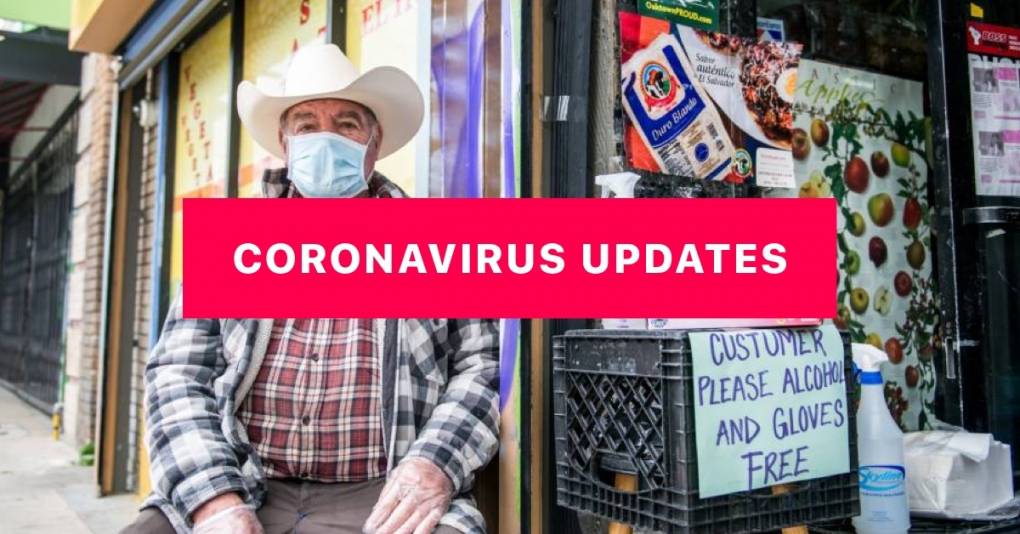
"caption": "Coronavirus Live Updates logo.",
"description": null,
"title": "KQED-Coronavirus-Live-Updates",
"credit": null,
"status": "inherit",
"isLoading": false,
"fetchFailed": false
},
"news_11843899": {
"type": "attachments",
"id": "news_11843899",
"meta": {
"index": "attachments_1716263798",
"site": "news",
"id": "11843899",
"found": true
},
"parent": 11843885,
"imgSizes": {
"apple_news_ca_landscape_5_5": {
"file": "https://ww2.kqed.org/app/uploads/sites/10/2020/10/RS45452_GettyImages-1212788680-qut-1044x783.jpg",
"width": 1044,
"mimeType": "image/jpeg",
"height": 783
},
"apple_news_ca_square_4_0": {
"file": "https://ww2.kqed.org/app/uploads/sites/10/2020/10/RS45452_GettyImages-1212788680-qut-470x470.jpg",
"width": 470,
"mimeType": "image/jpeg",
"height": 470
},
"twentyfourteen-full-width": {
"file": "https://ww2.kqed.org/app/uploads/sites/10/2020/10/RS45452_GettyImages-1212788680-qut-1038x576.jpg",
"width": 1038,
"mimeType": "image/jpeg",
"height": 576
},
"thumbnail": {
"file": "https://ww2.kqed.org/app/uploads/sites/10/2020/10/RS45452_GettyImages-1212788680-qut-160x109.jpg",
"width": 160,
"mimeType": "image/jpeg",
"height": 109
},
"post-thumbnail": {
"file": "https://ww2.kqed.org/app/uploads/sites/10/2020/10/RS45452_GettyImages-1212788680-qut-672x372.jpg",
"width": 672,
"mimeType": "image/jpeg",
"height": 372
},
"kqedFullSize": {
"file": "https://ww2.kqed.org/app/uploads/sites/10/2020/10/RS45452_GettyImages-1212788680-qut.jpg",
"width": 1920,
"height": 1304
},
"apple_news_ca_landscape_4_7": {
"file": "https://ww2.kqed.org/app/uploads/sites/10/2020/10/RS45452_GettyImages-1212788680-qut-632x474.jpg",
"width": 632,
"mimeType": "image/jpeg",
"height": 474
},
"large": {
"file": "https://ww2.kqed.org/app/uploads/sites/10/2020/10/RS45452_GettyImages-1212788680-qut-1020x693.jpg",
"width": 1020,
"mimeType": "image/jpeg",
"height": 693
},
"apple_news_ca_landscape_4_0": {
"file": "https://ww2.kqed.org/app/uploads/sites/10/2020/10/RS45452_GettyImages-1212788680-qut-536x402.jpg",
"width": 536,
"mimeType": "image/jpeg",
"height": 402
},
"apple_news_ca_portrait_12_9": {
"file": "https://ww2.kqed.org/app/uploads/sites/10/2020/10/RS45452_GettyImages-1212788680-qut-1122x1304.jpg",
"width": 1122,
"mimeType": "image/jpeg",
"height": 1304
},
"medium": {
"file": "https://ww2.kqed.org/app/uploads/sites/10/2020/10/RS45452_GettyImages-1212788680-qut-800x543.jpg",
"width": 800,
"mimeType": "image/jpeg",
"height": 543
},
"apple_news_ca_portrait_4_0": {
"file": "https://ww2.kqed.org/app/uploads/sites/10/2020/10/RS45452_GettyImages-1212788680-qut-354x472.jpg",
"width": 354,
"mimeType": "image/jpeg",
"height": 472
},
"apple_news_ca_portrait_9_7": {
"file": "https://ww2.kqed.org/app/uploads/sites/10/2020/10/RS45452_GettyImages-1212788680-qut-840x1120.jpg",
"width": 840,
"mimeType": "image/jpeg",
"height": 1120
},
"apple_news_ca_landscape_12_9": {
"file": "https://ww2.kqed.org/app/uploads/sites/10/2020/10/RS45452_GettyImages-1212788680-qut-1832x1304.jpg",
"width": 1832,
"mimeType": "image/jpeg",
"height": 1304
},
"apple_news_ca_square_9_7": {
"file": "https://ww2.kqed.org/app/uploads/sites/10/2020/10/RS45452_GettyImages-1212788680-qut-1104x1104.jpg",
"width": 1104,
"mimeType": "image/jpeg",
"height": 1104
},
"1536x1536": {
"file": "https://ww2.kqed.org/app/uploads/sites/10/2020/10/RS45452_GettyImages-1212788680-qut-1536x1043.jpg",
"width": 1536,
"mimeType": "image/jpeg",
"height": 1043
},
"apple_news_ca_portrait_4_7": {
"file": "https://ww2.kqed.org/app/uploads/sites/10/2020/10/RS45452_GettyImages-1212788680-qut-414x552.jpg",
"width": 414,
"mimeType": "image/jpeg",
"height": 552
},
"apple_news_ca_square_12_9": {
"file": "https://ww2.kqed.org/app/uploads/sites/10/2020/10/RS45452_GettyImages-1212788680-qut-1472x1304.jpg",
"width": 1472,
"mimeType": "image/jpeg",
"height": 1304
},
"apple_news_ca_portrait_5_5": {
"file": "https://ww2.kqed.org/app/uploads/sites/10/2020/10/RS45452_GettyImages-1212788680-qut-687x916.jpg",
"width": 687,
"mimeType": "image/jpeg",
"height": 916
},
"apple_news_ca_square_4_7": {
"file": "https://ww2.kqed.org/app/uploads/sites/10/2020/10/RS45452_GettyImages-1212788680-qut-550x550.jpg",
"width": 550,
"mimeType": "image/jpeg",
"height": 550
},
"apple_news_ca_landscape_9_7": {
"file": "https://ww2.kqed.org/app/uploads/sites/10/2020/10/RS45452_GettyImages-1212788680-qut-1376x1032.jpg",
"width": 1376,
"mimeType": "image/jpeg",
"height": 1032
},
"apple_news_ca_square_5_5": {
"file": "https://ww2.kqed.org/app/uploads/sites/10/2020/10/RS45452_GettyImages-1212788680-qut-912x912.jpg",
"width": 912,
"mimeType": "image/jpeg",
"height": 912
}
},
"publishDate": 1603825811,
"modified": 1603835500,
"caption": "Medical personnel surround a car going through a drive-thru coronavirus testing clinic run by Verily at the San Mateo County Event Center on March 16, 2020. San Francisco and Alameda counties have severed ties with Verily over the past several months..",
"description": "Medical personnel surround a car going through a drive-thru coronavirus testing clinic run by Verily at the San Mateo County Event Center on March 16, 2020. San Francisco and Alameda counties have severed ties with Verily over the past several months..",
"title": "Google Sister Company Verily Opens Coronavirus Testing Sites In Bay Area",
"credit": "Justin Sullivan/Getty Images",
"status": "inherit",
"isLoading": false,
"fetchFailed": false
},
"news_11842301": {
"type": "attachments",
"id": "news_11842301",
"meta": {
"index": "attachments_1716263798",
"site": "news",
"id": "11842301",
"found": true
},
"parent": 11842218,
"imgSizes": {
"apple_news_ca_landscape_5_5": {
"file": "https://ww2.kqed.org/app/uploads/sites/10/2020/10/RS45351_RS45350_alt_1030-qut-1044x783.jpg",
"width": 1044,
"mimeType": "image/jpeg",
"height": 783
},
"apple_news_ca_square_4_0": {
"file": "https://ww2.kqed.org/app/uploads/sites/10/2020/10/RS45351_RS45350_alt_1030-qut-470x470.jpg",
"width": 470,
"mimeType": "image/jpeg",
"height": 470
},
"twentyfourteen-full-width": {
"file": "https://ww2.kqed.org/app/uploads/sites/10/2020/10/RS45351_RS45350_alt_1030-qut-1038x576.jpg",
"width": 1038,
"mimeType": "image/jpeg",
"height": 576
},
"thumbnail": {
"file": "https://ww2.kqed.org/app/uploads/sites/10/2020/10/RS45351_RS45350_alt_1030-qut-160x95.jpg",
"width": 160,
"mimeType": "image/jpeg",
"height": 95
},
"post-thumbnail": {
"file": "https://ww2.kqed.org/app/uploads/sites/10/2020/10/RS45351_RS45350_alt_1030-qut-672x372.jpg",
"width": 672,
"mimeType": "image/jpeg",
"height": 372
},
"kqedFullSize": {
"file": "https://ww2.kqed.org/app/uploads/sites/10/2020/10/RS45351_RS45350_alt_1030-qut.jpg",
"width": 1920,
"height": 1142
},
"apple_news_ca_landscape_4_7": {
"file": "https://ww2.kqed.org/app/uploads/sites/10/2020/10/RS45351_RS45350_alt_1030-qut-632x474.jpg",
"width": 632,
"mimeType": "image/jpeg",
"height": 474
},
"large": {
"file": "https://ww2.kqed.org/app/uploads/sites/10/2020/10/RS45351_RS45350_alt_1030-qut-1020x607.jpg",
"width": 1020,
"mimeType": "image/jpeg",
"height": 607
},
"apple_news_ca_landscape_4_0": {
"file": "https://ww2.kqed.org/app/uploads/sites/10/2020/10/RS45351_RS45350_alt_1030-qut-536x402.jpg",
"width": 536,
"mimeType": "image/jpeg",
"height": 402
},
"apple_news_ca_portrait_12_9": {
"file": "https://ww2.kqed.org/app/uploads/sites/10/2020/10/RS45351_RS45350_alt_1030-qut-1122x1142.jpg",
"width": 1122,
"mimeType": "image/jpeg",
"height": 1142
},
"medium": {
"file": "https://ww2.kqed.org/app/uploads/sites/10/2020/10/RS45351_RS45350_alt_1030-qut-800x476.jpg",
"width": 800,
"mimeType": "image/jpeg",
"height": 476
},
"apple_news_ca_portrait_4_0": {
"file": "https://ww2.kqed.org/app/uploads/sites/10/2020/10/RS45351_RS45350_alt_1030-qut-354x472.jpg",
"width": 354,
"mimeType": "image/jpeg",
"height": 472
},
"apple_news_ca_portrait_9_7": {
"file": "https://ww2.kqed.org/app/uploads/sites/10/2020/10/RS45351_RS45350_alt_1030-qut-840x1120.jpg",
"width": 840,
"mimeType": "image/jpeg",
"height": 1120
},
"apple_news_ca_landscape_12_9": {
"file": "https://ww2.kqed.org/app/uploads/sites/10/2020/10/RS45351_RS45350_alt_1030-qut-1832x1142.jpg",
"width": 1832,
"mimeType": "image/jpeg",
"height": 1142
},
"apple_news_ca_square_9_7": {
"file": "https://ww2.kqed.org/app/uploads/sites/10/2020/10/RS45351_RS45350_alt_1030-qut-1104x1104.jpg",
"width": 1104,
"mimeType": "image/jpeg",
"height": 1104
},
"1536x1536": {
"file": "https://ww2.kqed.org/app/uploads/sites/10/2020/10/RS45351_RS45350_alt_1030-qut-1536x914.jpg",
"width": 1536,
"mimeType": "image/jpeg",
"height": 914
},
"apple_news_ca_portrait_4_7": {
"file": "https://ww2.kqed.org/app/uploads/sites/10/2020/10/RS45351_RS45350_alt_1030-qut-414x552.jpg",
"width": 414,
"mimeType": "image/jpeg",
"height": 552
},
"apple_news_ca_square_12_9": {
"file": "https://ww2.kqed.org/app/uploads/sites/10/2020/10/RS45351_RS45350_alt_1030-qut-1472x1142.jpg",
"width": 1472,
"mimeType": "image/jpeg",
"height": 1142
},
"apple_news_ca_portrait_5_5": {
"file": "https://ww2.kqed.org/app/uploads/sites/10/2020/10/RS45351_RS45350_alt_1030-qut-687x916.jpg",
"width": 687,
"mimeType": "image/jpeg",
"height": 916
},
"apple_news_ca_square_4_7": {
"file": "https://ww2.kqed.org/app/uploads/sites/10/2020/10/RS45351_RS45350_alt_1030-qut-550x550.jpg",
"width": 550,
"mimeType": "image/jpeg",
"height": 550
},
"apple_news_ca_landscape_9_7": {
"file": "https://ww2.kqed.org/app/uploads/sites/10/2020/10/RS45351_RS45350_alt_1030-qut-1376x1032.jpg",
"width": 1376,
"mimeType": "image/jpeg",
"height": 1032
},
"apple_news_ca_square_5_5": {
"file": "https://ww2.kqed.org/app/uploads/sites/10/2020/10/RS45351_RS45350_alt_1030-qut-912x912.jpg",
"width": 912,
"mimeType": "image/jpeg",
"height": 912
}
},
"publishDate": 1602705821,
"modified": 1612879339,
"caption": null,
"description": "A COVID-19 testing packet from Curative, Inc., the company slated to provide COVID-19 tests to public school teachers and staff in Alameda County.",
"title": "RS45351_RS45350_alt_1030-qut",
"credit": "Courtesy of Alameda County Office of Education",
"status": "inherit",
"altTag": "A COVID-19 testing packet from Curative Inc.",
"isLoading": false,
"fetchFailed": false
},
"news_11833718": {
"type": "attachments",
"id": "news_11833718",
"meta": {
"index": "attachments_1716263798",
"site": "news",
"id": "11833718",
"found": true
},
"parent": 11833658,
"imgSizes": {
"apple_news_ca_square_4_0": {
"file": "https://ww2.kqed.org/app/uploads/sites/10/2020/08/Marsh-Fire-Sunol-470x470.jpg",
"width": 470,
"mimeType": "image/jpeg",
"height": 470
},
"twentyfourteen-full-width": {
"file": "https://ww2.kqed.org/app/uploads/sites/10/2020/08/Marsh-Fire-Sunol-1000x576.jpg",
"width": 1000,
"mimeType": "image/jpeg",
"height": 576
},
"thumbnail": {
"file": "https://ww2.kqed.org/app/uploads/sites/10/2020/08/Marsh-Fire-Sunol-160x96.jpg",
"width": 160,
"mimeType": "image/jpeg",
"height": 96
},
"post-thumbnail": {
"file": "https://ww2.kqed.org/app/uploads/sites/10/2020/08/Marsh-Fire-Sunol-672x372.jpg",
"width": 672,
"mimeType": "image/jpeg",
"height": 372
},
"kqedFullSize": {
"file": "https://ww2.kqed.org/app/uploads/sites/10/2020/08/Marsh-Fire-Sunol.jpg",
"width": 1000,
"height": 597
},
"apple_news_ca_landscape_4_7": {
"file": "https://ww2.kqed.org/app/uploads/sites/10/2020/08/Marsh-Fire-Sunol-632x474.jpg",
"width": 632,
"mimeType": "image/jpeg",
"height": 474
},
"apple_news_ca_landscape_4_0": {
"file": "https://ww2.kqed.org/app/uploads/sites/10/2020/08/Marsh-Fire-Sunol-536x402.jpg",
"width": 536,
"mimeType": "image/jpeg",
"height": 402
},
"medium": {
"file": "https://ww2.kqed.org/app/uploads/sites/10/2020/08/Marsh-Fire-Sunol-800x478.jpg",
"width": 800,
"mimeType": "image/jpeg",
"height": 478
},
"apple_news_ca_portrait_4_0": {
"file": "https://ww2.kqed.org/app/uploads/sites/10/2020/08/Marsh-Fire-Sunol-354x472.jpg",
"width": 354,
"mimeType": "image/jpeg",
"height": 472
},
"apple_news_ca_portrait_9_7": {
"file": "https://ww2.kqed.org/app/uploads/sites/10/2020/08/Marsh-Fire-Sunol-840x597.jpg",
"width": 840,
"mimeType": "image/jpeg",
"height": 597
},
"apple_news_ca_portrait_4_7": {
"file": "https://ww2.kqed.org/app/uploads/sites/10/2020/08/Marsh-Fire-Sunol-414x552.jpg",
"width": 414,
"mimeType": "image/jpeg",
"height": 552
},
"apple_news_ca_portrait_5_5": {
"file": "https://ww2.kqed.org/app/uploads/sites/10/2020/08/Marsh-Fire-Sunol-687x597.jpg",
"width": 687,
"mimeType": "image/jpeg",
"height": 597
},
"apple_news_ca_square_4_7": {
"file": "https://ww2.kqed.org/app/uploads/sites/10/2020/08/Marsh-Fire-Sunol-550x550.jpg",
"width": 550,
"mimeType": "image/jpeg",
"height": 550
},
"apple_news_ca_square_5_5": {
"file": "https://ww2.kqed.org/app/uploads/sites/10/2020/08/Marsh-Fire-Sunol-912x597.jpg",
"width": 912,
"mimeType": "image/jpeg",
"height": 597
}
},
"publishDate": 1597697792,
"modified": 1597698188,
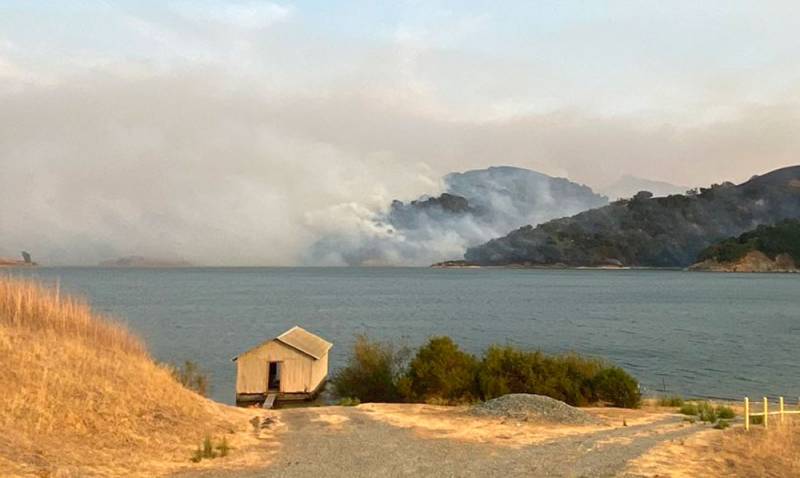
"caption": "A section of the Marsh Complex Fire burns near Sunol on Sunday, Aug. 16. ",
"description": "A section of the Marsh Complex Fire burns near Sunol on Sunday, Aug. 16. ",
"title": "Marsh-Fire-Sunol",
"credit": "Alameda County Fire Dept./Twitter",
"status": "inherit",
"isLoading": false,
"fetchFailed": false
},
"news_11822379": {
"type": "attachments",
"id": "news_11822379",
"meta": {
"index": "attachments_1716263798",
"site": "news",
"id": "11822379",
"found": true
},
"parent": 0,
"imgSizes": {
"apple_news_ca_landscape_5_5": {
"file": "https://ww2.kqed.org/app/uploads/sites/10/2020/06/oakland-police-1044x783.jpg",
"width": 1044,
"mimeType": "image/jpeg",
"height": 783
},
"apple_news_ca_square_4_0": {
"file": "https://ww2.kqed.org/app/uploads/sites/10/2020/06/oakland-police-470x470.jpg",
"width": 470,
"mimeType": "image/jpeg",
"height": 470
},
"twentyfourteen-full-width": {
"file": "https://ww2.kqed.org/app/uploads/sites/10/2020/06/oakland-police-1038x576.jpg",
"width": 1038,
"mimeType": "image/jpeg",
"height": 576
},
"thumbnail": {
"file": "https://ww2.kqed.org/app/uploads/sites/10/2020/06/oakland-police-160x103.jpg",
"width": 160,
"mimeType": "image/jpeg",
"height": 103
},
"post-thumbnail": {
"file": "https://ww2.kqed.org/app/uploads/sites/10/2020/06/oakland-police-672x372.jpg",
"width": 672,
"mimeType": "image/jpeg",
"height": 372
},
"kqedFullSize": {
"file": "https://ww2.kqed.org/app/uploads/sites/10/2020/06/oakland-police.jpg",
"width": 1920,
"height": 1230
},
"apple_news_ca_landscape_4_7": {
"file": "https://ww2.kqed.org/app/uploads/sites/10/2020/06/oakland-police-632x474.jpg",
"width": 632,
"mimeType": "image/jpeg",
"height": 474
},
"large": {
"file": "https://ww2.kqed.org/app/uploads/sites/10/2020/06/oakland-police-1020x653.jpg",
"width": 1020,
"mimeType": "image/jpeg",
"height": 653
},
"apple_news_ca_landscape_4_0": {
"file": "https://ww2.kqed.org/app/uploads/sites/10/2020/06/oakland-police-536x402.jpg",
"width": 536,
"mimeType": "image/jpeg",
"height": 402
},
"apple_news_ca_portrait_12_9": {
"file": "https://ww2.kqed.org/app/uploads/sites/10/2020/06/oakland-police-1122x1230.jpg",
"width": 1122,
"mimeType": "image/jpeg",
"height": 1230
},
"medium": {
"file": "https://ww2.kqed.org/app/uploads/sites/10/2020/06/oakland-police-800x513.jpg",
"width": 800,
"mimeType": "image/jpeg",
"height": 513
},
"apple_news_ca_portrait_4_0": {
"file": "https://ww2.kqed.org/app/uploads/sites/10/2020/06/oakland-police-354x472.jpg",
"width": 354,
"mimeType": "image/jpeg",
"height": 472
},
"apple_news_ca_portrait_9_7": {
"file": "https://ww2.kqed.org/app/uploads/sites/10/2020/06/oakland-police-840x1120.jpg",
"width": 840,
"mimeType": "image/jpeg",
"height": 1120
},
"apple_news_ca_landscape_12_9": {
"file": "https://ww2.kqed.org/app/uploads/sites/10/2020/06/oakland-police-1832x1230.jpg",
"width": 1832,
"mimeType": "image/jpeg",
"height": 1230
},
"apple_news_ca_square_9_7": {
"file": "https://ww2.kqed.org/app/uploads/sites/10/2020/06/oakland-police-1104x1104.jpg",
"width": 1104,
"mimeType": "image/jpeg",
"height": 1104
},
"apple_news_ca_portrait_4_7": {
"file": "https://ww2.kqed.org/app/uploads/sites/10/2020/06/oakland-police-414x552.jpg",
"width": 414,
"mimeType": "image/jpeg",
"height": 552
},
"apple_news_ca_square_12_9": {
"file": "https://ww2.kqed.org/app/uploads/sites/10/2020/06/oakland-police-1472x1230.jpg",
"width": 1472,
"mimeType": "image/jpeg",
"height": 1230
},
"apple_news_ca_portrait_5_5": {
"file": "https://ww2.kqed.org/app/uploads/sites/10/2020/06/oakland-police-687x916.jpg",
"width": 687,
"mimeType": "image/jpeg",
"height": 916
},
"full-width": {
"file": "https://ww2.kqed.org/app/uploads/sites/10/2020/06/oakland-police-1920x1230.jpg",
"width": 1920,
"mimeType": "image/jpeg",
"height": 1230
},
"apple_news_ca_square_4_7": {
"file": "https://ww2.kqed.org/app/uploads/sites/10/2020/06/oakland-police-550x550.jpg",
"width": 550,
"mimeType": "image/jpeg",
"height": 550
},
"apple_news_ca_landscape_9_7": {
"file": "https://ww2.kqed.org/app/uploads/sites/10/2020/06/oakland-police-1376x1032.jpg",
"width": 1376,
"mimeType": "image/jpeg",
"height": 1032
},
"apple_news_ca_square_5_5": {
"file": "https://ww2.kqed.org/app/uploads/sites/10/2020/06/oakland-police-912x912.jpg",
"width": 912,
"mimeType": "image/jpeg",
"height": 912
}
},
"publishDate": 1591079169,
"modified": 1591080820,
"caption": "Oakland police officers on Broadway near 14th Street shortly before moving in on small group of protesters who remained on the street after city's 8 p.m. curfew took effect Monday. ",
"description": null,
"title": "oakland police",
"credit": "Erin Baldassari/KQED",
"status": "inherit",
"isLoading": false,
"fetchFailed": false
},
"news_11818947": {
"type": "attachments",
"id": "news_11818947",
"meta": {
"index": "attachments_1716263798",
"site": "news",
"id": "11818947",
"found": true
},
"parent": 11818938,
"imgSizes": {
"apple_news_ca_landscape_5_5": {
"file": "https://ww2.kqed.org/app/uploads/sites/10/2020/05/tesla200512-1044x783.jpg",
"width": 1044,
"mimeType": "image/jpeg",
"height": 783
},
"apple_news_ca_square_4_0": {
"file": "https://ww2.kqed.org/app/uploads/sites/10/2020/05/tesla200512-470x470.jpg",
"width": 470,
"mimeType": "image/jpeg",
"height": 470
},
"twentyfourteen-full-width": {
"file": "https://ww2.kqed.org/app/uploads/sites/10/2020/05/tesla200512-1038x576.jpg",
"width": 1038,
"mimeType": "image/jpeg",
"height": 576
},
"thumbnail": {
"file": "https://ww2.kqed.org/app/uploads/sites/10/2020/05/tesla200512-160x107.jpg",
"width": 160,
"mimeType": "image/jpeg",
"height": 107
},
"post-thumbnail": {
"file": "https://ww2.kqed.org/app/uploads/sites/10/2020/05/tesla200512-672x372.jpg",
"width": 672,
"mimeType": "image/jpeg",
"height": 372
},
"kqedFullSize": {
"file": "https://ww2.kqed.org/app/uploads/sites/10/2020/05/tesla200512.jpg",
"width": 1920,
"height": 1280
},
"apple_news_ca_landscape_4_7": {
"file": "https://ww2.kqed.org/app/uploads/sites/10/2020/05/tesla200512-632x474.jpg",
"width": 632,
"mimeType": "image/jpeg",
"height": 474
},
"large": {
"file": "https://ww2.kqed.org/app/uploads/sites/10/2020/05/tesla200512-1020x680.jpg",
"width": 1020,
"mimeType": "image/jpeg",
"height": 680
},
"apple_news_ca_landscape_4_0": {
"file": "https://ww2.kqed.org/app/uploads/sites/10/2020/05/tesla200512-536x402.jpg",
"width": 536,
"mimeType": "image/jpeg",
"height": 402
},
"apple_news_ca_portrait_12_9": {
"file": "https://ww2.kqed.org/app/uploads/sites/10/2020/05/tesla200512-1122x1280.jpg",
"width": 1122,
"mimeType": "image/jpeg",
"height": 1280
},
"medium": {
"file": "https://ww2.kqed.org/app/uploads/sites/10/2020/05/tesla200512-800x533.jpg",
"width": 800,
"mimeType": "image/jpeg",
"height": 533
},
"apple_news_ca_portrait_4_0": {
"file": "https://ww2.kqed.org/app/uploads/sites/10/2020/05/tesla200512-354x472.jpg",
"width": 354,
"mimeType": "image/jpeg",
"height": 472
},
"apple_news_ca_portrait_9_7": {
"file": "https://ww2.kqed.org/app/uploads/sites/10/2020/05/tesla200512-840x1120.jpg",
"width": 840,
"mimeType": "image/jpeg",
"height": 1120
},
"apple_news_ca_landscape_12_9": {
"file": "https://ww2.kqed.org/app/uploads/sites/10/2020/05/tesla200512-1832x1280.jpg",
"width": 1832,
"mimeType": "image/jpeg",
"height": 1280
},
"apple_news_ca_square_9_7": {
"file": "https://ww2.kqed.org/app/uploads/sites/10/2020/05/tesla200512-1104x1104.jpg",
"width": 1104,
"mimeType": "image/jpeg",
"height": 1104
},
"apple_news_ca_portrait_4_7": {
"file": "https://ww2.kqed.org/app/uploads/sites/10/2020/05/tesla200512-414x552.jpg",
"width": 414,
"mimeType": "image/jpeg",
"height": 552
},
"apple_news_ca_square_12_9": {
"file": "https://ww2.kqed.org/app/uploads/sites/10/2020/05/tesla200512-1472x1280.jpg",
"width": 1472,
"mimeType": "image/jpeg",
"height": 1280
},
"apple_news_ca_portrait_5_5": {
"file": "https://ww2.kqed.org/app/uploads/sites/10/2020/05/tesla200512-687x916.jpg",
"width": 687,
"mimeType": "image/jpeg",
"height": 916
},
"full-width": {
"file": "https://ww2.kqed.org/app/uploads/sites/10/2020/05/tesla200512-1920x1280.jpg",
"width": 1920,
"mimeType": "image/jpeg",
"height": 1280
},
"apple_news_ca_square_4_7": {
"file": "https://ww2.kqed.org/app/uploads/sites/10/2020/05/tesla200512-550x550.jpg",
"width": 550,
"mimeType": "image/jpeg",
"height": 550
},
"apple_news_ca_landscape_9_7": {
"file": "https://ww2.kqed.org/app/uploads/sites/10/2020/05/tesla200512-1376x1032.jpg",
"width": 1376,
"mimeType": "image/jpeg",
"height": 1032
},
"apple_news_ca_square_5_5": {
"file": "https://ww2.kqed.org/app/uploads/sites/10/2020/05/tesla200512-912x912.jpg",
"width": 912,
"mimeType": "image/jpeg",
"height": 912
}
},
"publishDate": 1589784650,
"modified": 1589910871,
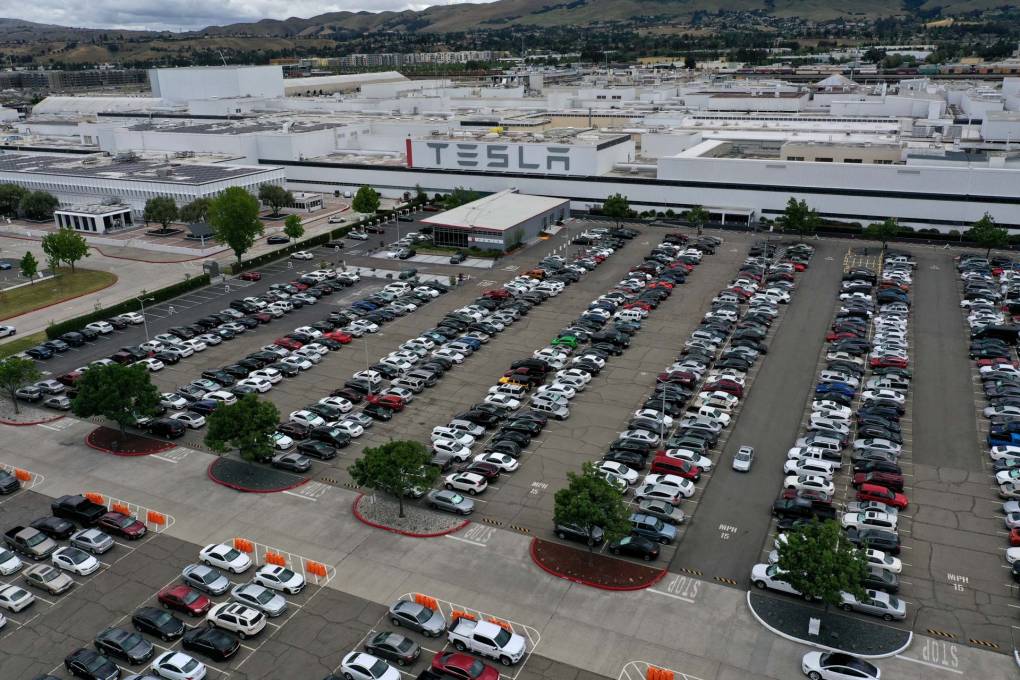
"caption": "An aerial view of Tesla's plant in Fremont on May 12, 2020, the day after CEO Elon Musk declared he had opened the facility \"against Alameda County rules\" that shut down production in late March. Local officials described the reopening as ramping up \"minimum basic operations.\" The company is expected to be in full production this week.",
"description": "An aerial view of Tesla's plant in Fremont on May 12, 2020, the day after CEO Elon Musk declared he had opened the facility \"against Alameda County rules\" that shut down production in late March. Local officials described the reopening as ramping up \"minimum basic operations.\" The company is expected to be in full production this week.",
"title": "Tesla-Fremont Plant",
"credit": "Justin Sullivan/Getty Images",
"status": "inherit",
"isLoading": false,
"fetchFailed": false
},
"news_11817572": {
"type": "attachments",
"id": "news_11817572",
"meta": {
"index": "attachments_1716263798",
"site": "news",
"id": "11817572",
"found": true
},
"parent": 11817565,
"imgSizes": {
"apple_news_ca_landscape_5_5": {
"file": "https://ww2.kqed.org/app/uploads/sites/10/2020/05/GettyImages-1208184787-1044x783.jpg",
"width": 1044,
"mimeType": "image/jpeg",
"height": 783
},
"apple_news_ca_square_4_0": {
"file": "https://ww2.kqed.org/app/uploads/sites/10/2020/05/GettyImages-1208184787-470x470.jpg",
"width": 470,
"mimeType": "image/jpeg",
"height": 470
},
"twentyfourteen-full-width": {
"file": "https://ww2.kqed.org/app/uploads/sites/10/2020/05/GettyImages-1208184787-1038x576.jpg",
"width": 1038,
"mimeType": "image/jpeg",
"height": 576
},
"thumbnail": {
"file": "https://ww2.kqed.org/app/uploads/sites/10/2020/05/GettyImages-1208184787-160x106.jpg",
"width": 160,
"mimeType": "image/jpeg",
"height": 106
},
"post-thumbnail": {
"file": "https://ww2.kqed.org/app/uploads/sites/10/2020/05/GettyImages-1208184787-672x372.jpg",
"width": 672,
"mimeType": "image/jpeg",
"height": 372
},
"kqedFullSize": {
"file": "https://ww2.kqed.org/app/uploads/sites/10/2020/05/GettyImages-1208184787.jpg",
"width": 5000,
"height": 3327
},
"apple_news_ca_landscape_4_7": {
"file": "https://ww2.kqed.org/app/uploads/sites/10/2020/05/GettyImages-1208184787-632x474.jpg",
"width": 632,
"mimeType": "image/jpeg",
"height": 474
},
"large": {
"file": "https://ww2.kqed.org/app/uploads/sites/10/2020/05/GettyImages-1208184787-1020x679.jpg",
"width": 1020,
"mimeType": "image/jpeg",
"height": 679
},
"apple_news_ca_landscape_4_0": {
"file": "https://ww2.kqed.org/app/uploads/sites/10/2020/05/GettyImages-1208184787-536x402.jpg",
"width": 536,
"mimeType": "image/jpeg",
"height": 402
},
"apple_news_ca_portrait_12_9": {
"file": "https://ww2.kqed.org/app/uploads/sites/10/2020/05/GettyImages-1208184787-1122x1496.jpg",
"width": 1122,
"mimeType": "image/jpeg",
"height": 1496
},
"medium": {
"file": "https://ww2.kqed.org/app/uploads/sites/10/2020/05/GettyImages-1208184787-800x532.jpg",
"width": 800,
"mimeType": "image/jpeg",
"height": 532
},
"apple_news_ca_portrait_4_0": {
"file": "https://ww2.kqed.org/app/uploads/sites/10/2020/05/GettyImages-1208184787-354x472.jpg",
"width": 354,
"mimeType": "image/jpeg",
"height": 472
},
"apple_news_ca_portrait_9_7": {
"file": "https://ww2.kqed.org/app/uploads/sites/10/2020/05/GettyImages-1208184787-840x1120.jpg",
"width": 840,
"mimeType": "image/jpeg",
"height": 1120
},
"apple_news_ca_landscape_12_9": {
"file": "https://ww2.kqed.org/app/uploads/sites/10/2020/05/GettyImages-1208184787-1832x1374.jpg",
"width": 1832,
"mimeType": "image/jpeg",
"height": 1374
},
"apple_news_ca_square_9_7": {
"file": "https://ww2.kqed.org/app/uploads/sites/10/2020/05/GettyImages-1208184787-1104x1104.jpg",
"width": 1104,
"mimeType": "image/jpeg",
"height": 1104
},
"apple_news_ca_portrait_4_7": {
"file": "https://ww2.kqed.org/app/uploads/sites/10/2020/05/GettyImages-1208184787-414x552.jpg",
"width": 414,
"mimeType": "image/jpeg",
"height": 552
},
"apple_news_ca_square_12_9": {
"file": "https://ww2.kqed.org/app/uploads/sites/10/2020/05/GettyImages-1208184787-1472x1472.jpg",
"width": 1472,
"mimeType": "image/jpeg",
"height": 1472
},
"apple_news_ca_portrait_5_5": {
"file": "https://ww2.kqed.org/app/uploads/sites/10/2020/05/GettyImages-1208184787-687x916.jpg",
"width": 687,
"mimeType": "image/jpeg",
"height": 916
},
"full-width": {
"file": "https://ww2.kqed.org/app/uploads/sites/10/2020/05/GettyImages-1208184787-1920x1278.jpg",
"width": 1920,
"mimeType": "image/jpeg",
"height": 1278
},
"apple_news_ca_square_4_7": {
"file": "https://ww2.kqed.org/app/uploads/sites/10/2020/05/GettyImages-1208184787-550x550.jpg",
"width": 550,
"mimeType": "image/jpeg",
"height": 550
},
"apple_news_ca_landscape_9_7": {
"file": "https://ww2.kqed.org/app/uploads/sites/10/2020/05/GettyImages-1208184787-1376x1032.jpg",
"width": 1376,
"mimeType": "image/jpeg",
"height": 1032
},
"apple_news_ca_square_5_5": {
"file": "https://ww2.kqed.org/app/uploads/sites/10/2020/05/GettyImages-1208184787-912x912.jpg",
"width": 912,
"mimeType": "image/jpeg",
"height": 912
}
},
"publishDate": 1589231597,
"modified": 1589236148,
"caption": "Telsa employees work outside a Tesla showroom in Burbank, California, on March 24, 2020. ",
"description": null,
"title": "Tesla",
"credit": "Robyn Beck/AFP-Getty Images",
"status": "inherit",
"isLoading": false,
"fetchFailed": false
},
"news_11817188": {
"type": "attachments",
"id": "news_11817188",
"meta": {
"index": "attachments_1716263798",
"site": "news",
"id": "11817188",
"found": true
},
"parent": 11817068,
"imgSizes": {
"apple_news_ca_landscape_5_5": {
"file": "https://ww2.kqed.org/app/uploads/sites/10/2020/05/RS13864_iStock_000031315864_Large-qut-1044x783.jpg",
"width": 1044,
"mimeType": "image/jpeg",
"height": 783
},
"apple_news_ca_square_4_0": {
"file": "https://ww2.kqed.org/app/uploads/sites/10/2020/05/RS13864_iStock_000031315864_Large-qut-470x470.jpg",
"width": 470,
"mimeType": "image/jpeg",
"height": 470
},
"twentyfourteen-full-width": {
"file": "https://ww2.kqed.org/app/uploads/sites/10/2020/05/RS13864_iStock_000031315864_Large-qut-1038x576.jpg",
"width": 1038,
"mimeType": "image/jpeg",
"height": 576
},
"thumbnail": {
"file": "https://ww2.kqed.org/app/uploads/sites/10/2020/05/RS13864_iStock_000031315864_Large-qut-160x107.jpg",
"width": 160,
"mimeType": "image/jpeg",
"height": 107
},
"post-thumbnail": {
"file": "https://ww2.kqed.org/app/uploads/sites/10/2020/05/RS13864_iStock_000031315864_Large-qut-672x372.jpg",
"width": 672,
"mimeType": "image/jpeg",
"height": 372
},
"kqedFullSize": {
"file": "https://ww2.kqed.org/app/uploads/sites/10/2020/05/RS13864_iStock_000031315864_Large-qut.jpg",
"width": 1440,
"height": 960
},
"apple_news_ca_landscape_4_7": {
"file": "https://ww2.kqed.org/app/uploads/sites/10/2020/05/RS13864_iStock_000031315864_Large-qut-632x474.jpg",
"width": 632,
"mimeType": "image/jpeg",
"height": 474
},
"large": {
"file": "https://ww2.kqed.org/app/uploads/sites/10/2020/05/RS13864_iStock_000031315864_Large-qut-1020x680.jpg",
"width": 1020,
"mimeType": "image/jpeg",
"height": 680
},
"apple_news_ca_landscape_4_0": {
"file": "https://ww2.kqed.org/app/uploads/sites/10/2020/05/RS13864_iStock_000031315864_Large-qut-536x402.jpg",
"width": 536,
"mimeType": "image/jpeg",
"height": 402
},
"apple_news_ca_portrait_12_9": {
"file": "https://ww2.kqed.org/app/uploads/sites/10/2020/05/RS13864_iStock_000031315864_Large-qut-1122x960.jpg",
"width": 1122,
"mimeType": "image/jpeg",
"height": 960
},
"medium": {
"file": "https://ww2.kqed.org/app/uploads/sites/10/2020/05/RS13864_iStock_000031315864_Large-qut-800x533.jpg",
"width": 800,
"mimeType": "image/jpeg",
"height": 533
},
"apple_news_ca_portrait_4_0": {
"file": "https://ww2.kqed.org/app/uploads/sites/10/2020/05/RS13864_iStock_000031315864_Large-qut-354x472.jpg",
"width": 354,
"mimeType": "image/jpeg",
"height": 472
},
"apple_news_ca_portrait_9_7": {
"file": "https://ww2.kqed.org/app/uploads/sites/10/2020/05/RS13864_iStock_000031315864_Large-qut-840x960.jpg",
"width": 840,
"mimeType": "image/jpeg",
"height": 960
},
"apple_news_ca_square_9_7": {
"file": "https://ww2.kqed.org/app/uploads/sites/10/2020/05/RS13864_iStock_000031315864_Large-qut-1104x960.jpg",
"width": 1104,
"mimeType": "image/jpeg",
"height": 960
},
"apple_news_ca_portrait_4_7": {
"file": "https://ww2.kqed.org/app/uploads/sites/10/2020/05/RS13864_iStock_000031315864_Large-qut-414x552.jpg",
"width": 414,
"mimeType": "image/jpeg",
"height": 552
},
"apple_news_ca_portrait_5_5": {
"file": "https://ww2.kqed.org/app/uploads/sites/10/2020/05/RS13864_iStock_000031315864_Large-qut-687x916.jpg",
"width": 687,
"mimeType": "image/jpeg",
"height": 916
},
"apple_news_ca_square_4_7": {
"file": "https://ww2.kqed.org/app/uploads/sites/10/2020/05/RS13864_iStock_000031315864_Large-qut-550x550.jpg",
"width": 550,
"mimeType": "image/jpeg",
"height": 550
},
"apple_news_ca_landscape_9_7": {
"file": "https://ww2.kqed.org/app/uploads/sites/10/2020/05/RS13864_iStock_000031315864_Large-qut-1376x960.jpg",
"width": 1376,
"mimeType": "image/jpeg",
"height": 960
},
"apple_news_ca_square_5_5": {
"file": "https://ww2.kqed.org/app/uploads/sites/10/2020/05/RS13864_iStock_000031315864_Large-qut-912x912.jpg",
"width": 912,
"mimeType": "image/jpeg",
"height": 912
}
},
"publishDate": 1588969111,
"modified": 1588969154,
"caption": "Restaurant and retail workers have been hard hit during the pandemic. ",
"description": null,
"title": "RS13864_iStock_000031315864_Large-qut",
"credit": "Getty Images",
"status": "inherit",
"isLoading": false,
"fetchFailed": false
},
"news_11814989": {
"type": "attachments",
"id": "news_11814989",
"meta": {
"index": "attachments_1716263798",
"site": "news",
"id": "11814989",
"found": true
},
"parent": 11814970,
"imgSizes": {
"apple_news_ca_landscape_5_5": {
"file": "https://ww2.kqed.org/app/uploads/sites/10/2020/04/GettyImages-1219994687_1920x-1044x783.jpg",
"width": 1044,
"mimeType": "image/jpeg",
"height": 783
},
"apple_news_ca_square_4_0": {
"file": "https://ww2.kqed.org/app/uploads/sites/10/2020/04/GettyImages-1219994687_1920x-470x470.jpg",
"width": 470,
"mimeType": "image/jpeg",
"height": 470
},
"twentyfourteen-full-width": {
"file": "https://ww2.kqed.org/app/uploads/sites/10/2020/04/GettyImages-1219994687_1920x-1038x576.jpg",
"width": 1038,
"mimeType": "image/jpeg",
"height": 576
},
"thumbnail": {
"file": "https://ww2.kqed.org/app/uploads/sites/10/2020/04/GettyImages-1219994687_1920x-160x102.jpg",
"width": 160,
"mimeType": "image/jpeg",
"height": 102
},
"post-thumbnail": {
"file": "https://ww2.kqed.org/app/uploads/sites/10/2020/04/GettyImages-1219994687_1920x-672x372.jpg",
"width": 672,
"mimeType": "image/jpeg",
"height": 372
},
"kqedFullSize": {
"file": "https://ww2.kqed.org/app/uploads/sites/10/2020/04/GettyImages-1219994687_1920x.jpg",
"width": 1920,
"height": 1229
},
"apple_news_ca_landscape_4_7": {
"file": "https://ww2.kqed.org/app/uploads/sites/10/2020/04/GettyImages-1219994687_1920x-632x474.jpg",
"width": 632,
"mimeType": "image/jpeg",
"height": 474
},
"large": {
"file": "https://ww2.kqed.org/app/uploads/sites/10/2020/04/GettyImages-1219994687_1920x-1020x653.jpg",
"width": 1020,
"mimeType": "image/jpeg",
"height": 653
},
"apple_news_ca_landscape_4_0": {
"file": "https://ww2.kqed.org/app/uploads/sites/10/2020/04/GettyImages-1219994687_1920x-536x402.jpg",
"width": 536,
"mimeType": "image/jpeg",
"height": 402
},
"apple_news_ca_portrait_12_9": {
"file": "https://ww2.kqed.org/app/uploads/sites/10/2020/04/GettyImages-1219994687_1920x-1122x1229.jpg",
"width": 1122,
"mimeType": "image/jpeg",
"height": 1229
},
"medium": {
"file": "https://ww2.kqed.org/app/uploads/sites/10/2020/04/GettyImages-1219994687_1920x-800x512.jpg",
"width": 800,
"mimeType": "image/jpeg",
"height": 512
},
"apple_news_ca_portrait_4_0": {
"file": "https://ww2.kqed.org/app/uploads/sites/10/2020/04/GettyImages-1219994687_1920x-354x472.jpg",
"width": 354,
"mimeType": "image/jpeg",
"height": 472
},
"apple_news_ca_portrait_9_7": {
"file": "https://ww2.kqed.org/app/uploads/sites/10/2020/04/GettyImages-1219994687_1920x-840x1120.jpg",
"width": 840,
"mimeType": "image/jpeg",
"height": 1120
},
"apple_news_ca_landscape_12_9": {
"file": "https://ww2.kqed.org/app/uploads/sites/10/2020/04/GettyImages-1219994687_1920x-1832x1229.jpg",
"width": 1832,
"mimeType": "image/jpeg",
"height": 1229
},
"apple_news_ca_square_9_7": {
"file": "https://ww2.kqed.org/app/uploads/sites/10/2020/04/GettyImages-1219994687_1920x-1104x1104.jpg",
"width": 1104,
"mimeType": "image/jpeg",
"height": 1104
},
"apple_news_ca_portrait_4_7": {
"file": "https://ww2.kqed.org/app/uploads/sites/10/2020/04/GettyImages-1219994687_1920x-414x552.jpg",
"width": 414,
"mimeType": "image/jpeg",
"height": 552
},
"apple_news_ca_square_12_9": {
"file": "https://ww2.kqed.org/app/uploads/sites/10/2020/04/GettyImages-1219994687_1920x-1472x1229.jpg",
"width": 1472,
"mimeType": "image/jpeg",
"height": 1229
},
"apple_news_ca_portrait_5_5": {
"file": "https://ww2.kqed.org/app/uploads/sites/10/2020/04/GettyImages-1219994687_1920x-687x916.jpg",
"width": 687,
"mimeType": "image/jpeg",
"height": 916
},
"full-width": {
"file": "https://ww2.kqed.org/app/uploads/sites/10/2020/04/GettyImages-1219994687_1920x-1920x1229.jpg",
"width": 1920,
"mimeType": "image/jpeg",
"height": 1229
},
"apple_news_ca_square_4_7": {
"file": "https://ww2.kqed.org/app/uploads/sites/10/2020/04/GettyImages-1219994687_1920x-550x550.jpg",
"width": 550,
"mimeType": "image/jpeg",
"height": 550
},
"apple_news_ca_landscape_9_7": {
"file": "https://ww2.kqed.org/app/uploads/sites/10/2020/04/GettyImages-1219994687_1920x-1376x1032.jpg",
"width": 1376,
"mimeType": "image/jpeg",
"height": 1032
},
"apple_news_ca_square_5_5": {
"file": "https://ww2.kqed.org/app/uploads/sites/10/2020/04/GettyImages-1219994687_1920x-912x912.jpg",
"width": 912,
"mimeType": "image/jpeg",
"height": 912
}
},
"publishDate": 1588186005,
"modified": 1588187267,
"caption": "Pedestrians walk by graffiti on April 20, 2020 in San Francisco encouraging people to wear masks. Regional shelter-in-place orders have been extended through May 31.",
"description": "Pedestrians walk by graffiti encouraging the wearing of masks on April 20, 2020 in San Francisco, California. The regional shelter-in-place order has been extended through May 31.",
"title": "Coronavirus Pandemic Causes Climate Of Anxiety And Changing Routines In America",
"credit": "Justin Sullivan/Getty Images",
"status": "inherit",
"isLoading": false,
"fetchFailed": false
},
"news_11813975": {
"type": "attachments",
"id": "news_11813975",
"meta": {
"index": "attachments_1716263798",
"site": "news",
"id": "11813975",
"found": true
},
"parent": 11813696,
"imgSizes": {
"apple_news_ca_landscape_5_5": {
"file": "https://ww2.kqed.org/app/uploads/sites/10/2020/04/Mission-Street-pedestrians-1044x783.jpg",
"width": 1044,
"mimeType": "image/jpeg",
"height": 783
},
"apple_news_ca_square_4_0": {
"file": "https://ww2.kqed.org/app/uploads/sites/10/2020/04/Mission-Street-pedestrians-470x470.jpg",
"width": 470,
"mimeType": "image/jpeg",
"height": 470
},
"twentyfourteen-full-width": {
"file": "https://ww2.kqed.org/app/uploads/sites/10/2020/04/Mission-Street-pedestrians-1038x576.jpg",
"width": 1038,
"mimeType": "image/jpeg",
"height": 576
},
"thumbnail": {
"file": "https://ww2.kqed.org/app/uploads/sites/10/2020/04/Mission-Street-pedestrians-160x114.jpg",
"width": 160,
"mimeType": "image/jpeg",
"height": 114
},
"post-thumbnail": {
"file": "https://ww2.kqed.org/app/uploads/sites/10/2020/04/Mission-Street-pedestrians-672x372.jpg",
"width": 672,
"mimeType": "image/jpeg",
"height": 372
},
"kqedFullSize": {
"file": "https://ww2.kqed.org/app/uploads/sites/10/2020/04/Mission-Street-pedestrians.jpg",
"width": 1920,
"height": 1371
},
"apple_news_ca_landscape_4_7": {
"file": "https://ww2.kqed.org/app/uploads/sites/10/2020/04/Mission-Street-pedestrians-632x474.jpg",
"width": 632,
"mimeType": "image/jpeg",
"height": 474
},
"large": {
"file": "https://ww2.kqed.org/app/uploads/sites/10/2020/04/Mission-Street-pedestrians-1020x728.jpg",
"width": 1020,
"mimeType": "image/jpeg",
"height": 728
},
"apple_news_ca_landscape_4_0": {
"file": "https://ww2.kqed.org/app/uploads/sites/10/2020/04/Mission-Street-pedestrians-536x402.jpg",
"width": 536,
"mimeType": "image/jpeg",
"height": 402
},
"apple_news_ca_portrait_12_9": {
"file": "https://ww2.kqed.org/app/uploads/sites/10/2020/04/Mission-Street-pedestrians-1122x1371.jpg",
"width": 1122,
"mimeType": "image/jpeg",
"height": 1371
},
"medium": {
"file": "https://ww2.kqed.org/app/uploads/sites/10/2020/04/Mission-Street-pedestrians-800x571.jpg",
"width": 800,
"mimeType": "image/jpeg",
"height": 571
},
"apple_news_ca_portrait_4_0": {
"file": "https://ww2.kqed.org/app/uploads/sites/10/2020/04/Mission-Street-pedestrians-354x472.jpg",
"width": 354,
"mimeType": "image/jpeg",
"height": 472
},
"apple_news_ca_portrait_9_7": {
"file": "https://ww2.kqed.org/app/uploads/sites/10/2020/04/Mission-Street-pedestrians-840x1120.jpg",
"width": 840,
"mimeType": "image/jpeg",
"height": 1120
},
"apple_news_ca_landscape_12_9": {
"file": "https://ww2.kqed.org/app/uploads/sites/10/2020/04/Mission-Street-pedestrians-1832x1371.jpg",
"width": 1832,
"mimeType": "image/jpeg",
"height": 1371
},
"apple_news_ca_square_9_7": {
"file": "https://ww2.kqed.org/app/uploads/sites/10/2020/04/Mission-Street-pedestrians-1104x1104.jpg",
"width": 1104,
"mimeType": "image/jpeg",
"height": 1104
},
"apple_news_ca_portrait_4_7": {
"file": "https://ww2.kqed.org/app/uploads/sites/10/2020/04/Mission-Street-pedestrians-414x552.jpg",
"width": 414,
"mimeType": "image/jpeg",
"height": 552
},
"apple_news_ca_square_12_9": {
"file": "https://ww2.kqed.org/app/uploads/sites/10/2020/04/Mission-Street-pedestrians-1472x1371.jpg",
"width": 1472,
"mimeType": "image/jpeg",
"height": 1371
},
"apple_news_ca_portrait_5_5": {
"file": "https://ww2.kqed.org/app/uploads/sites/10/2020/04/Mission-Street-pedestrians-687x916.jpg",
"width": 687,
"mimeType": "image/jpeg",
"height": 916
},
"full-width": {
"file": "https://ww2.kqed.org/app/uploads/sites/10/2020/04/Mission-Street-pedestrians-1920x1371.jpg",
"width": 1920,
"mimeType": "image/jpeg",
"height": 1371
},
"apple_news_ca_square_4_7": {
"file": "https://ww2.kqed.org/app/uploads/sites/10/2020/04/Mission-Street-pedestrians-550x550.jpg",
"width": 550,
"mimeType": "image/jpeg",
"height": 550
},
"apple_news_ca_landscape_9_7": {
"file": "https://ww2.kqed.org/app/uploads/sites/10/2020/04/Mission-Street-pedestrians-1376x1032.jpg",
"width": 1376,
"mimeType": "image/jpeg",
"height": 1032
},
"apple_news_ca_square_5_5": {
"file": "https://ww2.kqed.org/app/uploads/sites/10/2020/04/Mission-Street-pedestrians-912x912.jpg",
"width": 912,
"mimeType": "image/jpeg",
"height": 912
}
},
"publishDate": 1587669760,
"modified": 1659982271,
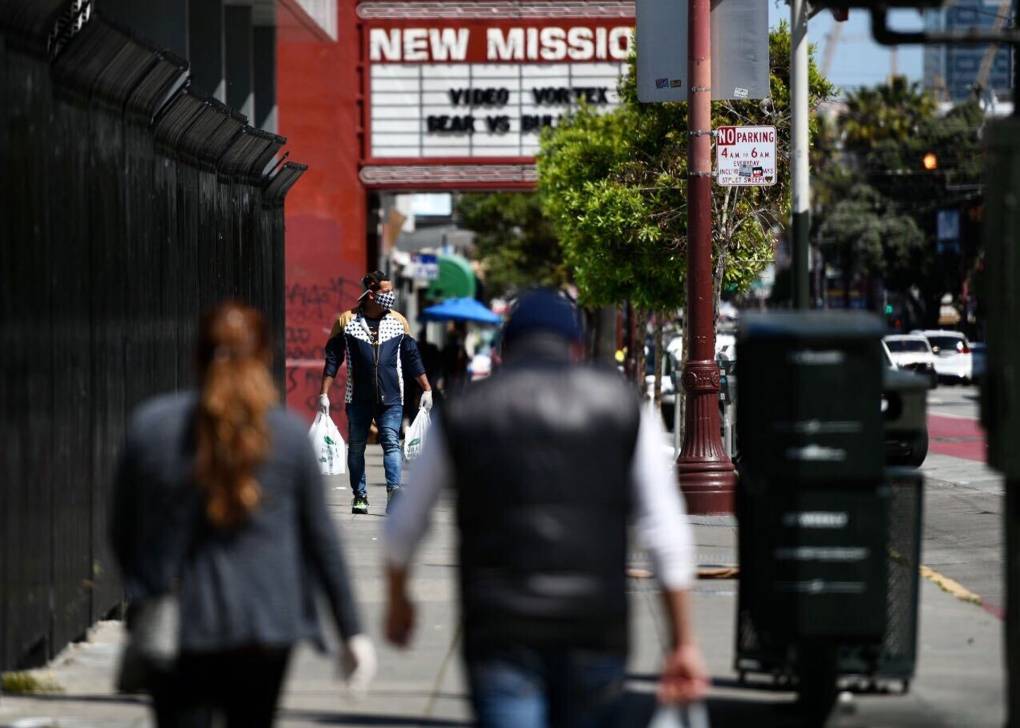
"caption": "Pedestrians walk in San Francisco's Mission District.",
"description": "Pedestrians walk in San Francisco's Mission District.",
"title": "Mission-Street-pedestrians",
"credit": "Beth LaBerge/KQED",
"status": "inherit",
"altTag": "Two people photographed from behind walking down what is recognizably Mission Street in San Francisco, because of the New Mission theater sign in the background, in focus.",
"isLoading": false,
"fetchFailed": false
},
"news_11792011": {
"type": "attachments",
"id": "news_11792011",
"meta": {
"index": "attachments_1716263798",
"site": "news",
"id": "11792011",
"found": true
},
"parent": 11791987,
"imgSizes": {
"apple_news_ca_landscape_5_5": {
"file": "https://ww2.kqed.org/app/uploads/sites/10/2019/12/FOOD-PRESCRIBE-photo-1-1044x783.jpg",
"width": 1044,
"mimeType": "image/jpeg",
"height": 783
},
"apple_news_ca_square_4_0": {
"file": "https://ww2.kqed.org/app/uploads/sites/10/2019/12/FOOD-PRESCRIBE-photo-1-470x470.jpg",
"width": 470,
"mimeType": "image/jpeg",
"height": 470
},
"twentyfourteen-full-width": {
"file": "https://ww2.kqed.org/app/uploads/sites/10/2019/12/FOOD-PRESCRIBE-photo-1-1038x576.jpg",
"width": 1038,
"mimeType": "image/jpeg",
"height": 576
},
"thumbnail": {
"file": "https://ww2.kqed.org/app/uploads/sites/10/2019/12/FOOD-PRESCRIBE-photo-1-160x107.jpg",
"width": 160,
"mimeType": "image/jpeg",
"height": 107
},
"post-thumbnail": {
"file": "https://ww2.kqed.org/app/uploads/sites/10/2019/12/FOOD-PRESCRIBE-photo-1-672x372.jpg",
"width": 672,
"mimeType": "image/jpeg",
"height": 372
},
"kqedFullSize": {
"file": "https://ww2.kqed.org/app/uploads/sites/10/2019/12/FOOD-PRESCRIBE-photo-1.jpg",
"width": 1920,
"height": 1280
},
"apple_news_ca_landscape_4_7": {
"file": "https://ww2.kqed.org/app/uploads/sites/10/2019/12/FOOD-PRESCRIBE-photo-1-632x474.jpg",
"width": 632,
"mimeType": "image/jpeg",
"height": 474
},
"large": {
"file": "https://ww2.kqed.org/app/uploads/sites/10/2019/12/FOOD-PRESCRIBE-photo-1-1020x680.jpg",
"width": 1020,
"mimeType": "image/jpeg",
"height": 680
},
"complete_open_graph": {
"file": "https://ww2.kqed.org/app/uploads/sites/10/2019/12/FOOD-PRESCRIBE-photo-1-1200x800.jpg",
"width": 1200,
"mimeType": "image/jpeg",
"height": 800
},
"apple_news_ca_landscape_4_0": {
"file": "https://ww2.kqed.org/app/uploads/sites/10/2019/12/FOOD-PRESCRIBE-photo-1-536x402.jpg",
"width": 536,
"mimeType": "image/jpeg",
"height": 402
},
"apple_news_ca_portrait_12_9": {
"file": "https://ww2.kqed.org/app/uploads/sites/10/2019/12/FOOD-PRESCRIBE-photo-1-1122x1280.jpg",
"width": 1122,
"mimeType": "image/jpeg",
"height": 1280
},
"medium": {
"file": "https://ww2.kqed.org/app/uploads/sites/10/2019/12/FOOD-PRESCRIBE-photo-1-800x533.jpg",
"width": 800,
"mimeType": "image/jpeg",
"height": 533
},
"apple_news_ca_portrait_4_0": {
"file": "https://ww2.kqed.org/app/uploads/sites/10/2019/12/FOOD-PRESCRIBE-photo-1-354x472.jpg",
"width": 354,
"mimeType": "image/jpeg",
"height": 472
},
"apple_news_ca_portrait_9_7": {
"file": "https://ww2.kqed.org/app/uploads/sites/10/2019/12/FOOD-PRESCRIBE-photo-1-840x1120.jpg",
"width": 840,
"mimeType": "image/jpeg",
"height": 1120
},
"apple_news_ca_landscape_12_9": {
"file": "https://ww2.kqed.org/app/uploads/sites/10/2019/12/FOOD-PRESCRIBE-photo-1-1832x1280.jpg",
"width": 1832,
"mimeType": "image/jpeg",
"height": 1280
},
"apple_news_ca_square_9_7": {
"file": "https://ww2.kqed.org/app/uploads/sites/10/2019/12/FOOD-PRESCRIBE-photo-1-1104x1104.jpg",
"width": 1104,
"mimeType": "image/jpeg",
"height": 1104
},
"apple_news_ca_portrait_4_7": {
"file": "https://ww2.kqed.org/app/uploads/sites/10/2019/12/FOOD-PRESCRIBE-photo-1-414x552.jpg",
"width": 414,
"mimeType": "image/jpeg",
"height": 552
},
"apple_news_ca_square_12_9": {
"file": "https://ww2.kqed.org/app/uploads/sites/10/2019/12/FOOD-PRESCRIBE-photo-1-1472x1280.jpg",
"width": 1472,
"mimeType": "image/jpeg",
"height": 1280
},
"apple_news_ca_portrait_5_5": {
"file": "https://ww2.kqed.org/app/uploads/sites/10/2019/12/FOOD-PRESCRIBE-photo-1-687x916.jpg",
"width": 687,
"mimeType": "image/jpeg",
"height": 916
},
"full-width": {
"file": "https://ww2.kqed.org/app/uploads/sites/10/2019/12/FOOD-PRESCRIBE-photo-1-1920x1280.jpg",
"width": 1920,
"mimeType": "image/jpeg",
"height": 1280
},
"apple_news_ca_square_4_7": {
"file": "https://ww2.kqed.org/app/uploads/sites/10/2019/12/FOOD-PRESCRIBE-photo-1-550x550.jpg",
"width": 550,
"mimeType": "image/jpeg",
"height": 550
},
"apple_news_ca_landscape_9_7": {
"file": "https://ww2.kqed.org/app/uploads/sites/10/2019/12/FOOD-PRESCRIBE-photo-1-1376x1032.jpg",
"width": 1376,
"mimeType": "image/jpeg",
"height": 1032
},
"apple_news_ca_square_5_5": {
"file": "https://ww2.kqed.org/app/uploads/sites/10/2019/12/FOOD-PRESCRIBE-photo-1-912x912.jpg",
"width": 912,
"mimeType": "image/jpeg",
"height": 912
}
},
"publishDate": 1576701830,
"modified": 1576702035,
"caption": "La Cl’nica staff members Maria Rangel, second from left, and Ana Lopez, third from left, help distribute food to patients at San Antonio Neighborhood Health Center in Oakland, Calif.",
"description": null,
"title": "La Clinica healthy food",
"credit": "Aric Crabb/Bay Area News Group",
"status": "inherit",
"isLoading": false,
"fetchFailed": false
},
"news_11773027": {
"type": "attachments",
"id": "news_11773027",
"meta": {
"index": "attachments_1716263798",
"site": "news",
"id": "11773027",
"found": true
},
"parent": 11773000,
"imgSizes": {
"kqedFullSize": {
"file": "https://ww2.kqed.org/app/uploads/sites/10/2019/09/IMG_3267-1-e1567975054451.jpg",
"width": 1920,
"height": 1440
}
},
"publishDate": 1567970654,
"modified": 1567974320,
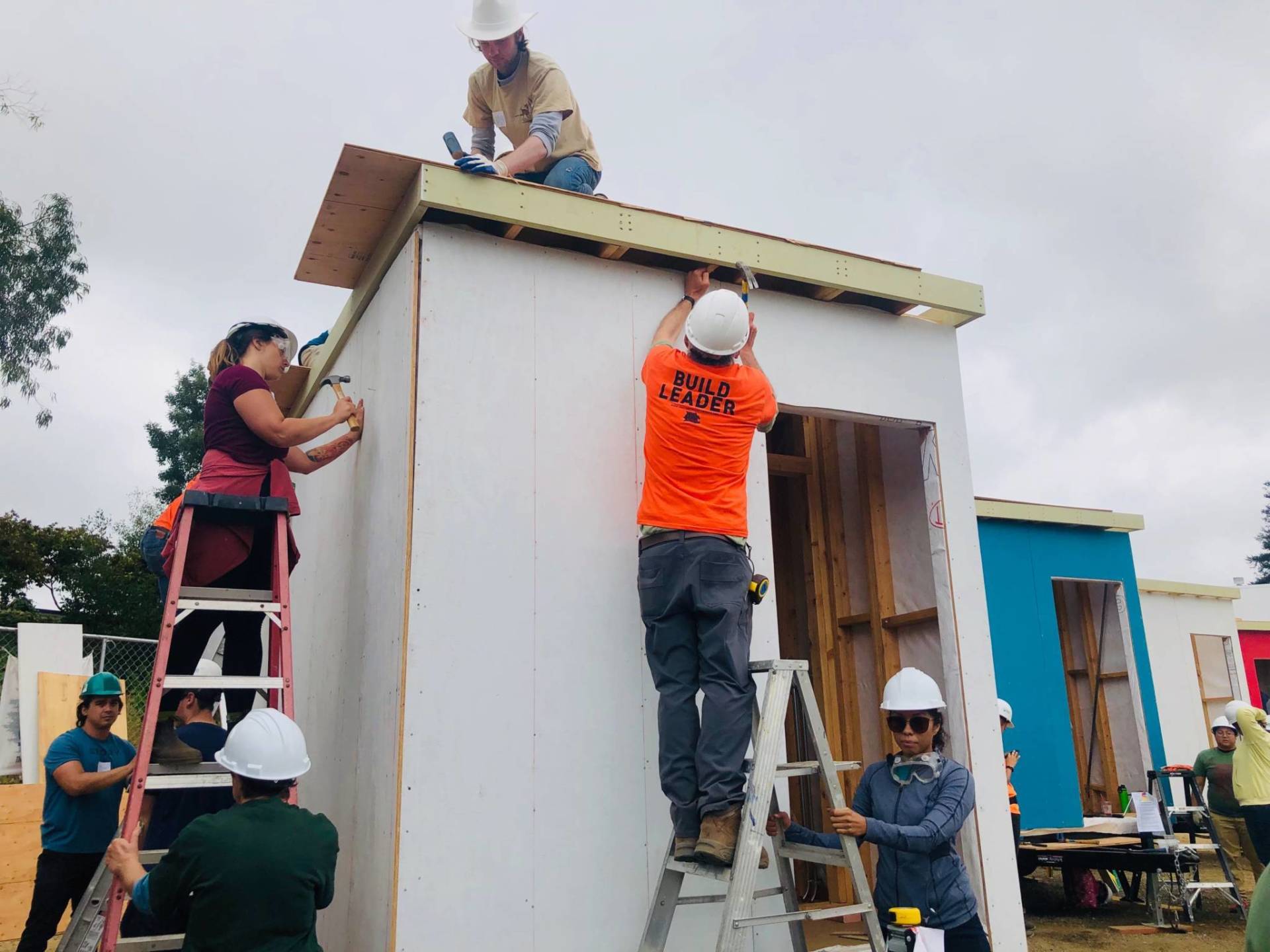
"caption": "Volunteers are helping build what could become the first tiny home village for youth aged 18-25.",
"description": "Volunteers are helping build what could become the first tiny home village for youth aged 18-25.",
"title": "IMG_3267-1",
"credit": "Tiffany Camhi/KQED",
"status": "inherit",
"isLoading": false,
"fetchFailed": false
}
},
"audioPlayerReducer": {
"postId": "stream_live",
"isPaused": true,
"isPlaying": false,
"pfsActive": false,
"pledgeModalIsOpen": true,
"playerDrawerIsOpen": false,
"liveAudioPlayStartedAt": 0,
"liveAudioPlayContext": ""
},
"authorsReducer": {
"byline_news_11843885": {
"type": "authors",
"id": "byline_news_11843885",
"meta": {
"override": true
},
"slug": "byline_news_11843885",
"name": "\u003ca href=\"https://khn.org/news/author/jenny-gold/\">Jenny Gold\u003c/a> and \u003ca href=\"https://khn.org/news/author/rachana-pradhan/\">Rachana Pradhan\u003c/a>",
"isLoading": false
},
"byline_news_11791987": {
"type": "authors",
"id": "byline_news_11791987",
"meta": {
"override": true
},
"slug": "byline_news_11791987",
"name": "Erica Hellerstein\u003cbr>\u003ca href=\"https://calmatters.org/california-divide/2019/12/why-this-bay-area-county-is-betting-big-on-food-pharmacies-for-low-income-patients/\">CALmatters\u003c/a>",
"isLoading": false
},
"dmarks": {
"type": "authors",
"id": "182",
"meta": {
"index": "authors_1716337520",
"id": "182",
"found": true
},
"name": "David Marks",
"firstName": "David",
"lastName": "Marks",
"slug": "dmarks",
"email": "dmarks@kqed.org",
"display_author_email": false,
"staff_mastheads": [],
"title": "KQED Editor",
"bio": "David Marks is a senior digital editor for KQED News. \u003c/a>Reach him at dmarks@kqed.org.",
"avatar": "https://secure.gravatar.com/avatar/b88bd6227ce6cb96ae33fefaf42b2a29?s=600&d=mm&r=g",
"twitter": "divadskram",
"facebook": null,
"instagram": null,
"linkedin": null,
"sites": [
{
"site": "news",
"roles": []
},
{
"site": "science",
"roles": []
},
{
"site": "perspectives",
"roles": []
},
{
"site": "liveblog",
"roles": []
}
],
"headData": {
"title": "David Marks | KQED",
"description": "KQED Editor",
"ogImgSrc": "https://secure.gravatar.com/avatar/b88bd6227ce6cb96ae33fefaf42b2a29?s=600&d=mm&r=g",
"twImgSrc": "https://secure.gravatar.com/avatar/b88bd6227ce6cb96ae33fefaf42b2a29?s=600&d=mm&r=g"
},
"isLoading": false,
"link": "/author/dmarks"
},
"lisapickoffwhite-2": {
"type": "authors",
"id": "199",
"meta": {
"index": "authors_1716337520",
"id": "199",
"found": true
},
"name": "Lisa Pickoff-White",
"firstName": "Lisa",
"lastName": "Pickoff-White",
"slug": "lisapickoffwhite-2",
"email": "lpickoffwhite@kqed.org",
"display_author_email": false,
"staff_mastheads": [
"news"
],
"title": "Data Journalist, Senior Producer",
"bio": "Lisa Pickoff-White is KQED's data reporter. Lisa specializes in simplifying complex topics and bringing them to life through compelling visuals, including photography and data visualizations. She previously has worked at the Center for Investigative Reporting and other national outlets. Her work has been honored with awards from the Online News Association, Investigative Reporters and Editors, the Society of Professional Journalists and SXSW Interactive. \u003cstrong> \u003c/strong>",
"avatar": "https://secure.gravatar.com/avatar/5513c5f3967df792aa65bee2501e84d6?s=600&d=blank&r=g",
"twitter": "pickoffwhite",
"facebook": null,
"instagram": null,
"linkedin": null,
"sites": [
{
"site": "",
"roles": [
"editor"
]
},
{
"site": "arts",
"roles": []
},
{
"site": "news",
"roles": [
"administrator"
]
},
{
"site": "about",
"roles": [
"editor"
]
},
{
"site": "stateofhealth",
"roles": [
"administrator"
]
},
{
"site": "science",
"roles": [
"editor"
]
},
{
"site": "quest",
"roles": [
"editor"
]
},
{
"site": "forum",
"roles": [
"editor"
]
}
],
"headData": {
"title": "Lisa Pickoff-White | KQED",
"description": "Data Journalist, Senior Producer",
"ogImgSrc": "https://secure.gravatar.com/avatar/5513c5f3967df792aa65bee2501e84d6?s=600&d=blank&r=g",
"twImgSrc": "https://secure.gravatar.com/avatar/5513c5f3967df792aa65bee2501e84d6?s=600&d=blank&r=g"
},
"isLoading": false,
"link": "/author/lisapickoffwhite-2"
},
"danbrekke": {
"type": "authors",
"id": "222",
"meta": {
"index": "authors_1716337520",
"id": "222",
"found": true
},
"name": "Dan Brekke",
"firstName": "Dan",
"lastName": "Brekke",
"slug": "danbrekke",
"email": "dbrekke@kqed.org",
"display_author_email": true,
"staff_mastheads": [
"news",
"science"
],
"title": "KQED Editor and Reporter",
"bio": "Dan Brekke is a reporter and editor for KQED News, responsible for coverage of topics ranging from California water issues to the Bay Area's transportation challenges. In a newsroom career that began in Chicago in 1972, Dan has worked for \u003cem>The San Francisco Examiner,\u003c/em> Wired and TechTV and has been published in The New York Times, The New York Times Magazine, Business 2.0, Salon and elsewhere.\r\n\r\nSince joining KQED in 2007, Dan has reported, edited and produced both radio and online features and breaking news pieces. He has shared as both editor and reporter in four Society of Professional Journalists Norcal Excellence in Journalism awards and one Edward R. Murrow regional award. He was chosen for a spring 2017 residency at the Mesa Refuge to advance his research on California salmon.\r\n\r\nEmail Dan at: \u003ca href=\"mailto:dbrekke@kqed.org\">dbrekke@kqed.org\u003c/a>\r\n\r\n\u003cstrong>Twitter:\u003c/strong> \u003ca href=\"https://twitter.com/danbrekke\" rel=\"noopener noreferrer\">twitter.com/danbrekke\u003c/a>\r\n\u003cstrong>Facebook:\u003c/strong> \u003ca href=\"https://www.facebook.com/danbrekke\" rel=\"noopener noreferrer\">www.facebook.com/danbrekke\u003c/a>\r\n\u003cstrong>LinkedIn:\u003c/strong> \u003ca href=\"https://www.linkedin.com/in/danbrekke\" rel=\"noopener noreferrer\">www.linkedin.com/in/danbrekke\u003c/a>",
"avatar": "https://secure.gravatar.com/avatar/c8126230345efca3f7aa89b1a402be45?s=600&d=mm&r=g",
"twitter": "danbrekke",
"facebook": null,
"instagram": "https://www.instagram.com/dan.brekke/",
"linkedin": "https://www.linkedin.com/in/danbrekke/",
"sites": [
{
"site": "news",
"roles": [
"administrator",
"create_posts"
]
},
{
"site": "stateofhealth",
"roles": [
"editor"
]
},
{
"site": "science",
"roles": [
"editor"
]
},
{
"site": "quest",
"roles": [
"contributor"
]
},
{
"site": "food",
"roles": [
"contributor"
]
},
{
"site": "forum",
"roles": [
"contributor"
]
},
{
"site": "liveblog",
"roles": [
"editor"
]
}
],
"headData": {
"title": "Dan Brekke | KQED",
"description": "KQED Editor and Reporter",
"ogImgSrc": "https://secure.gravatar.com/avatar/c8126230345efca3f7aa89b1a402be45?s=600&d=mm&r=g",
"twImgSrc": "https://secure.gravatar.com/avatar/c8126230345efca3f7aa89b1a402be45?s=600&d=mm&r=g"
},
"isLoading": false,
"link": "/author/danbrekke"
},
"jmcevoy": {
"type": "authors",
"id": "231",
"meta": {
"index": "authors_1716337520",
"id": "231",
"found": true
},
"name": "Julia McEvoy",
"firstName": "Julia",
"lastName": "McEvoy",
"slug": "jmcevoy",
"email": "jmcevoy@KQED.org",
"display_author_email": true,
"staff_mastheads": [
"news"
],
"title": "KQED Senior Editor",
"bio": "Julia McEvoy is KQED's Senior Editor, Education Equity.\r\n\r\nJulia heads KQED’s education coverage examining inequities students face in Bay Area and California schools, and reports on what it will take to educate the next generation.\r\n\r\nJulia's editorial work has received a Peabody Award, a Casey Medal for Coverage of Children and Families, several Edward R. Murrow awards, as well as awards from the Public Radio News Directors Inc. and the Society for Professional Journalists.",
"avatar": "https://secure.gravatar.com/avatar/aec3ce21abe02b302fd33638abd56a22?s=600&d=blank&r=g",
"twitter": "juliamcevoy1",
"facebook": null,
"instagram": null,
"linkedin": null,
"sites": [
{
"site": "news",
"roles": []
},
{
"site": "stateofhealth",
"roles": [
"author"
]
}
],
"headData": {
"title": "Julia McEvoy | KQED",
"description": "KQED Senior Editor",
"ogImgSrc": "https://secure.gravatar.com/avatar/aec3ce21abe02b302fd33638abd56a22?s=600&d=blank&r=g",
"twImgSrc": "https://secure.gravatar.com/avatar/aec3ce21abe02b302fd33638abd56a22?s=600&d=blank&r=g"
},
"isLoading": false,
"link": "/author/jmcevoy"
},
"scottshafer": {
"type": "authors",
"id": "255",
"meta": {
"index": "authors_1716337520",
"id": "255",
"found": true
},
"name": "Scott Shafer",
"firstName": "Scott",
"lastName": "Shafer",
"slug": "scottshafer",
"email": "sshafer@kqed.org",
"display_author_email": false,
"staff_mastheads": [
"news"
],
"title": "KQED Contributor",
"bio": "Scott Shafer is a senior editor with the KQED Politics and Government desk. He is co-host of Political Breakdown, the award-winning radio show and podcast with a personal take on the world of politics. Scott came to KQED in 1998 to host the statewide\u003cem> California Report\u003c/em>. Prior to that he had extended stints in politics and government\u003cem>.\u003c/em> He uses that inside experience at KQED in his, reporting, hosting and analysis for the politics desk. Scott collaborated \u003cem>Political Breakdown a\u003c/em>nd on \u003cem>The Political Mind of Jerry Brown, \u003c/em>an eight-part series about the life and extraordinary political career of the former governor. For fun, he plays water polo with the San Francisco Tsunami.",
"avatar": "https://secure.gravatar.com/avatar/a62ebae45b79d7aed1a39a0e3bf68104?s=600&d=blank&r=g",
"twitter": "scottshafer",
"bluesky": null,
"facebook": null,
"instagram": null,
"linkedin": null,
"sites": [
{
"site": "news",
"roles": [
"editor"
]
},
{
"site": "stateofhealth",
"roles": [
"author"
]
},
{
"site": "science",
"roles": [
"author"
]
},
{
"site": "forum",
"roles": [
"subscriber"
]
},
{
"site": "liveblog",
"roles": [
"author"
]
}
],
"headData": {
"title": "Scott Shafer | KQED",
"description": "KQED Contributor",
"ogImgSrc": "https://secure.gravatar.com/avatar/a62ebae45b79d7aed1a39a0e3bf68104?s=600&d=blank&r=g",
"twImgSrc": "https://secure.gravatar.com/avatar/a62ebae45b79d7aed1a39a0e3bf68104?s=600&d=blank&r=g"
},
"isLoading": false,
"link": "/author/scottshafer"
},
"matthewgreen": {
"type": "authors",
"id": "1263",
"meta": {
"index": "authors_1716337520",
"id": "1263",
"found": true
},
"name": "Matthew Green",
"firstName": "Matthew",
"lastName": "Green",
"slug": "matthewgreen",
"email": "mgreen@kqed.org",
"display_author_email": false,
"staff_mastheads": [],
"title": "KQED Editor/Reporter",
"bio": "Matthew Green is a digital media producer for KQED News. He previously produced \u003ca href=\"http://www.kqed.org/lowdown\">The Lowdown\u003c/a>, KQED’s multimedia news education blog. Matthew's written for numerous Bay Area publications, including the Oakland Tribune and San Francisco Chronicle. He also taught journalism classes at Fremont High School in East Oakland.\r\n\r\nEmail: mgreen@kqed.org; Twitter: @MGreenKQED",
"avatar": "https://secure.gravatar.com/avatar/3bf498d1267ca02c8494f33d8cfc575e?s=600&d=blank&r=g",
"twitter": "MGreenKQED",
"facebook": null,
"instagram": null,
"linkedin": null,
"sites": [
{
"site": "news",
"roles": []
},
{
"site": "lowdown",
"roles": []
},
{
"site": "science",
"roles": []
},
{
"site": "education",
"roles": []
},
{
"site": "quest",
"roles": []
},
{
"site": "liveblog",
"roles": []
}
],
"headData": {
"title": "Matthew Green | KQED",
"description": "KQED Editor/Reporter",
"ogImgSrc": "https://secure.gravatar.com/avatar/3bf498d1267ca02c8494f33d8cfc575e?s=600&d=blank&r=g",
"twImgSrc": "https://secure.gravatar.com/avatar/3bf498d1267ca02c8494f33d8cfc575e?s=600&d=blank&r=g"
},
"isLoading": false,
"link": "/author/matthewgreen"
},
"tcamhi": {
"type": "authors",
"id": "3251",
"meta": {
"index": "authors_1716337520",
"id": "3251",
"found": true
},
"name": "Tiffany Camhi",
"firstName": "Tiffany",
"lastName": "Camhi",
"slug": "tcamhi",
"email": "tiffanycamhi@gmail.com",
"display_author_email": false,
"staff_mastheads": [],
"title": "KQED Contributor",
"bio": null,
"avatar": "https://secure.gravatar.com/avatar/f8204ce351139205d3b3dc1581016a5e30d7d8b38cb2c139348c151ec14b792e?s=600&d=blank&r=g",
"twitter": null,
"bluesky": null,
"facebook": null,
"instagram": null,
"linkedin": null,
"sites": [
{
"site": "arts",
"roles": [
"subscriber"
]
},
{
"site": "news",
"roles": [
"subscriber"
]
}
],
"headData": {
"title": "Tiffany Camhi | KQED",
"description": "KQED Contributor",
"ogImgSrc": "https://secure.gravatar.com/avatar/f8204ce351139205d3b3dc1581016a5e30d7d8b38cb2c139348c151ec14b792e?s=600&d=blank&r=g",
"twImgSrc": "https://secure.gravatar.com/avatar/f8204ce351139205d3b3dc1581016a5e30d7d8b38cb2c139348c151ec14b792e?s=600&d=blank&r=g"
},
"isLoading": false,
"link": "/author/tcamhi"
},
"ecruzguevarra": {
"type": "authors",
"id": "8654",
"meta": {
"index": "authors_1716337520",
"id": "8654",
"found": true
},
"name": "Ericka Cruz Guevarra",
"firstName": "Ericka",
"lastName": "Cruz Guevarra",
"slug": "ecruzguevarra",
"email": "ecruzguevarra@kqed.org",
"display_author_email": true,
"staff_mastheads": [
"news"
],
"title": "Producer, The Bay Podcast",
"bio": "Ericka Cruz Guevarra is host of \u003ca href=\"https://www.kqed.org/podcasts/thebay\">\u003cem>The Bay\u003c/em>\u003c/a> podcast at KQED. Before host, she was the show’s producer. Her work in that capacity includes a three-part reported series on policing in Vallejo, which won a 2020 excellence in journalism award from the Society of Professional Journalists. Ericka has worked as a breaking news reporter at Oregon Public Broadcasting, helped produce the Code Switch podcast, and was KQED’s inaugural Raul Ramirez Diversity Fund intern. She’s also an alumna of NPR’s Next Generation Radio program. Send her an email if you have strong feelings about whether Fairfield and Suisun City are the Bay. Ericka is represented by SAG-AFTRA.",
"avatar": "https://secure.gravatar.com/avatar/accefc1de4bafc7e234b69bcb9b6f6536c130fd84709bc3069ef11a78787e1bb?s=600&d=blank&r=g",
"twitter": "NotoriousECG",
"bluesky": null,
"facebook": null,
"instagram": null,
"linkedin": null,
"sites": [
{
"site": "arts",
"roles": [
"subscriber"
]
},
{
"site": "news",
"roles": [
"editor",
"manage_categories"
]
},
{
"site": "futureofyou",
"roles": [
"subscriber"
]
},
{
"site": "stateofhealth",
"roles": [
"subscriber"
]
},
{
"site": "science",
"roles": [
"editor"
]
},
{
"site": "forum",
"roles": [
"subscriber"
]
}
],
"headData": {
"title": "Ericka Cruz Guevarra | KQED",
"description": "Producer, The Bay Podcast",
"ogImgSrc": "https://secure.gravatar.com/avatar/accefc1de4bafc7e234b69bcb9b6f6536c130fd84709bc3069ef11a78787e1bb?s=600&d=blank&r=g",
"twImgSrc": "https://secure.gravatar.com/avatar/accefc1de4bafc7e234b69bcb9b6f6536c130fd84709bc3069ef11a78787e1bb?s=600&d=blank&r=g"
},
"isLoading": false,
"link": "/author/ecruzguevarra"
},
"mwiley": {
"type": "authors",
"id": "11526",
"meta": {
"index": "authors_1716337520",
"id": "11526",
"found": true
},
"name": "Michelle Wiley",
"firstName": "Michelle",
"lastName": "Wiley",
"slug": "mwiley",
"email": "mwiley@KQED.org",
"display_author_email": true,
"staff_mastheads": [],
"title": null,
"bio": "Michelle Wiley was the senior editor of weekends.",
"avatar": "https://secure.gravatar.com/avatar/3b897d82a09e8587e8e73fa69fbcc635?s=600&d=blank&r=g",
"twitter": "michelleewiley",
"facebook": null,
"instagram": null,
"linkedin": null,
"sites": [
{
"site": "",
"roles": [
"editor"
]
},
{
"site": "arts",
"roles": [
"editor"
]
},
{
"site": "news",
"roles": [
"subscriber"
]
},
{
"site": "lowdown",
"roles": [
"editor"
]
},
{
"site": "science",
"roles": [
"editor"
]
},
{
"site": "podcasts",
"roles": [
"editor"
]
}
],
"headData": {
"title": "Michelle Wiley | KQED",
"description": null,
"ogImgSrc": "https://secure.gravatar.com/avatar/3b897d82a09e8587e8e73fa69fbcc635?s=600&d=blank&r=g",
"twImgSrc": "https://secure.gravatar.com/avatar/3b897d82a09e8587e8e73fa69fbcc635?s=600&d=blank&r=g"
},
"isLoading": false,
"link": "/author/mwiley"
},
"ebaldassari": {
"type": "authors",
"id": "11652",
"meta": {
"index": "authors_1716337520",
"id": "11652",
"found": true
},
"name": "Erin Baldassari",
"firstName": "Erin",
"lastName": "Baldassari",
"slug": "ebaldassari",
"email": "ebaldassari@KQED.org",
"display_author_email": true,
"staff_mastheads": [
"news"
],
"title": "Staff Writer",
"bio": "Erin Baldassari covers housing for KQED. She's a former print journalist and most recently worked as the transportation reporter for the \u003cem>Mercury News\u003c/em> and \u003cem>East Bay Times. \u003c/em>There, she focused on how the Bay Area’s housing shortage has changed the way people move around the region. She also served on the \u003cem>East Bay Times\u003c/em>’ 2017 Pulitzer Prize-winning team for coverage of the Ghost Ship Fire in Oakland. Prior to that, Erin worked as a breaking news and general assignment reporter for a variety of outlets in the Bay Area and the greater Boston area. A Tufts University alumna, Erin grew up in the foothills of the Sierra Nevada mountains and in Sonoma County. She is a life-long KQED listener.",
"avatar": "https://secure.gravatar.com/avatar/5e95cad64a8ca08288082212e199d2b0cbeb4fd8e8ef5339395f361032bbe005?s=600&d=blank&r=g",
"twitter": "e_baldi",
"bluesky": null,
"facebook": null,
"instagram": null,
"linkedin": null,
"sites": [
{
"site": "news",
"roles": [
"edit_others_posts",
"editor"
]
},
{
"site": "science",
"roles": [
"editor"
]
},
{
"site": "liveblog",
"roles": [
"editor"
]
}
],
"headData": {
"title": "Erin Baldassari | KQED",
"description": "Staff Writer",
"ogImgSrc": "https://secure.gravatar.com/avatar/5e95cad64a8ca08288082212e199d2b0cbeb4fd8e8ef5339395f361032bbe005?s=600&d=blank&r=g",
"twImgSrc": "https://secure.gravatar.com/avatar/5e95cad64a8ca08288082212e199d2b0cbeb4fd8e8ef5339395f361032bbe005?s=600&d=blank&r=g"
},
"isLoading": false,
"link": "/author/ebaldassari"
},
"nsparling": {
"type": "authors",
"id": "11655",
"meta": {
"index": "authors_1716337520",
"id": "11655",
"found": true
},
"name": "Nina Sparling",
"firstName": "Nina",
"lastName": "Sparling",
"slug": "nsparling",
"email": "nsparling@kqed.org",
"display_author_email": false,
"staff_mastheads": [],
"title": "KQED Contributor",
"bio": null,
"avatar": "https://secure.gravatar.com/avatar/4f605141f48bfba20520677de109f9bc?s=600&d=blank&r=g",
"twitter": null,
"facebook": null,
"instagram": null,
"linkedin": null,
"sites": [
{
"site": "",
"roles": [
"editor"
]
},
{
"site": "news",
"roles": [
"author"
]
},
{
"site": "forum",
"roles": [
"editor"
]
},
{
"site": "perspectives",
"roles": [
"editor"
]
}
],
"headData": {
"title": "Nina Sparling | KQED",
"description": "KQED Contributor",
"ogImgSrc": "https://secure.gravatar.com/avatar/4f605141f48bfba20520677de109f9bc?s=600&d=blank&r=g",
"twImgSrc": "https://secure.gravatar.com/avatar/4f605141f48bfba20520677de109f9bc?s=600&d=blank&r=g"
},
"isLoading": false,
"link": "/author/nsparling"
}
},
"pagesReducer": {
"news_tag_alameda-county": {
"type": "terms",
"id": "news_260",
"meta": {
"index": "terms_1716263798",
"site": "news",
"id": "260",
"score": 9.556114
},
"featImg": null,
"name": "Alameda County",
"description": null,
"taxonomy": "tag",
"headData": {
"twImgId": null,
"twTitle": null,
"ogTitle": null,
"ogImgId": null,
"twDescription": null,
"description": null,
"title": "Alameda County Archives | KQED News",
"ogDescription": null
},
"ttid": 268,
"slug": "alameda-county",
"isLoading": false,
"title": "Alameda County",
"pageMeta": {
"site": "news",
"WpPageTemplate": "page-topic-editorial",
"currentPage": 17
},
"blocks": [
{
"blockName": "kqed/post-list",
"attrs": {
"layout": "cardArticle2",
"query": "posts/news?tag=alameda-county",
"seeMore": false,
"paginated": true,
"page": 17
}
},
{
"blockName": "kqed/ad"
}
]
}
},
"pfsSessionReducer": {},
"postsReducer": {
"stream_live": {
"type": "live",
"id": "stream_live",
"audioUrl": "https://streams.kqed.org/kqedradio",
"title": "Live Stream",
"excerpt": "Live Stream information currently unavailable.",
"link": "/radio",
"featImg": "",
"label": {
"name": "KQED Live",
"link": "/"
}
},
"stream_kqedNewscast": {
"type": "posts",
"id": "stream_kqedNewscast",
"audioUrl": "https://www.kqed.org/.stream/anon/radio/RDnews/newscast.mp3?_=1",
"title": "KQED Newscast",
"featImg": "",
"label": {
"name": "88.5 FM",
"link": "/"
}
},
"news_11847285": {
"type": "posts",
"id": "news_11847285",
"meta": {
"index": "posts_1716263798",
"site": "news",
"id": "11847285",
"score": null,
"sort": [
1605226395000
]
},
"parent": 0,
"labelTerm": {
"site": "news"
},
"blocks": [],
"publishDate": 1605226395,
"format": "standard",
"disqusTitle": "Alameda County Pauses Reopenings as California Hits 1 Million COVID-19 Cases",
"title": "Alameda County Pauses Reopenings as California Hits 1 Million COVID-19 Cases",
"headTitle": "KQED News",
"content": "\u003cp>Public health officials in Alameda County on Thursday said they were temporarily pausing further openings to the economy following an increase in the county's COVID-19 case rate and the rise in Bay Area and statewide cases. Also on Thursday, California became the second US state (after Texas) to pass a grim milestone: 1 million cases since the coronavirus pandemic began.\u003c/p>\n\u003cp>Alameda County's new daily cases per 100,000 people has jumped from a low of 3.4 to 4.9.\u003c/p>\n\u003cp>The county is currently in the orange, or moderate-risk tier in the \u003ca href=\"https://covid19.ca.gov/safer-economy/\">state's reopening hierarchy\u003c/a>, but health officials said Thursday they expect the county to move to a more restrictive tier soon.\u003c/p>\n\u003cp>\"We must exercise caution and prepare to move quickly to protect our residents and hospitals from rising cases of COVID-19,\" Dr. Nicholas Moss, the county's health officer, said in a statement.\u003c/p>\n\u003cp>\"We continue to closely monitor the situation,\" he said. \"If necessary, we will restrict activities that are higher risk for spreading COVID-19, including those in which people gather indoors without masks.\"\u003c/p>\n\u003cp>The caution comes as county officials have seen day-over-day increases in the number of new reported COVID-19 cases as well as increases in hospitalizations.\u003c/p>\n\u003cp>Contra Costa and Santa Cruz counties on Tuesday moved to a more restrictive tier.\u003c/p>\n\u003cp>Alameda County public health officials said with flu season imminent, flu cases this year will add an even greater burden on the health care system because the coronavirus and flu have similar symptoms.\u003c/p>\n\u003cp>\u003cem>— KQED News Staff and Wires\u003c/em>\u003c/p>\n",
"disqusIdentifier": "11847285 https://ww2.kqed.org/news/?p=11847285",
"disqusUrl": "https://ww2.kqed.org/news/2020/11/12/alameda-county-pauses-reopenings-as-california-hits-1-million-covid-19-cases/",
"stats": {
"hasVideo": false,
"hasChartOrMap": false,
"hasAudio": false,
"hasPolis": false,
"wordCount": 261,
"hasGoogleForm": false,
"hasGallery": false,
"hasHearkenModule": false,
"iframeSrcs": [],
"paragraphCount": 9
},
"modified": 1605226793,
"excerpt": "The county is currently in the moderate-risk tier in the state's reopening hierarchy, but health officials said they expect to move to a more restrictive tier soon.",
"headData": {
"twImgId": "",
"twTitle": "",
"ogTitle": "",
"ogImgId": "",
"twDescription": "",
"description": "The county is currently in the moderate-risk tier in the state's reopening hierarchy, but health officials said they expect to move to a more restrictive tier soon.",
"title": "Alameda County Pauses Reopenings as California Hits 1 Million COVID-19 Cases | KQED",
"ogDescription": "",
"schema": {
"@context": "https://schema.org",
"@type": "NewsArticle",
"headline": "Alameda County Pauses Reopenings as California Hits 1 Million COVID-19 Cases",
"datePublished": "2020-11-12T16:13:15-08:00",
"dateModified": "2020-11-12T16:19:53-08:00",
"image": "https://cdn.kqed.org/wp-content/uploads/2020/02/KQED-OG-Image@1x.png",
"isAccessibleForFree": "True",
"publisher": {
"@type": "NewsMediaOrganization",
"@id": "https://www.kqed.org/#organization",
"name": "KQED",
"logo": "https://cdn.kqed.org/wp-content/uploads/2020/02/KQED-OG-Image@1x.png",
"url": "https://www.kqed.org",
"sameAs": [
"https://www.facebook.com/KQED",
"https://twitter.com/KQED",
"https://www.instagram.com/kqed/",
"https://www.tiktok.com/@kqedofficial",
"https://www.linkedin.com/company/kqed",
"https://www.youtube.com/channel/UCeC0IOo7i1P_61zVUWbJ4nw"
]
}
}
},
"guestAuthors": [],
"slug": "alameda-county-pauses-reopenings-as-california-hits-1-million-covid-19-cases",
"status": "publish",
"justInHeadline": "Alameda county pauses reopenings as state hits 1 million cases",
"path": "/news/11847285/alameda-county-pauses-reopenings-as-california-hits-1-million-covid-19-cases",
"redirect": {
"type": "internal",
"url": "/coronavirusliveupdates/news/11847285/alameda-county-pauses-reopenings-as-california-hits-1-million-covid-19-cases"
},
"audioTrackLength": null,
"parsedContent": [
{
"type": "contentString",
"content": "\u003cdiv class=\"post-body\">\u003cp>\u003cp>Public health officials in Alameda County on Thursday said they were temporarily pausing further openings to the economy following an increase in the county's COVID-19 case rate and the rise in Bay Area and statewide cases. Also on Thursday, California became the second US state (after Texas) to pass a grim milestone: 1 million cases since the coronavirus pandemic began.\u003c/p>\n\u003cp>Alameda County's new daily cases per 100,000 people has jumped from a low of 3.4 to 4.9.\u003c/p>\n\u003cp>The county is currently in the orange, or moderate-risk tier in the \u003ca href=\"https://covid19.ca.gov/safer-economy/\">state's reopening hierarchy\u003c/a>, but health officials said Thursday they expect the county to move to a more restrictive tier soon.\u003c/p>\n\u003cp>\"We must exercise caution and prepare to move quickly to protect our residents and hospitals from rising cases of COVID-19,\" Dr. Nicholas Moss, the county's health officer, said in a statement.\u003c/p>\n\u003cp>\"We continue to closely monitor the situation,\" he said. \"If necessary, we will restrict activities that are higher risk for spreading COVID-19, including those in which people gather indoors without masks.\"\u003c/p>\n\u003cp>The caution comes as county officials have seen day-over-day increases in the number of new reported COVID-19 cases as well as increases in hospitalizations.\u003c/p>\n\u003cp>Contra Costa and Santa Cruz counties on Tuesday moved to a more restrictive tier.\u003c/p>\n\u003cp>Alameda County public health officials said with flu season imminent, flu cases this year will add an even greater burden on the health care system because the coronavirus and flu have similar symptoms.\u003c/p>\n\u003cp>\u003cem>— KQED News Staff and Wires\u003c/em>\u003c/p>\n\u003c/div>\u003c/p>",
"attributes": {
"named": {},
"numeric": []
}
}
],
"link": "/coronavirusliveupdates/news/11847285/alameda-county-pauses-reopenings-as-california-hits-1-million-covid-19-cases",
"authors": [
"182"
],
"categories": [
"news_27809"
],
"tags": [
"news_260",
"news_27350",
"news_27504",
"news_27741"
],
"featImg": "news_11813618",
"label": "news"
},
"news_11843885": {
"type": "posts",
"id": "news_11843885",
"meta": {
"index": "posts_1716263798",
"site": "news",
"id": "11843885",
"score": null,
"sort": [
1603837252000
]
},
"guestAuthors": [],
"slug": "verilys-covid-19-testing-program-halted-in-sf-oakland-over-equity-and-privacy-concerns",
"title": "Verily's COVID-19 Testing Program Halted in SF, Oakland Over Equity and Privacy Concerns",
"publishDate": 1603837252,
"format": "audio",
"headTitle": "Verily’s COVID-19 Testing Program Halted in SF, Oakland Over Equity and Privacy Concerns | KQED",
"labelTerm": {},
"content": "\u003cp>Amid fanfare in March, California officials celebrated the launch of a multimillion-dollar contract with Verily — Google’s health-focused sister company — that they said would vastly expand COVID-19 testing among the state’s impoverished and underserved communities.\u003c/p>\n\u003cp>But seven months later, San Francisco and Alameda counties — two of the state’s most populous — have severed ties with the company’s testing sites amid concerns about patients’ data privacy and complaints that funding intended to boost testing in low-income Black and Latino neighborhoods instead was benefiting higher-income residents in other communities.\u003c/p>\n\u003cp>San Francisco and Alameda are among at least 28 counties, including Los Angeles, where California has paid Verily to boost testing capacity through contracts collectively worth $55 million, according to a spokesperson for the California Governor’s Office of Emergency Services. About half of them have received COVID-19 tests through six mobile units that travel among rural areas.\u003c/p>\n\u003cp>[aside postID=news_11818312 hero='https://ww2.kqed.org/app/uploads/sites/10/2020/03/HaywardCoronavirusTesting-1020x664.jpg']Gov. Gavin Newsom has heralded the investment as a game changer in addressing persistent inequities in access to COVID-19 testing across the state that tend to fall along lines of ethnicity and income. The goal, he said in April, touting six new Verily testing sites, was to “make sure we’re truly testing California broadly defined, not just parts of California and those that somehow have the privilege of getting ahead of the line.”\u003c/p>\n\u003cp>Yet the roadblocks for getting underrepresented populations to use the program soon became apparent to Alameda County officials. \u003ca href=\"https://khn.org/wp-content/uploads/sites/2/2020/10/Letter-to-Dr.-Ghaly-on-Testing-Platform.pdf\">In a June letter\u003c/a> to California Secretary of Health Mark Ghaly, Oakland Mayor Libby Schaaf and other members of the county’s COVID-19 Racial Disparities Task Force raised numerous concerns about the Verily protocols.\u003c/p>\n\u003cp>Among their complaints: People signing up for a test through Verily had to do so online, using an existing or newly created Gmail account; the sign-ups were offered only in English or Spanish; and participants were asked to provide sensitive personal information, including their home address and whether they were managing chronic health conditions such as diabetes, obesity or congestive heart failure, which could expose their data to third-party use.\u003c/p>\n\u003cp>“It is critical in this crisis that we continue to build trust between government and healthcare providers and vulnerable communities,” the task force members wrote.\u003c/p>\n\u003cp>[ad fullwidth]\u003c/p>\n\u003cp>Verily had two sites in Alameda County, and one was shuttered by May. The second, located at an Oakland church, closed in August and is set to reopen using a different testing vendor. Alameda County testing director Dr. Jocelyn Freeman Garrick said that while the Verily sites helped the county reach testing goals in terms of raw numbers, they were phased out because of long wait times of a week or more for results, and because the tests were not reaching the residents in greatest need.\u003c/p>\n\u003cp>Verily does not manufacture the COVID-19 tests used at its California sites. It contracts with major corporations such as Quest Diagnostics and Thermo Fisher Scientific to provide the test kits and perform the lab work. What Verily provides is a digital platform where people are screened for symptoms, schedule testing appointments at participating sites and check back for test results.\u003c/p>\n\u003cp>[pullquote citation=\"Dr. Noha Aboelata, CEO of Roots Community Health Center\" size=\"medium\" align=\"right\"]‘Corporations that are not really invested in the community come helicoptering in, bearing gifts, but what they’re taking away is much more valuable.’[/pullquote]Dr. Noha Aboelata is CEO of Roots Community Health Center, an East Oakland clinic that serves mostly African Americans and is one of the original Verily sites in Oakland. Her experience with Verily is best described as a tale of two lines.\u003c/p>\n\u003cp>In May, Aboelata worked with Verily to establish a walk-up site at her clinic, rather than the drive-thru model the company typically uses. There would be two lines: one for people who scheduled their appointments through Verily’s online portal; and a second for people who had not preregistered with Verily. Roots would staff both lines, and Verily would supply test kits and personal protective equipment including masks, which were “like gold” at the time, Aboelata said.\u003c/p>\n\u003cp>Problems emerged almost immediately, she said. People were suspicious of the requirement that they sign up with a Gmail account, and the request for personal information, such as health status and risk factors. “You don’t necessarily want to share that with Google,” Aboelata said.\u003c/p>\n\u003cp>Then there was the language in the privacy policy that allows for sharing data with third parties. “That always is going to raise suspicion and concern in our community,” she said.\u003c/p>\n\u003cp>The people who ended up in the Verily-registered line, she said, tended to be white and to come from wealthier ZIP codes outside East Oakland. And because Verily never changed the website language describing Roots as a drive-thru site, many were angry at having to walk up.\u003c/p>\n\u003cp>“We had people coming from all over the Bay Area who were frustrated that they had to park in Oakland, where they had probably never been and didn’t seem to want to be,” she said. “They were creating quite a scene, and some were saying, ‘I want to talk to the manager.’” She had to ask a few people to leave. “One of them was saying, ‘This is so Oakland, and I hope you all get the virus.’ It was pretty awful.”\u003c/p>\n\u003cp>The Roots line for clients who did not register through Verily, on the other hand, was made up mostly of people of color from the community who long had come to the clinic for medical care, she said.\u003c/p>\n\u003cfigure id=\"attachment_11843963\" class=\"wp-caption aligncenter\" style=\"max-width: 1350px\">\u003cimg loading=\"lazy\" decoding=\"async\" src=\"https://ww2.kqed.org/app/uploads/sites/10/2020/10/verily_01_1350.jpg\" alt=\"a Roots Community Health Center tent\" width=\"1350\" height=\"900\" class=\"size-full wp-image-11843963\" srcset=\"https://cdn.kqed.org/wp-content/uploads/sites/10/2020/10/verily_01_1350.jpg 1350w, https://cdn.kqed.org/wp-content/uploads/sites/10/2020/10/verily_01_1350-800x533.jpg 800w, https://cdn.kqed.org/wp-content/uploads/sites/10/2020/10/verily_01_1350-1020x680.jpg 1020w, https://cdn.kqed.org/wp-content/uploads/sites/10/2020/10/verily_01_1350-160x107.jpg 160w\" sizes=\"(max-width: 1350px) 100vw, 1350px\">\u003cfigcaption class=\"wp-caption-text\">Roots Community Health Center in East Oakland is among the Alameda County COVID-19 testing sites that have severed ties with Verily. People were suspicious of the requirement that they sign up for testing with a Gmail account and the request for personal information, according to center officials. \u003ccite>(Roots Community Health Center)\u003c/cite>\u003c/figcaption>\u003c/figure>\n\u003cp>When Aboelata looked at the data, the disparities were obvious: 12.9% of people tested in the non-Verily line were positive for COVID-19, while just 1.5% of people tested in the Verily-registered line were positive. For Aboelata, it was clear that the two lines were testing two entirely different populations.\u003c/p>\n\u003cp>After just six days of testing, Aboelata asked Verily to leave.\u003c/p>\n\u003cp>“From where we sit, this is an old story,” she said. “Corporations that are not really invested in the community come helicoptering in, bearing gifts, but what they’re taking away is much more valuable.” That thing of value, Aboelata believes, is the data Verily requests from everyone who signs up for a test.\u003c/p>\n\u003cp>[aside tag=\"coronavirus-testing\" label=\"related coverage\"]In San Francisco, Verily mobile testing clinics have also been sidelined. County officials declined to provide an explanation. However, multiple people with knowledge of the testing efforts said the Verily registration process proved chaotic for homeless people and others in the Tenderloin district, one of the city’s poorest neighborhoods.\u003c/p>\n\u003cp>Kenneth Kim, clinical director of Glide, an outreach center that helped run the Tenderloin site, said many homeless residents coming in for testing had Gmail accounts, as Verily required, but could not remember their passwords. When staffers at the testing site tried to help them retrieve their passwords, they found that Google’s two-factor authentication process required users to have the same phone number as when they signed up, which few of the homeless participants did.\u003c/p>\n\u003cp>Dr. Jonathan Fuchs, who leads San Francisco County’s testing strategy at the Department of Public Health, confirmed that the partnership with Verily was “currently on hold.” He declined to provide further details.\u003c/p>\n\u003cp>In response to questions, Verily spokesperson Kathleen Parkes said the program requires users to register with Gmail accounts because Google’s authentication procedures safeguard sensitive data and protect “against unknown individuals sending or receiving information with serious consequences for health or well-being.”\u003c/p>\n\u003cp>Conversations with San Francisco and Alameda remain “active,” Parkes said. The company did not respond to specific questions about the testing disparities cited by community leaders.\u003c/p>\n\u003cp>Verily’s role in COVID-19 testing has been shadowed by controversy since President Donald Trump told reporters at a Rose Garden news conference in March that “Google” was developing a screening website and testing tool. “Google has 1,700 engineers working on this right now,” he said. “They’ve made tremendous progress.”\u003c/p>\n\u003cp>At the time, COVID-19 tests were in short supply and Trump was under pressure to increase capacity as infections ballooned in California, New York and other states. But Google was not building such a website. Instead, Verily, another Alphabet Inc. subsidiary focused on life sciences, was in the early stages of developing a website to help triage people in need of COVID-19 testing, \u003ca href=\"https://twitter.com/Google_Comms/status/1238574670686928906\">Google clarified in a tweet\u003c/a>. It planned to unveil a pilot program in two Bay Area counties.\u003c/p>\n\u003cp>Days later, Newsom announced a California partnership with Verily that so far has paid the company $55 million to establish both mobile and brick-and-mortar testing sites. In addition, Verily has partnered with Rite Aid to manage testing at approximately 300 sites in multiple states under a \u003ca href=\"https://www.usaspending.gov/award/CONT_AWD_75P00120C00030_7570_-NONE-_-NONE-\">$122.6 million federal contract\u003c/a> between the pharmacy chain and the U.S. Department of Health and Human Services. California’s Verily contracts are in place through Nov. 30; the HHS contract is set to expire in January.\u003c/p>\n\u003cp>Participants in the Verily initiative sign an authorization form that says their information can be shared with multiple third parties involved in the testing program, including unnamed contractors and state and federal health authorities.\u003c/p>\n\u003cp>“While the form tells you that Verily may share data with ‘entities that assist with the testing program,’ it doesn’t say who those entities are. If one of those unnamed and unknown entities violates your privacy by misusing your data, you have no way to know and no way to hold them accountable,” said Lee Tien, senior staff attorney for the Electronic Frontier Foundation, a nonprofit that advocates for digital privacy.\u003c/p>\n\u003cp>The policy states Verily will not use the data collected for its own research or meld it with other Google products without the user’s permission. But it notes participants may be invited to share their data for such research, and the testing portal prominently features links inviting participants to sign up for other Verily research.\u003c/p>\n\u003cp>[pullquote citation=\"Dr. Margot Kushel, director of UCSF Benioff Homelessness and Housing Initiative\" size=\"medium\" align=\"right\"]‘It turns out that in public health, the highest-tech solution is usually not the right one.’[/pullquote]In California, as of Oct. 8, the Verily sites had processed an average of 1,583 patient samples per day over the prior seven days, according to the California Department of Public Health. Verily, the state health department and Alameda County all declined requests to provide race and ethnicity data by testing site.\u003c/p>\n\u003cp>Dr. Kim Rhoads, a UCSF professor and former colorectal surgeon who leads a COVID-19 testing project for Black communities, said Aboelata’s experience with Verily is emblematic of widespread racial disparities in the testing and treatment of COVID-19. “We can’t keep talking about the consequences being unintended,” Rhoads said. “We are six months into this pandemic and anyone who is surprised by the repetitive findings of inequity in testing, the spread of virus and COVID-19 mortality just isn’t paying attention.”\u003c/p>\n\u003cp>In an interview, Ghaly, California’s health secretary, said he believed the state’s partnerships with Verily and other companies continue to be a national model for addressing problems with testing disparities, including setting up venues for minority and rural populations. For example, in counties in northern parts of the state, sometimes the only regular testing available was through mobile testing set up under the program, he said.\u003c/p>\n\u003cp>“I think there’s lots of success and lots of lessons learned and we continue to apply them,” Ghaly said. “Until the entire effort is completed, I always look at where we are as part success and part opportunity to keep learning.”\u003c/p>\n\u003cp>In \u003ca href=\"https://khn.org/wp-content/uploads/sites/2/2020/10/Secretary-Ghalys-Response-to-Oakland-Mayor-and-Racial-Disparities-Task-Force.pdf\">a September response\u003c/a> to the Oakland COVID-19 disparities task force, Ghaly outlined several actions the state had taken or would take in response to the concerns, including having Verily update its platform to include additional languages and work with testing vendors on alternative methods for data collection to address privacy concerns.\u003c/p>\n\u003cp>“Some of the things we learned specifically in our experience in Alameda and other parts of the Bay Area is language matters,” Ghaly told Kaiser Health News.\u003c/p>\n\u003cp>After working with the homeless for 25 years, Dr. Margot Kushel, director of the UCSF Benioff Homelessness and Housing Initiative, said she wasn’t surprised to learn some community leaders ran into problems with Verily.\u003c/p>\n\u003cp>“It turns out that in public health, the highest-tech solution is usually not the right one,” she said. To bring COVID cases down, she explained, requires a “laser focus” on the highest-risk communities. And people in those communities often don’t want to turn over the protected information Verily asks for, whether because of fears about their immigration status or a history of mistrust of the medical establishment and policing.\u003c/p>\n\u003cp>“You can imagine a million and a half reasons why people would distrust it,” Kushel said. “The very structure of this is set up to fail. And by failing the communities who need it most, we fail everybody.”\u003c/p>\n\u003cp>\u003cem>California Healthline correspondent Angela Hart contributed to this report.\u003c/em>\u003c/p>\n\u003cp>[ad floatright]\u003c/p>\n",
"blocks": [],
"excerpt": "San Francisco and Alameda counties ended ties with a Google sister company's program amid complaints that funding meant to help low-income neighborhoods was benefiting higher-income residents elsewhere.",
"status": "publish",
"parent": 0,
"modified": 1721125392,
"stats": {
"hasAudio": false,
"hasVideo": false,
"hasChartOrMap": false,
"iframeSrcs": [],
"hasGoogleForm": false,
"hasGallery": false,
"hasHearkenModule": false,
"hasPolis": false,
"paragraphCount": 42,
"wordCount": 2356
},
"headData": {
"title": "Verily's COVID-19 Testing Program Halted in SF, Oakland Over Equity and Privacy Concerns | KQED",
"description": "San Francisco and Alameda counties ended ties with a Google sister company's program amid complaints that funding meant to help low-income neighborhoods was benefiting higher-income residents elsewhere.",
"ogTitle": "",
"ogDescription": "",
"ogImgId": "",
"twTitle": "",
"twDescription": "",
"twImgId": "",
"socialDescription": "San Francisco and Alameda counties ended ties with a Google sister company's program amid complaints that funding meant to help low-income neighborhoods was benefiting higher-income residents elsewhere.",
"canonicalUrl": "https://khn.org/news/verilys-covid-testing-program-halted-in-san-francisco-and-oakland/",
"schema": {
"@context": "https://schema.org",
"@type": "NewsArticle",
"headline": "Verily's COVID-19 Testing Program Halted in SF, Oakland Over Equity and Privacy Concerns",
"datePublished": "2020-10-27T15:20:52-07:00",
"dateModified": "2024-07-16T03:23:12-07:00",
"image": "https://cdn.kqed.org/wp-content/uploads/2020/02/KQED-OG-Image@1x.png",
"isAccessibleForFree": "True",
"publisher": {
"@type": "NewsMediaOrganization",
"@id": "https://www.kqed.org/#organization",
"name": "KQED",
"logo": "https://cdn.kqed.org/wp-content/uploads/2020/02/KQED-OG-Image@1x.png",
"url": "https://www.kqed.org",
"sameAs": [
"https://www.facebook.com/KQED",
"https://twitter.com/KQED",
"https://www.instagram.com/kqed/",
"https://www.tiktok.com/@kqedofficial",
"https://www.linkedin.com/company/kqed",
"https://www.youtube.com/channel/UCeC0IOo7i1P_61zVUWbJ4nw"
]
}
}
},
"source": "Kaiser Health News",
"sourceUrl": "https://khn.org/",
"audioUrl": "https://www.kqed.org/.stream/anon/radio//2020/10/SilerGoldVerilyContract2way.mp3",
"sticky": false,
"nprByline": "\u003ca href=\"https://khn.org/news/author/jenny-gold/\">Jenny Gold\u003c/a> and \u003ca href=\"https://khn.org/news/author/rachana-pradhan/\">Rachana Pradhan\u003c/a>",
"path": "https://khn.org/news/verilys-covid-testing-program-halted-in-san-francisco-and-oakland/",
"redirect": {
"type": "external",
"url": "https://khn.org/news/verilys-covid-testing-program-halted-in-san-francisco-and-oakland/"
},
"audioDuration": 247000,
"audioTrackLength": null,
"parsedContent": [
{
"type": "contentString",
"content": "\u003cdiv class=\"post-body\">\u003cp>\u003cp>Amid fanfare in March, California officials celebrated the launch of a multimillion-dollar contract with Verily — Google’s health-focused sister company — that they said would vastly expand COVID-19 testing among the state’s impoverished and underserved communities.\u003c/p>\n\u003cp>But seven months later, San Francisco and Alameda counties — two of the state’s most populous — have severed ties with the company’s testing sites amid concerns about patients’ data privacy and complaints that funding intended to boost testing in low-income Black and Latino neighborhoods instead was benefiting higher-income residents in other communities.\u003c/p>\n\u003cp>San Francisco and Alameda are among at least 28 counties, including Los Angeles, where California has paid Verily to boost testing capacity through contracts collectively worth $55 million, according to a spokesperson for the California Governor’s Office of Emergency Services. About half of them have received COVID-19 tests through six mobile units that travel among rural areas.\u003c/p>\n\u003cp>\u003c/p>\u003c/div>",
"attributes": {
"named": {},
"numeric": []
}
},
{
"type": "component",
"content": "",
"name": "aside",
"attributes": {
"named": {
"postid": "news_11818312",
"hero": "https://ww2.kqed.org/app/uploads/sites/10/2020/03/HaywardCoronavirusTesting-1020x664.jpg",
"label": ""
},
"numeric": []
}
},
{
"type": "contentString",
"content": "\u003cdiv class=\"post-body\">\u003cp>Gov. Gavin Newsom has heralded the investment as a game changer in addressing persistent inequities in access to COVID-19 testing across the state that tend to fall along lines of ethnicity and income. The goal, he said in April, touting six new Verily testing sites, was to “make sure we’re truly testing California broadly defined, not just parts of California and those that somehow have the privilege of getting ahead of the line.”\u003c/p>\n\u003cp>Yet the roadblocks for getting underrepresented populations to use the program soon became apparent to Alameda County officials. \u003ca href=\"https://khn.org/wp-content/uploads/sites/2/2020/10/Letter-to-Dr.-Ghaly-on-Testing-Platform.pdf\">In a June letter\u003c/a> to California Secretary of Health Mark Ghaly, Oakland Mayor Libby Schaaf and other members of the county’s COVID-19 Racial Disparities Task Force raised numerous concerns about the Verily protocols.\u003c/p>\n\u003cp>Among their complaints: People signing up for a test through Verily had to do so online, using an existing or newly created Gmail account; the sign-ups were offered only in English or Spanish; and participants were asked to provide sensitive personal information, including their home address and whether they were managing chronic health conditions such as diabetes, obesity or congestive heart failure, which could expose their data to third-party use.\u003c/p>\n\u003cp>“It is critical in this crisis that we continue to build trust between government and healthcare providers and vulnerable communities,” the task force members wrote.\u003c/p>\n\u003cp>\u003c/p>\u003c/div>",
"attributes": {
"named": {},
"numeric": []
}
},
{
"type": "component",
"content": "",
"name": "ad",
"attributes": {
"named": {
"label": "fullwidth"
},
"numeric": [
"fullwidth"
]
}
},
{
"type": "contentString",
"content": "\u003cdiv class=\"post-body\">\u003cp>\u003c/p>\n\u003cp>Verily had two sites in Alameda County, and one was shuttered by May. The second, located at an Oakland church, closed in August and is set to reopen using a different testing vendor. Alameda County testing director Dr. Jocelyn Freeman Garrick said that while the Verily sites helped the county reach testing goals in terms of raw numbers, they were phased out because of long wait times of a week or more for results, and because the tests were not reaching the residents in greatest need.\u003c/p>\n\u003cp>Verily does not manufacture the COVID-19 tests used at its California sites. It contracts with major corporations such as Quest Diagnostics and Thermo Fisher Scientific to provide the test kits and perform the lab work. What Verily provides is a digital platform where people are screened for symptoms, schedule testing appointments at participating sites and check back for test results.\u003c/p>\n\u003cp>\u003c/p>\u003c/div>",
"attributes": {
"named": {},
"numeric": []
}
},
{
"type": "component",
"content": "‘Corporations that are not really invested in the community come helicoptering in, bearing gifts, but what they’re taking away is much more valuable.’",
"name": "pullquote",
"attributes": {
"named": {
"citation": "Dr. Noha Aboelata, CEO of Roots Community Health Center",
"size": "medium",
"align": "right",
"label": ""
},
"numeric": []
}
},
{
"type": "contentString",
"content": "\u003cdiv class=\"post-body\">\u003cp>Dr. Noha Aboelata is CEO of Roots Community Health Center, an East Oakland clinic that serves mostly African Americans and is one of the original Verily sites in Oakland. Her experience with Verily is best described as a tale of two lines.\u003c/p>\n\u003cp>In May, Aboelata worked with Verily to establish a walk-up site at her clinic, rather than the drive-thru model the company typically uses. There would be two lines: one for people who scheduled their appointments through Verily’s online portal; and a second for people who had not preregistered with Verily. Roots would staff both lines, and Verily would supply test kits and personal protective equipment including masks, which were “like gold” at the time, Aboelata said.\u003c/p>\n\u003cp>Problems emerged almost immediately, she said. People were suspicious of the requirement that they sign up with a Gmail account, and the request for personal information, such as health status and risk factors. “You don’t necessarily want to share that with Google,” Aboelata said.\u003c/p>\n\u003cp>Then there was the language in the privacy policy that allows for sharing data with third parties. “That always is going to raise suspicion and concern in our community,” she said.\u003c/p>\n\u003cp>The people who ended up in the Verily-registered line, she said, tended to be white and to come from wealthier ZIP codes outside East Oakland. And because Verily never changed the website language describing Roots as a drive-thru site, many were angry at having to walk up.\u003c/p>\n\u003cp>“We had people coming from all over the Bay Area who were frustrated that they had to park in Oakland, where they had probably never been and didn’t seem to want to be,” she said. “They were creating quite a scene, and some were saying, ‘I want to talk to the manager.’” She had to ask a few people to leave. “One of them was saying, ‘This is so Oakland, and I hope you all get the virus.’ It was pretty awful.”\u003c/p>\n\u003cp>The Roots line for clients who did not register through Verily, on the other hand, was made up mostly of people of color from the community who long had come to the clinic for medical care, she said.\u003c/p>\n\u003cfigure id=\"attachment_11843963\" class=\"wp-caption aligncenter\" style=\"max-width: 1350px\">\u003cimg loading=\"lazy\" decoding=\"async\" src=\"https://ww2.kqed.org/app/uploads/sites/10/2020/10/verily_01_1350.jpg\" alt=\"a Roots Community Health Center tent\" width=\"1350\" height=\"900\" class=\"size-full wp-image-11843963\" srcset=\"https://cdn.kqed.org/wp-content/uploads/sites/10/2020/10/verily_01_1350.jpg 1350w, https://cdn.kqed.org/wp-content/uploads/sites/10/2020/10/verily_01_1350-800x533.jpg 800w, https://cdn.kqed.org/wp-content/uploads/sites/10/2020/10/verily_01_1350-1020x680.jpg 1020w, https://cdn.kqed.org/wp-content/uploads/sites/10/2020/10/verily_01_1350-160x107.jpg 160w\" sizes=\"(max-width: 1350px) 100vw, 1350px\">\u003cfigcaption class=\"wp-caption-text\">Roots Community Health Center in East Oakland is among the Alameda County COVID-19 testing sites that have severed ties with Verily. People were suspicious of the requirement that they sign up for testing with a Gmail account and the request for personal information, according to center officials. \u003ccite>(Roots Community Health Center)\u003c/cite>\u003c/figcaption>\u003c/figure>\n\u003cp>When Aboelata looked at the data, the disparities were obvious: 12.9% of people tested in the non-Verily line were positive for COVID-19, while just 1.5% of people tested in the Verily-registered line were positive. For Aboelata, it was clear that the two lines were testing two entirely different populations.\u003c/p>\n\u003cp>After just six days of testing, Aboelata asked Verily to leave.\u003c/p>\n\u003cp>“From where we sit, this is an old story,” she said. “Corporations that are not really invested in the community come helicoptering in, bearing gifts, but what they’re taking away is much more valuable.” That thing of value, Aboelata believes, is the data Verily requests from everyone who signs up for a test.\u003c/p>\n\u003cp>\u003c/p>\u003c/div>",
"attributes": {
"named": {},
"numeric": []
}
},
{
"type": "component",
"content": "",
"name": "aside",
"attributes": {
"named": {
"tag": "coronavirus-testing",
"label": "related coverage "
},
"numeric": []
}
},
{
"type": "contentString",
"content": "\u003cdiv class=\"post-body\">\u003cp>In San Francisco, Verily mobile testing clinics have also been sidelined. County officials declined to provide an explanation. However, multiple people with knowledge of the testing efforts said the Verily registration process proved chaotic for homeless people and others in the Tenderloin district, one of the city’s poorest neighborhoods.\u003c/p>\n\u003cp>Kenneth Kim, clinical director of Glide, an outreach center that helped run the Tenderloin site, said many homeless residents coming in for testing had Gmail accounts, as Verily required, but could not remember their passwords. When staffers at the testing site tried to help them retrieve their passwords, they found that Google’s two-factor authentication process required users to have the same phone number as when they signed up, which few of the homeless participants did.\u003c/p>\n\u003cp>Dr. Jonathan Fuchs, who leads San Francisco County’s testing strategy at the Department of Public Health, confirmed that the partnership with Verily was “currently on hold.” He declined to provide further details.\u003c/p>\n\u003cp>In response to questions, Verily spokesperson Kathleen Parkes said the program requires users to register with Gmail accounts because Google’s authentication procedures safeguard sensitive data and protect “against unknown individuals sending or receiving information with serious consequences for health or well-being.”\u003c/p>\n\u003cp>Conversations with San Francisco and Alameda remain “active,” Parkes said. The company did not respond to specific questions about the testing disparities cited by community leaders.\u003c/p>\n\u003cp>Verily’s role in COVID-19 testing has been shadowed by controversy since President Donald Trump told reporters at a Rose Garden news conference in March that “Google” was developing a screening website and testing tool. “Google has 1,700 engineers working on this right now,” he said. “They’ve made tremendous progress.”\u003c/p>\n\u003cp>At the time, COVID-19 tests were in short supply and Trump was under pressure to increase capacity as infections ballooned in California, New York and other states. But Google was not building such a website. Instead, Verily, another Alphabet Inc. subsidiary focused on life sciences, was in the early stages of developing a website to help triage people in need of COVID-19 testing, \u003ca href=\"https://twitter.com/Google_Comms/status/1238574670686928906\">Google clarified in a tweet\u003c/a>. It planned to unveil a pilot program in two Bay Area counties.\u003c/p>\n\u003cp>Days later, Newsom announced a California partnership with Verily that so far has paid the company $55 million to establish both mobile and brick-and-mortar testing sites. In addition, Verily has partnered with Rite Aid to manage testing at approximately 300 sites in multiple states under a \u003ca href=\"https://www.usaspending.gov/award/CONT_AWD_75P00120C00030_7570_-NONE-_-NONE-\">$122.6 million federal contract\u003c/a> between the pharmacy chain and the U.S. Department of Health and Human Services. California’s Verily contracts are in place through Nov. 30; the HHS contract is set to expire in January.\u003c/p>\n\u003cp>Participants in the Verily initiative sign an authorization form that says their information can be shared with multiple third parties involved in the testing program, including unnamed contractors and state and federal health authorities.\u003c/p>\n\u003cp>“While the form tells you that Verily may share data with ‘entities that assist with the testing program,’ it doesn’t say who those entities are. If one of those unnamed and unknown entities violates your privacy by misusing your data, you have no way to know and no way to hold them accountable,” said Lee Tien, senior staff attorney for the Electronic Frontier Foundation, a nonprofit that advocates for digital privacy.\u003c/p>\n\u003cp>The policy states Verily will not use the data collected for its own research or meld it with other Google products without the user’s permission. But it notes participants may be invited to share their data for such research, and the testing portal prominently features links inviting participants to sign up for other Verily research.\u003c/p>\n\u003cp>\u003c/p>\u003c/div>",
"attributes": {
"named": {},
"numeric": []
}
},
{
"type": "component",
"content": "‘It turns out that in public health, the highest-tech solution is usually not the right one.’",
"name": "pullquote",
"attributes": {
"named": {
"citation": "Dr. Margot Kushel, director of UCSF Benioff Homelessness and Housing Initiative",
"size": "medium",
"align": "right",
"label": ""
},
"numeric": []
}
},
{
"type": "contentString",
"content": "\u003cdiv class=\"post-body\">\u003cp>In California, as of Oct. 8, the Verily sites had processed an average of 1,583 patient samples per day over the prior seven days, according to the California Department of Public Health. Verily, the state health department and Alameda County all declined requests to provide race and ethnicity data by testing site.\u003c/p>\n\u003cp>Dr. Kim Rhoads, a UCSF professor and former colorectal surgeon who leads a COVID-19 testing project for Black communities, said Aboelata’s experience with Verily is emblematic of widespread racial disparities in the testing and treatment of COVID-19. “We can’t keep talking about the consequences being unintended,” Rhoads said. “We are six months into this pandemic and anyone who is surprised by the repetitive findings of inequity in testing, the spread of virus and COVID-19 mortality just isn’t paying attention.”\u003c/p>\n\u003cp>In an interview, Ghaly, California’s health secretary, said he believed the state’s partnerships with Verily and other companies continue to be a national model for addressing problems with testing disparities, including setting up venues for minority and rural populations. For example, in counties in northern parts of the state, sometimes the only regular testing available was through mobile testing set up under the program, he said.\u003c/p>\n\u003cp>“I think there’s lots of success and lots of lessons learned and we continue to apply them,” Ghaly said. “Until the entire effort is completed, I always look at where we are as part success and part opportunity to keep learning.”\u003c/p>\n\u003cp>In \u003ca href=\"https://khn.org/wp-content/uploads/sites/2/2020/10/Secretary-Ghalys-Response-to-Oakland-Mayor-and-Racial-Disparities-Task-Force.pdf\">a September response\u003c/a> to the Oakland COVID-19 disparities task force, Ghaly outlined several actions the state had taken or would take in response to the concerns, including having Verily update its platform to include additional languages and work with testing vendors on alternative methods for data collection to address privacy concerns.\u003c/p>\n\u003cp>“Some of the things we learned specifically in our experience in Alameda and other parts of the Bay Area is language matters,” Ghaly told Kaiser Health News.\u003c/p>\n\u003cp>After working with the homeless for 25 years, Dr. Margot Kushel, director of the UCSF Benioff Homelessness and Housing Initiative, said she wasn’t surprised to learn some community leaders ran into problems with Verily.\u003c/p>\n\u003cp>“It turns out that in public health, the highest-tech solution is usually not the right one,” she said. To bring COVID cases down, she explained, requires a “laser focus” on the highest-risk communities. And people in those communities often don’t want to turn over the protected information Verily asks for, whether because of fears about their immigration status or a history of mistrust of the medical establishment and policing.\u003c/p>\n\u003cp>“You can imagine a million and a half reasons why people would distrust it,” Kushel said. “The very structure of this is set up to fail. And by failing the communities who need it most, we fail everybody.”\u003c/p>\n\u003cp>\u003cem>California Healthline correspondent Angela Hart contributed to this report.\u003c/em>\u003c/p>\n\u003cp>\u003c/p>\u003c/div>",
"attributes": {
"named": {},
"numeric": []
}
},
{
"type": "component",
"content": "",
"name": "ad",
"attributes": {
"named": {
"label": "floatright"
},
"numeric": [
"floatright"
]
}
},
{
"type": "contentString",
"content": "\u003cdiv class=\"post-body\">\u003cp>\u003c/p>\n\u003c/div>\u003c/p>",
"attributes": {
"named": {},
"numeric": []
}
}
],
"link": "https://khn.org/news/verilys-covid-testing-program-halted-in-san-francisco-and-oakland/",
"authors": [
"byline_news_11843885"
],
"categories": [
"news_457",
"news_8",
"news_356",
"news_248"
],
"tags": [
"news_260",
"news_18538",
"news_27350",
"news_27646",
"news_27504",
"news_20013",
"news_21405",
"news_93",
"news_38"
],
"featImg": "news_11843899",
"label": "source_news_11843885"
},
"news_11842218": {
"type": "posts",
"id": "news_11842218",
"meta": {
"index": "posts_1716263798",
"site": "news",
"id": "11842218",
"score": null,
"sort": [
1602704931000
]
},
"parent": 0,
"labelTerm": {
"site": "news"
},
"blocks": [],
"publishDate": 1602704931,
"format": "standard",
"disqusTitle": "Alameda County's Plan for School Reopening? Widespread Teacher Testing",
"title": "Alameda County's Plan for School Reopening? Widespread Teacher Testing",
"headTitle": "KQED News",
"content": "\u003cp>The Alameda County Office of Education on Wednesday announced plans to provide timely COVID-19 testing for teachers and staff in the county's 18 K-12 districts, as well as 12 authorized charter schools.\u003c/p>\n\u003cp>Alameda County Superintendent of Schools Karen Monroe said her office had reached a deal with \u003ca href=\"https://curative.com\">Curative, Inc.\u003c/a>, a COVID-19 testing company, which will provide oral tests using self-administered swabs. The tests will be administered at school sites by nurses or other staff, who will put them in sealed bags for pickup, with results available in 48 hours, according to Monroe.\u003c/p>\n\u003cp>While some Bay Area private, parochial and charter schools have announced plans to resume in-person classes for select students — including at least \u003ca href=\"https://docs.google.com/spreadsheets/d/15YjiQ2ZQoAm614xf9IdzAA0s1WkPj98bhKVmkYdzoI4/edit#gid=0\">34 private and parochial elementary schools\u003c/a> in Alameda County —most of the region's largest districts have stuck with distance learning. Many teachers, as well as parents, have expressed concerns over the lack of timely COVID-19 tests for the thousands of school employees who would need to be tested before safely returning to class.\u003c/p>\n\u003cp>[aside tag=\"covid-19,coronavirus\" label=\"more coverage\"]The contract comes at little or no cost to individual school districts; tests cost $100 each, and the testing company will bill teachers’ insurance providers directly, Monroe said. Additional schools will be able to sign up for testing in the future, she added.\u003c/p>\n\u003cp>“There is no cost to the districts, that's essential,” Monroe said. “Particularly in these times of budget uncertainty at the state level and uncertainty for districts. What it's going to mean for districts is the ability to get results that show that their employees are covered free and give the ability when there is a particular case to respond very quickly.\"\u003c/p>\n\u003cp>Administering the test at school sites, she added, “is critical.”\u003c/p>\n\u003cp>The deal also covers juvenile justice programs — like the Butler Academic Academy — and other alternative public schools.\u003c/p>\n\u003cp>Curative — which has already set up testing kiosks in Berkeley and Los Angeles — is currently working to provide tests to some schools in Texas, but has never worked in California schools.\u003c/p>\n\u003cp>Both the state Department of Health and the Alameda County Public Health Department have recommended testing be in place before in-person classes reopen, and that at least 25% of all school staff who might be in contact with students or each other — from teachers to custodians to bus drivers — be tested every two weeks.[ad fullwidth]\u003c/p>\n\u003cp>Districts, however, can’t reopen schools until teachers' unions agree to the working conditions, and in many districts, the two sides are currently negotiating this.\u003c/p>\n\u003cp>\"Since the pandemic began, we've realized how important it is to have timely and accurate testing,\" Monroe said. \"And because I have the ability to be in meetings and hear conversations at the state level, it became very clear to me that we really did not have a good solution for this. So I began talking to different companies and potential partners to see if we could solve this problem.\"\u003c/p>\n\u003cp>Monroe said the next step is to procure tests for students.\u003c/p>\n\u003cp>But some teachers still have concerns about reopening too soon, despite the new testing plans.\u003c/p>\n\u003cp>“Testing does nothing to mitigate the risk factors that exist for me and my students: Our zip code has one of the highest infection rates in the county, our classrooms are tiny and lack adequate ventilation, [there are] high rates of asthma and other underlying conditions in our student and staff population,\" said Maya Brodkey, a teacher at Fremont High School in Oakland. “Distance learning isn’t serving our kids, but I would rather they get a spotty education than risk them (or our staff) getting sick.”\u003c/p>\n\u003cp>Along with testing, many parents and teachers have demanded that districts provide adequate PPE, emergency contact tracing plans and deep cleaning plans, as well as clearly communicated plans for staggered drop offs. Public health recommendations also include restricting classes to small cohorts of students who should remain isolated during lunch, recess and bathroom breaks. Schools and districts are also encouraged to develop contingency plans should an outbreak occur.\u003c/p>\n\u003cp>Schools in California can reopen for in-person instruction at any time if they are located in counties that have not been on the \u003ca href=\"https://covid19.ca.gov/safer-economy/\">state's monitoring list\u003c/a> within the last 14 days.\u003c/p>\n\u003cp>California has approved over 900 public and private elementary schools for in-person learning, according the Department of Public Health. Alameda and Santa Clara counties will join San Francisco in the orange tier — which allows schools to reopen physical classrooms — as long as they follow \u003ca href=\"https://files.covid19.ca.gov/pdf/guidance-schools--en.pdf\">state guidance\u003c/a> on how to do so safely. As a condition for reopening, several Bay Area teachers unions are pushing for worksite-specific COVID-19 prevention plans that outline how schools will conduct timely testing and contact tracing.\u003c/p>\n\u003cp>State Superintendent of Public Instruction Tony Thurmond on Thursday said there is no one-size-fits-all solution to making sure every school can reopen safely.\u003c/p>\n\u003cp>“Until we learn more about what we’re dealing with, with the coronavirus, until there's a vaccine, we have to continue to do the things that are proven and that can keep us safe,” he said.\u003c/p>\n\u003cp>\u003cem>This post has been updated. It includes reporting from KQED's Marco Siler-Gonzales.\u003c/em>\u003c/p>\n\u003cp>\u003c/p>\n",
"disqusIdentifier": "11842218 https://ww2.kqed.org/news/?p=11842218",
"disqusUrl": "https://ww2.kqed.org/news/2020/10/14/alameda-countys-plan-for-school-reopening-widespread-teacher-testing/",
"stats": {
"hasVideo": false,
"hasChartOrMap": false,
"hasAudio": false,
"hasPolis": false,
"wordCount": 900,
"hasGoogleForm": false,
"hasGallery": false,
"hasHearkenModule": false,
"iframeSrcs": [],
"paragraphCount": 21
},
"modified": 1602797816,
"excerpt": "Alameda County Superintendent of Schools Karen Monroe announced a deal Wednesday with COVID-19 testing company, Curative Inc., to provide testing for teachers and staff in most public schools throughout the county.",
"headData": {
"twImgId": "",
"twTitle": "",
"ogTitle": "",
"ogImgId": "",
"twDescription": "",
"description": "Alameda County Superintendent of Schools Karen Monroe announced a deal Wednesday with COVID-19 testing company, Curative Inc., to provide testing for teachers and staff in most public schools throughout the county.",
"title": "Alameda County's Plan for School Reopening? Widespread Teacher Testing | KQED",
"ogDescription": "",
"schema": {
"@context": "https://schema.org",
"@type": "NewsArticle",
"headline": "Alameda County's Plan for School Reopening? Widespread Teacher Testing",
"datePublished": "2020-10-14T12:48:51-07:00",
"dateModified": "2020-10-15T14:36:56-07:00",
"image": "https://cdn.kqed.org/wp-content/uploads/2020/02/KQED-OG-Image@1x.png",
"isAccessibleForFree": "True",
"publisher": {
"@type": "NewsMediaOrganization",
"@id": "https://www.kqed.org/#organization",
"name": "KQED",
"logo": "https://cdn.kqed.org/wp-content/uploads/2020/02/KQED-OG-Image@1x.png",
"url": "https://www.kqed.org",
"sameAs": [
"https://www.facebook.com/KQED",
"https://twitter.com/KQED",
"https://www.instagram.com/kqed/",
"https://www.tiktok.com/@kqedofficial",
"https://www.linkedin.com/company/kqed",
"https://www.youtube.com/channel/UCeC0IOo7i1P_61zVUWbJ4nw"
]
}
}
},
"guestAuthors": [],
"slug": "alameda-countys-plan-for-school-reopening-widespread-teacher-testing",
"status": "publish",
"path": "/news/11842218/alameda-countys-plan-for-school-reopening-widespread-teacher-testing",
"audioTrackLength": null,
"parsedContent": [
{
"type": "contentString",
"content": "\u003cdiv class=\"post-body\">\u003cp>\u003cp>The Alameda County Office of Education on Wednesday announced plans to provide timely COVID-19 testing for teachers and staff in the county's 18 K-12 districts, as well as 12 authorized charter schools.\u003c/p>\n\u003cp>Alameda County Superintendent of Schools Karen Monroe said her office had reached a deal with \u003ca href=\"https://curative.com\">Curative, Inc.\u003c/a>, a COVID-19 testing company, which will provide oral tests using self-administered swabs. The tests will be administered at school sites by nurses or other staff, who will put them in sealed bags for pickup, with results available in 48 hours, according to Monroe.\u003c/p>\n\u003cp>While some Bay Area private, parochial and charter schools have announced plans to resume in-person classes for select students — including at least \u003ca href=\"https://docs.google.com/spreadsheets/d/15YjiQ2ZQoAm614xf9IdzAA0s1WkPj98bhKVmkYdzoI4/edit#gid=0\">34 private and parochial elementary schools\u003c/a> in Alameda County —most of the region's largest districts have stuck with distance learning. Many teachers, as well as parents, have expressed concerns over the lack of timely COVID-19 tests for the thousands of school employees who would need to be tested before safely returning to class.\u003c/p>\n\u003cp>\u003c/p>\u003c/div>",
"attributes": {
"named": {},
"numeric": []
}
},
{
"type": "component",
"content": "",
"name": "aside",
"attributes": {
"named": {
"tag": "covid-19,coronavirus",
"label": "more coverage "
},
"numeric": []
}
},
{
"type": "contentString",
"content": "\u003cdiv class=\"post-body\">\u003cp>The contract comes at little or no cost to individual school districts; tests cost $100 each, and the testing company will bill teachers’ insurance providers directly, Monroe said. Additional schools will be able to sign up for testing in the future, she added.\u003c/p>\n\u003cp>“There is no cost to the districts, that's essential,” Monroe said. “Particularly in these times of budget uncertainty at the state level and uncertainty for districts. What it's going to mean for districts is the ability to get results that show that their employees are covered free and give the ability when there is a particular case to respond very quickly.\"\u003c/p>\n\u003cp>Administering the test at school sites, she added, “is critical.”\u003c/p>\n\u003cp>The deal also covers juvenile justice programs — like the Butler Academic Academy — and other alternative public schools.\u003c/p>\n\u003cp>Curative — which has already set up testing kiosks in Berkeley and Los Angeles — is currently working to provide tests to some schools in Texas, but has never worked in California schools.\u003c/p>\n\u003cp>Both the state Department of Health and the Alameda County Public Health Department have recommended testing be in place before in-person classes reopen, and that at least 25% of all school staff who might be in contact with students or each other — from teachers to custodians to bus drivers — be tested every two weeks.\u003c/p>\u003c/div>",
"attributes": {
"named": {},
"numeric": []
}
},
{
"type": "component",
"content": "",
"name": "ad",
"attributes": {
"named": {
"label": "fullwidth"
},
"numeric": [
"fullwidth"
]
}
},
{
"type": "contentString",
"content": "\u003cdiv class=\"post-body\">\u003cp>\u003c/p>\n\u003cp>Districts, however, can’t reopen schools until teachers' unions agree to the working conditions, and in many districts, the two sides are currently negotiating this.\u003c/p>\n\u003cp>\"Since the pandemic began, we've realized how important it is to have timely and accurate testing,\" Monroe said. \"And because I have the ability to be in meetings and hear conversations at the state level, it became very clear to me that we really did not have a good solution for this. So I began talking to different companies and potential partners to see if we could solve this problem.\"\u003c/p>\n\u003cp>Monroe said the next step is to procure tests for students.\u003c/p>\n\u003cp>But some teachers still have concerns about reopening too soon, despite the new testing plans.\u003c/p>\n\u003cp>“Testing does nothing to mitigate the risk factors that exist for me and my students: Our zip code has one of the highest infection rates in the county, our classrooms are tiny and lack adequate ventilation, [there are] high rates of asthma and other underlying conditions in our student and staff population,\" said Maya Brodkey, a teacher at Fremont High School in Oakland. “Distance learning isn’t serving our kids, but I would rather they get a spotty education than risk them (or our staff) getting sick.”\u003c/p>\n\u003cp>Along with testing, many parents and teachers have demanded that districts provide adequate PPE, emergency contact tracing plans and deep cleaning plans, as well as clearly communicated plans for staggered drop offs. Public health recommendations also include restricting classes to small cohorts of students who should remain isolated during lunch, recess and bathroom breaks. Schools and districts are also encouraged to develop contingency plans should an outbreak occur.\u003c/p>\n\u003cp>Schools in California can reopen for in-person instruction at any time if they are located in counties that have not been on the \u003ca href=\"https://covid19.ca.gov/safer-economy/\">state's monitoring list\u003c/a> within the last 14 days.\u003c/p>\n\u003cp>California has approved over 900 public and private elementary schools for in-person learning, according the Department of Public Health. Alameda and Santa Clara counties will join San Francisco in the orange tier — which allows schools to reopen physical classrooms — as long as they follow \u003ca href=\"https://files.covid19.ca.gov/pdf/guidance-schools--en.pdf\">state guidance\u003c/a> on how to do so safely. As a condition for reopening, several Bay Area teachers unions are pushing for worksite-specific COVID-19 prevention plans that outline how schools will conduct timely testing and contact tracing.\u003c/p>\n\u003cp>State Superintendent of Public Instruction Tony Thurmond on Thursday said there is no one-size-fits-all solution to making sure every school can reopen safely.\u003c/p>\n\u003cp>“Until we learn more about what we’re dealing with, with the coronavirus, until there's a vaccine, we have to continue to do the things that are proven and that can keep us safe,” he said.\u003c/p>\n\u003cp>\u003cem>This post has been updated. It includes reporting from KQED's Marco Siler-Gonzales.\u003c/em>\u003c/p>\n\u003cp>\u003c/p>\n\u003c/div>\u003c/p>",
"attributes": {
"named": {},
"numeric": []
}
}
],
"link": "/news/11842218/alameda-countys-plan-for-school-reopening-widespread-teacher-testing",
"authors": [
"231"
],
"categories": [
"news_18540",
"news_457",
"news_8"
],
"tags": [
"news_260",
"news_27350",
"news_27646",
"news_27504",
"news_20013",
"news_27626",
"news_20516"
],
"featImg": "news_11842301",
"label": "news"
},
"news_11833658": {
"type": "posts",
"id": "news_11833658",
"meta": {
"index": "posts_1716263798",
"site": "news",
"id": "11833658",
"score": null,
"sort": [
1597703108000
]
},
"guestAuthors": [],
"slug": "lightning-sparked-wildfires-force-evacuations-in-3-bay-area-counties",
"title": "Lightning-Sparked Wildfires Force Evacuations in 3 Bay Area Counties",
"publishDate": 1597703108,
"format": "standard",
"headTitle": "Lightning-Sparked Wildfires Force Evacuations in 3 Bay Area Counties | KQED",
"labelTerm": {
"site": "news"
},
"content": "\u003cp>Firefighters on Monday continued battling a string of wildfires in rural areas of Contra Costa, Alameda and Napa counties, which have so far forced residents in more than 150 homes to evacuate.\u003c/p>\n\u003cp>The National Weather Service issued Red Flag warnings across much of Northern California as extreme heat and the threat of continued widespread thunderstorms raised the risk of more lightning-sparked fires.\u003c/p>\n\u003cp>In Contra Costa County, four blazes burning on the northeast side of Mount Diablo — collectively called \u003ca href=\"https://www.fire.ca.gov/incidents/2020/8/16/deer-zone-fires/\">the Deer Zone Fires\u003c/a> — are believed to have been ignited by lightning strikes early Sunday.\u003c/p>\n\u003cp>As of Monday morning, the fires had burned 1,161 acres of vegetation and were 0% contained, according to Cal Fire.\u003c/p>\n\u003cp>Residents in the area were ordered to evacuate at about 9:20 p.m. Sunday after what firefighters said was a “change in behavior” of the fire, according to the East Contra Costa Fire Protection District. The orders cover as many as 200 houses along the length of Morgan Territory Road south to the Alameda County line and along Marsh Creek Road from Bragdon Way east to the Round Valley Regional Preserve parking lot, including the Clayton Palms mobile home community about three miles southwest of Brentwood.\u003c/p>\n\u003cp>[ad fullwidth]\u003c/p>\n\u003cp>https://twitter.com/abc7newsbayarea/status/1295035822148710403\u003c/p>\n\u003cp>As of Monday morning, no homes were reported destroyed or damaged by the fires, officials said. One firefighter suffered a minor injury Sunday night.\u003c/p>\n\u003cp>“They’re under investigation, but early on it looks like they’re all lightning-related,” said Pam Temmermand, a Cal Fire spokeswoman. “The high temperatures and low humidity we have right now, that’s a given for this time of year. I think the odd thing we had was this lightning storm that came through.”\u003c/p>\n\u003cp>Fire crews from the Contra Costa County Fire Protection District, the East Contra Costa Fire Protection District, Cal Fire and the San Ramon Valley Fire Protection District are battling the blaze.\u003c/p>\n\u003cp>An evacuation center, operated by the Red Cross, at the Brentwood Community Center at 35 Oak St. in Brentwood, east of the fire zone, is available for residents who were ordered to leave their homes. The Clayton Library, at 6125 Clayton Road in Clayton, west of the fire zone, was also being used as an evacuation center, but most residents have been taken to hotels, according to a spokesman for the East Contra Costa Fire Protection District.\u003c/p>\n\u003cp>Fire crews on Monday were also battling blazes in rural areas of Alameda, Napa and Monterey counties.\u003c/p>\n\u003cfigure id=\"attachment_11833744\" class=\"wp-caption alignnone\" style=\"max-width: 2254px\">\u003ca href=\"https://ww2.kqed.org/app/uploads/sites/10/2020/08/Screen-Shot-2020-08-17-at-3.37.09-PM.png\">\u003cimg loading=\"lazy\" decoding=\"async\" class=\"wp-image-11833744 size-full\" src=\"https://ww2.kqed.org/app/uploads/sites/10/2020/08/Screen-Shot-2020-08-17-at-3.37.09-PM.png\" alt=\"\" width=\"2254\" height=\"1536\" srcset=\"https://cdn.kqed.org/wp-content/uploads/sites/10/2020/08/Screen-Shot-2020-08-17-at-3.37.09-PM.png 2254w, https://cdn.kqed.org/wp-content/uploads/sites/10/2020/08/Screen-Shot-2020-08-17-at-3.37.09-PM-800x545.png 800w, https://cdn.kqed.org/wp-content/uploads/sites/10/2020/08/Screen-Shot-2020-08-17-at-3.37.09-PM-1020x695.png 1020w, https://cdn.kqed.org/wp-content/uploads/sites/10/2020/08/Screen-Shot-2020-08-17-at-3.37.09-PM-160x109.png 160w, https://cdn.kqed.org/wp-content/uploads/sites/10/2020/08/Screen-Shot-2020-08-17-at-3.37.09-PM-1536x1047.png 1536w, https://cdn.kqed.org/wp-content/uploads/sites/10/2020/08/Screen-Shot-2020-08-17-at-3.37.09-PM-2048x1396.png 2048w, https://cdn.kqed.org/wp-content/uploads/sites/10/2020/08/Screen-Shot-2020-08-17-at-3.37.09-PM-1920x1308.png 1920w\" sizes=\"(max-width: 2254px) 100vw, 2254px\">\u003c/a>\u003cfigcaption class=\"wp-caption-text\">Active fires in and around the Bay Area. Source: Cal Fire. \u003ccite>(Matthew Green/KQED)\u003c/cite>\u003c/figcaption>\u003c/figure>\n\u003cp>A group of fires near the Sunol Regional Wilderness and the Calaveras Reservoir in southeastern Alameda County — \u003ca href=\"https://www.fire.ca.gov/incidents/2020/8/16/marsh-fire/\">called the Marsh complex\u003c/a> — was first reported Sunday afternoon, and as of Monday morning had burned more than 1,775 acres, with 0% containment, according to Cal Fire.\u003c/p>\n\u003cp>Firefighters with the Alameda County Fire Department, Cal Fire and fire departments in Oakland, Fremont and Livermore-Pleasanton began battling the blaze late Sunday.\u003c/p>\n\u003cp>https://twitter.com/OaklandFireCA/status/1295397295970586624\u003c/p>\n\u003cp>The fires forced the evacuation of about 10 homes along Welch Creek Road, located about four miles southeast of Sunol and one mile north of the Little Yosemite Trail area.\u003c/p>\n\u003cp>Meanwhile, crews on Monday continued to battle \u003ca href=\"https://www.fire.ca.gov/incidents/2020/8/16/river-fire/#incident-overview\">the River Fire\u003c/a> in rural Monterey County southeast of Salinas, which was first reported shortly after 3 a.m. Sunday near Toro Peak. By early Monday, the fire had scorched 2,800 acres of steep terrain and was 10% contained, according to Cal Fire. The blaze had already damaged five structures and was threatening 1,500 more, with four firefighters suffering from heat-related injuries, the agency reported.\u003c/p>\n\u003cp>By Monday morning, the blaze had spread across Pine Canyon, and was continuing to move to the south toward River Road, Cal Fire said.\u003c/p>\n\u003cp>Residents have been ordered to evacuate their homes along Pine Canyon Road, Parker Road, Laurel Lane and Trimble Hill Lane, while an evacuation advisory covers Indian Canyon Road, Mt. Toro Access Road and San Benancio Road from Troy Lane to Corral de Tierra, including Corral del Cielo Road, Lucie Lane and Covie Lane.\u003c/p>\n\u003cp>The number of evacuees was not immediately known.\u003c/p>\n\u003cp>[aside label=\"more wildfire coverage\" tag=\"california-wildfires\"]An evacuation center has been set up at Buena Vista Middle School at 18250 Tara Drive in Salinas. An animal evacuation center is at the SPCA, Marina Equestrian Center.\u003c/p>\n\u003cp>Evacuations were also ordered Monday morning in the area near a wildfire in rural Napa County. The \u003ca href=\"https://www.fire.ca.gov/incidents/2020/8/17/hennessey-fire/\">Hennessey Fire\u003c/a> — burning near the 60 block of Hennessey Ridge Road — was reported at 6:40 a.m., authorities said, and the evacuation order was given just before 11 a.m.\u003c/p>\n\u003cp>It’s not yet known how many homes are in the area or if the cause of the fire was also a lightning strike, Cal Fire said. By early afternoon, the fire had grown to 750 acres.\u003c/p>\n\u003cp>A nearby 375-acre fire — \u003ca href=\"https://www.fire.ca.gov/incidents/2020/8/17/gamble-fire/\">the Gamble Fire\u003c/a> — was also reported Monday off Berryessa Knoxville Road, west of Brooks.\u003c/p>\n\u003cp>“Once again you have the same issues: high temperatures, low humidities, the potential for storms to come in through there, heading through the Pacific up through San Francisco into Santa Rosa,” Cal Fire’s Temmermand said.\u003c/p>\n\u003cp>“We’ve been hit pretty good today and yesterday.”\u003c/p>\n\u003cp>\u003c/p>\n\u003cp>\u003cem>This story includes additional reporting from Bay City News and KQED’s Hannah Hagemann.\u003c/em>\u003c/p>\n\n",
"blocks": [],
"excerpt": "A string of wildfires in rural areas of Contra Costa, Alameda and Napa counties have so far forced residents in more than 150 homes to evacuate.",
"status": "publish",
"parent": 0,
"modified": 1722632446,
"stats": {
"hasAudio": false,
"hasVideo": false,
"hasChartOrMap": false,
"iframeSrcs": [],
"hasGoogleForm": false,
"hasGallery": false,
"hasHearkenModule": false,
"hasPolis": false,
"paragraphCount": 26,
"wordCount": 918
},
"headData": {
"title": "Lightning-Sparked Wildfires Force Evacuations in 3 Bay Area Counties | KQED",
"description": "A string of wildfires in rural areas of Contra Costa, Alameda and Napa counties have so far forced residents in more than 150 homes to evacuate.",
"ogTitle": "",
"ogDescription": "",
"ogImgId": "",
"twTitle": "",
"twDescription": "",
"twImgId": "",
"schema": {
"@context": "https://schema.org",
"@type": "NewsArticle",
"headline": "Lightning-Sparked Wildfires Force Evacuations in 3 Bay Area Counties",
"datePublished": "2020-08-17T15:25:08-07:00",
"dateModified": "2024-08-02T14:00:46-07:00",
"image": "https://cdn.kqed.org/wp-content/uploads/2020/02/KQED-OG-Image@1x.png",
"isAccessibleForFree": "True",
"publisher": {
"@type": "NewsMediaOrganization",
"@id": "https://www.kqed.org/#organization",
"name": "KQED",
"logo": "https://cdn.kqed.org/wp-content/uploads/2020/02/KQED-OG-Image@1x.png",
"url": "https://www.kqed.org",
"sameAs": [
"https://www.facebook.com/KQED",
"https://twitter.com/KQED",
"https://www.instagram.com/kqed/",
"https://www.tiktok.com/@kqedofficial",
"https://www.linkedin.com/company/kqed",
"https://www.youtube.com/channel/UCeC0IOo7i1P_61zVUWbJ4nw"
]
}
}
},
"sticky": false,
"path": "/news/11833658/lightning-sparked-wildfires-force-evacuations-in-3-bay-area-counties",
"audioTrackLength": null,
"parsedContent": [
{
"type": "contentString",
"content": "\u003cdiv class=\"post-body\">\u003cp>\u003cp>Firefighters on Monday continued battling a string of wildfires in rural areas of Contra Costa, Alameda and Napa counties, which have so far forced residents in more than 150 homes to evacuate.\u003c/p>\n\u003cp>The National Weather Service issued Red Flag warnings across much of Northern California as extreme heat and the threat of continued widespread thunderstorms raised the risk of more lightning-sparked fires.\u003c/p>\n\u003cp>In Contra Costa County, four blazes burning on the northeast side of Mount Diablo — collectively called \u003ca href=\"https://www.fire.ca.gov/incidents/2020/8/16/deer-zone-fires/\">the Deer Zone Fires\u003c/a> — are believed to have been ignited by lightning strikes early Sunday.\u003c/p>\n\u003cp>As of Monday morning, the fires had burned 1,161 acres of vegetation and were 0% contained, according to Cal Fire.\u003c/p>\n\u003cp>Residents in the area were ordered to evacuate at about 9:20 p.m. Sunday after what firefighters said was a “change in behavior” of the fire, according to the East Contra Costa Fire Protection District. The orders cover as many as 200 houses along the length of Morgan Territory Road south to the Alameda County line and along Marsh Creek Road from Bragdon Way east to the Round Valley Regional Preserve parking lot, including the Clayton Palms mobile home community about three miles southwest of Brentwood.\u003c/p>\n\u003cp>\u003c/p>\u003c/div>",
"attributes": {
"named": {},
"numeric": []
}
},
{
"type": "component",
"content": "",
"name": "ad",
"attributes": {
"named": {
"label": "fullwidth"
},
"numeric": [
"fullwidth"
]
}
},
{
"type": "contentString",
"content": "\u003cdiv class=\"post-body\">\u003cp>\u003c/p>\u003c/p>\u003c/div>",
"attributes": {
"named": {},
"numeric": []
}
},
{
"type": "component",
"content": "",
"name": "singleTwitterStatus",
"attributes": {
"named": {
"id": "1295035822148710403"
},
"numeric": []
}
},
{
"type": "contentString",
"content": "\u003cdiv class=\"post-body\">\u003cp>\n\u003cp>As of Monday morning, no homes were reported destroyed or damaged by the fires, officials said. One firefighter suffered a minor injury Sunday night.\u003c/p>\n\u003cp>“They’re under investigation, but early on it looks like they’re all lightning-related,” said Pam Temmermand, a Cal Fire spokeswoman. “The high temperatures and low humidity we have right now, that’s a given for this time of year. I think the odd thing we had was this lightning storm that came through.”\u003c/p>\n\u003cp>Fire crews from the Contra Costa County Fire Protection District, the East Contra Costa Fire Protection District, Cal Fire and the San Ramon Valley Fire Protection District are battling the blaze.\u003c/p>\n\u003cp>An evacuation center, operated by the Red Cross, at the Brentwood Community Center at 35 Oak St. in Brentwood, east of the fire zone, is available for residents who were ordered to leave their homes. The Clayton Library, at 6125 Clayton Road in Clayton, west of the fire zone, was also being used as an evacuation center, but most residents have been taken to hotels, according to a spokesman for the East Contra Costa Fire Protection District.\u003c/p>\n\u003cp>Fire crews on Monday were also battling blazes in rural areas of Alameda, Napa and Monterey counties.\u003c/p>\n\u003cfigure id=\"attachment_11833744\" class=\"wp-caption alignnone\" style=\"max-width: 2254px\">\u003ca href=\"https://ww2.kqed.org/app/uploads/sites/10/2020/08/Screen-Shot-2020-08-17-at-3.37.09-PM.png\">\u003cimg loading=\"lazy\" decoding=\"async\" class=\"wp-image-11833744 size-full\" src=\"https://ww2.kqed.org/app/uploads/sites/10/2020/08/Screen-Shot-2020-08-17-at-3.37.09-PM.png\" alt=\"\" width=\"2254\" height=\"1536\" srcset=\"https://cdn.kqed.org/wp-content/uploads/sites/10/2020/08/Screen-Shot-2020-08-17-at-3.37.09-PM.png 2254w, https://cdn.kqed.org/wp-content/uploads/sites/10/2020/08/Screen-Shot-2020-08-17-at-3.37.09-PM-800x545.png 800w, https://cdn.kqed.org/wp-content/uploads/sites/10/2020/08/Screen-Shot-2020-08-17-at-3.37.09-PM-1020x695.png 1020w, https://cdn.kqed.org/wp-content/uploads/sites/10/2020/08/Screen-Shot-2020-08-17-at-3.37.09-PM-160x109.png 160w, https://cdn.kqed.org/wp-content/uploads/sites/10/2020/08/Screen-Shot-2020-08-17-at-3.37.09-PM-1536x1047.png 1536w, https://cdn.kqed.org/wp-content/uploads/sites/10/2020/08/Screen-Shot-2020-08-17-at-3.37.09-PM-2048x1396.png 2048w, https://cdn.kqed.org/wp-content/uploads/sites/10/2020/08/Screen-Shot-2020-08-17-at-3.37.09-PM-1920x1308.png 1920w\" sizes=\"(max-width: 2254px) 100vw, 2254px\">\u003c/a>\u003cfigcaption class=\"wp-caption-text\">Active fires in and around the Bay Area. Source: Cal Fire. \u003ccite>(Matthew Green/KQED)\u003c/cite>\u003c/figcaption>\u003c/figure>\n\u003cp>A group of fires near the Sunol Regional Wilderness and the Calaveras Reservoir in southeastern Alameda County — \u003ca href=\"https://www.fire.ca.gov/incidents/2020/8/16/marsh-fire/\">called the Marsh complex\u003c/a> — was first reported Sunday afternoon, and as of Monday morning had burned more than 1,775 acres, with 0% containment, according to Cal Fire.\u003c/p>\n\u003cp>Firefighters with the Alameda County Fire Department, Cal Fire and fire departments in Oakland, Fremont and Livermore-Pleasanton began battling the blaze late Sunday.\u003c/p>\u003c/p>\u003c/div>",
"attributes": {
"named": {},
"numeric": []
}
},
{
"type": "component",
"content": "",
"name": "singleTwitterStatus",
"attributes": {
"named": {
"id": "1295397295970586624"
},
"numeric": []
}
},
{
"type": "contentString",
"content": "\u003cdiv class=\"post-body\">\u003cp>\n\u003cp>The fires forced the evacuation of about 10 homes along Welch Creek Road, located about four miles southeast of Sunol and one mile north of the Little Yosemite Trail area.\u003c/p>\n\u003cp>Meanwhile, crews on Monday continued to battle \u003ca href=\"https://www.fire.ca.gov/incidents/2020/8/16/river-fire/#incident-overview\">the River Fire\u003c/a> in rural Monterey County southeast of Salinas, which was first reported shortly after 3 a.m. Sunday near Toro Peak. By early Monday, the fire had scorched 2,800 acres of steep terrain and was 10% contained, according to Cal Fire. The blaze had already damaged five structures and was threatening 1,500 more, with four firefighters suffering from heat-related injuries, the agency reported.\u003c/p>\n\u003cp>By Monday morning, the blaze had spread across Pine Canyon, and was continuing to move to the south toward River Road, Cal Fire said.\u003c/p>\n\u003cp>Residents have been ordered to evacuate their homes along Pine Canyon Road, Parker Road, Laurel Lane and Trimble Hill Lane, while an evacuation advisory covers Indian Canyon Road, Mt. Toro Access Road and San Benancio Road from Troy Lane to Corral de Tierra, including Corral del Cielo Road, Lucie Lane and Covie Lane.\u003c/p>\n\u003cp>The number of evacuees was not immediately known.\u003c/p>\n\u003cp>\u003c/p>\u003c/div>",
"attributes": {
"named": {},
"numeric": []
}
},
{
"type": "component",
"content": "",
"name": "aside",
"attributes": {
"named": {
"label": "more wildfire coverage ",
"tag": "california-wildfires"
},
"numeric": []
}
},
{
"type": "contentString",
"content": "\u003cdiv class=\"post-body\">\u003cp>An evacuation center has been set up at Buena Vista Middle School at 18250 Tara Drive in Salinas. An animal evacuation center is at the SPCA, Marina Equestrian Center.\u003c/p>\n\u003cp>Evacuations were also ordered Monday morning in the area near a wildfire in rural Napa County. The \u003ca href=\"https://www.fire.ca.gov/incidents/2020/8/17/hennessey-fire/\">Hennessey Fire\u003c/a> — burning near the 60 block of Hennessey Ridge Road — was reported at 6:40 a.m., authorities said, and the evacuation order was given just before 11 a.m.\u003c/p>\n\u003cp>It’s not yet known how many homes are in the area or if the cause of the fire was also a lightning strike, Cal Fire said. By early afternoon, the fire had grown to 750 acres.\u003c/p>\n\u003cp>A nearby 375-acre fire — \u003ca href=\"https://www.fire.ca.gov/incidents/2020/8/17/gamble-fire/\">the Gamble Fire\u003c/a> — was also reported Monday off Berryessa Knoxville Road, west of Brooks.\u003c/p>\n\u003cp>“Once again you have the same issues: high temperatures, low humidities, the potential for storms to come in through there, heading through the Pacific up through San Francisco into Santa Rosa,” Cal Fire’s Temmermand said.\u003c/p>\n\u003cp>“We’ve been hit pretty good today and yesterday.”\u003c/p>\n\u003cp>\u003c/p>\n\u003cp>\u003cem>This story includes additional reporting from Bay City News and KQED’s Hannah Hagemann.\u003c/em>\u003c/p>\n\n\u003c/div>\u003c/p>",
"attributes": {
"named": {},
"numeric": []
}
}
],
"link": "/news/11833658/lightning-sparked-wildfires-force-evacuations-in-3-bay-area-counties",
"authors": [
"1263"
],
"categories": [
"news_19906",
"news_8"
],
"tags": [
"news_260",
"news_6383",
"news_1467",
"news_4084",
"news_6565",
"news_4463"
],
"featImg": "news_11833718",
"label": "news"
},
"news_11822277": {
"type": "posts",
"id": "news_11822277",
"meta": {
"index": "posts_1716263798",
"site": "news",
"id": "11822277",
"score": null,
"sort": [
1591078505000
]
},
"parent": 0,
"labelTerm": {
"site": "news"
},
"blocks": [],
"publishDate": 1591078505,
"format": "standard",
"disqusTitle": "Big Oakland March Against Police Violence Ends Peacefully Just Ahead of New City Curfew",
"title": "Big Oakland March Against Police Violence Ends Peacefully Just Ahead of New City Curfew",
"headTitle": "KQED News",
"content": "\u003cp>\u003cstrong>Update: 7 a.m. Tuesday:\u003c/strong> A crowd estimated at 15,000 marched peacefully from Oakland Technical High School to City Hall in the largest Bay Area rally against law enforcement violence and last week's killing of George Floyd by a Minneapolis police officer.\u003c/p>\n\u003cp>The demonstration was followed by a brief confrontation by several hundred protesters and officers near Oakland Police Department headquarters, with about 80 people being arrested after ignoring orders to get off the streets as the city's newly imposed curfew took effect at 8 p.m.\u003c/p>\n\u003cp>That curfew was matched by an order from Alameda County. More than a dozen Bay Area jurisdictions, home to more than 4 million residents, have imposed nighttime curfews in the wake of rampant property destruction that has followed a series of protests over Floyd's killing. (See \u003ca href=\"https://www.kqed.org/news/11822230/curfews-expand-in-the-bay-area-check-your-town\" target=\"_blank\" rel=\"noopener noreferrer\">full list of curfews\u003c/a>.)\u003c/p>\n\u003cp>The Oakland marchers were buoyant and chanting during the 2-mile walk down Broadway to Frank Ogawa/Oscar Grant Plaza. Oakland rapper Mistah F.A.B. reminded the crowd that the protests that have continued in Oakland and across the region are part of a long-term struggle to end the use of deadly force against African Americans.\u003c/p>\n\u003cp>[aside postID=\"news_11822230,news_11822056,news_11821931,news_11821834\" label=\"Bay Area's George Floyd Protests\"]\u003c/p>\n\u003cp>\"Please let us not lose sight of what we fighting for,\" he said. \"A protest without a plan and a list of demands is more like a parade. We not here parading. ... They're shooting us on camera. They're killing us, assassinating us. Those assassinations are nothing to celebrate. We're here because we're fed up. We have reached our boiling point, America.\"\u003c/p>\n\u003cp>The event was organized and led by young people of color, reminiscent of recent climate strike protests and attracted African American, Hispanic, Asian and white marchers.\u003c/p>\n\u003cp>“I want a future where black people can go to the store and not get killed for just walking,\" Emani Muhammad, 11, said as marchers gathered at the high school. She was at the march with her mother, Crystal X, of Oakland.\u003c/p>\n\u003cp>Donnell Farmer, 18, of Oakland, said he is tired of seeing unarmed black men killed by police and said he fears for his own safety.\u003c/p>\n\u003cp>“If a cop comes and he sees that I’m black, he might do something different,\" Farmer said. \"And that’s scary.”\u003c/p>\n\u003cp>The event was followed by a skirmish near Oakland Police Department headquarters as the city's just-imposed 8 p.m. curfew approached.\u003c/p>\n\u003cp>As the main crowd departed a rally at Frank Ogawa/Oscar Grant Plaza outside City Hall, a contingent of several hundred moved down Broadway to the police building. Just before 8, some members of the crowd threw at police, and officers responded with flash-bang grenades and tear gas to disperse the crowd.\u003c/p>\n\u003cp>Interim Police Chief Susan Manheimer had warned when announcing the curfew Monday afternoon that those who chose to remain on the street faced arrest. Officers who had gathered in force made good on that promise, rushing to the scene just at 8 p.m. and arresting a handful of people who remained in the area.\u003c/p>\n\u003cp>A larger group retreated north to 14th Street and Broadway still remained as the curfew took effect. Oakland Police Department spokeswoman Johnna Watson estimated that officers arrested a total of about 40 people.\u003c/p>\n\u003cp>Other Bay Area cities also saw protests during the day and into the early evening:\u003c/p>\n\u003cul>\n\u003cli>\u003cstrong>San Francisco:\u003c/strong> Mayor London Breed spoke to \u003ca href=\"https://www.kqed.org/news/11822259/mayors-navigate-the-lines-between-anger-pain-and-violence\" target=\"_blank\" rel=\"noopener noreferrer\">a large anti-police-violence rally\u003c/a> at City Hall. She talked about her own family's pain at the death of one of her cousins, shot and killed by San Francisco police in 2006. But Breed — who first declared a nighttime curfew in the city over the weekend — said she was out of patience with those who use the Black Lives Matter movement to wreak havoc. \"For those of you who are using this movement as a way to push violence, to go after other black people, to tear us down. We will not tolerate that,\" she said. Later, a small crowd gathered in Civic Center Plaza in front of City Hall, though virtually all left by the time the city's curfew began at 8 p.m.\u003c/li>\n\u003cli>\u003cstrong>Santa Rosa:\u003c/strong> About 300 or so people ignored the city's 8 p.m. emergency curfew and marched to several locations in the city. There were no confrontations with police, who stood back during the march, and no property damage.\u003c/li>\n\u003cli>\u003cstrong>San Jose:\u003c/strong> A crowd of about 500 people marched to City Hall without incident. Another march is expected Tuesday.\u003c/li>\n\u003cli>\u003cstrong>Walnut Creek:\u003c/strong> A crowd \u003ca href=\"https://nextdoor.com/agency-post/ca/walnut-creek/walnut-creek-police-department/planned-protest-update-150216082/\" target=\"_blank\" rel=\"noopener noreferrer\">police estimated\u003c/a> at several thousand marched peacefully in the city a day after stores in its Broadway Plaza commercial area were broken into and looted. Several hundred people broke away from the main gathering and charged onto northbound Interstate 680. Police said protesters vandalized a handful of vehicles, after which officers drove the marchers off the freeway with tear gas. Several arrests were made.\u003c/li>\n\u003cli>\u003cstrong>Richmond:\u003c/strong> Police reported that \"vandals and looters breached\" parts of Hilltop Mall and that responding officers \"controlled the scene.\" Several stores were reported to have suffered losses and damage.\u003c/li>\n\u003cli>\u003cstrong>Berkeley:\u003c/strong> Police spent the evening running nonstop checks on cars entering the city after a report that \"hundreds of cars\" might be headed for the city to attack retail centers. As of 11 p.m., there were no broadcast police reports of business being hit.\u003c/li>\n\u003cli>\u003cstrong>Solano County:\u003c/strong> Looting was reported in both Fairfield — at the Solano Mall — and in Vacaville.\u003c/li>\n\u003cli>\u003cstrong>Sacramento:\u003c/strong> A group of about 500 people led by Stevante Clark, brother of police shooting victim Stephon Clark, marched peacefully and dispersed quietly Monday night.\u003c/li>\n\u003c/ul>\n\u003cp>\u003cem>KQED's Matthew Green, Julie Chang, Alex Emslie, Katie Orr and Gabe Meline contributed to this report. \u003c/em>\u003c/p>\n\u003cp>\u003cstrong>Original post, 6:05 p.m. Monday\u003c/strong>\u003c/p>\n\u003cp>Oakland and Alameda County joined \u003ca href=\"https://www.kqed.org/news/11822230/curfews-expand-in-the-bay-area-check-your-town\" target=\"_blank\" rel=\"noopener noreferrer\">the growing list\u003c/a> of communities across the Bay Area imposing nighttime curfews that officials say are needed to curb widespread property damage they blame on opportunists attacking businesses during protests against police violence.\u003c/p>\n\u003cp>The two jurisdictions issued simultaneous announcements of curfews that will last from 8 p.m. to 5 a.m. each night beginning Monday evening.\u003c/p>\n\u003cp>The Alameda County order, issued by Sheriff Gregory Ahern, is set to expire at 5 a.m. Friday \"unless rescinded earlier due to the restoration of public order and safety.\" The separate Oakland order, announced by Mayor Libby Schaaf in a brief news conference, is in force \"until further notice.\"\u003c/p>\n\u003cp>Ahern's order said the curfew is necessary because “conditions of disaster or of extreme peril to the safety of persons and property arose as a result of civil unrest.\"\u003c/p>\n\u003cp>The orders exempt law enforcement personnel, military, emergency responders, some government workers, people traveling to or from work and those seeking medical treatment. People experiencing homelessness are also exempt.\u003c/p>\n\u003cp>Separately, Contra Costa County's sheriff issued an advisory for residents to remain indoors from 8 p.m. Monday through 5 a.m. Tuesday. The notice was not an order, but the sheriff's office said that could change.\u003c/p>\n\u003cp>Mayor Schaaf said Oakland's ban on overnight public movements is necessary to stem the violence and property destruction the city has seen since the \u003ca href=\"https://www.kqed.org/news/11821834/bay-area-protests-over-death-of-george-floyd\">first major local demonstrations last Friday\u003c/a> against the killing of George Floyd by Minneapolis police.\u003c/p>\n\u003cp>\"We have endured so much damage and pain over these last days,\" Schaaf said. \"But we have come to the conclusion by assessing conditions and the law enforcement intelligence that we have.\"\u003c/p>\n\u003cp>\"I want to be clear that this is in no way to quell what we are passionate about, and that is free speech and protest,\" the mayor said. \"... It is our hope that this will not curtail the lifting of voices for change in Oakland and America.\"\u003c/p>\n\u003cp>Oakland's interim police chief, Susan Manheimer, acknowledged that the curfew orders themselves are seen by many as an oppressive extension of police authority.\u003c/p>\n\u003cp>\"We are aware of the historic uses of curfew and martial law and that it is oftentimes associated with the power on display are demonstrating against because of past and current transgressions,\" Manheimer said.\u003c/p>\n\u003cp>https://twitter.com/ACSOSheriffs/status/1267585058224795648\u003c/p>\n\u003cp>She said police would not move immediately to arrest people on the streets at 8 p.m. — but that consequences would follow for those who don't heed the order to stay indoors.\u003c/p>\n\u003cp>\"Obviously, the curfew is a tool to clear the streets of folks who would be lawbreakers,\" Manheimer said. \"So we will be giving warnings as we always do with dispersal and provide safe and clear accesses for people to leave. For those who choose not to, they will be arrested.\"\u003c/p>\n\u003cp>Like Schaaf, the chief argued such measures are necessary in light of the unrest that has descended on the city each night since Friday.\u003c/p>\n\u003cp>Between 11 p.m. Sunday and 3 a.m. Monday, Manheimer said, \"We saw more than 50 arrests — some for shootings, some for looting, and our officers have taken an incredible amount of rocks, bottles and threats.\"\u003c/p>\n\u003cp>[ad fullwidth]\u003c/p>\n\u003cp>Local leaders across the Bay Area have blamed out-of-town opportunists for much of the damage seen across the region. Manheimer said police have determined that some of those who have smashed their way into stores in Alameda County traveled there from the San Joaquin Valley.\u003c/p>\n\u003cp>\"Our experience is, and what we found from the countywide arrests, is that many were coming, surprisingly, from the Stockton, Merced, southern area and coming in in very organized fashion — 15, 20, 30 cars at a time, hitting different shopping malls, different areas,\" Manheimer said.\u003c/p>\n\u003cp>San Leandro appeared to be one of the hardest-hit communities in Sunday's incidents, with dozens of people recorded on video entering stores in the Bayfair Center mall and exiting with merchandise. The city's Marina Square outlet mall also suffered multiple break-ins and vandalism.\u003c/p>\n\u003cp>The orders were issued as a crowd of hundreds gathered at Oakland Technical High School and then began a march down Broadway toward City Hall.\u003c/p>\n\u003cp>https://twitter.com/e_baldi/status/1267614656660508672\u003c/p>\n\u003cp>[ad floatright]\u003c/p>\n",
"disqusIdentifier": "11822277 https://ww2.kqed.org/news/?p=11822277",
"disqusUrl": "https://ww2.kqed.org/news/2020/06/01/bay-area-george-floyd-police-violence-protests-curfews/",
"stats": {
"hasVideo": false,
"hasChartOrMap": false,
"hasAudio": false,
"hasPolis": false,
"wordCount": 1695,
"hasGoogleForm": false,
"hasGallery": false,
"hasHearkenModule": false,
"iframeSrcs": [],
"paragraphCount": 38
},
"modified": 1593365522,
"excerpt": "About 15,000 people marched to Oakland City Hall in the latest demonstration in the wake of a police killing in Minneapolis. ",
"headData": {
"twImgId": "",
"twTitle": "",
"ogTitle": "",
"ogImgId": "",
"twDescription": "",
"description": "About 15,000 people marched to Oakland City Hall in the latest demonstration in the wake of a police killing in Minneapolis. ",
"title": "Big Oakland March Against Police Violence Ends Peacefully Just Ahead of New City Curfew | KQED",
"ogDescription": "",
"schema": {
"@context": "https://schema.org",
"@type": "NewsArticle",
"headline": "Big Oakland March Against Police Violence Ends Peacefully Just Ahead of New City Curfew",
"datePublished": "2020-06-01T23:15:05-07:00",
"dateModified": "2020-06-28T10:32:02-07:00",
"image": "https://cdn.kqed.org/wp-content/uploads/2020/02/KQED-OG-Image@1x.png",
"isAccessibleForFree": "True",
"publisher": {
"@type": "NewsMediaOrganization",
"@id": "https://www.kqed.org/#organization",
"name": "KQED",
"logo": "https://cdn.kqed.org/wp-content/uploads/2020/02/KQED-OG-Image@1x.png",
"url": "https://www.kqed.org",
"sameAs": [
"https://www.facebook.com/KQED",
"https://twitter.com/KQED",
"https://www.instagram.com/kqed/",
"https://www.tiktok.com/@kqedofficial",
"https://www.linkedin.com/company/kqed",
"https://www.youtube.com/channel/UCeC0IOo7i1P_61zVUWbJ4nw"
]
}
}
},
"guestAuthors": [],
"slug": "bay-area-george-floyd-police-violence-protests-curfews",
"status": "publish",
"path": "/news/11822277/bay-area-george-floyd-police-violence-protests-curfews",
"audioTrackLength": null,
"parsedContent": [
{
"type": "contentString",
"content": "\u003cdiv class=\"post-body\">\u003cp>\u003cp>\u003cstrong>Update: 7 a.m. Tuesday:\u003c/strong> A crowd estimated at 15,000 marched peacefully from Oakland Technical High School to City Hall in the largest Bay Area rally against law enforcement violence and last week's killing of George Floyd by a Minneapolis police officer.\u003c/p>\n\u003cp>The demonstration was followed by a brief confrontation by several hundred protesters and officers near Oakland Police Department headquarters, with about 80 people being arrested after ignoring orders to get off the streets as the city's newly imposed curfew took effect at 8 p.m.\u003c/p>\n\u003cp>That curfew was matched by an order from Alameda County. More than a dozen Bay Area jurisdictions, home to more than 4 million residents, have imposed nighttime curfews in the wake of rampant property destruction that has followed a series of protests over Floyd's killing. (See \u003ca href=\"https://www.kqed.org/news/11822230/curfews-expand-in-the-bay-area-check-your-town\" target=\"_blank\" rel=\"noopener noreferrer\">full list of curfews\u003c/a>.)\u003c/p>\n\u003cp>The Oakland marchers were buoyant and chanting during the 2-mile walk down Broadway to Frank Ogawa/Oscar Grant Plaza. Oakland rapper Mistah F.A.B. reminded the crowd that the protests that have continued in Oakland and across the region are part of a long-term struggle to end the use of deadly force against African Americans.\u003c/p>\n\u003cp>\u003c/p>\u003c/div>",
"attributes": {
"named": {},
"numeric": []
}
},
{
"type": "component",
"content": "",
"name": "aside",
"attributes": {
"named": {
"postid": "news_11822230,news_11822056,news_11821931,news_11821834",
"label": "Bay Area's George Floyd Protests "
},
"numeric": []
}
},
{
"type": "contentString",
"content": "\u003cdiv class=\"post-body\">\u003cp>\u003c/p>\n\u003cp>\"Please let us not lose sight of what we fighting for,\" he said. \"A protest without a plan and a list of demands is more like a parade. We not here parading. ... They're shooting us on camera. They're killing us, assassinating us. Those assassinations are nothing to celebrate. We're here because we're fed up. We have reached our boiling point, America.\"\u003c/p>\n\u003cp>The event was organized and led by young people of color, reminiscent of recent climate strike protests and attracted African American, Hispanic, Asian and white marchers.\u003c/p>\n\u003cp>“I want a future where black people can go to the store and not get killed for just walking,\" Emani Muhammad, 11, said as marchers gathered at the high school. She was at the march with her mother, Crystal X, of Oakland.\u003c/p>\n\u003cp>Donnell Farmer, 18, of Oakland, said he is tired of seeing unarmed black men killed by police and said he fears for his own safety.\u003c/p>\n\u003cp>“If a cop comes and he sees that I’m black, he might do something different,\" Farmer said. \"And that’s scary.”\u003c/p>\n\u003cp>The event was followed by a skirmish near Oakland Police Department headquarters as the city's just-imposed 8 p.m. curfew approached.\u003c/p>\n\u003cp>As the main crowd departed a rally at Frank Ogawa/Oscar Grant Plaza outside City Hall, a contingent of several hundred moved down Broadway to the police building. Just before 8, some members of the crowd threw at police, and officers responded with flash-bang grenades and tear gas to disperse the crowd.\u003c/p>\n\u003cp>Interim Police Chief Susan Manheimer had warned when announcing the curfew Monday afternoon that those who chose to remain on the street faced arrest. Officers who had gathered in force made good on that promise, rushing to the scene just at 8 p.m. and arresting a handful of people who remained in the area.\u003c/p>\n\u003cp>A larger group retreated north to 14th Street and Broadway still remained as the curfew took effect. Oakland Police Department spokeswoman Johnna Watson estimated that officers arrested a total of about 40 people.\u003c/p>\n\u003cp>Other Bay Area cities also saw protests during the day and into the early evening:\u003c/p>\n\u003cul>\n\u003cli>\u003cstrong>San Francisco:\u003c/strong> Mayor London Breed spoke to \u003ca href=\"https://www.kqed.org/news/11822259/mayors-navigate-the-lines-between-anger-pain-and-violence\" target=\"_blank\" rel=\"noopener noreferrer\">a large anti-police-violence rally\u003c/a> at City Hall. She talked about her own family's pain at the death of one of her cousins, shot and killed by San Francisco police in 2006. But Breed — who first declared a nighttime curfew in the city over the weekend — said she was out of patience with those who use the Black Lives Matter movement to wreak havoc. \"For those of you who are using this movement as a way to push violence, to go after other black people, to tear us down. We will not tolerate that,\" she said. Later, a small crowd gathered in Civic Center Plaza in front of City Hall, though virtually all left by the time the city's curfew began at 8 p.m.\u003c/li>\n\u003cli>\u003cstrong>Santa Rosa:\u003c/strong> About 300 or so people ignored the city's 8 p.m. emergency curfew and marched to several locations in the city. There were no confrontations with police, who stood back during the march, and no property damage.\u003c/li>\n\u003cli>\u003cstrong>San Jose:\u003c/strong> A crowd of about 500 people marched to City Hall without incident. Another march is expected Tuesday.\u003c/li>\n\u003cli>\u003cstrong>Walnut Creek:\u003c/strong> A crowd \u003ca href=\"https://nextdoor.com/agency-post/ca/walnut-creek/walnut-creek-police-department/planned-protest-update-150216082/\" target=\"_blank\" rel=\"noopener noreferrer\">police estimated\u003c/a> at several thousand marched peacefully in the city a day after stores in its Broadway Plaza commercial area were broken into and looted. Several hundred people broke away from the main gathering and charged onto northbound Interstate 680. Police said protesters vandalized a handful of vehicles, after which officers drove the marchers off the freeway with tear gas. Several arrests were made.\u003c/li>\n\u003cli>\u003cstrong>Richmond:\u003c/strong> Police reported that \"vandals and looters breached\" parts of Hilltop Mall and that responding officers \"controlled the scene.\" Several stores were reported to have suffered losses and damage.\u003c/li>\n\u003cli>\u003cstrong>Berkeley:\u003c/strong> Police spent the evening running nonstop checks on cars entering the city after a report that \"hundreds of cars\" might be headed for the city to attack retail centers. As of 11 p.m., there were no broadcast police reports of business being hit.\u003c/li>\n\u003cli>\u003cstrong>Solano County:\u003c/strong> Looting was reported in both Fairfield — at the Solano Mall — and in Vacaville.\u003c/li>\n\u003cli>\u003cstrong>Sacramento:\u003c/strong> A group of about 500 people led by Stevante Clark, brother of police shooting victim Stephon Clark, marched peacefully and dispersed quietly Monday night.\u003c/li>\n\u003c/ul>\n\u003cp>\u003cem>KQED's Matthew Green, Julie Chang, Alex Emslie, Katie Orr and Gabe Meline contributed to this report. \u003c/em>\u003c/p>\n\u003cp>\u003cstrong>Original post, 6:05 p.m. Monday\u003c/strong>\u003c/p>\n\u003cp>Oakland and Alameda County joined \u003ca href=\"https://www.kqed.org/news/11822230/curfews-expand-in-the-bay-area-check-your-town\" target=\"_blank\" rel=\"noopener noreferrer\">the growing list\u003c/a> of communities across the Bay Area imposing nighttime curfews that officials say are needed to curb widespread property damage they blame on opportunists attacking businesses during protests against police violence.\u003c/p>\n\u003cp>The two jurisdictions issued simultaneous announcements of curfews that will last from 8 p.m. to 5 a.m. each night beginning Monday evening.\u003c/p>\n\u003cp>The Alameda County order, issued by Sheriff Gregory Ahern, is set to expire at 5 a.m. Friday \"unless rescinded earlier due to the restoration of public order and safety.\" The separate Oakland order, announced by Mayor Libby Schaaf in a brief news conference, is in force \"until further notice.\"\u003c/p>\n\u003cp>Ahern's order said the curfew is necessary because “conditions of disaster or of extreme peril to the safety of persons and property arose as a result of civil unrest.\"\u003c/p>\n\u003cp>The orders exempt law enforcement personnel, military, emergency responders, some government workers, people traveling to or from work and those seeking medical treatment. People experiencing homelessness are also exempt.\u003c/p>\n\u003cp>Separately, Contra Costa County's sheriff issued an advisory for residents to remain indoors from 8 p.m. Monday through 5 a.m. Tuesday. The notice was not an order, but the sheriff's office said that could change.\u003c/p>\n\u003cp>Mayor Schaaf said Oakland's ban on overnight public movements is necessary to stem the violence and property destruction the city has seen since the \u003ca href=\"https://www.kqed.org/news/11821834/bay-area-protests-over-death-of-george-floyd\">first major local demonstrations last Friday\u003c/a> against the killing of George Floyd by Minneapolis police.\u003c/p>\n\u003cp>\"We have endured so much damage and pain over these last days,\" Schaaf said. \"But we have come to the conclusion by assessing conditions and the law enforcement intelligence that we have.\"\u003c/p>\n\u003cp>\"I want to be clear that this is in no way to quell what we are passionate about, and that is free speech and protest,\" the mayor said. \"... It is our hope that this will not curtail the lifting of voices for change in Oakland and America.\"\u003c/p>\n\u003cp>Oakland's interim police chief, Susan Manheimer, acknowledged that the curfew orders themselves are seen by many as an oppressive extension of police authority.\u003c/p>\n\u003cp>\"We are aware of the historic uses of curfew and martial law and that it is oftentimes associated with the power on display are demonstrating against because of past and current transgressions,\" Manheimer said.\u003c/p>\u003c/p>\u003c/div>",
"attributes": {
"named": {},
"numeric": []
}
},
{
"type": "component",
"content": "",
"name": "singleTwitterStatus",
"attributes": {
"named": {
"id": "1267585058224795648"
},
"numeric": []
}
},
{
"type": "contentString",
"content": "\u003cdiv class=\"post-body\">\u003cp>\n\u003cp>She said police would not move immediately to arrest people on the streets at 8 p.m. — but that consequences would follow for those who don't heed the order to stay indoors.\u003c/p>\n\u003cp>\"Obviously, the curfew is a tool to clear the streets of folks who would be lawbreakers,\" Manheimer said. \"So we will be giving warnings as we always do with dispersal and provide safe and clear accesses for people to leave. For those who choose not to, they will be arrested.\"\u003c/p>\n\u003cp>Like Schaaf, the chief argued such measures are necessary in light of the unrest that has descended on the city each night since Friday.\u003c/p>\n\u003cp>Between 11 p.m. Sunday and 3 a.m. Monday, Manheimer said, \"We saw more than 50 arrests — some for shootings, some for looting, and our officers have taken an incredible amount of rocks, bottles and threats.\"\u003c/p>\n\u003cp>\u003c/p>\u003c/div>",
"attributes": {
"named": {},
"numeric": []
}
},
{
"type": "component",
"content": "",
"name": "ad",
"attributes": {
"named": {
"label": "fullwidth"
},
"numeric": [
"fullwidth"
]
}
},
{
"type": "contentString",
"content": "\u003cdiv class=\"post-body\">\u003cp>\u003c/p>\n\u003cp>Local leaders across the Bay Area have blamed out-of-town opportunists for much of the damage seen across the region. Manheimer said police have determined that some of those who have smashed their way into stores in Alameda County traveled there from the San Joaquin Valley.\u003c/p>\n\u003cp>\"Our experience is, and what we found from the countywide arrests, is that many were coming, surprisingly, from the Stockton, Merced, southern area and coming in in very organized fashion — 15, 20, 30 cars at a time, hitting different shopping malls, different areas,\" Manheimer said.\u003c/p>\n\u003cp>San Leandro appeared to be one of the hardest-hit communities in Sunday's incidents, with dozens of people recorded on video entering stores in the Bayfair Center mall and exiting with merchandise. The city's Marina Square outlet mall also suffered multiple break-ins and vandalism.\u003c/p>\n\u003cp>The orders were issued as a crowd of hundreds gathered at Oakland Technical High School and then began a march down Broadway toward City Hall.\u003c/p>\u003c/p>\u003c/div>",
"attributes": {
"named": {},
"numeric": []
}
},
{
"type": "component",
"content": "",
"name": "singleTwitterStatus",
"attributes": {
"named": {
"id": "1267614656660508672"
},
"numeric": []
}
},
{
"type": "contentString",
"content": "\u003cdiv class=\"post-body\">\u003cp>\n\u003cp>\u003c/p>\u003c/div>",
"attributes": {
"named": {},
"numeric": []
}
},
{
"type": "component",
"content": "",
"name": "ad",
"attributes": {
"named": {
"label": "floatright"
},
"numeric": [
"floatright"
]
}
},
{
"type": "contentString",
"content": "\u003cdiv class=\"post-body\">\u003cp>\u003c/p>\n\u003c/div>\u003c/p>",
"attributes": {
"named": {},
"numeric": []
}
}
],
"link": "/news/11822277/bay-area-george-floyd-police-violence-protests-curfews",
"authors": [
"222",
"8654",
"11652"
],
"categories": [
"news_6188",
"news_8"
],
"tags": [
"news_260",
"news_28046",
"news_27626",
"news_28031",
"news_18",
"news_18046",
"news_745"
],
"featImg": "news_11822379",
"label": "news"
},
"news_11818938": {
"type": "posts",
"id": "news_11818938",
"meta": {
"index": "posts_1716263798",
"site": "news",
"id": "11818938",
"score": null,
"sort": [
1589848815000
]
},
"guestAuthors": [],
"slug": "tesla-reopens-but-battle-between-carmaker-and-alameda-county-isnt-over",
"title": "Tesla Reopens, But Battle Between Carmaker and Alameda County Isn't Over",
"publishDate": 1589848815,
"format": "image",
"headTitle": "Tesla Reopens, But Battle Between Carmaker and Alameda County Isn’t Over | KQED",
"labelTerm": {
"site": "news"
},
"content": "\u003cp>A week after welcoming thousands of workers back to its electric car plant in Fremont in defiance of Alameda County health orders, Tesla is officially \u003ca href=\"https://www.sfchronicle.com/business/article/Tesla-tells-employees-that-Fremont-factory-got-15276512.php\" rel=\"noopener noreferrer\" target=\"_blank\">resuming full production\u003c/a> at the facility. \u003c/p>\n\u003cp>At the same time, Alameda County joined other jurisdictions in the region Monday in taking the next step toward reopening businesses on a broader scale. With the number of new coronavirus cases and COVID-19 deaths leveling off, the county \u003ca href=\"http://www.acphd.org/media/577747/press%20release%202020.05.18.pdf\" rel=\"noopener noreferrer\" target=\"_blank\">will allow\u003c/a> curbside retail along with manufacturing and warehouse firms.\u003c/p>\n\u003cp>But the battle between the company and the county is not over, with \u003ca href=\"https://assets.documentcloud.org/documents/6887676/Tesla-v-Alameda-County.pdf\" rel=\"noopener noreferrer\" target=\"_blank\">a Tesla lawsuit\u003c/a> challenging the health officials’ authority to shut down the plant during the coronavirus pandemic still pending in federal court. \u003c/p>\n\u003cp>And some critics of Tesla CEO Elon Musk say issues raised by his false and inflammatory statements about shelter-at-home orders, threats to move the company, personal insults to health officials and open contempt for directives intended to protect company workers remain unresolved.\u003c/p>\n\u003cp>[pullquote size=\"medium\" align=\"right\" citation=\"Robert Reich, UC Berkeley professor of public policy and former US secretary of labor\"]‘Who is calling the shots here? Public health authorities … who are there to protect people, or a very wealthy billionaire businessman who is there basically to maximize shareholder value and his own wealth?’[/pullquote]\u003c/p>\n\u003cp>Musk \u003ca href=\"https://www.theguardian.com/technology/2020/may/12/elon-musk-tesla-reopening-lockdown-timeline\" rel=\"noopener noreferrer\" target=\"_blank\">has publicly questioned\u003c/a> the seriousness of the coronavirus threat ever since pandemic began. When six Bay Area counties and the city of Berkeley imposed the nation’s first shelter-at-home orders in mid-March, Musk told Tesla employees he intended to continue working. The Fremont plant shut down a week late and only after a public dispute involving the Alameda County Sheriff’s Office. \u003c/p>\n\u003cp>Musk’s displeasure with the COVID-19 measures spilled out in a Tesla earnings call on April 29, when he noted that the Fremont factory’s continued closure posed a “serious risk” to the company’s financial performance. \u003c/p>\n\u003cp>He went on to describe the health orders, which had just been extended, as “forcibly imprisoning people in their homes against all their constitutional rights, in my opinion, and breaking people’s freedom in ways that are horrible and wrong and not why people came to America or built this country.” \u003c/p>\n\u003cp>He wasn’t finished. In answer to another question, he repeated his baseless claim that people were subject to arrest if they left home.\u003c/p>\n\u003cp>“This is fascist,” he said. “This is not democratic. This is not freedom. Give the people back their goddamn freedom.” \u003c/p>\n\u003cp>[ad fullwidth]\u003c/p>\n\u003cp>Fast forward to the week before last. In the midst of discussions between Alameda County and Tesla plant officials that appeared \u003ca href=\"https://www.nytimes.com/2020/05/09/business/coronavirus-elon-musk-tesla-california.html\" rel=\"noopener noreferrer\" target=\"_blank\">headed toward an agreement\u003c/a> to open the Fremont facility on May 18, Musk began agitating for an immediate restart. \u003c/p>\n\u003cp>Tesla filed suit, arguing that county health orders were in conflict with state directives that allowed some manufacturing to resume. Musk also took a swipe at Alameda County’s interim health officer, Dr. Erica Pan — calling her “ignorant and unelected”— and warned that he was ready to move his company out of California altogether. \u003c/p>\n\u003cp>https://twitter.com/elonmusk/status/1259162367285317633\u003c/p>\n\u003cp>Then came last week’s reopening — signaled first by the appearance of thousands of employee cars at the plant, then by Musk’s tweet that the plant was resuming production and that he was willing to be arrested, and finally by Alameda County’s repeated conciliatory statements that it was working things out with plant managers and that the company had a satisfactory plan to go ahead with a ramp up from “basic minimum operations” in preparation for a restart. \u003c/p>\n\u003cp>Asked on CNN’s “State of the Union” program on Sunday whether Tesla had been given preferential treatment when it suffered no legal consequences for disobeying the health orders, Gov. Gavin Newsom praised \u003ca href=\"https://www.cnn.com/videos/politics/2020/05/17/sotu-newsom-tesla-treatment.cnn\" rel=\"noopener noreferrer\" target=\"_blank\">what he called\u003c/a> “the spirit of cooperation” shown by the county and company. \u003c/p>\n\u003cp>Newsom’s remarks were in line with sentiments expressed last week by Jim Wunderman, president and CEO of the Bay Area Council, a group representing hundreds of businesses and public agencies in the region. \u003c/p>\n\u003cp>“We have the world’s most iconic automobile manufacturer here in the Bay Area, which we’d like to keep,” Wunderman said in an interview. “It’s not just an auto manufacturer. They’re making the kind of vehicles that are the future of the world. They’re contributing something very special.” \u003c/p>\n\u003cp>He said the council was “very satisfied” with Tesla getting back to work, though “under no circumstances are we suggesting any business owner violate any regs or anything like that. We didn’t in this case, and we wouldn’t in any other case.”\u003c/p>\n\u003cp>Asked what he would make of the situation if he were a bookseller or florist or other small business owner required to remain closed while Musk and Tesla defied the Alameda County orders, Wunderman said the automaker’s situation is unique. \u003c/p>\n\u003cp>“Look, in the real world, as a bookseller or a florist — and we love our booksellers and we revere our florists — they don’t have the leverage Tesla had with 10,000 employees and the kind of financial value and impact that a plant like (Fremont) has,” Wunderman said. \u003c/p>\n\u003cp>[aside postID=\"news_11817565,news_11801138,news_11788180\" label=\"Elon Musk and Tesla\"]Wunderman said the Bay Area counties had been “heroes — they save maybe hundreds or thousands of lives” by imposing shelter-at-home orders when they did. \u003c/p>\n\u003cp>“Let’s not kid around about that — they did a great job,” he said. “But now they have to do the great job of getting folks back to work.” \u003c/p>\n\u003cp>But Robert Reich, former secretary of labor and a professor of public policy at UC Berkeley, says the way Tesla went about its reopening sets a terrible precedent. \u003c/p>\n\u003cp>“It puts every business owner in an awkward and difficult position, because if you have enough wealth and power, you have political clout and you can defy orders and you can get what you want,” Reich said. “But most people who are in business can’t do that and should not do that. They understand that they have to obey the law, that they have certain social responsibilities.”\u003c/p>\n\u003cp>Reich said Musk failed in those responsibilities by reopening the plant before health authorities had signed off on the company’s safety measures. He was especially critical of Musk for putting employees who have exhausted their paid time off in the position of having to report to work amid the pandemic or not get paid. \u003c/p>\n\u003cp>“That is the worst and most inhumane choice you can impose,” Reich said. \u003c/p>\n\u003cp>Reich said he believes Tesla and Musk should face some state sanction for defying the county health orders. \u003c/p>\n\u003cp>“Who is calling the shots here?” he asked. “Public health authorities and authorities who are there to protect people or a very wealthy billionaire businessman who is there basically to maximize shareholder value and his own wealth?”\u003c/p>\n\u003cp>Ann Skeet, senior director of leadership ethics at Santa Clara University’s Markkula Center for Applied Ethics, said last week that Musk’s behavior followed a familiar arc.\u003c/p>\n\u003cp>“Silicon Valley leaders unfortunately have a reputation for disregard for laws and regulations, and they tend to wear it as a badge of honor,” Skeet said. “It’s not necessarily productive, and it’s certainly not considerate of the rest of the community and the broader society they’re operating in.”\u003c/p>\n\u003cp>Skeet said there were other aspects of Musk’s confrontation with county authorities that “were not a good look.” \u003c/p>\n\u003cp>“Another overlay that’s really unfortunate is a highly qualified female authority being challenged by a male tech CEO in a community, Silicon Valley, that already has not a great reputation for gender relationships,” she said.\u003c/p>\n\u003cp>Skeet said she believes that companies’ behavior will have lasting effects. \u003c/p>\n\u003cp>“People are going to have long memories on how leaders have responded in this moment,” she said. “And leaders who have put the health and well-being of their workers and customers front and center are going to bounce back more quickly, I think, than those that haven’t.”\u003c/p>\n\u003cp>[ad floatright]\u003c/p>\n",
"blocks": [],
"excerpt": "Company's federal lawsuit challenging health orders is still pending. And critics of CEO Elon Musk say issues raised by his behavior during dispute remain unresolved.",
"status": "publish",
"parent": 0,
"modified": 1721110237,
"stats": {
"hasAudio": false,
"hasVideo": false,
"hasChartOrMap": false,
"iframeSrcs": [],
"hasGoogleForm": false,
"hasGallery": false,
"hasHearkenModule": false,
"hasPolis": false,
"paragraphCount": 35,
"wordCount": 1440
},
"headData": {
"title": "Tesla Reopens, But Battle Between Carmaker and Alameda County Isn't Over | KQED",
"description": "Company's lawsuit challenging health orders is pending. And critics of CEO Elon Musk say issues raised by his behavior during dispute remain unresolved.",
"ogTitle": "",
"ogDescription": "",
"ogImgId": "",
"twTitle": "",
"twDescription": "",
"twImgId": "",
"socialDescription": "Company's lawsuit challenging health orders is pending. And critics of CEO Elon Musk say issues raised by his behavior during dispute remain unresolved.",
"schema": {
"@context": "https://schema.org",
"@type": "NewsArticle",
"headline": "Tesla Reopens, But Battle Between Carmaker and Alameda County Isn't Over",
"datePublished": "2020-05-18T17:40:15-07:00",
"dateModified": "2024-07-15T23:10:37-07:00",
"image": "https://cdn.kqed.org/wp-content/uploads/2020/02/KQED-OG-Image@1x.png",
"isAccessibleForFree": "True",
"publisher": {
"@type": "NewsMediaOrganization",
"@id": "https://www.kqed.org/#organization",
"name": "KQED",
"logo": "https://cdn.kqed.org/wp-content/uploads/2020/02/KQED-OG-Image@1x.png",
"url": "https://www.kqed.org",
"sameAs": [
"https://www.facebook.com/KQED",
"https://twitter.com/KQED",
"https://www.instagram.com/kqed/",
"https://www.tiktok.com/@kqedofficial",
"https://www.linkedin.com/company/kqed",
"https://www.youtube.com/channel/UCeC0IOo7i1P_61zVUWbJ4nw"
]
}
}
},
"audioUrl": "https://traffic.omny.fm/d/clips/0af137ef-751e-4b19-a055-aaef00d2d578/ffca7e9f-6831-41c5-bcaf-aaef00f5a073/4479254f-cbbb-4c8a-9f0d-abbf0128f095/audio.mp3",
"sticky": false,
"path": "/news/11818938/tesla-reopens-but-battle-between-carmaker-and-alameda-county-isnt-over",
"audioTrackLength": null,
"parsedContent": [
{
"type": "contentString",
"content": "\u003cdiv class=\"post-body\">\u003cp>\u003cp>A week after welcoming thousands of workers back to its electric car plant in Fremont in defiance of Alameda County health orders, Tesla is officially \u003ca href=\"https://www.sfchronicle.com/business/article/Tesla-tells-employees-that-Fremont-factory-got-15276512.php\" rel=\"noopener noreferrer\" target=\"_blank\">resuming full production\u003c/a> at the facility. \u003c/p>\n\u003cp>At the same time, Alameda County joined other jurisdictions in the region Monday in taking the next step toward reopening businesses on a broader scale. With the number of new coronavirus cases and COVID-19 deaths leveling off, the county \u003ca href=\"http://www.acphd.org/media/577747/press%20release%202020.05.18.pdf\" rel=\"noopener noreferrer\" target=\"_blank\">will allow\u003c/a> curbside retail along with manufacturing and warehouse firms.\u003c/p>\n\u003cp>But the battle between the company and the county is not over, with \u003ca href=\"https://assets.documentcloud.org/documents/6887676/Tesla-v-Alameda-County.pdf\" rel=\"noopener noreferrer\" target=\"_blank\">a Tesla lawsuit\u003c/a> challenging the health officials’ authority to shut down the plant during the coronavirus pandemic still pending in federal court. \u003c/p>\n\u003cp>And some critics of Tesla CEO Elon Musk say issues raised by his false and inflammatory statements about shelter-at-home orders, threats to move the company, personal insults to health officials and open contempt for directives intended to protect company workers remain unresolved.\u003c/p>\n\u003cp>\u003c/p>\u003c/div>",
"attributes": {
"named": {},
"numeric": []
}
},
{
"type": "component",
"content": "‘Who is calling the shots here? Public health authorities … who are there to protect people, or a very wealthy billionaire businessman who is there basically to maximize shareholder value and his own wealth?’",
"name": "pullquote",
"attributes": {
"named": {
"size": "medium",
"align": "right",
"citation": "Robert Reich, UC Berkeley professor of public policy and former US secretary of labor",
"label": ""
},
"numeric": []
}
},
{
"type": "contentString",
"content": "\u003cdiv class=\"post-body\">\u003cp>\u003c/p>\n\u003cp>Musk \u003ca href=\"https://www.theguardian.com/technology/2020/may/12/elon-musk-tesla-reopening-lockdown-timeline\" rel=\"noopener noreferrer\" target=\"_blank\">has publicly questioned\u003c/a> the seriousness of the coronavirus threat ever since pandemic began. When six Bay Area counties and the city of Berkeley imposed the nation’s first shelter-at-home orders in mid-March, Musk told Tesla employees he intended to continue working. The Fremont plant shut down a week late and only after a public dispute involving the Alameda County Sheriff’s Office. \u003c/p>\n\u003cp>Musk’s displeasure with the COVID-19 measures spilled out in a Tesla earnings call on April 29, when he noted that the Fremont factory’s continued closure posed a “serious risk” to the company’s financial performance. \u003c/p>\n\u003cp>He went on to describe the health orders, which had just been extended, as “forcibly imprisoning people in their homes against all their constitutional rights, in my opinion, and breaking people’s freedom in ways that are horrible and wrong and not why people came to America or built this country.” \u003c/p>\n\u003cp>He wasn’t finished. In answer to another question, he repeated his baseless claim that people were subject to arrest if they left home.\u003c/p>\n\u003cp>“This is fascist,” he said. “This is not democratic. This is not freedom. Give the people back their goddamn freedom.” \u003c/p>\n\u003cp>\u003c/p>\u003c/div>",
"attributes": {
"named": {},
"numeric": []
}
},
{
"type": "component",
"content": "",
"name": "ad",
"attributes": {
"named": {
"label": "fullwidth"
},
"numeric": [
"fullwidth"
]
}
},
{
"type": "contentString",
"content": "\u003cdiv class=\"post-body\">\u003cp>\u003c/p>\n\u003cp>Fast forward to the week before last. In the midst of discussions between Alameda County and Tesla plant officials that appeared \u003ca href=\"https://www.nytimes.com/2020/05/09/business/coronavirus-elon-musk-tesla-california.html\" rel=\"noopener noreferrer\" target=\"_blank\">headed toward an agreement\u003c/a> to open the Fremont facility on May 18, Musk began agitating for an immediate restart. \u003c/p>\n\u003cp>Tesla filed suit, arguing that county health orders were in conflict with state directives that allowed some manufacturing to resume. Musk also took a swipe at Alameda County’s interim health officer, Dr. Erica Pan — calling her “ignorant and unelected”— and warned that he was ready to move his company out of California altogether. \u003c/p>\u003c/p>\u003c/div>",
"attributes": {
"named": {},
"numeric": []
}
},
{
"type": "component",
"content": "",
"name": "singleTwitterStatus",
"attributes": {
"named": {
"id": "1259162367285317633"
},
"numeric": []
}
},
{
"type": "contentString",
"content": "\u003cdiv class=\"post-body\">\u003cp>\n\u003cp>Then came last week’s reopening — signaled first by the appearance of thousands of employee cars at the plant, then by Musk’s tweet that the plant was resuming production and that he was willing to be arrested, and finally by Alameda County’s repeated conciliatory statements that it was working things out with plant managers and that the company had a satisfactory plan to go ahead with a ramp up from “basic minimum operations” in preparation for a restart. \u003c/p>\n\u003cp>Asked on CNN’s “State of the Union” program on Sunday whether Tesla had been given preferential treatment when it suffered no legal consequences for disobeying the health orders, Gov. Gavin Newsom praised \u003ca href=\"https://www.cnn.com/videos/politics/2020/05/17/sotu-newsom-tesla-treatment.cnn\" rel=\"noopener noreferrer\" target=\"_blank\">what he called\u003c/a> “the spirit of cooperation” shown by the county and company. \u003c/p>\n\u003cp>Newsom’s remarks were in line with sentiments expressed last week by Jim Wunderman, president and CEO of the Bay Area Council, a group representing hundreds of businesses and public agencies in the region. \u003c/p>\n\u003cp>“We have the world’s most iconic automobile manufacturer here in the Bay Area, which we’d like to keep,” Wunderman said in an interview. “It’s not just an auto manufacturer. They’re making the kind of vehicles that are the future of the world. They’re contributing something very special.” \u003c/p>\n\u003cp>He said the council was “very satisfied” with Tesla getting back to work, though “under no circumstances are we suggesting any business owner violate any regs or anything like that. We didn’t in this case, and we wouldn’t in any other case.”\u003c/p>\n\u003cp>Asked what he would make of the situation if he were a bookseller or florist or other small business owner required to remain closed while Musk and Tesla defied the Alameda County orders, Wunderman said the automaker’s situation is unique. \u003c/p>\n\u003cp>“Look, in the real world, as a bookseller or a florist — and we love our booksellers and we revere our florists — they don’t have the leverage Tesla had with 10,000 employees and the kind of financial value and impact that a plant like (Fremont) has,” Wunderman said. \u003c/p>\n\u003cp>\u003c/p>\u003c/div>",
"attributes": {
"named": {},
"numeric": []
}
},
{
"type": "component",
"content": "",
"name": "aside",
"attributes": {
"named": {
"postid": "news_11817565,news_11801138,news_11788180",
"label": "Elon Musk and Tesla "
},
"numeric": []
}
},
{
"type": "contentString",
"content": "\u003cdiv class=\"post-body\">\u003cp>Wunderman said the Bay Area counties had been “heroes — they save maybe hundreds or thousands of lives” by imposing shelter-at-home orders when they did. \u003c/p>\n\u003cp>“Let’s not kid around about that — they did a great job,” he said. “But now they have to do the great job of getting folks back to work.” \u003c/p>\n\u003cp>But Robert Reich, former secretary of labor and a professor of public policy at UC Berkeley, says the way Tesla went about its reopening sets a terrible precedent. \u003c/p>\n\u003cp>“It puts every business owner in an awkward and difficult position, because if you have enough wealth and power, you have political clout and you can defy orders and you can get what you want,” Reich said. “But most people who are in business can’t do that and should not do that. They understand that they have to obey the law, that they have certain social responsibilities.”\u003c/p>\n\u003cp>Reich said Musk failed in those responsibilities by reopening the plant before health authorities had signed off on the company’s safety measures. He was especially critical of Musk for putting employees who have exhausted their paid time off in the position of having to report to work amid the pandemic or not get paid. \u003c/p>\n\u003cp>“That is the worst and most inhumane choice you can impose,” Reich said. \u003c/p>\n\u003cp>Reich said he believes Tesla and Musk should face some state sanction for defying the county health orders. \u003c/p>\n\u003cp>“Who is calling the shots here?” he asked. “Public health authorities and authorities who are there to protect people or a very wealthy billionaire businessman who is there basically to maximize shareholder value and his own wealth?”\u003c/p>\n\u003cp>Ann Skeet, senior director of leadership ethics at Santa Clara University’s Markkula Center for Applied Ethics, said last week that Musk’s behavior followed a familiar arc.\u003c/p>\n\u003cp>“Silicon Valley leaders unfortunately have a reputation for disregard for laws and regulations, and they tend to wear it as a badge of honor,” Skeet said. “It’s not necessarily productive, and it’s certainly not considerate of the rest of the community and the broader society they’re operating in.”\u003c/p>\n\u003cp>Skeet said there were other aspects of Musk’s confrontation with county authorities that “were not a good look.” \u003c/p>\n\u003cp>“Another overlay that’s really unfortunate is a highly qualified female authority being challenged by a male tech CEO in a community, Silicon Valley, that already has not a great reputation for gender relationships,” she said.\u003c/p>\n\u003cp>Skeet said she believes that companies’ behavior will have lasting effects. \u003c/p>\n\u003cp>“People are going to have long memories on how leaders have responded in this moment,” she said. “And leaders who have put the health and well-being of their workers and customers front and center are going to bounce back more quickly, I think, than those that haven’t.”\u003c/p>\n\u003cp>\u003c/p>\u003c/div>",
"attributes": {
"named": {},
"numeric": []
}
},
{
"type": "component",
"content": "",
"name": "ad",
"attributes": {
"named": {
"label": "floatright"
},
"numeric": [
"floatright"
]
}
},
{
"type": "contentString",
"content": "\u003cdiv class=\"post-body\">\u003cp>\u003c/p>\n\u003c/div>\u003c/p>",
"attributes": {
"named": {},
"numeric": []
}
}
],
"link": "/news/11818938/tesla-reopens-but-battle-between-carmaker-and-alameda-county-isnt-over",
"authors": [
"222"
],
"categories": [
"news_6188",
"news_8",
"news_248",
"news_1397"
],
"tags": [
"news_260",
"news_17611",
"news_27350",
"news_27504",
"news_3897",
"news_66",
"news_2075",
"news_1631",
"news_57"
],
"featImg": "news_11818947",
"label": "news"
},
"news_11817565": {
"type": "posts",
"id": "news_11817565",
"meta": {
"index": "posts_1716263798",
"site": "news",
"id": "11817565",
"score": null,
"sort": [
1589235442000
]
},
"parent": 0,
"labelTerm": {
"site": "news"
},
"blocks": [],
"publishDate": 1589235442,
"format": "standard",
"disqusTitle": "As Elon Musk Feuds With Alameda County, Tesla Reopens Fremont Plant",
"title": "As Elon Musk Feuds With Alameda County, Tesla Reopens Fremont Plant",
"headTitle": "KQED News",
"content": "\u003cp>\u003cem>Updated 4:55 p.m. Monday\u003c/em>\u003c/p>\n\u003cp>Tesla CEO Elon Musk announced Monday that the company has reopened its electric car plant in Fremont in defiance of Alameda County's COVID-19 health orders that shut down the facility in late March. \u003c/p>\n\u003cp>Musk, acknowledging on Twitter that there might be legal consequences to reopening the factory, wrote, \"I will be on the line with everyone else. If anyone is arrested, I ask that it only be me.\"\u003c/p>\n\u003cp>https://twitter.com/elonmusk/status/1259945593805221891\u003c/p>\n\u003cp>Alameda County issued a statement saying it had notified the company it's violating current coronavirus health orders by going beyond the minimum operations necessary for maintenance of the facility. \u003c/p>\n\u003cp>\"We are addressing this matter using the same phased approach we use for other businesses which have violated the order in the past, and we hope that Tesla will likewise comply without further enforcement measures,\" the statement said. \u003c/p>\n\u003cp>[aside postID=\"news_11817399,news_11747373,news_11803406\" label=\"Elon Musk & Tesla\"]\u003c/p>\n\u003cp>Musk's announcement came after several news organizations noted Monday morning that the plant's employee parking lot was nearly full.\u003c/p>\n\u003cp>The facility employs about 10,000 workers, and having a normal complement of workers on-site would violate directives orders from the Alameda County Public Health Department. The agency has deemed Tesla’s Fremont factory a nonessential business that can’t open under ongoing restrictions to help stop the spread of the novel coronavirus.\u003c/p>\n\u003cp>Alameda County Sheriff spokesman Sgt. Ray Kelly said Monday it would be up to the Fremont Police Department to enforce the health order. State law allows a fine of up to $1,000 per day or up to 90 days in jail for operating in violation of health orders.\u003c/p>\n\u003cp>The reopening came after a sharp escalation of Musk's and Tesla's long-running disagreement with the county over whether the plant should be closed while shelter-at-home orders are in place.\u003c/p>\n\u003cp>A \u003ca href=\"https://www.tesla.com/blog/getting-back-work\" rel=\"noopener noreferrer\" target=\"_blank\">statement\u003c/a> posted by Tesla on its website Saturday night said the company “has started the process of resuming operations” but didn’t say when manufacturing would actually begin.\u003c/p>\n\u003cp>Technology news site The Verge, quoting two anonymous plant employees, \u003ca href=\"https://www.theverge.com/2020/5/11/21254871/tesla-fremont-shutdown-factory-production-model-3-y-elon-musk\" rel=\"noopener noreferrer\" target=\"_blank\">reported Monday\u003c/a> that production had resumed at the facility over the weekend. \u003c/p>\n\u003cp>On Saturday, Tesla \u003ca href=\"https://assets.documentcloud.org/documents/6887676/Tesla-v-Alameda-County.pdf\" rel=\"noopener noreferrer\" target=\"_blank\">filed suit\u003c/a> against Alameda County seeking to overturn the order, and Musk threatened to move Tesla’s manufacturing and headquarters operations out of the state.\u003c/p>\n\u003cp>Tesla contends in the lawsuit that Alameda County can’t be more restrictive than orders from California Gov. Gavin Newsom. The lawsuit says the governor’s coronavirus restrictions refer to federal guidelines classifying “vehicles and commercial ships manufacturing” as essential businesses that are allowed to continue operating.\u003c/p>\n\u003cp>“Frankly, this is the final straw,” Musk wrote in a now-deleted tweet. “Tesla will now move its HQ and future programs to Texas/Nevada immediately.”\u003c/p>\n\u003cp>He wrote that whether the company keeps any manufacturing in Fremont depends on how Tesla is treated in the future.\u003c/p>\n\u003cp>Newsom has said repeatedly that counties can impose restrictions that are more stringent than state orders. Alameda County was among six San Francisco Bay Area counties and the city of Berkeley in imposing stay-at-home orders in mid-March.\u003c/p>\n\u003cp>[ad fullwidth]\u003c/p>\n\u003cp>During a Monday coronavirus briefing, Newsom downplayed the dispute between Tesla and the county and said he hadn't heard the plant had reopened. \u003c/p>\n\u003cp>\"My understanding is they have had some very constructive conversations, and my belief and hope and expectation is as early as next week they’ll be able to resume,\" Newsom said. \u003c/p>\n\u003cp>Newsom went on to say he had \"great reverence\" for Tesla's \"technology, for their innovative spirit, for their leadership.\" \u003c/p>\n\u003cp>\"I have great expectations that we can work through at the county level the issue with this particular county and this company in the next number of days,\" Newsom said. \"So, look, I have more confidence moving forward in our ability to support a company that this state has substantively supported for now many, many years. And in return, we have been beneficiaries of their incredible growth, ingenuity and innovative spirit. We look forward to many, many decades of that relationship.\" \u003c/p>\n\u003cp>In their statement Monday, Alameda County health authorities said they had been \"collaborating in good faith\" on a plan to reopen the Tesla plant with safety measures the company has already agreed to adopt. Those steps including improving employee health screening procedures and engaging front-line workers on their concerns and feedback regarding safety protocols. \u003c/p>\n\u003cp>[pullquote size=\"medium\" align=\"right\" citation=\"Alameda County Supervisor Scott Haggerty\"]'I'm sure he has his reasonings for what he's doing. I kind of wish in my heart of hearts that he had not done it because we were so darn close.'[/pullquote]\u003c/p>\n\u003cp>\"We look forward to reviewing Tesla's plan and coming to agreement on protocol and a timeline to reopen safely,\" the county statement said. \u003c/p>\n\u003cp>Tesla said in a 38-page \"\u003ca href=\"https://assets.documentcloud.org/documents/6887704/Tesla-Return-to-Work-Playbook.pdf\" rel=\"noopener noreferrer\" target=\"_blank\">Return to Work Playbook\u003c/a>\" released Saturday night it has safety procedures to protect workers including increased cleaning, enforcement of social distancing, providing face coverings and gloves where needed, installing barriers between workers when necessary and worker temperature checks at “some locations.”\u003c/p>\n\u003cp>Scott Haggerty, a member of the Alameda County Board of Supervisors whose district includes the Tesla plant, said Monday he has been in talks with health officials and Tesla plant executives for three weeks working toward a May 18 reopening of the facility. He said until the end of last weeks, the discussions \"were always very cordial.\"\u003c/p>\n\u003cp>\"It's really working with them to make sure the proper policies and procedures are in place, to make sure that when their employees come back, they come back safe,\" Haggerty said in an interview. \"That has been the number one focus of my public health director.\"\u003c/p>\n\u003cp>Haggerty said company officials pressed for an earlier opening to the resumption of operations. Then Tesla filed its lawsuit and Musk fired his Twitter fusillade. One tweet included a swipe at the county's interim health officer, Dr. Erica Pan, whom musk characterized as \"ignorant.\" \u003c/p>\n\u003cp>The supervisor said that Monday, despite \"some nasty things\" said about Pan, the dialogue between health officials and plant managers was continuing. \u003c/p>\n\u003cp>Musk is \"used to moving at the speed of sound and he wants everybody around him to do the very same thing,\" Haggerty said. \"The county wasn't in that position. They have to be very methodical in how they open this this economy back up, get people back to work, and we have to do it to make sure people are safe.\"\u003c/p>\n\u003cp>As to Musk's threatening tweets and the company lawsuit, Haggerty said, \"I'm sure he has his reasonings for what he's doing. I kind of wish in my heart of hearts that he had not done it because we were so darn close and we wouldn't even be the story of the day.\"\u003c/p>\n\u003cp>Musk has issued a series of bitterly critical tweets about the stay-home order since the company’s April 29 first-quarter earnings were released. He has called the restrictions \"fascist.\" \u003c/p>\n\u003cp>Tesla’s reopening comes as other automakers are starting to reopen factories in the U.S. Toyota also planned to restart production Monday, while General Motors, Ford and Fiat Chrysler all plan to restart their plants gradually next week.\u003c/p>\n\u003cp>\u003cem>This story includes reporting from KQED's Sara Hossaini and The Associated Press. \u003c/em>\u003c/p>\n\u003cp>[ad floatright]\u003c/p>\n",
"disqusIdentifier": "11817565 https://ww2.kqed.org/news/?p=11817565",
"disqusUrl": "https://ww2.kqed.org/news/2020/05/11/as-elon-musk-feuds-with-alameda-county-tesla-reopens-fremont-plant/",
"stats": {
"hasVideo": false,
"hasChartOrMap": false,
"hasAudio": false,
"hasPolis": false,
"wordCount": 1253,
"hasGoogleForm": false,
"hasGallery": false,
"hasHearkenModule": false,
"iframeSrcs": [],
"paragraphCount": 36
},
"modified": 1589245395,
"excerpt": "Days after escalating his dispute with Alameda County with a lawsuit and a series of threatening tweets, Tesla CEO announces vehicle production has resumed. ",
"headData": {
"twImgId": "",
"twTitle": "",
"ogTitle": "",
"ogImgId": "",
"twDescription": "",
"description": "Days after escalating his dispute with Alameda County with a lawsuit and a series of threatening tweets, Tesla CEO announces vehicle production has resumed. ",
"title": "As Elon Musk Feuds With Alameda County, Tesla Reopens Fremont Plant | KQED",
"ogDescription": "",
"schema": {
"@context": "https://schema.org",
"@type": "NewsArticle",
"headline": "As Elon Musk Feuds With Alameda County, Tesla Reopens Fremont Plant",
"datePublished": "2020-05-11T15:17:22-07:00",
"dateModified": "2020-05-11T18:03:15-07:00",
"image": "https://cdn.kqed.org/wp-content/uploads/2020/02/KQED-OG-Image@1x.png",
"isAccessibleForFree": "True",
"publisher": {
"@type": "NewsMediaOrganization",
"@id": "https://www.kqed.org/#organization",
"name": "KQED",
"logo": "https://cdn.kqed.org/wp-content/uploads/2020/02/KQED-OG-Image@1x.png",
"url": "https://www.kqed.org",
"sameAs": [
"https://www.facebook.com/KQED",
"https://twitter.com/KQED",
"https://www.instagram.com/kqed/",
"https://www.tiktok.com/@kqedofficial",
"https://www.linkedin.com/company/kqed",
"https://www.youtube.com/channel/UCeC0IOo7i1P_61zVUWbJ4nw"
]
}
}
},
"guestAuthors": [],
"slug": "as-elon-musk-feuds-with-alameda-county-tesla-reopens-fremont-plant",
"status": "publish",
"path": "/news/11817565/as-elon-musk-feuds-with-alameda-county-tesla-reopens-fremont-plant",
"audioTrackLength": null,
"parsedContent": [
{
"type": "contentString",
"content": "\u003cdiv class=\"post-body\">\u003cp>\u003cp>\u003cem>Updated 4:55 p.m. Monday\u003c/em>\u003c/p>\n\u003cp>Tesla CEO Elon Musk announced Monday that the company has reopened its electric car plant in Fremont in defiance of Alameda County's COVID-19 health orders that shut down the facility in late March. \u003c/p>\n\u003cp>Musk, acknowledging on Twitter that there might be legal consequences to reopening the factory, wrote, \"I will be on the line with everyone else. If anyone is arrested, I ask that it only be me.\"\u003c/p>\u003c/p>\u003c/div>",
"attributes": {
"named": {},
"numeric": []
}
},
{
"type": "component",
"content": "",
"name": "singleTwitterStatus",
"attributes": {
"named": {
"id": "1259945593805221891"
},
"numeric": []
}
},
{
"type": "contentString",
"content": "\u003cdiv class=\"post-body\">\u003cp>\n\u003cp>Alameda County issued a statement saying it had notified the company it's violating current coronavirus health orders by going beyond the minimum operations necessary for maintenance of the facility. \u003c/p>\n\u003cp>\"We are addressing this matter using the same phased approach we use for other businesses which have violated the order in the past, and we hope that Tesla will likewise comply without further enforcement measures,\" the statement said. \u003c/p>\n\u003cp>\u003c/p>\u003c/div>",
"attributes": {
"named": {},
"numeric": []
}
},
{
"type": "component",
"content": "",
"name": "aside",
"attributes": {
"named": {
"postid": "news_11817399,news_11747373,news_11803406",
"label": "Elon Musk & Tesla "
},
"numeric": []
}
},
{
"type": "contentString",
"content": "\u003cdiv class=\"post-body\">\u003cp>\u003c/p>\n\u003cp>Musk's announcement came after several news organizations noted Monday morning that the plant's employee parking lot was nearly full.\u003c/p>\n\u003cp>The facility employs about 10,000 workers, and having a normal complement of workers on-site would violate directives orders from the Alameda County Public Health Department. The agency has deemed Tesla’s Fremont factory a nonessential business that can’t open under ongoing restrictions to help stop the spread of the novel coronavirus.\u003c/p>\n\u003cp>Alameda County Sheriff spokesman Sgt. Ray Kelly said Monday it would be up to the Fremont Police Department to enforce the health order. State law allows a fine of up to $1,000 per day or up to 90 days in jail for operating in violation of health orders.\u003c/p>\n\u003cp>The reopening came after a sharp escalation of Musk's and Tesla's long-running disagreement with the county over whether the plant should be closed while shelter-at-home orders are in place.\u003c/p>\n\u003cp>A \u003ca href=\"https://www.tesla.com/blog/getting-back-work\" rel=\"noopener noreferrer\" target=\"_blank\">statement\u003c/a> posted by Tesla on its website Saturday night said the company “has started the process of resuming operations” but didn’t say when manufacturing would actually begin.\u003c/p>\n\u003cp>Technology news site The Verge, quoting two anonymous plant employees, \u003ca href=\"https://www.theverge.com/2020/5/11/21254871/tesla-fremont-shutdown-factory-production-model-3-y-elon-musk\" rel=\"noopener noreferrer\" target=\"_blank\">reported Monday\u003c/a> that production had resumed at the facility over the weekend. \u003c/p>\n\u003cp>On Saturday, Tesla \u003ca href=\"https://assets.documentcloud.org/documents/6887676/Tesla-v-Alameda-County.pdf\" rel=\"noopener noreferrer\" target=\"_blank\">filed suit\u003c/a> against Alameda County seeking to overturn the order, and Musk threatened to move Tesla’s manufacturing and headquarters operations out of the state.\u003c/p>\n\u003cp>Tesla contends in the lawsuit that Alameda County can’t be more restrictive than orders from California Gov. Gavin Newsom. The lawsuit says the governor’s coronavirus restrictions refer to federal guidelines classifying “vehicles and commercial ships manufacturing” as essential businesses that are allowed to continue operating.\u003c/p>\n\u003cp>“Frankly, this is the final straw,” Musk wrote in a now-deleted tweet. “Tesla will now move its HQ and future programs to Texas/Nevada immediately.”\u003c/p>\n\u003cp>He wrote that whether the company keeps any manufacturing in Fremont depends on how Tesla is treated in the future.\u003c/p>\n\u003cp>Newsom has said repeatedly that counties can impose restrictions that are more stringent than state orders. Alameda County was among six San Francisco Bay Area counties and the city of Berkeley in imposing stay-at-home orders in mid-March.\u003c/p>\n\u003cp>\u003c/p>\u003c/div>",
"attributes": {
"named": {},
"numeric": []
}
},
{
"type": "component",
"content": "",
"name": "ad",
"attributes": {
"named": {
"label": "fullwidth"
},
"numeric": [
"fullwidth"
]
}
},
{
"type": "contentString",
"content": "\u003cdiv class=\"post-body\">\u003cp>\u003c/p>\n\u003cp>During a Monday coronavirus briefing, Newsom downplayed the dispute between Tesla and the county and said he hadn't heard the plant had reopened. \u003c/p>\n\u003cp>\"My understanding is they have had some very constructive conversations, and my belief and hope and expectation is as early as next week they’ll be able to resume,\" Newsom said. \u003c/p>\n\u003cp>Newsom went on to say he had \"great reverence\" for Tesla's \"technology, for their innovative spirit, for their leadership.\" \u003c/p>\n\u003cp>\"I have great expectations that we can work through at the county level the issue with this particular county and this company in the next number of days,\" Newsom said. \"So, look, I have more confidence moving forward in our ability to support a company that this state has substantively supported for now many, many years. And in return, we have been beneficiaries of their incredible growth, ingenuity and innovative spirit. We look forward to many, many decades of that relationship.\" \u003c/p>\n\u003cp>In their statement Monday, Alameda County health authorities said they had been \"collaborating in good faith\" on a plan to reopen the Tesla plant with safety measures the company has already agreed to adopt. Those steps including improving employee health screening procedures and engaging front-line workers on their concerns and feedback regarding safety protocols. \u003c/p>\n\u003cp>\u003c/p>\u003c/div>",
"attributes": {
"named": {},
"numeric": []
}
},
{
"type": "component",
"content": "'I'm sure he has his reasonings for what he's doing. I kind of wish in my heart of hearts that he had not done it because we were so darn close.'",
"name": "pullquote",
"attributes": {
"named": {
"size": "medium",
"align": "right",
"citation": "Alameda County Supervisor Scott Haggerty",
"label": ""
},
"numeric": []
}
},
{
"type": "contentString",
"content": "\u003cdiv class=\"post-body\">\u003cp>\u003c/p>\n\u003cp>\"We look forward to reviewing Tesla's plan and coming to agreement on protocol and a timeline to reopen safely,\" the county statement said. \u003c/p>\n\u003cp>Tesla said in a 38-page \"\u003ca href=\"https://assets.documentcloud.org/documents/6887704/Tesla-Return-to-Work-Playbook.pdf\" rel=\"noopener noreferrer\" target=\"_blank\">Return to Work Playbook\u003c/a>\" released Saturday night it has safety procedures to protect workers including increased cleaning, enforcement of social distancing, providing face coverings and gloves where needed, installing barriers between workers when necessary and worker temperature checks at “some locations.”\u003c/p>\n\u003cp>Scott Haggerty, a member of the Alameda County Board of Supervisors whose district includes the Tesla plant, said Monday he has been in talks with health officials and Tesla plant executives for three weeks working toward a May 18 reopening of the facility. He said until the end of last weeks, the discussions \"were always very cordial.\"\u003c/p>\n\u003cp>\"It's really working with them to make sure the proper policies and procedures are in place, to make sure that when their employees come back, they come back safe,\" Haggerty said in an interview. \"That has been the number one focus of my public health director.\"\u003c/p>\n\u003cp>Haggerty said company officials pressed for an earlier opening to the resumption of operations. Then Tesla filed its lawsuit and Musk fired his Twitter fusillade. One tweet included a swipe at the county's interim health officer, Dr. Erica Pan, whom musk characterized as \"ignorant.\" \u003c/p>\n\u003cp>The supervisor said that Monday, despite \"some nasty things\" said about Pan, the dialogue between health officials and plant managers was continuing. \u003c/p>\n\u003cp>Musk is \"used to moving at the speed of sound and he wants everybody around him to do the very same thing,\" Haggerty said. \"The county wasn't in that position. They have to be very methodical in how they open this this economy back up, get people back to work, and we have to do it to make sure people are safe.\"\u003c/p>\n\u003cp>As to Musk's threatening tweets and the company lawsuit, Haggerty said, \"I'm sure he has his reasonings for what he's doing. I kind of wish in my heart of hearts that he had not done it because we were so darn close and we wouldn't even be the story of the day.\"\u003c/p>\n\u003cp>Musk has issued a series of bitterly critical tweets about the stay-home order since the company’s April 29 first-quarter earnings were released. He has called the restrictions \"fascist.\" \u003c/p>\n\u003cp>Tesla’s reopening comes as other automakers are starting to reopen factories in the U.S. Toyota also planned to restart production Monday, while General Motors, Ford and Fiat Chrysler all plan to restart their plants gradually next week.\u003c/p>\n\u003cp>\u003cem>This story includes reporting from KQED's Sara Hossaini and The Associated Press. \u003c/em>\u003c/p>\n\u003cp>\u003c/p>\u003c/div>",
"attributes": {
"named": {},
"numeric": []
}
},
{
"type": "component",
"content": "",
"name": "ad",
"attributes": {
"named": {
"label": "floatright"
},
"numeric": [
"floatright"
]
}
},
{
"type": "contentString",
"content": "\u003cdiv class=\"post-body\">\u003cp>\u003c/p>\n\u003c/div>\u003c/p>",
"attributes": {
"named": {},
"numeric": []
}
}
],
"link": "/news/11817565/as-elon-musk-feuds-with-alameda-county-tesla-reopens-fremont-plant",
"authors": [
"222",
"255"
],
"categories": [
"news_8",
"news_356",
"news_248",
"news_1397"
],
"tags": [
"news_260",
"news_27350",
"news_27504",
"news_3897",
"news_27626",
"news_57"
],
"featImg": "news_11817572",
"label": "news"
},
"news_11817068": {
"type": "posts",
"id": "news_11817068",
"meta": {
"index": "posts_1716263798",
"site": "news",
"id": "11817068",
"score": null,
"sort": [
1589044645000
]
},
"parent": 0,
"labelTerm": {
"site": "news"
},
"blocks": [],
"publishDate": 1589044645,
"format": "standard",
"disqusTitle": "Solano County Leads Bay Area Unemployment, But San Francisco Sees Biggest Increase",
"title": "Solano County Leads Bay Area Unemployment, But San Francisco Sees Biggest Increase",
"headTitle": "KQED News",
"content": "\u003cp>Gary Darst lost his job at Pläj in late March. The Scandinavian restaurant in Hayes Valley in San Francisco depends on nearby institutions like the opera, symphony and SFJAZZ Center for much of its business. When those venues went dark in early March, Darst started to worry.\u003c/p>\n\u003cp>\"The thing about the restaurant industry is that you've always got a job,\" he said. \"It's relatively safe. At least it used to be.\"\u003c/p>\n\u003cp>First, the restaurant furloughed Darst for a few weeks in mid-March. Not long after, all 20 employees were laid off. Darst filed for unemployment insurance immediately — one of hundreds of thousands of Bay Area workers to do so.\u003c/p>\n\u003cp>But county-level unemployment data show the pandemic is impacting each Bay Area county in a unique way. Those with the lowest unemployment rates have also seen the highest increase in unemployment insurance claim filings — and vice versa.\u003c/p>\n\u003cp>San Francisco, for instance, has a high percentage of professional and white-collar workers, many of whom continue to work from home and receive a paycheck. The unemployment rate in the county was 3% at the end of March, on the lower end for the Bay Area, according to a KQED and Associated Press analysis of Bureau of Labor Statistics data.\u003c/p>\n\u003cp>[ad fullwidth]\u003c/p>\n\u003cp>“It could be driven by the fact that you have white-collar jobs that have kept their jobs, kept their pay, and other workers who haven't,” Sylvia Allegretto an economist at the Institute for Research on Labor and Employment at UC Berkeley said.\u003c/p>\n\u003cp>Many Bay Area workers have lost their jobs, but the region as a whole is faring much better than the national average. The unemployment rate for the Bay Area as a whole was 3.5% in March compared to 4.5% nationally at the same time. New data from the Bureau of Labor Statistics puts the April national unemployment rate at 14.7%, the highest since 1948.\u003c/p>\n\u003cp>While that number is alarming, Allegretto emphasizes the context behind the numbers. “We came together as a nation collectively to shut down the economy as we start to try to deal with a pandemic,” she said. “If I didn't see high rates of unemployment I’d wonder why are all these people working.”\u003c/p>\n\u003cdiv>\n\u003c!-- iframe plugin v.4.3 wordpress.org/plugins/iframe/ -->\u003cbr>\n\u003ciframe title=\"Unemployment in the Bay Area\" aria-label=\"Map\" id=\"datawrapper-chart-H6pUG\" src=\"https://datawrapper.dwcdn.net/H6pUG/3/\" scrolling=\"no\" frameborder=\"0\" style=\"border: none;\" width=\"600\" height=\"400\" class=\"iframe-class\">\u003c/iframe>\n\u003c/div>\n\u003cp>San Francisco saw a 31% increase in how many unemployment claims were filed in March compared to February. That could reflect the large numbers of restaurants and bars in San Francisco, which were among the first businesses to shutter after the Bay Area-wide shelter-in-place order on March 16, Allegretto says.\u003c/p>\n\u003cp>“It can hold both ways,” Allegretto said.\u003c/p>\n\u003cp>Meanwhile, the eastern Bay Area counties show the opposite trend: higher rates of unemployment, but lower increases in unemployment insurance claim filings from February to March.\u003c/p>\n\u003cdiv>\n\u003c!-- iframe plugin v.4.3 wordpress.org/plugins/iframe/ -->\u003cbr>\n\u003ciframe title=\"Increase in Bay Area Unemployment\" aria-label=\"Map\" id=\"datawrapper-chart-cyKFo\" src=\"https://datawrapper.dwcdn.net/cyKFo/4/\" scrolling=\"no\" frameborder=\"0\" style=\"border: none;\" width=\"600\" height=\"400\" class=\"iframe-class\">\u003c/iframe>\n\u003c/div>\n\u003cp>Solano and Sonoma counties have the highest percentage of workers in construction and retail, industries that have been heavily impacted by COVID-19.\u003c/p>\n\u003cp>The Bureau of Labor Statistics numbers are not seasonally adjusted, meaning they don’t account for expected increases around the busy holiday season for retail workers or seasonal fluctuations in construction.\u003c/p>\n\u003cp>Allegretto warns that it’s early yet to draw definitive conclusions. The April report reflects unemployment insurance filings through the end of March, just when the economy started to wind down. The full implications of COVID-19 on the workforce have only grown more acute.\u003c/p>\n\u003cp>April saw furloughs at Bay Area \u003ca href=\"https://www.kqed.org/news/11813844/unions-say-bay-area-refineries-have-dismissed-more-than-1000-contract-workers\">oil refineries\u003c/a>. Tech companies \u003ca href=\"https://www.kqed.org/coronavirusliveupdates/news/11816487/uber-to-lay-off-3700-workers-ceo-to-waive-salary\">like Uber \u003c/a>and Airbnb announced layoffs in early May. City and county budgets are suffering, too. California cities project \u003ca href=\"https://www.kqed.org/coronavirusliveupdates\">losses of $6.7 billion\u003c/a> in the two years, and Bay Area cities know layoffs \u003ca href=\"https://www.kqed.org/news/11810361/bay-area-braces-for-budget-deficits-as-coronavirus-dries-up-local-tax-dollars\">might be in the future\u003c/a>.\u003c/p>\n\u003cp>Darst, the restaurant manager, first started working in restaurants at age 14. But he isn't counting on being able to return to work in the industry any time soon.\u003c/p>\n\u003cp>\"It's a disaster,\" he said. \"It's really bad.\"\u003c/p>\n\u003cp>Below are various KQED resource guides that can help those who have lost their jobs and income due to the pandemic:\u003c/p>\n\u003ch2>\u003ca href=\"https://www.kqed.org/news/11806938/how-to-file-for-unemployment-in-california-during-the-coronavirus-pandemic\">How to File for Unemployment in California During the Coronavirus Pandemic\u003c/a>\u003c/h2>\n\u003cp>Californians who are missing work because of the novel coronavirus can access benefits, including unemployment. Benefits are not only for people who have been laid off, they also apply to caregivers, those who are quarantined and workers whose hours have been reduced. \u003c/p>\n\u003ch2>\u003ca href=\"https://www.kqed.org/arts/13876893/emergency-funds-for-freelancers-creatives-losing-income-during-coronavirus\">Emergency Funds for Freelancers, Creatives Losing Income During Coronavirus\u003c/a>\u003c/h2>\n\u003cp>Some self-employed people will not qualify for unemployment insurance, particularly artists who rely on informal, direct cash payments or practice without a business license. With those challenges in mind, KQED compiled \u003ca href=\"https://www.kqed.org/arts/13876893/emergency-funds-for-freelancers-creatives-losing-income-during-coronavirus\">a list of mutual aid funds\u003c/a> that distribute emergency grants to artists, creative professionals and freelancers facing financial hardships.\u003c/p>\n\u003ch2>\u003ca href=\"https://www.kqed.org/news/11810607/guide-heres-whats-available-to-help-small-businesses-survive-coronavirus\">Here's What's Available to Help Small Businesses Survive the Coronavirus\u003c/a>\u003c/h2>\n\u003cp>From restaurants and bookstores to dry cleaners and hair salons, small businesses are a big deal in the U.S., employing nearly half of the nation's workforce. Most of these institutions, which were already operating on razor-thin margins, have been hit particularly hard by the coronavirus pandemic. And without major assistance, many simply won't be able to weather their economic losses. \u003ca href=\"https://www.kqed.org/news/11810607/guide-heres-whats-available-to-help-small-businesses-survive-coronavirus\">This guide\u003c/a> lists some of the lifelines Bay Area businesses can try to take advantage of.\u003c/p>\n\u003ch2>\u003ca href=\"https://www.kqed.org/news/11809099/a-guide-to-bay-area-eviction-moratoriums-during-the-coronavirus-crisis\">A Guide to Bay Area Eviction Moratoriums During the Coronavirus Crisis\u003c/a>\u003c/h2>\n\u003cp>\u003c/p>\n\u003cp>Some of who've lost their jobs might be worried about paying their rent. \u003ca href=\"https://www.kqed.org/news/11809099/a-guide-to-bay-area-eviction-moratoriums-during-the-coronavirus-crisis\">This guide\u003c/a> has some answers to common questions about renters and tenants protections in the Bay Area.\u003c/p>\n\n",
"disqusIdentifier": "11817068 https://ww2.kqed.org/news/?p=11817068",
"disqusUrl": "https://ww2.kqed.org/news/2020/05/09/solano-county-leads-bay-area-unemployment-but-san-francisco-sees-biggest-increase/",
"stats": {
"hasVideo": false,
"hasChartOrMap": false,
"hasAudio": false,
"hasPolis": false,
"wordCount": 937,
"hasGoogleForm": false,
"hasGallery": false,
"hasHearkenModule": false,
"iframeSrcs": [],
"paragraphCount": 24
},
"modified": 1589044645,
"excerpt": "Early unemployment data in the Bay Area shows pronounced differences between the nine counties. But overall, the Bay Area numbers are far lower than national averages. ",
"headData": {
"twImgId": "",
"twTitle": "",
"ogTitle": "",
"ogImgId": "",
"twDescription": "",
"description": "Early unemployment data in the Bay Area shows pronounced differences between the nine counties. The counties with the lowest unemployment rates have also seen the highest increase in unemployment insurance claim filings -- and vice versa.",
"title": "Solano County Leads Bay Area Unemployment, But San Francisco Sees Biggest Increase | KQED",
"ogDescription": "",
"schema": {
"@context": "https://schema.org",
"@type": "NewsArticle",
"headline": "Solano County Leads Bay Area Unemployment, But San Francisco Sees Biggest Increase",
"datePublished": "2020-05-09T10:17:25-07:00",
"dateModified": "2020-05-09T10:17:25-07:00",
"image": "https://cdn.kqed.org/wp-content/uploads/2020/02/KQED-OG-Image@1x.png",
"isAccessibleForFree": "True",
"publisher": {
"@type": "NewsMediaOrganization",
"@id": "https://www.kqed.org/#organization",
"name": "KQED",
"logo": "https://cdn.kqed.org/wp-content/uploads/2020/02/KQED-OG-Image@1x.png",
"url": "https://www.kqed.org",
"sameAs": [
"https://www.facebook.com/KQED",
"https://twitter.com/KQED",
"https://www.instagram.com/kqed/",
"https://www.tiktok.com/@kqedofficial",
"https://www.linkedin.com/company/kqed",
"https://www.youtube.com/channel/UCeC0IOo7i1P_61zVUWbJ4nw"
]
}
}
},
"guestAuthors": [],
"slug": "solano-county-leads-bay-area-unemployment-but-san-francisco-sees-biggest-increase",
"status": "publish",
"path": "/news/11817068/solano-county-leads-bay-area-unemployment-but-san-francisco-sees-biggest-increase",
"audioTrackLength": null,
"parsedContent": [
{
"type": "contentString",
"content": "\u003cdiv class=\"post-body\">\u003cp>\u003cp>Gary Darst lost his job at Pläj in late March. The Scandinavian restaurant in Hayes Valley in San Francisco depends on nearby institutions like the opera, symphony and SFJAZZ Center for much of its business. When those venues went dark in early March, Darst started to worry.\u003c/p>\n\u003cp>\"The thing about the restaurant industry is that you've always got a job,\" he said. \"It's relatively safe. At least it used to be.\"\u003c/p>\n\u003cp>First, the restaurant furloughed Darst for a few weeks in mid-March. Not long after, all 20 employees were laid off. Darst filed for unemployment insurance immediately — one of hundreds of thousands of Bay Area workers to do so.\u003c/p>\n\u003cp>But county-level unemployment data show the pandemic is impacting each Bay Area county in a unique way. Those with the lowest unemployment rates have also seen the highest increase in unemployment insurance claim filings — and vice versa.\u003c/p>\n\u003cp>San Francisco, for instance, has a high percentage of professional and white-collar workers, many of whom continue to work from home and receive a paycheck. The unemployment rate in the county was 3% at the end of March, on the lower end for the Bay Area, according to a KQED and Associated Press analysis of Bureau of Labor Statistics data.\u003c/p>\n\u003cp>\u003c/p>\u003c/div>",
"attributes": {
"named": {},
"numeric": []
}
},
{
"type": "component",
"content": "",
"name": "ad",
"attributes": {
"named": {
"label": "fullwidth"
},
"numeric": [
"fullwidth"
]
}
},
{
"type": "contentString",
"content": "\u003cdiv class=\"post-body\">\u003cp>\u003c/p>\n\u003cp>“It could be driven by the fact that you have white-collar jobs that have kept their jobs, kept their pay, and other workers who haven't,” Sylvia Allegretto an economist at the Institute for Research on Labor and Employment at UC Berkeley said.\u003c/p>\n\u003cp>Many Bay Area workers have lost their jobs, but the region as a whole is faring much better than the national average. The unemployment rate for the Bay Area as a whole was 3.5% in March compared to 4.5% nationally at the same time. New data from the Bureau of Labor Statistics puts the April national unemployment rate at 14.7%, the highest since 1948.\u003c/p>\n\u003cp>While that number is alarming, Allegretto emphasizes the context behind the numbers. “We came together as a nation collectively to shut down the economy as we start to try to deal with a pandemic,” she said. “If I didn't see high rates of unemployment I’d wonder why are all these people working.”\u003c/p>\n\u003cdiv>\n\u003c!-- iframe plugin v.4.3 wordpress.org/plugins/iframe/ -->\u003cbr>\n\u003ciframe title=\"Unemployment in the Bay Area\" aria-label=\"Map\" id=\"datawrapper-chart-H6pUG\" src=\"https://datawrapper.dwcdn.net/H6pUG/3/\" scrolling=\"no\" frameborder=\"0\" style=\"border: none;\" width=\"600\" height=\"400\" class=\"iframe-class\">\u003c/iframe>\n\u003c/div>\n\u003cp>San Francisco saw a 31% increase in how many unemployment claims were filed in March compared to February. That could reflect the large numbers of restaurants and bars in San Francisco, which were among the first businesses to shutter after the Bay Area-wide shelter-in-place order on March 16, Allegretto says.\u003c/p>\n\u003cp>“It can hold both ways,” Allegretto said.\u003c/p>\n\u003cp>Meanwhile, the eastern Bay Area counties show the opposite trend: higher rates of unemployment, but lower increases in unemployment insurance claim filings from February to March.\u003c/p>\n\u003cdiv>\n\u003c!-- iframe plugin v.4.3 wordpress.org/plugins/iframe/ -->\u003cbr>\n\u003ciframe title=\"Increase in Bay Area Unemployment\" aria-label=\"Map\" id=\"datawrapper-chart-cyKFo\" src=\"https://datawrapper.dwcdn.net/cyKFo/4/\" scrolling=\"no\" frameborder=\"0\" style=\"border: none;\" width=\"600\" height=\"400\" class=\"iframe-class\">\u003c/iframe>\n\u003c/div>\n\u003cp>Solano and Sonoma counties have the highest percentage of workers in construction and retail, industries that have been heavily impacted by COVID-19.\u003c/p>\n\u003cp>The Bureau of Labor Statistics numbers are not seasonally adjusted, meaning they don’t account for expected increases around the busy holiday season for retail workers or seasonal fluctuations in construction.\u003c/p>\n\u003cp>Allegretto warns that it’s early yet to draw definitive conclusions. The April report reflects unemployment insurance filings through the end of March, just when the economy started to wind down. The full implications of COVID-19 on the workforce have only grown more acute.\u003c/p>\n\u003cp>April saw furloughs at Bay Area \u003ca href=\"https://www.kqed.org/news/11813844/unions-say-bay-area-refineries-have-dismissed-more-than-1000-contract-workers\">oil refineries\u003c/a>. Tech companies \u003ca href=\"https://www.kqed.org/coronavirusliveupdates/news/11816487/uber-to-lay-off-3700-workers-ceo-to-waive-salary\">like Uber \u003c/a>and Airbnb announced layoffs in early May. City and county budgets are suffering, too. California cities project \u003ca href=\"https://www.kqed.org/coronavirusliveupdates\">losses of $6.7 billion\u003c/a> in the two years, and Bay Area cities know layoffs \u003ca href=\"https://www.kqed.org/news/11810361/bay-area-braces-for-budget-deficits-as-coronavirus-dries-up-local-tax-dollars\">might be in the future\u003c/a>.\u003c/p>\n\u003cp>Darst, the restaurant manager, first started working in restaurants at age 14. But he isn't counting on being able to return to work in the industry any time soon.\u003c/p>\n\u003cp>\"It's a disaster,\" he said. \"It's really bad.\"\u003c/p>\n\u003cp>Below are various KQED resource guides that can help those who have lost their jobs and income due to the pandemic:\u003c/p>\n\u003ch2>\u003ca href=\"https://www.kqed.org/news/11806938/how-to-file-for-unemployment-in-california-during-the-coronavirus-pandemic\">How to File for Unemployment in California During the Coronavirus Pandemic\u003c/a>\u003c/h2>\n\u003cp>Californians who are missing work because of the novel coronavirus can access benefits, including unemployment. Benefits are not only for people who have been laid off, they also apply to caregivers, those who are quarantined and workers whose hours have been reduced. \u003c/p>\n\u003ch2>\u003ca href=\"https://www.kqed.org/arts/13876893/emergency-funds-for-freelancers-creatives-losing-income-during-coronavirus\">Emergency Funds for Freelancers, Creatives Losing Income During Coronavirus\u003c/a>\u003c/h2>\n\u003cp>Some self-employed people will not qualify for unemployment insurance, particularly artists who rely on informal, direct cash payments or practice without a business license. With those challenges in mind, KQED compiled \u003ca href=\"https://www.kqed.org/arts/13876893/emergency-funds-for-freelancers-creatives-losing-income-during-coronavirus\">a list of mutual aid funds\u003c/a> that distribute emergency grants to artists, creative professionals and freelancers facing financial hardships.\u003c/p>\n\u003ch2>\u003ca href=\"https://www.kqed.org/news/11810607/guide-heres-whats-available-to-help-small-businesses-survive-coronavirus\">Here's What's Available to Help Small Businesses Survive the Coronavirus\u003c/a>\u003c/h2>\n\u003cp>From restaurants and bookstores to dry cleaners and hair salons, small businesses are a big deal in the U.S., employing nearly half of the nation's workforce. Most of these institutions, which were already operating on razor-thin margins, have been hit particularly hard by the coronavirus pandemic. And without major assistance, many simply won't be able to weather their economic losses. \u003ca href=\"https://www.kqed.org/news/11810607/guide-heres-whats-available-to-help-small-businesses-survive-coronavirus\">This guide\u003c/a> lists some of the lifelines Bay Area businesses can try to take advantage of.\u003c/p>\n\u003ch2>\u003ca href=\"https://www.kqed.org/news/11809099/a-guide-to-bay-area-eviction-moratoriums-during-the-coronavirus-crisis\">A Guide to Bay Area Eviction Moratoriums During the Coronavirus Crisis\u003c/a>\u003c/h2>\n\u003cp>\u003c/p>\n\u003cp>Some of who've lost their jobs might be worried about paying their rent. \u003ca href=\"https://www.kqed.org/news/11809099/a-guide-to-bay-area-eviction-moratoriums-during-the-coronavirus-crisis\">This guide\u003c/a> has some answers to common questions about renters and tenants protections in the Bay Area.\u003c/p>\n\n\u003c/div>\u003c/p>",
"attributes": {
"named": {},
"numeric": []
}
}
],
"link": "/news/11817068/solano-county-leads-bay-area-unemployment-but-san-francisco-sees-biggest-increase",
"authors": [
"11655"
],
"categories": [
"news_1758"
],
"tags": [
"news_260",
"news_27350",
"news_38",
"news_23938",
"news_631",
"news_27765"
],
"featImg": "news_11817188",
"label": "news"
},
"news_11814970": {
"type": "posts",
"id": "news_11814970",
"meta": {
"index": "posts_1716263798",
"site": "news",
"id": "11814970",
"score": null,
"sort": [
1588187358000
]
},
"parent": 0,
"labelTerm": {
"site": "news"
},
"blocks": [],
"publishDate": 1588187358,
"format": "standard",
"disqusTitle": "Bay Area Shelter-in-Place Orders Extended Through May 31",
"title": "Bay Area Shelter-in-Place Orders Extended Through May 31",
"headTitle": "KQED News",
"content": "\u003cp>\u003cem>This post will be updated.\u003c/em>\u003c/p>\n\u003cp>Regional shelter-in-place orders to curb the spread of the coronavirus have been extended through May 31, according to a joint press release from seven public health officials. This order applies to the six Bay Area counties of Alameda, Contra Costa, Marin, San Francisco, San Mateo and Santa Clara, as well as the City of Berkeley, an independent public health jurisdiction.\u003c/p>\n\u003cp>The new order eases some restrictions from the previous order, including:\u003c/p>\n\u003cul>\n\u003cli>Certain construction projects, so long as the project complies with the safety protocols in the order.\u003c/li>\n\u003cli>Some businesses that operate primarily outdoors, like wholesale and retail nurseries, landscapers, gardeners and other businesses that provide outdoor services. This \u003cstrong>does not\u003c/strong> include restaurants or bars with outdoor seating.\u003c/li>\n\u003cli>Certain outdoor activities — like skate parks, golf courses and fields — that were previously shut down can resume, so long as there is no shared equipment or physical contact.\u003c/li>\n\u003c/ul>\n\u003cp>The order also allows certain child care facilities, including \"summer camps and other educational or recreational institutions or programs,\" to reopen for the children of essential workers. The orders require that groups of children be no larger than 12, and that children not change from one group to another. During his daily press briefing, Gov. Gavin Newsom said the opening of these child care facilities would be a \"point of clarification\" between the state and Bay Area health officials.\u003c/p>\n\u003cp>In a press conference on Wednesday, Santa Clara County Public Health Officer Dr. Sara Cody praised the progress that Bay Area residents had made and said the new order is designed to \"preserve\" that progress.\u003c/p>\n\u003cp>\"If we move too fast to ease restrictions, the potential of exponential spread could have grave impacts to the health and wellness of our residents, as well as to our economy,\" Cody said. [ad fullwidth]\u003c/p>\n\u003cp>Additionally, Cody announced that local health officials will look toward the following indicators in determining the easing of restrictions around the shelter-in-place order:\u003c/p>\n\u003cul>\n\u003cli>Whether the total number of cases is flat or decreasing.\u003c/li>\n\u003cli>Whether the number of hospital patients is flat or decreasing.\u003c/li>\n\u003cli>If there is an adequate supply of personal protective equipment for all health care workers.\u003c/li>\n\u003cli>Whether the region is meeting the need for testing.\u003c/li>\n\u003cli>Whether there is the capacity to investigate all COVID-19 cases, conduct contact tracing and the ability to isolate positive cases and quarantine those who've been exposed.\u003c/li>\n\u003c/ul>\n\u003cp>\"Our goal is to gingerly chart a course so we can be the most health-protective,\" Cody said. \"Our plan is to go slow, learn all that we can and continue to work across sectors — and all levels of government — to rapidly stand up the infrastructure and systems that we need, and to chart the best path forward to protect and preserve the health of the residents that we all collectively serve.\" [aside tag=\"coronavirus\" label=\"related coverage\"]\u003c/p>\n\u003cp>Cody did not provide a timeline for easing restrictions in the future, but said that — without a vaccine — the area would likely see some safety restrictions for a \"very, very long time.\"\u003c/p>\n\u003cp>Officials with Santa Clara County acknowledged the confusion and frustration residents are experiencing and urged the public to be patient.\u003c/p>\n\u003cp>\"We are almost there. We are asking for continued patience, and continued leadership from all of you,\" said Santa Clara County Board of Supervisors President Cindy Chavez.\u003c/p>\n\u003cp>The new orders takes effect on May 4. The new orders are consistent with the state's shelter-in-place order, and on any issue where the local and state orders may differ — the stricter order applies.\u003c/p>\n\u003cp>\u003c/p>\n",
"disqusIdentifier": "11814970 https://ww2.kqed.org/news/?p=11814970",
"disqusUrl": "https://ww2.kqed.org/news/2020/04/29/bay-area-shelter-in-place-orders-extended-through-may-31/",
"stats": {
"hasVideo": false,
"hasChartOrMap": false,
"hasAudio": false,
"hasPolis": false,
"wordCount": 601,
"hasGoogleForm": false,
"hasGallery": false,
"hasHearkenModule": false,
"iframeSrcs": [],
"paragraphCount": 13
},
"modified": 1588194465,
"excerpt": "The new order eases some restrictions from the previous order, including outdoor recreation and certain construction projects. ",
"headData": {
"twImgId": "",
"twTitle": "",
"ogTitle": "",
"ogImgId": "",
"twDescription": "",
"description": "The new order eases some restrictions from the previous order, including outdoor recreation and certain construction projects. ",
"title": "Bay Area Shelter-in-Place Orders Extended Through May 31 | KQED",
"ogDescription": "",
"schema": {
"@context": "https://schema.org",
"@type": "NewsArticle",
"headline": "Bay Area Shelter-in-Place Orders Extended Through May 31",
"datePublished": "2020-04-29T12:09:18-07:00",
"dateModified": "2020-04-29T14:07:45-07:00",
"image": "https://cdn.kqed.org/wp-content/uploads/2020/02/KQED-OG-Image@1x.png",
"isAccessibleForFree": "True",
"publisher": {
"@type": "NewsMediaOrganization",
"@id": "https://www.kqed.org/#organization",
"name": "KQED",
"logo": "https://cdn.kqed.org/wp-content/uploads/2020/02/KQED-OG-Image@1x.png",
"url": "https://www.kqed.org",
"sameAs": [
"https://www.facebook.com/KQED",
"https://twitter.com/KQED",
"https://www.instagram.com/kqed/",
"https://www.tiktok.com/@kqedofficial",
"https://www.linkedin.com/company/kqed",
"https://www.youtube.com/channel/UCeC0IOo7i1P_61zVUWbJ4nw"
]
}
}
},
"guestAuthors": [],
"slug": "bay-area-shelter-in-place-orders-extended-through-may-31",
"status": "publish",
"path": "/news/11814970/bay-area-shelter-in-place-orders-extended-through-may-31",
"audioTrackLength": null,
"parsedContent": [
{
"type": "contentString",
"content": "\u003cdiv class=\"post-body\">\u003cp>\u003cp>\u003cem>This post will be updated.\u003c/em>\u003c/p>\n\u003cp>Regional shelter-in-place orders to curb the spread of the coronavirus have been extended through May 31, according to a joint press release from seven public health officials. This order applies to the six Bay Area counties of Alameda, Contra Costa, Marin, San Francisco, San Mateo and Santa Clara, as well as the City of Berkeley, an independent public health jurisdiction.\u003c/p>\n\u003cp>The new order eases some restrictions from the previous order, including:\u003c/p>\n\u003cul>\n\u003cli>Certain construction projects, so long as the project complies with the safety protocols in the order.\u003c/li>\n\u003cli>Some businesses that operate primarily outdoors, like wholesale and retail nurseries, landscapers, gardeners and other businesses that provide outdoor services. This \u003cstrong>does not\u003c/strong> include restaurants or bars with outdoor seating.\u003c/li>\n\u003cli>Certain outdoor activities — like skate parks, golf courses and fields — that were previously shut down can resume, so long as there is no shared equipment or physical contact.\u003c/li>\n\u003c/ul>\n\u003cp>The order also allows certain child care facilities, including \"summer camps and other educational or recreational institutions or programs,\" to reopen for the children of essential workers. The orders require that groups of children be no larger than 12, and that children not change from one group to another. During his daily press briefing, Gov. Gavin Newsom said the opening of these child care facilities would be a \"point of clarification\" between the state and Bay Area health officials.\u003c/p>\n\u003cp>In a press conference on Wednesday, Santa Clara County Public Health Officer Dr. Sara Cody praised the progress that Bay Area residents had made and said the new order is designed to \"preserve\" that progress.\u003c/p>\n\u003cp>\"If we move too fast to ease restrictions, the potential of exponential spread could have grave impacts to the health and wellness of our residents, as well as to our economy,\" Cody said. \u003c/p>\u003c/div>",
"attributes": {
"named": {},
"numeric": []
}
},
{
"type": "component",
"content": "",
"name": "ad",
"attributes": {
"named": {
"label": "fullwidth"
},
"numeric": [
"fullwidth"
]
}
},
{
"type": "contentString",
"content": "\u003cdiv class=\"post-body\">\u003cp>\u003c/p>\n\u003cp>Additionally, Cody announced that local health officials will look toward the following indicators in determining the easing of restrictions around the shelter-in-place order:\u003c/p>\n\u003cul>\n\u003cli>Whether the total number of cases is flat or decreasing.\u003c/li>\n\u003cli>Whether the number of hospital patients is flat or decreasing.\u003c/li>\n\u003cli>If there is an adequate supply of personal protective equipment for all health care workers.\u003c/li>\n\u003cli>Whether the region is meeting the need for testing.\u003c/li>\n\u003cli>Whether there is the capacity to investigate all COVID-19 cases, conduct contact tracing and the ability to isolate positive cases and quarantine those who've been exposed.\u003c/li>\n\u003c/ul>\n\u003cp>\"Our goal is to gingerly chart a course so we can be the most health-protective,\" Cody said. \"Our plan is to go slow, learn all that we can and continue to work across sectors — and all levels of government — to rapidly stand up the infrastructure and systems that we need, and to chart the best path forward to protect and preserve the health of the residents that we all collectively serve.\" \u003c/p>\u003c/div>",
"attributes": {
"named": {},
"numeric": []
}
},
{
"type": "component",
"content": "",
"name": "aside",
"attributes": {
"named": {
"tag": "coronavirus",
"label": "related coverage "
},
"numeric": []
}
},
{
"type": "contentString",
"content": "\u003cdiv class=\"post-body\">\u003cp>\u003c/p>\n\u003cp>Cody did not provide a timeline for easing restrictions in the future, but said that — without a vaccine — the area would likely see some safety restrictions for a \"very, very long time.\"\u003c/p>\n\u003cp>Officials with Santa Clara County acknowledged the confusion and frustration residents are experiencing and urged the public to be patient.\u003c/p>\n\u003cp>\"We are almost there. We are asking for continued patience, and continued leadership from all of you,\" said Santa Clara County Board of Supervisors President Cindy Chavez.\u003c/p>\n\u003cp>The new orders takes effect on May 4. The new orders are consistent with the state's shelter-in-place order, and on any issue where the local and state orders may differ — the stricter order applies.\u003c/p>\n\u003cp>\u003c/p>\n\u003c/div>\u003c/p>",
"attributes": {
"named": {},
"numeric": []
}
}
],
"link": "/news/11814970/bay-area-shelter-in-place-orders-extended-through-may-31",
"authors": [
"11526"
],
"categories": [
"news_8"
],
"tags": [
"news_260",
"news_1386",
"news_27350",
"news_27504",
"news_27626",
"news_38",
"news_1749",
"news_27638"
],
"featImg": "news_11814989",
"label": "news"
},
"news_11813696": {
"type": "posts",
"id": "news_11813696",
"meta": {
"index": "posts_1716263798",
"site": "news",
"id": "11813696",
"score": null,
"sort": [
1587670256000
]
},
"parent": 0,
"labelTerm": {},
"blocks": [],
"publishDate": 1587670256,
"format": "standard",
"disqusTitle": "Latinos Around the Bay Area Are Disproportionately Affected by COVID-19",
"title": "Latinos Around the Bay Area Are Disproportionately Affected by COVID-19",
"headTitle": "KQED News",
"content": "\u003cp>\u003ca href=\"https://www.kqed.org/news/11814139/los-latinos-del-area-de-la-bahia-se-ven-desproporcionadamente-afectados-por-covid-19\" target=\"_blank\" rel=\"noopener noreferrer\">\u003cem>Leer en español. \u003c/em>\u003c/a>\u003c/p>\n\u003cp>Local data from public health departments reveal that Latinos are disproportionately affected by the coronavirus in the Bay Area, mirroring initial nationwide findings that the virus is hitting different racial groups unequally.\u003c/p>\n\u003cp>For instance, in San Francisco, Latinos account for 15% of the population, according to \u003ca href=\"https://data.census.gov/cedsci/table?q=San%20Francisco%20County%20%20DP05&g=0500000US06085,06075&tid=ACSDP5Y2018.DP05\">data from the U.S. Census Bureau\u003c/a>, but comprise 25% of confirmed COVID-19 cases, according to \u003ca href=\"https://data.sfgov.org/stories/s/fjki-2fab\">data accessed from the health department\u003c/a> on April 22.\u003c/p>\n\u003cp>In Santa Clara County, Latinos account for \u003ca href=\"https://data.census.gov/cedsci/table?q=Santa%20Clara%20County%20%20DP05&g=0500000US06085&tid=ACSDP5Y2018.DP05\">26% of the population\u003c/a>, and \u003ca href=\"https://www.sccgov.org/sites/covid19/Pages/dashboard.aspx\">36% of confirmed cases\u003c/a>; and in Alameda County, \u003ca href=\"https://data.census.gov/cedsci/table?q=Santa%20Clara%20County%20%20DP05&g=0500000US06085&tid=ACSDP5Y2018.DP05\">22.5% of the population\u003c/a> and \u003ca href=\"https://ac-hcsa.maps.arcgis.com/apps/opsdashboard/index.html#/948c67558cff414dbbee1a78fcbab1c9\">25% of confirmed cases\u003c/a>.\u003c/p>\n\u003cp>These three counties have some of the highest numbers and rates of confirmed cases in the Bay Area. Currently, in the nine-county Bay Area, only \u003ca href=\"https://ac-hcsa.maps.arcgis.com/apps/opsdashboard/index.html#/948c67558cff414dbbee1a78fcbab1c9\">Alameda\u003c/a>, \u003ca href=\"https://data.sfgov.org/stories/s/fjki-2fab\">San Francisco\u003c/a> and \u003ca href=\"https://www.sccgov.org/sites/covid19/Pages/dashboard.aspx\">Santa Clara\u003c/a> counties report detailed racial data. The \u003ca href=\"https://legacy.livestories.com/s/v2/coronavirus-report-for-napa-county-ca/9065d62d-f5a6-445f-b2a9-b7cf30b846dd/\">Napa County Public Health Department\u003c/a> reports cases by \"Hispanic,\" \"Non-Hispanic White,\" \"Other\" and \"Unknown.\"\u003c/p>\n\u003cp>For the purposes of this analysis, the charts below display the language used by each county, and KQED has compared them to the closest matching U.S. Census Bureau fields. The population data come from the 2018 5-year American Community Survey.\u003c/p>\n\u003cdiv>\n\u003c!-- iframe plugin v.4.3 wordpress.org/plugins/iframe/ -->\u003cbr>\n\u003ciframe title=\"Alameda County COVID-19 Cases By Race\" aria-label=\"Bullet Bars\" src=\"//datawrapper.dwcdn.net/qNtyJ/1/\" scrolling=\"no\" frameborder=\"0\" style=\"border: none;\" width=\"600\" height=\"372\" class=\"iframe-class\">\u003c/iframe>\n\u003c/div>\n\u003cp> \u003c/p>\n\u003cdiv>\n\u003c!-- iframe plugin v.4.3 wordpress.org/plugins/iframe/ -->\u003cbr>\n\u003ciframe title=\"San Francisco County COVID-19 Cases By Race\" aria-label=\"Bullet Bars\" src=\"//datawrapper.dwcdn.net/Nw7H4/1/\" scrolling=\"no\" frameborder=\"0\" style=\"border: none;\" width=\"600\" height=\"403\" class=\"iframe-class\">\u003c/iframe>\n\u003c/div>\n\u003cp> \u003c/p>\n\u003cdiv>\n\u003c!-- iframe plugin v.4.3 wordpress.org/plugins/iframe/ -->\u003cbr>\n\u003ciframe title=\"Santa Clara County COVID-19 Cases By Race\" aria-label=\"Bullet Bars\" src=\"//datawrapper.dwcdn.net/DkFBF/1/\" scrolling=\"no\" frameborder=\"0\" style=\"border: none;\" width=\"600\" height=\"310\" class=\"iframe-class\">\u003c/iframe>\n\u003c/div>\n\u003cp>[ad fullwidth]\u003c/p>\n\u003cp>Across the country, public health workers, academics and elected officials are starting to take notice of how COVID-19 is impacting people of color at higher rates.\u003c/p>\n\u003cp>Last week, the \u003ca href=\"https://www.census.gov/acs/www/data/data-tables-and-tools/data-profiles/\">Centers for Disease Control and Prevention released nationwide racial demographic data\u003c/a> that revealed 38% percent of COVID-19 patients are Latino, even though Latinos make up about 18% of the population of the United States. There was also \u003ca href=\"https://www.kqed.org/arts/13878615/on-hypertension-in-a-pandemic-and-health-challenges-for-the-black-community\">a stark difference among black people nationwide\u003c/a>, who comprised 29% of COVID-19 patients, but 13% of the national population.\u003c/p>\n\u003cp>However, there are a lot of gaps in what we know.\u003c/p>\n\u003cp>First, there's just missing information. Most health departments in California are not reporting racial demographic data. And when there are data, there are often a lot of \"unknowns.\" In San Francisco County, 30% of cases have an unknown race, in Alameda County 28% and in Santa Clara County 17%.\u003c/p>\n\u003cp>[aside postID=\"arts_13878615\"]Race and ethnicity are also complex concepts to reduce to basic, consistent data points – and health departments and the U.S. Census Bureau report race and ethnicity differently. For instance, the Alameda County Public Health Department combines \"Native Americans\" and \"multirace,\" whereas the U.S. Census Bureau reports \"American Indian and Alaska Native\" and \"Two or more races.\"\u003c/p>\n\u003cp>There's also the question of how to best \u003ca href=\"https://www.washingtonpost.com/news/monkey-cage/wp/2018/02/06/theres-a-big-problem-with-how-the-census-measures-race/\">collect\u003c/a> and \u003ca href=\"https://www.theatlantic.com/technology/archive/2017/11/how-racial-data-gets-cleaned/541575/\">clean\u003c/a> data on race \u003cem>and\u003c/em> ethnicity. The U.S. Census Bureau considers \"White,\" \"Black or African American,\" \"Asian,\" \"American Indian and Alaska Native\" and \"Native Hawaiian and Other Pacific Islander\" all races, \u003ca href=\"https://www.pewresearch.org/fact-tank/2015/06/15/is-being-hispanic-a-matter-of-race-ethnicity-or-both/\">but \"Hispanic or Latino\" as an ethnicity\u003c/a>. So someone who considers herself to be a white Latina could report her race and ethnicity in many different ways, including as \"White,\" \"Some other race\" or \"Two or more races.\"\u003c/p>\n\u003cp>San Francisco does \u003ca href=\"https://data.sfgov.org/COVID-19/COVID-19-Cases-Summarized-by-Race-and-Ethnicity/vqqm-nsqg\">offer detailed data\u003c/a> using the U.S. Census definitions.\u003c/p>\n\u003cdiv>\n\u003c!-- iframe plugin v.4.3 wordpress.org/plugins/iframe/ -->\u003cbr>\n\u003ciframe title=\"San Francisco Latinos With Confirmed COVID-19 Cases\" aria-label=\"Bar Chart\" src=\"//datawrapper.dwcdn.net/uuG2p/1/\" scrolling=\"no\" frameborder=\"0\" style=\"border: none;\" width=\"600\" height=\"149\" class=\"iframe-class\">\u003c/iframe>\n\u003c/div>\n\u003cp>All of this assumes that someone's race is also being accurately recorded. It's unclear how public health departments are recording someone's race and ethnicity. The \u003ca href=\"https://aspe.hhs.gov/basic-report/hhs-implementation-guidance-data-collection-standards-race-ethnicity-sex-primary-language-and-disability-status\">gold standard\u003c/a> is self-identification, but that's not always possible.\u003c/p>\n\u003cp>Along with examining the demographics of people with confirmed cases of COVID-19, experts say that it will also be important to investigate who is being hospitalized and dying. Currently, even fewer public health departments offer that data.\u003c/p>\n\u003cp>https://www.youtube.com/watch?v=Xgw5MbkGcGo&feature=youtu.be\u003c/p>\n\u003cp>\u003c/p>\n",
"disqusIdentifier": "11813696 https://ww2.kqed.org/news/?p=11813696",
"disqusUrl": "https://ww2.kqed.org/news/2020/04/23/latinos-around-the-bay-area-are-disproportionately-affected-by-covid-19/",
"stats": {
"hasVideo": true,
"hasChartOrMap": false,
"hasAudio": false,
"hasPolis": false,
"wordCount": 599,
"hasGoogleForm": false,
"hasGallery": false,
"hasHearkenModule": false,
"iframeSrcs": [],
"paragraphCount": 17
},
"modified": 1588203800,
"excerpt": "Data show Latinos in Alameda, San Francisco and Santa Clara counties have higher rates of coronavirus infection compared to their population sizes.",
"headData": {
"twImgId": "",
"twTitle": "",
"ogTitle": "",
"ogImgId": "",
"twDescription": "",
"description": "Data show Latinos in Alameda, San Francisco and Santa Clara counties have higher rates of coronavirus infection compared to their population sizes.",
"title": "Latinos Around the Bay Area Are Disproportionately Affected by COVID-19 | KQED",
"ogDescription": "",
"schema": {
"@context": "https://schema.org",
"@type": "NewsArticle",
"headline": "Latinos Around the Bay Area Are Disproportionately Affected by COVID-19",
"datePublished": "2020-04-23T12:30:56-07:00",
"dateModified": "2020-04-29T16:43:20-07:00",
"image": "https://cdn.kqed.org/wp-content/uploads/2020/02/KQED-OG-Image@1x.png",
"isAccessibleForFree": "True",
"publisher": {
"@type": "NewsMediaOrganization",
"@id": "https://www.kqed.org/#organization",
"name": "KQED",
"logo": "https://cdn.kqed.org/wp-content/uploads/2020/02/KQED-OG-Image@1x.png",
"url": "https://www.kqed.org",
"sameAs": [
"https://www.facebook.com/KQED",
"https://twitter.com/KQED",
"https://www.instagram.com/kqed/",
"https://www.tiktok.com/@kqedofficial",
"https://www.linkedin.com/company/kqed",
"https://www.youtube.com/channel/UCeC0IOo7i1P_61zVUWbJ4nw"
]
}
}
},
"guestAuthors": [],
"slug": "latinos-around-the-bay-area-are-disproportionately-affected-by-covid-19",
"status": "publish",
"sourceUrl": "https://www.kqed.org/coronavirus",
"source": "Coronavirus",
"path": "/news/11813696/latinos-around-the-bay-area-are-disproportionately-affected-by-covid-19",
"audioTrackLength": null,
"parsedContent": [
{
"type": "contentString",
"content": "\u003cdiv class=\"post-body\">\u003cp>\u003cp>\u003ca href=\"https://www.kqed.org/news/11814139/los-latinos-del-area-de-la-bahia-se-ven-desproporcionadamente-afectados-por-covid-19\" target=\"_blank\" rel=\"noopener noreferrer\">\u003cem>Leer en español. \u003c/em>\u003c/a>\u003c/p>\n\u003cp>Local data from public health departments reveal that Latinos are disproportionately affected by the coronavirus in the Bay Area, mirroring initial nationwide findings that the virus is hitting different racial groups unequally.\u003c/p>\n\u003cp>For instance, in San Francisco, Latinos account for 15% of the population, according to \u003ca href=\"https://data.census.gov/cedsci/table?q=San%20Francisco%20County%20%20DP05&g=0500000US06085,06075&tid=ACSDP5Y2018.DP05\">data from the U.S. Census Bureau\u003c/a>, but comprise 25% of confirmed COVID-19 cases, according to \u003ca href=\"https://data.sfgov.org/stories/s/fjki-2fab\">data accessed from the health department\u003c/a> on April 22.\u003c/p>\n\u003cp>In Santa Clara County, Latinos account for \u003ca href=\"https://data.census.gov/cedsci/table?q=Santa%20Clara%20County%20%20DP05&g=0500000US06085&tid=ACSDP5Y2018.DP05\">26% of the population\u003c/a>, and \u003ca href=\"https://www.sccgov.org/sites/covid19/Pages/dashboard.aspx\">36% of confirmed cases\u003c/a>; and in Alameda County, \u003ca href=\"https://data.census.gov/cedsci/table?q=Santa%20Clara%20County%20%20DP05&g=0500000US06085&tid=ACSDP5Y2018.DP05\">22.5% of the population\u003c/a> and \u003ca href=\"https://ac-hcsa.maps.arcgis.com/apps/opsdashboard/index.html#/948c67558cff414dbbee1a78fcbab1c9\">25% of confirmed cases\u003c/a>.\u003c/p>\n\u003cp>These three counties have some of the highest numbers and rates of confirmed cases in the Bay Area. Currently, in the nine-county Bay Area, only \u003ca href=\"https://ac-hcsa.maps.arcgis.com/apps/opsdashboard/index.html#/948c67558cff414dbbee1a78fcbab1c9\">Alameda\u003c/a>, \u003ca href=\"https://data.sfgov.org/stories/s/fjki-2fab\">San Francisco\u003c/a> and \u003ca href=\"https://www.sccgov.org/sites/covid19/Pages/dashboard.aspx\">Santa Clara\u003c/a> counties report detailed racial data. The \u003ca href=\"https://legacy.livestories.com/s/v2/coronavirus-report-for-napa-county-ca/9065d62d-f5a6-445f-b2a9-b7cf30b846dd/\">Napa County Public Health Department\u003c/a> reports cases by \"Hispanic,\" \"Non-Hispanic White,\" \"Other\" and \"Unknown.\"\u003c/p>\n\u003cp>For the purposes of this analysis, the charts below display the language used by each county, and KQED has compared them to the closest matching U.S. Census Bureau fields. The population data come from the 2018 5-year American Community Survey.\u003c/p>\n\u003cdiv>\n\u003c!-- iframe plugin v.4.3 wordpress.org/plugins/iframe/ -->\u003cbr>\n\u003ciframe title=\"Alameda County COVID-19 Cases By Race\" aria-label=\"Bullet Bars\" src=\"//datawrapper.dwcdn.net/qNtyJ/1/\" scrolling=\"no\" frameborder=\"0\" style=\"border: none;\" width=\"600\" height=\"372\" class=\"iframe-class\">\u003c/iframe>\n\u003c/div>\n\u003cp> \u003c/p>\n\u003cdiv>\n\u003c!-- iframe plugin v.4.3 wordpress.org/plugins/iframe/ -->\u003cbr>\n\u003ciframe title=\"San Francisco County COVID-19 Cases By Race\" aria-label=\"Bullet Bars\" src=\"//datawrapper.dwcdn.net/Nw7H4/1/\" scrolling=\"no\" frameborder=\"0\" style=\"border: none;\" width=\"600\" height=\"403\" class=\"iframe-class\">\u003c/iframe>\n\u003c/div>\n\u003cp> \u003c/p>\n\u003cdiv>\n\u003c!-- iframe plugin v.4.3 wordpress.org/plugins/iframe/ -->\u003cbr>\n\u003ciframe title=\"Santa Clara County COVID-19 Cases By Race\" aria-label=\"Bullet Bars\" src=\"//datawrapper.dwcdn.net/DkFBF/1/\" scrolling=\"no\" frameborder=\"0\" style=\"border: none;\" width=\"600\" height=\"310\" class=\"iframe-class\">\u003c/iframe>\n\u003c/div>\n\u003cp>\u003c/p>\u003c/div>",
"attributes": {
"named": {},
"numeric": []
}
},
{
"type": "component",
"content": "",
"name": "ad",
"attributes": {
"named": {
"label": "fullwidth"
},
"numeric": [
"fullwidth"
]
}
},
{
"type": "contentString",
"content": "\u003cdiv class=\"post-body\">\u003cp>\u003c/p>\n\u003cp>Across the country, public health workers, academics and elected officials are starting to take notice of how COVID-19 is impacting people of color at higher rates.\u003c/p>\n\u003cp>Last week, the \u003ca href=\"https://www.census.gov/acs/www/data/data-tables-and-tools/data-profiles/\">Centers for Disease Control and Prevention released nationwide racial demographic data\u003c/a> that revealed 38% percent of COVID-19 patients are Latino, even though Latinos make up about 18% of the population of the United States. There was also \u003ca href=\"https://www.kqed.org/arts/13878615/on-hypertension-in-a-pandemic-and-health-challenges-for-the-black-community\">a stark difference among black people nationwide\u003c/a>, who comprised 29% of COVID-19 patients, but 13% of the national population.\u003c/p>\n\u003cp>However, there are a lot of gaps in what we know.\u003c/p>\n\u003cp>First, there's just missing information. Most health departments in California are not reporting racial demographic data. And when there are data, there are often a lot of \"unknowns.\" In San Francisco County, 30% of cases have an unknown race, in Alameda County 28% and in Santa Clara County 17%.\u003c/p>\n\u003cp>\u003c/p>\u003c/div>",
"attributes": {
"named": {},
"numeric": []
}
},
{
"type": "component",
"content": "",
"name": "aside",
"attributes": {
"named": {
"postid": "arts_13878615",
"label": ""
},
"numeric": []
}
},
{
"type": "contentString",
"content": "\u003cdiv class=\"post-body\">\u003cp>Race and ethnicity are also complex concepts to reduce to basic, consistent data points – and health departments and the U.S. Census Bureau report race and ethnicity differently. For instance, the Alameda County Public Health Department combines \"Native Americans\" and \"multirace,\" whereas the U.S. Census Bureau reports \"American Indian and Alaska Native\" and \"Two or more races.\"\u003c/p>\n\u003cp>There's also the question of how to best \u003ca href=\"https://www.washingtonpost.com/news/monkey-cage/wp/2018/02/06/theres-a-big-problem-with-how-the-census-measures-race/\">collect\u003c/a> and \u003ca href=\"https://www.theatlantic.com/technology/archive/2017/11/how-racial-data-gets-cleaned/541575/\">clean\u003c/a> data on race \u003cem>and\u003c/em> ethnicity. The U.S. Census Bureau considers \"White,\" \"Black or African American,\" \"Asian,\" \"American Indian and Alaska Native\" and \"Native Hawaiian and Other Pacific Islander\" all races, \u003ca href=\"https://www.pewresearch.org/fact-tank/2015/06/15/is-being-hispanic-a-matter-of-race-ethnicity-or-both/\">but \"Hispanic or Latino\" as an ethnicity\u003c/a>. So someone who considers herself to be a white Latina could report her race and ethnicity in many different ways, including as \"White,\" \"Some other race\" or \"Two or more races.\"\u003c/p>\n\u003cp>San Francisco does \u003ca href=\"https://data.sfgov.org/COVID-19/COVID-19-Cases-Summarized-by-Race-and-Ethnicity/vqqm-nsqg\">offer detailed data\u003c/a> using the U.S. Census definitions.\u003c/p>\n\u003cdiv>\n\u003c!-- iframe plugin v.4.3 wordpress.org/plugins/iframe/ -->\u003cbr>\n\u003ciframe title=\"San Francisco Latinos With Confirmed COVID-19 Cases\" aria-label=\"Bar Chart\" src=\"//datawrapper.dwcdn.net/uuG2p/1/\" scrolling=\"no\" frameborder=\"0\" style=\"border: none;\" width=\"600\" height=\"149\" class=\"iframe-class\">\u003c/iframe>\n\u003c/div>\n\u003cp>All of this assumes that someone's race is also being accurately recorded. It's unclear how public health departments are recording someone's race and ethnicity. The \u003ca href=\"https://aspe.hhs.gov/basic-report/hhs-implementation-guidance-data-collection-standards-race-ethnicity-sex-primary-language-and-disability-status\">gold standard\u003c/a> is self-identification, but that's not always possible.\u003c/p>\n\u003cp>Along with examining the demographics of people with confirmed cases of COVID-19, experts say that it will also be important to investigate who is being hospitalized and dying. Currently, even fewer public health departments offer that data.\u003c/p>\u003c/p>\u003cp>\u003cspan class='utils-parseShortcode-shortcodes-__youtubeShortcode__embedYoutube'>\n \u003cspan class='utils-parseShortcode-shortcodes-__youtubeShortcode__embedYoutubeInside'>\n \u003ciframe\n loading='lazy'\n class='utils-parseShortcode-shortcodes-__youtubeShortcode__youtubePlayer'\n type='text/html'\n src='//www.youtube.com/embed/Xgw5MbkGcGo'\n title='//www.youtube.com/embed/Xgw5MbkGcGo'\n allowfullscreen='true'\n style='border:0;'>\u003c/iframe>\n \u003c/span>\n \u003c/span>\u003c/p>\u003cp>\u003cp>\u003c/p>\n\u003c/div>\u003c/p>",
"attributes": {
"named": {},
"numeric": []
}
}
],
"link": "/news/11813696/latinos-around-the-bay-area-are-disproportionately-affected-by-covid-19",
"authors": [
"199"
],
"categories": [
"news_457",
"news_8"
],
"tags": [
"news_260",
"news_27350",
"news_27504",
"news_27626",
"news_20605",
"news_18142",
"news_25409",
"news_38",
"news_18188"
],
"featImg": "news_11813975",
"label": "source_news_11813696"
},
"news_11791987": {
"type": "posts",
"id": "news_11791987",
"meta": {
"index": "posts_1716263798",
"site": "news",
"id": "11791987",
"score": null,
"sort": [
1576702418000
]
},
"parent": 0,
"labelTerm": {},
"blocks": [],
"publishDate": 1576702418,
"format": "standard",
"disqusTitle": "Why This Bay Area County is Betting Big on Food Pharmacies for Low-Income Patients",
"title": "Why This Bay Area County is Betting Big on Food Pharmacies for Low-Income Patients",
"headTitle": "CALmatters | KQED News",
"content": "\u003cp>When she went to La Clinica de la Raza health center in Oakland for a routine checkup, the 54-year-old immigrant told her doctor she was under a lot of stress. Work had begun to dry up for her husband, a day laborer, and money was tight. Marta, who asked to be identified by a first name only, has chronic diabetes, and the doctor noted her high blood pressure. So the physician gave her an unexpected prescription: a $10 voucher for locally sourced produce, which Marta could redeem at La Clinica’s monthly food distribution.\u003c/p>\n\u003cp>The prescription was her gateway to what organizers call a food pharmacy — a new program aimed at improving the health of low-income patients in Alameda County by connecting them with fresh produce.\u003c/p>\n\u003cp>Unfolding in the backyard of the local food movement, these pharmacies are part of a new push to bring produce into primary care. The goal is to stave off poor health outcomes and reduce nutrition-related diseases like diabetes and hypertension. Instead of farm to table, you could call it farm to clinic.\u003c/p>\n\u003cp>“I think medicine is trying to grapple with social determinants of health now in a way that it never did before,” says Dr. William Chen, chief medical officer at ALL IN Alameda County, a county-wide effort to combat poverty. “There’s many social determinants of health: housing insecurity, food insecurity, transportation insecurity. Food insecurity is something you can do in the clinic. It’s a low-hanging fruit that has lots of upsides.”\u003c/p>\n\u003cp>La Clinica’s food pharmacy is part of what experts and organizers say is a burgeoning “food is medicine movement” unfolding nationwide amid a growing consensus that access to fresh produce can improve the health of underserved communities. It’s an approach that’s gaining traction across the country, with clinic-based food pharmacies popping up in recent years everywhere from\u003ca href=\"https://www.chop.edu/news/chop-celebrates-grand-opening-healthy-weight-food-pharmacy\"> Philadelphia\u003c/a> to\u003ca href=\"https://www.harrishealth.org/about-us-hh/news/Pages/harris-healths-lbj-hospital-wins-national-award-for-its-farm-food-program.aspx\"> Houston.\u003c/a>\u003c/p>\n\u003cp>[ad fullwidth]\u003c/p>\n\u003cp>The Bay Area has been at the forefront of the movement. In 2016, San Francisco piloted a food pharmacy program that has since expanded to 10 clinics across the city and Marin County. The South Bay launched its first food pharmacy the same year of out the Samaritan House Free Clinic in Redwood City. Alameda County’s program now has five pharmacies under way at La Clinica, Hayward Wellness, Native American Health Center, West Oakland Health Center and Roots Community Clinic, with plans for several more in the coming year.\u003c/p>\n\u003cp>Alameda County’s initiative was Chen’s brainchild and is part of County Supervisor Wilma Chan’s “new war on poverty,” a multi-pronged effort launched in 2014. The initiative hopes to improve health outcomes for the county’s most economically disadvantaged residents by making it easier to get fresh, healthy food — often a barrier for people living paycheck to paycheck.\u003c/p>\n\u003cp>Experts say the need in Alameda County is profound. According to a recent report by the Alameda County Food Bank and the Urban Institute, roughly 1 in 5 people are either food insecure or at risk of hunger. Yet nearly half of those residents make too much money to\u003ca href=\"https://www.mercurynews.com/2019/07/19/californias-struggle-to-get-food-stamps-to-the-hungry/\"> qualify for food stamps\u003c/a>.\u003c/p>\n\u003cp>That gap brings many of the hungry and those struggling with health issues to food banks such as Alameda County’s,\u003ca href=\"https://www.accfb.org/impact/by-the-numbers/\"> where 20%\u003c/a> of the households it serves have at least one member with diabetes and 39% have at least one member with high blood pressure. But organizers say food banks don’t have a doctor on-hand to advise clients on eating habits to manage certain health conditions.\u003c/p>\n\u003cp>That’s where food pharmacies come in.\u003c/p>\n\u003cp>At the health centers where they operate, providers screen patients for food insecurity at routine checkups and then prescribe a list of produce to address their specific health needs, from hunger to diabetes, obesity to hypertension. Patients can then take their prescription vouchers and use them to pick up $10 of locally sourced produce at the clinic’s monthly food distribution.\u003c/p>\n\u003cfigure id=\"attachment_11792013\" class=\"wp-caption aligncenter\" style=\"max-width: 1000px\">\u003ca href=\"https://ww2.kqed.org/news/2019/12/18/why-this-bay-area-county-is-betting-big-on-food-pharmacies-for-low-income-patients/la-clinica-healthy-food-2/\" rel=\"attachment wp-att-11792013\">\u003cimg class=\"size-full wp-image-11792013\" src=\"https://ww2.kqed.org/app/uploads/sites/10/2019/12/FOOD-PRESCRIBE-2.jpg\" alt=\"\" width=\"1000\" height=\"793\" srcset=\"https://ww2.kqed.org/app/uploads/sites/10/2019/12/FOOD-PRESCRIBE-2.jpg 1000w, https://ww2.kqed.org/app/uploads/sites/10/2019/12/FOOD-PRESCRIBE-2-160x127.jpg 160w, https://ww2.kqed.org/app/uploads/sites/10/2019/12/FOOD-PRESCRIBE-2-800x634.jpg 800w\" sizes=\"(max-width: 1000px) 100vw, 1000px\">\u003c/a>\u003cfigcaption class=\"wp-caption-text\">La Cl’nica staff member Lauren Forsell, left, is part of a program in Alameda County that is providing healthy food to people as part of their health care. \u003ccite>(Aric Crabb/Bay Area News Group)\u003c/cite>\u003c/figcaption>\u003c/figure>\n\u003cp>The produce is provided by Dig Deep Farms, a San Leandro-based farm that offers paid internships to formerly incarcerated youth and adults. The Alameda County Food Bank provides additional food, and patients who want more than the $10 of produce can use food stamps to buy from Dig Deep.\u003c/p>\n\u003cp>Chen, who has a background in integrated medicine, was tapped to run the program after introducing a smaller-scale food pharmacy program at the Hayward Wellness Center. Chen, who had a background in integrated medicine, saw an opportunity to integrate food into primary care to help manage and prevent chronic illnesses and hunger. In August, he moved from Hayward Wellness to ALL In to implement the food pharmacy model across the county.\u003c/p>\n\u003cp>La Clinica’s food distribution draws local volunteers through a\u003cb> \u003c/b>program that gives community members the opportunity to educate patients on healthy eating and cook a meal using produce passed out at the distribution. At a recent event, one volunteer ladled out spoonfuls of spicy chayote squash. “Try the recipe we made for you today!” she said to each patient.\u003c/p>\n\u003cp>Dora, a 63-year-old Oakland resident who asked to use her only first name because of concerns over her immigration status, grabbed a bowl and drizzled the squash with a splash of lime. She is diabetic, unemployed and struggling to find work.\u003c/p>\n\u003cp>At a visit to La Clinica a few months ago, she told her doctor she has trouble affording food. Her physician wrote her a prescription to La Clinica’s food pharmacy and she’s been coming faithfully for the past four months.\u003c/p>\n\u003cp>“This helps me so much, what they give me, especially when I have no job,” she said in Spanish.\u003c/p>\n\u003cp>La Clinica last week celebrated the one-year anniversary of its food pharmacy. Natalia Solano-Rojas, a registered dietitian at La Clinica, said 80 families typically use the distribution each month, and often line up early — rain or shine — to fill their grocery bags and carts with vegetables.\u003c/p>\n\u003cp>“They’re pretty excited about it,” she says.”I think having it here in the clinic and seeing people that they know and are familiar with makes them a little more comfortable to come get food.”\u003c/p>\n\u003cp>For Marta, the extra produce helps her family get by when her\u003cb> \u003c/b>husband’s paycheck will only stretch so far. She left\u003cb> \u003c/b>with two grocery bags brimming with vegetables — squash, herbs, celery and fruit.\u003c/p>\n\u003cp>“I was very happy when I learned about this,” she says. “Because now that we have less work, we can still feed ourselves. And that’s a blessing for my house.”\u003c/p>\n\u003cp>\u003ci>Erica Hellerstein is a Mercury News reporter who is part of \u003c/i>\u003ca href=\"https://calmatters.org/divide/\">\u003ci>The California Divide\u003c/i>\u003c/a>\u003ci>, a collaboration among newsrooms examining income inequity and economic survival in California.\u003c/i>\u003c/p>\n\u003cp>[ad floatright]\u003c/p>\n\u003cp>\u003cem>\u003ca href=\"https://calmatters.org/\">CalMatters.org\u003c/a> is a nonprofit, nonpartisan media venture explaining California policies and politics.\u003c/em>\u003c/p>\n\n",
"disqusIdentifier": "11791987 https://ww2.kqed.org/news/?p=11791987",
"disqusUrl": "https://ww2.kqed.org/news/2019/12/18/why-this-bay-area-county-is-betting-big-on-food-pharmacies-for-low-income-patients/",
"stats": {
"hasVideo": false,
"hasChartOrMap": false,
"hasAudio": false,
"hasPolis": false,
"wordCount": 1232,
"hasGoogleForm": false,
"hasGallery": false,
"hasHearkenModule": false,
"iframeSrcs": [],
"paragraphCount": 25
},
"modified": 1576702433,
"excerpt": "Bringing produce to primary health care is a new push to fight poverty. Instead of farm to table, it's farm to clinic. ",
"headData": {
"twImgId": "",
"twTitle": "",
"ogTitle": "",
"ogImgId": "",
"twDescription": "",
"description": "Bringing produce to primary health care is a new push to fight poverty. Instead of farm to table, it's farm to clinic. ",
"title": "Why This Bay Area County is Betting Big on Food Pharmacies for Low-Income Patients | KQED",
"ogDescription": "",
"schema": {
"@context": "https://schema.org",
"@type": "NewsArticle",
"headline": "Why This Bay Area County is Betting Big on Food Pharmacies for Low-Income Patients",
"datePublished": "2019-12-18T12:53:38-08:00",
"dateModified": "2019-12-18T12:53:53-08:00",
"image": "https://cdn.kqed.org/wp-content/uploads/2020/02/KQED-OG-Image@1x.png",
"isAccessibleForFree": "True",
"publisher": {
"@type": "NewsMediaOrganization",
"@id": "https://www.kqed.org/#organization",
"name": "KQED",
"logo": "https://cdn.kqed.org/wp-content/uploads/2020/02/KQED-OG-Image@1x.png",
"url": "https://www.kqed.org",
"sameAs": [
"https://www.facebook.com/KQED",
"https://twitter.com/KQED",
"https://www.instagram.com/kqed/",
"https://www.tiktok.com/@kqedofficial",
"https://www.linkedin.com/company/kqed",
"https://www.youtube.com/channel/UCeC0IOo7i1P_61zVUWbJ4nw"
]
}
}
},
"guestAuthors": [],
"slug": "why-this-bay-area-county-is-betting-big-on-food-pharmacies-for-low-income-patients",
"status": "publish",
"sourceUrl": "https://calmatters.org/california-divide/2019/12/why-this-bay-area-county-is-betting-big-on-food-pharmacies-for-low-income-patients/",
"nprByline": "Erica Hellerstein\u003cbr>\u003ca href=\"https://calmatters.org/california-divide/2019/12/why-this-bay-area-county-is-betting-big-on-food-pharmacies-for-low-income-patients/\">CALmatters\u003c/a>",
"source": "CALmatters",
"path": "/news/11791987/why-this-bay-area-county-is-betting-big-on-food-pharmacies-for-low-income-patients",
"audioTrackLength": null,
"parsedContent": [
{
"type": "contentString",
"content": "\u003cdiv class=\"post-body\">\u003cp>\u003cp>When she went to La Clinica de la Raza health center in Oakland for a routine checkup, the 54-year-old immigrant told her doctor she was under a lot of stress. Work had begun to dry up for her husband, a day laborer, and money was tight. Marta, who asked to be identified by a first name only, has chronic diabetes, and the doctor noted her high blood pressure. So the physician gave her an unexpected prescription: a $10 voucher for locally sourced produce, which Marta could redeem at La Clinica’s monthly food distribution.\u003c/p>\n\u003cp>The prescription was her gateway to what organizers call a food pharmacy — a new program aimed at improving the health of low-income patients in Alameda County by connecting them with fresh produce.\u003c/p>\n\u003cp>Unfolding in the backyard of the local food movement, these pharmacies are part of a new push to bring produce into primary care. The goal is to stave off poor health outcomes and reduce nutrition-related diseases like diabetes and hypertension. Instead of farm to table, you could call it farm to clinic.\u003c/p>\n\u003cp>“I think medicine is trying to grapple with social determinants of health now in a way that it never did before,” says Dr. William Chen, chief medical officer at ALL IN Alameda County, a county-wide effort to combat poverty. “There’s many social determinants of health: housing insecurity, food insecurity, transportation insecurity. Food insecurity is something you can do in the clinic. It’s a low-hanging fruit that has lots of upsides.”\u003c/p>\n\u003cp>La Clinica’s food pharmacy is part of what experts and organizers say is a burgeoning “food is medicine movement” unfolding nationwide amid a growing consensus that access to fresh produce can improve the health of underserved communities. It’s an approach that’s gaining traction across the country, with clinic-based food pharmacies popping up in recent years everywhere from\u003ca href=\"https://www.chop.edu/news/chop-celebrates-grand-opening-healthy-weight-food-pharmacy\"> Philadelphia\u003c/a> to\u003ca href=\"https://www.harrishealth.org/about-us-hh/news/Pages/harris-healths-lbj-hospital-wins-national-award-for-its-farm-food-program.aspx\"> Houston.\u003c/a>\u003c/p>\n\u003cp>\u003c/p>\u003c/div>",
"attributes": {
"named": {},
"numeric": []
}
},
{
"type": "component",
"content": "",
"name": "ad",
"attributes": {
"named": {
"label": "fullwidth"
},
"numeric": [
"fullwidth"
]
}
},
{
"type": "contentString",
"content": "\u003cdiv class=\"post-body\">\u003cp>\u003c/p>\n\u003cp>The Bay Area has been at the forefront of the movement. In 2016, San Francisco piloted a food pharmacy program that has since expanded to 10 clinics across the city and Marin County. The South Bay launched its first food pharmacy the same year of out the Samaritan House Free Clinic in Redwood City. Alameda County’s program now has five pharmacies under way at La Clinica, Hayward Wellness, Native American Health Center, West Oakland Health Center and Roots Community Clinic, with plans for several more in the coming year.\u003c/p>\n\u003cp>Alameda County’s initiative was Chen’s brainchild and is part of County Supervisor Wilma Chan’s “new war on poverty,” a multi-pronged effort launched in 2014. The initiative hopes to improve health outcomes for the county’s most economically disadvantaged residents by making it easier to get fresh, healthy food — often a barrier for people living paycheck to paycheck.\u003c/p>\n\u003cp>Experts say the need in Alameda County is profound. According to a recent report by the Alameda County Food Bank and the Urban Institute, roughly 1 in 5 people are either food insecure or at risk of hunger. Yet nearly half of those residents make too much money to\u003ca href=\"https://www.mercurynews.com/2019/07/19/californias-struggle-to-get-food-stamps-to-the-hungry/\"> qualify for food stamps\u003c/a>.\u003c/p>\n\u003cp>That gap brings many of the hungry and those struggling with health issues to food banks such as Alameda County’s,\u003ca href=\"https://www.accfb.org/impact/by-the-numbers/\"> where 20%\u003c/a> of the households it serves have at least one member with diabetes and 39% have at least one member with high blood pressure. But organizers say food banks don’t have a doctor on-hand to advise clients on eating habits to manage certain health conditions.\u003c/p>\n\u003cp>That’s where food pharmacies come in.\u003c/p>\n\u003cp>At the health centers where they operate, providers screen patients for food insecurity at routine checkups and then prescribe a list of produce to address their specific health needs, from hunger to diabetes, obesity to hypertension. Patients can then take their prescription vouchers and use them to pick up $10 of locally sourced produce at the clinic’s monthly food distribution.\u003c/p>\n\u003cfigure id=\"attachment_11792013\" class=\"wp-caption aligncenter\" style=\"max-width: 1000px\">\u003ca href=\"https://ww2.kqed.org/news/2019/12/18/why-this-bay-area-county-is-betting-big-on-food-pharmacies-for-low-income-patients/la-clinica-healthy-food-2/\" rel=\"attachment wp-att-11792013\">\u003cimg class=\"size-full wp-image-11792013\" src=\"https://ww2.kqed.org/app/uploads/sites/10/2019/12/FOOD-PRESCRIBE-2.jpg\" alt=\"\" width=\"1000\" height=\"793\" srcset=\"https://ww2.kqed.org/app/uploads/sites/10/2019/12/FOOD-PRESCRIBE-2.jpg 1000w, https://ww2.kqed.org/app/uploads/sites/10/2019/12/FOOD-PRESCRIBE-2-160x127.jpg 160w, https://ww2.kqed.org/app/uploads/sites/10/2019/12/FOOD-PRESCRIBE-2-800x634.jpg 800w\" sizes=\"(max-width: 1000px) 100vw, 1000px\">\u003c/a>\u003cfigcaption class=\"wp-caption-text\">La Cl’nica staff member Lauren Forsell, left, is part of a program in Alameda County that is providing healthy food to people as part of their health care. \u003ccite>(Aric Crabb/Bay Area News Group)\u003c/cite>\u003c/figcaption>\u003c/figure>\n\u003cp>The produce is provided by Dig Deep Farms, a San Leandro-based farm that offers paid internships to formerly incarcerated youth and adults. The Alameda County Food Bank provides additional food, and patients who want more than the $10 of produce can use food stamps to buy from Dig Deep.\u003c/p>\n\u003cp>Chen, who has a background in integrated medicine, was tapped to run the program after introducing a smaller-scale food pharmacy program at the Hayward Wellness Center. Chen, who had a background in integrated medicine, saw an opportunity to integrate food into primary care to help manage and prevent chronic illnesses and hunger. In August, he moved from Hayward Wellness to ALL In to implement the food pharmacy model across the county.\u003c/p>\n\u003cp>La Clinica’s food distribution draws local volunteers through a\u003cb> \u003c/b>program that gives community members the opportunity to educate patients on healthy eating and cook a meal using produce passed out at the distribution. At a recent event, one volunteer ladled out spoonfuls of spicy chayote squash. “Try the recipe we made for you today!” she said to each patient.\u003c/p>\n\u003cp>Dora, a 63-year-old Oakland resident who asked to use her only first name because of concerns over her immigration status, grabbed a bowl and drizzled the squash with a splash of lime. She is diabetic, unemployed and struggling to find work.\u003c/p>\n\u003cp>At a visit to La Clinica a few months ago, she told her doctor she has trouble affording food. Her physician wrote her a prescription to La Clinica’s food pharmacy and she’s been coming faithfully for the past four months.\u003c/p>\n\u003cp>“This helps me so much, what they give me, especially when I have no job,” she said in Spanish.\u003c/p>\n\u003cp>La Clinica last week celebrated the one-year anniversary of its food pharmacy. Natalia Solano-Rojas, a registered dietitian at La Clinica, said 80 families typically use the distribution each month, and often line up early — rain or shine — to fill their grocery bags and carts with vegetables.\u003c/p>\n\u003cp>“They’re pretty excited about it,” she says.”I think having it here in the clinic and seeing people that they know and are familiar with makes them a little more comfortable to come get food.”\u003c/p>\n\u003cp>For Marta, the extra produce helps her family get by when her\u003cb> \u003c/b>husband’s paycheck will only stretch so far. She left\u003cb> \u003c/b>with two grocery bags brimming with vegetables — squash, herbs, celery and fruit.\u003c/p>\n\u003cp>“I was very happy when I learned about this,” she says. “Because now that we have less work, we can still feed ourselves. And that’s a blessing for my house.”\u003c/p>\n\u003cp>\u003ci>Erica Hellerstein is a Mercury News reporter who is part of \u003c/i>\u003ca href=\"https://calmatters.org/divide/\">\u003ci>The California Divide\u003c/i>\u003c/a>\u003ci>, a collaboration among newsrooms examining income inequity and economic survival in California.\u003c/i>\u003c/p>\n\u003cp>\u003c/p>\u003c/div>",
"attributes": {
"named": {},
"numeric": []
}
},
{
"type": "component",
"content": "",
"name": "ad",
"attributes": {
"named": {
"label": "floatright"
},
"numeric": [
"floatright"
]
}
},
{
"type": "contentString",
"content": "\u003cdiv class=\"post-body\">\u003cp>\u003c/p>\n\u003cp>\u003cem>\u003ca href=\"https://calmatters.org/\">CalMatters.org\u003c/a> is a nonprofit, nonpartisan media venture explaining California policies and politics.\u003c/em>\u003c/p>\n\n\u003c/div>\u003c/p>",
"attributes": {
"named": {},
"numeric": []
}
}
],
"link": "/news/11791987/why-this-bay-area-county-is-betting-big-on-food-pharmacies-for-low-income-patients",
"authors": [
"byline_news_11791987"
],
"categories": [
"news_24114",
"news_457",
"news_8"
],
"tags": [
"news_260",
"news_20337"
],
"affiliates": [
"news_18481"
],
"featImg": "news_11792011",
"label": "source_news_11791987"
},
"news_11773000": {
"type": "posts",
"id": "news_11773000",
"meta": {
"index": "posts_1716263798",
"site": "news",
"id": "11773000",
"score": null,
"sort": [
1567975897000
]
},
"guestAuthors": [],
"slug": "tiny-home-village-for-homeless-youth-takes-shape-in-east-bay",
"title": "Tiny Home Village for Homeless Youth Takes Shape in East Bay",
"publishDate": 1567975897,
"format": "audio",
"headTitle": "Tiny Home Village for Homeless Youth Takes Shape in East Bay | KQED",
"labelTerm": {
"site": "news"
},
"content": "\u003cp>In West Oakland on Saturday, about 150 volunteers wielding hammers, saws and other construction tools helped build a dozen small houses.\u003c/p>\n\u003cp>It’s part of the Berkeley non-profit Youth Spirit Artworks’ \u003ca href=\"http://youthspiritartworks.org/programs/tiny-house-village/\">Tiny House Village Project, \u003c/a>a plan to build 100 tiny homes over the next ten years for Bay Area homeless youth.\u003c/p>\n\u003cp>“Tiny houses are an innovative and reasonable solution to homelessness,” said Reginald Gentry, the assistant project manager for the village. “Whether it’s a crisis or not, these can definitely help because they’re affordable; they’re easy to build.”\u003c/p>\n\u003cp>Although the idea of tiny homes for the homeless is \u003ca href=\"https://www.kqed.org/news/11677912/inside-one-of-oaklands-tuff-shed-homeless-communities\" target=\"_blank\" rel=\"noopener\">not new\u003c/a>, this village will be — according to the organizers — the first transitional housing center in the Bay Area that caters specifically to young people.\u003c/p>\n\u003cp>Gentry says the goal of the community is to break the cycle of homelessness by preventing young people who are in unstable housing situations from falling into it in the first place.\u003c/p>\n\u003cp>[ad fullwidth]\u003c/p>\n\u003cp>According to the \u003ca href=\"http://everyonehome.org/wp-content/uploads/2019/07/2019_HIRDReport_Alameda_FinalDraft_8.15.19.pdf\">2019 point-in-time count\u003c/a>, there are 8,022 homeless people in Alameda County. Nine percent of that population are 18-24 year olds and 13% reported their first bout with homelessness began during that same age range.\u003c/p>\n\u003cfigure id=\"attachment_11773034\" class=\"wp-caption alignnone\" style=\"max-width: 800px\">\u003cimg loading=\"lazy\" decoding=\"async\" class=\"size-medium wp-image-11773034\" src=\"https://ww2.kqed.org/news/wp-content/uploads/sites/10/2019/09/IMG_3244-800x600.jpg\" alt=\"\" width=\"800\" height=\"600\" srcset=\"https://cdn.kqed.org/wp-content/uploads/sites/10/2019/09/IMG_3244-800x600.jpg 800w, https://cdn.kqed.org/wp-content/uploads/sites/10/2019/09/IMG_3244-160x120.jpg 160w, https://cdn.kqed.org/wp-content/uploads/sites/10/2019/09/IMG_3244-1020x765.jpg 1020w, https://cdn.kqed.org/wp-content/uploads/sites/10/2019/09/IMG_3244-1200x900.jpg 1200w, https://cdn.kqed.org/wp-content/uploads/sites/10/2019/09/IMG_3244-1920x1440.jpg 1920w, https://cdn.kqed.org/wp-content/uploads/sites/10/2019/09/IMG_3244-1832x1374.jpg 1832w, https://cdn.kqed.org/wp-content/uploads/sites/10/2019/09/IMG_3244-1376x1032.jpg 1376w, https://cdn.kqed.org/wp-content/uploads/sites/10/2019/09/IMG_3244-1044x783.jpg 1044w, https://cdn.kqed.org/wp-content/uploads/sites/10/2019/09/IMG_3244-632x474.jpg 632w, https://cdn.kqed.org/wp-content/uploads/sites/10/2019/09/IMG_3244-536x402.jpg 536w, https://cdn.kqed.org/wp-content/uploads/sites/10/2019/09/IMG_3244.jpg 2048w\" sizes=\"auto, (max-width: 800px) 100vw, 800px\">\u003cfigcaption class=\"wp-caption-text\">24-year-old Reginald Gentry has been with the project since its inception in 2017. \u003ccite>(Tiffany Camhi/KQED)\u003c/cite>\u003c/figcaption>\u003c/figure>\n\u003cp>The 8 by 10 feet homes are similar to a college dorm room. They will each have a lofted bed, desk, windows and solar-powered electricity. The homes can also be easily moved around since they are built on top of two-wheeled trailers. A common kitchen, bathroom and living space for the village are also in the works.\u003c/p>\n\u003cp>Youth Spirit Artworks plans to provide social services to the young people at the village including job training, emotional and crisis support and educational opportunities.\u003c/p>\n\u003cp>Berkeley resident Molly Baskette and her 13-year-old daughter Carmen were among the volunteers that came out over the weekend.\u003c/p>\n\u003cp>\u003cspan style=\"font-weight: 400\">“It seemed like a really meaningful way to spend my Saturday to do something concrete, to shelter some of our most vulnerable neighbors,” said Baskette. “\u003c/span>\u003cspan style=\"font-weight: 400\">It feels so much better to be doing something than to be going into our houses and shutting our doors and living in our peaceful prosperity.”\u003c/span>\u003c/p>\n\u003cfigure id=\"attachment_11773036\" class=\"wp-caption alignnone\" style=\"max-width: 800px\">\u003cimg loading=\"lazy\" decoding=\"async\" class=\"wp-image-11773036 size-medium\" src=\"https://ww2.kqed.org/news/wp-content/uploads/sites/10/2019/09/IMG_3250-800x600.jpg\" alt=\"\" width=\"800\" height=\"600\" srcset=\"https://cdn.kqed.org/wp-content/uploads/sites/10/2019/09/IMG_3250-800x600.jpg 800w, https://cdn.kqed.org/wp-content/uploads/sites/10/2019/09/IMG_3250-160x120.jpg 160w, https://cdn.kqed.org/wp-content/uploads/sites/10/2019/09/IMG_3250-1020x765.jpg 1020w, https://cdn.kqed.org/wp-content/uploads/sites/10/2019/09/IMG_3250-1200x900.jpg 1200w, https://cdn.kqed.org/wp-content/uploads/sites/10/2019/09/IMG_3250-1920x1440.jpg 1920w, https://cdn.kqed.org/wp-content/uploads/sites/10/2019/09/IMG_3250-1832x1374.jpg 1832w, https://cdn.kqed.org/wp-content/uploads/sites/10/2019/09/IMG_3250-1376x1032.jpg 1376w, https://cdn.kqed.org/wp-content/uploads/sites/10/2019/09/IMG_3250-1044x783.jpg 1044w, https://cdn.kqed.org/wp-content/uploads/sites/10/2019/09/IMG_3250-632x474.jpg 632w, https://cdn.kqed.org/wp-content/uploads/sites/10/2019/09/IMG_3250-536x402.jpg 536w, https://cdn.kqed.org/wp-content/uploads/sites/10/2019/09/IMG_3250.jpg 2048w\" sizes=\"auto, (max-width: 800px) 100vw, 800px\">\u003cfigcaption class=\"wp-caption-text\">Molly Baskette and her daughter Carmen spent the day painting wood panels for the tiny homes. \u003ccite>(Tiffany Camhi/KQED)\u003c/cite>\u003c/figcaption>\u003c/figure>\n\u003cp>Construction costs for the project total $760,000. Money raised for that part of the project has, so far, come from private sources like family foundations and an online GoFundMe fundraiser, according to Youth Spirit Artworks executive director Sally Hindman.\u003c/p>\n\u003cp>The city of Berkeley has contributed $85,000 for case management staff, according to Hindman, and the city of Oakland has awarded a $360,000 grant for operating costs when the center opens.\u003c/p>\n\u003cp>[aside tag='homelessness' label='More Coverage.']\u003c/p>\n\u003cp>But there’s still a ways to go before anyone can call the village home.\u003c/p>\n\u003cp>The current build-out of 12 tiny homes is expected to be completed this fall, and 12 more are slated for construction this winter and into early next year.\u003c/p>\n\u003cp>Hindman said she’s been touched so far by the amount of support from local volunteers and faith groups who are trying to solve the Bay Area’s homelessness crisis.\u003c/p>\n\u003cp>\u003cb>\u003c/b>“People from the community have really gotten so tired of seeing people in tents and are realizing that every human being deserves dignity,” said Hindman. “People have picked up hammers and they’ve said we’re going to solve this problem ourselves, we’re not waiting for anybody.”\u003c/p>\n\u003cp>\u003c/p>\n\u003cp>The expected move in date for the first 24 tiny homes is July 1, 2020.\u003c/p>\n\n",
"blocks": [],
"excerpt": "These tiny homes are similar to a college dorm room. They'll each have a lofted bed, desk, windows and solar-powered electricity, and are specifically designed for Bay Area homeless youth. ",
"status": "publish",
"parent": 0,
"modified": 1740530054,
"stats": {
"hasAudio": false,
"hasVideo": false,
"hasChartOrMap": false,
"iframeSrcs": [],
"hasGoogleForm": false,
"hasGallery": false,
"hasHearkenModule": false,
"hasPolis": false,
"paragraphCount": 20,
"wordCount": 644
},
"headData": {
"title": "Tiny Home Village for Homeless Youth Takes Shape in East Bay | KQED",
"description": "These tiny homes are similar to a college dorm room. They'll each have a lofted bed, desk, windows and solar-powered electricity, and are specifically designed for Bay Area homeless youth. ",
"ogTitle": "",
"ogDescription": "",
"ogImgId": "",
"twTitle": "",
"twDescription": "",
"twImgId": "",
"schema": {
"@context": "https://schema.org",
"@type": "NewsArticle",
"headline": "Tiny Home Village for Homeless Youth Takes Shape in East Bay",
"datePublished": "2019-09-08T13:51:37-07:00",
"dateModified": "2025-02-25T16:34:14-08:00",
"image": "https://cdn.kqed.org/wp-content/uploads/2020/02/KQED-OG-Image@1x.png",
"isAccessibleForFree": "True",
"publisher": {
"@type": "NewsMediaOrganization",
"@id": "https://www.kqed.org/#organization",
"name": "KQED",
"logo": "https://cdn.kqed.org/wp-content/uploads/2020/02/KQED-OG-Image@1x.png",
"url": "https://www.kqed.org",
"sameAs": [
"https://www.facebook.com/KQED",
"https://twitter.com/KQED",
"https://www.instagram.com/kqed/",
"https://www.tiktok.com/@kqedofficial",
"https://www.linkedin.com/company/kqed",
"https://www.youtube.com/channel/UCeC0IOo7i1P_61zVUWbJ4nw"
]
}
}
},
"audioUrl": "https://www.kqed.org/.stream/anon/radio/RDnews/2019/09/TinyHomesCamhisuperspot.wav",
"sticky": false,
"path": "/news/11773000/tiny-home-village-for-homeless-youth-takes-shape-in-east-bay",
"audioTrackLength": null,
"parsedContent": [
{
"type": "contentString",
"content": "\u003cdiv class=\"post-body\">\u003cp>\u003cp>In West Oakland on Saturday, about 150 volunteers wielding hammers, saws and other construction tools helped build a dozen small houses.\u003c/p>\n\u003cp>It’s part of the Berkeley non-profit Youth Spirit Artworks’ \u003ca href=\"http://youthspiritartworks.org/programs/tiny-house-village/\">Tiny House Village Project, \u003c/a>a plan to build 100 tiny homes over the next ten years for Bay Area homeless youth.\u003c/p>\n\u003cp>“Tiny houses are an innovative and reasonable solution to homelessness,” said Reginald Gentry, the assistant project manager for the village. “Whether it’s a crisis or not, these can definitely help because they’re affordable; they’re easy to build.”\u003c/p>\n\u003cp>Although the idea of tiny homes for the homeless is \u003ca href=\"https://www.kqed.org/news/11677912/inside-one-of-oaklands-tuff-shed-homeless-communities\" target=\"_blank\" rel=\"noopener\">not new\u003c/a>, this village will be — according to the organizers — the first transitional housing center in the Bay Area that caters specifically to young people.\u003c/p>\n\u003cp>Gentry says the goal of the community is to break the cycle of homelessness by preventing young people who are in unstable housing situations from falling into it in the first place.\u003c/p>\n\u003cp>\u003c/p>\u003c/div>",
"attributes": {
"named": {},
"numeric": []
}
},
{
"type": "component",
"content": "",
"name": "ad",
"attributes": {
"named": {
"label": "fullwidth"
},
"numeric": [
"fullwidth"
]
}
},
{
"type": "contentString",
"content": "\u003cdiv class=\"post-body\">\u003cp>\u003c/p>\n\u003cp>According to the \u003ca href=\"http://everyonehome.org/wp-content/uploads/2019/07/2019_HIRDReport_Alameda_FinalDraft_8.15.19.pdf\">2019 point-in-time count\u003c/a>, there are 8,022 homeless people in Alameda County. Nine percent of that population are 18-24 year olds and 13% reported their first bout with homelessness began during that same age range.\u003c/p>\n\u003cfigure id=\"attachment_11773034\" class=\"wp-caption alignnone\" style=\"max-width: 800px\">\u003cimg loading=\"lazy\" decoding=\"async\" class=\"size-medium wp-image-11773034\" src=\"https://ww2.kqed.org/news/wp-content/uploads/sites/10/2019/09/IMG_3244-800x600.jpg\" alt=\"\" width=\"800\" height=\"600\" srcset=\"https://cdn.kqed.org/wp-content/uploads/sites/10/2019/09/IMG_3244-800x600.jpg 800w, https://cdn.kqed.org/wp-content/uploads/sites/10/2019/09/IMG_3244-160x120.jpg 160w, https://cdn.kqed.org/wp-content/uploads/sites/10/2019/09/IMG_3244-1020x765.jpg 1020w, https://cdn.kqed.org/wp-content/uploads/sites/10/2019/09/IMG_3244-1200x900.jpg 1200w, https://cdn.kqed.org/wp-content/uploads/sites/10/2019/09/IMG_3244-1920x1440.jpg 1920w, https://cdn.kqed.org/wp-content/uploads/sites/10/2019/09/IMG_3244-1832x1374.jpg 1832w, https://cdn.kqed.org/wp-content/uploads/sites/10/2019/09/IMG_3244-1376x1032.jpg 1376w, https://cdn.kqed.org/wp-content/uploads/sites/10/2019/09/IMG_3244-1044x783.jpg 1044w, https://cdn.kqed.org/wp-content/uploads/sites/10/2019/09/IMG_3244-632x474.jpg 632w, https://cdn.kqed.org/wp-content/uploads/sites/10/2019/09/IMG_3244-536x402.jpg 536w, https://cdn.kqed.org/wp-content/uploads/sites/10/2019/09/IMG_3244.jpg 2048w\" sizes=\"auto, (max-width: 800px) 100vw, 800px\">\u003cfigcaption class=\"wp-caption-text\">24-year-old Reginald Gentry has been with the project since its inception in 2017. \u003ccite>(Tiffany Camhi/KQED)\u003c/cite>\u003c/figcaption>\u003c/figure>\n\u003cp>The 8 by 10 feet homes are similar to a college dorm room. They will each have a lofted bed, desk, windows and solar-powered electricity. The homes can also be easily moved around since they are built on top of two-wheeled trailers. A common kitchen, bathroom and living space for the village are also in the works.\u003c/p>\n\u003cp>Youth Spirit Artworks plans to provide social services to the young people at the village including job training, emotional and crisis support and educational opportunities.\u003c/p>\n\u003cp>Berkeley resident Molly Baskette and her 13-year-old daughter Carmen were among the volunteers that came out over the weekend.\u003c/p>\n\u003cp>\u003cspan style=\"font-weight: 400\">“It seemed like a really meaningful way to spend my Saturday to do something concrete, to shelter some of our most vulnerable neighbors,” said Baskette. “\u003c/span>\u003cspan style=\"font-weight: 400\">It feels so much better to be doing something than to be going into our houses and shutting our doors and living in our peaceful prosperity.”\u003c/span>\u003c/p>\n\u003cfigure id=\"attachment_11773036\" class=\"wp-caption alignnone\" style=\"max-width: 800px\">\u003cimg loading=\"lazy\" decoding=\"async\" class=\"wp-image-11773036 size-medium\" src=\"https://ww2.kqed.org/news/wp-content/uploads/sites/10/2019/09/IMG_3250-800x600.jpg\" alt=\"\" width=\"800\" height=\"600\" srcset=\"https://cdn.kqed.org/wp-content/uploads/sites/10/2019/09/IMG_3250-800x600.jpg 800w, https://cdn.kqed.org/wp-content/uploads/sites/10/2019/09/IMG_3250-160x120.jpg 160w, https://cdn.kqed.org/wp-content/uploads/sites/10/2019/09/IMG_3250-1020x765.jpg 1020w, https://cdn.kqed.org/wp-content/uploads/sites/10/2019/09/IMG_3250-1200x900.jpg 1200w, https://cdn.kqed.org/wp-content/uploads/sites/10/2019/09/IMG_3250-1920x1440.jpg 1920w, https://cdn.kqed.org/wp-content/uploads/sites/10/2019/09/IMG_3250-1832x1374.jpg 1832w, https://cdn.kqed.org/wp-content/uploads/sites/10/2019/09/IMG_3250-1376x1032.jpg 1376w, https://cdn.kqed.org/wp-content/uploads/sites/10/2019/09/IMG_3250-1044x783.jpg 1044w, https://cdn.kqed.org/wp-content/uploads/sites/10/2019/09/IMG_3250-632x474.jpg 632w, https://cdn.kqed.org/wp-content/uploads/sites/10/2019/09/IMG_3250-536x402.jpg 536w, https://cdn.kqed.org/wp-content/uploads/sites/10/2019/09/IMG_3250.jpg 2048w\" sizes=\"auto, (max-width: 800px) 100vw, 800px\">\u003cfigcaption class=\"wp-caption-text\">Molly Baskette and her daughter Carmen spent the day painting wood panels for the tiny homes. \u003ccite>(Tiffany Camhi/KQED)\u003c/cite>\u003c/figcaption>\u003c/figure>\n\u003cp>Construction costs for the project total $760,000. Money raised for that part of the project has, so far, come from private sources like family foundations and an online GoFundMe fundraiser, according to Youth Spirit Artworks executive director Sally Hindman.\u003c/p>\n\u003cp>The city of Berkeley has contributed $85,000 for case management staff, according to Hindman, and the city of Oakland has awarded a $360,000 grant for operating costs when the center opens.\u003c/p>\n\u003cp>\u003c/p>\u003c/div>",
"attributes": {
"named": {},
"numeric": []
}
},
{
"type": "component",
"content": "",
"name": "aside",
"attributes": {
"named": {
"tag": "homelessness",
"label": "More Coverage. "
},
"numeric": []
}
},
{
"type": "contentString",
"content": "\u003cdiv class=\"post-body\">\u003cp>\u003c/p>\n\u003cp>But there’s still a ways to go before anyone can call the village home.\u003c/p>\n\u003cp>The current build-out of 12 tiny homes is expected to be completed this fall, and 12 more are slated for construction this winter and into early next year.\u003c/p>\n\u003cp>Hindman said she’s been touched so far by the amount of support from local volunteers and faith groups who are trying to solve the Bay Area’s homelessness crisis.\u003c/p>\n\u003cp>\u003cb>\u003c/b>“People from the community have really gotten so tired of seeing people in tents and are realizing that every human being deserves dignity,” said Hindman. “People have picked up hammers and they’ve said we’re going to solve this problem ourselves, we’re not waiting for anybody.”\u003c/p>\n\u003cp>\u003c/p>\n\u003cp>The expected move in date for the first 24 tiny homes is July 1, 2020.\u003c/p>\n\n\u003c/div>\u003c/p>",
"attributes": {
"named": {},
"numeric": []
}
}
],
"link": "/news/11773000/tiny-home-village-for-homeless-youth-takes-shape-in-east-bay",
"authors": [
"3251"
],
"categories": [
"news_6266",
"news_8"
],
"tags": [
"news_260",
"news_4020",
"news_1775"
],
"featImg": "news_11773027",
"label": "news"
}
},
"podcastsReducer": {
"isFetching": false,
"fetchFailed": false,
"hasFetched": false,
"podcasts": {}
},
"radioProgramsReducer": {
"isFetching": false,
"fetchFailed": false,
"hasFetched": false,
"radioPrograms": {}
},
"radioSearchSegmentsReducer": {},
"programsReducer": {
"all-things-considered": {
"id": "all-things-considered",
"title": "All Things Considered",
"info": "Every weekday, \u003cem>All Things Considered\u003c/em> hosts Robert Siegel, Audie Cornish, Ari Shapiro, and Kelly McEvers present the program's trademark mix of news, interviews, commentaries, reviews, and offbeat features. Michel Martin hosts on the weekends.",
"airtime": "MON-FRI 1pm-2pm, 4:30pm-6:30pm\u003cbr />SAT-SUN 5pm-6pm",
"imageSrc": "https://cdn.kqed.org/wp-content/uploads/2024/04/All-Things-Considered-Podcast-Tile-360x360-1.jpg",
"officialWebsiteLink": "https://www.npr.org/programs/all-things-considered/",
"meta": {
"site": "news",
"source": "npr"
},
"link": "/radio/program/all-things-considered"
},
"american-suburb-podcast": {
"id": "american-suburb-podcast",
"title": "American Suburb: The Podcast",
"tagline": "The flip side of gentrification, told through one town",
"info": "Gentrification is changing cities across America, forcing people from neighborhoods they have long called home. Call them the displaced. Now those priced out of the Bay Area are looking for a better life in an unlikely place. American Suburb follows this migration to one California town along the Delta, 45 miles from San Francisco. But is this once sleepy suburb ready for them?",
"imageSrc": "https://cdn.kqed.org/wp-content/uploads/2024/04/American-Suburb-Podcast-Tile-703x703-1.jpg",
"officialWebsiteLink": "/news/series/american-suburb-podcast",
"meta": {
"site": "news",
"source": "kqed",
"order": 19
},
"link": "/news/series/american-suburb-podcast/",
"subscribe": {
"npr": "https://rpb3r.app.goo.gl/RBrW",
"apple": "https://itunes.apple.com/WebObjects/MZStore.woa/wa/viewPodcast?mt=2&id=1287748328",
"tuneIn": "https://tunein.com/radio/American-Suburb-p1086805/",
"rss": "https://ww2.kqed.org/news/series/american-suburb-podcast/feed/podcast",
"google": "https://podcasts.google.com/feed/aHR0cHM6Ly9mZWVkcy5tZWdhcGhvbmUuZm0vS1FJTkMzMDExODgxNjA5"
}
},
"baycurious": {
"id": "baycurious",
"title": "Bay Curious",
"tagline": "Exploring the Bay Area, one question at a time",
"info": "KQED’s new podcast, Bay Curious, gets to the bottom of the mysteries — both profound and peculiar — that give the Bay Area its unique identity. And we’ll do it with your help! You ask the questions. You decide what Bay Curious investigates. And you join us on the journey to find the answers.",
"imageSrc": "https://cdn.kqed.org/wp-content/uploads/2024/04/Bay-Curious-Podcast-Tile-703x703-1.jpg",
"imageAlt": "KQED Bay Curious",
"officialWebsiteLink": "/news/series/baycurious",
"meta": {
"site": "news",
"source": "kqed",
"order": 3
},
"link": "/podcasts/baycurious",
"subscribe": {
"apple": "https://podcasts.apple.com/us/podcast/bay-curious/id1172473406",
"npr": "https://www.npr.org/podcasts/500557090/bay-curious",
"rss": "https://ww2.kqed.org/news/category/bay-curious-podcast/feed/podcast",
"amazon": "https://music.amazon.com/podcasts/9a90d476-aa04-455d-9a4c-0871ed6216d4/bay-curious",
"stitcher": "https://www.stitcher.com/podcast/kqed/bay-curious",
"spotify": "https://open.spotify.com/show/6O76IdmhixfijmhTZLIJ8k"
}
},
"bbc-world-service": {
"id": "bbc-world-service",
"title": "BBC World Service",
"info": "The day's top stories from BBC News compiled twice daily in the week, once at weekends.",
"airtime": "MON-FRI 9pm-10pm, TUE-FRI 1am-2am",
"imageSrc": "https://cdn.kqed.org/wp-content/uploads/2024/04/BBC-World-Service-Podcast-Tile-360x360-1.jpg",
"officialWebsiteLink": "https://www.bbc.co.uk/sounds/play/live:bbc_world_service",
"meta": {
"site": "news",
"source": "BBC World Service"
},
"link": "/radio/program/bbc-world-service",
"subscribe": {
"apple": "https://itunes.apple.com/us/podcast/global-news-podcast/id135067274?mt=2",
"tuneIn": "https://tunein.com/radio/BBC-World-Service-p455581/",
"rss": "https://podcasts.files.bbci.co.uk/p02nq0gn.rss"
}
},
"californiareport": {
"id": "californiareport",
"title": "The California Report",
"tagline": "California, day by day",
"info": "KQED’s statewide radio news program providing daily coverage of issues, trends and public policy decisions.",
"imageSrc": "https://cdn.kqed.org/wp-content/uploads/2024/04/The-California-Report-Podcast-Tile-703x703-1.jpg",
"imageAlt": "KQED The California Report",
"officialWebsiteLink": "/californiareport",
"meta": {
"site": "news",
"source": "kqed",
"order": 8
},
"link": "/californiareport",
"subscribe": {
"apple": "https://podcasts.apple.com/us/podcast/kqeds-the-california-report/id79681292",
"amazon": "https://music.amazon.com/podcasts/26099305-72af-4542-9dde-ac1807fe36d5/kqed-s-the-california-report",
"npr": "https://www.npr.org/podcasts/432285393/the-california-report",
"stitcher": "https://www.stitcher.com/podcast/kqedfm-kqeds-the-california-report-podcast-8838",
"rss": "https://ww2.kqed.org/news/tag/tcram/feed/podcast"
}
},
"californiareportmagazine": {
"id": "californiareportmagazine",
"title": "The California Report Magazine",
"tagline": "Your state, your stories",
"info": "Every week, The California Report Magazine takes you on a road trip for the ears: to visit the places and meet the people who make California unique. The in-depth storytelling podcast from the California Report.",
"airtime": "FRI 4:30pm-5pm, 6:30pm-7pm, 11pm-11:30pm",
"imageSrc": "https://cdn.kqed.org/wp-content/uploads/2024/04/The-California-Report-Magazine-Podcast-Tile-703x703-1.jpg",
"imageAlt": "KQED The California Report Magazine",
"officialWebsiteLink": "/californiareportmagazine",
"meta": {
"site": "news",
"source": "kqed",
"order": 10
},
"link": "/californiareportmagazine",
"subscribe": {
"apple": "https://podcasts.apple.com/us/podcast/the-california-report-magazine/id1314750545",
"google": "https://podcasts.google.com/feed/aHR0cHM6Ly9mZWVkcy5tZWdhcGhvbmUuZm0vS1FJTkM3NjkwNjk1OTAz",
"npr": "https://www.npr.org/podcasts/564733126/the-california-report-magazine",
"stitcher": "https://www.stitcher.com/podcast/kqed/the-california-report-magazine",
"rss": "https://ww2.kqed.org/news/tag/tcrmag/feed/podcast"
}
},
"city-arts": {
"id": "city-arts",
"title": "City Arts & Lectures",
"info": "A one-hour radio program to hear celebrated writers, artists and thinkers address contemporary ideas and values, often discussing the creative process. Please note: tapes or transcripts are not available",
"imageSrc": "https://ww2.kqed.org/radio/wp-content/uploads/sites/50/2018/05/cityartsandlecture-300x300.jpg",
"officialWebsiteLink": "https://www.cityarts.net/",
"airtime": "SUN 1pm-2pm, TUE 10pm, WED 1am",
"meta": {
"site": "news",
"source": "City Arts & Lectures"
},
"link": "https://www.cityarts.net",
"subscribe": {
"tuneIn": "https://tunein.com/radio/City-Arts-and-Lectures-p692/",
"rss": "https://www.cityarts.net/feed/"
}
},
"closealltabs": {
"id": "closealltabs",
"title": "Close All Tabs",
"tagline": "Your irreverent guide to the trends redefining our world",
"info": "Close All Tabs breaks down how digital culture shapes our world through thoughtful insights and irreverent humor.",
"imageSrc": "https://cdn.kqed.org/wp-content/uploads/2025/02/CAT_2_Tile-scaled.jpg",
"imageAlt": "KQED Close All Tabs",
"officialWebsiteLink": "/podcasts/closealltabs",
"meta": {
"site": "news",
"source": "kqed",
"order": 1
},
"link": "/podcasts/closealltabs",
"subscribe": {
"apple": "https://podcasts.apple.com/us/podcast/close-all-tabs/id214663465",
"rss": "https://feeds.megaphone.fm/KQINC6993880386",
"amazon": "https://music.amazon.com/podcasts/92d9d4ac-67a3-4eed-b10a-fb45d45b1ef2/close-all-tabs",
"spotify": "https://open.spotify.com/show/6LAJFHnGK1pYXYzv6SIol6?si=deb0cae19813417c"
}
},
"code-switch-life-kit": {
"id": "code-switch-life-kit",
"title": "Code Switch / Life Kit",
"info": "\u003cem>Code Switch\u003c/em>, which listeners will hear in the first part of the hour, has fearless and much-needed conversations about race. Hosted by journalists of color, the show tackles the subject of race head-on, exploring how it impacts every part of society — from politics and pop culture to history, sports and more.\u003cbr />\u003cbr />\u003cem>Life Kit\u003c/em>, which will be in the second part of the hour, guides you through spaces and feelings no one prepares you for — from finances to mental health, from workplace microaggressions to imposter syndrome, from relationships to parenting. The show features experts with real world experience and shares their knowledge. Because everyone needs a little help being human.\u003cbr />\u003cbr />\u003ca href=\"https://www.npr.org/podcasts/510312/codeswitch\">\u003cem>Code Switch\u003c/em> offical site and podcast\u003c/a>\u003cbr />\u003ca href=\"https://www.npr.org/lifekit\">\u003cem>Life Kit\u003c/em> offical site and podcast\u003c/a>\u003cbr />",
"airtime": "SUN 9pm-10pm",
"imageSrc": "https://cdn.kqed.org/wp-content/uploads/2024/04/Code-Switch-Life-Kit-Podcast-Tile-360x360-1.jpg",
"meta": {
"site": "radio",
"source": "npr"
},
"link": "/radio/program/code-switch-life-kit",
"subscribe": {
"apple": "https://podcasts.apple.com/podcast/1112190608?mt=2&at=11l79Y&ct=nprdirectory",
"google": "https://podcasts.google.com/feed/aHR0cHM6Ly93d3cubnByLm9yZy9yc3MvcG9kY2FzdC5waHA_aWQ9NTEwMzEy",
"spotify": "https://open.spotify.com/show/3bExJ9JQpkwNhoHvaIIuyV",
"rss": "https://feeds.npr.org/510312/podcast.xml"
}
},
"commonwealth-club": {
"id": "commonwealth-club",
"title": "Commonwealth Club of California Podcast",
"info": "The Commonwealth Club of California is the nation's oldest and largest public affairs forum. As a non-partisan forum, The Club brings to the public airwaves diverse viewpoints on important topics. The Club's weekly radio broadcast - the oldest in the U.S., dating back to 1924 - is carried across the nation on public radio stations and is now podcasting. Our website archive features audio of our recent programs, as well as selected speeches from our long and distinguished history. This podcast feed is usually updated twice a week and is always un-edited.",
"airtime": "THU 10pm, FRI 1am",
"imageSrc": "https://cdn.kqed.org/wp-content/uploads/2024/04/Commonwealth-Club-Podcast-Tile-360x360-1.jpg",
"officialWebsiteLink": "https://www.commonwealthclub.org/podcasts",
"meta": {
"site": "news",
"source": "Commonwealth Club of California"
},
"link": "/radio/program/commonwealth-club",
"subscribe": {
"apple": "https://itunes.apple.com/us/podcast/commonwealth-club-of-california-podcast/id976334034?mt=2",
"google": "https://podcasts.google.com/feed/aHR0cDovL3d3dy5jb21tb253ZWFsdGhjbHViLm9yZy9hdWRpby9wb2RjYXN0L3dlZWtseS54bWw",
"tuneIn": "https://tunein.com/radio/Commonwealth-Club-of-California-p1060/"
}
},
"forum": {
"id": "forum",
"title": "Forum",
"tagline": "The conversation starts here",
"info": "KQED’s live call-in program discussing local, state, national and international issues, as well as in-depth interviews.",
"airtime": "MON-FRI 9am-11am, 10pm-11pm",
"imageSrc": "https://cdn.kqed.org/wp-content/uploads/2024/04/Forum-Podcast-Tile-703x703-1.jpg",
"imageAlt": "KQED Forum with Mina Kim and Alexis Madrigal",
"officialWebsiteLink": "/forum",
"meta": {
"site": "news",
"source": "kqed",
"order": 9
},
"link": "/forum",
"subscribe": {
"apple": "https://podcasts.apple.com/us/podcast/kqeds-forum/id73329719",
"google": "https://podcasts.google.com/feed/aHR0cHM6Ly9mZWVkcy5tZWdhcGhvbmUuZm0vS1FJTkM5NTU3MzgxNjMz",
"npr": "https://www.npr.org/podcasts/432307980/forum",
"stitcher": "https://www.stitcher.com/podcast/kqedfm-kqeds-forum-podcast",
"rss": "https://feeds.megaphone.fm/KQINC9557381633"
}
},
"freakonomics-radio": {
"id": "freakonomics-radio",
"title": "Freakonomics Radio",
"info": "Freakonomics Radio is a one-hour award-winning podcast and public-radio project hosted by Stephen Dubner, with co-author Steve Levitt as a regular guest. It is produced in partnership with WNYC.",
"imageSrc": "https://ww2.kqed.org/news/wp-content/uploads/sites/10/2018/05/freakonomicsRadio.png",
"officialWebsiteLink": "http://freakonomics.com/",
"airtime": "SUN 1am-2am, SAT 3pm-4pm",
"meta": {
"site": "radio",
"source": "WNYC"
},
"link": "/radio/program/freakonomics-radio",
"subscribe": {
"npr": "https://rpb3r.app.goo.gl/4s8b",
"apple": "https://itunes.apple.com/us/podcast/freakonomics-radio/id354668519",
"tuneIn": "https://tunein.com/podcasts/WNYC-Podcasts/Freakonomics-Radio-p272293/",
"rss": "https://feeds.feedburner.com/freakonomicsradio"
}
},
"fresh-air": {
"id": "fresh-air",
"title": "Fresh Air",
"info": "Hosted by Terry Gross, \u003cem>Fresh Air from WHYY\u003c/em> is the Peabody Award-winning weekday magazine of contemporary arts and issues. One of public radio's most popular programs, Fresh Air features intimate conversations with today's biggest luminaries.",
"airtime": "MON-FRI 7pm-8pm",
"imageSrc": "https://cdn.kqed.org/wp-content/uploads/2024/04/Fresh-Air-Podcast-Tile-360x360-1.jpg",
"officialWebsiteLink": "https://www.npr.org/programs/fresh-air/",
"meta": {
"site": "radio",
"source": "npr"
},
"link": "/radio/program/fresh-air",
"subscribe": {
"npr": "https://rpb3r.app.goo.gl/4s8b",
"apple": "https://itunes.apple.com/WebObjects/MZStore.woa/wa/viewPodcast?s=143441&mt=2&id=214089682&at=11l79Y&ct=nprdirectory",
"tuneIn": "https://tunein.com/radio/Fresh-Air-p17/",
"rss": "https://feeds.npr.org/381444908/podcast.xml"
}
},
"here-and-now": {
"id": "here-and-now",
"title": "Here & Now",
"info": "A live production of NPR and WBUR Boston, in collaboration with stations across the country, Here & Now reflects the fluid world of news as it's happening in the middle of the day, with timely, in-depth news, interviews and conversation. Hosted by Robin Young, Jeremy Hobson and Tonya Mosley.",
"airtime": "MON-THU 11am-12pm",
"imageSrc": "https://cdn.kqed.org/wp-content/uploads/2024/04/Here-And-Now-Podcast-Tile-360x360-1.jpg",
"officialWebsiteLink": "http://www.wbur.org/hereandnow",
"meta": {
"site": "news",
"source": "npr"
},
"link": "/radio/program/here-and-now",
"subsdcribe": {
"apple": "https://itunes.apple.com/WebObjects/MZStore.woa/wa/viewPodcast?mt=2&id=426698661",
"tuneIn": "https://tunein.com/radio/Here--Now-p211/",
"rss": "https://feeds.npr.org/510051/podcast.xml"
}
},
"hidden-brain": {
"id": "hidden-brain",
"title": "Hidden Brain",
"info": "Shankar Vedantam uses science and storytelling to reveal the unconscious patterns that drive human behavior, shape our choices and direct our relationships.",
"imageSrc": "https://ww2.kqed.org/radio/wp-content/uploads/sites/50/2018/05/hiddenbrain.jpg",
"officialWebsiteLink": "https://www.npr.org/series/423302056/hidden-brain",
"airtime": "SUN 7pm-8pm",
"meta": {
"site": "news",
"source": "NPR"
},
"link": "/radio/program/hidden-brain",
"subscribe": {
"apple": "https://itunes.apple.com/us/podcast/hidden-brain/id1028908750?mt=2",
"tuneIn": "https://tunein.com/podcasts/Science-Podcasts/Hidden-Brain-p787503/",
"rss": "https://feeds.npr.org/510308/podcast.xml"
}
},
"how-i-built-this": {
"id": "how-i-built-this",
"title": "How I Built This with Guy Raz",
"info": "Guy Raz dives into the stories behind some of the world's best known companies. How I Built This weaves a narrative journey about innovators, entrepreneurs and idealists—and the movements they built.",
"imageSrc": "https://ww2.kqed.org/news/wp-content/uploads/sites/10/2018/05/howIBuiltThis.png",
"officialWebsiteLink": "https://www.npr.org/podcasts/510313/how-i-built-this",
"airtime": "SUN 7:30pm-8pm",
"meta": {
"site": "news",
"source": "npr"
},
"link": "/radio/program/how-i-built-this",
"subscribe": {
"npr": "https://rpb3r.app.goo.gl/3zxy",
"apple": "https://itunes.apple.com/us/podcast/how-i-built-this-with-guy-raz/id1150510297?mt=2",
"tuneIn": "https://tunein.com/podcasts/Arts--Culture-Podcasts/How-I-Built-This-p910896/",
"rss": "https://feeds.npr.org/510313/podcast.xml"
}
},
"hyphenacion": {
"id": "hyphenacion",
"title": "Hyphenación",
"tagline": "Where conversation and cultura meet",
"info": "What kind of no sabo word is Hyphenación? For us, it’s about living within a hyphenation. Like being a third-gen Mexican-American from the Texas border now living that Bay Area Chicano life. Like Xorje! Each week we bring together a couple of hyphenated Latinos to talk all about personal life choices: family, careers, relationships, belonging … everything is on the table. ",
"imageSrc": "https://cdn.kqed.org/wp-content/uploads/2025/03/Hyphenacion_FinalAssets_PodcastTile.png",
"imageAlt": "KQED Hyphenación",
"officialWebsiteLink": "/podcasts/hyphenacion",
"meta": {
"site": "news",
"source": "kqed",
"order": 15
},
"link": "/podcasts/hyphenacion",
"subscribe": {
"apple": "https://podcasts.apple.com/us/podcast/hyphenaci%C3%B3n/id1191591838",
"spotify": "https://open.spotify.com/show/2p3Fifq96nw9BPcmFdIq0o?si=39209f7b25774f38",
"youtube": "https://www.youtube.com/c/kqedarts",
"amazon": "https://music.amazon.com/podcasts/6c3dd23c-93fb-4aab-97ba-1725fa6315f1/hyphenaci%C3%B3n",
"rss": "https://feeds.megaphone.fm/KQINC2275451163"
}
},
"jerrybrown": {
"id": "jerrybrown",
"title": "The Political Mind of Jerry Brown",
"tagline": "Lessons from a lifetime in politics",
"info": "The Political Mind of Jerry Brown brings listeners the wisdom of the former Governor, Mayor, and presidential candidate. Scott Shafer interviewed Brown for more than 40 hours, covering the former governor's life and half-century in the political game – and Brown has some lessons he'd like to share. ",
"imageSrc": "https://cdn.kqed.org/wp-content/uploads/2024/04/The-Political-Mind-of-Jerry-Brown-Podcast-Tile-703x703-1.jpg",
"imageAlt": "KQED The Political Mind of Jerry Brown",
"officialWebsiteLink": "/podcasts/jerrybrown",
"meta": {
"site": "news",
"source": "kqed",
"order": 18
},
"link": "/podcasts/jerrybrown",
"subscribe": {
"npr": "https://www.npr.org/podcasts/790253322/the-political-mind-of-jerry-brown",
"apple": "https://itunes.apple.com/us/podcast/id1492194549",
"rss": "https://ww2.kqed.org/news/series/jerrybrown/feed/podcast/",
"tuneIn": "http://tun.in/pjGcK",
"stitcher": "https://www.stitcher.com/podcast/kqed/the-political-mind-of-jerry-brown",
"spotify": "https://open.spotify.com/show/54C1dmuyFyKMFttY6X2j6r?si=K8SgRCoISNK6ZbjpXrX5-w",
"amazon": "https://music.amazon.com/podcasts/44420f75-3b0e-4301-ab3b-16da6b09e543/the-political-mind-of-jerry-brown"
}
},
"latino-usa": {
"id": "latino-usa",
"title": "Latino USA",
"airtime": "MON 1am-2am, SUN 6pm-7pm",
"info": "Latino USA, the radio journal of news and culture, is the only national, English-language radio program produced from a Latino perspective.",
"imageSrc": "https://ww2.kqed.org/radio/wp-content/uploads/sites/50/2018/04/latinoUsa.jpg",
"officialWebsiteLink": "http://latinousa.org/",
"meta": {
"site": "news",
"source": "npr"
},
"link": "/radio/program/latino-usa",
"subscribe": {
"npr": "https://rpb3r.app.goo.gl/xtTd",
"apple": "https://itunes.apple.com/WebObjects/MZStore.woa/wa/viewPodcast?s=143441&mt=2&id=79681317&at=11l79Y&ct=nprdirectory",
"tuneIn": "https://tunein.com/radio/Latino-USA-p621/",
"rss": "https://feeds.npr.org/510016/podcast.xml"
}
},
"marketplace": {
"id": "marketplace",
"title": "Marketplace",
"info": "Our flagship program, helmed by Kai Ryssdal, examines what the day in money delivered, through stories, conversations, newsworthy numbers and more. Updated Monday through Friday at about 3:30 p.m. PT.",
"airtime": "MON-FRI 4pm-4:30pm, MON-WED 6:30pm-7pm",
"imageSrc": "https://cdn.kqed.org/wp-content/uploads/2024/04/Marketplace-Podcast-Tile-360x360-1.jpg",
"officialWebsiteLink": "https://www.marketplace.org/",
"meta": {
"site": "news",
"source": "American Public Media"
},
"link": "/radio/program/marketplace",
"subscribe": {
"apple": "https://itunes.apple.com/WebObjects/MZStore.woa/wa/viewPodcast?s=143441&mt=2&id=201853034&at=11l79Y&ct=nprdirectory",
"tuneIn": "https://tunein.com/radio/APM-Marketplace-p88/",
"rss": "https://feeds.publicradio.org/public_feeds/marketplace-pm/rss/rss"
}
},
"masters-of-scale": {
"id": "masters-of-scale",
"title": "Masters of Scale",
"info": "Masters of Scale is an original podcast in which LinkedIn co-founder and Greylock Partner Reid Hoffman sets out to describe and prove theories that explain how great entrepreneurs take their companies from zero to a gazillion in ingenious fashion.",
"airtime": "Every other Wednesday June 12 through October 16 at 8pm (repeats Thursdays at 2am)",
"imageSrc": "https://cdn.kqed.org/wp-content/uploads/2024/04/Masters-of-Scale-Podcast-Tile-360x360-1.jpg",
"officialWebsiteLink": "https://mastersofscale.com/",
"meta": {
"site": "radio",
"source": "WaitWhat"
},
"link": "/radio/program/masters-of-scale",
"subscribe": {
"apple": "http://mastersofscale.app.link/",
"rss": "https://rss.art19.com/masters-of-scale"
}
},
"mindshift": {
"id": "mindshift",
"title": "MindShift",
"tagline": "A podcast about the future of learning and how we raise our kids",
"info": "The MindShift podcast explores the innovations in education that are shaping how kids learn. Hosts Ki Sung and Katrina Schwartz introduce listeners to educators, researchers, parents and students who are developing effective ways to improve how kids learn. We cover topics like how fed-up administrators are developing surprising tactics to deal with classroom disruptions; how listening to podcasts are helping kids develop reading skills; the consequences of overparenting; and why interdisciplinary learning can engage students on all ends of the traditional achievement spectrum. This podcast is part of the MindShift education site, a division of KQED News. KQED is an NPR/PBS member station based in San Francisco. You can also visit the MindShift website for episodes and supplemental blog posts or tweet us \u003ca href=\"https://twitter.com/MindShiftKQED\">@MindShiftKQED\u003c/a> or visit us at \u003ca href=\"/mindshift\">MindShift.KQED.org\u003c/a>",
"imageSrc": "https://cdn.kqed.org/wp-content/uploads/2024/04/Mindshift-Podcast-Tile-703x703-1.jpg",
"imageAlt": "KQED MindShift: How We Will Learn",
"officialWebsiteLink": "/mindshift/",
"meta": {
"site": "news",
"source": "kqed",
"order": 12
},
"link": "/podcasts/mindshift",
"subscribe": {
"apple": "https://podcasts.apple.com/us/podcast/mindshift-podcast/id1078765985",
"google": "https://podcasts.google.com/feed/aHR0cHM6Ly9mZWVkcy5tZWdhcGhvbmUuZm0vS1FJTkM1NzY0NjAwNDI5",
"npr": "https://www.npr.org/podcasts/464615685/mind-shift-podcast",
"stitcher": "https://www.stitcher.com/podcast/kqed/stories-teachers-share",
"spotify": "https://open.spotify.com/show/0MxSpNYZKNprFLCl7eEtyx"
}
},
"morning-edition": {
"id": "morning-edition",
"title": "Morning Edition",
"info": "\u003cem>Morning Edition\u003c/em> takes listeners around the country and the world with multi-faceted stories and commentaries every weekday. Hosts Steve Inskeep, David Greene and Rachel Martin bring you the latest breaking news and features to prepare you for the day.",
"airtime": "MON-FRI 3am-9am",
"imageSrc": "https://cdn.kqed.org/wp-content/uploads/2024/04/Morning-Edition-Podcast-Tile-360x360-1.jpg",
"officialWebsiteLink": "https://www.npr.org/programs/morning-edition/",
"meta": {
"site": "news",
"source": "npr"
},
"link": "/radio/program/morning-edition"
},
"onourwatch": {
"id": "onourwatch",
"title": "On Our Watch",
"tagline": "Deeply-reported investigative journalism",
"info": "For decades, the process for how police police themselves has been inconsistent – if not opaque. In some states, like California, these proceedings were completely hidden. After a new police transparency law unsealed scores of internal affairs files, our reporters set out to examine these cases and the shadow world of police discipline. On Our Watch brings listeners into the rooms where officers are questioned and witnesses are interrogated to find out who this system is really protecting. Is it the officers, or the public they've sworn to serve?",
"imageSrc": "https://cdn.kqed.org/wp-content/uploads/2024/04/On-Our-Watch-Podcast-Tile-703x703-1.jpg",
"imageAlt": "On Our Watch from NPR and KQED",
"officialWebsiteLink": "/podcasts/onourwatch",
"meta": {
"site": "news",
"source": "kqed",
"order": 11
},
"link": "/podcasts/onourwatch",
"subscribe": {
"apple": "https://podcasts.apple.com/podcast/id1567098962",
"google": "https://podcasts.google.com/feed/aHR0cHM6Ly9mZWVkcy5ucHIub3JnLzUxMDM2MC9wb2RjYXN0LnhtbD9zYz1nb29nbGVwb2RjYXN0cw",
"npr": "https://rpb3r.app.goo.gl/onourwatch",
"spotify": "https://open.spotify.com/show/0OLWoyizopu6tY1XiuX70x",
"tuneIn": "https://tunein.com/radio/On-Our-Watch-p1436229/",
"stitcher": "https://www.stitcher.com/show/on-our-watch",
"rss": "https://feeds.npr.org/510360/podcast.xml"
}
},
"on-the-media": {
"id": "on-the-media",
"title": "On The Media",
"info": "Our weekly podcast explores how the media 'sausage' is made, casts an incisive eye on fluctuations in the marketplace of ideas, and examines threats to the freedom of information and expression in America and abroad. For one hour a week, the show tries to lift the veil from the process of \"making media,\" especially news media, because it's through that lens that we see the world and the world sees us",
"airtime": "SUN 2pm-3pm, MON 12am-1am",
"imageSrc": "https://ww2.kqed.org/radio/wp-content/uploads/sites/50/2018/04/onTheMedia.png",
"officialWebsiteLink": "https://www.wnycstudios.org/shows/otm",
"meta": {
"site": "news",
"source": "wnyc"
},
"link": "/radio/program/on-the-media",
"subscribe": {
"apple": "https://itunes.apple.com/us/podcast/on-the-media/id73330715?mt=2",
"tuneIn": "https://tunein.com/radio/On-the-Media-p69/",
"rss": "http://feeds.wnyc.org/onthemedia"
}
},
"pbs-newshour": {
"id": "pbs-newshour",
"title": "PBS NewsHour",
"info": "Analysis, background reports and updates from the PBS NewsHour putting today's news in context.",
"airtime": "MON-FRI 3pm-4pm",
"imageSrc": "https://cdn.kqed.org/wp-content/uploads/2024/04/PBS-News-Hour-Podcast-Tile-360x360-1.jpg",
"officialWebsiteLink": "https://www.pbs.org/newshour/",
"meta": {
"site": "news",
"source": "pbs"
},
"link": "/radio/program/pbs-newshour",
"subscribe": {
"apple": "https://itunes.apple.com/us/podcast/pbs-newshour-full-show/id394432287?mt=2",
"tuneIn": "https://tunein.com/radio/PBS-NewsHour---Full-Show-p425698/",
"rss": "https://www.pbs.org/newshour/feeds/rss/podcasts/show"
}
},
"perspectives": {
"id": "perspectives",
"title": "Perspectives",
"tagline": "KQED's series of daily listener commentaries since 1991",
"info": "KQED's series of daily listener commentaries since 1991.",
"imageSrc": "https://cdn.kqed.org/wp-content/uploads/2025/01/Perspectives_Tile_Final.jpg",
"imageAlt": "KQED Perspectives",
"officialWebsiteLink": "/perspectives/",
"meta": {
"site": "radio",
"source": "kqed",
"order": 14
},
"link": "/perspectives",
"subscribe": {
"apple": "https://podcasts.apple.com/us/podcast/id73801135",
"npr": "https://www.npr.org/podcasts/432309616/perspectives",
"rss": "https://ww2.kqed.org/perspectives/category/perspectives/feed/",
"google": "https://podcasts.google.com/feed/aHR0cHM6Ly93dzIua3FlZC5vcmcvcGVyc3BlY3RpdmVzL2NhdGVnb3J5L3BlcnNwZWN0aXZlcy9mZWVkLw"
}
},
"planet-money": {
"id": "planet-money",
"title": "Planet Money",
"info": "The economy explained. Imagine you could call up a friend and say, Meet me at the bar and tell me what's going on with the economy. Now imagine that's actually a fun evening.",
"airtime": "SUN 3pm-4pm",
"imageSrc": "https://ww2.kqed.org/radio/wp-content/uploads/sites/50/2018/04/planetmoney.jpg",
"officialWebsiteLink": "https://www.npr.org/sections/money/",
"meta": {
"site": "news",
"source": "npr"
},
"link": "/radio/program/planet-money",
"subscribe": {
"npr": "https://rpb3r.app.goo.gl/M4f5",
"apple": "https://itunes.apple.com/us/podcast/planet-money/id290783428?mt=2",
"tuneIn": "https://tunein.com/podcasts/Business--Economics-Podcasts/Planet-Money-p164680/",
"rss": "https://feeds.npr.org/510289/podcast.xml"
}
},
"politicalbreakdown": {
"id": "politicalbreakdown",
"title": "Political Breakdown",
"tagline": "Politics from a personal perspective",
"info": "Political Breakdown is a new series that explores the political intersection of California and the nation. Each week hosts Scott Shafer and Marisa Lagos are joined with a new special guest to unpack politics -- with personality — and offer an insider’s glimpse at how politics happens.",
"airtime": "THU 6:30pm-7pm",
"imageSrc": "https://cdn.kqed.org/wp-content/uploads/2024/04/Political-Breakdown-2024-Podcast-Tile-703x703-1.jpg",
"imageAlt": "KQED Political Breakdown",
"officialWebsiteLink": "/podcasts/politicalbreakdown",
"meta": {
"site": "radio",
"source": "kqed",
"order": 5
},
"link": "/podcasts/politicalbreakdown",
"subscribe": {
"apple": "https://podcasts.apple.com/us/podcast/political-breakdown/id1327641087",
"amazon": "https://music.amazon.com/podcasts/e0c2d153-ad36-4c8d-901d-f1da6a724824/political-breakdown",
"npr": "https://www.npr.org/podcasts/572155894/political-breakdown",
"stitcher": "https://www.stitcher.com/podcast/kqed/political-breakdown",
"spotify": "https://open.spotify.com/show/07RVyIjIdk2WDuVehvBMoN",
"rss": "https://ww2.kqed.org/news/tag/political-breakdown/feed/podcast"
}
},
"possible": {
"id": "possible",
"title": "Possible",
"info": "Possible is hosted by entrepreneur Reid Hoffman and writer Aria Finger. Together in Possible, Hoffman and Finger lead enlightening discussions about building a brighter collective future. The show features interviews with visionary guests like Trevor Noah, Sam Altman and Janette Sadik-Khan. Possible paints an optimistic portrait of the world we can create through science, policy, business, art and our shared humanity. It asks: What if everything goes right for once? How can we get there? Each episode also includes a short fiction story generated by advanced AI GPT-4, serving as a thought-provoking springboard to speculate how humanity could leverage technology for good.",
"airtime": "SUN 2pm",
"imageSrc": "https://cdn.kqed.org/wp-content/uploads/2024/04/Possible-Podcast-Tile-360x360-1.jpg",
"officialWebsiteLink": "https://www.possible.fm/",
"meta": {
"site": "news",
"source": "Possible"
},
"link": "/radio/program/possible",
"subscribe": {
"apple": "https://podcasts.apple.com/us/podcast/possible/id1677184070",
"spotify": "https://open.spotify.com/show/730YpdUSNlMyPQwNnyjp4k"
}
},
"pri-the-world": {
"id": "pri-the-world",
"title": "PRI's The World: Latest Edition",
"info": "Each weekday, host Marco Werman and his team of producers bring you the world's most interesting stories in an hour of radio that reminds us just how small our planet really is.",
"airtime": "MON-FRI 2pm-3pm",
"imageSrc": "https://cdn.kqed.org/wp-content/uploads/2024/04/The-World-Podcast-Tile-360x360-1.jpg",
"officialWebsiteLink": "https://www.pri.org/programs/the-world",
"meta": {
"site": "news",
"source": "PRI"
},
"link": "/radio/program/pri-the-world",
"subscribe": {
"apple": "https://itunes.apple.com/us/podcast/pris-the-world-latest-edition/id278196007?mt=2",
"tuneIn": "https://tunein.com/podcasts/News--Politics-Podcasts/PRIs-The-World-p24/",
"rss": "http://feeds.feedburner.com/pri/theworld"
}
},
"radiolab": {
"id": "radiolab",
"title": "Radiolab",
"info": "A two-time Peabody Award-winner, Radiolab is an investigation told through sounds and stories, and centered around one big idea. In the Radiolab world, information sounds like music and science and culture collide. Hosted by Jad Abumrad and Robert Krulwich, the show is designed for listeners who demand skepticism, but appreciate wonder. WNYC Studios is the producer of other leading podcasts including Freakonomics Radio, Death, Sex & Money, On the Media and many more.",
"airtime": "SUN 12am-1am, SAT 2pm-3pm",
"imageSrc": "https://ww2.kqed.org/radio/wp-content/uploads/sites/50/2018/04/radiolab1400.png",
"officialWebsiteLink": "https://www.wnycstudios.org/shows/radiolab/",
"meta": {
"site": "science",
"source": "WNYC"
},
"link": "/radio/program/radiolab",
"subscribe": {
"apple": "https://itunes.apple.com/us/podcast/radiolab/id152249110?mt=2",
"tuneIn": "https://tunein.com/radio/RadioLab-p68032/",
"rss": "https://feeds.wnyc.org/radiolab"
}
},
"reveal": {
"id": "reveal",
"title": "Reveal",
"info": "Created by The Center for Investigative Reporting and PRX, Reveal is public radios first one-hour weekly radio show and podcast dedicated to investigative reporting. Credible, fact based and without a partisan agenda, Reveal combines the power and artistry of driveway moment storytelling with data-rich reporting on critically important issues. The result is stories that inform and inspire, arming our listeners with information to right injustices, hold the powerful accountable and improve lives.Reveal is hosted by Al Letson and showcases the award-winning work of CIR and newsrooms large and small across the nation. In a radio and podcast market crowded with choices, Reveal focuses on important and often surprising stories that illuminate the world for our listeners.",
"airtime": "SAT 4pm-5pm",
"imageSrc": "https://ww2.kqed.org/radio/wp-content/uploads/sites/50/2018/04/reveal300px.png",
"officialWebsiteLink": "https://www.revealnews.org/episodes/",
"meta": {
"site": "news",
"source": "npr"
},
"link": "/radio/program/reveal",
"subscribe": {
"apple": "https://itunes.apple.com/us/podcast/reveal/id886009669",
"tuneIn": "https://tunein.com/radio/Reveal-p679597/",
"rss": "http://feeds.revealradio.org/revealpodcast"
}
},
"rightnowish": {
"id": "rightnowish",
"title": "Rightnowish",
"tagline": "Art is where you find it",
"info": "Rightnowish digs into life in the Bay Area right now… ish. Journalist Pendarvis Harshaw takes us to galleries painted on the sides of liquor stores in West Oakland. We'll dance in warehouses in the Bayview, make smoothies with kids in South Berkeley, and listen to classical music in a 1984 Cutlass Supreme in Richmond. Every week, Pen talks to movers and shakers about how the Bay Area shapes what they create, and how they shape the place we call home.",
"imageSrc": "https://cdn.kqed.org/wp-content/uploads/2024/04/Rightnowish-Podcast-Tile-500x500-1.jpg",
"imageAlt": "KQED Rightnowish with Pendarvis Harshaw",
"officialWebsiteLink": "/podcasts/rightnowish",
"meta": {
"site": "arts",
"source": "kqed",
"order": 16
},
"link": "/podcasts/rightnowish",
"subscribe": {
"npr": "https://www.npr.org/podcasts/721590300/rightnowish",
"rss": "https://ww2.kqed.org/arts/programs/rightnowish/feed/podcast",
"apple": "https://podcasts.apple.com/us/podcast/rightnowish/id1482187648",
"stitcher": "https://www.stitcher.com/podcast/kqed/rightnowish",
"google": "https://podcasts.google.com/feed/aHR0cHM6Ly9mZWVkcy5tZWdhcGhvbmUuZm0vS1FJTkMxMjU5MTY3NDc4",
"spotify": "https://open.spotify.com/show/7kEJuafTzTVan7B78ttz1I"
}
},
"science-friday": {
"id": "science-friday",
"title": "Science Friday",
"info": "Science Friday is a weekly science talk show, broadcast live over public radio stations nationwide. Each week, the show focuses on science topics that are in the news and tries to bring an educated, balanced discussion to bear on the scientific issues at hand. Panels of expert guests join host Ira Flatow, a veteran science journalist, to discuss science and to take questions from listeners during the call-in portion of the program.",
"airtime": "FRI 11am-1pm",
"imageSrc": "https://cdn.kqed.org/wp-content/uploads/2024/04/Science-Friday-Podcast-Tile-360x360-1.jpg",
"officialWebsiteLink": "https://www.wnycstudios.org/shows/science-friday",
"meta": {
"site": "news",
"source": "npr"
},
"link": "/radio/program/science-friday",
"subscribe": {
"apple": "https://itunes.apple.com/WebObjects/MZStore.woa/wa/viewPodcast?s=143441&mt=2&id=73329284&at=11l79Y&ct=nprdirectory",
"tuneIn": "https://tunein.com/radio/Science-Friday-p394/",
"rss": "http://feeds.wnyc.org/science-friday"
}
},
"snap-judgment": {
"id": "snap-judgment",
"title": "Snap Judgment",
"tagline": "Real stories with killer beats",
"info": "The Snap Judgment radio show and podcast mixes real stories with killer beats to produce cinematic, dramatic radio. Snap's musical brand of storytelling dares listeners to see the world through the eyes of another. This is storytelling... with a BEAT!! Snap first aired on public radio stations nationwide in July 2010. Today, Snap Judgment airs on over 450 public radio stations and is brought to the airwaves by KQED & PRX.",
"airtime": "SAT 1pm-2pm, 9pm-10pm",
"imageSrc": "https://cdn.kqed.org/wp-content/uploads/2024/05/Snap-Judgment-Podcast-Tile-703x703-1.jpg",
"imageAlt": "KQED Snap Judgment",
"officialWebsiteLink": "https://snapjudgment.org",
"meta": {
"site": "arts",
"source": "kqed",
"order": 4
},
"link": "https://snapjudgment.org",
"subscribe": {
"apple": "https://podcasts.apple.com/us/podcast/snap-judgment/id283657561",
"npr": "https://www.npr.org/podcasts/449018144/snap-judgment",
"stitcher": "https://www.pandora.com/podcast/snap-judgment/PC:241?source=stitcher-sunset",
"spotify": "https://open.spotify.com/show/3Cct7ZWmxHNAtLgBTqjC5v",
"rss": "https://snap.feed.snapjudgment.org/"
}
},
"soldout": {
"id": "soldout",
"title": "SOLD OUT: Rethinking Housing in America",
"tagline": "A new future for housing",
"info": "Sold Out: Rethinking Housing in America",
"imageSrc": "https://cdn.kqed.org/wp-content/uploads/2024/04/Sold-Out-Podcast-Tile-703x703-1.jpg",
"imageAlt": "KQED Sold Out: Rethinking Housing in America",
"officialWebsiteLink": "/podcasts/soldout",
"meta": {
"site": "news",
"source": "kqed",
"order": 13
},
"link": "/podcasts/soldout",
"subscribe": {
"npr": "https://www.npr.org/podcasts/911586047/s-o-l-d-o-u-t-a-new-future-for-housing",
"apple": "https://podcasts.apple.com/us/podcast/introducing-sold-out-rethinking-housing-in-america/id1531354937",
"rss": "https://feeds.megaphone.fm/soldout",
"spotify": "https://open.spotify.com/show/38dTBSk2ISFoPiyYNoKn1X",
"stitcher": "https://www.stitcher.com/podcast/kqed/sold-out-rethinking-housing-in-america",
"tunein": "https://tunein.com/radio/SOLD-OUT-Rethinking-Housing-in-America-p1365871/"
}
},
"spooked": {
"id": "spooked",
"title": "Spooked",
"tagline": "True-life supernatural stories",
"info": "",
"imageSrc": "https://cdn.kqed.org/wp-content/uploads/2024/10/Spooked-Podcast-Tile-703x703-1.jpg",
"imageAlt": "KQED Spooked",
"officialWebsiteLink": "https://spookedpodcast.org/",
"meta": {
"site": "news",
"source": "kqed",
"order": 7
},
"link": "https://spookedpodcast.org/",
"subscribe": {
"apple": "https://podcasts.apple.com/us/podcast/spooked/id1279361017",
"npr": "https://www.npr.org/podcasts/549547848/snap-judgment-presents-spooked",
"spotify": "https://open.spotify.com/show/76571Rfl3m7PLJQZKQIGCT",
"rss": "https://feeds.simplecast.com/TBotaapn"
}
},
"tech-nation": {
"id": "tech-nation",
"title": "Tech Nation Radio Podcast",
"info": "Tech Nation is a weekly public radio program, hosted by Dr. Moira Gunn. Founded in 1993, it has grown from a simple interview show to a multi-faceted production, featuring conversations with noted technology and science leaders, and a weekly science and technology-related commentary.",
"airtime": "FRI 10pm",
"imageSrc": "https://cdn.kqed.org/wp-content/uploads/2024/04/Tech-Nation-Radio-Podcast-Tile-360x360-1.jpg",
"officialWebsiteLink": "http://technation.podomatic.com/",
"meta": {
"site": "science",
"source": "Tech Nation Media"
},
"link": "/radio/program/tech-nation",
"subscribe": {
"rss": "https://technation.podomatic.com/rss2.xml"
}
},
"ted-radio-hour": {
"id": "ted-radio-hour",
"title": "TED Radio Hour",
"info": "The TED Radio Hour is a journey through fascinating ideas, astonishing inventions, fresh approaches to old problems, and new ways to think and create.",
"airtime": "SUN 3pm-4pm, SAT 10pm-11pm",
"imageSrc": "https://ww2.kqed.org/radio/wp-content/uploads/sites/50/2018/04/tedRadioHour.jpg",
"officialWebsiteLink": "https://www.npr.org/programs/ted-radio-hour/?showDate=2018-06-22",
"meta": {
"site": "news",
"source": "npr"
},
"link": "/radio/program/ted-radio-hour",
"subscribe": {
"npr": "https://rpb3r.app.goo.gl/8vsS",
"apple": "https://itunes.apple.com/WebObjects/MZStore.woa/wa/viewPodcast?s=143441&mt=2&id=523121474&at=11l79Y&ct=nprdirectory",
"tuneIn": "https://tunein.com/radio/TED-Radio-Hour-p418021/",
"rss": "https://feeds.npr.org/510298/podcast.xml"
}
},
"thebay": {
"id": "thebay",
"title": "The Bay",
"tagline": "Local news to keep you rooted",
"info": "Host Devin Katayama walks you through the biggest story of the day with reporters and newsmakers.",
"imageSrc": "https://cdn.kqed.org/wp-content/uploads/2024/04/The-Bay-Podcast-Tile-703x703-1.jpg",
"imageAlt": "KQED The Bay",
"officialWebsiteLink": "/podcasts/thebay",
"meta": {
"site": "radio",
"source": "kqed",
"order": 2
},
"link": "/podcasts/thebay",
"subscribe": {
"apple": "https://podcasts.apple.com/us/podcast/the-bay/id1350043452",
"amazon": "https://music.amazon.com/podcasts/d800ea4c-7a2c-42f2-b861-edaf78a5db0b/the-bay",
"npr": "https://www.npr.org/podcasts/586725995/the-bay",
"stitcher": "https://www.stitcher.com/podcast/kqed/the-bay",
"spotify": "https://open.spotify.com/show/4BIKBKIujizLHlIlBNaAqQ",
"rss": "https://feeds.megaphone.fm/KQINC8259786327"
}
},
"thelatest": {
"id": "thelatest",
"title": "The Latest",
"tagline": "Trusted local news in real time",
"info": "",
"imageSrc": "https://cdn.kqed.org/wp-content/uploads/2025/05/The-Latest-2025-Podcast-Tile-703x703-1.jpg",
"imageAlt": "KQED The Latest",
"officialWebsiteLink": "/thelatest",
"meta": {
"site": "news",
"source": "kqed",
"order": 6
},
"link": "/thelatest",
"subscribe": {
"apple": "https://podcasts.apple.com/us/podcast/the-latest-from-kqed/id1197721799",
"npr": "https://www.npr.org/podcasts/1257949365/the-latest-from-k-q-e-d",
"spotify": "https://open.spotify.com/show/5KIIXMgM9GTi5AepwOYvIZ?si=bd3053fec7244dba",
"rss": "https://feeds.megaphone.fm/KQINC9137121918"
}
},
"theleap": {
"id": "theleap",
"title": "The Leap",
"tagline": "What if you closed your eyes, and jumped?",
"info": "Stories about people making dramatic, risky changes, told by award-winning public radio reporter Judy Campbell.",
"imageSrc": "https://cdn.kqed.org/wp-content/uploads/2024/04/The-Leap-Podcast-Tile-703x703-1.jpg",
"imageAlt": "KQED The Leap",
"officialWebsiteLink": "/podcasts/theleap",
"meta": {
"site": "news",
"source": "kqed",
"order": 17
},
"link": "/podcasts/theleap",
"subscribe": {
"apple": "https://podcasts.apple.com/us/podcast/the-leap/id1046668171",
"npr": "https://www.npr.org/podcasts/447248267/the-leap",
"stitcher": "https://www.stitcher.com/podcast/kqed/the-leap",
"spotify": "https://open.spotify.com/show/3sSlVHHzU0ytLwuGs1SD1U",
"rss": "https://ww2.kqed.org/news/programs/the-leap/feed/podcast"
}
},
"the-moth-radio-hour": {
"id": "the-moth-radio-hour",
"title": "The Moth Radio Hour",
"info": "Since its launch in 1997, The Moth has presented thousands of true stories, told live and without notes, to standing-room-only crowds worldwide. Moth storytellers stand alone, under a spotlight, with only a microphone and a roomful of strangers. The storyteller and the audience embark on a high-wire act of shared experience which is both terrifying and exhilarating. Since 2008, The Moth podcast has featured many of our favorite stories told live on Moth stages around the country. For information on all of our programs and live events, visit themoth.org.",
"airtime": "SAT 8pm-9pm and SUN 11am-12pm",
"imageSrc": "https://ww2.kqed.org/radio/wp-content/uploads/sites/50/2018/04/theMoth.jpg",
"officialWebsiteLink": "https://themoth.org/",
"meta": {
"site": "arts",
"source": "prx"
},
"link": "/radio/program/the-moth-radio-hour",
"subscribe": {
"apple": "https://itunes.apple.com/us/podcast/the-moth-podcast/id275699983?mt=2",
"tuneIn": "https://tunein.com/radio/The-Moth-p273888/",
"rss": "http://feeds.themoth.org/themothpodcast"
}
},
"the-new-yorker-radio-hour": {
"id": "the-new-yorker-radio-hour",
"title": "The New Yorker Radio Hour",
"info": "The New Yorker Radio Hour is a weekly program presented by the magazine's editor, David Remnick, and produced by WNYC Studios and The New Yorker. Each episode features a diverse mix of interviews, profiles, storytelling, and an occasional burst of humor inspired by the magazine, and shaped by its writers, artists, and editors. This isn't a radio version of a magazine, but something all its own, reflecting the rich possibilities of audio storytelling and conversation. Theme music for the show was composed and performed by Merrill Garbus of tUnE-YArDs.",
"airtime": "SAT 10am-11am",
"imageSrc": "https://cdn.kqed.org/wp-content/uploads/2024/04/The-New-Yorker-Podcast-Tile-360x360-1.jpg",
"officialWebsiteLink": "https://www.wnycstudios.org/shows/tnyradiohour",
"meta": {
"site": "arts",
"source": "WNYC"
},
"link": "/radio/program/the-new-yorker-radio-hour",
"subscribe": {
"apple": "https://itunes.apple.com/us/podcast/id1050430296",
"tuneIn": "https://tunein.com/podcasts/WNYC-Podcasts/New-Yorker-Radio-Hour-p803804/",
"rss": "https://feeds.feedburner.com/newyorkerradiohour"
}
},
"the-sam-sanders-show": {
"id": "the-sam-sanders-show",
"title": "The Sam Sanders Show",
"info": "One of public radio's most dynamic voices, Sam Sanders helped launch The NPR Politics Podcast and hosted NPR's hit show It's Been A Minute. Now, the award-winning host returns with something brand new, The Sam Sanders Show. Every week, Sam Sanders and friends dig into the culture that shapes our lives: what's driving the biggest trends, how artists really think, and even the memes you can't stop scrolling past. Sam is beloved for his way of unpacking the world and bringing you up close to fresh currents and engaging conversations. The Sam Sanders Show is smart, funny and always a good time.",
"airtime": "FRI 12-1pm AND SAT 11am-12pm",
"imageSrc": "https://cdn.kqed.org/wp-content/uploads/2025/11/The-Sam-Sanders-Show-Podcast-Tile-400x400-1.jpg",
"officialWebsiteLink": "https://www.kcrw.com/shows/the-sam-sanders-show/latest",
"meta": {
"site": "arts",
"source": "KCRW"
},
"link": "https://www.kcrw.com/shows/the-sam-sanders-show/latest",
"subscribe": {
"rss": "https://feed.cdnstream1.com/zjb/feed/download/ac/28/59/ac28594c-e1d0-4231-8728-61865cdc80e8.xml"
}
},
"the-splendid-table": {
"id": "the-splendid-table",
"title": "The Splendid Table",
"info": "\u003cem>The Splendid Table\u003c/em> hosts our nation's conversations about cooking, sustainability and food culture.",
"imageSrc": "https://cdn.kqed.org/wp-content/uploads/2024/04/The-Splendid-Table-Podcast-Tile-360x360-1.jpg",
"officialWebsiteLink": "https://www.splendidtable.org/",
"airtime": "SUN 10-11 pm",
"meta": {
"site": "radio",
"source": "npr"
},
"link": "/radio/program/the-splendid-table"
},
"this-american-life": {
"id": "this-american-life",
"title": "This American Life",
"info": "This American Life is a weekly public radio show, heard by 2.2 million people on more than 500 stations. Another 2.5 million people download the weekly podcast. It is hosted by Ira Glass, produced in collaboration with Chicago Public Media, delivered to stations by PRX The Public Radio Exchange, and has won all of the major broadcasting awards.",
"airtime": "SAT 12pm-1pm, 7pm-8pm",
"imageSrc": "https://ww2.kqed.org/radio/wp-content/uploads/sites/50/2018/04/thisAmericanLife.png",
"officialWebsiteLink": "https://www.thisamericanlife.org/",
"meta": {
"site": "news",
"source": "wbez"
},
"link": "/radio/program/this-american-life",
"subscribe": {
"apple": "https://itunes.apple.com/WebObjects/MZStore.woa/wa/viewPodcast?s=143441&mt=2&id=201671138&at=11l79Y&ct=nprdirectory",
"rss": "https://www.thisamericanlife.org/podcast/rss.xml"
}
},
"tinydeskradio": {
"id": "tinydeskradio",
"title": "Tiny Desk Radio",
"info": "We're bringing the best of Tiny Desk to the airwaves, only on public radio.",
"airtime": "SUN 8pm and SAT 9pm",
"imageSrc": "https://cdn.kqed.org/wp-content/uploads/2025/04/300x300-For-Member-Station-Logo-Tiny-Desk-Radio-@2x.png",
"officialWebsiteLink": "https://www.npr.org/series/g-s1-52030/tiny-desk-radio",
"meta": {
"site": "news",
"source": "npr"
},
"link": "/radio/program/tinydeskradio",
"subscribe": {
"rss": "https://feeds.npr.org/g-s1-52030/rss.xml"
}
},
"wait-wait-dont-tell-me": {
"id": "wait-wait-dont-tell-me",
"title": "Wait Wait... Don't Tell Me!",
"info": "Peter Sagal and Bill Kurtis host the weekly NPR News quiz show alongside some of the best and brightest news and entertainment personalities.",
"airtime": "SUN 10am-11am, SAT 11am-12pm, SAT 6pm-7pm",
"imageSrc": "https://cdn.kqed.org/wp-content/uploads/2024/04/Wait-Wait-Podcast-Tile-300x300-1.jpg",
"officialWebsiteLink": "https://www.npr.org/programs/wait-wait-dont-tell-me/",
"meta": {
"site": "news",
"source": "npr"
},
"link": "/radio/program/wait-wait-dont-tell-me",
"subscribe": {
"npr": "https://rpb3r.app.goo.gl/Xogv",
"apple": "https://itunes.apple.com/WebObjects/MZStore.woa/wa/viewPodcast?s=143441&mt=2&id=121493804&at=11l79Y&ct=nprdirectory",
"tuneIn": "https://tunein.com/radio/Wait-Wait-Dont-Tell-Me-p46/",
"rss": "https://feeds.npr.org/344098539/podcast.xml"
}
},
"weekend-edition-saturday": {
"id": "weekend-edition-saturday",
"title": "Weekend Edition Saturday",
"info": "Weekend Edition Saturday wraps up the week's news and offers a mix of analysis and features on a wide range of topics, including arts, sports, entertainment, and human interest stories. The two-hour program is hosted by NPR's Peabody Award-winning Scott Simon.",
"airtime": "SAT 5am-10am",
"imageSrc": "https://cdn.kqed.org/wp-content/uploads/2024/04/Weekend-Edition-Podcast-Tile-360x360-1.jpg",
"officialWebsiteLink": "https://www.npr.org/programs/weekend-edition-saturday/",
"meta": {
"site": "news",
"source": "npr"
},
"link": "/radio/program/weekend-edition-saturday"
},
"weekend-edition-sunday": {
"id": "weekend-edition-sunday",
"title": "Weekend Edition Sunday",
"info": "Weekend Edition Sunday features interviews with newsmakers, artists, scientists, politicians, musicians, writers, theologians and historians. The program has covered news events from Nelson Mandela's 1990 release from a South African prison to the capture of Saddam Hussein.",
"airtime": "SUN 5am-10am",
"imageSrc": "https://cdn.kqed.org/wp-content/uploads/2024/04/Weekend-Edition-Podcast-Tile-360x360-1.jpg",
"officialWebsiteLink": "https://www.npr.org/programs/weekend-edition-sunday/",
"meta": {
"site": "news",
"source": "npr"
},
"link": "/radio/program/weekend-edition-sunday"
}
},
"racesReducer": {},
"racesGenElectionReducer": {},
"racesGenElection2026Reducer": {},
"radioSchedulesReducer": {},
"listsReducer": {
"posts/news?tag=alameda-county": {
"isFetching": false,
"latestQuery": {
"from": 192,
"size": 12
},
"vitalsOnly": false,
"totalRequested": 12,
"isLoading": false,
"isLoadingMore": true,
"total": {
"value": 239,
"relation": "eq"
},
"items": [
"news_11847285",
"news_11843885",
"news_11842218",
"news_11833658",
"news_11822277",
"news_11818938",
"news_11817565",
"news_11817068",
"news_11814970",
"news_11813696",
"news_11791987",
"news_11773000"
],
"complete": true
}
},
"recallGuideReducer": {
"intros": {},
"policy": {},
"candidates": {}
},
"savedArticleReducer": {
"articles": [],
"status": {}
},
"newslettersReducer": {
"isFetching": false,
"fetchFailed": false,
"hasFetched": false,
"newsletters": {},
"isSubscribing": false,
"isUnsubscribing": false,
"subscribedNewsletters": {}
},
"termsReducer": {
"about": {
"name": "About",
"type": "terms",
"id": "about",
"slug": "about",
"link": "/about",
"taxonomy": "site"
},
"arts": {
"name": "Arts & Culture",
"grouping": [
"arts",
"pop",
"trulyca"
],
"description": "KQED Arts provides daily in-depth coverage of the Bay Area's music, art, film, performing arts, literature and arts news, as well as cultural commentary and criticism.",
"type": "terms",
"id": "arts",
"slug": "arts",
"link": "/arts",
"taxonomy": "site"
},
"artschool": {
"name": "Art School",
"parent": "arts",
"type": "terms",
"id": "artschool",
"slug": "artschool",
"link": "/artschool",
"taxonomy": "site"
},
"bayareabites": {
"name": "KQED food",
"grouping": [
"food",
"bayareabites",
"checkplease"
],
"parent": "food",
"type": "terms",
"id": "bayareabites",
"slug": "bayareabites",
"link": "/food",
"taxonomy": "site"
},
"bayareahiphop": {
"name": "Bay Area Hiphop",
"type": "terms",
"id": "bayareahiphop",
"slug": "bayareahiphop",
"link": "/bayareahiphop",
"taxonomy": "site"
},
"campaign21": {
"name": "Campaign 21",
"type": "terms",
"id": "campaign21",
"slug": "campaign21",
"link": "/campaign21",
"taxonomy": "site"
},
"careers": {
"name": "Careers",
"type": "terms",
"id": "careers",
"slug": "careers",
"link": "/careers",
"taxonomy": "site"
},
"checkplease": {
"name": "KQED food",
"grouping": [
"food",
"bayareabites",
"checkplease"
],
"parent": "food",
"type": "terms",
"id": "checkplease",
"slug": "checkplease",
"link": "/food",
"taxonomy": "site"
},
"education": {
"name": "Education",
"grouping": [
"education"
],
"type": "terms",
"id": "education",
"slug": "education",
"link": "/education",
"taxonomy": "site"
},
"elections": {
"name": "Elections",
"type": "terms",
"id": "elections",
"slug": "elections",
"link": "/elections",
"taxonomy": "site"
},
"events": {
"name": "Events",
"type": "terms",
"id": "events",
"slug": "events",
"link": "/events",
"taxonomy": "site"
},
"event": {
"name": "Event",
"alias": "events",
"type": "terms",
"id": "event",
"slug": "event",
"link": "/event",
"taxonomy": "site"
},
"filmschoolshorts": {
"name": "Film School Shorts",
"type": "terms",
"id": "filmschoolshorts",
"slug": "filmschoolshorts",
"link": "/filmschoolshorts",
"taxonomy": "site"
},
"food": {
"name": "KQED food",
"grouping": [
"food",
"bayareabites",
"checkplease"
],
"type": "terms",
"id": "food",
"slug": "food",
"link": "/food",
"taxonomy": "site"
},
"forum": {
"name": "Forum",
"relatedContentQuery": "posts/forum?",
"parent": "news",
"type": "terms",
"id": "forum",
"slug": "forum",
"link": "/forum",
"taxonomy": "site"
},
"futureofyou": {
"name": "Future of You",
"grouping": [
"science",
"futureofyou"
],
"parent": "science",
"type": "terms",
"id": "futureofyou",
"slug": "futureofyou",
"link": "/futureofyou",
"taxonomy": "site"
},
"jpepinheart": {
"name": "KQED food",
"relatedContentQuery": "posts/food,bayareabites,checkplease",
"parent": "food",
"type": "terms",
"id": "jpepinheart",
"slug": "jpepinheart",
"link": "/food",
"taxonomy": "site"
},
"liveblog": {
"name": "Live Blog",
"type": "terms",
"id": "liveblog",
"slug": "liveblog",
"link": "/liveblog",
"taxonomy": "site"
},
"livetv": {
"name": "Live TV",
"parent": "tv",
"type": "terms",
"id": "livetv",
"slug": "livetv",
"link": "/livetv",
"taxonomy": "site"
},
"lowdown": {
"name": "The Lowdown",
"relatedContentQuery": "posts/lowdown?",
"parent": "news",
"type": "terms",
"id": "lowdown",
"slug": "lowdown",
"link": "/lowdown",
"taxonomy": "site"
},
"mindshift": {
"name": "Mindshift",
"parent": "news",
"description": "MindShift explores the future of education by highlighting the innovative – and sometimes counterintuitive – ways educators and parents are helping all children succeed.",
"type": "terms",
"id": "mindshift",
"slug": "mindshift",
"link": "/mindshift",
"taxonomy": "site"
},
"news": {
"name": "News",
"grouping": [
"news",
"forum"
],
"type": "terms",
"id": "news",
"slug": "news",
"link": "/news",
"taxonomy": "site"
},
"newsletters": {
"name": "newsletters",
"type": "terms",
"id": "newsletters",
"slug": "newsletters",
"link": "/newsletters",
"taxonomy": "site"
},
"perspectives": {
"name": "Perspectives",
"parent": "radio",
"type": "terms",
"id": "perspectives",
"slug": "perspectives",
"link": "/perspectives",
"taxonomy": "site"
},
"podcasts": {
"name": "Podcasts",
"type": "terms",
"id": "podcasts",
"slug": "podcasts",
"link": "/podcasts",
"taxonomy": "site"
},
"pop": {
"name": "Pop",
"parent": "arts",
"type": "terms",
"id": "pop",
"slug": "pop",
"link": "/pop",
"taxonomy": "site"
},
"pressroom": {
"name": "Pressroom",
"type": "terms",
"id": "pressroom",
"slug": "pressroom",
"link": "/pressroom",
"taxonomy": "site"
},
"quest": {
"name": "Quest",
"parent": "science",
"type": "terms",
"id": "quest",
"slug": "quest",
"link": "/quest",
"taxonomy": "site"
},
"radio": {
"name": "Radio",
"grouping": [
"forum",
"perspectives"
],
"description": "Listen to KQED Public Radio – home of Forum and The California Report – on 88.5 FM in San Francisco, 89.3 FM in Sacramento, 88.3 FM in Santa Rosa and 88.1 FM in Martinez.",
"type": "terms",
"id": "radio",
"slug": "radio",
"link": "/radio",
"taxonomy": "site"
},
"root": {
"name": "KQED",
"image": "https://ww2.kqed.org/app/uploads/2020/02/KQED-OG-Image@1x.png",
"imageWidth": 1200,
"imageHeight": 630,
"headData": {
"title": "KQED | News, Radio, Podcasts, TV | Public Media for Northern California",
"description": "KQED provides public radio, television, and independent reporting on issues that matter to the Bay Area. We’re the NPR and PBS member station for Northern California."
},
"type": "terms",
"id": "root",
"slug": "root",
"link": "/root",
"taxonomy": "site"
},
"science": {
"name": "Science",
"grouping": [
"science",
"futureofyou"
],
"description": "KQED Science brings you award-winning science and environment coverage from the Bay Area and beyond.",
"type": "terms",
"id": "science",
"slug": "science",
"link": "/science",
"taxonomy": "site"
},
"stateofhealth": {
"name": "State of Health",
"parent": "science",
"type": "terms",
"id": "stateofhealth",
"slug": "stateofhealth",
"link": "/stateofhealth",
"taxonomy": "site"
},
"support": {
"name": "Support",
"type": "terms",
"id": "support",
"slug": "support",
"link": "/support",
"taxonomy": "site"
},
"thedolist": {
"name": "The Do List",
"parent": "arts",
"type": "terms",
"id": "thedolist",
"slug": "thedolist",
"link": "/thedolist",
"taxonomy": "site"
},
"trulyca": {
"name": "Truly CA",
"grouping": [
"arts",
"pop",
"trulyca"
],
"parent": "arts",
"type": "terms",
"id": "trulyca",
"slug": "trulyca",
"link": "/trulyca",
"taxonomy": "site"
},
"tv": {
"name": "TV",
"type": "terms",
"id": "tv",
"slug": "tv",
"link": "/tv",
"taxonomy": "site"
},
"voterguide": {
"name": "Voter Guide",
"parent": "elections",
"alias": "elections",
"type": "terms",
"id": "voterguide",
"slug": "voterguide",
"link": "/voterguide",
"taxonomy": "site"
},
"guiaelectoral": {
"name": "Guia Electoral",
"parent": "elections",
"alias": "elections",
"type": "terms",
"id": "guiaelectoral",
"slug": "guiaelectoral",
"link": "/guiaelectoral",
"taxonomy": "site"
},
"news_tag_alameda-county": {
"isLoading": true
},
"news_260": {
"type": "terms",
"id": "news_260",
"meta": {
"index": "terms_1716263798",
"site": "news",
"id": "260",
"found": true
},
"relationships": {},
"featImg": null,
"name": "Alameda County",
"description": null,
"taxonomy": "tag",
"headData": {
"twImgId": null,
"twTitle": null,
"ogTitle": null,
"ogImgId": null,
"twDescription": null,
"description": null,
"title": "Alameda County Archives | KQED News",
"ogDescription": null
},
"ttid": 268,
"slug": "alameda-county",
"isLoading": false,
"link": "/news/tag/alameda-county"
},
"source_news_11843885": {
"type": "terms",
"id": "source_news_11843885",
"meta": {
"override": true
},
"name": "Kaiser Health News",
"link": "https://khn.org/",
"isLoading": false
},
"source_news_11813696": {
"type": "terms",
"id": "source_news_11813696",
"meta": {
"override": true
},
"name": "Coronavirus",
"link": "https://www.kqed.org/coronavirus",
"isLoading": false
},
"source_news_11791987": {
"type": "terms",
"id": "source_news_11791987",
"meta": {
"override": true
},
"name": "CALmatters",
"link": "https://calmatters.org/california-divide/2019/12/why-this-bay-area-county-is-betting-big-on-food-pharmacies-for-low-income-patients/",
"isLoading": false
},
"news_27809": {
"type": "terms",
"id": "news_27809",
"meta": {
"index": "terms_1716263798",
"site": "news",
"id": "27809",
"found": true
},
"relationships": {},
"featImg": null,
"name": "Live Updates",
"description": null,
"taxonomy": "category",
"headData": {
"twImgId": null,
"twTitle": null,
"ogTitle": null,
"ogImgId": null,
"twDescription": null,
"description": null,
"title": "Live Updates Archives | KQED News",
"ogDescription": null
},
"ttid": 27826,
"slug": "live-updates",
"isLoading": false,
"link": "/news/category/live-updates"
},
"news_27350": {
"type": "terms",
"id": "news_27350",
"meta": {
"index": "terms_1716263798",
"site": "news",
"id": "27350",
"found": true
},
"relationships": {},
"featImg": null,
"name": "coronavirus",
"description": null,
"taxonomy": "tag",
"headData": {
"twImgId": null,
"twTitle": null,
"ogTitle": null,
"ogImgId": null,
"twDescription": null,
"description": null,
"title": "coronavirus Archives | KQED News",
"ogDescription": null
},
"ttid": 27367,
"slug": "coronavirus",
"isLoading": false,
"link": "/news/tag/coronavirus"
},
"news_27504": {
"type": "terms",
"id": "news_27504",
"meta": {
"index": "terms_1716263798",
"site": "news",
"id": "27504",
"found": true
},
"relationships": {},
"featImg": null,
"name": "covid-19",
"description": null,
"taxonomy": "tag",
"headData": {
"twImgId": null,
"twTitle": null,
"ogTitle": null,
"ogImgId": null,
"twDescription": null,
"description": null,
"title": "covid-19 Archives | KQED News",
"ogDescription": null
},
"ttid": 27521,
"slug": "covid-19",
"isLoading": false,
"link": "/news/tag/covid-19"
},
"news_27741": {
"type": "terms",
"id": "news_27741",
"meta": {
"index": "terms_1716263798",
"site": "news",
"id": "27741",
"found": true
},
"relationships": {},
"featImg": null,
"name": "liveupdates",
"description": null,
"taxonomy": "tag",
"headData": {
"twImgId": null,
"twTitle": null,
"ogTitle": null,
"ogImgId": null,
"twDescription": null,
"description": null,
"title": "liveupdates Archives | KQED News",
"ogDescription": null
},
"ttid": 27758,
"slug": "liveupdates",
"isLoading": false,
"link": "/news/tag/liveupdates"
},
"news_457": {
"type": "terms",
"id": "news_457",
"meta": {
"index": "terms_1716263798",
"site": "news",
"id": "457",
"found": true
},
"relationships": {},
"featImg": null,
"name": "Health",
"description": null,
"taxonomy": "category",
"headData": {
"twImgId": null,
"twTitle": null,
"ogTitle": null,
"ogImgId": null,
"twDescription": null,
"description": null,
"title": "Health Archives | KQED News",
"ogDescription": null
},
"ttid": 16998,
"slug": "health",
"isLoading": false,
"link": "/news/category/health"
},
"news_8": {
"type": "terms",
"id": "news_8",
"meta": {
"index": "terms_1716263798",
"site": "news",
"id": "8",
"found": true
},
"relationships": {},
"featImg": null,
"name": "News",
"description": null,
"taxonomy": "category",
"headData": {
"twImgId": null,
"twTitle": null,
"ogTitle": null,
"ogImgId": null,
"twDescription": null,
"description": null,
"title": "News Archives | KQED News",
"ogDescription": null
},
"ttid": 8,
"slug": "news",
"isLoading": false,
"link": "/news/category/news"
},
"news_356": {
"type": "terms",
"id": "news_356",
"meta": {
"index": "terms_1716263798",
"site": "news",
"id": "356",
"found": true
},
"relationships": {},
"featImg": null,
"name": "Science",
"description": null,
"taxonomy": "category",
"headData": {
"twImgId": null,
"twTitle": null,
"ogTitle": null,
"ogImgId": null,
"twDescription": null,
"description": null,
"title": "Science Archives | KQED News",
"ogDescription": null
},
"ttid": 364,
"slug": "science",
"isLoading": false,
"link": "/news/category/science"
},
"news_248": {
"type": "terms",
"id": "news_248",
"meta": {
"index": "terms_1716263798",
"site": "news",
"id": "248",
"found": true
},
"relationships": {},
"featImg": null,
"name": "Technology",
"description": null,
"taxonomy": "category",
"headData": {
"twImgId": null,
"twTitle": null,
"ogTitle": null,
"ogImgId": null,
"twDescription": null,
"description": null,
"title": "Technology Archives | KQED News",
"ogDescription": null
},
"ttid": 256,
"slug": "technology",
"isLoading": false,
"link": "/news/category/technology"
},
"news_18538": {
"type": "terms",
"id": "news_18538",
"meta": {
"index": "terms_1716263798",
"site": "news",
"id": "18538",
"found": true
},
"relationships": {},
"featImg": null,
"name": "California",
"description": null,
"taxonomy": "tag",
"headData": {
"twImgId": null,
"twTitle": null,
"ogTitle": null,
"ogImgId": null,
"twDescription": null,
"description": null,
"title": "California Archives | KQED News",
"ogDescription": null
},
"ttid": 31,
"slug": "california",
"isLoading": false,
"link": "/news/tag/california"
},
"news_27646": {
"type": "terms",
"id": "news_27646",
"meta": {
"index": "terms_1716263798",
"site": "news",
"id": "27646",
"found": true
},
"relationships": {},
"featImg": null,
"name": "coronavirus testing",
"description": null,
"taxonomy": "tag",
"headData": {
"twImgId": null,
"twTitle": null,
"ogTitle": null,
"ogImgId": null,
"twDescription": null,
"description": null,
"title": "coronavirus testing Archives | KQED News",
"ogDescription": null
},
"ttid": 27663,
"slug": "coronavirus-testing",
"isLoading": false,
"link": "/news/tag/coronavirus-testing"
},
"news_20013": {
"type": "terms",
"id": "news_20013",
"meta": {
"index": "terms_1716263798",
"site": "news",
"id": "20013",
"found": true
},
"relationships": {},
"featImg": null,
"name": "education",
"description": null,
"taxonomy": "tag",
"headData": {
"twImgId": null,
"twTitle": null,
"ogTitle": null,
"ogImgId": null,
"twDescription": null,
"description": null,
"title": "education Archives | KQED News",
"ogDescription": null
},
"ttid": 20030,
"slug": "education",
"isLoading": false,
"link": "/news/tag/education"
},
"news_21405": {
"type": "terms",
"id": "news_21405",
"meta": {
"index": "terms_1716263798",
"site": "news",
"id": "21405",
"found": true
},
"relationships": {},
"featImg": null,
"name": "equity",
"description": null,
"taxonomy": "tag",
"headData": {
"twImgId": null,
"twTitle": null,
"ogTitle": null,
"ogImgId": null,
"twDescription": null,
"description": null,
"title": "equity Archives | KQED News",
"ogDescription": null
},
"ttid": 21422,
"slug": "equity",
"isLoading": false,
"link": "/news/tag/equity"
},
"news_93": {
"type": "terms",
"id": "news_93",
"meta": {
"index": "terms_1716263798",
"site": "news",
"id": "93",
"found": true
},
"relationships": {},
"featImg": null,
"name": "Google",
"description": null,
"taxonomy": "tag",
"headData": {
"twImgId": null,
"twTitle": null,
"ogTitle": null,
"ogImgId": null,
"twDescription": null,
"description": null,
"title": "Google Archives | KQED News",
"ogDescription": null
},
"ttid": 96,
"slug": "google",
"isLoading": false,
"link": "/news/tag/google"
},
"news_38": {
"type": "terms",
"id": "news_38",
"meta": {
"index": "terms_1716263798",
"site": "news",
"id": "38",
"found": true
},
"relationships": {},
"featImg": null,
"name": "San Francisco",
"description": null,
"taxonomy": "tag",
"headData": {
"twImgId": null,
"twTitle": null,
"ogTitle": null,
"ogImgId": null,
"twDescription": null,
"description": null,
"title": "San Francisco Archives | KQED News",
"ogDescription": null
},
"ttid": 58,
"slug": "san-francisco",
"isLoading": false,
"link": "/news/tag/san-francisco"
},
"news_18540": {
"type": "terms",
"id": "news_18540",
"meta": {
"index": "terms_1716263798",
"site": "news",
"id": "18540",
"found": true
},
"relationships": {},
"featImg": null,
"name": "Education",
"description": null,
"taxonomy": "category",
"headData": {
"twImgId": null,
"twTitle": null,
"ogTitle": null,
"ogImgId": null,
"twDescription": null,
"description": null,
"title": "Education Archives | KQED News",
"ogDescription": null
},
"ttid": 2595,
"slug": "education",
"isLoading": false,
"link": "/news/category/education"
},
"news_27626": {
"type": "terms",
"id": "news_27626",
"meta": {
"index": "terms_1716263798",
"site": "news",
"id": "27626",
"found": true
},
"relationships": {},
"featImg": null,
"name": "featured-news",
"description": null,
"taxonomy": "tag",
"headData": {
"twImgId": null,
"twTitle": null,
"ogTitle": null,
"ogImgId": null,
"twDescription": null,
"description": null,
"title": "featured-news Archives | KQED News",
"ogDescription": null
},
"ttid": 27643,
"slug": "featured-news",
"isLoading": false,
"link": "/news/tag/featured-news"
},
"news_20516": {
"type": "terms",
"id": "news_20516",
"meta": {
"index": "terms_1716263798",
"site": "news",
"id": "20516",
"found": true
},
"relationships": {},
"featImg": null,
"name": "public schools",
"description": null,
"taxonomy": "tag",
"headData": {
"twImgId": null,
"twTitle": null,
"ogTitle": null,
"ogImgId": null,
"twDescription": null,
"description": null,
"title": "public schools Archives | KQED News",
"ogDescription": null
},
"ttid": 20533,
"slug": "public-schools",
"isLoading": false,
"link": "/news/tag/public-schools"
},
"news_19906": {
"type": "terms",
"id": "news_19906",
"meta": {
"index": "terms_1716263798",
"site": "news",
"id": "19906",
"found": true
},
"relationships": {},
"featImg": null,
"name": "Environment",
"description": null,
"taxonomy": "category",
"headData": {
"twImgId": null,
"twTitle": null,
"ogTitle": null,
"ogImgId": null,
"twDescription": null,
"description": null,
"title": "Environment Archives | KQED News",
"ogDescription": null
},
"ttid": 19923,
"slug": "environment",
"isLoading": false,
"link": "/news/category/environment"
},
"news_6383": {
"type": "terms",
"id": "news_6383",
"meta": {
"index": "terms_1716263798",
"site": "news",
"id": "6383",
"found": true
},
"relationships": {},
"featImg": null,
"name": "Cal Fire",
"description": null,
"taxonomy": "tag",
"headData": {
"twImgId": null,
"twTitle": null,
"ogTitle": null,
"ogImgId": null,
"twDescription": null,
"description": null,
"title": "Cal Fire Archives | KQED News",
"ogDescription": null
},
"ttid": 6407,
"slug": "cal-fire",
"isLoading": false,
"link": "/news/tag/cal-fire"
},
"news_1467": {
"type": "terms",
"id": "news_1467",
"meta": {
"index": "terms_1716263798",
"site": "news",
"id": "1467",
"found": true
},
"relationships": {},
"featImg": null,
"name": "Contra Costa County",
"description": null,
"taxonomy": "tag",
"headData": {
"twImgId": null,
"twTitle": null,
"ogTitle": null,
"ogImgId": null,
"twDescription": null,
"description": null,
"title": "Contra Costa County Archives | KQED News",
"ogDescription": null
},
"ttid": 1479,
"slug": "contra-costa-county",
"isLoading": false,
"link": "/news/tag/contra-costa-county"
},
"news_4084": {
"type": "terms",
"id": "news_4084",
"meta": {
"index": "terms_1716263798",
"site": "news",
"id": "4084",
"found": true
},
"relationships": {},
"featImg": null,
"name": "Monterey County",
"description": null,
"taxonomy": "tag",
"headData": {
"twImgId": null,
"twTitle": null,
"ogTitle": null,
"ogImgId": null,
"twDescription": null,
"description": null,
"title": "Monterey County Archives | KQED News",
"ogDescription": null
},
"ttid": 4103,
"slug": "monterey-county",
"isLoading": false,
"link": "/news/tag/monterey-county"
},
"news_6565": {
"type": "terms",
"id": "news_6565",
"meta": {
"index": "terms_1716263798",
"site": "news",
"id": "6565",
"found": true
},
"relationships": {},
"featImg": null,
"name": "Napa County",
"description": null,
"taxonomy": "tag",
"headData": {
"twImgId": null,
"twTitle": null,
"ogTitle": null,
"ogImgId": null,
"twDescription": null,
"description": null,
"title": "Napa County Archives | KQED News",
"ogDescription": null
},
"ttid": 6589,
"slug": "napa-county",
"isLoading": false,
"link": "/news/tag/napa-county"
},
"news_4463": {
"type": "terms",
"id": "news_4463",
"meta": {
"index": "terms_1716263798",
"site": "news",
"id": "4463",
"found": true
},
"relationships": {},
"featImg": null,
"name": "wildfires",
"description": null,
"taxonomy": "tag",
"headData": {
"twImgId": null,
"twTitle": null,
"ogTitle": null,
"ogImgId": null,
"twDescription": null,
"description": null,
"title": "wildfires Archives | KQED News",
"ogDescription": null
},
"ttid": 4482,
"slug": "wildfires",
"isLoading": false,
"link": "/news/tag/wildfires"
},
"news_6188": {
"type": "terms",
"id": "news_6188",
"meta": {
"index": "terms_1716263798",
"site": "news",
"id": "6188",
"found": true
},
"relationships": {},
"featImg": null,
"name": "Law and Justice",
"description": null,
"taxonomy": "category",
"headData": {
"twImgId": null,
"twTitle": null,
"ogTitle": null,
"ogImgId": null,
"twDescription": null,
"description": null,
"title": "Law and Justice Archives | KQED News",
"ogDescription": null
},
"ttid": 6212,
"slug": "law-and-justice",
"isLoading": false,
"link": "/news/category/law-and-justice"
},
"news_28046": {
"type": "terms",
"id": "news_28046",
"meta": {
"index": "terms_1716263798",
"site": "news",
"id": "28046",
"found": true
},
"relationships": {},
"featImg": null,
"name": "curfews",
"description": null,
"taxonomy": "tag",
"headData": {
"twImgId": null,
"twTitle": null,
"ogTitle": null,
"ogImgId": null,
"twDescription": null,
"description": null,
"title": "curfews Archives | KQED News",
"ogDescription": null
},
"ttid": 28063,
"slug": "curfews",
"isLoading": false,
"link": "/news/tag/curfews"
},
"news_28031": {
"type": "terms",
"id": "news_28031",
"meta": {
"index": "terms_1716263798",
"site": "news",
"id": "28031",
"found": true
},
"relationships": {},
"featImg": null,
"name": "George Floyd",
"description": null,
"taxonomy": "tag",
"headData": {
"twImgId": null,
"twTitle": null,
"ogTitle": null,
"ogImgId": null,
"twDescription": null,
"description": null,
"title": "George Floyd Archives | KQED News",
"ogDescription": null
},
"ttid": 28048,
"slug": "george-floyd",
"isLoading": false,
"link": "/news/tag/george-floyd"
},
"news_18046": {
"type": "terms",
"id": "news_18046",
"meta": {
"index": "terms_1716263798",
"site": "news",
"id": "18046",
"found": true
},
"relationships": {},
"featImg": null,
"name": "police violence",
"description": null,
"taxonomy": "tag",
"headData": {
"twImgId": null,
"twTitle": null,
"ogTitle": null,
"ogImgId": null,
"twDescription": null,
"description": null,
"title": "police violence Archives | KQED News",
"ogDescription": null
},
"ttid": 18080,
"slug": "police-violence",
"isLoading": false,
"link": "/news/tag/police-violence"
},
"news_745": {
"type": "terms",
"id": "news_745",
"meta": {
"index": "terms_1716263798",
"site": "news",
"id": "745",
"found": true
},
"relationships": {},
"featImg": null,
"name": "protests",
"description": null,
"taxonomy": "tag",
"headData": {
"twImgId": null,
"twTitle": null,
"ogTitle": null,
"ogImgId": null,
"twDescription": null,
"description": null,
"title": "protests Archives | KQED News",
"ogDescription": null
},
"ttid": 754,
"slug": "protests",
"isLoading": false,
"link": "/news/tag/protests"
},
"news_1397": {
"type": "terms",
"id": "news_1397",
"meta": {
"index": "terms_1716263798",
"site": "news",
"id": "1397",
"found": true
},
"relationships": {},
"featImg": null,
"name": "Transportation",
"description": null,
"taxonomy": "category",
"headData": {
"twImgId": null,
"twTitle": null,
"ogTitle": null,
"ogImgId": null,
"twDescription": null,
"description": null,
"title": "Transportation Archives | KQED News",
"ogDescription": null
},
"ttid": 1409,
"slug": "transportation",
"isLoading": false,
"link": "/news/category/transportation"
},
"news_17611": {
"type": "terms",
"id": "news_17611",
"meta": {
"index": "terms_1716263798",
"site": "news",
"id": "17611",
"found": true
},
"relationships": {},
"featImg": null,
"name": "business",
"description": null,
"taxonomy": "tag",
"headData": {
"twImgId": null,
"twTitle": null,
"ogTitle": null,
"ogImgId": null,
"twDescription": null,
"description": null,
"title": "business Archives | KQED News",
"ogDescription": null
},
"ttid": 17645,
"slug": "business",
"isLoading": false,
"link": "/news/tag/business"
},
"news_3897": {
"type": "terms",
"id": "news_3897",
"meta": {
"index": "terms_1716263798",
"site": "news",
"id": "3897",
"found": true
},
"relationships": {},
"featImg": null,
"name": "Elon Musk",
"description": null,
"taxonomy": "tag",
"headData": {
"twImgId": null,
"twTitle": null,
"ogTitle": null,
"ogImgId": null,
"twDescription": null,
"description": null,
"title": "Elon Musk Archives | KQED News",
"ogDescription": null
},
"ttid": 3916,
"slug": "elon-musk",
"isLoading": false,
"link": "/news/tag/elon-musk"
},
"news_66": {
"type": "terms",
"id": "news_66",
"meta": {
"index": "terms_1716263798",
"site": "news",
"id": "66",
"found": true
},
"relationships": {},
"featImg": null,
"name": "Fremont",
"description": null,
"taxonomy": "tag",
"headData": {
"twImgId": null,
"twTitle": null,
"ogTitle": null,
"ogImgId": null,
"twDescription": null,
"description": null,
"title": "Fremont Archives | KQED News",
"ogDescription": null
},
"ttid": 67,
"slug": "fremont",
"isLoading": false,
"link": "/news/tag/fremont"
},
"news_2075": {
"type": "terms",
"id": "news_2075",
"meta": {
"index": "terms_1716263798",
"site": "news",
"id": "2075",
"found": true
},
"relationships": {},
"name": "Robert Reich",
"slug": "robert-reich",
"taxonomy": "tag",
"description": null,
"featImg": null,
"headData": {
"title": "Robert Reich | KQED News",
"description": null,
"ogTitle": null,
"ogDescription": null,
"ogImgId": null,
"twTitle": null,
"twDescription": null,
"twImgId": null,
"metaRobotsNoIndex": "noindex"
},
"ttid": 2090,
"isLoading": false,
"link": "/news/tag/robert-reich"
},
"news_1631": {
"type": "terms",
"id": "news_1631",
"meta": {
"index": "terms_1716263798",
"site": "news",
"id": "1631",
"found": true
},
"relationships": {},
"name": "Technology",
"slug": "technology",
"taxonomy": "tag",
"description": null,
"featImg": null,
"headData": {
"title": "Technology | KQED News",
"description": null,
"ogTitle": null,
"ogDescription": null,
"ogImgId": null,
"twTitle": null,
"twDescription": null,
"twImgId": null
},
"ttid": 1643,
"isLoading": false,
"link": "/news/tag/technology"
},
"news_57": {
"type": "terms",
"id": "news_57",
"meta": {
"index": "terms_1716263798",
"site": "news",
"id": "57",
"found": true
},
"relationships": {},
"featImg": null,
"name": "Tesla",
"description": null,
"taxonomy": "tag",
"headData": {
"twImgId": null,
"twTitle": null,
"ogTitle": null,
"ogImgId": null,
"twDescription": null,
"description": null,
"title": "Tesla Archives | KQED News",
"ogDescription": null
},
"ttid": 57,
"slug": "tesla",
"isLoading": false,
"link": "/news/tag/tesla"
},
"news_1758": {
"type": "terms",
"id": "news_1758",
"meta": {
"index": "terms_1716263798",
"site": "news",
"id": "1758",
"found": true
},
"relationships": {},
"featImg": null,
"name": "Economy",
"description": null,
"taxonomy": "category",
"headData": {
"twImgId": null,
"twTitle": null,
"ogTitle": null,
"ogImgId": null,
"twDescription": null,
"description": "Full coverage of the economy",
"title": "Economy Archives | KQED News",
"ogDescription": null
},
"ttid": 2648,
"slug": "economy",
"isLoading": false,
"link": "/news/category/economy"
},
"news_23938": {
"type": "terms",
"id": "news_23938",
"meta": {
"index": "terms_1716263798",
"site": "news",
"id": "23938",
"found": true
},
"relationships": {},
"featImg": null,
"name": "Solano County",
"description": null,
"taxonomy": "tag",
"headData": {
"twImgId": null,
"twTitle": null,
"ogTitle": null,
"ogImgId": null,
"twDescription": null,
"description": null,
"title": "Solano County Archives | KQED News",
"ogDescription": null
},
"ttid": 23955,
"slug": "solano-county",
"isLoading": false,
"link": "/news/tag/solano-county"
},
"news_631": {
"type": "terms",
"id": "news_631",
"meta": {
"index": "terms_1716263798",
"site": "news",
"id": "631",
"found": true
},
"relationships": {},
"featImg": null,
"name": "unemployment",
"description": null,
"taxonomy": "tag",
"headData": {
"twImgId": null,
"twTitle": null,
"ogTitle": null,
"ogImgId": null,
"twDescription": null,
"description": null,
"title": "unemployment Archives | KQED News",
"ogDescription": null
},
"ttid": 640,
"slug": "unemployment",
"isLoading": false,
"link": "/news/tag/unemployment"
},
"news_27765": {
"type": "terms",
"id": "news_27765",
"meta": {
"index": "terms_1716263798",
"site": "news",
"id": "27765",
"found": true
},
"relationships": {},
"featImg": null,
"name": "unemployment insurance",
"description": null,
"taxonomy": "tag",
"headData": {
"twImgId": null,
"twTitle": null,
"ogTitle": null,
"ogImgId": null,
"twDescription": null,
"description": null,
"title": "unemployment insurance Archives | KQED News",
"ogDescription": null
},
"ttid": 27782,
"slug": "unemployment-insurance",
"isLoading": false,
"link": "/news/tag/unemployment-insurance"
},
"news_1386": {
"type": "terms",
"id": "news_1386",
"meta": {
"index": "terms_1716263798",
"site": "news",
"id": "1386",
"found": true
},
"relationships": {},
"featImg": null,
"name": "Bay Area",
"description": null,
"taxonomy": "tag",
"headData": {
"twImgId": null,
"twTitle": null,
"ogTitle": null,
"ogImgId": null,
"twDescription": null,
"description": null,
"title": "Bay Area Archives | KQED News",
"ogDescription": null
},
"ttid": 1398,
"slug": "bay-area",
"isLoading": false,
"link": "/news/tag/bay-area"
},
"news_1749": {
"type": "terms",
"id": "news_1749",
"meta": {
"index": "terms_1716263798",
"site": "news",
"id": "1749",
"found": true
},
"relationships": {},
"featImg": null,
"name": "Santa Clara",
"description": null,
"taxonomy": "tag",
"headData": {
"twImgId": null,
"twTitle": null,
"ogTitle": null,
"ogImgId": null,
"twDescription": null,
"description": null,
"title": "Santa Clara Archives | KQED News",
"ogDescription": null
},
"ttid": 1761,
"slug": "santa-clara",
"isLoading": false,
"link": "/news/tag/santa-clara"
},
"news_27638": {
"type": "terms",
"id": "news_27638",
"meta": {
"index": "terms_1716263798",
"site": "news",
"id": "27638",
"found": true
},
"relationships": {},
"featImg": null,
"name": "shelter-in-place",
"description": null,
"taxonomy": "tag",
"headData": {
"twImgId": null,
"twTitle": null,
"ogTitle": null,
"ogImgId": null,
"twDescription": null,
"description": null,
"title": "shelter-in-place Archives | KQED News",
"ogDescription": null
},
"ttid": 27655,
"slug": "shelter-in-place",
"isLoading": false,
"link": "/news/tag/shelter-in-place"
},
"news_20605": {
"type": "terms",
"id": "news_20605",
"meta": {
"index": "terms_1716263798",
"site": "news",
"id": "20605",
"found": true
},
"relationships": {},
"featImg": null,
"name": "Latino",
"description": null,
"taxonomy": "tag",
"headData": {
"twImgId": null,
"twTitle": null,
"ogTitle": null,
"ogImgId": null,
"twDescription": null,
"description": null,
"title": "Latino Archives | KQED News",
"ogDescription": null
},
"ttid": 20622,
"slug": "latino",
"isLoading": false,
"link": "/news/tag/latino"
},
"news_18142": {
"type": "terms",
"id": "news_18142",
"meta": {
"index": "terms_1716263798",
"site": "news",
"id": "18142",
"found": true
},
"relationships": {},
"featImg": null,
"name": "Latinos",
"description": null,
"taxonomy": "tag",
"headData": {
"twImgId": null,
"twTitle": null,
"ogTitle": null,
"ogImgId": null,
"twDescription": null,
"description": null,
"title": "Latinos Archives | KQED News",
"ogDescription": null
},
"ttid": 18176,
"slug": "latinos",
"isLoading": false,
"link": "/news/tag/latinos"
},
"news_25409": {
"type": "terms",
"id": "news_25409",
"meta": {
"index": "terms_1716263798",
"site": "news",
"id": "25409",
"found": true
},
"relationships": {},
"featImg": null,
"name": "Latinx",
"description": null,
"taxonomy": "tag",
"headData": {
"twImgId": null,
"twTitle": null,
"ogTitle": null,
"ogImgId": null,
"twDescription": null,
"description": null,
"title": "Latinx Archives | KQED News",
"ogDescription": null
},
"ttid": 25426,
"slug": "latinx",
"isLoading": false,
"link": "/news/tag/latinx"
},
"news_18188": {
"type": "terms",
"id": "news_18188",
"meta": {
"index": "terms_1716263798",
"site": "news",
"id": "18188",
"found": true
},
"relationships": {},
"featImg": null,
"name": "Santa Clara County",
"description": null,
"taxonomy": "tag",
"headData": {
"twImgId": null,
"twTitle": null,
"ogTitle": null,
"ogImgId": null,
"twDescription": null,
"description": null,
"title": "Santa Clara County Archives | KQED News",
"ogDescription": null
},
"ttid": 18222,
"slug": "santa-clara-county",
"isLoading": false,
"link": "/news/tag/santa-clara-county"
},
"news_24114": {
"type": "terms",
"id": "news_24114",
"meta": {
"index": "terms_1716263798",
"site": "news",
"id": "24114",
"found": true
},
"relationships": {},
"featImg": null,
"name": "Food",
"description": null,
"taxonomy": "category",
"headData": {
"twImgId": null,
"twTitle": null,
"ogTitle": null,
"ogImgId": null,
"twDescription": null,
"description": null,
"title": "Food Archives | KQED News",
"ogDescription": null
},
"ttid": 24131,
"slug": "food",
"isLoading": false,
"link": "/news/category/food"
},
"news_20337": {
"type": "terms",
"id": "news_20337",
"meta": {
"index": "terms_1716263798",
"site": "news",
"id": "20337",
"found": true
},
"relationships": {},
"featImg": null,
"name": "food banks",
"description": null,
"taxonomy": "tag",
"headData": {
"twImgId": null,
"twTitle": null,
"ogTitle": null,
"ogImgId": null,
"twDescription": null,
"description": null,
"title": "food banks Archives | KQED News",
"ogDescription": null
},
"ttid": 20354,
"slug": "food-banks",
"isLoading": false,
"link": "/news/tag/food-banks"
},
"news_18481": {
"type": "terms",
"id": "news_18481",
"meta": {
"index": "terms_1716263798",
"site": "news",
"id": "18481",
"found": true
},
"relationships": {},
"featImg": null,
"name": "CALmatters",
"description": null,
"taxonomy": "affiliate",
"headData": {
"twImgId": null,
"twTitle": null,
"ogTitle": null,
"ogImgId": null,
"twDescription": null,
"description": null,
"title": "CALmatters Archives | KQED Arts",
"ogDescription": null
},
"ttid": 18515,
"slug": "calmatters",
"isLoading": false,
"link": "/news/affiliate/calmatters"
},
"news_6266": {
"type": "terms",
"id": "news_6266",
"meta": {
"index": "terms_1716263798",
"site": "news",
"id": "6266",
"found": true
},
"relationships": {},
"featImg": null,
"name": "Housing",
"description": null,
"taxonomy": "category",
"headData": {
"twImgId": null,
"twTitle": null,
"ogTitle": null,
"ogImgId": null,
"twDescription": null,
"description": null,
"title": "Housing Archives | KQED News",
"ogDescription": null
},
"ttid": 6290,
"slug": "housing",
"isLoading": false,
"link": "/news/category/housing"
},
"news_4020": {
"type": "terms",
"id": "news_4020",
"meta": {
"index": "terms_1716263798",
"site": "news",
"id": "4020",
"found": true
},
"relationships": {},
"name": "Homelessness",
"slug": "homelessness",
"taxonomy": "tag",
"description": null,
"featImg": null,
"headData": {
"title": "Homelessness | KQED News",
"description": null,
"ogTitle": null,
"ogDescription": null,
"ogImgId": null,
"twTitle": null,
"twDescription": null,
"twImgId": null,
"metaRobotsNoIndex": "index"
},
"ttid": 4039,
"isLoading": false,
"link": "/news/tag/homelessness"
},
"news_1775": {
"type": "terms",
"id": "news_1775",
"meta": {
"index": "terms_1716263798",
"site": "news",
"id": "1775",
"found": true
},
"relationships": {},
"featImg": null,
"name": "housing",
"description": null,
"taxonomy": "tag",
"headData": {
"twImgId": null,
"twTitle": null,
"ogTitle": null,
"ogImgId": null,
"twDescription": null,
"description": null,
"title": "housing Archives | KQED News",
"ogDescription": null
},
"ttid": 1790,
"slug": "housing",
"isLoading": false,
"link": "/news/tag/housing"
}
},
"userPermissionsReducer": {
"wpLoggedIn": false
},
"eventsReducer": {},
"fssReducer": {},
"tvDailyScheduleReducer": {},
"tvWeeklyScheduleReducer": {},
"tvPrimetimeScheduleReducer": {},
"tvMonthlyScheduleReducer": {},
"userAccountReducer": {
"user": {
"email": null,
"emailStatus": "EMAIL_UNVALIDATED",
"loggedStatus": "LOGGED_OUT",
"loggingChecked": false,
"articles": [],
"firstName": null,
"lastName": null,
"phoneNumber": null,
"fetchingMembership": false,
"membershipError": false,
"memberships": [
{
"id": null,
"startDate": null,
"firstName": null,
"lastName": null,
"familyNumber": null,
"memberNumber": null,
"memberSince": null,
"expirationDate": null,
"pfsEligible": false,
"isSustaining": false,
"membershipLevel": "Prospect",
"membershipStatus": "Non Member",
"lastGiftDate": null,
"renewalDate": null,
"lastDonationAmount": null
}
]
},
"authModal": {
"isOpen": false,
"view": "LANDING_VIEW"
},
"error": null
},
"youthMediaReducer": {},
"checkPleaseReducer": {
"filterData": {
"region": {
"key": "Restaurant Region",
"filters": [
"Any Region"
]
},
"cuisine": {
"key": "Restaurant Cuisine",
"filters": [
"Any Cuisine"
]
}
},
"restaurantDataById": {},
"restaurantIdsSorted": [],
"error": null
},
"userAgentReducer": {
"userAgent": "Mozilla/5.0 AppleWebKit/537.36 (KHTML, like Gecko; compatible; ClaudeBot/1.0; +claudebot@anthropic.com)",
"isBot": true
},
"requestOutcomesReducer": {
"notFound": []
}
}