window.__IS_SSR__=true
window.__INITIAL_STATE__={
"attachmentsReducer": {
"audio_0": {
"type": "attachments",
"id": "audio_0",
"imgSizes": {
"kqedFullSize": {
"file": "https://ww2.kqed.org/news/wp-content/themes/KQED-unified/img/audio_bgs/background0.jpg"
}
}
},
"audio_1": {
"type": "attachments",
"id": "audio_1",
"imgSizes": {
"kqedFullSize": {
"file": "https://ww2.kqed.org/news/wp-content/themes/KQED-unified/img/audio_bgs/background1.jpg"
}
}
},
"audio_2": {
"type": "attachments",
"id": "audio_2",
"imgSizes": {
"kqedFullSize": {
"file": "https://ww2.kqed.org/news/wp-content/themes/KQED-unified/img/audio_bgs/background2.jpg"
}
}
},
"audio_3": {
"type": "attachments",
"id": "audio_3",
"imgSizes": {
"kqedFullSize": {
"file": "https://ww2.kqed.org/news/wp-content/themes/KQED-unified/img/audio_bgs/background3.jpg"
}
}
},
"audio_4": {
"type": "attachments",
"id": "audio_4",
"imgSizes": {
"kqedFullSize": {
"file": "https://ww2.kqed.org/news/wp-content/themes/KQED-unified/img/audio_bgs/background4.jpg"
}
}
},
"placeholder": {
"type": "attachments",
"id": "placeholder",
"imgSizes": {
"thumbnail": {
"file": "https://cdn.kqed.org/wp-content/uploads/2024/12/KQED-Default-Image-816638274-2000x1333-1-160x107.jpg",
"width": 160,
"height": 107,
"mimeType": "image/jpeg"
},
"medium": {
"file": "https://cdn.kqed.org/wp-content/uploads/2024/12/KQED-Default-Image-816638274-2000x1333-1-800x533.jpg",
"width": 800,
"height": 533,
"mimeType": "image/jpeg"
},
"medium_large": {
"file": "https://cdn.kqed.org/wp-content/uploads/2024/12/KQED-Default-Image-816638274-2000x1333-1-768x512.jpg",
"width": 768,
"height": 512,
"mimeType": "image/jpeg"
},
"large": {
"file": "https://cdn.kqed.org/wp-content/uploads/2024/12/KQED-Default-Image-816638274-2000x1333-1-1020x680.jpg",
"width": 1020,
"height": 680,
"mimeType": "image/jpeg"
},
"1536x1536": {
"file": "https://cdn.kqed.org/wp-content/uploads/2024/12/KQED-Default-Image-816638274-2000x1333-1-1536x1024.jpg",
"width": 1536,
"height": 1024,
"mimeType": "image/jpeg"
},
"fd-lrg": {
"file": "https://cdn.kqed.org/wp-content/uploads/2024/12/KQED-Default-Image-816638274-2000x1333-1-1536x1024.jpg",
"width": 1536,
"height": 1024,
"mimeType": "image/jpeg"
},
"fd-med": {
"file": "https://cdn.kqed.org/wp-content/uploads/2024/12/KQED-Default-Image-816638274-2000x1333-1-1020x680.jpg",
"width": 1020,
"height": 680,
"mimeType": "image/jpeg"
},
"fd-sm": {
"file": "https://cdn.kqed.org/wp-content/uploads/2024/12/KQED-Default-Image-816638274-2000x1333-1-800x533.jpg",
"width": 800,
"height": 533,
"mimeType": "image/jpeg"
},
"post-thumbnail": {
"file": "https://cdn.kqed.org/wp-content/uploads/2024/12/KQED-Default-Image-816638274-2000x1333-1-672x372.jpg",
"width": 672,
"height": 372,
"mimeType": "image/jpeg"
},
"twentyfourteen-full-width": {
"file": "https://cdn.kqed.org/wp-content/uploads/2024/12/KQED-Default-Image-816638274-2000x1333-1-1038x576.jpg",
"width": 1038,
"height": 576,
"mimeType": "image/jpeg"
},
"xxsmall": {
"file": "https://cdn.kqed.org/wp-content/uploads/2024/12/KQED-Default-Image-816638274-2000x1333-1-160x107.jpg",
"width": 160,
"height": 107,
"mimeType": "image/jpeg"
},
"xsmall": {
"file": "https://cdn.kqed.org/wp-content/uploads/2024/12/KQED-Default-Image-816638274-2000x1333-1-672x372.jpg",
"width": 672,
"height": 372,
"mimeType": "image/jpeg"
},
"small": {
"file": "https://cdn.kqed.org/wp-content/uploads/2024/12/KQED-Default-Image-816638274-2000x1333-1-672x372.jpg",
"width": 672,
"height": 372,
"mimeType": "image/jpeg"
},
"xlarge": {
"file": "https://cdn.kqed.org/wp-content/uploads/2024/12/KQED-Default-Image-816638274-2000x1333-1-1020x680.jpg",
"width": 1020,
"height": 680,
"mimeType": "image/jpeg"
},
"full-width": {
"file": "https://cdn.kqed.org/wp-content/uploads/2024/12/KQED-Default-Image-816638274-2000x1333-1-1920x1280.jpg",
"width": 1920,
"height": 1280,
"mimeType": "image/jpeg"
},
"guest-author-32": {
"file": "https://cdn.kqed.org/wp-content/uploads/2025/01/KQED-Default-Image-816638274-1333x1333-1-160x160.jpg",
"width": 32,
"height": 32,
"mimeType": "image/jpeg"
},
"guest-author-50": {
"file": "https://cdn.kqed.org/wp-content/uploads/2025/01/KQED-Default-Image-816638274-1333x1333-1-160x160.jpg",
"width": 50,
"height": 50,
"mimeType": "image/jpeg"
},
"guest-author-64": {
"file": "https://cdn.kqed.org/wp-content/uploads/2025/01/KQED-Default-Image-816638274-1333x1333-1-160x160.jpg",
"width": 64,
"height": 64,
"mimeType": "image/jpeg"
},
"guest-author-96": {
"file": "https://cdn.kqed.org/wp-content/uploads/2025/01/KQED-Default-Image-816638274-1333x1333-1-160x160.jpg",
"width": 96,
"height": 96,
"mimeType": "image/jpeg"
},
"guest-author-128": {
"file": "https://cdn.kqed.org/wp-content/uploads/2025/01/KQED-Default-Image-816638274-1333x1333-1-160x160.jpg",
"width": 128,
"height": 128,
"mimeType": "image/jpeg"
},
"detail": {
"file": "https://cdn.kqed.org/wp-content/uploads/2025/01/KQED-Default-Image-816638274-1333x1333-1-160x160.jpg",
"width": 160,
"height": 160,
"mimeType": "image/jpeg"
},
"kqedFullSize": {
"file": "https://cdn.kqed.org/wp-content/uploads/2024/12/KQED-Default-Image-816638274-2000x1333-1.jpg",
"width": 2000,
"height": 1333
}
}
},
"news_11924565": {
"type": "attachments",
"id": "news_11924565",
"meta": {
"index": "attachments_1716263798",
"site": "news",
"id": "11924565",
"found": true
},
"parent": 11924553,
"imgSizes": {
"twentyfourteen-full-width": {
"file": "https://ww2.kqed.org/app/uploads/sites/10/2022/09/RS55686_010_KQED_AbortionRallySF_05032022-qut-1038x576.jpg",
"width": 1038,
"mimeType": "image/jpeg",
"height": 576
},
"thumbnail": {
"file": "https://ww2.kqed.org/app/uploads/sites/10/2022/09/RS55686_010_KQED_AbortionRallySF_05032022-qut-160x107.jpg",
"width": 160,
"mimeType": "image/jpeg",
"height": 107
},
"post-thumbnail": {
"file": "https://ww2.kqed.org/app/uploads/sites/10/2022/09/RS55686_010_KQED_AbortionRallySF_05032022-qut-672x372.jpg",
"width": 672,
"mimeType": "image/jpeg",
"height": 372
},
"kqedFullSize": {
"file": "https://ww2.kqed.org/app/uploads/sites/10/2022/09/RS55686_010_KQED_AbortionRallySF_05032022-qut.jpg",
"width": 1920,
"height": 1280
},
"large": {
"file": "https://ww2.kqed.org/app/uploads/sites/10/2022/09/RS55686_010_KQED_AbortionRallySF_05032022-qut-1020x680.jpg",
"width": 1020,
"mimeType": "image/jpeg",
"height": 680
},
"1536x1536": {
"file": "https://ww2.kqed.org/app/uploads/sites/10/2022/09/RS55686_010_KQED_AbortionRallySF_05032022-qut-1536x1024.jpg",
"width": 1536,
"mimeType": "image/jpeg",
"height": 1024
},
"medium": {
"file": "https://ww2.kqed.org/app/uploads/sites/10/2022/09/RS55686_010_KQED_AbortionRallySF_05032022-qut-800x533.jpg",
"width": 800,
"mimeType": "image/jpeg",
"height": 533
}
},
"publishDate": 1662150583,
"modified": 1662158495,
"caption": "Priyanka Patel holds a sign that says 'Abortion Is a Civil Right' during a rally for abortion rights outside the Phillip Burton Federal Building in San Francisco on May 3, 2022.",
"description": null,
"title": "RS55686_010_KQED_AbortionRallySF_05032022-qut",
"credit": "Beth LaBerge/KQED",
"status": "inherit",
"altTag": "a woman with pink hair holds a sign that reads 'abortion is a civil right'",
"isLoading": false,
"fetchFailed": false
},
"news_11923874": {
"type": "attachments",
"id": "news_11923874",
"meta": {
"index": "attachments_1716263798",
"site": "news",
"id": "11923874",
"found": true
},
"parent": 11923873,
"imgSizes": {
"twentyfourteen-full-width": {
"file": "https://ww2.kqed.org/app/uploads/sites/10/2022/08/RS55693_018_KQED_AbortionRallySF_05032022-qut-1038x576.jpg",
"width": 1038,
"mimeType": "image/jpeg",
"height": 576
},
"thumbnail": {
"file": "https://ww2.kqed.org/app/uploads/sites/10/2022/08/RS55693_018_KQED_AbortionRallySF_05032022-qut-160x107.jpg",
"width": 160,
"mimeType": "image/jpeg",
"height": 107
},
"post-thumbnail": {
"file": "https://ww2.kqed.org/app/uploads/sites/10/2022/08/RS55693_018_KQED_AbortionRallySF_05032022-qut-672x372.jpg",
"width": 672,
"mimeType": "image/jpeg",
"height": 372
},
"kqedFullSize": {
"file": "https://ww2.kqed.org/app/uploads/sites/10/2022/08/RS55693_018_KQED_AbortionRallySF_05032022-qut.jpg",
"width": 1920,
"height": 1280
},
"large": {
"file": "https://ww2.kqed.org/app/uploads/sites/10/2022/08/RS55693_018_KQED_AbortionRallySF_05032022-qut-1020x680.jpg",
"width": 1020,
"mimeType": "image/jpeg",
"height": 680
},
"1536x1536": {
"file": "https://ww2.kqed.org/app/uploads/sites/10/2022/08/RS55693_018_KQED_AbortionRallySF_05032022-qut-1536x1024.jpg",
"width": 1536,
"mimeType": "image/jpeg",
"height": 1024
},
"medium": {
"file": "https://ww2.kqed.org/app/uploads/sites/10/2022/08/RS55693_018_KQED_AbortionRallySF_05032022-qut-800x533.jpg",
"width": 800,
"mimeType": "image/jpeg",
"height": 533
}
},
"publishDate": 1661704415,
"modified": 1661805930,
"caption": "Attorney General of California Rob Bonta speaks during a rally in support of abortion rights outside the Federal Building in San Francisco on May 3, 2022, as part of a nationwide response to the leaked draft of the Supreme Court's decision that ultimately overturned Roe v. Wade.",
"description": null,
"title": "RS55693_018_KQED_AbortionRallySF_05032022-qut",
"credit": "Beth LaBerge/KQED",
"status": "inherit",
"altTag": "A man in a suit stands in front of a sign saying 'We Demand Reproductive Justice'",
"isLoading": false,
"fetchFailed": false
},
"news_11922055": {
"type": "attachments",
"id": "news_11922055",
"meta": {
"index": "attachments_1716263798",
"site": "news",
"id": "11922055",
"found": true
},
"parent": 11922045,
"imgSizes": {
"twentyfourteen-full-width": {
"file": "https://ww2.kqed.org/app/uploads/sites/10/2022/08/080822-Bounty-Hunter-Texas-California-CM-02-1038x576.jpg",
"width": 1038,
"mimeType": "image/jpeg",
"height": 576
},
"thumbnail": {
"file": "https://ww2.kqed.org/app/uploads/sites/10/2022/08/080822-Bounty-Hunter-Texas-California-CM-02-160x107.jpg",
"width": 160,
"mimeType": "image/jpeg",
"height": 107
},
"post-thumbnail": {
"file": "https://ww2.kqed.org/app/uploads/sites/10/2022/08/080822-Bounty-Hunter-Texas-California-CM-02-672x372.jpg",
"width": 672,
"mimeType": "image/jpeg",
"height": 372
},
"kqedFullSize": {
"file": "https://ww2.kqed.org/app/uploads/sites/10/2022/08/080822-Bounty-Hunter-Texas-California-CM-02.jpg",
"width": 2000,
"height": 1333
},
"large": {
"file": "https://ww2.kqed.org/app/uploads/sites/10/2022/08/080822-Bounty-Hunter-Texas-California-CM-02-1020x680.jpg",
"width": 1020,
"mimeType": "image/jpeg",
"height": 680
},
"1536x1536": {
"file": "https://ww2.kqed.org/app/uploads/sites/10/2022/08/080822-Bounty-Hunter-Texas-California-CM-02-1536x1024.jpg",
"width": 1536,
"mimeType": "image/jpeg",
"height": 1024
},
"full-width": {
"file": "https://ww2.kqed.org/app/uploads/sites/10/2022/08/080822-Bounty-Hunter-Texas-California-CM-02-1920x1280.jpg",
"width": 1920,
"mimeType": "image/jpeg",
"height": 1280
},
"medium": {
"file": "https://ww2.kqed.org/app/uploads/sites/10/2022/08/080822-Bounty-Hunter-Texas-California-CM-02-800x533.jpg",
"width": 800,
"mimeType": "image/jpeg",
"height": 533
}
},
"publishDate": 1660069895,
"modified": 1660080477,
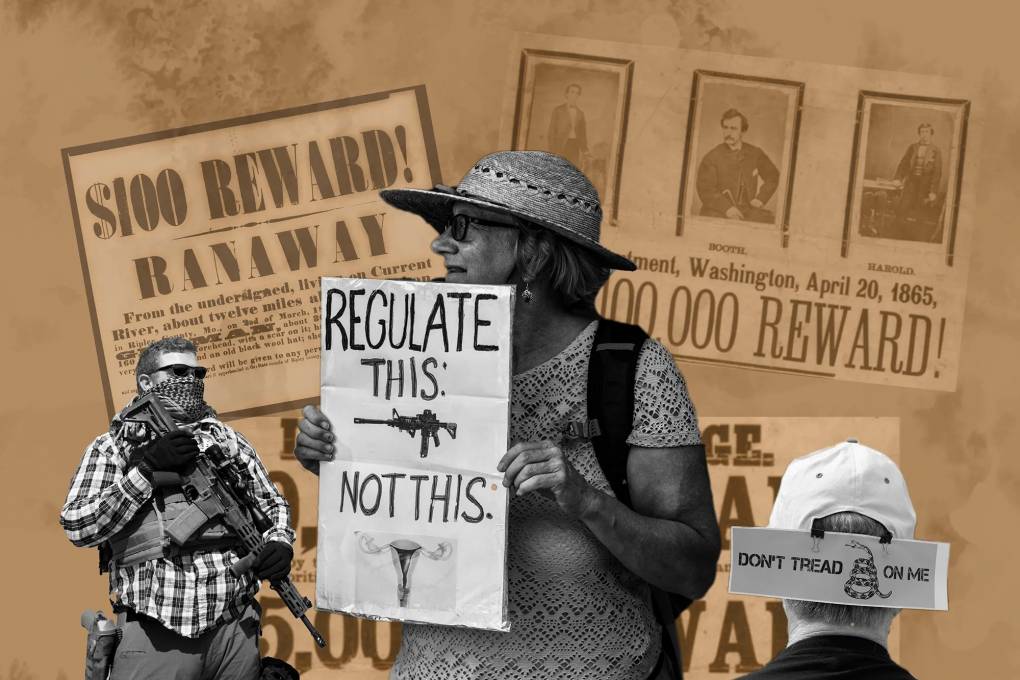
"caption": "Rival states have enacted recent bounty laws — over abortion in Texas and gun sales in California — but critics worry about where this is headed. ",
"description": null,
"title": "080822-Bounty-Hunter-Texas-California-CM-02",
"credit": "Illustration by Miguel Gutierrez Jr., CalMatters, iStock and Reuters",
"status": "inherit",
"altTag": "a collage showing bounty signs and a protester with a sign demanding gun control",
"isLoading": false,
"fetchFailed": false
},
"news_11920277": {
"type": "attachments",
"id": "news_11920277",
"meta": {
"index": "attachments_1716263798",
"site": "news",
"id": "11920277",
"found": true
},
"parent": 11920270,
"imgSizes": {
"twentyfourteen-full-width": {
"file": "https://ww2.kqed.org/app/uploads/sites/10/2022/07/GettyImages-1242055768-1024x576.jpg",
"width": 1024,
"mimeType": "image/jpeg",
"height": 576
},
"thumbnail": {
"file": "https://ww2.kqed.org/app/uploads/sites/10/2022/07/GettyImages-1242055768-160x107.jpg",
"width": 160,
"mimeType": "image/jpeg",
"height": 107
},
"post-thumbnail": {
"file": "https://ww2.kqed.org/app/uploads/sites/10/2022/07/GettyImages-1242055768-672x372.jpg",
"width": 672,
"mimeType": "image/jpeg",
"height": 372
},
"kqedFullSize": {
"file": "https://ww2.kqed.org/app/uploads/sites/10/2022/07/GettyImages-1242055768.jpg",
"width": 1024,
"height": 683
},
"large": {
"file": "https://ww2.kqed.org/app/uploads/sites/10/2022/07/GettyImages-1242055768-1020x680.jpg",
"width": 1020,
"mimeType": "image/jpeg",
"height": 680
},
"medium": {
"file": "https://ww2.kqed.org/app/uploads/sites/10/2022/07/GettyImages-1242055768-800x534.jpg",
"width": 800,
"mimeType": "image/jpeg",
"height": 534
}
},
"publishDate": 1658520078,
"modified": 1658855724,
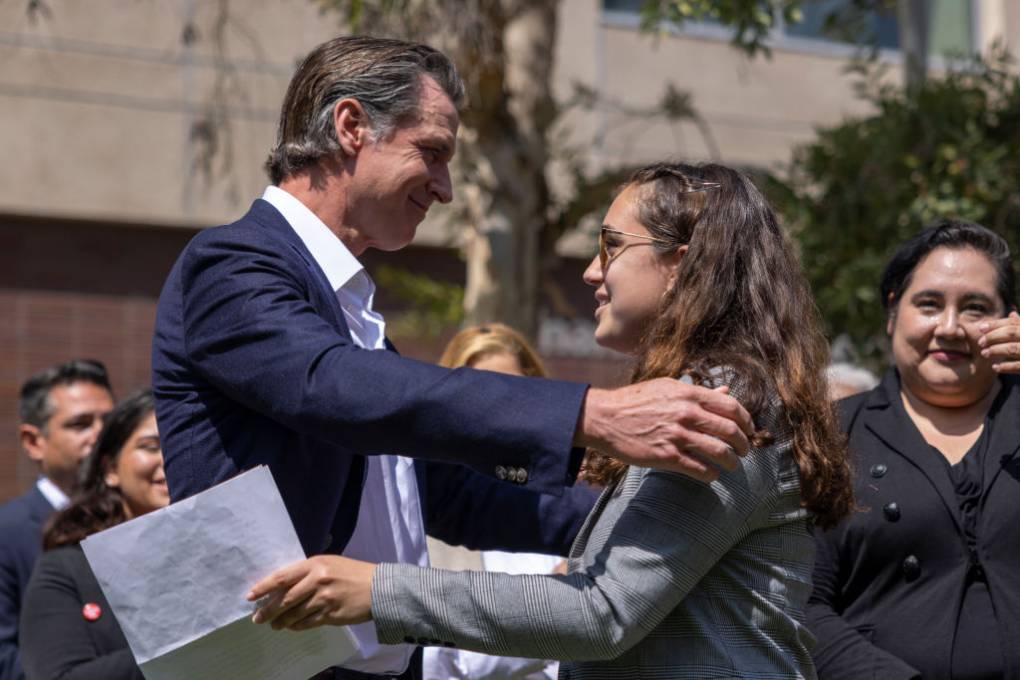
"caption": "Mia Tretta (center), who was shot in the stomach with a ghost gun during a school shooting in 2019, embraces Gov. Gavin Newsom moments after he signed SB 1327 — a law allowing citizens to sue gunmakers — on July 22, 2022, in Los Angeles.",
"description": null,
"title": "California Gov. Newsom Highlights New State Efforts To Stem Gun Violence",
"credit": "David McNew/Getty Images",
"status": "inherit",
"altTag": "Gov. Gavin Newsom embraces a young woman at a press event.",
"isLoading": false,
"fetchFailed": false
},
"news_11920037": {
"type": "attachments",
"id": "news_11920037",
"meta": {
"index": "attachments_1716263798",
"site": "news",
"id": "11920037",
"found": true
},
"parent": 11920007,
"imgSizes": {
"twentyfourteen-full-width": {
"file": "https://ww2.kqed.org/app/uploads/sites/10/2022/07/GettyImages-1409760123-jackiespeier-1038x576.jpg",
"width": 1038,
"mimeType": "image/jpeg",
"height": 576
},
"thumbnail": {
"file": "https://ww2.kqed.org/app/uploads/sites/10/2022/07/GettyImages-1409760123-jackiespeier-160x107.jpg",
"width": 160,
"mimeType": "image/jpeg",
"height": 107
},
"post-thumbnail": {
"file": "https://ww2.kqed.org/app/uploads/sites/10/2022/07/GettyImages-1409760123-jackiespeier-672x372.jpg",
"width": 672,
"mimeType": "image/jpeg",
"height": 372
},
"kqedFullSize": {
"file": "https://ww2.kqed.org/app/uploads/sites/10/2022/07/GettyImages-1409760123-jackiespeier.jpg",
"width": 1920,
"height": 1280
},
"large": {
"file": "https://ww2.kqed.org/app/uploads/sites/10/2022/07/GettyImages-1409760123-jackiespeier-1020x680.jpg",
"width": 1020,
"mimeType": "image/jpeg",
"height": 680
},
"1536x1536": {
"file": "https://ww2.kqed.org/app/uploads/sites/10/2022/07/GettyImages-1409760123-jackiespeier-1536x1024.jpg",
"width": 1536,
"mimeType": "image/jpeg",
"height": 1024
},
"medium": {
"file": "https://ww2.kqed.org/app/uploads/sites/10/2022/07/GettyImages-1409760123-jackiespeier-800x533.jpg",
"width": 800,
"mimeType": "image/jpeg",
"height": 533
}
},
"publishDate": 1658352349,
"modified": 1658365968,
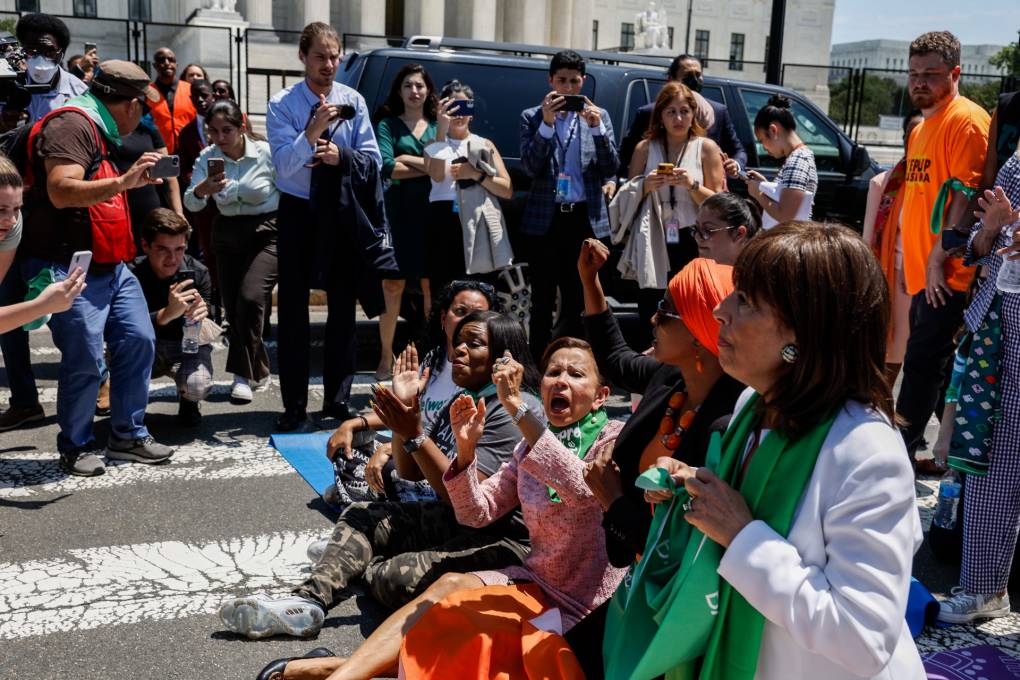
"caption": "House Democrats, including Bay Area Rep. Jackie Speier (right), participate in a sit-in with the Center for Popular Democracy Action in front of the US Supreme Court Building on July 19, 2022, in Washington, DC.",
"description": null,
"title": "GettyImages-1409760123-jackiespeier",
"credit": "Anna Moneymaker/Getty Images",
"status": "inherit",
"altTag": "Protesters sit on a road while others surround them.",
"isLoading": false,
"fetchFailed": false
},
"news_10578186": {
"type": "attachments",
"id": "news_10578186",
"meta": {
"index": "attachments_1716263798",
"site": "news",
"id": "10578186",
"found": true
},
"parent": 10575868,
"imgSizes": {
"twentyfourteen-full-width": {
"file": "https://ww2.kqed.org/app/uploads/sites/10/2015/06/GettyImages-478626320-1038x576.jpg",
"width": 1038,
"mimeType": "image/jpeg",
"height": 576
},
"thumbnail": {
"file": "https://ww2.kqed.org/app/uploads/sites/10/2015/06/GettyImages-478626320-400x265.jpg",
"width": 400,
"mimeType": "image/jpeg",
"height": 265
},
"fd-sm": {
"file": "https://ww2.kqed.org/app/uploads/sites/10/2015/06/GettyImages-478626320-960x637.jpg",
"width": 960,
"mimeType": "image/jpeg",
"height": 637
},
"post-thumbnail": {
"file": "https://ww2.kqed.org/app/uploads/sites/10/2015/06/GettyImages-478626320-672x372.jpg",
"width": 672,
"mimeType": "image/jpeg",
"height": 372
},
"kqedFullSize": {
"file": "https://ww2.kqed.org/app/uploads/sites/10/2015/06/GettyImages-478626320.jpg",
"width": 3000,
"height": 1990
},
"large": {
"file": "https://ww2.kqed.org/app/uploads/sites/10/2015/06/GettyImages-478626320-1440x955.jpg",
"width": 1440,
"mimeType": "image/jpeg",
"height": 955
},
"guest-author-96": {
"file": "https://ww2.kqed.org/app/uploads/sites/10/2015/06/GettyImages-478626320-96x96.jpg",
"width": 96,
"mimeType": "image/jpeg",
"height": 96
},
"medium": {
"file": "https://ww2.kqed.org/app/uploads/sites/10/2015/06/GettyImages-478626320-800x531.jpg",
"width": 800,
"mimeType": "image/jpeg",
"height": 531
},
"guest-author-64": {
"file": "https://ww2.kqed.org/app/uploads/sites/10/2015/06/GettyImages-478626320-64x64.jpg",
"width": 64,
"mimeType": "image/jpeg",
"height": 64
},
"guest-author-32": {
"file": "https://ww2.kqed.org/app/uploads/sites/10/2015/06/GettyImages-478626320-32x32.jpg",
"width": 32,
"mimeType": "image/jpeg",
"height": 32
},
"jmtc-small-thumb": {
"file": "https://ww2.kqed.org/app/uploads/sites/10/2015/06/GettyImages-478626320-280x150.jpg",
"width": 280,
"mimeType": "image/jpeg",
"height": 150
},
"fd-med": {
"file": "https://ww2.kqed.org/app/uploads/sites/10/2015/06/GettyImages-478626320-1180x783.jpg",
"width": 1180,
"mimeType": "image/jpeg",
"height": 783
},
"detail": {
"file": "https://ww2.kqed.org/app/uploads/sites/10/2015/06/GettyImages-478626320-75x75.jpg",
"width": 75,
"mimeType": "image/jpeg",
"height": 75
},
"guest-author-128": {
"file": "https://ww2.kqed.org/app/uploads/sites/10/2015/06/GettyImages-478626320-128x128.jpg",
"width": 128,
"mimeType": "image/jpeg",
"height": 128
}
},
"publishDate": 1435336020,
"modified": 1658342508,
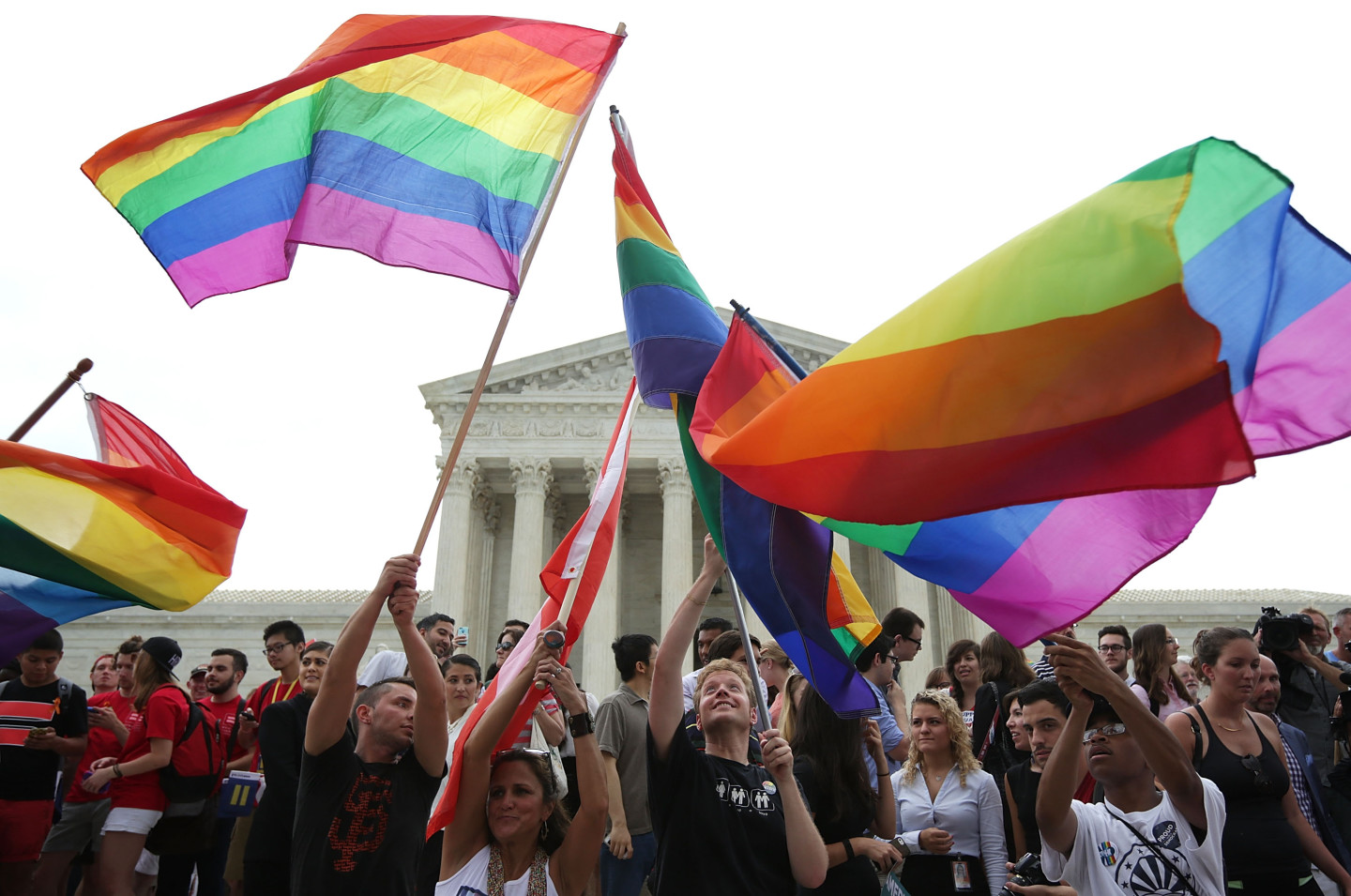
"caption": "Same-sex marriage supporters rejoice after the US Supreme Court hands down a ruling regarding same-sex marriage on June 26, 2015, outside the Supreme Court in Washington, DC. The high court ruled that same-sex couples have the right to marry in all 50 states.",
"description": "Same-sex marriage supporters rejoice after the U.S Supreme Court hands down a ruling regarding same-sex marriage June 26, 2015 outside the Supreme Court in Washington, DC. The high court ruled that same-sex couples have the right to marry in all 50 states.",
"title": "Supreme Court Rules In Favor Of Gay Marriage",
"credit": "Alex Wong/Getty Images",
"status": "inherit",
"altTag": "Same-sex marriage supporters rejoice after the U.S Supreme Court hands down a ruling regarding same-sex marriage June 26, 2015 outside the Supreme Court in Washington, DC. The high court ruled that same-sex couples have the right to marry in all 50 states.",
"isLoading": false,
"fetchFailed": false
},
"news_11907264": {
"type": "attachments",
"id": "news_11907264",
"meta": {
"index": "attachments_1716263798",
"site": "news",
"id": "11907264",
"found": true
},
"parent": 11907263,
"imgSizes": {
"twentyfourteen-full-width": {
"file": "https://ww2.kqed.org/app/uploads/sites/10/2022/03/020322-UC-Berkeley-TJ-CM-58-1038x576.jpeg",
"width": 1038,
"mimeType": "image/jpeg",
"height": 576
},
"thumbnail": {
"file": "https://ww2.kqed.org/app/uploads/sites/10/2022/03/020322-UC-Berkeley-TJ-CM-58-160x107.jpeg",
"width": 160,
"mimeType": "image/jpeg",
"height": 107
},
"post-thumbnail": {
"file": "https://ww2.kqed.org/app/uploads/sites/10/2022/03/020322-UC-Berkeley-TJ-CM-58-672x372.jpeg",
"width": 672,
"mimeType": "image/jpeg",
"height": 372
},
"kqedFullSize": {
"file": "https://ww2.kqed.org/app/uploads/sites/10/2022/03/020322-UC-Berkeley-TJ-CM-58-e1646437034828.jpeg",
"width": 1920,
"height": 1280
},
"large": {
"file": "https://ww2.kqed.org/app/uploads/sites/10/2022/03/020322-UC-Berkeley-TJ-CM-58-1020x680.jpeg",
"width": 1020,
"mimeType": "image/jpeg",
"height": 680
},
"1536x1536": {
"file": "https://ww2.kqed.org/app/uploads/sites/10/2022/03/020322-UC-Berkeley-TJ-CM-58-1536x1024.jpeg",
"width": 1536,
"mimeType": "image/jpeg",
"height": 1024
},
"full-width": {
"file": "https://ww2.kqed.org/app/uploads/sites/10/2022/03/020322-UC-Berkeley-TJ-CM-58-1920x1280.jpeg",
"width": 1920,
"mimeType": "image/jpeg",
"height": 1280
},
"medium": {
"file": "https://ww2.kqed.org/app/uploads/sites/10/2022/03/020322-UC-Berkeley-TJ-CM-58-800x533.jpeg",
"width": 800,
"mimeType": "image/jpeg",
"height": 533
}
},
"publishDate": 1646437018,
"modified": 1657927991,
"caption": "Ludwig's Fountain and the Golden Bear Cafe at the University of California, Berkeley, campus on Feb. 3, 2022.",
"description": null,
"title": "020322-UC-Berkeley-TJ-CM-58",
"credit": "Thalia Juarez/CalMatters",
"status": "inherit",
"altTag": "Students seated at Ludwig's Fountain at UC Berkeley",
"isLoading": false,
"fetchFailed": false
},
"news_11919282": {
"type": "attachments",
"id": "news_11919282",
"meta": {
"index": "attachments_1716263798",
"site": "news",
"id": "11919282",
"found": true
},
"title": "Google Updates Its Logo",
"publishDate": 1657566086,
"status": "inherit",
"parent": 11919277,
"modified": 1657567640,
"caption": "An image of the Google headquarters in Mountain View.",
"credit": "Justin Sullivan/Getty Images",
"altTag": "An image of a building with the colorful Google logo on the side. The building looks very modern, the whole wall is a grid of glass windows. The Google logo is the new version.",
"description": "The new Google logo is displayed at the Google headquarters on September 2, 2015 in Mountain View, California. Google has made the most dramatic change to their logo since 1999 and have replaced their signature serif font with a new typeface called Product Sans.",
"imgSizes": {
"medium": {
"file": "https://cdn.kqed.org/wp-content/uploads/sites/10/2022/07/RS26525_GettyImages-486234008-800x534.jpg",
"width": 800,
"height": 534,
"mimeType": "image/jpeg"
},
"large": {
"file": "https://cdn.kqed.org/wp-content/uploads/sites/10/2022/07/RS26525_GettyImages-486234008-1020x681.jpg",
"width": 1020,
"height": 681,
"mimeType": "image/jpeg"
},
"thumbnail": {
"file": "https://cdn.kqed.org/wp-content/uploads/sites/10/2022/07/RS26525_GettyImages-486234008-160x107.jpg",
"width": 160,
"height": 107,
"mimeType": "image/jpeg"
},
"1536x1536": {
"file": "https://cdn.kqed.org/wp-content/uploads/sites/10/2022/07/RS26525_GettyImages-486234008-1536x1025.jpg",
"width": 1536,
"height": 1025,
"mimeType": "image/jpeg"
},
"2048x2048": {
"file": "https://cdn.kqed.org/wp-content/uploads/sites/10/2022/07/RS26525_GettyImages-486234008-2048x1367.jpg",
"width": 2048,
"height": 1367,
"mimeType": "image/jpeg"
},
"post-thumbnail": {
"file": "https://cdn.kqed.org/wp-content/uploads/sites/10/2022/07/RS26525_GettyImages-486234008-672x372.jpg",
"width": 672,
"height": 372,
"mimeType": "image/jpeg"
},
"twentyfourteen-full-width": {
"file": "https://cdn.kqed.org/wp-content/uploads/sites/10/2022/07/RS26525_GettyImages-486234008-1038x576.jpg",
"width": 1038,
"height": 576,
"mimeType": "image/jpeg"
},
"full-width": {
"file": "https://cdn.kqed.org/wp-content/uploads/sites/10/2022/07/RS26525_GettyImages-486234008-1920x1281.jpg",
"width": 1920,
"height": 1281,
"mimeType": "image/jpeg"
},
"kqedFullSize": {
"file": "https://cdn.kqed.org/wp-content/uploads/sites/10/2022/07/RS26525_GettyImages-486234008-scaled-e1736207624368.jpg",
"width": 2000,
"height": 1334
}
},
"isLoading": false,
"fetchFailed": false
},
"news_11918655": {
"type": "attachments",
"id": "news_11918655",
"meta": {
"index": "attachments_1716263798",
"site": "news",
"id": "11918655",
"found": true
},
"parent": 11918529,
"imgSizes": {
"twentyfourteen-full-width": {
"file": "https://ww2.kqed.org/app/uploads/sites/10/2022/07/1440_0002_TheBay_iTunesTile_01-1038x576.jpeg",
"width": 1038,
"mimeType": "image/jpeg",
"height": 576
},
"thumbnail": {
"file": "https://ww2.kqed.org/app/uploads/sites/10/2022/07/1440_0002_TheBay_iTunesTile_01-160x160.jpeg",
"width": 160,
"mimeType": "image/jpeg",
"height": 160
},
"post-thumbnail": {
"file": "https://ww2.kqed.org/app/uploads/sites/10/2022/07/1440_0002_TheBay_iTunesTile_01-672x372.jpeg",
"width": 672,
"mimeType": "image/jpeg",
"height": 372
},
"kqedFullSize": {
"file": "https://ww2.kqed.org/app/uploads/sites/10/2022/07/1440_0002_TheBay_iTunesTile_01.jpeg",
"width": 1440,
"height": 1440
},
"large": {
"file": "https://ww2.kqed.org/app/uploads/sites/10/2022/07/1440_0002_TheBay_iTunesTile_01-1020x1020.jpeg",
"width": 1020,
"mimeType": "image/jpeg",
"height": 1020
},
"medium": {
"file": "https://ww2.kqed.org/app/uploads/sites/10/2022/07/1440_0002_TheBay_iTunesTile_01-800x800.jpeg",
"width": 800,
"mimeType": "image/jpeg",
"height": 800
}
},
"publishDate": 1656701331,
"modified": 1656701346,
"caption": null,
"description": null,
"title": "1440_0002_TheBay_iTunesTile_01",
"credit": null,
"status": "inherit",
"altTag": "KQED The Bay logo",
"isLoading": false,
"fetchFailed": false
},
"news_11918608": {
"type": "attachments",
"id": "news_11918608",
"meta": {
"index": "attachments_1716263798",
"site": "news",
"id": "11918608",
"found": true
},
"parent": 11918268,
"imgSizes": {
"twentyfourteen-full-width": {
"file": "https://ww2.kqed.org/app/uploads/sites/10/2022/06/042_KQED_AbortionRightsRallySF_06242022-1-1038x576.jpg",
"width": 1038,
"mimeType": "image/jpeg",
"height": 576
},
"thumbnail": {
"file": "https://ww2.kqed.org/app/uploads/sites/10/2022/06/042_KQED_AbortionRightsRallySF_06242022-1-160x107.jpg",
"width": 160,
"mimeType": "image/jpeg",
"height": 107
},
"post-thumbnail": {
"file": "https://ww2.kqed.org/app/uploads/sites/10/2022/06/042_KQED_AbortionRightsRallySF_06242022-1-672x372.jpg",
"width": 672,
"mimeType": "image/jpeg",
"height": 372
},
"kqedFullSize": {
"file": "https://ww2.kqed.org/app/uploads/sites/10/2022/06/042_KQED_AbortionRightsRallySF_06242022-1.jpg",
"width": 1920,
"height": 1280
},
"large": {
"file": "https://ww2.kqed.org/app/uploads/sites/10/2022/06/042_KQED_AbortionRightsRallySF_06242022-1-1020x680.jpg",
"width": 1020,
"mimeType": "image/jpeg",
"height": 680
},
"1536x1536": {
"file": "https://ww2.kqed.org/app/uploads/sites/10/2022/06/042_KQED_AbortionRightsRallySF_06242022-1-1536x1024.jpg",
"width": 1536,
"mimeType": "image/jpeg",
"height": 1024
},
"medium": {
"file": "https://ww2.kqed.org/app/uploads/sites/10/2022/06/042_KQED_AbortionRightsRallySF_06242022-1-800x533.jpg",
"width": 800,
"mimeType": "image/jpeg",
"height": 533
}
},
"publishDate": 1656633974,
"modified": 1656709885,
"caption": "Hundreds of demonstrators gather in front of City Hall in San Francisco to protest the US Supreme Court's decision to overturn Roe v. Wade on Friday, June 24, 2022.",
"description": null,
"title": "042_KQED_AbortionRightsRallySF_06242022",
"credit": "Beth LaBerge/KQED",
"status": "inherit",
"altTag": "A large crowd gathers in front of SF City Hall holding abortions rights signs, including one that says 'My Body, My Choice'",
"isLoading": false,
"fetchFailed": false
},
"news_11918191": {
"type": "attachments",
"id": "news_11918191",
"meta": {
"index": "attachments_1716263798",
"site": "news",
"id": "11918191",
"found": true
},
"parent": 11918174,
"imgSizes": {
"twentyfourteen-full-width": {
"file": "https://ww2.kqed.org/app/uploads/sites/10/2022/06/RS55716_056_KQED_AbortionRallySF_05032022-qut-1-1038x576.jpg",
"width": 1038,
"mimeType": "image/jpeg",
"height": 576
},
"thumbnail": {
"file": "https://ww2.kqed.org/app/uploads/sites/10/2022/06/RS55716_056_KQED_AbortionRallySF_05032022-qut-1-160x107.jpg",
"width": 160,
"mimeType": "image/jpeg",
"height": 107
},
"post-thumbnail": {
"file": "https://ww2.kqed.org/app/uploads/sites/10/2022/06/RS55716_056_KQED_AbortionRallySF_05032022-qut-1-672x372.jpg",
"width": 672,
"mimeType": "image/jpeg",
"height": 372
},
"kqedFullSize": {
"file": "https://ww2.kqed.org/app/uploads/sites/10/2022/06/RS55716_056_KQED_AbortionRallySF_05032022-qut-1.jpg",
"width": 1920,
"height": 1280
},
"large": {
"file": "https://ww2.kqed.org/app/uploads/sites/10/2022/06/RS55716_056_KQED_AbortionRallySF_05032022-qut-1-1020x680.jpg",
"width": 1020,
"mimeType": "image/jpeg",
"height": 680
},
"1536x1536": {
"file": "https://ww2.kqed.org/app/uploads/sites/10/2022/06/RS55716_056_KQED_AbortionRallySF_05032022-qut-1-1536x1024.jpg",
"width": 1536,
"mimeType": "image/jpeg",
"height": 1024
},
"medium": {
"file": "https://ww2.kqed.org/app/uploads/sites/10/2022/06/RS55716_056_KQED_AbortionRallySF_05032022-qut-1-800x533.jpg",
"width": 800,
"mimeType": "image/jpeg",
"height": 533
}
},
"publishDate": 1656441476,
"modified": 1656441527,
"caption": "Nyajal Taylor, 21, marches from the Federal Building to Market Street in San Francisco on May 3, 2022, during a rally for abortion rights.",
"description": null,
"title": "RS55716_056_KQED_AbortionRallySF_05032022-qut",
"credit": "Beth LaBerge/KQED",
"status": "inherit",
"altTag": "A woman stands in a crowd holding a sign above her head that reads \"Women are not breeders!\"",
"isLoading": false,
"fetchFailed": false
},
"news_11917317": {
"type": "attachments",
"id": "news_11917317",
"meta": {
"index": "attachments_1716263798",
"site": "news",
"id": "11917317",
"found": true
},
"parent": 11917111,
"imgSizes": {
"twentyfourteen-full-width": {
"file": "https://ww2.kqed.org/app/uploads/sites/10/2022/06/GettyImages-1395263690-1038x576.jpg",
"width": 1038,
"mimeType": "image/jpeg",
"height": 576
},
"thumbnail": {
"file": "https://ww2.kqed.org/app/uploads/sites/10/2022/06/GettyImages-1395263690-160x107.jpg",
"width": 160,
"mimeType": "image/jpeg",
"height": 107
},
"post-thumbnail": {
"file": "https://ww2.kqed.org/app/uploads/sites/10/2022/06/GettyImages-1395263690-672x372.jpg",
"width": 672,
"mimeType": "image/jpeg",
"height": 372
},
"kqedFullSize": {
"file": "https://ww2.kqed.org/app/uploads/sites/10/2022/06/GettyImages-1395263690-scaled.jpg",
"width": 2560,
"height": 1707
},
"2048x2048": {
"file": "https://ww2.kqed.org/app/uploads/sites/10/2022/06/GettyImages-1395263690-2048x1365.jpg",
"width": 2048,
"mimeType": "image/jpeg",
"height": 1365
},
"large": {
"file": "https://ww2.kqed.org/app/uploads/sites/10/2022/06/GettyImages-1395263690-1020x680.jpg",
"width": 1020,
"mimeType": "image/jpeg",
"height": 680
},
"1536x1536": {
"file": "https://ww2.kqed.org/app/uploads/sites/10/2022/06/GettyImages-1395263690-1536x1024.jpg",
"width": 1536,
"mimeType": "image/jpeg",
"height": 1024
},
"full-width": {
"file": "https://ww2.kqed.org/app/uploads/sites/10/2022/06/GettyImages-1395263690-1920x1280.jpg",
"width": 1920,
"mimeType": "image/jpeg",
"height": 1280
},
"medium": {
"file": "https://ww2.kqed.org/app/uploads/sites/10/2022/06/GettyImages-1395263690-800x533.jpg",
"width": 800,
"mimeType": "image/jpeg",
"height": 533
}
},
"publishDate": 1655412694,
"modified": 1655412894,
"caption": "A woman holds a sign at the steps of the George Deukmejian Courthouse at a rally to defend abortion rights in Long Beach on Tuesday, May 3, 2022.",
"description": "A woman holds a sign at the steps of the George Deukmejian Courthouse at a rally to defend abortion rights in Long Beach on Tuesday, May 3, 2022.",
"title": "Abortion rights advocates gather at the courthouse in Long Beach.",
"credit": "Brittany Murray/MediaNews Group/Long Beach Press-Telegram via Getty Images",
"status": "inherit",
"altTag": "A person bears a very large sign made out of cardboard, which reads: \"Abortions are not just for the rich and white.\"",
"isLoading": false,
"fetchFailed": false
}
},
"audioPlayerReducer": {
"postId": "stream_live",
"isPaused": true,
"isPlaying": false,
"pfsActive": false,
"pledgeModalIsOpen": true,
"playerDrawerIsOpen": false,
"liveAudioPlayStartedAt": 0,
"liveAudioPlayContext": ""
},
"authorsReducer": {
"byline_news_11924553": {
"type": "authors",
"id": "byline_news_11924553",
"meta": {
"override": true
},
"slug": "byline_news_11924553",
"name": "Adam Beam\u003cbr>Associated Press",
"isLoading": false
},
"byline_news_11923873": {
"type": "authors",
"id": "byline_news_11923873",
"meta": {
"override": true
},
"slug": "byline_news_11923873",
"name": "Adam Beam \u003cbr> Associated Press",
"isLoading": false
},
"byline_news_11922045": {
"type": "authors",
"id": "byline_news_11922045",
"meta": {
"override": true
},
"slug": "byline_news_11922045",
"name": "Nigel Duara",
"isLoading": false
},
"byline_news_11919970": {
"type": "authors",
"id": "byline_news_11919970",
"meta": {
"override": true
},
"slug": "byline_news_11919970",
"name": " \u003ca href=\"https://twitter.com/LisaMascaro\">Lisa Mascaro\u003c/a>\u003cbr>The Associated Press",
"isLoading": false
},
"byline_news_11919711": {
"type": "authors",
"id": "byline_news_11919711",
"meta": {
"override": true
},
"slug": "byline_news_11919711",
"name": "\u003ca href=\"https://calmatters.org/author/mallika-seshadri/\">Mallika Seshadri\u003c/a>",
"isLoading": false
},
"byline_news_11919277": {
"type": "authors",
"id": "byline_news_11919277",
"meta": {
"override": true
},
"slug": "byline_news_11919277",
"name": "Bobby Allyn",
"isLoading": false
},
"kqednewsstaffandwires": {
"type": "authors",
"id": "237",
"meta": {
"index": "authors_1716337520",
"id": "237",
"found": true
},
"name": "KQED News Staff and Wires",
"firstName": "KQED News Staff and Wires",
"lastName": null,
"slug": "kqednewsstaffandwires",
"email": "onlinenewsstaff@kqed.org",
"display_author_email": false,
"staff_mastheads": [],
"title": null,
"bio": null,
"avatar": "https://secure.gravatar.com/avatar/72295af8ebbfbd19a4948f5271285664?s=600&d=blank&r=g",
"twitter": null,
"facebook": null,
"instagram": null,
"linkedin": null,
"sites": [
{
"site": "arts",
"roles": [
"contributor"
]
},
{
"site": "news",
"roles": [
"contributor"
]
},
{
"site": "lowdown",
"roles": [
"author"
]
},
{
"site": "stateofhealth",
"roles": [
"contributor"
]
},
{
"site": "food",
"roles": [
"author"
]
}
],
"headData": {
"title": "KQED News Staff and Wires | KQED",
"description": null,
"ogImgSrc": "https://secure.gravatar.com/avatar/72295af8ebbfbd19a4948f5271285664?s=600&d=blank&r=g",
"twImgSrc": "https://secure.gravatar.com/avatar/72295af8ebbfbd19a4948f5271285664?s=600&d=blank&r=g"
},
"isLoading": false,
"link": "/author/kqednewsstaffandwires"
},
"scottshafer": {
"type": "authors",
"id": "255",
"meta": {
"index": "authors_1716337520",
"id": "255",
"found": true
},
"name": "Scott Shafer",
"firstName": "Scott",
"lastName": "Shafer",
"slug": "scottshafer",
"email": "sshafer@kqed.org",
"display_author_email": false,
"staff_mastheads": [
"news"
],
"title": "KQED Contributor",
"bio": "Scott Shafer is a senior editor with the KQED Politics and Government desk. He is co-host of Political Breakdown, the award-winning radio show and podcast with a personal take on the world of politics. Scott came to KQED in 1998 to host the statewide\u003cem> California Report\u003c/em>. Prior to that he had extended stints in politics and government\u003cem>.\u003c/em> He uses that inside experience at KQED in his, reporting, hosting and analysis for the politics desk. Scott collaborated \u003cem>Political Breakdown a\u003c/em>nd on \u003cem>The Political Mind of Jerry Brown, \u003c/em>an eight-part series about the life and extraordinary political career of the former governor. For fun, he plays water polo with the San Francisco Tsunami.",
"avatar": "https://secure.gravatar.com/avatar/a62ebae45b79d7aed1a39a0e3bf68104?s=600&d=blank&r=g",
"twitter": "scottshafer",
"bluesky": null,
"facebook": null,
"instagram": null,
"linkedin": null,
"sites": [
{
"site": "news",
"roles": [
"editor"
]
},
{
"site": "stateofhealth",
"roles": [
"author"
]
},
{
"site": "science",
"roles": [
"author"
]
},
{
"site": "forum",
"roles": [
"subscriber"
]
},
{
"site": "liveblog",
"roles": [
"author"
]
}
],
"headData": {
"title": "Scott Shafer | KQED",
"description": "KQED Contributor",
"ogImgSrc": "https://secure.gravatar.com/avatar/a62ebae45b79d7aed1a39a0e3bf68104?s=600&d=blank&r=g",
"twImgSrc": "https://secure.gravatar.com/avatar/a62ebae45b79d7aed1a39a0e3bf68104?s=600&d=blank&r=g"
},
"isLoading": false,
"link": "/author/scottshafer"
},
"ecruzguevarra": {
"type": "authors",
"id": "8654",
"meta": {
"index": "authors_1716337520",
"id": "8654",
"found": true
},
"name": "Ericka Cruz Guevarra",
"firstName": "Ericka",
"lastName": "Cruz Guevarra",
"slug": "ecruzguevarra",
"email": "ecruzguevarra@kqed.org",
"display_author_email": true,
"staff_mastheads": [
"news"
],
"title": "Producer, The Bay Podcast",
"bio": "Ericka Cruz Guevarra is host of \u003ca href=\"https://www.kqed.org/podcasts/thebay\">\u003cem>The Bay\u003c/em>\u003c/a> podcast at KQED. Before host, she was the show’s producer. Her work in that capacity includes a three-part reported series on policing in Vallejo, which won a 2020 excellence in journalism award from the Society of Professional Journalists. Ericka has worked as a breaking news reporter at Oregon Public Broadcasting, helped produce the Code Switch podcast, and was KQED’s inaugural Raul Ramirez Diversity Fund intern. She’s also an alumna of NPR’s Next Generation Radio program. Send her an email if you have strong feelings about whether Fairfield and Suisun City are the Bay. Ericka is represented by SAG-AFTRA.",
"avatar": "https://secure.gravatar.com/avatar/accefc1de4bafc7e234b69bcb9b6f6536c130fd84709bc3069ef11a78787e1bb?s=600&d=blank&r=g",
"twitter": "NotoriousECG",
"bluesky": null,
"facebook": null,
"instagram": null,
"linkedin": null,
"sites": [
{
"site": "arts",
"roles": [
"subscriber"
]
},
{
"site": "news",
"roles": [
"editor",
"manage_categories"
]
},
{
"site": "futureofyou",
"roles": [
"subscriber"
]
},
{
"site": "stateofhealth",
"roles": [
"subscriber"
]
},
{
"site": "science",
"roles": [
"editor"
]
},
{
"site": "forum",
"roles": [
"subscriber"
]
}
],
"headData": {
"title": "Ericka Cruz Guevarra | KQED",
"description": "Producer, The Bay Podcast",
"ogImgSrc": "https://secure.gravatar.com/avatar/accefc1de4bafc7e234b69bcb9b6f6536c130fd84709bc3069ef11a78787e1bb?s=600&d=blank&r=g",
"twImgSrc": "https://secure.gravatar.com/avatar/accefc1de4bafc7e234b69bcb9b6f6536c130fd84709bc3069ef11a78787e1bb?s=600&d=blank&r=g"
},
"isLoading": false,
"link": "/author/ecruzguevarra"
},
"bwatt": {
"type": "authors",
"id": "11238",
"meta": {
"index": "authors_1716337520",
"id": "11238",
"found": true
},
"name": "Brian Watt",
"firstName": "Brian",
"lastName": "Watt",
"slug": "bwatt",
"email": "bwatt@KQED.org",
"display_author_email": false,
"staff_mastheads": [
"news"
],
"title": "Morning News Anchor",
"bio": "Brian Watt is KQED's morning radio news anchor. He joined the KQED News team in April of 2016. Prior to that, he worked as a Reporter for KPCC in Los Angeles and a producer at \u003cem>Marketplace.\u003c/em>\r\n\r\nDuring eight years at KPCC, Brian covered business and economics, and his work won several awards. In 2008, he won the Los Angeles Press Club’s first-place award for Business and Financial Reporting, Broadcast. He’s also received honorable mention and been first runner up for the Press Club’s Radio Journalist of the Year. He won two Golden Mike awards from the Radio and TV News Association of Southern California.\r\n\r\nBrian holds degrees in theater from Yale University and the Sorbonne, and has worked as an actor in France, Italy, Brazil, Hungary and . . . Hollywood. He appeared in a few television shows, including \u003cem>The West Wing, Judging Amy\u003c/em> and \u003cem>The District.\u003c/em>\r\n\r\nEmail: bwatt@KQED.org Twitter: @RadioBWatt",
"avatar": "https://secure.gravatar.com/avatar/55393ff57ed34e2be773ba4789dd6a19?s=600&d=blank&r=g",
"twitter": "@RadioBWatt",
"facebook": null,
"instagram": null,
"linkedin": null,
"sites": [
{
"site": "arts",
"roles": [
"contributor"
]
},
{
"site": "news",
"roles": [
"editor"
]
}
],
"headData": {
"title": "Brian Watt | KQED",
"description": "Morning News Anchor",
"ogImgSrc": "https://secure.gravatar.com/avatar/55393ff57ed34e2be773ba4789dd6a19?s=600&d=blank&r=g",
"twImgSrc": "https://secure.gravatar.com/avatar/55393ff57ed34e2be773ba4789dd6a19?s=600&d=blank&r=g"
},
"isLoading": false,
"link": "/author/bwatt"
},
"mfederis": {
"type": "authors",
"id": "11509",
"meta": {
"index": "authors_1716337520",
"id": "11509",
"found": true
},
"name": "Marnette Federis",
"firstName": "Marnette",
"lastName": "Federis",
"slug": "mfederis",
"email": "mfederis@kqed.org",
"display_author_email": false,
"staff_mastheads": [],
"title": "KQED Contributor",
"bio": null,
"avatar": "https://secure.gravatar.com/avatar/6553b16260501cef36787444651fa5ed?s=600&d=blank&r=g",
"twitter": null,
"facebook": null,
"instagram": null,
"linkedin": null,
"sites": [
{
"site": "news",
"roles": [
"editor"
]
},
{
"site": "mindshift",
"roles": [
"editor"
]
},
{
"site": "science",
"roles": [
"editor"
]
},
{
"site": "podcasts",
"roles": [
"editor"
]
}
],
"headData": {
"title": "Marnette Federis | KQED",
"description": "KQED Contributor",
"ogImgSrc": "https://secure.gravatar.com/avatar/6553b16260501cef36787444651fa5ed?s=600&d=blank&r=g",
"twImgSrc": "https://secure.gravatar.com/avatar/6553b16260501cef36787444651fa5ed?s=600&d=blank&r=g"
},
"isLoading": false,
"link": "/author/mfederis"
},
"amontecillo": {
"type": "authors",
"id": "11649",
"meta": {
"index": "authors_1716337520",
"id": "11649",
"found": true
},
"name": "Alan Montecillo",
"firstName": "Alan",
"lastName": "Montecillo",
"slug": "amontecillo",
"email": "amontecillo@kqed.org",
"display_author_email": false,
"staff_mastheads": [
"news"
],
"title": "KQED Contributor",
"bio": "Alan Montecillo is the senior editor of \u003cem>\u003ca href=\"http://kqed.org/thebay\">The Bay\u003c/a>, \u003c/em> KQED's local news podcast. Before moving to the Bay Area, he worked as a senior talk show producer for WILL in Champaign-Urbana, Illinois and at Oregon Public Broadcasting in Portland, Oregon. He has won journalism awards from the Society of Professional Journalists Northern California, the Public Media Journalists Association, The Signal Awards, and has also received a regional Edward R. Murrow award. Alan is a Filipino American from Hong Kong and a graduate of Reed College.",
"avatar": "https://secure.gravatar.com/avatar/268f53a2066899ea9efdd8a5900218b17c822d9862cbc9326cccec53ef41d349?s=600&d=blank&r=g",
"twitter": "alanmontecillo",
"bluesky": null,
"facebook": null,
"instagram": null,
"linkedin": null,
"sites": [
{
"site": "",
"roles": [
"editor"
]
},
{
"site": "news",
"roles": [
"editor",
"manage_categories"
]
}
],
"headData": {
"title": "Alan Montecillo | KQED",
"description": "KQED Contributor",
"ogImgSrc": "https://secure.gravatar.com/avatar/268f53a2066899ea9efdd8a5900218b17c822d9862cbc9326cccec53ef41d349?s=600&d=blank&r=g",
"twImgSrc": "https://secure.gravatar.com/avatar/268f53a2066899ea9efdd8a5900218b17c822d9862cbc9326cccec53ef41d349?s=600&d=blank&r=g"
},
"isLoading": false,
"link": "/author/amontecillo"
},
"nnavarro": {
"type": "authors",
"id": "11756",
"meta": {
"index": "authors_1716337520",
"id": "11756",
"found": true
},
"name": "Natalia Navarro",
"firstName": "Natalia",
"lastName": "Navarro",
"slug": "nnavarro",
"email": "nnavarro@kqed.org",
"display_author_email": true,
"staff_mastheads": [
"news"
],
"title": "Afternoon News Anchor",
"bio": "Natalia Navarro is KQED's afternoon radio news anchor. She came to KQED in 2021 from Colorado Public Radio, where she was a reporter and host. She has received several awards for her work covering daily and breaking news from professional organizations such as the San Francisco Press Club, Society of Professional Journalists and the Colorado Broadcasters Association. Natalia is originally from Tucson, Arizona, where she got her start in journalism writing for the Arizona Daily Star, Arizona Public Media and the Tucson Weekly. Natalia earned her bachelor's degree in journalism and economics, and her master's degree in journalism from the University of Arizona.",
"avatar": "https://secure.gravatar.com/avatar/a2bdb19fd9520bdea295a2d5f9b2ad65ec51cf0bf559fb1cc041d3a0a04d62ad?s=600&d=blank&r=g",
"twitter": "@NataliaVNavarro",
"bluesky": null,
"facebook": null,
"instagram": null,
"linkedin": null,
"sites": [
{
"site": "news",
"roles": [
"editor"
]
}
],
"headData": {
"title": "Natalia Navarro | KQED",
"description": "Afternoon News Anchor",
"ogImgSrc": "https://secure.gravatar.com/avatar/a2bdb19fd9520bdea295a2d5f9b2ad65ec51cf0bf559fb1cc041d3a0a04d62ad?s=600&d=blank&r=g",
"twImgSrc": "https://secure.gravatar.com/avatar/a2bdb19fd9520bdea295a2d5f9b2ad65ec51cf0bf559fb1cc041d3a0a04d62ad?s=600&d=blank&r=g"
},
"isLoading": false,
"link": "/author/nnavarro"
},
"swhitney": {
"type": "authors",
"id": "11784",
"meta": {
"index": "authors_1716337520",
"id": "11784",
"found": true
},
"name": "Spencer Whitney",
"firstName": "Spencer",
"lastName": "Whitney",
"slug": "swhitney",
"email": "swhitney@kqed.org",
"display_author_email": false,
"staff_mastheads": [],
"title": "KQED Digital Editor",
"bio": "Spencer Whitney is currently a Digital Editor for KQED News. Prior to joining KQED News, Spencer worked as the Multimedia Editor at the Oakland Post and an Assistant Editor in the Editorial department at the San Francisco Chronicle. He attended Howard University as an undergraduate and interned with SiriusXM. He also attended UC Berkeley's Graduate School of Journalism and had the opportunity to write for the hyperlocal news sites Richmond Confidential and Oakland North.",
"avatar": "https://secure.gravatar.com/avatar/e33ff4fd8b8f0d2796f36472fb32607ca8fc46ef5e537dcfdbdee688d8ea5b80?s=600&d=mm&r=g",
"twitter": null,
"bluesky": null,
"facebook": null,
"instagram": null,
"linkedin": null,
"sites": [
{
"site": "arts",
"roles": [
"editor"
]
},
{
"site": "news",
"roles": [
"editor"
]
},
{
"site": "science",
"roles": [
"editor"
]
},
{
"site": "perspectives",
"roles": [
"editor"
]
}
],
"headData": {
"title": "Spencer Whitney | KQED",
"description": "KQED Digital Editor",
"ogImgSrc": "https://secure.gravatar.com/avatar/e33ff4fd8b8f0d2796f36472fb32607ca8fc46ef5e537dcfdbdee688d8ea5b80?s=600&d=mm&r=g",
"twImgSrc": "https://secure.gravatar.com/avatar/e33ff4fd8b8f0d2796f36472fb32607ca8fc46ef5e537dcfdbdee688d8ea5b80?s=600&d=mm&r=g"
},
"isLoading": false,
"link": "/author/swhitney"
},
"mesquinca": {
"type": "authors",
"id": "11802",
"meta": {
"index": "authors_1716337520",
"id": "11802",
"found": true
},
"name": "Maria Esquinca",
"firstName": "Maria",
"lastName": "Esquinca",
"slug": "mesquinca",
"email": "mesquinca@kqed.org",
"display_author_email": false,
"staff_mastheads": [],
"title": "Producer, The Bay",
"bio": "María Esquinca is a producer of The Bay. Before that, she was a New York Women’s Foundation IGNITE Fellow at Latino USA. She worked at Radio Bilingue where she covered the San Joaquin Valley. Maria has interned at WLRN, News 21, The New York Times Student Journalism Institute and at Crain’s Detroit Business as a Dow Jones News Fund Business Reporting Intern. She is an MFA graduate from the University of Miami. In 2017, she graduated from the Walter Cronkite School of Journalism and Mass Communication with a Master of Mass Communication. A fronteriza, she was born in Ciudad Juárez, Chihuahua, Mexico and grew up in El Paso, Texas.",
"avatar": "https://secure.gravatar.com/avatar/77cedba18aae91da775038ba06dcd8d0?s=600&d=blank&r=g",
"twitter": "@m_esquinca",
"facebook": null,
"instagram": null,
"linkedin": null,
"sites": [
{
"site": "news",
"roles": []
}
],
"headData": {
"title": "Maria Esquinca | KQED",
"description": "Producer, The Bay",
"ogImgSrc": "https://secure.gravatar.com/avatar/77cedba18aae91da775038ba06dcd8d0?s=600&d=blank&r=g",
"twImgSrc": "https://secure.gravatar.com/avatar/77cedba18aae91da775038ba06dcd8d0?s=600&d=blank&r=g"
},
"isLoading": false,
"link": "/author/mesquinca"
}
},
"pagesReducer": {
"news_tag_abortion": {
"type": "terms",
"id": "news_866",
"meta": {
"index": "terms_1716263798",
"site": "news",
"id": "866",
"score": 8.668587
},
"featImg": null,
"name": "abortion",
"description": null,
"taxonomy": "tag",
"headData": {
"twImgId": null,
"twTitle": null,
"ogTitle": null,
"ogImgId": null,
"twDescription": null,
"description": null,
"title": "abortion Archives | KQED News",
"ogDescription": null
},
"ttid": 876,
"slug": "abortion",
"isLoading": false,
"title": "abortion",
"pageMeta": {
"site": "news",
"WpPageTemplate": "page-topic-editorial",
"currentPage": 6
},
"blocks": [
{
"blockName": "kqed/post-list",
"attrs": {
"layout": "cardArticle2",
"query": "posts/news?tag=abortion",
"seeMore": false,
"paginated": true,
"page": 6
}
},
{
"blockName": "kqed/ad"
}
]
}
},
"pfsSessionReducer": {},
"postsReducer": {
"stream_live": {
"type": "live",
"id": "stream_live",
"audioUrl": "https://streams.kqed.org/kqedradio",
"title": "Live Stream",
"excerpt": "Live Stream information currently unavailable.",
"link": "/radio",
"featImg": "",
"label": {
"name": "KQED Live",
"link": "/"
}
},
"stream_kqedNewscast": {
"type": "posts",
"id": "stream_kqedNewscast",
"audioUrl": "https://www.kqed.org/.stream/anon/radio/RDnews/newscast.mp3?_=1",
"title": "KQED Newscast",
"featImg": "",
"label": {
"name": "88.5 FM",
"link": "/"
}
},
"news_11924553": {
"type": "posts",
"id": "news_11924553",
"meta": {
"index": "posts_1716263798",
"site": "news",
"id": "11924553",
"score": null,
"sort": [
1662153158000
]
},
"guestAuthors": [],
"slug": "california-expands-abortion-protections-including-200-million-for-lower-income-undocumented-and-out-of-state-patients",
"title": "California Expands Abortion Protections, Including for Lower-Income, Undocumented and Out-of-State Patients",
"publishDate": 1662153158,
"format": "standard",
"headTitle": "California Expands Abortion Protections, Including for Lower-Income, Undocumented and Out-of-State Patients | KQED",
"labelTerm": {
"site": "news"
},
"content": "\u003cp>The California Legislature wrapped up its work on Wednesday after approving more than a dozen bills to make it easier for people to get abortions, a show of force that was the result of more than a year of careful planning meant to stake the state’s claim as a sanctuary after the U.S. Supreme Court overturned Roe v. Wade.\u003c/p>\n\u003cp>Lawmakers passed 15 bills plus approved $200 million in new spending to bolster the state’s already robust abortion protections. The flurry of activity isn’t over, as voters will decide in November whether to make abortion a constitutional right in the nation’s most populous state.\u003c/p>\n\u003cp>[aside label=\"Related Stories\" postID=\"news_11914440,forum_2010101889792,news_11923873\"]The bills easily made it through the Democratic-dominated Legislature and some have already become law. Gov. Gavin Newsom is expected to sign most of the rest before the end of the month.\u003c/p>\n\u003cp>Over the next few years, the state will funnel millions of dollars to clinics to cover the cost of abortions for patients who can’t afford them — including those who are living in the country without legal permission. It has pledged to spend up to $20 million to bring people seeking abortions to California from other states, covering expenses like travel, lodging and child care.\u003c/p>\n\u003cp>California will block enforcement within the state of other states’ abortion bans, including a Texas law that lets people sue anyone who performs or aids an abortion on a patient from that state. It will also stop police departments and corporations from complying with out-of-state subpoenas or other requests for information about abortions legally obtained in California.\u003c/p>\n\u003cp>[ad fullwidth]\u003c/p>\n\u003cp>Women with private insurance won’t pay co-pays for abortions, while religious employers who don’t cover the cost of abortions through insurance would be forced to provide their workers a list of publicly available reproductive services.\u003c/p>\n\u003cp>“None of it was a knee-jerk reaction that was trying to do legislation in any kind of performative way,” said Jodi Hicks, president and CEO of Planned Parenthood Affiliates of California. “All of it was very well thought out ahead of time with a group of experts.”\u003c/p>\n\u003cp>Abortion foes are preparing to respond, with California Family Council President Jonathan Keller saying the group is “exploring all of our legal and procedural options.” Keller said the bill forcing religious employers to give lists of abortion services is “really ripe for a Supreme Court challenge,” citing a previous California law the courts struck down that required crisis pregnancy centers to alert clients to publicly available abortion options.\u003c/p>\n\u003cp>“California is not offering (women) a free plane ticket and a free hotel room to come to California and deliver their baby or come to California and get prenatal care,” Keller said. “They are literally saying we will fly you here but only if you make the choice that is the government-approved decision for your pregnancy. I think a lot of people … see some hypocrisy there.”\u003c/p>\n\u003cp>[pullquote align=\"right\" size=\"medium\" citation=\"State Sen. Toni Atkins, D-San Diego\"]‘Women need support for whatever they decide they need to do, and they need to be able to talk to their health care provider, their advocate, to get that information and be directed to where they need to go.’[/pullquote]State Sen. Toni Atkins, a Democrat from San Diego and the Senate’s top leader, said deciding whether or not to get an abortion is “profoundly personal.” Atkins worked at an abortion clinic in San Diego, where she said most of her clients chose to get abortions but some did not once presented with all their options.\u003c/p>\n\u003cp>“Women need support for whatever they decide they need to do, and they need to be able to talk to their health care provider, their advocate, to get that information and be directed to where they need to go,” she said. “People don’t want to think about having an abortion every day. … I think people should have the luxury not to have to think about this, unless it becomes something they need.”\u003c/p>\n\u003cp>The abortion bill that got the most attention in California aims to stop prosecutors from charging patients with murder for having stillbirths because of drug use or other issues before birth. If prosecutors charge them anyway, the legislation would let patients sue them for damages.\u003c/p>\n\u003cp>Democrats amended the bill to make clear it only prevented prosecutions for pregnancy losses that occurred “in utero.” But abortion-rights foes said the bill was too broad and would prevent coroners from investigating some infant deaths.\u003c/p>\n\u003cp>“This bill’s true purpose is to cover up the crime of a botched abortion or self-induced abortion,” said Republican Sen. Shannon Grove.\u003c/p>\n\u003cp>Lawmakers likely aren’t finished passing abortion bills. Atkins said she feels that California is still “in the process” of responding to the end of federal abortion protections, adding that many communities in California still don’t have abortion providers.\u003c/p>\n\u003cp>\u003c/p>\n\u003cp>“The goal is to make sure that every county in every community has coverage,” Atkins said. “We are starting to see more women, and it’s going to cause others to have to wait.”\u003c/p>\n\n",
"blocks": [],
"excerpt": "The California Legislature this week approved more than a dozen bills to make it easier for people to get abortions, as part of an effort to make the state a sanctuary after the US Supreme Court overturned Roe v. Wade. Abortion-rights foes are considering legal action to stop some of the bills from becoming law.",
"status": "publish",
"parent": 0,
"modified": 1721133286,
"stats": {
"hasAudio": false,
"hasVideo": false,
"hasChartOrMap": false,
"iframeSrcs": [],
"hasGoogleForm": false,
"hasGallery": false,
"hasHearkenModule": false,
"hasPolis": false,
"paragraphCount": 18,
"wordCount": 906
},
"headData": {
"title": "California Expands Abortion Protections, Including for Lower-Income, Undocumented and Out-of-State Patients | KQED",
"description": "The California Legislature this week approved more than a dozen bills to make it easier for people to get abortions, as part of an effort to make the state a sanctuary after the US Supreme Court overturned Roe v. Wade. Abortion-rights foes are considering legal action to stop some of the bills from becoming law.",
"ogTitle": "",
"ogDescription": "",
"ogImgId": "",
"twTitle": "",
"twDescription": "",
"twImgId": "",
"schema": {
"@context": "https://schema.org",
"@type": "NewsArticle",
"headline": "California Expands Abortion Protections, Including for Lower-Income, Undocumented and Out-of-State Patients",
"datePublished": "2022-09-02T14:12:38-07:00",
"dateModified": "2024-07-16T05:34:46-07:00",
"image": "https://cdn.kqed.org/wp-content/uploads/2020/02/KQED-OG-Image@1x.png",
"isAccessibleForFree": "True",
"publisher": {
"@type": "NewsMediaOrganization",
"@id": "https://www.kqed.org/#organization",
"name": "KQED",
"logo": "https://cdn.kqed.org/wp-content/uploads/2020/02/KQED-OG-Image@1x.png",
"url": "https://www.kqed.org",
"sameAs": [
"https://www.facebook.com/KQED",
"https://twitter.com/KQED",
"https://www.instagram.com/kqed/",
"https://www.tiktok.com/@kqedofficial",
"https://www.linkedin.com/company/kqed",
"https://www.youtube.com/channel/UCeC0IOo7i1P_61zVUWbJ4nw"
]
}
}
},
"sticky": false,
"nprByline": "Adam Beam\u003cbr>Associated Press",
"excludeFromSiteSearch": "Include",
"showOnAuthorArchivePages": "No",
"path": "/news/11924553/california-expands-abortion-protections-including-200-million-for-lower-income-undocumented-and-out-of-state-patients",
"audioTrackLength": null,
"parsedContent": [
{
"type": "contentString",
"content": "\u003cdiv class=\"post-body\">\u003cp>\u003cp>The California Legislature wrapped up its work on Wednesday after approving more than a dozen bills to make it easier for people to get abortions, a show of force that was the result of more than a year of careful planning meant to stake the state’s claim as a sanctuary after the U.S. Supreme Court overturned Roe v. Wade.\u003c/p>\n\u003cp>Lawmakers passed 15 bills plus approved $200 million in new spending to bolster the state’s already robust abortion protections. The flurry of activity isn’t over, as voters will decide in November whether to make abortion a constitutional right in the nation’s most populous state.\u003c/p>\n\u003cp>\u003c/p>\u003c/div>",
"attributes": {
"named": {},
"numeric": []
}
},
{
"type": "component",
"content": "",
"name": "aside",
"attributes": {
"named": {
"label": "Related Stories ",
"postid": "news_11914440,forum_2010101889792,news_11923873"
},
"numeric": []
}
},
{
"type": "contentString",
"content": "\u003cdiv class=\"post-body\">\u003cp>The bills easily made it through the Democratic-dominated Legislature and some have already become law. Gov. Gavin Newsom is expected to sign most of the rest before the end of the month.\u003c/p>\n\u003cp>Over the next few years, the state will funnel millions of dollars to clinics to cover the cost of abortions for patients who can’t afford them — including those who are living in the country without legal permission. It has pledged to spend up to $20 million to bring people seeking abortions to California from other states, covering expenses like travel, lodging and child care.\u003c/p>\n\u003cp>California will block enforcement within the state of other states’ abortion bans, including a Texas law that lets people sue anyone who performs or aids an abortion on a patient from that state. It will also stop police departments and corporations from complying with out-of-state subpoenas or other requests for information about abortions legally obtained in California.\u003c/p>\n\u003cp>\u003c/p>\u003c/div>",
"attributes": {
"named": {},
"numeric": []
}
},
{
"type": "component",
"content": "",
"name": "ad",
"attributes": {
"named": {
"label": "fullwidth"
},
"numeric": [
"fullwidth"
]
}
},
{
"type": "contentString",
"content": "\u003cdiv class=\"post-body\">\u003cp>\u003c/p>\n\u003cp>Women with private insurance won’t pay co-pays for abortions, while religious employers who don’t cover the cost of abortions through insurance would be forced to provide their workers a list of publicly available reproductive services.\u003c/p>\n\u003cp>“None of it was a knee-jerk reaction that was trying to do legislation in any kind of performative way,” said Jodi Hicks, president and CEO of Planned Parenthood Affiliates of California. “All of it was very well thought out ahead of time with a group of experts.”\u003c/p>\n\u003cp>Abortion foes are preparing to respond, with California Family Council President Jonathan Keller saying the group is “exploring all of our legal and procedural options.” Keller said the bill forcing religious employers to give lists of abortion services is “really ripe for a Supreme Court challenge,” citing a previous California law the courts struck down that required crisis pregnancy centers to alert clients to publicly available abortion options.\u003c/p>\n\u003cp>“California is not offering (women) a free plane ticket and a free hotel room to come to California and deliver their baby or come to California and get prenatal care,” Keller said. “They are literally saying we will fly you here but only if you make the choice that is the government-approved decision for your pregnancy. I think a lot of people … see some hypocrisy there.”\u003c/p>\n\u003cp>\u003c/p>\u003c/div>",
"attributes": {
"named": {},
"numeric": []
}
},
{
"type": "component",
"content": "‘Women need support for whatever they decide they need to do, and they need to be able to talk to their health care provider, their advocate, to get that information and be directed to where they need to go.’",
"name": "pullquote",
"attributes": {
"named": {
"align": "right",
"size": "medium",
"citation": "State Sen. Toni Atkins, D-San Diego",
"label": ""
},
"numeric": []
}
},
{
"type": "contentString",
"content": "\u003cdiv class=\"post-body\">\u003cp>State Sen. Toni Atkins, a Democrat from San Diego and the Senate’s top leader, said deciding whether or not to get an abortion is “profoundly personal.” Atkins worked at an abortion clinic in San Diego, where she said most of her clients chose to get abortions but some did not once presented with all their options.\u003c/p>\n\u003cp>“Women need support for whatever they decide they need to do, and they need to be able to talk to their health care provider, their advocate, to get that information and be directed to where they need to go,” she said. “People don’t want to think about having an abortion every day. … I think people should have the luxury not to have to think about this, unless it becomes something they need.”\u003c/p>\n\u003cp>The abortion bill that got the most attention in California aims to stop prosecutors from charging patients with murder for having stillbirths because of drug use or other issues before birth. If prosecutors charge them anyway, the legislation would let patients sue them for damages.\u003c/p>\n\u003cp>Democrats amended the bill to make clear it only prevented prosecutions for pregnancy losses that occurred “in utero.” But abortion-rights foes said the bill was too broad and would prevent coroners from investigating some infant deaths.\u003c/p>\n\u003cp>“This bill’s true purpose is to cover up the crime of a botched abortion or self-induced abortion,” said Republican Sen. Shannon Grove.\u003c/p>\n\u003cp>Lawmakers likely aren’t finished passing abortion bills. Atkins said she feels that California is still “in the process” of responding to the end of federal abortion protections, adding that many communities in California still don’t have abortion providers.\u003c/p>\n\u003cp>\u003c/p>\n\u003cp>“The goal is to make sure that every county in every community has coverage,” Atkins said. “We are starting to see more women, and it’s going to cause others to have to wait.”\u003c/p>\n\n\u003c/div>\u003c/p>",
"attributes": {
"named": {},
"numeric": []
}
}
],
"link": "/news/11924553/california-expands-abortion-protections-including-200-million-for-lower-income-undocumented-and-out-of-state-patients",
"authors": [
"byline_news_11924553"
],
"categories": [
"news_8"
],
"tags": [
"news_866",
"news_30275",
"news_31238",
"news_31046",
"news_23688",
"news_23272"
],
"featImg": "news_11924565",
"label": "news"
},
"news_11923873": {
"type": "posts",
"id": "news_11923873",
"meta": {
"index": "posts_1716263798",
"site": "news",
"id": "11923873",
"score": null,
"sort": [
1661712719000
]
},
"guestAuthors": [],
"slug": "california-budget-to-cover-some-out-of-state-abortion-travel",
"title": "California Budget to Cover Some Out-of-State Abortion Travel",
"publishDate": 1661712719,
"format": "standard",
"headTitle": "California Budget to Cover Some Out-of-State Abortion Travel | KQED",
"labelTerm": {
"site": "news"
},
"content": "\u003cp>California is preparing to spend up to $20 million to bring patients seeking abortions from other states to its abortion clinics, a policy aimed at increasing access to a procedure that has been outlawed or restricted in many states since the U.S. Supreme Court overturned Roe v. Wade.\u003c/p>\n\u003cp>Gov. Gavin Newsom had previously \u003ca href=\"https://apnews.com/article/abortion-health-travel-california-0ef7ff0792f4818a46d3bef92c3d1280\" target=\"_blank\" rel=\"noopener noreferrer\">restricted the money\u003c/a> in the state’s “Abortion Practical Support Fund” to in-state travel only, saying, “We have to be realistic about what we can absorb.” That decision surprised abortion-rights advocates, especially since Newsom, a Democrat, had vowed to make California a sanctuary for patients in other states seeking abortions.\u003c/p>\n\u003cp>Abortion-rights advocates spent weeks lobbying the governor’s office on the issue. Friday, just days before the end of the legislative session, Newsom and legislative leaders revealed \u003ca href=\"https://leginfo.legislature.ca.gov/faces/billNavClient.xhtml?bill_id=202120220AB204\" target=\"_blank\" rel=\"noopener noreferrer\">an amendment\u003c/a> to the budget that would allow the state to spend public money on out-of-state travel for abortions. Lawmakers are scheduled to vote on it next week.\u003c/p>\n\u003cp>While the fund will receive public money, it also accepts private donations — something the Newsom administration said will be important to cover costs.\u003c/p>\n\u003cp>“As the Governor has stated, California is doing its part, but we cannot do it all — private donations and philanthropy will be critical to these efforts,” Newsom spokesperson Alex Stack said. “We all need to step up to support women who are being denied reproductive freedoms by their state governments and are forced to come to California for abortion care.”\u003c/p>\n\u003cp>[ad fullwidth]\u003c/p>\n\u003cp>Jodi Hicks, CEO and president of Planned Parenthood Affiliates of California, said the change is significant given that state officials have been working for months to increase the state’s capacity to provide abortions in the aftermath of the U.S. Supreme Court decision.\u003c/p>\n\u003cp>“None of that matters if we’re not also ensuring that patients can get to where they need to go,” she said. “Everyone deserves to get health care, including abortion, and unfortunately for half the country they need to travel outside the state they live in in order to get that.”[pullquote size=\"medium\" align=\"right\" citation=\"Jodi Hicks, CEO and president, Planned Parenthood Affiliates of California\"]‘Everyone deserves to get health care, including abortion, and unfortunately for half the country they need to travel outside the state they live in in order to get that.’[/pullquote]\u003c/p>\n\u003cp>As some states move to outlaw or restrict abortion access, some state and local governments have acted to use public money to help patients in those states travel to get the procedure. In Republican-led Missouri and Ohio, city leaders in St. Louis, Cleveland and Columbus have pledged to use public money to help patients get abortions.\u003c/p>\n\u003cp>State lawmakers in Oregon — anticipating an abortion ban in neighboring Idaho — agreed to spend $15 million to help people seek abortions. So far, $1 million has gone to the Northwest Abortion Access Fund, a nonprofit that helps patients pay for travel and the procedure itself. The fund exhausted its planned operating budget this year and had to approve additional emergency funds amid growing demand for travel aid, according to Riley Keane, practical support lead for the group.\u003c/p>\n\u003cp>In California, some of the money could go to Access Reproductive Justice, the state’s only statewide abortion support fund. The group usually helps about 500 people per year get abortions, but director Jessica Pinckney said they’ve seen an increase since the U.S. Supreme Court decision. Recently, for the first time ever, Pinckney said the group in one week helped more women who lived in other states than women from California.\u003c/p>\n\u003cp>“We’re definitely seeing an increase of Texans and Arizonians. We’re also starting to see folks coming from Louisiana, Alabama — much further than we would have even anticipated,” Pinckney said. “I still don’t necessarily think we have the full story of what things are going to look like now in this post-Roe era.”[aside tag=\"abortion\" label=\"More Related Stories\"]The California Family Council, a nonprofit that opposes abortion rights, has been lobbying against the spending this year, but without much success. Jonathan Keller, the group’s president, said the state should be spending tax dollars on what he says are more pressing issues, like homelessness and housing.\u003c/p>\n\u003cp>“The idea that the most pressing use of state funds would be to pay for people from red states to fly here to have abortions on the California taxpayer dime is really just a travesty,” he said.\u003c/p>\n\u003cp>The state budget this year authorizes $4.8 billion in spending over three years on an array of housing and homelessness programs, in addition to the $9 billion lawmakers approved last year, according to the nonpartisan Legislative Analyst’s Office.\u003c/p>\n\u003cp>___\u003c/p>\n\u003cp>\u003c/p>\n\u003cp>\u003cem>Associated Press reporter Claire Rush contributed from Portland, Oregon.\u003c/em>\u003c/p>\n\n",
"blocks": [],
"excerpt": "Abortion-rights advocates spent weeks lobbying the governor's office on the issue. Just days before the end of the legislative session, Newsom and legislative leaders revealed an amendment to the budget that would allow the state to spend public money on out-of-state travel for abortions.",
"status": "publish",
"parent": 0,
"modified": 1721133926,
"stats": {
"hasAudio": false,
"hasVideo": false,
"hasChartOrMap": false,
"iframeSrcs": [],
"hasGoogleForm": false,
"hasGallery": false,
"hasHearkenModule": false,
"hasPolis": false,
"paragraphCount": 17,
"wordCount": 831
},
"headData": {
"title": "California Budget to Cover Some Out-of-State Abortion Travel | KQED",
"description": "Abortion-rights advocates spent weeks lobbying the governor's office on the issue. Just days before the end of the legislative session, Newsom and legislative leaders revealed an amendment to the budget that would allow the state to spend public money on out-of-state travel for abortions.",
"ogTitle": "",
"ogDescription": "",
"ogImgId": "",
"twTitle": "",
"twDescription": "",
"twImgId": "",
"schema": {
"@context": "https://schema.org",
"@type": "NewsArticle",
"headline": "California Budget to Cover Some Out-of-State Abortion Travel",
"datePublished": "2022-08-28T11:51:59-07:00",
"dateModified": "2024-07-16T05:45:26-07:00",
"image": "https://cdn.kqed.org/wp-content/uploads/2020/02/KQED-OG-Image@1x.png",
"isAccessibleForFree": "True",
"publisher": {
"@type": "NewsMediaOrganization",
"@id": "https://www.kqed.org/#organization",
"name": "KQED",
"logo": "https://cdn.kqed.org/wp-content/uploads/2020/02/KQED-OG-Image@1x.png",
"url": "https://www.kqed.org",
"sameAs": [
"https://www.facebook.com/KQED",
"https://twitter.com/KQED",
"https://www.instagram.com/kqed/",
"https://www.tiktok.com/@kqedofficial",
"https://www.linkedin.com/company/kqed",
"https://www.youtube.com/channel/UCeC0IOo7i1P_61zVUWbJ4nw"
]
}
}
},
"sticky": false,
"nprByline": "Adam Beam \u003cbr> Associated Press",
"excludeFromSiteSearch": "Include",
"showOnAuthorArchivePages": "No",
"path": "/news/11923873/california-budget-to-cover-some-out-of-state-abortion-travel",
"audioTrackLength": null,
"parsedContent": [
{
"type": "contentString",
"content": "\u003cdiv class=\"post-body\">\u003cp>\u003cp>California is preparing to spend up to $20 million to bring patients seeking abortions from other states to its abortion clinics, a policy aimed at increasing access to a procedure that has been outlawed or restricted in many states since the U.S. Supreme Court overturned Roe v. Wade.\u003c/p>\n\u003cp>Gov. Gavin Newsom had previously \u003ca href=\"https://apnews.com/article/abortion-health-travel-california-0ef7ff0792f4818a46d3bef92c3d1280\" target=\"_blank\" rel=\"noopener noreferrer\">restricted the money\u003c/a> in the state’s “Abortion Practical Support Fund” to in-state travel only, saying, “We have to be realistic about what we can absorb.” That decision surprised abortion-rights advocates, especially since Newsom, a Democrat, had vowed to make California a sanctuary for patients in other states seeking abortions.\u003c/p>\n\u003cp>Abortion-rights advocates spent weeks lobbying the governor’s office on the issue. Friday, just days before the end of the legislative session, Newsom and legislative leaders revealed \u003ca href=\"https://leginfo.legislature.ca.gov/faces/billNavClient.xhtml?bill_id=202120220AB204\" target=\"_blank\" rel=\"noopener noreferrer\">an amendment\u003c/a> to the budget that would allow the state to spend public money on out-of-state travel for abortions. Lawmakers are scheduled to vote on it next week.\u003c/p>\n\u003cp>While the fund will receive public money, it also accepts private donations — something the Newsom administration said will be important to cover costs.\u003c/p>\n\u003cp>“As the Governor has stated, California is doing its part, but we cannot do it all — private donations and philanthropy will be critical to these efforts,” Newsom spokesperson Alex Stack said. “We all need to step up to support women who are being denied reproductive freedoms by their state governments and are forced to come to California for abortion care.”\u003c/p>\n\u003cp>\u003c/p>\u003c/div>",
"attributes": {
"named": {},
"numeric": []
}
},
{
"type": "component",
"content": "",
"name": "ad",
"attributes": {
"named": {
"label": "fullwidth"
},
"numeric": [
"fullwidth"
]
}
},
{
"type": "contentString",
"content": "\u003cdiv class=\"post-body\">\u003cp>\u003c/p>\n\u003cp>Jodi Hicks, CEO and president of Planned Parenthood Affiliates of California, said the change is significant given that state officials have been working for months to increase the state’s capacity to provide abortions in the aftermath of the U.S. Supreme Court decision.\u003c/p>\n\u003cp>“None of that matters if we’re not also ensuring that patients can get to where they need to go,” she said. “Everyone deserves to get health care, including abortion, and unfortunately for half the country they need to travel outside the state they live in in order to get that.”\u003c/p>\u003c/div>",
"attributes": {
"named": {},
"numeric": []
}
},
{
"type": "component",
"content": "‘Everyone deserves to get health care, including abortion, and unfortunately for half the country they need to travel outside the state they live in in order to get that.’",
"name": "pullquote",
"attributes": {
"named": {
"size": "medium",
"align": "right",
"citation": "Jodi Hicks, CEO and president, Planned Parenthood Affiliates of California",
"label": ""
},
"numeric": []
}
},
{
"type": "contentString",
"content": "\u003cdiv class=\"post-body\">\u003cp>\u003c/p>\n\u003cp>As some states move to outlaw or restrict abortion access, some state and local governments have acted to use public money to help patients in those states travel to get the procedure. In Republican-led Missouri and Ohio, city leaders in St. Louis, Cleveland and Columbus have pledged to use public money to help patients get abortions.\u003c/p>\n\u003cp>State lawmakers in Oregon — anticipating an abortion ban in neighboring Idaho — agreed to spend $15 million to help people seek abortions. So far, $1 million has gone to the Northwest Abortion Access Fund, a nonprofit that helps patients pay for travel and the procedure itself. The fund exhausted its planned operating budget this year and had to approve additional emergency funds amid growing demand for travel aid, according to Riley Keane, practical support lead for the group.\u003c/p>\n\u003cp>In California, some of the money could go to Access Reproductive Justice, the state’s only statewide abortion support fund. The group usually helps about 500 people per year get abortions, but director Jessica Pinckney said they’ve seen an increase since the U.S. Supreme Court decision. Recently, for the first time ever, Pinckney said the group in one week helped more women who lived in other states than women from California.\u003c/p>\n\u003cp>“We’re definitely seeing an increase of Texans and Arizonians. We’re also starting to see folks coming from Louisiana, Alabama — much further than we would have even anticipated,” Pinckney said. “I still don’t necessarily think we have the full story of what things are going to look like now in this post-Roe era.”\u003c/p>\u003c/div>",
"attributes": {
"named": {},
"numeric": []
}
},
{
"type": "component",
"content": "",
"name": "aside",
"attributes": {
"named": {
"tag": "abortion",
"label": "More Related Stories "
},
"numeric": []
}
},
{
"type": "contentString",
"content": "\u003cdiv class=\"post-body\">\u003cp>The California Family Council, a nonprofit that opposes abortion rights, has been lobbying against the spending this year, but without much success. Jonathan Keller, the group’s president, said the state should be spending tax dollars on what he says are more pressing issues, like homelessness and housing.\u003c/p>\n\u003cp>“The idea that the most pressing use of state funds would be to pay for people from red states to fly here to have abortions on the California taxpayer dime is really just a travesty,” he said.\u003c/p>\n\u003cp>The state budget this year authorizes $4.8 billion in spending over three years on an array of housing and homelessness programs, in addition to the $9 billion lawmakers approved last year, according to the nonpartisan Legislative Analyst’s Office.\u003c/p>\n\u003cp>___\u003c/p>\n\u003cp>\u003c/p>\n\u003cp>\u003cem>Associated Press reporter Claire Rush contributed from Portland, Oregon.\u003c/em>\u003c/p>\n\n\u003c/div>\u003c/p>",
"attributes": {
"named": {},
"numeric": []
}
}
],
"link": "/news/11923873/california-budget-to-cover-some-out-of-state-abortion-travel",
"authors": [
"byline_news_11923873"
],
"categories": [
"news_1758",
"news_457",
"news_8"
],
"tags": [
"news_866",
"news_30251",
"news_18538",
"news_23688"
],
"featImg": "news_11923874",
"label": "news"
},
"news_11922045": {
"type": "posts",
"id": "news_11922045",
"meta": {
"index": "posts_1716263798",
"site": "news",
"id": "11922045",
"score": null,
"sort": [
1660078629000
]
},
"guestAuthors": [],
"slug": "the-return-of-bounty-law-as-gun-and-abortion-bills-empower-citizens-experts-warn-of-dangerous-precedent",
"title": "The Return of 'Bounty Law': As Gun and Abortion Bills Empower Citizens, Experts Warn of Dangerous Precedent",
"publishDate": 1660078629,
"format": "standard",
"headTitle": "The Return of ‘Bounty Law’: As Gun and Abortion Bills Empower Citizens, Experts Warn of Dangerous Precedent | KQED",
"labelTerm": {},
"content": "\u003cp>In Texas and California, new laws call on the people of each state to watch and report their neighbors — and reap a reward for doing so. Unusual, yes — although it’s a concept that dates back to the earliest days of the American republic.\u003c/p>\n\u003cp>But what do Civil War-era legislators raging about sick mules and wet gunpowder have to do with \u003ca href=\"https://capitol.texas.gov/tlodocs/87R/billtext/pdf/SB00008F.pdf\">Texas Senate Bill 8\u003c/a>, its “heartbeat” abortion law, and \u003ca href=\"https://leginfo.legislature.ca.gov/faces/billNavClient.xhtml?bill_id=202120220SB1327\">California Senate Bill 1327\u003c/a>, its newest gun act?\u003c/p>\n\u003cp>They all \u003ca href=\"https://cite.case.law/cal/106/113/\">set out bounties\u003c/a>, with the state entrusting its citizens to enforce the law and promising remuneration to those who do.\u003c/p>\n\u003cp>The Texas law, passed in 2021, bans abortions if a doctor detects a fetal heartbeat, usually at about six weeks — but it’s not up to the state to enforce it. Instead, people anywhere in the United States can sue anyone who helped a Texan get an abortion. Successful lawsuits offer at least $10,000 per reported abortion, and the defendant, not the state, pays the plaintiff.\u003c/p>\n\u003cp>As U.S. Chief Justice John Roberts noted, the law ran contrary to abortion rights guaranteed under Roe v. Wade, then the law of the land. Instead, he wrote in a \u003ca href=\"https://www.oyez.org/cases/2021/21-463\">concurring opinion\u003c/a>, “Texas has employed an array of stratagems designed to shield its unconstitutional law from judicial review.”\u003c/p>\n\u003cp>Opponents included the firearms industry, which \u003ca href=\"https://www.supremecourt.gov/DocketPDF/21/21-463/197884/20211027164758725_21-463%20tsac%20WWH%20-amicus-FPC-final.pdf\">started getting nervous\u003c/a> about the implications for gun owners.\u003c/p>\n\u003cp>Sure enough, by the time the U.S. Supreme Court later jettisoned Roe’s right to abortion, perhaps making the machinations of Texas unnecessary, California was already fighting fire with fire.\u003c/p>\n\u003cp>Last month, Gov. Gavin Newsom \u003ca href=\"https://www.latimes.com/california/story/2022-07-22/newsom-signs-gun-bill-modeled-after-texas-abortion-ban-setting-up\">signed a bounty law\u003c/a> targeting \u003ca href=\"https://calmatters.org/explainers/california-gun-laws-policy-explained/\">not abortion but guns\u003c/a>. It allows private citizens to sue anyone for $10,000 for selling, distributing or importing ghost guns or \u003ca href=\"https://oag.ca.gov/firearms/regagunfaqs#1\">assault weapons\u003c/a>.\u003c/p>\n\u003cp>A \u003ca href=\"https://www.texastribune.org/2022/04/19/abortion-texas-wendy-davis/\">new legal challenge to the Texas law\u003c/a> was filed in April. Gun rights supporters have promised to challenge California’s law as well.\u003c/p>\n\u003cp>Entrusting the public to enforce the laws and paying them with bounties was once how this country kept the lights on — or, at least, the lanterns lit.\u003c/p>\n\u003cp>“Before you had a really strong central state, and before you had a professional civil service, a lot of government services were provided on a bounty or a fee-for-service basis,” said Stanford Law School professor David Freeman Engstrom.\u003c/p>\n\u003cp>To catch wrongdoing back then, the state had to rely on people watching their neighbors — and maybe hauling them to court.\u003c/p>\n\u003cfigure id=\"attachment_11922056\" class=\"wp-caption aligncenter\" style=\"max-width: 2560px\">\u003ca href=\"https://ww2.kqed.org/app/uploads/sites/10/2022/08/GettyImages-1242055989-scaled.jpg\">\u003cimg loading=\"lazy\" decoding=\"async\" class=\"size-full wp-image-11922056\" src=\"https://ww2.kqed.org/app/uploads/sites/10/2022/08/GettyImages-1242055989-scaled.jpg\" alt=\"\" width=\"2560\" height=\"1707\" srcset=\"https://cdn.kqed.org/wp-content/uploads/sites/10/2022/08/GettyImages-1242055989-scaled.jpg 2560w, https://cdn.kqed.org/wp-content/uploads/sites/10/2022/08/GettyImages-1242055989-800x533.jpg 800w, https://cdn.kqed.org/wp-content/uploads/sites/10/2022/08/GettyImages-1242055989-1020x680.jpg 1020w, https://cdn.kqed.org/wp-content/uploads/sites/10/2022/08/GettyImages-1242055989-160x107.jpg 160w, https://cdn.kqed.org/wp-content/uploads/sites/10/2022/08/GettyImages-1242055989-1536x1024.jpg 1536w, https://cdn.kqed.org/wp-content/uploads/sites/10/2022/08/GettyImages-1242055989-2048x1365.jpg 2048w, https://cdn.kqed.org/wp-content/uploads/sites/10/2022/08/GettyImages-1242055989-1920x1280.jpg 1920w\" sizes=\"(max-width: 2560px) 100vw, 2560px\">\u003c/a>\u003cfigcaption class=\"wp-caption-text\">Gov. Gavin Newsom speaks during a news conference on gun legislation at Santa Monica College, where five people were shot and killed in 2013 by a gunman. In July, Newsom signed a bounty law that allows private citizens to sue anyone for $10,000 for selling, distributing or importing so-called ghost guns. \u003ccite>(Hans Gutknecht/MediaNews Group/Los Angeles Daily News via Getty Images)\u003c/cite>\u003c/figcaption>\u003c/figure>\n\u003cp>Today the U.S. government rewards people who report fraudulent war contracts, \u003ca href=\"https://rewardsforjustice.net/\">terrorism\u003c/a>, violations of federal environmental law and Medicaid fraud. The state of California allows financial rewards for people who sue to enforce its Proposition 65 toxics warning law.\u003c/p>\n\u003cp>And, of course, there’s bail-jumping, for which we still have “professional” bounty hunters, though the subjects of bail bounties \u003ca href=\"https://static.prisonpolicy.org/scans/UCLA_Devil%20_in_the_Details.pdf\">sign a contract surrendering many of their rights\u003c/a>.\u003c/p>\n\u003cp>Not all bounties pay in money, Engstrom said — under federal environmental laws, a nonprofit is only able to recover attorney’s fees, from a successful injunction either against a polluter; against other violations of environmental law; or to protect an endangered species of animals. But the nonprofit is also able to demonstrate to potential donors that they’re “doing important work out in the world,” he said.\u003c/p>\n\u003cp>The Texas and California bounty laws are relatively novel now, said University of Georgia School of Law professor Randy Beck, but he worries about what could come next.\u003c/p>\n\u003cp>“There’s a long history with these things that is not very happy,” Beck said. “There’s a good reason that legislators have stopped using them, and I think I’m worried that a bunch of legislators are repeating history that we don’t want to repeat.”\u003c/p>\n\u003ch2>‘We’ve created a monster’\u003c/h2>\n\u003cp>\u003ca href=\"https://core.ac.uk/download/pdf/151514455.pdf\">One of the first bounty laws in history\u003c/a> was enacted in England in the early 1300s. Local officials were supposed to set uniform prices for wine, but some of them were also wine sellers. That conflict of interest complicated King Edward II’s effort to reassert political control over a fractious kingdom.[aside label=\"Related Stories\" postID=\"news_11920270,news_11918271\"]But he couldn’t be everywhere. So, he deputized every man in England: If they found local officials selling wine, the Crown would seize that wine — and the person who made the complaint would receive one-third of the seizure.\u003c/p>\n\u003cp>Across the pond and 500 years later, Abraham Lincoln was tiring of fraudulent war contractors. The Union Army had been sold lame horses, sick mules, rancid food, guns that wouldn’t fire and artillery shells filled with sawdust. Sometimes they erroneously purchased them twice.\u003c/p>\n\u003cp>U.S. Sen. Jacob Howard of Michigan in 1863 led the charge for what would become the False Claims Act, the gold standard for bounty laws that, in its modern form, triples the damages for fraud and allots the person who reports it one-third of the award. The idea, said Howard: “Setting a rogue to catch a rogue, which is the safest and most expeditious way I have ever discovered of bringing rogues to justice.”\u003c/p>\n\u003cp>For most of its history, the U.S. government operated on bribes and bounties, argued Yale law and history professor Nicholas Parrillo.\u003c/p>\n\u003cp>His book “\u003ca href=\"https://academic.oup.com/yale-scholarship-online/book/29766?login=false\">Against the Profit Motive\u003c/a>” details how until the early 1900s, states often left unpaid tax collections to bounty hunters and rewarded them with a portion of the proceeds. Bounties also went to naval officers who captured enemy ships and took a percentage of their value.\u003c/p>\n\u003cp>People would rush to punish murder and thievery, Parrillo wrote, but getting communities to follow federal laws that the community itself didn’t agree with — or care about — was impossible without incentives.\u003c/p>\n\u003cfigure id=\"attachment_11922061\" class=\"wp-caption alignright\" style=\"max-width: 1349px\">\u003ca href=\"https://ww2.kqed.org/app/uploads/sites/10/2022/08/080822-WANTED-SIGN-OAC-CM-scaled-1.jpg\">\u003cimg loading=\"lazy\" decoding=\"async\" class=\"size-full wp-image-11922061\" src=\"https://ww2.kqed.org/app/uploads/sites/10/2022/08/080822-WANTED-SIGN-OAC-CM-scaled-1.jpg\" alt=\"a wanted sign from 1912 announcing a reward for a wanted man\" width=\"1349\" height=\"2048\" srcset=\"https://cdn.kqed.org/wp-content/uploads/sites/10/2022/08/080822-WANTED-SIGN-OAC-CM-scaled-1.jpg 1349w, https://cdn.kqed.org/wp-content/uploads/sites/10/2022/08/080822-WANTED-SIGN-OAC-CM-scaled-1-800x1215.jpg 800w, https://cdn.kqed.org/wp-content/uploads/sites/10/2022/08/080822-WANTED-SIGN-OAC-CM-scaled-1-1020x1549.jpg 1020w, https://cdn.kqed.org/wp-content/uploads/sites/10/2022/08/080822-WANTED-SIGN-OAC-CM-scaled-1-160x243.jpg 160w, https://cdn.kqed.org/wp-content/uploads/sites/10/2022/08/080822-WANTED-SIGN-OAC-CM-scaled-1-1012x1536.jpg 1012w\" sizes=\"(max-width: 1349px) 100vw, 1349px\">\u003c/a>\u003cfigcaption class=\"wp-caption-text\">A wanted poster issued by the San Francisco chief of police in 1912. \u003ccite>(Image courtesy of UC Berkeley, Bancroft Library via Online Archive of California)\u003c/cite>\u003c/figcaption>\u003c/figure>\n\u003cp>The concept may evoke romantic notions of the California Rangers chasing the \u003ca href=\"https://en.wikipedia.org/wiki/Five_Joaquins_Gang\">Five Joaquins Gang\u003c/a> through the goldfields for a \u003ca href=\"https://digitalcommons.usu.edu/cgi/viewcontent.cgi?article=3058&context=etd\">$6,000 bounty\u003c/a>. But bounties had a darker history in the 1800s. The Fugitive Slave Act offered \u003ca href=\"https://www.npr.org/transcripts/1035741353#:~:text=HERSHIPS%3A%20Back%20in%201850%2C%20the,the%20one%20Texas%20just%20enacted.\">rewards for catching enslaved people who had escaped\u003c/a>, and Mexico once offered bounties for Native American scalps.\u003c/p>\n\u003cp>U.S. lawmakers had created a system that encouraged bounty hunters to maximize their earnings by finding the most crimes, not the most serious crimes. That meant punishing people for the smallest technical violations of the tax code.\u003c/p>\n\u003cp>“When officials live by bounties, it becomes impossible for laypersons to attribute good motives to those people,” \u003ca href=\"https://www.youtube.com/watch?app=desktop&v=6Uim8TRTWvU\">Parrillo explained\u003c/a>.\u003c/p>\n\u003cp>Parrillo read from a lengthy speech by Maine Republican Thomas Brackett Reed, former speaker of the House in the 1890s: “What community ever bestirred itself against frauds on the internal revenue, against moonshine distilleries, against smuggling, against a hundred other things which are crimes against the United States?\u003c/p>\n\u003cp>“You need to have the officials stimulated by a similar self-interest to that which excites and supports and sustains the criminal.”\u003c/p>\n\u003cp>And that, it should be noted, was in a speech in favor of bounties.\u003c/p>\n\u003cp>“American lawmakers recoiled from what they had done,” Parrillo said. “They said, ‘Oh, my God, we’ve created a monster. We need to shut it down right now.'”\u003c/p>\n\u003cp>So out went bounties, and, eventually, in came paid professional IRS agents and beat cops, creating a system of salaried civil service employees. In the late 1800s and early 1900s, Congress and state legislatures gradually removed bounties and replaced bounty hunters with paid police.\u003c/p>\n\u003cp>Lincoln’s False Claims Act remained in effect, though Congress significantly diluted it in 1943, after a successful False Claims Act lawsuit worried military contractors during World War II. Then came the 1980s, when the Department of Defense was charged \u003ca href=\"https://www.grassley.senate.gov/news/news-releases/qanda-whistleblowers-shine-light-on-fraud\">$7,000 for a coffee pot and $640 for a toilet seat\u003c/a>.\u003c/p>\n\u003cp>At a hearing, Rep. Andy Ireland of Florida read from a list of fraudulent sales to the military during the Civil War and harkened back to the False Claims Act. “Here we are \u003ca href=\"https://www.justice.gov/sites/default/files/jmd/legacy/2014/02/09/hear-48-1986.pdf\">120 years later\u003c/a>,” he said, “and we are still confronted with the same problems in military procurement.”\u003c/p>\n\u003cp>[pullquote align=\"right\" size=\"medium\" citation=\"Nicholas Parrillo, Yale law and history professor\"]‘American lawmakers recoiled from what they had done. They said, ‘Oh, my God, we’ve created a monster. We need to shut it down right now.’[/pullquote]The act came roaring back, and today, Engstrom said, it’s the “purest form” of a bounty statute.\u003c/p>\n\u003cp>And California created its own modern version of bounty hunting with voter-approved \u003ca href=\"https://oehha.ca.gov/proposition-65\">Prop. 65\u003c/a>. Since 1986, the state has invited residents to report violations of the environmental law that seeks to warn people about carcinogenic chemicals or those that affect reproduction in the products they consume.\u003c/p>\n\u003cp>The state permits citizens to bring private lawsuits for violations — and reap the rewards if they prevail in court or the company they sued decides to settle.\u003c/p>\n\u003cp>In 2019, the California Chamber of Commerce fought a new \u003ca href=\"https://calmatters.org/health/2019/03/prop-65-toxic-warning-online-wine-coffee/\">proposed Prop. 65 warning\u003c/a> on acrylamide, a chemical created by cooking food, and one that the state couldn’t say definitively caused cancer. \u003ca href=\"https://casetext.com/case/cal-chamber-of-commerce-v-becerra-2\">The chamber won\u003c/a>, and the chamber’s attorneys said the court action halted “hundreds of pending — but not yet filed — private enforcement actions” about that one chemical alone.\u003c/p>\n\u003cp>But the new abortion and gun moves in Texas and California take the resurgence of bounty laws to a new level.\u003c/p>\n\u003cp>Texas State Sen. Bryan Hughes, the author of the state’s new abortion law, wrote last September in \u003ca href=\"https://www.bryanhughes.com/wsj-heartbeat-bill\">a Wall Street Journal op-ed\u003c/a> that though the law is unconventional, legislators were out of options.\u003c/p>\n\u003cp>“The law departs from conventional enforcement channels, obviously,” Hughes wrote. “In almost every case, the person wronged, and therefore the person who brings the claim, is the plaintiff.\u003c/p>\n\u003cp>“In the case of abortion, the wronged party has been extinguished.”\u003c/p>\n\u003cp>For his part, Newsom didn’t discourage accusations that California’s gun law is aimed at merely trolling conservative states, when he took out ads in Florida urging residents to move to California and \u003ca href=\"https://twitter.com/GavinNewsom/status/1550492943441485824?s=20&t=0Sf1Fxbzc2j9_yfZ9Z1QOQ\">tweeted at Texas Gov. Greg Abbott on July 22\u003c/a>.\u003c/p>\n\u003cp>“Texans will wake up this morning to this simple message,” Newsom wrote on Twitter. “If Texas can ban abortion and endanger lives, California can ban deadly weapons of war and save lives. If [Abbott] truly wants to protect the right to life, he should follow California’s lead.”\u003c/p>\n\u003cp>[pullquote align=\"right\" size=\"medium\" citation=\"American Civil Liberties Union\"]‘Replicating the reprehensible Texas model only serves to legitimize and promote it.’[/pullquote]The \u003ca href=\"https://aclucalaction.org/wp-content/uploads/2022/05/SB-1327-5.2.22.pdf\">American Civil Liberties Union isn’t having it\u003c/a> from either side. In opposing California’s law allowing citizens to sue over ghost guns and assault weapons, the ACLU called the law “an attack on the Constitution.” It said that despite California’s aim to force the Supreme Court to choose between states’ rights and gun rights, California was following a dangerous precedent.\u003c/p>\n\u003cp>“Replicating the reprehensible Texas model only serves to legitimize and promote it,” the group wrote in May.\u003c/p>\n\u003cp>Beck, the Georgia law professor, notes in \u003ca href=\"https://papers.ssrn.com/sol3/papers.cfm?abstract_id=4029815\">a forthcoming paper\u003c/a> that red-state \u003ca href=\"https://idahocapitalsun.com/2022/03/23/idaho-governor-signs-bill-effectively-banning-most-abortions/\">Idaho has already adopted\u003c/a> a scaled-down version of the Texas abortion law, and blue-state Illinois is already considering legislation mirroring California’s gun law.\u003c/p>\n\u003cp>Idaho Gov. Brad Little has \u003ca href=\"https://www.courthousenews.com/idaho-governor-signs-texas-styled-abortion-bill-into-law/\">expressed doubts\u003c/a> about the law’s civil enforcement: “While I support the pro-life policy in this legislation, I fear the novel civil enforcement mechanism will, in short order, be proven both unconstitutional and unwise.”\u003c/p>\n\u003cp>“It becomes kind of part of this culture war, one state retaliating against another state,” Beck said. “These things are not good in practice, and in my view, I think they have lots of problems. I’d like to kind of keep them in the corners for very, very infrequent use.”\u003c/p>\n\u003cp>[ad fullwidth]\u003c/p>\n\u003cp>[ad floatright]\u003c/p>\n",
"blocks": [],
"excerpt": "Texas put a bounty on abortion providers and California did the same for illegal gun sales. But bounties have a long and troubled history — and critics say bringing them back is not a good idea.",
"status": "publish",
"parent": 0,
"modified": 1721133972,
"stats": {
"hasAudio": false,
"hasVideo": false,
"hasChartOrMap": false,
"iframeSrcs": [],
"hasGoogleForm": false,
"hasGallery": false,
"hasHearkenModule": false,
"hasPolis": false,
"paragraphCount": 50,
"wordCount": 2130
},
"headData": {
"title": "The Return of 'Bounty Law': As Gun and Abortion Bills Empower Citizens, Experts Warn of Dangerous Precedent | KQED",
"description": "Texas put a bounty on abortion providers and California did the same for illegal gun sales. But bounties have a long and troubled history — and critics say bringing them back is not a good idea.",
"ogTitle": "",
"ogDescription": "",
"ogImgId": "",
"twTitle": "",
"twDescription": "",
"twImgId": "",
"schema": {
"@context": "https://schema.org",
"@type": "NewsArticle",
"headline": "The Return of 'Bounty Law': As Gun and Abortion Bills Empower Citizens, Experts Warn of Dangerous Precedent",
"datePublished": "2022-08-09T13:57:09-07:00",
"dateModified": "2024-07-16T05:46:12-07:00",
"image": "https://cdn.kqed.org/wp-content/uploads/2020/02/KQED-OG-Image@1x.png",
"isAccessibleForFree": "True",
"publisher": {
"@type": "NewsMediaOrganization",
"@id": "https://www.kqed.org/#organization",
"name": "KQED",
"logo": "https://cdn.kqed.org/wp-content/uploads/2020/02/KQED-OG-Image@1x.png",
"url": "https://www.kqed.org",
"sameAs": [
"https://www.facebook.com/KQED",
"https://twitter.com/KQED",
"https://www.instagram.com/kqed/",
"https://www.tiktok.com/@kqedofficial",
"https://www.linkedin.com/company/kqed",
"https://www.youtube.com/channel/UCeC0IOo7i1P_61zVUWbJ4nw"
]
}
}
},
"source": "CalMatters",
"sourceUrl": "https://calmatters.org/",
"sticky": false,
"nprByline": "Nigel Duara",
"excludeFromSiteSearch": "Include",
"showOnAuthorArchivePages": "No",
"path": "/news/11922045/the-return-of-bounty-law-as-gun-and-abortion-bills-empower-citizens-experts-warn-of-dangerous-precedent",
"audioTrackLength": null,
"parsedContent": [
{
"type": "contentString",
"content": "\u003cdiv class=\"post-body\">\u003cp>\u003cp>In Texas and California, new laws call on the people of each state to watch and report their neighbors — and reap a reward for doing so. Unusual, yes — although it’s a concept that dates back to the earliest days of the American republic.\u003c/p>\n\u003cp>But what do Civil War-era legislators raging about sick mules and wet gunpowder have to do with \u003ca href=\"https://capitol.texas.gov/tlodocs/87R/billtext/pdf/SB00008F.pdf\">Texas Senate Bill 8\u003c/a>, its “heartbeat” abortion law, and \u003ca href=\"https://leginfo.legislature.ca.gov/faces/billNavClient.xhtml?bill_id=202120220SB1327\">California Senate Bill 1327\u003c/a>, its newest gun act?\u003c/p>\n\u003cp>They all \u003ca href=\"https://cite.case.law/cal/106/113/\">set out bounties\u003c/a>, with the state entrusting its citizens to enforce the law and promising remuneration to those who do.\u003c/p>\n\u003cp>The Texas law, passed in 2021, bans abortions if a doctor detects a fetal heartbeat, usually at about six weeks — but it’s not up to the state to enforce it. Instead, people anywhere in the United States can sue anyone who helped a Texan get an abortion. Successful lawsuits offer at least $10,000 per reported abortion, and the defendant, not the state, pays the plaintiff.\u003c/p>\n\u003cp>As U.S. Chief Justice John Roberts noted, the law ran contrary to abortion rights guaranteed under Roe v. Wade, then the law of the land. Instead, he wrote in a \u003ca href=\"https://www.oyez.org/cases/2021/21-463\">concurring opinion\u003c/a>, “Texas has employed an array of stratagems designed to shield its unconstitutional law from judicial review.”\u003c/p>\n\u003cp>Opponents included the firearms industry, which \u003ca href=\"https://www.supremecourt.gov/DocketPDF/21/21-463/197884/20211027164758725_21-463%20tsac%20WWH%20-amicus-FPC-final.pdf\">started getting nervous\u003c/a> about the implications for gun owners.\u003c/p>\n\u003cp>Sure enough, by the time the U.S. Supreme Court later jettisoned Roe’s right to abortion, perhaps making the machinations of Texas unnecessary, California was already fighting fire with fire.\u003c/p>\n\u003cp>Last month, Gov. Gavin Newsom \u003ca href=\"https://www.latimes.com/california/story/2022-07-22/newsom-signs-gun-bill-modeled-after-texas-abortion-ban-setting-up\">signed a bounty law\u003c/a> targeting \u003ca href=\"https://calmatters.org/explainers/california-gun-laws-policy-explained/\">not abortion but guns\u003c/a>. It allows private citizens to sue anyone for $10,000 for selling, distributing or importing ghost guns or \u003ca href=\"https://oag.ca.gov/firearms/regagunfaqs#1\">assault weapons\u003c/a>.\u003c/p>\n\u003cp>A \u003ca href=\"https://www.texastribune.org/2022/04/19/abortion-texas-wendy-davis/\">new legal challenge to the Texas law\u003c/a> was filed in April. Gun rights supporters have promised to challenge California’s law as well.\u003c/p>\n\u003cp>Entrusting the public to enforce the laws and paying them with bounties was once how this country kept the lights on — or, at least, the lanterns lit.\u003c/p>\n\u003cp>“Before you had a really strong central state, and before you had a professional civil service, a lot of government services were provided on a bounty or a fee-for-service basis,” said Stanford Law School professor David Freeman Engstrom.\u003c/p>\n\u003cp>To catch wrongdoing back then, the state had to rely on people watching their neighbors — and maybe hauling them to court.\u003c/p>\n\u003cfigure id=\"attachment_11922056\" class=\"wp-caption aligncenter\" style=\"max-width: 2560px\">\u003ca href=\"https://ww2.kqed.org/app/uploads/sites/10/2022/08/GettyImages-1242055989-scaled.jpg\">\u003cimg loading=\"lazy\" decoding=\"async\" class=\"size-full wp-image-11922056\" src=\"https://ww2.kqed.org/app/uploads/sites/10/2022/08/GettyImages-1242055989-scaled.jpg\" alt=\"\" width=\"2560\" height=\"1707\" srcset=\"https://cdn.kqed.org/wp-content/uploads/sites/10/2022/08/GettyImages-1242055989-scaled.jpg 2560w, https://cdn.kqed.org/wp-content/uploads/sites/10/2022/08/GettyImages-1242055989-800x533.jpg 800w, https://cdn.kqed.org/wp-content/uploads/sites/10/2022/08/GettyImages-1242055989-1020x680.jpg 1020w, https://cdn.kqed.org/wp-content/uploads/sites/10/2022/08/GettyImages-1242055989-160x107.jpg 160w, https://cdn.kqed.org/wp-content/uploads/sites/10/2022/08/GettyImages-1242055989-1536x1024.jpg 1536w, https://cdn.kqed.org/wp-content/uploads/sites/10/2022/08/GettyImages-1242055989-2048x1365.jpg 2048w, https://cdn.kqed.org/wp-content/uploads/sites/10/2022/08/GettyImages-1242055989-1920x1280.jpg 1920w\" sizes=\"(max-width: 2560px) 100vw, 2560px\">\u003c/a>\u003cfigcaption class=\"wp-caption-text\">Gov. Gavin Newsom speaks during a news conference on gun legislation at Santa Monica College, where five people were shot and killed in 2013 by a gunman. In July, Newsom signed a bounty law that allows private citizens to sue anyone for $10,000 for selling, distributing or importing so-called ghost guns. \u003ccite>(Hans Gutknecht/MediaNews Group/Los Angeles Daily News via Getty Images)\u003c/cite>\u003c/figcaption>\u003c/figure>\n\u003cp>Today the U.S. government rewards people who report fraudulent war contracts, \u003ca href=\"https://rewardsforjustice.net/\">terrorism\u003c/a>, violations of federal environmental law and Medicaid fraud. The state of California allows financial rewards for people who sue to enforce its Proposition 65 toxics warning law.\u003c/p>\n\u003cp>And, of course, there’s bail-jumping, for which we still have “professional” bounty hunters, though the subjects of bail bounties \u003ca href=\"https://static.prisonpolicy.org/scans/UCLA_Devil%20_in_the_Details.pdf\">sign a contract surrendering many of their rights\u003c/a>.\u003c/p>\n\u003cp>Not all bounties pay in money, Engstrom said — under federal environmental laws, a nonprofit is only able to recover attorney’s fees, from a successful injunction either against a polluter; against other violations of environmental law; or to protect an endangered species of animals. But the nonprofit is also able to demonstrate to potential donors that they’re “doing important work out in the world,” he said.\u003c/p>\n\u003cp>The Texas and California bounty laws are relatively novel now, said University of Georgia School of Law professor Randy Beck, but he worries about what could come next.\u003c/p>\n\u003cp>“There’s a long history with these things that is not very happy,” Beck said. “There’s a good reason that legislators have stopped using them, and I think I’m worried that a bunch of legislators are repeating history that we don’t want to repeat.”\u003c/p>\n\u003ch2>‘We’ve created a monster’\u003c/h2>\n\u003cp>\u003ca href=\"https://core.ac.uk/download/pdf/151514455.pdf\">One of the first bounty laws in history\u003c/a> was enacted in England in the early 1300s. Local officials were supposed to set uniform prices for wine, but some of them were also wine sellers. That conflict of interest complicated King Edward II’s effort to reassert political control over a fractious kingdom.\u003c/p>\u003c/div>",
"attributes": {
"named": {},
"numeric": []
}
},
{
"type": "component",
"content": "",
"name": "aside",
"attributes": {
"named": {
"label": "Related Stories ",
"postid": "news_11920270,news_11918271"
},
"numeric": []
}
},
{
"type": "contentString",
"content": "\u003cdiv class=\"post-body\">\u003cp>But he couldn’t be everywhere. So, he deputized every man in England: If they found local officials selling wine, the Crown would seize that wine — and the person who made the complaint would receive one-third of the seizure.\u003c/p>\n\u003cp>Across the pond and 500 years later, Abraham Lincoln was tiring of fraudulent war contractors. The Union Army had been sold lame horses, sick mules, rancid food, guns that wouldn’t fire and artillery shells filled with sawdust. Sometimes they erroneously purchased them twice.\u003c/p>\n\u003cp>U.S. Sen. Jacob Howard of Michigan in 1863 led the charge for what would become the False Claims Act, the gold standard for bounty laws that, in its modern form, triples the damages for fraud and allots the person who reports it one-third of the award. The idea, said Howard: “Setting a rogue to catch a rogue, which is the safest and most expeditious way I have ever discovered of bringing rogues to justice.”\u003c/p>\n\u003cp>For most of its history, the U.S. government operated on bribes and bounties, argued Yale law and history professor Nicholas Parrillo.\u003c/p>\n\u003cp>His book “\u003ca href=\"https://academic.oup.com/yale-scholarship-online/book/29766?login=false\">Against the Profit Motive\u003c/a>” details how until the early 1900s, states often left unpaid tax collections to bounty hunters and rewarded them with a portion of the proceeds. Bounties also went to naval officers who captured enemy ships and took a percentage of their value.\u003c/p>\n\u003cp>People would rush to punish murder and thievery, Parrillo wrote, but getting communities to follow federal laws that the community itself didn’t agree with — or care about — was impossible without incentives.\u003c/p>\n\u003cfigure id=\"attachment_11922061\" class=\"wp-caption alignright\" style=\"max-width: 1349px\">\u003ca href=\"https://ww2.kqed.org/app/uploads/sites/10/2022/08/080822-WANTED-SIGN-OAC-CM-scaled-1.jpg\">\u003cimg loading=\"lazy\" decoding=\"async\" class=\"size-full wp-image-11922061\" src=\"https://ww2.kqed.org/app/uploads/sites/10/2022/08/080822-WANTED-SIGN-OAC-CM-scaled-1.jpg\" alt=\"a wanted sign from 1912 announcing a reward for a wanted man\" width=\"1349\" height=\"2048\" srcset=\"https://cdn.kqed.org/wp-content/uploads/sites/10/2022/08/080822-WANTED-SIGN-OAC-CM-scaled-1.jpg 1349w, https://cdn.kqed.org/wp-content/uploads/sites/10/2022/08/080822-WANTED-SIGN-OAC-CM-scaled-1-800x1215.jpg 800w, https://cdn.kqed.org/wp-content/uploads/sites/10/2022/08/080822-WANTED-SIGN-OAC-CM-scaled-1-1020x1549.jpg 1020w, https://cdn.kqed.org/wp-content/uploads/sites/10/2022/08/080822-WANTED-SIGN-OAC-CM-scaled-1-160x243.jpg 160w, https://cdn.kqed.org/wp-content/uploads/sites/10/2022/08/080822-WANTED-SIGN-OAC-CM-scaled-1-1012x1536.jpg 1012w\" sizes=\"(max-width: 1349px) 100vw, 1349px\">\u003c/a>\u003cfigcaption class=\"wp-caption-text\">A wanted poster issued by the San Francisco chief of police in 1912. \u003ccite>(Image courtesy of UC Berkeley, Bancroft Library via Online Archive of California)\u003c/cite>\u003c/figcaption>\u003c/figure>\n\u003cp>The concept may evoke romantic notions of the California Rangers chasing the \u003ca href=\"https://en.wikipedia.org/wiki/Five_Joaquins_Gang\">Five Joaquins Gang\u003c/a> through the goldfields for a \u003ca href=\"https://digitalcommons.usu.edu/cgi/viewcontent.cgi?article=3058&context=etd\">$6,000 bounty\u003c/a>. But bounties had a darker history in the 1800s. The Fugitive Slave Act offered \u003ca href=\"https://www.npr.org/transcripts/1035741353#:~:text=HERSHIPS%3A%20Back%20in%201850%2C%20the,the%20one%20Texas%20just%20enacted.\">rewards for catching enslaved people who had escaped\u003c/a>, and Mexico once offered bounties for Native American scalps.\u003c/p>\n\u003cp>U.S. lawmakers had created a system that encouraged bounty hunters to maximize their earnings by finding the most crimes, not the most serious crimes. That meant punishing people for the smallest technical violations of the tax code.\u003c/p>\n\u003cp>“When officials live by bounties, it becomes impossible for laypersons to attribute good motives to those people,” \u003ca href=\"https://www.youtube.com/watch?app=desktop&v=6Uim8TRTWvU\">Parrillo explained\u003c/a>.\u003c/p>\n\u003cp>Parrillo read from a lengthy speech by Maine Republican Thomas Brackett Reed, former speaker of the House in the 1890s: “What community ever bestirred itself against frauds on the internal revenue, against moonshine distilleries, against smuggling, against a hundred other things which are crimes against the United States?\u003c/p>\n\u003cp>“You need to have the officials stimulated by a similar self-interest to that which excites and supports and sustains the criminal.”\u003c/p>\n\u003cp>And that, it should be noted, was in a speech in favor of bounties.\u003c/p>\n\u003cp>“American lawmakers recoiled from what they had done,” Parrillo said. “They said, ‘Oh, my God, we’ve created a monster. We need to shut it down right now.'”\u003c/p>\n\u003cp>So out went bounties, and, eventually, in came paid professional IRS agents and beat cops, creating a system of salaried civil service employees. In the late 1800s and early 1900s, Congress and state legislatures gradually removed bounties and replaced bounty hunters with paid police.\u003c/p>\n\u003cp>Lincoln’s False Claims Act remained in effect, though Congress significantly diluted it in 1943, after a successful False Claims Act lawsuit worried military contractors during World War II. Then came the 1980s, when the Department of Defense was charged \u003ca href=\"https://www.grassley.senate.gov/news/news-releases/qanda-whistleblowers-shine-light-on-fraud\">$7,000 for a coffee pot and $640 for a toilet seat\u003c/a>.\u003c/p>\n\u003cp>At a hearing, Rep. Andy Ireland of Florida read from a list of fraudulent sales to the military during the Civil War and harkened back to the False Claims Act. “Here we are \u003ca href=\"https://www.justice.gov/sites/default/files/jmd/legacy/2014/02/09/hear-48-1986.pdf\">120 years later\u003c/a>,” he said, “and we are still confronted with the same problems in military procurement.”\u003c/p>\n\u003cp>\u003c/p>\u003c/div>",
"attributes": {
"named": {},
"numeric": []
}
},
{
"type": "component",
"content": "‘American lawmakers recoiled from what they had done. They said, ‘Oh, my God, we’ve created a monster. We need to shut it down right now.’",
"name": "pullquote",
"attributes": {
"named": {
"align": "right",
"size": "medium",
"citation": "Nicholas Parrillo, Yale law and history professor",
"label": ""
},
"numeric": []
}
},
{
"type": "contentString",
"content": "\u003cdiv class=\"post-body\">\u003cp>The act came roaring back, and today, Engstrom said, it’s the “purest form” of a bounty statute.\u003c/p>\n\u003cp>And California created its own modern version of bounty hunting with voter-approved \u003ca href=\"https://oehha.ca.gov/proposition-65\">Prop. 65\u003c/a>. Since 1986, the state has invited residents to report violations of the environmental law that seeks to warn people about carcinogenic chemicals or those that affect reproduction in the products they consume.\u003c/p>\n\u003cp>The state permits citizens to bring private lawsuits for violations — and reap the rewards if they prevail in court or the company they sued decides to settle.\u003c/p>\n\u003cp>In 2019, the California Chamber of Commerce fought a new \u003ca href=\"https://calmatters.org/health/2019/03/prop-65-toxic-warning-online-wine-coffee/\">proposed Prop. 65 warning\u003c/a> on acrylamide, a chemical created by cooking food, and one that the state couldn’t say definitively caused cancer. \u003ca href=\"https://casetext.com/case/cal-chamber-of-commerce-v-becerra-2\">The chamber won\u003c/a>, and the chamber’s attorneys said the court action halted “hundreds of pending — but not yet filed — private enforcement actions” about that one chemical alone.\u003c/p>\n\u003cp>But the new abortion and gun moves in Texas and California take the resurgence of bounty laws to a new level.\u003c/p>\n\u003cp>Texas State Sen. Bryan Hughes, the author of the state’s new abortion law, wrote last September in \u003ca href=\"https://www.bryanhughes.com/wsj-heartbeat-bill\">a Wall Street Journal op-ed\u003c/a> that though the law is unconventional, legislators were out of options.\u003c/p>\n\u003cp>“The law departs from conventional enforcement channels, obviously,” Hughes wrote. “In almost every case, the person wronged, and therefore the person who brings the claim, is the plaintiff.\u003c/p>\n\u003cp>“In the case of abortion, the wronged party has been extinguished.”\u003c/p>\n\u003cp>For his part, Newsom didn’t discourage accusations that California’s gun law is aimed at merely trolling conservative states, when he took out ads in Florida urging residents to move to California and \u003ca href=\"https://twitter.com/GavinNewsom/status/1550492943441485824?s=20&t=0Sf1Fxbzc2j9_yfZ9Z1QOQ\">tweeted at Texas Gov. Greg Abbott on July 22\u003c/a>.\u003c/p>\n\u003cp>“Texans will wake up this morning to this simple message,” Newsom wrote on Twitter. “If Texas can ban abortion and endanger lives, California can ban deadly weapons of war and save lives. If [Abbott] truly wants to protect the right to life, he should follow California’s lead.”\u003c/p>\n\u003cp>\u003c/p>\u003c/div>",
"attributes": {
"named": {},
"numeric": []
}
},
{
"type": "component",
"content": "‘Replicating the reprehensible Texas model only serves to legitimize and promote it.’",
"name": "pullquote",
"attributes": {
"named": {
"align": "right",
"size": "medium",
"citation": "American Civil Liberties Union",
"label": ""
},
"numeric": []
}
},
{
"type": "contentString",
"content": "\u003cdiv class=\"post-body\">\u003cp>The \u003ca href=\"https://aclucalaction.org/wp-content/uploads/2022/05/SB-1327-5.2.22.pdf\">American Civil Liberties Union isn’t having it\u003c/a> from either side. In opposing California’s law allowing citizens to sue over ghost guns and assault weapons, the ACLU called the law “an attack on the Constitution.” It said that despite California’s aim to force the Supreme Court to choose between states’ rights and gun rights, California was following a dangerous precedent.\u003c/p>\n\u003cp>“Replicating the reprehensible Texas model only serves to legitimize and promote it,” the group wrote in May.\u003c/p>\n\u003cp>Beck, the Georgia law professor, notes in \u003ca href=\"https://papers.ssrn.com/sol3/papers.cfm?abstract_id=4029815\">a forthcoming paper\u003c/a> that red-state \u003ca href=\"https://idahocapitalsun.com/2022/03/23/idaho-governor-signs-bill-effectively-banning-most-abortions/\">Idaho has already adopted\u003c/a> a scaled-down version of the Texas abortion law, and blue-state Illinois is already considering legislation mirroring California’s gun law.\u003c/p>\n\u003cp>Idaho Gov. Brad Little has \u003ca href=\"https://www.courthousenews.com/idaho-governor-signs-texas-styled-abortion-bill-into-law/\">expressed doubts\u003c/a> about the law’s civil enforcement: “While I support the pro-life policy in this legislation, I fear the novel civil enforcement mechanism will, in short order, be proven both unconstitutional and unwise.”\u003c/p>\n\u003cp>“It becomes kind of part of this culture war, one state retaliating against another state,” Beck said. “These things are not good in practice, and in my view, I think they have lots of problems. I’d like to kind of keep them in the corners for very, very infrequent use.”\u003c/p>\n\u003cp>\u003c/p>\u003c/div>",
"attributes": {
"named": {},
"numeric": []
}
},
{
"type": "component",
"content": "",
"name": "ad",
"attributes": {
"named": {
"label": "fullwidth"
},
"numeric": [
"fullwidth"
]
}
},
{
"type": "contentString",
"content": "\u003cdiv class=\"post-body\">\u003cp>\u003c/p>\n\u003cp>\u003c/p>\u003c/div>",
"attributes": {
"named": {},
"numeric": []
}
},
{
"type": "component",
"content": "",
"name": "ad",
"attributes": {
"named": {
"label": "floatright"
},
"numeric": [
"floatright"
]
}
},
{
"type": "contentString",
"content": "\u003cdiv class=\"post-body\">\u003cp>\u003c/p>\n\u003c/div>\u003c/p>",
"attributes": {
"named": {},
"numeric": []
}
}
],
"link": "/news/11922045/the-return-of-bounty-law-as-gun-and-abortion-bills-empower-citizens-experts-warn-of-dangerous-precedent",
"authors": [
"byline_news_11922045"
],
"categories": [
"news_8"
],
"tags": [
"news_866",
"news_17725",
"news_16",
"news_2795"
],
"affiliates": [
"news_18481"
],
"featImg": "news_11922055",
"label": "source_news_11922045"
},
"news_11920270": {
"type": "posts",
"id": "news_11920270",
"meta": {
"index": "posts_1716263798",
"site": "news",
"id": "11920270",
"score": null,
"sort": [
1658521928000
]
},
"guestAuthors": [],
"slug": "taking-a-cue-from-texas-abortion-ban-newsom-signs-law-allowing-citizens-to-sue-gun-industry",
"title": "Newsom Signs New Gun Law Modeled After Texas Abortion Ban, Empowering Citizens to Sue Gun Industry",
"publishDate": 1658521928,
"format": "standard",
"headTitle": "Newsom Signs New Gun Law Modeled After Texas Abortion Ban, Empowering Citizens to Sue Gun Industry | KQED",
"labelTerm": {
"site": "news"
},
"content": "\u003cp>Gov. Gavin Newsom signed legislation Friday making California the first state to allow individual citizens to sue gun makers and sellers who violate state law.\u003c/p>\n\u003cp>\u003ca href=\"https://leginfo.legislature.ca.gov/faces/billNavClient.xhtml?bill_id=202120220SB1327\">SB 1327\u003c/a>, authored by state Sen. Bob Hertzberg, D-San Fernando Valley, allows individuals to file civil lawsuits against anyone who imports, distributes, manufactures or sells illegal firearms in California, including assault weapons and hard-to-trace ghost guns — both of which are prohibited under the state’s restrictive gun laws.[aside label=\"related coverage\" tag=\"gun-control\"]\u003c/p>\n\u003cp>The controversial, high-profile move fulfills a promise Newsom made after the U.S. Supreme Court in December \u003ca href=\"https://www.npr.org/2021/12/10/1053628779/supreme-court-refuse-to-block-texas-abortion-law-as-legal-fights-move-forward\">allowed a Texas anti-abortion-rights law to take effect\u003c/a>. It comes a day after the governor signed a package of eight other bills aimed at further restricting access to guns.\u003c/p>\n\u003cp>Flanked by state Attorney General Rob Bonta, lawmakers and gun violence survivors, Newsom signed the bill at Santa Monica College, where six people were killed in 2013 when a gunman opened fire with an AR-15-type semi-automatic assault weapon that the shooter assembled using component parts without serial numbers. Under the new law, victims of so-called ghost guns will be allowed to sue the companies that manufacture and sell them.\u003c/p>\n\u003cp>Newsom called the legislation “perhaps the most impactful thing we have done in California in decades … allowing 40 million Californians to enforce the law.”\u003c/p>\n\u003cp>[ad fullwidth]\u003c/p>\n\u003cp>Referring to gun rights’ supporters and the firearm industry lobby, Newsom said, \u003cstrong>“\u003c/strong>We are sick and tired of being on the defense in this movement. It’s time to put \u003cem>them\u003c/em> on the defense.”\u003c/p>\n\u003cp>Newsom implored other states to act more boldly if the federal government fails to do so.\u003c/p>\n\u003cp>“I hope other Democratic governors in other states take notice. We need to take these guns off the streets,” he said. “Let’s meet this moment and let’s not have any more moments saying, ‘We could have, would have and should have.’”\u003c/p>\n\u003cp>The new law, set to go into effect in January, allows citizens to sue violators for $10,000 per weapon involved in a crime. Gun dealers who illegally sell firearms to anyone younger than 21 are also liable for the same damages.\u003c/p>\n\u003cp>Newsom was introduced on Friday by Mia Tretta, who in 2019 was hit in the stomach by a bullet fired from a ghost gun during a mass shooting at her Santa Clarita high school. “You, Gov. Newsom, are saving lives,” she said.\u003c/p>\n\u003cp>At the signing, Hertzberg also pledged that the Legislature would continue sending Newsom bills intended to further prevent gun violence. “If it takes another 100 laws, so be it to protect our citizens,” he said.\u003c/p>\n\u003cfigure id=\"attachment_11920274\" class=\"wp-caption alignright\" style=\"max-width: 351px\">\u003ca href=\"https://ww2.kqed.org/app/uploads/sites/10/2022/07/newsom-texas.jpeg\">\u003cimg loading=\"lazy\" decoding=\"async\" class=\"wp-image-11920274\" src=\"https://ww2.kqed.org/app/uploads/sites/10/2022/07/newsom-texas.jpeg\" alt=\"a poster that repurposes an anti-abortion statement to address about gun violence.\" width=\"351\" height=\"739\" srcset=\"https://cdn.kqed.org/wp-content/uploads/sites/10/2022/07/newsom-texas.jpeg 1200w, https://cdn.kqed.org/wp-content/uploads/sites/10/2022/07/newsom-texas-800x1685.jpeg 800w, https://cdn.kqed.org/wp-content/uploads/sites/10/2022/07/newsom-texas-1020x2148.jpeg 1020w, https://cdn.kqed.org/wp-content/uploads/sites/10/2022/07/newsom-texas-160x337.jpeg 160w, https://cdn.kqed.org/wp-content/uploads/sites/10/2022/07/newsom-texas-729x1536.jpeg 729w, https://cdn.kqed.org/wp-content/uploads/sites/10/2022/07/newsom-texas-973x2048.jpeg 973w\" sizes=\"(max-width: 351px) 100vw, 351px\">\u003c/a>\u003cfigcaption class=\"wp-caption-text\">The ad Gov. Gavin Newsom ran in several Texas newspapers on Friday, repurposing an anti-abortion-rights quote from Texas Gov. Greg Abbott. \u003ccite>(Courtesy of Office of the Governor of California)\u003c/cite>\u003c/figcaption>\u003c/figure>\n\u003cp>The bill signing comes a month after the U.S. Supreme Court \u003ca href=\"https://www.npr.org/2022/06/24/1102305878/supreme-court-abortion-roe-v-wade-decision-overturn\">overturned Roe v. Wade\u003c/a> and the constitutional right to have an abortion, and also \u003ca href=\"https://www.nytimes.com/2022/06/23/us/supreme-court-ny-open-carry-gun-law.html\">struck down a New York law \u003c/a>that placed strict limits on carrying concealed firearms in public.\u003c/p>\n\u003cp>On Thursday, Newsom also signed a package of bills with more restrained impacts than SB 1327. They include measures that bar anyone from making more than three guns a year or making any guns with a 3D printer without obtaining a state-issued license. Other measures require schools to periodically inform parents about the safe storage of firearms, prohibit gun sales on state property, boost inspections of gun dealers, and add child and elder abuse to the list of crimes that block gun ownership.\u003c/p>\n\u003cp>Two weeks ago Newsom signed another bill introduced by San Francisco Democratic Assemblymember Phil Ting that allows individuals, as well as state and local governments, to sue gun manufacturers for negligence that results in injury or death. The bill creates a code of conduct for firearms makers and allows civil lawsuits for violations.\u003c/p>\n\u003cp>The new laws come amid a rise in gun violence in recent years — both in California and nationwide — and a spate of mass shootings in just the last few months, including one at a school in Uvalde, Texas, in late May that left 19 children and two teachers dead, and a July 4 massacre in Highland Park, Illinois, that killed seven people and injured dozens more.\u003c/p>\n\u003cp>Many of California’s new gun control laws are more than likely to face legal challenges, some possibly making their way to the U.S. Supreme Court.\u003c/p>\n\u003cp>To elevate his ongoing political jousting match with Texas Gov. Greg Abbott — an anti-abortion-rights, pro-gun-rights Republican — Newsom also ran an ad Friday \u003ca href=\"https://thehill.com/homenews/state-watch/3570623-newsom-runs-ads-in-texas-newspapers-hitting-abbott-on-guns-abortion/\">in several Texas newspapers\u003c/a> repurposing a statement Abbott made \u003ca href=\"https://www.texastribune.org/2021/05/18/texas-heartbeat-bill-abortions-law/\">when he signed his state’s anti-abortion-rights law\u003c/a> last year. In the ad, the word “abortion” is crossed out and replaced with “gun violence” as the cause of children’s deaths.\u003c/p>\n\u003cp>“If Texas can ban abortion and endanger lives, California can ban deadly weapons of war and save lives,” Newsom said in a statement announcing the ad. “If Governor Abbott truly wants to protect the right to life, I urge him to follow California’s lead.”\u003c/p>\n\u003cp>The ad follows a \u003ca href=\"https://www.youtube.com/watch?v=6anO63fQyVc\">video message Newsom aired in Florida\u003c/a> last month attacking Gov. Ron DeSantis over his support for laws restricting LGBTQ+ rights.\u003c/p>\n\u003cp>Newsom has flatly denied that these out-of-state ad campaigns are intended to promote his rumored run for president, but they have successfully garnered the attention of national media outlets and Democrats hungry for outspoken leaders willing to forcefully take on the Supreme Court, the gun industry and the Republican establishment.\u003c/p>\n\u003cp>Indeed, Newsom has declared himself to be “pro-life,” borrowing the phrase used by anti-abortion-rights activists and turning it against them, the gun lobby and others who oppose restrictions on firearms.\u003c/p>\n\u003cp>\u003c/p>\n\u003cp>Asked Friday if he was considering a run for president, Newsom reiterated his previous position that he has “subzero” interest.\u003c/p>\n\n",
"blocks": [],
"excerpt": "SB 1327 allows individuals to file civil lawsuits against firearms companies for illegally manufacturing, selling, transporting or distributing guns in California, including assault weapons and hard-to-trace ghost guns.",
"status": "publish",
"parent": 0,
"modified": 1721133977,
"stats": {
"hasAudio": false,
"hasVideo": false,
"hasChartOrMap": false,
"iframeSrcs": [],
"hasGoogleForm": false,
"hasGallery": false,
"hasHearkenModule": false,
"hasPolis": false,
"paragraphCount": 24,
"wordCount": 1030
},
"headData": {
"title": "Newsom Signs New Gun Law Modeled After Texas Abortion Ban, Empowering Citizens to Sue Gun Industry | KQED",
"description": "SB 1327 allows individuals to file civil lawsuits against firearms companies for illegally manufacturing, selling, transporting or distributing guns in California, including assault weapons and hard-to-trace ghost guns.",
"ogTitle": "",
"ogDescription": "",
"ogImgId": "",
"twTitle": "",
"twDescription": "",
"twImgId": "",
"schema": {
"@context": "https://schema.org",
"@type": "NewsArticle",
"headline": "Newsom Signs New Gun Law Modeled After Texas Abortion Ban, Empowering Citizens to Sue Gun Industry",
"datePublished": "2022-07-22T13:32:08-07:00",
"dateModified": "2024-07-16T05:46:17-07:00",
"image": "https://cdn.kqed.org/wp-content/uploads/2020/02/KQED-OG-Image@1x.png",
"isAccessibleForFree": "True",
"publisher": {
"@type": "NewsMediaOrganization",
"@id": "https://www.kqed.org/#organization",
"name": "KQED",
"logo": "https://cdn.kqed.org/wp-content/uploads/2020/02/KQED-OG-Image@1x.png",
"url": "https://www.kqed.org",
"sameAs": [
"https://www.facebook.com/KQED",
"https://twitter.com/KQED",
"https://www.instagram.com/kqed/",
"https://www.tiktok.com/@kqedofficial",
"https://www.linkedin.com/company/kqed",
"https://www.youtube.com/channel/UCeC0IOo7i1P_61zVUWbJ4nw"
]
}
}
},
"sticky": false,
"excludeFromSiteSearch": "Include",
"path": "/news/11920270/taking-a-cue-from-texas-abortion-ban-newsom-signs-law-allowing-citizens-to-sue-gun-industry",
"audioTrackLength": null,
"parsedContent": [
{
"type": "contentString",
"content": "\u003cdiv class=\"post-body\">\u003cp>\u003cp>Gov. Gavin Newsom signed legislation Friday making California the first state to allow individual citizens to sue gun makers and sellers who violate state law.\u003c/p>\n\u003cp>\u003ca href=\"https://leginfo.legislature.ca.gov/faces/billNavClient.xhtml?bill_id=202120220SB1327\">SB 1327\u003c/a>, authored by state Sen. Bob Hertzberg, D-San Fernando Valley, allows individuals to file civil lawsuits against anyone who imports, distributes, manufactures or sells illegal firearms in California, including assault weapons and hard-to-trace ghost guns — both of which are prohibited under the state’s restrictive gun laws.\u003c/p>\u003c/div>",
"attributes": {
"named": {},
"numeric": []
}
},
{
"type": "component",
"content": "",
"name": "aside",
"attributes": {
"named": {
"label": "related coverage ",
"tag": "gun-control"
},
"numeric": []
}
},
{
"type": "contentString",
"content": "\u003cdiv class=\"post-body\">\u003cp>\u003c/p>\n\u003cp>The controversial, high-profile move fulfills a promise Newsom made after the U.S. Supreme Court in December \u003ca href=\"https://www.npr.org/2021/12/10/1053628779/supreme-court-refuse-to-block-texas-abortion-law-as-legal-fights-move-forward\">allowed a Texas anti-abortion-rights law to take effect\u003c/a>. It comes a day after the governor signed a package of eight other bills aimed at further restricting access to guns.\u003c/p>\n\u003cp>Flanked by state Attorney General Rob Bonta, lawmakers and gun violence survivors, Newsom signed the bill at Santa Monica College, where six people were killed in 2013 when a gunman opened fire with an AR-15-type semi-automatic assault weapon that the shooter assembled using component parts without serial numbers. Under the new law, victims of so-called ghost guns will be allowed to sue the companies that manufacture and sell them.\u003c/p>\n\u003cp>Newsom called the legislation “perhaps the most impactful thing we have done in California in decades … allowing 40 million Californians to enforce the law.”\u003c/p>\n\u003cp>\u003c/p>\u003c/div>",
"attributes": {
"named": {},
"numeric": []
}
},
{
"type": "component",
"content": "",
"name": "ad",
"attributes": {
"named": {
"label": "fullwidth"
},
"numeric": [
"fullwidth"
]
}
},
{
"type": "contentString",
"content": "\u003cdiv class=\"post-body\">\u003cp>\u003c/p>\n\u003cp>Referring to gun rights’ supporters and the firearm industry lobby, Newsom said, \u003cstrong>“\u003c/strong>We are sick and tired of being on the defense in this movement. It’s time to put \u003cem>them\u003c/em> on the defense.”\u003c/p>\n\u003cp>Newsom implored other states to act more boldly if the federal government fails to do so.\u003c/p>\n\u003cp>“I hope other Democratic governors in other states take notice. We need to take these guns off the streets,” he said. “Let’s meet this moment and let’s not have any more moments saying, ‘We could have, would have and should have.’”\u003c/p>\n\u003cp>The new law, set to go into effect in January, allows citizens to sue violators for $10,000 per weapon involved in a crime. Gun dealers who illegally sell firearms to anyone younger than 21 are also liable for the same damages.\u003c/p>\n\u003cp>Newsom was introduced on Friday by Mia Tretta, who in 2019 was hit in the stomach by a bullet fired from a ghost gun during a mass shooting at her Santa Clarita high school. “You, Gov. Newsom, are saving lives,” she said.\u003c/p>\n\u003cp>At the signing, Hertzberg also pledged that the Legislature would continue sending Newsom bills intended to further prevent gun violence. “If it takes another 100 laws, so be it to protect our citizens,” he said.\u003c/p>\n\u003cfigure id=\"attachment_11920274\" class=\"wp-caption alignright\" style=\"max-width: 351px\">\u003ca href=\"https://ww2.kqed.org/app/uploads/sites/10/2022/07/newsom-texas.jpeg\">\u003cimg loading=\"lazy\" decoding=\"async\" class=\"wp-image-11920274\" src=\"https://ww2.kqed.org/app/uploads/sites/10/2022/07/newsom-texas.jpeg\" alt=\"a poster that repurposes an anti-abortion statement to address about gun violence.\" width=\"351\" height=\"739\" srcset=\"https://cdn.kqed.org/wp-content/uploads/sites/10/2022/07/newsom-texas.jpeg 1200w, https://cdn.kqed.org/wp-content/uploads/sites/10/2022/07/newsom-texas-800x1685.jpeg 800w, https://cdn.kqed.org/wp-content/uploads/sites/10/2022/07/newsom-texas-1020x2148.jpeg 1020w, https://cdn.kqed.org/wp-content/uploads/sites/10/2022/07/newsom-texas-160x337.jpeg 160w, https://cdn.kqed.org/wp-content/uploads/sites/10/2022/07/newsom-texas-729x1536.jpeg 729w, https://cdn.kqed.org/wp-content/uploads/sites/10/2022/07/newsom-texas-973x2048.jpeg 973w\" sizes=\"(max-width: 351px) 100vw, 351px\">\u003c/a>\u003cfigcaption class=\"wp-caption-text\">The ad Gov. Gavin Newsom ran in several Texas newspapers on Friday, repurposing an anti-abortion-rights quote from Texas Gov. Greg Abbott. \u003ccite>(Courtesy of Office of the Governor of California)\u003c/cite>\u003c/figcaption>\u003c/figure>\n\u003cp>The bill signing comes a month after the U.S. Supreme Court \u003ca href=\"https://www.npr.org/2022/06/24/1102305878/supreme-court-abortion-roe-v-wade-decision-overturn\">overturned Roe v. Wade\u003c/a> and the constitutional right to have an abortion, and also \u003ca href=\"https://www.nytimes.com/2022/06/23/us/supreme-court-ny-open-carry-gun-law.html\">struck down a New York law \u003c/a>that placed strict limits on carrying concealed firearms in public.\u003c/p>\n\u003cp>On Thursday, Newsom also signed a package of bills with more restrained impacts than SB 1327. They include measures that bar anyone from making more than three guns a year or making any guns with a 3D printer without obtaining a state-issued license. Other measures require schools to periodically inform parents about the safe storage of firearms, prohibit gun sales on state property, boost inspections of gun dealers, and add child and elder abuse to the list of crimes that block gun ownership.\u003c/p>\n\u003cp>Two weeks ago Newsom signed another bill introduced by San Francisco Democratic Assemblymember Phil Ting that allows individuals, as well as state and local governments, to sue gun manufacturers for negligence that results in injury or death. The bill creates a code of conduct for firearms makers and allows civil lawsuits for violations.\u003c/p>\n\u003cp>The new laws come amid a rise in gun violence in recent years — both in California and nationwide — and a spate of mass shootings in just the last few months, including one at a school in Uvalde, Texas, in late May that left 19 children and two teachers dead, and a July 4 massacre in Highland Park, Illinois, that killed seven people and injured dozens more.\u003c/p>\n\u003cp>Many of California’s new gun control laws are more than likely to face legal challenges, some possibly making their way to the U.S. Supreme Court.\u003c/p>\n\u003cp>To elevate his ongoing political jousting match with Texas Gov. Greg Abbott — an anti-abortion-rights, pro-gun-rights Republican — Newsom also ran an ad Friday \u003ca href=\"https://thehill.com/homenews/state-watch/3570623-newsom-runs-ads-in-texas-newspapers-hitting-abbott-on-guns-abortion/\">in several Texas newspapers\u003c/a> repurposing a statement Abbott made \u003ca href=\"https://www.texastribune.org/2021/05/18/texas-heartbeat-bill-abortions-law/\">when he signed his state’s anti-abortion-rights law\u003c/a> last year. In the ad, the word “abortion” is crossed out and replaced with “gun violence” as the cause of children’s deaths.\u003c/p>\n\u003cp>“If Texas can ban abortion and endanger lives, California can ban deadly weapons of war and save lives,” Newsom said in a statement announcing the ad. “If Governor Abbott truly wants to protect the right to life, I urge him to follow California’s lead.”\u003c/p>\n\u003cp>The ad follows a \u003ca href=\"https://www.youtube.com/watch?v=6anO63fQyVc\">video message Newsom aired in Florida\u003c/a> last month attacking Gov. Ron DeSantis over his support for laws restricting LGBTQ+ rights.\u003c/p>\n\u003cp>Newsom has flatly denied that these out-of-state ad campaigns are intended to promote his rumored run for president, but they have successfully garnered the attention of national media outlets and Democrats hungry for outspoken leaders willing to forcefully take on the Supreme Court, the gun industry and the Republican establishment.\u003c/p>\n\u003cp>Indeed, Newsom has declared himself to be “pro-life,” borrowing the phrase used by anti-abortion-rights activists and turning it against them, the gun lobby and others who oppose restrictions on firearms.\u003c/p>\n\u003cp>\u003c/p>\n\u003cp>Asked Friday if he was considering a run for president, Newsom reiterated his previous position that he has “subzero” interest.\u003c/p>\n\n\u003c/div>\u003c/p>",
"attributes": {
"named": {},
"numeric": []
}
}
],
"link": "/news/11920270/taking-a-cue-from-texas-abortion-ban-newsom-signs-law-allowing-citizens-to-sue-gun-industry",
"authors": [
"255"
],
"categories": [
"news_6188",
"news_8",
"news_13"
],
"tags": [
"news_866",
"news_18538",
"news_27626",
"news_16",
"news_2795",
"news_1103",
"news_17968"
],
"featImg": "news_11920277",
"label": "news"
},
"news_11920007": {
"type": "posts",
"id": "news_11920007",
"meta": {
"index": "posts_1716263798",
"site": "news",
"id": "11920007",
"score": null,
"sort": [
1658363789000
]
},
"guestAuthors": [],
"slug": "worth-going-to-jail-if-necessary-rep-jackie-speier-on-getting-arrested-in-fight-for-abortion-rights",
"title": "'Worth Going to Jail If Necessary': Rep. Jackie Speier on Getting Arrested in Fight for Abortion Rights",
"publishDate": 1658363789,
"format": "standard",
"headTitle": "‘Worth Going to Jail If Necessary’: Rep. Jackie Speier on Getting Arrested in Fight for Abortion Rights | KQED",
"labelTerm": {
"site": "news"
},
"content": "\u003cp>Bay Area Reps. Jackie Speier and Barbara Lee were among 17 members of Congress — and about 35 people altogether — arrested Tuesday for blocking a street near the U.S. Supreme Court during an abortion rights demonstration.[pullquote size='medium' align='right' citation=\"Rep. Jackie Speier\"]‘It has everything to do with the fact that it was the most horrific decision that has come down since Dred Scott.’[/pullquote]Donning green bandanas that said “Won’t Back Down,” the group \u003ca href=\"https://www.cnn.com/2022/07/19/politics/congress-members-arrested-abortion-protest-supreme-court/index.html\">marched from the Capitol\u003c/a>, and within minutes of arriving at the fenced-off court building were ordered by Capitol police to “cease and desist.” They instead sat down on the street, blocking traffic, and after repeated warnings from officers to disperse, were led away.\u003c/p>\n\u003cp>“I’ve never been arrested before but I can hear the late Congressman John Lewis imploring me to get in good trouble,” \u003ca href=\"https://twitter.com/RepSpeier/status/1549868431947825152?ref_src=twsrc%5Egoogle%7Ctwcamp%5Eserp%7Ctwgr%5Etweet\">Speier wrote on Twitter\u003c/a>. “We must be willing to speak out for patients who have the right to health care, and the fundamental right to bodily autonomy.”\u003c/p>\n\u003cp>Other members of Congress arrested included Rep. Alexandria Ocasio-Cortez, D-New York, who said in a tweet that she and her colleagues made it back to the House in time to vote on bills later that day.\u003c/p>\n\u003cp>The protest follows last month’s \u003ca href=\"https://www.npr.org/2022/06/24/1102305878/supreme-court-abortion-roe-v-wade-decision-overturn\">landmark ruling overturning Roe v. Wade\u003c/a> and rescinding the constitutional right to an abortion.\u003c/p>\n\u003cp>Speier, who represents parts of San Francisco and the Peninsula — and \u003ca href=\"https://www.politico.com/news/2021/11/16/jackie-speier-retiring-congress-522690\">plans to retire later at the end of her term \u003c/a>— spoke live from the Capitol on Wednesday with KQED’s Brian Watt about her decision to participate in this act of civil disobedience.\u003c/p>\n\u003cp>[ad fullwidth]\u003c/p>\n\u003cp>\u003cem>The following interview is edited for length and clarity.\u003c/em>\u003c/p>\n\u003cp>\u003cstrong>Brian Watt: \u003c/strong>Why did the two of you and other members decide it was time to take an action like this?\u003c/p>\n\u003cp>\u003cstrong>Rep. Jackie Speier:\u003c/strong> It has everything to do with the fact that it was the most horrific decision that has come down since Dred Scott. And so 17 members joined in being arrested because that’s how serious we think this is. We think it is worth going to jail if necessary.\u003c/p>\n\u003cp>It’s very similar to the kind of civil disobedience that went on when women were trying to get the right to vote and suffragettes chained themselves to the fence at the White House and got jailed. And so we’re going to take it to the streets and we’ll do whatever is necessary to restore the right of every person in this country to have control over their bodies. Right now, we have what is called government-mandated pregnancy and it cannot stand.\u003c/p>\n\u003cp>\u003cstrong>Do you and other House Democrats plan to take it to the streets even more? More protests like this? And what kind of effect do you think they have?\u003c/strong>[aside label=\"Related Stories\" tag=\"abortion\"]I can’t express to you what we’re going to do next or if we’re going to do anything next.\u003c/p>\n\u003cp>It was something we did to draw attention to the fact that, once again, we have\u003ca href=\"https://www.washingtonpost.com/politics/2022/07/15/house-abortion-roe-v-wade/\"> passed the Women’s Health Protection Act\u003c/a> out of the House. We’ve done it twice now in less than six months. We also passed a bill that guaranteed contraception for women, and both those bills went to the Senate, and that’s where they sit.\u003c/p>\n\u003cp>So we need to alert the American people, men and women, that if they care about their own independence, their ability to have some personal autonomy, that they need to vote their beliefs by voting for people that respect the right to choose and are people that are willing to restore the rights that were provided originally.\u003c/p>\n\u003cp>\u003cstrong>Do you think this issue will motivate voters not just in a district like yours, but in others throughout the country that could be more competitive?\u003c/strong>\u003c/p>\n\u003cp>I absolutely do. I think these horrific examples, a 10-year-old rape victim having to travel across state lines to get an abortion and then to have that health care professional, that OBGYN, who did exactly what she was supposed to do — it was legal in Indiana — and report it to the appropriate department within two days, and then she is being smeared by the attorney general. I think people need to recognize the aberration that it is.\u003c/p>\n\u003cp>\u003c/p>\n",
"blocks": [],
"excerpt": "Bay Area Reps. Jackie Speier and Barbara Lee were among those arrested Tuesday as part of a group of demonstrators who blocked a street near the US Supreme Court to protest last month's ruling restricting abortion rights.",
"status": "publish",
"parent": 0,
"modified": 1721133727,
"stats": {
"hasAudio": false,
"hasVideo": false,
"hasChartOrMap": false,
"iframeSrcs": [],
"hasGoogleForm": false,
"hasGallery": false,
"hasHearkenModule": false,
"hasPolis": false,
"paragraphCount": 16,
"wordCount": 755
},
"headData": {
"title": "'Worth Going to Jail If Necessary': Rep. Jackie Speier on Getting Arrested in Fight for Abortion Rights | KQED",
"description": "Bay Area Reps. Jackie Speier and Barbara Lee were among those arrested Tuesday as part of a group of demonstrators who blocked a street near the US Supreme Court to protest last month's ruling restricting abortion rights.",
"ogTitle": "",
"ogDescription": "",
"ogImgId": "",
"twTitle": "",
"twDescription": "",
"twImgId": "",
"schema": {
"@context": "https://schema.org",
"@type": "NewsArticle",
"headline": "'Worth Going to Jail If Necessary': Rep. Jackie Speier on Getting Arrested in Fight for Abortion Rights",
"datePublished": "2022-07-20T17:36:29-07:00",
"dateModified": "2024-07-16T05:42:07-07:00",
"image": "https://cdn.kqed.org/wp-content/uploads/2020/02/KQED-OG-Image@1x.png",
"isAccessibleForFree": "True",
"publisher": {
"@type": "NewsMediaOrganization",
"@id": "https://www.kqed.org/#organization",
"name": "KQED",
"logo": "https://cdn.kqed.org/wp-content/uploads/2020/02/KQED-OG-Image@1x.png",
"url": "https://www.kqed.org",
"sameAs": [
"https://www.facebook.com/KQED",
"https://twitter.com/KQED",
"https://www.instagram.com/kqed/",
"https://www.tiktok.com/@kqedofficial",
"https://www.linkedin.com/company/kqed",
"https://www.youtube.com/channel/UCeC0IOo7i1P_61zVUWbJ4nw"
]
}
}
},
"audioUrl": "https://traffic.omny.fm/d/clips/0af137ef-751e-4b19-a055-aaef00d2d578/ffca7e9f-6831-4[…]f-aaef00f5a073/51165f69-88aa-4133-a66b-aed8011a5b1b/audio.mp3",
"sticky": false,
"excludeFromSiteSearch": "Include",
"path": "/news/11920007/worth-going-to-jail-if-necessary-rep-jackie-speier-on-getting-arrested-in-fight-for-abortion-rights",
"audioTrackLength": null,
"parsedContent": [
{
"type": "contentString",
"content": "\u003cdiv class=\"post-body\">\u003cp>\u003cp>Bay Area Reps. Jackie Speier and Barbara Lee were among 17 members of Congress — and about 35 people altogether — arrested Tuesday for blocking a street near the U.S. Supreme Court during an abortion rights demonstration.\u003c/p>\u003c/div>",
"attributes": {
"named": {},
"numeric": []
}
},
{
"type": "component",
"content": "‘It has everything to do with the fact that it was the most horrific decision that has come down since Dred Scott.’",
"name": "pullquote",
"attributes": {
"named": {
"size": "medium",
"align": "right",
"citation": "Rep. Jackie Speier",
"label": ""
},
"numeric": []
}
},
{
"type": "contentString",
"content": "\u003cdiv class=\"post-body\">\u003cp>Donning green bandanas that said “Won’t Back Down,” the group \u003ca href=\"https://www.cnn.com/2022/07/19/politics/congress-members-arrested-abortion-protest-supreme-court/index.html\">marched from the Capitol\u003c/a>, and within minutes of arriving at the fenced-off court building were ordered by Capitol police to “cease and desist.” They instead sat down on the street, blocking traffic, and after repeated warnings from officers to disperse, were led away.\u003c/p>\n\u003cp>“I’ve never been arrested before but I can hear the late Congressman John Lewis imploring me to get in good trouble,” \u003ca href=\"https://twitter.com/RepSpeier/status/1549868431947825152?ref_src=twsrc%5Egoogle%7Ctwcamp%5Eserp%7Ctwgr%5Etweet\">Speier wrote on Twitter\u003c/a>. “We must be willing to speak out for patients who have the right to health care, and the fundamental right to bodily autonomy.”\u003c/p>\n\u003cp>Other members of Congress arrested included Rep. Alexandria Ocasio-Cortez, D-New York, who said in a tweet that she and her colleagues made it back to the House in time to vote on bills later that day.\u003c/p>\n\u003cp>The protest follows last month’s \u003ca href=\"https://www.npr.org/2022/06/24/1102305878/supreme-court-abortion-roe-v-wade-decision-overturn\">landmark ruling overturning Roe v. Wade\u003c/a> and rescinding the constitutional right to an abortion.\u003c/p>\n\u003cp>Speier, who represents parts of San Francisco and the Peninsula — and \u003ca href=\"https://www.politico.com/news/2021/11/16/jackie-speier-retiring-congress-522690\">plans to retire later at the end of her term \u003c/a>— spoke live from the Capitol on Wednesday with KQED’s Brian Watt about her decision to participate in this act of civil disobedience.\u003c/p>\n\u003cp>\u003c/p>\u003c/div>",
"attributes": {
"named": {},
"numeric": []
}
},
{
"type": "component",
"content": "",
"name": "ad",
"attributes": {
"named": {
"label": "fullwidth"
},
"numeric": [
"fullwidth"
]
}
},
{
"type": "contentString",
"content": "\u003cdiv class=\"post-body\">\u003cp>\u003c/p>\n\u003cp>\u003cem>The following interview is edited for length and clarity.\u003c/em>\u003c/p>\n\u003cp>\u003cstrong>Brian Watt: \u003c/strong>Why did the two of you and other members decide it was time to take an action like this?\u003c/p>\n\u003cp>\u003cstrong>Rep. Jackie Speier:\u003c/strong> It has everything to do with the fact that it was the most horrific decision that has come down since Dred Scott. And so 17 members joined in being arrested because that’s how serious we think this is. We think it is worth going to jail if necessary.\u003c/p>\n\u003cp>It’s very similar to the kind of civil disobedience that went on when women were trying to get the right to vote and suffragettes chained themselves to the fence at the White House and got jailed. And so we’re going to take it to the streets and we’ll do whatever is necessary to restore the right of every person in this country to have control over their bodies. Right now, we have what is called government-mandated pregnancy and it cannot stand.\u003c/p>\n\u003cp>\u003cstrong>Do you and other House Democrats plan to take it to the streets even more? More protests like this? And what kind of effect do you think they have?\u003c/strong>\u003c/p>\u003c/div>",
"attributes": {
"named": {},
"numeric": []
}
},
{
"type": "component",
"content": "",
"name": "aside",
"attributes": {
"named": {
"label": "Related Stories ",
"tag": "abortion"
},
"numeric": []
}
},
{
"type": "contentString",
"content": "\u003cdiv class=\"post-body\">\u003cp>I can’t express to you what we’re going to do next or if we’re going to do anything next.\u003c/p>\n\u003cp>It was something we did to draw attention to the fact that, once again, we have\u003ca href=\"https://www.washingtonpost.com/politics/2022/07/15/house-abortion-roe-v-wade/\"> passed the Women’s Health Protection Act\u003c/a> out of the House. We’ve done it twice now in less than six months. We also passed a bill that guaranteed contraception for women, and both those bills went to the Senate, and that’s where they sit.\u003c/p>\n\u003cp>So we need to alert the American people, men and women, that if they care about their own independence, their ability to have some personal autonomy, that they need to vote their beliefs by voting for people that respect the right to choose and are people that are willing to restore the rights that were provided originally.\u003c/p>\n\u003cp>\u003cstrong>Do you think this issue will motivate voters not just in a district like yours, but in others throughout the country that could be more competitive?\u003c/strong>\u003c/p>\n\u003cp>I absolutely do. I think these horrific examples, a 10-year-old rape victim having to travel across state lines to get an abortion and then to have that health care professional, that OBGYN, who did exactly what she was supposed to do — it was legal in Indiana — and report it to the appropriate department within two days, and then she is being smeared by the attorney general. I think people need to recognize the aberration that it is.\u003c/p>\n\u003cp>\u003c/p>\n\u003c/div>\u003c/p>",
"attributes": {
"named": {},
"numeric": []
}
}
],
"link": "/news/11920007/worth-going-to-jail-if-necessary-rep-jackie-speier-on-getting-arrested-in-fight-for-abortion-rights",
"authors": [
"11238",
"11509"
],
"categories": [
"news_8"
],
"tags": [
"news_866",
"news_30251",
"news_23688",
"news_1172"
],
"featImg": "news_11920037",
"label": "news"
},
"news_11919970": {
"type": "posts",
"id": "news_11919970",
"meta": {
"index": "posts_1716263798",
"site": "news",
"id": "11919970",
"score": null,
"sort": [
1658278509000
]
},
"guestAuthors": [],
"slug": "u-s-house-passes-same-sex-marriage-bill-in-retort-to-conservative-supreme-court",
"title": "US House Passes Same-Sex Marriage Bill in Retort to Conservative Supreme Court",
"publishDate": 1658278509,
"format": "standard",
"headTitle": "US House Passes Same-Sex Marriage Bill in Retort to Conservative Supreme Court | KQED",
"labelTerm": {
"site": "news"
},
"content": "\u003cp>The U.S. House overwhelmingly approved legislation Tuesday to protect same-sex and interracial marriages amid concerns that the Supreme Court ruling overturning \u003ca href=\"https://apnews.com/article/abortion-supreme-court-decision-854f60302f21c2c35129e58cf8d8a7b0\">Roe v. Wade\u003c/a> could jeopardize other rights criticized by many conservatives.\u003c/p>\n\u003cp>In a robust but lopsided debate, Democrats argued intensely and often personally in favor of enshrining marriage equality in federal law, while Republicans steered clear of openly rejecting same-sex marriage. Instead, leading Republicans portrayed the bill as unnecessary amid other issues facing the nation.\u003c/p>\n\u003cp>Tuesday’s \u003ca href=\"https://apnews.com/article/abortion-bills-house-vote-fc24d99f184d7aeec4926a6520311da5\">election-year roll call,\u003c/a> 267-157, was partly political strategy, forcing all House members, Republicans and Democrats, to go on the record. It also reflected the legislative branch pushing back against \u003ca href=\"https://apnews.com/article/abortion-biden-us-supreme-court-right-to-privacy-6e1d7ee2a6d26bef09392971fd4948b5\">an aggressive court that has raised questions about revisiting other apparently settled U.S. laws\u003c/a>.\u003c/p>\n\u003cp>Wary of political fallout, GOP leaders did not press their members to hold the party line against the bill, aides said. In all, 47 Republicans joined all Democrats in voting for passage.\u003c/p>\n\u003cp>“For me, this is personal,” said Rep. Mondaire Jones, D-N.Y., who said he was among the openly gay members of the House.\u003c/p>\n\u003cp>[ad fullwidth]\u003c/p>\n\u003cp>“Imagine telling the next generation of Americans, my generation, we no longer have the right to marry who we love,” he said. “Congress can’t allow that to happen.”\u003c/p>\n\u003cp>While the Respect for Marriage Act easily passed the House with a Democratic majority, it is likely to stall in the evenly split Senate, where most Republicans would probably join a filibuster to block it. It’s one of several bills, including those enshrining abortion access, that Democrats are proposing to confront the court’s conservative majority. Another bill, guaranteeing access to contraceptive services, is set for a vote later this week.\u003c/p>\n\u003cp>House GOP leaders split over the issue, with Minority Leader Kevin McCarthy and Whip Steve Scalise voting against the marriage rights bill, but the No. 3 Republican, Rep. Elise Stefanik, of New York voting in favor.\u003c/p>\n\u003cp>[aside postID=\"news_11918028,news_11918010,news_11917975\" label=\"Related Coverage\"]\u003c/p>\n\u003cp>In a notable silence, Senate Republican leader Mitch McConnell declined to express his view on the bill, leaving an open question over how strongly his party would fight it, if it should come up for a vote in the upper chamber.\u003c/p>\n\u003cp>Key Republicans in the House have shifted in recent years on the same-sex marriage issue, including Rep. Liz Cheney of Wyoming, who joined those voting in favor on Tuesday.\u003c/p>\n\u003cp>Said another Republican, Rep. Nancy Mace of South Carolina, in a statement about her yes vote: “If gay couples want to be as happily or miserably married as straight couples, more power to them.”\u003c/p>\n\u003cp>Polling shows that a majority of Americans favor preserving rights to marry, regardless of sex, gender, race or ethnicity, a long-building shift in modern mores toward inclusion.\u003c/p>\n\u003cp>A Gallup poll in June showed broad and increasing support for same-sex marriage, with 70% of U.S. adults saying they think such unions should be recognized by law as valid. The poll showed majority support among both Democrats (83%) and Republicans (55%).\u003c/p>\n\u003cp>Approval of interracial marriage in the U.S. hit a six-decade high at 94% in September, according to Gallup.\u003c/p>\n\u003cp>Ahead of Tuesday’s voting, a number of lawmakers joined protesters demonstrating against the abortion ruling outside the Supreme Court, which sits across from the Capitol and remains fenced off for security during tumultuous political times. Capitol Police said among those arrested were 16 members of Congress.\u003c/p>\n\u003cp>“The extremist right-wing majority on the Supreme Court has put our country down a perilous path,” said Rep. Mary Gay Scanlon, D-Pa., in a floor speech, setting Tuesday’s debate in motion.\u003c/p>\n\u003cp>“It’s time for our colleagues across the aisle to stand up and be counted. Will they vote to protect these fundamental freedoms? Or will they vote to let states take those freedoms away?”[pullquote size='medium' align='left' citation=\"Rep. Mary Gay Scanlon, D-Pa. \"]‘It’s time for our colleagues across the aisle to stand up and be counted. Will they vote to protect these fundamental freedoms? Or will they vote to let states take those freedoms away?’[/pullquote]But Republicans insisted the court was focused only on abortion access in June when it struck down the nearly 50-year-old Roe v. Wade ruling, and they argued that same-sex marriage and other rights were not threatened.\u003c/p>\n\u003cp>In fact, almost none of the Republicans who rose to speak during the debate directly broached the subject of same-sex or interracial marriage.\u003c/p>\n\u003cp>“We are here for a political charade, we are here for political messaging,” said Rep. Jim Jordan of Ohio, the top Republican on the Judiciary Committee.\u003c/p>\n\u003cp>That same tack could be expected in the Senate.\u003c/p>\n\u003cp>Sen. Josh Hawley, R-Mo., said, “The predicate of this is just wrong. I don’t think the Supreme Court is going to overturn any of that stuff.”\u003c/p>\n\u003cp>As several Democrats spoke of inequalities they said they or their loved ones had faced in same-sex marriages, the Republicans talked about rising gas prices, inflation and crime, including recent threats to justices in connection with the abortion ruling.\u003c/p>\n\u003cp>For Republicans in Congress, the Trump-era confirmation of conservative justices to the Supreme Court has fulfilled a long-term GOP goal of revisiting many social, environmental and regulatory issues the party has been unable to tackle on its own by passing bills that could be signed into law.\u003c/p>\n\u003cp>The Respect for Marriage Act would repeal a law from the Clinton era that defines marriage as a heterogeneous relationship between a man and a woman. It would also provide legal protections for interracial marriages by prohibiting any state from denying out-of-state marriage licenses and benefits on the basis of sex, race, ethnicity or national origin.\u003c/p>\n\u003cp>The 1996 law, the Defense of Marriage Act, had basically been sidelined by Obama-era court rulings, including \u003ca href=\"https://apnews.com/article/lifestyle-courts-marriage-supreme-court-of-the-united-states-united-states-government-9e1933cd1e1a4e969ab45f5952bbb45f\">Obergefell v. Hodges, which established the rights of same-sex couples to marry nationwide\u003c/a>, a landmark case for gay rights.\u003c/p>\n\u003cp>But last month, writing for the majority in overturning Roe v. Wade, Justice Samuel Alito argued for a more narrow interpretation of the rights guaranteed to Americans, noting that the right to an abortion was not spelled out in the Constitution.[pullquote size='medium' align='right' citation=\"Senate Majority Leader Chuck Schumer, D-N.Y.\"]‘The MAGA radicals that are taking over the Republican Party have made it abundantly clear they are not satisfied with repealing Roe.’[/pullquote]In a concurring opinion, Justice Clarence Thomas went further, saying other rulings similar to Roe, including those around same-sex marriage and the right for married couples to use contraception, \u003ca href=\"https://apnews.com/article/abortion-us-supreme-court-health-government-and-politics-marriage-a0cee537c6f9f10d29fa71f6e7a4d19d\">should be reconsidered\u003c/a>.\u003c/p>\n\u003cp>While Alito insisted in the majority opinion that “this decision concerns the constitutional right to abortion and no other right,” others have taken notice.\u003c/p>\n\u003cp>“The MAGA radicals that are taking over the Republican Party have made it abundantly clear they are not satisfied with repealing Roe,” said Senate Majority Leader Chuck Schumer, D-N.Y., referring to Trump’s backers.\u003c/p>\n\u003cp>He pointed to comments from Sen. Ted Cruz, R-Texas, who said over the weekend that the Supreme Court’s decision protecting marriage equality was “clearly wrong” and state legislatures should visit the issue.\u003c/p>\n\u003cp>[ad floatright]\u003c/p>\n\u003cp>But Schumer did not commit to holding a vote on the marriage bill.\u003c/p>\n\n",
"blocks": [],
"excerpt": "Lawmakers overwhelmingly approved legislation Tuesday to protect same-sex and interracial marriages amid concerns that the Supreme Court ruling overturning Roe v. Wade abortion access could jeopardize other rights criticized by many conservatives.",
"status": "publish",
"parent": 0,
"modified": 1721158831,
"stats": {
"hasAudio": false,
"hasVideo": false,
"hasChartOrMap": false,
"iframeSrcs": [],
"hasGoogleForm": false,
"hasGallery": false,
"hasHearkenModule": false,
"hasPolis": false,
"paragraphCount": 33,
"wordCount": 1263
},
"headData": {
"title": "US House Passes Same-Sex Marriage Bill in Retort to Conservative Supreme Court | KQED",
"description": "Lawmakers overwhelmingly approved legislation Tuesday to protect same-sex and interracial marriages amid concerns that the Supreme Court ruling overturning Roe v. Wade abortion access could jeopardize other rights criticized by many conservatives.",
"ogTitle": "",
"ogDescription": "",
"ogImgId": "",
"twTitle": "",
"twDescription": "",
"twImgId": "",
"schema": {
"@context": "https://schema.org",
"@type": "NewsArticle",
"headline": "US House Passes Same-Sex Marriage Bill in Retort to Conservative Supreme Court",
"datePublished": "2022-07-19T17:55:09-07:00",
"dateModified": "2024-07-16T12:40:31-07:00",
"image": "https://cdn.kqed.org/wp-content/uploads/2020/02/KQED-OG-Image@1x.png",
"isAccessibleForFree": "True",
"publisher": {
"@type": "NewsMediaOrganization",
"@id": "https://www.kqed.org/#organization",
"name": "KQED",
"logo": "https://cdn.kqed.org/wp-content/uploads/2020/02/KQED-OG-Image@1x.png",
"url": "https://www.kqed.org",
"sameAs": [
"https://www.facebook.com/KQED",
"https://twitter.com/KQED",
"https://www.instagram.com/kqed/",
"https://www.tiktok.com/@kqedofficial",
"https://www.linkedin.com/company/kqed",
"https://www.youtube.com/channel/UCeC0IOo7i1P_61zVUWbJ4nw"
]
}
}
},
"sticky": false,
"nprByline": " \u003ca href=\"https://twitter.com/LisaMascaro\">Lisa Mascaro\u003c/a>\u003cbr>The Associated Press",
"excludeFromSiteSearch": "Include",
"showOnAuthorArchivePages": "No",
"path": "/news/11919970/u-s-house-passes-same-sex-marriage-bill-in-retort-to-conservative-supreme-court",
"audioTrackLength": null,
"parsedContent": [
{
"type": "contentString",
"content": "\u003cdiv class=\"post-body\">\u003cp>\u003cp>The U.S. House overwhelmingly approved legislation Tuesday to protect same-sex and interracial marriages amid concerns that the Supreme Court ruling overturning \u003ca href=\"https://apnews.com/article/abortion-supreme-court-decision-854f60302f21c2c35129e58cf8d8a7b0\">Roe v. Wade\u003c/a> could jeopardize other rights criticized by many conservatives.\u003c/p>\n\u003cp>In a robust but lopsided debate, Democrats argued intensely and often personally in favor of enshrining marriage equality in federal law, while Republicans steered clear of openly rejecting same-sex marriage. Instead, leading Republicans portrayed the bill as unnecessary amid other issues facing the nation.\u003c/p>\n\u003cp>Tuesday’s \u003ca href=\"https://apnews.com/article/abortion-bills-house-vote-fc24d99f184d7aeec4926a6520311da5\">election-year roll call,\u003c/a> 267-157, was partly political strategy, forcing all House members, Republicans and Democrats, to go on the record. It also reflected the legislative branch pushing back against \u003ca href=\"https://apnews.com/article/abortion-biden-us-supreme-court-right-to-privacy-6e1d7ee2a6d26bef09392971fd4948b5\">an aggressive court that has raised questions about revisiting other apparently settled U.S. laws\u003c/a>.\u003c/p>\n\u003cp>Wary of political fallout, GOP leaders did not press their members to hold the party line against the bill, aides said. In all, 47 Republicans joined all Democrats in voting for passage.\u003c/p>\n\u003cp>“For me, this is personal,” said Rep. Mondaire Jones, D-N.Y., who said he was among the openly gay members of the House.\u003c/p>\n\u003cp>\u003c/p>\u003c/div>",
"attributes": {
"named": {},
"numeric": []
}
},
{
"type": "component",
"content": "",
"name": "ad",
"attributes": {
"named": {
"label": "fullwidth"
},
"numeric": [
"fullwidth"
]
}
},
{
"type": "contentString",
"content": "\u003cdiv class=\"post-body\">\u003cp>\u003c/p>\n\u003cp>“Imagine telling the next generation of Americans, my generation, we no longer have the right to marry who we love,” he said. “Congress can’t allow that to happen.”\u003c/p>\n\u003cp>While the Respect for Marriage Act easily passed the House with a Democratic majority, it is likely to stall in the evenly split Senate, where most Republicans would probably join a filibuster to block it. It’s one of several bills, including those enshrining abortion access, that Democrats are proposing to confront the court’s conservative majority. Another bill, guaranteeing access to contraceptive services, is set for a vote later this week.\u003c/p>\n\u003cp>House GOP leaders split over the issue, with Minority Leader Kevin McCarthy and Whip Steve Scalise voting against the marriage rights bill, but the No. 3 Republican, Rep. Elise Stefanik, of New York voting in favor.\u003c/p>\n\u003cp>\u003c/p>\u003c/div>",
"attributes": {
"named": {},
"numeric": []
}
},
{
"type": "component",
"content": "",
"name": "aside",
"attributes": {
"named": {
"postid": "news_11918028,news_11918010,news_11917975",
"label": "Related Coverage "
},
"numeric": []
}
},
{
"type": "contentString",
"content": "\u003cdiv class=\"post-body\">\u003cp>\u003c/p>\n\u003cp>In a notable silence, Senate Republican leader Mitch McConnell declined to express his view on the bill, leaving an open question over how strongly his party would fight it, if it should come up for a vote in the upper chamber.\u003c/p>\n\u003cp>Key Republicans in the House have shifted in recent years on the same-sex marriage issue, including Rep. Liz Cheney of Wyoming, who joined those voting in favor on Tuesday.\u003c/p>\n\u003cp>Said another Republican, Rep. Nancy Mace of South Carolina, in a statement about her yes vote: “If gay couples want to be as happily or miserably married as straight couples, more power to them.”\u003c/p>\n\u003cp>Polling shows that a majority of Americans favor preserving rights to marry, regardless of sex, gender, race or ethnicity, a long-building shift in modern mores toward inclusion.\u003c/p>\n\u003cp>A Gallup poll in June showed broad and increasing support for same-sex marriage, with 70% of U.S. adults saying they think such unions should be recognized by law as valid. The poll showed majority support among both Democrats (83%) and Republicans (55%).\u003c/p>\n\u003cp>Approval of interracial marriage in the U.S. hit a six-decade high at 94% in September, according to Gallup.\u003c/p>\n\u003cp>Ahead of Tuesday’s voting, a number of lawmakers joined protesters demonstrating against the abortion ruling outside the Supreme Court, which sits across from the Capitol and remains fenced off for security during tumultuous political times. Capitol Police said among those arrested were 16 members of Congress.\u003c/p>\n\u003cp>“The extremist right-wing majority on the Supreme Court has put our country down a perilous path,” said Rep. Mary Gay Scanlon, D-Pa., in a floor speech, setting Tuesday’s debate in motion.\u003c/p>\n\u003cp>“It’s time for our colleagues across the aisle to stand up and be counted. Will they vote to protect these fundamental freedoms? Or will they vote to let states take those freedoms away?”\u003c/p>\u003c/div>",
"attributes": {
"named": {},
"numeric": []
}
},
{
"type": "component",
"content": "‘It’s time for our colleagues across the aisle to stand up and be counted. Will they vote to protect these fundamental freedoms? Or will they vote to let states take those freedoms away?’",
"name": "pullquote",
"attributes": {
"named": {
"size": "medium",
"align": "left",
"citation": "Rep. Mary Gay Scanlon, D-Pa. ",
"label": ""
},
"numeric": []
}
},
{
"type": "contentString",
"content": "\u003cdiv class=\"post-body\">\u003cp>But Republicans insisted the court was focused only on abortion access in June when it struck down the nearly 50-year-old Roe v. Wade ruling, and they argued that same-sex marriage and other rights were not threatened.\u003c/p>\n\u003cp>In fact, almost none of the Republicans who rose to speak during the debate directly broached the subject of same-sex or interracial marriage.\u003c/p>\n\u003cp>“We are here for a political charade, we are here for political messaging,” said Rep. Jim Jordan of Ohio, the top Republican on the Judiciary Committee.\u003c/p>\n\u003cp>That same tack could be expected in the Senate.\u003c/p>\n\u003cp>Sen. Josh Hawley, R-Mo., said, “The predicate of this is just wrong. I don’t think the Supreme Court is going to overturn any of that stuff.”\u003c/p>\n\u003cp>As several Democrats spoke of inequalities they said they or their loved ones had faced in same-sex marriages, the Republicans talked about rising gas prices, inflation and crime, including recent threats to justices in connection with the abortion ruling.\u003c/p>\n\u003cp>For Republicans in Congress, the Trump-era confirmation of conservative justices to the Supreme Court has fulfilled a long-term GOP goal of revisiting many social, environmental and regulatory issues the party has been unable to tackle on its own by passing bills that could be signed into law.\u003c/p>\n\u003cp>The Respect for Marriage Act would repeal a law from the Clinton era that defines marriage as a heterogeneous relationship between a man and a woman. It would also provide legal protections for interracial marriages by prohibiting any state from denying out-of-state marriage licenses and benefits on the basis of sex, race, ethnicity or national origin.\u003c/p>\n\u003cp>The 1996 law, the Defense of Marriage Act, had basically been sidelined by Obama-era court rulings, including \u003ca href=\"https://apnews.com/article/lifestyle-courts-marriage-supreme-court-of-the-united-states-united-states-government-9e1933cd1e1a4e969ab45f5952bbb45f\">Obergefell v. Hodges, which established the rights of same-sex couples to marry nationwide\u003c/a>, a landmark case for gay rights.\u003c/p>\n\u003cp>But last month, writing for the majority in overturning Roe v. Wade, Justice Samuel Alito argued for a more narrow interpretation of the rights guaranteed to Americans, noting that the right to an abortion was not spelled out in the Constitution.\u003c/p>\u003c/div>",
"attributes": {
"named": {},
"numeric": []
}
},
{
"type": "component",
"content": "‘The MAGA radicals that are taking over the Republican Party have made it abundantly clear they are not satisfied with repealing Roe.’",
"name": "pullquote",
"attributes": {
"named": {
"size": "medium",
"align": "right",
"citation": "Senate Majority Leader Chuck Schumer, D-N.Y.",
"label": ""
},
"numeric": []
}
},
{
"type": "contentString",
"content": "\u003cdiv class=\"post-body\">\u003cp>In a concurring opinion, Justice Clarence Thomas went further, saying other rulings similar to Roe, including those around same-sex marriage and the right for married couples to use contraception, \u003ca href=\"https://apnews.com/article/abortion-us-supreme-court-health-government-and-politics-marriage-a0cee537c6f9f10d29fa71f6e7a4d19d\">should be reconsidered\u003c/a>.\u003c/p>\n\u003cp>While Alito insisted in the majority opinion that “this decision concerns the constitutional right to abortion and no other right,” others have taken notice.\u003c/p>\n\u003cp>“The MAGA radicals that are taking over the Republican Party have made it abundantly clear they are not satisfied with repealing Roe,” said Senate Majority Leader Chuck Schumer, D-N.Y., referring to Trump’s backers.\u003c/p>\n\u003cp>He pointed to comments from Sen. Ted Cruz, R-Texas, who said over the weekend that the Supreme Court’s decision protecting marriage equality was “clearly wrong” and state legislatures should visit the issue.\u003c/p>\n\u003cp>\u003c/p>\u003c/div>",
"attributes": {
"named": {},
"numeric": []
}
},
{
"type": "component",
"content": "",
"name": "ad",
"attributes": {
"named": {
"label": "floatright"
},
"numeric": [
"floatright"
]
}
},
{
"type": "contentString",
"content": "\u003cdiv class=\"post-body\">\u003cp>\u003c/p>\n\u003cp>But Schumer did not commit to holding a vote on the marriage bill.\u003c/p>\n\n\u003c/div>\u003c/p>",
"attributes": {
"named": {},
"numeric": []
}
}
],
"link": "/news/11919970/u-s-house-passes-same-sex-marriage-bill-in-retort-to-conservative-supreme-court",
"authors": [
"byline_news_11919970"
],
"categories": [
"news_8"
],
"tags": [
"news_866",
"news_30251",
"news_4750",
"news_31238",
"news_3877",
"news_932"
],
"featImg": "news_10578186",
"label": "news"
},
"news_11919711": {
"type": "posts",
"id": "news_11919711",
"meta": {
"index": "posts_1716263798",
"site": "news",
"id": "11919711",
"score": null,
"sort": [
1657927879000
]
},
"parent": 0,
"labelTerm": {
"site": "news",
"term": 18481
},
"blocks": [],
"publishDate": 1657927879,
"format": "standard",
"disqusTitle": "Abortion Pills Will Soon Be Available on All UC and CSU Campuses",
"title": "Abortion Pills Will Soon Be Available on All UC and CSU Campuses",
"headTitle": "CALmatters | KQED News",
"content": "\u003cp>\u003ca href=\"https://calmatters.org/calmatters-en-espanol/2022/07/las-pildoras-abortivas-pronto-estaran-disponibles-en-los-campus-de-california/\">\u003cem>Lea este artículo en español.\u003c/em>\u003c/a>\u003c/p>\n\u003cp>As California’s efforts to enshrine abortion access continue, the University of California and California State University are working to provide medication abortions on all campuses by January 1.\u003c/p>\n\u003cp>So far, none of the Cal State campuses offers medication abortions, and access within the UC system varies from campus to campus. Both university systems, however, say they are on track to implement \u003ca href=\"https://calmatters.org/education/2018/07/california-abortion-pills-public-universities/\">a law passed in 2019 requiring their student health centers to provide access to the pills\u003c/a>.\u003c/p>\n\u003cp>As many as 6,228 students could seek medication abortions on UC and Cal State campuses each year, once they are available, according to \u003ca href=\"https://www.ansirh.org/sites/default/files/publications/files/sb320barriers12-20-17.pdf\">Advancing New Standards in Reproductive Health\u003c/a>, a research program at UCSF.\u003c/p>\n\u003cp>Making medication abortions available on college campuses likely would free up appointments at clinics throughout the state that could then be sought by people living in areas of California where abortion access is limited or who travel here from other states where it is now illegal, multiple reproductive health experts and advocates told CalMatters.\u003c/p>\n\u003cp>[ad fullwidth]\u003c/p>\n\u003cp>“Because there is going to be this increase in people coming to California, all of the clinics are going to have, you know, additional demand and kind of struggle with capacity,” said Cathren Cohen, a reproductive rights expert at the UCLA Center on Reproductive Health, Law and Policy. “While it’s not necessarily going to help all the people coming from out of state, it’s just generally going to increase the number of abortion providers.”\u003c/p>\n\u003cp>State Sen. Connie Leyva, who authored \u003ca href=\"https://leginfo.legislature.ca.gov/faces/billTextClient.xhtml?bill_id=201920200SB24\">Senate Bill 24\u003c/a>, said its significance could not have been anticipated years ago, before\u003cstrong> \u003c/strong>the recent U.S. Supreme Court ruling that \u003ca href=\"https://calmatters.org/abortion-rights/2022/06/california-abortion-roe-ruling/\">overturned Roe v. Wade\u003c/a> and ended the constitutional right to an abortion in the U.S.\u003c/p>\n\u003cp>“Little did we know how important this bill would be and this law would be based on the Supreme Court’s decision,” said Leyva, a Chino Democrat. “I think it’s even more important than it was when we did it.”\u003c/p>\n\u003ch2 id=\"h-securing-abortion-access-on-university-campuses\">Securing abortion access on campus\u003c/h2>\n\u003cp>Each month, between 322 and 519 students on Cal State and UC campuses seek medication abortions, according to a 2018 \u003ca href=\"https://www.jahonline.org/article/S1054-139X(18)30185-X/fulltext\">report\u003c/a> published by UCSF’s Advancing New Standards in Reproductive Health.\u003c/p>\n\u003cp>As many as two-thirds of those students have to travel at least 30 minutes on public transportation to reach the closest non-campus clinic, the report estimated. The average cost of medication at facilities near campus is more than $600, according to the report, and the average wait time is a week.\u003c/p>\n\u003cp>“If one part of the population is able to get pregnant, has to go through hoops and overcome barriers to terminate a pregnancy, and in trying to do that has to miss class, that’s kind of an equity issue,” said UCSF OB-GYN and abortion provider Josie Urbina. “You want everybody to have the same access, to have the same opportunities, to be able to concentrate and focus on their studies and their coursework without having to take time off.”\u003c/p>\n\u003cp>Physical exams and ultrasounds are not necessary to safely end a pregnancy, she added.\u003c/p>\n\u003cp>As campuses start providing medication abortions, many students will spend less time on the road and have fewer out-of-pocket costs. The procedure often involves a couple of appointments — either in person or virtually — in addition to a prescription.\u003c/p>\n\u003cp>The University of California Student Health Insurance Plan, which is required for students, covers the costs of medication abortions.\u003c/p>\n\u003cp>[aside label=\"related coverage\" tag=\"abortion-access\"]However, students in the Cal State system — and those who waive the insurance requirement at UC — will have to pay to receive the medications. California State University, Sacramento expects the cost of medications would be between $60 and $80.\u003c/p>\n\u003cp>“There’s still a lot of areas where abortion access maybe is less than perfect or varies between different campuses and surrounding communities, or for different students within those communities,” said Alex Niles, chair of government relations for the UC Student Association. “Reproductive health care access, in general, has to be central and fully accessible.”\u003c/p>\n\u003cp>To meet the January 1 deadline, Cal State and UC campuses that don't currently provide medication abortion access — including UC San Diego, UC Davis and UC Riverside — will have to train providers and update information on websites so students know the service is available. The COVID-19 pandemic has delayed some of that preparation, said Annie Sumberg, senior director of medication abortion access for Essential Access Health, a reproductive health advocacy and consulting group that is helping campuses gear up and offering Zoom training sessions for campus providers.\u003c/p>\n\u003cp>Several campuses also said they are considering offering telehealth appointments for medication abortion and allowing students to pick up pills at pharmacies closer to their homes.\u003c/p>\n\u003cp>The FDA approved having abortion medications sent by mail in 2021, and demand for telehealth has grown during the pandemic.\u003c/p>\n\u003cp>Cal Poly San Luis Obispo’s assistant vice president for health and wellbeing, Tina Hadaway-Mellis, also raised the possibility of having prescriptions mailed to students. Increased access to telehealth, she said, has been one of “very few silver linings as a result of the pandemic.”\u003c/p>\n\u003cp>“If [students] prefer to be someplace that offers them a sense of privacy, or if they don’t live very close to campus, if they’re only coming to campus one or two days a week, but they live an hour away, a telehealth appointment would be much more approachable and convenient,” Hadaway-Mellis said.\u003c/p>\n\u003cp>UC Berkeley has been offering medication abortions at its Tang Center since the fall of 2020, with students often able to get same-day appointments, according to University Health Services spokesperson Tami Cate, who said 34 medication abortions have so far been provided.\u003c/p>\n\u003cp>Currently, UC Berkeley administers medication abortions only on site, but it might add telehealth options in the future, she said.\u003c/p>\n\u003cp>Directing students toward campus medical centers is particularly important, abortion-rights activists say, because California is expecting a surge of people seeking abortions from states where it is now illegal.\u003c/p>\n\u003cp>UCLA’s \u003ca href=\"https://law.ucla.edu/sites/default/files/PDFs/Center_on_Reproductive_Health/California_Abortion_Estimates.pdf?campaign_id=49&emc=edit_ca_20220627&instance_id=65130&nl=california-today®i_id=161520323&segment_id=96906&te=1&user_id=fa2fb80d2a88c6eb21eaedcb8ce6386f\">Center on Reproductive Health, Law and Policy\u003c/a> expects the influx could be as large as some 16,000 people each year.\u003c/p>\n\u003cp>There also are several regions throughout the state where abortions are already difficult to access. These “abortion deserts” are especially concentrated in California’s Central Valley, said Larissa Mercado-López, Fresno State University chair of Women’s, Gender and Sexuality Studies.\u003c/p>\n\u003cp>“We have large swaths of land without abortion providers or even comprehensive reproductive health clinics,” Mercado-López said.\u003c/p>\n\u003cp>Forty percent of California’s counties do not currently have an abortion provider, accounting for about 3% of the state's child-bearing population. \u003ca href=\"https://www.guttmacher.org/fact-sheet/state-facts-about-abortion-california\">according to the Guttmacher Institute\u003c/a>, a research and advocacy organization. There are several Cal State and UC campuses located in these areas, including those in Bakersfield, Fullerton and Stanislaus, said Cohen, the UCLA reproductive rights expert.\u003c/p>\n\u003ch3 id=\"h-raising-awareness\">Raising awareness\u003c/h3>\n\u003cp>Regardless of how far individual campuses have come in implementing the new law, advocates stress the importance of raising awareness of abortion services at student health centers.\u003c/p>\n\u003cp>“It’s not well advertised,” said Esmeralda Quintero-Cubillan, president of the UC Student Association. “Most students, if you were to ask them, would not know we offered medicated abortions or that you could pursue reproductive health care services.”\u003c/p>\n\u003cp>Many anti-abortion-rights groups, including the California Family Council, opposed the state bill requiring public universities to provide medication abortion, but none of them returned CalMatters’ requests for comment.\u003c/p>\n\u003cp>Abortion-rights activists say they are gearing up to educate campus communities about the availability of medication abortion. URGE, a group that organizes young people to support reproductive rights, is giving presentations on medication abortion to gender studies classes on various campuses and to students pursuing health-related careers.\u003c/p>\n\u003cp>The presentations highlight the safety of medication abortions, introduce audiences to the new law and provide an overview of the reproductive justice movement, said Callie Flores, a student at UC Merced who sits on the group’s student advisory board. The board also conducts anonymous surveys that ask students for input on what their campuses should be doing to support abortion access, and shares the results with campus health centers.\u003c/p>\n\u003cp>“We try to push that, you know, being abortion-positive means that there’s no shame, no stigma and no apologies connected to getting the abortion,” Flores said. “Abortion isn’t a bad word. It’s not a bad decision. It’s a decision that people make for themselves, and it’s totally valid.”\u003c/p>\n\u003cp>After reeling from the Supreme Court’s ruling overturning Roe v. Wade, Flores said activism has given her a sense of purpose and made her feel like she’s making a difference.\u003c/p>\n\u003cp>[ad floatright]\u003c/p>\n\u003cp>“I gotta do something with this anger,” she said.\u003c/p>\n\n",
"disqusIdentifier": "11919711 https://ww2.kqed.org/news/?p=11919711",
"disqusUrl": "https://ww2.kqed.org/news/2022/07/15/abortion-pills-will-soon-be-available-on-all-uc-and-csu-campuses/",
"stats": {
"hasVideo": false,
"hasChartOrMap": false,
"hasAudio": false,
"hasPolis": false,
"wordCount": 1544,
"hasGoogleForm": false,
"hasGallery": false,
"hasHearkenModule": false,
"iframeSrcs": [],
"paragraphCount": 38
},
"modified": 1658443811,
"excerpt": "All student health centers on University of California and Cal State campuses are on track to begin providing access to abortion pills starting on January 1, as mandated by a 2019 state law. ",
"headData": {
"twImgId": "",
"twTitle": "",
"ogTitle": "",
"ogImgId": "",
"twDescription": "",
"description": "All student health centers on University of California and Cal State campuses are on track to begin providing access to abortion pills starting on January 1, as mandated by a 2019 state law. ",
"title": "Abortion Pills Will Soon Be Available on All UC and CSU Campuses | KQED",
"ogDescription": "",
"schema": {
"@context": "https://schema.org",
"@type": "NewsArticle",
"headline": "Abortion Pills Will Soon Be Available on All UC and CSU Campuses",
"datePublished": "2022-07-15T16:31:19-07:00",
"dateModified": "2022-07-21T15:50:11-07:00",
"image": "https://cdn.kqed.org/wp-content/uploads/2020/02/KQED-OG-Image@1x.png",
"isAccessibleForFree": "True",
"publisher": {
"@type": "NewsMediaOrganization",
"@id": "https://www.kqed.org/#organization",
"name": "KQED",
"logo": "https://cdn.kqed.org/wp-content/uploads/2020/02/KQED-OG-Image@1x.png",
"url": "https://www.kqed.org",
"sameAs": [
"https://www.facebook.com/KQED",
"https://twitter.com/KQED",
"https://www.instagram.com/kqed/",
"https://www.tiktok.com/@kqedofficial",
"https://www.linkedin.com/company/kqed",
"https://www.youtube.com/channel/UCeC0IOo7i1P_61zVUWbJ4nw"
]
}
}
},
"guestAuthors": [],
"slug": "abortion-pills-will-soon-be-available-on-all-uc-and-csu-campuses",
"status": "publish",
"nprByline": "\u003ca href=\"https://calmatters.org/author/mallika-seshadri/\">Mallika Seshadri\u003c/a>",
"excludeFromSiteSearch": "Include",
"showOnAuthorArchivePages": "No",
"path": "/news/11919711/abortion-pills-will-soon-be-available-on-all-uc-and-csu-campuses",
"audioTrackLength": null,
"parsedContent": [
{
"type": "contentString",
"content": "\u003cdiv class=\"post-body\">\u003cp>\u003cp>\u003ca href=\"https://calmatters.org/calmatters-en-espanol/2022/07/las-pildoras-abortivas-pronto-estaran-disponibles-en-los-campus-de-california/\">\u003cem>Lea este artículo en español.\u003c/em>\u003c/a>\u003c/p>\n\u003cp>As California’s efforts to enshrine abortion access continue, the University of California and California State University are working to provide medication abortions on all campuses by January 1.\u003c/p>\n\u003cp>So far, none of the Cal State campuses offers medication abortions, and access within the UC system varies from campus to campus. Both university systems, however, say they are on track to implement \u003ca href=\"https://calmatters.org/education/2018/07/california-abortion-pills-public-universities/\">a law passed in 2019 requiring their student health centers to provide access to the pills\u003c/a>.\u003c/p>\n\u003cp>As many as 6,228 students could seek medication abortions on UC and Cal State campuses each year, once they are available, according to \u003ca href=\"https://www.ansirh.org/sites/default/files/publications/files/sb320barriers12-20-17.pdf\">Advancing New Standards in Reproductive Health\u003c/a>, a research program at UCSF.\u003c/p>\n\u003cp>Making medication abortions available on college campuses likely would free up appointments at clinics throughout the state that could then be sought by people living in areas of California where abortion access is limited or who travel here from other states where it is now illegal, multiple reproductive health experts and advocates told CalMatters.\u003c/p>\n\u003cp>\u003c/p>\u003c/div>",
"attributes": {
"named": {},
"numeric": []
}
},
{
"type": "component",
"content": "",
"name": "ad",
"attributes": {
"named": {
"label": "fullwidth"
},
"numeric": [
"fullwidth"
]
}
},
{
"type": "contentString",
"content": "\u003cdiv class=\"post-body\">\u003cp>\u003c/p>\n\u003cp>“Because there is going to be this increase in people coming to California, all of the clinics are going to have, you know, additional demand and kind of struggle with capacity,” said Cathren Cohen, a reproductive rights expert at the UCLA Center on Reproductive Health, Law and Policy. “While it’s not necessarily going to help all the people coming from out of state, it’s just generally going to increase the number of abortion providers.”\u003c/p>\n\u003cp>State Sen. Connie Leyva, who authored \u003ca href=\"https://leginfo.legislature.ca.gov/faces/billTextClient.xhtml?bill_id=201920200SB24\">Senate Bill 24\u003c/a>, said its significance could not have been anticipated years ago, before\u003cstrong> \u003c/strong>the recent U.S. Supreme Court ruling that \u003ca href=\"https://calmatters.org/abortion-rights/2022/06/california-abortion-roe-ruling/\">overturned Roe v. Wade\u003c/a> and ended the constitutional right to an abortion in the U.S.\u003c/p>\n\u003cp>“Little did we know how important this bill would be and this law would be based on the Supreme Court’s decision,” said Leyva, a Chino Democrat. “I think it’s even more important than it was when we did it.”\u003c/p>\n\u003ch2 id=\"h-securing-abortion-access-on-university-campuses\">Securing abortion access on campus\u003c/h2>\n\u003cp>Each month, between 322 and 519 students on Cal State and UC campuses seek medication abortions, according to a 2018 \u003ca href=\"https://www.jahonline.org/article/S1054-139X(18)30185-X/fulltext\">report\u003c/a> published by UCSF’s Advancing New Standards in Reproductive Health.\u003c/p>\n\u003cp>As many as two-thirds of those students have to travel at least 30 minutes on public transportation to reach the closest non-campus clinic, the report estimated. The average cost of medication at facilities near campus is more than $600, according to the report, and the average wait time is a week.\u003c/p>\n\u003cp>“If one part of the population is able to get pregnant, has to go through hoops and overcome barriers to terminate a pregnancy, and in trying to do that has to miss class, that’s kind of an equity issue,” said UCSF OB-GYN and abortion provider Josie Urbina. “You want everybody to have the same access, to have the same opportunities, to be able to concentrate and focus on their studies and their coursework without having to take time off.”\u003c/p>\n\u003cp>Physical exams and ultrasounds are not necessary to safely end a pregnancy, she added.\u003c/p>\n\u003cp>As campuses start providing medication abortions, many students will spend less time on the road and have fewer out-of-pocket costs. The procedure often involves a couple of appointments — either in person or virtually — in addition to a prescription.\u003c/p>\n\u003cp>The University of California Student Health Insurance Plan, which is required for students, covers the costs of medication abortions.\u003c/p>\n\u003cp>\u003c/p>\u003c/div>",
"attributes": {
"named": {},
"numeric": []
}
},
{
"type": "component",
"content": "",
"name": "aside",
"attributes": {
"named": {
"label": "related coverage ",
"tag": "abortion-access"
},
"numeric": []
}
},
{
"type": "contentString",
"content": "\u003cdiv class=\"post-body\">\u003cp>However, students in the Cal State system — and those who waive the insurance requirement at UC — will have to pay to receive the medications. California State University, Sacramento expects the cost of medications would be between $60 and $80.\u003c/p>\n\u003cp>“There’s still a lot of areas where abortion access maybe is less than perfect or varies between different campuses and surrounding communities, or for different students within those communities,” said Alex Niles, chair of government relations for the UC Student Association. “Reproductive health care access, in general, has to be central and fully accessible.”\u003c/p>\n\u003cp>To meet the January 1 deadline, Cal State and UC campuses that don't currently provide medication abortion access — including UC San Diego, UC Davis and UC Riverside — will have to train providers and update information on websites so students know the service is available. The COVID-19 pandemic has delayed some of that preparation, said Annie Sumberg, senior director of medication abortion access for Essential Access Health, a reproductive health advocacy and consulting group that is helping campuses gear up and offering Zoom training sessions for campus providers.\u003c/p>\n\u003cp>Several campuses also said they are considering offering telehealth appointments for medication abortion and allowing students to pick up pills at pharmacies closer to their homes.\u003c/p>\n\u003cp>The FDA approved having abortion medications sent by mail in 2021, and demand for telehealth has grown during the pandemic.\u003c/p>\n\u003cp>Cal Poly San Luis Obispo’s assistant vice president for health and wellbeing, Tina Hadaway-Mellis, also raised the possibility of having prescriptions mailed to students. Increased access to telehealth, she said, has been one of “very few silver linings as a result of the pandemic.”\u003c/p>\n\u003cp>“If [students] prefer to be someplace that offers them a sense of privacy, or if they don’t live very close to campus, if they’re only coming to campus one or two days a week, but they live an hour away, a telehealth appointment would be much more approachable and convenient,” Hadaway-Mellis said.\u003c/p>\n\u003cp>UC Berkeley has been offering medication abortions at its Tang Center since the fall of 2020, with students often able to get same-day appointments, according to University Health Services spokesperson Tami Cate, who said 34 medication abortions have so far been provided.\u003c/p>\n\u003cp>Currently, UC Berkeley administers medication abortions only on site, but it might add telehealth options in the future, she said.\u003c/p>\n\u003cp>Directing students toward campus medical centers is particularly important, abortion-rights activists say, because California is expecting a surge of people seeking abortions from states where it is now illegal.\u003c/p>\n\u003cp>UCLA’s \u003ca href=\"https://law.ucla.edu/sites/default/files/PDFs/Center_on_Reproductive_Health/California_Abortion_Estimates.pdf?campaign_id=49&emc=edit_ca_20220627&instance_id=65130&nl=california-today®i_id=161520323&segment_id=96906&te=1&user_id=fa2fb80d2a88c6eb21eaedcb8ce6386f\">Center on Reproductive Health, Law and Policy\u003c/a> expects the influx could be as large as some 16,000 people each year.\u003c/p>\n\u003cp>There also are several regions throughout the state where abortions are already difficult to access. These “abortion deserts” are especially concentrated in California’s Central Valley, said Larissa Mercado-López, Fresno State University chair of Women’s, Gender and Sexuality Studies.\u003c/p>\n\u003cp>“We have large swaths of land without abortion providers or even comprehensive reproductive health clinics,” Mercado-López said.\u003c/p>\n\u003cp>Forty percent of California’s counties do not currently have an abortion provider, accounting for about 3% of the state's child-bearing population. \u003ca href=\"https://www.guttmacher.org/fact-sheet/state-facts-about-abortion-california\">according to the Guttmacher Institute\u003c/a>, a research and advocacy organization. There are several Cal State and UC campuses located in these areas, including those in Bakersfield, Fullerton and Stanislaus, said Cohen, the UCLA reproductive rights expert.\u003c/p>\n\u003ch3 id=\"h-raising-awareness\">Raising awareness\u003c/h3>\n\u003cp>Regardless of how far individual campuses have come in implementing the new law, advocates stress the importance of raising awareness of abortion services at student health centers.\u003c/p>\n\u003cp>“It’s not well advertised,” said Esmeralda Quintero-Cubillan, president of the UC Student Association. “Most students, if you were to ask them, would not know we offered medicated abortions or that you could pursue reproductive health care services.”\u003c/p>\n\u003cp>Many anti-abortion-rights groups, including the California Family Council, opposed the state bill requiring public universities to provide medication abortion, but none of them returned CalMatters’ requests for comment.\u003c/p>\n\u003cp>Abortion-rights activists say they are gearing up to educate campus communities about the availability of medication abortion. URGE, a group that organizes young people to support reproductive rights, is giving presentations on medication abortion to gender studies classes on various campuses and to students pursuing health-related careers.\u003c/p>\n\u003cp>The presentations highlight the safety of medication abortions, introduce audiences to the new law and provide an overview of the reproductive justice movement, said Callie Flores, a student at UC Merced who sits on the group’s student advisory board. The board also conducts anonymous surveys that ask students for input on what their campuses should be doing to support abortion access, and shares the results with campus health centers.\u003c/p>\n\u003cp>“We try to push that, you know, being abortion-positive means that there’s no shame, no stigma and no apologies connected to getting the abortion,” Flores said. “Abortion isn’t a bad word. It’s not a bad decision. It’s a decision that people make for themselves, and it’s totally valid.”\u003c/p>\n\u003cp>After reeling from the Supreme Court’s ruling overturning Roe v. Wade, Flores said activism has given her a sense of purpose and made her feel like she’s making a difference.\u003c/p>\n\u003cp>\u003c/p>\u003c/div>",
"attributes": {
"named": {},
"numeric": []
}
},
{
"type": "component",
"content": "",
"name": "ad",
"attributes": {
"named": {
"label": "floatright"
},
"numeric": [
"floatright"
]
}
},
{
"type": "contentString",
"content": "\u003cdiv class=\"post-body\">\u003cp>\u003c/p>\n\u003cp>“I gotta do something with this anger,” she said.\u003c/p>\n\n\u003c/div>\u003c/p>",
"attributes": {
"named": {},
"numeric": []
}
}
],
"link": "/news/11919711/abortion-pills-will-soon-be-available-on-all-uc-and-csu-campuses",
"authors": [
"byline_news_11919711"
],
"categories": [
"news_8"
],
"tags": [
"news_866",
"news_30251",
"news_23790",
"news_22880"
],
"affiliates": [
"news_18481"
],
"featImg": "news_11907264",
"label": "news_18481"
},
"news_11919277": {
"type": "posts",
"id": "news_11919277",
"meta": {
"index": "posts_1716263798",
"site": "news",
"id": "11919277",
"score": null,
"sort": [
1657572033000
]
},
"parent": 0,
"labelTerm": {},
"blocks": [],
"publishDate": 1657572033,
"format": "standard",
"disqusTitle": "Privacy Advocates Fear Google Will Be Used to Prosecute Abortion Seekers",
"title": "Privacy Advocates Fear Google Will Be Used to Prosecute Abortion Seekers",
"headTitle": "NPR | KQED News",
"content": "\u003cp>When police are trying to solve a crime, they often turn to Google for help.\u003c/p>\n\u003cp>It makes sense since the Silicon Valley giant has grown into a nearly $1.6 trillion company on the strength of its most valuable asset: Data on billions of people.\u003c/p>\n\u003cp>And often, finding out where someone was at the time of a crime, or what they were Googling before a crime occurs, can be pivotal to investigators.\u003c/p>\n\u003cp>Now that the Supreme Court has overturned \u003cem>Roe v. Wade\u003c/em>, privacy advocates fear Google will provide users' data to authorities who may try to target people seeking abortions.\u003c/p>\n\u003cp>When someone uses a Google service on their phone with location history enabled, Google logs that phone's position about every two minutes. The company can estimate the location of a person's device within nine feet, \u003ca href=\"https://www.eff.org/document/united-states-v-chatrie-order-motion-suppress\">court testimony from the company has shown\u003c/a>.\u003c/p>\n\u003cp>[aside label=\"related coverage\" tag=\"reproductive-rights\"]In the first half of last year, \u003ca href=\"https://transparencyreport.google.com/user-data/overview?user_requests_report_period=authority:US\">law enforcement sent Google more than 50,000 subpoenas\u003c/a>, search warrants and other types of legal requests for data Google retains, sometimes drawing from a massive centralized database of users' location history known as \"Sensorvault,\" which was \u003ca href=\"https://www.nytimes.com/2019/04/13/technology/google-sensorvault-location-tracking.html\">first reported by the \u003cem>New York Times \u003c/em>\u003c/a>in 2019.\u003c/p>\n\u003cp>\"Google is increasingly the cornerstone of American policing,\" said Albert Fox Cahn, a lawyer who is also executive director of the Surveillance Technology Oversight Project, an advocacy group.\u003c/p>\n\u003cp>As authorities investigating crimes have become more tech savvy, they have turned to two particularly controversial types of data requests: geofence warrants and keyword warrants.\u003c/p>\n\u003ch3>Geofence and keyword warrants are digital dragnets\u003c/h3>\n\u003cp>Geofence warrants seek information about every device that has crossed into a defined location in a specific period of time, say a bank at which there was recently a robbery, a home that was recently burned down, or an abortion clinic following the Supreme Court ruling.\u003c/p>\n\u003cp>Keyword warrants request information on everyone who has Googled specific search terms, a kind of digital dragnet that has long alarmed privacy advocates, and now abortion-rights advocates as well.\u003c/p>\n\u003cp>\"It is so chilling. It is so broad. It is so contrary to our civil rights. And yet, because Google has so much of our data, it's just a ticking time bomb for pregnant people,\" Cahn said of keyword searches.\u003c/p>\n\u003cp>While it remains unclear whether state authorities will try to prosecute abortion-seekers, and will use digital evidence as part of those potential cases, legal experts say the prospect should be taken seriously.\u003c/p>\n\u003cp>Privacy experts like Cahn consider the keyword search warrants — being able to comb through everyone who Googled a certain term — a type of fishing expedition that violates user privacy.\u003c/p>\n\u003cp>\"This is the equivalent of going to a library and then trying to search every person who checked out a specific book,\" he added. \"We would never allow that in the analog world.\"\u003c/p>\n\u003cp>Such a far-reaching search in the real world would likely violate the Fourth Amendment's ban on unreasonable searches, Cahn said. But courts are still catching up to the technology.\u003c/p>\n\u003ch3>Geofence and keyword warrants are largely untested in U.S. courts\u003c/h3>\n\u003cp>There are very few cases in the U.S. that have tested the legality of geofence warrants.\u003c/p>\n\u003cp>In a Virginia bank robbery case, \u003ca href=\"https://www.documentcloud.org/documents/22081892-lauck-opinion\">a federal judge ruled this year that the use of the geofenced data to catch a suspect was unconstitutional\u003c/a> since police did not demonstrate they had probable cause for the search and it provided authorities with the location data of innocent bystanders. The warrant was approved by a magistrate who did not have a law degree. Yet the judge's ruling in the case does not have any bearing on how authorities in other states use the warrants.\u003c/p>\n\u003cp>Similarly, keyword searches are a relatively novel concept in the American legal system.\u003c/p>\n\u003cp>In Denver, \u003ca href=\"https://www.nbcnews.com/news/us-news/police-google-reverse-keyword-searches-rcna35749\">police used a keyword search to find a suspect in a fire that left five dead\u003c/a>. Authorities obtained from Google the names of people who had searched for the address of the home that was set ablaze and made an arrest.\u003c/p>\n\u003cp>The privacy watchdog group Electronic Frontier Foundation says keyword warrants are \"totally incompatible with constitutional protections for privacy and freedom of speech and expression.\"\u003c/p>\n\u003cp>Jennifer Lynch, a lawyer with the group, said such searches run the risk of implicating innocent people.\u003c/p>\n\u003cp>Since the U.S. does not have a national data privacy law that could ban this type of surveillance, the cases are playing out in courts around the country in scattershot fashion.\u003c/p>\n\u003cp>\"It's still a relatively new search technique, and we're just now seeing judges deal with them,\" she said.\u003c/p>\n\u003cp>Police and prosecutors, however, view geofence and keyword warrants as a way to catch perpetrators of crimes who may have otherwise eluded authorities.\u003c/p>\n\u003ch3>Google's own workers want the company to do more to protect abortion-seekers\u003c/h3>\n\u003cp>Google has said that if data requests from authorities are overly broad, it will challenge them. \u003ca href=\"https://transparencyreport.google.com/user-data/overview?user_requests_report_period=authority:US\">The company's own statistics show that it produces data for authorities about 80% of the time it receives requests\u003c/a>. There is no public evidence of the company resisting a keyword search warrant in the U.S. \u003ca href=\"https://www.eff.org/deeplinks/2022/04/google-fights-dragnet-warrant-users-search-histories-overseas-while-continuing\">It did, however, push back on one in Brazil\u003c/a>.\u003c/p>\n\u003cp>\u003ca href=\"https://blog.google/technology/safety-security/protecting-peoples-privacy-on-health-topics/\">Google earlier this month committed to deleting location data that shows when people go to abortion providers, fertility centers and other \"particularly personal\" places\u003c/a>. In a blog post, Google executive Jen Fitzpatrick wrote that users can also choose to have their location data auto-deleted from their devices.\u003c/p>\n\u003cp>Some Google employees are agitating for the company to do more.\u003c/p>\n\u003cp>\"They're really looking for these short, punchy press releases that get this breathless, 'Wow, Google is doing such good things,' or 'Alphabet is doing such good things,' coverage in the tech media, but then really aren't actually substantial,\" said Ashok Chandwaney, a Google software engineer who is part of the Alphabet Workers' Union. (Alphabet is Google's parent company.)\u003c/p>\n\u003cp>Chandwaney wants Google to vow to figure out all the ways law enforcement can potentially gather data on abortion-seekers from the company.\u003c/p>\n\u003cp>\"And then make it so that the data that could get people charged, or fined, or thrown in jail, or whatever, for seeking out healthcare, is not a thing that the company has to give to law enforcement,\" he said.\u003c/p>\n\u003cp>[ad fullwidth]\u003c/p>\n\u003cp>\u003cem>Shannon Bond contributed to this report.\u003c/em>\u003c/p>\n\u003cdiv class=\"fullattribution\">Copyright 2022 NPR. To see more, visit \u003ca href=\"http://npr.org/\">npr.org\u003c/a>.\u003cimg src=\"https://www.google-analytics.com/__utm.gif?utmac=UA-5828686-4&utmdt=Privacy+advocates+fear+Google+will+be+used+to+prosecute+abortion+seekers&utme=8(APIKey)9(MDAxOTAwOTE4MDEyMTkxMDAzNjczZDljZA004)\">\u003c/div>\n\u003cp>[ad floatright]\u003c/p>\n",
"disqusIdentifier": "11919277 https://ww2.kqed.org/news/?p=11919277",
"disqusUrl": "https://ww2.kqed.org/news/2022/07/11/privacy-advocates-fear-google-will-be-used-to-prosecute-abortion-seekers/",
"stats": {
"hasVideo": false,
"hasChartOrMap": false,
"hasAudio": false,
"hasPolis": false,
"wordCount": 1071,
"hasGoogleForm": false,
"hasGallery": false,
"hasHearkenModule": false,
"iframeSrcs": [],
"paragraphCount": 33
},
"modified": 1657602694,
"excerpt": "When law enforcement requests it, Google usually hands over location and search data collected through its smartphone apps. Will that now be used against people seeking abortions in some states?",
"headData": {
"twImgId": "",
"twTitle": "",
"ogTitle": "",
"ogImgId": "",
"twDescription": "",
"description": "When law enforcement requests it, Google usually hands over location and search data collected through its smartphone apps. Will that now be used against people seeking abortions in some states?",
"title": "Privacy Advocates Fear Google Will Be Used to Prosecute Abortion Seekers | KQED",
"ogDescription": "",
"schema": {
"@context": "https://schema.org",
"@type": "NewsArticle",
"headline": "Privacy Advocates Fear Google Will Be Used to Prosecute Abortion Seekers",
"datePublished": "2022-07-11T13:40:33-07:00",
"dateModified": "2022-07-11T22:11:34-07:00",
"image": "https://cdn.kqed.org/wp-content/uploads/2020/02/KQED-OG-Image@1x.png",
"isAccessibleForFree": "True",
"publisher": {
"@type": "NewsMediaOrganization",
"@id": "https://www.kqed.org/#organization",
"name": "KQED",
"logo": "https://cdn.kqed.org/wp-content/uploads/2020/02/KQED-OG-Image@1x.png",
"url": "https://www.kqed.org",
"sameAs": [
"https://www.facebook.com/KQED",
"https://twitter.com/KQED",
"https://www.instagram.com/kqed/",
"https://www.tiktok.com/@kqedofficial",
"https://www.linkedin.com/company/kqed",
"https://www.youtube.com/channel/UCeC0IOo7i1P_61zVUWbJ4nw"
]
}
}
},
"guestAuthors": [],
"slug": "privacy-advocates-fear-google-will-be-used-to-prosecute-abortion-seekers",
"status": "publish",
"nprApiLink": "http://api.npr.org/query?id=1110391316&apiKey=MDAxOTAwOTE4MDEyMTkxMDAzNjczZDljZA004",
"nprStoryDate": "Mon, 11 Jul 2022 05:00:49 -0400",
"excludeFromSiteSearch": "Include",
"nprLastModifiedDate": "Mon, 11 Jul 2022 10:42:01 -0400",
"nprHtmlLink": "https://www.npr.org/2022/07/11/1110391316/google-data-abortion-prosecutions?ft=nprml&f=1110391316",
"nprImageAgency": "AP",
"source": "NPR",
"nprStoryId": "1110391316",
"sourceUrl": "http://www.npr.com/",
"nprByline": "Bobby Allyn",
"nprImageCredit": "Jeff Chiu",
"showOnAuthorArchivePages": "No",
"nprRetrievedStory": "1",
"nprPubDate": "Mon, 11 Jul 2022 10:42:00 -0400",
"path": "/news/11919277/privacy-advocates-fear-google-will-be-used-to-prosecute-abortion-seekers",
"audioTrackLength": null,
"parsedContent": [
{
"type": "contentString",
"content": "\u003cdiv class=\"post-body\">\u003cp>\u003cp>When police are trying to solve a crime, they often turn to Google for help.\u003c/p>\n\u003cp>It makes sense since the Silicon Valley giant has grown into a nearly $1.6 trillion company on the strength of its most valuable asset: Data on billions of people.\u003c/p>\n\u003cp>And often, finding out where someone was at the time of a crime, or what they were Googling before a crime occurs, can be pivotal to investigators.\u003c/p>\n\u003cp>Now that the Supreme Court has overturned \u003cem>Roe v. Wade\u003c/em>, privacy advocates fear Google will provide users' data to authorities who may try to target people seeking abortions.\u003c/p>\n\u003cp>When someone uses a Google service on their phone with location history enabled, Google logs that phone's position about every two minutes. The company can estimate the location of a person's device within nine feet, \u003ca href=\"https://www.eff.org/document/united-states-v-chatrie-order-motion-suppress\">court testimony from the company has shown\u003c/a>.\u003c/p>\n\u003cp>\u003c/p>\u003c/div>",
"attributes": {
"named": {},
"numeric": []
}
},
{
"type": "component",
"content": "",
"name": "aside",
"attributes": {
"named": {
"label": "related coverage ",
"tag": "reproductive-rights"
},
"numeric": []
}
},
{
"type": "contentString",
"content": "\u003cdiv class=\"post-body\">\u003cp>In the first half of last year, \u003ca href=\"https://transparencyreport.google.com/user-data/overview?user_requests_report_period=authority:US\">law enforcement sent Google more than 50,000 subpoenas\u003c/a>, search warrants and other types of legal requests for data Google retains, sometimes drawing from a massive centralized database of users' location history known as \"Sensorvault,\" which was \u003ca href=\"https://www.nytimes.com/2019/04/13/technology/google-sensorvault-location-tracking.html\">first reported by the \u003cem>New York Times \u003c/em>\u003c/a>in 2019.\u003c/p>\n\u003cp>\"Google is increasingly the cornerstone of American policing,\" said Albert Fox Cahn, a lawyer who is also executive director of the Surveillance Technology Oversight Project, an advocacy group.\u003c/p>\n\u003cp>As authorities investigating crimes have become more tech savvy, they have turned to two particularly controversial types of data requests: geofence warrants and keyword warrants.\u003c/p>\n\u003ch3>Geofence and keyword warrants are digital dragnets\u003c/h3>\n\u003cp>Geofence warrants seek information about every device that has crossed into a defined location in a specific period of time, say a bank at which there was recently a robbery, a home that was recently burned down, or an abortion clinic following the Supreme Court ruling.\u003c/p>\n\u003cp>Keyword warrants request information on everyone who has Googled specific search terms, a kind of digital dragnet that has long alarmed privacy advocates, and now abortion-rights advocates as well.\u003c/p>\n\u003cp>\"It is so chilling. It is so broad. It is so contrary to our civil rights. And yet, because Google has so much of our data, it's just a ticking time bomb for pregnant people,\" Cahn said of keyword searches.\u003c/p>\n\u003cp>While it remains unclear whether state authorities will try to prosecute abortion-seekers, and will use digital evidence as part of those potential cases, legal experts say the prospect should be taken seriously.\u003c/p>\n\u003cp>Privacy experts like Cahn consider the keyword search warrants — being able to comb through everyone who Googled a certain term — a type of fishing expedition that violates user privacy.\u003c/p>\n\u003cp>\"This is the equivalent of going to a library and then trying to search every person who checked out a specific book,\" he added. \"We would never allow that in the analog world.\"\u003c/p>\n\u003cp>Such a far-reaching search in the real world would likely violate the Fourth Amendment's ban on unreasonable searches, Cahn said. But courts are still catching up to the technology.\u003c/p>\n\u003ch3>Geofence and keyword warrants are largely untested in U.S. courts\u003c/h3>\n\u003cp>There are very few cases in the U.S. that have tested the legality of geofence warrants.\u003c/p>\n\u003cp>In a Virginia bank robbery case, \u003ca href=\"https://www.documentcloud.org/documents/22081892-lauck-opinion\">a federal judge ruled this year that the use of the geofenced data to catch a suspect was unconstitutional\u003c/a> since police did not demonstrate they had probable cause for the search and it provided authorities with the location data of innocent bystanders. The warrant was approved by a magistrate who did not have a law degree. Yet the judge's ruling in the case does not have any bearing on how authorities in other states use the warrants.\u003c/p>\n\u003cp>Similarly, keyword searches are a relatively novel concept in the American legal system.\u003c/p>\n\u003cp>In Denver, \u003ca href=\"https://www.nbcnews.com/news/us-news/police-google-reverse-keyword-searches-rcna35749\">police used a keyword search to find a suspect in a fire that left five dead\u003c/a>. Authorities obtained from Google the names of people who had searched for the address of the home that was set ablaze and made an arrest.\u003c/p>\n\u003cp>The privacy watchdog group Electronic Frontier Foundation says keyword warrants are \"totally incompatible with constitutional protections for privacy and freedom of speech and expression.\"\u003c/p>\n\u003cp>Jennifer Lynch, a lawyer with the group, said such searches run the risk of implicating innocent people.\u003c/p>\n\u003cp>Since the U.S. does not have a national data privacy law that could ban this type of surveillance, the cases are playing out in courts around the country in scattershot fashion.\u003c/p>\n\u003cp>\"It's still a relatively new search technique, and we're just now seeing judges deal with them,\" she said.\u003c/p>\n\u003cp>Police and prosecutors, however, view geofence and keyword warrants as a way to catch perpetrators of crimes who may have otherwise eluded authorities.\u003c/p>\n\u003ch3>Google's own workers want the company to do more to protect abortion-seekers\u003c/h3>\n\u003cp>Google has said that if data requests from authorities are overly broad, it will challenge them. \u003ca href=\"https://transparencyreport.google.com/user-data/overview?user_requests_report_period=authority:US\">The company's own statistics show that it produces data for authorities about 80% of the time it receives requests\u003c/a>. There is no public evidence of the company resisting a keyword search warrant in the U.S. \u003ca href=\"https://www.eff.org/deeplinks/2022/04/google-fights-dragnet-warrant-users-search-histories-overseas-while-continuing\">It did, however, push back on one in Brazil\u003c/a>.\u003c/p>\n\u003cp>\u003ca href=\"https://blog.google/technology/safety-security/protecting-peoples-privacy-on-health-topics/\">Google earlier this month committed to deleting location data that shows when people go to abortion providers, fertility centers and other \"particularly personal\" places\u003c/a>. In a blog post, Google executive Jen Fitzpatrick wrote that users can also choose to have their location data auto-deleted from their devices.\u003c/p>\n\u003cp>Some Google employees are agitating for the company to do more.\u003c/p>\n\u003cp>\"They're really looking for these short, punchy press releases that get this breathless, 'Wow, Google is doing such good things,' or 'Alphabet is doing such good things,' coverage in the tech media, but then really aren't actually substantial,\" said Ashok Chandwaney, a Google software engineer who is part of the Alphabet Workers' Union. (Alphabet is Google's parent company.)\u003c/p>\n\u003cp>Chandwaney wants Google to vow to figure out all the ways law enforcement can potentially gather data on abortion-seekers from the company.\u003c/p>\n\u003cp>\"And then make it so that the data that could get people charged, or fined, or thrown in jail, or whatever, for seeking out healthcare, is not a thing that the company has to give to law enforcement,\" he said.\u003c/p>\n\u003cp>\u003c/p>\u003c/div>",
"attributes": {
"named": {},
"numeric": []
}
},
{
"type": "component",
"content": "",
"name": "ad",
"attributes": {
"named": {
"label": "fullwidth"
},
"numeric": [
"fullwidth"
]
}
},
{
"type": "contentString",
"content": "\u003cdiv class=\"post-body\">\u003cp>\u003c/p>\n\u003cp>\u003cem>Shannon Bond contributed to this report.\u003c/em>\u003c/p>\n\u003cdiv class=\"fullattribution\">Copyright 2022 NPR. To see more, visit \u003ca href=\"http://npr.org/\">npr.org\u003c/a>.\u003cimg src=\"https://www.google-analytics.com/__utm.gif?utmac=UA-5828686-4&utmdt=Privacy+advocates+fear+Google+will+be+used+to+prosecute+abortion+seekers&utme=8(APIKey)9(MDAxOTAwOTE4MDEyMTkxMDAzNjczZDljZA004)\">\u003c/div>\n\u003cp>\u003c/p>\u003c/div>",
"attributes": {
"named": {},
"numeric": []
}
},
{
"type": "component",
"content": "",
"name": "ad",
"attributes": {
"named": {
"label": "floatright"
},
"numeric": [
"floatright"
]
}
},
{
"type": "contentString",
"content": "\u003cdiv class=\"post-body\">\u003cp>\u003c/p>\n\u003c/div>\u003c/p>",
"attributes": {
"named": {},
"numeric": []
}
}
],
"link": "/news/11919277/privacy-advocates-fear-google-will-be-used-to-prosecute-abortion-seekers",
"authors": [
"byline_news_11919277"
],
"categories": [
"news_8"
],
"tags": [
"news_866",
"news_31315",
"news_93",
"news_1859",
"news_31046"
],
"affiliates": [
"news_253"
],
"featImg": "news_11919282",
"label": "source_news_11919277"
},
"news_11918529": {
"type": "posts",
"id": "news_11918529",
"meta": {
"index": "posts_1716263798",
"site": "news",
"id": "11918529",
"score": null,
"sort": [
1656669620000
]
},
"parent": 0,
"labelTerm": {},
"blocks": [],
"publishDate": 1656669620,
"format": "audio",
"title": "A Message From The Bay: We're Taking July Off!",
"headTitle": "A Message From The Bay: We’re Taking July Off! | KQED",
"content": "\u003cdiv class=\"card card--enclosed grey\">\n\u003cp>\u003cspan style=\"font-weight: 400;\">We work really hard to bring you three episodes a week. But we’ll admit: Sometimes, it’s good to take a break from the news. The Bay is taking a break from making new episodes for the month of July. We’re using this time to reset, rest, do some team-bonding, and brainstorm what we want to make for you in the coming year.\u003c/span>\u003c/p>\n\u003cp>\u003cspan style=\"font-weight: 400;\">We will resume our regular schedule on August 2. \u003c/span>\u003c/p>\n\u003cp>\u003cspan style=\"font-weight: 400;\">You can still reach us on Twitter \u003ca href=\"https://twitter.com/TheBayKQED\">@TheBayKQED\u003c/a> or via e-mail \u003c/span>\u003ca href=\"mailto:thebay@kqed.org\">\u003cspan style=\"font-weight: 400;\">thebay@kqed.org\u003c/span>\u003c/a>\u003cspan style=\"font-weight: 400;\">. We always love hearing from you.\u003c/span>\u003c/p>\n\u003cp>\u003cspan style=\"font-weight: 400;\">Thank you for listening and enjoying the show. \u003c/span>\u003c/p>\n\u003cp>\u003c!-- iframe plugin v.4.3 wordpress.org/plugins/iframe/ -->\u003cbr>\n\u003ciframe loading=\"lazy\" frameborder=\"0\" height=\"200\" scrolling=\"no\" src=\"https://playlist.megaphone.fm?e=KQINC6772361113\" width=\"100%\" class=\"iframe-class\">\u003c/iframe>\u003c/p>\n\u003c/div>\n\u003cp>[ad fullwidth]\u003c/p>\u003cp>\u003c/p>\n",
"stats": {
"hasVideo": false,
"hasChartOrMap": false,
"hasAudio": true,
"hasPolis": false,
"wordCount": 112,
"hasGoogleForm": false,
"hasGallery": false,
"hasHearkenModule": false,
"iframeSrcs": [],
"paragraphCount": 7
},
"modified": 1700690459,
"excerpt": null,
"headData": {
"twImgId": "",
"twTitle": "",
"ogTitle": "",
"ogImgId": "",
"twDescription": "",
"description": "We work really hard to bring you three episodes a week. But we’ll admit: Sometimes, it's good to take a break from the news. The Bay is taking a break from making new episodes for the month of July. We’re using this time to reset, rest, do some team-bonding, and brainstorm what we want to",
"title": "A Message From The Bay: We're Taking July Off! | KQED",
"ogDescription": "",
"schema": {
"@context": "https://schema.org",
"@type": "NewsArticle",
"headline": "A Message From The Bay: We're Taking July Off!",
"datePublished": "2022-07-01T03:00:20-07:00",
"dateModified": "2023-11-22T14:00:59-08:00",
"image": "https://cdn.kqed.org/wp-content/uploads/2020/02/KQED-OG-Image@1x.png",
"isAccessibleForFree": "True",
"publisher": {
"@type": "NewsMediaOrganization",
"@id": "https://www.kqed.org/#organization",
"name": "KQED",
"logo": "https://cdn.kqed.org/wp-content/uploads/2020/02/KQED-OG-Image@1x.png",
"url": "https://www.kqed.org",
"sameAs": [
"https://www.facebook.com/KQED",
"https://twitter.com/KQED",
"https://www.instagram.com/kqed/",
"https://www.tiktok.com/@kqedofficial",
"https://www.linkedin.com/company/kqed",
"https://www.youtube.com/channel/UCeC0IOo7i1P_61zVUWbJ4nw"
]
}
}
},
"guestAuthors": [],
"slug": "a-message-from-the-bay-were-taking-july-off",
"status": "publish",
"sourceUrl": "https://www.kqed.org/podcasts/thebay",
"audioUrl": "https://www.podtrac.com/pts/redirect.mp3/traffic.megaphone.fm/KQINC6772361113.mp3?updated=1656615938",
"excludeFromSiteSearch": "Include",
"source": "The Bay",
"path": "/news/11918529/a-message-from-the-bay-were-taking-july-off",
"audioTrackLength": null,
"parsedContent": [
{
"type": "contentString",
"content": "\u003cdiv class=\"post-body\">\u003cp>\u003cdiv class=\"card card--enclosed grey\">\n\u003cp>\u003cspan style=\"font-weight: 400;\">We work really hard to bring you three episodes a week. But we’ll admit: Sometimes, it’s good to take a break from the news. The Bay is taking a break from making new episodes for the month of July. We’re using this time to reset, rest, do some team-bonding, and brainstorm what we want to make for you in the coming year.\u003c/span>\u003c/p>\n\u003cp>\u003cspan style=\"font-weight: 400;\">We will resume our regular schedule on August 2. \u003c/span>\u003c/p>\n\u003cp>\u003cspan style=\"font-weight: 400;\">You can still reach us on Twitter \u003ca href=\"https://twitter.com/TheBayKQED\">@TheBayKQED\u003c/a> or via e-mail \u003c/span>\u003ca href=\"mailto:thebay@kqed.org\">\u003cspan style=\"font-weight: 400;\">thebay@kqed.org\u003c/span>\u003c/a>\u003cspan style=\"font-weight: 400;\">. We always love hearing from you.\u003c/span>\u003c/p>\n\u003cp>\u003cspan style=\"font-weight: 400;\">Thank you for listening and enjoying the show. \u003c/span>\u003c/p>\n\u003cp>\u003c!-- iframe plugin v.4.3 wordpress.org/plugins/iframe/ -->\u003cbr>\n\u003ciframe loading=\"lazy\" frameborder=\"0\" height=\"200\" scrolling=\"no\" src=\"https://playlist.megaphone.fm?e=KQINC6772361113\" width=\"100%\" class=\"iframe-class\">\u003c/iframe>\u003c/p>\n\u003c/div>\n\u003cp>\u003c/p>\u003c/div>",
"attributes": {
"named": {},
"numeric": []
}
},
{
"type": "component",
"content": "",
"name": "ad",
"attributes": {
"named": {
"label": "fullwidth"
},
"numeric": [
"fullwidth"
]
}
},
{
"type": "contentString",
"content": "\u003cdiv class=\"post-body\">\u003cp>\u003c/p>\u003cp>\u003c/p>\n\u003c/div>\u003c/p>",
"attributes": {
"named": {},
"numeric": []
}
}
],
"link": "/news/11918529/a-message-from-the-bay-were-taking-july-off",
"authors": [
"11649",
"11802",
"8654"
],
"programs": [
"news_28779"
],
"categories": [
"news_8",
"news_33520"
],
"tags": [
"news_866",
"news_23688",
"news_22598"
],
"featImg": "news_11918655",
"label": "source_news_11918529"
},
"news_11918268": {
"type": "posts",
"id": "news_11918268",
"meta": {
"index": "posts_1716263798",
"site": "news",
"id": "11918268",
"score": null,
"sort": [
1656634838000
]
},
"guestAuthors": [],
"slug": "new-state-budget-will-cover-some-abortion-transportation-costs-but-only-for-travel-within-california",
"title": "New State Budget Will Cover Some Abortion Transportation Costs, But Only for Travel Within California",
"publishDate": 1656634838,
"format": "standard",
"headTitle": "New State Budget Will Cover Some Abortion Transportation Costs, But Only for Travel Within California | KQED",
"labelTerm": {
"site": "news"
},
"content": "\u003cp>California groups that help people access abortion care say final changes to the nearly $308 million state budget that lawmakers passed Wednesday night won’t help residents from other states travel here for care.\u003c/p>\n\u003cp>While the budget includes a $20 million “Abortion Practical Support Fund” to cover some transportation, lodging, food and child care costs for lower-income people seeking abortions, those small grants would only apply to in-state travel. That means the state would potentially help a patient from Texas, for instance, pay for a hotel room or transportation once they’re in California, but would not cover their costs to get here.\u003c/p>\n\u003cp>The fund will also accept private donations, but it’s unclear whether that money could be used to cover out-of-state travel expenses.\u003c/p>\n\u003cp>“It really means nothing if people can’t get here,” said Jessica Pinckney, executive director of Access Reproductive Justice, a California nonprofit that helps patients pay for the logistics of getting an abortion. “With increased gas prices and everything, I mean even a fairly short flight can cost, you know, close to $1,000.”\u003c/p>\n\u003cp>While Gov. Gavin Newsom has pledged to make California a sanctuary for people seeking abortions, his office says it wants to focus on expanding and strengthening abortion services within the state — rather than using public money to pay for interstate travel.\u003c/p>\n\u003cp>[ad fullwidth]\u003c/p>\n\u003cp>“The budget strengthens reproductive health care in California for all who seek these critical services — focusing specifically on bolstering the clinical and security infrastructure of facilities throughout the state, cutting costs for people who can’t afford these services, and expanding access and education across the board,” Alex Stack, a spokesperson for the governor, said in an email.[aside label=\"related coverage\" tag=\"abortion\"]Newsom’s decision, included in a budget agreement reached over the weekend, came as a surprise to many state abortion-rights advocates who have been working with his administration for nearly a year to prepare for a potential surge of patients arriving from other states. That prospect is now very much a reality following the U.S. Supreme Court’s decision on Friday to \u003ca href=\"https://www.npr.org/2022/06/24/1102305878/supreme-court-abortion-roe-v-wade-decision-overturn\">overturn Roe v. Wade\u003c/a>, effectively rescinding the constitutional right to abortion.\u003c/p>\n\u003cp>At a news conference on Friday, just hours after the court ruling was announced, Newsom noted that the budget also includes some $200 million to support clinics — including $40 million to cover procedures for those who can’t afford to pay for them, regardless of where they come from. That funding, he said, could free up the budgets of some providers, enabling them to use their own money to help patients travel to California if they choose to do so.\u003c/p>\n\u003cp>“We’re being realistic. You’re going to ask, ‘Are we going to pay for everyone’s travel and accommodations for 33 million people, of which 10% may seek care in California?’ Come on. We have to be realistic about what we can absorb,” Newsom said. “It’s not just the government providing and supporting. It’s all of us. It’s you, it’s me, it’s everyone contributing.”\u003c/p>\n\u003cp>But Pinckney, of Access Reproductive Justice, stressed that travel is often one of the biggest barriers patients face in seeking reproductive care.\u003c/p>\n\u003cp>“Including out-of-state travel is absolutely necessary to reduce the barriers and burdens to those who are coming from hostile states,” she contended.\u003c/p>\n\u003cp>That said, support for travel within California is important, too, she added, because some 40% of the state’s 58 counties — accounting for about 3% of California’s female population — don’t have abortion clinics.\u003c/p>\n\u003cp>“There certainly is a benefit to having in-state travel financial support for Californians,” she said. “But the out-of-state piece really gets at the folks who are being impacted by the fall of Roe.”\u003c/p>\n\u003cp>Pinckney said she and other advocates intend to ask lawmakers for an amendment that would allow public money to also cover out-of-state travel expenses. Her group, which normally raises between $3,000 and $8,000 per month, has received more than $100,000 in the days since the Supreme Court ruling.\u003c/p>\n\u003cp>Last year, the group helped about 500 people, she said, and this year those numbers have doubled each month.\u003c/p>\n\u003cp>“We need public funding in order to encourage private funders to contribute,” she said.\u003c/p>\n\u003cp>\u003c/p>\n\u003cp>\u003cem>This post includes reporting from KQED’s April Dembosky and Adam Beam of The Associated Press.\u003c/em>\u003c/p>\n\n",
"blocks": [],
"excerpt": "To the dismay of some abortion-rights advocates, the $20 million abortion support fund included in the new state budget does not cover the cost of getting here from other states.",
"status": "publish",
"parent": 0,
"modified": 1721133746,
"stats": {
"hasAudio": false,
"hasVideo": false,
"hasChartOrMap": false,
"iframeSrcs": [],
"hasGoogleForm": false,
"hasGallery": false,
"hasHearkenModule": false,
"hasPolis": false,
"paragraphCount": 18,
"wordCount": 782
},
"headData": {
"title": "New State Budget Will Cover Some Abortion Transportation Costs, But Only for Travel Within California | KQED",
"description": "To the dismay of some abortion-rights advocates, the $20 million abortion support fund included in the new state budget does not cover the cost of getting here from other states.",
"ogTitle": "",
"ogDescription": "",
"ogImgId": "",
"twTitle": "",
"twDescription": "",
"twImgId": "",
"schema": {
"@context": "https://schema.org",
"@type": "NewsArticle",
"headline": "New State Budget Will Cover Some Abortion Transportation Costs, But Only for Travel Within California",
"datePublished": "2022-06-30T17:20:38-07:00",
"dateModified": "2024-07-16T05:42:26-07:00",
"image": "https://cdn.kqed.org/wp-content/uploads/2020/02/KQED-OG-Image@1x.png",
"isAccessibleForFree": "True",
"publisher": {
"@type": "NewsMediaOrganization",
"@id": "https://www.kqed.org/#organization",
"name": "KQED",
"logo": "https://cdn.kqed.org/wp-content/uploads/2020/02/KQED-OG-Image@1x.png",
"url": "https://www.kqed.org",
"sameAs": [
"https://www.facebook.com/KQED",
"https://twitter.com/KQED",
"https://www.instagram.com/kqed/",
"https://www.tiktok.com/@kqedofficial",
"https://www.linkedin.com/company/kqed",
"https://www.youtube.com/channel/UCeC0IOo7i1P_61zVUWbJ4nw"
]
}
}
},
"sticky": false,
"excludeFromSiteSearch": "Include",
"showOnAuthorArchivePages": "No",
"path": "/news/11918268/new-state-budget-will-cover-some-abortion-transportation-costs-but-only-for-travel-within-california",
"audioTrackLength": null,
"parsedContent": [
{
"type": "contentString",
"content": "\u003cdiv class=\"post-body\">\u003cp>\u003cp>California groups that help people access abortion care say final changes to the nearly $308 million state budget that lawmakers passed Wednesday night won’t help residents from other states travel here for care.\u003c/p>\n\u003cp>While the budget includes a $20 million “Abortion Practical Support Fund” to cover some transportation, lodging, food and child care costs for lower-income people seeking abortions, those small grants would only apply to in-state travel. That means the state would potentially help a patient from Texas, for instance, pay for a hotel room or transportation once they’re in California, but would not cover their costs to get here.\u003c/p>\n\u003cp>The fund will also accept private donations, but it’s unclear whether that money could be used to cover out-of-state travel expenses.\u003c/p>\n\u003cp>“It really means nothing if people can’t get here,” said Jessica Pinckney, executive director of Access Reproductive Justice, a California nonprofit that helps patients pay for the logistics of getting an abortion. “With increased gas prices and everything, I mean even a fairly short flight can cost, you know, close to $1,000.”\u003c/p>\n\u003cp>While Gov. Gavin Newsom has pledged to make California a sanctuary for people seeking abortions, his office says it wants to focus on expanding and strengthening abortion services within the state — rather than using public money to pay for interstate travel.\u003c/p>\n\u003cp>\u003c/p>\u003c/div>",
"attributes": {
"named": {},
"numeric": []
}
},
{
"type": "component",
"content": "",
"name": "ad",
"attributes": {
"named": {
"label": "fullwidth"
},
"numeric": [
"fullwidth"
]
}
},
{
"type": "contentString",
"content": "\u003cdiv class=\"post-body\">\u003cp>\u003c/p>\n\u003cp>“The budget strengthens reproductive health care in California for all who seek these critical services — focusing specifically on bolstering the clinical and security infrastructure of facilities throughout the state, cutting costs for people who can’t afford these services, and expanding access and education across the board,” Alex Stack, a spokesperson for the governor, said in an email.\u003c/p>\u003c/div>",
"attributes": {
"named": {},
"numeric": []
}
},
{
"type": "component",
"content": "",
"name": "aside",
"attributes": {
"named": {
"label": "related coverage ",
"tag": "abortion"
},
"numeric": []
}
},
{
"type": "contentString",
"content": "\u003cdiv class=\"post-body\">\u003cp>Newsom’s decision, included in a budget agreement reached over the weekend, came as a surprise to many state abortion-rights advocates who have been working with his administration for nearly a year to prepare for a potential surge of patients arriving from other states. That prospect is now very much a reality following the U.S. Supreme Court’s decision on Friday to \u003ca href=\"https://www.npr.org/2022/06/24/1102305878/supreme-court-abortion-roe-v-wade-decision-overturn\">overturn Roe v. Wade\u003c/a>, effectively rescinding the constitutional right to abortion.\u003c/p>\n\u003cp>At a news conference on Friday, just hours after the court ruling was announced, Newsom noted that the budget also includes some $200 million to support clinics — including $40 million to cover procedures for those who can’t afford to pay for them, regardless of where they come from. That funding, he said, could free up the budgets of some providers, enabling them to use their own money to help patients travel to California if they choose to do so.\u003c/p>\n\u003cp>“We’re being realistic. You’re going to ask, ‘Are we going to pay for everyone’s travel and accommodations for 33 million people, of which 10% may seek care in California?’ Come on. We have to be realistic about what we can absorb,” Newsom said. “It’s not just the government providing and supporting. It’s all of us. It’s you, it’s me, it’s everyone contributing.”\u003c/p>\n\u003cp>But Pinckney, of Access Reproductive Justice, stressed that travel is often one of the biggest barriers patients face in seeking reproductive care.\u003c/p>\n\u003cp>“Including out-of-state travel is absolutely necessary to reduce the barriers and burdens to those who are coming from hostile states,” she contended.\u003c/p>\n\u003cp>That said, support for travel within California is important, too, she added, because some 40% of the state’s 58 counties — accounting for about 3% of California’s female population — don’t have abortion clinics.\u003c/p>\n\u003cp>“There certainly is a benefit to having in-state travel financial support for Californians,” she said. “But the out-of-state piece really gets at the folks who are being impacted by the fall of Roe.”\u003c/p>\n\u003cp>Pinckney said she and other advocates intend to ask lawmakers for an amendment that would allow public money to also cover out-of-state travel expenses. Her group, which normally raises between $3,000 and $8,000 per month, has received more than $100,000 in the days since the Supreme Court ruling.\u003c/p>\n\u003cp>Last year, the group helped about 500 people, she said, and this year those numbers have doubled each month.\u003c/p>\n\u003cp>“We need public funding in order to encourage private funders to contribute,” she said.\u003c/p>\n\u003cp>\u003c/p>\n\u003cp>\u003cem>This post includes reporting from KQED’s April Dembosky and Adam Beam of The Associated Press.\u003c/em>\u003c/p>\n\n\u003c/div>\u003c/p>",
"attributes": {
"named": {},
"numeric": []
}
}
],
"link": "/news/11918268/new-state-budget-will-cover-some-abortion-transportation-costs-but-only-for-travel-within-california",
"authors": [
"237"
],
"categories": [
"news_457",
"news_8",
"news_13"
],
"tags": [
"news_866",
"news_22880",
"news_31238",
"news_23688",
"news_932"
],
"featImg": "news_11918608",
"label": "news"
},
"news_11918174": {
"type": "posts",
"id": "news_11918174",
"meta": {
"index": "posts_1716263798",
"site": "news",
"id": "11918174",
"score": null,
"sort": [
1656507626000
]
},
"parent": 0,
"labelTerm": {
"site": "news"
},
"blocks": [],
"publishDate": 1656507626,
"format": "standard",
"disqusTitle": "California Latinas for Reproductive Justice Group Fears Local Repercussions of Abortion Ruling",
"title": "California Latinas for Reproductive Justice Group Fears Local Repercussions of Abortion Ruling",
"headTitle": "KQED News",
"content": "\u003cp>In the days since the U.S. Supreme Court’s controversial decision to strike down the longstanding constitutional right to abortion, huge protests and marches have taken place across the country. The ruling, which gives \u003ca class=\"c-link\" href=\"https://www.kqed.org/news/11913033/heres-what-could-happen-if-roe-v-wade-is-overturned\" target=\"_blank\" rel=\"noopener noreferrer\" data-stringify-link=\"https://www.kqed.org/news/11913033/heres-what-could-happen-if-roe-v-wade-is-overturned\" data-sk=\"tooltip_parent\" data-remove-tab-index=\"true\">states the authority to ban abortion procedures\u003c/a>, will force scores of pregnant people to consider crossing state lines to seek treatment. [pullquote size=\"medium\" align=\"right\" citation=\"Laura Jiménez, director, California Latinas for Reproductive Justice\"]'We need to really center the solutions that we are coming up with around those most vulnerable in our state.'[/pullquote]\u003c/p>\n\u003cp>Experts say the decision likely will have a disproportionate impact on lower-income communities and people of color, especially in areas like the Central Valley that already have limited access to reproductive health care, making it harder to access health services as people from out of state search for similar appointments. According to \u003ca href=\"https://www.guttmacher.org/news-release/2022/us-supreme-court-overturns-roe-v-wade\">Dr. Herminia Palacio, president and CEO of the Guttmacher Institute\u003c/a>, 26 states are certain or likely to ban abortion completely, including 13 states that have “trigger” laws in place that automatically enacted bans once the decision was announced.\u003c/p>\n\u003cp>KQED's Natalia Navarro spoke with Laura Jiménez, director of California Latinas for Reproductive Justice, about the impacts of the Supreme Court's recent decision to overturn Roe v. Wade.\u003c/p>\n\u003cp>\u003cem>This interview has been edited for brevity and clarity.\u003c/em>\u003c/p>\n\u003cp>\u003cstrong>NATALIA NAVARRO: We had you \u003ca href=\"https://www.kqed.org/news/11913144/slammed-back-to-the-dark-ages-abortion-rights-advocates-denounce-potential-overturn-of-roe-v-wade-in-sf-protest\">on the show\u003c/a> early last month when the draft opinion was leaked, suggesting the court would rule this way. We talked a lot about access to care and how organizations like yours were preparing. Does anything change now that the ruling is official? \u003c/strong>\u003c/p>\n\u003cp>\u003cstrong>LAURA JIMÉNEZ: \u003c/strong>I don't think anything changes now that the ruling is official. I think we're still just in a defensive mode, I guess. We're really looking to see how we can best prepare ourselves to support not only the folks or residents here in California, but also any of our folks that need to come from out of state to seek health care services or seek abortions here in the state.[aside postID=\"news_11913144,news_11916950\" label=\"Related Posts\"]\u003cstrong>There's been a lot of stuff on the news, people talking about the influx of patients starting to come to California for care from nearby states now with abortion bans. But according to your organization, half of California counties already don't have an abortion provider. What is being done, if anything, to improve access within the state?\u003c/strong>\u003c/p>\n\u003cp>We have seen some really great forward steps from the governor and from the Legislature. I think they've got a total of $125 million that they put into the budget to put the money where their mouths are in terms of making California a sanctuary state for abortion. And so that means that there's funds, there's money going towards paying for abortions.\u003c/p>\n\u003cp>There's also commitment to funding community-based organizations and reproductive justice organizations for incentivizing people who are medical students of some kind to go into abortion, reproductive health, medicine, so that we have more providers. It's 40% of counties in California that don't have an abortion provider currently.\u003c/p>\n\u003cp>So we know that there is a shortage of providers. And if we have a larger influx of folks coming into the state, it's going to make that situation even more dire. Organizations like California Latinas for Reproductive Justice have been saying for years, we have great legal access to abortion in the state of California, but practically that legal access doesn't play out the same way for everyone.\u003c/p>\n\u003cp>And as you mentioned, for example, in areas of the state, such as the Central Valley that are remote or rural, people can't always just say, \"Well, I'm just going to go to the clinic on the street.\" They may actually be looking at coming to the Bay Area or to Los Angeles or another part of the state where they can get access sooner or in the case of them just not having a provider in their county just at all.\u003c/p>\n\u003cp>\u003cstrong>Is there any special focus on rural communities getting more providers that will actually practice in those communities? \u003c/strong>\u003c/p>\n\u003cp>That's been something that we've been working on for a long time. And several years ago, some legislation was passed to make sure that advanced practitioners, certified midwives and also physician assistants and nurse practitioners all can practice to the full scope of their license so that they could all provide first-trimester abortions, which was not something that was being practiced or always being allowed.\u003c/p>\n\u003cp>That was so people could see the practitioners they're used to seeing at home to get the abortion care that they need. There's about 15 bills going through the Legislature addressing this issue right now. And so there's a couple of them that I believe are really focusing on trying to make sure that there are more folks in the pipeline learning about abortion and how to provide it. So hopefully as they're trained, they can then be deployed out to some of the areas of the state that have the most need.\u003c/p>\n\u003cp>\u003cstrong>What policies should California be focusing on to increase access in the state? \u003c/strong>\u003c/p>\n\u003cp>I think right now what is really important is that there is the constitutional amendment working its way through the Legislature so that it can get on the ballot. And I think that's a really important protection for California. We've been watching the Supreme Court, not just this session, but over the many years that they've been trying to chip away at Roe v. Wade.\u003c/p>\n\u003cp>It's important for us to really shore up the legislation that we have here in California to make sure that there aren't any loopholes. I think I just saw [that] some 19th-century law from Wisconsin is now going into effect because of the Supreme Court ruling. So focusing on that right now is really important for those of us that are advocates and also for everybody who is out there listening — it's really important to pay attention to what's happening because I think many folks don't really think about this until they or somebody that they love needs these services.\u003c/p>\n\u003cp>And then when they see how challenging it can be, even in a state like California, to access an abortion, then it hits home. We need to be really focused on understanding that sometimes, there is access where we live. But we also have the crisis pregnancy centers that operate in ways that don't always give people the full information that they need when they're pregnant and trying to make a decision, or are trying to actively dissuade them from getting abortions.\u003c/p>\n\u003cp>And we know that there are many more of these crisis pregnancy centers than there are abortion clinics, even in California. And because the Supreme Court ruled against our regulation of those clinics here in California a few years ago, we are basically stuck with them. And they use deceptive practices to dissuade people from getting abortions.\u003c/p>\n\u003cp>\u003cstrong>The constitutional amendment you mentioned earlier is working its way through the California Legislature to codify the right to an abortion in the California Constitution. Within California, is cost an issue? Is insurance coverage an obstacle here?\u003cem> \u003c/em>\u003c/strong>\u003c/p>\n\u003cp>I think cost can always be an issue, even if there is insurance coverage. And that is because for those that maybe don't know this, the cost of an abortion changes as the gestational age moves on, as you get further along into your pregnancy. And so if you can get an abortion very early in the pregnancy, that might be fairly affordable.\u003c/p>\n\u003cp>Once you start looking at going further into the pregnancy, it becomes more expensive. And so the reason that's challenging is that sometimes folks are trying to get funds together or they're trying to figure it out. For example, if somebody who's living in a remote or rural area needs to get to LA, they need to save the money for a train ticket or a plane ticket or child care. They need to take off work.\u003c/p>\n\u003cp>They might have a myriad of things that they have to consider, all of which may cost them money. So it's not always just whether or not the abortion is covered. It's also what they have to do and what they have to pay for to make it happen. And that is why we continue to say this is going to affect poor people, folks of color more severely. We need to really center the solutions that we are coming up with around those most vulnerable in our state.\u003c/p>\n\u003cp>\u003cstrong>A large portion of abortions in the U.S. are done by pill, not surgery. Is telemedicine going to be a big solution to focus on here? What role might it play in access?\u003c/strong>\u003c/p>\n\u003cp>Absolutely. I think that we work with a number of partners that have been trying to make this a more accessible way of getting abortions. And it has run into lots of barriers from the previous presidential administration. I do think now that states have those trigger laws, it is even more important that we look at how telehealth can be one of these lifelines for folks not only in those states, but here in California.\u003c/p>\n\u003cp>Even if you're in a remote area, being able to have a telehealth appointment and have those medications prescribed to you or that you can take in the comfort of your own home would be a huge advantage and cut down on significant barriers for many folks.\u003c/p>\n\u003cp>[ad fullwidth]\u003c/p>\n\u003cp>[ad floatright]\u003c/p>\n",
"disqusIdentifier": "11918174 https://ww2.kqed.org/news/?p=11918174",
"disqusUrl": "https://ww2.kqed.org/news/2022/06/29/central-valley-group-fears-local-repurcussions-of-abortion-ruling/",
"stats": {
"hasVideo": false,
"hasChartOrMap": false,
"hasAudio": false,
"hasPolis": false,
"wordCount": 1644,
"hasGoogleForm": false,
"hasGallery": false,
"hasHearkenModule": false,
"iframeSrcs": [],
"paragraphCount": 27
},
"modified": 1662485362,
"excerpt": "KQED's Natalia Navarro spoke with Laura Jiménez, director of California Latinas for Reproductive Justice, about the impacts of the Supreme Court's recent decision to overturn Roe v. Wade.",
"headData": {
"twImgId": "",
"twTitle": "",
"ogTitle": "",
"ogImgId": "",
"twDescription": "",
"description": "KQED's Natalia Navarro spoke with Laura Jiménez, director of California Latinas for Reproductive Justice, about the impacts of the Supreme Court's recent decision to overturn Roe v. Wade.",
"title": "California Latinas for Reproductive Justice Group Fears Local Repercussions of Abortion Ruling | KQED",
"ogDescription": "",
"schema": {
"@context": "https://schema.org",
"@type": "NewsArticle",
"headline": "California Latinas for Reproductive Justice Group Fears Local Repercussions of Abortion Ruling",
"datePublished": "2022-06-29T06:00:26-07:00",
"dateModified": "2022-09-06T10:29:22-07:00",
"image": "https://cdn.kqed.org/wp-content/uploads/2020/02/KQED-OG-Image@1x.png",
"isAccessibleForFree": "True",
"publisher": {
"@type": "NewsMediaOrganization",
"@id": "https://www.kqed.org/#organization",
"name": "KQED",
"logo": "https://cdn.kqed.org/wp-content/uploads/2020/02/KQED-OG-Image@1x.png",
"url": "https://www.kqed.org",
"sameAs": [
"https://www.facebook.com/KQED",
"https://twitter.com/KQED",
"https://www.instagram.com/kqed/",
"https://www.tiktok.com/@kqedofficial",
"https://www.linkedin.com/company/kqed",
"https://www.youtube.com/channel/UCeC0IOo7i1P_61zVUWbJ4nw"
]
}
}
},
"guestAuthors": [],
"slug": "central-valley-group-fears-local-repurcussions-of-abortion-ruling",
"status": "publish",
"audioUrl": "https://traffic.omny.fm/d/clips/0af137ef-751e-4b19-a055-aaef00d2d578/ffca7e9f-6831-4[…]f-aaef00f5a073/514bcf11-2e09-4761-86fe-aec2000f4824/audio.mp3",
"excludeFromSiteSearch": "Include",
"path": "/news/11918174/central-valley-group-fears-local-repurcussions-of-abortion-ruling",
"audioTrackLength": null,
"parsedContent": [
{
"type": "contentString",
"content": "\u003cdiv class=\"post-body\">\u003cp>\u003cp>In the days since the U.S. Supreme Court’s controversial decision to strike down the longstanding constitutional right to abortion, huge protests and marches have taken place across the country. The ruling, which gives \u003ca class=\"c-link\" href=\"https://www.kqed.org/news/11913033/heres-what-could-happen-if-roe-v-wade-is-overturned\" target=\"_blank\" rel=\"noopener noreferrer\" data-stringify-link=\"https://www.kqed.org/news/11913033/heres-what-could-happen-if-roe-v-wade-is-overturned\" data-sk=\"tooltip_parent\" data-remove-tab-index=\"true\">states the authority to ban abortion procedures\u003c/a>, will force scores of pregnant people to consider crossing state lines to seek treatment. \u003c/p>\u003c/div>",
"attributes": {
"named": {},
"numeric": []
}
},
{
"type": "component",
"content": "'We need to really center the solutions that we are coming up with around those most vulnerable in our state.'",
"name": "pullquote",
"attributes": {
"named": {
"size": "medium",
"align": "right",
"citation": "Laura Jiménez, director, California Latinas for Reproductive Justice",
"label": ""
},
"numeric": []
}
},
{
"type": "contentString",
"content": "\u003cdiv class=\"post-body\">\u003cp>\u003c/p>\n\u003cp>Experts say the decision likely will have a disproportionate impact on lower-income communities and people of color, especially in areas like the Central Valley that already have limited access to reproductive health care, making it harder to access health services as people from out of state search for similar appointments. According to \u003ca href=\"https://www.guttmacher.org/news-release/2022/us-supreme-court-overturns-roe-v-wade\">Dr. Herminia Palacio, president and CEO of the Guttmacher Institute\u003c/a>, 26 states are certain or likely to ban abortion completely, including 13 states that have “trigger” laws in place that automatically enacted bans once the decision was announced.\u003c/p>\n\u003cp>KQED's Natalia Navarro spoke with Laura Jiménez, director of California Latinas for Reproductive Justice, about the impacts of the Supreme Court's recent decision to overturn Roe v. Wade.\u003c/p>\n\u003cp>\u003cem>This interview has been edited for brevity and clarity.\u003c/em>\u003c/p>\n\u003cp>\u003cstrong>NATALIA NAVARRO: We had you \u003ca href=\"https://www.kqed.org/news/11913144/slammed-back-to-the-dark-ages-abortion-rights-advocates-denounce-potential-overturn-of-roe-v-wade-in-sf-protest\">on the show\u003c/a> early last month when the draft opinion was leaked, suggesting the court would rule this way. We talked a lot about access to care and how organizations like yours were preparing. Does anything change now that the ruling is official? \u003c/strong>\u003c/p>\n\u003cp>\u003cstrong>LAURA JIMÉNEZ: \u003c/strong>I don't think anything changes now that the ruling is official. I think we're still just in a defensive mode, I guess. We're really looking to see how we can best prepare ourselves to support not only the folks or residents here in California, but also any of our folks that need to come from out of state to seek health care services or seek abortions here in the state.\u003c/p>\u003c/div>",
"attributes": {
"named": {},
"numeric": []
}
},
{
"type": "component",
"content": "",
"name": "aside",
"attributes": {
"named": {
"postid": "news_11913144,news_11916950",
"label": "Related Posts "
},
"numeric": []
}
},
{
"type": "contentString",
"content": "\u003cdiv class=\"post-body\">\u003cp>\u003cstrong>There's been a lot of stuff on the news, people talking about the influx of patients starting to come to California for care from nearby states now with abortion bans. But according to your organization, half of California counties already don't have an abortion provider. What is being done, if anything, to improve access within the state?\u003c/strong>\u003c/p>\n\u003cp>We have seen some really great forward steps from the governor and from the Legislature. I think they've got a total of $125 million that they put into the budget to put the money where their mouths are in terms of making California a sanctuary state for abortion. And so that means that there's funds, there's money going towards paying for abortions.\u003c/p>\n\u003cp>There's also commitment to funding community-based organizations and reproductive justice organizations for incentivizing people who are medical students of some kind to go into abortion, reproductive health, medicine, so that we have more providers. It's 40% of counties in California that don't have an abortion provider currently.\u003c/p>\n\u003cp>So we know that there is a shortage of providers. And if we have a larger influx of folks coming into the state, it's going to make that situation even more dire. Organizations like California Latinas for Reproductive Justice have been saying for years, we have great legal access to abortion in the state of California, but practically that legal access doesn't play out the same way for everyone.\u003c/p>\n\u003cp>And as you mentioned, for example, in areas of the state, such as the Central Valley that are remote or rural, people can't always just say, \"Well, I'm just going to go to the clinic on the street.\" They may actually be looking at coming to the Bay Area or to Los Angeles or another part of the state where they can get access sooner or in the case of them just not having a provider in their county just at all.\u003c/p>\n\u003cp>\u003cstrong>Is there any special focus on rural communities getting more providers that will actually practice in those communities? \u003c/strong>\u003c/p>\n\u003cp>That's been something that we've been working on for a long time. And several years ago, some legislation was passed to make sure that advanced practitioners, certified midwives and also physician assistants and nurse practitioners all can practice to the full scope of their license so that they could all provide first-trimester abortions, which was not something that was being practiced or always being allowed.\u003c/p>\n\u003cp>That was so people could see the practitioners they're used to seeing at home to get the abortion care that they need. There's about 15 bills going through the Legislature addressing this issue right now. And so there's a couple of them that I believe are really focusing on trying to make sure that there are more folks in the pipeline learning about abortion and how to provide it. So hopefully as they're trained, they can then be deployed out to some of the areas of the state that have the most need.\u003c/p>\n\u003cp>\u003cstrong>What policies should California be focusing on to increase access in the state? \u003c/strong>\u003c/p>\n\u003cp>I think right now what is really important is that there is the constitutional amendment working its way through the Legislature so that it can get on the ballot. And I think that's a really important protection for California. We've been watching the Supreme Court, not just this session, but over the many years that they've been trying to chip away at Roe v. Wade.\u003c/p>\n\u003cp>It's important for us to really shore up the legislation that we have here in California to make sure that there aren't any loopholes. I think I just saw [that] some 19th-century law from Wisconsin is now going into effect because of the Supreme Court ruling. So focusing on that right now is really important for those of us that are advocates and also for everybody who is out there listening — it's really important to pay attention to what's happening because I think many folks don't really think about this until they or somebody that they love needs these services.\u003c/p>\n\u003cp>And then when they see how challenging it can be, even in a state like California, to access an abortion, then it hits home. We need to be really focused on understanding that sometimes, there is access where we live. But we also have the crisis pregnancy centers that operate in ways that don't always give people the full information that they need when they're pregnant and trying to make a decision, or are trying to actively dissuade them from getting abortions.\u003c/p>\n\u003cp>And we know that there are many more of these crisis pregnancy centers than there are abortion clinics, even in California. And because the Supreme Court ruled against our regulation of those clinics here in California a few years ago, we are basically stuck with them. And they use deceptive practices to dissuade people from getting abortions.\u003c/p>\n\u003cp>\u003cstrong>The constitutional amendment you mentioned earlier is working its way through the California Legislature to codify the right to an abortion in the California Constitution. Within California, is cost an issue? Is insurance coverage an obstacle here?\u003cem> \u003c/em>\u003c/strong>\u003c/p>\n\u003cp>I think cost can always be an issue, even if there is insurance coverage. And that is because for those that maybe don't know this, the cost of an abortion changes as the gestational age moves on, as you get further along into your pregnancy. And so if you can get an abortion very early in the pregnancy, that might be fairly affordable.\u003c/p>\n\u003cp>Once you start looking at going further into the pregnancy, it becomes more expensive. And so the reason that's challenging is that sometimes folks are trying to get funds together or they're trying to figure it out. For example, if somebody who's living in a remote or rural area needs to get to LA, they need to save the money for a train ticket or a plane ticket or child care. They need to take off work.\u003c/p>\n\u003cp>They might have a myriad of things that they have to consider, all of which may cost them money. So it's not always just whether or not the abortion is covered. It's also what they have to do and what they have to pay for to make it happen. And that is why we continue to say this is going to affect poor people, folks of color more severely. We need to really center the solutions that we are coming up with around those most vulnerable in our state.\u003c/p>\n\u003cp>\u003cstrong>A large portion of abortions in the U.S. are done by pill, not surgery. Is telemedicine going to be a big solution to focus on here? What role might it play in access?\u003c/strong>\u003c/p>\n\u003cp>Absolutely. I think that we work with a number of partners that have been trying to make this a more accessible way of getting abortions. And it has run into lots of barriers from the previous presidential administration. I do think now that states have those trigger laws, it is even more important that we look at how telehealth can be one of these lifelines for folks not only in those states, but here in California.\u003c/p>\n\u003cp>Even if you're in a remote area, being able to have a telehealth appointment and have those medications prescribed to you or that you can take in the comfort of your own home would be a huge advantage and cut down on significant barriers for many folks.\u003c/p>\n\u003cp>\u003c/p>\u003c/div>",
"attributes": {
"named": {},
"numeric": []
}
},
{
"type": "component",
"content": "",
"name": "ad",
"attributes": {
"named": {
"label": "fullwidth"
},
"numeric": [
"fullwidth"
]
}
},
{
"type": "contentString",
"content": "\u003cdiv class=\"post-body\">\u003cp>\u003c/p>\n\u003cp>\u003c/p>\u003c/div>",
"attributes": {
"named": {},
"numeric": []
}
},
{
"type": "component",
"content": "",
"name": "ad",
"attributes": {
"named": {
"label": "floatright"
},
"numeric": [
"floatright"
]
}
},
{
"type": "contentString",
"content": "\u003cdiv class=\"post-body\">\u003cp>\u003c/p>\n\u003c/div>\u003c/p>",
"attributes": {
"named": {},
"numeric": []
}
}
],
"link": "/news/11918174/central-valley-group-fears-local-repurcussions-of-abortion-ruling",
"authors": [
"11756",
"11784"
],
"categories": [
"news_457",
"news_8"
],
"tags": [
"news_866",
"news_30251",
"news_22880",
"news_31263",
"news_27626",
"news_25409",
"news_23688",
"news_201",
"news_1172"
],
"featImg": "news_11918191",
"label": "news"
},
"news_11918231": {
"type": "posts",
"id": "news_11918231",
"meta": {
"index": "posts_1716263798",
"site": "news",
"id": "11918231",
"score": null,
"sort": [
1656496849000
]
},
"parent": 0,
"labelTerm": {},
"blocks": [],
"publishDate": 1656496849,
"format": "audio",
"title": "'We Will Continue to Be Here': Accessing Abortion Services After Roe",
"headTitle": "‘We Will Continue to Be Here’: Accessing Abortion Services After Roe | KQED",
"content": "\u003cp dir=\"ltr\">We’ve known for a minute that, if Roe v. Wade was overturned, California would play a big role in helping Americans access abortion services.\u003c/p>\n\u003cp dir=\"ltr\">Now, it’s no longer hypothetical: the Supreme Court ended federal abortion rights on Friday, and reproductive justice groups like California-based ACCESS have gotten tons of calls from people both inside and outside the state.\u003c/p>\n\u003cp>\u003cstrong>Guest\u003c/strong>: Sasha, healthline coordinator for ACCESS Reproductive Justice\u003c/p>\n\u003cp>\u003ca href=\"https://bit.ly/3NGtleU\">\u003cstrong>\u003cem>Episode Transcript\u003c/em>\u003c/strong>\u003c/a>\u003c/p>\n\u003cdiv class=\"card card--enclosed grey\">\n\u003cp id=\"embed-code\" class=\"inconsolata\">\n\u003c!-- iframe plugin v.4.3 wordpress.org/plugins/iframe/ -->\u003cbr>\n\u003ciframe loading=\"lazy\" frameborder=\"0\" height=\"200\" scrolling=\"no\" src=\"https://playlist.megaphone.fm?e=KQINC8022842516&light=true\" width=\"100%\" class=\"iframe-class\">\u003c/iframe>\n\u003c/p>\n\u003c/div>\n\u003cp>[ad fullwidth]\u003c/p>\u003cp>\u003c/p>\n",
"stats": {
"hasVideo": false,
"hasChartOrMap": false,
"hasAudio": true,
"hasPolis": false,
"wordCount": 75,
"hasGoogleForm": false,
"hasGallery": false,
"hasHearkenModule": false,
"iframeSrcs": [],
"paragraphCount": 4
},
"modified": 1700690465,
"excerpt": null,
"headData": {
"twImgId": "",
"twTitle": "",
"ogTitle": "",
"ogImgId": "",
"twDescription": "",
"description": "We've known for a minute that, if Roe v. Wade was overturned, California would play a big role in helping Americans access abortion services. Now, it's no longer hypothetical: the Supreme Court ended federal abortion rights on Friday, and reproductive justice groups like California-based ACCESS have gotten tons of calls from people both inside and",
"title": "'We Will Continue to Be Here': Accessing Abortion Services After Roe | KQED",
"ogDescription": "",
"schema": {
"@context": "https://schema.org",
"@type": "NewsArticle",
"headline": "'We Will Continue to Be Here': Accessing Abortion Services After Roe",
"datePublished": "2022-06-29T03:00:49-07:00",
"dateModified": "2023-11-22T14:01:05-08:00",
"image": "https://cdn.kqed.org/wp-content/uploads/2020/02/KQED-OG-Image@1x.png",
"isAccessibleForFree": "True",
"publisher": {
"@type": "NewsMediaOrganization",
"@id": "https://www.kqed.org/#organization",
"name": "KQED",
"logo": "https://cdn.kqed.org/wp-content/uploads/2020/02/KQED-OG-Image@1x.png",
"url": "https://www.kqed.org",
"sameAs": [
"https://www.facebook.com/KQED",
"https://twitter.com/KQED",
"https://www.instagram.com/kqed/",
"https://www.tiktok.com/@kqedofficial",
"https://www.linkedin.com/company/kqed",
"https://www.youtube.com/channel/UCeC0IOo7i1P_61zVUWbJ4nw"
]
}
}
},
"guestAuthors": [],
"slug": "were-here-weve-been-here-we-will-continue-to-be-here",
"status": "publish",
"sourceUrl": "https://www.kqed.org/podcasts/thebay",
"audioUrl": "https://www.podtrac.com/pts/redirect.mp3/traffic.megaphone.fm/KQINC8022842516.mp3",
"excludeFromSiteSearch": "Include",
"source": "The Bay",
"path": "/news/11918231/were-here-weve-been-here-we-will-continue-to-be-here",
"audioTrackLength": null,
"parsedContent": [
{
"type": "contentString",
"content": "\u003cdiv class=\"post-body\">\u003cp>\u003cp dir=\"ltr\">We’ve known for a minute that, if Roe v. Wade was overturned, California would play a big role in helping Americans access abortion services.\u003c/p>\n\u003cp dir=\"ltr\">Now, it’s no longer hypothetical: the Supreme Court ended federal abortion rights on Friday, and reproductive justice groups like California-based ACCESS have gotten tons of calls from people both inside and outside the state.\u003c/p>\n\u003cp>\u003cstrong>Guest\u003c/strong>: Sasha, healthline coordinator for ACCESS Reproductive Justice\u003c/p>\n\u003cp>\u003ca href=\"https://bit.ly/3NGtleU\">\u003cstrong>\u003cem>Episode Transcript\u003c/em>\u003c/strong>\u003c/a>\u003c/p>\n\u003cdiv class=\"card card--enclosed grey\">\n\u003cp id=\"embed-code\" class=\"inconsolata\">\n\u003c!-- iframe plugin v.4.3 wordpress.org/plugins/iframe/ -->\u003cbr>\n\u003ciframe loading=\"lazy\" frameborder=\"0\" height=\"200\" scrolling=\"no\" src=\"https://playlist.megaphone.fm?e=KQINC8022842516&light=true\" width=\"100%\" class=\"iframe-class\">\u003c/iframe>\n\u003c/p>\n\u003c/div>\n\u003cp>\u003c/p>\u003c/div>",
"attributes": {
"named": {},
"numeric": []
}
},
{
"type": "component",
"content": "",
"name": "ad",
"attributes": {
"named": {
"label": "fullwidth"
},
"numeric": [
"fullwidth"
]
}
},
{
"type": "contentString",
"content": "\u003cdiv class=\"post-body\">\u003cp>\u003c/p>\u003cp>\u003c/p>\n\u003c/div>\u003c/p>",
"attributes": {
"named": {},
"numeric": []
}
}
],
"link": "/news/11918231/were-here-weve-been-here-we-will-continue-to-be-here",
"authors": [
"8654",
"11802",
"11649"
],
"programs": [
"news_28779"
],
"categories": [
"news_8",
"news_33520"
],
"tags": [
"news_866",
"news_23688",
"news_22598"
],
"featImg": "news_11917317",
"label": "source_news_11918231"
}
},
"podcastsReducer": {
"isFetching": false,
"fetchFailed": false,
"hasFetched": false,
"podcasts": {}
},
"radioProgramsReducer": {
"isFetching": false,
"fetchFailed": false,
"hasFetched": false,
"radioPrograms": {}
},
"radioSearchSegmentsReducer": {},
"programsReducer": {
"all-things-considered": {
"id": "all-things-considered",
"title": "All Things Considered",
"info": "Every weekday, \u003cem>All Things Considered\u003c/em> hosts Robert Siegel, Audie Cornish, Ari Shapiro, and Kelly McEvers present the program's trademark mix of news, interviews, commentaries, reviews, and offbeat features. Michel Martin hosts on the weekends.",
"airtime": "MON-FRI 1pm-2pm, 4:30pm-6:30pm\u003cbr />SAT-SUN 5pm-6pm",
"imageSrc": "https://cdn.kqed.org/wp-content/uploads/2024/04/All-Things-Considered-Podcast-Tile-360x360-1.jpg",
"officialWebsiteLink": "https://www.npr.org/programs/all-things-considered/",
"meta": {
"site": "news",
"source": "npr"
},
"link": "/radio/program/all-things-considered"
},
"american-suburb-podcast": {
"id": "american-suburb-podcast",
"title": "American Suburb: The Podcast",
"tagline": "The flip side of gentrification, told through one town",
"info": "Gentrification is changing cities across America, forcing people from neighborhoods they have long called home. Call them the displaced. Now those priced out of the Bay Area are looking for a better life in an unlikely place. American Suburb follows this migration to one California town along the Delta, 45 miles from San Francisco. But is this once sleepy suburb ready for them?",
"imageSrc": "https://cdn.kqed.org/wp-content/uploads/2024/04/American-Suburb-Podcast-Tile-703x703-1.jpg",
"officialWebsiteLink": "/news/series/american-suburb-podcast",
"meta": {
"site": "news",
"source": "kqed",
"order": 19
},
"link": "/news/series/american-suburb-podcast/",
"subscribe": {
"npr": "https://rpb3r.app.goo.gl/RBrW",
"apple": "https://itunes.apple.com/WebObjects/MZStore.woa/wa/viewPodcast?mt=2&id=1287748328",
"tuneIn": "https://tunein.com/radio/American-Suburb-p1086805/",
"rss": "https://ww2.kqed.org/news/series/american-suburb-podcast/feed/podcast",
"google": "https://podcasts.google.com/feed/aHR0cHM6Ly9mZWVkcy5tZWdhcGhvbmUuZm0vS1FJTkMzMDExODgxNjA5"
}
},
"baycurious": {
"id": "baycurious",
"title": "Bay Curious",
"tagline": "Exploring the Bay Area, one question at a time",
"info": "KQED’s new podcast, Bay Curious, gets to the bottom of the mysteries — both profound and peculiar — that give the Bay Area its unique identity. And we’ll do it with your help! You ask the questions. You decide what Bay Curious investigates. And you join us on the journey to find the answers.",
"imageSrc": "https://cdn.kqed.org/wp-content/uploads/2024/04/Bay-Curious-Podcast-Tile-703x703-1.jpg",
"imageAlt": "KQED Bay Curious",
"officialWebsiteLink": "/news/series/baycurious",
"meta": {
"site": "news",
"source": "kqed",
"order": 3
},
"link": "/podcasts/baycurious",
"subscribe": {
"apple": "https://podcasts.apple.com/us/podcast/bay-curious/id1172473406",
"npr": "https://www.npr.org/podcasts/500557090/bay-curious",
"rss": "https://ww2.kqed.org/news/category/bay-curious-podcast/feed/podcast",
"amazon": "https://music.amazon.com/podcasts/9a90d476-aa04-455d-9a4c-0871ed6216d4/bay-curious",
"stitcher": "https://www.stitcher.com/podcast/kqed/bay-curious",
"spotify": "https://open.spotify.com/show/6O76IdmhixfijmhTZLIJ8k"
}
},
"bbc-world-service": {
"id": "bbc-world-service",
"title": "BBC World Service",
"info": "The day's top stories from BBC News compiled twice daily in the week, once at weekends.",
"airtime": "MON-FRI 9pm-10pm, TUE-FRI 1am-2am",
"imageSrc": "https://cdn.kqed.org/wp-content/uploads/2024/04/BBC-World-Service-Podcast-Tile-360x360-1.jpg",
"officialWebsiteLink": "https://www.bbc.co.uk/sounds/play/live:bbc_world_service",
"meta": {
"site": "news",
"source": "BBC World Service"
},
"link": "/radio/program/bbc-world-service",
"subscribe": {
"apple": "https://itunes.apple.com/us/podcast/global-news-podcast/id135067274?mt=2",
"tuneIn": "https://tunein.com/radio/BBC-World-Service-p455581/",
"rss": "https://podcasts.files.bbci.co.uk/p02nq0gn.rss"
}
},
"californiareport": {
"id": "californiareport",
"title": "The California Report",
"tagline": "California, day by day",
"info": "KQED’s statewide radio news program providing daily coverage of issues, trends and public policy decisions.",
"imageSrc": "https://cdn.kqed.org/wp-content/uploads/2024/04/The-California-Report-Podcast-Tile-703x703-1.jpg",
"imageAlt": "KQED The California Report",
"officialWebsiteLink": "/californiareport",
"meta": {
"site": "news",
"source": "kqed",
"order": 8
},
"link": "/californiareport",
"subscribe": {
"apple": "https://podcasts.apple.com/us/podcast/kqeds-the-california-report/id79681292",
"amazon": "https://music.amazon.com/podcasts/26099305-72af-4542-9dde-ac1807fe36d5/kqed-s-the-california-report",
"npr": "https://www.npr.org/podcasts/432285393/the-california-report",
"stitcher": "https://www.stitcher.com/podcast/kqedfm-kqeds-the-california-report-podcast-8838",
"rss": "https://ww2.kqed.org/news/tag/tcram/feed/podcast"
}
},
"californiareportmagazine": {
"id": "californiareportmagazine",
"title": "The California Report Magazine",
"tagline": "Your state, your stories",
"info": "Every week, The California Report Magazine takes you on a road trip for the ears: to visit the places and meet the people who make California unique. The in-depth storytelling podcast from the California Report.",
"airtime": "FRI 4:30pm-5pm, 6:30pm-7pm, 11pm-11:30pm",
"imageSrc": "https://cdn.kqed.org/wp-content/uploads/2024/04/The-California-Report-Magazine-Podcast-Tile-703x703-1.jpg",
"imageAlt": "KQED The California Report Magazine",
"officialWebsiteLink": "/californiareportmagazine",
"meta": {
"site": "news",
"source": "kqed",
"order": 10
},
"link": "/californiareportmagazine",
"subscribe": {
"apple": "https://podcasts.apple.com/us/podcast/the-california-report-magazine/id1314750545",
"google": "https://podcasts.google.com/feed/aHR0cHM6Ly9mZWVkcy5tZWdhcGhvbmUuZm0vS1FJTkM3NjkwNjk1OTAz",
"npr": "https://www.npr.org/podcasts/564733126/the-california-report-magazine",
"stitcher": "https://www.stitcher.com/podcast/kqed/the-california-report-magazine",
"rss": "https://ww2.kqed.org/news/tag/tcrmag/feed/podcast"
}
},
"city-arts": {
"id": "city-arts",
"title": "City Arts & Lectures",
"info": "A one-hour radio program to hear celebrated writers, artists and thinkers address contemporary ideas and values, often discussing the creative process. Please note: tapes or transcripts are not available",
"imageSrc": "https://ww2.kqed.org/radio/wp-content/uploads/sites/50/2018/05/cityartsandlecture-300x300.jpg",
"officialWebsiteLink": "https://www.cityarts.net/",
"airtime": "SUN 1pm-2pm, TUE 10pm, WED 1am",
"meta": {
"site": "news",
"source": "City Arts & Lectures"
},
"link": "https://www.cityarts.net",
"subscribe": {
"tuneIn": "https://tunein.com/radio/City-Arts-and-Lectures-p692/",
"rss": "https://www.cityarts.net/feed/"
}
},
"closealltabs": {
"id": "closealltabs",
"title": "Close All Tabs",
"tagline": "Your irreverent guide to the trends redefining our world",
"info": "Close All Tabs breaks down how digital culture shapes our world through thoughtful insights and irreverent humor.",
"imageSrc": "https://cdn.kqed.org/wp-content/uploads/2025/02/CAT_2_Tile-scaled.jpg",
"imageAlt": "KQED Close All Tabs",
"officialWebsiteLink": "/podcasts/closealltabs",
"meta": {
"site": "news",
"source": "kqed",
"order": 1
},
"link": "/podcasts/closealltabs",
"subscribe": {
"apple": "https://podcasts.apple.com/us/podcast/close-all-tabs/id214663465",
"rss": "https://feeds.megaphone.fm/KQINC6993880386",
"amazon": "https://music.amazon.com/podcasts/92d9d4ac-67a3-4eed-b10a-fb45d45b1ef2/close-all-tabs",
"spotify": "https://open.spotify.com/show/6LAJFHnGK1pYXYzv6SIol6?si=deb0cae19813417c"
}
},
"code-switch-life-kit": {
"id": "code-switch-life-kit",
"title": "Code Switch / Life Kit",
"info": "\u003cem>Code Switch\u003c/em>, which listeners will hear in the first part of the hour, has fearless and much-needed conversations about race. Hosted by journalists of color, the show tackles the subject of race head-on, exploring how it impacts every part of society — from politics and pop culture to history, sports and more.\u003cbr />\u003cbr />\u003cem>Life Kit\u003c/em>, which will be in the second part of the hour, guides you through spaces and feelings no one prepares you for — from finances to mental health, from workplace microaggressions to imposter syndrome, from relationships to parenting. The show features experts with real world experience and shares their knowledge. Because everyone needs a little help being human.\u003cbr />\u003cbr />\u003ca href=\"https://www.npr.org/podcasts/510312/codeswitch\">\u003cem>Code Switch\u003c/em> offical site and podcast\u003c/a>\u003cbr />\u003ca href=\"https://www.npr.org/lifekit\">\u003cem>Life Kit\u003c/em> offical site and podcast\u003c/a>\u003cbr />",
"airtime": "SUN 9pm-10pm",
"imageSrc": "https://cdn.kqed.org/wp-content/uploads/2024/04/Code-Switch-Life-Kit-Podcast-Tile-360x360-1.jpg",
"meta": {
"site": "radio",
"source": "npr"
},
"link": "/radio/program/code-switch-life-kit",
"subscribe": {
"apple": "https://podcasts.apple.com/podcast/1112190608?mt=2&at=11l79Y&ct=nprdirectory",
"google": "https://podcasts.google.com/feed/aHR0cHM6Ly93d3cubnByLm9yZy9yc3MvcG9kY2FzdC5waHA_aWQ9NTEwMzEy",
"spotify": "https://open.spotify.com/show/3bExJ9JQpkwNhoHvaIIuyV",
"rss": "https://feeds.npr.org/510312/podcast.xml"
}
},
"commonwealth-club": {
"id": "commonwealth-club",
"title": "Commonwealth Club of California Podcast",
"info": "The Commonwealth Club of California is the nation's oldest and largest public affairs forum. As a non-partisan forum, The Club brings to the public airwaves diverse viewpoints on important topics. The Club's weekly radio broadcast - the oldest in the U.S., dating back to 1924 - is carried across the nation on public radio stations and is now podcasting. Our website archive features audio of our recent programs, as well as selected speeches from our long and distinguished history. This podcast feed is usually updated twice a week and is always un-edited.",
"airtime": "THU 10pm, FRI 1am",
"imageSrc": "https://cdn.kqed.org/wp-content/uploads/2024/04/Commonwealth-Club-Podcast-Tile-360x360-1.jpg",
"officialWebsiteLink": "https://www.commonwealthclub.org/podcasts",
"meta": {
"site": "news",
"source": "Commonwealth Club of California"
},
"link": "/radio/program/commonwealth-club",
"subscribe": {
"apple": "https://itunes.apple.com/us/podcast/commonwealth-club-of-california-podcast/id976334034?mt=2",
"google": "https://podcasts.google.com/feed/aHR0cDovL3d3dy5jb21tb253ZWFsdGhjbHViLm9yZy9hdWRpby9wb2RjYXN0L3dlZWtseS54bWw",
"tuneIn": "https://tunein.com/radio/Commonwealth-Club-of-California-p1060/"
}
},
"forum": {
"id": "forum",
"title": "Forum",
"tagline": "The conversation starts here",
"info": "KQED’s live call-in program discussing local, state, national and international issues, as well as in-depth interviews.",
"airtime": "MON-FRI 9am-11am, 10pm-11pm",
"imageSrc": "https://cdn.kqed.org/wp-content/uploads/2024/04/Forum-Podcast-Tile-703x703-1.jpg",
"imageAlt": "KQED Forum with Mina Kim and Alexis Madrigal",
"officialWebsiteLink": "/forum",
"meta": {
"site": "news",
"source": "kqed",
"order": 9
},
"link": "/forum",
"subscribe": {
"apple": "https://podcasts.apple.com/us/podcast/kqeds-forum/id73329719",
"google": "https://podcasts.google.com/feed/aHR0cHM6Ly9mZWVkcy5tZWdhcGhvbmUuZm0vS1FJTkM5NTU3MzgxNjMz",
"npr": "https://www.npr.org/podcasts/432307980/forum",
"stitcher": "https://www.stitcher.com/podcast/kqedfm-kqeds-forum-podcast",
"rss": "https://feeds.megaphone.fm/KQINC9557381633"
}
},
"freakonomics-radio": {
"id": "freakonomics-radio",
"title": "Freakonomics Radio",
"info": "Freakonomics Radio is a one-hour award-winning podcast and public-radio project hosted by Stephen Dubner, with co-author Steve Levitt as a regular guest. It is produced in partnership with WNYC.",
"imageSrc": "https://ww2.kqed.org/news/wp-content/uploads/sites/10/2018/05/freakonomicsRadio.png",
"officialWebsiteLink": "http://freakonomics.com/",
"airtime": "SUN 1am-2am, SAT 3pm-4pm",
"meta": {
"site": "radio",
"source": "WNYC"
},
"link": "/radio/program/freakonomics-radio",
"subscribe": {
"npr": "https://rpb3r.app.goo.gl/4s8b",
"apple": "https://itunes.apple.com/us/podcast/freakonomics-radio/id354668519",
"tuneIn": "https://tunein.com/podcasts/WNYC-Podcasts/Freakonomics-Radio-p272293/",
"rss": "https://feeds.feedburner.com/freakonomicsradio"
}
},
"fresh-air": {
"id": "fresh-air",
"title": "Fresh Air",
"info": "Hosted by Terry Gross, \u003cem>Fresh Air from WHYY\u003c/em> is the Peabody Award-winning weekday magazine of contemporary arts and issues. One of public radio's most popular programs, Fresh Air features intimate conversations with today's biggest luminaries.",
"airtime": "MON-FRI 7pm-8pm",
"imageSrc": "https://cdn.kqed.org/wp-content/uploads/2024/04/Fresh-Air-Podcast-Tile-360x360-1.jpg",
"officialWebsiteLink": "https://www.npr.org/programs/fresh-air/",
"meta": {
"site": "radio",
"source": "npr"
},
"link": "/radio/program/fresh-air",
"subscribe": {
"npr": "https://rpb3r.app.goo.gl/4s8b",
"apple": "https://itunes.apple.com/WebObjects/MZStore.woa/wa/viewPodcast?s=143441&mt=2&id=214089682&at=11l79Y&ct=nprdirectory",
"tuneIn": "https://tunein.com/radio/Fresh-Air-p17/",
"rss": "https://feeds.npr.org/381444908/podcast.xml"
}
},
"here-and-now": {
"id": "here-and-now",
"title": "Here & Now",
"info": "A live production of NPR and WBUR Boston, in collaboration with stations across the country, Here & Now reflects the fluid world of news as it's happening in the middle of the day, with timely, in-depth news, interviews and conversation. Hosted by Robin Young, Jeremy Hobson and Tonya Mosley.",
"airtime": "MON-THU 11am-12pm",
"imageSrc": "https://cdn.kqed.org/wp-content/uploads/2024/04/Here-And-Now-Podcast-Tile-360x360-1.jpg",
"officialWebsiteLink": "http://www.wbur.org/hereandnow",
"meta": {
"site": "news",
"source": "npr"
},
"link": "/radio/program/here-and-now",
"subsdcribe": {
"apple": "https://itunes.apple.com/WebObjects/MZStore.woa/wa/viewPodcast?mt=2&id=426698661",
"tuneIn": "https://tunein.com/radio/Here--Now-p211/",
"rss": "https://feeds.npr.org/510051/podcast.xml"
}
},
"hidden-brain": {
"id": "hidden-brain",
"title": "Hidden Brain",
"info": "Shankar Vedantam uses science and storytelling to reveal the unconscious patterns that drive human behavior, shape our choices and direct our relationships.",
"imageSrc": "https://ww2.kqed.org/radio/wp-content/uploads/sites/50/2018/05/hiddenbrain.jpg",
"officialWebsiteLink": "https://www.npr.org/series/423302056/hidden-brain",
"airtime": "SUN 7pm-8pm",
"meta": {
"site": "news",
"source": "NPR"
},
"link": "/radio/program/hidden-brain",
"subscribe": {
"apple": "https://itunes.apple.com/us/podcast/hidden-brain/id1028908750?mt=2",
"tuneIn": "https://tunein.com/podcasts/Science-Podcasts/Hidden-Brain-p787503/",
"rss": "https://feeds.npr.org/510308/podcast.xml"
}
},
"how-i-built-this": {
"id": "how-i-built-this",
"title": "How I Built This with Guy Raz",
"info": "Guy Raz dives into the stories behind some of the world's best known companies. How I Built This weaves a narrative journey about innovators, entrepreneurs and idealists—and the movements they built.",
"imageSrc": "https://ww2.kqed.org/news/wp-content/uploads/sites/10/2018/05/howIBuiltThis.png",
"officialWebsiteLink": "https://www.npr.org/podcasts/510313/how-i-built-this",
"airtime": "SUN 7:30pm-8pm",
"meta": {
"site": "news",
"source": "npr"
},
"link": "/radio/program/how-i-built-this",
"subscribe": {
"npr": "https://rpb3r.app.goo.gl/3zxy",
"apple": "https://itunes.apple.com/us/podcast/how-i-built-this-with-guy-raz/id1150510297?mt=2",
"tuneIn": "https://tunein.com/podcasts/Arts--Culture-Podcasts/How-I-Built-This-p910896/",
"rss": "https://feeds.npr.org/510313/podcast.xml"
}
},
"hyphenacion": {
"id": "hyphenacion",
"title": "Hyphenación",
"tagline": "Where conversation and cultura meet",
"info": "What kind of no sabo word is Hyphenación? For us, it’s about living within a hyphenation. Like being a third-gen Mexican-American from the Texas border now living that Bay Area Chicano life. Like Xorje! Each week we bring together a couple of hyphenated Latinos to talk all about personal life choices: family, careers, relationships, belonging … everything is on the table. ",
"imageSrc": "https://cdn.kqed.org/wp-content/uploads/2025/03/Hyphenacion_FinalAssets_PodcastTile.png",
"imageAlt": "KQED Hyphenación",
"officialWebsiteLink": "/podcasts/hyphenacion",
"meta": {
"site": "news",
"source": "kqed",
"order": 15
},
"link": "/podcasts/hyphenacion",
"subscribe": {
"apple": "https://podcasts.apple.com/us/podcast/hyphenaci%C3%B3n/id1191591838",
"spotify": "https://open.spotify.com/show/2p3Fifq96nw9BPcmFdIq0o?si=39209f7b25774f38",
"youtube": "https://www.youtube.com/c/kqedarts",
"amazon": "https://music.amazon.com/podcasts/6c3dd23c-93fb-4aab-97ba-1725fa6315f1/hyphenaci%C3%B3n",
"rss": "https://feeds.megaphone.fm/KQINC2275451163"
}
},
"jerrybrown": {
"id": "jerrybrown",
"title": "The Political Mind of Jerry Brown",
"tagline": "Lessons from a lifetime in politics",
"info": "The Political Mind of Jerry Brown brings listeners the wisdom of the former Governor, Mayor, and presidential candidate. Scott Shafer interviewed Brown for more than 40 hours, covering the former governor's life and half-century in the political game – and Brown has some lessons he'd like to share. ",
"imageSrc": "https://cdn.kqed.org/wp-content/uploads/2024/04/The-Political-Mind-of-Jerry-Brown-Podcast-Tile-703x703-1.jpg",
"imageAlt": "KQED The Political Mind of Jerry Brown",
"officialWebsiteLink": "/podcasts/jerrybrown",
"meta": {
"site": "news",
"source": "kqed",
"order": 18
},
"link": "/podcasts/jerrybrown",
"subscribe": {
"npr": "https://www.npr.org/podcasts/790253322/the-political-mind-of-jerry-brown",
"apple": "https://itunes.apple.com/us/podcast/id1492194549",
"rss": "https://ww2.kqed.org/news/series/jerrybrown/feed/podcast/",
"tuneIn": "http://tun.in/pjGcK",
"stitcher": "https://www.stitcher.com/podcast/kqed/the-political-mind-of-jerry-brown",
"spotify": "https://open.spotify.com/show/54C1dmuyFyKMFttY6X2j6r?si=K8SgRCoISNK6ZbjpXrX5-w",
"amazon": "https://music.amazon.com/podcasts/44420f75-3b0e-4301-ab3b-16da6b09e543/the-political-mind-of-jerry-brown"
}
},
"latino-usa": {
"id": "latino-usa",
"title": "Latino USA",
"airtime": "MON 1am-2am, SUN 6pm-7pm",
"info": "Latino USA, the radio journal of news and culture, is the only national, English-language radio program produced from a Latino perspective.",
"imageSrc": "https://ww2.kqed.org/radio/wp-content/uploads/sites/50/2018/04/latinoUsa.jpg",
"officialWebsiteLink": "http://latinousa.org/",
"meta": {
"site": "news",
"source": "npr"
},
"link": "/radio/program/latino-usa",
"subscribe": {
"npr": "https://rpb3r.app.goo.gl/xtTd",
"apple": "https://itunes.apple.com/WebObjects/MZStore.woa/wa/viewPodcast?s=143441&mt=2&id=79681317&at=11l79Y&ct=nprdirectory",
"tuneIn": "https://tunein.com/radio/Latino-USA-p621/",
"rss": "https://feeds.npr.org/510016/podcast.xml"
}
},
"marketplace": {
"id": "marketplace",
"title": "Marketplace",
"info": "Our flagship program, helmed by Kai Ryssdal, examines what the day in money delivered, through stories, conversations, newsworthy numbers and more. Updated Monday through Friday at about 3:30 p.m. PT.",
"airtime": "MON-FRI 4pm-4:30pm, MON-WED 6:30pm-7pm",
"imageSrc": "https://cdn.kqed.org/wp-content/uploads/2024/04/Marketplace-Podcast-Tile-360x360-1.jpg",
"officialWebsiteLink": "https://www.marketplace.org/",
"meta": {
"site": "news",
"source": "American Public Media"
},
"link": "/radio/program/marketplace",
"subscribe": {
"apple": "https://itunes.apple.com/WebObjects/MZStore.woa/wa/viewPodcast?s=143441&mt=2&id=201853034&at=11l79Y&ct=nprdirectory",
"tuneIn": "https://tunein.com/radio/APM-Marketplace-p88/",
"rss": "https://feeds.publicradio.org/public_feeds/marketplace-pm/rss/rss"
}
},
"masters-of-scale": {
"id": "masters-of-scale",
"title": "Masters of Scale",
"info": "Masters of Scale is an original podcast in which LinkedIn co-founder and Greylock Partner Reid Hoffman sets out to describe and prove theories that explain how great entrepreneurs take their companies from zero to a gazillion in ingenious fashion.",
"airtime": "Every other Wednesday June 12 through October 16 at 8pm (repeats Thursdays at 2am)",
"imageSrc": "https://cdn.kqed.org/wp-content/uploads/2024/04/Masters-of-Scale-Podcast-Tile-360x360-1.jpg",
"officialWebsiteLink": "https://mastersofscale.com/",
"meta": {
"site": "radio",
"source": "WaitWhat"
},
"link": "/radio/program/masters-of-scale",
"subscribe": {
"apple": "http://mastersofscale.app.link/",
"rss": "https://rss.art19.com/masters-of-scale"
}
},
"mindshift": {
"id": "mindshift",
"title": "MindShift",
"tagline": "A podcast about the future of learning and how we raise our kids",
"info": "The MindShift podcast explores the innovations in education that are shaping how kids learn. Hosts Ki Sung and Katrina Schwartz introduce listeners to educators, researchers, parents and students who are developing effective ways to improve how kids learn. We cover topics like how fed-up administrators are developing surprising tactics to deal with classroom disruptions; how listening to podcasts are helping kids develop reading skills; the consequences of overparenting; and why interdisciplinary learning can engage students on all ends of the traditional achievement spectrum. This podcast is part of the MindShift education site, a division of KQED News. KQED is an NPR/PBS member station based in San Francisco. You can also visit the MindShift website for episodes and supplemental blog posts or tweet us \u003ca href=\"https://twitter.com/MindShiftKQED\">@MindShiftKQED\u003c/a> or visit us at \u003ca href=\"/mindshift\">MindShift.KQED.org\u003c/a>",
"imageSrc": "https://cdn.kqed.org/wp-content/uploads/2024/04/Mindshift-Podcast-Tile-703x703-1.jpg",
"imageAlt": "KQED MindShift: How We Will Learn",
"officialWebsiteLink": "/mindshift/",
"meta": {
"site": "news",
"source": "kqed",
"order": 12
},
"link": "/podcasts/mindshift",
"subscribe": {
"apple": "https://podcasts.apple.com/us/podcast/mindshift-podcast/id1078765985",
"google": "https://podcasts.google.com/feed/aHR0cHM6Ly9mZWVkcy5tZWdhcGhvbmUuZm0vS1FJTkM1NzY0NjAwNDI5",
"npr": "https://www.npr.org/podcasts/464615685/mind-shift-podcast",
"stitcher": "https://www.stitcher.com/podcast/kqed/stories-teachers-share",
"spotify": "https://open.spotify.com/show/0MxSpNYZKNprFLCl7eEtyx"
}
},
"morning-edition": {
"id": "morning-edition",
"title": "Morning Edition",
"info": "\u003cem>Morning Edition\u003c/em> takes listeners around the country and the world with multi-faceted stories and commentaries every weekday. Hosts Steve Inskeep, David Greene and Rachel Martin bring you the latest breaking news and features to prepare you for the day.",
"airtime": "MON-FRI 3am-9am",
"imageSrc": "https://cdn.kqed.org/wp-content/uploads/2024/04/Morning-Edition-Podcast-Tile-360x360-1.jpg",
"officialWebsiteLink": "https://www.npr.org/programs/morning-edition/",
"meta": {
"site": "news",
"source": "npr"
},
"link": "/radio/program/morning-edition"
},
"onourwatch": {
"id": "onourwatch",
"title": "On Our Watch",
"tagline": "Deeply-reported investigative journalism",
"info": "For decades, the process for how police police themselves has been inconsistent – if not opaque. In some states, like California, these proceedings were completely hidden. After a new police transparency law unsealed scores of internal affairs files, our reporters set out to examine these cases and the shadow world of police discipline. On Our Watch brings listeners into the rooms where officers are questioned and witnesses are interrogated to find out who this system is really protecting. Is it the officers, or the public they've sworn to serve?",
"imageSrc": "https://cdn.kqed.org/wp-content/uploads/2024/04/On-Our-Watch-Podcast-Tile-703x703-1.jpg",
"imageAlt": "On Our Watch from NPR and KQED",
"officialWebsiteLink": "/podcasts/onourwatch",
"meta": {
"site": "news",
"source": "kqed",
"order": 11
},
"link": "/podcasts/onourwatch",
"subscribe": {
"apple": "https://podcasts.apple.com/podcast/id1567098962",
"google": "https://podcasts.google.com/feed/aHR0cHM6Ly9mZWVkcy5ucHIub3JnLzUxMDM2MC9wb2RjYXN0LnhtbD9zYz1nb29nbGVwb2RjYXN0cw",
"npr": "https://rpb3r.app.goo.gl/onourwatch",
"spotify": "https://open.spotify.com/show/0OLWoyizopu6tY1XiuX70x",
"tuneIn": "https://tunein.com/radio/On-Our-Watch-p1436229/",
"stitcher": "https://www.stitcher.com/show/on-our-watch",
"rss": "https://feeds.npr.org/510360/podcast.xml"
}
},
"on-the-media": {
"id": "on-the-media",
"title": "On The Media",
"info": "Our weekly podcast explores how the media 'sausage' is made, casts an incisive eye on fluctuations in the marketplace of ideas, and examines threats to the freedom of information and expression in America and abroad. For one hour a week, the show tries to lift the veil from the process of \"making media,\" especially news media, because it's through that lens that we see the world and the world sees us",
"airtime": "SUN 2pm-3pm, MON 12am-1am",
"imageSrc": "https://ww2.kqed.org/radio/wp-content/uploads/sites/50/2018/04/onTheMedia.png",
"officialWebsiteLink": "https://www.wnycstudios.org/shows/otm",
"meta": {
"site": "news",
"source": "wnyc"
},
"link": "/radio/program/on-the-media",
"subscribe": {
"apple": "https://itunes.apple.com/us/podcast/on-the-media/id73330715?mt=2",
"tuneIn": "https://tunein.com/radio/On-the-Media-p69/",
"rss": "http://feeds.wnyc.org/onthemedia"
}
},
"pbs-newshour": {
"id": "pbs-newshour",
"title": "PBS NewsHour",
"info": "Analysis, background reports and updates from the PBS NewsHour putting today's news in context.",
"airtime": "MON-FRI 3pm-4pm",
"imageSrc": "https://cdn.kqed.org/wp-content/uploads/2024/04/PBS-News-Hour-Podcast-Tile-360x360-1.jpg",
"officialWebsiteLink": "https://www.pbs.org/newshour/",
"meta": {
"site": "news",
"source": "pbs"
},
"link": "/radio/program/pbs-newshour",
"subscribe": {
"apple": "https://itunes.apple.com/us/podcast/pbs-newshour-full-show/id394432287?mt=2",
"tuneIn": "https://tunein.com/radio/PBS-NewsHour---Full-Show-p425698/",
"rss": "https://www.pbs.org/newshour/feeds/rss/podcasts/show"
}
},
"perspectives": {
"id": "perspectives",
"title": "Perspectives",
"tagline": "KQED's series of daily listener commentaries since 1991",
"info": "KQED's series of daily listener commentaries since 1991.",
"imageSrc": "https://cdn.kqed.org/wp-content/uploads/2025/01/Perspectives_Tile_Final.jpg",
"imageAlt": "KQED Perspectives",
"officialWebsiteLink": "/perspectives/",
"meta": {
"site": "radio",
"source": "kqed",
"order": 14
},
"link": "/perspectives",
"subscribe": {
"apple": "https://podcasts.apple.com/us/podcast/id73801135",
"npr": "https://www.npr.org/podcasts/432309616/perspectives",
"rss": "https://ww2.kqed.org/perspectives/category/perspectives/feed/",
"google": "https://podcasts.google.com/feed/aHR0cHM6Ly93dzIua3FlZC5vcmcvcGVyc3BlY3RpdmVzL2NhdGVnb3J5L3BlcnNwZWN0aXZlcy9mZWVkLw"
}
},
"planet-money": {
"id": "planet-money",
"title": "Planet Money",
"info": "The economy explained. Imagine you could call up a friend and say, Meet me at the bar and tell me what's going on with the economy. Now imagine that's actually a fun evening.",
"airtime": "SUN 3pm-4pm",
"imageSrc": "https://ww2.kqed.org/radio/wp-content/uploads/sites/50/2018/04/planetmoney.jpg",
"officialWebsiteLink": "https://www.npr.org/sections/money/",
"meta": {
"site": "news",
"source": "npr"
},
"link": "/radio/program/planet-money",
"subscribe": {
"npr": "https://rpb3r.app.goo.gl/M4f5",
"apple": "https://itunes.apple.com/us/podcast/planet-money/id290783428?mt=2",
"tuneIn": "https://tunein.com/podcasts/Business--Economics-Podcasts/Planet-Money-p164680/",
"rss": "https://feeds.npr.org/510289/podcast.xml"
}
},
"politicalbreakdown": {
"id": "politicalbreakdown",
"title": "Political Breakdown",
"tagline": "Politics from a personal perspective",
"info": "Political Breakdown is a new series that explores the political intersection of California and the nation. Each week hosts Scott Shafer and Marisa Lagos are joined with a new special guest to unpack politics -- with personality — and offer an insider’s glimpse at how politics happens.",
"airtime": "THU 6:30pm-7pm",
"imageSrc": "https://cdn.kqed.org/wp-content/uploads/2024/04/Political-Breakdown-2024-Podcast-Tile-703x703-1.jpg",
"imageAlt": "KQED Political Breakdown",
"officialWebsiteLink": "/podcasts/politicalbreakdown",
"meta": {
"site": "radio",
"source": "kqed",
"order": 5
},
"link": "/podcasts/politicalbreakdown",
"subscribe": {
"apple": "https://podcasts.apple.com/us/podcast/political-breakdown/id1327641087",
"amazon": "https://music.amazon.com/podcasts/e0c2d153-ad36-4c8d-901d-f1da6a724824/political-breakdown",
"npr": "https://www.npr.org/podcasts/572155894/political-breakdown",
"stitcher": "https://www.stitcher.com/podcast/kqed/political-breakdown",
"spotify": "https://open.spotify.com/show/07RVyIjIdk2WDuVehvBMoN",
"rss": "https://ww2.kqed.org/news/tag/political-breakdown/feed/podcast"
}
},
"possible": {
"id": "possible",
"title": "Possible",
"info": "Possible is hosted by entrepreneur Reid Hoffman and writer Aria Finger. Together in Possible, Hoffman and Finger lead enlightening discussions about building a brighter collective future. The show features interviews with visionary guests like Trevor Noah, Sam Altman and Janette Sadik-Khan. Possible paints an optimistic portrait of the world we can create through science, policy, business, art and our shared humanity. It asks: What if everything goes right for once? How can we get there? Each episode also includes a short fiction story generated by advanced AI GPT-4, serving as a thought-provoking springboard to speculate how humanity could leverage technology for good.",
"airtime": "SUN 2pm",
"imageSrc": "https://cdn.kqed.org/wp-content/uploads/2024/04/Possible-Podcast-Tile-360x360-1.jpg",
"officialWebsiteLink": "https://www.possible.fm/",
"meta": {
"site": "news",
"source": "Possible"
},
"link": "/radio/program/possible",
"subscribe": {
"apple": "https://podcasts.apple.com/us/podcast/possible/id1677184070",
"spotify": "https://open.spotify.com/show/730YpdUSNlMyPQwNnyjp4k"
}
},
"pri-the-world": {
"id": "pri-the-world",
"title": "PRI's The World: Latest Edition",
"info": "Each weekday, host Marco Werman and his team of producers bring you the world's most interesting stories in an hour of radio that reminds us just how small our planet really is.",
"airtime": "MON-FRI 2pm-3pm",
"imageSrc": "https://cdn.kqed.org/wp-content/uploads/2024/04/The-World-Podcast-Tile-360x360-1.jpg",
"officialWebsiteLink": "https://www.pri.org/programs/the-world",
"meta": {
"site": "news",
"source": "PRI"
},
"link": "/radio/program/pri-the-world",
"subscribe": {
"apple": "https://itunes.apple.com/us/podcast/pris-the-world-latest-edition/id278196007?mt=2",
"tuneIn": "https://tunein.com/podcasts/News--Politics-Podcasts/PRIs-The-World-p24/",
"rss": "http://feeds.feedburner.com/pri/theworld"
}
},
"radiolab": {
"id": "radiolab",
"title": "Radiolab",
"info": "A two-time Peabody Award-winner, Radiolab is an investigation told through sounds and stories, and centered around one big idea. In the Radiolab world, information sounds like music and science and culture collide. Hosted by Jad Abumrad and Robert Krulwich, the show is designed for listeners who demand skepticism, but appreciate wonder. WNYC Studios is the producer of other leading podcasts including Freakonomics Radio, Death, Sex & Money, On the Media and many more.",
"airtime": "SUN 12am-1am, SAT 2pm-3pm",
"imageSrc": "https://ww2.kqed.org/radio/wp-content/uploads/sites/50/2018/04/radiolab1400.png",
"officialWebsiteLink": "https://www.wnycstudios.org/shows/radiolab/",
"meta": {
"site": "science",
"source": "WNYC"
},
"link": "/radio/program/radiolab",
"subscribe": {
"apple": "https://itunes.apple.com/us/podcast/radiolab/id152249110?mt=2",
"tuneIn": "https://tunein.com/radio/RadioLab-p68032/",
"rss": "https://feeds.wnyc.org/radiolab"
}
},
"reveal": {
"id": "reveal",
"title": "Reveal",
"info": "Created by The Center for Investigative Reporting and PRX, Reveal is public radios first one-hour weekly radio show and podcast dedicated to investigative reporting. Credible, fact based and without a partisan agenda, Reveal combines the power and artistry of driveway moment storytelling with data-rich reporting on critically important issues. The result is stories that inform and inspire, arming our listeners with information to right injustices, hold the powerful accountable and improve lives.Reveal is hosted by Al Letson and showcases the award-winning work of CIR and newsrooms large and small across the nation. In a radio and podcast market crowded with choices, Reveal focuses on important and often surprising stories that illuminate the world for our listeners.",
"airtime": "SAT 4pm-5pm",
"imageSrc": "https://ww2.kqed.org/radio/wp-content/uploads/sites/50/2018/04/reveal300px.png",
"officialWebsiteLink": "https://www.revealnews.org/episodes/",
"meta": {
"site": "news",
"source": "npr"
},
"link": "/radio/program/reveal",
"subscribe": {
"apple": "https://itunes.apple.com/us/podcast/reveal/id886009669",
"tuneIn": "https://tunein.com/radio/Reveal-p679597/",
"rss": "http://feeds.revealradio.org/revealpodcast"
}
},
"rightnowish": {
"id": "rightnowish",
"title": "Rightnowish",
"tagline": "Art is where you find it",
"info": "Rightnowish digs into life in the Bay Area right now… ish. Journalist Pendarvis Harshaw takes us to galleries painted on the sides of liquor stores in West Oakland. We'll dance in warehouses in the Bayview, make smoothies with kids in South Berkeley, and listen to classical music in a 1984 Cutlass Supreme in Richmond. Every week, Pen talks to movers and shakers about how the Bay Area shapes what they create, and how they shape the place we call home.",
"imageSrc": "https://cdn.kqed.org/wp-content/uploads/2024/04/Rightnowish-Podcast-Tile-500x500-1.jpg",
"imageAlt": "KQED Rightnowish with Pendarvis Harshaw",
"officialWebsiteLink": "/podcasts/rightnowish",
"meta": {
"site": "arts",
"source": "kqed",
"order": 16
},
"link": "/podcasts/rightnowish",
"subscribe": {
"npr": "https://www.npr.org/podcasts/721590300/rightnowish",
"rss": "https://ww2.kqed.org/arts/programs/rightnowish/feed/podcast",
"apple": "https://podcasts.apple.com/us/podcast/rightnowish/id1482187648",
"stitcher": "https://www.stitcher.com/podcast/kqed/rightnowish",
"google": "https://podcasts.google.com/feed/aHR0cHM6Ly9mZWVkcy5tZWdhcGhvbmUuZm0vS1FJTkMxMjU5MTY3NDc4",
"spotify": "https://open.spotify.com/show/7kEJuafTzTVan7B78ttz1I"
}
},
"science-friday": {
"id": "science-friday",
"title": "Science Friday",
"info": "Science Friday is a weekly science talk show, broadcast live over public radio stations nationwide. Each week, the show focuses on science topics that are in the news and tries to bring an educated, balanced discussion to bear on the scientific issues at hand. Panels of expert guests join host Ira Flatow, a veteran science journalist, to discuss science and to take questions from listeners during the call-in portion of the program.",
"airtime": "FRI 11am-1pm",
"imageSrc": "https://cdn.kqed.org/wp-content/uploads/2024/04/Science-Friday-Podcast-Tile-360x360-1.jpg",
"officialWebsiteLink": "https://www.wnycstudios.org/shows/science-friday",
"meta": {
"site": "news",
"source": "npr"
},
"link": "/radio/program/science-friday",
"subscribe": {
"apple": "https://itunes.apple.com/WebObjects/MZStore.woa/wa/viewPodcast?s=143441&mt=2&id=73329284&at=11l79Y&ct=nprdirectory",
"tuneIn": "https://tunein.com/radio/Science-Friday-p394/",
"rss": "http://feeds.wnyc.org/science-friday"
}
},
"snap-judgment": {
"id": "snap-judgment",
"title": "Snap Judgment",
"tagline": "Real stories with killer beats",
"info": "The Snap Judgment radio show and podcast mixes real stories with killer beats to produce cinematic, dramatic radio. Snap's musical brand of storytelling dares listeners to see the world through the eyes of another. This is storytelling... with a BEAT!! Snap first aired on public radio stations nationwide in July 2010. Today, Snap Judgment airs on over 450 public radio stations and is brought to the airwaves by KQED & PRX.",
"airtime": "SAT 1pm-2pm, 9pm-10pm",
"imageSrc": "https://cdn.kqed.org/wp-content/uploads/2024/05/Snap-Judgment-Podcast-Tile-703x703-1.jpg",
"imageAlt": "KQED Snap Judgment",
"officialWebsiteLink": "https://snapjudgment.org",
"meta": {
"site": "arts",
"source": "kqed",
"order": 4
},
"link": "https://snapjudgment.org",
"subscribe": {
"apple": "https://podcasts.apple.com/us/podcast/snap-judgment/id283657561",
"npr": "https://www.npr.org/podcasts/449018144/snap-judgment",
"stitcher": "https://www.pandora.com/podcast/snap-judgment/PC:241?source=stitcher-sunset",
"spotify": "https://open.spotify.com/show/3Cct7ZWmxHNAtLgBTqjC5v",
"rss": "https://snap.feed.snapjudgment.org/"
}
},
"soldout": {
"id": "soldout",
"title": "SOLD OUT: Rethinking Housing in America",
"tagline": "A new future for housing",
"info": "Sold Out: Rethinking Housing in America",
"imageSrc": "https://cdn.kqed.org/wp-content/uploads/2024/04/Sold-Out-Podcast-Tile-703x703-1.jpg",
"imageAlt": "KQED Sold Out: Rethinking Housing in America",
"officialWebsiteLink": "/podcasts/soldout",
"meta": {
"site": "news",
"source": "kqed",
"order": 13
},
"link": "/podcasts/soldout",
"subscribe": {
"npr": "https://www.npr.org/podcasts/911586047/s-o-l-d-o-u-t-a-new-future-for-housing",
"apple": "https://podcasts.apple.com/us/podcast/introducing-sold-out-rethinking-housing-in-america/id1531354937",
"rss": "https://feeds.megaphone.fm/soldout",
"spotify": "https://open.spotify.com/show/38dTBSk2ISFoPiyYNoKn1X",
"stitcher": "https://www.stitcher.com/podcast/kqed/sold-out-rethinking-housing-in-america",
"tunein": "https://tunein.com/radio/SOLD-OUT-Rethinking-Housing-in-America-p1365871/"
}
},
"spooked": {
"id": "spooked",
"title": "Spooked",
"tagline": "True-life supernatural stories",
"info": "",
"imageSrc": "https://cdn.kqed.org/wp-content/uploads/2024/10/Spooked-Podcast-Tile-703x703-1.jpg",
"imageAlt": "KQED Spooked",
"officialWebsiteLink": "https://spookedpodcast.org/",
"meta": {
"site": "news",
"source": "kqed",
"order": 7
},
"link": "https://spookedpodcast.org/",
"subscribe": {
"apple": "https://podcasts.apple.com/us/podcast/spooked/id1279361017",
"npr": "https://www.npr.org/podcasts/549547848/snap-judgment-presents-spooked",
"spotify": "https://open.spotify.com/show/76571Rfl3m7PLJQZKQIGCT",
"rss": "https://feeds.simplecast.com/TBotaapn"
}
},
"tech-nation": {
"id": "tech-nation",
"title": "Tech Nation Radio Podcast",
"info": "Tech Nation is a weekly public radio program, hosted by Dr. Moira Gunn. Founded in 1993, it has grown from a simple interview show to a multi-faceted production, featuring conversations with noted technology and science leaders, and a weekly science and technology-related commentary.",
"airtime": "FRI 10pm",
"imageSrc": "https://cdn.kqed.org/wp-content/uploads/2024/04/Tech-Nation-Radio-Podcast-Tile-360x360-1.jpg",
"officialWebsiteLink": "http://technation.podomatic.com/",
"meta": {
"site": "science",
"source": "Tech Nation Media"
},
"link": "/radio/program/tech-nation",
"subscribe": {
"rss": "https://technation.podomatic.com/rss2.xml"
}
},
"ted-radio-hour": {
"id": "ted-radio-hour",
"title": "TED Radio Hour",
"info": "The TED Radio Hour is a journey through fascinating ideas, astonishing inventions, fresh approaches to old problems, and new ways to think and create.",
"airtime": "SUN 3pm-4pm, SAT 10pm-11pm",
"imageSrc": "https://ww2.kqed.org/radio/wp-content/uploads/sites/50/2018/04/tedRadioHour.jpg",
"officialWebsiteLink": "https://www.npr.org/programs/ted-radio-hour/?showDate=2018-06-22",
"meta": {
"site": "news",
"source": "npr"
},
"link": "/radio/program/ted-radio-hour",
"subscribe": {
"npr": "https://rpb3r.app.goo.gl/8vsS",
"apple": "https://itunes.apple.com/WebObjects/MZStore.woa/wa/viewPodcast?s=143441&mt=2&id=523121474&at=11l79Y&ct=nprdirectory",
"tuneIn": "https://tunein.com/radio/TED-Radio-Hour-p418021/",
"rss": "https://feeds.npr.org/510298/podcast.xml"
}
},
"thebay": {
"id": "thebay",
"title": "The Bay",
"tagline": "Local news to keep you rooted",
"info": "Host Devin Katayama walks you through the biggest story of the day with reporters and newsmakers.",
"imageSrc": "https://cdn.kqed.org/wp-content/uploads/2024/04/The-Bay-Podcast-Tile-703x703-1.jpg",
"imageAlt": "KQED The Bay",
"officialWebsiteLink": "/podcasts/thebay",
"meta": {
"site": "radio",
"source": "kqed",
"order": 2
},
"link": "/podcasts/thebay",
"subscribe": {
"apple": "https://podcasts.apple.com/us/podcast/the-bay/id1350043452",
"amazon": "https://music.amazon.com/podcasts/d800ea4c-7a2c-42f2-b861-edaf78a5db0b/the-bay",
"npr": "https://www.npr.org/podcasts/586725995/the-bay",
"stitcher": "https://www.stitcher.com/podcast/kqed/the-bay",
"spotify": "https://open.spotify.com/show/4BIKBKIujizLHlIlBNaAqQ",
"rss": "https://feeds.megaphone.fm/KQINC8259786327"
}
},
"thelatest": {
"id": "thelatest",
"title": "The Latest",
"tagline": "Trusted local news in real time",
"info": "",
"imageSrc": "https://cdn.kqed.org/wp-content/uploads/2025/05/The-Latest-2025-Podcast-Tile-703x703-1.jpg",
"imageAlt": "KQED The Latest",
"officialWebsiteLink": "/thelatest",
"meta": {
"site": "news",
"source": "kqed",
"order": 6
},
"link": "/thelatest",
"subscribe": {
"apple": "https://podcasts.apple.com/us/podcast/the-latest-from-kqed/id1197721799",
"npr": "https://www.npr.org/podcasts/1257949365/the-latest-from-k-q-e-d",
"spotify": "https://open.spotify.com/show/5KIIXMgM9GTi5AepwOYvIZ?si=bd3053fec7244dba",
"rss": "https://feeds.megaphone.fm/KQINC9137121918"
}
},
"theleap": {
"id": "theleap",
"title": "The Leap",
"tagline": "What if you closed your eyes, and jumped?",
"info": "Stories about people making dramatic, risky changes, told by award-winning public radio reporter Judy Campbell.",
"imageSrc": "https://cdn.kqed.org/wp-content/uploads/2024/04/The-Leap-Podcast-Tile-703x703-1.jpg",
"imageAlt": "KQED The Leap",
"officialWebsiteLink": "/podcasts/theleap",
"meta": {
"site": "news",
"source": "kqed",
"order": 17
},
"link": "/podcasts/theleap",
"subscribe": {
"apple": "https://podcasts.apple.com/us/podcast/the-leap/id1046668171",
"npr": "https://www.npr.org/podcasts/447248267/the-leap",
"stitcher": "https://www.stitcher.com/podcast/kqed/the-leap",
"spotify": "https://open.spotify.com/show/3sSlVHHzU0ytLwuGs1SD1U",
"rss": "https://ww2.kqed.org/news/programs/the-leap/feed/podcast"
}
},
"the-moth-radio-hour": {
"id": "the-moth-radio-hour",
"title": "The Moth Radio Hour",
"info": "Since its launch in 1997, The Moth has presented thousands of true stories, told live and without notes, to standing-room-only crowds worldwide. Moth storytellers stand alone, under a spotlight, with only a microphone and a roomful of strangers. The storyteller and the audience embark on a high-wire act of shared experience which is both terrifying and exhilarating. Since 2008, The Moth podcast has featured many of our favorite stories told live on Moth stages around the country. For information on all of our programs and live events, visit themoth.org.",
"airtime": "SAT 8pm-9pm and SUN 11am-12pm",
"imageSrc": "https://ww2.kqed.org/radio/wp-content/uploads/sites/50/2018/04/theMoth.jpg",
"officialWebsiteLink": "https://themoth.org/",
"meta": {
"site": "arts",
"source": "prx"
},
"link": "/radio/program/the-moth-radio-hour",
"subscribe": {
"apple": "https://itunes.apple.com/us/podcast/the-moth-podcast/id275699983?mt=2",
"tuneIn": "https://tunein.com/radio/The-Moth-p273888/",
"rss": "http://feeds.themoth.org/themothpodcast"
}
},
"the-new-yorker-radio-hour": {
"id": "the-new-yorker-radio-hour",
"title": "The New Yorker Radio Hour",
"info": "The New Yorker Radio Hour is a weekly program presented by the magazine's editor, David Remnick, and produced by WNYC Studios and The New Yorker. Each episode features a diverse mix of interviews, profiles, storytelling, and an occasional burst of humor inspired by the magazine, and shaped by its writers, artists, and editors. This isn't a radio version of a magazine, but something all its own, reflecting the rich possibilities of audio storytelling and conversation. Theme music for the show was composed and performed by Merrill Garbus of tUnE-YArDs.",
"airtime": "SAT 10am-11am",
"imageSrc": "https://cdn.kqed.org/wp-content/uploads/2024/04/The-New-Yorker-Podcast-Tile-360x360-1.jpg",
"officialWebsiteLink": "https://www.wnycstudios.org/shows/tnyradiohour",
"meta": {
"site": "arts",
"source": "WNYC"
},
"link": "/radio/program/the-new-yorker-radio-hour",
"subscribe": {
"apple": "https://itunes.apple.com/us/podcast/id1050430296",
"tuneIn": "https://tunein.com/podcasts/WNYC-Podcasts/New-Yorker-Radio-Hour-p803804/",
"rss": "https://feeds.feedburner.com/newyorkerradiohour"
}
},
"the-sam-sanders-show": {
"id": "the-sam-sanders-show",
"title": "The Sam Sanders Show",
"info": "One of public radio's most dynamic voices, Sam Sanders helped launch The NPR Politics Podcast and hosted NPR's hit show It's Been A Minute. Now, the award-winning host returns with something brand new, The Sam Sanders Show. Every week, Sam Sanders and friends dig into the culture that shapes our lives: what's driving the biggest trends, how artists really think, and even the memes you can't stop scrolling past. Sam is beloved for his way of unpacking the world and bringing you up close to fresh currents and engaging conversations. The Sam Sanders Show is smart, funny and always a good time.",
"airtime": "FRI 12-1pm AND SAT 11am-12pm",
"imageSrc": "https://cdn.kqed.org/wp-content/uploads/2025/11/The-Sam-Sanders-Show-Podcast-Tile-400x400-1.jpg",
"officialWebsiteLink": "https://www.kcrw.com/shows/the-sam-sanders-show/latest",
"meta": {
"site": "arts",
"source": "KCRW"
},
"link": "https://www.kcrw.com/shows/the-sam-sanders-show/latest",
"subscribe": {
"rss": "https://feed.cdnstream1.com/zjb/feed/download/ac/28/59/ac28594c-e1d0-4231-8728-61865cdc80e8.xml"
}
},
"the-splendid-table": {
"id": "the-splendid-table",
"title": "The Splendid Table",
"info": "\u003cem>The Splendid Table\u003c/em> hosts our nation's conversations about cooking, sustainability and food culture.",
"imageSrc": "https://cdn.kqed.org/wp-content/uploads/2024/04/The-Splendid-Table-Podcast-Tile-360x360-1.jpg",
"officialWebsiteLink": "https://www.splendidtable.org/",
"airtime": "SUN 10-11 pm",
"meta": {
"site": "radio",
"source": "npr"
},
"link": "/radio/program/the-splendid-table"
},
"this-american-life": {
"id": "this-american-life",
"title": "This American Life",
"info": "This American Life is a weekly public radio show, heard by 2.2 million people on more than 500 stations. Another 2.5 million people download the weekly podcast. It is hosted by Ira Glass, produced in collaboration with Chicago Public Media, delivered to stations by PRX The Public Radio Exchange, and has won all of the major broadcasting awards.",
"airtime": "SAT 12pm-1pm, 7pm-8pm",
"imageSrc": "https://ww2.kqed.org/radio/wp-content/uploads/sites/50/2018/04/thisAmericanLife.png",
"officialWebsiteLink": "https://www.thisamericanlife.org/",
"meta": {
"site": "news",
"source": "wbez"
},
"link": "/radio/program/this-american-life",
"subscribe": {
"apple": "https://itunes.apple.com/WebObjects/MZStore.woa/wa/viewPodcast?s=143441&mt=2&id=201671138&at=11l79Y&ct=nprdirectory",
"rss": "https://www.thisamericanlife.org/podcast/rss.xml"
}
},
"tinydeskradio": {
"id": "tinydeskradio",
"title": "Tiny Desk Radio",
"info": "We're bringing the best of Tiny Desk to the airwaves, only on public radio.",
"airtime": "SUN 8pm and SAT 9pm",
"imageSrc": "https://cdn.kqed.org/wp-content/uploads/2025/04/300x300-For-Member-Station-Logo-Tiny-Desk-Radio-@2x.png",
"officialWebsiteLink": "https://www.npr.org/series/g-s1-52030/tiny-desk-radio",
"meta": {
"site": "news",
"source": "npr"
},
"link": "/radio/program/tinydeskradio",
"subscribe": {
"rss": "https://feeds.npr.org/g-s1-52030/rss.xml"
}
},
"wait-wait-dont-tell-me": {
"id": "wait-wait-dont-tell-me",
"title": "Wait Wait... Don't Tell Me!",
"info": "Peter Sagal and Bill Kurtis host the weekly NPR News quiz show alongside some of the best and brightest news and entertainment personalities.",
"airtime": "SUN 10am-11am, SAT 11am-12pm, SAT 6pm-7pm",
"imageSrc": "https://cdn.kqed.org/wp-content/uploads/2024/04/Wait-Wait-Podcast-Tile-300x300-1.jpg",
"officialWebsiteLink": "https://www.npr.org/programs/wait-wait-dont-tell-me/",
"meta": {
"site": "news",
"source": "npr"
},
"link": "/radio/program/wait-wait-dont-tell-me",
"subscribe": {
"npr": "https://rpb3r.app.goo.gl/Xogv",
"apple": "https://itunes.apple.com/WebObjects/MZStore.woa/wa/viewPodcast?s=143441&mt=2&id=121493804&at=11l79Y&ct=nprdirectory",
"tuneIn": "https://tunein.com/radio/Wait-Wait-Dont-Tell-Me-p46/",
"rss": "https://feeds.npr.org/344098539/podcast.xml"
}
},
"weekend-edition-saturday": {
"id": "weekend-edition-saturday",
"title": "Weekend Edition Saturday",
"info": "Weekend Edition Saturday wraps up the week's news and offers a mix of analysis and features on a wide range of topics, including arts, sports, entertainment, and human interest stories. The two-hour program is hosted by NPR's Peabody Award-winning Scott Simon.",
"airtime": "SAT 5am-10am",
"imageSrc": "https://cdn.kqed.org/wp-content/uploads/2024/04/Weekend-Edition-Podcast-Tile-360x360-1.jpg",
"officialWebsiteLink": "https://www.npr.org/programs/weekend-edition-saturday/",
"meta": {
"site": "news",
"source": "npr"
},
"link": "/radio/program/weekend-edition-saturday"
},
"weekend-edition-sunday": {
"id": "weekend-edition-sunday",
"title": "Weekend Edition Sunday",
"info": "Weekend Edition Sunday features interviews with newsmakers, artists, scientists, politicians, musicians, writers, theologians and historians. The program has covered news events from Nelson Mandela's 1990 release from a South African prison to the capture of Saddam Hussein.",
"airtime": "SUN 5am-10am",
"imageSrc": "https://cdn.kqed.org/wp-content/uploads/2024/04/Weekend-Edition-Podcast-Tile-360x360-1.jpg",
"officialWebsiteLink": "https://www.npr.org/programs/weekend-edition-sunday/",
"meta": {
"site": "news",
"source": "npr"
},
"link": "/radio/program/weekend-edition-sunday"
}
},
"racesReducer": {},
"racesGenElectionReducer": {},
"racesGenElection2026Reducer": {},
"radioSchedulesReducer": {},
"listsReducer": {
"posts/news?tag=abortion": {
"isFetching": false,
"latestQuery": {
"from": 60,
"size": 12
},
"vitalsOnly": false,
"totalRequested": 12,
"isLoading": false,
"isLoadingMore": true,
"total": {
"value": 136,
"relation": "eq"
},
"items": [
"news_11924553",
"news_11923873",
"news_11922045",
"news_11920270",
"news_11920007",
"news_11919970",
"news_11919711",
"news_11919277",
"news_11918529",
"news_11918268",
"news_11918174",
"news_11918231"
],
"complete": true
}
},
"recallGuideReducer": {
"intros": {},
"policy": {},
"candidates": {}
},
"savedArticleReducer": {
"articles": [],
"status": {}
},
"newslettersReducer": {
"isFetching": false,
"fetchFailed": false,
"hasFetched": false,
"newsletters": {},
"isSubscribing": false,
"isUnsubscribing": false,
"subscribedNewsletters": {}
},
"termsReducer": {
"about": {
"name": "About",
"type": "terms",
"id": "about",
"slug": "about",
"link": "/about",
"taxonomy": "site"
},
"arts": {
"name": "Arts & Culture",
"grouping": [
"arts",
"pop",
"trulyca"
],
"description": "KQED Arts provides daily in-depth coverage of the Bay Area's music, art, film, performing arts, literature and arts news, as well as cultural commentary and criticism.",
"type": "terms",
"id": "arts",
"slug": "arts",
"link": "/arts",
"taxonomy": "site"
},
"artschool": {
"name": "Art School",
"parent": "arts",
"type": "terms",
"id": "artschool",
"slug": "artschool",
"link": "/artschool",
"taxonomy": "site"
},
"bayareabites": {
"name": "KQED food",
"grouping": [
"food",
"bayareabites",
"checkplease"
],
"parent": "food",
"type": "terms",
"id": "bayareabites",
"slug": "bayareabites",
"link": "/food",
"taxonomy": "site"
},
"bayareahiphop": {
"name": "Bay Area Hiphop",
"type": "terms",
"id": "bayareahiphop",
"slug": "bayareahiphop",
"link": "/bayareahiphop",
"taxonomy": "site"
},
"campaign21": {
"name": "Campaign 21",
"type": "terms",
"id": "campaign21",
"slug": "campaign21",
"link": "/campaign21",
"taxonomy": "site"
},
"careers": {
"name": "Careers",
"type": "terms",
"id": "careers",
"slug": "careers",
"link": "/careers",
"taxonomy": "site"
},
"checkplease": {
"name": "KQED food",
"grouping": [
"food",
"bayareabites",
"checkplease"
],
"parent": "food",
"type": "terms",
"id": "checkplease",
"slug": "checkplease",
"link": "/food",
"taxonomy": "site"
},
"education": {
"name": "Education",
"grouping": [
"education"
],
"type": "terms",
"id": "education",
"slug": "education",
"link": "/education",
"taxonomy": "site"
},
"elections": {
"name": "Elections",
"type": "terms",
"id": "elections",
"slug": "elections",
"link": "/elections",
"taxonomy": "site"
},
"events": {
"name": "Events",
"type": "terms",
"id": "events",
"slug": "events",
"link": "/events",
"taxonomy": "site"
},
"event": {
"name": "Event",
"alias": "events",
"type": "terms",
"id": "event",
"slug": "event",
"link": "/event",
"taxonomy": "site"
},
"filmschoolshorts": {
"name": "Film School Shorts",
"type": "terms",
"id": "filmschoolshorts",
"slug": "filmschoolshorts",
"link": "/filmschoolshorts",
"taxonomy": "site"
},
"food": {
"name": "KQED food",
"grouping": [
"food",
"bayareabites",
"checkplease"
],
"type": "terms",
"id": "food",
"slug": "food",
"link": "/food",
"taxonomy": "site"
},
"forum": {
"name": "Forum",
"relatedContentQuery": "posts/forum?",
"parent": "news",
"type": "terms",
"id": "forum",
"slug": "forum",
"link": "/forum",
"taxonomy": "site"
},
"futureofyou": {
"name": "Future of You",
"grouping": [
"science",
"futureofyou"
],
"parent": "science",
"type": "terms",
"id": "futureofyou",
"slug": "futureofyou",
"link": "/futureofyou",
"taxonomy": "site"
},
"jpepinheart": {
"name": "KQED food",
"relatedContentQuery": "posts/food,bayareabites,checkplease",
"parent": "food",
"type": "terms",
"id": "jpepinheart",
"slug": "jpepinheart",
"link": "/food",
"taxonomy": "site"
},
"liveblog": {
"name": "Live Blog",
"type": "terms",
"id": "liveblog",
"slug": "liveblog",
"link": "/liveblog",
"taxonomy": "site"
},
"livetv": {
"name": "Live TV",
"parent": "tv",
"type": "terms",
"id": "livetv",
"slug": "livetv",
"link": "/livetv",
"taxonomy": "site"
},
"lowdown": {
"name": "The Lowdown",
"relatedContentQuery": "posts/lowdown?",
"parent": "news",
"type": "terms",
"id": "lowdown",
"slug": "lowdown",
"link": "/lowdown",
"taxonomy": "site"
},
"mindshift": {
"name": "Mindshift",
"parent": "news",
"description": "MindShift explores the future of education by highlighting the innovative – and sometimes counterintuitive – ways educators and parents are helping all children succeed.",
"type": "terms",
"id": "mindshift",
"slug": "mindshift",
"link": "/mindshift",
"taxonomy": "site"
},
"news": {
"name": "News",
"grouping": [
"news",
"forum"
],
"type": "terms",
"id": "news",
"slug": "news",
"link": "/news",
"taxonomy": "site"
},
"newsletters": {
"name": "newsletters",
"type": "terms",
"id": "newsletters",
"slug": "newsletters",
"link": "/newsletters",
"taxonomy": "site"
},
"perspectives": {
"name": "Perspectives",
"parent": "radio",
"type": "terms",
"id": "perspectives",
"slug": "perspectives",
"link": "/perspectives",
"taxonomy": "site"
},
"podcasts": {
"name": "Podcasts",
"type": "terms",
"id": "podcasts",
"slug": "podcasts",
"link": "/podcasts",
"taxonomy": "site"
},
"pop": {
"name": "Pop",
"parent": "arts",
"type": "terms",
"id": "pop",
"slug": "pop",
"link": "/pop",
"taxonomy": "site"
},
"pressroom": {
"name": "Pressroom",
"type": "terms",
"id": "pressroom",
"slug": "pressroom",
"link": "/pressroom",
"taxonomy": "site"
},
"quest": {
"name": "Quest",
"parent": "science",
"type": "terms",
"id": "quest",
"slug": "quest",
"link": "/quest",
"taxonomy": "site"
},
"radio": {
"name": "Radio",
"grouping": [
"forum",
"perspectives"
],
"description": "Listen to KQED Public Radio – home of Forum and The California Report – on 88.5 FM in San Francisco, 89.3 FM in Sacramento, 88.3 FM in Santa Rosa and 88.1 FM in Martinez.",
"type": "terms",
"id": "radio",
"slug": "radio",
"link": "/radio",
"taxonomy": "site"
},
"root": {
"name": "KQED",
"image": "https://ww2.kqed.org/app/uploads/2020/02/KQED-OG-Image@1x.png",
"imageWidth": 1200,
"imageHeight": 630,
"headData": {
"title": "KQED | News, Radio, Podcasts, TV | Public Media for Northern California",
"description": "KQED provides public radio, television, and independent reporting on issues that matter to the Bay Area. We’re the NPR and PBS member station for Northern California."
},
"type": "terms",
"id": "root",
"slug": "root",
"link": "/root",
"taxonomy": "site"
},
"science": {
"name": "Science",
"grouping": [
"science",
"futureofyou"
],
"description": "KQED Science brings you award-winning science and environment coverage from the Bay Area and beyond.",
"type": "terms",
"id": "science",
"slug": "science",
"link": "/science",
"taxonomy": "site"
},
"stateofhealth": {
"name": "State of Health",
"parent": "science",
"type": "terms",
"id": "stateofhealth",
"slug": "stateofhealth",
"link": "/stateofhealth",
"taxonomy": "site"
},
"support": {
"name": "Support",
"type": "terms",
"id": "support",
"slug": "support",
"link": "/support",
"taxonomy": "site"
},
"thedolist": {
"name": "The Do List",
"parent": "arts",
"type": "terms",
"id": "thedolist",
"slug": "thedolist",
"link": "/thedolist",
"taxonomy": "site"
},
"trulyca": {
"name": "Truly CA",
"grouping": [
"arts",
"pop",
"trulyca"
],
"parent": "arts",
"type": "terms",
"id": "trulyca",
"slug": "trulyca",
"link": "/trulyca",
"taxonomy": "site"
},
"tv": {
"name": "TV",
"type": "terms",
"id": "tv",
"slug": "tv",
"link": "/tv",
"taxonomy": "site"
},
"voterguide": {
"name": "Voter Guide",
"parent": "elections",
"alias": "elections",
"type": "terms",
"id": "voterguide",
"slug": "voterguide",
"link": "/voterguide",
"taxonomy": "site"
},
"guiaelectoral": {
"name": "Guia Electoral",
"parent": "elections",
"alias": "elections",
"type": "terms",
"id": "guiaelectoral",
"slug": "guiaelectoral",
"link": "/guiaelectoral",
"taxonomy": "site"
},
"news_tag_abortion": {
"isLoading": true
},
"news_866": {
"type": "terms",
"id": "news_866",
"meta": {
"index": "terms_1716263798",
"site": "news",
"id": "866",
"found": true
},
"relationships": {},
"featImg": null,
"name": "abortion",
"description": null,
"taxonomy": "tag",
"headData": {
"twImgId": null,
"twTitle": null,
"ogTitle": null,
"ogImgId": null,
"twDescription": null,
"description": null,
"title": "abortion Archives | KQED News",
"ogDescription": null
},
"ttid": 876,
"slug": "abortion",
"isLoading": false,
"link": "/news/tag/abortion"
},
"source_news_11922045": {
"type": "terms",
"id": "source_news_11922045",
"meta": {
"override": true
},
"name": "CalMatters",
"link": "https://calmatters.org/",
"isLoading": false
},
"source_news_11919277": {
"type": "terms",
"id": "source_news_11919277",
"meta": {
"override": true
},
"name": "NPR",
"link": "http://www.npr.com/",
"isLoading": false
},
"source_news_11918529": {
"type": "terms",
"id": "source_news_11918529",
"meta": {
"override": true
},
"name": "The Bay",
"link": "https://www.kqed.org/podcasts/thebay",
"isLoading": false
},
"source_news_11918231": {
"type": "terms",
"id": "source_news_11918231",
"meta": {
"override": true
},
"name": "The Bay",
"link": "https://www.kqed.org/podcasts/thebay",
"isLoading": false
},
"news_8": {
"type": "terms",
"id": "news_8",
"meta": {
"index": "terms_1716263798",
"site": "news",
"id": "8",
"found": true
},
"relationships": {},
"featImg": null,
"name": "News",
"description": null,
"taxonomy": "category",
"headData": {
"twImgId": null,
"twTitle": null,
"ogTitle": null,
"ogImgId": null,
"twDescription": null,
"description": null,
"title": "News Archives | KQED News",
"ogDescription": null
},
"ttid": 8,
"slug": "news",
"isLoading": false,
"link": "/news/category/news"
},
"news_30275": {
"type": "terms",
"id": "news_30275",
"meta": {
"index": "terms_1716263798",
"site": "news",
"id": "30275",
"found": true
},
"relationships": {},
"featImg": null,
"name": "California abortion laws",
"description": null,
"taxonomy": "tag",
"headData": {
"twImgId": null,
"twTitle": null,
"ogTitle": null,
"ogImgId": null,
"twDescription": null,
"description": null,
"title": "California abortion laws Archives | KQED News",
"ogDescription": null
},
"ttid": 30292,
"slug": "california-abortion-laws",
"isLoading": false,
"link": "/news/tag/california-abortion-laws"
},
"news_31238": {
"type": "terms",
"id": "news_31238",
"meta": {
"index": "terms_1716263798",
"site": "news",
"id": "31238",
"found": true
},
"relationships": {},
"featImg": null,
"name": "Dobbs v. Jackson Women's Health Organization",
"description": null,
"taxonomy": "tag",
"headData": {
"twImgId": null,
"twTitle": null,
"ogTitle": null,
"ogImgId": null,
"twDescription": null,
"description": null,
"title": "Dobbs v. Jackson Women's Health Organization Archives | KQED News",
"ogDescription": null
},
"ttid": 31255,
"slug": "dobbs-v-jackson-womens-health-organization",
"isLoading": false,
"link": "/news/tag/dobbs-v-jackson-womens-health-organization"
},
"news_31046": {
"type": "terms",
"id": "news_31046",
"meta": {
"index": "terms_1716263798",
"site": "news",
"id": "31046",
"found": true
},
"relationships": {},
"featImg": null,
"name": "reproductive rights",
"description": null,
"taxonomy": "tag",
"headData": {
"twImgId": null,
"twTitle": null,
"ogTitle": null,
"ogImgId": null,
"twDescription": null,
"description": null,
"title": "reproductive rights Archives | KQED News",
"ogDescription": null
},
"ttid": 31063,
"slug": "reproductive-rights",
"isLoading": false,
"link": "/news/tag/reproductive-rights"
},
"news_23688": {
"type": "terms",
"id": "news_23688",
"meta": {
"index": "terms_1716263798",
"site": "news",
"id": "23688",
"found": true
},
"relationships": {},
"featImg": null,
"name": "roe v. wade",
"description": null,
"taxonomy": "tag",
"headData": {
"twImgId": null,
"twTitle": null,
"ogTitle": null,
"ogImgId": null,
"twDescription": null,
"description": null,
"title": "roe v. wade Archives | KQED News",
"ogDescription": null
},
"ttid": 23705,
"slug": "roe-v-wade",
"isLoading": false,
"link": "/news/tag/roe-v-wade"
},
"news_23272": {
"type": "terms",
"id": "news_23272",
"meta": {
"index": "terms_1716263798",
"site": "news",
"id": "23272",
"found": true
},
"relationships": {},
"featImg": null,
"name": "Sanctuary State",
"description": null,
"taxonomy": "tag",
"headData": {
"twImgId": null,
"twTitle": null,
"ogTitle": null,
"ogImgId": null,
"twDescription": null,
"description": null,
"title": "Sanctuary State Archives | KQED News",
"ogDescription": null
},
"ttid": 23289,
"slug": "sanctuary-state",
"isLoading": false,
"link": "/news/tag/sanctuary-state"
},
"news_1758": {
"type": "terms",
"id": "news_1758",
"meta": {
"index": "terms_1716263798",
"site": "news",
"id": "1758",
"found": true
},
"relationships": {},
"featImg": null,
"name": "Economy",
"description": null,
"taxonomy": "category",
"headData": {
"twImgId": null,
"twTitle": null,
"ogTitle": null,
"ogImgId": null,
"twDescription": null,
"description": "Full coverage of the economy",
"title": "Economy Archives | KQED News",
"ogDescription": null
},
"ttid": 2648,
"slug": "economy",
"isLoading": false,
"link": "/news/category/economy"
},
"news_457": {
"type": "terms",
"id": "news_457",
"meta": {
"index": "terms_1716263798",
"site": "news",
"id": "457",
"found": true
},
"relationships": {},
"featImg": null,
"name": "Health",
"description": null,
"taxonomy": "category",
"headData": {
"twImgId": null,
"twTitle": null,
"ogTitle": null,
"ogImgId": null,
"twDescription": null,
"description": null,
"title": "Health Archives | KQED News",
"ogDescription": null
},
"ttid": 16998,
"slug": "health",
"isLoading": false,
"link": "/news/category/health"
},
"news_30251": {
"type": "terms",
"id": "news_30251",
"meta": {
"index": "terms_1716263798",
"site": "news",
"id": "30251",
"found": true
},
"relationships": {},
"featImg": null,
"name": "abortion access",
"description": null,
"taxonomy": "tag",
"headData": {
"twImgId": null,
"twTitle": null,
"ogTitle": null,
"ogImgId": null,
"twDescription": null,
"description": null,
"title": "abortion access Archives | KQED News",
"ogDescription": null
},
"ttid": 30268,
"slug": "abortion-access",
"isLoading": false,
"link": "/news/tag/abortion-access"
},
"news_18538": {
"type": "terms",
"id": "news_18538",
"meta": {
"index": "terms_1716263798",
"site": "news",
"id": "18538",
"found": true
},
"relationships": {},
"featImg": null,
"name": "California",
"description": null,
"taxonomy": "tag",
"headData": {
"twImgId": null,
"twTitle": null,
"ogTitle": null,
"ogImgId": null,
"twDescription": null,
"description": null,
"title": "California Archives | KQED News",
"ogDescription": null
},
"ttid": 31,
"slug": "california",
"isLoading": false,
"link": "/news/tag/california"
},
"news_17725": {
"type": "terms",
"id": "news_17725",
"meta": {
"index": "terms_1716263798",
"site": "news",
"id": "17725",
"found": true
},
"relationships": {},
"featImg": null,
"name": "criminal justice",
"description": null,
"taxonomy": "tag",
"headData": {
"twImgId": null,
"twTitle": null,
"ogTitle": null,
"ogImgId": null,
"twDescription": null,
"description": null,
"title": "criminal justice Archives | KQED News",
"ogDescription": null
},
"ttid": 17759,
"slug": "criminal-justice",
"isLoading": false,
"link": "/news/tag/criminal-justice"
},
"news_16": {
"type": "terms",
"id": "news_16",
"meta": {
"index": "terms_1716263798",
"site": "news",
"id": "16",
"found": true
},
"relationships": {},
"featImg": null,
"name": "Gavin Newsom",
"description": null,
"taxonomy": "tag",
"headData": {
"twImgId": null,
"twTitle": null,
"ogTitle": null,
"ogImgId": null,
"twDescription": null,
"description": null,
"title": "Gavin Newsom Archives | KQED News",
"ogDescription": null
},
"ttid": 16,
"slug": "gavin-newsom",
"isLoading": false,
"link": "/news/tag/gavin-newsom"
},
"news_2795": {
"type": "terms",
"id": "news_2795",
"meta": {
"index": "terms_1716263798",
"site": "news",
"id": "2795",
"found": true
},
"relationships": {},
"featImg": null,
"name": "gun control",
"description": null,
"taxonomy": "tag",
"headData": {
"twImgId": null,
"twTitle": null,
"ogTitle": null,
"ogImgId": null,
"twDescription": null,
"description": null,
"title": "gun control Archives | KQED News",
"ogDescription": null
},
"ttid": 2813,
"slug": "gun-control",
"isLoading": false,
"link": "/news/tag/gun-control"
},
"news_18481": {
"type": "terms",
"id": "news_18481",
"meta": {
"index": "terms_1716263798",
"site": "news",
"id": "18481",
"found": true
},
"relationships": {},
"featImg": null,
"name": "CALmatters",
"description": null,
"taxonomy": "affiliate",
"headData": {
"twImgId": null,
"twTitle": null,
"ogTitle": null,
"ogImgId": null,
"twDescription": null,
"description": null,
"title": "CALmatters Archives | KQED Arts",
"ogDescription": null
},
"ttid": 18515,
"slug": "calmatters",
"isLoading": false,
"link": "/news/affiliate/calmatters"
},
"news_6188": {
"type": "terms",
"id": "news_6188",
"meta": {
"index": "terms_1716263798",
"site": "news",
"id": "6188",
"found": true
},
"relationships": {},
"featImg": null,
"name": "Law and Justice",
"description": null,
"taxonomy": "category",
"headData": {
"twImgId": null,
"twTitle": null,
"ogTitle": null,
"ogImgId": null,
"twDescription": null,
"description": null,
"title": "Law and Justice Archives | KQED News",
"ogDescription": null
},
"ttid": 6212,
"slug": "law-and-justice",
"isLoading": false,
"link": "/news/category/law-and-justice"
},
"news_13": {
"type": "terms",
"id": "news_13",
"meta": {
"index": "terms_1716263798",
"site": "news",
"id": "13",
"found": true
},
"relationships": {},
"name": "Politics",
"slug": "politics",
"taxonomy": "category",
"description": null,
"featImg": null,
"headData": {
"title": "Politics | KQED News",
"description": null,
"ogTitle": null,
"ogDescription": null,
"ogImgId": null,
"twTitle": null,
"twDescription": null,
"twImgId": null
},
"ttid": 13,
"isLoading": false,
"link": "/news/category/politics"
},
"news_27626": {
"type": "terms",
"id": "news_27626",
"meta": {
"index": "terms_1716263798",
"site": "news",
"id": "27626",
"found": true
},
"relationships": {},
"featImg": null,
"name": "featured-news",
"description": null,
"taxonomy": "tag",
"headData": {
"twImgId": null,
"twTitle": null,
"ogTitle": null,
"ogImgId": null,
"twDescription": null,
"description": null,
"title": "featured-news Archives | KQED News",
"ogDescription": null
},
"ttid": 27643,
"slug": "featured-news",
"isLoading": false,
"link": "/news/tag/featured-news"
},
"news_1103": {
"type": "terms",
"id": "news_1103",
"meta": {
"index": "terms_1716263798",
"site": "news",
"id": "1103",
"found": true
},
"relationships": {},
"featImg": null,
"name": "guns",
"description": null,
"taxonomy": "tag",
"headData": {
"twImgId": null,
"twTitle": null,
"ogTitle": null,
"ogImgId": null,
"twDescription": null,
"description": null,
"title": "guns Archives | KQED News",
"ogDescription": null
},
"ttid": 1114,
"slug": "guns",
"isLoading": false,
"link": "/news/tag/guns"
},
"news_17968": {
"type": "terms",
"id": "news_17968",
"meta": {
"index": "terms_1716263798",
"site": "news",
"id": "17968",
"found": true
},
"relationships": {},
"name": "Politics",
"slug": "politics",
"taxonomy": "tag",
"description": null,
"featImg": null,
"headData": {
"title": "Politics | KQED News",
"description": null,
"ogTitle": null,
"ogDescription": null,
"ogImgId": null,
"twTitle": null,
"twDescription": null,
"twImgId": null
},
"ttid": 18002,
"isLoading": false,
"link": "/news/tag/politics"
},
"news_1172": {
"type": "terms",
"id": "news_1172",
"meta": {
"index": "terms_1716263798",
"site": "news",
"id": "1172",
"found": true
},
"relationships": {},
"featImg": null,
"name": "U.S. Supreme Court",
"description": null,
"taxonomy": "tag",
"headData": {
"twImgId": null,
"twTitle": null,
"ogTitle": null,
"ogImgId": null,
"twDescription": null,
"description": null,
"title": "U.S. Supreme Court Archives | KQED News",
"ogDescription": null
},
"ttid": 1183,
"slug": "u-s-supreme-court",
"isLoading": false,
"link": "/news/tag/u-s-supreme-court"
},
"news_4750": {
"type": "terms",
"id": "news_4750",
"meta": {
"index": "terms_1716263798",
"site": "news",
"id": "4750",
"found": true
},
"relationships": {},
"featImg": null,
"name": "civil rights",
"description": null,
"taxonomy": "tag",
"headData": {
"twImgId": null,
"twTitle": null,
"ogTitle": null,
"ogImgId": null,
"twDescription": null,
"description": null,
"title": "civil rights Archives | KQED News",
"ogDescription": null
},
"ttid": 4769,
"slug": "civil-rights",
"isLoading": false,
"link": "/news/tag/civil-rights"
},
"news_3877": {
"type": "terms",
"id": "news_3877",
"meta": {
"index": "terms_1716263798",
"site": "news",
"id": "3877",
"found": true
},
"relationships": {},
"featImg": null,
"name": "same-sex marraige",
"description": null,
"taxonomy": "tag",
"headData": {
"twImgId": null,
"twTitle": null,
"ogTitle": null,
"ogImgId": null,
"twDescription": null,
"description": null,
"title": "same-sex marraige Archives | KQED News",
"ogDescription": null
},
"ttid": 3896,
"slug": "same-sex-marraige",
"isLoading": false,
"link": "/news/tag/same-sex-marraige"
},
"news_932": {
"type": "terms",
"id": "news_932",
"meta": {
"index": "terms_1716263798",
"site": "news",
"id": "932",
"found": true
},
"relationships": {},
"featImg": null,
"name": "supreme court",
"description": null,
"taxonomy": "tag",
"headData": {
"twImgId": null,
"twTitle": null,
"ogTitle": null,
"ogImgId": null,
"twDescription": null,
"description": null,
"title": "supreme court Archives | KQED News",
"ogDescription": null
},
"ttid": 942,
"slug": "supreme-court",
"isLoading": false,
"link": "/news/tag/supreme-court"
},
"news_23790": {
"type": "terms",
"id": "news_23790",
"meta": {
"index": "terms_1716263798",
"site": "news",
"id": "23790",
"found": true
},
"relationships": {},
"name": "abortion pill",
"slug": "abortion-pill",
"taxonomy": "tag",
"description": null,
"featImg": null,
"headData": {
"title": "abortion pill | KQED News",
"description": null,
"ogTitle": null,
"ogDescription": null,
"ogImgId": null,
"twTitle": null,
"twDescription": null,
"twImgId": null,
"metaRobotsNoIndex": "noindex"
},
"ttid": 23807,
"isLoading": false,
"link": "/news/tag/abortion-pill"
},
"news_22880": {
"type": "terms",
"id": "news_22880",
"meta": {
"index": "terms_1716263798",
"site": "news",
"id": "22880",
"found": true
},
"relationships": {},
"featImg": null,
"name": "abortion rights",
"description": null,
"taxonomy": "tag",
"headData": {
"twImgId": null,
"twTitle": null,
"ogTitle": null,
"ogImgId": null,
"twDescription": null,
"description": null,
"title": "abortion rights Archives | KQED News",
"ogDescription": null
},
"ttid": 22897,
"slug": "abortion-rights",
"isLoading": false,
"link": "/news/tag/abortion-rights"
},
"news_93": {
"type": "terms",
"id": "news_93",
"meta": {
"index": "terms_1716263798",
"site": "news",
"id": "93",
"found": true
},
"relationships": {},
"featImg": null,
"name": "Google",
"description": null,
"taxonomy": "tag",
"headData": {
"twImgId": null,
"twTitle": null,
"ogTitle": null,
"ogImgId": null,
"twDescription": null,
"description": null,
"title": "Google Archives | KQED News",
"ogDescription": null
},
"ttid": 96,
"slug": "google",
"isLoading": false,
"link": "/news/tag/google"
},
"news_1859": {
"type": "terms",
"id": "news_1859",
"meta": {
"index": "terms_1716263798",
"site": "news",
"id": "1859",
"found": true
},
"relationships": {},
"featImg": null,
"name": "privacy",
"description": null,
"taxonomy": "tag",
"headData": {
"twImgId": null,
"twTitle": null,
"ogTitle": null,
"ogImgId": null,
"twDescription": null,
"description": null,
"title": "privacy Archives | KQED News",
"ogDescription": null
},
"ttid": 1874,
"slug": "privacy",
"isLoading": false,
"link": "/news/tag/privacy"
},
"news_253": {
"type": "terms",
"id": "news_253",
"meta": {
"index": "terms_1716263798",
"site": "news",
"id": "253",
"found": true
},
"relationships": {},
"featImg": null,
"name": "NPR",
"description": null,
"taxonomy": "affiliate",
"headData": {
"twImgId": null,
"twTitle": null,
"ogTitle": null,
"ogImgId": null,
"twDescription": null,
"description": "KQED is the NPR station for the Bay Area, providing award-winning news, programming, and community engagement.",
"title": "NPR Archives - Get the Latest News and Reports from California | KQED",
"ogDescription": null
},
"ttid": 7083,
"slug": "npr",
"isLoading": false,
"link": "/news/affiliate/npr"
},
"news_28779": {
"type": "terms",
"id": "news_28779",
"meta": {
"index": "terms_1716263798",
"site": "news",
"id": "28779",
"found": true
},
"relationships": {},
"featImg": null,
"name": "The Bay",
"description": null,
"taxonomy": "program",
"headData": {
"twImgId": null,
"twTitle": null,
"ogTitle": null,
"ogImgId": null,
"twDescription": null,
"description": "The Bay is a daily news and culture program from KQED that covers the latest headlines, trends, and stories that matter to the Bay Area.",
"title": "The Bay Area Archives | KQED",
"ogDescription": null
},
"ttid": 28796,
"slug": "the-bay",
"isLoading": false,
"link": "/news/program/the-bay"
},
"news_33520": {
"type": "terms",
"id": "news_33520",
"meta": {
"index": "terms_1716263798",
"site": "news",
"id": "33520",
"found": true
},
"relationships": {},
"featImg": null,
"name": "Podcast",
"description": null,
"taxonomy": "category",
"headData": {
"twImgId": null,
"twTitle": null,
"ogTitle": null,
"ogImgId": null,
"twDescription": null,
"description": null,
"title": "Podcast Archives | KQED News",
"ogDescription": null
},
"ttid": 33537,
"slug": "podcast",
"isLoading": false,
"link": "/news/category/podcast"
},
"news_22598": {
"type": "terms",
"id": "news_22598",
"meta": {
"index": "terms_1716263798",
"site": "news",
"id": "22598",
"found": true
},
"relationships": {},
"featImg": null,
"name": "The Bay",
"description": "\u003cimg class=\"alignnone size-medium wp-image-11638190\" src=\"https://ww2.kqed.org/news/wp-content/uploads/sites/10/2018/02/TheBay_1200x6301.png\" alt=\"\" />\r\n\u003cbr/>\r\n\r\nEvery good story starts local. So that’s where we start. \u003ci>The Bay\u003c/i> is storytelling for daily news. KQED host Devin Katayama talks with reporters to help us make sense of what’s happening in the Bay Area. One story. One conversation. One idea.\r\n\r\n\u003cstrong>Subscribe to The Bay:\u003c/strong>\r\n\r\n\u003ca href=\"https://itunes.apple.com/us/podcast/the-bay/id1350043452?mt=2\">\u003cimg src=\"https://ww2.kqed.org/news/wp-content/uploads/sites/10/2018/01/Listen_on_Apple_Podcasts_sRGB_US-e1515635079510.png\" />\u003c/a>",
"taxonomy": "tag",
"headData": {
"twImgId": null,
"twTitle": null,
"ogTitle": null,
"ogImgId": null,
"twDescription": null,
"description": "Every good story starts local. So that’s where we start. The Bay is storytelling for daily news. KQED host Devin Katayama talks with reporters to help us make sense of what’s happening in the Bay Area. One story. One conversation. One idea. Subscribe to The Bay:",
"title": "The Bay Archives | KQED News",
"ogDescription": null
},
"ttid": 22615,
"slug": "the-bay",
"isLoading": false,
"link": "/news/tag/the-bay"
},
"news_25409": {
"type": "terms",
"id": "news_25409",
"meta": {
"index": "terms_1716263798",
"site": "news",
"id": "25409",
"found": true
},
"relationships": {},
"featImg": null,
"name": "Latinx",
"description": null,
"taxonomy": "tag",
"headData": {
"twImgId": null,
"twTitle": null,
"ogTitle": null,
"ogImgId": null,
"twDescription": null,
"description": null,
"title": "Latinx Archives | KQED News",
"ogDescription": null
},
"ttid": 25426,
"slug": "latinx",
"isLoading": false,
"link": "/news/tag/latinx"
},
"news_201": {
"type": "terms",
"id": "news_201",
"meta": {
"index": "terms_1716263798",
"site": "news",
"id": "201",
"found": true
},
"relationships": {},
"featImg": null,
"name": "SCOTUS",
"description": null,
"taxonomy": "tag",
"headData": {
"twImgId": null,
"twTitle": null,
"ogTitle": null,
"ogImgId": null,
"twDescription": null,
"description": null,
"title": "SCOTUS Archives | KQED News",
"ogDescription": null
},
"ttid": 209,
"slug": "scotus",
"isLoading": false,
"link": "/news/tag/scotus"
}
},
"userPermissionsReducer": {
"wpLoggedIn": false
},
"eventsReducer": {},
"fssReducer": {},
"tvDailyScheduleReducer": {},
"tvWeeklyScheduleReducer": {},
"tvPrimetimeScheduleReducer": {},
"tvMonthlyScheduleReducer": {},
"userAccountReducer": {
"user": {
"email": null,
"emailStatus": "EMAIL_UNVALIDATED",
"loggedStatus": "LOGGED_OUT",
"loggingChecked": false,
"articles": [],
"firstName": null,
"lastName": null,
"phoneNumber": null,
"fetchingMembership": false,
"membershipError": false,
"memberships": [
{
"id": null,
"startDate": null,
"firstName": null,
"lastName": null,
"familyNumber": null,
"memberNumber": null,
"memberSince": null,
"expirationDate": null,
"pfsEligible": false,
"isSustaining": false,
"membershipLevel": "Prospect",
"membershipStatus": "Non Member",
"lastGiftDate": null,
"renewalDate": null,
"lastDonationAmount": null
}
]
},
"authModal": {
"isOpen": false,
"view": "LANDING_VIEW"
},
"error": null
},
"youthMediaReducer": {},
"checkPleaseReducer": {
"filterData": {
"region": {
"key": "Restaurant Region",
"filters": [
"Any Region"
]
},
"cuisine": {
"key": "Restaurant Cuisine",
"filters": [
"Any Cuisine"
]
}
},
"restaurantDataById": {},
"restaurantIdsSorted": [],
"error": null
},
"userAgentReducer": {
"userAgent": "Mozilla/5.0 AppleWebKit/537.36 (KHTML, like Gecko; compatible; ClaudeBot/1.0; +claudebot@anthropic.com)",
"isBot": true
},
"requestOutcomesReducer": {
"notFound": []
}
}