window.__IS_SSR__=true
window.__INITIAL_STATE__={
"attachmentsReducer": {
"audio_0": {
"type": "attachments",
"id": "audio_0",
"imgSizes": {
"kqedFullSize": {
"file": "https://ww2.kqed.org/news/wp-content/themes/KQED-unified/img/audio_bgs/background0.jpg"
}
}
},
"audio_1": {
"type": "attachments",
"id": "audio_1",
"imgSizes": {
"kqedFullSize": {
"file": "https://ww2.kqed.org/news/wp-content/themes/KQED-unified/img/audio_bgs/background1.jpg"
}
}
},
"audio_2": {
"type": "attachments",
"id": "audio_2",
"imgSizes": {
"kqedFullSize": {
"file": "https://ww2.kqed.org/news/wp-content/themes/KQED-unified/img/audio_bgs/background2.jpg"
}
}
},
"audio_3": {
"type": "attachments",
"id": "audio_3",
"imgSizes": {
"kqedFullSize": {
"file": "https://ww2.kqed.org/news/wp-content/themes/KQED-unified/img/audio_bgs/background3.jpg"
}
}
},
"audio_4": {
"type": "attachments",
"id": "audio_4",
"imgSizes": {
"kqedFullSize": {
"file": "https://ww2.kqed.org/news/wp-content/themes/KQED-unified/img/audio_bgs/background4.jpg"
}
}
},
"placeholder": {
"type": "attachments",
"id": "placeholder",
"imgSizes": {
"thumbnail": {
"file": "https://cdn.kqed.org/wp-content/uploads/2024/12/KQED-Default-Image-816638274-2000x1333-1-160x107.jpg",
"width": 160,
"height": 107,
"mimeType": "image/jpeg"
},
"medium": {
"file": "https://cdn.kqed.org/wp-content/uploads/2024/12/KQED-Default-Image-816638274-2000x1333-1-800x533.jpg",
"width": 800,
"height": 533,
"mimeType": "image/jpeg"
},
"medium_large": {
"file": "https://cdn.kqed.org/wp-content/uploads/2024/12/KQED-Default-Image-816638274-2000x1333-1-768x512.jpg",
"width": 768,
"height": 512,
"mimeType": "image/jpeg"
},
"large": {
"file": "https://cdn.kqed.org/wp-content/uploads/2024/12/KQED-Default-Image-816638274-2000x1333-1-1020x680.jpg",
"width": 1020,
"height": 680,
"mimeType": "image/jpeg"
},
"1536x1536": {
"file": "https://cdn.kqed.org/wp-content/uploads/2024/12/KQED-Default-Image-816638274-2000x1333-1-1536x1024.jpg",
"width": 1536,
"height": 1024,
"mimeType": "image/jpeg"
},
"fd-lrg": {
"file": "https://cdn.kqed.org/wp-content/uploads/2024/12/KQED-Default-Image-816638274-2000x1333-1-1536x1024.jpg",
"width": 1536,
"height": 1024,
"mimeType": "image/jpeg"
},
"fd-med": {
"file": "https://cdn.kqed.org/wp-content/uploads/2024/12/KQED-Default-Image-816638274-2000x1333-1-1020x680.jpg",
"width": 1020,
"height": 680,
"mimeType": "image/jpeg"
},
"fd-sm": {
"file": "https://cdn.kqed.org/wp-content/uploads/2024/12/KQED-Default-Image-816638274-2000x1333-1-800x533.jpg",
"width": 800,
"height": 533,
"mimeType": "image/jpeg"
},
"post-thumbnail": {
"file": "https://cdn.kqed.org/wp-content/uploads/2024/12/KQED-Default-Image-816638274-2000x1333-1-672x372.jpg",
"width": 672,
"height": 372,
"mimeType": "image/jpeg"
},
"twentyfourteen-full-width": {
"file": "https://cdn.kqed.org/wp-content/uploads/2024/12/KQED-Default-Image-816638274-2000x1333-1-1038x576.jpg",
"width": 1038,
"height": 576,
"mimeType": "image/jpeg"
},
"xxsmall": {
"file": "https://cdn.kqed.org/wp-content/uploads/2024/12/KQED-Default-Image-816638274-2000x1333-1-160x107.jpg",
"width": 160,
"height": 107,
"mimeType": "image/jpeg"
},
"xsmall": {
"file": "https://cdn.kqed.org/wp-content/uploads/2024/12/KQED-Default-Image-816638274-2000x1333-1-672x372.jpg",
"width": 672,
"height": 372,
"mimeType": "image/jpeg"
},
"small": {
"file": "https://cdn.kqed.org/wp-content/uploads/2024/12/KQED-Default-Image-816638274-2000x1333-1-672x372.jpg",
"width": 672,
"height": 372,
"mimeType": "image/jpeg"
},
"xlarge": {
"file": "https://cdn.kqed.org/wp-content/uploads/2024/12/KQED-Default-Image-816638274-2000x1333-1-1020x680.jpg",
"width": 1020,
"height": 680,
"mimeType": "image/jpeg"
},
"full-width": {
"file": "https://cdn.kqed.org/wp-content/uploads/2024/12/KQED-Default-Image-816638274-2000x1333-1-1920x1280.jpg",
"width": 1920,
"height": 1280,
"mimeType": "image/jpeg"
},
"guest-author-32": {
"file": "https://cdn.kqed.org/wp-content/uploads/2025/01/KQED-Default-Image-816638274-1333x1333-1-160x160.jpg",
"width": 32,
"height": 32,
"mimeType": "image/jpeg"
},
"guest-author-50": {
"file": "https://cdn.kqed.org/wp-content/uploads/2025/01/KQED-Default-Image-816638274-1333x1333-1-160x160.jpg",
"width": 50,
"height": 50,
"mimeType": "image/jpeg"
},
"guest-author-64": {
"file": "https://cdn.kqed.org/wp-content/uploads/2025/01/KQED-Default-Image-816638274-1333x1333-1-160x160.jpg",
"width": 64,
"height": 64,
"mimeType": "image/jpeg"
},
"guest-author-96": {
"file": "https://cdn.kqed.org/wp-content/uploads/2025/01/KQED-Default-Image-816638274-1333x1333-1-160x160.jpg",
"width": 96,
"height": 96,
"mimeType": "image/jpeg"
},
"guest-author-128": {
"file": "https://cdn.kqed.org/wp-content/uploads/2025/01/KQED-Default-Image-816638274-1333x1333-1-160x160.jpg",
"width": 128,
"height": 128,
"mimeType": "image/jpeg"
},
"detail": {
"file": "https://cdn.kqed.org/wp-content/uploads/2025/01/KQED-Default-Image-816638274-1333x1333-1-160x160.jpg",
"width": 160,
"height": 160,
"mimeType": "image/jpeg"
},
"kqedFullSize": {
"file": "https://cdn.kqed.org/wp-content/uploads/2024/12/KQED-Default-Image-816638274-2000x1333-1.jpg",
"width": 2000,
"height": 1333
}
}
},
"news_11941251": {
"type": "attachments",
"id": "news_11941251",
"meta": {
"index": "attachments_1716263798",
"site": "news",
"id": "11941251",
"found": true
},
"parent": 11941250,
"imgSizes": {
"twentyfourteen-full-width": {
"file": "https://ww2.kqed.org/app/uploads/sites/10/2023/02/RS59819_005_KQED_CrisisPregnancyCenter_11042022-qut-1038x576.jpg",
"width": 1038,
"mimeType": "image/jpeg",
"height": 576
},
"thumbnail": {
"file": "https://ww2.kqed.org/app/uploads/sites/10/2023/02/RS59819_005_KQED_CrisisPregnancyCenter_11042022-qut-160x107.jpg",
"width": 160,
"mimeType": "image/jpeg",
"height": 107
},
"post-thumbnail": {
"file": "https://ww2.kqed.org/app/uploads/sites/10/2023/02/RS59819_005_KQED_CrisisPregnancyCenter_11042022-qut-672x372.jpg",
"width": 672,
"mimeType": "image/jpeg",
"height": 372
},
"kqedFullSize": {
"file": "https://ww2.kqed.org/app/uploads/sites/10/2023/02/RS59819_005_KQED_CrisisPregnancyCenter_11042022-qut.jpg",
"width": 1920,
"height": 1280
},
"large": {
"file": "https://ww2.kqed.org/app/uploads/sites/10/2023/02/RS59819_005_KQED_CrisisPregnancyCenter_11042022-qut-1020x680.jpg",
"width": 1020,
"mimeType": "image/jpeg",
"height": 680
},
"1536x1536": {
"file": "https://ww2.kqed.org/app/uploads/sites/10/2023/02/RS59819_005_KQED_CrisisPregnancyCenter_11042022-qut-1536x1024.jpg",
"width": 1536,
"mimeType": "image/jpeg",
"height": 1024
},
"medium": {
"file": "https://ww2.kqed.org/app/uploads/sites/10/2023/02/RS59819_005_KQED_CrisisPregnancyCenter_11042022-qut-800x533.jpg",
"width": 800,
"mimeType": "image/jpeg",
"height": 533
}
},
"publishDate": 1676587066,
"modified": 1676587085,
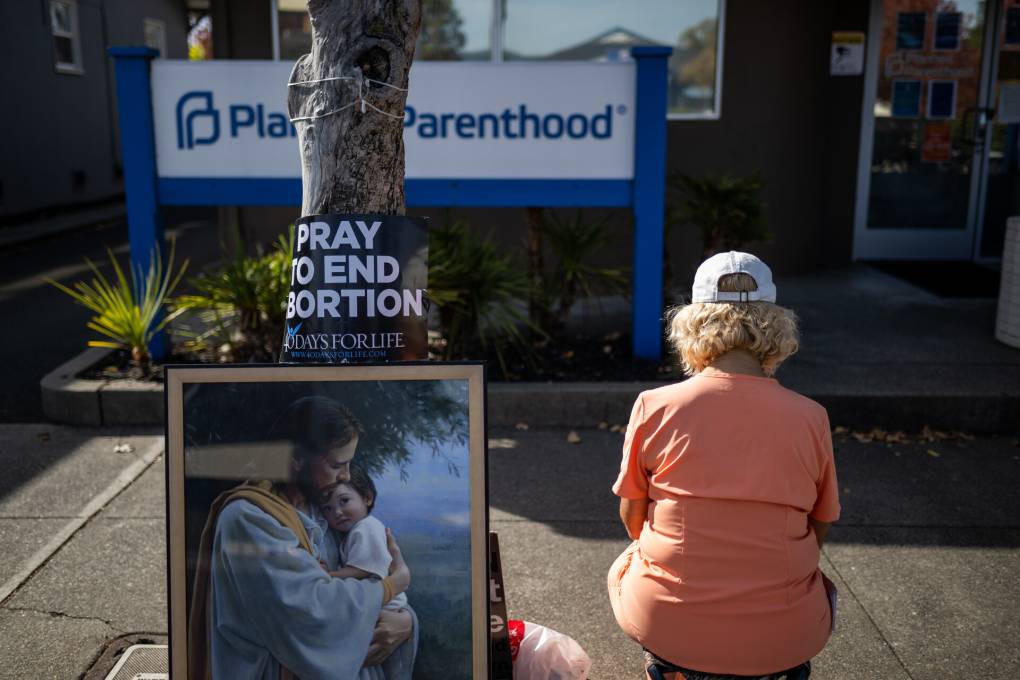
"caption": "40 Days for Life volunteer Teresa Conemac waits outside of a Planned Parenthood clinic in Napa on Nov. 4, 2022, to talk to people exiting or entering the building. She distributes pamphlets and refers people to the Napa Women's Clinic, a facility next door opened by faith-based non-profit Napa Valley Culture of LIfe.",
"description": null,
"title": "RS59819_005_KQED_CrisisPregnancyCenter_11042022-qut",
"credit": "Beth LaBerge/KQED",
"status": "inherit",
"altTag": null,
"isLoading": false,
"fetchFailed": false
},
"news_11938531": {
"type": "attachments",
"id": "news_11938531",
"meta": {
"index": "attachments_1716263798",
"site": "news",
"id": "11938531",
"found": true
},
"parent": 11938516,
"imgSizes": {
"twentyfourteen-full-width": {
"file": "https://ww2.kqed.org/app/uploads/sites/10/2023/01/GettyImages-1244106683-1024x576.jpg",
"width": 1024,
"mimeType": "image/jpeg",
"height": 576
},
"thumbnail": {
"file": "https://ww2.kqed.org/app/uploads/sites/10/2023/01/GettyImages-1244106683-160x107.jpg",
"width": 160,
"mimeType": "image/jpeg",
"height": 107
},
"post-thumbnail": {
"file": "https://ww2.kqed.org/app/uploads/sites/10/2023/01/GettyImages-1244106683-672x372.jpg",
"width": 672,
"mimeType": "image/jpeg",
"height": 372
},
"kqedFullSize": {
"file": "https://ww2.kqed.org/app/uploads/sites/10/2023/01/GettyImages-1244106683.jpg",
"width": 1024,
"height": 683
},
"large": {
"file": "https://ww2.kqed.org/app/uploads/sites/10/2023/01/GettyImages-1244106683-1020x680.jpg",
"width": 1020,
"mimeType": "image/jpeg",
"height": 680
},
"medium": {
"file": "https://ww2.kqed.org/app/uploads/sites/10/2023/01/GettyImages-1244106683-800x534.jpg",
"width": 800,
"mimeType": "image/jpeg",
"height": 534
}
},
"publishDate": 1674090912,
"modified": 1674167156,
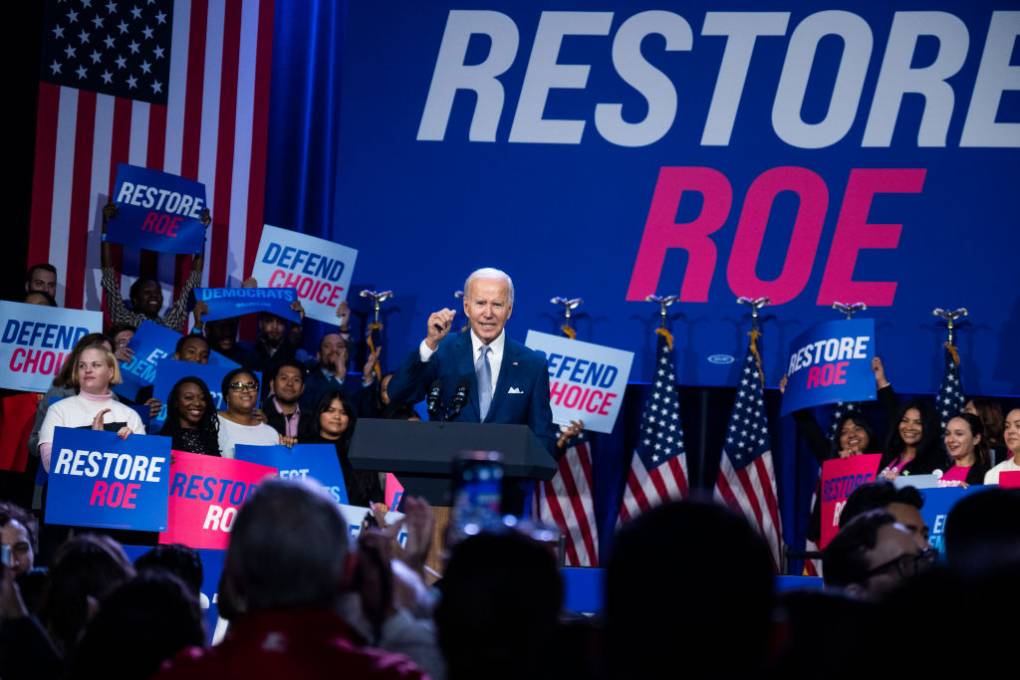
"caption": "Pres. Joe Biden speaks about the importance of electing Democrats who want to restore abortion rights, during an event hosted by the Democratic National Committee at the Howard Theatre in Washington, D.C., on Oct. 18, 2022.",
"description": null,
"title": "Protect Roe Rally at Howard Theatre",
"credit": "Tom Williams/CQ-Roll Call Inc. via Getty Images",
"status": "inherit",
"altTag": "An octogenarian white man in a dark blue suit and light blue tie raises his fist as crowds around him cheer, with the words \"Restore Roe\" written in big letters behind him and crowds holding U.S. flags in the foreground.",
"isLoading": false,
"fetchFailed": false
},
"news_11937385": {
"type": "attachments",
"id": "news_11937385",
"meta": {
"index": "attachments_1716263798",
"site": "news",
"id": "11937385",
"found": true
},
"parent": 11937191,
"imgSizes": {
"twentyfourteen-full-width": {
"file": "https://ww2.kqed.org/app/uploads/sites/10/2023/01/RS59819_005_KQED_CrisisPregnancyCenter_11042022-qut-1-1038x576.jpg",
"width": 1038,
"mimeType": "image/jpeg",
"height": 576
},
"thumbnail": {
"file": "https://ww2.kqed.org/app/uploads/sites/10/2023/01/RS59819_005_KQED_CrisisPregnancyCenter_11042022-qut-1-160x107.jpg",
"width": 160,
"mimeType": "image/jpeg",
"height": 107
},
"post-thumbnail": {
"file": "https://ww2.kqed.org/app/uploads/sites/10/2023/01/RS59819_005_KQED_CrisisPregnancyCenter_11042022-qut-1-672x372.jpg",
"width": 672,
"mimeType": "image/jpeg",
"height": 372
},
"kqedFullSize": {
"file": "https://ww2.kqed.org/app/uploads/sites/10/2023/01/RS59819_005_KQED_CrisisPregnancyCenter_11042022-qut-1.jpg",
"width": 1920,
"height": 1280
},
"large": {
"file": "https://ww2.kqed.org/app/uploads/sites/10/2023/01/RS59819_005_KQED_CrisisPregnancyCenter_11042022-qut-1-1020x680.jpg",
"width": 1020,
"mimeType": "image/jpeg",
"height": 680
},
"1536x1536": {
"file": "https://ww2.kqed.org/app/uploads/sites/10/2023/01/RS59819_005_KQED_CrisisPregnancyCenter_11042022-qut-1-1536x1024.jpg",
"width": 1536,
"mimeType": "image/jpeg",
"height": 1024
},
"medium": {
"file": "https://ww2.kqed.org/app/uploads/sites/10/2023/01/RS59819_005_KQED_CrisisPregnancyCenter_11042022-qut-1-800x533.jpg",
"width": 800,
"mimeType": "image/jpeg",
"height": 533
}
},
"publishDate": 1673209725,
"modified": 1673559580,
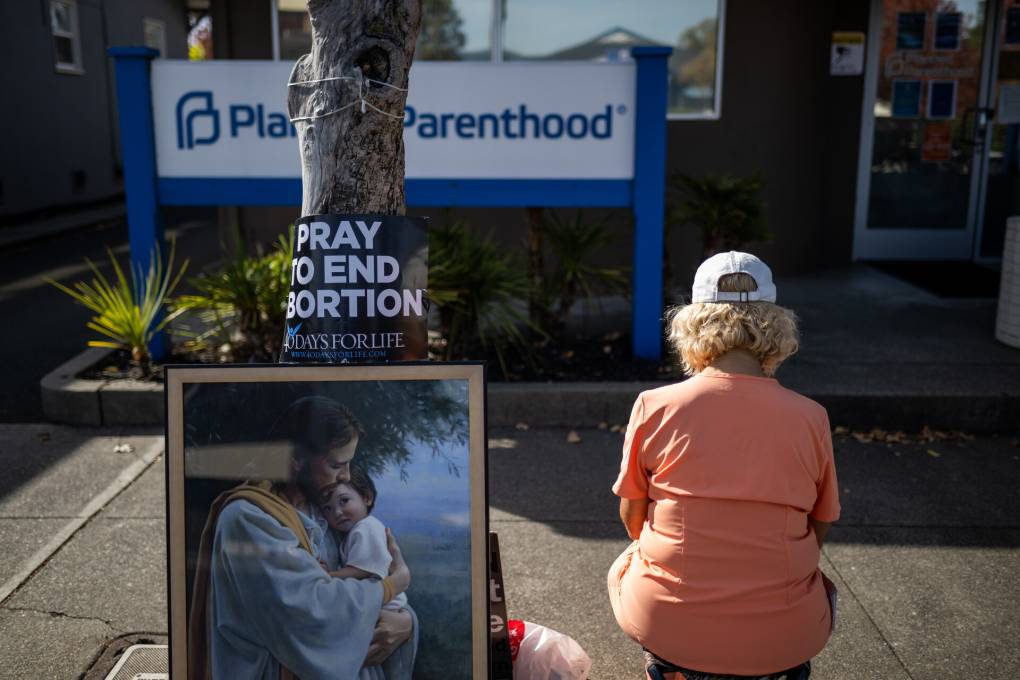
"caption": "Teresa Conemac, a volunteer with the Christian anti-abortion organization 40 Days for Life, waits outside a Planned Parenthood clinic in Napa on Nov. 4, 2022. She talks to people coming and going, shares widely debunked claims about the dangers of abortion and birth control, and refers people to the Napa Women's Center, a facility next door opened by faith-based nonprofit Napa Valley Culture of Life. It's one of 170 such anti-abortion centers in California.",
"description": null,
"title": "RS59819_005_KQED_CrisisPregnancyCenter_11042022-qut (1)",
"credit": "Beth LaBerge/KQED",
"status": "inherit",
"altTag": "a woman with blonde hair is seen from behind sitting in orange scrubs outside a Planned Parenthood, next to a painting of Jesus and a sign that reads 'pray to end abortion'",
"isLoading": false,
"fetchFailed": false
},
"news_11934825": {
"type": "attachments",
"id": "news_11934825",
"meta": {
"index": "attachments_1716263798",
"site": "news",
"id": "11934825",
"found": true
},
"parent": 11934819,
"imgSizes": {
"twentyfourteen-full-width": {
"file": "https://ww2.kqed.org/app/uploads/sites/10/2022/12/The-Bishop-Ministerial-Association-welcomes-visitors-to-town1-1038x576.jpg",
"width": 1038,
"mimeType": "image/jpeg",
"height": 576
},
"thumbnail": {
"file": "https://ww2.kqed.org/app/uploads/sites/10/2022/12/The-Bishop-Ministerial-Association-welcomes-visitors-to-town1-160x120.jpg",
"width": 160,
"mimeType": "image/jpeg",
"height": 120
},
"post-thumbnail": {
"file": "https://ww2.kqed.org/app/uploads/sites/10/2022/12/The-Bishop-Ministerial-Association-welcomes-visitors-to-town1-672x372.jpg",
"width": 672,
"mimeType": "image/jpeg",
"height": 372
},
"kqedFullSize": {
"file": "https://ww2.kqed.org/app/uploads/sites/10/2022/12/The-Bishop-Ministerial-Association-welcomes-visitors-to-town1.jpg",
"width": 2000,
"height": 1500
},
"large": {
"file": "https://ww2.kqed.org/app/uploads/sites/10/2022/12/The-Bishop-Ministerial-Association-welcomes-visitors-to-town1-1020x765.jpg",
"width": 1020,
"mimeType": "image/jpeg",
"height": 765
},
"1536x1536": {
"file": "https://ww2.kqed.org/app/uploads/sites/10/2022/12/The-Bishop-Ministerial-Association-welcomes-visitors-to-town1-1536x1152.jpg",
"width": 1536,
"mimeType": "image/jpeg",
"height": 1152
},
"full-width": {
"file": "https://ww2.kqed.org/app/uploads/sites/10/2022/12/The-Bishop-Ministerial-Association-welcomes-visitors-to-town1-1920x1440.jpg",
"width": 1920,
"mimeType": "image/jpeg",
"height": 1440
},
"medium": {
"file": "https://ww2.kqed.org/app/uploads/sites/10/2022/12/The-Bishop-Ministerial-Association-welcomes-visitors-to-town1-800x600.jpg",
"width": 800,
"mimeType": "image/jpeg",
"height": 600
}
},
"publishDate": 1670622602,
"modified": 1670629712,
"caption": "In Bishop, a sign from the Ministerial Association welcomes visitors to town. Local health care workers say a strain of conservatism has contributed to the lack of abortion access, because some health care workers refuse to perform the procedure.",
"description": null,
"title": "The Bishop Ministerial Association welcomes visitors to town1",
"credit": "Lauren DeLaunay Miller",
"status": "inherit",
"altTag": "a wooden sign that says 'we welcome you, worship with us' is seen in a rural area, in front of dry grass, a tree and a blue sky",
"isLoading": false,
"fetchFailed": false
},
"news_11932009": {
"type": "attachments",
"id": "news_11932009",
"meta": {
"index": "attachments_1716263798",
"site": "news",
"id": "11932009",
"found": true
},
"parent": 11931999,
"imgSizes": {
"twentyfourteen-full-width": {
"file": "https://ww2.kqed.org/app/uploads/sites/10/2022/11/GettyImages-1244628213-1024x576.jpg",
"width": 1024,
"mimeType": "image/jpeg",
"height": 576
},
"thumbnail": {
"file": "https://ww2.kqed.org/app/uploads/sites/10/2022/11/GettyImages-1244628213-160x107.jpg",
"width": 160,
"mimeType": "image/jpeg",
"height": 107
},
"post-thumbnail": {
"file": "https://ww2.kqed.org/app/uploads/sites/10/2022/11/GettyImages-1244628213-672x372.jpg",
"width": 672,
"mimeType": "image/jpeg",
"height": 372
},
"kqedFullSize": {
"file": "https://ww2.kqed.org/app/uploads/sites/10/2022/11/GettyImages-1244628213.jpg",
"width": 1024,
"height": 683
},
"large": {
"file": "https://ww2.kqed.org/app/uploads/sites/10/2022/11/GettyImages-1244628213-1020x680.jpg",
"width": 1020,
"mimeType": "image/jpeg",
"height": 680
},
"medium": {
"file": "https://ww2.kqed.org/app/uploads/sites/10/2022/11/GettyImages-1244628213-800x534.jpg",
"width": 800,
"mimeType": "image/jpeg",
"height": 534
}
},
"publishDate": 1668133328,
"modified": 1668133437,
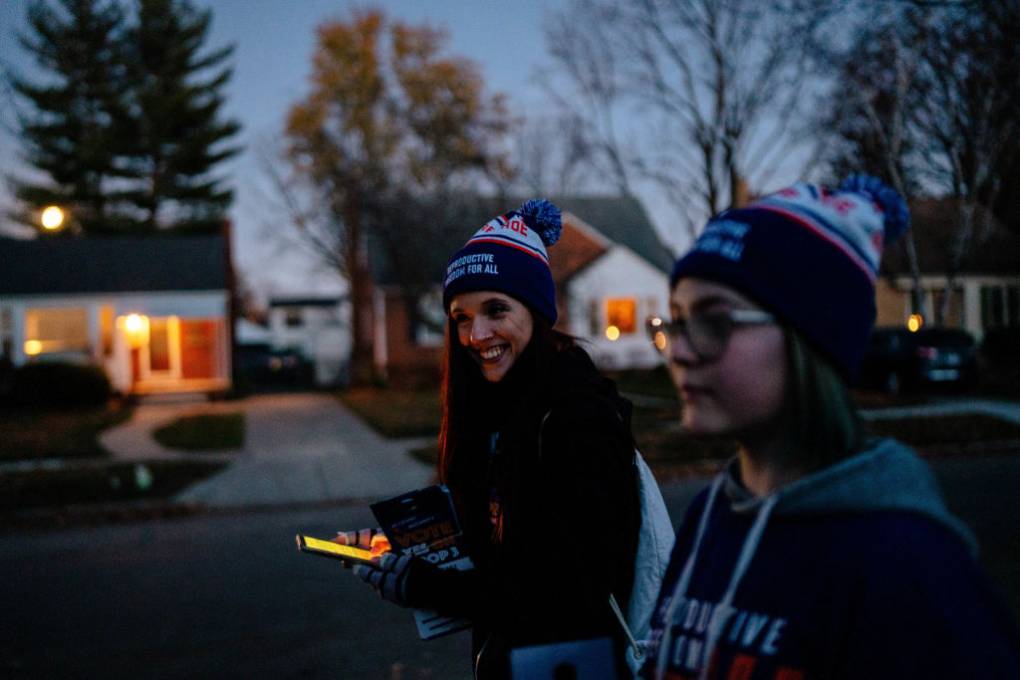
"caption": "Lara Marrison, 26, checks the MiniVAN canvassing app while in a Royal Oak neighborhood for Reproductive Freedom For All, a group promoting abortion rights in Michigan, on Nov. 7, 2022.",
"description": null,
"title": "MIDTERMS2022-MICHIGAN",
"credit": "Nick Hagen/The Washington Post via Getty Images",
"status": "inherit",
"altTag": "Two young women smile wearing beanies that read \"reproductive rights for all\"",
"isLoading": false,
"fetchFailed": false
},
"news_11931861": {
"type": "attachments",
"id": "news_11931861",
"meta": {
"index": "attachments_1716263798",
"site": "news",
"id": "11931861",
"found": true
},
"parent": 11931860,
"imgSizes": {
"twentyfourteen-full-width": {
"file": "https://ww2.kqed.org/app/uploads/sites/10/2022/11/gettyimages-1243948832-0d94061c77b8ccd56189db4a1af5097b7354d542-1-1038x576.jpg",
"width": 1038,
"mimeType": "image/jpeg",
"height": 576
},
"thumbnail": {
"file": "https://ww2.kqed.org/app/uploads/sites/10/2022/11/gettyimages-1243948832-0d94061c77b8ccd56189db4a1af5097b7354d542-1-160x120.jpg",
"width": 160,
"mimeType": "image/jpeg",
"height": 120
},
"post-thumbnail": {
"file": "https://ww2.kqed.org/app/uploads/sites/10/2022/11/gettyimages-1243948832-0d94061c77b8ccd56189db4a1af5097b7354d542-1-672x372.jpg",
"width": 672,
"mimeType": "image/jpeg",
"height": 372
},
"kqedFullSize": {
"file": "https://ww2.kqed.org/app/uploads/sites/10/2022/11/gettyimages-1243948832-0d94061c77b8ccd56189db4a1af5097b7354d542-1-scaled.jpg",
"width": 2560,
"height": 1920
},
"2048x2048": {
"file": "https://ww2.kqed.org/app/uploads/sites/10/2022/11/gettyimages-1243948832-0d94061c77b8ccd56189db4a1af5097b7354d542-1-2048x1536.jpg",
"width": 2048,
"mimeType": "image/jpeg",
"height": 1536
},
"large": {
"file": "https://ww2.kqed.org/app/uploads/sites/10/2022/11/gettyimages-1243948832-0d94061c77b8ccd56189db4a1af5097b7354d542-1-1020x765.jpg",
"width": 1020,
"mimeType": "image/jpeg",
"height": 765
},
"1536x1536": {
"file": "https://ww2.kqed.org/app/uploads/sites/10/2022/11/gettyimages-1243948832-0d94061c77b8ccd56189db4a1af5097b7354d542-1-1536x1152.jpg",
"width": 1536,
"mimeType": "image/jpeg",
"height": 1152
},
"full-width": {
"file": "https://ww2.kqed.org/app/uploads/sites/10/2022/11/gettyimages-1243948832-0d94061c77b8ccd56189db4a1af5097b7354d542-1-1920x1440.jpg",
"width": 1920,
"mimeType": "image/jpeg",
"height": 1440
},
"medium": {
"file": "https://ww2.kqed.org/app/uploads/sites/10/2022/11/gettyimages-1243948832-0d94061c77b8ccd56189db4a1af5097b7354d542-1-800x600.jpg",
"width": 800,
"mimeType": "image/jpeg",
"height": 600
}
},
"publishDate": 1668040653,
"modified": 1668040760,
"caption": "Kentucky voters have rejected an amendment that would have said the state constitution contains no right to an abortion. Earlier, people rallied on the steps of the Kentucky State Capitol in Frankfort to encourage voters to vote yes on Amendment 2, which failed.",
"description": "Counter-protestors hold signs in front of a rally encouraging voters to vote yes on Amendment 2, which would add a permanent abortion ban to Kentuckys state constitution, on the steps of the Kentucky State Capitol in Frankfort, Kentucky, on October 1, 2022. - Since the Supreme Court in June overturned the constitutional right to abortion, restoring states' ability to ban the procedure, the issue has become a major ballot question. Only four states have decided to hold referendums exclusively on abortion, decoupling the issue from platforms and political parties, and opening the door to citizens who are not very political to get involved in what is, for them, a matter of \"values.\" (Photo by Stefani Reynolds / AFP) (Photo by STEFANI REYNOLDS/AFP via Getty Images)",
"title": "Kentucky voters have rejected an amendment that would have said the state constitution contains no right to an abortion. Earlier, people rallied on the steps of the Kentucky State Capitol in Frankfort to encourage voters to vote yes on Amendment 2, which failed.",
"credit": "Stefani Reynolds/AFP via Getty Images",
"status": "inherit",
"altTag": null,
"isLoading": false,
"fetchFailed": false
},
"news_11931807": {
"type": "attachments",
"id": "news_11931807",
"meta": {
"index": "attachments_1716263798",
"site": "news",
"id": "11931807",
"found": true
},
"parent": 11931752,
"imgSizes": {
"twentyfourteen-full-width": {
"file": "https://ww2.kqed.org/app/uploads/sites/10/2022/11/GettyImages-1244627438_JDVance_COVER-1038x576.jpg",
"width": 1038,
"mimeType": "image/jpeg",
"height": 576
},
"thumbnail": {
"file": "https://ww2.kqed.org/app/uploads/sites/10/2022/11/GettyImages-1244627438_JDVance_COVER-160x90.jpg",
"width": 160,
"mimeType": "image/jpeg",
"height": 90
},
"post-thumbnail": {
"file": "https://ww2.kqed.org/app/uploads/sites/10/2022/11/GettyImages-1244627438_JDVance_COVER-672x372.jpg",
"width": 672,
"mimeType": "image/jpeg",
"height": 372
},
"kqedFullSize": {
"file": "https://ww2.kqed.org/app/uploads/sites/10/2022/11/GettyImages-1244627438_JDVance_COVER.jpg",
"width": 1920,
"height": 1080
},
"large": {
"file": "https://ww2.kqed.org/app/uploads/sites/10/2022/11/GettyImages-1244627438_JDVance_COVER-1020x574.jpg",
"width": 1020,
"mimeType": "image/jpeg",
"height": 574
},
"1536x1536": {
"file": "https://ww2.kqed.org/app/uploads/sites/10/2022/11/GettyImages-1244627438_JDVance_COVER-1536x864.jpg",
"width": 1536,
"mimeType": "image/jpeg",
"height": 864
},
"medium": {
"file": "https://ww2.kqed.org/app/uploads/sites/10/2022/11/GettyImages-1244627438_JDVance_COVER-800x450.jpg",
"width": 800,
"mimeType": "image/jpeg",
"height": 450
}
},
"publishDate": 1668030066,
"modified": 1668033227,
"caption": "Republican US Senate candidate JD Vance speaks to supporters at an election watch party on Nov. 8, 2022, in Columbus, Ohio. Vance defeated Democrat Rep. Tim Ryan in the race to replace retiring Republican Sen. Rob Portman.",
"description": null,
"title": "GettyImages-1244627438_JDVance_COVER",
"credit": "Andrew Spear/Getty Images",
"status": "inherit",
"altTag": "White man in suit speaks with both arms raised high, smiling people around him",
"isLoading": false,
"fetchFailed": false
},
"news_11929977": {
"type": "attachments",
"id": "news_11929977",
"meta": {
"index": "attachments_1716263798",
"site": "news",
"id": "11929977",
"found": true
},
"title": "Calvert_Rollins",
"publishDate": 1666638900,
"status": "inherit",
"parent": 11929166,
"modified": 1728928663,
"caption": "The newly outlined 41st Congressional District is hotly contested territory for Republican Congressmember Ken Calvert (left) and his opponent, Democrat and former prosecutor Will Rollins.",
"credit": "Rep. Ken Calvert photo by Bill Clark/CQ-Roll Call via Getty Images. Will Rollins photo courtesy of his campaign",
"altTag": null,
"description": "The newly outlined 41st Congressional District is hotly contested territory for Republican Congressmember Ken Calvert (left), who has voted against LGBTQ+ rights, and his opponent, Democrat and former prosecutor Will Rollins, who is gay.",
"imgSizes": {
"medium": {
"file": "https://cdn.kqed.org/wp-content/uploads/sites/10/2023/10/Calvert_Rollins-800x460.jpg",
"width": 800,
"height": 460,
"mimeType": "image/jpeg"
},
"large": {
"file": "https://cdn.kqed.org/wp-content/uploads/sites/10/2023/10/Calvert_Rollins-1020x587.jpg",
"width": 1020,
"height": 587,
"mimeType": "image/jpeg"
},
"thumbnail": {
"file": "https://cdn.kqed.org/wp-content/uploads/sites/10/2023/10/Calvert_Rollins-160x92.jpg",
"width": 160,
"height": 92,
"mimeType": "image/jpeg"
},
"post-thumbnail": {
"file": "https://cdn.kqed.org/wp-content/uploads/sites/10/2023/10/Calvert_Rollins-672x372.jpg",
"width": 672,
"height": 372,
"mimeType": "image/jpeg"
},
"twentyfourteen-full-width": {
"file": "https://cdn.kqed.org/wp-content/uploads/sites/10/2023/10/Calvert_Rollins-1038x576.jpg",
"width": 1038,
"height": 576,
"mimeType": "image/jpeg"
},
"kqedFullSize": {
"file": "https://cdn.kqed.org/wp-content/uploads/sites/10/2023/10/Calvert_Rollins.jpg",
"width": 1314,
"height": 756
}
},
"isLoading": false,
"fetchFailed": false
},
"news_11927720": {
"type": "attachments",
"id": "news_11927720",
"meta": {
"index": "attachments_1716263798",
"site": "news",
"id": "11927720",
"found": true
},
"parent": 11927686,
"imgSizes": {
"twentyfourteen-full-width": {
"file": "https://ww2.kqed.org/app/uploads/sites/10/2022/10/Screen-Shot-2022-10-04-at-4.30.01-PM-1038x576.png",
"width": 1038,
"mimeType": "image/png",
"height": 576
},
"thumbnail": {
"file": "https://ww2.kqed.org/app/uploads/sites/10/2022/10/Screen-Shot-2022-10-04-at-4.30.01-PM-160x106.png",
"width": 160,
"mimeType": "image/png",
"height": 106
},
"post-thumbnail": {
"file": "https://ww2.kqed.org/app/uploads/sites/10/2022/10/Screen-Shot-2022-10-04-at-4.30.01-PM-672x372.png",
"width": 672,
"mimeType": "image/png",
"height": 372
},
"kqedFullSize": {
"file": "https://ww2.kqed.org/app/uploads/sites/10/2022/10/Screen-Shot-2022-10-04-at-4.30.01-PM.png",
"width": 1548,
"height": 1024
},
"large": {
"file": "https://ww2.kqed.org/app/uploads/sites/10/2022/10/Screen-Shot-2022-10-04-at-4.30.01-PM-1020x675.png",
"width": 1020,
"mimeType": "image/png",
"height": 675
},
"1536x1536": {
"file": "https://ww2.kqed.org/app/uploads/sites/10/2022/10/Screen-Shot-2022-10-04-at-4.30.01-PM-1536x1016.png",
"width": 1536,
"mimeType": "image/png",
"height": 1016
},
"medium": {
"file": "https://ww2.kqed.org/app/uploads/sites/10/2022/10/Screen-Shot-2022-10-04-at-4.30.01-PM-800x529.png",
"width": 800,
"mimeType": "image/png",
"height": 529
}
},
"publishDate": 1664926809,
"modified": 1664928032,
"caption": "The Cathedral of the Blessed Sacrament in Sacramento on Sept. 12, 2022. Catholic churches are leading the opposition to a ballot measure on abortion rights.",
"description": null,
"title": "Screen Shot 2022-10-04 at 4.30.01 PM",
"credit": "Rahul Lal/CalMatters",
"status": "inherit",
"altTag": "A photo of the top part of a church.",
"isLoading": false,
"fetchFailed": false
},
"news_11927652": {
"type": "attachments",
"id": "news_11927652",
"meta": {
"index": "attachments_1716263798",
"site": "news",
"id": "11927652",
"found": true
},
"parent": 11927597,
"imgSizes": {
"twentyfourteen-full-width": {
"file": "https://ww2.kqed.org/app/uploads/sites/10/2032/10/RS56846_046_KQED_AbortionRightsRallySF_06242022-qut-1038x576.jpg",
"width": 1038,
"mimeType": "image/jpeg",
"height": 576
},
"thumbnail": {
"file": "https://ww2.kqed.org/app/uploads/sites/10/2032/10/RS56846_046_KQED_AbortionRightsRallySF_06242022-qut-160x107.jpg",
"width": 160,
"mimeType": "image/jpeg",
"height": 107
},
"post-thumbnail": {
"file": "https://ww2.kqed.org/app/uploads/sites/10/2032/10/RS56846_046_KQED_AbortionRightsRallySF_06242022-qut-672x372.jpg",
"width": 672,
"mimeType": "image/jpeg",
"height": 372
},
"kqedFullSize": {
"file": "https://ww2.kqed.org/app/uploads/sites/10/2032/10/RS56846_046_KQED_AbortionRightsRallySF_06242022-qut.jpg",
"width": 1920,
"height": 1280
},
"large": {
"file": "https://ww2.kqed.org/app/uploads/sites/10/2032/10/RS56846_046_KQED_AbortionRightsRallySF_06242022-qut-1020x680.jpg",
"width": 1020,
"mimeType": "image/jpeg",
"height": 680
},
"1536x1536": {
"file": "https://ww2.kqed.org/app/uploads/sites/10/2032/10/RS56846_046_KQED_AbortionRightsRallySF_06242022-qut-1536x1024.jpg",
"width": 1536,
"mimeType": "image/jpeg",
"height": 1024
},
"medium": {
"file": "https://ww2.kqed.org/app/uploads/sites/10/2032/10/RS56846_046_KQED_AbortionRightsRallySF_06242022-qut-800x533.jpg",
"width": 800,
"mimeType": "image/jpeg",
"height": 533
}
},
"publishDate": 1664900993,
"modified": 1664910365,
"caption": "Hundreds of demonstrators gather in front of City Hall in San Francisco to protest the US Supreme Court's decision to overturn Roe v. Wade, on Friday, June 24, 2022. The Court's decision overturned the 50-year-old Roe v. Wade case, removing the federal right to abortion.",
"description": null,
"title": "RS56846_046_KQED_AbortionRightsRallySF_06242022-qut",
"credit": "Beth LaBerge/KQED",
"status": "inherit",
"altTag": "PRo-choice protesters at a rally in SF, holding signs. Oone sign says: 'Codify Roe Now.'",
"isLoading": false,
"fetchFailed": false
},
"news_11926975": {
"type": "attachments",
"id": "news_11926975",
"meta": {
"index": "attachments_1716263798",
"site": "news",
"id": "11926975",
"found": true
},
"parent": 11926949,
"imgSizes": {
"twentyfourteen-full-width": {
"file": "https://ww2.kqed.org/app/uploads/sites/10/2022/09/Abortion-Rally-1038x576.jpg",
"width": 1038,
"mimeType": "image/jpeg",
"height": 576
},
"thumbnail": {
"file": "https://ww2.kqed.org/app/uploads/sites/10/2022/09/Abortion-Rally-160x106.jpg",
"width": 160,
"mimeType": "image/jpeg",
"height": 106
},
"post-thumbnail": {
"file": "https://ww2.kqed.org/app/uploads/sites/10/2022/09/Abortion-Rally-672x372.jpg",
"width": 672,
"mimeType": "image/jpeg",
"height": 372
},
"kqedFullSize": {
"file": "https://ww2.kqed.org/app/uploads/sites/10/2022/09/Abortion-Rally.jpg",
"width": 1980,
"height": 1316
},
"large": {
"file": "https://ww2.kqed.org/app/uploads/sites/10/2022/09/Abortion-Rally-1020x678.jpg",
"width": 1020,
"mimeType": "image/jpeg",
"height": 678
},
"1536x1536": {
"file": "https://ww2.kqed.org/app/uploads/sites/10/2022/09/Abortion-Rally-1536x1021.jpg",
"width": 1536,
"mimeType": "image/jpeg",
"height": 1021
},
"full-width": {
"file": "https://ww2.kqed.org/app/uploads/sites/10/2022/09/Abortion-Rally-1920x1276.jpg",
"width": 1920,
"mimeType": "image/jpeg",
"height": 1276
},
"medium": {
"file": "https://ww2.kqed.org/app/uploads/sites/10/2022/09/Abortion-Rally-800x532.jpg",
"width": 800,
"mimeType": "image/jpeg",
"height": 532
}
},
"publishDate": 1664392776,
"modified": 1664396729,
"caption": "Abortion-rights activists demonstrate outside a Planned Parenthood clinic as they safeguard the clinic from a possible protest by a far-right group on July 16, 2022, in Santa Monica.",
"description": null,
"title": "Abortion Rally",
"credit": "Mario Tama/Getty Images",
"status": "inherit",
"altTag": "A crowd of protestors face the camera, but all are out of focus except for one person in the middle of the frame and the crowd. That person, sharp and in focus, wears a grey top and a green bandana and holds a sign above their head that reads \"Abortion on demand and without apology.\"",
"isLoading": false,
"fetchFailed": false
},
"news_11925552": {
"type": "attachments",
"id": "news_11925552",
"meta": {
"index": "attachments_1716263798",
"site": "news",
"id": "11925552",
"found": true
},
"parent": 11925505,
"imgSizes": {
"twentyfourteen-full-width": {
"file": "https://ww2.kqed.org/app/uploads/sites/10/2022/09/GettyImages-1410222521-1038x576.jpg",
"width": 1038,
"mimeType": "image/jpeg",
"height": 576
},
"thumbnail": {
"file": "https://ww2.kqed.org/app/uploads/sites/10/2022/09/GettyImages-1410222521-160x96.jpg",
"width": 160,
"mimeType": "image/jpeg",
"height": 96
},
"post-thumbnail": {
"file": "https://ww2.kqed.org/app/uploads/sites/10/2022/09/GettyImages-1410222521-672x372.jpg",
"width": 672,
"mimeType": "image/jpeg",
"height": 372
},
"kqedFullSize": {
"file": "https://ww2.kqed.org/app/uploads/sites/10/2022/09/GettyImages-1410222521-scaled.jpg",
"width": 2560,
"height": 1538
},
"2048x2048": {
"file": "https://ww2.kqed.org/app/uploads/sites/10/2022/09/GettyImages-1410222521-2048x1230.jpg",
"width": 2048,
"mimeType": "image/jpeg",
"height": 1230
},
"large": {
"file": "https://ww2.kqed.org/app/uploads/sites/10/2022/09/GettyImages-1410222521-1020x613.jpg",
"width": 1020,
"mimeType": "image/jpeg",
"height": 613
},
"1536x1536": {
"file": "https://ww2.kqed.org/app/uploads/sites/10/2022/09/GettyImages-1410222521-1536x923.jpg",
"width": 1536,
"mimeType": "image/jpeg",
"height": 923
},
"full-width": {
"file": "https://ww2.kqed.org/app/uploads/sites/10/2022/09/GettyImages-1410222521-1920x1154.jpg",
"width": 1920,
"mimeType": "image/jpeg",
"height": 1154
},
"medium": {
"file": "https://ww2.kqed.org/app/uploads/sites/10/2022/09/GettyImages-1410222521-800x481.jpg",
"width": 800,
"mimeType": "image/jpeg",
"height": 481
}
},
"publishDate": 1663112607,
"modified": 1663112779,
"caption": "A billboard proclaiming abortion still legal in California is seen at the corner of Telegraph Avenue and 40th Street in Oakland in July 2022. Gov. Gavin Newsom on Tuesday announced the launch of a new online hub for abortion resources, part of a wider effort to establish California as a sanctuary state after the Supreme Court overturned Roe v. Wade earlier this year.",
"description": null,
"title": "Abortion Billboard",
"credit": "Jane Tyska/Digital First Media/East Bay Times via Getty Images",
"status": "inherit",
"altTag": "a billboard proclaiming abortion is and will remain legal in California",
"isLoading": false,
"fetchFailed": false
}
},
"audioPlayerReducer": {
"postId": "stream_live",
"isPaused": true,
"isPlaying": false,
"pfsActive": false,
"pledgeModalIsOpen": true,
"playerDrawerIsOpen": false,
"liveAudioPlayStartedAt": 0,
"liveAudioPlayContext": ""
},
"authorsReducer": {
"byline_news_11938516": {
"type": "authors",
"id": "byline_news_11938516",
"meta": {
"override": true
},
"slug": "byline_news_11938516",
"name": "\u003ca href=\"https://www.npr.org/people/2100593/terry-gross\">Terry Gross\u003c/a>",
"isLoading": false
},
"byline_news_11934819": {
"type": "authors",
"id": "byline_news_11934819",
"meta": {
"override": true
},
"slug": "byline_news_11934819",
"name": "Lauren DeLaunay Miller",
"isLoading": false
},
"byline_news_11931999": {
"type": "authors",
"id": "byline_news_11931999",
"meta": {
"override": true
},
"slug": "byline_news_11931999",
"name": "\u003ca href=\"https://www.npr.org/people/448294256/sarah-mccammon\">Sarah McCammon\u003c/a>",
"isLoading": false
},
"byline_news_11931860": {
"type": "authors",
"id": "byline_news_11931860",
"meta": {
"override": true
},
"slug": "byline_news_11931860",
"name": "Sarah McCammon",
"isLoading": false
},
"byline_news_11931752": {
"type": "authors",
"id": "byline_news_11931752",
"meta": {
"override": true
},
"slug": "byline_news_11931752",
"name": "Sara Burnett, Jill Colvin and Will Weissert\u003cbr>The Associated Press",
"isLoading": false
},
"byline_news_11927686": {
"type": "authors",
"id": "byline_news_11927686",
"meta": {
"override": true
},
"slug": "byline_news_11927686",
"name": "Alexei Koseff",
"isLoading": false
},
"byline_news_11926949": {
"type": "authors",
"id": "byline_news_11926949",
"meta": {
"override": true
},
"slug": "byline_news_11926949",
"name": "Kristen Huang",
"isLoading": false
},
"byline_news_11925505": {
"type": "authors",
"id": "byline_news_11925505",
"meta": {
"override": true
},
"slug": "byline_news_11925505",
"name": "Adam Beam\u003cbr>Associated Press",
"isLoading": false
},
"scottshafer": {
"type": "authors",
"id": "255",
"meta": {
"index": "authors_1716337520",
"id": "255",
"found": true
},
"name": "Scott Shafer",
"firstName": "Scott",
"lastName": "Shafer",
"slug": "scottshafer",
"email": "sshafer@kqed.org",
"display_author_email": false,
"staff_mastheads": [
"news"
],
"title": "KQED Contributor",
"bio": "Scott Shafer is a senior editor with the KQED Politics and Government desk. He is co-host of Political Breakdown, the award-winning radio show and podcast with a personal take on the world of politics. Scott came to KQED in 1998 to host the statewide\u003cem> California Report\u003c/em>. Prior to that he had extended stints in politics and government\u003cem>.\u003c/em> He uses that inside experience at KQED in his, reporting, hosting and analysis for the politics desk. Scott collaborated \u003cem>Political Breakdown a\u003c/em>nd on \u003cem>The Political Mind of Jerry Brown, \u003c/em>an eight-part series about the life and extraordinary political career of the former governor. For fun, he plays water polo with the San Francisco Tsunami.",
"avatar": "https://secure.gravatar.com/avatar/a62ebae45b79d7aed1a39a0e3bf68104?s=600&d=blank&r=g",
"twitter": "scottshafer",
"bluesky": null,
"facebook": null,
"instagram": null,
"linkedin": null,
"sites": [
{
"site": "news",
"roles": [
"editor"
]
},
{
"site": "stateofhealth",
"roles": [
"author"
]
},
{
"site": "science",
"roles": [
"author"
]
},
{
"site": "forum",
"roles": [
"subscriber"
]
},
{
"site": "liveblog",
"roles": [
"author"
]
}
],
"headData": {
"title": "Scott Shafer | KQED",
"description": "KQED Contributor",
"ogImgSrc": "https://secure.gravatar.com/avatar/a62ebae45b79d7aed1a39a0e3bf68104?s=600&d=blank&r=g",
"twImgSrc": "https://secure.gravatar.com/avatar/a62ebae45b79d7aed1a39a0e3bf68104?s=600&d=blank&r=g"
},
"isLoading": false,
"link": "/author/scottshafer"
},
"adembosky": {
"type": "authors",
"id": "3205",
"meta": {
"index": "authors_1716337520",
"id": "3205",
"found": true
},
"name": "April Dembosky",
"firstName": "April",
"lastName": "Dembosky",
"slug": "adembosky",
"email": "adembosky@kqed.org",
"display_author_email": false,
"staff_mastheads": [
"news",
"science"
],
"title": "KQED Health Correspondent",
"bio": "April Dembosky is the health correspondent for KQED News and a regular contributor to NPR. She specializes in covering altered states of mind, from postpartum depression to methamphetamine-induced psychosis to the insanity defense. Her investigative series on insurance companies sidestepping mental health laws won multiple awards, including first place in beat reporting from the national Association of Health Care Journalists. She is the recipient of numerous other prizes and fellowships, including a national Edward R. Murrow award for investigative reporting, a Society of Professional Journalists award for long-form storytelling, and a Carter Center Fellowship for Mental Health Journalism.\r\n\r\nDembosky reported and produced \u003cem>Soundtrack of Silence\u003c/em>, an audio documentary about music and memory that is currently being made into a feature film by Paramount Pictures.\r\n\r\nBefore joining KQED in 2013, Dembosky covered technology and Silicon Valley for \u003cem>The Financial Times of London,\u003c/em> and contributed business and arts stories to \u003cem>Marketplace \u003c/em>and \u003cem>The New York Times.\u003c/em> She got her undergraduate degree in philosophy from Smith College and her master's in journalism from the University of California, Berkeley. She is a classically trained violinist and proud alum of the first symphony orchestra at Burning Man.",
"avatar": "https://secure.gravatar.com/avatar/ef92999be4ceb9ea60701e7dc276f813?s=600&d=blank&r=g",
"twitter": "adembosky",
"facebook": null,
"instagram": null,
"linkedin": null,
"sites": [
{
"site": "arts",
"roles": [
"author"
]
},
{
"site": "news",
"roles": [
"editor"
]
},
{
"site": "futureofyou",
"roles": [
"author"
]
},
{
"site": "stateofhealth",
"roles": [
"editor"
]
},
{
"site": "science",
"roles": [
"editor"
]
},
{
"site": "forum",
"roles": [
"editor"
]
}
],
"headData": {
"title": "April Dembosky | KQED",
"description": "KQED Health Correspondent",
"ogImgSrc": "https://secure.gravatar.com/avatar/ef92999be4ceb9ea60701e7dc276f813?s=600&d=blank&r=g",
"twImgSrc": "https://secure.gravatar.com/avatar/ef92999be4ceb9ea60701e7dc276f813?s=600&d=blank&r=g"
},
"isLoading": false,
"link": "/author/adembosky"
},
"esilvers": {
"type": "authors",
"id": "7237",
"meta": {
"index": "authors_1716337520",
"id": "7237",
"found": true
},
"name": "Emma Silvers",
"firstName": "Emma",
"lastName": "Silvers",
"slug": "esilvers",
"email": "esilvers@kqed.org",
"display_author_email": false,
"staff_mastheads": [],
"title": "KQED Contributor",
"bio": "Emma Silvers is an editor at KQED Arts and a former digital producer at KQED News. Born and raised in the Bay Area, she has previously been an arts and entertainment editor at the \u003cem>San Francisco Chronicle\u003c/em>, \u003cem>SF Weekly\u003c/em> and the \u003cem>San Francisco Bay Guardian.\u003c/em> \u003ca href=\"https://www.emmasilvers.com\">Her work\u003c/a> has also appeared in \u003cem>Rolling Stone\u003c/em>, Pitchfork and \u003cem>Mother Jones\u003c/em>. In 2017 she was the recipient of the Society of Professional Journalists-Northern California's award for arts and culture reporting. In 1993 she \u003ca href=\"https://www.kqed.org/pop/16759/wait-what-my-coworker-was-a-voice-over-hyperventilator-for-jurassic-park\">hyperventilated in \u003cem>Jurassic Park\u003c/em>\u003c/a>.",
"avatar": "https://secure.gravatar.com/avatar/247beada39b88ea5759db1f51dba05cf?s=600&d=blank&r=g",
"twitter": "emmaruthless",
"facebook": null,
"instagram": null,
"linkedin": null,
"sites": [
{
"site": "arts",
"roles": [
"editor"
]
},
{
"site": "news",
"roles": [
"editor"
]
},
{
"site": "pop",
"roles": [
"contributor"
]
},
{
"site": "bayareabites",
"roles": [
"editor"
]
},
{
"site": "food",
"roles": [
"contributor"
]
},
{
"site": "liveblog",
"roles": [
"editor"
]
}
],
"headData": {
"title": "Emma Silvers | KQED",
"description": "KQED Contributor",
"ogImgSrc": "https://secure.gravatar.com/avatar/247beada39b88ea5759db1f51dba05cf?s=600&d=blank&r=g",
"twImgSrc": "https://secure.gravatar.com/avatar/247beada39b88ea5759db1f51dba05cf?s=600&d=blank&r=g"
},
"isLoading": false,
"link": "/author/esilvers"
},
"ecruzguevarra": {
"type": "authors",
"id": "8654",
"meta": {
"index": "authors_1716337520",
"id": "8654",
"found": true
},
"name": "Ericka Cruz Guevarra",
"firstName": "Ericka",
"lastName": "Cruz Guevarra",
"slug": "ecruzguevarra",
"email": "ecruzguevarra@kqed.org",
"display_author_email": true,
"staff_mastheads": [
"news"
],
"title": "Producer, The Bay Podcast",
"bio": "Ericka Cruz Guevarra is host of \u003ca href=\"https://www.kqed.org/podcasts/thebay\">\u003cem>The Bay\u003c/em>\u003c/a> podcast at KQED. Before host, she was the show’s producer. Her work in that capacity includes a three-part reported series on policing in Vallejo, which won a 2020 excellence in journalism award from the Society of Professional Journalists. Ericka has worked as a breaking news reporter at Oregon Public Broadcasting, helped produce the Code Switch podcast, and was KQED’s inaugural Raul Ramirez Diversity Fund intern. She’s also an alumna of NPR’s Next Generation Radio program. Send her an email if you have strong feelings about whether Fairfield and Suisun City are the Bay. Ericka is represented by SAG-AFTRA.",
"avatar": "https://secure.gravatar.com/avatar/accefc1de4bafc7e234b69bcb9b6f6536c130fd84709bc3069ef11a78787e1bb?s=600&d=blank&r=g",
"twitter": "NotoriousECG",
"bluesky": null,
"facebook": null,
"instagram": null,
"linkedin": null,
"sites": [
{
"site": "arts",
"roles": [
"subscriber"
]
},
{
"site": "news",
"roles": [
"editor",
"manage_categories"
]
},
{
"site": "futureofyou",
"roles": [
"subscriber"
]
},
{
"site": "stateofhealth",
"roles": [
"subscriber"
]
},
{
"site": "science",
"roles": [
"editor"
]
},
{
"site": "forum",
"roles": [
"subscriber"
]
}
],
"headData": {
"title": "Ericka Cruz Guevarra | KQED",
"description": "Producer, The Bay Podcast",
"ogImgSrc": "https://secure.gravatar.com/avatar/accefc1de4bafc7e234b69bcb9b6f6536c130fd84709bc3069ef11a78787e1bb?s=600&d=blank&r=g",
"twImgSrc": "https://secure.gravatar.com/avatar/accefc1de4bafc7e234b69bcb9b6f6536c130fd84709bc3069ef11a78787e1bb?s=600&d=blank&r=g"
},
"isLoading": false,
"link": "/author/ecruzguevarra"
},
"amontecillo": {
"type": "authors",
"id": "11649",
"meta": {
"index": "authors_1716337520",
"id": "11649",
"found": true
},
"name": "Alan Montecillo",
"firstName": "Alan",
"lastName": "Montecillo",
"slug": "amontecillo",
"email": "amontecillo@kqed.org",
"display_author_email": false,
"staff_mastheads": [
"news"
],
"title": "KQED Contributor",
"bio": "Alan Montecillo is the senior editor of \u003cem>\u003ca href=\"http://kqed.org/thebay\">The Bay\u003c/a>, \u003c/em> KQED's local news podcast. Before moving to the Bay Area, he worked as a senior talk show producer for WILL in Champaign-Urbana, Illinois and at Oregon Public Broadcasting in Portland, Oregon. He has won journalism awards from the Society of Professional Journalists Northern California, the Public Media Journalists Association, The Signal Awards, and has also received a regional Edward R. Murrow award. Alan is a Filipino American from Hong Kong and a graduate of Reed College.",
"avatar": "https://secure.gravatar.com/avatar/268f53a2066899ea9efdd8a5900218b17c822d9862cbc9326cccec53ef41d349?s=600&d=blank&r=g",
"twitter": "alanmontecillo",
"bluesky": null,
"facebook": null,
"instagram": null,
"linkedin": null,
"sites": [
{
"site": "",
"roles": [
"editor"
]
},
{
"site": "news",
"roles": [
"editor",
"manage_categories"
]
}
],
"headData": {
"title": "Alan Montecillo | KQED",
"description": "KQED Contributor",
"ogImgSrc": "https://secure.gravatar.com/avatar/268f53a2066899ea9efdd8a5900218b17c822d9862cbc9326cccec53ef41d349?s=600&d=blank&r=g",
"twImgSrc": "https://secure.gravatar.com/avatar/268f53a2066899ea9efdd8a5900218b17c822d9862cbc9326cccec53ef41d349?s=600&d=blank&r=g"
},
"isLoading": false,
"link": "/author/amontecillo"
},
"mesquinca": {
"type": "authors",
"id": "11802",
"meta": {
"index": "authors_1716337520",
"id": "11802",
"found": true
},
"name": "Maria Esquinca",
"firstName": "Maria",
"lastName": "Esquinca",
"slug": "mesquinca",
"email": "mesquinca@kqed.org",
"display_author_email": false,
"staff_mastheads": [],
"title": "Producer, The Bay",
"bio": "María Esquinca is a producer of The Bay. Before that, she was a New York Women’s Foundation IGNITE Fellow at Latino USA. She worked at Radio Bilingue where she covered the San Joaquin Valley. Maria has interned at WLRN, News 21, The New York Times Student Journalism Institute and at Crain’s Detroit Business as a Dow Jones News Fund Business Reporting Intern. She is an MFA graduate from the University of Miami. In 2017, she graduated from the Walter Cronkite School of Journalism and Mass Communication with a Master of Mass Communication. A fronteriza, she was born in Ciudad Juárez, Chihuahua, Mexico and grew up in El Paso, Texas.",
"avatar": "https://secure.gravatar.com/avatar/77cedba18aae91da775038ba06dcd8d0?s=600&d=blank&r=g",
"twitter": "@m_esquinca",
"facebook": null,
"instagram": null,
"linkedin": null,
"sites": [
{
"site": "news",
"roles": []
}
],
"headData": {
"title": "Maria Esquinca | KQED",
"description": "Producer, The Bay",
"ogImgSrc": "https://secure.gravatar.com/avatar/77cedba18aae91da775038ba06dcd8d0?s=600&d=blank&r=g",
"twImgSrc": "https://secure.gravatar.com/avatar/77cedba18aae91da775038ba06dcd8d0?s=600&d=blank&r=g"
},
"isLoading": false,
"link": "/author/mesquinca"
}
},
"pagesReducer": {
"news_tag_abortion": {
"type": "terms",
"id": "news_866",
"meta": {
"index": "terms_1716263798",
"site": "news",
"id": "866",
"score": 8.668607
},
"featImg": null,
"name": "abortion",
"description": null,
"taxonomy": "tag",
"headData": {
"twImgId": null,
"twTitle": null,
"ogTitle": null,
"ogImgId": null,
"twDescription": null,
"description": null,
"title": "abortion Archives | KQED News",
"ogDescription": null
},
"ttid": 876,
"slug": "abortion",
"isLoading": false,
"title": "abortion",
"pageMeta": {
"site": "news",
"WpPageTemplate": "page-topic-editorial",
"currentPage": 5
},
"blocks": [
{
"blockName": "kqed/post-list",
"attrs": {
"layout": "cardArticle2",
"query": "posts/news?tag=abortion",
"seeMore": false,
"paginated": true,
"page": 5
}
},
{
"blockName": "kqed/ad"
}
]
}
},
"pfsSessionReducer": {},
"postsReducer": {
"stream_live": {
"type": "live",
"id": "stream_live",
"audioUrl": "https://streams.kqed.org/kqedradio",
"title": "Live Stream",
"excerpt": "Live Stream information currently unavailable.",
"link": "/radio",
"featImg": "",
"label": {
"name": "KQED Live",
"link": "/"
}
},
"stream_kqedNewscast": {
"type": "posts",
"id": "stream_kqedNewscast",
"audioUrl": "https://www.kqed.org/.stream/anon/radio/RDnews/newscast.mp3?_=1",
"title": "KQED Newscast",
"featImg": "",
"label": {
"name": "88.5 FM",
"link": "/"
}
},
"news_11941250": {
"type": "posts",
"id": "news_11941250",
"meta": {
"index": "posts_1716263798",
"site": "news",
"id": "11941250",
"score": null,
"sort": [
1676631650000
]
},
"guestAuthors": [],
"slug": "in-deep-blue-california-anti-abortion-centers-outnumber-abortion-clinics",
"title": "In Deep Blue California, Anti-Abortion Centers Outnumber Abortion Clinics",
"publishDate": 1676631650,
"format": "audio",
"headTitle": "In Deep Blue California, Anti-Abortion Centers Outnumber Abortion Clinics | KQED",
"labelTerm": {},
"content": "\u003cp>\u003cspan style=\"font-weight: 400\">Crisis pregnancy centers, or anti-abortion centers, are designed to look like community health clinics. But the vast majority of them don’t have a medical license, and all of them have an explicit goal: to persuade people to not have an abortion. \u003c/span>\u003c/p>\n\u003cp>\u003cspan style=\"font-weight: 400\">There are thousands of these centers all over the country. They advertise aggressively — especially in lower-income communities of color — and are in many cases located \u003ca href=\"https://www.kqed.org/news/11937191/abortion-crisis-pregnancy-centers-reproductive-rights-california-roe-v-wade\">directly next to abortion clinics\u003c/a>. And despite California’s reputation as a sanctuary state for abortion rights, there are more crisis pregnancy centers than abortion centers in our state.\u003c/span>\u003c/p>\n\u003cp>\u003cb>Guest: \u003c/b>\u003cspan style=\"font-weight: 400\">Emma Silvers, KQED digital editor/producer\u003c/span>\u003c/p>\n\u003cp>\u003c!-- iframe plugin v.4.3 wordpress.org/plugins/iframe/ -->\u003cbr>\n\u003ciframe loading=\"lazy\" frameborder=\"0\" height=\"200\" scrolling=\"no\" src=\"https://playlist.megaphone.fm/?e=KQINC5326785960&light=true\" width=\"100%\" class=\"iframe-class\">\u003c/iframe>\u003c/p>\n\u003cp>\u003cstrong>Links: \u003c/strong>\u003c/p>\n\u003cul>\n\u003cli>\u003ca href=\"https://www.kqed.org/news/11937191/abortion-crisis-pregnancy-centers-reproductive-rights-california-roe-v-wade\" target=\"_blank\" rel=\"noopener\">The Anti-Abortion Movement Next Door\u003c/a>\u003c/li>\n\u003cli>\u003ca href=\"https://www.kqed.org/about/17653/help-make-the-bay-even-better\" target=\"_blank\" rel=\"noopener\">The Bay Survey\u003c/a>\u003c/li>\n\u003c/ul>\n\u003cp>[ad fullwidth]\u003c/p>\u003cp>\u003c/p>\n",
"blocks": [],
"excerpt": "Despite California’s reputation as a sanctuary state for abortion rights, there are more crisis pregnancy centers than abortion centers in our state.",
"status": "publish",
"parent": 0,
"modified": 1721133274,
"stats": {
"hasAudio": true,
"hasVideo": false,
"hasChartOrMap": false,
"iframeSrcs": [],
"hasGoogleForm": false,
"hasGallery": false,
"hasHearkenModule": false,
"hasPolis": false,
"paragraphCount": 7,
"wordCount": 125
},
"headData": {
"title": "In Deep Blue California, Anti-Abortion Centers Outnumber Abortion Clinics | KQED",
"description": "Despite California’s reputation as a sanctuary state for abortion rights, there are more crisis pregnancy centers than abortion centers in our state.",
"ogTitle": "",
"ogDescription": "",
"ogImgId": "",
"twTitle": "",
"twDescription": "",
"twImgId": "",
"schema": {
"@context": "https://schema.org",
"@type": "NewsArticle",
"headline": "In Deep Blue California, Anti-Abortion Centers Outnumber Abortion Clinics",
"datePublished": "2023-02-17T03:00:50-08:00",
"dateModified": "2024-07-16T05:34:34-07:00",
"image": "https://cdn.kqed.org/wp-content/uploads/2020/02/KQED-OG-Image@1x.png",
"isAccessibleForFree": "True",
"publisher": {
"@type": "NewsMediaOrganization",
"@id": "https://www.kqed.org/#organization",
"name": "KQED",
"logo": "https://cdn.kqed.org/wp-content/uploads/2020/02/KQED-OG-Image@1x.png",
"url": "https://www.kqed.org",
"sameAs": [
"https://www.facebook.com/KQED",
"https://twitter.com/KQED",
"https://www.instagram.com/kqed/",
"https://www.tiktok.com/@kqedofficial",
"https://www.linkedin.com/company/kqed",
"https://www.youtube.com/channel/UCeC0IOo7i1P_61zVUWbJ4nw"
]
}
}
},
"source": "The Bay",
"sourceUrl": "https://www.kqed.org/podcasts/thebay",
"audioUrl": "https://www.podtrac.com/pts/redirect.mp3/chrt.fm/track/A511B8/traffic.megaphone.fm/KQINC5326785960.mp3?updated=1676587538",
"sticky": false,
"excludeFromSiteSearch": "Include",
"articleAge": "0",
"path": "/news/11941250/in-deep-blue-california-anti-abortion-centers-outnumber-abortion-clinics",
"audioTrackLength": null,
"parsedContent": [
{
"type": "contentString",
"content": "\u003cdiv class=\"post-body\">\u003cp>\u003cp>\u003cspan style=\"font-weight: 400\">Crisis pregnancy centers, or anti-abortion centers, are designed to look like community health clinics. But the vast majority of them don’t have a medical license, and all of them have an explicit goal: to persuade people to not have an abortion. \u003c/span>\u003c/p>\n\u003cp>\u003cspan style=\"font-weight: 400\">There are thousands of these centers all over the country. They advertise aggressively — especially in lower-income communities of color — and are in many cases located \u003ca href=\"https://www.kqed.org/news/11937191/abortion-crisis-pregnancy-centers-reproductive-rights-california-roe-v-wade\">directly next to abortion clinics\u003c/a>. And despite California’s reputation as a sanctuary state for abortion rights, there are more crisis pregnancy centers than abortion centers in our state.\u003c/span>\u003c/p>\n\u003cp>\u003cb>Guest: \u003c/b>\u003cspan style=\"font-weight: 400\">Emma Silvers, KQED digital editor/producer\u003c/span>\u003c/p>\n\u003cp>\u003c!-- iframe plugin v.4.3 wordpress.org/plugins/iframe/ -->\u003cbr>\n\u003ciframe loading=\"lazy\" frameborder=\"0\" height=\"200\" scrolling=\"no\" src=\"https://playlist.megaphone.fm/?e=KQINC5326785960&light=true\" width=\"100%\" class=\"iframe-class\">\u003c/iframe>\u003c/p>\n\u003cp>\u003cstrong>Links: \u003c/strong>\u003c/p>\n\u003cul>\n\u003cli>\u003ca href=\"https://www.kqed.org/news/11937191/abortion-crisis-pregnancy-centers-reproductive-rights-california-roe-v-wade\" target=\"_blank\" rel=\"noopener\">The Anti-Abortion Movement Next Door\u003c/a>\u003c/li>\n\u003cli>\u003ca href=\"https://www.kqed.org/about/17653/help-make-the-bay-even-better\" target=\"_blank\" rel=\"noopener\">The Bay Survey\u003c/a>\u003c/li>\n\u003c/ul>\n\u003cp>\u003c/p>\u003c/div>",
"attributes": {
"named": {},
"numeric": []
}
},
{
"type": "component",
"content": "",
"name": "ad",
"attributes": {
"named": {
"label": "fullwidth"
},
"numeric": [
"fullwidth"
]
}
},
{
"type": "contentString",
"content": "\u003cdiv class=\"post-body\">\u003cp>\u003c/p>\u003cp>\u003c/p>\n\u003c/div>\u003c/p>",
"attributes": {
"named": {},
"numeric": []
}
}
],
"link": "/news/11941250/in-deep-blue-california-anti-abortion-centers-outnumber-abortion-clinics",
"authors": [
"8654",
"7237",
"11649",
"11802"
],
"programs": [
"news_28779"
],
"categories": [
"news_8",
"news_33520"
],
"tags": [
"news_866",
"news_2520",
"news_20296",
"news_23688",
"news_22598"
],
"featImg": "news_11941251",
"label": "source_news_11941250"
},
"news_11938516": {
"type": "posts",
"id": "news_11938516",
"meta": {
"index": "posts_1716263798",
"site": "news",
"id": "11938516",
"score": null,
"sort": [
1674140400000
]
},
"guestAuthors": [],
"slug": "the-us-faces-unprecedented-uncertainty-regarding-abortion-law-legal-scholar-says",
"title": "The US Faces 'Unprecedented Uncertainty' Regarding Abortion Law, Legal Scholar Says",
"publishDate": 1674140400,
"format": "standard",
"headTitle": "The US Faces ‘Unprecedented Uncertainty’ Regarding Abortion Law, Legal Scholar Says | KQED",
"labelTerm": {
"term": 253,
"site": "news"
},
"content": "\u003cp>In June 2022, the U.S. Supreme Court’s ruling in \u003cem>Dobbs v. Jackson Women’s Health Organization\u003c/em> \u003ca href=\"https://www.npr.org/2022/06/24/1102305878/supreme-court-abortion-roe-v-wade-decision-overturn\">struck down\u003c/a> \u003cem>Roe v. Wade\u003c/em>, the 1973 landmark ruling that guaranteed the right to an abortion.\u003c/p>\n\u003cp>Without \u003cem>Roe\u003c/em>, the Court’s decision left it up to the states to decide on the legality of abortion and the restrictions surrounding it. Legal scholar \u003ca href=\"https://law.ucdavis.edu/people/mary-ziegler\">Mary Ziegler \u003c/a>chronicles the legal, political and cultural debate around abortion in the new book, \u003cem>Roe: The History of a National Obsession\u003c/em>. She says the battle over abortion rights is far from over.\u003c/p>\n\u003cp>“We’re at a moment of really almost unprecedented uncertainty in the United States when it comes to abortion,” Ziegler says. “Lots of people are waking up to the reality that what was a constitutional right not very long ago is now a crime in large swaths of the country.”[aside label=\"Related Stories\" postID=\"news_11931183,news_11926949,news_11931860\"]Some states, including \u003ca href=\"https://www.npr.org/2022/11/09/1134833374/california-results-abortion-contraception-amendment-midterms\">California\u003c/a>, \u003ca href=\"https://www.npr.org/2022/11/09/1134834724/michigan-abortion-amendment-midterm-results\">Michigan\u003c/a>, \u003ca href=\"https://www.npr.org/sections/2022-live-primary-election-race-results/2022/08/02/1115317596/kansas-voters-abortion-legal-reject-constitutional-amendment\">Kansas \u003c/a>and \u003ca href=\"https://www.npr.org/2022/09/08/1121940025/south-carolina-senators-reject-a-near-total-abortion-ban\">South Carolina\u003c/a>, have responded to the \u003cem>Dobbs \u003c/em>decision by protecting legal access to abortion. Meanwhile, \u003ca href=\"https://www.npr.org/sections/health-shots/2022/06/24/1107126432/abortion-bans-supreme-court-roe-v-wade\">more than a dozen other states\u003c/a>, including \u003ca href=\"https://www.npr.org/2022/09/12/1122481691/idahos-extensive-abortion-ban-is-impacting-neighboring-washington\">Idaho\u003c/a>, \u003ca href=\"https://www.npr.org/2022/08/22/1118635642/abortion-trigger-ban-tennessee-idaho-texas\">Tennessee\u003c/a>, Arkansas and \u003ca href=\"https://www.npr.org/sections/health-shots/2022/07/26/1111280165/because-of-texas-abortion-law-her-wanted-pregnancy-became-a-medical-nightmare\">Texas\u003c/a>, have moved to enact sweeping abortion bans.\u003c/p>\n\u003cp>In Texas, for instance, abortion is a felony punishable by up to life in prison. The state’s law explicitly prohibits criminally prosecuting people seeking abortions. Instead, it focuses on abortion providers, as well as people who aid or abet them — including those who help fund abortions.\u003c/p>\n\u003cp>Then there are states where abortion is legal, but hasn’t been explicitly protected as a right in a state’s constitution or by court decisions. Ziegler points to Florida, which, because it has more liberal abortion laws than its neighboring states, is considered a “receiving state,” for people seeking abortion. “Florida, at the moment, has a 15-week ban, but nothing more than that,” she says. “We expect to see some of those states [like Florida] become battlegrounds in the years ahead.”\u003c/p>\n\u003cp>While Ziegler acknowledges that no one knows what the future of abortion rights in the U.S. will look like, one thing is certain: This is a story that’s larger than one court decision.\u003c/p>\n\u003cp>“The story of our abortion politics has always been one about more than the Supreme Court telling us what to do,” she says. “It’s been grassroots movements. It’s been ordinary voters, it’s been legislatures, it’s been state courts. And that’s going to continue to be true. So I think we’re at the very beginning of something very confusing, but also something that is far, far from over.”\u003c/p>\n\u003ch2>Interview highlights\u003c/h2>\n\u003cp>\u003cstrong>On how confusion about abortion law can stop people from exercising their right to an abortion\u003c/strong>\u003c/p>\n\u003cp>A lot of people, if they’re not sure what is and is not OK, may make the decision to not come close to crossing the line. They may be scared away from exercising a right they do, in fact, have. But I think we’re at a moment of really almost unprecedented uncertainty in the United States when it comes to abortion. That’s true of the laws. It’s true of the way abortion care is delivered. It’s true, frankly, of the strategies that are being pursued by both movements. I think the kind of old hierarchies in the movements on both sides were shaken up by the \u003cem>Dobbs \u003c/em>decision and the political developments of the past couple of years.\u003c/p>\n\u003cp>\u003cstrong>On Texas prosecutors targeting abortion funds\u003c/strong>\u003c/p>\n\u003cp>Abortion funds kind of emerged because it was very difficult for low-income people to pay for abortions because of the \u003ca href=\"https://www.npr.org/2021/05/31/1001881788/bidens-budget-proposal-reverses-a-decades-long-ban-on-abortion-funding\">Hyde Amendment\u003c/a>, which bans federal Medicaid monies being used for reimbursement for abortions. So these abortion funds have been an important part of the funding reality for decades. And these demand letters that were sent to the abortion funds in Texas essentially suggested that they had been aiding and abetting a criminal act and demanded, among other things, details about their patients’ information.[pullquote align=\"right\" size=\"medium\" citation=\"Mary Ziegler, author, 'Roe: The History of a National Obsession'\"]‘We’re at a moment of really almost unprecedented uncertainty in the United States when it comes to abortion. Lots of people are waking up to the reality that what was a constitutional right not very long ago is now a crime in large swaths of the country.’[/pullquote]And I think this has been frightening for people who support abortion rights, not only because of what it would mean for abortion funds, which, as I mentioned, are kind of the only way that low-income people have been able to reliably access money for abortion, but also because they suggest at least the possibility that people who have abortions will be somehow swept into the criminal system too.\u003c/p>\n\u003cp>\u003cstrong>On how federal health privacy law doesn’t protect a lot of digital privacy\u003c/strong>\u003c/p>\n\u003cp>There’s lots of information related to reproductive health services that doesn’t come from HIPAA-protected sources. Abortion funds are not medical providers. If you’re on Facebook talking to your friends about whether you’re going to have an abortion, that’s not protected by HIPAA. If you’re using your phone and you’re using Google Maps to get to a clinic and Google sells that data to various advertisers, there’s nothing theoretically stopping law enforcement from purchasing the same data. So in a world where abortion is a crime, it’s a reminder of how little digital privacy many of us already have.\u003c/p>\n\u003cp>\u003cstrong>On how are anti-abortion activists using the \u003c/strong>\u003ca href=\"https://www.npr.org/2021/07/07/1013592570/how-an-anti-vice-crusader-sabotaged-the-early-birth-control-movement\">\u003cstrong>Comstock Act\u003c/strong>\u003c/a>\u003cstrong> (an 1873 law that prohibits mailing “obscene” materials) to target pills by mail\u003c/strong>\u003c/p>\n\u003cp>The anti-abortion movement read the Comstock Act to say that it’s illegal to mail abortion pills anywhere — full stop — for any purpose. And so that would be tantamount to saying abortion pills themselves are entirely illegal because all abortion pills that any patient in the United States takes have been in the mail in some way or another. Abortion clinics are not manufacturing their own pills; they’re purchasing them from drug companies, pharmacies or getting them in the mail. People having telehealth procedures are getting them in the mail for the moment.\u003c/p>\n\u003cfigure id=\"attachment_11938539\" class=\"wp-caption alignright\" style=\"max-width: 800px\">\u003cimg loading=\"lazy\" decoding=\"async\" class=\"size-medium wp-image-11938539\" src=\"https://ww2.kqed.org/app/uploads/sites/10/2023/01/GettyImages-1446517756-800x534.jpg\" alt=\"A woman of color with a megaphone gets close to the face of an angry stone-faced white man as she speaks into the megaphone\" width=\"800\" height=\"534\" srcset=\"https://cdn.kqed.org/wp-content/uploads/sites/10/2023/01/GettyImages-1446517756-800x534.jpg 800w, https://cdn.kqed.org/wp-content/uploads/sites/10/2023/01/GettyImages-1446517756-1020x680.jpg 1020w, https://cdn.kqed.org/wp-content/uploads/sites/10/2023/01/GettyImages-1446517756-160x107.jpg 160w, https://cdn.kqed.org/wp-content/uploads/sites/10/2023/01/GettyImages-1446517756.jpg 1024w\" sizes=\"(max-width: 800px) 100vw, 800px\">\u003cfigcaption class=\"wp-caption-text\">Pro-abortion-rights and anti-abortion demonstrators clash in what has become a monthly ritual, as anti-abortion activists attempt to walk from the Old St. Patrick’s Church to a Planned Parenthood clinic, Dec. 3, 2022, in New York City, New York. \u003ccite>(Andrew Lichtenstein/Corbis via Getty Images)\u003c/cite>\u003c/figcaption>\u003c/figure>\n\u003cp>This argument isn’t going to go anywhere, likely because the Justice Department just put out a memorandum saying that, for the time being, the federal government interprets the Comstock Act to only apply to people who are mailing abortion [pills] with criminal intention. That is to say, deliberately trying to violate laws against those abortion pills, which would make it much harder to prosecute anyone under the Comstock Act.\u003c/p>\n\u003cp>But anti-abortion activists who are invoking the Comstock Act are really playing the long game. They’re hoping either, 1) through lawsuits to get arguments about the Comstock Act before the Supreme Court, which is very conservative on abortion and may agree with anti-abortion activists’ interpretation of the Comstock Act, or, 2) just bide time until a Republican is in the White House and a Republican [Department of Justice] takes a different interpretation of the Comstock Act. So we’re seeing this argument crop up in lawsuits. We’re seeing it crop up in local ordinances passed by small towns in blue, red and purple states that mention the Comstock Act. So it’s become a kind of central part of strategy in some quarters in the anti-abortion movement.\u003c/p>\n\u003cp>\u003cstrong>On questions around the legality of traveling out of state for an abortion\u003c/strong>\u003c/p>\n\u003cp>There are pre-file bills in places like Texas and Missouri that try to put a stop to out-of-state travel for abortion. For the most part, based on the pre-file bills we’re seeing, states are not directly saying, “We’re going to criminalize travel or allow people to be sued for traveling.” They’re going more kind of indirect routes where they’re either allowing kind of SB8 [\u003ca href=\"https://www.npr.org/2022/07/11/1107741175/texas-abortion-bounty-law\">Texas Senate Bill 8.\u003c/a>]-style “bounties” against people who help others travel for abortion, people who maybe perform abortions for people from states where it’s criminal, kind of focusing on doctors and aiders or abettors. What’s unusual about that, obviously, is that one state usually can’t tell another state what to do.[pullquote align=\"right\" size=\"medium\" citation=\"Mary Ziegler, author, 'Roe: The History of a National Obsession'\"]‘I think we’re at the very beginning of something very confusing, but also something that is far, far from over.’[/pullquote]Imagine a woman from Mississippi travels to South Carolina where there’s now going to have to be legal abortion and has an abortion. And then Mississippi says, “Well, we’re going to prosecute the doctor in Mississippi for this abortion.” Usually we don’t do things like that. We haven’t done things like that really since before the Civil War, when there were fugitive slave laws in place. So it creates all kinds of uncertainty about whose law would apply. Would it be Mississippi’s or South Carolina’s in that hypothetical? Would it be constitutional for Mississippi to tell South Carolina doctors what to do? Or would that raise all kinds of red flags constitutionally? We don’t know any of the answers to that. And again, the one thing we do know is that they would most likely land before the same U.S. Supreme Court that reversed \u003cem>Roe v. Wade\u003c/em>, which is why state legislators are willing to try things out that are unprecedented in recent history and potentially constitutionally questionable as well.\u003c/p>\n\u003cp>\u003cstrong>On the anti-abortion movement’s crack down on free speech and information\u003c/strong>\u003c/p>\n\u003cp>If people don’t know what their options are, in other words, they don’t know where the clinic out of state is, they don’t know how to get abortion pills in the mail, or they don’t know how to use them safely, or how late in pregnancy it’s safe to do so, some people quite simply aren’t going to have those abortions. And so I think the effort to crack down on speech has not just been about advocacy, it’s been about access to information — online as well as offline. … There’s been a kind of concerted effort to … prevent people from accessing kind of basic information about what medication abortion involves or what kinds of services might be available in nearby states.\u003c/p>\n\u003cp>\u003cem>Sam Briger and Susan Nyakundi produced and edited this interview for broadcast. Bridget Bentz, Molly Seavy-Nesper and Carmel Wroth adapted it for the web.\u003c/em>\u003c/p>\n\u003cp>[ad fullwidth]\u003c/p>\n\u003cp>[ad floatright]\u003c/p>\n",
"blocks": [],
"excerpt": "Legal scholar Mary Ziegler, who chronicles the legal, political and cultural debate around abortion in her new book, says the battle over abortion rights is far from over and that it's a story that's larger than one court decision.",
"status": "publish",
"parent": 0,
"modified": 1721135541,
"stats": {
"hasAudio": false,
"hasVideo": false,
"hasChartOrMap": false,
"iframeSrcs": [],
"hasGoogleForm": false,
"hasGallery": false,
"hasHearkenModule": false,
"hasPolis": false,
"paragraphCount": 24,
"wordCount": 1928
},
"headData": {
"title": "The US Faces 'Unprecedented Uncertainty' Regarding Abortion Law, Legal Scholar Says | KQED",
"description": "Legal scholar Mary Ziegler, who chronicles the legal, political and cultural debate around abortion in her new book, says the battle over abortion rights is far from over and that it's a story that's larger than one court decision.",
"ogTitle": "",
"ogDescription": "",
"ogImgId": "",
"twTitle": "",
"twDescription": "",
"twImgId": "",
"schema": {
"@context": "https://schema.org",
"@type": "NewsArticle",
"headline": "The US Faces 'Unprecedented Uncertainty' Regarding Abortion Law, Legal Scholar Says",
"datePublished": "2023-01-19T07:00:00-08:00",
"dateModified": "2024-07-16T06:12:21-07:00",
"image": "https://cdn.kqed.org/wp-content/uploads/2020/02/KQED-OG-Image@1x.png",
"isAccessibleForFree": "True",
"publisher": {
"@type": "NewsMediaOrganization",
"@id": "https://www.kqed.org/#organization",
"name": "KQED",
"logo": "https://cdn.kqed.org/wp-content/uploads/2020/02/KQED-OG-Image@1x.png",
"url": "https://www.kqed.org",
"sameAs": [
"https://www.facebook.com/KQED",
"https://twitter.com/KQED",
"https://www.instagram.com/kqed/",
"https://www.tiktok.com/@kqedofficial",
"https://www.linkedin.com/company/kqed",
"https://www.youtube.com/channel/UCeC0IOo7i1P_61zVUWbJ4nw"
]
}
}
},
"sticky": false,
"nprByline": "\u003ca href=\"https://www.npr.org/people/2100593/terry-gross\">Terry Gross\u003c/a>",
"excludeFromSiteSearch": "Include",
"showOnAuthorArchivePages": "No",
"articleAge": "0",
"path": "/news/11938516/the-us-faces-unprecedented-uncertainty-regarding-abortion-law-legal-scholar-says",
"audioTrackLength": null,
"parsedContent": [
{
"type": "contentString",
"content": "\u003cdiv class=\"post-body\">\u003cp>\u003cp>In June 2022, the U.S. Supreme Court’s ruling in \u003cem>Dobbs v. Jackson Women’s Health Organization\u003c/em> \u003ca href=\"https://www.npr.org/2022/06/24/1102305878/supreme-court-abortion-roe-v-wade-decision-overturn\">struck down\u003c/a> \u003cem>Roe v. Wade\u003c/em>, the 1973 landmark ruling that guaranteed the right to an abortion.\u003c/p>\n\u003cp>Without \u003cem>Roe\u003c/em>, the Court’s decision left it up to the states to decide on the legality of abortion and the restrictions surrounding it. Legal scholar \u003ca href=\"https://law.ucdavis.edu/people/mary-ziegler\">Mary Ziegler \u003c/a>chronicles the legal, political and cultural debate around abortion in the new book, \u003cem>Roe: The History of a National Obsession\u003c/em>. She says the battle over abortion rights is far from over.\u003c/p>\n\u003cp>“We’re at a moment of really almost unprecedented uncertainty in the United States when it comes to abortion,” Ziegler says. “Lots of people are waking up to the reality that what was a constitutional right not very long ago is now a crime in large swaths of the country.”\u003c/p>\u003c/div>",
"attributes": {
"named": {},
"numeric": []
}
},
{
"type": "component",
"content": "",
"name": "aside",
"attributes": {
"named": {
"label": "Related Stories ",
"postid": "news_11931183,news_11926949,news_11931860"
},
"numeric": []
}
},
{
"type": "contentString",
"content": "\u003cdiv class=\"post-body\">\u003cp>Some states, including \u003ca href=\"https://www.npr.org/2022/11/09/1134833374/california-results-abortion-contraception-amendment-midterms\">California\u003c/a>, \u003ca href=\"https://www.npr.org/2022/11/09/1134834724/michigan-abortion-amendment-midterm-results\">Michigan\u003c/a>, \u003ca href=\"https://www.npr.org/sections/2022-live-primary-election-race-results/2022/08/02/1115317596/kansas-voters-abortion-legal-reject-constitutional-amendment\">Kansas \u003c/a>and \u003ca href=\"https://www.npr.org/2022/09/08/1121940025/south-carolina-senators-reject-a-near-total-abortion-ban\">South Carolina\u003c/a>, have responded to the \u003cem>Dobbs \u003c/em>decision by protecting legal access to abortion. Meanwhile, \u003ca href=\"https://www.npr.org/sections/health-shots/2022/06/24/1107126432/abortion-bans-supreme-court-roe-v-wade\">more than a dozen other states\u003c/a>, including \u003ca href=\"https://www.npr.org/2022/09/12/1122481691/idahos-extensive-abortion-ban-is-impacting-neighboring-washington\">Idaho\u003c/a>, \u003ca href=\"https://www.npr.org/2022/08/22/1118635642/abortion-trigger-ban-tennessee-idaho-texas\">Tennessee\u003c/a>, Arkansas and \u003ca href=\"https://www.npr.org/sections/health-shots/2022/07/26/1111280165/because-of-texas-abortion-law-her-wanted-pregnancy-became-a-medical-nightmare\">Texas\u003c/a>, have moved to enact sweeping abortion bans.\u003c/p>\n\u003cp>In Texas, for instance, abortion is a felony punishable by up to life in prison. The state’s law explicitly prohibits criminally prosecuting people seeking abortions. Instead, it focuses on abortion providers, as well as people who aid or abet them — including those who help fund abortions.\u003c/p>\n\u003cp>Then there are states where abortion is legal, but hasn’t been explicitly protected as a right in a state’s constitution or by court decisions. Ziegler points to Florida, which, because it has more liberal abortion laws than its neighboring states, is considered a “receiving state,” for people seeking abortion. “Florida, at the moment, has a 15-week ban, but nothing more than that,” she says. “We expect to see some of those states [like Florida] become battlegrounds in the years ahead.”\u003c/p>\n\u003cp>While Ziegler acknowledges that no one knows what the future of abortion rights in the U.S. will look like, one thing is certain: This is a story that’s larger than one court decision.\u003c/p>\n\u003cp>“The story of our abortion politics has always been one about more than the Supreme Court telling us what to do,” she says. “It’s been grassroots movements. It’s been ordinary voters, it’s been legislatures, it’s been state courts. And that’s going to continue to be true. So I think we’re at the very beginning of something very confusing, but also something that is far, far from over.”\u003c/p>\n\u003ch2>Interview highlights\u003c/h2>\n\u003cp>\u003cstrong>On how confusion about abortion law can stop people from exercising their right to an abortion\u003c/strong>\u003c/p>\n\u003cp>A lot of people, if they’re not sure what is and is not OK, may make the decision to not come close to crossing the line. They may be scared away from exercising a right they do, in fact, have. But I think we’re at a moment of really almost unprecedented uncertainty in the United States when it comes to abortion. That’s true of the laws. It’s true of the way abortion care is delivered. It’s true, frankly, of the strategies that are being pursued by both movements. I think the kind of old hierarchies in the movements on both sides were shaken up by the \u003cem>Dobbs \u003c/em>decision and the political developments of the past couple of years.\u003c/p>\n\u003cp>\u003cstrong>On Texas prosecutors targeting abortion funds\u003c/strong>\u003c/p>\n\u003cp>Abortion funds kind of emerged because it was very difficult for low-income people to pay for abortions because of the \u003ca href=\"https://www.npr.org/2021/05/31/1001881788/bidens-budget-proposal-reverses-a-decades-long-ban-on-abortion-funding\">Hyde Amendment\u003c/a>, which bans federal Medicaid monies being used for reimbursement for abortions. So these abortion funds have been an important part of the funding reality for decades. And these demand letters that were sent to the abortion funds in Texas essentially suggested that they had been aiding and abetting a criminal act and demanded, among other things, details about their patients’ information.\u003c/p>\u003c/div>",
"attributes": {
"named": {},
"numeric": []
}
},
{
"type": "component",
"content": "‘We’re at a moment of really almost unprecedented uncertainty in the United States when it comes to abortion. Lots of people are waking up to the reality that what was a constitutional right not very long ago is now a crime in large swaths of the country.’",
"name": "pullquote",
"attributes": {
"named": {
"align": "right",
"size": "medium",
"citation": "Mary Ziegler, author, 'Roe: The History of a National Obsession'",
"label": ""
},
"numeric": []
}
},
{
"type": "contentString",
"content": "\u003cdiv class=\"post-body\">\u003cp>And I think this has been frightening for people who support abortion rights, not only because of what it would mean for abortion funds, which, as I mentioned, are kind of the only way that low-income people have been able to reliably access money for abortion, but also because they suggest at least the possibility that people who have abortions will be somehow swept into the criminal system too.\u003c/p>\n\u003cp>\u003cstrong>On how federal health privacy law doesn’t protect a lot of digital privacy\u003c/strong>\u003c/p>\n\u003cp>There’s lots of information related to reproductive health services that doesn’t come from HIPAA-protected sources. Abortion funds are not medical providers. If you’re on Facebook talking to your friends about whether you’re going to have an abortion, that’s not protected by HIPAA. If you’re using your phone and you’re using Google Maps to get to a clinic and Google sells that data to various advertisers, there’s nothing theoretically stopping law enforcement from purchasing the same data. So in a world where abortion is a crime, it’s a reminder of how little digital privacy many of us already have.\u003c/p>\n\u003cp>\u003cstrong>On how are anti-abortion activists using the \u003c/strong>\u003ca href=\"https://www.npr.org/2021/07/07/1013592570/how-an-anti-vice-crusader-sabotaged-the-early-birth-control-movement\">\u003cstrong>Comstock Act\u003c/strong>\u003c/a>\u003cstrong> (an 1873 law that prohibits mailing “obscene” materials) to target pills by mail\u003c/strong>\u003c/p>\n\u003cp>The anti-abortion movement read the Comstock Act to say that it’s illegal to mail abortion pills anywhere — full stop — for any purpose. And so that would be tantamount to saying abortion pills themselves are entirely illegal because all abortion pills that any patient in the United States takes have been in the mail in some way or another. Abortion clinics are not manufacturing their own pills; they’re purchasing them from drug companies, pharmacies or getting them in the mail. People having telehealth procedures are getting them in the mail for the moment.\u003c/p>\n\u003cfigure id=\"attachment_11938539\" class=\"wp-caption alignright\" style=\"max-width: 800px\">\u003cimg loading=\"lazy\" decoding=\"async\" class=\"size-medium wp-image-11938539\" src=\"https://ww2.kqed.org/app/uploads/sites/10/2023/01/GettyImages-1446517756-800x534.jpg\" alt=\"A woman of color with a megaphone gets close to the face of an angry stone-faced white man as she speaks into the megaphone\" width=\"800\" height=\"534\" srcset=\"https://cdn.kqed.org/wp-content/uploads/sites/10/2023/01/GettyImages-1446517756-800x534.jpg 800w, https://cdn.kqed.org/wp-content/uploads/sites/10/2023/01/GettyImages-1446517756-1020x680.jpg 1020w, https://cdn.kqed.org/wp-content/uploads/sites/10/2023/01/GettyImages-1446517756-160x107.jpg 160w, https://cdn.kqed.org/wp-content/uploads/sites/10/2023/01/GettyImages-1446517756.jpg 1024w\" sizes=\"(max-width: 800px) 100vw, 800px\">\u003cfigcaption class=\"wp-caption-text\">Pro-abortion-rights and anti-abortion demonstrators clash in what has become a monthly ritual, as anti-abortion activists attempt to walk from the Old St. Patrick’s Church to a Planned Parenthood clinic, Dec. 3, 2022, in New York City, New York. \u003ccite>(Andrew Lichtenstein/Corbis via Getty Images)\u003c/cite>\u003c/figcaption>\u003c/figure>\n\u003cp>This argument isn’t going to go anywhere, likely because the Justice Department just put out a memorandum saying that, for the time being, the federal government interprets the Comstock Act to only apply to people who are mailing abortion [pills] with criminal intention. That is to say, deliberately trying to violate laws against those abortion pills, which would make it much harder to prosecute anyone under the Comstock Act.\u003c/p>\n\u003cp>But anti-abortion activists who are invoking the Comstock Act are really playing the long game. They’re hoping either, 1) through lawsuits to get arguments about the Comstock Act before the Supreme Court, which is very conservative on abortion and may agree with anti-abortion activists’ interpretation of the Comstock Act, or, 2) just bide time until a Republican is in the White House and a Republican [Department of Justice] takes a different interpretation of the Comstock Act. So we’re seeing this argument crop up in lawsuits. We’re seeing it crop up in local ordinances passed by small towns in blue, red and purple states that mention the Comstock Act. So it’s become a kind of central part of strategy in some quarters in the anti-abortion movement.\u003c/p>\n\u003cp>\u003cstrong>On questions around the legality of traveling out of state for an abortion\u003c/strong>\u003c/p>\n\u003cp>There are pre-file bills in places like Texas and Missouri that try to put a stop to out-of-state travel for abortion. For the most part, based on the pre-file bills we’re seeing, states are not directly saying, “We’re going to criminalize travel or allow people to be sued for traveling.” They’re going more kind of indirect routes where they’re either allowing kind of SB8 [\u003ca href=\"https://www.npr.org/2022/07/11/1107741175/texas-abortion-bounty-law\">Texas Senate Bill 8.\u003c/a>]-style “bounties” against people who help others travel for abortion, people who maybe perform abortions for people from states where it’s criminal, kind of focusing on doctors and aiders or abettors. What’s unusual about that, obviously, is that one state usually can’t tell another state what to do.\u003c/p>\u003c/div>",
"attributes": {
"named": {},
"numeric": []
}
},
{
"type": "component",
"content": "‘I think we’re at the very beginning of something very confusing, but also something that is far, far from over.’",
"name": "pullquote",
"attributes": {
"named": {
"align": "right",
"size": "medium",
"citation": "Mary Ziegler, author, 'Roe: The History of a National Obsession'",
"label": ""
},
"numeric": []
}
},
{
"type": "contentString",
"content": "\u003cdiv class=\"post-body\">\u003cp>Imagine a woman from Mississippi travels to South Carolina where there’s now going to have to be legal abortion and has an abortion. And then Mississippi says, “Well, we’re going to prosecute the doctor in Mississippi for this abortion.” Usually we don’t do things like that. We haven’t done things like that really since before the Civil War, when there were fugitive slave laws in place. So it creates all kinds of uncertainty about whose law would apply. Would it be Mississippi’s or South Carolina’s in that hypothetical? Would it be constitutional for Mississippi to tell South Carolina doctors what to do? Or would that raise all kinds of red flags constitutionally? We don’t know any of the answers to that. And again, the one thing we do know is that they would most likely land before the same U.S. Supreme Court that reversed \u003cem>Roe v. Wade\u003c/em>, which is why state legislators are willing to try things out that are unprecedented in recent history and potentially constitutionally questionable as well.\u003c/p>\n\u003cp>\u003cstrong>On the anti-abortion movement’s crack down on free speech and information\u003c/strong>\u003c/p>\n\u003cp>If people don’t know what their options are, in other words, they don’t know where the clinic out of state is, they don’t know how to get abortion pills in the mail, or they don’t know how to use them safely, or how late in pregnancy it’s safe to do so, some people quite simply aren’t going to have those abortions. And so I think the effort to crack down on speech has not just been about advocacy, it’s been about access to information — online as well as offline. … There’s been a kind of concerted effort to … prevent people from accessing kind of basic information about what medication abortion involves or what kinds of services might be available in nearby states.\u003c/p>\n\u003cp>\u003cem>Sam Briger and Susan Nyakundi produced and edited this interview for broadcast. Bridget Bentz, Molly Seavy-Nesper and Carmel Wroth adapted it for the web.\u003c/em>\u003c/p>\n\u003cp>\u003c/p>\u003c/div>",
"attributes": {
"named": {},
"numeric": []
}
},
{
"type": "component",
"content": "",
"name": "ad",
"attributes": {
"named": {
"label": "fullwidth"
},
"numeric": [
"fullwidth"
]
}
},
{
"type": "contentString",
"content": "\u003cdiv class=\"post-body\">\u003cp>\u003c/p>\n\u003cp>\u003c/p>\u003c/div>",
"attributes": {
"named": {},
"numeric": []
}
},
{
"type": "component",
"content": "",
"name": "ad",
"attributes": {
"named": {
"label": "floatright"
},
"numeric": [
"floatright"
]
}
},
{
"type": "contentString",
"content": "\u003cdiv class=\"post-body\">\u003cp>\u003c/p>\n\u003c/div>\u003c/p>",
"attributes": {
"named": {},
"numeric": []
}
}
],
"link": "/news/11938516/the-us-faces-unprecedented-uncertainty-regarding-abortion-law-legal-scholar-says",
"authors": [
"byline_news_11938516"
],
"categories": [
"news_6188",
"news_8"
],
"tags": [
"news_866"
],
"affiliates": [
"news_253"
],
"featImg": "news_11938531",
"label": "news_253"
},
"news_11937191": {
"type": "posts",
"id": "news_11937191",
"meta": {
"index": "posts_1716263798",
"site": "news",
"id": "11937191",
"score": null,
"sort": [
1674133309000
]
},
"guestAuthors": [],
"slug": "abortion-crisis-pregnancy-centers-reproductive-rights-california-roe-v-wade",
"title": "The Anti-Abortion Movement Next Door",
"publishDate": 1674133309,
"format": "standard",
"headTitle": "The Anti-Abortion Movement Next Door | KQED",
"labelTerm": {
"site": "news"
},
"content": "\u003cp>[dropcap]O[/dropcap]n a sunny October afternoon, a young woman exits the Planned Parenthood office in Napa carrying a small white paper bag. She hasn’t taken more than five steps toward her car before she’s approached: “Hi, can I give you some information about free resources?”\u003c/p>\n\u003cp>It’s the Friday before Halloween of 2022, four months after the Supreme Court issued its landmark decision that overturned Roe v. Wade, \u003ca href=\"https://www.npr.org/sections/health-shots/2022/06/24/1107126432/abortion-bans-supreme-court-roe-v-wade\">leading to bans on most abortions in about 13 states\u003c/a> (so far). It’s about a week before the midterms, when California voters will decide to \u003ca href=\"https://www.kqed.org/news/11931183/californians-vote-to-protect-abortion-in-constitution\">enshrine the right to an abortion in the state constitution\u003c/a>.\u003c/p>\n\u003cp>But today, here in Napa, the abortion conversation looks like this: A woman named Teresa Conemac sits on a stool steps away from the Planned Parenthood entrance, wearing scrubs and a badge that reads “client advocate,” praying and performing what she and her fellow volunteers with the Christian anti-abortion organization \u003ca href=\"https://www.40daysforlife.com/en/\">40 Days for Life\u003c/a> call “sidewalk counseling.” She talks to people approaching or exiting the clinic, and gives them pamphlets featuring widely debunked claims about the dangers of abortion and birth control.\u003c/p>\n\u003cfigure id=\"attachment_11937384\" class=\"wp-caption aligncenter\" style=\"max-width: 800px\">\u003ca href=\"https://ww2.kqed.org/app/uploads/sites/10/2023/01/RS59821_009_KQED_CrisisPregnancyCenter_11042022-qut.jpg\">\u003cimg loading=\"lazy\" decoding=\"async\" class=\"wp-image-11937384 size-medium\" src=\"https://ww2.kqed.org/app/uploads/sites/10/2023/01/RS59821_009_KQED_CrisisPregnancyCenter_11042022-qut-800x533.jpg\" alt=\"a older white woman in orange scrubs talks to a Black woman in dark clothing outside a Planned Parenthood health clinic\" width=\"800\" height=\"533\" srcset=\"https://cdn.kqed.org/wp-content/uploads/sites/10/2023/01/RS59821_009_KQED_CrisisPregnancyCenter_11042022-qut-800x533.jpg 800w, https://cdn.kqed.org/wp-content/uploads/sites/10/2023/01/RS59821_009_KQED_CrisisPregnancyCenter_11042022-qut-1020x680.jpg 1020w, https://cdn.kqed.org/wp-content/uploads/sites/10/2023/01/RS59821_009_KQED_CrisisPregnancyCenter_11042022-qut-160x107.jpg 160w, https://cdn.kqed.org/wp-content/uploads/sites/10/2023/01/RS59821_009_KQED_CrisisPregnancyCenter_11042022-qut-1536x1024.jpg 1536w, https://cdn.kqed.org/wp-content/uploads/sites/10/2023/01/RS59821_009_KQED_CrisisPregnancyCenter_11042022-qut.jpg 1920w\" sizes=\"(max-width: 800px) 100vw, 800px\">\u003c/a>\u003cfigcaption class=\"wp-caption-text\">Conemac talks to a person leaving a Planned Parenthood clinic in Napa. \u003ccite>(Beth LaBerge/KQED)\u003c/cite>\u003c/figcaption>\u003c/figure>\n\u003cp>Conemac also tells them about resources at, and distributes cards for, the facility next door: the \u003ca href=\"https://www.youtube.com/watch?v=3xuUaKU87J8\">Napa Women’s Center\u003c/a>, opened by the Christian nonprofit Napa Valley Culture of Life in 2020. No medical professionals work at this facility, but a visitor can take a free pregnancy test, learn about adoption agencies and pick up pamphlets that inaccurately link abortion to \u003ca href=\"https://www.cancer.org/healthy/cancer-causes/medical-treatments/abortion-and-breast-cancer-risk.html\">breast cancer\u003c/a>, \u003ca href=\"https://www.nytimes.com/2019/05/30/well/can-an-abortion-affect-your-fertility.html\">infertility\u003c/a>, \u003ca href=\"https://www.apa.org/monitor/2022/09/news-facts-abortion-mental-health\">depression\u003c/a> and \u003ca href=\"https://pubmed.ncbi.nlm.nih.gov/22270271/\">death\u003c/a>.\u003c/p>\n\u003cp>The Napa Women’s Center is an anti-abortion center — sometimes known as a “crisis pregnancy center.” It’s one of approximately 3,000 such facilities across the country. Established by faith-based organizations, anti-abortion centers exist primarily to dissuade people from having abortions. They often attract clients by opening in close proximity to abortion care clinics and by advertising reproductive health services, despite the vast majority operating without medical licensing.\u003c/p>\n\u003cp>In Napa, it is no accident that an anti-abortion center operates right next to the city’s lone Planned Parenthood, in a state of uneasy tension, on one small city block. Connected by a 6-foot wooden fence, their facades are plain, and notably similar to the casual observer.\u003c/p>\n\u003cp>But behind those doors lie two vastly different worlds. For a pregnant person seeking health care, the choice of which one to enter comes with potentially life-changing consequences. None of the \u003ca href=\"https://www.kqed.org/news/11926949/newsom-signs-slate-of-abortion-protection-bills\">new state laws aimed at strengthening abortion rights\u003c/a> can help a patient who’s standing on the sidewalk outside, deciding between the two, confused about what they’re seeing. And as long as California fails to regulate anti-abortion centers, advocates say, calling itself a sanctuary state won’t change a thing about that.\u003c/p>\n\u003ch2>‘We don’t have a moment to lose’\u003c/h2>\n\u003cp>Anti-abortion centers have existed in some form since the late 1960s, when Catholic activists first sought to counter the growing legalization of abortion in the United States. After the U.S. Supreme Court ruled that the right to an abortion was protected by the Constitution in its 1973 Roe v. Wade decision — which, had it been upheld, would have celebrated a 50th anniversary Jan. 22 — the so-called crisis pregnancy center movement expanded to include evangelical Christians. That expansion led to networks like Heartbeat International, which operates more than 2,000 centers worldwide.\u003c/p>\n\u003cp>Anti-abortion centers proliferated throughout the ’90s and aughts, in part thanks to federal grants for abstinence-only education under President George W. Bush; many received further federal funds due to \u003ca href=\"https://www.kqed.org/news/11730464/california-sues-trump-administration-over-new-abortion-restrictions\">changes made to Title X under the Trump administration\u003c/a>. In 2019, for example, the California-based network of centers calling itself Obria Medical Clinics — which operates in Oakland, Redwood City, Union City and San José — was awarded $5.1 million over three years by the U.S. Department of Health and Human Services.\u003c/p>\n\u003cp>[aside label=\"Related Stories\" postID=\"news_11934819,news_11931183\"]But with the fall of Roe, abortion-rights advocates say these centers have assumed an even more powerful role in the landscape, becoming an increasingly valuable tool in the anti-abortion movement’s arsenal. At the same time, advocates charge, anti-abortion centers only intensify the inequities in abortion access along racial and socioeconomic lines.\u003c/p>\n\u003cp>These centers’ impact might be most dramatic in the \u003ca href=\"https://www.nytimes.com/interactive/2022/us/abortion-laws-roe-v-wade.html\">26 states that either recently banned or plan to heavily restrict abortions\u003c/a>, where even seeking out abortion information could put a pregnant person on the wrong side of the law. But advocates say anti-abortion centers also play a surprisingly significant role in blue states like California, where they \u003ca href=\"https://www.cwlc.org/report-shows-anti-abortion-cpcs-receive-federal-and-state-funding-to-mislead-clients-provide-few-services/#:~:text=The%20number%20of%20CPCs%20in,than%20CPCs%20in%20other%20states\">outnumber clinics that provide abortions by 20%\u003c/a> — and where as many as \u003ca href=\"https://law.ucla.edu/sites/default/files/PDFs/Center_on_Reproductive_Health/California_Abortion_Estimates.pdf?campaign_id=49&emc=edit_ca_20220627&instance_id=65130&nl=california-today®i_id=161520323&segment_id=96906&te=1&user_id=fa2fb80d2a88c6eb21eaedcb8ce6386f\">16,000 people are now expected to travel each year in search of abortion care (PDF)\u003c/a>.\u003c/p>\n\u003cp>“This is one of those issues where time is of the essence to the women who are involved, whose lives are at stake,” says former Los Angeles City Attorney Mike Feuer of the lack of regulation around anti-abortion centers. “And because of what’s happening nationally, we don’t have a moment to lose.”\u003c/p>\n\u003cp>In his last months as city attorney in 2022, Feuer successfully introduced a city ordinance that makes it punishable by up to $10,000 for a facility to “mislead women into believing they offer a full range of reproductive health services, including abortion or abortion referrals” when they do not.\u003c/p>\n\u003cp>“We may already be in a situation where women who are utterly desperate to exercise their full reproductive choices are coming to our city,” says Feuer. “And we need to ensure that when they do, no pregnancy center misleads them about their services and what their options are.”\u003c/p>\n\u003cp>[pullquote align=\"right\" size=\"medium\" citation=\"Christine Henneberg, Bay Area OB-GYN and author\"]‘Working at medical facilities, we have so many regulations on everything we do. But then these places that are \u003cem>not\u003c/em> medical facilities — that are disguising themselves as medical facilities — are totally unregulated? It makes no sense.’[/pullquote]Going unmentioned in LA’s new ordinance is how difficult it’s proven to regulate these facilities — Democratic lawmakers have been trying, and mostly failing, for years. Most recently, California’s 2015 \u003ca href=\"https://leginfo.legislature.ca.gov/faces/billNavClient.xhtml?bill_id=201520160AB775\">Reproductive FACT Act\u003c/a> required reproductive health care facilities to inform clients about the state’s programs that provide low-cost or free contraception and abortion, and forced unlicensed centers to post notices acknowledging that they were not licensed health care providers.\u003c/p>\n\u003cp>In 2018, after the law was challenged by an anti-abortion legal organization, the \u003ca href=\"https://www.npr.org/2018/06/26/606427673/supreme-court-sides-with-california-anti-abortion-pregnancy-centers\">U.S. Supreme Court voted 5–4 to strike it down\u003c/a> on the grounds that it violated the First Amendment.\u003c/p>\n\u003cp>For \u003ca href=\"https://christinehenneberg.com/\">Christine Henneberg\u003c/a>, a Bay Area OB-GYN and abortion provider — who says “a fair number” of her patients have interacted with an anti-abortion center by the time they land in her office — the \u003ca href=\"https://www.latimes.com/opinion/story/2022-06-22/crisis-pregnancy-centers-abortion-deception-regulation\" target=\"_blank\" rel=\"noopener noreferrer\">continued lack of regulation\u003c/a> is “absurd.”\u003c/p>\n\u003cp>“Working at medical facilities, we have so many regulations on everything we do,” says Henneberg. “But then these places that are \u003cem>not\u003c/em> medical facilities — that are disguising themselves as medical facilities — are totally unregulated? It makes no sense.”\u003c/p>\n\u003cp>Absent meaningful regulation, some agencies have focused on education: In June of 2022, California Attorney General Rob Bonta issued \u003ca href=\"https://oag.ca.gov/news/press-releases/attorney-general-bonta-issues-consumer-alert-warning-californians-crisis\">a consumer alert about anti-abortion centers\u003c/a>. And the state’s new hub for abortion resources, abortion.ca.gov, includes a section on \u003ca href=\"https://abortion.ca.gov/find-a-provider/#fake-abortion-information\">how to spot the differences between such centers and legitimate clinics that offer abortion care\u003c/a>.\u003c/p>\n\u003cp>But to Henneberg, it’s unfair to put the onus of research on the consumer.\u003c/p>\n\u003cp>“When you send a patient to get their tonsils removed, the language is of informed consent: You tell them the risks, benefits and alternatives that you can offer them. That is the physician’s responsibility in an ethical sense, and it’s the law,” she says. “You don’t assume, oh, well, they can find out for themselves … it boggles my mind that anyone would think it’s the responsibility of the consumer seeking a legal service to figure this out on their own.”\u003c/p>\n\u003ch2>‘Patients get confused’\u003c/h2>\n\u003cp>Lynda Metz knew immediately that the building she’d entered wasn’t a health clinic. But it was 1995, she was 17, and the center had been the first thing listed when she looked up “pregnancy test” in the Yellow Pages. Pregnant and terrified in a strict Southern Baptist community north of Little Rock, Arkansas, she was happy to take whatever free services were closest to home.\u003c/p>\n\u003cp>“There was nothing clinical about it,” recalls Metz, who went on to have two children by the age of 20. “I peed on the stick, and then a woman pulled me into a room and took out her Bible … and kind of held me hostage for two hours. She showed me pictures of little plastic babies with arms and legs and said, ‘This is what your baby looks like now.’ There was nothing about how to [take care of myself]. Their focus was just baby, baby, baby.”\u003c/p>\n\u003cfigure id=\"attachment_11937406\" class=\"wp-caption aligncenter\" style=\"max-width: 1534px\">\u003cimg loading=\"lazy\" decoding=\"async\" class=\"size-full wp-image-11937406\" src=\"https://ww2.kqed.org/app/uploads/sites/10/2023/01/Screen-Shot-2023-01-08-at-2.46.20-PM.png\" alt=\"a young teen girl with brown hair in a school photo at left, and in a portrait with her infant son on the right\" width=\"1534\" height=\"864\" srcset=\"https://cdn.kqed.org/wp-content/uploads/sites/10/2023/01/Screen-Shot-2023-01-08-at-2.46.20-PM.png 1534w, https://cdn.kqed.org/wp-content/uploads/sites/10/2023/01/Screen-Shot-2023-01-08-at-2.46.20-PM-800x451.png 800w, https://cdn.kqed.org/wp-content/uploads/sites/10/2023/01/Screen-Shot-2023-01-08-at-2.46.20-PM-1020x574.png 1020w, https://cdn.kqed.org/wp-content/uploads/sites/10/2023/01/Screen-Shot-2023-01-08-at-2.46.20-PM-160x90.png 160w\" sizes=\"(max-width: 1534px) 100vw, 1534px\">\u003cfigcaption class=\"wp-caption-text\">On the left, Lynda Metz in a photo from her sophomore year of high school, the year before she became pregnant. On the right, Metz a month before her 18th birthday, with her son Matthew. \u003ccite>(Courtesy Lynda Metz)\u003c/cite>\u003c/figcaption>\u003c/figure>\n\u003cp>Nearly three decades later, search engines have taken the place of the Yellow Pages — with arguably more complicated results. Last August, responding to mounting public pressure, both \u003ca href=\"https://www.cnn.com/2022/08/23/tech/yelp-crisis-pregnancy-centers/index.html\">Yelp\u003c/a> and \u003ca href=\"https://www.washingtonpost.com/technology/2022/08/25/google-maps-abortions/\">Google Maps\u003c/a> announced that their apps would begin labeling so-called crisis pregnancy centers differently from health clinics that provide abortion care.\u003c/p>\n\u003cp>It would appear they’ve followed through, to a point: Up until July, a search for “abortion” on Google Maps returned nearly two dozen anti-abortion centers across the Bay Area’s nine counties, including one in San Francisco, one in Oakland and several in the South Bay. Six months later, that’s no longer the case. However, a search for “pregnancy center” or “women’s clinic” still returns most of these centers. And \u003ca href=\"https://www.bloomberg.com/graphics/2022-google-search-abortion-clinic-crisis-pregnancy-center-ads/\">paid advertisements for anti-abortion centers still regularly appear in Google’s search results\u003c/a> without any disclaimers.\u003c/p>\n\u003cp>Carly Thomsen, assistant professor of gender and sexuality at Middlebury College in Vermont, thinks the algorithm update was a small, overdue step in the right direction — but she doesn’t expect it to put much of a dent in anti-abortion centers’ business model.\u003c/p>\n\u003cp>“I can see how people would think crisis pregnancy centers are using technology to transform their approach, but I actually don’t think that’s true. I think technology has allowed them to make their same strategies more sophisticated and more wide-reaching,” says Thomsen, who recently co-authored a \u003ca href=\"https://www.nytimes.com/interactive/2022/05/12/opinion/crisis-pregnancy-centers-roe.html\">deeply researched opinion piece on these facilities for \u003cem>The New York Times\u003c/em>\u003c/a>. “And that strategy is to use scare tactics and deception to make claims about what they will offer you in terms of support, even though they’re never held accountable for any of these things.”\u003c/p>\n\u003cfigure id=\"attachment_11937631\" class=\"wp-caption aligncenter\" style=\"max-width: 800px\">\u003ca href=\"https://ww2.kqed.org/app/uploads/sites/10/2023/01/RS60260_002_KQED_AlphaPregnancyCenter_11172022-qut-1.jpg\">\u003cimg loading=\"lazy\" decoding=\"async\" class=\"size-medium wp-image-11937631\" src=\"https://ww2.kqed.org/app/uploads/sites/10/2023/01/RS60260_002_KQED_AlphaPregnancyCenter_11172022-qut-1-800x533.jpg\" alt='a mural that says \"live life love\" is seen on the side of a building labeled \"alpha pregnancy center\"' width=\"800\" height=\"533\" srcset=\"https://cdn.kqed.org/wp-content/uploads/sites/10/2023/01/RS60260_002_KQED_AlphaPregnancyCenter_11172022-qut-1-800x533.jpg 800w, https://cdn.kqed.org/wp-content/uploads/sites/10/2023/01/RS60260_002_KQED_AlphaPregnancyCenter_11172022-qut-1-1020x680.jpg 1020w, https://cdn.kqed.org/wp-content/uploads/sites/10/2023/01/RS60260_002_KQED_AlphaPregnancyCenter_11172022-qut-1-160x107.jpg 160w, https://cdn.kqed.org/wp-content/uploads/sites/10/2023/01/RS60260_002_KQED_AlphaPregnancyCenter_11172022-qut-1-1536x1024.jpg 1536w, https://cdn.kqed.org/wp-content/uploads/sites/10/2023/01/RS60260_002_KQED_AlphaPregnancyCenter_11172022-qut-1.jpg 1920w\" sizes=\"(max-width: 800px) 100vw, 800px\">\u003c/a>\u003cfigcaption class=\"wp-caption-text\">The Alpha Pregnancy Center, a faith-based anti-abortion center on Mission Street in the Excelsior neighborhood of San Francisco. After months of public pressure, Google Maps recently updated its algorithm so this center no longer appears when a user searches the word ‘abortion.’ \u003ccite>(Beth LaBerge/KQED)\u003c/cite>\u003c/figcaption>\u003c/figure>\n\u003cp>As a graduate student at UC Santa Barbara, Thomsen was part of a successful effort in 2010 to ban anti-abortion centers from advertising on campus. It’s still the only school, to her knowledge, with that restriction.\u003c/p>\n\u003cp>But perhaps the most insidious tactic, says Thomsen, remains simple geography: By design, religious groups open anti-abortion centers in close proximity to clinics that offer abortion care. In Thomsen’s research on these geographic relationships, she found that more than 99% of clinics that offer abortion care nationwide have an anti-abortion center located close by.\u003c/p>\n\u003cp>“Any place there’s an abortion clinic, there’s a crisis pregnancy center,” she says. “And that’s very intentional.”\u003c/p>\n\u003cp>In other words, say experts: these facilities count on vulnerable people making mistakes.\u003c/p>\n\u003cp>That dynamic is especially evident in places like Napa, where anti-abortion activists work blatantly to direct people away from Planned Parenthood and toward the Napa Women’s Center.\u003c/p>\n\u003cp>“Patients get confused,” says Gloria Martinez, senior director of operations for Planned Parenthood Northern California, of the situation at those two facilities. “Especially if it’s their first time with us or visiting that location, and there’s this person out there in scrubs and this person is telling them, ‘Oh, come over here instead.’”\u003c/p>\n\u003cp>While a \u003ca href=\"https://napavalleyregister.com/news/local/napa-council-votes-for-30-foot-buffer-at-planned-parenthood-center-after-years-of-abortion/article_5338519e-c089-5a82-8bcd-562d833ea369.html\">so-called buffer zone\u003c/a> is supposed to render the clinic’s entrance off-limits to protesters, Martinez says local law enforcement seems hesitant to enforce it due to fears “that the opposition will take action against them” with lawsuits that claim the buffer violates their First Amendment rights.\u003c/p>\n\u003cp>The presence of protesters is one major reason this Napa location of Planned Parenthood is scheduled to close in 2023 after more than 20 years. It will reopen in a new, larger facility elsewhere in Napa — staff are hesitant to say exactly where, lest anti-abortion activists begin planning protests there as well — in the hopes of a better patient experience.\u003c/p>\n\u003cp>As for the current patient experience, it’s difficult to quantify exactly how many people who intend to visit Planned Parenthood end up at the anti-abortion center next door. But there are indicators. During the twice-yearly campaigns by 40 Days for Life — in which anti-abortion protesters are present in larger numbers for, yes, 40 days — Martinez says the no-show rate for appointments at that Planned Parenthood doubles: It normally hovers at around 19%, but during campaigns, the number “skyrockets to 40, sometimes 50%.”\u003c/p>\n\u003cfigure id=\"attachment_11937702\" class=\"wp-caption aligncenter\" style=\"max-width: 800px\">\u003ca href=\"https://ww2.kqed.org/app/uploads/sites/10/2023/01/RS59835_022_KQED_CrisisPregnancyCenter_11042022-qut-2.jpg\">\u003cimg loading=\"lazy\" decoding=\"async\" class=\"wp-image-11937702 size-medium\" src=\"https://ww2.kqed.org/app/uploads/sites/10/2023/01/RS59835_022_KQED_CrisisPregnancyCenter_11042022-qut-2-800x533.jpg\" alt=\"The hand of an older white woman holds a pamphlet describing inaccurate side effects of abortions\" width=\"800\" height=\"533\" srcset=\"https://cdn.kqed.org/wp-content/uploads/sites/10/2023/01/RS59835_022_KQED_CrisisPregnancyCenter_11042022-qut-2-800x533.jpg 800w, https://cdn.kqed.org/wp-content/uploads/sites/10/2023/01/RS59835_022_KQED_CrisisPregnancyCenter_11042022-qut-2-1020x680.jpg 1020w, https://cdn.kqed.org/wp-content/uploads/sites/10/2023/01/RS59835_022_KQED_CrisisPregnancyCenter_11042022-qut-2-160x107.jpg 160w, https://cdn.kqed.org/wp-content/uploads/sites/10/2023/01/RS59835_022_KQED_CrisisPregnancyCenter_11042022-qut-2-1536x1024.jpg 1536w, https://cdn.kqed.org/wp-content/uploads/sites/10/2023/01/RS59835_022_KQED_CrisisPregnancyCenter_11042022-qut-2.jpg 1920w\" sizes=\"(max-width: 800px) 100vw, 800px\">\u003c/a>\u003cfigcaption class=\"wp-caption-text\">40 Days for Life volunteer Teresa Conemac holds pamphlets she distributes outside Planned Parenthood in Napa. \u003ccite>(Beth LaBerge/KQED)\u003c/cite>\u003c/figcaption>\u003c/figure>\n\u003cp>“It’s just another barrier [for patients], when there are already so many barriers,” says Martinez. “So many of our patients are low-income, or maybe they’re facing a language barrier or a transportation barrier.\u003c/p>\n\u003cp>“And then this is another layer that they have to face: harassment. Harassment when seeking health care.”\u003c/p>\n\u003ch2>Targeting communities of color\u003c/h2>\n\u003cp>Even if a person mistakenly visits an anti-abortion center, then eventually finds their way to a clinic that offers abortion care, it’s difficult to overstate the trauma that such an experience can inflict, says Susy Chávez Herrera, communications director for California Latinas for Reproductive Justice in Los Angeles (CLRJ).\u003c/p>\n\u003cp>“It can be really intense, and it can really hurt a person’s well-being,” says Chávez Herrera. “Whether physically, by delaying a procedure that might be needed for medical reasons, or mentally, because of the toll it takes on folks who are seeking a medical service and met with this series of misinformation.”\u003c/p>\n\u003cp>That may be especially true considering the already vulnerable communities targeted by anti-abortion centers, according to advocates: immigrants, first-generation Americans, Black and Latinx people, young people and people from lower-income families living in rural areas.\u003c/p>\n\u003cfigure id=\"attachment_11938511\" class=\"wp-caption aligncenter\" style=\"max-width: 800px\">\u003ca href=\"https://ww2.kqed.org/app/uploads/sites/10/2024/01/IMG_2166-scaled.jpg\">\u003cimg loading=\"lazy\" decoding=\"async\" class=\"size-medium wp-image-11938511\" src=\"https://ww2.kqed.org/app/uploads/sites/10/2024/01/IMG_2166-800x529.jpg\" alt='pamphlets in English and Spanish on a shelf show a Black woman and a Latina woman who are pregnant. The pamphlet is titled \"the first 9 months\"' width=\"800\" height=\"529\" srcset=\"https://cdn.kqed.org/wp-content/uploads/sites/10/2024/01/IMG_2166-800x529.jpg 800w, https://cdn.kqed.org/wp-content/uploads/sites/10/2024/01/IMG_2166-1020x675.jpg 1020w, https://cdn.kqed.org/wp-content/uploads/sites/10/2024/01/IMG_2166-160x106.jpg 160w, https://cdn.kqed.org/wp-content/uploads/sites/10/2024/01/IMG_2166-1536x1016.jpg 1536w, https://cdn.kqed.org/wp-content/uploads/sites/10/2024/01/IMG_2166-2048x1355.jpg 2048w, https://cdn.kqed.org/wp-content/uploads/sites/10/2024/01/IMG_2166-1920x1270.jpg 1920w\" sizes=\"(max-width: 800px) 100vw, 800px\">\u003c/a>\u003cfigcaption class=\"wp-caption-text\">Pamphlets available at the Alpha Pregnancy Center in San Francisco. The APC, unlike the majority of anti-abortion centers, has a medical license. \u003ccite>(Emma Silvers/KQED)\u003c/cite>\u003c/figcaption>\u003c/figure>\n\u003cp>“We know they target the Latinx community,” says Chávez Herrera. “Just driving down the street here in LA, you see billboards from these groups, with this misinformation, in neighborhoods that we know have largely Latinx communities. And we know these anti-abortion clinics set up shop in our communities.”\u003c/p>\n\u003cp>A study by The Alliance, a consortium of law organizations and policy groups studying reproductive justice, found that \u003ca href=\"https://alliancestateadvocates.org/wp-content/uploads/sites/107/Alliance-CPC-Study-Designed-to-Deceive.pdf\">some anti-abortion centers try to appeal to Black communities (PDF)\u003c/a> — which already face disproportionate maternal mortality rates — by “blackwashing” their websites or pamphlets, prominently featuring images of Black women.\u003c/p>\n\u003cp>In the Latinx community, advocates say anti-abortion centers prey on fears undocumented immigrants might have about visiting a government-funded health clinic, wary that it could lead to deportation; others note that anti-abortion centers make a point of advertising on Spanish-language radio.\u003c/p>\n\u003cfigure id=\"attachment_11937634\" class=\"wp-caption aligncenter\" style=\"max-width: 800px\">\u003ca href=\"https://ww2.kqed.org/app/uploads/sites/10/2023/01/Screen-Shot-2022-12-07-at-4.53.34-PM.png\">\u003cimg loading=\"lazy\" decoding=\"async\" class=\"size-medium wp-image-11937634\" src=\"https://ww2.kqed.org/app/uploads/sites/10/2023/01/Screen-Shot-2022-12-07-at-4.53.34-PM-800x439.png\" alt=\"a screenshot of a spanish language website of a crisis pregnancy center called real options medical clinics, featuring a woman in scrubs talking to another woman, a patient\" width=\"800\" height=\"439\" srcset=\"https://cdn.kqed.org/wp-content/uploads/sites/10/2023/01/Screen-Shot-2022-12-07-at-4.53.34-PM-800x439.png 800w, https://cdn.kqed.org/wp-content/uploads/sites/10/2023/01/Screen-Shot-2022-12-07-at-4.53.34-PM-1020x560.png 1020w, https://cdn.kqed.org/wp-content/uploads/sites/10/2023/01/Screen-Shot-2022-12-07-at-4.53.34-PM-160x88.png 160w, https://cdn.kqed.org/wp-content/uploads/sites/10/2023/01/Screen-Shot-2022-12-07-at-4.53.34-PM-1536x844.png 1536w, https://cdn.kqed.org/wp-content/uploads/sites/10/2023/01/Screen-Shot-2022-12-07-at-4.53.34-PM-2048x1125.png 2048w, https://cdn.kqed.org/wp-content/uploads/sites/10/2023/01/Screen-Shot-2022-12-07-at-4.53.34-PM-1920x1055.png 1920w\" sizes=\"(max-width: 800px) 100vw, 800px\">\u003c/a>\u003cfigcaption class=\"wp-caption-text\">A screenshot from the website of Obria Medical Clinics, a network of anti-abortion centers that operates five facilities in the Bay Area, funded partially by federal grants it received under the Trump administration. Obria clinics also advertise that they accept Medi-Cal, which means their clinics receive reimbursements from the taxpayer-funded state program.\u003c/figcaption>\u003c/figure>\n\u003cp>Care Net, one of the two biggest national networks of anti-abortion centers, has had \u003ca href=\"https://www.ncbi.nlm.nih.gov/pmc/articles/PMC9189146/\">a programming arm explicitly devoted to outreach in Black and Latinx communities\u003c/a> since 2003, according to a study in the \u003cem>International Journal of Women’s Health\u003c/em>. Initially dubbed the “Urban Initiative,” tactics include advertising on Black Entertainment Television (BET) and “drawing comparisons between abortion and slavery.”\u003c/p>\n\u003cp>“There’s no question that they target communities of color,” says Thomsen. “So we also need to be talking about crisis pregnancy centers as something that is impeding racial justice.”\u003c/p>\n\u003cfigure id=\"attachment_11937639\" class=\"wp-caption aligncenter\" style=\"max-width: 800px\">\u003ca href=\"https://ww2.kqed.org/app/uploads/sites/10/2023/01/Screen-Shot-2022-12-07-at-4.51.42-PM.png\">\u003cimg loading=\"lazy\" decoding=\"async\" class=\"size-medium wp-image-11937639\" src=\"https://ww2.kqed.org/app/uploads/sites/10/2023/01/Screen-Shot-2022-12-07-at-4.51.42-PM-800x338.png\" alt=\"a Black woman is seen on a website for the Alpha Pregnancy Center, a Christian anti-abortion center \" width=\"800\" height=\"338\" srcset=\"https://cdn.kqed.org/wp-content/uploads/sites/10/2023/01/Screen-Shot-2022-12-07-at-4.51.42-PM-800x338.png 800w, https://cdn.kqed.org/wp-content/uploads/sites/10/2023/01/Screen-Shot-2022-12-07-at-4.51.42-PM-1020x431.png 1020w, https://cdn.kqed.org/wp-content/uploads/sites/10/2023/01/Screen-Shot-2022-12-07-at-4.51.42-PM-160x68.png 160w, https://cdn.kqed.org/wp-content/uploads/sites/10/2023/01/Screen-Shot-2022-12-07-at-4.51.42-PM-1536x650.png 1536w, https://cdn.kqed.org/wp-content/uploads/sites/10/2023/01/Screen-Shot-2022-12-07-at-4.51.42-PM-2048x866.png 2048w, https://cdn.kqed.org/wp-content/uploads/sites/10/2023/01/Screen-Shot-2022-12-07-at-4.51.42-PM-1920x812.png 1920w\" sizes=\"(max-width: 800px) 100vw, 800px\">\u003c/a>\u003cfigcaption class=\"wp-caption-text\">A screenshot from the website of the Alpha Pregnancy Center, an anti-abortion center in San Francisco.\u003c/figcaption>\u003c/figure>\n\u003cp>One small step in the right direction, according to abortion rights advocates, is \u003ca href=\"https://leginfo.legislature.ca.gov/faces/billTextClient.xhtml?bill_id=202120220AB2586\">Assembly Bill 2586\u003c/a>, which was signed by Gov. Gavin Newsom in September as a means of addressing “the reproductive and sexual health inequities that Black, Indigenous and other communities of color face” by issuing grants to community-based organizations that focus on culturally relevant care.\u003c/p>\n\u003cp>[pullquote align=\"right\" size=\"medium\" citation=\"Carly Thomsen, assistant professor of gender and sexuality, Middlebury College\"]‘There’s no question that they target communities of color. So we also need to be talking about crisis pregnancy centers as something that is impeding racial justice.’[/pullquote]The bill’s text included a pointed section about how the “dissemination of misinformation … particularly at the hands of organizations with a demonstrated interest in limiting choice that often misrepresent themselves as health centers, imposes a harmful barrier to reproductive health care access, especially for communities most impacted by a number of other obstacles to care.”\u003c/p>\n\u003cp>While abortion-rights advocates applaud the bill — CLRJ endorsed it enthusiastically — some also note that funding legitimate reproductive health organizations does little to directly curtail the impact that anti-abortion centers have in communities of color, the result of decades of groundwork by anti-abortion activists.\u003c/p>\n\u003cp>“What we’re talking about is an organized campaign of misinformation,” says Chávez Herrera. “And that has been around since well before the repeal [of Roe v. Wade], even in states that are trying to protect abortion rights.”\u003c/p>\n\u003ch2>‘God works in mysterious ways’\u003c/h2>\n\u003cp>On the street in Napa, as Conemac and a fellow volunteer perform their “sidewalk counseling” next to signs they’ve brought that read “EXPOSE PLANNED PARENTHOOD,” people drive by and honk every few minutes in response. In some cases the honk is followed by a middle finger, or a yelled epithet. They also receive thumbs-up signals, and in one case a shout of “God bless you!”\u003c/p>\n\u003cp>But inside the Napa Women’s Center, it’s quiet; the paint and furniture are all soothing beige and pastels. In a room often used to counsel pregnant people, Julie Murillo, executive director of the center, declines to estimate what percentage of the people entering the center are doing so mistakenly, thinking they will be able to access birth control or abortion care. It happens, she says casually, “all the time.”\u003c/p>\n\u003cfigure id=\"attachment_11937694\" class=\"wp-caption aligncenter\" style=\"max-width: 800px\">\u003ca href=\"https://ww2.kqed.org/app/uploads/sites/10/2023/01/RS59827_012_KQED_CrisisPregnancyCenter_11042022-qut.jpg\">\u003cimg loading=\"lazy\" decoding=\"async\" class=\"size-medium wp-image-11937694\" src=\"https://ww2.kqed.org/app/uploads/sites/10/2023/01/RS59827_012_KQED_CrisisPregnancyCenter_11042022-qut-800x533.jpg\" alt=\"a car with signs that read 'expose planned parenthood' outside a crisis pregnancy center\" width=\"800\" height=\"533\" srcset=\"https://cdn.kqed.org/wp-content/uploads/sites/10/2023/01/RS59827_012_KQED_CrisisPregnancyCenter_11042022-qut-800x533.jpg 800w, https://cdn.kqed.org/wp-content/uploads/sites/10/2023/01/RS59827_012_KQED_CrisisPregnancyCenter_11042022-qut-1020x680.jpg 1020w, https://cdn.kqed.org/wp-content/uploads/sites/10/2023/01/RS59827_012_KQED_CrisisPregnancyCenter_11042022-qut-160x107.jpg 160w, https://cdn.kqed.org/wp-content/uploads/sites/10/2023/01/RS59827_012_KQED_CrisisPregnancyCenter_11042022-qut-1536x1024.jpg 1536w, https://cdn.kqed.org/wp-content/uploads/sites/10/2023/01/RS59827_012_KQED_CrisisPregnancyCenter_11042022-qut.jpg 1920w\" sizes=\"(max-width: 800px) 100vw, 800px\">\u003c/a>\u003cfigcaption class=\"wp-caption-text\">A car with signs for the organization 40 Days for Life sits outside the Napa Women’s Center, an anti-abortion center opened by faith-based nonprofit Napa Valley Culture of Life. \u003ccite>(Beth LaBerge/KQED)\u003c/cite>\u003c/figcaption>\u003c/figure>\n\u003cp>“I tell them that we’re not Planned Parenthood, we’re the Napa Women’s Center, and then I ask them if we can help them on what they need,” she says. She’s seated by a shelf full of English and Spanish brochures with titles like “Life Before Birth,” “What You Need to Know About Abortion Procedures” and one advertising information about “abortion pill reversal” — an experimental hormonal treatment not approved by the FDA, which the American College of Obstetricians and Gynecologists has said is potentially dangerous and not supported by science.\u003c/p>\n\u003cp>“We’re not here to lie to anybody,” says Murillo. “We are here to try and tell them the truth about what happens to their bodies, and to help them make good decisions for their life.”\u003c/p>\n\u003cfigure id=\"attachment_11937683\" class=\"wp-caption aligncenter\" style=\"max-width: 800px\">\u003ca href=\"https://ww2.kqed.org/app/uploads/sites/10/2023/01/RS59850_038_KQED_CrisisPregnancyCenter_11042022-qut.jpg\">\u003cimg loading=\"lazy\" decoding=\"async\" class=\"wp-image-11937683 size-medium\" src=\"https://ww2.kqed.org/app/uploads/sites/10/2023/01/RS59850_038_KQED_CrisisPregnancyCenter_11042022-qut-800x533.jpg\" alt=\"Three printed-out signs advertising, among other things, 'abortion pill reversal' in a row of glass panels in a front door.\" width=\"800\" height=\"533\" srcset=\"https://cdn.kqed.org/wp-content/uploads/sites/10/2023/01/RS59850_038_KQED_CrisisPregnancyCenter_11042022-qut-800x533.jpg 800w, https://cdn.kqed.org/wp-content/uploads/sites/10/2023/01/RS59850_038_KQED_CrisisPregnancyCenter_11042022-qut-1020x680.jpg 1020w, https://cdn.kqed.org/wp-content/uploads/sites/10/2023/01/RS59850_038_KQED_CrisisPregnancyCenter_11042022-qut-160x107.jpg 160w, https://cdn.kqed.org/wp-content/uploads/sites/10/2023/01/RS59850_038_KQED_CrisisPregnancyCenter_11042022-qut-1536x1024.jpg 1536w, https://cdn.kqed.org/wp-content/uploads/sites/10/2023/01/RS59850_038_KQED_CrisisPregnancyCenter_11042022-qut.jpg 1920w\" sizes=\"(max-width: 800px) 100vw, 800px\">\u003c/a>\u003cfigcaption class=\"wp-caption-text\">Signs on the door for the Napa Women’s Center advertise ‘abortion pill reversal’ at the facility in Napa on Nov. 4, 2022. \u003ccite>(Beth LaBerge/KQED)\u003c/cite>\u003c/figcaption>\u003c/figure>\n\u003cp>Like most anti-abortion centers, the Napa Women’s Center has no medical professionals on staff. But the organization is in the process of recruiting a nurse practitioner; then, the center plans to begin offering ultrasounds, which anti-abortion activists consider a powerful tool in dissuading a person from having an abortion.\u003c/p>\n\u003cp>The Alpha Pregnancy Center in San Francisco may be an example of what many anti-abortion centers would like to achieve. The facility — which is not located near an abortion care clinic, and which states clearly on its website that it does not offer abortions — \u003ca href=\"https://www.alphapc.org/our-beginnings\">was founded by a group of pastors in 1983. \u003c/a>But the center completed a two-year process to obtain a medical license in 2015, and now has a full-time registered nurse overseeing its medical services, including ultrasounds.\u003c/p>\n\u003cp>For certified OB-GYNs like Henneberg, ultrasounds are also, notably, often the first indication that a patient has mistakenly been to an anti-abortion center before landing in a legitimate medical office.\u003c/p>\n\u003cp>“They’ll ask me questions like, ‘Do I have to look at the ultrasound?’ And I’ll say, ‘No, of course not.’ And they’ll say, ‘Oh, well, the other place made me look at the ultrasound, and I really don’t wanna see it,’” she says. In some cases, according to several reports, \u003ca href=\"https://19thnews.org/2021/10/crisis-pregnancy-centers-ultrasounds-accuracy-stakes/\">an anti-abortion center might perform an ultrasound, then show patients a falsified image of a fetus at a later stage of development\u003c/a> to dissuade them from seeking an abortion.\u003c/p>\n\u003cp>“If you probe a little, often you’ll hear, ‘Yeah, I went to this place first and they told me not to get [an abortion]. And they’re obviously usually annoyed by that,” says Henneberg. “That’s not why they went there.”\u003c/p>\n\u003cfigure id=\"attachment_11937400\" class=\"wp-caption aligncenter\" style=\"max-width: 800px\">\u003ca href=\"https://ww2.kqed.org/app/uploads/sites/10/2023/01/RS59830_014_KQED_CrisisPregnancyCenter_11042022-qut.jpg\">\u003cimg loading=\"lazy\" decoding=\"async\" class=\"size-medium wp-image-11937400\" src=\"https://ww2.kqed.org/app/uploads/sites/10/2023/01/RS59830_014_KQED_CrisisPregnancyCenter_11042022-qut-800x533.jpg\" alt=\"a gray building with words that say 'free pregnancy tests' and 'Napa Women's Center, health and wellness matter'\" width=\"800\" height=\"533\" srcset=\"https://cdn.kqed.org/wp-content/uploads/sites/10/2023/01/RS59830_014_KQED_CrisisPregnancyCenter_11042022-qut-800x533.jpg 800w, https://cdn.kqed.org/wp-content/uploads/sites/10/2023/01/RS59830_014_KQED_CrisisPregnancyCenter_11042022-qut-1020x680.jpg 1020w, https://cdn.kqed.org/wp-content/uploads/sites/10/2023/01/RS59830_014_KQED_CrisisPregnancyCenter_11042022-qut-160x107.jpg 160w, https://cdn.kqed.org/wp-content/uploads/sites/10/2023/01/RS59830_014_KQED_CrisisPregnancyCenter_11042022-qut-1536x1024.jpg 1536w, https://cdn.kqed.org/wp-content/uploads/sites/10/2023/01/RS59830_014_KQED_CrisisPregnancyCenter_11042022-qut.jpg 1920w\" sizes=\"(max-width: 800px) 100vw, 800px\">\u003c/a>\u003cfigcaption class=\"wp-caption-text\">The Napa Women’s Center, a facility opened by faith-based nonprofit Napa Valley Culture of Life, advertises free pregnancy tests. \u003ccite>(Beth LaBerge/KQED)\u003c/cite>\u003c/figcaption>\u003c/figure>\n\u003cp>Murillo remains adamant that Napa Women’s Center staff are not out to trick anyone. And she says that while the center and 40 Days for Life share the same beliefs about abortion — they are hoping to “help people choose life” — they are separate organizations. (Technically, the two nonprofits do have separate tax ID numbers. But in a video advertising the Napa Women’s Center, Napa Valley Culture of Life president Gerry Cruz details how the center grew directly out of 40 Days for Life’s 2009 campaign in front of Planned Parenthood. Volunteers and staff are on a first-name basis, many belong to the same church, and so on.)\u003c/p>\n\u003cp>In discussing the center’s offerings, Murillo is especially proud of the center’s “baby boutique”: In exchange for watching videos on relationships, fetal development and parenting, visitors can earn points, which can be exchanged for diapers or formula.\u003c/p>\n\u003cp>As for Murillo, she comes from a wine and hospitality background. “God works in mysterious ways,” she says, by way of explaining how she landed in this profession, which amounts to a combination of unlicensed social work and, ostensibly, distributing medical information. “You never know where you’re going to end up, and sometimes you just say yes.”\u003c/p>\n\u003ch2>‘I felt tricked’\u003c/h2>\n\u003cp>There are encouraging signs, say some abortion-rights advocates, that anti-abortion centers may finally be garnering attention. In June, a group of four Democratic congressmembers including Sen. Elizabeth Warren introduced the \u003ca href=\"https://www.congress.gov/bill/117th-congress/senate-bill/4469/text?r=18&s=1\">Stop Anti-Abortion Disinformation Act\u003c/a>, which would have the Federal Trade Commission issue rules regarding deceptive advertising by anti-abortion centers. And the newly formed \u003ca href=\"https://oag.ca.gov/news/press-releases/attorney-general-bonta-launches-california-reproductive-rights-task-force\">California Reproductive Rights Task Force\u003c/a> lists “enforcing consumer protection laws against deceptive or unlawful conduct concerning reproductive healthcare” as one of its objectives.\u003c/p>\n\u003cp>But the anti-abortion movement may already be adjusting its strategies in response. Anti-abortion activists have explicitly stated that they view the Dobbs decision as a chance to expand their networks, including opening new centers. The National Institute of Family and Life Advocates has led an effort to help existing anti-abortion centers hire trained nurses and obtain medical licensing — potentially shielding them from lawsuits about false advertising. And some facilities have increasingly touted their so-called baby boutiques, branding themselves primarily as charities, though due to lack of oversight there’s very little data on how much they actually give away.\u003c/p>\n\u003cfigure id=\"attachment_11937697\" class=\"wp-caption aligncenter\" style=\"max-width: 800px\">\u003ca href=\"https://ww2.kqed.org/app/uploads/sites/10/2023/01/GettyImages-1403119190-scaled.jpg\">\u003cimg loading=\"lazy\" decoding=\"async\" class=\"size-medium wp-image-11937697\" src=\"https://ww2.kqed.org/app/uploads/sites/10/2023/01/GettyImages-1403119190-800x533.jpg\" alt=\"a white woman with short blond and gray hair in a pink suit speaks in front of the Capitol building\" width=\"800\" height=\"533\" srcset=\"https://cdn.kqed.org/wp-content/uploads/sites/10/2023/01/GettyImages-1403119190-800x533.jpg 800w, https://cdn.kqed.org/wp-content/uploads/sites/10/2023/01/GettyImages-1403119190-1020x680.jpg 1020w, https://cdn.kqed.org/wp-content/uploads/sites/10/2023/01/GettyImages-1403119190-160x107.jpg 160w, https://cdn.kqed.org/wp-content/uploads/sites/10/2023/01/GettyImages-1403119190-1536x1024.jpg 1536w, https://cdn.kqed.org/wp-content/uploads/sites/10/2023/01/GettyImages-1403119190-2048x1365.jpg 2048w, https://cdn.kqed.org/wp-content/uploads/sites/10/2023/01/GettyImages-1403119190-1920x1280.jpg 1920w\" sizes=\"(max-width: 800px) 100vw, 800px\">\u003c/a>\u003cfigcaption class=\"wp-caption-text\">Sen. Elizabeth Warren (D-MA), seen here speaking about abortion rights at a press conference on June 15, 2022, is one of the members of Congress behind the Stop Anti-Abortion Disinformation Act, which would have the Federal Trade Commission issue rules regarding deceptive advertising by anti-abortion centers. \u003ccite>(Joe Raedle/Getty Images)\u003c/cite>\u003c/figcaption>\u003c/figure>\n\u003cp>In the meantime, according to the Alliance study, as of a 2021 count, anti-abortion centers outnumbered clinics that offer abortion care nationally by an average ratio of 3 to 1.\u003c/p>\n\u003cp>In California, roughly 170 anti-abortion centers continue to operate — and at least 10 have received state funding through Medi-Cal reimbursements, also according to the Alliance study, which noted that “[i]nvestment of public money in CPCs is escalating, especially in the states, with virtually no government oversight, accountability, or transparency.” An untold number of centers also received both federal and state funds during the pandemic through the Paycheck Protection Program.\u003c/p>\n\u003cp>In Napa, as daylight wanes, the 40 Days for Life volunteers pack up their things; Conemac likes to focus on the hours of 10 a.m. to 3 p.m., since that’s when she believes Planned Parenthood pharmacists give out RU-486, otherwise known as the abortion pill. (This location does not perform surgical abortions.) In her place, a group of teenage volunteers from the organization gathers with anti-abortion signs, and stands laughing and talking, flanking the space between the two centers.\u003c/p>\n\u003cfigure id=\"attachment_11937681\" class=\"wp-caption aligncenter\" style=\"max-width: 800px\">\u003ca href=\"https://ww2.kqed.org/app/uploads/sites/10/2023/01/RS59814_039_KQED_CrisisPregnancyCenter_11042022-qut.jpg\">\u003cimg loading=\"lazy\" decoding=\"async\" class=\"wp-image-11937681 size-medium\" src=\"https://ww2.kqed.org/app/uploads/sites/10/2023/01/RS59814_039_KQED_CrisisPregnancyCenter_11042022-qut-800x600.jpg\" alt=\"a row of young teens holds anti-abortion signs on the sidewalk in between a Planned Parenthood and a crisis pregnancy center. From across the street, they seem to be diverse in terms of ethnicity, age., and gender.\" width=\"800\" height=\"600\" srcset=\"https://cdn.kqed.org/wp-content/uploads/sites/10/2023/01/RS59814_039_KQED_CrisisPregnancyCenter_11042022-qut-800x600.jpg 800w, https://cdn.kqed.org/wp-content/uploads/sites/10/2023/01/RS59814_039_KQED_CrisisPregnancyCenter_11042022-qut-1020x765.jpg 1020w, https://cdn.kqed.org/wp-content/uploads/sites/10/2023/01/RS59814_039_KQED_CrisisPregnancyCenter_11042022-qut-160x120.jpg 160w, https://cdn.kqed.org/wp-content/uploads/sites/10/2023/01/RS59814_039_KQED_CrisisPregnancyCenter_11042022-qut-1536x1152.jpg 1536w, https://cdn.kqed.org/wp-content/uploads/sites/10/2023/01/RS59814_039_KQED_CrisisPregnancyCenter_11042022-qut.jpg 1920w\" sizes=\"(max-width: 800px) 100vw, 800px\">\u003c/a>\u003cfigcaption class=\"wp-caption-text\">Young volunteers for 40 Days for Life stand with anti-abortion signs on the sidewalk between Planned Parenthood and the Napa Women’s Center in Napa on Oct. 28, 2022. \u003ccite>(Emma Silvers/KQED)\u003c/cite>\u003c/figcaption>\u003c/figure>\n\u003cp>Some of them look to be around 17. That’s the age Lynda Metz was when she first set foot in an anti-abortion center, scared and confused. Some 27 years later, Metz — now a proudly pro-abortion-rights grandmother still living in a conservative area of Arkansas — can’t help but think about her experience. For one, that center is still in operation, and occasionally she has to drive by it. Or she’ll see a sign from a local business announcing they donate to that facility, and she makes a mental note not to shop there.\u003c/p>\n\u003cp>She also makes a point to talk to other young women in her community, and lets them know they have options. However, as Arkansas is now a state where abortion is “completely banned with very limited exceptions,” according to the Guttmacher Institute, those options are severely limited: A person seeking an abortion has to drive \u003ca href=\"https://states.guttmacher.org/policies/arkansas/abortion-statistics\">an average of more than 300 miles one-way to visit a clinic\u003c/a> that offers them.\u003c/p>\n\u003cp>Mostly, when Metz thinks about her experience, it still feels fresh, and she still feels confused. She can place herself in that room, trapped with that woman and the Bible, realizing she was not going to receive any support or information about her health.\u003c/p>\n\u003cp>“I felt tricked,” she says. And nearly three decades later, she says, “I still just don’t understand. It’s not a necessary service. You are literally tricking people into thinking that this is a certified health clinic.\u003c/p>\n\u003cp>“I mean, how is this still legal?”\u003c/p>\n\u003cp>[ad fullwidth]\u003c/p>\n\u003cp>\u003ci>This story has been updated to reflect The Associated Press’ new guidance on language to describe anti-abortion centers.\u003c/i>\u003c/p>\n\u003cp>[ad floatright]\u003c/p>\n",
"blocks": [],
"excerpt": "In California, a supposed sanctuary state for reproductive rights, Christian anti-abortion centers outnumber abortion care clinics by 20%.",
"status": "publish",
"parent": 0,
"modified": 1726005072,
"stats": {
"hasAudio": false,
"hasVideo": false,
"hasChartOrMap": false,
"iframeSrcs": [],
"hasGoogleForm": false,
"hasGallery": false,
"hasHearkenModule": false,
"hasPolis": false,
"paragraphCount": 75,
"wordCount": 4987
},
"headData": {
"title": "Inside the Anti-Abortion Movement’s Crisis Pregnancy Centers",
"description": "In California, a supposed sanctuary state for reproductive rights, Christian crisis pregnancy centers outnumber abortion care clinics by 20%.",
"ogTitle": "The Anti-Abortion Movement Next Door",
"ogDescription": "In California, a supposed sanctuary state for reproductive rights, Christian crisis pregnancy centers outnumber abortion care clinics by 20%.",
"ogImgId": "",
"twTitle": "The Anti-Abortion Movement Next Door",
"twDescription": "In California, a supposed sanctuary state for reproductive rights, Christian crisis pregnancy centers outnumber abortion care clinics by 20%.",
"twImgId": "",
"socialTitle": "Inside the Anti-Abortion Movement’s Crisis Pregnancy Centers",
"socialDescription": "In California, a supposed sanctuary state for reproductive rights, Christian crisis pregnancy centers outnumber abortion care clinics by 20%.",
"schema": {
"@context": "https://schema.org",
"@type": "NewsArticle",
"headline": "The Anti-Abortion Movement Next Door",
"datePublished": "2023-01-19T05:01:49-08:00",
"dateModified": "2024-09-10T14:51:12-07:00",
"image": "https://cdn.kqed.org/wp-content/uploads/2020/02/KQED-OG-Image@1x.png",
"isAccessibleForFree": "True",
"publisher": {
"@type": "NewsMediaOrganization",
"@id": "https://www.kqed.org/#organization",
"name": "KQED",
"logo": "https://cdn.kqed.org/wp-content/uploads/2020/02/KQED-OG-Image@1x.png",
"url": "https://www.kqed.org",
"sameAs": [
"https://www.facebook.com/KQED",
"https://twitter.com/KQED",
"https://www.instagram.com/kqed/",
"https://www.tiktok.com/@kqedofficial",
"https://www.linkedin.com/company/kqed",
"https://www.youtube.com/channel/UCeC0IOo7i1P_61zVUWbJ4nw"
]
}
}
},
"audioUrl": "https://traffic.omny.fm/d/clips/0af137ef-751e-4b19-a055-aaef00d2d578/ffca7e9f-6831-41c5-bcaf-aaef00f5a073/96af5a34-f15d-46e0-bcda-af9101058e3d/audio.mp3",
"sticky": false,
"excludeFromSiteSearch": "Include",
"articleAge": "0",
"path": "/news/11937191/abortion-crisis-pregnancy-centers-reproductive-rights-california-roe-v-wade",
"audioTrackLength": null,
"parsedContent": [
{
"type": "contentString",
"content": "\u003cdiv class=\"post-body\">\u003cp>\u003cp>\u003c/p>\u003cp>\u003cspan class=\"utils-parseShortcode-shortcodes-__dropcapShortcode__dropcap\">O\u003c/span>\u003c/p>\u003cp>n a sunny October afternoon, a young woman exits the Planned Parenthood office in Napa carrying a small white paper bag. She hasn’t taken more than five steps toward her car before she’s approached: “Hi, can I give you some information about free resources?”\u003c/p>\n\u003cp>It’s the Friday before Halloween of 2022, four months after the Supreme Court issued its landmark decision that overturned Roe v. Wade, \u003ca href=\"https://www.npr.org/sections/health-shots/2022/06/24/1107126432/abortion-bans-supreme-court-roe-v-wade\">leading to bans on most abortions in about 13 states\u003c/a> (so far). It’s about a week before the midterms, when California voters will decide to \u003ca href=\"https://www.kqed.org/news/11931183/californians-vote-to-protect-abortion-in-constitution\">enshrine the right to an abortion in the state constitution\u003c/a>.\u003c/p>\n\u003cp>But today, here in Napa, the abortion conversation looks like this: A woman named Teresa Conemac sits on a stool steps away from the Planned Parenthood entrance, wearing scrubs and a badge that reads “client advocate,” praying and performing what she and her fellow volunteers with the Christian anti-abortion organization \u003ca href=\"https://www.40daysforlife.com/en/\">40 Days for Life\u003c/a> call “sidewalk counseling.” She talks to people approaching or exiting the clinic, and gives them pamphlets featuring widely debunked claims about the dangers of abortion and birth control.\u003c/p>\n\u003cfigure id=\"attachment_11937384\" class=\"wp-caption aligncenter\" style=\"max-width: 800px\">\u003ca href=\"https://ww2.kqed.org/app/uploads/sites/10/2023/01/RS59821_009_KQED_CrisisPregnancyCenter_11042022-qut.jpg\">\u003cimg loading=\"lazy\" decoding=\"async\" class=\"wp-image-11937384 size-medium\" src=\"https://ww2.kqed.org/app/uploads/sites/10/2023/01/RS59821_009_KQED_CrisisPregnancyCenter_11042022-qut-800x533.jpg\" alt=\"a older white woman in orange scrubs talks to a Black woman in dark clothing outside a Planned Parenthood health clinic\" width=\"800\" height=\"533\" srcset=\"https://cdn.kqed.org/wp-content/uploads/sites/10/2023/01/RS59821_009_KQED_CrisisPregnancyCenter_11042022-qut-800x533.jpg 800w, https://cdn.kqed.org/wp-content/uploads/sites/10/2023/01/RS59821_009_KQED_CrisisPregnancyCenter_11042022-qut-1020x680.jpg 1020w, https://cdn.kqed.org/wp-content/uploads/sites/10/2023/01/RS59821_009_KQED_CrisisPregnancyCenter_11042022-qut-160x107.jpg 160w, https://cdn.kqed.org/wp-content/uploads/sites/10/2023/01/RS59821_009_KQED_CrisisPregnancyCenter_11042022-qut-1536x1024.jpg 1536w, https://cdn.kqed.org/wp-content/uploads/sites/10/2023/01/RS59821_009_KQED_CrisisPregnancyCenter_11042022-qut.jpg 1920w\" sizes=\"(max-width: 800px) 100vw, 800px\">\u003c/a>\u003cfigcaption class=\"wp-caption-text\">Conemac talks to a person leaving a Planned Parenthood clinic in Napa. \u003ccite>(Beth LaBerge/KQED)\u003c/cite>\u003c/figcaption>\u003c/figure>\n\u003cp>Conemac also tells them about resources at, and distributes cards for, the facility next door: the \u003ca href=\"https://www.youtube.com/watch?v=3xuUaKU87J8\">Napa Women’s Center\u003c/a>, opened by the Christian nonprofit Napa Valley Culture of Life in 2020. No medical professionals work at this facility, but a visitor can take a free pregnancy test, learn about adoption agencies and pick up pamphlets that inaccurately link abortion to \u003ca href=\"https://www.cancer.org/healthy/cancer-causes/medical-treatments/abortion-and-breast-cancer-risk.html\">breast cancer\u003c/a>, \u003ca href=\"https://www.nytimes.com/2019/05/30/well/can-an-abortion-affect-your-fertility.html\">infertility\u003c/a>, \u003ca href=\"https://www.apa.org/monitor/2022/09/news-facts-abortion-mental-health\">depression\u003c/a> and \u003ca href=\"https://pubmed.ncbi.nlm.nih.gov/22270271/\">death\u003c/a>.\u003c/p>\n\u003cp>The Napa Women’s Center is an anti-abortion center — sometimes known as a “crisis pregnancy center.” It’s one of approximately 3,000 such facilities across the country. Established by faith-based organizations, anti-abortion centers exist primarily to dissuade people from having abortions. They often attract clients by opening in close proximity to abortion care clinics and by advertising reproductive health services, despite the vast majority operating without medical licensing.\u003c/p>\n\u003cp>In Napa, it is no accident that an anti-abortion center operates right next to the city’s lone Planned Parenthood, in a state of uneasy tension, on one small city block. Connected by a 6-foot wooden fence, their facades are plain, and notably similar to the casual observer.\u003c/p>\n\u003cp>But behind those doors lie two vastly different worlds. For a pregnant person seeking health care, the choice of which one to enter comes with potentially life-changing consequences. None of the \u003ca href=\"https://www.kqed.org/news/11926949/newsom-signs-slate-of-abortion-protection-bills\">new state laws aimed at strengthening abortion rights\u003c/a> can help a patient who’s standing on the sidewalk outside, deciding between the two, confused about what they’re seeing. And as long as California fails to regulate anti-abortion centers, advocates say, calling itself a sanctuary state won’t change a thing about that.\u003c/p>\n\u003ch2>‘We don’t have a moment to lose’\u003c/h2>\n\u003cp>Anti-abortion centers have existed in some form since the late 1960s, when Catholic activists first sought to counter the growing legalization of abortion in the United States. After the U.S. Supreme Court ruled that the right to an abortion was protected by the Constitution in its 1973 Roe v. Wade decision — which, had it been upheld, would have celebrated a 50th anniversary Jan. 22 — the so-called crisis pregnancy center movement expanded to include evangelical Christians. That expansion led to networks like Heartbeat International, which operates more than 2,000 centers worldwide.\u003c/p>\n\u003cp>Anti-abortion centers proliferated throughout the ’90s and aughts, in part thanks to federal grants for abstinence-only education under President George W. Bush; many received further federal funds due to \u003ca href=\"https://www.kqed.org/news/11730464/california-sues-trump-administration-over-new-abortion-restrictions\">changes made to Title X under the Trump administration\u003c/a>. In 2019, for example, the California-based network of centers calling itself Obria Medical Clinics — which operates in Oakland, Redwood City, Union City and San José — was awarded $5.1 million over three years by the U.S. Department of Health and Human Services.\u003c/p>\n\u003cp>\u003c/p>\u003c/div>",
"attributes": {
"named": {},
"numeric": []
}
},
{
"type": "component",
"content": "",
"name": "aside",
"attributes": {
"named": {
"label": "Related Stories ",
"postid": "news_11934819,news_11931183"
},
"numeric": []
}
},
{
"type": "contentString",
"content": "\u003cdiv class=\"post-body\">\u003cp>But with the fall of Roe, abortion-rights advocates say these centers have assumed an even more powerful role in the landscape, becoming an increasingly valuable tool in the anti-abortion movement’s arsenal. At the same time, advocates charge, anti-abortion centers only intensify the inequities in abortion access along racial and socioeconomic lines.\u003c/p>\n\u003cp>These centers’ impact might be most dramatic in the \u003ca href=\"https://www.nytimes.com/interactive/2022/us/abortion-laws-roe-v-wade.html\">26 states that either recently banned or plan to heavily restrict abortions\u003c/a>, where even seeking out abortion information could put a pregnant person on the wrong side of the law. But advocates say anti-abortion centers also play a surprisingly significant role in blue states like California, where they \u003ca href=\"https://www.cwlc.org/report-shows-anti-abortion-cpcs-receive-federal-and-state-funding-to-mislead-clients-provide-few-services/#:~:text=The%20number%20of%20CPCs%20in,than%20CPCs%20in%20other%20states\">outnumber clinics that provide abortions by 20%\u003c/a> — and where as many as \u003ca href=\"https://law.ucla.edu/sites/default/files/PDFs/Center_on_Reproductive_Health/California_Abortion_Estimates.pdf?campaign_id=49&emc=edit_ca_20220627&instance_id=65130&nl=california-today®i_id=161520323&segment_id=96906&te=1&user_id=fa2fb80d2a88c6eb21eaedcb8ce6386f\">16,000 people are now expected to travel each year in search of abortion care (PDF)\u003c/a>.\u003c/p>\n\u003cp>“This is one of those issues where time is of the essence to the women who are involved, whose lives are at stake,” says former Los Angeles City Attorney Mike Feuer of the lack of regulation around anti-abortion centers. “And because of what’s happening nationally, we don’t have a moment to lose.”\u003c/p>\n\u003cp>In his last months as city attorney in 2022, Feuer successfully introduced a city ordinance that makes it punishable by up to $10,000 for a facility to “mislead women into believing they offer a full range of reproductive health services, including abortion or abortion referrals” when they do not.\u003c/p>\n\u003cp>“We may already be in a situation where women who are utterly desperate to exercise their full reproductive choices are coming to our city,” says Feuer. “And we need to ensure that when they do, no pregnancy center misleads them about their services and what their options are.”\u003c/p>\n\u003cp>\u003c/p>\u003c/div>",
"attributes": {
"named": {},
"numeric": []
}
},
{
"type": "component",
"content": "‘Working at medical facilities, we have so many regulations on everything we do. But then these places that are \u003cem>not\u003c/em> medical facilities — that are disguising themselves as medical facilities — are totally unregulated? It makes no sense.’",
"name": "pullquote",
"attributes": {
"named": {
"align": "right",
"size": "medium",
"citation": "Christine Henneberg, Bay Area OB-GYN and author",
"label": ""
},
"numeric": []
}
},
{
"type": "contentString",
"content": "\u003cdiv class=\"post-body\">\u003cp>Going unmentioned in LA’s new ordinance is how difficult it’s proven to regulate these facilities — Democratic lawmakers have been trying, and mostly failing, for years. Most recently, California’s 2015 \u003ca href=\"https://leginfo.legislature.ca.gov/faces/billNavClient.xhtml?bill_id=201520160AB775\">Reproductive FACT Act\u003c/a> required reproductive health care facilities to inform clients about the state’s programs that provide low-cost or free contraception and abortion, and forced unlicensed centers to post notices acknowledging that they were not licensed health care providers.\u003c/p>\n\u003cp>In 2018, after the law was challenged by an anti-abortion legal organization, the \u003ca href=\"https://www.npr.org/2018/06/26/606427673/supreme-court-sides-with-california-anti-abortion-pregnancy-centers\">U.S. Supreme Court voted 5–4 to strike it down\u003c/a> on the grounds that it violated the First Amendment.\u003c/p>\n\u003cp>For \u003ca href=\"https://christinehenneberg.com/\">Christine Henneberg\u003c/a>, a Bay Area OB-GYN and abortion provider — who says “a fair number” of her patients have interacted with an anti-abortion center by the time they land in her office — the \u003ca href=\"https://www.latimes.com/opinion/story/2022-06-22/crisis-pregnancy-centers-abortion-deception-regulation\" target=\"_blank\" rel=\"noopener noreferrer\">continued lack of regulation\u003c/a> is “absurd.”\u003c/p>\n\u003cp>“Working at medical facilities, we have so many regulations on everything we do,” says Henneberg. “But then these places that are \u003cem>not\u003c/em> medical facilities — that are disguising themselves as medical facilities — are totally unregulated? It makes no sense.”\u003c/p>\n\u003cp>Absent meaningful regulation, some agencies have focused on education: In June of 2022, California Attorney General Rob Bonta issued \u003ca href=\"https://oag.ca.gov/news/press-releases/attorney-general-bonta-issues-consumer-alert-warning-californians-crisis\">a consumer alert about anti-abortion centers\u003c/a>. And the state’s new hub for abortion resources, abortion.ca.gov, includes a section on \u003ca href=\"https://abortion.ca.gov/find-a-provider/#fake-abortion-information\">how to spot the differences between such centers and legitimate clinics that offer abortion care\u003c/a>.\u003c/p>\n\u003cp>But to Henneberg, it’s unfair to put the onus of research on the consumer.\u003c/p>\n\u003cp>“When you send a patient to get their tonsils removed, the language is of informed consent: You tell them the risks, benefits and alternatives that you can offer them. That is the physician’s responsibility in an ethical sense, and it’s the law,” she says. “You don’t assume, oh, well, they can find out for themselves … it boggles my mind that anyone would think it’s the responsibility of the consumer seeking a legal service to figure this out on their own.”\u003c/p>\n\u003ch2>‘Patients get confused’\u003c/h2>\n\u003cp>Lynda Metz knew immediately that the building she’d entered wasn’t a health clinic. But it was 1995, she was 17, and the center had been the first thing listed when she looked up “pregnancy test” in the Yellow Pages. Pregnant and terrified in a strict Southern Baptist community north of Little Rock, Arkansas, she was happy to take whatever free services were closest to home.\u003c/p>\n\u003cp>“There was nothing clinical about it,” recalls Metz, who went on to have two children by the age of 20. “I peed on the stick, and then a woman pulled me into a room and took out her Bible … and kind of held me hostage for two hours. She showed me pictures of little plastic babies with arms and legs and said, ‘This is what your baby looks like now.’ There was nothing about how to [take care of myself]. Their focus was just baby, baby, baby.”\u003c/p>\n\u003cfigure id=\"attachment_11937406\" class=\"wp-caption aligncenter\" style=\"max-width: 1534px\">\u003cimg loading=\"lazy\" decoding=\"async\" class=\"size-full wp-image-11937406\" src=\"https://ww2.kqed.org/app/uploads/sites/10/2023/01/Screen-Shot-2023-01-08-at-2.46.20-PM.png\" alt=\"a young teen girl with brown hair in a school photo at left, and in a portrait with her infant son on the right\" width=\"1534\" height=\"864\" srcset=\"https://cdn.kqed.org/wp-content/uploads/sites/10/2023/01/Screen-Shot-2023-01-08-at-2.46.20-PM.png 1534w, https://cdn.kqed.org/wp-content/uploads/sites/10/2023/01/Screen-Shot-2023-01-08-at-2.46.20-PM-800x451.png 800w, https://cdn.kqed.org/wp-content/uploads/sites/10/2023/01/Screen-Shot-2023-01-08-at-2.46.20-PM-1020x574.png 1020w, https://cdn.kqed.org/wp-content/uploads/sites/10/2023/01/Screen-Shot-2023-01-08-at-2.46.20-PM-160x90.png 160w\" sizes=\"(max-width: 1534px) 100vw, 1534px\">\u003cfigcaption class=\"wp-caption-text\">On the left, Lynda Metz in a photo from her sophomore year of high school, the year before she became pregnant. On the right, Metz a month before her 18th birthday, with her son Matthew. \u003ccite>(Courtesy Lynda Metz)\u003c/cite>\u003c/figcaption>\u003c/figure>\n\u003cp>Nearly three decades later, search engines have taken the place of the Yellow Pages — with arguably more complicated results. Last August, responding to mounting public pressure, both \u003ca href=\"https://www.cnn.com/2022/08/23/tech/yelp-crisis-pregnancy-centers/index.html\">Yelp\u003c/a> and \u003ca href=\"https://www.washingtonpost.com/technology/2022/08/25/google-maps-abortions/\">Google Maps\u003c/a> announced that their apps would begin labeling so-called crisis pregnancy centers differently from health clinics that provide abortion care.\u003c/p>\n\u003cp>It would appear they’ve followed through, to a point: Up until July, a search for “abortion” on Google Maps returned nearly two dozen anti-abortion centers across the Bay Area’s nine counties, including one in San Francisco, one in Oakland and several in the South Bay. Six months later, that’s no longer the case. However, a search for “pregnancy center” or “women’s clinic” still returns most of these centers. And \u003ca href=\"https://www.bloomberg.com/graphics/2022-google-search-abortion-clinic-crisis-pregnancy-center-ads/\">paid advertisements for anti-abortion centers still regularly appear in Google’s search results\u003c/a> without any disclaimers.\u003c/p>\n\u003cp>Carly Thomsen, assistant professor of gender and sexuality at Middlebury College in Vermont, thinks the algorithm update was a small, overdue step in the right direction — but she doesn’t expect it to put much of a dent in anti-abortion centers’ business model.\u003c/p>\n\u003cp>“I can see how people would think crisis pregnancy centers are using technology to transform their approach, but I actually don’t think that’s true. I think technology has allowed them to make their same strategies more sophisticated and more wide-reaching,” says Thomsen, who recently co-authored a \u003ca href=\"https://www.nytimes.com/interactive/2022/05/12/opinion/crisis-pregnancy-centers-roe.html\">deeply researched opinion piece on these facilities for \u003cem>The New York Times\u003c/em>\u003c/a>. “And that strategy is to use scare tactics and deception to make claims about what they will offer you in terms of support, even though they’re never held accountable for any of these things.”\u003c/p>\n\u003cfigure id=\"attachment_11937631\" class=\"wp-caption aligncenter\" style=\"max-width: 800px\">\u003ca href=\"https://ww2.kqed.org/app/uploads/sites/10/2023/01/RS60260_002_KQED_AlphaPregnancyCenter_11172022-qut-1.jpg\">\u003cimg loading=\"lazy\" decoding=\"async\" class=\"size-medium wp-image-11937631\" src=\"https://ww2.kqed.org/app/uploads/sites/10/2023/01/RS60260_002_KQED_AlphaPregnancyCenter_11172022-qut-1-800x533.jpg\" alt='a mural that says \"live life love\" is seen on the side of a building labeled \"alpha pregnancy center\"' width=\"800\" height=\"533\" srcset=\"https://cdn.kqed.org/wp-content/uploads/sites/10/2023/01/RS60260_002_KQED_AlphaPregnancyCenter_11172022-qut-1-800x533.jpg 800w, https://cdn.kqed.org/wp-content/uploads/sites/10/2023/01/RS60260_002_KQED_AlphaPregnancyCenter_11172022-qut-1-1020x680.jpg 1020w, https://cdn.kqed.org/wp-content/uploads/sites/10/2023/01/RS60260_002_KQED_AlphaPregnancyCenter_11172022-qut-1-160x107.jpg 160w, https://cdn.kqed.org/wp-content/uploads/sites/10/2023/01/RS60260_002_KQED_AlphaPregnancyCenter_11172022-qut-1-1536x1024.jpg 1536w, https://cdn.kqed.org/wp-content/uploads/sites/10/2023/01/RS60260_002_KQED_AlphaPregnancyCenter_11172022-qut-1.jpg 1920w\" sizes=\"(max-width: 800px) 100vw, 800px\">\u003c/a>\u003cfigcaption class=\"wp-caption-text\">The Alpha Pregnancy Center, a faith-based anti-abortion center on Mission Street in the Excelsior neighborhood of San Francisco. After months of public pressure, Google Maps recently updated its algorithm so this center no longer appears when a user searches the word ‘abortion.’ \u003ccite>(Beth LaBerge/KQED)\u003c/cite>\u003c/figcaption>\u003c/figure>\n\u003cp>As a graduate student at UC Santa Barbara, Thomsen was part of a successful effort in 2010 to ban anti-abortion centers from advertising on campus. It’s still the only school, to her knowledge, with that restriction.\u003c/p>\n\u003cp>But perhaps the most insidious tactic, says Thomsen, remains simple geography: By design, religious groups open anti-abortion centers in close proximity to clinics that offer abortion care. In Thomsen’s research on these geographic relationships, she found that more than 99% of clinics that offer abortion care nationwide have an anti-abortion center located close by.\u003c/p>\n\u003cp>“Any place there’s an abortion clinic, there’s a crisis pregnancy center,” she says. “And that’s very intentional.”\u003c/p>\n\u003cp>In other words, say experts: these facilities count on vulnerable people making mistakes.\u003c/p>\n\u003cp>That dynamic is especially evident in places like Napa, where anti-abortion activists work blatantly to direct people away from Planned Parenthood and toward the Napa Women’s Center.\u003c/p>\n\u003cp>“Patients get confused,” says Gloria Martinez, senior director of operations for Planned Parenthood Northern California, of the situation at those two facilities. “Especially if it’s their first time with us or visiting that location, and there’s this person out there in scrubs and this person is telling them, ‘Oh, come over here instead.’”\u003c/p>\n\u003cp>While a \u003ca href=\"https://napavalleyregister.com/news/local/napa-council-votes-for-30-foot-buffer-at-planned-parenthood-center-after-years-of-abortion/article_5338519e-c089-5a82-8bcd-562d833ea369.html\">so-called buffer zone\u003c/a> is supposed to render the clinic’s entrance off-limits to protesters, Martinez says local law enforcement seems hesitant to enforce it due to fears “that the opposition will take action against them” with lawsuits that claim the buffer violates their First Amendment rights.\u003c/p>\n\u003cp>The presence of protesters is one major reason this Napa location of Planned Parenthood is scheduled to close in 2023 after more than 20 years. It will reopen in a new, larger facility elsewhere in Napa — staff are hesitant to say exactly where, lest anti-abortion activists begin planning protests there as well — in the hopes of a better patient experience.\u003c/p>\n\u003cp>As for the current patient experience, it’s difficult to quantify exactly how many people who intend to visit Planned Parenthood end up at the anti-abortion center next door. But there are indicators. During the twice-yearly campaigns by 40 Days for Life — in which anti-abortion protesters are present in larger numbers for, yes, 40 days — Martinez says the no-show rate for appointments at that Planned Parenthood doubles: It normally hovers at around 19%, but during campaigns, the number “skyrockets to 40, sometimes 50%.”\u003c/p>\n\u003cfigure id=\"attachment_11937702\" class=\"wp-caption aligncenter\" style=\"max-width: 800px\">\u003ca href=\"https://ww2.kqed.org/app/uploads/sites/10/2023/01/RS59835_022_KQED_CrisisPregnancyCenter_11042022-qut-2.jpg\">\u003cimg loading=\"lazy\" decoding=\"async\" class=\"wp-image-11937702 size-medium\" src=\"https://ww2.kqed.org/app/uploads/sites/10/2023/01/RS59835_022_KQED_CrisisPregnancyCenter_11042022-qut-2-800x533.jpg\" alt=\"The hand of an older white woman holds a pamphlet describing inaccurate side effects of abortions\" width=\"800\" height=\"533\" srcset=\"https://cdn.kqed.org/wp-content/uploads/sites/10/2023/01/RS59835_022_KQED_CrisisPregnancyCenter_11042022-qut-2-800x533.jpg 800w, https://cdn.kqed.org/wp-content/uploads/sites/10/2023/01/RS59835_022_KQED_CrisisPregnancyCenter_11042022-qut-2-1020x680.jpg 1020w, https://cdn.kqed.org/wp-content/uploads/sites/10/2023/01/RS59835_022_KQED_CrisisPregnancyCenter_11042022-qut-2-160x107.jpg 160w, https://cdn.kqed.org/wp-content/uploads/sites/10/2023/01/RS59835_022_KQED_CrisisPregnancyCenter_11042022-qut-2-1536x1024.jpg 1536w, https://cdn.kqed.org/wp-content/uploads/sites/10/2023/01/RS59835_022_KQED_CrisisPregnancyCenter_11042022-qut-2.jpg 1920w\" sizes=\"(max-width: 800px) 100vw, 800px\">\u003c/a>\u003cfigcaption class=\"wp-caption-text\">40 Days for Life volunteer Teresa Conemac holds pamphlets she distributes outside Planned Parenthood in Napa. \u003ccite>(Beth LaBerge/KQED)\u003c/cite>\u003c/figcaption>\u003c/figure>\n\u003cp>“It’s just another barrier [for patients], when there are already so many barriers,” says Martinez. “So many of our patients are low-income, or maybe they’re facing a language barrier or a transportation barrier.\u003c/p>\n\u003cp>“And then this is another layer that they have to face: harassment. Harassment when seeking health care.”\u003c/p>\n\u003ch2>Targeting communities of color\u003c/h2>\n\u003cp>Even if a person mistakenly visits an anti-abortion center, then eventually finds their way to a clinic that offers abortion care, it’s difficult to overstate the trauma that such an experience can inflict, says Susy Chávez Herrera, communications director for California Latinas for Reproductive Justice in Los Angeles (CLRJ).\u003c/p>\n\u003cp>“It can be really intense, and it can really hurt a person’s well-being,” says Chávez Herrera. “Whether physically, by delaying a procedure that might be needed for medical reasons, or mentally, because of the toll it takes on folks who are seeking a medical service and met with this series of misinformation.”\u003c/p>\n\u003cp>That may be especially true considering the already vulnerable communities targeted by anti-abortion centers, according to advocates: immigrants, first-generation Americans, Black and Latinx people, young people and people from lower-income families living in rural areas.\u003c/p>\n\u003cfigure id=\"attachment_11938511\" class=\"wp-caption aligncenter\" style=\"max-width: 800px\">\u003ca href=\"https://ww2.kqed.org/app/uploads/sites/10/2024/01/IMG_2166-scaled.jpg\">\u003cimg loading=\"lazy\" decoding=\"async\" class=\"size-medium wp-image-11938511\" src=\"https://ww2.kqed.org/app/uploads/sites/10/2024/01/IMG_2166-800x529.jpg\" alt='pamphlets in English and Spanish on a shelf show a Black woman and a Latina woman who are pregnant. The pamphlet is titled \"the first 9 months\"' width=\"800\" height=\"529\" srcset=\"https://cdn.kqed.org/wp-content/uploads/sites/10/2024/01/IMG_2166-800x529.jpg 800w, https://cdn.kqed.org/wp-content/uploads/sites/10/2024/01/IMG_2166-1020x675.jpg 1020w, https://cdn.kqed.org/wp-content/uploads/sites/10/2024/01/IMG_2166-160x106.jpg 160w, https://cdn.kqed.org/wp-content/uploads/sites/10/2024/01/IMG_2166-1536x1016.jpg 1536w, https://cdn.kqed.org/wp-content/uploads/sites/10/2024/01/IMG_2166-2048x1355.jpg 2048w, https://cdn.kqed.org/wp-content/uploads/sites/10/2024/01/IMG_2166-1920x1270.jpg 1920w\" sizes=\"(max-width: 800px) 100vw, 800px\">\u003c/a>\u003cfigcaption class=\"wp-caption-text\">Pamphlets available at the Alpha Pregnancy Center in San Francisco. The APC, unlike the majority of anti-abortion centers, has a medical license. \u003ccite>(Emma Silvers/KQED)\u003c/cite>\u003c/figcaption>\u003c/figure>\n\u003cp>“We know they target the Latinx community,” says Chávez Herrera. “Just driving down the street here in LA, you see billboards from these groups, with this misinformation, in neighborhoods that we know have largely Latinx communities. And we know these anti-abortion clinics set up shop in our communities.”\u003c/p>\n\u003cp>A study by The Alliance, a consortium of law organizations and policy groups studying reproductive justice, found that \u003ca href=\"https://alliancestateadvocates.org/wp-content/uploads/sites/107/Alliance-CPC-Study-Designed-to-Deceive.pdf\">some anti-abortion centers try to appeal to Black communities (PDF)\u003c/a> — which already face disproportionate maternal mortality rates — by “blackwashing” their websites or pamphlets, prominently featuring images of Black women.\u003c/p>\n\u003cp>In the Latinx community, advocates say anti-abortion centers prey on fears undocumented immigrants might have about visiting a government-funded health clinic, wary that it could lead to deportation; others note that anti-abortion centers make a point of advertising on Spanish-language radio.\u003c/p>\n\u003cfigure id=\"attachment_11937634\" class=\"wp-caption aligncenter\" style=\"max-width: 800px\">\u003ca href=\"https://ww2.kqed.org/app/uploads/sites/10/2023/01/Screen-Shot-2022-12-07-at-4.53.34-PM.png\">\u003cimg loading=\"lazy\" decoding=\"async\" class=\"size-medium wp-image-11937634\" src=\"https://ww2.kqed.org/app/uploads/sites/10/2023/01/Screen-Shot-2022-12-07-at-4.53.34-PM-800x439.png\" alt=\"a screenshot of a spanish language website of a crisis pregnancy center called real options medical clinics, featuring a woman in scrubs talking to another woman, a patient\" width=\"800\" height=\"439\" srcset=\"https://cdn.kqed.org/wp-content/uploads/sites/10/2023/01/Screen-Shot-2022-12-07-at-4.53.34-PM-800x439.png 800w, https://cdn.kqed.org/wp-content/uploads/sites/10/2023/01/Screen-Shot-2022-12-07-at-4.53.34-PM-1020x560.png 1020w, https://cdn.kqed.org/wp-content/uploads/sites/10/2023/01/Screen-Shot-2022-12-07-at-4.53.34-PM-160x88.png 160w, https://cdn.kqed.org/wp-content/uploads/sites/10/2023/01/Screen-Shot-2022-12-07-at-4.53.34-PM-1536x844.png 1536w, https://cdn.kqed.org/wp-content/uploads/sites/10/2023/01/Screen-Shot-2022-12-07-at-4.53.34-PM-2048x1125.png 2048w, https://cdn.kqed.org/wp-content/uploads/sites/10/2023/01/Screen-Shot-2022-12-07-at-4.53.34-PM-1920x1055.png 1920w\" sizes=\"(max-width: 800px) 100vw, 800px\">\u003c/a>\u003cfigcaption class=\"wp-caption-text\">A screenshot from the website of Obria Medical Clinics, a network of anti-abortion centers that operates five facilities in the Bay Area, funded partially by federal grants it received under the Trump administration. Obria clinics also advertise that they accept Medi-Cal, which means their clinics receive reimbursements from the taxpayer-funded state program.\u003c/figcaption>\u003c/figure>\n\u003cp>Care Net, one of the two biggest national networks of anti-abortion centers, has had \u003ca href=\"https://www.ncbi.nlm.nih.gov/pmc/articles/PMC9189146/\">a programming arm explicitly devoted to outreach in Black and Latinx communities\u003c/a> since 2003, according to a study in the \u003cem>International Journal of Women’s Health\u003c/em>. Initially dubbed the “Urban Initiative,” tactics include advertising on Black Entertainment Television (BET) and “drawing comparisons between abortion and slavery.”\u003c/p>\n\u003cp>“There’s no question that they target communities of color,” says Thomsen. “So we also need to be talking about crisis pregnancy centers as something that is impeding racial justice.”\u003c/p>\n\u003cfigure id=\"attachment_11937639\" class=\"wp-caption aligncenter\" style=\"max-width: 800px\">\u003ca href=\"https://ww2.kqed.org/app/uploads/sites/10/2023/01/Screen-Shot-2022-12-07-at-4.51.42-PM.png\">\u003cimg loading=\"lazy\" decoding=\"async\" class=\"size-medium wp-image-11937639\" src=\"https://ww2.kqed.org/app/uploads/sites/10/2023/01/Screen-Shot-2022-12-07-at-4.51.42-PM-800x338.png\" alt=\"a Black woman is seen on a website for the Alpha Pregnancy Center, a Christian anti-abortion center \" width=\"800\" height=\"338\" srcset=\"https://cdn.kqed.org/wp-content/uploads/sites/10/2023/01/Screen-Shot-2022-12-07-at-4.51.42-PM-800x338.png 800w, https://cdn.kqed.org/wp-content/uploads/sites/10/2023/01/Screen-Shot-2022-12-07-at-4.51.42-PM-1020x431.png 1020w, https://cdn.kqed.org/wp-content/uploads/sites/10/2023/01/Screen-Shot-2022-12-07-at-4.51.42-PM-160x68.png 160w, https://cdn.kqed.org/wp-content/uploads/sites/10/2023/01/Screen-Shot-2022-12-07-at-4.51.42-PM-1536x650.png 1536w, https://cdn.kqed.org/wp-content/uploads/sites/10/2023/01/Screen-Shot-2022-12-07-at-4.51.42-PM-2048x866.png 2048w, https://cdn.kqed.org/wp-content/uploads/sites/10/2023/01/Screen-Shot-2022-12-07-at-4.51.42-PM-1920x812.png 1920w\" sizes=\"(max-width: 800px) 100vw, 800px\">\u003c/a>\u003cfigcaption class=\"wp-caption-text\">A screenshot from the website of the Alpha Pregnancy Center, an anti-abortion center in San Francisco.\u003c/figcaption>\u003c/figure>\n\u003cp>One small step in the right direction, according to abortion rights advocates, is \u003ca href=\"https://leginfo.legislature.ca.gov/faces/billTextClient.xhtml?bill_id=202120220AB2586\">Assembly Bill 2586\u003c/a>, which was signed by Gov. Gavin Newsom in September as a means of addressing “the reproductive and sexual health inequities that Black, Indigenous and other communities of color face” by issuing grants to community-based organizations that focus on culturally relevant care.\u003c/p>\n\u003cp>\u003c/p>\u003c/div>",
"attributes": {
"named": {},
"numeric": []
}
},
{
"type": "component",
"content": "‘There’s no question that they target communities of color. So we also need to be talking about crisis pregnancy centers as something that is impeding racial justice.’",
"name": "pullquote",
"attributes": {
"named": {
"align": "right",
"size": "medium",
"citation": "Carly Thomsen, assistant professor of gender and sexuality, Middlebury College",
"label": ""
},
"numeric": []
}
},
{
"type": "contentString",
"content": "\u003cdiv class=\"post-body\">\u003cp>The bill’s text included a pointed section about how the “dissemination of misinformation … particularly at the hands of organizations with a demonstrated interest in limiting choice that often misrepresent themselves as health centers, imposes a harmful barrier to reproductive health care access, especially for communities most impacted by a number of other obstacles to care.”\u003c/p>\n\u003cp>While abortion-rights advocates applaud the bill — CLRJ endorsed it enthusiastically — some also note that funding legitimate reproductive health organizations does little to directly curtail the impact that anti-abortion centers have in communities of color, the result of decades of groundwork by anti-abortion activists.\u003c/p>\n\u003cp>“What we’re talking about is an organized campaign of misinformation,” says Chávez Herrera. “And that has been around since well before the repeal [of Roe v. Wade], even in states that are trying to protect abortion rights.”\u003c/p>\n\u003ch2>‘God works in mysterious ways’\u003c/h2>\n\u003cp>On the street in Napa, as Conemac and a fellow volunteer perform their “sidewalk counseling” next to signs they’ve brought that read “EXPOSE PLANNED PARENTHOOD,” people drive by and honk every few minutes in response. In some cases the honk is followed by a middle finger, or a yelled epithet. They also receive thumbs-up signals, and in one case a shout of “God bless you!”\u003c/p>\n\u003cp>But inside the Napa Women’s Center, it’s quiet; the paint and furniture are all soothing beige and pastels. In a room often used to counsel pregnant people, Julie Murillo, executive director of the center, declines to estimate what percentage of the people entering the center are doing so mistakenly, thinking they will be able to access birth control or abortion care. It happens, she says casually, “all the time.”\u003c/p>\n\u003cfigure id=\"attachment_11937694\" class=\"wp-caption aligncenter\" style=\"max-width: 800px\">\u003ca href=\"https://ww2.kqed.org/app/uploads/sites/10/2023/01/RS59827_012_KQED_CrisisPregnancyCenter_11042022-qut.jpg\">\u003cimg loading=\"lazy\" decoding=\"async\" class=\"size-medium wp-image-11937694\" src=\"https://ww2.kqed.org/app/uploads/sites/10/2023/01/RS59827_012_KQED_CrisisPregnancyCenter_11042022-qut-800x533.jpg\" alt=\"a car with signs that read 'expose planned parenthood' outside a crisis pregnancy center\" width=\"800\" height=\"533\" srcset=\"https://cdn.kqed.org/wp-content/uploads/sites/10/2023/01/RS59827_012_KQED_CrisisPregnancyCenter_11042022-qut-800x533.jpg 800w, https://cdn.kqed.org/wp-content/uploads/sites/10/2023/01/RS59827_012_KQED_CrisisPregnancyCenter_11042022-qut-1020x680.jpg 1020w, https://cdn.kqed.org/wp-content/uploads/sites/10/2023/01/RS59827_012_KQED_CrisisPregnancyCenter_11042022-qut-160x107.jpg 160w, https://cdn.kqed.org/wp-content/uploads/sites/10/2023/01/RS59827_012_KQED_CrisisPregnancyCenter_11042022-qut-1536x1024.jpg 1536w, https://cdn.kqed.org/wp-content/uploads/sites/10/2023/01/RS59827_012_KQED_CrisisPregnancyCenter_11042022-qut.jpg 1920w\" sizes=\"(max-width: 800px) 100vw, 800px\">\u003c/a>\u003cfigcaption class=\"wp-caption-text\">A car with signs for the organization 40 Days for Life sits outside the Napa Women’s Center, an anti-abortion center opened by faith-based nonprofit Napa Valley Culture of Life. \u003ccite>(Beth LaBerge/KQED)\u003c/cite>\u003c/figcaption>\u003c/figure>\n\u003cp>“I tell them that we’re not Planned Parenthood, we’re the Napa Women’s Center, and then I ask them if we can help them on what they need,” she says. She’s seated by a shelf full of English and Spanish brochures with titles like “Life Before Birth,” “What You Need to Know About Abortion Procedures” and one advertising information about “abortion pill reversal” — an experimental hormonal treatment not approved by the FDA, which the American College of Obstetricians and Gynecologists has said is potentially dangerous and not supported by science.\u003c/p>\n\u003cp>“We’re not here to lie to anybody,” says Murillo. “We are here to try and tell them the truth about what happens to their bodies, and to help them make good decisions for their life.”\u003c/p>\n\u003cfigure id=\"attachment_11937683\" class=\"wp-caption aligncenter\" style=\"max-width: 800px\">\u003ca href=\"https://ww2.kqed.org/app/uploads/sites/10/2023/01/RS59850_038_KQED_CrisisPregnancyCenter_11042022-qut.jpg\">\u003cimg loading=\"lazy\" decoding=\"async\" class=\"wp-image-11937683 size-medium\" src=\"https://ww2.kqed.org/app/uploads/sites/10/2023/01/RS59850_038_KQED_CrisisPregnancyCenter_11042022-qut-800x533.jpg\" alt=\"Three printed-out signs advertising, among other things, 'abortion pill reversal' in a row of glass panels in a front door.\" width=\"800\" height=\"533\" srcset=\"https://cdn.kqed.org/wp-content/uploads/sites/10/2023/01/RS59850_038_KQED_CrisisPregnancyCenter_11042022-qut-800x533.jpg 800w, https://cdn.kqed.org/wp-content/uploads/sites/10/2023/01/RS59850_038_KQED_CrisisPregnancyCenter_11042022-qut-1020x680.jpg 1020w, https://cdn.kqed.org/wp-content/uploads/sites/10/2023/01/RS59850_038_KQED_CrisisPregnancyCenter_11042022-qut-160x107.jpg 160w, https://cdn.kqed.org/wp-content/uploads/sites/10/2023/01/RS59850_038_KQED_CrisisPregnancyCenter_11042022-qut-1536x1024.jpg 1536w, https://cdn.kqed.org/wp-content/uploads/sites/10/2023/01/RS59850_038_KQED_CrisisPregnancyCenter_11042022-qut.jpg 1920w\" sizes=\"(max-width: 800px) 100vw, 800px\">\u003c/a>\u003cfigcaption class=\"wp-caption-text\">Signs on the door for the Napa Women’s Center advertise ‘abortion pill reversal’ at the facility in Napa on Nov. 4, 2022. \u003ccite>(Beth LaBerge/KQED)\u003c/cite>\u003c/figcaption>\u003c/figure>\n\u003cp>Like most anti-abortion centers, the Napa Women’s Center has no medical professionals on staff. But the organization is in the process of recruiting a nurse practitioner; then, the center plans to begin offering ultrasounds, which anti-abortion activists consider a powerful tool in dissuading a person from having an abortion.\u003c/p>\n\u003cp>The Alpha Pregnancy Center in San Francisco may be an example of what many anti-abortion centers would like to achieve. The facility — which is not located near an abortion care clinic, and which states clearly on its website that it does not offer abortions — \u003ca href=\"https://www.alphapc.org/our-beginnings\">was founded by a group of pastors in 1983. \u003c/a>But the center completed a two-year process to obtain a medical license in 2015, and now has a full-time registered nurse overseeing its medical services, including ultrasounds.\u003c/p>\n\u003cp>For certified OB-GYNs like Henneberg, ultrasounds are also, notably, often the first indication that a patient has mistakenly been to an anti-abortion center before landing in a legitimate medical office.\u003c/p>\n\u003cp>“They’ll ask me questions like, ‘Do I have to look at the ultrasound?’ And I’ll say, ‘No, of course not.’ And they’ll say, ‘Oh, well, the other place made me look at the ultrasound, and I really don’t wanna see it,’” she says. In some cases, according to several reports, \u003ca href=\"https://19thnews.org/2021/10/crisis-pregnancy-centers-ultrasounds-accuracy-stakes/\">an anti-abortion center might perform an ultrasound, then show patients a falsified image of a fetus at a later stage of development\u003c/a> to dissuade them from seeking an abortion.\u003c/p>\n\u003cp>“If you probe a little, often you’ll hear, ‘Yeah, I went to this place first and they told me not to get [an abortion]. And they’re obviously usually annoyed by that,” says Henneberg. “That’s not why they went there.”\u003c/p>\n\u003cfigure id=\"attachment_11937400\" class=\"wp-caption aligncenter\" style=\"max-width: 800px\">\u003ca href=\"https://ww2.kqed.org/app/uploads/sites/10/2023/01/RS59830_014_KQED_CrisisPregnancyCenter_11042022-qut.jpg\">\u003cimg loading=\"lazy\" decoding=\"async\" class=\"size-medium wp-image-11937400\" src=\"https://ww2.kqed.org/app/uploads/sites/10/2023/01/RS59830_014_KQED_CrisisPregnancyCenter_11042022-qut-800x533.jpg\" alt=\"a gray building with words that say 'free pregnancy tests' and 'Napa Women's Center, health and wellness matter'\" width=\"800\" height=\"533\" srcset=\"https://cdn.kqed.org/wp-content/uploads/sites/10/2023/01/RS59830_014_KQED_CrisisPregnancyCenter_11042022-qut-800x533.jpg 800w, https://cdn.kqed.org/wp-content/uploads/sites/10/2023/01/RS59830_014_KQED_CrisisPregnancyCenter_11042022-qut-1020x680.jpg 1020w, https://cdn.kqed.org/wp-content/uploads/sites/10/2023/01/RS59830_014_KQED_CrisisPregnancyCenter_11042022-qut-160x107.jpg 160w, https://cdn.kqed.org/wp-content/uploads/sites/10/2023/01/RS59830_014_KQED_CrisisPregnancyCenter_11042022-qut-1536x1024.jpg 1536w, https://cdn.kqed.org/wp-content/uploads/sites/10/2023/01/RS59830_014_KQED_CrisisPregnancyCenter_11042022-qut.jpg 1920w\" sizes=\"(max-width: 800px) 100vw, 800px\">\u003c/a>\u003cfigcaption class=\"wp-caption-text\">The Napa Women’s Center, a facility opened by faith-based nonprofit Napa Valley Culture of Life, advertises free pregnancy tests. \u003ccite>(Beth LaBerge/KQED)\u003c/cite>\u003c/figcaption>\u003c/figure>\n\u003cp>Murillo remains adamant that Napa Women’s Center staff are not out to trick anyone. And she says that while the center and 40 Days for Life share the same beliefs about abortion — they are hoping to “help people choose life” — they are separate organizations. (Technically, the two nonprofits do have separate tax ID numbers. But in a video advertising the Napa Women’s Center, Napa Valley Culture of Life president Gerry Cruz details how the center grew directly out of 40 Days for Life’s 2009 campaign in front of Planned Parenthood. Volunteers and staff are on a first-name basis, many belong to the same church, and so on.)\u003c/p>\n\u003cp>In discussing the center’s offerings, Murillo is especially proud of the center’s “baby boutique”: In exchange for watching videos on relationships, fetal development and parenting, visitors can earn points, which can be exchanged for diapers or formula.\u003c/p>\n\u003cp>As for Murillo, she comes from a wine and hospitality background. “God works in mysterious ways,” she says, by way of explaining how she landed in this profession, which amounts to a combination of unlicensed social work and, ostensibly, distributing medical information. “You never know where you’re going to end up, and sometimes you just say yes.”\u003c/p>\n\u003ch2>‘I felt tricked’\u003c/h2>\n\u003cp>There are encouraging signs, say some abortion-rights advocates, that anti-abortion centers may finally be garnering attention. In June, a group of four Democratic congressmembers including Sen. Elizabeth Warren introduced the \u003ca href=\"https://www.congress.gov/bill/117th-congress/senate-bill/4469/text?r=18&s=1\">Stop Anti-Abortion Disinformation Act\u003c/a>, which would have the Federal Trade Commission issue rules regarding deceptive advertising by anti-abortion centers. And the newly formed \u003ca href=\"https://oag.ca.gov/news/press-releases/attorney-general-bonta-launches-california-reproductive-rights-task-force\">California Reproductive Rights Task Force\u003c/a> lists “enforcing consumer protection laws against deceptive or unlawful conduct concerning reproductive healthcare” as one of its objectives.\u003c/p>\n\u003cp>But the anti-abortion movement may already be adjusting its strategies in response. Anti-abortion activists have explicitly stated that they view the Dobbs decision as a chance to expand their networks, including opening new centers. The National Institute of Family and Life Advocates has led an effort to help existing anti-abortion centers hire trained nurses and obtain medical licensing — potentially shielding them from lawsuits about false advertising. And some facilities have increasingly touted their so-called baby boutiques, branding themselves primarily as charities, though due to lack of oversight there’s very little data on how much they actually give away.\u003c/p>\n\u003cfigure id=\"attachment_11937697\" class=\"wp-caption aligncenter\" style=\"max-width: 800px\">\u003ca href=\"https://ww2.kqed.org/app/uploads/sites/10/2023/01/GettyImages-1403119190-scaled.jpg\">\u003cimg loading=\"lazy\" decoding=\"async\" class=\"size-medium wp-image-11937697\" src=\"https://ww2.kqed.org/app/uploads/sites/10/2023/01/GettyImages-1403119190-800x533.jpg\" alt=\"a white woman with short blond and gray hair in a pink suit speaks in front of the Capitol building\" width=\"800\" height=\"533\" srcset=\"https://cdn.kqed.org/wp-content/uploads/sites/10/2023/01/GettyImages-1403119190-800x533.jpg 800w, https://cdn.kqed.org/wp-content/uploads/sites/10/2023/01/GettyImages-1403119190-1020x680.jpg 1020w, https://cdn.kqed.org/wp-content/uploads/sites/10/2023/01/GettyImages-1403119190-160x107.jpg 160w, https://cdn.kqed.org/wp-content/uploads/sites/10/2023/01/GettyImages-1403119190-1536x1024.jpg 1536w, https://cdn.kqed.org/wp-content/uploads/sites/10/2023/01/GettyImages-1403119190-2048x1365.jpg 2048w, https://cdn.kqed.org/wp-content/uploads/sites/10/2023/01/GettyImages-1403119190-1920x1280.jpg 1920w\" sizes=\"(max-width: 800px) 100vw, 800px\">\u003c/a>\u003cfigcaption class=\"wp-caption-text\">Sen. Elizabeth Warren (D-MA), seen here speaking about abortion rights at a press conference on June 15, 2022, is one of the members of Congress behind the Stop Anti-Abortion Disinformation Act, which would have the Federal Trade Commission issue rules regarding deceptive advertising by anti-abortion centers. \u003ccite>(Joe Raedle/Getty Images)\u003c/cite>\u003c/figcaption>\u003c/figure>\n\u003cp>In the meantime, according to the Alliance study, as of a 2021 count, anti-abortion centers outnumbered clinics that offer abortion care nationally by an average ratio of 3 to 1.\u003c/p>\n\u003cp>In California, roughly 170 anti-abortion centers continue to operate — and at least 10 have received state funding through Medi-Cal reimbursements, also according to the Alliance study, which noted that “[i]nvestment of public money in CPCs is escalating, especially in the states, with virtually no government oversight, accountability, or transparency.” An untold number of centers also received both federal and state funds during the pandemic through the Paycheck Protection Program.\u003c/p>\n\u003cp>In Napa, as daylight wanes, the 40 Days for Life volunteers pack up their things; Conemac likes to focus on the hours of 10 a.m. to 3 p.m., since that’s when she believes Planned Parenthood pharmacists give out RU-486, otherwise known as the abortion pill. (This location does not perform surgical abortions.) In her place, a group of teenage volunteers from the organization gathers with anti-abortion signs, and stands laughing and talking, flanking the space between the two centers.\u003c/p>\n\u003cfigure id=\"attachment_11937681\" class=\"wp-caption aligncenter\" style=\"max-width: 800px\">\u003ca href=\"https://ww2.kqed.org/app/uploads/sites/10/2023/01/RS59814_039_KQED_CrisisPregnancyCenter_11042022-qut.jpg\">\u003cimg loading=\"lazy\" decoding=\"async\" class=\"wp-image-11937681 size-medium\" src=\"https://ww2.kqed.org/app/uploads/sites/10/2023/01/RS59814_039_KQED_CrisisPregnancyCenter_11042022-qut-800x600.jpg\" alt=\"a row of young teens holds anti-abortion signs on the sidewalk in between a Planned Parenthood and a crisis pregnancy center. From across the street, they seem to be diverse in terms of ethnicity, age., and gender.\" width=\"800\" height=\"600\" srcset=\"https://cdn.kqed.org/wp-content/uploads/sites/10/2023/01/RS59814_039_KQED_CrisisPregnancyCenter_11042022-qut-800x600.jpg 800w, https://cdn.kqed.org/wp-content/uploads/sites/10/2023/01/RS59814_039_KQED_CrisisPregnancyCenter_11042022-qut-1020x765.jpg 1020w, https://cdn.kqed.org/wp-content/uploads/sites/10/2023/01/RS59814_039_KQED_CrisisPregnancyCenter_11042022-qut-160x120.jpg 160w, https://cdn.kqed.org/wp-content/uploads/sites/10/2023/01/RS59814_039_KQED_CrisisPregnancyCenter_11042022-qut-1536x1152.jpg 1536w, https://cdn.kqed.org/wp-content/uploads/sites/10/2023/01/RS59814_039_KQED_CrisisPregnancyCenter_11042022-qut.jpg 1920w\" sizes=\"(max-width: 800px) 100vw, 800px\">\u003c/a>\u003cfigcaption class=\"wp-caption-text\">Young volunteers for 40 Days for Life stand with anti-abortion signs on the sidewalk between Planned Parenthood and the Napa Women’s Center in Napa on Oct. 28, 2022. \u003ccite>(Emma Silvers/KQED)\u003c/cite>\u003c/figcaption>\u003c/figure>\n\u003cp>Some of them look to be around 17. That’s the age Lynda Metz was when she first set foot in an anti-abortion center, scared and confused. Some 27 years later, Metz — now a proudly pro-abortion-rights grandmother still living in a conservative area of Arkansas — can’t help but think about her experience. For one, that center is still in operation, and occasionally she has to drive by it. Or she’ll see a sign from a local business announcing they donate to that facility, and she makes a mental note not to shop there.\u003c/p>\n\u003cp>She also makes a point to talk to other young women in her community, and lets them know they have options. However, as Arkansas is now a state where abortion is “completely banned with very limited exceptions,” according to the Guttmacher Institute, those options are severely limited: A person seeking an abortion has to drive \u003ca href=\"https://states.guttmacher.org/policies/arkansas/abortion-statistics\">an average of more than 300 miles one-way to visit a clinic\u003c/a> that offers them.\u003c/p>\n\u003cp>Mostly, when Metz thinks about her experience, it still feels fresh, and she still feels confused. She can place herself in that room, trapped with that woman and the Bible, realizing she was not going to receive any support or information about her health.\u003c/p>\n\u003cp>“I felt tricked,” she says. And nearly three decades later, she says, “I still just don’t understand. It’s not a necessary service. You are literally tricking people into thinking that this is a certified health clinic.\u003c/p>\n\u003cp>“I mean, how is this still legal?”\u003c/p>\n\u003cp>\u003c/p>\u003c/div>",
"attributes": {
"named": {},
"numeric": []
}
},
{
"type": "component",
"content": "",
"name": "ad",
"attributes": {
"named": {
"label": "fullwidth"
},
"numeric": [
"fullwidth"
]
}
},
{
"type": "contentString",
"content": "\u003cdiv class=\"post-body\">\u003cp>\u003c/p>\n\u003cp>\u003ci>This story has been updated to reflect The Associated Press’ new guidance on language to describe anti-abortion centers.\u003c/i>\u003c/p>\n\u003cp>\u003c/p>\u003c/div>",
"attributes": {
"named": {},
"numeric": []
}
},
{
"type": "component",
"content": "",
"name": "ad",
"attributes": {
"named": {
"label": "floatright"
},
"numeric": [
"floatright"
]
}
},
{
"type": "contentString",
"content": "\u003cdiv class=\"post-body\">\u003cp>\u003c/p>\n\u003c/div>\u003c/p>",
"attributes": {
"named": {},
"numeric": []
}
}
],
"link": "/news/11937191/abortion-crisis-pregnancy-centers-reproductive-rights-california-roe-v-wade",
"authors": [
"7237"
],
"categories": [
"news_31795",
"news_457",
"news_8"
],
"tags": [
"news_866",
"news_30251",
"news_22880",
"news_30275",
"news_27626",
"news_18543",
"news_2520",
"news_20296",
"news_23688"
],
"featImg": "news_11937385",
"label": "news"
},
"news_11934819": {
"type": "posts",
"id": "news_11934819",
"meta": {
"index": "posts_1716263798",
"site": "news",
"id": "11934819",
"score": null,
"sort": [
1670688057000
]
},
"guestAuthors": [],
"slug": "for-rural-californians-abortion-is-legal-but-its-not-always-accessible",
"title": "For Rural Californians, Abortion Is Legal. But It's Not Always Accessible",
"publishDate": 1670688057,
"format": "standard",
"headTitle": "For Rural Californians, Abortion Is Legal. But It’s Not Always Accessible | KQED",
"labelTerm": {
"term": 26731,
"site": "news"
},
"content": "\u003cp>The town of Bishop lies at the intersection of two highways, Route 395 and Route 6, that in their own ways serve as a reminder of how isolated this community is. Route 395 runs north to south, mirroring the mountainous skyline that separates the town from the rest of the state. Route 6 begins here in Bishop; a sign on the outskirts of town reads “Provincetown, Massachusetts: 3,198 miles.”\u003c/p>\n\u003cp>This is where Megan (whose real name KQED is withholding to protect her medical privacy) has made her home for the last decade, after moving from the Bay Area.\u003c/p>\n\u003cp>“It’s such an exhilarating experience to drive over the mountains and discover what’s on the other side,” she said. In addition to the town’s rugged beauty, she also fell in love with the “effortlessness of community.”[aside label=\"Related Stories\" postID=\"news_11926949,news_11927686,news_11896908\"]\u003c/p>\n\u003cp>The town of Bishop has a population of under 4,000, but with a number of outlying neighborhoods (officially “census-designated places”), the community is home to around 10,000 people, more than half the population of Inyo County.\u003c/p>\n\u003cp>In April, Megan learned she was unexpectedly pregnant. She knew that if she had to continue her pregnancy, she could. But, she thought, she didn’t have to: She was in California. So, completely confident in her decision to focus on her small business now and revisit having children in a few years, she called her local women’s clinic to schedule an abortion.\u003c/p>\n\u003cp>To her surprise, the staff told her they didn’t do abortions. She called several other clinics but they all had the same answer. “And that’s how I found out that you can’t even get an abortion in Bishop or in the entire Eastern Sierra,” she said.\u003c/p>\n\u003ch2>Rights vs. access\u003c/h2>\n\u003cp>Before she needed an abortion herself, Megan had assumed that the procedure was available all across the state. Reproductive rights are openly supported by Gov. Gavin Newsom, who has promised to \u003ca href=\"https://www.kqed.org/forum/2010101889792/california-aims-to-be-an-abortion-sanctuary-post-roe-is-it-prepared\">make the state a sanctuary\u003c/a> for abortion seekers from all over the country.\u003c/p>\n\u003cp>Ever since the Supreme Court overturned Roe v. Wade, California legislators have been \u003ca href=\"https://www.kqed.org/news/11926949/newsom-signs-slate-of-abortion-protection-bills\">passing bills aimed at providing abortion access\u003c/a> for out-of-state patients. And last month, Californians overwhelmingly voted to enshrine \u003ca href=\"https://ballotpedia.org/California_Proposition_1,_Right_to_Reproductive_Freedom_Amendment_(2022)\">the right to an abortion\u003c/a> in the state’s constitution. But Megan’s experience exemplifies how, in many rural communities, having the right to an abortion doesn’t necessarily mean having access to it.\u003c/p>\n\u003cfigure id=\"attachment_11934858\" class=\"wp-caption aligncenter\" style=\"max-width: 800px\">\u003ca href=\"https://ww2.kqed.org/app/uploads/sites/10/2022/12/More-than-half-of-Inyo-County-residents-live-in-the-Bishop-area.jpg\">\u003cimg loading=\"lazy\" decoding=\"async\" class=\"size-medium wp-image-11934858\" src=\"https://ww2.kqed.org/app/uploads/sites/10/2022/12/More-than-half-of-Inyo-County-residents-live-in-the-Bishop-area-800x600.jpg\" alt=\"a wide landscape with dry grass and plants a mountain range in the background, and highway signs pointing to Reno and Bishop, California\" width=\"800\" height=\"600\" srcset=\"https://cdn.kqed.org/wp-content/uploads/sites/10/2022/12/More-than-half-of-Inyo-County-residents-live-in-the-Bishop-area-800x600.jpg 800w, https://cdn.kqed.org/wp-content/uploads/sites/10/2022/12/More-than-half-of-Inyo-County-residents-live-in-the-Bishop-area-1020x765.jpg 1020w, https://cdn.kqed.org/wp-content/uploads/sites/10/2022/12/More-than-half-of-Inyo-County-residents-live-in-the-Bishop-area-160x120.jpg 160w, https://cdn.kqed.org/wp-content/uploads/sites/10/2022/12/More-than-half-of-Inyo-County-residents-live-in-the-Bishop-area.jpg 1500w\" sizes=\"(max-width: 800px) 100vw, 800px\">\u003c/a>\u003cfigcaption class=\"wp-caption-text\">More than half of Inyo County residents live in the Bishop area. \u003ccite>(Lauren DeLaunay Miller)\u003c/cite>\u003c/figcaption>\u003c/figure>\n\u003cp>Dr. Marty Kim, a local OB/GYN, says Bishop health clinics don’t offer elective abortion services — as opposed to, for example, abortion procedures when a patient’s life is in danger, or during a complicated miscarriage — because of what she calls “rural American politics.”\u003c/p>\n\u003cp>Inyo County is fairly conservative; in the November election, nearly 55% of voters here voted for Republican Brian Dahle for the governor’s seat. Recently, city council and school board members have faced criticism from residents and \u003ca href=\"https://www.inyoregister.com/news/bishop-city-council-member-takes-issue-with-pride-month-critics/article_275e74e8-e283-11ec-b8b2-c317bb0e80bd.html\">church leaders around discussions of LGBTQ+ pride events\u003c/a> and guidelines surrounding COVID-19.\u003c/p>\n\u003cp>Kim believes that those reactions are part of a larger trend, one that indicates the town would respond harshly toward abortion providers. She isn’t ready to put the target on her own back by offering elective abortion procedures, despite her ardent personal support of abortion rights.\u003c/p>\n\u003cp>“What I think is very different and so important about being a doctor in a small town is that you get to be a town leader, whether you want to be one or not,” she said.\u003c/p>\n\u003cp>Kim said this conservatism is felt in the clinic where she works, too, and has contributed to her clinic’s decision not to offer abortion services.\u003c/p>\n\u003cp>The Rural Health Women’s Clinic is part of the Northern Inyo Healthcare District, home to the largest hospital in both Inyo County and neighboring Mono County. If the clinic started offering elective abortions, Kim said, “You’ll have nurses who will refuse to participate in it or won’t do it.” And, she added, “we don’t have extra nurses.”\u003c/p>\n\u003cfigure id=\"attachment_11934857\" class=\"wp-caption aligncenter\" style=\"max-width: 800px\">\u003ca href=\"https://ww2.kqed.org/app/uploads/sites/10/2022/12/Despite-its-modest-appearance-the-Rural-Health-Womens-Clinic-is-critically-important-to-Bishop-residents-.jpg\">\u003cimg loading=\"lazy\" decoding=\"async\" class=\"size-medium wp-image-11934857\" src=\"https://ww2.kqed.org/app/uploads/sites/10/2022/12/Despite-its-modest-appearance-the-Rural-Health-Womens-Clinic-is-critically-important-to-Bishop-residents--800x600.jpg\" alt=\"the exterior of a white building with a sign that reads 'rural health women's clinic'\" width=\"800\" height=\"600\" srcset=\"https://cdn.kqed.org/wp-content/uploads/sites/10/2022/12/Despite-its-modest-appearance-the-Rural-Health-Womens-Clinic-is-critically-important-to-Bishop-residents--800x600.jpg 800w, https://cdn.kqed.org/wp-content/uploads/sites/10/2022/12/Despite-its-modest-appearance-the-Rural-Health-Womens-Clinic-is-critically-important-to-Bishop-residents--1020x765.jpg 1020w, https://cdn.kqed.org/wp-content/uploads/sites/10/2022/12/Despite-its-modest-appearance-the-Rural-Health-Womens-Clinic-is-critically-important-to-Bishop-residents--160x120.jpg 160w, https://cdn.kqed.org/wp-content/uploads/sites/10/2022/12/Despite-its-modest-appearance-the-Rural-Health-Womens-Clinic-is-critically-important-to-Bishop-residents--1536x1152.jpg 1536w, https://cdn.kqed.org/wp-content/uploads/sites/10/2022/12/Despite-its-modest-appearance-the-Rural-Health-Womens-Clinic-is-critically-important-to-Bishop-residents--1920x1440.jpg 1920w, https://cdn.kqed.org/wp-content/uploads/sites/10/2022/12/Despite-its-modest-appearance-the-Rural-Health-Womens-Clinic-is-critically-important-to-Bishop-residents-.jpg 2000w\" sizes=\"(max-width: 800px) 100vw, 800px\">\u003c/a>\u003cfigcaption class=\"wp-caption-text\">Despite its modest appearance, the Rural Health Women’s Clinic is critically important to Bishop residents. \u003ccite>(Lauren DeLaunay Miller)\u003c/cite>\u003c/figcaption>\u003c/figure>\n\u003cp>Kim isn’t the only provider in town who is frustrated by the lack of abortion services. Dayna Stimson is a nurse practitioner at Bishop Community Health Center, a \u003ca href=\"https://www.cms.gov/Outreach-and-Education/Medicare-Learning-Network-MLN/MLNProducts/Downloads/fqhcfactsheet.pdf\">federally qualified health center (PDF)\u003c/a> that receives funding to help underserved populations. This federal funding is what’s keeping Stimson from being able to perform abortions, not the potential for community objections.\u003c/p>\n\u003cp>“If funding were not an issue, I’d be willing to at least try and see what the backlash would be like,” Stimson said. “It’s health care and we’re not going to know what the community response is going to be until somebody decides to step up.”\u003c/p>\n\u003cp>\u003ca href=\"https://files.medi-cal.ca.gov/pubsdoco/publications/masters-mtp/part2/abort.pdf\">The Hyde Amendment (PDF)\u003c/a> prohibits federal funding from supporting elective abortion services, which means that for clinics like Stimson’s to provide abortions, they need to create a separate billing structure. They’re in the process of assessing the feasibility of doing so, but it’s a big lift for such a small clinic.\u003c/p>\n\u003ch2>Logistics, planning and expenses\u003c/h2>\n\u003cp>No matter the reason, the fact that the closest abortion clinic to Bishop is over 200 miles away makes access difficult for people like Megan. First, she tried a clinic in Reno but, faced with a four-week wait, she drove further, to Pomona.\u003c/p>\n\u003cp>“It was just a matter of having a long drive, getting a really miserable motel experience, and waking up at 5:30 a.m. to get it done, and then driving back that day,” said Megan. “So it can be done. It’s just a lot more logistics, planning and expenses.”\u003c/p>\n\u003cp>Megan said she’s grateful that she had the resources to finally access her abortion, but she knows that not everyone does. One obstacle for Inyo County residents like Megan is the lack of available information. The state of California has recently created a \u003ca href=\"http://abortion.ca.gov\">website for abortion information\u003c/a>, but its abortion-finder tool uses as-the-crow-flies directions, which aren’t necessarily helpful for residents of a valley surrounded by mountains.\u003c/p>\n\u003cfigure id=\"attachment_11934860\" class=\"wp-caption aligncenter\" style=\"max-width: 800px\">\u003ca href=\"https://ww2.kqed.org/app/uploads/sites/10/2022/12/In-the-winter-Bishop-becomes-even-more-isolated-when-the-mountain-passes-that-connect-it-to-the-rest-of-the-state-close..jpg\">\u003cimg loading=\"lazy\" decoding=\"async\" class=\"size-medium wp-image-11934860\" src=\"https://ww2.kqed.org/app/uploads/sites/10/2022/12/In-the-winter-Bishop-becomes-even-more-isolated-when-the-mountain-passes-that-connect-it-to-the-rest-of-the-state-close.-800x600.jpg\" alt=\"a landscape photo of snow on mountains in front of dry terrain\" width=\"800\" height=\"600\" srcset=\"https://cdn.kqed.org/wp-content/uploads/sites/10/2022/12/In-the-winter-Bishop-becomes-even-more-isolated-when-the-mountain-passes-that-connect-it-to-the-rest-of-the-state-close.-800x600.jpg 800w, https://cdn.kqed.org/wp-content/uploads/sites/10/2022/12/In-the-winter-Bishop-becomes-even-more-isolated-when-the-mountain-passes-that-connect-it-to-the-rest-of-the-state-close.-1020x765.jpg 1020w, https://cdn.kqed.org/wp-content/uploads/sites/10/2022/12/In-the-winter-Bishop-becomes-even-more-isolated-when-the-mountain-passes-that-connect-it-to-the-rest-of-the-state-close.-160x120.jpg 160w, https://cdn.kqed.org/wp-content/uploads/sites/10/2022/12/In-the-winter-Bishop-becomes-even-more-isolated-when-the-mountain-passes-that-connect-it-to-the-rest-of-the-state-close..jpg 1500w\" sizes=\"(max-width: 800px) 100vw, 800px\">\u003c/a>\u003cfigcaption class=\"wp-caption-text\">In the winter, Bishop becomes even more isolated, when the mountain passes that connect it to the rest of the state close. \u003ccite>(Lauren DeLaunay Miller)\u003c/cite>\u003c/figcaption>\u003c/figure>\n\u003cp>For example, for Bishop’s ZIP code, the tool shows that the closest clinic is in Fresno, which it says is 89 miles away. But Fresno is on the other side of the Sierra Nevada, and to access it by car (there is no public transportation there), it’s a 250-mile drive in the summer or a 350-mile drive in the winter, when the pass through Yosemite National Park closes for snow. In fact, the closest clinics are in Reno, Bakersfield and Lancaster, but appointment availability sometimes means patients like Megan must travel even further.\u003c/p>\n\u003cp>For Megan, the financial burden was manageable, despite spending a few hundred dollars on a motel room near the clinic and gas for the 500-mile round-trip journey. And while she didn’t look for financial assistance to cover those costs, resources are available for Californians in need: \u003ca href=\"https://accessrj.org/\">Access Reproductive Justice\u003c/a>, for example, is an Oakland-based organization that provides information and funding to people who need help accessing abortion care.\u003c/p>\n\u003cp>Thankfully, one cost Megan didn’t need to incur was for the procedure itself. She has Medi-Cal, the state’s Medicaid program, which covers all abortion services performed by a physician regardless of medical necessity.\u003c/p>\n\u003cp>Despite the anxiety she experienced walking through a wall of protestors to access the Pomona clinic, and the pain of the procedure itself, once her abortion was over, Megan said she felt immediate relief. “I felt back to myself,” she said. This is why Megan wants to make sure progress is made in continuing to remove barriers to abortion access. “Your work is not done, California,” she said.\u003c/p>\n\u003cp>[ad fullwidth]\u003c/p>\n\u003cp>[ad floatright]\u003c/p>\n",
"blocks": [],
"excerpt": "In communities like Bishop, in the Eastern Sierras, a person might have to travel 500 miles — and spend a significant amount of time and money — to visit a clinic that provides abortion care.",
"status": "publish",
"parent": 0,
"modified": 1726005096,
"stats": {
"hasAudio": false,
"hasVideo": false,
"hasChartOrMap": false,
"iframeSrcs": [],
"hasGoogleForm": false,
"hasGallery": false,
"hasHearkenModule": false,
"hasPolis": false,
"paragraphCount": 26,
"wordCount": 1419
},
"headData": {
"title": "For Rural Californians, Abortion Is Legal. But It's Not Always Accessible | KQED",
"description": "In communities like Bishop, in the Eastern Sierras, a person might have to travel 500 miles — and spend a significant amount of time and money — to visit a clinic that provides abortion care.",
"ogTitle": "",
"ogDescription": "",
"ogImgId": "",
"twTitle": "",
"twDescription": "",
"twImgId": "",
"schema": {
"@context": "https://schema.org",
"@type": "NewsArticle",
"headline": "For Rural Californians, Abortion Is Legal. But It's Not Always Accessible",
"datePublished": "2022-12-10T08:00:57-08:00",
"dateModified": "2024-09-10T14:51:36-07:00",
"image": "https://cdn.kqed.org/wp-content/uploads/2020/02/KQED-OG-Image@1x.png",
"isAccessibleForFree": "True",
"publisher": {
"@type": "NewsMediaOrganization",
"@id": "https://www.kqed.org/#organization",
"name": "KQED",
"logo": "https://cdn.kqed.org/wp-content/uploads/2020/02/KQED-OG-Image@1x.png",
"url": "https://www.kqed.org",
"sameAs": [
"https://www.facebook.com/KQED",
"https://twitter.com/KQED",
"https://www.instagram.com/kqed/",
"https://www.tiktok.com/@kqedofficial",
"https://www.linkedin.com/company/kqed",
"https://www.youtube.com/channel/UCeC0IOo7i1P_61zVUWbJ4nw"
]
}
}
},
"audioUrl": "https://traffic.omny.fm/d/clips/0af137ef-751e-4b19-a055-aaef00d2d578/ffca7e9f-6831-4[…]f-aaef00f5a073/a35829ad-b8ac-4601-b3f5-af66011733cc/audio.mp3",
"sticky": false,
"nprByline": "Lauren DeLaunay Miller",
"excludeFromSiteSearch": "Include",
"showOnAuthorArchivePages": "No",
"path": "/news/11934819/for-rural-californians-abortion-is-legal-but-its-not-always-accessible",
"audioTrackLength": null,
"parsedContent": [
{
"type": "contentString",
"content": "\u003cdiv class=\"post-body\">\u003cp>\u003cp>The town of Bishop lies at the intersection of two highways, Route 395 and Route 6, that in their own ways serve as a reminder of how isolated this community is. Route 395 runs north to south, mirroring the mountainous skyline that separates the town from the rest of the state. Route 6 begins here in Bishop; a sign on the outskirts of town reads “Provincetown, Massachusetts: 3,198 miles.”\u003c/p>\n\u003cp>This is where Megan (whose real name KQED is withholding to protect her medical privacy) has made her home for the last decade, after moving from the Bay Area.\u003c/p>\n\u003cp>“It’s such an exhilarating experience to drive over the mountains and discover what’s on the other side,” she said. In addition to the town’s rugged beauty, she also fell in love with the “effortlessness of community.”\u003c/p>\u003c/div>",
"attributes": {
"named": {},
"numeric": []
}
},
{
"type": "component",
"content": "",
"name": "aside",
"attributes": {
"named": {
"label": "Related Stories ",
"postid": "news_11926949,news_11927686,news_11896908"
},
"numeric": []
}
},
{
"type": "contentString",
"content": "\u003cdiv class=\"post-body\">\u003cp>\u003c/p>\n\u003cp>The town of Bishop has a population of under 4,000, but with a number of outlying neighborhoods (officially “census-designated places”), the community is home to around 10,000 people, more than half the population of Inyo County.\u003c/p>\n\u003cp>In April, Megan learned she was unexpectedly pregnant. She knew that if she had to continue her pregnancy, she could. But, she thought, she didn’t have to: She was in California. So, completely confident in her decision to focus on her small business now and revisit having children in a few years, she called her local women’s clinic to schedule an abortion.\u003c/p>\n\u003cp>To her surprise, the staff told her they didn’t do abortions. She called several other clinics but they all had the same answer. “And that’s how I found out that you can’t even get an abortion in Bishop or in the entire Eastern Sierra,” she said.\u003c/p>\n\u003ch2>Rights vs. access\u003c/h2>\n\u003cp>Before she needed an abortion herself, Megan had assumed that the procedure was available all across the state. Reproductive rights are openly supported by Gov. Gavin Newsom, who has promised to \u003ca href=\"https://www.kqed.org/forum/2010101889792/california-aims-to-be-an-abortion-sanctuary-post-roe-is-it-prepared\">make the state a sanctuary\u003c/a> for abortion seekers from all over the country.\u003c/p>\n\u003cp>Ever since the Supreme Court overturned Roe v. Wade, California legislators have been \u003ca href=\"https://www.kqed.org/news/11926949/newsom-signs-slate-of-abortion-protection-bills\">passing bills aimed at providing abortion access\u003c/a> for out-of-state patients. And last month, Californians overwhelmingly voted to enshrine \u003ca href=\"https://ballotpedia.org/California_Proposition_1,_Right_to_Reproductive_Freedom_Amendment_(2022)\">the right to an abortion\u003c/a> in the state’s constitution. But Megan’s experience exemplifies how, in many rural communities, having the right to an abortion doesn’t necessarily mean having access to it.\u003c/p>\n\u003cfigure id=\"attachment_11934858\" class=\"wp-caption aligncenter\" style=\"max-width: 800px\">\u003ca href=\"https://ww2.kqed.org/app/uploads/sites/10/2022/12/More-than-half-of-Inyo-County-residents-live-in-the-Bishop-area.jpg\">\u003cimg loading=\"lazy\" decoding=\"async\" class=\"size-medium wp-image-11934858\" src=\"https://ww2.kqed.org/app/uploads/sites/10/2022/12/More-than-half-of-Inyo-County-residents-live-in-the-Bishop-area-800x600.jpg\" alt=\"a wide landscape with dry grass and plants a mountain range in the background, and highway signs pointing to Reno and Bishop, California\" width=\"800\" height=\"600\" srcset=\"https://cdn.kqed.org/wp-content/uploads/sites/10/2022/12/More-than-half-of-Inyo-County-residents-live-in-the-Bishop-area-800x600.jpg 800w, https://cdn.kqed.org/wp-content/uploads/sites/10/2022/12/More-than-half-of-Inyo-County-residents-live-in-the-Bishop-area-1020x765.jpg 1020w, https://cdn.kqed.org/wp-content/uploads/sites/10/2022/12/More-than-half-of-Inyo-County-residents-live-in-the-Bishop-area-160x120.jpg 160w, https://cdn.kqed.org/wp-content/uploads/sites/10/2022/12/More-than-half-of-Inyo-County-residents-live-in-the-Bishop-area.jpg 1500w\" sizes=\"(max-width: 800px) 100vw, 800px\">\u003c/a>\u003cfigcaption class=\"wp-caption-text\">More than half of Inyo County residents live in the Bishop area. \u003ccite>(Lauren DeLaunay Miller)\u003c/cite>\u003c/figcaption>\u003c/figure>\n\u003cp>Dr. Marty Kim, a local OB/GYN, says Bishop health clinics don’t offer elective abortion services — as opposed to, for example, abortion procedures when a patient’s life is in danger, or during a complicated miscarriage — because of what she calls “rural American politics.”\u003c/p>\n\u003cp>Inyo County is fairly conservative; in the November election, nearly 55% of voters here voted for Republican Brian Dahle for the governor’s seat. Recently, city council and school board members have faced criticism from residents and \u003ca href=\"https://www.inyoregister.com/news/bishop-city-council-member-takes-issue-with-pride-month-critics/article_275e74e8-e283-11ec-b8b2-c317bb0e80bd.html\">church leaders around discussions of LGBTQ+ pride events\u003c/a> and guidelines surrounding COVID-19.\u003c/p>\n\u003cp>Kim believes that those reactions are part of a larger trend, one that indicates the town would respond harshly toward abortion providers. She isn’t ready to put the target on her own back by offering elective abortion procedures, despite her ardent personal support of abortion rights.\u003c/p>\n\u003cp>“What I think is very different and so important about being a doctor in a small town is that you get to be a town leader, whether you want to be one or not,” she said.\u003c/p>\n\u003cp>Kim said this conservatism is felt in the clinic where she works, too, and has contributed to her clinic’s decision not to offer abortion services.\u003c/p>\n\u003cp>The Rural Health Women’s Clinic is part of the Northern Inyo Healthcare District, home to the largest hospital in both Inyo County and neighboring Mono County. If the clinic started offering elective abortions, Kim said, “You’ll have nurses who will refuse to participate in it or won’t do it.” And, she added, “we don’t have extra nurses.”\u003c/p>\n\u003cfigure id=\"attachment_11934857\" class=\"wp-caption aligncenter\" style=\"max-width: 800px\">\u003ca href=\"https://ww2.kqed.org/app/uploads/sites/10/2022/12/Despite-its-modest-appearance-the-Rural-Health-Womens-Clinic-is-critically-important-to-Bishop-residents-.jpg\">\u003cimg loading=\"lazy\" decoding=\"async\" class=\"size-medium wp-image-11934857\" src=\"https://ww2.kqed.org/app/uploads/sites/10/2022/12/Despite-its-modest-appearance-the-Rural-Health-Womens-Clinic-is-critically-important-to-Bishop-residents--800x600.jpg\" alt=\"the exterior of a white building with a sign that reads 'rural health women's clinic'\" width=\"800\" height=\"600\" srcset=\"https://cdn.kqed.org/wp-content/uploads/sites/10/2022/12/Despite-its-modest-appearance-the-Rural-Health-Womens-Clinic-is-critically-important-to-Bishop-residents--800x600.jpg 800w, https://cdn.kqed.org/wp-content/uploads/sites/10/2022/12/Despite-its-modest-appearance-the-Rural-Health-Womens-Clinic-is-critically-important-to-Bishop-residents--1020x765.jpg 1020w, https://cdn.kqed.org/wp-content/uploads/sites/10/2022/12/Despite-its-modest-appearance-the-Rural-Health-Womens-Clinic-is-critically-important-to-Bishop-residents--160x120.jpg 160w, https://cdn.kqed.org/wp-content/uploads/sites/10/2022/12/Despite-its-modest-appearance-the-Rural-Health-Womens-Clinic-is-critically-important-to-Bishop-residents--1536x1152.jpg 1536w, https://cdn.kqed.org/wp-content/uploads/sites/10/2022/12/Despite-its-modest-appearance-the-Rural-Health-Womens-Clinic-is-critically-important-to-Bishop-residents--1920x1440.jpg 1920w, https://cdn.kqed.org/wp-content/uploads/sites/10/2022/12/Despite-its-modest-appearance-the-Rural-Health-Womens-Clinic-is-critically-important-to-Bishop-residents-.jpg 2000w\" sizes=\"(max-width: 800px) 100vw, 800px\">\u003c/a>\u003cfigcaption class=\"wp-caption-text\">Despite its modest appearance, the Rural Health Women’s Clinic is critically important to Bishop residents. \u003ccite>(Lauren DeLaunay Miller)\u003c/cite>\u003c/figcaption>\u003c/figure>\n\u003cp>Kim isn’t the only provider in town who is frustrated by the lack of abortion services. Dayna Stimson is a nurse practitioner at Bishop Community Health Center, a \u003ca href=\"https://www.cms.gov/Outreach-and-Education/Medicare-Learning-Network-MLN/MLNProducts/Downloads/fqhcfactsheet.pdf\">federally qualified health center (PDF)\u003c/a> that receives funding to help underserved populations. This federal funding is what’s keeping Stimson from being able to perform abortions, not the potential for community objections.\u003c/p>\n\u003cp>“If funding were not an issue, I’d be willing to at least try and see what the backlash would be like,” Stimson said. “It’s health care and we’re not going to know what the community response is going to be until somebody decides to step up.”\u003c/p>\n\u003cp>\u003ca href=\"https://files.medi-cal.ca.gov/pubsdoco/publications/masters-mtp/part2/abort.pdf\">The Hyde Amendment (PDF)\u003c/a> prohibits federal funding from supporting elective abortion services, which means that for clinics like Stimson’s to provide abortions, they need to create a separate billing structure. They’re in the process of assessing the feasibility of doing so, but it’s a big lift for such a small clinic.\u003c/p>\n\u003ch2>Logistics, planning and expenses\u003c/h2>\n\u003cp>No matter the reason, the fact that the closest abortion clinic to Bishop is over 200 miles away makes access difficult for people like Megan. First, she tried a clinic in Reno but, faced with a four-week wait, she drove further, to Pomona.\u003c/p>\n\u003cp>“It was just a matter of having a long drive, getting a really miserable motel experience, and waking up at 5:30 a.m. to get it done, and then driving back that day,” said Megan. “So it can be done. It’s just a lot more logistics, planning and expenses.”\u003c/p>\n\u003cp>Megan said she’s grateful that she had the resources to finally access her abortion, but she knows that not everyone does. One obstacle for Inyo County residents like Megan is the lack of available information. The state of California has recently created a \u003ca href=\"http://abortion.ca.gov\">website for abortion information\u003c/a>, but its abortion-finder tool uses as-the-crow-flies directions, which aren’t necessarily helpful for residents of a valley surrounded by mountains.\u003c/p>\n\u003cfigure id=\"attachment_11934860\" class=\"wp-caption aligncenter\" style=\"max-width: 800px\">\u003ca href=\"https://ww2.kqed.org/app/uploads/sites/10/2022/12/In-the-winter-Bishop-becomes-even-more-isolated-when-the-mountain-passes-that-connect-it-to-the-rest-of-the-state-close..jpg\">\u003cimg loading=\"lazy\" decoding=\"async\" class=\"size-medium wp-image-11934860\" src=\"https://ww2.kqed.org/app/uploads/sites/10/2022/12/In-the-winter-Bishop-becomes-even-more-isolated-when-the-mountain-passes-that-connect-it-to-the-rest-of-the-state-close.-800x600.jpg\" alt=\"a landscape photo of snow on mountains in front of dry terrain\" width=\"800\" height=\"600\" srcset=\"https://cdn.kqed.org/wp-content/uploads/sites/10/2022/12/In-the-winter-Bishop-becomes-even-more-isolated-when-the-mountain-passes-that-connect-it-to-the-rest-of-the-state-close.-800x600.jpg 800w, https://cdn.kqed.org/wp-content/uploads/sites/10/2022/12/In-the-winter-Bishop-becomes-even-more-isolated-when-the-mountain-passes-that-connect-it-to-the-rest-of-the-state-close.-1020x765.jpg 1020w, https://cdn.kqed.org/wp-content/uploads/sites/10/2022/12/In-the-winter-Bishop-becomes-even-more-isolated-when-the-mountain-passes-that-connect-it-to-the-rest-of-the-state-close.-160x120.jpg 160w, https://cdn.kqed.org/wp-content/uploads/sites/10/2022/12/In-the-winter-Bishop-becomes-even-more-isolated-when-the-mountain-passes-that-connect-it-to-the-rest-of-the-state-close..jpg 1500w\" sizes=\"(max-width: 800px) 100vw, 800px\">\u003c/a>\u003cfigcaption class=\"wp-caption-text\">In the winter, Bishop becomes even more isolated, when the mountain passes that connect it to the rest of the state close. \u003ccite>(Lauren DeLaunay Miller)\u003c/cite>\u003c/figcaption>\u003c/figure>\n\u003cp>For example, for Bishop’s ZIP code, the tool shows that the closest clinic is in Fresno, which it says is 89 miles away. But Fresno is on the other side of the Sierra Nevada, and to access it by car (there is no public transportation there), it’s a 250-mile drive in the summer or a 350-mile drive in the winter, when the pass through Yosemite National Park closes for snow. In fact, the closest clinics are in Reno, Bakersfield and Lancaster, but appointment availability sometimes means patients like Megan must travel even further.\u003c/p>\n\u003cp>For Megan, the financial burden was manageable, despite spending a few hundred dollars on a motel room near the clinic and gas for the 500-mile round-trip journey. And while she didn’t look for financial assistance to cover those costs, resources are available for Californians in need: \u003ca href=\"https://accessrj.org/\">Access Reproductive Justice\u003c/a>, for example, is an Oakland-based organization that provides information and funding to people who need help accessing abortion care.\u003c/p>\n\u003cp>Thankfully, one cost Megan didn’t need to incur was for the procedure itself. She has Medi-Cal, the state’s Medicaid program, which covers all abortion services performed by a physician regardless of medical necessity.\u003c/p>\n\u003cp>Despite the anxiety she experienced walking through a wall of protestors to access the Pomona clinic, and the pain of the procedure itself, once her abortion was over, Megan said she felt immediate relief. “I felt back to myself,” she said. This is why Megan wants to make sure progress is made in continuing to remove barriers to abortion access. “Your work is not done, California,” she said.\u003c/p>\n\u003cp>\u003c/p>\u003c/div>",
"attributes": {
"named": {},
"numeric": []
}
},
{
"type": "component",
"content": "",
"name": "ad",
"attributes": {
"named": {
"label": "fullwidth"
},
"numeric": [
"fullwidth"
]
}
},
{
"type": "contentString",
"content": "\u003cdiv class=\"post-body\">\u003cp>\u003c/p>\n\u003cp>\u003c/p>\u003c/div>",
"attributes": {
"named": {},
"numeric": []
}
},
{
"type": "component",
"content": "",
"name": "ad",
"attributes": {
"named": {
"label": "floatright"
},
"numeric": [
"floatright"
]
}
},
{
"type": "contentString",
"content": "\u003cdiv class=\"post-body\">\u003cp>\u003c/p>\n\u003c/div>\u003c/p>",
"attributes": {
"named": {},
"numeric": []
}
}
],
"link": "/news/11934819/for-rural-californians-abortion-is-legal-but-its-not-always-accessible",
"authors": [
"byline_news_11934819"
],
"programs": [
"news_26731"
],
"categories": [
"news_31795",
"news_457",
"news_8"
],
"tags": [
"news_866",
"news_30251",
"news_22880",
"news_18543",
"news_21603",
"news_4747"
],
"featImg": "news_11934825",
"label": "news_26731"
},
"news_11931999": {
"type": "posts",
"id": "news_11931999",
"meta": {
"index": "posts_1716263798",
"site": "news",
"id": "11931999",
"score": null,
"sort": [
1668175245000
]
},
"guestAuthors": [],
"slug": "after-wins-at-the-ballot-abortion-rights-groups-want-to-put-this-to-the-people",
"title": "After Wins at the Ballot, Abortion Rights Groups Want to 'Put This to the People'",
"publishDate": 1668175245,
"format": "standard",
"headTitle": "After Wins at the Ballot, Abortion Rights Groups Want to ‘Put This to the People’ | KQED",
"labelTerm": {
"term": 253,
"site": "news"
},
"content": "\u003cp>Abortion rights supporters had a successful run of ballot measures this year.\u003c/p>\n\u003cp>In states where voters were asked to weigh in directly on abortion rights, they \u003ca href=\"https://www.npr.org/2022/11/10/1135719000/several-state-ballot-measures-resulted-in-victories-for-abortion-rights-supporte\">supported measures\u003c/a> that protect those rights and rejected initiatives that could threaten them.\u003c/p>\n\u003cp>Those victories have abortion rights advocates looking at where they can next take the fight directly to voters.\u003c/p>\n\u003cp>“Let’s take this show on the road. Let’s go to states, and let’s prove that we can win in some challenging environment,” said Anthony Romero, executive director of the American Civil Liberties Union. “Let’s put this to the people.”\u003c/p>\n\u003ch2>Exploring options in red states\u003c/h2>\n\u003cp>Romero, who spent election night in Michigan celebrating the passage of an amendment to protect abortion rights in the state’s constitution, said his group is looking at several states as potential targets for future ballot campaigns, including Ohio and Florida.\u003c/p>\n\u003cp>Kelly Hall, executive director of the Fairness Project, which advocates for progressive-leaning ballot measures, said her organization is also exploring options in those states, along with Missouri, Oklahoma, Arkansas and South Dakota. She said gerrymandering in many states has resulted in lawmakers who support much deeper abortion restrictions than their constituents do.\u003c/p>\n\u003cp>Hall said the initiative process can serve as a check on overreach by state lawmakers — when there’s a “huge gap between the desires of the electorate and the actions of politicians. And nowhere is that more the case in America right now than on abortion rights.”\u003c/p>\n\u003ch2>A ‘serious problem’ for abortion opponents\u003c/h2>\n\u003cp>Faced with these political losses, anti-abortion rights groups are emphasizing that they were outspent by their opponents in these campaigns, and they say they believe that voters were misled by some of the messaging around these initiatives.\u003c/p>\n\u003cp>Marjorie Dannenfelser, president of SBA Pro-Life America, told reporters on Wednesday that she’s concerned more states will try to pass pro-abortion-rights ballot measures like those in California. Dannenfelser argued that it’s often better for abortion laws to be made by elected officials after a robust public debate.\u003c/p>\n\u003cp>“It is the biggest concern that we have in the pro-life movement — that we gain our advantage that we find through candidates debating the issue — where we don’t have that advantage when we’re outspent 10-to-1 in a referendum,” she said. “It is a serious problem.”\u003c/p>\n\u003cp>The group’s vice president of state affairs, Stephen Billy, said he believes abortion rights supporters want to “use the courts to try to take the issue out of voters’ hands” by challenging anti-abortion laws in state court, and “use ballot initiatives as a way to thwart the legislative process.”\u003c/p>\n\u003ch2>A gap between legislation and public opinion\u003c/h2>\n\u003cp>Advocates for bans on most abortions — including a \u003ca href=\"https://www.npr.org/2019/05/21/725488345/protests-held-across-the-u-s-in-response-to-states-passing-restrictive-abortion-\">wave of state laws\u003c/a> passed in recent years that prohibit the procedure within the first several weeks — are at odds with public opinion, according to many years of polling. While most Americans support some restrictions on abortion, most support access earlier in pregnancy.[aside postID=news_11931183 hero='https://ww2.kqed.org/app/uploads/sites/10/2022/11/RS55706_043_KQED_AbortionRallySF_05032022-qut.jpg']That’s even \u003ca href=\"https://www.npr.org/2022/09/01/1120472842/poll-one-year-after-sb-8-texans-express-strong-support-for-abortion-rights\">the case\u003c/a> in some deeply red states like Texas, where since 2021, when a unique state law took effect, residents have been \u003ca href=\"https://www.npr.org/2022/02/28/1083536401/texas-abortion-law-6-months\">seeing the impact\u003c/a> of a ban on most abortions after about six weeks of pregnancy.\u003c/p>\n\u003cp>Romero, with the ACLU, said victories for abortion rights in Kentucky this week — and in Kansas in August — show that many Republican-leaning voters are willing to cross party lines to push back against laws they see as overly restrictive. He accuses Republican elected officials in many states of “pandering to the most extreme portion of their base … that’s holding Republican voters and the broader public hostage.”\u003c/p>\n\u003cp>“You have to leapfrog the governors, and you have the leapfrog the legislatures,” Romero said.\u003c/p>\n\u003ch2>Ballot measures face their own challenges, risks\u003c/h2>\n\u003cp>Many states lack a process for citizen-initiated ballot initiatives, leaving the question of abortion in the hands of their state lawmakers. According to the Fairness Project, such initiatives are possible in 22 states.\u003c/p>\n\u003cp>Even in those states, such efforts could face pushback from abortion opponents. Michigan’s \u003ca href=\"https://www.npr.org/2022/09/08/1121858922/michigan-supreme-court-abortion-amendment-voters-ballot\">initiative survived\u003c/a> Republican-led challenges aimed at keeping the measure off the ballot, including objections to the \u003ca href=\"https://www.npr.org/2022/08/31/1120365677/michigan-supreme-court-abortion-rights\">formatting and spacing\u003c/a> of the language in the amendment.\u003c/p>\n\u003cp>Hall, with the Fairness Project, acknowledges there’s a risk that abortion rights advocates might overplay their hand by putting the issue on the ballot and possibly galvanizing voters who will elect anti-abortion candidates.\u003c/p>\n\u003cp>But she said she believes that well-crafted measures, tailored to the specific concerns of voters in individual states, can gain bipartisan support.\u003c/p>\n\u003cp>“These need to be strategic decisions that meet the electorate where it is,” Hall said. “I don’t think though that we should shy away from having these deep, strategic conversations even in the reddest of places — because frankly there are no other options left in many states for how we advocate for people who need reproductive health care.”\u003c/p>\n\u003cp>NYU law professor Melissa Murray said she believes there’s a robust appetite among many voters to push back against some of the state restrictions that have \u003ca href=\"https://www.npr.org/2022/06/27/1107750168/the-supreme-courts-abortion-decision-creates-battlegrounds-between-states\">taken effect\u003c/a> in recent months, though the specific message and rationale will vary from state to state.\u003c/p>\n\u003cp>“California may have a different logic for this than Kansas, where the prospect of government encroachment might seem like the antithesis of conservatism,” Murray said. “But it’s all cashing out in the same way. Where voters have direct access to the ballot box to register their preferences on abortion, they are registering them in ways that make clear that there is … appetite for greater protections for reproductive rights.”\u003c/p>\n\u003cp>[ad fullwidth]\u003c/p>\n\u003cp>\u003c/p>\n",
"blocks": [],
"excerpt": "After measures supporting abortion rights were largely voted through in many states where it was on the ballot, abortion rights advocates are now looking to take the fight directly to voters.",
"status": "publish",
"parent": 0,
"modified": 1721135546,
"stats": {
"hasAudio": false,
"hasVideo": false,
"hasChartOrMap": false,
"iframeSrcs": [],
"hasGoogleForm": false,
"hasGallery": false,
"hasHearkenModule": false,
"hasPolis": false,
"paragraphCount": 23,
"wordCount": 1023
},
"headData": {
"title": "After Wins at the Ballot, Abortion Rights Groups Want to 'Put This to the People' | KQED",
"description": "After measures supporting abortion rights were largely voted through in many states where it was on the ballot, abortion rights advocates are now looking to take the fight directly to voters.",
"ogTitle": "",
"ogDescription": "",
"ogImgId": "",
"twTitle": "",
"twDescription": "",
"twImgId": "",
"schema": {
"@context": "https://schema.org",
"@type": "NewsArticle",
"headline": "After Wins at the Ballot, Abortion Rights Groups Want to 'Put This to the People'",
"datePublished": "2022-11-11T06:00:45-08:00",
"dateModified": "2024-07-16T06:12:26-07:00",
"image": "https://cdn.kqed.org/wp-content/uploads/2020/02/KQED-OG-Image@1x.png",
"isAccessibleForFree": "True",
"publisher": {
"@type": "NewsMediaOrganization",
"@id": "https://www.kqed.org/#organization",
"name": "KQED",
"logo": "https://cdn.kqed.org/wp-content/uploads/2020/02/KQED-OG-Image@1x.png",
"url": "https://www.kqed.org",
"sameAs": [
"https://www.facebook.com/KQED",
"https://twitter.com/KQED",
"https://www.instagram.com/kqed/",
"https://www.tiktok.com/@kqedofficial",
"https://www.linkedin.com/company/kqed",
"https://www.youtube.com/channel/UCeC0IOo7i1P_61zVUWbJ4nw"
]
}
}
},
"sticky": false,
"nprByline": "\u003ca href=\"https://www.npr.org/people/448294256/sarah-mccammon\">Sarah McCammon\u003c/a>",
"excludeFromSiteSearch": "Include",
"showOnAuthorArchivePages": "No",
"path": "/news/11931999/after-wins-at-the-ballot-abortion-rights-groups-want-to-put-this-to-the-people",
"audioTrackLength": null,
"parsedContent": [
{
"type": "contentString",
"content": "\u003cdiv class=\"post-body\">\u003cp>\u003cp>Abortion rights supporters had a successful run of ballot measures this year.\u003c/p>\n\u003cp>In states where voters were asked to weigh in directly on abortion rights, they \u003ca href=\"https://www.npr.org/2022/11/10/1135719000/several-state-ballot-measures-resulted-in-victories-for-abortion-rights-supporte\">supported measures\u003c/a> that protect those rights and rejected initiatives that could threaten them.\u003c/p>\n\u003cp>Those victories have abortion rights advocates looking at where they can next take the fight directly to voters.\u003c/p>\n\u003cp>“Let’s take this show on the road. Let’s go to states, and let’s prove that we can win in some challenging environment,” said Anthony Romero, executive director of the American Civil Liberties Union. “Let’s put this to the people.”\u003c/p>\n\u003ch2>Exploring options in red states\u003c/h2>\n\u003cp>Romero, who spent election night in Michigan celebrating the passage of an amendment to protect abortion rights in the state’s constitution, said his group is looking at several states as potential targets for future ballot campaigns, including Ohio and Florida.\u003c/p>\n\u003cp>Kelly Hall, executive director of the Fairness Project, which advocates for progressive-leaning ballot measures, said her organization is also exploring options in those states, along with Missouri, Oklahoma, Arkansas and South Dakota. She said gerrymandering in many states has resulted in lawmakers who support much deeper abortion restrictions than their constituents do.\u003c/p>\n\u003cp>Hall said the initiative process can serve as a check on overreach by state lawmakers — when there’s a “huge gap between the desires of the electorate and the actions of politicians. And nowhere is that more the case in America right now than on abortion rights.”\u003c/p>\n\u003ch2>A ‘serious problem’ for abortion opponents\u003c/h2>\n\u003cp>Faced with these political losses, anti-abortion rights groups are emphasizing that they were outspent by their opponents in these campaigns, and they say they believe that voters were misled by some of the messaging around these initiatives.\u003c/p>\n\u003cp>Marjorie Dannenfelser, president of SBA Pro-Life America, told reporters on Wednesday that she’s concerned more states will try to pass pro-abortion-rights ballot measures like those in California. Dannenfelser argued that it’s often better for abortion laws to be made by elected officials after a robust public debate.\u003c/p>\n\u003cp>“It is the biggest concern that we have in the pro-life movement — that we gain our advantage that we find through candidates debating the issue — where we don’t have that advantage when we’re outspent 10-to-1 in a referendum,” she said. “It is a serious problem.”\u003c/p>\n\u003cp>The group’s vice president of state affairs, Stephen Billy, said he believes abortion rights supporters want to “use the courts to try to take the issue out of voters’ hands” by challenging anti-abortion laws in state court, and “use ballot initiatives as a way to thwart the legislative process.”\u003c/p>\n\u003ch2>A gap between legislation and public opinion\u003c/h2>\n\u003cp>Advocates for bans on most abortions — including a \u003ca href=\"https://www.npr.org/2019/05/21/725488345/protests-held-across-the-u-s-in-response-to-states-passing-restrictive-abortion-\">wave of state laws\u003c/a> passed in recent years that prohibit the procedure within the first several weeks — are at odds with public opinion, according to many years of polling. While most Americans support some restrictions on abortion, most support access earlier in pregnancy.\u003c/p>\u003c/div>",
"attributes": {
"named": {},
"numeric": []
}
},
{
"type": "component",
"content": "",
"name": "aside",
"attributes": {
"named": {
"postid": "news_11931183",
"hero": "https://ww2.kqed.org/app/uploads/sites/10/2022/11/RS55706_043_KQED_AbortionRallySF_05032022-qut.jpg",
"label": ""
},
"numeric": []
}
},
{
"type": "contentString",
"content": "\u003cdiv class=\"post-body\">\u003cp>That’s even \u003ca href=\"https://www.npr.org/2022/09/01/1120472842/poll-one-year-after-sb-8-texans-express-strong-support-for-abortion-rights\">the case\u003c/a> in some deeply red states like Texas, where since 2021, when a unique state law took effect, residents have been \u003ca href=\"https://www.npr.org/2022/02/28/1083536401/texas-abortion-law-6-months\">seeing the impact\u003c/a> of a ban on most abortions after about six weeks of pregnancy.\u003c/p>\n\u003cp>Romero, with the ACLU, said victories for abortion rights in Kentucky this week — and in Kansas in August — show that many Republican-leaning voters are willing to cross party lines to push back against laws they see as overly restrictive. He accuses Republican elected officials in many states of “pandering to the most extreme portion of their base … that’s holding Republican voters and the broader public hostage.”\u003c/p>\n\u003cp>“You have to leapfrog the governors, and you have the leapfrog the legislatures,” Romero said.\u003c/p>\n\u003ch2>Ballot measures face their own challenges, risks\u003c/h2>\n\u003cp>Many states lack a process for citizen-initiated ballot initiatives, leaving the question of abortion in the hands of their state lawmakers. According to the Fairness Project, such initiatives are possible in 22 states.\u003c/p>\n\u003cp>Even in those states, such efforts could face pushback from abortion opponents. Michigan’s \u003ca href=\"https://www.npr.org/2022/09/08/1121858922/michigan-supreme-court-abortion-amendment-voters-ballot\">initiative survived\u003c/a> Republican-led challenges aimed at keeping the measure off the ballot, including objections to the \u003ca href=\"https://www.npr.org/2022/08/31/1120365677/michigan-supreme-court-abortion-rights\">formatting and spacing\u003c/a> of the language in the amendment.\u003c/p>\n\u003cp>Hall, with the Fairness Project, acknowledges there’s a risk that abortion rights advocates might overplay their hand by putting the issue on the ballot and possibly galvanizing voters who will elect anti-abortion candidates.\u003c/p>\n\u003cp>But she said she believes that well-crafted measures, tailored to the specific concerns of voters in individual states, can gain bipartisan support.\u003c/p>\n\u003cp>“These need to be strategic decisions that meet the electorate where it is,” Hall said. “I don’t think though that we should shy away from having these deep, strategic conversations even in the reddest of places — because frankly there are no other options left in many states for how we advocate for people who need reproductive health care.”\u003c/p>\n\u003cp>NYU law professor Melissa Murray said she believes there’s a robust appetite among many voters to push back against some of the state restrictions that have \u003ca href=\"https://www.npr.org/2022/06/27/1107750168/the-supreme-courts-abortion-decision-creates-battlegrounds-between-states\">taken effect\u003c/a> in recent months, though the specific message and rationale will vary from state to state.\u003c/p>\n\u003cp>“California may have a different logic for this than Kansas, where the prospect of government encroachment might seem like the antithesis of conservatism,” Murray said. “But it’s all cashing out in the same way. Where voters have direct access to the ballot box to register their preferences on abortion, they are registering them in ways that make clear that there is … appetite for greater protections for reproductive rights.”\u003c/p>\n\u003cp>\u003c/p>\u003c/div>",
"attributes": {
"named": {},
"numeric": []
}
},
{
"type": "component",
"content": "",
"name": "ad",
"attributes": {
"named": {
"label": "fullwidth"
},
"numeric": [
"fullwidth"
]
}
},
{
"type": "contentString",
"content": "\u003cdiv class=\"post-body\">\u003cp>\u003c/p>\n\u003cp>\u003c/p>\n\u003c/div>\u003c/p>",
"attributes": {
"named": {},
"numeric": []
}
}
],
"link": "/news/11931999/after-wins-at-the-ballot-abortion-rights-groups-want-to-put-this-to-the-people",
"authors": [
"byline_news_11931999"
],
"categories": [
"news_6188",
"news_8",
"news_13"
],
"tags": [
"news_866",
"news_22880",
"news_31046"
],
"affiliates": [
"news_253"
],
"featImg": "news_11932009",
"label": "news_253"
},
"news_11931860": {
"type": "posts",
"id": "news_11931860",
"meta": {
"index": "posts_1716263798",
"site": "news",
"id": "11931860",
"score": null,
"sort": [
1668040986000
]
},
"guestAuthors": [],
"slug": "where-abortion-was-on-the-ballot-midterm-voters-largely-signaled-support",
"title": "Where Abortion Was on the Ballot, Midterm Voters Largely Signaled Support",
"publishDate": 1668040986,
"format": "standard",
"headTitle": "Where Abortion Was on the Ballot, Midterm Voters Largely Signaled Support | KQED",
"labelTerm": {
"term": 253,
"site": "news"
},
"content": "\u003cp>Voters in several states where abortion was \u003ca href=\"https://www.npr.org/2022/11/07/1134535372/abortion-midterm-election-michigan-kentucky-amendment-roe-dobbs\">on the ballot\u003c/a> were generally favorable to abortion rights.\u003c/p>\n\u003cp>This summer’s U.S. Supreme Court decision overturning decades of abortion-rights precedent left the issue of abortion rights \u003ca href=\"https://www.npr.org/2022/08/23/1118846811/two-months-after-the-dobbs-ruling-new-abortion-bans-are-taking-hold\">to the states\u003c/a>.\u003c/p>\n\u003cp>That raised the stakes for voters in several states — including Vermont, California, Michigan, Montana and Kentucky — with abortion-related questions on the ballot this year.\u003c/p>\n\u003cp>[aside label=\"Related Story\" postID=\"news_11931183\"]Vermont became first state in the country to \u003ca href=\"https://www.npr.org/2022/06/29/1108710369/vermont-to-vote-on-whether-to-amend-the-states-constitution-to-protect-abortion\">amend its constitution\u003c/a> to protect “reproductive autonomy,” after a large majority of voters cast ballots in favor of it, as \u003ca href=\"https://www.npr.org/2022/11/09/1134832172/vermont-votes-abortion-constitution-midterms-results\">widely expected\u003c/a>. Abortion already was protected under a state law passed in 2019, but the amendment further shores up those rights by adding protections to the state constitution.\u003c/p>\n\u003cp>As anticipated, California voters also approved a \u003ca href=\"https://www.npr.org/sections/health-shots/2022/10/24/1129112123/abortion-is-on-the-california-ballot-but-does-that-mean-at-any-point-in-pregnanc\">similar measure\u003c/a> protecting the right to abortion.\u003c/p>\n\u003cp>[ad fullwidth]\u003c/p>\n\u003cp>In one of the most-watched ballot measures on the issue, Michigan residents also voted to amend their state’s constitution to protect abortion rights. The initiative appeared on the ballot after surviving a \u003ca href=\"https://www.npr.org/2022/09/08/1121858922/michigan-supreme-court-abortion-amendment-voters-ballot\">Republican-led challenge\u003c/a> on grounds including concerns about the amendment’s \u003ca href=\"https://www.npr.org/2022/09/08/1121858922/michigan-supreme-court-abortion-amendment-voters-ballot\">spacing and formatting\u003c/a>.\u003c/p>\n\u003cp>In a move that could aid efforts by abortion rights groups to overturn two abortion bans, Kentucky voters rejected a \u003ca href=\"https://www.npr.org/2022/10/31/1131693766/in-kentucky-abortion-rights-activists-hope-for-a-repeat-of-kansas-win\">proposed amendment\u003c/a> to the state constitution that would have explicitly stated it contains no right to an abortion. Such an amendment likely would have \u003ca href=\"https://www.npr.org/transcripts/1131693766\">thwarted efforts\u003c/a> to overturn Kentucky’s two abortions bans.\u003c/p>\n\u003cp>Those laws took effect in response to this summer’s U.S. Supreme Court decision, cutting off abortion access in the commonwealth. Abortion rights advocates are challenging those laws, and oral \u003ca href=\"https://www.aclu.org/press-releases/abortion-remains-banned-kentucky#:~:text=%E2%80%9CThe%20Supreme%20Court's%20decision%20to,also%20a%20critical%20individual%20freedom.\">arguments are scheduled\u003c/a> before the Kentucky Supreme Court \u003ca href=\"https://www.aclu.org/press-releases/abortion-remains-banned-kentucky\">in about a week\u003c/a>. In a statement, officials with Planned Parenthood’s Kentucky chapter pledged to continue their legal fight.\u003c/p>\n\u003cp>In Montana, votes were still being counted on what anti-abortion-rights groups describe as a “Born Alive” measure that would require healthcare providers to \u003ca href=\"https://www.npr.org/2022/10/26/1131427646/abortion-ballot-montana-voters-decide-born-alive-act\">treat infants\u003c/a> born alive at any stage of development, including after an attempted abortion. Reproductive rights groups, who opposed the initiative, noted that Montana law already prohibits infanticide.\u003c/p>\n\u003cp>\u003c/p>\n\u003cp>In an effort to harness the energy unleashed by this summer’s Supreme Court decision, Democrats and abortion-rights groups invested hundreds of millions of dollars to boost candidates who supported abortion rights. Supporters of abortion rights also out-fundraised their opponents in ballot measure campaigns in states including \u003ca href=\"https://www.courier-journal.com/story/news/politics/2022/10/27/kentucky-abortion-bill-fight-amendment-2-crosses-6-million-mark/69590802007/\">Kentucky\u003c/a> and \u003ca href=\"https://www.bridgemi.com/michigan-government/proposal-3-abortion-measure-generates-57m-michigan-campaign-donations\">Michigan\u003c/a>.\u003c/p>\n\u003cdiv class=\"fullattribution\">Copyright 2022 NPR. To see more, visit https://www.npr.org.\u003cimg decoding=\"async\" src=\"https://www.google-analytics.com/__utm.gif?utmac=UA-5828686-4&utmdt=Where+abortion+was+on+the+ballot%2C+midterm+voters+largely+signaled+support&utme=8(APIKey)9(MDAxOTAwOTE4MDEyMTkxMDAzNjczZDljZA004)\">\u003c/div>\n\n",
"blocks": [],
"excerpt": "Voters in several states were asked to weigh in on ballot measures specifically related to abortion rights.",
"status": "publish",
"parent": 0,
"modified": 1728429891,
"stats": {
"hasAudio": false,
"hasVideo": false,
"hasChartOrMap": false,
"iframeSrcs": [],
"hasGoogleForm": false,
"hasGallery": false,
"hasHearkenModule": false,
"hasPolis": false,
"paragraphCount": 12,
"wordCount": 431
},
"headData": {
"title": "Where Abortion Was on the Ballot, Midterm Voters Largely Signaled Support | KQED",
"description": "Voters in several states were asked to weigh in on ballot measures specifically related to abortion rights.",
"ogTitle": "",
"ogDescription": "",
"ogImgId": "",
"twTitle": "",
"twDescription": "",
"twImgId": "",
"schema": {
"@context": "https://schema.org",
"@type": "NewsArticle",
"headline": "Where Abortion Was on the Ballot, Midterm Voters Largely Signaled Support",
"datePublished": "2022-11-09T16:43:06-08:00",
"dateModified": "2024-10-08T16:24:51-07:00",
"image": "https://cdn.kqed.org/wp-content/uploads/2020/02/KQED-OG-Image@1x.png",
"isAccessibleForFree": "True",
"publisher": {
"@type": "NewsMediaOrganization",
"@id": "https://www.kqed.org/#organization",
"name": "KQED",
"logo": "https://cdn.kqed.org/wp-content/uploads/2020/02/KQED-OG-Image@1x.png",
"url": "https://www.kqed.org",
"sameAs": [
"https://www.facebook.com/KQED",
"https://twitter.com/KQED",
"https://www.instagram.com/kqed/",
"https://www.tiktok.com/@kqedofficial",
"https://www.linkedin.com/company/kqed",
"https://www.youtube.com/channel/UCeC0IOo7i1P_61zVUWbJ4nw"
]
}
}
},
"sticky": false,
"nprImageCredit": "Stefani Reynolds",
"nprByline": "Sarah McCammon",
"nprImageAgency": "AFP via Getty Images",
"nprStoryId": "1135418384",
"nprApiLink": "http://api.npr.org/query?id=1135418384&apiKey=MDAxOTAwOTE4MDEyMTkxMDAzNjczZDljZA004",
"nprHtmlLink": "https://www.npr.org/2022/11/09/1135418384/where-abortion-was-on-the-ballot-midterm-voters-largely-signaled-support?ft=nprml&f=1135418384",
"nprRetrievedStory": "1",
"nprPubDate": "Wed, 09 Nov 2022 09:51:00 -0500",
"nprStoryDate": "Wed, 09 Nov 2022 09:08:34 -0500",
"nprLastModifiedDate": "Wed, 09 Nov 2022 09:51:15 -0500",
"excludeFromSiteSearch": "Include",
"showOnAuthorArchivePages": "No",
"path": "/news/11931860/where-abortion-was-on-the-ballot-midterm-voters-largely-signaled-support",
"audioTrackLength": null,
"parsedContent": [
{
"type": "contentString",
"content": "\u003cdiv class=\"post-body\">\u003cp>\u003cp>Voters in several states where abortion was \u003ca href=\"https://www.npr.org/2022/11/07/1134535372/abortion-midterm-election-michigan-kentucky-amendment-roe-dobbs\">on the ballot\u003c/a> were generally favorable to abortion rights.\u003c/p>\n\u003cp>This summer’s U.S. Supreme Court decision overturning decades of abortion-rights precedent left the issue of abortion rights \u003ca href=\"https://www.npr.org/2022/08/23/1118846811/two-months-after-the-dobbs-ruling-new-abortion-bans-are-taking-hold\">to the states\u003c/a>.\u003c/p>\n\u003cp>That raised the stakes for voters in several states — including Vermont, California, Michigan, Montana and Kentucky — with abortion-related questions on the ballot this year.\u003c/p>\n\u003cp>\u003c/p>\u003c/div>",
"attributes": {
"named": {},
"numeric": []
}
},
{
"type": "component",
"content": "",
"name": "aside",
"attributes": {
"named": {
"label": "Related Story ",
"postid": "news_11931183"
},
"numeric": []
}
},
{
"type": "contentString",
"content": "\u003cdiv class=\"post-body\">\u003cp>Vermont became first state in the country to \u003ca href=\"https://www.npr.org/2022/06/29/1108710369/vermont-to-vote-on-whether-to-amend-the-states-constitution-to-protect-abortion\">amend its constitution\u003c/a> to protect “reproductive autonomy,” after a large majority of voters cast ballots in favor of it, as \u003ca href=\"https://www.npr.org/2022/11/09/1134832172/vermont-votes-abortion-constitution-midterms-results\">widely expected\u003c/a>. Abortion already was protected under a state law passed in 2019, but the amendment further shores up those rights by adding protections to the state constitution.\u003c/p>\n\u003cp>As anticipated, California voters also approved a \u003ca href=\"https://www.npr.org/sections/health-shots/2022/10/24/1129112123/abortion-is-on-the-california-ballot-but-does-that-mean-at-any-point-in-pregnanc\">similar measure\u003c/a> protecting the right to abortion.\u003c/p>\n\u003cp>\u003c/p>\u003c/div>",
"attributes": {
"named": {},
"numeric": []
}
},
{
"type": "component",
"content": "",
"name": "ad",
"attributes": {
"named": {
"label": "fullwidth"
},
"numeric": [
"fullwidth"
]
}
},
{
"type": "contentString",
"content": "\u003cdiv class=\"post-body\">\u003cp>\u003c/p>\n\u003cp>In one of the most-watched ballot measures on the issue, Michigan residents also voted to amend their state’s constitution to protect abortion rights. The initiative appeared on the ballot after surviving a \u003ca href=\"https://www.npr.org/2022/09/08/1121858922/michigan-supreme-court-abortion-amendment-voters-ballot\">Republican-led challenge\u003c/a> on grounds including concerns about the amendment’s \u003ca href=\"https://www.npr.org/2022/09/08/1121858922/michigan-supreme-court-abortion-amendment-voters-ballot\">spacing and formatting\u003c/a>.\u003c/p>\n\u003cp>In a move that could aid efforts by abortion rights groups to overturn two abortion bans, Kentucky voters rejected a \u003ca href=\"https://www.npr.org/2022/10/31/1131693766/in-kentucky-abortion-rights-activists-hope-for-a-repeat-of-kansas-win\">proposed amendment\u003c/a> to the state constitution that would have explicitly stated it contains no right to an abortion. Such an amendment likely would have \u003ca href=\"https://www.npr.org/transcripts/1131693766\">thwarted efforts\u003c/a> to overturn Kentucky’s two abortions bans.\u003c/p>\n\u003cp>Those laws took effect in response to this summer’s U.S. Supreme Court decision, cutting off abortion access in the commonwealth. Abortion rights advocates are challenging those laws, and oral \u003ca href=\"https://www.aclu.org/press-releases/abortion-remains-banned-kentucky#:~:text=%E2%80%9CThe%20Supreme%20Court's%20decision%20to,also%20a%20critical%20individual%20freedom.\">arguments are scheduled\u003c/a> before the Kentucky Supreme Court \u003ca href=\"https://www.aclu.org/press-releases/abortion-remains-banned-kentucky\">in about a week\u003c/a>. In a statement, officials with Planned Parenthood’s Kentucky chapter pledged to continue their legal fight.\u003c/p>\n\u003cp>In Montana, votes were still being counted on what anti-abortion-rights groups describe as a “Born Alive” measure that would require healthcare providers to \u003ca href=\"https://www.npr.org/2022/10/26/1131427646/abortion-ballot-montana-voters-decide-born-alive-act\">treat infants\u003c/a> born alive at any stage of development, including after an attempted abortion. Reproductive rights groups, who opposed the initiative, noted that Montana law already prohibits infanticide.\u003c/p>\n\u003cp>\u003c/p>\n\u003cp>In an effort to harness the energy unleashed by this summer’s Supreme Court decision, Democrats and abortion-rights groups invested hundreds of millions of dollars to boost candidates who supported abortion rights. Supporters of abortion rights also out-fundraised their opponents in ballot measure campaigns in states including \u003ca href=\"https://www.courier-journal.com/story/news/politics/2022/10/27/kentucky-abortion-bill-fight-amendment-2-crosses-6-million-mark/69590802007/\">Kentucky\u003c/a> and \u003ca href=\"https://www.bridgemi.com/michigan-government/proposal-3-abortion-measure-generates-57m-michigan-campaign-donations\">Michigan\u003c/a>.\u003c/p>\n\u003cdiv class=\"fullattribution\">Copyright 2022 NPR. To see more, visit https://www.npr.org.\u003cimg decoding=\"async\" src=\"https://www.google-analytics.com/__utm.gif?utmac=UA-5828686-4&utmdt=Where+abortion+was+on+the+ballot%2C+midterm+voters+largely+signaled+support&utme=8(APIKey)9(MDAxOTAwOTE4MDEyMTkxMDAzNjczZDljZA004)\">\u003c/div>\n\n\u003c/div>\u003c/p>",
"attributes": {
"named": {},
"numeric": []
}
}
],
"link": "/news/11931860/where-abortion-was-on-the-ballot-midterm-voters-largely-signaled-support",
"authors": [
"byline_news_11931860"
],
"categories": [
"news_8"
],
"tags": [
"news_866",
"news_30251",
"news_22880",
"news_30879"
],
"affiliates": [
"news_253"
],
"featImg": "news_11931861",
"label": "news_253"
},
"news_11931752": {
"type": "posts",
"id": "news_11931752",
"meta": {
"index": "posts_1716263798",
"site": "news",
"id": "11931752",
"score": null,
"sort": [
1668034289000
]
},
"parent": 0,
"labelTerm": {
"site": "news"
},
"blocks": [],
"publishDate": 1668034289,
"format": "standard",
"disqusTitle": "GOP Narrowly Closing In on House Win, Senate Control Remains Up for Grabs",
"title": "GOP Narrowly Closing In on House Win, Senate Control Remains Up for Grabs",
"headTitle": "KQED News",
"content": "\u003cp>Republicans were closing in Wednesday on a narrow House majority while control of the Senate hinged on a series of tight races in a \u003ca href=\"https://apnews.com/hub/2022-midterm-elections\">midterm election\u003c/a> that defied expectations of sweeping conservative victories driven by frustration over inflation and President Joe Biden’s leadership.\u003c/p>\n\u003cp>Either party could secure a Senate majority with wins in both Nevada and Arizona — where the races were too early to call. But there was a strong possibility that, for the second time in two years, the Senate majority could come down to a runoff in Georgia next month, with Democratic Sen. Raphael Warnock and Herschel Walker failing to earn enough votes to win outright.\u003c/p>\n\u003cp>[aside postID='news_11931708']In the House, Democrats kept seats in districts from Virginia to Kansas to Rhode Island, while many races in states like New York and California had not been called. But Republicans notched several important victories in their bid to get to the 218 seats needed to reclaim the House majority. In a particularly symbolic victory, the GOP toppled House Democratic campaign chief Sean Patrick Maloney of New York.\u003c/p>\n\u003cp>Control of Congress will be a key factor in determining the future of Biden’s agenda and serve as a referendum on his administration as the nation reels from record-high inflation and concerns over the direction of the country. A Republican House majority would likely trigger a spate of investigations into Biden and his family, while a GOP Senate takeover would hobble the president’s ability to make judicial appointments.\u003c/p>\n\u003cp>“Regardless of what the final tally of these elections show, and there’s still some counting going on, I’m prepared to work with my Republican colleagues,” Biden said Wednesday, in his first public remarks since the polls closed. “The American people have made clear, I think, that they expect Republicans to be prepared to work with me as well.”\u003c/p>\n\u003cp>[ad fullwidth]\u003c/p>\n\u003cp>Democrats saw candidates who prioritized protecting abortion rights perform well, a response to this summer’s Supreme Court decision overturning the landmark Roe v. Wade court decision. The party won governors’ races, winning in \u003ca href=\"https://apnews.com/article/wisconsin-governor-race-2022-midterm-elections-f3639e6ef8c9058511cef47a861adde8\"> Wisconsin\u003c/a>, \u003ca href=\"https://apnews.com/article/michigan-governor-race-2022-midterm-elections-a91578081bc2141151efdf74bb4b3ccb\"> Michigan\u003c/a> and \u003ca href=\"https://apnews.com/article/pennsylvania-governor-race-2022-midterm-elections-cfcdce9eb72761415dcea9fbd970c553\">Pennsylvania\u003c/a> — battlegrounds \u003ca href=\"https://apnews.com/article/election-2020-joe-biden-virus-outbreak-wisconsin-pennsylvania-27d3205028e5e43fa0031913c40b0b7d\">critical to Biden’s 2020 win\u003c/a> over Donald Trump. But Republicans held on to governors’ mansions in \u003ca href=\"https://apnews.com/article/florida-governor-race-2022-midterm-elections-4b2fe3a05668ed67119511838339110e\">Florida\u003c/a>, \u003ca href=\"https://apnews.com/article/texas-governor-race-2022-midterm-elections-1aba86e87ccd8384655d4319fd14f3fb\">Texas\u003c/a> and \u003ca href=\"https://apnews.com/article/georgia-governor-race-2022-midterm-elections-f976a0e81f193277d22e176faa852acb\">Georgia\u003c/a>, another battleground state \u003ca href=\"https://apnews.com/article/election-2020-joe-biden-donald-trump-georgia-elections-bb997641ca36805c0f53f406a3529d87\">Biden narrowly won\u003c/a> two years ago.\u003c/p>\n\u003cp>Though neither party had yet secured a majority in either congressional chamber, the midterms — on track to be the most expensive ever — didn’t feature a strong GOP surge, which was uplifting for Democrats who had braced for sweeping losses. That raised questions about how big the Republicans could hope their possible majority might be.\u003c/p>\n\u003cp>“While the press and the pundits were predicting a giant red wave, it didn’t happen,” Biden said. “And I know you were somewhat miffed by my optimism, [but] I felt good during the whole process. I thought we were going to do fine.”\u003c/p>\n\u003cp>Biden added that, despite some losses, Democrats “had a strong night, and we lost fewer seats in the House of Representatives than any Democratic president’s first midterm election in the last 40 years.”\u003c/p>\n\u003cfigure id=\"attachment_11931802\" class=\"wp-caption aligncenter\" style=\"max-width: 1200px\">\u003cimg class=\"size-full wp-image-11931802\" src=\"https://ww2.kqed.org/app/uploads/sites/10/2022/11/GettyImages-1244638175_Maloney_1200.jpg\" alt=\"White man in suit speaks into mics against background of American flags\" width=\"1200\" height=\"800\" srcset=\"https://ww2.kqed.org/app/uploads/sites/10/2022/11/GettyImages-1244638175_Maloney_1200.jpg 1200w, https://ww2.kqed.org/app/uploads/sites/10/2022/11/GettyImages-1244638175_Maloney_1200-800x533.jpg 800w, https://ww2.kqed.org/app/uploads/sites/10/2022/11/GettyImages-1244638175_Maloney_1200-1020x680.jpg 1020w, https://ww2.kqed.org/app/uploads/sites/10/2022/11/GettyImages-1244638175_Maloney_1200-160x107.jpg 160w\" sizes=\"(max-width: 1200px) 100vw, 1200px\">\u003cfigcaption class=\"wp-caption-text\">Rep. Sean Patrick Maloney (D-NY), leader of the Democratic Congressional Campaign Committee, speaks during a news conference shortly after conceding to opponent Mike Lawler at the DCCC on Nov. 9, 2022, in Washington, DC. \u003ccite>(Sarah Silbiger/Getty Images)\u003c/cite>\u003c/figcaption>\u003c/figure>\n\u003cp>New York’s 18th Congressional District is one of those lost seats, where Sean Patrick Maloney’s concession marks the first time since 1980 the head of the Democratic House campaign arm has been defeated. “As we sit here I can’t, with 100% certainty, tell you who holds the House majority,” said Maloney. “If we fall a little short, we’re going to know that we gave it our all and we beat the spread.”\u003c/p>\n\u003cp>Democrats had faced historic headwinds. The party in power almost always suffers losses in the president’s first midterm elections, but Democrats bet that anger from the Supreme Court’s decision to gut \u003ca href=\"https://apnews.com/hub/abortion\">abortion rights\u003c/a> might energize their voters to buck historical trends.\u003c/p>\n\u003cp>In Pennsylvania, Democrats won the governorship and Senate in the key battleground state. Lt. Gov. John Fetterman, who suffered a stroke five months ago, flipped a Republican-controlled Senate seat, topping Trump-endorsed Republican Dr. Mehmet Oz. In the governor’s race there, Democratic Attorney General Josh Shapiro beat Republican Doug Mastriano, an election denier whom some feared would not certify a Democratic presidential win in the state in 2024.\u003c/p>\n\u003cp>Georgia, meanwhile, was set for yet another runoff on December 6. In 2021, Raphael Warnock used a runoff to win his seat, as did Democratic Sen. Jon Ossoff — which gave Democrats control of the Senate. Both Warnock and Herschel Walker were already fundraising off the race stretching into a second round.\u003c/p>\n\u003cfigure id=\"attachment_11931806\" class=\"wp-caption aligncenter\" style=\"max-width: 1200px\">\u003cimg class=\"size-full wp-image-11931806\" src=\"https://ww2.kqed.org/app/uploads/sites/10/2022/11/GettyImages-1440117488_HershelSupporter_1200.jpg\" alt=\"Woman's arm holding poster with picture of Herschel Walker and "Herschel for Senate" on it\" width=\"1200\" height=\"800\" srcset=\"https://ww2.kqed.org/app/uploads/sites/10/2022/11/GettyImages-1440117488_HershelSupporter_1200.jpg 1200w, https://ww2.kqed.org/app/uploads/sites/10/2022/11/GettyImages-1440117488_HershelSupporter_1200-800x533.jpg 800w, https://ww2.kqed.org/app/uploads/sites/10/2022/11/GettyImages-1440117488_HershelSupporter_1200-1020x680.jpg 1020w, https://ww2.kqed.org/app/uploads/sites/10/2022/11/GettyImages-1440117488_HershelSupporter_1200-160x107.jpg 160w\" sizes=\"(max-width: 1200px) 100vw, 1200px\">\u003cfigcaption class=\"wp-caption-text\">A supporter holds a picture of Republican US Senate candidate Herschel Walker during an election night event in Atlanta, Georgia. \u003ccite>(Alex Wong/Getty Images)\u003c/cite>\u003c/figcaption>\u003c/figure>\n\u003cp>Both Republican and Democratic incumbents maintained key Senate seats. In Wisconsin, Republican Sen. Ron Johnson prevailed over Democratic Lt. Gov. Mandela Barnes, while in New Hampshire, Democratic Sen. Maggie Hassen beat Don Bolduc, a retired Army general who had initially promoted Trump’s lies about the 2020 election but tried to shift away from those views closer to Election Day.\u003c/p>\n\u003cp>In top governor’s races, Democrats Tony Evers in Wisconsin, Gretchen Whitmer of Michigan, Laura Kelly of Kansas and Kathy Hochul of New York all won. So did Republican incumbents including Brian Kemp of Georgia, Texas Gov. Greg Abbott and Florida Gov. Ron DeSantis, who is expected to run for president in 2024 and could be a major GOP primary challenger to Trump. The GOP was still hoping to knock off Democrat Tina Kotek in Oregon’s three-way governor's race.\u003c/p>\n\u003cp>AP VoteCast, a \u003ca href=\"https://apnews.com/article/2022-midterm-elections-abortion-biden-inflation-cf4dffe87a7c2fd1bdd58df0346e15dc\">broad survey\u003c/a> of the national electorate, showed that high inflation and concerns about the fragility of democracy were heavily influencing voters. Half of voters said inflation factored significantly, with groceries, gasoline, housing, food and other costs up in the past year. Slightly fewer — 44% — said the future of democracy was their primary consideration.\u003c/p>\n\u003cp>Biden didn’t entirely shoulder the blame for inflation, with close to half of voters saying the higher-than-usual prices were more because of factors outside of his control. And despite the president bearing criticism from a pessimistic electorate, some of those voters backed Democratic candidates.\u003c/p>\n\u003cp>\u003ca href=\"https://apnews.com/article/2022-midterm-elections-biden-congress-government-and-politics-f6e890cb085d6bc0c3a862338bc1e08c\">Biden spent the night calling Democrats\u003c/a> to congratulate them on their wins and was holding a late Wednesday afternoon news conference at the White House.\u003c/p>\n\u003cp>[aside postID='news_11931183']Democrats were betting on a midterm boost resulting from voter outrage over the elimination of the constitutional right to an abortion. Voters in reliably red Kentucky \u003ca href=\"https://apnews.com/article/2022-midterm-elections-kentucky-abortion-3fa387a4cdc355d50a223f4788aa0ae8\">rejected a ballot measure\u003c/a> aimed at denying any constitutional protections for abortion. Voters in the swing state of Michigan voted to amend their state’s constitution to protect abortion rights.\u003c/p>\n\u003cp>The result mirrored what happened in another red state, Kansas, where voters in August rejected changing that state’s constitution to let lawmakers tighten restrictions or ban abortions. Voters in the swing state of Michigan, meanwhile, voted to amend their state’s constitution to protect abortion rights.\u003c/p>\n\u003cp>VoteCast showed that 7 in 10 national voters said overturning the 1973 Roe v. Wade decision was an important factor in their midterm decisions. It also showed the reversal was broadly unpopular. And roughly 6 in 10 say they favor a law guaranteeing access to legal abortion nationwide.\u003c/p>\n\u003cfigure id=\"attachment_11931540\" class=\"wp-caption aligncenter\" style=\"max-width: 1920px\">\u003cimg class=\"size-full wp-image-11931540\" src=\"https://ww2.kqed.org/app/uploads/sites/10/2022/11/012_KQED_CityHallSFVoting_11082022.jpg\" alt=\"Voters seated at desks to vote.\" width=\"1920\" height=\"1280\" srcset=\"https://ww2.kqed.org/app/uploads/sites/10/2022/11/012_KQED_CityHallSFVoting_11082022.jpg 1920w, https://ww2.kqed.org/app/uploads/sites/10/2022/11/012_KQED_CityHallSFVoting_11082022-800x533.jpg 800w, https://ww2.kqed.org/app/uploads/sites/10/2022/11/012_KQED_CityHallSFVoting_11082022-1020x680.jpg 1020w, https://ww2.kqed.org/app/uploads/sites/10/2022/11/012_KQED_CityHallSFVoting_11082022-160x107.jpg 160w, https://ww2.kqed.org/app/uploads/sites/10/2022/11/012_KQED_CityHallSFVoting_11082022-1536x1024.jpg 1536w\" sizes=\"(max-width: 1920px) 100vw, 1920px\">\u003cfigcaption class=\"wp-caption-text\">Voters fill the City Hall Voting Center in San Francisco on Election Day, Nov. 8, 2022. \u003ccite>(Beth LaBerge/KQED)\u003c/cite>\u003c/figcaption>\u003c/figure>\n\u003cp>There were no widespread problems with ballots or voter intimidation reported around the country, though there were \u003ca href=\"https://apnews.com/article/2022-midterm-elections-voting-909279666c18777c44a9fad6754f3de7\">hiccups typical of most Election Days\u003c/a>.\u003c/p>\n\u003cp>“Our democracy has been tested in recent years, but with their votes, the American people have spoken and proven once again that democracy is who we are,” Biden said. “It was a good day, I think, for democracy. And I think it was a good day for America.”\u003c/p>\n\u003cp>In the first national election since the January 6 insurrection, some who participated in or were in the vicinity of the attack on the U.S. Capitol were poised to win elected office. One of those Republican candidates, Derrick Van Orden in Wisconsin — who was outside the Capitol during the deadly riot — won a House seat. Another, J.R. Majewski, lost to Ohio Democratic Rep. Marcy Kaptur.\u003c/p>\n\u003cp>Trump lifted Republican Senate candidates to victory in Ohio and North Carolina. J.D. Vance, the bestselling author of \"\u003ca href=\"https://www.kqed.org/forum/2010101856314/hillbilly-elegy-explores-the-plight-of-americas-white-working-class\">Hillbilly Elegy\u003c/a>,\" defeated 10-term U.S. Rep. Tim Ryan, while Rep. Ted Budd beat Cheri Beasley, the former chief justice of the state Supreme Court.\u003c/p>\n\u003cp>Trump had endorsed more than 300 candidates across the country, hoping the night would end in a red wave he could ride to the 2024 Republican presidential nomination. After summoning reporters and his most loyal supporters to a watch party at his Mar-a-Lago club in Florida on Tuesday, he ended the night without a triumphant speech.\u003c/p>\n\u003cp>[ad floatright]\u003c/p>\n\u003cp>Still, the former president insisted on social media that he’d had “A GREAT EVENING.” Hours later, Palm Beach County issued an evacuation order for an area that included Trump's club with \u003ca href=\"https://apnews.com/article/hurricanes-miami-florida-storms-weather-3132c7afa0d80797296f7bc6cd9d3a97\">Tropical Storm Nicole approaching\u003c/a>.\u003c/p>\n\n",
"disqusIdentifier": "11931752 https://ww2.kqed.org/news/?p=11931752",
"disqusUrl": "https://ww2.kqed.org/news/2022/11/09/gop-closing-in-on-house-win-senate-remains-up-for-grabs/",
"stats": {
"hasVideo": false,
"hasChartOrMap": false,
"hasAudio": false,
"hasPolis": false,
"wordCount": 1617,
"hasGoogleForm": false,
"hasGallery": false,
"hasHearkenModule": false,
"iframeSrcs": [],
"paragraphCount": 29
},
"modified": 1668042319,
"excerpt": "The midterms defied expectations of a 'red wave,' but control of the Senate hinges on tight races in Arizona, Nevada and Georgia.",
"headData": {
"twImgId": "",
"twTitle": "",
"ogTitle": "",
"ogImgId": "",
"twDescription": "",
"description": "The midterms defied expectations of a 'red wave,' but control of the Senate hinges on tight races in Arizona, Nevada and Georgia.",
"title": "GOP Narrowly Closing In on House Win, Senate Control Remains Up for Grabs | KQED",
"ogDescription": "",
"schema": {
"@context": "https://schema.org",
"@type": "NewsArticle",
"headline": "GOP Narrowly Closing In on House Win, Senate Control Remains Up for Grabs",
"datePublished": "2022-11-09T14:51:29-08:00",
"dateModified": "2022-11-09T17:05:19-08:00",
"image": "https://cdn.kqed.org/wp-content/uploads/2020/02/KQED-OG-Image@1x.png",
"isAccessibleForFree": "True",
"publisher": {
"@type": "NewsMediaOrganization",
"@id": "https://www.kqed.org/#organization",
"name": "KQED",
"logo": "https://cdn.kqed.org/wp-content/uploads/2020/02/KQED-OG-Image@1x.png",
"url": "https://www.kqed.org",
"sameAs": [
"https://www.facebook.com/KQED",
"https://twitter.com/KQED",
"https://www.instagram.com/kqed/",
"https://www.tiktok.com/@kqedofficial",
"https://www.linkedin.com/company/kqed",
"https://www.youtube.com/channel/UCeC0IOo7i1P_61zVUWbJ4nw"
]
}
}
},
"guestAuthors": [],
"slug": "gop-closing-in-on-house-win-senate-remains-up-for-grabs",
"status": "publish",
"templateType": "standard",
"nprByline": "Sara Burnett, Jill Colvin and Will Weissert\u003cbr>The Associated Press",
"excludeFromSiteSearch": "Include",
"featuredImageType": "standard",
"showOnAuthorArchivePages": "No",
"path": "/news/11931752/gop-closing-in-on-house-win-senate-remains-up-for-grabs",
"audioTrackLength": null,
"parsedContent": [
{
"type": "contentString",
"content": "\u003cdiv class=\"post-body\">\u003cp>\u003cp>Republicans were closing in Wednesday on a narrow House majority while control of the Senate hinged on a series of tight races in a \u003ca href=\"https://apnews.com/hub/2022-midterm-elections\">midterm election\u003c/a> that defied expectations of sweeping conservative victories driven by frustration over inflation and President Joe Biden’s leadership.\u003c/p>\n\u003cp>Either party could secure a Senate majority with wins in both Nevada and Arizona — where the races were too early to call. But there was a strong possibility that, for the second time in two years, the Senate majority could come down to a runoff in Georgia next month, with Democratic Sen. Raphael Warnock and Herschel Walker failing to earn enough votes to win outright.\u003c/p>\n\u003cp>\u003c/p>\u003c/div>",
"attributes": {
"named": {},
"numeric": []
}
},
{
"type": "component",
"content": "",
"name": "aside",
"attributes": {
"named": {
"postid": "news_11931708",
"label": ""
},
"numeric": []
}
},
{
"type": "contentString",
"content": "\u003cdiv class=\"post-body\">\u003cp>In the House, Democrats kept seats in districts from Virginia to Kansas to Rhode Island, while many races in states like New York and California had not been called. But Republicans notched several important victories in their bid to get to the 218 seats needed to reclaim the House majority. In a particularly symbolic victory, the GOP toppled House Democratic campaign chief Sean Patrick Maloney of New York.\u003c/p>\n\u003cp>Control of Congress will be a key factor in determining the future of Biden’s agenda and serve as a referendum on his administration as the nation reels from record-high inflation and concerns over the direction of the country. A Republican House majority would likely trigger a spate of investigations into Biden and his family, while a GOP Senate takeover would hobble the president’s ability to make judicial appointments.\u003c/p>\n\u003cp>“Regardless of what the final tally of these elections show, and there’s still some counting going on, I’m prepared to work with my Republican colleagues,” Biden said Wednesday, in his first public remarks since the polls closed. “The American people have made clear, I think, that they expect Republicans to be prepared to work with me as well.”\u003c/p>\n\u003cp>\u003c/p>\u003c/div>",
"attributes": {
"named": {},
"numeric": []
}
},
{
"type": "component",
"content": "",
"name": "ad",
"attributes": {
"named": {
"label": "fullwidth"
},
"numeric": [
"fullwidth"
]
}
},
{
"type": "contentString",
"content": "\u003cdiv class=\"post-body\">\u003cp>\u003c/p>\n\u003cp>Democrats saw candidates who prioritized protecting abortion rights perform well, a response to this summer’s Supreme Court decision overturning the landmark Roe v. Wade court decision. The party won governors’ races, winning in \u003ca href=\"https://apnews.com/article/wisconsin-governor-race-2022-midterm-elections-f3639e6ef8c9058511cef47a861adde8\"> Wisconsin\u003c/a>, \u003ca href=\"https://apnews.com/article/michigan-governor-race-2022-midterm-elections-a91578081bc2141151efdf74bb4b3ccb\"> Michigan\u003c/a> and \u003ca href=\"https://apnews.com/article/pennsylvania-governor-race-2022-midterm-elections-cfcdce9eb72761415dcea9fbd970c553\">Pennsylvania\u003c/a> — battlegrounds \u003ca href=\"https://apnews.com/article/election-2020-joe-biden-virus-outbreak-wisconsin-pennsylvania-27d3205028e5e43fa0031913c40b0b7d\">critical to Biden’s 2020 win\u003c/a> over Donald Trump. But Republicans held on to governors’ mansions in \u003ca href=\"https://apnews.com/article/florida-governor-race-2022-midterm-elections-4b2fe3a05668ed67119511838339110e\">Florida\u003c/a>, \u003ca href=\"https://apnews.com/article/texas-governor-race-2022-midterm-elections-1aba86e87ccd8384655d4319fd14f3fb\">Texas\u003c/a> and \u003ca href=\"https://apnews.com/article/georgia-governor-race-2022-midterm-elections-f976a0e81f193277d22e176faa852acb\">Georgia\u003c/a>, another battleground state \u003ca href=\"https://apnews.com/article/election-2020-joe-biden-donald-trump-georgia-elections-bb997641ca36805c0f53f406a3529d87\">Biden narrowly won\u003c/a> two years ago.\u003c/p>\n\u003cp>Though neither party had yet secured a majority in either congressional chamber, the midterms — on track to be the most expensive ever — didn’t feature a strong GOP surge, which was uplifting for Democrats who had braced for sweeping losses. That raised questions about how big the Republicans could hope their possible majority might be.\u003c/p>\n\u003cp>“While the press and the pundits were predicting a giant red wave, it didn’t happen,” Biden said. “And I know you were somewhat miffed by my optimism, [but] I felt good during the whole process. I thought we were going to do fine.”\u003c/p>\n\u003cp>Biden added that, despite some losses, Democrats “had a strong night, and we lost fewer seats in the House of Representatives than any Democratic president’s first midterm election in the last 40 years.”\u003c/p>\n\u003cfigure id=\"attachment_11931802\" class=\"wp-caption aligncenter\" style=\"max-width: 1200px\">\u003cimg class=\"size-full wp-image-11931802\" src=\"https://ww2.kqed.org/app/uploads/sites/10/2022/11/GettyImages-1244638175_Maloney_1200.jpg\" alt=\"White man in suit speaks into mics against background of American flags\" width=\"1200\" height=\"800\" srcset=\"https://ww2.kqed.org/app/uploads/sites/10/2022/11/GettyImages-1244638175_Maloney_1200.jpg 1200w, https://ww2.kqed.org/app/uploads/sites/10/2022/11/GettyImages-1244638175_Maloney_1200-800x533.jpg 800w, https://ww2.kqed.org/app/uploads/sites/10/2022/11/GettyImages-1244638175_Maloney_1200-1020x680.jpg 1020w, https://ww2.kqed.org/app/uploads/sites/10/2022/11/GettyImages-1244638175_Maloney_1200-160x107.jpg 160w\" sizes=\"(max-width: 1200px) 100vw, 1200px\">\u003cfigcaption class=\"wp-caption-text\">Rep. Sean Patrick Maloney (D-NY), leader of the Democratic Congressional Campaign Committee, speaks during a news conference shortly after conceding to opponent Mike Lawler at the DCCC on Nov. 9, 2022, in Washington, DC. \u003ccite>(Sarah Silbiger/Getty Images)\u003c/cite>\u003c/figcaption>\u003c/figure>\n\u003cp>New York’s 18th Congressional District is one of those lost seats, where Sean Patrick Maloney’s concession marks the first time since 1980 the head of the Democratic House campaign arm has been defeated. “As we sit here I can’t, with 100% certainty, tell you who holds the House majority,” said Maloney. “If we fall a little short, we’re going to know that we gave it our all and we beat the spread.”\u003c/p>\n\u003cp>Democrats had faced historic headwinds. The party in power almost always suffers losses in the president’s first midterm elections, but Democrats bet that anger from the Supreme Court’s decision to gut \u003ca href=\"https://apnews.com/hub/abortion\">abortion rights\u003c/a> might energize their voters to buck historical trends.\u003c/p>\n\u003cp>In Pennsylvania, Democrats won the governorship and Senate in the key battleground state. Lt. Gov. John Fetterman, who suffered a stroke five months ago, flipped a Republican-controlled Senate seat, topping Trump-endorsed Republican Dr. Mehmet Oz. In the governor’s race there, Democratic Attorney General Josh Shapiro beat Republican Doug Mastriano, an election denier whom some feared would not certify a Democratic presidential win in the state in 2024.\u003c/p>\n\u003cp>Georgia, meanwhile, was set for yet another runoff on December 6. In 2021, Raphael Warnock used a runoff to win his seat, as did Democratic Sen. Jon Ossoff — which gave Democrats control of the Senate. Both Warnock and Herschel Walker were already fundraising off the race stretching into a second round.\u003c/p>\n\u003cfigure id=\"attachment_11931806\" class=\"wp-caption aligncenter\" style=\"max-width: 1200px\">\u003cimg class=\"size-full wp-image-11931806\" src=\"https://ww2.kqed.org/app/uploads/sites/10/2022/11/GettyImages-1440117488_HershelSupporter_1200.jpg\" alt=\"Woman's arm holding poster with picture of Herschel Walker and "Herschel for Senate" on it\" width=\"1200\" height=\"800\" srcset=\"https://ww2.kqed.org/app/uploads/sites/10/2022/11/GettyImages-1440117488_HershelSupporter_1200.jpg 1200w, https://ww2.kqed.org/app/uploads/sites/10/2022/11/GettyImages-1440117488_HershelSupporter_1200-800x533.jpg 800w, https://ww2.kqed.org/app/uploads/sites/10/2022/11/GettyImages-1440117488_HershelSupporter_1200-1020x680.jpg 1020w, https://ww2.kqed.org/app/uploads/sites/10/2022/11/GettyImages-1440117488_HershelSupporter_1200-160x107.jpg 160w\" sizes=\"(max-width: 1200px) 100vw, 1200px\">\u003cfigcaption class=\"wp-caption-text\">A supporter holds a picture of Republican US Senate candidate Herschel Walker during an election night event in Atlanta, Georgia. \u003ccite>(Alex Wong/Getty Images)\u003c/cite>\u003c/figcaption>\u003c/figure>\n\u003cp>Both Republican and Democratic incumbents maintained key Senate seats. In Wisconsin, Republican Sen. Ron Johnson prevailed over Democratic Lt. Gov. Mandela Barnes, while in New Hampshire, Democratic Sen. Maggie Hassen beat Don Bolduc, a retired Army general who had initially promoted Trump’s lies about the 2020 election but tried to shift away from those views closer to Election Day.\u003c/p>\n\u003cp>In top governor’s races, Democrats Tony Evers in Wisconsin, Gretchen Whitmer of Michigan, Laura Kelly of Kansas and Kathy Hochul of New York all won. So did Republican incumbents including Brian Kemp of Georgia, Texas Gov. Greg Abbott and Florida Gov. Ron DeSantis, who is expected to run for president in 2024 and could be a major GOP primary challenger to Trump. The GOP was still hoping to knock off Democrat Tina Kotek in Oregon’s three-way governor's race.\u003c/p>\n\u003cp>AP VoteCast, a \u003ca href=\"https://apnews.com/article/2022-midterm-elections-abortion-biden-inflation-cf4dffe87a7c2fd1bdd58df0346e15dc\">broad survey\u003c/a> of the national electorate, showed that high inflation and concerns about the fragility of democracy were heavily influencing voters. Half of voters said inflation factored significantly, with groceries, gasoline, housing, food and other costs up in the past year. Slightly fewer — 44% — said the future of democracy was their primary consideration.\u003c/p>\n\u003cp>Biden didn’t entirely shoulder the blame for inflation, with close to half of voters saying the higher-than-usual prices were more because of factors outside of his control. And despite the president bearing criticism from a pessimistic electorate, some of those voters backed Democratic candidates.\u003c/p>\n\u003cp>\u003ca href=\"https://apnews.com/article/2022-midterm-elections-biden-congress-government-and-politics-f6e890cb085d6bc0c3a862338bc1e08c\">Biden spent the night calling Democrats\u003c/a> to congratulate them on their wins and was holding a late Wednesday afternoon news conference at the White House.\u003c/p>\n\u003cp>\u003c/p>\u003c/div>",
"attributes": {
"named": {},
"numeric": []
}
},
{
"type": "component",
"content": "",
"name": "aside",
"attributes": {
"named": {
"postid": "news_11931183",
"label": ""
},
"numeric": []
}
},
{
"type": "contentString",
"content": "\u003cdiv class=\"post-body\">\u003cp>Democrats were betting on a midterm boost resulting from voter outrage over the elimination of the constitutional right to an abortion. Voters in reliably red Kentucky \u003ca href=\"https://apnews.com/article/2022-midterm-elections-kentucky-abortion-3fa387a4cdc355d50a223f4788aa0ae8\">rejected a ballot measure\u003c/a> aimed at denying any constitutional protections for abortion. Voters in the swing state of Michigan voted to amend their state’s constitution to protect abortion rights.\u003c/p>\n\u003cp>The result mirrored what happened in another red state, Kansas, where voters in August rejected changing that state’s constitution to let lawmakers tighten restrictions or ban abortions. Voters in the swing state of Michigan, meanwhile, voted to amend their state’s constitution to protect abortion rights.\u003c/p>\n\u003cp>VoteCast showed that 7 in 10 national voters said overturning the 1973 Roe v. Wade decision was an important factor in their midterm decisions. It also showed the reversal was broadly unpopular. And roughly 6 in 10 say they favor a law guaranteeing access to legal abortion nationwide.\u003c/p>\n\u003cfigure id=\"attachment_11931540\" class=\"wp-caption aligncenter\" style=\"max-width: 1920px\">\u003cimg class=\"size-full wp-image-11931540\" src=\"https://ww2.kqed.org/app/uploads/sites/10/2022/11/012_KQED_CityHallSFVoting_11082022.jpg\" alt=\"Voters seated at desks to vote.\" width=\"1920\" height=\"1280\" srcset=\"https://ww2.kqed.org/app/uploads/sites/10/2022/11/012_KQED_CityHallSFVoting_11082022.jpg 1920w, https://ww2.kqed.org/app/uploads/sites/10/2022/11/012_KQED_CityHallSFVoting_11082022-800x533.jpg 800w, https://ww2.kqed.org/app/uploads/sites/10/2022/11/012_KQED_CityHallSFVoting_11082022-1020x680.jpg 1020w, https://ww2.kqed.org/app/uploads/sites/10/2022/11/012_KQED_CityHallSFVoting_11082022-160x107.jpg 160w, https://ww2.kqed.org/app/uploads/sites/10/2022/11/012_KQED_CityHallSFVoting_11082022-1536x1024.jpg 1536w\" sizes=\"(max-width: 1920px) 100vw, 1920px\">\u003cfigcaption class=\"wp-caption-text\">Voters fill the City Hall Voting Center in San Francisco on Election Day, Nov. 8, 2022. \u003ccite>(Beth LaBerge/KQED)\u003c/cite>\u003c/figcaption>\u003c/figure>\n\u003cp>There were no widespread problems with ballots or voter intimidation reported around the country, though there were \u003ca href=\"https://apnews.com/article/2022-midterm-elections-voting-909279666c18777c44a9fad6754f3de7\">hiccups typical of most Election Days\u003c/a>.\u003c/p>\n\u003cp>“Our democracy has been tested in recent years, but with their votes, the American people have spoken and proven once again that democracy is who we are,” Biden said. “It was a good day, I think, for democracy. And I think it was a good day for America.”\u003c/p>\n\u003cp>In the first national election since the January 6 insurrection, some who participated in or were in the vicinity of the attack on the U.S. Capitol were poised to win elected office. One of those Republican candidates, Derrick Van Orden in Wisconsin — who was outside the Capitol during the deadly riot — won a House seat. Another, J.R. Majewski, lost to Ohio Democratic Rep. Marcy Kaptur.\u003c/p>\n\u003cp>Trump lifted Republican Senate candidates to victory in Ohio and North Carolina. J.D. Vance, the bestselling author of \"\u003ca href=\"https://www.kqed.org/forum/2010101856314/hillbilly-elegy-explores-the-plight-of-americas-white-working-class\">Hillbilly Elegy\u003c/a>,\" defeated 10-term U.S. Rep. Tim Ryan, while Rep. Ted Budd beat Cheri Beasley, the former chief justice of the state Supreme Court.\u003c/p>\n\u003cp>Trump had endorsed more than 300 candidates across the country, hoping the night would end in a red wave he could ride to the 2024 Republican presidential nomination. After summoning reporters and his most loyal supporters to a watch party at his Mar-a-Lago club in Florida on Tuesday, he ended the night without a triumphant speech.\u003c/p>\n\u003cp>\u003c/p>\u003c/div>",
"attributes": {
"named": {},
"numeric": []
}
},
{
"type": "component",
"content": "",
"name": "ad",
"attributes": {
"named": {
"label": "floatright"
},
"numeric": [
"floatright"
]
}
},
{
"type": "contentString",
"content": "\u003cdiv class=\"post-body\">\u003cp>\u003c/p>\n\u003cp>Still, the former president insisted on social media that he’d had “A GREAT EVENING.” Hours later, Palm Beach County issued an evacuation order for an area that included Trump's club with \u003ca href=\"https://apnews.com/article/hurricanes-miami-florida-storms-weather-3132c7afa0d80797296f7bc6cd9d3a97\">Tropical Storm Nicole approaching\u003c/a>.\u003c/p>\n\n\u003c/div>\u003c/p>",
"attributes": {
"named": {},
"numeric": []
}
}
],
"link": "/news/11931752/gop-closing-in-on-house-win-senate-remains-up-for-grabs",
"authors": [
"byline_news_11931752"
],
"categories": [
"news_8"
],
"tags": [
"news_866",
"news_30879"
],
"featImg": "news_11931807",
"label": "news"
},
"news_11929166": {
"type": "posts",
"id": "news_11929166",
"meta": {
"index": "posts_1716263798",
"site": "news",
"id": "11929166",
"score": null,
"sort": [
1666717246000
]
},
"guestAuthors": [],
"slug": "southern-california-congressional-race-pits-anti-lgbtq-trump-republican-against-gay-prosecutor",
"title": "Southern California Congressional Race Pits Anti-LGBTQ+ Trump Republican Against Gay Prosecutor",
"publishDate": 1666717246,
"format": "standard",
"headTitle": "Southern California Congressional Race Pits Anti-LGBTQ+ Trump Republican Against Gay Prosecutor | KQED",
"labelTerm": {
"site": "news"
},
"content": "\u003cp>Sal Ladestro is sitting in the grassy backyard of a popular Palm Springs coffee shop, sipping an espresso drink and lamenting the fact that, come January, he’ll no longer be represented in Congress by Democrat Raul Ruiz.\u003c/p>\n\u003cp>“I was really flummoxed when they redistricted, because I thought Ruiz was a great congressman for the entire region,” Ladestro said. Even more upsetting to this 60-year-old voter is the notion that, unless Democrats are able to flip the new 41st Congressional District from red to blue, his congressmember will be 15-term Republican Ken Calvert.\u003c/p>\n\u003cp>[aside label=\"Related Stories\" postID=\"news_11928579,news_11929224\"]“He’s really Trumpy,” Ladestro said. “And he’s got some really extreme views. He doesn’t want to prosecute any of the January 6th protesters at the insurrection. He’s 100% against abortion.”\u003c/p>\n\u003cp>For Ladestro, who is gay, Calvert’s record of opposing LGBTQ+ rights also is troubling. In Calvert’s first campaign, he essentially outed an opponent, sending voters lavender and pink brochures that featured a quote from a local Republican member of the Assembly that read “I don’t want a homosexual representing me in Congress.”\u003c/p>\n\u003cp>In the past, Calvert, 69, has voted against allowing queer people to serve openly in the U.S. military, and against protecting LGBTQ+ workers from discrimination. Calvert says he’s “evolved” on the issue and now supports same-sex marriage, which he recently supported in a House vote.\u003c/p>\n\u003cfigure id=\"attachment_11929971\" class=\"wp-caption aligncenter\" style=\"max-width: 800px\">\u003ca href=\"https://ww2.kqed.org/app/uploads/sites/10/2023/10/IMG_6108-scaled.jpg\">\u003cimg loading=\"lazy\" decoding=\"async\" class=\"size-medium wp-image-11929971\" src=\"https://ww2.kqed.org/app/uploads/sites/10/2023/10/IMG_6108-800x600.jpg\" alt=\"a white man stands in a campaign office with signs reading 'Calvert for Congress'\" width=\"800\" height=\"600\" srcset=\"https://cdn.kqed.org/wp-content/uploads/sites/10/2023/10/IMG_6108-800x600.jpg 800w, https://cdn.kqed.org/wp-content/uploads/sites/10/2023/10/IMG_6108-1020x765.jpg 1020w, https://cdn.kqed.org/wp-content/uploads/sites/10/2023/10/IMG_6108-160x120.jpg 160w, https://cdn.kqed.org/wp-content/uploads/sites/10/2023/10/IMG_6108-1536x1152.jpg 1536w, https://cdn.kqed.org/wp-content/uploads/sites/10/2023/10/IMG_6108-2048x1536.jpg 2048w, https://cdn.kqed.org/wp-content/uploads/sites/10/2023/10/IMG_6108-1920x1440.jpg 1920w\" sizes=\"(max-width: 800px) 100vw, 800px\">\u003c/a>\u003cfigcaption class=\"wp-caption-text\">Ken Calvert in his campaign headquarters in Corona on Sept. 26, 2022. \u003ccite>(Jonathan Linden)\u003c/cite>\u003c/figcaption>\u003c/figure>\n\u003cp>“I have looked at what’s happened across the nation, over a million marriages, gay marriages around this country, that we’re not going to unwind that. So there’s no reason to create anxiety within that community,” Calvert said.\u003c/p>\n\u003cp>That does not convince one of his potential constituents, former U.S. Senator Barbara Boxer.\u003c/p>\n\u003cp>“Ken Calvert’s a phony,” Boxer told KQED recently. “He changed his vote on gay marriage because he got Palm Springs in his district.”\u003c/p>\n\u003cp>Calvert insists that’s not true, given that his new district includes 70% of his current constituents, many of whom were happy with his more conservative positions. “It’s not a free ride to take one position or another,” he said.\u003c/p>\n\u003ch2>A stark contrast\u003c/h2>\n\u003cp>Calvert, who voted against certifying the 2020 presidential election results and called for some of those arrested to be released from jail, is running against a former federal prosecutor who helped build cases against the January 6 rioters.\u003c/p>\n\u003cp>Will Rollins, 37, is many things Calvert is not: a Democrat, gay, anti-Trump and pro-abortion rights. At a recent fundraiser in Palm Springs, Rollins laid out their differences.\u003c/p>\n\u003cp>“I am running against a guy who believes we should use the law to dismiss charges against people who assaulted cops at the U.S. Capitol but thinks it’s OK to prosecute women who get an abortion and their doctors,” Rollins said. “That is the contrast that we’re looking at.”\u003c/p>\n\u003cfigure id=\"attachment_11929972\" class=\"wp-caption aligncenter\" style=\"max-width: 800px\">\u003ca href=\"https://ww2.kqed.org/app/uploads/sites/10/2023/10/IMG_2397-scaled.jpg\">\u003cimg loading=\"lazy\" decoding=\"async\" class=\"size-medium wp-image-11929972\" src=\"https://ww2.kqed.org/app/uploads/sites/10/2023/10/IMG_2397-800x600.jpg\" alt=\"a white man speaks to a group of people at a fundraiser\" width=\"800\" height=\"600\" srcset=\"https://cdn.kqed.org/wp-content/uploads/sites/10/2023/10/IMG_2397-800x600.jpg 800w, https://cdn.kqed.org/wp-content/uploads/sites/10/2023/10/IMG_2397-1020x765.jpg 1020w, https://cdn.kqed.org/wp-content/uploads/sites/10/2023/10/IMG_2397-160x120.jpg 160w, https://cdn.kqed.org/wp-content/uploads/sites/10/2023/10/IMG_2397-1536x1152.jpg 1536w, https://cdn.kqed.org/wp-content/uploads/sites/10/2023/10/IMG_2397-2048x1536.jpg 2048w, https://cdn.kqed.org/wp-content/uploads/sites/10/2023/10/IMG_2397-1920x1440.jpg 1920w\" sizes=\"(max-width: 800px) 100vw, 800px\">\u003c/a>\u003cfigcaption class=\"wp-caption-text\">Democrat Will Rollins addresses a group of supporters at a fundraiser in Palm Springs on Sept. 25, 2022. \u003ccite>(Scott Shafer/KQED)\u003c/cite>\u003c/figcaption>\u003c/figure>\n\u003cp>Although he’s heavily courting LGBTQ+ voters and donors, Rollins knows he’ll need to win much more than Palm Springs — which represents less than 7% of the new district — if he’s going to defeat an entrenched incumbent. In this very evenly divided district, he pitches himself as an acceptable alternative for voters in the middle.\u003c/p>\n\u003cp>“I am a pro-small business Democrat who worked in law enforcement. I am reasonable. I want to hear from people who disagree with me. And we just need folks who are going to return the country to a sense of normalcy,” Rollins said.\u003c/p>\n\u003cp>Some here in Riverside County, including Dave Hissen, are clearly turned off by the toxic partisanship in D.C. and what happened on January 6 in particular.\u003c/p>\n\u003cp>\u003cspan style=\"font-weight: 400;\">“Dreadful. And I must tell you, I’m a Republican,” said Hissen, sitting with his 2016 Dodge Challenger at a Saturday morning “Coffee and Cars” event in a parking lot next to an IHOP in Corona. “Those people should be jailed for life. It is an embarrassment.” Still, Hissen said he can’t be bothered to vote. “I’m happy to be apolitical and uninvolved.” \u003c/span>\u003c/p>\n\u003cp>Later that morning, in a nearby park, about 20 volunteers gathered to knock on doors on behalf of Calvert. This is his home turf — he’s very well-known here.\u003c/p>\n\u003cfigure id=\"attachment_11929973\" class=\"wp-caption aligncenter\" style=\"max-width: 800px\">\u003ca href=\"https://ww2.kqed.org/app/uploads/sites/10/2023/10/IMG_2350-scaled.jpg\">\u003cimg loading=\"lazy\" decoding=\"async\" class=\"size-medium wp-image-11929973\" src=\"https://ww2.kqed.org/app/uploads/sites/10/2023/10/IMG_2350-800x600.jpg\" alt=\"an older white man and woman in sunglasses hold a sign that reads 'Calvert for Congress'\" width=\"800\" height=\"600\" srcset=\"https://cdn.kqed.org/wp-content/uploads/sites/10/2023/10/IMG_2350-800x600.jpg 800w, https://cdn.kqed.org/wp-content/uploads/sites/10/2023/10/IMG_2350-1020x765.jpg 1020w, https://cdn.kqed.org/wp-content/uploads/sites/10/2023/10/IMG_2350-160x120.jpg 160w, https://cdn.kqed.org/wp-content/uploads/sites/10/2023/10/IMG_2350-1536x1152.jpg 1536w, https://cdn.kqed.org/wp-content/uploads/sites/10/2023/10/IMG_2350-2048x1536.jpg 2048w, https://cdn.kqed.org/wp-content/uploads/sites/10/2023/10/IMG_2350-1920x1440.jpg 1920w\" sizes=\"(max-width: 800px) 100vw, 800px\">\u003c/a>\u003cfigcaption class=\"wp-caption-text\">Frank and Betty Nelson, who say Calvert grew up across the street from them in Corona, turned out to knock on doors for the Republican incumbent. \u003ccite>(Scott Shafer/KQED)\u003c/cite>\u003c/figcaption>\u003c/figure>\n\u003cp>Betty Nelson was among those volunteers. Nelson, who attended with Frank, her husband of 56 years, said it would be a shame to lose the experience and clout Calvert has accumulated over the past 30 years.\u003c/p>\n\u003cp>“He has seniority right now,” she said, “and if we could take the House back, he would be the head of the Appropriations Committee, which is very powerful. And I think he could help our country to get back financially on their feet.\u003c/p>\n\u003cp>Her husband said what happened on January was “unfortunate and should not happen,” but added that “I think it got so blown out of proportion, because it wasn’t an insurrection per se. That’s the other side pushing it.”\u003c/p>\n\u003cp>\u003cspan style=\"font-weight: 400;\">Calvert is banking on that kind of loyalty from his base — plus voter anger over inflation and crime.\u003c/span>\u003c/p>\n\u003cp>\u003cspan style=\"font-weight: 400;\">“Look, the people that I talk to are not thinking about something that happened a year and a half ago,” Calvert said. “They’re thinking about what’s happening right now. When they go to the market or they go fill up their tank full of gasoline.”\u003c/span>\u003c/p>\n\u003cp>\u003cspan style=\"font-weight: 400;\">For constitutional expert Harry Litman, a former federal prosecutor whose podcast “Talking Feds” examines prominent legal issues, supporting the lie that Biden lost the election — as Calvert and most Republicans did — is “damn near disqualifying” for anyone seeking office.\u003c/span>\u003c/p>\n\u003cp>\u003cspan style=\"font-weight: 400;\">“It’s one thing to have voted against impeachment, but to actually have voted against certifying the election is not only to have flown in the face of truth and objective accuracy,” Litman said. “It’s also to have encouraged — and it wasn’t so subtle — the undermining … of democratic values, starting with the peaceful transition of power.”\u003c/span>\u003c/p>\n\u003cp>Rollins, a newcomer not nearly as well-known as Calvert, will need to draw an inside straight to defeat the incumbent. But his message is resonating with donors. According to \u003ca href=\"https://www.fec.gov/data/elections/house/CA/41/2022/\">campaign finance data \u003c/a>filed with the Federal Election Commission, Rollins’ fundraising has kept pace with Calvert’s since the campaigns began — although Rollins out-raised Calvert by 2 to 1 in the most recent reporting period.\u003c/p>\n\u003cp>While Calvert is counting on solid turnout from longtime supporters to seal his victory, Rollins is hoping voters in this newly drawn, more liberal district will be ready for a fresh face — one who played a positive role when democracy hung in the balance.\u003c/p>\n\u003cp>[ad fullwidth]\u003c/p>\n\u003cp>[ad floatright]\u003c/p>\n",
"blocks": [],
"excerpt": "The new 41st Congressional District — which includes Palm Springs — has become hotly contested turf for Republican incumbent Ken Calvert and Democrat Will Rollins. The contrast between the two politicians is stark.",
"status": "publish",
"parent": 0,
"modified": 1721135234,
"stats": {
"hasAudio": false,
"hasVideo": false,
"hasChartOrMap": false,
"iframeSrcs": [],
"hasGoogleForm": false,
"hasGallery": false,
"hasHearkenModule": false,
"hasPolis": false,
"paragraphCount": 28,
"wordCount": 1261
},
"headData": {
"title": "Southern California Congressional Race Pits Anti-LGBTQ+ Trump Republican Against Gay Prosecutor | KQED",
"description": "The new 41st Congressional District — which includes Palm Springs — has become hotly contested turf for Republican incumbent Ken Calvert and Democrat Will Rollins. The contrast between the two politicians is stark.",
"ogTitle": "",
"ogDescription": "",
"ogImgId": "",
"twTitle": "",
"twDescription": "",
"twImgId": "",
"schema": {
"@context": "https://schema.org",
"@type": "NewsArticle",
"headline": "Southern California Congressional Race Pits Anti-LGBTQ+ Trump Republican Against Gay Prosecutor",
"datePublished": "2022-10-25T10:00:46-07:00",
"dateModified": "2024-07-16T06:07:14-07:00",
"image": "https://cdn.kqed.org/wp-content/uploads/2020/02/KQED-OG-Image@1x.png",
"isAccessibleForFree": "True",
"publisher": {
"@type": "NewsMediaOrganization",
"@id": "https://www.kqed.org/#organization",
"name": "KQED",
"logo": "https://cdn.kqed.org/wp-content/uploads/2020/02/KQED-OG-Image@1x.png",
"url": "https://www.kqed.org",
"sameAs": [
"https://www.facebook.com/KQED",
"https://twitter.com/KQED",
"https://www.instagram.com/kqed/",
"https://www.tiktok.com/@kqedofficial",
"https://www.linkedin.com/company/kqed",
"https://www.youtube.com/channel/UCeC0IOo7i1P_61zVUWbJ4nw"
]
}
}
},
"audioUrl": "https://traffic.omny.fm/d/clips/0af137ef-751e-4b19-a055-aaef00d2d578/ffca7e9f-6831-41c5-bcaf-aaef00f5a073/fcecf05e-59b8-482e-abd7-af3a0102caf2/audio.mp3",
"sticky": false,
"excludeFromSiteSearch": "Include",
"path": "/news/11929166/southern-california-congressional-race-pits-anti-lgbtq-trump-republican-against-gay-prosecutor",
"audioTrackLength": null,
"parsedContent": [
{
"type": "contentString",
"content": "\u003cdiv class=\"post-body\">\u003cp>\u003cp>Sal Ladestro is sitting in the grassy backyard of a popular Palm Springs coffee shop, sipping an espresso drink and lamenting the fact that, come January, he’ll no longer be represented in Congress by Democrat Raul Ruiz.\u003c/p>\n\u003cp>“I was really flummoxed when they redistricted, because I thought Ruiz was a great congressman for the entire region,” Ladestro said. Even more upsetting to this 60-year-old voter is the notion that, unless Democrats are able to flip the new 41st Congressional District from red to blue, his congressmember will be 15-term Republican Ken Calvert.\u003c/p>\n\u003cp>\u003c/p>\u003c/div>",
"attributes": {
"named": {},
"numeric": []
}
},
{
"type": "component",
"content": "",
"name": "aside",
"attributes": {
"named": {
"label": "Related Stories ",
"postid": "news_11928579,news_11929224"
},
"numeric": []
}
},
{
"type": "contentString",
"content": "\u003cdiv class=\"post-body\">\u003cp>“He’s really Trumpy,” Ladestro said. “And he’s got some really extreme views. He doesn’t want to prosecute any of the January 6th protesters at the insurrection. He’s 100% against abortion.”\u003c/p>\n\u003cp>For Ladestro, who is gay, Calvert’s record of opposing LGBTQ+ rights also is troubling. In Calvert’s first campaign, he essentially outed an opponent, sending voters lavender and pink brochures that featured a quote from a local Republican member of the Assembly that read “I don’t want a homosexual representing me in Congress.”\u003c/p>\n\u003cp>In the past, Calvert, 69, has voted against allowing queer people to serve openly in the U.S. military, and against protecting LGBTQ+ workers from discrimination. Calvert says he’s “evolved” on the issue and now supports same-sex marriage, which he recently supported in a House vote.\u003c/p>\n\u003cfigure id=\"attachment_11929971\" class=\"wp-caption aligncenter\" style=\"max-width: 800px\">\u003ca href=\"https://ww2.kqed.org/app/uploads/sites/10/2023/10/IMG_6108-scaled.jpg\">\u003cimg loading=\"lazy\" decoding=\"async\" class=\"size-medium wp-image-11929971\" src=\"https://ww2.kqed.org/app/uploads/sites/10/2023/10/IMG_6108-800x600.jpg\" alt=\"a white man stands in a campaign office with signs reading 'Calvert for Congress'\" width=\"800\" height=\"600\" srcset=\"https://cdn.kqed.org/wp-content/uploads/sites/10/2023/10/IMG_6108-800x600.jpg 800w, https://cdn.kqed.org/wp-content/uploads/sites/10/2023/10/IMG_6108-1020x765.jpg 1020w, https://cdn.kqed.org/wp-content/uploads/sites/10/2023/10/IMG_6108-160x120.jpg 160w, https://cdn.kqed.org/wp-content/uploads/sites/10/2023/10/IMG_6108-1536x1152.jpg 1536w, https://cdn.kqed.org/wp-content/uploads/sites/10/2023/10/IMG_6108-2048x1536.jpg 2048w, https://cdn.kqed.org/wp-content/uploads/sites/10/2023/10/IMG_6108-1920x1440.jpg 1920w\" sizes=\"(max-width: 800px) 100vw, 800px\">\u003c/a>\u003cfigcaption class=\"wp-caption-text\">Ken Calvert in his campaign headquarters in Corona on Sept. 26, 2022. \u003ccite>(Jonathan Linden)\u003c/cite>\u003c/figcaption>\u003c/figure>\n\u003cp>“I have looked at what’s happened across the nation, over a million marriages, gay marriages around this country, that we’re not going to unwind that. So there’s no reason to create anxiety within that community,” Calvert said.\u003c/p>\n\u003cp>That does not convince one of his potential constituents, former U.S. Senator Barbara Boxer.\u003c/p>\n\u003cp>“Ken Calvert’s a phony,” Boxer told KQED recently. “He changed his vote on gay marriage because he got Palm Springs in his district.”\u003c/p>\n\u003cp>Calvert insists that’s not true, given that his new district includes 70% of his current constituents, many of whom were happy with his more conservative positions. “It’s not a free ride to take one position or another,” he said.\u003c/p>\n\u003ch2>A stark contrast\u003c/h2>\n\u003cp>Calvert, who voted against certifying the 2020 presidential election results and called for some of those arrested to be released from jail, is running against a former federal prosecutor who helped build cases against the January 6 rioters.\u003c/p>\n\u003cp>Will Rollins, 37, is many things Calvert is not: a Democrat, gay, anti-Trump and pro-abortion rights. At a recent fundraiser in Palm Springs, Rollins laid out their differences.\u003c/p>\n\u003cp>“I am running against a guy who believes we should use the law to dismiss charges against people who assaulted cops at the U.S. Capitol but thinks it’s OK to prosecute women who get an abortion and their doctors,” Rollins said. “That is the contrast that we’re looking at.”\u003c/p>\n\u003cfigure id=\"attachment_11929972\" class=\"wp-caption aligncenter\" style=\"max-width: 800px\">\u003ca href=\"https://ww2.kqed.org/app/uploads/sites/10/2023/10/IMG_2397-scaled.jpg\">\u003cimg loading=\"lazy\" decoding=\"async\" class=\"size-medium wp-image-11929972\" src=\"https://ww2.kqed.org/app/uploads/sites/10/2023/10/IMG_2397-800x600.jpg\" alt=\"a white man speaks to a group of people at a fundraiser\" width=\"800\" height=\"600\" srcset=\"https://cdn.kqed.org/wp-content/uploads/sites/10/2023/10/IMG_2397-800x600.jpg 800w, https://cdn.kqed.org/wp-content/uploads/sites/10/2023/10/IMG_2397-1020x765.jpg 1020w, https://cdn.kqed.org/wp-content/uploads/sites/10/2023/10/IMG_2397-160x120.jpg 160w, https://cdn.kqed.org/wp-content/uploads/sites/10/2023/10/IMG_2397-1536x1152.jpg 1536w, https://cdn.kqed.org/wp-content/uploads/sites/10/2023/10/IMG_2397-2048x1536.jpg 2048w, https://cdn.kqed.org/wp-content/uploads/sites/10/2023/10/IMG_2397-1920x1440.jpg 1920w\" sizes=\"(max-width: 800px) 100vw, 800px\">\u003c/a>\u003cfigcaption class=\"wp-caption-text\">Democrat Will Rollins addresses a group of supporters at a fundraiser in Palm Springs on Sept. 25, 2022. \u003ccite>(Scott Shafer/KQED)\u003c/cite>\u003c/figcaption>\u003c/figure>\n\u003cp>Although he’s heavily courting LGBTQ+ voters and donors, Rollins knows he’ll need to win much more than Palm Springs — which represents less than 7% of the new district — if he’s going to defeat an entrenched incumbent. In this very evenly divided district, he pitches himself as an acceptable alternative for voters in the middle.\u003c/p>\n\u003cp>“I am a pro-small business Democrat who worked in law enforcement. I am reasonable. I want to hear from people who disagree with me. And we just need folks who are going to return the country to a sense of normalcy,” Rollins said.\u003c/p>\n\u003cp>Some here in Riverside County, including Dave Hissen, are clearly turned off by the toxic partisanship in D.C. and what happened on January 6 in particular.\u003c/p>\n\u003cp>\u003cspan style=\"font-weight: 400;\">“Dreadful. And I must tell you, I’m a Republican,” said Hissen, sitting with his 2016 Dodge Challenger at a Saturday morning “Coffee and Cars” event in a parking lot next to an IHOP in Corona. “Those people should be jailed for life. It is an embarrassment.” Still, Hissen said he can’t be bothered to vote. “I’m happy to be apolitical and uninvolved.” \u003c/span>\u003c/p>\n\u003cp>Later that morning, in a nearby park, about 20 volunteers gathered to knock on doors on behalf of Calvert. This is his home turf — he’s very well-known here.\u003c/p>\n\u003cfigure id=\"attachment_11929973\" class=\"wp-caption aligncenter\" style=\"max-width: 800px\">\u003ca href=\"https://ww2.kqed.org/app/uploads/sites/10/2023/10/IMG_2350-scaled.jpg\">\u003cimg loading=\"lazy\" decoding=\"async\" class=\"size-medium wp-image-11929973\" src=\"https://ww2.kqed.org/app/uploads/sites/10/2023/10/IMG_2350-800x600.jpg\" alt=\"an older white man and woman in sunglasses hold a sign that reads 'Calvert for Congress'\" width=\"800\" height=\"600\" srcset=\"https://cdn.kqed.org/wp-content/uploads/sites/10/2023/10/IMG_2350-800x600.jpg 800w, https://cdn.kqed.org/wp-content/uploads/sites/10/2023/10/IMG_2350-1020x765.jpg 1020w, https://cdn.kqed.org/wp-content/uploads/sites/10/2023/10/IMG_2350-160x120.jpg 160w, https://cdn.kqed.org/wp-content/uploads/sites/10/2023/10/IMG_2350-1536x1152.jpg 1536w, https://cdn.kqed.org/wp-content/uploads/sites/10/2023/10/IMG_2350-2048x1536.jpg 2048w, https://cdn.kqed.org/wp-content/uploads/sites/10/2023/10/IMG_2350-1920x1440.jpg 1920w\" sizes=\"(max-width: 800px) 100vw, 800px\">\u003c/a>\u003cfigcaption class=\"wp-caption-text\">Frank and Betty Nelson, who say Calvert grew up across the street from them in Corona, turned out to knock on doors for the Republican incumbent. \u003ccite>(Scott Shafer/KQED)\u003c/cite>\u003c/figcaption>\u003c/figure>\n\u003cp>Betty Nelson was among those volunteers. Nelson, who attended with Frank, her husband of 56 years, said it would be a shame to lose the experience and clout Calvert has accumulated over the past 30 years.\u003c/p>\n\u003cp>“He has seniority right now,” she said, “and if we could take the House back, he would be the head of the Appropriations Committee, which is very powerful. And I think he could help our country to get back financially on their feet.\u003c/p>\n\u003cp>Her husband said what happened on January was “unfortunate and should not happen,” but added that “I think it got so blown out of proportion, because it wasn’t an insurrection per se. That’s the other side pushing it.”\u003c/p>\n\u003cp>\u003cspan style=\"font-weight: 400;\">Calvert is banking on that kind of loyalty from his base — plus voter anger over inflation and crime.\u003c/span>\u003c/p>\n\u003cp>\u003cspan style=\"font-weight: 400;\">“Look, the people that I talk to are not thinking about something that happened a year and a half ago,” Calvert said. “They’re thinking about what’s happening right now. When they go to the market or they go fill up their tank full of gasoline.”\u003c/span>\u003c/p>\n\u003cp>\u003cspan style=\"font-weight: 400;\">For constitutional expert Harry Litman, a former federal prosecutor whose podcast “Talking Feds” examines prominent legal issues, supporting the lie that Biden lost the election — as Calvert and most Republicans did — is “damn near disqualifying” for anyone seeking office.\u003c/span>\u003c/p>\n\u003cp>\u003cspan style=\"font-weight: 400;\">“It’s one thing to have voted against impeachment, but to actually have voted against certifying the election is not only to have flown in the face of truth and objective accuracy,” Litman said. “It’s also to have encouraged — and it wasn’t so subtle — the undermining … of democratic values, starting with the peaceful transition of power.”\u003c/span>\u003c/p>\n\u003cp>Rollins, a newcomer not nearly as well-known as Calvert, will need to draw an inside straight to defeat the incumbent. But his message is resonating with donors. According to \u003ca href=\"https://www.fec.gov/data/elections/house/CA/41/2022/\">campaign finance data \u003c/a>filed with the Federal Election Commission, Rollins’ fundraising has kept pace with Calvert’s since the campaigns began — although Rollins out-raised Calvert by 2 to 1 in the most recent reporting period.\u003c/p>\n\u003cp>While Calvert is counting on solid turnout from longtime supporters to seal his victory, Rollins is hoping voters in this newly drawn, more liberal district will be ready for a fresh face — one who played a positive role when democracy hung in the balance.\u003c/p>\n\u003cp>\u003c/p>\u003c/div>",
"attributes": {
"named": {},
"numeric": []
}
},
{
"type": "component",
"content": "",
"name": "ad",
"attributes": {
"named": {
"label": "fullwidth"
},
"numeric": [
"fullwidth"
]
}
},
{
"type": "contentString",
"content": "\u003cdiv class=\"post-body\">\u003cp>\u003c/p>\n\u003cp>\u003c/p>\u003c/div>",
"attributes": {
"named": {},
"numeric": []
}
},
{
"type": "component",
"content": "",
"name": "ad",
"attributes": {
"named": {
"label": "floatright"
},
"numeric": [
"floatright"
]
}
},
{
"type": "contentString",
"content": "\u003cdiv class=\"post-body\">\u003cp>\u003c/p>\n\u003c/div>\u003c/p>",
"attributes": {
"named": {},
"numeric": []
}
}
],
"link": "/news/11929166/southern-california-congressional-race-pits-anti-lgbtq-trump-republican-against-gay-prosecutor",
"authors": [
"255"
],
"categories": [
"news_8"
],
"tags": [
"news_866",
"news_23728",
"news_19345",
"news_20086",
"news_17968"
],
"featImg": "news_11929977",
"label": "news"
},
"news_11927686": {
"type": "posts",
"id": "news_11927686",
"meta": {
"index": "posts_1716263798",
"site": "news",
"id": "11927686",
"score": null,
"sort": [
1665078404000
]
},
"parent": 0,
"labelTerm": {},
"blocks": [],
"publishDate": 1665078404,
"format": "standard",
"disqusTitle": "Hope and Prayer: California Churches Battle Abortion Ballot Measure",
"title": "Hope and Prayer: California Churches Battle Abortion Ballot Measure",
"headTitle": "KQED News",
"content": "\u003cp>From the pulpit of the bright and airy Christ Cathedral in Garden Grove, Father Bao Thai delivered a homily on a recent Sunday morning, urging his congregation to vote against Proposition 1, a measure on the November 8 ballot that would enshrine the right to abortion in California’s constitution.\u003c/p>\n\u003cp>“A steward is entrusted to care for the master’s property until his return,” he preached. “What precious goods has the creator placed in our care? Do they include the innocent and sacred lives of the unborn and children to be born?”\u003c/p>\n\u003cp>A few weeks earlier, at Good Shepherd Catholic Church in Pacifica, two congregants spoke at weekend masses to ask attendees to support the campaign against the “harmful” Prop. 1 with prayers, fasting and money.[pullquote size=\"medium\" align=\"right\" citation=\"Kathleen Domingo, executive director, California Catholic Conference\"]'Win or lose, there's benefit in the process. It's never a bad thing to get people thinking about vulnerable people in their communities.'[/pullquote]\u003c/p>\n\u003cp>Bishops and other clergy from California’s dozen Catholic dioceses and archdioceses — spanning Sacramento to Fresno, Monterey to San Bernardino — have released videos to speak directly to the faithful, sometimes in multiple languages, about their concerns that the initiative would remove all existing restrictions on abortion in the state.\u003c/p>\n\u003cp>“Life is precious from the very moment of conception,” Father Michael Mahoney of Our Lady of Angels Parish in Burlingame said in a recent message filmed at the site of a future parish garden, where he encouraged families to take home “No Prop 1” signs for their yards. “This is against everything that we believe in as Catholics.”\u003c/p>\n\u003cp>Fundraising by the opposition campaign is trailing significantly, in a state where a clear majority of adults regularly express support for abortion rights. So the success of a long-shot effort to defeat Prop. 1 may rest primarily on outreach by faith leaders and their ability to mobilize followers from the pews to the polls.\u003c/p>\n\u003cp>About a month before Election Day, as mail ballots are set to begin arriving at the homes of every registered voter in California, officials across several major denominations are tapping into their networks of worshippers to get the word out against the abortion measure. Meanwhile, some conservative faith-based political groups are organizing voters to involve their churches in the campaign. Though not legally allowed to endorse partisan candidates because of their tax-exempt status, churches can advocate on issues, including ballot measures.\u003c/p>\n\u003ch2>Fighting an 'egregious expansion' of abortion\u003c/h2>\n\u003cp>The most significant push so far has come from the Catholic Church. Over the summer, it started training clergy and parishioners, registering voters and developing educational resources about Prop. 1, which it calls the “most egregious expansion of abortion this country has ever seen.”\u003c/p>\n\u003cp>A novena led by the California bishops — nine days of prayer to Our Lady of the Holy Rosary for the defeat of the initiative — began Thursday, ahead of Respect Life Month during October, an annual Catholic program to advocate against abortion and support women dealing with unexpected pregnancies.\u003c/p>\n\u003cp>Nearly 1 in 3 Californians is Catholic, providing the church an immense platform from which to try to shift the tide on Prop. 1. An August poll by the UC Berkeley Institute of Governmental Studies found that 71% of registered voters were prepared to support the measure.\u003c/p>\n\u003cp>Kathleen Domingo, executive director of the California Catholic Conference, the state public policy office of the church, said even Catholic leaders are divided on whether they have a real chance to defeat Prop. 1. But they are undertaking a serious organizing effort regardless, she said, because it also presents an opportunity to get more people involved in their regular activities serving needy women, children and families.\u003c/p>\n\u003cp>“Win or lose, there’s benefit in the process,” she said. “It’s never a bad thing to get people thinking about vulnerable people in their communities.”\u003c/p>\n\u003ch2>Wide gap in fundraising\u003c/h2>\n\u003cp>The main opposition campaign to Prop. 1 stresses that its coalition is broader than faith-based organizations.\u003c/p>\n\u003cp>And its arguments against the measure are entirely secular: The campaign dismisses Prop. 1, placed on the ballot by the Legislature, as a cynical attempt by Democrats to boost voter turnout that is unnecessary to guarantee abortion access in California, where the procedure is already protected by law.\u003c/p>\n\u003cp>Opponents also raise concerns that the broad language of the initiative (“The state shall not deny or interfere with an individual’s reproductive freedom in their most intimate decisions”) would override all existing restrictions, allowing abortions past the current limit when a fetus is viable outside the womb at around 24 weeks and putting taxpayers on the hook as people come to California from other states seeking to terminate their pregnancies.\u003c/p>\n\u003cp>Yes on Proposition 1 spokesperson Molly Weedn said the characterization that the measure would remove all abortion restrictions in California is false. “That is a lot of misinformation and fear-mongering from the opposition,” she said. “The initiative is simply going to take existing law and add it to the constitution.”\u003c/p>\n\u003cp>Catherine Hadro, a spokesperson for California Together, No on Proposition 1, said that while the campaign is grateful for the assistance from religious leaders, it is targeting its communications to all Californians. She said opponents can see the momentum against Prop. 1 growing with a rise in grassroots donations.\u003c/p>\n\u003cp>“We know this is a message that resonates with Californians, no matter their faith,” she said.\u003c/p>\n\u003cp>But spreading that message through traditional electoral methods, such as digital advertising and mailers, has been challenging. The campaign has reported raising $1.1 million so far, most of it in the final week of September. Hadro declined to discuss the specifics of the opposition strategy.\u003c/p>\n\u003cp>A separate effort, led by groups affiliated with the evangelical Christian movement, has raised about $73,000.\u003c/p>\n\u003cp>Proponents of Prop. 1, by comparison, have reported $11.8 million in contributions, including a $5 million donation by the Federated Indians of Graton Rancheria.\u003c/p>\n\u003cp>The measure was also recently endorsed by Catholics for Choice, a national nonprofit that advocates for abortion access and other policies in conflict with church doctrine. In a statement, President Jamie Manson said “the bishops’ radical anti-choice views are wildly out-of-step with the majority of the people in their own pews.”\u003c/p>\n\u003cp>A July survey by Pew Research Center found that Catholics in the United States are split on abortion, with a majority now agreeing that the procedure should be legal in most or all cases — though more than two-thirds of regular mass attendees believe it should be illegal in most or all cases.\u003c/p>\n\u003cp>“This faithful pro-choice majority supports abortion access because it aligns with our Catholic social justice values of human dignity, justice for the poor and marginalized, and religious freedom — not in spite of our Catholic faith, but because of it,” Manson said.\u003c/p>\n\u003ch2>'A culture of death'\u003c/h2>\n\u003cp>Nearly 60% of what the No on Prop. 1 campaign has reported raising so far comes from the Catholic Church and affiliated donors, including $500,000 from the Knights of Columbus, a national Catholic fraternal organization. Officials at its Connecticut headquarters did not respond to an interview request.\u003c/p>\n\u003cp>Priests, deacons and other church employees, largely in Orange County, have directly donated $20,000 to the campaign. Another $105,000 so far has come from the California Catholic Conference and half a dozen of the dioceses and archdioceses, which Domingo said are in-kind contributions for the extensive work that the church has done on its No on Prop. 1 campaign.\u003c/p>\n\u003cp>That includes developing bilingual flyers and pew cards in English, Spanish, Vietnamese and Korean to distribute at masses, as well as suggested weekly bulletin announcements (“Don’t hand lawmakers a blank check to pay for abortions, and don’t let them make California an ‘abortion sanctuary’”) and homily helps for pastors that recommend readings from the Bible and how to connect them to Prop. 1 (“the abortion industry has been as clever as a fox in its self-interest, like the dishonest steward who acted to preserve his income by immorally manipulating his master’s debtors, at the master’s expense”).\u003c/p>\n\u003cp>Bishops and other high-ranking clergy from across the state are making their own direct appeals to Catholic voters in video messages that amount to campaign advertisements. Though often framed within religious reflections, their arguments are also largely focused on what they consider to be the extreme implications of Prop. 1, which they believe would allow abortions until the moment of birth without exception. Some have compared the measure to human rights violations in North Korea and challenged parishioners to bring their pro-abortion-rights friends into the campaign against the initiative by educating them about what it “actually does.”\u003c/p>\n\u003cp>“We rejoiced in the U.S. Supreme Court’s overturning of Roe v. Wade in June, but we are now faced with the proposal to make abortion permanently legal without any restrictions in our state constitution,” Bishop Alberto Rojas of the Diocese of San Bernardino said in a video. “This doesn’t affirm the duty and value of the life that God has given us. It promotes a culture of death.”\u003c/p>\n\u003cp>Father Bruce Patterson, episcopal vicar for priests in the Diocese of Orange, invoked the parable of the prodigal son to reflect on how Catholics could change minds and win the “uphill battle” of ending abortion by not treating their opponents as enemies.\u003c/p>\n\u003cp>“To ever persuade them, we need to apply the same patience, love and clarity that the Father used to retrieve his lost and disarm his angry son,” Patterson said. “In doing so, we must remind ourselves that many who support abortion are, like St. Paul, acting out of ignorance and, yes, they remain our brothers and sisters.”\u003c/p>\n\u003cp>CalMatters reached out to Archbishop Salvatore Cordileone of the Archdiocese of San Francisco and Bishops Jaime Soto of the Diocese of Sacramento, Kevin Vann of the Diocese of Orange and Daniel Garcia of the Diocese of Monterey, who were identified in a July memorandum as the leadership team for the Catholic campaign against Prop. 1.\u003c/p>\n\u003cp>Representatives for Soto and Garcia did not return numerous calls and emails. Representatives for Cordileone and Vann initially expressed a willingness to connect CalMatters with diocesan leaders active in the campaign, but subsequently declined because they were told to direct all inquiries through Domingo of the California Catholic Conference.\u003c/p>\n\u003cp>Soto, who gave $1,000 to the No on Prop. 1 campaign, introduced the second day of the novena on Friday. In a video, he said that the initiative “demeans women and destroys all human nature” and called on Catholics to “translate the gospel of life by our own living testimony.”\u003c/p>\n\u003cp>“The taking of an innocent human life should never be the solution to a problem. Freedom should not be defined by violence against the innocent,” Soto said. “Consider carefully, then, the moral and social costs of allowing the language of Proposition 1 to be embedded in the state constitution.”\u003c/p>\n\u003cp>Domingo said the church’s political engagement has been more extensive in this election because preventing abortions of “viable unborn children” is “something that’s dear to us.” She said it was important to “help people understand that common sense should prevail” over the “open-ended expansion of late-term abortion in California.”\u003c/p>\n\u003cp>“There’s a lot of value to people of faith speaking about issues that we believe strongly in,” she said. “And in this particular issue, we know that the majority of people in California and the majority of the people in the U.S. agree with us.”\u003c/p>\n\u003ch2>Evangelical churches organizing\u003c/h2>\n\u003cp>Other faith communities in the state have also begun outreach against Prop. 1 through their networks, though none is yet as extensive as the Catholic Church’s campaign. Many of the leaders recognize that they face long odds to stop the measure, but say they feel a moral imperative to fight to uphold what limits still remain on abortion in California.\u003c/p>\n\u003cp>“For many of us who have a Biblical view, this is very alarming,” said Tanner DiBella, president of the American Council, an organization he founded two years ago to bring evangelical voters into state politics.\u003c/p>\n\u003cp>DiBella said his group has provided educational resources about Prop. 1 to more than 620 member churches, including talking points and scriptural references for pastors to include in their sermons.\u003c/p>\n\u003cp>“In a season where people are inundated with political ads and hearing political pundits on the news, it becomes white noise after a while,” he said. “There’s no more trusting, effective way to get that message out than from the pulpit.”\u003c/p>\n\u003cp>John Jackson, president of William Jessup University, a private Christian institution near Sacramento, recently sent an email to its 1,500-member pastor network encouraging them to join the campaign. He said Christians are often reluctant to get involved in politics because they believe there should be a divide between secular and sacred activities.\u003c/p>\n\u003cp>“All of life is spiritual,” he said. “The proponents have mastered the media. And our hope is that we will be able to mobilize the masses.”\u003c/p>\n\u003cp>Separately from the official opposition campaign, a handful of religiously affiliated groups have launched websites to organize against Prop. 1.\u003c/p>\n\u003cp>One site developed by Pray California includes form letters to pastors and priests with actions they can take to prevent “the murder of an innocent, helpless child” from being added to California’s constitution: speaking to their congregations from the pulpit, sending emails, encouraging others to “VOTE for the Lord’s Choices” and praying.\u003c/p>\n\u003cp>Another site warns on the homepage that “Governor Newsom wants birth day abortions to be legal” over a picture of a baby in a trash can next to a woman on an exam table. The campaign is run by Karen England, executive director of the Capitol Resource Institute, which advocates for “Judeo-Christian values in California,” in partnership with Pastor Jack Hibbs of the Calvary Chapel megachurch in Chino Hills.\u003c/p>\n\u003cp>Hibbs, who headlined a Capitol protest this spring against a bill signed last week by Newsom that prohibits prosecutions for miscarriages, stillbirths and self-managed abortion, declined an interview request.\u003c/p>\n\u003cfigure id=\"attachment_11927723\" class=\"wp-caption aligncenter\" style=\"max-width: 800px\">\u003ca href=\"https://ww2.kqed.org/app/uploads/sites/10/2022/10/Screen-Shot-2022-10-04-at-4.30.31-PM.png\">\u003cimg class=\"size-medium wp-image-11927723\" src=\"https://ww2.kqed.org/app/uploads/sites/10/2022/10/Screen-Shot-2022-10-04-at-4.30.31-PM-800x532.png\" alt=\"A large crowd holding signs stands near a man with a microphone.\" width=\"800\" height=\"532\" srcset=\"https://ww2.kqed.org/app/uploads/sites/10/2022/10/Screen-Shot-2022-10-04-at-4.30.31-PM-800x532.png 800w, https://ww2.kqed.org/app/uploads/sites/10/2022/10/Screen-Shot-2022-10-04-at-4.30.31-PM-1020x678.png 1020w, https://ww2.kqed.org/app/uploads/sites/10/2022/10/Screen-Shot-2022-10-04-at-4.30.31-PM-160x106.png 160w, https://ww2.kqed.org/app/uploads/sites/10/2022/10/Screen-Shot-2022-10-04-at-4.30.31-PM-1536x1021.png 1536w, https://ww2.kqed.org/app/uploads/sites/10/2022/10/Screen-Shot-2022-10-04-at-4.30.31-PM.png 1538w\" sizes=\"(max-width: 800px) 100vw, 800px\">\u003c/a>\u003cfigcaption class=\"wp-caption-text\">Pastor Jack Hibbs of Calvary Chapel in Chino Hills speaks during a press conference and rally denouncing an abortion access bill at the state Capitol in Sacramento on April 19, 2022. \u003ccite>(Rahul Lal/CalMatters)\u003c/cite>\u003c/figcaption>\u003c/figure>\n\u003cp>England said polling shows that voters overwhelmingly oppose “late-term abortions,” referring to those after fetal viability, so their campaign aims to inform the public that Prop. 1 is a sneaky attempt to open the door to unlimited abortions. Many of their materials are designed for churches, including a letter to pastors, a guide on what types of political activity are legally allowed and door hangers they can print and distribute.\u003c/p>\n\u003cp>“We want to make sure we reach them with our limited time and that is a natural place to go with a community of people,” England said.\u003c/p>\n\u003ch2>'Moved by the moral imperative'\u003c/h2>\n\u003cp>Not every religious leader speaking out against Prop. 1 is motivated primarily by defeating the measure at the ballot box.\u003c/p>\n\u003cp>Bishop Eric Menees of the Anglican Diocese of San Joaquin does not expect California voters will reject the measure, but said he has felt compelled to condemn abortion since early in his career, when he prayed with a woman who was facing pressure from her boyfriend and family to terminate an unwanted pregnancy and she chose adoption instead.\u003c/p>\n\u003cp>“It became very real for me,” he said.\u003c/p>\n\u003cp>Menees plans to send a letter to his diocese on Tuesday, the Feast of St. Francis, asking people to vote no on Prop. 1, pray for its defeat and share the word about the initiative. He is working with churches in the Fresno area, where he is based, on a day of prayer in late October to ask for God’s intervention.\u003c/p>\n\u003cp>“As a Christian, I’m always hopeful. I pray that hearts and minds will be changed. Maybe people are so sure that Prop. 1 is going to pass that they won’t show up to the voting booth,” he said. “But I’m primarily moved by the moral imperative.”\u003c/p>\n\u003cp>Mahoney, the priest in Burlingame, said the question of protecting life that drives the Catholic Church is much larger than this initiative.\u003c/p>\n\u003cp>The debate over abortion obscures other efforts to get women the resources they need to carry their pregnancies to term and take care of their babies after birth, he said. His parish collects baby clothes and other supplies for young mothers who could not otherwise afford them.\u003c/p>\n\u003cp>With Prop. 1 appearing likely to pass, Mahoney, who preached against the measure at a recent Sunday mass, said his ultimate goal is to shift the entire notion of what it means to give women a choice. Rather than pouring hundreds of millions of dollars into shoring up abortion providers, he said California should direct that money to programs that support poor mothers or to expanding access to adoption.\u003c/p>\n\u003cp>“What we are trying to do is to say, ‘Look, there are options,’” Mahoney said. “I would love to change the conversation, because we have no chance whatsoever” to defeat Prop. 1.\u003c/p>\n\u003cp>[ad fullwidth]\u003c/p>\n\u003cp>[ad floatright]\u003c/p>\n",
"disqusIdentifier": "11927686 https://ww2.kqed.org/news/?p=11927686",
"disqusUrl": "https://ww2.kqed.org/news/2022/10/06/hope-and-prayer-california-churches-battle-abortion-ballot-measure/",
"stats": {
"hasVideo": false,
"hasChartOrMap": false,
"hasAudio": false,
"hasPolis": false,
"wordCount": 2995,
"hasGoogleForm": false,
"hasGallery": false,
"hasHearkenModule": false,
"iframeSrcs": [],
"paragraphCount": 60
},
"modified": 1665078404,
"excerpt": "Religious opponents of abortion, led by the Catholic Church, are mobilizing against Proposition 1 on the November 8 ballot. But the numbers in fundraising and in the polls are against them.",
"headData": {
"twImgId": "",
"twTitle": "",
"ogTitle": "Hope and prayer: California churches battle abortion ballot measure",
"ogImgId": "",
"twDescription": "",
"description": "Religious opponents of abortion, led by the Catholic Church, are mobilizing against Proposition 1 on the November 8 ballot. But the numbers in fundraising and in the polls are against them.",
"title": "Hope and Prayer: California Churches Battle Abortion Ballot Measure | KQED",
"ogDescription": "",
"schema": {
"@context": "https://schema.org",
"@type": "NewsArticle",
"headline": "Hope and Prayer: California Churches Battle Abortion Ballot Measure",
"datePublished": "2022-10-06T10:46:44-07:00",
"dateModified": "2022-10-06T10:46:44-07:00",
"image": "https://cdn.kqed.org/wp-content/uploads/2020/02/KQED-OG-Image@1x.png",
"isAccessibleForFree": "True",
"publisher": {
"@type": "NewsMediaOrganization",
"@id": "https://www.kqed.org/#organization",
"name": "KQED",
"logo": "https://cdn.kqed.org/wp-content/uploads/2020/02/KQED-OG-Image@1x.png",
"url": "https://www.kqed.org",
"sameAs": [
"https://www.facebook.com/KQED",
"https://twitter.com/KQED",
"https://www.instagram.com/kqed/",
"https://www.tiktok.com/@kqedofficial",
"https://www.linkedin.com/company/kqed",
"https://www.youtube.com/channel/UCeC0IOo7i1P_61zVUWbJ4nw"
]
}
}
},
"guestAuthors": [],
"slug": "hope-and-prayer-california-churches-battle-abortion-ballot-measure",
"status": "publish",
"sourceUrl": "https://calmatters.org",
"nprByline": "Alexei Koseff",
"excludeFromSiteSearch": "Include",
"source": "CalMatters",
"showOnAuthorArchivePages": "No",
"path": "/news/11927686/hope-and-prayer-california-churches-battle-abortion-ballot-measure",
"audioTrackLength": null,
"parsedContent": [
{
"type": "contentString",
"content": "\u003cdiv class=\"post-body\">\u003cp>\u003cp>From the pulpit of the bright and airy Christ Cathedral in Garden Grove, Father Bao Thai delivered a homily on a recent Sunday morning, urging his congregation to vote against Proposition 1, a measure on the November 8 ballot that would enshrine the right to abortion in California’s constitution.\u003c/p>\n\u003cp>“A steward is entrusted to care for the master’s property until his return,” he preached. “What precious goods has the creator placed in our care? Do they include the innocent and sacred lives of the unborn and children to be born?”\u003c/p>\n\u003cp>A few weeks earlier, at Good Shepherd Catholic Church in Pacifica, two congregants spoke at weekend masses to ask attendees to support the campaign against the “harmful” Prop. 1 with prayers, fasting and money.\u003c/p>\u003c/div>",
"attributes": {
"named": {},
"numeric": []
}
},
{
"type": "component",
"content": "'Win or lose, there's benefit in the process. It's never a bad thing to get people thinking about vulnerable people in their communities.'",
"name": "pullquote",
"attributes": {
"named": {
"size": "medium",
"align": "right",
"citation": "Kathleen Domingo, executive director, California Catholic Conference",
"label": ""
},
"numeric": []
}
},
{
"type": "contentString",
"content": "\u003cdiv class=\"post-body\">\u003cp>\u003c/p>\n\u003cp>Bishops and other clergy from California’s dozen Catholic dioceses and archdioceses — spanning Sacramento to Fresno, Monterey to San Bernardino — have released videos to speak directly to the faithful, sometimes in multiple languages, about their concerns that the initiative would remove all existing restrictions on abortion in the state.\u003c/p>\n\u003cp>“Life is precious from the very moment of conception,” Father Michael Mahoney of Our Lady of Angels Parish in Burlingame said in a recent message filmed at the site of a future parish garden, where he encouraged families to take home “No Prop 1” signs for their yards. “This is against everything that we believe in as Catholics.”\u003c/p>\n\u003cp>Fundraising by the opposition campaign is trailing significantly, in a state where a clear majority of adults regularly express support for abortion rights. So the success of a long-shot effort to defeat Prop. 1 may rest primarily on outreach by faith leaders and their ability to mobilize followers from the pews to the polls.\u003c/p>\n\u003cp>About a month before Election Day, as mail ballots are set to begin arriving at the homes of every registered voter in California, officials across several major denominations are tapping into their networks of worshippers to get the word out against the abortion measure. Meanwhile, some conservative faith-based political groups are organizing voters to involve their churches in the campaign. Though not legally allowed to endorse partisan candidates because of their tax-exempt status, churches can advocate on issues, including ballot measures.\u003c/p>\n\u003ch2>Fighting an 'egregious expansion' of abortion\u003c/h2>\n\u003cp>The most significant push so far has come from the Catholic Church. Over the summer, it started training clergy and parishioners, registering voters and developing educational resources about Prop. 1, which it calls the “most egregious expansion of abortion this country has ever seen.”\u003c/p>\n\u003cp>A novena led by the California bishops — nine days of prayer to Our Lady of the Holy Rosary for the defeat of the initiative — began Thursday, ahead of Respect Life Month during October, an annual Catholic program to advocate against abortion and support women dealing with unexpected pregnancies.\u003c/p>\n\u003cp>Nearly 1 in 3 Californians is Catholic, providing the church an immense platform from which to try to shift the tide on Prop. 1. An August poll by the UC Berkeley Institute of Governmental Studies found that 71% of registered voters were prepared to support the measure.\u003c/p>\n\u003cp>Kathleen Domingo, executive director of the California Catholic Conference, the state public policy office of the church, said even Catholic leaders are divided on whether they have a real chance to defeat Prop. 1. But they are undertaking a serious organizing effort regardless, she said, because it also presents an opportunity to get more people involved in their regular activities serving needy women, children and families.\u003c/p>\n\u003cp>“Win or lose, there’s benefit in the process,” she said. “It’s never a bad thing to get people thinking about vulnerable people in their communities.”\u003c/p>\n\u003ch2>Wide gap in fundraising\u003c/h2>\n\u003cp>The main opposition campaign to Prop. 1 stresses that its coalition is broader than faith-based organizations.\u003c/p>\n\u003cp>And its arguments against the measure are entirely secular: The campaign dismisses Prop. 1, placed on the ballot by the Legislature, as a cynical attempt by Democrats to boost voter turnout that is unnecessary to guarantee abortion access in California, where the procedure is already protected by law.\u003c/p>\n\u003cp>Opponents also raise concerns that the broad language of the initiative (“The state shall not deny or interfere with an individual’s reproductive freedom in their most intimate decisions”) would override all existing restrictions, allowing abortions past the current limit when a fetus is viable outside the womb at around 24 weeks and putting taxpayers on the hook as people come to California from other states seeking to terminate their pregnancies.\u003c/p>\n\u003cp>Yes on Proposition 1 spokesperson Molly Weedn said the characterization that the measure would remove all abortion restrictions in California is false. “That is a lot of misinformation and fear-mongering from the opposition,” she said. “The initiative is simply going to take existing law and add it to the constitution.”\u003c/p>\n\u003cp>Catherine Hadro, a spokesperson for California Together, No on Proposition 1, said that while the campaign is grateful for the assistance from religious leaders, it is targeting its communications to all Californians. She said opponents can see the momentum against Prop. 1 growing with a rise in grassroots donations.\u003c/p>\n\u003cp>“We know this is a message that resonates with Californians, no matter their faith,” she said.\u003c/p>\n\u003cp>But spreading that message through traditional electoral methods, such as digital advertising and mailers, has been challenging. The campaign has reported raising $1.1 million so far, most of it in the final week of September. Hadro declined to discuss the specifics of the opposition strategy.\u003c/p>\n\u003cp>A separate effort, led by groups affiliated with the evangelical Christian movement, has raised about $73,000.\u003c/p>\n\u003cp>Proponents of Prop. 1, by comparison, have reported $11.8 million in contributions, including a $5 million donation by the Federated Indians of Graton Rancheria.\u003c/p>\n\u003cp>The measure was also recently endorsed by Catholics for Choice, a national nonprofit that advocates for abortion access and other policies in conflict with church doctrine. In a statement, President Jamie Manson said “the bishops’ radical anti-choice views are wildly out-of-step with the majority of the people in their own pews.”\u003c/p>\n\u003cp>A July survey by Pew Research Center found that Catholics in the United States are split on abortion, with a majority now agreeing that the procedure should be legal in most or all cases — though more than two-thirds of regular mass attendees believe it should be illegal in most or all cases.\u003c/p>\n\u003cp>“This faithful pro-choice majority supports abortion access because it aligns with our Catholic social justice values of human dignity, justice for the poor and marginalized, and religious freedom — not in spite of our Catholic faith, but because of it,” Manson said.\u003c/p>\n\u003ch2>'A culture of death'\u003c/h2>\n\u003cp>Nearly 60% of what the No on Prop. 1 campaign has reported raising so far comes from the Catholic Church and affiliated donors, including $500,000 from the Knights of Columbus, a national Catholic fraternal organization. Officials at its Connecticut headquarters did not respond to an interview request.\u003c/p>\n\u003cp>Priests, deacons and other church employees, largely in Orange County, have directly donated $20,000 to the campaign. Another $105,000 so far has come from the California Catholic Conference and half a dozen of the dioceses and archdioceses, which Domingo said are in-kind contributions for the extensive work that the church has done on its No on Prop. 1 campaign.\u003c/p>\n\u003cp>That includes developing bilingual flyers and pew cards in English, Spanish, Vietnamese and Korean to distribute at masses, as well as suggested weekly bulletin announcements (“Don’t hand lawmakers a blank check to pay for abortions, and don’t let them make California an ‘abortion sanctuary’”) and homily helps for pastors that recommend readings from the Bible and how to connect them to Prop. 1 (“the abortion industry has been as clever as a fox in its self-interest, like the dishonest steward who acted to preserve his income by immorally manipulating his master’s debtors, at the master’s expense”).\u003c/p>\n\u003cp>Bishops and other high-ranking clergy from across the state are making their own direct appeals to Catholic voters in video messages that amount to campaign advertisements. Though often framed within religious reflections, their arguments are also largely focused on what they consider to be the extreme implications of Prop. 1, which they believe would allow abortions until the moment of birth without exception. Some have compared the measure to human rights violations in North Korea and challenged parishioners to bring their pro-abortion-rights friends into the campaign against the initiative by educating them about what it “actually does.”\u003c/p>\n\u003cp>“We rejoiced in the U.S. Supreme Court’s overturning of Roe v. Wade in June, but we are now faced with the proposal to make abortion permanently legal without any restrictions in our state constitution,” Bishop Alberto Rojas of the Diocese of San Bernardino said in a video. “This doesn’t affirm the duty and value of the life that God has given us. It promotes a culture of death.”\u003c/p>\n\u003cp>Father Bruce Patterson, episcopal vicar for priests in the Diocese of Orange, invoked the parable of the prodigal son to reflect on how Catholics could change minds and win the “uphill battle” of ending abortion by not treating their opponents as enemies.\u003c/p>\n\u003cp>“To ever persuade them, we need to apply the same patience, love and clarity that the Father used to retrieve his lost and disarm his angry son,” Patterson said. “In doing so, we must remind ourselves that many who support abortion are, like St. Paul, acting out of ignorance and, yes, they remain our brothers and sisters.”\u003c/p>\n\u003cp>CalMatters reached out to Archbishop Salvatore Cordileone of the Archdiocese of San Francisco and Bishops Jaime Soto of the Diocese of Sacramento, Kevin Vann of the Diocese of Orange and Daniel Garcia of the Diocese of Monterey, who were identified in a July memorandum as the leadership team for the Catholic campaign against Prop. 1.\u003c/p>\n\u003cp>Representatives for Soto and Garcia did not return numerous calls and emails. Representatives for Cordileone and Vann initially expressed a willingness to connect CalMatters with diocesan leaders active in the campaign, but subsequently declined because they were told to direct all inquiries through Domingo of the California Catholic Conference.\u003c/p>\n\u003cp>Soto, who gave $1,000 to the No on Prop. 1 campaign, introduced the second day of the novena on Friday. In a video, he said that the initiative “demeans women and destroys all human nature” and called on Catholics to “translate the gospel of life by our own living testimony.”\u003c/p>\n\u003cp>“The taking of an innocent human life should never be the solution to a problem. Freedom should not be defined by violence against the innocent,” Soto said. “Consider carefully, then, the moral and social costs of allowing the language of Proposition 1 to be embedded in the state constitution.”\u003c/p>\n\u003cp>Domingo said the church’s political engagement has been more extensive in this election because preventing abortions of “viable unborn children” is “something that’s dear to us.” She said it was important to “help people understand that common sense should prevail” over the “open-ended expansion of late-term abortion in California.”\u003c/p>\n\u003cp>“There’s a lot of value to people of faith speaking about issues that we believe strongly in,” she said. “And in this particular issue, we know that the majority of people in California and the majority of the people in the U.S. agree with us.”\u003c/p>\n\u003ch2>Evangelical churches organizing\u003c/h2>\n\u003cp>Other faith communities in the state have also begun outreach against Prop. 1 through their networks, though none is yet as extensive as the Catholic Church’s campaign. Many of the leaders recognize that they face long odds to stop the measure, but say they feel a moral imperative to fight to uphold what limits still remain on abortion in California.\u003c/p>\n\u003cp>“For many of us who have a Biblical view, this is very alarming,” said Tanner DiBella, president of the American Council, an organization he founded two years ago to bring evangelical voters into state politics.\u003c/p>\n\u003cp>DiBella said his group has provided educational resources about Prop. 1 to more than 620 member churches, including talking points and scriptural references for pastors to include in their sermons.\u003c/p>\n\u003cp>“In a season where people are inundated with political ads and hearing political pundits on the news, it becomes white noise after a while,” he said. “There’s no more trusting, effective way to get that message out than from the pulpit.”\u003c/p>\n\u003cp>John Jackson, president of William Jessup University, a private Christian institution near Sacramento, recently sent an email to its 1,500-member pastor network encouraging them to join the campaign. He said Christians are often reluctant to get involved in politics because they believe there should be a divide between secular and sacred activities.\u003c/p>\n\u003cp>“All of life is spiritual,” he said. “The proponents have mastered the media. And our hope is that we will be able to mobilize the masses.”\u003c/p>\n\u003cp>Separately from the official opposition campaign, a handful of religiously affiliated groups have launched websites to organize against Prop. 1.\u003c/p>\n\u003cp>One site developed by Pray California includes form letters to pastors and priests with actions they can take to prevent “the murder of an innocent, helpless child” from being added to California’s constitution: speaking to their congregations from the pulpit, sending emails, encouraging others to “VOTE for the Lord’s Choices” and praying.\u003c/p>\n\u003cp>Another site warns on the homepage that “Governor Newsom wants birth day abortions to be legal” over a picture of a baby in a trash can next to a woman on an exam table. The campaign is run by Karen England, executive director of the Capitol Resource Institute, which advocates for “Judeo-Christian values in California,” in partnership with Pastor Jack Hibbs of the Calvary Chapel megachurch in Chino Hills.\u003c/p>\n\u003cp>Hibbs, who headlined a Capitol protest this spring against a bill signed last week by Newsom that prohibits prosecutions for miscarriages, stillbirths and self-managed abortion, declined an interview request.\u003c/p>\n\u003cfigure id=\"attachment_11927723\" class=\"wp-caption aligncenter\" style=\"max-width: 800px\">\u003ca href=\"https://ww2.kqed.org/app/uploads/sites/10/2022/10/Screen-Shot-2022-10-04-at-4.30.31-PM.png\">\u003cimg class=\"size-medium wp-image-11927723\" src=\"https://ww2.kqed.org/app/uploads/sites/10/2022/10/Screen-Shot-2022-10-04-at-4.30.31-PM-800x532.png\" alt=\"A large crowd holding signs stands near a man with a microphone.\" width=\"800\" height=\"532\" srcset=\"https://ww2.kqed.org/app/uploads/sites/10/2022/10/Screen-Shot-2022-10-04-at-4.30.31-PM-800x532.png 800w, https://ww2.kqed.org/app/uploads/sites/10/2022/10/Screen-Shot-2022-10-04-at-4.30.31-PM-1020x678.png 1020w, https://ww2.kqed.org/app/uploads/sites/10/2022/10/Screen-Shot-2022-10-04-at-4.30.31-PM-160x106.png 160w, https://ww2.kqed.org/app/uploads/sites/10/2022/10/Screen-Shot-2022-10-04-at-4.30.31-PM-1536x1021.png 1536w, https://ww2.kqed.org/app/uploads/sites/10/2022/10/Screen-Shot-2022-10-04-at-4.30.31-PM.png 1538w\" sizes=\"(max-width: 800px) 100vw, 800px\">\u003c/a>\u003cfigcaption class=\"wp-caption-text\">Pastor Jack Hibbs of Calvary Chapel in Chino Hills speaks during a press conference and rally denouncing an abortion access bill at the state Capitol in Sacramento on April 19, 2022. \u003ccite>(Rahul Lal/CalMatters)\u003c/cite>\u003c/figcaption>\u003c/figure>\n\u003cp>England said polling shows that voters overwhelmingly oppose “late-term abortions,” referring to those after fetal viability, so their campaign aims to inform the public that Prop. 1 is a sneaky attempt to open the door to unlimited abortions. Many of their materials are designed for churches, including a letter to pastors, a guide on what types of political activity are legally allowed and door hangers they can print and distribute.\u003c/p>\n\u003cp>“We want to make sure we reach them with our limited time and that is a natural place to go with a community of people,” England said.\u003c/p>\n\u003ch2>'Moved by the moral imperative'\u003c/h2>\n\u003cp>Not every religious leader speaking out against Prop. 1 is motivated primarily by defeating the measure at the ballot box.\u003c/p>\n\u003cp>Bishop Eric Menees of the Anglican Diocese of San Joaquin does not expect California voters will reject the measure, but said he has felt compelled to condemn abortion since early in his career, when he prayed with a woman who was facing pressure from her boyfriend and family to terminate an unwanted pregnancy and she chose adoption instead.\u003c/p>\n\u003cp>“It became very real for me,” he said.\u003c/p>\n\u003cp>Menees plans to send a letter to his diocese on Tuesday, the Feast of St. Francis, asking people to vote no on Prop. 1, pray for its defeat and share the word about the initiative. He is working with churches in the Fresno area, where he is based, on a day of prayer in late October to ask for God’s intervention.\u003c/p>\n\u003cp>“As a Christian, I’m always hopeful. I pray that hearts and minds will be changed. Maybe people are so sure that Prop. 1 is going to pass that they won’t show up to the voting booth,” he said. “But I’m primarily moved by the moral imperative.”\u003c/p>\n\u003cp>Mahoney, the priest in Burlingame, said the question of protecting life that drives the Catholic Church is much larger than this initiative.\u003c/p>\n\u003cp>The debate over abortion obscures other efforts to get women the resources they need to carry their pregnancies to term and take care of their babies after birth, he said. His parish collects baby clothes and other supplies for young mothers who could not otherwise afford them.\u003c/p>\n\u003cp>With Prop. 1 appearing likely to pass, Mahoney, who preached against the measure at a recent Sunday mass, said his ultimate goal is to shift the entire notion of what it means to give women a choice. Rather than pouring hundreds of millions of dollars into shoring up abortion providers, he said California should direct that money to programs that support poor mothers or to expanding access to adoption.\u003c/p>\n\u003cp>“What we are trying to do is to say, ‘Look, there are options,’” Mahoney said. “I would love to change the conversation, because we have no chance whatsoever” to defeat Prop. 1.\u003c/p>\n\u003cp>\u003c/p>\u003c/div>",
"attributes": {
"named": {},
"numeric": []
}
},
{
"type": "component",
"content": "",
"name": "ad",
"attributes": {
"named": {
"label": "fullwidth"
},
"numeric": [
"fullwidth"
]
}
},
{
"type": "contentString",
"content": "\u003cdiv class=\"post-body\">\u003cp>\u003c/p>\n\u003cp>\u003c/p>\u003c/div>",
"attributes": {
"named": {},
"numeric": []
}
},
{
"type": "component",
"content": "",
"name": "ad",
"attributes": {
"named": {
"label": "floatright"
},
"numeric": [
"floatright"
]
}
},
{
"type": "contentString",
"content": "\u003cdiv class=\"post-body\">\u003cp>\u003c/p>\n\u003c/div>\u003c/p>",
"attributes": {
"named": {},
"numeric": []
}
}
],
"link": "/news/11927686/hope-and-prayer-california-churches-battle-abortion-ballot-measure",
"authors": [
"byline_news_11927686"
],
"categories": [
"news_8"
],
"tags": [
"news_866",
"news_31757",
"news_31759",
"news_31758",
"news_17101"
],
"featImg": "news_11927720",
"label": "source_news_11927686"
},
"news_11927597": {
"type": "posts",
"id": "news_11927597",
"meta": {
"index": "posts_1716263798",
"site": "news",
"id": "11927597",
"score": null,
"sort": [
1664901046000
]
},
"parent": 0,
"labelTerm": {
"site": "news",
"term": 72
},
"blocks": [],
"publishDate": 1664901046,
"format": "standard",
"disqusTitle": "The V Word: Proposition 1 Revives Historic Abortion Debate Over 'Viability' in California",
"title": "The V Word: Proposition 1 Revives Historic Abortion Debate Over 'Viability' in California",
"headTitle": "The California Report | KQED News",
"content": "\u003cp>\u003cspan style=\"font-weight: 400\">As soon as the \u003ca href=\"https://www.politico.com/news/2022/05/02/supreme-court-abortion-draft-opinion-00029473\">leaked U.S. Supreme Court decision overturning Roe v. Wade\u003c/a>\u003c/span> \u003cspan style=\"font-weight: 400\">published in May\u003c/span>\u003cspan style=\"font-weight: 400\">, threatening the federal right to abortion, California Democrats went to work writing an amendment to the state constitution, explicitly protecting the right to an abortion here.\u003c/span>\u003cspan style=\"font-weight: 400\">\u003cbr>\n\u003c/span>\u003cspan style=\"font-weight: 400\">\u003cbr>\n\u003c/span>\u003cspan style=\"font-weight: 400\">Californians will vote on the amendment in the form of \u003c/span>\u003ca href=\"https://voterguide.sos.ca.gov/propositions/1/\">\u003cspan style=\"font-weight: 400\">Proposition 1\u003c/span>\u003c/a>\u003cspan style=\"font-weight: 400\"> come November, but as the election approaches, lawmakers still do not agree whether the measure would merely \u003c/span>\u003ci>\u003cspan style=\"font-weight: 400\">enshrine \u003c/span>\u003c/i>\u003cspan style=\"font-weight: 400\">abortion rights as they are currently articulated in state law, which allows abortion up to 24 weeks, or whether it would \u003c/span>\u003ci>\u003cspan style=\"font-weight: 400\">expand\u003c/span>\u003c/i>\u003cspan style=\"font-weight: 400\"> abortion rights, so as to permit abortions at any point in pregnancy, for any reason.\u003c/span>\u003c/p>\n\u003cp>\u003cspan style=\"font-weight: 400\">Throughout the legislative debate over the amendment, there were several awkward moments when Democrats were stumped by this question from Republicans, most notably when Assemblymember Kevin Kiley, R-Rocklin, posed it point-blank before the final vote in June.[aside label='Related Articles' tag='abortion']\u003cspan style=\"font-weight: 400\">“California law generally bars the performance of an abortion past the point of fetal viability,” he said. “Would this constitutional amendment change that?”\u003c/span>\u003c/span>\u003c/p>\n\u003cp>\u003cspan style=\"font-weight: 400\">The floor went quiet. For a full 30 seconds, no one said anything. Assembly Speaker Anthony Rendon whispered with colleagues, asked to have the question repeated, then promised to answer later. He never did.\u003c/span>\u003c/p>\n\u003cp>\u003cspan style=\"font-weight: 400\">Viability has long been a controversial concept, plaguing ethicists on both sides of the abortion debate since it was embedded in the Roe v. Wade decision in 1973. The Supreme Court justices wrote that a woman’s rights to bodily autonomy and privacy were protected only up to viability — \u003c/span>\u003cspan style=\"font-weight: 400\">the point when a fetus is capable of “meaningful life outside the mother’s womb,” which the court said occurs between \u003c/span>\u003ca href=\"https://supreme.justia.com/cases/federal/us/410/113/\">\u003cspan style=\"font-weight: 400\">24 and 28 weeks after conception\u003c/span>\u003c/a>\u003cspan style=\"font-weight: 400\">.\u003c/span>\u003c/p>\n\u003cp>\u003cspan style=\"font-weight: 400\">Since then, many doctors have bemoaned the legal and political bastardization of the medical concept, arguing viability is much more complex than gestational age alone. But the public has clung to it, with abortion-rights opponents and supporters both looking favorably on restricting access to the procedure later in pregnancy. \u003c/span>\u003c/p>\n\u003cp>\u003cspan style=\"font-weight: 400\">Current California law incorporates the viability limit from Roe, allowing abortion for any reason through the second trimester, and after that only if the mother or fetus’s health is in danger. \u003c/span>\u003c/p>\n\u003cp>\u003cspan style=\"font-weight: 400\">But the constitutional amendment outlined in Proposition 1 doesn’t mention the word \"viability\" anywhere. Even among legal scholars, there is no consensus as to whether that means the viability standard will remain if Proposition 1 is approved, or if time limits on abortion will be eradicated in California.\u003c/span>\u003c/p>\n\u003cp>\u003cspan style=\"font-weight: 400\">“It at least opens the door,” said UC Davis law professor Mary Ziegler, noting that courts are likely to make the final interpretation of Proposition 1 after the election, if it’s approved.\u003c/span>\u003cspan style=\"font-weight: 400\"> \u003c/span>\u003c/p>\n\u003ch2>\u003cb>The V-word debate revived\u003c/b>\u003cb>\u003cbr>\n\u003c/b>\u003c/h2>\n\u003cp>\u003cspan style=\"font-weight: 400\">When Assemblymember James Gallagher, R-Chico, spoke during the final floor debate in June, his voice wavered with emotion. He could not support the state constitutional amendment on abortion “because of what’s missing from it,” he said.\u003c/span>\u003c/p>\n\u003cp>\u003cspan style=\"font-weight: 400\">He even choked up at one point talking about his twin boys, who were born two-and-a-half months premature and almost needed heart surgery in utero. \u003c/span>\u003c/p>\n\u003cp>\u003cspan style=\"font-weight: 400\">“They were alive and they were people,” he repeated throughout his speech, pointing at the lectern for emphasis each time he mentioned their development as fetuses: 18 weeks, 23 weeks, 30 weeks.\u003c/span>\u003c/p>\n\u003cp>\u003cspan style=\"font-weight: 400\">With no time limits or restrictions on a woman’s right to an abortion, Gallagher said, the amendment did nothing to protect the rights of the fetus.[pullquote align=\"right\" size=\"medium\" citation=\"Mary Ziegler, law professor, UC Davis\"]'In a world where there is no Roe, I think you're seeing California legislators trying to write into law a kind of blank slate, a better idea of what reproductive autonomy could be that isn't just Roe Part Two.'[/pullquote]\u003cspan style=\"font-weight: 400\">“Babies like my twins at 30 weeks, their lives could be taken. And I don't think that's the right balance,” he said. “We can do better.” \u003c/span>\u003c/span>\u003c/p>\n\u003cp>\u003cspan style=\"font-weight: 400\">Proponents of Proposition 1 have said the intention of the amendment was only to preserve the status quo. But in various committee hearings, the bill’s supporters seemed confused by the language of their own bill at times and scrambled to answer questions definitively about whether the amendment would preserve the viability limit or discard it. \u003c/span>\u003cspan style=\"font-weight: 400\">\u003cbr>\n\u003c/span>\u003cspan style=\"font-weight: 400\">\u003cbr>\n\u003c/span>\u003cspan style=\"font-weight: 400\">But doctors who were involved in drafting the law, like Dr. Pratima Gupta, say that was no mistake. They left the word \"viability\" out on purpose.\u003c/span>\u003c/p>\n\u003cp>\u003cspan style=\"font-weight: 400\">“Every pregnancy is individual and it's a continuum,” said Gupta, an OB-GYN in San Diego.\u003c/span>\u003c/p>\n\u003cp>\u003cspan style=\"font-weight: 400\">People come into pregnancy with a range of preexisting health conditions, she said, like diabetes, anemia, high blood pressure, and obesity. They may not have much money or access to good medical care with the latest technology. All of these very nuanced factors, and not some arbitrary number, determine whether a fetus is viable, she said.\u003c/span>\u003c/p>\n\u003cp>\u003cspan style=\"font-weight: 400\">“If I see a patient who has broken their bag of water at 23 weeks of pregnancy, that doesn't mean that it's viable or not viable,” she said.\u003c/span>\u003c/p>\n\u003cp>\u003cspan style=\"font-weight: 400\">Doctors who consulted on the amendment were following the lead of the American College of Obstetricians and Gynecologists, the leading advisory group for OB-GYNs, which itself removed the term \"viability\" from \u003c/span>\u003ca href=\"https://www.acog.org/news/news-articles/2022/05/understanding-acog-policy-on-abortion\">\u003cspan style=\"font-weight: 400\">its own guidance on abortion\u003c/span>\u003c/a>\u003cspan style=\"font-weight: 400\"> last May. The term has become so politicized that it barely has any medical meaning anymore, the group said, and deciding whether and when to have an abortion should be left to the patient and doctor.\u003c/span>\u003c/p>\n\u003cp>[ad fullwidth]\u003c/p>\n\u003cp>\u003cspan style=\"font-weight: 400\">The demise of Roe v. Wade, in a strange way, is what has freed doctors of the vagaries of the viability framework as it was outlined in Roe. If the Supreme Court could put an end to 50 years of constitutional protections for abortion, doctors seem to be saying, the court could take all the flaws of their decision with it.\u003c/span>\u003c/p>\n\u003cp>\u003cspan style=\"font-weight: 400\">“In a world where there is no Roe, I think you're seeing California legislators trying to write into law a kind of blank slate, a better idea of what reproductive autonomy could be that isn't just Roe Part Two,” Ziegler said.\u003c/span>\u003c/p>\n\u003ch2>\u003cb>Why women get abortions later in pregnancy\u003c/b>\u003c/h2>\n\u003cp>\u003cspan style=\"font-weight: 400\">In recent years, at least three other states have removed viability and gestational age limits from their abortion laws. Colorado, New Jersey, Vermont and Washington, D.C., now allow abortion throughout pregnancy.\u003c/span>\u003c/p>\n\u003cp>\u003cspan style=\"font-weight: 400\">Abortion opponents argue that if California follows suit by passing Proposition 1, it will be a free-for-all, with women lining up for abortions when they’re eight months pregnant, for no reason at all.\u003c/span>\u003c/p>\n\u003cp>\u003cspan style=\"font-weight: 400\">“We already currently have abortion up to 24 weeks. Why do we need to push it beyond that?” said Jonathan Keller, president and CEO of the California Family Council, a religious nonprofit. “Aren't we able to say that that is a step too far, even for California?”\u003c/span>\u003c/p>\n\u003cp>\u003cspan style=\"font-weight: 400\">Research indicates such scenarios are a fantasy. \u003ca href=\"https://www.cdc.gov/mmwr/volumes/68/ss/ss6811a1.htm\">Abortions at or after 21 weeks are extremely rare\u003c/a>, representing only\u003c/span> \u003cspan style=\"font-weight: 400\">1.2% of all abortions, \u003c/span>\u003cspan style=\"font-weight: 400\">according to data\u003c/span>\u003cspan style=\"font-weight: 400\"> from the Centers for Disease Control and Prevention.\u003c/span>\u003c/p>\n\u003cp>\u003cspan style=\"font-weight: 400\">Other studies show\u003c/span>\u003cspan style=\"font-weight: 400\"> that \u003ca href=\"https://www.kff.org/womens-health-policy/fact-sheet/abortions-later-in-pregnancy/\">the reasons women seek abortions at this time in pregnancy are varied\u003c/a>. It is primarily because of medical complications, where a pregnancy is desired, but the mother finds out late about a complication that puts her own life at risk, or a fetal abnormality that will make it impossible for the baby to survive after birth. \u003c/span>\u003c/p>\n\u003cp>\u003cspan style=\"font-weight: 400\">Increasingly, women face legal and logistical barriers that make it difficult for them to access abortion care as early as they want to, said Elizabeth Nash, policy analyst at the \u003ca href=\"https://www.guttmacher.org/\" target=\"_blank\" rel=\"noopener noreferrer\">Guttmacher Institute\u003c/a>, a research organization focused on reproductive rights. As more states ban the procedure in the wake of the Supreme Court eviscerating Roe, fewer clinics offer it.\u003c/span>\u003c/p>\n\u003cp>\u003cspan style=\"font-weight: 400\">“The timing is not always up to the patient, particularly now\u003c/span>\u003ci>\u003cspan style=\"font-weight: 400\">,”\u003c/span>\u003c/i>\u003cspan style=\"font-weight: 400\"> Nash said. “It may be that they're delayed because there are lots of restrictions they have to comply with. It may be because they need to travel for an abortion. It may be that they can't get time off of work.”\u003c/span>\u003c/p>\n\u003cp>\u003cspan style=\"font-weight: 400\">Women may have trouble raising the money they need to pay for the procedure, or they may have an abusive partner who exerts control over their decisions and movements. “It may be that they don't recognize that they're pregnant,” Nash said.\u003c/span>\u003c/p>\n\u003cp>\u003cspan style=\"font-weight: 400\">Still, even in a state like California that champions abortion rights and is even positioning itself as \u003c/span>\u003ca href=\"https://www.kqed.org/news/11914440/california-wants-to-be-the-nations-abortion-haven\">\u003cspan style=\"font-weight: 400\">an abortion sanctuary\u003c/span>\u003c/a>\u003cspan style=\"font-weight: 400\">, voters are more uncomfortable with the procedure the later it gets in pregnancy. An \u003c/span>\u003cspan style=\"font-weight: 400\">August poll\u003c/span>\u003cspan style=\"font-weight: 400\"> showed \u003ca href=\"https://www.rasmussenreports.com/public_content/politics/partner_surveys/most_california_voters_support_limits_on_abortion\">only 13% of voters said they were OK with abortion through the third trimester\u003c/a>.\u003c/span>\u003c/p>\n\u003cp>\u003cspan style=\"font-weight: 400\">But when it comes to securing abortion rights in general through Proposition 1, \u003c/span>\u003ca href=\"https://escholarship.org/uc/item/3rx1h9cv\">71% of Californians say they’re going to vote for it\u003c/a>.\u003c/p>\n\u003cp>\u003cspan style=\"font-weight: 400\">“The politics of viability have changed,” said law professor Ziegler.\u003c/span>\u003c/p>\n\u003cp>\u003cspan style=\"font-weight: 400\">With the Supreme Court toppling the federal right to abortion, and more than half the states banning or trying to ban the procedure, Ziegler said, “these viability arguments — that had obviously been compelling for decades — don’t land the same way.”\u003c/span>\u003c/p>\n\u003cp>\u003cspan style=\"font-weight: 400\">The polls indicate voters are not inclined to nitpick right now. Ziegler predicts that they’ll accept the ambiguity in Proposition 1 and let the courts sort out the details later.\u003c/span>\u003c/p>\n\u003cp>\u003cem>This story was made possible as part of The California Newsroom – a collaboration of California’s public radio stations, NPR and CalMatters.\u003c/em>\u003c/p>\n\u003cp>[ad floatright]\u003c/p>\n",
"disqusIdentifier": "11927597 https://ww2.kqed.org/news/?p=11927597",
"disqusUrl": "https://ww2.kqed.org/news/2022/10/04/the-v-word-proposition-1-revives-historic-abortion-debate-over-viability-in-california/",
"stats": {
"hasVideo": false,
"hasChartOrMap": false,
"hasAudio": false,
"hasPolis": false,
"wordCount": 1640,
"hasGoogleForm": false,
"hasGallery": false,
"hasHearkenModule": false,
"iframeSrcs": [],
"paragraphCount": 35
},
"modified": 1666031655,
"excerpt": "California voters will decide in November whether to add an amendment to the state constitution explicitly protecting abortion rights. But there is disagreement over exactly what Proposition 1 will do.",
"headData": {
"twImgId": "",
"twTitle": "",
"ogTitle": "",
"ogImgId": "",
"twDescription": "",
"description": "California voters will decide in November whether to add an amendment to the state constitution explicitly protecting abortion rights. But there is disagreement over exactly what Proposition 1 will do.",
"title": "The V Word: Proposition 1 Revives Historic Abortion Debate Over 'Viability' in California | KQED",
"ogDescription": "",
"schema": {
"@context": "https://schema.org",
"@type": "NewsArticle",
"headline": "The V Word: Proposition 1 Revives Historic Abortion Debate Over 'Viability' in California",
"datePublished": "2022-10-04T09:30:46-07:00",
"dateModified": "2022-10-17T11:34:15-07:00",
"image": "https://cdn.kqed.org/wp-content/uploads/2020/02/KQED-OG-Image@1x.png",
"isAccessibleForFree": "True",
"publisher": {
"@type": "NewsMediaOrganization",
"@id": "https://www.kqed.org/#organization",
"name": "KQED",
"logo": "https://cdn.kqed.org/wp-content/uploads/2020/02/KQED-OG-Image@1x.png",
"url": "https://www.kqed.org",
"sameAs": [
"https://www.facebook.com/KQED",
"https://twitter.com/KQED",
"https://www.instagram.com/kqed/",
"https://www.tiktok.com/@kqedofficial",
"https://www.linkedin.com/company/kqed",
"https://www.youtube.com/channel/UCeC0IOo7i1P_61zVUWbJ4nw"
]
}
}
},
"guestAuthors": [],
"slug": "the-v-word-proposition-1-revives-historic-abortion-debate-over-viability-in-california",
"status": "publish",
"audioUrl": "https://traffic.omny.fm/d/clips/0af137ef-751e-4b19-a055-aaef00d2d578/ffca7e9f-6831-4[…]f-aaef00f5a073/ff2fcf4e-02db-4c56-a34d-af23010c282a/audio.mp3",
"excludeFromSiteSearch": "Include",
"path": "/news/11927597/the-v-word-proposition-1-revives-historic-abortion-debate-over-viability-in-california",
"audioTrackLength": null,
"parsedContent": [
{
"type": "contentString",
"content": "\u003cdiv class=\"post-body\">\u003cp>\u003cp>\u003cspan style=\"font-weight: 400\">As soon as the \u003ca href=\"https://www.politico.com/news/2022/05/02/supreme-court-abortion-draft-opinion-00029473\">leaked U.S. Supreme Court decision overturning Roe v. Wade\u003c/a>\u003c/span> \u003cspan style=\"font-weight: 400\">published in May\u003c/span>\u003cspan style=\"font-weight: 400\">, threatening the federal right to abortion, California Democrats went to work writing an amendment to the state constitution, explicitly protecting the right to an abortion here.\u003c/span>\u003cspan style=\"font-weight: 400\">\u003cbr>\n\u003c/span>\u003cspan style=\"font-weight: 400\">\u003cbr>\n\u003c/span>\u003cspan style=\"font-weight: 400\">Californians will vote on the amendment in the form of \u003c/span>\u003ca href=\"https://voterguide.sos.ca.gov/propositions/1/\">\u003cspan style=\"font-weight: 400\">Proposition 1\u003c/span>\u003c/a>\u003cspan style=\"font-weight: 400\"> come November, but as the election approaches, lawmakers still do not agree whether the measure would merely \u003c/span>\u003ci>\u003cspan style=\"font-weight: 400\">enshrine \u003c/span>\u003c/i>\u003cspan style=\"font-weight: 400\">abortion rights as they are currently articulated in state law, which allows abortion up to 24 weeks, or whether it would \u003c/span>\u003ci>\u003cspan style=\"font-weight: 400\">expand\u003c/span>\u003c/i>\u003cspan style=\"font-weight: 400\"> abortion rights, so as to permit abortions at any point in pregnancy, for any reason.\u003c/span>\u003c/p>\n\u003cp>\u003cspan style=\"font-weight: 400\">Throughout the legislative debate over the amendment, there were several awkward moments when Democrats were stumped by this question from Republicans, most notably when Assemblymember Kevin Kiley, R-Rocklin, posed it point-blank before the final vote in June.\u003c/p>\u003c/div>",
"attributes": {
"named": {},
"numeric": []
}
},
{
"type": "component",
"content": "",
"name": "aside",
"attributes": {
"named": {
"label": "Related Articles ",
"tag": "abortion"
},
"numeric": []
}
},
{
"type": "contentString",
"content": "\u003cdiv class=\"post-body\">\u003cp>\u003cspan style=\"font-weight: 400\">“California law generally bars the performance of an abortion past the point of fetal viability,” he said. “Would this constitutional amendment change that?”\u003c/span>\u003c/span>\u003c/p>\n\u003cp>\u003cspan style=\"font-weight: 400\">The floor went quiet. For a full 30 seconds, no one said anything. Assembly Speaker Anthony Rendon whispered with colleagues, asked to have the question repeated, then promised to answer later. He never did.\u003c/span>\u003c/p>\n\u003cp>\u003cspan style=\"font-weight: 400\">Viability has long been a controversial concept, plaguing ethicists on both sides of the abortion debate since it was embedded in the Roe v. Wade decision in 1973. The Supreme Court justices wrote that a woman’s rights to bodily autonomy and privacy were protected only up to viability — \u003c/span>\u003cspan style=\"font-weight: 400\">the point when a fetus is capable of “meaningful life outside the mother’s womb,” which the court said occurs between \u003c/span>\u003ca href=\"https://supreme.justia.com/cases/federal/us/410/113/\">\u003cspan style=\"font-weight: 400\">24 and 28 weeks after conception\u003c/span>\u003c/a>\u003cspan style=\"font-weight: 400\">.\u003c/span>\u003c/p>\n\u003cp>\u003cspan style=\"font-weight: 400\">Since then, many doctors have bemoaned the legal and political bastardization of the medical concept, arguing viability is much more complex than gestational age alone. But the public has clung to it, with abortion-rights opponents and supporters both looking favorably on restricting access to the procedure later in pregnancy. \u003c/span>\u003c/p>\n\u003cp>\u003cspan style=\"font-weight: 400\">Current California law incorporates the viability limit from Roe, allowing abortion for any reason through the second trimester, and after that only if the mother or fetus’s health is in danger. \u003c/span>\u003c/p>\n\u003cp>\u003cspan style=\"font-weight: 400\">But the constitutional amendment outlined in Proposition 1 doesn’t mention the word \"viability\" anywhere. Even among legal scholars, there is no consensus as to whether that means the viability standard will remain if Proposition 1 is approved, or if time limits on abortion will be eradicated in California.\u003c/span>\u003c/p>\n\u003cp>\u003cspan style=\"font-weight: 400\">“It at least opens the door,” said UC Davis law professor Mary Ziegler, noting that courts are likely to make the final interpretation of Proposition 1 after the election, if it’s approved.\u003c/span>\u003cspan style=\"font-weight: 400\"> \u003c/span>\u003c/p>\n\u003ch2>\u003cb>The V-word debate revived\u003c/b>\u003cb>\u003cbr>\n\u003c/b>\u003c/h2>\n\u003cp>\u003cspan style=\"font-weight: 400\">When Assemblymember James Gallagher, R-Chico, spoke during the final floor debate in June, his voice wavered with emotion. He could not support the state constitutional amendment on abortion “because of what’s missing from it,” he said.\u003c/span>\u003c/p>\n\u003cp>\u003cspan style=\"font-weight: 400\">He even choked up at one point talking about his twin boys, who were born two-and-a-half months premature and almost needed heart surgery in utero. \u003c/span>\u003c/p>\n\u003cp>\u003cspan style=\"font-weight: 400\">“They were alive and they were people,” he repeated throughout his speech, pointing at the lectern for emphasis each time he mentioned their development as fetuses: 18 weeks, 23 weeks, 30 weeks.\u003c/span>\u003c/p>\n\u003cp>\u003cspan style=\"font-weight: 400\">With no time limits or restrictions on a woman’s right to an abortion, Gallagher said, the amendment did nothing to protect the rights of the fetus.\u003c/p>\u003c/div>",
"attributes": {
"named": {},
"numeric": []
}
},
{
"type": "component",
"content": "'In a world where there is no Roe, I think you're seeing California legislators trying to write into law a kind of blank slate, a better idea of what reproductive autonomy could be that isn't just Roe Part Two.'",
"name": "pullquote",
"attributes": {
"named": {
"align": "right",
"size": "medium",
"citation": "Mary Ziegler, law professor, UC Davis",
"label": ""
},
"numeric": []
}
},
{
"type": "contentString",
"content": "\u003cdiv class=\"post-body\">\u003cp>\u003cspan style=\"font-weight: 400\">“Babies like my twins at 30 weeks, their lives could be taken. And I don't think that's the right balance,” he said. “We can do better.” \u003c/span>\u003c/span>\u003c/p>\n\u003cp>\u003cspan style=\"font-weight: 400\">Proponents of Proposition 1 have said the intention of the amendment was only to preserve the status quo. But in various committee hearings, the bill’s supporters seemed confused by the language of their own bill at times and scrambled to answer questions definitively about whether the amendment would preserve the viability limit or discard it. \u003c/span>\u003cspan style=\"font-weight: 400\">\u003cbr>\n\u003c/span>\u003cspan style=\"font-weight: 400\">\u003cbr>\n\u003c/span>\u003cspan style=\"font-weight: 400\">But doctors who were involved in drafting the law, like Dr. Pratima Gupta, say that was no mistake. They left the word \"viability\" out on purpose.\u003c/span>\u003c/p>\n\u003cp>\u003cspan style=\"font-weight: 400\">“Every pregnancy is individual and it's a continuum,” said Gupta, an OB-GYN in San Diego.\u003c/span>\u003c/p>\n\u003cp>\u003cspan style=\"font-weight: 400\">People come into pregnancy with a range of preexisting health conditions, she said, like diabetes, anemia, high blood pressure, and obesity. They may not have much money or access to good medical care with the latest technology. All of these very nuanced factors, and not some arbitrary number, determine whether a fetus is viable, she said.\u003c/span>\u003c/p>\n\u003cp>\u003cspan style=\"font-weight: 400\">“If I see a patient who has broken their bag of water at 23 weeks of pregnancy, that doesn't mean that it's viable or not viable,” she said.\u003c/span>\u003c/p>\n\u003cp>\u003cspan style=\"font-weight: 400\">Doctors who consulted on the amendment were following the lead of the American College of Obstetricians and Gynecologists, the leading advisory group for OB-GYNs, which itself removed the term \"viability\" from \u003c/span>\u003ca href=\"https://www.acog.org/news/news-articles/2022/05/understanding-acog-policy-on-abortion\">\u003cspan style=\"font-weight: 400\">its own guidance on abortion\u003c/span>\u003c/a>\u003cspan style=\"font-weight: 400\"> last May. The term has become so politicized that it barely has any medical meaning anymore, the group said, and deciding whether and when to have an abortion should be left to the patient and doctor.\u003c/span>\u003c/p>\n\u003cp>\u003c/p>\u003c/div>",
"attributes": {
"named": {},
"numeric": []
}
},
{
"type": "component",
"content": "",
"name": "ad",
"attributes": {
"named": {
"label": "fullwidth"
},
"numeric": [
"fullwidth"
]
}
},
{
"type": "contentString",
"content": "\u003cdiv class=\"post-body\">\u003cp>\u003c/p>\n\u003cp>\u003cspan style=\"font-weight: 400\">The demise of Roe v. Wade, in a strange way, is what has freed doctors of the vagaries of the viability framework as it was outlined in Roe. If the Supreme Court could put an end to 50 years of constitutional protections for abortion, doctors seem to be saying, the court could take all the flaws of their decision with it.\u003c/span>\u003c/p>\n\u003cp>\u003cspan style=\"font-weight: 400\">“In a world where there is no Roe, I think you're seeing California legislators trying to write into law a kind of blank slate, a better idea of what reproductive autonomy could be that isn't just Roe Part Two,” Ziegler said.\u003c/span>\u003c/p>\n\u003ch2>\u003cb>Why women get abortions later in pregnancy\u003c/b>\u003c/h2>\n\u003cp>\u003cspan style=\"font-weight: 400\">In recent years, at least three other states have removed viability and gestational age limits from their abortion laws. Colorado, New Jersey, Vermont and Washington, D.C., now allow abortion throughout pregnancy.\u003c/span>\u003c/p>\n\u003cp>\u003cspan style=\"font-weight: 400\">Abortion opponents argue that if California follows suit by passing Proposition 1, it will be a free-for-all, with women lining up for abortions when they’re eight months pregnant, for no reason at all.\u003c/span>\u003c/p>\n\u003cp>\u003cspan style=\"font-weight: 400\">“We already currently have abortion up to 24 weeks. Why do we need to push it beyond that?” said Jonathan Keller, president and CEO of the California Family Council, a religious nonprofit. “Aren't we able to say that that is a step too far, even for California?”\u003c/span>\u003c/p>\n\u003cp>\u003cspan style=\"font-weight: 400\">Research indicates such scenarios are a fantasy. \u003ca href=\"https://www.cdc.gov/mmwr/volumes/68/ss/ss6811a1.htm\">Abortions at or after 21 weeks are extremely rare\u003c/a>, representing only\u003c/span> \u003cspan style=\"font-weight: 400\">1.2% of all abortions, \u003c/span>\u003cspan style=\"font-weight: 400\">according to data\u003c/span>\u003cspan style=\"font-weight: 400\"> from the Centers for Disease Control and Prevention.\u003c/span>\u003c/p>\n\u003cp>\u003cspan style=\"font-weight: 400\">Other studies show\u003c/span>\u003cspan style=\"font-weight: 400\"> that \u003ca href=\"https://www.kff.org/womens-health-policy/fact-sheet/abortions-later-in-pregnancy/\">the reasons women seek abortions at this time in pregnancy are varied\u003c/a>. It is primarily because of medical complications, where a pregnancy is desired, but the mother finds out late about a complication that puts her own life at risk, or a fetal abnormality that will make it impossible for the baby to survive after birth. \u003c/span>\u003c/p>\n\u003cp>\u003cspan style=\"font-weight: 400\">Increasingly, women face legal and logistical barriers that make it difficult for them to access abortion care as early as they want to, said Elizabeth Nash, policy analyst at the \u003ca href=\"https://www.guttmacher.org/\" target=\"_blank\" rel=\"noopener noreferrer\">Guttmacher Institute\u003c/a>, a research organization focused on reproductive rights. As more states ban the procedure in the wake of the Supreme Court eviscerating Roe, fewer clinics offer it.\u003c/span>\u003c/p>\n\u003cp>\u003cspan style=\"font-weight: 400\">“The timing is not always up to the patient, particularly now\u003c/span>\u003ci>\u003cspan style=\"font-weight: 400\">,”\u003c/span>\u003c/i>\u003cspan style=\"font-weight: 400\"> Nash said. “It may be that they're delayed because there are lots of restrictions they have to comply with. It may be because they need to travel for an abortion. It may be that they can't get time off of work.”\u003c/span>\u003c/p>\n\u003cp>\u003cspan style=\"font-weight: 400\">Women may have trouble raising the money they need to pay for the procedure, or they may have an abusive partner who exerts control over their decisions and movements. “It may be that they don't recognize that they're pregnant,” Nash said.\u003c/span>\u003c/p>\n\u003cp>\u003cspan style=\"font-weight: 400\">Still, even in a state like California that champions abortion rights and is even positioning itself as \u003c/span>\u003ca href=\"https://www.kqed.org/news/11914440/california-wants-to-be-the-nations-abortion-haven\">\u003cspan style=\"font-weight: 400\">an abortion sanctuary\u003c/span>\u003c/a>\u003cspan style=\"font-weight: 400\">, voters are more uncomfortable with the procedure the later it gets in pregnancy. An \u003c/span>\u003cspan style=\"font-weight: 400\">August poll\u003c/span>\u003cspan style=\"font-weight: 400\"> showed \u003ca href=\"https://www.rasmussenreports.com/public_content/politics/partner_surveys/most_california_voters_support_limits_on_abortion\">only 13% of voters said they were OK with abortion through the third trimester\u003c/a>.\u003c/span>\u003c/p>\n\u003cp>\u003cspan style=\"font-weight: 400\">But when it comes to securing abortion rights in general through Proposition 1, \u003c/span>\u003ca href=\"https://escholarship.org/uc/item/3rx1h9cv\">71% of Californians say they’re going to vote for it\u003c/a>.\u003c/p>\n\u003cp>\u003cspan style=\"font-weight: 400\">“The politics of viability have changed,” said law professor Ziegler.\u003c/span>\u003c/p>\n\u003cp>\u003cspan style=\"font-weight: 400\">With the Supreme Court toppling the federal right to abortion, and more than half the states banning or trying to ban the procedure, Ziegler said, “these viability arguments — that had obviously been compelling for decades — don’t land the same way.”\u003c/span>\u003c/p>\n\u003cp>\u003cspan style=\"font-weight: 400\">The polls indicate voters are not inclined to nitpick right now. Ziegler predicts that they’ll accept the ambiguity in Proposition 1 and let the courts sort out the details later.\u003c/span>\u003c/p>\n\u003cp>\u003cem>This story was made possible as part of The California Newsroom – a collaboration of California’s public radio stations, NPR and CalMatters.\u003c/em>\u003c/p>\n\u003cp>\u003c/p>\u003c/div>",
"attributes": {
"named": {},
"numeric": []
}
},
{
"type": "component",
"content": "",
"name": "ad",
"attributes": {
"named": {
"label": "floatright"
},
"numeric": [
"floatright"
]
}
},
{
"type": "contentString",
"content": "\u003cdiv class=\"post-body\">\u003cp>\u003c/p>\n\u003c/div>\u003c/p>",
"attributes": {
"named": {},
"numeric": []
}
}
],
"link": "/news/11927597/the-v-word-proposition-1-revives-historic-abortion-debate-over-viability-in-california",
"authors": [
"3205"
],
"programs": [
"news_72"
],
"categories": [
"news_457",
"news_6188",
"news_8",
"news_356"
],
"tags": [
"news_866",
"news_27626",
"news_17101",
"news_23688"
],
"featImg": "news_11927652",
"label": "news_72"
},
"news_11926949": {
"type": "posts",
"id": "news_11926949",
"meta": {
"index": "posts_1716263798",
"site": "news",
"id": "11926949",
"score": null,
"sort": [
1664397263000
]
},
"parent": 0,
"labelTerm": {
"site": "news",
"term": 18481
},
"blocks": [],
"publishDate": 1664397263,
"format": "standard",
"disqusTitle": "Newsom Signs Slate of Abortion-Protection Bills",
"title": "Newsom Signs Slate of Abortion-Protection Bills",
"headTitle": "CALmatters | KQED News",
"content": "\u003cp>California Gov. Gavin Newsom signed a package of 12 bills Tuesday, establishing some of the strongest abortion protections in the nation — a direct reaction to the U.S. Supreme Court’s decision to\u003ca href=\"https://www.kqed.org/news/11917776/supreme-court-overturns-roe-v-wade\"> overturn federal abortion guarantees\u003c/a> earlier this year.\u003c/p>\n\u003cp>Collectively, the new laws aim to improve access and protect patients and clinicians by strengthening privacy safeguards, ensuring providers and patients cannot be sued or prosecuted, and funding procedures and travel costs for individuals with lower incomes. They also seek to \u003ca href=\"https://www.kqed.org/news/11917541/californians-ready-to-help-people-from-out-of-state-receive-abortion-care-state-may-offer-money-for-travel-child-care\">shore up the state’s network of abortion clinics\u003c/a> as more patients from states where abortion is now severely limited or banned seek procedures in California.\u003c/p>\n\u003cp>“An alarming number of states continue to outlaw abortion and criminalize women, and it’s more important than ever to fight like hell for those who need these essential services,” Newsom said. “Our Legislature has been on the front lines of this fight, and no other legislative body in the country is doing more to protect these fundamental rights. I’m proud to stand with them again and sign these critical bills into law.”\u003c/p>\n\u003cp>Newsom first announced the signing privately to stakeholders. Jodi Hicks, CEO of Planned Parenthood Affiliates of California, said many in the virtual room got emotional.\u003c/p>\n\u003cp>“It’s been a long year of a lot of hard work,” Hicks said. “You could see a lot of emotion and pride.”\u003c/p>\n\u003cp>[ad fullwidth]\u003c/p>\n\u003cp>The package was supported by the California Future of Abortion Council, a 46-member coalition of reproductive rights and health and justice groups convened by Newsom in 2021 to identify abortion-rights shortcomings and recommend policy solutions. Tuesday’s announcement also included Newsom signing a measure making over-the-counter birth control more affordable.[aside label=\"Related Stories\" tag=\"abortion\"]“It is certainly by design that we are leading in this effort and backing up our values,” Hicks said.\u003c/p>\n\u003cp>Without the council’s work throughout the legislative session, lawmakers would not have been able to respond so quickly to the Supreme Court’s ruling, Hicks said. Many of the bills included amendments reacting to bans and restrictions announced in other states.\u003c/p>\n\u003cp>“My entire generation has lived with Roe v. Wade being the law of the land, so it’s not like we had a map on how to navigate a system without those protections,” Hicks said.\u003c/p>\n\u003cp>“It really took everyone coming together to design this collection of bills to become a reproductive freedom state and beacon of hope.”\u003c/p>\n\u003cp>This week, an Arizona judge reinstated a \u003ca href=\"https://apnews.com/article/abortion-us-supreme-court-health-arizona-legislature-8120658e7f965855fba3f23b950321f0\">near-total abortion ban dating to 1864\u003c/a>, and Southern California abortion clinics are already preparing for an influx of patients.\u003c/p>\n\u003cp>Newsom\u003ca href=\"https://www.gov.ca.gov/wp-content/uploads/2022/09/AB-2320-VETO.pdf?emrc=bc17d8\"> vetoed one bill in the package\u003c/a> last week, citing “lower-than-expected revenues” and the need for fiscal responsibility. That bill would have required the state to fund reproductive health pilot programs in five counties.\u003c/p>\n\u003cp>Although fiercely opposed by a minority of religious groups and conservatives, the measures sailed through the Democratic supermajorities in both houses of the Legislature.\u003c/p>\n\u003cp>Voters will decide in November \u003ca href=\"https://www.kqed.org/news/11918098/california-lawmakers-place-constitutional-right-to-abortion-on-november-ballot\">whether to add a state constitutional amendment\u003c/a> protecting the right to obtain an abortion.\u003c/p>\n\u003cp>Newsom has made abortion a central part of his reelection campaign, drawing on California’s reputation as a reproductive health “safe haven” in his frequent attacks on other states’ politics. Likewise, many Democrats battling for a seat have hopped on abortion as \u003ca href=\"https://calmatters.org/politics/2022/05/abortion-rights-california-election/\">the defining issue of the upcoming state and midterm elections\u003c/a>. In June, \u003ca href=\"https://www.kqed.org/news/11918268/new-state-budget-will-cover-some-abortion-transportation-costs-but-only-for-travel-within-california\">Newsom approved a budget\u003c/a> investing more than $200 million in reproductive health services. He also spent $100,000 in campaign money on \u003ca href=\"https://www.politico.com/news/2022/09/15/gavin-newsom-california-abortion-sanctuary-red-state-billboards-00057060\">billboards in conservative states\u003c/a> promoting California as an abortion sanctuary.\u003c/p>\n\u003cp>The most contentious pieces of legislation were \u003ca href=\"https://calmatters.org/explainers/california-legislature-bills-passed-2022/#111b3825-c088-4f7d-93f0-6eb9c0c71db7\">Assembly Bill 2223\u003c/a>, by Democratic Assemblymember Buffy Wicks of Oakland, and \u003ca href=\"https://calmatters.org/explainers/california-legislature-bills-passed-2022/#bf30180a-e242-47c4-9a0b-3f7a14c1670c\">Senate Bill 1142\u003c/a>, by Democratic senators Anna Caballero of Merced and Nancy Skinner of Berkeley.\u003c/p>\n\u003cp>Wicks’ measure abolishes the requirement that coroners investigate stillbirths and prohibits the prosecution of anyone who ends their pregnancy even if the abortion is self-induced or happens outside of the medical system. Protesters outside the Capitol and conservative lawmakers claimed the legislation would legalize infanticide, which Wicks has characterized as “disinformation.”\u003c/p>\n\u003cp>In a statement following the measure’s signing, Wicks said Californians will no longer have to fear having their “pregnancy policed by state systems.”\u003c/p>\n\u003cp>Caballero and Skinner’s measure introduced the $20 million Abortion Practical Support Fund to help pregnant people pay for travel, lodging and other expenses that advocates say create access barriers. Although the money was secured in the state budget, \u003ca href=\"https://www.kqed.org/news/11918268/new-state-budget-will-cover-some-abortion-transportation-costs-but-only-for-travel-within-california\">Newsom restricted its use to California residents\u003c/a>, a move abortion-rights advocates rallied hard to overturn in the final days of the legislative session. Last-minute amendments to the \u003ca href=\"https://leginfo.legislature.ca.gov/faces/billNavClient.xhtml?bill_id=202120220AB204\">health omnibus budget bill\u003c/a> allow out-of-state patients to receive grants from the fund.\u003c/p>\n\u003cp>Caballero and Skinner’s measure also required the state to create an \u003ca href=\"https://www.kqed.org/news/11925505/we-have-your-back-california-launches-online-hub-for-abortion-resources\">abortion information website\u003c/a> detailing state laws and resources, which Newsom launched two weeks ahead of the bill’s signing.\u003c/p>\n\u003cp>\u003ca href=\"https://abortion.ca.gov/\">The website\u003c/a> has had immediate impact, Hicks said, adding that colleagues in other states have shared how difficult it is for people seeking an abortion to find information.\u003c/p>\n\u003cp>“The website, I tear up every time I look through it. For a patient that doesn’t know where to go or what to do, the impact is immediate and huge,” Hicks said.\u003c/p>\n\u003cp>Other measures in the package allow nurse practitioners to perform some abortion procedures without the supervision of a doctor; provide loans and scholarships for clinicians-in-training who commit to providing reproductive health care in underserved areas; and prohibit law enforcement, medical providers and California-based tech companies from cooperating with law enforcement in states where abortion is criminalized.\u003c/p>\n\u003cp>Senate President Pro Tem Toni Atkins said in a statement that the package will ensure that anyone who comes to California will “receive the essential health care they need.”\u003c/p>\n\u003cp>“My colleagues and I saw the imminent danger headed for national abortion access more than a year ago and have spent every day since working to not only protect reproductive rights, but expand them,” Atkins said.\u003c/p>\n\u003cp>Although \u003ca href=\"https://www.kqed.org/news/11918170/california-fails-to-collect-basic-abortion-data-even-as-it-invites-an-out-of-state-influx\">California does not collect comprehensive abortion data\u003c/a>, an estimated \u003ca href=\"https://www.guttmacher.org/article/2022/06/long-term-decline-us-abortions-reverses-showing-rising-need-abortion-supreme-court\">154,000 abortions were performed in 2020\u003c/a>, according to the Guttmacher Institute, a national reproductive rights think tank that periodically surveys abortion providers.\u003c/p>\n\u003cp>[ad floatright]\u003c/p>\n\u003cp>Guttmacher estimates that California has become the nearest abortion provider for 1.3 million women of reproductive age as other states institute bans. More conservative estimates suggest between \u003ca href=\"https://law.ucla.edu/sites/default/files/PDFs/Center_on_Reproductive_Health/California_Abortion_Estimates.pdf?campaign_id=49&emc=edit_ca_20220627&instance_id=65130&nl=california-today®i_id=76640136&segment_id=96906&te=1&user_id=c120963d91c8afc63788786e6663d8bb\">8,000 and 16,100 more women\u003c/a> will flock to California for abortions, according to UCLA Law’s Center on Reproductive Health, Law and Policy.\u003c/p>\n\n",
"disqusIdentifier": "11926949 https://ww2.kqed.org/news/?p=11926949",
"disqusUrl": "https://ww2.kqed.org/news/2022/09/28/newsom-signs-slate-of-abortion-protection-bills/",
"stats": {
"hasVideo": false,
"hasChartOrMap": false,
"hasAudio": false,
"hasPolis": false,
"wordCount": 1167,
"hasGoogleForm": false,
"hasGallery": false,
"hasHearkenModule": false,
"iframeSrcs": [],
"paragraphCount": 28
},
"modified": 1664397263,
"excerpt": "The new laws aim to improve access and protect patients and clinicians by strengthening privacy safeguards, ensuring providers and patients cannot be sued or prosecuted, and funding procedures and travel costs for individuals with lower incomes.",
"headData": {
"twImgId": "",
"twTitle": "",
"ogTitle": "",
"ogImgId": "",
"twDescription": "",
"description": "The new laws aim to improve access and protect patients and clinicians by strengthening privacy safeguards, ensuring providers and patients cannot be sued or prosecuted, and funding procedures and travel costs for individuals with lower incomes.",
"title": "Newsom Signs Slate of Abortion-Protection Bills | KQED",
"ogDescription": "",
"schema": {
"@context": "https://schema.org",
"@type": "NewsArticle",
"headline": "Newsom Signs Slate of Abortion-Protection Bills",
"datePublished": "2022-09-28T13:34:23-07:00",
"dateModified": "2022-09-28T13:34:23-07:00",
"image": "https://cdn.kqed.org/wp-content/uploads/2020/02/KQED-OG-Image@1x.png",
"isAccessibleForFree": "True",
"publisher": {
"@type": "NewsMediaOrganization",
"@id": "https://www.kqed.org/#organization",
"name": "KQED",
"logo": "https://cdn.kqed.org/wp-content/uploads/2020/02/KQED-OG-Image@1x.png",
"url": "https://www.kqed.org",
"sameAs": [
"https://www.facebook.com/KQED",
"https://twitter.com/KQED",
"https://www.instagram.com/kqed/",
"https://www.tiktok.com/@kqedofficial",
"https://www.linkedin.com/company/kqed",
"https://www.youtube.com/channel/UCeC0IOo7i1P_61zVUWbJ4nw"
]
}
}
},
"guestAuthors": [],
"slug": "newsom-signs-slate-of-abortion-protection-bills",
"status": "publish",
"nprByline": "Kristen Huang",
"excludeFromSiteSearch": "Include",
"showOnAuthorArchivePages": "No",
"path": "/news/11926949/newsom-signs-slate-of-abortion-protection-bills",
"audioTrackLength": null,
"parsedContent": [
{
"type": "contentString",
"content": "\u003cdiv class=\"post-body\">\u003cp>\u003cp>California Gov. Gavin Newsom signed a package of 12 bills Tuesday, establishing some of the strongest abortion protections in the nation — a direct reaction to the U.S. Supreme Court’s decision to\u003ca href=\"https://www.kqed.org/news/11917776/supreme-court-overturns-roe-v-wade\"> overturn federal abortion guarantees\u003c/a> earlier this year.\u003c/p>\n\u003cp>Collectively, the new laws aim to improve access and protect patients and clinicians by strengthening privacy safeguards, ensuring providers and patients cannot be sued or prosecuted, and funding procedures and travel costs for individuals with lower incomes. They also seek to \u003ca href=\"https://www.kqed.org/news/11917541/californians-ready-to-help-people-from-out-of-state-receive-abortion-care-state-may-offer-money-for-travel-child-care\">shore up the state’s network of abortion clinics\u003c/a> as more patients from states where abortion is now severely limited or banned seek procedures in California.\u003c/p>\n\u003cp>“An alarming number of states continue to outlaw abortion and criminalize women, and it’s more important than ever to fight like hell for those who need these essential services,” Newsom said. “Our Legislature has been on the front lines of this fight, and no other legislative body in the country is doing more to protect these fundamental rights. I’m proud to stand with them again and sign these critical bills into law.”\u003c/p>\n\u003cp>Newsom first announced the signing privately to stakeholders. Jodi Hicks, CEO of Planned Parenthood Affiliates of California, said many in the virtual room got emotional.\u003c/p>\n\u003cp>“It’s been a long year of a lot of hard work,” Hicks said. “You could see a lot of emotion and pride.”\u003c/p>\n\u003cp>\u003c/p>\u003c/div>",
"attributes": {
"named": {},
"numeric": []
}
},
{
"type": "component",
"content": "",
"name": "ad",
"attributes": {
"named": {
"label": "fullwidth"
},
"numeric": [
"fullwidth"
]
}
},
{
"type": "contentString",
"content": "\u003cdiv class=\"post-body\">\u003cp>\u003c/p>\n\u003cp>The package was supported by the California Future of Abortion Council, a 46-member coalition of reproductive rights and health and justice groups convened by Newsom in 2021 to identify abortion-rights shortcomings and recommend policy solutions. Tuesday’s announcement also included Newsom signing a measure making over-the-counter birth control more affordable.\u003c/p>\u003c/div>",
"attributes": {
"named": {},
"numeric": []
}
},
{
"type": "component",
"content": "",
"name": "aside",
"attributes": {
"named": {
"label": "Related Stories ",
"tag": "abortion"
},
"numeric": []
}
},
{
"type": "contentString",
"content": "\u003cdiv class=\"post-body\">\u003cp>“It is certainly by design that we are leading in this effort and backing up our values,” Hicks said.\u003c/p>\n\u003cp>Without the council’s work throughout the legislative session, lawmakers would not have been able to respond so quickly to the Supreme Court’s ruling, Hicks said. Many of the bills included amendments reacting to bans and restrictions announced in other states.\u003c/p>\n\u003cp>“My entire generation has lived with Roe v. Wade being the law of the land, so it’s not like we had a map on how to navigate a system without those protections,” Hicks said.\u003c/p>\n\u003cp>“It really took everyone coming together to design this collection of bills to become a reproductive freedom state and beacon of hope.”\u003c/p>\n\u003cp>This week, an Arizona judge reinstated a \u003ca href=\"https://apnews.com/article/abortion-us-supreme-court-health-arizona-legislature-8120658e7f965855fba3f23b950321f0\">near-total abortion ban dating to 1864\u003c/a>, and Southern California abortion clinics are already preparing for an influx of patients.\u003c/p>\n\u003cp>Newsom\u003ca href=\"https://www.gov.ca.gov/wp-content/uploads/2022/09/AB-2320-VETO.pdf?emrc=bc17d8\"> vetoed one bill in the package\u003c/a> last week, citing “lower-than-expected revenues” and the need for fiscal responsibility. That bill would have required the state to fund reproductive health pilot programs in five counties.\u003c/p>\n\u003cp>Although fiercely opposed by a minority of religious groups and conservatives, the measures sailed through the Democratic supermajorities in both houses of the Legislature.\u003c/p>\n\u003cp>Voters will decide in November \u003ca href=\"https://www.kqed.org/news/11918098/california-lawmakers-place-constitutional-right-to-abortion-on-november-ballot\">whether to add a state constitutional amendment\u003c/a> protecting the right to obtain an abortion.\u003c/p>\n\u003cp>Newsom has made abortion a central part of his reelection campaign, drawing on California’s reputation as a reproductive health “safe haven” in his frequent attacks on other states’ politics. Likewise, many Democrats battling for a seat have hopped on abortion as \u003ca href=\"https://calmatters.org/politics/2022/05/abortion-rights-california-election/\">the defining issue of the upcoming state and midterm elections\u003c/a>. In June, \u003ca href=\"https://www.kqed.org/news/11918268/new-state-budget-will-cover-some-abortion-transportation-costs-but-only-for-travel-within-california\">Newsom approved a budget\u003c/a> investing more than $200 million in reproductive health services. He also spent $100,000 in campaign money on \u003ca href=\"https://www.politico.com/news/2022/09/15/gavin-newsom-california-abortion-sanctuary-red-state-billboards-00057060\">billboards in conservative states\u003c/a> promoting California as an abortion sanctuary.\u003c/p>\n\u003cp>The most contentious pieces of legislation were \u003ca href=\"https://calmatters.org/explainers/california-legislature-bills-passed-2022/#111b3825-c088-4f7d-93f0-6eb9c0c71db7\">Assembly Bill 2223\u003c/a>, by Democratic Assemblymember Buffy Wicks of Oakland, and \u003ca href=\"https://calmatters.org/explainers/california-legislature-bills-passed-2022/#bf30180a-e242-47c4-9a0b-3f7a14c1670c\">Senate Bill 1142\u003c/a>, by Democratic senators Anna Caballero of Merced and Nancy Skinner of Berkeley.\u003c/p>\n\u003cp>Wicks’ measure abolishes the requirement that coroners investigate stillbirths and prohibits the prosecution of anyone who ends their pregnancy even if the abortion is self-induced or happens outside of the medical system. Protesters outside the Capitol and conservative lawmakers claimed the legislation would legalize infanticide, which Wicks has characterized as “disinformation.”\u003c/p>\n\u003cp>In a statement following the measure’s signing, Wicks said Californians will no longer have to fear having their “pregnancy policed by state systems.”\u003c/p>\n\u003cp>Caballero and Skinner’s measure introduced the $20 million Abortion Practical Support Fund to help pregnant people pay for travel, lodging and other expenses that advocates say create access barriers. Although the money was secured in the state budget, \u003ca href=\"https://www.kqed.org/news/11918268/new-state-budget-will-cover-some-abortion-transportation-costs-but-only-for-travel-within-california\">Newsom restricted its use to California residents\u003c/a>, a move abortion-rights advocates rallied hard to overturn in the final days of the legislative session. Last-minute amendments to the \u003ca href=\"https://leginfo.legislature.ca.gov/faces/billNavClient.xhtml?bill_id=202120220AB204\">health omnibus budget bill\u003c/a> allow out-of-state patients to receive grants from the fund.\u003c/p>\n\u003cp>Caballero and Skinner’s measure also required the state to create an \u003ca href=\"https://www.kqed.org/news/11925505/we-have-your-back-california-launches-online-hub-for-abortion-resources\">abortion information website\u003c/a> detailing state laws and resources, which Newsom launched two weeks ahead of the bill’s signing.\u003c/p>\n\u003cp>\u003ca href=\"https://abortion.ca.gov/\">The website\u003c/a> has had immediate impact, Hicks said, adding that colleagues in other states have shared how difficult it is for people seeking an abortion to find information.\u003c/p>\n\u003cp>“The website, I tear up every time I look through it. For a patient that doesn’t know where to go or what to do, the impact is immediate and huge,” Hicks said.\u003c/p>\n\u003cp>Other measures in the package allow nurse practitioners to perform some abortion procedures without the supervision of a doctor; provide loans and scholarships for clinicians-in-training who commit to providing reproductive health care in underserved areas; and prohibit law enforcement, medical providers and California-based tech companies from cooperating with law enforcement in states where abortion is criminalized.\u003c/p>\n\u003cp>Senate President Pro Tem Toni Atkins said in a statement that the package will ensure that anyone who comes to California will “receive the essential health care they need.”\u003c/p>\n\u003cp>“My colleagues and I saw the imminent danger headed for national abortion access more than a year ago and have spent every day since working to not only protect reproductive rights, but expand them,” Atkins said.\u003c/p>\n\u003cp>Although \u003ca href=\"https://www.kqed.org/news/11918170/california-fails-to-collect-basic-abortion-data-even-as-it-invites-an-out-of-state-influx\">California does not collect comprehensive abortion data\u003c/a>, an estimated \u003ca href=\"https://www.guttmacher.org/article/2022/06/long-term-decline-us-abortions-reverses-showing-rising-need-abortion-supreme-court\">154,000 abortions were performed in 2020\u003c/a>, according to the Guttmacher Institute, a national reproductive rights think tank that periodically surveys abortion providers.\u003c/p>\n\u003cp>\u003c/p>\u003c/div>",
"attributes": {
"named": {},
"numeric": []
}
},
{
"type": "component",
"content": "",
"name": "ad",
"attributes": {
"named": {
"label": "floatright"
},
"numeric": [
"floatright"
]
}
},
{
"type": "contentString",
"content": "\u003cdiv class=\"post-body\">\u003cp>\u003c/p>\n\u003cp>Guttmacher estimates that California has become the nearest abortion provider for 1.3 million women of reproductive age as other states institute bans. More conservative estimates suggest between \u003ca href=\"https://law.ucla.edu/sites/default/files/PDFs/Center_on_Reproductive_Health/California_Abortion_Estimates.pdf?campaign_id=49&emc=edit_ca_20220627&instance_id=65130&nl=california-today®i_id=76640136&segment_id=96906&te=1&user_id=c120963d91c8afc63788786e6663d8bb\">8,000 and 16,100 more women\u003c/a> will flock to California for abortions, according to UCLA Law’s Center on Reproductive Health, Law and Policy.\u003c/p>\n\n\u003c/div>\u003c/p>",
"attributes": {
"named": {},
"numeric": []
}
}
],
"link": "/news/11926949/newsom-signs-slate-of-abortion-protection-bills",
"authors": [
"byline_news_11926949"
],
"categories": [
"news_457",
"news_8",
"news_13"
],
"tags": [
"news_866",
"news_30251",
"news_18538",
"news_16"
],
"affiliates": [
"news_18481"
],
"featImg": "news_11926975",
"label": "news_18481"
},
"news_11925505": {
"type": "posts",
"id": "news_11925505",
"meta": {
"index": "posts_1716263798",
"site": "news",
"id": "11925505",
"score": null,
"sort": [
1663112932000
]
},
"guestAuthors": [],
"slug": "we-have-your-back-california-launches-online-hub-for-abortion-resources",
"title": "'We Have Your Back': California Launches Online Hub for Abortion Resources",
"publishDate": 1663112932,
"format": "standard",
"headTitle": "‘We Have Your Back’: California Launches Online Hub for Abortion Resources | KQED",
"labelTerm": {
"site": "news"
},
"content": "\u003cp>California launched a publicly funded website on Tuesday to help people seeking abortions locate the state’s services, listing clinics, linking to financial help for travel and lodging and letting teenagers in other states know they don’t need their parents’ permission to get an abortion in the state.\u003c/p>\n\u003cp>The website is part of Gov. Gavin Newsom’s pledge to make California a sanctuary for patients seeking abortions now that the U.S. Supreme Court has \u003ca href=\"https://www.kqed.org/news/11917776/supreme-court-overturns-roe-v-wade\">overturned Roe v. Wade\u003c/a>, the landmark 1973 decision that said states could not ban abortion.\u003c/p>\n\u003cp>[aside label=\"Related Stories\" postID=\"news_11924553,news_11923873,news_11919711\"]The state budget includes $200 million to strengthen access to abortion in California, including money to build a website promoting the state’s abortion services. That website went live on Tuesday, following an announcement from Newsom.\u003c/p>\n\u003cp class=\"p1\">“Abortion is legal, safe and accessible here in California — whether or not you live here, know that we have your back,” Newsom said in a news release.\u003c/p>\n\u003cp>The website — \u003ca href=\"https://abortion.ca.gov/\">abortion.ca.gov\u003c/a> — includes information on different types of abortion and how to get one. The site has sections devoted to people who live outside California and immigrants who are living in the country without legal permission, saying federal policies keep immigration officials away from health care facilities.\u003c/p>\n\u003cp>The site includes an interactive map showing the location of 166 abortion clinics statewide. Users can click to see an entire map, or they can \u003ca href=\"https://abortion.ca.gov/find-a-provider/\">enter a city and get a list of clinics nearby\u003c/a>. The site also notes that people who live in California might be able to get abortion medication by mail, forgoing the need to visit a clinic.\u003c/p>\n\u003cp>https://twitter.com/cagovernor/status/1569717602104274945\u003c/p>\n\u003cp>Anti-abortion-rights advocates have lamented the use of public funds to boost such services, arguing California has a myriad of other problems more deserving of public funding. But polls show a majority of California’s voters support abortion rights, as do the state’s predominantly Democratic lawmakers.\u003c/p>\n\u003cp>Newsom announced the website the same day Republican U.S. Sen. Lindsey Graham of South Carolina introduced a bill that would ban abortions nationwide after 15 weeks of pregnancy. Graham portrayed his bill as a “responsible alternative” to what he says are the permissive laws favored by Democrats.\u003c/p>\n\u003cp>In a post to his Twitter account, Newsom juxtaposed Graham’s bill with California’s new website, saying Democrats are helping women while Republicans want to control them.\u003c/p>\n\u003cp>“That’s their agenda,” Newsom tweeted. “CA’s fighting back.”\u003c/p>\n\u003cp>[ad fullwidth]\u003c/p>\n\u003cp>\u003c/p>\n",
"blocks": [],
"excerpt": "The website features a map to help people locate abortion clinics, as well as resources aimed at people traveling from out of state, undocumented immigrants and people under 18. It's part of an effort to show that abortion is legal, safe and accessible in California, 'whether or not you live here,' Gov. Gavin Newsom said in a news release.",
"status": "publish",
"parent": 0,
"modified": 1721133722,
"stats": {
"hasAudio": false,
"hasVideo": false,
"hasChartOrMap": false,
"iframeSrcs": [],
"hasGoogleForm": false,
"hasGallery": false,
"hasHearkenModule": false,
"hasPolis": false,
"paragraphCount": 11,
"wordCount": 437
},
"headData": {
"title": "'We Have Your Back': California Launches Online Hub for Abortion Resources | KQED",
"description": "The website features a map to help people locate abortion clinics, as well as resources aimed at people traveling from out of state, undocumented immigrants and people under 18. It's part of an effort to show that abortion is legal, safe and accessible in California, 'whether or not you live here,' Gov. Gavin Newsom said in a news release.",
"ogTitle": "",
"ogDescription": "",
"ogImgId": "",
"twTitle": "",
"twDescription": "",
"twImgId": "",
"schema": {
"@context": "https://schema.org",
"@type": "NewsArticle",
"headline": "'We Have Your Back': California Launches Online Hub for Abortion Resources",
"datePublished": "2022-09-13T16:48:52-07:00",
"dateModified": "2024-07-16T05:42:02-07:00",
"image": "https://cdn.kqed.org/wp-content/uploads/2020/02/KQED-OG-Image@1x.png",
"isAccessibleForFree": "True",
"publisher": {
"@type": "NewsMediaOrganization",
"@id": "https://www.kqed.org/#organization",
"name": "KQED",
"logo": "https://cdn.kqed.org/wp-content/uploads/2020/02/KQED-OG-Image@1x.png",
"url": "https://www.kqed.org",
"sameAs": [
"https://www.facebook.com/KQED",
"https://twitter.com/KQED",
"https://www.instagram.com/kqed/",
"https://www.tiktok.com/@kqedofficial",
"https://www.linkedin.com/company/kqed",
"https://www.youtube.com/channel/UCeC0IOo7i1P_61zVUWbJ4nw"
]
}
}
},
"sticky": false,
"nprByline": "Adam Beam\u003cbr>Associated Press",
"excludeFromSiteSearch": "Include",
"showOnAuthorArchivePages": "No",
"path": "/news/11925505/we-have-your-back-california-launches-online-hub-for-abortion-resources",
"audioTrackLength": null,
"parsedContent": [
{
"type": "contentString",
"content": "\u003cdiv class=\"post-body\">\u003cp>\u003cp>California launched a publicly funded website on Tuesday to help people seeking abortions locate the state’s services, listing clinics, linking to financial help for travel and lodging and letting teenagers in other states know they don’t need their parents’ permission to get an abortion in the state.\u003c/p>\n\u003cp>The website is part of Gov. Gavin Newsom’s pledge to make California a sanctuary for patients seeking abortions now that the U.S. Supreme Court has \u003ca href=\"https://www.kqed.org/news/11917776/supreme-court-overturns-roe-v-wade\">overturned Roe v. Wade\u003c/a>, the landmark 1973 decision that said states could not ban abortion.\u003c/p>\n\u003cp>\u003c/p>\u003c/div>",
"attributes": {
"named": {},
"numeric": []
}
},
{
"type": "component",
"content": "",
"name": "aside",
"attributes": {
"named": {
"label": "Related Stories ",
"postid": "news_11924553,news_11923873,news_11919711"
},
"numeric": []
}
},
{
"type": "contentString",
"content": "\u003cdiv class=\"post-body\">\u003cp>The state budget includes $200 million to strengthen access to abortion in California, including money to build a website promoting the state’s abortion services. That website went live on Tuesday, following an announcement from Newsom.\u003c/p>\n\u003cp class=\"p1\">“Abortion is legal, safe and accessible here in California — whether or not you live here, know that we have your back,” Newsom said in a news release.\u003c/p>\n\u003cp>The website — \u003ca href=\"https://abortion.ca.gov/\">abortion.ca.gov\u003c/a> — includes information on different types of abortion and how to get one. The site has sections devoted to people who live outside California and immigrants who are living in the country without legal permission, saying federal policies keep immigration officials away from health care facilities.\u003c/p>\n\u003cp>The site includes an interactive map showing the location of 166 abortion clinics statewide. Users can click to see an entire map, or they can \u003ca href=\"https://abortion.ca.gov/find-a-provider/\">enter a city and get a list of clinics nearby\u003c/a>. The site also notes that people who live in California might be able to get abortion medication by mail, forgoing the need to visit a clinic.\u003c/p>\u003c/p>\u003c/div>",
"attributes": {
"named": {},
"numeric": []
}
},
{
"type": "component",
"content": "",
"name": "singleTwitterStatus",
"attributes": {
"named": {
"id": "1569717602104274945"
},
"numeric": []
}
},
{
"type": "contentString",
"content": "\u003cdiv class=\"post-body\">\u003cp>\n\u003cp>Anti-abortion-rights advocates have lamented the use of public funds to boost such services, arguing California has a myriad of other problems more deserving of public funding. But polls show a majority of California’s voters support abortion rights, as do the state’s predominantly Democratic lawmakers.\u003c/p>\n\u003cp>Newsom announced the website the same day Republican U.S. Sen. Lindsey Graham of South Carolina introduced a bill that would ban abortions nationwide after 15 weeks of pregnancy. Graham portrayed his bill as a “responsible alternative” to what he says are the permissive laws favored by Democrats.\u003c/p>\n\u003cp>In a post to his Twitter account, Newsom juxtaposed Graham’s bill with California’s new website, saying Democrats are helping women while Republicans want to control them.\u003c/p>\n\u003cp>“That’s their agenda,” Newsom tweeted. “CA’s fighting back.”\u003c/p>\n\u003cp>\u003c/p>\u003c/div>",
"attributes": {
"named": {},
"numeric": []
}
},
{
"type": "component",
"content": "",
"name": "ad",
"attributes": {
"named": {
"label": "fullwidth"
},
"numeric": [
"fullwidth"
]
}
},
{
"type": "contentString",
"content": "\u003cdiv class=\"post-body\">\u003cp>\u003c/p>\n\u003cp>\u003c/p>\n\u003c/div>\u003c/p>",
"attributes": {
"named": {},
"numeric": []
}
}
],
"link": "/news/11925505/we-have-your-back-california-launches-online-hub-for-abortion-resources",
"authors": [
"byline_news_11925505"
],
"categories": [
"news_8"
],
"tags": [
"news_866",
"news_30251",
"news_30275",
"news_16",
"news_23688"
],
"featImg": "news_11925552",
"label": "news"
}
},
"podcastsReducer": {
"isFetching": false,
"fetchFailed": false,
"hasFetched": false,
"podcasts": {}
},
"radioProgramsReducer": {
"isFetching": false,
"fetchFailed": false,
"hasFetched": false,
"radioPrograms": {}
},
"radioSearchSegmentsReducer": {},
"programsReducer": {
"all-things-considered": {
"id": "all-things-considered",
"title": "All Things Considered",
"info": "Every weekday, \u003cem>All Things Considered\u003c/em> hosts Robert Siegel, Audie Cornish, Ari Shapiro, and Kelly McEvers present the program's trademark mix of news, interviews, commentaries, reviews, and offbeat features. Michel Martin hosts on the weekends.",
"airtime": "MON-FRI 1pm-2pm, 4:30pm-6:30pm\u003cbr />SAT-SUN 5pm-6pm",
"imageSrc": "https://cdn.kqed.org/wp-content/uploads/2024/04/All-Things-Considered-Podcast-Tile-360x360-1.jpg",
"officialWebsiteLink": "https://www.npr.org/programs/all-things-considered/",
"meta": {
"site": "news",
"source": "npr"
},
"link": "/radio/program/all-things-considered"
},
"american-suburb-podcast": {
"id": "american-suburb-podcast",
"title": "American Suburb: The Podcast",
"tagline": "The flip side of gentrification, told through one town",
"info": "Gentrification is changing cities across America, forcing people from neighborhoods they have long called home. Call them the displaced. Now those priced out of the Bay Area are looking for a better life in an unlikely place. American Suburb follows this migration to one California town along the Delta, 45 miles from San Francisco. But is this once sleepy suburb ready for them?",
"imageSrc": "https://cdn.kqed.org/wp-content/uploads/2024/04/American-Suburb-Podcast-Tile-703x703-1.jpg",
"officialWebsiteLink": "/news/series/american-suburb-podcast",
"meta": {
"site": "news",
"source": "kqed",
"order": 19
},
"link": "/news/series/american-suburb-podcast/",
"subscribe": {
"npr": "https://rpb3r.app.goo.gl/RBrW",
"apple": "https://itunes.apple.com/WebObjects/MZStore.woa/wa/viewPodcast?mt=2&id=1287748328",
"tuneIn": "https://tunein.com/radio/American-Suburb-p1086805/",
"rss": "https://ww2.kqed.org/news/series/american-suburb-podcast/feed/podcast",
"google": "https://podcasts.google.com/feed/aHR0cHM6Ly9mZWVkcy5tZWdhcGhvbmUuZm0vS1FJTkMzMDExODgxNjA5"
}
},
"baycurious": {
"id": "baycurious",
"title": "Bay Curious",
"tagline": "Exploring the Bay Area, one question at a time",
"info": "KQED’s new podcast, Bay Curious, gets to the bottom of the mysteries — both profound and peculiar — that give the Bay Area its unique identity. And we’ll do it with your help! You ask the questions. You decide what Bay Curious investigates. And you join us on the journey to find the answers.",
"imageSrc": "https://cdn.kqed.org/wp-content/uploads/2024/04/Bay-Curious-Podcast-Tile-703x703-1.jpg",
"imageAlt": "KQED Bay Curious",
"officialWebsiteLink": "/news/series/baycurious",
"meta": {
"site": "news",
"source": "kqed",
"order": 3
},
"link": "/podcasts/baycurious",
"subscribe": {
"apple": "https://podcasts.apple.com/us/podcast/bay-curious/id1172473406",
"npr": "https://www.npr.org/podcasts/500557090/bay-curious",
"rss": "https://ww2.kqed.org/news/category/bay-curious-podcast/feed/podcast",
"amazon": "https://music.amazon.com/podcasts/9a90d476-aa04-455d-9a4c-0871ed6216d4/bay-curious",
"stitcher": "https://www.stitcher.com/podcast/kqed/bay-curious",
"spotify": "https://open.spotify.com/show/6O76IdmhixfijmhTZLIJ8k"
}
},
"bbc-world-service": {
"id": "bbc-world-service",
"title": "BBC World Service",
"info": "The day's top stories from BBC News compiled twice daily in the week, once at weekends.",
"airtime": "MON-FRI 9pm-10pm, TUE-FRI 1am-2am",
"imageSrc": "https://cdn.kqed.org/wp-content/uploads/2024/04/BBC-World-Service-Podcast-Tile-360x360-1.jpg",
"officialWebsiteLink": "https://www.bbc.co.uk/sounds/play/live:bbc_world_service",
"meta": {
"site": "news",
"source": "BBC World Service"
},
"link": "/radio/program/bbc-world-service",
"subscribe": {
"apple": "https://itunes.apple.com/us/podcast/global-news-podcast/id135067274?mt=2",
"tuneIn": "https://tunein.com/radio/BBC-World-Service-p455581/",
"rss": "https://podcasts.files.bbci.co.uk/p02nq0gn.rss"
}
},
"californiareport": {
"id": "californiareport",
"title": "The California Report",
"tagline": "California, day by day",
"info": "KQED’s statewide radio news program providing daily coverage of issues, trends and public policy decisions.",
"imageSrc": "https://cdn.kqed.org/wp-content/uploads/2024/04/The-California-Report-Podcast-Tile-703x703-1.jpg",
"imageAlt": "KQED The California Report",
"officialWebsiteLink": "/californiareport",
"meta": {
"site": "news",
"source": "kqed",
"order": 8
},
"link": "/californiareport",
"subscribe": {
"apple": "https://podcasts.apple.com/us/podcast/kqeds-the-california-report/id79681292",
"amazon": "https://music.amazon.com/podcasts/26099305-72af-4542-9dde-ac1807fe36d5/kqed-s-the-california-report",
"npr": "https://www.npr.org/podcasts/432285393/the-california-report",
"stitcher": "https://www.stitcher.com/podcast/kqedfm-kqeds-the-california-report-podcast-8838",
"rss": "https://ww2.kqed.org/news/tag/tcram/feed/podcast"
}
},
"californiareportmagazine": {
"id": "californiareportmagazine",
"title": "The California Report Magazine",
"tagline": "Your state, your stories",
"info": "Every week, The California Report Magazine takes you on a road trip for the ears: to visit the places and meet the people who make California unique. The in-depth storytelling podcast from the California Report.",
"airtime": "FRI 4:30pm-5pm, 6:30pm-7pm, 11pm-11:30pm",
"imageSrc": "https://cdn.kqed.org/wp-content/uploads/2024/04/The-California-Report-Magazine-Podcast-Tile-703x703-1.jpg",
"imageAlt": "KQED The California Report Magazine",
"officialWebsiteLink": "/californiareportmagazine",
"meta": {
"site": "news",
"source": "kqed",
"order": 10
},
"link": "/californiareportmagazine",
"subscribe": {
"apple": "https://podcasts.apple.com/us/podcast/the-california-report-magazine/id1314750545",
"google": "https://podcasts.google.com/feed/aHR0cHM6Ly9mZWVkcy5tZWdhcGhvbmUuZm0vS1FJTkM3NjkwNjk1OTAz",
"npr": "https://www.npr.org/podcasts/564733126/the-california-report-magazine",
"stitcher": "https://www.stitcher.com/podcast/kqed/the-california-report-magazine",
"rss": "https://ww2.kqed.org/news/tag/tcrmag/feed/podcast"
}
},
"city-arts": {
"id": "city-arts",
"title": "City Arts & Lectures",
"info": "A one-hour radio program to hear celebrated writers, artists and thinkers address contemporary ideas and values, often discussing the creative process. Please note: tapes or transcripts are not available",
"imageSrc": "https://ww2.kqed.org/radio/wp-content/uploads/sites/50/2018/05/cityartsandlecture-300x300.jpg",
"officialWebsiteLink": "https://www.cityarts.net/",
"airtime": "SUN 1pm-2pm, TUE 10pm, WED 1am",
"meta": {
"site": "news",
"source": "City Arts & Lectures"
},
"link": "https://www.cityarts.net",
"subscribe": {
"tuneIn": "https://tunein.com/radio/City-Arts-and-Lectures-p692/",
"rss": "https://www.cityarts.net/feed/"
}
},
"closealltabs": {
"id": "closealltabs",
"title": "Close All Tabs",
"tagline": "Your irreverent guide to the trends redefining our world",
"info": "Close All Tabs breaks down how digital culture shapes our world through thoughtful insights and irreverent humor.",
"imageSrc": "https://cdn.kqed.org/wp-content/uploads/2025/02/CAT_2_Tile-scaled.jpg",
"imageAlt": "KQED Close All Tabs",
"officialWebsiteLink": "/podcasts/closealltabs",
"meta": {
"site": "news",
"source": "kqed",
"order": 1
},
"link": "/podcasts/closealltabs",
"subscribe": {
"apple": "https://podcasts.apple.com/us/podcast/close-all-tabs/id214663465",
"rss": "https://feeds.megaphone.fm/KQINC6993880386",
"amazon": "https://music.amazon.com/podcasts/92d9d4ac-67a3-4eed-b10a-fb45d45b1ef2/close-all-tabs",
"spotify": "https://open.spotify.com/show/6LAJFHnGK1pYXYzv6SIol6?si=deb0cae19813417c"
}
},
"code-switch-life-kit": {
"id": "code-switch-life-kit",
"title": "Code Switch / Life Kit",
"info": "\u003cem>Code Switch\u003c/em>, which listeners will hear in the first part of the hour, has fearless and much-needed conversations about race. Hosted by journalists of color, the show tackles the subject of race head-on, exploring how it impacts every part of society — from politics and pop culture to history, sports and more.\u003cbr />\u003cbr />\u003cem>Life Kit\u003c/em>, which will be in the second part of the hour, guides you through spaces and feelings no one prepares you for — from finances to mental health, from workplace microaggressions to imposter syndrome, from relationships to parenting. The show features experts with real world experience and shares their knowledge. Because everyone needs a little help being human.\u003cbr />\u003cbr />\u003ca href=\"https://www.npr.org/podcasts/510312/codeswitch\">\u003cem>Code Switch\u003c/em> offical site and podcast\u003c/a>\u003cbr />\u003ca href=\"https://www.npr.org/lifekit\">\u003cem>Life Kit\u003c/em> offical site and podcast\u003c/a>\u003cbr />",
"airtime": "SUN 9pm-10pm",
"imageSrc": "https://cdn.kqed.org/wp-content/uploads/2024/04/Code-Switch-Life-Kit-Podcast-Tile-360x360-1.jpg",
"meta": {
"site": "radio",
"source": "npr"
},
"link": "/radio/program/code-switch-life-kit",
"subscribe": {
"apple": "https://podcasts.apple.com/podcast/1112190608?mt=2&at=11l79Y&ct=nprdirectory",
"google": "https://podcasts.google.com/feed/aHR0cHM6Ly93d3cubnByLm9yZy9yc3MvcG9kY2FzdC5waHA_aWQ9NTEwMzEy",
"spotify": "https://open.spotify.com/show/3bExJ9JQpkwNhoHvaIIuyV",
"rss": "https://feeds.npr.org/510312/podcast.xml"
}
},
"commonwealth-club": {
"id": "commonwealth-club",
"title": "Commonwealth Club of California Podcast",
"info": "The Commonwealth Club of California is the nation's oldest and largest public affairs forum. As a non-partisan forum, The Club brings to the public airwaves diverse viewpoints on important topics. The Club's weekly radio broadcast - the oldest in the U.S., dating back to 1924 - is carried across the nation on public radio stations and is now podcasting. Our website archive features audio of our recent programs, as well as selected speeches from our long and distinguished history. This podcast feed is usually updated twice a week and is always un-edited.",
"airtime": "THU 10pm, FRI 1am",
"imageSrc": "https://cdn.kqed.org/wp-content/uploads/2024/04/Commonwealth-Club-Podcast-Tile-360x360-1.jpg",
"officialWebsiteLink": "https://www.commonwealthclub.org/podcasts",
"meta": {
"site": "news",
"source": "Commonwealth Club of California"
},
"link": "/radio/program/commonwealth-club",
"subscribe": {
"apple": "https://itunes.apple.com/us/podcast/commonwealth-club-of-california-podcast/id976334034?mt=2",
"google": "https://podcasts.google.com/feed/aHR0cDovL3d3dy5jb21tb253ZWFsdGhjbHViLm9yZy9hdWRpby9wb2RjYXN0L3dlZWtseS54bWw",
"tuneIn": "https://tunein.com/radio/Commonwealth-Club-of-California-p1060/"
}
},
"forum": {
"id": "forum",
"title": "Forum",
"tagline": "The conversation starts here",
"info": "KQED’s live call-in program discussing local, state, national and international issues, as well as in-depth interviews.",
"airtime": "MON-FRI 9am-11am, 10pm-11pm",
"imageSrc": "https://cdn.kqed.org/wp-content/uploads/2024/04/Forum-Podcast-Tile-703x703-1.jpg",
"imageAlt": "KQED Forum with Mina Kim and Alexis Madrigal",
"officialWebsiteLink": "/forum",
"meta": {
"site": "news",
"source": "kqed",
"order": 9
},
"link": "/forum",
"subscribe": {
"apple": "https://podcasts.apple.com/us/podcast/kqeds-forum/id73329719",
"google": "https://podcasts.google.com/feed/aHR0cHM6Ly9mZWVkcy5tZWdhcGhvbmUuZm0vS1FJTkM5NTU3MzgxNjMz",
"npr": "https://www.npr.org/podcasts/432307980/forum",
"stitcher": "https://www.stitcher.com/podcast/kqedfm-kqeds-forum-podcast",
"rss": "https://feeds.megaphone.fm/KQINC9557381633"
}
},
"freakonomics-radio": {
"id": "freakonomics-radio",
"title": "Freakonomics Radio",
"info": "Freakonomics Radio is a one-hour award-winning podcast and public-radio project hosted by Stephen Dubner, with co-author Steve Levitt as a regular guest. It is produced in partnership with WNYC.",
"imageSrc": "https://ww2.kqed.org/news/wp-content/uploads/sites/10/2018/05/freakonomicsRadio.png",
"officialWebsiteLink": "http://freakonomics.com/",
"airtime": "SUN 1am-2am, SAT 3pm-4pm",
"meta": {
"site": "radio",
"source": "WNYC"
},
"link": "/radio/program/freakonomics-radio",
"subscribe": {
"npr": "https://rpb3r.app.goo.gl/4s8b",
"apple": "https://itunes.apple.com/us/podcast/freakonomics-radio/id354668519",
"tuneIn": "https://tunein.com/podcasts/WNYC-Podcasts/Freakonomics-Radio-p272293/",
"rss": "https://feeds.feedburner.com/freakonomicsradio"
}
},
"fresh-air": {
"id": "fresh-air",
"title": "Fresh Air",
"info": "Hosted by Terry Gross, \u003cem>Fresh Air from WHYY\u003c/em> is the Peabody Award-winning weekday magazine of contemporary arts and issues. One of public radio's most popular programs, Fresh Air features intimate conversations with today's biggest luminaries.",
"airtime": "MON-FRI 7pm-8pm",
"imageSrc": "https://cdn.kqed.org/wp-content/uploads/2024/04/Fresh-Air-Podcast-Tile-360x360-1.jpg",
"officialWebsiteLink": "https://www.npr.org/programs/fresh-air/",
"meta": {
"site": "radio",
"source": "npr"
},
"link": "/radio/program/fresh-air",
"subscribe": {
"npr": "https://rpb3r.app.goo.gl/4s8b",
"apple": "https://itunes.apple.com/WebObjects/MZStore.woa/wa/viewPodcast?s=143441&mt=2&id=214089682&at=11l79Y&ct=nprdirectory",
"tuneIn": "https://tunein.com/radio/Fresh-Air-p17/",
"rss": "https://feeds.npr.org/381444908/podcast.xml"
}
},
"here-and-now": {
"id": "here-and-now",
"title": "Here & Now",
"info": "A live production of NPR and WBUR Boston, in collaboration with stations across the country, Here & Now reflects the fluid world of news as it's happening in the middle of the day, with timely, in-depth news, interviews and conversation. Hosted by Robin Young, Jeremy Hobson and Tonya Mosley.",
"airtime": "MON-THU 11am-12pm",
"imageSrc": "https://cdn.kqed.org/wp-content/uploads/2024/04/Here-And-Now-Podcast-Tile-360x360-1.jpg",
"officialWebsiteLink": "http://www.wbur.org/hereandnow",
"meta": {
"site": "news",
"source": "npr"
},
"link": "/radio/program/here-and-now",
"subsdcribe": {
"apple": "https://itunes.apple.com/WebObjects/MZStore.woa/wa/viewPodcast?mt=2&id=426698661",
"tuneIn": "https://tunein.com/radio/Here--Now-p211/",
"rss": "https://feeds.npr.org/510051/podcast.xml"
}
},
"hidden-brain": {
"id": "hidden-brain",
"title": "Hidden Brain",
"info": "Shankar Vedantam uses science and storytelling to reveal the unconscious patterns that drive human behavior, shape our choices and direct our relationships.",
"imageSrc": "https://ww2.kqed.org/radio/wp-content/uploads/sites/50/2018/05/hiddenbrain.jpg",
"officialWebsiteLink": "https://www.npr.org/series/423302056/hidden-brain",
"airtime": "SUN 7pm-8pm",
"meta": {
"site": "news",
"source": "NPR"
},
"link": "/radio/program/hidden-brain",
"subscribe": {
"apple": "https://itunes.apple.com/us/podcast/hidden-brain/id1028908750?mt=2",
"tuneIn": "https://tunein.com/podcasts/Science-Podcasts/Hidden-Brain-p787503/",
"rss": "https://feeds.npr.org/510308/podcast.xml"
}
},
"how-i-built-this": {
"id": "how-i-built-this",
"title": "How I Built This with Guy Raz",
"info": "Guy Raz dives into the stories behind some of the world's best known companies. How I Built This weaves a narrative journey about innovators, entrepreneurs and idealists—and the movements they built.",
"imageSrc": "https://ww2.kqed.org/news/wp-content/uploads/sites/10/2018/05/howIBuiltThis.png",
"officialWebsiteLink": "https://www.npr.org/podcasts/510313/how-i-built-this",
"airtime": "SUN 7:30pm-8pm",
"meta": {
"site": "news",
"source": "npr"
},
"link": "/radio/program/how-i-built-this",
"subscribe": {
"npr": "https://rpb3r.app.goo.gl/3zxy",
"apple": "https://itunes.apple.com/us/podcast/how-i-built-this-with-guy-raz/id1150510297?mt=2",
"tuneIn": "https://tunein.com/podcasts/Arts--Culture-Podcasts/How-I-Built-This-p910896/",
"rss": "https://feeds.npr.org/510313/podcast.xml"
}
},
"hyphenacion": {
"id": "hyphenacion",
"title": "Hyphenación",
"tagline": "Where conversation and cultura meet",
"info": "What kind of no sabo word is Hyphenación? For us, it’s about living within a hyphenation. Like being a third-gen Mexican-American from the Texas border now living that Bay Area Chicano life. Like Xorje! Each week we bring together a couple of hyphenated Latinos to talk all about personal life choices: family, careers, relationships, belonging … everything is on the table. ",
"imageSrc": "https://cdn.kqed.org/wp-content/uploads/2025/03/Hyphenacion_FinalAssets_PodcastTile.png",
"imageAlt": "KQED Hyphenación",
"officialWebsiteLink": "/podcasts/hyphenacion",
"meta": {
"site": "news",
"source": "kqed",
"order": 15
},
"link": "/podcasts/hyphenacion",
"subscribe": {
"apple": "https://podcasts.apple.com/us/podcast/hyphenaci%C3%B3n/id1191591838",
"spotify": "https://open.spotify.com/show/2p3Fifq96nw9BPcmFdIq0o?si=39209f7b25774f38",
"youtube": "https://www.youtube.com/c/kqedarts",
"amazon": "https://music.amazon.com/podcasts/6c3dd23c-93fb-4aab-97ba-1725fa6315f1/hyphenaci%C3%B3n",
"rss": "https://feeds.megaphone.fm/KQINC2275451163"
}
},
"jerrybrown": {
"id": "jerrybrown",
"title": "The Political Mind of Jerry Brown",
"tagline": "Lessons from a lifetime in politics",
"info": "The Political Mind of Jerry Brown brings listeners the wisdom of the former Governor, Mayor, and presidential candidate. Scott Shafer interviewed Brown for more than 40 hours, covering the former governor's life and half-century in the political game – and Brown has some lessons he'd like to share. ",
"imageSrc": "https://cdn.kqed.org/wp-content/uploads/2024/04/The-Political-Mind-of-Jerry-Brown-Podcast-Tile-703x703-1.jpg",
"imageAlt": "KQED The Political Mind of Jerry Brown",
"officialWebsiteLink": "/podcasts/jerrybrown",
"meta": {
"site": "news",
"source": "kqed",
"order": 18
},
"link": "/podcasts/jerrybrown",
"subscribe": {
"npr": "https://www.npr.org/podcasts/790253322/the-political-mind-of-jerry-brown",
"apple": "https://itunes.apple.com/us/podcast/id1492194549",
"rss": "https://ww2.kqed.org/news/series/jerrybrown/feed/podcast/",
"tuneIn": "http://tun.in/pjGcK",
"stitcher": "https://www.stitcher.com/podcast/kqed/the-political-mind-of-jerry-brown",
"spotify": "https://open.spotify.com/show/54C1dmuyFyKMFttY6X2j6r?si=K8SgRCoISNK6ZbjpXrX5-w",
"amazon": "https://music.amazon.com/podcasts/44420f75-3b0e-4301-ab3b-16da6b09e543/the-political-mind-of-jerry-brown"
}
},
"latino-usa": {
"id": "latino-usa",
"title": "Latino USA",
"airtime": "MON 1am-2am, SUN 6pm-7pm",
"info": "Latino USA, the radio journal of news and culture, is the only national, English-language radio program produced from a Latino perspective.",
"imageSrc": "https://ww2.kqed.org/radio/wp-content/uploads/sites/50/2018/04/latinoUsa.jpg",
"officialWebsiteLink": "http://latinousa.org/",
"meta": {
"site": "news",
"source": "npr"
},
"link": "/radio/program/latino-usa",
"subscribe": {
"npr": "https://rpb3r.app.goo.gl/xtTd",
"apple": "https://itunes.apple.com/WebObjects/MZStore.woa/wa/viewPodcast?s=143441&mt=2&id=79681317&at=11l79Y&ct=nprdirectory",
"tuneIn": "https://tunein.com/radio/Latino-USA-p621/",
"rss": "https://feeds.npr.org/510016/podcast.xml"
}
},
"marketplace": {
"id": "marketplace",
"title": "Marketplace",
"info": "Our flagship program, helmed by Kai Ryssdal, examines what the day in money delivered, through stories, conversations, newsworthy numbers and more. Updated Monday through Friday at about 3:30 p.m. PT.",
"airtime": "MON-FRI 4pm-4:30pm, MON-WED 6:30pm-7pm",
"imageSrc": "https://cdn.kqed.org/wp-content/uploads/2024/04/Marketplace-Podcast-Tile-360x360-1.jpg",
"officialWebsiteLink": "https://www.marketplace.org/",
"meta": {
"site": "news",
"source": "American Public Media"
},
"link": "/radio/program/marketplace",
"subscribe": {
"apple": "https://itunes.apple.com/WebObjects/MZStore.woa/wa/viewPodcast?s=143441&mt=2&id=201853034&at=11l79Y&ct=nprdirectory",
"tuneIn": "https://tunein.com/radio/APM-Marketplace-p88/",
"rss": "https://feeds.publicradio.org/public_feeds/marketplace-pm/rss/rss"
}
},
"masters-of-scale": {
"id": "masters-of-scale",
"title": "Masters of Scale",
"info": "Masters of Scale is an original podcast in which LinkedIn co-founder and Greylock Partner Reid Hoffman sets out to describe and prove theories that explain how great entrepreneurs take their companies from zero to a gazillion in ingenious fashion.",
"airtime": "Every other Wednesday June 12 through October 16 at 8pm (repeats Thursdays at 2am)",
"imageSrc": "https://cdn.kqed.org/wp-content/uploads/2024/04/Masters-of-Scale-Podcast-Tile-360x360-1.jpg",
"officialWebsiteLink": "https://mastersofscale.com/",
"meta": {
"site": "radio",
"source": "WaitWhat"
},
"link": "/radio/program/masters-of-scale",
"subscribe": {
"apple": "http://mastersofscale.app.link/",
"rss": "https://rss.art19.com/masters-of-scale"
}
},
"mindshift": {
"id": "mindshift",
"title": "MindShift",
"tagline": "A podcast about the future of learning and how we raise our kids",
"info": "The MindShift podcast explores the innovations in education that are shaping how kids learn. Hosts Ki Sung and Katrina Schwartz introduce listeners to educators, researchers, parents and students who are developing effective ways to improve how kids learn. We cover topics like how fed-up administrators are developing surprising tactics to deal with classroom disruptions; how listening to podcasts are helping kids develop reading skills; the consequences of overparenting; and why interdisciplinary learning can engage students on all ends of the traditional achievement spectrum. This podcast is part of the MindShift education site, a division of KQED News. KQED is an NPR/PBS member station based in San Francisco. You can also visit the MindShift website for episodes and supplemental blog posts or tweet us \u003ca href=\"https://twitter.com/MindShiftKQED\">@MindShiftKQED\u003c/a> or visit us at \u003ca href=\"/mindshift\">MindShift.KQED.org\u003c/a>",
"imageSrc": "https://cdn.kqed.org/wp-content/uploads/2024/04/Mindshift-Podcast-Tile-703x703-1.jpg",
"imageAlt": "KQED MindShift: How We Will Learn",
"officialWebsiteLink": "/mindshift/",
"meta": {
"site": "news",
"source": "kqed",
"order": 12
},
"link": "/podcasts/mindshift",
"subscribe": {
"apple": "https://podcasts.apple.com/us/podcast/mindshift-podcast/id1078765985",
"google": "https://podcasts.google.com/feed/aHR0cHM6Ly9mZWVkcy5tZWdhcGhvbmUuZm0vS1FJTkM1NzY0NjAwNDI5",
"npr": "https://www.npr.org/podcasts/464615685/mind-shift-podcast",
"stitcher": "https://www.stitcher.com/podcast/kqed/stories-teachers-share",
"spotify": "https://open.spotify.com/show/0MxSpNYZKNprFLCl7eEtyx"
}
},
"morning-edition": {
"id": "morning-edition",
"title": "Morning Edition",
"info": "\u003cem>Morning Edition\u003c/em> takes listeners around the country and the world with multi-faceted stories and commentaries every weekday. Hosts Steve Inskeep, David Greene and Rachel Martin bring you the latest breaking news and features to prepare you for the day.",
"airtime": "MON-FRI 3am-9am",
"imageSrc": "https://cdn.kqed.org/wp-content/uploads/2024/04/Morning-Edition-Podcast-Tile-360x360-1.jpg",
"officialWebsiteLink": "https://www.npr.org/programs/morning-edition/",
"meta": {
"site": "news",
"source": "npr"
},
"link": "/radio/program/morning-edition"
},
"onourwatch": {
"id": "onourwatch",
"title": "On Our Watch",
"tagline": "Deeply-reported investigative journalism",
"info": "For decades, the process for how police police themselves has been inconsistent – if not opaque. In some states, like California, these proceedings were completely hidden. After a new police transparency law unsealed scores of internal affairs files, our reporters set out to examine these cases and the shadow world of police discipline. On Our Watch brings listeners into the rooms where officers are questioned and witnesses are interrogated to find out who this system is really protecting. Is it the officers, or the public they've sworn to serve?",
"imageSrc": "https://cdn.kqed.org/wp-content/uploads/2024/04/On-Our-Watch-Podcast-Tile-703x703-1.jpg",
"imageAlt": "On Our Watch from NPR and KQED",
"officialWebsiteLink": "/podcasts/onourwatch",
"meta": {
"site": "news",
"source": "kqed",
"order": 11
},
"link": "/podcasts/onourwatch",
"subscribe": {
"apple": "https://podcasts.apple.com/podcast/id1567098962",
"google": "https://podcasts.google.com/feed/aHR0cHM6Ly9mZWVkcy5ucHIub3JnLzUxMDM2MC9wb2RjYXN0LnhtbD9zYz1nb29nbGVwb2RjYXN0cw",
"npr": "https://rpb3r.app.goo.gl/onourwatch",
"spotify": "https://open.spotify.com/show/0OLWoyizopu6tY1XiuX70x",
"tuneIn": "https://tunein.com/radio/On-Our-Watch-p1436229/",
"stitcher": "https://www.stitcher.com/show/on-our-watch",
"rss": "https://feeds.npr.org/510360/podcast.xml"
}
},
"on-the-media": {
"id": "on-the-media",
"title": "On The Media",
"info": "Our weekly podcast explores how the media 'sausage' is made, casts an incisive eye on fluctuations in the marketplace of ideas, and examines threats to the freedom of information and expression in America and abroad. For one hour a week, the show tries to lift the veil from the process of \"making media,\" especially news media, because it's through that lens that we see the world and the world sees us",
"airtime": "SUN 2pm-3pm, MON 12am-1am",
"imageSrc": "https://ww2.kqed.org/radio/wp-content/uploads/sites/50/2018/04/onTheMedia.png",
"officialWebsiteLink": "https://www.wnycstudios.org/shows/otm",
"meta": {
"site": "news",
"source": "wnyc"
},
"link": "/radio/program/on-the-media",
"subscribe": {
"apple": "https://itunes.apple.com/us/podcast/on-the-media/id73330715?mt=2",
"tuneIn": "https://tunein.com/radio/On-the-Media-p69/",
"rss": "http://feeds.wnyc.org/onthemedia"
}
},
"pbs-newshour": {
"id": "pbs-newshour",
"title": "PBS NewsHour",
"info": "Analysis, background reports and updates from the PBS NewsHour putting today's news in context.",
"airtime": "MON-FRI 3pm-4pm",
"imageSrc": "https://cdn.kqed.org/wp-content/uploads/2024/04/PBS-News-Hour-Podcast-Tile-360x360-1.jpg",
"officialWebsiteLink": "https://www.pbs.org/newshour/",
"meta": {
"site": "news",
"source": "pbs"
},
"link": "/radio/program/pbs-newshour",
"subscribe": {
"apple": "https://itunes.apple.com/us/podcast/pbs-newshour-full-show/id394432287?mt=2",
"tuneIn": "https://tunein.com/radio/PBS-NewsHour---Full-Show-p425698/",
"rss": "https://www.pbs.org/newshour/feeds/rss/podcasts/show"
}
},
"perspectives": {
"id": "perspectives",
"title": "Perspectives",
"tagline": "KQED's series of daily listener commentaries since 1991",
"info": "KQED's series of daily listener commentaries since 1991.",
"imageSrc": "https://cdn.kqed.org/wp-content/uploads/2025/01/Perspectives_Tile_Final.jpg",
"imageAlt": "KQED Perspectives",
"officialWebsiteLink": "/perspectives/",
"meta": {
"site": "radio",
"source": "kqed",
"order": 14
},
"link": "/perspectives",
"subscribe": {
"apple": "https://podcasts.apple.com/us/podcast/id73801135",
"npr": "https://www.npr.org/podcasts/432309616/perspectives",
"rss": "https://ww2.kqed.org/perspectives/category/perspectives/feed/",
"google": "https://podcasts.google.com/feed/aHR0cHM6Ly93dzIua3FlZC5vcmcvcGVyc3BlY3RpdmVzL2NhdGVnb3J5L3BlcnNwZWN0aXZlcy9mZWVkLw"
}
},
"planet-money": {
"id": "planet-money",
"title": "Planet Money",
"info": "The economy explained. Imagine you could call up a friend and say, Meet me at the bar and tell me what's going on with the economy. Now imagine that's actually a fun evening.",
"airtime": "SUN 3pm-4pm",
"imageSrc": "https://ww2.kqed.org/radio/wp-content/uploads/sites/50/2018/04/planetmoney.jpg",
"officialWebsiteLink": "https://www.npr.org/sections/money/",
"meta": {
"site": "news",
"source": "npr"
},
"link": "/radio/program/planet-money",
"subscribe": {
"npr": "https://rpb3r.app.goo.gl/M4f5",
"apple": "https://itunes.apple.com/us/podcast/planet-money/id290783428?mt=2",
"tuneIn": "https://tunein.com/podcasts/Business--Economics-Podcasts/Planet-Money-p164680/",
"rss": "https://feeds.npr.org/510289/podcast.xml"
}
},
"politicalbreakdown": {
"id": "politicalbreakdown",
"title": "Political Breakdown",
"tagline": "Politics from a personal perspective",
"info": "Political Breakdown is a new series that explores the political intersection of California and the nation. Each week hosts Scott Shafer and Marisa Lagos are joined with a new special guest to unpack politics -- with personality — and offer an insider’s glimpse at how politics happens.",
"airtime": "THU 6:30pm-7pm",
"imageSrc": "https://cdn.kqed.org/wp-content/uploads/2024/04/Political-Breakdown-2024-Podcast-Tile-703x703-1.jpg",
"imageAlt": "KQED Political Breakdown",
"officialWebsiteLink": "/podcasts/politicalbreakdown",
"meta": {
"site": "radio",
"source": "kqed",
"order": 5
},
"link": "/podcasts/politicalbreakdown",
"subscribe": {
"apple": "https://podcasts.apple.com/us/podcast/political-breakdown/id1327641087",
"amazon": "https://music.amazon.com/podcasts/e0c2d153-ad36-4c8d-901d-f1da6a724824/political-breakdown",
"npr": "https://www.npr.org/podcasts/572155894/political-breakdown",
"stitcher": "https://www.stitcher.com/podcast/kqed/political-breakdown",
"spotify": "https://open.spotify.com/show/07RVyIjIdk2WDuVehvBMoN",
"rss": "https://ww2.kqed.org/news/tag/political-breakdown/feed/podcast"
}
},
"possible": {
"id": "possible",
"title": "Possible",
"info": "Possible is hosted by entrepreneur Reid Hoffman and writer Aria Finger. Together in Possible, Hoffman and Finger lead enlightening discussions about building a brighter collective future. The show features interviews with visionary guests like Trevor Noah, Sam Altman and Janette Sadik-Khan. Possible paints an optimistic portrait of the world we can create through science, policy, business, art and our shared humanity. It asks: What if everything goes right for once? How can we get there? Each episode also includes a short fiction story generated by advanced AI GPT-4, serving as a thought-provoking springboard to speculate how humanity could leverage technology for good.",
"airtime": "SUN 2pm",
"imageSrc": "https://cdn.kqed.org/wp-content/uploads/2024/04/Possible-Podcast-Tile-360x360-1.jpg",
"officialWebsiteLink": "https://www.possible.fm/",
"meta": {
"site": "news",
"source": "Possible"
},
"link": "/radio/program/possible",
"subscribe": {
"apple": "https://podcasts.apple.com/us/podcast/possible/id1677184070",
"spotify": "https://open.spotify.com/show/730YpdUSNlMyPQwNnyjp4k"
}
},
"pri-the-world": {
"id": "pri-the-world",
"title": "PRI's The World: Latest Edition",
"info": "Each weekday, host Marco Werman and his team of producers bring you the world's most interesting stories in an hour of radio that reminds us just how small our planet really is.",
"airtime": "MON-FRI 2pm-3pm",
"imageSrc": "https://cdn.kqed.org/wp-content/uploads/2024/04/The-World-Podcast-Tile-360x360-1.jpg",
"officialWebsiteLink": "https://www.pri.org/programs/the-world",
"meta": {
"site": "news",
"source": "PRI"
},
"link": "/radio/program/pri-the-world",
"subscribe": {
"apple": "https://itunes.apple.com/us/podcast/pris-the-world-latest-edition/id278196007?mt=2",
"tuneIn": "https://tunein.com/podcasts/News--Politics-Podcasts/PRIs-The-World-p24/",
"rss": "http://feeds.feedburner.com/pri/theworld"
}
},
"radiolab": {
"id": "radiolab",
"title": "Radiolab",
"info": "A two-time Peabody Award-winner, Radiolab is an investigation told through sounds and stories, and centered around one big idea. In the Radiolab world, information sounds like music and science and culture collide. Hosted by Jad Abumrad and Robert Krulwich, the show is designed for listeners who demand skepticism, but appreciate wonder. WNYC Studios is the producer of other leading podcasts including Freakonomics Radio, Death, Sex & Money, On the Media and many more.",
"airtime": "SUN 12am-1am, SAT 2pm-3pm",
"imageSrc": "https://ww2.kqed.org/radio/wp-content/uploads/sites/50/2018/04/radiolab1400.png",
"officialWebsiteLink": "https://www.wnycstudios.org/shows/radiolab/",
"meta": {
"site": "science",
"source": "WNYC"
},
"link": "/radio/program/radiolab",
"subscribe": {
"apple": "https://itunes.apple.com/us/podcast/radiolab/id152249110?mt=2",
"tuneIn": "https://tunein.com/radio/RadioLab-p68032/",
"rss": "https://feeds.wnyc.org/radiolab"
}
},
"reveal": {
"id": "reveal",
"title": "Reveal",
"info": "Created by The Center for Investigative Reporting and PRX, Reveal is public radios first one-hour weekly radio show and podcast dedicated to investigative reporting. Credible, fact based and without a partisan agenda, Reveal combines the power and artistry of driveway moment storytelling with data-rich reporting on critically important issues. The result is stories that inform and inspire, arming our listeners with information to right injustices, hold the powerful accountable and improve lives.Reveal is hosted by Al Letson and showcases the award-winning work of CIR and newsrooms large and small across the nation. In a radio and podcast market crowded with choices, Reveal focuses on important and often surprising stories that illuminate the world for our listeners.",
"airtime": "SAT 4pm-5pm",
"imageSrc": "https://ww2.kqed.org/radio/wp-content/uploads/sites/50/2018/04/reveal300px.png",
"officialWebsiteLink": "https://www.revealnews.org/episodes/",
"meta": {
"site": "news",
"source": "npr"
},
"link": "/radio/program/reveal",
"subscribe": {
"apple": "https://itunes.apple.com/us/podcast/reveal/id886009669",
"tuneIn": "https://tunein.com/radio/Reveal-p679597/",
"rss": "http://feeds.revealradio.org/revealpodcast"
}
},
"rightnowish": {
"id": "rightnowish",
"title": "Rightnowish",
"tagline": "Art is where you find it",
"info": "Rightnowish digs into life in the Bay Area right now… ish. Journalist Pendarvis Harshaw takes us to galleries painted on the sides of liquor stores in West Oakland. We'll dance in warehouses in the Bayview, make smoothies with kids in South Berkeley, and listen to classical music in a 1984 Cutlass Supreme in Richmond. Every week, Pen talks to movers and shakers about how the Bay Area shapes what they create, and how they shape the place we call home.",
"imageSrc": "https://cdn.kqed.org/wp-content/uploads/2024/04/Rightnowish-Podcast-Tile-500x500-1.jpg",
"imageAlt": "KQED Rightnowish with Pendarvis Harshaw",
"officialWebsiteLink": "/podcasts/rightnowish",
"meta": {
"site": "arts",
"source": "kqed",
"order": 16
},
"link": "/podcasts/rightnowish",
"subscribe": {
"npr": "https://www.npr.org/podcasts/721590300/rightnowish",
"rss": "https://ww2.kqed.org/arts/programs/rightnowish/feed/podcast",
"apple": "https://podcasts.apple.com/us/podcast/rightnowish/id1482187648",
"stitcher": "https://www.stitcher.com/podcast/kqed/rightnowish",
"google": "https://podcasts.google.com/feed/aHR0cHM6Ly9mZWVkcy5tZWdhcGhvbmUuZm0vS1FJTkMxMjU5MTY3NDc4",
"spotify": "https://open.spotify.com/show/7kEJuafTzTVan7B78ttz1I"
}
},
"science-friday": {
"id": "science-friday",
"title": "Science Friday",
"info": "Science Friday is a weekly science talk show, broadcast live over public radio stations nationwide. Each week, the show focuses on science topics that are in the news and tries to bring an educated, balanced discussion to bear on the scientific issues at hand. Panels of expert guests join host Ira Flatow, a veteran science journalist, to discuss science and to take questions from listeners during the call-in portion of the program.",
"airtime": "FRI 11am-1pm",
"imageSrc": "https://cdn.kqed.org/wp-content/uploads/2024/04/Science-Friday-Podcast-Tile-360x360-1.jpg",
"officialWebsiteLink": "https://www.wnycstudios.org/shows/science-friday",
"meta": {
"site": "news",
"source": "npr"
},
"link": "/radio/program/science-friday",
"subscribe": {
"apple": "https://itunes.apple.com/WebObjects/MZStore.woa/wa/viewPodcast?s=143441&mt=2&id=73329284&at=11l79Y&ct=nprdirectory",
"tuneIn": "https://tunein.com/radio/Science-Friday-p394/",
"rss": "http://feeds.wnyc.org/science-friday"
}
},
"snap-judgment": {
"id": "snap-judgment",
"title": "Snap Judgment",
"tagline": "Real stories with killer beats",
"info": "The Snap Judgment radio show and podcast mixes real stories with killer beats to produce cinematic, dramatic radio. Snap's musical brand of storytelling dares listeners to see the world through the eyes of another. This is storytelling... with a BEAT!! Snap first aired on public radio stations nationwide in July 2010. Today, Snap Judgment airs on over 450 public radio stations and is brought to the airwaves by KQED & PRX.",
"airtime": "SAT 1pm-2pm, 9pm-10pm",
"imageSrc": "https://cdn.kqed.org/wp-content/uploads/2024/05/Snap-Judgment-Podcast-Tile-703x703-1.jpg",
"imageAlt": "KQED Snap Judgment",
"officialWebsiteLink": "https://snapjudgment.org",
"meta": {
"site": "arts",
"source": "kqed",
"order": 4
},
"link": "https://snapjudgment.org",
"subscribe": {
"apple": "https://podcasts.apple.com/us/podcast/snap-judgment/id283657561",
"npr": "https://www.npr.org/podcasts/449018144/snap-judgment",
"stitcher": "https://www.pandora.com/podcast/snap-judgment/PC:241?source=stitcher-sunset",
"spotify": "https://open.spotify.com/show/3Cct7ZWmxHNAtLgBTqjC5v",
"rss": "https://snap.feed.snapjudgment.org/"
}
},
"soldout": {
"id": "soldout",
"title": "SOLD OUT: Rethinking Housing in America",
"tagline": "A new future for housing",
"info": "Sold Out: Rethinking Housing in America",
"imageSrc": "https://cdn.kqed.org/wp-content/uploads/2024/04/Sold-Out-Podcast-Tile-703x703-1.jpg",
"imageAlt": "KQED Sold Out: Rethinking Housing in America",
"officialWebsiteLink": "/podcasts/soldout",
"meta": {
"site": "news",
"source": "kqed",
"order": 13
},
"link": "/podcasts/soldout",
"subscribe": {
"npr": "https://www.npr.org/podcasts/911586047/s-o-l-d-o-u-t-a-new-future-for-housing",
"apple": "https://podcasts.apple.com/us/podcast/introducing-sold-out-rethinking-housing-in-america/id1531354937",
"rss": "https://feeds.megaphone.fm/soldout",
"spotify": "https://open.spotify.com/show/38dTBSk2ISFoPiyYNoKn1X",
"stitcher": "https://www.stitcher.com/podcast/kqed/sold-out-rethinking-housing-in-america",
"tunein": "https://tunein.com/radio/SOLD-OUT-Rethinking-Housing-in-America-p1365871/"
}
},
"spooked": {
"id": "spooked",
"title": "Spooked",
"tagline": "True-life supernatural stories",
"info": "",
"imageSrc": "https://cdn.kqed.org/wp-content/uploads/2024/10/Spooked-Podcast-Tile-703x703-1.jpg",
"imageAlt": "KQED Spooked",
"officialWebsiteLink": "https://spookedpodcast.org/",
"meta": {
"site": "news",
"source": "kqed",
"order": 7
},
"link": "https://spookedpodcast.org/",
"subscribe": {
"apple": "https://podcasts.apple.com/us/podcast/spooked/id1279361017",
"npr": "https://www.npr.org/podcasts/549547848/snap-judgment-presents-spooked",
"spotify": "https://open.spotify.com/show/76571Rfl3m7PLJQZKQIGCT",
"rss": "https://feeds.simplecast.com/TBotaapn"
}
},
"tech-nation": {
"id": "tech-nation",
"title": "Tech Nation Radio Podcast",
"info": "Tech Nation is a weekly public radio program, hosted by Dr. Moira Gunn. Founded in 1993, it has grown from a simple interview show to a multi-faceted production, featuring conversations with noted technology and science leaders, and a weekly science and technology-related commentary.",
"airtime": "FRI 10pm",
"imageSrc": "https://cdn.kqed.org/wp-content/uploads/2024/04/Tech-Nation-Radio-Podcast-Tile-360x360-1.jpg",
"officialWebsiteLink": "http://technation.podomatic.com/",
"meta": {
"site": "science",
"source": "Tech Nation Media"
},
"link": "/radio/program/tech-nation",
"subscribe": {
"rss": "https://technation.podomatic.com/rss2.xml"
}
},
"ted-radio-hour": {
"id": "ted-radio-hour",
"title": "TED Radio Hour",
"info": "The TED Radio Hour is a journey through fascinating ideas, astonishing inventions, fresh approaches to old problems, and new ways to think and create.",
"airtime": "SUN 3pm-4pm, SAT 10pm-11pm",
"imageSrc": "https://ww2.kqed.org/radio/wp-content/uploads/sites/50/2018/04/tedRadioHour.jpg",
"officialWebsiteLink": "https://www.npr.org/programs/ted-radio-hour/?showDate=2018-06-22",
"meta": {
"site": "news",
"source": "npr"
},
"link": "/radio/program/ted-radio-hour",
"subscribe": {
"npr": "https://rpb3r.app.goo.gl/8vsS",
"apple": "https://itunes.apple.com/WebObjects/MZStore.woa/wa/viewPodcast?s=143441&mt=2&id=523121474&at=11l79Y&ct=nprdirectory",
"tuneIn": "https://tunein.com/radio/TED-Radio-Hour-p418021/",
"rss": "https://feeds.npr.org/510298/podcast.xml"
}
},
"thebay": {
"id": "thebay",
"title": "The Bay",
"tagline": "Local news to keep you rooted",
"info": "Host Devin Katayama walks you through the biggest story of the day with reporters and newsmakers.",
"imageSrc": "https://cdn.kqed.org/wp-content/uploads/2024/04/The-Bay-Podcast-Tile-703x703-1.jpg",
"imageAlt": "KQED The Bay",
"officialWebsiteLink": "/podcasts/thebay",
"meta": {
"site": "radio",
"source": "kqed",
"order": 2
},
"link": "/podcasts/thebay",
"subscribe": {
"apple": "https://podcasts.apple.com/us/podcast/the-bay/id1350043452",
"amazon": "https://music.amazon.com/podcasts/d800ea4c-7a2c-42f2-b861-edaf78a5db0b/the-bay",
"npr": "https://www.npr.org/podcasts/586725995/the-bay",
"stitcher": "https://www.stitcher.com/podcast/kqed/the-bay",
"spotify": "https://open.spotify.com/show/4BIKBKIujizLHlIlBNaAqQ",
"rss": "https://feeds.megaphone.fm/KQINC8259786327"
}
},
"thelatest": {
"id": "thelatest",
"title": "The Latest",
"tagline": "Trusted local news in real time",
"info": "",
"imageSrc": "https://cdn.kqed.org/wp-content/uploads/2025/05/The-Latest-2025-Podcast-Tile-703x703-1.jpg",
"imageAlt": "KQED The Latest",
"officialWebsiteLink": "/thelatest",
"meta": {
"site": "news",
"source": "kqed",
"order": 6
},
"link": "/thelatest",
"subscribe": {
"apple": "https://podcasts.apple.com/us/podcast/the-latest-from-kqed/id1197721799",
"npr": "https://www.npr.org/podcasts/1257949365/the-latest-from-k-q-e-d",
"spotify": "https://open.spotify.com/show/5KIIXMgM9GTi5AepwOYvIZ?si=bd3053fec7244dba",
"rss": "https://feeds.megaphone.fm/KQINC9137121918"
}
},
"theleap": {
"id": "theleap",
"title": "The Leap",
"tagline": "What if you closed your eyes, and jumped?",
"info": "Stories about people making dramatic, risky changes, told by award-winning public radio reporter Judy Campbell.",
"imageSrc": "https://cdn.kqed.org/wp-content/uploads/2024/04/The-Leap-Podcast-Tile-703x703-1.jpg",
"imageAlt": "KQED The Leap",
"officialWebsiteLink": "/podcasts/theleap",
"meta": {
"site": "news",
"source": "kqed",
"order": 17
},
"link": "/podcasts/theleap",
"subscribe": {
"apple": "https://podcasts.apple.com/us/podcast/the-leap/id1046668171",
"npr": "https://www.npr.org/podcasts/447248267/the-leap",
"stitcher": "https://www.stitcher.com/podcast/kqed/the-leap",
"spotify": "https://open.spotify.com/show/3sSlVHHzU0ytLwuGs1SD1U",
"rss": "https://ww2.kqed.org/news/programs/the-leap/feed/podcast"
}
},
"the-moth-radio-hour": {
"id": "the-moth-radio-hour",
"title": "The Moth Radio Hour",
"info": "Since its launch in 1997, The Moth has presented thousands of true stories, told live and without notes, to standing-room-only crowds worldwide. Moth storytellers stand alone, under a spotlight, with only a microphone and a roomful of strangers. The storyteller and the audience embark on a high-wire act of shared experience which is both terrifying and exhilarating. Since 2008, The Moth podcast has featured many of our favorite stories told live on Moth stages around the country. For information on all of our programs and live events, visit themoth.org.",
"airtime": "SAT 8pm-9pm and SUN 11am-12pm",
"imageSrc": "https://ww2.kqed.org/radio/wp-content/uploads/sites/50/2018/04/theMoth.jpg",
"officialWebsiteLink": "https://themoth.org/",
"meta": {
"site": "arts",
"source": "prx"
},
"link": "/radio/program/the-moth-radio-hour",
"subscribe": {
"apple": "https://itunes.apple.com/us/podcast/the-moth-podcast/id275699983?mt=2",
"tuneIn": "https://tunein.com/radio/The-Moth-p273888/",
"rss": "http://feeds.themoth.org/themothpodcast"
}
},
"the-new-yorker-radio-hour": {
"id": "the-new-yorker-radio-hour",
"title": "The New Yorker Radio Hour",
"info": "The New Yorker Radio Hour is a weekly program presented by the magazine's editor, David Remnick, and produced by WNYC Studios and The New Yorker. Each episode features a diverse mix of interviews, profiles, storytelling, and an occasional burst of humor inspired by the magazine, and shaped by its writers, artists, and editors. This isn't a radio version of a magazine, but something all its own, reflecting the rich possibilities of audio storytelling and conversation. Theme music for the show was composed and performed by Merrill Garbus of tUnE-YArDs.",
"airtime": "SAT 10am-11am",
"imageSrc": "https://cdn.kqed.org/wp-content/uploads/2024/04/The-New-Yorker-Podcast-Tile-360x360-1.jpg",
"officialWebsiteLink": "https://www.wnycstudios.org/shows/tnyradiohour",
"meta": {
"site": "arts",
"source": "WNYC"
},
"link": "/radio/program/the-new-yorker-radio-hour",
"subscribe": {
"apple": "https://itunes.apple.com/us/podcast/id1050430296",
"tuneIn": "https://tunein.com/podcasts/WNYC-Podcasts/New-Yorker-Radio-Hour-p803804/",
"rss": "https://feeds.feedburner.com/newyorkerradiohour"
}
},
"the-sam-sanders-show": {
"id": "the-sam-sanders-show",
"title": "The Sam Sanders Show",
"info": "One of public radio's most dynamic voices, Sam Sanders helped launch The NPR Politics Podcast and hosted NPR's hit show It's Been A Minute. Now, the award-winning host returns with something brand new, The Sam Sanders Show. Every week, Sam Sanders and friends dig into the culture that shapes our lives: what's driving the biggest trends, how artists really think, and even the memes you can't stop scrolling past. Sam is beloved for his way of unpacking the world and bringing you up close to fresh currents and engaging conversations. The Sam Sanders Show is smart, funny and always a good time.",
"airtime": "FRI 12-1pm AND SAT 11am-12pm",
"imageSrc": "https://cdn.kqed.org/wp-content/uploads/2025/11/The-Sam-Sanders-Show-Podcast-Tile-400x400-1.jpg",
"officialWebsiteLink": "https://www.kcrw.com/shows/the-sam-sanders-show/latest",
"meta": {
"site": "arts",
"source": "KCRW"
},
"link": "https://www.kcrw.com/shows/the-sam-sanders-show/latest",
"subscribe": {
"rss": "https://feed.cdnstream1.com/zjb/feed/download/ac/28/59/ac28594c-e1d0-4231-8728-61865cdc80e8.xml"
}
},
"the-splendid-table": {
"id": "the-splendid-table",
"title": "The Splendid Table",
"info": "\u003cem>The Splendid Table\u003c/em> hosts our nation's conversations about cooking, sustainability and food culture.",
"imageSrc": "https://cdn.kqed.org/wp-content/uploads/2024/04/The-Splendid-Table-Podcast-Tile-360x360-1.jpg",
"officialWebsiteLink": "https://www.splendidtable.org/",
"airtime": "SUN 10-11 pm",
"meta": {
"site": "radio",
"source": "npr"
},
"link": "/radio/program/the-splendid-table"
},
"this-american-life": {
"id": "this-american-life",
"title": "This American Life",
"info": "This American Life is a weekly public radio show, heard by 2.2 million people on more than 500 stations. Another 2.5 million people download the weekly podcast. It is hosted by Ira Glass, produced in collaboration with Chicago Public Media, delivered to stations by PRX The Public Radio Exchange, and has won all of the major broadcasting awards.",
"airtime": "SAT 12pm-1pm, 7pm-8pm",
"imageSrc": "https://ww2.kqed.org/radio/wp-content/uploads/sites/50/2018/04/thisAmericanLife.png",
"officialWebsiteLink": "https://www.thisamericanlife.org/",
"meta": {
"site": "news",
"source": "wbez"
},
"link": "/radio/program/this-american-life",
"subscribe": {
"apple": "https://itunes.apple.com/WebObjects/MZStore.woa/wa/viewPodcast?s=143441&mt=2&id=201671138&at=11l79Y&ct=nprdirectory",
"rss": "https://www.thisamericanlife.org/podcast/rss.xml"
}
},
"tinydeskradio": {
"id": "tinydeskradio",
"title": "Tiny Desk Radio",
"info": "We're bringing the best of Tiny Desk to the airwaves, only on public radio.",
"airtime": "SUN 8pm and SAT 9pm",
"imageSrc": "https://cdn.kqed.org/wp-content/uploads/2025/04/300x300-For-Member-Station-Logo-Tiny-Desk-Radio-@2x.png",
"officialWebsiteLink": "https://www.npr.org/series/g-s1-52030/tiny-desk-radio",
"meta": {
"site": "news",
"source": "npr"
},
"link": "/radio/program/tinydeskradio",
"subscribe": {
"rss": "https://feeds.npr.org/g-s1-52030/rss.xml"
}
},
"wait-wait-dont-tell-me": {
"id": "wait-wait-dont-tell-me",
"title": "Wait Wait... Don't Tell Me!",
"info": "Peter Sagal and Bill Kurtis host the weekly NPR News quiz show alongside some of the best and brightest news and entertainment personalities.",
"airtime": "SUN 10am-11am, SAT 11am-12pm, SAT 6pm-7pm",
"imageSrc": "https://cdn.kqed.org/wp-content/uploads/2024/04/Wait-Wait-Podcast-Tile-300x300-1.jpg",
"officialWebsiteLink": "https://www.npr.org/programs/wait-wait-dont-tell-me/",
"meta": {
"site": "news",
"source": "npr"
},
"link": "/radio/program/wait-wait-dont-tell-me",
"subscribe": {
"npr": "https://rpb3r.app.goo.gl/Xogv",
"apple": "https://itunes.apple.com/WebObjects/MZStore.woa/wa/viewPodcast?s=143441&mt=2&id=121493804&at=11l79Y&ct=nprdirectory",
"tuneIn": "https://tunein.com/radio/Wait-Wait-Dont-Tell-Me-p46/",
"rss": "https://feeds.npr.org/344098539/podcast.xml"
}
},
"weekend-edition-saturday": {
"id": "weekend-edition-saturday",
"title": "Weekend Edition Saturday",
"info": "Weekend Edition Saturday wraps up the week's news and offers a mix of analysis and features on a wide range of topics, including arts, sports, entertainment, and human interest stories. The two-hour program is hosted by NPR's Peabody Award-winning Scott Simon.",
"airtime": "SAT 5am-10am",
"imageSrc": "https://cdn.kqed.org/wp-content/uploads/2024/04/Weekend-Edition-Podcast-Tile-360x360-1.jpg",
"officialWebsiteLink": "https://www.npr.org/programs/weekend-edition-saturday/",
"meta": {
"site": "news",
"source": "npr"
},
"link": "/radio/program/weekend-edition-saturday"
},
"weekend-edition-sunday": {
"id": "weekend-edition-sunday",
"title": "Weekend Edition Sunday",
"info": "Weekend Edition Sunday features interviews with newsmakers, artists, scientists, politicians, musicians, writers, theologians and historians. The program has covered news events from Nelson Mandela's 1990 release from a South African prison to the capture of Saddam Hussein.",
"airtime": "SUN 5am-10am",
"imageSrc": "https://cdn.kqed.org/wp-content/uploads/2024/04/Weekend-Edition-Podcast-Tile-360x360-1.jpg",
"officialWebsiteLink": "https://www.npr.org/programs/weekend-edition-sunday/",
"meta": {
"site": "news",
"source": "npr"
},
"link": "/radio/program/weekend-edition-sunday"
}
},
"racesReducer": {},
"racesGenElectionReducer": {},
"racesGenElection2026Reducer": {},
"radioSchedulesReducer": {},
"listsReducer": {
"posts/news?tag=abortion": {
"isFetching": false,
"latestQuery": {
"from": 48,
"size": 12
},
"vitalsOnly": false,
"totalRequested": 12,
"isLoading": false,
"isLoadingMore": true,
"total": {
"value": 136,
"relation": "eq"
},
"items": [
"news_11941250",
"news_11938516",
"news_11937191",
"news_11934819",
"news_11931999",
"news_11931860",
"news_11931752",
"news_11929166",
"news_11927686",
"news_11927597",
"news_11926949",
"news_11925505"
],
"complete": true
}
},
"recallGuideReducer": {
"intros": {},
"policy": {},
"candidates": {}
},
"savedArticleReducer": {
"articles": [],
"status": {}
},
"newslettersReducer": {
"isFetching": false,
"fetchFailed": false,
"hasFetched": false,
"newsletters": {},
"isSubscribing": false,
"isUnsubscribing": false,
"subscribedNewsletters": {}
},
"termsReducer": {
"about": {
"name": "About",
"type": "terms",
"id": "about",
"slug": "about",
"link": "/about",
"taxonomy": "site"
},
"arts": {
"name": "Arts & Culture",
"grouping": [
"arts",
"pop",
"trulyca"
],
"description": "KQED Arts provides daily in-depth coverage of the Bay Area's music, art, film, performing arts, literature and arts news, as well as cultural commentary and criticism.",
"type": "terms",
"id": "arts",
"slug": "arts",
"link": "/arts",
"taxonomy": "site"
},
"artschool": {
"name": "Art School",
"parent": "arts",
"type": "terms",
"id": "artschool",
"slug": "artschool",
"link": "/artschool",
"taxonomy": "site"
},
"bayareabites": {
"name": "KQED food",
"grouping": [
"food",
"bayareabites",
"checkplease"
],
"parent": "food",
"type": "terms",
"id": "bayareabites",
"slug": "bayareabites",
"link": "/food",
"taxonomy": "site"
},
"bayareahiphop": {
"name": "Bay Area Hiphop",
"type": "terms",
"id": "bayareahiphop",
"slug": "bayareahiphop",
"link": "/bayareahiphop",
"taxonomy": "site"
},
"campaign21": {
"name": "Campaign 21",
"type": "terms",
"id": "campaign21",
"slug": "campaign21",
"link": "/campaign21",
"taxonomy": "site"
},
"careers": {
"name": "Careers",
"type": "terms",
"id": "careers",
"slug": "careers",
"link": "/careers",
"taxonomy": "site"
},
"checkplease": {
"name": "KQED food",
"grouping": [
"food",
"bayareabites",
"checkplease"
],
"parent": "food",
"type": "terms",
"id": "checkplease",
"slug": "checkplease",
"link": "/food",
"taxonomy": "site"
},
"education": {
"name": "Education",
"grouping": [
"education"
],
"type": "terms",
"id": "education",
"slug": "education",
"link": "/education",
"taxonomy": "site"
},
"elections": {
"name": "Elections",
"type": "terms",
"id": "elections",
"slug": "elections",
"link": "/elections",
"taxonomy": "site"
},
"events": {
"name": "Events",
"type": "terms",
"id": "events",
"slug": "events",
"link": "/events",
"taxonomy": "site"
},
"event": {
"name": "Event",
"alias": "events",
"type": "terms",
"id": "event",
"slug": "event",
"link": "/event",
"taxonomy": "site"
},
"filmschoolshorts": {
"name": "Film School Shorts",
"type": "terms",
"id": "filmschoolshorts",
"slug": "filmschoolshorts",
"link": "/filmschoolshorts",
"taxonomy": "site"
},
"food": {
"name": "KQED food",
"grouping": [
"food",
"bayareabites",
"checkplease"
],
"type": "terms",
"id": "food",
"slug": "food",
"link": "/food",
"taxonomy": "site"
},
"forum": {
"name": "Forum",
"relatedContentQuery": "posts/forum?",
"parent": "news",
"type": "terms",
"id": "forum",
"slug": "forum",
"link": "/forum",
"taxonomy": "site"
},
"futureofyou": {
"name": "Future of You",
"grouping": [
"science",
"futureofyou"
],
"parent": "science",
"type": "terms",
"id": "futureofyou",
"slug": "futureofyou",
"link": "/futureofyou",
"taxonomy": "site"
},
"jpepinheart": {
"name": "KQED food",
"relatedContentQuery": "posts/food,bayareabites,checkplease",
"parent": "food",
"type": "terms",
"id": "jpepinheart",
"slug": "jpepinheart",
"link": "/food",
"taxonomy": "site"
},
"liveblog": {
"name": "Live Blog",
"type": "terms",
"id": "liveblog",
"slug": "liveblog",
"link": "/liveblog",
"taxonomy": "site"
},
"livetv": {
"name": "Live TV",
"parent": "tv",
"type": "terms",
"id": "livetv",
"slug": "livetv",
"link": "/livetv",
"taxonomy": "site"
},
"lowdown": {
"name": "The Lowdown",
"relatedContentQuery": "posts/lowdown?",
"parent": "news",
"type": "terms",
"id": "lowdown",
"slug": "lowdown",
"link": "/lowdown",
"taxonomy": "site"
},
"mindshift": {
"name": "Mindshift",
"parent": "news",
"description": "MindShift explores the future of education by highlighting the innovative – and sometimes counterintuitive – ways educators and parents are helping all children succeed.",
"type": "terms",
"id": "mindshift",
"slug": "mindshift",
"link": "/mindshift",
"taxonomy": "site"
},
"news": {
"name": "News",
"grouping": [
"news",
"forum"
],
"type": "terms",
"id": "news",
"slug": "news",
"link": "/news",
"taxonomy": "site"
},
"newsletters": {
"name": "newsletters",
"type": "terms",
"id": "newsletters",
"slug": "newsletters",
"link": "/newsletters",
"taxonomy": "site"
},
"perspectives": {
"name": "Perspectives",
"parent": "radio",
"type": "terms",
"id": "perspectives",
"slug": "perspectives",
"link": "/perspectives",
"taxonomy": "site"
},
"podcasts": {
"name": "Podcasts",
"type": "terms",
"id": "podcasts",
"slug": "podcasts",
"link": "/podcasts",
"taxonomy": "site"
},
"pop": {
"name": "Pop",
"parent": "arts",
"type": "terms",
"id": "pop",
"slug": "pop",
"link": "/pop",
"taxonomy": "site"
},
"pressroom": {
"name": "Pressroom",
"type": "terms",
"id": "pressroom",
"slug": "pressroom",
"link": "/pressroom",
"taxonomy": "site"
},
"quest": {
"name": "Quest",
"parent": "science",
"type": "terms",
"id": "quest",
"slug": "quest",
"link": "/quest",
"taxonomy": "site"
},
"radio": {
"name": "Radio",
"grouping": [
"forum",
"perspectives"
],
"description": "Listen to KQED Public Radio – home of Forum and The California Report – on 88.5 FM in San Francisco, 89.3 FM in Sacramento, 88.3 FM in Santa Rosa and 88.1 FM in Martinez.",
"type": "terms",
"id": "radio",
"slug": "radio",
"link": "/radio",
"taxonomy": "site"
},
"root": {
"name": "KQED",
"image": "https://ww2.kqed.org/app/uploads/2020/02/KQED-OG-Image@1x.png",
"imageWidth": 1200,
"imageHeight": 630,
"headData": {
"title": "KQED | News, Radio, Podcasts, TV | Public Media for Northern California",
"description": "KQED provides public radio, television, and independent reporting on issues that matter to the Bay Area. We’re the NPR and PBS member station for Northern California."
},
"type": "terms",
"id": "root",
"slug": "root",
"link": "/root",
"taxonomy": "site"
},
"science": {
"name": "Science",
"grouping": [
"science",
"futureofyou"
],
"description": "KQED Science brings you award-winning science and environment coverage from the Bay Area and beyond.",
"type": "terms",
"id": "science",
"slug": "science",
"link": "/science",
"taxonomy": "site"
},
"stateofhealth": {
"name": "State of Health",
"parent": "science",
"type": "terms",
"id": "stateofhealth",
"slug": "stateofhealth",
"link": "/stateofhealth",
"taxonomy": "site"
},
"support": {
"name": "Support",
"type": "terms",
"id": "support",
"slug": "support",
"link": "/support",
"taxonomy": "site"
},
"thedolist": {
"name": "The Do List",
"parent": "arts",
"type": "terms",
"id": "thedolist",
"slug": "thedolist",
"link": "/thedolist",
"taxonomy": "site"
},
"trulyca": {
"name": "Truly CA",
"grouping": [
"arts",
"pop",
"trulyca"
],
"parent": "arts",
"type": "terms",
"id": "trulyca",
"slug": "trulyca",
"link": "/trulyca",
"taxonomy": "site"
},
"tv": {
"name": "TV",
"type": "terms",
"id": "tv",
"slug": "tv",
"link": "/tv",
"taxonomy": "site"
},
"voterguide": {
"name": "Voter Guide",
"parent": "elections",
"alias": "elections",
"type": "terms",
"id": "voterguide",
"slug": "voterguide",
"link": "/voterguide",
"taxonomy": "site"
},
"guiaelectoral": {
"name": "Guia Electoral",
"parent": "elections",
"alias": "elections",
"type": "terms",
"id": "guiaelectoral",
"slug": "guiaelectoral",
"link": "/guiaelectoral",
"taxonomy": "site"
},
"news_tag_abortion": {
"isLoading": true
},
"news_866": {
"type": "terms",
"id": "news_866",
"meta": {
"index": "terms_1716263798",
"site": "news",
"id": "866",
"found": true
},
"relationships": {},
"featImg": null,
"name": "abortion",
"description": null,
"taxonomy": "tag",
"headData": {
"twImgId": null,
"twTitle": null,
"ogTitle": null,
"ogImgId": null,
"twDescription": null,
"description": null,
"title": "abortion Archives | KQED News",
"ogDescription": null
},
"ttid": 876,
"slug": "abortion",
"isLoading": false,
"link": "/news/tag/abortion"
},
"source_news_11941250": {
"type": "terms",
"id": "source_news_11941250",
"meta": {
"override": true
},
"name": "The Bay",
"link": "https://www.kqed.org/podcasts/thebay",
"isLoading": false
},
"source_news_11927686": {
"type": "terms",
"id": "source_news_11927686",
"meta": {
"override": true
},
"name": "CalMatters",
"link": "https://calmatters.org",
"isLoading": false
},
"news_28779": {
"type": "terms",
"id": "news_28779",
"meta": {
"index": "terms_1716263798",
"site": "news",
"id": "28779",
"found": true
},
"relationships": {},
"featImg": null,
"name": "The Bay",
"description": null,
"taxonomy": "program",
"headData": {
"twImgId": null,
"twTitle": null,
"ogTitle": null,
"ogImgId": null,
"twDescription": null,
"description": "The Bay is a daily news and culture program from KQED that covers the latest headlines, trends, and stories that matter to the Bay Area.",
"title": "The Bay Area Archives | KQED",
"ogDescription": null
},
"ttid": 28796,
"slug": "the-bay",
"isLoading": false,
"link": "/news/program/the-bay"
},
"news_8": {
"type": "terms",
"id": "news_8",
"meta": {
"index": "terms_1716263798",
"site": "news",
"id": "8",
"found": true
},
"relationships": {},
"featImg": null,
"name": "News",
"description": null,
"taxonomy": "category",
"headData": {
"twImgId": null,
"twTitle": null,
"ogTitle": null,
"ogImgId": null,
"twDescription": null,
"description": null,
"title": "News Archives | KQED News",
"ogDescription": null
},
"ttid": 8,
"slug": "news",
"isLoading": false,
"link": "/news/category/news"
},
"news_33520": {
"type": "terms",
"id": "news_33520",
"meta": {
"index": "terms_1716263798",
"site": "news",
"id": "33520",
"found": true
},
"relationships": {},
"featImg": null,
"name": "Podcast",
"description": null,
"taxonomy": "category",
"headData": {
"twImgId": null,
"twTitle": null,
"ogTitle": null,
"ogImgId": null,
"twDescription": null,
"description": null,
"title": "Podcast Archives | KQED News",
"ogDescription": null
},
"ttid": 33537,
"slug": "podcast",
"isLoading": false,
"link": "/news/category/podcast"
},
"news_2520": {
"type": "terms",
"id": "news_2520",
"meta": {
"index": "terms_1716263798",
"site": "news",
"id": "2520",
"found": true
},
"relationships": {},
"featImg": null,
"name": "Napa",
"description": null,
"taxonomy": "tag",
"headData": {
"twImgId": null,
"twTitle": null,
"ogTitle": null,
"ogImgId": null,
"twDescription": null,
"description": null,
"title": "Napa Archives | KQED News",
"ogDescription": null
},
"ttid": 2535,
"slug": "napa",
"isLoading": false,
"link": "/news/tag/napa"
},
"news_20296": {
"type": "terms",
"id": "news_20296",
"meta": {
"index": "terms_1716263798",
"site": "news",
"id": "20296",
"found": true
},
"relationships": {},
"featImg": null,
"name": "planned parenthood",
"description": null,
"taxonomy": "tag",
"headData": {
"twImgId": null,
"twTitle": null,
"ogTitle": null,
"ogImgId": null,
"twDescription": null,
"description": null,
"title": "planned parenthood Archives | KQED News",
"ogDescription": null
},
"ttid": 20313,
"slug": "planned-parenthood",
"isLoading": false,
"link": "/news/tag/planned-parenthood"
},
"news_23688": {
"type": "terms",
"id": "news_23688",
"meta": {
"index": "terms_1716263798",
"site": "news",
"id": "23688",
"found": true
},
"relationships": {},
"featImg": null,
"name": "roe v. wade",
"description": null,
"taxonomy": "tag",
"headData": {
"twImgId": null,
"twTitle": null,
"ogTitle": null,
"ogImgId": null,
"twDescription": null,
"description": null,
"title": "roe v. wade Archives | KQED News",
"ogDescription": null
},
"ttid": 23705,
"slug": "roe-v-wade",
"isLoading": false,
"link": "/news/tag/roe-v-wade"
},
"news_22598": {
"type": "terms",
"id": "news_22598",
"meta": {
"index": "terms_1716263798",
"site": "news",
"id": "22598",
"found": true
},
"relationships": {},
"featImg": null,
"name": "The Bay",
"description": "\u003cimg class=\"alignnone size-medium wp-image-11638190\" src=\"https://ww2.kqed.org/news/wp-content/uploads/sites/10/2018/02/TheBay_1200x6301.png\" alt=\"\" />\r\n\u003cbr/>\r\n\r\nEvery good story starts local. So that’s where we start. \u003ci>The Bay\u003c/i> is storytelling for daily news. KQED host Devin Katayama talks with reporters to help us make sense of what’s happening in the Bay Area. One story. One conversation. One idea.\r\n\r\n\u003cstrong>Subscribe to The Bay:\u003c/strong>\r\n\r\n\u003ca href=\"https://itunes.apple.com/us/podcast/the-bay/id1350043452?mt=2\">\u003cimg src=\"https://ww2.kqed.org/news/wp-content/uploads/sites/10/2018/01/Listen_on_Apple_Podcasts_sRGB_US-e1515635079510.png\" />\u003c/a>",
"taxonomy": "tag",
"headData": {
"twImgId": null,
"twTitle": null,
"ogTitle": null,
"ogImgId": null,
"twDescription": null,
"description": "Every good story starts local. So that’s where we start. The Bay is storytelling for daily news. KQED host Devin Katayama talks with reporters to help us make sense of what’s happening in the Bay Area. One story. One conversation. One idea. Subscribe to The Bay:",
"title": "The Bay Archives | KQED News",
"ogDescription": null
},
"ttid": 22615,
"slug": "the-bay",
"isLoading": false,
"link": "/news/tag/the-bay"
},
"news_6188": {
"type": "terms",
"id": "news_6188",
"meta": {
"index": "terms_1716263798",
"site": "news",
"id": "6188",
"found": true
},
"relationships": {},
"featImg": null,
"name": "Law and Justice",
"description": null,
"taxonomy": "category",
"headData": {
"twImgId": null,
"twTitle": null,
"ogTitle": null,
"ogImgId": null,
"twDescription": null,
"description": null,
"title": "Law and Justice Archives | KQED News",
"ogDescription": null
},
"ttid": 6212,
"slug": "law-and-justice",
"isLoading": false,
"link": "/news/category/law-and-justice"
},
"news_253": {
"type": "terms",
"id": "news_253",
"meta": {
"index": "terms_1716263798",
"site": "news",
"id": "253",
"found": true
},
"relationships": {},
"featImg": null,
"name": "NPR",
"description": null,
"taxonomy": "affiliate",
"headData": {
"twImgId": null,
"twTitle": null,
"ogTitle": null,
"ogImgId": null,
"twDescription": null,
"description": "KQED is the NPR station for the Bay Area, providing award-winning news, programming, and community engagement.",
"title": "NPR Archives - Get the Latest News and Reports from California | KQED",
"ogDescription": null
},
"ttid": 7083,
"slug": "npr",
"isLoading": false,
"link": "/news/affiliate/npr"
},
"news_31795": {
"type": "terms",
"id": "news_31795",
"meta": {
"index": "terms_1716263798",
"site": "news",
"id": "31795",
"found": true
},
"relationships": {},
"featImg": null,
"name": "California",
"description": null,
"taxonomy": "category",
"headData": {
"twImgId": null,
"twTitle": null,
"ogTitle": null,
"ogImgId": null,
"twDescription": null,
"description": null,
"title": "California Archives | KQED News",
"ogDescription": null
},
"ttid": 31812,
"slug": "california",
"isLoading": false,
"link": "/news/category/california"
},
"news_457": {
"type": "terms",
"id": "news_457",
"meta": {
"index": "terms_1716263798",
"site": "news",
"id": "457",
"found": true
},
"relationships": {},
"featImg": null,
"name": "Health",
"description": null,
"taxonomy": "category",
"headData": {
"twImgId": null,
"twTitle": null,
"ogTitle": null,
"ogImgId": null,
"twDescription": null,
"description": null,
"title": "Health Archives | KQED News",
"ogDescription": null
},
"ttid": 16998,
"slug": "health",
"isLoading": false,
"link": "/news/category/health"
},
"news_30251": {
"type": "terms",
"id": "news_30251",
"meta": {
"index": "terms_1716263798",
"site": "news",
"id": "30251",
"found": true
},
"relationships": {},
"featImg": null,
"name": "abortion access",
"description": null,
"taxonomy": "tag",
"headData": {
"twImgId": null,
"twTitle": null,
"ogTitle": null,
"ogImgId": null,
"twDescription": null,
"description": null,
"title": "abortion access Archives | KQED News",
"ogDescription": null
},
"ttid": 30268,
"slug": "abortion-access",
"isLoading": false,
"link": "/news/tag/abortion-access"
},
"news_22880": {
"type": "terms",
"id": "news_22880",
"meta": {
"index": "terms_1716263798",
"site": "news",
"id": "22880",
"found": true
},
"relationships": {},
"featImg": null,
"name": "abortion rights",
"description": null,
"taxonomy": "tag",
"headData": {
"twImgId": null,
"twTitle": null,
"ogTitle": null,
"ogImgId": null,
"twDescription": null,
"description": null,
"title": "abortion rights Archives | KQED News",
"ogDescription": null
},
"ttid": 22897,
"slug": "abortion-rights",
"isLoading": false,
"link": "/news/tag/abortion-rights"
},
"news_30275": {
"type": "terms",
"id": "news_30275",
"meta": {
"index": "terms_1716263798",
"site": "news",
"id": "30275",
"found": true
},
"relationships": {},
"featImg": null,
"name": "California abortion laws",
"description": null,
"taxonomy": "tag",
"headData": {
"twImgId": null,
"twTitle": null,
"ogTitle": null,
"ogImgId": null,
"twDescription": null,
"description": null,
"title": "California abortion laws Archives | KQED News",
"ogDescription": null
},
"ttid": 30292,
"slug": "california-abortion-laws",
"isLoading": false,
"link": "/news/tag/california-abortion-laws"
},
"news_27626": {
"type": "terms",
"id": "news_27626",
"meta": {
"index": "terms_1716263798",
"site": "news",
"id": "27626",
"found": true
},
"relationships": {},
"featImg": null,
"name": "featured-news",
"description": null,
"taxonomy": "tag",
"headData": {
"twImgId": null,
"twTitle": null,
"ogTitle": null,
"ogImgId": null,
"twDescription": null,
"description": null,
"title": "featured-news Archives | KQED News",
"ogDescription": null
},
"ttid": 27643,
"slug": "featured-news",
"isLoading": false,
"link": "/news/tag/featured-news"
},
"news_18543": {
"type": "terms",
"id": "news_18543",
"meta": {
"index": "terms_1716263798",
"site": "news",
"id": "18543",
"found": true
},
"relationships": {},
"featImg": null,
"name": "Health",
"description": null,
"taxonomy": "tag",
"headData": {
"twImgId": null,
"twTitle": null,
"ogTitle": null,
"ogImgId": null,
"twDescription": null,
"description": null,
"title": "Health Archives | KQED News",
"ogDescription": null
},
"ttid": 466,
"slug": "health",
"isLoading": false,
"link": "/news/tag/health"
},
"news_26731": {
"type": "terms",
"id": "news_26731",
"meta": {
"index": "terms_1716263798",
"site": "news",
"id": "26731",
"found": true
},
"relationships": {},
"featImg": null,
"name": "The California Report Magazine",
"description": null,
"taxonomy": "program",
"headData": {
"twImgId": null,
"twTitle": null,
"ogTitle": null,
"ogImgId": null,
"twDescription": null,
"description": null,
"title": "The California Report Magazine Archives | KQED News",
"ogDescription": null
},
"ttid": 26748,
"slug": "the-california-report-magazine",
"isLoading": false,
"link": "/news/program/the-california-report-magazine"
},
"news_21603": {
"type": "terms",
"id": "news_21603",
"meta": {
"index": "terms_1716263798",
"site": "news",
"id": "21603",
"found": true
},
"relationships": {},
"featImg": null,
"name": "rural California",
"description": null,
"taxonomy": "tag",
"headData": {
"twImgId": null,
"twTitle": null,
"ogTitle": null,
"ogImgId": null,
"twDescription": null,
"description": null,
"title": "rural California Archives | KQED News",
"ogDescription": null
},
"ttid": 21620,
"slug": "rural-california",
"isLoading": false,
"link": "/news/tag/rural-california"
},
"news_4747": {
"type": "terms",
"id": "news_4747",
"meta": {
"index": "terms_1716263798",
"site": "news",
"id": "4747",
"found": true
},
"relationships": {},
"featImg": null,
"name": "Sierra Nevada",
"description": null,
"taxonomy": "tag",
"headData": {
"twImgId": null,
"twTitle": null,
"ogTitle": null,
"ogImgId": null,
"twDescription": null,
"description": null,
"title": "Sierra Nevada Archives | KQED News",
"ogDescription": null
},
"ttid": 4766,
"slug": "sierra-nevada",
"isLoading": false,
"link": "/news/tag/sierra-nevada"
},
"news_13": {
"type": "terms",
"id": "news_13",
"meta": {
"index": "terms_1716263798",
"site": "news",
"id": "13",
"found": true
},
"relationships": {},
"name": "Politics",
"slug": "politics",
"taxonomy": "category",
"description": null,
"featImg": null,
"headData": {
"title": "Politics | KQED News",
"description": null,
"ogTitle": null,
"ogDescription": null,
"ogImgId": null,
"twTitle": null,
"twDescription": null,
"twImgId": null
},
"ttid": 13,
"isLoading": false,
"link": "/news/category/politics"
},
"news_31046": {
"type": "terms",
"id": "news_31046",
"meta": {
"index": "terms_1716263798",
"site": "news",
"id": "31046",
"found": true
},
"relationships": {},
"featImg": null,
"name": "reproductive rights",
"description": null,
"taxonomy": "tag",
"headData": {
"twImgId": null,
"twTitle": null,
"ogTitle": null,
"ogImgId": null,
"twDescription": null,
"description": null,
"title": "reproductive rights Archives | KQED News",
"ogDescription": null
},
"ttid": 31063,
"slug": "reproductive-rights",
"isLoading": false,
"link": "/news/tag/reproductive-rights"
},
"news_30879": {
"type": "terms",
"id": "news_30879",
"meta": {
"index": "terms_1716263798",
"site": "news",
"id": "30879",
"found": true
},
"relationships": {},
"name": "Election 2022",
"slug": "election-2022",
"taxonomy": "tag",
"description": null,
"featImg": null,
"headData": {
"title": "Election 2022 | KQED News",
"description": null,
"ogTitle": null,
"ogDescription": null,
"ogImgId": null,
"twTitle": null,
"twDescription": null,
"twImgId": null
},
"ttid": 30896,
"isLoading": false,
"link": "/news/tag/election-2022"
},
"news_23728": {
"type": "terms",
"id": "news_23728",
"meta": {
"index": "terms_1716263798",
"site": "news",
"id": "23728",
"found": true
},
"relationships": {},
"featImg": null,
"name": "Congressional races",
"description": null,
"taxonomy": "tag",
"headData": {
"twImgId": null,
"twTitle": null,
"ogTitle": null,
"ogImgId": null,
"twDescription": null,
"description": null,
"title": "Congressional races Archives | KQED News",
"ogDescription": null
},
"ttid": 23745,
"slug": "congressional-races",
"isLoading": false,
"link": "/news/tag/congressional-races"
},
"news_19345": {
"type": "terms",
"id": "news_19345",
"meta": {
"index": "terms_1716263798",
"site": "news",
"id": "19345",
"found": true
},
"relationships": {},
"featImg": null,
"name": "LGBTQ rights",
"description": null,
"taxonomy": "tag",
"headData": {
"twImgId": null,
"twTitle": null,
"ogTitle": null,
"ogImgId": null,
"twDescription": null,
"description": null,
"title": "LGBTQ rights Archives | KQED News",
"ogDescription": null
},
"ttid": 19362,
"slug": "lgbtq-rights",
"isLoading": false,
"link": "/news/tag/lgbtq-rights"
},
"news_20086": {
"type": "terms",
"id": "news_20086",
"meta": {
"index": "terms_1716263798",
"site": "news",
"id": "20086",
"found": true
},
"relationships": {},
"featImg": null,
"name": "Palm Springs",
"description": null,
"taxonomy": "tag",
"headData": {
"twImgId": null,
"twTitle": null,
"ogTitle": null,
"ogImgId": null,
"twDescription": null,
"description": null,
"title": "Palm Springs Archives | KQED News",
"ogDescription": null
},
"ttid": 20103,
"slug": "palm-springs",
"isLoading": false,
"link": "/news/tag/palm-springs"
},
"news_17968": {
"type": "terms",
"id": "news_17968",
"meta": {
"index": "terms_1716263798",
"site": "news",
"id": "17968",
"found": true
},
"relationships": {},
"name": "Politics",
"slug": "politics",
"taxonomy": "tag",
"description": null,
"featImg": null,
"headData": {
"title": "Politics | KQED News",
"description": null,
"ogTitle": null,
"ogDescription": null,
"ogImgId": null,
"twTitle": null,
"twDescription": null,
"twImgId": null
},
"ttid": 18002,
"isLoading": false,
"link": "/news/tag/politics"
},
"news_17101": {
"type": "terms",
"id": "news_17101",
"meta": {
"index": "terms_1716263798",
"site": "news",
"id": "17101",
"found": true
},
"relationships": {},
"featImg": null,
"name": "Proposition 1",
"description": null,
"taxonomy": "tag",
"headData": {
"twImgId": null,
"twTitle": null,
"ogTitle": null,
"ogImgId": null,
"twDescription": null,
"description": null,
"title": "Proposition 1 Archives | KQED News",
"ogDescription": null
},
"ttid": 17130,
"slug": "proposition-1",
"isLoading": false,
"link": "/news/tag/proposition-1"
},
"news_72": {
"type": "terms",
"id": "news_72",
"meta": {
"index": "terms_1716263798",
"site": "news",
"id": "72",
"found": true
},
"relationships": {},
"featImg": "https://ww2.kqed.org/app/uploads/sites/10/2014/10/TCR-2-Logo-Web-Banners-03.png",
"name": "The California Report",
"description": null,
"taxonomy": "program",
"headData": {
"twImgId": null,
"twTitle": null,
"ogTitle": null,
"ogImgId": null,
"twDescription": null,
"description": null,
"title": "The California Report Archives | KQED News",
"ogDescription": null
},
"ttid": 6969,
"slug": "the-california-report",
"isLoading": false,
"link": "/news/program/the-california-report"
},
"news_356": {
"type": "terms",
"id": "news_356",
"meta": {
"index": "terms_1716263798",
"site": "news",
"id": "356",
"found": true
},
"relationships": {},
"featImg": null,
"name": "Science",
"description": null,
"taxonomy": "category",
"headData": {
"twImgId": null,
"twTitle": null,
"ogTitle": null,
"ogImgId": null,
"twDescription": null,
"description": null,
"title": "Science Archives | KQED News",
"ogDescription": null
},
"ttid": 364,
"slug": "science",
"isLoading": false,
"link": "/news/category/science"
},
"news_18538": {
"type": "terms",
"id": "news_18538",
"meta": {
"index": "terms_1716263798",
"site": "news",
"id": "18538",
"found": true
},
"relationships": {},
"featImg": null,
"name": "California",
"description": null,
"taxonomy": "tag",
"headData": {
"twImgId": null,
"twTitle": null,
"ogTitle": null,
"ogImgId": null,
"twDescription": null,
"description": null,
"title": "California Archives | KQED News",
"ogDescription": null
},
"ttid": 31,
"slug": "california",
"isLoading": false,
"link": "/news/tag/california"
},
"news_16": {
"type": "terms",
"id": "news_16",
"meta": {
"index": "terms_1716263798",
"site": "news",
"id": "16",
"found": true
},
"relationships": {},
"featImg": null,
"name": "Gavin Newsom",
"description": null,
"taxonomy": "tag",
"headData": {
"twImgId": null,
"twTitle": null,
"ogTitle": null,
"ogImgId": null,
"twDescription": null,
"description": null,
"title": "Gavin Newsom Archives | KQED News",
"ogDescription": null
},
"ttid": 16,
"slug": "gavin-newsom",
"isLoading": false,
"link": "/news/tag/gavin-newsom"
},
"news_18481": {
"type": "terms",
"id": "news_18481",
"meta": {
"index": "terms_1716263798",
"site": "news",
"id": "18481",
"found": true
},
"relationships": {},
"featImg": null,
"name": "CALmatters",
"description": null,
"taxonomy": "affiliate",
"headData": {
"twImgId": null,
"twTitle": null,
"ogTitle": null,
"ogImgId": null,
"twDescription": null,
"description": null,
"title": "CALmatters Archives | KQED Arts",
"ogDescription": null
},
"ttid": 18515,
"slug": "calmatters",
"isLoading": false,
"link": "/news/affiliate/calmatters"
}
},
"userPermissionsReducer": {
"wpLoggedIn": false
},
"eventsReducer": {},
"fssReducer": {},
"tvDailyScheduleReducer": {},
"tvWeeklyScheduleReducer": {},
"tvPrimetimeScheduleReducer": {},
"tvMonthlyScheduleReducer": {},
"userAccountReducer": {
"user": {
"email": null,
"emailStatus": "EMAIL_UNVALIDATED",
"loggedStatus": "LOGGED_OUT",
"loggingChecked": false,
"articles": [],
"firstName": null,
"lastName": null,
"phoneNumber": null,
"fetchingMembership": false,
"membershipError": false,
"memberships": [
{
"id": null,
"startDate": null,
"firstName": null,
"lastName": null,
"familyNumber": null,
"memberNumber": null,
"memberSince": null,
"expirationDate": null,
"pfsEligible": false,
"isSustaining": false,
"membershipLevel": "Prospect",
"membershipStatus": "Non Member",
"lastGiftDate": null,
"renewalDate": null,
"lastDonationAmount": null
}
]
},
"authModal": {
"isOpen": false,
"view": "LANDING_VIEW"
},
"error": null
},
"youthMediaReducer": {},
"checkPleaseReducer": {
"filterData": {
"region": {
"key": "Restaurant Region",
"filters": [
"Any Region"
]
},
"cuisine": {
"key": "Restaurant Cuisine",
"filters": [
"Any Cuisine"
]
}
},
"restaurantDataById": {},
"restaurantIdsSorted": [],
"error": null
},
"userAgentReducer": {
"userAgent": "Mozilla/5.0 AppleWebKit/537.36 (KHTML, like Gecko; compatible; ClaudeBot/1.0; +claudebot@anthropic.com)",
"isBot": true
},
"requestOutcomesReducer": {
"notFound": []
}
}