T
his year’s Fat Bear Week in Alaska’s Katmai National Park – an annual event allowing fans to vote online for their favored portly bear – is drawing to a close.
And while these huge creatures you can see on the Fat Bear Week live-cams are grizzlies and not the black bears we have here in California, the behavior on display every year in the contest is shared among all kinds of bears: the process known as hyperphagia, which sees the animals relentlessly seek out extra food to fuel up for their winter hibernation.
This biological motivation to seek out more food in the fall doesn’t just make for bulky bears. It also means that if you’re enjoying some late-season camping, you might be more likely to encounter a bear in your campground – one who’s even more food motivated and bold than usual.
For campers in Northern California, especially the Lake Tahoe region, encountering a black bear for the first time can be a rite of passage. But even if you’ve done your homework on bear encounters and patiently listen every time to the bear advisories given at the campground check-in, the first time a bear wanders into your campsite in search of food can be a jarring – even nerve-wracking – moment. Especially if you didn’t really expect to see a bear during your trip.
“We definitely have a denser population of bears” in the Lake Tahoe region compared to other parts of the state, said Sarinah Simons, human-bear management specialist at the California Department of Parks and Recreation. “And so if you come and camp in Tahoe, you’re probably going to see a bear.”
The rare but alarming headlines about bears – the confirmation of the state’s first documented fatal black bear attack on a human in 2023, an ultra-marathon runner’s collision with a bear in Yosemite this July – can be unsettling, especially for newer campers. But “we can’t demonize bears for just existing and sharing space with us,” said Simons, who spends much of her days fostering good relations between campers and bears in the region.
So whether you’re heading to somewhere like Tahoe on a camping trip this weekend or just want to be fully prepared without anxiety in the moment, keep reading for everything to know about encountering a bear in your campsite for the first time – including how to successfully drive a bear away, the mistakes many campers make when locking up food, how to talk to young campers about bear encounters, using bear spray and what to do if a bear comes to investigate your tent in the middle of the night.
Or jump straight to:
- Why is using my car for storage a bad idea?
- If a bear comes into my campsite, how do I scare it away?
- What are some non-food items that might still attract a bear?
- What should I do if I accidentally bring food into my tent overnight?
- How should I act differently if I see a bear on the trail?
- How do I know if a bear is being aggressive?
- Should I bring bear spray camping?
Going camping? Don’t skip the refresher on bears
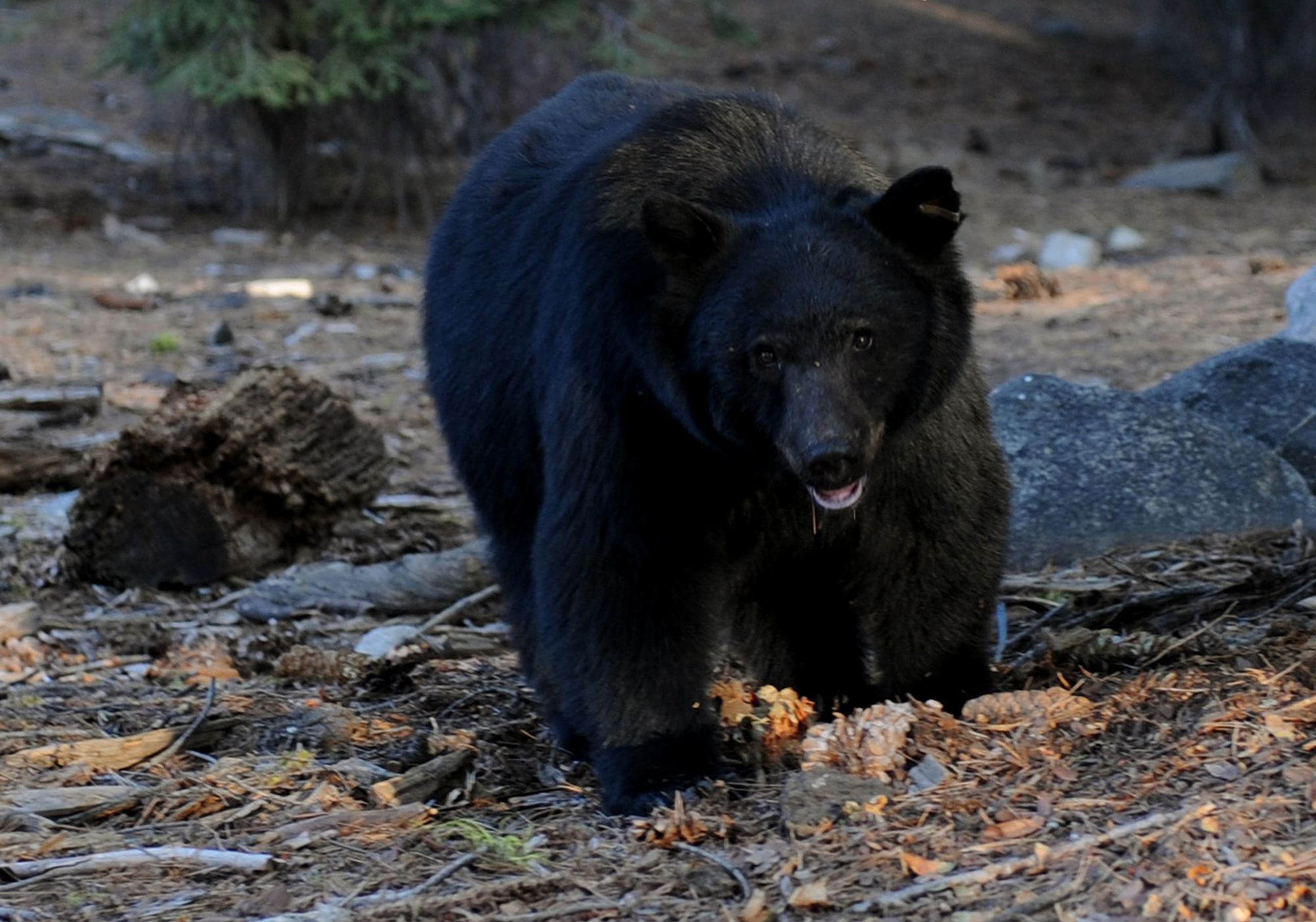
Remember, the bear species you’ll see camping in California are black bears – there haven’t been grizzly bears in California since the 1920s – although in reality, you’ll see black bears in many shades including brown, cinnamon and blonde.
And even if you grew up in bear country, or have been exploring the Tahoe area for decades, you might still be taken aback by the boldness and persistence of today’s black bears in California, said Simons.
“We have an evolving situation,” she said. “People that grew up camping in a particular area over the years … the bears have changed over those years. And the bear behavior has changed over those years.” Simons said she hears from “old timer campers” in Tahoe that they remember seeing a bear once a summer decades ago, but “now, it’s multiple bears a day.”
The increasing presence of humans in once-wild areas means that more bears are now venturing into built-up spaces like campsites and neighborhoods in search of the food and trash they know humans bring. So when you enter a campground in bear country, you’ll get what Simons calls the “bear spiel” from the staff at the entrance checking you in – and you should really listen to what they have to say, she advises. Jump straight to tips on bear behavior.
Remember: Bears care about food, not humans…
In essence, a bear is a “walking nose with a big, hungry belly,” said Simons – albeit a belly that can weigh up to 400 lbs. And while bears can be audacious in their quest for your food, they don’t want to hurt you for it.
“Even a bear that we would consider a ‘’Tahoe bear’ that eats garbage every day, goes to the neighborhoods and sees humans on a daily basis? Ultimately, they just don’t want anything to do with us,” she said. “If we don’t have food, they don’t care.”
“And I know that that can feel really strange, especially with an animal that’s so big, that has amazing, powerful claws, that has sharp teeth,” Simons acknowledged. “But I think we have to get back to a place where we just recognize that they’ve been here a lot longer than we have.”
“They’re not here to hurt us. They’re not here to scare us. If anything, we’ve encroached on their habitat and made it even harder for them to just be wild bears.”
…but bears should never be allowed to snag human food
Just because bears really want our food doesn’t mean they should get it. On the contrary, not only are bears “perfectly capable of foraging for food out in the wild,” said Simons, feeding a bear – whether accidentally or purposefully – will teach it that food is worth pursuing humans for.
Over time, this can make bears lose their instinctive fear of humans and even begin to act aggressively in pursuit of a food reward. This is the source of the phrase “a fed bear is a dead bear” – because a bear that’s no longer afraid of humans can start to pose a physical danger, and at worst, may have to be euthanized to prevent it from attacking humans. And even if a bear does not ultimately become physically aggressive, losing a natural fear of being in human spaces makes bears more vulnerable to being killed by vehicles on the road.
In short, when you’re camping you should do everything in your power to prevent a bear from eating your food – not only so you don’t lose your costly groceries, but to prevent a potential chain of events that leads to a bear being killed.
“Let’s just try to set bears up for success, do what we can to keep them wild and keep them safe,” urged Simons. “And in doing so, that’s going to keep us safe, too.”
Never underestimate a bear’s sense of smell – and the importance of your campsite’s ‘bear box’
“I really can’t express how incredible a bear’s sense of smell is,” said Simons. “We’re talking 7,000 times better than our own – seven times better than a bloodhound.”
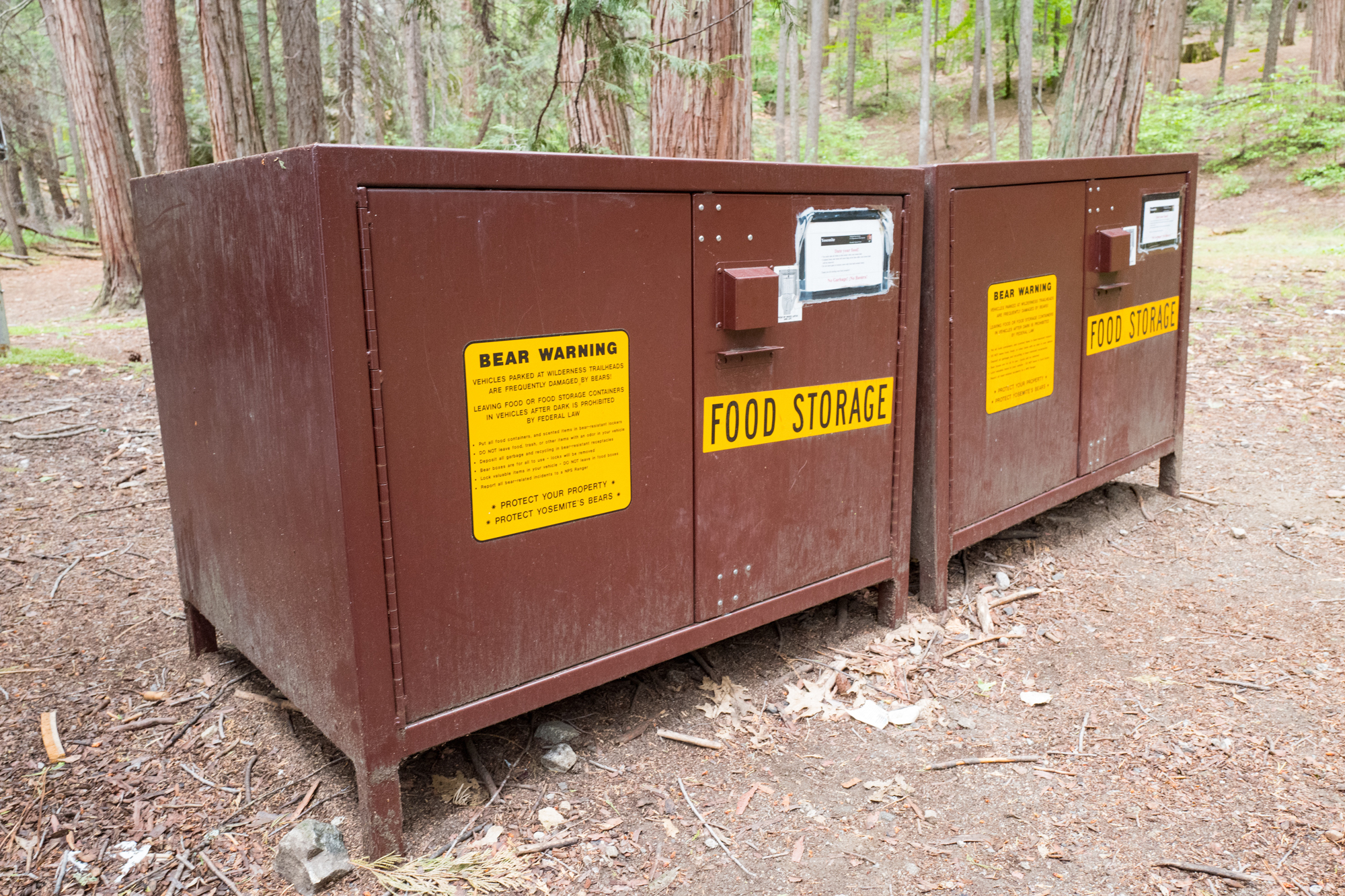
A bear’s keen nose will lead them straight to anything that smells remotely exciting in your campsite. Which is why campgrounds in bear country provide each site with a heavy-duty bear-proof box in which to store not just every scrap of food you’ve brought, but anything that is at all scented, including stoves and cookware.
But even responsible campers who are otherwise super conscientious about locking all their food away in bear boxes can forget that they’ve brought many other things that smell good to a bear, said Simons – including cans and beverages even when they’re unopened. Beer cans, wine bottles, even that lone can of Lacroix: “Basically anything other than plain water or ice” left out in your camp will smell interesting to a bear, and be considered a food violation by campground staff, warned Simons.
Folks also forget that non-food smells will attract a bear, said Simons – “even things that we consider maybe not attractive to a bear, like cleaning products or toothpaste, lotion, bug spray, candles.”
As a rule, “literally anything that has a scent should be considered a scented item and should go in the bear box at all times,” she said – because even if you think you’ve really hidden an item away in your tent or your car, the bear still knows it’s there due to its phenomenal sense of smell.
Bears can keenly remember places – and specific campsites – where they’ve found food in the past, and will return to them in the hope of striking it lucky again. They can also recognize specific types of objects which have yielded treats before, said Simons. “Even just the sight of a cooler gets a bear really excited even if there’s nothing inside,” she said.
Simons also warned against placing your trust in expensive “bear-proof” or “bear-resistant” coolers, because “they don’t advertise that you need to have locks on all corners of those, and that a bear can easily get into them without those locks.” And even when a bear-proof locker is correctly locked, you still might get a bear that will try to get inside – “and there goes your $400 cooler.” (One of Simons’ most treasured props for educating campers about bears is the “completely destroyed” bear-proof cooler she found tossed in a campsite dumpster by a clearly-dismayed owner.)
Remember: Your car is not bear-proof
As tempting as it might be to use your car as convenient storage, your vehicle is absolutely not a substitute for the bear-proof storage box in your campsite – even when locked.
For Bay Area folks, Simons said it’s helpful to think of all the ways you try to reduce your chances of suffering a car break-in at home – and translate that to bear country, with bears in place of bippers. So just like in the Bay, you want to clear your car of anything remotely alluring to reduce the risks of being broken into.
Calling bears the “petty criminals” of the wild, Simons said that parks staff refer to bears as “‘opportunivores,’ because if they have time, they’re going to try it” – and that includes checking your car door to see if it’s unlocked. And a bear that’s intrigued by a smell inside your car – “not even necessarily good, but just something maybe they’ve never smelled before,” said Simons – will often try to do “whatever it takes to get inside” your vehicle to investigate.
“And that can lead to a car being completely totaled, just for, like, a lip balm or a tiny candy or toddler crumbs behind the car seat,” said Simons. “It definitely pays to be extra diligent, because the trade off can be pretty, pretty destructive.”
Be prepared for a bear to wander into your camp at any time
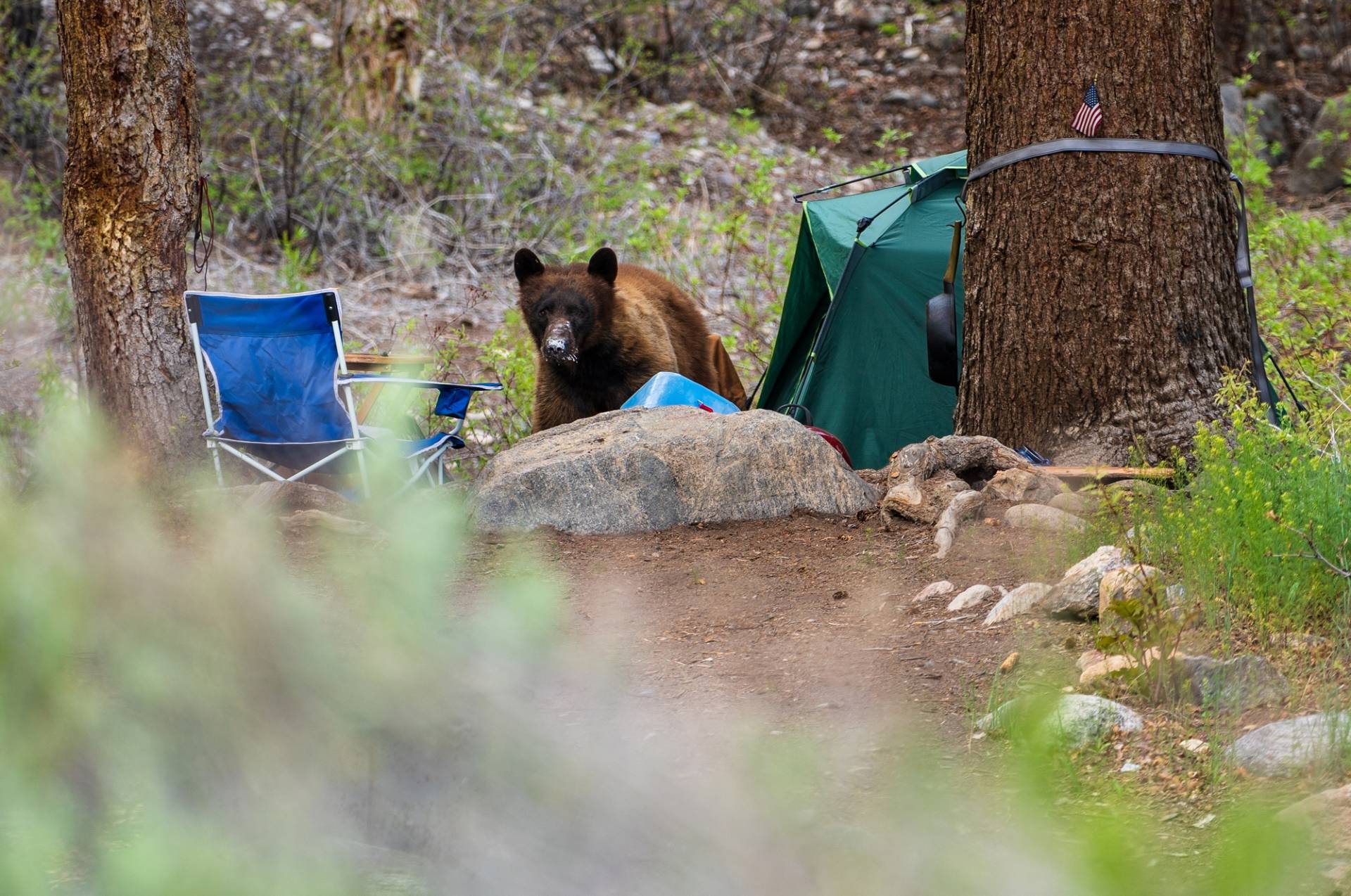
A bear can visit your campsite at any time of day or night. And the #1 way to be prepared for that is “keep a clean, tidy, consolidated campsite,” advised Simons – having your stuff gathered in a way “so that if you do get a bear coming into your campsite while you’re there, you can easily grab everything and put it in the bear box.”
What this looks like in practice:
- Your food, scented items are stored in your bear box, and only come out when you’re actively cooking or eating
- When your items are out, everything is gathered close together and not sprawled over your table and campsite
- Your trash bag is also kept close by, and either stored in your bear box or deposited in the nearest bear-proof dumpster.
If a bear does wander into your campsite, and your things are out of the bear box, Simons recommends you move quickly but calmly to gather your things and swiftly lock them back in the bear box. Don’t panic, she said, because “really, all that bear wants is your food or your garbage. They just want what smells good to them. And so if you eliminate that, they’re probably going to move away.”
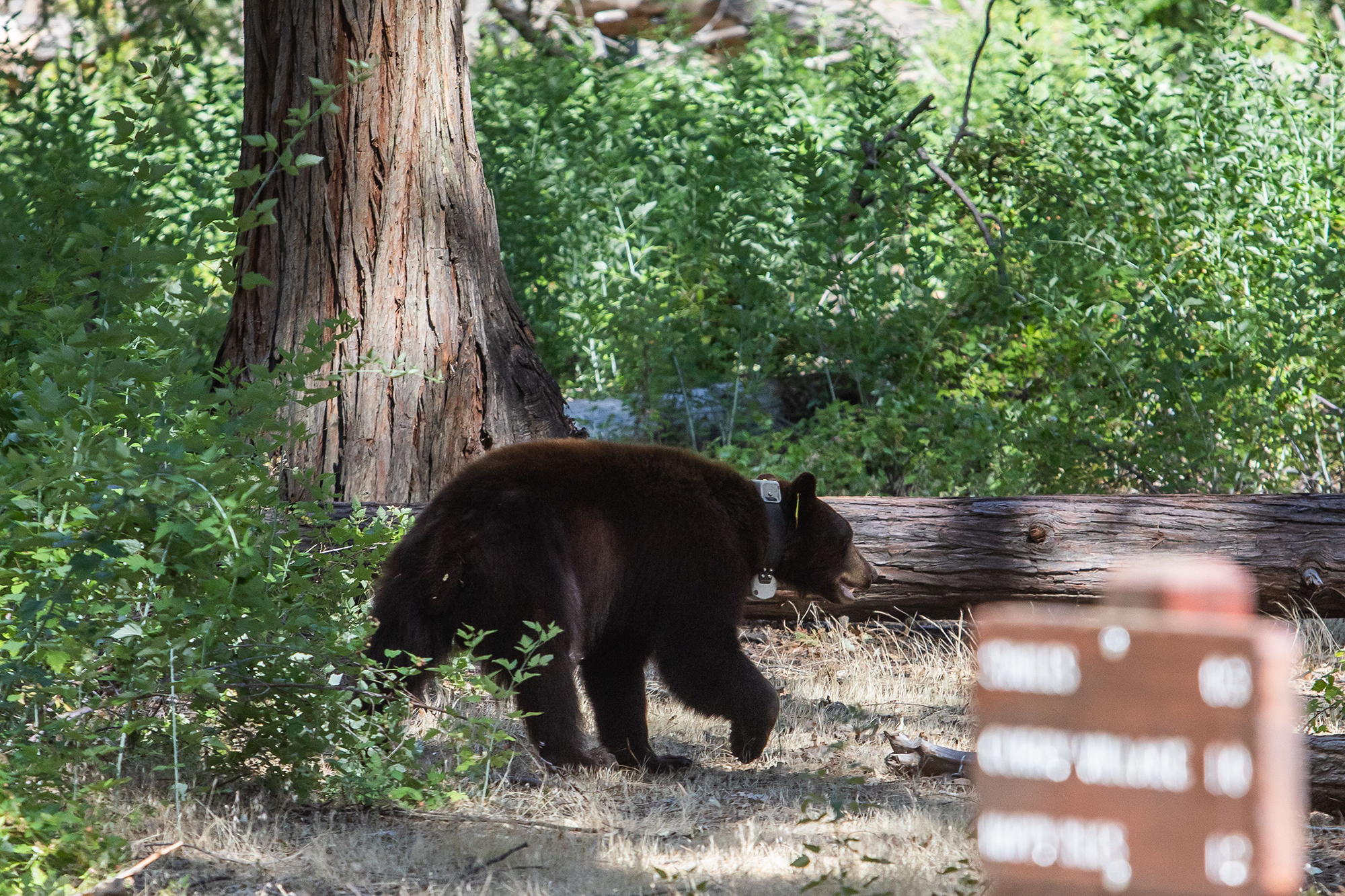
But what if the bear doesn’t move away after you’ve locked up your scented stuff? Bears usually show this kind of tenacity “because they’ve learned over time that if they stay persistent, stay diligent, they’re going to get a food reward,” said Simons.
So in this situation, it’s especially important that you and your camping party stay calm and stand your ground, she said. Because it’s folks doing exactly the opposite – panicking at the sight of the bear and running away from their campsite, leaving all their goodies up for grabs – that teaches bears that merely announcing their presence to humans could win them a table full of tasty treats to enjoy solo.
Which leads us to…
Know how you’ll drive a bear away
How you should act around a bear depends on whether you’re in human territory or bear territory. The campground is human territory, so it’s important to stand your ground and drive the bear out by making loud noises. (Jump to what to do if you see a bear in the bear’s territory.)
Physically, you should stand tall – and folks who aren’t tall, including children, can raise their hands over their heads to seem bigger – but don’t make aggressive moves toward the bear.
To make a suitable amount of noise:
- Shout “Go bear, go!”
- Bang pots and pans together
- Sound an air horn, if you have one
- Set off your car’s alarm.
All this combined “usually does the trick pretty quickly,” said Simons. And if your heart is pounding, that’s normal – but as nerve-wracking as a first bear encounter can be in the moment, try shifting your perspective, said Simons. That involves “changing our perception of bears not as something that’s scary, but as an animal that’s curious and intelligent,” she said. “And understanding what they really want, which is the food, not you.”
“I think that helps kind of reframe that mindset of fear that people tend to have, especially if you’re not used to bears,” said Simons.