window.__IS_SSR__=true
window.__INITIAL_STATE__={
"attachmentsReducer": {
"audio_0": {
"type": "attachments",
"id": "audio_0",
"imgSizes": {
"kqedFullSize": {
"file": "https://ww2.kqed.org/news/wp-content/themes/KQED-unified/img/audio_bgs/background0.jpg"
}
}
},
"audio_1": {
"type": "attachments",
"id": "audio_1",
"imgSizes": {
"kqedFullSize": {
"file": "https://ww2.kqed.org/news/wp-content/themes/KQED-unified/img/audio_bgs/background1.jpg"
}
}
},
"audio_2": {
"type": "attachments",
"id": "audio_2",
"imgSizes": {
"kqedFullSize": {
"file": "https://ww2.kqed.org/news/wp-content/themes/KQED-unified/img/audio_bgs/background2.jpg"
}
}
},
"audio_3": {
"type": "attachments",
"id": "audio_3",
"imgSizes": {
"kqedFullSize": {
"file": "https://ww2.kqed.org/news/wp-content/themes/KQED-unified/img/audio_bgs/background3.jpg"
}
}
},
"audio_4": {
"type": "attachments",
"id": "audio_4",
"imgSizes": {
"kqedFullSize": {
"file": "https://ww2.kqed.org/news/wp-content/themes/KQED-unified/img/audio_bgs/background4.jpg"
}
}
},
"placeholder": {
"type": "attachments",
"id": "placeholder",
"imgSizes": {
"thumbnail": {
"file": "https://cdn.kqed.org/wp-content/uploads/2024/12/KQED-Default-Image-816638274-2000x1333-1-160x107.jpg",
"width": 160,
"height": 107,
"mimeType": "image/jpeg"
},
"medium": {
"file": "https://cdn.kqed.org/wp-content/uploads/2024/12/KQED-Default-Image-816638274-2000x1333-1-800x533.jpg",
"width": 800,
"height": 533,
"mimeType": "image/jpeg"
},
"medium_large": {
"file": "https://cdn.kqed.org/wp-content/uploads/2024/12/KQED-Default-Image-816638274-2000x1333-1-768x512.jpg",
"width": 768,
"height": 512,
"mimeType": "image/jpeg"
},
"large": {
"file": "https://cdn.kqed.org/wp-content/uploads/2024/12/KQED-Default-Image-816638274-2000x1333-1-1020x680.jpg",
"width": 1020,
"height": 680,
"mimeType": "image/jpeg"
},
"1536x1536": {
"file": "https://cdn.kqed.org/wp-content/uploads/2024/12/KQED-Default-Image-816638274-2000x1333-1-1536x1024.jpg",
"width": 1536,
"height": 1024,
"mimeType": "image/jpeg"
},
"fd-lrg": {
"file": "https://cdn.kqed.org/wp-content/uploads/2024/12/KQED-Default-Image-816638274-2000x1333-1-1536x1024.jpg",
"width": 1536,
"height": 1024,
"mimeType": "image/jpeg"
},
"fd-med": {
"file": "https://cdn.kqed.org/wp-content/uploads/2024/12/KQED-Default-Image-816638274-2000x1333-1-1020x680.jpg",
"width": 1020,
"height": 680,
"mimeType": "image/jpeg"
},
"fd-sm": {
"file": "https://cdn.kqed.org/wp-content/uploads/2024/12/KQED-Default-Image-816638274-2000x1333-1-800x533.jpg",
"width": 800,
"height": 533,
"mimeType": "image/jpeg"
},
"post-thumbnail": {
"file": "https://cdn.kqed.org/wp-content/uploads/2024/12/KQED-Default-Image-816638274-2000x1333-1-672x372.jpg",
"width": 672,
"height": 372,
"mimeType": "image/jpeg"
},
"twentyfourteen-full-width": {
"file": "https://cdn.kqed.org/wp-content/uploads/2024/12/KQED-Default-Image-816638274-2000x1333-1-1038x576.jpg",
"width": 1038,
"height": 576,
"mimeType": "image/jpeg"
},
"xxsmall": {
"file": "https://cdn.kqed.org/wp-content/uploads/2024/12/KQED-Default-Image-816638274-2000x1333-1-160x107.jpg",
"width": 160,
"height": 107,
"mimeType": "image/jpeg"
},
"xsmall": {
"file": "https://cdn.kqed.org/wp-content/uploads/2024/12/KQED-Default-Image-816638274-2000x1333-1-672x372.jpg",
"width": 672,
"height": 372,
"mimeType": "image/jpeg"
},
"small": {
"file": "https://cdn.kqed.org/wp-content/uploads/2024/12/KQED-Default-Image-816638274-2000x1333-1-672x372.jpg",
"width": 672,
"height": 372,
"mimeType": "image/jpeg"
},
"xlarge": {
"file": "https://cdn.kqed.org/wp-content/uploads/2024/12/KQED-Default-Image-816638274-2000x1333-1-1020x680.jpg",
"width": 1020,
"height": 680,
"mimeType": "image/jpeg"
},
"full-width": {
"file": "https://cdn.kqed.org/wp-content/uploads/2024/12/KQED-Default-Image-816638274-2000x1333-1-1920x1280.jpg",
"width": 1920,
"height": 1280,
"mimeType": "image/jpeg"
},
"guest-author-32": {
"file": "https://cdn.kqed.org/wp-content/uploads/2025/01/KQED-Default-Image-816638274-1333x1333-1-160x160.jpg",
"width": 32,
"height": 32,
"mimeType": "image/jpeg"
},
"guest-author-50": {
"file": "https://cdn.kqed.org/wp-content/uploads/2025/01/KQED-Default-Image-816638274-1333x1333-1-160x160.jpg",
"width": 50,
"height": 50,
"mimeType": "image/jpeg"
},
"guest-author-64": {
"file": "https://cdn.kqed.org/wp-content/uploads/2025/01/KQED-Default-Image-816638274-1333x1333-1-160x160.jpg",
"width": 64,
"height": 64,
"mimeType": "image/jpeg"
},
"guest-author-96": {
"file": "https://cdn.kqed.org/wp-content/uploads/2025/01/KQED-Default-Image-816638274-1333x1333-1-160x160.jpg",
"width": 96,
"height": 96,
"mimeType": "image/jpeg"
},
"guest-author-128": {
"file": "https://cdn.kqed.org/wp-content/uploads/2025/01/KQED-Default-Image-816638274-1333x1333-1-160x160.jpg",
"width": 128,
"height": 128,
"mimeType": "image/jpeg"
},
"detail": {
"file": "https://cdn.kqed.org/wp-content/uploads/2025/01/KQED-Default-Image-816638274-1333x1333-1-160x160.jpg",
"width": 160,
"height": 160,
"mimeType": "image/jpeg"
},
"kqedFullSize": {
"file": "https://cdn.kqed.org/wp-content/uploads/2024/12/KQED-Default-Image-816638274-2000x1333-1.jpg",
"width": 2000,
"height": 1333
}
}
},
"news_12029443": {
"type": "attachments",
"id": "news_12029443",
"meta": {
"index": "attachments_1716263798",
"site": "news",
"id": "12029443",
"found": true
},
"title": "20241122_NorcalStorm_GC-7_qed",
"publishDate": 1741024106,
"status": "inherit",
"parent": 12029441,
"modified": 1741024140,
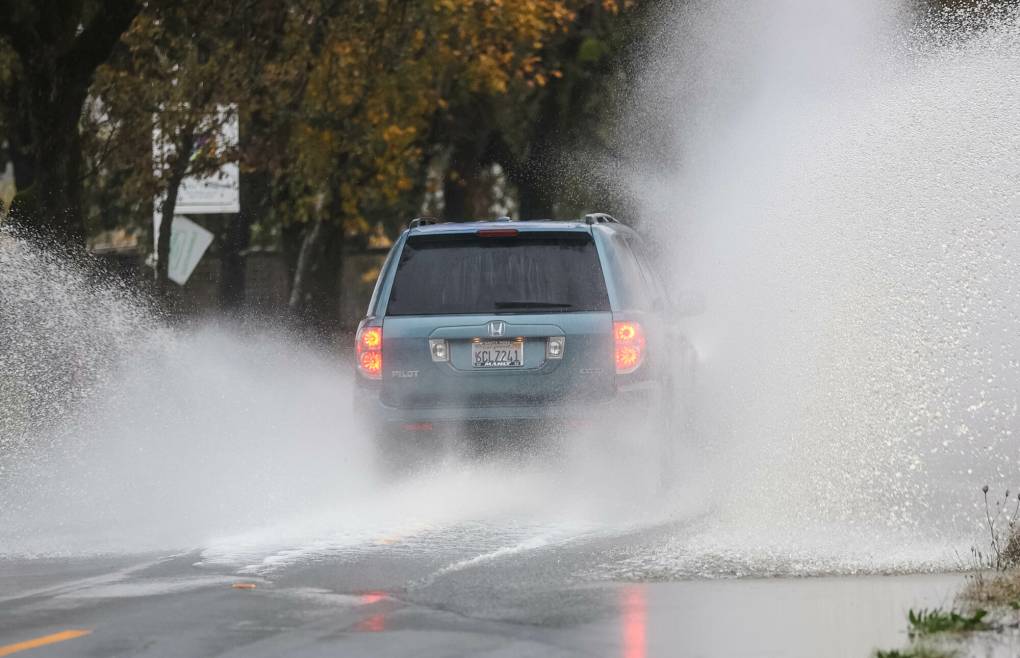
"caption": "A car drives through a puddle on Piner Road in Santa Rosa during an atmospheric river storm affecting the Bay Area on Nov. 22, 2024. Rain is dotting the forecast for the Bay Area and other parts of the state this week, but monitoring it could be more difficult after a weather service radar went down.",
"credit": "Gina Castro/KQED",
"altTag": null,
"description": null,
"imgSizes": {
"medium": {
"file": "https://cdn.kqed.org/wp-content/uploads/sites/10/2025/03/20241122_NorcalStorm_GC-7_qed-800x516.jpg",
"width": 800,
"height": 516,
"mimeType": "image/jpeg"
},
"large": {
"file": "https://cdn.kqed.org/wp-content/uploads/sites/10/2025/03/20241122_NorcalStorm_GC-7_qed-1020x658.jpg",
"width": 1020,
"height": 658,
"mimeType": "image/jpeg"
},
"thumbnail": {
"file": "https://cdn.kqed.org/wp-content/uploads/sites/10/2025/03/20241122_NorcalStorm_GC-7_qed-160x103.jpg",
"width": 160,
"height": 103,
"mimeType": "image/jpeg"
},
"1536x1536": {
"file": "https://cdn.kqed.org/wp-content/uploads/sites/10/2025/03/20241122_NorcalStorm_GC-7_qed-1536x991.jpg",
"width": 1536,
"height": 991,
"mimeType": "image/jpeg"
},
"post-thumbnail": {
"file": "https://cdn.kqed.org/wp-content/uploads/sites/10/2025/03/20241122_NorcalStorm_GC-7_qed-672x372.jpg",
"width": 672,
"height": 372,
"mimeType": "image/jpeg"
},
"twentyfourteen-full-width": {
"file": "https://cdn.kqed.org/wp-content/uploads/sites/10/2025/03/20241122_NorcalStorm_GC-7_qed-1038x576.jpg",
"width": 1038,
"height": 576,
"mimeType": "image/jpeg"
},
"full-width": {
"file": "https://cdn.kqed.org/wp-content/uploads/sites/10/2025/03/20241122_NorcalStorm_GC-7_qed-1920x1239.jpg",
"width": 1920,
"height": 1239,
"mimeType": "image/jpeg"
},
"kqedFullSize": {
"file": "https://cdn.kqed.org/wp-content/uploads/sites/10/2025/03/20241122_NorcalStorm_GC-7_qed.jpg",
"width": 2000,
"height": 1291
}
},
"isLoading": false,
"fetchFailed": false
},
"news_12026888": {
"type": "attachments",
"id": "news_12026888",
"meta": {
"index": "attachments_1716263798",
"site": "news",
"id": "12026888",
"found": true
},
"title": "20241122_NorcalStorm_GC-12_qed (1)",
"publishDate": 1739467889,
"status": "inherit",
"parent": 12026874,
"modified": 1739467901,
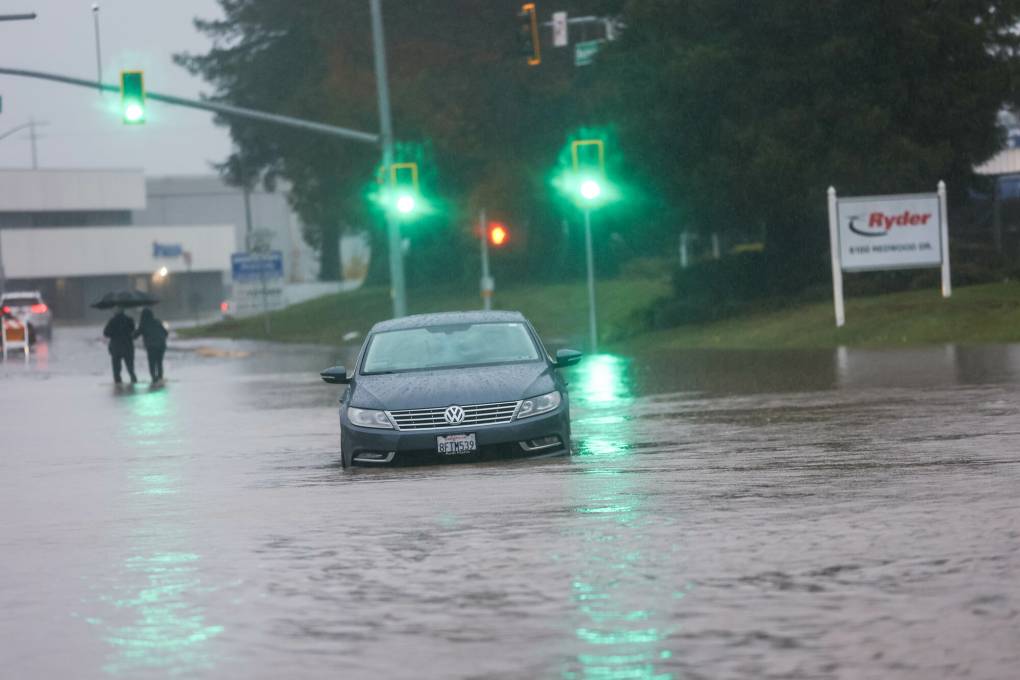
"caption": "A car left stranded on Rohnert Park Expressway after heavy rainfall flooded the street, during an atmospheric river storm affecting the Bay Area, on Nov. 22, 2024.",
"credit": "Gina Castro/KQED",
"altTag": null,
"description": null,
"imgSizes": {
"medium": {
"file": "https://cdn.kqed.org/wp-content/uploads/sites/10/2025/02/20241122_NorcalStorm_GC-12_qed-1-800x533.jpg",
"width": 800,
"height": 533,
"mimeType": "image/jpeg"
},
"large": {
"file": "https://cdn.kqed.org/wp-content/uploads/sites/10/2025/02/20241122_NorcalStorm_GC-12_qed-1-1020x680.jpg",
"width": 1020,
"height": 680,
"mimeType": "image/jpeg"
},
"thumbnail": {
"file": "https://cdn.kqed.org/wp-content/uploads/sites/10/2025/02/20241122_NorcalStorm_GC-12_qed-1-160x107.jpg",
"width": 160,
"height": 107,
"mimeType": "image/jpeg"
},
"1536x1536": {
"file": "https://cdn.kqed.org/wp-content/uploads/sites/10/2025/02/20241122_NorcalStorm_GC-12_qed-1-1536x1024.jpg",
"width": 1536,
"height": 1024,
"mimeType": "image/jpeg"
},
"post-thumbnail": {
"file": "https://cdn.kqed.org/wp-content/uploads/sites/10/2025/02/20241122_NorcalStorm_GC-12_qed-1-672x372.jpg",
"width": 672,
"height": 372,
"mimeType": "image/jpeg"
},
"twentyfourteen-full-width": {
"file": "https://cdn.kqed.org/wp-content/uploads/sites/10/2025/02/20241122_NorcalStorm_GC-12_qed-1-1038x576.jpg",
"width": 1038,
"height": 576,
"mimeType": "image/jpeg"
},
"full-width": {
"file": "https://cdn.kqed.org/wp-content/uploads/sites/10/2025/02/20241122_NorcalStorm_GC-12_qed-1-1920x1280.jpg",
"width": 1920,
"height": 1280,
"mimeType": "image/jpeg"
},
"kqedFullSize": {
"file": "https://cdn.kqed.org/wp-content/uploads/sites/10/2025/02/20241122_NorcalStorm_GC-12_qed-1.jpg",
"width": 2000,
"height": 1333
}
},
"isLoading": false,
"fetchFailed": false
},
"news_12025691": {
"type": "attachments",
"id": "news_12025691",
"meta": {
"index": "attachments_1716263798",
"site": "news",
"id": "12025691",
"found": true
},
"title": "250204-RainStorm-03-BL",
"publishDate": 1738711533,
"status": "inherit",
"parent": 0,
"modified": 1738711588,
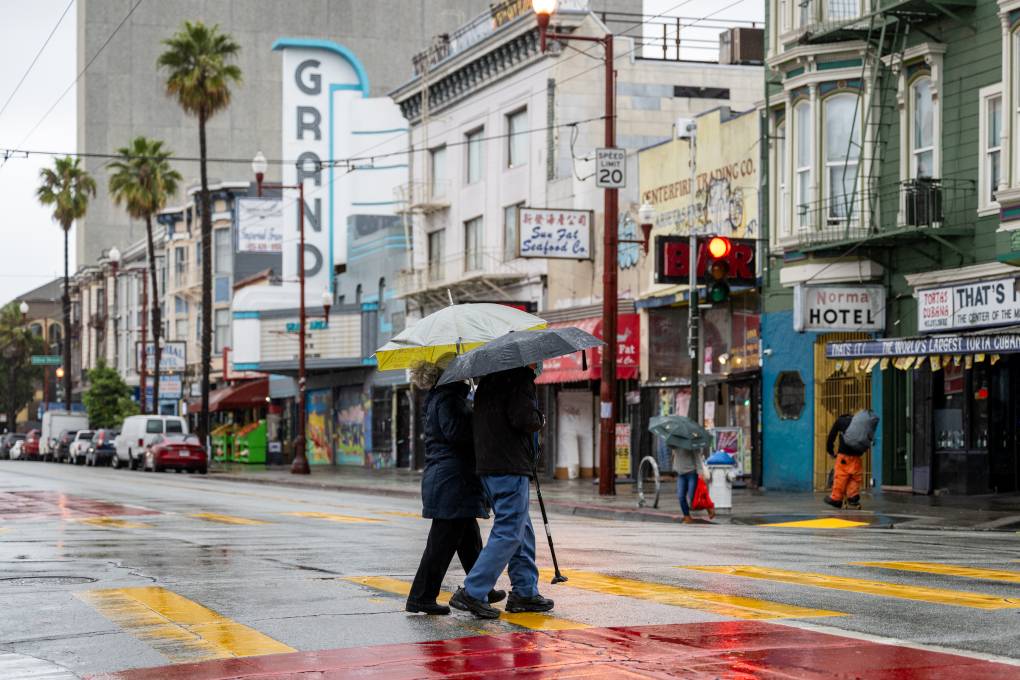
"caption": "Pedestrians carry umbrellas while walking on Mission Street during a storm in San Francisco on Feb. 4, 2025.",
"credit": "Beth LaBerge/KQED",
"altTag": null,
"description": null,
"imgSizes": {
"medium": {
"file": "https://cdn.kqed.org/wp-content/uploads/sites/10/2025/02/250204-RainStorm-03-BL-800x533.jpg",
"width": 800,
"height": 533,
"mimeType": "image/jpeg"
},
"large": {
"file": "https://cdn.kqed.org/wp-content/uploads/sites/10/2025/02/250204-RainStorm-03-BL-1020x680.jpg",
"width": 1020,
"height": 680,
"mimeType": "image/jpeg"
},
"thumbnail": {
"file": "https://cdn.kqed.org/wp-content/uploads/sites/10/2025/02/250204-RainStorm-03-BL-160x107.jpg",
"width": 160,
"height": 107,
"mimeType": "image/jpeg"
},
"1536x1536": {
"file": "https://cdn.kqed.org/wp-content/uploads/sites/10/2025/02/250204-RainStorm-03-BL-1536x1024.jpg",
"width": 1536,
"height": 1024,
"mimeType": "image/jpeg"
},
"2048x2048": {
"file": "https://cdn.kqed.org/wp-content/uploads/sites/10/2025/02/250204-RainStorm-03-BL-2048x1365.jpg",
"width": 2048,
"height": 1365,
"mimeType": "image/jpeg"
},
"post-thumbnail": {
"file": "https://cdn.kqed.org/wp-content/uploads/sites/10/2025/02/250204-RainStorm-03-BL-672x372.jpg",
"width": 672,
"height": 372,
"mimeType": "image/jpeg"
},
"twentyfourteen-full-width": {
"file": "https://cdn.kqed.org/wp-content/uploads/sites/10/2025/02/250204-RainStorm-03-BL-1038x576.jpg",
"width": 1038,
"height": 576,
"mimeType": "image/jpeg"
},
"full-width": {
"file": "https://cdn.kqed.org/wp-content/uploads/sites/10/2025/02/250204-RainStorm-03-BL-1920x1280.jpg",
"width": 1920,
"height": 1280,
"mimeType": "image/jpeg"
},
"kqedFullSize": {
"file": "https://cdn.kqed.org/wp-content/uploads/sites/10/2025/02/250204-RainStorm-03-BL-scaled-e1738861911353.jpg",
"width": 2000,
"height": 1334
}
},
"isLoading": false,
"fetchFailed": false
},
"news_12025578": {
"type": "attachments",
"id": "news_12025578",
"meta": {
"index": "attachments_1716263798",
"site": "news",
"id": "12025578",
"found": true
},
"title": "Russian River flooding-15_qed",
"publishDate": 1738691741,
"status": "inherit",
"parent": 12025572,
"modified": 1767836141,
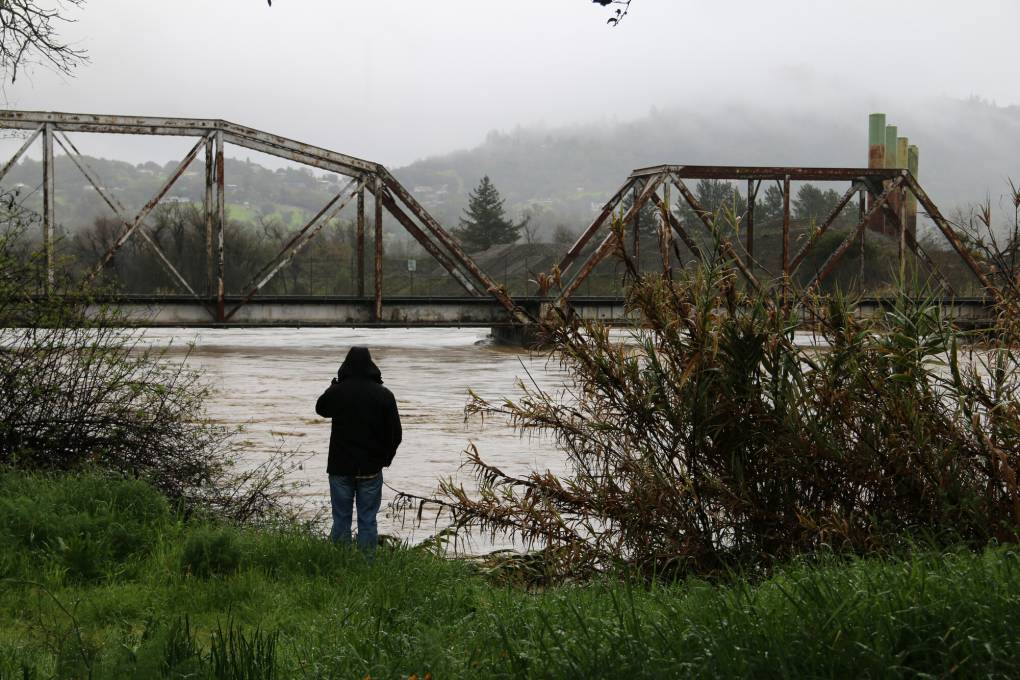
"caption": "A man looks out at the flooding Russian River in Healdsburg on Feb. 27, 2019. An atmospheric river previously expected only to cause minor flooding this week has prompted flood advisories across the Bay Area. The massive system could bring thunderstorms and even a weak tornado.",
"credit": "Adam Grossberg/KQED",
"altTag": null,
"description": null,
"imgSizes": {
"medium": {
"file": "https://cdn.kqed.org/wp-content/uploads/sites/10/2025/02/Russian-River-flooding-15_qed-800x533.jpg",
"width": 800,
"height": 533,
"mimeType": "image/jpeg"
},
"large": {
"file": "https://cdn.kqed.org/wp-content/uploads/sites/10/2025/02/Russian-River-flooding-15_qed-1020x680.jpg",
"width": 1020,
"height": 680,
"mimeType": "image/jpeg"
},
"thumbnail": {
"file": "https://cdn.kqed.org/wp-content/uploads/sites/10/2025/02/Russian-River-flooding-15_qed-160x107.jpg",
"width": 160,
"height": 107,
"mimeType": "image/jpeg"
},
"1536x1536": {
"file": "https://cdn.kqed.org/wp-content/uploads/sites/10/2025/02/Russian-River-flooding-15_qed-1536x1024.jpg",
"width": 1536,
"height": 1024,
"mimeType": "image/jpeg"
},
"post-thumbnail": {
"file": "https://cdn.kqed.org/wp-content/uploads/sites/10/2025/02/Russian-River-flooding-15_qed-672x372.jpg",
"width": 672,
"height": 372,
"mimeType": "image/jpeg"
},
"twentyfourteen-full-width": {
"file": "https://cdn.kqed.org/wp-content/uploads/sites/10/2025/02/Russian-River-flooding-15_qed-1038x576.jpg",
"width": 1038,
"height": 576,
"mimeType": "image/jpeg"
},
"full-width": {
"file": "https://cdn.kqed.org/wp-content/uploads/sites/10/2025/02/Russian-River-flooding-15_qed-1920x1280.jpg",
"width": 1920,
"height": 1280,
"mimeType": "image/jpeg"
},
"kqedFullSize": {
"file": "https://cdn.kqed.org/wp-content/uploads/sites/10/2025/02/Russian-River-flooding-15_qed.jpg",
"width": 2000,
"height": 1333
}
},
"isLoading": false,
"fetchFailed": false
},
"news_12015604": {
"type": "attachments",
"id": "news_12015604",
"meta": {
"index": "attachments_1716263798",
"site": "news",
"id": "12015604",
"found": true
},
"title": "241122-StormHitsBayArea-06-BL",
"publishDate": 1732310299,
"status": "inherit",
"parent": 0,
"modified": 1738615970,
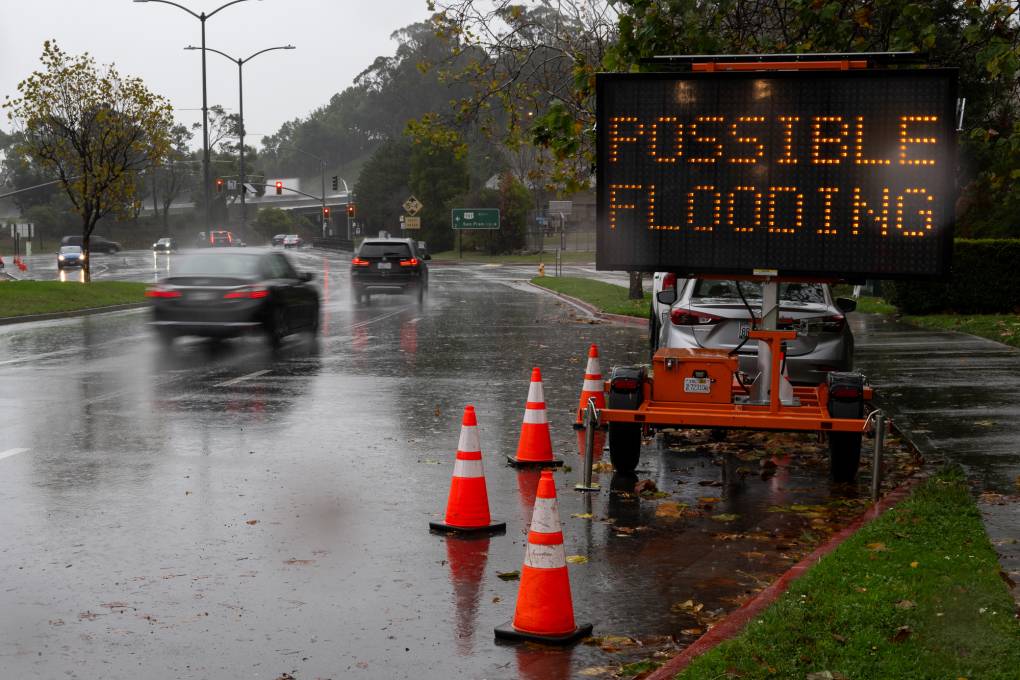
"caption": "A sign says, \"Possible Flooding\" in Marin City on Nov. 22, 2024, during a storm bringing heavy rain and strong winds to the Bay Area.",
"credit": "Beth LaBerge/KQED",
"altTag": null,
"description": null,
"imgSizes": {
"medium": {
"file": "https://cdn.kqed.org/wp-content/uploads/sites/10/2024/11/241122-StormHitsBayArea-06-BL-800x533.jpg",
"width": 800,
"height": 533,
"mimeType": "image/jpeg"
},
"large": {
"file": "https://cdn.kqed.org/wp-content/uploads/sites/10/2024/11/241122-StormHitsBayArea-06-BL-1020x680.jpg",
"width": 1020,
"height": 680,
"mimeType": "image/jpeg"
},
"thumbnail": {
"file": "https://cdn.kqed.org/wp-content/uploads/sites/10/2024/11/241122-StormHitsBayArea-06-BL-160x107.jpg",
"width": 160,
"height": 107,
"mimeType": "image/jpeg"
},
"1536x1536": {
"file": "https://cdn.kqed.org/wp-content/uploads/sites/10/2024/11/241122-StormHitsBayArea-06-BL-1536x1024.jpg",
"width": 1536,
"height": 1024,
"mimeType": "image/jpeg"
},
"post-thumbnail": {
"file": "https://cdn.kqed.org/wp-content/uploads/sites/10/2024/11/241122-StormHitsBayArea-06-BL-672x372.jpg",
"width": 672,
"height": 372,
"mimeType": "image/jpeg"
},
"twentyfourteen-full-width": {
"file": "https://cdn.kqed.org/wp-content/uploads/sites/10/2024/11/241122-StormHitsBayArea-06-BL-1038x576.jpg",
"width": 1038,
"height": 576,
"mimeType": "image/jpeg"
},
"full-width": {
"file": "https://cdn.kqed.org/wp-content/uploads/sites/10/2024/11/241122-StormHitsBayArea-06-BL-1920x1280.jpg",
"width": 1920,
"height": 1280,
"mimeType": "image/jpeg"
},
"kqedFullSize": {
"file": "https://cdn.kqed.org/wp-content/uploads/sites/10/2024/11/241122-StormHitsBayArea-06-BL.jpg",
"width": 2000,
"height": 1333
}
},
"isLoading": false,
"fetchFailed": false
},
"news_12015605": {
"type": "attachments",
"id": "news_12015605",
"meta": {
"index": "attachments_1716263798",
"site": "news",
"id": "12015605",
"found": true
},
"title": "241122-StormHitsBayArea-10-BL",
"publishDate": 1732310310,
"status": "inherit",
"parent": 0,
"modified": 1738258421,
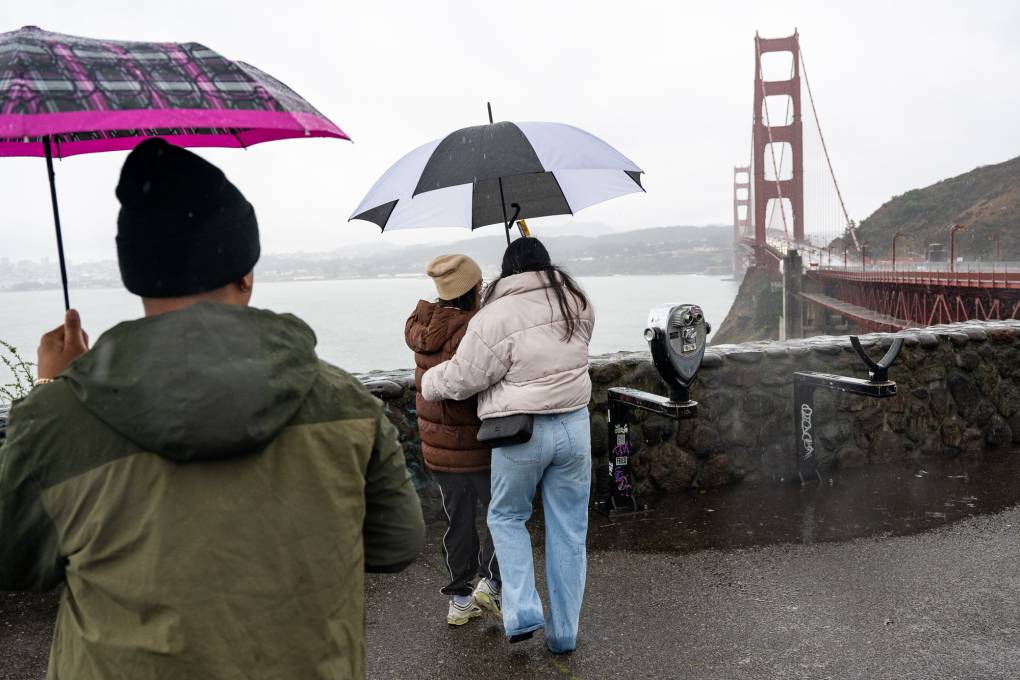
"caption": "(From left) Matthew Macale, Jasmin Macaraeg and Keizha Macale take photos at the Vista Point overlook near Golden Gate Bridge north of San Francisco on Nov. 22, 2024.",
"credit": "Beth LaBerge/KQED",
"altTag": null,
"description": null,
"imgSizes": {
"medium": {
"file": "https://cdn.kqed.org/wp-content/uploads/sites/10/2024/11/241122-StormHitsBayArea-10-BL-800x533.jpg",
"width": 800,
"height": 533,
"mimeType": "image/jpeg"
},
"large": {
"file": "https://cdn.kqed.org/wp-content/uploads/sites/10/2024/11/241122-StormHitsBayArea-10-BL-1020x680.jpg",
"width": 1020,
"height": 680,
"mimeType": "image/jpeg"
},
"thumbnail": {
"file": "https://cdn.kqed.org/wp-content/uploads/sites/10/2024/11/241122-StormHitsBayArea-10-BL-160x107.jpg",
"width": 160,
"height": 107,
"mimeType": "image/jpeg"
},
"1536x1536": {
"file": "https://cdn.kqed.org/wp-content/uploads/sites/10/2024/11/241122-StormHitsBayArea-10-BL-1536x1024.jpg",
"width": 1536,
"height": 1024,
"mimeType": "image/jpeg"
},
"post-thumbnail": {
"file": "https://cdn.kqed.org/wp-content/uploads/sites/10/2024/11/241122-StormHitsBayArea-10-BL-672x372.jpg",
"width": 672,
"height": 372,
"mimeType": "image/jpeg"
},
"twentyfourteen-full-width": {
"file": "https://cdn.kqed.org/wp-content/uploads/sites/10/2024/11/241122-StormHitsBayArea-10-BL-1038x576.jpg",
"width": 1038,
"height": 576,
"mimeType": "image/jpeg"
},
"full-width": {
"file": "https://cdn.kqed.org/wp-content/uploads/sites/10/2024/11/241122-StormHitsBayArea-10-BL-1920x1280.jpg",
"width": 1920,
"height": 1280,
"mimeType": "image/jpeg"
},
"kqedFullSize": {
"file": "https://cdn.kqed.org/wp-content/uploads/sites/10/2024/11/241122-StormHitsBayArea-10-BL.jpg",
"width": 2000,
"height": 1333
}
},
"isLoading": false,
"fetchFailed": false
},
"news_12015608": {
"type": "attachments",
"id": "news_12015608",
"meta": {
"index": "attachments_1716263798",
"site": "news",
"id": "12015608",
"found": true
},
"title": "241122-StormHitsBayArea-21-BL",
"publishDate": 1732310382,
"status": "inherit",
"parent": 0,
"modified": 1732310412,
"caption": "A person walks their dog on Haight Street in San Francisco on Nov. 22, 2024, during a storm bringing heavy rain and strong winds to the Bay Area.",
"credit": "Beth LaBerge/KQED",
"altTag": null,
"description": null,
"imgSizes": {
"medium": {
"file": "https://cdn.kqed.org/wp-content/uploads/sites/10/2024/11/241122-StormHitsBayArea-21-BL-800x533.jpg",
"width": 800,
"height": 533,
"mimeType": "image/jpeg"
},
"large": {
"file": "https://cdn.kqed.org/wp-content/uploads/sites/10/2024/11/241122-StormHitsBayArea-21-BL-1020x680.jpg",
"width": 1020,
"height": 680,
"mimeType": "image/jpeg"
},
"thumbnail": {
"file": "https://cdn.kqed.org/wp-content/uploads/sites/10/2024/11/241122-StormHitsBayArea-21-BL-160x107.jpg",
"width": 160,
"height": 107,
"mimeType": "image/jpeg"
},
"1536x1536": {
"file": "https://cdn.kqed.org/wp-content/uploads/sites/10/2024/11/241122-StormHitsBayArea-21-BL-1536x1024.jpg",
"width": 1536,
"height": 1024,
"mimeType": "image/jpeg"
},
"post-thumbnail": {
"file": "https://cdn.kqed.org/wp-content/uploads/sites/10/2024/11/241122-StormHitsBayArea-21-BL-672x372.jpg",
"width": 672,
"height": 372,
"mimeType": "image/jpeg"
},
"twentyfourteen-full-width": {
"file": "https://cdn.kqed.org/wp-content/uploads/sites/10/2024/11/241122-StormHitsBayArea-21-BL-1038x576.jpg",
"width": 1038,
"height": 576,
"mimeType": "image/jpeg"
},
"full-width": {
"file": "https://cdn.kqed.org/wp-content/uploads/sites/10/2024/11/241122-StormHitsBayArea-21-BL-1920x1280.jpg",
"width": 1920,
"height": 1280,
"mimeType": "image/jpeg"
},
"kqedFullSize": {
"file": "https://cdn.kqed.org/wp-content/uploads/sites/10/2024/11/241122-StormHitsBayArea-21-BL.jpg",
"width": 2000,
"height": 1333
}
},
"isLoading": false,
"fetchFailed": false
},
"news_12021175": {
"type": "attachments",
"id": "news_12021175",
"meta": {
"index": "attachments_1716263798",
"site": "news",
"id": "12021175",
"found": true
},
"title": "Bliss Hill",
"publishDate": 1736452132,
"status": "inherit",
"parent": 12021147,
"modified": 1736543918,
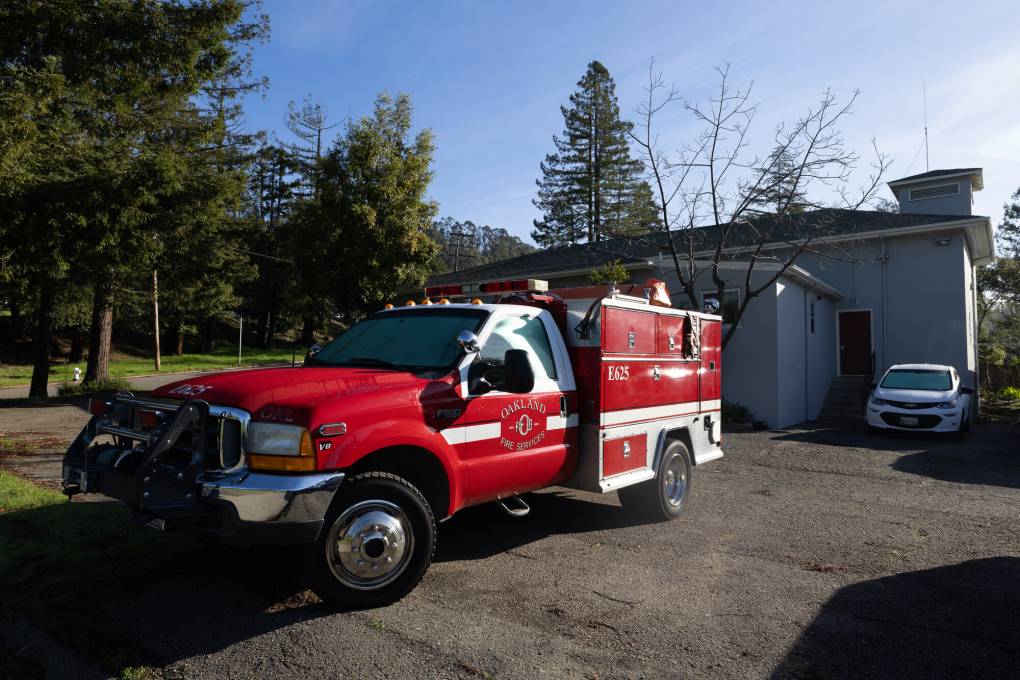
"caption": "Oakland Fire Department Station No. 25 on Jan. 5, 2025, located on Butters Drive in the East Oakland Hills. It's one of two stations scheduled to close until June. The closure is part of the city’s effort to confront its $129 million budget deficit. In 2023, Fire Station 25 responded to 834 calls.",
"credit": "David M. Barreda/KQED",
"altTag": null,
"description": null,
"imgSizes": {
"medium": {
"file": "https://cdn.kqed.org/wp-content/uploads/sites/10/2025/01/20250105_OakFireClose_DMB_00056_qed-800x533.jpg",
"width": 800,
"height": 533,
"mimeType": "image/jpeg"
},
"large": {
"file": "https://cdn.kqed.org/wp-content/uploads/sites/10/2025/01/20250105_OakFireClose_DMB_00056_qed-1020x680.jpg",
"width": 1020,
"height": 680,
"mimeType": "image/jpeg"
},
"thumbnail": {
"file": "https://cdn.kqed.org/wp-content/uploads/sites/10/2025/01/20250105_OakFireClose_DMB_00056_qed-160x107.jpg",
"width": 160,
"height": 107,
"mimeType": "image/jpeg"
},
"1536x1536": {
"file": "https://cdn.kqed.org/wp-content/uploads/sites/10/2025/01/20250105_OakFireClose_DMB_00056_qed-1536x1024.jpg",
"width": 1536,
"height": 1024,
"mimeType": "image/jpeg"
},
"post-thumbnail": {
"file": "https://cdn.kqed.org/wp-content/uploads/sites/10/2025/01/20250105_OakFireClose_DMB_00056_qed-672x372.jpg",
"width": 672,
"height": 372,
"mimeType": "image/jpeg"
},
"twentyfourteen-full-width": {
"file": "https://cdn.kqed.org/wp-content/uploads/sites/10/2025/01/20250105_OakFireClose_DMB_00056_qed-1038x576.jpg",
"width": 1038,
"height": 576,
"mimeType": "image/jpeg"
},
"full-width": {
"file": "https://cdn.kqed.org/wp-content/uploads/sites/10/2025/01/20250105_OakFireClose_DMB_00056_qed-1920x1280.jpg",
"width": 1920,
"height": 1280,
"mimeType": "image/jpeg"
},
"kqedFullSize": {
"file": "https://cdn.kqed.org/wp-content/uploads/sites/10/2025/01/20250105_OakFireClose_DMB_00056_qed.jpg",
"width": 2000,
"height": 1333
}
},
"isLoading": false,
"fetchFailed": false
},
"news_11964709": {
"type": "attachments",
"id": "news_11964709",
"meta": {
"index": "attachments_1716263798",
"site": "news",
"id": "11964709",
"found": true
},
"title": "IMG_7960",
"publishDate": 1697492675,
"status": "inherit",
"parent": 11964707,
"modified": 1697495174,
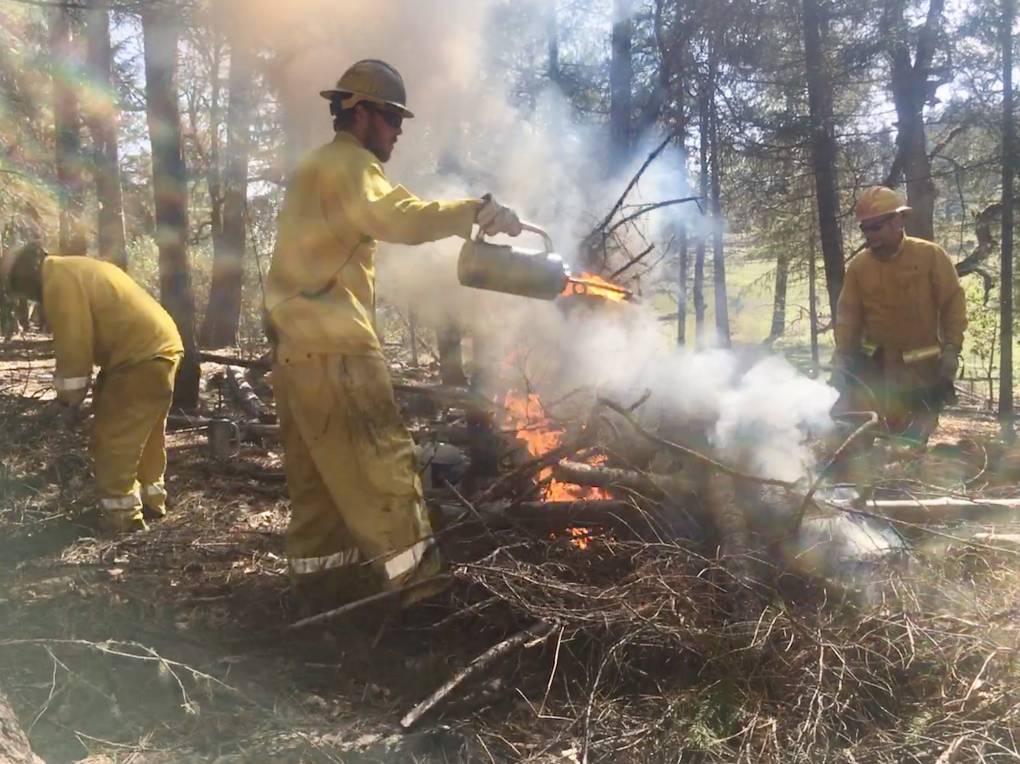
"caption": "A prescribed fire in Hayfork on April 10, 2019. Advocates for the practice of setting planned burns to manage lands and minimize wildfire risk say the exceptional events rule gets in the way.",
"credit": "Molly Peterson/California Newsroom",
"altTag": "A firefighter uses an instrument to douse flames in a forest.",
"description": null,
"imgSizes": {
"medium": {
"file": "https://cdn.kqed.org/wp-content/uploads/sites/10/2023/10/IMG_7960-800x599.jpg",
"width": 800,
"height": 599,
"mimeType": "image/jpeg"
},
"large": {
"file": "https://cdn.kqed.org/wp-content/uploads/sites/10/2023/10/IMG_7960-1020x764.jpg",
"width": 1020,
"height": 764,
"mimeType": "image/jpeg"
},
"thumbnail": {
"file": "https://cdn.kqed.org/wp-content/uploads/sites/10/2023/10/IMG_7960-160x120.jpg",
"width": 160,
"height": 120,
"mimeType": "image/jpeg"
},
"1536x1536": {
"file": "https://cdn.kqed.org/wp-content/uploads/sites/10/2023/10/IMG_7960-1536x1151.jpg",
"width": 1536,
"height": 1151,
"mimeType": "image/jpeg"
},
"2048x2048": {
"file": "https://cdn.kqed.org/wp-content/uploads/sites/10/2023/10/IMG_7960-2048x1535.jpg",
"width": 2048,
"height": 1535,
"mimeType": "image/jpeg"
},
"post-thumbnail": {
"file": "https://cdn.kqed.org/wp-content/uploads/sites/10/2023/10/IMG_7960-672x372.jpg",
"width": 672,
"height": 372,
"mimeType": "image/jpeg"
},
"twentyfourteen-full-width": {
"file": "https://cdn.kqed.org/wp-content/uploads/sites/10/2023/10/IMG_7960-1038x576.jpg",
"width": 1038,
"height": 576,
"mimeType": "image/jpeg"
},
"full-width": {
"file": "https://cdn.kqed.org/wp-content/uploads/sites/10/2023/10/IMG_7960-1920x1439.jpg",
"width": 1920,
"height": 1439,
"mimeType": "image/jpeg"
},
"kqedFullSize": {
"file": "https://cdn.kqed.org/wp-content/uploads/sites/10/2023/10/IMG_7960-scaled-e1736446701514.jpg",
"width": 2000,
"height": 1498
}
},
"isLoading": false,
"fetchFailed": false
},
"news_12021240": {
"type": "attachments",
"id": "news_12021240",
"meta": {
"index": "attachments_1716263798",
"site": "news",
"id": "12021240",
"found": true
},
"title": "Gavin Newsom, Donald Trump",
"publishDate": 1736460214,
"status": "inherit",
"parent": 12021128,
"modified": 1736460270,
"caption": "President Donald Trump participates in a briefing on wildfires with Gov. Gavin Newsom, left, at Sacramento McClellan Airport, in McClellan Park, California, on Sept. 14, 2020. ",
"credit": "Andrew Harnik/AP Photo",
"altTag": null,
"description": null,
"imgSizes": {
"medium": {
"file": "https://cdn.kqed.org/wp-content/uploads/sites/10/2025/01/CAWildfireNewsomTrumpAP-800x533.jpg",
"width": 800,
"height": 533,
"mimeType": "image/jpeg"
},
"large": {
"file": "https://cdn.kqed.org/wp-content/uploads/sites/10/2025/01/CAWildfireNewsomTrumpAP-1020x680.jpg",
"width": 1020,
"height": 680,
"mimeType": "image/jpeg"
},
"thumbnail": {
"file": "https://cdn.kqed.org/wp-content/uploads/sites/10/2025/01/CAWildfireNewsomTrumpAP-160x107.jpg",
"width": 160,
"height": 107,
"mimeType": "image/jpeg"
},
"1536x1536": {
"file": "https://cdn.kqed.org/wp-content/uploads/sites/10/2025/01/CAWildfireNewsomTrumpAP-1536x1024.jpg",
"width": 1536,
"height": 1024,
"mimeType": "image/jpeg"
},
"post-thumbnail": {
"file": "https://cdn.kqed.org/wp-content/uploads/sites/10/2025/01/CAWildfireNewsomTrumpAP-672x372.jpg",
"width": 672,
"height": 372,
"mimeType": "image/jpeg"
},
"twentyfourteen-full-width": {
"file": "https://cdn.kqed.org/wp-content/uploads/sites/10/2025/01/CAWildfireNewsomTrumpAP-1038x576.jpg",
"width": 1038,
"height": 576,
"mimeType": "image/jpeg"
},
"full-width": {
"file": "https://cdn.kqed.org/wp-content/uploads/sites/10/2025/01/CAWildfireNewsomTrumpAP-1920x1280.jpg",
"width": 1920,
"height": 1280,
"mimeType": "image/jpeg"
},
"kqedFullSize": {
"file": "https://cdn.kqed.org/wp-content/uploads/sites/10/2025/01/CAWildfireNewsomTrumpAP.jpg",
"width": 2000,
"height": 1333
}
},
"isLoading": false,
"fetchFailed": false
},
"news_12021103": {
"type": "attachments",
"id": "news_12021103",
"meta": {
"index": "attachments_1716263798",
"site": "news",
"id": "12021103",
"found": true
},
"title": "240109-CAWindStorm-019",
"publishDate": 1736442741,
"status": "inherit",
"parent": 0,
"modified": 1736667831,
"caption": "The Palisades Fire burns in the hillside above the Pacific Palisades neighborhood of Los Angeles, California, on Thursday, Jan. 9, 2025.",
"credit": "Beth LaBerge/KQED",
"altTag": null,
"description": null,
"imgSizes": {
"medium": {
"file": "https://cdn.kqed.org/wp-content/uploads/sites/10/2025/01/240109-CAWindStorm-019-800x533.jpg",
"width": 800,
"height": 533,
"mimeType": "image/jpeg"
},
"large": {
"file": "https://cdn.kqed.org/wp-content/uploads/sites/10/2025/01/240109-CAWindStorm-019-1020x680.jpg",
"width": 1020,
"height": 680,
"mimeType": "image/jpeg"
},
"thumbnail": {
"file": "https://cdn.kqed.org/wp-content/uploads/sites/10/2025/01/240109-CAWindStorm-019-160x107.jpg",
"width": 160,
"height": 107,
"mimeType": "image/jpeg"
},
"1536x1536": {
"file": "https://cdn.kqed.org/wp-content/uploads/sites/10/2025/01/240109-CAWindStorm-019-1536x1024.jpg",
"width": 1536,
"height": 1024,
"mimeType": "image/jpeg"
},
"post-thumbnail": {
"file": "https://cdn.kqed.org/wp-content/uploads/sites/10/2025/01/240109-CAWindStorm-019-672x372.jpg",
"width": 672,
"height": 372,
"mimeType": "image/jpeg"
},
"twentyfourteen-full-width": {
"file": "https://cdn.kqed.org/wp-content/uploads/sites/10/2025/01/240109-CAWindStorm-019-1038x576.jpg",
"width": 1038,
"height": 576,
"mimeType": "image/jpeg"
},
"full-width": {
"file": "https://cdn.kqed.org/wp-content/uploads/sites/10/2025/01/240109-CAWindStorm-019-1920x1280.jpg",
"width": 1920,
"height": 1280,
"mimeType": "image/jpeg"
},
"kqedFullSize": {
"file": "https://cdn.kqed.org/wp-content/uploads/sites/10/2025/01/240109-CAWindStorm-019.jpg",
"width": 2000,
"height": 1333
}
},
"isLoading": false,
"fetchFailed": false
},
"news_12020525": {
"type": "attachments",
"id": "news_12020525",
"meta": {
"index": "attachments_1716263798",
"site": "news",
"id": "12020525",
"found": true
},
"title": "California Fire Risk",
"publishDate": 1736210832,
"status": "inherit",
"parent": 12020521,
"modified": 1736211043,
"caption": "Flags fly under heavy winds before sunset as a plume of smoke from the Franklin Fire rises over the ocean on Dec. 10, 2024, in Malibu, California. Hot, dry Diablo winds will sweep through the North Bay this week, bringing strong gusts but minimal fire risk due to recent heavy rains in Northern California. In contrast, Southern California's dry season continues with little rainfall, and this week's powerful winds have triggered extreme fire danger warnings — even in January.",
"credit": "Damian Dovarganes/AP Photo",
"altTag": null,
"description": null,
"imgSizes": {
"medium": {
"file": "https://cdn.kqed.org/wp-content/uploads/sites/10/2025/01/CAHighWindsAP-800x533.jpg",
"width": 800,
"height": 533,
"mimeType": "image/jpeg"
},
"large": {
"file": "https://cdn.kqed.org/wp-content/uploads/sites/10/2025/01/CAHighWindsAP-1020x680.jpg",
"width": 1020,
"height": 680,
"mimeType": "image/jpeg"
},
"thumbnail": {
"file": "https://cdn.kqed.org/wp-content/uploads/sites/10/2025/01/CAHighWindsAP-160x107.jpg",
"width": 160,
"height": 107,
"mimeType": "image/jpeg"
},
"1536x1536": {
"file": "https://cdn.kqed.org/wp-content/uploads/sites/10/2025/01/CAHighWindsAP-1536x1024.jpg",
"width": 1536,
"height": 1024,
"mimeType": "image/jpeg"
},
"post-thumbnail": {
"file": "https://cdn.kqed.org/wp-content/uploads/sites/10/2025/01/CAHighWindsAP-672x372.jpg",
"width": 672,
"height": 372,
"mimeType": "image/jpeg"
},
"twentyfourteen-full-width": {
"file": "https://cdn.kqed.org/wp-content/uploads/sites/10/2025/01/CAHighWindsAP-1038x576.jpg",
"width": 1038,
"height": 576,
"mimeType": "image/jpeg"
},
"full-width": {
"file": "https://cdn.kqed.org/wp-content/uploads/sites/10/2025/01/CAHighWindsAP-1920x1280.jpg",
"width": 1920,
"height": 1280,
"mimeType": "image/jpeg"
},
"kqedFullSize": {
"file": "https://cdn.kqed.org/wp-content/uploads/sites/10/2025/01/CAHighWindsAP.jpg",
"width": 2000,
"height": 1333
}
},
"isLoading": false,
"fetchFailed": false
}
},
"audioPlayerReducer": {
"postId": "stream_live",
"isPaused": true,
"isPlaying": false,
"pfsActive": false,
"pledgeModalIsOpen": true,
"playerDrawerIsOpen": false,
"liveAudioPlayStartedAt": 0,
"liveAudioPlayContext": ""
},
"authorsReducer": {
"byline_news_12026524": {
"type": "authors",
"id": "byline_news_12026524",
"meta": {
"override": true
},
"slug": "byline_news_12026524",
"name": "Anna FitzGerald Guth",
"isLoading": false
},
"matthewgreen": {
"type": "authors",
"id": "1263",
"meta": {
"index": "authors_1716337520",
"id": "1263",
"found": true
},
"name": "Matthew Green",
"firstName": "Matthew",
"lastName": "Green",
"slug": "matthewgreen",
"email": "mgreen@kqed.org",
"display_author_email": false,
"staff_mastheads": [],
"title": "KQED Editor/Reporter",
"bio": "Matthew Green is a digital media producer for KQED News. He previously produced \u003ca href=\"http://www.kqed.org/lowdown\">The Lowdown\u003c/a>, KQED’s multimedia news education blog. Matthew's written for numerous Bay Area publications, including the Oakland Tribune and San Francisco Chronicle. He also taught journalism classes at Fremont High School in East Oakland.\r\n\r\nEmail: mgreen@kqed.org; Twitter: @MGreenKQED",
"avatar": "https://secure.gravatar.com/avatar/3bf498d1267ca02c8494f33d8cfc575e?s=600&d=blank&r=g",
"twitter": "MGreenKQED",
"facebook": null,
"instagram": null,
"linkedin": null,
"sites": [
{
"site": "news",
"roles": []
},
{
"site": "lowdown",
"roles": []
},
{
"site": "science",
"roles": []
},
{
"site": "education",
"roles": []
},
{
"site": "quest",
"roles": []
},
{
"site": "liveblog",
"roles": []
}
],
"headData": {
"title": "Matthew Green | KQED",
"description": "KQED Editor/Reporter",
"ogImgSrc": "https://secure.gravatar.com/avatar/3bf498d1267ca02c8494f33d8cfc575e?s=600&d=blank&r=g",
"twImgSrc": "https://secure.gravatar.com/avatar/3bf498d1267ca02c8494f33d8cfc575e?s=600&d=blank&r=g"
},
"isLoading": false,
"link": "/author/matthewgreen"
},
"dventon": {
"type": "authors",
"id": "11088",
"meta": {
"index": "authors_1716337520",
"id": "11088",
"found": true
},
"name": "Danielle Venton",
"firstName": "Danielle",
"lastName": "Venton",
"slug": "dventon",
"email": "dventon@kqed.org",
"display_author_email": true,
"staff_mastheads": [
"science"
],
"title": "Science reporter",
"bio": "Danielle Venton is a reporter for KQED Science. She covers wildfires, space and oceans (though she is prone to sea sickness).\r\n\r\nBefore joining KQED in 2015, Danielle was a staff reporter at KRCB in Sonoma County and a freelancer. She studied science communication at UC Santa Cruz and formerly worked at CERN in Geneva, Switzerland where she wrote about computing. She lives in Sonoma County and enjoys backpacking.",
"avatar": "https://secure.gravatar.com/avatar/37b292b5c40c8d93959c4f48d73b5286f41b7abd8588277e941905a3ed4c801c?s=600&d=blank&r=g",
"twitter": "DanielleVenton",
"bluesky": null,
"facebook": null,
"instagram": null,
"linkedin": null,
"sites": [
{
"site": "arts",
"roles": [
"contributor"
]
},
{
"site": "news",
"roles": [
"editor"
]
},
{
"site": "futureofyou",
"roles": [
"editor"
]
},
{
"site": "science",
"roles": [
"editor"
]
},
{
"site": "liveblog",
"roles": [
"contributor"
]
}
],
"headData": {
"title": "Danielle Venton | KQED",
"description": "Science reporter",
"ogImgSrc": "https://secure.gravatar.com/avatar/37b292b5c40c8d93959c4f48d73b5286f41b7abd8588277e941905a3ed4c801c?s=600&d=blank&r=g",
"twImgSrc": "https://secure.gravatar.com/avatar/37b292b5c40c8d93959c4f48d73b5286f41b7abd8588277e941905a3ed4c801c?s=600&d=blank&r=g"
},
"isLoading": false,
"link": "/author/dventon"
},
"eromero": {
"type": "authors",
"id": "11746",
"meta": {
"index": "authors_1716337520",
"id": "11746",
"found": true
},
"name": "Ezra David Romero",
"firstName": "Ezra David",
"lastName": "Romero",
"slug": "eromero",
"email": "eromero@kqed.org",
"display_author_email": true,
"staff_mastheads": [
"news",
"science"
],
"title": "Climate Reporter",
"bio": "Ezra David Romero is a climate reporter for KQED News. He covers the absence and excess of water in the Bay Area — think sea level rise, flooding and drought. For nearly a decade he’s covered how warming temperatures are altering the lives of Californians. He’s reported on farmers worried their pistachio trees aren’t getting enough sleep, families desperate for water, scientists studying dying giant sequoias, and alongside firefighters containing wildfires. His work has appeared on local stations across California and nationally on public radio shows like Morning Edition, Here and Now, All Things Considered and Science Friday. ",
"avatar": "https://secure.gravatar.com/avatar/c76404d287c10ed40224227551ac36e24352c7306f106632caf6fead76f8801f?s=600&d=blank&r=g",
"twitter": "ezraromero",
"bluesky": null,
"facebook": null,
"instagram": null,
"linkedin": null,
"sites": [
{
"site": "arts",
"roles": [
"editor"
]
},
{
"site": "news",
"roles": [
"editor"
]
},
{
"site": "science",
"roles": [
"editor"
]
},
{
"site": "liveblog",
"roles": [
"author"
]
}
],
"headData": {
"title": "Ezra David Romero | KQED",
"description": "Climate Reporter",
"ogImgSrc": "https://secure.gravatar.com/avatar/c76404d287c10ed40224227551ac36e24352c7306f106632caf6fead76f8801f?s=600&d=blank&r=g",
"twImgSrc": "https://secure.gravatar.com/avatar/c76404d287c10ed40224227551ac36e24352c7306f106632caf6fead76f8801f?s=600&d=blank&r=g"
},
"isLoading": false,
"link": "/author/eromero"
},
"jservantez": {
"type": "authors",
"id": "11909",
"meta": {
"index": "authors_1716337520",
"id": "11909",
"found": true
},
"name": "Jared Servantez",
"firstName": "Jared",
"lastName": "Servantez",
"slug": "jservantez",
"email": "jservantez@kqed.org",
"display_author_email": true,
"staff_mastheads": [
"news"
],
"title": "KQED Contributor",
"bio": "Jared Servantez is the editor of KQED's Express Desk, leading the newsroom's online breaking news operation. He most recently worked for the Los Angeles Times, where he served as a breaking news editor, the Metro Desk's night editor, and a copy editor. Jared is a graduate of the USC Annenberg School for Communication and Journalism.",
"avatar": "https://secure.gravatar.com/avatar/f0e317c67bb498c3f077f033d1cc79e62f3bc1303fa20a14e8880d31fbe7e01e?s=600&d=blank&r=g",
"twitter": "jservantez",
"bluesky": null,
"facebook": null,
"instagram": null,
"linkedin": null,
"sites": [
{
"site": "news",
"roles": [
"editor"
]
},
{
"site": "science",
"roles": [
"editor",
"author"
]
},
{
"site": "liveblog",
"roles": [
"editor"
]
}
],
"headData": {
"title": "Jared Servantez | KQED",
"description": "KQED Contributor",
"ogImgSrc": "https://secure.gravatar.com/avatar/f0e317c67bb498c3f077f033d1cc79e62f3bc1303fa20a14e8880d31fbe7e01e?s=600&d=blank&r=g",
"twImgSrc": "https://secure.gravatar.com/avatar/f0e317c67bb498c3f077f033d1cc79e62f3bc1303fa20a14e8880d31fbe7e01e?s=600&d=blank&r=g"
},
"isLoading": false,
"link": "/author/jservantez"
},
"kdebenedetti": {
"type": "authors",
"id": "11913",
"meta": {
"index": "authors_1716337520",
"id": "11913",
"found": true
},
"name": "Katie DeBenedetti",
"firstName": "Katie",
"lastName": "DeBenedetti",
"slug": "kdebenedetti",
"email": "kdebenedetti@kqed.org",
"display_author_email": false,
"staff_mastheads": [
"news",
"science"
],
"title": "KQED Contributor",
"bio": "Katie DeBenedetti is a digital reporter covering daily news for the Express Desk. Prior to joining KQED as a culture reporting intern in January 2024, she covered education and city government for the Napa Valley Register.",
"avatar": "https://secure.gravatar.com/avatar/6e31073cb8f7e4214ab03f42771d0f45?s=600&d=blank&r=g",
"twitter": null,
"facebook": null,
"instagram": null,
"linkedin": null,
"sites": [
{
"site": "news",
"roles": [
"author"
]
},
{
"site": "science",
"roles": [
"author"
]
},
{
"site": "liveblog",
"roles": [
"author"
]
}
],
"headData": {
"title": "Katie DeBenedetti | KQED",
"description": "KQED Contributor",
"ogImgSrc": "https://secure.gravatar.com/avatar/6e31073cb8f7e4214ab03f42771d0f45?s=600&d=blank&r=g",
"twImgSrc": "https://secure.gravatar.com/avatar/6e31073cb8f7e4214ab03f42771d0f45?s=600&d=blank&r=g"
},
"isLoading": false,
"link": "/author/kdebenedetti"
},
"slim": {
"type": "authors",
"id": "11920",
"meta": {
"index": "authors_1716337520",
"id": "11920",
"found": true
},
"name": "Samantha Lim",
"firstName": "Samantha",
"lastName": "Lim",
"slug": "slim",
"email": "slim@KQED.org",
"display_author_email": false,
"staff_mastheads": [],
"title": "KQED Contributor",
"bio": null,
"avatar": "https://secure.gravatar.com/avatar/82e592e6c15fe1a04d385e8ad0fb0b4e?s=600&d=blank&r=g",
"twitter": null,
"facebook": null,
"instagram": null,
"linkedin": null,
"sites": [
{
"site": "news",
"roles": []
}
],
"headData": {
"title": "Samantha Lim | KQED",
"description": "KQED Contributor",
"ogImgSrc": "https://secure.gravatar.com/avatar/82e592e6c15fe1a04d385e8ad0fb0b4e?s=600&d=blank&r=g",
"twImgSrc": "https://secure.gravatar.com/avatar/82e592e6c15fe1a04d385e8ad0fb0b4e?s=600&d=blank&r=g"
},
"isLoading": false,
"link": "/author/slim"
}
},
"pagesReducer": {
"news_tag_weather": {
"type": "terms",
"id": "news_3",
"meta": {
"index": "terms_1716263798",
"site": "news",
"id": "3",
"score": 9.104131
},
"featImg": null,
"name": "weather",
"description": null,
"taxonomy": "tag",
"headData": {
"twImgId": null,
"twTitle": null,
"ogTitle": null,
"ogImgId": null,
"twDescription": null,
"description": null,
"title": "weather Archives | KQED News",
"ogDescription": null
},
"ttid": 3,
"slug": "weather",
"isLoading": false,
"title": "weather",
"pageMeta": {
"site": "news",
"WpPageTemplate": "page-topic-editorial",
"currentPage": 5
},
"blocks": [
{
"blockName": "kqed/post-list",
"attrs": {
"layout": "cardArticle2",
"query": "posts/news?tag=weather",
"seeMore": false,
"paginated": true,
"page": 5
}
},
{
"blockName": "kqed/ad"
}
]
}
},
"pfsSessionReducer": {},
"postsReducer": {
"stream_live": {
"type": "live",
"id": "stream_live",
"audioUrl": "https://streams.kqed.org/kqedradio",
"title": "Live Stream",
"excerpt": "Live Stream information currently unavailable.",
"link": "/radio",
"featImg": "",
"label": {
"name": "KQED Live",
"link": "/"
}
},
"stream_kqedNewscast": {
"type": "posts",
"id": "stream_kqedNewscast",
"audioUrl": "https://www.kqed.org/.stream/anon/radio/RDnews/newscast.mp3?_=1",
"title": "KQED Newscast",
"featImg": "",
"label": {
"name": "88.5 FM",
"link": "/"
}
},
"news_12029441": {
"type": "posts",
"id": "news_12029441",
"meta": {
"index": "posts_1716263798",
"site": "news",
"id": "12029441",
"score": null,
"sort": [
1741031722000
]
},
"guestAuthors": [],
"slug": "california-weather-colder-rainier-after-hint-spring",
"title": "California Weather to Get Colder and Rainier After a Hint of Spring",
"publishDate": 1741031722,
"format": "standard",
"headTitle": "California Weather to Get Colder and Rainier After a Hint of Spring | KQED",
"labelTerm": {
"site": "news"
},
"content": "\u003cp>The Bay Area’s sunny spring weather last week seems to have been a tease, with rain dotting the current forecast while meteorologists warn that the first half of the month at least looks dreary.\u003c/p>\n\u003cp>“It looks like we’re gonna be cold and wet,” said Dylan Flynn, a meteorologist at the \u003ca href=\"https://www.kqed.org/news/tag/national-weather-service\">National Weather Service\u003c/a>’s Bay Area office. “Colder than average and wetter than average, at least through the middle of the month.”\u003c/p>\n\u003cp>After some early morning rain on Monday, the rest of the day should be pretty dry across the Bay Area, with only slight chances of spotty showers in Monterey County. When the rain returns later in the week, it will be unusually focused on Southern California, dropping just about an inch across Northern California counties that bore the brunt of February’s winter weather.\u003c/p>\n\u003cp>[ad fullwidth]\u003c/p>\n\u003cp>The National Weather Service said there’s about a 50% chance the Bay Area will get light rain on Tuesday before the odds increase throughout Wednesday and into Thursday morning.\u003c/p>\n\u003cp>Most of the rainfall will occur south of San José, and the Santa Cruz Mountains and Monterey’s Santa Lucia Mountains could get about an inch of rainfall. Throughout the north and east Bay Area and San Francisco, just about a quarter to half an inch could fall.\u003c/p>\n\u003cfigure id=\"attachment_12015646\" class=\"wp-caption aligncenter\" style=\"max-width: 2000px\">\u003cimg loading=\"lazy\" decoding=\"async\" class=\"size-full wp-image-12015646\" src=\"https://cdn.kqed.org/wp-content/uploads/sites/10/2024/11/241122-StormHitsBayArea-37-BL.jpg\" alt=\"\" width=\"2000\" height=\"1333\" srcset=\"https://cdn.kqed.org/wp-content/uploads/sites/10/2024/11/241122-StormHitsBayArea-37-BL.jpg 2000w, https://cdn.kqed.org/wp-content/uploads/sites/10/2024/11/241122-StormHitsBayArea-37-BL-800x533.jpg 800w, https://cdn.kqed.org/wp-content/uploads/sites/10/2024/11/241122-StormHitsBayArea-37-BL-1020x680.jpg 1020w, https://cdn.kqed.org/wp-content/uploads/sites/10/2024/11/241122-StormHitsBayArea-37-BL-160x107.jpg 160w, https://cdn.kqed.org/wp-content/uploads/sites/10/2024/11/241122-StormHitsBayArea-37-BL-1536x1024.jpg 1536w, https://cdn.kqed.org/wp-content/uploads/sites/10/2024/11/241122-StormHitsBayArea-37-BL-1920x1280.jpg 1920w\" sizes=\"auto, (max-width: 2000px) 100vw, 2000px\">\u003cfigcaption class=\"wp-caption-text\">Water spills over the Highway 101 overpass in San Francisco on Nov. 22, 2024, during a storm bringing heavy rain and strong winds to the Bay Area. \u003ccite>(Beth LaBerge/KQED)\u003c/cite>\u003c/figcaption>\u003c/figure>\n\u003cp>Monitoring the rainfall in the Santa Cruz Mountains over the next few days could be more difficult than usual after the NWS’s radar on Mount Umunhum, just south of San José, \u003ca href=\"https://x.com/NWSBayArea/status/1895941600813203859\">went down\u003c/a> Saturday. It is one of 160 radars across the state that help meteorologists track rainfall by examining particles in raindrops and snow.\u003c/p>\n\u003cp>“Some of our components wore out, and we needed to order replacements, so as soon as the replacements come in, we’re sending our technicians up to get it repaired,” Flynn said. He said it’s not uncommon for the radars to need maintenance, especially since they are often on mountaintops and spin constantly.\u003c/p>\n\u003cp>“It’s unfortunate when we don’t have a replacement part on hand, and there’s rain also coming because that’s where we really rely on the radar to see through the clouds and what’s happening in the rain,” Flynn told KQED.\u003c/p>\n\u003cp>[aside postID=news_12029178 hero='https://cdn.kqed.org/wp-content/uploads/sites/10/2025/02/NOAAGetty-1020x680.jpg']\u003c/p>\n\u003cp>He said that the replacement part is expected to arrive in the next day or so and that NWS is working to have the radar repaired before the next round of rain begins Wednesday.\u003c/p>\n\u003cp>Flynn called the series of showers “beneficial rains” that won’t mirror \u003ca href=\"https://www.kqed.org/news/12026874/bay-area-heavy-rain-flooding-landslides-thousands-without-power\">February’s deluges\u003c/a> — less than half an inch of rainfall is predicted throughout most of the Bay Area, and the San Mateo and Santa Clara coasts are expected to top out at about one inch.\u003c/p>\n\u003cp>These are “amounts that are noticeable, measurable, might not be the most comfortable thing to go and walk your dog in, but it’s not a big flooding concern,” Flynn said. “It more helps fill up the reservoirs, it’s good as we get to the drier months ahead for the state.”\u003c/p>\n\u003cp>Unlike the atmospheric river-fueled storms that have dominated the Bay Area’s winter weather so far, this series will bring more evenly distributed rain throughout the state, with the low-pressure systems hanging in the Central Valley and reaching Southern California. The storms will also be considerably colder since there’s less moisture gathering in the air.\u003c/p>\n\u003cp>That means the Sierra Nevada can expect significant snowfall throughout the week after getting 6 to 12 inches around the mountains this past weekend.\u003c/p>\n\u003cp>“I would assume it’ll [be] pretty much on par with what we got over the weekend for each of these [systems],” Flynn said.\u003c/p>\n\u003cp>Friday and Saturday should be dry — though cold and windy — before rain returns Sunday, dropping up to an inch of rain across the Bay Area. Flynn said the National Weather Service is starting to see hints that a larger storm system could be gearing up to hit the region in the middle of next week.\u003c/p>\n\u003cp>“Enjoy the short periods of dry weather,” the NWS’s forecast discussion said Monday.\u003c/p>\n\u003cp>\u003c/p>\n",
"blocks": [],
"excerpt": "Rain is dotting the forecast for the Bay Area and other parts of the state, but monitoring it could be more difficult after a weather service radar went down.",
"status": "publish",
"parent": 0,
"modified": 1741033330,
"stats": {
"hasAudio": false,
"hasVideo": false,
"hasChartOrMap": false,
"iframeSrcs": [],
"hasGoogleForm": false,
"hasGallery": false,
"hasHearkenModule": false,
"hasPolis": false,
"paragraphCount": 19,
"wordCount": 773
},
"headData": {
"title": "California Weather to Get Colder and Rainier After a Hint of Spring | KQED",
"description": "Rain is dotting the forecast for the Bay Area and other parts of the state, but monitoring it could be more difficult after a weather service radar went down.",
"ogTitle": "",
"ogDescription": "",
"ogImgId": "",
"twTitle": "",
"twDescription": "",
"twImgId": "",
"schema": {
"@context": "https://schema.org",
"@type": "NewsArticle",
"headline": "California Weather to Get Colder and Rainier After a Hint of Spring",
"datePublished": "2025-03-03T11:55:22-08:00",
"dateModified": "2025-03-03T12:22:10-08:00",
"image": "https://cdn.kqed.org/wp-content/uploads/2020/02/KQED-OG-Image@1x.png",
"isAccessibleForFree": "True",
"publisher": {
"@type": "NewsMediaOrganization",
"@id": "https://www.kqed.org/#organization",
"name": "KQED",
"logo": "https://cdn.kqed.org/wp-content/uploads/2020/02/KQED-OG-Image@1x.png",
"url": "https://www.kqed.org",
"sameAs": [
"https://www.facebook.com/KQED",
"https://twitter.com/KQED",
"https://www.instagram.com/kqed/",
"https://www.tiktok.com/@kqedofficial",
"https://www.linkedin.com/company/kqed",
"https://www.youtube.com/channel/UCeC0IOo7i1P_61zVUWbJ4nw"
]
}
}
},
"sticky": false,
"nprStoryId": "kqed-12029441",
"templateType": "standard",
"featuredImageType": "standard",
"excludeFromSiteSearch": "Include",
"articleAge": "0",
"path": "/news/12029441/california-weather-colder-rainier-after-hint-spring",
"audioTrackLength": null,
"parsedContent": [
{
"type": "contentString",
"content": "\u003cdiv class=\"post-body\">\u003cp>\u003cp>The Bay Area’s sunny spring weather last week seems to have been a tease, with rain dotting the current forecast while meteorologists warn that the first half of the month at least looks dreary.\u003c/p>\n\u003cp>“It looks like we’re gonna be cold and wet,” said Dylan Flynn, a meteorologist at the \u003ca href=\"https://www.kqed.org/news/tag/national-weather-service\">National Weather Service\u003c/a>’s Bay Area office. “Colder than average and wetter than average, at least through the middle of the month.”\u003c/p>\n\u003cp>After some early morning rain on Monday, the rest of the day should be pretty dry across the Bay Area, with only slight chances of spotty showers in Monterey County. When the rain returns later in the week, it will be unusually focused on Southern California, dropping just about an inch across Northern California counties that bore the brunt of February’s winter weather.\u003c/p>\n\u003cp>\u003c/p>\u003c/div>",
"attributes": {
"named": {},
"numeric": []
}
},
{
"type": "component",
"content": "",
"name": "ad",
"attributes": {
"named": {
"label": "fullwidth"
},
"numeric": [
"fullwidth"
]
}
},
{
"type": "contentString",
"content": "\u003cdiv class=\"post-body\">\u003cp>\u003c/p>\n\u003cp>The National Weather Service said there’s about a 50% chance the Bay Area will get light rain on Tuesday before the odds increase throughout Wednesday and into Thursday morning.\u003c/p>\n\u003cp>Most of the rainfall will occur south of San José, and the Santa Cruz Mountains and Monterey’s Santa Lucia Mountains could get about an inch of rainfall. Throughout the north and east Bay Area and San Francisco, just about a quarter to half an inch could fall.\u003c/p>\n\u003cfigure id=\"attachment_12015646\" class=\"wp-caption aligncenter\" style=\"max-width: 2000px\">\u003cimg loading=\"lazy\" decoding=\"async\" class=\"size-full wp-image-12015646\" src=\"https://cdn.kqed.org/wp-content/uploads/sites/10/2024/11/241122-StormHitsBayArea-37-BL.jpg\" alt=\"\" width=\"2000\" height=\"1333\" srcset=\"https://cdn.kqed.org/wp-content/uploads/sites/10/2024/11/241122-StormHitsBayArea-37-BL.jpg 2000w, https://cdn.kqed.org/wp-content/uploads/sites/10/2024/11/241122-StormHitsBayArea-37-BL-800x533.jpg 800w, https://cdn.kqed.org/wp-content/uploads/sites/10/2024/11/241122-StormHitsBayArea-37-BL-1020x680.jpg 1020w, https://cdn.kqed.org/wp-content/uploads/sites/10/2024/11/241122-StormHitsBayArea-37-BL-160x107.jpg 160w, https://cdn.kqed.org/wp-content/uploads/sites/10/2024/11/241122-StormHitsBayArea-37-BL-1536x1024.jpg 1536w, https://cdn.kqed.org/wp-content/uploads/sites/10/2024/11/241122-StormHitsBayArea-37-BL-1920x1280.jpg 1920w\" sizes=\"auto, (max-width: 2000px) 100vw, 2000px\">\u003cfigcaption class=\"wp-caption-text\">Water spills over the Highway 101 overpass in San Francisco on Nov. 22, 2024, during a storm bringing heavy rain and strong winds to the Bay Area. \u003ccite>(Beth LaBerge/KQED)\u003c/cite>\u003c/figcaption>\u003c/figure>\n\u003cp>Monitoring the rainfall in the Santa Cruz Mountains over the next few days could be more difficult than usual after the NWS’s radar on Mount Umunhum, just south of San José, \u003ca href=\"https://x.com/NWSBayArea/status/1895941600813203859\">went down\u003c/a> Saturday. It is one of 160 radars across the state that help meteorologists track rainfall by examining particles in raindrops and snow.\u003c/p>\n\u003cp>“Some of our components wore out, and we needed to order replacements, so as soon as the replacements come in, we’re sending our technicians up to get it repaired,” Flynn said. He said it’s not uncommon for the radars to need maintenance, especially since they are often on mountaintops and spin constantly.\u003c/p>\n\u003cp>“It’s unfortunate when we don’t have a replacement part on hand, and there’s rain also coming because that’s where we really rely on the radar to see through the clouds and what’s happening in the rain,” Flynn told KQED.\u003c/p>\n\u003cp>\u003c/p>\u003c/div>",
"attributes": {
"named": {},
"numeric": []
}
},
{
"type": "component",
"content": "",
"name": "aside",
"attributes": {
"named": {
"postid": "news_12029178",
"hero": "https://cdn.kqed.org/wp-content/uploads/sites/10/2025/02/NOAAGetty-1020x680.jpg",
"label": ""
},
"numeric": []
}
},
{
"type": "contentString",
"content": "\u003cdiv class=\"post-body\">\u003cp>\u003c/p>\n\u003cp>He said that the replacement part is expected to arrive in the next day or so and that NWS is working to have the radar repaired before the next round of rain begins Wednesday.\u003c/p>\n\u003cp>Flynn called the series of showers “beneficial rains” that won’t mirror \u003ca href=\"https://www.kqed.org/news/12026874/bay-area-heavy-rain-flooding-landslides-thousands-without-power\">February’s deluges\u003c/a> — less than half an inch of rainfall is predicted throughout most of the Bay Area, and the San Mateo and Santa Clara coasts are expected to top out at about one inch.\u003c/p>\n\u003cp>These are “amounts that are noticeable, measurable, might not be the most comfortable thing to go and walk your dog in, but it’s not a big flooding concern,” Flynn said. “It more helps fill up the reservoirs, it’s good as we get to the drier months ahead for the state.”\u003c/p>\n\u003cp>Unlike the atmospheric river-fueled storms that have dominated the Bay Area’s winter weather so far, this series will bring more evenly distributed rain throughout the state, with the low-pressure systems hanging in the Central Valley and reaching Southern California. The storms will also be considerably colder since there’s less moisture gathering in the air.\u003c/p>\n\u003cp>That means the Sierra Nevada can expect significant snowfall throughout the week after getting 6 to 12 inches around the mountains this past weekend.\u003c/p>\n\u003cp>“I would assume it’ll [be] pretty much on par with what we got over the weekend for each of these [systems],” Flynn said.\u003c/p>\n\u003cp>Friday and Saturday should be dry — though cold and windy — before rain returns Sunday, dropping up to an inch of rain across the Bay Area. Flynn said the National Weather Service is starting to see hints that a larger storm system could be gearing up to hit the region in the middle of next week.\u003c/p>\n\u003cp>“Enjoy the short periods of dry weather,” the NWS’s forecast discussion said Monday.\u003c/p>\n\u003cp>\u003c/p>\n\u003c/div>\u003c/p>",
"attributes": {
"named": {},
"numeric": []
}
}
],
"link": "/news/12029441/california-weather-colder-rainier-after-hint-spring",
"authors": [
"11913"
],
"categories": [
"news_34165",
"news_28250",
"news_8"
],
"tags": [
"news_20061",
"news_1386",
"news_34945",
"news_19204",
"news_255",
"news_27626",
"news_28199",
"news_461",
"news_465",
"news_30125",
"news_18541",
"news_21285",
"news_3"
],
"featImg": "news_12029443",
"label": "news"
},
"news_12026874": {
"type": "posts",
"id": "news_12026874",
"meta": {
"index": "posts_1716263798",
"site": "news",
"id": "12026874",
"score": null,
"sort": [
1739480901000
]
},
"guestAuthors": [],
"slug": "bay-area-heavy-rain-flooding-landslides-thousands-without-power",
"title": "Bay Area Hit by Heavy Rain, Flooding and Landslides; Thousands Without Power",
"publishDate": 1739480901,
"format": "standard",
"headTitle": "Bay Area Hit by Heavy Rain, Flooding and Landslides; Thousands Without Power | KQED",
"labelTerm": {
"site": "news"
},
"content": "\u003cp>\u003cem>Updated 4:34 p.m. Thursday\u003c/em>\u003c/p>\n\u003cp>Heavy rain fell across the Bay Area Thursday morning and afternoon as \u003ca href=\"https://www.kqed.org/news/12026803/one-of-the-years-strongest-storms-is-about-to-hit-the-bay-area\">one of the strongest atmospheric river storms of the year\u003c/a> hit California, causing highway flooding, power outages and a few landslides.\u003c/p>\n\u003cp>The National Weather Service says the Santa Cruz Mountains have been hit the hardest, leading to a rare flash flood warning for parts of that region, and a minor flood watch for most of the Bay Area remains until Sunday as the rain recedes. But flood advisories are in effect for most of the Bay Area through 5:30 p.m.\u003c/p>\n\u003cp>“We’ve heard numerous reports of flooding from the East Bay, Santa Cruz Mountains and the North Bay,” said Rachel Kennedy, a meteorologist with the weather service’s Bay Area office. “There have been several landslides, but from here on out, we should see rain rates decrease.”\u003c/p>\n\u003cp>[ad fullwidth]\u003c/p>\n\u003cp>As many as 10,000 PG&E customers \u003ca href=\"https://www.kqed.org/science/1950931/map-pge-power-outages\">are without power\u003c/a>, with the majority in the South Bay. One man was killed in an early morning crash west of Santa Cruz, but it was not immediately certain whether the rain was a factor.\u003c/p>\n\u003cp>Dylan Flynn, a meteorologist with the weather service’s Bay Area office, said the worst of the storm was expected before 10 a.m., though the \u003ca href=\"https://www.kqed.org/news/12025860/trump-orders-and-atmospheric-rivers-how-prepared-are-californias-levees\">atmospheric river\u003c/a> will bring moderate to heavy rainfall and wind gusts over 50 mph across the Bay Area through Friday morning.\u003c/p>\n\u003cp>https://twitter.com/nwsbayarea/status/1890074097117536551?s=46&t=8L9OHVE58oUXKjH2wCBDtA\u003c/p>\n\u003cp>Between 1 and 3 inches of rain have fallen over the region so far. By the time the storm passes, the North Bay could receive up to 4 inches of rain, the Bay Area up to 3 inches and the Santa Cruz Mountains up to 6 inches.\u003c/p>\n\u003cp>“It’s pumping tropical moisture through the atmosphere directly at us; It’s like a fire hose,” Flynn said. “In terms of rainfall rates, this is about as heavy as it gets for us for atmospheric rivers. The only good news is that principal impacts only lasted about 12 hours.”\u003c/p>\n\u003cp>Arrival flights are experiencing delays at San Francisco International Airport by more than an hour because of winds, according to FlightAware. The website reports departures are delayed by nearly an hour and a half. Inbound flights are delayed at the origin by more than two hours due to the wind.\u003c/p>\n\u003cp>The storm has knocked over trees from Marin to Santa Cruz, including a large tree blocking Skyline Boulevard at Brandy Rock Way in Oakland’s Ridgemont neighborhood, according to an X post by the Oakland Fire Department.\u003c/p>\n\u003cp>https://twitter.com/OaklandFireLive/status/1890140306768871698\u003c/p>\n\u003cp>Multiple roads are closed across Sonoma County and on major highways across the region near Oakland, San Mateo, Sunnyvale, Redwood City, Hercules, Vallejo, South San Francisco, San Carlos, Emeryville and Castro Valley, according to the Metropolitan Transportation Commission.\u003c/p>\n\u003cp>“Highways are sort of the canary in the coal mine of where we start to see flooding in the typical places and how flooding is likely to become more widespread from there,” Kennedy said.\u003c/p>\n\u003cp>Evacuation orders have been lifted across Santa Cruz County. Evacuation orders covered Felton Grove residents living near the San Lorenzo River, as well as residents near Watsonville because of rising water levels in two local creeks: Corralitos and Salsipuedes.\u003c/p>\n\u003cp>Santa Cruz County posted a video on Facebook showing the Corralitos Creek overflowing with brown, muddy water.\u003c/p>\n\u003cp>https://twitter.com/CHPscrz/status/1890091906086105334\u003c/p>\n\u003cp>In Soquel, Main Street above Bates Creek was closed due to a tree down with fallen wires, and a landslide and flooding shut down San Jose Road. Some roads were also closed in Watsonville and Interlaken, according to the county.\u003c/p>\n\u003cp>Israel Murillo, public information officer for the California Highway Patrol office in Santa Cruz, said that as the atmospheric river pounds the region, all available officers are working and gearing up for anything else the storm brings.\u003c/p>\n\u003cp>“We had a vehicle that got stuck in the middle of the roadway because that individual chose to drive across flooded roads,” he said.\u003c/p>\n\u003cp>He also said a man was killed around 4:20 a.m. on State Route 1 and Scaroni Road when he was hit by a truck. Murillo said he can’t at this point attribute the death to the rain, but it happened during the storm.\u003c/p>\n\u003cp>The National Weather Service is paying close attention to any notable rise in streams and major rivers, with the Russian River at Guerneville and the San Lorenzo River having the highest chances of going into flood stage. “San Lorenzo is of particular concern given the rain so far and how flashy that basin is. The river gauge is already reporting a sharp rise,” meteorologists wrote in the weather service’s morning forecast discussion.\u003c/p>\n\u003cp>Stanford climate scientist Noah Diffenbaugh said this atmospheric river mirrors a more significant trend.\u003c/p>\n\u003cp>[aside postID=science_1996145 hero='https://cdn.kqed.org/wp-content/uploads/sites/35/2025/02/250210-SurferSewage-05-BL-1020x680.jpg']\u003c/p>\n\u003cp>“There’s a trend towards the atmospheric river storms that make landfall getting warmer,” he said. “They’ll tend to produce more rainfall than snow, which creates runoff right away.”\u003c/p>\n\u003cp>All that water is spilling into roadways, which is causing traffic issues, especially in the North Bay, said Sgt. Andrew Barclay, public information officer with the California Highway Patrol Golden Gate Division.\u003c/p>\n\u003cp>“We’re seeing flooding, we’re seeing debris, and we are seeing people that are driving too fast in those conditions that are losing control and spinning out,” he said.\u003c/p>\n\u003cp>In San Francisco, the weather service wrote in its most recent flood advisory that “downtown is the most likely place to experience minor flooding” and that on Thursday afternoon, “flooding may transpire, mainly in areas of hilly terrain.”\u003c/p>\n\u003cp>The weather service forecasts high surf with waves up 45 to feet through Saturday and has issued a flood watch through Saturday evening for the entire Bay Area and Central Coast, except for regions south of Hollister. Heavy rainfall may also continue to cause landslides.\u003c/p>\n\u003cp>“While the rain and wind grabs everybody’s attention, the most deadly weather we have here in the Bay Area is high surf and people getting swept out to sea,” Flynn said.\u003c/p>\n\u003cp>Flynn said scattered showers will pick up Thursday afternoon with a chance of thunderstorms, but the rain will be spottier than what happened overnight.\u003c/p>\n\u003cp>“By Friday afternoon, the sun will make a triumphant return, and the rain will stop,” he said.\u003c/p>\n\u003cp>Meteorologists expect a weaker storm to move through the region Sunday, with light rain focused on the North Bay. Forecasters wrote that the long-range discussion for the rest of the month is “split, but the majority of solutions point to a much drier second half of February as our roller-coaster rainy season continues.”\u003c/p>\n\u003cp>\u003c!-- iframe plugin v.4.3 wordpress.org/plugins/iframe/ -->\u003cbr>\n\u003ciframe loading=\"lazy\" src=\"https://kqednews.maps.arcgis.com/apps/instant/basic/index.html?appid=a04a97b02e764b5e94905acaaecf2edc\" width=\"1000\" height=\"600\" frameborder=\"0\" style=\"border:0\" scrolling=\"yes\" class=\"iframe-class\">\u003c/iframe>\u003c/p>\n\u003cp>[ad floatright]\u003c/p>\n",
"blocks": [],
"excerpt": "A strong storm hitting California has caused highway flooding, power outages and a few landslides across the Bay Area, with the Santa Cruz Mountains hit the hardest.",
"status": "publish",
"parent": 0,
"modified": 1739493309,
"stats": {
"hasAudio": false,
"hasVideo": false,
"hasChartOrMap": true,
"iframeSrcs": [
"https://kqednews.maps.arcgis.com/apps/instant/basic/index.html"
],
"hasGoogleForm": false,
"hasGallery": false,
"hasHearkenModule": false,
"hasPolis": false,
"paragraphCount": 33,
"wordCount": 1178
},
"headData": {
"title": "Bay Area Hit by Heavy Rain, Flooding and Landslides; Thousands Without Power | KQED",
"description": "A strong storm hitting California has caused highway flooding, power outages and a few landslides across the Bay Area, with the Santa Cruz Mountains hit the hardest.",
"ogTitle": "",
"ogDescription": "",
"ogImgId": "",
"twTitle": "",
"twDescription": "",
"twImgId": "",
"schema": {
"@context": "https://schema.org",
"@type": "NewsArticle",
"headline": "Bay Area Hit by Heavy Rain, Flooding and Landslides; Thousands Without Power",
"datePublished": "2025-02-13T13:08:21-08:00",
"dateModified": "2025-02-13T16:35:09-08:00",
"image": "https://cdn.kqed.org/wp-content/uploads/2020/02/KQED-OG-Image@1x.png",
"isAccessibleForFree": "True",
"publisher": {
"@type": "NewsMediaOrganization",
"@id": "https://www.kqed.org/#organization",
"name": "KQED",
"logo": "https://cdn.kqed.org/wp-content/uploads/2020/02/KQED-OG-Image@1x.png",
"url": "https://www.kqed.org",
"sameAs": [
"https://www.facebook.com/KQED",
"https://twitter.com/KQED",
"https://www.instagram.com/kqed/",
"https://www.tiktok.com/@kqedofficial",
"https://www.linkedin.com/company/kqed",
"https://www.youtube.com/channel/UCeC0IOo7i1P_61zVUWbJ4nw"
]
}
}
},
"sticky": false,
"nprStoryId": "kqed-12026874",
"excludeFromSiteSearch": "Include",
"articleAge": "0",
"path": "/news/12026874/bay-area-heavy-rain-flooding-landslides-thousands-without-power",
"audioTrackLength": null,
"parsedContent": [
{
"type": "contentString",
"content": "\u003cdiv class=\"post-body\">\u003cp>\u003cp>\u003cem>Updated 4:34 p.m. Thursday\u003c/em>\u003c/p>\n\u003cp>Heavy rain fell across the Bay Area Thursday morning and afternoon as \u003ca href=\"https://www.kqed.org/news/12026803/one-of-the-years-strongest-storms-is-about-to-hit-the-bay-area\">one of the strongest atmospheric river storms of the year\u003c/a> hit California, causing highway flooding, power outages and a few landslides.\u003c/p>\n\u003cp>The National Weather Service says the Santa Cruz Mountains have been hit the hardest, leading to a rare flash flood warning for parts of that region, and a minor flood watch for most of the Bay Area remains until Sunday as the rain recedes. But flood advisories are in effect for most of the Bay Area through 5:30 p.m.\u003c/p>\n\u003cp>“We’ve heard numerous reports of flooding from the East Bay, Santa Cruz Mountains and the North Bay,” said Rachel Kennedy, a meteorologist with the weather service’s Bay Area office. “There have been several landslides, but from here on out, we should see rain rates decrease.”\u003c/p>\n\u003cp>\u003c/p>\u003c/div>",
"attributes": {
"named": {},
"numeric": []
}
},
{
"type": "component",
"content": "",
"name": "ad",
"attributes": {
"named": {
"label": "fullwidth"
},
"numeric": [
"fullwidth"
]
}
},
{
"type": "contentString",
"content": "\u003cdiv class=\"post-body\">\u003cp>\u003c/p>\n\u003cp>As many as 10,000 PG&E customers \u003ca href=\"https://www.kqed.org/science/1950931/map-pge-power-outages\">are without power\u003c/a>, with the majority in the South Bay. One man was killed in an early morning crash west of Santa Cruz, but it was not immediately certain whether the rain was a factor.\u003c/p>\n\u003cp>Dylan Flynn, a meteorologist with the weather service’s Bay Area office, said the worst of the storm was expected before 10 a.m., though the \u003ca href=\"https://www.kqed.org/news/12025860/trump-orders-and-atmospheric-rivers-how-prepared-are-californias-levees\">atmospheric river\u003c/a> will bring moderate to heavy rainfall and wind gusts over 50 mph across the Bay Area through Friday morning.\u003c/p>\u003c/p>\u003c/div>",
"attributes": {
"named": {},
"numeric": []
}
},
{
"type": "component",
"content": "",
"name": "singleTwitterStatus",
"attributes": {
"named": {
"id": "1890074097117536551"
},
"numeric": []
}
},
{
"type": "contentString",
"content": "\u003cdiv class=\"post-body\">\u003cp>\n\u003cp>Between 1 and 3 inches of rain have fallen over the region so far. By the time the storm passes, the North Bay could receive up to 4 inches of rain, the Bay Area up to 3 inches and the Santa Cruz Mountains up to 6 inches.\u003c/p>\n\u003cp>“It’s pumping tropical moisture through the atmosphere directly at us; It’s like a fire hose,” Flynn said. “In terms of rainfall rates, this is about as heavy as it gets for us for atmospheric rivers. The only good news is that principal impacts only lasted about 12 hours.”\u003c/p>\n\u003cp>Arrival flights are experiencing delays at San Francisco International Airport by more than an hour because of winds, according to FlightAware. The website reports departures are delayed by nearly an hour and a half. Inbound flights are delayed at the origin by more than two hours due to the wind.\u003c/p>\n\u003cp>The storm has knocked over trees from Marin to Santa Cruz, including a large tree blocking Skyline Boulevard at Brandy Rock Way in Oakland’s Ridgemont neighborhood, according to an X post by the Oakland Fire Department.\u003c/p>\u003c/p>\u003c/div>",
"attributes": {
"named": {},
"numeric": []
}
},
{
"type": "component",
"content": "",
"name": "singleTwitterStatus",
"attributes": {
"named": {
"id": "1890140306768871698"
},
"numeric": []
}
},
{
"type": "contentString",
"content": "\u003cdiv class=\"post-body\">\u003cp>\n\u003cp>Multiple roads are closed across Sonoma County and on major highways across the region near Oakland, San Mateo, Sunnyvale, Redwood City, Hercules, Vallejo, South San Francisco, San Carlos, Emeryville and Castro Valley, according to the Metropolitan Transportation Commission.\u003c/p>\n\u003cp>“Highways are sort of the canary in the coal mine of where we start to see flooding in the typical places and how flooding is likely to become more widespread from there,” Kennedy said.\u003c/p>\n\u003cp>Evacuation orders have been lifted across Santa Cruz County. Evacuation orders covered Felton Grove residents living near the San Lorenzo River, as well as residents near Watsonville because of rising water levels in two local creeks: Corralitos and Salsipuedes.\u003c/p>\n\u003cp>Santa Cruz County posted a video on Facebook showing the Corralitos Creek overflowing with brown, muddy water.\u003c/p>\u003c/p>\u003c/div>",
"attributes": {
"named": {},
"numeric": []
}
},
{
"type": "component",
"content": "",
"name": "singleTwitterStatus",
"attributes": {
"named": {
"id": "1890091906086105334"
},
"numeric": []
}
},
{
"type": "contentString",
"content": "\u003cdiv class=\"post-body\">\u003cp>\n\u003cp>In Soquel, Main Street above Bates Creek was closed due to a tree down with fallen wires, and a landslide and flooding shut down San Jose Road. Some roads were also closed in Watsonville and Interlaken, according to the county.\u003c/p>\n\u003cp>Israel Murillo, public information officer for the California Highway Patrol office in Santa Cruz, said that as the atmospheric river pounds the region, all available officers are working and gearing up for anything else the storm brings.\u003c/p>\n\u003cp>“We had a vehicle that got stuck in the middle of the roadway because that individual chose to drive across flooded roads,” he said.\u003c/p>\n\u003cp>He also said a man was killed around 4:20 a.m. on State Route 1 and Scaroni Road when he was hit by a truck. Murillo said he can’t at this point attribute the death to the rain, but it happened during the storm.\u003c/p>\n\u003cp>The National Weather Service is paying close attention to any notable rise in streams and major rivers, with the Russian River at Guerneville and the San Lorenzo River having the highest chances of going into flood stage. “San Lorenzo is of particular concern given the rain so far and how flashy that basin is. The river gauge is already reporting a sharp rise,” meteorologists wrote in the weather service’s morning forecast discussion.\u003c/p>\n\u003cp>Stanford climate scientist Noah Diffenbaugh said this atmospheric river mirrors a more significant trend.\u003c/p>\n\u003cp>\u003c/p>\u003c/div>",
"attributes": {
"named": {},
"numeric": []
}
},
{
"type": "component",
"content": "",
"name": "aside",
"attributes": {
"named": {
"postid": "science_1996145",
"hero": "https://cdn.kqed.org/wp-content/uploads/sites/35/2025/02/250210-SurferSewage-05-BL-1020x680.jpg",
"label": ""
},
"numeric": []
}
},
{
"type": "contentString",
"content": "\u003cdiv class=\"post-body\">\u003cp>\u003c/p>\n\u003cp>“There’s a trend towards the atmospheric river storms that make landfall getting warmer,” he said. “They’ll tend to produce more rainfall than snow, which creates runoff right away.”\u003c/p>\n\u003cp>All that water is spilling into roadways, which is causing traffic issues, especially in the North Bay, said Sgt. Andrew Barclay, public information officer with the California Highway Patrol Golden Gate Division.\u003c/p>\n\u003cp>“We’re seeing flooding, we’re seeing debris, and we are seeing people that are driving too fast in those conditions that are losing control and spinning out,” he said.\u003c/p>\n\u003cp>In San Francisco, the weather service wrote in its most recent flood advisory that “downtown is the most likely place to experience minor flooding” and that on Thursday afternoon, “flooding may transpire, mainly in areas of hilly terrain.”\u003c/p>\n\u003cp>The weather service forecasts high surf with waves up 45 to feet through Saturday and has issued a flood watch through Saturday evening for the entire Bay Area and Central Coast, except for regions south of Hollister. Heavy rainfall may also continue to cause landslides.\u003c/p>\n\u003cp>“While the rain and wind grabs everybody’s attention, the most deadly weather we have here in the Bay Area is high surf and people getting swept out to sea,” Flynn said.\u003c/p>\n\u003cp>Flynn said scattered showers will pick up Thursday afternoon with a chance of thunderstorms, but the rain will be spottier than what happened overnight.\u003c/p>\n\u003cp>“By Friday afternoon, the sun will make a triumphant return, and the rain will stop,” he said.\u003c/p>\n\u003cp>Meteorologists expect a weaker storm to move through the region Sunday, with light rain focused on the North Bay. Forecasters wrote that the long-range discussion for the rest of the month is “split, but the majority of solutions point to a much drier second half of February as our roller-coaster rainy season continues.”\u003c/p>\n\u003cp>\u003c!-- iframe plugin v.4.3 wordpress.org/plugins/iframe/ -->\u003cbr>\n\u003ciframe loading=\"lazy\" src=\"https://kqednews.maps.arcgis.com/apps/instant/basic/index.html?appid=a04a97b02e764b5e94905acaaecf2edc\" width=\"1000\" height=\"600\" frameborder=\"0\" style=\"border:0\" scrolling=\"yes\" class=\"iframe-class\">\u003c/iframe>\u003c/p>\n\u003cp>\u003c/p>\u003c/div>",
"attributes": {
"named": {},
"numeric": []
}
},
{
"type": "component",
"content": "",
"name": "ad",
"attributes": {
"named": {
"label": "floatright"
},
"numeric": [
"floatright"
]
}
},
{
"type": "contentString",
"content": "\u003cdiv class=\"post-body\">\u003cp>\u003c/p>\n\u003c/div>\u003c/p>",
"attributes": {
"named": {},
"numeric": []
}
}
],
"link": "/news/12026874/bay-area-heavy-rain-flooding-landslides-thousands-without-power",
"authors": [
"11746"
],
"categories": [
"news_31795",
"news_34165",
"news_8"
],
"tags": [
"news_20061",
"news_1386",
"news_34945",
"news_19204",
"news_255",
"news_28199",
"news_3431",
"news_465",
"news_30125",
"news_3"
],
"featImg": "news_12026888",
"label": "news"
},
"news_12026524": {
"type": "posts",
"id": "news_12026524",
"meta": {
"index": "posts_1716263798",
"site": "news",
"id": "12026524",
"score": null,
"sort": [
1739275215000
]
},
"guestAuthors": [],
"slug": "california-rain-return-with-one-of-years-strongest-storms-on-the-way",
"title": "California Rain to Return With 1 of Year’s Strongest Storms on the Way",
"publishDate": 1739275215,
"format": "standard",
"headTitle": "California Rain to Return With 1 of Year’s Strongest Storms on the Way | KQED",
"labelTerm": {
"site": "news"
},
"content": "\u003cp>After some days of sunshine, the \u003ca href=\"https://www.kqed.org/news/12025965/storm-linked-2-sonoma-county-deaths-another-round-rain-hits-bay-area\">rains could return\u003c/a> Tuesday night. The week’s first storm will likely drop showers across the Bay Area before a second, much stronger atmospheric river hits late Wednesday through Friday.\u003c/p>\n\u003cp>The \u003ca href=\"https://www.kqed.org/science/1935067/rivers-in-the-sky-what-you-need-to-know-about-atmospheric-river-storms\">atmospheric river\u003c/a> is forecast to peak on Thursday, bringing high wind speeds and at least a couple of inches of rain to most areas. While heavy storms this winter have been concentrated in the North Bay, this one will also stretch farther south and reach most of the state.\u003c/p>\n\u003cp>“This is going to be probably one of the strongest events that we’ve seen outside of the North Bay so far this year,” said Dalton Behringer, a meteorologist for the National Weather Service. “Heavy rain and gusty wind is the main story here.”\u003c/p>\n\u003cp>[ad fullwidth]\u003c/p>\n\u003cp>The first, lighter storm this week will dampen soils — which are already saturated in many regions — and increase the flooding potential of the incoming atmospheric river.\u003c/p>\n\u003cp>The National Weather Service in San Francisco expects some shallow landslides as well as flooding in urban areas and small streams across the region. There’s also a chance that the rains could cause flash flooding and overtop the banks of large rivers. Wind gusts from the southwest could reach 30 mph on Thursday and up to double that in the mountains, threatening tree damage and power outages.\u003c/p>\n\u003cp>[aside postID=news_12026172 hero='https://cdn.kqed.org/wp-content/uploads/sites/10/2025/01/MossLandingFire1-1020x680.jpg']\u003c/p>\n\u003cp>The Santa Cruz and Santa Lucia mountains could see as much as 8 inches of rain before the end of the week. The Tahoe area has a projected 12 to 15 inches of snow, with even more expected on the highest peaks.\u003c/p>\n\u003cp>Southern Californians are also bracing for the greatest impacts of this same storm on Thursday. There, the projected rainfall threatens to cause landslides around areas with fresh wildfire burn scars.\u003c/p>\n\u003cp>Behringer warns residents not to be fooled by any break between storm systems this week.\u003c/p>\n\u003cp>“A lot of people are going to see the rain stop on Wednesday,” Behringer said. “But just keep in mind, the [storm] on Thursday is coming on [its] heels.”\u003c/p>\n\u003cp>The National Weather Service forecaster who wrote this week’s report for San Francisco added a personal note. The forecaster, a local high school track coach on the side, plans for the team to run through most of the rain but to certainly cancel practice on Thursday.\u003c/p>\n\u003cp>Saturday looks dry, but the rain could return as soon as Sunday.\u003c/p>\n\u003cp>\u003c/p>\n",
"blocks": [],
"excerpt": "The week’s first storm will likely drop showers across the Bay Area on Tuesday night before a second, much stronger atmospheric river hits late Wednesday through Friday.",
"status": "publish",
"parent": 0,
"modified": 1739233106,
"stats": {
"hasAudio": false,
"hasVideo": false,
"hasChartOrMap": false,
"iframeSrcs": [],
"hasGoogleForm": false,
"hasGallery": false,
"hasHearkenModule": false,
"hasPolis": false,
"paragraphCount": 14,
"wordCount": 433
},
"headData": {
"title": "California Rain to Return With 1 of Year’s Strongest Storms on the Way | KQED",
"description": "The week’s first storm will likely drop showers across the Bay Area on Tuesday night before a second, much stronger atmospheric river hits late Wednesday through Friday.",
"ogTitle": "",
"ogDescription": "",
"ogImgId": "",
"twTitle": "",
"twDescription": "",
"twImgId": "",
"schema": {
"@context": "https://schema.org",
"@type": "NewsArticle",
"headline": "California Rain to Return With 1 of Year’s Strongest Storms on the Way",
"datePublished": "2025-02-11T04:00:15-08:00",
"dateModified": "2025-02-10T16:18:26-08:00",
"image": "https://cdn.kqed.org/wp-content/uploads/2020/02/KQED-OG-Image@1x.png",
"isAccessibleForFree": "True",
"publisher": {
"@type": "NewsMediaOrganization",
"@id": "https://www.kqed.org/#organization",
"name": "KQED",
"logo": "https://cdn.kqed.org/wp-content/uploads/2020/02/KQED-OG-Image@1x.png",
"url": "https://www.kqed.org",
"sameAs": [
"https://www.facebook.com/KQED",
"https://twitter.com/KQED",
"https://www.instagram.com/kqed/",
"https://www.tiktok.com/@kqedofficial",
"https://www.linkedin.com/company/kqed",
"https://www.youtube.com/channel/UCeC0IOo7i1P_61zVUWbJ4nw"
]
}
}
},
"sticky": false,
"nprByline": "Anna FitzGerald Guth",
"excludeFromSiteSearch": "Include",
"showOnAuthorArchivePages": "No",
"articleAge": "0",
"path": "/news/12026524/california-rain-return-with-one-of-years-strongest-storms-on-the-way",
"audioTrackLength": null,
"parsedContent": [
{
"type": "contentString",
"content": "\u003cdiv class=\"post-body\">\u003cp>\u003cp>After some days of sunshine, the \u003ca href=\"https://www.kqed.org/news/12025965/storm-linked-2-sonoma-county-deaths-another-round-rain-hits-bay-area\">rains could return\u003c/a> Tuesday night. The week’s first storm will likely drop showers across the Bay Area before a second, much stronger atmospheric river hits late Wednesday through Friday.\u003c/p>\n\u003cp>The \u003ca href=\"https://www.kqed.org/science/1935067/rivers-in-the-sky-what-you-need-to-know-about-atmospheric-river-storms\">atmospheric river\u003c/a> is forecast to peak on Thursday, bringing high wind speeds and at least a couple of inches of rain to most areas. While heavy storms this winter have been concentrated in the North Bay, this one will also stretch farther south and reach most of the state.\u003c/p>\n\u003cp>“This is going to be probably one of the strongest events that we’ve seen outside of the North Bay so far this year,” said Dalton Behringer, a meteorologist for the National Weather Service. “Heavy rain and gusty wind is the main story here.”\u003c/p>\n\u003cp>\u003c/p>\u003c/div>",
"attributes": {
"named": {},
"numeric": []
}
},
{
"type": "component",
"content": "",
"name": "ad",
"attributes": {
"named": {
"label": "fullwidth"
},
"numeric": [
"fullwidth"
]
}
},
{
"type": "contentString",
"content": "\u003cdiv class=\"post-body\">\u003cp>\u003c/p>\n\u003cp>The first, lighter storm this week will dampen soils — which are already saturated in many regions — and increase the flooding potential of the incoming atmospheric river.\u003c/p>\n\u003cp>The National Weather Service in San Francisco expects some shallow landslides as well as flooding in urban areas and small streams across the region. There’s also a chance that the rains could cause flash flooding and overtop the banks of large rivers. Wind gusts from the southwest could reach 30 mph on Thursday and up to double that in the mountains, threatening tree damage and power outages.\u003c/p>\n\u003cp>\u003c/p>\u003c/div>",
"attributes": {
"named": {},
"numeric": []
}
},
{
"type": "component",
"content": "",
"name": "aside",
"attributes": {
"named": {
"postid": "news_12026172",
"hero": "https://cdn.kqed.org/wp-content/uploads/sites/10/2025/01/MossLandingFire1-1020x680.jpg",
"label": ""
},
"numeric": []
}
},
{
"type": "contentString",
"content": "\u003cdiv class=\"post-body\">\u003cp>\u003c/p>\n\u003cp>The Santa Cruz and Santa Lucia mountains could see as much as 8 inches of rain before the end of the week. The Tahoe area has a projected 12 to 15 inches of snow, with even more expected on the highest peaks.\u003c/p>\n\u003cp>Southern Californians are also bracing for the greatest impacts of this same storm on Thursday. There, the projected rainfall threatens to cause landslides around areas with fresh wildfire burn scars.\u003c/p>\n\u003cp>Behringer warns residents not to be fooled by any break between storm systems this week.\u003c/p>\n\u003cp>“A lot of people are going to see the rain stop on Wednesday,” Behringer said. “But just keep in mind, the [storm] on Thursday is coming on [its] heels.”\u003c/p>\n\u003cp>The National Weather Service forecaster who wrote this week’s report for San Francisco added a personal note. The forecaster, a local high school track coach on the side, plans for the team to run through most of the rain but to certainly cancel practice on Thursday.\u003c/p>\n\u003cp>Saturday looks dry, but the rain could return as soon as Sunday.\u003c/p>\n\u003cp>\u003c/p>\n\u003c/div>\u003c/p>",
"attributes": {
"named": {},
"numeric": []
}
}
],
"link": "/news/12026524/california-rain-return-with-one-of-years-strongest-storms-on-the-way",
"authors": [
"byline_news_12026524"
],
"categories": [
"news_8"
],
"tags": [
"news_20061",
"news_1386",
"news_19204",
"news_255",
"news_28199",
"news_30125",
"news_38",
"news_3"
],
"featImg": "news_12025691",
"label": "news"
},
"news_12025572": {
"type": "posts",
"id": "news_12025572",
"meta": {
"index": "posts_1716263798",
"site": "news",
"id": "12025572",
"score": null,
"sort": [
1738714903000
]
},
"guestAuthors": [],
"slug": "storm-stalls-over-bay-area-raising-risk-flooding-potential-tornado-warning",
"title": "Heavy Rain Picks Up as Storm Stalls Over Bay Area, Causing Flooding and Mudslides",
"publishDate": 1738714903,
"format": "standard",
"headTitle": "Heavy Rain Picks Up as Storm Stalls Over Bay Area, Causing Flooding and Mudslides | KQED",
"labelTerm": {
"site": "news"
},
"content": "\u003cp>\u003cstrong>Update, 4:20 p.m. Tuesday: \u003c/strong>A second \u003ca href=\"https://www.kqed.org/news/tag/atmospheric-river\">atmospheric river\u003c/a> is drenching the already-soaked Bay Area, compounding last weekend’s heavy rainfall. Relief is expected by tonight.\u003c/p>\n\u003cp>“We are going to see the Bay Area really clear out just after sunset, and it will be out of our region by around midnight,” said Brayden Murdock, a meteorologist at the weather service’s Bay Area office.\u003c/p>\n\u003cp>San Francisco and San Mateo counties are under a \u003ca href=\"https://forecast.weather.gov/showsigwx.php?warnzone=CAZ006&warncounty=CAC075&firewxzone=CAZ006&local_place1=San%20Francisco%20CA&product1=Flood+Advisory&lat=37.775&lon=-122.418\">flood advisory\u003c/a> until 5:15 p.m. for minor flooding in low-lying areas.\u003c/p>\n\u003cp>[ad fullwidth]\u003c/p>\n\u003cp>Over the past 24 hours, up to 2 inches of rain has fallen on the San Francisco region, and up to 1.5 inches are expected this afternoon. The weather service expects flooding in San Francisco, Daly City, San Mateo, Redwood City, Palo Alto, South San Francisco, San Bruno, Pacifica, Menlo Park, Foster City, Burlingame, San Carlos, East Palo Alto, Belmont, Millbrae, Half Moon Bay, Hillsborough, Atherton, Woodside and Highlands-Baywood Park.\u003c/p>\n\u003cp>Several roads in Marin County are closed due to flooding or landslides, including Shoreline Highway from Keyes Creek to Tomales, Levee Road from Shoreline Highway to Bear Valley Road, Platform Bridge-Sir Francis Drake Boulevard to Point Reyes and Petaluma Road, Shoreline Highway from Point Reyes to Olema Road.\u003c/p>\n\u003cp>In the past four days, Mount Tamalpais has soaked up over 16 inches of rain. Occidental saw nearly 15 inches, Santa Rosa as much as 6.5 inches and San Francisco and Oakland recorded about 3 inches, while San José received less than half an inch so far.\u003c/p>\n\u003cp>https://twitter.com/NWSBayArea/status/1886901056518676856\u003c/p>\n\u003cp>“Mount Tam has been kind of our big winner so far,” Murdock said.\u003c/p>\n\u003cp>A third system will sweep through the region on Thursday, but Murdock said it won’t bring rainfall as intense as previous storms.\u003c/p>\n\u003cp>“Out of what we’ve seen so far, this is going to be the lesser of these three surges in terms of rainfall,” Murdock said. “On Thursday, rain is not looking to be as heavy as what we’re currently seeing.”\u003c/p>\n\u003cp>Thursday’s storm will be colder, but flooding remains a concern after days of heavy rain. Coastal mountains could see .25 to 1 inch of rainfall before drier weather returns this weekend.\u003c/p>\n\u003cp>“It’s going to cool down, and we might see a little bit of snow up in the mountains, but it’s going to be a lot of rain on top of already saturated soils,” said Brian Garcia, warning coordination meteorologist with weather service’s Bay Area office.\u003c/p>\n\u003cp>\u003cstrong>Update, 2:49 p.m.:\u003c/strong> Tuesday’s heaviest rain is hitting Sonoma and Marin counties as the Bay Area’s second atmospheric river in a week intensifies with thunderstorms, and extreme precipitation is expected to cause flooding across the North Bay.\u003c/p>\n\u003cp>A \u003ca href=\"https://forecast.weather.gov/showsigwx.php?warnzone=CAZ506&warncounty=CAC097&firewxzone=CAZ506&local_place1=Sonoma%20CA&product1=Flood+Advisory&lat=38.2919&lon=-122.457\">flood advisory is in effect until 4:45 p.m.\u003c/a> due to excessive rainfall in parts of Sonoma and Marin counties, according to the National Weather Service.\u003c/p>\n\u003cp>The agency predicts rapid river and stream rises will cause minor flooding in the region, partly due to a “\u003ca href=\"https://forecast.weather.gov/wwamap/wwatxtget.php?cwa=MTR&wwa=severe%20thunderstorm%20warning\">line of thunderstorms\u003c/a> from 7 miles south of Dillon Beach to 34 miles southwest of Point Reyes Station, including Tomales Bay and Stinson Beach,” forecasters wrote in a severe weather statement that was extended to 3 p.m.\u003c/p>\n\u003cp>The Sonoma County Sheriff’s Office said \u003ca href=\"https://www.facebook.com/sonomasheriff/posts/pfbid028iwS3GhaoKeCVaFyBA9zRAWMbFGnsPfZ7sguU5gDUezNRLr1Q3LMe95W7zKsFMsJl\">authorities responded to a mudslide\u003c/a> in Forestville that carried an unoccupied home into the Russian River around 12:30 p.m. Deputies and firefighters evacuated homes in the area.\u003c/p>\n\u003cp>Forecasters note that up to 5 inches of rain have already fallen over the past day, and the atmospheric river will drop up to 1.5 more inches of precipitation, resulting in flooding at Point Reyes Station, San Geronimo, Tomales, Dillon Beach, Stinson Beach, Muir Beach, Tamalpais-Homestead Valley, Inverness, Lagunitas-Forest Knolls, Woodacre and Bolinas. Residents can expect water on roadways and overflowing drainages.\u003c/p>\n\u003cp>https://twitter.com/NWSBayArea/status/1886901642957885911\u003c/p>\n\u003cp>Meteorologists expect wind gusts of up to 70 mph will create “considerable tree damage” as well as damage to “homes, roofs and outbuildings.” Other places impacted include San Rafael, Novato, Mill Valley, San Anselmo, Larkspur, Corte Madera, Tiburon, Fairfax, Sausalito, San Geronimo, Lucas, Valley-Marinwood, Stinson Beach, Kentfield, Strawberry, Ross and Belvedere.\u003c/p>\n\u003cp>“Anyone outdoors should move to shelter inside a well-built structure and stay away from windows,” forecasters wrote. “Torrential rainfall is also occurring with these storms and may lead to flash flooding. Do not drive your vehicle through flooded roadways.”\u003c/p>\n\u003cp>\u003cstrong>Update, 12:31 p.m.:\u003c/strong> The National Weather Service issued \u003ca href=\"https://alerts.weather.gov/id/urn:oid:2.49.0.1.840.0.faeab45e8c181b1b234a7cd515e1624d9d1b50cc.001.1\">a flood advisory due to excessive rainfall\u003c/a> in southeast Marin County until 4 p.m. Tuesday.\u003c/p>\n\u003cp>“Overflowing poor drainage areas have already caused minor flooding in the advisory area. Between 2 and 6 inches of rain have fallen,” forecasters wrote in the advisory.\u003c/p>\n\u003cp>As a result, the agency expects minor flooding in low-lying and poor drainage areas, as well as water over roadways. Bolinas Road is \u003ca href=\"https://publicworks.marincounty.gov/\">closed\u003c/a> from Azalea Hill to Highway 1 in West Marin due to debris on the roadway. Platform Bridge Road is closed to Sir Francis Drake Boulevard in West Marin due to localized flooding.\u003c/p>\n\u003cp>Parts of Marin County have received up to 5 inches of rain over the last 24 hours, and forecasters are still expecting a few inches more in the next three to six hours, said Brian Garcia, warning coordination meteorologist with the weather service’s Bay Area office.\u003c/p>\n\u003cp>The weather service wrote locations that “will experience flooding” include San Rafael to Novato, Mill Valley, San Anselmo, Larkspur, Corte Madera, Tiburon, Fairfax, Sausalito, Kentfield, Lucas Valley-Marinwood, Strawberry, Tamalpais-Homestead, Tamalpais-Homestead Valley, Ross, Belvedere and Santa Venetia.\u003c/p>\n\u003cp>Garcia said wind and rain will reach their peak in the North Bay on Tuesday afternoon and “then drag down south across the Bay Area.”\u003c/p>\n\u003cp>“The highest impacts are along the coast and the coastal ranges down across the Bay Area, probably through commute time,” he said.\u003c/p>\n\u003cfigure id=\"attachment_11893623\" class=\"wp-caption aligncenter\" style=\"max-width: 1920px\">\u003cimg loading=\"lazy\" decoding=\"async\" class=\"size-full wp-image-11893623\" src=\"https://cdn.kqed.org/wp-content/uploads/sites/10/2021/10/GettyImages-1348762271-scaled-e1635193290513.jpg\" alt='The \"Road Closed\" sign floats on a sea of brown water. A man holding a plastic bag wades through ankle-deep water beyond it.' width=\"1920\" height=\"1278\">\u003cfigcaption class=\"wp-caption-text\">A “road closed” sign floats on a flooded street in San Rafael, California, on Oct. 24, 2021. \u003ccite>(Justin Sullivan/Getty Images)\u003c/cite>\u003c/figcaption>\u003c/figure>\n\u003cp>\u003cstrong>Original story, 10:15 a.m.: \u003c/strong>Tuesday morning’s \u003ca href=\"https://www.kqed.org/news/12025352/atmospheric-rivers-deliver-strong-bay-area-rain-sierra-snow\">atmospheric river\u003c/a> storm has stalled over the Bay Area and could be stronger than was initially forecast, prompting flood advisories and bringing a chance of thunderstorms, strong winds and potentially a tornado warning.\u003c/p>\n\u003cp>The storm was previously expected only to cause minor flooding. Now, flood-inducing rain is forecast to affect the entire region for the rest of Tuesday, with the North Bay receiving the most. Waterways, including the Russian River, are expected to reach flood stage, according to the \u003ca href=\"https://www.kqed.org/news/tag/national-weather-service\">National Weather Service\u003c/a>. A flood watch remains for the entire Bay Area through Wednesday at 4 a.m., and a wind advisory is in effect for much of the region.\u003c/p>\n\u003cp>“It’s kind of quasistalling wobbling between Mendocino and Marin,” said Brian Garcia, warning coordination meteorologist for the weather service’s Bay Area office, of the storm. “Stay informed today, especially if you are driving. It’s going to be dangerous.”\u003c/p>\n\u003cp>The potential for a “landfalling waterspout or weak tornado can not be ruled out,” according to the weather service’s morning memo.\u003c/p>\n\u003cp>“It’s definitely a non-zero chance that we could get a spin up in the North Bay and down through the peninsula,” Garcia said.\u003c/p>\n\u003cp>Garcia said San Francisco could also experience severe thunderstorm warnings, potential flash flood warnings and an “outsized” chance of a small tornado warning.\u003c/p>\n\u003cfigure id=\"attachment_11970045\" class=\"wp-caption aligncenter\" style=\"max-width: 1920px\">\u003cimg loading=\"lazy\" decoding=\"async\" class=\"size-full wp-image-11970045\" src=\"https://cdn.kqed.org/wp-content/uploads/sites/10/2023/12/022_KQED_StormSanFrancisco_01102023-qut.jpg\" alt=\"Two people stand in deep water working with long tools in an urban setting.\" width=\"1920\" height=\"1280\" srcset=\"https://cdn.kqed.org/wp-content/uploads/sites/10/2023/12/022_KQED_StormSanFrancisco_01102023-qut.jpg 1920w, https://cdn.kqed.org/wp-content/uploads/sites/10/2023/12/022_KQED_StormSanFrancisco_01102023-qut-800x533.jpg 800w, https://cdn.kqed.org/wp-content/uploads/sites/10/2023/12/022_KQED_StormSanFrancisco_01102023-qut-1020x680.jpg 1020w, https://cdn.kqed.org/wp-content/uploads/sites/10/2023/12/022_KQED_StormSanFrancisco_01102023-qut-160x107.jpg 160w, https://cdn.kqed.org/wp-content/uploads/sites/10/2023/12/022_KQED_StormSanFrancisco_01102023-qut-1536x1024.jpg 1536w\" sizes=\"auto, (max-width: 1920px) 100vw, 1920px\">\u003cfigcaption class=\"wp-caption-text\">Two Mission District residents work to open a clogged drain on Mission and 21st streets in San Francisco on Jan. 10, 2023. \u003ccite>(Beth LaBerge/KQED)\u003c/cite>\u003c/figcaption>\u003c/figure>\n\u003cp>“This is one of those times where the people in the city really need to pay attention to what’s going on outside before venturing out because they could be putting themselves in harm’s way,” he said.\u003c/p>\n\u003cp>Jan Null, a certified consulting meteorologist at Golden Gate Weather Services, said the stormy weather somewhat mirrors November’s record-breaking storm, “where Interstate 80 seems to be a real sharp dividing line with the heavier activity.”\u003c/p>\n\u003cp>“It’s in those areas, especially the coastal mountains, where we could see some isolated thunderstorms,” he added.\u003c/p>\n\u003cp>[aside postID=news_12025352 hero='https://cdn.kqed.org/wp-content/uploads/sites/10/2024/11/241122-StormHitsBayArea-06-BL-1020x680.jpg']\u003c/p>\n\u003cp>Null said the storm has brought 60 mph winds to places like Mount Tamalpais and could bring equally strong winds again on Tuesday.\u003c/p>\n\u003cp>“We’re seeing one of those surges of energy now, and we’re going to see another one later on this afternoon with a bit of a lull sort of in the midday period,” he said.\u003c/p>\n\u003cp>San Francisco could see a little over 3 inches of rain, and parts of the North Bay have already received double-digit totals, Null said.\u003c/p>\n\u003cp>Green Valley Creek at Martinelli Road in Sonoma County has reached a moderate flood stage, and a flood warning is in effect for central Sonoma County. The Russian River at Guerneville and the Napa River at St. Helena could reach a minor flood stage either late Tuesday or early Wednesday. The weather service issued a flood warning for the Russian River for late Tuesday evening until further notice.\u003c/p>\n\u003cp>At least \u003ca href=\"https://www.guernevilleschool.org/\">one school in Guerneville\u003c/a> is closed because of the storm, and Sonoma County has alerted residents in multiple RV parks along the Russian River and creeks that flow into the waterway that flooding may occur, said Sam Wallis, deputy director of emergency management for Sonoma County.\u003c/p>\n\u003cfigure id=\"attachment_11723283\" class=\"wp-caption aligncenter\" style=\"max-width: 1920px\">\u003cimg loading=\"lazy\" decoding=\"async\" class=\"size-full wp-image-11723283\" src=\"https://cdn.kqed.org/wp-content/uploads/sites/10/2019/02/GettyImages-631415386-e1549313950719.jpg\" alt=\"\" width=\"1920\" height=\"1280\">\u003cfigcaption class=\"wp-caption-text\">Cars drive on a flooded road in Guerneville in January 2017. The Russian River town is just downstream from Venado, a site in the northern Sonoma County hills that is one of the rainiest locations in California. On Tuesday, at least one school in Guerneville closed because of the storm, and Sonoma County has alerted residents in multiple RV parks along the Russian River and creeks that flow into the waterway that flooding may occur. \u003ccite>(Justin Sullivan/Getty Images)\u003c/cite>\u003c/figcaption>\u003c/figure>\n\u003cp>“We’re in the process of alerting them and letting them know that they’ve got an issue and should move to higher ground,” Wallis said. “Because we’ve had a relatively wet winter, we are beginning to see downed trees and some landslides.”\u003c/p>\n\u003cp>Wallis said portions of at least two roads in Sonoma County — Cavedale Road and Porter Creek Road — are \u003ca href=\"https://roadclosures-sonomacounty.hub.arcgis.com/\">closed due to flooding and minor landslides\u003c/a>.\u003c/p>\n\u003cp>After the November storm that \u003ca href=\"https://www.kqed.org/news/12016676/intense-california-storm-caused-2-6-million-damage-sonoma-county\">wreaked havoc on Sonoma County\u003c/a>, killing at least two people, Wallis said the county is paying close attention to how the two atmospheric rivers develop this week.\u003c/p>\n\u003cp>“One of the things we learned in November is that the situation can change drastically and quickly,” he said. “We are watching this very carefully. We’ve already seen a change, but it’s not in the same category as the November floods.”\u003c/p>\n\u003cp>Meteorologists expect Tuesday’s storm to lose momentum overnight before a short reprieve on Wednesday. On Thursday, another atmospheric storm, although smaller, will pummel the region.\u003c/p>\n\u003cp>“Anything that falls on Thursday is just going to be pure runoff,” Garcia said. “So we could go into flood much easier.”\u003c/p>\n\u003cp>[ad floatright]\u003c/p>\n",
"blocks": [],
"excerpt": "An atmospheric river previously expected to cause only minor flooding pounded the Bay Area on Tuesday with heavy rain, thunderstorms and strong winds.",
"status": "publish",
"parent": 0,
"modified": 1738716024,
"stats": {
"hasAudio": false,
"hasVideo": false,
"hasChartOrMap": false,
"iframeSrcs": [],
"hasGoogleForm": false,
"hasGallery": false,
"hasHearkenModule": false,
"hasPolis": false,
"paragraphCount": 48,
"wordCount": 1949
},
"headData": {
"title": "Heavy Rain Picks Up as Storm Stalls Over Bay Area, Causing Flooding and Mudslides | KQED",
"description": "An atmospheric river previously expected to cause only minor flooding pounded the Bay Area on Tuesday with heavy rain, thunderstorms and strong winds.",
"ogTitle": "",
"ogDescription": "",
"ogImgId": "",
"twTitle": "",
"twDescription": "",
"twImgId": "",
"schema": {
"@context": "https://schema.org",
"@type": "NewsArticle",
"headline": "Heavy Rain Picks Up as Storm Stalls Over Bay Area, Causing Flooding and Mudslides",
"datePublished": "2025-02-04T16:21:43-08:00",
"dateModified": "2025-02-04T16:40:24-08:00",
"image": "https://cdn.kqed.org/wp-content/uploads/2020/02/KQED-OG-Image@1x.png",
"isAccessibleForFree": "True",
"publisher": {
"@type": "NewsMediaOrganization",
"@id": "https://www.kqed.org/#organization",
"name": "KQED",
"logo": "https://cdn.kqed.org/wp-content/uploads/2020/02/KQED-OG-Image@1x.png",
"url": "https://www.kqed.org",
"sameAs": [
"https://www.facebook.com/KQED",
"https://twitter.com/KQED",
"https://www.instagram.com/kqed/",
"https://www.tiktok.com/@kqedofficial",
"https://www.linkedin.com/company/kqed",
"https://www.youtube.com/channel/UCeC0IOo7i1P_61zVUWbJ4nw"
]
}
}
},
"audioUrl": "https://traffic.omny.fm/d/clips/0af137ef-751e-4b19-a055-aaef00d2d578/ffca7e9f-6831-41c5-bcaf-aaef00f5a073/83acda0b-6f99-4e1e-b462-b27a01126b0e/audio.mp3",
"sticky": false,
"nprStoryId": "kqed-12025572",
"excludeFromSiteSearch": "Include",
"articleAge": "0",
"path": "/news/12025572/storm-stalls-over-bay-area-raising-risk-flooding-potential-tornado-warning",
"audioTrackLength": null,
"parsedContent": [
{
"type": "contentString",
"content": "\u003cdiv class=\"post-body\">\u003cp>\u003cp>\u003cstrong>Update, 4:20 p.m. Tuesday: \u003c/strong>A second \u003ca href=\"https://www.kqed.org/news/tag/atmospheric-river\">atmospheric river\u003c/a> is drenching the already-soaked Bay Area, compounding last weekend’s heavy rainfall. Relief is expected by tonight.\u003c/p>\n\u003cp>“We are going to see the Bay Area really clear out just after sunset, and it will be out of our region by around midnight,” said Brayden Murdock, a meteorologist at the weather service’s Bay Area office.\u003c/p>\n\u003cp>San Francisco and San Mateo counties are under a \u003ca href=\"https://forecast.weather.gov/showsigwx.php?warnzone=CAZ006&warncounty=CAC075&firewxzone=CAZ006&local_place1=San%20Francisco%20CA&product1=Flood+Advisory&lat=37.775&lon=-122.418\">flood advisory\u003c/a> until 5:15 p.m. for minor flooding in low-lying areas.\u003c/p>\n\u003cp>\u003c/p>\u003c/div>",
"attributes": {
"named": {},
"numeric": []
}
},
{
"type": "component",
"content": "",
"name": "ad",
"attributes": {
"named": {
"label": "fullwidth"
},
"numeric": [
"fullwidth"
]
}
},
{
"type": "contentString",
"content": "\u003cdiv class=\"post-body\">\u003cp>\u003c/p>\n\u003cp>Over the past 24 hours, up to 2 inches of rain has fallen on the San Francisco region, and up to 1.5 inches are expected this afternoon. The weather service expects flooding in San Francisco, Daly City, San Mateo, Redwood City, Palo Alto, South San Francisco, San Bruno, Pacifica, Menlo Park, Foster City, Burlingame, San Carlos, East Palo Alto, Belmont, Millbrae, Half Moon Bay, Hillsborough, Atherton, Woodside and Highlands-Baywood Park.\u003c/p>\n\u003cp>Several roads in Marin County are closed due to flooding or landslides, including Shoreline Highway from Keyes Creek to Tomales, Levee Road from Shoreline Highway to Bear Valley Road, Platform Bridge-Sir Francis Drake Boulevard to Point Reyes and Petaluma Road, Shoreline Highway from Point Reyes to Olema Road.\u003c/p>\n\u003cp>In the past four days, Mount Tamalpais has soaked up over 16 inches of rain. Occidental saw nearly 15 inches, Santa Rosa as much as 6.5 inches and San Francisco and Oakland recorded about 3 inches, while San José received less than half an inch so far.\u003c/p>\u003c/p>\u003c/div>",
"attributes": {
"named": {},
"numeric": []
}
},
{
"type": "component",
"content": "",
"name": "singleTwitterStatus",
"attributes": {
"named": {
"id": "1886901056518676856"
},
"numeric": []
}
},
{
"type": "contentString",
"content": "\u003cdiv class=\"post-body\">\u003cp>\n\u003cp>“Mount Tam has been kind of our big winner so far,” Murdock said.\u003c/p>\n\u003cp>A third system will sweep through the region on Thursday, but Murdock said it won’t bring rainfall as intense as previous storms.\u003c/p>\n\u003cp>“Out of what we’ve seen so far, this is going to be the lesser of these three surges in terms of rainfall,” Murdock said. “On Thursday, rain is not looking to be as heavy as what we’re currently seeing.”\u003c/p>\n\u003cp>Thursday’s storm will be colder, but flooding remains a concern after days of heavy rain. Coastal mountains could see .25 to 1 inch of rainfall before drier weather returns this weekend.\u003c/p>\n\u003cp>“It’s going to cool down, and we might see a little bit of snow up in the mountains, but it’s going to be a lot of rain on top of already saturated soils,” said Brian Garcia, warning coordination meteorologist with weather service’s Bay Area office.\u003c/p>\n\u003cp>\u003cstrong>Update, 2:49 p.m.:\u003c/strong> Tuesday’s heaviest rain is hitting Sonoma and Marin counties as the Bay Area’s second atmospheric river in a week intensifies with thunderstorms, and extreme precipitation is expected to cause flooding across the North Bay.\u003c/p>\n\u003cp>A \u003ca href=\"https://forecast.weather.gov/showsigwx.php?warnzone=CAZ506&warncounty=CAC097&firewxzone=CAZ506&local_place1=Sonoma%20CA&product1=Flood+Advisory&lat=38.2919&lon=-122.457\">flood advisory is in effect until 4:45 p.m.\u003c/a> due to excessive rainfall in parts of Sonoma and Marin counties, according to the National Weather Service.\u003c/p>\n\u003cp>The agency predicts rapid river and stream rises will cause minor flooding in the region, partly due to a “\u003ca href=\"https://forecast.weather.gov/wwamap/wwatxtget.php?cwa=MTR&wwa=severe%20thunderstorm%20warning\">line of thunderstorms\u003c/a> from 7 miles south of Dillon Beach to 34 miles southwest of Point Reyes Station, including Tomales Bay and Stinson Beach,” forecasters wrote in a severe weather statement that was extended to 3 p.m.\u003c/p>\n\u003cp>The Sonoma County Sheriff’s Office said \u003ca href=\"https://www.facebook.com/sonomasheriff/posts/pfbid028iwS3GhaoKeCVaFyBA9zRAWMbFGnsPfZ7sguU5gDUezNRLr1Q3LMe95W7zKsFMsJl\">authorities responded to a mudslide\u003c/a> in Forestville that carried an unoccupied home into the Russian River around 12:30 p.m. Deputies and firefighters evacuated homes in the area.\u003c/p>\n\u003cp>Forecasters note that up to 5 inches of rain have already fallen over the past day, and the atmospheric river will drop up to 1.5 more inches of precipitation, resulting in flooding at Point Reyes Station, San Geronimo, Tomales, Dillon Beach, Stinson Beach, Muir Beach, Tamalpais-Homestead Valley, Inverness, Lagunitas-Forest Knolls, Woodacre and Bolinas. Residents can expect water on roadways and overflowing drainages.\u003c/p>\u003c/p>\u003c/div>",
"attributes": {
"named": {},
"numeric": []
}
},
{
"type": "component",
"content": "",
"name": "singleTwitterStatus",
"attributes": {
"named": {
"id": "1886901642957885911"
},
"numeric": []
}
},
{
"type": "contentString",
"content": "\u003cdiv class=\"post-body\">\u003cp>\n\u003cp>Meteorologists expect wind gusts of up to 70 mph will create “considerable tree damage” as well as damage to “homes, roofs and outbuildings.” Other places impacted include San Rafael, Novato, Mill Valley, San Anselmo, Larkspur, Corte Madera, Tiburon, Fairfax, Sausalito, San Geronimo, Lucas, Valley-Marinwood, Stinson Beach, Kentfield, Strawberry, Ross and Belvedere.\u003c/p>\n\u003cp>“Anyone outdoors should move to shelter inside a well-built structure and stay away from windows,” forecasters wrote. “Torrential rainfall is also occurring with these storms and may lead to flash flooding. Do not drive your vehicle through flooded roadways.”\u003c/p>\n\u003cp>\u003cstrong>Update, 12:31 p.m.:\u003c/strong> The National Weather Service issued \u003ca href=\"https://alerts.weather.gov/id/urn:oid:2.49.0.1.840.0.faeab45e8c181b1b234a7cd515e1624d9d1b50cc.001.1\">a flood advisory due to excessive rainfall\u003c/a> in southeast Marin County until 4 p.m. Tuesday.\u003c/p>\n\u003cp>“Overflowing poor drainage areas have already caused minor flooding in the advisory area. Between 2 and 6 inches of rain have fallen,” forecasters wrote in the advisory.\u003c/p>\n\u003cp>As a result, the agency expects minor flooding in low-lying and poor drainage areas, as well as water over roadways. Bolinas Road is \u003ca href=\"https://publicworks.marincounty.gov/\">closed\u003c/a> from Azalea Hill to Highway 1 in West Marin due to debris on the roadway. Platform Bridge Road is closed to Sir Francis Drake Boulevard in West Marin due to localized flooding.\u003c/p>\n\u003cp>Parts of Marin County have received up to 5 inches of rain over the last 24 hours, and forecasters are still expecting a few inches more in the next three to six hours, said Brian Garcia, warning coordination meteorologist with the weather service’s Bay Area office.\u003c/p>\n\u003cp>The weather service wrote locations that “will experience flooding” include San Rafael to Novato, Mill Valley, San Anselmo, Larkspur, Corte Madera, Tiburon, Fairfax, Sausalito, Kentfield, Lucas Valley-Marinwood, Strawberry, Tamalpais-Homestead, Tamalpais-Homestead Valley, Ross, Belvedere and Santa Venetia.\u003c/p>\n\u003cp>Garcia said wind and rain will reach their peak in the North Bay on Tuesday afternoon and “then drag down south across the Bay Area.”\u003c/p>\n\u003cp>“The highest impacts are along the coast and the coastal ranges down across the Bay Area, probably through commute time,” he said.\u003c/p>\n\u003cfigure id=\"attachment_11893623\" class=\"wp-caption aligncenter\" style=\"max-width: 1920px\">\u003cimg loading=\"lazy\" decoding=\"async\" class=\"size-full wp-image-11893623\" src=\"https://cdn.kqed.org/wp-content/uploads/sites/10/2021/10/GettyImages-1348762271-scaled-e1635193290513.jpg\" alt='The \"Road Closed\" sign floats on a sea of brown water. A man holding a plastic bag wades through ankle-deep water beyond it.' width=\"1920\" height=\"1278\">\u003cfigcaption class=\"wp-caption-text\">A “road closed” sign floats on a flooded street in San Rafael, California, on Oct. 24, 2021. \u003ccite>(Justin Sullivan/Getty Images)\u003c/cite>\u003c/figcaption>\u003c/figure>\n\u003cp>\u003cstrong>Original story, 10:15 a.m.: \u003c/strong>Tuesday morning’s \u003ca href=\"https://www.kqed.org/news/12025352/atmospheric-rivers-deliver-strong-bay-area-rain-sierra-snow\">atmospheric river\u003c/a> storm has stalled over the Bay Area and could be stronger than was initially forecast, prompting flood advisories and bringing a chance of thunderstorms, strong winds and potentially a tornado warning.\u003c/p>\n\u003cp>The storm was previously expected only to cause minor flooding. Now, flood-inducing rain is forecast to affect the entire region for the rest of Tuesday, with the North Bay receiving the most. Waterways, including the Russian River, are expected to reach flood stage, according to the \u003ca href=\"https://www.kqed.org/news/tag/national-weather-service\">National Weather Service\u003c/a>. A flood watch remains for the entire Bay Area through Wednesday at 4 a.m., and a wind advisory is in effect for much of the region.\u003c/p>\n\u003cp>“It’s kind of quasistalling wobbling between Mendocino and Marin,” said Brian Garcia, warning coordination meteorologist for the weather service’s Bay Area office, of the storm. “Stay informed today, especially if you are driving. It’s going to be dangerous.”\u003c/p>\n\u003cp>The potential for a “landfalling waterspout or weak tornado can not be ruled out,” according to the weather service’s morning memo.\u003c/p>\n\u003cp>“It’s definitely a non-zero chance that we could get a spin up in the North Bay and down through the peninsula,” Garcia said.\u003c/p>\n\u003cp>Garcia said San Francisco could also experience severe thunderstorm warnings, potential flash flood warnings and an “outsized” chance of a small tornado warning.\u003c/p>\n\u003cfigure id=\"attachment_11970045\" class=\"wp-caption aligncenter\" style=\"max-width: 1920px\">\u003cimg loading=\"lazy\" decoding=\"async\" class=\"size-full wp-image-11970045\" src=\"https://cdn.kqed.org/wp-content/uploads/sites/10/2023/12/022_KQED_StormSanFrancisco_01102023-qut.jpg\" alt=\"Two people stand in deep water working with long tools in an urban setting.\" width=\"1920\" height=\"1280\" srcset=\"https://cdn.kqed.org/wp-content/uploads/sites/10/2023/12/022_KQED_StormSanFrancisco_01102023-qut.jpg 1920w, https://cdn.kqed.org/wp-content/uploads/sites/10/2023/12/022_KQED_StormSanFrancisco_01102023-qut-800x533.jpg 800w, https://cdn.kqed.org/wp-content/uploads/sites/10/2023/12/022_KQED_StormSanFrancisco_01102023-qut-1020x680.jpg 1020w, https://cdn.kqed.org/wp-content/uploads/sites/10/2023/12/022_KQED_StormSanFrancisco_01102023-qut-160x107.jpg 160w, https://cdn.kqed.org/wp-content/uploads/sites/10/2023/12/022_KQED_StormSanFrancisco_01102023-qut-1536x1024.jpg 1536w\" sizes=\"auto, (max-width: 1920px) 100vw, 1920px\">\u003cfigcaption class=\"wp-caption-text\">Two Mission District residents work to open a clogged drain on Mission and 21st streets in San Francisco on Jan. 10, 2023. \u003ccite>(Beth LaBerge/KQED)\u003c/cite>\u003c/figcaption>\u003c/figure>\n\u003cp>“This is one of those times where the people in the city really need to pay attention to what’s going on outside before venturing out because they could be putting themselves in harm’s way,” he said.\u003c/p>\n\u003cp>Jan Null, a certified consulting meteorologist at Golden Gate Weather Services, said the stormy weather somewhat mirrors November’s record-breaking storm, “where Interstate 80 seems to be a real sharp dividing line with the heavier activity.”\u003c/p>\n\u003cp>“It’s in those areas, especially the coastal mountains, where we could see some isolated thunderstorms,” he added.\u003c/p>\n\u003cp>\u003c/p>\u003c/div>",
"attributes": {
"named": {},
"numeric": []
}
},
{
"type": "component",
"content": "",
"name": "aside",
"attributes": {
"named": {
"postid": "news_12025352",
"hero": "https://cdn.kqed.org/wp-content/uploads/sites/10/2024/11/241122-StormHitsBayArea-06-BL-1020x680.jpg",
"label": ""
},
"numeric": []
}
},
{
"type": "contentString",
"content": "\u003cdiv class=\"post-body\">\u003cp>\u003c/p>\n\u003cp>Null said the storm has brought 60 mph winds to places like Mount Tamalpais and could bring equally strong winds again on Tuesday.\u003c/p>\n\u003cp>“We’re seeing one of those surges of energy now, and we’re going to see another one later on this afternoon with a bit of a lull sort of in the midday period,” he said.\u003c/p>\n\u003cp>San Francisco could see a little over 3 inches of rain, and parts of the North Bay have already received double-digit totals, Null said.\u003c/p>\n\u003cp>Green Valley Creek at Martinelli Road in Sonoma County has reached a moderate flood stage, and a flood warning is in effect for central Sonoma County. The Russian River at Guerneville and the Napa River at St. Helena could reach a minor flood stage either late Tuesday or early Wednesday. The weather service issued a flood warning for the Russian River for late Tuesday evening until further notice.\u003c/p>\n\u003cp>At least \u003ca href=\"https://www.guernevilleschool.org/\">one school in Guerneville\u003c/a> is closed because of the storm, and Sonoma County has alerted residents in multiple RV parks along the Russian River and creeks that flow into the waterway that flooding may occur, said Sam Wallis, deputy director of emergency management for Sonoma County.\u003c/p>\n\u003cfigure id=\"attachment_11723283\" class=\"wp-caption aligncenter\" style=\"max-width: 1920px\">\u003cimg loading=\"lazy\" decoding=\"async\" class=\"size-full wp-image-11723283\" src=\"https://cdn.kqed.org/wp-content/uploads/sites/10/2019/02/GettyImages-631415386-e1549313950719.jpg\" alt=\"\" width=\"1920\" height=\"1280\">\u003cfigcaption class=\"wp-caption-text\">Cars drive on a flooded road in Guerneville in January 2017. The Russian River town is just downstream from Venado, a site in the northern Sonoma County hills that is one of the rainiest locations in California. On Tuesday, at least one school in Guerneville closed because of the storm, and Sonoma County has alerted residents in multiple RV parks along the Russian River and creeks that flow into the waterway that flooding may occur. \u003ccite>(Justin Sullivan/Getty Images)\u003c/cite>\u003c/figcaption>\u003c/figure>\n\u003cp>“We’re in the process of alerting them and letting them know that they’ve got an issue and should move to higher ground,” Wallis said. “Because we’ve had a relatively wet winter, we are beginning to see downed trees and some landslides.”\u003c/p>\n\u003cp>Wallis said portions of at least two roads in Sonoma County — Cavedale Road and Porter Creek Road — are \u003ca href=\"https://roadclosures-sonomacounty.hub.arcgis.com/\">closed due to flooding and minor landslides\u003c/a>.\u003c/p>\n\u003cp>After the November storm that \u003ca href=\"https://www.kqed.org/news/12016676/intense-california-storm-caused-2-6-million-damage-sonoma-county\">wreaked havoc on Sonoma County\u003c/a>, killing at least two people, Wallis said the county is paying close attention to how the two atmospheric rivers develop this week.\u003c/p>\n\u003cp>“One of the things we learned in November is that the situation can change drastically and quickly,” he said. “We are watching this very carefully. We’ve already seen a change, but it’s not in the same category as the November floods.”\u003c/p>\n\u003cp>Meteorologists expect Tuesday’s storm to lose momentum overnight before a short reprieve on Wednesday. On Thursday, another atmospheric storm, although smaller, will pummel the region.\u003c/p>\n\u003cp>“Anything that falls on Thursday is just going to be pure runoff,” Garcia said. “So we could go into flood much easier.”\u003c/p>\n\u003cp>\u003c/p>\u003c/div>",
"attributes": {
"named": {},
"numeric": []
}
},
{
"type": "component",
"content": "",
"name": "ad",
"attributes": {
"named": {
"label": "floatright"
},
"numeric": [
"floatright"
]
}
},
{
"type": "contentString",
"content": "\u003cdiv class=\"post-body\">\u003cp>\u003c/p>\n\u003c/div>\u003c/p>",
"attributes": {
"named": {},
"numeric": []
}
}
],
"link": "/news/12025572/storm-stalls-over-bay-area-raising-risk-flooding-potential-tornado-warning",
"authors": [
"11746"
],
"categories": [
"news_31795",
"news_34165",
"news_8"
],
"tags": [
"news_20061",
"news_1386",
"news_34945",
"news_18538",
"news_19204",
"news_255",
"news_18352",
"news_27626",
"news_28199",
"news_6615",
"news_30125",
"news_38",
"news_21285",
"news_3"
],
"featImg": "news_12025578",
"label": "news"
},
"news_12025352": {
"type": "posts",
"id": "news_12025352",
"meta": {
"index": "posts_1716263798",
"site": "news",
"id": "12025352",
"score": null,
"sort": [
1738616481000
]
},
"guestAuthors": [],
"slug": "atmospheric-rivers-deliver-strong-bay-area-rain-sierra-snow",
"title": "Atmospheric Rivers to Deliver ‘One-Two Punch’ of Strong Bay Area Rain, Sierra Snow",
"publishDate": 1738616481,
"format": "standard",
"headTitle": "Atmospheric Rivers to Deliver ‘One-Two Punch’ of Strong Bay Area Rain, Sierra Snow | KQED",
"labelTerm": {
"site": "news"
},
"content": "\u003cp>\u003cem>Updated 1:25 p.m. Monday\u003c/em>\u003c/p>\n\u003cp>After days of wet weather, two more \u003ca href=\"https://www.kqed.org/news/12025049/bay-area-flood-watch-as-atmospheric-rivers-bring-heavy-rain-and-rising-river-levels\">atmospheric rivers\u003c/a> are forecast to drop heavy rain on Northern California this week, increasing flood potential in the Bay Area starting Monday and blanketing the Sierra Nevada with several feet of snow.\u003c/p>\n\u003cp>Meteorologists expect the first storm to deliver two rounds of rain starting Monday afternoon and potentially stalling over the Bay Area on Tuesday morning. The \u003ca href=\"https://www.kqed.org/news/tag/national-weather-service\">National Weather Service\u003c/a> has issued a flood watch from 4 p.m. Monday to 4 a.m. Wednesday and a flood advisory is also in effect until 8:45 p.m. Monday for the area west of Santa Rosa.\u003c/p>\n\u003cp>There’s a 15% chance that excessive rainfall could cause flash flooding in the North Bay and a 5% chance for the rest of the Bay Area.\u003c/p>\n\u003cp>[ad fullwidth]\u003c/p>\n\u003cp>“Now that the soils are saturated from this weekend’s rain event, we will probably get some flooding on roadway systems,” said Ryan Walbrun, a meteorologist with the weather service’s Bay Area office.\u003c/p>\n\u003cp>The storm could bring gusts up to 50 mph at higher elevations and along the coast, especially around Marin and the San Francisco peninsula. The weather service’s morning memo suggests the winds will “be more isolated in nature” and “short-lived.”\u003c/p>\n\u003cfigure id=\"attachment_12016881\" class=\"wp-caption aligncenter\" style=\"max-width: 2000px\">\u003cimg loading=\"lazy\" decoding=\"async\" class=\"size-full wp-image-12016881\" src=\"https://cdn.kqed.org/wp-content/uploads/sites/10/2024/12/20241205-Tsunami-JY-001.jpg\" alt=\"People look out over the ocean.\" width=\"2000\" height=\"1332\" srcset=\"https://cdn.kqed.org/wp-content/uploads/sites/10/2024/12/20241205-Tsunami-JY-001.jpg 2000w, https://cdn.kqed.org/wp-content/uploads/sites/10/2024/12/20241205-Tsunami-JY-001-800x533.jpg 800w, https://cdn.kqed.org/wp-content/uploads/sites/10/2024/12/20241205-Tsunami-JY-001-1020x679.jpg 1020w, https://cdn.kqed.org/wp-content/uploads/sites/10/2024/12/20241205-Tsunami-JY-001-160x107.jpg 160w, https://cdn.kqed.org/wp-content/uploads/sites/10/2024/12/20241205-Tsunami-JY-001-1536x1023.jpg 1536w, https://cdn.kqed.org/wp-content/uploads/sites/10/2024/12/20241205-Tsunami-JY-001-1920x1279.jpg 1920w\" sizes=\"auto, (max-width: 2000px) 100vw, 2000px\">\u003cfigcaption class=\"wp-caption-text\">People watch for a tsunami at Ocean Beach in San Francisco on Thursday, Dec. 5, 2024. \u003ccite>(Juliana Yamada/KQED)\u003c/cite>\u003c/figcaption>\u003c/figure>\n\u003cp>“It looks like the winds are going to be strongest in [locations like] Ocean Beach in San Francisco along the Great Highway all the way down south through Santa Cruz and Monterey,” Walbrun said. “Those places would be most prone to power outages.”\u003c/p>\n\u003cp>The next atmospheric river is expected to bring a weaker storm by Thursday and Friday before drier conditions return this weekend.\u003c/p>\n\u003cp>Forecasters said the North Bay could receive as much as 6 inches of rain by the end of the week, and the rest of the Bay Area could expect up to 4 inches. The highest elevations in Sonoma County and Santa Cruz mountain areas could see up to 10 inches of rain in locations like Venado north of Guerneville.\u003c/p>\n\u003cp>[aside postID=news_12023983 hero='https://cdn.kqed.org/wp-content/uploads/sites/10/2025/01/250120-YouthClimateProtest-09-BL_qed-1020x680.jpg']\u003c/p>\n\u003cp>“The biggest risk right now would probably be in the North Bay in places that are typically pretty flood-prone,” Walbrun said. “The atmospheric river will spend more time over the North Bay, but the system is not nearly as wet or strong as the November event,” which caused record-breaking flooding in parts of Sonoma County.\u003c/p>\n\u003cp>Will Powers, fire inspector for the city of Santa Rosa, said the city is prepared with sandbags for residents in low-lying areas, but the larger concern is downed trees.\u003c/p>\n\u003cp>“With the soil saturation that we’ve had, the big worry is with the wind coming in and downed trees,” Powers said. “As of right now, we’re not worried about major flooding, but more nuisance flooding and stuff like that.”\u003c/p>\n\u003cp>Anyone who lives in a flood-prone area should prepare to take action in case flooding occurs, Walbrun said. The weather service is monitoring several waterways that could reach flood thresholds this week: the Russian River, the Napa River, the San Lorenzo River, the Laguna de Santa Rosa, and Mark West Creek.\u003c/p>\n\u003cp>“Right now, they aren’t forecast to go into flood stages because I don’t think the rain rates are there,” Walbrun said.\u003c/p>\n\u003ch2>‘A one-two punch of winter weather’\u003c/h2>\n\u003cp>Forecasters say the cold systems will also bring rain and moderate to heavy snow across the Sierra Nevada.\u003c/p>\n\u003cp>“We’re expecting a one-two punch of winter weather,” said Matthew Chyba, a meteorologist with the weather service’s Reno office. “If you’re \u003ca href=\"https://www.kqed.org/news/11937204/lake-tahoe-weather-forecast-road-conditions-snow-chains\">traveling to the Tahoe area\u003c/a>, Wednesday might be your best bet, or wait until the weekend.”\u003c/p>\n\u003cfigure id=\"attachment_12018143\" class=\"wp-caption aligncenter\" style=\"max-width: 2000px\">\u003cimg loading=\"lazy\" decoding=\"async\" class=\"size-full wp-image-12018143\" src=\"https://cdn.kqed.org/wp-content/uploads/sites/10/2024/12/SouthLakeTahoeHeavenlySkiGetty.jpg\" alt=\"\" width=\"2000\" height=\"1333\" srcset=\"https://cdn.kqed.org/wp-content/uploads/sites/10/2024/12/SouthLakeTahoeHeavenlySkiGetty.jpg 2000w, https://cdn.kqed.org/wp-content/uploads/sites/10/2024/12/SouthLakeTahoeHeavenlySkiGetty-800x533.jpg 800w, https://cdn.kqed.org/wp-content/uploads/sites/10/2024/12/SouthLakeTahoeHeavenlySkiGetty-1020x680.jpg 1020w, https://cdn.kqed.org/wp-content/uploads/sites/10/2024/12/SouthLakeTahoeHeavenlySkiGetty-160x107.jpg 160w, https://cdn.kqed.org/wp-content/uploads/sites/10/2024/12/SouthLakeTahoeHeavenlySkiGetty-1536x1024.jpg 1536w, https://cdn.kqed.org/wp-content/uploads/sites/10/2024/12/SouthLakeTahoeHeavenlySkiGetty-1920x1280.jpg 1920w\" sizes=\"auto, (max-width: 2000px) 100vw, 2000px\">\u003cfigcaption class=\"wp-caption-text\">A view of Heavenly gondola of Heavenly ski resort in South Lake Tahoe, California, on Jan. 14, 2024. \u003ccite>(Tayfun Coskun/Anadolu via Getty Images)\u003c/cite>\u003c/figcaption>\u003c/figure>\n\u003cp>The highest peaks in the Sierra Nevada could see up to 5 feet of snow by the end of the week. The National Weather Service has issued winter storm warnings for the Sierra Nevada from Shasta County to Tahoe. The warnings vary slightly, but most start Monday at 10 a.m. and last through Wednesday at 10 p.m.\u003c/p>\n\u003cp>“We are expecting near whiteout conditions, and we are highly discouraging travel during the time of the warning,” said Sara Purdue, a meteorologist at the weather service’s Sacramento office.\u003c/p>\n\u003cp>After around a month without snow, ski resorts like Palisades Tahoe are ecstatic about the back-to-back storms. Maddy Condon, senior communications specialist at Palisades Tahoe, said nearly 4 feet of snow could fall on the resort west of Lake Tahoe.\u003c/p>\n\u003cp>“It was a bit like Groundhog Day here in January,” Condon said. “It’s a playground out there. So when fresh snow comes, all the features and everything you can usually ride changes, creating a different experience every time. That’s why it’s always so fun to have dynamic weather come in.”\u003c/p>\n\u003cp>Forecasters expect a drying-out period this weekend but said there are signals that the second half of February could return to wet weather.\u003c/p>\n\u003cp>“Towards the end of the month, we could get more storms, which is what we expect in February, especially \u003ca href=\"https://www.kqed.org/news/12024774/bay-areas-dry-january-ending-with-pair-atmospheric-river-storms\">after a very dry January\u003c/a>,” Walbrun said. “We’re at the point where we want to get a little bit of rain here, too.”\u003c/p>\n\u003cp>\u003c/p>\n",
"blocks": [],
"excerpt": "After days of wet weather, two more atmospheric rivers are forecast to drop heavy rain on Northern California this week, increasing flood potential and bringing snow to the mountains.",
"status": "publish",
"parent": 0,
"modified": 1738618065,
"stats": {
"hasAudio": false,
"hasVideo": false,
"hasChartOrMap": false,
"iframeSrcs": [],
"hasGoogleForm": false,
"hasGallery": false,
"hasHearkenModule": false,
"hasPolis": false,
"paragraphCount": 25,
"wordCount": 973
},
"headData": {
"title": "Atmospheric Rivers to Deliver ‘One-Two Punch’ of Strong Bay Area Rain, Sierra Snow | KQED",
"description": "After days of wet weather, two more atmospheric rivers are forecast to drop heavy rain on Northern California this week, increasing flood potential and bringing snow to the mountains.",
"ogTitle": "",
"ogDescription": "",
"ogImgId": "",
"twTitle": "",
"twDescription": "",
"twImgId": "",
"schema": {
"@context": "https://schema.org",
"@type": "NewsArticle",
"headline": "Atmospheric Rivers to Deliver ‘One-Two Punch’ of Strong Bay Area Rain, Sierra Snow",
"datePublished": "2025-02-03T13:01:21-08:00",
"dateModified": "2025-02-03T13:27:45-08:00",
"image": "https://cdn.kqed.org/wp-content/uploads/2020/02/KQED-OG-Image@1x.png",
"isAccessibleForFree": "True",
"publisher": {
"@type": "NewsMediaOrganization",
"@id": "https://www.kqed.org/#organization",
"name": "KQED",
"logo": "https://cdn.kqed.org/wp-content/uploads/2020/02/KQED-OG-Image@1x.png",
"url": "https://www.kqed.org",
"sameAs": [
"https://www.facebook.com/KQED",
"https://twitter.com/KQED",
"https://www.instagram.com/kqed/",
"https://www.tiktok.com/@kqedofficial",
"https://www.linkedin.com/company/kqed",
"https://www.youtube.com/channel/UCeC0IOo7i1P_61zVUWbJ4nw"
]
}
}
},
"sticky": false,
"nprStoryId": "kqed-12025352",
"excludeFromSiteSearch": "Include",
"articleAge": "0",
"path": "/news/12025352/atmospheric-rivers-deliver-strong-bay-area-rain-sierra-snow",
"audioTrackLength": null,
"parsedContent": [
{
"type": "contentString",
"content": "\u003cdiv class=\"post-body\">\u003cp>\u003cp>\u003cem>Updated 1:25 p.m. Monday\u003c/em>\u003c/p>\n\u003cp>After days of wet weather, two more \u003ca href=\"https://www.kqed.org/news/12025049/bay-area-flood-watch-as-atmospheric-rivers-bring-heavy-rain-and-rising-river-levels\">atmospheric rivers\u003c/a> are forecast to drop heavy rain on Northern California this week, increasing flood potential in the Bay Area starting Monday and blanketing the Sierra Nevada with several feet of snow.\u003c/p>\n\u003cp>Meteorologists expect the first storm to deliver two rounds of rain starting Monday afternoon and potentially stalling over the Bay Area on Tuesday morning. The \u003ca href=\"https://www.kqed.org/news/tag/national-weather-service\">National Weather Service\u003c/a> has issued a flood watch from 4 p.m. Monday to 4 a.m. Wednesday and a flood advisory is also in effect until 8:45 p.m. Monday for the area west of Santa Rosa.\u003c/p>\n\u003cp>There’s a 15% chance that excessive rainfall could cause flash flooding in the North Bay and a 5% chance for the rest of the Bay Area.\u003c/p>\n\u003cp>\u003c/p>\u003c/div>",
"attributes": {
"named": {},
"numeric": []
}
},
{
"type": "component",
"content": "",
"name": "ad",
"attributes": {
"named": {
"label": "fullwidth"
},
"numeric": [
"fullwidth"
]
}
},
{
"type": "contentString",
"content": "\u003cdiv class=\"post-body\">\u003cp>\u003c/p>\n\u003cp>“Now that the soils are saturated from this weekend’s rain event, we will probably get some flooding on roadway systems,” said Ryan Walbrun, a meteorologist with the weather service’s Bay Area office.\u003c/p>\n\u003cp>The storm could bring gusts up to 50 mph at higher elevations and along the coast, especially around Marin and the San Francisco peninsula. The weather service’s morning memo suggests the winds will “be more isolated in nature” and “short-lived.”\u003c/p>\n\u003cfigure id=\"attachment_12016881\" class=\"wp-caption aligncenter\" style=\"max-width: 2000px\">\u003cimg loading=\"lazy\" decoding=\"async\" class=\"size-full wp-image-12016881\" src=\"https://cdn.kqed.org/wp-content/uploads/sites/10/2024/12/20241205-Tsunami-JY-001.jpg\" alt=\"People look out over the ocean.\" width=\"2000\" height=\"1332\" srcset=\"https://cdn.kqed.org/wp-content/uploads/sites/10/2024/12/20241205-Tsunami-JY-001.jpg 2000w, https://cdn.kqed.org/wp-content/uploads/sites/10/2024/12/20241205-Tsunami-JY-001-800x533.jpg 800w, https://cdn.kqed.org/wp-content/uploads/sites/10/2024/12/20241205-Tsunami-JY-001-1020x679.jpg 1020w, https://cdn.kqed.org/wp-content/uploads/sites/10/2024/12/20241205-Tsunami-JY-001-160x107.jpg 160w, https://cdn.kqed.org/wp-content/uploads/sites/10/2024/12/20241205-Tsunami-JY-001-1536x1023.jpg 1536w, https://cdn.kqed.org/wp-content/uploads/sites/10/2024/12/20241205-Tsunami-JY-001-1920x1279.jpg 1920w\" sizes=\"auto, (max-width: 2000px) 100vw, 2000px\">\u003cfigcaption class=\"wp-caption-text\">People watch for a tsunami at Ocean Beach in San Francisco on Thursday, Dec. 5, 2024. \u003ccite>(Juliana Yamada/KQED)\u003c/cite>\u003c/figcaption>\u003c/figure>\n\u003cp>“It looks like the winds are going to be strongest in [locations like] Ocean Beach in San Francisco along the Great Highway all the way down south through Santa Cruz and Monterey,” Walbrun said. “Those places would be most prone to power outages.”\u003c/p>\n\u003cp>The next atmospheric river is expected to bring a weaker storm by Thursday and Friday before drier conditions return this weekend.\u003c/p>\n\u003cp>Forecasters said the North Bay could receive as much as 6 inches of rain by the end of the week, and the rest of the Bay Area could expect up to 4 inches. The highest elevations in Sonoma County and Santa Cruz mountain areas could see up to 10 inches of rain in locations like Venado north of Guerneville.\u003c/p>\n\u003cp>\u003c/p>\u003c/div>",
"attributes": {
"named": {},
"numeric": []
}
},
{
"type": "component",
"content": "",
"name": "aside",
"attributes": {
"named": {
"postid": "news_12023983",
"hero": "https://cdn.kqed.org/wp-content/uploads/sites/10/2025/01/250120-YouthClimateProtest-09-BL_qed-1020x680.jpg",
"label": ""
},
"numeric": []
}
},
{
"type": "contentString",
"content": "\u003cdiv class=\"post-body\">\u003cp>\u003c/p>\n\u003cp>“The biggest risk right now would probably be in the North Bay in places that are typically pretty flood-prone,” Walbrun said. “The atmospheric river will spend more time over the North Bay, but the system is not nearly as wet or strong as the November event,” which caused record-breaking flooding in parts of Sonoma County.\u003c/p>\n\u003cp>Will Powers, fire inspector for the city of Santa Rosa, said the city is prepared with sandbags for residents in low-lying areas, but the larger concern is downed trees.\u003c/p>\n\u003cp>“With the soil saturation that we’ve had, the big worry is with the wind coming in and downed trees,” Powers said. “As of right now, we’re not worried about major flooding, but more nuisance flooding and stuff like that.”\u003c/p>\n\u003cp>Anyone who lives in a flood-prone area should prepare to take action in case flooding occurs, Walbrun said. The weather service is monitoring several waterways that could reach flood thresholds this week: the Russian River, the Napa River, the San Lorenzo River, the Laguna de Santa Rosa, and Mark West Creek.\u003c/p>\n\u003cp>“Right now, they aren’t forecast to go into flood stages because I don’t think the rain rates are there,” Walbrun said.\u003c/p>\n\u003ch2>‘A one-two punch of winter weather’\u003c/h2>\n\u003cp>Forecasters say the cold systems will also bring rain and moderate to heavy snow across the Sierra Nevada.\u003c/p>\n\u003cp>“We’re expecting a one-two punch of winter weather,” said Matthew Chyba, a meteorologist with the weather service’s Reno office. “If you’re \u003ca href=\"https://www.kqed.org/news/11937204/lake-tahoe-weather-forecast-road-conditions-snow-chains\">traveling to the Tahoe area\u003c/a>, Wednesday might be your best bet, or wait until the weekend.”\u003c/p>\n\u003cfigure id=\"attachment_12018143\" class=\"wp-caption aligncenter\" style=\"max-width: 2000px\">\u003cimg loading=\"lazy\" decoding=\"async\" class=\"size-full wp-image-12018143\" src=\"https://cdn.kqed.org/wp-content/uploads/sites/10/2024/12/SouthLakeTahoeHeavenlySkiGetty.jpg\" alt=\"\" width=\"2000\" height=\"1333\" srcset=\"https://cdn.kqed.org/wp-content/uploads/sites/10/2024/12/SouthLakeTahoeHeavenlySkiGetty.jpg 2000w, https://cdn.kqed.org/wp-content/uploads/sites/10/2024/12/SouthLakeTahoeHeavenlySkiGetty-800x533.jpg 800w, https://cdn.kqed.org/wp-content/uploads/sites/10/2024/12/SouthLakeTahoeHeavenlySkiGetty-1020x680.jpg 1020w, https://cdn.kqed.org/wp-content/uploads/sites/10/2024/12/SouthLakeTahoeHeavenlySkiGetty-160x107.jpg 160w, https://cdn.kqed.org/wp-content/uploads/sites/10/2024/12/SouthLakeTahoeHeavenlySkiGetty-1536x1024.jpg 1536w, https://cdn.kqed.org/wp-content/uploads/sites/10/2024/12/SouthLakeTahoeHeavenlySkiGetty-1920x1280.jpg 1920w\" sizes=\"auto, (max-width: 2000px) 100vw, 2000px\">\u003cfigcaption class=\"wp-caption-text\">A view of Heavenly gondola of Heavenly ski resort in South Lake Tahoe, California, on Jan. 14, 2024. \u003ccite>(Tayfun Coskun/Anadolu via Getty Images)\u003c/cite>\u003c/figcaption>\u003c/figure>\n\u003cp>The highest peaks in the Sierra Nevada could see up to 5 feet of snow by the end of the week. The National Weather Service has issued winter storm warnings for the Sierra Nevada from Shasta County to Tahoe. The warnings vary slightly, but most start Monday at 10 a.m. and last through Wednesday at 10 p.m.\u003c/p>\n\u003cp>“We are expecting near whiteout conditions, and we are highly discouraging travel during the time of the warning,” said Sara Purdue, a meteorologist at the weather service’s Sacramento office.\u003c/p>\n\u003cp>After around a month without snow, ski resorts like Palisades Tahoe are ecstatic about the back-to-back storms. Maddy Condon, senior communications specialist at Palisades Tahoe, said nearly 4 feet of snow could fall on the resort west of Lake Tahoe.\u003c/p>\n\u003cp>“It was a bit like Groundhog Day here in January,” Condon said. “It’s a playground out there. So when fresh snow comes, all the features and everything you can usually ride changes, creating a different experience every time. That’s why it’s always so fun to have dynamic weather come in.”\u003c/p>\n\u003cp>Forecasters expect a drying-out period this weekend but said there are signals that the second half of February could return to wet weather.\u003c/p>\n\u003cp>“Towards the end of the month, we could get more storms, which is what we expect in February, especially \u003ca href=\"https://www.kqed.org/news/12024774/bay-areas-dry-january-ending-with-pair-atmospheric-river-storms\">after a very dry January\u003c/a>,” Walbrun said. “We’re at the point where we want to get a little bit of rain here, too.”\u003c/p>\n\u003cp>\u003c/p>\n\u003c/div>\u003c/p>",
"attributes": {
"named": {},
"numeric": []
}
}
],
"link": "/news/12025352/atmospheric-rivers-deliver-strong-bay-area-rain-sierra-snow",
"authors": [
"11746"
],
"categories": [
"news_31795",
"news_34165",
"news_8",
"news_356"
],
"tags": [
"news_20061",
"news_1386",
"news_34945",
"news_18538",
"news_19204",
"news_255",
"news_27626",
"news_28199",
"news_3431",
"news_30125",
"news_3"
],
"featImg": "news_12015604",
"label": "news"
},
"news_12024774": {
"type": "posts",
"id": "news_12024774",
"meta": {
"index": "posts_1716263798",
"site": "news",
"id": "12024774",
"score": null,
"sort": [
1738262912000
]
},
"guestAuthors": [],
"slug": "bay-areas-dry-january-ending-with-pair-atmospheric-river-storms",
"title": "Bay Area’s Dry January Is Ending With a Pair of Atmospheric River Storms",
"publishDate": 1738262912,
"format": "standard",
"headTitle": "Bay Area’s Dry January Is Ending With a Pair of Atmospheric River Storms | KQED",
"labelTerm": {
"site": "news"
},
"content": "\u003cp>The Bay Area’s dry spell is coming to an end as soon as Thursday night, with \u003ca href=\"https://www.kqed.org/news/12024274/bay-area-weather-rain-likely-to-return-friday-along-with-sierra-snow\">days of wet weather\u003c/a> expected through the weekend and into next week.\u003c/p>\n\u003cp>According to the \u003ca href=\"https://www.kqed.org/news/tag/national-weather-service\">National Weather Service\u003c/a>, two atmospheric river-fueled storms are set to pass through the region over the next six days, first bringing moderate to heavy rain to the North Bay and San Francisco areas by Friday morning, then extending farther south into Santa Cruz and Monterey next week.\u003c/p>\n\u003cp>“We’re just seeing an overall pattern change from the persistent ridging over the West Coast that kept us dry for so long,” said Joe Merchant, a weather service meteorologist. “We’re seeing a shift in that pattern back to a much more unsettled pattern across our area. As a result, we’re seeing storms, instead of being steered around our area to the north, they’re able to move inland farther south across our area.”\u003c/p>\n\u003cp>[ad fullwidth]\u003c/p>\n\u003cp>The first of the disturbances is set to hit the Bay Area on Thursday night or early Friday morning, coming from the Pacific Northwest. The North Bay, San Francisco and East Bay will be hit by spurts of moderate to heavy rainfall through the weekend, totaling about 4 to 6 inches in the north and between 2 and 3 elsewhere. San José could see 1 to 3 inches as well.\u003c/p>\n\u003cp>After a short reprieve late in the weekend, a second atmospheric river bringing more rain to the whole Bay Area will hit Monday through at least mid-week.\u003c/p>\n\u003cfigure id=\"attachment_12018588\" class=\"wp-caption aligncenter\" style=\"max-width: 2000px\">\u003cimg loading=\"lazy\" decoding=\"async\" class=\"wp-image-12018588 size-full\" src=\"https://cdn.kqed.org/wp-content/uploads/sites/10/2024/12/20241216_SFStormCleanup_GC-42.jpg\" alt=\"\" width=\"2000\" height=\"1333\" srcset=\"https://cdn.kqed.org/wp-content/uploads/sites/10/2024/12/20241216_SFStormCleanup_GC-42.jpg 2000w, https://cdn.kqed.org/wp-content/uploads/sites/10/2024/12/20241216_SFStormCleanup_GC-42-800x533.jpg 800w, https://cdn.kqed.org/wp-content/uploads/sites/10/2024/12/20241216_SFStormCleanup_GC-42-1020x680.jpg 1020w, https://cdn.kqed.org/wp-content/uploads/sites/10/2024/12/20241216_SFStormCleanup_GC-42-160x107.jpg 160w, https://cdn.kqed.org/wp-content/uploads/sites/10/2024/12/20241216_SFStormCleanup_GC-42-1536x1024.jpg 1536w, https://cdn.kqed.org/wp-content/uploads/sites/10/2024/12/20241216_SFStormCleanup_GC-42-1920x1280.jpg 1920w\" sizes=\"auto, (max-width: 2000px) 100vw, 2000px\">\u003cfigcaption class=\"wp-caption-text\">Dean Levy and his 1-year-old son, Owen, look at fallen Eucalyptus trees caused by last weekend’s storm, which brought heavy rain and wind, in the Outer Richmond neighborhood of Golden Gate Park, in San Francisco on Dec. 16, 2024. \u003ccite>(Gina Castro/KQED)\u003c/cite>\u003c/figcaption>\u003c/figure>\n\u003cp>Sunday will be less rainy, Merchant said, though there could still be spotty showers before heavy rain resumes with the workweek. So far, high winds don’t appear to be a concern throughout the storms, but as the days go on, he said the risk of local flooding will increase.\u003c/p>\n\u003cp>“The first round may not bring enough moderate to heavy rain for flooding concerns, but once we start piling up day after day of half-inch rain over a six-hour time period, flooding is going to ultimately be a concern,” Merchant said. “By the end of the week and into the beginning of next week, we’re not sure exactly where that will occur yet, but especially in the North Bay, we are expecting to see some issues with swollen rivers and streams.”\u003c/p>\n\u003cp>https://twitter.com/NWSBayArea/status/1885015839214391390\u003c/p>\n\u003cp>The timing of rainfall in the Bay Area this weekend is still coming into focus, Merchant said, adding that people should check local forecasts for updates in the next few days, especially in flood-prone areas.\u003c/p>\n\u003cp>It isn’t clear whether the wet week will usher in a rainy February, but he said the weather pattern in the Bay Area is certainly shifting that direction.\u003c/p>\n\u003cp>[aside postID=news_12023983 hero='https://cdn.kqed.org/wp-content/uploads/sites/10/2025/01/250120-YouthClimateProtest-09-BL_qed-1020x680.jpg']\u003c/p>\n\u003cp>“We’re pretty confident that our entire region, through the [end of the] extended forecast, is going to get some meaningful rainfall,” he told KQED. “Right now, we’re still not exactly sure on the timing of when those periods of moderate to heavy rain will occur.”\u003c/p>\n\u003cp>The series of storms is good news for skiers and snowboarders, as snowfall totals in the Sierra could hit double digits by Wednesday.\u003c/p>\n\u003cp>The National Weather Service is predicting up to a 70% chance of more than 4 inches of snow in Donner Pass before Saturday night, and at the top peaks of the Tahoe-area mountains, there is at least an 80% chance of 12 to 24 inches of snow during the second storm early next week.\u003c/p>\n\u003cp>Southern California could also see some much-needed rain during the second atmospheric river as it continues to recover from the deadly Palisades and Eaton fires.\u003c/p>\n\u003cp>\u003c/p>\n",
"blocks": [],
"excerpt": "Rain is coming to Northern California starting as early as Thursday night, with days of wet weather expected through the weekend and into next week.",
"status": "publish",
"parent": 0,
"modified": 1738265850,
"stats": {
"hasAudio": false,
"hasVideo": false,
"hasChartOrMap": false,
"iframeSrcs": [],
"hasGoogleForm": false,
"hasGallery": false,
"hasHearkenModule": false,
"hasPolis": false,
"paragraphCount": 16,
"wordCount": 702
},
"headData": {
"title": "Bay Area’s Dry January Is Ending With a Pair of Atmospheric River Storms | KQED",
"description": "Rain is coming to Northern California starting as early as Thursday night, with days of wet weather expected through the weekend and into next week.",
"ogTitle": "",
"ogDescription": "",
"ogImgId": "",
"twTitle": "",
"twDescription": "",
"twImgId": "",
"schema": {
"@context": "https://schema.org",
"@type": "NewsArticle",
"headline": "Bay Area’s Dry January Is Ending With a Pair of Atmospheric River Storms",
"datePublished": "2025-01-30T10:48:32-08:00",
"dateModified": "2025-01-30T11:37:30-08:00",
"image": "https://cdn.kqed.org/wp-content/uploads/2020/02/KQED-OG-Image@1x.png",
"isAccessibleForFree": "True",
"publisher": {
"@type": "NewsMediaOrganization",
"@id": "https://www.kqed.org/#organization",
"name": "KQED",
"logo": "https://cdn.kqed.org/wp-content/uploads/2020/02/KQED-OG-Image@1x.png",
"url": "https://www.kqed.org",
"sameAs": [
"https://www.facebook.com/KQED",
"https://twitter.com/KQED",
"https://www.instagram.com/kqed/",
"https://www.tiktok.com/@kqedofficial",
"https://www.linkedin.com/company/kqed",
"https://www.youtube.com/channel/UCeC0IOo7i1P_61zVUWbJ4nw"
]
}
}
},
"sticky": false,
"nprStoryId": "kqed-12024774",
"excludeFromSiteSearch": "Include",
"articleAge": "0",
"path": "/news/12024774/bay-areas-dry-january-ending-with-pair-atmospheric-river-storms",
"audioTrackLength": null,
"parsedContent": [
{
"type": "contentString",
"content": "\u003cdiv class=\"post-body\">\u003cp>\u003cp>The Bay Area’s dry spell is coming to an end as soon as Thursday night, with \u003ca href=\"https://www.kqed.org/news/12024274/bay-area-weather-rain-likely-to-return-friday-along-with-sierra-snow\">days of wet weather\u003c/a> expected through the weekend and into next week.\u003c/p>\n\u003cp>According to the \u003ca href=\"https://www.kqed.org/news/tag/national-weather-service\">National Weather Service\u003c/a>, two atmospheric river-fueled storms are set to pass through the region over the next six days, first bringing moderate to heavy rain to the North Bay and San Francisco areas by Friday morning, then extending farther south into Santa Cruz and Monterey next week.\u003c/p>\n\u003cp>“We’re just seeing an overall pattern change from the persistent ridging over the West Coast that kept us dry for so long,” said Joe Merchant, a weather service meteorologist. “We’re seeing a shift in that pattern back to a much more unsettled pattern across our area. As a result, we’re seeing storms, instead of being steered around our area to the north, they’re able to move inland farther south across our area.”\u003c/p>\n\u003cp>\u003c/p>\u003c/div>",
"attributes": {
"named": {},
"numeric": []
}
},
{
"type": "component",
"content": "",
"name": "ad",
"attributes": {
"named": {
"label": "fullwidth"
},
"numeric": [
"fullwidth"
]
}
},
{
"type": "contentString",
"content": "\u003cdiv class=\"post-body\">\u003cp>\u003c/p>\n\u003cp>The first of the disturbances is set to hit the Bay Area on Thursday night or early Friday morning, coming from the Pacific Northwest. The North Bay, San Francisco and East Bay will be hit by spurts of moderate to heavy rainfall through the weekend, totaling about 4 to 6 inches in the north and between 2 and 3 elsewhere. San José could see 1 to 3 inches as well.\u003c/p>\n\u003cp>After a short reprieve late in the weekend, a second atmospheric river bringing more rain to the whole Bay Area will hit Monday through at least mid-week.\u003c/p>\n\u003cfigure id=\"attachment_12018588\" class=\"wp-caption aligncenter\" style=\"max-width: 2000px\">\u003cimg loading=\"lazy\" decoding=\"async\" class=\"wp-image-12018588 size-full\" src=\"https://cdn.kqed.org/wp-content/uploads/sites/10/2024/12/20241216_SFStormCleanup_GC-42.jpg\" alt=\"\" width=\"2000\" height=\"1333\" srcset=\"https://cdn.kqed.org/wp-content/uploads/sites/10/2024/12/20241216_SFStormCleanup_GC-42.jpg 2000w, https://cdn.kqed.org/wp-content/uploads/sites/10/2024/12/20241216_SFStormCleanup_GC-42-800x533.jpg 800w, https://cdn.kqed.org/wp-content/uploads/sites/10/2024/12/20241216_SFStormCleanup_GC-42-1020x680.jpg 1020w, https://cdn.kqed.org/wp-content/uploads/sites/10/2024/12/20241216_SFStormCleanup_GC-42-160x107.jpg 160w, https://cdn.kqed.org/wp-content/uploads/sites/10/2024/12/20241216_SFStormCleanup_GC-42-1536x1024.jpg 1536w, https://cdn.kqed.org/wp-content/uploads/sites/10/2024/12/20241216_SFStormCleanup_GC-42-1920x1280.jpg 1920w\" sizes=\"auto, (max-width: 2000px) 100vw, 2000px\">\u003cfigcaption class=\"wp-caption-text\">Dean Levy and his 1-year-old son, Owen, look at fallen Eucalyptus trees caused by last weekend’s storm, which brought heavy rain and wind, in the Outer Richmond neighborhood of Golden Gate Park, in San Francisco on Dec. 16, 2024. \u003ccite>(Gina Castro/KQED)\u003c/cite>\u003c/figcaption>\u003c/figure>\n\u003cp>Sunday will be less rainy, Merchant said, though there could still be spotty showers before heavy rain resumes with the workweek. So far, high winds don’t appear to be a concern throughout the storms, but as the days go on, he said the risk of local flooding will increase.\u003c/p>\n\u003cp>“The first round may not bring enough moderate to heavy rain for flooding concerns, but once we start piling up day after day of half-inch rain over a six-hour time period, flooding is going to ultimately be a concern,” Merchant said. “By the end of the week and into the beginning of next week, we’re not sure exactly where that will occur yet, but especially in the North Bay, we are expecting to see some issues with swollen rivers and streams.”\u003c/p>\u003c/p>\u003c/div>",
"attributes": {
"named": {},
"numeric": []
}
},
{
"type": "component",
"content": "",
"name": "singleTwitterStatus",
"attributes": {
"named": {
"id": "1885015839214391390"
},
"numeric": []
}
},
{
"type": "contentString",
"content": "\u003cdiv class=\"post-body\">\u003cp>\n\u003cp>The timing of rainfall in the Bay Area this weekend is still coming into focus, Merchant said, adding that people should check local forecasts for updates in the next few days, especially in flood-prone areas.\u003c/p>\n\u003cp>It isn’t clear whether the wet week will usher in a rainy February, but he said the weather pattern in the Bay Area is certainly shifting that direction.\u003c/p>\n\u003cp>\u003c/p>\u003c/div>",
"attributes": {
"named": {},
"numeric": []
}
},
{
"type": "component",
"content": "",
"name": "aside",
"attributes": {
"named": {
"postid": "news_12023983",
"hero": "https://cdn.kqed.org/wp-content/uploads/sites/10/2025/01/250120-YouthClimateProtest-09-BL_qed-1020x680.jpg",
"label": ""
},
"numeric": []
}
},
{
"type": "contentString",
"content": "\u003cdiv class=\"post-body\">\u003cp>\u003c/p>\n\u003cp>“We’re pretty confident that our entire region, through the [end of the] extended forecast, is going to get some meaningful rainfall,” he told KQED. “Right now, we’re still not exactly sure on the timing of when those periods of moderate to heavy rain will occur.”\u003c/p>\n\u003cp>The series of storms is good news for skiers and snowboarders, as snowfall totals in the Sierra could hit double digits by Wednesday.\u003c/p>\n\u003cp>The National Weather Service is predicting up to a 70% chance of more than 4 inches of snow in Donner Pass before Saturday night, and at the top peaks of the Tahoe-area mountains, there is at least an 80% chance of 12 to 24 inches of snow during the second storm early next week.\u003c/p>\n\u003cp>Southern California could also see some much-needed rain during the second atmospheric river as it continues to recover from the deadly Palisades and Eaton fires.\u003c/p>\n\u003cp>\u003c/p>\n\u003c/div>\u003c/p>",
"attributes": {
"named": {},
"numeric": []
}
}
],
"link": "/news/12024774/bay-areas-dry-january-ending-with-pair-atmospheric-river-storms",
"authors": [
"11913"
],
"categories": [
"news_31795",
"news_34165",
"news_8"
],
"tags": [
"news_20061",
"news_1386",
"news_129",
"news_23064",
"news_19204",
"news_255",
"news_27626",
"news_28199",
"news_34054",
"news_30125",
"news_38",
"news_18541",
"news_3"
],
"featImg": "news_12015605",
"label": "news"
},
"news_12024274": {
"type": "posts",
"id": "news_12024274",
"meta": {
"index": "posts_1716263798",
"site": "news",
"id": "12024274",
"score": null,
"sort": [
1738024833000
]
},
"guestAuthors": [],
"slug": "bay-area-weather-rain-likely-to-return-friday-along-with-sierra-snow",
"title": "Bay Area Weather: Rain Likely to Return Friday, Along With Sierra Snow",
"publishDate": 1738024833,
"format": "standard",
"headTitle": "Bay Area Weather: Rain Likely to Return Friday, Along With Sierra Snow | KQED",
"labelTerm": {
"site": "news"
},
"content": "\u003cp>For Bay Area residents who resolved to have a dry January: mission accomplished.\u003c/p>\n\u003cp>With no rain expected until at least Friday — the last day of the month — this January will go down as one of the driest on record in much of the region.\u003c/p>\n\u003cp>Take downtown San Francisco, which has gotten less than .2 inches of rain since the start of the year, an iota of the city’s 4.5-inch January average.\u003c/p>\n\u003cp>“Usually, we see probably half our water year within the January month,” said Brayden Murdock, a meteorologist at the National Weather Service’s Bay Area office. “So the fact that it’s that low is typically not great.”\u003c/p>\n\u003cp>But at least a bit of moisture is likely on the way, just in time for the weekend.\u003c/p>\n\u003cp>[ad fullwidth]\u003c/p>\n\u003cp>The persistent high-pressure ridge, which has parked itself over the West Coast, blocking storms for most of the month — and recalling the \u003ca href=\"https://weatherwest.com/archives/1021\">‘ridiculously resilient ridge’\u003c/a> of 2013 — is expected to finally break down later this week, opening the door to wetter weather.\u003c/p>\n\u003cp>A low-pressure system spinning southward down the West Coast from Canada is expected to form a weak \u003ca href=\"https://www.kqed.org/science/1935067/rivers-in-the-sky-what-you-need-to-know-about-atmospheric-river-storms\">atmospheric river\u003c/a> which could bring a moderate amount of rain to the Bay Area beginning Friday morning and continuing through the weekend, and possibly into Monday, Murdock said. So far, the North Bay is more likely to see heavier precipitation.\u003c/p>\n\u003cp>[aside postID=science_1935067]\u003c/p>\n\u003cp>“The highest coastal mountains in northern Sonoma County will probably get close to 2.5 inches. And then as you go further south, much less,” he said, with about 1.25 inches expected to fall in Santa Rosa, half to three-quarters of an inch in San Francisco and the East Bay, and less than a quarter of an inch in San José.\u003c/p>\n\u003cp>After a bit of a pause, another system is likely to bring more rain to the area next Wednesday, he said.\u003c/p>\n\u003cp>“So it’s not going to make up the deficit that we saw, with as dry as January has been,” he said. “But at least this puts us in a step forward to seeing some of that rain come back into the forecast.”\u003c/p>\n\u003cp>As gray skies return to the region in the coming days, “it’s going to feel like winter again,” Murdock said.\u003c/p>\n\u003cp>The subtropical moisture the upcoming system will likely tap is also expected to lift this week’s frigid nighttime temperatures that have led to ongoing \u003ca href=\"https://forecast.weather.gov/wwamap/wwatxtget.php?cwa=MTR&wwa=freeze%20warning\">frost advisories and freeze watches\u003c/a> and could bring some fresh snow to parts of the northern Sierra, \u003ca href=\"https://opensnow.com/dailysnow/tahoe/post/38413\">including the Tahoe region\u003c/a> for the first time in weeks.\u003c/p>\n\u003cp>Such a dry start to the year, in what is often the wettest month, may come as a shock after the last two Januaries, when massive atmospheric rivers drenched the Bay Area, dumping nearly \u003ca href=\"https://www.kqed.org/news/11937216/calm-before-the-next-storms-a-reeling-california-braces-for-back-to-back-atmospheric-rivers\">8.9 inches in 2023\u003c/a> and 6.6 in 2024, Murdock said. But the lack of rain is certainly not unprecedented.\u003c/p>\n\u003cp>“Back in 2015, we actually \u003ca href=\"https://ggweather.com/sf/monthly.html\">didn’t receive any rain\u003c/a> in San Francisco. And then in 2014, we had .06 [inches],” he said. “So this isn’t the driest of the dry, but it’s still fairly dry, especially compared to the more recent years.”\u003c/p>\n\u003cp>That said, Murdock added, the longer-term forecast shows stronger chances of rain into February.\u003c/p>\n\u003cp>“It’ll be hard to kind of make up for that deficit, but it’s still a possibility.”\u003c/p>\n\u003cp>Despite the abnormally dry January, most of California’s major reservoirs still remain at above-average levels for this time of year after recovering significantly over the last two winters, \u003ca href=\"https://cdec.water.ca.gov/resapp/RescondMain\">according to data from the California Department of Water Resources (DWR)\u003c/a>.\u003c/p>\n\u003cp>\u003c/p>\n\u003cp>But maintaining that supply through the year is contingent on significantly more rain and snowfall this winter, state officials say.\u003c/p>\n\n",
"blocks": [],
"excerpt": "After a very dry January, a low-pressure system is expected to form a weak atmospheric river, which could deliver a moderate amount of precipitation beginning Friday and continuing through the weekend.",
"status": "publish",
"parent": 0,
"modified": 1738041811,
"stats": {
"hasAudio": false,
"hasVideo": false,
"hasChartOrMap": false,
"iframeSrcs": [],
"hasGoogleForm": false,
"hasGallery": false,
"hasHearkenModule": false,
"hasPolis": false,
"paragraphCount": 21,
"wordCount": 669
},
"headData": {
"title": "Bay Area Weather: Rain Likely to Return Friday, Along With Sierra Snow | KQED",
"description": "After a very dry January, a low-pressure system is expected to form a weak atmospheric river, which could deliver a moderate amount of precipitation beginning Friday and continuing through the weekend.",
"ogTitle": "",
"ogDescription": "",
"ogImgId": "",
"twTitle": "",
"twDescription": "",
"twImgId": "",
"schema": {
"@context": "https://schema.org",
"@type": "NewsArticle",
"headline": "Bay Area Weather: Rain Likely to Return Friday, Along With Sierra Snow",
"datePublished": "2025-01-27T16:40:33-08:00",
"dateModified": "2025-01-27T21:23:31-08:00",
"image": "https://cdn.kqed.org/wp-content/uploads/2020/02/KQED-OG-Image@1x.png",
"isAccessibleForFree": "True",
"publisher": {
"@type": "NewsMediaOrganization",
"@id": "https://www.kqed.org/#organization",
"name": "KQED",
"logo": "https://cdn.kqed.org/wp-content/uploads/2020/02/KQED-OG-Image@1x.png",
"url": "https://www.kqed.org",
"sameAs": [
"https://www.facebook.com/KQED",
"https://twitter.com/KQED",
"https://www.instagram.com/kqed/",
"https://www.tiktok.com/@kqedofficial",
"https://www.linkedin.com/company/kqed",
"https://www.youtube.com/channel/UCeC0IOo7i1P_61zVUWbJ4nw"
]
}
}
},
"sticky": false,
"nprStoryId": "kqed-12024274",
"excludeFromSiteSearch": "Include",
"articleAge": "0",
"path": "/news/12024274/bay-area-weather-rain-likely-to-return-friday-along-with-sierra-snow",
"audioTrackLength": null,
"parsedContent": [
{
"type": "contentString",
"content": "\u003cdiv class=\"post-body\">\u003cp>\u003cp>For Bay Area residents who resolved to have a dry January: mission accomplished.\u003c/p>\n\u003cp>With no rain expected until at least Friday — the last day of the month — this January will go down as one of the driest on record in much of the region.\u003c/p>\n\u003cp>Take downtown San Francisco, which has gotten less than .2 inches of rain since the start of the year, an iota of the city’s 4.5-inch January average.\u003c/p>\n\u003cp>“Usually, we see probably half our water year within the January month,” said Brayden Murdock, a meteorologist at the National Weather Service’s Bay Area office. “So the fact that it’s that low is typically not great.”\u003c/p>\n\u003cp>But at least a bit of moisture is likely on the way, just in time for the weekend.\u003c/p>\n\u003cp>\u003c/p>\u003c/div>",
"attributes": {
"named": {},
"numeric": []
}
},
{
"type": "component",
"content": "",
"name": "ad",
"attributes": {
"named": {
"label": "fullwidth"
},
"numeric": [
"fullwidth"
]
}
},
{
"type": "contentString",
"content": "\u003cdiv class=\"post-body\">\u003cp>\u003c/p>\n\u003cp>The persistent high-pressure ridge, which has parked itself over the West Coast, blocking storms for most of the month — and recalling the \u003ca href=\"https://weatherwest.com/archives/1021\">‘ridiculously resilient ridge’\u003c/a> of 2013 — is expected to finally break down later this week, opening the door to wetter weather.\u003c/p>\n\u003cp>A low-pressure system spinning southward down the West Coast from Canada is expected to form a weak \u003ca href=\"https://www.kqed.org/science/1935067/rivers-in-the-sky-what-you-need-to-know-about-atmospheric-river-storms\">atmospheric river\u003c/a> which could bring a moderate amount of rain to the Bay Area beginning Friday morning and continuing through the weekend, and possibly into Monday, Murdock said. So far, the North Bay is more likely to see heavier precipitation.\u003c/p>\n\u003cp>\u003c/p>\u003c/div>",
"attributes": {
"named": {},
"numeric": []
}
},
{
"type": "component",
"content": "",
"name": "aside",
"attributes": {
"named": {
"postid": "science_1935067",
"label": ""
},
"numeric": []
}
},
{
"type": "contentString",
"content": "\u003cdiv class=\"post-body\">\u003cp>\u003c/p>\n\u003cp>“The highest coastal mountains in northern Sonoma County will probably get close to 2.5 inches. And then as you go further south, much less,” he said, with about 1.25 inches expected to fall in Santa Rosa, half to three-quarters of an inch in San Francisco and the East Bay, and less than a quarter of an inch in San José.\u003c/p>\n\u003cp>After a bit of a pause, another system is likely to bring more rain to the area next Wednesday, he said.\u003c/p>\n\u003cp>“So it’s not going to make up the deficit that we saw, with as dry as January has been,” he said. “But at least this puts us in a step forward to seeing some of that rain come back into the forecast.”\u003c/p>\n\u003cp>As gray skies return to the region in the coming days, “it’s going to feel like winter again,” Murdock said.\u003c/p>\n\u003cp>The subtropical moisture the upcoming system will likely tap is also expected to lift this week’s frigid nighttime temperatures that have led to ongoing \u003ca href=\"https://forecast.weather.gov/wwamap/wwatxtget.php?cwa=MTR&wwa=freeze%20warning\">frost advisories and freeze watches\u003c/a> and could bring some fresh snow to parts of the northern Sierra, \u003ca href=\"https://opensnow.com/dailysnow/tahoe/post/38413\">including the Tahoe region\u003c/a> for the first time in weeks.\u003c/p>\n\u003cp>Such a dry start to the year, in what is often the wettest month, may come as a shock after the last two Januaries, when massive atmospheric rivers drenched the Bay Area, dumping nearly \u003ca href=\"https://www.kqed.org/news/11937216/calm-before-the-next-storms-a-reeling-california-braces-for-back-to-back-atmospheric-rivers\">8.9 inches in 2023\u003c/a> and 6.6 in 2024, Murdock said. But the lack of rain is certainly not unprecedented.\u003c/p>\n\u003cp>“Back in 2015, we actually \u003ca href=\"https://ggweather.com/sf/monthly.html\">didn’t receive any rain\u003c/a> in San Francisco. And then in 2014, we had .06 [inches],” he said. “So this isn’t the driest of the dry, but it’s still fairly dry, especially compared to the more recent years.”\u003c/p>\n\u003cp>That said, Murdock added, the longer-term forecast shows stronger chances of rain into February.\u003c/p>\n\u003cp>“It’ll be hard to kind of make up for that deficit, but it’s still a possibility.”\u003c/p>\n\u003cp>Despite the abnormally dry January, most of California’s major reservoirs still remain at above-average levels for this time of year after recovering significantly over the last two winters, \u003ca href=\"https://cdec.water.ca.gov/resapp/RescondMain\">according to data from the California Department of Water Resources (DWR)\u003c/a>.\u003c/p>\n\u003cp>\u003c/p>\n\u003cp>But maintaining that supply through the year is contingent on significantly more rain and snowfall this winter, state officials say.\u003c/p>\n\n\u003c/div>\u003c/p>",
"attributes": {
"named": {},
"numeric": []
}
}
],
"link": "/news/12024274/bay-area-weather-rain-likely-to-return-friday-along-with-sierra-snow",
"authors": [
"1263"
],
"categories": [
"news_34165",
"news_8"
],
"tags": [
"news_465",
"news_3"
],
"featImg": "news_12015608",
"label": "news"
},
"news_12021147": {
"type": "posts",
"id": "news_12021147",
"meta": {
"index": "posts_1716263798",
"site": "news",
"id": "12021147",
"score": null,
"sort": [
1736541936000
]
},
"guestAuthors": [],
"slug": "la-fire-chief-warned-budget-cuts-would-hurt-in-a-disaster-oakland-has-heard-similar",
"title": "LA Fire Chief Warned Budget Cuts Would Hurt in a Disaster. Oakland Has Heard Similar",
"publishDate": 1736541936,
"format": "standard",
"headTitle": "LA Fire Chief Warned Budget Cuts Would Hurt in a Disaster. Oakland Has Heard Similar | KQED",
"labelTerm": {
"site": "news"
},
"content": "\u003cp>Weeks before the devastating fires \u003ca href=\"https://www.kqed.org/news/12021203/widespread-scope-southern-california-fires-shown-satellite-images\">ravaging Los Angeles\u003c/a>, the city’s fire chief warned that funding cuts would hurt the department’s wildfire response. It’s a message that echoes in Oakland, where the Fire Department is facing massive budget reductions — and some city leaders are hoping the disaster in L.A. will be a wake-up call.\u003c/p>\n\u003cp>After the Palisades and Eaton fires erupted Tuesday, overwhelming firefighters and \u003ca href=\"https://www.kqed.org/news/12020808/as-la-fires-rage-harrowing-evacuations-play-out-on-traffic-choked-roads\">burning thousands of homes\u003c/a>, reports of fire budget cuts flooded online discourse.\u003c/p>\n\u003cp>In July, Los Angeles cut $17.6 million from the Fire Department, according to records from the city controller’s office. Mayor Karen Bass referred to the elimination of some vacant positions as a “reset” and said she didn’t believe it affected the Fire Department’s response this week, and L.A. Councilmember Bob Blumenfield’s office noted that a union contract passed in November belatedly boosted the budget, going to wage increases.\u003c/p>\n\u003cp>[ad fullwidth]\u003c/p>\n\u003cp>However, as recently as December, Los Angeles Fire Chief Kristin Crowley warned in a memo to the board of fire commissioners that the cuts would “limit the Department’s capacity to prepare for, train for, and respond to large-scale emergencies, including wildfires.” The reductions included $7 million for overtime training hours, she said, and funding for 61 civilian positions.\u003c/p>\n\u003cp>In Oakland, where many are familiar with the devastation that fire can wreak in densely populated hills, severe budget cuts forced \u003ca href=\"https://www.kqed.org/news/12020393/2-oakland-fire-stations-close-amid-budget-crisis-more-could-follow\">the closure of two fire stations\u003c/a> this week, in addition to one already closed for repairs. Four more could shutter next month.\u003c/p>\n\u003cfigure id=\"attachment_12020360\" class=\"wp-caption aligncenter\" style=\"max-width: 2000px\">\u003cimg loading=\"lazy\" decoding=\"async\" class=\"size-full wp-image-12020360\" src=\"https://cdn.kqed.org/wp-content/uploads/sites/10/2025/01/20250105_OakFireClose_DMB_00097.jpg\" alt=\"\" width=\"2000\" height=\"1333\" srcset=\"https://cdn.kqed.org/wp-content/uploads/sites/10/2025/01/20250105_OakFireClose_DMB_00097.jpg 2000w, https://cdn.kqed.org/wp-content/uploads/sites/10/2025/01/20250105_OakFireClose_DMB_00097-800x533.jpg 800w, https://cdn.kqed.org/wp-content/uploads/sites/10/2025/01/20250105_OakFireClose_DMB_00097-1020x680.jpg 1020w, https://cdn.kqed.org/wp-content/uploads/sites/10/2025/01/20250105_OakFireClose_DMB_00097-160x107.jpg 160w, https://cdn.kqed.org/wp-content/uploads/sites/10/2025/01/20250105_OakFireClose_DMB_00097-1536x1024.jpg 1536w, https://cdn.kqed.org/wp-content/uploads/sites/10/2025/01/20250105_OakFireClose_DMB_00097-1920x1280.jpg 1920w\" sizes=\"auto, (max-width: 2000px) 100vw, 2000px\">\u003cfigcaption class=\"wp-caption-text\">Oakland Fire Department Station 28 on Jan. 5, 2025, is one of two stations scheduled to close until June. \u003ccite>(David M. Barreda/KQED)\u003c/cite>\u003c/figcaption>\u003c/figure>\n\u003cp>Fire officials in the city say the cuts would decimate Oakland’s ability to protect itself from future blazes.\u003c/p>\n\u003cp>“Closing four more firehouses would be the end of fire protection as we know it in Oakland,” said Councilmember Zac Unger, who worked as a city firefighter until retiring from the role 10 days ago to take his council seat. “There is no way to close seven firehouses and not have devastating impacts on both the citizens and on firefighter safety.”\u003c/p>\n\u003cp>Unger, along with Councilmember Rebecca Kaplan, said the City Council was working to restore fire services. Councilmember Janani Ramachandran, whose district includes one of the shuttered fire stations, said officials hoped to keep the closures “as brief as possible.”\u003c/p>\n\u003cp>[aside postID=news_12021125 hero='https://cdn.kqed.org/wp-content/uploads/sites/10/2023/10/IMG_7960-1020x764.jpg']\u003c/p>\n\u003cp>Still, the final decision isn’t the council’s to make. When it approved then-Mayor Sheng Thao’s budget in July, the council gave budget administrator Bradley Johnson permission to select from a menu of cuts under \u003ca href=\"https://www.kqed.org/news/12018688/oakland-broad-cuts-public-safety-city-agencies-amid-massive-deficit\">a contingency plan triggered in December\u003c/a> by the stalled sale of Oakland’s stake in the Coliseum. Johnson moved forward with $5.5 million in fire cuts. The second phase, expected to save $7 million more, could begin in February, and station closures could last the remainder of the fiscal year, which ends in June.\u003c/p>\n\u003cp>The stations shuttered Monday are two of the closest to the hills, where many residents are still terrified by memories of the \u003ca href=\"https://www.kqed.org/news/11893199/the-oakland-hills-fire-transformed-firefighting-along-a-citys-edge-in-california\">1991 Oakland Hills firestorm\u003c/a>. The Tunnel Fire, as it was officially known, was one of the \u003ca href=\"https://www.ebparks.org/about-us/stories/oakland-hills-firestorm-forward\">most destructive\u003c/a> in California’s history. After a small fire broke out on private land, 70 mph winds caused flames to rip through the hills, burning houses and cars. More than 4,500 firefighters from across Northern California responded to the fire, which destroyed nearly 3,500 homes and killed 25 people.\u003c/p>\n\u003cp>Seth Olyer, president of the Oakland firefighters union, had a dire message this week for residents around shuttered Fire Stations 25 and 28, near Joaquin Miller Park and the Lake Chabot golf course.\u003c/p>\n\u003cp>“Chabot Park, Sequoia, Noland Park, Joaquin Miller, Oakmoor, Skyline, Grass Valley, Woodminster, Lincoln Highlands and Crestmont — hear this clearly: if you live in any of those neighborhoods, be aware that you’ll be waiting a very long time for help,” Olyer said Monday on the steps of City Hall.\u003c/p>\n\u003cp>“You will not quickly have firefighter paramedics to help you or your family, and what could have been a small blaze or a small fire near your house will become a conflagration, leaving tragedy in its wake,” he continued.\u003c/p>\n\u003cp>Olyer said that if all of the cuts go through, closing nearly 30% of the city’s 28 stations, firefighters wouldn’t be able to respond to a fire like October’s \u003ca href=\"https://www.kqed.org/news/12010151/oakland-fire-spreads-to-nearby-homes-amid-dry-windy-conditions\">Keller Fire\u003c/a> as effectively as they did.\u003c/p>\n\u003cfigure id=\"attachment_12020359\" class=\"wp-caption aligncenter\" style=\"max-width: 2000px\">\u003cimg loading=\"lazy\" decoding=\"async\" class=\"size-full wp-image-12020359\" src=\"https://cdn.kqed.org/wp-content/uploads/sites/10/2025/01/20250105_OakFireClose_DMB_00091.jpg\" alt=\"\" width=\"2000\" height=\"1333\" srcset=\"https://cdn.kqed.org/wp-content/uploads/sites/10/2025/01/20250105_OakFireClose_DMB_00091.jpg 2000w, https://cdn.kqed.org/wp-content/uploads/sites/10/2025/01/20250105_OakFireClose_DMB_00091-800x533.jpg 800w, https://cdn.kqed.org/wp-content/uploads/sites/10/2025/01/20250105_OakFireClose_DMB_00091-1020x680.jpg 1020w, https://cdn.kqed.org/wp-content/uploads/sites/10/2025/01/20250105_OakFireClose_DMB_00091-160x107.jpg 160w, https://cdn.kqed.org/wp-content/uploads/sites/10/2025/01/20250105_OakFireClose_DMB_00091-1536x1024.jpg 1536w, https://cdn.kqed.org/wp-content/uploads/sites/10/2025/01/20250105_OakFireClose_DMB_00091-1920x1280.jpg 1920w\" sizes=\"auto, (max-width: 2000px) 100vw, 2000px\">\u003cfigcaption class=\"wp-caption-text\">Oakland Fire Department Station 28 on Jan. 5, 2025, located on Grass Valley Road in the East Oakland Hills. In 2023, Fire Station 28 responded to 405 calls. \u003ccite>(David M. Barreda/KQED)\u003c/cite>\u003c/figcaption>\u003c/figure>\n\u003cp>“Engines 25 and 28 were amongst the first engines on scene on the Keller Fire,” he told KQED. “The boots on the ground right away made the difference between houses on Campus Drive becoming foundations only, kind of like all this stuff happening down in L.A. The sooner you get resources there, the better the outcome is across the board.”\u003c/p>\n\u003cp>Some of the calls that engines from Station 28 answer are almost to the end of the county. If farther stations have to respond to emergencies in its zone, response times could climb, Olyer said — from the usual four minutes up to 15 in some cases.\u003c/p>\n\u003cp>Fire crews also have expertise in the topography in their districts, an important factor when navigating the windy, narrow roads of the Oakland Hills. Some of the stations closest to the Oakland Hills also have slightly shorter fire trucks to move through the neighborhood more easily.\u003c/p>\n\u003cp>“Now you have an engine that’s made for driving around on International Boulevard or Telegraph or something trying to wind its way up these hill areas,” Olyer said. “It’s very difficult to maneuver just on a good day, even the smaller engines.”\u003c/p>\n\u003cp>\u003c/p>\n",
"blocks": [],
"excerpt": "In Oakland, which has temporarily closed some fire stations and could shutter more, firefighters have sounded the alarm over budget cuts’ effect on emergency response.",
"status": "publish",
"parent": 0,
"modified": 1736628805,
"stats": {
"hasAudio": false,
"hasVideo": false,
"hasChartOrMap": false,
"iframeSrcs": [],
"hasGoogleForm": false,
"hasGallery": false,
"hasHearkenModule": false,
"hasPolis": false,
"paragraphCount": 21,
"wordCount": 1037
},
"headData": {
"title": "LA Fire Chief Warned Budget Cuts Would Hurt in a Disaster. Oakland Has Heard Similar | KQED",
"description": "In Oakland, which has temporarily closed some fire stations and could shutter more, firefighters have sounded the alarm over budget cuts’ effect on emergency response.",
"ogTitle": "",
"ogDescription": "",
"ogImgId": "",
"twTitle": "",
"twDescription": "",
"twImgId": "",
"schema": {
"@context": "https://schema.org",
"@type": "NewsArticle",
"headline": "LA Fire Chief Warned Budget Cuts Would Hurt in a Disaster. Oakland Has Heard Similar",
"datePublished": "2025-01-10T12:45:36-08:00",
"dateModified": "2025-01-11T12:53:25-08:00",
"image": "https://cdn.kqed.org/wp-content/uploads/2020/02/KQED-OG-Image@1x.png",
"isAccessibleForFree": "True",
"publisher": {
"@type": "NewsMediaOrganization",
"@id": "https://www.kqed.org/#organization",
"name": "KQED",
"logo": "https://cdn.kqed.org/wp-content/uploads/2020/02/KQED-OG-Image@1x.png",
"url": "https://www.kqed.org",
"sameAs": [
"https://www.facebook.com/KQED",
"https://twitter.com/KQED",
"https://www.instagram.com/kqed/",
"https://www.tiktok.com/@kqedofficial",
"https://www.linkedin.com/company/kqed",
"https://www.youtube.com/channel/UCeC0IOo7i1P_61zVUWbJ4nw"
]
}
}
},
"sticky": false,
"nprStoryId": "kqed-12021147",
"excludeFromSiteSearch": "Include",
"articleAge": "0",
"path": "/news/12021147/la-fire-chief-warned-budget-cuts-would-hurt-in-a-disaster-oakland-has-heard-similar",
"audioTrackLength": null,
"parsedContent": [
{
"type": "contentString",
"content": "\u003cdiv class=\"post-body\">\u003cp>\u003cp>Weeks before the devastating fires \u003ca href=\"https://www.kqed.org/news/12021203/widespread-scope-southern-california-fires-shown-satellite-images\">ravaging Los Angeles\u003c/a>, the city’s fire chief warned that funding cuts would hurt the department’s wildfire response. It’s a message that echoes in Oakland, where the Fire Department is facing massive budget reductions — and some city leaders are hoping the disaster in L.A. will be a wake-up call.\u003c/p>\n\u003cp>After the Palisades and Eaton fires erupted Tuesday, overwhelming firefighters and \u003ca href=\"https://www.kqed.org/news/12020808/as-la-fires-rage-harrowing-evacuations-play-out-on-traffic-choked-roads\">burning thousands of homes\u003c/a>, reports of fire budget cuts flooded online discourse.\u003c/p>\n\u003cp>In July, Los Angeles cut $17.6 million from the Fire Department, according to records from the city controller’s office. Mayor Karen Bass referred to the elimination of some vacant positions as a “reset” and said she didn’t believe it affected the Fire Department’s response this week, and L.A. Councilmember Bob Blumenfield’s office noted that a union contract passed in November belatedly boosted the budget, going to wage increases.\u003c/p>\n\u003cp>\u003c/p>\u003c/div>",
"attributes": {
"named": {},
"numeric": []
}
},
{
"type": "component",
"content": "",
"name": "ad",
"attributes": {
"named": {
"label": "fullwidth"
},
"numeric": [
"fullwidth"
]
}
},
{
"type": "contentString",
"content": "\u003cdiv class=\"post-body\">\u003cp>\u003c/p>\n\u003cp>However, as recently as December, Los Angeles Fire Chief Kristin Crowley warned in a memo to the board of fire commissioners that the cuts would “limit the Department’s capacity to prepare for, train for, and respond to large-scale emergencies, including wildfires.” The reductions included $7 million for overtime training hours, she said, and funding for 61 civilian positions.\u003c/p>\n\u003cp>In Oakland, where many are familiar with the devastation that fire can wreak in densely populated hills, severe budget cuts forced \u003ca href=\"https://www.kqed.org/news/12020393/2-oakland-fire-stations-close-amid-budget-crisis-more-could-follow\">the closure of two fire stations\u003c/a> this week, in addition to one already closed for repairs. Four more could shutter next month.\u003c/p>\n\u003cfigure id=\"attachment_12020360\" class=\"wp-caption aligncenter\" style=\"max-width: 2000px\">\u003cimg loading=\"lazy\" decoding=\"async\" class=\"size-full wp-image-12020360\" src=\"https://cdn.kqed.org/wp-content/uploads/sites/10/2025/01/20250105_OakFireClose_DMB_00097.jpg\" alt=\"\" width=\"2000\" height=\"1333\" srcset=\"https://cdn.kqed.org/wp-content/uploads/sites/10/2025/01/20250105_OakFireClose_DMB_00097.jpg 2000w, https://cdn.kqed.org/wp-content/uploads/sites/10/2025/01/20250105_OakFireClose_DMB_00097-800x533.jpg 800w, https://cdn.kqed.org/wp-content/uploads/sites/10/2025/01/20250105_OakFireClose_DMB_00097-1020x680.jpg 1020w, https://cdn.kqed.org/wp-content/uploads/sites/10/2025/01/20250105_OakFireClose_DMB_00097-160x107.jpg 160w, https://cdn.kqed.org/wp-content/uploads/sites/10/2025/01/20250105_OakFireClose_DMB_00097-1536x1024.jpg 1536w, https://cdn.kqed.org/wp-content/uploads/sites/10/2025/01/20250105_OakFireClose_DMB_00097-1920x1280.jpg 1920w\" sizes=\"auto, (max-width: 2000px) 100vw, 2000px\">\u003cfigcaption class=\"wp-caption-text\">Oakland Fire Department Station 28 on Jan. 5, 2025, is one of two stations scheduled to close until June. \u003ccite>(David M. Barreda/KQED)\u003c/cite>\u003c/figcaption>\u003c/figure>\n\u003cp>Fire officials in the city say the cuts would decimate Oakland’s ability to protect itself from future blazes.\u003c/p>\n\u003cp>“Closing four more firehouses would be the end of fire protection as we know it in Oakland,” said Councilmember Zac Unger, who worked as a city firefighter until retiring from the role 10 days ago to take his council seat. “There is no way to close seven firehouses and not have devastating impacts on both the citizens and on firefighter safety.”\u003c/p>\n\u003cp>Unger, along with Councilmember Rebecca Kaplan, said the City Council was working to restore fire services. Councilmember Janani Ramachandran, whose district includes one of the shuttered fire stations, said officials hoped to keep the closures “as brief as possible.”\u003c/p>\n\u003cp>\u003c/p>\u003c/div>",
"attributes": {
"named": {},
"numeric": []
}
},
{
"type": "component",
"content": "",
"name": "aside",
"attributes": {
"named": {
"postid": "news_12021125",
"hero": "https://cdn.kqed.org/wp-content/uploads/sites/10/2023/10/IMG_7960-1020x764.jpg",
"label": ""
},
"numeric": []
}
},
{
"type": "contentString",
"content": "\u003cdiv class=\"post-body\">\u003cp>\u003c/p>\n\u003cp>Still, the final decision isn’t the council’s to make. When it approved then-Mayor Sheng Thao’s budget in July, the council gave budget administrator Bradley Johnson permission to select from a menu of cuts under \u003ca href=\"https://www.kqed.org/news/12018688/oakland-broad-cuts-public-safety-city-agencies-amid-massive-deficit\">a contingency plan triggered in December\u003c/a> by the stalled sale of Oakland’s stake in the Coliseum. Johnson moved forward with $5.5 million in fire cuts. The second phase, expected to save $7 million more, could begin in February, and station closures could last the remainder of the fiscal year, which ends in June.\u003c/p>\n\u003cp>The stations shuttered Monday are two of the closest to the hills, where many residents are still terrified by memories of the \u003ca href=\"https://www.kqed.org/news/11893199/the-oakland-hills-fire-transformed-firefighting-along-a-citys-edge-in-california\">1991 Oakland Hills firestorm\u003c/a>. The Tunnel Fire, as it was officially known, was one of the \u003ca href=\"https://www.ebparks.org/about-us/stories/oakland-hills-firestorm-forward\">most destructive\u003c/a> in California’s history. After a small fire broke out on private land, 70 mph winds caused flames to rip through the hills, burning houses and cars. More than 4,500 firefighters from across Northern California responded to the fire, which destroyed nearly 3,500 homes and killed 25 people.\u003c/p>\n\u003cp>Seth Olyer, president of the Oakland firefighters union, had a dire message this week for residents around shuttered Fire Stations 25 and 28, near Joaquin Miller Park and the Lake Chabot golf course.\u003c/p>\n\u003cp>“Chabot Park, Sequoia, Noland Park, Joaquin Miller, Oakmoor, Skyline, Grass Valley, Woodminster, Lincoln Highlands and Crestmont — hear this clearly: if you live in any of those neighborhoods, be aware that you’ll be waiting a very long time for help,” Olyer said Monday on the steps of City Hall.\u003c/p>\n\u003cp>“You will not quickly have firefighter paramedics to help you or your family, and what could have been a small blaze or a small fire near your house will become a conflagration, leaving tragedy in its wake,” he continued.\u003c/p>\n\u003cp>Olyer said that if all of the cuts go through, closing nearly 30% of the city’s 28 stations, firefighters wouldn’t be able to respond to a fire like October’s \u003ca href=\"https://www.kqed.org/news/12010151/oakland-fire-spreads-to-nearby-homes-amid-dry-windy-conditions\">Keller Fire\u003c/a> as effectively as they did.\u003c/p>\n\u003cfigure id=\"attachment_12020359\" class=\"wp-caption aligncenter\" style=\"max-width: 2000px\">\u003cimg loading=\"lazy\" decoding=\"async\" class=\"size-full wp-image-12020359\" src=\"https://cdn.kqed.org/wp-content/uploads/sites/10/2025/01/20250105_OakFireClose_DMB_00091.jpg\" alt=\"\" width=\"2000\" height=\"1333\" srcset=\"https://cdn.kqed.org/wp-content/uploads/sites/10/2025/01/20250105_OakFireClose_DMB_00091.jpg 2000w, https://cdn.kqed.org/wp-content/uploads/sites/10/2025/01/20250105_OakFireClose_DMB_00091-800x533.jpg 800w, https://cdn.kqed.org/wp-content/uploads/sites/10/2025/01/20250105_OakFireClose_DMB_00091-1020x680.jpg 1020w, https://cdn.kqed.org/wp-content/uploads/sites/10/2025/01/20250105_OakFireClose_DMB_00091-160x107.jpg 160w, https://cdn.kqed.org/wp-content/uploads/sites/10/2025/01/20250105_OakFireClose_DMB_00091-1536x1024.jpg 1536w, https://cdn.kqed.org/wp-content/uploads/sites/10/2025/01/20250105_OakFireClose_DMB_00091-1920x1280.jpg 1920w\" sizes=\"auto, (max-width: 2000px) 100vw, 2000px\">\u003cfigcaption class=\"wp-caption-text\">Oakland Fire Department Station 28 on Jan. 5, 2025, located on Grass Valley Road in the East Oakland Hills. In 2023, Fire Station 28 responded to 405 calls. \u003ccite>(David M. Barreda/KQED)\u003c/cite>\u003c/figcaption>\u003c/figure>\n\u003cp>“Engines 25 and 28 were amongst the first engines on scene on the Keller Fire,” he told KQED. “The boots on the ground right away made the difference between houses on Campus Drive becoming foundations only, kind of like all this stuff happening down in L.A. The sooner you get resources there, the better the outcome is across the board.”\u003c/p>\n\u003cp>Some of the calls that engines from Station 28 answer are almost to the end of the county. If farther stations have to respond to emergencies in its zone, response times could climb, Olyer said — from the usual four minutes up to 15 in some cases.\u003c/p>\n\u003cp>Fire crews also have expertise in the topography in their districts, an important factor when navigating the windy, narrow roads of the Oakland Hills. Some of the stations closest to the Oakland Hills also have slightly shorter fire trucks to move through the neighborhood more easily.\u003c/p>\n\u003cp>“Now you have an engine that’s made for driving around on International Boulevard or Telegraph or something trying to wind its way up these hill areas,” Olyer said. “It’s very difficult to maneuver just on a good day, even the smaller engines.”\u003c/p>\n\u003cp>\u003c/p>\n\u003c/div>\u003c/p>",
"attributes": {
"named": {},
"numeric": []
}
}
],
"link": "/news/12021147/la-fire-chief-warned-budget-cuts-would-hurt-in-a-disaster-oakland-has-heard-similar",
"authors": [
"11913"
],
"categories": [
"news_31795",
"news_34165",
"news_8"
],
"tags": [
"news_18538",
"news_19204",
"news_255",
"news_18352",
"news_27017",
"news_28199",
"news_21238",
"news_34054",
"news_1994",
"news_3",
"news_4463"
],
"featImg": "news_12021175",
"label": "news"
},
"news_12021125": {
"type": "posts",
"id": "news_12021125",
"meta": {
"index": "posts_1716263798",
"site": "news",
"id": "12021125",
"score": null,
"sort": [
1736510422000
]
},
"guestAuthors": [],
"slug": "la-fires-renew-debate-over-prescribed-burns-and-fire-preparedness-in-california",
"title": "LA Fires Renew Debate Over Prescribed Burns and Fire Preparedness in California",
"publishDate": 1736510422,
"format": "standard",
"headTitle": "LA Fires Renew Debate Over Prescribed Burns and Fire Preparedness in California | KQED",
"labelTerm": {
"site": "news"
},
"content": "\u003cp>Prescribed fire is \u003ca href=\"https://www.kqed.org/science/1985230/stanford-researchers-publish-first-paper-to-quantify-how-much-protection-we-get-from-beneficial-fires\">one of the best tools\u003c/a> California has to prevent forest fires from exploding out of control. While the use of controlled burns to reduce vegetation and wildfire risk has increased in recent years, experts say much more needs to be done across California.\u003c/p>\n\u003cp>In October, KQED reported on the U.S. Forest Service’s \u003ca href=\"https://www.kqed.org/science/1994972/forest-service-halts-prescribed-burns-california-worth-risk\">decision to halt prescribed burns in California\u003c/a>, a directive officials said was meant to preserve staff and equipment to fight wildfires. The pause occurred during the crucial fall window for controlled burns, raising concerns that it could increase long-term fire risks.\u003c/p>\n\u003cp>The story has been circulating on the internet this week.\u003c/p>\n\u003cp>The fires in Los Angeles have been politicized online as people search for politicians and policies to blame — and for evidence to reinforce personal beliefs.\u003c/p>\n\u003cp>[ad fullwidth]\u003c/p>\n\u003cp>Even if the U.S. Forest Service had continued to allow burning, it would not have prevented this week’s devastation from deadly fires that have destroyed thousands of homes. The \u003ca href=\"https://www.kqed.org/news/12021203/widespread-scope-southern-california-fires-shown-satellite-images\">fires we’re seeing\u003c/a> are primarily spreading through urban neighborhoods, with the possible exception of the Eaton Fire, which is burning, in part, on federal forest lands.\u003c/p>\n\u003cp>Given the wind, weather and location of the fires, it’s unlikely a controlled burn would have stopped the disaster. The houses and surrounding vegetation are fuels in communities that were not designed for fire resilience when they were planned decades ago.[aside postID=science_1965575 hero='https://cdn.kqed.org/wp-content/uploads/sites/10/2024/04/102523-Paradise-Rebuild-AP-CM-02-copy.jpg']\u003c/p>\n\u003cp>“There’s vegetation all around homes and trees overlapping, and [residents] love the beauty and the look of that,” said Michael Gollner, a researcher and fire expert at UC Berkeley. “But when a fire comes through, it has a clear path to just keep propagating through the community.”\u003c/p>\n\u003cp>So what would have helped? Living in communities \u003ca href=\"https://www.kqed.org/science/1965575/and-now-fire-season-heres-how-to-prepare\">prepared for fire\u003c/a>. How to prepare isn’t a mystery. It just takes \u003ca href=\"https://www.kqed.org/news/11887158/in-california-restoring-our-relationship-with-fire-is-possible\">convincing residents\u003c/a> to get their communities involved.\u003c/p>\n\u003cp>“I hope that emerging from this [disaster] can be a much more serious conversation around fuels and community design,” said Michael Wara, a climate and energy expert at Stanford University.\u003c/p>\n\u003cp>California and the federal government have poured a lot of money into fire resilience, but there is room for much more, Wara said. For example, the state has taken steps to ramp up prescribed fire, but there have not been many burns next to communities.\u003c/p>\n\u003cp>There has been more investment in fuels management crews, but less investment in enforcing tough, defensible space codes, like having a five-foot buffer of non-combustible material around a house, what experts call “Zone 0.”\u003c/p>\n\u003cp>When an area rebuilds after a fire, \u003ca href=\"https://www.hcd.ca.gov/building-standards/state-housing-law/wildland-urban-interface/docs/2010-part-2-cbc-ch7a.pdf\">adopting stringent requirements \u003c/a>— such as using fire-resistant materials and requiring 30 feet between buildings — helps neighborhoods prepare for the next fire.\u003c/p>\n\u003cp>What’s needed is community support for fire resilience. Some communities oppose vegetation removal or defensible space inspections or prescribed fire near homes. Some areas that have rebuilt chose to waive certain requirements, including parts of Santa Rosa that burned in 2017.\u003c/p>\n\u003cfigure id=\"attachment_12021207\" class=\"wp-caption aligncenter\" style=\"max-width: 2000px\">\u003cimg loading=\"lazy\" decoding=\"async\" class=\"size-full wp-image-12021207\" src=\"https://cdn.kqed.org/wp-content/uploads/sites/10/2025/01/240109-CAWindStorm-030.jpg\" alt=\"\" width=\"2000\" height=\"1333\" srcset=\"https://cdn.kqed.org/wp-content/uploads/sites/10/2025/01/240109-CAWindStorm-030.jpg 2000w, https://cdn.kqed.org/wp-content/uploads/sites/10/2025/01/240109-CAWindStorm-030-800x533.jpg 800w, https://cdn.kqed.org/wp-content/uploads/sites/10/2025/01/240109-CAWindStorm-030-1020x680.jpg 1020w, https://cdn.kqed.org/wp-content/uploads/sites/10/2025/01/240109-CAWindStorm-030-160x107.jpg 160w, https://cdn.kqed.org/wp-content/uploads/sites/10/2025/01/240109-CAWindStorm-030-1536x1024.jpg 1536w, https://cdn.kqed.org/wp-content/uploads/sites/10/2025/01/240109-CAWindStorm-030-1920x1280.jpg 1920w\" sizes=\"auto, (max-width: 2000px) 100vw, 2000px\">\u003cfigcaption class=\"wp-caption-text\">Altadena resident Herb Wilson and his wife, Loyda Wilson, survey their home that was destroyed in the Eaton Fire northeast of Los Angeles on Thursday, Jan. 9, 2025. The couple was on vacation in Hawaii when the fire broke out, so they were not able to retrieve any belongings. \u003ccite>(Beth LaBerge/KQED)\u003c/cite>\u003c/figcaption>\u003c/figure>\n\u003cp>While adopting new fire safety codes can be expensive and inconvenient, according to Gollner, he hopes the impacted Los Angeles communities will embrace them “so that if there’s a future fire in this area, we no longer would see such a destructive event.”\u003c/p>\n\u003cp>“If we’re going to have available, affordable insurance in California — not just now, but in 10 years as climate change gets worse — we need to do that stuff now,” Wara said, adding that there is only so much politicians can do.\u003c/p>\n\u003cp>“I don’t blame the politicians for that at all. It is about the people in communities,” he continued. “It is about community consensus and community solidarity, people taking responsibility for doing the work and for helping their neighbors to do the work.”\u003c/p>\n\u003cp>Fires that ignited in the San Bernardino National Forest last year were successfully fought, in part, because of prescribed burns by the U.S. Forest Service. The Line Fire threatened the Angelus Oaks community in early September 2024, but it slowed, and firefighters were able to \u003ca href=\"https://www.fs.usda.gov/about-agency/features/flame-without-fuel\">control and redirect\u003c/a> it when it entered a burn scar from the previous June.\u003c/p>\n\u003cp>“They saved that community using prescribed fire,” Wara said. “We need more of that. And the real barrier there is not the money, it’s not the agency, it’s the community acceptance.”[aside postID=news_11887158 hero='https://cdn.kqed.org/wp-content/uploads/sites/10/2023/07/RS66829_230626-HousingNevadaCoWildfire-53-BL-KQED.jpg']\u003c/p>\n\u003cp>In the Los Angeles area, Malibu fires have become notorious. The despair and folly of continually rebuilding what continually gets burned is captured in \u003ca href=\"https://www.jstor.org/stable/3984830\">\u003cem>The Case for Letting Malibu Burn\u003c/em>\u003c/a>, the provocative 1995 essay by Mike Davis, former writer and professor at UC Riverside.\u003c/p>\n\u003cp>“This has occurred across this state at different times throughout history and will keep happening if we’re not prepared for it,” Gollner said.\u003c/p>\n\u003cp>Stringent codes guiding construction and landscaping can prevent the vast majority of ignition spread and give firefighters a much better chance of saving communities.\u003c/p>\n\u003cp>“If we prevent 95% of the ignitions — it doesn’t have to be perfect — then firefighters will do a great job catching the few [ignitions] that slip through,” Gollner said. “But we have to help them. When there’s hundreds or thousands of structures igniting, they cannot handle it.”\u003c/p>\n\u003cp>\u003c/p>\n",
"blocks": [],
"excerpt": "The debate over controlled burns has gained new urgency, with experts arguing for more fire-resilient community planning to reduce fire risk in California.",
"status": "publish",
"parent": 0,
"modified": 1736544819,
"stats": {
"hasAudio": false,
"hasVideo": false,
"hasChartOrMap": false,
"iframeSrcs": [],
"hasGoogleForm": false,
"hasGallery": false,
"hasHearkenModule": false,
"hasPolis": false,
"paragraphCount": 24,
"wordCount": 1000
},
"headData": {
"title": "LA Fires Renew Debate Over Prescribed Burns and Fire Preparedness in California | KQED",
"description": "The debate over controlled burns has gained new urgency, with experts arguing for more fire-resilient community planning to reduce fire risk in California.",
"ogTitle": "",
"ogDescription": "",
"ogImgId": "",
"twTitle": "",
"twDescription": "",
"twImgId": "",
"schema": {
"@context": "https://schema.org",
"@type": "NewsArticle",
"headline": "LA Fires Renew Debate Over Prescribed Burns and Fire Preparedness in California",
"datePublished": "2025-01-10T04:00:22-08:00",
"dateModified": "2025-01-10T13:33:39-08:00",
"image": "https://cdn.kqed.org/wp-content/uploads/2020/02/KQED-OG-Image@1x.png",
"isAccessibleForFree": "True",
"publisher": {
"@type": "NewsMediaOrganization",
"@id": "https://www.kqed.org/#organization",
"name": "KQED",
"logo": "https://cdn.kqed.org/wp-content/uploads/2020/02/KQED-OG-Image@1x.png",
"url": "https://www.kqed.org",
"sameAs": [
"https://www.facebook.com/KQED",
"https://twitter.com/KQED",
"https://www.instagram.com/kqed/",
"https://www.tiktok.com/@kqedofficial",
"https://www.linkedin.com/company/kqed",
"https://www.youtube.com/channel/UCeC0IOo7i1P_61zVUWbJ4nw"
]
}
}
},
"sticky": false,
"nprStoryId": "kqed-12021125",
"excludeFromSiteSearch": "Include",
"articleAge": "0",
"path": "/news/12021125/la-fires-renew-debate-over-prescribed-burns-and-fire-preparedness-in-california",
"audioTrackLength": null,
"parsedContent": [
{
"type": "contentString",
"content": "\u003cdiv class=\"post-body\">\u003cp>\u003cp>Prescribed fire is \u003ca href=\"https://www.kqed.org/science/1985230/stanford-researchers-publish-first-paper-to-quantify-how-much-protection-we-get-from-beneficial-fires\">one of the best tools\u003c/a> California has to prevent forest fires from exploding out of control. While the use of controlled burns to reduce vegetation and wildfire risk has increased in recent years, experts say much more needs to be done across California.\u003c/p>\n\u003cp>In October, KQED reported on the U.S. Forest Service’s \u003ca href=\"https://www.kqed.org/science/1994972/forest-service-halts-prescribed-burns-california-worth-risk\">decision to halt prescribed burns in California\u003c/a>, a directive officials said was meant to preserve staff and equipment to fight wildfires. The pause occurred during the crucial fall window for controlled burns, raising concerns that it could increase long-term fire risks.\u003c/p>\n\u003cp>The story has been circulating on the internet this week.\u003c/p>\n\u003cp>The fires in Los Angeles have been politicized online as people search for politicians and policies to blame — and for evidence to reinforce personal beliefs.\u003c/p>\n\u003cp>\u003c/p>\u003c/div>",
"attributes": {
"named": {},
"numeric": []
}
},
{
"type": "component",
"content": "",
"name": "ad",
"attributes": {
"named": {
"label": "fullwidth"
},
"numeric": [
"fullwidth"
]
}
},
{
"type": "contentString",
"content": "\u003cdiv class=\"post-body\">\u003cp>\u003c/p>\n\u003cp>Even if the U.S. Forest Service had continued to allow burning, it would not have prevented this week’s devastation from deadly fires that have destroyed thousands of homes. The \u003ca href=\"https://www.kqed.org/news/12021203/widespread-scope-southern-california-fires-shown-satellite-images\">fires we’re seeing\u003c/a> are primarily spreading through urban neighborhoods, with the possible exception of the Eaton Fire, which is burning, in part, on federal forest lands.\u003c/p>\n\u003cp>Given the wind, weather and location of the fires, it’s unlikely a controlled burn would have stopped the disaster. The houses and surrounding vegetation are fuels in communities that were not designed for fire resilience when they were planned decades ago.\u003c/p>\u003c/div>",
"attributes": {
"named": {},
"numeric": []
}
},
{
"type": "component",
"content": "",
"name": "aside",
"attributes": {
"named": {
"postid": "science_1965575",
"hero": "https://cdn.kqed.org/wp-content/uploads/sites/10/2024/04/102523-Paradise-Rebuild-AP-CM-02-copy.jpg",
"label": ""
},
"numeric": []
}
},
{
"type": "contentString",
"content": "\u003cdiv class=\"post-body\">\u003cp>\u003c/p>\n\u003cp>“There’s vegetation all around homes and trees overlapping, and [residents] love the beauty and the look of that,” said Michael Gollner, a researcher and fire expert at UC Berkeley. “But when a fire comes through, it has a clear path to just keep propagating through the community.”\u003c/p>\n\u003cp>So what would have helped? Living in communities \u003ca href=\"https://www.kqed.org/science/1965575/and-now-fire-season-heres-how-to-prepare\">prepared for fire\u003c/a>. How to prepare isn’t a mystery. It just takes \u003ca href=\"https://www.kqed.org/news/11887158/in-california-restoring-our-relationship-with-fire-is-possible\">convincing residents\u003c/a> to get their communities involved.\u003c/p>\n\u003cp>“I hope that emerging from this [disaster] can be a much more serious conversation around fuels and community design,” said Michael Wara, a climate and energy expert at Stanford University.\u003c/p>\n\u003cp>California and the federal government have poured a lot of money into fire resilience, but there is room for much more, Wara said. For example, the state has taken steps to ramp up prescribed fire, but there have not been many burns next to communities.\u003c/p>\n\u003cp>There has been more investment in fuels management crews, but less investment in enforcing tough, defensible space codes, like having a five-foot buffer of non-combustible material around a house, what experts call “Zone 0.”\u003c/p>\n\u003cp>When an area rebuilds after a fire, \u003ca href=\"https://www.hcd.ca.gov/building-standards/state-housing-law/wildland-urban-interface/docs/2010-part-2-cbc-ch7a.pdf\">adopting stringent requirements \u003c/a>— such as using fire-resistant materials and requiring 30 feet between buildings — helps neighborhoods prepare for the next fire.\u003c/p>\n\u003cp>What’s needed is community support for fire resilience. Some communities oppose vegetation removal or defensible space inspections or prescribed fire near homes. Some areas that have rebuilt chose to waive certain requirements, including parts of Santa Rosa that burned in 2017.\u003c/p>\n\u003cfigure id=\"attachment_12021207\" class=\"wp-caption aligncenter\" style=\"max-width: 2000px\">\u003cimg loading=\"lazy\" decoding=\"async\" class=\"size-full wp-image-12021207\" src=\"https://cdn.kqed.org/wp-content/uploads/sites/10/2025/01/240109-CAWindStorm-030.jpg\" alt=\"\" width=\"2000\" height=\"1333\" srcset=\"https://cdn.kqed.org/wp-content/uploads/sites/10/2025/01/240109-CAWindStorm-030.jpg 2000w, https://cdn.kqed.org/wp-content/uploads/sites/10/2025/01/240109-CAWindStorm-030-800x533.jpg 800w, https://cdn.kqed.org/wp-content/uploads/sites/10/2025/01/240109-CAWindStorm-030-1020x680.jpg 1020w, https://cdn.kqed.org/wp-content/uploads/sites/10/2025/01/240109-CAWindStorm-030-160x107.jpg 160w, https://cdn.kqed.org/wp-content/uploads/sites/10/2025/01/240109-CAWindStorm-030-1536x1024.jpg 1536w, https://cdn.kqed.org/wp-content/uploads/sites/10/2025/01/240109-CAWindStorm-030-1920x1280.jpg 1920w\" sizes=\"auto, (max-width: 2000px) 100vw, 2000px\">\u003cfigcaption class=\"wp-caption-text\">Altadena resident Herb Wilson and his wife, Loyda Wilson, survey their home that was destroyed in the Eaton Fire northeast of Los Angeles on Thursday, Jan. 9, 2025. The couple was on vacation in Hawaii when the fire broke out, so they were not able to retrieve any belongings. \u003ccite>(Beth LaBerge/KQED)\u003c/cite>\u003c/figcaption>\u003c/figure>\n\u003cp>While adopting new fire safety codes can be expensive and inconvenient, according to Gollner, he hopes the impacted Los Angeles communities will embrace them “so that if there’s a future fire in this area, we no longer would see such a destructive event.”\u003c/p>\n\u003cp>“If we’re going to have available, affordable insurance in California — not just now, but in 10 years as climate change gets worse — we need to do that stuff now,” Wara said, adding that there is only so much politicians can do.\u003c/p>\n\u003cp>“I don’t blame the politicians for that at all. It is about the people in communities,” he continued. “It is about community consensus and community solidarity, people taking responsibility for doing the work and for helping their neighbors to do the work.”\u003c/p>\n\u003cp>Fires that ignited in the San Bernardino National Forest last year were successfully fought, in part, because of prescribed burns by the U.S. Forest Service. The Line Fire threatened the Angelus Oaks community in early September 2024, but it slowed, and firefighters were able to \u003ca href=\"https://www.fs.usda.gov/about-agency/features/flame-without-fuel\">control and redirect\u003c/a> it when it entered a burn scar from the previous June.\u003c/p>\n\u003cp>“They saved that community using prescribed fire,” Wara said. “We need more of that. And the real barrier there is not the money, it’s not the agency, it’s the community acceptance.”\u003c/p>\u003c/div>",
"attributes": {
"named": {},
"numeric": []
}
},
{
"type": "component",
"content": "",
"name": "aside",
"attributes": {
"named": {
"postid": "news_11887158",
"hero": "https://cdn.kqed.org/wp-content/uploads/sites/10/2023/07/RS66829_230626-HousingNevadaCoWildfire-53-BL-KQED.jpg",
"label": ""
},
"numeric": []
}
},
{
"type": "contentString",
"content": "\u003cdiv class=\"post-body\">\u003cp>\u003c/p>\n\u003cp>In the Los Angeles area, Malibu fires have become notorious. The despair and folly of continually rebuilding what continually gets burned is captured in \u003ca href=\"https://www.jstor.org/stable/3984830\">\u003cem>The Case for Letting Malibu Burn\u003c/em>\u003c/a>, the provocative 1995 essay by Mike Davis, former writer and professor at UC Riverside.\u003c/p>\n\u003cp>“This has occurred across this state at different times throughout history and will keep happening if we’re not prepared for it,” Gollner said.\u003c/p>\n\u003cp>Stringent codes guiding construction and landscaping can prevent the vast majority of ignition spread and give firefighters a much better chance of saving communities.\u003c/p>\n\u003cp>“If we prevent 95% of the ignitions — it doesn’t have to be perfect — then firefighters will do a great job catching the few [ignitions] that slip through,” Gollner said. “But we have to help them. When there’s hundreds or thousands of structures igniting, they cannot handle it.”\u003c/p>\n\u003cp>\u003c/p>\n\u003c/div>\u003c/p>",
"attributes": {
"named": {},
"numeric": []
}
}
],
"link": "/news/12021125/la-fires-renew-debate-over-prescribed-burns-and-fire-preparedness-in-california",
"authors": [
"11088"
],
"categories": [
"news_31795",
"news_34165",
"news_8",
"news_356"
],
"tags": [
"news_18538",
"news_20447",
"news_23064",
"news_1323",
"news_27626",
"news_28199",
"news_23932",
"news_16",
"news_4",
"news_21238",
"news_5930",
"news_18355",
"news_20792",
"news_3",
"news_4463"
],
"featImg": "news_11964709",
"label": "news"
},
"news_12021128": {
"type": "posts",
"id": "news_12021128",
"meta": {
"index": "posts_1716263798",
"site": "news",
"id": "12021128",
"score": null,
"sort": [
1736469163000
]
},
"guestAuthors": [],
"slug": "california-quick-federal-aid-la-fires-soon-trump-will-make-calls",
"title": "California Is Quick to Get Federal Aid for LA Fires. But Soon, Trump Will Make Such Calls",
"publishDate": 1736469163,
"format": "standard",
"headTitle": "California Is Quick to Get Federal Aid for LA Fires. But Soon, Trump Will Make Such Calls | KQED",
"labelTerm": {
"site": "news"
},
"content": "\u003cp>As devastating fires continue to burn in \u003ca href=\"https://www.kqed.org/news/tag/los-angeles-county\">Los Angeles County\u003c/a>, state lawmakers have moved quickly to secure federal aid — help that some fear could be delayed or cut off in a future disaster under the Trump administration.\u003c/p>\n\u003cp>The Palisades and Eaton fires, which began Tuesday and spread rapidly during strong winds, have destroyed thousands of homes and forced over 100,000 residents to evacuate.\u003c/p>\n\u003cp>President Joe Biden approved a major disaster declaration on Wednesday after several California representatives and Gov. Gavin Newsom urged the president to swiftly respond to the crisis.\u003c/p>\n\u003cp>[ad fullwidth]\u003c/p>\n\u003cp>“It didn’t take more than a text message to get [Fire Management Assistance Grants] approved, which means we’re reimbursed for the vast majority of these costs. No politics, no hand wringing, no kissing of the feet,” Newsom said during a press conference on Tuesday. “Emergency proclamations are being drafted as we speak, and I just want to thank the president because that’s something I don’t take for granted.”\u003c/p>\n\u003cp>On Thursday, Biden pledged that the \u003ca href=\"https://www.latimes.com/california/story/2025-01-09/biden-to-address-the-nation-about-la-fires\">federal government\u003c/a> would cover 100% of the costs associated with the wildfires. He also noted that all possible resources are being sent to California to help with firefighting and rescue efforts.\u003c/p>\n\u003cfigure id=\"attachment_12021339\" class=\"wp-caption aligncenter\" style=\"max-width: 2000px\">\u003cimg loading=\"lazy\" decoding=\"async\" class=\"wp-image-12021339 size-full\" src=\"https://cdn.kqed.org/wp-content/uploads/sites/10/2025/01/CAWildfiresJoeBidenAP.jpg\" alt=\"\" width=\"2000\" height=\"1333\" srcset=\"https://cdn.kqed.org/wp-content/uploads/sites/10/2025/01/CAWildfiresJoeBidenAP.jpg 2000w, https://cdn.kqed.org/wp-content/uploads/sites/10/2025/01/CAWildfiresJoeBidenAP-800x533.jpg 800w, https://cdn.kqed.org/wp-content/uploads/sites/10/2025/01/CAWildfiresJoeBidenAP-1020x680.jpg 1020w, https://cdn.kqed.org/wp-content/uploads/sites/10/2025/01/CAWildfiresJoeBidenAP-160x107.jpg 160w, https://cdn.kqed.org/wp-content/uploads/sites/10/2025/01/CAWildfiresJoeBidenAP-1536x1024.jpg 1536w, https://cdn.kqed.org/wp-content/uploads/sites/10/2025/01/CAWildfiresJoeBidenAP-1920x1280.jpg 1920w\" sizes=\"auto, (max-width: 2000px) 100vw, 2000px\">\u003cfigcaption class=\"wp-caption-text\">President Joe Biden delivers remarks regarding the ongoing wildfires impacting Southern California alongside Gov. Gavin Newsom at Santa Monica Fire Department Station 5 in Santa Monica, California, on Wednesday, Jan. 8, 2025. \u003ccite>(Stephanie Scarbrough/AP Photo)\u003c/cite>\u003c/figcaption>\u003c/figure>\n\u003cp>Rep. Zoe Lofgren (D–San José), who signed the letter to Biden, said his quick response “will accelerate the assistance that is so desperately needed.” But she also acknowledged that Biden only has a few more days left in office. Once his term ends this month, it will be President-elect Donald Trump who is in charge of approving emergency aid distribution on the federal level.\u003c/p>\n\u003cp>During his first term as president and throughout his most recent campaign, Trump frequently \u003ca href=\"https://www.kqed.org/news/12014403/can-trump-really-withhold-fire-relief-from-california-hes-tried-it-before\">threatened\u003c/a> to limit and even cut the amount of financial aid going to California for disaster recovery, decisions that would be well within his authority as president.\u003c/p>\n\u003cp>When a natural disaster occurs, states can seek federal assistance through the \u003ca href=\"https://www.fema.gov/pdf/emergency/nrf/nrf-stafford.pdf\">Stafford Disaster Relief and Emergency Assistance Act\u003c/a>, a law that designed the process by which states can request financial aid in times of emergency.\u003c/p>\n\u003cp>First, state officials proclaim a state of emergency. Then, the governor can look to the Federal Emergency Management Agency for a disaster declaration.\u003c/p>\n\u003cp>Upon determining that a declaration is warranted, FEMA’s recommendation is brought to the Secretary of Homeland Security, who then brings it to the president for final approval.\u003c/p>\n\u003cfigure id=\"attachment_12021323\" class=\"wp-caption aligncenter\" style=\"max-width: 2000px\">\u003cimg loading=\"lazy\" decoding=\"async\" class=\"size-full wp-image-12021323\" src=\"https://cdn.kqed.org/wp-content/uploads/sites/10/2025/01/240109-CAWindStorm-056.jpg\" alt=\"\" width=\"2000\" height=\"1333\" srcset=\"https://cdn.kqed.org/wp-content/uploads/sites/10/2025/01/240109-CAWindStorm-056.jpg 2000w, https://cdn.kqed.org/wp-content/uploads/sites/10/2025/01/240109-CAWindStorm-056-800x533.jpg 800w, https://cdn.kqed.org/wp-content/uploads/sites/10/2025/01/240109-CAWindStorm-056-1020x680.jpg 1020w, https://cdn.kqed.org/wp-content/uploads/sites/10/2025/01/240109-CAWindStorm-056-160x107.jpg 160w, https://cdn.kqed.org/wp-content/uploads/sites/10/2025/01/240109-CAWindStorm-056-1536x1024.jpg 1536w, https://cdn.kqed.org/wp-content/uploads/sites/10/2025/01/240109-CAWindStorm-056-1920x1280.jpg 1920w\" sizes=\"auto, (max-width: 2000px) 100vw, 2000px\">\u003cfigcaption class=\"wp-caption-text\">The remains of a house in Altadena, California, after the Eaton Fire swept through the area northeast of Los Angeles, California, on Thursday, Jan. 9, 2025. \u003ccite>(Beth LaBerge/KQED)\u003c/cite>\u003c/figcaption>\u003c/figure>\n\u003cp>Federal aid can help with cash assistance for people who have been evacuated or lost their homes, as well as expedite the process of debris removal and other assistive measures.\u003c/p>\n\u003cp>After the catastrophic \u003ca href=\"https://www.kqed.org/news/tag/camp-fire\">Camp Fire\u003c/a> in 2018 and the major wildfires in 2020, Trump resisted providing aid before eventually capitulating. When eastern Washington also experienced a massive wildfire in 2020, Trump refused to approve any federal assistance, allegedly due to his conflicts with Washington Gov. Jay Inslee, according to an \u003ca href=\"https://www.npr.org/2021/05/18/997690599/a-destroyed-town-denied-aid-by-trump-braces-for-more-wildfires\">NPR report\u003c/a>.\u003c/p>\n\u003cp>Biden also faced criticism in 2021 for his denial of individual assistance to those affected by the Caldor Fire in Northern California after FEMA found that enough victims were covered by insurance.\u003c/p>\n\u003cp>Stephen Collier, a professor of regional and city planning at UC Berkeley, said the issue goes beyond just the president.\u003c/p>\n\u003cfigure id=\"attachment_12021263\" class=\"wp-caption aligncenter\" style=\"max-width: 2000px\">\u003cimg loading=\"lazy\" decoding=\"async\" class=\"size-full wp-image-12021263\" src=\"https://cdn.kqed.org/wp-content/uploads/sites/10/2025/01/240109-CAWindStorm-043.jpg\" alt=\"\" width=\"2000\" height=\"1333\" srcset=\"https://cdn.kqed.org/wp-content/uploads/sites/10/2025/01/240109-CAWindStorm-043.jpg 2000w, https://cdn.kqed.org/wp-content/uploads/sites/10/2025/01/240109-CAWindStorm-043-800x533.jpg 800w, https://cdn.kqed.org/wp-content/uploads/sites/10/2025/01/240109-CAWindStorm-043-1020x680.jpg 1020w, https://cdn.kqed.org/wp-content/uploads/sites/10/2025/01/240109-CAWindStorm-043-160x107.jpg 160w, https://cdn.kqed.org/wp-content/uploads/sites/10/2025/01/240109-CAWindStorm-043-1536x1024.jpg 1536w, https://cdn.kqed.org/wp-content/uploads/sites/10/2025/01/240109-CAWindStorm-043-1920x1280.jpg 1920w\" sizes=\"auto, (max-width: 2000px) 100vw, 2000px\">\u003cfigcaption class=\"wp-caption-text\">Buildings are destroyed along Fair Oaks Avenue in Altadena, California, after the Eaton Fire swept through the area northeast of Los Angeles, California, on Thursday, Jan. 9, 2025. \u003ccite>(Beth LaBerge/KQED)\u003c/cite>\u003c/figcaption>\u003c/figure>\n\u003cp>“It’s complicated how this stuff is going to exactly play out,” Collier said. “There are moments when the Republicans in Congress have resisted more federal aid, but the moment there are disasters in their own states, which happens every year, they ultimately get on board.”\u003c/p>\n\u003cp>Several Republicans, including Trump, have already vocalized their criticisms of Democratic politicians and policies since the fires began, according to a report by \u003ca href=\"https://www.politico.com/news/2025/01/08/trump-musk-california-democrats-wildfires-00197080\">\u003cem>Politico\u003c/em>\u003c/a>\u003cem>.\u003c/em>\u003c/p>\n\u003cp>The president-elect criticized Newsom in a Truth Social post on Wednesday, calling the fires “virtually apocalyptic” and blaming the governor for not signing a water restoration declaration that he said would have prevented the disaster.\u003c/p>\n\u003cp>[aside postID=news_12021203 hero='https://cdn.kqed.org/wp-content/uploads/sites/10/2025/01/240109-CAWindStorm-019-1020x680.jpg']\u003c/p>\n\u003cp>As Trump’s second term approaches, some lawmakers and experts are concerned about how his attitudes toward California may affect future federal response to such disasters.\u003c/p>\n\u003cp>Matt Sedlar, a climate analyst at the Center for Economic and Policy Research, said the distribution of federal emergency aid can sometimes become a matter of politics.\u003c/p>\n\u003cp>“One of the very few positive things you can get out of what’s happening right now in Southern California is that Biden is still technically president. The White House did declare a disaster yesterday and they’re starting the process of determining whether funding can go to specific areas,” Sedlar said.\u003c/p>\n\u003cp>He continued: “If this was happening in February, we would be having a very different conversation because there’s a lot of unpredictability around Trump. But because Biden is still in office, California is likely to get that federal aid.”\u003c/p>\n\u003cp>Sedlar and Collier urged state officials and residents to begin thinking about mitigation and risk management when it comes to addressing natural disasters and wildfires.\u003c/p>\n\u003cp>“We’re playing defense, and we need to start playing offense. We need to start building better homes. We need to start building better communities,” Sedlar said. “More money needs to go into mitigating these disasters rather than thinking of this after the fact.”\u003c/p>\n\u003cp>\u003cem>KQED’s \u003c/em>\u003ca href=\"https://www.kqed.org/author/jlara\">\u003cem>Juan Carlos Lara\u003c/em>\u003c/a>\u003cem> and \u003c/em>\u003ca href=\"https://www.kqed.org/author/mlagos\">\u003cem>Marisa Lagos\u003c/em>\u003c/a>\u003cem> contributed to this report.\u003c/em>\u003c/p>\n\u003cp>\u003c/p>\n",
"blocks": [],
"excerpt": "President Joe Biden approved a disaster declaration and said the federal government would cover 100% of costs, but President-elect Trump has floated withholding aid from California.",
"status": "publish",
"parent": 0,
"modified": 1736470297,
"stats": {
"hasAudio": false,
"hasVideo": false,
"hasChartOrMap": false,
"iframeSrcs": [],
"hasGoogleForm": false,
"hasGallery": false,
"hasHearkenModule": false,
"hasPolis": false,
"paragraphCount": 27,
"wordCount": 1013
},
"headData": {
"title": "California Is Quick to Get Federal Aid for LA Fires. But Soon, Trump Will Make Such Calls | KQED",
"description": "President Joe Biden approved a disaster declaration and said the federal government would cover 100% of costs, but President-elect Trump has floated withholding aid from California.",
"ogTitle": "",
"ogDescription": "",
"ogImgId": "",
"twTitle": "",
"twDescription": "",
"twImgId": "",
"schema": {
"@context": "https://schema.org",
"@type": "NewsArticle",
"headline": "California Is Quick to Get Federal Aid for LA Fires. But Soon, Trump Will Make Such Calls",
"datePublished": "2025-01-09T16:32:43-08:00",
"dateModified": "2025-01-09T16:51:37-08:00",
"image": "https://cdn.kqed.org/wp-content/uploads/2020/02/KQED-OG-Image@1x.png",
"isAccessibleForFree": "True",
"publisher": {
"@type": "NewsMediaOrganization",
"@id": "https://www.kqed.org/#organization",
"name": "KQED",
"logo": "https://cdn.kqed.org/wp-content/uploads/2020/02/KQED-OG-Image@1x.png",
"url": "https://www.kqed.org",
"sameAs": [
"https://www.facebook.com/KQED",
"https://twitter.com/KQED",
"https://www.instagram.com/kqed/",
"https://www.tiktok.com/@kqedofficial",
"https://www.linkedin.com/company/kqed",
"https://www.youtube.com/channel/UCeC0IOo7i1P_61zVUWbJ4nw"
]
}
}
},
"sticky": false,
"nprStoryId": "kqed-12021128",
"excludeFromSiteSearch": "Include",
"articleAge": "0",
"path": "/news/12021128/california-quick-federal-aid-la-fires-soon-trump-will-make-calls",
"audioTrackLength": null,
"parsedContent": [
{
"type": "contentString",
"content": "\u003cdiv class=\"post-body\">\u003cp>\u003cp>As devastating fires continue to burn in \u003ca href=\"https://www.kqed.org/news/tag/los-angeles-county\">Los Angeles County\u003c/a>, state lawmakers have moved quickly to secure federal aid — help that some fear could be delayed or cut off in a future disaster under the Trump administration.\u003c/p>\n\u003cp>The Palisades and Eaton fires, which began Tuesday and spread rapidly during strong winds, have destroyed thousands of homes and forced over 100,000 residents to evacuate.\u003c/p>\n\u003cp>President Joe Biden approved a major disaster declaration on Wednesday after several California representatives and Gov. Gavin Newsom urged the president to swiftly respond to the crisis.\u003c/p>\n\u003cp>\u003c/p>\u003c/div>",
"attributes": {
"named": {},
"numeric": []
}
},
{
"type": "component",
"content": "",
"name": "ad",
"attributes": {
"named": {
"label": "fullwidth"
},
"numeric": [
"fullwidth"
]
}
},
{
"type": "contentString",
"content": "\u003cdiv class=\"post-body\">\u003cp>\u003c/p>\n\u003cp>“It didn’t take more than a text message to get [Fire Management Assistance Grants] approved, which means we’re reimbursed for the vast majority of these costs. No politics, no hand wringing, no kissing of the feet,” Newsom said during a press conference on Tuesday. “Emergency proclamations are being drafted as we speak, and I just want to thank the president because that’s something I don’t take for granted.”\u003c/p>\n\u003cp>On Thursday, Biden pledged that the \u003ca href=\"https://www.latimes.com/california/story/2025-01-09/biden-to-address-the-nation-about-la-fires\">federal government\u003c/a> would cover 100% of the costs associated with the wildfires. He also noted that all possible resources are being sent to California to help with firefighting and rescue efforts.\u003c/p>\n\u003cfigure id=\"attachment_12021339\" class=\"wp-caption aligncenter\" style=\"max-width: 2000px\">\u003cimg loading=\"lazy\" decoding=\"async\" class=\"wp-image-12021339 size-full\" src=\"https://cdn.kqed.org/wp-content/uploads/sites/10/2025/01/CAWildfiresJoeBidenAP.jpg\" alt=\"\" width=\"2000\" height=\"1333\" srcset=\"https://cdn.kqed.org/wp-content/uploads/sites/10/2025/01/CAWildfiresJoeBidenAP.jpg 2000w, https://cdn.kqed.org/wp-content/uploads/sites/10/2025/01/CAWildfiresJoeBidenAP-800x533.jpg 800w, https://cdn.kqed.org/wp-content/uploads/sites/10/2025/01/CAWildfiresJoeBidenAP-1020x680.jpg 1020w, https://cdn.kqed.org/wp-content/uploads/sites/10/2025/01/CAWildfiresJoeBidenAP-160x107.jpg 160w, https://cdn.kqed.org/wp-content/uploads/sites/10/2025/01/CAWildfiresJoeBidenAP-1536x1024.jpg 1536w, https://cdn.kqed.org/wp-content/uploads/sites/10/2025/01/CAWildfiresJoeBidenAP-1920x1280.jpg 1920w\" sizes=\"auto, (max-width: 2000px) 100vw, 2000px\">\u003cfigcaption class=\"wp-caption-text\">President Joe Biden delivers remarks regarding the ongoing wildfires impacting Southern California alongside Gov. Gavin Newsom at Santa Monica Fire Department Station 5 in Santa Monica, California, on Wednesday, Jan. 8, 2025. \u003ccite>(Stephanie Scarbrough/AP Photo)\u003c/cite>\u003c/figcaption>\u003c/figure>\n\u003cp>Rep. Zoe Lofgren (D–San José), who signed the letter to Biden, said his quick response “will accelerate the assistance that is so desperately needed.” But she also acknowledged that Biden only has a few more days left in office. Once his term ends this month, it will be President-elect Donald Trump who is in charge of approving emergency aid distribution on the federal level.\u003c/p>\n\u003cp>During his first term as president and throughout his most recent campaign, Trump frequently \u003ca href=\"https://www.kqed.org/news/12014403/can-trump-really-withhold-fire-relief-from-california-hes-tried-it-before\">threatened\u003c/a> to limit and even cut the amount of financial aid going to California for disaster recovery, decisions that would be well within his authority as president.\u003c/p>\n\u003cp>When a natural disaster occurs, states can seek federal assistance through the \u003ca href=\"https://www.fema.gov/pdf/emergency/nrf/nrf-stafford.pdf\">Stafford Disaster Relief and Emergency Assistance Act\u003c/a>, a law that designed the process by which states can request financial aid in times of emergency.\u003c/p>\n\u003cp>First, state officials proclaim a state of emergency. Then, the governor can look to the Federal Emergency Management Agency for a disaster declaration.\u003c/p>\n\u003cp>Upon determining that a declaration is warranted, FEMA’s recommendation is brought to the Secretary of Homeland Security, who then brings it to the president for final approval.\u003c/p>\n\u003cfigure id=\"attachment_12021323\" class=\"wp-caption aligncenter\" style=\"max-width: 2000px\">\u003cimg loading=\"lazy\" decoding=\"async\" class=\"size-full wp-image-12021323\" src=\"https://cdn.kqed.org/wp-content/uploads/sites/10/2025/01/240109-CAWindStorm-056.jpg\" alt=\"\" width=\"2000\" height=\"1333\" srcset=\"https://cdn.kqed.org/wp-content/uploads/sites/10/2025/01/240109-CAWindStorm-056.jpg 2000w, https://cdn.kqed.org/wp-content/uploads/sites/10/2025/01/240109-CAWindStorm-056-800x533.jpg 800w, https://cdn.kqed.org/wp-content/uploads/sites/10/2025/01/240109-CAWindStorm-056-1020x680.jpg 1020w, https://cdn.kqed.org/wp-content/uploads/sites/10/2025/01/240109-CAWindStorm-056-160x107.jpg 160w, https://cdn.kqed.org/wp-content/uploads/sites/10/2025/01/240109-CAWindStorm-056-1536x1024.jpg 1536w, https://cdn.kqed.org/wp-content/uploads/sites/10/2025/01/240109-CAWindStorm-056-1920x1280.jpg 1920w\" sizes=\"auto, (max-width: 2000px) 100vw, 2000px\">\u003cfigcaption class=\"wp-caption-text\">The remains of a house in Altadena, California, after the Eaton Fire swept through the area northeast of Los Angeles, California, on Thursday, Jan. 9, 2025. \u003ccite>(Beth LaBerge/KQED)\u003c/cite>\u003c/figcaption>\u003c/figure>\n\u003cp>Federal aid can help with cash assistance for people who have been evacuated or lost their homes, as well as expedite the process of debris removal and other assistive measures.\u003c/p>\n\u003cp>After the catastrophic \u003ca href=\"https://www.kqed.org/news/tag/camp-fire\">Camp Fire\u003c/a> in 2018 and the major wildfires in 2020, Trump resisted providing aid before eventually capitulating. When eastern Washington also experienced a massive wildfire in 2020, Trump refused to approve any federal assistance, allegedly due to his conflicts with Washington Gov. Jay Inslee, according to an \u003ca href=\"https://www.npr.org/2021/05/18/997690599/a-destroyed-town-denied-aid-by-trump-braces-for-more-wildfires\">NPR report\u003c/a>.\u003c/p>\n\u003cp>Biden also faced criticism in 2021 for his denial of individual assistance to those affected by the Caldor Fire in Northern California after FEMA found that enough victims were covered by insurance.\u003c/p>\n\u003cp>Stephen Collier, a professor of regional and city planning at UC Berkeley, said the issue goes beyond just the president.\u003c/p>\n\u003cfigure id=\"attachment_12021263\" class=\"wp-caption aligncenter\" style=\"max-width: 2000px\">\u003cimg loading=\"lazy\" decoding=\"async\" class=\"size-full wp-image-12021263\" src=\"https://cdn.kqed.org/wp-content/uploads/sites/10/2025/01/240109-CAWindStorm-043.jpg\" alt=\"\" width=\"2000\" height=\"1333\" srcset=\"https://cdn.kqed.org/wp-content/uploads/sites/10/2025/01/240109-CAWindStorm-043.jpg 2000w, https://cdn.kqed.org/wp-content/uploads/sites/10/2025/01/240109-CAWindStorm-043-800x533.jpg 800w, https://cdn.kqed.org/wp-content/uploads/sites/10/2025/01/240109-CAWindStorm-043-1020x680.jpg 1020w, https://cdn.kqed.org/wp-content/uploads/sites/10/2025/01/240109-CAWindStorm-043-160x107.jpg 160w, https://cdn.kqed.org/wp-content/uploads/sites/10/2025/01/240109-CAWindStorm-043-1536x1024.jpg 1536w, https://cdn.kqed.org/wp-content/uploads/sites/10/2025/01/240109-CAWindStorm-043-1920x1280.jpg 1920w\" sizes=\"auto, (max-width: 2000px) 100vw, 2000px\">\u003cfigcaption class=\"wp-caption-text\">Buildings are destroyed along Fair Oaks Avenue in Altadena, California, after the Eaton Fire swept through the area northeast of Los Angeles, California, on Thursday, Jan. 9, 2025. \u003ccite>(Beth LaBerge/KQED)\u003c/cite>\u003c/figcaption>\u003c/figure>\n\u003cp>“It’s complicated how this stuff is going to exactly play out,” Collier said. “There are moments when the Republicans in Congress have resisted more federal aid, but the moment there are disasters in their own states, which happens every year, they ultimately get on board.”\u003c/p>\n\u003cp>Several Republicans, including Trump, have already vocalized their criticisms of Democratic politicians and policies since the fires began, according to a report by \u003ca href=\"https://www.politico.com/news/2025/01/08/trump-musk-california-democrats-wildfires-00197080\">\u003cem>Politico\u003c/em>\u003c/a>\u003cem>.\u003c/em>\u003c/p>\n\u003cp>The president-elect criticized Newsom in a Truth Social post on Wednesday, calling the fires “virtually apocalyptic” and blaming the governor for not signing a water restoration declaration that he said would have prevented the disaster.\u003c/p>\n\u003cp>\u003c/p>\u003c/div>",
"attributes": {
"named": {},
"numeric": []
}
},
{
"type": "component",
"content": "",
"name": "aside",
"attributes": {
"named": {
"postid": "news_12021203",
"hero": "https://cdn.kqed.org/wp-content/uploads/sites/10/2025/01/240109-CAWindStorm-019-1020x680.jpg",
"label": ""
},
"numeric": []
}
},
{
"type": "contentString",
"content": "\u003cdiv class=\"post-body\">\u003cp>\u003c/p>\n\u003cp>As Trump’s second term approaches, some lawmakers and experts are concerned about how his attitudes toward California may affect future federal response to such disasters.\u003c/p>\n\u003cp>Matt Sedlar, a climate analyst at the Center for Economic and Policy Research, said the distribution of federal emergency aid can sometimes become a matter of politics.\u003c/p>\n\u003cp>“One of the very few positive things you can get out of what’s happening right now in Southern California is that Biden is still technically president. The White House did declare a disaster yesterday and they’re starting the process of determining whether funding can go to specific areas,” Sedlar said.\u003c/p>\n\u003cp>He continued: “If this was happening in February, we would be having a very different conversation because there’s a lot of unpredictability around Trump. But because Biden is still in office, California is likely to get that federal aid.”\u003c/p>\n\u003cp>Sedlar and Collier urged state officials and residents to begin thinking about mitigation and risk management when it comes to addressing natural disasters and wildfires.\u003c/p>\n\u003cp>“We’re playing defense, and we need to start playing offense. We need to start building better homes. We need to start building better communities,” Sedlar said. “More money needs to go into mitigating these disasters rather than thinking of this after the fact.”\u003c/p>\n\u003cp>\u003cem>KQED’s \u003c/em>\u003ca href=\"https://www.kqed.org/author/jlara\">\u003cem>Juan Carlos Lara\u003c/em>\u003c/a>\u003cem> and \u003c/em>\u003ca href=\"https://www.kqed.org/author/mlagos\">\u003cem>Marisa Lagos\u003c/em>\u003c/a>\u003cem> contributed to this report.\u003c/em>\u003c/p>\n\u003cp>\u003c/p>\n\u003c/div>\u003c/p>",
"attributes": {
"named": {},
"numeric": []
}
}
],
"link": "/news/12021128/california-quick-federal-aid-la-fires-soon-trump-will-make-calls",
"authors": [
"11920"
],
"categories": [
"news_31795",
"news_34165",
"news_8"
],
"tags": [
"news_18538",
"news_20447",
"news_23064",
"news_19204",
"news_255",
"news_1323",
"news_28199",
"news_16",
"news_717",
"news_18355",
"news_3",
"news_4463"
],
"featImg": "news_12021240",
"label": "news"
},
"news_12021203": {
"type": "posts",
"id": "news_12021203",
"meta": {
"index": "posts_1716263798",
"site": "news",
"id": "12021203",
"score": null,
"sort": [
1736465831000
]
},
"guestAuthors": [],
"slug": "widespread-scope-southern-california-fires-shown-satellite-images",
"title": "Widespread Scope of Southern California Fires Is Shown in Satellite Images",
"publishDate": 1736465831,
"format": "standard",
"headTitle": "Widespread Scope of Southern California Fires Is Shown in Satellite Images | KQED",
"labelTerm": {
"site": "news"
},
"content": "\u003cp>The deadly fires ravaging Los Angeles this week have destroyed thousands of homes from the Pacific Coast to the foothills of the San Gabriel Mountains, and by the time the firestorm finally subsides, it is likely to be the \u003ca href=\"https://www.kqed.org/news/12020835/southern-california-fires-could-be-most-expensive-us-history\">costliest wildfire disaster in U.S. history\u003c/a>.\u003c/p>\n\u003cp>The two largest blazes — the Palisades Fire and the Eaton Fire — have burned more than 27,000 acres combined and remain completely uncontained.\u003c/p>\n\u003cp>Although that’s far from the scale of the largest wildfires in California history, the flames barreled \u003ca href=\"https://www.kqed.org/news/12020808/as-la-fires-rage-harrowing-evacuations-play-out-on-traffic-choked-roads\">directly into populated areas\u003c/a> on the fringes of a sprawling metropolis, fueled by hurricane-force winds and drought-parched brush.\u003c/p>\n\u003cp>[ad fullwidth]\u003c/p>\n\u003cp>It will be days, if not weeks, before the extent of the damage is clear. But satellite imagery from San Francisco-based Planet Labs provides a glimpse at how much has burned already.\u003c/p>\n\u003cp>These photos may look strange. That’s because they are what’s known as \u003ca href=\"https://earthobservatory.nasa.gov/features/FalseColor\">false-color images\u003c/a>.\u003c/p>\n\u003cfigure id=\"attachment_12021214\" class=\"wp-caption aligncenter\" style=\"max-width: 1430px\">\u003cimg loading=\"lazy\" decoding=\"async\" class=\"wp-image-12021214 size-full\" src=\"https://cdn.kqed.org/wp-content/uploads/sites/10/2025/01/Fire-Satellite-Images1.jpg\" alt=\"\" width=\"1430\" height=\"1920\" srcset=\"https://cdn.kqed.org/wp-content/uploads/sites/10/2025/01/Fire-Satellite-Images1.jpg 1430w, https://cdn.kqed.org/wp-content/uploads/sites/10/2025/01/Fire-Satellite-Images1-800x1074.jpg 800w, https://cdn.kqed.org/wp-content/uploads/sites/10/2025/01/Fire-Satellite-Images1-1020x1370.jpg 1020w, https://cdn.kqed.org/wp-content/uploads/sites/10/2025/01/Fire-Satellite-Images1-160x215.jpg 160w, https://cdn.kqed.org/wp-content/uploads/sites/10/2025/01/Fire-Satellite-Images1-1144x1536.jpg 1144w\" sizes=\"auto, (max-width: 1430px) 100vw, 1430px\">\u003cfigcaption class=\"wp-caption-text\">A false-color satellite image taken on Jan. 8, 2025, by Planet Labs, which displays healthy vegetation in red, shows where the Palisades Fire burned through the Santa Monica Mountains and the neighborhood of Pacific Palisades, stretching to the ocean. \u003ccite>(Courtesy Planet Labs PBC)\u003c/cite>\u003c/figcaption>\u003c/figure>\n\u003cp>The NRG false-color images here display near-infrared light — which is invisible to the human eye — in red. Because plants reflect infrared light strongly, land that is covered in vegetation shows up as deep red. Denser plant growth appears darker red, making such images helpful for showing the health of vegetation — or where it has been wiped out completely by wildfire.\u003c/p>\n\u003cp>The photo above, taken Wednesday, shows where the Palisades Fire burned through the Santa Monica Mountains and the coastal Los Angeles neighborhood of Pacific Palisades.\u003c/p>\n\u003cp>Remember, healthy vegetation shows up as red, so all the land that isn’t red — partially obscured by a thick plume of smoke in the center of the image — is burned.\u003c/p>\n\u003cfigure id=\"attachment_12021215\" class=\"wp-caption aligncenter\" style=\"max-width: 1536px\">\u003cimg loading=\"lazy\" decoding=\"async\" class=\"wp-image-12021215 size-full\" src=\"https://cdn.kqed.org/wp-content/uploads/sites/10/2025/01/Fire-Satellite-Images2.jpg\" alt=\"\" width=\"1536\" height=\"1920\" srcset=\"https://cdn.kqed.org/wp-content/uploads/sites/10/2025/01/Fire-Satellite-Images2.jpg 1536w, https://cdn.kqed.org/wp-content/uploads/sites/10/2025/01/Fire-Satellite-Images2-800x1000.jpg 800w, https://cdn.kqed.org/wp-content/uploads/sites/10/2025/01/Fire-Satellite-Images2-1020x1275.jpg 1020w, https://cdn.kqed.org/wp-content/uploads/sites/10/2025/01/Fire-Satellite-Images2-160x200.jpg 160w, https://cdn.kqed.org/wp-content/uploads/sites/10/2025/01/Fire-Satellite-Images2-1229x1536.jpg 1229w\" sizes=\"auto, (max-width: 1536px) 100vw, 1536px\">\u003cfigcaption class=\"wp-caption-text\">A zoomed-in detail of Planet Labs’ false-color satellite image from Jan. 8, 2025, shows where the Palisades Fire burned through the heart of Pacific Palisades. The glow of flames can be seen near Palisades Charter High School in the center-left of the image. \u003ccite>(Courtesy Planet Labs PBC)\u003c/cite>\u003c/figcaption>\u003c/figure>\n\u003cp>Here, a zoomed-in detail of the image shows more closely the fire’s path through the heart of Pacific Palisades, stretching all the way to Will Rogers State Beach at the bottom of the image.\u003c/p>\n\u003cp>The glow of flames can be seen near Palisades Charter High School, which was reportedly all but destroyed, in the center-left of the image.\u003c/p>\n\u003cp>Another detailed section of the Palisades Fire satellite image shows where the blaze burned through a Santa Monica Mountains community known as the Summit at Palisades Highlands.\u003c/p>\n\u003cfigure id=\"attachment_12021216\" class=\"wp-caption aligncenter\" style=\"max-width: 1920px\">\u003cimg loading=\"lazy\" decoding=\"async\" class=\"size-full wp-image-12021216\" src=\"https://cdn.kqed.org/wp-content/uploads/sites/10/2025/01/Fire-Satellite-Images3.jpg\" alt=\"\" width=\"1920\" height=\"1440\" srcset=\"https://cdn.kqed.org/wp-content/uploads/sites/10/2025/01/Fire-Satellite-Images3.jpg 1920w, https://cdn.kqed.org/wp-content/uploads/sites/10/2025/01/Fire-Satellite-Images3-800x600.jpg 800w, https://cdn.kqed.org/wp-content/uploads/sites/10/2025/01/Fire-Satellite-Images3-1020x765.jpg 1020w, https://cdn.kqed.org/wp-content/uploads/sites/10/2025/01/Fire-Satellite-Images3-160x120.jpg 160w, https://cdn.kqed.org/wp-content/uploads/sites/10/2025/01/Fire-Satellite-Images3-1536x1152.jpg 1536w\" sizes=\"auto, (max-width: 1920px) 100vw, 1920px\">\u003cfigcaption class=\"wp-caption-text\">A zoomed-in detail of Planet Labs’ false-color satellite image from Jan. 8, 2025, shows where the Palisades Fire burned through a community known as the Summit at Palisades Highlands in the Santa Monica Mountains. \u003ccite>(Courtesy Planet Labs PBC)\u003c/cite>\u003c/figcaption>\u003c/figure>\n\u003cp>Preliminary reports suggest that the Palisades Fire alone has damaged or destroyed thousands of structures, officials said in a news conference on Thursday.\u003c/p>\n\u003cp>“It is safe to say that the Palisades Fire is one of the most destructive natural disasters in the history of Los Angeles,” L.A. Fire Department Chief Kristin Crowley said.\u003c/p>\n\u003cp>Nearly 30 miles inland, northeast of the city of Los Angeles, the Eaton Fire has torn through neighborhoods in the foothills of the San Gabriel Mountains.\u003c/p>\n\u003cp>The interactive slider below overlays two false-color satellite images from Planet Labs. On the left is an image taken Monday, the day before the fires broke out, and on the right is an image taken Wednesday.\u003c/p>\n\u003cp>\u003c!-- iframe plugin v.4.3 wordpress.org/plugins/iframe/ -->\u003cbr>\n\u003ciframe loading=\"lazy\" src=\"https://flo.uri.sh/visualisation/21102556/embed\" title=\"Interactive or visual content\" class=\"flourish-embed-iframe\" frameborder=\"0\" scrolling=\"no\" style=\"width:100%;height:500px;\" sandbox=\"allow-same-origin allow-forms allow-scripts allow-downloads allow-popups allow-popups-to-escape-sandbox allow-top-navigation-by-user-activation\" width=\"100%\" height=\"500\">\u003c/iframe>\u003c/p>\n\u003cp>It shows a wide swath of the San Gabriels along with foothill communities below. NASA’s Jet Propulsion Laboratory is on the left edge of the images, and the city of Sierra Madre is on the right.\u003c/p>\n\u003cp>Just north of Pasadena, the fire destroyed entire blocks in the unincorporated community of Altadena.\u003c/p>\n\u003cp>The image below shows a zoomed-in section of Wednesday’s satellite photo from the interactive slider. All of the non-red land in the center is burned vegetation in the foothills of the San Gabriels, and at the bottom is Altadena, obscured by smoke.\u003c/p>\n\u003cfigure id=\"attachment_12021218\" class=\"wp-caption aligncenter\" style=\"max-width: 1920px\">\u003cimg loading=\"lazy\" decoding=\"async\" class=\"size-full wp-image-12021218\" src=\"https://cdn.kqed.org/wp-content/uploads/sites/10/2025/01/Fire-Satellite-Images4.jpg\" alt=\"\" width=\"1920\" height=\"1440\" srcset=\"https://cdn.kqed.org/wp-content/uploads/sites/10/2025/01/Fire-Satellite-Images4.jpg 1920w, https://cdn.kqed.org/wp-content/uploads/sites/10/2025/01/Fire-Satellite-Images4-800x600.jpg 800w, https://cdn.kqed.org/wp-content/uploads/sites/10/2025/01/Fire-Satellite-Images4-1020x765.jpg 1020w, https://cdn.kqed.org/wp-content/uploads/sites/10/2025/01/Fire-Satellite-Images4-160x120.jpg 160w, https://cdn.kqed.org/wp-content/uploads/sites/10/2025/01/Fire-Satellite-Images4-1536x1152.jpg 1536w\" sizes=\"auto, (max-width: 1920px) 100vw, 1920px\">\u003cfigcaption class=\"wp-caption-text\">A zoomed-in detail of a satellite image taken on Jan. 8, 2025, by Planet Labs, which displays healthy vegetation in red, shows where the Eaton Fire burned through the foothills of the San Gabriel Mountains and into the community of Altadena, seen at the bottom of the image obscured by smoke. \u003ccite>(Courtesy Planet Labs PBC)\u003c/cite>\u003c/figcaption>\u003c/figure>\n\u003cp>For information on how to support people affected by the L.A. County firestorm and resources for fire victims, visit \u003ca href=\"https://www.kqed.org/news/12021150/where-to-donate-help-los-angeles-wildfire-eaton-fire-palisades-pasadena\">this guide by KQED’s Nisa Khan\u003c/a>.\u003c/p>\n\u003cp>Firefighters are continuing to battle the fires and had \u003ca href=\"https://www.kqed.org/news/12021107/firefighters-begin-to-slow-spread-of-ferocious-blazes-ravaging-los-angeles\">begun to slow their spread\u003c/a> on Thursday, but wind gusts are expected to strengthen again Thursday evening into Friday morning.\u003c/p>\n\u003cp>The interactive map below shows the latest on the fires.\u003c/p>\n\u003cp>\u003c!-- iframe plugin v.4.3 wordpress.org/plugins/iframe/ -->\u003cbr>\n\u003ciframe loading=\"lazy\" src=\"https://kqedsf.maps.arcgis.com/apps/instant/basic/index.html?appid=c7285ba9ce524bbba6c689e96d013112\" width=\"1200\" height=\"700\" scrolling=\"yes\" class=\"iframe-class\" frameborder=\"0\">\u003c/iframe>\u003cbr>\n\u003cspan style=\"font-size: 14px\">\u003ci>Map by Matthew Green/KQED\u003c/i>\u003c/span>\u003c/p>\n\u003cp>\u003cem>Wildfire locations are sourced from \u003c/em>\u003ca href=\"https://www.fire.ca.gov/\">\u003cem>Cal Fire\u003c/em>\u003c/a>\u003cem> and perimeters from the \u003c/em>\u003ca href=\"https://data-nifc.opendata.arcgis.com/\">\u003cem>National Interagency Fire Center (NIFC)\u003c/em>\u003c/a>\u003cem>. Click on each fire icon for more incident-specific details.\u003c/em>\u003c/p>\n\u003cp>\u003c/p>\n",
"blocks": [],
"excerpt": "The deadly fires ravaging Los Angeles this week have destroyed thousands of homes. Satellite imagery from San Francisco-based Planet Labs shows how much has burned already.",
"status": "publish",
"parent": 0,
"modified": 1736544708,
"stats": {
"hasAudio": false,
"hasVideo": false,
"hasChartOrMap": true,
"iframeSrcs": [
"https://flo.uri.sh/visualisation/21102556/embed",
"https://kqedsf.maps.arcgis.com/apps/instant/basic/index.html"
],
"hasGoogleForm": false,
"hasGallery": false,
"hasHearkenModule": false,
"hasPolis": false,
"paragraphCount": 26,
"wordCount": 884
},
"headData": {
"title": "Widespread Scope of Southern California Fires Is Shown in Satellite Images | KQED",
"description": "The deadly fires ravaging Los Angeles this week have destroyed thousands of homes. Satellite imagery from San Francisco-based Planet Labs shows how much has burned already.",
"ogTitle": "",
"ogDescription": "",
"ogImgId": "",
"twTitle": "",
"twDescription": "",
"twImgId": "",
"schema": {
"@context": "https://schema.org",
"@type": "NewsArticle",
"headline": "Widespread Scope of Southern California Fires Is Shown in Satellite Images",
"datePublished": "2025-01-09T15:37:11-08:00",
"dateModified": "2025-01-10T13:31:48-08:00",
"image": "https://cdn.kqed.org/wp-content/uploads/2020/02/KQED-OG-Image@1x.png",
"isAccessibleForFree": "True",
"publisher": {
"@type": "NewsMediaOrganization",
"@id": "https://www.kqed.org/#organization",
"name": "KQED",
"logo": "https://cdn.kqed.org/wp-content/uploads/2020/02/KQED-OG-Image@1x.png",
"url": "https://www.kqed.org",
"sameAs": [
"https://www.facebook.com/KQED",
"https://twitter.com/KQED",
"https://www.instagram.com/kqed/",
"https://www.tiktok.com/@kqedofficial",
"https://www.linkedin.com/company/kqed",
"https://www.youtube.com/channel/UCeC0IOo7i1P_61zVUWbJ4nw"
]
}
}
},
"sticky": false,
"nprStoryId": "kqed-12021203",
"excludeFromSiteSearch": "Include",
"articleAge": "0",
"path": "/news/12021203/widespread-scope-southern-california-fires-shown-satellite-images",
"audioTrackLength": null,
"parsedContent": [
{
"type": "contentString",
"content": "\u003cdiv class=\"post-body\">\u003cp>\u003cp>The deadly fires ravaging Los Angeles this week have destroyed thousands of homes from the Pacific Coast to the foothills of the San Gabriel Mountains, and by the time the firestorm finally subsides, it is likely to be the \u003ca href=\"https://www.kqed.org/news/12020835/southern-california-fires-could-be-most-expensive-us-history\">costliest wildfire disaster in U.S. history\u003c/a>.\u003c/p>\n\u003cp>The two largest blazes — the Palisades Fire and the Eaton Fire — have burned more than 27,000 acres combined and remain completely uncontained.\u003c/p>\n\u003cp>Although that’s far from the scale of the largest wildfires in California history, the flames barreled \u003ca href=\"https://www.kqed.org/news/12020808/as-la-fires-rage-harrowing-evacuations-play-out-on-traffic-choked-roads\">directly into populated areas\u003c/a> on the fringes of a sprawling metropolis, fueled by hurricane-force winds and drought-parched brush.\u003c/p>\n\u003cp>\u003c/p>\u003c/div>",
"attributes": {
"named": {},
"numeric": []
}
},
{
"type": "component",
"content": "",
"name": "ad",
"attributes": {
"named": {
"label": "fullwidth"
},
"numeric": [
"fullwidth"
]
}
},
{
"type": "contentString",
"content": "\u003cdiv class=\"post-body\">\u003cp>\u003c/p>\n\u003cp>It will be days, if not weeks, before the extent of the damage is clear. But satellite imagery from San Francisco-based Planet Labs provides a glimpse at how much has burned already.\u003c/p>\n\u003cp>These photos may look strange. That’s because they are what’s known as \u003ca href=\"https://earthobservatory.nasa.gov/features/FalseColor\">false-color images\u003c/a>.\u003c/p>\n\u003cfigure id=\"attachment_12021214\" class=\"wp-caption aligncenter\" style=\"max-width: 1430px\">\u003cimg loading=\"lazy\" decoding=\"async\" class=\"wp-image-12021214 size-full\" src=\"https://cdn.kqed.org/wp-content/uploads/sites/10/2025/01/Fire-Satellite-Images1.jpg\" alt=\"\" width=\"1430\" height=\"1920\" srcset=\"https://cdn.kqed.org/wp-content/uploads/sites/10/2025/01/Fire-Satellite-Images1.jpg 1430w, https://cdn.kqed.org/wp-content/uploads/sites/10/2025/01/Fire-Satellite-Images1-800x1074.jpg 800w, https://cdn.kqed.org/wp-content/uploads/sites/10/2025/01/Fire-Satellite-Images1-1020x1370.jpg 1020w, https://cdn.kqed.org/wp-content/uploads/sites/10/2025/01/Fire-Satellite-Images1-160x215.jpg 160w, https://cdn.kqed.org/wp-content/uploads/sites/10/2025/01/Fire-Satellite-Images1-1144x1536.jpg 1144w\" sizes=\"auto, (max-width: 1430px) 100vw, 1430px\">\u003cfigcaption class=\"wp-caption-text\">A false-color satellite image taken on Jan. 8, 2025, by Planet Labs, which displays healthy vegetation in red, shows where the Palisades Fire burned through the Santa Monica Mountains and the neighborhood of Pacific Palisades, stretching to the ocean. \u003ccite>(Courtesy Planet Labs PBC)\u003c/cite>\u003c/figcaption>\u003c/figure>\n\u003cp>The NRG false-color images here display near-infrared light — which is invisible to the human eye — in red. Because plants reflect infrared light strongly, land that is covered in vegetation shows up as deep red. Denser plant growth appears darker red, making such images helpful for showing the health of vegetation — or where it has been wiped out completely by wildfire.\u003c/p>\n\u003cp>The photo above, taken Wednesday, shows where the Palisades Fire burned through the Santa Monica Mountains and the coastal Los Angeles neighborhood of Pacific Palisades.\u003c/p>\n\u003cp>Remember, healthy vegetation shows up as red, so all the land that isn’t red — partially obscured by a thick plume of smoke in the center of the image — is burned.\u003c/p>\n\u003cfigure id=\"attachment_12021215\" class=\"wp-caption aligncenter\" style=\"max-width: 1536px\">\u003cimg loading=\"lazy\" decoding=\"async\" class=\"wp-image-12021215 size-full\" src=\"https://cdn.kqed.org/wp-content/uploads/sites/10/2025/01/Fire-Satellite-Images2.jpg\" alt=\"\" width=\"1536\" height=\"1920\" srcset=\"https://cdn.kqed.org/wp-content/uploads/sites/10/2025/01/Fire-Satellite-Images2.jpg 1536w, https://cdn.kqed.org/wp-content/uploads/sites/10/2025/01/Fire-Satellite-Images2-800x1000.jpg 800w, https://cdn.kqed.org/wp-content/uploads/sites/10/2025/01/Fire-Satellite-Images2-1020x1275.jpg 1020w, https://cdn.kqed.org/wp-content/uploads/sites/10/2025/01/Fire-Satellite-Images2-160x200.jpg 160w, https://cdn.kqed.org/wp-content/uploads/sites/10/2025/01/Fire-Satellite-Images2-1229x1536.jpg 1229w\" sizes=\"auto, (max-width: 1536px) 100vw, 1536px\">\u003cfigcaption class=\"wp-caption-text\">A zoomed-in detail of Planet Labs’ false-color satellite image from Jan. 8, 2025, shows where the Palisades Fire burned through the heart of Pacific Palisades. The glow of flames can be seen near Palisades Charter High School in the center-left of the image. \u003ccite>(Courtesy Planet Labs PBC)\u003c/cite>\u003c/figcaption>\u003c/figure>\n\u003cp>Here, a zoomed-in detail of the image shows more closely the fire’s path through the heart of Pacific Palisades, stretching all the way to Will Rogers State Beach at the bottom of the image.\u003c/p>\n\u003cp>The glow of flames can be seen near Palisades Charter High School, which was reportedly all but destroyed, in the center-left of the image.\u003c/p>\n\u003cp>Another detailed section of the Palisades Fire satellite image shows where the blaze burned through a Santa Monica Mountains community known as the Summit at Palisades Highlands.\u003c/p>\n\u003cfigure id=\"attachment_12021216\" class=\"wp-caption aligncenter\" style=\"max-width: 1920px\">\u003cimg loading=\"lazy\" decoding=\"async\" class=\"size-full wp-image-12021216\" src=\"https://cdn.kqed.org/wp-content/uploads/sites/10/2025/01/Fire-Satellite-Images3.jpg\" alt=\"\" width=\"1920\" height=\"1440\" srcset=\"https://cdn.kqed.org/wp-content/uploads/sites/10/2025/01/Fire-Satellite-Images3.jpg 1920w, https://cdn.kqed.org/wp-content/uploads/sites/10/2025/01/Fire-Satellite-Images3-800x600.jpg 800w, https://cdn.kqed.org/wp-content/uploads/sites/10/2025/01/Fire-Satellite-Images3-1020x765.jpg 1020w, https://cdn.kqed.org/wp-content/uploads/sites/10/2025/01/Fire-Satellite-Images3-160x120.jpg 160w, https://cdn.kqed.org/wp-content/uploads/sites/10/2025/01/Fire-Satellite-Images3-1536x1152.jpg 1536w\" sizes=\"auto, (max-width: 1920px) 100vw, 1920px\">\u003cfigcaption class=\"wp-caption-text\">A zoomed-in detail of Planet Labs’ false-color satellite image from Jan. 8, 2025, shows where the Palisades Fire burned through a community known as the Summit at Palisades Highlands in the Santa Monica Mountains. \u003ccite>(Courtesy Planet Labs PBC)\u003c/cite>\u003c/figcaption>\u003c/figure>\n\u003cp>Preliminary reports suggest that the Palisades Fire alone has damaged or destroyed thousands of structures, officials said in a news conference on Thursday.\u003c/p>\n\u003cp>“It is safe to say that the Palisades Fire is one of the most destructive natural disasters in the history of Los Angeles,” L.A. Fire Department Chief Kristin Crowley said.\u003c/p>\n\u003cp>Nearly 30 miles inland, northeast of the city of Los Angeles, the Eaton Fire has torn through neighborhoods in the foothills of the San Gabriel Mountains.\u003c/p>\n\u003cp>The interactive slider below overlays two false-color satellite images from Planet Labs. On the left is an image taken Monday, the day before the fires broke out, and on the right is an image taken Wednesday.\u003c/p>\n\u003cp>\u003c!-- iframe plugin v.4.3 wordpress.org/plugins/iframe/ -->\u003cbr>\n\u003ciframe loading=\"lazy\" src=\"https://flo.uri.sh/visualisation/21102556/embed\" title=\"Interactive or visual content\" class=\"flourish-embed-iframe\" frameborder=\"0\" scrolling=\"no\" style=\"width:100%;height:500px;\" sandbox=\"allow-same-origin allow-forms allow-scripts allow-downloads allow-popups allow-popups-to-escape-sandbox allow-top-navigation-by-user-activation\" width=\"100%\" height=\"500\">\u003c/iframe>\u003c/p>\n\u003cp>It shows a wide swath of the San Gabriels along with foothill communities below. NASA’s Jet Propulsion Laboratory is on the left edge of the images, and the city of Sierra Madre is on the right.\u003c/p>\n\u003cp>Just north of Pasadena, the fire destroyed entire blocks in the unincorporated community of Altadena.\u003c/p>\n\u003cp>The image below shows a zoomed-in section of Wednesday’s satellite photo from the interactive slider. All of the non-red land in the center is burned vegetation in the foothills of the San Gabriels, and at the bottom is Altadena, obscured by smoke.\u003c/p>\n\u003cfigure id=\"attachment_12021218\" class=\"wp-caption aligncenter\" style=\"max-width: 1920px\">\u003cimg loading=\"lazy\" decoding=\"async\" class=\"size-full wp-image-12021218\" src=\"https://cdn.kqed.org/wp-content/uploads/sites/10/2025/01/Fire-Satellite-Images4.jpg\" alt=\"\" width=\"1920\" height=\"1440\" srcset=\"https://cdn.kqed.org/wp-content/uploads/sites/10/2025/01/Fire-Satellite-Images4.jpg 1920w, https://cdn.kqed.org/wp-content/uploads/sites/10/2025/01/Fire-Satellite-Images4-800x600.jpg 800w, https://cdn.kqed.org/wp-content/uploads/sites/10/2025/01/Fire-Satellite-Images4-1020x765.jpg 1020w, https://cdn.kqed.org/wp-content/uploads/sites/10/2025/01/Fire-Satellite-Images4-160x120.jpg 160w, https://cdn.kqed.org/wp-content/uploads/sites/10/2025/01/Fire-Satellite-Images4-1536x1152.jpg 1536w\" sizes=\"auto, (max-width: 1920px) 100vw, 1920px\">\u003cfigcaption class=\"wp-caption-text\">A zoomed-in detail of a satellite image taken on Jan. 8, 2025, by Planet Labs, which displays healthy vegetation in red, shows where the Eaton Fire burned through the foothills of the San Gabriel Mountains and into the community of Altadena, seen at the bottom of the image obscured by smoke. \u003ccite>(Courtesy Planet Labs PBC)\u003c/cite>\u003c/figcaption>\u003c/figure>\n\u003cp>For information on how to support people affected by the L.A. County firestorm and resources for fire victims, visit \u003ca href=\"https://www.kqed.org/news/12021150/where-to-donate-help-los-angeles-wildfire-eaton-fire-palisades-pasadena\">this guide by KQED’s Nisa Khan\u003c/a>.\u003c/p>\n\u003cp>Firefighters are continuing to battle the fires and had \u003ca href=\"https://www.kqed.org/news/12021107/firefighters-begin-to-slow-spread-of-ferocious-blazes-ravaging-los-angeles\">begun to slow their spread\u003c/a> on Thursday, but wind gusts are expected to strengthen again Thursday evening into Friday morning.\u003c/p>\n\u003cp>The interactive map below shows the latest on the fires.\u003c/p>\n\u003cp>\u003c!-- iframe plugin v.4.3 wordpress.org/plugins/iframe/ -->\u003cbr>\n\u003ciframe loading=\"lazy\" src=\"https://kqedsf.maps.arcgis.com/apps/instant/basic/index.html?appid=c7285ba9ce524bbba6c689e96d013112\" width=\"1200\" height=\"700\" scrolling=\"yes\" class=\"iframe-class\" frameborder=\"0\">\u003c/iframe>\u003cbr>\n\u003cspan style=\"font-size: 14px\">\u003ci>Map by Matthew Green/KQED\u003c/i>\u003c/span>\u003c/p>\n\u003cp>\u003cem>Wildfire locations are sourced from \u003c/em>\u003ca href=\"https://www.fire.ca.gov/\">\u003cem>Cal Fire\u003c/em>\u003c/a>\u003cem> and perimeters from the \u003c/em>\u003ca href=\"https://data-nifc.opendata.arcgis.com/\">\u003cem>National Interagency Fire Center (NIFC)\u003c/em>\u003c/a>\u003cem>. Click on each fire icon for more incident-specific details.\u003c/em>\u003c/p>\n\u003cp>\u003c/p>\n\u003c/div>\u003c/p>",
"attributes": {
"named": {},
"numeric": []
}
}
],
"link": "/news/12021203/widespread-scope-southern-california-fires-shown-satellite-images",
"authors": [
"11909"
],
"categories": [
"news_31795",
"news_34165",
"news_8",
"news_356"
],
"tags": [
"news_18538",
"news_19204",
"news_27626",
"news_28199",
"news_3",
"news_4463"
],
"featImg": "news_12021103",
"label": "news"
},
"news_12020521": {
"type": "posts",
"id": "news_12020521",
"meta": {
"index": "posts_1716263798",
"site": "news",
"id": "12020521",
"score": null,
"sort": [
1736262032000
]
},
"guestAuthors": [],
"slug": "winds-raise-extreme-fire-risk-in-southern-california-but-bay-area-is-spared-by-rain",
"title": "Winds Raise Extreme Fire Risk in Southern California, But Bay Area Is Spared by Rain",
"publishDate": 1736262032,
"format": "standard",
"headTitle": "Winds Raise Extreme Fire Risk in Southern California, But Bay Area Is Spared by Rain | KQED",
"labelTerm": {
"site": "news"
},
"content": "\u003cp>Much of the \u003ca href=\"https://www.kqed.org/news/tag/bay-area\">Bay Area\u003c/a> will be hit by strong winds this week.\u003c/p>\n\u003cp>While the swift gusts could cause power outages and damage trees, fire risk isn’t on the radar of local first responders. As Southern California prepares for dangerous fire conditions, Northern California will almost certainly be spared any late-season blazes, thanks to rainy months at the end of 2024.\u003c/p>\n\u003cp>“Because of a series of rainfall events just back to back, and then we had our atmospheric over a while ago … even though we are going into a drier weather pattern, the fuels aren’t of concern right now,” said Crystal Oudit, a meteorologist in the National Weather Service’s Bay Area office.\u003c/p>\n\u003cp>[ad fullwidth]\u003c/p>\n\u003cp>While this week’s winds pose a significant fire risk in Los Angeles, Orange and Ventura counties, “there is virtually zero risk of a dangerous wildfire in Northern California,” UCLA climate scientist Daniel Swain said during his YouTube livestream Monday.\u003c/p>\n\u003cp>“It’s just too damp,” he continued. “In fact, Northern California will benefit from a period of finally sunny and drier conditions after a very wet spell.”\u003c/p>\n\u003cp>That’s thanks to the “precipitation dipole,” which has affected the state since the fall. Northern California has had multiple rainy weeks, while in Southern California, “conditions have been bone dry,” Swain said.\u003c/p>\n\u003cp>[aside postID=news_12020122 hero='https://cdn.kqed.org/wp-content/uploads/sites/10/2025/01/NS1_9754-1020x619.jpg']\u003c/p>\n\u003cp>The impacts of the winds there will likely affect people as much as a big rainstorm, Swain said.\u003c/p>\n\u003cp>“Certain roads will be closed to public access to prevent potential fire ignitions. Hundreds of thousands, if not perhaps over a million people, could end up seeing power outages through a combination of preemptive safety shut-offs to reduce risk or actual unintended power outages,” Swain said. “There will be a lot of downed trees. Hopefully, not too many downed power lines, but that’s a real risk.\u003c/p>\n\u003cp>“All in all, a pretty challenging situation for Southern California.”\u003c/p>\n\u003cp>In the Bay Area, 20- to 30-mph winds blowing north to northeast will likely bring a welcome temperature hike and could clear up some of the dense fog many people woke up to Monday morning.\u003c/p>\n\u003cp>Still, the NWS is urging people in the Bay Area to prepare. A wind advisory has been issued for Tuesday and early Wednesday for the higher-elevation areas of the North, East, and South Bays, as well as the San Francisco Peninsula, where gusts could reach 50 mph and cause power outages or traffic disruptions.\u003c/p>\n\u003cp>Oudit recommends that people secure outdoor objects, such as umbrellas and outdoor furniture; charge electronic devices; and check social media and the National Weather Service website for updates.\u003c/p>\n\u003cp>\u003c/p>\n",
"blocks": [],
"excerpt": "Strong winds could down trees and cause power outages in the Bay Area, but fire risk is almost nonexistent thanks to recent rain. It’s a far different story in Southern California.",
"status": "publish",
"parent": 0,
"modified": 1736273942,
"stats": {
"hasAudio": false,
"hasVideo": false,
"hasChartOrMap": false,
"iframeSrcs": [],
"hasGoogleForm": false,
"hasGallery": false,
"hasHearkenModule": false,
"hasPolis": false,
"paragraphCount": 15,
"wordCount": 476
},
"headData": {
"title": "Winds Raise Extreme Fire Risk in Southern California, But Bay Area Is Spared by Rain | KQED",
"description": "Strong winds could down trees and cause power outages in the Bay Area, but fire risk is almost nonexistent thanks to recent rain. It’s a far different story in Southern California.",
"ogTitle": "",
"ogDescription": "",
"ogImgId": "",
"twTitle": "",
"twDescription": "",
"twImgId": "",
"schema": {
"@context": "https://schema.org",
"@type": "NewsArticle",
"headline": "Winds Raise Extreme Fire Risk in Southern California, But Bay Area Is Spared by Rain",
"datePublished": "2025-01-07T07:00:32-08:00",
"dateModified": "2025-01-07T10:19:02-08:00",
"image": "https://cdn.kqed.org/wp-content/uploads/2020/02/KQED-OG-Image@1x.png",
"isAccessibleForFree": "True",
"publisher": {
"@type": "NewsMediaOrganization",
"@id": "https://www.kqed.org/#organization",
"name": "KQED",
"logo": "https://cdn.kqed.org/wp-content/uploads/2020/02/KQED-OG-Image@1x.png",
"url": "https://www.kqed.org",
"sameAs": [
"https://www.facebook.com/KQED",
"https://twitter.com/KQED",
"https://www.instagram.com/kqed/",
"https://www.tiktok.com/@kqedofficial",
"https://www.linkedin.com/company/kqed",
"https://www.youtube.com/channel/UCeC0IOo7i1P_61zVUWbJ4nw"
]
}
}
},
"sticky": false,
"nprStoryId": "kqed-12020521",
"excludeFromSiteSearch": "Include",
"articleAge": "0",
"path": "/news/12020521/winds-raise-extreme-fire-risk-in-southern-california-but-bay-area-is-spared-by-rain",
"audioTrackLength": null,
"parsedContent": [
{
"type": "contentString",
"content": "\u003cdiv class=\"post-body\">\u003cp>\u003cp>Much of the \u003ca href=\"https://www.kqed.org/news/tag/bay-area\">Bay Area\u003c/a> will be hit by strong winds this week.\u003c/p>\n\u003cp>While the swift gusts could cause power outages and damage trees, fire risk isn’t on the radar of local first responders. As Southern California prepares for dangerous fire conditions, Northern California will almost certainly be spared any late-season blazes, thanks to rainy months at the end of 2024.\u003c/p>\n\u003cp>“Because of a series of rainfall events just back to back, and then we had our atmospheric over a while ago … even though we are going into a drier weather pattern, the fuels aren’t of concern right now,” said Crystal Oudit, a meteorologist in the National Weather Service’s Bay Area office.\u003c/p>\n\u003cp>\u003c/p>\u003c/div>",
"attributes": {
"named": {},
"numeric": []
}
},
{
"type": "component",
"content": "",
"name": "ad",
"attributes": {
"named": {
"label": "fullwidth"
},
"numeric": [
"fullwidth"
]
}
},
{
"type": "contentString",
"content": "\u003cdiv class=\"post-body\">\u003cp>\u003c/p>\n\u003cp>While this week’s winds pose a significant fire risk in Los Angeles, Orange and Ventura counties, “there is virtually zero risk of a dangerous wildfire in Northern California,” UCLA climate scientist Daniel Swain said during his YouTube livestream Monday.\u003c/p>\n\u003cp>“It’s just too damp,” he continued. “In fact, Northern California will benefit from a period of finally sunny and drier conditions after a very wet spell.”\u003c/p>\n\u003cp>That’s thanks to the “precipitation dipole,” which has affected the state since the fall. Northern California has had multiple rainy weeks, while in Southern California, “conditions have been bone dry,” Swain said.\u003c/p>\n\u003cp>\u003c/p>\u003c/div>",
"attributes": {
"named": {},
"numeric": []
}
},
{
"type": "component",
"content": "",
"name": "aside",
"attributes": {
"named": {
"postid": "news_12020122",
"hero": "https://cdn.kqed.org/wp-content/uploads/sites/10/2025/01/NS1_9754-1020x619.jpg",
"label": ""
},
"numeric": []
}
},
{
"type": "contentString",
"content": "\u003cdiv class=\"post-body\">\u003cp>\u003c/p>\n\u003cp>The impacts of the winds there will likely affect people as much as a big rainstorm, Swain said.\u003c/p>\n\u003cp>“Certain roads will be closed to public access to prevent potential fire ignitions. Hundreds of thousands, if not perhaps over a million people, could end up seeing power outages through a combination of preemptive safety shut-offs to reduce risk or actual unintended power outages,” Swain said. “There will be a lot of downed trees. Hopefully, not too many downed power lines, but that’s a real risk.\u003c/p>\n\u003cp>“All in all, a pretty challenging situation for Southern California.”\u003c/p>\n\u003cp>In the Bay Area, 20- to 30-mph winds blowing north to northeast will likely bring a welcome temperature hike and could clear up some of the dense fog many people woke up to Monday morning.\u003c/p>\n\u003cp>Still, the NWS is urging people in the Bay Area to prepare. A wind advisory has been issued for Tuesday and early Wednesday for the higher-elevation areas of the North, East, and South Bays, as well as the San Francisco Peninsula, where gusts could reach 50 mph and cause power outages or traffic disruptions.\u003c/p>\n\u003cp>Oudit recommends that people secure outdoor objects, such as umbrellas and outdoor furniture; charge electronic devices; and check social media and the National Weather Service website for updates.\u003c/p>\n\u003cp>\u003c/p>\n\u003c/div>\u003c/p>",
"attributes": {
"named": {},
"numeric": []
}
}
],
"link": "/news/12020521/winds-raise-extreme-fire-risk-in-southern-california-but-bay-area-is-spared-by-rain",
"authors": [
"11913"
],
"categories": [
"news_31795",
"news_34165",
"news_8"
],
"tags": [
"news_18538",
"news_19204",
"news_27626",
"news_28199",
"news_3"
],
"featImg": "news_12020525",
"label": "news"
}
},
"podcastsReducer": {
"isFetching": false,
"fetchFailed": false,
"hasFetched": false,
"podcasts": {}
},
"radioProgramsReducer": {
"isFetching": false,
"fetchFailed": false,
"hasFetched": false,
"radioPrograms": {}
},
"radioSearchSegmentsReducer": {},
"programsReducer": {
"all-things-considered": {
"id": "all-things-considered",
"title": "All Things Considered",
"info": "Every weekday, \u003cem>All Things Considered\u003c/em> hosts Robert Siegel, Audie Cornish, Ari Shapiro, and Kelly McEvers present the program's trademark mix of news, interviews, commentaries, reviews, and offbeat features. Michel Martin hosts on the weekends.",
"airtime": "MON-FRI 1pm-2pm, 4:30pm-6:30pm\u003cbr />SAT-SUN 5pm-6pm",
"imageSrc": "https://cdn.kqed.org/wp-content/uploads/2024/04/All-Things-Considered-Podcast-Tile-360x360-1.jpg",
"officialWebsiteLink": "https://www.npr.org/programs/all-things-considered/",
"meta": {
"site": "news",
"source": "npr"
},
"link": "/radio/program/all-things-considered"
},
"american-suburb-podcast": {
"id": "american-suburb-podcast",
"title": "American Suburb: The Podcast",
"tagline": "The flip side of gentrification, told through one town",
"info": "Gentrification is changing cities across America, forcing people from neighborhoods they have long called home. Call them the displaced. Now those priced out of the Bay Area are looking for a better life in an unlikely place. American Suburb follows this migration to one California town along the Delta, 45 miles from San Francisco. But is this once sleepy suburb ready for them?",
"imageSrc": "https://cdn.kqed.org/wp-content/uploads/2024/04/American-Suburb-Podcast-Tile-703x703-1.jpg",
"officialWebsiteLink": "/news/series/american-suburb-podcast",
"meta": {
"site": "news",
"source": "kqed",
"order": 19
},
"link": "/news/series/american-suburb-podcast/",
"subscribe": {
"npr": "https://rpb3r.app.goo.gl/RBrW",
"apple": "https://itunes.apple.com/WebObjects/MZStore.woa/wa/viewPodcast?mt=2&id=1287748328",
"tuneIn": "https://tunein.com/radio/American-Suburb-p1086805/",
"rss": "https://ww2.kqed.org/news/series/american-suburb-podcast/feed/podcast",
"google": "https://podcasts.google.com/feed/aHR0cHM6Ly9mZWVkcy5tZWdhcGhvbmUuZm0vS1FJTkMzMDExODgxNjA5"
}
},
"baycurious": {
"id": "baycurious",
"title": "Bay Curious",
"tagline": "Exploring the Bay Area, one question at a time",
"info": "KQED’s new podcast, Bay Curious, gets to the bottom of the mysteries — both profound and peculiar — that give the Bay Area its unique identity. And we’ll do it with your help! You ask the questions. You decide what Bay Curious investigates. And you join us on the journey to find the answers.",
"imageSrc": "https://cdn.kqed.org/wp-content/uploads/2024/04/Bay-Curious-Podcast-Tile-703x703-1.jpg",
"imageAlt": "KQED Bay Curious",
"officialWebsiteLink": "/news/series/baycurious",
"meta": {
"site": "news",
"source": "kqed",
"order": 3
},
"link": "/podcasts/baycurious",
"subscribe": {
"apple": "https://podcasts.apple.com/us/podcast/bay-curious/id1172473406",
"npr": "https://www.npr.org/podcasts/500557090/bay-curious",
"rss": "https://ww2.kqed.org/news/category/bay-curious-podcast/feed/podcast",
"amazon": "https://music.amazon.com/podcasts/9a90d476-aa04-455d-9a4c-0871ed6216d4/bay-curious",
"stitcher": "https://www.stitcher.com/podcast/kqed/bay-curious",
"spotify": "https://open.spotify.com/show/6O76IdmhixfijmhTZLIJ8k"
}
},
"bbc-world-service": {
"id": "bbc-world-service",
"title": "BBC World Service",
"info": "The day's top stories from BBC News compiled twice daily in the week, once at weekends.",
"airtime": "MON-FRI 9pm-10pm, TUE-FRI 1am-2am",
"imageSrc": "https://cdn.kqed.org/wp-content/uploads/2024/04/BBC-World-Service-Podcast-Tile-360x360-1.jpg",
"officialWebsiteLink": "https://www.bbc.co.uk/sounds/play/live:bbc_world_service",
"meta": {
"site": "news",
"source": "BBC World Service"
},
"link": "/radio/program/bbc-world-service",
"subscribe": {
"apple": "https://itunes.apple.com/us/podcast/global-news-podcast/id135067274?mt=2",
"tuneIn": "https://tunein.com/radio/BBC-World-Service-p455581/",
"rss": "https://podcasts.files.bbci.co.uk/p02nq0gn.rss"
}
},
"californiareport": {
"id": "californiareport",
"title": "The California Report",
"tagline": "California, day by day",
"info": "KQED’s statewide radio news program providing daily coverage of issues, trends and public policy decisions.",
"imageSrc": "https://cdn.kqed.org/wp-content/uploads/2024/04/The-California-Report-Podcast-Tile-703x703-1.jpg",
"imageAlt": "KQED The California Report",
"officialWebsiteLink": "/californiareport",
"meta": {
"site": "news",
"source": "kqed",
"order": 8
},
"link": "/californiareport",
"subscribe": {
"apple": "https://podcasts.apple.com/us/podcast/kqeds-the-california-report/id79681292",
"amazon": "https://music.amazon.com/podcasts/26099305-72af-4542-9dde-ac1807fe36d5/kqed-s-the-california-report",
"npr": "https://www.npr.org/podcasts/432285393/the-california-report",
"stitcher": "https://www.stitcher.com/podcast/kqedfm-kqeds-the-california-report-podcast-8838",
"rss": "https://ww2.kqed.org/news/tag/tcram/feed/podcast"
}
},
"californiareportmagazine": {
"id": "californiareportmagazine",
"title": "The California Report Magazine",
"tagline": "Your state, your stories",
"info": "Every week, The California Report Magazine takes you on a road trip for the ears: to visit the places and meet the people who make California unique. The in-depth storytelling podcast from the California Report.",
"airtime": "FRI 4:30pm-5pm, 6:30pm-7pm, 11pm-11:30pm",
"imageSrc": "https://cdn.kqed.org/wp-content/uploads/2024/04/The-California-Report-Magazine-Podcast-Tile-703x703-1.jpg",
"imageAlt": "KQED The California Report Magazine",
"officialWebsiteLink": "/californiareportmagazine",
"meta": {
"site": "news",
"source": "kqed",
"order": 10
},
"link": "/californiareportmagazine",
"subscribe": {
"apple": "https://podcasts.apple.com/us/podcast/the-california-report-magazine/id1314750545",
"google": "https://podcasts.google.com/feed/aHR0cHM6Ly9mZWVkcy5tZWdhcGhvbmUuZm0vS1FJTkM3NjkwNjk1OTAz",
"npr": "https://www.npr.org/podcasts/564733126/the-california-report-magazine",
"stitcher": "https://www.stitcher.com/podcast/kqed/the-california-report-magazine",
"rss": "https://ww2.kqed.org/news/tag/tcrmag/feed/podcast"
}
},
"city-arts": {
"id": "city-arts",
"title": "City Arts & Lectures",
"info": "A one-hour radio program to hear celebrated writers, artists and thinkers address contemporary ideas and values, often discussing the creative process. Please note: tapes or transcripts are not available",
"imageSrc": "https://ww2.kqed.org/radio/wp-content/uploads/sites/50/2018/05/cityartsandlecture-300x300.jpg",
"officialWebsiteLink": "https://www.cityarts.net/",
"airtime": "SUN 1pm-2pm, TUE 10pm, WED 1am",
"meta": {
"site": "news",
"source": "City Arts & Lectures"
},
"link": "https://www.cityarts.net",
"subscribe": {
"tuneIn": "https://tunein.com/radio/City-Arts-and-Lectures-p692/",
"rss": "https://www.cityarts.net/feed/"
}
},
"closealltabs": {
"id": "closealltabs",
"title": "Close All Tabs",
"tagline": "Your irreverent guide to the trends redefining our world",
"info": "Close All Tabs breaks down how digital culture shapes our world through thoughtful insights and irreverent humor.",
"imageSrc": "https://cdn.kqed.org/wp-content/uploads/2025/02/CAT_2_Tile-scaled.jpg",
"imageAlt": "KQED Close All Tabs",
"officialWebsiteLink": "/podcasts/closealltabs",
"meta": {
"site": "news",
"source": "kqed",
"order": 1
},
"link": "/podcasts/closealltabs",
"subscribe": {
"apple": "https://podcasts.apple.com/us/podcast/close-all-tabs/id214663465",
"rss": "https://feeds.megaphone.fm/KQINC6993880386",
"amazon": "https://music.amazon.com/podcasts/92d9d4ac-67a3-4eed-b10a-fb45d45b1ef2/close-all-tabs",
"spotify": "https://open.spotify.com/show/6LAJFHnGK1pYXYzv6SIol6?si=deb0cae19813417c"
}
},
"code-switch-life-kit": {
"id": "code-switch-life-kit",
"title": "Code Switch / Life Kit",
"info": "\u003cem>Code Switch\u003c/em>, which listeners will hear in the first part of the hour, has fearless and much-needed conversations about race. Hosted by journalists of color, the show tackles the subject of race head-on, exploring how it impacts every part of society — from politics and pop culture to history, sports and more.\u003cbr />\u003cbr />\u003cem>Life Kit\u003c/em>, which will be in the second part of the hour, guides you through spaces and feelings no one prepares you for — from finances to mental health, from workplace microaggressions to imposter syndrome, from relationships to parenting. The show features experts with real world experience and shares their knowledge. Because everyone needs a little help being human.\u003cbr />\u003cbr />\u003ca href=\"https://www.npr.org/podcasts/510312/codeswitch\">\u003cem>Code Switch\u003c/em> offical site and podcast\u003c/a>\u003cbr />\u003ca href=\"https://www.npr.org/lifekit\">\u003cem>Life Kit\u003c/em> offical site and podcast\u003c/a>\u003cbr />",
"airtime": "SUN 9pm-10pm",
"imageSrc": "https://cdn.kqed.org/wp-content/uploads/2024/04/Code-Switch-Life-Kit-Podcast-Tile-360x360-1.jpg",
"meta": {
"site": "radio",
"source": "npr"
},
"link": "/radio/program/code-switch-life-kit",
"subscribe": {
"apple": "https://podcasts.apple.com/podcast/1112190608?mt=2&at=11l79Y&ct=nprdirectory",
"google": "https://podcasts.google.com/feed/aHR0cHM6Ly93d3cubnByLm9yZy9yc3MvcG9kY2FzdC5waHA_aWQ9NTEwMzEy",
"spotify": "https://open.spotify.com/show/3bExJ9JQpkwNhoHvaIIuyV",
"rss": "https://feeds.npr.org/510312/podcast.xml"
}
},
"commonwealth-club": {
"id": "commonwealth-club",
"title": "Commonwealth Club of California Podcast",
"info": "The Commonwealth Club of California is the nation's oldest and largest public affairs forum. As a non-partisan forum, The Club brings to the public airwaves diverse viewpoints on important topics. The Club's weekly radio broadcast - the oldest in the U.S., dating back to 1924 - is carried across the nation on public radio stations and is now podcasting. Our website archive features audio of our recent programs, as well as selected speeches from our long and distinguished history. This podcast feed is usually updated twice a week and is always un-edited.",
"airtime": "THU 10pm, FRI 1am",
"imageSrc": "https://cdn.kqed.org/wp-content/uploads/2024/04/Commonwealth-Club-Podcast-Tile-360x360-1.jpg",
"officialWebsiteLink": "https://www.commonwealthclub.org/podcasts",
"meta": {
"site": "news",
"source": "Commonwealth Club of California"
},
"link": "/radio/program/commonwealth-club",
"subscribe": {
"apple": "https://itunes.apple.com/us/podcast/commonwealth-club-of-california-podcast/id976334034?mt=2",
"google": "https://podcasts.google.com/feed/aHR0cDovL3d3dy5jb21tb253ZWFsdGhjbHViLm9yZy9hdWRpby9wb2RjYXN0L3dlZWtseS54bWw",
"tuneIn": "https://tunein.com/radio/Commonwealth-Club-of-California-p1060/"
}
},
"forum": {
"id": "forum",
"title": "Forum",
"tagline": "The conversation starts here",
"info": "KQED’s live call-in program discussing local, state, national and international issues, as well as in-depth interviews.",
"airtime": "MON-FRI 9am-11am, 10pm-11pm",
"imageSrc": "https://cdn.kqed.org/wp-content/uploads/2024/04/Forum-Podcast-Tile-703x703-1.jpg",
"imageAlt": "KQED Forum with Mina Kim and Alexis Madrigal",
"officialWebsiteLink": "/forum",
"meta": {
"site": "news",
"source": "kqed",
"order": 9
},
"link": "/forum",
"subscribe": {
"apple": "https://podcasts.apple.com/us/podcast/kqeds-forum/id73329719",
"google": "https://podcasts.google.com/feed/aHR0cHM6Ly9mZWVkcy5tZWdhcGhvbmUuZm0vS1FJTkM5NTU3MzgxNjMz",
"npr": "https://www.npr.org/podcasts/432307980/forum",
"stitcher": "https://www.stitcher.com/podcast/kqedfm-kqeds-forum-podcast",
"rss": "https://feeds.megaphone.fm/KQINC9557381633"
}
},
"freakonomics-radio": {
"id": "freakonomics-radio",
"title": "Freakonomics Radio",
"info": "Freakonomics Radio is a one-hour award-winning podcast and public-radio project hosted by Stephen Dubner, with co-author Steve Levitt as a regular guest. It is produced in partnership with WNYC.",
"imageSrc": "https://ww2.kqed.org/news/wp-content/uploads/sites/10/2018/05/freakonomicsRadio.png",
"officialWebsiteLink": "http://freakonomics.com/",
"airtime": "SUN 1am-2am, SAT 3pm-4pm",
"meta": {
"site": "radio",
"source": "WNYC"
},
"link": "/radio/program/freakonomics-radio",
"subscribe": {
"npr": "https://rpb3r.app.goo.gl/4s8b",
"apple": "https://itunes.apple.com/us/podcast/freakonomics-radio/id354668519",
"tuneIn": "https://tunein.com/podcasts/WNYC-Podcasts/Freakonomics-Radio-p272293/",
"rss": "https://feeds.feedburner.com/freakonomicsradio"
}
},
"fresh-air": {
"id": "fresh-air",
"title": "Fresh Air",
"info": "Hosted by Terry Gross, \u003cem>Fresh Air from WHYY\u003c/em> is the Peabody Award-winning weekday magazine of contemporary arts and issues. One of public radio's most popular programs, Fresh Air features intimate conversations with today's biggest luminaries.",
"airtime": "MON-FRI 7pm-8pm",
"imageSrc": "https://cdn.kqed.org/wp-content/uploads/2024/04/Fresh-Air-Podcast-Tile-360x360-1.jpg",
"officialWebsiteLink": "https://www.npr.org/programs/fresh-air/",
"meta": {
"site": "radio",
"source": "npr"
},
"link": "/radio/program/fresh-air",
"subscribe": {
"npr": "https://rpb3r.app.goo.gl/4s8b",
"apple": "https://itunes.apple.com/WebObjects/MZStore.woa/wa/viewPodcast?s=143441&mt=2&id=214089682&at=11l79Y&ct=nprdirectory",
"tuneIn": "https://tunein.com/radio/Fresh-Air-p17/",
"rss": "https://feeds.npr.org/381444908/podcast.xml"
}
},
"here-and-now": {
"id": "here-and-now",
"title": "Here & Now",
"info": "A live production of NPR and WBUR Boston, in collaboration with stations across the country, Here & Now reflects the fluid world of news as it's happening in the middle of the day, with timely, in-depth news, interviews and conversation. Hosted by Robin Young, Jeremy Hobson and Tonya Mosley.",
"airtime": "MON-THU 11am-12pm",
"imageSrc": "https://cdn.kqed.org/wp-content/uploads/2024/04/Here-And-Now-Podcast-Tile-360x360-1.jpg",
"officialWebsiteLink": "http://www.wbur.org/hereandnow",
"meta": {
"site": "news",
"source": "npr"
},
"link": "/radio/program/here-and-now",
"subsdcribe": {
"apple": "https://itunes.apple.com/WebObjects/MZStore.woa/wa/viewPodcast?mt=2&id=426698661",
"tuneIn": "https://tunein.com/radio/Here--Now-p211/",
"rss": "https://feeds.npr.org/510051/podcast.xml"
}
},
"hidden-brain": {
"id": "hidden-brain",
"title": "Hidden Brain",
"info": "Shankar Vedantam uses science and storytelling to reveal the unconscious patterns that drive human behavior, shape our choices and direct our relationships.",
"imageSrc": "https://ww2.kqed.org/radio/wp-content/uploads/sites/50/2018/05/hiddenbrain.jpg",
"officialWebsiteLink": "https://www.npr.org/series/423302056/hidden-brain",
"airtime": "SUN 7pm-8pm",
"meta": {
"site": "news",
"source": "NPR"
},
"link": "/radio/program/hidden-brain",
"subscribe": {
"apple": "https://itunes.apple.com/us/podcast/hidden-brain/id1028908750?mt=2",
"tuneIn": "https://tunein.com/podcasts/Science-Podcasts/Hidden-Brain-p787503/",
"rss": "https://feeds.npr.org/510308/podcast.xml"
}
},
"how-i-built-this": {
"id": "how-i-built-this",
"title": "How I Built This with Guy Raz",
"info": "Guy Raz dives into the stories behind some of the world's best known companies. How I Built This weaves a narrative journey about innovators, entrepreneurs and idealists—and the movements they built.",
"imageSrc": "https://ww2.kqed.org/news/wp-content/uploads/sites/10/2018/05/howIBuiltThis.png",
"officialWebsiteLink": "https://www.npr.org/podcasts/510313/how-i-built-this",
"airtime": "SUN 7:30pm-8pm",
"meta": {
"site": "news",
"source": "npr"
},
"link": "/radio/program/how-i-built-this",
"subscribe": {
"npr": "https://rpb3r.app.goo.gl/3zxy",
"apple": "https://itunes.apple.com/us/podcast/how-i-built-this-with-guy-raz/id1150510297?mt=2",
"tuneIn": "https://tunein.com/podcasts/Arts--Culture-Podcasts/How-I-Built-This-p910896/",
"rss": "https://feeds.npr.org/510313/podcast.xml"
}
},
"hyphenacion": {
"id": "hyphenacion",
"title": "Hyphenación",
"tagline": "Where conversation and cultura meet",
"info": "What kind of no sabo word is Hyphenación? For us, it’s about living within a hyphenation. Like being a third-gen Mexican-American from the Texas border now living that Bay Area Chicano life. Like Xorje! Each week we bring together a couple of hyphenated Latinos to talk all about personal life choices: family, careers, relationships, belonging … everything is on the table. ",
"imageSrc": "https://cdn.kqed.org/wp-content/uploads/2025/03/Hyphenacion_FinalAssets_PodcastTile.png",
"imageAlt": "KQED Hyphenación",
"officialWebsiteLink": "/podcasts/hyphenacion",
"meta": {
"site": "news",
"source": "kqed",
"order": 15
},
"link": "/podcasts/hyphenacion",
"subscribe": {
"apple": "https://podcasts.apple.com/us/podcast/hyphenaci%C3%B3n/id1191591838",
"spotify": "https://open.spotify.com/show/2p3Fifq96nw9BPcmFdIq0o?si=39209f7b25774f38",
"youtube": "https://www.youtube.com/c/kqedarts",
"amazon": "https://music.amazon.com/podcasts/6c3dd23c-93fb-4aab-97ba-1725fa6315f1/hyphenaci%C3%B3n",
"rss": "https://feeds.megaphone.fm/KQINC2275451163"
}
},
"jerrybrown": {
"id": "jerrybrown",
"title": "The Political Mind of Jerry Brown",
"tagline": "Lessons from a lifetime in politics",
"info": "The Political Mind of Jerry Brown brings listeners the wisdom of the former Governor, Mayor, and presidential candidate. Scott Shafer interviewed Brown for more than 40 hours, covering the former governor's life and half-century in the political game – and Brown has some lessons he'd like to share. ",
"imageSrc": "https://cdn.kqed.org/wp-content/uploads/2024/04/The-Political-Mind-of-Jerry-Brown-Podcast-Tile-703x703-1.jpg",
"imageAlt": "KQED The Political Mind of Jerry Brown",
"officialWebsiteLink": "/podcasts/jerrybrown",
"meta": {
"site": "news",
"source": "kqed",
"order": 18
},
"link": "/podcasts/jerrybrown",
"subscribe": {
"npr": "https://www.npr.org/podcasts/790253322/the-political-mind-of-jerry-brown",
"apple": "https://itunes.apple.com/us/podcast/id1492194549",
"rss": "https://ww2.kqed.org/news/series/jerrybrown/feed/podcast/",
"tuneIn": "http://tun.in/pjGcK",
"stitcher": "https://www.stitcher.com/podcast/kqed/the-political-mind-of-jerry-brown",
"spotify": "https://open.spotify.com/show/54C1dmuyFyKMFttY6X2j6r?si=K8SgRCoISNK6ZbjpXrX5-w",
"amazon": "https://music.amazon.com/podcasts/44420f75-3b0e-4301-ab3b-16da6b09e543/the-political-mind-of-jerry-brown"
}
},
"latino-usa": {
"id": "latino-usa",
"title": "Latino USA",
"airtime": "MON 1am-2am, SUN 6pm-7pm",
"info": "Latino USA, the radio journal of news and culture, is the only national, English-language radio program produced from a Latino perspective.",
"imageSrc": "https://ww2.kqed.org/radio/wp-content/uploads/sites/50/2018/04/latinoUsa.jpg",
"officialWebsiteLink": "http://latinousa.org/",
"meta": {
"site": "news",
"source": "npr"
},
"link": "/radio/program/latino-usa",
"subscribe": {
"npr": "https://rpb3r.app.goo.gl/xtTd",
"apple": "https://itunes.apple.com/WebObjects/MZStore.woa/wa/viewPodcast?s=143441&mt=2&id=79681317&at=11l79Y&ct=nprdirectory",
"tuneIn": "https://tunein.com/radio/Latino-USA-p621/",
"rss": "https://feeds.npr.org/510016/podcast.xml"
}
},
"marketplace": {
"id": "marketplace",
"title": "Marketplace",
"info": "Our flagship program, helmed by Kai Ryssdal, examines what the day in money delivered, through stories, conversations, newsworthy numbers and more. Updated Monday through Friday at about 3:30 p.m. PT.",
"airtime": "MON-FRI 4pm-4:30pm, MON-WED 6:30pm-7pm",
"imageSrc": "https://cdn.kqed.org/wp-content/uploads/2024/04/Marketplace-Podcast-Tile-360x360-1.jpg",
"officialWebsiteLink": "https://www.marketplace.org/",
"meta": {
"site": "news",
"source": "American Public Media"
},
"link": "/radio/program/marketplace",
"subscribe": {
"apple": "https://itunes.apple.com/WebObjects/MZStore.woa/wa/viewPodcast?s=143441&mt=2&id=201853034&at=11l79Y&ct=nprdirectory",
"tuneIn": "https://tunein.com/radio/APM-Marketplace-p88/",
"rss": "https://feeds.publicradio.org/public_feeds/marketplace-pm/rss/rss"
}
},
"masters-of-scale": {
"id": "masters-of-scale",
"title": "Masters of Scale",
"info": "Masters of Scale is an original podcast in which LinkedIn co-founder and Greylock Partner Reid Hoffman sets out to describe and prove theories that explain how great entrepreneurs take their companies from zero to a gazillion in ingenious fashion.",
"airtime": "Every other Wednesday June 12 through October 16 at 8pm (repeats Thursdays at 2am)",
"imageSrc": "https://cdn.kqed.org/wp-content/uploads/2024/04/Masters-of-Scale-Podcast-Tile-360x360-1.jpg",
"officialWebsiteLink": "https://mastersofscale.com/",
"meta": {
"site": "radio",
"source": "WaitWhat"
},
"link": "/radio/program/masters-of-scale",
"subscribe": {
"apple": "http://mastersofscale.app.link/",
"rss": "https://rss.art19.com/masters-of-scale"
}
},
"mindshift": {
"id": "mindshift",
"title": "MindShift",
"tagline": "A podcast about the future of learning and how we raise our kids",
"info": "The MindShift podcast explores the innovations in education that are shaping how kids learn. Hosts Ki Sung and Katrina Schwartz introduce listeners to educators, researchers, parents and students who are developing effective ways to improve how kids learn. We cover topics like how fed-up administrators are developing surprising tactics to deal with classroom disruptions; how listening to podcasts are helping kids develop reading skills; the consequences of overparenting; and why interdisciplinary learning can engage students on all ends of the traditional achievement spectrum. This podcast is part of the MindShift education site, a division of KQED News. KQED is an NPR/PBS member station based in San Francisco. You can also visit the MindShift website for episodes and supplemental blog posts or tweet us \u003ca href=\"https://twitter.com/MindShiftKQED\">@MindShiftKQED\u003c/a> or visit us at \u003ca href=\"/mindshift\">MindShift.KQED.org\u003c/a>",
"imageSrc": "https://cdn.kqed.org/wp-content/uploads/2024/04/Mindshift-Podcast-Tile-703x703-1.jpg",
"imageAlt": "KQED MindShift: How We Will Learn",
"officialWebsiteLink": "/mindshift/",
"meta": {
"site": "news",
"source": "kqed",
"order": 12
},
"link": "/podcasts/mindshift",
"subscribe": {
"apple": "https://podcasts.apple.com/us/podcast/mindshift-podcast/id1078765985",
"google": "https://podcasts.google.com/feed/aHR0cHM6Ly9mZWVkcy5tZWdhcGhvbmUuZm0vS1FJTkM1NzY0NjAwNDI5",
"npr": "https://www.npr.org/podcasts/464615685/mind-shift-podcast",
"stitcher": "https://www.stitcher.com/podcast/kqed/stories-teachers-share",
"spotify": "https://open.spotify.com/show/0MxSpNYZKNprFLCl7eEtyx"
}
},
"morning-edition": {
"id": "morning-edition",
"title": "Morning Edition",
"info": "\u003cem>Morning Edition\u003c/em> takes listeners around the country and the world with multi-faceted stories and commentaries every weekday. Hosts Steve Inskeep, David Greene and Rachel Martin bring you the latest breaking news and features to prepare you for the day.",
"airtime": "MON-FRI 3am-9am",
"imageSrc": "https://cdn.kqed.org/wp-content/uploads/2024/04/Morning-Edition-Podcast-Tile-360x360-1.jpg",
"officialWebsiteLink": "https://www.npr.org/programs/morning-edition/",
"meta": {
"site": "news",
"source": "npr"
},
"link": "/radio/program/morning-edition"
},
"onourwatch": {
"id": "onourwatch",
"title": "On Our Watch",
"tagline": "Deeply-reported investigative journalism",
"info": "For decades, the process for how police police themselves has been inconsistent – if not opaque. In some states, like California, these proceedings were completely hidden. After a new police transparency law unsealed scores of internal affairs files, our reporters set out to examine these cases and the shadow world of police discipline. On Our Watch brings listeners into the rooms where officers are questioned and witnesses are interrogated to find out who this system is really protecting. Is it the officers, or the public they've sworn to serve?",
"imageSrc": "https://cdn.kqed.org/wp-content/uploads/2024/04/On-Our-Watch-Podcast-Tile-703x703-1.jpg",
"imageAlt": "On Our Watch from NPR and KQED",
"officialWebsiteLink": "/podcasts/onourwatch",
"meta": {
"site": "news",
"source": "kqed",
"order": 11
},
"link": "/podcasts/onourwatch",
"subscribe": {
"apple": "https://podcasts.apple.com/podcast/id1567098962",
"google": "https://podcasts.google.com/feed/aHR0cHM6Ly9mZWVkcy5ucHIub3JnLzUxMDM2MC9wb2RjYXN0LnhtbD9zYz1nb29nbGVwb2RjYXN0cw",
"npr": "https://rpb3r.app.goo.gl/onourwatch",
"spotify": "https://open.spotify.com/show/0OLWoyizopu6tY1XiuX70x",
"tuneIn": "https://tunein.com/radio/On-Our-Watch-p1436229/",
"stitcher": "https://www.stitcher.com/show/on-our-watch",
"rss": "https://feeds.npr.org/510360/podcast.xml"
}
},
"on-the-media": {
"id": "on-the-media",
"title": "On The Media",
"info": "Our weekly podcast explores how the media 'sausage' is made, casts an incisive eye on fluctuations in the marketplace of ideas, and examines threats to the freedom of information and expression in America and abroad. For one hour a week, the show tries to lift the veil from the process of \"making media,\" especially news media, because it's through that lens that we see the world and the world sees us",
"airtime": "SUN 2pm-3pm, MON 12am-1am",
"imageSrc": "https://ww2.kqed.org/radio/wp-content/uploads/sites/50/2018/04/onTheMedia.png",
"officialWebsiteLink": "https://www.wnycstudios.org/shows/otm",
"meta": {
"site": "news",
"source": "wnyc"
},
"link": "/radio/program/on-the-media",
"subscribe": {
"apple": "https://itunes.apple.com/us/podcast/on-the-media/id73330715?mt=2",
"tuneIn": "https://tunein.com/radio/On-the-Media-p69/",
"rss": "http://feeds.wnyc.org/onthemedia"
}
},
"pbs-newshour": {
"id": "pbs-newshour",
"title": "PBS NewsHour",
"info": "Analysis, background reports and updates from the PBS NewsHour putting today's news in context.",
"airtime": "MON-FRI 3pm-4pm",
"imageSrc": "https://cdn.kqed.org/wp-content/uploads/2024/04/PBS-News-Hour-Podcast-Tile-360x360-1.jpg",
"officialWebsiteLink": "https://www.pbs.org/newshour/",
"meta": {
"site": "news",
"source": "pbs"
},
"link": "/radio/program/pbs-newshour",
"subscribe": {
"apple": "https://itunes.apple.com/us/podcast/pbs-newshour-full-show/id394432287?mt=2",
"tuneIn": "https://tunein.com/radio/PBS-NewsHour---Full-Show-p425698/",
"rss": "https://www.pbs.org/newshour/feeds/rss/podcasts/show"
}
},
"perspectives": {
"id": "perspectives",
"title": "Perspectives",
"tagline": "KQED's series of daily listener commentaries since 1991",
"info": "KQED's series of daily listener commentaries since 1991.",
"imageSrc": "https://cdn.kqed.org/wp-content/uploads/2025/01/Perspectives_Tile_Final.jpg",
"imageAlt": "KQED Perspectives",
"officialWebsiteLink": "/perspectives/",
"meta": {
"site": "radio",
"source": "kqed",
"order": 14
},
"link": "/perspectives",
"subscribe": {
"apple": "https://podcasts.apple.com/us/podcast/id73801135",
"npr": "https://www.npr.org/podcasts/432309616/perspectives",
"rss": "https://ww2.kqed.org/perspectives/category/perspectives/feed/",
"google": "https://podcasts.google.com/feed/aHR0cHM6Ly93dzIua3FlZC5vcmcvcGVyc3BlY3RpdmVzL2NhdGVnb3J5L3BlcnNwZWN0aXZlcy9mZWVkLw"
}
},
"planet-money": {
"id": "planet-money",
"title": "Planet Money",
"info": "The economy explained. Imagine you could call up a friend and say, Meet me at the bar and tell me what's going on with the economy. Now imagine that's actually a fun evening.",
"airtime": "SUN 3pm-4pm",
"imageSrc": "https://ww2.kqed.org/radio/wp-content/uploads/sites/50/2018/04/planetmoney.jpg",
"officialWebsiteLink": "https://www.npr.org/sections/money/",
"meta": {
"site": "news",
"source": "npr"
},
"link": "/radio/program/planet-money",
"subscribe": {
"npr": "https://rpb3r.app.goo.gl/M4f5",
"apple": "https://itunes.apple.com/us/podcast/planet-money/id290783428?mt=2",
"tuneIn": "https://tunein.com/podcasts/Business--Economics-Podcasts/Planet-Money-p164680/",
"rss": "https://feeds.npr.org/510289/podcast.xml"
}
},
"politicalbreakdown": {
"id": "politicalbreakdown",
"title": "Political Breakdown",
"tagline": "Politics from a personal perspective",
"info": "Political Breakdown is a new series that explores the political intersection of California and the nation. Each week hosts Scott Shafer and Marisa Lagos are joined with a new special guest to unpack politics -- with personality — and offer an insider’s glimpse at how politics happens.",
"airtime": "THU 6:30pm-7pm",
"imageSrc": "https://cdn.kqed.org/wp-content/uploads/2024/04/Political-Breakdown-2024-Podcast-Tile-703x703-1.jpg",
"imageAlt": "KQED Political Breakdown",
"officialWebsiteLink": "/podcasts/politicalbreakdown",
"meta": {
"site": "radio",
"source": "kqed",
"order": 5
},
"link": "/podcasts/politicalbreakdown",
"subscribe": {
"apple": "https://podcasts.apple.com/us/podcast/political-breakdown/id1327641087",
"amazon": "https://music.amazon.com/podcasts/e0c2d153-ad36-4c8d-901d-f1da6a724824/political-breakdown",
"npr": "https://www.npr.org/podcasts/572155894/political-breakdown",
"stitcher": "https://www.stitcher.com/podcast/kqed/political-breakdown",
"spotify": "https://open.spotify.com/show/07RVyIjIdk2WDuVehvBMoN",
"rss": "https://ww2.kqed.org/news/tag/political-breakdown/feed/podcast"
}
},
"possible": {
"id": "possible",
"title": "Possible",
"info": "Possible is hosted by entrepreneur Reid Hoffman and writer Aria Finger. Together in Possible, Hoffman and Finger lead enlightening discussions about building a brighter collective future. The show features interviews with visionary guests like Trevor Noah, Sam Altman and Janette Sadik-Khan. Possible paints an optimistic portrait of the world we can create through science, policy, business, art and our shared humanity. It asks: What if everything goes right for once? How can we get there? Each episode also includes a short fiction story generated by advanced AI GPT-4, serving as a thought-provoking springboard to speculate how humanity could leverage technology for good.",
"airtime": "SUN 2pm",
"imageSrc": "https://cdn.kqed.org/wp-content/uploads/2024/04/Possible-Podcast-Tile-360x360-1.jpg",
"officialWebsiteLink": "https://www.possible.fm/",
"meta": {
"site": "news",
"source": "Possible"
},
"link": "/radio/program/possible",
"subscribe": {
"apple": "https://podcasts.apple.com/us/podcast/possible/id1677184070",
"spotify": "https://open.spotify.com/show/730YpdUSNlMyPQwNnyjp4k"
}
},
"pri-the-world": {
"id": "pri-the-world",
"title": "PRI's The World: Latest Edition",
"info": "Each weekday, host Marco Werman and his team of producers bring you the world's most interesting stories in an hour of radio that reminds us just how small our planet really is.",
"airtime": "MON-FRI 2pm-3pm",
"imageSrc": "https://cdn.kqed.org/wp-content/uploads/2024/04/The-World-Podcast-Tile-360x360-1.jpg",
"officialWebsiteLink": "https://www.pri.org/programs/the-world",
"meta": {
"site": "news",
"source": "PRI"
},
"link": "/radio/program/pri-the-world",
"subscribe": {
"apple": "https://itunes.apple.com/us/podcast/pris-the-world-latest-edition/id278196007?mt=2",
"tuneIn": "https://tunein.com/podcasts/News--Politics-Podcasts/PRIs-The-World-p24/",
"rss": "http://feeds.feedburner.com/pri/theworld"
}
},
"radiolab": {
"id": "radiolab",
"title": "Radiolab",
"info": "A two-time Peabody Award-winner, Radiolab is an investigation told through sounds and stories, and centered around one big idea. In the Radiolab world, information sounds like music and science and culture collide. Hosted by Jad Abumrad and Robert Krulwich, the show is designed for listeners who demand skepticism, but appreciate wonder. WNYC Studios is the producer of other leading podcasts including Freakonomics Radio, Death, Sex & Money, On the Media and many more.",
"airtime": "SUN 12am-1am, SAT 2pm-3pm",
"imageSrc": "https://ww2.kqed.org/radio/wp-content/uploads/sites/50/2018/04/radiolab1400.png",
"officialWebsiteLink": "https://www.wnycstudios.org/shows/radiolab/",
"meta": {
"site": "science",
"source": "WNYC"
},
"link": "/radio/program/radiolab",
"subscribe": {
"apple": "https://itunes.apple.com/us/podcast/radiolab/id152249110?mt=2",
"tuneIn": "https://tunein.com/radio/RadioLab-p68032/",
"rss": "https://feeds.wnyc.org/radiolab"
}
},
"reveal": {
"id": "reveal",
"title": "Reveal",
"info": "Created by The Center for Investigative Reporting and PRX, Reveal is public radios first one-hour weekly radio show and podcast dedicated to investigative reporting. Credible, fact based and without a partisan agenda, Reveal combines the power and artistry of driveway moment storytelling with data-rich reporting on critically important issues. The result is stories that inform and inspire, arming our listeners with information to right injustices, hold the powerful accountable and improve lives.Reveal is hosted by Al Letson and showcases the award-winning work of CIR and newsrooms large and small across the nation. In a radio and podcast market crowded with choices, Reveal focuses on important and often surprising stories that illuminate the world for our listeners.",
"airtime": "SAT 4pm-5pm",
"imageSrc": "https://ww2.kqed.org/radio/wp-content/uploads/sites/50/2018/04/reveal300px.png",
"officialWebsiteLink": "https://www.revealnews.org/episodes/",
"meta": {
"site": "news",
"source": "npr"
},
"link": "/radio/program/reveal",
"subscribe": {
"apple": "https://itunes.apple.com/us/podcast/reveal/id886009669",
"tuneIn": "https://tunein.com/radio/Reveal-p679597/",
"rss": "http://feeds.revealradio.org/revealpodcast"
}
},
"rightnowish": {
"id": "rightnowish",
"title": "Rightnowish",
"tagline": "Art is where you find it",
"info": "Rightnowish digs into life in the Bay Area right now… ish. Journalist Pendarvis Harshaw takes us to galleries painted on the sides of liquor stores in West Oakland. We'll dance in warehouses in the Bayview, make smoothies with kids in South Berkeley, and listen to classical music in a 1984 Cutlass Supreme in Richmond. Every week, Pen talks to movers and shakers about how the Bay Area shapes what they create, and how they shape the place we call home.",
"imageSrc": "https://cdn.kqed.org/wp-content/uploads/2024/04/Rightnowish-Podcast-Tile-500x500-1.jpg",
"imageAlt": "KQED Rightnowish with Pendarvis Harshaw",
"officialWebsiteLink": "/podcasts/rightnowish",
"meta": {
"site": "arts",
"source": "kqed",
"order": 16
},
"link": "/podcasts/rightnowish",
"subscribe": {
"npr": "https://www.npr.org/podcasts/721590300/rightnowish",
"rss": "https://ww2.kqed.org/arts/programs/rightnowish/feed/podcast",
"apple": "https://podcasts.apple.com/us/podcast/rightnowish/id1482187648",
"stitcher": "https://www.stitcher.com/podcast/kqed/rightnowish",
"google": "https://podcasts.google.com/feed/aHR0cHM6Ly9mZWVkcy5tZWdhcGhvbmUuZm0vS1FJTkMxMjU5MTY3NDc4",
"spotify": "https://open.spotify.com/show/7kEJuafTzTVan7B78ttz1I"
}
},
"science-friday": {
"id": "science-friday",
"title": "Science Friday",
"info": "Science Friday is a weekly science talk show, broadcast live over public radio stations nationwide. Each week, the show focuses on science topics that are in the news and tries to bring an educated, balanced discussion to bear on the scientific issues at hand. Panels of expert guests join host Ira Flatow, a veteran science journalist, to discuss science and to take questions from listeners during the call-in portion of the program.",
"airtime": "FRI 11am-1pm",
"imageSrc": "https://cdn.kqed.org/wp-content/uploads/2024/04/Science-Friday-Podcast-Tile-360x360-1.jpg",
"officialWebsiteLink": "https://www.wnycstudios.org/shows/science-friday",
"meta": {
"site": "news",
"source": "npr"
},
"link": "/radio/program/science-friday",
"subscribe": {
"apple": "https://itunes.apple.com/WebObjects/MZStore.woa/wa/viewPodcast?s=143441&mt=2&id=73329284&at=11l79Y&ct=nprdirectory",
"tuneIn": "https://tunein.com/radio/Science-Friday-p394/",
"rss": "http://feeds.wnyc.org/science-friday"
}
},
"snap-judgment": {
"id": "snap-judgment",
"title": "Snap Judgment",
"tagline": "Real stories with killer beats",
"info": "The Snap Judgment radio show and podcast mixes real stories with killer beats to produce cinematic, dramatic radio. Snap's musical brand of storytelling dares listeners to see the world through the eyes of another. This is storytelling... with a BEAT!! Snap first aired on public radio stations nationwide in July 2010. Today, Snap Judgment airs on over 450 public radio stations and is brought to the airwaves by KQED & PRX.",
"airtime": "SAT 1pm-2pm, 9pm-10pm",
"imageSrc": "https://cdn.kqed.org/wp-content/uploads/2024/05/Snap-Judgment-Podcast-Tile-703x703-1.jpg",
"imageAlt": "KQED Snap Judgment",
"officialWebsiteLink": "https://snapjudgment.org",
"meta": {
"site": "arts",
"source": "kqed",
"order": 4
},
"link": "https://snapjudgment.org",
"subscribe": {
"apple": "https://podcasts.apple.com/us/podcast/snap-judgment/id283657561",
"npr": "https://www.npr.org/podcasts/449018144/snap-judgment",
"stitcher": "https://www.pandora.com/podcast/snap-judgment/PC:241?source=stitcher-sunset",
"spotify": "https://open.spotify.com/show/3Cct7ZWmxHNAtLgBTqjC5v",
"rss": "https://snap.feed.snapjudgment.org/"
}
},
"soldout": {
"id": "soldout",
"title": "SOLD OUT: Rethinking Housing in America",
"tagline": "A new future for housing",
"info": "Sold Out: Rethinking Housing in America",
"imageSrc": "https://cdn.kqed.org/wp-content/uploads/2024/04/Sold-Out-Podcast-Tile-703x703-1.jpg",
"imageAlt": "KQED Sold Out: Rethinking Housing in America",
"officialWebsiteLink": "/podcasts/soldout",
"meta": {
"site": "news",
"source": "kqed",
"order": 13
},
"link": "/podcasts/soldout",
"subscribe": {
"npr": "https://www.npr.org/podcasts/911586047/s-o-l-d-o-u-t-a-new-future-for-housing",
"apple": "https://podcasts.apple.com/us/podcast/introducing-sold-out-rethinking-housing-in-america/id1531354937",
"rss": "https://feeds.megaphone.fm/soldout",
"spotify": "https://open.spotify.com/show/38dTBSk2ISFoPiyYNoKn1X",
"stitcher": "https://www.stitcher.com/podcast/kqed/sold-out-rethinking-housing-in-america",
"tunein": "https://tunein.com/radio/SOLD-OUT-Rethinking-Housing-in-America-p1365871/"
}
},
"spooked": {
"id": "spooked",
"title": "Spooked",
"tagline": "True-life supernatural stories",
"info": "",
"imageSrc": "https://cdn.kqed.org/wp-content/uploads/2024/10/Spooked-Podcast-Tile-703x703-1.jpg",
"imageAlt": "KQED Spooked",
"officialWebsiteLink": "https://spookedpodcast.org/",
"meta": {
"site": "news",
"source": "kqed",
"order": 7
},
"link": "https://spookedpodcast.org/",
"subscribe": {
"apple": "https://podcasts.apple.com/us/podcast/spooked/id1279361017",
"npr": "https://www.npr.org/podcasts/549547848/snap-judgment-presents-spooked",
"spotify": "https://open.spotify.com/show/76571Rfl3m7PLJQZKQIGCT",
"rss": "https://feeds.simplecast.com/TBotaapn"
}
},
"tech-nation": {
"id": "tech-nation",
"title": "Tech Nation Radio Podcast",
"info": "Tech Nation is a weekly public radio program, hosted by Dr. Moira Gunn. Founded in 1993, it has grown from a simple interview show to a multi-faceted production, featuring conversations with noted technology and science leaders, and a weekly science and technology-related commentary.",
"airtime": "FRI 10pm",
"imageSrc": "https://cdn.kqed.org/wp-content/uploads/2024/04/Tech-Nation-Radio-Podcast-Tile-360x360-1.jpg",
"officialWebsiteLink": "http://technation.podomatic.com/",
"meta": {
"site": "science",
"source": "Tech Nation Media"
},
"link": "/radio/program/tech-nation",
"subscribe": {
"rss": "https://technation.podomatic.com/rss2.xml"
}
},
"ted-radio-hour": {
"id": "ted-radio-hour",
"title": "TED Radio Hour",
"info": "The TED Radio Hour is a journey through fascinating ideas, astonishing inventions, fresh approaches to old problems, and new ways to think and create.",
"airtime": "SUN 3pm-4pm, SAT 10pm-11pm",
"imageSrc": "https://ww2.kqed.org/radio/wp-content/uploads/sites/50/2018/04/tedRadioHour.jpg",
"officialWebsiteLink": "https://www.npr.org/programs/ted-radio-hour/?showDate=2018-06-22",
"meta": {
"site": "news",
"source": "npr"
},
"link": "/radio/program/ted-radio-hour",
"subscribe": {
"npr": "https://rpb3r.app.goo.gl/8vsS",
"apple": "https://itunes.apple.com/WebObjects/MZStore.woa/wa/viewPodcast?s=143441&mt=2&id=523121474&at=11l79Y&ct=nprdirectory",
"tuneIn": "https://tunein.com/radio/TED-Radio-Hour-p418021/",
"rss": "https://feeds.npr.org/510298/podcast.xml"
}
},
"thebay": {
"id": "thebay",
"title": "The Bay",
"tagline": "Local news to keep you rooted",
"info": "Host Devin Katayama walks you through the biggest story of the day with reporters and newsmakers.",
"imageSrc": "https://cdn.kqed.org/wp-content/uploads/2024/04/The-Bay-Podcast-Tile-703x703-1.jpg",
"imageAlt": "KQED The Bay",
"officialWebsiteLink": "/podcasts/thebay",
"meta": {
"site": "radio",
"source": "kqed",
"order": 2
},
"link": "/podcasts/thebay",
"subscribe": {
"apple": "https://podcasts.apple.com/us/podcast/the-bay/id1350043452",
"amazon": "https://music.amazon.com/podcasts/d800ea4c-7a2c-42f2-b861-edaf78a5db0b/the-bay",
"npr": "https://www.npr.org/podcasts/586725995/the-bay",
"stitcher": "https://www.stitcher.com/podcast/kqed/the-bay",
"spotify": "https://open.spotify.com/show/4BIKBKIujizLHlIlBNaAqQ",
"rss": "https://feeds.megaphone.fm/KQINC8259786327"
}
},
"thelatest": {
"id": "thelatest",
"title": "The Latest",
"tagline": "Trusted local news in real time",
"info": "",
"imageSrc": "https://cdn.kqed.org/wp-content/uploads/2025/05/The-Latest-2025-Podcast-Tile-703x703-1.jpg",
"imageAlt": "KQED The Latest",
"officialWebsiteLink": "/thelatest",
"meta": {
"site": "news",
"source": "kqed",
"order": 6
},
"link": "/thelatest",
"subscribe": {
"apple": "https://podcasts.apple.com/us/podcast/the-latest-from-kqed/id1197721799",
"npr": "https://www.npr.org/podcasts/1257949365/the-latest-from-k-q-e-d",
"spotify": "https://open.spotify.com/show/5KIIXMgM9GTi5AepwOYvIZ?si=bd3053fec7244dba",
"rss": "https://feeds.megaphone.fm/KQINC9137121918"
}
},
"theleap": {
"id": "theleap",
"title": "The Leap",
"tagline": "What if you closed your eyes, and jumped?",
"info": "Stories about people making dramatic, risky changes, told by award-winning public radio reporter Judy Campbell.",
"imageSrc": "https://cdn.kqed.org/wp-content/uploads/2024/04/The-Leap-Podcast-Tile-703x703-1.jpg",
"imageAlt": "KQED The Leap",
"officialWebsiteLink": "/podcasts/theleap",
"meta": {
"site": "news",
"source": "kqed",
"order": 17
},
"link": "/podcasts/theleap",
"subscribe": {
"apple": "https://podcasts.apple.com/us/podcast/the-leap/id1046668171",
"npr": "https://www.npr.org/podcasts/447248267/the-leap",
"stitcher": "https://www.stitcher.com/podcast/kqed/the-leap",
"spotify": "https://open.spotify.com/show/3sSlVHHzU0ytLwuGs1SD1U",
"rss": "https://ww2.kqed.org/news/programs/the-leap/feed/podcast"
}
},
"the-moth-radio-hour": {
"id": "the-moth-radio-hour",
"title": "The Moth Radio Hour",
"info": "Since its launch in 1997, The Moth has presented thousands of true stories, told live and without notes, to standing-room-only crowds worldwide. Moth storytellers stand alone, under a spotlight, with only a microphone and a roomful of strangers. The storyteller and the audience embark on a high-wire act of shared experience which is both terrifying and exhilarating. Since 2008, The Moth podcast has featured many of our favorite stories told live on Moth stages around the country. For information on all of our programs and live events, visit themoth.org.",
"airtime": "SAT 8pm-9pm and SUN 11am-12pm",
"imageSrc": "https://ww2.kqed.org/radio/wp-content/uploads/sites/50/2018/04/theMoth.jpg",
"officialWebsiteLink": "https://themoth.org/",
"meta": {
"site": "arts",
"source": "prx"
},
"link": "/radio/program/the-moth-radio-hour",
"subscribe": {
"apple": "https://itunes.apple.com/us/podcast/the-moth-podcast/id275699983?mt=2",
"tuneIn": "https://tunein.com/radio/The-Moth-p273888/",
"rss": "http://feeds.themoth.org/themothpodcast"
}
},
"the-new-yorker-radio-hour": {
"id": "the-new-yorker-radio-hour",
"title": "The New Yorker Radio Hour",
"info": "The New Yorker Radio Hour is a weekly program presented by the magazine's editor, David Remnick, and produced by WNYC Studios and The New Yorker. Each episode features a diverse mix of interviews, profiles, storytelling, and an occasional burst of humor inspired by the magazine, and shaped by its writers, artists, and editors. This isn't a radio version of a magazine, but something all its own, reflecting the rich possibilities of audio storytelling and conversation. Theme music for the show was composed and performed by Merrill Garbus of tUnE-YArDs.",
"airtime": "SAT 10am-11am",
"imageSrc": "https://cdn.kqed.org/wp-content/uploads/2024/04/The-New-Yorker-Podcast-Tile-360x360-1.jpg",
"officialWebsiteLink": "https://www.wnycstudios.org/shows/tnyradiohour",
"meta": {
"site": "arts",
"source": "WNYC"
},
"link": "/radio/program/the-new-yorker-radio-hour",
"subscribe": {
"apple": "https://itunes.apple.com/us/podcast/id1050430296",
"tuneIn": "https://tunein.com/podcasts/WNYC-Podcasts/New-Yorker-Radio-Hour-p803804/",
"rss": "https://feeds.feedburner.com/newyorkerradiohour"
}
},
"the-sam-sanders-show": {
"id": "the-sam-sanders-show",
"title": "The Sam Sanders Show",
"info": "One of public radio's most dynamic voices, Sam Sanders helped launch The NPR Politics Podcast and hosted NPR's hit show It's Been A Minute. Now, the award-winning host returns with something brand new, The Sam Sanders Show. Every week, Sam Sanders and friends dig into the culture that shapes our lives: what's driving the biggest trends, how artists really think, and even the memes you can't stop scrolling past. Sam is beloved for his way of unpacking the world and bringing you up close to fresh currents and engaging conversations. The Sam Sanders Show is smart, funny and always a good time.",
"airtime": "FRI 12-1pm AND SAT 11am-12pm",
"imageSrc": "https://cdn.kqed.org/wp-content/uploads/2025/11/The-Sam-Sanders-Show-Podcast-Tile-400x400-1.jpg",
"officialWebsiteLink": "https://www.kcrw.com/shows/the-sam-sanders-show/latest",
"meta": {
"site": "arts",
"source": "KCRW"
},
"link": "https://www.kcrw.com/shows/the-sam-sanders-show/latest",
"subscribe": {
"rss": "https://feed.cdnstream1.com/zjb/feed/download/ac/28/59/ac28594c-e1d0-4231-8728-61865cdc80e8.xml"
}
},
"the-splendid-table": {
"id": "the-splendid-table",
"title": "The Splendid Table",
"info": "\u003cem>The Splendid Table\u003c/em> hosts our nation's conversations about cooking, sustainability and food culture.",
"imageSrc": "https://cdn.kqed.org/wp-content/uploads/2024/04/The-Splendid-Table-Podcast-Tile-360x360-1.jpg",
"officialWebsiteLink": "https://www.splendidtable.org/",
"airtime": "SUN 10-11 pm",
"meta": {
"site": "radio",
"source": "npr"
},
"link": "/radio/program/the-splendid-table"
},
"this-american-life": {
"id": "this-american-life",
"title": "This American Life",
"info": "This American Life is a weekly public radio show, heard by 2.2 million people on more than 500 stations. Another 2.5 million people download the weekly podcast. It is hosted by Ira Glass, produced in collaboration with Chicago Public Media, delivered to stations by PRX The Public Radio Exchange, and has won all of the major broadcasting awards.",
"airtime": "SAT 12pm-1pm, 7pm-8pm",
"imageSrc": "https://ww2.kqed.org/radio/wp-content/uploads/sites/50/2018/04/thisAmericanLife.png",
"officialWebsiteLink": "https://www.thisamericanlife.org/",
"meta": {
"site": "news",
"source": "wbez"
},
"link": "/radio/program/this-american-life",
"subscribe": {
"apple": "https://itunes.apple.com/WebObjects/MZStore.woa/wa/viewPodcast?s=143441&mt=2&id=201671138&at=11l79Y&ct=nprdirectory",
"rss": "https://www.thisamericanlife.org/podcast/rss.xml"
}
},
"tinydeskradio": {
"id": "tinydeskradio",
"title": "Tiny Desk Radio",
"info": "We're bringing the best of Tiny Desk to the airwaves, only on public radio.",
"airtime": "SUN 8pm and SAT 9pm",
"imageSrc": "https://cdn.kqed.org/wp-content/uploads/2025/04/300x300-For-Member-Station-Logo-Tiny-Desk-Radio-@2x.png",
"officialWebsiteLink": "https://www.npr.org/series/g-s1-52030/tiny-desk-radio",
"meta": {
"site": "news",
"source": "npr"
},
"link": "/radio/program/tinydeskradio",
"subscribe": {
"rss": "https://feeds.npr.org/g-s1-52030/rss.xml"
}
},
"wait-wait-dont-tell-me": {
"id": "wait-wait-dont-tell-me",
"title": "Wait Wait... Don't Tell Me!",
"info": "Peter Sagal and Bill Kurtis host the weekly NPR News quiz show alongside some of the best and brightest news and entertainment personalities.",
"airtime": "SUN 10am-11am, SAT 11am-12pm, SAT 6pm-7pm",
"imageSrc": "https://cdn.kqed.org/wp-content/uploads/2024/04/Wait-Wait-Podcast-Tile-300x300-1.jpg",
"officialWebsiteLink": "https://www.npr.org/programs/wait-wait-dont-tell-me/",
"meta": {
"site": "news",
"source": "npr"
},
"link": "/radio/program/wait-wait-dont-tell-me",
"subscribe": {
"npr": "https://rpb3r.app.goo.gl/Xogv",
"apple": "https://itunes.apple.com/WebObjects/MZStore.woa/wa/viewPodcast?s=143441&mt=2&id=121493804&at=11l79Y&ct=nprdirectory",
"tuneIn": "https://tunein.com/radio/Wait-Wait-Dont-Tell-Me-p46/",
"rss": "https://feeds.npr.org/344098539/podcast.xml"
}
},
"weekend-edition-saturday": {
"id": "weekend-edition-saturday",
"title": "Weekend Edition Saturday",
"info": "Weekend Edition Saturday wraps up the week's news and offers a mix of analysis and features on a wide range of topics, including arts, sports, entertainment, and human interest stories. The two-hour program is hosted by NPR's Peabody Award-winning Scott Simon.",
"airtime": "SAT 5am-10am",
"imageSrc": "https://cdn.kqed.org/wp-content/uploads/2024/04/Weekend-Edition-Podcast-Tile-360x360-1.jpg",
"officialWebsiteLink": "https://www.npr.org/programs/weekend-edition-saturday/",
"meta": {
"site": "news",
"source": "npr"
},
"link": "/radio/program/weekend-edition-saturday"
},
"weekend-edition-sunday": {
"id": "weekend-edition-sunday",
"title": "Weekend Edition Sunday",
"info": "Weekend Edition Sunday features interviews with newsmakers, artists, scientists, politicians, musicians, writers, theologians and historians. The program has covered news events from Nelson Mandela's 1990 release from a South African prison to the capture of Saddam Hussein.",
"airtime": "SUN 5am-10am",
"imageSrc": "https://cdn.kqed.org/wp-content/uploads/2024/04/Weekend-Edition-Podcast-Tile-360x360-1.jpg",
"officialWebsiteLink": "https://www.npr.org/programs/weekend-edition-sunday/",
"meta": {
"site": "news",
"source": "npr"
},
"link": "/radio/program/weekend-edition-sunday"
}
},
"racesReducer": {},
"racesGenElectionReducer": {},
"racesGenElection2026Reducer": {},
"radioSchedulesReducer": {},
"listsReducer": {
"posts/news?tag=weather": {
"isFetching": false,
"latestQuery": {
"from": 48,
"size": 12
},
"vitalsOnly": false,
"totalRequested": 12,
"isLoading": false,
"isLoadingMore": true,
"total": {
"value": 268,
"relation": "eq"
},
"items": [
"news_12029441",
"news_12026874",
"news_12026524",
"news_12025572",
"news_12025352",
"news_12024774",
"news_12024274",
"news_12021147",
"news_12021125",
"news_12021128",
"news_12021203",
"news_12020521"
],
"complete": true
}
},
"recallGuideReducer": {
"intros": {},
"policy": {},
"candidates": {}
},
"savedArticleReducer": {
"articles": [],
"status": {}
},
"newslettersReducer": {
"isFetching": false,
"fetchFailed": false,
"hasFetched": false,
"newsletters": {},
"isSubscribing": false,
"isUnsubscribing": false,
"subscribedNewsletters": {}
},
"termsReducer": {
"about": {
"name": "About",
"type": "terms",
"id": "about",
"slug": "about",
"link": "/about",
"taxonomy": "site"
},
"arts": {
"name": "Arts & Culture",
"grouping": [
"arts",
"pop",
"trulyca"
],
"description": "KQED Arts provides daily in-depth coverage of the Bay Area's music, art, film, performing arts, literature and arts news, as well as cultural commentary and criticism.",
"type": "terms",
"id": "arts",
"slug": "arts",
"link": "/arts",
"taxonomy": "site"
},
"artschool": {
"name": "Art School",
"parent": "arts",
"type": "terms",
"id": "artschool",
"slug": "artschool",
"link": "/artschool",
"taxonomy": "site"
},
"bayareabites": {
"name": "KQED food",
"grouping": [
"food",
"bayareabites",
"checkplease"
],
"parent": "food",
"type": "terms",
"id": "bayareabites",
"slug": "bayareabites",
"link": "/food",
"taxonomy": "site"
},
"bayareahiphop": {
"name": "Bay Area Hiphop",
"type": "terms",
"id": "bayareahiphop",
"slug": "bayareahiphop",
"link": "/bayareahiphop",
"taxonomy": "site"
},
"campaign21": {
"name": "Campaign 21",
"type": "terms",
"id": "campaign21",
"slug": "campaign21",
"link": "/campaign21",
"taxonomy": "site"
},
"careers": {
"name": "Careers",
"type": "terms",
"id": "careers",
"slug": "careers",
"link": "/careers",
"taxonomy": "site"
},
"checkplease": {
"name": "KQED food",
"grouping": [
"food",
"bayareabites",
"checkplease"
],
"parent": "food",
"type": "terms",
"id": "checkplease",
"slug": "checkplease",
"link": "/food",
"taxonomy": "site"
},
"education": {
"name": "Education",
"grouping": [
"education"
],
"type": "terms",
"id": "education",
"slug": "education",
"link": "/education",
"taxonomy": "site"
},
"elections": {
"name": "Elections",
"type": "terms",
"id": "elections",
"slug": "elections",
"link": "/elections",
"taxonomy": "site"
},
"events": {
"name": "Events",
"type": "terms",
"id": "events",
"slug": "events",
"link": "/events",
"taxonomy": "site"
},
"event": {
"name": "Event",
"alias": "events",
"type": "terms",
"id": "event",
"slug": "event",
"link": "/event",
"taxonomy": "site"
},
"filmschoolshorts": {
"name": "Film School Shorts",
"type": "terms",
"id": "filmschoolshorts",
"slug": "filmschoolshorts",
"link": "/filmschoolshorts",
"taxonomy": "site"
},
"food": {
"name": "KQED food",
"grouping": [
"food",
"bayareabites",
"checkplease"
],
"type": "terms",
"id": "food",
"slug": "food",
"link": "/food",
"taxonomy": "site"
},
"forum": {
"name": "Forum",
"relatedContentQuery": "posts/forum?",
"parent": "news",
"type": "terms",
"id": "forum",
"slug": "forum",
"link": "/forum",
"taxonomy": "site"
},
"futureofyou": {
"name": "Future of You",
"grouping": [
"science",
"futureofyou"
],
"parent": "science",
"type": "terms",
"id": "futureofyou",
"slug": "futureofyou",
"link": "/futureofyou",
"taxonomy": "site"
},
"jpepinheart": {
"name": "KQED food",
"relatedContentQuery": "posts/food,bayareabites,checkplease",
"parent": "food",
"type": "terms",
"id": "jpepinheart",
"slug": "jpepinheart",
"link": "/food",
"taxonomy": "site"
},
"liveblog": {
"name": "Live Blog",
"type": "terms",
"id": "liveblog",
"slug": "liveblog",
"link": "/liveblog",
"taxonomy": "site"
},
"livetv": {
"name": "Live TV",
"parent": "tv",
"type": "terms",
"id": "livetv",
"slug": "livetv",
"link": "/livetv",
"taxonomy": "site"
},
"lowdown": {
"name": "The Lowdown",
"relatedContentQuery": "posts/lowdown?",
"parent": "news",
"type": "terms",
"id": "lowdown",
"slug": "lowdown",
"link": "/lowdown",
"taxonomy": "site"
},
"mindshift": {
"name": "Mindshift",
"parent": "news",
"description": "MindShift explores the future of education by highlighting the innovative – and sometimes counterintuitive – ways educators and parents are helping all children succeed.",
"type": "terms",
"id": "mindshift",
"slug": "mindshift",
"link": "/mindshift",
"taxonomy": "site"
},
"news": {
"name": "News",
"grouping": [
"news",
"forum"
],
"type": "terms",
"id": "news",
"slug": "news",
"link": "/news",
"taxonomy": "site"
},
"newsletters": {
"name": "newsletters",
"type": "terms",
"id": "newsletters",
"slug": "newsletters",
"link": "/newsletters",
"taxonomy": "site"
},
"perspectives": {
"name": "Perspectives",
"parent": "radio",
"type": "terms",
"id": "perspectives",
"slug": "perspectives",
"link": "/perspectives",
"taxonomy": "site"
},
"podcasts": {
"name": "Podcasts",
"type": "terms",
"id": "podcasts",
"slug": "podcasts",
"link": "/podcasts",
"taxonomy": "site"
},
"pop": {
"name": "Pop",
"parent": "arts",
"type": "terms",
"id": "pop",
"slug": "pop",
"link": "/pop",
"taxonomy": "site"
},
"pressroom": {
"name": "Pressroom",
"type": "terms",
"id": "pressroom",
"slug": "pressroom",
"link": "/pressroom",
"taxonomy": "site"
},
"quest": {
"name": "Quest",
"parent": "science",
"type": "terms",
"id": "quest",
"slug": "quest",
"link": "/quest",
"taxonomy": "site"
},
"radio": {
"name": "Radio",
"grouping": [
"forum",
"perspectives"
],
"description": "Listen to KQED Public Radio – home of Forum and The California Report – on 88.5 FM in San Francisco, 89.3 FM in Sacramento, 88.3 FM in Santa Rosa and 88.1 FM in Martinez.",
"type": "terms",
"id": "radio",
"slug": "radio",
"link": "/radio",
"taxonomy": "site"
},
"root": {
"name": "KQED",
"image": "https://ww2.kqed.org/app/uploads/2020/02/KQED-OG-Image@1x.png",
"imageWidth": 1200,
"imageHeight": 630,
"headData": {
"title": "KQED | News, Radio, Podcasts, TV | Public Media for Northern California",
"description": "KQED provides public radio, television, and independent reporting on issues that matter to the Bay Area. We’re the NPR and PBS member station for Northern California."
},
"type": "terms",
"id": "root",
"slug": "root",
"link": "/root",
"taxonomy": "site"
},
"science": {
"name": "Science",
"grouping": [
"science",
"futureofyou"
],
"description": "KQED Science brings you award-winning science and environment coverage from the Bay Area and beyond.",
"type": "terms",
"id": "science",
"slug": "science",
"link": "/science",
"taxonomy": "site"
},
"stateofhealth": {
"name": "State of Health",
"parent": "science",
"type": "terms",
"id": "stateofhealth",
"slug": "stateofhealth",
"link": "/stateofhealth",
"taxonomy": "site"
},
"support": {
"name": "Support",
"type": "terms",
"id": "support",
"slug": "support",
"link": "/support",
"taxonomy": "site"
},
"thedolist": {
"name": "The Do List",
"parent": "arts",
"type": "terms",
"id": "thedolist",
"slug": "thedolist",
"link": "/thedolist",
"taxonomy": "site"
},
"trulyca": {
"name": "Truly CA",
"grouping": [
"arts",
"pop",
"trulyca"
],
"parent": "arts",
"type": "terms",
"id": "trulyca",
"slug": "trulyca",
"link": "/trulyca",
"taxonomy": "site"
},
"tv": {
"name": "TV",
"type": "terms",
"id": "tv",
"slug": "tv",
"link": "/tv",
"taxonomy": "site"
},
"voterguide": {
"name": "Voter Guide",
"parent": "elections",
"alias": "elections",
"type": "terms",
"id": "voterguide",
"slug": "voterguide",
"link": "/voterguide",
"taxonomy": "site"
},
"guiaelectoral": {
"name": "Guia Electoral",
"parent": "elections",
"alias": "elections",
"type": "terms",
"id": "guiaelectoral",
"slug": "guiaelectoral",
"link": "/guiaelectoral",
"taxonomy": "site"
},
"news_tag_weather": {
"isLoading": true
},
"news_3": {
"type": "terms",
"id": "news_3",
"meta": {
"index": "terms_1716263798",
"site": "news",
"id": "3",
"found": true
},
"relationships": {},
"featImg": null,
"name": "weather",
"description": null,
"taxonomy": "tag",
"headData": {
"twImgId": null,
"twTitle": null,
"ogTitle": null,
"ogImgId": null,
"twDescription": null,
"description": null,
"title": "weather Archives | KQED News",
"ogDescription": null
},
"ttid": 3,
"slug": "weather",
"isLoading": false,
"link": "/news/tag/weather"
},
"news_34165": {
"type": "terms",
"id": "news_34165",
"meta": {
"index": "terms_1716263798",
"site": "news",
"id": "34165",
"found": true
},
"relationships": {},
"name": "Climate",
"slug": "climate",
"taxonomy": "category",
"description": null,
"featImg": null,
"headData": {
"title": "Climate Archives | KQED News",
"description": null,
"ogTitle": null,
"ogDescription": null,
"ogImgId": null,
"twTitle": null,
"twDescription": null,
"twImgId": null
},
"ttid": 34182,
"isLoading": false,
"link": "/news/category/climate"
},
"news_28250": {
"type": "terms",
"id": "news_28250",
"meta": {
"index": "terms_1716263798",
"site": "news",
"id": "28250",
"found": true
},
"relationships": {},
"featImg": null,
"name": "Local",
"description": null,
"taxonomy": "category",
"headData": {
"twImgId": null,
"twTitle": null,
"ogTitle": null,
"ogImgId": null,
"twDescription": null,
"description": null,
"title": "Local Archives | KQED News",
"ogDescription": null
},
"ttid": 28267,
"slug": "local",
"isLoading": false,
"link": "/news/category/local"
},
"news_8": {
"type": "terms",
"id": "news_8",
"meta": {
"index": "terms_1716263798",
"site": "news",
"id": "8",
"found": true
},
"relationships": {},
"featImg": null,
"name": "News",
"description": null,
"taxonomy": "category",
"headData": {
"twImgId": null,
"twTitle": null,
"ogTitle": null,
"ogImgId": null,
"twDescription": null,
"description": null,
"title": "News Archives | KQED News",
"ogDescription": null
},
"ttid": 8,
"slug": "news",
"isLoading": false,
"link": "/news/category/news"
},
"news_20061": {
"type": "terms",
"id": "news_20061",
"meta": {
"index": "terms_1716263798",
"site": "news",
"id": "20061",
"found": true
},
"relationships": {},
"featImg": null,
"name": "Atmospheric River",
"description": null,
"taxonomy": "tag",
"headData": {
"twImgId": null,
"twTitle": null,
"ogTitle": null,
"ogImgId": null,
"twDescription": null,
"description": null,
"title": "Atmospheric River Archives | KQED News",
"ogDescription": null
},
"ttid": 20078,
"slug": "atmospheric-river",
"isLoading": false,
"link": "/news/tag/atmospheric-river"
},
"news_1386": {
"type": "terms",
"id": "news_1386",
"meta": {
"index": "terms_1716263798",
"site": "news",
"id": "1386",
"found": true
},
"relationships": {},
"featImg": null,
"name": "Bay Area",
"description": null,
"taxonomy": "tag",
"headData": {
"twImgId": null,
"twTitle": null,
"ogTitle": null,
"ogImgId": null,
"twDescription": null,
"description": null,
"title": "Bay Area Archives | KQED News",
"ogDescription": null
},
"ttid": 1398,
"slug": "bay-area",
"isLoading": false,
"link": "/news/tag/bay-area"
},
"news_34945": {
"type": "terms",
"id": "news_34945",
"meta": {
"index": "terms_1716263798",
"site": "news",
"id": "34945",
"found": true
},
"relationships": {},
"name": "bay area weather",
"slug": "bay-area-weather",
"taxonomy": "tag",
"description": null,
"featImg": null,
"headData": {
"title": "bay area weather | KQED News",
"description": null,
"ogTitle": null,
"ogDescription": null,
"ogImgId": null,
"twTitle": null,
"twDescription": null,
"twImgId": null
},
"ttid": 34962,
"isLoading": false,
"link": "/news/tag/bay-area-weather"
},
"news_19204": {
"type": "terms",
"id": "news_19204",
"meta": {
"index": "terms_1716263798",
"site": "news",
"id": "19204",
"found": true
},
"relationships": {},
"featImg": null,
"name": "climate",
"description": null,
"taxonomy": "tag",
"headData": {
"twImgId": null,
"twTitle": null,
"ogTitle": null,
"ogImgId": null,
"twDescription": null,
"description": null,
"title": "climate Archives | KQED News",
"ogDescription": null
},
"ttid": 19221,
"slug": "climate",
"isLoading": false,
"link": "/news/tag/climate"
},
"news_255": {
"type": "terms",
"id": "news_255",
"meta": {
"index": "terms_1716263798",
"site": "news",
"id": "255",
"found": true
},
"relationships": {},
"featImg": null,
"name": "climate change",
"description": null,
"taxonomy": "tag",
"headData": {
"twImgId": null,
"twTitle": null,
"ogTitle": null,
"ogImgId": null,
"twDescription": null,
"description": null,
"title": "climate change Archives | KQED News",
"ogDescription": null
},
"ttid": 263,
"slug": "climate-change",
"isLoading": false,
"link": "/news/tag/climate-change"
},
"news_27626": {
"type": "terms",
"id": "news_27626",
"meta": {
"index": "terms_1716263798",
"site": "news",
"id": "27626",
"found": true
},
"relationships": {},
"featImg": null,
"name": "featured-news",
"description": null,
"taxonomy": "tag",
"headData": {
"twImgId": null,
"twTitle": null,
"ogTitle": null,
"ogImgId": null,
"twDescription": null,
"description": null,
"title": "featured-news Archives | KQED News",
"ogDescription": null
},
"ttid": 27643,
"slug": "featured-news",
"isLoading": false,
"link": "/news/tag/featured-news"
},
"news_28199": {
"type": "terms",
"id": "news_28199",
"meta": {
"index": "terms_1716263798",
"site": "news",
"id": "28199",
"found": true
},
"relationships": {},
"featImg": null,
"name": "featured-science",
"description": null,
"taxonomy": "tag",
"headData": {
"twImgId": null,
"twTitle": null,
"ogTitle": null,
"ogImgId": null,
"twDescription": null,
"description": null,
"title": "featured-science Archives | KQED News",
"ogDescription": null
},
"ttid": 28216,
"slug": "featured-science",
"isLoading": false,
"link": "/news/tag/featured-science"
},
"news_461": {
"type": "terms",
"id": "news_461",
"meta": {
"index": "terms_1716263798",
"site": "news",
"id": "461",
"found": true
},
"relationships": {},
"featImg": null,
"name": "National Weather Service",
"description": null,
"taxonomy": "tag",
"headData": {
"twImgId": null,
"twTitle": null,
"ogTitle": null,
"ogImgId": null,
"twDescription": null,
"description": null,
"title": "National Weather Service Archives | KQED News",
"ogDescription": null
},
"ttid": 470,
"slug": "national-weather-service",
"isLoading": false,
"link": "/news/tag/national-weather-service"
},
"news_465": {
"type": "terms",
"id": "news_465",
"meta": {
"index": "terms_1716263798",
"site": "news",
"id": "465",
"found": true
},
"relationships": {},
"featImg": null,
"name": "rain",
"description": null,
"taxonomy": "tag",
"headData": {
"twImgId": null,
"twTitle": null,
"ogTitle": null,
"ogImgId": null,
"twDescription": null,
"description": null,
"title": "rain Archives | KQED News",
"ogDescription": null
},
"ttid": 474,
"slug": "rain",
"isLoading": false,
"link": "/news/tag/rain"
},
"news_30125": {
"type": "terms",
"id": "news_30125",
"meta": {
"index": "terms_1716263798",
"site": "news",
"id": "30125",
"found": true
},
"relationships": {},
"featImg": null,
"name": "rain storm",
"description": null,
"taxonomy": "tag",
"headData": {
"twImgId": null,
"twTitle": null,
"ogTitle": null,
"ogImgId": null,
"twDescription": null,
"description": null,
"title": "rain storm Archives | KQED News",
"ogDescription": null
},
"ttid": 30142,
"slug": "rain-storm",
"isLoading": false,
"link": "/news/tag/rain-storm"
},
"news_18541": {
"type": "terms",
"id": "news_18541",
"meta": {
"index": "terms_1716263798",
"site": "news",
"id": "18541",
"found": true
},
"relationships": {},
"featImg": null,
"name": "San Jose",
"description": null,
"taxonomy": "tag",
"headData": {
"twImgId": null,
"twTitle": null,
"ogTitle": null,
"ogImgId": null,
"twDescription": null,
"description": null,
"title": "San Jose Archives | KQED News",
"ogDescription": null
},
"ttid": 91,
"slug": "san-jose",
"isLoading": false,
"link": "/news/tag/san-jose"
},
"news_21285": {
"type": "terms",
"id": "news_21285",
"meta": {
"index": "terms_1716263798",
"site": "news",
"id": "21285",
"found": true
},
"relationships": {},
"featImg": null,
"name": "South Bay",
"description": null,
"taxonomy": "tag",
"headData": {
"twImgId": null,
"twTitle": null,
"ogTitle": null,
"ogImgId": null,
"twDescription": null,
"description": null,
"title": "South Bay Archives | KQED News",
"ogDescription": null
},
"ttid": 21302,
"slug": "south-bay",
"isLoading": false,
"link": "/news/tag/south-bay"
},
"news_33738": {
"type": "terms",
"id": "news_33738",
"meta": {
"index": "terms_1716263798",
"site": "news",
"id": "33738",
"found": true
},
"relationships": {},
"featImg": null,
"name": "California",
"description": null,
"taxonomy": "interest",
"headData": {
"twImgId": null,
"twTitle": null,
"ogTitle": null,
"ogImgId": null,
"twDescription": null,
"description": null,
"title": "California Archives | KQED News",
"ogDescription": null
},
"ttid": 33755,
"slug": "california",
"isLoading": false,
"link": "/news/interest/california"
},
"news_33750": {
"type": "terms",
"id": "news_33750",
"meta": {
"index": "terms_1716263798",
"site": "news",
"id": "33750",
"found": true
},
"relationships": {},
"featImg": null,
"name": "Climate",
"description": null,
"taxonomy": "interest",
"headData": {
"twImgId": null,
"twTitle": null,
"ogTitle": null,
"ogImgId": null,
"twDescription": null,
"description": null,
"title": "Climate Archives | KQED News",
"ogDescription": null
},
"ttid": 33767,
"slug": "climate",
"isLoading": false,
"link": "/news/interest/climate"
},
"news_33733": {
"type": "terms",
"id": "news_33733",
"meta": {
"index": "terms_1716263798",
"site": "news",
"id": "33733",
"found": true
},
"relationships": {},
"featImg": null,
"name": "News",
"description": null,
"taxonomy": "interest",
"headData": {
"twImgId": null,
"twTitle": null,
"ogTitle": null,
"ogImgId": null,
"twDescription": null,
"description": null,
"title": "News Archives | KQED News",
"ogDescription": null
},
"ttid": 33750,
"slug": "news",
"isLoading": false,
"link": "/news/interest/news"
},
"news_31795": {
"type": "terms",
"id": "news_31795",
"meta": {
"index": "terms_1716263798",
"site": "news",
"id": "31795",
"found": true
},
"relationships": {},
"featImg": null,
"name": "California",
"description": null,
"taxonomy": "category",
"headData": {
"twImgId": null,
"twTitle": null,
"ogTitle": null,
"ogImgId": null,
"twDescription": null,
"description": null,
"title": "California Archives | KQED News",
"ogDescription": null
},
"ttid": 31812,
"slug": "california",
"isLoading": false,
"link": "/news/category/california"
},
"news_3431": {
"type": "terms",
"id": "news_3431",
"meta": {
"index": "terms_1716263798",
"site": "news",
"id": "3431",
"found": true
},
"relationships": {},
"name": "Flooding",
"slug": "flooding",
"taxonomy": "tag",
"description": null,
"featImg": null,
"headData": {
"title": "Flooding | KQED News",
"description": null,
"ogTitle": null,
"ogDescription": null,
"ogImgId": null,
"twTitle": null,
"twDescription": null,
"twImgId": null
},
"ttid": 3449,
"isLoading": false,
"link": "/news/tag/flooding"
},
"news_38": {
"type": "terms",
"id": "news_38",
"meta": {
"index": "terms_1716263798",
"site": "news",
"id": "38",
"found": true
},
"relationships": {},
"featImg": null,
"name": "San Francisco",
"description": null,
"taxonomy": "tag",
"headData": {
"twImgId": null,
"twTitle": null,
"ogTitle": null,
"ogImgId": null,
"twDescription": null,
"description": null,
"title": "San Francisco Archives | KQED News",
"ogDescription": null
},
"ttid": 58,
"slug": "san-francisco",
"isLoading": false,
"link": "/news/tag/san-francisco"
},
"news_18538": {
"type": "terms",
"id": "news_18538",
"meta": {
"index": "terms_1716263798",
"site": "news",
"id": "18538",
"found": true
},
"relationships": {},
"featImg": null,
"name": "California",
"description": null,
"taxonomy": "tag",
"headData": {
"twImgId": null,
"twTitle": null,
"ogTitle": null,
"ogImgId": null,
"twDescription": null,
"description": null,
"title": "California Archives | KQED News",
"ogDescription": null
},
"ttid": 31,
"slug": "california",
"isLoading": false,
"link": "/news/tag/california"
},
"news_18352": {
"type": "terms",
"id": "news_18352",
"meta": {
"index": "terms_1716263798",
"site": "news",
"id": "18352",
"found": true
},
"relationships": {},
"featImg": null,
"name": "East Bay",
"description": null,
"taxonomy": "tag",
"headData": {
"twImgId": null,
"twTitle": null,
"ogTitle": null,
"ogImgId": null,
"twDescription": null,
"description": null,
"title": "East Bay Archives | KQED News",
"ogDescription": null
},
"ttid": 18386,
"slug": "east-bay",
"isLoading": false,
"link": "/news/tag/east-bay"
},
"news_6615": {
"type": "terms",
"id": "news_6615",
"meta": {
"index": "terms_1716263798",
"site": "news",
"id": "6615",
"found": true
},
"relationships": {},
"featImg": null,
"name": "North Bay",
"description": null,
"taxonomy": "tag",
"headData": {
"twImgId": null,
"twTitle": null,
"ogTitle": null,
"ogImgId": null,
"twDescription": null,
"description": null,
"title": "North Bay Archives | KQED News",
"ogDescription": null
},
"ttid": 6639,
"slug": "north-bay",
"isLoading": false,
"link": "/news/tag/north-bay"
},
"news_356": {
"type": "terms",
"id": "news_356",
"meta": {
"index": "terms_1716263798",
"site": "news",
"id": "356",
"found": true
},
"relationships": {},
"featImg": null,
"name": "Science",
"description": null,
"taxonomy": "category",
"headData": {
"twImgId": null,
"twTitle": null,
"ogTitle": null,
"ogImgId": null,
"twDescription": null,
"description": null,
"title": "Science Archives | KQED News",
"ogDescription": null
},
"ttid": 364,
"slug": "science",
"isLoading": false,
"link": "/news/category/science"
},
"news_129": {
"type": "terms",
"id": "news_129",
"meta": {
"index": "terms_1716263798",
"site": "news",
"id": "129",
"found": true
},
"relationships": {},
"featImg": null,
"name": "Berkeley",
"description": null,
"taxonomy": "tag",
"headData": {
"twImgId": null,
"twTitle": null,
"ogTitle": null,
"ogImgId": null,
"twDescription": null,
"description": null,
"title": "Berkeley Archives | KQED News",
"ogDescription": null
},
"ttid": 133,
"slug": "berkeley",
"isLoading": false,
"link": "/news/tag/berkeley"
},
"news_23064": {
"type": "terms",
"id": "news_23064",
"meta": {
"index": "terms_1716263798",
"site": "news",
"id": "23064",
"found": true
},
"relationships": {},
"featImg": null,
"name": "California weather",
"description": null,
"taxonomy": "tag",
"headData": {
"twImgId": null,
"twTitle": null,
"ogTitle": null,
"ogImgId": null,
"twDescription": null,
"description": null,
"title": "California weather Archives | KQED News",
"ogDescription": null
},
"ttid": 23081,
"slug": "california-weather",
"isLoading": false,
"link": "/news/tag/california-weather"
},
"news_34054": {
"type": "terms",
"id": "news_34054",
"meta": {
"index": "terms_1716263798",
"site": "news",
"id": "34054",
"found": true
},
"relationships": {},
"featImg": null,
"name": "oakland",
"description": null,
"taxonomy": "tag",
"headData": {
"twImgId": null,
"twTitle": null,
"ogTitle": null,
"ogImgId": null,
"twDescription": null,
"description": null,
"title": "oakland Archives | KQED News",
"ogDescription": null
},
"ttid": 34071,
"slug": "oakland",
"isLoading": false,
"link": "/news/tag/oakland"
},
"news_33743": {
"type": "terms",
"id": "news_33743",
"meta": {
"index": "terms_1716263798",
"site": "news",
"id": "33743",
"found": true
},
"relationships": {},
"featImg": null,
"name": "North Bay",
"description": null,
"taxonomy": "interest",
"headData": {
"twImgId": null,
"twTitle": null,
"ogTitle": null,
"ogImgId": null,
"twDescription": null,
"description": null,
"title": "North Bay Archives | KQED News",
"ogDescription": null
},
"ttid": 33760,
"slug": "north-bay",
"isLoading": false,
"link": "/news/interest/north-bay"
},
"news_33729": {
"type": "terms",
"id": "news_33729",
"meta": {
"index": "terms_1716263798",
"site": "news",
"id": "33729",
"found": true
},
"relationships": {},
"featImg": null,
"name": "San Francisco",
"description": null,
"taxonomy": "interest",
"headData": {
"twImgId": null,
"twTitle": null,
"ogTitle": null,
"ogImgId": null,
"twDescription": null,
"description": null,
"title": "San Francisco Archives | KQED News",
"ogDescription": null
},
"ttid": 33746,
"slug": "san-francisco",
"isLoading": false,
"link": "/news/interest/san-francisco"
},
"news_27017": {
"type": "terms",
"id": "news_27017",
"meta": {
"index": "terms_1716263798",
"site": "news",
"id": "27017",
"found": true
},
"relationships": {},
"featImg": null,
"name": "emergency preparedness",
"description": null,
"taxonomy": "tag",
"headData": {
"twImgId": null,
"twTitle": null,
"ogTitle": null,
"ogImgId": null,
"twDescription": null,
"description": null,
"title": "emergency preparedness Archives | KQED News",
"ogDescription": null
},
"ttid": 27034,
"slug": "emergency-preparedness",
"isLoading": false,
"link": "/news/tag/emergency-preparedness"
},
"news_21238": {
"type": "terms",
"id": "news_21238",
"meta": {
"index": "terms_1716263798",
"site": "news",
"id": "21238",
"found": true
},
"relationships": {},
"featImg": null,
"name": "Los Angeles County",
"description": null,
"taxonomy": "tag",
"headData": {
"twImgId": null,
"twTitle": null,
"ogTitle": null,
"ogImgId": null,
"twDescription": null,
"description": null,
"title": "Los Angeles County Archives | KQED News",
"ogDescription": null
},
"ttid": 21255,
"slug": "los-angeles-county",
"isLoading": false,
"link": "/news/tag/los-angeles-county"
},
"news_1994": {
"type": "terms",
"id": "news_1994",
"meta": {
"index": "terms_1716263798",
"site": "news",
"id": "1994",
"found": true
},
"relationships": {},
"featImg": null,
"name": "Oakland Fire Department",
"description": null,
"taxonomy": "tag",
"headData": {
"twImgId": null,
"twTitle": null,
"ogTitle": null,
"ogImgId": null,
"twDescription": null,
"description": null,
"title": "Oakland Fire Department Archives | KQED News",
"ogDescription": null
},
"ttid": 2009,
"slug": "oakland-fire-department",
"isLoading": false,
"link": "/news/tag/oakland-fire-department"
},
"news_4463": {
"type": "terms",
"id": "news_4463",
"meta": {
"index": "terms_1716263798",
"site": "news",
"id": "4463",
"found": true
},
"relationships": {},
"featImg": null,
"name": "wildfires",
"description": null,
"taxonomy": "tag",
"headData": {
"twImgId": null,
"twTitle": null,
"ogTitle": null,
"ogImgId": null,
"twDescription": null,
"description": null,
"title": "wildfires Archives | KQED News",
"ogDescription": null
},
"ttid": 4482,
"slug": "wildfires",
"isLoading": false,
"link": "/news/tag/wildfires"
},
"news_33730": {
"type": "terms",
"id": "news_33730",
"meta": {
"index": "terms_1716263798",
"site": "news",
"id": "33730",
"found": true
},
"relationships": {},
"featImg": null,
"name": "Oakland",
"description": null,
"taxonomy": "interest",
"headData": {
"twImgId": null,
"twTitle": null,
"ogTitle": null,
"ogImgId": null,
"twDescription": null,
"description": null,
"title": "Oakland Archives | KQED News",
"ogDescription": null
},
"ttid": 33747,
"slug": "oakland",
"isLoading": false,
"link": "/news/interest/oakland"
},
"news_20447": {
"type": "terms",
"id": "news_20447",
"meta": {
"index": "terms_1716263798",
"site": "news",
"id": "20447",
"found": true
},
"relationships": {},
"featImg": null,
"name": "California water",
"description": null,
"taxonomy": "tag",
"headData": {
"twImgId": null,
"twTitle": null,
"ogTitle": null,
"ogImgId": null,
"twDescription": null,
"description": null,
"title": "California water Archives | KQED News",
"ogDescription": null
},
"ttid": 20464,
"slug": "california-water",
"isLoading": false,
"link": "/news/tag/california-water"
},
"news_1323": {
"type": "terms",
"id": "news_1323",
"meta": {
"index": "terms_1716263798",
"site": "news",
"id": "1323",
"found": true
},
"relationships": {},
"featImg": null,
"name": "Donald Trump",
"description": null,
"taxonomy": "tag",
"headData": {
"twImgId": null,
"twTitle": null,
"ogTitle": null,
"ogImgId": null,
"twDescription": null,
"description": null,
"title": "Donald Trump Archives | KQED News",
"ogDescription": null
},
"ttid": 1335,
"slug": "donald-trump",
"isLoading": false,
"link": "/news/tag/donald-trump"
},
"news_23932": {
"type": "terms",
"id": "news_23932",
"meta": {
"index": "terms_1716263798",
"site": "news",
"id": "23932",
"found": true
},
"relationships": {},
"featImg": null,
"name": "forest management",
"description": null,
"taxonomy": "tag",
"headData": {
"twImgId": null,
"twTitle": null,
"ogTitle": null,
"ogImgId": null,
"twDescription": null,
"description": null,
"title": "forest management Archives | KQED News",
"ogDescription": null
},
"ttid": 23949,
"slug": "forest-management",
"isLoading": false,
"link": "/news/tag/forest-management"
},
"news_16": {
"type": "terms",
"id": "news_16",
"meta": {
"index": "terms_1716263798",
"site": "news",
"id": "16",
"found": true
},
"relationships": {},
"featImg": null,
"name": "Gavin Newsom",
"description": null,
"taxonomy": "tag",
"headData": {
"twImgId": null,
"twTitle": null,
"ogTitle": null,
"ogImgId": null,
"twDescription": null,
"description": null,
"title": "Gavin Newsom Archives | KQED News",
"ogDescription": null
},
"ttid": 16,
"slug": "gavin-newsom",
"isLoading": false,
"link": "/news/tag/gavin-newsom"
},
"news_4": {
"type": "terms",
"id": "news_4",
"meta": {
"index": "terms_1716263798",
"site": "news",
"id": "4",
"found": true
},
"relationships": {},
"featImg": null,
"name": "los angeles",
"description": null,
"taxonomy": "tag",
"headData": {
"twImgId": null,
"twTitle": null,
"ogTitle": null,
"ogImgId": null,
"twDescription": null,
"description": null,
"title": "los angeles Archives | KQED News",
"ogDescription": null
},
"ttid": 4,
"slug": "los-angeles",
"isLoading": false,
"link": "/news/tag/los-angeles"
},
"news_5930": {
"type": "terms",
"id": "news_5930",
"meta": {
"index": "terms_1716263798",
"site": "news",
"id": "5930",
"found": true
},
"relationships": {},
"featImg": null,
"name": "Northern California",
"description": null,
"taxonomy": "tag",
"headData": {
"twImgId": null,
"twTitle": null,
"ogTitle": null,
"ogImgId": null,
"twDescription": null,
"description": null,
"title": "Northern California Archives | KQED News",
"ogDescription": null
},
"ttid": 5954,
"slug": "northern-california",
"isLoading": false,
"link": "/news/tag/northern-california"
},
"news_18355": {
"type": "terms",
"id": "news_18355",
"meta": {
"index": "terms_1716263798",
"site": "news",
"id": "18355",
"found": true
},
"relationships": {},
"featImg": null,
"name": "Southern California",
"description": null,
"taxonomy": "tag",
"headData": {
"twImgId": null,
"twTitle": null,
"ogTitle": null,
"ogImgId": null,
"twDescription": null,
"description": null,
"title": "Southern California Archives | KQED News",
"ogDescription": null
},
"ttid": 18389,
"slug": "southern-california",
"isLoading": false,
"link": "/news/tag/southern-california"
},
"news_20792": {
"type": "terms",
"id": "news_20792",
"meta": {
"index": "terms_1716263798",
"site": "news",
"id": "20792",
"found": true
},
"relationships": {},
"featImg": null,
"name": "U.S. Forest Service",
"description": null,
"taxonomy": "tag",
"headData": {
"twImgId": null,
"twTitle": null,
"ogTitle": null,
"ogImgId": null,
"twDescription": null,
"description": null,
"title": "U.S. Forest Service Archives | KQED News",
"ogDescription": null
},
"ttid": 20809,
"slug": "u-s-forest-service",
"isLoading": false,
"link": "/news/tag/u-s-forest-service"
},
"news_717": {
"type": "terms",
"id": "news_717",
"meta": {
"index": "terms_1716263798",
"site": "news",
"id": "717",
"found": true
},
"relationships": {},
"featImg": null,
"name": "Joe Biden",
"description": null,
"taxonomy": "tag",
"headData": {
"twImgId": null,
"twTitle": null,
"ogTitle": null,
"ogImgId": null,
"twDescription": null,
"description": null,
"title": "Joe Biden Archives | KQED News",
"ogDescription": null
},
"ttid": 726,
"slug": "joe-biden",
"isLoading": false,
"link": "/news/tag/joe-biden"
}
},
"userPermissionsReducer": {
"wpLoggedIn": false
},
"eventsReducer": {},
"fssReducer": {},
"tvDailyScheduleReducer": {},
"tvWeeklyScheduleReducer": {},
"tvPrimetimeScheduleReducer": {},
"tvMonthlyScheduleReducer": {},
"userAccountReducer": {
"user": {
"email": null,
"emailStatus": "EMAIL_UNVALIDATED",
"loggedStatus": "LOGGED_OUT",
"loggingChecked": false,
"articles": [],
"firstName": null,
"lastName": null,
"phoneNumber": null,
"fetchingMembership": false,
"membershipError": false,
"memberships": [
{
"id": null,
"startDate": null,
"firstName": null,
"lastName": null,
"familyNumber": null,
"memberNumber": null,
"memberSince": null,
"expirationDate": null,
"pfsEligible": false,
"isSustaining": false,
"membershipLevel": "Prospect",
"membershipStatus": "Non Member",
"lastGiftDate": null,
"renewalDate": null,
"lastDonationAmount": null
}
]
},
"authModal": {
"isOpen": false,
"view": "LANDING_VIEW"
},
"error": null
},
"youthMediaReducer": {},
"checkPleaseReducer": {
"filterData": {
"region": {
"key": "Restaurant Region",
"filters": [
"Any Region"
]
},
"cuisine": {
"key": "Restaurant Cuisine",
"filters": [
"Any Cuisine"
]
}
},
"restaurantDataById": {},
"restaurantIdsSorted": [],
"error": null
},
"userAgentReducer": {
"userAgent": "Mozilla/5.0 AppleWebKit/537.36 (KHTML, like Gecko; compatible; ClaudeBot/1.0; +claudebot@anthropic.com)",
"isBot": true
},
"requestOutcomesReducer": {
"notFound": []
}
}