window.__IS_SSR__=true
window.__INITIAL_STATE__={
"attachmentsReducer": {
"audio_0": {
"type": "attachments",
"id": "audio_0",
"imgSizes": {
"kqedFullSize": {
"file": "https://ww2.kqed.org/news/wp-content/themes/KQED-unified/img/audio_bgs/background0.jpg"
}
}
},
"audio_1": {
"type": "attachments",
"id": "audio_1",
"imgSizes": {
"kqedFullSize": {
"file": "https://ww2.kqed.org/news/wp-content/themes/KQED-unified/img/audio_bgs/background1.jpg"
}
}
},
"audio_2": {
"type": "attachments",
"id": "audio_2",
"imgSizes": {
"kqedFullSize": {
"file": "https://ww2.kqed.org/news/wp-content/themes/KQED-unified/img/audio_bgs/background2.jpg"
}
}
},
"audio_3": {
"type": "attachments",
"id": "audio_3",
"imgSizes": {
"kqedFullSize": {
"file": "https://ww2.kqed.org/news/wp-content/themes/KQED-unified/img/audio_bgs/background3.jpg"
}
}
},
"audio_4": {
"type": "attachments",
"id": "audio_4",
"imgSizes": {
"kqedFullSize": {
"file": "https://ww2.kqed.org/news/wp-content/themes/KQED-unified/img/audio_bgs/background4.jpg"
}
}
},
"placeholder": {
"type": "attachments",
"id": "placeholder",
"imgSizes": {
"thumbnail": {
"file": "https://cdn.kqed.org/wp-content/uploads/2024/12/KQED-Default-Image-816638274-2000x1333-1-160x107.jpg",
"width": 160,
"height": 107,
"mimeType": "image/jpeg"
},
"medium": {
"file": "https://cdn.kqed.org/wp-content/uploads/2024/12/KQED-Default-Image-816638274-2000x1333-1-800x533.jpg",
"width": 800,
"height": 533,
"mimeType": "image/jpeg"
},
"medium_large": {
"file": "https://cdn.kqed.org/wp-content/uploads/2024/12/KQED-Default-Image-816638274-2000x1333-1-768x512.jpg",
"width": 768,
"height": 512,
"mimeType": "image/jpeg"
},
"large": {
"file": "https://cdn.kqed.org/wp-content/uploads/2024/12/KQED-Default-Image-816638274-2000x1333-1-1020x680.jpg",
"width": 1020,
"height": 680,
"mimeType": "image/jpeg"
},
"1536x1536": {
"file": "https://cdn.kqed.org/wp-content/uploads/2024/12/KQED-Default-Image-816638274-2000x1333-1-1536x1024.jpg",
"width": 1536,
"height": 1024,
"mimeType": "image/jpeg"
},
"fd-lrg": {
"file": "https://cdn.kqed.org/wp-content/uploads/2024/12/KQED-Default-Image-816638274-2000x1333-1-1536x1024.jpg",
"width": 1536,
"height": 1024,
"mimeType": "image/jpeg"
},
"fd-med": {
"file": "https://cdn.kqed.org/wp-content/uploads/2024/12/KQED-Default-Image-816638274-2000x1333-1-1020x680.jpg",
"width": 1020,
"height": 680,
"mimeType": "image/jpeg"
},
"fd-sm": {
"file": "https://cdn.kqed.org/wp-content/uploads/2024/12/KQED-Default-Image-816638274-2000x1333-1-800x533.jpg",
"width": 800,
"height": 533,
"mimeType": "image/jpeg"
},
"post-thumbnail": {
"file": "https://cdn.kqed.org/wp-content/uploads/2024/12/KQED-Default-Image-816638274-2000x1333-1-672x372.jpg",
"width": 672,
"height": 372,
"mimeType": "image/jpeg"
},
"twentyfourteen-full-width": {
"file": "https://cdn.kqed.org/wp-content/uploads/2024/12/KQED-Default-Image-816638274-2000x1333-1-1038x576.jpg",
"width": 1038,
"height": 576,
"mimeType": "image/jpeg"
},
"xxsmall": {
"file": "https://cdn.kqed.org/wp-content/uploads/2024/12/KQED-Default-Image-816638274-2000x1333-1-160x107.jpg",
"width": 160,
"height": 107,
"mimeType": "image/jpeg"
},
"xsmall": {
"file": "https://cdn.kqed.org/wp-content/uploads/2024/12/KQED-Default-Image-816638274-2000x1333-1-672x372.jpg",
"width": 672,
"height": 372,
"mimeType": "image/jpeg"
},
"small": {
"file": "https://cdn.kqed.org/wp-content/uploads/2024/12/KQED-Default-Image-816638274-2000x1333-1-672x372.jpg",
"width": 672,
"height": 372,
"mimeType": "image/jpeg"
},
"xlarge": {
"file": "https://cdn.kqed.org/wp-content/uploads/2024/12/KQED-Default-Image-816638274-2000x1333-1-1020x680.jpg",
"width": 1020,
"height": 680,
"mimeType": "image/jpeg"
},
"full-width": {
"file": "https://cdn.kqed.org/wp-content/uploads/2024/12/KQED-Default-Image-816638274-2000x1333-1-1920x1280.jpg",
"width": 1920,
"height": 1280,
"mimeType": "image/jpeg"
},
"guest-author-32": {
"file": "https://cdn.kqed.org/wp-content/uploads/2025/01/KQED-Default-Image-816638274-1333x1333-1-160x160.jpg",
"width": 32,
"height": 32,
"mimeType": "image/jpeg"
},
"guest-author-50": {
"file": "https://cdn.kqed.org/wp-content/uploads/2025/01/KQED-Default-Image-816638274-1333x1333-1-160x160.jpg",
"width": 50,
"height": 50,
"mimeType": "image/jpeg"
},
"guest-author-64": {
"file": "https://cdn.kqed.org/wp-content/uploads/2025/01/KQED-Default-Image-816638274-1333x1333-1-160x160.jpg",
"width": 64,
"height": 64,
"mimeType": "image/jpeg"
},
"guest-author-96": {
"file": "https://cdn.kqed.org/wp-content/uploads/2025/01/KQED-Default-Image-816638274-1333x1333-1-160x160.jpg",
"width": 96,
"height": 96,
"mimeType": "image/jpeg"
},
"guest-author-128": {
"file": "https://cdn.kqed.org/wp-content/uploads/2025/01/KQED-Default-Image-816638274-1333x1333-1-160x160.jpg",
"width": 128,
"height": 128,
"mimeType": "image/jpeg"
},
"detail": {
"file": "https://cdn.kqed.org/wp-content/uploads/2025/01/KQED-Default-Image-816638274-1333x1333-1-160x160.jpg",
"width": 160,
"height": 160,
"mimeType": "image/jpeg"
},
"kqedFullSize": {
"file": "https://cdn.kqed.org/wp-content/uploads/2024/12/KQED-Default-Image-816638274-2000x1333-1.jpg",
"width": 2000,
"height": 1333
}
}
},
"news_11528222": {
"type": "attachments",
"id": "news_11528222",
"meta": {
"index": "attachments_1716263798",
"site": "news",
"id": "11528222",
"found": true
},
"parent": 11528218,
"imgSizes": {
"small": {
"file": "https://ww2.kqed.org/app/uploads/sites/10/2017/06/party_062317_final-520x520.jpg",
"width": 520,
"mimeType": "image/jpeg",
"height": 520
},
"twentyfourteen-full-width": {
"file": "https://ww2.kqed.org/app/uploads/sites/10/2017/06/party_062317_final-1038x576.jpg",
"width": 1038,
"mimeType": "image/jpeg",
"height": 576
},
"thumbnail": {
"file": "https://ww2.kqed.org/app/uploads/sites/10/2017/06/party_062317_final-160x160.jpg",
"width": 160,
"mimeType": "image/jpeg",
"height": 160
},
"fd-sm": {
"file": "https://ww2.kqed.org/app/uploads/sites/10/2017/06/party_062317_final-960x960.jpg",
"width": 960,
"mimeType": "image/jpeg",
"height": 960
},
"post-thumbnail": {
"file": "https://ww2.kqed.org/app/uploads/sites/10/2017/06/party_062317_final-672x372.jpg",
"width": 672,
"mimeType": "image/jpeg",
"height": 372
},
"xsmall": {
"file": "https://ww2.kqed.org/app/uploads/sites/10/2017/06/party_062317_final-375x375.jpg",
"width": 375,
"mimeType": "image/jpeg",
"height": 375
},
"kqedFullSize": {
"file": "https://ww2.kqed.org/app/uploads/sites/10/2017/06/party_062317_final.jpg",
"width": 1920,
"height": 1920
},
"large": {
"file": "https://ww2.kqed.org/app/uploads/sites/10/2017/06/party_062317_final-1020x1020.jpg",
"width": 1020,
"mimeType": "image/jpeg",
"height": 1020
},
"xlarge": {
"file": "https://ww2.kqed.org/app/uploads/sites/10/2017/06/party_062317_final-1180x1180.jpg",
"width": 1180,
"mimeType": "image/jpeg",
"height": 1180
},
"guest-author-50": {
"file": "https://ww2.kqed.org/app/uploads/sites/10/2017/06/party_062317_final-50x50.jpg",
"width": 50,
"mimeType": "image/jpeg",
"height": 50
},
"guest-author-96": {
"file": "https://ww2.kqed.org/app/uploads/sites/10/2017/06/party_062317_final-96x96.jpg",
"width": 96,
"mimeType": "image/jpeg",
"height": 96
},
"medium": {
"file": "https://ww2.kqed.org/app/uploads/sites/10/2017/06/party_062317_final-800x800.jpg",
"width": 800,
"mimeType": "image/jpeg",
"height": 800
},
"guest-author-64": {
"file": "https://ww2.kqed.org/app/uploads/sites/10/2017/06/party_062317_final-64x64.jpg",
"width": 64,
"mimeType": "image/jpeg",
"height": 64
},
"guest-author-32": {
"file": "https://ww2.kqed.org/app/uploads/sites/10/2017/06/party_062317_final-32x32.jpg",
"width": 32,
"mimeType": "image/jpeg",
"height": 32
},
"fd-lrg": {
"file": "https://ww2.kqed.org/app/uploads/sites/10/2017/06/party_062317_final-1920x1920.jpg",
"width": 1920,
"mimeType": "image/jpeg",
"height": 1920
},
"fd-med": {
"file": "https://ww2.kqed.org/app/uploads/sites/10/2017/06/party_062317_final-1180x1180.jpg",
"width": 1180,
"mimeType": "image/jpeg",
"height": 1180
},
"full-width": {
"file": "https://ww2.kqed.org/app/uploads/sites/10/2017/06/party_062317_final-1920x1920.jpg",
"width": 1920,
"mimeType": "image/jpeg",
"height": 1920
},
"detail": {
"file": "https://ww2.kqed.org/app/uploads/sites/10/2017/06/party_062317_final-150x150.jpg",
"width": 150,
"mimeType": "image/jpeg",
"height": 150
},
"guest-author-128": {
"file": "https://ww2.kqed.org/app/uploads/sites/10/2017/06/party_062317_final-128x128.jpg",
"width": 128,
"mimeType": "image/jpeg",
"height": 128
},
"xxsmall": {
"file": "https://ww2.kqed.org/app/uploads/sites/10/2017/06/party_062317_final-240x240.jpg",
"width": 240,
"mimeType": "image/jpeg",
"height": 240
}
},
"publishDate": 1498243973,
"modified": 1498244019,
"caption": null,
"description": null,
"title": "party_062317_final",
"credit": null,
"status": "inherit",
"isLoading": false,
"fetchFailed": false
},
"news_11524921": {
"type": "attachments",
"id": "news_11524921",
"meta": {
"index": "attachments_1716263798",
"site": "news",
"id": "11524921",
"found": true
},
"parent": 11524920,
"imgSizes": {
"small": {
"file": "https://ww2.kqed.org/app/uploads/sites/10/2017/06/gettyimages-696060518_wide-a4bb9007f7e328b94f8150eda83b098721b581d8-520x293.jpg",
"width": 520,
"mimeType": "image/jpeg",
"height": 293
},
"twentyfourteen-full-width": {
"file": "https://ww2.kqed.org/app/uploads/sites/10/2017/06/gettyimages-696060518_wide-a4bb9007f7e328b94f8150eda83b098721b581d8-1024x576.jpg",
"width": 1024,
"mimeType": "image/jpeg",
"height": 576
},
"thumbnail": {
"file": "https://ww2.kqed.org/app/uploads/sites/10/2017/06/gettyimages-696060518_wide-a4bb9007f7e328b94f8150eda83b098721b581d8-160x90.jpg",
"width": 160,
"mimeType": "image/jpeg",
"height": 90
},
"fd-sm": {
"file": "https://ww2.kqed.org/app/uploads/sites/10/2017/06/gettyimages-696060518_wide-a4bb9007f7e328b94f8150eda83b098721b581d8-960x540.jpg",
"width": 960,
"mimeType": "image/jpeg",
"height": 540
},
"post-thumbnail": {
"file": "https://ww2.kqed.org/app/uploads/sites/10/2017/06/gettyimages-696060518_wide-a4bb9007f7e328b94f8150eda83b098721b581d8-672x372.jpg",
"width": 672,
"mimeType": "image/jpeg",
"height": 372
},
"xsmall": {
"file": "https://ww2.kqed.org/app/uploads/sites/10/2017/06/gettyimages-696060518_wide-a4bb9007f7e328b94f8150eda83b098721b581d8-375x211.jpg",
"width": 375,
"mimeType": "image/jpeg",
"height": 211
},
"kqedFullSize": {
"file": "https://ww2.kqed.org/app/uploads/sites/10/2017/06/gettyimages-696060518_wide-a4bb9007f7e328b94f8150eda83b098721b581d8.jpg",
"width": 1024,
"height": 576
},
"large": {
"file": "https://ww2.kqed.org/app/uploads/sites/10/2017/06/gettyimages-696060518_wide-a4bb9007f7e328b94f8150eda83b098721b581d8-1020x574.jpg",
"width": 1020,
"mimeType": "image/jpeg",
"height": 574
},
"guest-author-50": {
"file": "https://ww2.kqed.org/app/uploads/sites/10/2017/06/gettyimages-696060518_wide-a4bb9007f7e328b94f8150eda83b098721b581d8-50x50.jpg",
"width": 50,
"mimeType": "image/jpeg",
"height": 50
},
"guest-author-96": {
"file": "https://ww2.kqed.org/app/uploads/sites/10/2017/06/gettyimages-696060518_wide-a4bb9007f7e328b94f8150eda83b098721b581d8-96x96.jpg",
"width": 96,
"mimeType": "image/jpeg",
"height": 96
},
"medium": {
"file": "https://ww2.kqed.org/app/uploads/sites/10/2017/06/gettyimages-696060518_wide-a4bb9007f7e328b94f8150eda83b098721b581d8-800x450.jpg",
"width": 800,
"mimeType": "image/jpeg",
"height": 450
},
"guest-author-64": {
"file": "https://ww2.kqed.org/app/uploads/sites/10/2017/06/gettyimages-696060518_wide-a4bb9007f7e328b94f8150eda83b098721b581d8-64x64.jpg",
"width": 64,
"mimeType": "image/jpeg",
"height": 64
},
"guest-author-32": {
"file": "https://ww2.kqed.org/app/uploads/sites/10/2017/06/gettyimages-696060518_wide-a4bb9007f7e328b94f8150eda83b098721b581d8-32x32.jpg",
"width": 32,
"mimeType": "image/jpeg",
"height": 32
},
"detail": {
"file": "https://ww2.kqed.org/app/uploads/sites/10/2017/06/gettyimages-696060518_wide-a4bb9007f7e328b94f8150eda83b098721b581d8-150x150.jpg",
"width": 150,
"mimeType": "image/jpeg",
"height": 150
},
"guest-author-128": {
"file": "https://ww2.kqed.org/app/uploads/sites/10/2017/06/gettyimages-696060518_wide-a4bb9007f7e328b94f8150eda83b098721b581d8-128x128.jpg",
"width": 128,
"mimeType": "image/jpeg",
"height": 128
},
"xxsmall": {
"file": "https://ww2.kqed.org/app/uploads/sites/10/2017/06/gettyimages-696060518_wide-a4bb9007f7e328b94f8150eda83b098721b581d8-240x135.jpg",
"width": 240,
"mimeType": "image/jpeg",
"height": 135
}
},
"publishDate": 1498091197,
"modified": 1498097034,
"caption": "House Democratic Leader Nancy Pelosi faced her most serious challenge to her leadership post last year from Rep. Tim Ryan, D-Ohio, but she still emerged with support from two-thirds of the caucus.",
"description": null,
"title": "House Democratic Leader Nancy Pelosi faced her most serious challenge to her leadership post last year from Rep. Tim Ryan, D-Ohio, but she still emerged with support from two-thirds of the caucus.",
"credit": "Paul Morigi/Getty Images",
"status": "inherit",
"isLoading": false,
"fetchFailed": false
},
"news_11514781": {
"type": "attachments",
"id": "news_11514781",
"meta": {
"index": "attachments_1716263798",
"site": "news",
"id": "11514781",
"found": true
},
"parent": 11512995,
"imgSizes": {
"small": {
"file": "https://ww2.kqed.org/app/uploads/sites/10/2017/06/RS1369_IMG_1902-e1429575505514-768x576-520x390.jpg",
"width": 520,
"mimeType": "image/jpeg",
"height": 390
},
"twentyfourteen-full-width": {
"file": "https://ww2.kqed.org/app/uploads/sites/10/2017/06/RS1369_IMG_1902-e1429575505514-768x576-768x576.jpg",
"width": 768,
"mimeType": "image/jpeg",
"height": 576
},
"thumbnail": {
"file": "https://ww2.kqed.org/app/uploads/sites/10/2017/06/RS1369_IMG_1902-e1429575505514-768x576-160x120.jpg",
"width": 160,
"mimeType": "image/jpeg",
"height": 120
},
"post-thumbnail": {
"file": "https://ww2.kqed.org/app/uploads/sites/10/2017/06/RS1369_IMG_1902-e1429575505514-768x576-672x372.jpg",
"width": 672,
"mimeType": "image/jpeg",
"height": 372
},
"xsmall": {
"file": "https://ww2.kqed.org/app/uploads/sites/10/2017/06/RS1369_IMG_1902-e1429575505514-768x576-375x281.jpg",
"width": 375,
"mimeType": "image/jpeg",
"height": 281
},
"kqedFullSize": {
"file": "https://ww2.kqed.org/app/uploads/sites/10/2017/06/RS1369_IMG_1902-e1429575505514-768x576.jpg",
"width": 768,
"height": 576
},
"guest-author-50": {
"file": "https://ww2.kqed.org/app/uploads/sites/10/2017/06/RS1369_IMG_1902-e1429575505514-768x576-50x50.jpg",
"width": 50,
"mimeType": "image/jpeg",
"height": 50
},
"guest-author-96": {
"file": "https://ww2.kqed.org/app/uploads/sites/10/2017/06/RS1369_IMG_1902-e1429575505514-768x576-96x96.jpg",
"width": 96,
"mimeType": "image/jpeg",
"height": 96
},
"guest-author-64": {
"file": "https://ww2.kqed.org/app/uploads/sites/10/2017/06/RS1369_IMG_1902-e1429575505514-768x576-64x64.jpg",
"width": 64,
"mimeType": "image/jpeg",
"height": 64
},
"guest-author-32": {
"file": "https://ww2.kqed.org/app/uploads/sites/10/2017/06/RS1369_IMG_1902-e1429575505514-768x576-32x32.jpg",
"width": 32,
"mimeType": "image/jpeg",
"height": 32
},
"detail": {
"file": "https://ww2.kqed.org/app/uploads/sites/10/2017/06/RS1369_IMG_1902-e1429575505514-768x576-150x150.jpg",
"width": 150,
"mimeType": "image/jpeg",
"height": 150
},
"guest-author-128": {
"file": "https://ww2.kqed.org/app/uploads/sites/10/2017/06/RS1369_IMG_1902-e1429575505514-768x576-128x128.jpg",
"width": 128,
"mimeType": "image/jpeg",
"height": 128
},
"xxsmall": {
"file": "https://ww2.kqed.org/app/uploads/sites/10/2017/06/RS1369_IMG_1902-e1429575505514-768x576-240x180.jpg",
"width": 240,
"mimeType": "image/jpeg",
"height": 180
}
},
"publishDate": 1497646772,
"modified": 1497646811,
"caption": "The state Capitol dome in Sacramento.",
"description": "The state Capitol dome in Sacramento.",
"title": "RS1369_IMG_1902-e1429575505514-768x576",
"credit": "Craig Miller/KQED",
"status": "inherit",
"isLoading": false,
"fetchFailed": false
},
"news_11509003": {
"type": "attachments",
"id": "news_11509003",
"meta": {
"index": "attachments_1716263798",
"site": "news",
"id": "11509003",
"found": true
},
"parent": 11501427,
"imgSizes": {
"small": {
"file": "https://ww2.kqed.org/app/uploads/sites/10/2017/06/indivisible-520x520.jpg",
"width": 520,
"mimeType": "image/jpeg",
"height": 520
},
"twentyfourteen-full-width": {
"file": "https://ww2.kqed.org/app/uploads/sites/10/2017/06/indivisible-1038x576.jpg",
"width": 1038,
"mimeType": "image/jpeg",
"height": 576
},
"thumbnail": {
"file": "https://ww2.kqed.org/app/uploads/sites/10/2017/06/indivisible-160x160.jpg",
"width": 160,
"mimeType": "image/jpeg",
"height": 160
},
"fd-sm": {
"file": "https://ww2.kqed.org/app/uploads/sites/10/2017/06/indivisible-960x960.jpg",
"width": 960,
"mimeType": "image/jpeg",
"height": 960
},
"post-thumbnail": {
"file": "https://ww2.kqed.org/app/uploads/sites/10/2017/06/indivisible-672x372.jpg",
"width": 672,
"mimeType": "image/jpeg",
"height": 372
},
"xsmall": {
"file": "https://ww2.kqed.org/app/uploads/sites/10/2017/06/indivisible-375x375.jpg",
"width": 375,
"mimeType": "image/jpeg",
"height": 375
},
"kqedFullSize": {
"file": "https://ww2.kqed.org/app/uploads/sites/10/2017/06/indivisible.jpg",
"width": 1080,
"height": 1080
},
"large": {
"file": "https://ww2.kqed.org/app/uploads/sites/10/2017/06/indivisible-1020x1020.jpg",
"width": 1020,
"mimeType": "image/jpeg",
"height": 1020
},
"guest-author-50": {
"file": "https://ww2.kqed.org/app/uploads/sites/10/2017/06/indivisible-50x50.jpg",
"width": 50,
"mimeType": "image/jpeg",
"height": 50
},
"guest-author-96": {
"file": "https://ww2.kqed.org/app/uploads/sites/10/2017/06/indivisible-96x96.jpg",
"width": 96,
"mimeType": "image/jpeg",
"height": 96
},
"medium": {
"file": "https://ww2.kqed.org/app/uploads/sites/10/2017/06/indivisible-800x800.jpg",
"width": 800,
"mimeType": "image/jpeg",
"height": 800
},
"guest-author-64": {
"file": "https://ww2.kqed.org/app/uploads/sites/10/2017/06/indivisible-64x64.jpg",
"width": 64,
"mimeType": "image/jpeg",
"height": 64
},
"guest-author-32": {
"file": "https://ww2.kqed.org/app/uploads/sites/10/2017/06/indivisible-32x32.jpg",
"width": 32,
"mimeType": "image/jpeg",
"height": 32
},
"detail": {
"file": "https://ww2.kqed.org/app/uploads/sites/10/2017/06/indivisible-150x150.jpg",
"width": 150,
"mimeType": "image/jpeg",
"height": 150
},
"guest-author-128": {
"file": "https://ww2.kqed.org/app/uploads/sites/10/2017/06/indivisible-128x128.jpg",
"width": 128,
"mimeType": "image/jpeg",
"height": 128
},
"xxsmall": {
"file": "https://ww2.kqed.org/app/uploads/sites/10/2017/06/indivisible-240x240.jpg",
"width": 240,
"mimeType": "image/jpeg",
"height": 240
}
},
"publishDate": 1497415690,
"modified": 1497415745,
"caption": "A group of Indivisible protestors at the climate march in D.C. ",
"description": null,
"title": "indivisible",
"credit": "Courtesy of Indivisible",
"status": "inherit",
"isLoading": false,
"fetchFailed": false
},
"news_11508581": {
"type": "attachments",
"id": "news_11508581",
"meta": {
"index": "attachments_1716263798",
"site": "news",
"id": "11508581",
"found": true
},
"parent": 11508303,
"imgSizes": {
"small": {
"file": "https://ww2.kqed.org/app/uploads/sites/10/2017/06/Sessions_Harris-520x272.jpeg",
"width": 520,
"mimeType": "image/jpeg",
"height": 272
},
"thumbnail": {
"file": "https://ww2.kqed.org/app/uploads/sites/10/2017/06/Sessions_Harris-160x84.jpeg",
"width": 160,
"mimeType": "image/jpeg",
"height": 84
},
"fd-sm": {
"file": "https://ww2.kqed.org/app/uploads/sites/10/2017/06/Sessions_Harris-960x502.jpeg",
"width": 960,
"mimeType": "image/jpeg",
"height": 502
},
"post-thumbnail": {
"file": "https://ww2.kqed.org/app/uploads/sites/10/2017/06/Sessions_Harris-672x372.jpeg",
"width": 672,
"mimeType": "image/jpeg",
"height": 372
},
"xsmall": {
"file": "https://ww2.kqed.org/app/uploads/sites/10/2017/06/Sessions_Harris-375x196.jpeg",
"width": 375,
"mimeType": "image/jpeg",
"height": 196
},
"kqedFullSize": {
"file": "https://ww2.kqed.org/app/uploads/sites/10/2017/06/Sessions_Harris.jpeg",
"width": 966,
"height": 505
},
"guest-author-50": {
"file": "https://ww2.kqed.org/app/uploads/sites/10/2017/06/Sessions_Harris-50x50.jpeg",
"width": 50,
"mimeType": "image/jpeg",
"height": 50
},
"guest-author-96": {
"file": "https://ww2.kqed.org/app/uploads/sites/10/2017/06/Sessions_Harris-96x96.jpeg",
"width": 96,
"mimeType": "image/jpeg",
"height": 96
},
"medium": {
"file": "https://ww2.kqed.org/app/uploads/sites/10/2017/06/Sessions_Harris-800x418.jpeg",
"width": 800,
"mimeType": "image/jpeg",
"height": 418
},
"guest-author-64": {
"file": "https://ww2.kqed.org/app/uploads/sites/10/2017/06/Sessions_Harris-64x64.jpeg",
"width": 64,
"mimeType": "image/jpeg",
"height": 64
},
"guest-author-32": {
"file": "https://ww2.kqed.org/app/uploads/sites/10/2017/06/Sessions_Harris-32x32.jpeg",
"width": 32,
"mimeType": "image/jpeg",
"height": 32
},
"detail": {
"file": "https://ww2.kqed.org/app/uploads/sites/10/2017/06/Sessions_Harris-150x150.jpeg",
"width": 150,
"mimeType": "image/jpeg",
"height": 150
},
"guest-author-128": {
"file": "https://ww2.kqed.org/app/uploads/sites/10/2017/06/Sessions_Harris-128x128.jpeg",
"width": 128,
"mimeType": "image/jpeg",
"height": 128
},
"xxsmall": {
"file": "https://ww2.kqed.org/app/uploads/sites/10/2017/06/Sessions_Harris-240x125.jpeg",
"width": 240,
"mimeType": "image/jpeg",
"height": 125
}
},
"publishDate": 1497396317,
"modified": 1497396728,
"caption": "California Sen. Kamala Harris questions Attorney General Jeff Sessions. ",
"description": "California Sen. Kamala Harris questions Attorney General Jeff Sessions. ",
"title": "Sessions_Harris",
"credit": null,
"status": "inherit",
"isLoading": false,
"fetchFailed": false
},
"news_11508670": {
"type": "attachments",
"id": "news_11508670",
"meta": {
"index": "attachments_1716263798",
"site": "news",
"id": "11508670",
"found": true
},
"parent": 11508007,
"imgSizes": {
"small": {
"file": "https://ww2.kqed.org/app/uploads/sites/10/2017/06/sessions_nervous002-520x520.gif",
"width": 520,
"mimeType": "image/gif",
"height": 520
},
"twentyfourteen-full-width": {
"file": "https://ww2.kqed.org/app/uploads/sites/10/2017/06/sessions_nervous002-800x576.gif",
"width": 800,
"mimeType": "image/gif",
"height": 576
},
"thumbnail": {
"file": "https://ww2.kqed.org/app/uploads/sites/10/2017/06/sessions_nervous002-160x160.gif",
"width": 160,
"mimeType": "image/gif",
"height": 160
},
"post-thumbnail": {
"file": "https://ww2.kqed.org/app/uploads/sites/10/2017/06/sessions_nervous002-672x372.gif",
"width": 672,
"mimeType": "image/gif",
"height": 372
},
"xsmall": {
"file": "https://ww2.kqed.org/app/uploads/sites/10/2017/06/sessions_nervous002-375x375.gif",
"width": 375,
"mimeType": "image/gif",
"height": 375
},
"kqedFullSize": {
"file": "https://ww2.kqed.org/app/uploads/sites/10/2017/06/sessions_nervous002.gif",
"width": 800,
"height": 800
},
"guest-author-50": {
"file": "https://ww2.kqed.org/app/uploads/sites/10/2017/06/sessions_nervous002-50x50.gif",
"width": 50,
"mimeType": "image/gif",
"height": 50
},
"guest-author-96": {
"file": "https://ww2.kqed.org/app/uploads/sites/10/2017/06/sessions_nervous002-96x96.gif",
"width": 96,
"mimeType": "image/gif",
"height": 96
},
"medium": {
"file": "https://ww2.kqed.org/app/uploads/sites/10/2017/06/sessions_nervous002-800x800.gif",
"width": 800,
"mimeType": "image/gif",
"height": 800
},
"guest-author-64": {
"file": "https://ww2.kqed.org/app/uploads/sites/10/2017/06/sessions_nervous002-64x64.gif",
"width": 64,
"mimeType": "image/gif",
"height": 64
},
"guest-author-32": {
"file": "https://ww2.kqed.org/app/uploads/sites/10/2017/06/sessions_nervous002-32x32.gif",
"width": 32,
"mimeType": "image/gif",
"height": 32
},
"detail": {
"file": "https://ww2.kqed.org/app/uploads/sites/10/2017/06/sessions_nervous002-150x150.gif",
"width": 150,
"mimeType": "image/gif",
"height": 150
},
"guest-author-128": {
"file": "https://ww2.kqed.org/app/uploads/sites/10/2017/06/sessions_nervous002-128x128.gif",
"width": 128,
"mimeType": "image/gif",
"height": 128
},
"xxsmall": {
"file": "https://ww2.kqed.org/app/uploads/sites/10/2017/06/sessions_nervous002-240x240.gif",
"width": 240,
"mimeType": "image/gif",
"height": 240
}
},
"publishDate": 1497399230,
"modified": 1497399278,
"caption": null,
"description": null,
"title": "sessions_nervous002",
"credit": null,
"status": "inherit",
"isLoading": false,
"fetchFailed": false
},
"news_11507893": {
"type": "attachments",
"id": "news_11507893",
"meta": {
"index": "attachments_1716263798",
"site": "news",
"id": "11507893",
"found": true
},
"parent": 11507761,
"imgSizes": {
"small": {
"file": "https://ww2.kqed.org/app/uploads/sites/10/2017/06/RS25625_GettyImages-693805684-qut-520x347.jpg",
"width": 520,
"mimeType": "image/jpeg",
"height": 347
},
"twentyfourteen-full-width": {
"file": "https://ww2.kqed.org/app/uploads/sites/10/2017/06/RS25625_GettyImages-693805684-qut-1038x576.jpg",
"width": 1038,
"mimeType": "image/jpeg",
"height": 576
},
"thumbnail": {
"file": "https://ww2.kqed.org/app/uploads/sites/10/2017/06/RS25625_GettyImages-693805684-qut-160x107.jpg",
"width": 160,
"mimeType": "image/jpeg",
"height": 107
},
"fd-sm": {
"file": "https://ww2.kqed.org/app/uploads/sites/10/2017/06/RS25625_GettyImages-693805684-qut-960x640.jpg",
"width": 960,
"mimeType": "image/jpeg",
"height": 640
},
"post-thumbnail": {
"file": "https://ww2.kqed.org/app/uploads/sites/10/2017/06/RS25625_GettyImages-693805684-qut-672x372.jpg",
"width": 672,
"mimeType": "image/jpeg",
"height": 372
},
"xsmall": {
"file": "https://ww2.kqed.org/app/uploads/sites/10/2017/06/RS25625_GettyImages-693805684-qut-375x250.jpg",
"width": 375,
"mimeType": "image/jpeg",
"height": 250
},
"kqedFullSize": {
"file": "https://ww2.kqed.org/app/uploads/sites/10/2017/06/RS25625_GettyImages-693805684-qut.jpg",
"width": 1920,
"height": 1280
},
"large": {
"file": "https://ww2.kqed.org/app/uploads/sites/10/2017/06/RS25625_GettyImages-693805684-qut-1020x680.jpg",
"width": 1020,
"mimeType": "image/jpeg",
"height": 680
},
"xlarge": {
"file": "https://ww2.kqed.org/app/uploads/sites/10/2017/06/RS25625_GettyImages-693805684-qut-1180x787.jpg",
"width": 1180,
"mimeType": "image/jpeg",
"height": 787
},
"guest-author-50": {
"file": "https://ww2.kqed.org/app/uploads/sites/10/2017/06/RS25625_GettyImages-693805684-qut-50x50.jpg",
"width": 50,
"mimeType": "image/jpeg",
"height": 50
},
"guest-author-96": {
"file": "https://ww2.kqed.org/app/uploads/sites/10/2017/06/RS25625_GettyImages-693805684-qut-96x96.jpg",
"width": 96,
"mimeType": "image/jpeg",
"height": 96
},
"medium": {
"file": "https://ww2.kqed.org/app/uploads/sites/10/2017/06/RS25625_GettyImages-693805684-qut-800x533.jpg",
"width": 800,
"mimeType": "image/jpeg",
"height": 533
},
"guest-author-64": {
"file": "https://ww2.kqed.org/app/uploads/sites/10/2017/06/RS25625_GettyImages-693805684-qut-64x64.jpg",
"width": 64,
"mimeType": "image/jpeg",
"height": 64
},
"guest-author-32": {
"file": "https://ww2.kqed.org/app/uploads/sites/10/2017/06/RS25625_GettyImages-693805684-qut-32x32.jpg",
"width": 32,
"mimeType": "image/jpeg",
"height": 32
},
"fd-lrg": {
"file": "https://ww2.kqed.org/app/uploads/sites/10/2017/06/RS25625_GettyImages-693805684-qut-1920x1280.jpg",
"width": 1920,
"mimeType": "image/jpeg",
"height": 1280
},
"fd-med": {
"file": "https://ww2.kqed.org/app/uploads/sites/10/2017/06/RS25625_GettyImages-693805684-qut-1180x787.jpg",
"width": 1180,
"mimeType": "image/jpeg",
"height": 787
},
"full-width": {
"file": "https://ww2.kqed.org/app/uploads/sites/10/2017/06/RS25625_GettyImages-693805684-qut-1920x1280.jpg",
"width": 1920,
"mimeType": "image/jpeg",
"height": 1280
},
"detail": {
"file": "https://ww2.kqed.org/app/uploads/sites/10/2017/06/RS25625_GettyImages-693805684-qut-150x150.jpg",
"width": 150,
"mimeType": "image/jpeg",
"height": 150
},
"guest-author-128": {
"file": "https://ww2.kqed.org/app/uploads/sites/10/2017/06/RS25625_GettyImages-693805684-qut-128x128.jpg",
"width": 128,
"mimeType": "image/jpeg",
"height": 128
},
"xxsmall": {
"file": "https://ww2.kqed.org/app/uploads/sites/10/2017/06/RS25625_GettyImages-693805684-qut-240x160.jpg",
"width": 240,
"mimeType": "image/jpeg",
"height": 160
}
},
"publishDate": 1497371685,
"modified": 1497374124,
"caption": "Rep. Brad Sherman (D-CA) listens to former FBI Director James Comey testify before the Senate Intelligence Committee.",
"description": null,
"title": "James Comey Testifies At Senate Hearing On Russian Interference In US Election",
"credit": "Chip Somodevilla/Getty Images",
"status": "inherit",
"isLoading": false,
"fetchFailed": false
},
"news_11498484": {
"type": "attachments",
"id": "news_11498484",
"meta": {
"index": "attachments_1716263798",
"site": "news",
"id": "11498484",
"found": true
},
"parent": 11498458,
"imgSizes": {
"small": {
"file": "https://ww2.kqed.org/app/uploads/sites/10/2017/06/RS25586_IMG_3821-qut-520x390.jpg",
"width": 520,
"mimeType": "image/jpeg",
"height": 390
},
"twentyfourteen-full-width": {
"file": "https://ww2.kqed.org/app/uploads/sites/10/2017/06/RS25586_IMG_3821-qut-1038x576.jpg",
"width": 1038,
"mimeType": "image/jpeg",
"height": 576
},
"thumbnail": {
"file": "https://ww2.kqed.org/app/uploads/sites/10/2017/06/RS25586_IMG_3821-qut-160x120.jpg",
"width": 160,
"mimeType": "image/jpeg",
"height": 120
},
"fd-sm": {
"file": "https://ww2.kqed.org/app/uploads/sites/10/2017/06/RS25586_IMG_3821-qut-960x720.jpg",
"width": 960,
"mimeType": "image/jpeg",
"height": 720
},
"post-thumbnail": {
"file": "https://ww2.kqed.org/app/uploads/sites/10/2017/06/RS25586_IMG_3821-qut-672x372.jpg",
"width": 672,
"mimeType": "image/jpeg",
"height": 372
},
"xsmall": {
"file": "https://ww2.kqed.org/app/uploads/sites/10/2017/06/RS25586_IMG_3821-qut-375x281.jpg",
"width": 375,
"mimeType": "image/jpeg",
"height": 281
},
"kqedFullSize": {
"file": "https://ww2.kqed.org/app/uploads/sites/10/2017/06/RS25586_IMG_3821-qut.jpg",
"width": 1920,
"height": 1440
},
"large": {
"file": "https://ww2.kqed.org/app/uploads/sites/10/2017/06/RS25586_IMG_3821-qut-1020x765.jpg",
"width": 1020,
"mimeType": "image/jpeg",
"height": 765
},
"xlarge": {
"file": "https://ww2.kqed.org/app/uploads/sites/10/2017/06/RS25586_IMG_3821-qut-1180x885.jpg",
"width": 1180,
"mimeType": "image/jpeg",
"height": 885
},
"guest-author-50": {
"file": "https://ww2.kqed.org/app/uploads/sites/10/2017/06/RS25586_IMG_3821-qut-50x50.jpg",
"width": 50,
"mimeType": "image/jpeg",
"height": 50
},
"guest-author-96": {
"file": "https://ww2.kqed.org/app/uploads/sites/10/2017/06/RS25586_IMG_3821-qut-96x96.jpg",
"width": 96,
"mimeType": "image/jpeg",
"height": 96
},
"medium": {
"file": "https://ww2.kqed.org/app/uploads/sites/10/2017/06/RS25586_IMG_3821-qut-800x600.jpg",
"width": 800,
"mimeType": "image/jpeg",
"height": 600
},
"guest-author-64": {
"file": "https://ww2.kqed.org/app/uploads/sites/10/2017/06/RS25586_IMG_3821-qut-64x64.jpg",
"width": 64,
"mimeType": "image/jpeg",
"height": 64
},
"guest-author-32": {
"file": "https://ww2.kqed.org/app/uploads/sites/10/2017/06/RS25586_IMG_3821-qut-32x32.jpg",
"width": 32,
"mimeType": "image/jpeg",
"height": 32
},
"fd-lrg": {
"file": "https://ww2.kqed.org/app/uploads/sites/10/2017/06/RS25586_IMG_3821-qut-1920x1440.jpg",
"width": 1920,
"mimeType": "image/jpeg",
"height": 1440
},
"fd-med": {
"file": "https://ww2.kqed.org/app/uploads/sites/10/2017/06/RS25586_IMG_3821-qut-1180x885.jpg",
"width": 1180,
"mimeType": "image/jpeg",
"height": 885
},
"full-width": {
"file": "https://ww2.kqed.org/app/uploads/sites/10/2017/06/RS25586_IMG_3821-qut-1920x1440.jpg",
"width": 1920,
"mimeType": "image/jpeg",
"height": 1440
},
"detail": {
"file": "https://ww2.kqed.org/app/uploads/sites/10/2017/06/RS25586_IMG_3821-qut-150x150.jpg",
"width": 150,
"mimeType": "image/jpeg",
"height": 150
},
"guest-author-128": {
"file": "https://ww2.kqed.org/app/uploads/sites/10/2017/06/RS25586_IMG_3821-qut-128x128.jpg",
"width": 128,
"mimeType": "image/jpeg",
"height": 128
},
"xxsmall": {
"file": "https://ww2.kqed.org/app/uploads/sites/10/2017/06/RS25586_IMG_3821-qut-240x180.jpg",
"width": 240,
"mimeType": "image/jpeg",
"height": 180
}
},
"publishDate": 1496860616,
"modified": 1496860962,
"caption": "Kiera Kaiser with an award she received from the Fresno Center for Nonviolence for her activism. ",
"description": null,
"title": "RS25586_IMG_3821-qut",
"credit": "Vanessa Rancano/KQED",
"status": "inherit",
"isLoading": false,
"fetchFailed": false
},
"news_11502265": {
"type": "attachments",
"id": "news_11502265",
"meta": {
"index": "attachments_1716263798",
"site": "news",
"id": "11502265",
"found": true
},
"parent": 11501622,
"imgSizes": {
"small": {
"file": "https://ww2.kqed.org/app/uploads/sites/10/2017/06/COMMEY_MARQ-520x293.jpg",
"width": 520,
"mimeType": "image/jpeg",
"height": 293
},
"twentyfourteen-full-width": {
"file": "https://ww2.kqed.org/app/uploads/sites/10/2017/06/COMMEY_MARQ-1038x576.jpg",
"width": 1038,
"mimeType": "image/jpeg",
"height": 576
},
"thumbnail": {
"file": "https://ww2.kqed.org/app/uploads/sites/10/2017/06/COMMEY_MARQ-160x90.jpg",
"width": 160,
"mimeType": "image/jpeg",
"height": 90
},
"fd-sm": {
"file": "https://ww2.kqed.org/app/uploads/sites/10/2017/06/COMMEY_MARQ-960x540.jpg",
"width": 960,
"mimeType": "image/jpeg",
"height": 540
},
"post-thumbnail": {
"file": "https://ww2.kqed.org/app/uploads/sites/10/2017/06/COMMEY_MARQ-672x372.jpg",
"width": 672,
"mimeType": "image/jpeg",
"height": 372
},
"xsmall": {
"file": "https://ww2.kqed.org/app/uploads/sites/10/2017/06/COMMEY_MARQ-375x211.jpg",
"width": 375,
"mimeType": "image/jpeg",
"height": 211
},
"kqedFullSize": {
"file": "https://ww2.kqed.org/app/uploads/sites/10/2017/06/COMMEY_MARQ.jpg",
"width": 1280,
"height": 720
},
"large": {
"file": "https://ww2.kqed.org/app/uploads/sites/10/2017/06/COMMEY_MARQ-1020x574.jpg",
"width": 1020,
"mimeType": "image/jpeg",
"height": 574
},
"xlarge": {
"file": "https://ww2.kqed.org/app/uploads/sites/10/2017/06/COMMEY_MARQ-1180x664.jpg",
"width": 1180,
"mimeType": "image/jpeg",
"height": 664
},
"guest-author-50": {
"file": "https://ww2.kqed.org/app/uploads/sites/10/2017/06/COMMEY_MARQ-50x50.jpg",
"width": 50,
"mimeType": "image/jpeg",
"height": 50
},
"guest-author-96": {
"file": "https://ww2.kqed.org/app/uploads/sites/10/2017/06/COMMEY_MARQ-96x96.jpg",
"width": 96,
"mimeType": "image/jpeg",
"height": 96
},
"medium": {
"file": "https://ww2.kqed.org/app/uploads/sites/10/2017/06/COMMEY_MARQ-800x450.jpg",
"width": 800,
"mimeType": "image/jpeg",
"height": 450
},
"guest-author-64": {
"file": "https://ww2.kqed.org/app/uploads/sites/10/2017/06/COMMEY_MARQ-64x64.jpg",
"width": 64,
"mimeType": "image/jpeg",
"height": 64
},
"guest-author-32": {
"file": "https://ww2.kqed.org/app/uploads/sites/10/2017/06/COMMEY_MARQ-32x32.jpg",
"width": 32,
"mimeType": "image/jpeg",
"height": 32
},
"fd-med": {
"file": "https://ww2.kqed.org/app/uploads/sites/10/2017/06/COMMEY_MARQ-1180x664.jpg",
"width": 1180,
"mimeType": "image/jpeg",
"height": 664
},
"detail": {
"file": "https://ww2.kqed.org/app/uploads/sites/10/2017/06/COMMEY_MARQ-150x150.jpg",
"width": 150,
"mimeType": "image/jpeg",
"height": 150
},
"guest-author-128": {
"file": "https://ww2.kqed.org/app/uploads/sites/10/2017/06/COMMEY_MARQ-128x128.jpg",
"width": 128,
"mimeType": "image/jpeg",
"height": 128
},
"xxsmall": {
"file": "https://ww2.kqed.org/app/uploads/sites/10/2017/06/COMMEY_MARQ-240x135.jpg",
"width": 240,
"mimeType": "image/jpeg",
"height": 135
}
},
"publishDate": 1497056295,
"modified": 1497056295,
"caption": null,
"description": null,
"title": "COMMEY_MARQ",
"credit": null,
"status": "inherit",
"isLoading": false,
"fetchFailed": false
},
"news_11501962": {
"type": "attachments",
"id": "news_11501962",
"meta": {
"index": "attachments_1716263798",
"site": "news",
"id": "11501962",
"found": true
},
"parent": 11501961,
"imgSizes": {
"small": {
"file": "https://ww2.kqed.org/app/uploads/sites/10/2017/06/RS25600_IMG_5941-qut-520x390.jpg",
"width": 520,
"mimeType": "image/jpeg",
"height": 390
},
"thumbnail": {
"file": "https://ww2.kqed.org/app/uploads/sites/10/2017/06/RS25600_IMG_5941-qut-160x120.jpg",
"width": 160,
"mimeType": "image/jpeg",
"height": 120
},
"post-thumbnail": {
"file": "https://ww2.kqed.org/app/uploads/sites/10/2017/06/RS25600_IMG_5941-qut-640x372.jpg",
"width": 640,
"mimeType": "image/jpeg",
"height": 372
},
"xsmall": {
"file": "https://ww2.kqed.org/app/uploads/sites/10/2017/06/RS25600_IMG_5941-qut-375x281.jpg",
"width": 375,
"mimeType": "image/jpeg",
"height": 281
},
"kqedFullSize": {
"file": "https://ww2.kqed.org/app/uploads/sites/10/2017/06/RS25600_IMG_5941-qut.jpg",
"width": 640,
"height": 480
},
"guest-author-50": {
"file": "https://ww2.kqed.org/app/uploads/sites/10/2017/06/RS25600_IMG_5941-qut-50x50.jpg",
"width": 50,
"mimeType": "image/jpeg",
"height": 50
},
"guest-author-96": {
"file": "https://ww2.kqed.org/app/uploads/sites/10/2017/06/RS25600_IMG_5941-qut-96x96.jpg",
"width": 96,
"mimeType": "image/jpeg",
"height": 96
},
"guest-author-64": {
"file": "https://ww2.kqed.org/app/uploads/sites/10/2017/06/RS25600_IMG_5941-qut-64x64.jpg",
"width": 64,
"mimeType": "image/jpeg",
"height": 64
},
"detail": {
"file": "https://ww2.kqed.org/app/uploads/sites/10/2017/06/RS25600_IMG_5941-qut-150x150.jpg",
"width": 150,
"mimeType": "image/jpeg",
"height": 150
},
"guest-author-32": {
"file": "https://ww2.kqed.org/app/uploads/sites/10/2017/06/RS25600_IMG_5941-qut-32x32.jpg",
"width": 32,
"mimeType": "image/jpeg",
"height": 32
},
"guest-author-128": {
"file": "https://ww2.kqed.org/app/uploads/sites/10/2017/06/RS25600_IMG_5941-qut-128x128.jpg",
"width": 128,
"mimeType": "image/jpeg",
"height": 128
},
"xxsmall": {
"file": "https://ww2.kqed.org/app/uploads/sites/10/2017/06/RS25600_IMG_5941-qut-240x180.jpg",
"width": 240,
"mimeType": "image/jpeg",
"height": 180
}
},
"publishDate": 1497042020,
"modified": 1497055752,
"caption": "Commentator Anoushka Ambavanekar thinks she might go into politics when she gets older. ",
"description": "Commentator Anoushka Ambavanekar thinks she might go into politics when she gets older. ",
"title": "RS25600_IMG_5941-qut",
"credit": "Ana Tintocalis/KQED",
"status": "inherit",
"isLoading": false,
"fetchFailed": false
},
"news_11475696": {
"type": "attachments",
"id": "news_11475696",
"meta": {
"index": "attachments_1716263798",
"site": "news",
"id": "11475696",
"found": true
},
"parent": 11475692,
"imgSizes": {
"small": {
"file": "https://ww2.kqed.org/app/uploads/sites/10/2017/05/gettyimages-649341364_custom-a9e86018c36ef7926e01b1d7c24913df1beae52b-520x346.jpg",
"width": 520,
"mimeType": "image/jpeg",
"height": 346
},
"twentyfourteen-full-width": {
"file": "https://ww2.kqed.org/app/uploads/sites/10/2017/05/gettyimages-649341364_custom-a9e86018c36ef7926e01b1d7c24913df1beae52b-1038x576.jpg",
"width": 1038,
"mimeType": "image/jpeg",
"height": 576
},
"thumbnail": {
"file": "https://ww2.kqed.org/app/uploads/sites/10/2017/05/gettyimages-649341364_custom-a9e86018c36ef7926e01b1d7c24913df1beae52b-160x107.jpg",
"width": 160,
"mimeType": "image/jpeg",
"height": 107
},
"fd-sm": {
"file": "https://ww2.kqed.org/app/uploads/sites/10/2017/05/gettyimages-649341364_custom-a9e86018c36ef7926e01b1d7c24913df1beae52b-960x639.jpg",
"width": 960,
"mimeType": "image/jpeg",
"height": 639
},
"post-thumbnail": {
"file": "https://ww2.kqed.org/app/uploads/sites/10/2017/05/gettyimages-649341364_custom-a9e86018c36ef7926e01b1d7c24913df1beae52b-672x372.jpg",
"width": 672,
"mimeType": "image/jpeg",
"height": 372
},
"xsmall": {
"file": "https://ww2.kqed.org/app/uploads/sites/10/2017/05/gettyimages-649341364_custom-a9e86018c36ef7926e01b1d7c24913df1beae52b-375x250.jpg",
"width": 375,
"mimeType": "image/jpeg",
"height": 250
},
"kqedFullSize": {
"file": "https://ww2.kqed.org/app/uploads/sites/10/2017/05/gettyimages-649341364_custom-a9e86018c36ef7926e01b1d7c24913df1beae52b.jpg",
"width": 3000,
"height": 1998
},
"large": {
"file": "https://ww2.kqed.org/app/uploads/sites/10/2017/05/gettyimages-649341364_custom-a9e86018c36ef7926e01b1d7c24913df1beae52b-1020x679.jpg",
"width": 1020,
"mimeType": "image/jpeg",
"height": 679
},
"xlarge": {
"file": "https://ww2.kqed.org/app/uploads/sites/10/2017/05/gettyimages-649341364_custom-a9e86018c36ef7926e01b1d7c24913df1beae52b-1180x786.jpg",
"width": 1180,
"mimeType": "image/jpeg",
"height": 786
},
"guest-author-50": {
"file": "https://ww2.kqed.org/app/uploads/sites/10/2017/05/gettyimages-649341364_custom-a9e86018c36ef7926e01b1d7c24913df1beae52b-50x50.jpg",
"width": 50,
"mimeType": "image/jpeg",
"height": 50
},
"guest-author-96": {
"file": "https://ww2.kqed.org/app/uploads/sites/10/2017/05/gettyimages-649341364_custom-a9e86018c36ef7926e01b1d7c24913df1beae52b-96x96.jpg",
"width": 96,
"mimeType": "image/jpeg",
"height": 96
},
"medium": {
"file": "https://ww2.kqed.org/app/uploads/sites/10/2017/05/gettyimages-649341364_custom-a9e86018c36ef7926e01b1d7c24913df1beae52b-800x533.jpg",
"width": 800,
"mimeType": "image/jpeg",
"height": 533
},
"guest-author-64": {
"file": "https://ww2.kqed.org/app/uploads/sites/10/2017/05/gettyimages-649341364_custom-a9e86018c36ef7926e01b1d7c24913df1beae52b-64x64.jpg",
"width": 64,
"mimeType": "image/jpeg",
"height": 64
},
"guest-author-32": {
"file": "https://ww2.kqed.org/app/uploads/sites/10/2017/05/gettyimages-649341364_custom-a9e86018c36ef7926e01b1d7c24913df1beae52b-32x32.jpg",
"width": 32,
"mimeType": "image/jpeg",
"height": 32
},
"fd-lrg": {
"file": "https://ww2.kqed.org/app/uploads/sites/10/2017/05/gettyimages-649341364_custom-a9e86018c36ef7926e01b1d7c24913df1beae52b-1920x1279.jpg",
"width": 1920,
"mimeType": "image/jpeg",
"height": 1279
},
"fd-med": {
"file": "https://ww2.kqed.org/app/uploads/sites/10/2017/05/gettyimages-649341364_custom-a9e86018c36ef7926e01b1d7c24913df1beae52b-1180x786.jpg",
"width": 1180,
"mimeType": "image/jpeg",
"height": 786
},
"full-width": {
"file": "https://ww2.kqed.org/app/uploads/sites/10/2017/05/gettyimages-649341364_custom-a9e86018c36ef7926e01b1d7c24913df1beae52b-1920x1279.jpg",
"width": 1920,
"mimeType": "image/jpeg",
"height": 1279
},
"detail": {
"file": "https://ww2.kqed.org/app/uploads/sites/10/2017/05/gettyimages-649341364_custom-a9e86018c36ef7926e01b1d7c24913df1beae52b-150x150.jpg",
"width": 150,
"mimeType": "image/jpeg",
"height": 150
},
"guest-author-128": {
"file": "https://ww2.kqed.org/app/uploads/sites/10/2017/05/gettyimages-649341364_custom-a9e86018c36ef7926e01b1d7c24913df1beae52b-128x128.jpg",
"width": 128,
"mimeType": "image/jpeg",
"height": 128
},
"xxsmall": {
"file": "https://ww2.kqed.org/app/uploads/sites/10/2017/05/gettyimages-649341364_custom-a9e86018c36ef7926e01b1d7c24913df1beae52b-240x160.jpg",
"width": 240,
"mimeType": "image/jpeg",
"height": 160
}
},
"publishDate": 1495659455,
"modified": 1495661606,
"caption": "Speaker of the House Paul Ryan holds up a copy of the American Health Care Act during a news conference with House Majority Leader Kevin McCarthy R-Calif., (left) and House Energy and Commerce Committee Chairman Greg Walden (R-Ore.) outside Ryan's office in the U.S. Capitol on March 7.",
"description": "Speaker of the House Paul Ryan holds up a copy of the American Health Care Act during a news conference with House Majority Leader Kevin McCarthy R-Calif., (left) and House Energy and Commerce Committee Chairman Greg Walden (R-Ore.) outside Ryan's office in the U.S. Capitol on March 7.",
"title": "Speaker of the House Paul Ryan holds up a copy of the American Health Care Act during a news conference with House Majority Leader Kevin McCarthy R-Calif., (left) and House Energy and Commerce Committee Chairman Greg Walden (R-Ore.) outside Ryan's office in the U.S. Capitol on March 7.",
"credit": "Chip Somodevilla/Getty Images",
"status": "inherit",
"isLoading": false,
"fetchFailed": false
},
"news_11467103": {
"type": "attachments",
"id": "news_11467103",
"meta": {
"index": "attachments_1716263798",
"site": "news",
"id": "11467103",
"found": true
},
"parent": 11466985,
"imgSizes": {
"small": {
"file": "https://ww2.kqed.org/app/uploads/sites/10/2017/05/they_call_us_monsters-press-01-520x347.jpg",
"width": 520,
"mimeType": "image/jpeg",
"height": 347
},
"twentyfourteen-full-width": {
"file": "https://ww2.kqed.org/app/uploads/sites/10/2017/05/they_call_us_monsters-press-01-1038x576.jpg",
"width": 1038,
"mimeType": "image/jpeg",
"height": 576
},
"thumbnail": {
"file": "https://ww2.kqed.org/app/uploads/sites/10/2017/05/they_call_us_monsters-press-01-160x107.jpg",
"width": 160,
"mimeType": "image/jpeg",
"height": 107
},
"fd-sm": {
"file": "https://ww2.kqed.org/app/uploads/sites/10/2017/05/they_call_us_monsters-press-01-960x640.jpg",
"width": 960,
"mimeType": "image/jpeg",
"height": 640
},
"post-thumbnail": {
"file": "https://ww2.kqed.org/app/uploads/sites/10/2017/05/they_call_us_monsters-press-01-672x372.jpg",
"width": 672,
"mimeType": "image/jpeg",
"height": 372
},
"xsmall": {
"file": "https://ww2.kqed.org/app/uploads/sites/10/2017/05/they_call_us_monsters-press-01-375x250.jpg",
"width": 375,
"mimeType": "image/jpeg",
"height": 250
},
"kqedFullSize": {
"file": "https://ww2.kqed.org/app/uploads/sites/10/2017/05/they_call_us_monsters-press-01.jpg",
"width": 5472,
"height": 3648
},
"large": {
"file": "https://ww2.kqed.org/app/uploads/sites/10/2017/05/they_call_us_monsters-press-01-1020x680.jpg",
"width": 1020,
"mimeType": "image/jpeg",
"height": 680
},
"xlarge": {
"file": "https://ww2.kqed.org/app/uploads/sites/10/2017/05/they_call_us_monsters-press-01-1180x787.jpg",
"width": 1180,
"mimeType": "image/jpeg",
"height": 787
},
"guest-author-50": {
"file": "https://ww2.kqed.org/app/uploads/sites/10/2017/05/they_call_us_monsters-press-01-50x50.jpg",
"width": 50,
"mimeType": "image/jpeg",
"height": 50
},
"guest-author-96": {
"file": "https://ww2.kqed.org/app/uploads/sites/10/2017/05/they_call_us_monsters-press-01-96x96.jpg",
"width": 96,
"mimeType": "image/jpeg",
"height": 96
},
"medium": {
"file": "https://ww2.kqed.org/app/uploads/sites/10/2017/05/they_call_us_monsters-press-01-800x533.jpg",
"width": 800,
"mimeType": "image/jpeg",
"height": 533
},
"guest-author-64": {
"file": "https://ww2.kqed.org/app/uploads/sites/10/2017/05/they_call_us_monsters-press-01-64x64.jpg",
"width": 64,
"mimeType": "image/jpeg",
"height": 64
},
"guest-author-32": {
"file": "https://ww2.kqed.org/app/uploads/sites/10/2017/05/they_call_us_monsters-press-01-32x32.jpg",
"width": 32,
"mimeType": "image/jpeg",
"height": 32
},
"fd-lrg": {
"file": "https://ww2.kqed.org/app/uploads/sites/10/2017/05/they_call_us_monsters-press-01-1920x1280.jpg",
"width": 1920,
"mimeType": "image/jpeg",
"height": 1280
},
"fd-med": {
"file": "https://ww2.kqed.org/app/uploads/sites/10/2017/05/they_call_us_monsters-press-01-1180x787.jpg",
"width": 1180,
"mimeType": "image/jpeg",
"height": 787
},
"full-width": {
"file": "https://ww2.kqed.org/app/uploads/sites/10/2017/05/they_call_us_monsters-press-01-1920x1280.jpg",
"width": 1920,
"mimeType": "image/jpeg",
"height": 1280
},
"detail": {
"file": "https://ww2.kqed.org/app/uploads/sites/10/2017/05/they_call_us_monsters-press-01-150x150.jpg",
"width": 150,
"mimeType": "image/jpeg",
"height": 150
},
"guest-author-128": {
"file": "https://ww2.kqed.org/app/uploads/sites/10/2017/05/they_call_us_monsters-press-01-128x128.jpg",
"width": 128,
"mimeType": "image/jpeg",
"height": 128
},
"xxsmall": {
"file": "https://ww2.kqed.org/app/uploads/sites/10/2017/05/they_call_us_monsters-press-01-240x160.jpg",
"width": 240,
"mimeType": "image/jpeg",
"height": 160
}
},
"publishDate": 1495227589,
"modified": 1495231929,
"caption": "Juan, Jarad and Antonio at \"The Compound,\" a high-security Los Angeles facility for juvenile offenders.",
"description": null,
"title": "they_call_us_monsters-press-01",
"credit": "BMP Films",
"status": "inherit",
"isLoading": false,
"fetchFailed": false
}
},
"audioPlayerReducer": {
"postId": "stream_live",
"isPaused": true,
"isPlaying": false,
"pfsActive": false,
"pledgeModalIsOpen": true,
"playerDrawerIsOpen": false,
"liveAudioPlayStartedAt": 0,
"liveAudioPlayContext": ""
},
"authorsReducer": {
"byline_news_11524920": {
"type": "authors",
"id": "byline_news_11524920",
"meta": {
"override": true
},
"slug": "byline_news_11524920",
"name": "\u003cstrong>\u003ca href=\"http://www.npr.org/people/404496424/jessica-taylor\" target=\"_blank\">Jessica Taylor\u003c/a>\u003c/strong> and \u003cstrong>\u003ca href=\"http://www.npr.org/people/521976201/geoff-bennett\" target=\"_blank\">Geoff Bennett\u003c/a>\u003cbr />\u003ca href=\"https://goo.gl/pWQZKA\" target=\"_blank\">NPR\u003c/a>\u003c/strong>",
"isLoading": false
},
"byline_news_11501961": {
"type": "authors",
"id": "byline_news_11501961",
"meta": {
"override": true
},
"slug": "byline_news_11501961",
"name": "Anoushka Ambavanekar",
"isLoading": false
},
"byline_news_11475692": {
"type": "authors",
"id": "byline_news_11475692",
"meta": {
"override": true
},
"slug": "byline_news_11475692",
"name": "Danielle Kurtzleben ",
"isLoading": false
},
"kqed": {
"type": "authors",
"id": "236",
"meta": {
"index": "authors_1716337520",
"id": "236",
"found": true
},
"name": "KQED News Staff",
"firstName": "KQED News Staff",
"lastName": null,
"slug": "kqed",
"email": "faq@kqed.org",
"display_author_email": false,
"staff_mastheads": [],
"title": null,
"bio": null,
"avatar": "https://secure.gravatar.com/avatar/ef0e801a68c4c54afa9180db14084167?s=600&d=blank&r=g",
"twitter": null,
"facebook": null,
"instagram": null,
"linkedin": null,
"sites": [
{
"site": "arts",
"roles": [
"contributor"
]
},
{
"site": "news",
"roles": [
"editor"
]
},
{
"site": "futureofyou",
"roles": [
"author"
]
}
],
"headData": {
"title": "KQED News Staff | KQED",
"description": null,
"ogImgSrc": "https://secure.gravatar.com/avatar/ef0e801a68c4c54afa9180db14084167?s=600&d=blank&r=g",
"twImgSrc": "https://secure.gravatar.com/avatar/ef0e801a68c4c54afa9180db14084167?s=600&d=blank&r=g"
},
"isLoading": false,
"link": "/author/kqed"
},
"markfiore": {
"type": "authors",
"id": "3236",
"meta": {
"index": "authors_1716337520",
"id": "3236",
"found": true
},
"name": "Mark Fiore",
"firstName": "Mark",
"lastName": "Fiore",
"slug": "markfiore",
"email": "mark@markfiore.com",
"display_author_email": false,
"staff_mastheads": [
"news"
],
"title": "KQED News Cartoonist",
"bio": "\u003ca href=\"http://www.MarkFiore.com\">MarkFiore.com\u003c/a> | \u003ca href=\"https://twitter.com/markfiore\">Follow on Twitter\u003c/a> | \u003ca href=\"https://www.facebook.com/pages/Mark-Fiore-Animated-Political-Cartoons/94451707396?ref=bookmarks\">Facebook\u003c/a> | \u003ca href=\"mailto:mark@markfiore.com\">email\u003c/a>\r\n\r\nPulitzer Prize-winner, Mark Fiore, who the Wall Street Journal has called “the undisputed guru of the form,” creates animated political cartoons in San Francisco, where his work has been featured regularly on the San Francisco Chronicle’s web site, SFGate.com. His work has appeared on Newsweek.com, Slate.com, CBSNews.com, MotherJones.com, DailyKos.com and NPR’s web site. Fiore’s political animation has appeared on CNN, Frontline, Bill Moyers Journal, Salon.com and cable and broadcast outlets across the globe.\r\n\r\nBeginning his professional life by drawing traditional political cartoons for newspapers, Fiore’s work appeared in publications ranging from the Washington Post to the Los Angeles Times. In the late 1990s, he began to experiment with animating political cartoons and, after a short stint at the San Jose Mercury News as their staff cartoonist, Fiore devoted all his energies to animation.\r\nGrowing up in California, Fiore also spent a good portion of his life in the backwoods of Idaho. It was this combination that shaped him politically. Mark majored in political science at Colorado College, where, in a perfect send-off for a cartoonist, he received his diploma in 1991 as commencement speaker Dick Cheney smiled approvingly.\r\nMark Fiore was awarded the Pulitzer Prize for political cartooning in 2010, a Robert F. Kennedy Journalism Award in 2004 and has twice received an Online Journalism Award for commentary from the Online News Association (2002, 2008). Fiore has received two awards for his work in new media from the National Cartoonists Society (2001, 2002), and in 2006 received The James Madison Freedom of Information Award from The Society of Professional Journalists.",
"avatar": "https://secure.gravatar.com/avatar/fc4e2a612b15b67bad0c6f0e1db4ca9b?s=600&d=blank&r=g",
"twitter": "MarkFiore",
"facebook": null,
"instagram": "https://www.instagram.com/markfiore/?hl=en",
"linkedin": null,
"sites": [
{
"site": "arts",
"roles": [
"contributor"
]
},
{
"site": "news",
"roles": [
"editor"
]
},
{
"site": "futureofyou",
"roles": [
"editor"
]
},
{
"site": "science",
"roles": [
"editor"
]
}
],
"headData": {
"title": "Mark Fiore | KQED",
"description": "KQED News Cartoonist",
"ogImgSrc": "https://secure.gravatar.com/avatar/fc4e2a612b15b67bad0c6f0e1db4ca9b?s=600&d=blank&r=g",
"twImgSrc": "https://secure.gravatar.com/avatar/fc4e2a612b15b67bad0c6f0e1db4ca9b?s=600&d=blank&r=g"
},
"isLoading": false,
"link": "/author/markfiore"
},
"mlagos": {
"type": "authors",
"id": "3239",
"meta": {
"index": "authors_1716337520",
"id": "3239",
"found": true
},
"name": "Marisa Lagos",
"firstName": "Marisa",
"lastName": "Lagos",
"slug": "mlagos",
"email": "mlagos@kqed.org",
"display_author_email": false,
"staff_mastheads": [
"news"
],
"title": "KQED Contributor",
"bio": "Marisa Lagos is a correspondent for KQED’s California Politics and Government Desk and co-hosts the award-winning show and podcast, Political Breakdown. At KQED, Lagos also conducts reporting, analysis and investigations into state, local and national politics for radio, TV, online and onstage. In 2022, she and co-host, Scott Shafer, moderated the only gubernatorial debate in California. In 2020, the \u003ci>Washington Post\u003c/i> named her one of the top political journalists in California; she was nominated for a Peabody and won several other awards for her work investigating the 2017 California wildfires. She has worked at the \u003ci>San Francisco Chronicle\u003c/i>, \u003ci>San Francisco Examiner\u003c/i> and \u003ci>Los Angeles Times\u003c/i>. A UC Santa Barbara graduate, she lives in San Francisco with her two sons and husband.",
"avatar": "https://secure.gravatar.com/avatar/a261a0d3696fc066871ef96b85b5e7d2?s=600&d=blank&r=g",
"twitter": "@mlagos",
"facebook": null,
"instagram": null,
"linkedin": null,
"sites": [
{
"site": "arts",
"roles": [
"author"
]
},
{
"site": "news",
"roles": [
"editor"
]
},
{
"site": "science",
"roles": [
"editor"
]
},
{
"site": "forum",
"roles": [
"author"
]
},
{
"site": "liveblog",
"roles": [
"author"
]
}
],
"headData": {
"title": "Marisa Lagos | KQED",
"description": "KQED Contributor",
"ogImgSrc": "https://secure.gravatar.com/avatar/a261a0d3696fc066871ef96b85b5e7d2?s=600&d=blank&r=g",
"twImgSrc": "https://secure.gravatar.com/avatar/a261a0d3696fc066871ef96b85b5e7d2?s=600&d=blank&r=g"
},
"isLoading": false,
"link": "/author/mlagos"
},
"rlevi": {
"type": "authors",
"id": "11260",
"meta": {
"index": "authors_1716337520",
"id": "11260",
"found": true
},
"name": "Ryan Levi",
"firstName": "Ryan",
"lastName": "Levi",
"slug": "rlevi",
"email": "rlevi@KQED.org",
"display_author_email": false,
"staff_mastheads": [],
"title": "KQED Contributor",
"bio": "Ryan Levi was a reporter and podcast producer at KQED News from 2016-2019. He worked on \u003ca href=\"https://www.kqed.org/news/series/baycurious\">Bay Curious\u003c/a>, \u003ca href=\"https://www.kqed.org/news/tag/the-bay/\">The Bay, \u003c/a>and \u003ca href=\"https://podcasts.apple.com/us/podcast/the-california-report-magazine/id1314750545\">The California Report Magazine\u003c/a>, as well as hosting and producing the weekly \u003ca href=\"https://www.kqed.org/news/program/qedup/\">Q'ed Up podcast. \u003c/a>He also helped inaugurate KQED's weekend news coverage in 2017 as one of two original digital producers. Ryan holds degrees in multimedia journalism and Spanish from the University of Missouri.",
"avatar": "https://secure.gravatar.com/avatar/4cb2ddd028ac8807d1adf09609c5555d?s=600&d=blank&r=g",
"twitter": "ryan_levi",
"facebook": null,
"instagram": null,
"linkedin": null,
"sites": [
{
"site": "arts",
"roles": [
"editor"
]
},
{
"site": "news",
"roles": [
"subscriber"
]
},
{
"site": "stateofhealth",
"roles": [
"editor"
]
},
{
"site": "science",
"roles": [
"editor"
]
},
{
"site": "forum",
"roles": [
"administrator"
]
},
{
"site": "perspectives",
"roles": [
"administrator"
]
}
],
"headData": {
"title": "Ryan Levi | KQED",
"description": "KQED Contributor",
"ogImgSrc": "https://secure.gravatar.com/avatar/4cb2ddd028ac8807d1adf09609c5555d?s=600&d=blank&r=g",
"twImgSrc": "https://secure.gravatar.com/avatar/4cb2ddd028ac8807d1adf09609c5555d?s=600&d=blank&r=g"
},
"isLoading": false,
"link": "/author/rlevi"
},
"vrancano": {
"type": "authors",
"id": "11276",
"meta": {
"index": "authors_1716337520",
"id": "11276",
"found": true
},
"name": "Vanessa Rancaño",
"firstName": "Vanessa",
"lastName": "Rancaño",
"slug": "vrancano",
"email": "vrancano@kqed.org",
"display_author_email": false,
"staff_mastheads": [
"news"
],
"title": "Reporter",
"bio": "Vanessa Rancaño is a features reporter for KQED. She’s also covered homelessness and education for the station and reported from the Central Valley. Her work has aired across public radio, from flagship national news shows to longform narrative podcasts. Before taking up a mic, she worked as a freelance print journalist. She’s been recognized with a number of national and regional awards. Vanessa grew up in California's Central Valley. She's a former NPR Kroc Fellow, and a graduate of the UC Berkeley Graduate School of Journalism.",
"avatar": "https://secure.gravatar.com/avatar/b3a383dfb0e7ee1c17568f2cf067904ab654d6e3de9743fc661f3c788ade1bed?s=600&d=blank&r=g",
"twitter": "vanessarancano",
"bluesky": null,
"facebook": null,
"instagram": null,
"linkedin": null,
"sites": [
{
"site": "arts",
"roles": [
"editor"
]
},
{
"site": "news",
"roles": [
"editor"
]
},
{
"site": "liveblog",
"roles": [
"contributor"
]
}
],
"headData": {
"title": "Vanessa Rancaño | KQED",
"description": "Reporter",
"ogImgSrc": "https://secure.gravatar.com/avatar/b3a383dfb0e7ee1c17568f2cf067904ab654d6e3de9743fc661f3c788ade1bed?s=600&d=blank&r=g",
"twImgSrc": "https://secure.gravatar.com/avatar/b3a383dfb0e7ee1c17568f2cf067904ab654d6e3de9743fc661f3c788ade1bed?s=600&d=blank&r=g"
},
"isLoading": false,
"link": "/author/vrancano"
},
"jsepulvado": {
"type": "authors",
"id": "11298",
"meta": {
"index": "authors_1716337520",
"id": "11298",
"found": true
},
"name": "John Sepulvado",
"firstName": "John",
"lastName": "Sepulvado",
"slug": "jsepulvado",
"email": "jsepulvado@KQED.org",
"display_author_email": false,
"staff_mastheads": [],
"title": null,
"bio": "John Sepulvado is a former morning host of \u003cem>The California Report\u003c/em>. Prior to joining KQED in September 2016, John was the local host of NPR’s \u003cem>Weekend Edition\u003c/em> at Oregon Public Broadcasting (OPB). He has also served as a producer for America Public Media’s \u003cem>Marketplace Weekend\u003c/em> and worked as a national correspondent for CNN and as news director at WUSF in Tampa, Florida. John has earned prestigious RTDNA Murrow and PRNDI awards for investigative reporting, and helped CNN take home a Peabody Award for coverage of the 2010 Gulf oil spill. John attended Florida A&M in Tallahassee and is also a member of Phi Theta Kappa. He left KQED in 2019.",
"avatar": "https://secure.gravatar.com/avatar/b976d3c4cf11750a793b670e5acb7a1c?s=600&d=blank&r=g",
"twitter": null,
"facebook": null,
"instagram": null,
"linkedin": null,
"sites": [
{
"site": "news",
"roles": [
"author",
"edit_others_posts"
]
}
],
"headData": {
"title": "John Sepulvado | KQED",
"description": null,
"ogImgSrc": "https://secure.gravatar.com/avatar/b976d3c4cf11750a793b670e5acb7a1c?s=600&d=blank&r=g",
"twImgSrc": "https://secure.gravatar.com/avatar/b976d3c4cf11750a793b670e5acb7a1c?s=600&d=blank&r=g"
},
"isLoading": false,
"link": "/author/jsepulvado"
},
"scraig": {
"type": "authors",
"id": "11327",
"meta": {
"index": "authors_1716337520",
"id": "11327",
"found": true
},
"name": "Sarah Craig",
"firstName": "Sarah",
"lastName": "Craig",
"slug": "scraig",
"email": "scraig@KQED.org",
"display_author_email": false,
"staff_mastheads": [],
"title": "KQED Contributor",
"bio": "Sarah Craig is a freelance radio reporter and documentary photographer. She is currently working on \u003cem>Dreams of Dust\u003c/em>, @dreamsofdust, a multimedia project that documents stories of climate migration in California’s Central Valley, previously funded by the California Humanities. Her completed projects include \u003cem>\u003ca href=\"http://www.facesoffracking.org/\" target=\"_blank\" rel=\"nofollow noopener noreferrer\">Faces of Fracking\u003c/a>,\u003c/em> an investigation into the impact of fracking on the people and places of California, and \u003cem>\u003ca href=\"http://sarahcraig.visura.co/gulf-disaster-2\" target=\"_blank\" rel=\"nofollow noopener noreferrer\">The Gulf Disaster\u003c/a>,\u003c/em> stories on the lives of fishermen in the aftermath of the BP spill. Her work has been published by Marketplace, KQED's Bay Curious and Q'ed Up podcasts, KQED's California Report Magazine, KALW's Crosscurrents, Grist.org, High Country News, Earth Island Journal, and others. Sarah received a B.A. in Geography at Vassar College and attended the \u003ca href=\"http://www.salt.edu/\" target=\"_blank\" rel=\"nofollow noopener noreferrer\">Salt Institute of Documentary Studies\u003c/a> in Portland, ME. She recently received an Excellence in Journalism Award from the NorCal Society of Professional Journalists for her documentary radio piece, \u003ca href=\"http://kalw.org/post/215-will-water-come#stream/0\">\"Will the Water Come.\"\u003c/a> Email: scraig@kqed.org Twitter: @sarahcraigmedia Website: sarahcraigmedia.com",
"avatar": "https://secure.gravatar.com/avatar/97f17950c828429d3df9f2907412a50b?s=600&d=blank&r=g",
"twitter": null,
"facebook": null,
"instagram": null,
"linkedin": null,
"sites": [
{
"site": "news",
"roles": [
"subscriber"
]
},
{
"site": "science",
"roles": [
"editor"
]
}
],
"headData": {
"title": "Sarah Craig | KQED",
"description": "KQED Contributor",
"ogImgSrc": "https://secure.gravatar.com/avatar/97f17950c828429d3df9f2907412a50b?s=600&d=blank&r=g",
"twImgSrc": "https://secure.gravatar.com/avatar/97f17950c828429d3df9f2907412a50b?s=600&d=blank&r=g"
},
"isLoading": false,
"link": "/author/scraig"
}
},
"pagesReducer": {
"news_tag_politics": {
"type": "terms",
"id": "news_17968",
"meta": {
"index": "terms_1716263798",
"site": "news",
"id": "17968",
"score": 8.003446
},
"name": "Politics",
"slug": "politics",
"taxonomy": "tag",
"description": null,
"featImg": null,
"headData": {
"title": "Politics | KQED News",
"description": null,
"ogTitle": null,
"ogDescription": null,
"ogImgId": null,
"twTitle": null,
"twDescription": null,
"twImgId": null
},
"ttid": 18002,
"isLoading": false,
"title": "Politics",
"pageMeta": {
"site": "news",
"WpPageTemplate": "page-topic-editorial",
"currentPage": 261
},
"blocks": [
{
"blockName": "kqed/post-list",
"attrs": {
"layout": "cardArticle2",
"query": "posts/news?tag=politics",
"seeMore": false,
"paginated": true,
"page": 261
}
},
{
"blockName": "kqed/ad"
}
]
}
},
"pfsSessionReducer": {},
"postsReducer": {
"stream_live": {
"type": "live",
"id": "stream_live",
"audioUrl": "https://streams.kqed.org/kqedradio",
"title": "Live Stream",
"excerpt": "Live Stream information currently unavailable.",
"link": "/radio",
"featImg": "",
"label": {
"name": "KQED Live",
"link": "/"
}
},
"stream_kqedNewscast": {
"type": "posts",
"id": "stream_kqedNewscast",
"audioUrl": "https://www.kqed.org/.stream/anon/radio/RDnews/newscast.mp3?_=1",
"title": "KQED Newscast",
"featImg": "",
"label": {
"name": "88.5 FM",
"link": "/"
}
},
"news_11528218": {
"type": "posts",
"id": "news_11528218",
"meta": {
"index": "posts_1716263798",
"site": "news",
"id": "11528218",
"score": null,
"sort": [
1498244939000
]
},
"guestAuthors": [],
"slug": "rainbows-and-resistance",
"title": "Rainbows and Resistance",
"publishDate": 1498244939,
"format": "standard",
"headTitle": "Rainbows and Resistance | KQED",
"labelTerm": {
"term": 18515,
"site": "news"
},
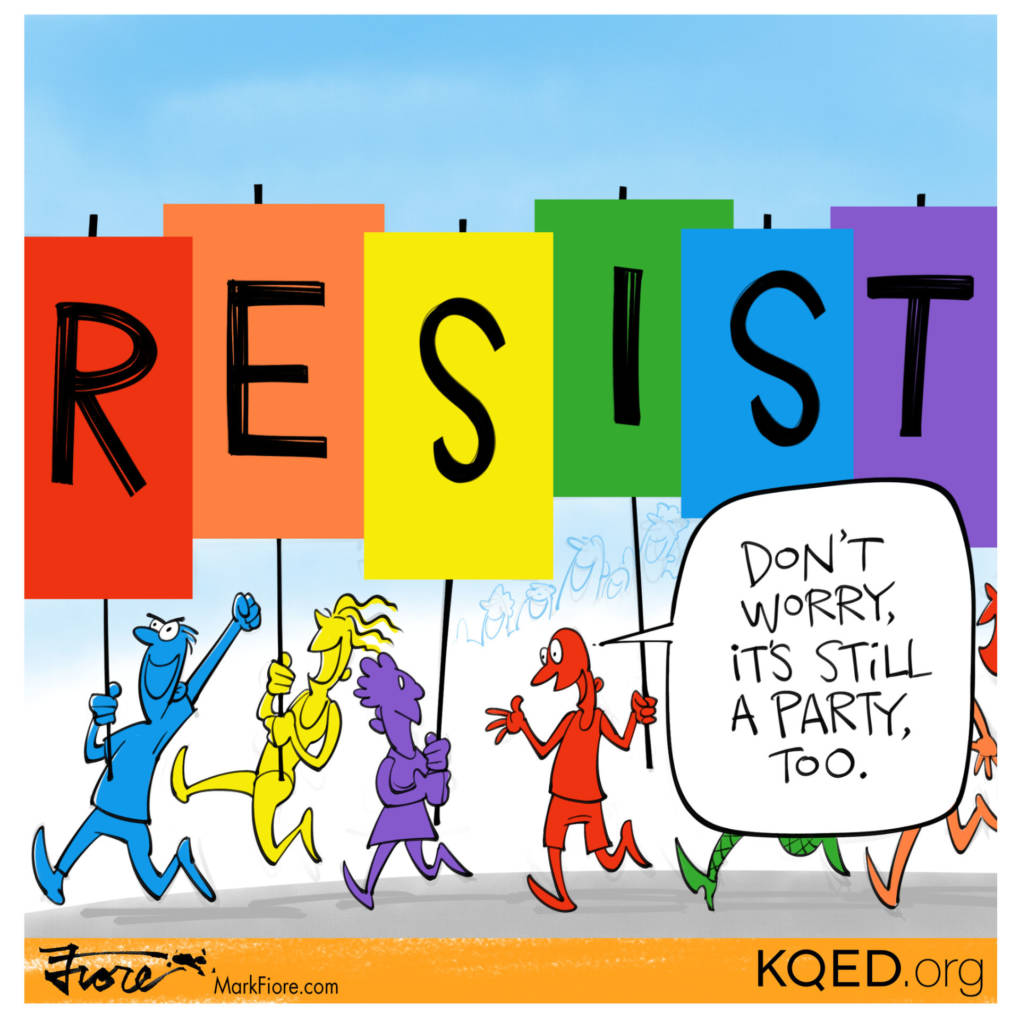
"content": "\u003cp>With the inescapable backdrop of the Trump administration, \u003ca href=\"https://ww2.kqed.org/news/2017/06/23/revelry-and-resistance-at-s-f-pride/\">this weekend’s San Francisco pride parade\u003c/a> will be led by the “Resistance Contingent.” \u003c/p>\n\u003cp>It looks like the Pride forecast calls for rainbow downpours with frequent signs of resistance. Happy #SFPride!\u003c/p>\n\u003cp>[ad fullwidth]\u003c/p>\u003cp>\u003c/p>\n",
"blocks": [],
"excerpt": "With rainbows and resistance, this weekend's San Francisco pride parade will be led by the 'Resistance Contingent.'",
"status": "publish",
"parent": 0,
"modified": 1721152608,
"stats": {
"hasAudio": false,
"hasVideo": false,
"hasChartOrMap": false,
"iframeSrcs": [],
"hasGoogleForm": false,
"hasGallery": false,
"hasHearkenModule": false,
"hasPolis": false,
"paragraphCount": 4,
"wordCount": 47
},
"headData": {
"title": "Rainbows and Resistance | KQED",
"description": "With rainbows and resistance, this weekend's San Francisco pride parade will be led by the 'Resistance Contingent.'",
"ogTitle": "",
"ogDescription": "",
"ogImgId": "",
"twTitle": "",
"twDescription": "",
"twImgId": "",
"schema": {
"@context": "https://schema.org",
"@type": "NewsArticle",
"headline": "Rainbows and Resistance",
"datePublished": "2017-06-23T12:08:59-07:00",
"dateModified": "2024-07-16T10:56:48-07:00",
"image": "https://cdn.kqed.org/wp-content/uploads/2020/02/KQED-OG-Image@1x.png",
"isAccessibleForFree": "True",
"publisher": {
"@type": "NewsMediaOrganization",
"@id": "https://www.kqed.org/#organization",
"name": "KQED",
"logo": "https://cdn.kqed.org/wp-content/uploads/2020/02/KQED-OG-Image@1x.png",
"url": "https://www.kqed.org",
"sameAs": [
"https://www.facebook.com/KQED",
"https://twitter.com/KQED",
"https://www.instagram.com/kqed/",
"https://www.tiktok.com/@kqedofficial",
"https://www.linkedin.com/company/kqed",
"https://www.youtube.com/channel/UCeC0IOo7i1P_61zVUWbJ4nw"
]
}
}
},
"sticky": false,
"path": "/news/11528218/rainbows-and-resistance",
"audioTrackLength": null,
"parsedContent": [
{
"type": "contentString",
"content": "\u003cdiv class=\"post-body\">\u003cp>\u003cp>With the inescapable backdrop of the Trump administration, \u003ca href=\"https://ww2.kqed.org/news/2017/06/23/revelry-and-resistance-at-s-f-pride/\">this weekend’s San Francisco pride parade\u003c/a> will be led by the “Resistance Contingent.” \u003c/p>\n\u003cp>It looks like the Pride forecast calls for rainbow downpours with frequent signs of resistance. Happy #SFPride!\u003c/p>\n\u003cp>\u003c/p>\u003c/div>",
"attributes": {
"named": {},
"numeric": []
}
},
{
"type": "component",
"content": "",
"name": "ad",
"attributes": {
"named": {
"label": "fullwidth"
},
"numeric": [
"fullwidth"
]
}
},
{
"type": "contentString",
"content": "\u003cdiv class=\"post-body\">\u003cp>\u003c/p>\u003cp>\u003c/p>\n\u003c/div>\u003c/p>",
"attributes": {
"named": {},
"numeric": []
}
}
],
"link": "/news/11528218/rainbows-and-resistance",
"authors": [
"3236"
],
"series": [
"news_18515"
],
"categories": [
"news_223",
"news_8",
"news_13"
],
"tags": [
"news_20150",
"news_138",
"news_20004",
"news_20949",
"news_17968"
],
"featImg": "news_11528222",
"label": "news_18515"
},
"news_11524920": {
"type": "posts",
"id": "news_11524920",
"meta": {
"index": "posts_1716263798",
"site": "news",
"id": "11524920",
"score": null,
"sort": [
1498092307000
]
},
"parent": 0,
"labelTerm": {},
"blocks": [],
"publishDate": 1498092307,
"format": "standard",
"disqusTitle": "Democrats Play Blame Game With Pelosi After Georgia Election — To GOP's Glee",
"title": "Democrats Play Blame Game With Pelosi After Georgia Election — To GOP's Glee",
"headTitle": "The California Report | KQED News",
"content": "\u003cp>Democratic finger-pointing has begun after the party's loss in Tuesday's closely watched special election in Georgia, and for some members, the blame partly belongs to their House minority leader, Nancy Pelosi.\u003c/p>\n\u003cp>The California Democrat has long been a boogeywoman Republicans have used to motivate their base and to woo independents as the personification of liberal values and a reminder of why even if they may like their individual member or candidate, a vote for that Democrat would be a step toward putting Pelosi back in the speaker's chair.\u003c/p>\n\u003cp>In Atlanta, ads from the Congressional Leadership Fund that tied Democrat Jon Ossoff to Pelosi blanketed the airwaves. And after Republican Karen Handel pulled out the win, the leadership-backed superPAC said using the Democratic leader prominently was one of its most effective tactics.\u003c/p>\n\u003cp>\"When asked, over 60 percent of voters preferred a congressman who would work with Paul Ryan, while only 28 percent chose Nancy Pelosi,\" CLF Executive Director Corry Bliss wrote in a memo on Wednesday morning. \"This became a focal point in our messaging, as well as other outside groups and the Handel campaign itself. CLF never deviated from the goal of defining Ossoff as a dishonest liberal.\"\u003c/p>\n\u003cp>Pelosi isn't in danger of losing the leadership perch she has long held, though she did fend off her toughest challenge ever last fall from Rep. Tim Ryan, D-Ohio, who argued the party needed someone who better understood the rural, working-class voters that were critical to President Trump's victory over Hillary Clinton. Ultimately, Pelosi still got support from about two-thirds of the caucus, though the 63 votes Ryan garnered were the most serious defection Pelosi has ever faced.\u003c/p>\n\u003caside class=\"pullquote alignright\">\n'It's time for some change. I think it's time for a new generation of leadership.'\u003cbr>\n\u003ccite>Rep. Seth Moultin, D-Mass.\u003c/cite>\u003cbr>\n\u003c/aside>\n\u003cp>Ryan told NPR on Wednesday that the ads that Republican groups ran harnessing Pelosi's unpopularity with their GOP base voters were clearly effective. And running simply on an anti-Trump message — like Clinton tried and failed last year — wouldn't work for Democrats in 2018 either, no matter how mired in scandal and controversy over Russia the White House may be. Instead, Ryan argued voters want to know how Democrats will address economic concerns and grow jobs, and so far the party doesn't have a coherent message on that.\u003c/p>\n\u003cp>[ad fullwidth]\u003c/p>\n\u003cp>\"You know you can sit here and we'll talk about Russia all day long today on Capitol Hill and in Washington. You go back to Ohio, they're not talking about Russia. They're not. They're not talking about Putin, Russia, Flynn. ... I just feel like we're so disconnected from what real people are thinking about. We're overwhelmed with our anger towards Trump. And I'm mad at Trump, but I'm madder at the Democrats for letting him get in. And we better focus,\" Ryan said.\u003c/p>\n\u003cp>\"It's OK to be mad,\" Ryan added, but Democrats have to find a way to channel that into policy ideas. \"If you stay mad, you stay angry, you're unproductive. And I think you know the energy is good, but we better start moving towards a focus on an agenda that's going to help working-class people.\"\u003c/p>\n\u003cp>Rep. Seth Moulton, D-Mass., who supported Ryan in the leadership elections, also said it was time for a change at the top, and that this loss — where Democrats poured in tens of millions of dollars only to do worse than Clinton did in the district — \"better be a wake-up call.\"\u003c/p>\n\u003cp>\"Look, I think the Democratic Party has to come to terms with the fact that what we're doing isn't working,\" Moulton said. \"It's time for some change. I think it's time for a new generation of leadership.\"\u003c/p>\n\u003cp>Moulton, a 38-year-old Iraq War veteran, was elected to Congress in 2014. He argued that when strategy doesn't work, there have to be repercussions at the top.\u003c/p>\n\u003cp>\"Certainly, one thing I learned as a Marine is my job description was very simple: You're responsible for everything your platoon does or fails to do,\" Moulton said. \"I think our leadership owes us an explanation for what's gone on in these four elections, but also a plan for moving forward. That's the most important part.\"\u003c/p>\n\u003cp>Other members were even more blunt in their assessment of the Georgia defeat and Pelosi's culpability.\u003c/p>\n\u003cp>\"I think you'd have to be an idiot to think we could win the House with Pelosi at the top,\" Rep. Filemon Vela, D-Texas, \u003ca href=\"http://www.politico.com/story/2017/06/21/nancy-pelosi-fallout-georgia-special-election-239804\" target=\"_blank\">told Politico\u003c/a>. \"Nancy Pelosi is not the only reason that Ossoff lost. But she certainly is one of the reasons.\"\u003c/p>\n\u003caside class=\"pullquote alignright\">\n'Look, they demonized Nancy in 2010, they demonized her in 2006. We’re used to that.'\u003cbr>\n\u003ccite>Rep. Bill Pascrell, D-New Jersey\u003c/cite>\u003cbr>\n\u003c/aside>\n\u003cp>For GOP consultants, tie-every-Democrat-to-Pelosi is a tried-and-true strategy that's been working for more than six years. Veteran GOP ad-maker Brad Todd says that's because the San Francisco congresswoman is the personification of the liberal values they can't stomach.\u003c/p>\n\u003cp>\"There are plenty of people who have qualms with Trump on one level or another, but are totally willing to stick with him because the Democratic option is just too far left,\" Todd said. \"Pelosi is the human embodiment of that. She fits the stereotype of exactly what swing voters can't stand about the Democratic Party.\"\u003c/p>\n\u003cp>In the Ossoff race, even though the 30-year-old documentary filmmaker and former congressional staffer ended up running a more centrist and not Trump-centric campaign, Republicans were able to zero in on the more than $23 million in donations Ossoff raised, largely from liberal enclaves like California and New York, and make an easy connection to Pelosi. One of their ads even features the Bay Area and branded the two Democrats together, putting his photo alongside hers on the Golden Gate Bridge.\u003c/p>\n\u003cp>Pelosi allies have pushed back at the blame game and pointed to the improvement Democrats had in other special elections in Kansas, Montana and South Carolina as evidence that their efforts to harness the resistance against Trump was working. And they point out that even if Georgia's 6th District, which the president only narrowly carried, wasn't Trump Country, it was still a reliably red area that was going to be hard to overcome.\u003c/p>\n\u003cp>[youtube https://www.youtube.com/watch?v=1Dby318yFqU&w=560&h=315]\u003c/p>\n\u003cp>\"In the previous election — the Republican candidate won by more than 20 points. To come within a hair's breath of winning that seat is nothing short of extraordinary,\" said House Democratic Caucus Vice Chairwoman Linda Sánchez, D-California.\u003c/p>\n\u003cp>\"In the districts where we are truly competitive, I don't think that [anti-Pelosi] message is going to hold very much,\" said Rep. Karen Bass, D-California.\u003c/p>\n\u003cp>\"Look, they demonized Nancy in 2010, they demonized her in 2006. We're used to that,\" said New Jersey Democratic Rep. Bill Pascrell.\u003c/p>\n\u003cp>A top aide to Pelosi dismissed the blaming, saying that Pelosi still enjoys broad support among the conference and that any party leader would be subject to partisan attacks. And she remains the party's most prodigious fundraiser, bringing in $567.9 million for the party since she joined leadership in 2002. Last cycle alone, she raised $141.5 million.\u003c/p>\n\u003cp>In a letter to her colleagues on Wednesday about the special elections, Pelosi maintained an upbeat tone.\u003c/p>\n\u003cp>\"Every effort was made to win last night. But we don't agonize, we organize — organize inside the House and mobilize outside for the good of the American people,\" she wrote.\u003c/p>\n\u003cp>But with Republicans re-energized after the Georgia win, they're praying she doesn't go anywhere anytime soon. After she was re-elected Democratic leader, the Republican National Committee \u003ca href=\"http://www.washingtonexaminer.com/gop-hangs-hire-pelosi-sign-outside-headquarters/article/2608377\" target=\"_blank\">unfurled a banner\u003c/a> that read \"Hire Pelosi\" outside its headquarters.\u003c/p>\n\u003cp>[ad floatright]\u003c/p>\n\u003cp>\"It works only 100 percent of the time,\" said Todd, the GOP ad-maker. \"Pelosi is the gift that keeps on giving.\" \u003c/p>\n\u003cdiv class=\"fullattribution\">Copyright 2017 NPR. To see more, visit http://www.npr.org/.\u003cimg src=\"https://www.google-analytics.com/__utm.gif?utmac=UA-5828686-4&utmdt=Democrats+Play+Blame+Game+With+Pelosi+After+Georgia+Election+%E2%80%94+To+GOP%27s+Glee&utme=8(APIKey)9(MDAxOTAwOTE4MDEyMTkxMDAzNjczZDljZA004)\">\u003c/div>\n\n",
"disqusIdentifier": "11524920 https://ww2.kqed.org/news/?p=11524920",
"disqusUrl": "https://ww2.kqed.org/news/2017/06/21/democrats-play-blame-game-with-pelosi-after-georgia-election-to-gops-glee/",
"stats": {
"hasVideo": true,
"hasChartOrMap": false,
"hasAudio": false,
"hasPolis": false,
"wordCount": 1378,
"hasGoogleForm": false,
"hasGallery": false,
"hasHearkenModule": false,
"iframeSrcs": [],
"paragraphCount": 29
},
"modified": 1498172405,
"excerpt": "Republicans were able to effectively tie House Minority Leader Nancy Pelosi to losing candidate Jon Ossoff in Georgia. It's a strategy they've used for years and don't plan to abandon anytime soon.",
"headData": {
"twImgId": "",
"twTitle": "",
"ogTitle": "",
"ogImgId": "",
"twDescription": "",
"description": "Republicans were able to effectively tie House Minority Leader Nancy Pelosi to losing candidate Jon Ossoff in Georgia. It's a strategy they've used for years and don't plan to abandon anytime soon.",
"title": "Democrats Play Blame Game With Pelosi After Georgia Election — To GOP's Glee | KQED",
"ogDescription": "",
"schema": {
"@context": "https://schema.org",
"@type": "NewsArticle",
"headline": "Democrats Play Blame Game With Pelosi After Georgia Election — To GOP's Glee",
"datePublished": "2017-06-21T17:45:07-07:00",
"dateModified": "2017-06-22T16:00:05-07:00",
"image": "https://cdn.kqed.org/wp-content/uploads/2020/02/KQED-OG-Image@1x.png",
"isAccessibleForFree": "True",
"publisher": {
"@type": "NewsMediaOrganization",
"@id": "https://www.kqed.org/#organization",
"name": "KQED",
"logo": "https://cdn.kqed.org/wp-content/uploads/2020/02/KQED-OG-Image@1x.png",
"url": "https://www.kqed.org",
"sameAs": [
"https://www.facebook.com/KQED",
"https://twitter.com/KQED",
"https://www.instagram.com/kqed/",
"https://www.tiktok.com/@kqedofficial",
"https://www.linkedin.com/company/kqed",
"https://www.youtube.com/channel/UCeC0IOo7i1P_61zVUWbJ4nw"
]
}
}
},
"guestAuthors": [],
"slug": "democrats-play-blame-game-with-pelosi-after-georgia-election-to-gops-glee",
"status": "publish",
"sourceUrl": "http://www.npr.org/",
"nprApiLink": "http://api.npr.org/query?id=533866997&apiKey=MDAxOTAwOTE4MDEyMTkxMDAzNjczZDljZA004",
"nprByline": "\u003cstrong>\u003ca href=\"http://www.npr.org/people/404496424/jessica-taylor\" target=\"_blank\">Jessica Taylor\u003c/a>\u003c/strong> and \u003cstrong>\u003ca href=\"http://www.npr.org/people/521976201/geoff-bennett\" target=\"_blank\">Geoff Bennett\u003c/a>\u003cbr />\u003ca href=\"https://goo.gl/pWQZKA\" target=\"_blank\">NPR\u003c/a>\u003c/strong>",
"nprStoryDate": "Wed, 21 Jun 2017 19:13:00 -0400",
"nprLastModifiedDate": "Wed, 21 Jun 2017 20:22:42 -0400",
"nprHtmlLink": "http://www.npr.org/2017/06/21/533866997/democrats-play-blame-game-with-pelosi-after-georgia-election-to-gops-glee?ft=nprml&f=533866997",
"nprImageAgency": "Getty Images",
"nprImageCredit": "Paul Morigi",
"source": "NPR",
"nprStoryId": "533866997",
"nprRetrievedStory": "1",
"nprPubDate": "Wed, 21 Jun 2017 20:22:00 -0400",
"path": "/news/11524920/democrats-play-blame-game-with-pelosi-after-georgia-election-to-gops-glee",
"audioTrackLength": null,
"parsedContent": [
{
"type": "contentString",
"content": "\u003cdiv class=\"post-body\">\u003cp>\u003cp>Democratic finger-pointing has begun after the party's loss in Tuesday's closely watched special election in Georgia, and for some members, the blame partly belongs to their House minority leader, Nancy Pelosi.\u003c/p>\n\u003cp>The California Democrat has long been a boogeywoman Republicans have used to motivate their base and to woo independents as the personification of liberal values and a reminder of why even if they may like their individual member or candidate, a vote for that Democrat would be a step toward putting Pelosi back in the speaker's chair.\u003c/p>\n\u003cp>In Atlanta, ads from the Congressional Leadership Fund that tied Democrat Jon Ossoff to Pelosi blanketed the airwaves. And after Republican Karen Handel pulled out the win, the leadership-backed superPAC said using the Democratic leader prominently was one of its most effective tactics.\u003c/p>\n\u003cp>\"When asked, over 60 percent of voters preferred a congressman who would work with Paul Ryan, while only 28 percent chose Nancy Pelosi,\" CLF Executive Director Corry Bliss wrote in a memo on Wednesday morning. \"This became a focal point in our messaging, as well as other outside groups and the Handel campaign itself. CLF never deviated from the goal of defining Ossoff as a dishonest liberal.\"\u003c/p>\n\u003cp>Pelosi isn't in danger of losing the leadership perch she has long held, though she did fend off her toughest challenge ever last fall from Rep. Tim Ryan, D-Ohio, who argued the party needed someone who better understood the rural, working-class voters that were critical to President Trump's victory over Hillary Clinton. Ultimately, Pelosi still got support from about two-thirds of the caucus, though the 63 votes Ryan garnered were the most serious defection Pelosi has ever faced.\u003c/p>\n\u003caside class=\"pullquote alignright\">\n'It's time for some change. I think it's time for a new generation of leadership.'\u003cbr>\n\u003ccite>Rep. Seth Moultin, D-Mass.\u003c/cite>\u003cbr>\n\u003c/aside>\n\u003cp>Ryan told NPR on Wednesday that the ads that Republican groups ran harnessing Pelosi's unpopularity with their GOP base voters were clearly effective. And running simply on an anti-Trump message — like Clinton tried and failed last year — wouldn't work for Democrats in 2018 either, no matter how mired in scandal and controversy over Russia the White House may be. Instead, Ryan argued voters want to know how Democrats will address economic concerns and grow jobs, and so far the party doesn't have a coherent message on that.\u003c/p>\n\u003cp>\u003c/p>\u003c/div>",
"attributes": {
"named": {},
"numeric": []
}
},
{
"type": "component",
"content": "",
"name": "ad",
"attributes": {
"named": {
"label": "fullwidth"
},
"numeric": [
"fullwidth"
]
}
},
{
"type": "contentString",
"content": "\u003cdiv class=\"post-body\">\u003cp>\u003c/p>\n\u003cp>\"You know you can sit here and we'll talk about Russia all day long today on Capitol Hill and in Washington. You go back to Ohio, they're not talking about Russia. They're not. They're not talking about Putin, Russia, Flynn. ... I just feel like we're so disconnected from what real people are thinking about. We're overwhelmed with our anger towards Trump. And I'm mad at Trump, but I'm madder at the Democrats for letting him get in. And we better focus,\" Ryan said.\u003c/p>\n\u003cp>\"It's OK to be mad,\" Ryan added, but Democrats have to find a way to channel that into policy ideas. \"If you stay mad, you stay angry, you're unproductive. And I think you know the energy is good, but we better start moving towards a focus on an agenda that's going to help working-class people.\"\u003c/p>\n\u003cp>Rep. Seth Moulton, D-Mass., who supported Ryan in the leadership elections, also said it was time for a change at the top, and that this loss — where Democrats poured in tens of millions of dollars only to do worse than Clinton did in the district — \"better be a wake-up call.\"\u003c/p>\n\u003cp>\"Look, I think the Democratic Party has to come to terms with the fact that what we're doing isn't working,\" Moulton said. \"It's time for some change. I think it's time for a new generation of leadership.\"\u003c/p>\n\u003cp>Moulton, a 38-year-old Iraq War veteran, was elected to Congress in 2014. He argued that when strategy doesn't work, there have to be repercussions at the top.\u003c/p>\n\u003cp>\"Certainly, one thing I learned as a Marine is my job description was very simple: You're responsible for everything your platoon does or fails to do,\" Moulton said. \"I think our leadership owes us an explanation for what's gone on in these four elections, but also a plan for moving forward. That's the most important part.\"\u003c/p>\n\u003cp>Other members were even more blunt in their assessment of the Georgia defeat and Pelosi's culpability.\u003c/p>\n\u003cp>\"I think you'd have to be an idiot to think we could win the House with Pelosi at the top,\" Rep. Filemon Vela, D-Texas, \u003ca href=\"http://www.politico.com/story/2017/06/21/nancy-pelosi-fallout-georgia-special-election-239804\" target=\"_blank\">told Politico\u003c/a>. \"Nancy Pelosi is not the only reason that Ossoff lost. But she certainly is one of the reasons.\"\u003c/p>\n\u003caside class=\"pullquote alignright\">\n'Look, they demonized Nancy in 2010, they demonized her in 2006. We’re used to that.'\u003cbr>\n\u003ccite>Rep. Bill Pascrell, D-New Jersey\u003c/cite>\u003cbr>\n\u003c/aside>\n\u003cp>For GOP consultants, tie-every-Democrat-to-Pelosi is a tried-and-true strategy that's been working for more than six years. Veteran GOP ad-maker Brad Todd says that's because the San Francisco congresswoman is the personification of the liberal values they can't stomach.\u003c/p>\n\u003cp>\"There are plenty of people who have qualms with Trump on one level or another, but are totally willing to stick with him because the Democratic option is just too far left,\" Todd said. \"Pelosi is the human embodiment of that. She fits the stereotype of exactly what swing voters can't stand about the Democratic Party.\"\u003c/p>\n\u003cp>In the Ossoff race, even though the 30-year-old documentary filmmaker and former congressional staffer ended up running a more centrist and not Trump-centric campaign, Republicans were able to zero in on the more than $23 million in donations Ossoff raised, largely from liberal enclaves like California and New York, and make an easy connection to Pelosi. One of their ads even features the Bay Area and branded the two Democrats together, putting his photo alongside hers on the Golden Gate Bridge.\u003c/p>\n\u003cp>Pelosi allies have pushed back at the blame game and pointed to the improvement Democrats had in other special elections in Kansas, Montana and South Carolina as evidence that their efforts to harness the resistance against Trump was working. And they point out that even if Georgia's 6th District, which the president only narrowly carried, wasn't Trump Country, it was still a reliably red area that was going to be hard to overcome.\u003c/p>\n\u003cp>\u003c/p>\u003cp>\u003cspan class='utils-parseShortcode-shortcodes-__youtubeShortcode__embedYoutube'>\n \u003cspan class='utils-parseShortcode-shortcodes-__youtubeShortcode__embedYoutubeInside'>\n \u003ciframe\n loading='lazy'\n class='utils-parseShortcode-shortcodes-__youtubeShortcode__youtubePlayer'\n type='text/html'\n src='//www.youtube.com/embed/1Dby318yFqU'\n title='//www.youtube.com/embed/1Dby318yFqU'\n allowfullscreen='true'\n style='border:0;'>\u003c/iframe>\n \u003c/span>\n \u003c/span>\u003c/p>\u003cp>\u003c/p>\n\u003cp>\"In the previous election — the Republican candidate won by more than 20 points. To come within a hair's breath of winning that seat is nothing short of extraordinary,\" said House Democratic Caucus Vice Chairwoman Linda Sánchez, D-California.\u003c/p>\n\u003cp>\"In the districts where we are truly competitive, I don't think that [anti-Pelosi] message is going to hold very much,\" said Rep. Karen Bass, D-California.\u003c/p>\n\u003cp>\"Look, they demonized Nancy in 2010, they demonized her in 2006. We're used to that,\" said New Jersey Democratic Rep. Bill Pascrell.\u003c/p>\n\u003cp>A top aide to Pelosi dismissed the blaming, saying that Pelosi still enjoys broad support among the conference and that any party leader would be subject to partisan attacks. And she remains the party's most prodigious fundraiser, bringing in $567.9 million for the party since she joined leadership in 2002. Last cycle alone, she raised $141.5 million.\u003c/p>\n\u003cp>In a letter to her colleagues on Wednesday about the special elections, Pelosi maintained an upbeat tone.\u003c/p>\n\u003cp>\"Every effort was made to win last night. But we don't agonize, we organize — organize inside the House and mobilize outside for the good of the American people,\" she wrote.\u003c/p>\n\u003cp>But with Republicans re-energized after the Georgia win, they're praying she doesn't go anywhere anytime soon. After she was re-elected Democratic leader, the Republican National Committee \u003ca href=\"http://www.washingtonexaminer.com/gop-hangs-hire-pelosi-sign-outside-headquarters/article/2608377\" target=\"_blank\">unfurled a banner\u003c/a> that read \"Hire Pelosi\" outside its headquarters.\u003c/p>\n\u003cp>\u003c/p>\u003c/div>",
"attributes": {
"named": {},
"numeric": []
}
},
{
"type": "component",
"content": "",
"name": "ad",
"attributes": {
"named": {
"label": "floatright"
},
"numeric": [
"floatright"
]
}
},
{
"type": "contentString",
"content": "\u003cdiv class=\"post-body\">\u003cp>\u003c/p>\n\u003cp>\"It works only 100 percent of the time,\" said Todd, the GOP ad-maker. \"Pelosi is the gift that keeps on giving.\" \u003c/p>\n\u003cdiv class=\"fullattribution\">Copyright 2017 NPR. To see more, visit http://www.npr.org/.\u003cimg src=\"https://www.google-analytics.com/__utm.gif?utmac=UA-5828686-4&utmdt=Democrats+Play+Blame+Game+With+Pelosi+After+Georgia+Election+%E2%80%94+To+GOP%27s+Glee&utme=8(APIKey)9(MDAxOTAwOTE4MDEyMTkxMDAzNjczZDljZA004)\">\u003c/div>\n\n\u003c/div>\u003c/p>",
"attributes": {
"named": {},
"numeric": []
}
}
],
"link": "/news/11524920/democrats-play-blame-game-with-pelosi-after-georgia-election-to-gops-glee",
"authors": [
"byline_news_11524920"
],
"programs": [
"news_6944",
"news_72"
],
"categories": [
"news_8",
"news_13"
],
"tags": [
"news_177",
"news_17968",
"news_17286"
],
"featImg": "news_11524921",
"label": "source_news_11524920"
},
"news_11512995": {
"type": "posts",
"id": "news_11512995",
"meta": {
"index": "posts_1716263798",
"site": "news",
"id": "11512995",
"score": null,
"sort": [
1497648955000
]
},
"guestAuthors": [],
"slug": "democrats-slip-new-recall-rules-into-budget-to-protect-oc-senator",
"title": "Democrats Slip New Recall Rules Into Budget to Protect OC Senator",
"publishDate": 1497648955,
"format": "standard",
"headTitle": "Democrats Slip New Recall Rules Into Budget to Protect OC Senator | KQED",
"labelTerm": {
"term": 72,
"site": "news"
},
"content": "\u003cp>A Republican effort to recall a Democratic state senator from Orange County took some new turns this week when Democrats in the statehouse inserted language into a budget bill to change the recall process, legislation that could help \u003ca href=\"http://sd29.senate.ca.gov/\" target=\"_blank\" rel=\"noopener noreferrer\">Sen. Josh Newman\u003c/a> survive the recall effort.\u003c/p>\n\u003cp>In another twist, Newman also filed a complaint with the secretary of state this week alleging that recall backers were misleading voters by telling them they were signing a petition to repeal a recently raised gas tax.\u003c/p>\n\u003cp>The developments turned up the heat in a partisan fight that started after Newman voted in favor of a \u003ca href=\"https://ww2.kqed.org/news/2017/03/29/brown-democrats-unveil-revenue-plan-for-roads-bridges-transit/\" target=\"_blank\" rel=\"noopener noreferrer\">$52 billion transportation plan\u003c/a> that will increase the gas tax by 12 cents a gallon this fall. That vote prompted Carl DeMaio, a conservative talk radio host and former San Diego city councilman, to launch the recall effort in a district Newman narrowly won last year.\u003c/p>\n\u003cp>[contextly_sidebar id=”FwnouCJyIYJBj6cnXSBeaT0boqx3yuS7″]\u003c/p>\n\u003cp>But it was Republicans who were on the defensive this week, after Democrats slipped language into a budget bill unveiled Monday that would add months to the process for placing a recall before voters.\u003c/p>\n\u003cp>[ad fullwidth]\u003c/p>\n\u003cp>Republican Sen. Joel Anderson of San Diego says the change to a century-old recall system will make it virtually impossible to oust sitting lawmakers.\u003c/p>\n\u003cp>“So this isn’t just about Josh, this is about fundamentally shifting the power from the people to the politicians, and it’s wrong,” said Anderson, who also took issue with the legislative process. “When they put it into the budget and they drop it on Monday and pass it on Thursday, we call that passing bills in the dark of night.”\u003c/p>\n\u003cp>Currently, if recall backers gather enough signatures within 160 days, the governor must call an election within 80 days or consolidate the recall with a regularly scheduled election within 180 days.\u003c/p>\n\u003cp>The bill would elongate that process in several ways. It would give voters who signed a recall petition 30 days to remove their name, and require that each signature is individually verified — currently, elections officials conduct a random sample. The bill would require the Department of Finance to estimate the costs of a special election, compared to consolidating the recall with a regularly scheduled election. It would require the Legislature to hold hearings on the costs.\u003c/p>\n\u003cfigure id=\"attachment_11514820\" class=\"wp-caption aligncenter\" style=\"max-width: 768px\">\u003cimg loading=\"lazy\" decoding=\"async\" class=\"size-full wp-image-11514820\" src=\"https://ww2.kqed.org/news/wp-content/uploads/sites/10/2017/06/SenateChambers-768x509.jpg\" alt=\"Senators meet in the California Senate chambers in Sacramento.\" width=\"768\" height=\"509\" srcset=\"https://cdn.kqed.org/wp-content/uploads/sites/10/2017/06/SenateChambers-768x509.jpg 768w, https://cdn.kqed.org/wp-content/uploads/sites/10/2017/06/SenateChambers-768x509-160x106.jpg 160w, https://cdn.kqed.org/wp-content/uploads/sites/10/2017/06/SenateChambers-768x509-240x159.jpg 240w, https://cdn.kqed.org/wp-content/uploads/sites/10/2017/06/SenateChambers-768x509-375x249.jpg 375w, https://cdn.kqed.org/wp-content/uploads/sites/10/2017/06/SenateChambers-768x509-520x345.jpg 520w\" sizes=\"(max-width: 768px) 100vw, 768px\">\u003cfigcaption class=\"wp-caption-text\">Senators meet in the California Senate chambers in Sacramento. \u003ccite>(Max Whittaker/KQED)\u003c/cite>\u003c/figcaption>\u003c/figure>\n\u003cp>All those changes would make it harder for the Newman recall to qualify — and if it does, could push a recall vote to next year’s June primary or even the November election, when turnout is larger. That would boost Newman’s chances of hanging on to his Senate seat in a swing district, since Democrats usually see better voter turnout in larger elections.\u003c/p>\n\u003cp>Newman characterized the changes as mild, and said that while Republicans are crying foul, it’s their actions in his district that prompted the budget bill.\u003c/p>\n\u003cp>“We want to clear up ambiguity as it relates to somebody being able to withdraw their name if they find out that they signed a petition under false pretenses and also make sure we make it clear to the voters what’s happening, what it will cost them,” he said.\u003c/p>\n\u003cp>Newman said it’s necessary to make it easier for voters to remove their name because he’s received reports from hundreds of voters that they were lied to by signature-gatherers about what they were signing. He said in his complaint that signature gatherers have huge red signs reading, “Stop the Car Tax,” and tell people the same thing when asking them to sign the recall petition.\u003c/p>\n\u003cp>“I can’t go to a market in my district without meeting someone who wants me to sign a petition, ostensibly to repeal the gas tax but is actually to repeal me,” he said. “It’s misleading, and we found out voters who signed a petition they didn’t understand would like to have their names removed, but we don’t know at this point how many of the signatures meet that description at the moment.”\u003c/p>\n\u003cp>While lawmakers easily passed the recall bill — and Gov. Jerry Brown is expected to sign it — this isn’t the end of the fight. DeMaio, the recall backer, is threatening to sue over the changes. And he said Newman’s complaint is without merit.\u003c/p>\n\u003cp>“Josh Newman knows this is a pack of lies,” he said of charges that recall signature-gatherers are misleading voters.\u003c/p>\n\u003cp>\u003c/p>\n\u003cp>“In fact, we are specific as to why we are recalling Josh Newman: He voted for the car and gas tax hike, and what better way to send a message to the politicians that we want it reversed than to start firing (them) one by one.”\u003c/p>\n\n",
"blocks": [],
"excerpt": "Republicans contend the change to a century-old recall system will make it virtually impossible to oust sitting lawmakers.",
"status": "publish",
"parent": 0,
"modified": 1728426845,
"stats": {
"hasAudio": false,
"hasVideo": false,
"hasChartOrMap": false,
"iframeSrcs": [],
"hasGoogleForm": false,
"hasGallery": false,
"hasHearkenModule": false,
"hasPolis": false,
"paragraphCount": 19,
"wordCount": 823
},
"headData": {
"title": "Democrats Slip New Recall Rules Into Budget to Protect OC Senator | KQED",
"description": "Republicans contend the change to a century-old recall system will make it virtually impossible to oust sitting lawmakers.",
"ogTitle": "",
"ogDescription": "",
"ogImgId": "",
"twTitle": "",
"twDescription": "",
"twImgId": "",
"schema": {
"@context": "https://schema.org",
"@type": "NewsArticle",
"headline": "Democrats Slip New Recall Rules Into Budget to Protect OC Senator",
"datePublished": "2017-06-16T14:35:55-07:00",
"dateModified": "2024-10-08T15:34:05-07:00",
"image": "https://cdn.kqed.org/wp-content/uploads/2020/02/KQED-OG-Image@1x.png",
"isAccessibleForFree": "True",
"publisher": {
"@type": "NewsMediaOrganization",
"@id": "https://www.kqed.org/#organization",
"name": "KQED",
"logo": "https://cdn.kqed.org/wp-content/uploads/2020/02/KQED-OG-Image@1x.png",
"url": "https://www.kqed.org",
"sameAs": [
"https://www.facebook.com/KQED",
"https://twitter.com/KQED",
"https://www.instagram.com/kqed/",
"https://www.tiktok.com/@kqedofficial",
"https://www.linkedin.com/company/kqed",
"https://www.youtube.com/channel/UCeC0IOo7i1P_61zVUWbJ4nw"
]
}
}
},
"sticky": false,
"path": "/news/11512995/democrats-slip-new-recall-rules-into-budget-to-protect-oc-senator",
"audioTrackLength": null,
"parsedContent": [
{
"type": "contentString",
"content": "\u003cdiv class=\"post-body\">\u003cp>\u003cp>A Republican effort to recall a Democratic state senator from Orange County took some new turns this week when Democrats in the statehouse inserted language into a budget bill to change the recall process, legislation that could help \u003ca href=\"http://sd29.senate.ca.gov/\" target=\"_blank\" rel=\"noopener noreferrer\">Sen. Josh Newman\u003c/a> survive the recall effort.\u003c/p>\n\u003cp>In another twist, Newman also filed a complaint with the secretary of state this week alleging that recall backers were misleading voters by telling them they were signing a petition to repeal a recently raised gas tax.\u003c/p>\n\u003cp>The developments turned up the heat in a partisan fight that started after Newman voted in favor of a \u003ca href=\"https://ww2.kqed.org/news/2017/03/29/brown-democrats-unveil-revenue-plan-for-roads-bridges-transit/\" target=\"_blank\" rel=\"noopener noreferrer\">$52 billion transportation plan\u003c/a> that will increase the gas tax by 12 cents a gallon this fall. That vote prompted Carl DeMaio, a conservative talk radio host and former San Diego city councilman, to launch the recall effort in a district Newman narrowly won last year.\u003c/p>\n\u003cp>\u003c/p>\u003cp>\u003c/p>\u003cp>\u003c/p>\n\u003cp>But it was Republicans who were on the defensive this week, after Democrats slipped language into a budget bill unveiled Monday that would add months to the process for placing a recall before voters.\u003c/p>\n\u003cp>\u003c/p>\u003c/div>",
"attributes": {
"named": {},
"numeric": []
}
},
{
"type": "component",
"content": "",
"name": "ad",
"attributes": {
"named": {
"label": "fullwidth"
},
"numeric": [
"fullwidth"
]
}
},
{
"type": "contentString",
"content": "\u003cdiv class=\"post-body\">\u003cp>\u003c/p>\n\u003cp>Republican Sen. Joel Anderson of San Diego says the change to a century-old recall system will make it virtually impossible to oust sitting lawmakers.\u003c/p>\n\u003cp>“So this isn’t just about Josh, this is about fundamentally shifting the power from the people to the politicians, and it’s wrong,” said Anderson, who also took issue with the legislative process. “When they put it into the budget and they drop it on Monday and pass it on Thursday, we call that passing bills in the dark of night.”\u003c/p>\n\u003cp>Currently, if recall backers gather enough signatures within 160 days, the governor must call an election within 80 days or consolidate the recall with a regularly scheduled election within 180 days.\u003c/p>\n\u003cp>The bill would elongate that process in several ways. It would give voters who signed a recall petition 30 days to remove their name, and require that each signature is individually verified — currently, elections officials conduct a random sample. The bill would require the Department of Finance to estimate the costs of a special election, compared to consolidating the recall with a regularly scheduled election. It would require the Legislature to hold hearings on the costs.\u003c/p>\n\u003cfigure id=\"attachment_11514820\" class=\"wp-caption aligncenter\" style=\"max-width: 768px\">\u003cimg loading=\"lazy\" decoding=\"async\" class=\"size-full wp-image-11514820\" src=\"https://ww2.kqed.org/news/wp-content/uploads/sites/10/2017/06/SenateChambers-768x509.jpg\" alt=\"Senators meet in the California Senate chambers in Sacramento.\" width=\"768\" height=\"509\" srcset=\"https://cdn.kqed.org/wp-content/uploads/sites/10/2017/06/SenateChambers-768x509.jpg 768w, https://cdn.kqed.org/wp-content/uploads/sites/10/2017/06/SenateChambers-768x509-160x106.jpg 160w, https://cdn.kqed.org/wp-content/uploads/sites/10/2017/06/SenateChambers-768x509-240x159.jpg 240w, https://cdn.kqed.org/wp-content/uploads/sites/10/2017/06/SenateChambers-768x509-375x249.jpg 375w, https://cdn.kqed.org/wp-content/uploads/sites/10/2017/06/SenateChambers-768x509-520x345.jpg 520w\" sizes=\"(max-width: 768px) 100vw, 768px\">\u003cfigcaption class=\"wp-caption-text\">Senators meet in the California Senate chambers in Sacramento. \u003ccite>(Max Whittaker/KQED)\u003c/cite>\u003c/figcaption>\u003c/figure>\n\u003cp>All those changes would make it harder for the Newman recall to qualify — and if it does, could push a recall vote to next year’s June primary or even the November election, when turnout is larger. That would boost Newman’s chances of hanging on to his Senate seat in a swing district, since Democrats usually see better voter turnout in larger elections.\u003c/p>\n\u003cp>Newman characterized the changes as mild, and said that while Republicans are crying foul, it’s their actions in his district that prompted the budget bill.\u003c/p>\n\u003cp>“We want to clear up ambiguity as it relates to somebody being able to withdraw their name if they find out that they signed a petition under false pretenses and also make sure we make it clear to the voters what’s happening, what it will cost them,” he said.\u003c/p>\n\u003cp>Newman said it’s necessary to make it easier for voters to remove their name because he’s received reports from hundreds of voters that they were lied to by signature-gatherers about what they were signing. He said in his complaint that signature gatherers have huge red signs reading, “Stop the Car Tax,” and tell people the same thing when asking them to sign the recall petition.\u003c/p>\n\u003cp>“I can’t go to a market in my district without meeting someone who wants me to sign a petition, ostensibly to repeal the gas tax but is actually to repeal me,” he said. “It’s misleading, and we found out voters who signed a petition they didn’t understand would like to have their names removed, but we don’t know at this point how many of the signatures meet that description at the moment.”\u003c/p>\n\u003cp>While lawmakers easily passed the recall bill — and Gov. Jerry Brown is expected to sign it — this isn’t the end of the fight. DeMaio, the recall backer, is threatening to sue over the changes. And he said Newman’s complaint is without merit.\u003c/p>\n\u003cp>“Josh Newman knows this is a pack of lies,” he said of charges that recall signature-gatherers are misleading voters.\u003c/p>\n\u003cp>\u003c/p>\n\u003cp>“In fact, we are specific as to why we are recalling Josh Newman: He voted for the car and gas tax hike, and what better way to send a message to the politicians that we want it reversed than to start firing (them) one by one.”\u003c/p>\n\n\u003c/div>\u003c/p>",
"attributes": {
"named": {},
"numeric": []
}
}
],
"link": "/news/11512995/democrats-slip-new-recall-rules-into-budget-to-protect-oc-senator",
"authors": [
"3239"
],
"programs": [
"news_6944",
"news_72"
],
"categories": [
"news_8",
"news_33520",
"news_13"
],
"tags": [
"news_20191",
"news_23214",
"news_18371",
"news_17968",
"news_17286"
],
"featImg": "news_11514781",
"label": "news_72"
},
"news_11501427": {
"type": "posts",
"id": "news_11501427",
"meta": {
"index": "posts_1716263798",
"site": "news",
"id": "11501427",
"score": null,
"sort": [
1497425517000
]
},
"guestAuthors": [],
"slug": "whos-funding-the-anti-trump-movement-we-dont-know",
"title": "Who's Funding the Anti-Trump Movement? We Don't Know",
"publishDate": 1497425517,
"format": "standard",
"headTitle": "Who’s Funding the Anti-Trump Movement? We Don’t Know | KQED",
"labelTerm": {
"term": 72,
"site": "news"
},
"content": "\u003cp>The \u003ca href=\"https://www.indivisibleguide.com/guide/\" target=\"_blank\" rel=\"noopener noreferrer\">Indivisible Guide\u003c/a> has become a 26-page must-read for people looking to oppose President Trump’s agenda. The guide — which has been viewed or downloaded more than 2 million times, according to the organization — also offers a supplemental section on how to demand copies of Trump’s tax returns.\u003c/p>\n\u003cp>“Is Trump colluding with Russia or enriching himself off the presidency? … Until we see Trump’s tax returns, we cannot be certain that foreign governments don’t have leverage over Trump that can be used to influence American policy,” says \u003ca href=\"https://www.indivisibleguide.com/resource/get-trumps-tax-returns/\" target=\"_blank\" rel=\"noopener noreferrer\">the supplement\u003c/a>.\u003c/p>\n\u003cp>[contextly_sidebar id=”ZqGfaqQmmLy4W6hycS06PTTc5V9AfMl3″]Yet this progressive political organization — which is founded and staffed by former congressional staffers — has not disclosed where its money is coming from.\u003c/p>\n\u003cp>\u003ci>\u003cspan style=\"font-weight: 400\">The California Report\u003c/span>\u003c/i>\u003cspan style=\"font-weight: 400\"> requested financial statements and donor lists for the group. Indivisible spokespeople told us they’ve raised more than $2.2 million from 30,000 individual donations since they started accepting donations in January, including “some foundation money and dollars from high net worth individuals.” They declined repeated requests to name any of these individuals.\u003c/span>\u003c/p>\n\u003cp>\u003cspan style=\"font-weight: 400\">Nonprofit organizations often cite privacy concerns as a reason to not disclose their donor lists, and Indivisible says it is no different. Angel Padilla, a former Democratic congressional staffer and one of the founders of Indivisible, said those privacy concerns are the only thing stopping Indivisible from releasing the names of its donors.\u003c/span>\u003c/p>\n\u003cp>[ad fullwidth]\u003c/p>\n\u003cp>\u003cspan style=\"font-weight: 400\">Sarah Bryner, research director for the \u003ca href=\"https://www.opensecrets.org/\" target=\"_blank\" rel=\"noopener noreferrer\">Center for Responsive Politics\u003c/a>, a nonprofit that tracks money in politics, said Indivisible has no legal obligation to disclose its donors if it doesn’t run election ads supporting or opposing a particular candidate. Indivisible hasn’t done that yet, but it is set up as a 501(c)(4), \u003ca href=\"https://www.irs.gov/charities-non-profits/other-non-profits/social-welfare-organizations\" target=\"_blank\" rel=\"noopener noreferrer\">a designation\u003c/a> that allows the organization to engage in political activity, so long as that is not its primary activity.\u003c/span>\u003c/p>\n\u003cp>\u003cspan style=\"font-weight: 400\">“If they’re trying to influence election outcomes, we feel like people should know about who’s funding those efforts,” said Bryner. “But there’s also the question of privacy for donors, and if they’re not spending money in such a way that they would be influencing those election outcomes, then generally people defer towards protecting that privacy.”\u003c/span>\u003c/p>\n\u003cp>\u003cb>The Origin Story\u003c/b>\u003c/p>\n\u003cp>\u003cspan style=\"font-weight: 400\">On election night, Padilla, one of the group’s founders, was hanging out with friends and other former congressional staffers, expecting to watch the first female president get elected. \u003c/span>\u003c/p>\n\u003cp>\u003cspan style=\"font-weight: 400\">“Watching the forecasting flip throughout the course of the night was a traumatic experience,” said Padilla.\u003c/span>\u003cspan style=\"font-weight: 400\"> \u003c/span>\u003c/p>\n\u003caside class=\"pullquote alignleft\">Like us, you probably deeply disagree with the principles and positions of the Tea Party. But we can all learn from their success in influencing the national debate … \u003ccite>Indivisible Guide\u003c/cite>\u003c/aside>\n\u003cp>\u003cspan style=\"font-weight: 400\">In the following days, as Trump’s victory began to set in, and progressives in California and across the country started planning their resistance, Padilla and his friends realized they could play a unique role.\u003c/span>\u003c/p>\n\u003cp>\u003cspan style=\"font-weight: 400\">“We, as former staffers, realized that we’ve kind of been through this before but on the flip side,” he said. “We were on the Hill when Obama was first elected, when Congress was controlled by Democrats, and we saw how organized local activism was able to slow down much of the Obama agenda.”\u003c/span>\u003c/p>\n\u003cp>\u003cspan style=\"font-weight: 400\">These staffers had seen the rise and success of the Tea Party and thought they could use those tactics — local activism and defensive politics — to accomplish the same thing, but on the other end of the political spectrum. The goal: stymie Trump and take back Congress. \u003c/span>\u003c/p>\n\u003cp>\u003cspan style=\"font-weight: 400\">They put together a public Google document with insider tips for influencing members of Congress, which eventually morphed into the 26-page Indivisible Guide and ultimately the fully fledged nonprofit organization helping local groups organize against the Trump presidency.\u003c/span>\u003c/p>\n\u003cfigure id=\"attachment_11509004\" class=\"wp-caption alignright\" style=\"max-width: 800px\">\u003ca href=\"https://ww2.kqed.org/news/wp-content/uploads/sites/10/2017/06/15966017_202182136912330_6350498196829704060_n.png\">\u003cimg loading=\"lazy\" decoding=\"async\" src=\"https://ww2.kqed.org/news/wp-content/uploads/sites/10/2017/06/15966017_202182136912330_6350498196829704060_n-800x671.png\" alt=\"\" width=\"800\" height=\"671\" class=\"size-medium wp-image-11509004\" srcset=\"https://cdn.kqed.org/wp-content/uploads/sites/10/2017/06/15966017_202182136912330_6350498196829704060_n-800x671.png 800w, https://cdn.kqed.org/wp-content/uploads/sites/10/2017/06/15966017_202182136912330_6350498196829704060_n-160x134.png 160w, https://cdn.kqed.org/wp-content/uploads/sites/10/2017/06/15966017_202182136912330_6350498196829704060_n-240x201.png 240w, https://cdn.kqed.org/wp-content/uploads/sites/10/2017/06/15966017_202182136912330_6350498196829704060_n-375x314.png 375w, https://cdn.kqed.org/wp-content/uploads/sites/10/2017/06/15966017_202182136912330_6350498196829704060_n-520x436.png 520w, https://cdn.kqed.org/wp-content/uploads/sites/10/2017/06/15966017_202182136912330_6350498196829704060_n.png 940w\" sizes=\"(max-width: 800px) 100vw, 800px\">\u003c/a>\u003cfigcaption class=\"wp-caption-text\">The group has tried to create streamlined ways to organize local protestors.\u003c/figcaption>\u003c/figure>\n\u003cp>\u003cspan style=\"font-weight: 400\">“Like us, you probably deeply disagree with the principles and positions of the Tea Party,” the founders wrote in their guide. “But we can all learn from their success in influencing the national debate and the behavior of national policymakers.”\u003c/span>\u003c/p>\n\u003cp>\u003cb>Tea Party of the Left\u003c/b>\u003c/p>\n\u003cp>\u003cspan style=\"font-weight: 400\">As the Tea Party gained power and national recognition, many started asking who was funding what appeared to be a grass-roots movement. \u003c/span>\u003ca href=\"http://www.newyorker.com/magazine/2010/08/30/covert-operations\" target=\"_blank\" rel=\"noopener noreferrer\">\u003cspan style=\"font-weight: 400\">Multiple media organizations\u003c/span>\u003c/a>\u003cspan style=\"font-weight: 400\"> dug into the group’s finances and reported that Americans for Prosperity — a conservative political advocacy group founded by billionaire Republican mega-donors David and Charles Koch — had been working with and supporting the Tea Party from its inception.\u003c/span>\u003c/p>\n\u003cp>\u003cspan style=\"font-weight: 400\">So what about Indivisible? Who are they getting their money from?\u003c/span>\u003c/p>\n\u003cp>\u003cspan style=\"font-weight: 400\">Last month, the group published its \u003c/span>\u003ca href=\"https://www.indivisibleguide.com/blog/indivisibles-fundraising-philosophy/\" target=\"_blank\" rel=\"noopener noreferrer\">\u003cspan style=\"font-weight: 400\">fundraising philosophy\u003c/span>\u003c/a>\u003cspan style=\"font-weight: 400\">, which is centered on four guiding principles: a focus on small donations; diversified funding sources; only accepting funds from “those who support and uphold our progressive values;” and making fundraising the secondary focus to supporting local chapters.\u003c/span>\u003c/p>\n\u003cp>\u003cspan style=\"font-weight: 400\">“We won’t take money from an organization that we don’t think is a progressive organization,” said Padilla. “If there are things they might be involved in that we disagree with, we won’t take their money.” \u003c/span>\u003c/p>\n\u003cp>\u003cspan style=\"font-weight: 400\">The group also says it won’t take money from political parties, leaders or candidates to “avoid any appearance of influence on our strategy,” said Padilla. That includes Hillary Clinton, who \u003c/span>\u003ca href=\"http://www.politico.com/story/2017/05/15/hillary-clinton-onward-together-238408\" target=\"_blank\" rel=\"noopener noreferrer\">\u003cspan style=\"font-weight: 400\">sent an email\u003c/span>\u003c/a>\u003cspan style=\"font-weight: 400\"> to her supporters last month announcing the formation of her new political group and naming Indivisible, among other groups, as an organization it planned to financially support. \u003c/span>\u003c/p>\n\u003cp>\u003cspan style=\"font-weight: 400\">Padilla said Indivisible was thankful to be recognized by Clinton, but would not be accepting donations from Clinton’s group or asking for donor lists from her, the Democratic Party or other elected officials.\u003c/span>\u003c/p>\n\u003caside class=\"pullquote alignright\">We control literally every branch of government, and we’ve redefined what the Republican Party is.\u003ccite> Taylor Budowich, executive director of the Tea Party Express\u003c/cite>\u003c/aside>\n\u003cp>\u003cspan style=\"font-weight: 400\">“We didn’t want it to seem like we were getting money directly from Hillary Clinton,” he said. “We wanted to make sure to everyone that we are maintaining our independence.”\u003c/span>\u003c/p>\n\u003cp>\u003cstrong>Independent or Institution?\u003c/strong>\u003c/p>\n\u003cp>\u003cspan style=\"font-weight: 400\">But the Tea Party, the group that Indivisible hopes to emulate, doesn’t buy the talk of independence.\u003c/span>\u003c/p>\n\u003cp>\u003cspan style=\"font-weight: 400\">“You didn’t see Karl Rove or John Boehner or Mitch McConnell embrace the Tea Party like you’re seeing Nancy Pelosi, Chuck Schumer and the Democratic Party [embrace Indivisible],” said Taylor Budowich, executive director of \u003ca href=\"http://www.teapartyexpress.org/\" target=\"_blank\" rel=\"noopener noreferrer\">the Tea Party Express\u003c/a>, one of the most successful national Tea Party organizations. “If there was some sincere organic nature to [Indivisible], it’s been from day one co-opted by the major Democratic and left institutions.”\u003c/span>\u003c/p>\n\u003cp>\u003cspan style=\"font-weight: 400\">Budowich finds the talk of Indivisible being the “Tea Party of the left” and copying his group’s tactics silly, he said. It was his group’s message — lower taxes and less government regulation — that resonated with voters and got them engaged, according to Budowich, as opposed to any specific tactics.\u003c/span>\u003c/p>\n\u003cp>\u003cspan style=\"font-weight: 400\">He is open, though, to the possibility that Indivisible could succeed like the Tea Party has and said it’s doing a good job of knocking on doors, protesting town halls and raising money. But he argues its ties to the Democratic Party establishment make it fundamentally different from the Tea Party.\u003c/span>\u003c/p>\n\u003cp>\u003cspan style=\"font-weight: 400\">“We control literally every branch of government, and we’ve redefined what the Republican Party is,” said Budowich, of the Tea Party. “So, in many ways, this grass-roots movement has co-opted an institution. That can’t happen with this movement on the left, because it’s already the same thing.”\u003c/span>\u003c/p>\n\u003cfigure id=\"attachment_11509005\" class=\"wp-caption aligncenter\" style=\"max-width: 800px\">\u003ca href=\"https://ww2.kqed.org/news/wp-content/uploads/sites/10/2017/06/GettyImages-671305162.jpg\">\u003cimg loading=\"lazy\" decoding=\"async\" src=\"https://ww2.kqed.org/news/wp-content/uploads/sites/10/2017/06/GettyImages-671305162-800x533.jpg\" alt=\"\" width=\"800\" height=\"533\" class=\"size-medium wp-image-11509005\" srcset=\"https://cdn.kqed.org/wp-content/uploads/sites/10/2017/06/GettyImages-671305162-800x533.jpg 800w, https://cdn.kqed.org/wp-content/uploads/sites/10/2017/06/GettyImages-671305162-160x107.jpg 160w, https://cdn.kqed.org/wp-content/uploads/sites/10/2017/06/GettyImages-671305162-1020x680.jpg 1020w, https://cdn.kqed.org/wp-content/uploads/sites/10/2017/06/GettyImages-671305162-1920x1280.jpg 1920w, https://cdn.kqed.org/wp-content/uploads/sites/10/2017/06/GettyImages-671305162-1180x787.jpg 1180w, https://cdn.kqed.org/wp-content/uploads/sites/10/2017/06/GettyImages-671305162-960x640.jpg 960w, https://cdn.kqed.org/wp-content/uploads/sites/10/2017/06/GettyImages-671305162-240x160.jpg 240w, https://cdn.kqed.org/wp-content/uploads/sites/10/2017/06/GettyImages-671305162-375x250.jpg 375w, https://cdn.kqed.org/wp-content/uploads/sites/10/2017/06/GettyImages-671305162-520x347.jpg 520w\" sizes=\"(max-width: 800px) 100vw, 800px\">\u003c/a>\u003cfigcaption class=\"wp-caption-text\">One technique Indivisible has used is connecting people to town halls, like this one held by U.S. Senator Kamala D. Harris in Los Angeles, and encouraging simple “agree” and “disagree” signs for visibility at those events. \u003ccite>(David McNew/Getty Images)\u003c/cite>\u003c/figcaption>\u003c/figure>\n\u003cp>\u003cstrong>The Next Step in a Strategy\u003c/strong>\u003c/p>\n\u003cp>Indivisible founder Padilla said their group is in a stronger position now than the Tea Party was at this point eight years ago, citing better-than-expected results for Democratic challengers in special elections to fill seats in traditionally Republican congressional districts.\u003c/p>\n\u003cp>\u003cspan style=\"font-weight: 400\">But Budowich pointed out that Democrats have failed to win any of those seats, while Tea Party-supported Republican Scott Brown surprised many by winning the open U.S. Senate seat in Massachusetts in 2010.\u003c/span>\u003c/p>\n\u003cp>To achieve a similar victory, Indivisible would likely have to continue its imitation of the Tea Party by endorsing candidates for office — which brings it back to the question of political funding.\u003c/p>\n\u003cp>\u003cspan style=\"font-weight: 400\">“Right now, it seems like we’re talking mostly about a grass-roots organization that hasn’t started doing that kind of electioneering yet,” said Bryner, of the Center for Responsive Politics. “If they were to do that, then yes, that [donor] information would need to become public.”\u003c/span>\u003c/p>\n\u003cp>Indivisible is currently formulating an electoral strategy that it hopes will replicate the Tea Party’s success in getting like-minded candidates into office. The group hired Maria Urbina, who used to work for Senate Majority Leader Harry Reid, to be its political director and create a plan.\u003c/p>\n\u003cp>[ad floatright]\u003c/p>\n\u003cp>\u003cspan style=\"font-weight: 400\">That strategy — and how far Indivisible chooses to step into the electoral arena — will ultimately determine how much financial information needs to be made public.\u003c/span>\u003c/p>\n\n",
"blocks": [],
"excerpt": "Indivisible — a progressive organization modeling itself on the Tea Party — has raised more than $2 million since January.",
"status": "publish",
"parent": 0,
"modified": 1721152556,
"stats": {
"hasAudio": false,
"hasVideo": false,
"hasChartOrMap": false,
"iframeSrcs": [],
"hasGoogleForm": false,
"hasGallery": false,
"hasHearkenModule": false,
"hasPolis": false,
"paragraphCount": 38,
"wordCount": 1643
},
"headData": {
"title": "Who's Funding the Anti-Trump Movement? We Don't Know | KQED",
"description": "Indivisible — a progressive organization modeling itself on the Tea Party — has raised more than $2 million since January.",
"ogTitle": "",
"ogDescription": "",
"ogImgId": "",
"twTitle": "",
"twDescription": "",
"twImgId": "",
"schema": {
"@context": "https://schema.org",
"@type": "NewsArticle",
"headline": "Who's Funding the Anti-Trump Movement? We Don't Know",
"datePublished": "2017-06-14T00:31:57-07:00",
"dateModified": "2024-07-16T10:55:56-07:00",
"image": "https://cdn.kqed.org/wp-content/uploads/2020/02/KQED-OG-Image@1x.png",
"isAccessibleForFree": "True",
"publisher": {
"@type": "NewsMediaOrganization",
"@id": "https://www.kqed.org/#organization",
"name": "KQED",
"logo": "https://cdn.kqed.org/wp-content/uploads/2020/02/KQED-OG-Image@1x.png",
"url": "https://www.kqed.org",
"sameAs": [
"https://www.facebook.com/KQED",
"https://twitter.com/KQED",
"https://www.instagram.com/kqed/",
"https://www.tiktok.com/@kqedofficial",
"https://www.linkedin.com/company/kqed",
"https://www.youtube.com/channel/UCeC0IOo7i1P_61zVUWbJ4nw"
]
}
}
},
"sticky": false,
"path": "/news/11501427/whos-funding-the-anti-trump-movement-we-dont-know",
"audioTrackLength": null,
"parsedContent": [
{
"type": "contentString",
"content": "\u003cdiv class=\"post-body\">\u003cp>\u003cp>The \u003ca href=\"https://www.indivisibleguide.com/guide/\" target=\"_blank\" rel=\"noopener noreferrer\">Indivisible Guide\u003c/a> has become a 26-page must-read for people looking to oppose President Trump’s agenda. The guide — which has been viewed or downloaded more than 2 million times, according to the organization — also offers a supplemental section on how to demand copies of Trump’s tax returns.\u003c/p>\n\u003cp>“Is Trump colluding with Russia or enriching himself off the presidency? … Until we see Trump’s tax returns, we cannot be certain that foreign governments don’t have leverage over Trump that can be used to influence American policy,” says \u003ca href=\"https://www.indivisibleguide.com/resource/get-trumps-tax-returns/\" target=\"_blank\" rel=\"noopener noreferrer\">the supplement\u003c/a>.\u003c/p>\n\u003cp>\u003c/p>\u003cp>\u003c/p>\u003cp>Yet this progressive political organization — which is founded and staffed by former congressional staffers — has not disclosed where its money is coming from.\u003c/p>\n\u003cp>\u003ci>\u003cspan style=\"font-weight: 400\">The California Report\u003c/span>\u003c/i>\u003cspan style=\"font-weight: 400\"> requested financial statements and donor lists for the group. Indivisible spokespeople told us they’ve raised more than $2.2 million from 30,000 individual donations since they started accepting donations in January, including “some foundation money and dollars from high net worth individuals.” They declined repeated requests to name any of these individuals.\u003c/span>\u003c/p>\n\u003cp>\u003cspan style=\"font-weight: 400\">Nonprofit organizations often cite privacy concerns as a reason to not disclose their donor lists, and Indivisible says it is no different. Angel Padilla, a former Democratic congressional staffer and one of the founders of Indivisible, said those privacy concerns are the only thing stopping Indivisible from releasing the names of its donors.\u003c/span>\u003c/p>\n\u003cp>\u003c/p>\u003c/div>",
"attributes": {
"named": {},
"numeric": []
}
},
{
"type": "component",
"content": "",
"name": "ad",
"attributes": {
"named": {
"label": "fullwidth"
},
"numeric": [
"fullwidth"
]
}
},
{
"type": "contentString",
"content": "\u003cdiv class=\"post-body\">\u003cp>\u003c/p>\n\u003cp>\u003cspan style=\"font-weight: 400\">Sarah Bryner, research director for the \u003ca href=\"https://www.opensecrets.org/\" target=\"_blank\" rel=\"noopener noreferrer\">Center for Responsive Politics\u003c/a>, a nonprofit that tracks money in politics, said Indivisible has no legal obligation to disclose its donors if it doesn’t run election ads supporting or opposing a particular candidate. Indivisible hasn’t done that yet, but it is set up as a 501(c)(4), \u003ca href=\"https://www.irs.gov/charities-non-profits/other-non-profits/social-welfare-organizations\" target=\"_blank\" rel=\"noopener noreferrer\">a designation\u003c/a> that allows the organization to engage in political activity, so long as that is not its primary activity.\u003c/span>\u003c/p>\n\u003cp>\u003cspan style=\"font-weight: 400\">“If they’re trying to influence election outcomes, we feel like people should know about who’s funding those efforts,” said Bryner. “But there’s also the question of privacy for donors, and if they’re not spending money in such a way that they would be influencing those election outcomes, then generally people defer towards protecting that privacy.”\u003c/span>\u003c/p>\n\u003cp>\u003cb>The Origin Story\u003c/b>\u003c/p>\n\u003cp>\u003cspan style=\"font-weight: 400\">On election night, Padilla, one of the group’s founders, was hanging out with friends and other former congressional staffers, expecting to watch the first female president get elected. \u003c/span>\u003c/p>\n\u003cp>\u003cspan style=\"font-weight: 400\">“Watching the forecasting flip throughout the course of the night was a traumatic experience,” said Padilla.\u003c/span>\u003cspan style=\"font-weight: 400\"> \u003c/span>\u003c/p>\n\u003caside class=\"pullquote alignleft\">Like us, you probably deeply disagree with the principles and positions of the Tea Party. But we can all learn from their success in influencing the national debate … \u003ccite>Indivisible Guide\u003c/cite>\u003c/aside>\n\u003cp>\u003cspan style=\"font-weight: 400\">In the following days, as Trump’s victory began to set in, and progressives in California and across the country started planning their resistance, Padilla and his friends realized they could play a unique role.\u003c/span>\u003c/p>\n\u003cp>\u003cspan style=\"font-weight: 400\">“We, as former staffers, realized that we’ve kind of been through this before but on the flip side,” he said. “We were on the Hill when Obama was first elected, when Congress was controlled by Democrats, and we saw how organized local activism was able to slow down much of the Obama agenda.”\u003c/span>\u003c/p>\n\u003cp>\u003cspan style=\"font-weight: 400\">These staffers had seen the rise and success of the Tea Party and thought they could use those tactics — local activism and defensive politics — to accomplish the same thing, but on the other end of the political spectrum. The goal: stymie Trump and take back Congress. \u003c/span>\u003c/p>\n\u003cp>\u003cspan style=\"font-weight: 400\">They put together a public Google document with insider tips for influencing members of Congress, which eventually morphed into the 26-page Indivisible Guide and ultimately the fully fledged nonprofit organization helping local groups organize against the Trump presidency.\u003c/span>\u003c/p>\n\u003cfigure id=\"attachment_11509004\" class=\"wp-caption alignright\" style=\"max-width: 800px\">\u003ca href=\"https://ww2.kqed.org/news/wp-content/uploads/sites/10/2017/06/15966017_202182136912330_6350498196829704060_n.png\">\u003cimg loading=\"lazy\" decoding=\"async\" src=\"https://ww2.kqed.org/news/wp-content/uploads/sites/10/2017/06/15966017_202182136912330_6350498196829704060_n-800x671.png\" alt=\"\" width=\"800\" height=\"671\" class=\"size-medium wp-image-11509004\" srcset=\"https://cdn.kqed.org/wp-content/uploads/sites/10/2017/06/15966017_202182136912330_6350498196829704060_n-800x671.png 800w, https://cdn.kqed.org/wp-content/uploads/sites/10/2017/06/15966017_202182136912330_6350498196829704060_n-160x134.png 160w, https://cdn.kqed.org/wp-content/uploads/sites/10/2017/06/15966017_202182136912330_6350498196829704060_n-240x201.png 240w, https://cdn.kqed.org/wp-content/uploads/sites/10/2017/06/15966017_202182136912330_6350498196829704060_n-375x314.png 375w, https://cdn.kqed.org/wp-content/uploads/sites/10/2017/06/15966017_202182136912330_6350498196829704060_n-520x436.png 520w, https://cdn.kqed.org/wp-content/uploads/sites/10/2017/06/15966017_202182136912330_6350498196829704060_n.png 940w\" sizes=\"(max-width: 800px) 100vw, 800px\">\u003c/a>\u003cfigcaption class=\"wp-caption-text\">The group has tried to create streamlined ways to organize local protestors.\u003c/figcaption>\u003c/figure>\n\u003cp>\u003cspan style=\"font-weight: 400\">“Like us, you probably deeply disagree with the principles and positions of the Tea Party,” the founders wrote in their guide. “But we can all learn from their success in influencing the national debate and the behavior of national policymakers.”\u003c/span>\u003c/p>\n\u003cp>\u003cb>Tea Party of the Left\u003c/b>\u003c/p>\n\u003cp>\u003cspan style=\"font-weight: 400\">As the Tea Party gained power and national recognition, many started asking who was funding what appeared to be a grass-roots movement. \u003c/span>\u003ca href=\"http://www.newyorker.com/magazine/2010/08/30/covert-operations\" target=\"_blank\" rel=\"noopener noreferrer\">\u003cspan style=\"font-weight: 400\">Multiple media organizations\u003c/span>\u003c/a>\u003cspan style=\"font-weight: 400\"> dug into the group’s finances and reported that Americans for Prosperity — a conservative political advocacy group founded by billionaire Republican mega-donors David and Charles Koch — had been working with and supporting the Tea Party from its inception.\u003c/span>\u003c/p>\n\u003cp>\u003cspan style=\"font-weight: 400\">So what about Indivisible? Who are they getting their money from?\u003c/span>\u003c/p>\n\u003cp>\u003cspan style=\"font-weight: 400\">Last month, the group published its \u003c/span>\u003ca href=\"https://www.indivisibleguide.com/blog/indivisibles-fundraising-philosophy/\" target=\"_blank\" rel=\"noopener noreferrer\">\u003cspan style=\"font-weight: 400\">fundraising philosophy\u003c/span>\u003c/a>\u003cspan style=\"font-weight: 400\">, which is centered on four guiding principles: a focus on small donations; diversified funding sources; only accepting funds from “those who support and uphold our progressive values;” and making fundraising the secondary focus to supporting local chapters.\u003c/span>\u003c/p>\n\u003cp>\u003cspan style=\"font-weight: 400\">“We won’t take money from an organization that we don’t think is a progressive organization,” said Padilla. “If there are things they might be involved in that we disagree with, we won’t take their money.” \u003c/span>\u003c/p>\n\u003cp>\u003cspan style=\"font-weight: 400\">The group also says it won’t take money from political parties, leaders or candidates to “avoid any appearance of influence on our strategy,” said Padilla. That includes Hillary Clinton, who \u003c/span>\u003ca href=\"http://www.politico.com/story/2017/05/15/hillary-clinton-onward-together-238408\" target=\"_blank\" rel=\"noopener noreferrer\">\u003cspan style=\"font-weight: 400\">sent an email\u003c/span>\u003c/a>\u003cspan style=\"font-weight: 400\"> to her supporters last month announcing the formation of her new political group and naming Indivisible, among other groups, as an organization it planned to financially support. \u003c/span>\u003c/p>\n\u003cp>\u003cspan style=\"font-weight: 400\">Padilla said Indivisible was thankful to be recognized by Clinton, but would not be accepting donations from Clinton’s group or asking for donor lists from her, the Democratic Party or other elected officials.\u003c/span>\u003c/p>\n\u003caside class=\"pullquote alignright\">We control literally every branch of government, and we’ve redefined what the Republican Party is.\u003ccite> Taylor Budowich, executive director of the Tea Party Express\u003c/cite>\u003c/aside>\n\u003cp>\u003cspan style=\"font-weight: 400\">“We didn’t want it to seem like we were getting money directly from Hillary Clinton,” he said. “We wanted to make sure to everyone that we are maintaining our independence.”\u003c/span>\u003c/p>\n\u003cp>\u003cstrong>Independent or Institution?\u003c/strong>\u003c/p>\n\u003cp>\u003cspan style=\"font-weight: 400\">But the Tea Party, the group that Indivisible hopes to emulate, doesn’t buy the talk of independence.\u003c/span>\u003c/p>\n\u003cp>\u003cspan style=\"font-weight: 400\">“You didn’t see Karl Rove or John Boehner or Mitch McConnell embrace the Tea Party like you’re seeing Nancy Pelosi, Chuck Schumer and the Democratic Party [embrace Indivisible],” said Taylor Budowich, executive director of \u003ca href=\"http://www.teapartyexpress.org/\" target=\"_blank\" rel=\"noopener noreferrer\">the Tea Party Express\u003c/a>, one of the most successful national Tea Party organizations. “If there was some sincere organic nature to [Indivisible], it’s been from day one co-opted by the major Democratic and left institutions.”\u003c/span>\u003c/p>\n\u003cp>\u003cspan style=\"font-weight: 400\">Budowich finds the talk of Indivisible being the “Tea Party of the left” and copying his group’s tactics silly, he said. It was his group’s message — lower taxes and less government regulation — that resonated with voters and got them engaged, according to Budowich, as opposed to any specific tactics.\u003c/span>\u003c/p>\n\u003cp>\u003cspan style=\"font-weight: 400\">He is open, though, to the possibility that Indivisible could succeed like the Tea Party has and said it’s doing a good job of knocking on doors, protesting town halls and raising money. But he argues its ties to the Democratic Party establishment make it fundamentally different from the Tea Party.\u003c/span>\u003c/p>\n\u003cp>\u003cspan style=\"font-weight: 400\">“We control literally every branch of government, and we’ve redefined what the Republican Party is,” said Budowich, of the Tea Party. “So, in many ways, this grass-roots movement has co-opted an institution. That can’t happen with this movement on the left, because it’s already the same thing.”\u003c/span>\u003c/p>\n\u003cfigure id=\"attachment_11509005\" class=\"wp-caption aligncenter\" style=\"max-width: 800px\">\u003ca href=\"https://ww2.kqed.org/news/wp-content/uploads/sites/10/2017/06/GettyImages-671305162.jpg\">\u003cimg loading=\"lazy\" decoding=\"async\" src=\"https://ww2.kqed.org/news/wp-content/uploads/sites/10/2017/06/GettyImages-671305162-800x533.jpg\" alt=\"\" width=\"800\" height=\"533\" class=\"size-medium wp-image-11509005\" srcset=\"https://cdn.kqed.org/wp-content/uploads/sites/10/2017/06/GettyImages-671305162-800x533.jpg 800w, https://cdn.kqed.org/wp-content/uploads/sites/10/2017/06/GettyImages-671305162-160x107.jpg 160w, https://cdn.kqed.org/wp-content/uploads/sites/10/2017/06/GettyImages-671305162-1020x680.jpg 1020w, https://cdn.kqed.org/wp-content/uploads/sites/10/2017/06/GettyImages-671305162-1920x1280.jpg 1920w, https://cdn.kqed.org/wp-content/uploads/sites/10/2017/06/GettyImages-671305162-1180x787.jpg 1180w, https://cdn.kqed.org/wp-content/uploads/sites/10/2017/06/GettyImages-671305162-960x640.jpg 960w, https://cdn.kqed.org/wp-content/uploads/sites/10/2017/06/GettyImages-671305162-240x160.jpg 240w, https://cdn.kqed.org/wp-content/uploads/sites/10/2017/06/GettyImages-671305162-375x250.jpg 375w, https://cdn.kqed.org/wp-content/uploads/sites/10/2017/06/GettyImages-671305162-520x347.jpg 520w\" sizes=\"(max-width: 800px) 100vw, 800px\">\u003c/a>\u003cfigcaption class=\"wp-caption-text\">One technique Indivisible has used is connecting people to town halls, like this one held by U.S. Senator Kamala D. Harris in Los Angeles, and encouraging simple “agree” and “disagree” signs for visibility at those events. \u003ccite>(David McNew/Getty Images)\u003c/cite>\u003c/figcaption>\u003c/figure>\n\u003cp>\u003cstrong>The Next Step in a Strategy\u003c/strong>\u003c/p>\n\u003cp>Indivisible founder Padilla said their group is in a stronger position now than the Tea Party was at this point eight years ago, citing better-than-expected results for Democratic challengers in special elections to fill seats in traditionally Republican congressional districts.\u003c/p>\n\u003cp>\u003cspan style=\"font-weight: 400\">But Budowich pointed out that Democrats have failed to win any of those seats, while Tea Party-supported Republican Scott Brown surprised many by winning the open U.S. Senate seat in Massachusetts in 2010.\u003c/span>\u003c/p>\n\u003cp>To achieve a similar victory, Indivisible would likely have to continue its imitation of the Tea Party by endorsing candidates for office — which brings it back to the question of political funding.\u003c/p>\n\u003cp>\u003cspan style=\"font-weight: 400\">“Right now, it seems like we’re talking mostly about a grass-roots organization that hasn’t started doing that kind of electioneering yet,” said Bryner, of the Center for Responsive Politics. “If they were to do that, then yes, that [donor] information would need to become public.”\u003c/span>\u003c/p>\n\u003cp>Indivisible is currently formulating an electoral strategy that it hopes will replicate the Tea Party’s success in getting like-minded candidates into office. The group hired Maria Urbina, who used to work for Senate Majority Leader Harry Reid, to be its political director and create a plan.\u003c/p>\n\u003cp>\u003c/p>\u003c/div>",
"attributes": {
"named": {},
"numeric": []
}
},
{
"type": "component",
"content": "",
"name": "ad",
"attributes": {
"named": {
"label": "floatright"
},
"numeric": [
"floatright"
]
}
},
{
"type": "contentString",
"content": "\u003cdiv class=\"post-body\">\u003cp>\u003c/p>\n\u003cp>\u003cspan style=\"font-weight: 400\">That strategy — and how far Indivisible chooses to step into the electoral arena — will ultimately determine how much financial information needs to be made public.\u003c/span>\u003c/p>\n\n\u003c/div>\u003c/p>",
"attributes": {
"named": {},
"numeric": []
}
}
],
"link": "/news/11501427/whos-funding-the-anti-trump-movement-we-dont-know",
"authors": [
"11260"
],
"programs": [
"news_6944",
"news_72"
],
"categories": [
"news_8",
"news_13"
],
"tags": [
"news_23394",
"news_17968"
],
"featImg": "news_11509003",
"label": "news_72"
},
"news_11508303": {
"type": "posts",
"id": "news_11508303",
"meta": {
"index": "posts_1716263798",
"site": "news",
"id": "11508303",
"score": null,
"sort": [
1497398313000
]
},
"guestAuthors": [],
"slug": "jeff-sessions-to-kamala-harris-being-rushed-makes-me-nervous",
"title": "Jeff Sessions to Kamala Harris: Being Rushed 'Makes Me Nervous'",
"publishDate": 1497398313,
"format": "standard",
"headTitle": "Jeff Sessions to Kamala Harris: Being Rushed ‘Makes Me Nervous’ | KQED",
"labelTerm": {
"term": 72,
"site": "news"
},
"content": "\u003cp>She didn’t get any answers out of him, but Sen. Kamala Harris notched another political win at \u003ca href=\"https://ww2.kqed.org/news/2017/06/13/watch-live-jeff-sessions-testifies-before-senate-intelligence-committee/\" target=\"_blank\" rel=\"noopener noreferrer\">Tuesday’s Senate Intelligence Committee hearing\u003c/a> when she pushed and pushed against Attorney General Jeff Sessions’ refusal to answer questions.\u003c/p>\n\u003cp>Harris, a former district attorney and California attorney general, was in prosecutorial mode Tuesday, pressing against Sessions’ repeated statements that he couldn’t recall certain facts and conversations and would not discuss conversations he’s had with President Trump.\u003c/p>\n\u003cp>California’s junior senator was again among the last to ask questions at the hearing, but managed to delight her fans and burnish her reputation as a Trump critic with one of the more entertaining exchanges of the day.\u003c/p>\n\u003cp>[contextly_sidebar id=”pgm2zpvctBtqNi4NWvpWmbqcsBFIbMAN”]\u003c/p>\n\u003cp>Harris was asking Sessions whether he had any conversations during last year’s presidential campaign with any Russians that he has not previously disclosed. She and Sessions repeatedly talked over one another as he tried to give long, meandering answers to what she wanted to be yes-or-no questions. (Each senator had only five minutes to grill the attorney general.)\u003c/p>\n\u003cp>[ad fullwidth]\u003c/p>\n\u003cp>Finally, Sessions told Harris he wanted to qualify his answer with — you guessed it — statements that he may not recall everything that took place last year.\u003c/p>\n\u003cp>“If you don’t let me qualify it you will accuse me of lying, so I need to be correct as best I can,” Sessions said.\u003c/p>\n\u003cp>“I do want you to be honest,” Harris said.\u003c/p>\n\u003cp>“I am not able to be rushed this fast, it makes me nervous,” Sessions responded.\u003c/p>\n\u003cp>And Twitter exploded:\u003c/p>\n\u003cp>https://twitter.com/scottshafer/status/874730981395095552\u003c/p>\n\u003cp>Supporters of Harris ate it up:\u003c/p>\n\u003cp>https://twitter.com/ZackFord/status/874728265700827137\u003c/p>\n\u003cp>Here’s the exchange:\u003c/p>\n\u003cp>https://twitter.com/CBSNews/status/874729292197974026\u003c/p>\n\u003cp>It was the second time in recent weeks that Harris delighted her base at a hearing. In May, she \u003ca href=\"http://www.cnn.com/2017/06/07/politics/kamala-harris-senate-intelligence-hearing/index.html\">made headlines\u003c/a> after she was cut off by Intelligence Committee chairman Sen. Richard Burr, R-North Carolina, as she questioned Deputy Attorney General Rod Rosenstein, who is No. 2 behind Sessions at the Justice Department.\u003c/p>\n\u003cp>Harris again was interrupted today, but this time by Arizona Republican Sen. John McCain, an ex-officio member of the Intelligence Committee who got annoyed at the end of Harris’ five minutes that she kept interrupting Sessions. At that point, Harris was grilling Sessions on which government policy he kept invoking when he refused to discuss conversations he’s had with Trump — and whether he actually read the policy as he prepared for testimony.\u003c/p>\n\u003cp>With that and other questions, Harris seemed to be laying the groundwork to request written documents from the Justice Department and White House.\u003c/p>\n\u003cp>But Harris wasn’t the only one confused about Sessions’ refusal to discuss his interactions with the president, even though he wouldn’t claim executive privilege. Sessions said at one point that he was just reserving the president’s right to claim privilege later.\u003c/p>\n\u003cfigure id=\"attachment_11508598\" class=\"wp-caption aligncenter\" style=\"max-width: 800px\">\u003cimg loading=\"lazy\" decoding=\"async\" class=\"size-medium wp-image-11508598\" src=\"https://ww2.kqed.org/news/wp-content/uploads/sites/10/2017/06/SessionsFeinstein-800x359.jpg\" alt=\"Sen. Dianne Feinstein questions Attorney General Jeff Sessions.\" width=\"800\" height=\"359\" srcset=\"https://cdn.kqed.org/wp-content/uploads/sites/10/2017/06/SessionsFeinstein.jpg 800w, https://cdn.kqed.org/wp-content/uploads/sites/10/2017/06/SessionsFeinstein-160x72.jpg 160w, https://cdn.kqed.org/wp-content/uploads/sites/10/2017/06/SessionsFeinstein-240x108.jpg 240w, https://cdn.kqed.org/wp-content/uploads/sites/10/2017/06/SessionsFeinstein-375x168.jpg 375w, https://cdn.kqed.org/wp-content/uploads/sites/10/2017/06/SessionsFeinstein-520x233.jpg 520w\" sizes=\"(max-width: 800px) 100vw, 800px\">\u003cfigcaption class=\"wp-caption-text\">Sen. Dianne Feinstein questions Attorney General Jeff Sessions.\u003c/figcaption>\u003c/figure>\n\u003cp>California’s senior senator, Dianne Feinstein, also pressed Sessions on the issue earlier in the hearing. She was trying to figure out why Sessions wrote a memo recommending the termination of former FBI Director James Comey. The White House initially cited that letter to justify his firing, but the president later admitted that he would have fired Comey with or without Sessions’ letter.\u003c/p>\n\u003cp>“I am puzzled about that recommendation. The decision had been made — what was the need to write that recommendation?” Feinstein asked.\u003c/p>\n\u003cp>Last week, she \u003ca href=\"https://ww2.kqed.org/news/2017/06/08/comey-to-feinstein-lordy-i-hope-there-are-tapes/\">made news questioning Comey\u003c/a>.\u003c/p>\n\u003cp>Sessions responded that he had previously expressed his opinion to the president and was asked to put it in writing. Feinstein seemed miffed but resigned by his refusal to answer most of her questions.\u003c/p>\n\u003cp>Feinstein and Harris were the only California lawmakers in the room, but Democratic Rep. Ted Lieu, who’s \u003ca href=\"http://www.cosmopolitan.com/politics/a9957538/ted-lieu-trump-twitter-interview/\">made headlines for his pull-no-punches Twitter feed\u003c/a>, was clearly watching.\u003c/p>\n\u003cp>https://twitter.com/tedlieu/status/874722860945858561\u003c/p>\n\u003cp>And Rep. Adam Schiff, who has made a name as Democrats’ top watchdog in the House, weighed in with this:\u003c/p>\n\u003cp>https://twitter.com/RepAdamSchiff/status/874761086582624257\u003c/p>\n\u003cp>\u003c/p>\n\u003cp>We haven’t seen any California Republicans weigh in yet. Most seemed focused on the Veterans Affairs legislation that cleared the House today.\u003c/p>\n\n",
"blocks": [],
"excerpt": "In a heated exchange, the junior senator from California pressed the attorney general on his repeated statements that he couldn’t recall certain facts and conversations.",
"status": "publish",
"parent": 0,
"modified": 1721110572,
"stats": {
"hasAudio": false,
"hasVideo": false,
"hasChartOrMap": false,
"iframeSrcs": [],
"hasGoogleForm": false,
"hasGallery": false,
"hasHearkenModule": false,
"hasPolis": false,
"paragraphCount": 25,
"wordCount": 743
},
"headData": {
"title": "Jeff Sessions to Kamala Harris: Being Rushed 'Makes Me Nervous' | KQED",
"description": "In a heated exchange, the junior senator from California pressed the attorney general on his repeated statements that he couldn’t recall certain facts and conversations.",
"ogTitle": "",
"ogDescription": "",
"ogImgId": "",
"twTitle": "",
"twDescription": "",
"twImgId": "",
"schema": {
"@context": "https://schema.org",
"@type": "NewsArticle",
"headline": "Jeff Sessions to Kamala Harris: Being Rushed 'Makes Me Nervous'",
"datePublished": "2017-06-13T16:58:33-07:00",
"dateModified": "2024-07-15T23:16:12-07:00",
"image": "https://cdn.kqed.org/wp-content/uploads/2020/02/KQED-OG-Image@1x.png",
"isAccessibleForFree": "True",
"publisher": {
"@type": "NewsMediaOrganization",
"@id": "https://www.kqed.org/#organization",
"name": "KQED",
"logo": "https://cdn.kqed.org/wp-content/uploads/2020/02/KQED-OG-Image@1x.png",
"url": "https://www.kqed.org",
"sameAs": [
"https://www.facebook.com/KQED",
"https://twitter.com/KQED",
"https://www.instagram.com/kqed/",
"https://www.tiktok.com/@kqedofficial",
"https://www.linkedin.com/company/kqed",
"https://www.youtube.com/channel/UCeC0IOo7i1P_61zVUWbJ4nw"
]
}
}
},
"sticky": false,
"path": "/news/11508303/jeff-sessions-to-kamala-harris-being-rushed-makes-me-nervous",
"audioTrackLength": null,
"parsedContent": [
{
"type": "contentString",
"content": "\u003cdiv class=\"post-body\">\u003cp>\u003cp>She didn’t get any answers out of him, but Sen. Kamala Harris notched another political win at \u003ca href=\"https://ww2.kqed.org/news/2017/06/13/watch-live-jeff-sessions-testifies-before-senate-intelligence-committee/\" target=\"_blank\" rel=\"noopener noreferrer\">Tuesday’s Senate Intelligence Committee hearing\u003c/a> when she pushed and pushed against Attorney General Jeff Sessions’ refusal to answer questions.\u003c/p>\n\u003cp>Harris, a former district attorney and California attorney general, was in prosecutorial mode Tuesday, pressing against Sessions’ repeated statements that he couldn’t recall certain facts and conversations and would not discuss conversations he’s had with President Trump.\u003c/p>\n\u003cp>California’s junior senator was again among the last to ask questions at the hearing, but managed to delight her fans and burnish her reputation as a Trump critic with one of the more entertaining exchanges of the day.\u003c/p>\n\u003cp>\u003c/p>\u003cp>\u003c/p>\u003cp>\u003c/p>\n\u003cp>Harris was asking Sessions whether he had any conversations during last year’s presidential campaign with any Russians that he has not previously disclosed. She and Sessions repeatedly talked over one another as he tried to give long, meandering answers to what she wanted to be yes-or-no questions. (Each senator had only five minutes to grill the attorney general.)\u003c/p>\n\u003cp>\u003c/p>\u003c/div>",
"attributes": {
"named": {},
"numeric": []
}
},
{
"type": "component",
"content": "",
"name": "ad",
"attributes": {
"named": {
"label": "fullwidth"
},
"numeric": [
"fullwidth"
]
}
},
{
"type": "contentString",
"content": "\u003cdiv class=\"post-body\">\u003cp>\u003c/p>\n\u003cp>Finally, Sessions told Harris he wanted to qualify his answer with — you guessed it — statements that he may not recall everything that took place last year.\u003c/p>\n\u003cp>“If you don’t let me qualify it you will accuse me of lying, so I need to be correct as best I can,” Sessions said.\u003c/p>\n\u003cp>“I do want you to be honest,” Harris said.\u003c/p>\n\u003cp>“I am not able to be rushed this fast, it makes me nervous,” Sessions responded.\u003c/p>\n\u003cp>And Twitter exploded:\u003c/p>\u003c/p>\u003c/div>",
"attributes": {
"named": {},
"numeric": []
}
},
{
"type": "component",
"content": "",
"name": "singleTwitterStatus",
"attributes": {
"named": {
"id": "874730981395095552"
},
"numeric": []
}
},
{
"type": "contentString",
"content": "\u003cdiv class=\"post-body\">\u003cp>\n\u003cp>Supporters of Harris ate it up:\u003c/p>\u003c/p>\u003c/div>",
"attributes": {
"named": {},
"numeric": []
}
},
{
"type": "component",
"content": "",
"name": "singleTwitterStatus",
"attributes": {
"named": {
"id": "874728265700827137"
},
"numeric": []
}
},
{
"type": "contentString",
"content": "\u003cdiv class=\"post-body\">\u003cp>\n\u003cp>Here’s the exchange:\u003c/p>\u003c/p>\u003c/div>",
"attributes": {
"named": {},
"numeric": []
}
},
{
"type": "component",
"content": "",
"name": "singleTwitterStatus",
"attributes": {
"named": {
"id": "874729292197974026"
},
"numeric": []
}
},
{
"type": "contentString",
"content": "\u003cdiv class=\"post-body\">\u003cp>\n\u003cp>It was the second time in recent weeks that Harris delighted her base at a hearing. In May, she \u003ca href=\"http://www.cnn.com/2017/06/07/politics/kamala-harris-senate-intelligence-hearing/index.html\">made headlines\u003c/a> after she was cut off by Intelligence Committee chairman Sen. Richard Burr, R-North Carolina, as she questioned Deputy Attorney General Rod Rosenstein, who is No. 2 behind Sessions at the Justice Department.\u003c/p>\n\u003cp>Harris again was interrupted today, but this time by Arizona Republican Sen. John McCain, an ex-officio member of the Intelligence Committee who got annoyed at the end of Harris’ five minutes that she kept interrupting Sessions. At that point, Harris was grilling Sessions on which government policy he kept invoking when he refused to discuss conversations he’s had with Trump — and whether he actually read the policy as he prepared for testimony.\u003c/p>\n\u003cp>With that and other questions, Harris seemed to be laying the groundwork to request written documents from the Justice Department and White House.\u003c/p>\n\u003cp>But Harris wasn’t the only one confused about Sessions’ refusal to discuss his interactions with the president, even though he wouldn’t claim executive privilege. Sessions said at one point that he was just reserving the president’s right to claim privilege later.\u003c/p>\n\u003cfigure id=\"attachment_11508598\" class=\"wp-caption aligncenter\" style=\"max-width: 800px\">\u003cimg loading=\"lazy\" decoding=\"async\" class=\"size-medium wp-image-11508598\" src=\"https://ww2.kqed.org/news/wp-content/uploads/sites/10/2017/06/SessionsFeinstein-800x359.jpg\" alt=\"Sen. Dianne Feinstein questions Attorney General Jeff Sessions.\" width=\"800\" height=\"359\" srcset=\"https://cdn.kqed.org/wp-content/uploads/sites/10/2017/06/SessionsFeinstein.jpg 800w, https://cdn.kqed.org/wp-content/uploads/sites/10/2017/06/SessionsFeinstein-160x72.jpg 160w, https://cdn.kqed.org/wp-content/uploads/sites/10/2017/06/SessionsFeinstein-240x108.jpg 240w, https://cdn.kqed.org/wp-content/uploads/sites/10/2017/06/SessionsFeinstein-375x168.jpg 375w, https://cdn.kqed.org/wp-content/uploads/sites/10/2017/06/SessionsFeinstein-520x233.jpg 520w\" sizes=\"(max-width: 800px) 100vw, 800px\">\u003cfigcaption class=\"wp-caption-text\">Sen. Dianne Feinstein questions Attorney General Jeff Sessions.\u003c/figcaption>\u003c/figure>\n\u003cp>California’s senior senator, Dianne Feinstein, also pressed Sessions on the issue earlier in the hearing. She was trying to figure out why Sessions wrote a memo recommending the termination of former FBI Director James Comey. The White House initially cited that letter to justify his firing, but the president later admitted that he would have fired Comey with or without Sessions’ letter.\u003c/p>\n\u003cp>“I am puzzled about that recommendation. The decision had been made — what was the need to write that recommendation?” Feinstein asked.\u003c/p>\n\u003cp>Last week, she \u003ca href=\"https://ww2.kqed.org/news/2017/06/08/comey-to-feinstein-lordy-i-hope-there-are-tapes/\">made news questioning Comey\u003c/a>.\u003c/p>\n\u003cp>Sessions responded that he had previously expressed his opinion to the president and was asked to put it in writing. Feinstein seemed miffed but resigned by his refusal to answer most of her questions.\u003c/p>\n\u003cp>Feinstein and Harris were the only California lawmakers in the room, but Democratic Rep. Ted Lieu, who’s \u003ca href=\"http://www.cosmopolitan.com/politics/a9957538/ted-lieu-trump-twitter-interview/\">made headlines for his pull-no-punches Twitter feed\u003c/a>, was clearly watching.\u003c/p>\u003c/p>\u003c/div>",
"attributes": {
"named": {},
"numeric": []
}
},
{
"type": "component",
"content": "",
"name": "singleTwitterStatus",
"attributes": {
"named": {
"id": "874722860945858561"
},
"numeric": []
}
},
{
"type": "contentString",
"content": "\u003cdiv class=\"post-body\">\u003cp>\n\u003cp>And Rep. Adam Schiff, who has made a name as Democrats’ top watchdog in the House, weighed in with this:\u003c/p>\u003c/p>\u003c/div>",
"attributes": {
"named": {},
"numeric": []
}
},
{
"type": "component",
"content": "",
"name": "singleTwitterStatus",
"attributes": {
"named": {
"id": "874761086582624257"
},
"numeric": []
}
},
{
"type": "contentString",
"content": "\u003cdiv class=\"post-body\">\u003cp>\n\u003cp>\u003c/p>\n\u003cp>We haven’t seen any California Republicans weigh in yet. Most seemed focused on the Veterans Affairs legislation that cleared the House today.\u003c/p>\n\n\u003c/div>\u003c/p>",
"attributes": {
"named": {},
"numeric": []
}
}
],
"link": "/news/11508303/jeff-sessions-to-kamala-harris-being-rushed-makes-me-nervous",
"authors": [
"3239"
],
"programs": [
"news_6944",
"news_72"
],
"categories": [
"news_6188",
"news_8",
"news_13"
],
"tags": [
"news_274",
"news_20377",
"news_61",
"news_17968",
"news_17286",
"news_17041"
],
"featImg": "news_11508581",
"label": "news_72"
},
"news_11508007": {
"type": "posts",
"id": "news_11508007",
"meta": {
"index": "posts_1716263798",
"site": "news",
"id": "11508007",
"score": null,
"sort": [
1497379426000
]
},
"guestAuthors": [],
"slug": "jeff-sessions-testimony-in-cartoons",
"title": "Jeff Sessions' Testimony in Cartoons",
"publishDate": 1497379426,
"format": "standard",
"headTitle": "Jeff Sessions’ Testimony in Cartoons | KQED",
"labelTerm": {},
"content": "\u003cp>Attorney General Jeff Sessions \u003ca href=\"https://ww2.kqed.org/news/2017/06/13/watch-live-jeff-sessions-testifies-before-senate-intelligence-committee/\" target=\"_blank\" rel=\"noopener noreferrer\">testified \u003c/a>before the Senate Intelligence Committee on Tuesday. As part of the ongoing investigation into Russian meddling in the 2016 presidential election, senators asked Sessions some tough questions.\u003c/p>\n\u003cp>Senators probed into then-Senator Session’s two (and possibly three) undisclosed meetings with Russian officials and his relationship with fired FBI director James Comey, who \u003ca href=\"https://ww2.kqed.org/news/2017/06/08/comey-testifies-about-trumps-cloud/\">testified last week\u003c/a>.\u003c/p>\n\u003cp>Here is a selection of cartoons I drew during the hearing, beginning with Sessions getting sworn in.\u003c/p>\n\u003cp>\u003cimg loading=\"lazy\" decoding=\"async\" class=\"aligncenter size-medium wp-image-11508077\" src=\"https://ww2.kqed.org/news/wp-content/uploads/sites/10/2017/06/sessions_live01-800x800.png\" alt=\"Sessions Under Oath by Mark Fiore\" width=\"800\" height=\"800\" srcset=\"https://cdn.kqed.org/wp-content/uploads/sites/10/2017/06/sessions_live01.png 800w, https://cdn.kqed.org/wp-content/uploads/sites/10/2017/06/sessions_live01-160x160.png 160w, https://cdn.kqed.org/wp-content/uploads/sites/10/2017/06/sessions_live01-240x240.png 240w, https://cdn.kqed.org/wp-content/uploads/sites/10/2017/06/sessions_live01-375x375.png 375w, https://cdn.kqed.org/wp-content/uploads/sites/10/2017/06/sessions_live01-520x520.png 520w, https://cdn.kqed.org/wp-content/uploads/sites/10/2017/06/sessions_live01-32x32.png 32w, https://cdn.kqed.org/wp-content/uploads/sites/10/2017/06/sessions_live01-50x50.png 50w, https://cdn.kqed.org/wp-content/uploads/sites/10/2017/06/sessions_live01-64x64.png 64w, https://cdn.kqed.org/wp-content/uploads/sites/10/2017/06/sessions_live01-96x96.png 96w, https://cdn.kqed.org/wp-content/uploads/sites/10/2017/06/sessions_live01-128x128.png 128w, https://cdn.kqed.org/wp-content/uploads/sites/10/2017/06/sessions_live01-150x150.png 150w\" sizes=\"(max-width: 800px) 100vw, 800px\">\u003c/p>\n\u003cp>Meanwhile, hard to miss was . . .\u003cbr>\n\u003cimg loading=\"lazy\" decoding=\"async\" class=\"aligncenter size-medium wp-image-11508110\" src=\"https://ww2.kqed.org/news/wp-content/uploads/sites/10/2017/06/ElephantInRoom-800x800.jpg\" alt=\"\" width=\"800\" height=\"800\" srcset=\"https://cdn.kqed.org/wp-content/uploads/sites/10/2017/06/ElephantInRoom.jpg 800w, https://cdn.kqed.org/wp-content/uploads/sites/10/2017/06/ElephantInRoom-160x160.jpg 160w, https://cdn.kqed.org/wp-content/uploads/sites/10/2017/06/ElephantInRoom-240x240.jpg 240w, https://cdn.kqed.org/wp-content/uploads/sites/10/2017/06/ElephantInRoom-375x375.jpg 375w, https://cdn.kqed.org/wp-content/uploads/sites/10/2017/06/ElephantInRoom-520x520.jpg 520w, https://cdn.kqed.org/wp-content/uploads/sites/10/2017/06/ElephantInRoom-32x32.jpg 32w, https://cdn.kqed.org/wp-content/uploads/sites/10/2017/06/ElephantInRoom-50x50.jpg 50w, https://cdn.kqed.org/wp-content/uploads/sites/10/2017/06/ElephantInRoom-64x64.jpg 64w, https://cdn.kqed.org/wp-content/uploads/sites/10/2017/06/ElephantInRoom-96x96.jpg 96w, https://cdn.kqed.org/wp-content/uploads/sites/10/2017/06/ElephantInRoom-128x128.jpg 128w, https://cdn.kqed.org/wp-content/uploads/sites/10/2017/06/ElephantInRoom-150x150.jpg 150w\" sizes=\"(max-width: 800px) 100vw, 800px\">\u003c/p>\n\u003cp>[ad fullwidth]\u003c/p>\n\u003cp>Sessions exhibited flashes of anger at certain points in the hearing and was steadfast in his denials. (And cartoonists everywhere gave thanks for his ears.)\u003c/p>\n\u003cp>\u003cimg loading=\"lazy\" decoding=\"async\" class=\"aligncenter size-medium wp-image-11508183\" src=\"https://ww2.kqed.org/news/wp-content/uploads/sites/10/2017/06/sessions_live02-800x800.jpg\" alt=\"\" width=\"800\" height=\"800\" srcset=\"https://cdn.kqed.org/wp-content/uploads/sites/10/2017/06/sessions_live02.jpg 800w, https://cdn.kqed.org/wp-content/uploads/sites/10/2017/06/sessions_live02-160x160.jpg 160w, https://cdn.kqed.org/wp-content/uploads/sites/10/2017/06/sessions_live02-240x240.jpg 240w, https://cdn.kqed.org/wp-content/uploads/sites/10/2017/06/sessions_live02-375x375.jpg 375w, https://cdn.kqed.org/wp-content/uploads/sites/10/2017/06/sessions_live02-520x520.jpg 520w, https://cdn.kqed.org/wp-content/uploads/sites/10/2017/06/sessions_live02-32x32.jpg 32w, https://cdn.kqed.org/wp-content/uploads/sites/10/2017/06/sessions_live02-50x50.jpg 50w, https://cdn.kqed.org/wp-content/uploads/sites/10/2017/06/sessions_live02-64x64.jpg 64w, https://cdn.kqed.org/wp-content/uploads/sites/10/2017/06/sessions_live02-96x96.jpg 96w, https://cdn.kqed.org/wp-content/uploads/sites/10/2017/06/sessions_live02-128x128.jpg 128w, https://cdn.kqed.org/wp-content/uploads/sites/10/2017/06/sessions_live02-150x150.jpg 150w\" sizes=\"(max-width: 800px) 100vw, 800px\">\u003c/p>\n\u003cp>California’s own Senator Dianne Feinstein zeroed in on the DOJ letter that recommended President Trump fire Comey.\u003c/p>\n\u003cp>\u003cimg loading=\"lazy\" decoding=\"async\" class=\"aligncenter size-medium wp-image-11508278\" src=\"https://ww2.kqed.org/news/wp-content/uploads/sites/10/2017/06/sessions_feinstein01-800x812.jpg\" alt=\"\" width=\"800\" height=\"812\" srcset=\"https://cdn.kqed.org/wp-content/uploads/sites/10/2017/06/sessions_feinstein01.jpg 800w, https://cdn.kqed.org/wp-content/uploads/sites/10/2017/06/sessions_feinstein01-160x162.jpg 160w, https://cdn.kqed.org/wp-content/uploads/sites/10/2017/06/sessions_feinstein01-240x244.jpg 240w, https://cdn.kqed.org/wp-content/uploads/sites/10/2017/06/sessions_feinstein01-375x381.jpg 375w, https://cdn.kqed.org/wp-content/uploads/sites/10/2017/06/sessions_feinstein01-520x528.jpg 520w, https://cdn.kqed.org/wp-content/uploads/sites/10/2017/06/sessions_feinstein01-32x32.jpg 32w, https://cdn.kqed.org/wp-content/uploads/sites/10/2017/06/sessions_feinstein01-50x50.jpg 50w, https://cdn.kqed.org/wp-content/uploads/sites/10/2017/06/sessions_feinstein01-64x64.jpg 64w, https://cdn.kqed.org/wp-content/uploads/sites/10/2017/06/sessions_feinstein01-96x96.jpg 96w\" sizes=\"(max-width: 800px) 100vw, 800px\">\u003c/p>\n\u003cp>Meanwhile, Jeff Sessions said “I don’t recall” in numerous different ways.\u003c/p>\n\u003cp>\u003cimg loading=\"lazy\" decoding=\"async\" class=\"aligncenter size-medium wp-image-11508281\" src=\"https://ww2.kqed.org/news/wp-content/uploads/sites/10/2017/06/sessions_live03-800x800.jpg\" alt=\"\" width=\"800\" height=\"800\" srcset=\"https://cdn.kqed.org/wp-content/uploads/sites/10/2017/06/sessions_live03.jpg 800w, https://cdn.kqed.org/wp-content/uploads/sites/10/2017/06/sessions_live03-160x160.jpg 160w, https://cdn.kqed.org/wp-content/uploads/sites/10/2017/06/sessions_live03-240x240.jpg 240w, https://cdn.kqed.org/wp-content/uploads/sites/10/2017/06/sessions_live03-375x375.jpg 375w, https://cdn.kqed.org/wp-content/uploads/sites/10/2017/06/sessions_live03-520x520.jpg 520w, https://cdn.kqed.org/wp-content/uploads/sites/10/2017/06/sessions_live03-32x32.jpg 32w, https://cdn.kqed.org/wp-content/uploads/sites/10/2017/06/sessions_live03-50x50.jpg 50w, https://cdn.kqed.org/wp-content/uploads/sites/10/2017/06/sessions_live03-64x64.jpg 64w, https://cdn.kqed.org/wp-content/uploads/sites/10/2017/06/sessions_live03-96x96.jpg 96w, https://cdn.kqed.org/wp-content/uploads/sites/10/2017/06/sessions_live03-128x128.jpg 128w, https://cdn.kqed.org/wp-content/uploads/sites/10/2017/06/sessions_live03-150x150.jpg 150w\" sizes=\"(max-width: 800px) 100vw, 800px\">\u003c/p>\n\u003cp>Senator Kamala Harris’ line and manner of questioning provided the most heated exchange of the hearing . . .\u003cbr>\n\u003cimg loading=\"lazy\" decoding=\"async\" class=\"aligncenter size-medium wp-image-11508586\" src=\"https://ww2.kqed.org/news/wp-content/uploads/sites/10/2017/06/sessions_kamala_revise01-800x812.jpg\" alt=\"\" width=\"800\" height=\"812\" srcset=\"https://cdn.kqed.org/wp-content/uploads/sites/10/2017/06/sessions_kamala_revise01.jpg 800w, https://cdn.kqed.org/wp-content/uploads/sites/10/2017/06/sessions_kamala_revise01-160x162.jpg 160w, https://cdn.kqed.org/wp-content/uploads/sites/10/2017/06/sessions_kamala_revise01-240x244.jpg 240w, https://cdn.kqed.org/wp-content/uploads/sites/10/2017/06/sessions_kamala_revise01-375x381.jpg 375w, https://cdn.kqed.org/wp-content/uploads/sites/10/2017/06/sessions_kamala_revise01-520x528.jpg 520w, https://cdn.kqed.org/wp-content/uploads/sites/10/2017/06/sessions_kamala_revise01-32x32.jpg 32w, https://cdn.kqed.org/wp-content/uploads/sites/10/2017/06/sessions_kamala_revise01-50x50.jpg 50w, https://cdn.kqed.org/wp-content/uploads/sites/10/2017/06/sessions_kamala_revise01-64x64.jpg 64w, https://cdn.kqed.org/wp-content/uploads/sites/10/2017/06/sessions_kamala_revise01-96x96.jpg 96w\" sizes=\"(max-width: 800px) 100vw, 800px\">\u003c/p>\n\u003cp>\u003c/p>\n\u003cp>. . . leading to a now-famous response from Sessions:\u003cbr>\n\u003cimg loading=\"lazy\" decoding=\"async\" class=\"aligncenter size-medium wp-image-11508407\" src=\"https://ww2.kqed.org/news/wp-content/uploads/sites/10/2017/06/sessions_live04-800x800.jpg\" alt=\"\" width=\"800\" height=\"800\" srcset=\"https://cdn.kqed.org/wp-content/uploads/sites/10/2017/06/sessions_live04.jpg 800w, https://cdn.kqed.org/wp-content/uploads/sites/10/2017/06/sessions_live04-160x160.jpg 160w, https://cdn.kqed.org/wp-content/uploads/sites/10/2017/06/sessions_live04-240x240.jpg 240w, https://cdn.kqed.org/wp-content/uploads/sites/10/2017/06/sessions_live04-375x375.jpg 375w, https://cdn.kqed.org/wp-content/uploads/sites/10/2017/06/sessions_live04-520x520.jpg 520w, https://cdn.kqed.org/wp-content/uploads/sites/10/2017/06/sessions_live04-32x32.jpg 32w, https://cdn.kqed.org/wp-content/uploads/sites/10/2017/06/sessions_live04-50x50.jpg 50w, https://cdn.kqed.org/wp-content/uploads/sites/10/2017/06/sessions_live04-64x64.jpg 64w, https://cdn.kqed.org/wp-content/uploads/sites/10/2017/06/sessions_live04-96x96.jpg 96w, https://cdn.kqed.org/wp-content/uploads/sites/10/2017/06/sessions_live04-128x128.jpg 128w, https://cdn.kqed.org/wp-content/uploads/sites/10/2017/06/sessions_live04-150x150.jpg 150w\" sizes=\"(max-width: 800px) 100vw, 800px\">\u003c/p>\n\n",
"blocks": [],
"excerpt": "Attorney General Jeff Sessions testified on Tuesday before the Senate Intelligence Committee. Mark Fiore live-cartooned the hearing.",
"status": "publish",
"parent": 0,
"modified": 1721110576,
"stats": {
"hasAudio": false,
"hasVideo": false,
"hasChartOrMap": false,
"iframeSrcs": [],
"hasGoogleForm": false,
"hasGallery": false,
"hasHearkenModule": false,
"hasPolis": false,
"paragraphCount": 15,
"wordCount": 176
},
"headData": {
"title": "Jeff Sessions' Testimony in Cartoons | KQED",
"description": "Attorney General Jeff Sessions testified on Tuesday before the Senate Intelligence Committee. Mark Fiore live-cartooned the hearing.",
"ogTitle": "",
"ogDescription": "",
"ogImgId": "",
"twTitle": "",
"twDescription": "",
"twImgId": "",
"schema": {
"@context": "https://schema.org",
"@type": "NewsArticle",
"headline": "Jeff Sessions' Testimony in Cartoons",
"datePublished": "2017-06-13T11:43:46-07:00",
"dateModified": "2024-07-15T23:16:16-07:00",
"image": "https://cdn.kqed.org/wp-content/uploads/2020/02/KQED-OG-Image@1x.png",
"isAccessibleForFree": "True",
"publisher": {
"@type": "NewsMediaOrganization",
"@id": "https://www.kqed.org/#organization",
"name": "KQED",
"logo": "https://cdn.kqed.org/wp-content/uploads/2020/02/KQED-OG-Image@1x.png",
"url": "https://www.kqed.org",
"sameAs": [
"https://www.facebook.com/KQED",
"https://twitter.com/KQED",
"https://www.instagram.com/kqed/",
"https://www.tiktok.com/@kqedofficial",
"https://www.linkedin.com/company/kqed",
"https://www.youtube.com/channel/UCeC0IOo7i1P_61zVUWbJ4nw"
]
}
}
},
"source": "Mark Fiore's Drawn to the Bay",
"sourceUrl": "http://ww2.kqed.org/news/series/mark-fiore-drawn-to-the-bay/",
"sticky": false,
"path": "/news/11508007/jeff-sessions-testimony-in-cartoons",
"audioTrackLength": null,
"parsedContent": [
{
"type": "contentString",
"content": "\u003cdiv class=\"post-body\">\u003cp>\u003cp>Attorney General Jeff Sessions \u003ca href=\"https://ww2.kqed.org/news/2017/06/13/watch-live-jeff-sessions-testifies-before-senate-intelligence-committee/\" target=\"_blank\" rel=\"noopener noreferrer\">testified \u003c/a>before the Senate Intelligence Committee on Tuesday. As part of the ongoing investigation into Russian meddling in the 2016 presidential election, senators asked Sessions some tough questions.\u003c/p>\n\u003cp>Senators probed into then-Senator Session’s two (and possibly three) undisclosed meetings with Russian officials and his relationship with fired FBI director James Comey, who \u003ca href=\"https://ww2.kqed.org/news/2017/06/08/comey-testifies-about-trumps-cloud/\">testified last week\u003c/a>.\u003c/p>\n\u003cp>Here is a selection of cartoons I drew during the hearing, beginning with Sessions getting sworn in.\u003c/p>\n\u003cp>\u003cimg loading=\"lazy\" decoding=\"async\" class=\"aligncenter size-medium wp-image-11508077\" src=\"https://ww2.kqed.org/news/wp-content/uploads/sites/10/2017/06/sessions_live01-800x800.png\" alt=\"Sessions Under Oath by Mark Fiore\" width=\"800\" height=\"800\" srcset=\"https://cdn.kqed.org/wp-content/uploads/sites/10/2017/06/sessions_live01.png 800w, https://cdn.kqed.org/wp-content/uploads/sites/10/2017/06/sessions_live01-160x160.png 160w, https://cdn.kqed.org/wp-content/uploads/sites/10/2017/06/sessions_live01-240x240.png 240w, https://cdn.kqed.org/wp-content/uploads/sites/10/2017/06/sessions_live01-375x375.png 375w, https://cdn.kqed.org/wp-content/uploads/sites/10/2017/06/sessions_live01-520x520.png 520w, https://cdn.kqed.org/wp-content/uploads/sites/10/2017/06/sessions_live01-32x32.png 32w, https://cdn.kqed.org/wp-content/uploads/sites/10/2017/06/sessions_live01-50x50.png 50w, https://cdn.kqed.org/wp-content/uploads/sites/10/2017/06/sessions_live01-64x64.png 64w, https://cdn.kqed.org/wp-content/uploads/sites/10/2017/06/sessions_live01-96x96.png 96w, https://cdn.kqed.org/wp-content/uploads/sites/10/2017/06/sessions_live01-128x128.png 128w, https://cdn.kqed.org/wp-content/uploads/sites/10/2017/06/sessions_live01-150x150.png 150w\" sizes=\"(max-width: 800px) 100vw, 800px\">\u003c/p>\n\u003cp>Meanwhile, hard to miss was . . .\u003cbr>\n\u003cimg loading=\"lazy\" decoding=\"async\" class=\"aligncenter size-medium wp-image-11508110\" src=\"https://ww2.kqed.org/news/wp-content/uploads/sites/10/2017/06/ElephantInRoom-800x800.jpg\" alt=\"\" width=\"800\" height=\"800\" srcset=\"https://cdn.kqed.org/wp-content/uploads/sites/10/2017/06/ElephantInRoom.jpg 800w, https://cdn.kqed.org/wp-content/uploads/sites/10/2017/06/ElephantInRoom-160x160.jpg 160w, https://cdn.kqed.org/wp-content/uploads/sites/10/2017/06/ElephantInRoom-240x240.jpg 240w, https://cdn.kqed.org/wp-content/uploads/sites/10/2017/06/ElephantInRoom-375x375.jpg 375w, https://cdn.kqed.org/wp-content/uploads/sites/10/2017/06/ElephantInRoom-520x520.jpg 520w, https://cdn.kqed.org/wp-content/uploads/sites/10/2017/06/ElephantInRoom-32x32.jpg 32w, https://cdn.kqed.org/wp-content/uploads/sites/10/2017/06/ElephantInRoom-50x50.jpg 50w, https://cdn.kqed.org/wp-content/uploads/sites/10/2017/06/ElephantInRoom-64x64.jpg 64w, https://cdn.kqed.org/wp-content/uploads/sites/10/2017/06/ElephantInRoom-96x96.jpg 96w, https://cdn.kqed.org/wp-content/uploads/sites/10/2017/06/ElephantInRoom-128x128.jpg 128w, https://cdn.kqed.org/wp-content/uploads/sites/10/2017/06/ElephantInRoom-150x150.jpg 150w\" sizes=\"(max-width: 800px) 100vw, 800px\">\u003c/p>\n\u003cp>\u003c/p>\u003c/div>",
"attributes": {
"named": {},
"numeric": []
}
},
{
"type": "component",
"content": "",
"name": "ad",
"attributes": {
"named": {
"label": "fullwidth"
},
"numeric": [
"fullwidth"
]
}
},
{
"type": "contentString",
"content": "\u003cdiv class=\"post-body\">\u003cp>\u003c/p>\n\u003cp>Sessions exhibited flashes of anger at certain points in the hearing and was steadfast in his denials. (And cartoonists everywhere gave thanks for his ears.)\u003c/p>\n\u003cp>\u003cimg loading=\"lazy\" decoding=\"async\" class=\"aligncenter size-medium wp-image-11508183\" src=\"https://ww2.kqed.org/news/wp-content/uploads/sites/10/2017/06/sessions_live02-800x800.jpg\" alt=\"\" width=\"800\" height=\"800\" srcset=\"https://cdn.kqed.org/wp-content/uploads/sites/10/2017/06/sessions_live02.jpg 800w, https://cdn.kqed.org/wp-content/uploads/sites/10/2017/06/sessions_live02-160x160.jpg 160w, https://cdn.kqed.org/wp-content/uploads/sites/10/2017/06/sessions_live02-240x240.jpg 240w, https://cdn.kqed.org/wp-content/uploads/sites/10/2017/06/sessions_live02-375x375.jpg 375w, https://cdn.kqed.org/wp-content/uploads/sites/10/2017/06/sessions_live02-520x520.jpg 520w, https://cdn.kqed.org/wp-content/uploads/sites/10/2017/06/sessions_live02-32x32.jpg 32w, https://cdn.kqed.org/wp-content/uploads/sites/10/2017/06/sessions_live02-50x50.jpg 50w, https://cdn.kqed.org/wp-content/uploads/sites/10/2017/06/sessions_live02-64x64.jpg 64w, https://cdn.kqed.org/wp-content/uploads/sites/10/2017/06/sessions_live02-96x96.jpg 96w, https://cdn.kqed.org/wp-content/uploads/sites/10/2017/06/sessions_live02-128x128.jpg 128w, https://cdn.kqed.org/wp-content/uploads/sites/10/2017/06/sessions_live02-150x150.jpg 150w\" sizes=\"(max-width: 800px) 100vw, 800px\">\u003c/p>\n\u003cp>California’s own Senator Dianne Feinstein zeroed in on the DOJ letter that recommended President Trump fire Comey.\u003c/p>\n\u003cp>\u003cimg loading=\"lazy\" decoding=\"async\" class=\"aligncenter size-medium wp-image-11508278\" src=\"https://ww2.kqed.org/news/wp-content/uploads/sites/10/2017/06/sessions_feinstein01-800x812.jpg\" alt=\"\" width=\"800\" height=\"812\" srcset=\"https://cdn.kqed.org/wp-content/uploads/sites/10/2017/06/sessions_feinstein01.jpg 800w, https://cdn.kqed.org/wp-content/uploads/sites/10/2017/06/sessions_feinstein01-160x162.jpg 160w, https://cdn.kqed.org/wp-content/uploads/sites/10/2017/06/sessions_feinstein01-240x244.jpg 240w, https://cdn.kqed.org/wp-content/uploads/sites/10/2017/06/sessions_feinstein01-375x381.jpg 375w, https://cdn.kqed.org/wp-content/uploads/sites/10/2017/06/sessions_feinstein01-520x528.jpg 520w, https://cdn.kqed.org/wp-content/uploads/sites/10/2017/06/sessions_feinstein01-32x32.jpg 32w, https://cdn.kqed.org/wp-content/uploads/sites/10/2017/06/sessions_feinstein01-50x50.jpg 50w, https://cdn.kqed.org/wp-content/uploads/sites/10/2017/06/sessions_feinstein01-64x64.jpg 64w, https://cdn.kqed.org/wp-content/uploads/sites/10/2017/06/sessions_feinstein01-96x96.jpg 96w\" sizes=\"(max-width: 800px) 100vw, 800px\">\u003c/p>\n\u003cp>Meanwhile, Jeff Sessions said “I don’t recall” in numerous different ways.\u003c/p>\n\u003cp>\u003cimg loading=\"lazy\" decoding=\"async\" class=\"aligncenter size-medium wp-image-11508281\" src=\"https://ww2.kqed.org/news/wp-content/uploads/sites/10/2017/06/sessions_live03-800x800.jpg\" alt=\"\" width=\"800\" height=\"800\" srcset=\"https://cdn.kqed.org/wp-content/uploads/sites/10/2017/06/sessions_live03.jpg 800w, https://cdn.kqed.org/wp-content/uploads/sites/10/2017/06/sessions_live03-160x160.jpg 160w, https://cdn.kqed.org/wp-content/uploads/sites/10/2017/06/sessions_live03-240x240.jpg 240w, https://cdn.kqed.org/wp-content/uploads/sites/10/2017/06/sessions_live03-375x375.jpg 375w, https://cdn.kqed.org/wp-content/uploads/sites/10/2017/06/sessions_live03-520x520.jpg 520w, https://cdn.kqed.org/wp-content/uploads/sites/10/2017/06/sessions_live03-32x32.jpg 32w, https://cdn.kqed.org/wp-content/uploads/sites/10/2017/06/sessions_live03-50x50.jpg 50w, https://cdn.kqed.org/wp-content/uploads/sites/10/2017/06/sessions_live03-64x64.jpg 64w, https://cdn.kqed.org/wp-content/uploads/sites/10/2017/06/sessions_live03-96x96.jpg 96w, https://cdn.kqed.org/wp-content/uploads/sites/10/2017/06/sessions_live03-128x128.jpg 128w, https://cdn.kqed.org/wp-content/uploads/sites/10/2017/06/sessions_live03-150x150.jpg 150w\" sizes=\"(max-width: 800px) 100vw, 800px\">\u003c/p>\n\u003cp>Senator Kamala Harris’ line and manner of questioning provided the most heated exchange of the hearing . . .\u003cbr>\n\u003cimg loading=\"lazy\" decoding=\"async\" class=\"aligncenter size-medium wp-image-11508586\" src=\"https://ww2.kqed.org/news/wp-content/uploads/sites/10/2017/06/sessions_kamala_revise01-800x812.jpg\" alt=\"\" width=\"800\" height=\"812\" srcset=\"https://cdn.kqed.org/wp-content/uploads/sites/10/2017/06/sessions_kamala_revise01.jpg 800w, https://cdn.kqed.org/wp-content/uploads/sites/10/2017/06/sessions_kamala_revise01-160x162.jpg 160w, https://cdn.kqed.org/wp-content/uploads/sites/10/2017/06/sessions_kamala_revise01-240x244.jpg 240w, https://cdn.kqed.org/wp-content/uploads/sites/10/2017/06/sessions_kamala_revise01-375x381.jpg 375w, https://cdn.kqed.org/wp-content/uploads/sites/10/2017/06/sessions_kamala_revise01-520x528.jpg 520w, https://cdn.kqed.org/wp-content/uploads/sites/10/2017/06/sessions_kamala_revise01-32x32.jpg 32w, https://cdn.kqed.org/wp-content/uploads/sites/10/2017/06/sessions_kamala_revise01-50x50.jpg 50w, https://cdn.kqed.org/wp-content/uploads/sites/10/2017/06/sessions_kamala_revise01-64x64.jpg 64w, https://cdn.kqed.org/wp-content/uploads/sites/10/2017/06/sessions_kamala_revise01-96x96.jpg 96w\" sizes=\"(max-width: 800px) 100vw, 800px\">\u003c/p>\n\u003cp>\u003c/p>\n\u003cp>. . . leading to a now-famous response from Sessions:\u003cbr>\n\u003cimg loading=\"lazy\" decoding=\"async\" class=\"aligncenter size-medium wp-image-11508407\" src=\"https://ww2.kqed.org/news/wp-content/uploads/sites/10/2017/06/sessions_live04-800x800.jpg\" alt=\"\" width=\"800\" height=\"800\" srcset=\"https://cdn.kqed.org/wp-content/uploads/sites/10/2017/06/sessions_live04.jpg 800w, https://cdn.kqed.org/wp-content/uploads/sites/10/2017/06/sessions_live04-160x160.jpg 160w, https://cdn.kqed.org/wp-content/uploads/sites/10/2017/06/sessions_live04-240x240.jpg 240w, https://cdn.kqed.org/wp-content/uploads/sites/10/2017/06/sessions_live04-375x375.jpg 375w, https://cdn.kqed.org/wp-content/uploads/sites/10/2017/06/sessions_live04-520x520.jpg 520w, https://cdn.kqed.org/wp-content/uploads/sites/10/2017/06/sessions_live04-32x32.jpg 32w, https://cdn.kqed.org/wp-content/uploads/sites/10/2017/06/sessions_live04-50x50.jpg 50w, https://cdn.kqed.org/wp-content/uploads/sites/10/2017/06/sessions_live04-64x64.jpg 64w, https://cdn.kqed.org/wp-content/uploads/sites/10/2017/06/sessions_live04-96x96.jpg 96w, https://cdn.kqed.org/wp-content/uploads/sites/10/2017/06/sessions_live04-128x128.jpg 128w, https://cdn.kqed.org/wp-content/uploads/sites/10/2017/06/sessions_live04-150x150.jpg 150w\" sizes=\"(max-width: 800px) 100vw, 800px\">\u003c/p>\n\n\u003c/div>\u003c/p>",
"attributes": {
"named": {},
"numeric": []
}
}
],
"link": "/news/11508007/jeff-sessions-testimony-in-cartoons",
"authors": [
"3236"
],
"programs": [
"news_6944",
"news_72"
],
"series": [
"news_18515"
],
"categories": [
"news_1169",
"news_6188",
"news_8",
"news_13"
],
"tags": [
"news_20377",
"news_20949",
"news_17968",
"news_20279"
],
"featImg": "news_11508670",
"label": "source_news_11508007"
},
"news_11507761": {
"type": "posts",
"id": "news_11507761",
"meta": {
"index": "posts_1716263798",
"site": "news",
"id": "11507761",
"score": null,
"sort": [
1497374201000
]
},
"guestAuthors": [],
"slug": "california-congressman-drafts-articles-of-impeachment-for-president-trump",
"title": "California Congressman Drafts Articles of Impeachment for President Trump",
"publishDate": 1497374201,
"format": "standard",
"headTitle": "California Congressman Drafts Articles of Impeachment for President Trump | KQED",
"labelTerm": {
"term": 72,
"site": "news"
},
"content": "\u003cp>Southern California Rep. Brad Sherman has begun circulating \u003ca href=\"http://sherman.house.gov/sites/sherman.house.gov/files/SHERMA_017_xml.pdf\" target=\"_blank\" rel=\"noopener noreferrer\">Articles of Impeachment\u003c/a> among his Democratic colleagues in Congress. He told \u003cem>The California Report\u003c/em> he plans on filing them in the U.S. House of Representatives within the next week.\u003c/p>\n\u003cp>“I want to see what my colleagues have to say,” said Sherman. “It could take four or five days.”\u003c/p>\n\u003cp>The draft circulated by Sherman alleges that Trump has “sought to use his authority to hinder and cause the termination” of the FBI investigation into ties between his campaign and Russia.\u003c/p>\n\u003cp>The Articles of Impeachment draft alleges that Trump personally appealed to fired FBI Director James Comey to “curtail the investigation of the activities of General Michael Flynn.”\u003c/p>\n\u003cp>[audio src=\"http://www.kqed.org/.stream/anon/radio/tcr/2017/06/2017-06-13c-tcr.mp3\" Image=\"https://ww2.kqed.org/news/wp-content/uploads/sites/10/2017/05/TrumpFace-800x507.jpg\" Title=\"California Congressman Drafts Articles of Impeachment for President Trump\" program=\"The California Report\"]\u003c/p>\n\u003cp>Flynn contacted Russian operatives during the presidential campaign and was subsequently fired by Trump after news of \u003ca href=\"https://www.nytimes.com/2017/05/22/us/politics/michael-flynn-fifth-amendment-russia-senate.html\" target=\"_blank\" rel=\"noopener noreferrer\">Flynn’s involvement\u003c/a> and deception were made public.\u003c/p>\n\u003cp>[ad fullwidth]\u003c/p>\n\u003cp>As for Comey, while many observers have made the case that\u003ca href=\"https://ww2.kqed.org/news/2017/06/08/watch-live-comey-testifies-before-senate-intelligence-committee/\" target=\"_blank\" rel=\"noopener noreferrer\"> his testimony to a U.S. Senate committee\u003c/a> clearly lays out an \u003ca href=\"https://www.washingtonpost.com/world/national-security/james-b-comey-lays-out-the-case-that-president-trump-obstructed-justice/2017/06/08/e7f49a42-4c4d-11e7-bc1b-fddbd8359dee_story.html?tid=a_inl&utm_term=.cebf44a4fe67\" target=\"_blank\" rel=\"noopener noreferrer\">obstruction charge\u003c/a>, the former director stopped short of saying himself whether he thought the investigation was obstructed.\u003c/p>\n\u003cp>U.S. House Speaker Paul Ryan — who would have to endorse any impeachment proceedings to move the articles forward — said earlier that he did not believe it was obstruction, but rather, that Trump was “new to this.”\u003c/p>\n\u003cp>Sherman acknowledges that impeachment is unlikely in the Republican-controlled House — at least in the short-term.\u003c/p>\n\u003cp>“My guess is that we will not see Republicans coming out for impeachment for many months, and that we will not see it until additional evidence is provided,” said Sherman.\u003c/p>\n\u003cp>“Day after day, Donald Trump poses a real risk to our country. It’s one flabbergasting mistake after another. The national interest requires that we act expeditiously.”\u003c/p>\n\u003cp>[contextly_sidebar id=”eaNi0bTbOqUF8k9TqOCktamS6MMc4EI2″]\u003c/p>\n\u003cp>Meanwhile, new reports suggest Trump is \u003ca href=\"https://ww2.kqed.org/news/2017/06/12/trump-is-considering-terminating-special-counsel-mueller-friend-says/\" target=\"_blank\" rel=\"noopener noreferrer\">considering firing Robert Mueller\u003c/a>, the former FBI director tapped to investigate Comey’s firing and the Trump campaign’s alleged ties to Russia.\u003c/p>\n\u003cp>Sherman said Mueller is not just investigating the campaign and Trump’s associates, but the president himself.\u003c/p>\n\u003cp>“Mueller’s investigating the whole process, which obviously includes the president — whether he’s looking into the possibility of collusion prior to the election, or into Michael Flynn’s violations of law, mostly after the election,” said Sherman.\u003c/p>\n\u003cp>\u003c/p>\n\u003cp>“Which persons involved in the campaign or the administration, if any, will be involved in this report remains to be seen. But if you’re investigating the Trump campaign, you’re investigating all the top people in the Trump campaign, and Donald Trump is certainly amongst them.”\u003c/p>\n\n",
"blocks": [],
"excerpt": "Democrat Rep. Brad Sherman says Trump obstructed justice by trying to influence an FBI investigation.",
"status": "publish",
"parent": 0,
"modified": 1721110543,
"stats": {
"hasAudio": true,
"hasVideo": false,
"hasChartOrMap": false,
"iframeSrcs": [],
"hasGoogleForm": false,
"hasGallery": false,
"hasHearkenModule": false,
"hasPolis": false,
"paragraphCount": 17,
"wordCount": 512
},
"headData": {
"title": "California Congressman Drafts Articles of Impeachment for President Trump | KQED",
"description": "Democrat Rep. Brad Sherman says Trump obstructed justice by trying to influence an FBI investigation.",
"ogTitle": "",
"ogDescription": "",
"ogImgId": "",
"twTitle": "",
"twDescription": "",
"twImgId": "",
"schema": {
"@context": "https://schema.org",
"@type": "NewsArticle",
"headline": "California Congressman Drafts Articles of Impeachment for President Trump",
"datePublished": "2017-06-13T10:16:41-07:00",
"dateModified": "2024-07-15T23:15:43-07:00",
"image": "https://cdn.kqed.org/wp-content/uploads/2020/02/KQED-OG-Image@1x.png",
"isAccessibleForFree": "True",
"publisher": {
"@type": "NewsMediaOrganization",
"@id": "https://www.kqed.org/#organization",
"name": "KQED",
"logo": "https://cdn.kqed.org/wp-content/uploads/2020/02/KQED-OG-Image@1x.png",
"url": "https://www.kqed.org",
"sameAs": [
"https://www.facebook.com/KQED",
"https://twitter.com/KQED",
"https://www.instagram.com/kqed/",
"https://www.tiktok.com/@kqedofficial",
"https://www.linkedin.com/company/kqed",
"https://www.youtube.com/channel/UCeC0IOo7i1P_61zVUWbJ4nw"
]
}
}
},
"sticky": false,
"path": "/news/11507761/california-congressman-drafts-articles-of-impeachment-for-president-trump",
"audioTrackLength": null,
"parsedContent": [
{
"type": "contentString",
"content": "\u003cdiv class=\"post-body\">\u003cp>\u003cp>Southern California Rep. Brad Sherman has begun circulating \u003ca href=\"http://sherman.house.gov/sites/sherman.house.gov/files/SHERMA_017_xml.pdf\" target=\"_blank\" rel=\"noopener noreferrer\">Articles of Impeachment\u003c/a> among his Democratic colleagues in Congress. He told \u003cem>The California Report\u003c/em> he plans on filing them in the U.S. House of Representatives within the next week.\u003c/p>\n\u003cp>“I want to see what my colleagues have to say,” said Sherman. “It could take four or five days.”\u003c/p>\n\u003cp>The draft circulated by Sherman alleges that Trump has “sought to use his authority to hinder and cause the termination” of the FBI investigation into ties between his campaign and Russia.\u003c/p>\n\u003cp>The Articles of Impeachment draft alleges that Trump personally appealed to fired FBI Director James Comey to “curtail the investigation of the activities of General Michael Flynn.”\u003c/p>\n\u003cp>\u003c/p>\u003c/div>",
"attributes": {
"named": {},
"numeric": []
}
},
{
"type": "component",
"content": "",
"name": "audio",
"attributes": {
"named": {
"src": "http://www.kqed.org/.stream/anon/radio/tcr/2017/06/2017-06-13c-tcr.mp3",
"image": "https://ww2.kqed.org/news/wp-content/uploads/sites/10/2017/05/TrumpFace-800x507.jpg",
"title": "California Congressman Drafts Articles of Impeachment for President Trump",
"program": "The California Report",
"label": ""
},
"numeric": []
}
},
{
"type": "contentString",
"content": "\u003cdiv class=\"post-body\">\u003cp>\u003c/p>\n\u003cp>Flynn contacted Russian operatives during the presidential campaign and was subsequently fired by Trump after news of \u003ca href=\"https://www.nytimes.com/2017/05/22/us/politics/michael-flynn-fifth-amendment-russia-senate.html\" target=\"_blank\" rel=\"noopener noreferrer\">Flynn’s involvement\u003c/a> and deception were made public.\u003c/p>\n\u003cp>\u003c/p>\u003c/div>",
"attributes": {
"named": {},
"numeric": []
}
},
{
"type": "component",
"content": "",
"name": "ad",
"attributes": {
"named": {
"label": "fullwidth"
},
"numeric": [
"fullwidth"
]
}
},
{
"type": "contentString",
"content": "\u003cdiv class=\"post-body\">\u003cp>\u003c/p>\n\u003cp>As for Comey, while many observers have made the case that\u003ca href=\"https://ww2.kqed.org/news/2017/06/08/watch-live-comey-testifies-before-senate-intelligence-committee/\" target=\"_blank\" rel=\"noopener noreferrer\"> his testimony to a U.S. Senate committee\u003c/a> clearly lays out an \u003ca href=\"https://www.washingtonpost.com/world/national-security/james-b-comey-lays-out-the-case-that-president-trump-obstructed-justice/2017/06/08/e7f49a42-4c4d-11e7-bc1b-fddbd8359dee_story.html?tid=a_inl&utm_term=.cebf44a4fe67\" target=\"_blank\" rel=\"noopener noreferrer\">obstruction charge\u003c/a>, the former director stopped short of saying himself whether he thought the investigation was obstructed.\u003c/p>\n\u003cp>U.S. House Speaker Paul Ryan — who would have to endorse any impeachment proceedings to move the articles forward — said earlier that he did not believe it was obstruction, but rather, that Trump was “new to this.”\u003c/p>\n\u003cp>Sherman acknowledges that impeachment is unlikely in the Republican-controlled House — at least in the short-term.\u003c/p>\n\u003cp>“My guess is that we will not see Republicans coming out for impeachment for many months, and that we will not see it until additional evidence is provided,” said Sherman.\u003c/p>\n\u003cp>“Day after day, Donald Trump poses a real risk to our country. It’s one flabbergasting mistake after another. The national interest requires that we act expeditiously.”\u003c/p>\n\u003cp>\u003c/p>\u003cp>\u003c/p>\u003cp>\u003c/p>\n\u003cp>Meanwhile, new reports suggest Trump is \u003ca href=\"https://ww2.kqed.org/news/2017/06/12/trump-is-considering-terminating-special-counsel-mueller-friend-says/\" target=\"_blank\" rel=\"noopener noreferrer\">considering firing Robert Mueller\u003c/a>, the former FBI director tapped to investigate Comey’s firing and the Trump campaign’s alleged ties to Russia.\u003c/p>\n\u003cp>Sherman said Mueller is not just investigating the campaign and Trump’s associates, but the president himself.\u003c/p>\n\u003cp>“Mueller’s investigating the whole process, which obviously includes the president — whether he’s looking into the possibility of collusion prior to the election, or into Michael Flynn’s violations of law, mostly after the election,” said Sherman.\u003c/p>\n\u003cp>\u003c/p>\n\u003cp>“Which persons involved in the campaign or the administration, if any, will be involved in this report remains to be seen. But if you’re investigating the Trump campaign, you’re investigating all the top people in the Trump campaign, and Donald Trump is certainly amongst them.”\u003c/p>\n\n\u003c/div>\u003c/p>",
"attributes": {
"named": {},
"numeric": []
}
}
],
"link": "/news/11507761/california-congressman-drafts-articles-of-impeachment-for-president-trump",
"authors": [
"11298"
],
"programs": [
"news_6944",
"news_72"
],
"categories": [
"news_6188",
"news_8",
"news_13"
],
"tags": [
"news_1323",
"news_21116",
"news_17968",
"news_17041"
],
"featImg": "news_11507893",
"label": "news_72"
},
"news_11498458": {
"type": "posts",
"id": "news_11498458",
"meta": {
"index": "posts_1716263798",
"site": "news",
"id": "11498458",
"score": null,
"sort": [
1497103240000
]
},
"parent": 0,
"labelTerm": {
"site": "news",
"term": 72
},
"blocks": [],
"publishDate": 1497103240,
"format": "image",
"disqusTitle": "Is Fighting Discrimination Too Hard? Not For This 11-Year-Old",
"title": "Is Fighting Discrimination Too Hard? Not For This 11-Year-Old",
"headTitle": "The California Report | KQED News",
"content": "\u003cp>\u003cspan style=\"font-weight: 400\">Earlier this year, Kiera Kaiser took the podium at a Fresno Unified School District board meeting to encourage the board to pass a \u003c/span>\u003ca href=\"http://www.fresnobee.com/news/local/education/article135737933.html\" target=\"_blank\" rel=\"noopener noreferrer\">\u003cspan style=\"font-weight: 400\">sanctuary resolution to protect undocumented students\u003c/span>\u003c/a>\u003cspan style=\"font-weight: 400\">.\u003c/span>\u003c/p>\n\u003cp>“I’m here to urge you to ensure that the students of FUSD have a safe and secure learning environment,” she told the standing-room-only crowd. She added, “I would also like to invite you guys to a rally I’ve been organizing.” That's the \u003ca href=\"http://kidsrallyforequality.weebly.com/\" target=\"_blank\" rel=\"noopener noreferrer\">Kids Rally for Equality\u003c/a>, which took place in Fresno in March.\u003c/p>\n\u003cp>Kiera is finishing up fifth grade. But at 11 years old, she’s more politically engaged than many adults. She follows the news and goes to a regular meeting of local activists.\u003c/p>\n\u003cp>[audio src=\"http:www.kqed.org/.stream/anon/radio//2017/06/20170609ftcrmag.mp3\" title=\"Is Fighting Discrimination Too Hard? Not For This 11-Year-Old\" program=\"The California Report Magazine\" image=\"https://ww2.kqed.org/news/wp-content/uploads/sites/10/2017/06/RS25586_IMG_3821-qut-1920x1440.jpg\"]\u003c/p>\n\u003cp>I heard about Kiera through high school student Angel Vargas, who met her at an LGBTQ activists meetup. “We were just talking about resistance in the community,” said Vargas, “and she mentioned that she had a rally coming up.”\u003c/p>\n\u003cp>[ad fullwidth]\u003c/p>\n\u003cp>\u003cspan style=\"font-weight: 400\">Vargas works with \u003c/span>\u003ca href=\"http://theknowfresno.org/\" target=\"_blank\" rel=\"noopener noreferrer\">\u003cspan style=\"font-weight: 400\">The Know Youth Media\u003c/span>\u003c/a>\u003cspan style=\"font-weight: 400\"> in Fresno. She’s new to journalism, but she knows how to spot a good story — and Kiera's was a story she wanted to tell. We teamed up, and after a crash course in radio basics, I handed Vargas my mic.\u003c/span>\u003c/p>\n\u003cp>First, we met up with Kiera at the open house at her elementary school, Manchester GATE. She was showing her parents around her packed classroom, pointing out her work. For one project Kiera had to choose a U.S. state to study. She showed us the finished product: a colorful cutout in the shape of Alabama dangling from the ceiling.\u003c/p>\n\u003cfigure id=\"attachment_11498479\" class=\"wp-caption aligncenter\" style=\"max-width: 800px\">\u003cimg class=\"wp-image-11498479 size-medium\" src=\"https://ww2.kqed.org/news/wp-content/uploads/sites/10/2017/06/RS25582_IMG_3780-qut-800x600.jpg\" alt=\"\" width=\"800\" height=\"600\" srcset=\"https://ww2.kqed.org/app/uploads/sites/10/2017/06/RS25582_IMG_3780-qut-800x600.jpg 800w, https://ww2.kqed.org/app/uploads/sites/10/2017/06/RS25582_IMG_3780-qut-160x120.jpg 160w, https://ww2.kqed.org/app/uploads/sites/10/2017/06/RS25582_IMG_3780-qut-1020x765.jpg 1020w, https://ww2.kqed.org/app/uploads/sites/10/2017/06/RS25582_IMG_3780-qut.jpg 1920w, https://ww2.kqed.org/app/uploads/sites/10/2017/06/RS25582_IMG_3780-qut-1180x885.jpg 1180w, https://ww2.kqed.org/app/uploads/sites/10/2017/06/RS25582_IMG_3780-qut-960x720.jpg 960w, https://ww2.kqed.org/app/uploads/sites/10/2017/06/RS25582_IMG_3780-qut-240x180.jpg 240w, https://ww2.kqed.org/app/uploads/sites/10/2017/06/RS25582_IMG_3780-qut-375x281.jpg 375w, https://ww2.kqed.org/app/uploads/sites/10/2017/06/RS25582_IMG_3780-qut-520x390.jpg 520w\" sizes=\"(max-width: 800px) 100vw, 800px\">\u003cfigcaption class=\"wp-caption-text\">Kiera and her younger sister, Kaedra, show youth reporter Angel Vargas the project Kiera did on the state of Alabama. \u003ccite>(Vanessa Rancano/KQED)\u003c/cite>\u003c/figcaption>\u003c/figure>\n\u003cp>Kiera says she chose Alabama because it’s the birthplace of Rosa Parks, an African-American civil rights activist who in 1955, in the segregated South, refused to give a white man her seat on the bus. Kiera read about Parks in a book and she was impressed that one person could spark such big change.\u003c/p>\n\u003cp>After she came home from the Women’s March in Sacramento this January, Kiera started thinking about how she could make a change of her own.\u003c/p>\n\u003cp>“I was just inspired,” she said, \"because all these people were coming together for a cause they believed in, and it was truly amazing and inspiring. So I wanted to create that opportunity for other kids in Fresno.”\u003c/p>\n\u003cp>Her mission was to give kids a platform to talk about why equality is important to them. So Kiera planned a demonstration in front of City Hall. She made a website for her rally by herself and contacted City Council members, who helped her get the permit she needed and took care of the permit fees.\u003c/p>\n\u003cp>“Did you get any threats, stuff like that?” asked Vargas.\u003c/p>\n\u003cp>\"Yeah,\" said Kiera’s mom, Nasreen Riahizadeh. “We got a lot of name-calling, and I wouldn’t call them threats of violence, but it didn’t feel very nice.\"\u003c/p>\n\u003cp>“It didn’t really hurt me, because I knew that was going to happen,” said Kiera. “There are people on both sides of politics and equality.”\u003c/p>\n\u003cp>Almost 200 people showed up for the Kids Rally for Equality. One group even drove in from Sacramento. Some kids took the mic to talk about bullying, others about LGBT rights.\u003c/p>\n\u003cfigure id=\"attachment_11498476\" class=\"wp-caption aligncenter\" style=\"max-width: 800px\">\u003cimg class=\"size-medium wp-image-11498476\" src=\"https://ww2.kqed.org/news/wp-content/uploads/sites/10/2017/06/RS25580_Kids-Rally2017-Fresno-18-qut-800x534.jpg\" alt=\"\" width=\"800\" height=\"534\" srcset=\"https://ww2.kqed.org/app/uploads/sites/10/2017/06/RS25580_Kids-Rally2017-Fresno-18-qut-800x534.jpg 800w, https://ww2.kqed.org/app/uploads/sites/10/2017/06/RS25580_Kids-Rally2017-Fresno-18-qut-160x107.jpg 160w, https://ww2.kqed.org/app/uploads/sites/10/2017/06/RS25580_Kids-Rally2017-Fresno-18-qut-1020x681.jpg 1020w, https://ww2.kqed.org/app/uploads/sites/10/2017/06/RS25580_Kids-Rally2017-Fresno-18-qut.jpg 1920w, https://ww2.kqed.org/app/uploads/sites/10/2017/06/RS25580_Kids-Rally2017-Fresno-18-qut-1180x788.jpg 1180w, https://ww2.kqed.org/app/uploads/sites/10/2017/06/RS25580_Kids-Rally2017-Fresno-18-qut-960x641.jpg 960w, https://ww2.kqed.org/app/uploads/sites/10/2017/06/RS25580_Kids-Rally2017-Fresno-18-qut-240x160.jpg 240w, https://ww2.kqed.org/app/uploads/sites/10/2017/06/RS25580_Kids-Rally2017-Fresno-18-qut-375x250.jpg 375w, https://ww2.kqed.org/app/uploads/sites/10/2017/06/RS25580_Kids-Rally2017-Fresno-18-qut-520x347.jpg 520w\" sizes=\"(max-width: 800px) 100vw, 800px\">\u003cfigcaption class=\"wp-caption-text\">Kiera doing a TV interview on the day of her Kids Rally for Equality outside Fresno City Hall. \u003ccite>(Kristine Morgan/Courtesy photo)\u003c/cite>\u003c/figcaption>\u003c/figure>\n\u003cp>Kiera says it had an impact. “I think people understood that since a kid has to step up and explain to people that it’s important and give other kids a chance to say how they feel,” she said. “People realize it’s a big matter and subject.”\u003c/p>\n\u003cp>Kiera has done more public speaking — and more media interviews -- than most adults. But that doesn’t mean she’s forgotten how to be a kid.\u003c/p>\n\u003cp>When Kiera’s not organizing public events, she’s practicing the guitar. Or she’s looking at stuff she finds around the house under her microscope. “This is my science desk,” she told Vargas and me, as she showed us around her bedroom. “So I do all these kinds of experiments.”\u003c/p>\n\u003cfigure id=\"attachment_11498481\" class=\"wp-caption aligncenter\" style=\"max-width: 800px\">\u003cimg class=\"size-medium wp-image-11498481\" src=\"https://ww2.kqed.org/news/wp-content/uploads/sites/10/2017/06/RS25584_IMG_3800-qut-800x600.jpg\" alt=\"\" width=\"800\" height=\"600\" srcset=\"https://ww2.kqed.org/app/uploads/sites/10/2017/06/RS25584_IMG_3800-qut-800x600.jpg 800w, https://ww2.kqed.org/app/uploads/sites/10/2017/06/RS25584_IMG_3800-qut-160x120.jpg 160w, https://ww2.kqed.org/app/uploads/sites/10/2017/06/RS25584_IMG_3800-qut-1020x765.jpg 1020w, https://ww2.kqed.org/app/uploads/sites/10/2017/06/RS25584_IMG_3800-qut.jpg 1920w, https://ww2.kqed.org/app/uploads/sites/10/2017/06/RS25584_IMG_3800-qut-1180x885.jpg 1180w, https://ww2.kqed.org/app/uploads/sites/10/2017/06/RS25584_IMG_3800-qut-960x720.jpg 960w, https://ww2.kqed.org/app/uploads/sites/10/2017/06/RS25584_IMG_3800-qut-240x180.jpg 240w, https://ww2.kqed.org/app/uploads/sites/10/2017/06/RS25584_IMG_3800-qut-375x281.jpg 375w, https://ww2.kqed.org/app/uploads/sites/10/2017/06/RS25584_IMG_3800-qut-520x390.jpg 520w\" sizes=\"(max-width: 800px) 100vw, 800px\">\u003cfigcaption class=\"wp-caption-text\">Kiera plays the guitar for youth reporter Angel Vargas. \u003ccite>(Vanessa Rancano/KQED)\u003c/cite>\u003c/figcaption>\u003c/figure>\n\u003cp>Kiera’s independence and determination have left her parents torn between protecting her and supporting her activism, including the rally that put her in the media spotlight.\u003c/p>\n\u003cp>“It was such a fire within her that it was kind of a turning point,” said Riahizadeh. \"We let her do something and we help keep her safe and do it appropriately, or we don’t let her do something and then she’s kind of on the cusp of being a teenager and then what’s next?”\u003c/p>\n\u003cp>\u003cspan style=\"font-weight: 400\">Kiera and her friend, Aliya Purnell, are trying to decide what \u003c/span>\u003ci>\u003cspan style=\"font-weight: 400\">is\u003c/span>\u003c/i>\u003cspan style=\"font-weight: 400\"> next after the successful rally. “Maybe this time we can do it on something that’s really bad and stuff,” Aliya suggested, “like maybe girls not getting treated fairly and stuff.”\u003c/span>\u003c/p>\n\u003cp>But Kiera wants to tackle all forms of discrimination. “I want to stick to the topic of inequality and equality, and how it’s important in our lives,” she said. “I want to take it a step further. I haven’t really figured out how, though. I’m brainstorming.”\u003c/p>\n\u003cp>\u003c/p>\n\u003cp>For now she’ll worry about starting sixth grade.\u003c/p>\n\n",
"disqusIdentifier": "11498458 https://ww2.kqed.org/news/?p=11498458",
"disqusUrl": "https://ww2.kqed.org/news/2017/06/10/fighting-discrimination-too-hard-not-for-this-11-year-old/",
"stats": {
"hasVideo": false,
"hasChartOrMap": false,
"hasAudio": true,
"hasPolis": false,
"wordCount": 1034,
"hasGoogleForm": false,
"hasGallery": false,
"hasHearkenModule": false,
"iframeSrcs": [],
"paragraphCount": 24
},
"modified": 1497053735,
"excerpt": "Kiera Kaiser has already been more politically engaged and done more public speaking than most adults. ",
"headData": {
"twImgId": "",
"twTitle": "",
"ogTitle": "",
"ogImgId": "",
"twDescription": "",
"description": "Kiera Kaiser has already been more politically engaged and done more public speaking than most adults. ",
"title": "Is Fighting Discrimination Too Hard? Not For This 11-Year-Old | KQED",
"ogDescription": "",
"schema": {
"@context": "https://schema.org",
"@type": "NewsArticle",
"headline": "Is Fighting Discrimination Too Hard? Not For This 11-Year-Old",
"datePublished": "2017-06-10T07:00:40-07:00",
"dateModified": "2017-06-09T17:15:35-07:00",
"image": "https://cdn.kqed.org/wp-content/uploads/2020/02/KQED-OG-Image@1x.png",
"isAccessibleForFree": "True",
"publisher": {
"@type": "NewsMediaOrganization",
"@id": "https://www.kqed.org/#organization",
"name": "KQED",
"logo": "https://cdn.kqed.org/wp-content/uploads/2020/02/KQED-OG-Image@1x.png",
"url": "https://www.kqed.org",
"sameAs": [
"https://www.facebook.com/KQED",
"https://twitter.com/KQED",
"https://www.instagram.com/kqed/",
"https://www.tiktok.com/@kqedofficial",
"https://www.linkedin.com/company/kqed",
"https://www.youtube.com/channel/UCeC0IOo7i1P_61zVUWbJ4nw"
]
}
}
},
"guestAuthors": [],
"slug": "fighting-discrimination-too-hard-not-for-this-11-year-old",
"status": "publish",
"path": "/news/11498458/fighting-discrimination-too-hard-not-for-this-11-year-old",
"audioTrackLength": null,
"parsedContent": [
{
"type": "contentString",
"content": "\u003cdiv class=\"post-body\">\u003cp>\u003cp>\u003cspan style=\"font-weight: 400\">Earlier this year, Kiera Kaiser took the podium at a Fresno Unified School District board meeting to encourage the board to pass a \u003c/span>\u003ca href=\"http://www.fresnobee.com/news/local/education/article135737933.html\" target=\"_blank\" rel=\"noopener noreferrer\">\u003cspan style=\"font-weight: 400\">sanctuary resolution to protect undocumented students\u003c/span>\u003c/a>\u003cspan style=\"font-weight: 400\">.\u003c/span>\u003c/p>\n\u003cp>“I’m here to urge you to ensure that the students of FUSD have a safe and secure learning environment,” she told the standing-room-only crowd. She added, “I would also like to invite you guys to a rally I’ve been organizing.” That's the \u003ca href=\"http://kidsrallyforequality.weebly.com/\" target=\"_blank\" rel=\"noopener noreferrer\">Kids Rally for Equality\u003c/a>, which took place in Fresno in March.\u003c/p>\n\u003cp>Kiera is finishing up fifth grade. But at 11 years old, she’s more politically engaged than many adults. She follows the news and goes to a regular meeting of local activists.\u003c/p>\n\u003cp>\u003c/p>\u003c/div>",
"attributes": {
"named": {},
"numeric": []
}
},
{
"type": "component",
"content": "",
"name": "audio",
"attributes": {
"named": {
"src": "http:www.kqed.org/.stream/anon/radio//2017/06/20170609ftcrmag.mp3",
"title": "Is Fighting Discrimination Too Hard? Not For This 11-Year-Old",
"program": "The California Report Magazine",
"image": "https://ww2.kqed.org/news/wp-content/uploads/sites/10/2017/06/RS25586_IMG_3821-qut-1920x1440.jpg",
"label": ""
},
"numeric": []
}
},
{
"type": "contentString",
"content": "\u003cdiv class=\"post-body\">\u003cp>\u003c/p>\n\u003cp>I heard about Kiera through high school student Angel Vargas, who met her at an LGBTQ activists meetup. “We were just talking about resistance in the community,” said Vargas, “and she mentioned that she had a rally coming up.”\u003c/p>\n\u003cp>\u003c/p>\u003c/div>",
"attributes": {
"named": {},
"numeric": []
}
},
{
"type": "component",
"content": "",
"name": "ad",
"attributes": {
"named": {
"label": "fullwidth"
},
"numeric": [
"fullwidth"
]
}
},
{
"type": "contentString",
"content": "\u003cdiv class=\"post-body\">\u003cp>\u003c/p>\n\u003cp>\u003cspan style=\"font-weight: 400\">Vargas works with \u003c/span>\u003ca href=\"http://theknowfresno.org/\" target=\"_blank\" rel=\"noopener noreferrer\">\u003cspan style=\"font-weight: 400\">The Know Youth Media\u003c/span>\u003c/a>\u003cspan style=\"font-weight: 400\"> in Fresno. She’s new to journalism, but she knows how to spot a good story — and Kiera's was a story she wanted to tell. We teamed up, and after a crash course in radio basics, I handed Vargas my mic.\u003c/span>\u003c/p>\n\u003cp>First, we met up with Kiera at the open house at her elementary school, Manchester GATE. She was showing her parents around her packed classroom, pointing out her work. For one project Kiera had to choose a U.S. state to study. She showed us the finished product: a colorful cutout in the shape of Alabama dangling from the ceiling.\u003c/p>\n\u003cfigure id=\"attachment_11498479\" class=\"wp-caption aligncenter\" style=\"max-width: 800px\">\u003cimg class=\"wp-image-11498479 size-medium\" src=\"https://ww2.kqed.org/news/wp-content/uploads/sites/10/2017/06/RS25582_IMG_3780-qut-800x600.jpg\" alt=\"\" width=\"800\" height=\"600\" srcset=\"https://ww2.kqed.org/app/uploads/sites/10/2017/06/RS25582_IMG_3780-qut-800x600.jpg 800w, https://ww2.kqed.org/app/uploads/sites/10/2017/06/RS25582_IMG_3780-qut-160x120.jpg 160w, https://ww2.kqed.org/app/uploads/sites/10/2017/06/RS25582_IMG_3780-qut-1020x765.jpg 1020w, https://ww2.kqed.org/app/uploads/sites/10/2017/06/RS25582_IMG_3780-qut.jpg 1920w, https://ww2.kqed.org/app/uploads/sites/10/2017/06/RS25582_IMG_3780-qut-1180x885.jpg 1180w, https://ww2.kqed.org/app/uploads/sites/10/2017/06/RS25582_IMG_3780-qut-960x720.jpg 960w, https://ww2.kqed.org/app/uploads/sites/10/2017/06/RS25582_IMG_3780-qut-240x180.jpg 240w, https://ww2.kqed.org/app/uploads/sites/10/2017/06/RS25582_IMG_3780-qut-375x281.jpg 375w, https://ww2.kqed.org/app/uploads/sites/10/2017/06/RS25582_IMG_3780-qut-520x390.jpg 520w\" sizes=\"(max-width: 800px) 100vw, 800px\">\u003cfigcaption class=\"wp-caption-text\">Kiera and her younger sister, Kaedra, show youth reporter Angel Vargas the project Kiera did on the state of Alabama. \u003ccite>(Vanessa Rancano/KQED)\u003c/cite>\u003c/figcaption>\u003c/figure>\n\u003cp>Kiera says she chose Alabama because it’s the birthplace of Rosa Parks, an African-American civil rights activist who in 1955, in the segregated South, refused to give a white man her seat on the bus. Kiera read about Parks in a book and she was impressed that one person could spark such big change.\u003c/p>\n\u003cp>After she came home from the Women’s March in Sacramento this January, Kiera started thinking about how she could make a change of her own.\u003c/p>\n\u003cp>“I was just inspired,” she said, \"because all these people were coming together for a cause they believed in, and it was truly amazing and inspiring. So I wanted to create that opportunity for other kids in Fresno.”\u003c/p>\n\u003cp>Her mission was to give kids a platform to talk about why equality is important to them. So Kiera planned a demonstration in front of City Hall. She made a website for her rally by herself and contacted City Council members, who helped her get the permit she needed and took care of the permit fees.\u003c/p>\n\u003cp>“Did you get any threats, stuff like that?” asked Vargas.\u003c/p>\n\u003cp>\"Yeah,\" said Kiera’s mom, Nasreen Riahizadeh. “We got a lot of name-calling, and I wouldn’t call them threats of violence, but it didn’t feel very nice.\"\u003c/p>\n\u003cp>“It didn’t really hurt me, because I knew that was going to happen,” said Kiera. “There are people on both sides of politics and equality.”\u003c/p>\n\u003cp>Almost 200 people showed up for the Kids Rally for Equality. One group even drove in from Sacramento. Some kids took the mic to talk about bullying, others about LGBT rights.\u003c/p>\n\u003cfigure id=\"attachment_11498476\" class=\"wp-caption aligncenter\" style=\"max-width: 800px\">\u003cimg class=\"size-medium wp-image-11498476\" src=\"https://ww2.kqed.org/news/wp-content/uploads/sites/10/2017/06/RS25580_Kids-Rally2017-Fresno-18-qut-800x534.jpg\" alt=\"\" width=\"800\" height=\"534\" srcset=\"https://ww2.kqed.org/app/uploads/sites/10/2017/06/RS25580_Kids-Rally2017-Fresno-18-qut-800x534.jpg 800w, https://ww2.kqed.org/app/uploads/sites/10/2017/06/RS25580_Kids-Rally2017-Fresno-18-qut-160x107.jpg 160w, https://ww2.kqed.org/app/uploads/sites/10/2017/06/RS25580_Kids-Rally2017-Fresno-18-qut-1020x681.jpg 1020w, https://ww2.kqed.org/app/uploads/sites/10/2017/06/RS25580_Kids-Rally2017-Fresno-18-qut.jpg 1920w, https://ww2.kqed.org/app/uploads/sites/10/2017/06/RS25580_Kids-Rally2017-Fresno-18-qut-1180x788.jpg 1180w, https://ww2.kqed.org/app/uploads/sites/10/2017/06/RS25580_Kids-Rally2017-Fresno-18-qut-960x641.jpg 960w, https://ww2.kqed.org/app/uploads/sites/10/2017/06/RS25580_Kids-Rally2017-Fresno-18-qut-240x160.jpg 240w, https://ww2.kqed.org/app/uploads/sites/10/2017/06/RS25580_Kids-Rally2017-Fresno-18-qut-375x250.jpg 375w, https://ww2.kqed.org/app/uploads/sites/10/2017/06/RS25580_Kids-Rally2017-Fresno-18-qut-520x347.jpg 520w\" sizes=\"(max-width: 800px) 100vw, 800px\">\u003cfigcaption class=\"wp-caption-text\">Kiera doing a TV interview on the day of her Kids Rally for Equality outside Fresno City Hall. \u003ccite>(Kristine Morgan/Courtesy photo)\u003c/cite>\u003c/figcaption>\u003c/figure>\n\u003cp>Kiera says it had an impact. “I think people understood that since a kid has to step up and explain to people that it’s important and give other kids a chance to say how they feel,” she said. “People realize it’s a big matter and subject.”\u003c/p>\n\u003cp>Kiera has done more public speaking — and more media interviews -- than most adults. But that doesn’t mean she’s forgotten how to be a kid.\u003c/p>\n\u003cp>When Kiera’s not organizing public events, she’s practicing the guitar. Or she’s looking at stuff she finds around the house under her microscope. “This is my science desk,” she told Vargas and me, as she showed us around her bedroom. “So I do all these kinds of experiments.”\u003c/p>\n\u003cfigure id=\"attachment_11498481\" class=\"wp-caption aligncenter\" style=\"max-width: 800px\">\u003cimg class=\"size-medium wp-image-11498481\" src=\"https://ww2.kqed.org/news/wp-content/uploads/sites/10/2017/06/RS25584_IMG_3800-qut-800x600.jpg\" alt=\"\" width=\"800\" height=\"600\" srcset=\"https://ww2.kqed.org/app/uploads/sites/10/2017/06/RS25584_IMG_3800-qut-800x600.jpg 800w, https://ww2.kqed.org/app/uploads/sites/10/2017/06/RS25584_IMG_3800-qut-160x120.jpg 160w, https://ww2.kqed.org/app/uploads/sites/10/2017/06/RS25584_IMG_3800-qut-1020x765.jpg 1020w, https://ww2.kqed.org/app/uploads/sites/10/2017/06/RS25584_IMG_3800-qut.jpg 1920w, https://ww2.kqed.org/app/uploads/sites/10/2017/06/RS25584_IMG_3800-qut-1180x885.jpg 1180w, https://ww2.kqed.org/app/uploads/sites/10/2017/06/RS25584_IMG_3800-qut-960x720.jpg 960w, https://ww2.kqed.org/app/uploads/sites/10/2017/06/RS25584_IMG_3800-qut-240x180.jpg 240w, https://ww2.kqed.org/app/uploads/sites/10/2017/06/RS25584_IMG_3800-qut-375x281.jpg 375w, https://ww2.kqed.org/app/uploads/sites/10/2017/06/RS25584_IMG_3800-qut-520x390.jpg 520w\" sizes=\"(max-width: 800px) 100vw, 800px\">\u003cfigcaption class=\"wp-caption-text\">Kiera plays the guitar for youth reporter Angel Vargas. \u003ccite>(Vanessa Rancano/KQED)\u003c/cite>\u003c/figcaption>\u003c/figure>\n\u003cp>Kiera’s independence and determination have left her parents torn between protecting her and supporting her activism, including the rally that put her in the media spotlight.\u003c/p>\n\u003cp>“It was such a fire within her that it was kind of a turning point,” said Riahizadeh. \"We let her do something and we help keep her safe and do it appropriately, or we don’t let her do something and then she’s kind of on the cusp of being a teenager and then what’s next?”\u003c/p>\n\u003cp>\u003cspan style=\"font-weight: 400\">Kiera and her friend, Aliya Purnell, are trying to decide what \u003c/span>\u003ci>\u003cspan style=\"font-weight: 400\">is\u003c/span>\u003c/i>\u003cspan style=\"font-weight: 400\"> next after the successful rally. “Maybe this time we can do it on something that’s really bad and stuff,” Aliya suggested, “like maybe girls not getting treated fairly and stuff.”\u003c/span>\u003c/p>\n\u003cp>But Kiera wants to tackle all forms of discrimination. “I want to stick to the topic of inequality and equality, and how it’s important in our lives,” she said. “I want to take it a step further. I haven’t really figured out how, though. I’m brainstorming.”\u003c/p>\n\u003cp>\u003c/p>\n\u003cp>For now she’ll worry about starting sixth grade.\u003c/p>\n\n\u003c/div>\u003c/p>",
"attributes": {
"named": {},
"numeric": []
}
}
],
"link": "/news/11498458/fighting-discrimination-too-hard-not-for-this-11-year-old",
"authors": [
"11276"
],
"programs": [
"news_72"
],
"categories": [
"news_8",
"news_13"
],
"tags": [
"news_21077",
"news_37",
"news_17968",
"news_17286",
"news_17041",
"news_98"
],
"featImg": "news_11498484",
"label": "news_72"
},
"news_11501622": {
"type": "posts",
"id": "news_11501622",
"meta": {
"index": "posts_1716263798",
"site": "news",
"id": "11501622",
"score": null,
"sort": [
1497057232000
]
},
"guestAuthors": [],
"slug": "comey-testimony-judge-thelton-henderson-gubernatorial-candidate-delaine-eastin",
"title": "Comey Testimony, Judge Thelton Henderson, Gubernatorial Candidate Delaine Eastin",
"publishDate": 1497057232,
"format": "video",
"headTitle": "Comey Testimony, Judge Thelton Henderson, Gubernatorial Candidate Delaine Eastin | KQED",
"labelTerm": {
"term": 7052,
"site": "news"
},
"content": "\u003cp>\u003cstrong>James Comey Testifies\u003c/strong>\u003c/p>\n\u003cp>In dramatic testimony that lasted close to three hours, former FBI Director James Comey accused President Trump and his administration of firing him over the Russia investigation and then misleading the public about the reasons for the dismissal.\u003c/p>\n\u003cp>Guests:\u003c/p>\n\u003cul>\n\u003cli>\u003cstrong>Melinda Haag\u003c/strong>, former S. Attorney for the Northern District of California\u003c/li>\n\u003cli>\u003cstrong>Sean T. Walsh\u003c/strong>, Republican political analyst and partner at Wilson Walsh Consulting\u003c/li>\n\u003c/ul>\n\u003cp>\u003cstrong> \u003c/strong>\u003cstrong>Judge Thelton Henderson\u003c/strong>\u003c/p>\n\u003cp>As a young lawyer, U.S. District Court Senior Judge Thelton Henderson worked on voting rights in Birmingham, Alabama. Since his appointment to the judiciary by President Jimmy Carter in 1980, he’s ruled on high-profile and controversial cases, from dolphin-safe tuna to prison health care. Now after 37 years of service, Judge Henderson reflects on what he wants to be best remembered for.\u003c/p>\n\u003cp>[ad fullwidth]\u003c/p>\n\u003cp>\u003cstrong>Gubernatorial Candidate Delaine Eastin\u003c/strong>\u003c/p>\n\u003cp>\u003c/p>\n\u003cp>Democrat Delaine Eastin, who served eight years as California’s top education official, tells Scott Shafer why she wants to be governor of California in 2018.\u003c/p>\n\n",
"blocks": [],
"excerpt": "Comey Testimony, Judge Thelton Henderson, Gubernatorial Candidate Delaine Eastin",
"status": "publish",
"parent": 0,
"modified": 1738109496,
"stats": {
"hasAudio": false,
"hasVideo": false,
"hasChartOrMap": false,
"iframeSrcs": [],
"hasGoogleForm": false,
"hasGallery": false,
"hasHearkenModule": false,
"hasPolis": false,
"paragraphCount": 8,
"wordCount": 173
},
"headData": {
"title": "Comey Testimony, Judge Thelton Henderson, Gubernatorial Candidate Delaine Eastin | KQED",
"description": "Comey Testimony, Judge Thelton Henderson, Gubernatorial Candidate Delaine Eastin",
"ogTitle": "",
"ogDescription": "",
"ogImgId": "",
"twTitle": "",
"twDescription": "",
"twImgId": "",
"schema": {
"@context": "https://schema.org",
"@type": "NewsArticle",
"headline": "Comey Testimony, Judge Thelton Henderson, Gubernatorial Candidate Delaine Eastin",
"datePublished": "2017-06-09T18:13:52-07:00",
"dateModified": "2025-01-28T16:11:36-08:00",
"image": "https://cdn.kqed.org/wp-content/uploads/2020/02/KQED-OG-Image@1x.png",
"isAccessibleForFree": "True",
"publisher": {
"@type": "NewsMediaOrganization",
"@id": "https://www.kqed.org/#organization",
"name": "KQED",
"logo": "https://cdn.kqed.org/wp-content/uploads/2020/02/KQED-OG-Image@1x.png",
"url": "https://www.kqed.org",
"sameAs": [
"https://www.facebook.com/KQED",
"https://twitter.com/KQED",
"https://www.instagram.com/kqed/",
"https://www.tiktok.com/@kqedofficial",
"https://www.linkedin.com/company/kqed",
"https://www.youtube.com/channel/UCeC0IOo7i1P_61zVUWbJ4nw"
]
}
}
},
"videoEmbed": "https://youtu.be/Zjqvs05zL5M",
"sticky": false,
"path": "/news/11501622/comey-testimony-judge-thelton-henderson-gubernatorial-candidate-delaine-eastin",
"audioTrackLength": null,
"parsedContent": [
{
"type": "contentString",
"content": "\u003cdiv class=\"post-body\">\u003cp>\u003cp>\u003cstrong>James Comey Testifies\u003c/strong>\u003c/p>\n\u003cp>In dramatic testimony that lasted close to three hours, former FBI Director James Comey accused President Trump and his administration of firing him over the Russia investigation and then misleading the public about the reasons for the dismissal.\u003c/p>\n\u003cp>Guests:\u003c/p>\n\u003cul>\n\u003cli>\u003cstrong>Melinda Haag\u003c/strong>, former S. Attorney for the Northern District of California\u003c/li>\n\u003cli>\u003cstrong>Sean T. Walsh\u003c/strong>, Republican political analyst and partner at Wilson Walsh Consulting\u003c/li>\n\u003c/ul>\n\u003cp>\u003cstrong> \u003c/strong>\u003cstrong>Judge Thelton Henderson\u003c/strong>\u003c/p>\n\u003cp>As a young lawyer, U.S. District Court Senior Judge Thelton Henderson worked on voting rights in Birmingham, Alabama. Since his appointment to the judiciary by President Jimmy Carter in 1980, he’s ruled on high-profile and controversial cases, from dolphin-safe tuna to prison health care. Now after 37 years of service, Judge Henderson reflects on what he wants to be best remembered for.\u003c/p>\n\u003cp>\u003c/p>\u003c/div>",
"attributes": {
"named": {},
"numeric": []
}
},
{
"type": "component",
"content": "",
"name": "ad",
"attributes": {
"named": {
"label": "fullwidth"
},
"numeric": [
"fullwidth"
]
}
},
{
"type": "contentString",
"content": "\u003cdiv class=\"post-body\">\u003cp>\u003c/p>\n\u003cp>\u003cstrong>Gubernatorial Candidate Delaine Eastin\u003c/strong>\u003c/p>\n\u003cp>\u003c/p>\n\u003cp>Democrat Delaine Eastin, who served eight years as California’s top education official, tells Scott Shafer why she wants to be governor of California in 2018.\u003c/p>\n\n\u003c/div>\u003c/p>",
"attributes": {
"named": {},
"numeric": []
}
}
],
"link": "/news/11501622/comey-testimony-judge-thelton-henderson-gubernatorial-candidate-delaine-eastin",
"authors": [
"236"
],
"programs": [
"news_7052"
],
"categories": [
"news_18540",
"news_6188",
"news_8",
"news_13"
],
"tags": [
"news_21109",
"news_1323",
"news_425",
"news_23202",
"news_20383",
"news_4593",
"news_20297",
"news_19177",
"news_17968",
"news_20963",
"news_21110"
],
"featImg": "news_11502265",
"label": "news_7052"
},
"news_11501961": {
"type": "posts",
"id": "news_11501961",
"meta": {
"index": "posts_1716263798",
"site": "news",
"id": "11501961",
"score": null,
"sort": [
1497055823000
]
},
"parent": 0,
"labelTerm": {
"site": "news",
"term": 72
},
"blocks": [],
"publishDate": 1497055823,
"format": "audio",
"disqusTitle": "Youth Commentary: Politics Matters Even If You Can't Vote",
"title": "Youth Commentary: Politics Matters Even If You Can't Vote",
"headTitle": "The California Report | KQED News",
"content": "\u003cp>When I was in elementary school, I remember listening to the political news on the radio with my parents. “Politics is so boring!” I said. “No, it’s not. When you get older, you’ll see,” my dad replied. But I didn't believe him. “I’m never going to be interested in politics,” I pledged.\u003c/p>\n\u003cp>At that time, I just viewed politics as another one of those adult things, like taxes or work. I had no idea what politics really was. However, these last couple years, I have become so much more involved.\u003c/p>\n\u003cp>As a young person living in a very politically charged country, I feel that politics is far more important than ever. Many people dismiss politics, because they don’t like getting involved with something so controversial, or because they feel like it's not something that's important. I see this among my friends. They tell me they can still be friendly with people whose political opinions differ from theirs just by avoiding the topic and refusing to discuss it.\u003c/p>\n\u003cp>As someone who comes from many marginalized groups, I cannot do the same. Political actions directly affect me. When male politicians decide that I don’t deserve control over my own body, that affects me. When heterosexual politicians believe that I don’t deserve to choose who I marry, that affects me. I cannot be friends with someone whose beliefs disrespect and invalidate my existence.\u003c/p>\n\u003cp>Many of my acquaintances don’t understand why I “get so worked up about politics” or why can't I \"just ignore it.” Most of these people have the privilege to not be directly impacted by the decisions made by politicians. For people like me, we’re not so lucky. When I fight for politics, I’m fighting for myself. I’m fighting against decisions that could devalue who I am, and take away my choices.\u003c/p>\n\u003cp>[ad fullwidth]\u003c/p>\n\u003cp>Many people I know don't care about the decisions that impact others. When did we decide as a society that we should only be passionate about things that affect us? When did we decide to ignore people whose lives could be ruined by actions from more privileged politicians?\u003c/p>\n\u003cp>I am the daughter of Indian immigrants, living in a society where some are afraid that people who look like me are terrorists. I am a woman, living in a society where people believe they can control my body and actions. When people’s opinions begin to affect my life, or the life of others, I have to fight back and stand up for the things I believe in. I believe that politics are infinitely important and they should be to every person who lives in this country, and even on this planet, because, at some point, these policies directly impact each and every person.\u003c/p>\n\u003cp>I believe that young people should at least familiarize themselves with what is happening throughout the world, and I encourage them to get involved with local, national, and even global politics, because the decisions made now will create the future that we young people will live in.\u003c/p>\n\u003cp>\u003c/p>\n\u003cp>\u003cem>Anoushka Ambavanekar is a KQED Youth Media contributor. She is 15 and attends Vista del Lago High School in Folsom.\u003c/em>\u003c/p>\n\n",
"disqusIdentifier": "11501961 https://ww2.kqed.org/news/?p=11501961",
"disqusUrl": "https://ww2.kqed.org/news/2017/06/09/youth-commentary-politics-matters-even-if-you-cant-vote/",
"stats": {
"hasVideo": false,
"hasChartOrMap": false,
"hasAudio": false,
"hasPolis": false,
"wordCount": 560,
"hasGoogleForm": false,
"hasGallery": false,
"hasHearkenModule": false,
"iframeSrcs": [],
"paragraphCount": 11
},
"modified": 1497055823,
"excerpt": "Even though she's too young to vote, Anoushka Ambavanekar believes young people should get politically active.",
"headData": {
"twImgId": "",
"twTitle": "",
"ogTitle": "",
"ogImgId": "",
"twDescription": "",
"description": "Even though she's too young to vote, Anoushka Ambavanekar believes young people should get politically active.",
"title": "Youth Commentary: Politics Matters Even If You Can't Vote | KQED",
"ogDescription": "",
"schema": {
"@context": "https://schema.org",
"@type": "NewsArticle",
"headline": "Youth Commentary: Politics Matters Even If You Can't Vote",
"datePublished": "2017-06-09T17:50:23-07:00",
"dateModified": "2017-06-09T17:50:23-07:00",
"image": "https://cdn.kqed.org/wp-content/uploads/2020/02/KQED-OG-Image@1x.png",
"isAccessibleForFree": "True",
"publisher": {
"@type": "NewsMediaOrganization",
"@id": "https://www.kqed.org/#organization",
"name": "KQED",
"logo": "https://cdn.kqed.org/wp-content/uploads/2020/02/KQED-OG-Image@1x.png",
"url": "https://www.kqed.org",
"sameAs": [
"https://www.facebook.com/KQED",
"https://twitter.com/KQED",
"https://www.instagram.com/kqed/",
"https://www.tiktok.com/@kqedofficial",
"https://www.linkedin.com/company/kqed",
"https://www.youtube.com/channel/UCeC0IOo7i1P_61zVUWbJ4nw"
]
}
}
},
"guestAuthors": [],
"slug": "youth-commentary-politics-matters-even-if-you-cant-vote",
"status": "publish",
"audioUrl": "http:www.kqed.org/.stream/anon/radio//2017/06/20170609atcrmag.mp3",
"nprByline": "Anoushka Ambavanekar",
"guestFields": "0",
"path": "/news/11501961/youth-commentary-politics-matters-even-if-you-cant-vote",
"audioTrackLength": null,
"parsedContent": [
{
"type": "contentString",
"content": "\u003cdiv class=\"post-body\">\u003cp>\u003cp>When I was in elementary school, I remember listening to the political news on the radio with my parents. “Politics is so boring!” I said. “No, it’s not. When you get older, you’ll see,” my dad replied. But I didn't believe him. “I’m never going to be interested in politics,” I pledged.\u003c/p>\n\u003cp>At that time, I just viewed politics as another one of those adult things, like taxes or work. I had no idea what politics really was. However, these last couple years, I have become so much more involved.\u003c/p>\n\u003cp>As a young person living in a very politically charged country, I feel that politics is far more important than ever. Many people dismiss politics, because they don’t like getting involved with something so controversial, or because they feel like it's not something that's important. I see this among my friends. They tell me they can still be friendly with people whose political opinions differ from theirs just by avoiding the topic and refusing to discuss it.\u003c/p>\n\u003cp>As someone who comes from many marginalized groups, I cannot do the same. Political actions directly affect me. When male politicians decide that I don’t deserve control over my own body, that affects me. When heterosexual politicians believe that I don’t deserve to choose who I marry, that affects me. I cannot be friends with someone whose beliefs disrespect and invalidate my existence.\u003c/p>\n\u003cp>Many of my acquaintances don’t understand why I “get so worked up about politics” or why can't I \"just ignore it.” Most of these people have the privilege to not be directly impacted by the decisions made by politicians. For people like me, we’re not so lucky. When I fight for politics, I’m fighting for myself. I’m fighting against decisions that could devalue who I am, and take away my choices.\u003c/p>\n\u003cp>\u003c/p>\u003c/div>",
"attributes": {
"named": {},
"numeric": []
}
},
{
"type": "component",
"content": "",
"name": "ad",
"attributes": {
"named": {
"label": "fullwidth"
},
"numeric": [
"fullwidth"
]
}
},
{
"type": "contentString",
"content": "\u003cdiv class=\"post-body\">\u003cp>\u003c/p>\n\u003cp>Many people I know don't care about the decisions that impact others. When did we decide as a society that we should only be passionate about things that affect us? When did we decide to ignore people whose lives could be ruined by actions from more privileged politicians?\u003c/p>\n\u003cp>I am the daughter of Indian immigrants, living in a society where some are afraid that people who look like me are terrorists. I am a woman, living in a society where people believe they can control my body and actions. When people’s opinions begin to affect my life, or the life of others, I have to fight back and stand up for the things I believe in. I believe that politics are infinitely important and they should be to every person who lives in this country, and even on this planet, because, at some point, these policies directly impact each and every person.\u003c/p>\n\u003cp>I believe that young people should at least familiarize themselves with what is happening throughout the world, and I encourage them to get involved with local, national, and even global politics, because the decisions made now will create the future that we young people will live in.\u003c/p>\n\u003cp>\u003c/p>\n\u003cp>\u003cem>Anoushka Ambavanekar is a KQED Youth Media contributor. She is 15 and attends Vista del Lago High School in Folsom.\u003c/em>\u003c/p>\n\n\u003c/div>\u003c/p>",
"attributes": {
"named": {},
"numeric": []
}
}
],
"link": "/news/11501961/youth-commentary-politics-matters-even-if-you-cant-vote",
"authors": [
"byline_news_11501961"
],
"programs": [
"news_72"
],
"categories": [
"news_8",
"news_13"
],
"tags": [
"news_17968",
"news_17286",
"news_98"
],
"featImg": "news_11501962",
"label": "news_72"
},
"news_11475692": {
"type": "posts",
"id": "news_11475692",
"meta": {
"index": "posts_1716263798",
"site": "news",
"id": "11475692",
"score": null,
"sort": [
1495659596000
]
},
"guestAuthors": [],
"slug": "cbo-republicans-ahca-would-leave-23-million-more-uninsured",
"title": "CBO: Republicans' AHCA Would Leave 23 Million More Uninsured",
"publishDate": 1495659596,
"format": "standard",
"headTitle": "CBO: Republicans’ AHCA Would Leave 23 Million More Uninsured | KQED",
"labelTerm": {},
"content": "\u003cp>The revised Republican bill to repeal and replace the Affordable Care Act will leave 23 million more people uninsured over the next decade than if that act, also known as Obamacare, were to remain in place. The GOP bill would also reduce the deficit by $119 billion.\u003c/p>\n\u003cp>That’s what the nonpartisan Congressional Budget Office \u003ca href=\"https://www.cbo.gov/system/files/115th-congress-2017-2018/costestimate/hr1628aspassed.pdf\">reported on Wednesday\u003c/a> in its latest score of the American Health Care Act. The CBO’s assessment raises potential concerns about the bill. The agency reports that the bill could destabilize individual insurance markets in some states, leaving unhealthy Americans unable to buy insurance. The CBO also notes that the AHCA could mean some Americans would buy coverage that doesn’t cover “major medical risks.” Because of those policies’ skimpy coverage, the CBO doesn’t count those people as insured in this report.\u003c/p>\n\u003cp>The fate of the bill rests in part on this score, as House Republicans passed their most recent version of the bill without waiting for the CBO to report the bill’s estimated price tag. Three weeks after passing the bill, however, they have not sent the bill on to the Senate yet, because budget rules dictate that if its deficit savings did not reach $2 billion (and that $2 billion had to come from particular spending categories), the bill would be dead upon arrival in the upper chamber.\u003c/p>\n\u003cp>The deficit reduction in the latest version of the bill represents a decline from previous versions. When the CBO \u003ca href=\"https://www.cbo.gov/sites/default/files/115th-congress-2017-2018/costestimate/americanhealthcareact.pdf\">first scored the AHCA\u003c/a>, it said the plan would save $337 billion over 10 years. Later revisions reduced those savings \u003ca href=\"https://www.cbo.gov/system/files/115th-congress-2017-2018/costestimate/hr1628.pdf\">to $150 billion\u003c/a>.\u003c/p>\n\u003cp>By far the biggest savings would come from Medicaid, which serves low-income Americans. That program would face $884 billion in cuts. Cutbacks in subsidies for individual health insurance would likewise help cut $276 billion. But those are offset in large part by bigger costs, including the repeal of many of Obamacare’s taxes.\u003c/p>\n\u003cp>[ad fullwidth]\u003c/p>\u003cp>\u003c/p>\n",
"blocks": [],
"excerpt": "The nonpartisan Congressional Budget Office estimates that the GOP's Obamacare repeal-and-replace bill would increase the number of uninsured and reduce the deficit.",
"status": "publish",
"parent": 0,
"modified": 1738187201,
"stats": {
"hasAudio": false,
"hasVideo": false,
"hasChartOrMap": false,
"iframeSrcs": [],
"hasGoogleForm": false,
"hasGallery": false,
"hasHearkenModule": false,
"hasPolis": false,
"paragraphCount": 7,
"wordCount": 334
},
"headData": {
"title": "CBO: Republicans' AHCA Would Leave 23 Million More Uninsured | KQED",
"description": "The nonpartisan Congressional Budget Office estimates that the GOP's Obamacare repeal-and-replace bill would increase the number of uninsured and reduce the deficit.",
"ogTitle": "",
"ogDescription": "",
"ogImgId": "",
"twTitle": "",
"twDescription": "",
"twImgId": "",
"schema": {
"@context": "https://schema.org",
"@type": "NewsArticle",
"headline": "CBO: Republicans' AHCA Would Leave 23 Million More Uninsured",
"datePublished": "2017-05-24T13:59:56-07:00",
"dateModified": "2025-01-29T13:46:41-08:00",
"image": "https://cdn.kqed.org/wp-content/uploads/2020/02/KQED-OG-Image@1x.png",
"isAccessibleForFree": "True",
"publisher": {
"@type": "NewsMediaOrganization",
"@id": "https://www.kqed.org/#organization",
"name": "KQED",
"logo": "https://cdn.kqed.org/wp-content/uploads/2020/02/KQED-OG-Image@1x.png",
"url": "https://www.kqed.org",
"sameAs": [
"https://www.facebook.com/KQED",
"https://twitter.com/KQED",
"https://www.instagram.com/kqed/",
"https://www.tiktok.com/@kqedofficial",
"https://www.linkedin.com/company/kqed",
"https://www.youtube.com/channel/UCeC0IOo7i1P_61zVUWbJ4nw"
]
}
}
},
"source": "NPR",
"sourceUrl": "http://www.npr.org/",
"sticky": false,
"nprImageCredit": "Chip Somodevilla",
"nprByline": "Danielle Kurtzleben ",
"nprImageAgency": "Getty Images",
"nprStoryId": "529902300",
"nprApiLink": "http://api.npr.org/query?id=529902300&apiKey=MDAxOTAwOTE4MDEyMTkxMDAzNjczZDljZA004",
"nprHtmlLink": "http://www.npr.org/2017/05/24/529902300/cbo-republicans-ahca-would-leave-23-million-more-uninsured?ft=nprml&f=529902300",
"nprRetrievedStory": "1",
"nprPubDate": "Wed, 24 May 2017 16:57:00 -0400",
"nprStoryDate": "Wed, 24 May 2017 16:41:00 -0400",
"nprLastModifiedDate": "Wed, 24 May 2017 16:57:20 -0400",
"path": "/news/11475692/cbo-republicans-ahca-would-leave-23-million-more-uninsured",
"audioTrackLength": null,
"parsedContent": [
{
"type": "contentString",
"content": "\u003cdiv class=\"post-body\">\u003cp>\u003cp>The revised Republican bill to repeal and replace the Affordable Care Act will leave 23 million more people uninsured over the next decade than if that act, also known as Obamacare, were to remain in place. The GOP bill would also reduce the deficit by $119 billion.\u003c/p>\n\u003cp>That’s what the nonpartisan Congressional Budget Office \u003ca href=\"https://www.cbo.gov/system/files/115th-congress-2017-2018/costestimate/hr1628aspassed.pdf\">reported on Wednesday\u003c/a> in its latest score of the American Health Care Act. The CBO’s assessment raises potential concerns about the bill. The agency reports that the bill could destabilize individual insurance markets in some states, leaving unhealthy Americans unable to buy insurance. The CBO also notes that the AHCA could mean some Americans would buy coverage that doesn’t cover “major medical risks.” Because of those policies’ skimpy coverage, the CBO doesn’t count those people as insured in this report.\u003c/p>\n\u003cp>The fate of the bill rests in part on this score, as House Republicans passed their most recent version of the bill without waiting for the CBO to report the bill’s estimated price tag. Three weeks after passing the bill, however, they have not sent the bill on to the Senate yet, because budget rules dictate that if its deficit savings did not reach $2 billion (and that $2 billion had to come from particular spending categories), the bill would be dead upon arrival in the upper chamber.\u003c/p>\n\u003cp>The deficit reduction in the latest version of the bill represents a decline from previous versions. When the CBO \u003ca href=\"https://www.cbo.gov/sites/default/files/115th-congress-2017-2018/costestimate/americanhealthcareact.pdf\">first scored the AHCA\u003c/a>, it said the plan would save $337 billion over 10 years. Later revisions reduced those savings \u003ca href=\"https://www.cbo.gov/system/files/115th-congress-2017-2018/costestimate/hr1628.pdf\">to $150 billion\u003c/a>.\u003c/p>\n\u003cp>By far the biggest savings would come from Medicaid, which serves low-income Americans. That program would face $884 billion in cuts. Cutbacks in subsidies for individual health insurance would likewise help cut $276 billion. But those are offset in large part by bigger costs, including the repeal of many of Obamacare’s taxes.\u003c/p>\n\u003cp>\u003c/p>\u003c/div>",
"attributes": {
"named": {},
"numeric": []
}
},
{
"type": "component",
"content": "",
"name": "ad",
"attributes": {
"named": {
"label": "fullwidth"
},
"numeric": [
"fullwidth"
]
}
},
{
"type": "contentString",
"content": "\u003cdiv class=\"post-body\">\u003cp>\u003c/p>\u003cp>\u003c/p>\n\u003c/div>\u003c/p>",
"attributes": {
"named": {},
"numeric": []
}
}
],
"link": "/news/11475692/cbo-republicans-ahca-would-leave-23-million-more-uninsured",
"authors": [
"byline_news_11475692"
],
"programs": [
"news_6944",
"news_72"
],
"categories": [
"news_8",
"news_33520"
],
"tags": [
"news_20890",
"news_1323",
"news_19542",
"news_18543",
"news_1054",
"news_3890",
"news_17968",
"news_17041"
],
"featImg": "news_11475696",
"label": "source_news_11475692"
},
"news_11466985": {
"type": "posts",
"id": "news_11466985",
"meta": {
"index": "posts_1716263798",
"site": "news",
"id": "11466985",
"score": null,
"sort": [
1495285216000
]
},
"guestAuthors": [],
"slug": "they-call-us-monsters-a-new-lens-on-teens-facing-life-in-prison",
"title": "'They Call Us Monsters': A New Lens on Teens Facing Life in Prison",
"publishDate": 1495285216,
"format": "audio",
"headTitle": "‘They Call Us Monsters’: A New Lens on Teens Facing Life in Prison | KQED",
"labelTerm": {
"term": 72,
"site": "news"
},
"content": "\u003cp>\u003cspan style=\"font-weight: 400\">Back in 2013, California was debating whether to give teenagers who committed violent crimes a second chance. The proposed bill, \u003c/span>\u003ca href=\"http://leginfo.legislature.ca.gov/faces/billNavClient.xhtml?bill_id=201320140SB260\">\u003cspan style=\"font-weight: 400\">SB 260\u003c/span>\u003c/a>\u003cspan style=\"font-weight: 400\">, would allow juveniles to become eligible for parole earlier in their sentencing, after serving at least 15 years. \u003c/span>\u003c/p>\n\u003cp>\u003cspan style=\"font-weight: 400\">That’s when director \u003ca href=\"http://www.imdb.com/name/nm3435580/\">Ben Lear\u003c/a> knew he had a film to make. \u003c/span>\u003c/p>\n\u003cp>\u003ciframe loading=\"lazy\" title=\"They Call Us Monsters Official Trailer 1 (2016) - Documentary\" width=\"500\" height=\"281\" src=\"https://www.youtube.com/embed/u7BQc1Lxm6g?feature=oembed\" frameborder=\"0\" allow=\"accelerometer; autoplay; clipboard-write; encrypted-media; gyroscope; picture-in-picture; web-share\" referrerpolicy=\"strict-origin-when-cross-origin\" allowfullscreen>\u003c/iframe>\u003c/p>\n\u003cp>Lear had been visiting “The Compound,” a high-security facility where Los Angeles houses its most violent juvenile criminals. When he heard about the bill, he joined forces with screenwriter \u003ca href=\"https://www.theycallusmonsters.com/copy-of-sasha-alpert\" target=\"_blank\" rel=\"noopener noreferrer\">Gabriel Cowan\u003c/a> to produce the documentary “\u003ca href=\"http://www.pbs.org/independentlens/films/they-call-us-monsters/\" target=\"_blank\" rel=\"noopener noreferrer\">They Call Us Monsters\u003c/a>.” \u003c/p>\n\u003cp>Cowan had the idea to start a screenwriting class for juvenile offenders after he gave a talk to incarcerated youth while working on another screenplay. \u003c/p>\n\u003cp>[ad fullwidth]\u003c/p>\n\u003cp>Over the course of a few months, Lear filmed Cowan working with three teenagers — Juan Gamez, Jarad Nava and Antonio Hernandez — who were awaiting trial, some facing sentences more than 100 years long. \u003c/p>\n\u003cp>Juan and Jarad were 16 when they were arrested; Antonio was 14.\u003c/p>\n\u003cfigure id=\"attachment_11467104\" class=\"wp-caption alignnone\" style=\"max-width: 800px\">\u003cimg loading=\"lazy\" decoding=\"async\" class=\"size-medium wp-image-11467104\" src=\"https://ww2.kqed.org/news/wp-content/uploads/sites/10/2017/05/they_call_us_monsters-press-03-800x450.jpg\" alt=\"\" width=\"800\" height=\"450\" srcset=\"https://cdn.kqed.org/wp-content/uploads/sites/10/2017/05/they_call_us_monsters-press-03-800x450.jpg 800w, https://cdn.kqed.org/wp-content/uploads/sites/10/2017/05/they_call_us_monsters-press-03-160x90.jpg 160w, https://cdn.kqed.org/wp-content/uploads/sites/10/2017/05/they_call_us_monsters-press-03-1020x574.jpg 1020w, https://cdn.kqed.org/wp-content/uploads/sites/10/2017/05/they_call_us_monsters-press-03.jpg 1920w, https://cdn.kqed.org/wp-content/uploads/sites/10/2017/05/they_call_us_monsters-press-03-1180x664.jpg 1180w, https://cdn.kqed.org/wp-content/uploads/sites/10/2017/05/they_call_us_monsters-press-03-960x540.jpg 960w, https://cdn.kqed.org/wp-content/uploads/sites/10/2017/05/they_call_us_monsters-press-03-240x135.jpg 240w, https://cdn.kqed.org/wp-content/uploads/sites/10/2017/05/they_call_us_monsters-press-03-375x211.jpg 375w, https://cdn.kqed.org/wp-content/uploads/sites/10/2017/05/they_call_us_monsters-press-03-520x293.jpg 520w\" sizes=\"(max-width: 800px) 100vw, 800px\">\u003cfigcaption class=\"wp-caption-text\">Gabriel Cowan teaches a screenwriting class to juvenile offenders at The Compound. \u003ccite>(BMP Films)\u003c/cite>\u003c/figcaption>\u003c/figure>\n\u003cp>Cowan says the juvenile justice system in California is broken. Instead of rehabilitating youth who have committed serious crimes, he says, it’s punishing them.\u003c/p>\n\u003cp>“You can’t punish trauma out of a child, you have to love it out of them,” he says. “And that’s part of what I think works so well with these art programs. People who are trying through art help these kids deal with the trauma that they have gone through.”\u003c/p>\n\u003cp>\u003cspan style=\"font-weight: 400\">But it wasn’t easy. \u003c/span>\u003c/p>\n\u003cp>\u003cspan style=\"font-weight: 400\">The film documents one of his first visits, when he asks the group to list their fears. \u003c/span>\u003c/p>\n\u003cp>\u003cspan style=\"font-weight: 400\">Antonio: “Fear of trust, fear of being alone, fear of public speaking, and fear of vulnerability,” \u003c/span>\u003c/p>\n\u003cp>\u003cspan style=\"font-weight: 400\">Juan: “Death, loneliness, darkness, and love.”\u003c/span>\u003c/p>\n\u003cp>\u003cspan style=\"font-weight: 400\">Jarad: “I don’t like snakes, there’s a fear of heights, I’m not scared of heights, but there’s a fear. The dark.”\u003c/span>\u003c/p>\n\u003cp>\u003cspan style=\"font-weight: 400\">But then, Jarad counters, “No, I’m not scared of the dark.”\u003c/span>\u003c/p>\n\u003cp>\u003cspan style=\"font-weight: 400\">“Seems like you’re avoiding the question,” Cowan replies. “Seems like maybe you’re afraid of the question.”\u003c/span>\u003c/p>\n\u003cfigure id=\"attachment_11467106\" class=\"wp-caption alignnone\" style=\"max-width: 800px\">\u003cimg loading=\"lazy\" decoding=\"async\" class=\"size-medium wp-image-11467106\" src=\"https://ww2.kqed.org/news/wp-content/uploads/sites/10/2017/05/they_call_us_monsters-press-07-800x450.jpg\" alt=\"\" width=\"800\" height=\"450\" srcset=\"https://cdn.kqed.org/wp-content/uploads/sites/10/2017/05/they_call_us_monsters-press-07-800x450.jpg 800w, https://cdn.kqed.org/wp-content/uploads/sites/10/2017/05/they_call_us_monsters-press-07-160x90.jpg 160w, https://cdn.kqed.org/wp-content/uploads/sites/10/2017/05/they_call_us_monsters-press-07-1020x574.jpg 1020w, https://cdn.kqed.org/wp-content/uploads/sites/10/2017/05/they_call_us_monsters-press-07.jpg 1920w, https://cdn.kqed.org/wp-content/uploads/sites/10/2017/05/they_call_us_monsters-press-07-1180x664.jpg 1180w, https://cdn.kqed.org/wp-content/uploads/sites/10/2017/05/they_call_us_monsters-press-07-960x540.jpg 960w, https://cdn.kqed.org/wp-content/uploads/sites/10/2017/05/they_call_us_monsters-press-07-240x135.jpg 240w, https://cdn.kqed.org/wp-content/uploads/sites/10/2017/05/they_call_us_monsters-press-07-375x211.jpg 375w, https://cdn.kqed.org/wp-content/uploads/sites/10/2017/05/they_call_us_monsters-press-07-520x293.jpg 520w\" sizes=\"(max-width: 800px) 100vw, 800px\">\u003cfigcaption class=\"wp-caption-text\">Gabriel Cowan and his students review their work at The Compound. \u003ccite>(BMP Films)\u003c/cite>\u003c/figcaption>\u003c/figure>\n\u003cp>\u003cspan style=\"font-weight: 400\">Cowan says that getting the teens to open up to him was a long and sometimes difficult process. He had the group do a number of trust exercises. \u003c/span>\u003c/p>\n\u003cp>\u003cspan style=\"font-weight: 400\">“It wasn’t a direct line, it was a process that had zigzaggy lines. One week they would open up and trust me, and another week they would be joking around and sort of making me the villain.” \u003c/span>\u003c/p>\n\u003cp>\u003cspan style=\"font-weight: 400\">Cowan gave the teens liberty to choose what they wanted their film to be about. “You can write a science fiction, you can write an animated film, you can write about ninjas, whatever you want.” \u003c/span>\u003c/p>\n\u003cp>\u003cspan style=\"font-weight: 400\">But the three boys decided to do something mutually biographical. \u003c/span>\u003c/p>\n\u003cp>\u003cspan style=\"font-weight: 400\">The plot emerged when the teens were talking about their fears. Juan said he was in love with a girl when he was 10, but was too scared to tell her. His story became one of the main themes in their film.\u003c/span>\u003c/p>\n\u003cfigure id=\"attachment_11467107\" class=\"wp-caption alignnone\" style=\"max-width: 800px\">\u003cimg loading=\"lazy\" decoding=\"async\" class=\"size-medium wp-image-11467107\" src=\"https://ww2.kqed.org/news/wp-content/uploads/sites/10/2017/05/they_call_us_monsters-press-05-800x450.jpg\" alt=\"\" width=\"800\" height=\"450\" srcset=\"https://cdn.kqed.org/wp-content/uploads/sites/10/2017/05/they_call_us_monsters-press-05-800x450.jpg 800w, https://cdn.kqed.org/wp-content/uploads/sites/10/2017/05/they_call_us_monsters-press-05-160x90.jpg 160w, https://cdn.kqed.org/wp-content/uploads/sites/10/2017/05/they_call_us_monsters-press-05-1020x574.jpg 1020w, https://cdn.kqed.org/wp-content/uploads/sites/10/2017/05/they_call_us_monsters-press-05.jpg 1920w, https://cdn.kqed.org/wp-content/uploads/sites/10/2017/05/they_call_us_monsters-press-05-1180x664.jpg 1180w, https://cdn.kqed.org/wp-content/uploads/sites/10/2017/05/they_call_us_monsters-press-05-960x540.jpg 960w, https://cdn.kqed.org/wp-content/uploads/sites/10/2017/05/they_call_us_monsters-press-05-240x135.jpg 240w, https://cdn.kqed.org/wp-content/uploads/sites/10/2017/05/they_call_us_monsters-press-05-375x211.jpg 375w, https://cdn.kqed.org/wp-content/uploads/sites/10/2017/05/they_call_us_monsters-press-05-520x293.jpg 520w\" sizes=\"(max-width: 800px) 100vw, 800px\">\u003cfigcaption class=\"wp-caption-text\">Gabriel Cowan at The Compound, where he teaches a screenwriting class to juvenile offenders. \u003ccite>(BMP Films)\u003c/cite>\u003c/figcaption>\u003c/figure>\n\u003cp>\u003cspan style=\"font-weight: 400\">“We incorporated that experience, the experience of telling someone you love them and how scary that is,” says Cowan. “[It’s] the loss of innocence of this kid, who in this one day, nearly loses his virginity, smokes pot for the first time, gets kicked out of his house, sees a drive-by shooting, and all while trying to tell this girl that he loves her.” \u003c/span>\u003c/p>\n\u003cp>\u003cspan style=\"font-weight: 400\">Encouraged by Cowan and his classmates, Juan ended up calling his 10 year-old crush inside the jail.\u003c/span>\u003c/p>\n\u003cp>This scene makes it into the final documentary, in which Lear \u003cspan style=\"font-weight: 400\">braids together footage from the class with clips from the fictional film that the teens wrote.\u003c/span>\u003c/p>\n\u003cp>Reflecting back on his first week teaching his screenwriting class, Cowan says he was struck by the teens saying they don’t have friends. \u003c/p>\n\u003cp>“There’s homies and there’s enemies,” he says they told him. \u003c/p>\n\u003cp>“But by the end of the 10 weeks,” Cowan says, “they were all friends. You can see them hugging, you can see they felt a lot of success together, they went through a real experience together.”\u003c/p>\n\u003cfigure id=\"attachment_11467108\" class=\"wp-caption alignnone\" style=\"max-width: 800px\">\u003cimg loading=\"lazy\" decoding=\"async\" class=\"size-medium wp-image-11467108\" src=\"https://ww2.kqed.org/news/wp-content/uploads/sites/10/2017/05/they_call_us_monsters-press-06-800x451.jpg\" alt=\"\" width=\"800\" height=\"451\" srcset=\"https://cdn.kqed.org/wp-content/uploads/sites/10/2017/05/they_call_us_monsters-press-06-800x451.jpg 800w, https://cdn.kqed.org/wp-content/uploads/sites/10/2017/05/they_call_us_monsters-press-06-160x90.jpg 160w, https://cdn.kqed.org/wp-content/uploads/sites/10/2017/05/they_call_us_monsters-press-06-1020x574.jpg 1020w, https://cdn.kqed.org/wp-content/uploads/sites/10/2017/05/they_call_us_monsters-press-06-1180x665.jpg 1180w, https://cdn.kqed.org/wp-content/uploads/sites/10/2017/05/they_call_us_monsters-press-06-960x541.jpg 960w, https://cdn.kqed.org/wp-content/uploads/sites/10/2017/05/they_call_us_monsters-press-06-240x135.jpg 240w, https://cdn.kqed.org/wp-content/uploads/sites/10/2017/05/they_call_us_monsters-press-06-375x211.jpg 375w, https://cdn.kqed.org/wp-content/uploads/sites/10/2017/05/they_call_us_monsters-press-06-520x293.jpg 520w, https://cdn.kqed.org/wp-content/uploads/sites/10/2017/05/they_call_us_monsters-press-06.jpg 1607w\" sizes=\"(max-width: 800px) 100vw, 800px\">\u003cfigcaption class=\"wp-caption-text\">Antonio, Jarad and Juan hanging in the dayroom at The Compound. \u003ccite>(BMP Films)\u003c/cite>\u003c/figcaption>\u003c/figure>\n\u003cp>Since the documentary was produced in 2013, \u003ca href=\"https://chronicleofsocialchange.org/news-2/california-passes-new-parole-law-for-young-offenders\" target=\"_blank\" rel=\"noopener noreferrer\">the initial parole bill, SB 230, passed\u003c/a>, along with other bills that decrease juvenile sentencing.\u003c/p>\n\u003cp>This means these kids could get a second chance.\u003c/p>\n\u003cp>In Jarad’s case, he’ll likely \u003cspan style=\"font-weight: 400\"> come up for parole in 20-25 years, instead of the 80 or 90 years he would have had with a 160-year sentence. This is true for Juan as well, who has a 90-year sentence.\u003c/span>\u003c/p>\n\u003cp>\u003c/p>\n\u003cp>\u003cem>\u003ca href=\"http://www.pbs.org/independentlens/films/they-call-us-monsters/\" target=\"_blank\" rel=\"noopener\">PBS Independent Lens airs the film on Monday, May 22\u003c/a>. To see the short film, “Los,” written by Juan, Jarad, and Antonio, visit \u003ca href=\"http://insideoutwriters.org/\" target=\"_blank\" rel=\"noopener noreferrer\">InsideOUT Writers.\u003c/a>\u003c/em>\u003c/p>\n\n",
"blocks": [],
"excerpt": "Documentary follows three teenagers with long sentences in a screenwriting class inside a high-security juvenile detention facility. ",
"status": "publish",
"parent": 0,
"modified": 1721110360,
"stats": {
"hasAudio": false,
"hasVideo": true,
"hasChartOrMap": false,
"iframeSrcs": [],
"hasGoogleForm": false,
"hasGallery": false,
"hasHearkenModule": false,
"hasPolis": false,
"paragraphCount": 33,
"wordCount": 910
},
"headData": {
"title": "'They Call Us Monsters': A New Lens on Teens Facing Life in Prison | KQED",
"description": "Documentary follows three teenagers with long sentences in a screenwriting class inside a high-security juvenile detention facility. ",
"ogTitle": "",
"ogDescription": "",
"ogImgId": "",
"twTitle": "",
"twDescription": "",
"twImgId": "",
"schema": {
"@context": "https://schema.org",
"@type": "NewsArticle",
"headline": "'They Call Us Monsters': A New Lens on Teens Facing Life in Prison",
"datePublished": "2017-05-20T06:00:16-07:00",
"dateModified": "2024-07-15T23:12:40-07:00",
"image": "https://cdn.kqed.org/wp-content/uploads/2020/02/KQED-OG-Image@1x.png",
"isAccessibleForFree": "True",
"publisher": {
"@type": "NewsMediaOrganization",
"@id": "https://www.kqed.org/#organization",
"name": "KQED",
"logo": "https://cdn.kqed.org/wp-content/uploads/2020/02/KQED-OG-Image@1x.png",
"url": "https://www.kqed.org",
"sameAs": [
"https://www.facebook.com/KQED",
"https://twitter.com/KQED",
"https://www.instagram.com/kqed/",
"https://www.tiktok.com/@kqedofficial",
"https://www.linkedin.com/company/kqed",
"https://www.youtube.com/channel/UCeC0IOo7i1P_61zVUWbJ4nw"
]
}
}
},
"audioUrl": "http://www.kqed.org/.stream/anon/radio/tcrmag/2017/05/2017-05-19b-tcrmag.mp3",
"guestFields": "0",
"sticky": false,
"path": "/news/11466985/they-call-us-monsters-a-new-lens-on-teens-facing-life-in-prison",
"audioTrackLength": null,
"parsedContent": [
{
"type": "contentString",
"content": "\u003cdiv class=\"post-body\">\u003cp>\u003cp>\u003cspan style=\"font-weight: 400\">Back in 2013, California was debating whether to give teenagers who committed violent crimes a second chance. The proposed bill, \u003c/span>\u003ca href=\"http://leginfo.legislature.ca.gov/faces/billNavClient.xhtml?bill_id=201320140SB260\">\u003cspan style=\"font-weight: 400\">SB 260\u003c/span>\u003c/a>\u003cspan style=\"font-weight: 400\">, would allow juveniles to become eligible for parole earlier in their sentencing, after serving at least 15 years. \u003c/span>\u003c/p>\n\u003cp>\u003cspan style=\"font-weight: 400\">That’s when director \u003ca href=\"http://www.imdb.com/name/nm3435580/\">Ben Lear\u003c/a> knew he had a film to make. \u003c/span>\u003c/p>\n\u003cp>\u003ciframe loading=\"lazy\" title=\"They Call Us Monsters Official Trailer 1 (2016) - Documentary\" width=\"500\" height=\"281\" src=\"https://www.youtube.com/embed/u7BQc1Lxm6g?feature=oembed\" frameborder=\"0\" allow=\"accelerometer; autoplay; clipboard-write; encrypted-media; gyroscope; picture-in-picture; web-share\" referrerpolicy=\"strict-origin-when-cross-origin\" allowfullscreen>\u003c/iframe>\u003c/p>\n\u003cp>Lear had been visiting “The Compound,” a high-security facility where Los Angeles houses its most violent juvenile criminals. When he heard about the bill, he joined forces with screenwriter \u003ca href=\"https://www.theycallusmonsters.com/copy-of-sasha-alpert\" target=\"_blank\" rel=\"noopener noreferrer\">Gabriel Cowan\u003c/a> to produce the documentary “\u003ca href=\"http://www.pbs.org/independentlens/films/they-call-us-monsters/\" target=\"_blank\" rel=\"noopener noreferrer\">They Call Us Monsters\u003c/a>.” \u003c/p>\n\u003cp>Cowan had the idea to start a screenwriting class for juvenile offenders after he gave a talk to incarcerated youth while working on another screenplay. \u003c/p>\n\u003cp>\u003c/p>\u003c/div>",
"attributes": {
"named": {},
"numeric": []
}
},
{
"type": "component",
"content": "",
"name": "ad",
"attributes": {
"named": {
"label": "fullwidth"
},
"numeric": [
"fullwidth"
]
}
},
{
"type": "contentString",
"content": "\u003cdiv class=\"post-body\">\u003cp>\u003c/p>\n\u003cp>Over the course of a few months, Lear filmed Cowan working with three teenagers — Juan Gamez, Jarad Nava and Antonio Hernandez — who were awaiting trial, some facing sentences more than 100 years long. \u003c/p>\n\u003cp>Juan and Jarad were 16 when they were arrested; Antonio was 14.\u003c/p>\n\u003cfigure id=\"attachment_11467104\" class=\"wp-caption alignnone\" style=\"max-width: 800px\">\u003cimg loading=\"lazy\" decoding=\"async\" class=\"size-medium wp-image-11467104\" src=\"https://ww2.kqed.org/news/wp-content/uploads/sites/10/2017/05/they_call_us_monsters-press-03-800x450.jpg\" alt=\"\" width=\"800\" height=\"450\" srcset=\"https://cdn.kqed.org/wp-content/uploads/sites/10/2017/05/they_call_us_monsters-press-03-800x450.jpg 800w, https://cdn.kqed.org/wp-content/uploads/sites/10/2017/05/they_call_us_monsters-press-03-160x90.jpg 160w, https://cdn.kqed.org/wp-content/uploads/sites/10/2017/05/they_call_us_monsters-press-03-1020x574.jpg 1020w, https://cdn.kqed.org/wp-content/uploads/sites/10/2017/05/they_call_us_monsters-press-03.jpg 1920w, https://cdn.kqed.org/wp-content/uploads/sites/10/2017/05/they_call_us_monsters-press-03-1180x664.jpg 1180w, https://cdn.kqed.org/wp-content/uploads/sites/10/2017/05/they_call_us_monsters-press-03-960x540.jpg 960w, https://cdn.kqed.org/wp-content/uploads/sites/10/2017/05/they_call_us_monsters-press-03-240x135.jpg 240w, https://cdn.kqed.org/wp-content/uploads/sites/10/2017/05/they_call_us_monsters-press-03-375x211.jpg 375w, https://cdn.kqed.org/wp-content/uploads/sites/10/2017/05/they_call_us_monsters-press-03-520x293.jpg 520w\" sizes=\"(max-width: 800px) 100vw, 800px\">\u003cfigcaption class=\"wp-caption-text\">Gabriel Cowan teaches a screenwriting class to juvenile offenders at The Compound. \u003ccite>(BMP Films)\u003c/cite>\u003c/figcaption>\u003c/figure>\n\u003cp>Cowan says the juvenile justice system in California is broken. Instead of rehabilitating youth who have committed serious crimes, he says, it’s punishing them.\u003c/p>\n\u003cp>“You can’t punish trauma out of a child, you have to love it out of them,” he says. “And that’s part of what I think works so well with these art programs. People who are trying through art help these kids deal with the trauma that they have gone through.”\u003c/p>\n\u003cp>\u003cspan style=\"font-weight: 400\">But it wasn’t easy. \u003c/span>\u003c/p>\n\u003cp>\u003cspan style=\"font-weight: 400\">The film documents one of his first visits, when he asks the group to list their fears. \u003c/span>\u003c/p>\n\u003cp>\u003cspan style=\"font-weight: 400\">Antonio: “Fear of trust, fear of being alone, fear of public speaking, and fear of vulnerability,” \u003c/span>\u003c/p>\n\u003cp>\u003cspan style=\"font-weight: 400\">Juan: “Death, loneliness, darkness, and love.”\u003c/span>\u003c/p>\n\u003cp>\u003cspan style=\"font-weight: 400\">Jarad: “I don’t like snakes, there’s a fear of heights, I’m not scared of heights, but there’s a fear. The dark.”\u003c/span>\u003c/p>\n\u003cp>\u003cspan style=\"font-weight: 400\">But then, Jarad counters, “No, I’m not scared of the dark.”\u003c/span>\u003c/p>\n\u003cp>\u003cspan style=\"font-weight: 400\">“Seems like you’re avoiding the question,” Cowan replies. “Seems like maybe you’re afraid of the question.”\u003c/span>\u003c/p>\n\u003cfigure id=\"attachment_11467106\" class=\"wp-caption alignnone\" style=\"max-width: 800px\">\u003cimg loading=\"lazy\" decoding=\"async\" class=\"size-medium wp-image-11467106\" src=\"https://ww2.kqed.org/news/wp-content/uploads/sites/10/2017/05/they_call_us_monsters-press-07-800x450.jpg\" alt=\"\" width=\"800\" height=\"450\" srcset=\"https://cdn.kqed.org/wp-content/uploads/sites/10/2017/05/they_call_us_monsters-press-07-800x450.jpg 800w, https://cdn.kqed.org/wp-content/uploads/sites/10/2017/05/they_call_us_monsters-press-07-160x90.jpg 160w, https://cdn.kqed.org/wp-content/uploads/sites/10/2017/05/they_call_us_monsters-press-07-1020x574.jpg 1020w, https://cdn.kqed.org/wp-content/uploads/sites/10/2017/05/they_call_us_monsters-press-07.jpg 1920w, https://cdn.kqed.org/wp-content/uploads/sites/10/2017/05/they_call_us_monsters-press-07-1180x664.jpg 1180w, https://cdn.kqed.org/wp-content/uploads/sites/10/2017/05/they_call_us_monsters-press-07-960x540.jpg 960w, https://cdn.kqed.org/wp-content/uploads/sites/10/2017/05/they_call_us_monsters-press-07-240x135.jpg 240w, https://cdn.kqed.org/wp-content/uploads/sites/10/2017/05/they_call_us_monsters-press-07-375x211.jpg 375w, https://cdn.kqed.org/wp-content/uploads/sites/10/2017/05/they_call_us_monsters-press-07-520x293.jpg 520w\" sizes=\"(max-width: 800px) 100vw, 800px\">\u003cfigcaption class=\"wp-caption-text\">Gabriel Cowan and his students review their work at The Compound. \u003ccite>(BMP Films)\u003c/cite>\u003c/figcaption>\u003c/figure>\n\u003cp>\u003cspan style=\"font-weight: 400\">Cowan says that getting the teens to open up to him was a long and sometimes difficult process. He had the group do a number of trust exercises. \u003c/span>\u003c/p>\n\u003cp>\u003cspan style=\"font-weight: 400\">“It wasn’t a direct line, it was a process that had zigzaggy lines. One week they would open up and trust me, and another week they would be joking around and sort of making me the villain.” \u003c/span>\u003c/p>\n\u003cp>\u003cspan style=\"font-weight: 400\">Cowan gave the teens liberty to choose what they wanted their film to be about. “You can write a science fiction, you can write an animated film, you can write about ninjas, whatever you want.” \u003c/span>\u003c/p>\n\u003cp>\u003cspan style=\"font-weight: 400\">But the three boys decided to do something mutually biographical. \u003c/span>\u003c/p>\n\u003cp>\u003cspan style=\"font-weight: 400\">The plot emerged when the teens were talking about their fears. Juan said he was in love with a girl when he was 10, but was too scared to tell her. His story became one of the main themes in their film.\u003c/span>\u003c/p>\n\u003cfigure id=\"attachment_11467107\" class=\"wp-caption alignnone\" style=\"max-width: 800px\">\u003cimg loading=\"lazy\" decoding=\"async\" class=\"size-medium wp-image-11467107\" src=\"https://ww2.kqed.org/news/wp-content/uploads/sites/10/2017/05/they_call_us_monsters-press-05-800x450.jpg\" alt=\"\" width=\"800\" height=\"450\" srcset=\"https://cdn.kqed.org/wp-content/uploads/sites/10/2017/05/they_call_us_monsters-press-05-800x450.jpg 800w, https://cdn.kqed.org/wp-content/uploads/sites/10/2017/05/they_call_us_monsters-press-05-160x90.jpg 160w, https://cdn.kqed.org/wp-content/uploads/sites/10/2017/05/they_call_us_monsters-press-05-1020x574.jpg 1020w, https://cdn.kqed.org/wp-content/uploads/sites/10/2017/05/they_call_us_monsters-press-05.jpg 1920w, https://cdn.kqed.org/wp-content/uploads/sites/10/2017/05/they_call_us_monsters-press-05-1180x664.jpg 1180w, https://cdn.kqed.org/wp-content/uploads/sites/10/2017/05/they_call_us_monsters-press-05-960x540.jpg 960w, https://cdn.kqed.org/wp-content/uploads/sites/10/2017/05/they_call_us_monsters-press-05-240x135.jpg 240w, https://cdn.kqed.org/wp-content/uploads/sites/10/2017/05/they_call_us_monsters-press-05-375x211.jpg 375w, https://cdn.kqed.org/wp-content/uploads/sites/10/2017/05/they_call_us_monsters-press-05-520x293.jpg 520w\" sizes=\"(max-width: 800px) 100vw, 800px\">\u003cfigcaption class=\"wp-caption-text\">Gabriel Cowan at The Compound, where he teaches a screenwriting class to juvenile offenders. \u003ccite>(BMP Films)\u003c/cite>\u003c/figcaption>\u003c/figure>\n\u003cp>\u003cspan style=\"font-weight: 400\">“We incorporated that experience, the experience of telling someone you love them and how scary that is,” says Cowan. “[It’s] the loss of innocence of this kid, who in this one day, nearly loses his virginity, smokes pot for the first time, gets kicked out of his house, sees a drive-by shooting, and all while trying to tell this girl that he loves her.” \u003c/span>\u003c/p>\n\u003cp>\u003cspan style=\"font-weight: 400\">Encouraged by Cowan and his classmates, Juan ended up calling his 10 year-old crush inside the jail.\u003c/span>\u003c/p>\n\u003cp>This scene makes it into the final documentary, in which Lear \u003cspan style=\"font-weight: 400\">braids together footage from the class with clips from the fictional film that the teens wrote.\u003c/span>\u003c/p>\n\u003cp>Reflecting back on his first week teaching his screenwriting class, Cowan says he was struck by the teens saying they don’t have friends. \u003c/p>\n\u003cp>“There’s homies and there’s enemies,” he says they told him. \u003c/p>\n\u003cp>“But by the end of the 10 weeks,” Cowan says, “they were all friends. You can see them hugging, you can see they felt a lot of success together, they went through a real experience together.”\u003c/p>\n\u003cfigure id=\"attachment_11467108\" class=\"wp-caption alignnone\" style=\"max-width: 800px\">\u003cimg loading=\"lazy\" decoding=\"async\" class=\"size-medium wp-image-11467108\" src=\"https://ww2.kqed.org/news/wp-content/uploads/sites/10/2017/05/they_call_us_monsters-press-06-800x451.jpg\" alt=\"\" width=\"800\" height=\"451\" srcset=\"https://cdn.kqed.org/wp-content/uploads/sites/10/2017/05/they_call_us_monsters-press-06-800x451.jpg 800w, https://cdn.kqed.org/wp-content/uploads/sites/10/2017/05/they_call_us_monsters-press-06-160x90.jpg 160w, https://cdn.kqed.org/wp-content/uploads/sites/10/2017/05/they_call_us_monsters-press-06-1020x574.jpg 1020w, https://cdn.kqed.org/wp-content/uploads/sites/10/2017/05/they_call_us_monsters-press-06-1180x665.jpg 1180w, https://cdn.kqed.org/wp-content/uploads/sites/10/2017/05/they_call_us_monsters-press-06-960x541.jpg 960w, https://cdn.kqed.org/wp-content/uploads/sites/10/2017/05/they_call_us_monsters-press-06-240x135.jpg 240w, https://cdn.kqed.org/wp-content/uploads/sites/10/2017/05/they_call_us_monsters-press-06-375x211.jpg 375w, https://cdn.kqed.org/wp-content/uploads/sites/10/2017/05/they_call_us_monsters-press-06-520x293.jpg 520w, https://cdn.kqed.org/wp-content/uploads/sites/10/2017/05/they_call_us_monsters-press-06.jpg 1607w\" sizes=\"(max-width: 800px) 100vw, 800px\">\u003cfigcaption class=\"wp-caption-text\">Antonio, Jarad and Juan hanging in the dayroom at The Compound. \u003ccite>(BMP Films)\u003c/cite>\u003c/figcaption>\u003c/figure>\n\u003cp>Since the documentary was produced in 2013, \u003ca href=\"https://chronicleofsocialchange.org/news-2/california-passes-new-parole-law-for-young-offenders\" target=\"_blank\" rel=\"noopener noreferrer\">the initial parole bill, SB 230, passed\u003c/a>, along with other bills that decrease juvenile sentencing.\u003c/p>\n\u003cp>This means these kids could get a second chance.\u003c/p>\n\u003cp>In Jarad’s case, he’ll likely \u003cspan style=\"font-weight: 400\"> come up for parole in 20-25 years, instead of the 80 or 90 years he would have had with a 160-year sentence. This is true for Juan as well, who has a 90-year sentence.\u003c/span>\u003c/p>\n\u003cp>\u003c/p>\n\u003cp>\u003cem>\u003ca href=\"http://www.pbs.org/independentlens/films/they-call-us-monsters/\" target=\"_blank\" rel=\"noopener\">PBS Independent Lens airs the film on Monday, May 22\u003c/a>. To see the short film, “Los,” written by Juan, Jarad, and Antonio, visit \u003ca href=\"http://insideoutwriters.org/\" target=\"_blank\" rel=\"noopener noreferrer\">InsideOUT Writers.\u003c/a>\u003c/em>\u003c/p>\n\n\u003c/div>\u003c/p>",
"attributes": {
"named": {},
"numeric": []
}
}
],
"link": "/news/11466985/they-call-us-monsters-a-new-lens-on-teens-facing-life-in-prison",
"authors": [
"11327"
],
"programs": [
"news_6944",
"news_72"
],
"categories": [
"news_223",
"news_6188",
"news_8"
],
"tags": [
"news_17725",
"news_17968",
"news_17286",
"news_17041"
],
"featImg": "news_11467103",
"label": "news_72"
}
},
"podcastsReducer": {
"isFetching": false,
"fetchFailed": false,
"hasFetched": false,
"podcasts": {}
},
"radioProgramsReducer": {
"isFetching": false,
"fetchFailed": false,
"hasFetched": false,
"radioPrograms": {}
},
"programsReducer": {
"all-things-considered": {
"id": "all-things-considered",
"title": "All Things Considered",
"info": "Every weekday, \u003cem>All Things Considered\u003c/em> hosts Robert Siegel, Audie Cornish, Ari Shapiro, and Kelly McEvers present the program's trademark mix of news, interviews, commentaries, reviews, and offbeat features. Michel Martin hosts on the weekends.",
"airtime": "MON-FRI 1pm-2pm, 4:30pm-6:30pm\u003cbr />SAT-SUN 5pm-6pm",
"imageSrc": "https://cdn.kqed.org/wp-content/uploads/2024/04/All-Things-Considered-Podcast-Tile-360x360-1.jpg",
"officialWebsiteLink": "https://www.npr.org/programs/all-things-considered/",
"meta": {
"site": "news",
"source": "npr"
},
"link": "/radio/program/all-things-considered"
},
"american-suburb-podcast": {
"id": "american-suburb-podcast",
"title": "American Suburb: The Podcast",
"tagline": "The flip side of gentrification, told through one town",
"info": "Gentrification is changing cities across America, forcing people from neighborhoods they have long called home. Call them the displaced. Now those priced out of the Bay Area are looking for a better life in an unlikely place. American Suburb follows this migration to one California town along the Delta, 45 miles from San Francisco. But is this once sleepy suburb ready for them?",
"imageSrc": "https://cdn.kqed.org/wp-content/uploads/2024/04/American-Suburb-Podcast-Tile-703x703-1.jpg",
"officialWebsiteLink": "/news/series/american-suburb-podcast",
"meta": {
"site": "news",
"source": "kqed",
"order": 19
},
"link": "/news/series/american-suburb-podcast/",
"subscribe": {
"npr": "https://rpb3r.app.goo.gl/RBrW",
"apple": "https://itunes.apple.com/WebObjects/MZStore.woa/wa/viewPodcast?mt=2&id=1287748328",
"tuneIn": "https://tunein.com/radio/American-Suburb-p1086805/",
"rss": "https://ww2.kqed.org/news/series/american-suburb-podcast/feed/podcast",
"google": "https://podcasts.google.com/feed/aHR0cHM6Ly9mZWVkcy5tZWdhcGhvbmUuZm0vS1FJTkMzMDExODgxNjA5"
}
},
"baycurious": {
"id": "baycurious",
"title": "Bay Curious",
"tagline": "Exploring the Bay Area, one question at a time",
"info": "KQED’s new podcast, Bay Curious, gets to the bottom of the mysteries — both profound and peculiar — that give the Bay Area its unique identity. And we’ll do it with your help! You ask the questions. You decide what Bay Curious investigates. And you join us on the journey to find the answers.",
"imageSrc": "https://cdn.kqed.org/wp-content/uploads/2024/04/Bay-Curious-Podcast-Tile-703x703-1.jpg",
"imageAlt": "KQED Bay Curious",
"officialWebsiteLink": "/news/series/baycurious",
"meta": {
"site": "news",
"source": "kqed",
"order": 3
},
"link": "/podcasts/baycurious",
"subscribe": {
"apple": "https://podcasts.apple.com/us/podcast/bay-curious/id1172473406",
"npr": "https://www.npr.org/podcasts/500557090/bay-curious",
"rss": "https://ww2.kqed.org/news/category/bay-curious-podcast/feed/podcast",
"amazon": "https://music.amazon.com/podcasts/9a90d476-aa04-455d-9a4c-0871ed6216d4/bay-curious",
"stitcher": "https://www.stitcher.com/podcast/kqed/bay-curious",
"spotify": "https://open.spotify.com/show/6O76IdmhixfijmhTZLIJ8k"
}
},
"bbc-world-service": {
"id": "bbc-world-service",
"title": "BBC World Service",
"info": "The day's top stories from BBC News compiled twice daily in the week, once at weekends.",
"airtime": "MON-FRI 9pm-10pm, TUE-FRI 1am-2am",
"imageSrc": "https://cdn.kqed.org/wp-content/uploads/2024/04/BBC-World-Service-Podcast-Tile-360x360-1.jpg",
"officialWebsiteLink": "https://www.bbc.co.uk/sounds/play/live:bbc_world_service",
"meta": {
"site": "news",
"source": "BBC World Service"
},
"link": "/radio/program/bbc-world-service",
"subscribe": {
"apple": "https://itunes.apple.com/us/podcast/global-news-podcast/id135067274?mt=2",
"tuneIn": "https://tunein.com/radio/BBC-World-Service-p455581/",
"rss": "https://podcasts.files.bbci.co.uk/p02nq0gn.rss"
}
},
"californiareport": {
"id": "californiareport",
"title": "The California Report",
"tagline": "California, day by day",
"info": "KQED’s statewide radio news program providing daily coverage of issues, trends and public policy decisions.",
"imageSrc": "https://cdn.kqed.org/wp-content/uploads/2024/04/The-California-Report-Podcast-Tile-703x703-1.jpg",
"imageAlt": "KQED The California Report",
"officialWebsiteLink": "/californiareport",
"meta": {
"site": "news",
"source": "kqed",
"order": 8
},
"link": "/californiareport",
"subscribe": {
"apple": "https://podcasts.apple.com/us/podcast/kqeds-the-california-report/id79681292",
"amazon": "https://music.amazon.com/podcasts/26099305-72af-4542-9dde-ac1807fe36d5/kqed-s-the-california-report",
"npr": "https://www.npr.org/podcasts/432285393/the-california-report",
"stitcher": "https://www.stitcher.com/podcast/kqedfm-kqeds-the-california-report-podcast-8838",
"rss": "https://ww2.kqed.org/news/tag/tcram/feed/podcast"
}
},
"californiareportmagazine": {
"id": "californiareportmagazine",
"title": "The California Report Magazine",
"tagline": "Your state, your stories",
"info": "Every week, The California Report Magazine takes you on a road trip for the ears: to visit the places and meet the people who make California unique. The in-depth storytelling podcast from the California Report.",
"airtime": "FRI 4:30pm-5pm, 6:30pm-7pm, 11pm-11:30pm",
"imageSrc": "https://cdn.kqed.org/wp-content/uploads/2024/04/The-California-Report-Magazine-Podcast-Tile-703x703-1.jpg",
"imageAlt": "KQED The California Report Magazine",
"officialWebsiteLink": "/californiareportmagazine",
"meta": {
"site": "news",
"source": "kqed",
"order": 10
},
"link": "/californiareportmagazine",
"subscribe": {
"apple": "https://podcasts.apple.com/us/podcast/the-california-report-magazine/id1314750545",
"google": "https://podcasts.google.com/feed/aHR0cHM6Ly9mZWVkcy5tZWdhcGhvbmUuZm0vS1FJTkM3NjkwNjk1OTAz",
"npr": "https://www.npr.org/podcasts/564733126/the-california-report-magazine",
"stitcher": "https://www.stitcher.com/podcast/kqed/the-california-report-magazine",
"rss": "https://ww2.kqed.org/news/tag/tcrmag/feed/podcast"
}
},
"city-arts": {
"id": "city-arts",
"title": "City Arts & Lectures",
"info": "A one-hour radio program to hear celebrated writers, artists and thinkers address contemporary ideas and values, often discussing the creative process. Please note: tapes or transcripts are not available",
"imageSrc": "https://ww2.kqed.org/radio/wp-content/uploads/sites/50/2018/05/cityartsandlecture-300x300.jpg",
"officialWebsiteLink": "https://www.cityarts.net/",
"airtime": "SUN 1pm-2pm, TUE 10pm, WED 1am",
"meta": {
"site": "news",
"source": "City Arts & Lectures"
},
"link": "https://www.cityarts.net",
"subscribe": {
"tuneIn": "https://tunein.com/radio/City-Arts-and-Lectures-p692/",
"rss": "https://www.cityarts.net/feed/"
}
},
"closealltabs": {
"id": "closealltabs",
"title": "Close All Tabs",
"tagline": "Your irreverent guide to the trends redefining our world",
"info": "Close All Tabs breaks down how digital culture shapes our world through thoughtful insights and irreverent humor.",
"imageSrc": "https://cdn.kqed.org/wp-content/uploads/2025/02/CAT_2_Tile-scaled.jpg",
"imageAlt": "KQED Close All Tabs",
"officialWebsiteLink": "/podcasts/closealltabs",
"meta": {
"site": "news",
"source": "kqed",
"order": 1
},
"link": "/podcasts/closealltabs",
"subscribe": {
"apple": "https://podcasts.apple.com/us/podcast/close-all-tabs/id214663465",
"rss": "https://feeds.megaphone.fm/KQINC6993880386",
"amazon": "https://music.amazon.com/podcasts/92d9d4ac-67a3-4eed-b10a-fb45d45b1ef2/close-all-tabs",
"spotify": "https://open.spotify.com/show/6LAJFHnGK1pYXYzv6SIol6?si=deb0cae19813417c"
}
},
"code-switch-life-kit": {
"id": "code-switch-life-kit",
"title": "Code Switch / Life Kit",
"info": "\u003cem>Code Switch\u003c/em>, which listeners will hear in the first part of the hour, has fearless and much-needed conversations about race. Hosted by journalists of color, the show tackles the subject of race head-on, exploring how it impacts every part of society — from politics and pop culture to history, sports and more.\u003cbr />\u003cbr />\u003cem>Life Kit\u003c/em>, which will be in the second part of the hour, guides you through spaces and feelings no one prepares you for — from finances to mental health, from workplace microaggressions to imposter syndrome, from relationships to parenting. The show features experts with real world experience and shares their knowledge. Because everyone needs a little help being human.\u003cbr />\u003cbr />\u003ca href=\"https://www.npr.org/podcasts/510312/codeswitch\">\u003cem>Code Switch\u003c/em> offical site and podcast\u003c/a>\u003cbr />\u003ca href=\"https://www.npr.org/lifekit\">\u003cem>Life Kit\u003c/em> offical site and podcast\u003c/a>\u003cbr />",
"airtime": "SUN 9pm-10pm",
"imageSrc": "https://cdn.kqed.org/wp-content/uploads/2024/04/Code-Switch-Life-Kit-Podcast-Tile-360x360-1.jpg",
"meta": {
"site": "radio",
"source": "npr"
},
"link": "/radio/program/code-switch-life-kit",
"subscribe": {
"apple": "https://podcasts.apple.com/podcast/1112190608?mt=2&at=11l79Y&ct=nprdirectory",
"google": "https://podcasts.google.com/feed/aHR0cHM6Ly93d3cubnByLm9yZy9yc3MvcG9kY2FzdC5waHA_aWQ9NTEwMzEy",
"spotify": "https://open.spotify.com/show/3bExJ9JQpkwNhoHvaIIuyV",
"rss": "https://feeds.npr.org/510312/podcast.xml"
}
},
"commonwealth-club": {
"id": "commonwealth-club",
"title": "Commonwealth Club of California Podcast",
"info": "The Commonwealth Club of California is the nation's oldest and largest public affairs forum. As a non-partisan forum, The Club brings to the public airwaves diverse viewpoints on important topics. The Club's weekly radio broadcast - the oldest in the U.S., dating back to 1924 - is carried across the nation on public radio stations and is now podcasting. Our website archive features audio of our recent programs, as well as selected speeches from our long and distinguished history. This podcast feed is usually updated twice a week and is always un-edited.",
"airtime": "THU 10pm, FRI 1am",
"imageSrc": "https://cdn.kqed.org/wp-content/uploads/2024/04/Commonwealth-Club-Podcast-Tile-360x360-1.jpg",
"officialWebsiteLink": "https://www.commonwealthclub.org/podcasts",
"meta": {
"site": "news",
"source": "Commonwealth Club of California"
},
"link": "/radio/program/commonwealth-club",
"subscribe": {
"apple": "https://itunes.apple.com/us/podcast/commonwealth-club-of-california-podcast/id976334034?mt=2",
"google": "https://podcasts.google.com/feed/aHR0cDovL3d3dy5jb21tb253ZWFsdGhjbHViLm9yZy9hdWRpby9wb2RjYXN0L3dlZWtseS54bWw",
"tuneIn": "https://tunein.com/radio/Commonwealth-Club-of-California-p1060/"
}
},
"forum": {
"id": "forum",
"title": "Forum",
"tagline": "The conversation starts here",
"info": "KQED’s live call-in program discussing local, state, national and international issues, as well as in-depth interviews.",
"airtime": "MON-FRI 9am-11am, 10pm-11pm",
"imageSrc": "https://cdn.kqed.org/wp-content/uploads/2024/04/Forum-Podcast-Tile-703x703-1.jpg",
"imageAlt": "KQED Forum with Mina Kim and Alexis Madrigal",
"officialWebsiteLink": "/forum",
"meta": {
"site": "news",
"source": "kqed",
"order": 9
},
"link": "/forum",
"subscribe": {
"apple": "https://podcasts.apple.com/us/podcast/kqeds-forum/id73329719",
"google": "https://podcasts.google.com/feed/aHR0cHM6Ly9mZWVkcy5tZWdhcGhvbmUuZm0vS1FJTkM5NTU3MzgxNjMz",
"npr": "https://www.npr.org/podcasts/432307980/forum",
"stitcher": "https://www.stitcher.com/podcast/kqedfm-kqeds-forum-podcast",
"rss": "https://feeds.megaphone.fm/KQINC9557381633"
}
},
"freakonomics-radio": {
"id": "freakonomics-radio",
"title": "Freakonomics Radio",
"info": "Freakonomics Radio is a one-hour award-winning podcast and public-radio project hosted by Stephen Dubner, with co-author Steve Levitt as a regular guest. It is produced in partnership with WNYC.",
"imageSrc": "https://ww2.kqed.org/news/wp-content/uploads/sites/10/2018/05/freakonomicsRadio.png",
"officialWebsiteLink": "http://freakonomics.com/",
"airtime": "SUN 1am-2am, SAT 3pm-4pm",
"meta": {
"site": "radio",
"source": "WNYC"
},
"link": "/radio/program/freakonomics-radio",
"subscribe": {
"npr": "https://rpb3r.app.goo.gl/4s8b",
"apple": "https://itunes.apple.com/us/podcast/freakonomics-radio/id354668519",
"tuneIn": "https://tunein.com/podcasts/WNYC-Podcasts/Freakonomics-Radio-p272293/",
"rss": "https://feeds.feedburner.com/freakonomicsradio"
}
},
"fresh-air": {
"id": "fresh-air",
"title": "Fresh Air",
"info": "Hosted by Terry Gross, \u003cem>Fresh Air from WHYY\u003c/em> is the Peabody Award-winning weekday magazine of contemporary arts and issues. One of public radio's most popular programs, Fresh Air features intimate conversations with today's biggest luminaries.",
"airtime": "MON-FRI 7pm-8pm",
"imageSrc": "https://cdn.kqed.org/wp-content/uploads/2024/04/Fresh-Air-Podcast-Tile-360x360-1.jpg",
"officialWebsiteLink": "https://www.npr.org/programs/fresh-air/",
"meta": {
"site": "radio",
"source": "npr"
},
"link": "/radio/program/fresh-air",
"subscribe": {
"npr": "https://rpb3r.app.goo.gl/4s8b",
"apple": "https://itunes.apple.com/WebObjects/MZStore.woa/wa/viewPodcast?s=143441&mt=2&id=214089682&at=11l79Y&ct=nprdirectory",
"tuneIn": "https://tunein.com/radio/Fresh-Air-p17/",
"rss": "https://feeds.npr.org/381444908/podcast.xml"
}
},
"here-and-now": {
"id": "here-and-now",
"title": "Here & Now",
"info": "A live production of NPR and WBUR Boston, in collaboration with stations across the country, Here & Now reflects the fluid world of news as it's happening in the middle of the day, with timely, in-depth news, interviews and conversation. Hosted by Robin Young, Jeremy Hobson and Tonya Mosley.",
"airtime": "MON-THU 11am-12pm",
"imageSrc": "https://cdn.kqed.org/wp-content/uploads/2024/04/Here-And-Now-Podcast-Tile-360x360-1.jpg",
"officialWebsiteLink": "http://www.wbur.org/hereandnow",
"meta": {
"site": "news",
"source": "npr"
},
"link": "/radio/program/here-and-now",
"subsdcribe": {
"apple": "https://itunes.apple.com/WebObjects/MZStore.woa/wa/viewPodcast?mt=2&id=426698661",
"tuneIn": "https://tunein.com/radio/Here--Now-p211/",
"rss": "https://feeds.npr.org/510051/podcast.xml"
}
},
"hidden-brain": {
"id": "hidden-brain",
"title": "Hidden Brain",
"info": "Shankar Vedantam uses science and storytelling to reveal the unconscious patterns that drive human behavior, shape our choices and direct our relationships.",
"imageSrc": "https://ww2.kqed.org/radio/wp-content/uploads/sites/50/2018/05/hiddenbrain.jpg",
"officialWebsiteLink": "https://www.npr.org/series/423302056/hidden-brain",
"airtime": "SUN 7pm-8pm",
"meta": {
"site": "news",
"source": "NPR"
},
"link": "/radio/program/hidden-brain",
"subscribe": {
"apple": "https://itunes.apple.com/us/podcast/hidden-brain/id1028908750?mt=2",
"tuneIn": "https://tunein.com/podcasts/Science-Podcasts/Hidden-Brain-p787503/",
"rss": "https://feeds.npr.org/510308/podcast.xml"
}
},
"how-i-built-this": {
"id": "how-i-built-this",
"title": "How I Built This with Guy Raz",
"info": "Guy Raz dives into the stories behind some of the world's best known companies. How I Built This weaves a narrative journey about innovators, entrepreneurs and idealists—and the movements they built.",
"imageSrc": "https://ww2.kqed.org/news/wp-content/uploads/sites/10/2018/05/howIBuiltThis.png",
"officialWebsiteLink": "https://www.npr.org/podcasts/510313/how-i-built-this",
"airtime": "SUN 7:30pm-8pm",
"meta": {
"site": "news",
"source": "npr"
},
"link": "/radio/program/how-i-built-this",
"subscribe": {
"npr": "https://rpb3r.app.goo.gl/3zxy",
"apple": "https://itunes.apple.com/us/podcast/how-i-built-this-with-guy-raz/id1150510297?mt=2",
"tuneIn": "https://tunein.com/podcasts/Arts--Culture-Podcasts/How-I-Built-This-p910896/",
"rss": "https://feeds.npr.org/510313/podcast.xml"
}
},
"hyphenacion": {
"id": "hyphenacion",
"title": "Hyphenación",
"tagline": "Where conversation and cultura meet",
"info": "What kind of no sabo word is Hyphenación? For us, it’s about living within a hyphenation. Like being a third-gen Mexican-American from the Texas border now living that Bay Area Chicano life. Like Xorje! Each week we bring together a couple of hyphenated Latinos to talk all about personal life choices: family, careers, relationships, belonging … everything is on the table. ",
"imageSrc": "https://cdn.kqed.org/wp-content/uploads/2025/03/Hyphenacion_FinalAssets_PodcastTile.png",
"imageAlt": "KQED Hyphenación",
"officialWebsiteLink": "/podcasts/hyphenacion",
"meta": {
"site": "news",
"source": "kqed",
"order": 15
},
"link": "/podcasts/hyphenacion",
"subscribe": {
"apple": "https://podcasts.apple.com/us/podcast/hyphenaci%C3%B3n/id1191591838",
"spotify": "https://open.spotify.com/show/2p3Fifq96nw9BPcmFdIq0o?si=39209f7b25774f38",
"youtube": "https://www.youtube.com/c/kqedarts",
"amazon": "https://music.amazon.com/podcasts/6c3dd23c-93fb-4aab-97ba-1725fa6315f1/hyphenaci%C3%B3n",
"rss": "https://feeds.megaphone.fm/KQINC2275451163"
}
},
"jerrybrown": {
"id": "jerrybrown",
"title": "The Political Mind of Jerry Brown",
"tagline": "Lessons from a lifetime in politics",
"info": "The Political Mind of Jerry Brown brings listeners the wisdom of the former Governor, Mayor, and presidential candidate. Scott Shafer interviewed Brown for more than 40 hours, covering the former governor's life and half-century in the political game – and Brown has some lessons he'd like to share. ",
"imageSrc": "https://cdn.kqed.org/wp-content/uploads/2024/04/The-Political-Mind-of-Jerry-Brown-Podcast-Tile-703x703-1.jpg",
"imageAlt": "KQED The Political Mind of Jerry Brown",
"officialWebsiteLink": "/podcasts/jerrybrown",
"meta": {
"site": "news",
"source": "kqed",
"order": 18
},
"link": "/podcasts/jerrybrown",
"subscribe": {
"npr": "https://www.npr.org/podcasts/790253322/the-political-mind-of-jerry-brown",
"apple": "https://itunes.apple.com/us/podcast/id1492194549",
"rss": "https://ww2.kqed.org/news/series/jerrybrown/feed/podcast/",
"tuneIn": "http://tun.in/pjGcK",
"stitcher": "https://www.stitcher.com/podcast/kqed/the-political-mind-of-jerry-brown",
"spotify": "https://open.spotify.com/show/54C1dmuyFyKMFttY6X2j6r?si=K8SgRCoISNK6ZbjpXrX5-w",
"amazon": "https://music.amazon.com/podcasts/44420f75-3b0e-4301-ab3b-16da6b09e543/the-political-mind-of-jerry-brown"
}
},
"latino-usa": {
"id": "latino-usa",
"title": "Latino USA",
"airtime": "MON 1am-2am, SUN 6pm-7pm",
"info": "Latino USA, the radio journal of news and culture, is the only national, English-language radio program produced from a Latino perspective.",
"imageSrc": "https://ww2.kqed.org/radio/wp-content/uploads/sites/50/2018/04/latinoUsa.jpg",
"officialWebsiteLink": "http://latinousa.org/",
"meta": {
"site": "news",
"source": "npr"
},
"link": "/radio/program/latino-usa",
"subscribe": {
"npr": "https://rpb3r.app.goo.gl/xtTd",
"apple": "https://itunes.apple.com/WebObjects/MZStore.woa/wa/viewPodcast?s=143441&mt=2&id=79681317&at=11l79Y&ct=nprdirectory",
"tuneIn": "https://tunein.com/radio/Latino-USA-p621/",
"rss": "https://feeds.npr.org/510016/podcast.xml"
}
},
"marketplace": {
"id": "marketplace",
"title": "Marketplace",
"info": "Our flagship program, helmed by Kai Ryssdal, examines what the day in money delivered, through stories, conversations, newsworthy numbers and more. Updated Monday through Friday at about 3:30 p.m. PT.",
"airtime": "MON-FRI 4pm-4:30pm, MON-WED 6:30pm-7pm",
"imageSrc": "https://cdn.kqed.org/wp-content/uploads/2024/04/Marketplace-Podcast-Tile-360x360-1.jpg",
"officialWebsiteLink": "https://www.marketplace.org/",
"meta": {
"site": "news",
"source": "American Public Media"
},
"link": "/radio/program/marketplace",
"subscribe": {
"apple": "https://itunes.apple.com/WebObjects/MZStore.woa/wa/viewPodcast?s=143441&mt=2&id=201853034&at=11l79Y&ct=nprdirectory",
"tuneIn": "https://tunein.com/radio/APM-Marketplace-p88/",
"rss": "https://feeds.publicradio.org/public_feeds/marketplace-pm/rss/rss"
}
},
"masters-of-scale": {
"id": "masters-of-scale",
"title": "Masters of Scale",
"info": "Masters of Scale is an original podcast in which LinkedIn co-founder and Greylock Partner Reid Hoffman sets out to describe and prove theories that explain how great entrepreneurs take their companies from zero to a gazillion in ingenious fashion.",
"airtime": "Every other Wednesday June 12 through October 16 at 8pm (repeats Thursdays at 2am)",
"imageSrc": "https://cdn.kqed.org/wp-content/uploads/2024/04/Masters-of-Scale-Podcast-Tile-360x360-1.jpg",
"officialWebsiteLink": "https://mastersofscale.com/",
"meta": {
"site": "radio",
"source": "WaitWhat"
},
"link": "/radio/program/masters-of-scale",
"subscribe": {
"apple": "http://mastersofscale.app.link/",
"rss": "https://rss.art19.com/masters-of-scale"
}
},
"mindshift": {
"id": "mindshift",
"title": "MindShift",
"tagline": "A podcast about the future of learning and how we raise our kids",
"info": "The MindShift podcast explores the innovations in education that are shaping how kids learn. Hosts Ki Sung and Katrina Schwartz introduce listeners to educators, researchers, parents and students who are developing effective ways to improve how kids learn. We cover topics like how fed-up administrators are developing surprising tactics to deal with classroom disruptions; how listening to podcasts are helping kids develop reading skills; the consequences of overparenting; and why interdisciplinary learning can engage students on all ends of the traditional achievement spectrum. This podcast is part of the MindShift education site, a division of KQED News. KQED is an NPR/PBS member station based in San Francisco. You can also visit the MindShift website for episodes and supplemental blog posts or tweet us \u003ca href=\"https://twitter.com/MindShiftKQED\">@MindShiftKQED\u003c/a> or visit us at \u003ca href=\"/mindshift\">MindShift.KQED.org\u003c/a>",
"imageSrc": "https://cdn.kqed.org/wp-content/uploads/2024/04/Mindshift-Podcast-Tile-703x703-1.jpg",
"imageAlt": "KQED MindShift: How We Will Learn",
"officialWebsiteLink": "/mindshift/",
"meta": {
"site": "news",
"source": "kqed",
"order": 12
},
"link": "/podcasts/mindshift",
"subscribe": {
"apple": "https://podcasts.apple.com/us/podcast/mindshift-podcast/id1078765985",
"google": "https://podcasts.google.com/feed/aHR0cHM6Ly9mZWVkcy5tZWdhcGhvbmUuZm0vS1FJTkM1NzY0NjAwNDI5",
"npr": "https://www.npr.org/podcasts/464615685/mind-shift-podcast",
"stitcher": "https://www.stitcher.com/podcast/kqed/stories-teachers-share",
"spotify": "https://open.spotify.com/show/0MxSpNYZKNprFLCl7eEtyx"
}
},
"morning-edition": {
"id": "morning-edition",
"title": "Morning Edition",
"info": "\u003cem>Morning Edition\u003c/em> takes listeners around the country and the world with multi-faceted stories and commentaries every weekday. Hosts Steve Inskeep, David Greene and Rachel Martin bring you the latest breaking news and features to prepare you for the day.",
"airtime": "MON-FRI 3am-9am",
"imageSrc": "https://cdn.kqed.org/wp-content/uploads/2024/04/Morning-Edition-Podcast-Tile-360x360-1.jpg",
"officialWebsiteLink": "https://www.npr.org/programs/morning-edition/",
"meta": {
"site": "news",
"source": "npr"
},
"link": "/radio/program/morning-edition"
},
"onourwatch": {
"id": "onourwatch",
"title": "On Our Watch",
"tagline": "Deeply-reported investigative journalism",
"info": "For decades, the process for how police police themselves has been inconsistent – if not opaque. In some states, like California, these proceedings were completely hidden. After a new police transparency law unsealed scores of internal affairs files, our reporters set out to examine these cases and the shadow world of police discipline. On Our Watch brings listeners into the rooms where officers are questioned and witnesses are interrogated to find out who this system is really protecting. Is it the officers, or the public they've sworn to serve?",
"imageSrc": "https://cdn.kqed.org/wp-content/uploads/2024/04/On-Our-Watch-Podcast-Tile-703x703-1.jpg",
"imageAlt": "On Our Watch from NPR and KQED",
"officialWebsiteLink": "/podcasts/onourwatch",
"meta": {
"site": "news",
"source": "kqed",
"order": 11
},
"link": "/podcasts/onourwatch",
"subscribe": {
"apple": "https://podcasts.apple.com/podcast/id1567098962",
"google": "https://podcasts.google.com/feed/aHR0cHM6Ly9mZWVkcy5ucHIub3JnLzUxMDM2MC9wb2RjYXN0LnhtbD9zYz1nb29nbGVwb2RjYXN0cw",
"npr": "https://rpb3r.app.goo.gl/onourwatch",
"spotify": "https://open.spotify.com/show/0OLWoyizopu6tY1XiuX70x",
"tuneIn": "https://tunein.com/radio/On-Our-Watch-p1436229/",
"stitcher": "https://www.stitcher.com/show/on-our-watch",
"rss": "https://feeds.npr.org/510360/podcast.xml"
}
},
"on-the-media": {
"id": "on-the-media",
"title": "On The Media",
"info": "Our weekly podcast explores how the media 'sausage' is made, casts an incisive eye on fluctuations in the marketplace of ideas, and examines threats to the freedom of information and expression in America and abroad. For one hour a week, the show tries to lift the veil from the process of \"making media,\" especially news media, because it's through that lens that we see the world and the world sees us",
"airtime": "SUN 2pm-3pm, MON 12am-1am",
"imageSrc": "https://ww2.kqed.org/radio/wp-content/uploads/sites/50/2018/04/onTheMedia.png",
"officialWebsiteLink": "https://www.wnycstudios.org/shows/otm",
"meta": {
"site": "news",
"source": "wnyc"
},
"link": "/radio/program/on-the-media",
"subscribe": {
"apple": "https://itunes.apple.com/us/podcast/on-the-media/id73330715?mt=2",
"tuneIn": "https://tunein.com/radio/On-the-Media-p69/",
"rss": "http://feeds.wnyc.org/onthemedia"
}
},
"pbs-newshour": {
"id": "pbs-newshour",
"title": "PBS NewsHour",
"info": "Analysis, background reports and updates from the PBS NewsHour putting today's news in context.",
"airtime": "MON-FRI 3pm-4pm",
"imageSrc": "https://cdn.kqed.org/wp-content/uploads/2024/04/PBS-News-Hour-Podcast-Tile-360x360-1.jpg",
"officialWebsiteLink": "https://www.pbs.org/newshour/",
"meta": {
"site": "news",
"source": "pbs"
},
"link": "/radio/program/pbs-newshour",
"subscribe": {
"apple": "https://itunes.apple.com/us/podcast/pbs-newshour-full-show/id394432287?mt=2",
"tuneIn": "https://tunein.com/radio/PBS-NewsHour---Full-Show-p425698/",
"rss": "https://www.pbs.org/newshour/feeds/rss/podcasts/show"
}
},
"perspectives": {
"id": "perspectives",
"title": "Perspectives",
"tagline": "KQED's series of daily listener commentaries since 1991",
"info": "KQED's series of daily listener commentaries since 1991.",
"imageSrc": "https://cdn.kqed.org/wp-content/uploads/2025/01/Perspectives_Tile_Final.jpg",
"imageAlt": "KQED Perspectives",
"officialWebsiteLink": "/perspectives/",
"meta": {
"site": "radio",
"source": "kqed",
"order": 14
},
"link": "/perspectives",
"subscribe": {
"apple": "https://podcasts.apple.com/us/podcast/id73801135",
"npr": "https://www.npr.org/podcasts/432309616/perspectives",
"rss": "https://ww2.kqed.org/perspectives/category/perspectives/feed/",
"google": "https://podcasts.google.com/feed/aHR0cHM6Ly93dzIua3FlZC5vcmcvcGVyc3BlY3RpdmVzL2NhdGVnb3J5L3BlcnNwZWN0aXZlcy9mZWVkLw"
}
},
"planet-money": {
"id": "planet-money",
"title": "Planet Money",
"info": "The economy explained. Imagine you could call up a friend and say, Meet me at the bar and tell me what's going on with the economy. Now imagine that's actually a fun evening.",
"airtime": "SUN 3pm-4pm",
"imageSrc": "https://ww2.kqed.org/radio/wp-content/uploads/sites/50/2018/04/planetmoney.jpg",
"officialWebsiteLink": "https://www.npr.org/sections/money/",
"meta": {
"site": "news",
"source": "npr"
},
"link": "/radio/program/planet-money",
"subscribe": {
"npr": "https://rpb3r.app.goo.gl/M4f5",
"apple": "https://itunes.apple.com/us/podcast/planet-money/id290783428?mt=2",
"tuneIn": "https://tunein.com/podcasts/Business--Economics-Podcasts/Planet-Money-p164680/",
"rss": "https://feeds.npr.org/510289/podcast.xml"
}
},
"politicalbreakdown": {
"id": "politicalbreakdown",
"title": "Political Breakdown",
"tagline": "Politics from a personal perspective",
"info": "Political Breakdown is a new series that explores the political intersection of California and the nation. Each week hosts Scott Shafer and Marisa Lagos are joined with a new special guest to unpack politics -- with personality — and offer an insider’s glimpse at how politics happens.",
"airtime": "THU 6:30pm-7pm",
"imageSrc": "https://cdn.kqed.org/wp-content/uploads/2024/04/Political-Breakdown-2024-Podcast-Tile-703x703-1.jpg",
"imageAlt": "KQED Political Breakdown",
"officialWebsiteLink": "/podcasts/politicalbreakdown",
"meta": {
"site": "radio",
"source": "kqed",
"order": 5
},
"link": "/podcasts/politicalbreakdown",
"subscribe": {
"apple": "https://podcasts.apple.com/us/podcast/political-breakdown/id1327641087",
"amazon": "https://music.amazon.com/podcasts/e0c2d153-ad36-4c8d-901d-f1da6a724824/political-breakdown",
"npr": "https://www.npr.org/podcasts/572155894/political-breakdown",
"stitcher": "https://www.stitcher.com/podcast/kqed/political-breakdown",
"spotify": "https://open.spotify.com/show/07RVyIjIdk2WDuVehvBMoN",
"rss": "https://ww2.kqed.org/news/tag/political-breakdown/feed/podcast"
}
},
"possible": {
"id": "possible",
"title": "Possible",
"info": "Possible is hosted by entrepreneur Reid Hoffman and writer Aria Finger. Together in Possible, Hoffman and Finger lead enlightening discussions about building a brighter collective future. The show features interviews with visionary guests like Trevor Noah, Sam Altman and Janette Sadik-Khan. Possible paints an optimistic portrait of the world we can create through science, policy, business, art and our shared humanity. It asks: What if everything goes right for once? How can we get there? Each episode also includes a short fiction story generated by advanced AI GPT-4, serving as a thought-provoking springboard to speculate how humanity could leverage technology for good.",
"airtime": "SUN 2pm",
"imageSrc": "https://cdn.kqed.org/wp-content/uploads/2024/04/Possible-Podcast-Tile-360x360-1.jpg",
"officialWebsiteLink": "https://www.possible.fm/",
"meta": {
"site": "news",
"source": "Possible"
},
"link": "/radio/program/possible",
"subscribe": {
"apple": "https://podcasts.apple.com/us/podcast/possible/id1677184070",
"spotify": "https://open.spotify.com/show/730YpdUSNlMyPQwNnyjp4k"
}
},
"pri-the-world": {
"id": "pri-the-world",
"title": "PRI's The World: Latest Edition",
"info": "Each weekday, host Marco Werman and his team of producers bring you the world's most interesting stories in an hour of radio that reminds us just how small our planet really is.",
"airtime": "MON-FRI 2pm-3pm",
"imageSrc": "https://cdn.kqed.org/wp-content/uploads/2024/04/The-World-Podcast-Tile-360x360-1.jpg",
"officialWebsiteLink": "https://www.pri.org/programs/the-world",
"meta": {
"site": "news",
"source": "PRI"
},
"link": "/radio/program/pri-the-world",
"subscribe": {
"apple": "https://itunes.apple.com/us/podcast/pris-the-world-latest-edition/id278196007?mt=2",
"tuneIn": "https://tunein.com/podcasts/News--Politics-Podcasts/PRIs-The-World-p24/",
"rss": "http://feeds.feedburner.com/pri/theworld"
}
},
"radiolab": {
"id": "radiolab",
"title": "Radiolab",
"info": "A two-time Peabody Award-winner, Radiolab is an investigation told through sounds and stories, and centered around one big idea. In the Radiolab world, information sounds like music and science and culture collide. Hosted by Jad Abumrad and Robert Krulwich, the show is designed for listeners who demand skepticism, but appreciate wonder. WNYC Studios is the producer of other leading podcasts including Freakonomics Radio, Death, Sex & Money, On the Media and many more.",
"airtime": "SUN 12am-1am, SAT 2pm-3pm",
"imageSrc": "https://ww2.kqed.org/radio/wp-content/uploads/sites/50/2018/04/radiolab1400.png",
"officialWebsiteLink": "https://www.wnycstudios.org/shows/radiolab/",
"meta": {
"site": "science",
"source": "WNYC"
},
"link": "/radio/program/radiolab",
"subscribe": {
"apple": "https://itunes.apple.com/us/podcast/radiolab/id152249110?mt=2",
"tuneIn": "https://tunein.com/radio/RadioLab-p68032/",
"rss": "https://feeds.wnyc.org/radiolab"
}
},
"reveal": {
"id": "reveal",
"title": "Reveal",
"info": "Created by The Center for Investigative Reporting and PRX, Reveal is public radios first one-hour weekly radio show and podcast dedicated to investigative reporting. Credible, fact based and without a partisan agenda, Reveal combines the power and artistry of driveway moment storytelling with data-rich reporting on critically important issues. The result is stories that inform and inspire, arming our listeners with information to right injustices, hold the powerful accountable and improve lives.Reveal is hosted by Al Letson and showcases the award-winning work of CIR and newsrooms large and small across the nation. In a radio and podcast market crowded with choices, Reveal focuses on important and often surprising stories that illuminate the world for our listeners.",
"airtime": "SAT 4pm-5pm",
"imageSrc": "https://ww2.kqed.org/radio/wp-content/uploads/sites/50/2018/04/reveal300px.png",
"officialWebsiteLink": "https://www.revealnews.org/episodes/",
"meta": {
"site": "news",
"source": "npr"
},
"link": "/radio/program/reveal",
"subscribe": {
"apple": "https://itunes.apple.com/us/podcast/reveal/id886009669",
"tuneIn": "https://tunein.com/radio/Reveal-p679597/",
"rss": "http://feeds.revealradio.org/revealpodcast"
}
},
"rightnowish": {
"id": "rightnowish",
"title": "Rightnowish",
"tagline": "Art is where you find it",
"info": "Rightnowish digs into life in the Bay Area right now… ish. Journalist Pendarvis Harshaw takes us to galleries painted on the sides of liquor stores in West Oakland. We'll dance in warehouses in the Bayview, make smoothies with kids in South Berkeley, and listen to classical music in a 1984 Cutlass Supreme in Richmond. Every week, Pen talks to movers and shakers about how the Bay Area shapes what they create, and how they shape the place we call home.",
"imageSrc": "https://cdn.kqed.org/wp-content/uploads/2024/04/Rightnowish-Podcast-Tile-500x500-1.jpg",
"imageAlt": "KQED Rightnowish with Pendarvis Harshaw",
"officialWebsiteLink": "/podcasts/rightnowish",
"meta": {
"site": "arts",
"source": "kqed",
"order": 16
},
"link": "/podcasts/rightnowish",
"subscribe": {
"npr": "https://www.npr.org/podcasts/721590300/rightnowish",
"rss": "https://ww2.kqed.org/arts/programs/rightnowish/feed/podcast",
"apple": "https://podcasts.apple.com/us/podcast/rightnowish/id1482187648",
"stitcher": "https://www.stitcher.com/podcast/kqed/rightnowish",
"google": "https://podcasts.google.com/feed/aHR0cHM6Ly9mZWVkcy5tZWdhcGhvbmUuZm0vS1FJTkMxMjU5MTY3NDc4",
"spotify": "https://open.spotify.com/show/7kEJuafTzTVan7B78ttz1I"
}
},
"science-friday": {
"id": "science-friday",
"title": "Science Friday",
"info": "Science Friday is a weekly science talk show, broadcast live over public radio stations nationwide. Each week, the show focuses on science topics that are in the news and tries to bring an educated, balanced discussion to bear on the scientific issues at hand. Panels of expert guests join host Ira Flatow, a veteran science journalist, to discuss science and to take questions from listeners during the call-in portion of the program.",
"airtime": "FRI 11am-1pm",
"imageSrc": "https://cdn.kqed.org/wp-content/uploads/2024/04/Science-Friday-Podcast-Tile-360x360-1.jpg",
"officialWebsiteLink": "https://www.wnycstudios.org/shows/science-friday",
"meta": {
"site": "news",
"source": "npr"
},
"link": "/radio/program/science-friday",
"subscribe": {
"apple": "https://itunes.apple.com/WebObjects/MZStore.woa/wa/viewPodcast?s=143441&mt=2&id=73329284&at=11l79Y&ct=nprdirectory",
"tuneIn": "https://tunein.com/radio/Science-Friday-p394/",
"rss": "http://feeds.wnyc.org/science-friday"
}
},
"snap-judgment": {
"id": "snap-judgment",
"title": "Snap Judgment",
"tagline": "Real stories with killer beats",
"info": "The Snap Judgment radio show and podcast mixes real stories with killer beats to produce cinematic, dramatic radio. Snap's musical brand of storytelling dares listeners to see the world through the eyes of another. This is storytelling... with a BEAT!! Snap first aired on public radio stations nationwide in July 2010. Today, Snap Judgment airs on over 450 public radio stations and is brought to the airwaves by KQED & PRX.",
"airtime": "SAT 1pm-2pm, 9pm-10pm",
"imageSrc": "https://cdn.kqed.org/wp-content/uploads/2024/05/Snap-Judgment-Podcast-Tile-703x703-1.jpg",
"imageAlt": "KQED Snap Judgment",
"officialWebsiteLink": "https://snapjudgment.org",
"meta": {
"site": "arts",
"source": "kqed",
"order": 4
},
"link": "https://snapjudgment.org",
"subscribe": {
"apple": "https://podcasts.apple.com/us/podcast/snap-judgment/id283657561",
"npr": "https://www.npr.org/podcasts/449018144/snap-judgment",
"stitcher": "https://www.pandora.com/podcast/snap-judgment/PC:241?source=stitcher-sunset",
"spotify": "https://open.spotify.com/show/3Cct7ZWmxHNAtLgBTqjC5v",
"rss": "https://snap.feed.snapjudgment.org/"
}
},
"soldout": {
"id": "soldout",
"title": "SOLD OUT: Rethinking Housing in America",
"tagline": "A new future for housing",
"info": "Sold Out: Rethinking Housing in America",
"imageSrc": "https://cdn.kqed.org/wp-content/uploads/2024/04/Sold-Out-Podcast-Tile-703x703-1.jpg",
"imageAlt": "KQED Sold Out: Rethinking Housing in America",
"officialWebsiteLink": "/podcasts/soldout",
"meta": {
"site": "news",
"source": "kqed",
"order": 13
},
"link": "/podcasts/soldout",
"subscribe": {
"npr": "https://www.npr.org/podcasts/911586047/s-o-l-d-o-u-t-a-new-future-for-housing",
"apple": "https://podcasts.apple.com/us/podcast/introducing-sold-out-rethinking-housing-in-america/id1531354937",
"rss": "https://feeds.megaphone.fm/soldout",
"spotify": "https://open.spotify.com/show/38dTBSk2ISFoPiyYNoKn1X",
"stitcher": "https://www.stitcher.com/podcast/kqed/sold-out-rethinking-housing-in-america",
"tunein": "https://tunein.com/radio/SOLD-OUT-Rethinking-Housing-in-America-p1365871/"
}
},
"spooked": {
"id": "spooked",
"title": "Spooked",
"tagline": "True-life supernatural stories",
"info": "",
"imageSrc": "https://cdn.kqed.org/wp-content/uploads/2024/10/Spooked-Podcast-Tile-703x703-1.jpg",
"imageAlt": "KQED Spooked",
"officialWebsiteLink": "https://spookedpodcast.org/",
"meta": {
"site": "news",
"source": "kqed",
"order": 7
},
"link": "https://spookedpodcast.org/",
"subscribe": {
"apple": "https://podcasts.apple.com/us/podcast/spooked/id1279361017",
"npr": "https://www.npr.org/podcasts/549547848/snap-judgment-presents-spooked",
"spotify": "https://open.spotify.com/show/76571Rfl3m7PLJQZKQIGCT",
"rss": "https://feeds.simplecast.com/TBotaapn"
}
},
"tech-nation": {
"id": "tech-nation",
"title": "Tech Nation Radio Podcast",
"info": "Tech Nation is a weekly public radio program, hosted by Dr. Moira Gunn. Founded in 1993, it has grown from a simple interview show to a multi-faceted production, featuring conversations with noted technology and science leaders, and a weekly science and technology-related commentary.",
"airtime": "FRI 10pm",
"imageSrc": "https://cdn.kqed.org/wp-content/uploads/2024/04/Tech-Nation-Radio-Podcast-Tile-360x360-1.jpg",
"officialWebsiteLink": "http://technation.podomatic.com/",
"meta": {
"site": "science",
"source": "Tech Nation Media"
},
"link": "/radio/program/tech-nation",
"subscribe": {
"rss": "https://technation.podomatic.com/rss2.xml"
}
},
"ted-radio-hour": {
"id": "ted-radio-hour",
"title": "TED Radio Hour",
"info": "The TED Radio Hour is a journey through fascinating ideas, astonishing inventions, fresh approaches to old problems, and new ways to think and create.",
"airtime": "SUN 3pm-4pm, SAT 10pm-11pm",
"imageSrc": "https://ww2.kqed.org/radio/wp-content/uploads/sites/50/2018/04/tedRadioHour.jpg",
"officialWebsiteLink": "https://www.npr.org/programs/ted-radio-hour/?showDate=2018-06-22",
"meta": {
"site": "news",
"source": "npr"
},
"link": "/radio/program/ted-radio-hour",
"subscribe": {
"npr": "https://rpb3r.app.goo.gl/8vsS",
"apple": "https://itunes.apple.com/WebObjects/MZStore.woa/wa/viewPodcast?s=143441&mt=2&id=523121474&at=11l79Y&ct=nprdirectory",
"tuneIn": "https://tunein.com/radio/TED-Radio-Hour-p418021/",
"rss": "https://feeds.npr.org/510298/podcast.xml"
}
},
"thebay": {
"id": "thebay",
"title": "The Bay",
"tagline": "Local news to keep you rooted",
"info": "Host Devin Katayama walks you through the biggest story of the day with reporters and newsmakers.",
"imageSrc": "https://cdn.kqed.org/wp-content/uploads/2024/04/The-Bay-Podcast-Tile-703x703-1.jpg",
"imageAlt": "KQED The Bay",
"officialWebsiteLink": "/podcasts/thebay",
"meta": {
"site": "radio",
"source": "kqed",
"order": 2
},
"link": "/podcasts/thebay",
"subscribe": {
"apple": "https://podcasts.apple.com/us/podcast/the-bay/id1350043452",
"amazon": "https://music.amazon.com/podcasts/d800ea4c-7a2c-42f2-b861-edaf78a5db0b/the-bay",
"npr": "https://www.npr.org/podcasts/586725995/the-bay",
"stitcher": "https://www.stitcher.com/podcast/kqed/the-bay",
"spotify": "https://open.spotify.com/show/4BIKBKIujizLHlIlBNaAqQ",
"rss": "https://feeds.megaphone.fm/KQINC8259786327"
}
},
"thelatest": {
"id": "thelatest",
"title": "The Latest",
"tagline": "Trusted local news in real time",
"info": "",
"imageSrc": "https://cdn.kqed.org/wp-content/uploads/2025/05/The-Latest-2025-Podcast-Tile-703x703-1.jpg",
"imageAlt": "KQED The Latest",
"officialWebsiteLink": "/thelatest",
"meta": {
"site": "news",
"source": "kqed",
"order": 6
},
"link": "/thelatest",
"subscribe": {
"apple": "https://podcasts.apple.com/us/podcast/the-latest-from-kqed/id1197721799",
"npr": "https://www.npr.org/podcasts/1257949365/the-latest-from-k-q-e-d",
"spotify": "https://open.spotify.com/show/5KIIXMgM9GTi5AepwOYvIZ?si=bd3053fec7244dba",
"rss": "https://feeds.megaphone.fm/KQINC9137121918"
}
},
"theleap": {
"id": "theleap",
"title": "The Leap",
"tagline": "What if you closed your eyes, and jumped?",
"info": "Stories about people making dramatic, risky changes, told by award-winning public radio reporter Judy Campbell.",
"imageSrc": "https://cdn.kqed.org/wp-content/uploads/2024/04/The-Leap-Podcast-Tile-703x703-1.jpg",
"imageAlt": "KQED The Leap",
"officialWebsiteLink": "/podcasts/theleap",
"meta": {
"site": "news",
"source": "kqed",
"order": 17
},
"link": "/podcasts/theleap",
"subscribe": {
"apple": "https://podcasts.apple.com/us/podcast/the-leap/id1046668171",
"npr": "https://www.npr.org/podcasts/447248267/the-leap",
"stitcher": "https://www.stitcher.com/podcast/kqed/the-leap",
"spotify": "https://open.spotify.com/show/3sSlVHHzU0ytLwuGs1SD1U",
"rss": "https://ww2.kqed.org/news/programs/the-leap/feed/podcast"
}
},
"the-moth-radio-hour": {
"id": "the-moth-radio-hour",
"title": "The Moth Radio Hour",
"info": "Since its launch in 1997, The Moth has presented thousands of true stories, told live and without notes, to standing-room-only crowds worldwide. Moth storytellers stand alone, under a spotlight, with only a microphone and a roomful of strangers. The storyteller and the audience embark on a high-wire act of shared experience which is both terrifying and exhilarating. Since 2008, The Moth podcast has featured many of our favorite stories told live on Moth stages around the country. For information on all of our programs and live events, visit themoth.org.",
"airtime": "SAT 8pm-9pm and SUN 11am-12pm",
"imageSrc": "https://ww2.kqed.org/radio/wp-content/uploads/sites/50/2018/04/theMoth.jpg",
"officialWebsiteLink": "https://themoth.org/",
"meta": {
"site": "arts",
"source": "prx"
},
"link": "/radio/program/the-moth-radio-hour",
"subscribe": {
"apple": "https://itunes.apple.com/us/podcast/the-moth-podcast/id275699983?mt=2",
"tuneIn": "https://tunein.com/radio/The-Moth-p273888/",
"rss": "http://feeds.themoth.org/themothpodcast"
}
},
"the-new-yorker-radio-hour": {
"id": "the-new-yorker-radio-hour",
"title": "The New Yorker Radio Hour",
"info": "The New Yorker Radio Hour is a weekly program presented by the magazine's editor, David Remnick, and produced by WNYC Studios and The New Yorker. Each episode features a diverse mix of interviews, profiles, storytelling, and an occasional burst of humor inspired by the magazine, and shaped by its writers, artists, and editors. This isn't a radio version of a magazine, but something all its own, reflecting the rich possibilities of audio storytelling and conversation. Theme music for the show was composed and performed by Merrill Garbus of tUnE-YArDs.",
"airtime": "SAT 10am-11am",
"imageSrc": "https://cdn.kqed.org/wp-content/uploads/2024/04/The-New-Yorker-Podcast-Tile-360x360-1.jpg",
"officialWebsiteLink": "https://www.wnycstudios.org/shows/tnyradiohour",
"meta": {
"site": "arts",
"source": "WNYC"
},
"link": "/radio/program/the-new-yorker-radio-hour",
"subscribe": {
"apple": "https://itunes.apple.com/us/podcast/id1050430296",
"tuneIn": "https://tunein.com/podcasts/WNYC-Podcasts/New-Yorker-Radio-Hour-p803804/",
"rss": "https://feeds.feedburner.com/newyorkerradiohour"
}
},
"the-sam-sanders-show": {
"id": "the-sam-sanders-show",
"title": "The Sam Sanders Show",
"info": "One of public radio's most dynamic voices, Sam Sanders helped launch The NPR Politics Podcast and hosted NPR's hit show It's Been A Minute. Now, the award-winning host returns with something brand new, The Sam Sanders Show. Every week, Sam Sanders and friends dig into the culture that shapes our lives: what's driving the biggest trends, how artists really think, and even the memes you can't stop scrolling past. Sam is beloved for his way of unpacking the world and bringing you up close to fresh currents and engaging conversations. The Sam Sanders Show is smart, funny and always a good time.",
"airtime": "FRI 12-1pm AND SAT 11am-12pm",
"imageSrc": "https://cdn.kqed.org/wp-content/uploads/2025/11/The-Sam-Sanders-Show-Podcast-Tile-400x400-1.jpg",
"officialWebsiteLink": "https://www.kcrw.com/shows/the-sam-sanders-show/latest",
"meta": {
"site": "arts",
"source": "KCRW"
},
"link": "https://www.kcrw.com/shows/the-sam-sanders-show/latest",
"subscribe": {
"rss": "https://feed.cdnstream1.com/zjb/feed/download/ac/28/59/ac28594c-e1d0-4231-8728-61865cdc80e8.xml"
}
},
"the-splendid-table": {
"id": "the-splendid-table",
"title": "The Splendid Table",
"info": "\u003cem>The Splendid Table\u003c/em> hosts our nation's conversations about cooking, sustainability and food culture.",
"imageSrc": "https://cdn.kqed.org/wp-content/uploads/2024/04/The-Splendid-Table-Podcast-Tile-360x360-1.jpg",
"officialWebsiteLink": "https://www.splendidtable.org/",
"airtime": "SUN 10-11 pm",
"meta": {
"site": "radio",
"source": "npr"
},
"link": "/radio/program/the-splendid-table"
},
"this-american-life": {
"id": "this-american-life",
"title": "This American Life",
"info": "This American Life is a weekly public radio show, heard by 2.2 million people on more than 500 stations. Another 2.5 million people download the weekly podcast. It is hosted by Ira Glass, produced in collaboration with Chicago Public Media, delivered to stations by PRX The Public Radio Exchange, and has won all of the major broadcasting awards.",
"airtime": "SAT 12pm-1pm, 7pm-8pm",
"imageSrc": "https://ww2.kqed.org/radio/wp-content/uploads/sites/50/2018/04/thisAmericanLife.png",
"officialWebsiteLink": "https://www.thisamericanlife.org/",
"meta": {
"site": "news",
"source": "wbez"
},
"link": "/radio/program/this-american-life",
"subscribe": {
"apple": "https://itunes.apple.com/WebObjects/MZStore.woa/wa/viewPodcast?s=143441&mt=2&id=201671138&at=11l79Y&ct=nprdirectory",
"rss": "https://www.thisamericanlife.org/podcast/rss.xml"
}
},
"tinydeskradio": {
"id": "tinydeskradio",
"title": "Tiny Desk Radio",
"info": "We're bringing the best of Tiny Desk to the airwaves, only on public radio.",
"airtime": "SUN 8pm and SAT 9pm",
"imageSrc": "https://cdn.kqed.org/wp-content/uploads/2025/04/300x300-For-Member-Station-Logo-Tiny-Desk-Radio-@2x.png",
"officialWebsiteLink": "https://www.npr.org/series/g-s1-52030/tiny-desk-radio",
"meta": {
"site": "news",
"source": "npr"
},
"link": "/radio/program/tinydeskradio",
"subscribe": {
"rss": "https://feeds.npr.org/g-s1-52030/rss.xml"
}
},
"wait-wait-dont-tell-me": {
"id": "wait-wait-dont-tell-me",
"title": "Wait Wait... Don't Tell Me!",
"info": "Peter Sagal and Bill Kurtis host the weekly NPR News quiz show alongside some of the best and brightest news and entertainment personalities.",
"airtime": "SUN 10am-11am, SAT 11am-12pm, SAT 6pm-7pm",
"imageSrc": "https://cdn.kqed.org/wp-content/uploads/2024/04/Wait-Wait-Podcast-Tile-300x300-1.jpg",
"officialWebsiteLink": "https://www.npr.org/programs/wait-wait-dont-tell-me/",
"meta": {
"site": "news",
"source": "npr"
},
"link": "/radio/program/wait-wait-dont-tell-me",
"subscribe": {
"npr": "https://rpb3r.app.goo.gl/Xogv",
"apple": "https://itunes.apple.com/WebObjects/MZStore.woa/wa/viewPodcast?s=143441&mt=2&id=121493804&at=11l79Y&ct=nprdirectory",
"tuneIn": "https://tunein.com/radio/Wait-Wait-Dont-Tell-Me-p46/",
"rss": "https://feeds.npr.org/344098539/podcast.xml"
}
},
"weekend-edition-saturday": {
"id": "weekend-edition-saturday",
"title": "Weekend Edition Saturday",
"info": "Weekend Edition Saturday wraps up the week's news and offers a mix of analysis and features on a wide range of topics, including arts, sports, entertainment, and human interest stories. The two-hour program is hosted by NPR's Peabody Award-winning Scott Simon.",
"airtime": "SAT 5am-10am",
"imageSrc": "https://cdn.kqed.org/wp-content/uploads/2024/04/Weekend-Edition-Podcast-Tile-360x360-1.jpg",
"officialWebsiteLink": "https://www.npr.org/programs/weekend-edition-saturday/",
"meta": {
"site": "news",
"source": "npr"
},
"link": "/radio/program/weekend-edition-saturday"
},
"weekend-edition-sunday": {
"id": "weekend-edition-sunday",
"title": "Weekend Edition Sunday",
"info": "Weekend Edition Sunday features interviews with newsmakers, artists, scientists, politicians, musicians, writers, theologians and historians. The program has covered news events from Nelson Mandela's 1990 release from a South African prison to the capture of Saddam Hussein.",
"airtime": "SUN 5am-10am",
"imageSrc": "https://cdn.kqed.org/wp-content/uploads/2024/04/Weekend-Edition-Podcast-Tile-360x360-1.jpg",
"officialWebsiteLink": "https://www.npr.org/programs/weekend-edition-sunday/",
"meta": {
"site": "news",
"source": "npr"
},
"link": "/radio/program/weekend-edition-sunday"
}
},
"racesReducer": {},
"racesGenElectionReducer": {},
"racesGenElection2026Reducer": {},
"radioSchedulesReducer": {},
"listsReducer": {
"posts/news?tag=politics": {
"isFetching": false,
"latestQuery": {
"from": 3120,
"size": 12
},
"vitalsOnly": false,
"totalRequested": 12,
"isLoading": false,
"isLoadingMore": true,
"total": {
"value": 3252,
"relation": "eq"
},
"items": [
"news_11528218",
"news_11524920",
"news_11512995",
"news_11501427",
"news_11508303",
"news_11508007",
"news_11507761",
"news_11498458",
"news_11501622",
"news_11501961",
"news_11475692",
"news_11466985"
],
"complete": true
}
},
"recallGuideReducer": {
"intros": {},
"policy": {},
"candidates": {}
},
"savedArticleReducer": {
"articles": [],
"status": {}
},
"newslettersReducer": {
"isFetching": false,
"fetchFailed": false,
"hasFetched": false,
"newsletters": {},
"isSubscribing": false,
"isUnsubscribing": false,
"subscribedNewsletters": {}
},
"termsReducer": {
"about": {
"name": "About",
"type": "terms",
"id": "about",
"slug": "about",
"link": "/about",
"taxonomy": "site"
},
"arts": {
"name": "Arts & Culture",
"grouping": [
"arts",
"pop",
"trulyca"
],
"description": "KQED Arts provides daily in-depth coverage of the Bay Area's music, art, film, performing arts, literature and arts news, as well as cultural commentary and criticism.",
"type": "terms",
"id": "arts",
"slug": "arts",
"link": "/arts",
"taxonomy": "site"
},
"artschool": {
"name": "Art School",
"parent": "arts",
"type": "terms",
"id": "artschool",
"slug": "artschool",
"link": "/artschool",
"taxonomy": "site"
},
"bayareabites": {
"name": "KQED food",
"grouping": [
"food",
"bayareabites",
"checkplease"
],
"parent": "food",
"type": "terms",
"id": "bayareabites",
"slug": "bayareabites",
"link": "/food",
"taxonomy": "site"
},
"bayareahiphop": {
"name": "Bay Area Hiphop",
"type": "terms",
"id": "bayareahiphop",
"slug": "bayareahiphop",
"link": "/bayareahiphop",
"taxonomy": "site"
},
"campaign21": {
"name": "Campaign 21",
"type": "terms",
"id": "campaign21",
"slug": "campaign21",
"link": "/campaign21",
"taxonomy": "site"
},
"careers": {
"name": "Careers",
"type": "terms",
"id": "careers",
"slug": "careers",
"link": "/careers",
"taxonomy": "site"
},
"checkplease": {
"name": "KQED food",
"grouping": [
"food",
"bayareabites",
"checkplease"
],
"parent": "food",
"type": "terms",
"id": "checkplease",
"slug": "checkplease",
"link": "/food",
"taxonomy": "site"
},
"education": {
"name": "Education",
"grouping": [
"education"
],
"type": "terms",
"id": "education",
"slug": "education",
"link": "/education",
"taxonomy": "site"
},
"elections": {
"name": "Elections",
"type": "terms",
"id": "elections",
"slug": "elections",
"link": "/elections",
"taxonomy": "site"
},
"events": {
"name": "Events",
"type": "terms",
"id": "events",
"slug": "events",
"link": "/events",
"taxonomy": "site"
},
"event": {
"name": "Event",
"alias": "events",
"type": "terms",
"id": "event",
"slug": "event",
"link": "/event",
"taxonomy": "site"
},
"filmschoolshorts": {
"name": "Film School Shorts",
"type": "terms",
"id": "filmschoolshorts",
"slug": "filmschoolshorts",
"link": "/filmschoolshorts",
"taxonomy": "site"
},
"food": {
"name": "KQED food",
"grouping": [
"food",
"bayareabites",
"checkplease"
],
"type": "terms",
"id": "food",
"slug": "food",
"link": "/food",
"taxonomy": "site"
},
"forum": {
"name": "Forum",
"relatedContentQuery": "posts/forum?",
"parent": "news",
"type": "terms",
"id": "forum",
"slug": "forum",
"link": "/forum",
"taxonomy": "site"
},
"futureofyou": {
"name": "Future of You",
"grouping": [
"science",
"futureofyou"
],
"parent": "science",
"type": "terms",
"id": "futureofyou",
"slug": "futureofyou",
"link": "/futureofyou",
"taxonomy": "site"
},
"jpepinheart": {
"name": "KQED food",
"relatedContentQuery": "posts/food,bayareabites,checkplease",
"parent": "food",
"type": "terms",
"id": "jpepinheart",
"slug": "jpepinheart",
"link": "/food",
"taxonomy": "site"
},
"liveblog": {
"name": "Live Blog",
"type": "terms",
"id": "liveblog",
"slug": "liveblog",
"link": "/liveblog",
"taxonomy": "site"
},
"livetv": {
"name": "Live TV",
"parent": "tv",
"type": "terms",
"id": "livetv",
"slug": "livetv",
"link": "/livetv",
"taxonomy": "site"
},
"lowdown": {
"name": "The Lowdown",
"relatedContentQuery": "posts/lowdown?",
"parent": "news",
"type": "terms",
"id": "lowdown",
"slug": "lowdown",
"link": "/lowdown",
"taxonomy": "site"
},
"mindshift": {
"name": "Mindshift",
"parent": "news",
"description": "MindShift explores the future of education by highlighting the innovative – and sometimes counterintuitive – ways educators and parents are helping all children succeed.",
"type": "terms",
"id": "mindshift",
"slug": "mindshift",
"link": "/mindshift",
"taxonomy": "site"
},
"news": {
"name": "News",
"grouping": [
"news",
"forum"
],
"type": "terms",
"id": "news",
"slug": "news",
"link": "/news",
"taxonomy": "site"
},
"newsletters": {
"name": "newsletters",
"type": "terms",
"id": "newsletters",
"slug": "newsletters",
"link": "/newsletters",
"taxonomy": "site"
},
"perspectives": {
"name": "Perspectives",
"parent": "radio",
"type": "terms",
"id": "perspectives",
"slug": "perspectives",
"link": "/perspectives",
"taxonomy": "site"
},
"podcasts": {
"name": "Podcasts",
"type": "terms",
"id": "podcasts",
"slug": "podcasts",
"link": "/podcasts",
"taxonomy": "site"
},
"pop": {
"name": "Pop",
"parent": "arts",
"type": "terms",
"id": "pop",
"slug": "pop",
"link": "/pop",
"taxonomy": "site"
},
"pressroom": {
"name": "Pressroom",
"type": "terms",
"id": "pressroom",
"slug": "pressroom",
"link": "/pressroom",
"taxonomy": "site"
},
"quest": {
"name": "Quest",
"parent": "science",
"type": "terms",
"id": "quest",
"slug": "quest",
"link": "/quest",
"taxonomy": "site"
},
"radio": {
"name": "Radio",
"grouping": [
"forum",
"perspectives"
],
"description": "Listen to KQED Public Radio – home of Forum and The California Report – on 88.5 FM in San Francisco, 89.3 FM in Sacramento, 88.3 FM in Santa Rosa and 88.1 FM in Martinez.",
"type": "terms",
"id": "radio",
"slug": "radio",
"link": "/radio",
"taxonomy": "site"
},
"root": {
"name": "KQED",
"image": "https://ww2.kqed.org/app/uploads/2020/02/KQED-OG-Image@1x.png",
"imageWidth": 1200,
"imageHeight": 630,
"headData": {
"title": "KQED | News, Radio, Podcasts, TV | Public Media for Northern California",
"description": "KQED provides public radio, television, and independent reporting on issues that matter to the Bay Area. We’re the NPR and PBS member station for Northern California."
},
"type": "terms",
"id": "root",
"slug": "root",
"link": "/root",
"taxonomy": "site"
},
"science": {
"name": "Science",
"grouping": [
"science",
"futureofyou"
],
"description": "KQED Science brings you award-winning science and environment coverage from the Bay Area and beyond.",
"type": "terms",
"id": "science",
"slug": "science",
"link": "/science",
"taxonomy": "site"
},
"stateofhealth": {
"name": "State of Health",
"parent": "science",
"type": "terms",
"id": "stateofhealth",
"slug": "stateofhealth",
"link": "/stateofhealth",
"taxonomy": "site"
},
"support": {
"name": "Support",
"type": "terms",
"id": "support",
"slug": "support",
"link": "/support",
"taxonomy": "site"
},
"thedolist": {
"name": "The Do List",
"parent": "arts",
"type": "terms",
"id": "thedolist",
"slug": "thedolist",
"link": "/thedolist",
"taxonomy": "site"
},
"trulyca": {
"name": "Truly CA",
"grouping": [
"arts",
"pop",
"trulyca"
],
"parent": "arts",
"type": "terms",
"id": "trulyca",
"slug": "trulyca",
"link": "/trulyca",
"taxonomy": "site"
},
"tv": {
"name": "TV",
"type": "terms",
"id": "tv",
"slug": "tv",
"link": "/tv",
"taxonomy": "site"
},
"voterguide": {
"name": "Voter Guide",
"parent": "elections",
"alias": "elections",
"type": "terms",
"id": "voterguide",
"slug": "voterguide",
"link": "/voterguide",
"taxonomy": "site"
},
"guiaelectoral": {
"name": "Guia Electoral",
"parent": "elections",
"alias": "elections",
"type": "terms",
"id": "guiaelectoral",
"slug": "guiaelectoral",
"link": "/guiaelectoral",
"taxonomy": "site"
},
"news_tag_politics": {
"isLoading": true
},
"news_17968": {
"type": "terms",
"id": "news_17968",
"meta": {
"index": "terms_1716263798",
"site": "news",
"id": "17968",
"found": true
},
"relationships": {},
"name": "Politics",
"slug": "politics",
"taxonomy": "tag",
"description": null,
"featImg": null,
"headData": {
"title": "Politics | KQED News",
"description": null,
"ogTitle": null,
"ogDescription": null,
"ogImgId": null,
"twTitle": null,
"twDescription": null,
"twImgId": null
},
"ttid": 18002,
"isLoading": false,
"link": "/news/tag/politics"
},
"source_news_11524920": {
"type": "terms",
"id": "source_news_11524920",
"meta": {
"override": true
},
"name": "NPR",
"link": "http://www.npr.org/",
"isLoading": false
},
"source_news_11508007": {
"type": "terms",
"id": "source_news_11508007",
"meta": {
"override": true
},
"name": "Mark Fiore's Drawn to the Bay",
"link": "http://ww2.kqed.org/news/series/mark-fiore-drawn-to-the-bay/",
"isLoading": false
},
"source_news_11475692": {
"type": "terms",
"id": "source_news_11475692",
"meta": {
"override": true
},
"name": "NPR",
"link": "http://www.npr.org/",
"isLoading": false
},
"news_18515": {
"type": "terms",
"id": "news_18515",
"meta": {
"index": "terms_1716263798",
"site": "news",
"id": "18515",
"found": true
},
"relationships": {},
"featImg": "https://ww2.kqed.org/app/uploads/sites/10/2015/09/DrawnBayHeader.jpg",
"name": "Mark Fiore: Drawn to the Bay",
"description": "\"Mark Fiore: Drawn to the Bay\" is a look at the Bay Area through the eyes of a longtime local cartoonist. Sometimes current, sometimes quirky, always interesting and engaging, you can find Drawn to the Bay here and on KQED’s Facebook, Twitter and Instagram feeds Monday through Friday. Mark Fiore is a Pulitzer Prize-winning political animator and cartoonist who hatched in California before the Intertubes were even invented.\r\n",
"taxonomy": "series",
"headData": {
"twImgId": null,
"twTitle": null,
"ogTitle": null,
"ogImgId": null,
"twDescription": null,
"description": "\"Mark Fiore: Drawn to the Bay\" is a look at the Bay Area through the eyes of a longtime local cartoonist. Sometimes current, sometimes quirky, always interesting and engaging, you can find Drawn to the Bay here and on KQED’s Facebook, Twitter and Instagram feeds Monday through Friday. Mark Fiore is a Pulitzer Prize-winning political animator and cartoonist who hatched in California before the Intertubes were even invented.",
"title": "Mark Fiore: Drawn to the Bay Archives | KQED News",
"ogDescription": null
},
"ttid": 18549,
"slug": "mark-fiore-drawn-to-the-bay",
"isLoading": false,
"link": "/news/series/mark-fiore-drawn-to-the-bay"
},
"news_223": {
"type": "terms",
"id": "news_223",
"meta": {
"index": "terms_1716263798",
"site": "news",
"id": "223",
"found": true
},
"relationships": {},
"featImg": null,
"name": "Arts and Culture",
"description": null,
"taxonomy": "category",
"headData": {
"twImgId": null,
"twTitle": null,
"ogTitle": null,
"ogImgId": null,
"twDescription": null,
"description": null,
"title": "Arts and Culture Archives | KQED News",
"ogDescription": null
},
"ttid": 231,
"slug": "arts-and-culture",
"isLoading": false,
"link": "/news/category/arts-and-culture"
},
"news_8": {
"type": "terms",
"id": "news_8",
"meta": {
"index": "terms_1716263798",
"site": "news",
"id": "8",
"found": true
},
"relationships": {},
"featImg": null,
"name": "News",
"description": null,
"taxonomy": "category",
"headData": {
"twImgId": null,
"twTitle": null,
"ogTitle": null,
"ogImgId": null,
"twDescription": null,
"description": null,
"title": "News Archives | KQED News",
"ogDescription": null
},
"ttid": 8,
"slug": "news",
"isLoading": false,
"link": "/news/category/news"
},
"news_13": {
"type": "terms",
"id": "news_13",
"meta": {
"index": "terms_1716263798",
"site": "news",
"id": "13",
"found": true
},
"relationships": {},
"name": "Politics",
"slug": "politics",
"taxonomy": "category",
"description": null,
"featImg": null,
"headData": {
"title": "Politics | KQED News",
"description": null,
"ogTitle": null,
"ogDescription": null,
"ogImgId": null,
"twTitle": null,
"twDescription": null,
"twImgId": null
},
"ttid": 13,
"isLoading": false,
"link": "/news/category/politics"
},
"news_20150": {
"type": "terms",
"id": "news_20150",
"meta": {
"index": "terms_1716263798",
"site": "news",
"id": "20150",
"found": true
},
"relationships": {},
"featImg": null,
"name": "exclude",
"description": null,
"taxonomy": "tag",
"headData": {
"twImgId": null,
"twTitle": null,
"ogTitle": null,
"ogImgId": null,
"twDescription": null,
"description": null,
"title": "exclude Archives | KQED News",
"ogDescription": null
},
"ttid": 20167,
"slug": "exclude",
"isLoading": false,
"link": "/news/tag/exclude"
},
"news_138": {
"type": "terms",
"id": "news_138",
"meta": {
"index": "terms_1716263798",
"site": "news",
"id": "138",
"found": true
},
"relationships": {},
"featImg": null,
"name": "Gay Pride",
"description": null,
"taxonomy": "tag",
"headData": {
"twImgId": null,
"twTitle": null,
"ogTitle": null,
"ogImgId": null,
"twDescription": null,
"description": null,
"title": "Gay Pride Archives | KQED News",
"ogDescription": null
},
"ttid": 142,
"slug": "gay-pride",
"isLoading": false,
"link": "/news/tag/gay-pride"
},
"news_20004": {
"type": "terms",
"id": "news_20004",
"meta": {
"index": "terms_1716263798",
"site": "news",
"id": "20004",
"found": true
},
"relationships": {},
"featImg": null,
"name": "LGBTQ",
"description": null,
"taxonomy": "tag",
"headData": {
"twImgId": null,
"twTitle": null,
"ogTitle": null,
"ogImgId": null,
"twDescription": null,
"description": null,
"title": "LGBTQ Archives | KQED News",
"ogDescription": null
},
"ttid": 20021,
"slug": "lgbtq",
"isLoading": false,
"link": "/news/tag/lgbtq"
},
"news_20949": {
"type": "terms",
"id": "news_20949",
"meta": {
"index": "terms_1716263798",
"site": "news",
"id": "20949",
"found": true
},
"relationships": {},
"featImg": null,
"name": "mark-fiore-drawn-to-the-bay-featured",
"description": null,
"taxonomy": "tag",
"headData": {
"twImgId": null,
"twTitle": null,
"ogTitle": null,
"ogImgId": null,
"twDescription": null,
"description": null,
"title": "mark-fiore-drawn-to-the-bay-featured Archives | KQED News",
"ogDescription": null
},
"ttid": 20966,
"slug": "mark-fiore-drawn-to-the-bay-featured",
"isLoading": false,
"link": "/news/tag/mark-fiore-drawn-to-the-bay-featured"
},
"news_6944": {
"type": "terms",
"id": "news_6944",
"meta": {
"index": "terms_1716263798",
"site": "news",
"id": "6944",
"found": true
},
"relationships": {},
"featImg": "https://ww2.kqed.org/app/uploads/sites/10/2014/10/News-Fix-Logo-Web-Banners-04.png",
"name": "News Fix",
"description": null,
"taxonomy": "program",
"headData": {
"twImgId": null,
"twTitle": null,
"ogTitle": null,
"ogImgId": null,
"twDescription": null,
"description": "The News Fix is a daily news podcast from KQED that breaks down the latest headlines and provides in-depth analysis of the stories that matter to the Bay Area.",
"title": "News Fix - Daily Dose of Bay Area News | KQED",
"ogDescription": null
},
"ttid": 6968,
"slug": "news-fix",
"isLoading": false,
"link": "/news/program/news-fix"
},
"news_72": {
"type": "terms",
"id": "news_72",
"meta": {
"index": "terms_1716263798",
"site": "news",
"id": "72",
"found": true
},
"relationships": {},
"featImg": "https://ww2.kqed.org/app/uploads/sites/10/2014/10/TCR-2-Logo-Web-Banners-03.png",
"name": "The California Report",
"description": null,
"taxonomy": "program",
"headData": {
"twImgId": null,
"twTitle": null,
"ogTitle": null,
"ogImgId": null,
"twDescription": null,
"description": null,
"title": "The California Report Archives | KQED News",
"ogDescription": null
},
"ttid": 6969,
"slug": "the-california-report",
"isLoading": false,
"link": "/news/program/the-california-report"
},
"news_177": {
"type": "terms",
"id": "news_177",
"meta": {
"index": "terms_1716263798",
"site": "news",
"id": "177",
"found": true
},
"relationships": {},
"featImg": null,
"name": "Nancy Pelosi",
"description": null,
"taxonomy": "tag",
"headData": {
"twImgId": null,
"twTitle": null,
"ogTitle": null,
"ogImgId": null,
"twDescription": null,
"description": null,
"title": "Nancy Pelosi Archives | KQED News",
"ogDescription": null
},
"ttid": 184,
"slug": "nancy-pelosi",
"isLoading": false,
"link": "/news/tag/nancy-pelosi"
},
"news_17286": {
"type": "terms",
"id": "news_17286",
"meta": {
"index": "terms_1716263798",
"site": "news",
"id": "17286",
"found": true
},
"relationships": {},
"featImg": null,
"name": "tcr",
"description": null,
"taxonomy": "tag",
"headData": {
"twImgId": null,
"twTitle": null,
"ogTitle": null,
"ogImgId": null,
"twDescription": null,
"description": null,
"title": "tcr Archives | KQED News",
"ogDescription": null
},
"ttid": 17318,
"slug": "tcr",
"isLoading": false,
"link": "/news/tag/tcr"
},
"news_33520": {
"type": "terms",
"id": "news_33520",
"meta": {
"index": "terms_1716263798",
"site": "news",
"id": "33520",
"found": true
},
"relationships": {},
"featImg": null,
"name": "Podcast",
"description": null,
"taxonomy": "category",
"headData": {
"twImgId": null,
"twTitle": null,
"ogTitle": null,
"ogImgId": null,
"twDescription": null,
"description": null,
"title": "Podcast Archives | KQED News",
"ogDescription": null
},
"ttid": 33537,
"slug": "podcast",
"isLoading": false,
"link": "/news/category/podcast"
},
"news_20191": {
"type": "terms",
"id": "news_20191",
"meta": {
"index": "terms_1716263798",
"site": "news",
"id": "20191",
"found": true
},
"relationships": {},
"featImg": null,
"name": "election 2018",
"description": null,
"taxonomy": "tag",
"headData": {
"twImgId": null,
"twTitle": null,
"ogTitle": null,
"ogImgId": null,
"twDescription": null,
"description": null,
"title": "election 2018 Archives | KQED News",
"ogDescription": null
},
"ttid": 20208,
"slug": "election-2018",
"isLoading": false,
"link": "/news/tag/election-2018"
},
"news_23214": {
"type": "terms",
"id": "news_23214",
"meta": {
"index": "terms_1716263798",
"site": "news",
"id": "23214",
"found": true
},
"relationships": {},
"featImg": null,
"name": "Legislature 2018",
"description": null,
"taxonomy": "tag",
"headData": {
"twImgId": null,
"twTitle": null,
"ogTitle": null,
"ogImgId": null,
"twDescription": null,
"description": null,
"title": "Legislature 2018 Archives | KQED News",
"ogDescription": null
},
"ttid": 23231,
"slug": "legislature-2018",
"isLoading": false,
"link": "/news/tag/legislature-2018"
},
"news_18371": {
"type": "terms",
"id": "news_18371",
"meta": {
"index": "terms_1716263798",
"site": "news",
"id": "18371",
"found": true
},
"relationships": {},
"featImg": null,
"name": "orange county",
"description": null,
"taxonomy": "tag",
"headData": {
"twImgId": null,
"twTitle": null,
"ogTitle": null,
"ogImgId": null,
"twDescription": null,
"description": null,
"title": "orange county Archives | KQED News",
"ogDescription": null
},
"ttid": 18405,
"slug": "orange-county",
"isLoading": false,
"link": "/news/tag/orange-county"
},
"news_23394": {
"type": "terms",
"id": "news_23394",
"meta": {
"index": "terms_1716263798",
"site": "news",
"id": "23394",
"found": true
},
"relationships": {},
"featImg": null,
"name": "elections",
"description": null,
"taxonomy": "tag",
"headData": {
"twImgId": null,
"twTitle": null,
"ogTitle": null,
"ogImgId": null,
"twDescription": null,
"description": null,
"title": "elections Archives | KQED News",
"ogDescription": null
},
"ttid": 23411,
"slug": "elections",
"isLoading": false,
"link": "/news/tag/elections"
},
"news_6188": {
"type": "terms",
"id": "news_6188",
"meta": {
"index": "terms_1716263798",
"site": "news",
"id": "6188",
"found": true
},
"relationships": {},
"featImg": null,
"name": "Law and Justice",
"description": null,
"taxonomy": "category",
"headData": {
"twImgId": null,
"twTitle": null,
"ogTitle": null,
"ogImgId": null,
"twDescription": null,
"description": null,
"title": "Law and Justice Archives | KQED News",
"ogDescription": null
},
"ttid": 6212,
"slug": "law-and-justice",
"isLoading": false,
"link": "/news/category/law-and-justice"
},
"news_274": {
"type": "terms",
"id": "news_274",
"meta": {
"index": "terms_1716263798",
"site": "news",
"id": "274",
"found": true
},
"relationships": {},
"featImg": null,
"name": "Dianne Feinstein",
"description": null,
"taxonomy": "tag",
"headData": {
"twImgId": null,
"twTitle": null,
"ogTitle": null,
"ogImgId": null,
"twDescription": null,
"description": null,
"title": "Dianne Feinstein Archives | KQED News",
"ogDescription": null
},
"ttid": 282,
"slug": "dianne-feinstein",
"isLoading": false,
"link": "/news/tag/dianne-feinstein"
},
"news_20377": {
"type": "terms",
"id": "news_20377",
"meta": {
"index": "terms_1716263798",
"site": "news",
"id": "20377",
"found": true
},
"relationships": {},
"featImg": null,
"name": "jeff sessions",
"description": null,
"taxonomy": "tag",
"headData": {
"twImgId": null,
"twTitle": null,
"ogTitle": null,
"ogImgId": null,
"twDescription": null,
"description": null,
"title": "jeff sessions Archives | KQED News",
"ogDescription": null
},
"ttid": 20394,
"slug": "jeff-sessions",
"isLoading": false,
"link": "/news/tag/jeff-sessions"
},
"news_61": {
"type": "terms",
"id": "news_61",
"meta": {
"index": "terms_1716263798",
"site": "news",
"id": "61",
"found": true
},
"relationships": {},
"name": "Kamala Harris",
"slug": "kamala-harris",
"taxonomy": "tag",
"description": "Browse all our stories on Vice President Kamala Harris, including archive coverage of her accomplishments — and controversies — during her time in Bay Area and California politics before 2020.\r\n\r\nThe Oakland-born, Berkeley-raised Harris was San Francisco district attorney from 2004–10, California attorney general from 2011–17 and United States senator for California from 2017–21. In 2020, she became the first woman, the first Black woman and the first South Asian woman to be elected to vice president.",
"featImg": null,
"headData": {
"title": "Kamala Harris Archives | KQED News",
"description": "Browse all our stories on Vice President Kamala Harris, including archive coverage of her accomplishments — and controversies — during her time in Bay Area and California politics before 2020. The Oakland-born, Berkeley-raised Harris was San Francisco district attorney from 2004–10, California attorney general from 2011–17 and United States senator for California from 2017–21. In 2020, she became the first woman, the first Black woman and the first South Asian woman to be elected to vice president.",
"ogTitle": null,
"ogDescription": null,
"ogImgId": null,
"twTitle": null,
"twDescription": null,
"twImgId": null
},
"ttid": 62,
"isLoading": false,
"link": "/news/tag/kamala-harris"
},
"news_17041": {
"type": "terms",
"id": "news_17041",
"meta": {
"index": "terms_1716263798",
"site": "news",
"id": "17041",
"found": true
},
"relationships": {},
"featImg": null,
"name": "the-california-report-featured",
"description": null,
"taxonomy": "tag",
"headData": {
"twImgId": null,
"twTitle": null,
"ogTitle": null,
"ogImgId": null,
"twDescription": null,
"description": null,
"title": "the-california-report-featured Archives | KQED News",
"ogDescription": null
},
"ttid": 17067,
"slug": "the-california-report-featured",
"isLoading": false,
"link": "/news/tag/the-california-report-featured"
},
"news_1169": {
"type": "terms",
"id": "news_1169",
"meta": {
"index": "terms_1716263798",
"site": "news",
"id": "1169",
"found": true
},
"relationships": {},
"featImg": null,
"name": "Immigration",
"description": null,
"taxonomy": "category",
"headData": {
"twImgId": null,
"twTitle": null,
"ogTitle": null,
"ogImgId": null,
"twDescription": null,
"description": null,
"title": "Immigration Archives | KQED News",
"ogDescription": null
},
"ttid": 1180,
"slug": "immigration",
"isLoading": false,
"link": "/news/category/immigration"
},
"news_20279": {
"type": "terms",
"id": "news_20279",
"meta": {
"index": "terms_1716263798",
"site": "news",
"id": "20279",
"found": true
},
"relationships": {},
"featImg": null,
"name": "Russia",
"description": null,
"taxonomy": "tag",
"headData": {
"twImgId": null,
"twTitle": null,
"ogTitle": null,
"ogImgId": null,
"twDescription": null,
"description": null,
"title": "Russia Archives | KQED News",
"ogDescription": null
},
"ttid": 20296,
"slug": "russia",
"isLoading": false,
"link": "/news/tag/russia"
},
"news_1323": {
"type": "terms",
"id": "news_1323",
"meta": {
"index": "terms_1716263798",
"site": "news",
"id": "1323",
"found": true
},
"relationships": {},
"featImg": null,
"name": "Donald Trump",
"description": null,
"taxonomy": "tag",
"headData": {
"twImgId": null,
"twTitle": null,
"ogTitle": null,
"ogImgId": null,
"twDescription": null,
"description": null,
"title": "Donald Trump Archives | KQED News",
"ogDescription": null
},
"ttid": 1335,
"slug": "donald-trump",
"isLoading": false,
"link": "/news/tag/donald-trump"
},
"news_21116": {
"type": "terms",
"id": "news_21116",
"meta": {
"index": "terms_1716263798",
"site": "news",
"id": "21116",
"found": true
},
"relationships": {},
"featImg": null,
"name": "impeachment",
"description": null,
"taxonomy": "tag",
"headData": {
"twImgId": null,
"twTitle": null,
"ogTitle": null,
"ogImgId": null,
"twDescription": null,
"description": null,
"title": "impeachment Archives | KQED News",
"ogDescription": null
},
"ttid": 21133,
"slug": "impeachment",
"isLoading": false,
"link": "/news/tag/impeachment"
},
"news_21077": {
"type": "terms",
"id": "news_21077",
"meta": {
"index": "terms_1716263798",
"site": "news",
"id": "21077",
"found": true
},
"relationships": {},
"featImg": null,
"name": "activism",
"description": null,
"taxonomy": "tag",
"headData": {
"twImgId": null,
"twTitle": null,
"ogTitle": null,
"ogImgId": null,
"twDescription": null,
"description": null,
"title": "activism Archives | KQED News",
"ogDescription": null
},
"ttid": 21094,
"slug": "activism",
"isLoading": false,
"link": "/news/tag/activism"
},
"news_37": {
"type": "terms",
"id": "news_37",
"meta": {
"index": "terms_1716263798",
"site": "news",
"id": "37",
"found": true
},
"relationships": {},
"featImg": null,
"name": "Fresno",
"description": null,
"taxonomy": "tag",
"headData": {
"twImgId": null,
"twTitle": null,
"ogTitle": null,
"ogImgId": null,
"twDescription": null,
"description": null,
"title": "Fresno Archives | KQED News",
"ogDescription": null
},
"ttid": 37,
"slug": "fresno",
"isLoading": false,
"link": "/news/tag/fresno"
},
"news_98": {
"type": "terms",
"id": "news_98",
"meta": {
"index": "terms_1716263798",
"site": "news",
"id": "98",
"found": true
},
"relationships": {},
"featImg": null,
"name": "Youth",
"description": null,
"taxonomy": "tag",
"headData": {
"twImgId": null,
"twTitle": null,
"ogTitle": null,
"ogImgId": null,
"twDescription": null,
"description": null,
"title": "Youth Archives | KQED News",
"ogDescription": null
},
"ttid": 101,
"slug": "youth",
"isLoading": false,
"link": "/news/tag/youth"
},
"news_7052": {
"type": "terms",
"id": "news_7052",
"meta": {
"index": "terms_1716263798",
"site": "news",
"id": "7052",
"found": true
},
"relationships": {
"ogImgId": {
"data": {
"type": "attachments",
"id": "news_117396"
}
}
},
"featImg": "https://ww2.kqed.org/app/uploads/sites/10/2014/10/KQED-Newsroom-Logo-Web-Banners-051.png",
"name": "KQED Newsroom",
"description": null,
"taxonomy": "program",
"headData": {
"twImgId": null,
"twTitle": null,
"ogTitle": "KQED Newsroom",
"ogImgId": "news_117396",
"twDescription": null,
"description": "KQED Newsroom airs every Friday on KQED-9",
"title": "KQED Newsroom | KQED Arts",
"ogDescription": "KQED Newsroom is our weekly show highlighting the issues that matter most to the people of Northern California."
},
"ttid": 7078,
"slug": "kqed-newsroom",
"isLoading": false,
"link": "/news/program/kqed-newsroom"
},
"news_18540": {
"type": "terms",
"id": "news_18540",
"meta": {
"index": "terms_1716263798",
"site": "news",
"id": "18540",
"found": true
},
"relationships": {},
"featImg": null,
"name": "Education",
"description": null,
"taxonomy": "category",
"headData": {
"twImgId": null,
"twTitle": null,
"ogTitle": null,
"ogImgId": null,
"twDescription": null,
"description": null,
"title": "Education Archives | KQED News",
"ogDescription": null
},
"ttid": 2595,
"slug": "education",
"isLoading": false,
"link": "/news/category/education"
},
"news_21109": {
"type": "terms",
"id": "news_21109",
"meta": {
"index": "terms_1716263798",
"site": "news",
"id": "21109",
"found": true
},
"relationships": {},
"featImg": null,
"name": "delaine eastin",
"description": null,
"taxonomy": "tag",
"headData": {
"twImgId": null,
"twTitle": null,
"ogTitle": null,
"ogImgId": null,
"twDescription": null,
"description": null,
"title": "delaine eastin Archives | KQED News",
"ogDescription": null
},
"ttid": 21126,
"slug": "delaine-eastin",
"isLoading": false,
"link": "/news/tag/delaine-eastin"
},
"news_425": {
"type": "terms",
"id": "news_425",
"meta": {
"index": "terms_1716263798",
"site": "news",
"id": "425",
"found": true
},
"relationships": {},
"featImg": null,
"name": "FBI",
"description": null,
"taxonomy": "tag",
"headData": {
"twImgId": null,
"twTitle": null,
"ogTitle": null,
"ogImgId": null,
"twDescription": null,
"description": null,
"title": "FBI Archives | KQED News",
"ogDescription": null
},
"ttid": 434,
"slug": "fbi",
"isLoading": false,
"link": "/news/tag/fbi"
},
"news_23202": {
"type": "terms",
"id": "news_23202",
"meta": {
"index": "terms_1716263798",
"site": "news",
"id": "23202",
"found": true
},
"relationships": {},
"featImg": null,
"name": "Governor 2018",
"description": null,
"taxonomy": "tag",
"headData": {
"twImgId": null,
"twTitle": null,
"ogTitle": null,
"ogImgId": null,
"twDescription": null,
"description": null,
"title": "Governor 2018 Archives | KQED News",
"ogDescription": null
},
"ttid": 23219,
"slug": "governor-2018",
"isLoading": false,
"link": "/news/tag/governor-2018"
},
"news_20383": {
"type": "terms",
"id": "news_20383",
"meta": {
"index": "terms_1716263798",
"site": "news",
"id": "20383",
"found": true
},
"relationships": {},
"featImg": null,
"name": "James Comey",
"description": null,
"taxonomy": "tag",
"headData": {
"twImgId": null,
"twTitle": null,
"ogTitle": null,
"ogImgId": null,
"twDescription": null,
"description": null,
"title": "James Comey Archives | KQED News",
"ogDescription": null
},
"ttid": 20400,
"slug": "james-comey",
"isLoading": false,
"link": "/news/tag/james-comey"
},
"news_4593": {
"type": "terms",
"id": "news_4593",
"meta": {
"index": "terms_1716263798",
"site": "news",
"id": "4593",
"found": true
},
"relationships": {},
"featImg": null,
"name": "KQED newsroom",
"description": null,
"taxonomy": "tag",
"headData": {
"twImgId": null,
"twTitle": null,
"ogTitle": null,
"ogImgId": null,
"twDescription": null,
"description": null,
"title": "KQED newsroom Archives | KQED News",
"ogDescription": null
},
"ttid": 4612,
"slug": "newsroom-kqed",
"isLoading": false,
"link": "/news/tag/newsroom-kqed"
},
"news_20297": {
"type": "terms",
"id": "news_20297",
"meta": {
"index": "terms_1716263798",
"site": "news",
"id": "20297",
"found": true
},
"relationships": {},
"featImg": "https://ww2.kqed.org/app/uploads/sites/10/2014/10/KQED-Newsroom-Logo-Web-Banners-051.png",
"name": "KQED Newsroom Full Episodes",
"description": null,
"taxonomy": "tag",
"headData": {
"twImgId": null,
"twTitle": null,
"ogTitle": null,
"ogImgId": null,
"twDescription": null,
"description": null,
"title": "KQED Newsroom Full Episodes Archives | KQED News",
"ogDescription": null
},
"ttid": 20314,
"slug": "kqed-newsroom-episode",
"isLoading": false,
"link": "/news/tag/kqed-newsroom-episode"
},
"news_19177": {
"type": "terms",
"id": "news_19177",
"meta": {
"index": "terms_1716263798",
"site": "news",
"id": "19177",
"found": true
},
"relationships": {},
"featImg": null,
"name": "kqed-newsroom-featured",
"description": null,
"taxonomy": "tag",
"headData": {
"twImgId": null,
"twTitle": null,
"ogTitle": null,
"ogImgId": null,
"twDescription": null,
"description": null,
"title": "kqed-newsroom-featured Archives | KQED News",
"ogDescription": null
},
"ttid": 19194,
"slug": "kqed-newsroom-featured",
"isLoading": false,
"link": "/news/tag/kqed-newsroom-featured"
},
"news_20963": {
"type": "terms",
"id": "news_20963",
"meta": {
"index": "terms_1716263798",
"site": "news",
"id": "20963",
"found": true
},
"relationships": {},
"featImg": null,
"name": "Robert Mueller",
"description": null,
"taxonomy": "tag",
"headData": {
"twImgId": null,
"twTitle": null,
"ogTitle": null,
"ogImgId": null,
"twDescription": null,
"description": null,
"title": "Robert Mueller Archives | KQED News",
"ogDescription": null
},
"ttid": 20980,
"slug": "robert-mueller",
"isLoading": false,
"link": "/news/tag/robert-mueller"
},
"news_21110": {
"type": "terms",
"id": "news_21110",
"meta": {
"index": "terms_1716263798",
"site": "news",
"id": "21110",
"found": true
},
"relationships": {},
"name": "Sean T. Walsh",
"slug": "sean-t-walsh",
"taxonomy": "tag",
"description": null,
"featImg": null,
"headData": {
"title": "Sean T. Walsh | KQED News",
"description": null,
"ogTitle": null,
"ogDescription": null,
"ogImgId": null,
"twTitle": null,
"twDescription": null,
"twImgId": null,
"metaRobotsNoIndex": "noindex"
},
"ttid": 21127,
"isLoading": false,
"link": "/news/tag/sean-t-walsh"
},
"news_20890": {
"type": "terms",
"id": "news_20890",
"meta": {
"index": "terms_1716263798",
"site": "news",
"id": "20890",
"found": true
},
"relationships": {},
"name": "ahca",
"slug": "ahca",
"taxonomy": "tag",
"description": null,
"featImg": null,
"headData": {
"title": "ahca | KQED News",
"description": null,
"ogTitle": null,
"ogDescription": null,
"ogImgId": null,
"twTitle": null,
"twDescription": null,
"twImgId": null,
"metaRobotsNoIndex": "noindex"
},
"ttid": 20907,
"isLoading": false,
"link": "/news/tag/ahca"
},
"news_19542": {
"type": "terms",
"id": "news_19542",
"meta": {
"index": "terms_1716263798",
"site": "news",
"id": "19542",
"found": true
},
"relationships": {},
"featImg": null,
"name": "featured",
"description": null,
"taxonomy": "tag",
"headData": {
"twImgId": null,
"twTitle": null,
"ogTitle": null,
"ogImgId": null,
"twDescription": null,
"description": null,
"title": "featured Archives | KQED News",
"ogDescription": null
},
"ttid": 19559,
"slug": "featured",
"isLoading": false,
"link": "/news/tag/featured"
},
"news_18543": {
"type": "terms",
"id": "news_18543",
"meta": {
"index": "terms_1716263798",
"site": "news",
"id": "18543",
"found": true
},
"relationships": {},
"featImg": null,
"name": "Health",
"description": null,
"taxonomy": "tag",
"headData": {
"twImgId": null,
"twTitle": null,
"ogTitle": null,
"ogImgId": null,
"twDescription": null,
"description": null,
"title": "Health Archives | KQED News",
"ogDescription": null
},
"ttid": 466,
"slug": "health",
"isLoading": false,
"link": "/news/tag/health"
},
"news_1054": {
"type": "terms",
"id": "news_1054",
"meta": {
"index": "terms_1716263798",
"site": "news",
"id": "1054",
"found": true
},
"relationships": {},
"featImg": null,
"name": "health insurance",
"description": null,
"taxonomy": "tag",
"headData": {
"twImgId": null,
"twTitle": null,
"ogTitle": null,
"ogImgId": null,
"twDescription": null,
"description": null,
"title": "health insurance Archives | KQED News",
"ogDescription": null
},
"ttid": 1065,
"slug": "health-insurance",
"isLoading": false,
"link": "/news/tag/health-insurance"
},
"news_3890": {
"type": "terms",
"id": "news_3890",
"meta": {
"index": "terms_1716263798",
"site": "news",
"id": "3890",
"found": true
},
"relationships": {},
"featImg": null,
"name": "Obamacare",
"description": null,
"taxonomy": "tag",
"headData": {
"twImgId": null,
"twTitle": null,
"ogTitle": null,
"ogImgId": null,
"twDescription": null,
"description": null,
"title": "Obamacare Archives | KQED News",
"ogDescription": null
},
"ttid": 3909,
"slug": "obamacare",
"isLoading": false,
"link": "/news/tag/obamacare"
},
"news_17725": {
"type": "terms",
"id": "news_17725",
"meta": {
"index": "terms_1716263798",
"site": "news",
"id": "17725",
"found": true
},
"relationships": {},
"featImg": null,
"name": "criminal justice",
"description": null,
"taxonomy": "tag",
"headData": {
"twImgId": null,
"twTitle": null,
"ogTitle": null,
"ogImgId": null,
"twDescription": null,
"description": null,
"title": "criminal justice Archives | KQED News",
"ogDescription": null
},
"ttid": 17759,
"slug": "criminal-justice",
"isLoading": false,
"link": "/news/tag/criminal-justice"
}
},
"userPermissionsReducer": {
"wpLoggedIn": false
},
"eventsReducer": {},
"fssReducer": {},
"tvDailyScheduleReducer": {},
"tvWeeklyScheduleReducer": {},
"tvPrimetimeScheduleReducer": {},
"tvMonthlyScheduleReducer": {},
"userAccountReducer": {
"user": {
"email": null,
"emailStatus": "EMAIL_UNVALIDATED",
"loggedStatus": "LOGGED_OUT",
"loggingChecked": false,
"articles": [],
"firstName": null,
"lastName": null,
"phoneNumber": null,
"fetchingMembership": false,
"membershipError": false,
"memberships": [
{
"id": null,
"startDate": null,
"firstName": null,
"lastName": null,
"familyNumber": null,
"memberNumber": null,
"memberSince": null,
"expirationDate": null,
"pfsEligible": false,
"isSustaining": false,
"membershipLevel": "Prospect",
"membershipStatus": "Non Member",
"lastGiftDate": null,
"renewalDate": null,
"lastDonationAmount": null
}
]
},
"authModal": {
"isOpen": false,
"view": "LANDING_VIEW"
},
"error": null
},
"youthMediaReducer": {},
"checkPleaseReducer": {
"filterData": {
"region": {
"key": "Restaurant Region",
"filters": [
"Any Region"
]
},
"cuisine": {
"key": "Restaurant Cuisine",
"filters": [
"Any Cuisine"
]
}
},
"restaurantDataById": {},
"restaurantIdsSorted": [],
"error": null
},
"userAgentReducer": {
"userAgent": "Mozilla/5.0 AppleWebKit/537.36 (KHTML, like Gecko; compatible; ClaudeBot/1.0; +claudebot@anthropic.com)",
"isBot": true
}
}