window.__IS_SSR__=true
window.__INITIAL_STATE__={
"attachmentsReducer": {
"audio_0": {
"type": "attachments",
"id": "audio_0",
"imgSizes": {
"kqedFullSize": {
"file": "https://ww2.kqed.org/news/wp-content/themes/KQED-unified/img/audio_bgs/background0.jpg"
}
}
},
"audio_1": {
"type": "attachments",
"id": "audio_1",
"imgSizes": {
"kqedFullSize": {
"file": "https://ww2.kqed.org/news/wp-content/themes/KQED-unified/img/audio_bgs/background1.jpg"
}
}
},
"audio_2": {
"type": "attachments",
"id": "audio_2",
"imgSizes": {
"kqedFullSize": {
"file": "https://ww2.kqed.org/news/wp-content/themes/KQED-unified/img/audio_bgs/background2.jpg"
}
}
},
"audio_3": {
"type": "attachments",
"id": "audio_3",
"imgSizes": {
"kqedFullSize": {
"file": "https://ww2.kqed.org/news/wp-content/themes/KQED-unified/img/audio_bgs/background3.jpg"
}
}
},
"audio_4": {
"type": "attachments",
"id": "audio_4",
"imgSizes": {
"kqedFullSize": {
"file": "https://ww2.kqed.org/news/wp-content/themes/KQED-unified/img/audio_bgs/background4.jpg"
}
}
},
"placeholder": {
"type": "attachments",
"id": "placeholder",
"imgSizes": {
"thumbnail": {
"file": "https://cdn.kqed.org/wp-content/uploads/2024/12/KQED-Default-Image-816638274-2000x1333-1-160x107.jpg",
"width": 160,
"height": 107,
"mimeType": "image/jpeg"
},
"medium": {
"file": "https://cdn.kqed.org/wp-content/uploads/2024/12/KQED-Default-Image-816638274-2000x1333-1-800x533.jpg",
"width": 800,
"height": 533,
"mimeType": "image/jpeg"
},
"medium_large": {
"file": "https://cdn.kqed.org/wp-content/uploads/2024/12/KQED-Default-Image-816638274-2000x1333-1-768x512.jpg",
"width": 768,
"height": 512,
"mimeType": "image/jpeg"
},
"large": {
"file": "https://cdn.kqed.org/wp-content/uploads/2024/12/KQED-Default-Image-816638274-2000x1333-1-1020x680.jpg",
"width": 1020,
"height": 680,
"mimeType": "image/jpeg"
},
"1536x1536": {
"file": "https://cdn.kqed.org/wp-content/uploads/2024/12/KQED-Default-Image-816638274-2000x1333-1-1536x1024.jpg",
"width": 1536,
"height": 1024,
"mimeType": "image/jpeg"
},
"fd-lrg": {
"file": "https://cdn.kqed.org/wp-content/uploads/2024/12/KQED-Default-Image-816638274-2000x1333-1-1536x1024.jpg",
"width": 1536,
"height": 1024,
"mimeType": "image/jpeg"
},
"fd-med": {
"file": "https://cdn.kqed.org/wp-content/uploads/2024/12/KQED-Default-Image-816638274-2000x1333-1-1020x680.jpg",
"width": 1020,
"height": 680,
"mimeType": "image/jpeg"
},
"fd-sm": {
"file": "https://cdn.kqed.org/wp-content/uploads/2024/12/KQED-Default-Image-816638274-2000x1333-1-800x533.jpg",
"width": 800,
"height": 533,
"mimeType": "image/jpeg"
},
"post-thumbnail": {
"file": "https://cdn.kqed.org/wp-content/uploads/2024/12/KQED-Default-Image-816638274-2000x1333-1-672x372.jpg",
"width": 672,
"height": 372,
"mimeType": "image/jpeg"
},
"twentyfourteen-full-width": {
"file": "https://cdn.kqed.org/wp-content/uploads/2024/12/KQED-Default-Image-816638274-2000x1333-1-1038x576.jpg",
"width": 1038,
"height": 576,
"mimeType": "image/jpeg"
},
"xxsmall": {
"file": "https://cdn.kqed.org/wp-content/uploads/2024/12/KQED-Default-Image-816638274-2000x1333-1-160x107.jpg",
"width": 160,
"height": 107,
"mimeType": "image/jpeg"
},
"xsmall": {
"file": "https://cdn.kqed.org/wp-content/uploads/2024/12/KQED-Default-Image-816638274-2000x1333-1-672x372.jpg",
"width": 672,
"height": 372,
"mimeType": "image/jpeg"
},
"small": {
"file": "https://cdn.kqed.org/wp-content/uploads/2024/12/KQED-Default-Image-816638274-2000x1333-1-672x372.jpg",
"width": 672,
"height": 372,
"mimeType": "image/jpeg"
},
"xlarge": {
"file": "https://cdn.kqed.org/wp-content/uploads/2024/12/KQED-Default-Image-816638274-2000x1333-1-1020x680.jpg",
"width": 1020,
"height": 680,
"mimeType": "image/jpeg"
},
"full-width": {
"file": "https://cdn.kqed.org/wp-content/uploads/2024/12/KQED-Default-Image-816638274-2000x1333-1-1920x1280.jpg",
"width": 1920,
"height": 1280,
"mimeType": "image/jpeg"
},
"guest-author-32": {
"file": "https://cdn.kqed.org/wp-content/uploads/2025/01/KQED-Default-Image-816638274-1333x1333-1-160x160.jpg",
"width": 32,
"height": 32,
"mimeType": "image/jpeg"
},
"guest-author-50": {
"file": "https://cdn.kqed.org/wp-content/uploads/2025/01/KQED-Default-Image-816638274-1333x1333-1-160x160.jpg",
"width": 50,
"height": 50,
"mimeType": "image/jpeg"
},
"guest-author-64": {
"file": "https://cdn.kqed.org/wp-content/uploads/2025/01/KQED-Default-Image-816638274-1333x1333-1-160x160.jpg",
"width": 64,
"height": 64,
"mimeType": "image/jpeg"
},
"guest-author-96": {
"file": "https://cdn.kqed.org/wp-content/uploads/2025/01/KQED-Default-Image-816638274-1333x1333-1-160x160.jpg",
"width": 96,
"height": 96,
"mimeType": "image/jpeg"
},
"guest-author-128": {
"file": "https://cdn.kqed.org/wp-content/uploads/2025/01/KQED-Default-Image-816638274-1333x1333-1-160x160.jpg",
"width": 128,
"height": 128,
"mimeType": "image/jpeg"
},
"detail": {
"file": "https://cdn.kqed.org/wp-content/uploads/2025/01/KQED-Default-Image-816638274-1333x1333-1-160x160.jpg",
"width": 160,
"height": 160,
"mimeType": "image/jpeg"
},
"kqedFullSize": {
"file": "https://cdn.kqed.org/wp-content/uploads/2024/12/KQED-Default-Image-816638274-2000x1333-1.jpg",
"width": 2000,
"height": 1333
}
}
},
"news_11997996": {
"type": "attachments",
"id": "news_11997996",
"meta": {
"index": "attachments_1716263798",
"site": "news",
"id": "11997996",
"found": true
},
"title": "BTW-yosemiteguide",
"publishDate": 1722367636,
"status": "inherit",
"parent": 12041320,
"modified": 1756412406,
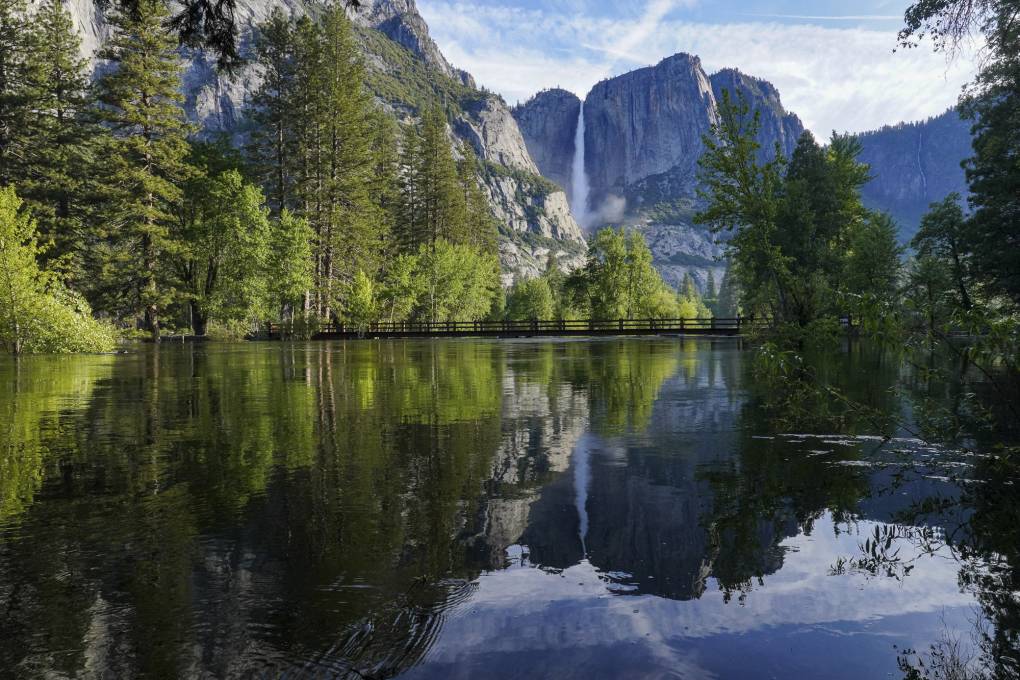
"caption": "Upper Yosemite Fall is reflected in the Merced River at Swinging Bridge in Yosemite National Park on June 13, 2023. ",
"credit": "Tracy Barbutes/The Washington Post via Getty Images",
"altTag": null,
"description": null,
"imgSizes": {
"medium": {
"file": "https://cdn.kqed.org/wp-content/uploads/sites/10/2024/07/GETTYIMAGES-2021284785-KQED-800x533.jpg",
"width": 800,
"height": 533,
"mimeType": "image/jpeg"
},
"large": {
"file": "https://cdn.kqed.org/wp-content/uploads/sites/10/2024/07/GETTYIMAGES-2021284785-KQED-1020x680.jpg",
"width": 1020,
"height": 680,
"mimeType": "image/jpeg"
},
"thumbnail": {
"file": "https://cdn.kqed.org/wp-content/uploads/sites/10/2024/07/GETTYIMAGES-2021284785-KQED-160x107.jpg",
"width": 160,
"height": 107,
"mimeType": "image/jpeg"
},
"1536x1536": {
"file": "https://cdn.kqed.org/wp-content/uploads/sites/10/2024/07/GETTYIMAGES-2021284785-KQED-1536x1024.jpg",
"width": 1536,
"height": 1024,
"mimeType": "image/jpeg"
},
"post-thumbnail": {
"file": "https://cdn.kqed.org/wp-content/uploads/sites/10/2024/07/GETTYIMAGES-2021284785-KQED-672x372.jpg",
"width": 672,
"height": 372,
"mimeType": "image/jpeg"
},
"twentyfourteen-full-width": {
"file": "https://cdn.kqed.org/wp-content/uploads/sites/10/2024/07/GETTYIMAGES-2021284785-KQED-1038x576.jpg",
"width": 1038,
"height": 576,
"mimeType": "image/jpeg"
},
"full-width": {
"file": "https://cdn.kqed.org/wp-content/uploads/sites/10/2024/07/GETTYIMAGES-2021284785-KQED-1920x1280.jpg",
"width": 1920,
"height": 1280,
"mimeType": "image/jpeg"
},
"kqedFullSize": {
"file": "https://cdn.kqed.org/wp-content/uploads/sites/10/2024/07/GETTYIMAGES-2021284785-KQED.jpg",
"width": 2000,
"height": 1333
}
},
"isLoading": false,
"fetchFailed": false
},
"news_12044216": {
"type": "attachments",
"id": "news_12044216",
"meta": {
"index": "attachments_1716263798",
"site": "news",
"id": "12044216",
"found": true
},
"title": "Berkeley, California",
"publishDate": 1749839725,
"status": "inherit",
"parent": 12044169,
"modified": 1749841644,
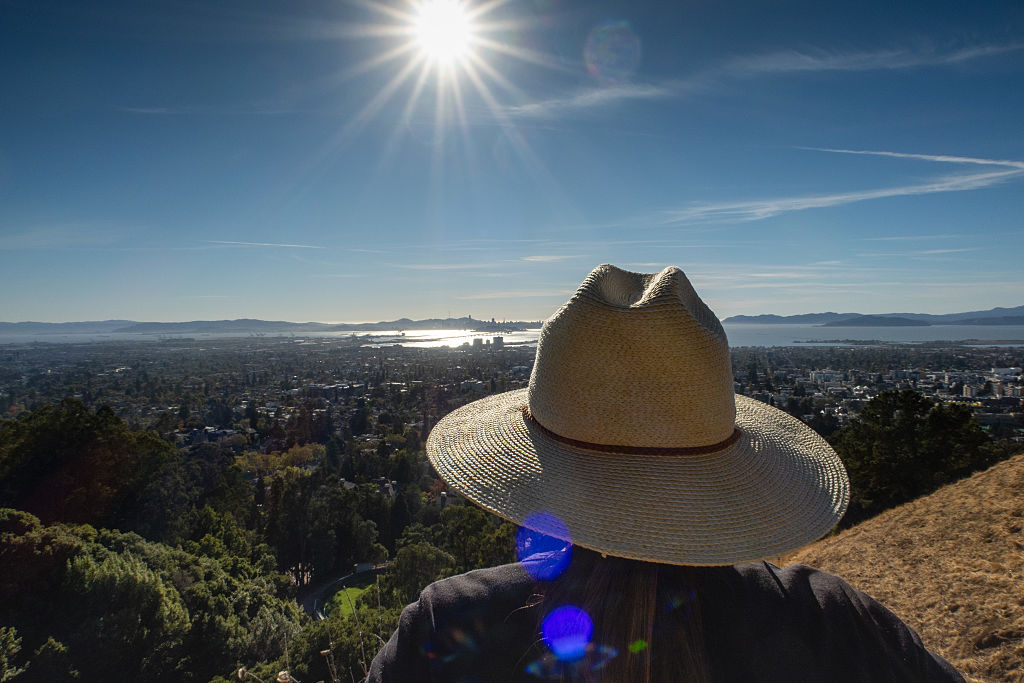
"caption": "A hiker's wide-brimmed hat is seen in the foreground, with a view of Berkeley, Oakland and San Francisco, seen from atop the Clark Kerr Fire Trail, behind the Clark Kerr Campus at the University of California, Berkeley, on Oct. 18, 2024, in Berkeley. ",
"credit": "Jay L. Clendenin/Getty Images",
"altTag": null,
"description": null,
"imgSizes": {
"thumbnail": {
"file": "https://cdn.kqed.org/wp-content/uploads/sites/10/2025/06/GettyImages-2210191440-160x107.jpg",
"width": 160,
"height": 107,
"mimeType": "image/jpeg"
},
"post-thumbnail": {
"file": "https://cdn.kqed.org/wp-content/uploads/sites/10/2025/06/GettyImages-2210191440-672x372.jpg",
"width": 672,
"height": 372,
"mimeType": "image/jpeg"
},
"twentyfourteen-full-width": {
"file": "https://cdn.kqed.org/wp-content/uploads/sites/10/2025/06/GettyImages-2210191440-1024x576.jpg",
"width": 1024,
"height": 576,
"mimeType": "image/jpeg"
},
"kqedFullSize": {
"file": "https://cdn.kqed.org/wp-content/uploads/sites/10/2025/06/GettyImages-2210191440.jpg",
"width": 1024,
"height": 683
}
},
"isLoading": false,
"fetchFailed": false
},
"news_12029489": {
"type": "attachments",
"id": "news_12029489",
"meta": {
"index": "attachments_1716263798",
"site": "news",
"id": "12029489",
"found": true
},
"title": "US-POLITICS-ENVIRONMENT-NATURE-PARKS-PROTEST",
"publishDate": 1741040569,
"status": "inherit",
"parent": 12029182,
"modified": 1741040606,
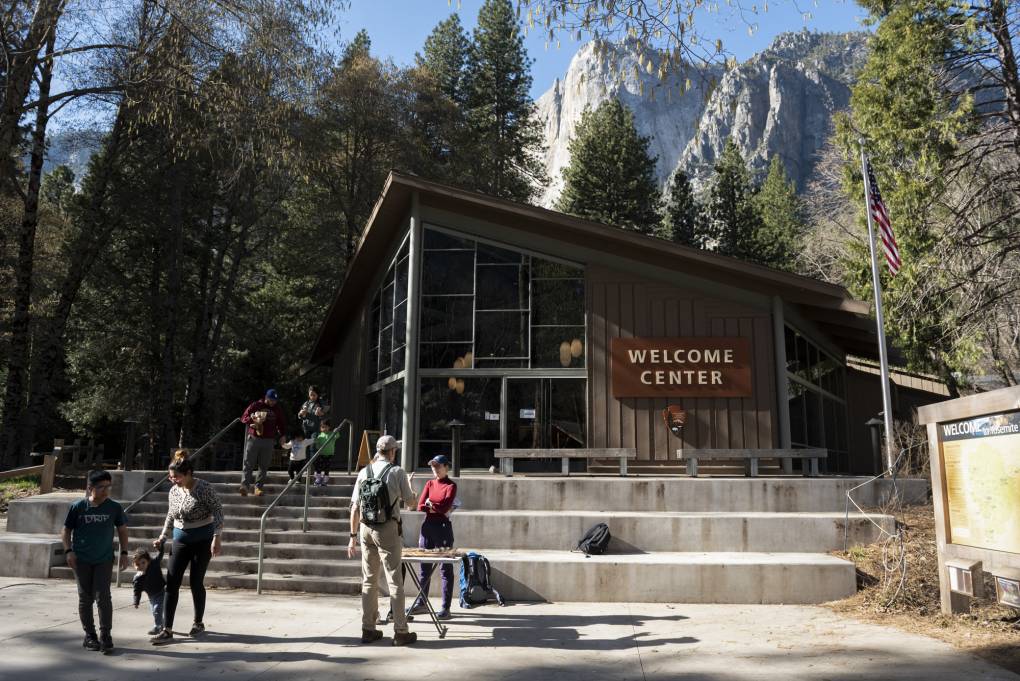
"caption": "A volunteer for the National Park Service welcomes visitors at the Exploration Center in Yosemite Valley, at Yosemite National Park on March 1, 2025.",
"credit": "Laure Andrillon/AFP via Getty",
"altTag": null,
"description": null,
"imgSizes": {
"medium": {
"file": "https://cdn.kqed.org/wp-content/uploads/sites/10/2025/03/CaliforniaPublicLandsGetty1-800x534.jpg",
"width": 800,
"height": 534,
"mimeType": "image/jpeg"
},
"large": {
"file": "https://cdn.kqed.org/wp-content/uploads/sites/10/2025/03/CaliforniaPublicLandsGetty1-1020x681.jpg",
"width": 1020,
"height": 681,
"mimeType": "image/jpeg"
},
"thumbnail": {
"file": "https://cdn.kqed.org/wp-content/uploads/sites/10/2025/03/CaliforniaPublicLandsGetty1-160x107.jpg",
"width": 160,
"height": 107,
"mimeType": "image/jpeg"
},
"1536x1536": {
"file": "https://cdn.kqed.org/wp-content/uploads/sites/10/2025/03/CaliforniaPublicLandsGetty1-1536x1025.jpg",
"width": 1536,
"height": 1025,
"mimeType": "image/jpeg"
},
"post-thumbnail": {
"file": "https://cdn.kqed.org/wp-content/uploads/sites/10/2025/03/CaliforniaPublicLandsGetty1-672x372.jpg",
"width": 672,
"height": 372,
"mimeType": "image/jpeg"
},
"twentyfourteen-full-width": {
"file": "https://cdn.kqed.org/wp-content/uploads/sites/10/2025/03/CaliforniaPublicLandsGetty1-1038x576.jpg",
"width": 1038,
"height": 576,
"mimeType": "image/jpeg"
},
"full-width": {
"file": "https://cdn.kqed.org/wp-content/uploads/sites/10/2025/03/CaliforniaPublicLandsGetty1-1920x1282.jpg",
"width": 1920,
"height": 1282,
"mimeType": "image/jpeg"
},
"kqedFullSize": {
"file": "https://cdn.kqed.org/wp-content/uploads/sites/10/2025/03/CaliforniaPublicLandsGetty1.jpg",
"width": 2000,
"height": 1335
}
},
"isLoading": false,
"fetchFailed": false
},
"news_12034415": {
"type": "attachments",
"id": "news_12034415",
"meta": {
"index": "attachments_1716263798",
"site": "news",
"id": "12034415",
"found": true
},
"title": "071322-Mt-Shasta-GETTY-CM-01 copy",
"publishDate": 1743707869,
"status": "inherit",
"parent": 12034414,
"modified": 1743707908,
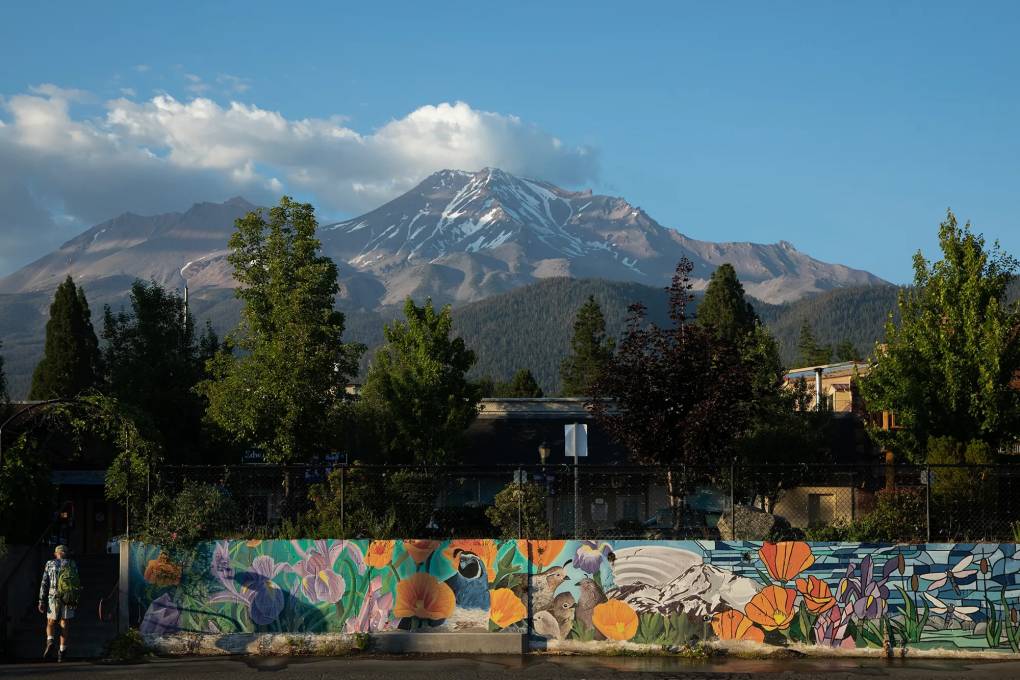
"caption": "Mount Shasta (right) and its geologic sibling Shastina, left, as seen from the city of Mount Shasta on July 13, 2022.",
"credit": "Myung J. Chun/Los Angeles Times via Getty Images",
"altTag": null,
"description": null,
"imgSizes": {
"medium": {
"file": "https://cdn.kqed.org/wp-content/uploads/sites/10/2025/04/071322-Mt-Shasta-GETTY-CM-01-copy-800x534.jpg",
"width": 800,
"height": 534,
"mimeType": "image/jpeg"
},
"large": {
"file": "https://cdn.kqed.org/wp-content/uploads/sites/10/2025/04/071322-Mt-Shasta-GETTY-CM-01-copy-1020x680.jpg",
"width": 1020,
"height": 680,
"mimeType": "image/jpeg"
},
"thumbnail": {
"file": "https://cdn.kqed.org/wp-content/uploads/sites/10/2025/04/071322-Mt-Shasta-GETTY-CM-01-copy-160x107.jpg",
"width": 160,
"height": 107,
"mimeType": "image/jpeg"
},
"1536x1536": {
"file": "https://cdn.kqed.org/wp-content/uploads/sites/10/2025/04/071322-Mt-Shasta-GETTY-CM-01-copy-1536x1025.jpg",
"width": 1536,
"height": 1025,
"mimeType": "image/jpeg"
},
"post-thumbnail": {
"file": "https://cdn.kqed.org/wp-content/uploads/sites/10/2025/04/071322-Mt-Shasta-GETTY-CM-01-copy-672x372.jpg",
"width": 672,
"height": 372,
"mimeType": "image/jpeg"
},
"twentyfourteen-full-width": {
"file": "https://cdn.kqed.org/wp-content/uploads/sites/10/2025/04/071322-Mt-Shasta-GETTY-CM-01-copy-1038x576.jpg",
"width": 1038,
"height": 576,
"mimeType": "image/jpeg"
},
"full-width": {
"file": "https://cdn.kqed.org/wp-content/uploads/sites/10/2025/04/071322-Mt-Shasta-GETTY-CM-01-copy-1920x1281.jpg",
"width": 1920,
"height": 1281,
"mimeType": "image/jpeg"
},
"kqedFullSize": {
"file": "https://cdn.kqed.org/wp-content/uploads/sites/10/2025/04/071322-Mt-Shasta-GETTY-CM-01-copy.jpg",
"width": 2000,
"height": 1334
}
},
"isLoading": false,
"fetchFailed": false
},
"news_12029490": {
"type": "attachments",
"id": "news_12029490",
"meta": {
"index": "attachments_1716263798",
"site": "news",
"id": "12029490",
"found": true
},
"title": "US-POLITICS-ENVIRONMENT-NATURE-PARKS-PROTEST",
"publishDate": 1741040660,
"status": "inherit",
"parent": 12029182,
"modified": 1741048816,
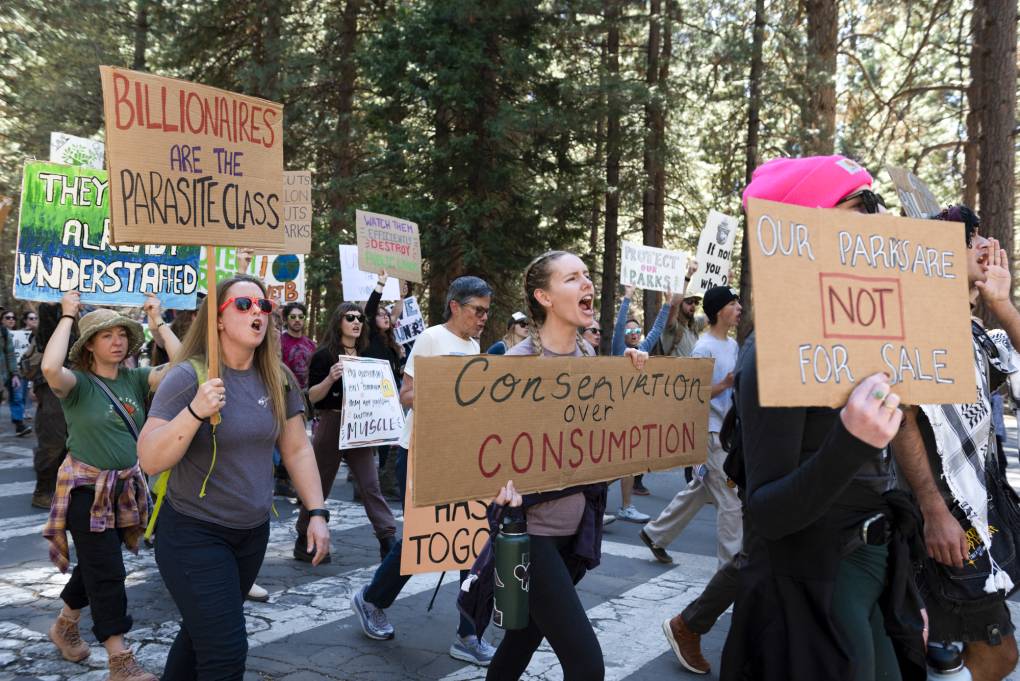
"caption": "People demonstrate against federal employee layoffs at Yosemite National Park on March 1, 2025.",
"credit": "Laure Andrillon/AFP via Getty",
"altTag": null,
"description": null,
"imgSizes": {
"medium": {
"file": "https://cdn.kqed.org/wp-content/uploads/sites/10/2025/03/CaliforniaPublicLandGetty2-800x534.jpg",
"width": 800,
"height": 534,
"mimeType": "image/jpeg"
},
"large": {
"file": "https://cdn.kqed.org/wp-content/uploads/sites/10/2025/03/CaliforniaPublicLandGetty2-1020x681.jpg",
"width": 1020,
"height": 681,
"mimeType": "image/jpeg"
},
"thumbnail": {
"file": "https://cdn.kqed.org/wp-content/uploads/sites/10/2025/03/CaliforniaPublicLandGetty2-160x107.jpg",
"width": 160,
"height": 107,
"mimeType": "image/jpeg"
},
"1536x1536": {
"file": "https://cdn.kqed.org/wp-content/uploads/sites/10/2025/03/CaliforniaPublicLandGetty2-1536x1025.jpg",
"width": 1536,
"height": 1025,
"mimeType": "image/jpeg"
},
"post-thumbnail": {
"file": "https://cdn.kqed.org/wp-content/uploads/sites/10/2025/03/CaliforniaPublicLandGetty2-672x372.jpg",
"width": 672,
"height": 372,
"mimeType": "image/jpeg"
},
"twentyfourteen-full-width": {
"file": "https://cdn.kqed.org/wp-content/uploads/sites/10/2025/03/CaliforniaPublicLandGetty2-1038x576.jpg",
"width": 1038,
"height": 576,
"mimeType": "image/jpeg"
},
"full-width": {
"file": "https://cdn.kqed.org/wp-content/uploads/sites/10/2025/03/CaliforniaPublicLandGetty2-1920x1282.jpg",
"width": 1920,
"height": 1282,
"mimeType": "image/jpeg"
},
"kqedFullSize": {
"file": "https://cdn.kqed.org/wp-content/uploads/sites/10/2025/03/CaliforniaPublicLandGetty2.jpg",
"width": 2000,
"height": 1335
}
},
"isLoading": false,
"fetchFailed": false
},
"news_12029842": {
"type": "attachments",
"id": "news_12029842",
"meta": {
"index": "attachments_1716263798",
"site": "news",
"id": "12029842",
"found": true
},
"title": "250224-Presidio-20-BL_qed",
"publishDate": 1741203587,
"status": "inherit",
"parent": 12029839,
"modified": 1741203597,
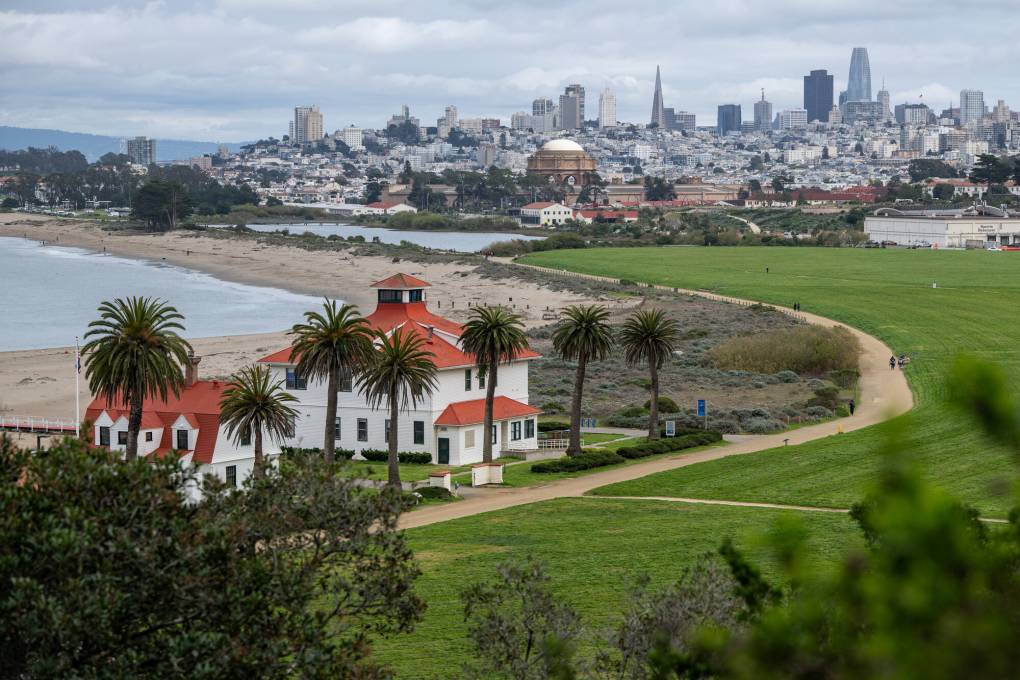
"caption": "A view of Crissy Field in the Presidio, a park and former military outpost, in San Francisco on Feb. 25, 2025.",
"credit": "Beth LaBerge/KQED",
"altTag": null,
"description": null,
"imgSizes": {
"medium": {
"file": "https://cdn.kqed.org/wp-content/uploads/sites/10/2025/03/250224-Presidio-20-BL_qed-800x533.jpg",
"width": 800,
"height": 533,
"mimeType": "image/jpeg"
},
"large": {
"file": "https://cdn.kqed.org/wp-content/uploads/sites/10/2025/03/250224-Presidio-20-BL_qed-1020x680.jpg",
"width": 1020,
"height": 680,
"mimeType": "image/jpeg"
},
"thumbnail": {
"file": "https://cdn.kqed.org/wp-content/uploads/sites/10/2025/03/250224-Presidio-20-BL_qed-160x107.jpg",
"width": 160,
"height": 107,
"mimeType": "image/jpeg"
},
"1536x1536": {
"file": "https://cdn.kqed.org/wp-content/uploads/sites/10/2025/03/250224-Presidio-20-BL_qed-1536x1024.jpg",
"width": 1536,
"height": 1024,
"mimeType": "image/jpeg"
},
"post-thumbnail": {
"file": "https://cdn.kqed.org/wp-content/uploads/sites/10/2025/03/250224-Presidio-20-BL_qed-672x372.jpg",
"width": 672,
"height": 372,
"mimeType": "image/jpeg"
},
"twentyfourteen-full-width": {
"file": "https://cdn.kqed.org/wp-content/uploads/sites/10/2025/03/250224-Presidio-20-BL_qed-1038x576.jpg",
"width": 1038,
"height": 576,
"mimeType": "image/jpeg"
},
"full-width": {
"file": "https://cdn.kqed.org/wp-content/uploads/sites/10/2025/03/250224-Presidio-20-BL_qed-1920x1280.jpg",
"width": 1920,
"height": 1280,
"mimeType": "image/jpeg"
},
"kqedFullSize": {
"file": "https://cdn.kqed.org/wp-content/uploads/sites/10/2025/03/250224-Presidio-20-BL_qed.jpg",
"width": 2000,
"height": 1333
}
},
"isLoading": false,
"fetchFailed": false
},
"news_12029423": {
"type": "attachments",
"id": "news_12029423",
"meta": {
"index": "attachments_1716263798",
"site": "news",
"id": "12029423",
"found": true
},
"title": "Cinema1",
"publishDate": 1741013524,
"status": "inherit",
"parent": 12029420,
"modified": 1741013712,
"caption": null,
"credit": "Saul Gonzalez/The California Report",
"altTag": null,
"description": "Film production at Cine-Gear Expo on the Warner Brothers lot.",
"imgSizes": {
"medium": {
"file": "https://cdn.kqed.org/wp-content/uploads/sites/10/2025/03/Cinema1-800x600.jpeg",
"width": 800,
"height": 600,
"mimeType": "image/jpeg"
},
"large": {
"file": "https://cdn.kqed.org/wp-content/uploads/sites/10/2025/03/Cinema1-1020x765.jpeg",
"width": 1020,
"height": 765,
"mimeType": "image/jpeg"
},
"thumbnail": {
"file": "https://cdn.kqed.org/wp-content/uploads/sites/10/2025/03/Cinema1-160x120.jpeg",
"width": 160,
"height": 120,
"mimeType": "image/jpeg"
},
"1536x1536": {
"file": "https://cdn.kqed.org/wp-content/uploads/sites/10/2025/03/Cinema1-1536x1152.jpeg",
"width": 1536,
"height": 1152,
"mimeType": "image/jpeg"
},
"2048x2048": {
"file": "https://cdn.kqed.org/wp-content/uploads/sites/10/2025/03/Cinema1-2048x1536.jpeg",
"width": 2048,
"height": 1536,
"mimeType": "image/jpeg"
},
"post-thumbnail": {
"file": "https://cdn.kqed.org/wp-content/uploads/sites/10/2025/03/Cinema1-672x372.jpeg",
"width": 672,
"height": 372,
"mimeType": "image/jpeg"
},
"twentyfourteen-full-width": {
"file": "https://cdn.kqed.org/wp-content/uploads/sites/10/2025/03/Cinema1-1038x576.jpeg",
"width": 1038,
"height": 576,
"mimeType": "image/jpeg"
},
"full-width": {
"file": "https://cdn.kqed.org/wp-content/uploads/sites/10/2025/03/Cinema1-1920x1440.jpeg",
"width": 1920,
"height": 1440,
"mimeType": "image/jpeg"
},
"kqedFullSize": {
"file": "https://cdn.kqed.org/wp-content/uploads/sites/10/2025/03/Cinema1-scaled.jpeg",
"width": 2560,
"height": 1920
}
},
"isLoading": false,
"fetchFailed": false
},
"news_12028302": {
"type": "attachments",
"id": "news_12028302",
"meta": {
"index": "attachments_1716263798",
"site": "news",
"id": "12028302",
"found": true
},
"title": "Trump Administration Seeks To Shrink Funding For The Presidio In San Francisco",
"publishDate": 1740418371,
"status": "inherit",
"parent": 12028300,
"modified": 1740446760,
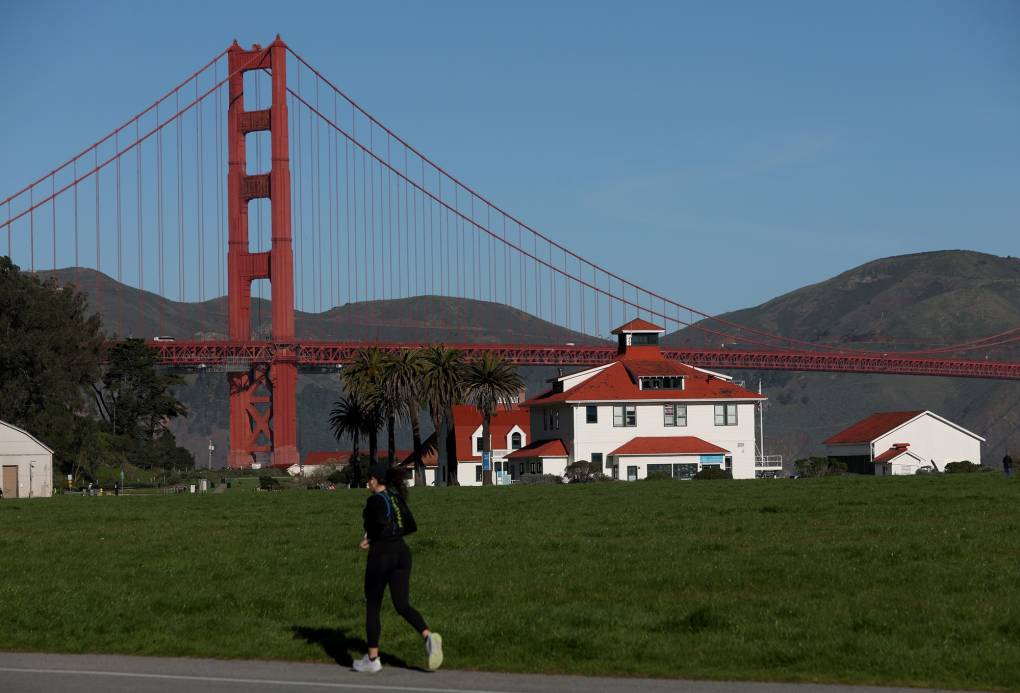
"caption": "A jogger runs on Crissy Field at Presidio of San Francisco on Feb. 20, 2025, in San Francisco, California. President Donald Trump signed an executive order on Wednesday to eliminate the Presidio Trust, the federal agency that runs and protects the Presidio of San Francisco, a national historic landmark since 1962.",
"credit": "Justin Sullivan/Getty Images",
"altTag": null,
"description": null,
"imgSizes": {
"medium": {
"file": "https://cdn.kqed.org/wp-content/uploads/sites/10/2025/02/PresidioSFGetty-800x544.jpg",
"width": 800,
"height": 544,
"mimeType": "image/jpeg"
},
"large": {
"file": "https://cdn.kqed.org/wp-content/uploads/sites/10/2025/02/PresidioSFGetty-1020x693.jpg",
"width": 1020,
"height": 693,
"mimeType": "image/jpeg"
},
"thumbnail": {
"file": "https://cdn.kqed.org/wp-content/uploads/sites/10/2025/02/PresidioSFGetty-160x109.jpg",
"width": 160,
"height": 109,
"mimeType": "image/jpeg"
},
"1536x1536": {
"file": "https://cdn.kqed.org/wp-content/uploads/sites/10/2025/02/PresidioSFGetty-1536x1044.jpg",
"width": 1536,
"height": 1044,
"mimeType": "image/jpeg"
},
"post-thumbnail": {
"file": "https://cdn.kqed.org/wp-content/uploads/sites/10/2025/02/PresidioSFGetty-672x372.jpg",
"width": 672,
"height": 372,
"mimeType": "image/jpeg"
},
"twentyfourteen-full-width": {
"file": "https://cdn.kqed.org/wp-content/uploads/sites/10/2025/02/PresidioSFGetty-1038x576.jpg",
"width": 1038,
"height": 576,
"mimeType": "image/jpeg"
},
"full-width": {
"file": "https://cdn.kqed.org/wp-content/uploads/sites/10/2025/02/PresidioSFGetty-1920x1305.jpg",
"width": 1920,
"height": 1305,
"mimeType": "image/jpeg"
},
"kqedFullSize": {
"file": "https://cdn.kqed.org/wp-content/uploads/sites/10/2025/02/PresidioSFGetty.jpg",
"width": 2000,
"height": 1359
}
},
"isLoading": false,
"fetchFailed": false
},
"news_12027921": {
"type": "attachments",
"id": "news_12027921",
"meta": {
"index": "attachments_1716263798",
"site": "news",
"id": "12027921",
"found": true
},
"title": "230815-BlueForestInitiative-24-BL_qed",
"publishDate": 1740083333,
"status": "inherit",
"parent": 12027914,
"modified": 1740083484,
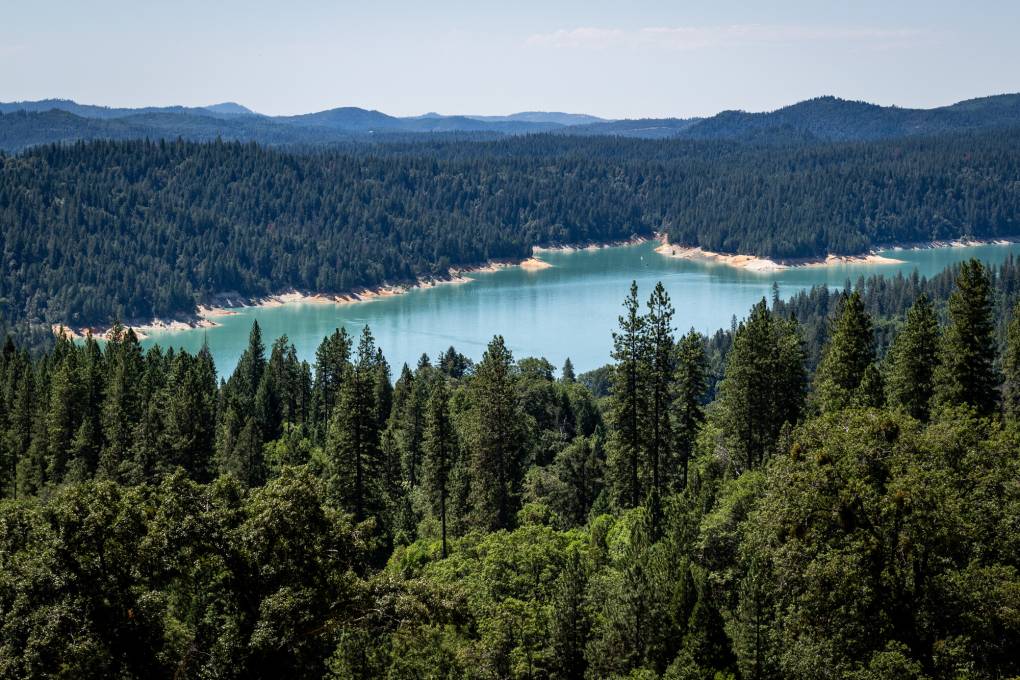
"caption": "A view of New Bullards Bar Reservoir in the Tahoe National Forest near Camptonville, California, on Aug. 15, 2023.",
"credit": "Beth LaBerge/KQED",
"altTag": null,
"description": null,
"imgSizes": {
"medium": {
"file": "https://cdn.kqed.org/wp-content/uploads/sites/10/2025/02/230815-BlueForestInitiative-24-BL_qed-800x533.jpg",
"width": 800,
"height": 533,
"mimeType": "image/jpeg"
},
"large": {
"file": "https://cdn.kqed.org/wp-content/uploads/sites/10/2025/02/230815-BlueForestInitiative-24-BL_qed-1020x680.jpg",
"width": 1020,
"height": 680,
"mimeType": "image/jpeg"
},
"thumbnail": {
"file": "https://cdn.kqed.org/wp-content/uploads/sites/10/2025/02/230815-BlueForestInitiative-24-BL_qed-160x107.jpg",
"width": 160,
"height": 107,
"mimeType": "image/jpeg"
},
"1536x1536": {
"file": "https://cdn.kqed.org/wp-content/uploads/sites/10/2025/02/230815-BlueForestInitiative-24-BL_qed-1536x1024.jpg",
"width": 1536,
"height": 1024,
"mimeType": "image/jpeg"
},
"post-thumbnail": {
"file": "https://cdn.kqed.org/wp-content/uploads/sites/10/2025/02/230815-BlueForestInitiative-24-BL_qed-672x372.jpg",
"width": 672,
"height": 372,
"mimeType": "image/jpeg"
},
"twentyfourteen-full-width": {
"file": "https://cdn.kqed.org/wp-content/uploads/sites/10/2025/02/230815-BlueForestInitiative-24-BL_qed-1038x576.jpg",
"width": 1038,
"height": 576,
"mimeType": "image/jpeg"
},
"full-width": {
"file": "https://cdn.kqed.org/wp-content/uploads/sites/10/2025/02/230815-BlueForestInitiative-24-BL_qed-1920x1280.jpg",
"width": 1920,
"height": 1280,
"mimeType": "image/jpeg"
},
"kqedFullSize": {
"file": "https://cdn.kqed.org/wp-content/uploads/sites/10/2025/02/230815-BlueForestInitiative-24-BL_qed.jpg",
"width": 2000,
"height": 1333
}
},
"isLoading": false,
"fetchFailed": false
},
"news_12027273": {
"type": "attachments",
"id": "news_12027273",
"meta": {
"index": "attachments_1716263798",
"site": "news",
"id": "12027273",
"found": true
},
"title": "npr.brightspotcdn copy",
"publishDate": 1739578821,
"status": "inherit",
"parent": 12027272,
"modified": 1739578842,
"caption": "A National Park Service ranger places rainbow flags on the fence at the Stonewall National Monument in the West Village neighborhood of Greenwich Village in Lower Manhattan, New York City, on June 19, 2019.",
"credit": "Timothy A. Clary/AFP via Getty Images",
"altTag": null,
"description": null,
"imgSizes": {
"medium": {
"file": "https://cdn.kqed.org/wp-content/uploads/sites/10/2025/02/npr.brightspotcdn-copy-5-800x564.jpg",
"width": 800,
"height": 564,
"mimeType": "image/jpeg"
},
"large": {
"file": "https://cdn.kqed.org/wp-content/uploads/sites/10/2025/02/npr.brightspotcdn-copy-5-1020x719.jpg",
"width": 1020,
"height": 719,
"mimeType": "image/jpeg"
},
"thumbnail": {
"file": "https://cdn.kqed.org/wp-content/uploads/sites/10/2025/02/npr.brightspotcdn-copy-5-160x113.jpg",
"width": 160,
"height": 113,
"mimeType": "image/jpeg"
},
"1536x1536": {
"file": "https://cdn.kqed.org/wp-content/uploads/sites/10/2025/02/npr.brightspotcdn-copy-5-1536x1083.jpg",
"width": 1536,
"height": 1083,
"mimeType": "image/jpeg"
},
"post-thumbnail": {
"file": "https://cdn.kqed.org/wp-content/uploads/sites/10/2025/02/npr.brightspotcdn-copy-5-672x372.jpg",
"width": 672,
"height": 372,
"mimeType": "image/jpeg"
},
"twentyfourteen-full-width": {
"file": "https://cdn.kqed.org/wp-content/uploads/sites/10/2025/02/npr.brightspotcdn-copy-5-1038x576.jpg",
"width": 1038,
"height": 576,
"mimeType": "image/jpeg"
},
"kqedFullSize": {
"file": "https://cdn.kqed.org/wp-content/uploads/sites/10/2025/02/npr.brightspotcdn-copy-5.jpg",
"width": 1600,
"height": 1128
}
},
"isLoading": false,
"fetchFailed": false
},
"news_11921129": {
"type": "attachments",
"id": "news_11921129",
"meta": {
"index": "attachments_1716263798",
"site": "news",
"id": "11921129",
"found": true
},
"parent": 11921128,
"imgSizes": {
"thumbnail": {
"file": "https://ww2.kqed.org/app/uploads/sites/10/2022/08/28567147368_64a288d8ae_c-db3e1192eb29bb64ca3c68d315b58ab89cbcdfa8-160x120.jpg",
"width": 160,
"mimeType": "image/jpeg",
"height": 120
},
"post-thumbnail": {
"file": "https://ww2.kqed.org/app/uploads/sites/10/2022/08/28567147368_64a288d8ae_c-db3e1192eb29bb64ca3c68d315b58ab89cbcdfa8-672x372.jpg",
"width": 672,
"mimeType": "image/jpeg",
"height": 372
},
"kqedFullSize": {
"file": "https://ww2.kqed.org/app/uploads/sites/10/2022/08/28567147368_64a288d8ae_c-db3e1192eb29bb64ca3c68d315b58ab89cbcdfa8.jpg",
"width": 710,
"height": 533
}
},
"publishDate": 1659384630,
"modified": 1659385047,
"caption": "Hyperion is located in a closed part of the Redwood National Park. Still, many visitors have attempted to go off trail to observe the tree.",
"description": null,
"title": "Hyperion is located in a closed part of the Redwood National Park. Still, many visitors have attempted to go off trail to observe the tree.",
"credit": "John S Chao/Flickr",
"status": "inherit",
"altTag": null,
"isLoading": false,
"fetchFailed": false
}
},
"audioPlayerReducer": {
"postId": "stream_live",
"isPaused": true,
"isPlaying": false,
"pfsActive": false,
"pledgeModalIsOpen": true,
"playerDrawerIsOpen": false,
"liveAudioPlayStartedAt": 0,
"liveAudioPlayContext": ""
},
"authorsReducer": {
"byline_news_12034414": {
"type": "authors",
"id": "byline_news_12034414",
"meta": {
"override": true
},
"slug": "byline_news_12034414",
"name": "\u003ca href=\"https://calmatters.org/author/jeanne-kuang/\">Jeanne Kuang\u003c/a>, CalMatters",
"isLoading": false
},
"byline_news_12027272": {
"type": "authors",
"id": "byline_news_12027272",
"meta": {
"override": true
},
"slug": "byline_news_12027272",
"name": "\u003ca href=\"https://www.npr.org/people/1108419098/juliana-kim\">Juliana Kim\u003c/a>, NPR",
"isLoading": false
},
"byline_news_11921128": {
"type": "authors",
"id": "byline_news_11921128",
"meta": {
"override": true
},
"slug": "byline_news_11921128",
"name": "Juliana Kim",
"isLoading": false
},
"mlagos": {
"type": "authors",
"id": "3239",
"meta": {
"index": "authors_1716337520",
"id": "3239",
"found": true
},
"name": "Marisa Lagos",
"firstName": "Marisa",
"lastName": "Lagos",
"slug": "mlagos",
"email": "mlagos@kqed.org",
"display_author_email": false,
"staff_mastheads": [
"news"
],
"title": "KQED Contributor",
"bio": "Marisa Lagos is a correspondent for KQED’s California Politics and Government Desk and co-hosts the award-winning show and podcast, Political Breakdown. At KQED, Lagos also conducts reporting, analysis and investigations into state, local and national politics for radio, TV, online and onstage. In 2022, she and co-host, Scott Shafer, moderated the only gubernatorial debate in California. In 2020, the \u003ci>Washington Post\u003c/i> named her one of the top political journalists in California; she was nominated for a Peabody and won several other awards for her work investigating the 2017 California wildfires. She has worked at the \u003ci>San Francisco Chronicle\u003c/i>, \u003ci>San Francisco Examiner\u003c/i> and \u003ci>Los Angeles Times\u003c/i>. A UC Santa Barbara graduate, she lives in San Francisco with her two sons and husband.",
"avatar": "https://secure.gravatar.com/avatar/a261a0d3696fc066871ef96b85b5e7d2?s=600&d=blank&r=g",
"twitter": "@mlagos",
"facebook": null,
"instagram": null,
"linkedin": null,
"sites": [
{
"site": "arts",
"roles": [
"author"
]
},
{
"site": "news",
"roles": [
"editor"
]
},
{
"site": "science",
"roles": [
"editor"
]
},
{
"site": "forum",
"roles": [
"author"
]
},
{
"site": "liveblog",
"roles": [
"author"
]
}
],
"headData": {
"title": "Marisa Lagos | KQED",
"description": "KQED Contributor",
"ogImgSrc": "https://secure.gravatar.com/avatar/a261a0d3696fc066871ef96b85b5e7d2?s=600&d=blank&r=g",
"twImgSrc": "https://secure.gravatar.com/avatar/a261a0d3696fc066871ef96b85b5e7d2?s=600&d=blank&r=g"
},
"isLoading": false,
"link": "/author/mlagos"
},
"ecruzguevarra": {
"type": "authors",
"id": "8654",
"meta": {
"index": "authors_1716337520",
"id": "8654",
"found": true
},
"name": "Ericka Cruz Guevarra",
"firstName": "Ericka",
"lastName": "Cruz Guevarra",
"slug": "ecruzguevarra",
"email": "ecruzguevarra@kqed.org",
"display_author_email": true,
"staff_mastheads": [
"news"
],
"title": "Producer, The Bay Podcast",
"bio": "Ericka Cruz Guevarra is host of \u003ca href=\"https://www.kqed.org/podcasts/thebay\">\u003cem>The Bay\u003c/em>\u003c/a> podcast at KQED. Before host, she was the show’s producer. Her work in that capacity includes a three-part reported series on policing in Vallejo, which won a 2020 excellence in journalism award from the Society of Professional Journalists. Ericka has worked as a breaking news reporter at Oregon Public Broadcasting, helped produce the Code Switch podcast, and was KQED’s inaugural Raul Ramirez Diversity Fund intern. She’s also an alumna of NPR’s Next Generation Radio program. Send her an email if you have strong feelings about whether Fairfield and Suisun City are the Bay. Ericka is represented by SAG-AFTRA.",
"avatar": "https://secure.gravatar.com/avatar/accefc1de4bafc7e234b69bcb9b6f6536c130fd84709bc3069ef11a78787e1bb?s=600&d=blank&r=g",
"twitter": "NotoriousECG",
"bluesky": null,
"facebook": null,
"instagram": null,
"linkedin": null,
"sites": [
{
"site": "arts",
"roles": [
"subscriber"
]
},
{
"site": "news",
"roles": [
"editor",
"manage_categories"
]
},
{
"site": "futureofyou",
"roles": [
"subscriber"
]
},
{
"site": "stateofhealth",
"roles": [
"subscriber"
]
},
{
"site": "science",
"roles": [
"editor"
]
},
{
"site": "forum",
"roles": [
"subscriber"
]
}
],
"headData": {
"title": "Ericka Cruz Guevarra | KQED",
"description": "Producer, The Bay Podcast",
"ogImgSrc": "https://secure.gravatar.com/avatar/accefc1de4bafc7e234b69bcb9b6f6536c130fd84709bc3069ef11a78787e1bb?s=600&d=blank&r=g",
"twImgSrc": "https://secure.gravatar.com/avatar/accefc1de4bafc7e234b69bcb9b6f6536c130fd84709bc3069ef11a78787e1bb?s=600&d=blank&r=g"
},
"isLoading": false,
"link": "/author/ecruzguevarra"
},
"dventon": {
"type": "authors",
"id": "11088",
"meta": {
"index": "authors_1716337520",
"id": "11088",
"found": true
},
"name": "Danielle Venton",
"firstName": "Danielle",
"lastName": "Venton",
"slug": "dventon",
"email": "dventon@kqed.org",
"display_author_email": true,
"staff_mastheads": [
"science"
],
"title": "Science reporter",
"bio": "Danielle Venton is a reporter for KQED Science. She covers wildfires, space and oceans (though she is prone to sea sickness).\r\n\r\nBefore joining KQED in 2015, Danielle was a staff reporter at KRCB in Sonoma County and a freelancer. She studied science communication at UC Santa Cruz and formerly worked at CERN in Geneva, Switzerland where she wrote about computing. She lives in Sonoma County and enjoys backpacking.",
"avatar": "https://secure.gravatar.com/avatar/37b292b5c40c8d93959c4f48d73b5286f41b7abd8588277e941905a3ed4c801c?s=600&d=blank&r=g",
"twitter": "DanielleVenton",
"bluesky": null,
"facebook": null,
"instagram": null,
"linkedin": null,
"sites": [
{
"site": "arts",
"roles": [
"contributor"
]
},
{
"site": "news",
"roles": [
"editor"
]
},
{
"site": "futureofyou",
"roles": [
"editor"
]
},
{
"site": "science",
"roles": [
"editor"
]
},
{
"site": "liveblog",
"roles": [
"contributor"
]
}
],
"headData": {
"title": "Danielle Venton | KQED",
"description": "Science reporter",
"ogImgSrc": "https://secure.gravatar.com/avatar/37b292b5c40c8d93959c4f48d73b5286f41b7abd8588277e941905a3ed4c801c?s=600&d=blank&r=g",
"twImgSrc": "https://secure.gravatar.com/avatar/37b292b5c40c8d93959c4f48d73b5286f41b7abd8588277e941905a3ed4c801c?s=600&d=blank&r=g"
},
"isLoading": false,
"link": "/author/dventon"
},
"smohamad": {
"type": "authors",
"id": "11631",
"meta": {
"index": "authors_1716337520",
"id": "11631",
"found": true
},
"name": "Sarah Mohamad",
"firstName": "Sarah",
"lastName": "Mohamad",
"slug": "smohamad",
"email": "smohamad@KQED.org",
"display_author_email": true,
"staff_mastheads": [],
"title": "Engagement Producer and Reporter, KQED Science",
"bio": "Sarah Mohamad is an audience engagement reporter and producer for KQED Science. She reports on audience-focused science and environment stories and manages the team's social media, newsletter, and engagement efforts. Prior to this role, she played a key role as project manager for NSF's \u003ca href=\"https://www.kqed.org/crackingthecode\">\u003cem>Cracking the Code: Influencing Millennial Science Engagement\u003c/em> \u003c/a>audience research.",
"avatar": "https://secure.gravatar.com/avatar/e6224957cd82d015183756ddde1f928013a563d7ca2e4565f8c4de1ec64886c5?s=600&d=blank&r=g",
"twitter": "sarahkmohamad",
"bluesky": null,
"facebook": null,
"instagram": null,
"linkedin": null,
"sites": [
{
"site": "",
"roles": [
"editor"
]
},
{
"site": "arts",
"roles": [
"editor"
]
},
{
"site": "news",
"roles": [
"editor"
]
},
{
"site": "about",
"roles": [
"editor"
]
},
{
"site": "science",
"roles": [
"editor"
]
}
],
"headData": {
"title": "Sarah Mohamad | KQED",
"description": "Engagement Producer and Reporter, KQED Science",
"ogImgSrc": "https://secure.gravatar.com/avatar/e6224957cd82d015183756ddde1f928013a563d7ca2e4565f8c4de1ec64886c5?s=600&d=blank&r=g",
"twImgSrc": "https://secure.gravatar.com/avatar/e6224957cd82d015183756ddde1f928013a563d7ca2e4565f8c4de1ec64886c5?s=600&d=blank&r=g"
},
"isLoading": false,
"link": "/author/smohamad"
},
"amontecillo": {
"type": "authors",
"id": "11649",
"meta": {
"index": "authors_1716337520",
"id": "11649",
"found": true
},
"name": "Alan Montecillo",
"firstName": "Alan",
"lastName": "Montecillo",
"slug": "amontecillo",
"email": "amontecillo@kqed.org",
"display_author_email": false,
"staff_mastheads": [
"news"
],
"title": "KQED Contributor",
"bio": "Alan Montecillo is the senior editor of \u003cem>\u003ca href=\"http://kqed.org/thebay\">The Bay\u003c/a>, \u003c/em> KQED's local news podcast. Before moving to the Bay Area, he worked as a senior talk show producer for WILL in Champaign-Urbana, Illinois and at Oregon Public Broadcasting in Portland, Oregon. He has won journalism awards from the Society of Professional Journalists Northern California, the Public Media Journalists Association, The Signal Awards, and has also received a regional Edward R. Murrow award. Alan is a Filipino American from Hong Kong and a graduate of Reed College.",
"avatar": "https://secure.gravatar.com/avatar/268f53a2066899ea9efdd8a5900218b17c822d9862cbc9326cccec53ef41d349?s=600&d=blank&r=g",
"twitter": "alanmontecillo",
"bluesky": null,
"facebook": null,
"instagram": null,
"linkedin": null,
"sites": [
{
"site": "",
"roles": [
"editor"
]
},
{
"site": "news",
"roles": [
"editor",
"manage_categories"
]
}
],
"headData": {
"title": "Alan Montecillo | KQED",
"description": "KQED Contributor",
"ogImgSrc": "https://secure.gravatar.com/avatar/268f53a2066899ea9efdd8a5900218b17c822d9862cbc9326cccec53ef41d349?s=600&d=blank&r=g",
"twImgSrc": "https://secure.gravatar.com/avatar/268f53a2066899ea9efdd8a5900218b17c822d9862cbc9326cccec53ef41d349?s=600&d=blank&r=g"
},
"isLoading": false,
"link": "/author/amontecillo"
},
"kmizuguchi": {
"type": "authors",
"id": "11739",
"meta": {
"index": "authors_1716337520",
"id": "11739",
"found": true
},
"name": "Keith Mizuguchi",
"firstName": "Keith",
"lastName": "Mizuguchi",
"slug": "kmizuguchi",
"email": "kmizuguchi@kqed.org",
"display_author_email": false,
"staff_mastheads": [],
"title": "KQED Contributor",
"bio": null,
"avatar": "https://secure.gravatar.com/avatar/64d8a7de0723d4099b9fe4e915136103febcc20809abce228ee4415bcb237023?s=600&d=blank&r=g",
"twitter": null,
"bluesky": null,
"facebook": null,
"instagram": null,
"linkedin": null,
"sites": [
{
"site": "news",
"roles": [
"editor"
]
},
{
"site": "science",
"roles": [
"editor"
]
}
],
"headData": {
"title": "Keith Mizuguchi | KQED",
"description": "KQED Contributor",
"ogImgSrc": "https://secure.gravatar.com/avatar/64d8a7de0723d4099b9fe4e915136103febcc20809abce228ee4415bcb237023?s=600&d=blank&r=g",
"twImgSrc": "https://secure.gravatar.com/avatar/64d8a7de0723d4099b9fe4e915136103febcc20809abce228ee4415bcb237023?s=600&d=blank&r=g"
},
"isLoading": false,
"link": "/author/kmizuguchi"
},
"jessicakariisa": {
"type": "authors",
"id": "11831",
"meta": {
"index": "authors_1716337520",
"id": "11831",
"found": true
},
"name": "Jessica Kariisa",
"firstName": "Jessica",
"lastName": "Kariisa",
"slug": "jessicakariisa",
"email": "jkariisa@kqed.org",
"display_author_email": false,
"staff_mastheads": [],
"title": "Producer, The Bay",
"bio": "Jessica Kariisa is the producer of The Bay. She first joined KQED as an intern for The California Report Magazine, after which she became an on-call producer. She reported a Bay Curious episode on the use of rap lyrics in criminal trials which won a Society of Professional Journalists award in 2023 for Excellence in Features Journalism and the 2023 Signal Award for Best Conversation Starter. She’s worked on podcasts for Snap Judgment and American Public Media. Before embarking on her audio career, she was a music journalist.\r\n\r\nJessica Kariisa is represented by SAG-AFTRA.",
"avatar": "https://secure.gravatar.com/avatar/522e97b28ac0b3d411621c0fde8f3419c7b71ea2c5c262c57c4bb600963f328c?s=600&d=blank&r=g",
"twitter": null,
"bluesky": null,
"facebook": null,
"instagram": null,
"linkedin": null,
"sites": [
{
"site": "arts",
"roles": [
"author"
]
},
{
"site": "news",
"roles": [
"editor",
"manage_categories"
]
}
],
"headData": {
"title": "Jessica Kariisa | KQED",
"description": "Producer, The Bay",
"ogImgSrc": "https://secure.gravatar.com/avatar/522e97b28ac0b3d411621c0fde8f3419c7b71ea2c5c262c57c4bb600963f328c?s=600&d=blank&r=g",
"twImgSrc": "https://secure.gravatar.com/avatar/522e97b28ac0b3d411621c0fde8f3419c7b71ea2c5c262c57c4bb600963f328c?s=600&d=blank&r=g"
},
"isLoading": false,
"link": "/author/jessicakariisa"
},
"kdebenedetti": {
"type": "authors",
"id": "11913",
"meta": {
"index": "authors_1716337520",
"id": "11913",
"found": true
},
"name": "Katie DeBenedetti",
"firstName": "Katie",
"lastName": "DeBenedetti",
"slug": "kdebenedetti",
"email": "kdebenedetti@kqed.org",
"display_author_email": false,
"staff_mastheads": [
"news",
"science"
],
"title": "KQED Contributor",
"bio": "Katie DeBenedetti is a digital reporter covering daily news for the Express Desk. Prior to joining KQED as a culture reporting intern in January 2024, she covered education and city government for the Napa Valley Register.",
"avatar": "https://secure.gravatar.com/avatar/6e31073cb8f7e4214ab03f42771d0f45?s=600&d=blank&r=g",
"twitter": null,
"facebook": null,
"instagram": null,
"linkedin": null,
"sites": [
{
"site": "news",
"roles": [
"author"
]
},
{
"site": "science",
"roles": [
"author"
]
},
{
"site": "liveblog",
"roles": [
"author"
]
}
],
"headData": {
"title": "Katie DeBenedetti | KQED",
"description": "KQED Contributor",
"ogImgSrc": "https://secure.gravatar.com/avatar/6e31073cb8f7e4214ab03f42771d0f45?s=600&d=blank&r=g",
"twImgSrc": "https://secure.gravatar.com/avatar/6e31073cb8f7e4214ab03f42771d0f45?s=600&d=blank&r=g"
},
"isLoading": false,
"link": "/author/kdebenedetti"
},
"rcooke": {
"type": "authors",
"id": "11921",
"meta": {
"index": "authors_1716337520",
"id": "11921",
"found": true
},
"name": "Riley Cooke",
"firstName": "Riley",
"lastName": "Cooke",
"slug": "rcooke",
"email": "rcooke@kqed.org",
"display_author_email": true,
"staff_mastheads": [
"news"
],
"title": "KQED Contributor",
"bio": "Riley is a senior at UC Berkeley, where she studies political science and journalism. Her work has appeared in SFGate, NBC Bay Area, Local News Matters and more. She enjoys reporting on politics, housing and homelessness — and using as many em dashes as her editors will allow.",
"avatar": "https://secure.gravatar.com/avatar/792f98c126cc5e270a8a96f77f7224ea?s=600&d=blank&r=g",
"twitter": "rrileycooke",
"facebook": null,
"instagram": null,
"linkedin": null,
"sites": [
{
"site": "arts",
"roles": [
"author"
]
},
{
"site": "news",
"roles": [
"author"
]
}
],
"headData": {
"title": "Riley Cooke | KQED",
"description": "KQED Contributor",
"ogImgSrc": "https://secure.gravatar.com/avatar/792f98c126cc5e270a8a96f77f7224ea?s=600&d=blank&r=g",
"twImgSrc": "https://secure.gravatar.com/avatar/792f98c126cc5e270a8a96f77f7224ea?s=600&d=blank&r=g"
},
"isLoading": false,
"link": "/author/rcooke"
},
"sarahwright": {
"type": "authors",
"id": "11956",
"meta": {
"index": "authors_1716337520",
"id": "11956",
"found": true
},
"name": "Sarah Wright",
"firstName": "Sarah",
"lastName": "Wright",
"slug": "sarahwright",
"email": "swright@kqed.org",
"display_author_email": true,
"staff_mastheads": [],
"title": "Outdoors Engagement Reporter",
"bio": "Sarah Wright is KQED's Outdoors Engagement Reporter. Originally from Lake Tahoe, she completed a thru-hike of the Pacific Crest Trail in 2019 and was a U.S. Fulbright Program grantee to Argentina in 2023. Her journalism has appeared in The Guardian, The San Francisco Standard, The Palo Alto Weekly and the Half Moon Bay Review.",
"avatar": "https://secure.gravatar.com/avatar/c161a3d6441865cba25e6db4fa561099ad665799e9432e34da2b84d7e371524c?s=600&d=blank&r=g",
"twitter": null,
"bluesky": null,
"facebook": null,
"instagram": null,
"linkedin": null,
"sites": [
{
"site": "arts",
"roles": [
"editor"
]
},
{
"site": "news",
"roles": [
"editor"
]
},
{
"site": "science",
"roles": [
"contributor",
"author"
]
},
{
"site": "forum",
"roles": [
"editor"
]
}
],
"headData": {
"title": "Sarah Wright | KQED",
"description": "Outdoors Engagement Reporter",
"ogImgSrc": "https://secure.gravatar.com/avatar/c161a3d6441865cba25e6db4fa561099ad665799e9432e34da2b84d7e371524c?s=600&d=blank&r=g",
"twImgSrc": "https://secure.gravatar.com/avatar/c161a3d6441865cba25e6db4fa561099ad665799e9432e34da2b84d7e371524c?s=600&d=blank&r=g"
},
"isLoading": false,
"link": "/author/sarahwright"
}
},
"pagesReducer": {
"news_tag_national-parks": {
"type": "terms",
"id": "news_2715",
"meta": {
"index": "terms_1716263798",
"site": "news",
"id": "2715",
"score": 9.104253
},
"featImg": null,
"name": "national parks",
"description": null,
"taxonomy": "tag",
"headData": {
"twImgId": null,
"twTitle": null,
"ogTitle": null,
"ogImgId": null,
"twDescription": null,
"description": null,
"title": "national parks Archives | KQED News",
"ogDescription": null
},
"ttid": 2733,
"slug": "national-parks",
"isLoading": false,
"title": "national parks",
"pageMeta": {
"site": "news",
"WpPageTemplate": "page-topic-editorial",
"currentPage": 4
},
"blocks": [
{
"blockName": "kqed/post-list",
"attrs": {
"layout": "cardArticle2",
"query": "posts/news?tag=national-parks",
"seeMore": false,
"paginated": true,
"page": 4
}
},
{
"blockName": "kqed/ad"
}
]
}
},
"pfsSessionReducer": {},
"postsReducer": {
"stream_live": {
"type": "live",
"id": "stream_live",
"audioUrl": "https://streams.kqed.org/kqedradio",
"title": "Live Stream",
"excerpt": "Live Stream information currently unavailable.",
"link": "/radio",
"featImg": "",
"label": {
"name": "KQED Live",
"link": "/"
}
},
"stream_kqedNewscast": {
"type": "posts",
"id": "stream_kqedNewscast",
"audioUrl": "https://www.kqed.org/.stream/anon/radio/RDnews/newscast.mp3?_=1",
"title": "KQED Newscast",
"featImg": "",
"label": {
"name": "88.5 FM",
"link": "/"
}
},
"news_12046201": {
"type": "posts",
"id": "news_12046201",
"meta": {
"index": "posts_1716263798",
"site": "news",
"id": "12046201",
"score": null,
"sort": [
1750982732000
]
},
"guestAuthors": [],
"slug": "how-trumps-policies-could-impact-your-summer-national-park-plans",
"title": "How Trump's Policies Could Impact Your Summer National Park Plans",
"publishDate": 1750982732,
"format": "audio",
"headTitle": "How Trump’s Policies Could Impact Your Summer National Park Plans | KQED",
"labelTerm": {},
"content": "\u003cp>\u003cspan style=\"font-weight: 400\">It’s officially summer, \u003c/span>\u003cspan style=\"font-weight: 400\">which for many Americans means camping and hiking in national parks. Since President Donald Trump took office in January, there’s been a lot of upheaval in and around our federal open spaces, from budget cuts to proposals to sell off public lands. Marisa is joined by the San Francisco Chronicle’s enterprise reporter Kurtis Alexander to discuss how all this will affect California’s parks and monuments. \u003c/span>\u003c/p>\n\u003cp>[ad fullwidth]\u003c/p>\u003cp>\u003c/p>\n",
"blocks": [],
"excerpt": null,
"status": "publish",
"parent": 0,
"modified": 1750979850,
"stats": {
"hasAudio": false,
"hasVideo": false,
"hasChartOrMap": false,
"iframeSrcs": [],
"hasGoogleForm": false,
"hasGallery": false,
"hasHearkenModule": false,
"hasPolis": false,
"paragraphCount": 3,
"wordCount": 79
},
"headData": {
"title": "How Trump's Policies Could Impact Your Summer National Park Plans | KQED",
"description": "It’s officially summer, which for many Americans means camping and hiking in national parks. Since President Donald Trump took office in January, there’s been a lot of upheaval in and around our federal open spaces, from budget cuts to proposals to sell off public lands. Marisa is joined by the San Francisco Chronicle’s enterprise reporter Kurtis Alexander to discuss how all this will affect California’s parks and monuments. ",
"ogTitle": "",
"ogDescription": "",
"ogImgId": "",
"twTitle": "",
"twDescription": "",
"twImgId": "",
"schema": {
"@context": "https://schema.org",
"@type": "NewsArticle",
"headline": "How Trump's Policies Could Impact Your Summer National Park Plans",
"datePublished": "2025-06-26T17:05:32-07:00",
"dateModified": "2025-06-26T16:17:30-07:00",
"image": "https://cdn.kqed.org/wp-content/uploads/2020/02/KQED-OG-Image@1x.png",
"isAccessibleForFree": "True",
"publisher": {
"@type": "NewsMediaOrganization",
"@id": "https://www.kqed.org/#organization",
"name": "KQED",
"logo": "https://cdn.kqed.org/wp-content/uploads/2020/02/KQED-OG-Image@1x.png",
"url": "https://www.kqed.org",
"sameAs": [
"https://www.facebook.com/KQED",
"https://twitter.com/KQED",
"https://www.instagram.com/kqed/",
"https://www.tiktok.com/@kqedofficial",
"https://www.linkedin.com/company/kqed",
"https://www.youtube.com/channel/UCeC0IOo7i1P_61zVUWbJ4nw"
]
}
}
},
"primaryCategory": {
"termId": 8,
"slug": "news",
"name": "News"
},
"source": "Political Breakdown",
"audioUrl": "https://www.podtrac.com/pts/redirect.mp3/chrt.fm/track/G6C7C3/traffic.megaphone.fm/KQINC8321534953.mp3?updated=1750980129",
"sticky": false,
"templateType": "standard",
"featuredImageType": "standard",
"excludeFromSiteSearch": "Include",
"articleAge": "0",
"path": "/news/12046201/how-trumps-policies-could-impact-your-summer-national-park-plans",
"audioTrackLength": null,
"parsedContent": [
{
"type": "contentString",
"content": "\u003cdiv class=\"post-body\">\u003cp>\u003cp>\u003cspan style=\"font-weight: 400\">It’s officially summer, \u003c/span>\u003cspan style=\"font-weight: 400\">which for many Americans means camping and hiking in national parks. Since President Donald Trump took office in January, there’s been a lot of upheaval in and around our federal open spaces, from budget cuts to proposals to sell off public lands. Marisa is joined by the San Francisco Chronicle’s enterprise reporter Kurtis Alexander to discuss how all this will affect California’s parks and monuments. \u003c/span>\u003c/p>\n\u003cp>\u003c/p>\u003c/div>",
"attributes": {
"named": {},
"numeric": []
}
},
{
"type": "component",
"content": "",
"name": "ad",
"attributes": {
"named": {
"label": "fullwidth"
},
"numeric": [
"fullwidth"
]
}
},
{
"type": "contentString",
"content": "\u003cdiv class=\"post-body\">\u003cp>\u003c/p>\u003cp>\u003c/p>\n\u003c/div>\u003c/p>",
"attributes": {
"named": {},
"numeric": []
}
}
],
"link": "/news/12046201/how-trumps-policies-could-impact-your-summer-national-park-plans",
"authors": [
"3239"
],
"programs": [
"news_33544"
],
"categories": [
"news_8"
],
"tags": [
"news_2715",
"news_22235",
"news_17968",
"news_34624",
"news_4463"
],
"featImg": "news_11997996",
"label": "source_news_12046201"
},
"news_12044169": {
"type": "posts",
"id": "news_12044169",
"meta": {
"index": "posts_1716263798",
"site": "news",
"id": "12044169",
"score": null,
"sort": [
1749841246000
]
},
"guestAuthors": [],
"slug": "juneteenth-outdoors-events-2025-hikes-events-bay-area",
"title": "‘You’re Going to Catch a Vibe’: Honoring Juneteenth 2025 in the Outdoors",
"publishDate": 1749841246,
"format": "standard",
"headTitle": "‘You’re Going to Catch a Vibe’: Honoring Juneteenth 2025 in the Outdoors | KQED",
"labelTerm": {
"site": "news"
},
"content": "\u003cp>For the fourth year in a row, \u003ca href=\"https://www.kqed.org/news/tag/national-parks\">the National Park Service\u003c/a> is making \u003ca href=\"https://www.nps.gov/subjects/npscelebrates/juneteenth.htm\">entry to all national parks free on Juneteenth\u003c/a> after it was recognized as a federal holiday in 2021.\u003c/p>\n\u003cp>But to Nick Collins, who created the Black-led East Bay hiking group \u003ca href=\"https://the510hikers.org/\">510 Hikers\u003c/a>, the real connection between Black liberation and the outdoors sits deeper than a one-day outing in a park.\u003c/p>\n\u003cp>“It’s about reclaiming our spaces, it’s about the connection with nature, it’s about the healing,” Collins said. “It’s about providing a platform to allow people to be welcome and invited and feel like they’re a part of a space that they can live healthy in.”\u003c/p>\n\u003cp>[ad fullwidth]\u003c/p>\n\u003cp>As a Black kid growing up in the East Bay with outdoorsy parents, Collins said he often found himself one of the only people of color in these spaces.\u003c/p>\n\u003cp>“As a 10-year-old, you don’t really think much about it,” he said. “You’re more interested in the insects and finding snakes and little reptiles than you are in counting the number of Black people that are there.”\u003c/p>\n\u003cp>But as he got older, Collins said he began to see the lack of people of color in the outdoor spaces he frequented for the issue that it was. “\u003ca href=\"https://www.ebparks.org/parks?field_park_activities=All&city=450\">The local parks that are in Oakland \u003c/a>are minutes away from areas in the city that are highly populated with people of color,” he said. “And I wanted to start finding out the reasons behind the barriers keeping people of color from getting to these hiking places.”\u003c/p>\n\u003cp>[aside postID=arts_13976970 hero='https://cdn.kqed.org/wp-content/uploads/sites/2/2025/06/20240619_JuneteenthCookout_GC-5_qed-1020x680.jpg']\u003c/p>\n\u003cp>So, in 2014, Collins founded \u003ca href=\"https://the510hikers.org/\">510 Hikers\u003c/a>, whose mission is to get more Black people out onto trails and in wild places — and critically, to build “community and connection,” he said.\u003c/p>\n\u003cp>Once Collins started organizing hikes every Saturday all across the Bay Area, what he found wasn’t a financial barrier, but a comfort one, he said. And one key element was allowing folks “to feel like they didn’t have to leave their neighborhood to go on a hike,” he said — because “the neighborhood sometimes \u003cem>isn’t \u003c/em>the physical space.”\u003c/p>\n\u003cp>“Sometimes the neighborhood is the people that are around you,” Collins said. “So I said, ‘Hey, let’s bring the neighborhood to the outdoors. Let’s bring the ‘hood to the woods.’”\u003c/p>\n\u003ch2>\u003cstrong>‘We’re out here’\u003c/strong>\u003c/h2>\n\u003cp>After over a decade, 510 Hikers is still going strong today, with outings nearly every single weekend. (“We’ve hiked every trail in the Bay Area,” Collins said.) The group doesn’t just hike, either — they’ve organized community 5K runs, American River floats and trips all across the Bay Area and far beyond, including \u003ca href=\"https://www.instagram.com/p/DKvB3zVBvhE/?hl=en\">a recent trek up Half Dome in Yosemite National Park. \u003c/a>\u003c/p>\n\u003cp>While\u003ca href=\"https://www.facebook.com/events/4200716470185145\"> their next Saturday event, on June 21 at 8:15 a.m.\u003c/a> at \u003ca href=\"https://www.ebparks.org/parks/sibley-volcanic\">Sibley Volcanic Regional Preserve\u003c/a> in the Oakland Hills, wasn’t originally marked as a Juneteenth hike, it doesn’t have to be, Collins said — because “we’re out here every week.”\u003c/p>\n\u003cp>Even so, Collins said he plans to take a moment and say a few words to kick off the hike, inviting hikers to reflect on the weight of the last 200 years of history to today that led to them sharing a morning outdoors together.\u003c/p>\n\u003cp>“Freedom isn’t free,” he said. “And we owe it to our ancestors to love each other and be a community and hike in and enjoy nature.”\u003c/p>\n\u003cp>“Just a couple of generations ago, we wouldn’t have even been allowed to gather the way we’re gathering now,” he said. “We have to let that sink in.”\u003c/p>\n\u003cul>\n\u003cli>\u003cstrong>Jump straight to: \u003ca href=\"#A\">More Juneteenth events hosted by local BIPOC groups in the Bay Area.\u003c/a>\u003c/strong>\u003c/li>\n\u003c/ul>\n\u003cp>Collins frequently begins each hike with a get-to-know-you activity — as it’s so often the people, not the place, that gives these hikes their purpose. If you leave a hike without several new friends and connections, “you missed out,” he said.\u003c/p>\n\u003cp>He’s well aware of the ripple effect his group has had among hikers of all ages, who tell him they’ve found motivation to lead a more active life and be more in tune with the world and the community around them.\u003c/p>\n\u003cp>“For a lot of us, this is more than just gathering up and hiking together,” he said. “We understand the impact we’ve had in the Bay Area. We understand the impact we’ve had with each other.”\u003c/p>\n\u003cp>“It goes beyond safety — there’s a pridefulness,” Collins said.\u003c/p>\n\u003cp>He’s also committed to promoting the physical and mental health benefits of hiking and being outside, saying that “hiking is kind of like putting vegetables in spaghetti.” He often starts hikes by encouraging participants to close their eyes, put one hand over their heart, and focus on their breath and the sounds of nature around them.\u003c/p>\n\u003cfigure id=\"attachment_12044209\" class=\"wp-caption aligncenter\" style=\"max-width: 1024px\">\u003cimg loading=\"lazy\" decoding=\"async\" class=\"size-full wp-image-12044209\" src=\"https://cdn.kqed.org/wp-content/uploads/sites/10/2025/06/487173291_1076835787803420_8123029877164460457_n.jpg\" alt=\"\" width=\"1024\" height=\"768\" srcset=\"https://cdn.kqed.org/wp-content/uploads/sites/10/2025/06/487173291_1076835787803420_8123029877164460457_n.jpg 1024w, https://cdn.kqed.org/wp-content/uploads/sites/10/2025/06/487173291_1076835787803420_8123029877164460457_n-160x120.jpg 160w\" sizes=\"auto, (max-width: 1024px) 100vw, 1024px\">\u003cfigcaption class=\"wp-caption-text\">510 Hikers, whose mission is to get more Black people out onto trails and in wild places. \u003ccite>(Courtesy of 510 Hikers/Facebook)\u003c/cite>\u003c/figcaption>\u003c/figure>\n\u003cp>“What nature does so often is it starts to thaw out that frozen sense of ours,” he said. “You want to be a place where a butterfly wants to land and … use nature to tune into the nature within yourself.”\u003c/p>\n\u003cp>If you’re tempted to join \u003ca href=\"https://www.facebook.com/events/4200716470185145\">Saturday’s Sibley hike\u003c/a>, bring water, shoes with traction and a snack — but rest assured that Collins brings extras of everything, just in case.\u003c/p>\n\u003cp>And just know: “You’re going to catch a vibe and want to come back,” he said. “That’s who we are.”\u003c/p>\n\u003ch2>\u003cstrong>\u003ca id=\"A\">\u003c/a>More outdoor groups and events to join to mark Juneteenth with\u003c/strong>\u003c/h2>\n\u003cp>\u003ca href=\"https://www.instagram.com/majortaylorbayarea/\">\u003cstrong>Major Taylor Bay Area Cycling Club\u003c/strong>\u003c/a>\u003c/p>\n\u003cp>Named for one of the early Black sports icons, \u003ca href=\"https://www.majortaylorassociation.org/who.shtml\">world-famous cyclist Major Taylor\u003c/a>, this East Bay-based cycling club is hosting a \u003ca href=\"https://www.eventbrite.com/e/juneteenth-celebration-ride-with-major-taylor-and-sports-basement-tickets-1395507262789\">10 a.m. Juneteenth ride on June 19, leaving from Berkeley Sports Basement\u003c/a>.\u003c/p>\n\u003cp>Now in its fourth year, the event is an all-ages “daytime ride in celebration of Black joy, freedom, and community,” organizers said. “No Lycra necessary — just roll up in something that feels expressive and free.”\u003c/p>\n\u003cp>\u003ca href=\"https://www.instagram.com/blackrock_collective/?hl=en\">\u003cstrong>Black Rock Collective\u003c/strong>\u003c/a>\u003c/p>\n\u003cp>On Saturday June 14 at \u003ca href=\"https://portal.touchstoneclimbing.com/pacificpipe/programs/juneteenth-brc?course=Q291cnNlOjlhZmFkNzYxMjI1NmE3MGQ5MzRhYzAwNjYyZWU4ZmZk&date=2025-06-14\">Pacific Pipe Climbing Gym in Oakland,\u003c/a> climbing club Black Rock Collective is teaming up with Touchstone Climbing from 3 p.m. to 7 p.m. “for an evening of community, creativity and connection.”\u003c/p>\n\u003cp>The event will not only welcome new and experienced climbers and raise money for the club, but will also feature an \u003ca href=\"https://docs.google.com/forms/d/e/1FAIpQLSeV1UodiuoH8erYZ0R3ssoM-tJtI7gqymc0pxqemvUUWfs8SQ/viewform\">artists market and a raffle,\u003c/a> featuring Black-owned small businesses, food and drink vendors and artists.\u003c/p>\n\u003cp>\u003ca href=\"https://www.blacksurfsantacruz.org/\">\u003cstrong>Black Surf Santa Cruz\u003c/strong>\u003c/a>\u003c/p>\n\u003cp>Now in its fifth year, the \u003ca href=\"https://www.blacksurfsantacruz.org/lpo2025\">Liberation Paddle Out\u003c/a> at Cowells Beach on Sunday, June 15, hosted by Black Surf Santa Cruz, promises “a joyous day on the beach” to center Black and BIPOC community members and “experience the transformative power of the ocean together, many for their first time.”\u003c/p>\n\u003cp>The organization also\u003ca href=\"https://www.blacksurfsantacruz.org/programs\"> hosts events and pop-up programs\u003c/a> centering surf education and recreation all year round.\u003c/p>\n\u003cp>\u003ca href=\"https://www.ebparks.org/we-celebrate/juneteenth\">\u003cstrong>East Bay Regional Parks\u003c/strong>\u003c/a>\u003c/p>\n\u003cp>In addition to \u003ca href=\"https://www.nps.gov/subjects/npscelebrates/juneteenth.htm\">free entry at national parks\u003c/a>, the East Bay Regional Park District is opening its \u003ca href=\"https://www.ebparks.org/we-celebrate/juneteenth\">parks for free all day as well\u003c/a> on Juneteenth itself, June 19.\u003c/p>\n\u003cp>A number of parks are having their own celebrations, including a \u003ca href=\"https://anc.apm.activecommunities.com/ebparks/activity/search/detail/55521?onlineSiteId=0&from_original_cui=true\">naturalist-led hike at Coyote Hills Regional Park\u003c/a> and \u003ca href=\"https://anc.apm.activecommunities.com/ebparks/activity/search/detail/55383?onlineSiteId=0&from_original_cui=true\">a celebration walk at Thurgood Marshall Regional Park\u003c/a>.\u003c/p>\n\u003cp>https://docs.google.com/forms/d/e/1FAIpQLSeCeDp_MY_h4G6VWj_-VPl-BJlQ3Uya2H0vxRZZd_47BpXwVA/viewform?embedded=true\u003c/p>\n\u003cp>[ad floatright]\u003c/p>\n",
"blocks": [],
"excerpt": "How Black-led outdoors group 510 Hikers is working to make the outdoors more inclusive — plus, Bay Area things to do outside to mark Juneteenth.",
"status": "publish",
"parent": 0,
"modified": 1749843781,
"stats": {
"hasAudio": false,
"hasVideo": false,
"hasChartOrMap": false,
"iframeSrcs": [],
"hasGoogleForm": true,
"hasGallery": false,
"hasHearkenModule": false,
"hasPolis": false,
"paragraphCount": 37,
"wordCount": 1366
},
"headData": {
"title": "‘You’re Going to Catch a Vibe’: Honoring Juneteenth 2025 in the Outdoors | KQED",
"description": "How Black-led outdoors group 510 Hikers is working to make the outdoors more inclusive — plus, Bay Area things to do outside to mark Juneteenth.",
"ogTitle": "",
"ogDescription": "",
"ogImgId": "",
"twTitle": "",
"twDescription": "",
"twImgId": "",
"schema": {
"@context": "https://schema.org",
"@type": "NewsArticle",
"headline": "‘You’re Going to Catch a Vibe’: Honoring Juneteenth 2025 in the Outdoors",
"datePublished": "2025-06-13T12:00:46-07:00",
"dateModified": "2025-06-13T12:43:01-07:00",
"image": "https://cdn.kqed.org/wp-content/uploads/2020/02/KQED-OG-Image@1x.png",
"isAccessibleForFree": "True",
"publisher": {
"@type": "NewsMediaOrganization",
"@id": "https://www.kqed.org/#organization",
"name": "KQED",
"logo": "https://cdn.kqed.org/wp-content/uploads/2020/02/KQED-OG-Image@1x.png",
"url": "https://www.kqed.org",
"sameAs": [
"https://www.facebook.com/KQED",
"https://twitter.com/KQED",
"https://www.instagram.com/kqed/",
"https://www.tiktok.com/@kqedofficial",
"https://www.linkedin.com/company/kqed",
"https://www.youtube.com/channel/UCeC0IOo7i1P_61zVUWbJ4nw"
]
}
}
},
"sticky": false,
"nprStoryId": "kqed-12044169",
"templateType": "standard",
"featuredImageType": "standard",
"excludeFromSiteSearch": "Include",
"articleAge": "0",
"path": "/news/12044169/juneteenth-outdoors-events-2025-hikes-events-bay-area",
"audioTrackLength": null,
"parsedContent": [
{
"type": "contentString",
"content": "\u003cdiv class=\"post-body\">\u003cp>\u003cp>For the fourth year in a row, \u003ca href=\"https://www.kqed.org/news/tag/national-parks\">the National Park Service\u003c/a> is making \u003ca href=\"https://www.nps.gov/subjects/npscelebrates/juneteenth.htm\">entry to all national parks free on Juneteenth\u003c/a> after it was recognized as a federal holiday in 2021.\u003c/p>\n\u003cp>But to Nick Collins, who created the Black-led East Bay hiking group \u003ca href=\"https://the510hikers.org/\">510 Hikers\u003c/a>, the real connection between Black liberation and the outdoors sits deeper than a one-day outing in a park.\u003c/p>\n\u003cp>“It’s about reclaiming our spaces, it’s about the connection with nature, it’s about the healing,” Collins said. “It’s about providing a platform to allow people to be welcome and invited and feel like they’re a part of a space that they can live healthy in.”\u003c/p>\n\u003cp>\u003c/p>\u003c/div>",
"attributes": {
"named": {},
"numeric": []
}
},
{
"type": "component",
"content": "",
"name": "ad",
"attributes": {
"named": {
"label": "fullwidth"
},
"numeric": [
"fullwidth"
]
}
},
{
"type": "contentString",
"content": "\u003cdiv class=\"post-body\">\u003cp>\u003c/p>\n\u003cp>As a Black kid growing up in the East Bay with outdoorsy parents, Collins said he often found himself one of the only people of color in these spaces.\u003c/p>\n\u003cp>“As a 10-year-old, you don’t really think much about it,” he said. “You’re more interested in the insects and finding snakes and little reptiles than you are in counting the number of Black people that are there.”\u003c/p>\n\u003cp>But as he got older, Collins said he began to see the lack of people of color in the outdoor spaces he frequented for the issue that it was. “\u003ca href=\"https://www.ebparks.org/parks?field_park_activities=All&city=450\">The local parks that are in Oakland \u003c/a>are minutes away from areas in the city that are highly populated with people of color,” he said. “And I wanted to start finding out the reasons behind the barriers keeping people of color from getting to these hiking places.”\u003c/p>\n\u003cp>\u003c/p>\u003c/div>",
"attributes": {
"named": {},
"numeric": []
}
},
{
"type": "component",
"content": "",
"name": "aside",
"attributes": {
"named": {
"postid": "arts_13976970",
"hero": "https://cdn.kqed.org/wp-content/uploads/sites/2/2025/06/20240619_JuneteenthCookout_GC-5_qed-1020x680.jpg",
"label": ""
},
"numeric": []
}
},
{
"type": "contentString",
"content": "\u003cdiv class=\"post-body\">\u003cp>\u003c/p>\n\u003cp>So, in 2014, Collins founded \u003ca href=\"https://the510hikers.org/\">510 Hikers\u003c/a>, whose mission is to get more Black people out onto trails and in wild places — and critically, to build “community and connection,” he said.\u003c/p>\n\u003cp>Once Collins started organizing hikes every Saturday all across the Bay Area, what he found wasn’t a financial barrier, but a comfort one, he said. And one key element was allowing folks “to feel like they didn’t have to leave their neighborhood to go on a hike,” he said — because “the neighborhood sometimes \u003cem>isn’t \u003c/em>the physical space.”\u003c/p>\n\u003cp>“Sometimes the neighborhood is the people that are around you,” Collins said. “So I said, ‘Hey, let’s bring the neighborhood to the outdoors. Let’s bring the ‘hood to the woods.’”\u003c/p>\n\u003ch2>\u003cstrong>‘We’re out here’\u003c/strong>\u003c/h2>\n\u003cp>After over a decade, 510 Hikers is still going strong today, with outings nearly every single weekend. (“We’ve hiked every trail in the Bay Area,” Collins said.) The group doesn’t just hike, either — they’ve organized community 5K runs, American River floats and trips all across the Bay Area and far beyond, including \u003ca href=\"https://www.instagram.com/p/DKvB3zVBvhE/?hl=en\">a recent trek up Half Dome in Yosemite National Park. \u003c/a>\u003c/p>\n\u003cp>While\u003ca href=\"https://www.facebook.com/events/4200716470185145\"> their next Saturday event, on June 21 at 8:15 a.m.\u003c/a> at \u003ca href=\"https://www.ebparks.org/parks/sibley-volcanic\">Sibley Volcanic Regional Preserve\u003c/a> in the Oakland Hills, wasn’t originally marked as a Juneteenth hike, it doesn’t have to be, Collins said — because “we’re out here every week.”\u003c/p>\n\u003cp>Even so, Collins said he plans to take a moment and say a few words to kick off the hike, inviting hikers to reflect on the weight of the last 200 years of history to today that led to them sharing a morning outdoors together.\u003c/p>\n\u003cp>“Freedom isn’t free,” he said. “And we owe it to our ancestors to love each other and be a community and hike in and enjoy nature.”\u003c/p>\n\u003cp>“Just a couple of generations ago, we wouldn’t have even been allowed to gather the way we’re gathering now,” he said. “We have to let that sink in.”\u003c/p>\n\u003cul>\n\u003cli>\u003cstrong>Jump straight to: \u003ca href=\"#A\">More Juneteenth events hosted by local BIPOC groups in the Bay Area.\u003c/a>\u003c/strong>\u003c/li>\n\u003c/ul>\n\u003cp>Collins frequently begins each hike with a get-to-know-you activity — as it’s so often the people, not the place, that gives these hikes their purpose. If you leave a hike without several new friends and connections, “you missed out,” he said.\u003c/p>\n\u003cp>He’s well aware of the ripple effect his group has had among hikers of all ages, who tell him they’ve found motivation to lead a more active life and be more in tune with the world and the community around them.\u003c/p>\n\u003cp>“For a lot of us, this is more than just gathering up and hiking together,” he said. “We understand the impact we’ve had in the Bay Area. We understand the impact we’ve had with each other.”\u003c/p>\n\u003cp>“It goes beyond safety — there’s a pridefulness,” Collins said.\u003c/p>\n\u003cp>He’s also committed to promoting the physical and mental health benefits of hiking and being outside, saying that “hiking is kind of like putting vegetables in spaghetti.” He often starts hikes by encouraging participants to close their eyes, put one hand over their heart, and focus on their breath and the sounds of nature around them.\u003c/p>\n\u003cfigure id=\"attachment_12044209\" class=\"wp-caption aligncenter\" style=\"max-width: 1024px\">\u003cimg loading=\"lazy\" decoding=\"async\" class=\"size-full wp-image-12044209\" src=\"https://cdn.kqed.org/wp-content/uploads/sites/10/2025/06/487173291_1076835787803420_8123029877164460457_n.jpg\" alt=\"\" width=\"1024\" height=\"768\" srcset=\"https://cdn.kqed.org/wp-content/uploads/sites/10/2025/06/487173291_1076835787803420_8123029877164460457_n.jpg 1024w, https://cdn.kqed.org/wp-content/uploads/sites/10/2025/06/487173291_1076835787803420_8123029877164460457_n-160x120.jpg 160w\" sizes=\"auto, (max-width: 1024px) 100vw, 1024px\">\u003cfigcaption class=\"wp-caption-text\">510 Hikers, whose mission is to get more Black people out onto trails and in wild places. \u003ccite>(Courtesy of 510 Hikers/Facebook)\u003c/cite>\u003c/figcaption>\u003c/figure>\n\u003cp>“What nature does so often is it starts to thaw out that frozen sense of ours,” he said. “You want to be a place where a butterfly wants to land and … use nature to tune into the nature within yourself.”\u003c/p>\n\u003cp>If you’re tempted to join \u003ca href=\"https://www.facebook.com/events/4200716470185145\">Saturday’s Sibley hike\u003c/a>, bring water, shoes with traction and a snack — but rest assured that Collins brings extras of everything, just in case.\u003c/p>\n\u003cp>And just know: “You’re going to catch a vibe and want to come back,” he said. “That’s who we are.”\u003c/p>\n\u003ch2>\u003cstrong>\u003ca id=\"A\">\u003c/a>More outdoor groups and events to join to mark Juneteenth with\u003c/strong>\u003c/h2>\n\u003cp>\u003ca href=\"https://www.instagram.com/majortaylorbayarea/\">\u003cstrong>Major Taylor Bay Area Cycling Club\u003c/strong>\u003c/a>\u003c/p>\n\u003cp>Named for one of the early Black sports icons, \u003ca href=\"https://www.majortaylorassociation.org/who.shtml\">world-famous cyclist Major Taylor\u003c/a>, this East Bay-based cycling club is hosting a \u003ca href=\"https://www.eventbrite.com/e/juneteenth-celebration-ride-with-major-taylor-and-sports-basement-tickets-1395507262789\">10 a.m. Juneteenth ride on June 19, leaving from Berkeley Sports Basement\u003c/a>.\u003c/p>\n\u003cp>Now in its fourth year, the event is an all-ages “daytime ride in celebration of Black joy, freedom, and community,” organizers said. “No Lycra necessary — just roll up in something that feels expressive and free.”\u003c/p>\n\u003cp>\u003ca href=\"https://www.instagram.com/blackrock_collective/?hl=en\">\u003cstrong>Black Rock Collective\u003c/strong>\u003c/a>\u003c/p>\n\u003cp>On Saturday June 14 at \u003ca href=\"https://portal.touchstoneclimbing.com/pacificpipe/programs/juneteenth-brc?course=Q291cnNlOjlhZmFkNzYxMjI1NmE3MGQ5MzRhYzAwNjYyZWU4ZmZk&date=2025-06-14\">Pacific Pipe Climbing Gym in Oakland,\u003c/a> climbing club Black Rock Collective is teaming up with Touchstone Climbing from 3 p.m. to 7 p.m. “for an evening of community, creativity and connection.”\u003c/p>\n\u003cp>The event will not only welcome new and experienced climbers and raise money for the club, but will also feature an \u003ca href=\"https://docs.google.com/forms/d/e/1FAIpQLSeV1UodiuoH8erYZ0R3ssoM-tJtI7gqymc0pxqemvUUWfs8SQ/viewform\">artists market and a raffle,\u003c/a> featuring Black-owned small businesses, food and drink vendors and artists.\u003c/p>\n\u003cp>\u003ca href=\"https://www.blacksurfsantacruz.org/\">\u003cstrong>Black Surf Santa Cruz\u003c/strong>\u003c/a>\u003c/p>\n\u003cp>Now in its fifth year, the \u003ca href=\"https://www.blacksurfsantacruz.org/lpo2025\">Liberation Paddle Out\u003c/a> at Cowells Beach on Sunday, June 15, hosted by Black Surf Santa Cruz, promises “a joyous day on the beach” to center Black and BIPOC community members and “experience the transformative power of the ocean together, many for their first time.”\u003c/p>\n\u003cp>The organization also\u003ca href=\"https://www.blacksurfsantacruz.org/programs\"> hosts events and pop-up programs\u003c/a> centering surf education and recreation all year round.\u003c/p>\n\u003cp>\u003ca href=\"https://www.ebparks.org/we-celebrate/juneteenth\">\u003cstrong>East Bay Regional Parks\u003c/strong>\u003c/a>\u003c/p>\n\u003cp>In addition to \u003ca href=\"https://www.nps.gov/subjects/npscelebrates/juneteenth.htm\">free entry at national parks\u003c/a>, the East Bay Regional Park District is opening its \u003ca href=\"https://www.ebparks.org/we-celebrate/juneteenth\">parks for free all day as well\u003c/a> on Juneteenth itself, June 19.\u003c/p>\n\u003cp>A number of parks are having their own celebrations, including a \u003ca href=\"https://anc.apm.activecommunities.com/ebparks/activity/search/detail/55521?onlineSiteId=0&from_original_cui=true\">naturalist-led hike at Coyote Hills Regional Park\u003c/a> and \u003ca href=\"https://anc.apm.activecommunities.com/ebparks/activity/search/detail/55383?onlineSiteId=0&from_original_cui=true\">a celebration walk at Thurgood Marshall Regional Park\u003c/a>.\u003c/p>\u003c/p>\u003cp>\u003cdiv class='utils-parseShortcode-shortcodes-__shortcodes__shortcodeWrapper'>\n \u003ciframe\n src='https://docs.google.com/forms/d/e/1FAIpQLSeCeDp_MY_h4G6VWj_-VPl-BJlQ3Uya2H0vxRZZd_47BpXwVA/viewform?embedded=true?embedded=true'\n title='https://docs.google.com/forms/d/e/1FAIpQLSeCeDp_MY_h4G6VWj_-VPl-BJlQ3Uya2H0vxRZZd_47BpXwVA/viewform?embedded=true'\n width='760' height='500'\n frameborder='0'\n marginheight='0' marginwidth='0'>\u003c/iframe>\u003c/div>\u003c/p>\u003cp>\u003cp>\u003c/p>\u003c/div>",
"attributes": {
"named": {},
"numeric": []
}
},
{
"type": "component",
"content": "",
"name": "ad",
"attributes": {
"named": {
"label": "floatright"
},
"numeric": [
"floatright"
]
}
},
{
"type": "contentString",
"content": "\u003cdiv class=\"post-body\">\u003cp>\u003c/p>\n\u003c/div>\u003c/p>",
"attributes": {
"named": {},
"numeric": []
}
}
],
"link": "/news/12044169/juneteenth-outdoors-events-2025-hikes-events-bay-area",
"authors": [
"11956"
],
"categories": [
"news_223",
"news_19906",
"news_34168",
"news_8"
],
"tags": [
"news_32707",
"news_28272",
"news_29600",
"news_6938",
"news_17925",
"news_23528",
"news_2715",
"news_2905"
],
"featImg": "news_12044216",
"label": "news"
},
"news_12041320": {
"type": "posts",
"id": "news_12041320",
"meta": {
"index": "posts_1716263798",
"site": "news",
"id": "12041320",
"score": null,
"sort": [
1748269842000
]
},
"guestAuthors": [],
"slug": "in-crisis-mode-former-national-park-leaders-say-cuts-will-hit-public-lands-hard",
"title": "‘In Crisis Mode’: Former National Park Leaders Say Cuts Will Hit Public Lands Hard",
"publishDate": 1748269842,
"format": "standard",
"headTitle": "‘In Crisis Mode’: Former National Park Leaders Say Cuts Will Hit Public Lands Hard | KQED",
"labelTerm": {
"site": "news"
},
"content": "\u003cp>Former \u003ca href=\"https://www.kqed.org/news/tag/national-park-service\">National Park Service\u003c/a> leaders are warning Californians about degrading conditions and safety risks on public lands this summer following the Trump administration’s \u003ca href=\"https://www.kqed.org/news/12030343/layoffs-have-hit-the-beloved-national-park-service-how-will-it-affect-your-visit\">cuts to staffing\u003c/a>.\u003c/p>\n\u003cp>Despite firing 1,000 probationary employees this year and implementing a hiring freeze, the secretary of the interior \u003ca href=\"https://www.doi.gov/document-library/secretary-order/so-3426-ensuring-national-parks-are-open-and-accessible\">ordered all national parks to remain “open and accessible”\u003c/a> — something that Don Neubacher, former superintendent of Yosemite National Park, said is untenable.\u003c/p>\n\u003cp>“You just can’t have more visitors, less staff, less money and do an adequate job,” he said. “This is not possible. So I think you’re going to find long lines, less law enforcement presence, less search and rescue capability, and less visitor centers.”\u003c/p>\n\u003cp>[ad fullwidth]\u003c/p>\n\u003cp>At \u003ca href=\"https://www.kqed.org/science/1996682/yosemite-reservation-system-2025-vehicles-camping\">Yosemite\u003c/a>, he said the quality of service is already declining: the popular High Sierra Camps are closed, and other campgrounds have had to delay their opening ahead of the busy season.\u003c/p>\n\u003cp>Russell Galipeau, who retired as superintendent of Channel Islands National Park in 2018, said he noticed cuts already beginning to affect service in his last few years on the job. However, he added that the recent hiring freeze and additional cuts in the proposed White House budget are unlike anything he has ever seen.\u003c/p>\n\u003cfigure id=\"attachment_11997996\" class=\"wp-caption aligncenter\" style=\"max-width: 2000px\">\u003cimg loading=\"lazy\" decoding=\"async\" class=\"size-full wp-image-11997996\" src=\"https://cdn.kqed.org/wp-content/uploads/sites/10/2024/07/GETTYIMAGES-2021284785-KQED.jpg\" alt=\"\" width=\"2000\" height=\"1333\" srcset=\"https://cdn.kqed.org/wp-content/uploads/sites/10/2024/07/GETTYIMAGES-2021284785-KQED.jpg 2000w, https://cdn.kqed.org/wp-content/uploads/sites/10/2024/07/GETTYIMAGES-2021284785-KQED-800x533.jpg 800w, https://cdn.kqed.org/wp-content/uploads/sites/10/2024/07/GETTYIMAGES-2021284785-KQED-1020x680.jpg 1020w, https://cdn.kqed.org/wp-content/uploads/sites/10/2024/07/GETTYIMAGES-2021284785-KQED-160x107.jpg 160w, https://cdn.kqed.org/wp-content/uploads/sites/10/2024/07/GETTYIMAGES-2021284785-KQED-1536x1024.jpg 1536w, https://cdn.kqed.org/wp-content/uploads/sites/10/2024/07/GETTYIMAGES-2021284785-KQED-1920x1280.jpg 1920w\" sizes=\"auto, (max-width: 2000px) 100vw, 2000px\">\u003cfigcaption class=\"wp-caption-text\">Upper Yosemite Fall is reflected in the Merced River at Swinging Bridge in Yosemite National Park on June 13, 2023. \u003ccite>(Tracy Barbutes for The Washington Post via Getty Images)\u003c/cite>\u003c/figcaption>\u003c/figure>\n\u003cp>“The poor park service is left in a catch-22,” he said. “They want to keep the parks, but they don’t have the human resources or the funding to do it.”\u003c/p>\n\u003cp>Both Neubacher and Galipeau are also members of the executive council of the Coalition to Protect America’s National Parks, a nonprofit organization made up of current and former parks employees.\u003c/p>\n\u003cp>In a statement, the National Park Service said, “It’s not unusual or unique to this year for questions to come up about staffing or for the staffing needs to fluctuate.”\u003c/p>\n\u003cp>But according to Neubacher, the \u003ca href=\"https://www.kqed.org/science/1996198/what-you-should-know-about-visiting-national-parks-right-now\">situation on the ground\u003c/a> is much more severe.\u003c/p>\n\u003cp>“They’re saying everything’s fine, but I don’t think one person in the park service believes that. And all the people I talk to say it’s really traumatic and it’s in crisis mode,” Neubacher said.\u003c/p>\n\u003cp>He added that many park staffers are so demoralized on the job that they are “jumping ship” at the first opportunity.[aside postID=news_12029839 hero='https://cdn.kqed.org/wp-content/uploads/sites/10/2025/03/250224-Presidio-20-BL_qed-1020x680.jpg']Besides longer lines and dirtier facilities, Galipeau said reduced staffing could also endanger park visitors. Fewer staffers will mean longer emergency service response times and less preventive maintenance for roads and trails.\u003c/p>\n\u003cp>“You have a bad experience or you get lost or you get hurt or maybe there’s a crime that occurs in the park, and there’s no one for you to turn to,” Galipeau said. “All this equates to a bad visitor experience, and a bad visitor experience means you won’t go back.”\u003c/p>\n\u003cp>The lack of maintenance also spells trouble for the beginning of the peak wildfire season in California, and Neubacher said the parks are less prepared now than ever.\u003c/p>\n\u003cp>Not only will there be fewer people to maintain vegetation and remove invasive species, but park rangers are also trained medics and firefighters. Galipeau said rangers are often sent to other regions or states to offer disaster aid; as a ranger at Everglades National Park in Florida, he was once sent to help fight fires in Oregon.\u003c/p>\n\u003cp>“If we don’t have those people around, how are we going to help when there’s a catastrophe? We won’t be able to,” Galipeau said.\u003c/p>\n\u003cp>Despite the issues they anticipate, the former park service leaders said that people should still visit the parks this summer — if anything, to see for themselves how bad it is and offer their sympathies to staff.\u003c/p>\n\u003cp>“Go there, enjoy your heritage. That’s why we set these places aside as a country,” Galipeau said. “But then if you see things that are broken, you need to go back home, you need to dial up your member of Congress or your senator and say, ‘You need to stop this.’”\u003c/p>\n\u003cp>\u003c/p>\n",
"blocks": [],
"excerpt": "After the Trump administration’s cuts to National Park Service staffing, former agency leaders warn Californians about degrading conditions and safety risks this summer.",
"status": "publish",
"parent": 0,
"modified": 1748042644,
"stats": {
"hasAudio": false,
"hasVideo": false,
"hasChartOrMap": false,
"iframeSrcs": [],
"hasGoogleForm": false,
"hasGallery": false,
"hasHearkenModule": false,
"hasPolis": false,
"paragraphCount": 19,
"wordCount": 752
},
"headData": {
"title": "‘In Crisis Mode’: Former National Park Leaders Say Cuts Will Hit Public Lands Hard | KQED",
"description": "After the Trump administration’s cuts to National Park Service staffing, former agency leaders warn Californians about degrading conditions and safety risks this summer.",
"ogTitle": "",
"ogDescription": "",
"ogImgId": "",
"twTitle": "",
"twDescription": "",
"twImgId": "",
"schema": {
"@context": "https://schema.org",
"@type": "NewsArticle",
"headline": "‘In Crisis Mode’: Former National Park Leaders Say Cuts Will Hit Public Lands Hard",
"datePublished": "2025-05-26T07:30:42-07:00",
"dateModified": "2025-05-23T16:24:04-07:00",
"image": "https://cdn.kqed.org/wp-content/uploads/2020/02/KQED-OG-Image@1x.png",
"isAccessibleForFree": "True",
"publisher": {
"@type": "NewsMediaOrganization",
"@id": "https://www.kqed.org/#organization",
"name": "KQED",
"logo": "https://cdn.kqed.org/wp-content/uploads/2020/02/KQED-OG-Image@1x.png",
"url": "https://www.kqed.org",
"sameAs": [
"https://www.facebook.com/KQED",
"https://twitter.com/KQED",
"https://www.instagram.com/kqed/",
"https://www.tiktok.com/@kqedofficial",
"https://www.linkedin.com/company/kqed",
"https://www.youtube.com/channel/UCeC0IOo7i1P_61zVUWbJ4nw"
]
}
}
},
"sticky": false,
"templateType": "standard",
"featuredImageType": "standard",
"excludeFromSiteSearch": "Include",
"articleAge": "0",
"path": "/news/12041320/in-crisis-mode-former-national-park-leaders-say-cuts-will-hit-public-lands-hard",
"audioTrackLength": null,
"parsedContent": [
{
"type": "contentString",
"content": "\u003cdiv class=\"post-body\">\u003cp>\u003cp>Former \u003ca href=\"https://www.kqed.org/news/tag/national-park-service\">National Park Service\u003c/a> leaders are warning Californians about degrading conditions and safety risks on public lands this summer following the Trump administration’s \u003ca href=\"https://www.kqed.org/news/12030343/layoffs-have-hit-the-beloved-national-park-service-how-will-it-affect-your-visit\">cuts to staffing\u003c/a>.\u003c/p>\n\u003cp>Despite firing 1,000 probationary employees this year and implementing a hiring freeze, the secretary of the interior \u003ca href=\"https://www.doi.gov/document-library/secretary-order/so-3426-ensuring-national-parks-are-open-and-accessible\">ordered all national parks to remain “open and accessible”\u003c/a> — something that Don Neubacher, former superintendent of Yosemite National Park, said is untenable.\u003c/p>\n\u003cp>“You just can’t have more visitors, less staff, less money and do an adequate job,” he said. “This is not possible. So I think you’re going to find long lines, less law enforcement presence, less search and rescue capability, and less visitor centers.”\u003c/p>\n\u003cp>\u003c/p>\u003c/div>",
"attributes": {
"named": {},
"numeric": []
}
},
{
"type": "component",
"content": "",
"name": "ad",
"attributes": {
"named": {
"label": "fullwidth"
},
"numeric": [
"fullwidth"
]
}
},
{
"type": "contentString",
"content": "\u003cdiv class=\"post-body\">\u003cp>\u003c/p>\n\u003cp>At \u003ca href=\"https://www.kqed.org/science/1996682/yosemite-reservation-system-2025-vehicles-camping\">Yosemite\u003c/a>, he said the quality of service is already declining: the popular High Sierra Camps are closed, and other campgrounds have had to delay their opening ahead of the busy season.\u003c/p>\n\u003cp>Russell Galipeau, who retired as superintendent of Channel Islands National Park in 2018, said he noticed cuts already beginning to affect service in his last few years on the job. However, he added that the recent hiring freeze and additional cuts in the proposed White House budget are unlike anything he has ever seen.\u003c/p>\n\u003cfigure id=\"attachment_11997996\" class=\"wp-caption aligncenter\" style=\"max-width: 2000px\">\u003cimg loading=\"lazy\" decoding=\"async\" class=\"size-full wp-image-11997996\" src=\"https://cdn.kqed.org/wp-content/uploads/sites/10/2024/07/GETTYIMAGES-2021284785-KQED.jpg\" alt=\"\" width=\"2000\" height=\"1333\" srcset=\"https://cdn.kqed.org/wp-content/uploads/sites/10/2024/07/GETTYIMAGES-2021284785-KQED.jpg 2000w, https://cdn.kqed.org/wp-content/uploads/sites/10/2024/07/GETTYIMAGES-2021284785-KQED-800x533.jpg 800w, https://cdn.kqed.org/wp-content/uploads/sites/10/2024/07/GETTYIMAGES-2021284785-KQED-1020x680.jpg 1020w, https://cdn.kqed.org/wp-content/uploads/sites/10/2024/07/GETTYIMAGES-2021284785-KQED-160x107.jpg 160w, https://cdn.kqed.org/wp-content/uploads/sites/10/2024/07/GETTYIMAGES-2021284785-KQED-1536x1024.jpg 1536w, https://cdn.kqed.org/wp-content/uploads/sites/10/2024/07/GETTYIMAGES-2021284785-KQED-1920x1280.jpg 1920w\" sizes=\"auto, (max-width: 2000px) 100vw, 2000px\">\u003cfigcaption class=\"wp-caption-text\">Upper Yosemite Fall is reflected in the Merced River at Swinging Bridge in Yosemite National Park on June 13, 2023. \u003ccite>(Tracy Barbutes for The Washington Post via Getty Images)\u003c/cite>\u003c/figcaption>\u003c/figure>\n\u003cp>“The poor park service is left in a catch-22,” he said. “They want to keep the parks, but they don’t have the human resources or the funding to do it.”\u003c/p>\n\u003cp>Both Neubacher and Galipeau are also members of the executive council of the Coalition to Protect America’s National Parks, a nonprofit organization made up of current and former parks employees.\u003c/p>\n\u003cp>In a statement, the National Park Service said, “It’s not unusual or unique to this year for questions to come up about staffing or for the staffing needs to fluctuate.”\u003c/p>\n\u003cp>But according to Neubacher, the \u003ca href=\"https://www.kqed.org/science/1996198/what-you-should-know-about-visiting-national-parks-right-now\">situation on the ground\u003c/a> is much more severe.\u003c/p>\n\u003cp>“They’re saying everything’s fine, but I don’t think one person in the park service believes that. And all the people I talk to say it’s really traumatic and it’s in crisis mode,” Neubacher said.\u003c/p>\n\u003cp>He added that many park staffers are so demoralized on the job that they are “jumping ship” at the first opportunity.\u003c/p>\u003c/div>",
"attributes": {
"named": {},
"numeric": []
}
},
{
"type": "component",
"content": "",
"name": "aside",
"attributes": {
"named": {
"postid": "news_12029839",
"hero": "https://cdn.kqed.org/wp-content/uploads/sites/10/2025/03/250224-Presidio-20-BL_qed-1020x680.jpg",
"label": ""
},
"numeric": []
}
},
{
"type": "contentString",
"content": "\u003cdiv class=\"post-body\">\u003cp>Besides longer lines and dirtier facilities, Galipeau said reduced staffing could also endanger park visitors. Fewer staffers will mean longer emergency service response times and less preventive maintenance for roads and trails.\u003c/p>\n\u003cp>“You have a bad experience or you get lost or you get hurt or maybe there’s a crime that occurs in the park, and there’s no one for you to turn to,” Galipeau said. “All this equates to a bad visitor experience, and a bad visitor experience means you won’t go back.”\u003c/p>\n\u003cp>The lack of maintenance also spells trouble for the beginning of the peak wildfire season in California, and Neubacher said the parks are less prepared now than ever.\u003c/p>\n\u003cp>Not only will there be fewer people to maintain vegetation and remove invasive species, but park rangers are also trained medics and firefighters. Galipeau said rangers are often sent to other regions or states to offer disaster aid; as a ranger at Everglades National Park in Florida, he was once sent to help fight fires in Oregon.\u003c/p>\n\u003cp>“If we don’t have those people around, how are we going to help when there’s a catastrophe? We won’t be able to,” Galipeau said.\u003c/p>\n\u003cp>Despite the issues they anticipate, the former park service leaders said that people should still visit the parks this summer — if anything, to see for themselves how bad it is and offer their sympathies to staff.\u003c/p>\n\u003cp>“Go there, enjoy your heritage. That’s why we set these places aside as a country,” Galipeau said. “But then if you see things that are broken, you need to go back home, you need to dial up your member of Congress or your senator and say, ‘You need to stop this.’”\u003c/p>\n\u003cp>\u003c/p>\n\u003c/div>\u003c/p>",
"attributes": {
"named": {},
"numeric": []
}
}
],
"link": "/news/12041320/in-crisis-mode-former-national-park-leaders-say-cuts-will-hit-public-lands-hard",
"authors": [
"11921"
],
"categories": [
"news_31795",
"news_8",
"news_13"
],
"tags": [
"news_3854",
"news_18538",
"news_1323",
"news_20466",
"news_27626",
"news_35063",
"news_21370",
"news_2715",
"news_5663",
"news_22456",
"news_4170",
"news_4463",
"news_4746"
],
"featImg": "news_12029489",
"label": "news"
},
"news_12034414": {
"type": "posts",
"id": "news_12034414",
"meta": {
"index": "posts_1716263798",
"site": "news",
"id": "12034414",
"score": null,
"sort": [
1743709300000
]
},
"guestAuthors": [],
"slug": "rural-california-relies-on-the-trump-administration-for-jobs-now-theyre-bracing-for-cuts",
"title": "Rural California Relies on the Trump Administration for Jobs. Now They're Bracing for Cuts",
"publishDate": 1743709300,
"format": "standard",
"headTitle": "Rural California Relies on the Trump Administration for Jobs. Now They’re Bracing for Cuts | KQED",
"labelTerm": {
"term": 18481,
"site": "news"
},
"content": "\u003cp>\u003cem>This story was originally published by \u003ca href=\"https://calmatters.org/\">CalMatters\u003c/a>. \u003ca href=\"https://calmatters.org/subscribe-to-calmatters/\">Sign up\u003c/a> for their newsletters.\u003c/em>\u003c/p>\n\u003cp>Far from the halls of power in Washington, the forested hamlet of Mount Shasta has long tied its economic fate to a functioning federal government.\u003c/p>\n\u003cp>Yet even in a county where President Donald Trump’s cuts could hit the region’s economy hard, some are welcoming them. Nearly 60% of voters there supported the president.\u003c/p>\n\u003cp>The past two months have been a whirlwind for rural towns across California like Mount Shasta, population 3,200, where federal lands abound and outdoor recreation drives the local economy. Probationary federal workers were abruptly fired, then reinstated under court order, as further reductions in force loom. Local organizations scrambled when the federal government froze some grant funds for wildfire preparation, trail maintenance and other work, then some saw the money trickle in again but with no guarantee it’ll continue.\u003c/p>\n\u003cp>[ad fullwidth]\u003c/p>\n\u003cp>The Sierra Club and other nonprofits are suing the Trump administration to reverse Forest Service firings.\u003c/p>\n\u003cp>Business owners and officials in forest towns, overwhelmingly dependent on recreation and tourism, are anxious about whether there will be enough federal workers to keep trails open, campgrounds clean and visitors coming.\u003c/p>\n\u003cp>Some forest towns, like Mammoth Lakes in the eastern Sierra Nevada, are trying to backfill some anticipated federal losses with their own dollars. But that would be a tough undertaking for many others.\u003c/p>\n\u003cp>“We are a poor, rural county,” said Siskiyou County Supervisor Ed Valenzuela, who represents Mount Shasta. “Federal funding, it’s not like that money is going to be replicated anywhere else.”\u003c/p>\n\u003ch2>Rural California relies on federal funding\u003c/h2>\n\u003cp>He has cause for concern. The namesake mountain towers above the small town, drawing in thousands of visitors to climb and ski. In surrounding Siskiyou County, over 60% of the land is owned and managed by the U.S. Forest Service. As much as 6% of the county workforce is employed by the federal government, according to Census data.\u003c/p>\n\u003cp>It’s second only to neighboring Lassen County. Both are among the most Trump-supporting counties in the state. In Siskiyou County, nearly 60% voted for the president in November.[aside postID=news_12026245 hero='https://cdn.kqed.org/wp-content/uploads/sites/10/2025/01/ap25023755326447-1020x681.jpeg']Estimates from state labor agencies show other small, forested counties in Northern California and the Sierra Nevada also have high shares of federal employment. By contrast, though federal agencies employ far more people at offices in urban counties, they’re only responsible for 1–2% of the workforces there.\u003c/p>\n\u003cp>“Things are magnified in a small community,” said Tonya Dowse, executive director of the Siskiyou Economic Development Council, a nonprofit that receives several federal grants to help small businesses, farmers and towns including Mount Shasta. “Small reductions are felt to a greater extent.”\u003c/p>\n\u003cp>Federal land makes up the majority of many rural counties, which are already dealing with the \u003ca href=\"https://calmatters.org/education/k-12-education/2025/03/rural-counties/\">likely loss of millions of federal dollars\u003c/a> that prop up their school systems and public works departments. Rural hospitals are \u003ca href=\"https://ccf.georgetown.edu/2025/01/15/medicaids-role-in-small-towns-and-rural-areas/\">generally more reliant\u003c/a> on the massive low-income health program Medicaid. Their populations are older and poorer, making the Social Security Administration and federally funded safety net programs critical.\u003c/p>\n\u003cfigure id=\"attachment_12034416\" class=\"wp-caption aligncenter\" style=\"max-width: 2500px\">\u003cimg loading=\"lazy\" decoding=\"async\" class=\"size-full wp-image-12034416\" src=\"https://cdn.kqed.org/wp-content/uploads/sites/10/2025/04/Copy-of-KQED-side-by-side-downpage-image.jpg\" alt=\"\" width=\"2500\" height=\"833\" srcset=\"https://cdn.kqed.org/wp-content/uploads/sites/10/2025/04/Copy-of-KQED-side-by-side-downpage-image.jpg 2500w, https://cdn.kqed.org/wp-content/uploads/sites/10/2025/04/Copy-of-KQED-side-by-side-downpage-image-800x267.jpg 800w, https://cdn.kqed.org/wp-content/uploads/sites/10/2025/04/Copy-of-KQED-side-by-side-downpage-image-1020x340.jpg 1020w, https://cdn.kqed.org/wp-content/uploads/sites/10/2025/04/Copy-of-KQED-side-by-side-downpage-image-160x53.jpg 160w, https://cdn.kqed.org/wp-content/uploads/sites/10/2025/04/Copy-of-KQED-side-by-side-downpage-image-1536x512.jpg 1536w, https://cdn.kqed.org/wp-content/uploads/sites/10/2025/04/Copy-of-KQED-side-by-side-downpage-image-2048x682.jpg 2048w, https://cdn.kqed.org/wp-content/uploads/sites/10/2025/04/Copy-of-KQED-side-by-side-downpage-image-1920x640.jpg 1920w\" sizes=\"auto, (max-width: 2500px) 100vw, 2500px\">\u003cfigcaption class=\"wp-caption-text\">A view of the rural Siskiyou County community of Happy Camp on Dec. 13, 2024. \u003ccite>(Miguel Gutierrez Jr./CalMatters)\u003c/cite>\u003c/figcaption>\u003c/figure>\n\u003cp>Federal officials have not been forthcoming about exactly how many workers have been fired and reinstated in recent weeks, and locals say they’re unsure themselves. The Forest Service in February cut at least 3,400 probationary employees nationwide. The Washington Post reported last week that the administration plans new cuts of \u003ca href=\"https://www.washingtonpost.com/politics/2025/03/27/federal-worker-layoffs-government-agencies/\">between 8% to 50% across federal agencies\u003c/a>.\u003c/p>\n\u003cp>A spokesperson for the Forest Service, who would not provide a name, would say only that probationary employees who were fired in February were placed in March under a “phased plan for return-to-duty.” Thomas Stokesberry, a spokesperson for the Shasta-Trinity National Forest, directed a separate request for a breakdown of staffing cuts to the regional Forest Service press office, which did not respond.\u003c/p>\n\u003cp>In Mount Shasta, everyone seems to know someone who is affected. John Redmond, a bar owner who is also the mayor, said his regulars who work at the local Forest Service district office haven’t been spending as much since they were fired or heard of cuts. Timothy Keating, a longtime mountain guide, said he depends on a fully staffed Forest Service to approve his operating permits.\u003c/p>\n\u003cp>Down the street, an outdoor goods store manager named Michelle is also worried about economic fallout. She wouldn’t give her last name out of fear of drawing attention to her husband, a federal employee who she said was anxious about losing his job in the next round of reductions in force.\u003c/p>\n\u003cp>“A lot of federal workers make up our middle class,” she said. “This can really hurt our local tax base and spending levels.”\u003c/p>\n\u003ch2>Trump’s cuts will hit a divided county\u003c/h2>\n\u003cp>Yet others welcome cuts, even if they’ll hit the local economy.\u003c/p>\n\u003cp>While the town of Mount Shasta is liberal, its streets of Subarus, crystal shops and bed-and-breakfasts welcoming out-of-town mountaineers give way quickly to vast stretches of the county where ranchers and loggers have long clashed with environmentalists and chafed at state and federal regulations.[aside postID=news_12028454 hero='https://cdn.kqed.org/wp-content/uploads/sites/10/2025/02/GettyImages-2177324845-1020x680.jpg']Longtime resentment over Forest Service management and the decline of the timber industry have split the county.\u003c/p>\n\u003cp>Many in Mount Shasta cheered when then-President Joe Biden, in his last days in office in January, designated a new national monument on Forest Service lands outside the town, increasing federal protections there. Other Siskiyou County residents, including Supervisor W. Jess Harris, celebrated when Trump indicated last month he may revoke the designation.\u003c/p>\n\u003cp>Harris acknowledges the county relies on the federal government for both services and jobs — but he said it doesn’t have to be that way. He hopes federal cuts will reduce grants to environmental nonprofits that he says have hampered private industry.\u003c/p>\n\u003cp>Regulations like those that restrict logging to protect the spotted owl, listed as a threatened species, have “effectively damaged all of our natural resource industries,” he said. “Our area’s just a prime example of what happens when you kill the industry and become reliant on the government jobs.”\u003c/p>\n\u003cp>Dan Dorsey, chair of the local Republican Party, said he welcomes reducing federal spending and doesn’t believe the cuts will be drastic.\u003c/p>\n\u003cp>“I think the idea is to sit back and wait and see where the cuts are going to be made, and do we actually need those programs anymore?” he said. “We have too many -ologists all over the place.”\u003c/p>\n\u003cp>Other local politicians are caught in the middle.\u003c/p>\n\u003cp>Assemblywoman Heather Hadwick, a Republican from Alturas, represents 11 rural counties across Northern California, including Siskiyou. She said she’s worried about the economic ripple effects of job losses in small towns, and about funding delays in local wildfire mitigation projects, when now is the season to make those preparations.\u003c/p>\n\u003cfigure id=\"attachment_12034417\" class=\"wp-caption aligncenter\" style=\"max-width: 2000px\">\u003cimg loading=\"lazy\" decoding=\"async\" class=\"size-full wp-image-12034417\" src=\"https://cdn.kqed.org/wp-content/uploads/sites/10/2025/04/022025_Capitol-Session_FG_CM_28-copy.jpg\" alt=\"\" width=\"2000\" height=\"1333\" srcset=\"https://cdn.kqed.org/wp-content/uploads/sites/10/2025/04/022025_Capitol-Session_FG_CM_28-copy.jpg 2000w, https://cdn.kqed.org/wp-content/uploads/sites/10/2025/04/022025_Capitol-Session_FG_CM_28-copy-800x533.jpg 800w, https://cdn.kqed.org/wp-content/uploads/sites/10/2025/04/022025_Capitol-Session_FG_CM_28-copy-1020x680.jpg 1020w, https://cdn.kqed.org/wp-content/uploads/sites/10/2025/04/022025_Capitol-Session_FG_CM_28-copy-160x107.jpg 160w, https://cdn.kqed.org/wp-content/uploads/sites/10/2025/04/022025_Capitol-Session_FG_CM_28-copy-1536x1024.jpg 1536w, https://cdn.kqed.org/wp-content/uploads/sites/10/2025/04/022025_Capitol-Session_FG_CM_28-copy-1920x1280.jpg 1920w\" sizes=\"auto, (max-width: 2000px) 100vw, 2000px\">\u003cfigcaption class=\"wp-caption-text\">Assemblymember Heather Hadwick speaks before lawmakers during an Assembly floor session at the state Capitol in Sacramento on Feb. 20, 2025. \u003ccite>(Fred Greaves for CalMatters)\u003c/cite>\u003c/figcaption>\u003c/figure>\n\u003cp>It’s personal, too. Hadwick’s husband manages a local office of the U.S. Department of Agriculture and she’s seen firsthand how “his people are stressed.” But her district, which she said already holds deep distrust of the government, voted for cuts and spending reviews.\u003c/p>\n\u003cp>“I think it’s going to be uncomfortable for a while and it’s going to hurt, I know some of those programs that I care about deeply are going to be affected,” she said. “My district is very conservative, and I am very conservative … I’m going to trust in my president and trust what he’s doing is best.”\u003c/p>\n\u003cp>With both federal uncertainty and local polarization, some are hesitant to speak publicly against the cuts. The leader of one nonprofit in Siskiyou County detailed to CalMatters how the group had a Forest Service grant temporarily frozen, delaying the hiring of contractors. But after meeting with the rest of the organization the leader asked to withdraw their comments, stressing the need to remain “apolitical.”\u003c/p>\n\u003ch2>Other forest towns are preparing\u003c/h2>\n\u003cp>In bluer parts of California, some forest towns are trying to mount a small resistance. Council members in Truckee, near Lake Tahoe, last month \u003ca href=\"https://www.townoftruckee.gov/CivicAlerts.aspx?AID=116\">passed a resolution\u003c/a> denouncing possible federal cuts, citing the impact they would have on the region’s ability to prevent wildfires and accommodate tourists visiting the Tahoe National Forest.\u003c/p>\n\u003cp>Similar resolutions have passed in a handful of local fire protection districts and in the eastern Sierra Nevada town of Mammoth Lakes.\u003c/p>\n\u003cp>The town, population 7,200, balloons to nearly quadruple its size on the weekends, from skiers in winter to backpackers, climbers and tourists in spring, summer and fall. It needs the visitors: Nearly three-quarters of Mammoth Lakes’ revenue comes from a bed tax on hotels and Airbnbs, Mayor Chris Bubser said.\u003c/p>\n\u003cp>Bubser said the city has already hired a new staff member to pick up trash and help maintain local campgrounds in case there aren’t enough Forest Service personnel to do so this summer.\u003c/p>\n\u003cp>And in March, the Mammoth Lakes Town Council agreed to provide $700,000 in bridge funding for a forest-thinning and wildfire resilience project run by a local nonprofit that spans 58,000 acres of mostly national forest land surrounding the town. The project relies on about $17 million in different federal grants, some of which is frozen, she said. But Bubser said she didn’t want the project to get delayed, risking having contractors leave town if they can’t be hired in time.\u003c/p>\n\u003cp>“How, as a small-town government, are we supposed to plan and execute when the earth is moving beneath us?” she said. “We have to be prepared for any situation. We’re all alone out here.”\u003c/p>\n\u003cp>\u003cem>This article was \u003ca href=\"https://calmatters.org/politics/2025/04/rural-california-federal-cuts/\">originally published on CalMatters\u003c/a> and was republished under the \u003ca href=\"https://creativecommons.org/licenses/by-nc-nd/4.0/\">Creative Commons Attribution-NonCommercial-NoDerivatives\u003c/a> license.\u003c/em>\u003c/p>\n\u003cp>[ad floatright]\u003c/p>\n",
"blocks": [],
"excerpt": "Rural counties are some of the most reliant on federal funding and federal workers. But some still welcome Trump’s upcoming cuts to forestry and other departments.",
"status": "publish",
"parent": 0,
"modified": 1743709300,
"stats": {
"hasAudio": false,
"hasVideo": false,
"hasChartOrMap": false,
"iframeSrcs": [],
"hasGoogleForm": false,
"hasGallery": false,
"hasHearkenModule": false,
"hasPolis": false,
"paragraphCount": 38,
"wordCount": 1756
},
"headData": {
"title": "Rural California Relies on the Trump Administration for Jobs. Now They're Bracing for Cuts | KQED",
"description": "Rural counties are some of the most reliant on federal funding and federal workers. But some still welcome Trump’s upcoming cuts to forestry and other departments.",
"ogTitle": "",
"ogDescription": "",
"ogImgId": "",
"twTitle": "",
"twDescription": "",
"twImgId": "",
"schema": {
"@context": "https://schema.org",
"@type": "NewsArticle",
"headline": "Rural California Relies on the Trump Administration for Jobs. Now They're Bracing for Cuts",
"datePublished": "2025-04-03T12:41:40-07:00",
"dateModified": "2025-04-03T12:41:40-07:00",
"image": "https://cdn.kqed.org/wp-content/uploads/2020/02/KQED-OG-Image@1x.png",
"isAccessibleForFree": "True",
"publisher": {
"@type": "NewsMediaOrganization",
"@id": "https://www.kqed.org/#organization",
"name": "KQED",
"logo": "https://cdn.kqed.org/wp-content/uploads/2020/02/KQED-OG-Image@1x.png",
"url": "https://www.kqed.org",
"sameAs": [
"https://www.facebook.com/KQED",
"https://twitter.com/KQED",
"https://www.instagram.com/kqed/",
"https://www.tiktok.com/@kqedofficial",
"https://www.linkedin.com/company/kqed",
"https://www.youtube.com/channel/UCeC0IOo7i1P_61zVUWbJ4nw"
]
}
}
},
"sticky": false,
"nprByline": "\u003ca href=\"https://calmatters.org/author/jeanne-kuang/\">Jeanne Kuang\u003c/a>, CalMatters",
"nprStoryId": "kqed-12034414",
"templateType": "standard",
"featuredImageType": "standard",
"excludeFromSiteSearch": "Include",
"showOnAuthorArchivePages": "No",
"articleAge": "0",
"path": "/news/12034414/rural-california-relies-on-the-trump-administration-for-jobs-now-theyre-bracing-for-cuts",
"audioTrackLength": null,
"parsedContent": [
{
"type": "contentString",
"content": "\u003cdiv class=\"post-body\">\u003cp>\u003cp>\u003cem>This story was originally published by \u003ca href=\"https://calmatters.org/\">CalMatters\u003c/a>. \u003ca href=\"https://calmatters.org/subscribe-to-calmatters/\">Sign up\u003c/a> for their newsletters.\u003c/em>\u003c/p>\n\u003cp>Far from the halls of power in Washington, the forested hamlet of Mount Shasta has long tied its economic fate to a functioning federal government.\u003c/p>\n\u003cp>Yet even in a county where President Donald Trump’s cuts could hit the region’s economy hard, some are welcoming them. Nearly 60% of voters there supported the president.\u003c/p>\n\u003cp>The past two months have been a whirlwind for rural towns across California like Mount Shasta, population 3,200, where federal lands abound and outdoor recreation drives the local economy. Probationary federal workers were abruptly fired, then reinstated under court order, as further reductions in force loom. Local organizations scrambled when the federal government froze some grant funds for wildfire preparation, trail maintenance and other work, then some saw the money trickle in again but with no guarantee it’ll continue.\u003c/p>\n\u003cp>\u003c/p>\u003c/div>",
"attributes": {
"named": {},
"numeric": []
}
},
{
"type": "component",
"content": "",
"name": "ad",
"attributes": {
"named": {
"label": "fullwidth"
},
"numeric": [
"fullwidth"
]
}
},
{
"type": "contentString",
"content": "\u003cdiv class=\"post-body\">\u003cp>\u003c/p>\n\u003cp>The Sierra Club and other nonprofits are suing the Trump administration to reverse Forest Service firings.\u003c/p>\n\u003cp>Business owners and officials in forest towns, overwhelmingly dependent on recreation and tourism, are anxious about whether there will be enough federal workers to keep trails open, campgrounds clean and visitors coming.\u003c/p>\n\u003cp>Some forest towns, like Mammoth Lakes in the eastern Sierra Nevada, are trying to backfill some anticipated federal losses with their own dollars. But that would be a tough undertaking for many others.\u003c/p>\n\u003cp>“We are a poor, rural county,” said Siskiyou County Supervisor Ed Valenzuela, who represents Mount Shasta. “Federal funding, it’s not like that money is going to be replicated anywhere else.”\u003c/p>\n\u003ch2>Rural California relies on federal funding\u003c/h2>\n\u003cp>He has cause for concern. The namesake mountain towers above the small town, drawing in thousands of visitors to climb and ski. In surrounding Siskiyou County, over 60% of the land is owned and managed by the U.S. Forest Service. As much as 6% of the county workforce is employed by the federal government, according to Census data.\u003c/p>\n\u003cp>It’s second only to neighboring Lassen County. Both are among the most Trump-supporting counties in the state. In Siskiyou County, nearly 60% voted for the president in November.\u003c/p>\u003c/div>",
"attributes": {
"named": {},
"numeric": []
}
},
{
"type": "component",
"content": "",
"name": "aside",
"attributes": {
"named": {
"postid": "news_12026245",
"hero": "https://cdn.kqed.org/wp-content/uploads/sites/10/2025/01/ap25023755326447-1020x681.jpeg",
"label": ""
},
"numeric": []
}
},
{
"type": "contentString",
"content": "\u003cdiv class=\"post-body\">\u003cp>Estimates from state labor agencies show other small, forested counties in Northern California and the Sierra Nevada also have high shares of federal employment. By contrast, though federal agencies employ far more people at offices in urban counties, they’re only responsible for 1–2% of the workforces there.\u003c/p>\n\u003cp>“Things are magnified in a small community,” said Tonya Dowse, executive director of the Siskiyou Economic Development Council, a nonprofit that receives several federal grants to help small businesses, farmers and towns including Mount Shasta. “Small reductions are felt to a greater extent.”\u003c/p>\n\u003cp>Federal land makes up the majority of many rural counties, which are already dealing with the \u003ca href=\"https://calmatters.org/education/k-12-education/2025/03/rural-counties/\">likely loss of millions of federal dollars\u003c/a> that prop up their school systems and public works departments. Rural hospitals are \u003ca href=\"https://ccf.georgetown.edu/2025/01/15/medicaids-role-in-small-towns-and-rural-areas/\">generally more reliant\u003c/a> on the massive low-income health program Medicaid. Their populations are older and poorer, making the Social Security Administration and federally funded safety net programs critical.\u003c/p>\n\u003cfigure id=\"attachment_12034416\" class=\"wp-caption aligncenter\" style=\"max-width: 2500px\">\u003cimg loading=\"lazy\" decoding=\"async\" class=\"size-full wp-image-12034416\" src=\"https://cdn.kqed.org/wp-content/uploads/sites/10/2025/04/Copy-of-KQED-side-by-side-downpage-image.jpg\" alt=\"\" width=\"2500\" height=\"833\" srcset=\"https://cdn.kqed.org/wp-content/uploads/sites/10/2025/04/Copy-of-KQED-side-by-side-downpage-image.jpg 2500w, https://cdn.kqed.org/wp-content/uploads/sites/10/2025/04/Copy-of-KQED-side-by-side-downpage-image-800x267.jpg 800w, https://cdn.kqed.org/wp-content/uploads/sites/10/2025/04/Copy-of-KQED-side-by-side-downpage-image-1020x340.jpg 1020w, https://cdn.kqed.org/wp-content/uploads/sites/10/2025/04/Copy-of-KQED-side-by-side-downpage-image-160x53.jpg 160w, https://cdn.kqed.org/wp-content/uploads/sites/10/2025/04/Copy-of-KQED-side-by-side-downpage-image-1536x512.jpg 1536w, https://cdn.kqed.org/wp-content/uploads/sites/10/2025/04/Copy-of-KQED-side-by-side-downpage-image-2048x682.jpg 2048w, https://cdn.kqed.org/wp-content/uploads/sites/10/2025/04/Copy-of-KQED-side-by-side-downpage-image-1920x640.jpg 1920w\" sizes=\"auto, (max-width: 2500px) 100vw, 2500px\">\u003cfigcaption class=\"wp-caption-text\">A view of the rural Siskiyou County community of Happy Camp on Dec. 13, 2024. \u003ccite>(Miguel Gutierrez Jr./CalMatters)\u003c/cite>\u003c/figcaption>\u003c/figure>\n\u003cp>Federal officials have not been forthcoming about exactly how many workers have been fired and reinstated in recent weeks, and locals say they’re unsure themselves. The Forest Service in February cut at least 3,400 probationary employees nationwide. The Washington Post reported last week that the administration plans new cuts of \u003ca href=\"https://www.washingtonpost.com/politics/2025/03/27/federal-worker-layoffs-government-agencies/\">between 8% to 50% across federal agencies\u003c/a>.\u003c/p>\n\u003cp>A spokesperson for the Forest Service, who would not provide a name, would say only that probationary employees who were fired in February were placed in March under a “phased plan for return-to-duty.” Thomas Stokesberry, a spokesperson for the Shasta-Trinity National Forest, directed a separate request for a breakdown of staffing cuts to the regional Forest Service press office, which did not respond.\u003c/p>\n\u003cp>In Mount Shasta, everyone seems to know someone who is affected. John Redmond, a bar owner who is also the mayor, said his regulars who work at the local Forest Service district office haven’t been spending as much since they were fired or heard of cuts. Timothy Keating, a longtime mountain guide, said he depends on a fully staffed Forest Service to approve his operating permits.\u003c/p>\n\u003cp>Down the street, an outdoor goods store manager named Michelle is also worried about economic fallout. She wouldn’t give her last name out of fear of drawing attention to her husband, a federal employee who she said was anxious about losing his job in the next round of reductions in force.\u003c/p>\n\u003cp>“A lot of federal workers make up our middle class,” she said. “This can really hurt our local tax base and spending levels.”\u003c/p>\n\u003ch2>Trump’s cuts will hit a divided county\u003c/h2>\n\u003cp>Yet others welcome cuts, even if they’ll hit the local economy.\u003c/p>\n\u003cp>While the town of Mount Shasta is liberal, its streets of Subarus, crystal shops and bed-and-breakfasts welcoming out-of-town mountaineers give way quickly to vast stretches of the county where ranchers and loggers have long clashed with environmentalists and chafed at state and federal regulations.\u003c/p>\u003c/div>",
"attributes": {
"named": {},
"numeric": []
}
},
{
"type": "component",
"content": "",
"name": "aside",
"attributes": {
"named": {
"postid": "news_12028454",
"hero": "https://cdn.kqed.org/wp-content/uploads/sites/10/2025/02/GettyImages-2177324845-1020x680.jpg",
"label": ""
},
"numeric": []
}
},
{
"type": "contentString",
"content": "\u003cdiv class=\"post-body\">\u003cp>Longtime resentment over Forest Service management and the decline of the timber industry have split the county.\u003c/p>\n\u003cp>Many in Mount Shasta cheered when then-President Joe Biden, in his last days in office in January, designated a new national monument on Forest Service lands outside the town, increasing federal protections there. Other Siskiyou County residents, including Supervisor W. Jess Harris, celebrated when Trump indicated last month he may revoke the designation.\u003c/p>\n\u003cp>Harris acknowledges the county relies on the federal government for both services and jobs — but he said it doesn’t have to be that way. He hopes federal cuts will reduce grants to environmental nonprofits that he says have hampered private industry.\u003c/p>\n\u003cp>Regulations like those that restrict logging to protect the spotted owl, listed as a threatened species, have “effectively damaged all of our natural resource industries,” he said. “Our area’s just a prime example of what happens when you kill the industry and become reliant on the government jobs.”\u003c/p>\n\u003cp>Dan Dorsey, chair of the local Republican Party, said he welcomes reducing federal spending and doesn’t believe the cuts will be drastic.\u003c/p>\n\u003cp>“I think the idea is to sit back and wait and see where the cuts are going to be made, and do we actually need those programs anymore?” he said. “We have too many -ologists all over the place.”\u003c/p>\n\u003cp>Other local politicians are caught in the middle.\u003c/p>\n\u003cp>Assemblywoman Heather Hadwick, a Republican from Alturas, represents 11 rural counties across Northern California, including Siskiyou. She said she’s worried about the economic ripple effects of job losses in small towns, and about funding delays in local wildfire mitigation projects, when now is the season to make those preparations.\u003c/p>\n\u003cfigure id=\"attachment_12034417\" class=\"wp-caption aligncenter\" style=\"max-width: 2000px\">\u003cimg loading=\"lazy\" decoding=\"async\" class=\"size-full wp-image-12034417\" src=\"https://cdn.kqed.org/wp-content/uploads/sites/10/2025/04/022025_Capitol-Session_FG_CM_28-copy.jpg\" alt=\"\" width=\"2000\" height=\"1333\" srcset=\"https://cdn.kqed.org/wp-content/uploads/sites/10/2025/04/022025_Capitol-Session_FG_CM_28-copy.jpg 2000w, https://cdn.kqed.org/wp-content/uploads/sites/10/2025/04/022025_Capitol-Session_FG_CM_28-copy-800x533.jpg 800w, https://cdn.kqed.org/wp-content/uploads/sites/10/2025/04/022025_Capitol-Session_FG_CM_28-copy-1020x680.jpg 1020w, https://cdn.kqed.org/wp-content/uploads/sites/10/2025/04/022025_Capitol-Session_FG_CM_28-copy-160x107.jpg 160w, https://cdn.kqed.org/wp-content/uploads/sites/10/2025/04/022025_Capitol-Session_FG_CM_28-copy-1536x1024.jpg 1536w, https://cdn.kqed.org/wp-content/uploads/sites/10/2025/04/022025_Capitol-Session_FG_CM_28-copy-1920x1280.jpg 1920w\" sizes=\"auto, (max-width: 2000px) 100vw, 2000px\">\u003cfigcaption class=\"wp-caption-text\">Assemblymember Heather Hadwick speaks before lawmakers during an Assembly floor session at the state Capitol in Sacramento on Feb. 20, 2025. \u003ccite>(Fred Greaves for CalMatters)\u003c/cite>\u003c/figcaption>\u003c/figure>\n\u003cp>It’s personal, too. Hadwick’s husband manages a local office of the U.S. Department of Agriculture and she’s seen firsthand how “his people are stressed.” But her district, which she said already holds deep distrust of the government, voted for cuts and spending reviews.\u003c/p>\n\u003cp>“I think it’s going to be uncomfortable for a while and it’s going to hurt, I know some of those programs that I care about deeply are going to be affected,” she said. “My district is very conservative, and I am very conservative … I’m going to trust in my president and trust what he’s doing is best.”\u003c/p>\n\u003cp>With both federal uncertainty and local polarization, some are hesitant to speak publicly against the cuts. The leader of one nonprofit in Siskiyou County detailed to CalMatters how the group had a Forest Service grant temporarily frozen, delaying the hiring of contractors. But after meeting with the rest of the organization the leader asked to withdraw their comments, stressing the need to remain “apolitical.”\u003c/p>\n\u003ch2>Other forest towns are preparing\u003c/h2>\n\u003cp>In bluer parts of California, some forest towns are trying to mount a small resistance. Council members in Truckee, near Lake Tahoe, last month \u003ca href=\"https://www.townoftruckee.gov/CivicAlerts.aspx?AID=116\">passed a resolution\u003c/a> denouncing possible federal cuts, citing the impact they would have on the region’s ability to prevent wildfires and accommodate tourists visiting the Tahoe National Forest.\u003c/p>\n\u003cp>Similar resolutions have passed in a handful of local fire protection districts and in the eastern Sierra Nevada town of Mammoth Lakes.\u003c/p>\n\u003cp>The town, population 7,200, balloons to nearly quadruple its size on the weekends, from skiers in winter to backpackers, climbers and tourists in spring, summer and fall. It needs the visitors: Nearly three-quarters of Mammoth Lakes’ revenue comes from a bed tax on hotels and Airbnbs, Mayor Chris Bubser said.\u003c/p>\n\u003cp>Bubser said the city has already hired a new staff member to pick up trash and help maintain local campgrounds in case there aren’t enough Forest Service personnel to do so this summer.\u003c/p>\n\u003cp>And in March, the Mammoth Lakes Town Council agreed to provide $700,000 in bridge funding for a forest-thinning and wildfire resilience project run by a local nonprofit that spans 58,000 acres of mostly national forest land surrounding the town. The project relies on about $17 million in different federal grants, some of which is frozen, she said. But Bubser said she didn’t want the project to get delayed, risking having contractors leave town if they can’t be hired in time.\u003c/p>\n\u003cp>“How, as a small-town government, are we supposed to plan and execute when the earth is moving beneath us?” she said. “We have to be prepared for any situation. We’re all alone out here.”\u003c/p>\n\u003cp>\u003cem>This article was \u003ca href=\"https://calmatters.org/politics/2025/04/rural-california-federal-cuts/\">originally published on CalMatters\u003c/a> and was republished under the \u003ca href=\"https://creativecommons.org/licenses/by-nc-nd/4.0/\">Creative Commons Attribution-NonCommercial-NoDerivatives\u003c/a> license.\u003c/em>\u003c/p>\n\u003cp>\u003c/p>\u003c/div>",
"attributes": {
"named": {},
"numeric": []
}
},
{
"type": "component",
"content": "",
"name": "ad",
"attributes": {
"named": {
"label": "floatright"
},
"numeric": [
"floatright"
]
}
},
{
"type": "contentString",
"content": "\u003cdiv class=\"post-body\">\u003cp>\u003c/p>\n\u003c/div>\u003c/p>",
"attributes": {
"named": {},
"numeric": []
}
}
],
"link": "/news/12034414/rural-california-relies-on-the-trump-administration-for-jobs-now-theyre-bracing-for-cuts",
"authors": [
"byline_news_12034414"
],
"categories": [
"news_1758",
"news_457",
"news_34551",
"news_8",
"news_13"
],
"tags": [
"news_2704",
"news_1323",
"news_20023",
"news_35063",
"news_18543",
"news_19904",
"news_2715",
"news_21603",
"news_20792"
],
"affiliates": [
"news_18481"
],
"featImg": "news_12034415",
"label": "news_18481"
},
"news_12030343": {
"type": "posts",
"id": "news_12030343",
"meta": {
"index": "posts_1716263798",
"site": "news",
"id": "12030343",
"score": null,
"sort": [
1741600806000
]
},
"guestAuthors": [],
"slug": "layoffs-have-hit-the-beloved-national-park-service-how-will-it-affect-your-visit",
"title": "Layoffs Have Hit the Beloved National Park Service. How Will It Affect Your Visit?",
"publishDate": 1741600806,
"format": "audio",
"headTitle": "Layoffs Have Hit the Beloved National Park Service. How Will It Affect Your Visit? | KQED",
"labelTerm": {},
"content": "\u003cp>\u003cspan style=\"font-weight: 400\">The Trump administration has laid off more than a thousand National Park Service employees in the past few weeks as part of its broader efforts to reduce the federal workforce. KQED’s Sarah Mohamad talks about how these layoffs are affecting workers — and how your next visit to a national park might be a little different. \u003c/span>\u003c/p>\n\u003cp>\u003c!-- iframe plugin v.4.3 wordpress.org/plugins/iframe/ -->\u003cbr>\n\u003ciframe loading=\"lazy\" frameborder=\"0\" height=\"200\" scrolling=\"no\" src=\"https://playlist.megaphone.fm?e=KQINC3579175756&light=true\" width=\"100%\" class=\"iframe-class\">\u003c/iframe>\u003c/p>\n\u003cp>\u003cstrong>Links:\u003c/strong>\u003c/p>\n\u003cul>\n\u003cli>\u003ca href=\"https://www.kqed.org/science/1996198/what-you-should-know-about-visiting-national-parks-right-now\" target=\"_blank\" rel=\"noopener noreferrer\">What You Should Know About Visiting National Parks Right Now\u003c/a>\u003c/li>\n\u003c/ul>\n\u003cp>\u003cem>This is a computer-generated transcript. While our team has reviewed it, there may be errors.\u003c/em>\u003c/p>\n\u003cp>\u003cstrong>Sarah Mohammed \u003c/strong>[00:02:14] I definitely am one of those national parks lovers.\u003c/p>\n\u003cp>[ad fullwidth]\u003c/p>\n\u003cp>\u003cstrong>Ericka Cruz Guevarra \u003c/strong>[00:02:19] Sarah Mohamad is a producer and reporter covering science for KQED.\u003c/p>\n\u003cp>\u003cstrong>Sarah Mohamad \u003c/strong>[00:02:24] I am on a mission to visit all 63 in the US. I think I’ve only done like 10 or 11. So yeah, definitely a big fan.\u003c/p>\n\u003cp>\u003cstrong>Ericka Cruz Guevarra \u003c/strong>[00:02:34] Do you have a favorite in California?\u003c/p>\n\u003cp>\u003cstrong>Sarah Mohamad \u003c/strong>[00:02:36] Oh man, I know this is gonna sound like everybody else’s favorite, but I do love Yosemite. I go every year. It’s the closest to where I live. And I’m on a mission to try to like do the Half Dome, which I know sounds kind of ambitious, but hopefully one day.\u003c/p>\n\u003cp>\u003cstrong>Ericka Cruz Guevarra \u003c/strong>[00:02:53] Yeah, it’s, I mean, it’s everyone’s favorite for a reason, right?\u003c/p>\n\u003cp>\u003cstrong>Sarah Mohamad \u003c/strong>[00:02:58] Exactly.\u003c/p>\n\u003cp>\u003cstrong>Ericka Cruz Guevarra \u003c/strong>[00:03:03] Well, I mean, Sarah, there’s been obviously headline after headline after headline over the last couple of weeks about the firings of federal workers all over the country. But how did you start to first hear a word of firings at the National Park Service specifically?\u003c/p>\n\u003cp>\u003cstrong>Sarah Mohamad \u003c/strong>[00:03:23] So I was scrolling Instagram, right, on President’s Day holiday and I saw a post by this person named “Ranger Wild” who’s also known as Alex Wild. He’s a former park ranger at one of the parks in California.\u003c/p>\n\u003cp>\u003cstrong>Sarah Mohamad \u003c/strong>[00:03:41] His post read something like, today I lost my dream job as a permanent park ranger in the NPS. He continues to sort of talk about his role as a park ranger and the only EMT at a national monument in California, and how he was really heartbroken about losing his job. And then I saw that he wasn’t the only one fired from the National Park Service. There were like a dozen others sharing quite similar stories that day.\u003c/p>\n\u003cp>\u003cstrong>Ericka Cruz Guevarra \u003c/strong>[00:04:07] Yeah, what were you hearing exactly about, I guess the extent of these firings?\u003c/p>\n\u003cp>\u003cstrong>Sarah Mohamad \u003c/strong>[00:04:14] So as of mid-February, Trump’s administration had fired over 1,000 National Park Service employees.\u003c/p>\n\u003cp>\u003cstrong>Sarah Mohamad \u003c/strong>[00:04:26] It’s part of a broader effort to reduce the federal workforce. I heard about park rangers who had decades of experience working at NPS being fired, and search and rescue officers who had critical roles at the park being fired. We also lost the only locksmith in Yosemite from the layoffs. Then there are people like scientists, custodial workers, firefighters, a wide range of other roles impacted as well. And on top of that, there were about 700 park service workers who were participating in the administration’s buyout program. So that program allows them to resign now, but then they still get benefits through September. All those people impacted make up about 10% of the park staff.\u003c/p>\n\u003cp>\u003cstrong>Ericka Cruz Guevarra \u003c/strong>[00:05:14] I mean, everyone loves national parks, especially here in California. Has there been any word from the Trump administration about why workers at the National Park Service have been laid off?\u003c/p>\n\u003cp>\u003cstrong>Sarah Mohamad \u003c/strong>[00:05:26] So there hasn’t really been any clear reasoning by the administration about why they’re firing staff from the National Park Service. Within the national park system, we have over 400 national park sites across the country. So that includes not just parks that we are very familiar with, but also preserves and like other sites. So in the Bay Area, for example, we have the Golden Gate National Recreation Area, which is not a national park per se. but it’s managed by the National Park Service, and so it’s included in that list of 400 sites. These federal cuts in the National Park Service, there’s no evidence that it’s really gonna save money for the government.\u003c/p>\n\u003cp>\u003cstrong>Ericka Cruz Guevarra \u003c/strong>[00:06:09] I know you talked with some folks who were starting to get these layoff notices. Who did you talk to?\u003c/p>\n\u003cp>\u003cstrong>Kenan Chan \u003c/strong>[00:06:17] Yeah, my name is Kenan Chan. It’s spelled…\u003c/p>\n\u003cp>\u003cstrong>Sarah Mohamad \u003c/strong>[00:06:21] I spoke with a guy named Kenan Chan, who grew up in the Bay Area.\u003c/p>\n\u003cp>\u003cstrong>Kenan Chan \u003c/strong>[00:06:27] Biological science technician, fisheries diver, lead diver. It’s quite a mouthful, I know.\u003c/p>\n\u003cp>\u003cstrong>Sarah Mohamad \u003c/strong>[00:06:32] Kenan was a marine scientist at Channel Islands National Park, and that’s located in Southern California. So his work focused on intertidal monitoring for a program that tracked population trends in kelp forests, algae, and fish.\u003c/p>\n\u003cp>\u003cstrong>Kenan Chan \u003c/strong>[00:06:49] Intertidal monitoring for those who might not know are basically surveying the tide pools.\u003c/p>\n\u003cp>\u003cstrong>Sarah Mohamad \u003c/strong>[00:06:54] So that program which he worked on has been around for over 40 years.\u003c/p>\n\u003cp>\u003cstrong>Kenan Chan \u003c/strong>[00:06:59] So this is an extremely long-term and important data set.\u003c/p>\n\u003cp>\u003cstrong>Sarah Mohamad \u003c/strong>[00:07:02] Basically, the aim of that program is to identify population trends, right, in these species and also to identify potential threats to the ecosystem’s overall health.\u003c/p>\n\u003cp>\u003cstrong>Kenan Chan \u003c/strong>[00:07:15] That basically allows us as scientists to understand the health and understand changes to the ecosystem, both good and bad, to help better make informed decisions on kind of management decisions both for the National Park Service, but also for state and other federal agencies.\u003c/p>\n\u003cp>\u003cstrong>Ericka Cruz Guevarra \u003c/strong>[00:07:35] How did he hear word that his job may be in jeopardy?\u003c/p>\n\u003cp>\u003cstrong>Sarah Mohamad \u003c/strong>[00:07:42] He had heard about potential cuts a few months back, but he didn’t expect that he would be one of the people that would be impacted.\u003c/p>\n\u003cp>\u003cstrong>Kenan Chan \u003c/strong>[00:07:54] So I was in Yosemite and in the morning I got a text from my boss, you know, obviously saying, you know, sorry to bother you while you’re on vacation, but you know, it’s things are looking not amazing right now. Eventually, after a few minutes, he did get an email, basically, as you’ve probably seen the termination letter. I think I have it right here. We failed to demonstrate fitness or qualifications for continued employment because of our subject matter knowledge skills and abilities do not meet the department’s needs.\u003c/p>\n\u003cp>\u003cstrong>Sarah Mohamad \u003c/strong>[00:08:34] The email that he got was similar to the email that other people had shared as well of how, you know, they were laid off because of incompetencies and things like that. But as he shared, he never really had issues with performance reviews, never had any red flags, basically, during his career. So definitely came as a surprise for him when he found out that he had to leave the park.\u003c/p>\n\u003cp>\u003cstrong>Kenan Chan \u003c/strong>[00:09:00] I would say it happened very fast and unexpectedly, but also I think it was in all of the back of our minds.\u003c/p>\n\u003cp>\u003cstrong>Ericka Cruz Guevarra \u003c/strong>[00:09:14] I mean, you mentioned Kenan being part of studies that have been going on for 40 years now. I mean, what is his layoff going to mean for the work that he was doing for the National Park Service?\u003c/p>\n\u003cp>\u003cstrong>Sarah Mohamad \u003c/strong>[00:09:29] So with Kenan fired there is one less person in that small team of three, only three, doing the monitoring right now, which could impact the data collection and research moving forward.\u003c/p>\n\u003cp>\u003cstrong>Kenan Chan \u003c/strong>[00:09:43] The public very well might not notice my absence, but there’s a lot of different programs that happen outside of the public view that are critical elements to maintaining that for generations to come.\u003c/p>\n\u003cp>\u003cstrong>Ericka Cruz Guevarra \u003c/strong>[00:10:02] How the Park Service was doing before these cuts, and how visitors can expect to feel the impact. Stay with us.\u003c/p>\n\u003cp>\u003cstrong>Ericka Cruz Guevarra \u003c/strong>[00:10:50] How was the National Park Service doing before these layoffs?\u003c/p>\n\u003cp>\u003cstrong>Sarah Mohamad \u003c/strong>[00:10:56] So in terms of visitation numbers, the parks have been doing really well. The National Park Service had a record-breaking visitation last year, over 330 million visitors that came to national parks across the nation. And so the numbers say that that’s about 6 million more than in 2023, but the National Park Service has always had staffing and budget challenges even before the layoffs. So over the past decade, reports showed that staffing at NPS has dropped by roughly 20 percent, while visitation has increased by about 16 percent. So these numbers mean that even though millions of Americans were flocking to the parks, the parks was already grappling with underfunding and understaffing issues that set the stage for further disruptions when even more cuts came into play.\u003c/p>\n\u003cp>\u003cstrong>Ericka Cruz Guevarra \u003c/strong>[00:11:56] Yeah, so say you’re planning a trip to one of these national parks in California. Actually, our producer, Jessica Kariisa, has a trip planned to Yosemite next month. I mean, what should someone like her expect to see or feel in terms of the impacts of these layoffs?\u003c/p>\n\u003cp>\u003cstrong>Sarah Mohamad \u003c/strong>[00:12:17] These layoffs have definitely impacted those public facing roles. Things like, you know, campsite maintenance, custodial teams, and even search and rescue personnel. So without these people, there can be extreme consequences for visitors safety and health.\u003c/p>\n\u003cp>\u003cstrong>Neal Desai \u003c/strong>[00:12:33] Visitors should expect noticeable impacts and unfortunately they’re all the bad types of impacts.\u003c/p>\n\u003cp>\u003cstrong>Sarah Mohamad \u003c/strong>[00:12:38] I spoke to Neal Desai, who is the Pacific Regional Director at the National Parks Conservation Association. So that’s an independent, non-partisan organization advocating for the NPS.\u003c/p>\n\u003cp>\u003cstrong>Neal Desai \u003c/strong>[00:12:51] At like popular parks expect long lines and traffic like for example at Yosemite expect to be stuck in traffic for four hours or more.\u003c/p>\n\u003cp>\u003cstrong>Sarah Mohamad \u003c/strong>[00:13:01] He says that people should expect unmaintained trails, toilets, trash overflowing, long lines and being stuck in traffic for longer than usual.\u003c/p>\n\u003cp>\u003cstrong>Neal Desai \u003c/strong>[00:13:12] Camping reservations at some parks like Yosemite have been pulled back because parks don’t know how to staff them.\u003c/p>\n\u003cp>\u003cstrong>Ericka Cruz Guevarra \u003c/strong>[00:13:18] Yeah, it seems like these are the things that we sort of take for granted when visiting these parks. Just like having a clean bathroom and having easy access to even just getting inside.\u003c/p>\n\u003cp>\u003cstrong>Sarah Mohamad \u003c/strong>[00:13:30] Yeah, exactly. And a lot of the people I spoke to were worried about safety and health mainly, but also are telling visitors to set their expectations before visiting a national park this year because it’s a little unpredictable.\u003c/p>\n\u003cp>\u003cstrong>Neal Desai \u003c/strong>[00:13:43] And that’s what the public might be able to easily see. And then there’s all sorts of other impacts, like research programs to help protect water and wildlife in our parks are going to be disrupted because scientists have been laid off.\u003c/p>\n\u003cp>\u003cstrong>Ericka Cruz Guevarra \u003c/strong>[00:13:57] I mean, so it sounds like Neal is doing advocacy. What has his general reaction been to these layoffs?\u003c/p>\n\u003cp>\u003cstrong>Sarah Mohamad \u003c/strong>[00:14:05] Yeah, he thinks that these layouts have been unstrategic and bad politics, as he said.\u003c/p>\n\u003cp>\u003cstrong>Neal Desai \u003c/strong>[00:14:14] This is going to impact people like this will impact people who love parks. It doesn’t matter who you voted for, right? Like you’re not immune.\u003c/p>\n\u003cp>\u003cstrong>Sarah Mohamad \u003c/strong>[00:14:21] There was a poll conducted before Trump’s inauguration that shows that the majority of Americans across political parties approve of the National Park Service and USFS performance. So he’s definitely against it and he’s working hard with his organization to help staff impacted by the layoffs.\u003c/p>\n\u003cp>\u003cstrong>Neal Desai \u003c/strong>[00:14:44] If this is supposed to be about America first, this is a complete failure, right? Our national parks are loved by all Americans across the political spectrum. They’re one of the few nonpartisan issues that we see in our nation. And they happen to be equally owned by every single person. And so attacking this institution is bad politics.\u003c/p>\n\u003cp>\u003cstrong>Ericka Cruz Guevarra \u003c/strong>[00:15:17] Well, Sarah, it sounds like there’s going to be these very obvious ways that visitors of the parks will feel the impact of these layoffs, but also these sort of less obvious ways like in the case of Kenan’s job. Can we expect more layoffs in the near future?\u003c/p>\n\u003cp>\u003cstrong>Sarah Mohamad \u003c/strong>[00:15:35] I haven’t heard any recent news after the thousand people layoff and the 700 people accepting the buyouts, but more recently, we’ve heard about how the Trump administration is planning to terminate national park service leases and close 34 offices across the country. These are places that function as visitor centers, law enforcement offices, museums and hubs. We don’t know yet the fate of the people who are working at these offices and how that would impact the numbers of workers fired.\u003c/p>\n\u003cp>\u003cstrong>Ericka Cruz Guevarra \u003c/strong>[00:16:11] I know you were talking, Sarah, about people who were really opposed to these layoffs. And I know there were even protests earlier this month at the Presidio in San Francisco. But also, I have to imagine that even those who have been fired from their jobs at the National Park Service are not advising people to just stop visiting these parks outright. But what are your tips for visiting these parks amid these layoffs and also probably amid these protests.\u003c/p>\n\u003cp>\u003cstrong>Sarah Mohamad \u003c/strong>[00:16:44] Yeah, that’s true. I think despite these layoffs, people will continue to visit our parks. I am also hoping to visit in a few months, and it’s definitely a time to be extra cautious when going to national parks right now. In terms of planning, I would advise people to check weather alerts in case of extreme conditions like heat. You wouldn’t want to be in Death Valley, for example, when the temperature is like in the hundreds, knowing that there may be a lack of park staff. Other things that experts have told me, bring first aid supplies, medicine, just in case there’s an emergency and there aren’t enough EMTs available. And it’s always a good idea to plan to arrive early during less crowded times. And if you’re planning to do some hiking at those parks, make sure to check those trail updates. So with that said, without these amazing folks, it’s more crucial now than ever that we kind of help keep our parks clean and safe when we visit. So, you know, it can be these small things like helping pick up trash at campsites and trails when we see it and helping others in need the best way we can. And so if you do go visit, don’t forget to appreciate the people at the park, working at the park. Don’t forget to thank the rangers and staff if you see them and just show them that, you know, that they’re valued.\u003c/p>\n\u003cp>\u003cstrong>Ericka Cruz Guevarra \u003c/strong>[00:18:05] Great tips for sure. Well, Sarah, thank you so much.\u003c/p>\n\u003cp>\u003cstrong>Sarah Mohamad \u003c/strong>[00:18:08] Thank you.\u003c/p>\n\u003cp>\u003cstrong>Ericka Cruz Guevarra \u003c/strong>[00:18:16] That was Sarah Mohammed, a producer and reporter covering science for KQED. Thanks to KQED reporter Brian Kranz for some of the tape that you heard at the top of this episode. We heard from Coral, Belisi and Sue Gardner. This 20 minute conversation with Sarah was cut down and edited by producer Jessica Kariisa. I produced this episode, scored it and added all the tape. Alan Montecillo is our senior editor. music courtesy of Audio Network and Blue Dot Sessions. Some members of the KQED podcast team are represented by the Screen Actors Guild American Federation of Television and Radio Artists, San Francisco, Northern California Local. Support for The Bay is provided in part by the Osher Production Fund. I’m Erika Cruz Guevarra. Thanks for listening. Talk to you next time.\u003c/p>\n\u003cp>[ad floatright]\u003c/p>\n\u003cp>\u003cem>Some members of the KQED podcast team are represented by The Screen Actors Guild, American Federation of Television and Radio Artists. San Francisco Northern California Local.\u003c/em>\u003c/p>\n\n",
"blocks": [],
"excerpt": "KQED’s Sarah Mohamad talks about how these layoffs are affecting workers — and how your next visit to a national park might be a little different. ",
"status": "publish",
"parent": 0,
"modified": 1741632963,
"stats": {
"hasAudio": true,
"hasVideo": false,
"hasChartOrMap": false,
"iframeSrcs": [],
"hasGoogleForm": false,
"hasGallery": false,
"hasHearkenModule": false,
"hasPolis": false,
"paragraphCount": 65,
"wordCount": 2896
},
"headData": {
"title": "Layoffs Have Hit the Beloved National Park Service. How Will It Affect Your Visit? | KQED",
"description": "KQED’s Sarah Mohamad talks about how these layoffs are affecting workers — and how your next visit to a national park might be a little different. ",
"ogTitle": "",
"ogDescription": "",
"ogImgId": "",
"twTitle": "",
"twDescription": "",
"twImgId": "",
"schema": {
"@context": "https://schema.org",
"@type": "NewsArticle",
"headline": "Layoffs Have Hit the Beloved National Park Service. How Will It Affect Your Visit?",
"datePublished": "2025-03-10T03:00:06-07:00",
"dateModified": "2025-03-10T11:56:03-07:00",
"image": "https://cdn.kqed.org/wp-content/uploads/2020/02/KQED-OG-Image@1x.png",
"isAccessibleForFree": "True",
"publisher": {
"@type": "NewsMediaOrganization",
"@id": "https://www.kqed.org/#organization",
"name": "KQED",
"logo": "https://cdn.kqed.org/wp-content/uploads/2020/02/KQED-OG-Image@1x.png",
"url": "https://www.kqed.org",
"sameAs": [
"https://www.facebook.com/KQED",
"https://twitter.com/KQED",
"https://www.instagram.com/kqed/",
"https://www.tiktok.com/@kqedofficial",
"https://www.linkedin.com/company/kqed",
"https://www.youtube.com/channel/UCeC0IOo7i1P_61zVUWbJ4nw"
]
}
}
},
"source": "The Bay",
"sourceUrl": "https://www.kqed.org/podcasts/thebay",
"audioUrl": "https://www.podtrac.com/pts/redirect.mp3/chrt.fm/track/G6C7C3/traffic.megaphone.fm/KQINC3579175756.mp3?updated=1741377986",
"sticky": false,
"nprStoryId": "kqed-12030343",
"templateType": "standard",
"featuredImageType": "standard",
"excludeFromSiteSearch": "Include",
"articleAge": "0",
"path": "/news/12030343/layoffs-have-hit-the-beloved-national-park-service-how-will-it-affect-your-visit",
"audioTrackLength": null,
"parsedContent": [
{
"type": "contentString",
"content": "\u003cdiv class=\"post-body\">\u003cp>\u003cp>\u003cspan style=\"font-weight: 400\">The Trump administration has laid off more than a thousand National Park Service employees in the past few weeks as part of its broader efforts to reduce the federal workforce. KQED’s Sarah Mohamad talks about how these layoffs are affecting workers — and how your next visit to a national park might be a little different. \u003c/span>\u003c/p>\n\u003cp>\u003c!-- iframe plugin v.4.3 wordpress.org/plugins/iframe/ -->\u003cbr>\n\u003ciframe loading=\"lazy\" frameborder=\"0\" height=\"200\" scrolling=\"no\" src=\"https://playlist.megaphone.fm?e=KQINC3579175756&light=true\" width=\"100%\" class=\"iframe-class\">\u003c/iframe>\u003c/p>\n\u003cp>\u003cstrong>Links:\u003c/strong>\u003c/p>\n\u003cul>\n\u003cli>\u003ca href=\"https://www.kqed.org/science/1996198/what-you-should-know-about-visiting-national-parks-right-now\" target=\"_blank\" rel=\"noopener noreferrer\">What You Should Know About Visiting National Parks Right Now\u003c/a>\u003c/li>\n\u003c/ul>\n\u003cp>\u003cem>This is a computer-generated transcript. While our team has reviewed it, there may be errors.\u003c/em>\u003c/p>\n\u003cp>\u003cstrong>Sarah Mohammed \u003c/strong>[00:02:14] I definitely am one of those national parks lovers.\u003c/p>\n\u003cp>\u003c/p>\u003c/div>",
"attributes": {
"named": {},
"numeric": []
}
},
{
"type": "component",
"content": "",
"name": "ad",
"attributes": {
"named": {
"label": "fullwidth"
},
"numeric": [
"fullwidth"
]
}
},
{
"type": "contentString",
"content": "\u003cdiv class=\"post-body\">\u003cp>\u003c/p>\n\u003cp>\u003cstrong>Ericka Cruz Guevarra \u003c/strong>[00:02:19] Sarah Mohamad is a producer and reporter covering science for KQED.\u003c/p>\n\u003cp>\u003cstrong>Sarah Mohamad \u003c/strong>[00:02:24] I am on a mission to visit all 63 in the US. I think I’ve only done like 10 or 11. So yeah, definitely a big fan.\u003c/p>\n\u003cp>\u003cstrong>Ericka Cruz Guevarra \u003c/strong>[00:02:34] Do you have a favorite in California?\u003c/p>\n\u003cp>\u003cstrong>Sarah Mohamad \u003c/strong>[00:02:36] Oh man, I know this is gonna sound like everybody else’s favorite, but I do love Yosemite. I go every year. It’s the closest to where I live. And I’m on a mission to try to like do the Half Dome, which I know sounds kind of ambitious, but hopefully one day.\u003c/p>\n\u003cp>\u003cstrong>Ericka Cruz Guevarra \u003c/strong>[00:02:53] Yeah, it’s, I mean, it’s everyone’s favorite for a reason, right?\u003c/p>\n\u003cp>\u003cstrong>Sarah Mohamad \u003c/strong>[00:02:58] Exactly.\u003c/p>\n\u003cp>\u003cstrong>Ericka Cruz Guevarra \u003c/strong>[00:03:03] Well, I mean, Sarah, there’s been obviously headline after headline after headline over the last couple of weeks about the firings of federal workers all over the country. But how did you start to first hear a word of firings at the National Park Service specifically?\u003c/p>\n\u003cp>\u003cstrong>Sarah Mohamad \u003c/strong>[00:03:23] So I was scrolling Instagram, right, on President’s Day holiday and I saw a post by this person named “Ranger Wild” who’s also known as Alex Wild. He’s a former park ranger at one of the parks in California.\u003c/p>\n\u003cp>\u003cstrong>Sarah Mohamad \u003c/strong>[00:03:41] His post read something like, today I lost my dream job as a permanent park ranger in the NPS. He continues to sort of talk about his role as a park ranger and the only EMT at a national monument in California, and how he was really heartbroken about losing his job. And then I saw that he wasn’t the only one fired from the National Park Service. There were like a dozen others sharing quite similar stories that day.\u003c/p>\n\u003cp>\u003cstrong>Ericka Cruz Guevarra \u003c/strong>[00:04:07] Yeah, what were you hearing exactly about, I guess the extent of these firings?\u003c/p>\n\u003cp>\u003cstrong>Sarah Mohamad \u003c/strong>[00:04:14] So as of mid-February, Trump’s administration had fired over 1,000 National Park Service employees.\u003c/p>\n\u003cp>\u003cstrong>Sarah Mohamad \u003c/strong>[00:04:26] It’s part of a broader effort to reduce the federal workforce. I heard about park rangers who had decades of experience working at NPS being fired, and search and rescue officers who had critical roles at the park being fired. We also lost the only locksmith in Yosemite from the layoffs. Then there are people like scientists, custodial workers, firefighters, a wide range of other roles impacted as well. And on top of that, there were about 700 park service workers who were participating in the administration’s buyout program. So that program allows them to resign now, but then they still get benefits through September. All those people impacted make up about 10% of the park staff.\u003c/p>\n\u003cp>\u003cstrong>Ericka Cruz Guevarra \u003c/strong>[00:05:14] I mean, everyone loves national parks, especially here in California. Has there been any word from the Trump administration about why workers at the National Park Service have been laid off?\u003c/p>\n\u003cp>\u003cstrong>Sarah Mohamad \u003c/strong>[00:05:26] So there hasn’t really been any clear reasoning by the administration about why they’re firing staff from the National Park Service. Within the national park system, we have over 400 national park sites across the country. So that includes not just parks that we are very familiar with, but also preserves and like other sites. So in the Bay Area, for example, we have the Golden Gate National Recreation Area, which is not a national park per se. but it’s managed by the National Park Service, and so it’s included in that list of 400 sites. These federal cuts in the National Park Service, there’s no evidence that it’s really gonna save money for the government.\u003c/p>\n\u003cp>\u003cstrong>Ericka Cruz Guevarra \u003c/strong>[00:06:09] I know you talked with some folks who were starting to get these layoff notices. Who did you talk to?\u003c/p>\n\u003cp>\u003cstrong>Kenan Chan \u003c/strong>[00:06:17] Yeah, my name is Kenan Chan. It’s spelled…\u003c/p>\n\u003cp>\u003cstrong>Sarah Mohamad \u003c/strong>[00:06:21] I spoke with a guy named Kenan Chan, who grew up in the Bay Area.\u003c/p>\n\u003cp>\u003cstrong>Kenan Chan \u003c/strong>[00:06:27] Biological science technician, fisheries diver, lead diver. It’s quite a mouthful, I know.\u003c/p>\n\u003cp>\u003cstrong>Sarah Mohamad \u003c/strong>[00:06:32] Kenan was a marine scientist at Channel Islands National Park, and that’s located in Southern California. So his work focused on intertidal monitoring for a program that tracked population trends in kelp forests, algae, and fish.\u003c/p>\n\u003cp>\u003cstrong>Kenan Chan \u003c/strong>[00:06:49] Intertidal monitoring for those who might not know are basically surveying the tide pools.\u003c/p>\n\u003cp>\u003cstrong>Sarah Mohamad \u003c/strong>[00:06:54] So that program which he worked on has been around for over 40 years.\u003c/p>\n\u003cp>\u003cstrong>Kenan Chan \u003c/strong>[00:06:59] So this is an extremely long-term and important data set.\u003c/p>\n\u003cp>\u003cstrong>Sarah Mohamad \u003c/strong>[00:07:02] Basically, the aim of that program is to identify population trends, right, in these species and also to identify potential threats to the ecosystem’s overall health.\u003c/p>\n\u003cp>\u003cstrong>Kenan Chan \u003c/strong>[00:07:15] That basically allows us as scientists to understand the health and understand changes to the ecosystem, both good and bad, to help better make informed decisions on kind of management decisions both for the National Park Service, but also for state and other federal agencies.\u003c/p>\n\u003cp>\u003cstrong>Ericka Cruz Guevarra \u003c/strong>[00:07:35] How did he hear word that his job may be in jeopardy?\u003c/p>\n\u003cp>\u003cstrong>Sarah Mohamad \u003c/strong>[00:07:42] He had heard about potential cuts a few months back, but he didn’t expect that he would be one of the people that would be impacted.\u003c/p>\n\u003cp>\u003cstrong>Kenan Chan \u003c/strong>[00:07:54] So I was in Yosemite and in the morning I got a text from my boss, you know, obviously saying, you know, sorry to bother you while you’re on vacation, but you know, it’s things are looking not amazing right now. Eventually, after a few minutes, he did get an email, basically, as you’ve probably seen the termination letter. I think I have it right here. We failed to demonstrate fitness or qualifications for continued employment because of our subject matter knowledge skills and abilities do not meet the department’s needs.\u003c/p>\n\u003cp>\u003cstrong>Sarah Mohamad \u003c/strong>[00:08:34] The email that he got was similar to the email that other people had shared as well of how, you know, they were laid off because of incompetencies and things like that. But as he shared, he never really had issues with performance reviews, never had any red flags, basically, during his career. So definitely came as a surprise for him when he found out that he had to leave the park.\u003c/p>\n\u003cp>\u003cstrong>Kenan Chan \u003c/strong>[00:09:00] I would say it happened very fast and unexpectedly, but also I think it was in all of the back of our minds.\u003c/p>\n\u003cp>\u003cstrong>Ericka Cruz Guevarra \u003c/strong>[00:09:14] I mean, you mentioned Kenan being part of studies that have been going on for 40 years now. I mean, what is his layoff going to mean for the work that he was doing for the National Park Service?\u003c/p>\n\u003cp>\u003cstrong>Sarah Mohamad \u003c/strong>[00:09:29] So with Kenan fired there is one less person in that small team of three, only three, doing the monitoring right now, which could impact the data collection and research moving forward.\u003c/p>\n\u003cp>\u003cstrong>Kenan Chan \u003c/strong>[00:09:43] The public very well might not notice my absence, but there’s a lot of different programs that happen outside of the public view that are critical elements to maintaining that for generations to come.\u003c/p>\n\u003cp>\u003cstrong>Ericka Cruz Guevarra \u003c/strong>[00:10:02] How the Park Service was doing before these cuts, and how visitors can expect to feel the impact. Stay with us.\u003c/p>\n\u003cp>\u003cstrong>Ericka Cruz Guevarra \u003c/strong>[00:10:50] How was the National Park Service doing before these layoffs?\u003c/p>\n\u003cp>\u003cstrong>Sarah Mohamad \u003c/strong>[00:10:56] So in terms of visitation numbers, the parks have been doing really well. The National Park Service had a record-breaking visitation last year, over 330 million visitors that came to national parks across the nation. And so the numbers say that that’s about 6 million more than in 2023, but the National Park Service has always had staffing and budget challenges even before the layoffs. So over the past decade, reports showed that staffing at NPS has dropped by roughly 20 percent, while visitation has increased by about 16 percent. So these numbers mean that even though millions of Americans were flocking to the parks, the parks was already grappling with underfunding and understaffing issues that set the stage for further disruptions when even more cuts came into play.\u003c/p>\n\u003cp>\u003cstrong>Ericka Cruz Guevarra \u003c/strong>[00:11:56] Yeah, so say you’re planning a trip to one of these national parks in California. Actually, our producer, Jessica Kariisa, has a trip planned to Yosemite next month. I mean, what should someone like her expect to see or feel in terms of the impacts of these layoffs?\u003c/p>\n\u003cp>\u003cstrong>Sarah Mohamad \u003c/strong>[00:12:17] These layoffs have definitely impacted those public facing roles. Things like, you know, campsite maintenance, custodial teams, and even search and rescue personnel. So without these people, there can be extreme consequences for visitors safety and health.\u003c/p>\n\u003cp>\u003cstrong>Neal Desai \u003c/strong>[00:12:33] Visitors should expect noticeable impacts and unfortunately they’re all the bad types of impacts.\u003c/p>\n\u003cp>\u003cstrong>Sarah Mohamad \u003c/strong>[00:12:38] I spoke to Neal Desai, who is the Pacific Regional Director at the National Parks Conservation Association. So that’s an independent, non-partisan organization advocating for the NPS.\u003c/p>\n\u003cp>\u003cstrong>Neal Desai \u003c/strong>[00:12:51] At like popular parks expect long lines and traffic like for example at Yosemite expect to be stuck in traffic for four hours or more.\u003c/p>\n\u003cp>\u003cstrong>Sarah Mohamad \u003c/strong>[00:13:01] He says that people should expect unmaintained trails, toilets, trash overflowing, long lines and being stuck in traffic for longer than usual.\u003c/p>\n\u003cp>\u003cstrong>Neal Desai \u003c/strong>[00:13:12] Camping reservations at some parks like Yosemite have been pulled back because parks don’t know how to staff them.\u003c/p>\n\u003cp>\u003cstrong>Ericka Cruz Guevarra \u003c/strong>[00:13:18] Yeah, it seems like these are the things that we sort of take for granted when visiting these parks. Just like having a clean bathroom and having easy access to even just getting inside.\u003c/p>\n\u003cp>\u003cstrong>Sarah Mohamad \u003c/strong>[00:13:30] Yeah, exactly. And a lot of the people I spoke to were worried about safety and health mainly, but also are telling visitors to set their expectations before visiting a national park this year because it’s a little unpredictable.\u003c/p>\n\u003cp>\u003cstrong>Neal Desai \u003c/strong>[00:13:43] And that’s what the public might be able to easily see. And then there’s all sorts of other impacts, like research programs to help protect water and wildlife in our parks are going to be disrupted because scientists have been laid off.\u003c/p>\n\u003cp>\u003cstrong>Ericka Cruz Guevarra \u003c/strong>[00:13:57] I mean, so it sounds like Neal is doing advocacy. What has his general reaction been to these layoffs?\u003c/p>\n\u003cp>\u003cstrong>Sarah Mohamad \u003c/strong>[00:14:05] Yeah, he thinks that these layouts have been unstrategic and bad politics, as he said.\u003c/p>\n\u003cp>\u003cstrong>Neal Desai \u003c/strong>[00:14:14] This is going to impact people like this will impact people who love parks. It doesn’t matter who you voted for, right? Like you’re not immune.\u003c/p>\n\u003cp>\u003cstrong>Sarah Mohamad \u003c/strong>[00:14:21] There was a poll conducted before Trump’s inauguration that shows that the majority of Americans across political parties approve of the National Park Service and USFS performance. So he’s definitely against it and he’s working hard with his organization to help staff impacted by the layoffs.\u003c/p>\n\u003cp>\u003cstrong>Neal Desai \u003c/strong>[00:14:44] If this is supposed to be about America first, this is a complete failure, right? Our national parks are loved by all Americans across the political spectrum. They’re one of the few nonpartisan issues that we see in our nation. And they happen to be equally owned by every single person. And so attacking this institution is bad politics.\u003c/p>\n\u003cp>\u003cstrong>Ericka Cruz Guevarra \u003c/strong>[00:15:17] Well, Sarah, it sounds like there’s going to be these very obvious ways that visitors of the parks will feel the impact of these layoffs, but also these sort of less obvious ways like in the case of Kenan’s job. Can we expect more layoffs in the near future?\u003c/p>\n\u003cp>\u003cstrong>Sarah Mohamad \u003c/strong>[00:15:35] I haven’t heard any recent news after the thousand people layoff and the 700 people accepting the buyouts, but more recently, we’ve heard about how the Trump administration is planning to terminate national park service leases and close 34 offices across the country. These are places that function as visitor centers, law enforcement offices, museums and hubs. We don’t know yet the fate of the people who are working at these offices and how that would impact the numbers of workers fired.\u003c/p>\n\u003cp>\u003cstrong>Ericka Cruz Guevarra \u003c/strong>[00:16:11] I know you were talking, Sarah, about people who were really opposed to these layoffs. And I know there were even protests earlier this month at the Presidio in San Francisco. But also, I have to imagine that even those who have been fired from their jobs at the National Park Service are not advising people to just stop visiting these parks outright. But what are your tips for visiting these parks amid these layoffs and also probably amid these protests.\u003c/p>\n\u003cp>\u003cstrong>Sarah Mohamad \u003c/strong>[00:16:44] Yeah, that’s true. I think despite these layoffs, people will continue to visit our parks. I am also hoping to visit in a few months, and it’s definitely a time to be extra cautious when going to national parks right now. In terms of planning, I would advise people to check weather alerts in case of extreme conditions like heat. You wouldn’t want to be in Death Valley, for example, when the temperature is like in the hundreds, knowing that there may be a lack of park staff. Other things that experts have told me, bring first aid supplies, medicine, just in case there’s an emergency and there aren’t enough EMTs available. And it’s always a good idea to plan to arrive early during less crowded times. And if you’re planning to do some hiking at those parks, make sure to check those trail updates. So with that said, without these amazing folks, it’s more crucial now than ever that we kind of help keep our parks clean and safe when we visit. So, you know, it can be these small things like helping pick up trash at campsites and trails when we see it and helping others in need the best way we can. And so if you do go visit, don’t forget to appreciate the people at the park, working at the park. Don’t forget to thank the rangers and staff if you see them and just show them that, you know, that they’re valued.\u003c/p>\n\u003cp>\u003cstrong>Ericka Cruz Guevarra \u003c/strong>[00:18:05] Great tips for sure. Well, Sarah, thank you so much.\u003c/p>\n\u003cp>\u003cstrong>Sarah Mohamad \u003c/strong>[00:18:08] Thank you.\u003c/p>\n\u003cp>\u003cstrong>Ericka Cruz Guevarra \u003c/strong>[00:18:16] That was Sarah Mohammed, a producer and reporter covering science for KQED. Thanks to KQED reporter Brian Kranz for some of the tape that you heard at the top of this episode. We heard from Coral, Belisi and Sue Gardner. This 20 minute conversation with Sarah was cut down and edited by producer Jessica Kariisa. I produced this episode, scored it and added all the tape. Alan Montecillo is our senior editor. music courtesy of Audio Network and Blue Dot Sessions. Some members of the KQED podcast team are represented by the Screen Actors Guild American Federation of Television and Radio Artists, San Francisco, Northern California Local. Support for The Bay is provided in part by the Osher Production Fund. I’m Erika Cruz Guevarra. Thanks for listening. Talk to you next time.\u003c/p>\n\u003cp>\u003c/p>\u003c/div>",
"attributes": {
"named": {},
"numeric": []
}
},
{
"type": "component",
"content": "",
"name": "ad",
"attributes": {
"named": {
"label": "floatright"
},
"numeric": [
"floatright"
]
}
},
{
"type": "contentString",
"content": "\u003cdiv class=\"post-body\">\u003cp>\u003c/p>\n\u003cp>\u003cem>Some members of the KQED podcast team are represented by The Screen Actors Guild, American Federation of Television and Radio Artists. San Francisco Northern California Local.\u003c/em>\u003c/p>\n\n\u003c/div>\u003c/p>",
"attributes": {
"named": {},
"numeric": []
}
}
],
"link": "/news/12030343/layoffs-have-hit-the-beloved-national-park-service-how-will-it-affect-your-visit",
"authors": [
"8654",
"11631",
"11831",
"11649"
],
"categories": [
"news_8"
],
"tags": [
"news_1323",
"news_33812",
"news_2715",
"news_22598"
],
"featImg": "news_12029490",
"label": "source_news_12030343"
},
"news_12029839": {
"type": "posts",
"id": "news_12029839",
"meta": {
"index": "posts_1716263798",
"site": "news",
"id": "12029839",
"score": null,
"sort": [
1741217717000
]
},
"guestAuthors": [],
"slug": "san-franciscos-presidio-trust-defends-existence-response-trump-order",
"title": "San Francisco’s Presidio Trust Defends Its Existence in Response to Trump Order",
"publishDate": 1741217717,
"format": "standard",
"headTitle": "San Francisco’s Presidio Trust Defends Its Existence in Response to Trump Order | KQED",
"labelTerm": {
"site": "news"
},
"content": "\u003cp>The federal agency that operates San Francisco’s Presidio defended its existence and appeared to jab at President Trump in a report it was required to file Tuesday, \u003ca href=\"https://www.kqed.org/news/12027864/trump-moves-slash-presidio-trust-agency-runs-historic-sf-park\">two weeks after it was targeted\u003c/a> by a Trump order seeking to shrink the federal government.\u003c/p>\n\u003cp>The \u003ca href=\"https://wp.presidio.gov/wp-content/uploads/2025/03/Presidio-Trust-Submission-to-OMB-March-5-2025.pdf?_ga=2.254291468.52663699.1741197762-1103286321.1737736316\">report filed to the Office of Management and Budget (PDF)\u003c/a> lays out the broad powers and requirements given to the Presidio Trust when it was created by an act of Congress in 1996. In the trust’s defense, it also quotes four board members Trump appointed during his first term in office, and it highlights the public-private partnership’s financial self-sufficiency.\u003c/p>\n\u003cp>“The Presidio Trust is a national treasure, and the Presidio Trust Act is one of the most creative efforts I have seen in government,” said Thomas Fargo, who Trump appointed to the board in 2020.\u003c/p>\n\u003cp>[ad fullwidth]\u003c/p>\n\u003cp>The Presidio Trust’s report is in response to a Feb. 19 executive order from the Trump administration that aimed to all but eliminate four federal agencies. The “Reduction of the Federal Bureaucracy” order called for shrinking agencies that the administration deemed “unnecessary” to “minimize government waste and abuse.”\u003c/p>\n\u003cp>The trust — along with the Inter-American Foundation, the United States African Development Foundation, and the United States Institute of Peace — was ordered to report what its statutory operations were and eliminate its non-statutory functions “to the maximum extent” allowed by that law.\u003c/p>\n\u003cfigure id=\"attachment_12028302\" class=\"wp-caption aligncenter\" style=\"max-width: 2000px\">\u003cimg loading=\"lazy\" decoding=\"async\" class=\"size-full wp-image-12028302\" src=\"https://cdn.kqed.org/wp-content/uploads/sites/10/2025/02/PresidioSFGetty.jpg\" alt=\"\" width=\"2000\" height=\"1359\" srcset=\"https://cdn.kqed.org/wp-content/uploads/sites/10/2025/02/PresidioSFGetty.jpg 2000w, https://cdn.kqed.org/wp-content/uploads/sites/10/2025/02/PresidioSFGetty-800x544.jpg 800w, https://cdn.kqed.org/wp-content/uploads/sites/10/2025/02/PresidioSFGetty-1020x693.jpg 1020w, https://cdn.kqed.org/wp-content/uploads/sites/10/2025/02/PresidioSFGetty-160x109.jpg 160w, https://cdn.kqed.org/wp-content/uploads/sites/10/2025/02/PresidioSFGetty-1536x1044.jpg 1536w, https://cdn.kqed.org/wp-content/uploads/sites/10/2025/02/PresidioSFGetty-1920x1305.jpg 1920w\" sizes=\"auto, (max-width: 2000px) 100vw, 2000px\">\u003cfigcaption class=\"wp-caption-text\">A jogger runs on Crissy Field at Presidio of San Francisco on Feb. 20, 2025, in San Francisco, California. President Donald Trump signed an executive order on Wednesday to eliminate the Presidio Trust, the federal agency that runs and protects the Presidio of San Francisco, a national historic landmark since 1962. \u003ccite>(Justin Sullivan/Getty Images)\u003c/cite>\u003c/figcaption>\u003c/figure>\n\u003cp>The report lists the broad statutory powers written in the Presidio Trust Act, which Speaker Emerita Nancy Pelosi (D–San Francisco) said was written to withstand attacks, whether they came from the federal government or \u003ca href=\"https://www.kqed.org/news/12028300/trump-order-revives-fears-real-estate-push-san-franciscos-presidio\">private sector interests\u003c/a>.\u003c/p>\n\u003cp>“We knew we would be under assault because there were people who just didn’t want something new like that, so we had a strong statutory bill,” she said last month, adding that “statutory” simply means functions that are protected by law. “We knew we were breaking ground, and we were not going to leave it broken. So when [Trump] comes after this and says, ‘We want to review what a bill is,’ he’s going to find a model for the country on that.”\u003c/p>\n\u003cp>The Presidio Trust Act gives the federal agency broad powers over the former Army base, which was rehabilitated into a national park site under the trust’s stewardship. It says that a seven-member board, whose members are selected by the current president and the secretary of the interior when their four-year terms expire, will oversee the powers and management of the trust and that the trust is authorized to appoint and pay employees, including an executive director, as it sees fit.[aside postID=news_12027864 hero='https://cdn.kqed.org/wp-content/uploads/sites/10/2025/02/DSC_1576_qed-1-1020x676.jpg']It also gives the trust blanket power to manage properties within the Presidio.\u003c/p>\n\u003cp>“The Trust may adopt, amend, repeal, and enforce bylaws, rules and regulations governing the manner in which its business may be conducted and the powers vested in it may be exercised, including rules and regulations for the use and management of the property under the Trust’s jurisdiction,” the statute reads.\u003c/p>\n\u003cp>It also says the agency will retain any revenue — which its \u003ca href=\"https://wp.presidio.gov/wp-content/uploads/2024/12/Revised-Fiscal-Year-2025-Budget-November-15-2024-accessible.pdf?_ga=2.176228513.52663699.1741197762-1103286321.1737736316\">2025 interim budget (PDF)\u003c/a> estimates will be around $46 million — and use it to maintain and improve its properties.\u003c/p>\n\u003cp>The Presidio Trust had not received regular appropriations from Congress since 2013, when it was required to become financially independent. Instead, its $138 million budget comes from leasing revenue, donations and private investments.\u003c/p>\n\u003cp>The report says the trust has generated more than $1 billion since 2013. It currently leases 1,400 housing units to over 3,100 San Francisco residents, operates two hotels and a public golf course within its boundaries, and rents rehabilitated historic buildings to more than 300 businesses, like the Walt Disney Museum and Colibri and Dalida restaurants.\u003c/p>\n\u003cp>Trump appointees Carole McNeil and Lynne Benioff praised the way the agency is run, calling it a successful business and trustworthy project.\u003c/p>\n\u003cp>“The transformation of the Presidio from a derelict Army post into a marvelous national park has been remarkable,” Marie Hurabiell, who Trump appointed to the Trust in 2018, said in the report. “It was a pleasure to serve on the board of such a well-run entity.”\u003c/p>\n\u003cp>\u003c/p>\n",
"blocks": [],
"excerpt": "The federal agency that operates San Francisco’s Presidio was required to submit a report on its operations after being targeted by an executive order to shrink several agencies.",
"status": "publish",
"parent": 0,
"modified": 1741227812,
"stats": {
"hasAudio": false,
"hasVideo": false,
"hasChartOrMap": false,
"iframeSrcs": [],
"hasGoogleForm": false,
"hasGallery": false,
"hasHearkenModule": false,
"hasPolis": false,
"paragraphCount": 16,
"wordCount": 809
},
"headData": {
"title": "San Francisco’s Presidio Trust Defends Its Existence in Response to Trump Order | KQED",
"description": "The federal agency that operates San Francisco’s Presidio was required to submit a report on its operations after being targeted by an executive order to shrink several agencies.",
"ogTitle": "",
"ogDescription": "",
"ogImgId": "",
"twTitle": "",
"twDescription": "",
"twImgId": "",
"schema": {
"@context": "https://schema.org",
"@type": "NewsArticle",
"headline": "San Francisco’s Presidio Trust Defends Its Existence in Response to Trump Order",
"datePublished": "2025-03-05T15:35:17-08:00",
"dateModified": "2025-03-05T18:23:32-08:00",
"image": "https://cdn.kqed.org/wp-content/uploads/2020/02/KQED-OG-Image@1x.png",
"isAccessibleForFree": "True",
"publisher": {
"@type": "NewsMediaOrganization",
"@id": "https://www.kqed.org/#organization",
"name": "KQED",
"logo": "https://cdn.kqed.org/wp-content/uploads/2020/02/KQED-OG-Image@1x.png",
"url": "https://www.kqed.org",
"sameAs": [
"https://www.facebook.com/KQED",
"https://twitter.com/KQED",
"https://www.instagram.com/kqed/",
"https://www.tiktok.com/@kqedofficial",
"https://www.linkedin.com/company/kqed",
"https://www.youtube.com/channel/UCeC0IOo7i1P_61zVUWbJ4nw"
]
}
}
},
"sticky": false,
"nprStoryId": "kqed-12029839",
"templateType": "standard",
"featuredImageType": "standard",
"excludeFromSiteSearch": "Include",
"articleAge": "0",
"path": "/news/12029839/san-franciscos-presidio-trust-defends-existence-response-trump-order",
"audioTrackLength": null,
"parsedContent": [
{
"type": "contentString",
"content": "\u003cdiv class=\"post-body\">\u003cp>\u003cp>The federal agency that operates San Francisco’s Presidio defended its existence and appeared to jab at President Trump in a report it was required to file Tuesday, \u003ca href=\"https://www.kqed.org/news/12027864/trump-moves-slash-presidio-trust-agency-runs-historic-sf-park\">two weeks after it was targeted\u003c/a> by a Trump order seeking to shrink the federal government.\u003c/p>\n\u003cp>The \u003ca href=\"https://wp.presidio.gov/wp-content/uploads/2025/03/Presidio-Trust-Submission-to-OMB-March-5-2025.pdf?_ga=2.254291468.52663699.1741197762-1103286321.1737736316\">report filed to the Office of Management and Budget (PDF)\u003c/a> lays out the broad powers and requirements given to the Presidio Trust when it was created by an act of Congress in 1996. In the trust’s defense, it also quotes four board members Trump appointed during his first term in office, and it highlights the public-private partnership’s financial self-sufficiency.\u003c/p>\n\u003cp>“The Presidio Trust is a national treasure, and the Presidio Trust Act is one of the most creative efforts I have seen in government,” said Thomas Fargo, who Trump appointed to the board in 2020.\u003c/p>\n\u003cp>\u003c/p>\u003c/div>",
"attributes": {
"named": {},
"numeric": []
}
},
{
"type": "component",
"content": "",
"name": "ad",
"attributes": {
"named": {
"label": "fullwidth"
},
"numeric": [
"fullwidth"
]
}
},
{
"type": "contentString",
"content": "\u003cdiv class=\"post-body\">\u003cp>\u003c/p>\n\u003cp>The Presidio Trust’s report is in response to a Feb. 19 executive order from the Trump administration that aimed to all but eliminate four federal agencies. The “Reduction of the Federal Bureaucracy” order called for shrinking agencies that the administration deemed “unnecessary” to “minimize government waste and abuse.”\u003c/p>\n\u003cp>The trust — along with the Inter-American Foundation, the United States African Development Foundation, and the United States Institute of Peace — was ordered to report what its statutory operations were and eliminate its non-statutory functions “to the maximum extent” allowed by that law.\u003c/p>\n\u003cfigure id=\"attachment_12028302\" class=\"wp-caption aligncenter\" style=\"max-width: 2000px\">\u003cimg loading=\"lazy\" decoding=\"async\" class=\"size-full wp-image-12028302\" src=\"https://cdn.kqed.org/wp-content/uploads/sites/10/2025/02/PresidioSFGetty.jpg\" alt=\"\" width=\"2000\" height=\"1359\" srcset=\"https://cdn.kqed.org/wp-content/uploads/sites/10/2025/02/PresidioSFGetty.jpg 2000w, https://cdn.kqed.org/wp-content/uploads/sites/10/2025/02/PresidioSFGetty-800x544.jpg 800w, https://cdn.kqed.org/wp-content/uploads/sites/10/2025/02/PresidioSFGetty-1020x693.jpg 1020w, https://cdn.kqed.org/wp-content/uploads/sites/10/2025/02/PresidioSFGetty-160x109.jpg 160w, https://cdn.kqed.org/wp-content/uploads/sites/10/2025/02/PresidioSFGetty-1536x1044.jpg 1536w, https://cdn.kqed.org/wp-content/uploads/sites/10/2025/02/PresidioSFGetty-1920x1305.jpg 1920w\" sizes=\"auto, (max-width: 2000px) 100vw, 2000px\">\u003cfigcaption class=\"wp-caption-text\">A jogger runs on Crissy Field at Presidio of San Francisco on Feb. 20, 2025, in San Francisco, California. President Donald Trump signed an executive order on Wednesday to eliminate the Presidio Trust, the federal agency that runs and protects the Presidio of San Francisco, a national historic landmark since 1962. \u003ccite>(Justin Sullivan/Getty Images)\u003c/cite>\u003c/figcaption>\u003c/figure>\n\u003cp>The report lists the broad statutory powers written in the Presidio Trust Act, which Speaker Emerita Nancy Pelosi (D–San Francisco) said was written to withstand attacks, whether they came from the federal government or \u003ca href=\"https://www.kqed.org/news/12028300/trump-order-revives-fears-real-estate-push-san-franciscos-presidio\">private sector interests\u003c/a>.\u003c/p>\n\u003cp>“We knew we would be under assault because there were people who just didn’t want something new like that, so we had a strong statutory bill,” she said last month, adding that “statutory” simply means functions that are protected by law. “We knew we were breaking ground, and we were not going to leave it broken. So when [Trump] comes after this and says, ‘We want to review what a bill is,’ he’s going to find a model for the country on that.”\u003c/p>\n\u003cp>The Presidio Trust Act gives the federal agency broad powers over the former Army base, which was rehabilitated into a national park site under the trust’s stewardship. It says that a seven-member board, whose members are selected by the current president and the secretary of the interior when their four-year terms expire, will oversee the powers and management of the trust and that the trust is authorized to appoint and pay employees, including an executive director, as it sees fit.\u003c/p>\u003c/div>",
"attributes": {
"named": {},
"numeric": []
}
},
{
"type": "component",
"content": "",
"name": "aside",
"attributes": {
"named": {
"postid": "news_12027864",
"hero": "https://cdn.kqed.org/wp-content/uploads/sites/10/2025/02/DSC_1576_qed-1-1020x676.jpg",
"label": ""
},
"numeric": []
}
},
{
"type": "contentString",
"content": "\u003cdiv class=\"post-body\">\u003cp>It also gives the trust blanket power to manage properties within the Presidio.\u003c/p>\n\u003cp>“The Trust may adopt, amend, repeal, and enforce bylaws, rules and regulations governing the manner in which its business may be conducted and the powers vested in it may be exercised, including rules and regulations for the use and management of the property under the Trust’s jurisdiction,” the statute reads.\u003c/p>\n\u003cp>It also says the agency will retain any revenue — which its \u003ca href=\"https://wp.presidio.gov/wp-content/uploads/2024/12/Revised-Fiscal-Year-2025-Budget-November-15-2024-accessible.pdf?_ga=2.176228513.52663699.1741197762-1103286321.1737736316\">2025 interim budget (PDF)\u003c/a> estimates will be around $46 million — and use it to maintain and improve its properties.\u003c/p>\n\u003cp>The Presidio Trust had not received regular appropriations from Congress since 2013, when it was required to become financially independent. Instead, its $138 million budget comes from leasing revenue, donations and private investments.\u003c/p>\n\u003cp>The report says the trust has generated more than $1 billion since 2013. It currently leases 1,400 housing units to over 3,100 San Francisco residents, operates two hotels and a public golf course within its boundaries, and rents rehabilitated historic buildings to more than 300 businesses, like the Walt Disney Museum and Colibri and Dalida restaurants.\u003c/p>\n\u003cp>Trump appointees Carole McNeil and Lynne Benioff praised the way the agency is run, calling it a successful business and trustworthy project.\u003c/p>\n\u003cp>“The transformation of the Presidio from a derelict Army post into a marvelous national park has been remarkable,” Marie Hurabiell, who Trump appointed to the Trust in 2018, said in the report. “It was a pleasure to serve on the board of such a well-run entity.”\u003c/p>\n\u003cp>\u003c/p>\n\u003c/div>\u003c/p>",
"attributes": {
"named": {},
"numeric": []
}
}
],
"link": "/news/12029839/san-franciscos-presidio-trust-defends-existence-response-trump-order",
"authors": [
"11913"
],
"categories": [
"news_31795",
"news_8",
"news_13"
],
"tags": [
"news_18538",
"news_1323",
"news_20466",
"news_27626",
"news_34377",
"news_2715",
"news_17968",
"news_5663",
"news_38"
],
"featImg": "news_12029842",
"label": "news"
},
"news_12029420": {
"type": "posts",
"id": "news_12029420",
"meta": {
"index": "posts_1716263798",
"site": "news",
"id": "12029420",
"score": null,
"sort": [
1741031054000
]
},
"guestAuthors": [],
"slug": "challenges-keeping-hollywood-production-in-california",
"title": "Challenges Keeping Hollywood Production In California",
"publishDate": 1741031054,
"format": "audio",
"headTitle": "Challenges Keeping Hollywood Production In California | KQED",
"labelTerm": {},
"content": "\u003cp>\u003cb>Here are the morning’s top stories on Monday, March 3, 2025…\u003c/b>\u003c/p>\n\u003cul>\n\u003cli style=\"font-weight: 400\">\u003cspan style=\"font-weight: 400\">On Sunday night, Hollywood had its biggest night of the year with \u003c/span>\u003ca href=\"https://www.npr.org/2025/03/03/nx-s1-5307159/oscars-winners-2025-anora-sean-baker-mikey-madison-zoe-saldana\">\u003cspan style=\"font-weight: 400\">the Academy Awards ceremony.\u003c/span>\u003c/a>\u003cspan style=\"font-weight: 400\"> But here’s a plot twist. None of the ten films that were up for the best picture Oscar were shot in Hollywood or the greater L.A. area. It’s just the latest example of how much film and television production now occurs outside of Los Angeles, costing local jobs and raising questions about the very future of Hollywood.\u003c/span>\u003c/li>\n\u003cli style=\"font-weight: 400\">\u003cspan style=\"font-weight: 400\">On Saturday, people gathered at national parks across the country \u003c/span>\u003ca href=\"https://www.kvcrnews.org/local-news/2025-03-01/hundreds-gather-at-joshua-tree-national-park-to-protest-federal-cuts\">\u003cspan style=\"font-weight: 400\">to protest \u003c/span>\u003c/a>\u003cspan style=\"font-weight: 400\">the firing of 1,000 National Park employees. Some 90 miles east of Los Angeles at Joshua Tree National Park, hundreds joined the movement. \u003c/span>\u003c/li>\n\u003cli>Declaring \u003ca href=\"https://www.gov.ca.gov/2025/03/01/with-growing-fire-risk-governor-newsom-proclaims-state-of-emergency-to-fast-track-critical-wildfire-prevention-projects-statewide/\">a state of emergency\u003c/a>, Gavin Governor Newsom has suspended two landmark state laws – the California Environmental Quality Act and the California Coastal Act.\u003c/li>\n\u003c/ul>\n\u003ch2>\u003cstrong>Can Tax Credits Help Keep TV/Film Production In California?\u003c/strong>\u003c/h2>\n\u003cp>Film and television production has long been a staple of Hollywood. But the state’s production \u003ca href=\"https://www.capradio.org/articles/2025/02/24/newsom-wants-to-more-than-double-californias-film-industry-tax-credit-would-it-pay-for-itself/\">has been in decline\u003c/a> since the 2000s. That’s why last year, Governor Gavin Newsom \u003ca href=\"https://www.gov.ca.gov/2024/10/27/governor-newsom-proposes-historic-expansion-of-film-tv-tax-credit-program/\">proposed a major expansion\u003c/a> of the state’s tv and film tax credit program. It would expand California’s Film & Television Tax Credit Program to $750 million annually, up from the current $330 million annual allocation. This proposed expansion would position California as the top state for capped film incentive programs, surpassing other states like New York.\u003c/p>\n\u003cp>“California is the entertainment capital of the world, rooted in decades of creativity, innovation, and unparalleled talent. Expanding this program will help keep production here at home, generate thousands of good-paying jobs, and strengthen the vital link between our communities and the state’s iconic film and TV industry,” Newsom said.\u003c/p>\n\u003cp>The tax credit program, first introduced in 2009, is designed to cut production costs and keep film and TV jobs in California. But is it working? Take the new NBC Peacock drama “Suits L.A.” The show was originally set to film out of state. Then, after receiving $12 million in California tax credits, it moved production to Los Angeles. In return, the show is expected to generate $25 million in wages and create more than 2,600 jobs.\u003c/p>\n\u003cp>But other states and countries are also trying to lure big productions. And it’s still unclear if these tax credits make a dent in wider economic growth. A \u003ca href=\"https://lao.ca.gov/reports/2025/5000/Film-Tax-Credit-022825.pdf\">recent report released\u003c/a> by the non-partisan Legislative Analyst’s Office expressed doubts, finding that tax credits are “rarely effective at creating broader economic development.”\u003c/p>\n\u003ch2 class=\"ArtP-headline\">\u003ca href=\"https://www.kvcrnews.org/local-news/2025-03-01/hundreds-gather-at-joshua-tree-national-park-to-protest-federal-cuts\">\u003cstrong>Hundreds Gather At Joshua Tree National Park To Protest Federal Cuts\u003c/strong>\u003c/a>\u003c/h2>\n\u003cp>On Saturday, people gathered at national parks all over the country to protest \u003ca href=\"https://www.npr.org/2025/02/26/nx-s1-5307908/national-parks-layoffs-visitors-disruptions\">the firing of 1000 national park employees.\u003c/a> At Joshua Tree National Park, hundreds joined the movement.\u003c/p>\n\u003cp>[ad fullwidth]\u003c/p>\n\u003cp>Six rangers were fired last month at Joshua Tree as part of the Trump administration’s push to downsize the federal workforce. Some 300 people showed up at Joshua Tree. Nick Graver, a community organizer, says he’s worried Trump’s cuts will make it harder to protect the rare Joshua trees.\u003c/p>\n\u003cp>“We don’t have that many Joshua trees to lose and our parks are understaffed and our public lands are understaffed, we’re gonna we’re gonna lose huge areas of desert,” said Graver. He’s also concerned there won’t be enough rangers to respond to emergencies— especially when temperatures soar in the summertime.\u003c/p>\n\u003ch2>\u003cstrong>Newsom Looks To Fast-Track Wildfire Prevention Projects \u003c/strong>\u003c/h2>\n\u003cp>Governor Gavin Newsom \u003ca href=\"https://www.gov.ca.gov/2025/03/01/with-growing-fire-risk-governor-newsom-proclaims-state-of-emergency-to-fast-track-critical-wildfire-prevention-projects-statewide/\">proclaimed a state of emergency\u003c/a> on Saturday in an effort to fast-track wildfire prevention projects in California. Environmental regulations like the California Environmental Quality Act and the California Coastal Act will both be suspended under the proclamation.\u003c/p>\n\u003cp>\u003c/p>\n\u003cp>“This year has already seen some of the most destructive wildfires in California history, and we’re only in March. Building on unprecedented work cutting red tape and making historic investments – we’re taking action with a state of emergency to fast-track critical wildfire projects even more. These are the forest management projects we need to protect our communities most vulnerable to wildfire, and we’re going to get them done,” Newsom said in a statement.\u003c/p>\n\n",
"blocks": [],
"excerpt": "The state has proposed a major expansion of the state's tv and film tax credit program.",
"status": "publish",
"parent": 0,
"modified": 1741031054,
"stats": {
"hasAudio": false,
"hasVideo": false,
"hasChartOrMap": false,
"iframeSrcs": [],
"hasGoogleForm": false,
"hasGallery": false,
"hasHearkenModule": false,
"hasPolis": false,
"paragraphCount": 12,
"wordCount": 747
},
"headData": {
"title": "Challenges Keeping Hollywood Production In California | KQED",
"description": "The state has proposed a major expansion of the state's tv and film tax credit program.",
"ogTitle": "",
"ogDescription": "",
"ogImgId": "",
"twTitle": "",
"twDescription": "",
"twImgId": "",
"schema": {
"@context": "https://schema.org",
"@type": "NewsArticle",
"headline": "Challenges Keeping Hollywood Production In California",
"datePublished": "2025-03-03T11:44:14-08:00",
"dateModified": "2025-03-03T11:44:14-08:00",
"image": "https://cdn.kqed.org/wp-content/uploads/2020/02/KQED-OG-Image@1x.png",
"isAccessibleForFree": "True",
"publisher": {
"@type": "NewsMediaOrganization",
"@id": "https://www.kqed.org/#organization",
"name": "KQED",
"logo": "https://cdn.kqed.org/wp-content/uploads/2020/02/KQED-OG-Image@1x.png",
"url": "https://www.kqed.org",
"sameAs": [
"https://www.facebook.com/KQED",
"https://twitter.com/KQED",
"https://www.instagram.com/kqed/",
"https://www.tiktok.com/@kqedofficial",
"https://www.linkedin.com/company/kqed",
"https://www.youtube.com/channel/UCeC0IOo7i1P_61zVUWbJ4nw"
]
}
}
},
"source": "The California Report",
"sourceUrl": "https://www.kqed.org/news/tag/tcrarchive/",
"audioUrl": "https://www.podtrac.com/pts/redirect.mp3/chrt.fm/track/G6C7C3/traffic.megaphone.fm/KQINC5502616672.mp3?updated=1741014722",
"sticky": false,
"nprStoryId": "kqed-12029420",
"templateType": "standard",
"featuredImageType": "standard",
"excludeFromSiteSearch": "Include",
"articleAge": "0",
"path": "/news/12029420/challenges-keeping-hollywood-production-in-california",
"audioTrackLength": null,
"parsedContent": [
{
"type": "contentString",
"content": "\u003cdiv class=\"post-body\">\u003cp>\u003cp>\u003cb>Here are the morning’s top stories on Monday, March 3, 2025…\u003c/b>\u003c/p>\n\u003cul>\n\u003cli style=\"font-weight: 400\">\u003cspan style=\"font-weight: 400\">On Sunday night, Hollywood had its biggest night of the year with \u003c/span>\u003ca href=\"https://www.npr.org/2025/03/03/nx-s1-5307159/oscars-winners-2025-anora-sean-baker-mikey-madison-zoe-saldana\">\u003cspan style=\"font-weight: 400\">the Academy Awards ceremony.\u003c/span>\u003c/a>\u003cspan style=\"font-weight: 400\"> But here’s a plot twist. None of the ten films that were up for the best picture Oscar were shot in Hollywood or the greater L.A. area. It’s just the latest example of how much film and television production now occurs outside of Los Angeles, costing local jobs and raising questions about the very future of Hollywood.\u003c/span>\u003c/li>\n\u003cli style=\"font-weight: 400\">\u003cspan style=\"font-weight: 400\">On Saturday, people gathered at national parks across the country \u003c/span>\u003ca href=\"https://www.kvcrnews.org/local-news/2025-03-01/hundreds-gather-at-joshua-tree-national-park-to-protest-federal-cuts\">\u003cspan style=\"font-weight: 400\">to protest \u003c/span>\u003c/a>\u003cspan style=\"font-weight: 400\">the firing of 1,000 National Park employees. Some 90 miles east of Los Angeles at Joshua Tree National Park, hundreds joined the movement. \u003c/span>\u003c/li>\n\u003cli>Declaring \u003ca href=\"https://www.gov.ca.gov/2025/03/01/with-growing-fire-risk-governor-newsom-proclaims-state-of-emergency-to-fast-track-critical-wildfire-prevention-projects-statewide/\">a state of emergency\u003c/a>, Gavin Governor Newsom has suspended two landmark state laws – the California Environmental Quality Act and the California Coastal Act.\u003c/li>\n\u003c/ul>\n\u003ch2>\u003cstrong>Can Tax Credits Help Keep TV/Film Production In California?\u003c/strong>\u003c/h2>\n\u003cp>Film and television production has long been a staple of Hollywood. But the state’s production \u003ca href=\"https://www.capradio.org/articles/2025/02/24/newsom-wants-to-more-than-double-californias-film-industry-tax-credit-would-it-pay-for-itself/\">has been in decline\u003c/a> since the 2000s. That’s why last year, Governor Gavin Newsom \u003ca href=\"https://www.gov.ca.gov/2024/10/27/governor-newsom-proposes-historic-expansion-of-film-tv-tax-credit-program/\">proposed a major expansion\u003c/a> of the state’s tv and film tax credit program. It would expand California’s Film & Television Tax Credit Program to $750 million annually, up from the current $330 million annual allocation. This proposed expansion would position California as the top state for capped film incentive programs, surpassing other states like New York.\u003c/p>\n\u003cp>“California is the entertainment capital of the world, rooted in decades of creativity, innovation, and unparalleled talent. Expanding this program will help keep production here at home, generate thousands of good-paying jobs, and strengthen the vital link between our communities and the state’s iconic film and TV industry,” Newsom said.\u003c/p>\n\u003cp>The tax credit program, first introduced in 2009, is designed to cut production costs and keep film and TV jobs in California. But is it working? Take the new NBC Peacock drama “Suits L.A.” The show was originally set to film out of state. Then, after receiving $12 million in California tax credits, it moved production to Los Angeles. In return, the show is expected to generate $25 million in wages and create more than 2,600 jobs.\u003c/p>\n\u003cp>But other states and countries are also trying to lure big productions. And it’s still unclear if these tax credits make a dent in wider economic growth. A \u003ca href=\"https://lao.ca.gov/reports/2025/5000/Film-Tax-Credit-022825.pdf\">recent report released\u003c/a> by the non-partisan Legislative Analyst’s Office expressed doubts, finding that tax credits are “rarely effective at creating broader economic development.”\u003c/p>\n\u003ch2 class=\"ArtP-headline\">\u003ca href=\"https://www.kvcrnews.org/local-news/2025-03-01/hundreds-gather-at-joshua-tree-national-park-to-protest-federal-cuts\">\u003cstrong>Hundreds Gather At Joshua Tree National Park To Protest Federal Cuts\u003c/strong>\u003c/a>\u003c/h2>\n\u003cp>On Saturday, people gathered at national parks all over the country to protest \u003ca href=\"https://www.npr.org/2025/02/26/nx-s1-5307908/national-parks-layoffs-visitors-disruptions\">the firing of 1000 national park employees.\u003c/a> At Joshua Tree National Park, hundreds joined the movement.\u003c/p>\n\u003cp>\u003c/p>\u003c/div>",
"attributes": {
"named": {},
"numeric": []
}
},
{
"type": "component",
"content": "",
"name": "ad",
"attributes": {
"named": {
"label": "fullwidth"
},
"numeric": [
"fullwidth"
]
}
},
{
"type": "contentString",
"content": "\u003cdiv class=\"post-body\">\u003cp>\u003c/p>\n\u003cp>Six rangers were fired last month at Joshua Tree as part of the Trump administration’s push to downsize the federal workforce. Some 300 people showed up at Joshua Tree. Nick Graver, a community organizer, says he’s worried Trump’s cuts will make it harder to protect the rare Joshua trees.\u003c/p>\n\u003cp>“We don’t have that many Joshua trees to lose and our parks are understaffed and our public lands are understaffed, we’re gonna we’re gonna lose huge areas of desert,” said Graver. He’s also concerned there won’t be enough rangers to respond to emergencies— especially when temperatures soar in the summertime.\u003c/p>\n\u003ch2>\u003cstrong>Newsom Looks To Fast-Track Wildfire Prevention Projects \u003c/strong>\u003c/h2>\n\u003cp>Governor Gavin Newsom \u003ca href=\"https://www.gov.ca.gov/2025/03/01/with-growing-fire-risk-governor-newsom-proclaims-state-of-emergency-to-fast-track-critical-wildfire-prevention-projects-statewide/\">proclaimed a state of emergency\u003c/a> on Saturday in an effort to fast-track wildfire prevention projects in California. Environmental regulations like the California Environmental Quality Act and the California Coastal Act will both be suspended under the proclamation.\u003c/p>\n\u003cp>\u003c/p>\n\u003cp>“This year has already seen some of the most destructive wildfires in California history, and we’re only in March. Building on unprecedented work cutting red tape and making historic investments – we’re taking action with a state of emergency to fast-track critical wildfire projects even more. These are the forest management projects we need to protect our communities most vulnerable to wildfire, and we’re going to get them done,” Newsom said in a statement.\u003c/p>\n\n\u003c/div>\u003c/p>",
"attributes": {
"named": {},
"numeric": []
}
}
],
"link": "/news/12029420/challenges-keeping-hollywood-production-in-california",
"authors": [
"11739"
],
"programs": [
"news_72"
],
"categories": [
"news_33520",
"news_34018"
],
"tags": [
"news_17719",
"news_787",
"news_5396",
"news_2715",
"news_35127",
"news_21998",
"news_21268",
"news_35128"
],
"featImg": "news_12029423",
"label": "source_news_12029420"
},
"news_12028300": {
"type": "posts",
"id": "news_12028300",
"meta": {
"index": "posts_1716263798",
"site": "news",
"id": "12028300",
"score": null,
"sort": [
1740492033000
]
},
"guestAuthors": [],
"slug": "trump-order-revives-fears-real-estate-push-san-franciscos-presidio",
"title": "Trump Order Revives Fears of Real Estate Push for San Francisco’s Presidio",
"publishDate": 1740492033,
"format": "standard",
"headTitle": "Trump Order Revives Fears of Real Estate Push for San Francisco’s Presidio | KQED",
"labelTerm": {
"site": "news"
},
"content": "\u003cp>\u003ca href=\"https://www.kqed.org/news/tag/donald-trump\">President Donald Trump’s\u003c/a> executive order \u003ca href=\"https://www.kqed.org/news/12027864/trump-moves-slash-presidio-trust-agency-runs-historic-sf-park\">targeting San Francisco’s Presidio\u003c/a> revived fears that the beloved public land could be eyed for a real estate grab.\u003c/p>\n\u003cp>It wouldn’t be the first time San Francisco’s bayside was targeted for upscale development — but, much like a failed proposal to build a coastal North Bay city, this project is unlikely to move forward due to legislation protecting the Presidio and the Golden Gate National Recreation Area.\u003c/p>\n\u003cp>In the 1960s, Pittsburgh real estate developer Thomas Frouge envisioned the Marin Headlands as a bustling oceanside metropolis — 30,000 residents living in apartment towers and single-family homes nestled into the North Bay hillsides, with an upscale hotel and a mile of shopping overlooking San Francisco Bay.\u003c/p>\n\u003cp>[ad fullwidth]\u003c/p>\n\u003cp>Plans for “Marincello,” as he called it, were greenlit by the Marin County Board of Supervisors but stalled after a six-year legal battle with environmental groups and federal legislation that established and protected the Golden Gate National Recreation Area in 1972.\u003c/p>\n\u003cp>“The statute was passed in response in part to fears that the Marin Headlands and other beautiful areas would get developed and wanting them to stay as public open space,” Dave Owen, a professor at UC Law San Francisco, said in an interview. “It particularly says … the Secretary [of the Interior] shall preserve the recreation area as far as possible in its natural setting and protect it from development and uses which would destroy the scenic beauty and natural character.”\u003c/p>\n\u003cfigure id=\"attachment_12028427\" class=\"wp-caption aligncenter\" style=\"max-width: 1999px\">\u003cimg loading=\"lazy\" decoding=\"async\" class=\"size-full wp-image-12028427\" src=\"https://cdn.kqed.org/wp-content/uploads/sites/10/2025/02/eucalyptusgrove6_qed.jpg\" alt=\"\" width=\"1999\" height=\"1333\" srcset=\"https://cdn.kqed.org/wp-content/uploads/sites/10/2025/02/eucalyptusgrove6_qed.jpg 1999w, https://cdn.kqed.org/wp-content/uploads/sites/10/2025/02/eucalyptusgrove6_qed-800x533.jpg 800w, https://cdn.kqed.org/wp-content/uploads/sites/10/2025/02/eucalyptusgrove6_qed-1020x680.jpg 1020w, https://cdn.kqed.org/wp-content/uploads/sites/10/2025/02/eucalyptusgrove6_qed-160x107.jpg 160w, https://cdn.kqed.org/wp-content/uploads/sites/10/2025/02/eucalyptusgrove6_qed-1536x1024.jpg 1536w, https://cdn.kqed.org/wp-content/uploads/sites/10/2025/02/eucalyptusgrove6_qed-1920x1280.jpg 1920w\" sizes=\"auto, (max-width: 1999px) 100vw, 1999px\">\u003cfigcaption class=\"wp-caption-text\">Andy Goldsworthy’s Wood Line slithers through the Presidio’s largest grove of eucalyptus trees, attracting hikers, runners photographers and tourists alike. \u003ccite>(Samantha Shanahan/KQED)\u003c/cite>\u003c/figcaption>\u003c/figure>\n\u003cp>That statute is embedded in the Presidio Trust Act, which created the federal agency overseeing the national park at San Francisco’s northern tip and sets strict conservation guidelines.\u003c/p>\n\u003cp>After Trump called for the Presidio Trust to eliminate its non-statutory operations “to the maximum extent consistent with applicable law,” the 1,500-acre park was quickly reconsidered as a potential site for a futuristic city based on a Trump campaign plan. In March 2023, he proposed hosting a competition to create 10 “freedom cities” on federal land that would jumpstart development and be a “quantum leap in the American standard of living.”\u003c/p>\n\u003cp>[aside postID=news_12027864 hero='https://cdn.kqed.org/wp-content/uploads/sites/10/2025/02/DSC_1576_qed-1-1020x676.jpg']\u003c/p>\n\u003cp>Last month, Mark Lutter and Jeffrey Mason of the Charter Cities Institute, an organization that advocates for independent cities with new governance systems, published an article in \u003cem>Palladium\u003c/em> magazine calling on the president to start work on the “Presidio Freedom City.”\u003c/p>\n\u003cp>“President Trump and Congress have the opportunity to turn the 1,500-acre Presidio into a Freedom City and compete with mismanaged San Francisco,” Lutter \u003ca href=\"https://x.com/MarkLutter/status/1892293775860408804\">posted on social media platform X\u003c/a> after the order was signed last week.\u003c/p>\n\u003cp>Venture capitalists and tech entrepreneurs have promoted it as a hub for AI and crypto headquarters, but legislators say the law protecting the space was designed to prevent such an “attack.”\u003c/p>\n\u003cp>“The [Presidio Trust Act] was written by all of us in a very careful way,” former Rep. Barbara Boxer said Monday on KQED’s\u003cem> Forum\u003c/em>. “We understood the jewel that this is, we understood the commercial value of this, and we understood that there might be people now and way into the future that might want to get their hands on it and make it a personal investment instead of a public investment.”\u003c/p>\n\u003cp>The law passed in 1996 includes two key provisions that make it nearly impossible for Trump — or anyone — to change the park’s footprint without changing the law, according to Owen. One is the inclusion of the Presidio in the Golden Gate National Recreation Area, which stopped the coast of the North Bay from becoming Marincello and “protects the Presidio from development.”\u003c/p>\n\u003cfigure id=\"attachment_12027868\" class=\"wp-caption aligncenter\" style=\"max-width: 2000px\">\u003cimg loading=\"lazy\" decoding=\"async\" class=\"size-full wp-image-12027868\" src=\"https://cdn.kqed.org/wp-content/uploads/sites/10/2025/02/015_KQED_SanFrancisco_Coronavirus_03132020_7090_qed.jpg\" alt=\"\" width=\"2000\" height=\"1333\" srcset=\"https://cdn.kqed.org/wp-content/uploads/sites/10/2025/02/015_KQED_SanFrancisco_Coronavirus_03132020_7090_qed.jpg 2000w, https://cdn.kqed.org/wp-content/uploads/sites/10/2025/02/015_KQED_SanFrancisco_Coronavirus_03132020_7090_qed-800x533.jpg 800w, https://cdn.kqed.org/wp-content/uploads/sites/10/2025/02/015_KQED_SanFrancisco_Coronavirus_03132020_7090_qed-1020x680.jpg 1020w, https://cdn.kqed.org/wp-content/uploads/sites/10/2025/02/015_KQED_SanFrancisco_Coronavirus_03132020_7090_qed-160x107.jpg 160w, https://cdn.kqed.org/wp-content/uploads/sites/10/2025/02/015_KQED_SanFrancisco_Coronavirus_03132020_7090_qed-1536x1024.jpg 1536w, https://cdn.kqed.org/wp-content/uploads/sites/10/2025/02/015_KQED_SanFrancisco_Coronavirus_03132020_7090_qed-1920x1280.jpg 1920w\" sizes=\"auto, (max-width: 2000px) 100vw, 2000px\">\u003cfigcaption class=\"wp-caption-text\">The lawn of the Main Parade Ground in front of the Walt Disney Museum in the Presidio of San Francisco, California, on March 13, 2020. \u003ccite>(Beth LaBerge/KQED)\u003c/cite>\u003c/figcaption>\u003c/figure>\n\u003cp>The Presidio Trust Act also has a specific provision that limits the minimal development within the park to the “replacement of existing structures of similar size in existing areas of development.”\u003c/p>\n\u003cp>“There’s no way that you could reconcile creating Shenzhen, China, with that provision,” Owen told KQED. “You can’t even reconcile that provision with building a new office building in what’s currently a meadow.”\u003c/p>\n\u003cp>Whether Trump will be able to make any changes to the Trust’s operations remains unclear. The agency first has to submit a report to the Department of Budget and Management detailing its operations and defending its statutory backing in the next two weeks. It has said all its functions are based in the law, and it will continue business as usual.\u003c/p>\n\u003cp>However, Trump could try to target the seven-member board that oversees the Trust. The president appoints six members, and while the law doesn’t explicitly give the president the power to remove any of the board members before their four-year terms are up, Owen said that so far, the Trump administration’s position has been to act as though it has removal authority of any executive branch official.\u003c/p>\n\u003cp>Ultimately, though, the courts will decide. Owen said they have not interpreted the Constitution as granting broad removal powers. He added that even if Trump replaced board members, they would still be bound by the Presidio Trust Act.\u003c/p>\n\u003cp>“The board is still going to have the same statutory mandate, which includes not developing in areas that aren’t already developed and acting in accordance with the mission of the Golden Gate National Recreation Area and its governing law,” he told KQED in an interview. “And so if the proposal is to do things like perhaps change, the amount of revenue brought in from leases or the maintenance schedules for the buildings, yeah, stuff like that can change. But there’s no authority to fundamentally change the way that the Presidio is managed.”\u003c/p>\n\u003cp>\u003c/p>\n",
"blocks": [],
"excerpt": "President Donald Trump’s order renews concerns over a real estate push in San Francisco’s Presidio, but legal protections may block development, much like past failed bayfront plans.",
"status": "publish",
"parent": 0,
"modified": 1740512908,
"stats": {
"hasAudio": false,
"hasVideo": false,
"hasChartOrMap": false,
"iframeSrcs": [],
"hasGoogleForm": false,
"hasGallery": false,
"hasHearkenModule": false,
"hasPolis": false,
"paragraphCount": 21,
"wordCount": 1054
},
"headData": {
"title": "Trump Order Revives Fears of Real Estate Push for San Francisco’s Presidio | KQED",
"description": "President Donald Trump’s order renews concerns over a real estate push in San Francisco’s Presidio, but legal protections may block development, much like past failed bayfront plans.",
"ogTitle": "",
"ogDescription": "",
"ogImgId": "",
"twTitle": "",
"twDescription": "",
"twImgId": "",
"schema": {
"@context": "https://schema.org",
"@type": "NewsArticle",
"headline": "Trump Order Revives Fears of Real Estate Push for San Francisco’s Presidio",
"datePublished": "2025-02-25T06:00:33-08:00",
"dateModified": "2025-02-25T11:48:28-08:00",
"image": "https://cdn.kqed.org/wp-content/uploads/2020/02/KQED-OG-Image@1x.png",
"isAccessibleForFree": "True",
"publisher": {
"@type": "NewsMediaOrganization",
"@id": "https://www.kqed.org/#organization",
"name": "KQED",
"logo": "https://cdn.kqed.org/wp-content/uploads/2020/02/KQED-OG-Image@1x.png",
"url": "https://www.kqed.org",
"sameAs": [
"https://www.facebook.com/KQED",
"https://twitter.com/KQED",
"https://www.instagram.com/kqed/",
"https://www.tiktok.com/@kqedofficial",
"https://www.linkedin.com/company/kqed",
"https://www.youtube.com/channel/UCeC0IOo7i1P_61zVUWbJ4nw"
]
}
}
},
"sticky": false,
"nprStoryId": "kqed-12028300",
"excludeFromSiteSearch": "Include",
"articleAge": "0",
"path": "/news/12028300/trump-order-revives-fears-real-estate-push-san-franciscos-presidio",
"audioTrackLength": null,
"parsedContent": [
{
"type": "contentString",
"content": "\u003cdiv class=\"post-body\">\u003cp>\u003cp>\u003ca href=\"https://www.kqed.org/news/tag/donald-trump\">President Donald Trump’s\u003c/a> executive order \u003ca href=\"https://www.kqed.org/news/12027864/trump-moves-slash-presidio-trust-agency-runs-historic-sf-park\">targeting San Francisco’s Presidio\u003c/a> revived fears that the beloved public land could be eyed for a real estate grab.\u003c/p>\n\u003cp>It wouldn’t be the first time San Francisco’s bayside was targeted for upscale development — but, much like a failed proposal to build a coastal North Bay city, this project is unlikely to move forward due to legislation protecting the Presidio and the Golden Gate National Recreation Area.\u003c/p>\n\u003cp>In the 1960s, Pittsburgh real estate developer Thomas Frouge envisioned the Marin Headlands as a bustling oceanside metropolis — 30,000 residents living in apartment towers and single-family homes nestled into the North Bay hillsides, with an upscale hotel and a mile of shopping overlooking San Francisco Bay.\u003c/p>\n\u003cp>\u003c/p>\u003c/div>",
"attributes": {
"named": {},
"numeric": []
}
},
{
"type": "component",
"content": "",
"name": "ad",
"attributes": {
"named": {
"label": "fullwidth"
},
"numeric": [
"fullwidth"
]
}
},
{
"type": "contentString",
"content": "\u003cdiv class=\"post-body\">\u003cp>\u003c/p>\n\u003cp>Plans for “Marincello,” as he called it, were greenlit by the Marin County Board of Supervisors but stalled after a six-year legal battle with environmental groups and federal legislation that established and protected the Golden Gate National Recreation Area in 1972.\u003c/p>\n\u003cp>“The statute was passed in response in part to fears that the Marin Headlands and other beautiful areas would get developed and wanting them to stay as public open space,” Dave Owen, a professor at UC Law San Francisco, said in an interview. “It particularly says … the Secretary [of the Interior] shall preserve the recreation area as far as possible in its natural setting and protect it from development and uses which would destroy the scenic beauty and natural character.”\u003c/p>\n\u003cfigure id=\"attachment_12028427\" class=\"wp-caption aligncenter\" style=\"max-width: 1999px\">\u003cimg loading=\"lazy\" decoding=\"async\" class=\"size-full wp-image-12028427\" src=\"https://cdn.kqed.org/wp-content/uploads/sites/10/2025/02/eucalyptusgrove6_qed.jpg\" alt=\"\" width=\"1999\" height=\"1333\" srcset=\"https://cdn.kqed.org/wp-content/uploads/sites/10/2025/02/eucalyptusgrove6_qed.jpg 1999w, https://cdn.kqed.org/wp-content/uploads/sites/10/2025/02/eucalyptusgrove6_qed-800x533.jpg 800w, https://cdn.kqed.org/wp-content/uploads/sites/10/2025/02/eucalyptusgrove6_qed-1020x680.jpg 1020w, https://cdn.kqed.org/wp-content/uploads/sites/10/2025/02/eucalyptusgrove6_qed-160x107.jpg 160w, https://cdn.kqed.org/wp-content/uploads/sites/10/2025/02/eucalyptusgrove6_qed-1536x1024.jpg 1536w, https://cdn.kqed.org/wp-content/uploads/sites/10/2025/02/eucalyptusgrove6_qed-1920x1280.jpg 1920w\" sizes=\"auto, (max-width: 1999px) 100vw, 1999px\">\u003cfigcaption class=\"wp-caption-text\">Andy Goldsworthy’s Wood Line slithers through the Presidio’s largest grove of eucalyptus trees, attracting hikers, runners photographers and tourists alike. \u003ccite>(Samantha Shanahan/KQED)\u003c/cite>\u003c/figcaption>\u003c/figure>\n\u003cp>That statute is embedded in the Presidio Trust Act, which created the federal agency overseeing the national park at San Francisco’s northern tip and sets strict conservation guidelines.\u003c/p>\n\u003cp>After Trump called for the Presidio Trust to eliminate its non-statutory operations “to the maximum extent consistent with applicable law,” the 1,500-acre park was quickly reconsidered as a potential site for a futuristic city based on a Trump campaign plan. In March 2023, he proposed hosting a competition to create 10 “freedom cities” on federal land that would jumpstart development and be a “quantum leap in the American standard of living.”\u003c/p>\n\u003cp>\u003c/p>\u003c/div>",
"attributes": {
"named": {},
"numeric": []
}
},
{
"type": "component",
"content": "",
"name": "aside",
"attributes": {
"named": {
"postid": "news_12027864",
"hero": "https://cdn.kqed.org/wp-content/uploads/sites/10/2025/02/DSC_1576_qed-1-1020x676.jpg",
"label": ""
},
"numeric": []
}
},
{
"type": "contentString",
"content": "\u003cdiv class=\"post-body\">\u003cp>\u003c/p>\n\u003cp>Last month, Mark Lutter and Jeffrey Mason of the Charter Cities Institute, an organization that advocates for independent cities with new governance systems, published an article in \u003cem>Palladium\u003c/em> magazine calling on the president to start work on the “Presidio Freedom City.”\u003c/p>\n\u003cp>“President Trump and Congress have the opportunity to turn the 1,500-acre Presidio into a Freedom City and compete with mismanaged San Francisco,” Lutter \u003ca href=\"https://x.com/MarkLutter/status/1892293775860408804\">posted on social media platform X\u003c/a> after the order was signed last week.\u003c/p>\n\u003cp>Venture capitalists and tech entrepreneurs have promoted it as a hub for AI and crypto headquarters, but legislators say the law protecting the space was designed to prevent such an “attack.”\u003c/p>\n\u003cp>“The [Presidio Trust Act] was written by all of us in a very careful way,” former Rep. Barbara Boxer said Monday on KQED’s\u003cem> Forum\u003c/em>. “We understood the jewel that this is, we understood the commercial value of this, and we understood that there might be people now and way into the future that might want to get their hands on it and make it a personal investment instead of a public investment.”\u003c/p>\n\u003cp>The law passed in 1996 includes two key provisions that make it nearly impossible for Trump — or anyone — to change the park’s footprint without changing the law, according to Owen. One is the inclusion of the Presidio in the Golden Gate National Recreation Area, which stopped the coast of the North Bay from becoming Marincello and “protects the Presidio from development.”\u003c/p>\n\u003cfigure id=\"attachment_12027868\" class=\"wp-caption aligncenter\" style=\"max-width: 2000px\">\u003cimg loading=\"lazy\" decoding=\"async\" class=\"size-full wp-image-12027868\" src=\"https://cdn.kqed.org/wp-content/uploads/sites/10/2025/02/015_KQED_SanFrancisco_Coronavirus_03132020_7090_qed.jpg\" alt=\"\" width=\"2000\" height=\"1333\" srcset=\"https://cdn.kqed.org/wp-content/uploads/sites/10/2025/02/015_KQED_SanFrancisco_Coronavirus_03132020_7090_qed.jpg 2000w, https://cdn.kqed.org/wp-content/uploads/sites/10/2025/02/015_KQED_SanFrancisco_Coronavirus_03132020_7090_qed-800x533.jpg 800w, https://cdn.kqed.org/wp-content/uploads/sites/10/2025/02/015_KQED_SanFrancisco_Coronavirus_03132020_7090_qed-1020x680.jpg 1020w, https://cdn.kqed.org/wp-content/uploads/sites/10/2025/02/015_KQED_SanFrancisco_Coronavirus_03132020_7090_qed-160x107.jpg 160w, https://cdn.kqed.org/wp-content/uploads/sites/10/2025/02/015_KQED_SanFrancisco_Coronavirus_03132020_7090_qed-1536x1024.jpg 1536w, https://cdn.kqed.org/wp-content/uploads/sites/10/2025/02/015_KQED_SanFrancisco_Coronavirus_03132020_7090_qed-1920x1280.jpg 1920w\" sizes=\"auto, (max-width: 2000px) 100vw, 2000px\">\u003cfigcaption class=\"wp-caption-text\">The lawn of the Main Parade Ground in front of the Walt Disney Museum in the Presidio of San Francisco, California, on March 13, 2020. \u003ccite>(Beth LaBerge/KQED)\u003c/cite>\u003c/figcaption>\u003c/figure>\n\u003cp>The Presidio Trust Act also has a specific provision that limits the minimal development within the park to the “replacement of existing structures of similar size in existing areas of development.”\u003c/p>\n\u003cp>“There’s no way that you could reconcile creating Shenzhen, China, with that provision,” Owen told KQED. “You can’t even reconcile that provision with building a new office building in what’s currently a meadow.”\u003c/p>\n\u003cp>Whether Trump will be able to make any changes to the Trust’s operations remains unclear. The agency first has to submit a report to the Department of Budget and Management detailing its operations and defending its statutory backing in the next two weeks. It has said all its functions are based in the law, and it will continue business as usual.\u003c/p>\n\u003cp>However, Trump could try to target the seven-member board that oversees the Trust. The president appoints six members, and while the law doesn’t explicitly give the president the power to remove any of the board members before their four-year terms are up, Owen said that so far, the Trump administration’s position has been to act as though it has removal authority of any executive branch official.\u003c/p>\n\u003cp>Ultimately, though, the courts will decide. Owen said they have not interpreted the Constitution as granting broad removal powers. He added that even if Trump replaced board members, they would still be bound by the Presidio Trust Act.\u003c/p>\n\u003cp>“The board is still going to have the same statutory mandate, which includes not developing in areas that aren’t already developed and acting in accordance with the mission of the Golden Gate National Recreation Area and its governing law,” he told KQED in an interview. “And so if the proposal is to do things like perhaps change, the amount of revenue brought in from leases or the maintenance schedules for the buildings, yeah, stuff like that can change. But there’s no authority to fundamentally change the way that the Presidio is managed.”\u003c/p>\n\u003cp>\u003c/p>\n\u003c/div>\u003c/p>",
"attributes": {
"named": {},
"numeric": []
}
}
],
"link": "/news/12028300/trump-order-revives-fears-real-estate-push-san-franciscos-presidio",
"authors": [
"11913"
],
"categories": [
"news_31795",
"news_8",
"news_13"
],
"tags": [
"news_18538",
"news_1323",
"news_20466",
"news_27626",
"news_34377",
"news_2715",
"news_17968",
"news_5663",
"news_38"
],
"featImg": "news_12028302",
"label": "news"
},
"news_12027914": {
"type": "posts",
"id": "news_12027914",
"meta": {
"index": "posts_1716263798",
"site": "news",
"id": "12027914",
"score": null,
"sort": [
1740168136000
]
},
"guestAuthors": [],
"slug": "wide-us-forest-service-layoffs-leave-safety-projects-delayed-fire-crews-depleted",
"title": "Wide US Forest Service Layoffs Leave Safety Projects Delayed, Fire Crews Depleted",
"publishDate": 1740168136,
"format": "standard",
"headTitle": "Wide US Forest Service Layoffs Leave Safety Projects Delayed, Fire Crews Depleted | KQED",
"labelTerm": {
"site": "news"
},
"content": "\u003cp>Biologists, trail builders, maintenance workers, foresters, mapping experts — these are all examples of positions that have been terminated in widespread layoffs affecting U.S. Forest Service employees.\u003c/p>\n\u003cp>A spokesperson with the U.S. Department of Agriculture confirmed to \u003ca href=\"https://www.npr.org/transcripts/nx-s1-5300050\">NPR and Oregon Public Broadcasting\u003c/a> that 2,000 mostly probationary workers were fired in the Forest Service, though\u003ca href=\"https://news.bloomberglaw.com/daily-labor-report/us-forest-service-to-terminate-3-400-workers-union-leader-says\"> the union representing\u003c/a> them estimates 3,400 are being laid off. Some workers were told low performance was the grounds for their dismissal despite receiving excellent performance reviews, according to \u003ca href=\"https://www.reuters.com/world/us/federal-workers-were-fired-for-performance-their-records-say-otherwise-2025-02-20/\">documents seen by Reuters\u003c/a>.\u003c/p>\n\u003cp>These layoffs, experts said, leave Californians at greater \u003ca href=\"https://www.kqed.org/news/12027096/trump-wants-states-to-clean-up-forests-to-stop-wildfires-but-his-administration-cut-off-funds\">risk of fire on federal lands\u003c/a> and will delay mitigation projects designed to protect communities.\u003c/p>\n\u003cp>[ad fullwidth]\u003c/p>\n\u003cp>Riva Duncan, a longtime Forest Service manager and fire chief who is now retired, said there was “no doubt” communities near federal lands would be less prepared going into the 2025 fire season.\u003c/p>\n\u003cp>The firing of thousands of federal workers is part of the Trump administration’s plan to dramatically \u003ca href=\"https://www.kqed.org/news/12024788/suspicion-anger-grow-among-california-federal-employees-over-trumps-resignation-proposal\">scale back the size of the federal government\u003c/a>. The orders were meant to exclude firefighters, but many of those Forest Service workers who were laid off were trained and qualified in wildland firefighting and would step in as backup firefighters on crews or engines when fires got intense and resources were stretched thin, providing surge capacity. If firefighting units — such as an engine or the elite ground crews known as hotshots — are not fully staffed, they can’t be assigned to a fire.\u003c/p>\n\u003cfigure id=\"attachment_11990788\" class=\"wp-caption alignnone\" style=\"max-width: 1920px\">\u003ca href=\"https://cdn.kqed.org/wp-content/uploads/sites/10/2017/10/GettyImages-2157340569_qut.jpg\">\u003cimg loading=\"lazy\" decoding=\"async\" class=\"size-full wp-image-11990788\" src=\"https://cdn.kqed.org/wp-content/uploads/sites/10/2017/10/GettyImages-2157340569_qut.jpg\" alt=\"\" width=\"1920\" height=\"1281\" srcset=\"https://cdn.kqed.org/wp-content/uploads/sites/10/2017/10/GettyImages-2157340569_qut.jpg 1920w, https://cdn.kqed.org/wp-content/uploads/sites/10/2017/10/GettyImages-2157340569_qut-800x534.jpg 800w, https://cdn.kqed.org/wp-content/uploads/sites/10/2017/10/GettyImages-2157340569_qut-1020x681.jpg 1020w, https://cdn.kqed.org/wp-content/uploads/sites/10/2017/10/GettyImages-2157340569_qut-160x107.jpg 160w, https://cdn.kqed.org/wp-content/uploads/sites/10/2017/10/GettyImages-2157340569_qut-1536x1025.jpg 1536w\" sizes=\"auto, (max-width: 1920px) 100vw, 1920px\">\u003c/a>\u003cfigcaption class=\"wp-caption-text\">A U.S. Forest Service firefighter sets a controlled burn as the Post Fire burns through Castaic, California, on June 16, 2024. \u003ccite>(DAVID SWANSON/AFP via Getty Images)\u003c/cite>\u003c/figcaption>\u003c/figure>\n\u003cp>“They are instrumental in providing fire support to the crews,” said Duncan, who is now vice president of Grassroots Wildland Firefighters, an advocacy group for federal firefighters. “But also, if their own forest or national park has fires any time of the year, that’s who’s there. So those are the people who help them out on their local units when there’s a fire or prescribed burn.”\u003c/p>\n\u003cp>In addition to the effect on fire response, Duncan said, mitigation work that is done ahead of fires will also be slowed. Projects like fire breaks, vegetation removal or \u003ca href=\"https://www.kqed.org/news/12021125/la-fires-renew-debate-over-prescribed-burns-and-fire-preparedness-in-california\">prescribed burning\u003c/a> can save lives and homes when a fire breaks out, but they must be done legally.\u003c/p>\n\u003cp>“The agencies have to go through the environmental analysis process dictated by law,” Duncan said. “And a lot of these folks are the ones doing that work — the archeologists, for example. And so they’re doing all that planning before a match hits the ground or a chipper starts chipping. We don’t know who’s going to be able to do that work [now].”\u003c/p>\n\u003cp>During the Los Angeles firestorm of early January, Elon Musk blamed the destruction of homes in part on the lack of fire breaks and brush clearing in messages posted on his social media platform X.\u003c/p>\n\u003cp>[aside postID=news_12021125 hero='https://cdn.kqed.org/wp-content/uploads/sites/10/2023/10/IMG_7960-scaled-e1736446701514.jpg']\u003c/p>\n\u003cp>President Trump has said Musk is in \u003ca href=\"https://www.reuters.com/world/us/trump-appears-contradict-white-house-says-elon-musk-charge-doge-2025-02-20/\">charge of the Department of Government Efficiency, or DOGE — the newly created initiative leading the push to do away with large swaths of the federal government —\u003c/a> though White House court filings have said he is an advisor with no power to make decisions.\u003c/p>\n\u003cp>Forest Service biologist Ben Vizzachero was one of those professionals who helped get mitigation projects done, indirectly, who no longer has a job. He learned first via a phone call from his supervisor that his job would be cut as part of DOGE’s trimming effort.\u003c/p>\n\u003cp>“A big part of my work was making sure a project complied with the law,” said Vizzachero, who was recently hired at the Los Padres National Forest and was still in the agency’s one-year probationary period.\u003c/p>\n\u003cp>“Biology can be the bottleneck preventing projects from going forward,” Vizzachero said.\u003c/p>\n\u003cp>He had been working on several community wildfire protection plans designed to foresee and mitigate fire risk, including plans for Santa Barbara, San Luis Obispo and Monterey. He handed that work over to a biologist on staff who still has their job but who already had a full plate of other projects. The result, he said, is that the plan will move slower.\u003c/p>\n\u003cp>Vizzachero said he was drawn to a career in public service because it’s a way to help people and the natural world. Personal stories from other federal workers have echoed this sentiment.\u003c/p>\n\u003cfigure id=\"attachment_11954241\" class=\"wp-caption alignnone\" style=\"max-width: 2560px\">\u003ca href=\"https://cdn.kqed.org/wp-content/uploads/sites/10/2023/06/AP23177646988222-scaled.jpg\">\u003cimg loading=\"lazy\" decoding=\"async\" class=\"size-full wp-image-11954241\" src=\"https://cdn.kqed.org/wp-content/uploads/sites/10/2023/06/AP23177646988222-scaled.jpg\" alt=\"A Forest Service crew feeds foliage into a wood chipper in the woods.\" width=\"2560\" height=\"1707\" srcset=\"https://cdn.kqed.org/wp-content/uploads/sites/10/2023/06/AP23177646988222-scaled.jpg 2560w, https://cdn.kqed.org/wp-content/uploads/sites/10/2023/06/AP23177646988222-800x533.jpg 800w, https://cdn.kqed.org/wp-content/uploads/sites/10/2023/06/AP23177646988222-1020x680.jpg 1020w, https://cdn.kqed.org/wp-content/uploads/sites/10/2023/06/AP23177646988222-160x107.jpg 160w, https://cdn.kqed.org/wp-content/uploads/sites/10/2023/06/AP23177646988222-1536x1024.jpg 1536w, https://cdn.kqed.org/wp-content/uploads/sites/10/2023/06/AP23177646988222-2048x1365.jpg 2048w, https://cdn.kqed.org/wp-content/uploads/sites/10/2023/06/AP23177646988222-1920x1280.jpg 1920w\" sizes=\"auto, (max-width: 2560px) 100vw, 2560px\">\u003c/a>\u003cfigcaption class=\"wp-caption-text\">US Forest Service crew members put tree branches into a wood chipper as they prepare the area for a prescribed burn in the Tahoe National Forest on June 6, 2023, near Downieville, Sierra County. \u003ccite>(Godofredo A. Vásquez/AP)\u003c/cite>\u003c/figcaption>\u003c/figure>\n\u003cp>“Ultimately,” he said, “this is not about me. Our public lands, our forests, is what makes America great. Our [public lands] system has been a model across the world.”\u003c/p>\n\u003cp>The layoffs will leave communities and forests at greater risk of fire and will make it harder for the public to enjoy their own outdoors. Vizzachero noted that even the relatively low-paid workers who emptied trash cans and cleaned up campgrounds had been fired.\u003c/p>\n\u003cp>Another concern for the fire season is that hiring has been put on pause for permanent and seasonal positions, although the Forest Service signaled that seasonal hiring will be allowed.\u003c/p>\n\u003cp>Jackie Rappaport, a firefighter volunteering in Yosemite National Park, hoped to get hired into either a seasonal or permanent position.\u003c/p>\n\u003cp>“They got word today seasonal positions got approved, which is great,” Rappaport said, speaking on Thursday from the site of a pile burn in Foresta, north of El Portal. “But the [permanent positions] are still up in the air and nobody has any idea.”\u003c/p>\n\u003cp>Some of the applicants for seasonal positions might not be able to accept their positions, she noted, because they applied many months ago for these jobs and may have taken other ones.\u003c/p>\n\u003cp>“Even if they get every seasonal [position filled] here, there’s pretty large staffing issues,” she said, estimating there were a dozen permanent positions open.\u003c/p>\n\u003cp>“So the engines still can’t operate at the level they’re supposed to be able to because there’s no one filling those roles,” she said.\u003c/p>\n\u003cp>Rep. Doug LaMalfa (R–Richvale) did not respond to an inquiry about how the layoffs could affect safety in his district. LaMalfa represents an area of far Northern California that has been affected by some of the worst fires in the state, including the Camp Fire and the Dixie Fire.\u003c/p>\n\u003cp>[ad floatright]\u003c/p>\n",
"blocks": [],
"excerpt": "Experts say the layoffs, part of President Trump’s push to reduce the federal government, will leave Californians at greater risk of fire on federal lands.",
"status": "publish",
"parent": 0,
"modified": 1740183106,
"stats": {
"hasAudio": false,
"hasVideo": false,
"hasChartOrMap": false,
"iframeSrcs": [],
"hasGoogleForm": false,
"hasGallery": false,
"hasHearkenModule": false,
"hasPolis": false,
"paragraphCount": 27,
"wordCount": 1145
},
"headData": {
"title": "Wide US Forest Service Layoffs Leave Safety Projects Delayed, Fire Crews Depleted | KQED",
"description": "Experts say the layoffs, part of President Trump’s push to reduce the federal government, will leave Californians at greater risk of fire on federal lands.",
"ogTitle": "",
"ogDescription": "",
"ogImgId": "",
"twTitle": "",
"twDescription": "",
"twImgId": "",
"schema": {
"@context": "https://schema.org",
"@type": "NewsArticle",
"headline": "Wide US Forest Service Layoffs Leave Safety Projects Delayed, Fire Crews Depleted",
"datePublished": "2025-02-21T12:02:16-08:00",
"dateModified": "2025-02-21T16:11:46-08:00",
"image": "https://cdn.kqed.org/wp-content/uploads/2020/02/KQED-OG-Image@1x.png",
"isAccessibleForFree": "True",
"publisher": {
"@type": "NewsMediaOrganization",
"@id": "https://www.kqed.org/#organization",
"name": "KQED",
"logo": "https://cdn.kqed.org/wp-content/uploads/2020/02/KQED-OG-Image@1x.png",
"url": "https://www.kqed.org",
"sameAs": [
"https://www.facebook.com/KQED",
"https://twitter.com/KQED",
"https://www.instagram.com/kqed/",
"https://www.tiktok.com/@kqedofficial",
"https://www.linkedin.com/company/kqed",
"https://www.youtube.com/channel/UCeC0IOo7i1P_61zVUWbJ4nw"
]
}
}
},
"sticky": false,
"nprStoryId": "kqed-12027914",
"excludeFromSiteSearch": "Include",
"articleAge": "0",
"path": "/news/12027914/wide-us-forest-service-layoffs-leave-safety-projects-delayed-fire-crews-depleted",
"audioTrackLength": null,
"parsedContent": [
{
"type": "contentString",
"content": "\u003cdiv class=\"post-body\">\u003cp>\u003cp>Biologists, trail builders, maintenance workers, foresters, mapping experts — these are all examples of positions that have been terminated in widespread layoffs affecting U.S. Forest Service employees.\u003c/p>\n\u003cp>A spokesperson with the U.S. Department of Agriculture confirmed to \u003ca href=\"https://www.npr.org/transcripts/nx-s1-5300050\">NPR and Oregon Public Broadcasting\u003c/a> that 2,000 mostly probationary workers were fired in the Forest Service, though\u003ca href=\"https://news.bloomberglaw.com/daily-labor-report/us-forest-service-to-terminate-3-400-workers-union-leader-says\"> the union representing\u003c/a> them estimates 3,400 are being laid off. Some workers were told low performance was the grounds for their dismissal despite receiving excellent performance reviews, according to \u003ca href=\"https://www.reuters.com/world/us/federal-workers-were-fired-for-performance-their-records-say-otherwise-2025-02-20/\">documents seen by Reuters\u003c/a>.\u003c/p>\n\u003cp>These layoffs, experts said, leave Californians at greater \u003ca href=\"https://www.kqed.org/news/12027096/trump-wants-states-to-clean-up-forests-to-stop-wildfires-but-his-administration-cut-off-funds\">risk of fire on federal lands\u003c/a> and will delay mitigation projects designed to protect communities.\u003c/p>\n\u003cp>\u003c/p>\u003c/div>",
"attributes": {
"named": {},
"numeric": []
}
},
{
"type": "component",
"content": "",
"name": "ad",
"attributes": {
"named": {
"label": "fullwidth"
},
"numeric": [
"fullwidth"
]
}
},
{
"type": "contentString",
"content": "\u003cdiv class=\"post-body\">\u003cp>\u003c/p>\n\u003cp>Riva Duncan, a longtime Forest Service manager and fire chief who is now retired, said there was “no doubt” communities near federal lands would be less prepared going into the 2025 fire season.\u003c/p>\n\u003cp>The firing of thousands of federal workers is part of the Trump administration’s plan to dramatically \u003ca href=\"https://www.kqed.org/news/12024788/suspicion-anger-grow-among-california-federal-employees-over-trumps-resignation-proposal\">scale back the size of the federal government\u003c/a>. The orders were meant to exclude firefighters, but many of those Forest Service workers who were laid off were trained and qualified in wildland firefighting and would step in as backup firefighters on crews or engines when fires got intense and resources were stretched thin, providing surge capacity. If firefighting units — such as an engine or the elite ground crews known as hotshots — are not fully staffed, they can’t be assigned to a fire.\u003c/p>\n\u003cfigure id=\"attachment_11990788\" class=\"wp-caption alignnone\" style=\"max-width: 1920px\">\u003ca href=\"https://cdn.kqed.org/wp-content/uploads/sites/10/2017/10/GettyImages-2157340569_qut.jpg\">\u003cimg loading=\"lazy\" decoding=\"async\" class=\"size-full wp-image-11990788\" src=\"https://cdn.kqed.org/wp-content/uploads/sites/10/2017/10/GettyImages-2157340569_qut.jpg\" alt=\"\" width=\"1920\" height=\"1281\" srcset=\"https://cdn.kqed.org/wp-content/uploads/sites/10/2017/10/GettyImages-2157340569_qut.jpg 1920w, https://cdn.kqed.org/wp-content/uploads/sites/10/2017/10/GettyImages-2157340569_qut-800x534.jpg 800w, https://cdn.kqed.org/wp-content/uploads/sites/10/2017/10/GettyImages-2157340569_qut-1020x681.jpg 1020w, https://cdn.kqed.org/wp-content/uploads/sites/10/2017/10/GettyImages-2157340569_qut-160x107.jpg 160w, https://cdn.kqed.org/wp-content/uploads/sites/10/2017/10/GettyImages-2157340569_qut-1536x1025.jpg 1536w\" sizes=\"auto, (max-width: 1920px) 100vw, 1920px\">\u003c/a>\u003cfigcaption class=\"wp-caption-text\">A U.S. Forest Service firefighter sets a controlled burn as the Post Fire burns through Castaic, California, on June 16, 2024. \u003ccite>(DAVID SWANSON/AFP via Getty Images)\u003c/cite>\u003c/figcaption>\u003c/figure>\n\u003cp>“They are instrumental in providing fire support to the crews,” said Duncan, who is now vice president of Grassroots Wildland Firefighters, an advocacy group for federal firefighters. “But also, if their own forest or national park has fires any time of the year, that’s who’s there. So those are the people who help them out on their local units when there’s a fire or prescribed burn.”\u003c/p>\n\u003cp>In addition to the effect on fire response, Duncan said, mitigation work that is done ahead of fires will also be slowed. Projects like fire breaks, vegetation removal or \u003ca href=\"https://www.kqed.org/news/12021125/la-fires-renew-debate-over-prescribed-burns-and-fire-preparedness-in-california\">prescribed burning\u003c/a> can save lives and homes when a fire breaks out, but they must be done legally.\u003c/p>\n\u003cp>“The agencies have to go through the environmental analysis process dictated by law,” Duncan said. “And a lot of these folks are the ones doing that work — the archeologists, for example. And so they’re doing all that planning before a match hits the ground or a chipper starts chipping. We don’t know who’s going to be able to do that work [now].”\u003c/p>\n\u003cp>During the Los Angeles firestorm of early January, Elon Musk blamed the destruction of homes in part on the lack of fire breaks and brush clearing in messages posted on his social media platform X.\u003c/p>\n\u003cp>\u003c/p>\u003c/div>",
"attributes": {
"named": {},
"numeric": []
}
},
{
"type": "component",
"content": "",
"name": "aside",
"attributes": {
"named": {
"postid": "news_12021125",
"hero": "https://cdn.kqed.org/wp-content/uploads/sites/10/2023/10/IMG_7960-scaled-e1736446701514.jpg",
"label": ""
},
"numeric": []
}
},
{
"type": "contentString",
"content": "\u003cdiv class=\"post-body\">\u003cp>\u003c/p>\n\u003cp>President Trump has said Musk is in \u003ca href=\"https://www.reuters.com/world/us/trump-appears-contradict-white-house-says-elon-musk-charge-doge-2025-02-20/\">charge of the Department of Government Efficiency, or DOGE — the newly created initiative leading the push to do away with large swaths of the federal government —\u003c/a> though White House court filings have said he is an advisor with no power to make decisions.\u003c/p>\n\u003cp>Forest Service biologist Ben Vizzachero was one of those professionals who helped get mitigation projects done, indirectly, who no longer has a job. He learned first via a phone call from his supervisor that his job would be cut as part of DOGE’s trimming effort.\u003c/p>\n\u003cp>“A big part of my work was making sure a project complied with the law,” said Vizzachero, who was recently hired at the Los Padres National Forest and was still in the agency’s one-year probationary period.\u003c/p>\n\u003cp>“Biology can be the bottleneck preventing projects from going forward,” Vizzachero said.\u003c/p>\n\u003cp>He had been working on several community wildfire protection plans designed to foresee and mitigate fire risk, including plans for Santa Barbara, San Luis Obispo and Monterey. He handed that work over to a biologist on staff who still has their job but who already had a full plate of other projects. The result, he said, is that the plan will move slower.\u003c/p>\n\u003cp>Vizzachero said he was drawn to a career in public service because it’s a way to help people and the natural world. Personal stories from other federal workers have echoed this sentiment.\u003c/p>\n\u003cfigure id=\"attachment_11954241\" class=\"wp-caption alignnone\" style=\"max-width: 2560px\">\u003ca href=\"https://cdn.kqed.org/wp-content/uploads/sites/10/2023/06/AP23177646988222-scaled.jpg\">\u003cimg loading=\"lazy\" decoding=\"async\" class=\"size-full wp-image-11954241\" src=\"https://cdn.kqed.org/wp-content/uploads/sites/10/2023/06/AP23177646988222-scaled.jpg\" alt=\"A Forest Service crew feeds foliage into a wood chipper in the woods.\" width=\"2560\" height=\"1707\" srcset=\"https://cdn.kqed.org/wp-content/uploads/sites/10/2023/06/AP23177646988222-scaled.jpg 2560w, https://cdn.kqed.org/wp-content/uploads/sites/10/2023/06/AP23177646988222-800x533.jpg 800w, https://cdn.kqed.org/wp-content/uploads/sites/10/2023/06/AP23177646988222-1020x680.jpg 1020w, https://cdn.kqed.org/wp-content/uploads/sites/10/2023/06/AP23177646988222-160x107.jpg 160w, https://cdn.kqed.org/wp-content/uploads/sites/10/2023/06/AP23177646988222-1536x1024.jpg 1536w, https://cdn.kqed.org/wp-content/uploads/sites/10/2023/06/AP23177646988222-2048x1365.jpg 2048w, https://cdn.kqed.org/wp-content/uploads/sites/10/2023/06/AP23177646988222-1920x1280.jpg 1920w\" sizes=\"auto, (max-width: 2560px) 100vw, 2560px\">\u003c/a>\u003cfigcaption class=\"wp-caption-text\">US Forest Service crew members put tree branches into a wood chipper as they prepare the area for a prescribed burn in the Tahoe National Forest on June 6, 2023, near Downieville, Sierra County. \u003ccite>(Godofredo A. Vásquez/AP)\u003c/cite>\u003c/figcaption>\u003c/figure>\n\u003cp>“Ultimately,” he said, “this is not about me. Our public lands, our forests, is what makes America great. Our [public lands] system has been a model across the world.”\u003c/p>\n\u003cp>The layoffs will leave communities and forests at greater risk of fire and will make it harder for the public to enjoy their own outdoors. Vizzachero noted that even the relatively low-paid workers who emptied trash cans and cleaned up campgrounds had been fired.\u003c/p>\n\u003cp>Another concern for the fire season is that hiring has been put on pause for permanent and seasonal positions, although the Forest Service signaled that seasonal hiring will be allowed.\u003c/p>\n\u003cp>Jackie Rappaport, a firefighter volunteering in Yosemite National Park, hoped to get hired into either a seasonal or permanent position.\u003c/p>\n\u003cp>“They got word today seasonal positions got approved, which is great,” Rappaport said, speaking on Thursday from the site of a pile burn in Foresta, north of El Portal. “But the [permanent positions] are still up in the air and nobody has any idea.”\u003c/p>\n\u003cp>Some of the applicants for seasonal positions might not be able to accept their positions, she noted, because they applied many months ago for these jobs and may have taken other ones.\u003c/p>\n\u003cp>“Even if they get every seasonal [position filled] here, there’s pretty large staffing issues,” she said, estimating there were a dozen permanent positions open.\u003c/p>\n\u003cp>“So the engines still can’t operate at the level they’re supposed to be able to because there’s no one filling those roles,” she said.\u003c/p>\n\u003cp>Rep. Doug LaMalfa (R–Richvale) did not respond to an inquiry about how the layoffs could affect safety in his district. LaMalfa represents an area of far Northern California that has been affected by some of the worst fires in the state, including the Camp Fire and the Dixie Fire.\u003c/p>\n\u003cp>\u003c/p>\u003c/div>",
"attributes": {
"named": {},
"numeric": []
}
},
{
"type": "component",
"content": "",
"name": "ad",
"attributes": {
"named": {
"label": "floatright"
},
"numeric": [
"floatright"
]
}
},
{
"type": "contentString",
"content": "\u003cdiv class=\"post-body\">\u003cp>\u003c/p>\n\u003c/div>\u003c/p>",
"attributes": {
"named": {},
"numeric": []
}
}
],
"link": "/news/12027914/wide-us-forest-service-layoffs-leave-safety-projects-delayed-fire-crews-depleted",
"authors": [
"11088"
],
"categories": [
"news_31795",
"news_34551",
"news_8",
"news_13"
],
"tags": [
"news_18538",
"news_24345",
"news_1323",
"news_20466",
"news_27626",
"news_34377",
"news_28199",
"news_34974",
"news_23932",
"news_19904",
"news_352",
"news_2715",
"news_17968",
"news_20792"
],
"featImg": "news_12027921",
"label": "news"
},
"news_12027272": {
"type": "posts",
"id": "news_12027272",
"meta": {
"index": "posts_1716263798",
"site": "news",
"id": "12027272",
"score": null,
"sort": [
1739635250000
]
},
"guestAuthors": [],
"slug": "park-service-erases-transgender-on-stonewall-website-uses-the-term-lgb-movement",
"title": "Park Service Erases 'Transgender' on Stonewall Website, Uses the Term 'LGB' Movement",
"publishDate": 1739635250,
"format": "standard",
"headTitle": "Park Service Erases ‘Transgender’ on Stonewall Website, Uses the Term ‘LGB’ Movement | KQED",
"labelTerm": {
"term": 253,
"site": "news"
},
"content": "\u003cp>The National Park Service website exploring the history and significance of the Stonewall Uprising has been stripped of any mention of transgender people.\u003c/p>\n\u003cp>The page was also updated to remove the “T” from the previously used acronym “LGBTQ+” — now, referring to the community as either “LGB” or “LGBQ.” References to the word “queer” have also been removed.\u003c/p>\n\u003cp>When describing the Stonewall Uprising, \u003ca href=\"https://www.nps.gov/ston/learn/education/new-index.htm\" target=\"_blank\" rel=\"noopener\">the website now reads:\u003c/a> “Before the 1960s, almost everything about living openly as a lesbian, gay, bisexual (LGB) person was illegal, but the events at the Stonewall Inn sparked fresh momentum for the LGB civil rights movement!”\u003c/p>\n\u003cp>[ad fullwidth]\u003c/p>\n\u003cp>It’s not immediately clear who called for the change. But it’s seen as the latest pushback on the transgender community by the federal government since President Trump took office. Over the past month, the Trump administration has issued executive orders to \u003ca href=\"https://www.whitehouse.gov/presidential-actions/2025/01/defending-women-from-gender-ideology-extremism-and-restoring-biological-truth-to-the-federal-government/\" target=\"_blank\" rel=\"noopener\">eliminate the idea of a “gender identity”\u003c/a> separate from sex and to \u003ca href=\"https://www.npr.org/2025/02/05/nx-s1-5282137/trump-transgender-sports-executive-order\" target=\"_blank\" rel=\"noopener\">ban transgender athletes\u003c/a> from participating in women’s sports.\u003c/p>\n\u003cp>“This decision to erase the word ‘transgender’ is a deliberate attempt to erase our history and marginalize the very people who paved the way for many victories we have achieved as a community,” the Stonewall Inn and the Stonewall Inn Gives Back Initiative said in a joint statement.[aside label=\"Related Stories\" postID=\"news_11989910,news_11964027,arts_13960471\"]Timothy Leonard, the Northeast program manager for the National Parks Conservation Association, a group that advocates for the National Park System and pushed for the Stonewall monument, \u003ca href=\"https://www.npca.org/articles/6779-parks-group-responds-to-removal-of-transgender-contributions-at-stonewall\" target=\"_blank\" rel=\"noopener\">said\u003c/a>, “Erasing letters or webpages does not change the history or the contributions of our transgender community members at Stonewall or anywhere else. History was made here and civil rights were earned because of Stonewall.”\u003c/p>\n\u003cp>The National Park Service did not respond to NPR’s request for comment.\u003c/p>\n\u003cp>In 1969, a gay bar in New York City called the Stonewall Inn was \u003ca href=\"https://www.npr.org/2019/06/06/730444495/nypd-commissioner-apologizes-for-oppressive-1969-raid-on-stonewall-inn\">raided by police\u003c/a>, igniting fierce riots and protests that lasted through the night and into the following days. This came after years of raids, beatings and arrests endured by LGBTQ individuals.\u003c/p>\n\u003cp>While the Stonewall Uprising was not the first push for LGBTQ equality in the United States, it is regarded as a turning point in sparking a nationwide movement for the equal treatment of gay, lesbian, bisexual and transgender Americans.\u003c/p>\n\u003cp>Among those who played a central role in the struggle were transgender activists, including \u003ca href=\"https://www.npr.org/2020/02/03/802392326/new-york-state-to-rename-brooklyn-park-after-trans-activist-marsha-p-johnson\">Marsha P. Johnson\u003c/a> and \u003ca href=\"https://www.npr.org/2016/04/08/473525644/sylvia-rivera-a-forgotten-hero-of-the-stonewall-riots\">Sylvia Rivera\u003c/a>.\u003c/p>\n\u003cfigure id=\"attachment_12027275\" class=\"wp-caption aligncenter\" style=\"max-width: 1600px\">\u003cimg loading=\"lazy\" decoding=\"async\" class=\"size-full wp-image-12027275\" src=\"https://cdn.kqed.org/wp-content/uploads/sites/10/2025/02/npr.brightspotcdn-1-copy.jpg\" alt=\"\" width=\"1600\" height=\"1091\" srcset=\"https://cdn.kqed.org/wp-content/uploads/sites/10/2025/02/npr.brightspotcdn-1-copy.jpg 1600w, https://cdn.kqed.org/wp-content/uploads/sites/10/2025/02/npr.brightspotcdn-1-copy-800x546.jpg 800w, https://cdn.kqed.org/wp-content/uploads/sites/10/2025/02/npr.brightspotcdn-1-copy-1020x696.jpg 1020w, https://cdn.kqed.org/wp-content/uploads/sites/10/2025/02/npr.brightspotcdn-1-copy-160x109.jpg 160w, https://cdn.kqed.org/wp-content/uploads/sites/10/2025/02/npr.brightspotcdn-1-copy-1536x1047.jpg 1536w\" sizes=\"auto, (max-width: 1600px) 100vw, 1600px\">\u003cfigcaption class=\"wp-caption-text\">American gay liberation activist Marsha P. Johnson (center left), along with unidentified others, on the corner of Christopher Street and 7th Avenue during the Pride March in New York City on June 27, 1982. \u003ccite>(Barbara Alper/Getty Images)\u003c/cite>\u003c/figcaption>\u003c/figure>\n\u003cfigure id=\"attachment_12027276\" class=\"wp-caption aligncenter\" style=\"max-width: 1600px\">\u003cimg loading=\"lazy\" decoding=\"async\" class=\"size-full wp-image-12027276\" src=\"https://cdn.kqed.org/wp-content/uploads/sites/10/2025/02/npr.brightspotcdn-copy-6.jpg\" alt=\"\" width=\"1600\" height=\"1068\" srcset=\"https://cdn.kqed.org/wp-content/uploads/sites/10/2025/02/npr.brightspotcdn-copy-6.jpg 1600w, https://cdn.kqed.org/wp-content/uploads/sites/10/2025/02/npr.brightspotcdn-copy-6-800x534.jpg 800w, https://cdn.kqed.org/wp-content/uploads/sites/10/2025/02/npr.brightspotcdn-copy-6-1020x681.jpg 1020w, https://cdn.kqed.org/wp-content/uploads/sites/10/2025/02/npr.brightspotcdn-copy-6-160x107.jpg 160w, https://cdn.kqed.org/wp-content/uploads/sites/10/2025/02/npr.brightspotcdn-copy-6-1536x1025.jpg 1536w\" sizes=\"auto, (max-width: 1600px) 100vw, 1600px\">\u003cfigcaption class=\"wp-caption-text\">American transgender rights activist Sylvia Rivera speaks during a rally in City Hall Park, in New York City, on May 4, 2001. \u003ccite>(Mariette Pathy Allen/Getty Images)\u003c/cite>\u003c/figcaption>\u003c/figure>\n\u003cp>Both Johnson and Rivera were present on the first night of the riots. Rivera has been credited to have thrown the second Molotov cocktail.\u003c/p>\n\u003cp>In the years following Stonewall, Johnson and Rivera founded a group to help homeless trans youth in New York City called \u003ca href=\"https://www.nyhistory.org/blogs/gay-power-is-trans-history-street-transvestite-action-revolutionaries\">Street Transvestite Action Revolutionaries\u003c/a>, or STAR. Rivera also fought to \u003ca href=\"https://www.womenshistory.org/education-resources/biographies/sylvia-rivera\">ensure transgender people were included\u003c/a> in the victories achieved by the gay-rights movement, like the Sexual Orientation Non-Discrimination Act in New York.\u003c/p>\n\u003cp>It was less than a decade ago, in 2016, when the Stonewall Inn was \u003ca href=\"https://www.npr.org/2016/06/24/483385747/obama-names-lgbt-landmark-as-national-monument\">designated a national monument by President Barack Obama\u003c/a> — becoming the first U.S. landmark dedicated to LGBTQ rights and history.\u003c/p>\n\u003cp>A protest organized by the Stonewall Inn staff and local LGBTQ groups is scheduled at the Stonewall National Monument on Friday afternoon.\u003c/p>\n\u003cp>\u003c/p>\n",
"blocks": [],
"excerpt": "Any mention of transgender people has been removed from the National Park Service website dedicated to the Stonewall Uprising. The 'T' in 'LGBTQ+' has also been removed, as have references to the word 'queer.'\r\n\r\n",
"status": "publish",
"parent": 0,
"modified": 1739580583,
"stats": {
"hasAudio": false,
"hasVideo": false,
"hasChartOrMap": false,
"iframeSrcs": [],
"hasGoogleForm": false,
"hasGallery": false,
"hasHearkenModule": false,
"hasPolis": false,
"paragraphCount": 15,
"wordCount": 642
},
"headData": {
"title": "Park Service Erases 'Transgender' on Stonewall Website, Uses the Term 'LGB' Movement | KQED",
"description": "Any mention of transgender people has been removed from the National Park Service website dedicated to the Stonewall Uprising. The 'T' in 'LGBTQ+' has also been removed, as have references to the word 'queer.'\r\n\r\n",
"ogTitle": "",
"ogDescription": "",
"ogImgId": "",
"twTitle": "",
"twDescription": "",
"twImgId": "",
"schema": {
"@context": "https://schema.org",
"@type": "NewsArticle",
"headline": "Park Service Erases 'Transgender' on Stonewall Website, Uses the Term 'LGB' Movement",
"datePublished": "2025-02-15T08:00:50-08:00",
"dateModified": "2025-02-14T16:49:43-08:00",
"image": "https://cdn.kqed.org/wp-content/uploads/2020/02/KQED-OG-Image@1x.png",
"isAccessibleForFree": "True",
"publisher": {
"@type": "NewsMediaOrganization",
"@id": "https://www.kqed.org/#organization",
"name": "KQED",
"logo": "https://cdn.kqed.org/wp-content/uploads/2020/02/KQED-OG-Image@1x.png",
"url": "https://www.kqed.org",
"sameAs": [
"https://www.facebook.com/KQED",
"https://twitter.com/KQED",
"https://www.instagram.com/kqed/",
"https://www.tiktok.com/@kqedofficial",
"https://www.linkedin.com/company/kqed",
"https://www.youtube.com/channel/UCeC0IOo7i1P_61zVUWbJ4nw"
]
}
}
},
"sticky": false,
"nprByline": "\u003ca href=\"https://www.npr.org/people/1108419098/juliana-kim\">Juliana Kim\u003c/a>, NPR",
"excludeFromSiteSearch": "Include",
"showOnAuthorArchivePages": "No",
"articleAge": "0",
"path": "/news/12027272/park-service-erases-transgender-on-stonewall-website-uses-the-term-lgb-movement",
"audioTrackLength": null,
"parsedContent": [
{
"type": "contentString",
"content": "\u003cdiv class=\"post-body\">\u003cp>\u003cp>The National Park Service website exploring the history and significance of the Stonewall Uprising has been stripped of any mention of transgender people.\u003c/p>\n\u003cp>The page was also updated to remove the “T” from the previously used acronym “LGBTQ+” — now, referring to the community as either “LGB” or “LGBQ.” References to the word “queer” have also been removed.\u003c/p>\n\u003cp>When describing the Stonewall Uprising, \u003ca href=\"https://www.nps.gov/ston/learn/education/new-index.htm\" target=\"_blank\" rel=\"noopener\">the website now reads:\u003c/a> “Before the 1960s, almost everything about living openly as a lesbian, gay, bisexual (LGB) person was illegal, but the events at the Stonewall Inn sparked fresh momentum for the LGB civil rights movement!”\u003c/p>\n\u003cp>\u003c/p>\u003c/div>",
"attributes": {
"named": {},
"numeric": []
}
},
{
"type": "component",
"content": "",
"name": "ad",
"attributes": {
"named": {
"label": "fullwidth"
},
"numeric": [
"fullwidth"
]
}
},
{
"type": "contentString",
"content": "\u003cdiv class=\"post-body\">\u003cp>\u003c/p>\n\u003cp>It’s not immediately clear who called for the change. But it’s seen as the latest pushback on the transgender community by the federal government since President Trump took office. Over the past month, the Trump administration has issued executive orders to \u003ca href=\"https://www.whitehouse.gov/presidential-actions/2025/01/defending-women-from-gender-ideology-extremism-and-restoring-biological-truth-to-the-federal-government/\" target=\"_blank\" rel=\"noopener\">eliminate the idea of a “gender identity”\u003c/a> separate from sex and to \u003ca href=\"https://www.npr.org/2025/02/05/nx-s1-5282137/trump-transgender-sports-executive-order\" target=\"_blank\" rel=\"noopener\">ban transgender athletes\u003c/a> from participating in women’s sports.\u003c/p>\n\u003cp>“This decision to erase the word ‘transgender’ is a deliberate attempt to erase our history and marginalize the very people who paved the way for many victories we have achieved as a community,” the Stonewall Inn and the Stonewall Inn Gives Back Initiative said in a joint statement.\u003c/p>\u003c/div>",
"attributes": {
"named": {},
"numeric": []
}
},
{
"type": "component",
"content": "",
"name": "aside",
"attributes": {
"named": {
"label": "Related Stories ",
"postid": "news_11989910,news_11964027,arts_13960471"
},
"numeric": []
}
},
{
"type": "contentString",
"content": "\u003cdiv class=\"post-body\">\u003cp>Timothy Leonard, the Northeast program manager for the National Parks Conservation Association, a group that advocates for the National Park System and pushed for the Stonewall monument, \u003ca href=\"https://www.npca.org/articles/6779-parks-group-responds-to-removal-of-transgender-contributions-at-stonewall\" target=\"_blank\" rel=\"noopener\">said\u003c/a>, “Erasing letters or webpages does not change the history or the contributions of our transgender community members at Stonewall or anywhere else. History was made here and civil rights were earned because of Stonewall.”\u003c/p>\n\u003cp>The National Park Service did not respond to NPR’s request for comment.\u003c/p>\n\u003cp>In 1969, a gay bar in New York City called the Stonewall Inn was \u003ca href=\"https://www.npr.org/2019/06/06/730444495/nypd-commissioner-apologizes-for-oppressive-1969-raid-on-stonewall-inn\">raided by police\u003c/a>, igniting fierce riots and protests that lasted through the night and into the following days. This came after years of raids, beatings and arrests endured by LGBTQ individuals.\u003c/p>\n\u003cp>While the Stonewall Uprising was not the first push for LGBTQ equality in the United States, it is regarded as a turning point in sparking a nationwide movement for the equal treatment of gay, lesbian, bisexual and transgender Americans.\u003c/p>\n\u003cp>Among those who played a central role in the struggle were transgender activists, including \u003ca href=\"https://www.npr.org/2020/02/03/802392326/new-york-state-to-rename-brooklyn-park-after-trans-activist-marsha-p-johnson\">Marsha P. Johnson\u003c/a> and \u003ca href=\"https://www.npr.org/2016/04/08/473525644/sylvia-rivera-a-forgotten-hero-of-the-stonewall-riots\">Sylvia Rivera\u003c/a>.\u003c/p>\n\u003cfigure id=\"attachment_12027275\" class=\"wp-caption aligncenter\" style=\"max-width: 1600px\">\u003cimg loading=\"lazy\" decoding=\"async\" class=\"size-full wp-image-12027275\" src=\"https://cdn.kqed.org/wp-content/uploads/sites/10/2025/02/npr.brightspotcdn-1-copy.jpg\" alt=\"\" width=\"1600\" height=\"1091\" srcset=\"https://cdn.kqed.org/wp-content/uploads/sites/10/2025/02/npr.brightspotcdn-1-copy.jpg 1600w, https://cdn.kqed.org/wp-content/uploads/sites/10/2025/02/npr.brightspotcdn-1-copy-800x546.jpg 800w, https://cdn.kqed.org/wp-content/uploads/sites/10/2025/02/npr.brightspotcdn-1-copy-1020x696.jpg 1020w, https://cdn.kqed.org/wp-content/uploads/sites/10/2025/02/npr.brightspotcdn-1-copy-160x109.jpg 160w, https://cdn.kqed.org/wp-content/uploads/sites/10/2025/02/npr.brightspotcdn-1-copy-1536x1047.jpg 1536w\" sizes=\"auto, (max-width: 1600px) 100vw, 1600px\">\u003cfigcaption class=\"wp-caption-text\">American gay liberation activist Marsha P. Johnson (center left), along with unidentified others, on the corner of Christopher Street and 7th Avenue during the Pride March in New York City on June 27, 1982. \u003ccite>(Barbara Alper/Getty Images)\u003c/cite>\u003c/figcaption>\u003c/figure>\n\u003cfigure id=\"attachment_12027276\" class=\"wp-caption aligncenter\" style=\"max-width: 1600px\">\u003cimg loading=\"lazy\" decoding=\"async\" class=\"size-full wp-image-12027276\" src=\"https://cdn.kqed.org/wp-content/uploads/sites/10/2025/02/npr.brightspotcdn-copy-6.jpg\" alt=\"\" width=\"1600\" height=\"1068\" srcset=\"https://cdn.kqed.org/wp-content/uploads/sites/10/2025/02/npr.brightspotcdn-copy-6.jpg 1600w, https://cdn.kqed.org/wp-content/uploads/sites/10/2025/02/npr.brightspotcdn-copy-6-800x534.jpg 800w, https://cdn.kqed.org/wp-content/uploads/sites/10/2025/02/npr.brightspotcdn-copy-6-1020x681.jpg 1020w, https://cdn.kqed.org/wp-content/uploads/sites/10/2025/02/npr.brightspotcdn-copy-6-160x107.jpg 160w, https://cdn.kqed.org/wp-content/uploads/sites/10/2025/02/npr.brightspotcdn-copy-6-1536x1025.jpg 1536w\" sizes=\"auto, (max-width: 1600px) 100vw, 1600px\">\u003cfigcaption class=\"wp-caption-text\">American transgender rights activist Sylvia Rivera speaks during a rally in City Hall Park, in New York City, on May 4, 2001. \u003ccite>(Mariette Pathy Allen/Getty Images)\u003c/cite>\u003c/figcaption>\u003c/figure>\n\u003cp>Both Johnson and Rivera were present on the first night of the riots. Rivera has been credited to have thrown the second Molotov cocktail.\u003c/p>\n\u003cp>In the years following Stonewall, Johnson and Rivera founded a group to help homeless trans youth in New York City called \u003ca href=\"https://www.nyhistory.org/blogs/gay-power-is-trans-history-street-transvestite-action-revolutionaries\">Street Transvestite Action Revolutionaries\u003c/a>, or STAR. Rivera also fought to \u003ca href=\"https://www.womenshistory.org/education-resources/biographies/sylvia-rivera\">ensure transgender people were included\u003c/a> in the victories achieved by the gay-rights movement, like the Sexual Orientation Non-Discrimination Act in New York.\u003c/p>\n\u003cp>It was less than a decade ago, in 2016, when the Stonewall Inn was \u003ca href=\"https://www.npr.org/2016/06/24/483385747/obama-names-lgbt-landmark-as-national-monument\">designated a national monument by President Barack Obama\u003c/a> — becoming the first U.S. landmark dedicated to LGBTQ rights and history.\u003c/p>\n\u003cp>A protest organized by the Stonewall Inn staff and local LGBTQ groups is scheduled at the Stonewall National Monument on Friday afternoon.\u003c/p>\n\u003cp>\u003c/p>\n\u003c/div>\u003c/p>",
"attributes": {
"named": {},
"numeric": []
}
}
],
"link": "/news/12027272/park-service-erases-transgender-on-stonewall-website-uses-the-term-lgb-movement",
"authors": [
"byline_news_12027272"
],
"categories": [
"news_8",
"news_13"
],
"tags": [
"news_4750",
"news_1323",
"news_4691",
"news_20004",
"news_20003",
"news_19345",
"news_17898",
"news_2715",
"news_2486"
],
"affiliates": [
"news_253"
],
"featImg": "news_12027273",
"label": "news_253"
},
"news_11990187": {
"type": "posts",
"id": "news_11990187",
"meta": {
"index": "posts_1716263798",
"site": "news",
"id": "11990187",
"score": null,
"sort": [
1722365711000
]
},
"guestAuthors": [],
"slug": "free-national-park-entry-2024-yosemite-muir-woods",
"title": "Where to Find Free National Park Entry on Sunday",
"publishDate": 1722365711,
"format": "standard",
"headTitle": "Where to Find Free National Park Entry on Sunday | KQED",
"labelTerm": {
"site": "news"
},
"content": "\u003cp>On Sunday, August 4, \u003ca href=\"https://www.nps.gov/planyourvisit/fee-free-parks.htm\">the National Parks Service (NPS) is once again offering free entrance \u003c/a>to more than 400 of its parks in the United States.\u003c/p>\n\u003cp>In the Bay Area’s backyard, that’ll include national parks like Muir Woods and Yosemite.\u003c/p>\n\u003cul>\n\u003cli>\u003ca href=\"#nationalparks\">\u003cstrong>Jump straight to: List of national parks that will be free on Sunday\u003c/strong>\u003c/a>\u003c/li>\n\u003c/ul>\n\u003cp>NPS offers several free entry days throughout the year to commemorate key dates, anniversaries and holidays. This latest free day will mark the fourth anniversary of the 2020 \u003ca id=\"https://www.nps.gov/subjects/infrastructure/gaoa.htm|\" href=\"https://www.nps.gov/subjects/infrastructure/gaoa.htm\">Great American Outdoors Act.\u003c/a>\u003c/p>\n\u003cp>But if you can’t take advantage of free entry to one of these national parks, fret not: You still have\u003ca href=\"https://www.nps.gov/planyourvisit/fee-free-parks.htm\"> two more free NPS days on September 28 and November 11\u003c/a> this year to look forward to.\u003c/p>\n\u003ch2>\u003ca id=\"nationalparks\">\u003c/a>National parks offering free entry on August 4 near the Bay Area:\u003c/h2>\n\u003col>\n\u003cli style=\"font-weight: 400\">\u003ca href=\"https://www.nps.gov/muwo/index.htm\">Muir Woods National Monument\u003c/a>: While the entrance fee of $15 per adult to Muir Woods will be waived on August 4, visitors will still need to reserve and pay for \u003ca href=\"http://gomuirwoods.com/\">parking\u003c/a> and shuttles. Children aged 15 and under can enjoy free entrance to the park all year round.\u003c/li>\n\u003cli style=\"font-weight: 400\">\u003ca href=\"https://www.nps.gov/pinn/planyourvisit/fees.htm\">Pinnacles National Park\u003c/a>: The entrance fee of $15–$30 per vehicle to Pinnacles National Park will be waived on August 4. However, reservation fees for camping sites will not be.\u003c/li>\n\u003cli style=\"font-weight: 400\">\u003ca href=\"https://www.nps.gov/yose/index.htm\">Yosemite National Park\u003c/a>: While the entrance fee of $35 per vehicle to Yosemite will be waived on August 4, a reservation via \u003ca href=\"https://www.recreation.gov/timed-entry/10086745\">Recreation.gov\u003c/a> is required from 5 a.m. to 4 p.m. on Saturdays, Sundays and on holidays.\u003c/li>\n\u003cli style=\"font-weight: 400\">\u003ca href=\"https://www.nps.gov/seki/planyourvisit/basicinfo.htm\">Sequoia and Kings Canyon National Park\u003c/a>: The entrance fee of $35 per vehicle to the park will be waived on August 4. However, reservation fees for camping sites will not be.\u003c/li>\n\u003c/ol>\n\u003ch2>What about free entry to California state parks?\u003c/h2>\n\u003cp>If you’re looking to explore the newest California state park — \u003ca href=\"https://www.kqed.org/science/1993294/california-has-a-new-state-park-and-it-opens-today\">Dos Rios\u003c/a> — entrance fees are waived for the initial opening phase of the park this summer.\u003c/p>\n\u003cp>[ad fullwidth]\u003c/p>\n\u003cp>While California State Parks has not announced any waivers for entrance fees around August 4, there are other ways visitors can get a free pass into over 200 of California’s beautiful state parks. Residents can use the \u003ca href=\"https://www.kqed.org/news/11910495/how-to-get-free-entry-to-california-state-parks-with-your-library-card\">library pass program\u003c/a> and other \u003ca href=\"https://www.kqed.org/news/11910495/how-to-get-free-entry-to-california-state-parks-with-your-library-card#californiastateparkpass\">free and low-cost passes\u003c/a> available for senior citizens, folks with disabilities and families with kids in the fourth grade.\u003c/p>\n\u003cp>\u003c/p>\n\u003cp>\u003cem>This story was originally published on June 14.\u003c/em>\u003c/p>\n\n",
"blocks": [],
"excerpt": "On Sunday, August 4, the National Parks Service is once again offering free entrance to more than 400 of its parks in the U.S., including Yosemite and Muir Woods. Here's how to find free tickets for national parks located in and around the Bay Area. ",
"status": "publish",
"parent": 0,
"modified": 1726011803,
"stats": {
"hasAudio": false,
"hasVideo": false,
"hasChartOrMap": false,
"iframeSrcs": [],
"hasGoogleForm": false,
"hasGallery": false,
"hasHearkenModule": false,
"hasPolis": false,
"paragraphCount": 9,
"wordCount": 403
},
"headData": {
"title": "Where to Find Free National Park Entry on Sunday | KQED",
"description": "On Sunday, August 4, the National Parks Service is once again offering free entrance to more than 400 of its parks in the U.S., including Yosemite and Muir Woods. Here's how to find free tickets for national parks located in and around the Bay Area. ",
"ogTitle": "",
"ogDescription": "",
"ogImgId": "",
"twTitle": "",
"twDescription": "",
"twImgId": "",
"schema": {
"@context": "https://schema.org",
"@type": "NewsArticle",
"headline": "Where to Find Free National Park Entry on Sunday",
"datePublished": "2024-07-30T11:55:11-07:00",
"dateModified": "2024-09-10T16:43:23-07:00",
"image": "https://cdn.kqed.org/wp-content/uploads/2020/02/KQED-OG-Image@1x.png",
"isAccessibleForFree": "True",
"publisher": {
"@type": "NewsMediaOrganization",
"@id": "https://www.kqed.org/#organization",
"name": "KQED",
"logo": "https://cdn.kqed.org/wp-content/uploads/2020/02/KQED-OG-Image@1x.png",
"url": "https://www.kqed.org",
"sameAs": [
"https://www.facebook.com/KQED",
"https://twitter.com/KQED",
"https://www.instagram.com/kqed/",
"https://www.tiktok.com/@kqedofficial",
"https://www.linkedin.com/company/kqed",
"https://www.youtube.com/channel/UCeC0IOo7i1P_61zVUWbJ4nw"
]
}
}
},
"sticky": false,
"WpOldSlug": "where-to-find-free-national-park-entry-on-juneteenth",
"nprStoryId": "kqed-11990187",
"excludeFromSiteSearch": "Include",
"articleAge": "0",
"path": "/news/11990187/free-national-park-entry-2024-yosemite-muir-woods",
"audioTrackLength": null,
"parsedContent": [
{
"type": "contentString",
"content": "\u003cdiv class=\"post-body\">\u003cp>\u003cp>On Sunday, August 4, \u003ca href=\"https://www.nps.gov/planyourvisit/fee-free-parks.htm\">the National Parks Service (NPS) is once again offering free entrance \u003c/a>to more than 400 of its parks in the United States.\u003c/p>\n\u003cp>In the Bay Area’s backyard, that’ll include national parks like Muir Woods and Yosemite.\u003c/p>\n\u003cul>\n\u003cli>\u003ca href=\"#nationalparks\">\u003cstrong>Jump straight to: List of national parks that will be free on Sunday\u003c/strong>\u003c/a>\u003c/li>\n\u003c/ul>\n\u003cp>NPS offers several free entry days throughout the year to commemorate key dates, anniversaries and holidays. This latest free day will mark the fourth anniversary of the 2020 \u003ca id=\"https://www.nps.gov/subjects/infrastructure/gaoa.htm|\" href=\"https://www.nps.gov/subjects/infrastructure/gaoa.htm\">Great American Outdoors Act.\u003c/a>\u003c/p>\n\u003cp>But if you can’t take advantage of free entry to one of these national parks, fret not: You still have\u003ca href=\"https://www.nps.gov/planyourvisit/fee-free-parks.htm\"> two more free NPS days on September 28 and November 11\u003c/a> this year to look forward to.\u003c/p>\n\u003ch2>\u003ca id=\"nationalparks\">\u003c/a>National parks offering free entry on August 4 near the Bay Area:\u003c/h2>\n\u003col>\n\u003cli style=\"font-weight: 400\">\u003ca href=\"https://www.nps.gov/muwo/index.htm\">Muir Woods National Monument\u003c/a>: While the entrance fee of $15 per adult to Muir Woods will be waived on August 4, visitors will still need to reserve and pay for \u003ca href=\"http://gomuirwoods.com/\">parking\u003c/a> and shuttles. Children aged 15 and under can enjoy free entrance to the park all year round.\u003c/li>\n\u003cli style=\"font-weight: 400\">\u003ca href=\"https://www.nps.gov/pinn/planyourvisit/fees.htm\">Pinnacles National Park\u003c/a>: The entrance fee of $15–$30 per vehicle to Pinnacles National Park will be waived on August 4. However, reservation fees for camping sites will not be.\u003c/li>\n\u003cli style=\"font-weight: 400\">\u003ca href=\"https://www.nps.gov/yose/index.htm\">Yosemite National Park\u003c/a>: While the entrance fee of $35 per vehicle to Yosemite will be waived on August 4, a reservation via \u003ca href=\"https://www.recreation.gov/timed-entry/10086745\">Recreation.gov\u003c/a> is required from 5 a.m. to 4 p.m. on Saturdays, Sundays and on holidays.\u003c/li>\n\u003cli style=\"font-weight: 400\">\u003ca href=\"https://www.nps.gov/seki/planyourvisit/basicinfo.htm\">Sequoia and Kings Canyon National Park\u003c/a>: The entrance fee of $35 per vehicle to the park will be waived on August 4. However, reservation fees for camping sites will not be.\u003c/li>\n\u003c/ol>\n\u003ch2>What about free entry to California state parks?\u003c/h2>\n\u003cp>If you’re looking to explore the newest California state park — \u003ca href=\"https://www.kqed.org/science/1993294/california-has-a-new-state-park-and-it-opens-today\">Dos Rios\u003c/a> — entrance fees are waived for the initial opening phase of the park this summer.\u003c/p>\n\u003cp>\u003c/p>\u003c/div>",
"attributes": {
"named": {},
"numeric": []
}
},
{
"type": "component",
"content": "",
"name": "ad",
"attributes": {
"named": {
"label": "fullwidth"
},
"numeric": [
"fullwidth"
]
}
},
{
"type": "contentString",
"content": "\u003cdiv class=\"post-body\">\u003cp>\u003c/p>\n\u003cp>While California State Parks has not announced any waivers for entrance fees around August 4, there are other ways visitors can get a free pass into over 200 of California’s beautiful state parks. Residents can use the \u003ca href=\"https://www.kqed.org/news/11910495/how-to-get-free-entry-to-california-state-parks-with-your-library-card\">library pass program\u003c/a> and other \u003ca href=\"https://www.kqed.org/news/11910495/how-to-get-free-entry-to-california-state-parks-with-your-library-card#californiastateparkpass\">free and low-cost passes\u003c/a> available for senior citizens, folks with disabilities and families with kids in the fourth grade.\u003c/p>\n\u003cp>\u003c/p>\n\u003cp>\u003cem>This story was originally published on June 14.\u003c/em>\u003c/p>\n\n\u003c/div>\u003c/p>",
"attributes": {
"named": {},
"numeric": []
}
}
],
"link": "/news/11990187/free-national-park-entry-2024-yosemite-muir-woods",
"authors": [
"11631"
],
"categories": [
"news_34168",
"news_8"
],
"tags": [
"news_32707",
"news_27626",
"news_2715"
],
"featImg": "news_11997996",
"label": "news"
},
"news_11921128": {
"type": "posts",
"id": "news_11921128",
"meta": {
"index": "posts_1716263798",
"site": "news",
"id": "11921128",
"score": null,
"sort": [
1659387850000
]
},
"guestAuthors": [],
"slug": "people-who-want-to-visit-the-worlds-tallest-living-tree-now-risk-a-5000-fine",
"title": "People Who Want to Visit the World's Tallest Living Tree Now Risk a $5,000 Fine",
"publishDate": 1659387850,
"format": "standard",
"headTitle": "People Who Want to Visit the World’s Tallest Living Tree Now Risk a $5,000 Fine | KQED",
"labelTerm": {},
"content": "\u003cp>If Hyperion is considered the world’s tallest living tree but no one is allowed to see it, is it still the tallest?\u003c/p>\n\u003cp>Well, yes — but starting now, visitors who attempt to see the \u003ca href=\"https://www.guinnessworldrecords.com/world-records/tallest-tree-living\">Guinness World Record tree\u003c/a> in person will risk a $5,000 fine and six months in jail.\u003c/p>\n\u003cp>California’s Redwood National Park is urging visitors to stay away from Hyperion — and the area around it — which have been damaged as a result of the tree’s popularity.\u003c/p>\n\u003cp>Hyperion is located in a closed area, meaning there’s no formal trail to reach the site. Still, over the years, many tree enthusiasts pursued the trek, trampling and damaging the habitat leading up to Hyperion, according to Redwood National Park.\u003c/p>\n\u003cp>Employees have also found trash and human waste on the way to the site.\u003c/p>\n\u003cp>[ad fullwidth]\u003c/p>\n\u003cp>“As a visitor, you must decide if you will be part of the preservation of this unique landscape — or will you be part of its destruction?” the park wrote in a \u003ca href=\"https://www.nps.gov/redw/planyourvisit/hyperion.htm\">statement\u003c/a> last week.\u003c/p>\n\u003cp>Hyperion, which is a coast redwood, towers at 380 feet. For reference, that’s 1.25 times bigger than the Statue of Liberty in New York.\u003c/p>\n\u003cp>[pullquote size='medium' align='right' citation=\"National Park Service\"]‘As a visitor, you must decide if you will be part of the preservation of this unique landscape — or will you be part of its destruction?’[/pullquote]\u003c/p>\n\u003cp>Named after one of the Titans in Greek mythology, Hyperion was discovered by two researchers in 2006. The park is home to several of the world’s tallest known trees, including \u003ca href=\"http://famousredwoods.com/helios/\">Helios\u003c/a> and \u003ca href=\"http://famousredwoods.com/icarus/\">Icarus\u003c/a>, which are 377 feet and 371 feet respectively.\u003c/p>\n\u003cp>Redwoods in Northern California get their height from a combination of \u003ca href=\"https://www.science.org/content/article/scienceshot-how-do-redwoods-grow-so-tall\">their leaves and the region’s climate\u003c/a>. Their leaves tend to absorb and store more moisture from morning fog and the species produces burl sprouts, which promotes growth after injury. For these reasons, redwoods are also able to \u003ca href=\"https://www.nps.gov/redw/faqs.htm#:~:text=The%20trees%20grow%20tall%20for,few%20natural%20enemies%3B%20burl%20sprouts\">live an incredibly long time\u003c/a>.\u003c/p>\n\u003cp>But their roots are more shallow than those of other trees, which means it’s easy for hikers to have an impact on the soil. And like many older things, these trees are delicate.\u003c/p>\n\u003cp>“Forests grow by the inch and die by the foot,” the statement said. “A single visitor can make a drastic negative change to an environment.”\u003c/p>\n\u003cp>[pullquote size='medium' align='left' citation=\"National Park Service\"]‘Forests grow by the inch and die by the foot. A single visitor can make a drastic negative change to an environment.’[/pullquote]\u003c/p>\n\u003cp>Hyperion may be a record holder, but the statement argues that it doesn’t match the hype and that trying to see it isn’t worth the penalty. The tree is tall, but its height is difficult to observe from the ground and the trunk isn’t impressive either.\u003c/p>\n\u003cp>“Hyperion’s trunk is small in comparison to many other old-growth redwood trees,” the statement said. “There are hundreds of trees on designated trails that are more impressive to view from the tree’s base.”\u003c/p>\n\u003cp>\u003c/p>\n\u003cp>While the Hyperion is believed to be the world’s tallest living tree, it isn’t the largest. That title goes to the \u003ca href=\"https://www.guinnessworldrecords.com/world-records/largest-living-tree-\">General Sherman tree\u003c/a> in California’s Giant Forest of Sequoia National Park.\u003c/p>\n\u003cdiv class=\"fullattribution\">Copyright 2022 NPR. To see more, visit https://www.npr.org.\u003cimg decoding=\"async\" src=\"https://www.google-analytics.com/__utm.gif?utmac=UA-5828686-4&utmdt=People+who+want+to+visit+the+world%27s+tallest+living+tree+now+risk+a+%245%2C000+fine&utme=8(APIKey)9(MDAxOTAwOTE4MDEyMTkxMDAzNjczZDljZA004)\">\u003c/div>\n\n",
"blocks": [],
"excerpt": "Hyperion, the world's tallest living tree, has suffered as hikers in California's Redwood National Park damaged its habitat. Now, prospective visitors face a $5,000 fine and six months in jail.",
"status": "publish",
"parent": 0,
"modified": 1721130592,
"stats": {
"hasAudio": false,
"hasVideo": false,
"hasChartOrMap": false,
"iframeSrcs": [],
"hasGoogleForm": false,
"hasGallery": false,
"hasHearkenModule": false,
"hasPolis": false,
"paragraphCount": 18,
"wordCount": 587
},
"headData": {
"title": "People Who Want to Visit the World's Tallest Living Tree Now Risk a $5,000 Fine | KQED",
"description": "Hyperion, the world's tallest living tree, has suffered as hikers in California's Redwood National Park damaged its habitat. Now, prospective visitors face a $5,000 fine and six months in jail.",
"ogTitle": "",
"ogDescription": "",
"ogImgId": "",
"twTitle": "",
"twDescription": "",
"twImgId": "",
"schema": {
"@context": "https://schema.org",
"@type": "NewsArticle",
"headline": "People Who Want to Visit the World's Tallest Living Tree Now Risk a $5,000 Fine",
"datePublished": "2022-08-01T14:04:10-07:00",
"dateModified": "2024-07-16T04:49:52-07:00",
"image": "https://cdn.kqed.org/wp-content/uploads/2020/02/KQED-OG-Image@1x.png",
"isAccessibleForFree": "True",
"publisher": {
"@type": "NewsMediaOrganization",
"@id": "https://www.kqed.org/#organization",
"name": "KQED",
"logo": "https://cdn.kqed.org/wp-content/uploads/2020/02/KQED-OG-Image@1x.png",
"url": "https://www.kqed.org",
"sameAs": [
"https://www.facebook.com/KQED",
"https://twitter.com/KQED",
"https://www.instagram.com/kqed/",
"https://www.tiktok.com/@kqedofficial",
"https://www.linkedin.com/company/kqed",
"https://www.youtube.com/channel/UCeC0IOo7i1P_61zVUWbJ4nw"
]
}
}
},
"source": "NPR",
"sourceUrl": "https://www.npr.org/2022/08/01/1114846960/hyperion-tree-off-limits-fine",
"sticky": false,
"nprImageCredit": "John S Chao",
"nprByline": "Juliana Kim",
"nprImageAgency": "Flickr",
"nprStoryId": "1114846960",
"nprApiLink": "http://api.npr.org/query?id=1114846960&apiKey=MDAxOTAwOTE4MDEyMTkxMDAzNjczZDljZA004",
"nprHtmlLink": "https://www.npr.org/2022/08/01/1114846960/hyperion-tree-off-limits-fine?ft=nprml&f=1114846960",
"nprRetrievedStory": "1",
"nprPubDate": "Mon, 01 Aug 2022 12:07:00 -0400",
"nprStoryDate": "Mon, 01 Aug 2022 12:05:42 -0400",
"nprLastModifiedDate": "Mon, 01 Aug 2022 12:07:29 -0400",
"excludeFromSiteSearch": "Include",
"showOnAuthorArchivePages": "No",
"path": "/news/11921128/people-who-want-to-visit-the-worlds-tallest-living-tree-now-risk-a-5000-fine",
"audioTrackLength": null,
"parsedContent": [
{
"type": "contentString",
"content": "\u003cdiv class=\"post-body\">\u003cp>\u003cp>If Hyperion is considered the world’s tallest living tree but no one is allowed to see it, is it still the tallest?\u003c/p>\n\u003cp>Well, yes — but starting now, visitors who attempt to see the \u003ca href=\"https://www.guinnessworldrecords.com/world-records/tallest-tree-living\">Guinness World Record tree\u003c/a> in person will risk a $5,000 fine and six months in jail.\u003c/p>\n\u003cp>California’s Redwood National Park is urging visitors to stay away from Hyperion — and the area around it — which have been damaged as a result of the tree’s popularity.\u003c/p>\n\u003cp>Hyperion is located in a closed area, meaning there’s no formal trail to reach the site. Still, over the years, many tree enthusiasts pursued the trek, trampling and damaging the habitat leading up to Hyperion, according to Redwood National Park.\u003c/p>\n\u003cp>Employees have also found trash and human waste on the way to the site.\u003c/p>\n\u003cp>\u003c/p>\u003c/div>",
"attributes": {
"named": {},
"numeric": []
}
},
{
"type": "component",
"content": "",
"name": "ad",
"attributes": {
"named": {
"label": "fullwidth"
},
"numeric": [
"fullwidth"
]
}
},
{
"type": "contentString",
"content": "\u003cdiv class=\"post-body\">\u003cp>\u003c/p>\n\u003cp>“As a visitor, you must decide if you will be part of the preservation of this unique landscape — or will you be part of its destruction?” the park wrote in a \u003ca href=\"https://www.nps.gov/redw/planyourvisit/hyperion.htm\">statement\u003c/a> last week.\u003c/p>\n\u003cp>Hyperion, which is a coast redwood, towers at 380 feet. For reference, that’s 1.25 times bigger than the Statue of Liberty in New York.\u003c/p>\n\u003cp>\u003c/p>\u003c/div>",
"attributes": {
"named": {},
"numeric": []
}
},
{
"type": "component",
"content": "‘As a visitor, you must decide if you will be part of the preservation of this unique landscape — or will you be part of its destruction?’",
"name": "pullquote",
"attributes": {
"named": {
"size": "medium",
"align": "right",
"citation": "National Park Service",
"label": ""
},
"numeric": []
}
},
{
"type": "contentString",
"content": "\u003cdiv class=\"post-body\">\u003cp>\u003c/p>\n\u003cp>Named after one of the Titans in Greek mythology, Hyperion was discovered by two researchers in 2006. The park is home to several of the world’s tallest known trees, including \u003ca href=\"http://famousredwoods.com/helios/\">Helios\u003c/a> and \u003ca href=\"http://famousredwoods.com/icarus/\">Icarus\u003c/a>, which are 377 feet and 371 feet respectively.\u003c/p>\n\u003cp>Redwoods in Northern California get their height from a combination of \u003ca href=\"https://www.science.org/content/article/scienceshot-how-do-redwoods-grow-so-tall\">their leaves and the region’s climate\u003c/a>. Their leaves tend to absorb and store more moisture from morning fog and the species produces burl sprouts, which promotes growth after injury. For these reasons, redwoods are also able to \u003ca href=\"https://www.nps.gov/redw/faqs.htm#:~:text=The%20trees%20grow%20tall%20for,few%20natural%20enemies%3B%20burl%20sprouts\">live an incredibly long time\u003c/a>.\u003c/p>\n\u003cp>But their roots are more shallow than those of other trees, which means it’s easy for hikers to have an impact on the soil. And like many older things, these trees are delicate.\u003c/p>\n\u003cp>“Forests grow by the inch and die by the foot,” the statement said. “A single visitor can make a drastic negative change to an environment.”\u003c/p>\n\u003cp>\u003c/p>\u003c/div>",
"attributes": {
"named": {},
"numeric": []
}
},
{
"type": "component",
"content": "‘Forests grow by the inch and die by the foot. A single visitor can make a drastic negative change to an environment.’",
"name": "pullquote",
"attributes": {
"named": {
"size": "medium",
"align": "left",
"citation": "National Park Service",
"label": ""
},
"numeric": []
}
},
{
"type": "contentString",
"content": "\u003cdiv class=\"post-body\">\u003cp>\u003c/p>\n\u003cp>Hyperion may be a record holder, but the statement argues that it doesn’t match the hype and that trying to see it isn’t worth the penalty. The tree is tall, but its height is difficult to observe from the ground and the trunk isn’t impressive either.\u003c/p>\n\u003cp>“Hyperion’s trunk is small in comparison to many other old-growth redwood trees,” the statement said. “There are hundreds of trees on designated trails that are more impressive to view from the tree’s base.”\u003c/p>\n\u003cp>\u003c/p>\n\u003cp>While the Hyperion is believed to be the world’s tallest living tree, it isn’t the largest. That title goes to the \u003ca href=\"https://www.guinnessworldrecords.com/world-records/largest-living-tree-\">General Sherman tree\u003c/a> in California’s Giant Forest of Sequoia National Park.\u003c/p>\n\u003cdiv class=\"fullattribution\">Copyright 2022 NPR. To see more, visit https://www.npr.org.\u003cimg decoding=\"async\" src=\"https://www.google-analytics.com/__utm.gif?utmac=UA-5828686-4&utmdt=People+who+want+to+visit+the+world%27s+tallest+living+tree+now+risk+a+%245%2C000+fine&utme=8(APIKey)9(MDAxOTAwOTE4MDEyMTkxMDAzNjczZDljZA004)\">\u003c/div>\n\n\u003c/div>\u003c/p>",
"attributes": {
"named": {},
"numeric": []
}
}
],
"link": "/news/11921128/people-who-want-to-visit-the-worlds-tallest-living-tree-now-risk-a-5000-fine",
"authors": [
"byline_news_11921128"
],
"categories": [
"news_8"
],
"tags": [
"news_17898",
"news_2715"
],
"featImg": "news_11921129",
"label": "source_news_11921128"
}
},
"podcastsReducer": {
"isFetching": false,
"fetchFailed": false,
"hasFetched": false,
"podcasts": {}
},
"radioProgramsReducer": {
"isFetching": false,
"fetchFailed": false,
"hasFetched": false,
"radioPrograms": {}
},
"radioSearchSegmentsReducer": {},
"programsReducer": {
"all-things-considered": {
"id": "all-things-considered",
"title": "All Things Considered",
"info": "Every weekday, \u003cem>All Things Considered\u003c/em> hosts Robert Siegel, Audie Cornish, Ari Shapiro, and Kelly McEvers present the program's trademark mix of news, interviews, commentaries, reviews, and offbeat features. Michel Martin hosts on the weekends.",
"airtime": "MON-FRI 1pm-2pm, 4:30pm-6:30pm\u003cbr />SAT-SUN 5pm-6pm",
"imageSrc": "https://cdn.kqed.org/wp-content/uploads/2024/04/All-Things-Considered-Podcast-Tile-360x360-1.jpg",
"officialWebsiteLink": "https://www.npr.org/programs/all-things-considered/",
"meta": {
"site": "news",
"source": "npr"
},
"link": "/radio/program/all-things-considered"
},
"american-suburb-podcast": {
"id": "american-suburb-podcast",
"title": "American Suburb: The Podcast",
"tagline": "The flip side of gentrification, told through one town",
"info": "Gentrification is changing cities across America, forcing people from neighborhoods they have long called home. Call them the displaced. Now those priced out of the Bay Area are looking for a better life in an unlikely place. American Suburb follows this migration to one California town along the Delta, 45 miles from San Francisco. But is this once sleepy suburb ready for them?",
"imageSrc": "https://cdn.kqed.org/wp-content/uploads/2024/04/American-Suburb-Podcast-Tile-703x703-1.jpg",
"officialWebsiteLink": "/news/series/american-suburb-podcast",
"meta": {
"site": "news",
"source": "kqed",
"order": 19
},
"link": "/news/series/american-suburb-podcast/",
"subscribe": {
"npr": "https://rpb3r.app.goo.gl/RBrW",
"apple": "https://itunes.apple.com/WebObjects/MZStore.woa/wa/viewPodcast?mt=2&id=1287748328",
"tuneIn": "https://tunein.com/radio/American-Suburb-p1086805/",
"rss": "https://ww2.kqed.org/news/series/american-suburb-podcast/feed/podcast",
"google": "https://podcasts.google.com/feed/aHR0cHM6Ly9mZWVkcy5tZWdhcGhvbmUuZm0vS1FJTkMzMDExODgxNjA5"
}
},
"baycurious": {
"id": "baycurious",
"title": "Bay Curious",
"tagline": "Exploring the Bay Area, one question at a time",
"info": "KQED’s new podcast, Bay Curious, gets to the bottom of the mysteries — both profound and peculiar — that give the Bay Area its unique identity. And we’ll do it with your help! You ask the questions. You decide what Bay Curious investigates. And you join us on the journey to find the answers.",
"imageSrc": "https://cdn.kqed.org/wp-content/uploads/2024/04/Bay-Curious-Podcast-Tile-703x703-1.jpg",
"imageAlt": "KQED Bay Curious",
"officialWebsiteLink": "/news/series/baycurious",
"meta": {
"site": "news",
"source": "kqed",
"order": 3
},
"link": "/podcasts/baycurious",
"subscribe": {
"apple": "https://podcasts.apple.com/us/podcast/bay-curious/id1172473406",
"npr": "https://www.npr.org/podcasts/500557090/bay-curious",
"rss": "https://ww2.kqed.org/news/category/bay-curious-podcast/feed/podcast",
"amazon": "https://music.amazon.com/podcasts/9a90d476-aa04-455d-9a4c-0871ed6216d4/bay-curious",
"stitcher": "https://www.stitcher.com/podcast/kqed/bay-curious",
"spotify": "https://open.spotify.com/show/6O76IdmhixfijmhTZLIJ8k"
}
},
"bbc-world-service": {
"id": "bbc-world-service",
"title": "BBC World Service",
"info": "The day's top stories from BBC News compiled twice daily in the week, once at weekends.",
"airtime": "MON-FRI 9pm-10pm, TUE-FRI 1am-2am",
"imageSrc": "https://cdn.kqed.org/wp-content/uploads/2024/04/BBC-World-Service-Podcast-Tile-360x360-1.jpg",
"officialWebsiteLink": "https://www.bbc.co.uk/sounds/play/live:bbc_world_service",
"meta": {
"site": "news",
"source": "BBC World Service"
},
"link": "/radio/program/bbc-world-service",
"subscribe": {
"apple": "https://itunes.apple.com/us/podcast/global-news-podcast/id135067274?mt=2",
"tuneIn": "https://tunein.com/radio/BBC-World-Service-p455581/",
"rss": "https://podcasts.files.bbci.co.uk/p02nq0gn.rss"
}
},
"californiareport": {
"id": "californiareport",
"title": "The California Report",
"tagline": "California, day by day",
"info": "KQED’s statewide radio news program providing daily coverage of issues, trends and public policy decisions.",
"imageSrc": "https://cdn.kqed.org/wp-content/uploads/2024/04/The-California-Report-Podcast-Tile-703x703-1.jpg",
"imageAlt": "KQED The California Report",
"officialWebsiteLink": "/californiareport",
"meta": {
"site": "news",
"source": "kqed",
"order": 8
},
"link": "/californiareport",
"subscribe": {
"apple": "https://podcasts.apple.com/us/podcast/kqeds-the-california-report/id79681292",
"amazon": "https://music.amazon.com/podcasts/26099305-72af-4542-9dde-ac1807fe36d5/kqed-s-the-california-report",
"npr": "https://www.npr.org/podcasts/432285393/the-california-report",
"stitcher": "https://www.stitcher.com/podcast/kqedfm-kqeds-the-california-report-podcast-8838",
"rss": "https://ww2.kqed.org/news/tag/tcram/feed/podcast"
}
},
"californiareportmagazine": {
"id": "californiareportmagazine",
"title": "The California Report Magazine",
"tagline": "Your state, your stories",
"info": "Every week, The California Report Magazine takes you on a road trip for the ears: to visit the places and meet the people who make California unique. The in-depth storytelling podcast from the California Report.",
"airtime": "FRI 4:30pm-5pm, 6:30pm-7pm, 11pm-11:30pm",
"imageSrc": "https://cdn.kqed.org/wp-content/uploads/2024/04/The-California-Report-Magazine-Podcast-Tile-703x703-1.jpg",
"imageAlt": "KQED The California Report Magazine",
"officialWebsiteLink": "/californiareportmagazine",
"meta": {
"site": "news",
"source": "kqed",
"order": 10
},
"link": "/californiareportmagazine",
"subscribe": {
"apple": "https://podcasts.apple.com/us/podcast/the-california-report-magazine/id1314750545",
"google": "https://podcasts.google.com/feed/aHR0cHM6Ly9mZWVkcy5tZWdhcGhvbmUuZm0vS1FJTkM3NjkwNjk1OTAz",
"npr": "https://www.npr.org/podcasts/564733126/the-california-report-magazine",
"stitcher": "https://www.stitcher.com/podcast/kqed/the-california-report-magazine",
"rss": "https://ww2.kqed.org/news/tag/tcrmag/feed/podcast"
}
},
"city-arts": {
"id": "city-arts",
"title": "City Arts & Lectures",
"info": "A one-hour radio program to hear celebrated writers, artists and thinkers address contemporary ideas and values, often discussing the creative process. Please note: tapes or transcripts are not available",
"imageSrc": "https://ww2.kqed.org/radio/wp-content/uploads/sites/50/2018/05/cityartsandlecture-300x300.jpg",
"officialWebsiteLink": "https://www.cityarts.net/",
"airtime": "SUN 1pm-2pm, TUE 10pm, WED 1am",
"meta": {
"site": "news",
"source": "City Arts & Lectures"
},
"link": "https://www.cityarts.net",
"subscribe": {
"tuneIn": "https://tunein.com/radio/City-Arts-and-Lectures-p692/",
"rss": "https://www.cityarts.net/feed/"
}
},
"closealltabs": {
"id": "closealltabs",
"title": "Close All Tabs",
"tagline": "Your irreverent guide to the trends redefining our world",
"info": "Close All Tabs breaks down how digital culture shapes our world through thoughtful insights and irreverent humor.",
"imageSrc": "https://cdn.kqed.org/wp-content/uploads/2025/02/CAT_2_Tile-scaled.jpg",
"imageAlt": "KQED Close All Tabs",
"officialWebsiteLink": "/podcasts/closealltabs",
"meta": {
"site": "news",
"source": "kqed",
"order": 1
},
"link": "/podcasts/closealltabs",
"subscribe": {
"apple": "https://podcasts.apple.com/us/podcast/close-all-tabs/id214663465",
"rss": "https://feeds.megaphone.fm/KQINC6993880386",
"amazon": "https://music.amazon.com/podcasts/92d9d4ac-67a3-4eed-b10a-fb45d45b1ef2/close-all-tabs",
"spotify": "https://open.spotify.com/show/6LAJFHnGK1pYXYzv6SIol6?si=deb0cae19813417c"
}
},
"code-switch-life-kit": {
"id": "code-switch-life-kit",
"title": "Code Switch / Life Kit",
"info": "\u003cem>Code Switch\u003c/em>, which listeners will hear in the first part of the hour, has fearless and much-needed conversations about race. Hosted by journalists of color, the show tackles the subject of race head-on, exploring how it impacts every part of society — from politics and pop culture to history, sports and more.\u003cbr />\u003cbr />\u003cem>Life Kit\u003c/em>, which will be in the second part of the hour, guides you through spaces and feelings no one prepares you for — from finances to mental health, from workplace microaggressions to imposter syndrome, from relationships to parenting. The show features experts with real world experience and shares their knowledge. Because everyone needs a little help being human.\u003cbr />\u003cbr />\u003ca href=\"https://www.npr.org/podcasts/510312/codeswitch\">\u003cem>Code Switch\u003c/em> offical site and podcast\u003c/a>\u003cbr />\u003ca href=\"https://www.npr.org/lifekit\">\u003cem>Life Kit\u003c/em> offical site and podcast\u003c/a>\u003cbr />",
"airtime": "SUN 9pm-10pm",
"imageSrc": "https://cdn.kqed.org/wp-content/uploads/2024/04/Code-Switch-Life-Kit-Podcast-Tile-360x360-1.jpg",
"meta": {
"site": "radio",
"source": "npr"
},
"link": "/radio/program/code-switch-life-kit",
"subscribe": {
"apple": "https://podcasts.apple.com/podcast/1112190608?mt=2&at=11l79Y&ct=nprdirectory",
"google": "https://podcasts.google.com/feed/aHR0cHM6Ly93d3cubnByLm9yZy9yc3MvcG9kY2FzdC5waHA_aWQ9NTEwMzEy",
"spotify": "https://open.spotify.com/show/3bExJ9JQpkwNhoHvaIIuyV",
"rss": "https://feeds.npr.org/510312/podcast.xml"
}
},
"commonwealth-club": {
"id": "commonwealth-club",
"title": "Commonwealth Club of California Podcast",
"info": "The Commonwealth Club of California is the nation's oldest and largest public affairs forum. As a non-partisan forum, The Club brings to the public airwaves diverse viewpoints on important topics. The Club's weekly radio broadcast - the oldest in the U.S., dating back to 1924 - is carried across the nation on public radio stations and is now podcasting. Our website archive features audio of our recent programs, as well as selected speeches from our long and distinguished history. This podcast feed is usually updated twice a week and is always un-edited.",
"airtime": "THU 10pm, FRI 1am",
"imageSrc": "https://cdn.kqed.org/wp-content/uploads/2024/04/Commonwealth-Club-Podcast-Tile-360x360-1.jpg",
"officialWebsiteLink": "https://www.commonwealthclub.org/podcasts",
"meta": {
"site": "news",
"source": "Commonwealth Club of California"
},
"link": "/radio/program/commonwealth-club",
"subscribe": {
"apple": "https://itunes.apple.com/us/podcast/commonwealth-club-of-california-podcast/id976334034?mt=2",
"google": "https://podcasts.google.com/feed/aHR0cDovL3d3dy5jb21tb253ZWFsdGhjbHViLm9yZy9hdWRpby9wb2RjYXN0L3dlZWtseS54bWw",
"tuneIn": "https://tunein.com/radio/Commonwealth-Club-of-California-p1060/"
}
},
"forum": {
"id": "forum",
"title": "Forum",
"tagline": "The conversation starts here",
"info": "KQED’s live call-in program discussing local, state, national and international issues, as well as in-depth interviews.",
"airtime": "MON-FRI 9am-11am, 10pm-11pm",
"imageSrc": "https://cdn.kqed.org/wp-content/uploads/2024/04/Forum-Podcast-Tile-703x703-1.jpg",
"imageAlt": "KQED Forum with Mina Kim and Alexis Madrigal",
"officialWebsiteLink": "/forum",
"meta": {
"site": "news",
"source": "kqed",
"order": 9
},
"link": "/forum",
"subscribe": {
"apple": "https://podcasts.apple.com/us/podcast/kqeds-forum/id73329719",
"google": "https://podcasts.google.com/feed/aHR0cHM6Ly9mZWVkcy5tZWdhcGhvbmUuZm0vS1FJTkM5NTU3MzgxNjMz",
"npr": "https://www.npr.org/podcasts/432307980/forum",
"stitcher": "https://www.stitcher.com/podcast/kqedfm-kqeds-forum-podcast",
"rss": "https://feeds.megaphone.fm/KQINC9557381633"
}
},
"freakonomics-radio": {
"id": "freakonomics-radio",
"title": "Freakonomics Radio",
"info": "Freakonomics Radio is a one-hour award-winning podcast and public-radio project hosted by Stephen Dubner, with co-author Steve Levitt as a regular guest. It is produced in partnership with WNYC.",
"imageSrc": "https://ww2.kqed.org/news/wp-content/uploads/sites/10/2018/05/freakonomicsRadio.png",
"officialWebsiteLink": "http://freakonomics.com/",
"airtime": "SUN 1am-2am, SAT 3pm-4pm",
"meta": {
"site": "radio",
"source": "WNYC"
},
"link": "/radio/program/freakonomics-radio",
"subscribe": {
"npr": "https://rpb3r.app.goo.gl/4s8b",
"apple": "https://itunes.apple.com/us/podcast/freakonomics-radio/id354668519",
"tuneIn": "https://tunein.com/podcasts/WNYC-Podcasts/Freakonomics-Radio-p272293/",
"rss": "https://feeds.feedburner.com/freakonomicsradio"
}
},
"fresh-air": {
"id": "fresh-air",
"title": "Fresh Air",
"info": "Hosted by Terry Gross, \u003cem>Fresh Air from WHYY\u003c/em> is the Peabody Award-winning weekday magazine of contemporary arts and issues. One of public radio's most popular programs, Fresh Air features intimate conversations with today's biggest luminaries.",
"airtime": "MON-FRI 7pm-8pm",
"imageSrc": "https://cdn.kqed.org/wp-content/uploads/2024/04/Fresh-Air-Podcast-Tile-360x360-1.jpg",
"officialWebsiteLink": "https://www.npr.org/programs/fresh-air/",
"meta": {
"site": "radio",
"source": "npr"
},
"link": "/radio/program/fresh-air",
"subscribe": {
"npr": "https://rpb3r.app.goo.gl/4s8b",
"apple": "https://itunes.apple.com/WebObjects/MZStore.woa/wa/viewPodcast?s=143441&mt=2&id=214089682&at=11l79Y&ct=nprdirectory",
"tuneIn": "https://tunein.com/radio/Fresh-Air-p17/",
"rss": "https://feeds.npr.org/381444908/podcast.xml"
}
},
"here-and-now": {
"id": "here-and-now",
"title": "Here & Now",
"info": "A live production of NPR and WBUR Boston, in collaboration with stations across the country, Here & Now reflects the fluid world of news as it's happening in the middle of the day, with timely, in-depth news, interviews and conversation. Hosted by Robin Young, Jeremy Hobson and Tonya Mosley.",
"airtime": "MON-THU 11am-12pm",
"imageSrc": "https://cdn.kqed.org/wp-content/uploads/2024/04/Here-And-Now-Podcast-Tile-360x360-1.jpg",
"officialWebsiteLink": "http://www.wbur.org/hereandnow",
"meta": {
"site": "news",
"source": "npr"
},
"link": "/radio/program/here-and-now",
"subsdcribe": {
"apple": "https://itunes.apple.com/WebObjects/MZStore.woa/wa/viewPodcast?mt=2&id=426698661",
"tuneIn": "https://tunein.com/radio/Here--Now-p211/",
"rss": "https://feeds.npr.org/510051/podcast.xml"
}
},
"hidden-brain": {
"id": "hidden-brain",
"title": "Hidden Brain",
"info": "Shankar Vedantam uses science and storytelling to reveal the unconscious patterns that drive human behavior, shape our choices and direct our relationships.",
"imageSrc": "https://ww2.kqed.org/radio/wp-content/uploads/sites/50/2018/05/hiddenbrain.jpg",
"officialWebsiteLink": "https://www.npr.org/series/423302056/hidden-brain",
"airtime": "SUN 7pm-8pm",
"meta": {
"site": "news",
"source": "NPR"
},
"link": "/radio/program/hidden-brain",
"subscribe": {
"apple": "https://itunes.apple.com/us/podcast/hidden-brain/id1028908750?mt=2",
"tuneIn": "https://tunein.com/podcasts/Science-Podcasts/Hidden-Brain-p787503/",
"rss": "https://feeds.npr.org/510308/podcast.xml"
}
},
"how-i-built-this": {
"id": "how-i-built-this",
"title": "How I Built This with Guy Raz",
"info": "Guy Raz dives into the stories behind some of the world's best known companies. How I Built This weaves a narrative journey about innovators, entrepreneurs and idealists—and the movements they built.",
"imageSrc": "https://ww2.kqed.org/news/wp-content/uploads/sites/10/2018/05/howIBuiltThis.png",
"officialWebsiteLink": "https://www.npr.org/podcasts/510313/how-i-built-this",
"airtime": "SUN 7:30pm-8pm",
"meta": {
"site": "news",
"source": "npr"
},
"link": "/radio/program/how-i-built-this",
"subscribe": {
"npr": "https://rpb3r.app.goo.gl/3zxy",
"apple": "https://itunes.apple.com/us/podcast/how-i-built-this-with-guy-raz/id1150510297?mt=2",
"tuneIn": "https://tunein.com/podcasts/Arts--Culture-Podcasts/How-I-Built-This-p910896/",
"rss": "https://feeds.npr.org/510313/podcast.xml"
}
},
"hyphenacion": {
"id": "hyphenacion",
"title": "Hyphenación",
"tagline": "Where conversation and cultura meet",
"info": "What kind of no sabo word is Hyphenación? For us, it’s about living within a hyphenation. Like being a third-gen Mexican-American from the Texas border now living that Bay Area Chicano life. Like Xorje! Each week we bring together a couple of hyphenated Latinos to talk all about personal life choices: family, careers, relationships, belonging … everything is on the table. ",
"imageSrc": "https://cdn.kqed.org/wp-content/uploads/2025/03/Hyphenacion_FinalAssets_PodcastTile.png",
"imageAlt": "KQED Hyphenación",
"officialWebsiteLink": "/podcasts/hyphenacion",
"meta": {
"site": "news",
"source": "kqed",
"order": 15
},
"link": "/podcasts/hyphenacion",
"subscribe": {
"apple": "https://podcasts.apple.com/us/podcast/hyphenaci%C3%B3n/id1191591838",
"spotify": "https://open.spotify.com/show/2p3Fifq96nw9BPcmFdIq0o?si=39209f7b25774f38",
"youtube": "https://www.youtube.com/c/kqedarts",
"amazon": "https://music.amazon.com/podcasts/6c3dd23c-93fb-4aab-97ba-1725fa6315f1/hyphenaci%C3%B3n",
"rss": "https://feeds.megaphone.fm/KQINC2275451163"
}
},
"jerrybrown": {
"id": "jerrybrown",
"title": "The Political Mind of Jerry Brown",
"tagline": "Lessons from a lifetime in politics",
"info": "The Political Mind of Jerry Brown brings listeners the wisdom of the former Governor, Mayor, and presidential candidate. Scott Shafer interviewed Brown for more than 40 hours, covering the former governor's life and half-century in the political game – and Brown has some lessons he'd like to share. ",
"imageSrc": "https://cdn.kqed.org/wp-content/uploads/2024/04/The-Political-Mind-of-Jerry-Brown-Podcast-Tile-703x703-1.jpg",
"imageAlt": "KQED The Political Mind of Jerry Brown",
"officialWebsiteLink": "/podcasts/jerrybrown",
"meta": {
"site": "news",
"source": "kqed",
"order": 18
},
"link": "/podcasts/jerrybrown",
"subscribe": {
"npr": "https://www.npr.org/podcasts/790253322/the-political-mind-of-jerry-brown",
"apple": "https://itunes.apple.com/us/podcast/id1492194549",
"rss": "https://ww2.kqed.org/news/series/jerrybrown/feed/podcast/",
"tuneIn": "http://tun.in/pjGcK",
"stitcher": "https://www.stitcher.com/podcast/kqed/the-political-mind-of-jerry-brown",
"spotify": "https://open.spotify.com/show/54C1dmuyFyKMFttY6X2j6r?si=K8SgRCoISNK6ZbjpXrX5-w",
"amazon": "https://music.amazon.com/podcasts/44420f75-3b0e-4301-ab3b-16da6b09e543/the-political-mind-of-jerry-brown"
}
},
"latino-usa": {
"id": "latino-usa",
"title": "Latino USA",
"airtime": "MON 1am-2am, SUN 6pm-7pm",
"info": "Latino USA, the radio journal of news and culture, is the only national, English-language radio program produced from a Latino perspective.",
"imageSrc": "https://ww2.kqed.org/radio/wp-content/uploads/sites/50/2018/04/latinoUsa.jpg",
"officialWebsiteLink": "http://latinousa.org/",
"meta": {
"site": "news",
"source": "npr"
},
"link": "/radio/program/latino-usa",
"subscribe": {
"npr": "https://rpb3r.app.goo.gl/xtTd",
"apple": "https://itunes.apple.com/WebObjects/MZStore.woa/wa/viewPodcast?s=143441&mt=2&id=79681317&at=11l79Y&ct=nprdirectory",
"tuneIn": "https://tunein.com/radio/Latino-USA-p621/",
"rss": "https://feeds.npr.org/510016/podcast.xml"
}
},
"marketplace": {
"id": "marketplace",
"title": "Marketplace",
"info": "Our flagship program, helmed by Kai Ryssdal, examines what the day in money delivered, through stories, conversations, newsworthy numbers and more. Updated Monday through Friday at about 3:30 p.m. PT.",
"airtime": "MON-FRI 4pm-4:30pm, MON-WED 6:30pm-7pm",
"imageSrc": "https://cdn.kqed.org/wp-content/uploads/2024/04/Marketplace-Podcast-Tile-360x360-1.jpg",
"officialWebsiteLink": "https://www.marketplace.org/",
"meta": {
"site": "news",
"source": "American Public Media"
},
"link": "/radio/program/marketplace",
"subscribe": {
"apple": "https://itunes.apple.com/WebObjects/MZStore.woa/wa/viewPodcast?s=143441&mt=2&id=201853034&at=11l79Y&ct=nprdirectory",
"tuneIn": "https://tunein.com/radio/APM-Marketplace-p88/",
"rss": "https://feeds.publicradio.org/public_feeds/marketplace-pm/rss/rss"
}
},
"masters-of-scale": {
"id": "masters-of-scale",
"title": "Masters of Scale",
"info": "Masters of Scale is an original podcast in which LinkedIn co-founder and Greylock Partner Reid Hoffman sets out to describe and prove theories that explain how great entrepreneurs take their companies from zero to a gazillion in ingenious fashion.",
"airtime": "Every other Wednesday June 12 through October 16 at 8pm (repeats Thursdays at 2am)",
"imageSrc": "https://cdn.kqed.org/wp-content/uploads/2024/04/Masters-of-Scale-Podcast-Tile-360x360-1.jpg",
"officialWebsiteLink": "https://mastersofscale.com/",
"meta": {
"site": "radio",
"source": "WaitWhat"
},
"link": "/radio/program/masters-of-scale",
"subscribe": {
"apple": "http://mastersofscale.app.link/",
"rss": "https://rss.art19.com/masters-of-scale"
}
},
"mindshift": {
"id": "mindshift",
"title": "MindShift",
"tagline": "A podcast about the future of learning and how we raise our kids",
"info": "The MindShift podcast explores the innovations in education that are shaping how kids learn. Hosts Ki Sung and Katrina Schwartz introduce listeners to educators, researchers, parents and students who are developing effective ways to improve how kids learn. We cover topics like how fed-up administrators are developing surprising tactics to deal with classroom disruptions; how listening to podcasts are helping kids develop reading skills; the consequences of overparenting; and why interdisciplinary learning can engage students on all ends of the traditional achievement spectrum. This podcast is part of the MindShift education site, a division of KQED News. KQED is an NPR/PBS member station based in San Francisco. You can also visit the MindShift website for episodes and supplemental blog posts or tweet us \u003ca href=\"https://twitter.com/MindShiftKQED\">@MindShiftKQED\u003c/a> or visit us at \u003ca href=\"/mindshift\">MindShift.KQED.org\u003c/a>",
"imageSrc": "https://cdn.kqed.org/wp-content/uploads/2024/04/Mindshift-Podcast-Tile-703x703-1.jpg",
"imageAlt": "KQED MindShift: How We Will Learn",
"officialWebsiteLink": "/mindshift/",
"meta": {
"site": "news",
"source": "kqed",
"order": 12
},
"link": "/podcasts/mindshift",
"subscribe": {
"apple": "https://podcasts.apple.com/us/podcast/mindshift-podcast/id1078765985",
"google": "https://podcasts.google.com/feed/aHR0cHM6Ly9mZWVkcy5tZWdhcGhvbmUuZm0vS1FJTkM1NzY0NjAwNDI5",
"npr": "https://www.npr.org/podcasts/464615685/mind-shift-podcast",
"stitcher": "https://www.stitcher.com/podcast/kqed/stories-teachers-share",
"spotify": "https://open.spotify.com/show/0MxSpNYZKNprFLCl7eEtyx"
}
},
"morning-edition": {
"id": "morning-edition",
"title": "Morning Edition",
"info": "\u003cem>Morning Edition\u003c/em> takes listeners around the country and the world with multi-faceted stories and commentaries every weekday. Hosts Steve Inskeep, David Greene and Rachel Martin bring you the latest breaking news and features to prepare you for the day.",
"airtime": "MON-FRI 3am-9am",
"imageSrc": "https://cdn.kqed.org/wp-content/uploads/2024/04/Morning-Edition-Podcast-Tile-360x360-1.jpg",
"officialWebsiteLink": "https://www.npr.org/programs/morning-edition/",
"meta": {
"site": "news",
"source": "npr"
},
"link": "/radio/program/morning-edition"
},
"onourwatch": {
"id": "onourwatch",
"title": "On Our Watch",
"tagline": "Deeply-reported investigative journalism",
"info": "For decades, the process for how police police themselves has been inconsistent – if not opaque. In some states, like California, these proceedings were completely hidden. After a new police transparency law unsealed scores of internal affairs files, our reporters set out to examine these cases and the shadow world of police discipline. On Our Watch brings listeners into the rooms where officers are questioned and witnesses are interrogated to find out who this system is really protecting. Is it the officers, or the public they've sworn to serve?",
"imageSrc": "https://cdn.kqed.org/wp-content/uploads/2024/04/On-Our-Watch-Podcast-Tile-703x703-1.jpg",
"imageAlt": "On Our Watch from NPR and KQED",
"officialWebsiteLink": "/podcasts/onourwatch",
"meta": {
"site": "news",
"source": "kqed",
"order": 11
},
"link": "/podcasts/onourwatch",
"subscribe": {
"apple": "https://podcasts.apple.com/podcast/id1567098962",
"google": "https://podcasts.google.com/feed/aHR0cHM6Ly9mZWVkcy5ucHIub3JnLzUxMDM2MC9wb2RjYXN0LnhtbD9zYz1nb29nbGVwb2RjYXN0cw",
"npr": "https://rpb3r.app.goo.gl/onourwatch",
"spotify": "https://open.spotify.com/show/0OLWoyizopu6tY1XiuX70x",
"tuneIn": "https://tunein.com/radio/On-Our-Watch-p1436229/",
"stitcher": "https://www.stitcher.com/show/on-our-watch",
"rss": "https://feeds.npr.org/510360/podcast.xml"
}
},
"on-the-media": {
"id": "on-the-media",
"title": "On The Media",
"info": "Our weekly podcast explores how the media 'sausage' is made, casts an incisive eye on fluctuations in the marketplace of ideas, and examines threats to the freedom of information and expression in America and abroad. For one hour a week, the show tries to lift the veil from the process of \"making media,\" especially news media, because it's through that lens that we see the world and the world sees us",
"airtime": "SUN 2pm-3pm, MON 12am-1am",
"imageSrc": "https://ww2.kqed.org/radio/wp-content/uploads/sites/50/2018/04/onTheMedia.png",
"officialWebsiteLink": "https://www.wnycstudios.org/shows/otm",
"meta": {
"site": "news",
"source": "wnyc"
},
"link": "/radio/program/on-the-media",
"subscribe": {
"apple": "https://itunes.apple.com/us/podcast/on-the-media/id73330715?mt=2",
"tuneIn": "https://tunein.com/radio/On-the-Media-p69/",
"rss": "http://feeds.wnyc.org/onthemedia"
}
},
"pbs-newshour": {
"id": "pbs-newshour",
"title": "PBS NewsHour",
"info": "Analysis, background reports and updates from the PBS NewsHour putting today's news in context.",
"airtime": "MON-FRI 3pm-4pm",
"imageSrc": "https://cdn.kqed.org/wp-content/uploads/2024/04/PBS-News-Hour-Podcast-Tile-360x360-1.jpg",
"officialWebsiteLink": "https://www.pbs.org/newshour/",
"meta": {
"site": "news",
"source": "pbs"
},
"link": "/radio/program/pbs-newshour",
"subscribe": {
"apple": "https://itunes.apple.com/us/podcast/pbs-newshour-full-show/id394432287?mt=2",
"tuneIn": "https://tunein.com/radio/PBS-NewsHour---Full-Show-p425698/",
"rss": "https://www.pbs.org/newshour/feeds/rss/podcasts/show"
}
},
"perspectives": {
"id": "perspectives",
"title": "Perspectives",
"tagline": "KQED's series of daily listener commentaries since 1991",
"info": "KQED's series of daily listener commentaries since 1991.",
"imageSrc": "https://cdn.kqed.org/wp-content/uploads/2025/01/Perspectives_Tile_Final.jpg",
"imageAlt": "KQED Perspectives",
"officialWebsiteLink": "/perspectives/",
"meta": {
"site": "radio",
"source": "kqed",
"order": 14
},
"link": "/perspectives",
"subscribe": {
"apple": "https://podcasts.apple.com/us/podcast/id73801135",
"npr": "https://www.npr.org/podcasts/432309616/perspectives",
"rss": "https://ww2.kqed.org/perspectives/category/perspectives/feed/",
"google": "https://podcasts.google.com/feed/aHR0cHM6Ly93dzIua3FlZC5vcmcvcGVyc3BlY3RpdmVzL2NhdGVnb3J5L3BlcnNwZWN0aXZlcy9mZWVkLw"
}
},
"planet-money": {
"id": "planet-money",
"title": "Planet Money",
"info": "The economy explained. Imagine you could call up a friend and say, Meet me at the bar and tell me what's going on with the economy. Now imagine that's actually a fun evening.",
"airtime": "SUN 3pm-4pm",
"imageSrc": "https://ww2.kqed.org/radio/wp-content/uploads/sites/50/2018/04/planetmoney.jpg",
"officialWebsiteLink": "https://www.npr.org/sections/money/",
"meta": {
"site": "news",
"source": "npr"
},
"link": "/radio/program/planet-money",
"subscribe": {
"npr": "https://rpb3r.app.goo.gl/M4f5",
"apple": "https://itunes.apple.com/us/podcast/planet-money/id290783428?mt=2",
"tuneIn": "https://tunein.com/podcasts/Business--Economics-Podcasts/Planet-Money-p164680/",
"rss": "https://feeds.npr.org/510289/podcast.xml"
}
},
"politicalbreakdown": {
"id": "politicalbreakdown",
"title": "Political Breakdown",
"tagline": "Politics from a personal perspective",
"info": "Political Breakdown is a new series that explores the political intersection of California and the nation. Each week hosts Scott Shafer and Marisa Lagos are joined with a new special guest to unpack politics -- with personality — and offer an insider’s glimpse at how politics happens.",
"airtime": "THU 6:30pm-7pm",
"imageSrc": "https://cdn.kqed.org/wp-content/uploads/2024/04/Political-Breakdown-2024-Podcast-Tile-703x703-1.jpg",
"imageAlt": "KQED Political Breakdown",
"officialWebsiteLink": "/podcasts/politicalbreakdown",
"meta": {
"site": "radio",
"source": "kqed",
"order": 5
},
"link": "/podcasts/politicalbreakdown",
"subscribe": {
"apple": "https://podcasts.apple.com/us/podcast/political-breakdown/id1327641087",
"amazon": "https://music.amazon.com/podcasts/e0c2d153-ad36-4c8d-901d-f1da6a724824/political-breakdown",
"npr": "https://www.npr.org/podcasts/572155894/political-breakdown",
"stitcher": "https://www.stitcher.com/podcast/kqed/political-breakdown",
"spotify": "https://open.spotify.com/show/07RVyIjIdk2WDuVehvBMoN",
"rss": "https://ww2.kqed.org/news/tag/political-breakdown/feed/podcast"
}
},
"possible": {
"id": "possible",
"title": "Possible",
"info": "Possible is hosted by entrepreneur Reid Hoffman and writer Aria Finger. Together in Possible, Hoffman and Finger lead enlightening discussions about building a brighter collective future. The show features interviews with visionary guests like Trevor Noah, Sam Altman and Janette Sadik-Khan. Possible paints an optimistic portrait of the world we can create through science, policy, business, art and our shared humanity. It asks: What if everything goes right for once? How can we get there? Each episode also includes a short fiction story generated by advanced AI GPT-4, serving as a thought-provoking springboard to speculate how humanity could leverage technology for good.",
"airtime": "SUN 2pm",
"imageSrc": "https://cdn.kqed.org/wp-content/uploads/2024/04/Possible-Podcast-Tile-360x360-1.jpg",
"officialWebsiteLink": "https://www.possible.fm/",
"meta": {
"site": "news",
"source": "Possible"
},
"link": "/radio/program/possible",
"subscribe": {
"apple": "https://podcasts.apple.com/us/podcast/possible/id1677184070",
"spotify": "https://open.spotify.com/show/730YpdUSNlMyPQwNnyjp4k"
}
},
"pri-the-world": {
"id": "pri-the-world",
"title": "PRI's The World: Latest Edition",
"info": "Each weekday, host Marco Werman and his team of producers bring you the world's most interesting stories in an hour of radio that reminds us just how small our planet really is.",
"airtime": "MON-FRI 2pm-3pm",
"imageSrc": "https://cdn.kqed.org/wp-content/uploads/2024/04/The-World-Podcast-Tile-360x360-1.jpg",
"officialWebsiteLink": "https://www.pri.org/programs/the-world",
"meta": {
"site": "news",
"source": "PRI"
},
"link": "/radio/program/pri-the-world",
"subscribe": {
"apple": "https://itunes.apple.com/us/podcast/pris-the-world-latest-edition/id278196007?mt=2",
"tuneIn": "https://tunein.com/podcasts/News--Politics-Podcasts/PRIs-The-World-p24/",
"rss": "http://feeds.feedburner.com/pri/theworld"
}
},
"radiolab": {
"id": "radiolab",
"title": "Radiolab",
"info": "A two-time Peabody Award-winner, Radiolab is an investigation told through sounds and stories, and centered around one big idea. In the Radiolab world, information sounds like music and science and culture collide. Hosted by Jad Abumrad and Robert Krulwich, the show is designed for listeners who demand skepticism, but appreciate wonder. WNYC Studios is the producer of other leading podcasts including Freakonomics Radio, Death, Sex & Money, On the Media and many more.",
"airtime": "SUN 12am-1am, SAT 2pm-3pm",
"imageSrc": "https://ww2.kqed.org/radio/wp-content/uploads/sites/50/2018/04/radiolab1400.png",
"officialWebsiteLink": "https://www.wnycstudios.org/shows/radiolab/",
"meta": {
"site": "science",
"source": "WNYC"
},
"link": "/radio/program/radiolab",
"subscribe": {
"apple": "https://itunes.apple.com/us/podcast/radiolab/id152249110?mt=2",
"tuneIn": "https://tunein.com/radio/RadioLab-p68032/",
"rss": "https://feeds.wnyc.org/radiolab"
}
},
"reveal": {
"id": "reveal",
"title": "Reveal",
"info": "Created by The Center for Investigative Reporting and PRX, Reveal is public radios first one-hour weekly radio show and podcast dedicated to investigative reporting. Credible, fact based and without a partisan agenda, Reveal combines the power and artistry of driveway moment storytelling with data-rich reporting on critically important issues. The result is stories that inform and inspire, arming our listeners with information to right injustices, hold the powerful accountable and improve lives.Reveal is hosted by Al Letson and showcases the award-winning work of CIR and newsrooms large and small across the nation. In a radio and podcast market crowded with choices, Reveal focuses on important and often surprising stories that illuminate the world for our listeners.",
"airtime": "SAT 4pm-5pm",
"imageSrc": "https://ww2.kqed.org/radio/wp-content/uploads/sites/50/2018/04/reveal300px.png",
"officialWebsiteLink": "https://www.revealnews.org/episodes/",
"meta": {
"site": "news",
"source": "npr"
},
"link": "/radio/program/reveal",
"subscribe": {
"apple": "https://itunes.apple.com/us/podcast/reveal/id886009669",
"tuneIn": "https://tunein.com/radio/Reveal-p679597/",
"rss": "http://feeds.revealradio.org/revealpodcast"
}
},
"rightnowish": {
"id": "rightnowish",
"title": "Rightnowish",
"tagline": "Art is where you find it",
"info": "Rightnowish digs into life in the Bay Area right now… ish. Journalist Pendarvis Harshaw takes us to galleries painted on the sides of liquor stores in West Oakland. We'll dance in warehouses in the Bayview, make smoothies with kids in South Berkeley, and listen to classical music in a 1984 Cutlass Supreme in Richmond. Every week, Pen talks to movers and shakers about how the Bay Area shapes what they create, and how they shape the place we call home.",
"imageSrc": "https://cdn.kqed.org/wp-content/uploads/2024/04/Rightnowish-Podcast-Tile-500x500-1.jpg",
"imageAlt": "KQED Rightnowish with Pendarvis Harshaw",
"officialWebsiteLink": "/podcasts/rightnowish",
"meta": {
"site": "arts",
"source": "kqed",
"order": 16
},
"link": "/podcasts/rightnowish",
"subscribe": {
"npr": "https://www.npr.org/podcasts/721590300/rightnowish",
"rss": "https://ww2.kqed.org/arts/programs/rightnowish/feed/podcast",
"apple": "https://podcasts.apple.com/us/podcast/rightnowish/id1482187648",
"stitcher": "https://www.stitcher.com/podcast/kqed/rightnowish",
"google": "https://podcasts.google.com/feed/aHR0cHM6Ly9mZWVkcy5tZWdhcGhvbmUuZm0vS1FJTkMxMjU5MTY3NDc4",
"spotify": "https://open.spotify.com/show/7kEJuafTzTVan7B78ttz1I"
}
},
"science-friday": {
"id": "science-friday",
"title": "Science Friday",
"info": "Science Friday is a weekly science talk show, broadcast live over public radio stations nationwide. Each week, the show focuses on science topics that are in the news and tries to bring an educated, balanced discussion to bear on the scientific issues at hand. Panels of expert guests join host Ira Flatow, a veteran science journalist, to discuss science and to take questions from listeners during the call-in portion of the program.",
"airtime": "FRI 11am-1pm",
"imageSrc": "https://cdn.kqed.org/wp-content/uploads/2024/04/Science-Friday-Podcast-Tile-360x360-1.jpg",
"officialWebsiteLink": "https://www.wnycstudios.org/shows/science-friday",
"meta": {
"site": "news",
"source": "npr"
},
"link": "/radio/program/science-friday",
"subscribe": {
"apple": "https://itunes.apple.com/WebObjects/MZStore.woa/wa/viewPodcast?s=143441&mt=2&id=73329284&at=11l79Y&ct=nprdirectory",
"tuneIn": "https://tunein.com/radio/Science-Friday-p394/",
"rss": "http://feeds.wnyc.org/science-friday"
}
},
"snap-judgment": {
"id": "snap-judgment",
"title": "Snap Judgment",
"tagline": "Real stories with killer beats",
"info": "The Snap Judgment radio show and podcast mixes real stories with killer beats to produce cinematic, dramatic radio. Snap's musical brand of storytelling dares listeners to see the world through the eyes of another. This is storytelling... with a BEAT!! Snap first aired on public radio stations nationwide in July 2010. Today, Snap Judgment airs on over 450 public radio stations and is brought to the airwaves by KQED & PRX.",
"airtime": "SAT 1pm-2pm, 9pm-10pm",
"imageSrc": "https://cdn.kqed.org/wp-content/uploads/2024/05/Snap-Judgment-Podcast-Tile-703x703-1.jpg",
"imageAlt": "KQED Snap Judgment",
"officialWebsiteLink": "https://snapjudgment.org",
"meta": {
"site": "arts",
"source": "kqed",
"order": 4
},
"link": "https://snapjudgment.org",
"subscribe": {
"apple": "https://podcasts.apple.com/us/podcast/snap-judgment/id283657561",
"npr": "https://www.npr.org/podcasts/449018144/snap-judgment",
"stitcher": "https://www.pandora.com/podcast/snap-judgment/PC:241?source=stitcher-sunset",
"spotify": "https://open.spotify.com/show/3Cct7ZWmxHNAtLgBTqjC5v",
"rss": "https://snap.feed.snapjudgment.org/"
}
},
"soldout": {
"id": "soldout",
"title": "SOLD OUT: Rethinking Housing in America",
"tagline": "A new future for housing",
"info": "Sold Out: Rethinking Housing in America",
"imageSrc": "https://cdn.kqed.org/wp-content/uploads/2024/04/Sold-Out-Podcast-Tile-703x703-1.jpg",
"imageAlt": "KQED Sold Out: Rethinking Housing in America",
"officialWebsiteLink": "/podcasts/soldout",
"meta": {
"site": "news",
"source": "kqed",
"order": 13
},
"link": "/podcasts/soldout",
"subscribe": {
"npr": "https://www.npr.org/podcasts/911586047/s-o-l-d-o-u-t-a-new-future-for-housing",
"apple": "https://podcasts.apple.com/us/podcast/introducing-sold-out-rethinking-housing-in-america/id1531354937",
"rss": "https://feeds.megaphone.fm/soldout",
"spotify": "https://open.spotify.com/show/38dTBSk2ISFoPiyYNoKn1X",
"stitcher": "https://www.stitcher.com/podcast/kqed/sold-out-rethinking-housing-in-america",
"tunein": "https://tunein.com/radio/SOLD-OUT-Rethinking-Housing-in-America-p1365871/"
}
},
"spooked": {
"id": "spooked",
"title": "Spooked",
"tagline": "True-life supernatural stories",
"info": "",
"imageSrc": "https://cdn.kqed.org/wp-content/uploads/2024/10/Spooked-Podcast-Tile-703x703-1.jpg",
"imageAlt": "KQED Spooked",
"officialWebsiteLink": "https://spookedpodcast.org/",
"meta": {
"site": "news",
"source": "kqed",
"order": 7
},
"link": "https://spookedpodcast.org/",
"subscribe": {
"apple": "https://podcasts.apple.com/us/podcast/spooked/id1279361017",
"npr": "https://www.npr.org/podcasts/549547848/snap-judgment-presents-spooked",
"spotify": "https://open.spotify.com/show/76571Rfl3m7PLJQZKQIGCT",
"rss": "https://feeds.simplecast.com/TBotaapn"
}
},
"tech-nation": {
"id": "tech-nation",
"title": "Tech Nation Radio Podcast",
"info": "Tech Nation is a weekly public radio program, hosted by Dr. Moira Gunn. Founded in 1993, it has grown from a simple interview show to a multi-faceted production, featuring conversations with noted technology and science leaders, and a weekly science and technology-related commentary.",
"airtime": "FRI 10pm",
"imageSrc": "https://cdn.kqed.org/wp-content/uploads/2024/04/Tech-Nation-Radio-Podcast-Tile-360x360-1.jpg",
"officialWebsiteLink": "http://technation.podomatic.com/",
"meta": {
"site": "science",
"source": "Tech Nation Media"
},
"link": "/radio/program/tech-nation",
"subscribe": {
"rss": "https://technation.podomatic.com/rss2.xml"
}
},
"ted-radio-hour": {
"id": "ted-radio-hour",
"title": "TED Radio Hour",
"info": "The TED Radio Hour is a journey through fascinating ideas, astonishing inventions, fresh approaches to old problems, and new ways to think and create.",
"airtime": "SUN 3pm-4pm, SAT 10pm-11pm",
"imageSrc": "https://ww2.kqed.org/radio/wp-content/uploads/sites/50/2018/04/tedRadioHour.jpg",
"officialWebsiteLink": "https://www.npr.org/programs/ted-radio-hour/?showDate=2018-06-22",
"meta": {
"site": "news",
"source": "npr"
},
"link": "/radio/program/ted-radio-hour",
"subscribe": {
"npr": "https://rpb3r.app.goo.gl/8vsS",
"apple": "https://itunes.apple.com/WebObjects/MZStore.woa/wa/viewPodcast?s=143441&mt=2&id=523121474&at=11l79Y&ct=nprdirectory",
"tuneIn": "https://tunein.com/radio/TED-Radio-Hour-p418021/",
"rss": "https://feeds.npr.org/510298/podcast.xml"
}
},
"thebay": {
"id": "thebay",
"title": "The Bay",
"tagline": "Local news to keep you rooted",
"info": "Host Devin Katayama walks you through the biggest story of the day with reporters and newsmakers.",
"imageSrc": "https://cdn.kqed.org/wp-content/uploads/2024/04/The-Bay-Podcast-Tile-703x703-1.jpg",
"imageAlt": "KQED The Bay",
"officialWebsiteLink": "/podcasts/thebay",
"meta": {
"site": "radio",
"source": "kqed",
"order": 2
},
"link": "/podcasts/thebay",
"subscribe": {
"apple": "https://podcasts.apple.com/us/podcast/the-bay/id1350043452",
"amazon": "https://music.amazon.com/podcasts/d800ea4c-7a2c-42f2-b861-edaf78a5db0b/the-bay",
"npr": "https://www.npr.org/podcasts/586725995/the-bay",
"stitcher": "https://www.stitcher.com/podcast/kqed/the-bay",
"spotify": "https://open.spotify.com/show/4BIKBKIujizLHlIlBNaAqQ",
"rss": "https://feeds.megaphone.fm/KQINC8259786327"
}
},
"thelatest": {
"id": "thelatest",
"title": "The Latest",
"tagline": "Trusted local news in real time",
"info": "",
"imageSrc": "https://cdn.kqed.org/wp-content/uploads/2025/05/The-Latest-2025-Podcast-Tile-703x703-1.jpg",
"imageAlt": "KQED The Latest",
"officialWebsiteLink": "/thelatest",
"meta": {
"site": "news",
"source": "kqed",
"order": 6
},
"link": "/thelatest",
"subscribe": {
"apple": "https://podcasts.apple.com/us/podcast/the-latest-from-kqed/id1197721799",
"npr": "https://www.npr.org/podcasts/1257949365/the-latest-from-k-q-e-d",
"spotify": "https://open.spotify.com/show/5KIIXMgM9GTi5AepwOYvIZ?si=bd3053fec7244dba",
"rss": "https://feeds.megaphone.fm/KQINC9137121918"
}
},
"theleap": {
"id": "theleap",
"title": "The Leap",
"tagline": "What if you closed your eyes, and jumped?",
"info": "Stories about people making dramatic, risky changes, told by award-winning public radio reporter Judy Campbell.",
"imageSrc": "https://cdn.kqed.org/wp-content/uploads/2024/04/The-Leap-Podcast-Tile-703x703-1.jpg",
"imageAlt": "KQED The Leap",
"officialWebsiteLink": "/podcasts/theleap",
"meta": {
"site": "news",
"source": "kqed",
"order": 17
},
"link": "/podcasts/theleap",
"subscribe": {
"apple": "https://podcasts.apple.com/us/podcast/the-leap/id1046668171",
"npr": "https://www.npr.org/podcasts/447248267/the-leap",
"stitcher": "https://www.stitcher.com/podcast/kqed/the-leap",
"spotify": "https://open.spotify.com/show/3sSlVHHzU0ytLwuGs1SD1U",
"rss": "https://ww2.kqed.org/news/programs/the-leap/feed/podcast"
}
},
"the-moth-radio-hour": {
"id": "the-moth-radio-hour",
"title": "The Moth Radio Hour",
"info": "Since its launch in 1997, The Moth has presented thousands of true stories, told live and without notes, to standing-room-only crowds worldwide. Moth storytellers stand alone, under a spotlight, with only a microphone and a roomful of strangers. The storyteller and the audience embark on a high-wire act of shared experience which is both terrifying and exhilarating. Since 2008, The Moth podcast has featured many of our favorite stories told live on Moth stages around the country. For information on all of our programs and live events, visit themoth.org.",
"airtime": "SAT 8pm-9pm and SUN 11am-12pm",
"imageSrc": "https://ww2.kqed.org/radio/wp-content/uploads/sites/50/2018/04/theMoth.jpg",
"officialWebsiteLink": "https://themoth.org/",
"meta": {
"site": "arts",
"source": "prx"
},
"link": "/radio/program/the-moth-radio-hour",
"subscribe": {
"apple": "https://itunes.apple.com/us/podcast/the-moth-podcast/id275699983?mt=2",
"tuneIn": "https://tunein.com/radio/The-Moth-p273888/",
"rss": "http://feeds.themoth.org/themothpodcast"
}
},
"the-new-yorker-radio-hour": {
"id": "the-new-yorker-radio-hour",
"title": "The New Yorker Radio Hour",
"info": "The New Yorker Radio Hour is a weekly program presented by the magazine's editor, David Remnick, and produced by WNYC Studios and The New Yorker. Each episode features a diverse mix of interviews, profiles, storytelling, and an occasional burst of humor inspired by the magazine, and shaped by its writers, artists, and editors. This isn't a radio version of a magazine, but something all its own, reflecting the rich possibilities of audio storytelling and conversation. Theme music for the show was composed and performed by Merrill Garbus of tUnE-YArDs.",
"airtime": "SAT 10am-11am",
"imageSrc": "https://cdn.kqed.org/wp-content/uploads/2024/04/The-New-Yorker-Podcast-Tile-360x360-1.jpg",
"officialWebsiteLink": "https://www.wnycstudios.org/shows/tnyradiohour",
"meta": {
"site": "arts",
"source": "WNYC"
},
"link": "/radio/program/the-new-yorker-radio-hour",
"subscribe": {
"apple": "https://itunes.apple.com/us/podcast/id1050430296",
"tuneIn": "https://tunein.com/podcasts/WNYC-Podcasts/New-Yorker-Radio-Hour-p803804/",
"rss": "https://feeds.feedburner.com/newyorkerradiohour"
}
},
"the-sam-sanders-show": {
"id": "the-sam-sanders-show",
"title": "The Sam Sanders Show",
"info": "One of public radio's most dynamic voices, Sam Sanders helped launch The NPR Politics Podcast and hosted NPR's hit show It's Been A Minute. Now, the award-winning host returns with something brand new, The Sam Sanders Show. Every week, Sam Sanders and friends dig into the culture that shapes our lives: what's driving the biggest trends, how artists really think, and even the memes you can't stop scrolling past. Sam is beloved for his way of unpacking the world and bringing you up close to fresh currents and engaging conversations. The Sam Sanders Show is smart, funny and always a good time.",
"airtime": "FRI 12-1pm AND SAT 11am-12pm",
"imageSrc": "https://cdn.kqed.org/wp-content/uploads/2025/11/The-Sam-Sanders-Show-Podcast-Tile-400x400-1.jpg",
"officialWebsiteLink": "https://www.kcrw.com/shows/the-sam-sanders-show/latest",
"meta": {
"site": "arts",
"source": "KCRW"
},
"link": "https://www.kcrw.com/shows/the-sam-sanders-show/latest",
"subscribe": {
"rss": "https://feed.cdnstream1.com/zjb/feed/download/ac/28/59/ac28594c-e1d0-4231-8728-61865cdc80e8.xml"
}
},
"the-splendid-table": {
"id": "the-splendid-table",
"title": "The Splendid Table",
"info": "\u003cem>The Splendid Table\u003c/em> hosts our nation's conversations about cooking, sustainability and food culture.",
"imageSrc": "https://cdn.kqed.org/wp-content/uploads/2024/04/The-Splendid-Table-Podcast-Tile-360x360-1.jpg",
"officialWebsiteLink": "https://www.splendidtable.org/",
"airtime": "SUN 10-11 pm",
"meta": {
"site": "radio",
"source": "npr"
},
"link": "/radio/program/the-splendid-table"
},
"this-american-life": {
"id": "this-american-life",
"title": "This American Life",
"info": "This American Life is a weekly public radio show, heard by 2.2 million people on more than 500 stations. Another 2.5 million people download the weekly podcast. It is hosted by Ira Glass, produced in collaboration with Chicago Public Media, delivered to stations by PRX The Public Radio Exchange, and has won all of the major broadcasting awards.",
"airtime": "SAT 12pm-1pm, 7pm-8pm",
"imageSrc": "https://ww2.kqed.org/radio/wp-content/uploads/sites/50/2018/04/thisAmericanLife.png",
"officialWebsiteLink": "https://www.thisamericanlife.org/",
"meta": {
"site": "news",
"source": "wbez"
},
"link": "/radio/program/this-american-life",
"subscribe": {
"apple": "https://itunes.apple.com/WebObjects/MZStore.woa/wa/viewPodcast?s=143441&mt=2&id=201671138&at=11l79Y&ct=nprdirectory",
"rss": "https://www.thisamericanlife.org/podcast/rss.xml"
}
},
"tinydeskradio": {
"id": "tinydeskradio",
"title": "Tiny Desk Radio",
"info": "We're bringing the best of Tiny Desk to the airwaves, only on public radio.",
"airtime": "SUN 8pm and SAT 9pm",
"imageSrc": "https://cdn.kqed.org/wp-content/uploads/2025/04/300x300-For-Member-Station-Logo-Tiny-Desk-Radio-@2x.png",
"officialWebsiteLink": "https://www.npr.org/series/g-s1-52030/tiny-desk-radio",
"meta": {
"site": "news",
"source": "npr"
},
"link": "/radio/program/tinydeskradio",
"subscribe": {
"rss": "https://feeds.npr.org/g-s1-52030/rss.xml"
}
},
"wait-wait-dont-tell-me": {
"id": "wait-wait-dont-tell-me",
"title": "Wait Wait... Don't Tell Me!",
"info": "Peter Sagal and Bill Kurtis host the weekly NPR News quiz show alongside some of the best and brightest news and entertainment personalities.",
"airtime": "SUN 10am-11am, SAT 11am-12pm, SAT 6pm-7pm",
"imageSrc": "https://cdn.kqed.org/wp-content/uploads/2024/04/Wait-Wait-Podcast-Tile-300x300-1.jpg",
"officialWebsiteLink": "https://www.npr.org/programs/wait-wait-dont-tell-me/",
"meta": {
"site": "news",
"source": "npr"
},
"link": "/radio/program/wait-wait-dont-tell-me",
"subscribe": {
"npr": "https://rpb3r.app.goo.gl/Xogv",
"apple": "https://itunes.apple.com/WebObjects/MZStore.woa/wa/viewPodcast?s=143441&mt=2&id=121493804&at=11l79Y&ct=nprdirectory",
"tuneIn": "https://tunein.com/radio/Wait-Wait-Dont-Tell-Me-p46/",
"rss": "https://feeds.npr.org/344098539/podcast.xml"
}
},
"weekend-edition-saturday": {
"id": "weekend-edition-saturday",
"title": "Weekend Edition Saturday",
"info": "Weekend Edition Saturday wraps up the week's news and offers a mix of analysis and features on a wide range of topics, including arts, sports, entertainment, and human interest stories. The two-hour program is hosted by NPR's Peabody Award-winning Scott Simon.",
"airtime": "SAT 5am-10am",
"imageSrc": "https://cdn.kqed.org/wp-content/uploads/2024/04/Weekend-Edition-Podcast-Tile-360x360-1.jpg",
"officialWebsiteLink": "https://www.npr.org/programs/weekend-edition-saturday/",
"meta": {
"site": "news",
"source": "npr"
},
"link": "/radio/program/weekend-edition-saturday"
},
"weekend-edition-sunday": {
"id": "weekend-edition-sunday",
"title": "Weekend Edition Sunday",
"info": "Weekend Edition Sunday features interviews with newsmakers, artists, scientists, politicians, musicians, writers, theologians and historians. The program has covered news events from Nelson Mandela's 1990 release from a South African prison to the capture of Saddam Hussein.",
"airtime": "SUN 5am-10am",
"imageSrc": "https://cdn.kqed.org/wp-content/uploads/2024/04/Weekend-Edition-Podcast-Tile-360x360-1.jpg",
"officialWebsiteLink": "https://www.npr.org/programs/weekend-edition-sunday/",
"meta": {
"site": "news",
"source": "npr"
},
"link": "/radio/program/weekend-edition-sunday"
}
},
"racesReducer": {},
"racesGenElectionReducer": {},
"racesGenElection2026Reducer": {},
"radioSchedulesReducer": {},
"listsReducer": {
"posts/news?tag=national-parks": {
"isFetching": false,
"latestQuery": {
"from": 36,
"size": 12
},
"vitalsOnly": false,
"totalRequested": 12,
"isLoading": false,
"isLoadingMore": true,
"total": {
"value": 84,
"relation": "eq"
},
"items": [
"news_12046201",
"news_12044169",
"news_12041320",
"news_12034414",
"news_12030343",
"news_12029839",
"news_12029420",
"news_12028300",
"news_12027914",
"news_12027272",
"news_11990187",
"news_11921128"
],
"complete": true
}
},
"recallGuideReducer": {
"intros": {},
"policy": {},
"candidates": {}
},
"savedArticleReducer": {
"articles": [],
"status": {}
},
"newslettersReducer": {
"isFetching": false,
"fetchFailed": false,
"hasFetched": false,
"newsletters": {},
"isSubscribing": false,
"isUnsubscribing": false,
"subscribedNewsletters": {}
},
"termsReducer": {
"about": {
"name": "About",
"type": "terms",
"id": "about",
"slug": "about",
"link": "/about",
"taxonomy": "site"
},
"arts": {
"name": "Arts & Culture",
"grouping": [
"arts",
"pop",
"trulyca"
],
"description": "KQED Arts provides daily in-depth coverage of the Bay Area's music, art, film, performing arts, literature and arts news, as well as cultural commentary and criticism.",
"type": "terms",
"id": "arts",
"slug": "arts",
"link": "/arts",
"taxonomy": "site"
},
"artschool": {
"name": "Art School",
"parent": "arts",
"type": "terms",
"id": "artschool",
"slug": "artschool",
"link": "/artschool",
"taxonomy": "site"
},
"bayareabites": {
"name": "KQED food",
"grouping": [
"food",
"bayareabites",
"checkplease"
],
"parent": "food",
"type": "terms",
"id": "bayareabites",
"slug": "bayareabites",
"link": "/food",
"taxonomy": "site"
},
"bayareahiphop": {
"name": "Bay Area Hiphop",
"type": "terms",
"id": "bayareahiphop",
"slug": "bayareahiphop",
"link": "/bayareahiphop",
"taxonomy": "site"
},
"campaign21": {
"name": "Campaign 21",
"type": "terms",
"id": "campaign21",
"slug": "campaign21",
"link": "/campaign21",
"taxonomy": "site"
},
"careers": {
"name": "Careers",
"type": "terms",
"id": "careers",
"slug": "careers",
"link": "/careers",
"taxonomy": "site"
},
"checkplease": {
"name": "KQED food",
"grouping": [
"food",
"bayareabites",
"checkplease"
],
"parent": "food",
"type": "terms",
"id": "checkplease",
"slug": "checkplease",
"link": "/food",
"taxonomy": "site"
},
"education": {
"name": "Education",
"grouping": [
"education"
],
"type": "terms",
"id": "education",
"slug": "education",
"link": "/education",
"taxonomy": "site"
},
"elections": {
"name": "Elections",
"type": "terms",
"id": "elections",
"slug": "elections",
"link": "/elections",
"taxonomy": "site"
},
"events": {
"name": "Events",
"type": "terms",
"id": "events",
"slug": "events",
"link": "/events",
"taxonomy": "site"
},
"event": {
"name": "Event",
"alias": "events",
"type": "terms",
"id": "event",
"slug": "event",
"link": "/event",
"taxonomy": "site"
},
"filmschoolshorts": {
"name": "Film School Shorts",
"type": "terms",
"id": "filmschoolshorts",
"slug": "filmschoolshorts",
"link": "/filmschoolshorts",
"taxonomy": "site"
},
"food": {
"name": "KQED food",
"grouping": [
"food",
"bayareabites",
"checkplease"
],
"type": "terms",
"id": "food",
"slug": "food",
"link": "/food",
"taxonomy": "site"
},
"forum": {
"name": "Forum",
"relatedContentQuery": "posts/forum?",
"parent": "news",
"type": "terms",
"id": "forum",
"slug": "forum",
"link": "/forum",
"taxonomy": "site"
},
"futureofyou": {
"name": "Future of You",
"grouping": [
"science",
"futureofyou"
],
"parent": "science",
"type": "terms",
"id": "futureofyou",
"slug": "futureofyou",
"link": "/futureofyou",
"taxonomy": "site"
},
"jpepinheart": {
"name": "KQED food",
"relatedContentQuery": "posts/food,bayareabites,checkplease",
"parent": "food",
"type": "terms",
"id": "jpepinheart",
"slug": "jpepinheart",
"link": "/food",
"taxonomy": "site"
},
"liveblog": {
"name": "Live Blog",
"type": "terms",
"id": "liveblog",
"slug": "liveblog",
"link": "/liveblog",
"taxonomy": "site"
},
"livetv": {
"name": "Live TV",
"parent": "tv",
"type": "terms",
"id": "livetv",
"slug": "livetv",
"link": "/livetv",
"taxonomy": "site"
},
"lowdown": {
"name": "The Lowdown",
"relatedContentQuery": "posts/lowdown?",
"parent": "news",
"type": "terms",
"id": "lowdown",
"slug": "lowdown",
"link": "/lowdown",
"taxonomy": "site"
},
"mindshift": {
"name": "Mindshift",
"parent": "news",
"description": "MindShift explores the future of education by highlighting the innovative – and sometimes counterintuitive – ways educators and parents are helping all children succeed.",
"type": "terms",
"id": "mindshift",
"slug": "mindshift",
"link": "/mindshift",
"taxonomy": "site"
},
"news": {
"name": "News",
"grouping": [
"news",
"forum"
],
"type": "terms",
"id": "news",
"slug": "news",
"link": "/news",
"taxonomy": "site"
},
"newsletters": {
"name": "newsletters",
"type": "terms",
"id": "newsletters",
"slug": "newsletters",
"link": "/newsletters",
"taxonomy": "site"
},
"perspectives": {
"name": "Perspectives",
"parent": "radio",
"type": "terms",
"id": "perspectives",
"slug": "perspectives",
"link": "/perspectives",
"taxonomy": "site"
},
"podcasts": {
"name": "Podcasts",
"type": "terms",
"id": "podcasts",
"slug": "podcasts",
"link": "/podcasts",
"taxonomy": "site"
},
"pop": {
"name": "Pop",
"parent": "arts",
"type": "terms",
"id": "pop",
"slug": "pop",
"link": "/pop",
"taxonomy": "site"
},
"pressroom": {
"name": "Pressroom",
"type": "terms",
"id": "pressroom",
"slug": "pressroom",
"link": "/pressroom",
"taxonomy": "site"
},
"quest": {
"name": "Quest",
"parent": "science",
"type": "terms",
"id": "quest",
"slug": "quest",
"link": "/quest",
"taxonomy": "site"
},
"radio": {
"name": "Radio",
"grouping": [
"forum",
"perspectives"
],
"description": "Listen to KQED Public Radio – home of Forum and The California Report – on 88.5 FM in San Francisco, 89.3 FM in Sacramento, 88.3 FM in Santa Rosa and 88.1 FM in Martinez.",
"type": "terms",
"id": "radio",
"slug": "radio",
"link": "/radio",
"taxonomy": "site"
},
"root": {
"name": "KQED",
"image": "https://ww2.kqed.org/app/uploads/2020/02/KQED-OG-Image@1x.png",
"imageWidth": 1200,
"imageHeight": 630,
"headData": {
"title": "KQED | News, Radio, Podcasts, TV | Public Media for Northern California",
"description": "KQED provides public radio, television, and independent reporting on issues that matter to the Bay Area. We’re the NPR and PBS member station for Northern California."
},
"type": "terms",
"id": "root",
"slug": "root",
"link": "/root",
"taxonomy": "site"
},
"science": {
"name": "Science",
"grouping": [
"science",
"futureofyou"
],
"description": "KQED Science brings you award-winning science and environment coverage from the Bay Area and beyond.",
"type": "terms",
"id": "science",
"slug": "science",
"link": "/science",
"taxonomy": "site"
},
"stateofhealth": {
"name": "State of Health",
"parent": "science",
"type": "terms",
"id": "stateofhealth",
"slug": "stateofhealth",
"link": "/stateofhealth",
"taxonomy": "site"
},
"support": {
"name": "Support",
"type": "terms",
"id": "support",
"slug": "support",
"link": "/support",
"taxonomy": "site"
},
"thedolist": {
"name": "The Do List",
"parent": "arts",
"type": "terms",
"id": "thedolist",
"slug": "thedolist",
"link": "/thedolist",
"taxonomy": "site"
},
"trulyca": {
"name": "Truly CA",
"grouping": [
"arts",
"pop",
"trulyca"
],
"parent": "arts",
"type": "terms",
"id": "trulyca",
"slug": "trulyca",
"link": "/trulyca",
"taxonomy": "site"
},
"tv": {
"name": "TV",
"type": "terms",
"id": "tv",
"slug": "tv",
"link": "/tv",
"taxonomy": "site"
},
"voterguide": {
"name": "Voter Guide",
"parent": "elections",
"alias": "elections",
"type": "terms",
"id": "voterguide",
"slug": "voterguide",
"link": "/voterguide",
"taxonomy": "site"
},
"guiaelectoral": {
"name": "Guia Electoral",
"parent": "elections",
"alias": "elections",
"type": "terms",
"id": "guiaelectoral",
"slug": "guiaelectoral",
"link": "/guiaelectoral",
"taxonomy": "site"
},
"news_tag_national-parks": {
"isLoading": true
},
"news_2715": {
"type": "terms",
"id": "news_2715",
"meta": {
"index": "terms_1716263798",
"site": "news",
"id": "2715",
"found": true
},
"relationships": {},
"featImg": null,
"name": "national parks",
"description": null,
"taxonomy": "tag",
"headData": {
"twImgId": null,
"twTitle": null,
"ogTitle": null,
"ogImgId": null,
"twDescription": null,
"description": null,
"title": "national parks Archives | KQED News",
"ogDescription": null
},
"ttid": 2733,
"slug": "national-parks",
"isLoading": false,
"link": "/news/tag/national-parks"
},
"source_news_12046201": {
"type": "terms",
"id": "source_news_12046201",
"meta": {
"override": true
},
"name": "Political Breakdown",
"isLoading": false
},
"source_news_12030343": {
"type": "terms",
"id": "source_news_12030343",
"meta": {
"override": true
},
"name": "The Bay",
"link": "https://www.kqed.org/podcasts/thebay",
"isLoading": false
},
"source_news_12029420": {
"type": "terms",
"id": "source_news_12029420",
"meta": {
"override": true
},
"name": "The California Report",
"link": "https://www.kqed.org/news/tag/tcrarchive/",
"isLoading": false
},
"source_news_11921128": {
"type": "terms",
"id": "source_news_11921128",
"meta": {
"override": true
},
"name": "NPR",
"link": "https://www.npr.org/2022/08/01/1114846960/hyperion-tree-off-limits-fine",
"isLoading": false
},
"news_33544": {
"type": "terms",
"id": "news_33544",
"meta": {
"index": "terms_1716263798",
"site": "news",
"id": "33544",
"found": true
},
"relationships": {},
"featImg": null,
"name": "Political Breakdown",
"description": null,
"taxonomy": "program",
"headData": {
"twImgId": null,
"twTitle": null,
"ogTitle": null,
"ogImgId": null,
"twDescription": null,
"description": null,
"title": "Political Breakdown Archives | KQED News",
"ogDescription": null
},
"ttid": 33561,
"slug": "political-breakdown",
"isLoading": false,
"link": "/news/program/political-breakdown"
},
"news_8": {
"type": "terms",
"id": "news_8",
"meta": {
"index": "terms_1716263798",
"site": "news",
"id": "8",
"found": true
},
"relationships": {},
"featImg": null,
"name": "News",
"description": null,
"taxonomy": "category",
"headData": {
"twImgId": null,
"twTitle": null,
"ogTitle": null,
"ogImgId": null,
"twDescription": null,
"description": null,
"title": "News Archives | KQED News",
"ogDescription": null
},
"ttid": 8,
"slug": "news",
"isLoading": false,
"link": "/news/category/news"
},
"news_22235": {
"type": "terms",
"id": "news_22235",
"meta": {
"index": "terms_1716263798",
"site": "news",
"id": "22235",
"found": true
},
"relationships": {},
"featImg": null,
"name": "Political Breakdown",
"description": "\u003cimg class=\"alignnone size-medium wp-image-11638190\" src=\"https://ww2.kqed.org/news/wp-content/uploads/sites/10/2018/01/PB-for-FB-links.png\" alt=\"\" />\r\n\r\nJoin hosts\u003cstrong> Scott Shafer\u003c/strong> and \u003cstrong>Marisa Lagos\u003c/strong> as they unpack the week in politics with a California perspective. Featuring interviews with reporters and other insiders involved in the craft of politics—including elected officials, candidates, pollsters, campaign managers, fundraisers, and other political players—\u003ci>Political Breakdown \u003c/i>pulls back the curtain to offer an insider’s glimpse at how politics works today.\r\n\r\n\u003ca href=\"https://itunes.apple.com/us/podcast/political-breakdown/id1327641087?mt=2\">\u003cimg src=\"https://ww2.kqed.org/news/wp-content/uploads/sites/10/2018/01/Listen_on_Apple_Podcasts_sRGB_US-e1515635079510.png\" />\u003c/a>",
"taxonomy": "tag",
"headData": {
"twImgId": null,
"twTitle": null,
"ogTitle": null,
"ogImgId": null,
"twDescription": null,
"description": "Join hosts Scott Shafer and Marisa Lagos as they unpack the week in politics with a California perspective. Featuring interviews with reporters and other insiders involved in the craft of politics—including elected officials, candidates, pollsters, campaign managers, fundraisers, and other political players—Political Breakdown pulls back the curtain to offer an insider’s glimpse at how politics works today.",
"title": "Political Breakdown Archives | KQED News",
"ogDescription": null
},
"ttid": 22252,
"slug": "political-breakdown",
"isLoading": false,
"link": "/news/tag/political-breakdown"
},
"news_17968": {
"type": "terms",
"id": "news_17968",
"meta": {
"index": "terms_1716263798",
"site": "news",
"id": "17968",
"found": true
},
"relationships": {},
"name": "Politics",
"slug": "politics",
"taxonomy": "tag",
"description": null,
"featImg": null,
"headData": {
"title": "Politics | KQED News",
"description": null,
"ogTitle": null,
"ogDescription": null,
"ogImgId": null,
"twTitle": null,
"twDescription": null,
"twImgId": null
},
"ttid": 18002,
"isLoading": false,
"link": "/news/tag/politics"
},
"news_34624": {
"type": "terms",
"id": "news_34624",
"meta": {
"index": "terms_1716263798",
"site": "news",
"id": "34624",
"found": true
},
"relationships": {},
"name": "politics featured",
"slug": "politics-featured",
"taxonomy": "tag",
"description": null,
"featImg": null,
"headData": {
"title": "politics featured | KQED News",
"description": null,
"ogTitle": null,
"ogDescription": null,
"ogImgId": null,
"twTitle": null,
"twDescription": null,
"twImgId": null
},
"ttid": 34641,
"isLoading": false,
"link": "/news/tag/politics-featured"
},
"news_4463": {
"type": "terms",
"id": "news_4463",
"meta": {
"index": "terms_1716263798",
"site": "news",
"id": "4463",
"found": true
},
"relationships": {},
"featImg": null,
"name": "wildfires",
"description": null,
"taxonomy": "tag",
"headData": {
"twImgId": null,
"twTitle": null,
"ogTitle": null,
"ogImgId": null,
"twDescription": null,
"description": null,
"title": "wildfires Archives | KQED News",
"ogDescription": null
},
"ttid": 4482,
"slug": "wildfires",
"isLoading": false,
"link": "/news/tag/wildfires"
},
"news_223": {
"type": "terms",
"id": "news_223",
"meta": {
"index": "terms_1716263798",
"site": "news",
"id": "223",
"found": true
},
"relationships": {},
"featImg": null,
"name": "Arts and Culture",
"description": null,
"taxonomy": "category",
"headData": {
"twImgId": null,
"twTitle": null,
"ogTitle": null,
"ogImgId": null,
"twDescription": null,
"description": null,
"title": "Arts and Culture Archives | KQED News",
"ogDescription": null
},
"ttid": 231,
"slug": "arts-and-culture",
"isLoading": false,
"link": "/news/category/arts-and-culture"
},
"news_19906": {
"type": "terms",
"id": "news_19906",
"meta": {
"index": "terms_1716263798",
"site": "news",
"id": "19906",
"found": true
},
"relationships": {},
"featImg": null,
"name": "Environment",
"description": null,
"taxonomy": "category",
"headData": {
"twImgId": null,
"twTitle": null,
"ogTitle": null,
"ogImgId": null,
"twDescription": null,
"description": null,
"title": "Environment Archives | KQED News",
"ogDescription": null
},
"ttid": 19923,
"slug": "environment",
"isLoading": false,
"link": "/news/category/environment"
},
"news_34168": {
"type": "terms",
"id": "news_34168",
"meta": {
"index": "terms_1716263798",
"site": "news",
"id": "34168",
"found": true
},
"relationships": {},
"name": "Guides and Explainers",
"slug": "guides-and-explainers",
"taxonomy": "category",
"description": null,
"featImg": null,
"headData": {
"title": "Guides and Explainers Archives | KQED News",
"description": null,
"ogTitle": null,
"ogDescription": null,
"ogImgId": null,
"twTitle": null,
"twDescription": null,
"twImgId": null
},
"ttid": 34185,
"isLoading": false,
"link": "/news/category/guides-and-explainers"
},
"news_32707": {
"type": "terms",
"id": "news_32707",
"meta": {
"index": "terms_1716263798",
"site": "news",
"id": "32707",
"found": true
},
"relationships": {},
"featImg": null,
"name": "audience-news",
"description": null,
"taxonomy": "tag",
"headData": {
"twImgId": null,
"twTitle": null,
"ogTitle": null,
"ogImgId": null,
"twDescription": null,
"description": null,
"title": "audience-news Archives | KQED News",
"ogDescription": null
},
"ttid": 32724,
"slug": "audience-news",
"isLoading": false,
"link": "/news/tag/audience-news"
},
"news_28272": {
"type": "terms",
"id": "news_28272",
"meta": {
"index": "terms_1716263798",
"site": "news",
"id": "28272",
"found": true
},
"relationships": {},
"featImg": null,
"name": "black californians",
"description": null,
"taxonomy": "tag",
"headData": {
"twImgId": null,
"twTitle": null,
"ogTitle": null,
"ogImgId": null,
"twDescription": null,
"description": null,
"title": "black californians Archives | KQED News",
"ogDescription": null
},
"ttid": 28289,
"slug": "black-californians",
"isLoading": false,
"link": "/news/tag/black-californians"
},
"news_29600": {
"type": "terms",
"id": "news_29600",
"meta": {
"index": "terms_1716263798",
"site": "news",
"id": "29600",
"found": true
},
"relationships": {},
"featImg": null,
"name": "black history",
"description": null,
"taxonomy": "tag",
"headData": {
"twImgId": null,
"twTitle": null,
"ogTitle": null,
"ogImgId": null,
"twDescription": null,
"description": null,
"title": "black history Archives | KQED News",
"ogDescription": null
},
"ttid": 29617,
"slug": "black-history",
"isLoading": false,
"link": "/news/tag/black-history"
},
"news_6938": {
"type": "terms",
"id": "news_6938",
"meta": {
"index": "terms_1716263798",
"site": "news",
"id": "6938",
"found": true
},
"relationships": {},
"featImg": null,
"name": "East Bay Regional Park District",
"description": null,
"taxonomy": "tag",
"headData": {
"twImgId": null,
"twTitle": null,
"ogTitle": null,
"ogImgId": null,
"twDescription": null,
"description": null,
"title": "East Bay Regional Park District Archives | KQED News",
"ogDescription": null
},
"ttid": 6962,
"slug": "east-bay-regional-park-district",
"isLoading": false,
"link": "/news/tag/east-bay-regional-park-district"
},
"news_17925": {
"type": "terms",
"id": "news_17925",
"meta": {
"index": "terms_1716263798",
"site": "news",
"id": "17925",
"found": true
},
"relationships": {},
"featImg": null,
"name": "hiking",
"description": null,
"taxonomy": "tag",
"headData": {
"twImgId": null,
"twTitle": null,
"ogTitle": null,
"ogImgId": null,
"twDescription": null,
"description": null,
"title": "hiking Archives | KQED News",
"ogDescription": null
},
"ttid": 17959,
"slug": "hiking",
"isLoading": false,
"link": "/news/tag/hiking"
},
"news_23528": {
"type": "terms",
"id": "news_23528",
"meta": {
"index": "terms_1716263798",
"site": "news",
"id": "23528",
"found": true
},
"relationships": {},
"featImg": null,
"name": "Juneteenth",
"description": null,
"taxonomy": "tag",
"headData": {
"twImgId": null,
"twTitle": null,
"ogTitle": null,
"ogImgId": null,
"twDescription": null,
"description": null,
"title": "Juneteenth Archives | KQED News",
"ogDescription": null
},
"ttid": 23545,
"slug": "juneteenth",
"isLoading": false,
"link": "/news/tag/juneteenth"
},
"news_2905": {
"type": "terms",
"id": "news_2905",
"meta": {
"index": "terms_1716263798",
"site": "news",
"id": "2905",
"found": true
},
"relationships": {},
"featImg": null,
"name": "parks",
"description": null,
"taxonomy": "tag",
"headData": {
"twImgId": null,
"twTitle": null,
"ogTitle": null,
"ogImgId": null,
"twDescription": null,
"description": null,
"title": "parks Archives | KQED News",
"ogDescription": null
},
"ttid": 2923,
"slug": "parks",
"isLoading": false,
"link": "/news/tag/parks"
},
"news_33736": {
"type": "terms",
"id": "news_33736",
"meta": {
"index": "terms_1716263798",
"site": "news",
"id": "33736",
"found": true
},
"relationships": {},
"featImg": null,
"name": "Arts and Culture",
"description": null,
"taxonomy": "interest",
"headData": {
"twImgId": null,
"twTitle": null,
"ogTitle": null,
"ogImgId": null,
"twDescription": null,
"description": null,
"title": "Arts and Culture Archives | KQED News",
"ogDescription": null
},
"ttid": 33753,
"slug": "arts-and-culture",
"isLoading": false,
"link": "/news/interest/arts-and-culture"
},
"news_33733": {
"type": "terms",
"id": "news_33733",
"meta": {
"index": "terms_1716263798",
"site": "news",
"id": "33733",
"found": true
},
"relationships": {},
"featImg": null,
"name": "News",
"description": null,
"taxonomy": "interest",
"headData": {
"twImgId": null,
"twTitle": null,
"ogTitle": null,
"ogImgId": null,
"twDescription": null,
"description": null,
"title": "News Archives | KQED News",
"ogDescription": null
},
"ttid": 33750,
"slug": "news",
"isLoading": false,
"link": "/news/interest/news"
},
"news_31795": {
"type": "terms",
"id": "news_31795",
"meta": {
"index": "terms_1716263798",
"site": "news",
"id": "31795",
"found": true
},
"relationships": {},
"featImg": null,
"name": "California",
"description": null,
"taxonomy": "category",
"headData": {
"twImgId": null,
"twTitle": null,
"ogTitle": null,
"ogImgId": null,
"twDescription": null,
"description": null,
"title": "California Archives | KQED News",
"ogDescription": null
},
"ttid": 31812,
"slug": "california",
"isLoading": false,
"link": "/news/category/california"
},
"news_13": {
"type": "terms",
"id": "news_13",
"meta": {
"index": "terms_1716263798",
"site": "news",
"id": "13",
"found": true
},
"relationships": {},
"name": "Politics",
"slug": "politics",
"taxonomy": "category",
"description": null,
"featImg": null,
"headData": {
"title": "Politics | KQED News",
"description": null,
"ogTitle": null,
"ogDescription": null,
"ogImgId": null,
"twTitle": null,
"twDescription": null,
"twImgId": null
},
"ttid": 13,
"isLoading": false,
"link": "/news/category/politics"
},
"news_3854": {
"type": "terms",
"id": "news_3854",
"meta": {
"index": "terms_1716263798",
"site": "news",
"id": "3854",
"found": true
},
"relationships": {},
"featImg": null,
"name": "budget cuts",
"description": null,
"taxonomy": "tag",
"headData": {
"twImgId": null,
"twTitle": null,
"ogTitle": null,
"ogImgId": null,
"twDescription": null,
"description": null,
"title": "budget cuts Archives | KQED News",
"ogDescription": null
},
"ttid": 3873,
"slug": "budget-cuts",
"isLoading": false,
"link": "/news/tag/budget-cuts"
},
"news_18538": {
"type": "terms",
"id": "news_18538",
"meta": {
"index": "terms_1716263798",
"site": "news",
"id": "18538",
"found": true
},
"relationships": {},
"featImg": null,
"name": "California",
"description": null,
"taxonomy": "tag",
"headData": {
"twImgId": null,
"twTitle": null,
"ogTitle": null,
"ogImgId": null,
"twDescription": null,
"description": null,
"title": "California Archives | KQED News",
"ogDescription": null
},
"ttid": 31,
"slug": "california",
"isLoading": false,
"link": "/news/tag/california"
},
"news_1323": {
"type": "terms",
"id": "news_1323",
"meta": {
"index": "terms_1716263798",
"site": "news",
"id": "1323",
"found": true
},
"relationships": {},
"featImg": null,
"name": "Donald Trump",
"description": null,
"taxonomy": "tag",
"headData": {
"twImgId": null,
"twTitle": null,
"ogTitle": null,
"ogImgId": null,
"twDescription": null,
"description": null,
"title": "Donald Trump Archives | KQED News",
"ogDescription": null
},
"ttid": 1335,
"slug": "donald-trump",
"isLoading": false,
"link": "/news/tag/donald-trump"
},
"news_20466": {
"type": "terms",
"id": "news_20466",
"meta": {
"index": "terms_1716263798",
"site": "news",
"id": "20466",
"found": true
},
"relationships": {},
"featImg": null,
"name": "Executive Order",
"description": null,
"taxonomy": "tag",
"headData": {
"twImgId": null,
"twTitle": null,
"ogTitle": null,
"ogImgId": null,
"twDescription": null,
"description": null,
"title": "Executive Order Archives | KQED News",
"ogDescription": null
},
"ttid": 20483,
"slug": "executive-order",
"isLoading": false,
"link": "/news/tag/executive-order"
},
"news_27626": {
"type": "terms",
"id": "news_27626",
"meta": {
"index": "terms_1716263798",
"site": "news",
"id": "27626",
"found": true
},
"relationships": {},
"featImg": null,
"name": "featured-news",
"description": null,
"taxonomy": "tag",
"headData": {
"twImgId": null,
"twTitle": null,
"ogTitle": null,
"ogImgId": null,
"twDescription": null,
"description": null,
"title": "featured-news Archives | KQED News",
"ogDescription": null
},
"ttid": 27643,
"slug": "featured-news",
"isLoading": false,
"link": "/news/tag/featured-news"
},
"news_35063": {
"type": "terms",
"id": "news_35063",
"meta": {
"index": "terms_1716263798",
"site": "news",
"id": "35063",
"found": true
},
"relationships": {},
"name": "federal funding",
"slug": "federal-funding",
"taxonomy": "tag",
"description": null,
"featImg": null,
"headData": {
"title": "federal funding | KQED News",
"description": null,
"ogTitle": null,
"ogDescription": null,
"ogImgId": null,
"twTitle": null,
"twDescription": null,
"twImgId": null
},
"ttid": 35080,
"isLoading": false,
"link": "/news/tag/federal-funding"
},
"news_21370": {
"type": "terms",
"id": "news_21370",
"meta": {
"index": "terms_1716263798",
"site": "news",
"id": "21370",
"found": true
},
"relationships": {},
"featImg": null,
"name": "Joshua Tree National Park",
"description": null,
"taxonomy": "tag",
"headData": {
"twImgId": null,
"twTitle": null,
"ogTitle": null,
"ogImgId": null,
"twDescription": null,
"description": null,
"title": "Joshua Tree National Park Archives | KQED News",
"ogDescription": null
},
"ttid": 21387,
"slug": "joshua-tree-national-park",
"isLoading": false,
"link": "/news/tag/joshua-tree-national-park"
},
"news_5663": {
"type": "terms",
"id": "news_5663",
"meta": {
"index": "terms_1716263798",
"site": "news",
"id": "5663",
"found": true
},
"relationships": {},
"featImg": null,
"name": "Presidio",
"description": null,
"taxonomy": "tag",
"headData": {
"twImgId": null,
"twTitle": null,
"ogTitle": null,
"ogImgId": null,
"twDescription": null,
"description": null,
"title": "Presidio Archives | KQED News",
"ogDescription": null
},
"ttid": 5687,
"slug": "presidio",
"isLoading": false,
"link": "/news/tag/presidio"
},
"news_22456": {
"type": "terms",
"id": "news_22456",
"meta": {
"index": "terms_1716263798",
"site": "news",
"id": "22456",
"found": true
},
"relationships": {},
"featImg": null,
"name": "public safety",
"description": null,
"taxonomy": "tag",
"headData": {
"twImgId": null,
"twTitle": null,
"ogTitle": null,
"ogImgId": null,
"twDescription": null,
"description": null,
"title": "public safety Archives | KQED News",
"ogDescription": null
},
"ttid": 22473,
"slug": "public-safety",
"isLoading": false,
"link": "/news/tag/public-safety"
},
"news_4170": {
"type": "terms",
"id": "news_4170",
"meta": {
"index": "terms_1716263798",
"site": "news",
"id": "4170",
"found": true
},
"relationships": {},
"featImg": null,
"name": "the Presidio",
"description": null,
"taxonomy": "tag",
"headData": {
"twImgId": null,
"twTitle": null,
"ogTitle": null,
"ogImgId": null,
"twDescription": null,
"description": null,
"title": "the Presidio Archives | KQED News",
"ogDescription": null
},
"ttid": 4189,
"slug": "the-presidio",
"isLoading": false,
"link": "/news/tag/the-presidio"
},
"news_4746": {
"type": "terms",
"id": "news_4746",
"meta": {
"index": "terms_1716263798",
"site": "news",
"id": "4746",
"found": true
},
"relationships": {},
"featImg": null,
"name": "Yosemite National Park",
"description": null,
"taxonomy": "tag",
"headData": {
"twImgId": null,
"twTitle": null,
"ogTitle": null,
"ogImgId": null,
"twDescription": null,
"description": null,
"title": "Yosemite National Park Archives | KQED News",
"ogDescription": null
},
"ttid": 4765,
"slug": "yosemite-national-park",
"isLoading": false,
"link": "/news/tag/yosemite-national-park"
},
"news_33738": {
"type": "terms",
"id": "news_33738",
"meta": {
"index": "terms_1716263798",
"site": "news",
"id": "33738",
"found": true
},
"relationships": {},
"featImg": null,
"name": "California",
"description": null,
"taxonomy": "interest",
"headData": {
"twImgId": null,
"twTitle": null,
"ogTitle": null,
"ogImgId": null,
"twDescription": null,
"description": null,
"title": "California Archives | KQED News",
"ogDescription": null
},
"ttid": 33755,
"slug": "california",
"isLoading": false,
"link": "/news/interest/california"
},
"news_33734": {
"type": "terms",
"id": "news_33734",
"meta": {
"index": "terms_1716263798",
"site": "news",
"id": "33734",
"found": true
},
"relationships": {},
"featImg": null,
"name": "Local Politics",
"description": null,
"taxonomy": "interest",
"headData": {
"twImgId": null,
"twTitle": null,
"ogTitle": null,
"ogImgId": null,
"twDescription": null,
"description": null,
"title": "Local Politics Archives | KQED News",
"ogDescription": null
},
"ttid": 33751,
"slug": "local-politics",
"isLoading": false,
"link": "/news/interest/local-politics"
},
"news_1758": {
"type": "terms",
"id": "news_1758",
"meta": {
"index": "terms_1716263798",
"site": "news",
"id": "1758",
"found": true
},
"relationships": {},
"featImg": null,
"name": "Economy",
"description": null,
"taxonomy": "category",
"headData": {
"twImgId": null,
"twTitle": null,
"ogTitle": null,
"ogImgId": null,
"twDescription": null,
"description": "Full coverage of the economy",
"title": "Economy Archives | KQED News",
"ogDescription": null
},
"ttid": 2648,
"slug": "economy",
"isLoading": false,
"link": "/news/category/economy"
},
"news_457": {
"type": "terms",
"id": "news_457",
"meta": {
"index": "terms_1716263798",
"site": "news",
"id": "457",
"found": true
},
"relationships": {},
"featImg": null,
"name": "Health",
"description": null,
"taxonomy": "category",
"headData": {
"twImgId": null,
"twTitle": null,
"ogTitle": null,
"ogImgId": null,
"twDescription": null,
"description": null,
"title": "Health Archives | KQED News",
"ogDescription": null
},
"ttid": 16998,
"slug": "health",
"isLoading": false,
"link": "/news/category/health"
},
"news_34551": {
"type": "terms",
"id": "news_34551",
"meta": {
"index": "terms_1716263798",
"site": "news",
"id": "34551",
"found": true
},
"relationships": {},
"name": "Labor",
"slug": "labor",
"taxonomy": "category",
"description": "We examine worker safety, workplace regulation, employment trends and union organizing.",
"featImg": null,
"headData": {
"title": "Labor | KQED News",
"description": "We examine worker safety, workplace regulation, employment trends and union organizing.",
"ogTitle": null,
"ogDescription": null,
"ogImgId": null,
"twTitle": null,
"twDescription": null,
"twImgId": null
},
"ttid": 34568,
"isLoading": false,
"link": "/news/category/labor"
},
"news_2704": {
"type": "terms",
"id": "news_2704",
"meta": {
"index": "terms_1716263798",
"site": "news",
"id": "2704",
"found": true
},
"relationships": {},
"featImg": null,
"name": "California Legislature",
"description": null,
"taxonomy": "tag",
"headData": {
"twImgId": null,
"twTitle": null,
"ogTitle": null,
"ogImgId": null,
"twDescription": null,
"description": null,
"title": "California Legislature Archives | KQED News",
"ogDescription": null
},
"ttid": 2722,
"slug": "california-legislature",
"isLoading": false,
"link": "/news/tag/california-legislature"
},
"news_20023": {
"type": "terms",
"id": "news_20023",
"meta": {
"index": "terms_1716263798",
"site": "news",
"id": "20023",
"found": true
},
"relationships": {},
"featImg": null,
"name": "environment",
"description": null,
"taxonomy": "tag",
"headData": {
"twImgId": null,
"twTitle": null,
"ogTitle": null,
"ogImgId": null,
"twDescription": null,
"description": null,
"title": "environment Archives | KQED News",
"ogDescription": null
},
"ttid": 20040,
"slug": "environment",
"isLoading": false,
"link": "/news/tag/environment"
},
"news_18543": {
"type": "terms",
"id": "news_18543",
"meta": {
"index": "terms_1716263798",
"site": "news",
"id": "18543",
"found": true
},
"relationships": {},
"featImg": null,
"name": "Health",
"description": null,
"taxonomy": "tag",
"headData": {
"twImgId": null,
"twTitle": null,
"ogTitle": null,
"ogImgId": null,
"twDescription": null,
"description": null,
"title": "Health Archives | KQED News",
"ogDescription": null
},
"ttid": 466,
"slug": "health",
"isLoading": false,
"link": "/news/tag/health"
},
"news_19904": {
"type": "terms",
"id": "news_19904",
"meta": {
"index": "terms_1716263798",
"site": "news",
"id": "19904",
"found": true
},
"relationships": {},
"name": "Labor",
"slug": "labor",
"taxonomy": "tag",
"description": null,
"featImg": null,
"headData": {
"title": "Labor | KQED News",
"description": null,
"ogTitle": null,
"ogDescription": null,
"ogImgId": null,
"twTitle": null,
"twDescription": null,
"twImgId": null
},
"ttid": 19921,
"isLoading": false,
"link": "/news/tag/labor"
},
"news_21603": {
"type": "terms",
"id": "news_21603",
"meta": {
"index": "terms_1716263798",
"site": "news",
"id": "21603",
"found": true
},
"relationships": {},
"featImg": null,
"name": "rural California",
"description": null,
"taxonomy": "tag",
"headData": {
"twImgId": null,
"twTitle": null,
"ogTitle": null,
"ogImgId": null,
"twDescription": null,
"description": null,
"title": "rural California Archives | KQED News",
"ogDescription": null
},
"ttid": 21620,
"slug": "rural-california",
"isLoading": false,
"link": "/news/tag/rural-california"
},
"news_20792": {
"type": "terms",
"id": "news_20792",
"meta": {
"index": "terms_1716263798",
"site": "news",
"id": "20792",
"found": true
},
"relationships": {},
"featImg": null,
"name": "U.S. Forest Service",
"description": null,
"taxonomy": "tag",
"headData": {
"twImgId": null,
"twTitle": null,
"ogTitle": null,
"ogImgId": null,
"twDescription": null,
"description": null,
"title": "U.S. Forest Service Archives | KQED News",
"ogDescription": null
},
"ttid": 20809,
"slug": "u-s-forest-service",
"isLoading": false,
"link": "/news/tag/u-s-forest-service"
},
"news_18481": {
"type": "terms",
"id": "news_18481",
"meta": {
"index": "terms_1716263798",
"site": "news",
"id": "18481",
"found": true
},
"relationships": {},
"featImg": null,
"name": "CALmatters",
"description": null,
"taxonomy": "affiliate",
"headData": {
"twImgId": null,
"twTitle": null,
"ogTitle": null,
"ogImgId": null,
"twDescription": null,
"description": null,
"title": "CALmatters Archives | KQED Arts",
"ogDescription": null
},
"ttid": 18515,
"slug": "calmatters",
"isLoading": false,
"link": "/news/affiliate/calmatters"
},
"news_33812": {
"type": "terms",
"id": "news_33812",
"meta": {
"index": "terms_1716263798",
"site": "news",
"id": "33812",
"found": true
},
"relationships": {},
"featImg": null,
"name": "Interests",
"description": null,
"taxonomy": "tag",
"headData": {
"twImgId": null,
"twTitle": null,
"ogTitle": null,
"ogImgId": null,
"twDescription": null,
"description": null,
"title": "Interests Archives | KQED News",
"ogDescription": null
},
"ttid": 33829,
"slug": "interests",
"isLoading": false,
"link": "/news/tag/interests"
},
"news_22598": {
"type": "terms",
"id": "news_22598",
"meta": {
"index": "terms_1716263798",
"site": "news",
"id": "22598",
"found": true
},
"relationships": {},
"featImg": null,
"name": "The Bay",
"description": "\u003cimg class=\"alignnone size-medium wp-image-11638190\" src=\"https://ww2.kqed.org/news/wp-content/uploads/sites/10/2018/02/TheBay_1200x6301.png\" alt=\"\" />\r\n\u003cbr/>\r\n\r\nEvery good story starts local. So that’s where we start. \u003ci>The Bay\u003c/i> is storytelling for daily news. KQED host Devin Katayama talks with reporters to help us make sense of what’s happening in the Bay Area. One story. One conversation. One idea.\r\n\r\n\u003cstrong>Subscribe to The Bay:\u003c/strong>\r\n\r\n\u003ca href=\"https://itunes.apple.com/us/podcast/the-bay/id1350043452?mt=2\">\u003cimg src=\"https://ww2.kqed.org/news/wp-content/uploads/sites/10/2018/01/Listen_on_Apple_Podcasts_sRGB_US-e1515635079510.png\" />\u003c/a>",
"taxonomy": "tag",
"headData": {
"twImgId": null,
"twTitle": null,
"ogTitle": null,
"ogImgId": null,
"twDescription": null,
"description": "Every good story starts local. So that’s where we start. The Bay is storytelling for daily news. KQED host Devin Katayama talks with reporters to help us make sense of what’s happening in the Bay Area. One story. One conversation. One idea. Subscribe to The Bay:",
"title": "The Bay Archives | KQED News",
"ogDescription": null
},
"ttid": 22615,
"slug": "the-bay",
"isLoading": false,
"link": "/news/tag/the-bay"
},
"news_34377": {
"type": "terms",
"id": "news_34377",
"meta": {
"index": "terms_1716263798",
"site": "news",
"id": "34377",
"found": true
},
"relationships": {},
"name": "featured-politics",
"slug": "featured-politics",
"taxonomy": "tag",
"description": null,
"featImg": null,
"headData": {
"title": "featured-politics Archives | KQED News",
"description": null,
"ogTitle": null,
"ogDescription": null,
"ogImgId": null,
"twTitle": null,
"twDescription": null,
"twImgId": null
},
"ttid": 34394,
"isLoading": false,
"link": "/news/tag/featured-politics"
},
"news_38": {
"type": "terms",
"id": "news_38",
"meta": {
"index": "terms_1716263798",
"site": "news",
"id": "38",
"found": true
},
"relationships": {},
"featImg": null,
"name": "San Francisco",
"description": null,
"taxonomy": "tag",
"headData": {
"twImgId": null,
"twTitle": null,
"ogTitle": null,
"ogImgId": null,
"twDescription": null,
"description": null,
"title": "San Francisco Archives | KQED News",
"ogDescription": null
},
"ttid": 58,
"slug": "san-francisco",
"isLoading": false,
"link": "/news/tag/san-francisco"
},
"news_33729": {
"type": "terms",
"id": "news_33729",
"meta": {
"index": "terms_1716263798",
"site": "news",
"id": "33729",
"found": true
},
"relationships": {},
"featImg": null,
"name": "San Francisco",
"description": null,
"taxonomy": "interest",
"headData": {
"twImgId": null,
"twTitle": null,
"ogTitle": null,
"ogImgId": null,
"twDescription": null,
"description": null,
"title": "San Francisco Archives | KQED News",
"ogDescription": null
},
"ttid": 33746,
"slug": "san-francisco",
"isLoading": false,
"link": "/news/interest/san-francisco"
},
"news_72": {
"type": "terms",
"id": "news_72",
"meta": {
"index": "terms_1716263798",
"site": "news",
"id": "72",
"found": true
},
"relationships": {},
"featImg": "https://ww2.kqed.org/app/uploads/sites/10/2014/10/TCR-2-Logo-Web-Banners-03.png",
"name": "The California Report",
"description": null,
"taxonomy": "program",
"headData": {
"twImgId": null,
"twTitle": null,
"ogTitle": null,
"ogImgId": null,
"twDescription": null,
"description": null,
"title": "The California Report Archives | KQED News",
"ogDescription": null
},
"ttid": 6969,
"slug": "the-california-report",
"isLoading": false,
"link": "/news/program/the-california-report"
},
"news_33520": {
"type": "terms",
"id": "news_33520",
"meta": {
"index": "terms_1716263798",
"site": "news",
"id": "33520",
"found": true
},
"relationships": {},
"featImg": null,
"name": "Podcast",
"description": null,
"taxonomy": "category",
"headData": {
"twImgId": null,
"twTitle": null,
"ogTitle": null,
"ogImgId": null,
"twDescription": null,
"description": null,
"title": "Podcast Archives | KQED News",
"ogDescription": null
},
"ttid": 33537,
"slug": "podcast",
"isLoading": false,
"link": "/news/category/podcast"
},
"news_34018": {
"type": "terms",
"id": "news_34018",
"meta": {
"index": "terms_1716263798",
"site": "news",
"id": "34018",
"found": true
},
"relationships": {},
"featImg": null,
"name": "tcr",
"description": null,
"taxonomy": "category",
"headData": {
"twImgId": null,
"twTitle": null,
"ogTitle": null,
"ogImgId": null,
"twDescription": null,
"description": null,
"title": "tcr Archives | KQED News",
"ogDescription": null
},
"ttid": 34035,
"slug": "tcr",
"isLoading": false,
"link": "/news/category/tcr"
},
"news_17719": {
"type": "terms",
"id": "news_17719",
"meta": {
"index": "terms_1716263798",
"site": "news",
"id": "17719",
"found": true
},
"relationships": {},
"featImg": null,
"name": "film",
"description": null,
"taxonomy": "tag",
"headData": {
"twImgId": null,
"twTitle": null,
"ogTitle": null,
"ogImgId": null,
"twDescription": null,
"description": null,
"title": "film Archives | KQED News",
"ogDescription": null
},
"ttid": 17753,
"slug": "film",
"isLoading": false,
"link": "/news/tag/film"
},
"news_787": {
"type": "terms",
"id": "news_787",
"meta": {
"index": "terms_1716263798",
"site": "news",
"id": "787",
"found": true
},
"relationships": {},
"featImg": null,
"name": "fire",
"description": null,
"taxonomy": "tag",
"headData": {
"twImgId": null,
"twTitle": null,
"ogTitle": null,
"ogImgId": null,
"twDescription": null,
"description": null,
"title": "fire Archives | KQED News",
"ogDescription": null
},
"ttid": 797,
"slug": "fire-2",
"isLoading": false,
"link": "/news/tag/fire-2"
},
"news_5396": {
"type": "terms",
"id": "news_5396",
"meta": {
"index": "terms_1716263798",
"site": "news",
"id": "5396",
"found": true
},
"relationships": {},
"featImg": null,
"name": "hollywood",
"description": null,
"taxonomy": "tag",
"headData": {
"twImgId": null,
"twTitle": null,
"ogTitle": null,
"ogImgId": null,
"twDescription": null,
"description": null,
"title": "hollywood Archives | KQED News",
"ogDescription": null
},
"ttid": 5419,
"slug": "hollywood",
"isLoading": false,
"link": "/news/tag/hollywood"
},
"news_35127": {
"type": "terms",
"id": "news_35127",
"meta": {
"index": "terms_1716263798",
"site": "news",
"id": "35127",
"found": true
},
"relationships": {},
"name": "tax credits",
"slug": "tax-credits",
"taxonomy": "tag",
"description": null,
"featImg": null,
"headData": {
"title": "tax credits | KQED News",
"description": null,
"ogTitle": null,
"ogDescription": null,
"ogImgId": null,
"twTitle": null,
"twDescription": null,
"twImgId": null
},
"ttid": 35144,
"isLoading": false,
"link": "/news/tag/tax-credits"
},
"news_21998": {
"type": "terms",
"id": "news_21998",
"meta": {
"index": "terms_1716263798",
"site": "news",
"id": "21998",
"found": true
},
"relationships": {},
"featImg": null,
"name": "TCRAM",
"description": null,
"taxonomy": "tag",
"headData": {
"twImgId": null,
"twTitle": null,
"ogTitle": null,
"ogImgId": null,
"twDescription": null,
"description": null,
"title": "TCRAM Archives | KQED News",
"ogDescription": null
},
"ttid": 22015,
"slug": "tcram",
"isLoading": false,
"link": "/news/tag/tcram"
},
"news_21268": {
"type": "terms",
"id": "news_21268",
"meta": {
"index": "terms_1716263798",
"site": "news",
"id": "21268",
"found": true
},
"relationships": {},
"featImg": null,
"name": "tcrarchive",
"description": null,
"taxonomy": "tag",
"headData": {
"twImgId": null,
"twTitle": null,
"ogTitle": null,
"ogImgId": null,
"twDescription": null,
"description": null,
"title": "tcrarchive Archives | KQED News",
"ogDescription": null
},
"ttid": 21285,
"slug": "tcrarchive",
"isLoading": false,
"link": "/news/tag/tcrarchive"
},
"news_35128": {
"type": "terms",
"id": "news_35128",
"meta": {
"index": "terms_1716263798",
"site": "news",
"id": "35128",
"found": true
},
"relationships": {},
"name": "tv",
"slug": "tv",
"taxonomy": "tag",
"description": null,
"featImg": null,
"headData": {
"title": "tv | KQED News",
"description": null,
"ogTitle": null,
"ogDescription": null,
"ogImgId": null,
"twTitle": null,
"twDescription": null,
"twImgId": null
},
"ttid": 35145,
"isLoading": false,
"link": "/news/tag/tv"
},
"news_24345": {
"type": "terms",
"id": "news_24345",
"meta": {
"index": "terms_1716263798",
"site": "news",
"id": "24345",
"found": true
},
"relationships": {},
"featImg": null,
"name": "California State Parks",
"description": null,
"taxonomy": "tag",
"headData": {
"twImgId": null,
"twTitle": null,
"ogTitle": null,
"ogImgId": null,
"twDescription": null,
"description": null,
"title": "California State Parks Archives | KQED News",
"ogDescription": null
},
"ttid": 24362,
"slug": "california-state-parks",
"isLoading": false,
"link": "/news/tag/california-state-parks"
},
"news_28199": {
"type": "terms",
"id": "news_28199",
"meta": {
"index": "terms_1716263798",
"site": "news",
"id": "28199",
"found": true
},
"relationships": {},
"featImg": null,
"name": "featured-science",
"description": null,
"taxonomy": "tag",
"headData": {
"twImgId": null,
"twTitle": null,
"ogTitle": null,
"ogImgId": null,
"twDescription": null,
"description": null,
"title": "featured-science Archives | KQED News",
"ogDescription": null
},
"ttid": 28216,
"slug": "featured-science",
"isLoading": false,
"link": "/news/tag/featured-science"
},
"news_34974": {
"type": "terms",
"id": "news_34974",
"meta": {
"index": "terms_1716263798",
"site": "news",
"id": "34974",
"found": true
},
"relationships": {},
"name": "federal workers",
"slug": "federal-workers",
"taxonomy": "tag",
"description": null,
"featImg": null,
"headData": {
"title": "federal workers | KQED News",
"description": null,
"ogTitle": null,
"ogDescription": null,
"ogImgId": null,
"twTitle": null,
"twDescription": null,
"twImgId": null
},
"ttid": 34991,
"isLoading": false,
"link": "/news/tag/federal-workers"
},
"news_23932": {
"type": "terms",
"id": "news_23932",
"meta": {
"index": "terms_1716263798",
"site": "news",
"id": "23932",
"found": true
},
"relationships": {},
"featImg": null,
"name": "forest management",
"description": null,
"taxonomy": "tag",
"headData": {
"twImgId": null,
"twTitle": null,
"ogTitle": null,
"ogImgId": null,
"twDescription": null,
"description": null,
"title": "forest management Archives | KQED News",
"ogDescription": null
},
"ttid": 23949,
"slug": "forest-management",
"isLoading": false,
"link": "/news/tag/forest-management"
},
"news_352": {
"type": "terms",
"id": "news_352",
"meta": {
"index": "terms_1716263798",
"site": "news",
"id": "352",
"found": true
},
"relationships": {},
"featImg": null,
"name": "layoffs",
"description": null,
"taxonomy": "tag",
"headData": {
"twImgId": null,
"twTitle": null,
"ogTitle": null,
"ogImgId": null,
"twDescription": null,
"description": null,
"title": "layoffs Archives | KQED News",
"ogDescription": null
},
"ttid": 360,
"slug": "layoffs",
"isLoading": false,
"link": "/news/tag/layoffs"
},
"news_33737": {
"type": "terms",
"id": "news_33737",
"meta": {
"index": "terms_1716263798",
"site": "news",
"id": "33737",
"found": true
},
"relationships": {},
"featImg": null,
"name": "Science",
"description": null,
"taxonomy": "interest",
"headData": {
"twImgId": null,
"twTitle": null,
"ogTitle": null,
"ogImgId": null,
"twDescription": null,
"description": null,
"title": "Science Archives | KQED News",
"ogDescription": null
},
"ttid": 33754,
"slug": "science",
"isLoading": false,
"link": "/news/interest/science"
},
"news_4750": {
"type": "terms",
"id": "news_4750",
"meta": {
"index": "terms_1716263798",
"site": "news",
"id": "4750",
"found": true
},
"relationships": {},
"featImg": null,
"name": "civil rights",
"description": null,
"taxonomy": "tag",
"headData": {
"twImgId": null,
"twTitle": null,
"ogTitle": null,
"ogImgId": null,
"twDescription": null,
"description": null,
"title": "civil rights Archives | KQED News",
"ogDescription": null
},
"ttid": 4769,
"slug": "civil-rights",
"isLoading": false,
"link": "/news/tag/civil-rights"
},
"news_4691": {
"type": "terms",
"id": "news_4691",
"meta": {
"index": "terms_1716263798",
"site": "news",
"id": "4691",
"found": true
},
"relationships": {},
"featImg": null,
"name": "human rights",
"description": null,
"taxonomy": "tag",
"headData": {
"twImgId": null,
"twTitle": null,
"ogTitle": null,
"ogImgId": null,
"twDescription": null,
"description": null,
"title": "human rights Archives | KQED News",
"ogDescription": null
},
"ttid": 4710,
"slug": "human-rights-2",
"isLoading": false,
"link": "/news/tag/human-rights-2"
},
"news_20004": {
"type": "terms",
"id": "news_20004",
"meta": {
"index": "terms_1716263798",
"site": "news",
"id": "20004",
"found": true
},
"relationships": {},
"featImg": null,
"name": "LGBTQ",
"description": null,
"taxonomy": "tag",
"headData": {
"twImgId": null,
"twTitle": null,
"ogTitle": null,
"ogImgId": null,
"twDescription": null,
"description": null,
"title": "LGBTQ Archives | KQED News",
"ogDescription": null
},
"ttid": 20021,
"slug": "lgbtq",
"isLoading": false,
"link": "/news/tag/lgbtq"
},
"news_20003": {
"type": "terms",
"id": "news_20003",
"meta": {
"index": "terms_1716263798",
"site": "news",
"id": "20003",
"found": true
},
"relationships": {},
"featImg": null,
"name": "LGBTQ community",
"description": null,
"taxonomy": "tag",
"headData": {
"twImgId": null,
"twTitle": null,
"ogTitle": null,
"ogImgId": null,
"twDescription": null,
"description": null,
"title": "LGBTQ community Archives | KQED News",
"ogDescription": null
},
"ttid": 20020,
"slug": "lgbtq-community",
"isLoading": false,
"link": "/news/tag/lgbtq-community"
},
"news_19345": {
"type": "terms",
"id": "news_19345",
"meta": {
"index": "terms_1716263798",
"site": "news",
"id": "19345",
"found": true
},
"relationships": {},
"featImg": null,
"name": "LGBTQ rights",
"description": null,
"taxonomy": "tag",
"headData": {
"twImgId": null,
"twTitle": null,
"ogTitle": null,
"ogImgId": null,
"twDescription": null,
"description": null,
"title": "LGBTQ rights Archives | KQED News",
"ogDescription": null
},
"ttid": 19362,
"slug": "lgbtq-rights",
"isLoading": false,
"link": "/news/tag/lgbtq-rights"
},
"news_17898": {
"type": "terms",
"id": "news_17898",
"meta": {
"index": "terms_1716263798",
"site": "news",
"id": "17898",
"found": true
},
"relationships": {},
"featImg": null,
"name": "National Park Service",
"description": null,
"taxonomy": "tag",
"headData": {
"twImgId": null,
"twTitle": null,
"ogTitle": null,
"ogImgId": null,
"twDescription": null,
"description": null,
"title": "National Park Service Archives | KQED News",
"ogDescription": null
},
"ttid": 17932,
"slug": "national-park-service",
"isLoading": false,
"link": "/news/tag/national-park-service"
},
"news_2486": {
"type": "terms",
"id": "news_2486",
"meta": {
"index": "terms_1716263798",
"site": "news",
"id": "2486",
"found": true
},
"relationships": {},
"featImg": null,
"name": "transgender",
"description": null,
"taxonomy": "tag",
"headData": {
"twImgId": null,
"twTitle": null,
"ogTitle": null,
"ogImgId": null,
"twDescription": null,
"description": null,
"title": "transgender Archives | KQED News",
"ogDescription": null
},
"ttid": 2501,
"slug": "transgender",
"isLoading": false,
"link": "/news/tag/transgender"
},
"news_253": {
"type": "terms",
"id": "news_253",
"meta": {
"index": "terms_1716263798",
"site": "news",
"id": "253",
"found": true
},
"relationships": {},
"featImg": null,
"name": "NPR",
"description": null,
"taxonomy": "affiliate",
"headData": {
"twImgId": null,
"twTitle": null,
"ogTitle": null,
"ogImgId": null,
"twDescription": null,
"description": "KQED is the NPR station for the Bay Area, providing award-winning news, programming, and community engagement.",
"title": "NPR Archives - Get the Latest News and Reports from California | KQED",
"ogDescription": null
},
"ttid": 7083,
"slug": "npr",
"isLoading": false,
"link": "/news/affiliate/npr"
},
"news_33740": {
"type": "terms",
"id": "news_33740",
"meta": {
"index": "terms_1716263798",
"site": "news",
"id": "33740",
"found": true
},
"relationships": {},
"featImg": null,
"name": "Events",
"description": null,
"taxonomy": "interest",
"headData": {
"twImgId": null,
"twTitle": null,
"ogTitle": null,
"ogImgId": null,
"twDescription": null,
"description": null,
"title": "Events Archives | KQED News",
"ogDescription": null
},
"ttid": 33757,
"slug": "events",
"isLoading": false,
"link": "/news/interest/events"
}
},
"userPermissionsReducer": {
"wpLoggedIn": false
},
"eventsReducer": {},
"fssReducer": {},
"tvDailyScheduleReducer": {},
"tvWeeklyScheduleReducer": {},
"tvPrimetimeScheduleReducer": {},
"tvMonthlyScheduleReducer": {},
"userAccountReducer": {
"user": {
"email": null,
"emailStatus": "EMAIL_UNVALIDATED",
"loggedStatus": "LOGGED_OUT",
"loggingChecked": false,
"articles": [],
"firstName": null,
"lastName": null,
"phoneNumber": null,
"fetchingMembership": false,
"membershipError": false,
"memberships": [
{
"id": null,
"startDate": null,
"firstName": null,
"lastName": null,
"familyNumber": null,
"memberNumber": null,
"memberSince": null,
"expirationDate": null,
"pfsEligible": false,
"isSustaining": false,
"membershipLevel": "Prospect",
"membershipStatus": "Non Member",
"lastGiftDate": null,
"renewalDate": null,
"lastDonationAmount": null
}
]
},
"authModal": {
"isOpen": false,
"view": "LANDING_VIEW"
},
"error": null
},
"youthMediaReducer": {},
"checkPleaseReducer": {
"filterData": {
"region": {
"key": "Restaurant Region",
"filters": [
"Any Region"
]
},
"cuisine": {
"key": "Restaurant Cuisine",
"filters": [
"Any Cuisine"
]
}
},
"restaurantDataById": {},
"restaurantIdsSorted": [],
"error": null
},
"userAgentReducer": {
"userAgent": "Mozilla/5.0 AppleWebKit/537.36 (KHTML, like Gecko; compatible; ClaudeBot/1.0; +claudebot@anthropic.com)",
"isBot": true
},
"requestOutcomesReducer": {
"notFound": []
}
}