window.__IS_SSR__=true
window.__INITIAL_STATE__={
"attachmentsReducer": {
"audio_0": {
"type": "attachments",
"id": "audio_0",
"imgSizes": {
"kqedFullSize": {
"file": "https://ww2.kqed.org/news/wp-content/themes/KQED-unified/img/audio_bgs/background0.jpg"
}
}
},
"audio_1": {
"type": "attachments",
"id": "audio_1",
"imgSizes": {
"kqedFullSize": {
"file": "https://ww2.kqed.org/news/wp-content/themes/KQED-unified/img/audio_bgs/background1.jpg"
}
}
},
"audio_2": {
"type": "attachments",
"id": "audio_2",
"imgSizes": {
"kqedFullSize": {
"file": "https://ww2.kqed.org/news/wp-content/themes/KQED-unified/img/audio_bgs/background2.jpg"
}
}
},
"audio_3": {
"type": "attachments",
"id": "audio_3",
"imgSizes": {
"kqedFullSize": {
"file": "https://ww2.kqed.org/news/wp-content/themes/KQED-unified/img/audio_bgs/background3.jpg"
}
}
},
"audio_4": {
"type": "attachments",
"id": "audio_4",
"imgSizes": {
"kqedFullSize": {
"file": "https://ww2.kqed.org/news/wp-content/themes/KQED-unified/img/audio_bgs/background4.jpg"
}
}
},
"placeholder": {
"type": "attachments",
"id": "placeholder",
"imgSizes": {
"thumbnail": {
"file": "https://cdn.kqed.org/wp-content/uploads/2024/12/KQED-Default-Image-816638274-2000x1333-1-160x107.jpg",
"width": 160,
"height": 107,
"mimeType": "image/jpeg"
},
"medium": {
"file": "https://cdn.kqed.org/wp-content/uploads/2024/12/KQED-Default-Image-816638274-2000x1333-1-800x533.jpg",
"width": 800,
"height": 533,
"mimeType": "image/jpeg"
},
"medium_large": {
"file": "https://cdn.kqed.org/wp-content/uploads/2024/12/KQED-Default-Image-816638274-2000x1333-1-768x512.jpg",
"width": 768,
"height": 512,
"mimeType": "image/jpeg"
},
"large": {
"file": "https://cdn.kqed.org/wp-content/uploads/2024/12/KQED-Default-Image-816638274-2000x1333-1-1020x680.jpg",
"width": 1020,
"height": 680,
"mimeType": "image/jpeg"
},
"1536x1536": {
"file": "https://cdn.kqed.org/wp-content/uploads/2024/12/KQED-Default-Image-816638274-2000x1333-1-1536x1024.jpg",
"width": 1536,
"height": 1024,
"mimeType": "image/jpeg"
},
"fd-lrg": {
"file": "https://cdn.kqed.org/wp-content/uploads/2024/12/KQED-Default-Image-816638274-2000x1333-1-1536x1024.jpg",
"width": 1536,
"height": 1024,
"mimeType": "image/jpeg"
},
"fd-med": {
"file": "https://cdn.kqed.org/wp-content/uploads/2024/12/KQED-Default-Image-816638274-2000x1333-1-1020x680.jpg",
"width": 1020,
"height": 680,
"mimeType": "image/jpeg"
},
"fd-sm": {
"file": "https://cdn.kqed.org/wp-content/uploads/2024/12/KQED-Default-Image-816638274-2000x1333-1-800x533.jpg",
"width": 800,
"height": 533,
"mimeType": "image/jpeg"
},
"post-thumbnail": {
"file": "https://cdn.kqed.org/wp-content/uploads/2024/12/KQED-Default-Image-816638274-2000x1333-1-672x372.jpg",
"width": 672,
"height": 372,
"mimeType": "image/jpeg"
},
"twentyfourteen-full-width": {
"file": "https://cdn.kqed.org/wp-content/uploads/2024/12/KQED-Default-Image-816638274-2000x1333-1-1038x576.jpg",
"width": 1038,
"height": 576,
"mimeType": "image/jpeg"
},
"xxsmall": {
"file": "https://cdn.kqed.org/wp-content/uploads/2024/12/KQED-Default-Image-816638274-2000x1333-1-160x107.jpg",
"width": 160,
"height": 107,
"mimeType": "image/jpeg"
},
"xsmall": {
"file": "https://cdn.kqed.org/wp-content/uploads/2024/12/KQED-Default-Image-816638274-2000x1333-1-672x372.jpg",
"width": 672,
"height": 372,
"mimeType": "image/jpeg"
},
"small": {
"file": "https://cdn.kqed.org/wp-content/uploads/2024/12/KQED-Default-Image-816638274-2000x1333-1-672x372.jpg",
"width": 672,
"height": 372,
"mimeType": "image/jpeg"
},
"xlarge": {
"file": "https://cdn.kqed.org/wp-content/uploads/2024/12/KQED-Default-Image-816638274-2000x1333-1-1020x680.jpg",
"width": 1020,
"height": 680,
"mimeType": "image/jpeg"
},
"full-width": {
"file": "https://cdn.kqed.org/wp-content/uploads/2024/12/KQED-Default-Image-816638274-2000x1333-1-1920x1280.jpg",
"width": 1920,
"height": 1280,
"mimeType": "image/jpeg"
},
"guest-author-32": {
"file": "https://cdn.kqed.org/wp-content/uploads/2025/01/KQED-Default-Image-816638274-1333x1333-1-160x160.jpg",
"width": 32,
"height": 32,
"mimeType": "image/jpeg"
},
"guest-author-50": {
"file": "https://cdn.kqed.org/wp-content/uploads/2025/01/KQED-Default-Image-816638274-1333x1333-1-160x160.jpg",
"width": 50,
"height": 50,
"mimeType": "image/jpeg"
},
"guest-author-64": {
"file": "https://cdn.kqed.org/wp-content/uploads/2025/01/KQED-Default-Image-816638274-1333x1333-1-160x160.jpg",
"width": 64,
"height": 64,
"mimeType": "image/jpeg"
},
"guest-author-96": {
"file": "https://cdn.kqed.org/wp-content/uploads/2025/01/KQED-Default-Image-816638274-1333x1333-1-160x160.jpg",
"width": 96,
"height": 96,
"mimeType": "image/jpeg"
},
"guest-author-128": {
"file": "https://cdn.kqed.org/wp-content/uploads/2025/01/KQED-Default-Image-816638274-1333x1333-1-160x160.jpg",
"width": 128,
"height": 128,
"mimeType": "image/jpeg"
},
"detail": {
"file": "https://cdn.kqed.org/wp-content/uploads/2025/01/KQED-Default-Image-816638274-1333x1333-1-160x160.jpg",
"width": 160,
"height": 160,
"mimeType": "image/jpeg"
},
"kqedFullSize": {
"file": "https://cdn.kqed.org/wp-content/uploads/2024/12/KQED-Default-Image-816638274-2000x1333-1.jpg",
"width": 2000,
"height": 1333
}
}
},
"news_11678838": {
"type": "attachments",
"id": "news_11678838",
"meta": {
"index": "attachments_1716263798",
"site": "news",
"id": "11678838",
"found": true
},
"parent": 11678833,
"imgSizes": {
"small": {
"file": "https://ww2.kqed.org/app/uploads/sites/10/2018/07/San-Diego-Protest-of-Prosecutions-PS-photo-credit-520x390.jpeg",
"width": 520,
"mimeType": "image/jpeg",
"height": 390
},
"twentyfourteen-full-width": {
"file": "https://ww2.kqed.org/app/uploads/sites/10/2018/07/San-Diego-Protest-of-Prosecutions-PS-photo-credit-1038x576.jpeg",
"width": 1038,
"mimeType": "image/jpeg",
"height": 576
},
"thumbnail": {
"file": "https://ww2.kqed.org/app/uploads/sites/10/2018/07/San-Diego-Protest-of-Prosecutions-PS-photo-credit-160x120.jpeg",
"width": 160,
"mimeType": "image/jpeg",
"height": 120
},
"fd-sm": {
"file": "https://ww2.kqed.org/app/uploads/sites/10/2018/07/San-Diego-Protest-of-Prosecutions-PS-photo-credit-960x720.jpeg",
"width": 960,
"mimeType": "image/jpeg",
"height": 720
},
"post-thumbnail": {
"file": "https://ww2.kqed.org/app/uploads/sites/10/2018/07/San-Diego-Protest-of-Prosecutions-PS-photo-credit-672x372.jpeg",
"width": 672,
"mimeType": "image/jpeg",
"height": 372
},
"xsmall": {
"file": "https://ww2.kqed.org/app/uploads/sites/10/2018/07/San-Diego-Protest-of-Prosecutions-PS-photo-credit-375x281.jpeg",
"width": 375,
"mimeType": "image/jpeg",
"height": 281
},
"kqedFullSize": {
"file": "https://ww2.kqed.org/app/uploads/sites/10/2018/07/San-Diego-Protest-of-Prosecutions-PS-photo-credit-e1530646242324.jpeg",
"width": 1920,
"height": 1440
},
"large": {
"file": "https://ww2.kqed.org/app/uploads/sites/10/2018/07/San-Diego-Protest-of-Prosecutions-PS-photo-credit-1020x765.jpeg",
"width": 1020,
"mimeType": "image/jpeg",
"height": 765
},
"xlarge": {
"file": "https://ww2.kqed.org/app/uploads/sites/10/2018/07/San-Diego-Protest-of-Prosecutions-PS-photo-credit-1180x885.jpeg",
"width": 1180,
"mimeType": "image/jpeg",
"height": 885
},
"complete_open_graph": {
"file": "https://ww2.kqed.org/app/uploads/sites/10/2018/07/San-Diego-Protest-of-Prosecutions-PS-photo-credit-1200x900.jpeg",
"width": 1200,
"mimeType": "image/jpeg",
"height": 900
},
"guest-author-50": {
"file": "https://ww2.kqed.org/app/uploads/sites/10/2018/07/San-Diego-Protest-of-Prosecutions-PS-photo-credit-50x50.jpeg",
"width": 50,
"mimeType": "image/jpeg",
"height": 50
},
"guest-author-96": {
"file": "https://ww2.kqed.org/app/uploads/sites/10/2018/07/San-Diego-Protest-of-Prosecutions-PS-photo-credit-96x96.jpeg",
"width": 96,
"mimeType": "image/jpeg",
"height": 96
},
"medium": {
"file": "https://ww2.kqed.org/app/uploads/sites/10/2018/07/San-Diego-Protest-of-Prosecutions-PS-photo-credit-800x600.jpeg",
"width": 800,
"mimeType": "image/jpeg",
"height": 600
},
"guest-author-64": {
"file": "https://ww2.kqed.org/app/uploads/sites/10/2018/07/San-Diego-Protest-of-Prosecutions-PS-photo-credit-64x64.jpeg",
"width": 64,
"mimeType": "image/jpeg",
"height": 64
},
"guest-author-32": {
"file": "https://ww2.kqed.org/app/uploads/sites/10/2018/07/San-Diego-Protest-of-Prosecutions-PS-photo-credit-32x32.jpeg",
"width": 32,
"mimeType": "image/jpeg",
"height": 32
},
"fd-lrg": {
"file": "https://ww2.kqed.org/app/uploads/sites/10/2018/07/San-Diego-Protest-of-Prosecutions-PS-photo-credit-1920x1440.jpeg",
"width": 1920,
"mimeType": "image/jpeg",
"height": 1440
},
"fd-med": {
"file": "https://ww2.kqed.org/app/uploads/sites/10/2018/07/San-Diego-Protest-of-Prosecutions-PS-photo-credit-1180x885.jpeg",
"width": 1180,
"mimeType": "image/jpeg",
"height": 885
},
"full-width": {
"file": "https://ww2.kqed.org/app/uploads/sites/10/2018/07/San-Diego-Protest-of-Prosecutions-PS-photo-credit-1920x1440.jpeg",
"width": 1920,
"mimeType": "image/jpeg",
"height": 1440
},
"detail": {
"file": "https://ww2.kqed.org/app/uploads/sites/10/2018/07/San-Diego-Protest-of-Prosecutions-PS-photo-credit-150x150.jpeg",
"width": 150,
"mimeType": "image/jpeg",
"height": 150
},
"guest-author-128": {
"file": "https://ww2.kqed.org/app/uploads/sites/10/2018/07/San-Diego-Protest-of-Prosecutions-PS-photo-credit-128x128.jpeg",
"width": 128,
"mimeType": "image/jpeg",
"height": 128
},
"xxsmall": {
"file": "https://ww2.kqed.org/app/uploads/sites/10/2018/07/San-Diego-Protest-of-Prosecutions-PS-photo-credit-240x180.jpeg",
"width": 240,
"mimeType": "image/jpeg",
"height": 180
}
},
"publishDate": 1530604060,
"modified": 1531521311,
"caption": "As part of a July 2 protest outside the Edward J. Schwartz Federal Building in San Diego, two men rappelled off a nearby hotel and unfurled a sign opposing Operation Streamline, a fast-track program to prosecute people suspected of crossing the border illegally.",
"description": "As part of a July 2 protest outside the Edward J. Schwartz federal building in San Diego, two men repelled off a nearby hotel and unfurled a sign opposing Operation Streamline, a fast-track program to prosecute people suspected of crossing the border illegally.",
"title": "Protest Against Prosecutions of Migrants",
"credit": "Polly Stryker/KQED",
"status": "inherit",
"isLoading": false,
"fetchFailed": false
},
"news_11678446": {
"type": "attachments",
"id": "news_11678446",
"meta": {
"index": "attachments_1716263798",
"site": "news",
"id": "11678446",
"found": true
},
"parent": 11678414,
"imgSizes": {
"small": {
"file": "https://ww2.kqed.org/app/uploads/sites/10/2018/06/Image-from-iOS-16-520x390.jpg",
"width": 520,
"mimeType": "image/jpeg",
"height": 390
},
"twentyfourteen-full-width": {
"file": "https://ww2.kqed.org/app/uploads/sites/10/2018/06/Image-from-iOS-16-1038x576.jpg",
"width": 1038,
"mimeType": "image/jpeg",
"height": 576
},
"thumbnail": {
"file": "https://ww2.kqed.org/app/uploads/sites/10/2018/06/Image-from-iOS-16-160x120.jpg",
"width": 160,
"mimeType": "image/jpeg",
"height": 120
},
"fd-sm": {
"file": "https://ww2.kqed.org/app/uploads/sites/10/2018/06/Image-from-iOS-16-960x720.jpg",
"width": 960,
"mimeType": "image/jpeg",
"height": 720
},
"post-thumbnail": {
"file": "https://ww2.kqed.org/app/uploads/sites/10/2018/06/Image-from-iOS-16-672x372.jpg",
"width": 672,
"mimeType": "image/jpeg",
"height": 372
},
"xsmall": {
"file": "https://ww2.kqed.org/app/uploads/sites/10/2018/06/Image-from-iOS-16-375x281.jpg",
"width": 375,
"mimeType": "image/jpeg",
"height": 281
},
"kqedFullSize": {
"file": "https://ww2.kqed.org/app/uploads/sites/10/2018/06/Image-from-iOS-16.jpg",
"width": 4032,
"height": 3024
},
"large": {
"file": "https://ww2.kqed.org/app/uploads/sites/10/2018/06/Image-from-iOS-16-1020x765.jpg",
"width": 1020,
"mimeType": "image/jpeg",
"height": 765
},
"xlarge": {
"file": "https://ww2.kqed.org/app/uploads/sites/10/2018/06/Image-from-iOS-16-1180x885.jpg",
"width": 1180,
"mimeType": "image/jpeg",
"height": 885
},
"complete_open_graph": {
"file": "https://ww2.kqed.org/app/uploads/sites/10/2018/06/Image-from-iOS-16-1200x900.jpg",
"width": 1200,
"mimeType": "image/jpeg",
"height": 900
},
"guest-author-50": {
"file": "https://ww2.kqed.org/app/uploads/sites/10/2018/06/Image-from-iOS-16-50x50.jpg",
"width": 50,
"mimeType": "image/jpeg",
"height": 50
},
"guest-author-96": {
"file": "https://ww2.kqed.org/app/uploads/sites/10/2018/06/Image-from-iOS-16-96x96.jpg",
"width": 96,
"mimeType": "image/jpeg",
"height": 96
},
"medium": {
"file": "https://ww2.kqed.org/app/uploads/sites/10/2018/06/Image-from-iOS-16-800x600.jpg",
"width": 800,
"mimeType": "image/jpeg",
"height": 600
},
"guest-author-64": {
"file": "https://ww2.kqed.org/app/uploads/sites/10/2018/06/Image-from-iOS-16-64x64.jpg",
"width": 64,
"mimeType": "image/jpeg",
"height": 64
},
"guest-author-32": {
"file": "https://ww2.kqed.org/app/uploads/sites/10/2018/06/Image-from-iOS-16-32x32.jpg",
"width": 32,
"mimeType": "image/jpeg",
"height": 32
},
"fd-lrg": {
"file": "https://ww2.kqed.org/app/uploads/sites/10/2018/06/Image-from-iOS-16-1920x1440.jpg",
"width": 1920,
"mimeType": "image/jpeg",
"height": 1440
},
"fd-med": {
"file": "https://ww2.kqed.org/app/uploads/sites/10/2018/06/Image-from-iOS-16-1180x885.jpg",
"width": 1180,
"mimeType": "image/jpeg",
"height": 885
},
"full-width": {
"file": "https://ww2.kqed.org/app/uploads/sites/10/2018/06/Image-from-iOS-16-1920x1440.jpg",
"width": 1920,
"mimeType": "image/jpeg",
"height": 1440
},
"detail": {
"file": "https://ww2.kqed.org/app/uploads/sites/10/2018/06/Image-from-iOS-16-150x150.jpg",
"width": 150,
"mimeType": "image/jpeg",
"height": 150
},
"guest-author-128": {
"file": "https://ww2.kqed.org/app/uploads/sites/10/2018/06/Image-from-iOS-16-128x128.jpg",
"width": 128,
"mimeType": "image/jpeg",
"height": 128
},
"xxsmall": {
"file": "https://ww2.kqed.org/app/uploads/sites/10/2018/06/Image-from-iOS-16-240x180.jpg",
"width": 240,
"mimeType": "image/jpeg",
"height": 180
}
},
"publishDate": 1530388867,
"modified": 1530390464,
"caption": "Tiana Romero came to Berkeley's rally with her parents Nora and Noe.",
"description": "Tiana Romero came to Berkeley's rally with her parents Nora and Noe.",
"title": "Image from iOS (16)",
"credit": "Carly Severn/KQED",
"status": "inherit",
"isLoading": false,
"fetchFailed": false
},
"news_11677950": {
"type": "attachments",
"id": "news_11677950",
"meta": {
"index": "attachments_1716263798",
"site": "news",
"id": "11677950",
"found": true
},
"parent": 11677941,
"imgSizes": {
"small": {
"file": "https://ww2.kqed.org/app/uploads/sites/10/2018/06/fingerprint_062818_final-520x336.jpg",
"width": 520,
"mimeType": "image/jpeg",
"height": 336
},
"twentyfourteen-full-width": {
"file": "https://ww2.kqed.org/app/uploads/sites/10/2018/06/fingerprint_062818_final-1038x576.jpg",
"width": 1038,
"mimeType": "image/jpeg",
"height": 576
},
"thumbnail": {
"file": "https://ww2.kqed.org/app/uploads/sites/10/2018/06/fingerprint_062818_final-160x103.jpg",
"width": 160,
"mimeType": "image/jpeg",
"height": 103
},
"fd-sm": {
"file": "https://ww2.kqed.org/app/uploads/sites/10/2018/06/fingerprint_062818_final-960x620.jpg",
"width": 960,
"mimeType": "image/jpeg",
"height": 620
},
"post-thumbnail": {
"file": "https://ww2.kqed.org/app/uploads/sites/10/2018/06/fingerprint_062818_final-672x372.jpg",
"width": 672,
"mimeType": "image/jpeg",
"height": 372
},
"xsmall": {
"file": "https://ww2.kqed.org/app/uploads/sites/10/2018/06/fingerprint_062818_final-375x242.jpg",
"width": 375,
"mimeType": "image/jpeg",
"height": 242
},
"kqedFullSize": {
"file": "https://ww2.kqed.org/app/uploads/sites/10/2018/06/fingerprint_062818_final.jpg",
"width": 1920,
"height": 1239
},
"large": {
"file": "https://ww2.kqed.org/app/uploads/sites/10/2018/06/fingerprint_062818_final-1020x658.jpg",
"width": 1020,
"mimeType": "image/jpeg",
"height": 658
},
"xlarge": {
"file": "https://ww2.kqed.org/app/uploads/sites/10/2018/06/fingerprint_062818_final-1180x761.jpg",
"width": 1180,
"mimeType": "image/jpeg",
"height": 761
},
"complete_open_graph": {
"file": "https://ww2.kqed.org/app/uploads/sites/10/2018/06/fingerprint_062818_final-1200x774.jpg",
"width": 1200,
"mimeType": "image/jpeg",
"height": 774
},
"guest-author-50": {
"file": "https://ww2.kqed.org/app/uploads/sites/10/2018/06/fingerprint_062818_final-50x50.jpg",
"width": 50,
"mimeType": "image/jpeg",
"height": 50
},
"guest-author-96": {
"file": "https://ww2.kqed.org/app/uploads/sites/10/2018/06/fingerprint_062818_final-96x96.jpg",
"width": 96,
"mimeType": "image/jpeg",
"height": 96
},
"medium": {
"file": "https://ww2.kqed.org/app/uploads/sites/10/2018/06/fingerprint_062818_final-800x516.jpg",
"width": 800,
"mimeType": "image/jpeg",
"height": 516
},
"guest-author-64": {
"file": "https://ww2.kqed.org/app/uploads/sites/10/2018/06/fingerprint_062818_final-64x64.jpg",
"width": 64,
"mimeType": "image/jpeg",
"height": 64
},
"guest-author-32": {
"file": "https://ww2.kqed.org/app/uploads/sites/10/2018/06/fingerprint_062818_final-32x32.jpg",
"width": 32,
"mimeType": "image/jpeg",
"height": 32
},
"fd-lrg": {
"file": "https://ww2.kqed.org/app/uploads/sites/10/2018/06/fingerprint_062818_final-1920x1239.jpg",
"width": 1920,
"mimeType": "image/jpeg",
"height": 1239
},
"fd-med": {
"file": "https://ww2.kqed.org/app/uploads/sites/10/2018/06/fingerprint_062818_final-1180x761.jpg",
"width": 1180,
"mimeType": "image/jpeg",
"height": 761
},
"full-width": {
"file": "https://ww2.kqed.org/app/uploads/sites/10/2018/06/fingerprint_062818_final-1920x1239.jpg",
"width": 1920,
"mimeType": "image/jpeg",
"height": 1239
},
"detail": {
"file": "https://ww2.kqed.org/app/uploads/sites/10/2018/06/fingerprint_062818_final-150x150.jpg",
"width": 150,
"mimeType": "image/jpeg",
"height": 150
},
"guest-author-128": {
"file": "https://ww2.kqed.org/app/uploads/sites/10/2018/06/fingerprint_062818_final-128x128.jpg",
"width": 128,
"mimeType": "image/jpeg",
"height": 128
},
"xxsmall": {
"file": "https://ww2.kqed.org/app/uploads/sites/10/2018/06/fingerprint_062818_final-240x155.jpg",
"width": 240,
"mimeType": "image/jpeg",
"height": 155
}
},
"publishDate": 1530215452,
"modified": 1530215470,
"caption": null,
"description": null,
"title": "fingerprint_062818_final",
"credit": null,
"status": "inherit",
"isLoading": false,
"fetchFailed": false
},
"news_11677313": {
"type": "attachments",
"id": "news_11677313",
"meta": {
"index": "attachments_1716263798",
"site": "news",
"id": "11677313",
"found": true
},
"parent": 11677312,
"imgSizes": {
"small": {
"file": "https://ww2.kqed.org/app/uploads/sites/10/2018/06/ap_18176754898031-34cc81b3f60cd1adb144a057643b7dc13e92e5a1-520x390.jpg",
"width": 520,
"mimeType": "image/jpeg",
"height": 390
},
"twentyfourteen-full-width": {
"file": "https://ww2.kqed.org/app/uploads/sites/10/2018/06/ap_18176754898031-34cc81b3f60cd1adb144a057643b7dc13e92e5a1-1038x576.jpg",
"width": 1038,
"mimeType": "image/jpeg",
"height": 576
},
"thumbnail": {
"file": "https://ww2.kqed.org/app/uploads/sites/10/2018/06/ap_18176754898031-34cc81b3f60cd1adb144a057643b7dc13e92e5a1-160x120.jpg",
"width": 160,
"mimeType": "image/jpeg",
"height": 120
},
"fd-sm": {
"file": "https://ww2.kqed.org/app/uploads/sites/10/2018/06/ap_18176754898031-34cc81b3f60cd1adb144a057643b7dc13e92e5a1-960x720.jpg",
"width": 960,
"mimeType": "image/jpeg",
"height": 720
},
"post-thumbnail": {
"file": "https://ww2.kqed.org/app/uploads/sites/10/2018/06/ap_18176754898031-34cc81b3f60cd1adb144a057643b7dc13e92e5a1-672x372.jpg",
"width": 672,
"mimeType": "image/jpeg",
"height": 372
},
"xsmall": {
"file": "https://ww2.kqed.org/app/uploads/sites/10/2018/06/ap_18176754898031-34cc81b3f60cd1adb144a057643b7dc13e92e5a1-375x281.jpg",
"width": 375,
"mimeType": "image/jpeg",
"height": 281
},
"kqedFullSize": {
"file": "https://ww2.kqed.org/app/uploads/sites/10/2018/06/ap_18176754898031-34cc81b3f60cd1adb144a057643b7dc13e92e5a1-e1530030600235.jpg",
"width": 1920,
"height": 1440
},
"large": {
"file": "https://ww2.kqed.org/app/uploads/sites/10/2018/06/ap_18176754898031-34cc81b3f60cd1adb144a057643b7dc13e92e5a1-1020x765.jpg",
"width": 1020,
"mimeType": "image/jpeg",
"height": 765
},
"xlarge": {
"file": "https://ww2.kqed.org/app/uploads/sites/10/2018/06/ap_18176754898031-34cc81b3f60cd1adb144a057643b7dc13e92e5a1-1180x885.jpg",
"width": 1180,
"mimeType": "image/jpeg",
"height": 885
},
"complete_open_graph": {
"file": "https://ww2.kqed.org/app/uploads/sites/10/2018/06/ap_18176754898031-34cc81b3f60cd1adb144a057643b7dc13e92e5a1-1200x900.jpg",
"width": 1200,
"mimeType": "image/jpeg",
"height": 900
},
"guest-author-50": {
"file": "https://ww2.kqed.org/app/uploads/sites/10/2018/06/ap_18176754898031-34cc81b3f60cd1adb144a057643b7dc13e92e5a1-50x50.jpg",
"width": 50,
"mimeType": "image/jpeg",
"height": 50
},
"guest-author-96": {
"file": "https://ww2.kqed.org/app/uploads/sites/10/2018/06/ap_18176754898031-34cc81b3f60cd1adb144a057643b7dc13e92e5a1-96x96.jpg",
"width": 96,
"mimeType": "image/jpeg",
"height": 96
},
"medium": {
"file": "https://ww2.kqed.org/app/uploads/sites/10/2018/06/ap_18176754898031-34cc81b3f60cd1adb144a057643b7dc13e92e5a1-800x600.jpg",
"width": 800,
"mimeType": "image/jpeg",
"height": 600
},
"guest-author-64": {
"file": "https://ww2.kqed.org/app/uploads/sites/10/2018/06/ap_18176754898031-34cc81b3f60cd1adb144a057643b7dc13e92e5a1-64x64.jpg",
"width": 64,
"mimeType": "image/jpeg",
"height": 64
},
"guest-author-32": {
"file": "https://ww2.kqed.org/app/uploads/sites/10/2018/06/ap_18176754898031-34cc81b3f60cd1adb144a057643b7dc13e92e5a1-32x32.jpg",
"width": 32,
"mimeType": "image/jpeg",
"height": 32
},
"fd-lrg": {
"file": "https://ww2.kqed.org/app/uploads/sites/10/2018/06/ap_18176754898031-34cc81b3f60cd1adb144a057643b7dc13e92e5a1-1920x1440.jpg",
"width": 1920,
"mimeType": "image/jpeg",
"height": 1440
},
"fd-med": {
"file": "https://ww2.kqed.org/app/uploads/sites/10/2018/06/ap_18176754898031-34cc81b3f60cd1adb144a057643b7dc13e92e5a1-1180x885.jpg",
"width": 1180,
"mimeType": "image/jpeg",
"height": 885
},
"full-width": {
"file": "https://ww2.kqed.org/app/uploads/sites/10/2018/06/ap_18176754898031-34cc81b3f60cd1adb144a057643b7dc13e92e5a1-1920x1440.jpg",
"width": 1920,
"mimeType": "image/jpeg",
"height": 1440
},
"detail": {
"file": "https://ww2.kqed.org/app/uploads/sites/10/2018/06/ap_18176754898031-34cc81b3f60cd1adb144a057643b7dc13e92e5a1-150x150.jpg",
"width": 150,
"mimeType": "image/jpeg",
"height": 150
},
"guest-author-128": {
"file": "https://ww2.kqed.org/app/uploads/sites/10/2018/06/ap_18176754898031-34cc81b3f60cd1adb144a057643b7dc13e92e5a1-128x128.jpg",
"width": 128,
"mimeType": "image/jpeg",
"height": 128
},
"xxsmall": {
"file": "https://ww2.kqed.org/app/uploads/sites/10/2018/06/ap_18176754898031-34cc81b3f60cd1adb144a057643b7dc13e92e5a1-240x180.jpg",
"width": 240,
"mimeType": "image/jpeg",
"height": 180
}
},
"publishDate": 1530028726,
"modified": 1530050582,
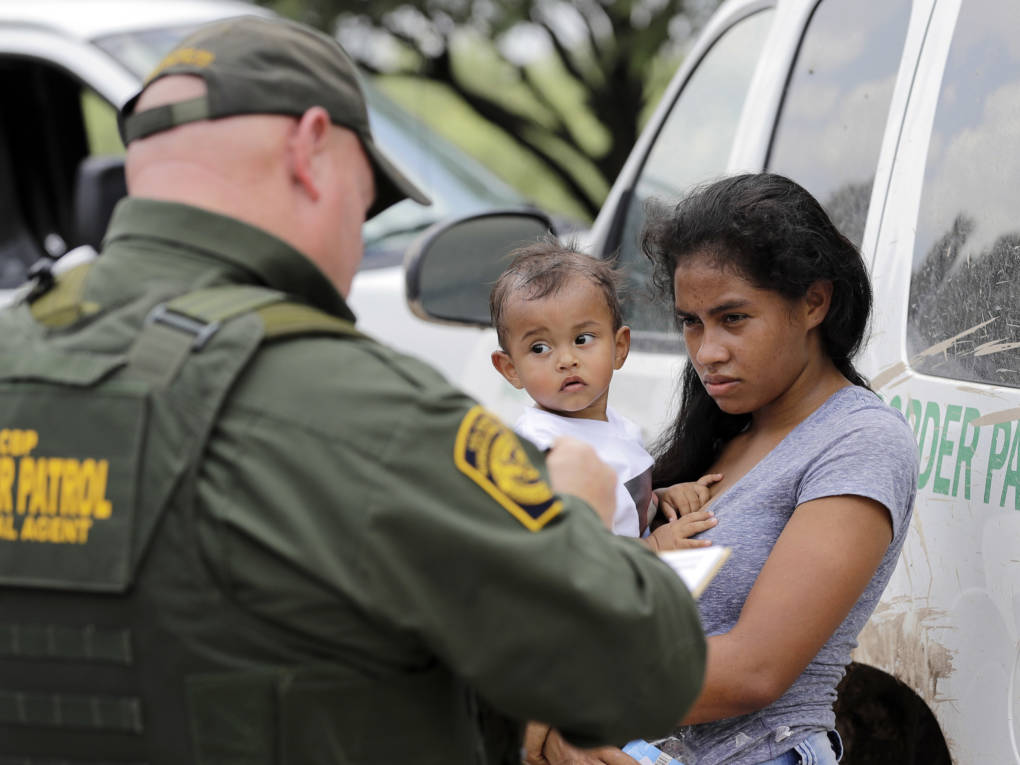
"caption": "President Trump's zero tolerance policy left the CBP struggling to process the number of people it detained — and the agency says it will temporarily stop turning immigrant parents over to prosecutors. Here, a mother migrating from Honduras holds her 1-year-old child as she surrenders to border agents on Monday. The two had illegally crossed the border near McAllen, Texas.",
"description": "President Trump's zero-tolerance policy left the CBP struggling to process the number of people it detained — and the agency says it will temporarily stop turning immigrant parents over to prosecutors. Here, a mother migrating from Honduras holds her 1-year-old child as she surrenders to border agents on Monday. The two had illegally crossed the border near McAllen, Texa",
"title": "President Trump's zero-tolerance policy left the CBP struggling to process the number of people it detained — and the agency says it will temporarily stop turning immigrant parents over to prosecutors. Here, a mother migrating from Honduras holds her 1-year-old child as she surrenders to border agents on Monday. The two had illegally crossed the border near McAllen, Texas.",
"credit": "David J. Phillip/AP",
"status": "inherit",
"isLoading": false,
"fetchFailed": false
},
"news_11677274": {
"type": "attachments",
"id": "news_11677274",
"meta": {
"index": "attachments_1716263798",
"site": "news",
"id": "11677274",
"found": true
},
"parent": 0,
"imgSizes": {
"small": {
"file": "https://ww2.kqed.org/app/uploads/sites/10/2018/06/featured01-520x253.jpg",
"width": 520,
"mimeType": "image/jpeg",
"height": 253
},
"twentyfourteen-full-width": {
"file": "https://ww2.kqed.org/app/uploads/sites/10/2018/06/featured01-1038x576.jpg",
"width": 1038,
"mimeType": "image/jpeg",
"height": 576
},
"thumbnail": {
"file": "https://ww2.kqed.org/app/uploads/sites/10/2018/06/featured01-160x78.jpg",
"width": 160,
"mimeType": "image/jpeg",
"height": 78
},
"fd-sm": {
"file": "https://ww2.kqed.org/app/uploads/sites/10/2018/06/featured01-960x467.jpg",
"width": 960,
"mimeType": "image/jpeg",
"height": 467
},
"post-thumbnail": {
"file": "https://ww2.kqed.org/app/uploads/sites/10/2018/06/featured01-672x372.jpg",
"width": 672,
"mimeType": "image/jpeg",
"height": 372
},
"xsmall": {
"file": "https://ww2.kqed.org/app/uploads/sites/10/2018/06/featured01-375x182.jpg",
"width": 375,
"mimeType": "image/jpeg",
"height": 182
},
"kqedFullSize": {
"file": "https://ww2.kqed.org/app/uploads/sites/10/2018/06/featured01.jpg",
"width": 1920,
"height": 933
},
"large": {
"file": "https://ww2.kqed.org/app/uploads/sites/10/2018/06/featured01-1020x496.jpg",
"width": 1020,
"mimeType": "image/jpeg",
"height": 496
},
"xlarge": {
"file": "https://ww2.kqed.org/app/uploads/sites/10/2018/06/featured01-1180x573.jpg",
"width": 1180,
"mimeType": "image/jpeg",
"height": 573
},
"complete_open_graph": {
"file": "https://ww2.kqed.org/app/uploads/sites/10/2018/06/featured01-1200x583.jpg",
"width": 1200,
"mimeType": "image/jpeg",
"height": 583
},
"guest-author-50": {
"file": "https://ww2.kqed.org/app/uploads/sites/10/2018/06/featured01-50x50.jpg",
"width": 50,
"mimeType": "image/jpeg",
"height": 50
},
"guest-author-96": {
"file": "https://ww2.kqed.org/app/uploads/sites/10/2018/06/featured01-96x96.jpg",
"width": 96,
"mimeType": "image/jpeg",
"height": 96
},
"medium": {
"file": "https://ww2.kqed.org/app/uploads/sites/10/2018/06/featured01-800x389.jpg",
"width": 800,
"mimeType": "image/jpeg",
"height": 389
},
"guest-author-64": {
"file": "https://ww2.kqed.org/app/uploads/sites/10/2018/06/featured01-64x64.jpg",
"width": 64,
"mimeType": "image/jpeg",
"height": 64
},
"guest-author-32": {
"file": "https://ww2.kqed.org/app/uploads/sites/10/2018/06/featured01-32x32.jpg",
"width": 32,
"mimeType": "image/jpeg",
"height": 32
},
"fd-lrg": {
"file": "https://ww2.kqed.org/app/uploads/sites/10/2018/06/featured01-1920x933.jpg",
"width": 1920,
"mimeType": "image/jpeg",
"height": 933
},
"fd-med": {
"file": "https://ww2.kqed.org/app/uploads/sites/10/2018/06/featured01-1180x573.jpg",
"width": 1180,
"mimeType": "image/jpeg",
"height": 573
},
"full-width": {
"file": "https://ww2.kqed.org/app/uploads/sites/10/2018/06/featured01-1920x933.jpg",
"width": 1920,
"mimeType": "image/jpeg",
"height": 933
},
"detail": {
"file": "https://ww2.kqed.org/app/uploads/sites/10/2018/06/featured01-150x150.jpg",
"width": 150,
"mimeType": "image/jpeg",
"height": 150
},
"guest-author-128": {
"file": "https://ww2.kqed.org/app/uploads/sites/10/2018/06/featured01-128x128.jpg",
"width": 128,
"mimeType": "image/jpeg",
"height": 128
},
"xxsmall": {
"file": "https://ww2.kqed.org/app/uploads/sites/10/2018/06/featured01-240x117.jpg",
"width": 240,
"mimeType": "image/jpeg",
"height": 117
}
},
"publishDate": 1529986854,
"modified": 1529987012,
"caption": null,
"description": null,
"title": "featured01",
"credit": "Mark Fiore/KQED",
"status": "inherit",
"isLoading": false,
"fetchFailed": false
},
"news_11686765": {
"type": "attachments",
"id": "news_11686765",
"meta": {
"index": "attachments_1716263798",
"site": "news",
"id": "11686765",
"found": true
},
"parent": 11677170,
"imgSizes": {
"small": {
"file": "https://ww2.kqed.org/app/uploads/sites/10/2018/06/filomenas_flight_social_updated01-520x333.jpg",
"width": 520,
"mimeType": "image/jpeg",
"height": 333
},
"twentyfourteen-full-width": {
"file": "https://ww2.kqed.org/app/uploads/sites/10/2018/06/filomenas_flight_social_updated01-1038x576.jpg",
"width": 1038,
"mimeType": "image/jpeg",
"height": 576
},
"thumbnail": {
"file": "https://ww2.kqed.org/app/uploads/sites/10/2018/06/filomenas_flight_social_updated01-160x103.jpg",
"width": 160,
"mimeType": "image/jpeg",
"height": 103
},
"fd-sm": {
"file": "https://ww2.kqed.org/app/uploads/sites/10/2018/06/filomenas_flight_social_updated01-960x616.jpg",
"width": 960,
"mimeType": "image/jpeg",
"height": 616
},
"post-thumbnail": {
"file": "https://ww2.kqed.org/app/uploads/sites/10/2018/06/filomenas_flight_social_updated01-672x372.jpg",
"width": 672,
"mimeType": "image/jpeg",
"height": 372
},
"xsmall": {
"file": "https://ww2.kqed.org/app/uploads/sites/10/2018/06/filomenas_flight_social_updated01-375x240.jpg",
"width": 375,
"mimeType": "image/jpeg",
"height": 240
},
"kqedFullSize": {
"file": "https://ww2.kqed.org/app/uploads/sites/10/2018/06/filomenas_flight_social_updated01.jpg",
"width": 1920,
"height": 1231
},
"large": {
"file": "https://ww2.kqed.org/app/uploads/sites/10/2018/06/filomenas_flight_social_updated01-1020x654.jpg",
"width": 1020,
"mimeType": "image/jpeg",
"height": 654
},
"xlarge": {
"file": "https://ww2.kqed.org/app/uploads/sites/10/2018/06/filomenas_flight_social_updated01-1180x757.jpg",
"width": 1180,
"mimeType": "image/jpeg",
"height": 757
},
"complete_open_graph": {
"file": "https://ww2.kqed.org/app/uploads/sites/10/2018/06/filomenas_flight_social_updated01-1200x769.jpg",
"width": 1200,
"mimeType": "image/jpeg",
"height": 769
},
"guest-author-50": {
"file": "https://ww2.kqed.org/app/uploads/sites/10/2018/06/filomenas_flight_social_updated01-50x50.jpg",
"width": 50,
"mimeType": "image/jpeg",
"height": 50
},
"guest-author-96": {
"file": "https://ww2.kqed.org/app/uploads/sites/10/2018/06/filomenas_flight_social_updated01-96x96.jpg",
"width": 96,
"mimeType": "image/jpeg",
"height": 96
},
"medium": {
"file": "https://ww2.kqed.org/app/uploads/sites/10/2018/06/filomenas_flight_social_updated01-800x513.jpg",
"width": 800,
"mimeType": "image/jpeg",
"height": 513
},
"guest-author-64": {
"file": "https://ww2.kqed.org/app/uploads/sites/10/2018/06/filomenas_flight_social_updated01-64x64.jpg",
"width": 64,
"mimeType": "image/jpeg",
"height": 64
},
"guest-author-32": {
"file": "https://ww2.kqed.org/app/uploads/sites/10/2018/06/filomenas_flight_social_updated01-32x32.jpg",
"width": 32,
"mimeType": "image/jpeg",
"height": 32
},
"fd-lrg": {
"file": "https://ww2.kqed.org/app/uploads/sites/10/2018/06/filomenas_flight_social_updated01-1920x1231.jpg",
"width": 1920,
"mimeType": "image/jpeg",
"height": 1231
},
"fd-med": {
"file": "https://ww2.kqed.org/app/uploads/sites/10/2018/06/filomenas_flight_social_updated01-1180x757.jpg",
"width": 1180,
"mimeType": "image/jpeg",
"height": 757
},
"full-width": {
"file": "https://ww2.kqed.org/app/uploads/sites/10/2018/06/filomenas_flight_social_updated01-1920x1231.jpg",
"width": 1920,
"mimeType": "image/jpeg",
"height": 1231
},
"detail": {
"file": "https://ww2.kqed.org/app/uploads/sites/10/2018/06/filomenas_flight_social_updated01-150x150.jpg",
"width": 150,
"mimeType": "image/jpeg",
"height": 150
},
"guest-author-128": {
"file": "https://ww2.kqed.org/app/uploads/sites/10/2018/06/filomenas_flight_social_updated01-128x128.jpg",
"width": 128,
"mimeType": "image/jpeg",
"height": 128
},
"xxsmall": {
"file": "https://ww2.kqed.org/app/uploads/sites/10/2018/06/filomenas_flight_social_updated01-240x154.jpg",
"width": 240,
"mimeType": "image/jpeg",
"height": 154
}
},
"publishDate": 1534199951,
"modified": 1534199980,
"caption": null,
"description": null,
"title": "filomenas_flight_social_updated01",
"credit": null,
"status": "inherit",
"isLoading": false,
"fetchFailed": false
},
"news_11677003": {
"type": "attachments",
"id": "news_11677003",
"meta": {
"index": "attachments_1716263798",
"site": "news",
"id": "11677003",
"found": true
},
"parent": 11677002,
"imgSizes": {
"small": {
"file": "https://ww2.kqed.org/app/uploads/sites/10/2018/06/rtx69rzp_wide-5f527a34cc8102bbea692e81c2b2e8c2205ce722-520x292.jpg",
"width": 520,
"mimeType": "image/jpeg",
"height": 292
},
"twentyfourteen-full-width": {
"file": "https://ww2.kqed.org/app/uploads/sites/10/2018/06/rtx69rzp_wide-5f527a34cc8102bbea692e81c2b2e8c2205ce722-1038x576.jpg",
"width": 1038,
"mimeType": "image/jpeg",
"height": 576
},
"thumbnail": {
"file": "https://ww2.kqed.org/app/uploads/sites/10/2018/06/rtx69rzp_wide-5f527a34cc8102bbea692e81c2b2e8c2205ce722-160x90.jpg",
"width": 160,
"mimeType": "image/jpeg",
"height": 90
},
"fd-sm": {
"file": "https://ww2.kqed.org/app/uploads/sites/10/2018/06/rtx69rzp_wide-5f527a34cc8102bbea692e81c2b2e8c2205ce722-960x540.jpg",
"width": 960,
"mimeType": "image/jpeg",
"height": 540
},
"post-thumbnail": {
"file": "https://ww2.kqed.org/app/uploads/sites/10/2018/06/rtx69rzp_wide-5f527a34cc8102bbea692e81c2b2e8c2205ce722-672x372.jpg",
"width": 672,
"mimeType": "image/jpeg",
"height": 372
},
"xsmall": {
"file": "https://ww2.kqed.org/app/uploads/sites/10/2018/06/rtx69rzp_wide-5f527a34cc8102bbea692e81c2b2e8c2205ce722-375x211.jpg",
"width": 375,
"mimeType": "image/jpeg",
"height": 211
},
"kqedFullSize": {
"file": "https://ww2.kqed.org/app/uploads/sites/10/2018/06/rtx69rzp_wide-5f527a34cc8102bbea692e81c2b2e8c2205ce722.jpg",
"width": 2362,
"height": 1328
},
"large": {
"file": "https://ww2.kqed.org/app/uploads/sites/10/2018/06/rtx69rzp_wide-5f527a34cc8102bbea692e81c2b2e8c2205ce722-1020x573.jpg",
"width": 1020,
"mimeType": "image/jpeg",
"height": 573
},
"xlarge": {
"file": "https://ww2.kqed.org/app/uploads/sites/10/2018/06/rtx69rzp_wide-5f527a34cc8102bbea692e81c2b2e8c2205ce722-1180x663.jpg",
"width": 1180,
"mimeType": "image/jpeg",
"height": 663
},
"complete_open_graph": {
"file": "https://ww2.kqed.org/app/uploads/sites/10/2018/06/rtx69rzp_wide-5f527a34cc8102bbea692e81c2b2e8c2205ce722-1200x675.jpg",
"width": 1200,
"mimeType": "image/jpeg",
"height": 675
},
"guest-author-50": {
"file": "https://ww2.kqed.org/app/uploads/sites/10/2018/06/rtx69rzp_wide-5f527a34cc8102bbea692e81c2b2e8c2205ce722-50x50.jpg",
"width": 50,
"mimeType": "image/jpeg",
"height": 50
},
"guest-author-96": {
"file": "https://ww2.kqed.org/app/uploads/sites/10/2018/06/rtx69rzp_wide-5f527a34cc8102bbea692e81c2b2e8c2205ce722-96x96.jpg",
"width": 96,
"mimeType": "image/jpeg",
"height": 96
},
"medium": {
"file": "https://ww2.kqed.org/app/uploads/sites/10/2018/06/rtx69rzp_wide-5f527a34cc8102bbea692e81c2b2e8c2205ce722-800x450.jpg",
"width": 800,
"mimeType": "image/jpeg",
"height": 450
},
"guest-author-64": {
"file": "https://ww2.kqed.org/app/uploads/sites/10/2018/06/rtx69rzp_wide-5f527a34cc8102bbea692e81c2b2e8c2205ce722-64x64.jpg",
"width": 64,
"mimeType": "image/jpeg",
"height": 64
},
"guest-author-32": {
"file": "https://ww2.kqed.org/app/uploads/sites/10/2018/06/rtx69rzp_wide-5f527a34cc8102bbea692e81c2b2e8c2205ce722-32x32.jpg",
"width": 32,
"mimeType": "image/jpeg",
"height": 32
},
"fd-lrg": {
"file": "https://ww2.kqed.org/app/uploads/sites/10/2018/06/rtx69rzp_wide-5f527a34cc8102bbea692e81c2b2e8c2205ce722-1920x1079.jpg",
"width": 1920,
"mimeType": "image/jpeg",
"height": 1079
},
"fd-med": {
"file": "https://ww2.kqed.org/app/uploads/sites/10/2018/06/rtx69rzp_wide-5f527a34cc8102bbea692e81c2b2e8c2205ce722-1180x663.jpg",
"width": 1180,
"mimeType": "image/jpeg",
"height": 663
},
"full-width": {
"file": "https://ww2.kqed.org/app/uploads/sites/10/2018/06/rtx69rzp_wide-5f527a34cc8102bbea692e81c2b2e8c2205ce722-1920x1079.jpg",
"width": 1920,
"mimeType": "image/jpeg",
"height": 1079
},
"detail": {
"file": "https://ww2.kqed.org/app/uploads/sites/10/2018/06/rtx69rzp_wide-5f527a34cc8102bbea692e81c2b2e8c2205ce722-150x150.jpg",
"width": 150,
"mimeType": "image/jpeg",
"height": 150
},
"guest-author-128": {
"file": "https://ww2.kqed.org/app/uploads/sites/10/2018/06/rtx69rzp_wide-5f527a34cc8102bbea692e81c2b2e8c2205ce722-128x128.jpg",
"width": 128,
"mimeType": "image/jpeg",
"height": 128
},
"xxsmall": {
"file": "https://ww2.kqed.org/app/uploads/sites/10/2018/06/rtx69rzp_wide-5f527a34cc8102bbea692e81c2b2e8c2205ce722-240x135.jpg",
"width": 240,
"mimeType": "image/jpeg",
"height": 135
}
},
"publishDate": 1529946375,
"modified": 1529948732,
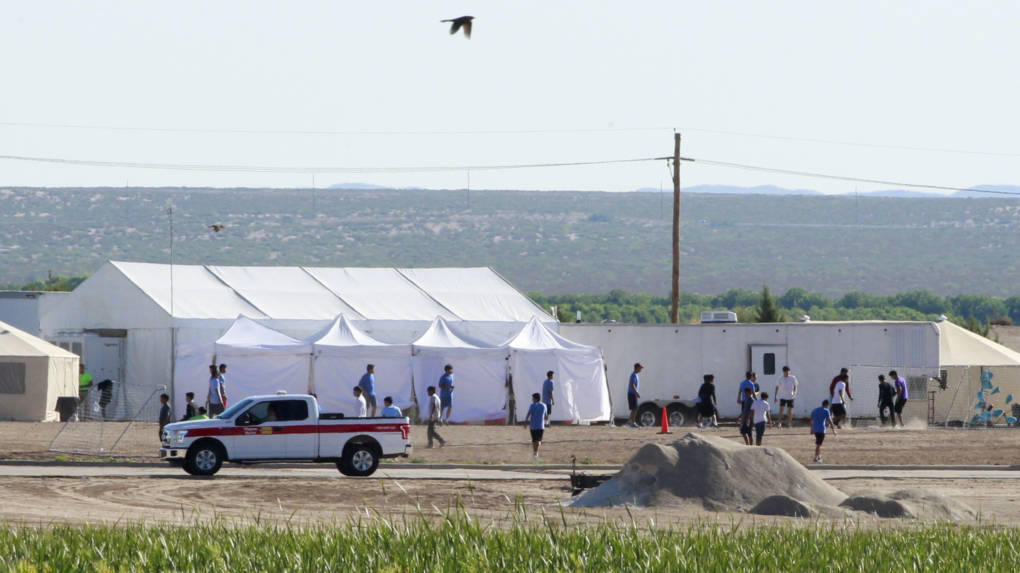
"caption": "The Pentagon plans to build temporary camps for detained immigrants. Here, children of detained migrants are seen at a tent encampment near the U.S. Customs and Border Protection port of entry in Tornillo, Texas",
"description": "The Pentagon plans to build temporary camps for detained immigrants. Here, children of detained migrants are seen at a tent encampment near the U.S. Customs and Border Protection port of entry in Tornillo, Texas",
"title": "The Pentagon plans to build temporary camps for detained immigrants. Here, children of detained migrants are seen at a tent encampment near the U.S. Customs and Border Protection port of entry in Tornillo, Texas.",
"credit": "Jose Luis Gonzalez/Reuters",
"status": "inherit",
"isLoading": false,
"fetchFailed": false
},
"news_11677117": {
"type": "attachments",
"id": "news_11677117",
"meta": {
"index": "attachments_1716263798",
"site": "news",
"id": "11677117",
"found": true
},
"parent": 11676972,
"imgSizes": {
"small": {
"file": "https://ww2.kqed.org/app/uploads/sites/10/2018/06/GettyImages-980563664-520x347.jpg",
"width": 520,
"mimeType": "image/jpeg",
"height": 347
},
"twentyfourteen-full-width": {
"file": "https://ww2.kqed.org/app/uploads/sites/10/2018/06/GettyImages-980563664-1024x576.jpg",
"width": 1024,
"mimeType": "image/jpeg",
"height": 576
},
"thumbnail": {
"file": "https://ww2.kqed.org/app/uploads/sites/10/2018/06/GettyImages-980563664-160x107.jpg",
"width": 160,
"mimeType": "image/jpeg",
"height": 107
},
"fd-sm": {
"file": "https://ww2.kqed.org/app/uploads/sites/10/2018/06/GettyImages-980563664-960x640.jpg",
"width": 960,
"mimeType": "image/jpeg",
"height": 640
},
"post-thumbnail": {
"file": "https://ww2.kqed.org/app/uploads/sites/10/2018/06/GettyImages-980563664-672x372.jpg",
"width": 672,
"mimeType": "image/jpeg",
"height": 372
},
"xsmall": {
"file": "https://ww2.kqed.org/app/uploads/sites/10/2018/06/GettyImages-980563664-375x250.jpg",
"width": 375,
"mimeType": "image/jpeg",
"height": 250
},
"kqedFullSize": {
"file": "https://ww2.kqed.org/app/uploads/sites/10/2018/06/GettyImages-980563664.jpg",
"width": 1024,
"height": 683
},
"large": {
"file": "https://ww2.kqed.org/app/uploads/sites/10/2018/06/GettyImages-980563664-1020x680.jpg",
"width": 1020,
"mimeType": "image/jpeg",
"height": 680
},
"guest-author-50": {
"file": "https://ww2.kqed.org/app/uploads/sites/10/2018/06/GettyImages-980563664-50x50.jpg",
"width": 50,
"mimeType": "image/jpeg",
"height": 50
},
"guest-author-96": {
"file": "https://ww2.kqed.org/app/uploads/sites/10/2018/06/GettyImages-980563664-96x96.jpg",
"width": 96,
"mimeType": "image/jpeg",
"height": 96
},
"medium": {
"file": "https://ww2.kqed.org/app/uploads/sites/10/2018/06/GettyImages-980563664-800x534.jpg",
"width": 800,
"mimeType": "image/jpeg",
"height": 534
},
"guest-author-64": {
"file": "https://ww2.kqed.org/app/uploads/sites/10/2018/06/GettyImages-980563664-64x64.jpg",
"width": 64,
"mimeType": "image/jpeg",
"height": 64
},
"guest-author-32": {
"file": "https://ww2.kqed.org/app/uploads/sites/10/2018/06/GettyImages-980563664-32x32.jpg",
"width": 32,
"mimeType": "image/jpeg",
"height": 32
},
"detail": {
"file": "https://ww2.kqed.org/app/uploads/sites/10/2018/06/GettyImages-980563664-150x150.jpg",
"width": 150,
"mimeType": "image/jpeg",
"height": 150
},
"guest-author-128": {
"file": "https://ww2.kqed.org/app/uploads/sites/10/2018/06/GettyImages-980563664-128x128.jpg",
"width": 128,
"mimeType": "image/jpeg",
"height": 128
},
"xxsmall": {
"file": "https://ww2.kqed.org/app/uploads/sites/10/2018/06/GettyImages-980563664-240x160.jpg",
"width": 240,
"mimeType": "image/jpeg",
"height": 160
}
},
"publishDate": 1529957781,
"modified": 1529957845,
"caption": "A migrant mother walks with her two daughters on their way to the port of entry to ask for asylum in the U.S. on June 21, 2018. ",
"description": "A migrant mother walks with her two daughters on their way to the port of entry to ask for asylum in the U.S. on June 21, 2018. ",
"title": "President Trump's \"Zero Tolerance\" Mexico Border Policy Stirs Controversy And Confusion",
"credit": "Mario Tama/Getty Images",
"status": "inherit",
"isLoading": false,
"fetchFailed": false
},
"news_11677009": {
"type": "attachments",
"id": "news_11677009",
"meta": {
"index": "attachments_1716263798",
"site": "news",
"id": "11677009",
"found": true
},
"parent": 11677007,
"imgSizes": {
"small": {
"file": "https://ww2.kqed.org/app/uploads/sites/10/2018/06/border-520x291.jpg",
"width": 520,
"mimeType": "image/jpeg",
"height": 291
},
"twentyfourteen-full-width": {
"file": "https://ww2.kqed.org/app/uploads/sites/10/2018/06/border-1038x576.jpg",
"width": 1038,
"mimeType": "image/jpeg",
"height": 576
},
"thumbnail": {
"file": "https://ww2.kqed.org/app/uploads/sites/10/2018/06/border-160x90.jpg",
"width": 160,
"mimeType": "image/jpeg",
"height": 90
},
"fd-sm": {
"file": "https://ww2.kqed.org/app/uploads/sites/10/2018/06/border-960x538.jpg",
"width": 960,
"mimeType": "image/jpeg",
"height": 538
},
"post-thumbnail": {
"file": "https://ww2.kqed.org/app/uploads/sites/10/2018/06/border-672x372.jpg",
"width": 672,
"mimeType": "image/jpeg",
"height": 372
},
"xsmall": {
"file": "https://ww2.kqed.org/app/uploads/sites/10/2018/06/border-375x210.jpg",
"width": 375,
"mimeType": "image/jpeg",
"height": 210
},
"kqedFullSize": {
"file": "https://ww2.kqed.org/app/uploads/sites/10/2018/06/border.jpg",
"width": 1662,
"height": 931
},
"large": {
"file": "https://ww2.kqed.org/app/uploads/sites/10/2018/06/border-1020x571.jpg",
"width": 1020,
"mimeType": "image/jpeg",
"height": 571
},
"xlarge": {
"file": "https://ww2.kqed.org/app/uploads/sites/10/2018/06/border-1180x661.jpg",
"width": 1180,
"mimeType": "image/jpeg",
"height": 661
},
"complete_open_graph": {
"file": "https://ww2.kqed.org/app/uploads/sites/10/2018/06/border-1200x672.jpg",
"width": 1200,
"mimeType": "image/jpeg",
"height": 672
},
"guest-author-50": {
"file": "https://ww2.kqed.org/app/uploads/sites/10/2018/06/border-50x50.jpg",
"width": 50,
"mimeType": "image/jpeg",
"height": 50
},
"guest-author-96": {
"file": "https://ww2.kqed.org/app/uploads/sites/10/2018/06/border-96x96.jpg",
"width": 96,
"mimeType": "image/jpeg",
"height": 96
},
"medium": {
"file": "https://ww2.kqed.org/app/uploads/sites/10/2018/06/border-800x448.jpg",
"width": 800,
"mimeType": "image/jpeg",
"height": 448
},
"guest-author-64": {
"file": "https://ww2.kqed.org/app/uploads/sites/10/2018/06/border-64x64.jpg",
"width": 64,
"mimeType": "image/jpeg",
"height": 64
},
"guest-author-32": {
"file": "https://ww2.kqed.org/app/uploads/sites/10/2018/06/border-32x32.jpg",
"width": 32,
"mimeType": "image/jpeg",
"height": 32
},
"fd-med": {
"file": "https://ww2.kqed.org/app/uploads/sites/10/2018/06/border-1180x661.jpg",
"width": 1180,
"mimeType": "image/jpeg",
"height": 661
},
"detail": {
"file": "https://ww2.kqed.org/app/uploads/sites/10/2018/06/border-150x150.jpg",
"width": 150,
"mimeType": "image/jpeg",
"height": 150
},
"guest-author-128": {
"file": "https://ww2.kqed.org/app/uploads/sites/10/2018/06/border-128x128.jpg",
"width": 128,
"mimeType": "image/jpeg",
"height": 128
},
"xxsmall": {
"file": "https://ww2.kqed.org/app/uploads/sites/10/2018/06/border-240x134.jpg",
"width": 240,
"mimeType": "image/jpeg",
"height": 134
}
},
"publishDate": 1529948713,
"modified": 1529948713,
"caption": null,
"description": null,
"title": "border",
"credit": null,
"status": "inherit",
"isLoading": false,
"fetchFailed": false
},
"news_11676721": {
"type": "attachments",
"id": "news_11676721",
"meta": {
"index": "attachments_1716263798",
"site": "news",
"id": "11676721",
"found": true
},
"parent": 11676619,
"imgSizes": {
"small": {
"file": "https://ww2.kqed.org/app/uploads/sites/10/2018/06/534marquee-520x291.jpg",
"width": 520,
"mimeType": "image/jpeg",
"height": 291
},
"twentyfourteen-full-width": {
"file": "https://ww2.kqed.org/app/uploads/sites/10/2018/06/534marquee-1038x576.jpg",
"width": 1038,
"mimeType": "image/jpeg",
"height": 576
},
"thumbnail": {
"file": "https://ww2.kqed.org/app/uploads/sites/10/2018/06/534marquee-160x90.jpg",
"width": 160,
"mimeType": "image/jpeg",
"height": 90
},
"fd-sm": {
"file": "https://ww2.kqed.org/app/uploads/sites/10/2018/06/534marquee-960x538.jpg",
"width": 960,
"mimeType": "image/jpeg",
"height": 538
},
"post-thumbnail": {
"file": "https://ww2.kqed.org/app/uploads/sites/10/2018/06/534marquee-672x372.jpg",
"width": 672,
"mimeType": "image/jpeg",
"height": 372
},
"xsmall": {
"file": "https://ww2.kqed.org/app/uploads/sites/10/2018/06/534marquee-375x210.jpg",
"width": 375,
"mimeType": "image/jpeg",
"height": 210
},
"kqedFullSize": {
"file": "https://ww2.kqed.org/app/uploads/sites/10/2018/06/534marquee.jpg",
"width": 1671,
"height": 936
},
"large": {
"file": "https://ww2.kqed.org/app/uploads/sites/10/2018/06/534marquee-1020x571.jpg",
"width": 1020,
"mimeType": "image/jpeg",
"height": 571
},
"xlarge": {
"file": "https://ww2.kqed.org/app/uploads/sites/10/2018/06/534marquee-1180x661.jpg",
"width": 1180,
"mimeType": "image/jpeg",
"height": 661
},
"complete_open_graph": {
"file": "https://ww2.kqed.org/app/uploads/sites/10/2018/06/534marquee-1200x672.jpg",
"width": 1200,
"mimeType": "image/jpeg",
"height": 672
},
"guest-author-50": {
"file": "https://ww2.kqed.org/app/uploads/sites/10/2018/06/534marquee-50x50.jpg",
"width": 50,
"mimeType": "image/jpeg",
"height": 50
},
"guest-author-96": {
"file": "https://ww2.kqed.org/app/uploads/sites/10/2018/06/534marquee-96x96.jpg",
"width": 96,
"mimeType": "image/jpeg",
"height": 96
},
"medium": {
"file": "https://ww2.kqed.org/app/uploads/sites/10/2018/06/534marquee-800x448.jpg",
"width": 800,
"mimeType": "image/jpeg",
"height": 448
},
"guest-author-64": {
"file": "https://ww2.kqed.org/app/uploads/sites/10/2018/06/534marquee-64x64.jpg",
"width": 64,
"mimeType": "image/jpeg",
"height": 64
},
"guest-author-32": {
"file": "https://ww2.kqed.org/app/uploads/sites/10/2018/06/534marquee-32x32.jpg",
"width": 32,
"mimeType": "image/jpeg",
"height": 32
},
"fd-med": {
"file": "https://ww2.kqed.org/app/uploads/sites/10/2018/06/534marquee-1180x661.jpg",
"width": 1180,
"mimeType": "image/jpeg",
"height": 661
},
"detail": {
"file": "https://ww2.kqed.org/app/uploads/sites/10/2018/06/534marquee-150x150.jpg",
"width": 150,
"mimeType": "image/jpeg",
"height": 150
},
"guest-author-128": {
"file": "https://ww2.kqed.org/app/uploads/sites/10/2018/06/534marquee-128x128.jpg",
"width": 128,
"mimeType": "image/jpeg",
"height": 128
},
"xxsmall": {
"file": "https://ww2.kqed.org/app/uploads/sites/10/2018/06/534marquee-240x134.jpg",
"width": 240,
"mimeType": "image/jpeg",
"height": 134
}
},
"publishDate": 1529713650,
"modified": 1529713650,
"caption": null,
"description": null,
"title": "534marquee",
"credit": null,
"status": "inherit",
"isLoading": false,
"fetchFailed": false
},
"news_11676145": {
"type": "attachments",
"id": "news_11676145",
"meta": {
"index": "attachments_1716263798",
"site": "news",
"id": "11676145",
"found": true
},
"parent": 11676132,
"imgSizes": {
"small": {
"file": "https://ww2.kqed.org/app/uploads/sites/10/2018/06/family_final_062018_final-520x346.jpg",
"width": 520,
"mimeType": "image/jpeg",
"height": 346
},
"twentyfourteen-full-width": {
"file": "https://ww2.kqed.org/app/uploads/sites/10/2018/06/family_final_062018_final-1038x576.jpg",
"width": 1038,
"mimeType": "image/jpeg",
"height": 576
},
"thumbnail": {
"file": "https://ww2.kqed.org/app/uploads/sites/10/2018/06/family_final_062018_final-160x107.jpg",
"width": 160,
"mimeType": "image/jpeg",
"height": 107
},
"fd-sm": {
"file": "https://ww2.kqed.org/app/uploads/sites/10/2018/06/family_final_062018_final-960x639.jpg",
"width": 960,
"mimeType": "image/jpeg",
"height": 639
},
"post-thumbnail": {
"file": "https://ww2.kqed.org/app/uploads/sites/10/2018/06/family_final_062018_final-672x372.jpg",
"width": 672,
"mimeType": "image/jpeg",
"height": 372
},
"xsmall": {
"file": "https://ww2.kqed.org/app/uploads/sites/10/2018/06/family_final_062018_final-375x250.jpg",
"width": 375,
"mimeType": "image/jpeg",
"height": 250
},
"kqedFullSize": {
"file": "https://ww2.kqed.org/app/uploads/sites/10/2018/06/family_final_062018_final.jpg",
"width": 1920,
"height": 1278
},
"large": {
"file": "https://ww2.kqed.org/app/uploads/sites/10/2018/06/family_final_062018_final-1020x679.jpg",
"width": 1020,
"mimeType": "image/jpeg",
"height": 679
},
"xlarge": {
"file": "https://ww2.kqed.org/app/uploads/sites/10/2018/06/family_final_062018_final-1180x785.jpg",
"width": 1180,
"mimeType": "image/jpeg",
"height": 785
},
"complete_open_graph": {
"file": "https://ww2.kqed.org/app/uploads/sites/10/2018/06/family_final_062018_final-1200x799.jpg",
"width": 1200,
"mimeType": "image/jpeg",
"height": 799
},
"guest-author-50": {
"file": "https://ww2.kqed.org/app/uploads/sites/10/2018/06/family_final_062018_final-50x50.jpg",
"width": 50,
"mimeType": "image/jpeg",
"height": 50
},
"guest-author-96": {
"file": "https://ww2.kqed.org/app/uploads/sites/10/2018/06/family_final_062018_final-96x96.jpg",
"width": 96,
"mimeType": "image/jpeg",
"height": 96
},
"medium": {
"file": "https://ww2.kqed.org/app/uploads/sites/10/2018/06/family_final_062018_final-800x533.jpg",
"width": 800,
"mimeType": "image/jpeg",
"height": 533
},
"guest-author-64": {
"file": "https://ww2.kqed.org/app/uploads/sites/10/2018/06/family_final_062018_final-64x64.jpg",
"width": 64,
"mimeType": "image/jpeg",
"height": 64
},
"guest-author-32": {
"file": "https://ww2.kqed.org/app/uploads/sites/10/2018/06/family_final_062018_final-32x32.jpg",
"width": 32,
"mimeType": "image/jpeg",
"height": 32
},
"fd-lrg": {
"file": "https://ww2.kqed.org/app/uploads/sites/10/2018/06/family_final_062018_final-1920x1278.jpg",
"width": 1920,
"mimeType": "image/jpeg",
"height": 1278
},
"fd-med": {
"file": "https://ww2.kqed.org/app/uploads/sites/10/2018/06/family_final_062018_final-1180x785.jpg",
"width": 1180,
"mimeType": "image/jpeg",
"height": 785
},
"full-width": {
"file": "https://ww2.kqed.org/app/uploads/sites/10/2018/06/family_final_062018_final-1920x1278.jpg",
"width": 1920,
"mimeType": "image/jpeg",
"height": 1278
},
"detail": {
"file": "https://ww2.kqed.org/app/uploads/sites/10/2018/06/family_final_062018_final-150x150.jpg",
"width": 150,
"mimeType": "image/jpeg",
"height": 150
},
"guest-author-128": {
"file": "https://ww2.kqed.org/app/uploads/sites/10/2018/06/family_final_062018_final-128x128.jpg",
"width": 128,
"mimeType": "image/jpeg",
"height": 128
},
"xxsmall": {
"file": "https://ww2.kqed.org/app/uploads/sites/10/2018/06/family_final_062018_final-240x160.jpg",
"width": 240,
"mimeType": "image/jpeg",
"height": 160
}
},
"publishDate": 1529534129,
"modified": 1529534164,
"caption": null,
"description": null,
"title": "family_final_062018_final",
"credit": null,
"status": "inherit",
"isLoading": false,
"fetchFailed": false
}
},
"audioPlayerReducer": {
"postId": "stream_live",
"isPaused": true,
"isPlaying": false,
"pfsActive": false,
"pledgeModalIsOpen": true,
"playerDrawerIsOpen": false,
"liveAudioPlayStartedAt": 0,
"liveAudioPlayContext": ""
},
"authorsReducer": {
"byline_news_11677312": {
"type": "authors",
"id": "byline_news_11677312",
"meta": {
"override": true
},
"slug": "byline_news_11677312",
"name": "Bill Chappell\u003cbr>\u003cstrong>NPR\u003c/strong>",
"isLoading": false
},
"byline_news_11677002": {
"type": "authors",
"id": "byline_news_11677002",
"meta": {
"override": true
},
"slug": "byline_news_11677002",
"name": "Bill Chappell\u003cbr>\u003cstrong>NPR\u003c/strong>",
"isLoading": false
},
"kqed": {
"type": "authors",
"id": "236",
"meta": {
"index": "authors_1716337520",
"id": "236",
"found": true
},
"name": "KQED News Staff",
"firstName": "KQED News Staff",
"lastName": null,
"slug": "kqed",
"email": "faq@kqed.org",
"display_author_email": false,
"staff_mastheads": [],
"title": null,
"bio": null,
"avatar": "https://secure.gravatar.com/avatar/ef0e801a68c4c54afa9180db14084167?s=600&d=blank&r=g",
"twitter": null,
"facebook": null,
"instagram": null,
"linkedin": null,
"sites": [
{
"site": "arts",
"roles": [
"contributor"
]
},
{
"site": "news",
"roles": [
"editor"
]
},
{
"site": "futureofyou",
"roles": [
"author"
]
}
],
"headData": {
"title": "KQED News Staff | KQED",
"description": null,
"ogImgSrc": "https://secure.gravatar.com/avatar/ef0e801a68c4c54afa9180db14084167?s=600&d=blank&r=g",
"twImgSrc": "https://secure.gravatar.com/avatar/ef0e801a68c4c54afa9180db14084167?s=600&d=blank&r=g"
},
"isLoading": false,
"link": "/author/kqed"
},
"tychehendricks": {
"type": "authors",
"id": "259",
"meta": {
"index": "authors_1716337520",
"id": "259",
"found": true
},
"name": "Tyche Hendricks",
"firstName": "Tyche",
"lastName": "Hendricks",
"slug": "tychehendricks",
"email": "thendricks@kqed.org",
"display_author_email": true,
"staff_mastheads": [
"news"
],
"title": "KQED Senior Editor, Immigration",
"bio": "\u003cspan style=\"font-weight: 400;\">Tyche Hendricks is KQED’s senior editor for immigration, leading coverage of the policy and politics that affect California’s immigrant communities. Her work for KQED’s radio and online audiences is also carried on NPR and other national outlets. She has been recognized with awards from the Radio and Television News Directors Association, the Society for Professional Journalists; the Education Writers Association; the Best of the West and the National Federation of Community Broadcasters. Before joining KQED in 2010, Tyche spent more than a dozen years as a newspaper reporter, notably at the \u003c/span>\u003ci>\u003cspan style=\"font-weight: 400;\">San Francisco Chronicle\u003c/span>\u003c/i>\u003cspan style=\"font-weight: 400;\">. At different times she has covered criminal justice, government and politics and urban planning. Tyche has taught in the MFA Creative Writing program at the University of San Francisco and at UC Berkeley’s Graduate School of Journalism, where she was co-director of a national immigration symposium for professional journalists. She is the author of \u003c/span>\u003ci>\u003cspan style=\"font-weight: 400;\">The Wind Doesn't Need a Passport: Stories from the U.S.-Mexico Borderlands\u003c/span>\u003c/i>\u003cspan style=\"font-weight: 400;\"> (University of California Press). \u003c/span>",
"avatar": "https://secure.gravatar.com/avatar/b8ee458e2731c2d43df86882ce17267e?s=600&d=blank&r=g",
"twitter": "tychehendricks",
"facebook": null,
"instagram": null,
"linkedin": null,
"sites": [
{
"site": "news",
"roles": [
"editor"
]
},
{
"site": "stateofhealth",
"roles": [
"editor"
]
}
],
"headData": {
"title": "Tyche Hendricks | KQED",
"description": "KQED Senior Editor, Immigration",
"ogImgSrc": "https://secure.gravatar.com/avatar/b8ee458e2731c2d43df86882ce17267e?s=600&d=blank&r=g",
"twImgSrc": "https://secure.gravatar.com/avatar/b8ee458e2731c2d43df86882ce17267e?s=600&d=blank&r=g"
},
"isLoading": false,
"link": "/author/tychehendricks"
},
"markfiore": {
"type": "authors",
"id": "3236",
"meta": {
"index": "authors_1716337520",
"id": "3236",
"found": true
},
"name": "Mark Fiore",
"firstName": "Mark",
"lastName": "Fiore",
"slug": "markfiore",
"email": "mark@markfiore.com",
"display_author_email": false,
"staff_mastheads": [
"news"
],
"title": "KQED News Cartoonist",
"bio": "\u003ca href=\"http://www.MarkFiore.com\">MarkFiore.com\u003c/a> | \u003ca href=\"https://twitter.com/markfiore\">Follow on Twitter\u003c/a> | \u003ca href=\"https://www.facebook.com/pages/Mark-Fiore-Animated-Political-Cartoons/94451707396?ref=bookmarks\">Facebook\u003c/a> | \u003ca href=\"mailto:mark@markfiore.com\">email\u003c/a>\r\n\r\nPulitzer Prize-winner, Mark Fiore, who the Wall Street Journal has called “the undisputed guru of the form,” creates animated political cartoons in San Francisco, where his work has been featured regularly on the San Francisco Chronicle’s web site, SFGate.com. His work has appeared on Newsweek.com, Slate.com, CBSNews.com, MotherJones.com, DailyKos.com and NPR’s web site. Fiore’s political animation has appeared on CNN, Frontline, Bill Moyers Journal, Salon.com and cable and broadcast outlets across the globe.\r\n\r\nBeginning his professional life by drawing traditional political cartoons for newspapers, Fiore’s work appeared in publications ranging from the Washington Post to the Los Angeles Times. In the late 1990s, he began to experiment with animating political cartoons and, after a short stint at the San Jose Mercury News as their staff cartoonist, Fiore devoted all his energies to animation.\r\nGrowing up in California, Fiore also spent a good portion of his life in the backwoods of Idaho. It was this combination that shaped him politically. Mark majored in political science at Colorado College, where, in a perfect send-off for a cartoonist, he received his diploma in 1991 as commencement speaker Dick Cheney smiled approvingly.\r\nMark Fiore was awarded the Pulitzer Prize for political cartooning in 2010, a Robert F. Kennedy Journalism Award in 2004 and has twice received an Online Journalism Award for commentary from the Online News Association (2002, 2008). Fiore has received two awards for his work in new media from the National Cartoonists Society (2001, 2002), and in 2006 received The James Madison Freedom of Information Award from The Society of Professional Journalists.",
"avatar": "https://secure.gravatar.com/avatar/fc4e2a612b15b67bad0c6f0e1db4ca9b?s=600&d=blank&r=g",
"twitter": "MarkFiore",
"facebook": null,
"instagram": "https://www.instagram.com/markfiore/?hl=en",
"linkedin": null,
"sites": [
{
"site": "arts",
"roles": [
"contributor"
]
},
{
"site": "news",
"roles": [
"editor"
]
},
{
"site": "futureofyou",
"roles": [
"editor"
]
},
{
"site": "science",
"roles": [
"editor"
]
}
],
"headData": {
"title": "Mark Fiore | KQED",
"description": "KQED News Cartoonist",
"ogImgSrc": "https://secure.gravatar.com/avatar/fc4e2a612b15b67bad0c6f0e1db4ca9b?s=600&d=blank&r=g",
"twImgSrc": "https://secure.gravatar.com/avatar/fc4e2a612b15b67bad0c6f0e1db4ca9b?s=600&d=blank&r=g"
},
"isLoading": false,
"link": "/author/markfiore"
},
"jsmall": {
"type": "authors",
"id": "6625",
"meta": {
"index": "authors_1716337520",
"id": "6625",
"found": true
},
"name": "Julie Small",
"firstName": "Julie",
"lastName": "Small",
"slug": "jsmall",
"email": "jsmall@kqed.org",
"display_author_email": true,
"staff_mastheads": [
"news"
],
"title": "KQED Contributor",
"bio": "Julie Small reports on criminal justice and immigration.\r\n\r\nShe was part of a team at KQED awarded a regional 2019 Edward R. Murrow award for continuing coverage of the Trump Administration's family separation policy.\r\n\r\nThe Society for Professional Journalists recognized Julie's 2018 \u003ca href=\"https://www.kqed.org/news/11636262/the-officer-tased-him-31-times-the-sheriff-called-his-death-an-accident\">reporting\u003c/a> on the San Joaquin County Sheriff's \u003ca href=\"https://www.kqed.org/news/11634689/autopsy-doctors-sheriff-overrode-death-findings-to-protect-law-enforcement\">interference\u003c/a> in death investigations with an Excellence in Journalism Award for Ongoing Coverage.\r\n\r\nJulie's\u003ca href=\"https://www.kqed.org/news/11039666/two-mentally-ill-inmates-died-one-month-in-santa-clara\"> reporting\u003c/a> with Lisa Pickoff-White on the treatment of mentally ill offenders in California jails earned a 2017 regional Edward R. Murrow Award for news reporting and an investigative reporting award from the SPJ of Northern California.\r\n\r\nBefore joining KQED, Julie covered government and politics in Sacramento for Southern California Public Radio (SCPR). Her 2010 \u003ca href=\"https://www.scpr.org/specials/prisonmedical/\">series\u003c/a> on lapses in California’s prison medical care also won a regional Edward R. Murrow Award for investigative reporting and a Golden Mic Award from the RTNDA of Southern California.\r\n\r\nJulie began her career in journalism in 2000 as the deputy foreign editor for public radio's \u003cem>Marketplace, \u003c/em>while earning her master's degree in journalism from USC’s Annenberg School of Communication.",
"avatar": "https://secure.gravatar.com/avatar/4baedf201468df97be97c2a9dd7585d0?s=600&d=blank&r=g",
"twitter": "@SmallRadio2",
"facebook": null,
"instagram": null,
"linkedin": null,
"sites": [
{
"site": "news",
"roles": [
"editor"
]
},
{
"site": "stateofhealth",
"roles": [
"author"
]
},
{
"site": "science",
"roles": [
"author"
]
}
],
"headData": {
"title": "Julie Small | KQED",
"description": "KQED Contributor",
"ogImgSrc": "https://secure.gravatar.com/avatar/4baedf201468df97be97c2a9dd7585d0?s=600&d=blank&r=g",
"twImgSrc": "https://secure.gravatar.com/avatar/4baedf201468df97be97c2a9dd7585d0?s=600&d=blank&r=g"
},
"isLoading": false,
"link": "/author/jsmall"
},
"jsepulvado": {
"type": "authors",
"id": "11298",
"meta": {
"index": "authors_1716337520",
"id": "11298",
"found": true
},
"name": "John Sepulvado",
"firstName": "John",
"lastName": "Sepulvado",
"slug": "jsepulvado",
"email": "jsepulvado@KQED.org",
"display_author_email": false,
"staff_mastheads": [],
"title": null,
"bio": "John Sepulvado is a former morning host of \u003cem>The California Report\u003c/em>. Prior to joining KQED in September 2016, John was the local host of NPR’s \u003cem>Weekend Edition\u003c/em> at Oregon Public Broadcasting (OPB). He has also served as a producer for America Public Media’s \u003cem>Marketplace Weekend\u003c/em> and worked as a national correspondent for CNN and as news director at WUSF in Tampa, Florida. John has earned prestigious RTDNA Murrow and PRNDI awards for investigative reporting, and helped CNN take home a Peabody Award for coverage of the 2010 Gulf oil spill. John attended Florida A&M in Tallahassee and is also a member of Phi Theta Kappa. He left KQED in 2019.",
"avatar": "https://secure.gravatar.com/avatar/b976d3c4cf11750a793b670e5acb7a1c?s=600&d=blank&r=g",
"twitter": null,
"facebook": null,
"instagram": null,
"linkedin": null,
"sites": [
{
"site": "news",
"roles": [
"author",
"edit_others_posts"
]
}
],
"headData": {
"title": "John Sepulvado | KQED",
"description": null,
"ogImgSrc": "https://secure.gravatar.com/avatar/b976d3c4cf11750a793b670e5acb7a1c?s=600&d=blank&r=g",
"twImgSrc": "https://secure.gravatar.com/avatar/b976d3c4cf11750a793b670e5acb7a1c?s=600&d=blank&r=g"
},
"isLoading": false,
"link": "/author/jsepulvado"
}
},
"pagesReducer": {
"news_tag_immigration": {
"type": "terms",
"id": "news_20202",
"meta": {
"index": "terms_1716263798",
"site": "news",
"id": "20202",
"score": 6.9038625
},
"featImg": null,
"name": "immigration",
"description": null,
"taxonomy": "tag",
"headData": {
"twImgId": null,
"twTitle": null,
"ogTitle": null,
"ogImgId": null,
"twDescription": null,
"description": null,
"title": "immigration Archives | KQED News",
"ogDescription": null
},
"ttid": 20219,
"slug": "immigration",
"isLoading": false,
"title": "immigration",
"pageMeta": {
"site": "news",
"WpPageTemplate": "page-topic-editorial",
"currentPage": 82
},
"blocks": [
{
"blockName": "kqed/post-list",
"attrs": {
"layout": "cardArticle2",
"query": "posts/news?tag=immigration",
"seeMore": false,
"paginated": true,
"page": 82
}
},
{
"blockName": "kqed/ad"
}
]
}
},
"pfsSessionReducer": {},
"postsReducer": {
"stream_live": {
"type": "live",
"id": "stream_live",
"audioUrl": "https://streams.kqed.org/kqedradio",
"title": "Live Stream",
"excerpt": "Live Stream information currently unavailable.",
"link": "/radio",
"featImg": "",
"label": {
"name": "KQED Live",
"link": "/"
}
},
"stream_kqedNewscast": {
"type": "posts",
"id": "stream_kqedNewscast",
"audioUrl": "https://www.kqed.org/.stream/anon/radio/RDnews/newscast.mp3?_=1",
"title": "KQED Newscast",
"featImg": "",
"label": {
"name": "88.5 FM",
"link": "/"
}
},
"news_11678833": {
"type": "posts",
"id": "news_11678833",
"meta": {
"index": "posts_1716263798",
"site": "news",
"id": "11678833",
"score": null,
"sort": [
1530659655000
]
},
"guestAuthors": [],
"slug": "spike-in-prosecutions-of-migrants-in-san-diego-sparks-outrage",
"title": "Spike in Prosecutions of Migrants in San Diego Sparks Outrage",
"publishDate": 1530659655,
"format": "standard",
"headTitle": "Spike in Prosecutions of Migrants in San Diego Sparks Outrage | KQED",
"labelTerm": {
"term": 72,
"site": "news"
},
"content": "\u003cp>Roughly 1,000 people marched to the federal courthouse in San Diego on Monday, outraged by a spike in criminal prosecutions — mostly misdemeanor charges — against migrants for illegal entry into the U.S. The caseload increase resulted directly from the new \u003ca href=\"https://www.kqed.org/news/11667065/sessions-says-zero-tolerance-policy-for-border-crossers-may-split-families\" target=\"_blank\" rel=\"noopener\">zero tolerance\u003c/a> policy of prosecuting all people who enter the U.S. without papers, announced by Attorney General Jeff Sessions in May.\u003c/p>\n\u003cp>About a dozen protesters from the \u003ca href=\"http://www.kpbs.org/news/2018/jul/02/hundreds-protest-trump-immigration-policies-downto/\" target=\"_blank\" rel=\"noopener\">Free Our Future\u003c/a> rally entered the courtroom that typically handles such cases at the U.S. District Court for the Southern District of California, but were quickly escorted out.\u003c/p>\n\u003cp>Meanwhile, an estimated 800 to 1,000 protesters carrying signs with slogans like “Abolish ICE” marched from Barrio Logan, San Diego’s historic Latino neighborhood, to the federal jail, where misdemeanor defendants are held. They then marched on to the courthouse to block the entrance.\u003c/p>\n\u003cp>Immigrant advocates unfurled a banner on the nearby Westin Hotel with the words “FREE OUR FAMILIES NOW!”\u003c/p>\n\u003cp>\u003cstrong>Prosecutions of Migrants Clogging Southern District Court\u003c/strong>\u003c/p>\n\u003cp>[ad fullwidth]\u003c/p>\n\u003cp>Prosecutions of first-time border crossers, including asylum-seekers, have already doubled in the Southern District since May and are expected to increase substantially in the coming weeks.\u003c/p>\n\u003cp>The chief judge of the U.S. District Court for the Southern District of California plans to roll out “Operation Streamline,” a fast-track procedure criticized by some defense attorneys and advocates as quasi-judicial, to speed up the number of convictions by next week.\u003c/p>\n\u003cp>A week ago the court handled 90 cases, mostly people facing misdemeanor charges for illegal entry, and stayed in session until 10:05 p.m. — a first for the San Diego court.\u003c/p>\n\u003cp>Judge Clinton Averitte was on the bench that night, and vowed not to stay that late again. The following day he stepped gingerly up the stairs to the dais, took his seat and instructed the courtroom of mostly attorneys to do the same.\u003c/p>\n\u003cp>Averitte came from Texas, where he just retired after 30 years on the bench, to help with the increase in cases here.\u003c/p>\n\u003cp>“I previously sat on Northern District of Texas,” Averitte told counsel gathered at the hearing. “I’m on recall for the Southern District of California to take some cases while some of the judges here are unavailable.”\u003c/p>\n\u003cp>\u003cstrong>New Cases Processed Daily\u003c/strong>\u003c/p>\n\u003cp>As the clerk called out the numbers of the cases to be heard, U.S. marshals escorted 11 men and one woman into the courtroom in ankle chains. Still wearing street clothes, their facial expressions were grim, and they appeared bleary-eyed. A court interpreter handed each one headsets to listen in Spanish to the court proceedings.\u003c/p>\n\u003cp>Defense attorney Marcus Bourassa brought up the ankle chains during a lull in the proceedings.\u003c/p>\n\u003cp>“I do want to object on behalf of all of my clients who were brought in today in leg shackles,” Bourassa said. “There’s been no individualized showing that these people present a risk of flight, and I do think they have a constitutional right to be unshackled.”\u003c/p>\n\u003cp>But the judge denied the request because it would likely delay proceedings. Besides, he said, no one in the courtroom had seen the shackles.\u003c/p>\n\u003cp>“Their feet and legs have not been visible to me or anyone else other than the marshals or anybody who wants to go look in the jury box,” Averitte said.\u003c/p>\n\u003cp>He told defendants they were being charged with illegal entry, a misdemeanor punishable by up to six months in jail and a fine.\u003c/p>\n\u003cp>The defendants, nearly all young farmworkers with families, answered “si” or “yes” that they understood the charges.\u003c/p>\n\u003cp>By the end of the hour the judge had charged 12 defendants, explained their rights, assigned them attorneys and set their bonds.\u003c/p>\n\u003cp>The United States marshals escorted them out of the courtroom and prepared to bring in the next group.\u003c/p>\n\u003cp>\u003c/p>\n\u003cp>\u003cem>KQED’s Alex Hall and Polly Stryker contributed to this story.\u003c/em>\u003c/p>\n\n",
"blocks": [],
"excerpt": "Prosecutions of first-time border crossers, including asylum-seekers, have already doubled in one part of San Diego, and are expected to greatly increase in the coming weeks.",
"status": "publish",
"parent": 0,
"modified": 1721117238,
"stats": {
"hasAudio": false,
"hasVideo": false,
"hasChartOrMap": false,
"iframeSrcs": [],
"hasGoogleForm": false,
"hasGallery": false,
"hasHearkenModule": false,
"hasPolis": false,
"paragraphCount": 24,
"wordCount": 676
},
"headData": {
"title": "Spike in Prosecutions of Migrants in San Diego Sparks Outrage | KQED",
"description": "Prosecutions of first-time border crossers, including asylum-seekers, have already doubled in one part of San Diego, and are expected to greatly increase in the coming weeks.",
"ogTitle": "",
"ogDescription": "",
"ogImgId": "",
"twTitle": "",
"twDescription": "",
"twImgId": "",
"schema": {
"@context": "https://schema.org",
"@type": "NewsArticle",
"headline": "Spike in Prosecutions of Migrants in San Diego Sparks Outrage",
"datePublished": "2018-07-03T16:14:15-07:00",
"dateModified": "2024-07-16T01:07:18-07:00",
"image": "https://cdn.kqed.org/wp-content/uploads/2020/02/KQED-OG-Image@1x.png",
"isAccessibleForFree": "True",
"publisher": {
"@type": "NewsMediaOrganization",
"@id": "https://www.kqed.org/#organization",
"name": "KQED",
"logo": "https://cdn.kqed.org/wp-content/uploads/2020/02/KQED-OG-Image@1x.png",
"url": "https://www.kqed.org",
"sameAs": [
"https://www.facebook.com/KQED",
"https://twitter.com/KQED",
"https://www.instagram.com/kqed/",
"https://www.tiktok.com/@kqedofficial",
"https://www.linkedin.com/company/kqed",
"https://www.youtube.com/channel/UCeC0IOo7i1P_61zVUWbJ4nw"
]
}
}
},
"sticky": false,
"path": "/news/11678833/spike-in-prosecutions-of-migrants-in-san-diego-sparks-outrage",
"audioTrackLength": null,
"parsedContent": [
{
"type": "contentString",
"content": "\u003cdiv class=\"post-body\">\u003cp>\u003cp>Roughly 1,000 people marched to the federal courthouse in San Diego on Monday, outraged by a spike in criminal prosecutions — mostly misdemeanor charges — against migrants for illegal entry into the U.S. The caseload increase resulted directly from the new \u003ca href=\"https://www.kqed.org/news/11667065/sessions-says-zero-tolerance-policy-for-border-crossers-may-split-families\" target=\"_blank\" rel=\"noopener\">zero tolerance\u003c/a> policy of prosecuting all people who enter the U.S. without papers, announced by Attorney General Jeff Sessions in May.\u003c/p>\n\u003cp>About a dozen protesters from the \u003ca href=\"http://www.kpbs.org/news/2018/jul/02/hundreds-protest-trump-immigration-policies-downto/\" target=\"_blank\" rel=\"noopener\">Free Our Future\u003c/a> rally entered the courtroom that typically handles such cases at the U.S. District Court for the Southern District of California, but were quickly escorted out.\u003c/p>\n\u003cp>Meanwhile, an estimated 800 to 1,000 protesters carrying signs with slogans like “Abolish ICE” marched from Barrio Logan, San Diego’s historic Latino neighborhood, to the federal jail, where misdemeanor defendants are held. They then marched on to the courthouse to block the entrance.\u003c/p>\n\u003cp>Immigrant advocates unfurled a banner on the nearby Westin Hotel with the words “FREE OUR FAMILIES NOW!”\u003c/p>\n\u003cp>\u003cstrong>Prosecutions of Migrants Clogging Southern District Court\u003c/strong>\u003c/p>\n\u003cp>\u003c/p>\u003c/div>",
"attributes": {
"named": {},
"numeric": []
}
},
{
"type": "component",
"content": "",
"name": "ad",
"attributes": {
"named": {
"label": "fullwidth"
},
"numeric": [
"fullwidth"
]
}
},
{
"type": "contentString",
"content": "\u003cdiv class=\"post-body\">\u003cp>\u003c/p>\n\u003cp>Prosecutions of first-time border crossers, including asylum-seekers, have already doubled in the Southern District since May and are expected to increase substantially in the coming weeks.\u003c/p>\n\u003cp>The chief judge of the U.S. District Court for the Southern District of California plans to roll out “Operation Streamline,” a fast-track procedure criticized by some defense attorneys and advocates as quasi-judicial, to speed up the number of convictions by next week.\u003c/p>\n\u003cp>A week ago the court handled 90 cases, mostly people facing misdemeanor charges for illegal entry, and stayed in session until 10:05 p.m. — a first for the San Diego court.\u003c/p>\n\u003cp>Judge Clinton Averitte was on the bench that night, and vowed not to stay that late again. The following day he stepped gingerly up the stairs to the dais, took his seat and instructed the courtroom of mostly attorneys to do the same.\u003c/p>\n\u003cp>Averitte came from Texas, where he just retired after 30 years on the bench, to help with the increase in cases here.\u003c/p>\n\u003cp>“I previously sat on Northern District of Texas,” Averitte told counsel gathered at the hearing. “I’m on recall for the Southern District of California to take some cases while some of the judges here are unavailable.”\u003c/p>\n\u003cp>\u003cstrong>New Cases Processed Daily\u003c/strong>\u003c/p>\n\u003cp>As the clerk called out the numbers of the cases to be heard, U.S. marshals escorted 11 men and one woman into the courtroom in ankle chains. Still wearing street clothes, their facial expressions were grim, and they appeared bleary-eyed. A court interpreter handed each one headsets to listen in Spanish to the court proceedings.\u003c/p>\n\u003cp>Defense attorney Marcus Bourassa brought up the ankle chains during a lull in the proceedings.\u003c/p>\n\u003cp>“I do want to object on behalf of all of my clients who were brought in today in leg shackles,” Bourassa said. “There’s been no individualized showing that these people present a risk of flight, and I do think they have a constitutional right to be unshackled.”\u003c/p>\n\u003cp>But the judge denied the request because it would likely delay proceedings. Besides, he said, no one in the courtroom had seen the shackles.\u003c/p>\n\u003cp>“Their feet and legs have not been visible to me or anyone else other than the marshals or anybody who wants to go look in the jury box,” Averitte said.\u003c/p>\n\u003cp>He told defendants they were being charged with illegal entry, a misdemeanor punishable by up to six months in jail and a fine.\u003c/p>\n\u003cp>The defendants, nearly all young farmworkers with families, answered “si” or “yes” that they understood the charges.\u003c/p>\n\u003cp>By the end of the hour the judge had charged 12 defendants, explained their rights, assigned them attorneys and set their bonds.\u003c/p>\n\u003cp>The United States marshals escorted them out of the courtroom and prepared to bring in the next group.\u003c/p>\n\u003cp>\u003c/p>\n\u003cp>\u003cem>KQED’s Alex Hall and Polly Stryker contributed to this story.\u003c/em>\u003c/p>\n\n\u003c/div>\u003c/p>",
"attributes": {
"named": {},
"numeric": []
}
}
],
"link": "/news/11678833/spike-in-prosecutions-of-migrants-in-san-diego-sparks-outrage",
"authors": [
"6625"
],
"programs": [
"news_72"
],
"categories": [
"news_1169",
"news_6188",
"news_8"
],
"tags": [
"news_23629",
"news_23573",
"news_23456",
"news_20202",
"news_244"
],
"featImg": "news_11678838",
"label": "news_72"
},
"news_11678414": {
"type": "posts",
"id": "news_11678414",
"meta": {
"index": "posts_1716263798",
"site": "news",
"id": "11678414",
"score": null,
"sort": [
1530384063000
]
},
"guestAuthors": [],
"slug": "photos-bay-area-cities-join-nationwide-families-belong-together-marches",
"title": "PHOTOS: Bay Area Cities Join Nationwide ‘Families Belong Together’ Marches",
"publishDate": 1530384063,
"format": "standard",
"headTitle": "PHOTOS: Bay Area Cities Join Nationwide ‘Families Belong Together’ Marches | KQED",
"labelTerm": {
"term": 72,
"site": "news"
},
"content": "\u003cp>Nearly 30 demonstrations against the Trump administration’s “zero tolerance” immigration policy that has resulted in the \u003ca href=\"https://www.kqed.org/news/tag/family-separation\" target=\"_blank\" rel=\"noopener\">separation and detention\u003c/a> of thousands of families and children along the U.S.-Mexico border took place across the Bay Area on Saturday.\u003c/p>\n\u003cp>The marches were part of a national “\u003ca href=\"https://www.familiesbelongtogether.org/\" target=\"_blank\" rel=\"noopener\">Families Belong Together\u003c/a>” day of action organized by the progressive advocacy group MoveOn.org. According to the organization’s website, more than 700 rallies were scheduled to place nationwide on Saturday, including \u003ca href=\"https://act.moveon.org/event/families-belong-together/?source=FBTsite622\" target=\"_blank\" rel=\"noopener\">nearly 100 in California\u003c/a> alone.\u003c/p>\n\u003cp>Tens of thousands of people turned out for rallies in San Francisco, Oakland, San Jose, Palo Alto, Half Moon Bay, Santa Rosa, Vallejo and dozens of other Bay Area cities.\u003c/p>\n\u003cfigure id=\"attachment_11678425\" class=\"wp-caption aligncenter\" style=\"max-width: 800px\">\u003cimg loading=\"lazy\" decoding=\"async\" class=\"wp-image-11678425 size-medium\" src=\"https://ww2.kqed.org/news/wp-content/uploads/sites/10/2018/06/SF-March-1-800x600.jpg\" alt=\"Dustin Ross (L) and Emily Claytor (R) both San Francisco residents, wait at Dolores Park to march in San Francisco's 'Families Belong Together' protest of family separation. Claytor says he doesn't have any concrete solutions for immigration reform, but he wants family separation to stop and the federal government to have more empathy.\" width=\"800\" height=\"600\" srcset=\"https://cdn.kqed.org/wp-content/uploads/sites/10/2018/06/SF-March-1-800x600.jpg 800w, https://cdn.kqed.org/wp-content/uploads/sites/10/2018/06/SF-March-1-160x120.jpg 160w, https://cdn.kqed.org/wp-content/uploads/sites/10/2018/06/SF-March-1-1020x765.jpg 1020w, https://cdn.kqed.org/wp-content/uploads/sites/10/2018/06/SF-March-1-1200x900.jpg 1200w, https://cdn.kqed.org/wp-content/uploads/sites/10/2018/06/SF-March-1-1920x1440.jpg 1920w, https://cdn.kqed.org/wp-content/uploads/sites/10/2018/06/SF-March-1-1180x885.jpg 1180w, https://cdn.kqed.org/wp-content/uploads/sites/10/2018/06/SF-March-1-960x720.jpg 960w, https://cdn.kqed.org/wp-content/uploads/sites/10/2018/06/SF-March-1-240x180.jpg 240w, https://cdn.kqed.org/wp-content/uploads/sites/10/2018/06/SF-March-1-375x281.jpg 375w, https://cdn.kqed.org/wp-content/uploads/sites/10/2018/06/SF-March-1-520x390.jpg 520w, https://cdn.kqed.org/wp-content/uploads/sites/10/2018/06/SF-March-1.jpg 2048w\" sizes=\"(max-width: 800px) 100vw, 800px\">\u003cfigcaption class=\"wp-caption-text\">Dustin Ross (L) and Emily Claytor (R) both San Francisco residents, wait at Dolores Park to march in San Francisco’s ‘Families Belong Together’ protest of family separation. Claytor says he doesn’t have any concrete solutions for immigration reform, but he wants family separation to stop and the federal government to have more empathy. \u003ccite>(Sonja Hutson/KQED)\u003c/cite>\u003c/figcaption>\u003c/figure>\n\u003cp>https://twitter.com/SonjaHutson/status/1013110029682032640\u003c/p>\n\u003cfigure id=\"attachment_11678426\" class=\"wp-caption aligncenter\" style=\"max-width: 800px\">\u003cimg loading=\"lazy\" decoding=\"async\" class=\"wp-image-11678426 size-medium\" src=\"https://ww2.kqed.org/news/wp-content/uploads/sites/10/2018/06/SF-March-2-800x600.jpg\" alt=\"Demonstrators prepare to march from Dolores Park to San Francisco's Civic Center Plaza for the city's 'Families Belong Together' march.\" width=\"800\" height=\"600\" srcset=\"https://cdn.kqed.org/wp-content/uploads/sites/10/2018/06/SF-March-2-800x600.jpg 800w, https://cdn.kqed.org/wp-content/uploads/sites/10/2018/06/SF-March-2-160x120.jpg 160w, https://cdn.kqed.org/wp-content/uploads/sites/10/2018/06/SF-March-2-1020x765.jpg 1020w, https://cdn.kqed.org/wp-content/uploads/sites/10/2018/06/SF-March-2.jpg 1200w, https://cdn.kqed.org/wp-content/uploads/sites/10/2018/06/SF-March-2-1180x885.jpg 1180w, https://cdn.kqed.org/wp-content/uploads/sites/10/2018/06/SF-March-2-960x720.jpg 960w, https://cdn.kqed.org/wp-content/uploads/sites/10/2018/06/SF-March-2-240x180.jpg 240w, https://cdn.kqed.org/wp-content/uploads/sites/10/2018/06/SF-March-2-375x281.jpg 375w, https://cdn.kqed.org/wp-content/uploads/sites/10/2018/06/SF-March-2-520x390.jpg 520w\" sizes=\"(max-width: 800px) 100vw, 800px\">\u003cfigcaption class=\"wp-caption-text\">Demonstrators prepare to march from Dolores Park to San Francisco’s Civic Center Plaza for the city’s ‘Families Belong Together’ march. \u003ccite>(Sonja Hutson/KQED)\u003c/cite>\u003c/figcaption>\u003c/figure>\n\u003cfigure id=\"attachment_11678429\" class=\"wp-caption aligncenter\" style=\"max-width: 800px\">\u003cimg loading=\"lazy\" decoding=\"async\" class=\"wp-image-11678429 size-medium\" src=\"https://ww2.kqed.org/news/wp-content/uploads/sites/10/2018/06/IMG_2395-1-800x600.jpg\" alt=\"A contingent from the Yemeni Organization of Oakland marches in San Francisco's 'Families Belong Together' march. Spokesman Ameer Alkrizy says they're there to protest the Trump administration's travel ban, which targets five Muslim-majority countries, including Yemen. 'What's happening at the southern border basically is the same thing happening to Yemenis. Children are being taken from their parents when they try to come in,' he says.\" width=\"800\" height=\"600\" srcset=\"https://cdn.kqed.org/wp-content/uploads/sites/10/2018/06/IMG_2395-1-800x600.jpg 800w, https://cdn.kqed.org/wp-content/uploads/sites/10/2018/06/IMG_2395-1-160x120.jpg 160w, https://cdn.kqed.org/wp-content/uploads/sites/10/2018/06/IMG_2395-1-1020x765.jpg 1020w, https://cdn.kqed.org/wp-content/uploads/sites/10/2018/06/IMG_2395-1-1200x900.jpg 1200w, https://cdn.kqed.org/wp-content/uploads/sites/10/2018/06/IMG_2395-1-1920x1440.jpg 1920w, https://cdn.kqed.org/wp-content/uploads/sites/10/2018/06/IMG_2395-1-1180x885.jpg 1180w, https://cdn.kqed.org/wp-content/uploads/sites/10/2018/06/IMG_2395-1-960x720.jpg 960w, https://cdn.kqed.org/wp-content/uploads/sites/10/2018/06/IMG_2395-1-240x180.jpg 240w, https://cdn.kqed.org/wp-content/uploads/sites/10/2018/06/IMG_2395-1-375x281.jpg 375w, https://cdn.kqed.org/wp-content/uploads/sites/10/2018/06/IMG_2395-1-520x390.jpg 520w\" sizes=\"(max-width: 800px) 100vw, 800px\">\u003cfigcaption class=\"wp-caption-text\">A contingent from the Yemeni Organization of Oakland marches in San Francisco’s ‘Families Belong Together’ march. Spokesman Ameer Alkrizy says they’re there to protest the Trump administration’s travel ban, which targets five Muslim-majority countries, including Yemen. ‘What’s happening at the southern border basically is the same thing happening to Yemenis. Children are being taken from their parents when they try to come in,’ he says. \u003ccite>(David Markus/KQED)\u003c/cite>\u003c/figcaption>\u003c/figure>\n\u003cfigure id=\"attachment_11678455\" class=\"wp-caption aligncenter\" style=\"max-width: 800px\">\u003cimg loading=\"lazy\" decoding=\"async\" class=\"size-medium wp-image-11678455\" src=\"https://ww2.kqed.org/news/wp-content/uploads/sites/10/2018/06/IMG_3913-800x600.jpg\" alt=\"Sisters Zenab, Zahra and Warda Ali (L-R) at the 'Families Belong Together' rally in San Jose. "Legality isn’t always a matter of justice. It’s a matter of power. Apartheid was legal. The Holocaust was legal," Warda says.\" width=\"800\" height=\"600\" srcset=\"https://cdn.kqed.org/wp-content/uploads/sites/10/2018/06/IMG_3913-800x600.jpg 800w, https://cdn.kqed.org/wp-content/uploads/sites/10/2018/06/IMG_3913-160x120.jpg 160w, https://cdn.kqed.org/wp-content/uploads/sites/10/2018/06/IMG_3913-1020x765.jpg 1020w, https://cdn.kqed.org/wp-content/uploads/sites/10/2018/06/IMG_3913-1200x900.jpg 1200w, https://cdn.kqed.org/wp-content/uploads/sites/10/2018/06/IMG_3913-1920x1440.jpg 1920w, https://cdn.kqed.org/wp-content/uploads/sites/10/2018/06/IMG_3913-1180x885.jpg 1180w, https://cdn.kqed.org/wp-content/uploads/sites/10/2018/06/IMG_3913-960x720.jpg 960w, https://cdn.kqed.org/wp-content/uploads/sites/10/2018/06/IMG_3913-240x180.jpg 240w, https://cdn.kqed.org/wp-content/uploads/sites/10/2018/06/IMG_3913-375x281.jpg 375w, https://cdn.kqed.org/wp-content/uploads/sites/10/2018/06/IMG_3913-520x390.jpg 520w\" sizes=\"(max-width: 800px) 100vw, 800px\">\u003cfigcaption class=\"wp-caption-text\">Sisters Zenab, Zahra and Warda Ali (L-R) at the ‘Families Belong Together’ rally in San Jose. “Legality isn’t always a matter of justice. It’s a matter of power. Apartheid was legal. The Holocaust was legal,” Warda says. \u003ccite>(Rachael Myrow/KQED)\u003c/cite>\u003c/figcaption>\u003c/figure>\n\u003cfigure id=\"attachment_11678456\" class=\"wp-caption aligncenter\" style=\"max-width: 800px\">\u003cimg loading=\"lazy\" decoding=\"async\" class=\"size-medium wp-image-11678456\" src=\"https://ww2.kqed.org/news/wp-content/uploads/sites/10/2018/06/Image-from-iOS-19-800x600.jpg\" alt=\"Lidia Doniz (R) and Erendira Ortega (L) at the San Jose 'Families Belong Together' rally. Doniz is originally from Guatemala, and she founded Movimiento Cosmico Indigenous Dance and Culture. 'Racist rhetoric should not inform policy,' she says. 'Politics aside, parties aside, when we start creating policies that are racist, we are back to the 1940s, when we took our Japanese brothers and sisters away and put them in camps.' Ortega adds, 'This is not the first time that families are separated, and we should learn from our history.'\" width=\"800\" height=\"600\" srcset=\"https://cdn.kqed.org/wp-content/uploads/sites/10/2018/06/Image-from-iOS-19-800x600.jpg 800w, https://cdn.kqed.org/wp-content/uploads/sites/10/2018/06/Image-from-iOS-19-160x120.jpg 160w, https://cdn.kqed.org/wp-content/uploads/sites/10/2018/06/Image-from-iOS-19-1020x765.jpg 1020w, https://cdn.kqed.org/wp-content/uploads/sites/10/2018/06/Image-from-iOS-19-1200x900.jpg 1200w, https://cdn.kqed.org/wp-content/uploads/sites/10/2018/06/Image-from-iOS-19-1920x1440.jpg 1920w, https://cdn.kqed.org/wp-content/uploads/sites/10/2018/06/Image-from-iOS-19-1180x885.jpg 1180w, https://cdn.kqed.org/wp-content/uploads/sites/10/2018/06/Image-from-iOS-19-960x720.jpg 960w, https://cdn.kqed.org/wp-content/uploads/sites/10/2018/06/Image-from-iOS-19-240x180.jpg 240w, https://cdn.kqed.org/wp-content/uploads/sites/10/2018/06/Image-from-iOS-19-375x281.jpg 375w, https://cdn.kqed.org/wp-content/uploads/sites/10/2018/06/Image-from-iOS-19-520x390.jpg 520w\" sizes=\"(max-width: 800px) 100vw, 800px\">\u003cfigcaption class=\"wp-caption-text\">Lidia Doniz (R) and Erendira Ortega (L) at the San Jose ‘Families Belong Together’ rally. Doniz is originally from Guatemala, and she founded Movimiento Cosmico Indigenous Dance and Culture. ‘Racist rhetoric should not inform policy,’ she says. ‘Politics aside, parties aside, when we start creating policies that are racist, we are back to the 1940s, when we took our Japanese brothers and sisters away and put them in camps.’ Ortega adds, ‘This is not the first time that families are separated, and we should learn from our history.’ \u003ccite>(Rachael Myrow/KQED)\u003c/cite>\u003c/figcaption>\u003c/figure>\n\u003cfigure id=\"attachment_11678434\" class=\"wp-caption aligncenter\" style=\"max-width: 800px\">\u003cimg loading=\"lazy\" decoding=\"async\" class=\"size-medium wp-image-11678434\" src=\"https://ww2.kqed.org/news/wp-content/uploads/sites/10/2018/06/Lakeside-Park-1-800x600.jpg\" alt=\"Elodie, age 7, and Jude, age 5, paint signs at the 'Families Belong Together' rally in Oakland.\" width=\"800\" height=\"600\" srcset=\"https://cdn.kqed.org/wp-content/uploads/sites/10/2018/06/Lakeside-Park-1-800x600.jpg 800w, https://cdn.kqed.org/wp-content/uploads/sites/10/2018/06/Lakeside-Park-1-160x120.jpg 160w, https://cdn.kqed.org/wp-content/uploads/sites/10/2018/06/Lakeside-Park-1-1020x765.jpg 1020w, https://cdn.kqed.org/wp-content/uploads/sites/10/2018/06/Lakeside-Park-1.jpg 1200w, https://cdn.kqed.org/wp-content/uploads/sites/10/2018/06/Lakeside-Park-1-1180x885.jpg 1180w, https://cdn.kqed.org/wp-content/uploads/sites/10/2018/06/Lakeside-Park-1-960x720.jpg 960w, https://cdn.kqed.org/wp-content/uploads/sites/10/2018/06/Lakeside-Park-1-240x180.jpg 240w, https://cdn.kqed.org/wp-content/uploads/sites/10/2018/06/Lakeside-Park-1-375x281.jpg 375w, https://cdn.kqed.org/wp-content/uploads/sites/10/2018/06/Lakeside-Park-1-520x390.jpg 520w\" sizes=\"(max-width: 800px) 100vw, 800px\">\u003cfigcaption class=\"wp-caption-text\">Elodie, age 7, and Jude, age 5, paint signs at the ‘Families Belong Together’ rally in Oakland. \u003ccite>(Nadine Sebai/KQED)\u003c/cite>\u003c/figcaption>\u003c/figure>\n\u003cfigure id=\"attachment_11678428\" class=\"wp-caption aligncenter\" style=\"max-width: 800px\">\u003cimg loading=\"lazy\" decoding=\"async\" class=\"size-medium wp-image-11678428\" src=\"https://ww2.kqed.org/news/wp-content/uploads/sites/10/2018/06/IMG_2396-800x1067.jpg\" alt=\"One marcher in San Francisco's 'Families Belong Together' march wears their sign.\" width=\"800\" height=\"1067\" srcset=\"https://cdn.kqed.org/wp-content/uploads/sites/10/2018/06/IMG_2396-800x1067.jpg 800w, https://cdn.kqed.org/wp-content/uploads/sites/10/2018/06/IMG_2396-160x213.jpg 160w, https://cdn.kqed.org/wp-content/uploads/sites/10/2018/06/IMG_2396-1020x1360.jpg 1020w, https://cdn.kqed.org/wp-content/uploads/sites/10/2018/06/IMG_2396-900x1200.jpg 900w, https://cdn.kqed.org/wp-content/uploads/sites/10/2018/06/IMG_2396-1920x2560.jpg 1920w, https://cdn.kqed.org/wp-content/uploads/sites/10/2018/06/IMG_2396-1180x1573.jpg 1180w, https://cdn.kqed.org/wp-content/uploads/sites/10/2018/06/IMG_2396-960x1280.jpg 960w, https://cdn.kqed.org/wp-content/uploads/sites/10/2018/06/IMG_2396-240x320.jpg 240w, https://cdn.kqed.org/wp-content/uploads/sites/10/2018/06/IMG_2396-375x500.jpg 375w, https://cdn.kqed.org/wp-content/uploads/sites/10/2018/06/IMG_2396-520x693.jpg 520w\" sizes=\"(max-width: 800px) 100vw, 800px\">\u003cfigcaption class=\"wp-caption-text\">One marcher in San Francisco’s ‘Families Belong Together’ march wears their sign. \u003ccite>(David Markus/KQED)\u003c/cite>\u003c/figcaption>\u003c/figure>\n\u003cp>https://twitter.com/SonjaHutson/status/1013122964181561344\u003c/p>\n\u003cp>[ad fullwidth]\u003c/p>\n\u003cp>https://twitter.com/SonjaHutson/status/1013131116943831040\u003c/p>\n\u003cfigure id=\"attachment_11678435\" class=\"wp-caption aligncenter\" style=\"max-width: 800px\">\u003cimg loading=\"lazy\" decoding=\"async\" class=\"size-medium wp-image-11678435\" src=\"https://ww2.kqed.org/news/wp-content/uploads/sites/10/2018/06/Lakeside-Park-2-e1530383049580-800x616.jpg\" alt=\"A large crowd fills Lakeside Park in Oakland for a 'Families Belong Together' rally.\" width=\"800\" height=\"616\" srcset=\"https://cdn.kqed.org/wp-content/uploads/sites/10/2018/06/Lakeside-Park-2-e1530383049580-800x616.jpg 800w, https://cdn.kqed.org/wp-content/uploads/sites/10/2018/06/Lakeside-Park-2-e1530383049580-160x123.jpg 160w, https://cdn.kqed.org/wp-content/uploads/sites/10/2018/06/Lakeside-Park-2-e1530383049580-1020x785.jpg 1020w, https://cdn.kqed.org/wp-content/uploads/sites/10/2018/06/Lakeside-Park-2-e1530383049580-1200x923.jpg 1200w, https://cdn.kqed.org/wp-content/uploads/sites/10/2018/06/Lakeside-Park-2-e1530383049580-1180x908.jpg 1180w, https://cdn.kqed.org/wp-content/uploads/sites/10/2018/06/Lakeside-Park-2-e1530383049580-960x739.jpg 960w, https://cdn.kqed.org/wp-content/uploads/sites/10/2018/06/Lakeside-Park-2-e1530383049580-240x185.jpg 240w, https://cdn.kqed.org/wp-content/uploads/sites/10/2018/06/Lakeside-Park-2-e1530383049580-375x289.jpg 375w, https://cdn.kqed.org/wp-content/uploads/sites/10/2018/06/Lakeside-Park-2-e1530383049580-520x400.jpg 520w, https://cdn.kqed.org/wp-content/uploads/sites/10/2018/06/Lakeside-Park-2-e1530383049580.jpg 1536w\" sizes=\"(max-width: 800px) 100vw, 800px\">\u003cfigcaption class=\"wp-caption-text\">A large crowd fills Lakeside Park in Oakland for a ‘Families Belong Together’ rally. \u003ccite>(Nadine Sebai/KQED)\u003c/cite>\u003c/figcaption>\u003c/figure>\n\u003cfigure id=\"attachment_11678432\" class=\"wp-caption aligncenter\" style=\"max-width: 800px\">\u003cimg loading=\"lazy\" decoding=\"async\" class=\"size-medium wp-image-11678432\" src=\"https://ww2.kqed.org/news/wp-content/uploads/sites/10/2018/06/SF-March-3-800x600.jpg\" alt=\"Julee Sarmiento from San Bruno says without marches like this one in San Francisco and continued media attention, politicians don't have the momentum they need to change immigration laws. She hopes some reform will get passed soon.\" width=\"800\" height=\"600\" srcset=\"https://cdn.kqed.org/wp-content/uploads/sites/10/2018/06/SF-March-3-800x600.jpg 800w, https://cdn.kqed.org/wp-content/uploads/sites/10/2018/06/SF-March-3-160x120.jpg 160w, https://cdn.kqed.org/wp-content/uploads/sites/10/2018/06/SF-March-3-1020x765.jpg 1020w, https://cdn.kqed.org/wp-content/uploads/sites/10/2018/06/SF-March-3-1200x900.jpg 1200w, https://cdn.kqed.org/wp-content/uploads/sites/10/2018/06/SF-March-3-1920x1440.jpg 1920w, https://cdn.kqed.org/wp-content/uploads/sites/10/2018/06/SF-March-3-1180x885.jpg 1180w, https://cdn.kqed.org/wp-content/uploads/sites/10/2018/06/SF-March-3-960x720.jpg 960w, https://cdn.kqed.org/wp-content/uploads/sites/10/2018/06/SF-March-3-240x180.jpg 240w, https://cdn.kqed.org/wp-content/uploads/sites/10/2018/06/SF-March-3-375x281.jpg 375w, https://cdn.kqed.org/wp-content/uploads/sites/10/2018/06/SF-March-3-520x390.jpg 520w, https://cdn.kqed.org/wp-content/uploads/sites/10/2018/06/SF-March-3.jpg 2048w\" sizes=\"(max-width: 800px) 100vw, 800px\">\u003cfigcaption class=\"wp-caption-text\">Julee Sarmiento from San Bruno says without marches like this one in San Francisco and continued media attention, politicians don’t have the momentum they need to change immigration laws. She hopes some reform will get passed soon. \u003ccite>(Sonja Hutson/KQED)\u003c/cite>\u003c/figcaption>\u003c/figure>\n\u003cfigure id=\"attachment_11678447\" class=\"wp-caption aligncenter\" style=\"max-width: 800px\">\u003cimg loading=\"lazy\" decoding=\"async\" class=\"size-medium wp-image-11678447\" src=\"https://ww2.kqed.org/news/wp-content/uploads/sites/10/2018/06/Image-from-iOS-14-800x600.jpg\" alt=\"Carolyn Weil and Michael McDowell at the 'Families Belong Together' rally in Berkeley.\" width=\"800\" height=\"600\" srcset=\"https://cdn.kqed.org/wp-content/uploads/sites/10/2018/06/Image-from-iOS-14-800x600.jpg 800w, https://cdn.kqed.org/wp-content/uploads/sites/10/2018/06/Image-from-iOS-14-160x120.jpg 160w, https://cdn.kqed.org/wp-content/uploads/sites/10/2018/06/Image-from-iOS-14-1020x765.jpg 1020w, https://cdn.kqed.org/wp-content/uploads/sites/10/2018/06/Image-from-iOS-14-1200x900.jpg 1200w, https://cdn.kqed.org/wp-content/uploads/sites/10/2018/06/Image-from-iOS-14-1920x1440.jpg 1920w, https://cdn.kqed.org/wp-content/uploads/sites/10/2018/06/Image-from-iOS-14-1180x885.jpg 1180w, https://cdn.kqed.org/wp-content/uploads/sites/10/2018/06/Image-from-iOS-14-960x720.jpg 960w, https://cdn.kqed.org/wp-content/uploads/sites/10/2018/06/Image-from-iOS-14-240x180.jpg 240w, https://cdn.kqed.org/wp-content/uploads/sites/10/2018/06/Image-from-iOS-14-375x281.jpg 375w, https://cdn.kqed.org/wp-content/uploads/sites/10/2018/06/Image-from-iOS-14-520x390.jpg 520w\" sizes=\"(max-width: 800px) 100vw, 800px\">\u003cfigcaption class=\"wp-caption-text\">Carolyn Weil and Michael McDowell at the ‘Families Belong Together’ rally in Berkeley. \u003ccite>(Carly Severn/KQED)\u003c/cite>\u003c/figcaption>\u003c/figure>\n\u003cfigure id=\"attachment_11678448\" class=\"wp-caption aligncenter\" style=\"max-width: 800px\">\u003cimg loading=\"lazy\" decoding=\"async\" class=\"size-medium wp-image-11678448\" src=\"https://ww2.kqed.org/news/wp-content/uploads/sites/10/2018/06/Image-from-iOS-13-800x600.jpg\" alt=\"Just two of the many signs being carried at the 'Families Belong Together' rally in Berkeley.\" width=\"800\" height=\"600\" srcset=\"https://cdn.kqed.org/wp-content/uploads/sites/10/2018/06/Image-from-iOS-13-800x600.jpg 800w, https://cdn.kqed.org/wp-content/uploads/sites/10/2018/06/Image-from-iOS-13-160x120.jpg 160w, https://cdn.kqed.org/wp-content/uploads/sites/10/2018/06/Image-from-iOS-13-1020x765.jpg 1020w, https://cdn.kqed.org/wp-content/uploads/sites/10/2018/06/Image-from-iOS-13-1200x900.jpg 1200w, https://cdn.kqed.org/wp-content/uploads/sites/10/2018/06/Image-from-iOS-13-1920x1440.jpg 1920w, https://cdn.kqed.org/wp-content/uploads/sites/10/2018/06/Image-from-iOS-13-1180x885.jpg 1180w, https://cdn.kqed.org/wp-content/uploads/sites/10/2018/06/Image-from-iOS-13-960x720.jpg 960w, https://cdn.kqed.org/wp-content/uploads/sites/10/2018/06/Image-from-iOS-13-240x180.jpg 240w, https://cdn.kqed.org/wp-content/uploads/sites/10/2018/06/Image-from-iOS-13-375x281.jpg 375w, https://cdn.kqed.org/wp-content/uploads/sites/10/2018/06/Image-from-iOS-13-520x390.jpg 520w\" sizes=\"(max-width: 800px) 100vw, 800px\">\u003cfigcaption class=\"wp-caption-text\">Just two of the many signs being carried at the ‘Families Belong Together’ rally in Berkeley. \u003ccite>(Carly Severn/KQED)\u003c/cite>\u003c/figcaption>\u003c/figure>\n\u003cfigure id=\"attachment_11678450\" class=\"wp-caption aligncenter\" style=\"max-width: 800px\">\u003cimg loading=\"lazy\" decoding=\"async\" class=\"size-medium wp-image-11678450\" src=\"https://ww2.kqed.org/news/wp-content/uploads/sites/10/2018/06/Image-from-iOS-11-800x600.jpg\" alt=\"“I think it just sucks the way they’re separating families, especially children. I can’t even imagine if that happened to us and our daughter, it’d be the most devastating thing ever,' says Chino Scott-Chung (L) with his wife Maya Scott-Chung (C) and daughter Luna (R) at the rally in Oakland. 'My grandfather was Chinese and came to San Francisco and went to Mexico because of the Chinese Exclusion Act. My dad came to Angel Island in a boat as a young boy trying to escape war-torn China. His parents had to buy documents so he could come here, and our family lost our ancestral history. We lost that part of our names, our identity. And our Mexican part of the family can visit, but can never immigrate here.'\" width=\"800\" height=\"600\" srcset=\"https://cdn.kqed.org/wp-content/uploads/sites/10/2018/06/Image-from-iOS-11-800x600.jpg 800w, https://cdn.kqed.org/wp-content/uploads/sites/10/2018/06/Image-from-iOS-11-160x120.jpg 160w, https://cdn.kqed.org/wp-content/uploads/sites/10/2018/06/Image-from-iOS-11-1020x765.jpg 1020w, https://cdn.kqed.org/wp-content/uploads/sites/10/2018/06/Image-from-iOS-11-1200x900.jpg 1200w, https://cdn.kqed.org/wp-content/uploads/sites/10/2018/06/Image-from-iOS-11-1920x1440.jpg 1920w, https://cdn.kqed.org/wp-content/uploads/sites/10/2018/06/Image-from-iOS-11-1180x885.jpg 1180w, https://cdn.kqed.org/wp-content/uploads/sites/10/2018/06/Image-from-iOS-11-960x720.jpg 960w, https://cdn.kqed.org/wp-content/uploads/sites/10/2018/06/Image-from-iOS-11-240x180.jpg 240w, https://cdn.kqed.org/wp-content/uploads/sites/10/2018/06/Image-from-iOS-11-375x281.jpg 375w, https://cdn.kqed.org/wp-content/uploads/sites/10/2018/06/Image-from-iOS-11-520x390.jpg 520w\" sizes=\"(max-width: 800px) 100vw, 800px\">\u003cfigcaption class=\"wp-caption-text\">“I think it just sucks the way they’re separating families, especially children. I can’t even imagine if that happened to us and our daughter, it’d be the most devastating thing ever,’ says Chino Scott-Chung (L) with his wife Maya Scott-Chung (C) and daughter Luna (R) at the rally in Oakland. ‘My grandfather was Chinese and came to San Francisco and went to Mexico because of the Chinese Exclusion Act. My dad came to Angel Island in a boat as a young boy trying to escape war-torn China. His parents had to buy documents so he could come here, and our family lost our ancestral history. We lost that part of our names, our identity. And our Mexican part of the family can visit, but can never immigrate here.’ \u003ccite>(Nastia Voynovskaya/KQED)\u003c/cite>\u003c/figcaption>\u003c/figure>\n\u003cfigure id=\"attachment_11678451\" class=\"wp-caption aligncenter\" style=\"max-width: 800px\">\u003cimg loading=\"lazy\" decoding=\"async\" class=\"size-medium wp-image-11678451\" src=\"https://ww2.kqed.org/news/wp-content/uploads/sites/10/2018/06/Image-from-iOS-10-800x600.jpg\" alt=\"'My church, Saint Agnes in the Haight, was one of the first churches in the city to declare themselves a sanctuary church,' says Stacey Shaffer at the San Francisco rally. 'We’re sponsoring a family seeking asylum from domestic violence, so it touches people I know personally. That’s why I’m here.'\" width=\"800\" height=\"600\" srcset=\"https://cdn.kqed.org/wp-content/uploads/sites/10/2018/06/Image-from-iOS-10-800x600.jpg 800w, https://cdn.kqed.org/wp-content/uploads/sites/10/2018/06/Image-from-iOS-10-160x120.jpg 160w, https://cdn.kqed.org/wp-content/uploads/sites/10/2018/06/Image-from-iOS-10-1020x765.jpg 1020w, https://cdn.kqed.org/wp-content/uploads/sites/10/2018/06/Image-from-iOS-10-1200x900.jpg 1200w, https://cdn.kqed.org/wp-content/uploads/sites/10/2018/06/Image-from-iOS-10-1920x1440.jpg 1920w, https://cdn.kqed.org/wp-content/uploads/sites/10/2018/06/Image-from-iOS-10-1180x885.jpg 1180w, https://cdn.kqed.org/wp-content/uploads/sites/10/2018/06/Image-from-iOS-10-960x720.jpg 960w, https://cdn.kqed.org/wp-content/uploads/sites/10/2018/06/Image-from-iOS-10-240x180.jpg 240w, https://cdn.kqed.org/wp-content/uploads/sites/10/2018/06/Image-from-iOS-10-375x281.jpg 375w, https://cdn.kqed.org/wp-content/uploads/sites/10/2018/06/Image-from-iOS-10-520x390.jpg 520w\" sizes=\"(max-width: 800px) 100vw, 800px\">\u003cfigcaption class=\"wp-caption-text\">‘My church, Saint Agnes in the Haight, was one of the first churches in the city to declare themselves a sanctuary church,’ says Stacey Shaffer at the San Francisco rally. ‘We’re sponsoring a family seeking asylum from domestic violence, so it touches people I know personally. That’s why I’m here.’ \u003ccite>(Gabe Meline/KQED)\u003c/cite>\u003c/figcaption>\u003c/figure>\n\u003cfigure id=\"attachment_11678452\" class=\"wp-caption aligncenter\" style=\"max-width: 800px\">\u003cimg loading=\"lazy\" decoding=\"async\" class=\"size-medium wp-image-11678452\" src=\"https://ww2.kqed.org/news/wp-content/uploads/sites/10/2018/06/Image-from-iOS-7-800x600.jpg\" alt=\"Eileen Prendiville (L) and Annie Song-Hill (R) at the San Francisco Families Belong Together march in foil blankets reminiscent of those used by children in detention camps. 'These people are seeking asylum and we need to be humane in the way they’re treated,' Song-Hill says.\" width=\"800\" height=\"600\" srcset=\"https://cdn.kqed.org/wp-content/uploads/sites/10/2018/06/Image-from-iOS-7-800x600.jpg 800w, https://cdn.kqed.org/wp-content/uploads/sites/10/2018/06/Image-from-iOS-7-160x120.jpg 160w, https://cdn.kqed.org/wp-content/uploads/sites/10/2018/06/Image-from-iOS-7-1020x765.jpg 1020w, https://cdn.kqed.org/wp-content/uploads/sites/10/2018/06/Image-from-iOS-7-1200x900.jpg 1200w, https://cdn.kqed.org/wp-content/uploads/sites/10/2018/06/Image-from-iOS-7-1920x1440.jpg 1920w, https://cdn.kqed.org/wp-content/uploads/sites/10/2018/06/Image-from-iOS-7-1180x885.jpg 1180w, https://cdn.kqed.org/wp-content/uploads/sites/10/2018/06/Image-from-iOS-7-960x720.jpg 960w, https://cdn.kqed.org/wp-content/uploads/sites/10/2018/06/Image-from-iOS-7-240x180.jpg 240w, https://cdn.kqed.org/wp-content/uploads/sites/10/2018/06/Image-from-iOS-7-375x281.jpg 375w, https://cdn.kqed.org/wp-content/uploads/sites/10/2018/06/Image-from-iOS-7-520x390.jpg 520w\" sizes=\"(max-width: 800px) 100vw, 800px\">\u003cfigcaption class=\"wp-caption-text\">Eileen Prendiville (L) and Annie Song-Hill (R) at the San Francisco Families Belong Together march in foil blankets reminiscent of those used by children in detention camps. ‘These people are seeking asylum and we need to be humane in the way they’re treated,’ Song-Hill says. \u003ccite>(Gabe Meline/KQED)\u003c/cite>\u003c/figcaption>\u003c/figure>\n\u003cfigure id=\"attachment_11678453\" class=\"wp-caption aligncenter\" style=\"max-width: 800px\">\u003cimg loading=\"lazy\" decoding=\"async\" class=\"size-medium wp-image-11678453\" src=\"https://ww2.kqed.org/news/wp-content/uploads/sites/10/2018/06/Image-from-iOS-6-800x600.jpg\" alt=\"Barbara Baker (L) is in from Portland visiting her son in Oakland. I have friends at the ICE detention center in Portland. 'In a word: wrong,' she says.\" width=\"800\" height=\"600\" srcset=\"https://cdn.kqed.org/wp-content/uploads/sites/10/2018/06/Image-from-iOS-6-800x600.jpg 800w, https://cdn.kqed.org/wp-content/uploads/sites/10/2018/06/Image-from-iOS-6-160x120.jpg 160w, https://cdn.kqed.org/wp-content/uploads/sites/10/2018/06/Image-from-iOS-6-1020x765.jpg 1020w, https://cdn.kqed.org/wp-content/uploads/sites/10/2018/06/Image-from-iOS-6-1200x900.jpg 1200w, https://cdn.kqed.org/wp-content/uploads/sites/10/2018/06/Image-from-iOS-6-1920x1440.jpg 1920w, https://cdn.kqed.org/wp-content/uploads/sites/10/2018/06/Image-from-iOS-6-1180x885.jpg 1180w, https://cdn.kqed.org/wp-content/uploads/sites/10/2018/06/Image-from-iOS-6-960x720.jpg 960w, https://cdn.kqed.org/wp-content/uploads/sites/10/2018/06/Image-from-iOS-6-240x180.jpg 240w, https://cdn.kqed.org/wp-content/uploads/sites/10/2018/06/Image-from-iOS-6-375x281.jpg 375w, https://cdn.kqed.org/wp-content/uploads/sites/10/2018/06/Image-from-iOS-6-520x390.jpg 520w\" sizes=\"(max-width: 800px) 100vw, 800px\">\u003cfigcaption class=\"wp-caption-text\">Barbara Baker (L) is in from Portland visiting her son in Oakland. I have friends at the ICE detention center in Portland. ‘In a word: wrong,’ she says. \u003ccite>(Nastia Voynovskaya/KQED)\u003c/cite>\u003c/figcaption>\u003c/figure>\n\u003cfigure id=\"attachment_11678454\" class=\"wp-caption aligncenter\" style=\"max-width: 800px\">\u003cimg loading=\"lazy\" decoding=\"async\" class=\"size-medium wp-image-11678454\" src=\"https://ww2.kqed.org/news/wp-content/uploads/sites/10/2018/06/Image-from-iOS-5-800x600.jpg\" alt=\"Kids have a dance party at the 'Families Belong Together' rally in Oakland near Lake Merritt.\" width=\"800\" height=\"600\" srcset=\"https://cdn.kqed.org/wp-content/uploads/sites/10/2018/06/Image-from-iOS-5-800x600.jpg 800w, https://cdn.kqed.org/wp-content/uploads/sites/10/2018/06/Image-from-iOS-5-160x120.jpg 160w, https://cdn.kqed.org/wp-content/uploads/sites/10/2018/06/Image-from-iOS-5-1020x765.jpg 1020w, https://cdn.kqed.org/wp-content/uploads/sites/10/2018/06/Image-from-iOS-5-1200x900.jpg 1200w, https://cdn.kqed.org/wp-content/uploads/sites/10/2018/06/Image-from-iOS-5-1920x1440.jpg 1920w, https://cdn.kqed.org/wp-content/uploads/sites/10/2018/06/Image-from-iOS-5-1180x885.jpg 1180w, https://cdn.kqed.org/wp-content/uploads/sites/10/2018/06/Image-from-iOS-5-960x720.jpg 960w, https://cdn.kqed.org/wp-content/uploads/sites/10/2018/06/Image-from-iOS-5-240x180.jpg 240w, https://cdn.kqed.org/wp-content/uploads/sites/10/2018/06/Image-from-iOS-5-375x281.jpg 375w, https://cdn.kqed.org/wp-content/uploads/sites/10/2018/06/Image-from-iOS-5-520x390.jpg 520w\" sizes=\"(max-width: 800px) 100vw, 800px\">\u003cfigcaption class=\"wp-caption-text\">Kids have a dance party at the ‘Families Belong Together’ rally in Oakland near Lake Merritt. \u003ccite>(Nastia Voynovskaya/KQED)\u003c/cite>\u003c/figcaption>\u003c/figure>\n\u003cfigure id=\"attachment_11678458\" class=\"wp-caption aligncenter\" style=\"max-width: 800px\">\u003cimg loading=\"lazy\" decoding=\"async\" src=\"https://ww2.kqed.org/news/wp-content/uploads/sites/10/2018/06/Tonyt-Sweet-Oakland-800x600.jpg\" alt=\"Tony Sweet at the rally in Oakland. Sweet says he crossed the border from Mexico with his family in the 1960s. He says border agents at the time told his mother, 'Welcome to America. We are here to help.'\" width=\"800\" height=\"600\" class=\"size-medium wp-image-11678458\" srcset=\"https://cdn.kqed.org/wp-content/uploads/sites/10/2018/06/Tonyt-Sweet-Oakland-800x600.jpg 800w, https://cdn.kqed.org/wp-content/uploads/sites/10/2018/06/Tonyt-Sweet-Oakland-160x120.jpg 160w, https://cdn.kqed.org/wp-content/uploads/sites/10/2018/06/Tonyt-Sweet-Oakland-1020x765.jpg 1020w, https://cdn.kqed.org/wp-content/uploads/sites/10/2018/06/Tonyt-Sweet-Oakland-1200x900.jpg 1200w, https://cdn.kqed.org/wp-content/uploads/sites/10/2018/06/Tonyt-Sweet-Oakland-1920x1440.jpg 1920w, https://cdn.kqed.org/wp-content/uploads/sites/10/2018/06/Tonyt-Sweet-Oakland-1180x885.jpg 1180w, https://cdn.kqed.org/wp-content/uploads/sites/10/2018/06/Tonyt-Sweet-Oakland-960x720.jpg 960w, https://cdn.kqed.org/wp-content/uploads/sites/10/2018/06/Tonyt-Sweet-Oakland-240x180.jpg 240w, https://cdn.kqed.org/wp-content/uploads/sites/10/2018/06/Tonyt-Sweet-Oakland-375x281.jpg 375w, https://cdn.kqed.org/wp-content/uploads/sites/10/2018/06/Tonyt-Sweet-Oakland-520x390.jpg 520w, https://cdn.kqed.org/wp-content/uploads/sites/10/2018/06/Tonyt-Sweet-Oakland.jpg 2048w\" sizes=\"(max-width: 800px) 100vw, 800px\">\u003cfigcaption class=\"wp-caption-text\">Tony Sweet at the rally in Oakland. Sweet says he crossed the border from Mexico with his family in the 1960s. He says border agents at the time told his mother, ‘Welcome to America. We are here to help.’ \u003ccite>(Nadine Sebai/KQED)\u003c/cite>\u003c/figcaption>\u003c/figure>\n\u003cfigure id=\"attachment_11678459\" class=\"wp-caption aligncenter\" style=\"max-width: 800px\">\u003cimg loading=\"lazy\" decoding=\"async\" src=\"https://ww2.kqed.org/news/wp-content/uploads/sites/10/2018/06/Image-from-iOS-25-800x600.jpg\" alt=\"Manette Rene Bradford at the rally in San Francisco. “When I was working on my sign, I was thinking about the Mylar blankets I was using, and the contradiction between how cold the blankets were, and uncomfortable, in contrast with the idea of a blanket, which is supposed to be comforting and nurturing. And the experience of children in detention centers, and the trauma they must be experiencing that they’re going to carry with them their entire lives,' she says.\" width=\"800\" height=\"600\" class=\"size-medium wp-image-11678459\" srcset=\"https://cdn.kqed.org/wp-content/uploads/sites/10/2018/06/Image-from-iOS-25-800x600.jpg 800w, https://cdn.kqed.org/wp-content/uploads/sites/10/2018/06/Image-from-iOS-25-160x120.jpg 160w, https://cdn.kqed.org/wp-content/uploads/sites/10/2018/06/Image-from-iOS-25-1020x765.jpg 1020w, https://cdn.kqed.org/wp-content/uploads/sites/10/2018/06/Image-from-iOS-25-1200x900.jpg 1200w, https://cdn.kqed.org/wp-content/uploads/sites/10/2018/06/Image-from-iOS-25-1920x1440.jpg 1920w, https://cdn.kqed.org/wp-content/uploads/sites/10/2018/06/Image-from-iOS-25-1180x885.jpg 1180w, https://cdn.kqed.org/wp-content/uploads/sites/10/2018/06/Image-from-iOS-25-960x720.jpg 960w, https://cdn.kqed.org/wp-content/uploads/sites/10/2018/06/Image-from-iOS-25-240x180.jpg 240w, https://cdn.kqed.org/wp-content/uploads/sites/10/2018/06/Image-from-iOS-25-375x281.jpg 375w, https://cdn.kqed.org/wp-content/uploads/sites/10/2018/06/Image-from-iOS-25-520x390.jpg 520w\" sizes=\"(max-width: 800px) 100vw, 800px\">\u003cfigcaption class=\"wp-caption-text\">Manette Rene Bradford at the rally in San Francisco. “When I was working on my sign, I was thinking about the Mylar blankets I was using, and the contradiction between how cold the blankets were, and uncomfortable, in contrast with the idea of a blanket, which is supposed to be comforting and nurturing. And the experience of children in detention centers, and the trauma they must be experiencing that they’re going to carry with them their entire lives,’ she says. \u003ccite>(Gabe Meline/KQED)\u003c/cite>\u003c/figcaption>\u003c/figure>\n\u003cfigure id=\"attachment_11678460\" class=\"wp-caption aligncenter\" style=\"max-width: 800px\">\u003cimg loading=\"lazy\" decoding=\"async\" src=\"https://ww2.kqed.org/news/wp-content/uploads/sites/10/2018/06/Image-from-iOS-24-800x1067.jpg\" alt=\"'I’m sad because the kids have to leave their families and be taken away,' says 11-year-old Ava (L) at the rally in Oakland.\" width=\"800\" height=\"1067\" class=\"size-medium wp-image-11678460\" srcset=\"https://cdn.kqed.org/wp-content/uploads/sites/10/2018/06/Image-from-iOS-24-800x1067.jpg 800w, https://cdn.kqed.org/wp-content/uploads/sites/10/2018/06/Image-from-iOS-24-160x213.jpg 160w, https://cdn.kqed.org/wp-content/uploads/sites/10/2018/06/Image-from-iOS-24-1020x1360.jpg 1020w, https://cdn.kqed.org/wp-content/uploads/sites/10/2018/06/Image-from-iOS-24-900x1200.jpg 900w, https://cdn.kqed.org/wp-content/uploads/sites/10/2018/06/Image-from-iOS-24-1920x2560.jpg 1920w, https://cdn.kqed.org/wp-content/uploads/sites/10/2018/06/Image-from-iOS-24-1180x1573.jpg 1180w, https://cdn.kqed.org/wp-content/uploads/sites/10/2018/06/Image-from-iOS-24-960x1280.jpg 960w, https://cdn.kqed.org/wp-content/uploads/sites/10/2018/06/Image-from-iOS-24-240x320.jpg 240w, https://cdn.kqed.org/wp-content/uploads/sites/10/2018/06/Image-from-iOS-24-375x500.jpg 375w, https://cdn.kqed.org/wp-content/uploads/sites/10/2018/06/Image-from-iOS-24-520x693.jpg 520w\" sizes=\"(max-width: 800px) 100vw, 800px\">\u003cfigcaption class=\"wp-caption-text\">‘I’m sad because the kids have to leave their families and be taken away,’ says 11-year-old Ava (L) at the rally in Oakland. \u003ccite>(Nastia Voynovskaya/KQED)\u003c/cite>\u003c/figcaption>\u003c/figure>\n\u003cfigure id=\"attachment_11678462\" class=\"wp-caption aligncenter\" style=\"max-width: 800px\">\u003cimg loading=\"lazy\" decoding=\"async\" src=\"https://ww2.kqed.org/news/wp-content/uploads/sites/10/2018/06/Image-from-iOS-22-800x600.jpg\" alt=\"'We are larger than the people that believe that children should be separated from their parents,' says Jen Morrow at the San Jose rally. 'We are more numerous. We include people on the right, the left and the center. This is a basic human right that we’re standing for today.'\" width=\"800\" height=\"600\" class=\"size-medium wp-image-11678462\" srcset=\"https://cdn.kqed.org/wp-content/uploads/sites/10/2018/06/Image-from-iOS-22-800x600.jpg 800w, https://cdn.kqed.org/wp-content/uploads/sites/10/2018/06/Image-from-iOS-22-160x120.jpg 160w, https://cdn.kqed.org/wp-content/uploads/sites/10/2018/06/Image-from-iOS-22-1020x765.jpg 1020w, https://cdn.kqed.org/wp-content/uploads/sites/10/2018/06/Image-from-iOS-22-1200x900.jpg 1200w, https://cdn.kqed.org/wp-content/uploads/sites/10/2018/06/Image-from-iOS-22-1920x1440.jpg 1920w, https://cdn.kqed.org/wp-content/uploads/sites/10/2018/06/Image-from-iOS-22-1180x885.jpg 1180w, https://cdn.kqed.org/wp-content/uploads/sites/10/2018/06/Image-from-iOS-22-960x720.jpg 960w, https://cdn.kqed.org/wp-content/uploads/sites/10/2018/06/Image-from-iOS-22-240x180.jpg 240w, https://cdn.kqed.org/wp-content/uploads/sites/10/2018/06/Image-from-iOS-22-375x281.jpg 375w, https://cdn.kqed.org/wp-content/uploads/sites/10/2018/06/Image-from-iOS-22-520x390.jpg 520w\" sizes=\"(max-width: 800px) 100vw, 800px\">\u003cfigcaption class=\"wp-caption-text\">‘We are larger than the people that believe that children should be separated from their parents,’ says Jen Morrow at the San Jose rally. ‘We are more numerous. We include people on the right, the left and the center. This is a basic human right that we’re standing for today.’ \u003ccite>(Rachael Myrow/KQED)\u003c/cite>\u003c/figcaption>\u003c/figure>\n\u003cp>\u003cem>KQED’s Sonja Hutson, David Markus, Gabe Meline, Rachael Myrow, Nadine Sebai, Carly Severn and Nastia Voynovskaya contributed to this report.\u003c/em>\u003c/p>\n\u003cp>[ad floatright]\u003c/p>\n\u003cp>This post has been updated.\u003c/p>\n\n",
"blocks": [],
"excerpt": "Nearly 100 protests against the Trump administration's immigration policies are taking place in California on Saturday, including nearly 30 in the Bay Area. ",
"status": "publish",
"parent": 0,
"modified": 1721117221,
"stats": {
"hasAudio": false,
"hasVideo": false,
"hasChartOrMap": false,
"iframeSrcs": [],
"hasGoogleForm": false,
"hasGallery": false,
"hasHearkenModule": false,
"hasPolis": false,
"paragraphCount": 7,
"wordCount": 1167
},
"headData": {
"title": "PHOTOS: Bay Area Cities Join Nationwide ‘Families Belong Together’ Marches | KQED",
"description": "Nearly 100 protests against the Trump administration's immigration policies are taking place in California on Saturday, including nearly 30 in the Bay Area. ",
"ogTitle": "",
"ogDescription": "",
"ogImgId": "",
"twTitle": "",
"twDescription": "",
"twImgId": "",
"schema": {
"@context": "https://schema.org",
"@type": "NewsArticle",
"headline": "PHOTOS: Bay Area Cities Join Nationwide ‘Families Belong Together’ Marches",
"datePublished": "2018-06-30T11:41:03-07:00",
"dateModified": "2024-07-16T01:07:01-07:00",
"image": "https://cdn.kqed.org/wp-content/uploads/2020/02/KQED-OG-Image@1x.png",
"isAccessibleForFree": "True",
"publisher": {
"@type": "NewsMediaOrganization",
"@id": "https://www.kqed.org/#organization",
"name": "KQED",
"logo": "https://cdn.kqed.org/wp-content/uploads/2020/02/KQED-OG-Image@1x.png",
"url": "https://www.kqed.org",
"sameAs": [
"https://www.facebook.com/KQED",
"https://twitter.com/KQED",
"https://www.instagram.com/kqed/",
"https://www.tiktok.com/@kqedofficial",
"https://www.linkedin.com/company/kqed",
"https://www.youtube.com/channel/UCeC0IOo7i1P_61zVUWbJ4nw"
]
}
}
},
"sticky": false,
"path": "/news/11678414/photos-bay-area-cities-join-nationwide-families-belong-together-marches",
"audioTrackLength": null,
"parsedContent": [
{
"type": "contentString",
"content": "\u003cdiv class=\"post-body\">\u003cp>\u003cp>Nearly 30 demonstrations against the Trump administration’s “zero tolerance” immigration policy that has resulted in the \u003ca href=\"https://www.kqed.org/news/tag/family-separation\" target=\"_blank\" rel=\"noopener\">separation and detention\u003c/a> of thousands of families and children along the U.S.-Mexico border took place across the Bay Area on Saturday.\u003c/p>\n\u003cp>The marches were part of a national “\u003ca href=\"https://www.familiesbelongtogether.org/\" target=\"_blank\" rel=\"noopener\">Families Belong Together\u003c/a>” day of action organized by the progressive advocacy group MoveOn.org. According to the organization’s website, more than 700 rallies were scheduled to place nationwide on Saturday, including \u003ca href=\"https://act.moveon.org/event/families-belong-together/?source=FBTsite622\" target=\"_blank\" rel=\"noopener\">nearly 100 in California\u003c/a> alone.\u003c/p>\n\u003cp>Tens of thousands of people turned out for rallies in San Francisco, Oakland, San Jose, Palo Alto, Half Moon Bay, Santa Rosa, Vallejo and dozens of other Bay Area cities.\u003c/p>\n\u003cfigure id=\"attachment_11678425\" class=\"wp-caption aligncenter\" style=\"max-width: 800px\">\u003cimg loading=\"lazy\" decoding=\"async\" class=\"wp-image-11678425 size-medium\" src=\"https://ww2.kqed.org/news/wp-content/uploads/sites/10/2018/06/SF-March-1-800x600.jpg\" alt=\"Dustin Ross (L) and Emily Claytor (R) both San Francisco residents, wait at Dolores Park to march in San Francisco's 'Families Belong Together' protest of family separation. Claytor says he doesn't have any concrete solutions for immigration reform, but he wants family separation to stop and the federal government to have more empathy.\" width=\"800\" height=\"600\" srcset=\"https://cdn.kqed.org/wp-content/uploads/sites/10/2018/06/SF-March-1-800x600.jpg 800w, https://cdn.kqed.org/wp-content/uploads/sites/10/2018/06/SF-March-1-160x120.jpg 160w, https://cdn.kqed.org/wp-content/uploads/sites/10/2018/06/SF-March-1-1020x765.jpg 1020w, https://cdn.kqed.org/wp-content/uploads/sites/10/2018/06/SF-March-1-1200x900.jpg 1200w, https://cdn.kqed.org/wp-content/uploads/sites/10/2018/06/SF-March-1-1920x1440.jpg 1920w, https://cdn.kqed.org/wp-content/uploads/sites/10/2018/06/SF-March-1-1180x885.jpg 1180w, https://cdn.kqed.org/wp-content/uploads/sites/10/2018/06/SF-March-1-960x720.jpg 960w, https://cdn.kqed.org/wp-content/uploads/sites/10/2018/06/SF-March-1-240x180.jpg 240w, https://cdn.kqed.org/wp-content/uploads/sites/10/2018/06/SF-March-1-375x281.jpg 375w, https://cdn.kqed.org/wp-content/uploads/sites/10/2018/06/SF-March-1-520x390.jpg 520w, https://cdn.kqed.org/wp-content/uploads/sites/10/2018/06/SF-March-1.jpg 2048w\" sizes=\"(max-width: 800px) 100vw, 800px\">\u003cfigcaption class=\"wp-caption-text\">Dustin Ross (L) and Emily Claytor (R) both San Francisco residents, wait at Dolores Park to march in San Francisco’s ‘Families Belong Together’ protest of family separation. Claytor says he doesn’t have any concrete solutions for immigration reform, but he wants family separation to stop and the federal government to have more empathy. \u003ccite>(Sonja Hutson/KQED)\u003c/cite>\u003c/figcaption>\u003c/figure>\u003c/p>\u003c/div>",
"attributes": {
"named": {},
"numeric": []
}
},
{
"type": "component",
"content": "",
"name": "singleTwitterStatus",
"attributes": {
"named": {
"id": "1013110029682032640"
},
"numeric": []
}
},
{
"type": "contentString",
"content": "\u003cdiv class=\"post-body\">\u003cp>\n\u003cfigure id=\"attachment_11678426\" class=\"wp-caption aligncenter\" style=\"max-width: 800px\">\u003cimg loading=\"lazy\" decoding=\"async\" class=\"wp-image-11678426 size-medium\" src=\"https://ww2.kqed.org/news/wp-content/uploads/sites/10/2018/06/SF-March-2-800x600.jpg\" alt=\"Demonstrators prepare to march from Dolores Park to San Francisco's Civic Center Plaza for the city's 'Families Belong Together' march.\" width=\"800\" height=\"600\" srcset=\"https://cdn.kqed.org/wp-content/uploads/sites/10/2018/06/SF-March-2-800x600.jpg 800w, https://cdn.kqed.org/wp-content/uploads/sites/10/2018/06/SF-March-2-160x120.jpg 160w, https://cdn.kqed.org/wp-content/uploads/sites/10/2018/06/SF-March-2-1020x765.jpg 1020w, https://cdn.kqed.org/wp-content/uploads/sites/10/2018/06/SF-March-2.jpg 1200w, https://cdn.kqed.org/wp-content/uploads/sites/10/2018/06/SF-March-2-1180x885.jpg 1180w, https://cdn.kqed.org/wp-content/uploads/sites/10/2018/06/SF-March-2-960x720.jpg 960w, https://cdn.kqed.org/wp-content/uploads/sites/10/2018/06/SF-March-2-240x180.jpg 240w, https://cdn.kqed.org/wp-content/uploads/sites/10/2018/06/SF-March-2-375x281.jpg 375w, https://cdn.kqed.org/wp-content/uploads/sites/10/2018/06/SF-March-2-520x390.jpg 520w\" sizes=\"(max-width: 800px) 100vw, 800px\">\u003cfigcaption class=\"wp-caption-text\">Demonstrators prepare to march from Dolores Park to San Francisco’s Civic Center Plaza for the city’s ‘Families Belong Together’ march. \u003ccite>(Sonja Hutson/KQED)\u003c/cite>\u003c/figcaption>\u003c/figure>\n\u003cfigure id=\"attachment_11678429\" class=\"wp-caption aligncenter\" style=\"max-width: 800px\">\u003cimg loading=\"lazy\" decoding=\"async\" class=\"wp-image-11678429 size-medium\" src=\"https://ww2.kqed.org/news/wp-content/uploads/sites/10/2018/06/IMG_2395-1-800x600.jpg\" alt=\"A contingent from the Yemeni Organization of Oakland marches in San Francisco's 'Families Belong Together' march. Spokesman Ameer Alkrizy says they're there to protest the Trump administration's travel ban, which targets five Muslim-majority countries, including Yemen. 'What's happening at the southern border basically is the same thing happening to Yemenis. Children are being taken from their parents when they try to come in,' he says.\" width=\"800\" height=\"600\" srcset=\"https://cdn.kqed.org/wp-content/uploads/sites/10/2018/06/IMG_2395-1-800x600.jpg 800w, https://cdn.kqed.org/wp-content/uploads/sites/10/2018/06/IMG_2395-1-160x120.jpg 160w, https://cdn.kqed.org/wp-content/uploads/sites/10/2018/06/IMG_2395-1-1020x765.jpg 1020w, https://cdn.kqed.org/wp-content/uploads/sites/10/2018/06/IMG_2395-1-1200x900.jpg 1200w, https://cdn.kqed.org/wp-content/uploads/sites/10/2018/06/IMG_2395-1-1920x1440.jpg 1920w, https://cdn.kqed.org/wp-content/uploads/sites/10/2018/06/IMG_2395-1-1180x885.jpg 1180w, https://cdn.kqed.org/wp-content/uploads/sites/10/2018/06/IMG_2395-1-960x720.jpg 960w, https://cdn.kqed.org/wp-content/uploads/sites/10/2018/06/IMG_2395-1-240x180.jpg 240w, https://cdn.kqed.org/wp-content/uploads/sites/10/2018/06/IMG_2395-1-375x281.jpg 375w, https://cdn.kqed.org/wp-content/uploads/sites/10/2018/06/IMG_2395-1-520x390.jpg 520w\" sizes=\"(max-width: 800px) 100vw, 800px\">\u003cfigcaption class=\"wp-caption-text\">A contingent from the Yemeni Organization of Oakland marches in San Francisco’s ‘Families Belong Together’ march. Spokesman Ameer Alkrizy says they’re there to protest the Trump administration’s travel ban, which targets five Muslim-majority countries, including Yemen. ‘What’s happening at the southern border basically is the same thing happening to Yemenis. Children are being taken from their parents when they try to come in,’ he says. \u003ccite>(David Markus/KQED)\u003c/cite>\u003c/figcaption>\u003c/figure>\n\u003cfigure id=\"attachment_11678455\" class=\"wp-caption aligncenter\" style=\"max-width: 800px\">\u003cimg loading=\"lazy\" decoding=\"async\" class=\"size-medium wp-image-11678455\" src=\"https://ww2.kqed.org/news/wp-content/uploads/sites/10/2018/06/IMG_3913-800x600.jpg\" alt=\"Sisters Zenab, Zahra and Warda Ali (L-R) at the 'Families Belong Together' rally in San Jose. "Legality isn’t always a matter of justice. It’s a matter of power. Apartheid was legal. The Holocaust was legal," Warda says.\" width=\"800\" height=\"600\" srcset=\"https://cdn.kqed.org/wp-content/uploads/sites/10/2018/06/IMG_3913-800x600.jpg 800w, https://cdn.kqed.org/wp-content/uploads/sites/10/2018/06/IMG_3913-160x120.jpg 160w, https://cdn.kqed.org/wp-content/uploads/sites/10/2018/06/IMG_3913-1020x765.jpg 1020w, https://cdn.kqed.org/wp-content/uploads/sites/10/2018/06/IMG_3913-1200x900.jpg 1200w, https://cdn.kqed.org/wp-content/uploads/sites/10/2018/06/IMG_3913-1920x1440.jpg 1920w, https://cdn.kqed.org/wp-content/uploads/sites/10/2018/06/IMG_3913-1180x885.jpg 1180w, https://cdn.kqed.org/wp-content/uploads/sites/10/2018/06/IMG_3913-960x720.jpg 960w, https://cdn.kqed.org/wp-content/uploads/sites/10/2018/06/IMG_3913-240x180.jpg 240w, https://cdn.kqed.org/wp-content/uploads/sites/10/2018/06/IMG_3913-375x281.jpg 375w, https://cdn.kqed.org/wp-content/uploads/sites/10/2018/06/IMG_3913-520x390.jpg 520w\" sizes=\"(max-width: 800px) 100vw, 800px\">\u003cfigcaption class=\"wp-caption-text\">Sisters Zenab, Zahra and Warda Ali (L-R) at the ‘Families Belong Together’ rally in San Jose. “Legality isn’t always a matter of justice. It’s a matter of power. Apartheid was legal. The Holocaust was legal,” Warda says. \u003ccite>(Rachael Myrow/KQED)\u003c/cite>\u003c/figcaption>\u003c/figure>\n\u003cfigure id=\"attachment_11678456\" class=\"wp-caption aligncenter\" style=\"max-width: 800px\">\u003cimg loading=\"lazy\" decoding=\"async\" class=\"size-medium wp-image-11678456\" src=\"https://ww2.kqed.org/news/wp-content/uploads/sites/10/2018/06/Image-from-iOS-19-800x600.jpg\" alt=\"Lidia Doniz (R) and Erendira Ortega (L) at the San Jose 'Families Belong Together' rally. Doniz is originally from Guatemala, and she founded Movimiento Cosmico Indigenous Dance and Culture. 'Racist rhetoric should not inform policy,' she says. 'Politics aside, parties aside, when we start creating policies that are racist, we are back to the 1940s, when we took our Japanese brothers and sisters away and put them in camps.' Ortega adds, 'This is not the first time that families are separated, and we should learn from our history.'\" width=\"800\" height=\"600\" srcset=\"https://cdn.kqed.org/wp-content/uploads/sites/10/2018/06/Image-from-iOS-19-800x600.jpg 800w, https://cdn.kqed.org/wp-content/uploads/sites/10/2018/06/Image-from-iOS-19-160x120.jpg 160w, https://cdn.kqed.org/wp-content/uploads/sites/10/2018/06/Image-from-iOS-19-1020x765.jpg 1020w, https://cdn.kqed.org/wp-content/uploads/sites/10/2018/06/Image-from-iOS-19-1200x900.jpg 1200w, https://cdn.kqed.org/wp-content/uploads/sites/10/2018/06/Image-from-iOS-19-1920x1440.jpg 1920w, https://cdn.kqed.org/wp-content/uploads/sites/10/2018/06/Image-from-iOS-19-1180x885.jpg 1180w, https://cdn.kqed.org/wp-content/uploads/sites/10/2018/06/Image-from-iOS-19-960x720.jpg 960w, https://cdn.kqed.org/wp-content/uploads/sites/10/2018/06/Image-from-iOS-19-240x180.jpg 240w, https://cdn.kqed.org/wp-content/uploads/sites/10/2018/06/Image-from-iOS-19-375x281.jpg 375w, https://cdn.kqed.org/wp-content/uploads/sites/10/2018/06/Image-from-iOS-19-520x390.jpg 520w\" sizes=\"(max-width: 800px) 100vw, 800px\">\u003cfigcaption class=\"wp-caption-text\">Lidia Doniz (R) and Erendira Ortega (L) at the San Jose ‘Families Belong Together’ rally. Doniz is originally from Guatemala, and she founded Movimiento Cosmico Indigenous Dance and Culture. ‘Racist rhetoric should not inform policy,’ she says. ‘Politics aside, parties aside, when we start creating policies that are racist, we are back to the 1940s, when we took our Japanese brothers and sisters away and put them in camps.’ Ortega adds, ‘This is not the first time that families are separated, and we should learn from our history.’ \u003ccite>(Rachael Myrow/KQED)\u003c/cite>\u003c/figcaption>\u003c/figure>\n\u003cfigure id=\"attachment_11678434\" class=\"wp-caption aligncenter\" style=\"max-width: 800px\">\u003cimg loading=\"lazy\" decoding=\"async\" class=\"size-medium wp-image-11678434\" src=\"https://ww2.kqed.org/news/wp-content/uploads/sites/10/2018/06/Lakeside-Park-1-800x600.jpg\" alt=\"Elodie, age 7, and Jude, age 5, paint signs at the 'Families Belong Together' rally in Oakland.\" width=\"800\" height=\"600\" srcset=\"https://cdn.kqed.org/wp-content/uploads/sites/10/2018/06/Lakeside-Park-1-800x600.jpg 800w, https://cdn.kqed.org/wp-content/uploads/sites/10/2018/06/Lakeside-Park-1-160x120.jpg 160w, https://cdn.kqed.org/wp-content/uploads/sites/10/2018/06/Lakeside-Park-1-1020x765.jpg 1020w, https://cdn.kqed.org/wp-content/uploads/sites/10/2018/06/Lakeside-Park-1.jpg 1200w, https://cdn.kqed.org/wp-content/uploads/sites/10/2018/06/Lakeside-Park-1-1180x885.jpg 1180w, https://cdn.kqed.org/wp-content/uploads/sites/10/2018/06/Lakeside-Park-1-960x720.jpg 960w, https://cdn.kqed.org/wp-content/uploads/sites/10/2018/06/Lakeside-Park-1-240x180.jpg 240w, https://cdn.kqed.org/wp-content/uploads/sites/10/2018/06/Lakeside-Park-1-375x281.jpg 375w, https://cdn.kqed.org/wp-content/uploads/sites/10/2018/06/Lakeside-Park-1-520x390.jpg 520w\" sizes=\"(max-width: 800px) 100vw, 800px\">\u003cfigcaption class=\"wp-caption-text\">Elodie, age 7, and Jude, age 5, paint signs at the ‘Families Belong Together’ rally in Oakland. \u003ccite>(Nadine Sebai/KQED)\u003c/cite>\u003c/figcaption>\u003c/figure>\n\u003cfigure id=\"attachment_11678428\" class=\"wp-caption aligncenter\" style=\"max-width: 800px\">\u003cimg loading=\"lazy\" decoding=\"async\" class=\"size-medium wp-image-11678428\" src=\"https://ww2.kqed.org/news/wp-content/uploads/sites/10/2018/06/IMG_2396-800x1067.jpg\" alt=\"One marcher in San Francisco's 'Families Belong Together' march wears their sign.\" width=\"800\" height=\"1067\" srcset=\"https://cdn.kqed.org/wp-content/uploads/sites/10/2018/06/IMG_2396-800x1067.jpg 800w, https://cdn.kqed.org/wp-content/uploads/sites/10/2018/06/IMG_2396-160x213.jpg 160w, https://cdn.kqed.org/wp-content/uploads/sites/10/2018/06/IMG_2396-1020x1360.jpg 1020w, https://cdn.kqed.org/wp-content/uploads/sites/10/2018/06/IMG_2396-900x1200.jpg 900w, https://cdn.kqed.org/wp-content/uploads/sites/10/2018/06/IMG_2396-1920x2560.jpg 1920w, https://cdn.kqed.org/wp-content/uploads/sites/10/2018/06/IMG_2396-1180x1573.jpg 1180w, https://cdn.kqed.org/wp-content/uploads/sites/10/2018/06/IMG_2396-960x1280.jpg 960w, https://cdn.kqed.org/wp-content/uploads/sites/10/2018/06/IMG_2396-240x320.jpg 240w, https://cdn.kqed.org/wp-content/uploads/sites/10/2018/06/IMG_2396-375x500.jpg 375w, https://cdn.kqed.org/wp-content/uploads/sites/10/2018/06/IMG_2396-520x693.jpg 520w\" sizes=\"(max-width: 800px) 100vw, 800px\">\u003cfigcaption class=\"wp-caption-text\">One marcher in San Francisco’s ‘Families Belong Together’ march wears their sign. \u003ccite>(David Markus/KQED)\u003c/cite>\u003c/figcaption>\u003c/figure>\u003c/p>\u003c/div>",
"attributes": {
"named": {},
"numeric": []
}
},
{
"type": "component",
"content": "",
"name": "singleTwitterStatus",
"attributes": {
"named": {
"id": "1013122964181561344"
},
"numeric": []
}
},
{
"type": "contentString",
"content": "\u003cdiv class=\"post-body\">\u003cp>\n\u003cp>\u003c/p>\u003c/div>",
"attributes": {
"named": {},
"numeric": []
}
},
{
"type": "component",
"content": "",
"name": "ad",
"attributes": {
"named": {
"label": "fullwidth"
},
"numeric": [
"fullwidth"
]
}
},
{
"type": "contentString",
"content": "\u003cdiv class=\"post-body\">\u003cp>\u003c/p>\u003c/p>\u003c/div>",
"attributes": {
"named": {},
"numeric": []
}
},
{
"type": "component",
"content": "",
"name": "singleTwitterStatus",
"attributes": {
"named": {
"id": "1013131116943831040"
},
"numeric": []
}
},
{
"type": "contentString",
"content": "\u003cdiv class=\"post-body\">\u003cp>\n\u003cfigure id=\"attachment_11678435\" class=\"wp-caption aligncenter\" style=\"max-width: 800px\">\u003cimg loading=\"lazy\" decoding=\"async\" class=\"size-medium wp-image-11678435\" src=\"https://ww2.kqed.org/news/wp-content/uploads/sites/10/2018/06/Lakeside-Park-2-e1530383049580-800x616.jpg\" alt=\"A large crowd fills Lakeside Park in Oakland for a 'Families Belong Together' rally.\" width=\"800\" height=\"616\" srcset=\"https://cdn.kqed.org/wp-content/uploads/sites/10/2018/06/Lakeside-Park-2-e1530383049580-800x616.jpg 800w, https://cdn.kqed.org/wp-content/uploads/sites/10/2018/06/Lakeside-Park-2-e1530383049580-160x123.jpg 160w, https://cdn.kqed.org/wp-content/uploads/sites/10/2018/06/Lakeside-Park-2-e1530383049580-1020x785.jpg 1020w, https://cdn.kqed.org/wp-content/uploads/sites/10/2018/06/Lakeside-Park-2-e1530383049580-1200x923.jpg 1200w, https://cdn.kqed.org/wp-content/uploads/sites/10/2018/06/Lakeside-Park-2-e1530383049580-1180x908.jpg 1180w, https://cdn.kqed.org/wp-content/uploads/sites/10/2018/06/Lakeside-Park-2-e1530383049580-960x739.jpg 960w, https://cdn.kqed.org/wp-content/uploads/sites/10/2018/06/Lakeside-Park-2-e1530383049580-240x185.jpg 240w, https://cdn.kqed.org/wp-content/uploads/sites/10/2018/06/Lakeside-Park-2-e1530383049580-375x289.jpg 375w, https://cdn.kqed.org/wp-content/uploads/sites/10/2018/06/Lakeside-Park-2-e1530383049580-520x400.jpg 520w, https://cdn.kqed.org/wp-content/uploads/sites/10/2018/06/Lakeside-Park-2-e1530383049580.jpg 1536w\" sizes=\"(max-width: 800px) 100vw, 800px\">\u003cfigcaption class=\"wp-caption-text\">A large crowd fills Lakeside Park in Oakland for a ‘Families Belong Together’ rally. \u003ccite>(Nadine Sebai/KQED)\u003c/cite>\u003c/figcaption>\u003c/figure>\n\u003cfigure id=\"attachment_11678432\" class=\"wp-caption aligncenter\" style=\"max-width: 800px\">\u003cimg loading=\"lazy\" decoding=\"async\" class=\"size-medium wp-image-11678432\" src=\"https://ww2.kqed.org/news/wp-content/uploads/sites/10/2018/06/SF-March-3-800x600.jpg\" alt=\"Julee Sarmiento from San Bruno says without marches like this one in San Francisco and continued media attention, politicians don't have the momentum they need to change immigration laws. She hopes some reform will get passed soon.\" width=\"800\" height=\"600\" srcset=\"https://cdn.kqed.org/wp-content/uploads/sites/10/2018/06/SF-March-3-800x600.jpg 800w, https://cdn.kqed.org/wp-content/uploads/sites/10/2018/06/SF-March-3-160x120.jpg 160w, https://cdn.kqed.org/wp-content/uploads/sites/10/2018/06/SF-March-3-1020x765.jpg 1020w, https://cdn.kqed.org/wp-content/uploads/sites/10/2018/06/SF-March-3-1200x900.jpg 1200w, https://cdn.kqed.org/wp-content/uploads/sites/10/2018/06/SF-March-3-1920x1440.jpg 1920w, https://cdn.kqed.org/wp-content/uploads/sites/10/2018/06/SF-March-3-1180x885.jpg 1180w, https://cdn.kqed.org/wp-content/uploads/sites/10/2018/06/SF-March-3-960x720.jpg 960w, https://cdn.kqed.org/wp-content/uploads/sites/10/2018/06/SF-March-3-240x180.jpg 240w, https://cdn.kqed.org/wp-content/uploads/sites/10/2018/06/SF-March-3-375x281.jpg 375w, https://cdn.kqed.org/wp-content/uploads/sites/10/2018/06/SF-March-3-520x390.jpg 520w, https://cdn.kqed.org/wp-content/uploads/sites/10/2018/06/SF-March-3.jpg 2048w\" sizes=\"(max-width: 800px) 100vw, 800px\">\u003cfigcaption class=\"wp-caption-text\">Julee Sarmiento from San Bruno says without marches like this one in San Francisco and continued media attention, politicians don’t have the momentum they need to change immigration laws. She hopes some reform will get passed soon. \u003ccite>(Sonja Hutson/KQED)\u003c/cite>\u003c/figcaption>\u003c/figure>\n\u003cfigure id=\"attachment_11678447\" class=\"wp-caption aligncenter\" style=\"max-width: 800px\">\u003cimg loading=\"lazy\" decoding=\"async\" class=\"size-medium wp-image-11678447\" src=\"https://ww2.kqed.org/news/wp-content/uploads/sites/10/2018/06/Image-from-iOS-14-800x600.jpg\" alt=\"Carolyn Weil and Michael McDowell at the 'Families Belong Together' rally in Berkeley.\" width=\"800\" height=\"600\" srcset=\"https://cdn.kqed.org/wp-content/uploads/sites/10/2018/06/Image-from-iOS-14-800x600.jpg 800w, https://cdn.kqed.org/wp-content/uploads/sites/10/2018/06/Image-from-iOS-14-160x120.jpg 160w, https://cdn.kqed.org/wp-content/uploads/sites/10/2018/06/Image-from-iOS-14-1020x765.jpg 1020w, https://cdn.kqed.org/wp-content/uploads/sites/10/2018/06/Image-from-iOS-14-1200x900.jpg 1200w, https://cdn.kqed.org/wp-content/uploads/sites/10/2018/06/Image-from-iOS-14-1920x1440.jpg 1920w, https://cdn.kqed.org/wp-content/uploads/sites/10/2018/06/Image-from-iOS-14-1180x885.jpg 1180w, https://cdn.kqed.org/wp-content/uploads/sites/10/2018/06/Image-from-iOS-14-960x720.jpg 960w, https://cdn.kqed.org/wp-content/uploads/sites/10/2018/06/Image-from-iOS-14-240x180.jpg 240w, https://cdn.kqed.org/wp-content/uploads/sites/10/2018/06/Image-from-iOS-14-375x281.jpg 375w, https://cdn.kqed.org/wp-content/uploads/sites/10/2018/06/Image-from-iOS-14-520x390.jpg 520w\" sizes=\"(max-width: 800px) 100vw, 800px\">\u003cfigcaption class=\"wp-caption-text\">Carolyn Weil and Michael McDowell at the ‘Families Belong Together’ rally in Berkeley. \u003ccite>(Carly Severn/KQED)\u003c/cite>\u003c/figcaption>\u003c/figure>\n\u003cfigure id=\"attachment_11678448\" class=\"wp-caption aligncenter\" style=\"max-width: 800px\">\u003cimg loading=\"lazy\" decoding=\"async\" class=\"size-medium wp-image-11678448\" src=\"https://ww2.kqed.org/news/wp-content/uploads/sites/10/2018/06/Image-from-iOS-13-800x600.jpg\" alt=\"Just two of the many signs being carried at the 'Families Belong Together' rally in Berkeley.\" width=\"800\" height=\"600\" srcset=\"https://cdn.kqed.org/wp-content/uploads/sites/10/2018/06/Image-from-iOS-13-800x600.jpg 800w, https://cdn.kqed.org/wp-content/uploads/sites/10/2018/06/Image-from-iOS-13-160x120.jpg 160w, https://cdn.kqed.org/wp-content/uploads/sites/10/2018/06/Image-from-iOS-13-1020x765.jpg 1020w, https://cdn.kqed.org/wp-content/uploads/sites/10/2018/06/Image-from-iOS-13-1200x900.jpg 1200w, https://cdn.kqed.org/wp-content/uploads/sites/10/2018/06/Image-from-iOS-13-1920x1440.jpg 1920w, https://cdn.kqed.org/wp-content/uploads/sites/10/2018/06/Image-from-iOS-13-1180x885.jpg 1180w, https://cdn.kqed.org/wp-content/uploads/sites/10/2018/06/Image-from-iOS-13-960x720.jpg 960w, https://cdn.kqed.org/wp-content/uploads/sites/10/2018/06/Image-from-iOS-13-240x180.jpg 240w, https://cdn.kqed.org/wp-content/uploads/sites/10/2018/06/Image-from-iOS-13-375x281.jpg 375w, https://cdn.kqed.org/wp-content/uploads/sites/10/2018/06/Image-from-iOS-13-520x390.jpg 520w\" sizes=\"(max-width: 800px) 100vw, 800px\">\u003cfigcaption class=\"wp-caption-text\">Just two of the many signs being carried at the ‘Families Belong Together’ rally in Berkeley. \u003ccite>(Carly Severn/KQED)\u003c/cite>\u003c/figcaption>\u003c/figure>\n\u003cfigure id=\"attachment_11678450\" class=\"wp-caption aligncenter\" style=\"max-width: 800px\">\u003cimg loading=\"lazy\" decoding=\"async\" class=\"size-medium wp-image-11678450\" src=\"https://ww2.kqed.org/news/wp-content/uploads/sites/10/2018/06/Image-from-iOS-11-800x600.jpg\" alt=\"“I think it just sucks the way they’re separating families, especially children. I can’t even imagine if that happened to us and our daughter, it’d be the most devastating thing ever,' says Chino Scott-Chung (L) with his wife Maya Scott-Chung (C) and daughter Luna (R) at the rally in Oakland. 'My grandfather was Chinese and came to San Francisco and went to Mexico because of the Chinese Exclusion Act. My dad came to Angel Island in a boat as a young boy trying to escape war-torn China. His parents had to buy documents so he could come here, and our family lost our ancestral history. We lost that part of our names, our identity. And our Mexican part of the family can visit, but can never immigrate here.'\" width=\"800\" height=\"600\" srcset=\"https://cdn.kqed.org/wp-content/uploads/sites/10/2018/06/Image-from-iOS-11-800x600.jpg 800w, https://cdn.kqed.org/wp-content/uploads/sites/10/2018/06/Image-from-iOS-11-160x120.jpg 160w, https://cdn.kqed.org/wp-content/uploads/sites/10/2018/06/Image-from-iOS-11-1020x765.jpg 1020w, https://cdn.kqed.org/wp-content/uploads/sites/10/2018/06/Image-from-iOS-11-1200x900.jpg 1200w, https://cdn.kqed.org/wp-content/uploads/sites/10/2018/06/Image-from-iOS-11-1920x1440.jpg 1920w, https://cdn.kqed.org/wp-content/uploads/sites/10/2018/06/Image-from-iOS-11-1180x885.jpg 1180w, https://cdn.kqed.org/wp-content/uploads/sites/10/2018/06/Image-from-iOS-11-960x720.jpg 960w, https://cdn.kqed.org/wp-content/uploads/sites/10/2018/06/Image-from-iOS-11-240x180.jpg 240w, https://cdn.kqed.org/wp-content/uploads/sites/10/2018/06/Image-from-iOS-11-375x281.jpg 375w, https://cdn.kqed.org/wp-content/uploads/sites/10/2018/06/Image-from-iOS-11-520x390.jpg 520w\" sizes=\"(max-width: 800px) 100vw, 800px\">\u003cfigcaption class=\"wp-caption-text\">“I think it just sucks the way they’re separating families, especially children. I can’t even imagine if that happened to us and our daughter, it’d be the most devastating thing ever,’ says Chino Scott-Chung (L) with his wife Maya Scott-Chung (C) and daughter Luna (R) at the rally in Oakland. ‘My grandfather was Chinese and came to San Francisco and went to Mexico because of the Chinese Exclusion Act. My dad came to Angel Island in a boat as a young boy trying to escape war-torn China. His parents had to buy documents so he could come here, and our family lost our ancestral history. We lost that part of our names, our identity. And our Mexican part of the family can visit, but can never immigrate here.’ \u003ccite>(Nastia Voynovskaya/KQED)\u003c/cite>\u003c/figcaption>\u003c/figure>\n\u003cfigure id=\"attachment_11678451\" class=\"wp-caption aligncenter\" style=\"max-width: 800px\">\u003cimg loading=\"lazy\" decoding=\"async\" class=\"size-medium wp-image-11678451\" src=\"https://ww2.kqed.org/news/wp-content/uploads/sites/10/2018/06/Image-from-iOS-10-800x600.jpg\" alt=\"'My church, Saint Agnes in the Haight, was one of the first churches in the city to declare themselves a sanctuary church,' says Stacey Shaffer at the San Francisco rally. 'We’re sponsoring a family seeking asylum from domestic violence, so it touches people I know personally. That’s why I’m here.'\" width=\"800\" height=\"600\" srcset=\"https://cdn.kqed.org/wp-content/uploads/sites/10/2018/06/Image-from-iOS-10-800x600.jpg 800w, https://cdn.kqed.org/wp-content/uploads/sites/10/2018/06/Image-from-iOS-10-160x120.jpg 160w, https://cdn.kqed.org/wp-content/uploads/sites/10/2018/06/Image-from-iOS-10-1020x765.jpg 1020w, https://cdn.kqed.org/wp-content/uploads/sites/10/2018/06/Image-from-iOS-10-1200x900.jpg 1200w, https://cdn.kqed.org/wp-content/uploads/sites/10/2018/06/Image-from-iOS-10-1920x1440.jpg 1920w, https://cdn.kqed.org/wp-content/uploads/sites/10/2018/06/Image-from-iOS-10-1180x885.jpg 1180w, https://cdn.kqed.org/wp-content/uploads/sites/10/2018/06/Image-from-iOS-10-960x720.jpg 960w, https://cdn.kqed.org/wp-content/uploads/sites/10/2018/06/Image-from-iOS-10-240x180.jpg 240w, https://cdn.kqed.org/wp-content/uploads/sites/10/2018/06/Image-from-iOS-10-375x281.jpg 375w, https://cdn.kqed.org/wp-content/uploads/sites/10/2018/06/Image-from-iOS-10-520x390.jpg 520w\" sizes=\"(max-width: 800px) 100vw, 800px\">\u003cfigcaption class=\"wp-caption-text\">‘My church, Saint Agnes in the Haight, was one of the first churches in the city to declare themselves a sanctuary church,’ says Stacey Shaffer at the San Francisco rally. ‘We’re sponsoring a family seeking asylum from domestic violence, so it touches people I know personally. That’s why I’m here.’ \u003ccite>(Gabe Meline/KQED)\u003c/cite>\u003c/figcaption>\u003c/figure>\n\u003cfigure id=\"attachment_11678452\" class=\"wp-caption aligncenter\" style=\"max-width: 800px\">\u003cimg loading=\"lazy\" decoding=\"async\" class=\"size-medium wp-image-11678452\" src=\"https://ww2.kqed.org/news/wp-content/uploads/sites/10/2018/06/Image-from-iOS-7-800x600.jpg\" alt=\"Eileen Prendiville (L) and Annie Song-Hill (R) at the San Francisco Families Belong Together march in foil blankets reminiscent of those used by children in detention camps. 'These people are seeking asylum and we need to be humane in the way they’re treated,' Song-Hill says.\" width=\"800\" height=\"600\" srcset=\"https://cdn.kqed.org/wp-content/uploads/sites/10/2018/06/Image-from-iOS-7-800x600.jpg 800w, https://cdn.kqed.org/wp-content/uploads/sites/10/2018/06/Image-from-iOS-7-160x120.jpg 160w, https://cdn.kqed.org/wp-content/uploads/sites/10/2018/06/Image-from-iOS-7-1020x765.jpg 1020w, https://cdn.kqed.org/wp-content/uploads/sites/10/2018/06/Image-from-iOS-7-1200x900.jpg 1200w, https://cdn.kqed.org/wp-content/uploads/sites/10/2018/06/Image-from-iOS-7-1920x1440.jpg 1920w, https://cdn.kqed.org/wp-content/uploads/sites/10/2018/06/Image-from-iOS-7-1180x885.jpg 1180w, https://cdn.kqed.org/wp-content/uploads/sites/10/2018/06/Image-from-iOS-7-960x720.jpg 960w, https://cdn.kqed.org/wp-content/uploads/sites/10/2018/06/Image-from-iOS-7-240x180.jpg 240w, https://cdn.kqed.org/wp-content/uploads/sites/10/2018/06/Image-from-iOS-7-375x281.jpg 375w, https://cdn.kqed.org/wp-content/uploads/sites/10/2018/06/Image-from-iOS-7-520x390.jpg 520w\" sizes=\"(max-width: 800px) 100vw, 800px\">\u003cfigcaption class=\"wp-caption-text\">Eileen Prendiville (L) and Annie Song-Hill (R) at the San Francisco Families Belong Together march in foil blankets reminiscent of those used by children in detention camps. ‘These people are seeking asylum and we need to be humane in the way they’re treated,’ Song-Hill says. \u003ccite>(Gabe Meline/KQED)\u003c/cite>\u003c/figcaption>\u003c/figure>\n\u003cfigure id=\"attachment_11678453\" class=\"wp-caption aligncenter\" style=\"max-width: 800px\">\u003cimg loading=\"lazy\" decoding=\"async\" class=\"size-medium wp-image-11678453\" src=\"https://ww2.kqed.org/news/wp-content/uploads/sites/10/2018/06/Image-from-iOS-6-800x600.jpg\" alt=\"Barbara Baker (L) is in from Portland visiting her son in Oakland. I have friends at the ICE detention center in Portland. 'In a word: wrong,' she says.\" width=\"800\" height=\"600\" srcset=\"https://cdn.kqed.org/wp-content/uploads/sites/10/2018/06/Image-from-iOS-6-800x600.jpg 800w, https://cdn.kqed.org/wp-content/uploads/sites/10/2018/06/Image-from-iOS-6-160x120.jpg 160w, https://cdn.kqed.org/wp-content/uploads/sites/10/2018/06/Image-from-iOS-6-1020x765.jpg 1020w, https://cdn.kqed.org/wp-content/uploads/sites/10/2018/06/Image-from-iOS-6-1200x900.jpg 1200w, https://cdn.kqed.org/wp-content/uploads/sites/10/2018/06/Image-from-iOS-6-1920x1440.jpg 1920w, https://cdn.kqed.org/wp-content/uploads/sites/10/2018/06/Image-from-iOS-6-1180x885.jpg 1180w, https://cdn.kqed.org/wp-content/uploads/sites/10/2018/06/Image-from-iOS-6-960x720.jpg 960w, https://cdn.kqed.org/wp-content/uploads/sites/10/2018/06/Image-from-iOS-6-240x180.jpg 240w, https://cdn.kqed.org/wp-content/uploads/sites/10/2018/06/Image-from-iOS-6-375x281.jpg 375w, https://cdn.kqed.org/wp-content/uploads/sites/10/2018/06/Image-from-iOS-6-520x390.jpg 520w\" sizes=\"(max-width: 800px) 100vw, 800px\">\u003cfigcaption class=\"wp-caption-text\">Barbara Baker (L) is in from Portland visiting her son in Oakland. I have friends at the ICE detention center in Portland. ‘In a word: wrong,’ she says. \u003ccite>(Nastia Voynovskaya/KQED)\u003c/cite>\u003c/figcaption>\u003c/figure>\n\u003cfigure id=\"attachment_11678454\" class=\"wp-caption aligncenter\" style=\"max-width: 800px\">\u003cimg loading=\"lazy\" decoding=\"async\" class=\"size-medium wp-image-11678454\" src=\"https://ww2.kqed.org/news/wp-content/uploads/sites/10/2018/06/Image-from-iOS-5-800x600.jpg\" alt=\"Kids have a dance party at the 'Families Belong Together' rally in Oakland near Lake Merritt.\" width=\"800\" height=\"600\" srcset=\"https://cdn.kqed.org/wp-content/uploads/sites/10/2018/06/Image-from-iOS-5-800x600.jpg 800w, https://cdn.kqed.org/wp-content/uploads/sites/10/2018/06/Image-from-iOS-5-160x120.jpg 160w, https://cdn.kqed.org/wp-content/uploads/sites/10/2018/06/Image-from-iOS-5-1020x765.jpg 1020w, https://cdn.kqed.org/wp-content/uploads/sites/10/2018/06/Image-from-iOS-5-1200x900.jpg 1200w, https://cdn.kqed.org/wp-content/uploads/sites/10/2018/06/Image-from-iOS-5-1920x1440.jpg 1920w, https://cdn.kqed.org/wp-content/uploads/sites/10/2018/06/Image-from-iOS-5-1180x885.jpg 1180w, https://cdn.kqed.org/wp-content/uploads/sites/10/2018/06/Image-from-iOS-5-960x720.jpg 960w, https://cdn.kqed.org/wp-content/uploads/sites/10/2018/06/Image-from-iOS-5-240x180.jpg 240w, https://cdn.kqed.org/wp-content/uploads/sites/10/2018/06/Image-from-iOS-5-375x281.jpg 375w, https://cdn.kqed.org/wp-content/uploads/sites/10/2018/06/Image-from-iOS-5-520x390.jpg 520w\" sizes=\"(max-width: 800px) 100vw, 800px\">\u003cfigcaption class=\"wp-caption-text\">Kids have a dance party at the ‘Families Belong Together’ rally in Oakland near Lake Merritt. \u003ccite>(Nastia Voynovskaya/KQED)\u003c/cite>\u003c/figcaption>\u003c/figure>\n\u003cfigure id=\"attachment_11678458\" class=\"wp-caption aligncenter\" style=\"max-width: 800px\">\u003cimg loading=\"lazy\" decoding=\"async\" src=\"https://ww2.kqed.org/news/wp-content/uploads/sites/10/2018/06/Tonyt-Sweet-Oakland-800x600.jpg\" alt=\"Tony Sweet at the rally in Oakland. Sweet says he crossed the border from Mexico with his family in the 1960s. He says border agents at the time told his mother, 'Welcome to America. We are here to help.'\" width=\"800\" height=\"600\" class=\"size-medium wp-image-11678458\" srcset=\"https://cdn.kqed.org/wp-content/uploads/sites/10/2018/06/Tonyt-Sweet-Oakland-800x600.jpg 800w, https://cdn.kqed.org/wp-content/uploads/sites/10/2018/06/Tonyt-Sweet-Oakland-160x120.jpg 160w, https://cdn.kqed.org/wp-content/uploads/sites/10/2018/06/Tonyt-Sweet-Oakland-1020x765.jpg 1020w, https://cdn.kqed.org/wp-content/uploads/sites/10/2018/06/Tonyt-Sweet-Oakland-1200x900.jpg 1200w, https://cdn.kqed.org/wp-content/uploads/sites/10/2018/06/Tonyt-Sweet-Oakland-1920x1440.jpg 1920w, https://cdn.kqed.org/wp-content/uploads/sites/10/2018/06/Tonyt-Sweet-Oakland-1180x885.jpg 1180w, https://cdn.kqed.org/wp-content/uploads/sites/10/2018/06/Tonyt-Sweet-Oakland-960x720.jpg 960w, https://cdn.kqed.org/wp-content/uploads/sites/10/2018/06/Tonyt-Sweet-Oakland-240x180.jpg 240w, https://cdn.kqed.org/wp-content/uploads/sites/10/2018/06/Tonyt-Sweet-Oakland-375x281.jpg 375w, https://cdn.kqed.org/wp-content/uploads/sites/10/2018/06/Tonyt-Sweet-Oakland-520x390.jpg 520w, https://cdn.kqed.org/wp-content/uploads/sites/10/2018/06/Tonyt-Sweet-Oakland.jpg 2048w\" sizes=\"(max-width: 800px) 100vw, 800px\">\u003cfigcaption class=\"wp-caption-text\">Tony Sweet at the rally in Oakland. Sweet says he crossed the border from Mexico with his family in the 1960s. He says border agents at the time told his mother, ‘Welcome to America. We are here to help.’ \u003ccite>(Nadine Sebai/KQED)\u003c/cite>\u003c/figcaption>\u003c/figure>\n\u003cfigure id=\"attachment_11678459\" class=\"wp-caption aligncenter\" style=\"max-width: 800px\">\u003cimg loading=\"lazy\" decoding=\"async\" src=\"https://ww2.kqed.org/news/wp-content/uploads/sites/10/2018/06/Image-from-iOS-25-800x600.jpg\" alt=\"Manette Rene Bradford at the rally in San Francisco. “When I was working on my sign, I was thinking about the Mylar blankets I was using, and the contradiction between how cold the blankets were, and uncomfortable, in contrast with the idea of a blanket, which is supposed to be comforting and nurturing. And the experience of children in detention centers, and the trauma they must be experiencing that they’re going to carry with them their entire lives,' she says.\" width=\"800\" height=\"600\" class=\"size-medium wp-image-11678459\" srcset=\"https://cdn.kqed.org/wp-content/uploads/sites/10/2018/06/Image-from-iOS-25-800x600.jpg 800w, https://cdn.kqed.org/wp-content/uploads/sites/10/2018/06/Image-from-iOS-25-160x120.jpg 160w, https://cdn.kqed.org/wp-content/uploads/sites/10/2018/06/Image-from-iOS-25-1020x765.jpg 1020w, https://cdn.kqed.org/wp-content/uploads/sites/10/2018/06/Image-from-iOS-25-1200x900.jpg 1200w, https://cdn.kqed.org/wp-content/uploads/sites/10/2018/06/Image-from-iOS-25-1920x1440.jpg 1920w, https://cdn.kqed.org/wp-content/uploads/sites/10/2018/06/Image-from-iOS-25-1180x885.jpg 1180w, https://cdn.kqed.org/wp-content/uploads/sites/10/2018/06/Image-from-iOS-25-960x720.jpg 960w, https://cdn.kqed.org/wp-content/uploads/sites/10/2018/06/Image-from-iOS-25-240x180.jpg 240w, https://cdn.kqed.org/wp-content/uploads/sites/10/2018/06/Image-from-iOS-25-375x281.jpg 375w, https://cdn.kqed.org/wp-content/uploads/sites/10/2018/06/Image-from-iOS-25-520x390.jpg 520w\" sizes=\"(max-width: 800px) 100vw, 800px\">\u003cfigcaption class=\"wp-caption-text\">Manette Rene Bradford at the rally in San Francisco. “When I was working on my sign, I was thinking about the Mylar blankets I was using, and the contradiction between how cold the blankets were, and uncomfortable, in contrast with the idea of a blanket, which is supposed to be comforting and nurturing. And the experience of children in detention centers, and the trauma they must be experiencing that they’re going to carry with them their entire lives,’ she says. \u003ccite>(Gabe Meline/KQED)\u003c/cite>\u003c/figcaption>\u003c/figure>\n\u003cfigure id=\"attachment_11678460\" class=\"wp-caption aligncenter\" style=\"max-width: 800px\">\u003cimg loading=\"lazy\" decoding=\"async\" src=\"https://ww2.kqed.org/news/wp-content/uploads/sites/10/2018/06/Image-from-iOS-24-800x1067.jpg\" alt=\"'I’m sad because the kids have to leave their families and be taken away,' says 11-year-old Ava (L) at the rally in Oakland.\" width=\"800\" height=\"1067\" class=\"size-medium wp-image-11678460\" srcset=\"https://cdn.kqed.org/wp-content/uploads/sites/10/2018/06/Image-from-iOS-24-800x1067.jpg 800w, https://cdn.kqed.org/wp-content/uploads/sites/10/2018/06/Image-from-iOS-24-160x213.jpg 160w, https://cdn.kqed.org/wp-content/uploads/sites/10/2018/06/Image-from-iOS-24-1020x1360.jpg 1020w, https://cdn.kqed.org/wp-content/uploads/sites/10/2018/06/Image-from-iOS-24-900x1200.jpg 900w, https://cdn.kqed.org/wp-content/uploads/sites/10/2018/06/Image-from-iOS-24-1920x2560.jpg 1920w, https://cdn.kqed.org/wp-content/uploads/sites/10/2018/06/Image-from-iOS-24-1180x1573.jpg 1180w, https://cdn.kqed.org/wp-content/uploads/sites/10/2018/06/Image-from-iOS-24-960x1280.jpg 960w, https://cdn.kqed.org/wp-content/uploads/sites/10/2018/06/Image-from-iOS-24-240x320.jpg 240w, https://cdn.kqed.org/wp-content/uploads/sites/10/2018/06/Image-from-iOS-24-375x500.jpg 375w, https://cdn.kqed.org/wp-content/uploads/sites/10/2018/06/Image-from-iOS-24-520x693.jpg 520w\" sizes=\"(max-width: 800px) 100vw, 800px\">\u003cfigcaption class=\"wp-caption-text\">‘I’m sad because the kids have to leave their families and be taken away,’ says 11-year-old Ava (L) at the rally in Oakland. \u003ccite>(Nastia Voynovskaya/KQED)\u003c/cite>\u003c/figcaption>\u003c/figure>\n\u003cfigure id=\"attachment_11678462\" class=\"wp-caption aligncenter\" style=\"max-width: 800px\">\u003cimg loading=\"lazy\" decoding=\"async\" src=\"https://ww2.kqed.org/news/wp-content/uploads/sites/10/2018/06/Image-from-iOS-22-800x600.jpg\" alt=\"'We are larger than the people that believe that children should be separated from their parents,' says Jen Morrow at the San Jose rally. 'We are more numerous. We include people on the right, the left and the center. This is a basic human right that we’re standing for today.'\" width=\"800\" height=\"600\" class=\"size-medium wp-image-11678462\" srcset=\"https://cdn.kqed.org/wp-content/uploads/sites/10/2018/06/Image-from-iOS-22-800x600.jpg 800w, https://cdn.kqed.org/wp-content/uploads/sites/10/2018/06/Image-from-iOS-22-160x120.jpg 160w, https://cdn.kqed.org/wp-content/uploads/sites/10/2018/06/Image-from-iOS-22-1020x765.jpg 1020w, https://cdn.kqed.org/wp-content/uploads/sites/10/2018/06/Image-from-iOS-22-1200x900.jpg 1200w, https://cdn.kqed.org/wp-content/uploads/sites/10/2018/06/Image-from-iOS-22-1920x1440.jpg 1920w, https://cdn.kqed.org/wp-content/uploads/sites/10/2018/06/Image-from-iOS-22-1180x885.jpg 1180w, https://cdn.kqed.org/wp-content/uploads/sites/10/2018/06/Image-from-iOS-22-960x720.jpg 960w, https://cdn.kqed.org/wp-content/uploads/sites/10/2018/06/Image-from-iOS-22-240x180.jpg 240w, https://cdn.kqed.org/wp-content/uploads/sites/10/2018/06/Image-from-iOS-22-375x281.jpg 375w, https://cdn.kqed.org/wp-content/uploads/sites/10/2018/06/Image-from-iOS-22-520x390.jpg 520w\" sizes=\"(max-width: 800px) 100vw, 800px\">\u003cfigcaption class=\"wp-caption-text\">‘We are larger than the people that believe that children should be separated from their parents,’ says Jen Morrow at the San Jose rally. ‘We are more numerous. We include people on the right, the left and the center. This is a basic human right that we’re standing for today.’ \u003ccite>(Rachael Myrow/KQED)\u003c/cite>\u003c/figcaption>\u003c/figure>\n\u003cp>\u003cem>KQED’s Sonja Hutson, David Markus, Gabe Meline, Rachael Myrow, Nadine Sebai, Carly Severn and Nastia Voynovskaya contributed to this report.\u003c/em>\u003c/p>\n\u003cp>\u003c/p>\u003c/div>",
"attributes": {
"named": {},
"numeric": []
}
},
{
"type": "component",
"content": "",
"name": "ad",
"attributes": {
"named": {
"label": "floatright"
},
"numeric": [
"floatright"
]
}
},
{
"type": "contentString",
"content": "\u003cdiv class=\"post-body\">\u003cp>\u003c/p>\n\u003cp>This post has been updated.\u003c/p>\n\n\u003c/div>\u003c/p>",
"attributes": {
"named": {},
"numeric": []
}
}
],
"link": "/news/11678414/photos-bay-area-cities-join-nationwide-families-belong-together-marches",
"authors": [
"236"
],
"programs": [
"news_72"
],
"categories": [
"news_223",
"news_1169",
"news_8",
"news_13"
],
"tags": [
"news_23456",
"news_19542",
"news_20202",
"news_745",
"news_17041"
],
"featImg": "news_11678446",
"label": "news_72"
},
"news_11677941": {
"type": "posts",
"id": "news_11677941",
"meta": {
"index": "posts_1716263798",
"site": "news",
"id": "11677941",
"score": null,
"sort": [
1530216784000
]
},
"guestAuthors": [],
"slug": "ice-background-checks-for-families-seeking-relatives",
"title": "ICE Background Checks for Families Seeking Relatives",
"publishDate": 1530216784,
"format": "standard",
"headTitle": "ICE Background Checks for Families Seeking Relatives | KQED",
"labelTerm": {
"term": 18515,
"site": "news"
},
"content": "\u003cp>Families searching for relatives in migrant foster care are \u003ca href=\"http://bit.ly/fiorefingerprints\" target=\"_blank\" rel=\"noopener\">submitting to background checks and fingerprinting\u003c/a> that could expose them to arrest by U.S. Immigration and Customs Enforcement.\u003c/p>\n\u003cp>Because of a new Trump administration rule, people in the United States who are trying to sponsor relatives currently in a foster facility or shelter for children \u003ca href=\"https://www.npr.org/2018/06/19/621065383/what-we-know-family-separation-and-zero-tolerance-at-the-border\" target=\"_blank\" rel=\"noopener\">must go through a background check conducted by ICE\u003c/a>.\u003c/p>\n\u003cp>The new rule could lead ICE to arrest family members already in the U.S. or at very least make it more difficult for the Office of Refugee Resettlement to find family members willing to sponsor a migrant child who has been separated from a parent.\u003c/p>\n\u003cp>[ad fullwidth]\u003c/p>\u003cp>\u003c/p>\n",
"blocks": [],
"excerpt": "Families searching for relatives in migrant foster care are submitting to background checks and fingerprinting that could expose them to arrest by ICE.",
"status": "publish",
"parent": 0,
"modified": 1738716052,
"stats": {
"hasAudio": false,
"hasVideo": false,
"hasChartOrMap": false,
"iframeSrcs": [],
"hasGoogleForm": false,
"hasGallery": false,
"hasHearkenModule": false,
"hasPolis": false,
"paragraphCount": 5,
"wordCount": 112
},
"headData": {
"title": "ICE Background Checks for Families Seeking Relatives | KQED",
"description": "Families searching for relatives in migrant foster care are submitting to background checks and fingerprinting that could expose them to arrest by ICE.",
"ogTitle": "",
"ogDescription": "",
"ogImgId": "",
"twTitle": "",
"twDescription": "",
"twImgId": "",
"schema": {
"@context": "https://schema.org",
"@type": "NewsArticle",
"headline": "ICE Background Checks for Families Seeking Relatives",
"datePublished": "2018-06-28T13:13:04-07:00",
"dateModified": "2025-02-04T16:40:52-08:00",
"image": "https://cdn.kqed.org/wp-content/uploads/2020/02/KQED-OG-Image@1x.png",
"isAccessibleForFree": "True",
"publisher": {
"@type": "NewsMediaOrganization",
"@id": "https://www.kqed.org/#organization",
"name": "KQED",
"logo": "https://cdn.kqed.org/wp-content/uploads/2020/02/KQED-OG-Image@1x.png",
"url": "https://www.kqed.org",
"sameAs": [
"https://www.facebook.com/KQED",
"https://twitter.com/KQED",
"https://www.instagram.com/kqed/",
"https://www.tiktok.com/@kqedofficial",
"https://www.linkedin.com/company/kqed",
"https://www.youtube.com/channel/UCeC0IOo7i1P_61zVUWbJ4nw"
]
}
}
},
"sticky": false,
"path": "/news/11677941/ice-background-checks-for-families-seeking-relatives",
"audioTrackLength": null,
"parsedContent": [
{
"type": "contentString",
"content": "\u003cdiv class=\"post-body\">\u003cp>\u003cp>Families searching for relatives in migrant foster care are \u003ca href=\"http://bit.ly/fiorefingerprints\" target=\"_blank\" rel=\"noopener\">submitting to background checks and fingerprinting\u003c/a> that could expose them to arrest by U.S. Immigration and Customs Enforcement.\u003c/p>\n\u003cp>Because of a new Trump administration rule, people in the United States who are trying to sponsor relatives currently in a foster facility or shelter for children \u003ca href=\"https://www.npr.org/2018/06/19/621065383/what-we-know-family-separation-and-zero-tolerance-at-the-border\" target=\"_blank\" rel=\"noopener\">must go through a background check conducted by ICE\u003c/a>.\u003c/p>\n\u003cp>The new rule could lead ICE to arrest family members already in the U.S. or at very least make it more difficult for the Office of Refugee Resettlement to find family members willing to sponsor a migrant child who has been separated from a parent.\u003c/p>\n\u003cp>\u003c/p>\u003c/div>",
"attributes": {
"named": {},
"numeric": []
}
},
{
"type": "component",
"content": "",
"name": "ad",
"attributes": {
"named": {
"label": "fullwidth"
},
"numeric": [
"fullwidth"
]
}
},
{
"type": "contentString",
"content": "\u003cdiv class=\"post-body\">\u003cp>\u003c/p>\u003cp>\u003c/p>\n\u003c/div>\u003c/p>",
"attributes": {
"named": {},
"numeric": []
}
}
],
"link": "/news/11677941/ice-background-checks-for-families-seeking-relatives",
"authors": [
"3236"
],
"series": [
"news_18515"
],
"categories": [
"news_34167",
"news_1169",
"news_6188",
"news_8",
"news_13"
],
"tags": [
"news_17725",
"news_20150",
"news_23456",
"news_21027",
"news_28094",
"news_20202",
"news_20949",
"news_20529"
],
"featImg": "news_11677950",
"label": "news_18515"
},
"news_11677312": {
"type": "posts",
"id": "news_11677312",
"meta": {
"index": "posts_1716263798",
"site": "news",
"id": "11677312",
"score": null,
"sort": [
1530030636000
]
},
"guestAuthors": [],
"slug": "customs-and-border-agency-halts-many-zero-tolerance-detentions-citing-workload",
"title": "Customs and Border Agency Halts Many Zero Tolerance Detentions, Citing Workload",
"publishDate": 1530030636,
"format": "standard",
"headTitle": "Customs and Border Agency Halts Many Zero Tolerance Detentions, Citing Workload | KQED",
"labelTerm": {},
"content": "\u003cp>Despite pressure from President Trump for the U.S. to arrest and prosecute anyone caught crossing the border illegally, Customs and Border Protection says its agents will temporarily suspend the practice of detaining adults who arrive with children — something that had been a tenet of Trump’s zero tolerance policy.\u003c/p>\n\u003cp>CBP agents will no longer refer migrant parents and children for prosecution when they’re caught at the U.S. southern border, Commissioner Kevin McAleenan said, telling reporters that the system — which was widely criticized for separating families, \u003ca href=\"https://www.kqed.org/news/11675975/speaker-ryan-plans-immigration-votes-amid-doubts-that-bills-can-pass\" target=\"_blank\" rel=\"noopener\">until Trump eased his policy somewhat last week\u003c/a> — hasn’t worked out.\u003c/p>\n\u003cp>“A much better system would be to keep families together through their immigration proceedings,” McAleenan said. “That’s what the Obama administration did in 2014. That’s what the president has asked Congress to help us do now.”\u003c/p>\n\u003cp>The Trump policy was billed as a deterrent — using federal agents to draw a line at the border and stop illegal immigration. Instead, \u003ca href=\"https://www.kqed.org/news/11675297/dhs-nearly-2000-children-separated-from-adults-at-border-in-6-weeks\" target=\"_blank\" rel=\"noopener\">it spurred outrage over images and sounds of children who were forcibly taken from their parents\u003c/a>. It also put new logistical and record-keeping burdens on the government, which is working \u003ca href=\"https://www.kqed.org/news/11676972/aclu-urges-government-to-reunite-immigrant-families-within-a-month\" target=\"_blank\" rel=\"noopener\">to reunite families whose members are being held hundreds of miles away from each other\u003c/a>.\u003c/p>\n\u003cp>The zero tolerance policy left the CBP struggling to process the number of people it was detaining, while still fulfilling its core mission of securing the border.\u003c/p>\n\u003cp>[ad fullwidth]\u003c/p>\n\u003cp>“It’s a huge challenge operationally for our agents,” McAleenan said.\u003c/p>\n\u003caside class=\"alignright\">\n\u003cul>\n\u003cli>\u003ca href=\"https://www.kqed.org/news/11675630/we-do-not-have-a-policy-of-separating-families-dhs-head-says-contradicting-policy\" target=\"_blank\" rel=\"noopener\">Defiant Homeland Security Secretary Defends Family Separations\u003c/a>\u003c/li>\n\u003cli>\u003ca href=\"https://www.kqed.org/news/11675297/dhs-nearly-2000-children-separated-from-adults-at-border-in-6-weeks\" target=\"_blank\" rel=\"noopener\">DHS: Nearly 2,000 Children Separated From Adults at Border in 6 Weeks\u003c/a>\u003c/li>\n\u003cli>\u003ca href=\"https://www.kqed.org/news/11676759/administration-seeks-to-expand-immigrant-family-detention\" target=\"_blank\" rel=\"noopener\">Administration Seeks to Expand Immigrant Family Detention\u003c/a>\u003c/li>\n\u003cli>\u003ca href=\"https://www.kqed.org/news/11676972/aclu-urges-government-to-reunite-immigrant-families-within-a-month\" target=\"_blank\" rel=\"noopener\">ACLU Urges Government to Reunite Immigrant Families Within a Month\u003c/a>\u003c/li>\n\u003cli>\u003ca href=\"https://www.kqed.org/news/11677196/one-migrant-familys-story-of-separation-at-the-bordery\" target=\"_blank\" rel=\"noopener\">One Migrant Family’s Story of Separation at the Border\u003c/a>\u003c/li>\n\u003c/ul>\n\u003c/aside>\n\u003cp>Citing a background briefing from a CBP official, NPR’s John Burnett reports that the agency’s holding facilities are now overwhelmed: “Kids are waiting in cage-like holding cells, while their moms and dads go to court in shackles.”\u003c/p>\n\u003cp>Detained in cavernous buildings and temporary camps, parents and their kids have languished through separations that in some cases have already lasted a month or more — exceeding the 20-day limit on holding children in federal custody. That limit is part of a decades-old settlement called \u003ca href=\"https://www.npr.org/2018/06/22/622678753/the-history-of-the-flores-settlement-and-its-effects-on-immigration\">the Flores agreement\u003c/a>.\u003c/p>\n\u003cp>Several immigration experts say the government could speed up the process by adding more judges to the immigration system. But Trump disagreed, saying on Monday, “I don’t want judges. I want ICE and Border Patrol agents.”\u003c/p>\n\u003cp>Theresa Cardinal Brown of the Bipartisan Policy Center — who also worked on immigration policy under Presidents Obama and George W. Bush — \u003ca href=\"https://www.npr.org/2018/06/26/623451409/immigration-cases-pile-up-in-courts-across-the-u-s\">tells NPR’s Morning Edition\u003c/a> that even before Trump took office, the U.S. was already struggling to deal with the number of immigration and asylum cases.\u003c/p>\n\u003cp>In April, the Justice Department said that nearly \u003ca href=\"https://www.justice.gov/opa/press-release/file/1060936/download?utm_medium=email&utm_source=govdelivery\">700,000 cases were pending\u003c/a> in immigration courts — a rise from 519,000 cases in 2016. The figure has steadily risen over at least the past decade.\u003c/p>\n\u003cp>“The backlog started in the Bush administration, but it really accelerated under Obama, because of the Central Americans arriving,” Brown said. “Most Mexicans can be deported pretty immediately; Central Americans, again, often have due process — that created the backlog. The president saying he just wants to do away with the courts, you know, obviously [he] can’t do that without Congress.”\u003c/p>\n\u003cp>Brown says that while enforcement efforts developed a large security apparatus along the border, there was no correlating growth in the legal and justice system there.\u003c/p>\n\u003cp>“That’s resulted in this backlog that takes two years,” Brown said. “If we were to add more judges, reduce that backlog to a couple months — that would probably help with the problem the president is trying to address.”\u003c/p>\n\u003cp>On Monday, Ashley Tabaddor, president of the National Association of Immigration Judges, told NPR that immigration courts’ budgets have not increased along with those of law enforcement agencies:\u003c/p>\n\u003cp>“So we’ve seen a situation where, if you imagine a one-lane highway with one exit ramp being now built out to a three- or four-lane highway, and the exit ramp remains a single lane — and then trying to blame the exit ramp for the traffic.”\u003c/p>\n\u003cp>For now, the border agency is one of many parts of the Trump administration that is calling on the Republican-controlled Congress to solve the problem, by passing a comprehensive immigration law.\u003c/p>\n\u003cp>When NPR asked CBP for clarification of its new approach to Trump’s policy on Tuesday, the agency sent this statement from Andrew Meehan, assistant commissioner of public affairs:\u003c/p>\n\u003cp>“U.S. Customs and Border Protection is working through implementing the President’s Executive Order in conjunction with the Department of Justice and is taking temporary action until Congress can find a lasting solution to family separation and we encourage them to act.”\u003c/p>\n\u003cp>\u003c/p>\n\u003cp>\u003cem>Copyright 2018 NPR. To see more, visit \u003ca href=\"http://www.npr.org/\" target=\"_blank\" rel=\"noopener\">www.npr.org\u003c/a>.\u003c/em>\u003c/p>\n\n",
"blocks": [],
"excerpt": "\"A much better system would be to keep families together through their immigration proceedings,\" Commissioner Kevin McAleenan said. \"That's what the Obama administration did in 2014.\"",
"status": "publish",
"parent": 0,
"modified": 1738715411,
"stats": {
"hasAudio": false,
"hasVideo": false,
"hasChartOrMap": false,
"iframeSrcs": [],
"hasGoogleForm": false,
"hasGallery": false,
"hasHearkenModule": false,
"hasPolis": false,
"paragraphCount": 22,
"wordCount": 870
},
"headData": {
"title": "Customs and Border Agency Halts Many Zero Tolerance Detentions, Citing Workload | KQED",
"description": ""A much better system would be to keep families together through their immigration proceedings," Commissioner Kevin McAleenan said. "That's what the Obama administration did in 2014."",
"ogTitle": "",
"ogDescription": "",
"ogImgId": "",
"twTitle": "",
"twDescription": "",
"twImgId": "",
"schema": {
"@context": "https://schema.org",
"@type": "NewsArticle",
"headline": "Customs and Border Agency Halts Many Zero Tolerance Detentions, Citing Workload",
"datePublished": "2018-06-26T09:30:36-07:00",
"dateModified": "2025-02-04T16:30:11-08:00",
"image": "https://cdn.kqed.org/wp-content/uploads/2020/02/KQED-OG-Image@1x.png",
"isAccessibleForFree": "True",
"publisher": {
"@type": "NewsMediaOrganization",
"@id": "https://www.kqed.org/#organization",
"name": "KQED",
"logo": "https://cdn.kqed.org/wp-content/uploads/2020/02/KQED-OG-Image@1x.png",
"url": "https://www.kqed.org",
"sameAs": [
"https://www.facebook.com/KQED",
"https://twitter.com/KQED",
"https://www.instagram.com/kqed/",
"https://www.tiktok.com/@kqedofficial",
"https://www.linkedin.com/company/kqed",
"https://www.youtube.com/channel/UCeC0IOo7i1P_61zVUWbJ4nw"
]
}
}
},
"source": "NPR",
"sourceUrl": "https://www.npr.org/2018/06/26/623484448/customs-and-border-agency-halts-many-zero-tolerance-detentions-citing-workload",
"sticky": false,
"nprImageCredit": "David J. Phillip",
"nprByline": "Bill Chappell\u003cbr>\u003cstrong>NPR\u003c/strong>",
"nprImageAgency": "AP",
"nprStoryId": "623484448",
"nprApiLink": "http://api.npr.org/query?id=623484448&apiKey=MDAxOTAwOTE4MDEyMTkxMDAzNjczZDljZA004",
"nprHtmlLink": "https://www.npr.org/2018/06/26/623484448/customs-and-border-agency-halts-many-zero-tolerance-detentions-citing-workload?ft=nprml&f=623484448",
"nprRetrievedStory": "1",
"nprPubDate": "Tue, 26 Jun 2018 11:52:00 -0400",
"nprStoryDate": "Tue, 26 Jun 2018 09:47:00 -0400",
"nprLastModifiedDate": "Tue, 26 Jun 2018 11:52:29 -0400",
"nprAudio": "https://ondemand.npr.org/anon.npr-mp3/npr/me/2018/06/20180626_me_zero-tolerance_policy_overwhelmes_border_agends.mp3?orgId=1&topicId=1003&d=207&story=623484448&ft=nprml&f=623484448",
"nprAudioM3u": "http://api.npr.org/m3u/1623485041-ee51e1.m3u?orgId=1&topicId=1003&d=207&story=623484448&ft=nprml&f=623484448",
"path": "/news/11677312/customs-and-border-agency-halts-many-zero-tolerance-detentions-citing-workload",
"audioUrl": "https://ondemand.npr.org/anon.npr-mp3/npr/me/2018/06/20180626_me_zero-tolerance_policy_overwhelmes_border_agends.mp3?orgId=1&topicId=1003&d=207&story=623484448&ft=nprml&f=623484448",
"audioTrackLength": null,
"parsedContent": [
{
"type": "contentString",
"content": "\u003cdiv class=\"post-body\">\u003cp>\u003cp>Despite pressure from President Trump for the U.S. to arrest and prosecute anyone caught crossing the border illegally, Customs and Border Protection says its agents will temporarily suspend the practice of detaining adults who arrive with children — something that had been a tenet of Trump’s zero tolerance policy.\u003c/p>\n\u003cp>CBP agents will no longer refer migrant parents and children for prosecution when they’re caught at the U.S. southern border, Commissioner Kevin McAleenan said, telling reporters that the system — which was widely criticized for separating families, \u003ca href=\"https://www.kqed.org/news/11675975/speaker-ryan-plans-immigration-votes-amid-doubts-that-bills-can-pass\" target=\"_blank\" rel=\"noopener\">until Trump eased his policy somewhat last week\u003c/a> — hasn’t worked out.\u003c/p>\n\u003cp>“A much better system would be to keep families together through their immigration proceedings,” McAleenan said. “That’s what the Obama administration did in 2014. That’s what the president has asked Congress to help us do now.”\u003c/p>\n\u003cp>The Trump policy was billed as a deterrent — using federal agents to draw a line at the border and stop illegal immigration. Instead, \u003ca href=\"https://www.kqed.org/news/11675297/dhs-nearly-2000-children-separated-from-adults-at-border-in-6-weeks\" target=\"_blank\" rel=\"noopener\">it spurred outrage over images and sounds of children who were forcibly taken from their parents\u003c/a>. It also put new logistical and record-keeping burdens on the government, which is working \u003ca href=\"https://www.kqed.org/news/11676972/aclu-urges-government-to-reunite-immigrant-families-within-a-month\" target=\"_blank\" rel=\"noopener\">to reunite families whose members are being held hundreds of miles away from each other\u003c/a>.\u003c/p>\n\u003cp>The zero tolerance policy left the CBP struggling to process the number of people it was detaining, while still fulfilling its core mission of securing the border.\u003c/p>\n\u003cp>\u003c/p>\u003c/div>",
"attributes": {
"named": {},
"numeric": []
}
},
{
"type": "component",
"content": "",
"name": "ad",
"attributes": {
"named": {
"label": "fullwidth"
},
"numeric": [
"fullwidth"
]
}
},
{
"type": "contentString",
"content": "\u003cdiv class=\"post-body\">\u003cp>\u003c/p>\n\u003cp>“It’s a huge challenge operationally for our agents,” McAleenan said.\u003c/p>\n\u003caside class=\"alignright\">\n\u003cul>\n\u003cli>\u003ca href=\"https://www.kqed.org/news/11675630/we-do-not-have-a-policy-of-separating-families-dhs-head-says-contradicting-policy\" target=\"_blank\" rel=\"noopener\">Defiant Homeland Security Secretary Defends Family Separations\u003c/a>\u003c/li>\n\u003cli>\u003ca href=\"https://www.kqed.org/news/11675297/dhs-nearly-2000-children-separated-from-adults-at-border-in-6-weeks\" target=\"_blank\" rel=\"noopener\">DHS: Nearly 2,000 Children Separated From Adults at Border in 6 Weeks\u003c/a>\u003c/li>\n\u003cli>\u003ca href=\"https://www.kqed.org/news/11676759/administration-seeks-to-expand-immigrant-family-detention\" target=\"_blank\" rel=\"noopener\">Administration Seeks to Expand Immigrant Family Detention\u003c/a>\u003c/li>\n\u003cli>\u003ca href=\"https://www.kqed.org/news/11676972/aclu-urges-government-to-reunite-immigrant-families-within-a-month\" target=\"_blank\" rel=\"noopener\">ACLU Urges Government to Reunite Immigrant Families Within a Month\u003c/a>\u003c/li>\n\u003cli>\u003ca href=\"https://www.kqed.org/news/11677196/one-migrant-familys-story-of-separation-at-the-bordery\" target=\"_blank\" rel=\"noopener\">One Migrant Family’s Story of Separation at the Border\u003c/a>\u003c/li>\n\u003c/ul>\n\u003c/aside>\n\u003cp>Citing a background briefing from a CBP official, NPR’s John Burnett reports that the agency’s holding facilities are now overwhelmed: “Kids are waiting in cage-like holding cells, while their moms and dads go to court in shackles.”\u003c/p>\n\u003cp>Detained in cavernous buildings and temporary camps, parents and their kids have languished through separations that in some cases have already lasted a month or more — exceeding the 20-day limit on holding children in federal custody. That limit is part of a decades-old settlement called \u003ca href=\"https://www.npr.org/2018/06/22/622678753/the-history-of-the-flores-settlement-and-its-effects-on-immigration\">the Flores agreement\u003c/a>.\u003c/p>\n\u003cp>Several immigration experts say the government could speed up the process by adding more judges to the immigration system. But Trump disagreed, saying on Monday, “I don’t want judges. I want ICE and Border Patrol agents.”\u003c/p>\n\u003cp>Theresa Cardinal Brown of the Bipartisan Policy Center — who also worked on immigration policy under Presidents Obama and George W. Bush — \u003ca href=\"https://www.npr.org/2018/06/26/623451409/immigration-cases-pile-up-in-courts-across-the-u-s\">tells NPR’s Morning Edition\u003c/a> that even before Trump took office, the U.S. was already struggling to deal with the number of immigration and asylum cases.\u003c/p>\n\u003cp>In April, the Justice Department said that nearly \u003ca href=\"https://www.justice.gov/opa/press-release/file/1060936/download?utm_medium=email&utm_source=govdelivery\">700,000 cases were pending\u003c/a> in immigration courts — a rise from 519,000 cases in 2016. The figure has steadily risen over at least the past decade.\u003c/p>\n\u003cp>“The backlog started in the Bush administration, but it really accelerated under Obama, because of the Central Americans arriving,” Brown said. “Most Mexicans can be deported pretty immediately; Central Americans, again, often have due process — that created the backlog. The president saying he just wants to do away with the courts, you know, obviously [he] can’t do that without Congress.”\u003c/p>\n\u003cp>Brown says that while enforcement efforts developed a large security apparatus along the border, there was no correlating growth in the legal and justice system there.\u003c/p>\n\u003cp>“That’s resulted in this backlog that takes two years,” Brown said. “If we were to add more judges, reduce that backlog to a couple months — that would probably help with the problem the president is trying to address.”\u003c/p>\n\u003cp>On Monday, Ashley Tabaddor, president of the National Association of Immigration Judges, told NPR that immigration courts’ budgets have not increased along with those of law enforcement agencies:\u003c/p>\n\u003cp>“So we’ve seen a situation where, if you imagine a one-lane highway with one exit ramp being now built out to a three- or four-lane highway, and the exit ramp remains a single lane — and then trying to blame the exit ramp for the traffic.”\u003c/p>\n\u003cp>For now, the border agency is one of many parts of the Trump administration that is calling on the Republican-controlled Congress to solve the problem, by passing a comprehensive immigration law.\u003c/p>\n\u003cp>When NPR asked CBP for clarification of its new approach to Trump’s policy on Tuesday, the agency sent this statement from Andrew Meehan, assistant commissioner of public affairs:\u003c/p>\n\u003cp>“U.S. Customs and Border Protection is working through implementing the President’s Executive Order in conjunction with the Department of Justice and is taking temporary action until Congress can find a lasting solution to family separation and we encourage them to act.”\u003c/p>\n\u003cp>\u003c/p>\n\u003cp>\u003cem>Copyright 2018 NPR. To see more, visit \u003ca href=\"http://www.npr.org/\" target=\"_blank\" rel=\"noopener\">www.npr.org\u003c/a>.\u003c/em>\u003c/p>\n\n\u003c/div>\u003c/p>",
"attributes": {
"named": {},
"numeric": []
}
}
],
"link": "/news/11677312/customs-and-border-agency-halts-many-zero-tolerance-detentions-citing-workload",
"authors": [
"byline_news_11677312"
],
"programs": [
"news_72"
],
"categories": [
"news_1169",
"news_6188",
"news_8",
"news_33520"
],
"tags": [
"news_20595",
"news_21200",
"news_1323",
"news_23456",
"news_20202"
],
"affiliates": [
"news_253"
],
"featImg": "news_11677313",
"label": "source_news_11677312"
},
"news_11677196": {
"type": "posts",
"id": "news_11677196",
"meta": {
"index": "posts_1716263798",
"site": "news",
"id": "11677196",
"score": null,
"sort": [
1530017438000
]
},
"guestAuthors": [],
"slug": "one-migrant-familys-story-of-separation-at-the-border",
"title": "One Migrant Family's Story of Separation at the Border",
"publishDate": 1530017438,
"format": "image",
"headTitle": "One Migrant Family’s Story of Separation at the Border | KQED",
"labelTerm": {
"term": 72,
"site": "news"
},
"content": "\u003cp>Nazario sat in a cell in a private prison in San Diego, weeping. His 5-year-old daughter had been taken away by U.S. border agents. Filomena had been by his side almost every day of her life. Now he had no idea where she was, whether she was all right, and when he would see her again.\u003c/p>\n\u003caside class=\"alignright\">\n\u003ch3>\u003ca href=\"https://www.kqed.org/news/11677170/one-familys-story-of-separation-a-cartoon-account\">One Family’s Story of Separation: A Cartoon Account\u003c/a>\u003c/h3>\n\u003cfigure>\u003ca href=\"https://www.kqed.org/news/11677170/one-familys-story-of-separation-a-cartoon-account\">\u003cimg decoding=\"async\" src=\"https://ww2.kqed.org/news/wp-content/uploads/sites/10/2018/06/featured02.jpg\">\u003c/a>\u003c/figure>\n\u003c/aside>\n\u003cp>The 32-year-old peasant farmer had left his village in the western highlands of Guatemala and traveled all the way across Mexico with Filomena. He was fleeing a local gang that had threatened to kill him. (Out of concern for the family’s safety, KQED is not using their last names.)\u003c/p>\n\u003cp>Nazario and Filomena reached the California border on May 16 and, a little after 6 p.m., crossed with a couple of other travelers into the hills of eastern San Diego County. This is their story gathered from Nazario’s public defender, court documents and conversations with Nazario’s wife in Guatemala.\u003c/p>\n\u003cp>A Border Patrol affidavit describes what happened next: “Agent Sparks encountered four individuals walking the border road toward him.” The agent arrested the four, who told him they were citizens of Guatemala. Nazario acknowledged that he had entered the United States illegally, the agent said. Nazario said that he had come to the U.S. to ask for asylum, according to a legal declaration he dictated later to his court-appointed criminal defense lawyer.\u003c/p>\n\u003cp>At the Border Patrol station in Campo, California, Nazario was told he would be sent to jail. He was to be prosecuted in federal court for the misdemeanor offense of illegally entering the country.\u003c/p>\n\u003cp>[ad fullwidth]\u003c/p>\n\u003cp>Scared, Filomena clung to him, Nazario said in his declaration. And then: “Two Border Patrol Agents grabbed her out of my arms. … My daughter was screaming and crying. And so was I.”\u003c/p>\n\u003cp>Officials with U.S. Customs and Border Protection, which oversees the Border Patrol, did not respond to repeated requests for comment.\u003c/p>\n\u003caside class=\"pullquote alignright\">\u003cspan style=\"font-size: x-large\">‘\u003cstrong>Two Border Patrol Agents grabbed her out of my arms. … \u003c/strong>My daughter was screaming and crying. And so was I.’\u003ccite>Nazario, who fled to the U.S. with his daughter, Filomena\u003c/cite>\u003c/span>\u003c/aside>\n\u003cp>Nazario said the agents told him he would be in jail for two or three days and then would be returned to his daughter, who would stay at the Border Patrol station. But that’s not what happened at all.\u003c/p>\n\u003cp>\u003cstrong>Caught in the Policy Crossfire\u003c/strong>\u003c/p>\n\u003cp>Nazario and his daughter walked into the United States in the midst of a dramatic reworking of how this country handles unauthorized immigrants — including those seeking asylum and those traveling with children. Thousands of children like Filomena have been removed from their parents and placed into a confusing system of institutional care that is stretched beyond its maximum capacity. Government directives have shifted repeatedly in recent days, leading to confusion and lack of communication among agencies. \u003c/p>\n\u003cp>For Nazario and Filomena, the result is utter bewilderment and pain.\u003c/p>\n\u003cp>Here are some of the recent developments: \u003c/p>\n\u003cul>\n\u003cli>April 6 — Attorney General Jeff Sessions announced a zero tolerance \u003ca href=\"https://www.justice.gov/opa/pr/attorney-general-announces-zero-tolerance-policy-criminal-illegal-entry\">policy\u003c/a> of criminally prosecuting everyone caught unlawfully crossing into the U.S. \u003c/li>\n\u003cli>May 7 — Sessions held a press conference with ICE acting director Thomas Homan at the border fence in San Diego, and \u003ca href=\"https://www.justice.gov/opa/speech/attorney-general-sessions-delivers-remarks-discussing-immigration-enforcement-actions\">said\u003c/a>, “If you are smuggling a child, then we will prosecute you and that child will be separated from you as required by law.” \u003c/li>\n\u003cli>June 20 — Last Wednesday, after an outcry over family separation, President Trump signed an \u003ca href=\"https://www.whitehouse.gov/presidential-actions/affording-congress-opportunity-address-family-separation/\">executive order\u003c/a> stating that the government’s policy is now to keep unauthorized immigrant families together, “where appropriate and consistent with law and available resources.”\u003c/li>\n\u003cli>June 21 — The following day, a senior Customs and Border Protection official \u003ca href=\"https://www.washingtonpost.com/world/national-security/us-will-stop-prosecuting-parents-who-cross-the-border-illegally-with-children-official-says/2018/06/21/4902b194-7564-11e8-805c-4b67019fcfe4_story.html?utm_term=.d582c4d7d6d4\">told\u003c/a> the Washington Post that, in order to promote family unity, the agency would stop referring migrant parents for prosecution if they were traveling with children. The Department of Justice asserted that the zero tolerance prosecution policy still applied to everyone.\u003c/li>\n\u003cli>June 23 — On Saturday, the Department of Homeland Security issued a \u003ca href=\"https://www.dhs.gov/news/2018/06/23/fact-sheet-zero-tolerance-prosecution-and-family-reunification\">fact sheet\u003c/a> describing steps it was taking to reunite children with their parents. The memo said 522 children had been returned to parents by Customs and Border Protection. And, it said, an additional 2,053 “separated” children were in the custody of the Department of Health and Human Services, whose Office of Refugee Resettlement is responsible for “unaccompanied alien children,” now including those, like Filomena, who were taken from their parents. The memo does not provide a timeline for the reunifications, and what will happen to the children remains uncertain.\u003c/li>\n\u003c/ul>\n\u003ch3>A Tough Choice\u003c/h3>\n\u003cp>Back in their mountain village in Guatemala, Filomena used to go just about everywhere with her Papi. When he went to the fields to hoe the potatoes, Filomena went, too. And together they would go home to her mother and 2-year-old brother. She liked to play, and to write and draw in her notebook, said Filomena’s mother, Marcela, who spoke to KQED by phone.\u003c/p>\n\u003cp>Then a local gang began to menace Nazario. They tried to extort money from him and threatened murder, Marcela said. The \u003ca href=\"https://www.usaid.gov/sites/default/files/documents/1862/Guatemala_Conflict_Vulnerability_Assessment.pdf\">Guatemalan government is weak\u003c/a> and, after years of civil war and economic hardship, more young men are drawn to gangs and commit violence with impunity. The threat is growing, even in rural areas. Nazario felt he had to escape. He had relatives in California. Maybe he could find refuge there. Worried that Marcela would have difficulty managing the farm with two small children, the couple agreed Nazario would take his daughter with him.\u003c/p>\n\u003cp>After Nazario had gone, Marcela said the gang members returned, looking for him. They beat her up, she said, but “at least they didn’t kill me.”\u003c/p>\n\u003ch3>A Complicated Legal Maze\u003c/h3>\n\u003cp>In San Diego, Nazario was held by the U.S. Marshals Service while his criminal trial went forward. He spent two weeks locked in a detention facility run by the Geo Group, a private prison company contracted by the government. Because he was a criminal defendant, the government appointed him a public defender. (In immigration matters, however, neither he nor Filomena was entitled to appointed counsel. Many immigrants appear in court without a lawyer.) The authorities never told him where his daughter was.\u003c/p>\n\u003cp>When federal public defender James Chavez first met with Nazario, he spent a long time trying to explain the complex U.S. system, with its criminal and immigration proceedings. The Guatemalan man found it very confusing.\u003c/p>\n\u003cp>“Nazario is an individual without any formal education,” said Chavez. “I’m not confident that he fully understood what happened to him. And that’s not uncommon.”\u003c/p>\n\u003cp>What Nazario did understand was that his daughter was gone from him. He told the lawyer he cried nearly every day.\u003c/p>\n\u003cp>Chavez began to search, with the help of the ACLU and the Guatemalan Consulate. It took 10 days before he located Filomena. She had been put in the custody of the Office of Refugee Resettlement, known as ORR, and transferred to New York. \u003c/p>\n\u003cp>“I do not know where New York is. I was told it was very far,” Nazario said in his declaration.\u003c/p>\n\u003cp>Chavez said he spoke with a kindhearted ORR caseworker who had met with Filomena. \u003c/p>\n\u003cp>“She just described a little girl who was crying every day, who was missing her father very much,” he said. “Which parallels him crying every day, missing his little girl.”\u003c/p>\n\u003caside class=\"pullquote alignright\">\u003cspan style=\"font-size: x-large\">‘\u003cstrong>I’m desperate. I don’t know where she is.\u003c/strong> I don’t know what that place is like. I still don’t know how she is. So I feel desperate. I feel sad every day.’\u003c/span>\u003ccite>Marcela, Filomena’s mother\u003c/cite>\u003c/aside>\n\u003cp>Officials with ORR did not respond to repeated requests for comment. And Chavez did not want to divulge exactly where Filomena was staying, for fear of jeopardizing her quick release. But most very young children in ORR custody are housed in foster homes, rather than institutional shelters, according to Anthony Enriquez, director of the unaccompanied minors program at Catholic Charities of New York. Foster families are hired by the nonprofit agencies that contract with ORR to care for the children.\u003c/p>\n\u003cp>It can take as much as 10 days before Catholic Charities staff can communicate with kids in ORR custody, said Enriquez. Once they do, he and his staff work with ORR case managers to establish contact between children and their parents. Filomena was able to speak to her mother about three weeks ago. \u003c/p>\n\u003cp>Marcela said her little girl told her she did not want to be where she was. She wanted to be back home with her family. \u003c/p>\n\u003cp>“I’m desperate,” said Marcela in Spanish. “I don’t know where she is. I don’t know what that place is like. I still don’t know how she is. So I feel desperate. I feel sad every day.”\u003c/p>\n\u003cp>In New York, the Catholic Charities lawyers are scrambling to get the children’s cases before a judge in the notoriously overburdened immigration courts. If they succeed in getting a case onto an expedited docket, it can be heard in one to two weeks, said Enriquez. \u003c/p>\n\u003cp>“As dedicated lawyers, we’re trying to move this as fast as possible,” he said. “The longer children are separated, the greater the risk of psychological damage.” \u003c/p>\n\u003cp>But because the immigration court process for children has more protections, it can take longer. All unaccompanied children, including those like Filomena who were rendered unaccompanied, are entitled to a hearing before an immigration judge. By contrast, adults like Nazario are subject to a summary deportation, called expedited removal. Recent border crossers are entitled to see an immigration judge only if an asylum officer from U.S. Citizenship and Immigration Services finds they have a credible fear of persecution in their home country.\u003c/p>\n\u003cp>In order to get separated children back to their parents more quickly, Enriquez said, Catholic Charities lawyers are now requesting that judges ask ICE prosecutors to withdraw their cases. This allows the court to release the child to be returned home. Enriquez said he and other lawyers are also using the court proceeding to hold the government accountable: “We can always say, ‘Your Honor, you should ask the government lawyer: Where is the parent? Why has this child been separated? Why is there not a system to reunify the family before deportation? Why can’t the government facilitate more communication?’”\u003c/p>\n\u003ch3>Giving Up on Protection in the U.S.\u003c/h3>\n\u003cp>Back in San Diego, Nazario remained distraught. In spite of the danger that propelled him north, he decided to abandon his asylum claim. If he had pursued asylum he would likely have been locked up for months or even years — without Filomena. \u003c/p>\n\u003cp>In his declaration he said: “After being in jail for two weeks and having my daughter taken away from me, I decided that the United States is not a place that would protect me.”\u003c/p>\n\u003cp>On May 30, he pleaded guilty to illegal entry in criminal court and was sentenced to time served. His hope was that if he accepted deportation by immigration authorities, he would be reunited with his child.\u003c/p>\n\u003cp>Then federal marshals handed Nazario over to ICE, which took him to a different private prison in San Diego just for people in immigration proceedings — the Otay Mesa Detention Center, run by a company called CoreCivic. His lawyer said it took a couple more weeks before an ICE agent came to talk to Nazario about his asylum claim and his decision to give it up.\u003c/p>\n\u003cp>“My impression of Nazario is that he was deeply depressed, maybe even broken,” said public defender Chavez, who met with Nazario five or six times while he was jailed in San Diego, visiting even after the criminal case had been resolved.\u003c/p>\n\u003cp>Finally, on June 19, ICE transferred Nazario to Arizona. And on June 20, the very same day that President Trump reversed his stance on separating families, Nazario was flown back to Guatemala City. Filomena was not with him. \u003c/p>\n\u003cp>In the five weeks Nazario spent in U.S. government custody, he was never once able to speak to Filomena. He didn’t have money for a jail phone call. And James Chavez, juggling the legal demands of many other cases, couldn’t make it happen.\u003c/p>\n\u003cp>But Chavez said that Nazario’s case was the most disturbing he’d had in a decade as a federal defender. And he wasn’t willing to let it go.\u003c/p>\n\u003cp>“This case has touched me personally, being a father of two small children myself and having gotten to know a good man who’s going through a real nightmare,” he said. “Just as a fellow human being, I want to make sure I do everything I can to help him be reunited with his young daughter.”\u003c/p>\n\u003cp>So he said he’ll keep working with the Guatemalan Consulate and the immigration lawyers in New York, to get Filomena sent safely back to Guatemala. It could take weeks.\u003c/p>\n\u003cp>[ad floatright]\u003c/p>\n\u003cp>\u003cem>NOTE: KQED spelled the name of the girl in this story “Filemona,” as it appeared on a U.S. court document filed by her father. In fact, her name is spelled “Filomena” and appears that way on her Guatemalan birth certificate.\u003c/em>\u003c/p>\n\n",
"blocks": [],
"excerpt": "A 5-year-old girl was taken from her father in San Diego and sent to a shelter in New York. He was sent back to Guatemala -- without her.",
"status": "publish",
"parent": 0,
"modified": 1738716057,
"stats": {
"hasAudio": false,
"hasVideo": false,
"hasChartOrMap": false,
"iframeSrcs": [],
"hasGoogleForm": false,
"hasGallery": false,
"hasHearkenModule": false,
"hasPolis": false,
"paragraphCount": 44,
"wordCount": 2290
},
"headData": {
"title": "One Migrant Family's Story of Separation at the Border | KQED",
"description": "A 5-year-old girl was taken from her father in San Diego and sent to a shelter in New York. He was sent back to Guatemala -- without her.",
"ogTitle": "",
"ogDescription": "",
"ogImgId": "",
"twTitle": "",
"twDescription": "",
"twImgId": "",
"schema": {
"@context": "https://schema.org",
"@type": "NewsArticle",
"headline": "One Migrant Family's Story of Separation at the Border",
"datePublished": "2018-06-26T05:50:38-07:00",
"dateModified": "2025-02-04T16:40:57-08:00",
"image": "https://cdn.kqed.org/wp-content/uploads/2020/02/KQED-OG-Image@1x.png",
"isAccessibleForFree": "True",
"publisher": {
"@type": "NewsMediaOrganization",
"@id": "https://www.kqed.org/#organization",
"name": "KQED",
"logo": "https://cdn.kqed.org/wp-content/uploads/2020/02/KQED-OG-Image@1x.png",
"url": "https://www.kqed.org",
"sameAs": [
"https://www.facebook.com/KQED",
"https://twitter.com/KQED",
"https://www.instagram.com/kqed/",
"https://www.tiktok.com/@kqedofficial",
"https://www.linkedin.com/company/kqed",
"https://www.youtube.com/channel/UCeC0IOo7i1P_61zVUWbJ4nw"
]
}
}
},
"sticky": false,
"audioTrackLength": 200,
"path": "/news/11677196/one-migrant-familys-story-of-separation-at-the-border",
"parsedContent": [
{
"type": "contentString",
"content": "\u003cdiv class=\"post-body\">\u003cp>\u003cp>Nazario sat in a cell in a private prison in San Diego, weeping. His 5-year-old daughter had been taken away by U.S. border agents. Filomena had been by his side almost every day of her life. Now he had no idea where she was, whether she was all right, and when he would see her again.\u003c/p>\n\u003caside class=\"alignright\">\n\u003ch3>\u003ca href=\"https://www.kqed.org/news/11677170/one-familys-story-of-separation-a-cartoon-account\">One Family’s Story of Separation: A Cartoon Account\u003c/a>\u003c/h3>\n\u003cfigure>\u003ca href=\"https://www.kqed.org/news/11677170/one-familys-story-of-separation-a-cartoon-account\">\u003cimg decoding=\"async\" src=\"https://ww2.kqed.org/news/wp-content/uploads/sites/10/2018/06/featured02.jpg\">\u003c/a>\u003c/figure>\n\u003c/aside>\n\u003cp>The 32-year-old peasant farmer had left his village in the western highlands of Guatemala and traveled all the way across Mexico with Filomena. He was fleeing a local gang that had threatened to kill him. (Out of concern for the family’s safety, KQED is not using their last names.)\u003c/p>\n\u003cp>Nazario and Filomena reached the California border on May 16 and, a little after 6 p.m., crossed with a couple of other travelers into the hills of eastern San Diego County. This is their story gathered from Nazario’s public defender, court documents and conversations with Nazario’s wife in Guatemala.\u003c/p>\n\u003cp>A Border Patrol affidavit describes what happened next: “Agent Sparks encountered four individuals walking the border road toward him.” The agent arrested the four, who told him they were citizens of Guatemala. Nazario acknowledged that he had entered the United States illegally, the agent said. Nazario said that he had come to the U.S. to ask for asylum, according to a legal declaration he dictated later to his court-appointed criminal defense lawyer.\u003c/p>\n\u003cp>At the Border Patrol station in Campo, California, Nazario was told he would be sent to jail. He was to be prosecuted in federal court for the misdemeanor offense of illegally entering the country.\u003c/p>\n\u003cp>\u003c/p>\u003c/div>",
"attributes": {
"named": {},
"numeric": []
}
},
{
"type": "component",
"content": "",
"name": "ad",
"attributes": {
"named": {
"label": "fullwidth"
},
"numeric": [
"fullwidth"
]
}
},
{
"type": "contentString",
"content": "\u003cdiv class=\"post-body\">\u003cp>\u003c/p>\n\u003cp>Scared, Filomena clung to him, Nazario said in his declaration. And then: “Two Border Patrol Agents grabbed her out of my arms. … My daughter was screaming and crying. And so was I.”\u003c/p>\n\u003cp>Officials with U.S. Customs and Border Protection, which oversees the Border Patrol, did not respond to repeated requests for comment.\u003c/p>\n\u003caside class=\"pullquote alignright\">\u003cspan style=\"font-size: x-large\">‘\u003cstrong>Two Border Patrol Agents grabbed her out of my arms. … \u003c/strong>My daughter was screaming and crying. And so was I.’\u003ccite>Nazario, who fled to the U.S. with his daughter, Filomena\u003c/cite>\u003c/span>\u003c/aside>\n\u003cp>Nazario said the agents told him he would be in jail for two or three days and then would be returned to his daughter, who would stay at the Border Patrol station. But that’s not what happened at all.\u003c/p>\n\u003cp>\u003cstrong>Caught in the Policy Crossfire\u003c/strong>\u003c/p>\n\u003cp>Nazario and his daughter walked into the United States in the midst of a dramatic reworking of how this country handles unauthorized immigrants — including those seeking asylum and those traveling with children. Thousands of children like Filomena have been removed from their parents and placed into a confusing system of institutional care that is stretched beyond its maximum capacity. Government directives have shifted repeatedly in recent days, leading to confusion and lack of communication among agencies. \u003c/p>\n\u003cp>For Nazario and Filomena, the result is utter bewilderment and pain.\u003c/p>\n\u003cp>Here are some of the recent developments: \u003c/p>\n\u003cul>\n\u003cli>April 6 — Attorney General Jeff Sessions announced a zero tolerance \u003ca href=\"https://www.justice.gov/opa/pr/attorney-general-announces-zero-tolerance-policy-criminal-illegal-entry\">policy\u003c/a> of criminally prosecuting everyone caught unlawfully crossing into the U.S. \u003c/li>\n\u003cli>May 7 — Sessions held a press conference with ICE acting director Thomas Homan at the border fence in San Diego, and \u003ca href=\"https://www.justice.gov/opa/speech/attorney-general-sessions-delivers-remarks-discussing-immigration-enforcement-actions\">said\u003c/a>, “If you are smuggling a child, then we will prosecute you and that child will be separated from you as required by law.” \u003c/li>\n\u003cli>June 20 — Last Wednesday, after an outcry over family separation, President Trump signed an \u003ca href=\"https://www.whitehouse.gov/presidential-actions/affording-congress-opportunity-address-family-separation/\">executive order\u003c/a> stating that the government’s policy is now to keep unauthorized immigrant families together, “where appropriate and consistent with law and available resources.”\u003c/li>\n\u003cli>June 21 — The following day, a senior Customs and Border Protection official \u003ca href=\"https://www.washingtonpost.com/world/national-security/us-will-stop-prosecuting-parents-who-cross-the-border-illegally-with-children-official-says/2018/06/21/4902b194-7564-11e8-805c-4b67019fcfe4_story.html?utm_term=.d582c4d7d6d4\">told\u003c/a> the Washington Post that, in order to promote family unity, the agency would stop referring migrant parents for prosecution if they were traveling with children. The Department of Justice asserted that the zero tolerance prosecution policy still applied to everyone.\u003c/li>\n\u003cli>June 23 — On Saturday, the Department of Homeland Security issued a \u003ca href=\"https://www.dhs.gov/news/2018/06/23/fact-sheet-zero-tolerance-prosecution-and-family-reunification\">fact sheet\u003c/a> describing steps it was taking to reunite children with their parents. The memo said 522 children had been returned to parents by Customs and Border Protection. And, it said, an additional 2,053 “separated” children were in the custody of the Department of Health and Human Services, whose Office of Refugee Resettlement is responsible for “unaccompanied alien children,” now including those, like Filomena, who were taken from their parents. The memo does not provide a timeline for the reunifications, and what will happen to the children remains uncertain.\u003c/li>\n\u003c/ul>\n\u003ch3>A Tough Choice\u003c/h3>\n\u003cp>Back in their mountain village in Guatemala, Filomena used to go just about everywhere with her Papi. When he went to the fields to hoe the potatoes, Filomena went, too. And together they would go home to her mother and 2-year-old brother. She liked to play, and to write and draw in her notebook, said Filomena’s mother, Marcela, who spoke to KQED by phone.\u003c/p>\n\u003cp>Then a local gang began to menace Nazario. They tried to extort money from him and threatened murder, Marcela said. The \u003ca href=\"https://www.usaid.gov/sites/default/files/documents/1862/Guatemala_Conflict_Vulnerability_Assessment.pdf\">Guatemalan government is weak\u003c/a> and, after years of civil war and economic hardship, more young men are drawn to gangs and commit violence with impunity. The threat is growing, even in rural areas. Nazario felt he had to escape. He had relatives in California. Maybe he could find refuge there. Worried that Marcela would have difficulty managing the farm with two small children, the couple agreed Nazario would take his daughter with him.\u003c/p>\n\u003cp>After Nazario had gone, Marcela said the gang members returned, looking for him. They beat her up, she said, but “at least they didn’t kill me.”\u003c/p>\n\u003ch3>A Complicated Legal Maze\u003c/h3>\n\u003cp>In San Diego, Nazario was held by the U.S. Marshals Service while his criminal trial went forward. He spent two weeks locked in a detention facility run by the Geo Group, a private prison company contracted by the government. Because he was a criminal defendant, the government appointed him a public defender. (In immigration matters, however, neither he nor Filomena was entitled to appointed counsel. Many immigrants appear in court without a lawyer.) The authorities never told him where his daughter was.\u003c/p>\n\u003cp>When federal public defender James Chavez first met with Nazario, he spent a long time trying to explain the complex U.S. system, with its criminal and immigration proceedings. The Guatemalan man found it very confusing.\u003c/p>\n\u003cp>“Nazario is an individual without any formal education,” said Chavez. “I’m not confident that he fully understood what happened to him. And that’s not uncommon.”\u003c/p>\n\u003cp>What Nazario did understand was that his daughter was gone from him. He told the lawyer he cried nearly every day.\u003c/p>\n\u003cp>Chavez began to search, with the help of the ACLU and the Guatemalan Consulate. It took 10 days before he located Filomena. She had been put in the custody of the Office of Refugee Resettlement, known as ORR, and transferred to New York. \u003c/p>\n\u003cp>“I do not know where New York is. I was told it was very far,” Nazario said in his declaration.\u003c/p>\n\u003cp>Chavez said he spoke with a kindhearted ORR caseworker who had met with Filomena. \u003c/p>\n\u003cp>“She just described a little girl who was crying every day, who was missing her father very much,” he said. “Which parallels him crying every day, missing his little girl.”\u003c/p>\n\u003caside class=\"pullquote alignright\">\u003cspan style=\"font-size: x-large\">‘\u003cstrong>I’m desperate. I don’t know where she is.\u003c/strong> I don’t know what that place is like. I still don’t know how she is. So I feel desperate. I feel sad every day.’\u003c/span>\u003ccite>Marcela, Filomena’s mother\u003c/cite>\u003c/aside>\n\u003cp>Officials with ORR did not respond to repeated requests for comment. And Chavez did not want to divulge exactly where Filomena was staying, for fear of jeopardizing her quick release. But most very young children in ORR custody are housed in foster homes, rather than institutional shelters, according to Anthony Enriquez, director of the unaccompanied minors program at Catholic Charities of New York. Foster families are hired by the nonprofit agencies that contract with ORR to care for the children.\u003c/p>\n\u003cp>It can take as much as 10 days before Catholic Charities staff can communicate with kids in ORR custody, said Enriquez. Once they do, he and his staff work with ORR case managers to establish contact between children and their parents. Filomena was able to speak to her mother about three weeks ago. \u003c/p>\n\u003cp>Marcela said her little girl told her she did not want to be where she was. She wanted to be back home with her family. \u003c/p>\n\u003cp>“I’m desperate,” said Marcela in Spanish. “I don’t know where she is. I don’t know what that place is like. I still don’t know how she is. So I feel desperate. I feel sad every day.”\u003c/p>\n\u003cp>In New York, the Catholic Charities lawyers are scrambling to get the children’s cases before a judge in the notoriously overburdened immigration courts. If they succeed in getting a case onto an expedited docket, it can be heard in one to two weeks, said Enriquez. \u003c/p>\n\u003cp>“As dedicated lawyers, we’re trying to move this as fast as possible,” he said. “The longer children are separated, the greater the risk of psychological damage.” \u003c/p>\n\u003cp>But because the immigration court process for children has more protections, it can take longer. All unaccompanied children, including those like Filomena who were rendered unaccompanied, are entitled to a hearing before an immigration judge. By contrast, adults like Nazario are subject to a summary deportation, called expedited removal. Recent border crossers are entitled to see an immigration judge only if an asylum officer from U.S. Citizenship and Immigration Services finds they have a credible fear of persecution in their home country.\u003c/p>\n\u003cp>In order to get separated children back to their parents more quickly, Enriquez said, Catholic Charities lawyers are now requesting that judges ask ICE prosecutors to withdraw their cases. This allows the court to release the child to be returned home. Enriquez said he and other lawyers are also using the court proceeding to hold the government accountable: “We can always say, ‘Your Honor, you should ask the government lawyer: Where is the parent? Why has this child been separated? Why is there not a system to reunify the family before deportation? Why can’t the government facilitate more communication?’”\u003c/p>\n\u003ch3>Giving Up on Protection in the U.S.\u003c/h3>\n\u003cp>Back in San Diego, Nazario remained distraught. In spite of the danger that propelled him north, he decided to abandon his asylum claim. If he had pursued asylum he would likely have been locked up for months or even years — without Filomena. \u003c/p>\n\u003cp>In his declaration he said: “After being in jail for two weeks and having my daughter taken away from me, I decided that the United States is not a place that would protect me.”\u003c/p>\n\u003cp>On May 30, he pleaded guilty to illegal entry in criminal court and was sentenced to time served. His hope was that if he accepted deportation by immigration authorities, he would be reunited with his child.\u003c/p>\n\u003cp>Then federal marshals handed Nazario over to ICE, which took him to a different private prison in San Diego just for people in immigration proceedings — the Otay Mesa Detention Center, run by a company called CoreCivic. His lawyer said it took a couple more weeks before an ICE agent came to talk to Nazario about his asylum claim and his decision to give it up.\u003c/p>\n\u003cp>“My impression of Nazario is that he was deeply depressed, maybe even broken,” said public defender Chavez, who met with Nazario five or six times while he was jailed in San Diego, visiting even after the criminal case had been resolved.\u003c/p>\n\u003cp>Finally, on June 19, ICE transferred Nazario to Arizona. And on June 20, the very same day that President Trump reversed his stance on separating families, Nazario was flown back to Guatemala City. Filomena was not with him. \u003c/p>\n\u003cp>In the five weeks Nazario spent in U.S. government custody, he was never once able to speak to Filomena. He didn’t have money for a jail phone call. And James Chavez, juggling the legal demands of many other cases, couldn’t make it happen.\u003c/p>\n\u003cp>But Chavez said that Nazario’s case was the most disturbing he’d had in a decade as a federal defender. And he wasn’t willing to let it go.\u003c/p>\n\u003cp>“This case has touched me personally, being a father of two small children myself and having gotten to know a good man who’s going through a real nightmare,” he said. “Just as a fellow human being, I want to make sure I do everything I can to help him be reunited with his young daughter.”\u003c/p>\n\u003cp>So he said he’ll keep working with the Guatemalan Consulate and the immigration lawyers in New York, to get Filomena sent safely back to Guatemala. It could take weeks.\u003c/p>\n\u003cp>\u003c/p>\u003c/div>",
"attributes": {
"named": {},
"numeric": []
}
},
{
"type": "component",
"content": "",
"name": "ad",
"attributes": {
"named": {
"label": "floatright"
},
"numeric": [
"floatright"
]
}
},
{
"type": "contentString",
"content": "\u003cdiv class=\"post-body\">\u003cp>\u003c/p>\n\u003cp>\u003cem>NOTE: KQED spelled the name of the girl in this story “Filemona,” as it appeared on a U.S. court document filed by her father. In fact, her name is spelled “Filomena” and appears that way on her Guatemalan birth certificate.\u003c/em>\u003c/p>\n\n\u003c/div>\u003c/p>",
"attributes": {
"named": {},
"numeric": []
}
}
],
"link": "/news/11677196/one-migrant-familys-story-of-separation-at-the-border",
"authors": [
"259"
],
"programs": [
"news_72"
],
"categories": [
"news_1169",
"news_6188",
"news_8",
"news_33520"
],
"tags": [
"news_21200",
"news_23456",
"news_19542",
"news_21027",
"news_20202",
"news_17041"
],
"featImg": "news_11677274",
"label": "news_72"
},
"news_11677170": {
"type": "posts",
"id": "news_11677170",
"meta": {
"index": "posts_1716263798",
"site": "news",
"id": "11677170",
"score": null,
"sort": [
1530017361000
]
},
"guestAuthors": [],
"slug": "one-familys-story-of-separation-a-cartoon-account",
"title": "One Family's Story of Separation: A Cartoon Account",
"publishDate": 1530017361,
"format": "aside",
"headTitle": "One Family’s Story of Separation: A Cartoon Account | KQED",
"labelTerm": {
"term": 72,
"site": "news"
},
"content": "\u003cp>For more about what happened to Filomena and her dad when they crossed the border seeking asylum in the United States, check out \u003ca href=\"https://www.kqed.org/news/11677196/one-migrant-familys-story-of-separation-at-the-border\" target=\"_blank\" rel=\"noopener\">the reporting of KQED’s Tyche Hendricks\u003c/a>.\u003cbr>\n\u003cimg loading=\"lazy\" decoding=\"async\" class=\"alignnone wp-image-11686766 size-medium\" src=\"https://ww2.kqed.org/news/wp-content/uploads/sites/10/2018/06/filomenas_flight_updated01-800x1600.jpg\" alt=\"Filomena's Flight page 01\" width=\"800\" height=\"1600\" srcset=\"https://cdn.kqed.org/wp-content/uploads/sites/10/2018/06/filomenas_flight_updated01-800x1600.jpg 800w, https://cdn.kqed.org/wp-content/uploads/sites/10/2018/06/filomenas_flight_updated01-160x320.jpg 160w, https://cdn.kqed.org/wp-content/uploads/sites/10/2018/06/filomenas_flight_updated01-1020x2040.jpg 1020w, https://cdn.kqed.org/wp-content/uploads/sites/10/2018/06/filomenas_flight_updated01-600x1200.jpg 600w, https://cdn.kqed.org/wp-content/uploads/sites/10/2018/06/filomenas_flight_updated01.jpg 1920w, https://cdn.kqed.org/wp-content/uploads/sites/10/2018/06/filomenas_flight_updated01-1180x2360.jpg 1180w, https://cdn.kqed.org/wp-content/uploads/sites/10/2018/06/filomenas_flight_updated01-960x1920.jpg 960w, https://cdn.kqed.org/wp-content/uploads/sites/10/2018/06/filomenas_flight_updated01-240x480.jpg 240w, https://cdn.kqed.org/wp-content/uploads/sites/10/2018/06/filomenas_flight_updated01-375x750.jpg 375w, https://cdn.kqed.org/wp-content/uploads/sites/10/2018/06/filomenas_flight_updated01-520x1040.jpg 520w\" sizes=\"auto, (max-width: 800px) 100vw, 800px\">\u003c/p>\n\u003cp>\u003cimg loading=\"lazy\" decoding=\"async\" class=\"alignnone wp-image-11686768 size-medium\" src=\"https://ww2.kqed.org/news/wp-content/uploads/sites/10/2018/06/filomenas_flight_updated02-800x1920.jpg\" alt=\"Filomena's Flight page 02\" width=\"800\" height=\"1920\" srcset=\"https://cdn.kqed.org/wp-content/uploads/sites/10/2018/06/filomenas_flight_updated02-800x1920.jpg 800w, https://cdn.kqed.org/wp-content/uploads/sites/10/2018/06/filomenas_flight_updated02-160x384.jpg 160w, https://cdn.kqed.org/wp-content/uploads/sites/10/2018/06/filomenas_flight_updated02-1020x2448.jpg 1020w, https://cdn.kqed.org/wp-content/uploads/sites/10/2018/06/filomenas_flight_updated02-500x1200.jpg 500w, https://cdn.kqed.org/wp-content/uploads/sites/10/2018/06/filomenas_flight_updated02.jpg 1920w, https://cdn.kqed.org/wp-content/uploads/sites/10/2018/06/filomenas_flight_updated02-1180x2832.jpg 1180w, https://cdn.kqed.org/wp-content/uploads/sites/10/2018/06/filomenas_flight_updated02-960x2304.jpg 960w, https://cdn.kqed.org/wp-content/uploads/sites/10/2018/06/filomenas_flight_updated02-240x576.jpg 240w, https://cdn.kqed.org/wp-content/uploads/sites/10/2018/06/filomenas_flight_updated02-375x900.jpg 375w, https://cdn.kqed.org/wp-content/uploads/sites/10/2018/06/filomenas_flight_updated02-520x1248.jpg 520w\" sizes=\"auto, (max-width: 800px) 100vw, 800px\">\u003c/p>\n\u003cp>\u003cimg loading=\"lazy\" decoding=\"async\" class=\"alignnone wp-image-11686769 size-medium\" src=\"https://ww2.kqed.org/news/wp-content/uploads/sites/10/2018/06/filomenas_flight_updated03-800x2360.jpg\" alt=\"Filomena's Flight page 03\" width=\"800\" height=\"2360\" srcset=\"https://cdn.kqed.org/wp-content/uploads/sites/10/2018/06/filomenas_flight_updated03-800x2360.jpg 800w, https://cdn.kqed.org/wp-content/uploads/sites/10/2018/06/filomenas_flight_updated03-160x472.jpg 160w, https://cdn.kqed.org/wp-content/uploads/sites/10/2018/06/filomenas_flight_updated03-1020x3009.jpg 1020w, https://cdn.kqed.org/wp-content/uploads/sites/10/2018/06/filomenas_flight_updated03-407x1200.jpg 407w, https://cdn.kqed.org/wp-content/uploads/sites/10/2018/06/filomenas_flight_updated03.jpg 1920w, https://cdn.kqed.org/wp-content/uploads/sites/10/2018/06/filomenas_flight_updated03-1180x3481.jpg 1180w, https://cdn.kqed.org/wp-content/uploads/sites/10/2018/06/filomenas_flight_updated03-960x2832.jpg 960w, https://cdn.kqed.org/wp-content/uploads/sites/10/2018/06/filomenas_flight_updated03-240x708.jpg 240w, https://cdn.kqed.org/wp-content/uploads/sites/10/2018/06/filomenas_flight_updated03-375x1106.jpg 375w, https://cdn.kqed.org/wp-content/uploads/sites/10/2018/06/filomenas_flight_updated03-520x1534.jpg 520w\" sizes=\"auto, (max-width: 800px) 100vw, 800px\">\u003c/p>\n\u003cp>\u003cimg loading=\"lazy\" decoding=\"async\" class=\"alignnone wp-image-11686770 size-medium\" src=\"https://ww2.kqed.org/news/wp-content/uploads/sites/10/2018/06/filomenas_flight_updated04-800x2920.jpg\" alt=\"Filomena's Flight page 04\" width=\"800\" height=\"2920\" srcset=\"https://cdn.kqed.org/wp-content/uploads/sites/10/2018/06/filomenas_flight_updated04-800x2920.jpg 800w, https://cdn.kqed.org/wp-content/uploads/sites/10/2018/06/filomenas_flight_updated04-160x584.jpg 160w, https://cdn.kqed.org/wp-content/uploads/sites/10/2018/06/filomenas_flight_updated04-1020x3723.jpg 1020w, https://cdn.kqed.org/wp-content/uploads/sites/10/2018/06/filomenas_flight_updated04-329x1200.jpg 329w, https://cdn.kqed.org/wp-content/uploads/sites/10/2018/06/filomenas_flight_updated04.jpg 1920w, https://cdn.kqed.org/wp-content/uploads/sites/10/2018/06/filomenas_flight_updated04-1180x4307.jpg 1180w, https://cdn.kqed.org/wp-content/uploads/sites/10/2018/06/filomenas_flight_updated04-960x3504.jpg 960w, https://cdn.kqed.org/wp-content/uploads/sites/10/2018/06/filomenas_flight_updated04-240x876.jpg 240w, https://cdn.kqed.org/wp-content/uploads/sites/10/2018/06/filomenas_flight_updated04-375x1369.jpg 375w, https://cdn.kqed.org/wp-content/uploads/sites/10/2018/06/filomenas_flight_updated04-520x1898.jpg 520w\" sizes=\"auto, (max-width: 800px) 100vw, 800px\">\u003c/p>\n\u003cp>\u003cem>NOTE: KQED originally spelled Filomena’s name Filemona, as it appeared on a U.S. court document filed by her father. In fact, her name is spelled Filomena and appears that way on her Guatemalan birth certificate.\u003c/em>\u003c/p>\n\u003cp>[ad fullwidth]\u003c/p>\u003cp>\u003c/p>\n",
"blocks": [],
"excerpt": "Filomena and her dad were separated when they crossed the border seeking asylum in the United States. This is a cartoon account of what happened to them.",
"status": "publish",
"parent": 0,
"modified": 1738716059,
"stats": {
"hasAudio": false,
"hasVideo": false,
"hasChartOrMap": false,
"iframeSrcs": [],
"hasGoogleForm": false,
"hasGallery": false,
"hasHearkenModule": false,
"hasPolis": false,
"paragraphCount": 7,
"wordCount": 72
},
"headData": {
"title": "One Family's Story of Separation: A Cartoon Account | KQED",
"description": "Filomena and her dad were separated when they crossed the border seeking asylum in the United States. This is a cartoon account of what happened to them.",
"ogTitle": "",
"ogDescription": "",
"ogImgId": "",
"twTitle": "",
"twDescription": "",
"twImgId": "",
"schema": {
"@context": "https://schema.org",
"@type": "NewsArticle",
"headline": "One Family's Story of Separation: A Cartoon Account",
"datePublished": "2018-06-26T05:49:21-07:00",
"dateModified": "2025-02-04T16:40:59-08:00",
"image": "https://cdn.kqed.org/wp-content/uploads/2020/02/KQED-OG-Image@1x.png",
"isAccessibleForFree": "True",
"publisher": {
"@type": "NewsMediaOrganization",
"@id": "https://www.kqed.org/#organization",
"name": "KQED",
"logo": "https://cdn.kqed.org/wp-content/uploads/2020/02/KQED-OG-Image@1x.png",
"url": "https://www.kqed.org",
"sameAs": [
"https://www.facebook.com/KQED",
"https://twitter.com/KQED",
"https://www.instagram.com/kqed/",
"https://www.tiktok.com/@kqedofficial",
"https://www.linkedin.com/company/kqed",
"https://www.youtube.com/channel/UCeC0IOo7i1P_61zVUWbJ4nw"
]
}
}
},
"sticky": false,
"audioTrackLength": 200,
"path": "/news/11677170/one-familys-story-of-separation-a-cartoon-account",
"parsedContent": [
{
"type": "contentString",
"content": "\u003cdiv class=\"post-body\">\u003cp>\u003cp>For more about what happened to Filomena and her dad when they crossed the border seeking asylum in the United States, check out \u003ca href=\"https://www.kqed.org/news/11677196/one-migrant-familys-story-of-separation-at-the-border\" target=\"_blank\" rel=\"noopener\">the reporting of KQED’s Tyche Hendricks\u003c/a>.\u003cbr>\n\u003cimg loading=\"lazy\" decoding=\"async\" class=\"alignnone wp-image-11686766 size-medium\" src=\"https://ww2.kqed.org/news/wp-content/uploads/sites/10/2018/06/filomenas_flight_updated01-800x1600.jpg\" alt=\"Filomena's Flight page 01\" width=\"800\" height=\"1600\" srcset=\"https://cdn.kqed.org/wp-content/uploads/sites/10/2018/06/filomenas_flight_updated01-800x1600.jpg 800w, https://cdn.kqed.org/wp-content/uploads/sites/10/2018/06/filomenas_flight_updated01-160x320.jpg 160w, https://cdn.kqed.org/wp-content/uploads/sites/10/2018/06/filomenas_flight_updated01-1020x2040.jpg 1020w, https://cdn.kqed.org/wp-content/uploads/sites/10/2018/06/filomenas_flight_updated01-600x1200.jpg 600w, https://cdn.kqed.org/wp-content/uploads/sites/10/2018/06/filomenas_flight_updated01.jpg 1920w, https://cdn.kqed.org/wp-content/uploads/sites/10/2018/06/filomenas_flight_updated01-1180x2360.jpg 1180w, https://cdn.kqed.org/wp-content/uploads/sites/10/2018/06/filomenas_flight_updated01-960x1920.jpg 960w, https://cdn.kqed.org/wp-content/uploads/sites/10/2018/06/filomenas_flight_updated01-240x480.jpg 240w, https://cdn.kqed.org/wp-content/uploads/sites/10/2018/06/filomenas_flight_updated01-375x750.jpg 375w, https://cdn.kqed.org/wp-content/uploads/sites/10/2018/06/filomenas_flight_updated01-520x1040.jpg 520w\" sizes=\"auto, (max-width: 800px) 100vw, 800px\">\u003c/p>\n\u003cp>\u003cimg loading=\"lazy\" decoding=\"async\" class=\"alignnone wp-image-11686768 size-medium\" src=\"https://ww2.kqed.org/news/wp-content/uploads/sites/10/2018/06/filomenas_flight_updated02-800x1920.jpg\" alt=\"Filomena's Flight page 02\" width=\"800\" height=\"1920\" srcset=\"https://cdn.kqed.org/wp-content/uploads/sites/10/2018/06/filomenas_flight_updated02-800x1920.jpg 800w, https://cdn.kqed.org/wp-content/uploads/sites/10/2018/06/filomenas_flight_updated02-160x384.jpg 160w, https://cdn.kqed.org/wp-content/uploads/sites/10/2018/06/filomenas_flight_updated02-1020x2448.jpg 1020w, https://cdn.kqed.org/wp-content/uploads/sites/10/2018/06/filomenas_flight_updated02-500x1200.jpg 500w, https://cdn.kqed.org/wp-content/uploads/sites/10/2018/06/filomenas_flight_updated02.jpg 1920w, https://cdn.kqed.org/wp-content/uploads/sites/10/2018/06/filomenas_flight_updated02-1180x2832.jpg 1180w, https://cdn.kqed.org/wp-content/uploads/sites/10/2018/06/filomenas_flight_updated02-960x2304.jpg 960w, https://cdn.kqed.org/wp-content/uploads/sites/10/2018/06/filomenas_flight_updated02-240x576.jpg 240w, https://cdn.kqed.org/wp-content/uploads/sites/10/2018/06/filomenas_flight_updated02-375x900.jpg 375w, https://cdn.kqed.org/wp-content/uploads/sites/10/2018/06/filomenas_flight_updated02-520x1248.jpg 520w\" sizes=\"auto, (max-width: 800px) 100vw, 800px\">\u003c/p>\n\u003cp>\u003cimg loading=\"lazy\" decoding=\"async\" class=\"alignnone wp-image-11686769 size-medium\" src=\"https://ww2.kqed.org/news/wp-content/uploads/sites/10/2018/06/filomenas_flight_updated03-800x2360.jpg\" alt=\"Filomena's Flight page 03\" width=\"800\" height=\"2360\" srcset=\"https://cdn.kqed.org/wp-content/uploads/sites/10/2018/06/filomenas_flight_updated03-800x2360.jpg 800w, https://cdn.kqed.org/wp-content/uploads/sites/10/2018/06/filomenas_flight_updated03-160x472.jpg 160w, https://cdn.kqed.org/wp-content/uploads/sites/10/2018/06/filomenas_flight_updated03-1020x3009.jpg 1020w, https://cdn.kqed.org/wp-content/uploads/sites/10/2018/06/filomenas_flight_updated03-407x1200.jpg 407w, https://cdn.kqed.org/wp-content/uploads/sites/10/2018/06/filomenas_flight_updated03.jpg 1920w, https://cdn.kqed.org/wp-content/uploads/sites/10/2018/06/filomenas_flight_updated03-1180x3481.jpg 1180w, https://cdn.kqed.org/wp-content/uploads/sites/10/2018/06/filomenas_flight_updated03-960x2832.jpg 960w, https://cdn.kqed.org/wp-content/uploads/sites/10/2018/06/filomenas_flight_updated03-240x708.jpg 240w, https://cdn.kqed.org/wp-content/uploads/sites/10/2018/06/filomenas_flight_updated03-375x1106.jpg 375w, https://cdn.kqed.org/wp-content/uploads/sites/10/2018/06/filomenas_flight_updated03-520x1534.jpg 520w\" sizes=\"auto, (max-width: 800px) 100vw, 800px\">\u003c/p>\n\u003cp>\u003cimg loading=\"lazy\" decoding=\"async\" class=\"alignnone wp-image-11686770 size-medium\" src=\"https://ww2.kqed.org/news/wp-content/uploads/sites/10/2018/06/filomenas_flight_updated04-800x2920.jpg\" alt=\"Filomena's Flight page 04\" width=\"800\" height=\"2920\" srcset=\"https://cdn.kqed.org/wp-content/uploads/sites/10/2018/06/filomenas_flight_updated04-800x2920.jpg 800w, https://cdn.kqed.org/wp-content/uploads/sites/10/2018/06/filomenas_flight_updated04-160x584.jpg 160w, https://cdn.kqed.org/wp-content/uploads/sites/10/2018/06/filomenas_flight_updated04-1020x3723.jpg 1020w, https://cdn.kqed.org/wp-content/uploads/sites/10/2018/06/filomenas_flight_updated04-329x1200.jpg 329w, https://cdn.kqed.org/wp-content/uploads/sites/10/2018/06/filomenas_flight_updated04.jpg 1920w, https://cdn.kqed.org/wp-content/uploads/sites/10/2018/06/filomenas_flight_updated04-1180x4307.jpg 1180w, https://cdn.kqed.org/wp-content/uploads/sites/10/2018/06/filomenas_flight_updated04-960x3504.jpg 960w, https://cdn.kqed.org/wp-content/uploads/sites/10/2018/06/filomenas_flight_updated04-240x876.jpg 240w, https://cdn.kqed.org/wp-content/uploads/sites/10/2018/06/filomenas_flight_updated04-375x1369.jpg 375w, https://cdn.kqed.org/wp-content/uploads/sites/10/2018/06/filomenas_flight_updated04-520x1898.jpg 520w\" sizes=\"auto, (max-width: 800px) 100vw, 800px\">\u003c/p>\n\u003cp>\u003cem>NOTE: KQED originally spelled Filomena’s name Filemona, as it appeared on a U.S. court document filed by her father. In fact, her name is spelled Filomena and appears that way on her Guatemalan birth certificate.\u003c/em>\u003c/p>\n\u003cp>\u003c/p>\u003c/div>",
"attributes": {
"named": {},
"numeric": []
}
},
{
"type": "component",
"content": "",
"name": "ad",
"attributes": {
"named": {
"label": "fullwidth"
},
"numeric": [
"fullwidth"
]
}
},
{
"type": "contentString",
"content": "\u003cdiv class=\"post-body\">\u003cp>\u003c/p>\u003cp>\u003c/p>\n\u003c/div>\u003c/p>",
"attributes": {
"named": {},
"numeric": []
}
}
],
"link": "/news/11677170/one-familys-story-of-separation-a-cartoon-account",
"authors": [
"3236"
],
"programs": [
"news_72"
],
"categories": [
"news_1169",
"news_8",
"news_33520"
],
"tags": [
"news_23087",
"news_20595",
"news_21200",
"news_23456",
"news_21027",
"news_20202"
],
"featImg": "news_11686765",
"label": "news_72"
},
"news_11677260": {
"type": "posts",
"id": "news_11677260",
"meta": {
"index": "posts_1716263798",
"site": "news",
"id": "11677260",
"score": null,
"sort": [
1529989085000
]
},
"guestAuthors": [],
"slug": "nonprofit-firm-plans-to-shut-down-operation-of-tent-encampment-for-teenagers",
"title": "Nonprofit Firm Plans to Shut Down Operation of Tent Encampment for Teenagers",
"publishDate": 1529989085,
"format": "standard",
"headTitle": "Nonprofit Firm Plans to Shut Down Operation of Tent Encampment for Teenagers | KQED",
"labelTerm": {
"term": 72,
"site": "news"
},
"content": "\u003cp>The nonprofit agency in charge of a high-profile Texas tent encampment for unaccompanied and separated migrant teenagers will pull out of management of the facility by mid-July.\u003c/p>\n\u003cp>An official with the nonprofit firm, BCSF Health and Human Services, confirmed to KQED that the disaster relief organization would not renew its contract with the federal Office of Refugee Resettlement for \u003ca href=\"https://www.kqed.org/news/11675489/children-separated-from-their-parents-held-in-tent-shelters-along-u-s-mexico-border\">the cluster of tents near the town of Tornillo, Texas\u003c/a>. The employee said that the current contract was signed before the Trump Administration announced its “zero tolerance” immigration policy, and the contract was originally slated to last just 30 days.\u003c/p>\n\u003cp>The site at Tornillo is believed to be the first in U. S. history to hold undocumented children without their parents. There was immediate outcry once the plans were revealed. Just days after the details of the facility were made public, \u003ca href=\"https://www.kqed.org/news/11675309/marchers-protest-texas-tent-encampment-holding-detained-immigrant-boys\">more than 2,000 people showed up for a protest rally\u003c/a> outside the tent encampment.\u003c/p>\n\u003cfigure id=\"attachment_11675472\" class=\"wp-caption alignnone\" style=\"max-width: 800px\">\u003cimg loading=\"lazy\" decoding=\"async\" class=\"size-medium wp-image-11675472\" src=\"https://ww2.kqed.org/news/wp-content/uploads/sites/10/2019/06/IMG_5944-800x600.jpg\" alt=\"\" width=\"800\" height=\"600\">\u003cfigcaption class=\"wp-caption-text\">Marchers protest against a detention center in Tornillo, Texas on June 17, 2018. \u003ccite>(John Sepulvado/KQED and Marfa Public Radio)\u003c/cite>\u003c/figcaption>\u003c/figure>\n\u003cp>Officials with the Office of Refugee Resettlement, the government agency charged with placing migrant children into care in the U.S., said the camp was needed to house the teenagers, \u003ca href=\"https://www.kqed.org/news/11675905/at-border-detainment-camp-tensions-rise-over-unaccompanied-boys\">most of whom were teenage boys classified as “unaccompanied minors.”\u003c/a>\u003c/p>\n\u003cp>The tent encampment is located on Department of Homeland Security property in the North Chihuahuan Desert, a half-hour drive southeast of El Paso. It is operated by the U.S. Department of Health and Human Services, along with the agency’s contractors. In the past, this land has been used by Homeland Security to temporarily hold undocumented families as their cases were processed. The current encampment was only erected after President Trump’s “zero tolerance” policy took effect.\u003c/p>\n\u003cp>[ad fullwidth]\u003c/p>\n\u003cp>An official with BCSF Health and Human Services confirmed the organization rejected pressure from U.S. officials to renew and expand the facility to 4,000 beds, instead allowing only 400. The tent facility has housed up to 350 children, and currently holds about 250 boys and girls, according to several officials.\u003c/p>\n\u003cp>Public officials say the coming end of the contract was not a surprise, given the reluctance of the nonprofit agency to run the facility in the first place.\u003c/p>\n\u003cp>\u003c/p>\n\u003cp>“[BCSF Health and Human Services] were hesitant to take the contract in to begin with,” said Alex Annello, an El Paso city councilor. “They were hesitant to take on this kind of work because they are normally emergency services and disaster relief.”\u003c/p>\n\n",
"blocks": [],
"excerpt": "An official confirmed to KQED that the disaster relief organization would not renew its federal contract for the Texas facility.",
"status": "publish",
"parent": 0,
"modified": 1721153783,
"stats": {
"hasAudio": false,
"hasVideo": false,
"hasChartOrMap": false,
"iframeSrcs": [],
"hasGoogleForm": false,
"hasGallery": false,
"hasHearkenModule": false,
"hasPolis": false,
"paragraphCount": 10,
"wordCount": 434
},
"headData": {
"title": "Nonprofit Firm Plans to Shut Down Operation of Tent Encampment for Teenagers | KQED",
"description": "An official confirmed to KQED that the disaster relief organization would not renew its federal contract for the Texas facility.",
"ogTitle": "",
"ogDescription": "",
"ogImgId": "",
"twTitle": "",
"twDescription": "",
"twImgId": "",
"schema": {
"@context": "https://schema.org",
"@type": "NewsArticle",
"headline": "Nonprofit Firm Plans to Shut Down Operation of Tent Encampment for Teenagers",
"datePublished": "2018-06-25T21:58:05-07:00",
"dateModified": "2024-07-16T11:16:23-07:00",
"image": "https://cdn.kqed.org/wp-content/uploads/2020/02/KQED-OG-Image@1x.png",
"isAccessibleForFree": "True",
"publisher": {
"@type": "NewsMediaOrganization",
"@id": "https://www.kqed.org/#organization",
"name": "KQED",
"logo": "https://cdn.kqed.org/wp-content/uploads/2020/02/KQED-OG-Image@1x.png",
"url": "https://www.kqed.org",
"sameAs": [
"https://www.facebook.com/KQED",
"https://twitter.com/KQED",
"https://www.instagram.com/kqed/",
"https://www.tiktok.com/@kqedofficial",
"https://www.linkedin.com/company/kqed",
"https://www.youtube.com/channel/UCeC0IOo7i1P_61zVUWbJ4nw"
]
}
}
},
"sticky": false,
"path": "/news/11677260/nonprofit-firm-plans-to-shut-down-operation-of-tent-encampment-for-teenagers",
"audioTrackLength": null,
"parsedContent": [
{
"type": "contentString",
"content": "\u003cdiv class=\"post-body\">\u003cp>\u003cp>The nonprofit agency in charge of a high-profile Texas tent encampment for unaccompanied and separated migrant teenagers will pull out of management of the facility by mid-July.\u003c/p>\n\u003cp>An official with the nonprofit firm, BCSF Health and Human Services, confirmed to KQED that the disaster relief organization would not renew its contract with the federal Office of Refugee Resettlement for \u003ca href=\"https://www.kqed.org/news/11675489/children-separated-from-their-parents-held-in-tent-shelters-along-u-s-mexico-border\">the cluster of tents near the town of Tornillo, Texas\u003c/a>. The employee said that the current contract was signed before the Trump Administration announced its “zero tolerance” immigration policy, and the contract was originally slated to last just 30 days.\u003c/p>\n\u003cp>The site at Tornillo is believed to be the first in U. S. history to hold undocumented children without their parents. There was immediate outcry once the plans were revealed. Just days after the details of the facility were made public, \u003ca href=\"https://www.kqed.org/news/11675309/marchers-protest-texas-tent-encampment-holding-detained-immigrant-boys\">more than 2,000 people showed up for a protest rally\u003c/a> outside the tent encampment.\u003c/p>\n\u003cfigure id=\"attachment_11675472\" class=\"wp-caption alignnone\" style=\"max-width: 800px\">\u003cimg loading=\"lazy\" decoding=\"async\" class=\"size-medium wp-image-11675472\" src=\"https://ww2.kqed.org/news/wp-content/uploads/sites/10/2019/06/IMG_5944-800x600.jpg\" alt=\"\" width=\"800\" height=\"600\">\u003cfigcaption class=\"wp-caption-text\">Marchers protest against a detention center in Tornillo, Texas on June 17, 2018. \u003ccite>(John Sepulvado/KQED and Marfa Public Radio)\u003c/cite>\u003c/figcaption>\u003c/figure>\n\u003cp>Officials with the Office of Refugee Resettlement, the government agency charged with placing migrant children into care in the U.S., said the camp was needed to house the teenagers, \u003ca href=\"https://www.kqed.org/news/11675905/at-border-detainment-camp-tensions-rise-over-unaccompanied-boys\">most of whom were teenage boys classified as “unaccompanied minors.”\u003c/a>\u003c/p>\n\u003cp>The tent encampment is located on Department of Homeland Security property in the North Chihuahuan Desert, a half-hour drive southeast of El Paso. It is operated by the U.S. Department of Health and Human Services, along with the agency’s contractors. In the past, this land has been used by Homeland Security to temporarily hold undocumented families as their cases were processed. The current encampment was only erected after President Trump’s “zero tolerance” policy took effect.\u003c/p>\n\u003cp>\u003c/p>\u003c/div>",
"attributes": {
"named": {},
"numeric": []
}
},
{
"type": "component",
"content": "",
"name": "ad",
"attributes": {
"named": {
"label": "fullwidth"
},
"numeric": [
"fullwidth"
]
}
},
{
"type": "contentString",
"content": "\u003cdiv class=\"post-body\">\u003cp>\u003c/p>\n\u003cp>An official with BCSF Health and Human Services confirmed the organization rejected pressure from U.S. officials to renew and expand the facility to 4,000 beds, instead allowing only 400. The tent facility has housed up to 350 children, and currently holds about 250 boys and girls, according to several officials.\u003c/p>\n\u003cp>Public officials say the coming end of the contract was not a surprise, given the reluctance of the nonprofit agency to run the facility in the first place.\u003c/p>\n\u003cp>\u003c/p>\n\u003cp>“[BCSF Health and Human Services] were hesitant to take the contract in to begin with,” said Alex Annello, an El Paso city councilor. “They were hesitant to take on this kind of work because they are normally emergency services and disaster relief.”\u003c/p>\n\n\u003c/div>\u003c/p>",
"attributes": {
"named": {},
"numeric": []
}
}
],
"link": "/news/11677260/nonprofit-firm-plans-to-shut-down-operation-of-tent-encampment-for-teenagers",
"authors": [
"11298"
],
"programs": [
"news_72"
],
"categories": [
"news_1169",
"news_8"
],
"tags": [
"news_23456",
"news_20202",
"news_20463"
],
"featImg": "news_11677003",
"label": "news_72"
},
"news_11676972": {
"type": "posts",
"id": "news_11676972",
"meta": {
"index": "posts_1716263798",
"site": "news",
"id": "11676972",
"score": null,
"sort": [
1529958100000
]
},
"guestAuthors": [],
"slug": "aclu-urges-government-to-reunite-immigrant-families-within-a-month",
"title": "ACLU Urges Government to Reunite Immigrant Families Within a Month",
"publishDate": 1529958100,
"format": "standard",
"headTitle": "ACLU Urges Government to Reunite Immigrant Families Within a Month | KQED",
"labelTerm": {
"term": 72,
"site": "news"
},
"content": "\u003cp>\u003cstrong>UPDATED: June 26, 10:36 a.m.\u003c/strong>\u003c/p>\n\u003cp>On Tuesday, the government responded to the ACLU’s complaint. \u003ca href=\"https://www.documentcloud.org/documents/4560331-US-response-to-ACLU-motion-to-reunify-families.html\" rel=\"noopener\" target=\"_blank\">Read the full response here\u003c/a>.\u003c/p>\n\u003cp>—\u003c/p>\n\u003cp>A federal judge in San Diego is expected to rule this week on what to do for roughly 2,000 immigrant children still being held in facilities far from their parents, and whether to limit future separations except with rare exceptions.\u003c/p>\n\u003cp>On Monday, \u003ca href=\"https://www.documentcloud.org/documents/4557963-ACLU-June-25-2018-Motion-Ms-L-v-ICE.html\" target=\"_blank\" rel=\"noopener\">the American Civil Liberties Union filed a proposal for the court to consider\u003c/a>. The June 25 brief urges U.S. District Judge Dana Sabraw to require the government to:\u003c/p>\n\u003col>\n\u003cli>\u003ci>Reunify all children with their parents within 30 days, and within 10 days for children under 5 years old, except where the government has clear evidence that the parent is unfit or a danger to the child, or the parent is in a criminal facility that does not house minors;\u003c/i>\u003c/li>\n\u003cli>\u003ci>Provide parents, within seven days, telephone contact with their children;\u003c/i>\u003c/li>\n\u003cli>\u003ci>Stop separating children from their parents except where there is clear evidence that the parent is unfit or a danger to the child, or the parent is in a criminal facility that does not house minors;\u003c/i>\u003c/li>\n\u003cli>\u003ci>Not remove separated parents from the United States without their children, unless the parent affirmatively, knowingly, and voluntarily waives the right to reunification before removal.\u003c/i>\u003c/li>\n\u003c/ol>\n\u003cp>Sabraw has moved up the deadline for the U.S. government to reply to the ACLU’s proposal to Tuesday at 9 a.m., suggesting he may rule on the issue this week.\u003c/p>\n\u003cp>[ad fullwidth]\u003c/p>\n\u003cp>\u003ca href=\"https://www.kqed.org/news/11676764/border-arrests-to-continue-as-family-detentions-spark-protests-at-border-and-in-san-francisco\" target=\"_blank\" rel=\"noopener\">As public protests erupted over the weekend\u003c/a>, the Department of Homeland Security issued a statement reporting the government had reunited 522 children with their parents, as of June 20, and would continue to bring families back together in the coming weeks. \u003ca href=\"https://www.kqed.org/news/11675975/speaker-ryan-plans-immigration-votes-amid-doubts-that-bills-can-pass\" target=\"_blank\" rel=\"noopener\">President Trump’s June 22 executive order\u003c/a> ended the separation of undocumented children from parents who are being prosecuted or facing deportation for illegal entry into the U.S.\u003c/p>\n\u003cp>But ACLU Attorney Lee Gelernt told KQED there’s nothing in the order that says anything about reuniting the 2,000 other children still separated from their parents.\u003c/p>\n\u003cp>“Children are crying themselves to sleep, clinging to pictures of their parents,” Gelernt said. “And you know these are the ones who even know what’s going on. Some of the kids are just babies less than a year old.”\u003c/p>\n\u003cp>The ACLU filed a \u003ca href=\"https://www.aclu.org/cases/ms-l-v-ice\" target=\"_blank\" rel=\"noopener\">complaint\u003c/a> early this year seeking strict limits on the government’s separation of immigrant families — a practice attorneys argued has become frequent and arbitrary under the Trump administration.\u003c/p>\n\u003cp>\u003cstrong>Government Defends Efforts to Reunite Families\u003c/strong>\u003c/p>\n\u003cp>In a June 23 press release, the Department of Homeland Security (DHS) said that, “The United States government knows the location of all children in its custody and is working to reunite them with their families.”\u003c/p>\n\u003caside class=\"alignright\">\n\u003ch3>Read More on Family Separation\u003c/h3>\n\u003cp> \u003c/p>\n\u003cul>\n\u003cli>\u003ca href=\"https://www.kqed.org/news/11676935/department-of-homeland-security-releases-plan-to-reunify-families\" target=\"_blank\" rel=\"noopener\">Department of Homeland Security Releases Plan to Reunify Families\u003c/a>\u003c/li>\n\u003c/ul>\n\u003cul>\n\u003cli>\u003ca href=\"https://www.kqed.org/news/11676764/border-arrests-to-continue-as-family-detentions-spark-protests-at-border-and-in-san-francisco\" target=\"_blank\" rel=\"noopener\">Border Arrests to Continue as Family Detentions Spark Protests at Border and in San Francisco\u003c/a>\u003c/li>\n\u003c/ul>\n\u003cul>\n\u003cli>\u003ca href=\"https://www.kqed.org/news/11676317/california-nine-other-states-say-theyll-sue-trump-over-family-separations\" target=\"_blank\" rel=\"noopener\">California, Nine Other States Say They’ll Sue Trump Over Family Separations\u003c/a>\u003c/li>\n\u003c/ul>\n\u003c/aside>\n\u003cp>DHS made assurances that parents know the location of their children and have “regular communication after separation to ensure that those adults who are subject to removal are reunited with their children for the purposes of removal.”\u003c/p>\n\u003cp>Immigration and Customs Enforcement (ICE) has begun tracking family members throughout the detention and removal process, according to the statement, and has special detention units for separated parent.\u003c/p>\n\u003cp>The agency also said it has worked with Health and Human Services to reunite children with parents before they depart the United States.\u003c/p>\n\u003cp>But in court documents the ACLU countered that “the evidence demonstrates that these recent steps are woefully inadequate even to allow communication between parents and children, much less to reunite them.”\u003c/p>\n\u003cp>Lawyers gave examples of parents who had tried to use a hotline number to find the children that have been taken from them, only to receive a busy signal or, in cases where they reached an operator, to be put on hold for 30 minutes. They argued that “it is infeasible for detained parents to stay on the line that long.”\u003c/p>\n\u003cp>\u003c/p>\n\u003cp>“If the government is left to follow its existing practices — which put the onus on parents to request reunification with their children, and without any reliable system in place for them to do so — the overwhelming majority of children will not be reunited any time in the near future,” concluded the ACLU. “That will mean that more and more children will suffer irreparable harm.”\u003c/p>\n\n",
"blocks": [],
"excerpt": "A ruling could come this week in a legal battle to force the federal government to reunite children separated from their immigrant parents. ",
"status": "publish",
"parent": 0,
"modified": 1738715423,
"stats": {
"hasAudio": false,
"hasVideo": false,
"hasChartOrMap": false,
"iframeSrcs": [],
"hasGoogleForm": false,
"hasGallery": false,
"hasHearkenModule": false,
"hasPolis": false,
"paragraphCount": 20,
"wordCount": 778
},
"headData": {
"title": "ACLU Urges Government to Reunite Immigrant Families Within a Month | KQED",
"description": "A ruling could come this week in a legal battle to force the federal government to reunite children separated from their immigrant parents. ",
"ogTitle": "",
"ogDescription": "",
"ogImgId": "",
"twTitle": "",
"twDescription": "",
"twImgId": "",
"schema": {
"@context": "https://schema.org",
"@type": "NewsArticle",
"headline": "ACLU Urges Government to Reunite Immigrant Families Within a Month",
"datePublished": "2018-06-25T13:21:40-07:00",
"dateModified": "2025-02-04T16:30:23-08:00",
"image": "https://cdn.kqed.org/wp-content/uploads/2020/02/KQED-OG-Image@1x.png",
"isAccessibleForFree": "True",
"publisher": {
"@type": "NewsMediaOrganization",
"@id": "https://www.kqed.org/#organization",
"name": "KQED",
"logo": "https://cdn.kqed.org/wp-content/uploads/2020/02/KQED-OG-Image@1x.png",
"url": "https://www.kqed.org",
"sameAs": [
"https://www.facebook.com/KQED",
"https://twitter.com/KQED",
"https://www.instagram.com/kqed/",
"https://www.tiktok.com/@kqedofficial",
"https://www.linkedin.com/company/kqed",
"https://www.youtube.com/channel/UCeC0IOo7i1P_61zVUWbJ4nw"
]
}
}
},
"sticky": false,
"path": "/news/11676972/aclu-urges-government-to-reunite-immigrant-families-within-a-month",
"audioTrackLength": null,
"parsedContent": [
{
"type": "contentString",
"content": "\u003cdiv class=\"post-body\">\u003cp>\u003cp>\u003cstrong>UPDATED: June 26, 10:36 a.m.\u003c/strong>\u003c/p>\n\u003cp>On Tuesday, the government responded to the ACLU’s complaint. \u003ca href=\"https://www.documentcloud.org/documents/4560331-US-response-to-ACLU-motion-to-reunify-families.html\" rel=\"noopener\" target=\"_blank\">Read the full response here\u003c/a>.\u003c/p>\n\u003cp>—\u003c/p>\n\u003cp>A federal judge in San Diego is expected to rule this week on what to do for roughly 2,000 immigrant children still being held in facilities far from their parents, and whether to limit future separations except with rare exceptions.\u003c/p>\n\u003cp>On Monday, \u003ca href=\"https://www.documentcloud.org/documents/4557963-ACLU-June-25-2018-Motion-Ms-L-v-ICE.html\" target=\"_blank\" rel=\"noopener\">the American Civil Liberties Union filed a proposal for the court to consider\u003c/a>. The June 25 brief urges U.S. District Judge Dana Sabraw to require the government to:\u003c/p>\n\u003col>\n\u003cli>\u003ci>Reunify all children with their parents within 30 days, and within 10 days for children under 5 years old, except where the government has clear evidence that the parent is unfit or a danger to the child, or the parent is in a criminal facility that does not house minors;\u003c/i>\u003c/li>\n\u003cli>\u003ci>Provide parents, within seven days, telephone contact with their children;\u003c/i>\u003c/li>\n\u003cli>\u003ci>Stop separating children from their parents except where there is clear evidence that the parent is unfit or a danger to the child, or the parent is in a criminal facility that does not house minors;\u003c/i>\u003c/li>\n\u003cli>\u003ci>Not remove separated parents from the United States without their children, unless the parent affirmatively, knowingly, and voluntarily waives the right to reunification before removal.\u003c/i>\u003c/li>\n\u003c/ol>\n\u003cp>Sabraw has moved up the deadline for the U.S. government to reply to the ACLU’s proposal to Tuesday at 9 a.m., suggesting he may rule on the issue this week.\u003c/p>\n\u003cp>\u003c/p>\u003c/div>",
"attributes": {
"named": {},
"numeric": []
}
},
{
"type": "component",
"content": "",
"name": "ad",
"attributes": {
"named": {
"label": "fullwidth"
},
"numeric": [
"fullwidth"
]
}
},
{
"type": "contentString",
"content": "\u003cdiv class=\"post-body\">\u003cp>\u003c/p>\n\u003cp>\u003ca href=\"https://www.kqed.org/news/11676764/border-arrests-to-continue-as-family-detentions-spark-protests-at-border-and-in-san-francisco\" target=\"_blank\" rel=\"noopener\">As public protests erupted over the weekend\u003c/a>, the Department of Homeland Security issued a statement reporting the government had reunited 522 children with their parents, as of June 20, and would continue to bring families back together in the coming weeks. \u003ca href=\"https://www.kqed.org/news/11675975/speaker-ryan-plans-immigration-votes-amid-doubts-that-bills-can-pass\" target=\"_blank\" rel=\"noopener\">President Trump’s June 22 executive order\u003c/a> ended the separation of undocumented children from parents who are being prosecuted or facing deportation for illegal entry into the U.S.\u003c/p>\n\u003cp>But ACLU Attorney Lee Gelernt told KQED there’s nothing in the order that says anything about reuniting the 2,000 other children still separated from their parents.\u003c/p>\n\u003cp>“Children are crying themselves to sleep, clinging to pictures of their parents,” Gelernt said. “And you know these are the ones who even know what’s going on. Some of the kids are just babies less than a year old.”\u003c/p>\n\u003cp>The ACLU filed a \u003ca href=\"https://www.aclu.org/cases/ms-l-v-ice\" target=\"_blank\" rel=\"noopener\">complaint\u003c/a> early this year seeking strict limits on the government’s separation of immigrant families — a practice attorneys argued has become frequent and arbitrary under the Trump administration.\u003c/p>\n\u003cp>\u003cstrong>Government Defends Efforts to Reunite Families\u003c/strong>\u003c/p>\n\u003cp>In a June 23 press release, the Department of Homeland Security (DHS) said that, “The United States government knows the location of all children in its custody and is working to reunite them with their families.”\u003c/p>\n\u003caside class=\"alignright\">\n\u003ch3>Read More on Family Separation\u003c/h3>\n\u003cp> \u003c/p>\n\u003cul>\n\u003cli>\u003ca href=\"https://www.kqed.org/news/11676935/department-of-homeland-security-releases-plan-to-reunify-families\" target=\"_blank\" rel=\"noopener\">Department of Homeland Security Releases Plan to Reunify Families\u003c/a>\u003c/li>\n\u003c/ul>\n\u003cul>\n\u003cli>\u003ca href=\"https://www.kqed.org/news/11676764/border-arrests-to-continue-as-family-detentions-spark-protests-at-border-and-in-san-francisco\" target=\"_blank\" rel=\"noopener\">Border Arrests to Continue as Family Detentions Spark Protests at Border and in San Francisco\u003c/a>\u003c/li>\n\u003c/ul>\n\u003cul>\n\u003cli>\u003ca href=\"https://www.kqed.org/news/11676317/california-nine-other-states-say-theyll-sue-trump-over-family-separations\" target=\"_blank\" rel=\"noopener\">California, Nine Other States Say They’ll Sue Trump Over Family Separations\u003c/a>\u003c/li>\n\u003c/ul>\n\u003c/aside>\n\u003cp>DHS made assurances that parents know the location of their children and have “regular communication after separation to ensure that those adults who are subject to removal are reunited with their children for the purposes of removal.”\u003c/p>\n\u003cp>Immigration and Customs Enforcement (ICE) has begun tracking family members throughout the detention and removal process, according to the statement, and has special detention units for separated parent.\u003c/p>\n\u003cp>The agency also said it has worked with Health and Human Services to reunite children with parents before they depart the United States.\u003c/p>\n\u003cp>But in court documents the ACLU countered that “the evidence demonstrates that these recent steps are woefully inadequate even to allow communication between parents and children, much less to reunite them.”\u003c/p>\n\u003cp>Lawyers gave examples of parents who had tried to use a hotline number to find the children that have been taken from them, only to receive a busy signal or, in cases where they reached an operator, to be put on hold for 30 minutes. They argued that “it is infeasible for detained parents to stay on the line that long.”\u003c/p>\n\u003cp>\u003c/p>\n\u003cp>“If the government is left to follow its existing practices — which put the onus on parents to request reunification with their children, and without any reliable system in place for them to do so — the overwhelming majority of children will not be reunited any time in the near future,” concluded the ACLU. “That will mean that more and more children will suffer irreparable harm.”\u003c/p>\n\n\u003c/div>\u003c/p>",
"attributes": {
"named": {},
"numeric": []
}
}
],
"link": "/news/11676972/aclu-urges-government-to-reunite-immigrant-families-within-a-month",
"authors": [
"6625"
],
"programs": [
"news_72"
],
"categories": [
"news_1169",
"news_6188",
"news_8",
"news_33520",
"news_13"
],
"tags": [
"news_350",
"news_4750",
"news_23456",
"news_6904",
"news_17708",
"news_20202",
"news_22226",
"news_23457"
],
"featImg": "news_11677117",
"label": "news_72"
},
"news_11677002": {
"type": "posts",
"id": "news_11677002",
"meta": {
"index": "posts_1716263798",
"site": "news",
"id": "11677002",
"score": null,
"sort": [
1529948752000
]
},
"guestAuthors": [],
"slug": "pentagon-to-house-migrants-at-two-military-bases-in-texas",
"title": "Pentagon to House Migrants at Two Military Bases in Texas",
"publishDate": 1529948752,
"format": "standard",
"headTitle": "Pentagon to House Migrants at Two Military Bases in Texas | KQED",
"labelTerm": {},
"content": "\u003cp>\u003cstrong>Updated at 12:13 p.m. ET\u003c/strong>\u003c/p>\n\u003cp>The Pentagon will build tent camps at two U.S. military bases to house people who cross the southern border illegally, Defense Secretary Jim Mattis said Monday.\u003c/p>\n\u003cp>The defense chief did not give details about the locations of the bases that would contain the camps. However, NPR’s Tom Bowman reports that the two military bases are in Texas.\u003c/p>\n\u003cp>Migrant families will be housed at Fort Bliss, an Army base outside El Paso, according to Bowman. Unaccompanied migrant children will be housed at Goodfellow Air Force Base, outside San Angelo. The Pentagon has been told to prepare for up to 20,000 unaccompanied minors, though it’s unclear whether all will be housed at Goodfellow or more bases will be called upon.\u003c/p>\n\u003cp>Mattis said the expanded role in immigration enforcement is part of the armed services’ logistics and support mission. As for how the process began, he said other government agencies had asked the Pentagon for help in housing detained migrants.\u003c/p>\n\u003cp>[ad fullwidth]\u003c/p>\n\u003cp>The news comes one week after \u003ca href=\"https://www.kqed.org/news/11675630/we-do-not-have-a-policy-of-separating-families-dhs-head-says-contradicting-policy\">President Trump said\u003c/a>, “The United States will not be a migrant camp, and it will not be a refugee holding facility.” He added, “Not on my watch.”\u003c/p>\n\u003cp>Of the military’s plan to build camps, Mattis said, “providing shelter for people without shelter — we consider that to be a logistics function that is quite appropriate.”\u003c/p>\n\u003cp>The secretary described the plan to reporters on his plane as he traveled to Asia to visit his counterparts in China, South Korea and Japan.\u003c/p>\n\u003cp>Mattis compared the temporary camps to the military’s response during a humanitarian crisis. “This is something that we can do,” he said. “Again, whether it be refugee boat people from Vietnam, people who’ve been knocked out of their homes by a hurricane — absolutely, it’s appropriate the military provide logistic support however it’s needed.”\u003c/p>\n\u003cp>The Trump administration has pledged “zero tolerance” for illegal immigration, and the president has shaped and reshaped the policy. Meanwhile, the U.S. government \u003ca href=\"https://www.kqed.org/news/11676935/department-of-homeland-security-releases-plan-to-reunify-families\">separated more than 2,500 children\u003c/a> from their parents at the border over a recent weeks-long period.\u003c/p>\n\u003cp>The Department of Health and Human Services said over the weekend that it has been able \u003ca href=\"https://www.kqed.org/news/11676935/department-of-homeland-security-releases-plan-to-reunify-families\">to reunite 522 of those children\u003c/a> with their families after they were taken into custody by U.S. Customs and Border Protection officials.\u003c/p>\n\u003cp>The family separation policy met with nearly universal outrage, and the president altered his policy last week. As a result, family units taken into custody after immigrating illegally are now subject to being detained together.\u003c/p>\n\u003cp>Trump’s policy brought accusations that it was both illegal and cruel to separate migrant families — to put children into large holding facilities hundreds or thousands of miles away from their parents and caregivers. It also raised serious questions about what the government was doing to keep track of those kids, to ensure their parents could find them.\u003c/p>\n\u003cp>The backlash includes the website \u003ca href=\"http://www.trumphotels.org/\">TrumpHotels.org\u003c/a>, a satirical takeoff on the president’s actual resort business website (whose address ends in .com). Instead of featuring photos of pools and golf courses, the site highlights images of detained children and adults living in fenced cages inside warehouse-like structures.\u003c/p>\n\u003cp>Republicans in Congress have pledged to pass a new immigration law aimed at addressing concerns about migrants’ safety and legal protections, while also satisfying conservatives who want to clamp down on illegal border crossings.\u003c/p>\n\u003cp>The political process is playing out amid intraparty discord and mixed messages from the White House, \u003ca href=\"https://www.npr.org/2018/06/25/622598843/house-republicans-face-another-week-of-fighting-over-immigration\">as NPR’s Kelsey Snell reports\u003c/a> — including Trump’s suggestion to ignore the issue until November, when he predicts Republicans will add to their majorities in Congress.\u003c/p>\n\u003cp>Over the weekend, Trump \u003ca href=\"https://twitter.com/realDonaldTrump/status/1010900865602019329\">said via Twitter\u003c/a>, “We cannot allow all of these people to invade our Country. When somebody comes in, we must immediately, with no Judges or Court Cases, bring them back from where they came. Our system is a mockery to good immigration policy and Law and Order.”\u003c/p>\n\u003cp>\u003c/p>\n\u003cp>\u003cem>Copyright 2018 NPR. To see more, visit \u003ca href=\"http://www.npr.org/\" target=\"_blank\" rel=\"noopener\">www.npr.org\u003c/a>. \u003c/em>\u003c/p>\n\n",
"blocks": [],
"excerpt": "Migrant families will be housed at Fort Bliss, an Army base outside El Paso. Unaccompanied migrant children will be housed at Goodfellow Air Force Base, outside San Angelo.",
"status": "publish",
"parent": 0,
"modified": 1738715429,
"stats": {
"hasAudio": false,
"hasVideo": false,
"hasChartOrMap": false,
"iframeSrcs": [],
"hasGoogleForm": false,
"hasGallery": false,
"hasHearkenModule": false,
"hasPolis": false,
"paragraphCount": 20,
"wordCount": 706
},
"headData": {
"title": "Pentagon to House Migrants at Two Military Bases in Texas | KQED",
"description": "Migrant families will be housed at Fort Bliss, an Army base outside El Paso. Unaccompanied migrant children will be housed at Goodfellow Air Force Base, outside San Angelo.",
"ogTitle": "",
"ogDescription": "",
"ogImgId": "",
"twTitle": "",
"twDescription": "",
"twImgId": "",
"schema": {
"@context": "https://schema.org",
"@type": "NewsArticle",
"headline": "Pentagon to House Migrants at Two Military Bases in Texas",
"datePublished": "2018-06-25T10:45:52-07:00",
"dateModified": "2025-02-04T16:30:29-08:00",
"image": "https://cdn.kqed.org/wp-content/uploads/2020/02/KQED-OG-Image@1x.png",
"isAccessibleForFree": "True",
"publisher": {
"@type": "NewsMediaOrganization",
"@id": "https://www.kqed.org/#organization",
"name": "KQED",
"logo": "https://cdn.kqed.org/wp-content/uploads/2020/02/KQED-OG-Image@1x.png",
"url": "https://www.kqed.org",
"sameAs": [
"https://www.facebook.com/KQED",
"https://twitter.com/KQED",
"https://www.instagram.com/kqed/",
"https://www.tiktok.com/@kqedofficial",
"https://www.linkedin.com/company/kqed",
"https://www.youtube.com/channel/UCeC0IOo7i1P_61zVUWbJ4nw"
]
}
}
},
"source": "NPR",
"sourceUrl": "https://www.npr.org/2018/06/25/623143814/pentagon-will-build-2-more-temporary-camps-to-house-migrants-mattis-says",
"sticky": false,
"nprImageCredit": "Jose Luis Gonzalez",
"nprByline": "Bill Chappell\u003cbr>\u003cstrong>NPR\u003c/strong>",
"nprImageAgency": "Reuters",
"nprStoryId": "623143814",
"nprApiLink": "http://api.npr.org/query?id=623143814&apiKey=MDAxOTAwOTE4MDEyMTkxMDAzNjczZDljZA004",
"nprHtmlLink": "https://www.npr.org/2018/06/25/623143814/pentagon-will-build-2-more-temporary-camps-to-house-migrants-mattis-says?ft=nprml&f=623143814",
"nprRetrievedStory": "1",
"nprPubDate": "Mon, 25 Jun 2018 12:45:00 -0400",
"nprStoryDate": "Mon, 25 Jun 2018 09:16:00 -0400",
"nprLastModifiedDate": "Mon, 25 Jun 2018 12:47:28 -0400",
"path": "/news/11677002/pentagon-to-house-migrants-at-two-military-bases-in-texas",
"audioTrackLength": null,
"parsedContent": [
{
"type": "contentString",
"content": "\u003cdiv class=\"post-body\">\u003cp>\u003cp>\u003cstrong>Updated at 12:13 p.m. ET\u003c/strong>\u003c/p>\n\u003cp>The Pentagon will build tent camps at two U.S. military bases to house people who cross the southern border illegally, Defense Secretary Jim Mattis said Monday.\u003c/p>\n\u003cp>The defense chief did not give details about the locations of the bases that would contain the camps. However, NPR’s Tom Bowman reports that the two military bases are in Texas.\u003c/p>\n\u003cp>Migrant families will be housed at Fort Bliss, an Army base outside El Paso, according to Bowman. Unaccompanied migrant children will be housed at Goodfellow Air Force Base, outside San Angelo. The Pentagon has been told to prepare for up to 20,000 unaccompanied minors, though it’s unclear whether all will be housed at Goodfellow or more bases will be called upon.\u003c/p>\n\u003cp>Mattis said the expanded role in immigration enforcement is part of the armed services’ logistics and support mission. As for how the process began, he said other government agencies had asked the Pentagon for help in housing detained migrants.\u003c/p>\n\u003cp>\u003c/p>\u003c/div>",
"attributes": {
"named": {},
"numeric": []
}
},
{
"type": "component",
"content": "",
"name": "ad",
"attributes": {
"named": {
"label": "fullwidth"
},
"numeric": [
"fullwidth"
]
}
},
{
"type": "contentString",
"content": "\u003cdiv class=\"post-body\">\u003cp>\u003c/p>\n\u003cp>The news comes one week after \u003ca href=\"https://www.kqed.org/news/11675630/we-do-not-have-a-policy-of-separating-families-dhs-head-says-contradicting-policy\">President Trump said\u003c/a>, “The United States will not be a migrant camp, and it will not be a refugee holding facility.” He added, “Not on my watch.”\u003c/p>\n\u003cp>Of the military’s plan to build camps, Mattis said, “providing shelter for people without shelter — we consider that to be a logistics function that is quite appropriate.”\u003c/p>\n\u003cp>The secretary described the plan to reporters on his plane as he traveled to Asia to visit his counterparts in China, South Korea and Japan.\u003c/p>\n\u003cp>Mattis compared the temporary camps to the military’s response during a humanitarian crisis. “This is something that we can do,” he said. “Again, whether it be refugee boat people from Vietnam, people who’ve been knocked out of their homes by a hurricane — absolutely, it’s appropriate the military provide logistic support however it’s needed.”\u003c/p>\n\u003cp>The Trump administration has pledged “zero tolerance” for illegal immigration, and the president has shaped and reshaped the policy. Meanwhile, the U.S. government \u003ca href=\"https://www.kqed.org/news/11676935/department-of-homeland-security-releases-plan-to-reunify-families\">separated more than 2,500 children\u003c/a> from their parents at the border over a recent weeks-long period.\u003c/p>\n\u003cp>The Department of Health and Human Services said over the weekend that it has been able \u003ca href=\"https://www.kqed.org/news/11676935/department-of-homeland-security-releases-plan-to-reunify-families\">to reunite 522 of those children\u003c/a> with their families after they were taken into custody by U.S. Customs and Border Protection officials.\u003c/p>\n\u003cp>The family separation policy met with nearly universal outrage, and the president altered his policy last week. As a result, family units taken into custody after immigrating illegally are now subject to being detained together.\u003c/p>\n\u003cp>Trump’s policy brought accusations that it was both illegal and cruel to separate migrant families — to put children into large holding facilities hundreds or thousands of miles away from their parents and caregivers. It also raised serious questions about what the government was doing to keep track of those kids, to ensure their parents could find them.\u003c/p>\n\u003cp>The backlash includes the website \u003ca href=\"http://www.trumphotels.org/\">TrumpHotels.org\u003c/a>, a satirical takeoff on the president’s actual resort business website (whose address ends in .com). Instead of featuring photos of pools and golf courses, the site highlights images of detained children and adults living in fenced cages inside warehouse-like structures.\u003c/p>\n\u003cp>Republicans in Congress have pledged to pass a new immigration law aimed at addressing concerns about migrants’ safety and legal protections, while also satisfying conservatives who want to clamp down on illegal border crossings.\u003c/p>\n\u003cp>The political process is playing out amid intraparty discord and mixed messages from the White House, \u003ca href=\"https://www.npr.org/2018/06/25/622598843/house-republicans-face-another-week-of-fighting-over-immigration\">as NPR’s Kelsey Snell reports\u003c/a> — including Trump’s suggestion to ignore the issue until November, when he predicts Republicans will add to their majorities in Congress.\u003c/p>\n\u003cp>Over the weekend, Trump \u003ca href=\"https://twitter.com/realDonaldTrump/status/1010900865602019329\">said via Twitter\u003c/a>, “We cannot allow all of these people to invade our Country. When somebody comes in, we must immediately, with no Judges or Court Cases, bring them back from where they came. Our system is a mockery to good immigration policy and Law and Order.”\u003c/p>\n\u003cp>\u003c/p>\n\u003cp>\u003cem>Copyright 2018 NPR. To see more, visit \u003ca href=\"http://www.npr.org/\" target=\"_blank\" rel=\"noopener\">www.npr.org\u003c/a>. \u003c/em>\u003c/p>\n\n\u003c/div>\u003c/p>",
"attributes": {
"named": {},
"numeric": []
}
}
],
"link": "/news/11677002/pentagon-to-house-migrants-at-two-military-bases-in-texas",
"authors": [
"byline_news_11677002"
],
"programs": [
"news_72"
],
"categories": [
"news_1169",
"news_6188",
"news_8",
"news_33520"
],
"tags": [
"news_21200",
"news_1323",
"news_23456",
"news_6904",
"news_20202"
],
"featImg": "news_11677003",
"label": "source_news_11677002"
},
"news_11677007": {
"type": "posts",
"id": "news_11677007",
"meta": {
"index": "posts_1716263798",
"site": "news",
"id": "11677007",
"score": null,
"sort": [
1529948731000
]
},
"guestAuthors": [],
"slug": "separating-immigrant-families",
"title": "Separating Immigrant Families",
"publishDate": 1529948731,
"format": "video",
"headTitle": "Separating Immigrant Families | KQED",
"labelTerm": {
"term": 7052,
"site": "news"
},
"content": "\u003cp>President Trump’s executive order calls for the indefinite detention of immigrant children and their families apprehended for illegal border crossings. That contradicts a 1997 federal court settlement barring children from being detained for more than 20 days. Meanwhile, child welfare advocates have been raising concerns about the damaging effects of forced separation on children.\u003c/p>\n\u003cp>Guests:\u003c/p>\n\u003cul>\n\u003cli>Julián Aguilar, The Texas Tribune immigration and border security reporter\u003c/li>\n\u003cli>Spencer Amdur, ACLU Immigrants’ Rights Project attorney\u003c/li>\n\u003cli>Chandra Ghosh Ippen, UCSF child psychologist\u003c/li>\n\u003c/ul>\n\u003cp>[ad fullwidth]\u003c/p>\u003cp>\u003c/p>\n",
"blocks": [],
"excerpt": "President Trump’s executive order calls for the indefinite detention of immigrant children and their families apprehended for illegal border crossings. ",
"status": "publish",
"parent": 0,
"modified": 1721117053,
"stats": {
"hasAudio": false,
"hasVideo": false,
"hasChartOrMap": false,
"iframeSrcs": [],
"hasGoogleForm": false,
"hasGallery": false,
"hasHearkenModule": false,
"hasPolis": false,
"paragraphCount": 4,
"wordCount": 85
},
"headData": {
"title": "Separating Immigrant Families | KQED",
"description": "President Trump’s executive order calls for the indefinite detention of immigrant children and their families apprehended for illegal border crossings. ",
"ogTitle": "",
"ogDescription": "",
"ogImgId": "",
"twTitle": "",
"twDescription": "",
"twImgId": "",
"schema": {
"@context": "https://schema.org",
"@type": "NewsArticle",
"headline": "Separating Immigrant Families",
"datePublished": "2018-06-25T10:45:31-07:00",
"dateModified": "2024-07-16T01:04:13-07:00",
"image": "https://cdn.kqed.org/wp-content/uploads/2020/02/KQED-OG-Image@1x.png",
"isAccessibleForFree": "True",
"publisher": {
"@type": "NewsMediaOrganization",
"@id": "https://www.kqed.org/#organization",
"name": "KQED",
"logo": "https://cdn.kqed.org/wp-content/uploads/2020/02/KQED-OG-Image@1x.png",
"url": "https://www.kqed.org",
"sameAs": [
"https://www.facebook.com/KQED",
"https://twitter.com/KQED",
"https://www.instagram.com/kqed/",
"https://www.tiktok.com/@kqedofficial",
"https://www.linkedin.com/company/kqed",
"https://www.youtube.com/channel/UCeC0IOo7i1P_61zVUWbJ4nw"
]
}
}
},
"videoEmbed": "https://youtu.be/PkGF5pUxJNo",
"sticky": false,
"path": "/news/11677007/separating-immigrant-families",
"audioTrackLength": null,
"parsedContent": [
{
"type": "contentString",
"content": "\u003cdiv class=\"post-body\">\u003cp>\u003cp>President Trump’s executive order calls for the indefinite detention of immigrant children and their families apprehended for illegal border crossings. That contradicts a 1997 federal court settlement barring children from being detained for more than 20 days. Meanwhile, child welfare advocates have been raising concerns about the damaging effects of forced separation on children.\u003c/p>\n\u003cp>Guests:\u003c/p>\n\u003cul>\n\u003cli>Julián Aguilar, The Texas Tribune immigration and border security reporter\u003c/li>\n\u003cli>Spencer Amdur, ACLU Immigrants’ Rights Project attorney\u003c/li>\n\u003cli>Chandra Ghosh Ippen, UCSF child psychologist\u003c/li>\n\u003c/ul>\n\u003cp>\u003c/p>\u003c/div>",
"attributes": {
"named": {},
"numeric": []
}
},
{
"type": "component",
"content": "",
"name": "ad",
"attributes": {
"named": {
"label": "fullwidth"
},
"numeric": [
"fullwidth"
]
}
},
{
"type": "contentString",
"content": "\u003cdiv class=\"post-body\">\u003cp>\u003c/p>\u003cp>\u003c/p>\n\u003c/div>\u003c/p>",
"attributes": {
"named": {},
"numeric": []
}
}
],
"link": "/news/11677007/separating-immigrant-families",
"authors": [
"236"
],
"programs": [
"news_7052"
],
"categories": [
"news_1169",
"news_6188",
"news_8",
"news_13"
],
"tags": [
"news_23456",
"news_20202",
"news_20052"
],
"featImg": "news_11677009",
"label": "news_7052"
},
"news_11676619": {
"type": "posts",
"id": "news_11676619",
"meta": {
"index": "posts_1716263798",
"site": "news",
"id": "11676619",
"score": null,
"sort": [
1529713673000
]
},
"guestAuthors": [],
"slug": "u-s-rep-zoe-lofgren-separating-immigrant-families-eating-animals",
"title": "U.S. Rep. Zoe Lofgren, Separating Immigrant Families, 'Eating Animals'",
"publishDate": 1529713673,
"format": "video",
"headTitle": "U.S. Rep. Zoe Lofgren, Separating Immigrant Families, ‘Eating Animals’ | KQED",
"labelTerm": {
"term": 7052,
"site": "news"
},
"content": "\u003cp>\u003cb>U.S. Rep. Zoe Lofgren (D-San Jose)\u003cbr>\n\u003c/b>\u003cspan style=\"font-weight: 400\">On Wednesday, President Trump signed an executive order ending the practice of separating immigrant children from parents at the border. In April, Attorney General Jeff Sessions announced a zero-tolerance policy to criminally prosecute all illegal border crossings, even for those traveling with children and claiming asylum. Since then, more than 2,300 immigrant children have been separated from their parents and held in government-run shelters. \u003c/span>\u003c/p>\n\u003cp>\u003cspan style=\"font-weight: 400\">We get reaction from U.S. Rep. Zoe Lofgren (D-San Jose), a former immigration attorney and the ranking member of the House subcommittee on immigration.\u003c/span>\u003c/p>\n\u003cp>\u003cb>Separating Immigrant Families\u003cbr>\n\u003c/b>\u003cspan style=\"font-weight: 400\">President Trump’s executive order calls for the indefinite detention of immigrant children and their families apprehended for illegal border crossings. That contradicts a 1997 federal court settlement barring children from being detained for more than 20 days. Meanwhile, child welfare advocates have been raising concerns about the damaging effects of forced separation on children. \u003c/span>\u003c/p>\n\u003cp>\u003cspan style=\"font-weight: 400\">Guests:\u003c/span>\u003c/p>\n\u003cul>\n\u003cli style=\"font-weight: 400\">\u003cspan style=\"font-weight: 400\">Juli\u003c/span>\u003cspan style=\"font-weight: 400\">á\u003c/span>\u003cspan style=\"font-weight: 400\">n Aguilar, The Texas Tribune immigration and border security reporter\u003c/span>\u003c/li>\n\u003cli style=\"font-weight: 400\">\u003cspan style=\"font-weight: 400\">Spencer Amdur, ACLU Immigrants’ Rights Project attorney\u003c/span>\u003c/li>\n\u003cli style=\"font-weight: 400\">\u003cspan style=\"font-weight: 400\">Chandra Ghosh Ippen, UCSF child psychologist\u003c/span>\u003c/li>\n\u003c/ul>\n\u003cp>\u003cb>\u003ci>Eating Animals\u003cbr>\n\u003c/i>\u003c/b>A new documentary offers a sobering look at factory farming, where animals live in cramped conditions and are pumped with antibiotics to grow quickly and uniformly. A group of farmers is fighting this trend by sharing their methods to raise livestock more sustainably and humanely. They’re reviving so-called heritage breeds of poultry and pigs that have been largely forgotten for decades as factory farming took over.\u003c/p>\n\u003cp>[ad fullwidth]\u003c/p>\n\u003cp>\u003c/p>\n\u003cp>\u003cspan style=\"font-weight: 400\">Guests:\u003c/span>\u003c/p>\n\u003cul>\n\u003cli style=\"font-weight: 400\">\u003cspan style=\"font-weight: 400\">Frank Reese, Good Shepherd Poultry Ranch founder\u003c/span>\u003c/li>\n\u003cli style=\"font-weight: 400\">\u003cspan style=\"font-weight: 400\">Christopher Quinn, Sundance Selects filmmaker\u003c/span>\u003c/li>\n\u003c/ul>\n\n",
"blocks": [],
"excerpt": "After international uproar, President Donald Trump signed an executive order to end family separation at the border, but big questions remain.",
"status": "publish",
"parent": 0,
"modified": 1721117058,
"stats": {
"hasAudio": false,
"hasVideo": false,
"hasChartOrMap": false,
"iframeSrcs": [],
"hasGoogleForm": false,
"hasGallery": false,
"hasHearkenModule": false,
"hasPolis": false,
"paragraphCount": 8,
"wordCount": 277
},
"headData": {
"title": "U.S. Rep. Zoe Lofgren, Separating Immigrant Families, 'Eating Animals' | KQED",
"description": "After international uproar, President Donald Trump signed an executive order to end family separation at the border, but big questions remain.",
"ogTitle": "",
"ogDescription": "",
"ogImgId": "",
"twTitle": "",
"twDescription": "",
"twImgId": "",
"schema": {
"@context": "https://schema.org",
"@type": "NewsArticle",
"headline": "U.S. Rep. Zoe Lofgren, Separating Immigrant Families, 'Eating Animals'",
"datePublished": "2018-06-22T17:27:53-07:00",
"dateModified": "2024-07-16T01:04:18-07:00",
"image": "https://cdn.kqed.org/wp-content/uploads/2020/02/KQED-OG-Image@1x.png",
"isAccessibleForFree": "True",
"publisher": {
"@type": "NewsMediaOrganization",
"@id": "https://www.kqed.org/#organization",
"name": "KQED",
"logo": "https://cdn.kqed.org/wp-content/uploads/2020/02/KQED-OG-Image@1x.png",
"url": "https://www.kqed.org",
"sameAs": [
"https://www.facebook.com/KQED",
"https://twitter.com/KQED",
"https://www.instagram.com/kqed/",
"https://www.tiktok.com/@kqedofficial",
"https://www.linkedin.com/company/kqed",
"https://www.youtube.com/channel/UCeC0IOo7i1P_61zVUWbJ4nw"
]
}
}
},
"videoEmbed": "https://youtu.be/MGB6KSjcq3g",
"sticky": false,
"path": "/news/11676619/u-s-rep-zoe-lofgren-separating-immigrant-families-eating-animals",
"audioTrackLength": null,
"parsedContent": [
{
"type": "contentString",
"content": "\u003cdiv class=\"post-body\">\u003cp>\u003cp>\u003cb>U.S. Rep. Zoe Lofgren (D-San Jose)\u003cbr>\n\u003c/b>\u003cspan style=\"font-weight: 400\">On Wednesday, President Trump signed an executive order ending the practice of separating immigrant children from parents at the border. In April, Attorney General Jeff Sessions announced a zero-tolerance policy to criminally prosecute all illegal border crossings, even for those traveling with children and claiming asylum. Since then, more than 2,300 immigrant children have been separated from their parents and held in government-run shelters. \u003c/span>\u003c/p>\n\u003cp>\u003cspan style=\"font-weight: 400\">We get reaction from U.S. Rep. Zoe Lofgren (D-San Jose), a former immigration attorney and the ranking member of the House subcommittee on immigration.\u003c/span>\u003c/p>\n\u003cp>\u003cb>Separating Immigrant Families\u003cbr>\n\u003c/b>\u003cspan style=\"font-weight: 400\">President Trump’s executive order calls for the indefinite detention of immigrant children and their families apprehended for illegal border crossings. That contradicts a 1997 federal court settlement barring children from being detained for more than 20 days. Meanwhile, child welfare advocates have been raising concerns about the damaging effects of forced separation on children. \u003c/span>\u003c/p>\n\u003cp>\u003cspan style=\"font-weight: 400\">Guests:\u003c/span>\u003c/p>\n\u003cul>\n\u003cli style=\"font-weight: 400\">\u003cspan style=\"font-weight: 400\">Juli\u003c/span>\u003cspan style=\"font-weight: 400\">á\u003c/span>\u003cspan style=\"font-weight: 400\">n Aguilar, The Texas Tribune immigration and border security reporter\u003c/span>\u003c/li>\n\u003cli style=\"font-weight: 400\">\u003cspan style=\"font-weight: 400\">Spencer Amdur, ACLU Immigrants’ Rights Project attorney\u003c/span>\u003c/li>\n\u003cli style=\"font-weight: 400\">\u003cspan style=\"font-weight: 400\">Chandra Ghosh Ippen, UCSF child psychologist\u003c/span>\u003c/li>\n\u003c/ul>\n\u003cp>\u003cb>\u003ci>Eating Animals\u003cbr>\n\u003c/i>\u003c/b>A new documentary offers a sobering look at factory farming, where animals live in cramped conditions and are pumped with antibiotics to grow quickly and uniformly. A group of farmers is fighting this trend by sharing their methods to raise livestock more sustainably and humanely. They’re reviving so-called heritage breeds of poultry and pigs that have been largely forgotten for decades as factory farming took over.\u003c/p>\n\u003cp>\u003c/p>\u003c/div>",
"attributes": {
"named": {},
"numeric": []
}
},
{
"type": "component",
"content": "",
"name": "ad",
"attributes": {
"named": {
"label": "fullwidth"
},
"numeric": [
"fullwidth"
]
}
},
{
"type": "contentString",
"content": "\u003cdiv class=\"post-body\">\u003cp>\u003c/p>\n\u003cp>\u003c/p>\n\u003cp>\u003cspan style=\"font-weight: 400\">Guests:\u003c/span>\u003c/p>\n\u003cul>\n\u003cli style=\"font-weight: 400\">\u003cspan style=\"font-weight: 400\">Frank Reese, Good Shepherd Poultry Ranch founder\u003c/span>\u003c/li>\n\u003cli style=\"font-weight: 400\">\u003cspan style=\"font-weight: 400\">Christopher Quinn, Sundance Selects filmmaker\u003c/span>\u003c/li>\n\u003c/ul>\n\n\u003c/div>\u003c/p>",
"attributes": {
"named": {},
"numeric": []
}
}
],
"link": "/news/11676619/u-s-rep-zoe-lofgren-separating-immigrant-families-eating-animals",
"authors": [
"236"
],
"programs": [
"news_7052"
],
"categories": [
"news_1169",
"news_6188",
"news_8",
"news_13"
],
"tags": [
"news_23456",
"news_20202",
"news_20297",
"news_19177",
"news_2013"
],
"featImg": "news_11676721",
"label": "news_7052"
},
"news_11676132": {
"type": "posts",
"id": "news_11676132",
"meta": {
"index": "posts_1716263798",
"site": "news",
"id": "11676132",
"score": null,
"sort": [
1529536772000
]
},
"guestAuthors": [],
"slug": "an-executive-order-for-detaining-alien-families-together",
"title": "An Executive Order for 'Detaining Alien Families Together'",
"publishDate": 1529536772,
"format": "standard",
"headTitle": "An Executive Order for ‘Detaining Alien Families Together’ | KQED",
"labelTerm": {
"term": 18515,
"site": "news"
},
"content": "\u003cp>After insisting for days that only Congress could stop family separations at the border, \u003ca href=\"http://bit.ly/fiorefamilydetention\" target=\"_blank\" rel=\"noopener\">President Trump signed an executive order\u003c/a> that allows “detaining alien families together.”\u003c/p>\n\u003cp>This executive order does not roll back the overall “\u003ca href=\"https://www.kqed.org/news/11667065/sessions-says-zero-tolerance-policy-for-border-crossers-may-split-families\" target=\"_blank\" rel=\"noopener\">zero tolerance\u003c/a>” policy that criminally prosecutes all immigrants — even those seeking asylum — who cross the border illegally.\u003c/p>\n\u003cp>Trump warned that the United States must be “strong at the border” or risk having “millions of people flowing up and just overtaking the country.”\u003c/p>\n\u003cp>[ad fullwidth]\u003c/p>\u003cp>\u003c/p>\n",
"blocks": [],
"excerpt": "After insisting for days that only Congress could stop family separations at the border, President Trump signed an executive order that allows \"detaining alien families together.\"",
"status": "publish",
"parent": 0,
"modified": 1738109404,
"stats": {
"hasAudio": false,
"hasVideo": false,
"hasChartOrMap": false,
"iframeSrcs": [],
"hasGoogleForm": false,
"hasGallery": false,
"hasHearkenModule": false,
"hasPolis": false,
"paragraphCount": 5,
"wordCount": 89
},
"headData": {
"title": "An Executive Order for 'Detaining Alien Families Together' | KQED",
"description": "After insisting for days that only Congress could stop family separations at the border, President Trump signed an executive order that allows "detaining alien families together."",
"ogTitle": "",
"ogDescription": "",
"ogImgId": "",
"twTitle": "",
"twDescription": "",
"twImgId": "",
"schema": {
"@context": "https://schema.org",
"@type": "NewsArticle",
"headline": "An Executive Order for 'Detaining Alien Families Together'",
"datePublished": "2018-06-20T16:19:32-07:00",
"dateModified": "2025-01-28T16:10:04-08:00",
"image": "https://cdn.kqed.org/wp-content/uploads/2020/02/KQED-OG-Image@1x.png",
"isAccessibleForFree": "True",
"publisher": {
"@type": "NewsMediaOrganization",
"@id": "https://www.kqed.org/#organization",
"name": "KQED",
"logo": "https://cdn.kqed.org/wp-content/uploads/2020/02/KQED-OG-Image@1x.png",
"url": "https://www.kqed.org",
"sameAs": [
"https://www.facebook.com/KQED",
"https://twitter.com/KQED",
"https://www.instagram.com/kqed/",
"https://www.tiktok.com/@kqedofficial",
"https://www.linkedin.com/company/kqed",
"https://www.youtube.com/channel/UCeC0IOo7i1P_61zVUWbJ4nw"
]
}
}
},
"sticky": false,
"path": "/news/11676132/an-executive-order-for-detaining-alien-families-together",
"audioTrackLength": null,
"parsedContent": [
{
"type": "contentString",
"content": "\u003cdiv class=\"post-body\">\u003cp>\u003cp>After insisting for days that only Congress could stop family separations at the border, \u003ca href=\"http://bit.ly/fiorefamilydetention\" target=\"_blank\" rel=\"noopener\">President Trump signed an executive order\u003c/a> that allows “detaining alien families together.”\u003c/p>\n\u003cp>This executive order does not roll back the overall “\u003ca href=\"https://www.kqed.org/news/11667065/sessions-says-zero-tolerance-policy-for-border-crossers-may-split-families\" target=\"_blank\" rel=\"noopener\">zero tolerance\u003c/a>” policy that criminally prosecutes all immigrants — even those seeking asylum — who cross the border illegally.\u003c/p>\n\u003cp>Trump warned that the United States must be “strong at the border” or risk having “millions of people flowing up and just overtaking the country.”\u003c/p>\n\u003cp>\u003c/p>\u003c/div>",
"attributes": {
"named": {},
"numeric": []
}
},
{
"type": "component",
"content": "",
"name": "ad",
"attributes": {
"named": {
"label": "fullwidth"
},
"numeric": [
"fullwidth"
]
}
},
{
"type": "contentString",
"content": "\u003cdiv class=\"post-body\">\u003cp>\u003c/p>\u003cp>\u003c/p>\n\u003c/div>\u003c/p>",
"attributes": {
"named": {},
"numeric": []
}
}
],
"link": "/news/11676132/an-executive-order-for-detaining-alien-families-together",
"authors": [
"3236"
],
"series": [
"news_18515"
],
"categories": [
"news_1169",
"news_6188",
"news_8",
"news_13"
],
"tags": [
"news_20595",
"news_1323",
"news_20150",
"news_20466",
"news_23456",
"news_20202",
"news_20949",
"news_20529",
"news_21038"
],
"featImg": "news_11676145",
"label": "news_18515"
}
},
"podcastsReducer": {
"isFetching": false,
"fetchFailed": false,
"hasFetched": false,
"podcasts": {}
},
"radioProgramsReducer": {
"isFetching": false,
"fetchFailed": false,
"hasFetched": false,
"radioPrograms": {}
},
"programsReducer": {
"all-things-considered": {
"id": "all-things-considered",
"title": "All Things Considered",
"info": "Every weekday, \u003cem>All Things Considered\u003c/em> hosts Robert Siegel, Audie Cornish, Ari Shapiro, and Kelly McEvers present the program's trademark mix of news, interviews, commentaries, reviews, and offbeat features. Michel Martin hosts on the weekends.",
"airtime": "MON-FRI 1pm-2pm, 4:30pm-6:30pm\u003cbr />SAT-SUN 5pm-6pm",
"imageSrc": "https://cdn.kqed.org/wp-content/uploads/2024/04/All-Things-Considered-Podcast-Tile-360x360-1.jpg",
"officialWebsiteLink": "https://www.npr.org/programs/all-things-considered/",
"meta": {
"site": "news",
"source": "npr"
},
"link": "/radio/program/all-things-considered"
},
"american-suburb-podcast": {
"id": "american-suburb-podcast",
"title": "American Suburb: The Podcast",
"tagline": "The flip side of gentrification, told through one town",
"info": "Gentrification is changing cities across America, forcing people from neighborhoods they have long called home. Call them the displaced. Now those priced out of the Bay Area are looking for a better life in an unlikely place. American Suburb follows this migration to one California town along the Delta, 45 miles from San Francisco. But is this once sleepy suburb ready for them?",
"imageSrc": "https://cdn.kqed.org/wp-content/uploads/2024/04/American-Suburb-Podcast-Tile-703x703-1.jpg",
"officialWebsiteLink": "/news/series/american-suburb-podcast",
"meta": {
"site": "news",
"source": "kqed",
"order": 19
},
"link": "/news/series/american-suburb-podcast/",
"subscribe": {
"npr": "https://rpb3r.app.goo.gl/RBrW",
"apple": "https://itunes.apple.com/WebObjects/MZStore.woa/wa/viewPodcast?mt=2&id=1287748328",
"tuneIn": "https://tunein.com/radio/American-Suburb-p1086805/",
"rss": "https://ww2.kqed.org/news/series/american-suburb-podcast/feed/podcast",
"google": "https://podcasts.google.com/feed/aHR0cHM6Ly9mZWVkcy5tZWdhcGhvbmUuZm0vS1FJTkMzMDExODgxNjA5"
}
},
"baycurious": {
"id": "baycurious",
"title": "Bay Curious",
"tagline": "Exploring the Bay Area, one question at a time",
"info": "KQED’s new podcast, Bay Curious, gets to the bottom of the mysteries — both profound and peculiar — that give the Bay Area its unique identity. And we’ll do it with your help! You ask the questions. You decide what Bay Curious investigates. And you join us on the journey to find the answers.",
"imageSrc": "https://cdn.kqed.org/wp-content/uploads/2024/04/Bay-Curious-Podcast-Tile-703x703-1.jpg",
"imageAlt": "KQED Bay Curious",
"officialWebsiteLink": "/news/series/baycurious",
"meta": {
"site": "news",
"source": "kqed",
"order": 3
},
"link": "/podcasts/baycurious",
"subscribe": {
"apple": "https://podcasts.apple.com/us/podcast/bay-curious/id1172473406",
"npr": "https://www.npr.org/podcasts/500557090/bay-curious",
"rss": "https://ww2.kqed.org/news/category/bay-curious-podcast/feed/podcast",
"amazon": "https://music.amazon.com/podcasts/9a90d476-aa04-455d-9a4c-0871ed6216d4/bay-curious",
"stitcher": "https://www.stitcher.com/podcast/kqed/bay-curious",
"spotify": "https://open.spotify.com/show/6O76IdmhixfijmhTZLIJ8k"
}
},
"bbc-world-service": {
"id": "bbc-world-service",
"title": "BBC World Service",
"info": "The day's top stories from BBC News compiled twice daily in the week, once at weekends.",
"airtime": "MON-FRI 9pm-10pm, TUE-FRI 1am-2am",
"imageSrc": "https://cdn.kqed.org/wp-content/uploads/2024/04/BBC-World-Service-Podcast-Tile-360x360-1.jpg",
"officialWebsiteLink": "https://www.bbc.co.uk/sounds/play/live:bbc_world_service",
"meta": {
"site": "news",
"source": "BBC World Service"
},
"link": "/radio/program/bbc-world-service",
"subscribe": {
"apple": "https://itunes.apple.com/us/podcast/global-news-podcast/id135067274?mt=2",
"tuneIn": "https://tunein.com/radio/BBC-World-Service-p455581/",
"rss": "https://podcasts.files.bbci.co.uk/p02nq0gn.rss"
}
},
"californiareport": {
"id": "californiareport",
"title": "The California Report",
"tagline": "California, day by day",
"info": "KQED’s statewide radio news program providing daily coverage of issues, trends and public policy decisions.",
"imageSrc": "https://cdn.kqed.org/wp-content/uploads/2024/04/The-California-Report-Podcast-Tile-703x703-1.jpg",
"imageAlt": "KQED The California Report",
"officialWebsiteLink": "/californiareport",
"meta": {
"site": "news",
"source": "kqed",
"order": 8
},
"link": "/californiareport",
"subscribe": {
"apple": "https://podcasts.apple.com/us/podcast/kqeds-the-california-report/id79681292",
"amazon": "https://music.amazon.com/podcasts/26099305-72af-4542-9dde-ac1807fe36d5/kqed-s-the-california-report",
"npr": "https://www.npr.org/podcasts/432285393/the-california-report",
"stitcher": "https://www.stitcher.com/podcast/kqedfm-kqeds-the-california-report-podcast-8838",
"rss": "https://ww2.kqed.org/news/tag/tcram/feed/podcast"
}
},
"californiareportmagazine": {
"id": "californiareportmagazine",
"title": "The California Report Magazine",
"tagline": "Your state, your stories",
"info": "Every week, The California Report Magazine takes you on a road trip for the ears: to visit the places and meet the people who make California unique. The in-depth storytelling podcast from the California Report.",
"airtime": "FRI 4:30pm-5pm, 6:30pm-7pm, 11pm-11:30pm",
"imageSrc": "https://cdn.kqed.org/wp-content/uploads/2024/04/The-California-Report-Magazine-Podcast-Tile-703x703-1.jpg",
"imageAlt": "KQED The California Report Magazine",
"officialWebsiteLink": "/californiareportmagazine",
"meta": {
"site": "news",
"source": "kqed",
"order": 10
},
"link": "/californiareportmagazine",
"subscribe": {
"apple": "https://podcasts.apple.com/us/podcast/the-california-report-magazine/id1314750545",
"google": "https://podcasts.google.com/feed/aHR0cHM6Ly9mZWVkcy5tZWdhcGhvbmUuZm0vS1FJTkM3NjkwNjk1OTAz",
"npr": "https://www.npr.org/podcasts/564733126/the-california-report-magazine",
"stitcher": "https://www.stitcher.com/podcast/kqed/the-california-report-magazine",
"rss": "https://ww2.kqed.org/news/tag/tcrmag/feed/podcast"
}
},
"city-arts": {
"id": "city-arts",
"title": "City Arts & Lectures",
"info": "A one-hour radio program to hear celebrated writers, artists and thinkers address contemporary ideas and values, often discussing the creative process. Please note: tapes or transcripts are not available",
"imageSrc": "https://ww2.kqed.org/radio/wp-content/uploads/sites/50/2018/05/cityartsandlecture-300x300.jpg",
"officialWebsiteLink": "https://www.cityarts.net/",
"airtime": "SUN 1pm-2pm, TUE 10pm, WED 1am",
"meta": {
"site": "news",
"source": "City Arts & Lectures"
},
"link": "https://www.cityarts.net",
"subscribe": {
"tuneIn": "https://tunein.com/radio/City-Arts-and-Lectures-p692/",
"rss": "https://www.cityarts.net/feed/"
}
},
"closealltabs": {
"id": "closealltabs",
"title": "Close All Tabs",
"tagline": "Your irreverent guide to the trends redefining our world",
"info": "Close All Tabs breaks down how digital culture shapes our world through thoughtful insights and irreverent humor.",
"imageSrc": "https://cdn.kqed.org/wp-content/uploads/2025/02/CAT_2_Tile-scaled.jpg",
"imageAlt": "KQED Close All Tabs",
"officialWebsiteLink": "/podcasts/closealltabs",
"meta": {
"site": "news",
"source": "kqed",
"order": 1
},
"link": "/podcasts/closealltabs",
"subscribe": {
"apple": "https://podcasts.apple.com/us/podcast/close-all-tabs/id214663465",
"rss": "https://feeds.megaphone.fm/KQINC6993880386",
"amazon": "https://music.amazon.com/podcasts/92d9d4ac-67a3-4eed-b10a-fb45d45b1ef2/close-all-tabs",
"spotify": "https://open.spotify.com/show/6LAJFHnGK1pYXYzv6SIol6?si=deb0cae19813417c"
}
},
"code-switch-life-kit": {
"id": "code-switch-life-kit",
"title": "Code Switch / Life Kit",
"info": "\u003cem>Code Switch\u003c/em>, which listeners will hear in the first part of the hour, has fearless and much-needed conversations about race. Hosted by journalists of color, the show tackles the subject of race head-on, exploring how it impacts every part of society — from politics and pop culture to history, sports and more.\u003cbr />\u003cbr />\u003cem>Life Kit\u003c/em>, which will be in the second part of the hour, guides you through spaces and feelings no one prepares you for — from finances to mental health, from workplace microaggressions to imposter syndrome, from relationships to parenting. The show features experts with real world experience and shares their knowledge. Because everyone needs a little help being human.\u003cbr />\u003cbr />\u003ca href=\"https://www.npr.org/podcasts/510312/codeswitch\">\u003cem>Code Switch\u003c/em> offical site and podcast\u003c/a>\u003cbr />\u003ca href=\"https://www.npr.org/lifekit\">\u003cem>Life Kit\u003c/em> offical site and podcast\u003c/a>\u003cbr />",
"airtime": "SUN 9pm-10pm",
"imageSrc": "https://cdn.kqed.org/wp-content/uploads/2024/04/Code-Switch-Life-Kit-Podcast-Tile-360x360-1.jpg",
"meta": {
"site": "radio",
"source": "npr"
},
"link": "/radio/program/code-switch-life-kit",
"subscribe": {
"apple": "https://podcasts.apple.com/podcast/1112190608?mt=2&at=11l79Y&ct=nprdirectory",
"google": "https://podcasts.google.com/feed/aHR0cHM6Ly93d3cubnByLm9yZy9yc3MvcG9kY2FzdC5waHA_aWQ9NTEwMzEy",
"spotify": "https://open.spotify.com/show/3bExJ9JQpkwNhoHvaIIuyV",
"rss": "https://feeds.npr.org/510312/podcast.xml"
}
},
"commonwealth-club": {
"id": "commonwealth-club",
"title": "Commonwealth Club of California Podcast",
"info": "The Commonwealth Club of California is the nation's oldest and largest public affairs forum. As a non-partisan forum, The Club brings to the public airwaves diverse viewpoints on important topics. The Club's weekly radio broadcast - the oldest in the U.S., dating back to 1924 - is carried across the nation on public radio stations and is now podcasting. Our website archive features audio of our recent programs, as well as selected speeches from our long and distinguished history. This podcast feed is usually updated twice a week and is always un-edited.",
"airtime": "THU 10pm, FRI 1am",
"imageSrc": "https://cdn.kqed.org/wp-content/uploads/2024/04/Commonwealth-Club-Podcast-Tile-360x360-1.jpg",
"officialWebsiteLink": "https://www.commonwealthclub.org/podcasts",
"meta": {
"site": "news",
"source": "Commonwealth Club of California"
},
"link": "/radio/program/commonwealth-club",
"subscribe": {
"apple": "https://itunes.apple.com/us/podcast/commonwealth-club-of-california-podcast/id976334034?mt=2",
"google": "https://podcasts.google.com/feed/aHR0cDovL3d3dy5jb21tb253ZWFsdGhjbHViLm9yZy9hdWRpby9wb2RjYXN0L3dlZWtseS54bWw",
"tuneIn": "https://tunein.com/radio/Commonwealth-Club-of-California-p1060/"
}
},
"forum": {
"id": "forum",
"title": "Forum",
"tagline": "The conversation starts here",
"info": "KQED’s live call-in program discussing local, state, national and international issues, as well as in-depth interviews.",
"airtime": "MON-FRI 9am-11am, 10pm-11pm",
"imageSrc": "https://cdn.kqed.org/wp-content/uploads/2024/04/Forum-Podcast-Tile-703x703-1.jpg",
"imageAlt": "KQED Forum with Mina Kim and Alexis Madrigal",
"officialWebsiteLink": "/forum",
"meta": {
"site": "news",
"source": "kqed",
"order": 9
},
"link": "/forum",
"subscribe": {
"apple": "https://podcasts.apple.com/us/podcast/kqeds-forum/id73329719",
"google": "https://podcasts.google.com/feed/aHR0cHM6Ly9mZWVkcy5tZWdhcGhvbmUuZm0vS1FJTkM5NTU3MzgxNjMz",
"npr": "https://www.npr.org/podcasts/432307980/forum",
"stitcher": "https://www.stitcher.com/podcast/kqedfm-kqeds-forum-podcast",
"rss": "https://feeds.megaphone.fm/KQINC9557381633"
}
},
"freakonomics-radio": {
"id": "freakonomics-radio",
"title": "Freakonomics Radio",
"info": "Freakonomics Radio is a one-hour award-winning podcast and public-radio project hosted by Stephen Dubner, with co-author Steve Levitt as a regular guest. It is produced in partnership with WNYC.",
"imageSrc": "https://ww2.kqed.org/news/wp-content/uploads/sites/10/2018/05/freakonomicsRadio.png",
"officialWebsiteLink": "http://freakonomics.com/",
"airtime": "SUN 1am-2am, SAT 3pm-4pm",
"meta": {
"site": "radio",
"source": "WNYC"
},
"link": "/radio/program/freakonomics-radio",
"subscribe": {
"npr": "https://rpb3r.app.goo.gl/4s8b",
"apple": "https://itunes.apple.com/us/podcast/freakonomics-radio/id354668519",
"tuneIn": "https://tunein.com/podcasts/WNYC-Podcasts/Freakonomics-Radio-p272293/",
"rss": "https://feeds.feedburner.com/freakonomicsradio"
}
},
"fresh-air": {
"id": "fresh-air",
"title": "Fresh Air",
"info": "Hosted by Terry Gross, \u003cem>Fresh Air from WHYY\u003c/em> is the Peabody Award-winning weekday magazine of contemporary arts and issues. One of public radio's most popular programs, Fresh Air features intimate conversations with today's biggest luminaries.",
"airtime": "MON-FRI 7pm-8pm",
"imageSrc": "https://cdn.kqed.org/wp-content/uploads/2024/04/Fresh-Air-Podcast-Tile-360x360-1.jpg",
"officialWebsiteLink": "https://www.npr.org/programs/fresh-air/",
"meta": {
"site": "radio",
"source": "npr"
},
"link": "/radio/program/fresh-air",
"subscribe": {
"npr": "https://rpb3r.app.goo.gl/4s8b",
"apple": "https://itunes.apple.com/WebObjects/MZStore.woa/wa/viewPodcast?s=143441&mt=2&id=214089682&at=11l79Y&ct=nprdirectory",
"tuneIn": "https://tunein.com/radio/Fresh-Air-p17/",
"rss": "https://feeds.npr.org/381444908/podcast.xml"
}
},
"here-and-now": {
"id": "here-and-now",
"title": "Here & Now",
"info": "A live production of NPR and WBUR Boston, in collaboration with stations across the country, Here & Now reflects the fluid world of news as it's happening in the middle of the day, with timely, in-depth news, interviews and conversation. Hosted by Robin Young, Jeremy Hobson and Tonya Mosley.",
"airtime": "MON-THU 11am-12pm",
"imageSrc": "https://cdn.kqed.org/wp-content/uploads/2024/04/Here-And-Now-Podcast-Tile-360x360-1.jpg",
"officialWebsiteLink": "http://www.wbur.org/hereandnow",
"meta": {
"site": "news",
"source": "npr"
},
"link": "/radio/program/here-and-now",
"subsdcribe": {
"apple": "https://itunes.apple.com/WebObjects/MZStore.woa/wa/viewPodcast?mt=2&id=426698661",
"tuneIn": "https://tunein.com/radio/Here--Now-p211/",
"rss": "https://feeds.npr.org/510051/podcast.xml"
}
},
"hidden-brain": {
"id": "hidden-brain",
"title": "Hidden Brain",
"info": "Shankar Vedantam uses science and storytelling to reveal the unconscious patterns that drive human behavior, shape our choices and direct our relationships.",
"imageSrc": "https://ww2.kqed.org/radio/wp-content/uploads/sites/50/2018/05/hiddenbrain.jpg",
"officialWebsiteLink": "https://www.npr.org/series/423302056/hidden-brain",
"airtime": "SUN 7pm-8pm",
"meta": {
"site": "news",
"source": "NPR"
},
"link": "/radio/program/hidden-brain",
"subscribe": {
"apple": "https://itunes.apple.com/us/podcast/hidden-brain/id1028908750?mt=2",
"tuneIn": "https://tunein.com/podcasts/Science-Podcasts/Hidden-Brain-p787503/",
"rss": "https://feeds.npr.org/510308/podcast.xml"
}
},
"how-i-built-this": {
"id": "how-i-built-this",
"title": "How I Built This with Guy Raz",
"info": "Guy Raz dives into the stories behind some of the world's best known companies. How I Built This weaves a narrative journey about innovators, entrepreneurs and idealists—and the movements they built.",
"imageSrc": "https://ww2.kqed.org/news/wp-content/uploads/sites/10/2018/05/howIBuiltThis.png",
"officialWebsiteLink": "https://www.npr.org/podcasts/510313/how-i-built-this",
"airtime": "SUN 7:30pm-8pm",
"meta": {
"site": "news",
"source": "npr"
},
"link": "/radio/program/how-i-built-this",
"subscribe": {
"npr": "https://rpb3r.app.goo.gl/3zxy",
"apple": "https://itunes.apple.com/us/podcast/how-i-built-this-with-guy-raz/id1150510297?mt=2",
"tuneIn": "https://tunein.com/podcasts/Arts--Culture-Podcasts/How-I-Built-This-p910896/",
"rss": "https://feeds.npr.org/510313/podcast.xml"
}
},
"hyphenacion": {
"id": "hyphenacion",
"title": "Hyphenación",
"tagline": "Where conversation and cultura meet",
"info": "What kind of no sabo word is Hyphenación? For us, it’s about living within a hyphenation. Like being a third-gen Mexican-American from the Texas border now living that Bay Area Chicano life. Like Xorje! Each week we bring together a couple of hyphenated Latinos to talk all about personal life choices: family, careers, relationships, belonging … everything is on the table. ",
"imageSrc": "https://cdn.kqed.org/wp-content/uploads/2025/03/Hyphenacion_FinalAssets_PodcastTile.png",
"imageAlt": "KQED Hyphenación",
"officialWebsiteLink": "/podcasts/hyphenacion",
"meta": {
"site": "news",
"source": "kqed",
"order": 15
},
"link": "/podcasts/hyphenacion",
"subscribe": {
"apple": "https://podcasts.apple.com/us/podcast/hyphenaci%C3%B3n/id1191591838",
"spotify": "https://open.spotify.com/show/2p3Fifq96nw9BPcmFdIq0o?si=39209f7b25774f38",
"youtube": "https://www.youtube.com/c/kqedarts",
"amazon": "https://music.amazon.com/podcasts/6c3dd23c-93fb-4aab-97ba-1725fa6315f1/hyphenaci%C3%B3n",
"rss": "https://feeds.megaphone.fm/KQINC2275451163"
}
},
"jerrybrown": {
"id": "jerrybrown",
"title": "The Political Mind of Jerry Brown",
"tagline": "Lessons from a lifetime in politics",
"info": "The Political Mind of Jerry Brown brings listeners the wisdom of the former Governor, Mayor, and presidential candidate. Scott Shafer interviewed Brown for more than 40 hours, covering the former governor's life and half-century in the political game – and Brown has some lessons he'd like to share. ",
"imageSrc": "https://cdn.kqed.org/wp-content/uploads/2024/04/The-Political-Mind-of-Jerry-Brown-Podcast-Tile-703x703-1.jpg",
"imageAlt": "KQED The Political Mind of Jerry Brown",
"officialWebsiteLink": "/podcasts/jerrybrown",
"meta": {
"site": "news",
"source": "kqed",
"order": 18
},
"link": "/podcasts/jerrybrown",
"subscribe": {
"npr": "https://www.npr.org/podcasts/790253322/the-political-mind-of-jerry-brown",
"apple": "https://itunes.apple.com/us/podcast/id1492194549",
"rss": "https://ww2.kqed.org/news/series/jerrybrown/feed/podcast/",
"tuneIn": "http://tun.in/pjGcK",
"stitcher": "https://www.stitcher.com/podcast/kqed/the-political-mind-of-jerry-brown",
"spotify": "https://open.spotify.com/show/54C1dmuyFyKMFttY6X2j6r?si=K8SgRCoISNK6ZbjpXrX5-w",
"amazon": "https://music.amazon.com/podcasts/44420f75-3b0e-4301-ab3b-16da6b09e543/the-political-mind-of-jerry-brown"
}
},
"latino-usa": {
"id": "latino-usa",
"title": "Latino USA",
"airtime": "MON 1am-2am, SUN 6pm-7pm",
"info": "Latino USA, the radio journal of news and culture, is the only national, English-language radio program produced from a Latino perspective.",
"imageSrc": "https://ww2.kqed.org/radio/wp-content/uploads/sites/50/2018/04/latinoUsa.jpg",
"officialWebsiteLink": "http://latinousa.org/",
"meta": {
"site": "news",
"source": "npr"
},
"link": "/radio/program/latino-usa",
"subscribe": {
"npr": "https://rpb3r.app.goo.gl/xtTd",
"apple": "https://itunes.apple.com/WebObjects/MZStore.woa/wa/viewPodcast?s=143441&mt=2&id=79681317&at=11l79Y&ct=nprdirectory",
"tuneIn": "https://tunein.com/radio/Latino-USA-p621/",
"rss": "https://feeds.npr.org/510016/podcast.xml"
}
},
"marketplace": {
"id": "marketplace",
"title": "Marketplace",
"info": "Our flagship program, helmed by Kai Ryssdal, examines what the day in money delivered, through stories, conversations, newsworthy numbers and more. Updated Monday through Friday at about 3:30 p.m. PT.",
"airtime": "MON-FRI 4pm-4:30pm, MON-WED 6:30pm-7pm",
"imageSrc": "https://cdn.kqed.org/wp-content/uploads/2024/04/Marketplace-Podcast-Tile-360x360-1.jpg",
"officialWebsiteLink": "https://www.marketplace.org/",
"meta": {
"site": "news",
"source": "American Public Media"
},
"link": "/radio/program/marketplace",
"subscribe": {
"apple": "https://itunes.apple.com/WebObjects/MZStore.woa/wa/viewPodcast?s=143441&mt=2&id=201853034&at=11l79Y&ct=nprdirectory",
"tuneIn": "https://tunein.com/radio/APM-Marketplace-p88/",
"rss": "https://feeds.publicradio.org/public_feeds/marketplace-pm/rss/rss"
}
},
"masters-of-scale": {
"id": "masters-of-scale",
"title": "Masters of Scale",
"info": "Masters of Scale is an original podcast in which LinkedIn co-founder and Greylock Partner Reid Hoffman sets out to describe and prove theories that explain how great entrepreneurs take their companies from zero to a gazillion in ingenious fashion.",
"airtime": "Every other Wednesday June 12 through October 16 at 8pm (repeats Thursdays at 2am)",
"imageSrc": "https://cdn.kqed.org/wp-content/uploads/2024/04/Masters-of-Scale-Podcast-Tile-360x360-1.jpg",
"officialWebsiteLink": "https://mastersofscale.com/",
"meta": {
"site": "radio",
"source": "WaitWhat"
},
"link": "/radio/program/masters-of-scale",
"subscribe": {
"apple": "http://mastersofscale.app.link/",
"rss": "https://rss.art19.com/masters-of-scale"
}
},
"mindshift": {
"id": "mindshift",
"title": "MindShift",
"tagline": "A podcast about the future of learning and how we raise our kids",
"info": "The MindShift podcast explores the innovations in education that are shaping how kids learn. Hosts Ki Sung and Katrina Schwartz introduce listeners to educators, researchers, parents and students who are developing effective ways to improve how kids learn. We cover topics like how fed-up administrators are developing surprising tactics to deal with classroom disruptions; how listening to podcasts are helping kids develop reading skills; the consequences of overparenting; and why interdisciplinary learning can engage students on all ends of the traditional achievement spectrum. This podcast is part of the MindShift education site, a division of KQED News. KQED is an NPR/PBS member station based in San Francisco. You can also visit the MindShift website for episodes and supplemental blog posts or tweet us \u003ca href=\"https://twitter.com/MindShiftKQED\">@MindShiftKQED\u003c/a> or visit us at \u003ca href=\"/mindshift\">MindShift.KQED.org\u003c/a>",
"imageSrc": "https://cdn.kqed.org/wp-content/uploads/2024/04/Mindshift-Podcast-Tile-703x703-1.jpg",
"imageAlt": "KQED MindShift: How We Will Learn",
"officialWebsiteLink": "/mindshift/",
"meta": {
"site": "news",
"source": "kqed",
"order": 12
},
"link": "/podcasts/mindshift",
"subscribe": {
"apple": "https://podcasts.apple.com/us/podcast/mindshift-podcast/id1078765985",
"google": "https://podcasts.google.com/feed/aHR0cHM6Ly9mZWVkcy5tZWdhcGhvbmUuZm0vS1FJTkM1NzY0NjAwNDI5",
"npr": "https://www.npr.org/podcasts/464615685/mind-shift-podcast",
"stitcher": "https://www.stitcher.com/podcast/kqed/stories-teachers-share",
"spotify": "https://open.spotify.com/show/0MxSpNYZKNprFLCl7eEtyx"
}
},
"morning-edition": {
"id": "morning-edition",
"title": "Morning Edition",
"info": "\u003cem>Morning Edition\u003c/em> takes listeners around the country and the world with multi-faceted stories and commentaries every weekday. Hosts Steve Inskeep, David Greene and Rachel Martin bring you the latest breaking news and features to prepare you for the day.",
"airtime": "MON-FRI 3am-9am",
"imageSrc": "https://cdn.kqed.org/wp-content/uploads/2024/04/Morning-Edition-Podcast-Tile-360x360-1.jpg",
"officialWebsiteLink": "https://www.npr.org/programs/morning-edition/",
"meta": {
"site": "news",
"source": "npr"
},
"link": "/radio/program/morning-edition"
},
"onourwatch": {
"id": "onourwatch",
"title": "On Our Watch",
"tagline": "Deeply-reported investigative journalism",
"info": "For decades, the process for how police police themselves has been inconsistent – if not opaque. In some states, like California, these proceedings were completely hidden. After a new police transparency law unsealed scores of internal affairs files, our reporters set out to examine these cases and the shadow world of police discipline. On Our Watch brings listeners into the rooms where officers are questioned and witnesses are interrogated to find out who this system is really protecting. Is it the officers, or the public they've sworn to serve?",
"imageSrc": "https://cdn.kqed.org/wp-content/uploads/2024/04/On-Our-Watch-Podcast-Tile-703x703-1.jpg",
"imageAlt": "On Our Watch from NPR and KQED",
"officialWebsiteLink": "/podcasts/onourwatch",
"meta": {
"site": "news",
"source": "kqed",
"order": 11
},
"link": "/podcasts/onourwatch",
"subscribe": {
"apple": "https://podcasts.apple.com/podcast/id1567098962",
"google": "https://podcasts.google.com/feed/aHR0cHM6Ly9mZWVkcy5ucHIub3JnLzUxMDM2MC9wb2RjYXN0LnhtbD9zYz1nb29nbGVwb2RjYXN0cw",
"npr": "https://rpb3r.app.goo.gl/onourwatch",
"spotify": "https://open.spotify.com/show/0OLWoyizopu6tY1XiuX70x",
"tuneIn": "https://tunein.com/radio/On-Our-Watch-p1436229/",
"stitcher": "https://www.stitcher.com/show/on-our-watch",
"rss": "https://feeds.npr.org/510360/podcast.xml"
}
},
"on-the-media": {
"id": "on-the-media",
"title": "On The Media",
"info": "Our weekly podcast explores how the media 'sausage' is made, casts an incisive eye on fluctuations in the marketplace of ideas, and examines threats to the freedom of information and expression in America and abroad. For one hour a week, the show tries to lift the veil from the process of \"making media,\" especially news media, because it's through that lens that we see the world and the world sees us",
"airtime": "SUN 2pm-3pm, MON 12am-1am",
"imageSrc": "https://ww2.kqed.org/radio/wp-content/uploads/sites/50/2018/04/onTheMedia.png",
"officialWebsiteLink": "https://www.wnycstudios.org/shows/otm",
"meta": {
"site": "news",
"source": "wnyc"
},
"link": "/radio/program/on-the-media",
"subscribe": {
"apple": "https://itunes.apple.com/us/podcast/on-the-media/id73330715?mt=2",
"tuneIn": "https://tunein.com/radio/On-the-Media-p69/",
"rss": "http://feeds.wnyc.org/onthemedia"
}
},
"pbs-newshour": {
"id": "pbs-newshour",
"title": "PBS NewsHour",
"info": "Analysis, background reports and updates from the PBS NewsHour putting today's news in context.",
"airtime": "MON-FRI 3pm-4pm",
"imageSrc": "https://cdn.kqed.org/wp-content/uploads/2024/04/PBS-News-Hour-Podcast-Tile-360x360-1.jpg",
"officialWebsiteLink": "https://www.pbs.org/newshour/",
"meta": {
"site": "news",
"source": "pbs"
},
"link": "/radio/program/pbs-newshour",
"subscribe": {
"apple": "https://itunes.apple.com/us/podcast/pbs-newshour-full-show/id394432287?mt=2",
"tuneIn": "https://tunein.com/radio/PBS-NewsHour---Full-Show-p425698/",
"rss": "https://www.pbs.org/newshour/feeds/rss/podcasts/show"
}
},
"perspectives": {
"id": "perspectives",
"title": "Perspectives",
"tagline": "KQED's series of daily listener commentaries since 1991",
"info": "KQED's series of daily listener commentaries since 1991.",
"imageSrc": "https://cdn.kqed.org/wp-content/uploads/2025/01/Perspectives_Tile_Final.jpg",
"imageAlt": "KQED Perspectives",
"officialWebsiteLink": "/perspectives/",
"meta": {
"site": "radio",
"source": "kqed",
"order": 14
},
"link": "/perspectives",
"subscribe": {
"apple": "https://podcasts.apple.com/us/podcast/id73801135",
"npr": "https://www.npr.org/podcasts/432309616/perspectives",
"rss": "https://ww2.kqed.org/perspectives/category/perspectives/feed/",
"google": "https://podcasts.google.com/feed/aHR0cHM6Ly93dzIua3FlZC5vcmcvcGVyc3BlY3RpdmVzL2NhdGVnb3J5L3BlcnNwZWN0aXZlcy9mZWVkLw"
}
},
"planet-money": {
"id": "planet-money",
"title": "Planet Money",
"info": "The economy explained. Imagine you could call up a friend and say, Meet me at the bar and tell me what's going on with the economy. Now imagine that's actually a fun evening.",
"airtime": "SUN 3pm-4pm",
"imageSrc": "https://ww2.kqed.org/radio/wp-content/uploads/sites/50/2018/04/planetmoney.jpg",
"officialWebsiteLink": "https://www.npr.org/sections/money/",
"meta": {
"site": "news",
"source": "npr"
},
"link": "/radio/program/planet-money",
"subscribe": {
"npr": "https://rpb3r.app.goo.gl/M4f5",
"apple": "https://itunes.apple.com/us/podcast/planet-money/id290783428?mt=2",
"tuneIn": "https://tunein.com/podcasts/Business--Economics-Podcasts/Planet-Money-p164680/",
"rss": "https://feeds.npr.org/510289/podcast.xml"
}
},
"politicalbreakdown": {
"id": "politicalbreakdown",
"title": "Political Breakdown",
"tagline": "Politics from a personal perspective",
"info": "Political Breakdown is a new series that explores the political intersection of California and the nation. Each week hosts Scott Shafer and Marisa Lagos are joined with a new special guest to unpack politics -- with personality — and offer an insider’s glimpse at how politics happens.",
"airtime": "THU 6:30pm-7pm",
"imageSrc": "https://cdn.kqed.org/wp-content/uploads/2024/04/Political-Breakdown-2024-Podcast-Tile-703x703-1.jpg",
"imageAlt": "KQED Political Breakdown",
"officialWebsiteLink": "/podcasts/politicalbreakdown",
"meta": {
"site": "radio",
"source": "kqed",
"order": 5
},
"link": "/podcasts/politicalbreakdown",
"subscribe": {
"apple": "https://podcasts.apple.com/us/podcast/political-breakdown/id1327641087",
"amazon": "https://music.amazon.com/podcasts/e0c2d153-ad36-4c8d-901d-f1da6a724824/political-breakdown",
"npr": "https://www.npr.org/podcasts/572155894/political-breakdown",
"stitcher": "https://www.stitcher.com/podcast/kqed/political-breakdown",
"spotify": "https://open.spotify.com/show/07RVyIjIdk2WDuVehvBMoN",
"rss": "https://ww2.kqed.org/news/tag/political-breakdown/feed/podcast"
}
},
"possible": {
"id": "possible",
"title": "Possible",
"info": "Possible is hosted by entrepreneur Reid Hoffman and writer Aria Finger. Together in Possible, Hoffman and Finger lead enlightening discussions about building a brighter collective future. The show features interviews with visionary guests like Trevor Noah, Sam Altman and Janette Sadik-Khan. Possible paints an optimistic portrait of the world we can create through science, policy, business, art and our shared humanity. It asks: What if everything goes right for once? How can we get there? Each episode also includes a short fiction story generated by advanced AI GPT-4, serving as a thought-provoking springboard to speculate how humanity could leverage technology for good.",
"airtime": "SUN 2pm",
"imageSrc": "https://cdn.kqed.org/wp-content/uploads/2024/04/Possible-Podcast-Tile-360x360-1.jpg",
"officialWebsiteLink": "https://www.possible.fm/",
"meta": {
"site": "news",
"source": "Possible"
},
"link": "/radio/program/possible",
"subscribe": {
"apple": "https://podcasts.apple.com/us/podcast/possible/id1677184070",
"spotify": "https://open.spotify.com/show/730YpdUSNlMyPQwNnyjp4k"
}
},
"pri-the-world": {
"id": "pri-the-world",
"title": "PRI's The World: Latest Edition",
"info": "Each weekday, host Marco Werman and his team of producers bring you the world's most interesting stories in an hour of radio that reminds us just how small our planet really is.",
"airtime": "MON-FRI 2pm-3pm",
"imageSrc": "https://cdn.kqed.org/wp-content/uploads/2024/04/The-World-Podcast-Tile-360x360-1.jpg",
"officialWebsiteLink": "https://www.pri.org/programs/the-world",
"meta": {
"site": "news",
"source": "PRI"
},
"link": "/radio/program/pri-the-world",
"subscribe": {
"apple": "https://itunes.apple.com/us/podcast/pris-the-world-latest-edition/id278196007?mt=2",
"tuneIn": "https://tunein.com/podcasts/News--Politics-Podcasts/PRIs-The-World-p24/",
"rss": "http://feeds.feedburner.com/pri/theworld"
}
},
"radiolab": {
"id": "radiolab",
"title": "Radiolab",
"info": "A two-time Peabody Award-winner, Radiolab is an investigation told through sounds and stories, and centered around one big idea. In the Radiolab world, information sounds like music and science and culture collide. Hosted by Jad Abumrad and Robert Krulwich, the show is designed for listeners who demand skepticism, but appreciate wonder. WNYC Studios is the producer of other leading podcasts including Freakonomics Radio, Death, Sex & Money, On the Media and many more.",
"airtime": "SUN 12am-1am, SAT 2pm-3pm",
"imageSrc": "https://ww2.kqed.org/radio/wp-content/uploads/sites/50/2018/04/radiolab1400.png",
"officialWebsiteLink": "https://www.wnycstudios.org/shows/radiolab/",
"meta": {
"site": "science",
"source": "WNYC"
},
"link": "/radio/program/radiolab",
"subscribe": {
"apple": "https://itunes.apple.com/us/podcast/radiolab/id152249110?mt=2",
"tuneIn": "https://tunein.com/radio/RadioLab-p68032/",
"rss": "https://feeds.wnyc.org/radiolab"
}
},
"reveal": {
"id": "reveal",
"title": "Reveal",
"info": "Created by The Center for Investigative Reporting and PRX, Reveal is public radios first one-hour weekly radio show and podcast dedicated to investigative reporting. Credible, fact based and without a partisan agenda, Reveal combines the power and artistry of driveway moment storytelling with data-rich reporting on critically important issues. The result is stories that inform and inspire, arming our listeners with information to right injustices, hold the powerful accountable and improve lives.Reveal is hosted by Al Letson and showcases the award-winning work of CIR and newsrooms large and small across the nation. In a radio and podcast market crowded with choices, Reveal focuses on important and often surprising stories that illuminate the world for our listeners.",
"airtime": "SAT 4pm-5pm",
"imageSrc": "https://ww2.kqed.org/radio/wp-content/uploads/sites/50/2018/04/reveal300px.png",
"officialWebsiteLink": "https://www.revealnews.org/episodes/",
"meta": {
"site": "news",
"source": "npr"
},
"link": "/radio/program/reveal",
"subscribe": {
"apple": "https://itunes.apple.com/us/podcast/reveal/id886009669",
"tuneIn": "https://tunein.com/radio/Reveal-p679597/",
"rss": "http://feeds.revealradio.org/revealpodcast"
}
},
"rightnowish": {
"id": "rightnowish",
"title": "Rightnowish",
"tagline": "Art is where you find it",
"info": "Rightnowish digs into life in the Bay Area right now… ish. Journalist Pendarvis Harshaw takes us to galleries painted on the sides of liquor stores in West Oakland. We'll dance in warehouses in the Bayview, make smoothies with kids in South Berkeley, and listen to classical music in a 1984 Cutlass Supreme in Richmond. Every week, Pen talks to movers and shakers about how the Bay Area shapes what they create, and how they shape the place we call home.",
"imageSrc": "https://cdn.kqed.org/wp-content/uploads/2024/04/Rightnowish-Podcast-Tile-500x500-1.jpg",
"imageAlt": "KQED Rightnowish with Pendarvis Harshaw",
"officialWebsiteLink": "/podcasts/rightnowish",
"meta": {
"site": "arts",
"source": "kqed",
"order": 16
},
"link": "/podcasts/rightnowish",
"subscribe": {
"npr": "https://www.npr.org/podcasts/721590300/rightnowish",
"rss": "https://ww2.kqed.org/arts/programs/rightnowish/feed/podcast",
"apple": "https://podcasts.apple.com/us/podcast/rightnowish/id1482187648",
"stitcher": "https://www.stitcher.com/podcast/kqed/rightnowish",
"google": "https://podcasts.google.com/feed/aHR0cHM6Ly9mZWVkcy5tZWdhcGhvbmUuZm0vS1FJTkMxMjU5MTY3NDc4",
"spotify": "https://open.spotify.com/show/7kEJuafTzTVan7B78ttz1I"
}
},
"science-friday": {
"id": "science-friday",
"title": "Science Friday",
"info": "Science Friday is a weekly science talk show, broadcast live over public radio stations nationwide. Each week, the show focuses on science topics that are in the news and tries to bring an educated, balanced discussion to bear on the scientific issues at hand. Panels of expert guests join host Ira Flatow, a veteran science journalist, to discuss science and to take questions from listeners during the call-in portion of the program.",
"airtime": "FRI 11am-1pm",
"imageSrc": "https://cdn.kqed.org/wp-content/uploads/2024/04/Science-Friday-Podcast-Tile-360x360-1.jpg",
"officialWebsiteLink": "https://www.wnycstudios.org/shows/science-friday",
"meta": {
"site": "news",
"source": "npr"
},
"link": "/radio/program/science-friday",
"subscribe": {
"apple": "https://itunes.apple.com/WebObjects/MZStore.woa/wa/viewPodcast?s=143441&mt=2&id=73329284&at=11l79Y&ct=nprdirectory",
"tuneIn": "https://tunein.com/radio/Science-Friday-p394/",
"rss": "http://feeds.wnyc.org/science-friday"
}
},
"snap-judgment": {
"id": "snap-judgment",
"title": "Snap Judgment",
"tagline": "Real stories with killer beats",
"info": "The Snap Judgment radio show and podcast mixes real stories with killer beats to produce cinematic, dramatic radio. Snap's musical brand of storytelling dares listeners to see the world through the eyes of another. This is storytelling... with a BEAT!! Snap first aired on public radio stations nationwide in July 2010. Today, Snap Judgment airs on over 450 public radio stations and is brought to the airwaves by KQED & PRX.",
"airtime": "SAT 1pm-2pm, 9pm-10pm",
"imageSrc": "https://cdn.kqed.org/wp-content/uploads/2024/05/Snap-Judgment-Podcast-Tile-703x703-1.jpg",
"imageAlt": "KQED Snap Judgment",
"officialWebsiteLink": "https://snapjudgment.org",
"meta": {
"site": "arts",
"source": "kqed",
"order": 4
},
"link": "https://snapjudgment.org",
"subscribe": {
"apple": "https://podcasts.apple.com/us/podcast/snap-judgment/id283657561",
"npr": "https://www.npr.org/podcasts/449018144/snap-judgment",
"stitcher": "https://www.pandora.com/podcast/snap-judgment/PC:241?source=stitcher-sunset",
"spotify": "https://open.spotify.com/show/3Cct7ZWmxHNAtLgBTqjC5v",
"rss": "https://snap.feed.snapjudgment.org/"
}
},
"soldout": {
"id": "soldout",
"title": "SOLD OUT: Rethinking Housing in America",
"tagline": "A new future for housing",
"info": "Sold Out: Rethinking Housing in America",
"imageSrc": "https://cdn.kqed.org/wp-content/uploads/2024/04/Sold-Out-Podcast-Tile-703x703-1.jpg",
"imageAlt": "KQED Sold Out: Rethinking Housing in America",
"officialWebsiteLink": "/podcasts/soldout",
"meta": {
"site": "news",
"source": "kqed",
"order": 13
},
"link": "/podcasts/soldout",
"subscribe": {
"npr": "https://www.npr.org/podcasts/911586047/s-o-l-d-o-u-t-a-new-future-for-housing",
"apple": "https://podcasts.apple.com/us/podcast/introducing-sold-out-rethinking-housing-in-america/id1531354937",
"rss": "https://feeds.megaphone.fm/soldout",
"spotify": "https://open.spotify.com/show/38dTBSk2ISFoPiyYNoKn1X",
"stitcher": "https://www.stitcher.com/podcast/kqed/sold-out-rethinking-housing-in-america",
"tunein": "https://tunein.com/radio/SOLD-OUT-Rethinking-Housing-in-America-p1365871/"
}
},
"spooked": {
"id": "spooked",
"title": "Spooked",
"tagline": "True-life supernatural stories",
"info": "",
"imageSrc": "https://cdn.kqed.org/wp-content/uploads/2024/10/Spooked-Podcast-Tile-703x703-1.jpg",
"imageAlt": "KQED Spooked",
"officialWebsiteLink": "https://spookedpodcast.org/",
"meta": {
"site": "news",
"source": "kqed",
"order": 7
},
"link": "https://spookedpodcast.org/",
"subscribe": {
"apple": "https://podcasts.apple.com/us/podcast/spooked/id1279361017",
"npr": "https://www.npr.org/podcasts/549547848/snap-judgment-presents-spooked",
"spotify": "https://open.spotify.com/show/76571Rfl3m7PLJQZKQIGCT",
"rss": "https://feeds.simplecast.com/TBotaapn"
}
},
"tech-nation": {
"id": "tech-nation",
"title": "Tech Nation Radio Podcast",
"info": "Tech Nation is a weekly public radio program, hosted by Dr. Moira Gunn. Founded in 1993, it has grown from a simple interview show to a multi-faceted production, featuring conversations with noted technology and science leaders, and a weekly science and technology-related commentary.",
"airtime": "FRI 10pm",
"imageSrc": "https://cdn.kqed.org/wp-content/uploads/2024/04/Tech-Nation-Radio-Podcast-Tile-360x360-1.jpg",
"officialWebsiteLink": "http://technation.podomatic.com/",
"meta": {
"site": "science",
"source": "Tech Nation Media"
},
"link": "/radio/program/tech-nation",
"subscribe": {
"rss": "https://technation.podomatic.com/rss2.xml"
}
},
"ted-radio-hour": {
"id": "ted-radio-hour",
"title": "TED Radio Hour",
"info": "The TED Radio Hour is a journey through fascinating ideas, astonishing inventions, fresh approaches to old problems, and new ways to think and create.",
"airtime": "SUN 3pm-4pm, SAT 10pm-11pm",
"imageSrc": "https://ww2.kqed.org/radio/wp-content/uploads/sites/50/2018/04/tedRadioHour.jpg",
"officialWebsiteLink": "https://www.npr.org/programs/ted-radio-hour/?showDate=2018-06-22",
"meta": {
"site": "news",
"source": "npr"
},
"link": "/radio/program/ted-radio-hour",
"subscribe": {
"npr": "https://rpb3r.app.goo.gl/8vsS",
"apple": "https://itunes.apple.com/WebObjects/MZStore.woa/wa/viewPodcast?s=143441&mt=2&id=523121474&at=11l79Y&ct=nprdirectory",
"tuneIn": "https://tunein.com/radio/TED-Radio-Hour-p418021/",
"rss": "https://feeds.npr.org/510298/podcast.xml"
}
},
"thebay": {
"id": "thebay",
"title": "The Bay",
"tagline": "Local news to keep you rooted",
"info": "Host Devin Katayama walks you through the biggest story of the day with reporters and newsmakers.",
"imageSrc": "https://cdn.kqed.org/wp-content/uploads/2024/04/The-Bay-Podcast-Tile-703x703-1.jpg",
"imageAlt": "KQED The Bay",
"officialWebsiteLink": "/podcasts/thebay",
"meta": {
"site": "radio",
"source": "kqed",
"order": 2
},
"link": "/podcasts/thebay",
"subscribe": {
"apple": "https://podcasts.apple.com/us/podcast/the-bay/id1350043452",
"amazon": "https://music.amazon.com/podcasts/d800ea4c-7a2c-42f2-b861-edaf78a5db0b/the-bay",
"npr": "https://www.npr.org/podcasts/586725995/the-bay",
"stitcher": "https://www.stitcher.com/podcast/kqed/the-bay",
"spotify": "https://open.spotify.com/show/4BIKBKIujizLHlIlBNaAqQ",
"rss": "https://feeds.megaphone.fm/KQINC8259786327"
}
},
"thelatest": {
"id": "thelatest",
"title": "The Latest",
"tagline": "Trusted local news in real time",
"info": "",
"imageSrc": "https://cdn.kqed.org/wp-content/uploads/2025/05/The-Latest-2025-Podcast-Tile-703x703-1.jpg",
"imageAlt": "KQED The Latest",
"officialWebsiteLink": "/thelatest",
"meta": {
"site": "news",
"source": "kqed",
"order": 6
},
"link": "/thelatest",
"subscribe": {
"apple": "https://podcasts.apple.com/us/podcast/the-latest-from-kqed/id1197721799",
"npr": "https://www.npr.org/podcasts/1257949365/the-latest-from-k-q-e-d",
"spotify": "https://open.spotify.com/show/5KIIXMgM9GTi5AepwOYvIZ?si=bd3053fec7244dba",
"rss": "https://feeds.megaphone.fm/KQINC9137121918"
}
},
"theleap": {
"id": "theleap",
"title": "The Leap",
"tagline": "What if you closed your eyes, and jumped?",
"info": "Stories about people making dramatic, risky changes, told by award-winning public radio reporter Judy Campbell.",
"imageSrc": "https://cdn.kqed.org/wp-content/uploads/2024/04/The-Leap-Podcast-Tile-703x703-1.jpg",
"imageAlt": "KQED The Leap",
"officialWebsiteLink": "/podcasts/theleap",
"meta": {
"site": "news",
"source": "kqed",
"order": 17
},
"link": "/podcasts/theleap",
"subscribe": {
"apple": "https://podcasts.apple.com/us/podcast/the-leap/id1046668171",
"npr": "https://www.npr.org/podcasts/447248267/the-leap",
"stitcher": "https://www.stitcher.com/podcast/kqed/the-leap",
"spotify": "https://open.spotify.com/show/3sSlVHHzU0ytLwuGs1SD1U",
"rss": "https://ww2.kqed.org/news/programs/the-leap/feed/podcast"
}
},
"the-moth-radio-hour": {
"id": "the-moth-radio-hour",
"title": "The Moth Radio Hour",
"info": "Since its launch in 1997, The Moth has presented thousands of true stories, told live and without notes, to standing-room-only crowds worldwide. Moth storytellers stand alone, under a spotlight, with only a microphone and a roomful of strangers. The storyteller and the audience embark on a high-wire act of shared experience which is both terrifying and exhilarating. Since 2008, The Moth podcast has featured many of our favorite stories told live on Moth stages around the country. For information on all of our programs and live events, visit themoth.org.",
"airtime": "SAT 8pm-9pm and SUN 11am-12pm",
"imageSrc": "https://ww2.kqed.org/radio/wp-content/uploads/sites/50/2018/04/theMoth.jpg",
"officialWebsiteLink": "https://themoth.org/",
"meta": {
"site": "arts",
"source": "prx"
},
"link": "/radio/program/the-moth-radio-hour",
"subscribe": {
"apple": "https://itunes.apple.com/us/podcast/the-moth-podcast/id275699983?mt=2",
"tuneIn": "https://tunein.com/radio/The-Moth-p273888/",
"rss": "http://feeds.themoth.org/themothpodcast"
}
},
"the-new-yorker-radio-hour": {
"id": "the-new-yorker-radio-hour",
"title": "The New Yorker Radio Hour",
"info": "The New Yorker Radio Hour is a weekly program presented by the magazine's editor, David Remnick, and produced by WNYC Studios and The New Yorker. Each episode features a diverse mix of interviews, profiles, storytelling, and an occasional burst of humor inspired by the magazine, and shaped by its writers, artists, and editors. This isn't a radio version of a magazine, but something all its own, reflecting the rich possibilities of audio storytelling and conversation. Theme music for the show was composed and performed by Merrill Garbus of tUnE-YArDs.",
"airtime": "SAT 10am-11am",
"imageSrc": "https://cdn.kqed.org/wp-content/uploads/2024/04/The-New-Yorker-Podcast-Tile-360x360-1.jpg",
"officialWebsiteLink": "https://www.wnycstudios.org/shows/tnyradiohour",
"meta": {
"site": "arts",
"source": "WNYC"
},
"link": "/radio/program/the-new-yorker-radio-hour",
"subscribe": {
"apple": "https://itunes.apple.com/us/podcast/id1050430296",
"tuneIn": "https://tunein.com/podcasts/WNYC-Podcasts/New-Yorker-Radio-Hour-p803804/",
"rss": "https://feeds.feedburner.com/newyorkerradiohour"
}
},
"the-sam-sanders-show": {
"id": "the-sam-sanders-show",
"title": "The Sam Sanders Show",
"info": "One of public radio's most dynamic voices, Sam Sanders helped launch The NPR Politics Podcast and hosted NPR's hit show It's Been A Minute. Now, the award-winning host returns with something brand new, The Sam Sanders Show. Every week, Sam Sanders and friends dig into the culture that shapes our lives: what's driving the biggest trends, how artists really think, and even the memes you can't stop scrolling past. Sam is beloved for his way of unpacking the world and bringing you up close to fresh currents and engaging conversations. The Sam Sanders Show is smart, funny and always a good time.",
"airtime": "FRI 12-1pm AND SAT 11am-12pm",
"imageSrc": "https://cdn.kqed.org/wp-content/uploads/2025/11/The-Sam-Sanders-Show-Podcast-Tile-400x400-1.jpg",
"officialWebsiteLink": "https://www.kcrw.com/shows/the-sam-sanders-show/latest",
"meta": {
"site": "arts",
"source": "KCRW"
},
"link": "https://www.kcrw.com/shows/the-sam-sanders-show/latest",
"subscribe": {
"rss": "https://feed.cdnstream1.com/zjb/feed/download/ac/28/59/ac28594c-e1d0-4231-8728-61865cdc80e8.xml"
}
},
"the-splendid-table": {
"id": "the-splendid-table",
"title": "The Splendid Table",
"info": "\u003cem>The Splendid Table\u003c/em> hosts our nation's conversations about cooking, sustainability and food culture.",
"imageSrc": "https://cdn.kqed.org/wp-content/uploads/2024/04/The-Splendid-Table-Podcast-Tile-360x360-1.jpg",
"officialWebsiteLink": "https://www.splendidtable.org/",
"airtime": "SUN 10-11 pm",
"meta": {
"site": "radio",
"source": "npr"
},
"link": "/radio/program/the-splendid-table"
},
"this-american-life": {
"id": "this-american-life",
"title": "This American Life",
"info": "This American Life is a weekly public radio show, heard by 2.2 million people on more than 500 stations. Another 2.5 million people download the weekly podcast. It is hosted by Ira Glass, produced in collaboration with Chicago Public Media, delivered to stations by PRX The Public Radio Exchange, and has won all of the major broadcasting awards.",
"airtime": "SAT 12pm-1pm, 7pm-8pm",
"imageSrc": "https://ww2.kqed.org/radio/wp-content/uploads/sites/50/2018/04/thisAmericanLife.png",
"officialWebsiteLink": "https://www.thisamericanlife.org/",
"meta": {
"site": "news",
"source": "wbez"
},
"link": "/radio/program/this-american-life",
"subscribe": {
"apple": "https://itunes.apple.com/WebObjects/MZStore.woa/wa/viewPodcast?s=143441&mt=2&id=201671138&at=11l79Y&ct=nprdirectory",
"rss": "https://www.thisamericanlife.org/podcast/rss.xml"
}
},
"tinydeskradio": {
"id": "tinydeskradio",
"title": "Tiny Desk Radio",
"info": "We're bringing the best of Tiny Desk to the airwaves, only on public radio.",
"airtime": "SUN 8pm and SAT 9pm",
"imageSrc": "https://cdn.kqed.org/wp-content/uploads/2025/04/300x300-For-Member-Station-Logo-Tiny-Desk-Radio-@2x.png",
"officialWebsiteLink": "https://www.npr.org/series/g-s1-52030/tiny-desk-radio",
"meta": {
"site": "news",
"source": "npr"
},
"link": "/radio/program/tinydeskradio",
"subscribe": {
"rss": "https://feeds.npr.org/g-s1-52030/rss.xml"
}
},
"wait-wait-dont-tell-me": {
"id": "wait-wait-dont-tell-me",
"title": "Wait Wait... Don't Tell Me!",
"info": "Peter Sagal and Bill Kurtis host the weekly NPR News quiz show alongside some of the best and brightest news and entertainment personalities.",
"airtime": "SUN 10am-11am, SAT 11am-12pm, SAT 6pm-7pm",
"imageSrc": "https://cdn.kqed.org/wp-content/uploads/2024/04/Wait-Wait-Podcast-Tile-300x300-1.jpg",
"officialWebsiteLink": "https://www.npr.org/programs/wait-wait-dont-tell-me/",
"meta": {
"site": "news",
"source": "npr"
},
"link": "/radio/program/wait-wait-dont-tell-me",
"subscribe": {
"npr": "https://rpb3r.app.goo.gl/Xogv",
"apple": "https://itunes.apple.com/WebObjects/MZStore.woa/wa/viewPodcast?s=143441&mt=2&id=121493804&at=11l79Y&ct=nprdirectory",
"tuneIn": "https://tunein.com/radio/Wait-Wait-Dont-Tell-Me-p46/",
"rss": "https://feeds.npr.org/344098539/podcast.xml"
}
},
"weekend-edition-saturday": {
"id": "weekend-edition-saturday",
"title": "Weekend Edition Saturday",
"info": "Weekend Edition Saturday wraps up the week's news and offers a mix of analysis and features on a wide range of topics, including arts, sports, entertainment, and human interest stories. The two-hour program is hosted by NPR's Peabody Award-winning Scott Simon.",
"airtime": "SAT 5am-10am",
"imageSrc": "https://cdn.kqed.org/wp-content/uploads/2024/04/Weekend-Edition-Podcast-Tile-360x360-1.jpg",
"officialWebsiteLink": "https://www.npr.org/programs/weekend-edition-saturday/",
"meta": {
"site": "news",
"source": "npr"
},
"link": "/radio/program/weekend-edition-saturday"
},
"weekend-edition-sunday": {
"id": "weekend-edition-sunday",
"title": "Weekend Edition Sunday",
"info": "Weekend Edition Sunday features interviews with newsmakers, artists, scientists, politicians, musicians, writers, theologians and historians. The program has covered news events from Nelson Mandela's 1990 release from a South African prison to the capture of Saddam Hussein.",
"airtime": "SUN 5am-10am",
"imageSrc": "https://cdn.kqed.org/wp-content/uploads/2024/04/Weekend-Edition-Podcast-Tile-360x360-1.jpg",
"officialWebsiteLink": "https://www.npr.org/programs/weekend-edition-sunday/",
"meta": {
"site": "news",
"source": "npr"
},
"link": "/radio/program/weekend-edition-sunday"
}
},
"racesReducer": {},
"racesGenElectionReducer": {},
"racesGenElection2026Reducer": {},
"radioSchedulesReducer": {},
"listsReducer": {
"posts/news?tag=immigration": {
"isFetching": false,
"latestQuery": {
"from": 972,
"size": 12
},
"vitalsOnly": false,
"totalRequested": 12,
"isLoading": false,
"isLoadingMore": true,
"total": {
"value": 1097,
"relation": "eq"
},
"items": [
"news_11678833",
"news_11678414",
"news_11677941",
"news_11677312",
"news_11677196",
"news_11677170",
"news_11677260",
"news_11676972",
"news_11677002",
"news_11677007",
"news_11676619",
"news_11676132"
],
"complete": true
}
},
"recallGuideReducer": {
"intros": {},
"policy": {},
"candidates": {}
},
"savedArticleReducer": {
"articles": [],
"status": {}
},
"newslettersReducer": {
"isFetching": false,
"fetchFailed": false,
"hasFetched": false,
"newsletters": {},
"isSubscribing": false,
"isUnsubscribing": false,
"subscribedNewsletters": {}
},
"termsReducer": {
"about": {
"name": "About",
"type": "terms",
"id": "about",
"slug": "about",
"link": "/about",
"taxonomy": "site"
},
"arts": {
"name": "Arts & Culture",
"grouping": [
"arts",
"pop",
"trulyca"
],
"description": "KQED Arts provides daily in-depth coverage of the Bay Area's music, art, film, performing arts, literature and arts news, as well as cultural commentary and criticism.",
"type": "terms",
"id": "arts",
"slug": "arts",
"link": "/arts",
"taxonomy": "site"
},
"artschool": {
"name": "Art School",
"parent": "arts",
"type": "terms",
"id": "artschool",
"slug": "artschool",
"link": "/artschool",
"taxonomy": "site"
},
"bayareabites": {
"name": "KQED food",
"grouping": [
"food",
"bayareabites",
"checkplease"
],
"parent": "food",
"type": "terms",
"id": "bayareabites",
"slug": "bayareabites",
"link": "/food",
"taxonomy": "site"
},
"bayareahiphop": {
"name": "Bay Area Hiphop",
"type": "terms",
"id": "bayareahiphop",
"slug": "bayareahiphop",
"link": "/bayareahiphop",
"taxonomy": "site"
},
"campaign21": {
"name": "Campaign 21",
"type": "terms",
"id": "campaign21",
"slug": "campaign21",
"link": "/campaign21",
"taxonomy": "site"
},
"careers": {
"name": "Careers",
"type": "terms",
"id": "careers",
"slug": "careers",
"link": "/careers",
"taxonomy": "site"
},
"checkplease": {
"name": "KQED food",
"grouping": [
"food",
"bayareabites",
"checkplease"
],
"parent": "food",
"type": "terms",
"id": "checkplease",
"slug": "checkplease",
"link": "/food",
"taxonomy": "site"
},
"education": {
"name": "Education",
"grouping": [
"education"
],
"type": "terms",
"id": "education",
"slug": "education",
"link": "/education",
"taxonomy": "site"
},
"elections": {
"name": "Elections",
"type": "terms",
"id": "elections",
"slug": "elections",
"link": "/elections",
"taxonomy": "site"
},
"events": {
"name": "Events",
"type": "terms",
"id": "events",
"slug": "events",
"link": "/events",
"taxonomy": "site"
},
"event": {
"name": "Event",
"alias": "events",
"type": "terms",
"id": "event",
"slug": "event",
"link": "/event",
"taxonomy": "site"
},
"filmschoolshorts": {
"name": "Film School Shorts",
"type": "terms",
"id": "filmschoolshorts",
"slug": "filmschoolshorts",
"link": "/filmschoolshorts",
"taxonomy": "site"
},
"food": {
"name": "KQED food",
"grouping": [
"food",
"bayareabites",
"checkplease"
],
"type": "terms",
"id": "food",
"slug": "food",
"link": "/food",
"taxonomy": "site"
},
"forum": {
"name": "Forum",
"relatedContentQuery": "posts/forum?",
"parent": "news",
"type": "terms",
"id": "forum",
"slug": "forum",
"link": "/forum",
"taxonomy": "site"
},
"futureofyou": {
"name": "Future of You",
"grouping": [
"science",
"futureofyou"
],
"parent": "science",
"type": "terms",
"id": "futureofyou",
"slug": "futureofyou",
"link": "/futureofyou",
"taxonomy": "site"
},
"jpepinheart": {
"name": "KQED food",
"relatedContentQuery": "posts/food,bayareabites,checkplease",
"parent": "food",
"type": "terms",
"id": "jpepinheart",
"slug": "jpepinheart",
"link": "/food",
"taxonomy": "site"
},
"liveblog": {
"name": "Live Blog",
"type": "terms",
"id": "liveblog",
"slug": "liveblog",
"link": "/liveblog",
"taxonomy": "site"
},
"livetv": {
"name": "Live TV",
"parent": "tv",
"type": "terms",
"id": "livetv",
"slug": "livetv",
"link": "/livetv",
"taxonomy": "site"
},
"lowdown": {
"name": "The Lowdown",
"relatedContentQuery": "posts/lowdown?",
"parent": "news",
"type": "terms",
"id": "lowdown",
"slug": "lowdown",
"link": "/lowdown",
"taxonomy": "site"
},
"mindshift": {
"name": "Mindshift",
"parent": "news",
"description": "MindShift explores the future of education by highlighting the innovative – and sometimes counterintuitive – ways educators and parents are helping all children succeed.",
"type": "terms",
"id": "mindshift",
"slug": "mindshift",
"link": "/mindshift",
"taxonomy": "site"
},
"news": {
"name": "News",
"grouping": [
"news",
"forum"
],
"type": "terms",
"id": "news",
"slug": "news",
"link": "/news",
"taxonomy": "site"
},
"newsletters": {
"name": "newsletters",
"type": "terms",
"id": "newsletters",
"slug": "newsletters",
"link": "/newsletters",
"taxonomy": "site"
},
"perspectives": {
"name": "Perspectives",
"parent": "radio",
"type": "terms",
"id": "perspectives",
"slug": "perspectives",
"link": "/perspectives",
"taxonomy": "site"
},
"podcasts": {
"name": "Podcasts",
"type": "terms",
"id": "podcasts",
"slug": "podcasts",
"link": "/podcasts",
"taxonomy": "site"
},
"pop": {
"name": "Pop",
"parent": "arts",
"type": "terms",
"id": "pop",
"slug": "pop",
"link": "/pop",
"taxonomy": "site"
},
"pressroom": {
"name": "Pressroom",
"type": "terms",
"id": "pressroom",
"slug": "pressroom",
"link": "/pressroom",
"taxonomy": "site"
},
"quest": {
"name": "Quest",
"parent": "science",
"type": "terms",
"id": "quest",
"slug": "quest",
"link": "/quest",
"taxonomy": "site"
},
"radio": {
"name": "Radio",
"grouping": [
"forum",
"perspectives"
],
"description": "Listen to KQED Public Radio – home of Forum and The California Report – on 88.5 FM in San Francisco, 89.3 FM in Sacramento, 88.3 FM in Santa Rosa and 88.1 FM in Martinez.",
"type": "terms",
"id": "radio",
"slug": "radio",
"link": "/radio",
"taxonomy": "site"
},
"root": {
"name": "KQED",
"image": "https://ww2.kqed.org/app/uploads/2020/02/KQED-OG-Image@1x.png",
"imageWidth": 1200,
"imageHeight": 630,
"headData": {
"title": "KQED | News, Radio, Podcasts, TV | Public Media for Northern California",
"description": "KQED provides public radio, television, and independent reporting on issues that matter to the Bay Area. We’re the NPR and PBS member station for Northern California."
},
"type": "terms",
"id": "root",
"slug": "root",
"link": "/root",
"taxonomy": "site"
},
"science": {
"name": "Science",
"grouping": [
"science",
"futureofyou"
],
"description": "KQED Science brings you award-winning science and environment coverage from the Bay Area and beyond.",
"type": "terms",
"id": "science",
"slug": "science",
"link": "/science",
"taxonomy": "site"
},
"stateofhealth": {
"name": "State of Health",
"parent": "science",
"type": "terms",
"id": "stateofhealth",
"slug": "stateofhealth",
"link": "/stateofhealth",
"taxonomy": "site"
},
"support": {
"name": "Support",
"type": "terms",
"id": "support",
"slug": "support",
"link": "/support",
"taxonomy": "site"
},
"thedolist": {
"name": "The Do List",
"parent": "arts",
"type": "terms",
"id": "thedolist",
"slug": "thedolist",
"link": "/thedolist",
"taxonomy": "site"
},
"trulyca": {
"name": "Truly CA",
"grouping": [
"arts",
"pop",
"trulyca"
],
"parent": "arts",
"type": "terms",
"id": "trulyca",
"slug": "trulyca",
"link": "/trulyca",
"taxonomy": "site"
},
"tv": {
"name": "TV",
"type": "terms",
"id": "tv",
"slug": "tv",
"link": "/tv",
"taxonomy": "site"
},
"voterguide": {
"name": "Voter Guide",
"parent": "elections",
"alias": "elections",
"type": "terms",
"id": "voterguide",
"slug": "voterguide",
"link": "/voterguide",
"taxonomy": "site"
},
"guiaelectoral": {
"name": "Guia Electoral",
"parent": "elections",
"alias": "elections",
"type": "terms",
"id": "guiaelectoral",
"slug": "guiaelectoral",
"link": "/guiaelectoral",
"taxonomy": "site"
},
"news_tag_immigration": {
"isLoading": true
},
"news_20202": {
"type": "terms",
"id": "news_20202",
"meta": {
"index": "terms_1716263798",
"site": "news",
"id": "20202",
"found": true
},
"relationships": {},
"featImg": null,
"name": "immigration",
"description": null,
"taxonomy": "tag",
"headData": {
"twImgId": null,
"twTitle": null,
"ogTitle": null,
"ogImgId": null,
"twDescription": null,
"description": null,
"title": "immigration Archives | KQED News",
"ogDescription": null
},
"ttid": 20219,
"slug": "immigration",
"isLoading": false,
"link": "/news/tag/immigration"
},
"source_news_11677312": {
"type": "terms",
"id": "source_news_11677312",
"meta": {
"override": true
},
"name": "NPR",
"link": "https://www.npr.org/2018/06/26/623484448/customs-and-border-agency-halts-many-zero-tolerance-detentions-citing-workload",
"isLoading": false
},
"source_news_11677002": {
"type": "terms",
"id": "source_news_11677002",
"meta": {
"override": true
},
"name": "NPR",
"link": "https://www.npr.org/2018/06/25/623143814/pentagon-will-build-2-more-temporary-camps-to-house-migrants-mattis-says",
"isLoading": false
},
"news_72": {
"type": "terms",
"id": "news_72",
"meta": {
"index": "terms_1716263798",
"site": "news",
"id": "72",
"found": true
},
"relationships": {},
"featImg": "https://ww2.kqed.org/app/uploads/sites/10/2014/10/TCR-2-Logo-Web-Banners-03.png",
"name": "The California Report",
"description": null,
"taxonomy": "program",
"headData": {
"twImgId": null,
"twTitle": null,
"ogTitle": null,
"ogImgId": null,
"twDescription": null,
"description": null,
"title": "The California Report Archives | KQED News",
"ogDescription": null
},
"ttid": 6969,
"slug": "the-california-report",
"isLoading": false,
"link": "/news/program/the-california-report"
},
"news_1169": {
"type": "terms",
"id": "news_1169",
"meta": {
"index": "terms_1716263798",
"site": "news",
"id": "1169",
"found": true
},
"relationships": {},
"featImg": null,
"name": "Immigration",
"description": null,
"taxonomy": "category",
"headData": {
"twImgId": null,
"twTitle": null,
"ogTitle": null,
"ogImgId": null,
"twDescription": null,
"description": null,
"title": "Immigration Archives | KQED News",
"ogDescription": null
},
"ttid": 1180,
"slug": "immigration",
"isLoading": false,
"link": "/news/category/immigration"
},
"news_6188": {
"type": "terms",
"id": "news_6188",
"meta": {
"index": "terms_1716263798",
"site": "news",
"id": "6188",
"found": true
},
"relationships": {},
"featImg": null,
"name": "Law and Justice",
"description": null,
"taxonomy": "category",
"headData": {
"twImgId": null,
"twTitle": null,
"ogTitle": null,
"ogImgId": null,
"twDescription": null,
"description": null,
"title": "Law and Justice Archives | KQED News",
"ogDescription": null
},
"ttid": 6212,
"slug": "law-and-justice",
"isLoading": false,
"link": "/news/category/law-and-justice"
},
"news_8": {
"type": "terms",
"id": "news_8",
"meta": {
"index": "terms_1716263798",
"site": "news",
"id": "8",
"found": true
},
"relationships": {},
"featImg": null,
"name": "News",
"description": null,
"taxonomy": "category",
"headData": {
"twImgId": null,
"twTitle": null,
"ogTitle": null,
"ogImgId": null,
"twDescription": null,
"description": null,
"title": "News Archives | KQED News",
"ogDescription": null
},
"ttid": 8,
"slug": "news",
"isLoading": false,
"link": "/news/category/news"
},
"news_23629": {
"type": "terms",
"id": "news_23629",
"meta": {
"index": "terms_1716263798",
"site": "news",
"id": "23629",
"found": true
},
"relationships": {},
"featImg": null,
"name": "border crossings",
"description": null,
"taxonomy": "tag",
"headData": {
"twImgId": null,
"twTitle": null,
"ogTitle": null,
"ogImgId": null,
"twDescription": null,
"description": null,
"title": "border crossings Archives | KQED News",
"ogDescription": null
},
"ttid": 23646,
"slug": "border-crossings",
"isLoading": false,
"link": "/news/tag/border-crossings"
},
"news_23573": {
"type": "terms",
"id": "news_23573",
"meta": {
"index": "terms_1716263798",
"site": "news",
"id": "23573",
"found": true
},
"relationships": {},
"featImg": null,
"name": "family detention",
"description": null,
"taxonomy": "tag",
"headData": {
"twImgId": null,
"twTitle": null,
"ogTitle": null,
"ogImgId": null,
"twDescription": null,
"description": null,
"title": "family detention Archives | KQED News",
"ogDescription": null
},
"ttid": 23590,
"slug": "family-detention",
"isLoading": false,
"link": "/news/tag/family-detention"
},
"news_23456": {
"type": "terms",
"id": "news_23456",
"meta": {
"index": "terms_1716263798",
"site": "news",
"id": "23456",
"found": true
},
"relationships": {},
"featImg": null,
"name": "family separation",
"description": null,
"taxonomy": "tag",
"headData": {
"twImgId": null,
"twTitle": null,
"ogTitle": null,
"ogImgId": null,
"twDescription": null,
"description": null,
"title": "family separation Archives | KQED News",
"ogDescription": null
},
"ttid": 23473,
"slug": "family-separation",
"isLoading": false,
"link": "/news/tag/family-separation"
},
"news_244": {
"type": "terms",
"id": "news_244",
"meta": {
"index": "terms_1716263798",
"site": "news",
"id": "244",
"found": true
},
"relationships": {},
"featImg": null,
"name": "undocumented immigrants",
"description": null,
"taxonomy": "tag",
"headData": {
"twImgId": null,
"twTitle": null,
"ogTitle": null,
"ogImgId": null,
"twDescription": null,
"description": null,
"title": "undocumented immigrants Archives | KQED News",
"ogDescription": null
},
"ttid": 252,
"slug": "undocumented-immigrants",
"isLoading": false,
"link": "/news/tag/undocumented-immigrants"
},
"news_223": {
"type": "terms",
"id": "news_223",
"meta": {
"index": "terms_1716263798",
"site": "news",
"id": "223",
"found": true
},
"relationships": {},
"featImg": null,
"name": "Arts and Culture",
"description": null,
"taxonomy": "category",
"headData": {
"twImgId": null,
"twTitle": null,
"ogTitle": null,
"ogImgId": null,
"twDescription": null,
"description": null,
"title": "Arts and Culture Archives | KQED News",
"ogDescription": null
},
"ttid": 231,
"slug": "arts-and-culture",
"isLoading": false,
"link": "/news/category/arts-and-culture"
},
"news_13": {
"type": "terms",
"id": "news_13",
"meta": {
"index": "terms_1716263798",
"site": "news",
"id": "13",
"found": true
},
"relationships": {},
"name": "Politics",
"slug": "politics",
"taxonomy": "category",
"description": null,
"featImg": null,
"headData": {
"title": "Politics | KQED News",
"description": null,
"ogTitle": null,
"ogDescription": null,
"ogImgId": null,
"twTitle": null,
"twDescription": null,
"twImgId": null
},
"ttid": 13,
"isLoading": false,
"link": "/news/category/politics"
},
"news_19542": {
"type": "terms",
"id": "news_19542",
"meta": {
"index": "terms_1716263798",
"site": "news",
"id": "19542",
"found": true
},
"relationships": {},
"featImg": null,
"name": "featured",
"description": null,
"taxonomy": "tag",
"headData": {
"twImgId": null,
"twTitle": null,
"ogTitle": null,
"ogImgId": null,
"twDescription": null,
"description": null,
"title": "featured Archives | KQED News",
"ogDescription": null
},
"ttid": 19559,
"slug": "featured",
"isLoading": false,
"link": "/news/tag/featured"
},
"news_745": {
"type": "terms",
"id": "news_745",
"meta": {
"index": "terms_1716263798",
"site": "news",
"id": "745",
"found": true
},
"relationships": {},
"featImg": null,
"name": "protests",
"description": null,
"taxonomy": "tag",
"headData": {
"twImgId": null,
"twTitle": null,
"ogTitle": null,
"ogImgId": null,
"twDescription": null,
"description": null,
"title": "protests Archives | KQED News",
"ogDescription": null
},
"ttid": 754,
"slug": "protests",
"isLoading": false,
"link": "/news/tag/protests"
},
"news_17041": {
"type": "terms",
"id": "news_17041",
"meta": {
"index": "terms_1716263798",
"site": "news",
"id": "17041",
"found": true
},
"relationships": {},
"featImg": null,
"name": "the-california-report-featured",
"description": null,
"taxonomy": "tag",
"headData": {
"twImgId": null,
"twTitle": null,
"ogTitle": null,
"ogImgId": null,
"twDescription": null,
"description": null,
"title": "the-california-report-featured Archives | KQED News",
"ogDescription": null
},
"ttid": 17067,
"slug": "the-california-report-featured",
"isLoading": false,
"link": "/news/tag/the-california-report-featured"
},
"news_18515": {
"type": "terms",
"id": "news_18515",
"meta": {
"index": "terms_1716263798",
"site": "news",
"id": "18515",
"found": true
},
"relationships": {},
"featImg": "https://ww2.kqed.org/app/uploads/sites/10/2015/09/DrawnBayHeader.jpg",
"name": "Mark Fiore: Drawn to the Bay",
"description": "\"Mark Fiore: Drawn to the Bay\" is a look at the Bay Area through the eyes of a longtime local cartoonist. Sometimes current, sometimes quirky, always interesting and engaging, you can find Drawn to the Bay here and on KQED’s Facebook, Twitter and Instagram feeds Monday through Friday. Mark Fiore is a Pulitzer Prize-winning political animator and cartoonist who hatched in California before the Intertubes were even invented.\r\n",
"taxonomy": "series",
"headData": {
"twImgId": null,
"twTitle": null,
"ogTitle": null,
"ogImgId": null,
"twDescription": null,
"description": "\"Mark Fiore: Drawn to the Bay\" is a look at the Bay Area through the eyes of a longtime local cartoonist. Sometimes current, sometimes quirky, always interesting and engaging, you can find Drawn to the Bay here and on KQED’s Facebook, Twitter and Instagram feeds Monday through Friday. Mark Fiore is a Pulitzer Prize-winning political animator and cartoonist who hatched in California before the Intertubes were even invented.",
"title": "Mark Fiore: Drawn to the Bay Archives | KQED News",
"ogDescription": null
},
"ttid": 18549,
"slug": "mark-fiore-drawn-to-the-bay",
"isLoading": false,
"link": "/news/series/mark-fiore-drawn-to-the-bay"
},
"news_34167": {
"type": "terms",
"id": "news_34167",
"meta": {
"index": "terms_1716263798",
"site": "news",
"id": "34167",
"found": true
},
"relationships": {},
"name": "Criminal Justice",
"slug": "criminal-justice",
"taxonomy": "category",
"description": null,
"featImg": null,
"headData": {
"title": "Criminal Justice Archives | KQED News",
"description": null,
"ogTitle": null,
"ogDescription": null,
"ogImgId": null,
"twTitle": null,
"twDescription": null,
"twImgId": null
},
"ttid": 34184,
"isLoading": false,
"link": "/news/category/criminal-justice"
},
"news_17725": {
"type": "terms",
"id": "news_17725",
"meta": {
"index": "terms_1716263798",
"site": "news",
"id": "17725",
"found": true
},
"relationships": {},
"featImg": null,
"name": "criminal justice",
"description": null,
"taxonomy": "tag",
"headData": {
"twImgId": null,
"twTitle": null,
"ogTitle": null,
"ogImgId": null,
"twDescription": null,
"description": null,
"title": "criminal justice Archives | KQED News",
"ogDescription": null
},
"ttid": 17759,
"slug": "criminal-justice",
"isLoading": false,
"link": "/news/tag/criminal-justice"
},
"news_20150": {
"type": "terms",
"id": "news_20150",
"meta": {
"index": "terms_1716263798",
"site": "news",
"id": "20150",
"found": true
},
"relationships": {},
"featImg": null,
"name": "exclude",
"description": null,
"taxonomy": "tag",
"headData": {
"twImgId": null,
"twTitle": null,
"ogTitle": null,
"ogImgId": null,
"twDescription": null,
"description": null,
"title": "exclude Archives | KQED News",
"ogDescription": null
},
"ttid": 20167,
"slug": "exclude",
"isLoading": false,
"link": "/news/tag/exclude"
},
"news_21027": {
"type": "terms",
"id": "news_21027",
"meta": {
"index": "terms_1716263798",
"site": "news",
"id": "21027",
"found": true
},
"relationships": {},
"featImg": null,
"name": "ICE",
"description": null,
"taxonomy": "tag",
"headData": {
"twImgId": null,
"twTitle": null,
"ogTitle": null,
"ogImgId": null,
"twDescription": null,
"description": null,
"title": "ICE Archives | KQED News",
"ogDescription": null
},
"ttid": 21044,
"slug": "ice",
"isLoading": false,
"link": "/news/tag/ice"
},
"news_28094": {
"type": "terms",
"id": "news_28094",
"meta": {
"index": "terms_1716263798",
"site": "news",
"id": "28094",
"found": true
},
"relationships": {},
"featImg": null,
"name": "identity",
"description": null,
"taxonomy": "tag",
"headData": {
"twImgId": null,
"twTitle": null,
"ogTitle": null,
"ogImgId": null,
"twDescription": null,
"description": null,
"title": "identity Archives | KQED News",
"ogDescription": null
},
"ttid": 28111,
"slug": "identity",
"isLoading": false,
"link": "/news/tag/identity"
},
"news_20949": {
"type": "terms",
"id": "news_20949",
"meta": {
"index": "terms_1716263798",
"site": "news",
"id": "20949",
"found": true
},
"relationships": {},
"featImg": null,
"name": "mark-fiore-drawn-to-the-bay-featured",
"description": null,
"taxonomy": "tag",
"headData": {
"twImgId": null,
"twTitle": null,
"ogTitle": null,
"ogImgId": null,
"twDescription": null,
"description": null,
"title": "mark-fiore-drawn-to-the-bay-featured Archives | KQED News",
"ogDescription": null
},
"ttid": 20966,
"slug": "mark-fiore-drawn-to-the-bay-featured",
"isLoading": false,
"link": "/news/tag/mark-fiore-drawn-to-the-bay-featured"
},
"news_20529": {
"type": "terms",
"id": "news_20529",
"meta": {
"index": "terms_1716263798",
"site": "news",
"id": "20529",
"found": true
},
"relationships": {},
"featImg": null,
"name": "U.S. Immigration and Customs Enforcement",
"description": null,
"taxonomy": "tag",
"headData": {
"twImgId": null,
"twTitle": null,
"ogTitle": null,
"ogImgId": null,
"twDescription": null,
"description": null,
"title": "U.S. Immigration and Customs Enforcement Archives | KQED News",
"ogDescription": null
},
"ttid": 20546,
"slug": "u-s-immigration-and-customs-enforcement",
"isLoading": false,
"link": "/news/tag/u-s-immigration-and-customs-enforcement"
},
"news_33520": {
"type": "terms",
"id": "news_33520",
"meta": {
"index": "terms_1716263798",
"site": "news",
"id": "33520",
"found": true
},
"relationships": {},
"featImg": null,
"name": "Podcast",
"description": null,
"taxonomy": "category",
"headData": {
"twImgId": null,
"twTitle": null,
"ogTitle": null,
"ogImgId": null,
"twDescription": null,
"description": null,
"title": "Podcast Archives | KQED News",
"ogDescription": null
},
"ttid": 33537,
"slug": "podcast",
"isLoading": false,
"link": "/news/category/podcast"
},
"news_20595": {
"type": "terms",
"id": "news_20595",
"meta": {
"index": "terms_1716263798",
"site": "news",
"id": "20595",
"found": true
},
"relationships": {},
"featImg": null,
"name": "border patrol",
"description": null,
"taxonomy": "tag",
"headData": {
"twImgId": null,
"twTitle": null,
"ogTitle": null,
"ogImgId": null,
"twDescription": null,
"description": null,
"title": "border patrol Archives | KQED News",
"ogDescription": null
},
"ttid": 20612,
"slug": "border-patrol",
"isLoading": false,
"link": "/news/tag/border-patrol"
},
"news_21200": {
"type": "terms",
"id": "news_21200",
"meta": {
"index": "terms_1716263798",
"site": "news",
"id": "21200",
"found": true
},
"relationships": {},
"featImg": null,
"name": "Customs and Border Protection",
"description": null,
"taxonomy": "tag",
"headData": {
"twImgId": null,
"twTitle": null,
"ogTitle": null,
"ogImgId": null,
"twDescription": null,
"description": null,
"title": "Customs and Border Protection Archives | KQED News",
"ogDescription": null
},
"ttid": 21217,
"slug": "customs-and-border-protection",
"isLoading": false,
"link": "/news/tag/customs-and-border-protection"
},
"news_1323": {
"type": "terms",
"id": "news_1323",
"meta": {
"index": "terms_1716263798",
"site": "news",
"id": "1323",
"found": true
},
"relationships": {},
"featImg": null,
"name": "Donald Trump",
"description": null,
"taxonomy": "tag",
"headData": {
"twImgId": null,
"twTitle": null,
"ogTitle": null,
"ogImgId": null,
"twDescription": null,
"description": null,
"title": "Donald Trump Archives | KQED News",
"ogDescription": null
},
"ttid": 1335,
"slug": "donald-trump",
"isLoading": false,
"link": "/news/tag/donald-trump"
},
"news_253": {
"type": "terms",
"id": "news_253",
"meta": {
"index": "terms_1716263798",
"site": "news",
"id": "253",
"found": true
},
"relationships": {},
"featImg": null,
"name": "NPR",
"description": null,
"taxonomy": "affiliate",
"headData": {
"twImgId": null,
"twTitle": null,
"ogTitle": null,
"ogImgId": null,
"twDescription": null,
"description": "KQED is the NPR station for the Bay Area, providing award-winning news, programming, and community engagement.",
"title": "NPR Archives - Get the Latest News and Reports from California | KQED",
"ogDescription": null
},
"ttid": 7083,
"slug": "npr",
"isLoading": false,
"link": "/news/affiliate/npr"
},
"news_23087": {
"type": "terms",
"id": "news_23087",
"meta": {
"index": "terms_1716263798",
"site": "news",
"id": "23087",
"found": true
},
"relationships": {},
"featImg": null,
"name": "Asylum",
"description": null,
"taxonomy": "tag",
"headData": {
"twImgId": null,
"twTitle": null,
"ogTitle": null,
"ogImgId": null,
"twDescription": null,
"description": null,
"title": "Asylum Archives | KQED News",
"ogDescription": null
},
"ttid": 23104,
"slug": "asylum",
"isLoading": false,
"link": "/news/tag/asylum"
},
"news_20463": {
"type": "terms",
"id": "news_20463",
"meta": {
"index": "terms_1716263798",
"site": "news",
"id": "20463",
"found": true
},
"relationships": {},
"featImg": null,
"name": "refugee",
"description": null,
"taxonomy": "tag",
"headData": {
"twImgId": null,
"twTitle": null,
"ogTitle": null,
"ogImgId": null,
"twDescription": null,
"description": null,
"title": "refugee Archives | KQED News",
"ogDescription": null
},
"ttid": 20480,
"slug": "refugee",
"isLoading": false,
"link": "/news/tag/refugee"
},
"news_350": {
"type": "terms",
"id": "news_350",
"meta": {
"index": "terms_1716263798",
"site": "news",
"id": "350",
"found": true
},
"relationships": {},
"featImg": null,
"name": "ACLU",
"description": null,
"taxonomy": "tag",
"headData": {
"twImgId": null,
"twTitle": null,
"ogTitle": null,
"ogImgId": null,
"twDescription": null,
"description": null,
"title": "ACLU Archives | KQED News",
"ogDescription": null
},
"ttid": 358,
"slug": "aclu",
"isLoading": false,
"link": "/news/tag/aclu"
},
"news_4750": {
"type": "terms",
"id": "news_4750",
"meta": {
"index": "terms_1716263798",
"site": "news",
"id": "4750",
"found": true
},
"relationships": {},
"featImg": null,
"name": "civil rights",
"description": null,
"taxonomy": "tag",
"headData": {
"twImgId": null,
"twTitle": null,
"ogTitle": null,
"ogImgId": null,
"twDescription": null,
"description": null,
"title": "civil rights Archives | KQED News",
"ogDescription": null
},
"ttid": 4769,
"slug": "civil-rights",
"isLoading": false,
"link": "/news/tag/civil-rights"
},
"news_6904": {
"type": "terms",
"id": "news_6904",
"meta": {
"index": "terms_1716263798",
"site": "news",
"id": "6904",
"found": true
},
"relationships": {},
"featImg": null,
"name": "immigrant children",
"description": null,
"taxonomy": "tag",
"headData": {
"twImgId": null,
"twTitle": null,
"ogTitle": null,
"ogImgId": null,
"twDescription": null,
"description": null,
"title": "immigrant children Archives | KQED News",
"ogDescription": null
},
"ttid": 6928,
"slug": "immigrant-children",
"isLoading": false,
"link": "/news/tag/immigrant-children"
},
"news_17708": {
"type": "terms",
"id": "news_17708",
"meta": {
"index": "terms_1716263798",
"site": "news",
"id": "17708",
"found": true
},
"relationships": {},
"featImg": null,
"name": "immigrants",
"description": null,
"taxonomy": "tag",
"headData": {
"twImgId": null,
"twTitle": null,
"ogTitle": null,
"ogImgId": null,
"twDescription": null,
"description": null,
"title": "immigrants Archives | KQED News",
"ogDescription": null
},
"ttid": 17742,
"slug": "immigrants",
"isLoading": false,
"link": "/news/tag/immigrants"
},
"news_22226": {
"type": "terms",
"id": "news_22226",
"meta": {
"index": "terms_1716263798",
"site": "news",
"id": "22226",
"found": true
},
"relationships": {},
"featImg": null,
"name": "U.S. Department of Homeland Security",
"description": null,
"taxonomy": "tag",
"headData": {
"twImgId": null,
"twTitle": null,
"ogTitle": null,
"ogImgId": null,
"twDescription": null,
"description": null,
"title": "U.S. Department of Homeland Security Archives | KQED News",
"ogDescription": null
},
"ttid": 22243,
"slug": "u-s-department-of-homeland-security",
"isLoading": false,
"link": "/news/tag/u-s-department-of-homeland-security"
},
"news_23457": {
"type": "terms",
"id": "news_23457",
"meta": {
"index": "terms_1716263798",
"site": "news",
"id": "23457",
"found": true
},
"relationships": {},
"featImg": null,
"name": "zero tolerance",
"description": null,
"taxonomy": "tag",
"headData": {
"twImgId": null,
"twTitle": null,
"ogTitle": null,
"ogImgId": null,
"twDescription": null,
"description": null,
"title": "zero tolerance Archives | KQED News",
"ogDescription": null
},
"ttid": 23474,
"slug": "zero-tolerance",
"isLoading": false,
"link": "/news/tag/zero-tolerance"
},
"news_7052": {
"type": "terms",
"id": "news_7052",
"meta": {
"index": "terms_1716263798",
"site": "news",
"id": "7052",
"found": true
},
"relationships": {
"ogImgId": {
"data": {
"type": "attachments",
"id": "news_117396"
}
}
},
"featImg": "https://ww2.kqed.org/app/uploads/sites/10/2014/10/KQED-Newsroom-Logo-Web-Banners-051.png",
"name": "KQED Newsroom",
"description": null,
"taxonomy": "program",
"headData": {
"twImgId": null,
"twTitle": null,
"ogTitle": "KQED Newsroom",
"ogImgId": "news_117396",
"twDescription": null,
"description": "KQED Newsroom airs every Friday on KQED-9",
"title": "KQED Newsroom | KQED Arts",
"ogDescription": "KQED Newsroom is our weekly show highlighting the issues that matter most to the people of Northern California."
},
"ttid": 7078,
"slug": "kqed-newsroom",
"isLoading": false,
"link": "/news/program/kqed-newsroom"
},
"news_20052": {
"type": "terms",
"id": "news_20052",
"meta": {
"index": "terms_1716263798",
"site": "news",
"id": "20052",
"found": true
},
"relationships": {},
"featImg": null,
"name": "KQED Newsroom Segments",
"description": null,
"taxonomy": "tag",
"headData": {
"twImgId": null,
"twTitle": null,
"ogTitle": null,
"ogImgId": null,
"twDescription": null,
"description": null,
"title": "KQED Newsroom Segments Archives | KQED News",
"ogDescription": null
},
"ttid": 20069,
"slug": "kqed-newsroom-video",
"isLoading": false,
"link": "/news/tag/kqed-newsroom-video"
},
"news_20297": {
"type": "terms",
"id": "news_20297",
"meta": {
"index": "terms_1716263798",
"site": "news",
"id": "20297",
"found": true
},
"relationships": {},
"featImg": "https://ww2.kqed.org/app/uploads/sites/10/2014/10/KQED-Newsroom-Logo-Web-Banners-051.png",
"name": "KQED Newsroom Full Episodes",
"description": null,
"taxonomy": "tag",
"headData": {
"twImgId": null,
"twTitle": null,
"ogTitle": null,
"ogImgId": null,
"twDescription": null,
"description": null,
"title": "KQED Newsroom Full Episodes Archives | KQED News",
"ogDescription": null
},
"ttid": 20314,
"slug": "kqed-newsroom-episode",
"isLoading": false,
"link": "/news/tag/kqed-newsroom-episode"
},
"news_19177": {
"type": "terms",
"id": "news_19177",
"meta": {
"index": "terms_1716263798",
"site": "news",
"id": "19177",
"found": true
},
"relationships": {},
"featImg": null,
"name": "kqed-newsroom-featured",
"description": null,
"taxonomy": "tag",
"headData": {
"twImgId": null,
"twTitle": null,
"ogTitle": null,
"ogImgId": null,
"twDescription": null,
"description": null,
"title": "kqed-newsroom-featured Archives | KQED News",
"ogDescription": null
},
"ttid": 19194,
"slug": "kqed-newsroom-featured",
"isLoading": false,
"link": "/news/tag/kqed-newsroom-featured"
},
"news_2013": {
"type": "terms",
"id": "news_2013",
"meta": {
"index": "terms_1716263798",
"site": "news",
"id": "2013",
"found": true
},
"relationships": {},
"featImg": null,
"name": "Zoe Lofgren",
"description": null,
"taxonomy": "tag",
"headData": {
"twImgId": null,
"twTitle": null,
"ogTitle": null,
"ogImgId": null,
"twDescription": null,
"description": null,
"title": "Zoe Lofgren Archives | KQED News",
"ogDescription": null
},
"ttid": 2028,
"slug": "zoe-lofgren",
"isLoading": false,
"link": "/news/tag/zoe-lofgren"
},
"news_20466": {
"type": "terms",
"id": "news_20466",
"meta": {
"index": "terms_1716263798",
"site": "news",
"id": "20466",
"found": true
},
"relationships": {},
"featImg": null,
"name": "Executive Order",
"description": null,
"taxonomy": "tag",
"headData": {
"twImgId": null,
"twTitle": null,
"ogTitle": null,
"ogImgId": null,
"twDescription": null,
"description": null,
"title": "Executive Order Archives | KQED News",
"ogDescription": null
},
"ttid": 20483,
"slug": "executive-order",
"isLoading": false,
"link": "/news/tag/executive-order"
},
"news_21038": {
"type": "terms",
"id": "news_21038",
"meta": {
"index": "terms_1716263798",
"site": "news",
"id": "21038",
"found": true
},
"relationships": {},
"featImg": null,
"name": "U.S. Mexico border",
"description": null,
"taxonomy": "tag",
"headData": {
"twImgId": null,
"twTitle": null,
"ogTitle": null,
"ogImgId": null,
"twDescription": null,
"description": null,
"title": "U.S. Mexico border Archives | KQED News",
"ogDescription": null
},
"ttid": 21055,
"slug": "u-s-mexico-border",
"isLoading": false,
"link": "/news/tag/u-s-mexico-border"
}
},
"userPermissionsReducer": {
"wpLoggedIn": false
},
"eventsReducer": {},
"fssReducer": {},
"tvDailyScheduleReducer": {},
"tvWeeklyScheduleReducer": {},
"tvPrimetimeScheduleReducer": {},
"tvMonthlyScheduleReducer": {},
"userAccountReducer": {
"user": {
"email": null,
"emailStatus": "EMAIL_UNVALIDATED",
"loggedStatus": "LOGGED_OUT",
"loggingChecked": false,
"articles": [],
"firstName": null,
"lastName": null,
"phoneNumber": null,
"fetchingMembership": false,
"membershipError": false,
"memberships": [
{
"id": null,
"startDate": null,
"firstName": null,
"lastName": null,
"familyNumber": null,
"memberNumber": null,
"memberSince": null,
"expirationDate": null,
"pfsEligible": false,
"isSustaining": false,
"membershipLevel": "Prospect",
"membershipStatus": "Non Member",
"lastGiftDate": null,
"renewalDate": null,
"lastDonationAmount": null
}
]
},
"authModal": {
"isOpen": false,
"view": "LANDING_VIEW"
},
"error": null
},
"youthMediaReducer": {},
"checkPleaseReducer": {
"filterData": {
"region": {
"key": "Restaurant Region",
"filters": [
"Any Region"
]
},
"cuisine": {
"key": "Restaurant Cuisine",
"filters": [
"Any Cuisine"
]
}
},
"restaurantDataById": {},
"restaurantIdsSorted": [],
"error": null
},
"userAgentReducer": {
"userAgent": "Mozilla/5.0 AppleWebKit/537.36 (KHTML, like Gecko; compatible; ClaudeBot/1.0; +claudebot@anthropic.com)",
"isBot": true
}
}