window.__IS_SSR__=true
window.__INITIAL_STATE__={
"attachmentsReducer": {
"audio_0": {
"type": "attachments",
"id": "audio_0",
"imgSizes": {
"kqedFullSize": {
"file": "https://ww2.kqed.org/news/wp-content/themes/KQED-unified/img/audio_bgs/background0.jpg"
}
}
},
"audio_1": {
"type": "attachments",
"id": "audio_1",
"imgSizes": {
"kqedFullSize": {
"file": "https://ww2.kqed.org/news/wp-content/themes/KQED-unified/img/audio_bgs/background1.jpg"
}
}
},
"audio_2": {
"type": "attachments",
"id": "audio_2",
"imgSizes": {
"kqedFullSize": {
"file": "https://ww2.kqed.org/news/wp-content/themes/KQED-unified/img/audio_bgs/background2.jpg"
}
}
},
"audio_3": {
"type": "attachments",
"id": "audio_3",
"imgSizes": {
"kqedFullSize": {
"file": "https://ww2.kqed.org/news/wp-content/themes/KQED-unified/img/audio_bgs/background3.jpg"
}
}
},
"audio_4": {
"type": "attachments",
"id": "audio_4",
"imgSizes": {
"kqedFullSize": {
"file": "https://ww2.kqed.org/news/wp-content/themes/KQED-unified/img/audio_bgs/background4.jpg"
}
}
},
"placeholder": {
"type": "attachments",
"id": "placeholder",
"imgSizes": {
"thumbnail": {
"file": "https://cdn.kqed.org/wp-content/uploads/2024/12/KQED-Default-Image-816638274-2000x1333-1-160x107.jpg",
"width": 160,
"height": 107,
"mimeType": "image/jpeg"
},
"medium": {
"file": "https://cdn.kqed.org/wp-content/uploads/2024/12/KQED-Default-Image-816638274-2000x1333-1-800x533.jpg",
"width": 800,
"height": 533,
"mimeType": "image/jpeg"
},
"medium_large": {
"file": "https://cdn.kqed.org/wp-content/uploads/2024/12/KQED-Default-Image-816638274-2000x1333-1-768x512.jpg",
"width": 768,
"height": 512,
"mimeType": "image/jpeg"
},
"large": {
"file": "https://cdn.kqed.org/wp-content/uploads/2024/12/KQED-Default-Image-816638274-2000x1333-1-1020x680.jpg",
"width": 1020,
"height": 680,
"mimeType": "image/jpeg"
},
"1536x1536": {
"file": "https://cdn.kqed.org/wp-content/uploads/2024/12/KQED-Default-Image-816638274-2000x1333-1-1536x1024.jpg",
"width": 1536,
"height": 1024,
"mimeType": "image/jpeg"
},
"fd-lrg": {
"file": "https://cdn.kqed.org/wp-content/uploads/2024/12/KQED-Default-Image-816638274-2000x1333-1-1536x1024.jpg",
"width": 1536,
"height": 1024,
"mimeType": "image/jpeg"
},
"fd-med": {
"file": "https://cdn.kqed.org/wp-content/uploads/2024/12/KQED-Default-Image-816638274-2000x1333-1-1020x680.jpg",
"width": 1020,
"height": 680,
"mimeType": "image/jpeg"
},
"fd-sm": {
"file": "https://cdn.kqed.org/wp-content/uploads/2024/12/KQED-Default-Image-816638274-2000x1333-1-800x533.jpg",
"width": 800,
"height": 533,
"mimeType": "image/jpeg"
},
"post-thumbnail": {
"file": "https://cdn.kqed.org/wp-content/uploads/2024/12/KQED-Default-Image-816638274-2000x1333-1-672x372.jpg",
"width": 672,
"height": 372,
"mimeType": "image/jpeg"
},
"twentyfourteen-full-width": {
"file": "https://cdn.kqed.org/wp-content/uploads/2024/12/KQED-Default-Image-816638274-2000x1333-1-1038x576.jpg",
"width": 1038,
"height": 576,
"mimeType": "image/jpeg"
},
"xxsmall": {
"file": "https://cdn.kqed.org/wp-content/uploads/2024/12/KQED-Default-Image-816638274-2000x1333-1-160x107.jpg",
"width": 160,
"height": 107,
"mimeType": "image/jpeg"
},
"xsmall": {
"file": "https://cdn.kqed.org/wp-content/uploads/2024/12/KQED-Default-Image-816638274-2000x1333-1-672x372.jpg",
"width": 672,
"height": 372,
"mimeType": "image/jpeg"
},
"small": {
"file": "https://cdn.kqed.org/wp-content/uploads/2024/12/KQED-Default-Image-816638274-2000x1333-1-672x372.jpg",
"width": 672,
"height": 372,
"mimeType": "image/jpeg"
},
"xlarge": {
"file": "https://cdn.kqed.org/wp-content/uploads/2024/12/KQED-Default-Image-816638274-2000x1333-1-1020x680.jpg",
"width": 1020,
"height": 680,
"mimeType": "image/jpeg"
},
"full-width": {
"file": "https://cdn.kqed.org/wp-content/uploads/2024/12/KQED-Default-Image-816638274-2000x1333-1-1920x1280.jpg",
"width": 1920,
"height": 1280,
"mimeType": "image/jpeg"
},
"guest-author-32": {
"file": "https://cdn.kqed.org/wp-content/uploads/2025/01/KQED-Default-Image-816638274-1333x1333-1-160x160.jpg",
"width": 32,
"height": 32,
"mimeType": "image/jpeg"
},
"guest-author-50": {
"file": "https://cdn.kqed.org/wp-content/uploads/2025/01/KQED-Default-Image-816638274-1333x1333-1-160x160.jpg",
"width": 50,
"height": 50,
"mimeType": "image/jpeg"
},
"guest-author-64": {
"file": "https://cdn.kqed.org/wp-content/uploads/2025/01/KQED-Default-Image-816638274-1333x1333-1-160x160.jpg",
"width": 64,
"height": 64,
"mimeType": "image/jpeg"
},
"guest-author-96": {
"file": "https://cdn.kqed.org/wp-content/uploads/2025/01/KQED-Default-Image-816638274-1333x1333-1-160x160.jpg",
"width": 96,
"height": 96,
"mimeType": "image/jpeg"
},
"guest-author-128": {
"file": "https://cdn.kqed.org/wp-content/uploads/2025/01/KQED-Default-Image-816638274-1333x1333-1-160x160.jpg",
"width": 128,
"height": 128,
"mimeType": "image/jpeg"
},
"detail": {
"file": "https://cdn.kqed.org/wp-content/uploads/2025/01/KQED-Default-Image-816638274-1333x1333-1-160x160.jpg",
"width": 160,
"height": 160,
"mimeType": "image/jpeg"
},
"kqedFullSize": {
"file": "https://cdn.kqed.org/wp-content/uploads/2024/12/KQED-Default-Image-816638274-2000x1333-1.jpg",
"width": 2000,
"height": 1333
}
}
},
"news_11690734": {
"type": "attachments",
"id": "news_11690734",
"meta": {
"index": "attachments_1716263798",
"site": "news",
"id": "11690734",
"found": true
},
"parent": 11690601,
"imgSizes": {
"small": {
"file": "https://ww2.kqed.org/app/uploads/sites/10/2018/09/UrgentCareDetention-520x347.jpg",
"width": 520,
"mimeType": "image/jpeg",
"height": 347
},
"twentyfourteen-full-width": {
"file": "https://ww2.kqed.org/app/uploads/sites/10/2018/09/UrgentCareDetention-1038x576.jpg",
"width": 1038,
"mimeType": "image/jpeg",
"height": 576
},
"thumbnail": {
"file": "https://ww2.kqed.org/app/uploads/sites/10/2018/09/UrgentCareDetention-160x107.jpg",
"width": 160,
"mimeType": "image/jpeg",
"height": 107
},
"fd-sm": {
"file": "https://ww2.kqed.org/app/uploads/sites/10/2018/09/UrgentCareDetention-960x640.jpg",
"width": 960,
"mimeType": "image/jpeg",
"height": 640
},
"post-thumbnail": {
"file": "https://ww2.kqed.org/app/uploads/sites/10/2018/09/UrgentCareDetention-672x372.jpg",
"width": 672,
"mimeType": "image/jpeg",
"height": 372
},
"xsmall": {
"file": "https://ww2.kqed.org/app/uploads/sites/10/2018/09/UrgentCareDetention-375x250.jpg",
"width": 375,
"mimeType": "image/jpeg",
"height": 250
},
"kqedFullSize": {
"file": "https://ww2.kqed.org/app/uploads/sites/10/2018/09/UrgentCareDetention.jpg",
"width": 1920,
"height": 1280
},
"large": {
"file": "https://ww2.kqed.org/app/uploads/sites/10/2018/09/UrgentCareDetention-1020x680.jpg",
"width": 1020,
"mimeType": "image/jpeg",
"height": 680
},
"xlarge": {
"file": "https://ww2.kqed.org/app/uploads/sites/10/2018/09/UrgentCareDetention-1180x787.jpg",
"width": 1180,
"mimeType": "image/jpeg",
"height": 787
},
"complete_open_graph": {
"file": "https://ww2.kqed.org/app/uploads/sites/10/2018/09/UrgentCareDetention-1200x800.jpg",
"width": 1200,
"mimeType": "image/jpeg",
"height": 800
},
"guest-author-50": {
"file": "https://ww2.kqed.org/app/uploads/sites/10/2018/09/UrgentCareDetention-50x50.jpg",
"width": 50,
"mimeType": "image/jpeg",
"height": 50
},
"guest-author-96": {
"file": "https://ww2.kqed.org/app/uploads/sites/10/2018/09/UrgentCareDetention-96x96.jpg",
"width": 96,
"mimeType": "image/jpeg",
"height": 96
},
"medium": {
"file": "https://ww2.kqed.org/app/uploads/sites/10/2018/09/UrgentCareDetention-800x533.jpg",
"width": 800,
"mimeType": "image/jpeg",
"height": 533
},
"guest-author-64": {
"file": "https://ww2.kqed.org/app/uploads/sites/10/2018/09/UrgentCareDetention-64x64.jpg",
"width": 64,
"mimeType": "image/jpeg",
"height": 64
},
"guest-author-32": {
"file": "https://ww2.kqed.org/app/uploads/sites/10/2018/09/UrgentCareDetention-32x32.jpg",
"width": 32,
"mimeType": "image/jpeg",
"height": 32
},
"fd-lrg": {
"file": "https://ww2.kqed.org/app/uploads/sites/10/2018/09/UrgentCareDetention-1920x1280.jpg",
"width": 1920,
"mimeType": "image/jpeg",
"height": 1280
},
"fd-med": {
"file": "https://ww2.kqed.org/app/uploads/sites/10/2018/09/UrgentCareDetention-1180x787.jpg",
"width": 1180,
"mimeType": "image/jpeg",
"height": 787
},
"full-width": {
"file": "https://ww2.kqed.org/app/uploads/sites/10/2018/09/UrgentCareDetention-1920x1280.jpg",
"width": 1920,
"mimeType": "image/jpeg",
"height": 1280
},
"detail": {
"file": "https://ww2.kqed.org/app/uploads/sites/10/2018/09/UrgentCareDetention-150x150.jpg",
"width": 150,
"mimeType": "image/jpeg",
"height": 150
},
"guest-author-128": {
"file": "https://ww2.kqed.org/app/uploads/sites/10/2018/09/UrgentCareDetention-128x128.jpg",
"width": 128,
"mimeType": "image/jpeg",
"height": 128
},
"xxsmall": {
"file": "https://ww2.kqed.org/app/uploads/sites/10/2018/09/UrgentCareDetention-240x160.jpg",
"width": 240,
"mimeType": "image/jpeg",
"height": 160
}
},
"publishDate": 1536200800,
"modified": 1536200831,
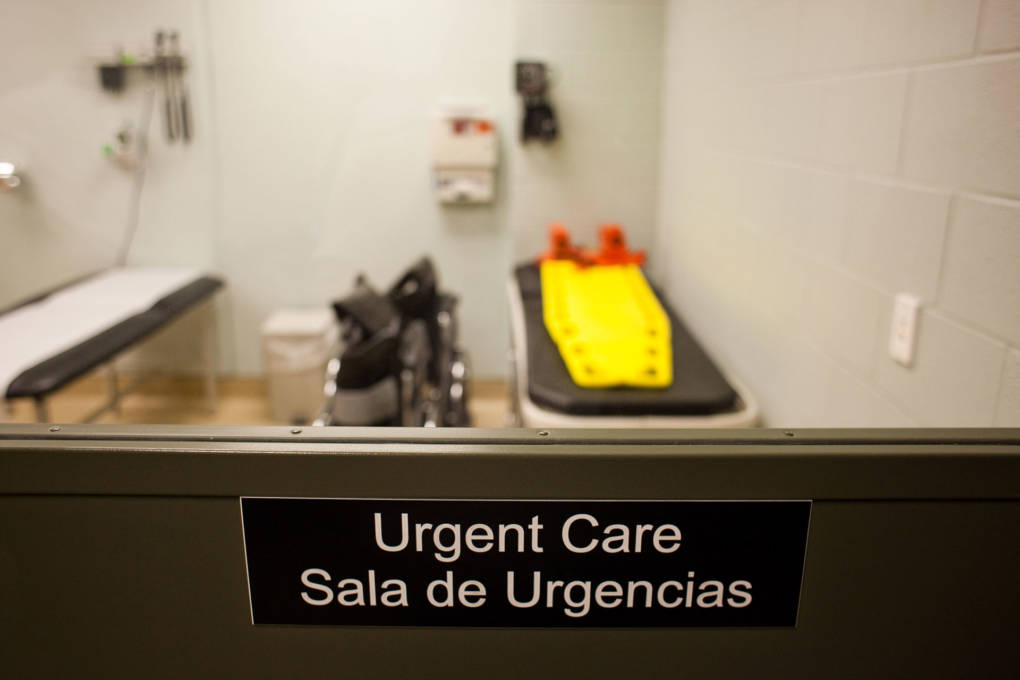
"caption": "A medical facility inside the Karnes County Residential Center, pictured on July 31, 2014 in Karnes City, Texas. ICE uses the center to hold detained immigrant families.",
"description": "A medical facility inside the Karnes County Residential Center, pictured on July 31, 2014 in Karnes City, Texas. ICE uses the center to hold detained immigrant families.",
"title": "UrgentCareDetention",
"credit": "Drew Anthony Smith/Getty Images",
"status": "inherit",
"isLoading": false,
"fetchFailed": false
},
"news_11686876": {
"type": "attachments",
"id": "news_11686876",
"meta": {
"index": "attachments_1716263798",
"site": "news",
"id": "11686876",
"found": true
},
"parent": 11686874,
"imgSizes": {
"small": {
"file": "https://ww2.kqed.org/app/uploads/sites/10/2018/08/Border-Tour-_Marquee-520x293.jpg",
"width": 520,
"mimeType": "image/jpeg",
"height": 293
},
"twentyfourteen-full-width": {
"file": "https://ww2.kqed.org/app/uploads/sites/10/2018/08/Border-Tour-_Marquee-1038x576.jpg",
"width": 1038,
"mimeType": "image/jpeg",
"height": 576
},
"thumbnail": {
"file": "https://ww2.kqed.org/app/uploads/sites/10/2018/08/Border-Tour-_Marquee-160x90.jpg",
"width": 160,
"mimeType": "image/jpeg",
"height": 90
},
"fd-sm": {
"file": "https://ww2.kqed.org/app/uploads/sites/10/2018/08/Border-Tour-_Marquee-960x540.jpg",
"width": 960,
"mimeType": "image/jpeg",
"height": 540
},
"post-thumbnail": {
"file": "https://ww2.kqed.org/app/uploads/sites/10/2018/08/Border-Tour-_Marquee-672x372.jpg",
"width": 672,
"mimeType": "image/jpeg",
"height": 372
},
"xsmall": {
"file": "https://ww2.kqed.org/app/uploads/sites/10/2018/08/Border-Tour-_Marquee-375x211.jpg",
"width": 375,
"mimeType": "image/jpeg",
"height": 211
},
"kqedFullSize": {
"file": "https://ww2.kqed.org/app/uploads/sites/10/2018/08/Border-Tour-_Marquee.jpg",
"width": 1280,
"height": 720
},
"large": {
"file": "https://ww2.kqed.org/app/uploads/sites/10/2018/08/Border-Tour-_Marquee-1020x574.jpg",
"width": 1020,
"mimeType": "image/jpeg",
"height": 574
},
"xlarge": {
"file": "https://ww2.kqed.org/app/uploads/sites/10/2018/08/Border-Tour-_Marquee-1180x664.jpg",
"width": 1180,
"mimeType": "image/jpeg",
"height": 664
},
"complete_open_graph": {
"file": "https://ww2.kqed.org/app/uploads/sites/10/2018/08/Border-Tour-_Marquee-1200x675.jpg",
"width": 1200,
"mimeType": "image/jpeg",
"height": 675
},
"guest-author-50": {
"file": "https://ww2.kqed.org/app/uploads/sites/10/2018/08/Border-Tour-_Marquee-50x50.jpg",
"width": 50,
"mimeType": "image/jpeg",
"height": 50
},
"guest-author-96": {
"file": "https://ww2.kqed.org/app/uploads/sites/10/2018/08/Border-Tour-_Marquee-96x96.jpg",
"width": 96,
"mimeType": "image/jpeg",
"height": 96
},
"medium": {
"file": "https://ww2.kqed.org/app/uploads/sites/10/2018/08/Border-Tour-_Marquee-800x450.jpg",
"width": 800,
"mimeType": "image/jpeg",
"height": 450
},
"guest-author-64": {
"file": "https://ww2.kqed.org/app/uploads/sites/10/2018/08/Border-Tour-_Marquee-64x64.jpg",
"width": 64,
"mimeType": "image/jpeg",
"height": 64
},
"guest-author-32": {
"file": "https://ww2.kqed.org/app/uploads/sites/10/2018/08/Border-Tour-_Marquee-32x32.jpg",
"width": 32,
"mimeType": "image/jpeg",
"height": 32
},
"fd-med": {
"file": "https://ww2.kqed.org/app/uploads/sites/10/2018/08/Border-Tour-_Marquee-1180x664.jpg",
"width": 1180,
"mimeType": "image/jpeg",
"height": 664
},
"detail": {
"file": "https://ww2.kqed.org/app/uploads/sites/10/2018/08/Border-Tour-_Marquee-150x150.jpg",
"width": 150,
"mimeType": "image/jpeg",
"height": 150
},
"guest-author-128": {
"file": "https://ww2.kqed.org/app/uploads/sites/10/2018/08/Border-Tour-_Marquee-128x128.jpg",
"width": 128,
"mimeType": "image/jpeg",
"height": 128
},
"xxsmall": {
"file": "https://ww2.kqed.org/app/uploads/sites/10/2018/08/Border-Tour-_Marquee-240x135.jpg",
"width": 240,
"mimeType": "image/jpeg",
"height": 135
}
},
"publishDate": 1534273262,
"modified": 1534273262,
"caption": null,
"description": null,
"title": "Border Tour _Marquee",
"credit": null,
"status": "inherit",
"isLoading": false,
"fetchFailed": false
},
"news_11685969": {
"type": "attachments",
"id": "news_11685969",
"meta": {
"index": "attachments_1716263798",
"site": "news",
"id": "11685969",
"found": true
},
"parent": 11685845,
"imgSizes": {
"small": {
"file": "https://ww2.kqed.org/app/uploads/sites/10/2018/08/RS32278_IMG_1935-qut-520x347.jpg",
"width": 520,
"mimeType": "image/jpeg",
"height": 347
},
"twentyfourteen-full-width": {
"file": "https://ww2.kqed.org/app/uploads/sites/10/2018/08/RS32278_IMG_1935-qut-1038x576.jpg",
"width": 1038,
"mimeType": "image/jpeg",
"height": 576
},
"thumbnail": {
"file": "https://ww2.kqed.org/app/uploads/sites/10/2018/08/RS32278_IMG_1935-qut-160x107.jpg",
"width": 160,
"mimeType": "image/jpeg",
"height": 107
},
"fd-sm": {
"file": "https://ww2.kqed.org/app/uploads/sites/10/2018/08/RS32278_IMG_1935-qut-960x640.jpg",
"width": 960,
"mimeType": "image/jpeg",
"height": 640
},
"post-thumbnail": {
"file": "https://ww2.kqed.org/app/uploads/sites/10/2018/08/RS32278_IMG_1935-qut-672x372.jpg",
"width": 672,
"mimeType": "image/jpeg",
"height": 372
},
"xsmall": {
"file": "https://ww2.kqed.org/app/uploads/sites/10/2018/08/RS32278_IMG_1935-qut-375x250.jpg",
"width": 375,
"mimeType": "image/jpeg",
"height": 250
},
"kqedFullSize": {
"file": "https://ww2.kqed.org/app/uploads/sites/10/2018/08/RS32278_IMG_1935-qut.jpg",
"width": 1920,
"height": 1280
},
"large": {
"file": "https://ww2.kqed.org/app/uploads/sites/10/2018/08/RS32278_IMG_1935-qut-1020x680.jpg",
"width": 1020,
"mimeType": "image/jpeg",
"height": 680
},
"xlarge": {
"file": "https://ww2.kqed.org/app/uploads/sites/10/2018/08/RS32278_IMG_1935-qut-1180x787.jpg",
"width": 1180,
"mimeType": "image/jpeg",
"height": 787
},
"complete_open_graph": {
"file": "https://ww2.kqed.org/app/uploads/sites/10/2018/08/RS32278_IMG_1935-qut-1200x800.jpg",
"width": 1200,
"mimeType": "image/jpeg",
"height": 800
},
"guest-author-50": {
"file": "https://ww2.kqed.org/app/uploads/sites/10/2018/08/RS32278_IMG_1935-qut-50x50.jpg",
"width": 50,
"mimeType": "image/jpeg",
"height": 50
},
"guest-author-96": {
"file": "https://ww2.kqed.org/app/uploads/sites/10/2018/08/RS32278_IMG_1935-qut-96x96.jpg",
"width": 96,
"mimeType": "image/jpeg",
"height": 96
},
"medium": {
"file": "https://ww2.kqed.org/app/uploads/sites/10/2018/08/RS32278_IMG_1935-qut-800x533.jpg",
"width": 800,
"mimeType": "image/jpeg",
"height": 533
},
"guest-author-64": {
"file": "https://ww2.kqed.org/app/uploads/sites/10/2018/08/RS32278_IMG_1935-qut-64x64.jpg",
"width": 64,
"mimeType": "image/jpeg",
"height": 64
},
"guest-author-32": {
"file": "https://ww2.kqed.org/app/uploads/sites/10/2018/08/RS32278_IMG_1935-qut-32x32.jpg",
"width": 32,
"mimeType": "image/jpeg",
"height": 32
},
"fd-lrg": {
"file": "https://ww2.kqed.org/app/uploads/sites/10/2018/08/RS32278_IMG_1935-qut-1920x1280.jpg",
"width": 1920,
"mimeType": "image/jpeg",
"height": 1280
},
"fd-med": {
"file": "https://ww2.kqed.org/app/uploads/sites/10/2018/08/RS32278_IMG_1935-qut-1180x787.jpg",
"width": 1180,
"mimeType": "image/jpeg",
"height": 787
},
"full-width": {
"file": "https://ww2.kqed.org/app/uploads/sites/10/2018/08/RS32278_IMG_1935-qut-1920x1280.jpg",
"width": 1920,
"mimeType": "image/jpeg",
"height": 1280
},
"detail": {
"file": "https://ww2.kqed.org/app/uploads/sites/10/2018/08/RS32278_IMG_1935-qut-150x150.jpg",
"width": 150,
"mimeType": "image/jpeg",
"height": 150
},
"guest-author-128": {
"file": "https://ww2.kqed.org/app/uploads/sites/10/2018/08/RS32278_IMG_1935-qut-128x128.jpg",
"width": 128,
"mimeType": "image/jpeg",
"height": 128
},
"xxsmall": {
"file": "https://ww2.kqed.org/app/uploads/sites/10/2018/08/RS32278_IMG_1935-qut-240x160.jpg",
"width": 240,
"mimeType": "image/jpeg",
"height": 160
}
},
"publishDate": 1533838243,
"modified": 1533838412,
"caption": "Filomena, 5, holds hands with her father, Nazario and grandmother, Angela, at a migrant shelter in Guatemala City on August 8, 2018. The girl's mother, Marcela, carries 2-year old son Marvin as the family prepares to leave for their village in the country's western highlands.",
"description": null,
"title": "RS32278_IMG_1935-qut",
"credit": "Farida Jhabvala Romero/KQED",
"status": "inherit",
"isLoading": false,
"fetchFailed": false
},
"news_11685552": {
"type": "attachments",
"id": "news_11685552",
"meta": {
"index": "attachments_1716263798",
"site": "news",
"id": "11685552",
"found": true
},
"parent": 11684978,
"imgSizes": {
"small": {
"file": "https://ww2.kqed.org/app/uploads/sites/10/2018/08/Rodney-Scott_sunglasses-520x347.jpg",
"width": 520,
"mimeType": "image/jpeg",
"height": 347
},
"twentyfourteen-full-width": {
"file": "https://ww2.kqed.org/app/uploads/sites/10/2018/08/Rodney-Scott_sunglasses-1038x576.jpg",
"width": 1038,
"mimeType": "image/jpeg",
"height": 576
},
"thumbnail": {
"file": "https://ww2.kqed.org/app/uploads/sites/10/2018/08/Rodney-Scott_sunglasses-160x107.jpg",
"width": 160,
"mimeType": "image/jpeg",
"height": 107
},
"fd-sm": {
"file": "https://ww2.kqed.org/app/uploads/sites/10/2018/08/Rodney-Scott_sunglasses-960x640.jpg",
"width": 960,
"mimeType": "image/jpeg",
"height": 640
},
"post-thumbnail": {
"file": "https://ww2.kqed.org/app/uploads/sites/10/2018/08/Rodney-Scott_sunglasses-672x372.jpg",
"width": 672,
"mimeType": "image/jpeg",
"height": 372
},
"xsmall": {
"file": "https://ww2.kqed.org/app/uploads/sites/10/2018/08/Rodney-Scott_sunglasses-375x250.jpg",
"width": 375,
"mimeType": "image/jpeg",
"height": 250
},
"kqedFullSize": {
"file": "https://ww2.kqed.org/app/uploads/sites/10/2018/08/Rodney-Scott_sunglasses-e1533695874387.jpg",
"width": 1920,
"height": 1280
},
"large": {
"file": "https://ww2.kqed.org/app/uploads/sites/10/2018/08/Rodney-Scott_sunglasses-1020x680.jpg",
"width": 1020,
"mimeType": "image/jpeg",
"height": 680
},
"xlarge": {
"file": "https://ww2.kqed.org/app/uploads/sites/10/2018/08/Rodney-Scott_sunglasses-1180x787.jpg",
"width": 1180,
"mimeType": "image/jpeg",
"height": 787
},
"complete_open_graph": {
"file": "https://ww2.kqed.org/app/uploads/sites/10/2018/08/Rodney-Scott_sunglasses-1200x800.jpg",
"width": 1200,
"mimeType": "image/jpeg",
"height": 800
},
"guest-author-50": {
"file": "https://ww2.kqed.org/app/uploads/sites/10/2018/08/Rodney-Scott_sunglasses-50x50.jpg",
"width": 50,
"mimeType": "image/jpeg",
"height": 50
},
"guest-author-96": {
"file": "https://ww2.kqed.org/app/uploads/sites/10/2018/08/Rodney-Scott_sunglasses-96x96.jpg",
"width": 96,
"mimeType": "image/jpeg",
"height": 96
},
"medium": {
"file": "https://ww2.kqed.org/app/uploads/sites/10/2018/08/Rodney-Scott_sunglasses-800x533.jpg",
"width": 800,
"mimeType": "image/jpeg",
"height": 533
},
"guest-author-64": {
"file": "https://ww2.kqed.org/app/uploads/sites/10/2018/08/Rodney-Scott_sunglasses-64x64.jpg",
"width": 64,
"mimeType": "image/jpeg",
"height": 64
},
"guest-author-32": {
"file": "https://ww2.kqed.org/app/uploads/sites/10/2018/08/Rodney-Scott_sunglasses-32x32.jpg",
"width": 32,
"mimeType": "image/jpeg",
"height": 32
},
"fd-lrg": {
"file": "https://ww2.kqed.org/app/uploads/sites/10/2018/08/Rodney-Scott_sunglasses-1920x1280.jpg",
"width": 1920,
"mimeType": "image/jpeg",
"height": 1280
},
"fd-med": {
"file": "https://ww2.kqed.org/app/uploads/sites/10/2018/08/Rodney-Scott_sunglasses-1180x787.jpg",
"width": 1180,
"mimeType": "image/jpeg",
"height": 787
},
"full-width": {
"file": "https://ww2.kqed.org/app/uploads/sites/10/2018/08/Rodney-Scott_sunglasses-1920x1280.jpg",
"width": 1920,
"mimeType": "image/jpeg",
"height": 1280
},
"detail": {
"file": "https://ww2.kqed.org/app/uploads/sites/10/2018/08/Rodney-Scott_sunglasses-150x150.jpg",
"width": 150,
"mimeType": "image/jpeg",
"height": 150
},
"guest-author-128": {
"file": "https://ww2.kqed.org/app/uploads/sites/10/2018/08/Rodney-Scott_sunglasses-128x128.jpg",
"width": 128,
"mimeType": "image/jpeg",
"height": 128
},
"xxsmall": {
"file": "https://ww2.kqed.org/app/uploads/sites/10/2018/08/Rodney-Scott_sunglasses-240x160.jpg",
"width": 240,
"mimeType": "image/jpeg",
"height": 160
}
},
"publishDate": 1533690887,
"modified": 1533743014,
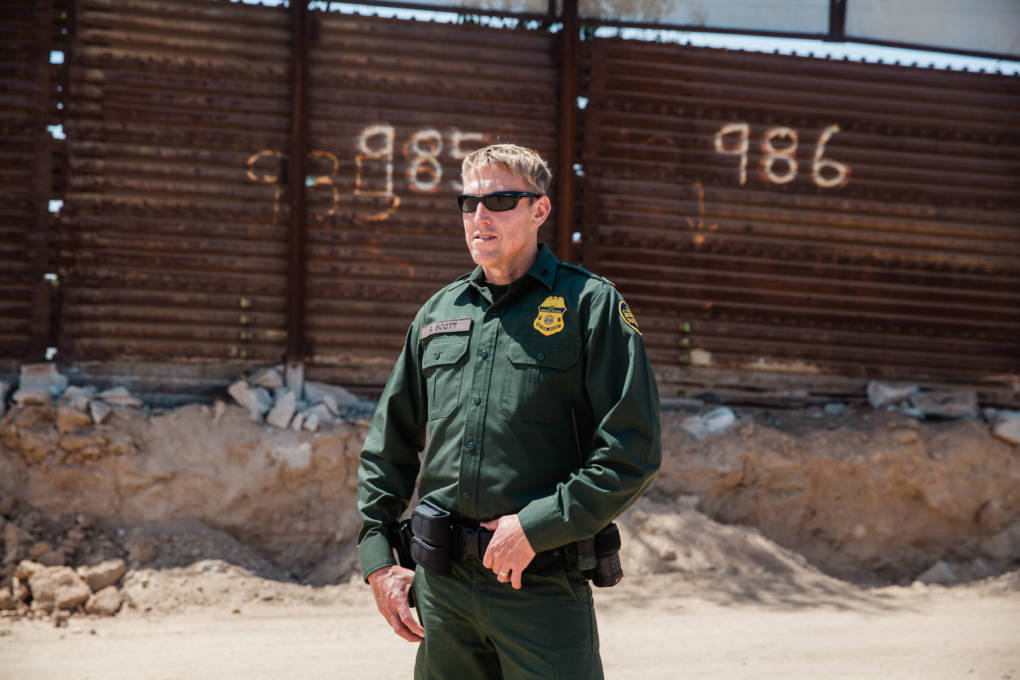
"caption": "Chief Patrol Agent Rodney Scott at the San Diego-Tijuana border. ",
"description": "Chief Patrol Agent Rodney Scott at the San Diego - Tijuana border. ",
"title": "Chief Patrol Agent Rodney Scott at the San Diego - Tijuana border.",
"credit": "Ariana Drehsler/KQED",
"status": "inherit",
"isLoading": false,
"fetchFailed": false
},
"news_11685600": {
"type": "attachments",
"id": "news_11685600",
"meta": {
"index": "attachments_1716263798",
"site": "news",
"id": "11685600",
"found": true
},
"parent": 11685525,
"imgSizes": {
"small": {
"file": "https://ww2.kqed.org/app/uploads/sites/10/2018/08/RS32222_IMG_0651-qut-520x390.jpg",
"width": 520,
"mimeType": "image/jpeg",
"height": 390
},
"twentyfourteen-full-width": {
"file": "https://ww2.kqed.org/app/uploads/sites/10/2018/08/RS32222_IMG_0651-qut-1038x576.jpg",
"width": 1038,
"mimeType": "image/jpeg",
"height": 576
},
"thumbnail": {
"file": "https://ww2.kqed.org/app/uploads/sites/10/2018/08/RS32222_IMG_0651-qut-160x120.jpg",
"width": 160,
"mimeType": "image/jpeg",
"height": 120
},
"fd-sm": {
"file": "https://ww2.kqed.org/app/uploads/sites/10/2018/08/RS32222_IMG_0651-qut-960x720.jpg",
"width": 960,
"mimeType": "image/jpeg",
"height": 720
},
"post-thumbnail": {
"file": "https://ww2.kqed.org/app/uploads/sites/10/2018/08/RS32222_IMG_0651-qut-672x372.jpg",
"width": 672,
"mimeType": "image/jpeg",
"height": 372
},
"xsmall": {
"file": "https://ww2.kqed.org/app/uploads/sites/10/2018/08/RS32222_IMG_0651-qut-375x281.jpg",
"width": 375,
"mimeType": "image/jpeg",
"height": 281
},
"kqedFullSize": {
"file": "https://ww2.kqed.org/app/uploads/sites/10/2018/08/RS32222_IMG_0651-qut.jpg",
"width": 1920,
"height": 1440
},
"large": {
"file": "https://ww2.kqed.org/app/uploads/sites/10/2018/08/RS32222_IMG_0651-qut-1020x765.jpg",
"width": 1020,
"mimeType": "image/jpeg",
"height": 765
},
"xlarge": {
"file": "https://ww2.kqed.org/app/uploads/sites/10/2018/08/RS32222_IMG_0651-qut-1180x885.jpg",
"width": 1180,
"mimeType": "image/jpeg",
"height": 885
},
"complete_open_graph": {
"file": "https://ww2.kqed.org/app/uploads/sites/10/2018/08/RS32222_IMG_0651-qut-1200x900.jpg",
"width": 1200,
"mimeType": "image/jpeg",
"height": 900
},
"guest-author-50": {
"file": "https://ww2.kqed.org/app/uploads/sites/10/2018/08/RS32222_IMG_0651-qut-50x50.jpg",
"width": 50,
"mimeType": "image/jpeg",
"height": 50
},
"guest-author-96": {
"file": "https://ww2.kqed.org/app/uploads/sites/10/2018/08/RS32222_IMG_0651-qut-96x96.jpg",
"width": 96,
"mimeType": "image/jpeg",
"height": 96
},
"medium": {
"file": "https://ww2.kqed.org/app/uploads/sites/10/2018/08/RS32222_IMG_0651-qut-800x600.jpg",
"width": 800,
"mimeType": "image/jpeg",
"height": 600
},
"guest-author-64": {
"file": "https://ww2.kqed.org/app/uploads/sites/10/2018/08/RS32222_IMG_0651-qut-64x64.jpg",
"width": 64,
"mimeType": "image/jpeg",
"height": 64
},
"guest-author-32": {
"file": "https://ww2.kqed.org/app/uploads/sites/10/2018/08/RS32222_IMG_0651-qut-32x32.jpg",
"width": 32,
"mimeType": "image/jpeg",
"height": 32
},
"fd-lrg": {
"file": "https://ww2.kqed.org/app/uploads/sites/10/2018/08/RS32222_IMG_0651-qut-1920x1440.jpg",
"width": 1920,
"mimeType": "image/jpeg",
"height": 1440
},
"fd-med": {
"file": "https://ww2.kqed.org/app/uploads/sites/10/2018/08/RS32222_IMG_0651-qut-1180x885.jpg",
"width": 1180,
"mimeType": "image/jpeg",
"height": 885
},
"full-width": {
"file": "https://ww2.kqed.org/app/uploads/sites/10/2018/08/RS32222_IMG_0651-qut-1920x1440.jpg",
"width": 1920,
"mimeType": "image/jpeg",
"height": 1440
},
"detail": {
"file": "https://ww2.kqed.org/app/uploads/sites/10/2018/08/RS32222_IMG_0651-qut-150x150.jpg",
"width": 150,
"mimeType": "image/jpeg",
"height": 150
},
"guest-author-128": {
"file": "https://ww2.kqed.org/app/uploads/sites/10/2018/08/RS32222_IMG_0651-qut-128x128.jpg",
"width": 128,
"mimeType": "image/jpeg",
"height": 128
},
"xxsmall": {
"file": "https://ww2.kqed.org/app/uploads/sites/10/2018/08/RS32222_IMG_0651-qut-240x180.jpg",
"width": 240,
"mimeType": "image/jpeg",
"height": 180
}
},
"publishDate": 1533698360,
"modified": 1533698481,
"caption": "Filomena, 5, embraces her mom, Marcela, at a shelter in Guatemala City as her brother, Marvin, watches.",
"description": "Filomena, 5, embraces her mom, Marcela, at a shelter in Guatemala City as her brother, Marvin, watches.",
"title": "RS32222_IMG_0651-qut",
"credit": "Farida Jhabvala Romero/KQED",
"status": "inherit",
"isLoading": false,
"fetchFailed": false
},
"news_11684144": {
"type": "attachments",
"id": "news_11684144",
"meta": {
"index": "attachments_1716263798",
"site": "news",
"id": "11684144",
"found": true
},
"parent": 11684112,
"imgSizes": {
"small": {
"file": "https://ww2.kqed.org/app/uploads/sites/10/2018/07/RS32106_ben-looks-at-pictures-qut-520x347.jpg",
"width": 520,
"mimeType": "image/jpeg",
"height": 347
},
"twentyfourteen-full-width": {
"file": "https://ww2.kqed.org/app/uploads/sites/10/2018/07/RS32106_ben-looks-at-pictures-qut-1038x576.jpg",
"width": 1038,
"mimeType": "image/jpeg",
"height": 576
},
"thumbnail": {
"file": "https://ww2.kqed.org/app/uploads/sites/10/2018/07/RS32106_ben-looks-at-pictures-qut-160x107.jpg",
"width": 160,
"mimeType": "image/jpeg",
"height": 107
},
"fd-sm": {
"file": "https://ww2.kqed.org/app/uploads/sites/10/2018/07/RS32106_ben-looks-at-pictures-qut-960x640.jpg",
"width": 960,
"mimeType": "image/jpeg",
"height": 640
},
"post-thumbnail": {
"file": "https://ww2.kqed.org/app/uploads/sites/10/2018/07/RS32106_ben-looks-at-pictures-qut-672x372.jpg",
"width": 672,
"mimeType": "image/jpeg",
"height": 372
},
"xsmall": {
"file": "https://ww2.kqed.org/app/uploads/sites/10/2018/07/RS32106_ben-looks-at-pictures-qut-375x250.jpg",
"width": 375,
"mimeType": "image/jpeg",
"height": 250
},
"kqedFullSize": {
"file": "https://ww2.kqed.org/app/uploads/sites/10/2018/07/RS32106_ben-looks-at-pictures-qut.jpg",
"width": 1920,
"height": 1280
},
"large": {
"file": "https://ww2.kqed.org/app/uploads/sites/10/2018/07/RS32106_ben-looks-at-pictures-qut-1020x680.jpg",
"width": 1020,
"mimeType": "image/jpeg",
"height": 680
},
"xlarge": {
"file": "https://ww2.kqed.org/app/uploads/sites/10/2018/07/RS32106_ben-looks-at-pictures-qut-1180x787.jpg",
"width": 1180,
"mimeType": "image/jpeg",
"height": 787
},
"complete_open_graph": {
"file": "https://ww2.kqed.org/app/uploads/sites/10/2018/07/RS32106_ben-looks-at-pictures-qut-1200x800.jpg",
"width": 1200,
"mimeType": "image/jpeg",
"height": 800
},
"guest-author-50": {
"file": "https://ww2.kqed.org/app/uploads/sites/10/2018/07/RS32106_ben-looks-at-pictures-qut-50x50.jpg",
"width": 50,
"mimeType": "image/jpeg",
"height": 50
},
"guest-author-96": {
"file": "https://ww2.kqed.org/app/uploads/sites/10/2018/07/RS32106_ben-looks-at-pictures-qut-96x96.jpg",
"width": 96,
"mimeType": "image/jpeg",
"height": 96
},
"medium": {
"file": "https://ww2.kqed.org/app/uploads/sites/10/2018/07/RS32106_ben-looks-at-pictures-qut-800x533.jpg",
"width": 800,
"mimeType": "image/jpeg",
"height": 533
},
"guest-author-64": {
"file": "https://ww2.kqed.org/app/uploads/sites/10/2018/07/RS32106_ben-looks-at-pictures-qut-64x64.jpg",
"width": 64,
"mimeType": "image/jpeg",
"height": 64
},
"guest-author-32": {
"file": "https://ww2.kqed.org/app/uploads/sites/10/2018/07/RS32106_ben-looks-at-pictures-qut-32x32.jpg",
"width": 32,
"mimeType": "image/jpeg",
"height": 32
},
"fd-lrg": {
"file": "https://ww2.kqed.org/app/uploads/sites/10/2018/07/RS32106_ben-looks-at-pictures-qut-1920x1280.jpg",
"width": 1920,
"mimeType": "image/jpeg",
"height": 1280
},
"fd-med": {
"file": "https://ww2.kqed.org/app/uploads/sites/10/2018/07/RS32106_ben-looks-at-pictures-qut-1180x787.jpg",
"width": 1180,
"mimeType": "image/jpeg",
"height": 787
},
"full-width": {
"file": "https://ww2.kqed.org/app/uploads/sites/10/2018/07/RS32106_ben-looks-at-pictures-qut-1920x1280.jpg",
"width": 1920,
"mimeType": "image/jpeg",
"height": 1280
},
"detail": {
"file": "https://ww2.kqed.org/app/uploads/sites/10/2018/07/RS32106_ben-looks-at-pictures-qut-150x150.jpg",
"width": 150,
"mimeType": "image/jpeg",
"height": 150
},
"guest-author-128": {
"file": "https://ww2.kqed.org/app/uploads/sites/10/2018/07/RS32106_ben-looks-at-pictures-qut-128x128.jpg",
"width": 128,
"mimeType": "image/jpeg",
"height": 128
},
"xxsmall": {
"file": "https://ww2.kqed.org/app/uploads/sites/10/2018/07/RS32106_ben-looks-at-pictures-qut-240x160.jpg",
"width": 240,
"mimeType": "image/jpeg",
"height": 160
}
},
"publishDate": 1533081421,
"modified": 1533329212,
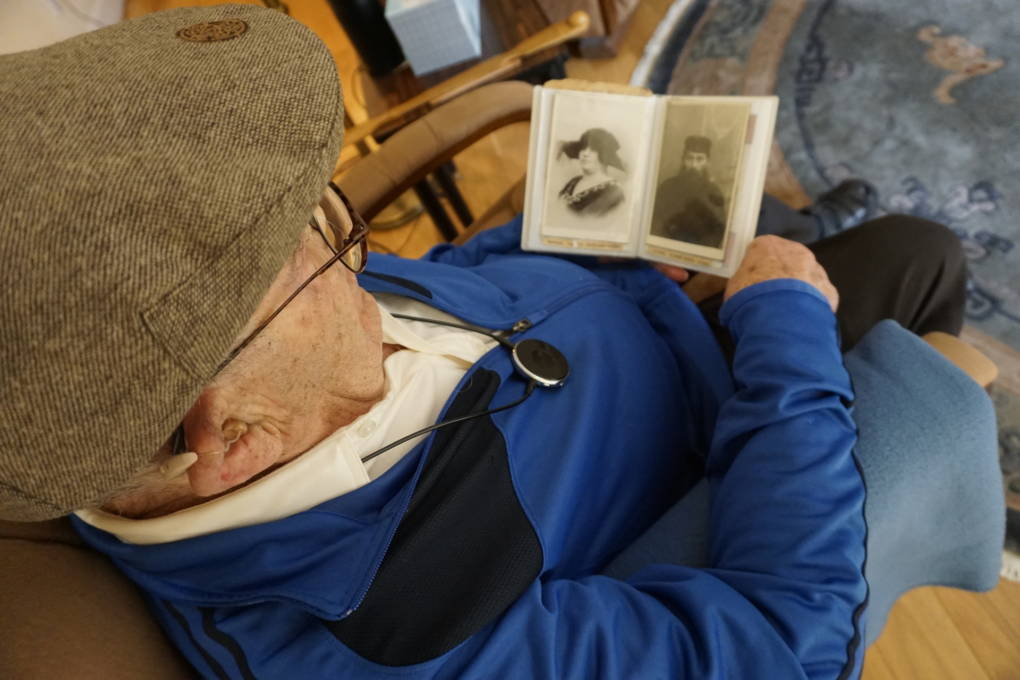
"caption": "Ben Stern looks at the few remaining photographs of his parents, saved by the only one of his siblings to survive the Holocaust.",
"description": "Ben Stern looks at the few remaining photographs of his parents, saved by the only one of his siblings to survive the Holocaust.",
"title": "RS32106_ben looks at pictures-qut",
"credit": "Sasha Khokha/KQED",
"status": "inherit",
"isLoading": false,
"fetchFailed": false
},
"news_11683316": {
"type": "attachments",
"id": "news_11683316",
"meta": {
"index": "attachments_1716263798",
"site": "news",
"id": "11683316",
"found": true
},
"parent": 11683314,
"imgSizes": {
"small": {
"file": "https://ww2.kqed.org/app/uploads/sites/10/2018/07/NR539_Marq_3-520x293.jpg",
"width": 520,
"mimeType": "image/jpeg",
"height": 293
},
"twentyfourteen-full-width": {
"file": "https://ww2.kqed.org/app/uploads/sites/10/2018/07/NR539_Marq_3-1038x576.jpg",
"width": 1038,
"mimeType": "image/jpeg",
"height": 576
},
"thumbnail": {
"file": "https://ww2.kqed.org/app/uploads/sites/10/2018/07/NR539_Marq_3-160x90.jpg",
"width": 160,
"mimeType": "image/jpeg",
"height": 90
},
"fd-sm": {
"file": "https://ww2.kqed.org/app/uploads/sites/10/2018/07/NR539_Marq_3-960x540.jpg",
"width": 960,
"mimeType": "image/jpeg",
"height": 540
},
"post-thumbnail": {
"file": "https://ww2.kqed.org/app/uploads/sites/10/2018/07/NR539_Marq_3-672x372.jpg",
"width": 672,
"mimeType": "image/jpeg",
"height": 372
},
"xsmall": {
"file": "https://ww2.kqed.org/app/uploads/sites/10/2018/07/NR539_Marq_3-375x211.jpg",
"width": 375,
"mimeType": "image/jpeg",
"height": 211
},
"kqedFullSize": {
"file": "https://ww2.kqed.org/app/uploads/sites/10/2018/07/NR539_Marq_3.jpg",
"width": 1280,
"height": 720
},
"large": {
"file": "https://ww2.kqed.org/app/uploads/sites/10/2018/07/NR539_Marq_3-1020x574.jpg",
"width": 1020,
"mimeType": "image/jpeg",
"height": 574
},
"xlarge": {
"file": "https://ww2.kqed.org/app/uploads/sites/10/2018/07/NR539_Marq_3-1180x664.jpg",
"width": 1180,
"mimeType": "image/jpeg",
"height": 664
},
"complete_open_graph": {
"file": "https://ww2.kqed.org/app/uploads/sites/10/2018/07/NR539_Marq_3-1200x675.jpg",
"width": 1200,
"mimeType": "image/jpeg",
"height": 675
},
"guest-author-50": {
"file": "https://ww2.kqed.org/app/uploads/sites/10/2018/07/NR539_Marq_3-50x50.jpg",
"width": 50,
"mimeType": "image/jpeg",
"height": 50
},
"guest-author-96": {
"file": "https://ww2.kqed.org/app/uploads/sites/10/2018/07/NR539_Marq_3-96x96.jpg",
"width": 96,
"mimeType": "image/jpeg",
"height": 96
},
"medium": {
"file": "https://ww2.kqed.org/app/uploads/sites/10/2018/07/NR539_Marq_3-800x450.jpg",
"width": 800,
"mimeType": "image/jpeg",
"height": 450
},
"guest-author-64": {
"file": "https://ww2.kqed.org/app/uploads/sites/10/2018/07/NR539_Marq_3-64x64.jpg",
"width": 64,
"mimeType": "image/jpeg",
"height": 64
},
"guest-author-32": {
"file": "https://ww2.kqed.org/app/uploads/sites/10/2018/07/NR539_Marq_3-32x32.jpg",
"width": 32,
"mimeType": "image/jpeg",
"height": 32
},
"fd-med": {
"file": "https://ww2.kqed.org/app/uploads/sites/10/2018/07/NR539_Marq_3-1180x664.jpg",
"width": 1180,
"mimeType": "image/jpeg",
"height": 664
},
"detail": {
"file": "https://ww2.kqed.org/app/uploads/sites/10/2018/07/NR539_Marq_3-150x150.jpg",
"width": 150,
"mimeType": "image/jpeg",
"height": 150
},
"guest-author-128": {
"file": "https://ww2.kqed.org/app/uploads/sites/10/2018/07/NR539_Marq_3-128x128.jpg",
"width": 128,
"mimeType": "image/jpeg",
"height": 128
},
"xxsmall": {
"file": "https://ww2.kqed.org/app/uploads/sites/10/2018/07/NR539_Marq_3-240x135.jpg",
"width": 240,
"mimeType": "image/jpeg",
"height": 135
}
},
"publishDate": 1532731119,
"modified": 1532731119,
"caption": null,
"description": null,
"title": "NR539_Marq_3",
"credit": null,
"status": "inherit",
"isLoading": false,
"fetchFailed": false
},
"news_11681347": {
"type": "attachments",
"id": "news_11681347",
"meta": {
"index": "attachments_1716263798",
"site": "news",
"id": "11681347",
"found": true
},
"parent": 11681284,
"imgSizes": {
"small": {
"file": "https://ww2.kqed.org/app/uploads/sites/10/2018/07/AsylumMain-520x347.jpg",
"width": 520,
"mimeType": "image/jpeg",
"height": 347
},
"twentyfourteen-full-width": {
"file": "https://ww2.kqed.org/app/uploads/sites/10/2018/07/AsylumMain-1038x576.jpg",
"width": 1038,
"mimeType": "image/jpeg",
"height": 576
},
"thumbnail": {
"file": "https://ww2.kqed.org/app/uploads/sites/10/2018/07/AsylumMain-160x107.jpg",
"width": 160,
"mimeType": "image/jpeg",
"height": 107
},
"fd-sm": {
"file": "https://ww2.kqed.org/app/uploads/sites/10/2018/07/AsylumMain-960x640.jpg",
"width": 960,
"mimeType": "image/jpeg",
"height": 640
},
"post-thumbnail": {
"file": "https://ww2.kqed.org/app/uploads/sites/10/2018/07/AsylumMain-672x372.jpg",
"width": 672,
"mimeType": "image/jpeg",
"height": 372
},
"xsmall": {
"file": "https://ww2.kqed.org/app/uploads/sites/10/2018/07/AsylumMain-375x250.jpg",
"width": 375,
"mimeType": "image/jpeg",
"height": 250
},
"kqedFullSize": {
"file": "https://ww2.kqed.org/app/uploads/sites/10/2018/07/AsylumMain.jpg",
"width": 1920,
"height": 1280
},
"large": {
"file": "https://ww2.kqed.org/app/uploads/sites/10/2018/07/AsylumMain-1020x680.jpg",
"width": 1020,
"mimeType": "image/jpeg",
"height": 680
},
"xlarge": {
"file": "https://ww2.kqed.org/app/uploads/sites/10/2018/07/AsylumMain-1180x787.jpg",
"width": 1180,
"mimeType": "image/jpeg",
"height": 787
},
"complete_open_graph": {
"file": "https://ww2.kqed.org/app/uploads/sites/10/2018/07/AsylumMain-1200x800.jpg",
"width": 1200,
"mimeType": "image/jpeg",
"height": 800
},
"guest-author-50": {
"file": "https://ww2.kqed.org/app/uploads/sites/10/2018/07/AsylumMain-50x50.jpg",
"width": 50,
"mimeType": "image/jpeg",
"height": 50
},
"guest-author-96": {
"file": "https://ww2.kqed.org/app/uploads/sites/10/2018/07/AsylumMain-96x96.jpg",
"width": 96,
"mimeType": "image/jpeg",
"height": 96
},
"medium": {
"file": "https://ww2.kqed.org/app/uploads/sites/10/2018/07/AsylumMain-800x533.jpg",
"width": 800,
"mimeType": "image/jpeg",
"height": 533
},
"guest-author-64": {
"file": "https://ww2.kqed.org/app/uploads/sites/10/2018/07/AsylumMain-64x64.jpg",
"width": 64,
"mimeType": "image/jpeg",
"height": 64
},
"guest-author-32": {
"file": "https://ww2.kqed.org/app/uploads/sites/10/2018/07/AsylumMain-32x32.jpg",
"width": 32,
"mimeType": "image/jpeg",
"height": 32
},
"fd-lrg": {
"file": "https://ww2.kqed.org/app/uploads/sites/10/2018/07/AsylumMain-1920x1280.jpg",
"width": 1920,
"mimeType": "image/jpeg",
"height": 1280
},
"fd-med": {
"file": "https://ww2.kqed.org/app/uploads/sites/10/2018/07/AsylumMain-1180x787.jpg",
"width": 1180,
"mimeType": "image/jpeg",
"height": 787
},
"full-width": {
"file": "https://ww2.kqed.org/app/uploads/sites/10/2018/07/AsylumMain-1920x1280.jpg",
"width": 1920,
"mimeType": "image/jpeg",
"height": 1280
},
"detail": {
"file": "https://ww2.kqed.org/app/uploads/sites/10/2018/07/AsylumMain-150x150.jpg",
"width": 150,
"mimeType": "image/jpeg",
"height": 150
},
"guest-author-128": {
"file": "https://ww2.kqed.org/app/uploads/sites/10/2018/07/AsylumMain-128x128.jpg",
"width": 128,
"mimeType": "image/jpeg",
"height": 128
},
"xxsmall": {
"file": "https://ww2.kqed.org/app/uploads/sites/10/2018/07/AsylumMain-240x160.jpg",
"width": 240,
"mimeType": "image/jpeg",
"height": 160
}
},
"publishDate": 1531965341,
"modified": 1532034479,
"caption": "Children play as their parents wait on the Mexican side of the border, in the hopes of entering the U.S. legally by applying for asylum. The families waiting underwent arduous journeys from multiple continents, many spending their life savings to get here.",
"description": "Children play as their parents wait on the Mexican side of the border, in the hopes of entering the U.S. legally by applying for asylum. The families waiting underwent arduous journeys from multiple continents, many spending their life savings to get here.",
"title": "AsylumMain",
"credit": "Ariana Dreshler/KQED",
"status": "inherit",
"isLoading": false,
"fetchFailed": false
},
"news_11680600": {
"type": "attachments",
"id": "news_11680600",
"meta": {
"index": "attachments_1716263798",
"site": "news",
"id": "11680600",
"found": true
},
"parent": 11680599,
"imgSizes": {
"small": {
"file": "https://ww2.kqed.org/app/uploads/sites/10/2018/07/GettyImages-997982480-520x347.jpg",
"width": 520,
"mimeType": "image/jpeg",
"height": 347
},
"twentyfourteen-full-width": {
"file": "https://ww2.kqed.org/app/uploads/sites/10/2018/07/GettyImages-997982480-1038x576.jpg",
"width": 1038,
"mimeType": "image/jpeg",
"height": 576
},
"thumbnail": {
"file": "https://ww2.kqed.org/app/uploads/sites/10/2018/07/GettyImages-997982480-160x107.jpg",
"width": 160,
"mimeType": "image/jpeg",
"height": 107
},
"fd-sm": {
"file": "https://ww2.kqed.org/app/uploads/sites/10/2018/07/GettyImages-997982480-960x640.jpg",
"width": 960,
"mimeType": "image/jpeg",
"height": 640
},
"post-thumbnail": {
"file": "https://ww2.kqed.org/app/uploads/sites/10/2018/07/GettyImages-997982480-672x372.jpg",
"width": 672,
"mimeType": "image/jpeg",
"height": 372
},
"xsmall": {
"file": "https://ww2.kqed.org/app/uploads/sites/10/2018/07/GettyImages-997982480-375x250.jpg",
"width": 375,
"mimeType": "image/jpeg",
"height": 250
},
"kqedFullSize": {
"file": "https://ww2.kqed.org/app/uploads/sites/10/2018/07/GettyImages-997982480-e1531596989625.jpg",
"width": 1920,
"height": 1280
},
"large": {
"file": "https://ww2.kqed.org/app/uploads/sites/10/2018/07/GettyImages-997982480-1020x680.jpg",
"width": 1020,
"mimeType": "image/jpeg",
"height": 680
},
"xlarge": {
"file": "https://ww2.kqed.org/app/uploads/sites/10/2018/07/GettyImages-997982480-1180x787.jpg",
"width": 1180,
"mimeType": "image/jpeg",
"height": 787
},
"complete_open_graph": {
"file": "https://ww2.kqed.org/app/uploads/sites/10/2018/07/GettyImages-997982480-1200x800.jpg",
"width": 1200,
"mimeType": "image/jpeg",
"height": 800
},
"guest-author-50": {
"file": "https://ww2.kqed.org/app/uploads/sites/10/2018/07/GettyImages-997982480-50x50.jpg",
"width": 50,
"mimeType": "image/jpeg",
"height": 50
},
"guest-author-96": {
"file": "https://ww2.kqed.org/app/uploads/sites/10/2018/07/GettyImages-997982480-96x96.jpg",
"width": 96,
"mimeType": "image/jpeg",
"height": 96
},
"medium": {
"file": "https://ww2.kqed.org/app/uploads/sites/10/2018/07/GettyImages-997982480-800x533.jpg",
"width": 800,
"mimeType": "image/jpeg",
"height": 533
},
"guest-author-64": {
"file": "https://ww2.kqed.org/app/uploads/sites/10/2018/07/GettyImages-997982480-64x64.jpg",
"width": 64,
"mimeType": "image/jpeg",
"height": 64
},
"guest-author-32": {
"file": "https://ww2.kqed.org/app/uploads/sites/10/2018/07/GettyImages-997982480-32x32.jpg",
"width": 32,
"mimeType": "image/jpeg",
"height": 32
},
"fd-lrg": {
"file": "https://ww2.kqed.org/app/uploads/sites/10/2018/07/GettyImages-997982480-1920x1280.jpg",
"width": 1920,
"mimeType": "image/jpeg",
"height": 1280
},
"fd-med": {
"file": "https://ww2.kqed.org/app/uploads/sites/10/2018/07/GettyImages-997982480-1180x787.jpg",
"width": 1180,
"mimeType": "image/jpeg",
"height": 787
},
"full-width": {
"file": "https://ww2.kqed.org/app/uploads/sites/10/2018/07/GettyImages-997982480-1920x1280.jpg",
"width": 1920,
"mimeType": "image/jpeg",
"height": 1280
},
"detail": {
"file": "https://ww2.kqed.org/app/uploads/sites/10/2018/07/GettyImages-997982480-150x150.jpg",
"width": 150,
"mimeType": "image/jpeg",
"height": 150
},
"guest-author-128": {
"file": "https://ww2.kqed.org/app/uploads/sites/10/2018/07/GettyImages-997982480-128x128.jpg",
"width": 128,
"mimeType": "image/jpeg",
"height": 128
},
"xxsmall": {
"file": "https://ww2.kqed.org/app/uploads/sites/10/2018/07/GettyImages-997982480-240x160.jpg",
"width": 240,
"mimeType": "image/jpeg",
"height": 160
}
},
"publishDate": 1531596944,
"modified": 1531597014,
"caption": "Yeni Maricela Gonzalez Garcia (center) stands with her children 6 year-old Deyuin (left), 9 year-old Jamelin (right) and 11 year-old Lester (back) as she and her lawyer speak with the news media after she was reunited with her children at the East Harlem Cayuga Centers on July 13, 2018 in New York City. Gonzalez Garcia, from Guatemala, drove cross-country to be reunited with her three children after they were taken from an Arizona immigration facility over eight weeks ago. Gonzalez Garcia crossed over the U.S. border with her three children on May 19, only two days before they were taken from her as part of President Donald Trump's controversial zero-tolerance policy of removing immigrant children from their parents after they are detained.",
"description": "Yeni Maricela Gonzalez Garcia (center) stands with her children 6 year-old Deyuin (left), 9 year-old Jamelin (right) and 11 year-old Lester (back) as she and her lawyer speak with the news media after she was reunited with her children at the East Harlem Cayuga Centers on July 13, 2018 in New York City. Gonzalez Garcia, from Guatemala, drove cross-country to be reunited with her three children after they were taken from an Arizona immigration facility over eight weeks ago. Gonzalez Garcia crossed over the U.S. border with her three children on May 19, only two days before they were taken from her as part of President Donald Trump's controversial zero-tolerance policy of removing immigrant children from their parents after they are detained.",
"title": "Immigrant Mother Reunited With Her Three Children After Being Detained Separately",
"credit": "Spencer Platt/Getty Images",
"status": "inherit",
"isLoading": false,
"fetchFailed": false
},
"news_11680555": {
"type": "attachments",
"id": "news_11680555",
"meta": {
"index": "attachments_1716263798",
"site": "news",
"id": "11680555",
"found": true
},
"parent": 11680553,
"imgSizes": {
"small": {
"file": "https://ww2.kqed.org/app/uploads/sites/10/2018/07/NR537_MARQUEE-520x293.jpg",
"width": 520,
"mimeType": "image/jpeg",
"height": 293
},
"twentyfourteen-full-width": {
"file": "https://ww2.kqed.org/app/uploads/sites/10/2018/07/NR537_MARQUEE-1038x576.jpg",
"width": 1038,
"mimeType": "image/jpeg",
"height": 576
},
"thumbnail": {
"file": "https://ww2.kqed.org/app/uploads/sites/10/2018/07/NR537_MARQUEE-160x90.jpg",
"width": 160,
"mimeType": "image/jpeg",
"height": 90
},
"fd-sm": {
"file": "https://ww2.kqed.org/app/uploads/sites/10/2018/07/NR537_MARQUEE-960x540.jpg",
"width": 960,
"mimeType": "image/jpeg",
"height": 540
},
"post-thumbnail": {
"file": "https://ww2.kqed.org/app/uploads/sites/10/2018/07/NR537_MARQUEE-672x372.jpg",
"width": 672,
"mimeType": "image/jpeg",
"height": 372
},
"xsmall": {
"file": "https://ww2.kqed.org/app/uploads/sites/10/2018/07/NR537_MARQUEE-375x211.jpg",
"width": 375,
"mimeType": "image/jpeg",
"height": 211
},
"kqedFullSize": {
"file": "https://ww2.kqed.org/app/uploads/sites/10/2018/07/NR537_MARQUEE.jpg",
"width": 1280,
"height": 720
},
"large": {
"file": "https://ww2.kqed.org/app/uploads/sites/10/2018/07/NR537_MARQUEE-1020x574.jpg",
"width": 1020,
"mimeType": "image/jpeg",
"height": 574
},
"xlarge": {
"file": "https://ww2.kqed.org/app/uploads/sites/10/2018/07/NR537_MARQUEE-1180x664.jpg",
"width": 1180,
"mimeType": "image/jpeg",
"height": 664
},
"complete_open_graph": {
"file": "https://ww2.kqed.org/app/uploads/sites/10/2018/07/NR537_MARQUEE-1200x675.jpg",
"width": 1200,
"mimeType": "image/jpeg",
"height": 675
},
"guest-author-50": {
"file": "https://ww2.kqed.org/app/uploads/sites/10/2018/07/NR537_MARQUEE-50x50.jpg",
"width": 50,
"mimeType": "image/jpeg",
"height": 50
},
"guest-author-96": {
"file": "https://ww2.kqed.org/app/uploads/sites/10/2018/07/NR537_MARQUEE-96x96.jpg",
"width": 96,
"mimeType": "image/jpeg",
"height": 96
},
"medium": {
"file": "https://ww2.kqed.org/app/uploads/sites/10/2018/07/NR537_MARQUEE-800x450.jpg",
"width": 800,
"mimeType": "image/jpeg",
"height": 450
},
"guest-author-64": {
"file": "https://ww2.kqed.org/app/uploads/sites/10/2018/07/NR537_MARQUEE-64x64.jpg",
"width": 64,
"mimeType": "image/jpeg",
"height": 64
},
"guest-author-32": {
"file": "https://ww2.kqed.org/app/uploads/sites/10/2018/07/NR537_MARQUEE-32x32.jpg",
"width": 32,
"mimeType": "image/jpeg",
"height": 32
},
"fd-med": {
"file": "https://ww2.kqed.org/app/uploads/sites/10/2018/07/NR537_MARQUEE-1180x664.jpg",
"width": 1180,
"mimeType": "image/jpeg",
"height": 664
},
"detail": {
"file": "https://ww2.kqed.org/app/uploads/sites/10/2018/07/NR537_MARQUEE-150x150.jpg",
"width": 150,
"mimeType": "image/jpeg",
"height": 150
},
"guest-author-128": {
"file": "https://ww2.kqed.org/app/uploads/sites/10/2018/07/NR537_MARQUEE-128x128.jpg",
"width": 128,
"mimeType": "image/jpeg",
"height": 128
},
"xxsmall": {
"file": "https://ww2.kqed.org/app/uploads/sites/10/2018/07/NR537_MARQUEE-240x135.jpg",
"width": 240,
"mimeType": "image/jpeg",
"height": 135
}
},
"publishDate": 1531525623,
"modified": 1531525623,
"caption": null,
"description": null,
"title": "NR537_MARQUEE",
"credit": null,
"status": "inherit",
"isLoading": false,
"fetchFailed": false
},
"news_11679913": {
"type": "attachments",
"id": "news_11679913",
"meta": {
"index": "attachments_1716263798",
"site": "news",
"id": "11679913",
"found": true
},
"parent": 11679893,
"imgSizes": {
"small": {
"file": "https://ww2.kqed.org/app/uploads/sites/10/2018/07/tortured_071018_final-1-520x331.jpg",
"width": 520,
"mimeType": "image/jpeg",
"height": 331
},
"twentyfourteen-full-width": {
"file": "https://ww2.kqed.org/app/uploads/sites/10/2018/07/tortured_071018_final-1-1038x576.jpg",
"width": 1038,
"mimeType": "image/jpeg",
"height": 576
},
"thumbnail": {
"file": "https://ww2.kqed.org/app/uploads/sites/10/2018/07/tortured_071018_final-1-160x102.jpg",
"width": 160,
"mimeType": "image/jpeg",
"height": 102
},
"fd-sm": {
"file": "https://ww2.kqed.org/app/uploads/sites/10/2018/07/tortured_071018_final-1-960x612.jpg",
"width": 960,
"mimeType": "image/jpeg",
"height": 612
},
"post-thumbnail": {
"file": "https://ww2.kqed.org/app/uploads/sites/10/2018/07/tortured_071018_final-1-672x372.jpg",
"width": 672,
"mimeType": "image/jpeg",
"height": 372
},
"xsmall": {
"file": "https://ww2.kqed.org/app/uploads/sites/10/2018/07/tortured_071018_final-1-375x239.jpg",
"width": 375,
"mimeType": "image/jpeg",
"height": 239
},
"kqedFullSize": {
"file": "https://ww2.kqed.org/app/uploads/sites/10/2018/07/tortured_071018_final-1.jpg",
"width": 1920,
"height": 1223
},
"large": {
"file": "https://ww2.kqed.org/app/uploads/sites/10/2018/07/tortured_071018_final-1-1020x650.jpg",
"width": 1020,
"mimeType": "image/jpeg",
"height": 650
},
"xlarge": {
"file": "https://ww2.kqed.org/app/uploads/sites/10/2018/07/tortured_071018_final-1-1180x752.jpg",
"width": 1180,
"mimeType": "image/jpeg",
"height": 752
},
"complete_open_graph": {
"file": "https://ww2.kqed.org/app/uploads/sites/10/2018/07/tortured_071018_final-1-1200x764.jpg",
"width": 1200,
"mimeType": "image/jpeg",
"height": 764
},
"guest-author-50": {
"file": "https://ww2.kqed.org/app/uploads/sites/10/2018/07/tortured_071018_final-1-50x50.jpg",
"width": 50,
"mimeType": "image/jpeg",
"height": 50
},
"guest-author-96": {
"file": "https://ww2.kqed.org/app/uploads/sites/10/2018/07/tortured_071018_final-1-96x96.jpg",
"width": 96,
"mimeType": "image/jpeg",
"height": 96
},
"medium": {
"file": "https://ww2.kqed.org/app/uploads/sites/10/2018/07/tortured_071018_final-1-800x510.jpg",
"width": 800,
"mimeType": "image/jpeg",
"height": 510
},
"guest-author-64": {
"file": "https://ww2.kqed.org/app/uploads/sites/10/2018/07/tortured_071018_final-1-64x64.jpg",
"width": 64,
"mimeType": "image/jpeg",
"height": 64
},
"guest-author-32": {
"file": "https://ww2.kqed.org/app/uploads/sites/10/2018/07/tortured_071018_final-1-32x32.jpg",
"width": 32,
"mimeType": "image/jpeg",
"height": 32
},
"fd-lrg": {
"file": "https://ww2.kqed.org/app/uploads/sites/10/2018/07/tortured_071018_final-1-1920x1223.jpg",
"width": 1920,
"mimeType": "image/jpeg",
"height": 1223
},
"fd-med": {
"file": "https://ww2.kqed.org/app/uploads/sites/10/2018/07/tortured_071018_final-1-1180x752.jpg",
"width": 1180,
"mimeType": "image/jpeg",
"height": 752
},
"full-width": {
"file": "https://ww2.kqed.org/app/uploads/sites/10/2018/07/tortured_071018_final-1-1920x1223.jpg",
"width": 1920,
"mimeType": "image/jpeg",
"height": 1223
},
"detail": {
"file": "https://ww2.kqed.org/app/uploads/sites/10/2018/07/tortured_071018_final-1-150x150.jpg",
"width": 150,
"mimeType": "image/jpeg",
"height": 150
},
"guest-author-128": {
"file": "https://ww2.kqed.org/app/uploads/sites/10/2018/07/tortured_071018_final-1-128x128.jpg",
"width": 128,
"mimeType": "image/jpeg",
"height": 128
},
"xxsmall": {
"file": "https://ww2.kqed.org/app/uploads/sites/10/2018/07/tortured_071018_final-1-240x153.jpg",
"width": 240,
"mimeType": "image/jpeg",
"height": 153
}
},
"publishDate": 1531261148,
"modified": 1531261168,
"caption": null,
"description": null,
"title": "tortured_071018_final",
"credit": null,
"status": "inherit",
"isLoading": false,
"fetchFailed": false
},
"news_11678989": {
"type": "attachments",
"id": "news_11678989",
"meta": {
"index": "attachments_1716263798",
"site": "news",
"id": "11678989",
"found": true
},
"parent": 11678957,
"imgSizes": {
"small": {
"file": "https://ww2.kqed.org/app/uploads/sites/10/2018/07/john1-520x347.jpg",
"width": 520,
"mimeType": "image/jpeg",
"height": 347
},
"twentyfourteen-full-width": {
"file": "https://ww2.kqed.org/app/uploads/sites/10/2018/07/john1-1038x576.jpg",
"width": 1038,
"mimeType": "image/jpeg",
"height": 576
},
"thumbnail": {
"file": "https://ww2.kqed.org/app/uploads/sites/10/2018/07/john1-160x107.jpg",
"width": 160,
"mimeType": "image/jpeg",
"height": 107
},
"fd-sm": {
"file": "https://ww2.kqed.org/app/uploads/sites/10/2018/07/john1-960x640.jpg",
"width": 960,
"mimeType": "image/jpeg",
"height": 640
},
"post-thumbnail": {
"file": "https://ww2.kqed.org/app/uploads/sites/10/2018/07/john1-672x372.jpg",
"width": 672,
"mimeType": "image/jpeg",
"height": 372
},
"xsmall": {
"file": "https://ww2.kqed.org/app/uploads/sites/10/2018/07/john1-375x250.jpg",
"width": 375,
"mimeType": "image/jpeg",
"height": 250
},
"kqedFullSize": {
"file": "https://ww2.kqed.org/app/uploads/sites/10/2018/07/john1-e1530658500200.jpg",
"width": 1920,
"height": 1280
},
"large": {
"file": "https://ww2.kqed.org/app/uploads/sites/10/2018/07/john1-1020x680.jpg",
"width": 1020,
"mimeType": "image/jpeg",
"height": 680
},
"xlarge": {
"file": "https://ww2.kqed.org/app/uploads/sites/10/2018/07/john1-1180x787.jpg",
"width": 1180,
"mimeType": "image/jpeg",
"height": 787
},
"complete_open_graph": {
"file": "https://ww2.kqed.org/app/uploads/sites/10/2018/07/john1-1200x800.jpg",
"width": 1200,
"mimeType": "image/jpeg",
"height": 800
},
"guest-author-50": {
"file": "https://ww2.kqed.org/app/uploads/sites/10/2018/07/john1-50x50.jpg",
"width": 50,
"mimeType": "image/jpeg",
"height": 50
},
"guest-author-96": {
"file": "https://ww2.kqed.org/app/uploads/sites/10/2018/07/john1-96x96.jpg",
"width": 96,
"mimeType": "image/jpeg",
"height": 96
},
"medium": {
"file": "https://ww2.kqed.org/app/uploads/sites/10/2018/07/john1-800x533.jpg",
"width": 800,
"mimeType": "image/jpeg",
"height": 533
},
"guest-author-64": {
"file": "https://ww2.kqed.org/app/uploads/sites/10/2018/07/john1-64x64.jpg",
"width": 64,
"mimeType": "image/jpeg",
"height": 64
},
"guest-author-32": {
"file": "https://ww2.kqed.org/app/uploads/sites/10/2018/07/john1-32x32.jpg",
"width": 32,
"mimeType": "image/jpeg",
"height": 32
},
"fd-lrg": {
"file": "https://ww2.kqed.org/app/uploads/sites/10/2018/07/john1-1920x1280.jpg",
"width": 1920,
"mimeType": "image/jpeg",
"height": 1280
},
"fd-med": {
"file": "https://ww2.kqed.org/app/uploads/sites/10/2018/07/john1-1180x787.jpg",
"width": 1180,
"mimeType": "image/jpeg",
"height": 787
},
"full-width": {
"file": "https://ww2.kqed.org/app/uploads/sites/10/2018/07/john1-1920x1280.jpg",
"width": 1920,
"mimeType": "image/jpeg",
"height": 1280
},
"detail": {
"file": "https://ww2.kqed.org/app/uploads/sites/10/2018/07/john1-150x150.jpg",
"width": 150,
"mimeType": "image/jpeg",
"height": 150
},
"guest-author-128": {
"file": "https://ww2.kqed.org/app/uploads/sites/10/2018/07/john1-128x128.jpg",
"width": 128,
"mimeType": "image/jpeg",
"height": 128
},
"xxsmall": {
"file": "https://ww2.kqed.org/app/uploads/sites/10/2018/07/john1-240x160.jpg",
"width": 240,
"mimeType": "image/jpeg",
"height": 160
}
},
"publishDate": 1530658398,
"modified": 1530828082,
"caption": "Two women close their eyes during a prayer for separated families. The women were among 2,500 who rallied at the Otay Mesa detention facility in Southern California on June 23.",
"description": "Two women close their eyes during a prayer for separated families. The women were among 2,500 who rallied at the Otay Mesa detention facility on June 23.",
"title": "john1",
"credit": "John Sepulvado/KQED",
"status": "inherit",
"isLoading": false,
"fetchFailed": false
}
},
"audioPlayerReducer": {
"postId": "stream_live",
"isPaused": true,
"isPlaying": false,
"pfsActive": false,
"pledgeModalIsOpen": true,
"playerDrawerIsOpen": false,
"liveAudioPlayStartedAt": 0,
"liveAudioPlayContext": ""
},
"authorsReducer": {
"byline_news_11684978": {
"type": "authors",
"id": "byline_news_11684978",
"meta": {
"override": true
},
"slug": "byline_news_11684978",
"name": "Polly Stryker",
"isLoading": false
},
"byline_news_11680599": {
"type": "authors",
"id": "byline_news_11680599",
"meta": {
"override": true
},
"slug": "byline_news_11680599",
"name": "\u003cstrong>Elliot Spagat\u003c/strong>\u003c/br>Associated Press",
"isLoading": false
},
"kqed": {
"type": "authors",
"id": "236",
"meta": {
"index": "authors_1716337520",
"id": "236",
"found": true
},
"name": "KQED News Staff",
"firstName": "KQED News Staff",
"lastName": null,
"slug": "kqed",
"email": "faq@kqed.org",
"display_author_email": false,
"staff_mastheads": [],
"title": null,
"bio": null,
"avatar": "https://secure.gravatar.com/avatar/ef0e801a68c4c54afa9180db14084167?s=600&d=blank&r=g",
"twitter": null,
"facebook": null,
"instagram": null,
"linkedin": null,
"sites": [
{
"site": "arts",
"roles": [
"contributor"
]
},
{
"site": "news",
"roles": [
"editor"
]
},
{
"site": "futureofyou",
"roles": [
"author"
]
}
],
"headData": {
"title": "KQED News Staff | KQED",
"description": null,
"ogImgSrc": "https://secure.gravatar.com/avatar/ef0e801a68c4c54afa9180db14084167?s=600&d=blank&r=g",
"twImgSrc": "https://secure.gravatar.com/avatar/ef0e801a68c4c54afa9180db14084167?s=600&d=blank&r=g"
},
"isLoading": false,
"link": "/author/kqed"
},
"sasha-khokha": {
"type": "authors",
"id": "254",
"meta": {
"index": "authors_1716337520",
"id": "254",
"found": true
},
"name": "Sasha Khokha",
"firstName": "Sasha",
"lastName": "Khokha",
"slug": "sasha-khokha",
"email": "skhokha@kqed.org",
"display_author_email": true,
"staff_mastheads": [
"news"
],
"title": "Host, The California Report Magazine",
"bio": "Sasha Khokha is the host of \u003cem>The California Report's \u003c/em> weekly magazine program, which takes listeners on sound-rich excursions to meet the people that make the Golden State unique -- through audio documentaries and long-form stories. As \u003cem>The California Report's\u003c/em> Central Valley Bureau Chief based in Fresno for nearly a dozen years, Sasha brought the lives and concerns of rural Californians to listeners around the state. Her reporting helped expose the hidden price immigrant women janitors and farmworkers may pay to keep their jobs: sexual assault at work. It inspired two new California laws to protect them from sexual harassment. She was a key member of the reporting team for the Frontline film \u003cem>Rape on the Night Shift, \u003c/em>which was nominated for two national Emmys. Sasha has also won a national Edward R. Murrow and a national PRNDI award for investigative reporting, as well as multiple prizes from the Society for Professional Journalists. Sasha is a proud alum of the UC Berkeley Graduate School of Journalism and Brown University and a member of the South Asian Journalists Association.",
"avatar": "https://secure.gravatar.com/avatar/e4b5e1541aaeea2aa356aa1fb2a68950?s=600&d=blank&r=g",
"twitter": "KQEDSashaKhokha",
"facebook": null,
"instagram": null,
"linkedin": null,
"sites": [
{
"site": "news",
"roles": [
"editor"
]
},
{
"site": "stateofhealth",
"roles": [
"author"
]
},
{
"site": "science",
"roles": [
"author"
]
},
{
"site": "quest",
"roles": [
"subscriber"
]
}
],
"headData": {
"title": "Sasha Khokha | KQED",
"description": "Host, The California Report Magazine",
"ogImgSrc": "https://secure.gravatar.com/avatar/e4b5e1541aaeea2aa356aa1fb2a68950?s=600&d=blank&r=g",
"twImgSrc": "https://secure.gravatar.com/avatar/e4b5e1541aaeea2aa356aa1fb2a68950?s=600&d=blank&r=g"
},
"isLoading": false,
"link": "/author/sasha-khokha"
},
"markfiore": {
"type": "authors",
"id": "3236",
"meta": {
"index": "authors_1716337520",
"id": "3236",
"found": true
},
"name": "Mark Fiore",
"firstName": "Mark",
"lastName": "Fiore",
"slug": "markfiore",
"email": "mark@markfiore.com",
"display_author_email": false,
"staff_mastheads": [
"news"
],
"title": "KQED News Cartoonist",
"bio": "\u003ca href=\"http://www.MarkFiore.com\">MarkFiore.com\u003c/a> | \u003ca href=\"https://twitter.com/markfiore\">Follow on Twitter\u003c/a> | \u003ca href=\"https://www.facebook.com/pages/Mark-Fiore-Animated-Political-Cartoons/94451707396?ref=bookmarks\">Facebook\u003c/a> | \u003ca href=\"mailto:mark@markfiore.com\">email\u003c/a>\r\n\r\nPulitzer Prize-winner, Mark Fiore, who the Wall Street Journal has called “the undisputed guru of the form,” creates animated political cartoons in San Francisco, where his work has been featured regularly on the San Francisco Chronicle’s web site, SFGate.com. His work has appeared on Newsweek.com, Slate.com, CBSNews.com, MotherJones.com, DailyKos.com and NPR’s web site. Fiore’s political animation has appeared on CNN, Frontline, Bill Moyers Journal, Salon.com and cable and broadcast outlets across the globe.\r\n\r\nBeginning his professional life by drawing traditional political cartoons for newspapers, Fiore’s work appeared in publications ranging from the Washington Post to the Los Angeles Times. In the late 1990s, he began to experiment with animating political cartoons and, after a short stint at the San Jose Mercury News as their staff cartoonist, Fiore devoted all his energies to animation.\r\nGrowing up in California, Fiore also spent a good portion of his life in the backwoods of Idaho. It was this combination that shaped him politically. Mark majored in political science at Colorado College, where, in a perfect send-off for a cartoonist, he received his diploma in 1991 as commencement speaker Dick Cheney smiled approvingly.\r\nMark Fiore was awarded the Pulitzer Prize for political cartooning in 2010, a Robert F. Kennedy Journalism Award in 2004 and has twice received an Online Journalism Award for commentary from the Online News Association (2002, 2008). Fiore has received two awards for his work in new media from the National Cartoonists Society (2001, 2002), and in 2006 received The James Madison Freedom of Information Award from The Society of Professional Journalists.",
"avatar": "https://secure.gravatar.com/avatar/fc4e2a612b15b67bad0c6f0e1db4ca9b?s=600&d=blank&r=g",
"twitter": "MarkFiore",
"facebook": null,
"instagram": "https://www.instagram.com/markfiore/?hl=en",
"linkedin": null,
"sites": [
{
"site": "arts",
"roles": [
"contributor"
]
},
{
"site": "news",
"roles": [
"editor"
]
},
{
"site": "futureofyou",
"roles": [
"editor"
]
},
{
"site": "science",
"roles": [
"editor"
]
}
],
"headData": {
"title": "Mark Fiore | KQED",
"description": "KQED News Cartoonist",
"ogImgSrc": "https://secure.gravatar.com/avatar/fc4e2a612b15b67bad0c6f0e1db4ca9b?s=600&d=blank&r=g",
"twImgSrc": "https://secure.gravatar.com/avatar/fc4e2a612b15b67bad0c6f0e1db4ca9b?s=600&d=blank&r=g"
},
"isLoading": false,
"link": "/author/markfiore"
},
"jsmall": {
"type": "authors",
"id": "6625",
"meta": {
"index": "authors_1716337520",
"id": "6625",
"found": true
},
"name": "Julie Small",
"firstName": "Julie",
"lastName": "Small",
"slug": "jsmall",
"email": "jsmall@kqed.org",
"display_author_email": true,
"staff_mastheads": [
"news"
],
"title": "KQED Contributor",
"bio": "Julie Small reports on criminal justice and immigration.\r\n\r\nShe was part of a team at KQED awarded a regional 2019 Edward R. Murrow award for continuing coverage of the Trump Administration's family separation policy.\r\n\r\nThe Society for Professional Journalists recognized Julie's 2018 \u003ca href=\"https://www.kqed.org/news/11636262/the-officer-tased-him-31-times-the-sheriff-called-his-death-an-accident\">reporting\u003c/a> on the San Joaquin County Sheriff's \u003ca href=\"https://www.kqed.org/news/11634689/autopsy-doctors-sheriff-overrode-death-findings-to-protect-law-enforcement\">interference\u003c/a> in death investigations with an Excellence in Journalism Award for Ongoing Coverage.\r\n\r\nJulie's\u003ca href=\"https://www.kqed.org/news/11039666/two-mentally-ill-inmates-died-one-month-in-santa-clara\"> reporting\u003c/a> with Lisa Pickoff-White on the treatment of mentally ill offenders in California jails earned a 2017 regional Edward R. Murrow Award for news reporting and an investigative reporting award from the SPJ of Northern California.\r\n\r\nBefore joining KQED, Julie covered government and politics in Sacramento for Southern California Public Radio (SCPR). Her 2010 \u003ca href=\"https://www.scpr.org/specials/prisonmedical/\">series\u003c/a> on lapses in California’s prison medical care also won a regional Edward R. Murrow Award for investigative reporting and a Golden Mic Award from the RTNDA of Southern California.\r\n\r\nJulie began her career in journalism in 2000 as the deputy foreign editor for public radio's \u003cem>Marketplace, \u003c/em>while earning her master's degree in journalism from USC’s Annenberg School of Communication.",
"avatar": "https://secure.gravatar.com/avatar/4baedf201468df97be97c2a9dd7585d0?s=600&d=blank&r=g",
"twitter": "@SmallRadio2",
"facebook": null,
"instagram": null,
"linkedin": null,
"sites": [
{
"site": "news",
"roles": [
"editor"
]
},
{
"site": "stateofhealth",
"roles": [
"author"
]
},
{
"site": "science",
"roles": [
"author"
]
}
],
"headData": {
"title": "Julie Small | KQED",
"description": "KQED Contributor",
"ogImgSrc": "https://secure.gravatar.com/avatar/4baedf201468df97be97c2a9dd7585d0?s=600&d=blank&r=g",
"twImgSrc": "https://secure.gravatar.com/avatar/4baedf201468df97be97c2a9dd7585d0?s=600&d=blank&r=g"
},
"isLoading": false,
"link": "/author/jsmall"
},
"fjhabvala": {
"type": "authors",
"id": "8659",
"meta": {
"index": "authors_1716337520",
"id": "8659",
"found": true
},
"name": "Farida Jhabvala Romero",
"firstName": "Farida",
"lastName": "Jhabvala Romero",
"slug": "fjhabvala",
"email": "fjhabvala@kqed.org",
"display_author_email": true,
"staff_mastheads": [
"news"
],
"title": "KQED Contributor",
"bio": "\u003cspan style=\"font-weight: 400;\">Farida Jhabvala Romero is a Labor Correspondent for KQED. She previously covered immigration. Farida was \u003ca href=\"https://www.ccnma.org/2022-most-influential-latina-journalists\">named\u003c/a> one of the 10 Most Influential Latina Journalists in California in 2022 by the California Chicano News Media Association. Her work has won awards from the Society of Professional Journalists (Northern California), as well as a national and regional Edward M. Murrow Award for the collaborative reporting projects “Dangerous Air” and “Graying California.” \u003c/span>\u003cspan style=\"font-weight: 400;\">Before joining KQED, Farida worked as a producer at Radio Bilingüe, a national public radio network. Farida earned her master’s degree in journalism from Stanford University.\u003c/span>",
"avatar": "https://secure.gravatar.com/avatar/c3ab27c5554b67b478f80971e515aa02?s=600&d=blank&r=g",
"twitter": "FaridaJhabvala",
"facebook": null,
"instagram": null,
"linkedin": "https://www.linkedin.com/in/faridajhabvala/",
"sites": [
{
"site": "news",
"roles": [
"editor"
]
},
{
"site": "stateofhealth",
"roles": [
"author"
]
}
],
"headData": {
"title": "Farida Jhabvala Romero | KQED",
"description": "KQED Contributor",
"ogImgSrc": "https://secure.gravatar.com/avatar/c3ab27c5554b67b478f80971e515aa02?s=600&d=blank&r=g",
"twImgSrc": "https://secure.gravatar.com/avatar/c3ab27c5554b67b478f80971e515aa02?s=600&d=blank&r=g"
},
"isLoading": false,
"link": "/author/fjhabvala"
},
"jsepulvado": {
"type": "authors",
"id": "11298",
"meta": {
"index": "authors_1716337520",
"id": "11298",
"found": true
},
"name": "John Sepulvado",
"firstName": "John",
"lastName": "Sepulvado",
"slug": "jsepulvado",
"email": "jsepulvado@KQED.org",
"display_author_email": false,
"staff_mastheads": [],
"title": null,
"bio": "John Sepulvado is a former morning host of \u003cem>The California Report\u003c/em>. Prior to joining KQED in September 2016, John was the local host of NPR’s \u003cem>Weekend Edition\u003c/em> at Oregon Public Broadcasting (OPB). He has also served as a producer for America Public Media’s \u003cem>Marketplace Weekend\u003c/em> and worked as a national correspondent for CNN and as news director at WUSF in Tampa, Florida. John has earned prestigious RTDNA Murrow and PRNDI awards for investigative reporting, and helped CNN take home a Peabody Award for coverage of the 2010 Gulf oil spill. John attended Florida A&M in Tallahassee and is also a member of Phi Theta Kappa. He left KQED in 2019.",
"avatar": "https://secure.gravatar.com/avatar/b976d3c4cf11750a793b670e5acb7a1c?s=600&d=blank&r=g",
"twitter": null,
"facebook": null,
"instagram": null,
"linkedin": null,
"sites": [
{
"site": "news",
"roles": [
"author",
"edit_others_posts"
]
}
],
"headData": {
"title": "John Sepulvado | KQED",
"description": null,
"ogImgSrc": "https://secure.gravatar.com/avatar/b976d3c4cf11750a793b670e5acb7a1c?s=600&d=blank&r=g",
"twImgSrc": "https://secure.gravatar.com/avatar/b976d3c4cf11750a793b670e5acb7a1c?s=600&d=blank&r=g"
},
"isLoading": false,
"link": "/author/jsepulvado"
}
},
"pagesReducer": {
"news_tag_immigration": {
"type": "terms",
"id": "news_20202",
"meta": {
"index": "terms_1716263798",
"site": "news",
"id": "20202",
"score": 6.90445
},
"featImg": null,
"name": "immigration",
"description": null,
"taxonomy": "tag",
"headData": {
"twImgId": null,
"twTitle": null,
"ogTitle": null,
"ogImgId": null,
"twDescription": null,
"description": null,
"title": "immigration Archives | KQED News",
"ogDescription": null
},
"ttid": 20219,
"slug": "immigration",
"isLoading": false,
"title": "immigration",
"pageMeta": {
"site": "news",
"WpPageTemplate": "page-topic-editorial",
"currentPage": 81
},
"blocks": [
{
"blockName": "kqed/post-list",
"attrs": {
"layout": "cardArticle2",
"query": "posts/news?tag=immigration",
"seeMore": false,
"paginated": true,
"page": 81
}
},
{
"blockName": "kqed/ad"
}
]
}
},
"pfsSessionReducer": {},
"postsReducer": {
"stream_live": {
"type": "live",
"id": "stream_live",
"audioUrl": "https://streams.kqed.org/kqedradio",
"title": "Live Stream",
"excerpt": "Live Stream information currently unavailable.",
"link": "/radio",
"featImg": "",
"label": {
"name": "KQED Live",
"link": "/"
}
},
"stream_kqedNewscast": {
"type": "posts",
"id": "stream_kqedNewscast",
"audioUrl": "https://www.kqed.org/.stream/anon/radio/RDnews/newscast.mp3?_=1",
"title": "KQED Newscast",
"featImg": "",
"label": {
"name": "88.5 FM",
"link": "/"
}
},
"news_11690601": {
"type": "posts",
"id": "news_11690601",
"meta": {
"index": "posts_1716263798",
"site": "news",
"id": "11690601",
"score": null,
"sort": [
1536235249000
]
},
"guestAuthors": [],
"slug": "toddlers-death-after-detention-casts-doubt-on-medical-care-for-migrant-families",
"title": "Toddler's Death After ICE Detention Casts Doubt on Medical Care for Migrant Families",
"publishDate": 1536235249,
"format": "image",
"headTitle": "Toddler’s Death After ICE Detention Casts Doubt on Medical Care for Migrant Families | KQED",
"labelTerm": {
"term": 72,
"site": "news"
},
"content": "\u003cp>[dropcap]A[/dropcap]dvocates for immigrant children in California and beyond are raising concerns about medical care in family detention centers run by U.S. Immigration and Customs Enforcement, after news that a toddler who got sick in ICE custody subsequently died. \u003c/p>\n\u003cp>More than 2,000 parents and children are currently being held in three ICE family detention facilities. Among them are roughly 220 children who were reunited with their parents on the orders of a federal judge in San Diego, reversing a government strategy of separating families at the border.\u003c/p>\n\u003ch3>Advocates Claim ICE Staff Fails to Treat Serious or Chronic Illness\u003c/h3>\n\u003cp>At the \u003ca href=\"http://www.correctionscorp.com/facilities/south-texas-family-residential-center\" rel=\"noopener\" target=\"_blank\">South Texas Family Residential Center\u003c/a> in Dilley, Texas, the largest of the three family detention centers, advocates have long complained that medical care is inadequate. The allegation snapped into focus in August, when reports surfaced that a 19-month-old Guatemalan girl, who had been detained there with her mother, died just weeks after the family’s release.\u003c/p>\n\u003cp>Mariee Juarez contracted a respiratory infection a week after she arrived at the Dilley detention center in March. Her mother, Yazmin Juarez, took her to the hospital after they were released but by then her condition was so severe that she died May 10. \u003c/p>\n\u003cp>Mariee’s mother plans to sue ICE for failing to treat the girl. An August 28 \u003ca href=\"https://www.arnoldporter.com/en/perspectives/news/2018/08/ap-files-claim-on-behalf-of-mother\" rel=\"noopener\" target=\"_blank\">claim\u003c/a> notice, filed by her attorneys, alleges that insufficient care at the center caused the toddler’s death. The family is seeking $40 million in damages.\u003c/p>\n\u003cp>[ad fullwidth]\u003c/p>\n\u003cp>“A lot of kids, and mothers as well, aren’t getting the medical care that they need,” said Katy Murdza, the advocacy coordinator for the \u003ca href=\"https://www.immigrationjustice.us/volunteeropportunities/dilley-pro-bono-project\" rel=\"noopener\" target=\"_blank\">Dilley Pro Bono Project\u003c/a>, a non-profit that provides legal help to thousands of families who pass through the facility each year.\u003c/p>\n\u003cp>Murdza said the news of the toddler’s death shortly after her release was devastating but not surprising, given what advocates witness daily. She said mothers complain that medical staff rebuff their requests for care.\u003c/p>\n\u003cp>“People … consistently bring their children back, saying ‘I haven’t seen my child this sick, I really think there’s something bigger going on here.’ And the medical staff [are] just continuing to give them Vick’s VapoRub and saying, to ‘drink more water,’” said Murdza.\u003c/p>\n\u003cp>Lawyers with the American Immigration Council and the American Immigration Lawyers Association have filed formal \u003ca href=\"https://www.americanimmigrationcouncil.org/news/deplorable-medical-treatment-family-detention-centers\" rel=\"noopener\" target=\"_blank\">complaints\u003c/a> with ICE almost daily since the facility opened in 2014, following a surge of families fleeing violence in Central America.\u003c/p>\n\u003cp>Murdza said the lawyers request better care for sick detainees, “and about once a week, we’re saying ‘We don’t believe this family should be here at all. They have a condition that your medical staff isn’t able to treat here.’”\u003c/p>\n\u003ch3>ICE Officials Tout Investments, Commitment to Medical Care\u003c/h3>\n\u003cp>A statement from ICE says the agency spends $250 million a year on comprehensive health care for all detainees, and “takes very seriously the health, safety and welfare of those in our care.”\u003c/p>\n\u003cp>The statement goes on:\u003c/p>\n\u003cblockquote>\u003cp>ICE is committed to ensuring the welfare of all those in the agency’s custody, including providing access to necessary and appropriate medical care. Comprehensive medical care is provided to all individuals in ICE custody. Staffing includes registered nurses and licensed practical nurses, licensed mental health providers, mid-level providers that include a physician’s assistant and nurse practitioner, a physician, dental care, and access to 24-hour emergency care.\n\u003c/p>\u003c/blockquote>\n\u003cp>The agency also points to a June 2017 \u003ca href=\"https://www.oig.dhs.gov/sites/default/files/assets/2017/OIG-17-65-Jun17.pdf?utm_source=E-mail+Updates&utm_campaign=e1d1c3e779-EMAIL_CAMPAIGN_2017_06_16&utm_medium=email&utm_term=0_7dc4c5d977-e1d1c3e779-45096257\" rel=\"noopener\" target=\"_blank\">report\u003c/a> by the Department of Homeland Security’s Inspector General that found family residential centers “clean, well-organized, and efficiently run.”\u003c/p>\n\u003cp>But Peter Schey, a Los Angeles attorney advocating for the humane treatment of migrant children, says ICE is understaffed and under pressure to keep costs down.\u003c/p>\n\u003cp>“I think one of the ways they keep costs down is by not providing adequate medical attention to the children who are in these facilities,” he said.\u003c/p>\n\u003cp>Schey is part of a legal team for plaintiffs in a 1997 consent decree known as the Flores settlement agreement, that governs the care of children in immigration custody. He said ICE does not have to keep parents and children locked up. Instead, officials could return to their previous practice of paroling families from custody to await their immigration court hearings.\u003c/p>\n\u003cp>“For decades various administrations released parents with the children shortly after apprehension,” Schey said.\u003c/p>\n\u003cp>ICE was holding 2,185 adults and children in family detention, as of Aug. 21, according to an agency spokeswoman. \u003c/p>\n\u003cp>The South Texas Family Residential Center held 1,684 people. The \u003ca href=\"https://www.ice.gov/detention-facility/karnes-county-residential-center#wcm-survey-target-id\" rel=\"noopener\" target=\"_blank\">Karnes County Residential Center\u003c/a> in Texas held 461, and the \u003ca href=\"https://www.ice.gov/detention-facility/berks-family-residential-center\" rel=\"noopener\" target=\"_blank\">Berks County Residential Center\u003c/a>, in Pennsylvania, had 40 residents.\u003c/p>\n\u003cp>\u003c/p>\n\u003cp>Trump administration officials have signaled their intention to expand ICE’s capacity to detain families. In June, immigration authorities issued a notice that they may seek up to 15,000 beds to detain families. The judge overseeing the Flores agreement has ruled that children should not be held in locked facilities such as these for more than 20 days.\u003c/p>\n\n",
"blocks": [],
"excerpt": "The child’s death raises questions and criticism on the adequacy of care for migrant families in detention at a time when the Trump administration has signaled it wants to expand the practice of detaining children with their parents.",
"status": "publish",
"parent": 0,
"modified": 1738716022,
"stats": {
"hasAudio": false,
"hasVideo": false,
"hasChartOrMap": false,
"iframeSrcs": [],
"hasGoogleForm": false,
"hasGallery": false,
"hasHearkenModule": false,
"hasPolis": false,
"paragraphCount": 23,
"wordCount": 874
},
"headData": {
"title": "Toddler's Death After ICE Detention Casts Doubt on Medical Care for Migrant Families | KQED",
"description": "The child’s death raises questions and criticism on the adequacy of care for migrant families in detention at a time when the Trump administration has signaled it wants to expand the practice of detaining children with their parents.",
"ogTitle": "",
"ogDescription": "",
"ogImgId": "",
"twTitle": "",
"twDescription": "",
"twImgId": "",
"schema": {
"@context": "https://schema.org",
"@type": "NewsArticle",
"headline": "Toddler's Death After ICE Detention Casts Doubt on Medical Care for Migrant Families",
"datePublished": "2018-09-06T05:00:49-07:00",
"dateModified": "2025-02-04T16:40:22-08:00",
"image": "https://cdn.kqed.org/wp-content/uploads/2020/02/KQED-OG-Image@1x.png",
"isAccessibleForFree": "True",
"publisher": {
"@type": "NewsMediaOrganization",
"@id": "https://www.kqed.org/#organization",
"name": "KQED",
"logo": "https://cdn.kqed.org/wp-content/uploads/2020/02/KQED-OG-Image@1x.png",
"url": "https://www.kqed.org",
"sameAs": [
"https://www.facebook.com/KQED",
"https://twitter.com/KQED",
"https://www.instagram.com/kqed/",
"https://www.tiktok.com/@kqedofficial",
"https://www.linkedin.com/company/kqed",
"https://www.youtube.com/channel/UCeC0IOo7i1P_61zVUWbJ4nw"
]
}
}
},
"audioUrl": "https://www.kqed.org/.stream/anon/radio/tcr/2018/09/TCRAM20180905SmallICEChildDetention.mp3",
"sticky": false,
"audioTrackLength": 132,
"path": "/news/11690601/toddlers-death-after-detention-casts-doubt-on-medical-care-for-migrant-families",
"parsedContent": [
{
"type": "contentString",
"content": "\u003cdiv class=\"post-body\">\u003cp>\u003cp>\u003c/p>\u003cp>\u003cspan class=\"utils-parseShortcode-shortcodes-__dropcapShortcode__dropcap\">A\u003c/span>\u003c/p>\u003cp>dvocates for immigrant children in California and beyond are raising concerns about medical care in family detention centers run by U.S. Immigration and Customs Enforcement, after news that a toddler who got sick in ICE custody subsequently died. \u003c/p>\n\u003cp>More than 2,000 parents and children are currently being held in three ICE family detention facilities. Among them are roughly 220 children who were reunited with their parents on the orders of a federal judge in San Diego, reversing a government strategy of separating families at the border.\u003c/p>\n\u003ch3>Advocates Claim ICE Staff Fails to Treat Serious or Chronic Illness\u003c/h3>\n\u003cp>At the \u003ca href=\"http://www.correctionscorp.com/facilities/south-texas-family-residential-center\" rel=\"noopener\" target=\"_blank\">South Texas Family Residential Center\u003c/a> in Dilley, Texas, the largest of the three family detention centers, advocates have long complained that medical care is inadequate. The allegation snapped into focus in August, when reports surfaced that a 19-month-old Guatemalan girl, who had been detained there with her mother, died just weeks after the family’s release.\u003c/p>\n\u003cp>Mariee Juarez contracted a respiratory infection a week after she arrived at the Dilley detention center in March. Her mother, Yazmin Juarez, took her to the hospital after they were released but by then her condition was so severe that she died May 10. \u003c/p>\n\u003cp>Mariee’s mother plans to sue ICE for failing to treat the girl. An August 28 \u003ca href=\"https://www.arnoldporter.com/en/perspectives/news/2018/08/ap-files-claim-on-behalf-of-mother\" rel=\"noopener\" target=\"_blank\">claim\u003c/a> notice, filed by her attorneys, alleges that insufficient care at the center caused the toddler’s death. The family is seeking $40 million in damages.\u003c/p>\n\u003cp>\u003c/p>\u003c/div>",
"attributes": {
"named": {},
"numeric": []
}
},
{
"type": "component",
"content": "",
"name": "ad",
"attributes": {
"named": {
"label": "fullwidth"
},
"numeric": [
"fullwidth"
]
}
},
{
"type": "contentString",
"content": "\u003cdiv class=\"post-body\">\u003cp>\u003c/p>\n\u003cp>“A lot of kids, and mothers as well, aren’t getting the medical care that they need,” said Katy Murdza, the advocacy coordinator for the \u003ca href=\"https://www.immigrationjustice.us/volunteeropportunities/dilley-pro-bono-project\" rel=\"noopener\" target=\"_blank\">Dilley Pro Bono Project\u003c/a>, a non-profit that provides legal help to thousands of families who pass through the facility each year.\u003c/p>\n\u003cp>Murdza said the news of the toddler’s death shortly after her release was devastating but not surprising, given what advocates witness daily. She said mothers complain that medical staff rebuff their requests for care.\u003c/p>\n\u003cp>“People … consistently bring their children back, saying ‘I haven’t seen my child this sick, I really think there’s something bigger going on here.’ And the medical staff [are] just continuing to give them Vick’s VapoRub and saying, to ‘drink more water,’” said Murdza.\u003c/p>\n\u003cp>Lawyers with the American Immigration Council and the American Immigration Lawyers Association have filed formal \u003ca href=\"https://www.americanimmigrationcouncil.org/news/deplorable-medical-treatment-family-detention-centers\" rel=\"noopener\" target=\"_blank\">complaints\u003c/a> with ICE almost daily since the facility opened in 2014, following a surge of families fleeing violence in Central America.\u003c/p>\n\u003cp>Murdza said the lawyers request better care for sick detainees, “and about once a week, we’re saying ‘We don’t believe this family should be here at all. They have a condition that your medical staff isn’t able to treat here.’”\u003c/p>\n\u003ch3>ICE Officials Tout Investments, Commitment to Medical Care\u003c/h3>\n\u003cp>A statement from ICE says the agency spends $250 million a year on comprehensive health care for all detainees, and “takes very seriously the health, safety and welfare of those in our care.”\u003c/p>\n\u003cp>The statement goes on:\u003c/p>\n\u003cblockquote>\u003cp>ICE is committed to ensuring the welfare of all those in the agency’s custody, including providing access to necessary and appropriate medical care. Comprehensive medical care is provided to all individuals in ICE custody. Staffing includes registered nurses and licensed practical nurses, licensed mental health providers, mid-level providers that include a physician’s assistant and nurse practitioner, a physician, dental care, and access to 24-hour emergency care.\n\u003c/p>\u003c/blockquote>\n\u003cp>The agency also points to a June 2017 \u003ca href=\"https://www.oig.dhs.gov/sites/default/files/assets/2017/OIG-17-65-Jun17.pdf?utm_source=E-mail+Updates&utm_campaign=e1d1c3e779-EMAIL_CAMPAIGN_2017_06_16&utm_medium=email&utm_term=0_7dc4c5d977-e1d1c3e779-45096257\" rel=\"noopener\" target=\"_blank\">report\u003c/a> by the Department of Homeland Security’s Inspector General that found family residential centers “clean, well-organized, and efficiently run.”\u003c/p>\n\u003cp>But Peter Schey, a Los Angeles attorney advocating for the humane treatment of migrant children, says ICE is understaffed and under pressure to keep costs down.\u003c/p>\n\u003cp>“I think one of the ways they keep costs down is by not providing adequate medical attention to the children who are in these facilities,” he said.\u003c/p>\n\u003cp>Schey is part of a legal team for plaintiffs in a 1997 consent decree known as the Flores settlement agreement, that governs the care of children in immigration custody. He said ICE does not have to keep parents and children locked up. Instead, officials could return to their previous practice of paroling families from custody to await their immigration court hearings.\u003c/p>\n\u003cp>“For decades various administrations released parents with the children shortly after apprehension,” Schey said.\u003c/p>\n\u003cp>ICE was holding 2,185 adults and children in family detention, as of Aug. 21, according to an agency spokeswoman. \u003c/p>\n\u003cp>The South Texas Family Residential Center held 1,684 people. The \u003ca href=\"https://www.ice.gov/detention-facility/karnes-county-residential-center#wcm-survey-target-id\" rel=\"noopener\" target=\"_blank\">Karnes County Residential Center\u003c/a> in Texas held 461, and the \u003ca href=\"https://www.ice.gov/detention-facility/berks-family-residential-center\" rel=\"noopener\" target=\"_blank\">Berks County Residential Center\u003c/a>, in Pennsylvania, had 40 residents.\u003c/p>\n\u003cp>\u003c/p>\n\u003cp>Trump administration officials have signaled their intention to expand ICE’s capacity to detain families. In June, immigration authorities issued a notice that they may seek up to 15,000 beds to detain families. The judge overseeing the Flores agreement has ruled that children should not be held in locked facilities such as these for more than 20 days.\u003c/p>\n\n\u003c/div>\u003c/p>",
"attributes": {
"named": {},
"numeric": []
}
}
],
"link": "/news/11690601/toddlers-death-after-detention-casts-doubt-on-medical-care-for-migrant-families",
"authors": [
"6625"
],
"programs": [
"news_72"
],
"categories": [
"news_457",
"news_1169",
"news_6188",
"news_8",
"news_33520"
],
"tags": [
"news_23720",
"news_23456",
"news_22527",
"news_21027",
"news_6904",
"news_20606",
"news_23687",
"news_22215",
"news_20579",
"news_20202",
"news_23792",
"news_23978",
"news_17041"
],
"featImg": "news_11690734",
"label": "news_72"
},
"news_11686874": {
"type": "posts",
"id": "news_11686874",
"meta": {
"index": "posts_1716263798",
"site": "news",
"id": "11686874",
"score": null,
"sort": [
1534273463000
]
},
"guestAuthors": [],
"slug": "patrolling-the-border-in-the-trump-era",
"title": "Patrolling The Border in the Trump Era",
"publishDate": 1534273463,
"format": "video",
"headTitle": "Patrolling The Border in the Trump Era | KQED",
"labelTerm": {
"term": 7052,
"site": "news"
},
"content": "\u003cp>President Trump has threatened to shut down the government if Democrats don’t approve funding for a new wall along the U.S.-Mexico border. \u003cstrong>\u003cem>KQED immigration reporter Julie Small\u003c/em>\u003c/strong> went to see the concrete and steel prototypes for Trump’s proposed border wall. Small also talked to a U.S. Customs and Border Protection agent about what it’s like to apprehend migrants in the desert.\u003c/p>\n\u003cp>[ad fullwidth]\u003c/p>\u003cp>\u003c/p>\n",
"blocks": [],
"excerpt": "President Trump has threatened to shut down the government if Democrats don’t approve funding for a new wall along the U.S.-Mexico border.",
"status": "publish",
"parent": 0,
"modified": 1721153636,
"stats": {
"hasAudio": false,
"hasVideo": false,
"hasChartOrMap": false,
"iframeSrcs": [],
"hasGoogleForm": false,
"hasGallery": false,
"hasHearkenModule": false,
"hasPolis": false,
"paragraphCount": 3,
"wordCount": 72
},
"headData": {
"title": "Patrolling The Border in the Trump Era | KQED",
"description": "President Trump has threatened to shut down the government if Democrats don’t approve funding for a new wall along the U.S.-Mexico border.",
"ogTitle": "",
"ogDescription": "",
"ogImgId": "",
"twTitle": "",
"twDescription": "",
"twImgId": "",
"schema": {
"@context": "https://schema.org",
"@type": "NewsArticle",
"headline": "Patrolling The Border in the Trump Era",
"datePublished": "2018-08-14T12:04:23-07:00",
"dateModified": "2024-07-16T11:13:56-07:00",
"image": "https://cdn.kqed.org/wp-content/uploads/2020/02/KQED-OG-Image@1x.png",
"isAccessibleForFree": "True",
"publisher": {
"@type": "NewsMediaOrganization",
"@id": "https://www.kqed.org/#organization",
"name": "KQED",
"logo": "https://cdn.kqed.org/wp-content/uploads/2020/02/KQED-OG-Image@1x.png",
"url": "https://www.kqed.org",
"sameAs": [
"https://www.facebook.com/KQED",
"https://twitter.com/KQED",
"https://www.instagram.com/kqed/",
"https://www.tiktok.com/@kqedofficial",
"https://www.linkedin.com/company/kqed",
"https://www.youtube.com/channel/UCeC0IOo7i1P_61zVUWbJ4nw"
]
}
}
},
"videoEmbed": "https://youtu.be/BY85WGCN6tc",
"sticky": false,
"path": "/news/11686874/patrolling-the-border-in-the-trump-era",
"audioTrackLength": null,
"parsedContent": [
{
"type": "contentString",
"content": "\u003cdiv class=\"post-body\">\u003cp>\u003cp>President Trump has threatened to shut down the government if Democrats don’t approve funding for a new wall along the U.S.-Mexico border. \u003cstrong>\u003cem>KQED immigration reporter Julie Small\u003c/em>\u003c/strong> went to see the concrete and steel prototypes for Trump’s proposed border wall. Small also talked to a U.S. Customs and Border Protection agent about what it’s like to apprehend migrants in the desert.\u003c/p>\n\u003cp>\u003c/p>\u003c/div>",
"attributes": {
"named": {},
"numeric": []
}
},
{
"type": "component",
"content": "",
"name": "ad",
"attributes": {
"named": {
"label": "fullwidth"
},
"numeric": [
"fullwidth"
]
}
},
{
"type": "contentString",
"content": "\u003cdiv class=\"post-body\">\u003cp>\u003c/p>\u003cp>\u003c/p>\n\u003c/div>\u003c/p>",
"attributes": {
"named": {},
"numeric": []
}
}
],
"link": "/news/11686874/patrolling-the-border-in-the-trump-era",
"authors": [
"236"
],
"programs": [
"news_7052"
],
"categories": [
"news_1169",
"news_6188",
"news_8",
"news_13"
],
"tags": [
"news_20595",
"news_1323",
"news_20202",
"news_20052",
"news_21038"
],
"featImg": "news_11686876",
"label": "news_7052"
},
"news_11685845": {
"type": "posts",
"id": "news_11685845",
"meta": {
"index": "posts_1716263798",
"site": "news",
"id": "11685845",
"score": null,
"sort": [
1533861011000
]
},
"parent": 0,
"labelTerm": {
"site": "news",
"term": 72
},
"blocks": [],
"publishDate": 1533861011,
"format": "audio",
"disqusTitle": "After Long-Awaited Reunion, Guatemalan Family Braces for Challenges",
"title": "After Long-Awaited Reunion, Guatemalan Family Braces for Challenges",
"headTitle": "The California Report | KQED News",
"content": "\u003cp>After spending their second night at a migrant shelter in Guatemala City, Nazario and Marcela, a young Mayan couple, dressed their two small children and collected the scant belongings they had piled on the floor in plastic bags. Joined by Nazario's mother and brother, they set out Wednesday morning. This was they day they would return to their village, nine hours away in Guatemala's western highlands, as an intact family once again.\u003c/p>\n\u003cp>They had traveled to the capital to retrieve their 5-year-old daughter, Filomena, who was flown back from New York City on a commercial airplane by U.S. immigration authorities Tuesday. The anxiety and stress that had hounded Nazario, 32, subsided at last. He had not seen his daughter since she was taken from his arms at a Border Patrol station near San Diego three months ago. (KQED is not disclosing the family's last name because the parents are concerned for their safety in Guatemala.)\u003c/p>\n\u003cp>\"I'm happy,\" beamed Nazario. \"I feel like we are starting a new life as a family.\"\u003c/p>\n\u003cp>Filomena was one of hundreds of children who remained in the custody of the U.S. government after their parents were deported. Most were separated from their parents in recent months as part of the Trump administration's \u003ca href=\"https://www.justice.gov/opa/pr/attorney-general-announces-zero-tolerance-policy-criminal-illegal-entry\">\"zero tolerance\" policy\u003c/a> of criminally prosecuting all adults who enter the country illegally. As of Thursday, 559 children age 5 and older had still not been reunited with their parents (386 of them with parents outside the U.S.), in spite of a federal judge's order that all should be returned to their families by July 26.\u003c/p>\n\u003cp>On May 16, Nazario and Filomena crossed the border in eastern San Diego County and were arrested by U.S. Border Patrol agents. In court documents, Nazario said he and his daughter were both crying and screaming as she was taken away from him. Officials did not tell him she had been sent to a shelter in New York, and it was 10 days before his federal public defender was able to find out where she was. Case workers told the lawyers helping the family that Filomena cried often, sometimes to the point of vomiting, while in the care of the U.S. Office of Refugee Resettlement.\u003c/p>\n\u003cp>[ad fullwidth]\u003c/p>\n\u003cp>But that painful experience seemed like a thing of the past in Guatemala City this week, as a giggling Filomena clung to Nazario's knees and called, \"Papi! Papi!\" He knelt down and planted a big kiss on the girl's cheek.\u003c/p>\n\u003cp>\"She looks alright,\" Nazario said in Spanish. \"We were worried she would be sick.\"\u003c/p>\n\u003cp>Numerous mental health experts warn that the prolonged separation from parents increases children's risk of long term trauma, anxiety and depression. These impacts may not manifest immediately, but can surface later on.\u003c/p>\n\u003cp>\"We've heard of children who just don't want to get out of bed,\" said psychologist Roxana Palma Coyoy, with the Casa del Migrante migrant shelter, where Filomena's family stayed.\u003c/p>\n\u003cfigure id=\"attachment_11685970\" class=\"wp-caption aligncenter\" style=\"max-width: 1920px\">\u003cimg class=\"size-full wp-image-11685970\" src=\"https://ww2.kqed.org/news/wp-content/uploads/sites/10/2018/08/RS32279_IMG_1944-qut.jpg\" alt=\"\" width=\"1920\" height=\"1280\" srcset=\"https://ww2.kqed.org/app/uploads/sites/10/2018/08/RS32279_IMG_1944-qut.jpg 1920w, https://ww2.kqed.org/app/uploads/sites/10/2018/08/RS32279_IMG_1944-qut-160x107.jpg 160w, https://ww2.kqed.org/app/uploads/sites/10/2018/08/RS32279_IMG_1944-qut-800x533.jpg 800w, https://ww2.kqed.org/app/uploads/sites/10/2018/08/RS32279_IMG_1944-qut-1020x680.jpg 1020w, https://ww2.kqed.org/app/uploads/sites/10/2018/08/RS32279_IMG_1944-qut-1200x800.jpg 1200w, https://ww2.kqed.org/app/uploads/sites/10/2018/08/RS32279_IMG_1944-qut-1180x787.jpg 1180w, https://ww2.kqed.org/app/uploads/sites/10/2018/08/RS32279_IMG_1944-qut-960x640.jpg 960w, https://ww2.kqed.org/app/uploads/sites/10/2018/08/RS32279_IMG_1944-qut-240x160.jpg 240w, https://ww2.kqed.org/app/uploads/sites/10/2018/08/RS32279_IMG_1944-qut-375x250.jpg 375w, https://ww2.kqed.org/app/uploads/sites/10/2018/08/RS32279_IMG_1944-qut-520x347.jpg 520w\" sizes=\"(max-width: 1920px) 100vw, 1920px\">\u003cfigcaption class=\"wp-caption-text\">The morning after arriving from the U.S., Filomena inspects potted plant at a migrant shelter in Guatemala City. She spent nearly three months at a shelter in New York. \u003ccite>(Farida Jhabvala Romero/KQED)\u003c/cite>\u003c/figcaption>\u003c/figure>\n\u003cp>Trump administration officials have suggested that the zero tolerance policy is deterring unauthorized migration to the U.S., after the number of Border Patrol arrests dropped for two months in a row.\u003c/p>\n\u003cp>\"This decrease shows that when there are real consequences for breaking the law, the conduct of those considering crimes will change,\" said Department of Homeland Security Press Secretary Tyler Q. Houlton in a \u003ca href=\"https://www.dhs.gov/news/2018/08/08/statement-dhs-press-secretary-july-border-numbers\">statement\u003c/a> Wednesday.\u003c/p>\n\u003cp>But Houlton acknowledged that the number of \u003ca href=\"https://www.cbp.gov/newsroom/stats/usbp-sw-border-apprehensions\">people arrested in family groups\u003c/a> by Border Patrol remains undiminished. Almost 78,000 parents and children together have been apprehended in the past nine months, compared to 67,000 in the same period last year. Almost half of them are from Guatemala.\u003c/p>\n\u003cp>Palma Coyoy, the Guatemalan psychologist, said the increasing difficulty of entering the U.S. isn't deterring Guatemalan migrants, rather it is pushing them to hire smugglers, known as coyotes. The price coyotes charge for the trek is skyrocketing, she added.\u003c/p>\n\u003caside class=\"alignright\">\n\u003ch3>Read More of KQED's Coverage of Filomena's Story\u003c/h3>\n\u003cp> \u003c/p>\n\u003cul>\n\u003cli>\u003ca href=\"https://www.kqed.org/news/11685525/young-migrant-girl-reunited-with-family-in-guatemala-after-forcible-separation\" target=\"_blank\" rel=\"noopener\">Young Migrant Girl Reunited with Family in Guatemala After Months-Long Separation\u003c/a>\u003c/li>\n\u003cli>\u003ca href=\"https://www.kqed.org/news/11683623/months-after-her-dad-was-deported-young-girl-still-alone-in-u-s-shelter\" target=\"_blank\" rel=\"noopener\">Months After Her Dad Was Deported, Young Girl Still Alone in U.S. Shelter\u003c/a>\u003c/li>\n\u003cli>\u003ca href=\"https://www.kqed.org/news/11677196/one-migrant-familys-story-of-separation-at-the-border\" target=\"_blank\" rel=\"noopener\">One Migrant Family's Story of Separation at the Border\u003c/a>\u003c/li>\n\u003c/ul>\n\u003c/aside>\n\u003cp>\"Far from discouraging migration to the U.S., what is happening is that these policies are impoverishing people even more,\" she said. \"Families are falling even more easily into the nets of human traffickers.\"\u003c/p>\n\u003cp>As Filomena's family prepared Wednesday for the long trip back to their mountain village in the department of Huehuetenango, Nazario felt the burden of the debt he had taken on to pay coyotes to take him and Filomena to California in May. He had planned to look for jobs as a farm worker once he arrived, to pay off his loan and support Marcela and the children.\u003c/p>\n\u003cp>Nazario borrowed about 15,000 quetzales, the equivalent of $2,000. He put up as collateral the small, rocky plot of land where the family lives and grows potatoes. If he can't pay it back within two months, he said, he could lose the farm.\u003c/p>\n\u003cp>\"Now I need to work and work any way I can, because I have to pay that debt,\" he said. He added that before he tried to cross the border near the Mexican town of Tecate, the coyote demanded another chunk of money -- $1,500 dollars --which he borrowed from friends in the U.S.\u003c/p>\n\u003cp>Economic opportunity is scarce in rural Huehuetenango where the family lives. That, in turn, has led to the rise of gangs, and local people contend with violence on a regular basis.\u003c/p>\n\u003cp>Residents often face a difficult choice to survive: head north in search of work in the U.S., or join gangs that kidnap and extort, said Dionisio Mateo Simón, a Roman Catholic priest in the municipality of San Pedro Soloma, who grew up in the region.\u003c/p>\n\u003cp>\"Given the lack of opportunity for young people especially, the lack of a good job that allows them to make a living, people look for something else to do,\" said Simón, 50. \"Gang members rob houses in broad daylight here in Soloma, they rob stores and buses. We all have to deal with that.\"\u003c/p>\n\u003cp>Simón said many families in the area depend on remittances from relatives working in the U.S. But he's noticed more deportees are returning to the region since President Trump's term began, including parents who were separated from their children by U.S. authorities, he said.\u003c/p>\n\u003cp>\"When they get here they can't find work and their families face big uncertainties,\" said Simón.\u003c/p>\n\u003cp>Nazario said he had been pushed to work for a local gang, and was threatened when he refused. That's why he made the decision to leave, he said, in hopes of finding safety and opportunity in the United States. He said it seemed like a good choice at the time to borrow money for the journey.\u003c/p>\n\u003cp>\"But because I failed to get there, for me now it's a sorrow to have to pay all that money back,\" said Nazario, who was deported June 20 to Guatemala.\u003c/p>\n\u003cp>He said he is considering moving his family away from their village to find a better paying job. Marcela, who had never traveled as far as Guatemala City before this week, said that whatever they do, the family will take their next steps together.\u003c/p>\n\u003cp>\"The separation from my daughter was so long and very difficult,\" said Marcela, 25, who often carries her two-year old son Marvin in a \u003cem>rebozo\u003c/em> on her back. \"The most important thing now is for our family to stay together.\"\u003c/p>\n\u003cp>[ad floatright]\u003c/p>\n\u003cp>\u003cem>KQED's Immigration Editor Tyche Hendricks contributed reporting.\u003c/em>\u003c/p>\n\n",
"disqusIdentifier": "11685845 https://ww2.kqed.org/news/?p=11685845",
"disqusUrl": "https://ww2.kqed.org/news/2018/08/09/after-long-awaited-reunion-guatemalan-family-braces-for-challenges/",
"stats": {
"hasVideo": false,
"hasChartOrMap": false,
"hasAudio": false,
"hasPolis": false,
"wordCount": 1340,
"hasGoogleForm": false,
"hasGallery": false,
"hasHearkenModule": false,
"iframeSrcs": [],
"paragraphCount": 29
},
"modified": 1537483080,
"excerpt": "Now that 5-year-old Filomena has been returned by U.S. officials, her father must deal with the debt he took on to make the trek north with his daughter.",
"headData": {
"twImgId": "",
"twTitle": "",
"ogTitle": "",
"ogImgId": "",
"twDescription": "",
"description": "Now that 5-year-old Filomena has been returned by U.S. officials, her father must deal with the debt he took on to make the trek north with his daughter.",
"title": "After Long-Awaited Reunion, Guatemalan Family Braces for Challenges | KQED",
"ogDescription": "",
"schema": {
"@context": "https://schema.org",
"@type": "NewsArticle",
"headline": "After Long-Awaited Reunion, Guatemalan Family Braces for Challenges",
"datePublished": "2018-08-09T17:30:11-07:00",
"dateModified": "2018-09-20T15:38:00-07:00",
"image": "https://cdn.kqed.org/wp-content/uploads/2020/02/KQED-OG-Image@1x.png",
"isAccessibleForFree": "True",
"publisher": {
"@type": "NewsMediaOrganization",
"@id": "https://www.kqed.org/#organization",
"name": "KQED",
"logo": "https://cdn.kqed.org/wp-content/uploads/2020/02/KQED-OG-Image@1x.png",
"url": "https://www.kqed.org",
"sameAs": [
"https://www.facebook.com/KQED",
"https://twitter.com/KQED",
"https://www.instagram.com/kqed/",
"https://www.tiktok.com/@kqedofficial",
"https://www.linkedin.com/company/kqed",
"https://www.youtube.com/channel/UCeC0IOo7i1P_61zVUWbJ4nw"
]
}
}
},
"guestAuthors": [],
"slug": "after-long-awaited-reunion-guatemalan-family-braces-for-challenges",
"status": "publish",
"audioUrl": "https://www.kqed.org/.stream/anon/radio/tcr/2018/09/RomeroALineDividesFilomena.mp3",
"audioTrackLength": 316,
"path": "/news/11685845/after-long-awaited-reunion-guatemalan-family-braces-for-challenges",
"audioDuration": 330000,
"parsedContent": [
{
"type": "contentString",
"content": "\u003cdiv class=\"post-body\">\u003cp>\u003cp>After spending their second night at a migrant shelter in Guatemala City, Nazario and Marcela, a young Mayan couple, dressed their two small children and collected the scant belongings they had piled on the floor in plastic bags. Joined by Nazario's mother and brother, they set out Wednesday morning. This was they day they would return to their village, nine hours away in Guatemala's western highlands, as an intact family once again.\u003c/p>\n\u003cp>They had traveled to the capital to retrieve their 5-year-old daughter, Filomena, who was flown back from New York City on a commercial airplane by U.S. immigration authorities Tuesday. The anxiety and stress that had hounded Nazario, 32, subsided at last. He had not seen his daughter since she was taken from his arms at a Border Patrol station near San Diego three months ago. (KQED is not disclosing the family's last name because the parents are concerned for their safety in Guatemala.)\u003c/p>\n\u003cp>\"I'm happy,\" beamed Nazario. \"I feel like we are starting a new life as a family.\"\u003c/p>\n\u003cp>Filomena was one of hundreds of children who remained in the custody of the U.S. government after their parents were deported. Most were separated from their parents in recent months as part of the Trump administration's \u003ca href=\"https://www.justice.gov/opa/pr/attorney-general-announces-zero-tolerance-policy-criminal-illegal-entry\">\"zero tolerance\" policy\u003c/a> of criminally prosecuting all adults who enter the country illegally. As of Thursday, 559 children age 5 and older had still not been reunited with their parents (386 of them with parents outside the U.S.), in spite of a federal judge's order that all should be returned to their families by July 26.\u003c/p>\n\u003cp>On May 16, Nazario and Filomena crossed the border in eastern San Diego County and were arrested by U.S. Border Patrol agents. In court documents, Nazario said he and his daughter were both crying and screaming as she was taken away from him. Officials did not tell him she had been sent to a shelter in New York, and it was 10 days before his federal public defender was able to find out where she was. Case workers told the lawyers helping the family that Filomena cried often, sometimes to the point of vomiting, while in the care of the U.S. Office of Refugee Resettlement.\u003c/p>\n\u003cp>\u003c/p>\u003c/div>",
"attributes": {
"named": {},
"numeric": []
}
},
{
"type": "component",
"content": "",
"name": "ad",
"attributes": {
"named": {
"label": "fullwidth"
},
"numeric": [
"fullwidth"
]
}
},
{
"type": "contentString",
"content": "\u003cdiv class=\"post-body\">\u003cp>\u003c/p>\n\u003cp>But that painful experience seemed like a thing of the past in Guatemala City this week, as a giggling Filomena clung to Nazario's knees and called, \"Papi! Papi!\" He knelt down and planted a big kiss on the girl's cheek.\u003c/p>\n\u003cp>\"She looks alright,\" Nazario said in Spanish. \"We were worried she would be sick.\"\u003c/p>\n\u003cp>Numerous mental health experts warn that the prolonged separation from parents increases children's risk of long term trauma, anxiety and depression. These impacts may not manifest immediately, but can surface later on.\u003c/p>\n\u003cp>\"We've heard of children who just don't want to get out of bed,\" said psychologist Roxana Palma Coyoy, with the Casa del Migrante migrant shelter, where Filomena's family stayed.\u003c/p>\n\u003cfigure id=\"attachment_11685970\" class=\"wp-caption aligncenter\" style=\"max-width: 1920px\">\u003cimg class=\"size-full wp-image-11685970\" src=\"https://ww2.kqed.org/news/wp-content/uploads/sites/10/2018/08/RS32279_IMG_1944-qut.jpg\" alt=\"\" width=\"1920\" height=\"1280\" srcset=\"https://ww2.kqed.org/app/uploads/sites/10/2018/08/RS32279_IMG_1944-qut.jpg 1920w, https://ww2.kqed.org/app/uploads/sites/10/2018/08/RS32279_IMG_1944-qut-160x107.jpg 160w, https://ww2.kqed.org/app/uploads/sites/10/2018/08/RS32279_IMG_1944-qut-800x533.jpg 800w, https://ww2.kqed.org/app/uploads/sites/10/2018/08/RS32279_IMG_1944-qut-1020x680.jpg 1020w, https://ww2.kqed.org/app/uploads/sites/10/2018/08/RS32279_IMG_1944-qut-1200x800.jpg 1200w, https://ww2.kqed.org/app/uploads/sites/10/2018/08/RS32279_IMG_1944-qut-1180x787.jpg 1180w, https://ww2.kqed.org/app/uploads/sites/10/2018/08/RS32279_IMG_1944-qut-960x640.jpg 960w, https://ww2.kqed.org/app/uploads/sites/10/2018/08/RS32279_IMG_1944-qut-240x160.jpg 240w, https://ww2.kqed.org/app/uploads/sites/10/2018/08/RS32279_IMG_1944-qut-375x250.jpg 375w, https://ww2.kqed.org/app/uploads/sites/10/2018/08/RS32279_IMG_1944-qut-520x347.jpg 520w\" sizes=\"(max-width: 1920px) 100vw, 1920px\">\u003cfigcaption class=\"wp-caption-text\">The morning after arriving from the U.S., Filomena inspects potted plant at a migrant shelter in Guatemala City. She spent nearly three months at a shelter in New York. \u003ccite>(Farida Jhabvala Romero/KQED)\u003c/cite>\u003c/figcaption>\u003c/figure>\n\u003cp>Trump administration officials have suggested that the zero tolerance policy is deterring unauthorized migration to the U.S., after the number of Border Patrol arrests dropped for two months in a row.\u003c/p>\n\u003cp>\"This decrease shows that when there are real consequences for breaking the law, the conduct of those considering crimes will change,\" said Department of Homeland Security Press Secretary Tyler Q. Houlton in a \u003ca href=\"https://www.dhs.gov/news/2018/08/08/statement-dhs-press-secretary-july-border-numbers\">statement\u003c/a> Wednesday.\u003c/p>\n\u003cp>But Houlton acknowledged that the number of \u003ca href=\"https://www.cbp.gov/newsroom/stats/usbp-sw-border-apprehensions\">people arrested in family groups\u003c/a> by Border Patrol remains undiminished. Almost 78,000 parents and children together have been apprehended in the past nine months, compared to 67,000 in the same period last year. Almost half of them are from Guatemala.\u003c/p>\n\u003cp>Palma Coyoy, the Guatemalan psychologist, said the increasing difficulty of entering the U.S. isn't deterring Guatemalan migrants, rather it is pushing them to hire smugglers, known as coyotes. The price coyotes charge for the trek is skyrocketing, she added.\u003c/p>\n\u003caside class=\"alignright\">\n\u003ch3>Read More of KQED's Coverage of Filomena's Story\u003c/h3>\n\u003cp> \u003c/p>\n\u003cul>\n\u003cli>\u003ca href=\"https://www.kqed.org/news/11685525/young-migrant-girl-reunited-with-family-in-guatemala-after-forcible-separation\" target=\"_blank\" rel=\"noopener\">Young Migrant Girl Reunited with Family in Guatemala After Months-Long Separation\u003c/a>\u003c/li>\n\u003cli>\u003ca href=\"https://www.kqed.org/news/11683623/months-after-her-dad-was-deported-young-girl-still-alone-in-u-s-shelter\" target=\"_blank\" rel=\"noopener\">Months After Her Dad Was Deported, Young Girl Still Alone in U.S. Shelter\u003c/a>\u003c/li>\n\u003cli>\u003ca href=\"https://www.kqed.org/news/11677196/one-migrant-familys-story-of-separation-at-the-border\" target=\"_blank\" rel=\"noopener\">One Migrant Family's Story of Separation at the Border\u003c/a>\u003c/li>\n\u003c/ul>\n\u003c/aside>\n\u003cp>\"Far from discouraging migration to the U.S., what is happening is that these policies are impoverishing people even more,\" she said. \"Families are falling even more easily into the nets of human traffickers.\"\u003c/p>\n\u003cp>As Filomena's family prepared Wednesday for the long trip back to their mountain village in the department of Huehuetenango, Nazario felt the burden of the debt he had taken on to pay coyotes to take him and Filomena to California in May. He had planned to look for jobs as a farm worker once he arrived, to pay off his loan and support Marcela and the children.\u003c/p>\n\u003cp>Nazario borrowed about 15,000 quetzales, the equivalent of $2,000. He put up as collateral the small, rocky plot of land where the family lives and grows potatoes. If he can't pay it back within two months, he said, he could lose the farm.\u003c/p>\n\u003cp>\"Now I need to work and work any way I can, because I have to pay that debt,\" he said. He added that before he tried to cross the border near the Mexican town of Tecate, the coyote demanded another chunk of money -- $1,500 dollars --which he borrowed from friends in the U.S.\u003c/p>\n\u003cp>Economic opportunity is scarce in rural Huehuetenango where the family lives. That, in turn, has led to the rise of gangs, and local people contend with violence on a regular basis.\u003c/p>\n\u003cp>Residents often face a difficult choice to survive: head north in search of work in the U.S., or join gangs that kidnap and extort, said Dionisio Mateo Simón, a Roman Catholic priest in the municipality of San Pedro Soloma, who grew up in the region.\u003c/p>\n\u003cp>\"Given the lack of opportunity for young people especially, the lack of a good job that allows them to make a living, people look for something else to do,\" said Simón, 50. \"Gang members rob houses in broad daylight here in Soloma, they rob stores and buses. We all have to deal with that.\"\u003c/p>\n\u003cp>Simón said many families in the area depend on remittances from relatives working in the U.S. But he's noticed more deportees are returning to the region since President Trump's term began, including parents who were separated from their children by U.S. authorities, he said.\u003c/p>\n\u003cp>\"When they get here they can't find work and their families face big uncertainties,\" said Simón.\u003c/p>\n\u003cp>Nazario said he had been pushed to work for a local gang, and was threatened when he refused. That's why he made the decision to leave, he said, in hopes of finding safety and opportunity in the United States. He said it seemed like a good choice at the time to borrow money for the journey.\u003c/p>\n\u003cp>\"But because I failed to get there, for me now it's a sorrow to have to pay all that money back,\" said Nazario, who was deported June 20 to Guatemala.\u003c/p>\n\u003cp>He said he is considering moving his family away from their village to find a better paying job. Marcela, who had never traveled as far as Guatemala City before this week, said that whatever they do, the family will take their next steps together.\u003c/p>\n\u003cp>\"The separation from my daughter was so long and very difficult,\" said Marcela, 25, who often carries her two-year old son Marvin in a \u003cem>rebozo\u003c/em> on her back. \"The most important thing now is for our family to stay together.\"\u003c/p>\n\u003cp>\u003c/p>\u003c/div>",
"attributes": {
"named": {},
"numeric": []
}
},
{
"type": "component",
"content": "",
"name": "ad",
"attributes": {
"named": {
"label": "floatright"
},
"numeric": [
"floatright"
]
}
},
{
"type": "contentString",
"content": "\u003cdiv class=\"post-body\">\u003cp>\u003c/p>\n\u003cp>\u003cem>KQED's Immigration Editor Tyche Hendricks contributed reporting.\u003c/em>\u003c/p>\n\n\u003c/div>\u003c/p>",
"attributes": {
"named": {},
"numeric": []
}
}
],
"link": "/news/11685845/after-long-awaited-reunion-guatemalan-family-braces-for-challenges",
"authors": [
"8659"
],
"programs": [
"news_72"
],
"categories": [
"news_1169",
"news_8"
],
"tags": [
"news_23720",
"news_19542",
"news_21691",
"news_20202",
"news_23744",
"news_23457"
],
"featImg": "news_11685969",
"label": "news_72"
},
"news_11684978": {
"type": "posts",
"id": "news_11684978",
"meta": {
"index": "posts_1716263798",
"site": "news",
"id": "11684978",
"score": null,
"sort": [
1533732619000
]
},
"guestAuthors": [],
"slug": "the-california-report-talks-zero-tolerance-with-the-chief-patrol-agent-in-san-diego",
"title": "The California Report Talks 'Zero Tolerance' with San Diego's Chief Patrol Agent",
"publishDate": 1533732619,
"format": "audio",
"headTitle": "The California Report Talks ‘Zero Tolerance’ with San Diego’s Chief Patrol Agent | KQED",
"labelTerm": {
"term": 72,
"site": "news"
},
"content": "\u003cp>\u003cem>The California Report\u003c/em> walked and drove \u003ca href=\"https://www.kqed.org/news/11682901/photos-a-ride-with-border-patrol-along-san-diegos-border-fence\" target=\"_blank\" rel=\"noopener\">along part of the San Diego-Tijuana border\u003c/a> recently with Rodney Scott, chief patrol agent for the San Diego sector of U.S. Customs and Border Protection.\u003c/p>\n\u003cp>It’s his job to oversee about 2,400 agents and 60 linear miles of border with Mexico, as well as the entire California coast. It’s a tall order for a self-described “Indiana farm kid” who moved to Nogales, Arizona, when he was 16.\u003c/p>\n\u003cp>We asked Scott what has changed under the Trump administration’s zero tolerance policy. Have there been fewer arrests? And what has it been like to operate under the increased scrutiny of media and immigration advocates as the Trump administration has rolled out its tougher immigration policy?\u003c/p>\n\u003cfigure id=\"attachment_11685561\" class=\"wp-caption aligncenter\" style=\"max-width: 1920px\">\u003ca href=\"https://ww2.kqed.org/news/wp-content/uploads/sites/10/2018/08/Chief-Scott_Polly-e1533742402605.jpg\">\u003cimg loading=\"lazy\" decoding=\"async\" class=\"wp-image-11685561 size-full\" src=\"https://ww2.kqed.org/news/wp-content/uploads/sites/10/2018/08/Chief-Scott_Polly-e1533742402605.jpg\" alt=\"The California Report's Polly Stryker interviewing Chief Patrol Agent Rodney Scott along the San Diego - Tijuana border. (KQED/Drehsler)\" width=\"1920\" height=\"1280\">\u003c/a>\u003cfigcaption class=\"wp-caption-text\">The California Report’s Polly Stryker interviewing Chief Patrol Agent Rodney Scott along the San Diego-Tijuana border. \u003ccite>(Ariana Drehsler/KQED)\u003c/cite>\u003c/figcaption>\u003c/figure>\n\u003cp>Scott says he wants to “clear [things] up a little bit.” He says zero tolerance wasn’t really that much of a change in policy when it comes to consequences for a criminal action.\u003c/p>\n\u003cp>“A big reason we believe that we’ve had the massive illegal immigration problem we’ve had over the years is we’ve never had a consequence for that crime in a consistent manner. Anywhere we’ve consistently had a prosecution associated with a criminal action, that criminal action has slowed down,” he says.\u003c/p>\n\u003cp>[ad fullwidth]\u003c/p>\n\u003cp>“So, zero tolerance just spread that proven concept across the entire Southwest border and said we’re now going to start prosecuting everybody instead of a select few. That was the change. No laws changed,” says Scott.\u003c/p>\n\u003cp>And arrests? They are up. Border Patrol Agent and Public Affairs Officer Eduardo Olmos provided these numbers for the fiscal year to date in the San Diego sector:\u003c/p>\n\u003cul>\n\u003cli>There have been 28,516 arrests to date in fiscal year 2018, averaging 103.69 arrests per day.\u003c/li>\n\u003cli>This is 42.98 percent higher than fiscal year 2017, when there were 19,944 arrests, averaging 72.52 arrests per day.\u003c/li>\n\u003c/ul>\n\u003cfigure id=\"attachment_11685554\" class=\"wp-caption aligncenter\" style=\"max-width: 1920px\">\u003ca href=\"https://ww2.kqed.org/news/wp-content/uploads/sites/10/2018/08/wall_Imperial-Beach-e1533742604215.jpg\">\u003cimg loading=\"lazy\" decoding=\"async\" class=\"size-full wp-image-11685554\" src=\"https://ww2.kqed.org/news/wp-content/uploads/sites/10/2018/08/wall_Imperial-Beach-e1533742604215.jpg\" alt=\"\" width=\"1920\" height=\"1280\">\u003c/a>\u003cfigcaption class=\"wp-caption-text\">A camera tower southeast of Spooner’s Mesa, San Diego-Tijuana border. \u003ccite>(Ariana Dreshler/KQED)\u003c/cite>\u003c/figcaption>\u003c/figure>\n\u003cp>Scott says the increased media attention to \u003ca href=\"https://www.kqed.org/news/tag/family-separation\" target=\"_blank\" rel=\"noopener\">the separation of families\u003c/a> due to zero tolerance has “created some challenges to prosecuting every single person that crosses. We’re moving in that direction. But here in San Diego, and across the country, we’re still kind of working through the zero tolerance [policy]. Three months seems like a long time, but when you’re trying to kind of change the court system, if you will, and then start prosecuting crimes at a pretty high rate that you have not in the past, that’s a big machine to move.\u003c/p>\n\u003cp>“So, we’re prosecuting significantly more here in San Diego than we were before, but we’re not close to 100 percent yet,” he says. The main thing that’s changed, says Scott, is the paperwork. There’s more of it.\u003c/p>\n\u003cp>In spite of reports that Customs and Border Patrol agents turn away asylum-seekers — including at least one instance where \u003cem>The California Report \u003c/em>witnessed a CBP agent telling an asylum-seeker to go away, saying they weren’t doing asylum cases anymore — Scott says agents do not turn away asylum-seekers and process all applicants.\u003c/p>\n\u003cp>“We take every allegation very, very seriously,” he says. “I have not seen any proven allegations on that for Border Patrol agents.”\u003c/p>\n\u003cfigure id=\"attachment_11685563\" class=\"wp-caption aligncenter\" style=\"max-width: 1920px\">\u003ca href=\"https://ww2.kqed.org/news/wp-content/uploads/sites/10/2018/08/razor-wire-along-border-fence-e1533742753607.jpg\">\u003cimg loading=\"lazy\" decoding=\"async\" class=\"wp-image-11685563 size-full\" src=\"https://ww2.kqed.org/news/wp-content/uploads/sites/10/2018/08/razor-wire-along-border-fence-e1533742753607.jpg\" alt=\"Patchwork of razor wire on the secondary fence south-east of Spooner's Mesa at the San Diego - Tijuana border. The secondary fence gets patched up quite often due to it being cut by people who are trying to go to the United States illegally. (KQED/Drehsler)\" width=\"1920\" height=\"1280\">\u003c/a>\u003cfigcaption class=\"wp-caption-text\">Patchwork of razor wire on the secondary fence southeast of Spooner’s Mesa at the San Diego-Tijuana border. The secondary fence gets patched up quite often due to it being cut by people who are trying to go to the United States illegally. \u003ccite>(Ariana Drehsler/KQED)\u003c/cite>\u003c/figcaption>\u003c/figure>\n\u003cp>“If anybody crosses the border in between the ports of entry, we arrest them. It doesn’t even matter if it’s a United States citizen. It’s illegal to cross the border in between the ports of entry. Then they get taken to a Border Patrol station, and the process is fairly similar for us at that point,” he says.\u003c/p>\n\u003cp>“Part of the questioning process for an illegal alien is, ‘Do you have credible fear?’ If they claim to have credible fear, we’re done. We don’t make any determination about … is that fear valid? Is that fear not valid? You basically just check a box. And then the individual goes for a credible fear hearing with CIS (or the U.S. Citizenship and Immigration Services).\u003c/p>\n\u003cp>“So, there’s no benefit for a Border Patrol agent to try to dissuade somebody from claiming credible fear. It doesn’t change his specific workload,” explains Scott.\u003c/p>\n\u003cp>Scott remembers when he started working as a Border Patrol agent in the Imperial Beach sector in the 1990s.\u003c/p>\n\u003cp>“This area was completely out of control. It was total chaos. I, as a young agent, was watching 10 people get away for every person I caught. We’d have 100 people on the ground, and another massive mob that you couldn’t even count would run by you, just out of arm’s reach. You don’t see that now. And it’s because the country made a decision to invest in border security, starting here in San Diego and El Paso, and we’ve systematically expanded it out.”\u003c/p>\n\u003cp>Back in mid-March, Scott briefed President Trump when \u003ca href=\"https://ww2.kqed.org/news/2018/03/13/trumps-visit-draws-supporters-protesters-and-security/\" target=\"_blank\" rel=\"noopener\">he visited the border to look at wall prototypes\u003c/a>. He says the president absolutely “has it right” when it comes to building new wall infrastructure along the U.S.-Mexico border.\u003c/p>\n\u003cp>“When you install the border fence, it has about a 25-year life cycle. So that’s actually a pretty inexpensive investment for a long period of time, whereas technology has a life cycle of about 18 months. So building a wall is clearly one of the best investments for the American people to secure the border.”\u003c/p>\n\u003cfigure id=\"attachment_11685556\" class=\"wp-caption aligncenter\" style=\"max-width: 1920px\">\u003ca href=\"https://ww2.kqed.org/news/wp-content/uploads/sites/10/2018/08/Friendship-Park_woman-e1533742904977.jpg\">\u003cimg loading=\"lazy\" decoding=\"async\" class=\"size-full wp-image-11685556\" src=\"https://ww2.kqed.org/news/wp-content/uploads/sites/10/2018/08/Friendship-Park_woman-e1533742904977.jpg\" alt=\"A woman looks through the border fence from Friendship Park in Tijuana.\" width=\"1920\" height=\"1280\">\u003c/a>\u003cfigcaption class=\"wp-caption-text\">A woman looks through the border fence from Friendship Park in Tijuana. \u003ccite>(Ariana Dreshler/KQED)\u003c/cite>\u003c/figcaption>\u003c/figure>\n\u003cp>\u003cem>The California Report\u003c/em> also attended mass in Calexico, a border town nearly two hours east of San Diego, on a recent Sunday. Afterward, we spoke with the priest, a Catholic from Mexicali. He talked about America as being a “land of plenty,” that there’s enough for everyone here.\u003c/p>\n\u003cp>[ad floatright]\u003c/p>\n\u003cp>What does Scott make of that? He says he subscribes to similar basic religious beliefs about helping travelers and migrants. “I believe we have a responsibility to help others. We have a responsibility to treat everybody humanely and fairly.” But, he says, “the first deportation and the first borders were created in Genesis.”\u003c/p>\n\n",
"blocks": [],
"excerpt": "Rodney Scott say the policy is a proven concept that has simply been expanded. It's his job to oversee about 2,400 agents and 60 linear miles of border with Mexico, as well as the entire California coast.",
"status": "publish",
"parent": 0,
"modified": 1738715404,
"stats": {
"hasAudio": false,
"hasVideo": false,
"hasChartOrMap": false,
"iframeSrcs": [],
"hasGoogleForm": false,
"hasGallery": false,
"hasHearkenModule": false,
"hasPolis": false,
"paragraphCount": 22,
"wordCount": 1177
},
"headData": {
"title": "The California Report Talks 'Zero Tolerance' with San Diego's Chief Patrol Agent | KQED",
"description": "Rodney Scott say the policy is a proven concept that has simply been expanded. It's his job to oversee about 2,400 agents and 60 linear miles of border with Mexico, as well as the entire California coast.",
"ogTitle": "",
"ogDescription": "",
"ogImgId": "",
"twTitle": "",
"twDescription": "",
"twImgId": "",
"schema": {
"@context": "https://schema.org",
"@type": "NewsArticle",
"headline": "The California Report Talks 'Zero Tolerance' with San Diego's Chief Patrol Agent",
"datePublished": "2018-08-08T05:50:19-07:00",
"dateModified": "2025-02-04T16:30:04-08:00",
"image": "https://cdn.kqed.org/wp-content/uploads/2020/02/KQED-OG-Image@1x.png",
"isAccessibleForFree": "True",
"publisher": {
"@type": "NewsMediaOrganization",
"@id": "https://www.kqed.org/#organization",
"name": "KQED",
"logo": "https://cdn.kqed.org/wp-content/uploads/2020/02/KQED-OG-Image@1x.png",
"url": "https://www.kqed.org",
"sameAs": [
"https://www.facebook.com/KQED",
"https://twitter.com/KQED",
"https://www.instagram.com/kqed/",
"https://www.tiktok.com/@kqedofficial",
"https://www.linkedin.com/company/kqed",
"https://www.youtube.com/channel/UCeC0IOo7i1P_61zVUWbJ4nw"
]
}
}
},
"audioUrl": "https://www.kqed.org/.stream/anon/radio/tcr/2018/08/TCRAM20180808SepulvadoBorderChiefScott.mp3",
"sticky": false,
"nprByline": "Polly Stryker",
"audioTrackLength": 136,
"path": "/news/11684978/the-california-report-talks-zero-tolerance-with-the-chief-patrol-agent-in-san-diego",
"parsedContent": [
{
"type": "contentString",
"content": "\u003cdiv class=\"post-body\">\u003cp>\u003cp>\u003cem>The California Report\u003c/em> walked and drove \u003ca href=\"https://www.kqed.org/news/11682901/photos-a-ride-with-border-patrol-along-san-diegos-border-fence\" target=\"_blank\" rel=\"noopener\">along part of the San Diego-Tijuana border\u003c/a> recently with Rodney Scott, chief patrol agent for the San Diego sector of U.S. Customs and Border Protection.\u003c/p>\n\u003cp>It’s his job to oversee about 2,400 agents and 60 linear miles of border with Mexico, as well as the entire California coast. It’s a tall order for a self-described “Indiana farm kid” who moved to Nogales, Arizona, when he was 16.\u003c/p>\n\u003cp>We asked Scott what has changed under the Trump administration’s zero tolerance policy. Have there been fewer arrests? And what has it been like to operate under the increased scrutiny of media and immigration advocates as the Trump administration has rolled out its tougher immigration policy?\u003c/p>\n\u003cfigure id=\"attachment_11685561\" class=\"wp-caption aligncenter\" style=\"max-width: 1920px\">\u003ca href=\"https://ww2.kqed.org/news/wp-content/uploads/sites/10/2018/08/Chief-Scott_Polly-e1533742402605.jpg\">\u003cimg loading=\"lazy\" decoding=\"async\" class=\"wp-image-11685561 size-full\" src=\"https://ww2.kqed.org/news/wp-content/uploads/sites/10/2018/08/Chief-Scott_Polly-e1533742402605.jpg\" alt=\"The California Report's Polly Stryker interviewing Chief Patrol Agent Rodney Scott along the San Diego - Tijuana border. (KQED/Drehsler)\" width=\"1920\" height=\"1280\">\u003c/a>\u003cfigcaption class=\"wp-caption-text\">The California Report’s Polly Stryker interviewing Chief Patrol Agent Rodney Scott along the San Diego-Tijuana border. \u003ccite>(Ariana Drehsler/KQED)\u003c/cite>\u003c/figcaption>\u003c/figure>\n\u003cp>Scott says he wants to “clear [things] up a little bit.” He says zero tolerance wasn’t really that much of a change in policy when it comes to consequences for a criminal action.\u003c/p>\n\u003cp>“A big reason we believe that we’ve had the massive illegal immigration problem we’ve had over the years is we’ve never had a consequence for that crime in a consistent manner. Anywhere we’ve consistently had a prosecution associated with a criminal action, that criminal action has slowed down,” he says.\u003c/p>\n\u003cp>\u003c/p>\u003c/div>",
"attributes": {
"named": {},
"numeric": []
}
},
{
"type": "component",
"content": "",
"name": "ad",
"attributes": {
"named": {
"label": "fullwidth"
},
"numeric": [
"fullwidth"
]
}
},
{
"type": "contentString",
"content": "\u003cdiv class=\"post-body\">\u003cp>\u003c/p>\n\u003cp>“So, zero tolerance just spread that proven concept across the entire Southwest border and said we’re now going to start prosecuting everybody instead of a select few. That was the change. No laws changed,” says Scott.\u003c/p>\n\u003cp>And arrests? They are up. Border Patrol Agent and Public Affairs Officer Eduardo Olmos provided these numbers for the fiscal year to date in the San Diego sector:\u003c/p>\n\u003cul>\n\u003cli>There have been 28,516 arrests to date in fiscal year 2018, averaging 103.69 arrests per day.\u003c/li>\n\u003cli>This is 42.98 percent higher than fiscal year 2017, when there were 19,944 arrests, averaging 72.52 arrests per day.\u003c/li>\n\u003c/ul>\n\u003cfigure id=\"attachment_11685554\" class=\"wp-caption aligncenter\" style=\"max-width: 1920px\">\u003ca href=\"https://ww2.kqed.org/news/wp-content/uploads/sites/10/2018/08/wall_Imperial-Beach-e1533742604215.jpg\">\u003cimg loading=\"lazy\" decoding=\"async\" class=\"size-full wp-image-11685554\" src=\"https://ww2.kqed.org/news/wp-content/uploads/sites/10/2018/08/wall_Imperial-Beach-e1533742604215.jpg\" alt=\"\" width=\"1920\" height=\"1280\">\u003c/a>\u003cfigcaption class=\"wp-caption-text\">A camera tower southeast of Spooner’s Mesa, San Diego-Tijuana border. \u003ccite>(Ariana Dreshler/KQED)\u003c/cite>\u003c/figcaption>\u003c/figure>\n\u003cp>Scott says the increased media attention to \u003ca href=\"https://www.kqed.org/news/tag/family-separation\" target=\"_blank\" rel=\"noopener\">the separation of families\u003c/a> due to zero tolerance has “created some challenges to prosecuting every single person that crosses. We’re moving in that direction. But here in San Diego, and across the country, we’re still kind of working through the zero tolerance [policy]. Three months seems like a long time, but when you’re trying to kind of change the court system, if you will, and then start prosecuting crimes at a pretty high rate that you have not in the past, that’s a big machine to move.\u003c/p>\n\u003cp>“So, we’re prosecuting significantly more here in San Diego than we were before, but we’re not close to 100 percent yet,” he says. The main thing that’s changed, says Scott, is the paperwork. There’s more of it.\u003c/p>\n\u003cp>In spite of reports that Customs and Border Patrol agents turn away asylum-seekers — including at least one instance where \u003cem>The California Report \u003c/em>witnessed a CBP agent telling an asylum-seeker to go away, saying they weren’t doing asylum cases anymore — Scott says agents do not turn away asylum-seekers and process all applicants.\u003c/p>\n\u003cp>“We take every allegation very, very seriously,” he says. “I have not seen any proven allegations on that for Border Patrol agents.”\u003c/p>\n\u003cfigure id=\"attachment_11685563\" class=\"wp-caption aligncenter\" style=\"max-width: 1920px\">\u003ca href=\"https://ww2.kqed.org/news/wp-content/uploads/sites/10/2018/08/razor-wire-along-border-fence-e1533742753607.jpg\">\u003cimg loading=\"lazy\" decoding=\"async\" class=\"wp-image-11685563 size-full\" src=\"https://ww2.kqed.org/news/wp-content/uploads/sites/10/2018/08/razor-wire-along-border-fence-e1533742753607.jpg\" alt=\"Patchwork of razor wire on the secondary fence south-east of Spooner's Mesa at the San Diego - Tijuana border. The secondary fence gets patched up quite often due to it being cut by people who are trying to go to the United States illegally. (KQED/Drehsler)\" width=\"1920\" height=\"1280\">\u003c/a>\u003cfigcaption class=\"wp-caption-text\">Patchwork of razor wire on the secondary fence southeast of Spooner’s Mesa at the San Diego-Tijuana border. The secondary fence gets patched up quite often due to it being cut by people who are trying to go to the United States illegally. \u003ccite>(Ariana Drehsler/KQED)\u003c/cite>\u003c/figcaption>\u003c/figure>\n\u003cp>“If anybody crosses the border in between the ports of entry, we arrest them. It doesn’t even matter if it’s a United States citizen. It’s illegal to cross the border in between the ports of entry. Then they get taken to a Border Patrol station, and the process is fairly similar for us at that point,” he says.\u003c/p>\n\u003cp>“Part of the questioning process for an illegal alien is, ‘Do you have credible fear?’ If they claim to have credible fear, we’re done. We don’t make any determination about … is that fear valid? Is that fear not valid? You basically just check a box. And then the individual goes for a credible fear hearing with CIS (or the U.S. Citizenship and Immigration Services).\u003c/p>\n\u003cp>“So, there’s no benefit for a Border Patrol agent to try to dissuade somebody from claiming credible fear. It doesn’t change his specific workload,” explains Scott.\u003c/p>\n\u003cp>Scott remembers when he started working as a Border Patrol agent in the Imperial Beach sector in the 1990s.\u003c/p>\n\u003cp>“This area was completely out of control. It was total chaos. I, as a young agent, was watching 10 people get away for every person I caught. We’d have 100 people on the ground, and another massive mob that you couldn’t even count would run by you, just out of arm’s reach. You don’t see that now. And it’s because the country made a decision to invest in border security, starting here in San Diego and El Paso, and we’ve systematically expanded it out.”\u003c/p>\n\u003cp>Back in mid-March, Scott briefed President Trump when \u003ca href=\"https://ww2.kqed.org/news/2018/03/13/trumps-visit-draws-supporters-protesters-and-security/\" target=\"_blank\" rel=\"noopener\">he visited the border to look at wall prototypes\u003c/a>. He says the president absolutely “has it right” when it comes to building new wall infrastructure along the U.S.-Mexico border.\u003c/p>\n\u003cp>“When you install the border fence, it has about a 25-year life cycle. So that’s actually a pretty inexpensive investment for a long period of time, whereas technology has a life cycle of about 18 months. So building a wall is clearly one of the best investments for the American people to secure the border.”\u003c/p>\n\u003cfigure id=\"attachment_11685556\" class=\"wp-caption aligncenter\" style=\"max-width: 1920px\">\u003ca href=\"https://ww2.kqed.org/news/wp-content/uploads/sites/10/2018/08/Friendship-Park_woman-e1533742904977.jpg\">\u003cimg loading=\"lazy\" decoding=\"async\" class=\"size-full wp-image-11685556\" src=\"https://ww2.kqed.org/news/wp-content/uploads/sites/10/2018/08/Friendship-Park_woman-e1533742904977.jpg\" alt=\"A woman looks through the border fence from Friendship Park in Tijuana.\" width=\"1920\" height=\"1280\">\u003c/a>\u003cfigcaption class=\"wp-caption-text\">A woman looks through the border fence from Friendship Park in Tijuana. \u003ccite>(Ariana Dreshler/KQED)\u003c/cite>\u003c/figcaption>\u003c/figure>\n\u003cp>\u003cem>The California Report\u003c/em> also attended mass in Calexico, a border town nearly two hours east of San Diego, on a recent Sunday. Afterward, we spoke with the priest, a Catholic from Mexicali. He talked about America as being a “land of plenty,” that there’s enough for everyone here.\u003c/p>\n\u003cp>\u003c/p>\u003c/div>",
"attributes": {
"named": {},
"numeric": []
}
},
{
"type": "component",
"content": "",
"name": "ad",
"attributes": {
"named": {
"label": "floatright"
},
"numeric": [
"floatright"
]
}
},
{
"type": "contentString",
"content": "\u003cdiv class=\"post-body\">\u003cp>\u003c/p>\n\u003cp>What does Scott make of that? He says he subscribes to similar basic religious beliefs about helping travelers and migrants. “I believe we have a responsibility to help others. We have a responsibility to treat everybody humanely and fairly.” But, he says, “the first deportation and the first borders were created in Genesis.”\u003c/p>\n\n\u003c/div>\u003c/p>",
"attributes": {
"named": {},
"numeric": []
}
}
],
"link": "/news/11684978/the-california-report-talks-zero-tolerance-with-the-chief-patrol-agent-in-san-diego",
"authors": [
"byline_news_11684978"
],
"programs": [
"news_72"
],
"categories": [
"news_1169",
"news_6188",
"news_8",
"news_33520"
],
"tags": [
"news_23629",
"news_21200",
"news_1323",
"news_23456",
"news_20202",
"news_17041",
"news_23457"
],
"featImg": "news_11685552",
"label": "news_72"
},
"news_11685525": {
"type": "posts",
"id": "news_11685525",
"meta": {
"index": "posts_1716263798",
"site": "news",
"id": "11685525",
"score": null,
"sort": [
1533699054000
]
},
"parent": 0,
"labelTerm": {
"site": "news",
"term": 72
},
"blocks": [],
"publishDate": 1533699054,
"format": "audio",
"disqusTitle": "Young Migrant Girl Reunited with Family in Guatemala After Months-Long Separation",
"title": "Young Migrant Girl Reunited with Family in Guatemala After Months-Long Separation",
"headTitle": "The California Report | KQED News",
"content": "\u003cp>A 5-year-old Guatemalan girl, who spent almost three months in U.S. government custody at a shelter in New York after being separated from her father at the California border, was finally returned to her parents Tuesday in Guatemala City.\u003c/p>\n\u003cp>Filomena's parents, Nazario and Marcela, hugged their little girl and cried at a child welfare home run by a Guatemalan government agency. Their daughter arrived in the capital on a commercial flight, along with several other children sent home by U.S. immigration authorities. (KQED is not disclosing their last names because the parents are concerned for the family's safety).\u003c/p>\n\u003cp>\"It was very difficult to be separated like that,\" said Nazario, 32. \"I feel happy again to have her with us.\"\u003c/p>\n\u003cp>Nazario has been trying to regain custody of Filomena ever since May 16, when, he said, two Border Patrol agents took her from his arms in a San Diego County holding facility. The father and daughter were one of almost 3,000 families separated as a result of the Trump administration's \"zero tolerance\" policy, announced in April, to prosecute all unauthorized immigrants arrested at the border.\u003c/p>\n\u003cp>U.S. authorities later prosecuted Nazario in criminal court for illegally entering the country. He said he had fled to the United States after gang members threatened his life. But he gave up his claim for asylum, believing that doing so would allow him to get his child back. He was deported on June 20 without Filomena.\u003c/p>\n\u003cp>[ad fullwidth]\u003c/p>\n\u003cp>Filomena was one of more than 400 children who remained in U.S. government custody after their parents were deported. Under orders from a federal judge in San Diego, immigration officials are still scrambling to locate deported parents. Legal experts worry that, in many cases, returning children to their families abroad will take much longer.\u003c/p>\n\u003caside class=\"alignright\">\n\u003ch3>Read More of KQED's Coverage of Filomena's Story\u003c/h3>\n\u003cp> \u003c/p>\n\u003cul>\n\u003cli>\u003ca href=\"https://www.kqed.org/news/11683623/months-after-her-dad-was-deported-young-girl-still-alone-in-u-s-shelter\" target=\"_blank\" rel=\"noopener\">Months After Her Dad Was Deported, Young Girl Still Alone in U.S. Shelter\u003c/a>\u003c/li>\n\u003cli>\u003ca href=\"https://www.kqed.org/news/11677196/one-migrant-familys-story-of-separation-at-the-border\" target=\"_blank\" rel=\"noopener\">One Migrant Family's Story of Separation at the Border\u003c/a>\u003c/li>\n\u003c/ul>\n\u003c/aside>\n\u003cp>Filomena's family, including her 65-year-old grandmother and 2-year-old brother, traveled more than nine hours by foot and bus on Sunday from their village in Guatemala's western highlands to be reunited with her. Guatemalan consular officials in New York had called Nazario to tell him Filomena would arrive Tuesday at the La Aurora international airport in the capital.\u003c/p>\n\u003cp>Guatemalan government officials escorted Filomena and three other children in a white van from the airport to the child welfare home, where dozens of parents waited expectantly for their children to arrive.\u003c/p>\n\u003cp>Reporters from local and international media outlets prowled the street outside the shelter's thick wooden doors, as officials didn't allow them to enter the building for most of the day.\u003c/p>\n\u003cp>In the afternoon, Nazario and his family emerged, carrying Filomena wrapped in a thick red blanket. They tried to protect her from the crowd of clicking cameras and reporters demanding, \"How do you feel? How do you feel?\"\u003c/p>\n\u003cp>The family rushed away and headed for a migrant shelter in the city where they had been staying, to find a more tranquil setting to reconnect with Filomena. They planned to spend the night there before heading back to their village outside Huehuetenango.\u003c/p>\n\u003cp>The family's first dinner together in months was plates of rice, beans and hot dogs, served by the shelter staff. Filomena sat between her mother and father at the table, and laughed often.\u003c/p>\n\u003cp>She was excited to retrieve a white and pink teddy bear she traveled with and show it to her little brother, Marvin. Filomena then kissed the toddler on the cheek.\u003c/p>\n\u003cp>Next, she took a Mickey Mouse doll from her bag and, giggling, said, \"This one I brought for my little brother!\"\u003c/p>\n\u003cp>When she arrived from the United States, Filomena was wearing black leggings and a pink t-shirt. But by evening, her mother had changed her into a handwoven Mayan skirt and blouse, similar to Marcela's own.\u003c/p>\n\u003cp>\u003c/p>\n\u003cp>\u003cem>NOTE: In earlier stories, KQED spelled the girl's name Filemona, as it appeared on a U.S. court document filed by Nazario. In fact, her name is spelled Filomena, and appears that way on her Guatemalan birth certificate.\u003c/em>\u003c/p>\n\n",
"disqusIdentifier": "11685525 https://ww2.kqed.org/news/?p=11685525",
"disqusUrl": "https://ww2.kqed.org/news/2018/08/07/young-migrant-girl-reunited-with-family-in-guatemala-after-forcible-separation/",
"stats": {
"hasVideo": false,
"hasChartOrMap": false,
"hasAudio": false,
"hasPolis": false,
"wordCount": 715,
"hasGoogleForm": false,
"hasGallery": false,
"hasHearkenModule": false,
"iframeSrcs": [],
"paragraphCount": 18
},
"modified": 1534355116,
"excerpt": "Filomena, age 5, was taken from her father by Border Patrol agents almost three months ago. Today she giggled and hugged her parents in Guatemala City. ",
"headData": {
"twImgId": "",
"twTitle": "",
"ogTitle": "",
"ogImgId": "",
"twDescription": "",
"description": "Filomena, age 5, was taken from her father by Border Patrol agents almost three months ago. Today she giggled and hugged her parents in Guatemala City. ",
"title": "Young Migrant Girl Reunited with Family in Guatemala After Months-Long Separation | KQED",
"ogDescription": "",
"schema": {
"@context": "https://schema.org",
"@type": "NewsArticle",
"headline": "Young Migrant Girl Reunited with Family in Guatemala After Months-Long Separation",
"datePublished": "2018-08-07T20:30:54-07:00",
"dateModified": "2018-08-15T10:45:16-07:00",
"image": "https://cdn.kqed.org/wp-content/uploads/2020/02/KQED-OG-Image@1x.png",
"isAccessibleForFree": "True",
"publisher": {
"@type": "NewsMediaOrganization",
"@id": "https://www.kqed.org/#organization",
"name": "KQED",
"logo": "https://cdn.kqed.org/wp-content/uploads/2020/02/KQED-OG-Image@1x.png",
"url": "https://www.kqed.org",
"sameAs": [
"https://www.facebook.com/KQED",
"https://twitter.com/KQED",
"https://www.instagram.com/kqed/",
"https://www.tiktok.com/@kqedofficial",
"https://www.linkedin.com/company/kqed",
"https://www.youtube.com/channel/UCeC0IOo7i1P_61zVUWbJ4nw"
]
}
}
},
"guestAuthors": [],
"slug": "young-migrant-girl-reunited-with-family-in-guatemala-after-forcible-separation",
"status": "publish",
"audioUrl": "https://www.kqed.org/.stream/anon/radio/tcr/2018/08/TCRAM20180808SepulvadoFilomenaReunited.mp3",
"audioTrackLength": 216,
"path": "/news/11685525/young-migrant-girl-reunited-with-family-in-guatemala-after-forcible-separation",
"parsedContent": [
{
"type": "contentString",
"content": "\u003cdiv class=\"post-body\">\u003cp>\u003cp>A 5-year-old Guatemalan girl, who spent almost three months in U.S. government custody at a shelter in New York after being separated from her father at the California border, was finally returned to her parents Tuesday in Guatemala City.\u003c/p>\n\u003cp>Filomena's parents, Nazario and Marcela, hugged their little girl and cried at a child welfare home run by a Guatemalan government agency. Their daughter arrived in the capital on a commercial flight, along with several other children sent home by U.S. immigration authorities. (KQED is not disclosing their last names because the parents are concerned for the family's safety).\u003c/p>\n\u003cp>\"It was very difficult to be separated like that,\" said Nazario, 32. \"I feel happy again to have her with us.\"\u003c/p>\n\u003cp>Nazario has been trying to regain custody of Filomena ever since May 16, when, he said, two Border Patrol agents took her from his arms in a San Diego County holding facility. The father and daughter were one of almost 3,000 families separated as a result of the Trump administration's \"zero tolerance\" policy, announced in April, to prosecute all unauthorized immigrants arrested at the border.\u003c/p>\n\u003cp>U.S. authorities later prosecuted Nazario in criminal court for illegally entering the country. He said he had fled to the United States after gang members threatened his life. But he gave up his claim for asylum, believing that doing so would allow him to get his child back. He was deported on June 20 without Filomena.\u003c/p>\n\u003cp>\u003c/p>\u003c/div>",
"attributes": {
"named": {},
"numeric": []
}
},
{
"type": "component",
"content": "",
"name": "ad",
"attributes": {
"named": {
"label": "fullwidth"
},
"numeric": [
"fullwidth"
]
}
},
{
"type": "contentString",
"content": "\u003cdiv class=\"post-body\">\u003cp>\u003c/p>\n\u003cp>Filomena was one of more than 400 children who remained in U.S. government custody after their parents were deported. Under orders from a federal judge in San Diego, immigration officials are still scrambling to locate deported parents. Legal experts worry that, in many cases, returning children to their families abroad will take much longer.\u003c/p>\n\u003caside class=\"alignright\">\n\u003ch3>Read More of KQED's Coverage of Filomena's Story\u003c/h3>\n\u003cp> \u003c/p>\n\u003cul>\n\u003cli>\u003ca href=\"https://www.kqed.org/news/11683623/months-after-her-dad-was-deported-young-girl-still-alone-in-u-s-shelter\" target=\"_blank\" rel=\"noopener\">Months After Her Dad Was Deported, Young Girl Still Alone in U.S. Shelter\u003c/a>\u003c/li>\n\u003cli>\u003ca href=\"https://www.kqed.org/news/11677196/one-migrant-familys-story-of-separation-at-the-border\" target=\"_blank\" rel=\"noopener\">One Migrant Family's Story of Separation at the Border\u003c/a>\u003c/li>\n\u003c/ul>\n\u003c/aside>\n\u003cp>Filomena's family, including her 65-year-old grandmother and 2-year-old brother, traveled more than nine hours by foot and bus on Sunday from their village in Guatemala's western highlands to be reunited with her. Guatemalan consular officials in New York had called Nazario to tell him Filomena would arrive Tuesday at the La Aurora international airport in the capital.\u003c/p>\n\u003cp>Guatemalan government officials escorted Filomena and three other children in a white van from the airport to the child welfare home, where dozens of parents waited expectantly for their children to arrive.\u003c/p>\n\u003cp>Reporters from local and international media outlets prowled the street outside the shelter's thick wooden doors, as officials didn't allow them to enter the building for most of the day.\u003c/p>\n\u003cp>In the afternoon, Nazario and his family emerged, carrying Filomena wrapped in a thick red blanket. They tried to protect her from the crowd of clicking cameras and reporters demanding, \"How do you feel? How do you feel?\"\u003c/p>\n\u003cp>The family rushed away and headed for a migrant shelter in the city where they had been staying, to find a more tranquil setting to reconnect with Filomena. They planned to spend the night there before heading back to their village outside Huehuetenango.\u003c/p>\n\u003cp>The family's first dinner together in months was plates of rice, beans and hot dogs, served by the shelter staff. Filomena sat between her mother and father at the table, and laughed often.\u003c/p>\n\u003cp>She was excited to retrieve a white and pink teddy bear she traveled with and show it to her little brother, Marvin. Filomena then kissed the toddler on the cheek.\u003c/p>\n\u003cp>Next, she took a Mickey Mouse doll from her bag and, giggling, said, \"This one I brought for my little brother!\"\u003c/p>\n\u003cp>When she arrived from the United States, Filomena was wearing black leggings and a pink t-shirt. But by evening, her mother had changed her into a handwoven Mayan skirt and blouse, similar to Marcela's own.\u003c/p>\n\u003cp>\u003c/p>\n\u003cp>\u003cem>NOTE: In earlier stories, KQED spelled the girl's name Filemona, as it appeared on a U.S. court document filed by Nazario. In fact, her name is spelled Filomena, and appears that way on her Guatemalan birth certificate.\u003c/em>\u003c/p>\n\n\u003c/div>\u003c/p>",
"attributes": {
"named": {},
"numeric": []
}
}
],
"link": "/news/11685525/young-migrant-girl-reunited-with-family-in-guatemala-after-forcible-separation",
"authors": [
"8659"
],
"programs": [
"news_72"
],
"categories": [
"news_1169",
"news_6188",
"news_8",
"news_13"
],
"tags": [
"news_23720",
"news_23456",
"news_21691",
"news_20202",
"news_20529"
],
"featImg": "news_11685600",
"label": "news_72"
},
"news_11684112": {
"type": "posts",
"id": "news_11684112",
"meta": {
"index": "posts_1716263798",
"site": "news",
"id": "11684112",
"score": null,
"sort": [
1533339043000
]
},
"guestAuthors": [],
"slug": "at-97-he-still-grapples-with-the-pain-of-being-separated-from-his-mother",
"title": "At 97, He Still Grapples With the Pain of Being Separated From His Mother",
"publishDate": 1533339043,
"format": "image",
"headTitle": "At 97, He Still Grapples With the Pain of Being Separated From His Mother | KQED",
"labelTerm": {
"term": 72,
"site": "news"
},
"content": "\u003cp>\u003cem>Many Californians have reacted to stories about the \u003ca href=\"https://www.kqed.org/news/tag/family-separation\" target=\"_blank\" rel=\"noopener\">separation of families at the border\u003c/a> with outrage and sadness; with protests, donations and a lawsuit against the federal government. But for some, the story feels especially personal, and familiar. \u003c/em>\u003c/p>\n\u003cp>\u003cem>\u003ca href=\"http://itunes.apple.com/us/podcast/the-california-report-magazine/id1314750545?mt=2\" target=\"_blank\" rel=\"noopener\">The California Report Magazine\u003c/a> has been bringing you stories about the lasting effects on kids when they’re separated from their parents. Other stories in this series include a \u003ca href=\"https://www.kqed.org/news/11678136/its-not-a-new-story-family-separations-open-old-wounds\">Native American woman \u003c/a> forced to attend boarding school, \u003ca href=\"https://www.kqed.org/news/11681398/healing-from-a-family-separation-four-decades-later\">a woman left in the Philippines \u003c/a> as a toddler and a young poet \u003ca href=\"https://www.kqed.org/news/11682620/after-growing-up-with-a-dad-in-prison-teen-feels-a-kinship-with-separated-migrant-kids\">grieving the years he spent away from his incarcerated dad\u003c/a>.\u003c/em>\u003c/p>\n\u003cp>[dropcap]B[/dropcap]en Stern may be 97, but his mind is sharp and quick. He clearly remembers the day he last saw his mother.\u003c/p>\n\u003cp>“It happened so suddenly, so sudden,” he recalls. “Separated, ripped away. Without saying goodbye, without a hug, a kiss.”\u003c/p>\n\u003cp>They were in Poland, in a crowd of Jews being rounded up from a ghetto during the Holocaust. Without any warning, soldiers used a stick to push his mother, Yentl, toward one line, Ben toward another.\u003c/p>\n\u003cp>[ad fullwidth]\u003c/p>\n\u003cp>“She got lost in the crowd,” he remembers. “And I was pushed to a different crowd, just like pulling feathers from a chicken. That’s what it looked like. That’s how it felt. Ripped apart.\u003c/p>\n\u003cp>“I was overwhelmed. Then when I got to the other side, the Nazis were screaming and ordering everyone around. You lost your personal reaction. You became a tool in somebody else’s hand,” says Stern.\u003c/p>\n\u003caside class=\"pullquote alignright\">‘[Today’s migrant kids] will carry that spot, remember the day they were separated from their mother, no matter how soon they get together. That’s an unforgettable act that has been planted in their brains and in their heart.’\u003ccite>Ben Stern\u003c/cite>\u003c/aside>\n\u003cp>He was separated from his mother and his younger brother on Aug. 15, 1942. The date still comes easily to his lips, more than 75 years later. For him, the separation from his family was one of the cruelest aspects of the Holocaust.\u003c/p>\n\u003cp>Stern went on to survive nine concentration camps and two death marches. His parents, grandmother, eight brothers and one sister were all killed.\u003c/p>\n\u003cp>“I didn’t make peace in me for the loss of my loved ones. I still dream. I still dream. Every night, somebody else appears,” sighs Stern.\u003c/p>\n\u003cfigure id=\"attachment_11684145\" class=\"wp-caption aligncenter\" style=\"max-width: 800px\">\u003cimg loading=\"lazy\" decoding=\"async\" class=\"size-medium wp-image-11684145\" src=\"https://ww2.kqed.org/news/wp-content/uploads/sites/10/2018/07/RS32109_ben-looks-at-camera-2-qut-800x533.jpg\" alt=\"\" width=\"800\" height=\"533\" srcset=\"https://cdn.kqed.org/wp-content/uploads/sites/10/2018/07/RS32109_ben-looks-at-camera-2-qut-800x533.jpg 800w, https://cdn.kqed.org/wp-content/uploads/sites/10/2018/07/RS32109_ben-looks-at-camera-2-qut-160x107.jpg 160w, https://cdn.kqed.org/wp-content/uploads/sites/10/2018/07/RS32109_ben-looks-at-camera-2-qut-1020x680.jpg 1020w, https://cdn.kqed.org/wp-content/uploads/sites/10/2018/07/RS32109_ben-looks-at-camera-2-qut-1200x800.jpg 1200w, https://cdn.kqed.org/wp-content/uploads/sites/10/2018/07/RS32109_ben-looks-at-camera-2-qut.jpg 1920w, https://cdn.kqed.org/wp-content/uploads/sites/10/2018/07/RS32109_ben-looks-at-camera-2-qut-1180x787.jpg 1180w, https://cdn.kqed.org/wp-content/uploads/sites/10/2018/07/RS32109_ben-looks-at-camera-2-qut-960x640.jpg 960w, https://cdn.kqed.org/wp-content/uploads/sites/10/2018/07/RS32109_ben-looks-at-camera-2-qut-240x160.jpg 240w, https://cdn.kqed.org/wp-content/uploads/sites/10/2018/07/RS32109_ben-looks-at-camera-2-qut-375x250.jpg 375w, https://cdn.kqed.org/wp-content/uploads/sites/10/2018/07/RS32109_ben-looks-at-camera-2-qut-520x347.jpg 520w\" sizes=\"(max-width: 800px) 100vw, 800px\">\u003cfigcaption class=\"wp-caption-text\">97-year-old Holocaust survivor Ben Stern at his home in Berkeley. Partially deaf, he wears a necklace that helps him amplify sound. \u003ccite>(Sasha Khokha/KQED)\u003c/cite>\u003c/figcaption>\u003c/figure>\n\u003cp>Stern is one of the few remaining Holocaust survivors of his generation, and he has continued to speak out against hatred and intolerance.\u003c/p>\n\u003cp>Last year, \u003ca href=\"https://www.kqed.org/news/11614263/holocaust-survivor-leads-march-in-berkeley\">he led a protest march\u003c/a> against a far-right rally in Berkeley. I first wrote about him two years ago, when he invited the \u003ca href=\"https://www.kqed.org/news/11299892/unlikely-roomates-holocaust-survivor-and-granddaughter-of-nazis-share-a-home-in-berkeley\">granddaughter of Nazis to be his roommate\u003c/a> in his Berkeley home.\u003c/p>\n\u003cp>When I visited him again recently, he took out a thin album of family photos, salvaged by his only surviving brother, who escaped to Israel before the rest of the family was killed.\u003c/p>\n\u003cp>“My mother meant to me just like my life meant to me,” says Stern. “She was so dear, she was huge in my mind.”\u003c/p>\n\u003cfigure id=\"attachment_11684151\" class=\"wp-caption aligncenter\" style=\"max-width: 800px\">\u003cimg loading=\"lazy\" decoding=\"async\" class=\"wp-image-11684151 size-medium\" src=\"https://ww2.kqed.org/news/wp-content/uploads/sites/10/2018/07/RS32111_photo-of-parents-qut-1-800x533.jpg\" alt=\"\" width=\"800\" height=\"533\" srcset=\"https://cdn.kqed.org/wp-content/uploads/sites/10/2018/07/RS32111_photo-of-parents-qut-1-800x533.jpg 800w, https://cdn.kqed.org/wp-content/uploads/sites/10/2018/07/RS32111_photo-of-parents-qut-1-160x107.jpg 160w, https://cdn.kqed.org/wp-content/uploads/sites/10/2018/07/RS32111_photo-of-parents-qut-1-1020x680.jpg 1020w, https://cdn.kqed.org/wp-content/uploads/sites/10/2018/07/RS32111_photo-of-parents-qut-1-1200x800.jpg 1200w, https://cdn.kqed.org/wp-content/uploads/sites/10/2018/07/RS32111_photo-of-parents-qut-1.jpg 1920w, https://cdn.kqed.org/wp-content/uploads/sites/10/2018/07/RS32111_photo-of-parents-qut-1-1180x787.jpg 1180w, https://cdn.kqed.org/wp-content/uploads/sites/10/2018/07/RS32111_photo-of-parents-qut-1-960x640.jpg 960w, https://cdn.kqed.org/wp-content/uploads/sites/10/2018/07/RS32111_photo-of-parents-qut-1-240x160.jpg 240w, https://cdn.kqed.org/wp-content/uploads/sites/10/2018/07/RS32111_photo-of-parents-qut-1-375x250.jpg 375w, https://cdn.kqed.org/wp-content/uploads/sites/10/2018/07/RS32111_photo-of-parents-qut-1-520x347.jpg 520w\" sizes=\"(max-width: 800px) 100vw, 800px\">\u003cfigcaption class=\"wp-caption-text\">Ben Stern looks at some of the few surviving photos of his parents. His older brother, who managed to escape to Israel before the Holocaust, had saved them. \u003ccite>(Sasha Khokha/KQED)\u003c/cite>\u003c/figcaption>\u003c/figure>\n\u003cp>He never gave up hope that he would find her, even when he knew in his heart that she hadn’t survived the death camps.\u003c/p>\n\u003cp>When he visited Treblinka — a camp in Poland — in 1988, he posted a note in the guestbook that said: “I’m looking for my mother.”\u003c/p>\n\u003cp>Stern says he knows some people might think it’s a big leap to talk about his story and the stories of today’s separated migrant kids in one breath.\u003c/p>\n\u003cp>Stern’s parents were starved and murdered in the Holocaust. The kids separated at the border are alive, and so are their parents. But their stories do resonate with him. The images of children held in detention or crying for their parents have upset him deeply.\u003c/p>\n\u003cp>“I cannot put myself in the children’s place, but I feel their pain. Personally I feel their pain, what they’re going through being separated,” he says.\u003c/p>\n\u003cp>That pain, Ben warns, won’t necessarily go away, even as many of the migrant kids are being reunited with their parents.\u003c/p>\n\u003cp>“They will carry that spot, remember the day they were separated from their mother, no matter how soon they get together. That’s an unforgettable act that has been planted in their brains and in their heart.”\u003c/p>\n\u003cfigure id=\"attachment_11684143\" class=\"wp-caption aligncenter\" style=\"max-width: 800px\">\u003cimg loading=\"lazy\" decoding=\"async\" class=\"wp-image-11684143 size-medium\" src=\"https://ww2.kqed.org/news/wp-content/uploads/sites/10/2018/07/RS32110_IMG_3976-qut-e1533244146969-800x1067.jpg\" alt=\"\" width=\"800\" height=\"1067\" srcset=\"https://cdn.kqed.org/wp-content/uploads/sites/10/2018/07/RS32110_IMG_3976-qut-e1533244146969-800x1067.jpg 800w, https://cdn.kqed.org/wp-content/uploads/sites/10/2018/07/RS32110_IMG_3976-qut-e1533244146969-160x213.jpg 160w, https://cdn.kqed.org/wp-content/uploads/sites/10/2018/07/RS32110_IMG_3976-qut-e1533244146969-1020x1360.jpg 1020w, https://cdn.kqed.org/wp-content/uploads/sites/10/2018/07/RS32110_IMG_3976-qut-e1533244146969-900x1200.jpg 900w, https://cdn.kqed.org/wp-content/uploads/sites/10/2018/07/RS32110_IMG_3976-qut-e1533244146969-1180x1573.jpg 1180w, https://cdn.kqed.org/wp-content/uploads/sites/10/2018/07/RS32110_IMG_3976-qut-e1533244146969-960x1280.jpg 960w, https://cdn.kqed.org/wp-content/uploads/sites/10/2018/07/RS32110_IMG_3976-qut-e1533244146969-240x320.jpg 240w, https://cdn.kqed.org/wp-content/uploads/sites/10/2018/07/RS32110_IMG_3976-qut-e1533244146969-375x500.jpg 375w, https://cdn.kqed.org/wp-content/uploads/sites/10/2018/07/RS32110_IMG_3976-qut-e1533244146969-520x693.jpg 520w, https://cdn.kqed.org/wp-content/uploads/sites/10/2018/07/RS32110_IMG_3976-qut-e1533244146969.jpg 1440w\" sizes=\"(max-width: 800px) 100vw, 800px\">\u003cfigcaption class=\"wp-caption-text\">Ben Stern’s mother, Yentl, before World War II began. \u003ccite>(Courtesy Ben Stern)\u003c/cite>\u003c/figcaption>\u003c/figure>\n\u003cp>He has some advice for those kids, as they grow up and try to process that experience.\u003c/p>\n\u003cp>“Don’t forget,” he says. “Don’t forget what happened. But life goes on. Turn a new page. Be hopeful. Things will get better.”\u003c/p>\n\u003cp>Ben Stern never got to have a tearful reunion with his mother. But he says his mother’s love has sustained him his whole life, even though he hasn’t seen her since the day they were separated in August 1942.\u003c/p>\n\u003cp>\u003c/p>\n\u003cp>\u003cem>\u003ca href=\"http://itunes.apple.com/us/podcast/the-california-report-magazine/id1314750545?mt=2\" target=\"_blank\" rel=\"noopener\">Listen to this and more in-depth storytelling by subscribing to The California Report Magazine podcast.\u003c/a>\u003c/em>\u003c/p>\n\n",
"blocks": [],
"excerpt": "Ben Stern survived nine concentration camps during the Holocaust, and says the pain of migrant children separated from their parents resonates with him.",
"status": "publish",
"parent": 0,
"modified": 1721147450,
"stats": {
"hasAudio": false,
"hasVideo": false,
"hasChartOrMap": false,
"iframeSrcs": [],
"hasGoogleForm": false,
"hasGallery": false,
"hasHearkenModule": false,
"hasPolis": false,
"paragraphCount": 27,
"wordCount": 936
},
"headData": {
"title": "At 97, He Still Grapples With the Pain of Being Separated From His Mother | KQED",
"description": "Ben Stern survived nine concentration camps during the Holocaust, and says the pain of migrant children separated from their parents resonates with him.",
"ogTitle": "",
"ogDescription": "",
"ogImgId": "",
"twTitle": "",
"twDescription": "",
"twImgId": "",
"schema": {
"@context": "https://schema.org",
"@type": "NewsArticle",
"headline": "At 97, He Still Grapples With the Pain of Being Separated From His Mother",
"datePublished": "2018-08-03T16:30:43-07:00",
"dateModified": "2024-07-16T09:30:50-07:00",
"image": "https://cdn.kqed.org/wp-content/uploads/2020/02/KQED-OG-Image@1x.png",
"isAccessibleForFree": "True",
"publisher": {
"@type": "NewsMediaOrganization",
"@id": "https://www.kqed.org/#organization",
"name": "KQED",
"logo": "https://cdn.kqed.org/wp-content/uploads/2020/02/KQED-OG-Image@1x.png",
"url": "https://www.kqed.org",
"sameAs": [
"https://www.facebook.com/KQED",
"https://twitter.com/KQED",
"https://www.instagram.com/kqed/",
"https://www.tiktok.com/@kqedofficial",
"https://www.linkedin.com/company/kqed",
"https://www.youtube.com/channel/UCeC0IOo7i1P_61zVUWbJ4nw"
]
}
}
},
"audioUrl": "https://www.kqed.org/.stream/anon/radio/tcrmag/2018/08/KhokhaBenStern.mp3",
"sticky": false,
"audioTrackLength": 266,
"path": "/news/11684112/at-97-he-still-grapples-with-the-pain-of-being-separated-from-his-mother",
"parsedContent": [
{
"type": "contentString",
"content": "\u003cdiv class=\"post-body\">\u003cp>\u003cp>\u003cem>Many Californians have reacted to stories about the \u003ca href=\"https://www.kqed.org/news/tag/family-separation\" target=\"_blank\" rel=\"noopener\">separation of families at the border\u003c/a> with outrage and sadness; with protests, donations and a lawsuit against the federal government. But for some, the story feels especially personal, and familiar. \u003c/em>\u003c/p>\n\u003cp>\u003cem>\u003ca href=\"http://itunes.apple.com/us/podcast/the-california-report-magazine/id1314750545?mt=2\" target=\"_blank\" rel=\"noopener\">The California Report Magazine\u003c/a> has been bringing you stories about the lasting effects on kids when they’re separated from their parents. Other stories in this series include a \u003ca href=\"https://www.kqed.org/news/11678136/its-not-a-new-story-family-separations-open-old-wounds\">Native American woman \u003c/a> forced to attend boarding school, \u003ca href=\"https://www.kqed.org/news/11681398/healing-from-a-family-separation-four-decades-later\">a woman left in the Philippines \u003c/a> as a toddler and a young poet \u003ca href=\"https://www.kqed.org/news/11682620/after-growing-up-with-a-dad-in-prison-teen-feels-a-kinship-with-separated-migrant-kids\">grieving the years he spent away from his incarcerated dad\u003c/a>.\u003c/em>\u003c/p>\n\u003cp>\u003c/p>\u003cp>\u003cspan class=\"utils-parseShortcode-shortcodes-__dropcapShortcode__dropcap\">B\u003c/span>\u003c/p>\u003cp>en Stern may be 97, but his mind is sharp and quick. He clearly remembers the day he last saw his mother.\u003c/p>\n\u003cp>“It happened so suddenly, so sudden,” he recalls. “Separated, ripped away. Without saying goodbye, without a hug, a kiss.”\u003c/p>\n\u003cp>They were in Poland, in a crowd of Jews being rounded up from a ghetto during the Holocaust. Without any warning, soldiers used a stick to push his mother, Yentl, toward one line, Ben toward another.\u003c/p>\n\u003cp>\u003c/p>\u003c/div>",
"attributes": {
"named": {},
"numeric": []
}
},
{
"type": "component",
"content": "",
"name": "ad",
"attributes": {
"named": {
"label": "fullwidth"
},
"numeric": [
"fullwidth"
]
}
},
{
"type": "contentString",
"content": "\u003cdiv class=\"post-body\">\u003cp>\u003c/p>\n\u003cp>“She got lost in the crowd,” he remembers. “And I was pushed to a different crowd, just like pulling feathers from a chicken. That’s what it looked like. That’s how it felt. Ripped apart.\u003c/p>\n\u003cp>“I was overwhelmed. Then when I got to the other side, the Nazis were screaming and ordering everyone around. You lost your personal reaction. You became a tool in somebody else’s hand,” says Stern.\u003c/p>\n\u003caside class=\"pullquote alignright\">‘[Today’s migrant kids] will carry that spot, remember the day they were separated from their mother, no matter how soon they get together. That’s an unforgettable act that has been planted in their brains and in their heart.’\u003ccite>Ben Stern\u003c/cite>\u003c/aside>\n\u003cp>He was separated from his mother and his younger brother on Aug. 15, 1942. The date still comes easily to his lips, more than 75 years later. For him, the separation from his family was one of the cruelest aspects of the Holocaust.\u003c/p>\n\u003cp>Stern went on to survive nine concentration camps and two death marches. His parents, grandmother, eight brothers and one sister were all killed.\u003c/p>\n\u003cp>“I didn’t make peace in me for the loss of my loved ones. I still dream. I still dream. Every night, somebody else appears,” sighs Stern.\u003c/p>\n\u003cfigure id=\"attachment_11684145\" class=\"wp-caption aligncenter\" style=\"max-width: 800px\">\u003cimg loading=\"lazy\" decoding=\"async\" class=\"size-medium wp-image-11684145\" src=\"https://ww2.kqed.org/news/wp-content/uploads/sites/10/2018/07/RS32109_ben-looks-at-camera-2-qut-800x533.jpg\" alt=\"\" width=\"800\" height=\"533\" srcset=\"https://cdn.kqed.org/wp-content/uploads/sites/10/2018/07/RS32109_ben-looks-at-camera-2-qut-800x533.jpg 800w, https://cdn.kqed.org/wp-content/uploads/sites/10/2018/07/RS32109_ben-looks-at-camera-2-qut-160x107.jpg 160w, https://cdn.kqed.org/wp-content/uploads/sites/10/2018/07/RS32109_ben-looks-at-camera-2-qut-1020x680.jpg 1020w, https://cdn.kqed.org/wp-content/uploads/sites/10/2018/07/RS32109_ben-looks-at-camera-2-qut-1200x800.jpg 1200w, https://cdn.kqed.org/wp-content/uploads/sites/10/2018/07/RS32109_ben-looks-at-camera-2-qut.jpg 1920w, https://cdn.kqed.org/wp-content/uploads/sites/10/2018/07/RS32109_ben-looks-at-camera-2-qut-1180x787.jpg 1180w, https://cdn.kqed.org/wp-content/uploads/sites/10/2018/07/RS32109_ben-looks-at-camera-2-qut-960x640.jpg 960w, https://cdn.kqed.org/wp-content/uploads/sites/10/2018/07/RS32109_ben-looks-at-camera-2-qut-240x160.jpg 240w, https://cdn.kqed.org/wp-content/uploads/sites/10/2018/07/RS32109_ben-looks-at-camera-2-qut-375x250.jpg 375w, https://cdn.kqed.org/wp-content/uploads/sites/10/2018/07/RS32109_ben-looks-at-camera-2-qut-520x347.jpg 520w\" sizes=\"(max-width: 800px) 100vw, 800px\">\u003cfigcaption class=\"wp-caption-text\">97-year-old Holocaust survivor Ben Stern at his home in Berkeley. Partially deaf, he wears a necklace that helps him amplify sound. \u003ccite>(Sasha Khokha/KQED)\u003c/cite>\u003c/figcaption>\u003c/figure>\n\u003cp>Stern is one of the few remaining Holocaust survivors of his generation, and he has continued to speak out against hatred and intolerance.\u003c/p>\n\u003cp>Last year, \u003ca href=\"https://www.kqed.org/news/11614263/holocaust-survivor-leads-march-in-berkeley\">he led a protest march\u003c/a> against a far-right rally in Berkeley. I first wrote about him two years ago, when he invited the \u003ca href=\"https://www.kqed.org/news/11299892/unlikely-roomates-holocaust-survivor-and-granddaughter-of-nazis-share-a-home-in-berkeley\">granddaughter of Nazis to be his roommate\u003c/a> in his Berkeley home.\u003c/p>\n\u003cp>When I visited him again recently, he took out a thin album of family photos, salvaged by his only surviving brother, who escaped to Israel before the rest of the family was killed.\u003c/p>\n\u003cp>“My mother meant to me just like my life meant to me,” says Stern. “She was so dear, she was huge in my mind.”\u003c/p>\n\u003cfigure id=\"attachment_11684151\" class=\"wp-caption aligncenter\" style=\"max-width: 800px\">\u003cimg loading=\"lazy\" decoding=\"async\" class=\"wp-image-11684151 size-medium\" src=\"https://ww2.kqed.org/news/wp-content/uploads/sites/10/2018/07/RS32111_photo-of-parents-qut-1-800x533.jpg\" alt=\"\" width=\"800\" height=\"533\" srcset=\"https://cdn.kqed.org/wp-content/uploads/sites/10/2018/07/RS32111_photo-of-parents-qut-1-800x533.jpg 800w, https://cdn.kqed.org/wp-content/uploads/sites/10/2018/07/RS32111_photo-of-parents-qut-1-160x107.jpg 160w, https://cdn.kqed.org/wp-content/uploads/sites/10/2018/07/RS32111_photo-of-parents-qut-1-1020x680.jpg 1020w, https://cdn.kqed.org/wp-content/uploads/sites/10/2018/07/RS32111_photo-of-parents-qut-1-1200x800.jpg 1200w, https://cdn.kqed.org/wp-content/uploads/sites/10/2018/07/RS32111_photo-of-parents-qut-1.jpg 1920w, https://cdn.kqed.org/wp-content/uploads/sites/10/2018/07/RS32111_photo-of-parents-qut-1-1180x787.jpg 1180w, https://cdn.kqed.org/wp-content/uploads/sites/10/2018/07/RS32111_photo-of-parents-qut-1-960x640.jpg 960w, https://cdn.kqed.org/wp-content/uploads/sites/10/2018/07/RS32111_photo-of-parents-qut-1-240x160.jpg 240w, https://cdn.kqed.org/wp-content/uploads/sites/10/2018/07/RS32111_photo-of-parents-qut-1-375x250.jpg 375w, https://cdn.kqed.org/wp-content/uploads/sites/10/2018/07/RS32111_photo-of-parents-qut-1-520x347.jpg 520w\" sizes=\"(max-width: 800px) 100vw, 800px\">\u003cfigcaption class=\"wp-caption-text\">Ben Stern looks at some of the few surviving photos of his parents. His older brother, who managed to escape to Israel before the Holocaust, had saved them. \u003ccite>(Sasha Khokha/KQED)\u003c/cite>\u003c/figcaption>\u003c/figure>\n\u003cp>He never gave up hope that he would find her, even when he knew in his heart that she hadn’t survived the death camps.\u003c/p>\n\u003cp>When he visited Treblinka — a camp in Poland — in 1988, he posted a note in the guestbook that said: “I’m looking for my mother.”\u003c/p>\n\u003cp>Stern says he knows some people might think it’s a big leap to talk about his story and the stories of today’s separated migrant kids in one breath.\u003c/p>\n\u003cp>Stern’s parents were starved and murdered in the Holocaust. The kids separated at the border are alive, and so are their parents. But their stories do resonate with him. The images of children held in detention or crying for their parents have upset him deeply.\u003c/p>\n\u003cp>“I cannot put myself in the children’s place, but I feel their pain. Personally I feel their pain, what they’re going through being separated,” he says.\u003c/p>\n\u003cp>That pain, Ben warns, won’t necessarily go away, even as many of the migrant kids are being reunited with their parents.\u003c/p>\n\u003cp>“They will carry that spot, remember the day they were separated from their mother, no matter how soon they get together. That’s an unforgettable act that has been planted in their brains and in their heart.”\u003c/p>\n\u003cfigure id=\"attachment_11684143\" class=\"wp-caption aligncenter\" style=\"max-width: 800px\">\u003cimg loading=\"lazy\" decoding=\"async\" class=\"wp-image-11684143 size-medium\" src=\"https://ww2.kqed.org/news/wp-content/uploads/sites/10/2018/07/RS32110_IMG_3976-qut-e1533244146969-800x1067.jpg\" alt=\"\" width=\"800\" height=\"1067\" srcset=\"https://cdn.kqed.org/wp-content/uploads/sites/10/2018/07/RS32110_IMG_3976-qut-e1533244146969-800x1067.jpg 800w, https://cdn.kqed.org/wp-content/uploads/sites/10/2018/07/RS32110_IMG_3976-qut-e1533244146969-160x213.jpg 160w, https://cdn.kqed.org/wp-content/uploads/sites/10/2018/07/RS32110_IMG_3976-qut-e1533244146969-1020x1360.jpg 1020w, https://cdn.kqed.org/wp-content/uploads/sites/10/2018/07/RS32110_IMG_3976-qut-e1533244146969-900x1200.jpg 900w, https://cdn.kqed.org/wp-content/uploads/sites/10/2018/07/RS32110_IMG_3976-qut-e1533244146969-1180x1573.jpg 1180w, https://cdn.kqed.org/wp-content/uploads/sites/10/2018/07/RS32110_IMG_3976-qut-e1533244146969-960x1280.jpg 960w, https://cdn.kqed.org/wp-content/uploads/sites/10/2018/07/RS32110_IMG_3976-qut-e1533244146969-240x320.jpg 240w, https://cdn.kqed.org/wp-content/uploads/sites/10/2018/07/RS32110_IMG_3976-qut-e1533244146969-375x500.jpg 375w, https://cdn.kqed.org/wp-content/uploads/sites/10/2018/07/RS32110_IMG_3976-qut-e1533244146969-520x693.jpg 520w, https://cdn.kqed.org/wp-content/uploads/sites/10/2018/07/RS32110_IMG_3976-qut-e1533244146969.jpg 1440w\" sizes=\"(max-width: 800px) 100vw, 800px\">\u003cfigcaption class=\"wp-caption-text\">Ben Stern’s mother, Yentl, before World War II began. \u003ccite>(Courtesy Ben Stern)\u003c/cite>\u003c/figcaption>\u003c/figure>\n\u003cp>He has some advice for those kids, as they grow up and try to process that experience.\u003c/p>\n\u003cp>“Don’t forget,” he says. “Don’t forget what happened. But life goes on. Turn a new page. Be hopeful. Things will get better.”\u003c/p>\n\u003cp>Ben Stern never got to have a tearful reunion with his mother. But he says his mother’s love has sustained him his whole life, even though he hasn’t seen her since the day they were separated in August 1942.\u003c/p>\n\u003cp>\u003c/p>\n\u003cp>\u003cem>\u003ca href=\"http://itunes.apple.com/us/podcast/the-california-report-magazine/id1314750545?mt=2\" target=\"_blank\" rel=\"noopener\">Listen to this and more in-depth storytelling by subscribing to The California Report Magazine podcast.\u003c/a>\u003c/em>\u003c/p>\n\n\u003c/div>\u003c/p>",
"attributes": {
"named": {},
"numeric": []
}
}
],
"link": "/news/11684112/at-97-he-still-grapples-with-the-pain-of-being-separated-from-his-mother",
"authors": [
"254"
],
"programs": [
"news_72"
],
"categories": [
"news_1169",
"news_6188",
"news_8",
"news_13"
],
"tags": [
"news_23456",
"news_160",
"news_20484",
"news_20202",
"news_17041",
"news_244"
],
"featImg": "news_11684144",
"label": "news_72"
},
"news_11683314": {
"type": "posts",
"id": "news_11683314",
"meta": {
"index": "posts_1716263798",
"site": "news",
"id": "11683314",
"score": null,
"sort": [
1532739174000
]
},
"guestAuthors": [],
"slug": "bart-safety-leon-panetta-week-in-politics",
"title": "BART Safety, Leon Panetta, Week in Politics",
"publishDate": 1532739174,
"format": "video",
"headTitle": "BART Safety, Leon Panetta, Week in Politics | KQED",
"labelTerm": {
"term": 7052,
"site": "news"
},
"content": "\u003cp>\u003cb>BART Safety\u003c/b>\u003c/p>\n\u003cp>\u003cspan style=\"font-weight: 400\">Following the horrific stabbing of two young women at MacArthur BART Station this week that left an 18-year-old dead, riders are on edge. The transit system is also under fire for not immediately notifying the public about two other recent assaults that turned fatal. BART’s police department is understaffed and is also grappling with a concentration of homeless people and drug use at some stations. We interview \u003c/span>\u003cb>\u003ci>BART Police Chief Carlos Rojas\u003c/i>\u003c/b>\u003cspan style=\"font-weight: 400\">.\u003c/span>\u003c/p>\n\u003cp>\u003cb>Leon Panetta\u003c/b>\u003c/p>\n\u003cp>\u003cspan style=\"font-weight: 400\">Secretary of State Mike Pompeo faced tough questions about Russia before the Senate this week. He also indicated that the denuclearization process with North Korea isn’t going as planned. Meanwhile, President Trump took to Twitter to rattle his rhetorical saber at Iran. For some perspective on the week’s international news, we check in with \u003c/span>\u003cb>\u003ci>Leon Panetta\u003c/i>\u003c/b>\u003cspan style=\"font-weight: 400\">, the former CIA director and secretary of Defense under President Barack Obama. \u003c/span>\u003c/p>\n\u003cp>\u003cb>The Week’s Politics\u003c/b>\u003c/p>\n\u003cp>[ad fullwidth]\u003c/p>\n\u003cp>\u003cspan style=\"font-weight: 400\">Our expert panel discusses the deadline to reunite migrant families separated at the border, the effect of tariffs on California businesses, President Trump’s pattern of walking back major policy statements, and the question of who should be held liable for damage caused by wildfires.\u003c/span>\u003c/p>\n\u003cp>\u003c/p>\n\u003cp>\u003cspan style=\"font-weight: 400\">Guests:\u003c/span>\u003c/p>\n\u003cul>\n\u003cli>\u003cb>\u003ci>Lanhee Chen\u003c/i>\u003c/b>\u003cspan style=\"font-weight: 400\">, Hoover Institution fellow\u003c/span>\u003c/li>\n\u003cli>\u003cb>\u003ci>Marisa Lagos\u003c/i>\u003c/b>\u003cspan style=\"font-weight: 400\">, KQED politics and government reporter\u003c/span>\u003c/li>\n\u003cli>\u003cb>\u003ci>Carla Marinucci\u003c/i>\u003c/b>\u003cspan style=\"font-weight: 400\">, Politico’s California Playbook reporter\u003c/span>\u003c/li>\n\u003c/ul>\n\n",
"blocks": [],
"excerpt": "Interview with BART Police Chief Carlos Rojas, former CIA Director Leon Panetta, and a look at this week's political developments",
"status": "publish",
"parent": 0,
"modified": 1738179040,
"stats": {
"hasAudio": false,
"hasVideo": false,
"hasChartOrMap": false,
"iframeSrcs": [],
"hasGoogleForm": false,
"hasGallery": false,
"hasHearkenModule": false,
"hasPolis": false,
"paragraphCount": 9,
"wordCount": 226
},
"headData": {
"title": "BART Safety, Leon Panetta, Week in Politics | KQED",
"description": "Interview with BART Police Chief Carlos Rojas, former CIA Director Leon Panetta, and a look at this week's political developments",
"ogTitle": "",
"ogDescription": "",
"ogImgId": "",
"twTitle": "",
"twDescription": "",
"twImgId": "",
"schema": {
"@context": "https://schema.org",
"@type": "NewsArticle",
"headline": "BART Safety, Leon Panetta, Week in Politics",
"datePublished": "2018-07-27T17:52:54-07:00",
"dateModified": "2025-01-29T11:30:40-08:00",
"image": "https://cdn.kqed.org/wp-content/uploads/2020/02/KQED-OG-Image@1x.png",
"isAccessibleForFree": "True",
"publisher": {
"@type": "NewsMediaOrganization",
"@id": "https://www.kqed.org/#organization",
"name": "KQED",
"logo": "https://cdn.kqed.org/wp-content/uploads/2020/02/KQED-OG-Image@1x.png",
"url": "https://www.kqed.org",
"sameAs": [
"https://www.facebook.com/KQED",
"https://twitter.com/KQED",
"https://www.instagram.com/kqed/",
"https://www.tiktok.com/@kqedofficial",
"https://www.linkedin.com/company/kqed",
"https://www.youtube.com/channel/UCeC0IOo7i1P_61zVUWbJ4nw"
]
}
}
},
"videoEmbed": "https://youtu.be/tiYCXVAe6MU",
"sticky": false,
"path": "/news/11683314/bart-safety-leon-panetta-week-in-politics",
"audioTrackLength": null,
"parsedContent": [
{
"type": "contentString",
"content": "\u003cdiv class=\"post-body\">\u003cp>\u003cp>\u003cb>BART Safety\u003c/b>\u003c/p>\n\u003cp>\u003cspan style=\"font-weight: 400\">Following the horrific stabbing of two young women at MacArthur BART Station this week that left an 18-year-old dead, riders are on edge. The transit system is also under fire for not immediately notifying the public about two other recent assaults that turned fatal. BART’s police department is understaffed and is also grappling with a concentration of homeless people and drug use at some stations. We interview \u003c/span>\u003cb>\u003ci>BART Police Chief Carlos Rojas\u003c/i>\u003c/b>\u003cspan style=\"font-weight: 400\">.\u003c/span>\u003c/p>\n\u003cp>\u003cb>Leon Panetta\u003c/b>\u003c/p>\n\u003cp>\u003cspan style=\"font-weight: 400\">Secretary of State Mike Pompeo faced tough questions about Russia before the Senate this week. He also indicated that the denuclearization process with North Korea isn’t going as planned. Meanwhile, President Trump took to Twitter to rattle his rhetorical saber at Iran. For some perspective on the week’s international news, we check in with \u003c/span>\u003cb>\u003ci>Leon Panetta\u003c/i>\u003c/b>\u003cspan style=\"font-weight: 400\">, the former CIA director and secretary of Defense under President Barack Obama. \u003c/span>\u003c/p>\n\u003cp>\u003cb>The Week’s Politics\u003c/b>\u003c/p>\n\u003cp>\u003c/p>\u003c/div>",
"attributes": {
"named": {},
"numeric": []
}
},
{
"type": "component",
"content": "",
"name": "ad",
"attributes": {
"named": {
"label": "fullwidth"
},
"numeric": [
"fullwidth"
]
}
},
{
"type": "contentString",
"content": "\u003cdiv class=\"post-body\">\u003cp>\u003c/p>\n\u003cp>\u003cspan style=\"font-weight: 400\">Our expert panel discusses the deadline to reunite migrant families separated at the border, the effect of tariffs on California businesses, President Trump’s pattern of walking back major policy statements, and the question of who should be held liable for damage caused by wildfires.\u003c/span>\u003c/p>\n\u003cp>\u003c/p>\n\u003cp>\u003cspan style=\"font-weight: 400\">Guests:\u003c/span>\u003c/p>\n\u003cul>\n\u003cli>\u003cb>\u003ci>Lanhee Chen\u003c/i>\u003c/b>\u003cspan style=\"font-weight: 400\">, Hoover Institution fellow\u003c/span>\u003c/li>\n\u003cli>\u003cb>\u003ci>Marisa Lagos\u003c/i>\u003c/b>\u003cspan style=\"font-weight: 400\">, KQED politics and government reporter\u003c/span>\u003c/li>\n\u003cli>\u003cb>\u003ci>Carla Marinucci\u003c/i>\u003c/b>\u003cspan style=\"font-weight: 400\">, Politico’s California Playbook reporter\u003c/span>\u003c/li>\n\u003c/ul>\n\n\u003c/div>\u003c/p>",
"attributes": {
"named": {},
"numeric": []
}
}
],
"link": "/news/11683314/bart-safety-leon-panetta-week-in-politics",
"authors": [
"236"
],
"programs": [
"news_7052"
],
"categories": [
"news_1169",
"news_8",
"news_13",
"news_1397"
],
"tags": [
"news_269",
"news_20458",
"news_1323",
"news_20202",
"news_4593",
"news_20297",
"news_19177",
"news_20279"
],
"featImg": "news_11683316",
"label": "news_7052"
},
"news_11681284": {
"type": "posts",
"id": "news_11681284",
"meta": {
"index": "posts_1716263798",
"site": "news",
"id": "11681284",
"score": null,
"sort": [
1532036930000
]
},
"guestAuthors": [],
"slug": "asylum-requested-asylum-denied-the-families-waiting-to-be-waitlisted-in-mexico",
"title": "Asylum Requested, Asylum Denied: the Families in Limbo at the U.S.-Mexico Border",
"publishDate": 1532036930,
"format": "image",
"headTitle": "Asylum Requested, Asylum Denied: the Families in Limbo at the U.S.-Mexico Border | KQED",
"labelTerm": {
"term": 72,
"site": "news"
},
"content": "\u003cp>The story begins at the San Ysidro Port of Entry where, on the Mexican side, there is a plaza that for much of the day acts as an impromptu playground.\u003c/p>\n\u003cp>Women sit at the edges of this plaza in the shade of a high metal border fence. Their children play soccer and tag in the middle of the plaza, their faces dirty and their clothes torn.\u003c/p>\n\u003cp>This is where people wait to legally enter the United States and ask for asylum.\u003c/p>\n\u003ch2>Heat, Thirst, Boredom and Delay\u003c/h2>\n\u003cp>By midafternoon at the plaza, the sun is high and there is no shade.\u003c/p>\n\u003cp>It’s too hot to nap, and the kids are too hungry to play. But they’re bored and restless, and there is no apparent end to their wait. So the children who are old enough to venture by themselves group up, and slowly walk back and forth between a white metal fence and the street. They examine the ground, they pick at the cigarette butts, candy wrappers and leaves.\u003c/p>\n\u003cp>[ad fullwidth]\u003c/p>\n\u003cp>The toddlers also group up, but stay closer to their mothers. They sit in a circle — some cross-legged, some on their knees — and roll small tangerines on the ground.\u003c/p>\n\u003cp>Other toddlers sit by themselves, staring off toward a beige-colored stucco wall.\u003c/p>\n\u003cp>The women — most of them mothers — sit with their heads buried in their hands, or their laps, or the hood of their jackets. Some nurse infants. Some ration out water to their children from gallon jugs. A lucky few lay on a handful of cardboard boxes and are sleeping.\u003c/p>\n\u003cp>Meanwhile, those with papers and passports allowing them to enter the U.S. walk past to the San Ysidro Port of Entry, often looking past the children and families.\u003c/p>\n\u003cp>A man walks over from the pharmacy across the street, bringing a box of water, Gatorade, candy bars, bread and apples. All of a sudden, the entire plaza awakens. Teenagers and toddlers swarm the man, even before he can lay the box on the ground. Within a minute, the entire box is gone. The man turns to get another box of supplies. He is swarmed in the middle of the street. A toddler cries out that they didn’t get a drink, and a teenage boy hands him their Gatorade.\u003c/p>\n\u003cp>For a group of families who have spent their life savings and traveled from four continents to get to this plaza, this has been their life for almost a month. They are essentially waiting to get on a waitlist so they can apply to enter the United States \u003cem>legally\u003c/em>.\u003c/p>\n\u003cp>And many of them say they have been turned away by U.S. Border Patrol officers multiple times, which, if true, would mean federal officers are refusing to enforce federal law.\u003c/p>\n\u003cfigure id=\"attachment_11681476\" class=\"wp-caption aligncenter\" style=\"max-width: 800px\">\u003cimg loading=\"lazy\" decoding=\"async\" class=\"size-medium wp-image-11681476\" src=\"https://ww2.kqed.org/news/wp-content/uploads/sites/10/2018/07/WomenWaitingBorder-800x533.jpg\" alt=\"Women, most of them mothers, wait on the Mexican side of the border in the hopes of getting on a waitlist for an asylum interview.\" width=\"800\" height=\"533\" srcset=\"https://cdn.kqed.org/wp-content/uploads/sites/10/2018/07/WomenWaitingBorder-800x533.jpg 800w, https://cdn.kqed.org/wp-content/uploads/sites/10/2018/07/WomenWaitingBorder-160x107.jpg 160w, https://cdn.kqed.org/wp-content/uploads/sites/10/2018/07/WomenWaitingBorder-1020x680.jpg 1020w, https://cdn.kqed.org/wp-content/uploads/sites/10/2018/07/WomenWaitingBorder-1200x800.jpg 1200w, https://cdn.kqed.org/wp-content/uploads/sites/10/2018/07/WomenWaitingBorder.jpg 1920w, https://cdn.kqed.org/wp-content/uploads/sites/10/2018/07/WomenWaitingBorder-1180x787.jpg 1180w, https://cdn.kqed.org/wp-content/uploads/sites/10/2018/07/WomenWaitingBorder-960x640.jpg 960w, https://cdn.kqed.org/wp-content/uploads/sites/10/2018/07/WomenWaitingBorder-240x160.jpg 240w, https://cdn.kqed.org/wp-content/uploads/sites/10/2018/07/WomenWaitingBorder-375x250.jpg 375w, https://cdn.kqed.org/wp-content/uploads/sites/10/2018/07/WomenWaitingBorder-520x347.jpg 520w\" sizes=\"(max-width: 800px) 100vw, 800px\">\u003cfigcaption class=\"wp-caption-text\">Women, most of them mothers, wait on the Mexican side of the border in the hopes of getting on a waitlist for an asylum interview. \u003ccite>(Ariana Dreshler/KQED)\u003c/cite>\u003c/figcaption>\u003c/figure>\n\u003ch2>Fleeing Personal, Criminal and Political Violence\u003c/h2>\n\u003cp>As part of the Trump administration’s zero tolerance immigration policies, U.S. Attorney General Jeff Sessions announced the government will no longer consider asylum cases based on domestic violence claims, or to flee gang or crime warfare. Political refugees are still being considered.\u003c/p>\n\u003cp>Whether intentional or not, the policy has reduced Central Americans and other Latino families to second-class residents of the asylum plaza. The line here is on a gradient of skin colors — Russians and Eastern Europeans move to the front of the plaza line, closest to the gate. They are followed by men of Asian descent (all of whom refused to comment), and then by several mothers fleeing political upheaval from Congo.\u003c/p>\n\u003cp>At the edge of the plaza are the Central Americans and Mexicans who are hoping to be given a wait number.\u003c/p>\n\u003caside class=\"pullquote alignright\">‘If we are killed at home, does it matter why?’\u003ccite>A Mexican asylum-seeker whose husband was killed after refusing to let a cartel use their home\u003c/cite>\u003c/aside>\n\u003cp>The people at the front have numbers, and are waiting for them to be called. Those lucky few include a Russian family. A man explains that he worked for the Investigative Committee, the Russian equivalent of the FBI. The man says that, as an investigator, he began referring local politicians for prosecution because of alleged corruption.\u003c/p>\n\u003cp>Then one day, he came home to find his apartment burned to the ground.\u003c/p>\n\u003cp>“I thought, where is my child?” he said. “Where is my wife? I panicked, I could not find them for two days.”\u003c/p>\n\u003cp>His wife and newborn daughter escaped, and were hiding with a family member. The man said when he found his family, he cashed his entire life savings and fled to China. From there, he bought a ticket to Brazil. For three months, his family traveled by bus to Tijuana to apply for asylum. Now, they have a number, and at night stay at a nearby motel.\u003c/p>\n\u003cp>“I think we have a good chance,” he said. “I think we will be allowed to stay. We cannot go home. We will be killed.”\u003c/p>\n\u003cfigure id=\"attachment_11681469\" class=\"wp-caption aligncenter\" style=\"max-width: 800px\">\u003cimg loading=\"lazy\" decoding=\"async\" class=\"size-medium wp-image-11681469\" src=\"https://ww2.kqed.org/news/wp-content/uploads/sites/10/2018/07/KidsSoccerMexicoSide-800x536.jpg\" alt=\"Children play soccer on the Mexican side of the San Ysidro port of entry. Many of the families waiting here spent their life savings to get here, in the hopes of legally entering the U.S. by applying for asylum.\" width=\"800\" height=\"536\" srcset=\"https://cdn.kqed.org/wp-content/uploads/sites/10/2018/07/KidsSoccerMexicoSide-800x536.jpg 800w, https://cdn.kqed.org/wp-content/uploads/sites/10/2018/07/KidsSoccerMexicoSide-160x107.jpg 160w, https://cdn.kqed.org/wp-content/uploads/sites/10/2018/07/KidsSoccerMexicoSide-1020x683.jpg 1020w, https://cdn.kqed.org/wp-content/uploads/sites/10/2018/07/KidsSoccerMexicoSide-1200x804.jpg 1200w, https://cdn.kqed.org/wp-content/uploads/sites/10/2018/07/KidsSoccerMexicoSide.jpg 1920w, https://cdn.kqed.org/wp-content/uploads/sites/10/2018/07/KidsSoccerMexicoSide-1180x790.jpg 1180w, https://cdn.kqed.org/wp-content/uploads/sites/10/2018/07/KidsSoccerMexicoSide-960x643.jpg 960w, https://cdn.kqed.org/wp-content/uploads/sites/10/2018/07/KidsSoccerMexicoSide-240x161.jpg 240w, https://cdn.kqed.org/wp-content/uploads/sites/10/2018/07/KidsSoccerMexicoSide-375x251.jpg 375w, https://cdn.kqed.org/wp-content/uploads/sites/10/2018/07/KidsSoccerMexicoSide-520x348.jpg 520w\" sizes=\"(max-width: 800px) 100vw, 800px\">\u003cfigcaption class=\"wp-caption-text\">Children play soccer on the Mexican side of the San Ysidro Port of Entry. Many of the families waiting here spent their life savings to get here, in the hopes of legally entering the U.S. by applying for asylum. \u003ccite>(Ariana Dreshler/KQED)\u003c/cite>\u003c/figcaption>\u003c/figure>\n\u003cp>A Congolese woman also traveled from Brazil, arriving the same day as the Russian family. She, too, had been given a number. Visibly pregnant, the woman said she fled after a rival political clan killed her husband at their home. The political marauders then took turns raping the woman, she said, leaving her bloody and near death. She believes the baby she is carrying was conceived during that rape.\u003c/p>\n\u003cp>“I could not return even if it was safe,” she said. “All my money has been used to get here.”\u003c/p>\n\u003cp>Further down the line, a Mexican woman from Guadalajara nurses an infant. She, too, left her home after her husband was killed. She said three men in masks broke into their home a few days after her husband refused to let a cartel use the house. She fled, taking her children with her, and came to Tijuana to apply for asylum. She had not been given a number. She said Border Patrol agents turned her away.\u003c/p>\n\u003cp>“Why does the Russian get in, the Russian children get to enter, but my family does not?” she asked, bouncing her baby on her knee. “If we are killed at home, does it matter why?”\u003c/p>\n\u003cp>But in his ruling explaining the decision, Attorney General Jeff Sessions wrote that asylum should not include “private violence,” as that creates a “powerful incentive” to “come here illegally and claim a fear of return.”\u003c/p>\n\u003cp>“The asylum statute does not provide redress for all misfortune,” Sessions continued. “I understand that many victims of domestic violence may seek to flee from their home countries to extricate themselves from a dire situation or to give themselves the opportunity for a better life. But the asylum statute is not a general hardship statute.”\u003c/p>\n\u003ch2>An Unlucky 13 Get ‘Turned Around’\u003c/h2>\n\u003cp>Sessions — \u003ca href=\"https://www.justice.gov/eoir/page/file/1070866/download\">as he writes in his June ruling\u003c/a> — is trying to limit asylum migration from Mexico and Central America.\u003c/p>\n\u003cp>He specifically cites multiple cases from Guatemala and El Salvador as examples of asylum cases that should have been rejected. These cases do not fit what Sessions ruled as “the prototypical refugee,” who flees “… her home country because the government has persecuted her.”\u003c/p>\n\u003cp>Specifically, Sessions ruled that “married women in Guatemala who are unable to leave their relationship” should not be eligible for asylum.\u003c/p>\n\u003cp>The result of that decision, according to immigration advocates and attorneys, is that asylum cases are being “turned around” without the granting of due process.\u003c/p>\n\u003cfigure id=\"attachment_11681481\" class=\"wp-caption aligncenter\" style=\"max-width: 800px\">\u003cimg loading=\"lazy\" decoding=\"async\" class=\"size-medium wp-image-11681481\" src=\"https://ww2.kqed.org/news/wp-content/uploads/sites/10/2018/07/BorderPoliceOfficer-800x555.jpg\" alt=\"A U.S. Customs and Border Protection officer stands guard as pedestrians enter the United States at the San Ysidro port of entry.\" width=\"800\" height=\"555\" srcset=\"https://cdn.kqed.org/wp-content/uploads/sites/10/2018/07/BorderPoliceOfficer-800x555.jpg 800w, https://cdn.kqed.org/wp-content/uploads/sites/10/2018/07/BorderPoliceOfficer-160x111.jpg 160w, https://cdn.kqed.org/wp-content/uploads/sites/10/2018/07/BorderPoliceOfficer-1020x708.jpg 1020w, https://cdn.kqed.org/wp-content/uploads/sites/10/2018/07/BorderPoliceOfficer-1200x833.jpg 1200w, https://cdn.kqed.org/wp-content/uploads/sites/10/2018/07/BorderPoliceOfficer.jpg 1920w, https://cdn.kqed.org/wp-content/uploads/sites/10/2018/07/BorderPoliceOfficer-1180x819.jpg 1180w, https://cdn.kqed.org/wp-content/uploads/sites/10/2018/07/BorderPoliceOfficer-960x667.jpg 960w, https://cdn.kqed.org/wp-content/uploads/sites/10/2018/07/BorderPoliceOfficer-240x167.jpg 240w, https://cdn.kqed.org/wp-content/uploads/sites/10/2018/07/BorderPoliceOfficer-375x260.jpg 375w, https://cdn.kqed.org/wp-content/uploads/sites/10/2018/07/BorderPoliceOfficer-520x361.jpg 520w\" sizes=\"(max-width: 800px) 100vw, 800px\">\u003cfigcaption class=\"wp-caption-text\">A U.S. Customs and Border Protection officer stands guard as pedestrians enter the United States at the San Ysidro Port of Entry. \u003ccite>(Mario Tama/Getty Images)\u003c/cite>\u003c/figcaption>\u003c/figure>\n\u003cp>A KQED reporter witnessed such a turnaround at the asylum plaza during the weekend of June 23. A group of 13 mothers, organized by lawyers from Pittsburgh and San Diego, presented themselves to a Border Patrol agent for an asylum claim. It appeared that the request was organized just a few hours before.\u003c/p>\n\u003cp>The group did not make it past this first step.\u003c/p>\n\u003cp>As they walked toward the U.S. Port of Entry, a Border Patrol agent greeted them in a long corridor. He told them the U.S. does not accept asylum claims anymore. After two lawyers identified themselves and demanded the officer begin the asylum process, he turned around and walked into a room in the border corridor. Shortly after, a private security guard came out and demanded everyone leave.\u003c/p>\n\u003cp>After this exchange, the KQED reporter walked over to the station headquarters and asked to speak with a supervisor. The Border Patrol agent at the desk refused and said, “It’s weird you care about asylum.\u003c/p>\n\u003cp>“Are you applying for asylum?” he continued. “Because we don’t process those anymore. And I’m not answering any of your questions.”\u003c/p>\n\u003cp>KQED has since asked for comments from Customs and Border Protection multiple times. CBP has refused that request.\u003c/p>\n\u003caside class=\"alignright\">\n\u003ch3>\u003ca href=\"https://www.kqed.org/news/11681371/governments-new-plan-could-hasten-migrant-family-reunifications\">Government’s New Plan Could Hasten Migrant Family Reunifications\u003c/a>\u003c/h3>\n\u003cfigure>\u003ca href=\"https://www.kqed.org/news/11681371/governments-new-plan-could-hasten-migrant-family-reunifications\">\u003cimg decoding=\"async\" src=\"https://ww2.kqed.org/news/wp-content/uploads/sites/10/2018/07/kpcc1.jpg\" alt=\"\">\u003c/a>\u003c/figure>\n\u003c/aside>\n\u003cp>Immigration advocates said such “turnarounds” are not new, and have happened in limited cases since the Clinton administration. But according to Bardis Vakili of the San Diego ACLU, these “turnarounds” have taken on a “sharper edge.”\u003c/p>\n\u003cp>“It’s heartlessness and cruelty compounded by ineptitude,” said Vakili. “This is a suffering population who we need to process in some fair way. These are people who are desperate for protection and to protect their children.”\u003c/p>\n\u003cp>Janet Napolitano, former Department of Homeland Security chief (and the former governor of a border state), said that even if immigration judges ultimately deny the asylum claims, all people who present themselves at a U.S. port of entry are entitled by federal law to be put on the list for a “credible fear interview.”\u003c/p>\n\u003cp>“What that Border Patrol agent said [about not accepting asylum cases] is absolutely wrong,” said Napolitano, who is now president of the University of California. “It’s not the law. I don’t know where he got that.”\u003c/p>\n\u003cp>In the end, the mothers returned to the plaza, setting up against the white metallic border fence to wait for a new chance to ask for asylum.\u003c/p>\n\u003cp>The evening sun cast a long shadow, and the women positioned themselves to get covered by a thin slice of shade. Several new families had turned up by then.\u003c/p>\n\u003cfigure id=\"attachment_11681484\" class=\"wp-caption aligncenter\" style=\"max-width: 800px\">\u003cimg loading=\"lazy\" decoding=\"async\" class=\"size-medium wp-image-11681484\" src=\"https://ww2.kqed.org/news/wp-content/uploads/sites/10/2018/07/BibleAndDocs-800x565.jpg\" alt=\"Birth certificates, IDs, prayer cards and a bible are among the items carried by those waiting to apply for asylum.\" width=\"800\" height=\"565\" srcset=\"https://cdn.kqed.org/wp-content/uploads/sites/10/2018/07/BibleAndDocs-800x565.jpg 800w, https://cdn.kqed.org/wp-content/uploads/sites/10/2018/07/BibleAndDocs-160x113.jpg 160w, https://cdn.kqed.org/wp-content/uploads/sites/10/2018/07/BibleAndDocs-1020x720.jpg 1020w, https://cdn.kqed.org/wp-content/uploads/sites/10/2018/07/BibleAndDocs-1200x847.jpg 1200w, https://cdn.kqed.org/wp-content/uploads/sites/10/2018/07/BibleAndDocs.jpg 1920w, https://cdn.kqed.org/wp-content/uploads/sites/10/2018/07/BibleAndDocs-1180x833.jpg 1180w, https://cdn.kqed.org/wp-content/uploads/sites/10/2018/07/BibleAndDocs-960x678.jpg 960w, https://cdn.kqed.org/wp-content/uploads/sites/10/2018/07/BibleAndDocs-240x169.jpg 240w, https://cdn.kqed.org/wp-content/uploads/sites/10/2018/07/BibleAndDocs-375x265.jpg 375w, https://cdn.kqed.org/wp-content/uploads/sites/10/2018/07/BibleAndDocs-520x367.jpg 520w\" sizes=\"(max-width: 800px) 100vw, 800px\">\u003cfigcaption class=\"wp-caption-text\">Birth certificates, IDs, prayer cards and a Bible are among the items carried by those waiting to apply for asylum. \u003ccite>(Ariana Dreshler/KQED)\u003c/cite>\u003c/figcaption>\u003c/figure>\n\u003cp>One woman had white crust on her lips from apparent dehydration. A teenager carried a Ziploc bag full of birth certificates, a Bible and prayer cards. Another woman from the Congo arrived. She carried a big binder full of legal documents.\u003c/p>\n\u003cp>[ad floatright]\u003c/p>\n\u003cp>She took her place in line, sitting on the edge of the plaza between the Russian family and a group of Central Americans.\u003c/p>\n\n",
"blocks": [],
"excerpt": "In a hot plaza on the Mexican side of San Ysidro, families from four continents wait in hopes of legally entering the U.S. Many have fled violence and spent their life savings to get here. But they don’t all have the same chances.",
"status": "publish",
"parent": 0,
"modified": 1721117008,
"stats": {
"hasAudio": false,
"hasVideo": false,
"hasChartOrMap": false,
"iframeSrcs": [],
"hasGoogleForm": false,
"hasGallery": false,
"hasHearkenModule": false,
"hasPolis": false,
"paragraphCount": 46,
"wordCount": 1925
},
"headData": {
"title": "Asylum Requested, Asylum Denied: the Families in Limbo at the U.S.-Mexico Border | KQED",
"description": "In a hot plaza on the Mexican side of San Ysidro, families from four continents wait in hopes of legally entering the U.S. Many have fled violence and spent their life savings to get here. But they don’t all have the same chances.",
"ogTitle": "",
"ogDescription": "",
"ogImgId": "",
"twTitle": "",
"twDescription": "",
"twImgId": "",
"schema": {
"@context": "https://schema.org",
"@type": "NewsArticle",
"headline": "Asylum Requested, Asylum Denied: the Families in Limbo at the U.S.-Mexico Border",
"datePublished": "2018-07-19T14:48:50-07:00",
"dateModified": "2024-07-16T01:03:28-07:00",
"image": "https://cdn.kqed.org/wp-content/uploads/2020/02/KQED-OG-Image@1x.png",
"isAccessibleForFree": "True",
"publisher": {
"@type": "NewsMediaOrganization",
"@id": "https://www.kqed.org/#organization",
"name": "KQED",
"logo": "https://cdn.kqed.org/wp-content/uploads/2020/02/KQED-OG-Image@1x.png",
"url": "https://www.kqed.org",
"sameAs": [
"https://www.facebook.com/KQED",
"https://twitter.com/KQED",
"https://www.instagram.com/kqed/",
"https://www.tiktok.com/@kqedofficial",
"https://www.linkedin.com/company/kqed",
"https://www.youtube.com/channel/UCeC0IOo7i1P_61zVUWbJ4nw"
]
}
}
},
"audioUrl": "https://www.kqed.org/.stream/anon/radio/tcr/2018/07/SepulvadoAsylumSeekersTCRAM180718.mp3",
"sticky": false,
"path": "/news/11681284/asylum-requested-asylum-denied-the-families-waiting-to-be-waitlisted-in-mexico",
"audioDuration": 196000,
"audioTrackLength": null,
"parsedContent": [
{
"type": "contentString",
"content": "\u003cdiv class=\"post-body\">\u003cp>\u003cp>The story begins at the San Ysidro Port of Entry where, on the Mexican side, there is a plaza that for much of the day acts as an impromptu playground.\u003c/p>\n\u003cp>Women sit at the edges of this plaza in the shade of a high metal border fence. Their children play soccer and tag in the middle of the plaza, their faces dirty and their clothes torn.\u003c/p>\n\u003cp>This is where people wait to legally enter the United States and ask for asylum.\u003c/p>\n\u003ch2>Heat, Thirst, Boredom and Delay\u003c/h2>\n\u003cp>By midafternoon at the plaza, the sun is high and there is no shade.\u003c/p>\n\u003cp>It’s too hot to nap, and the kids are too hungry to play. But they’re bored and restless, and there is no apparent end to their wait. So the children who are old enough to venture by themselves group up, and slowly walk back and forth between a white metal fence and the street. They examine the ground, they pick at the cigarette butts, candy wrappers and leaves.\u003c/p>\n\u003cp>\u003c/p>\u003c/div>",
"attributes": {
"named": {},
"numeric": []
}
},
{
"type": "component",
"content": "",
"name": "ad",
"attributes": {
"named": {
"label": "fullwidth"
},
"numeric": [
"fullwidth"
]
}
},
{
"type": "contentString",
"content": "\u003cdiv class=\"post-body\">\u003cp>\u003c/p>\n\u003cp>The toddlers also group up, but stay closer to their mothers. They sit in a circle — some cross-legged, some on their knees — and roll small tangerines on the ground.\u003c/p>\n\u003cp>Other toddlers sit by themselves, staring off toward a beige-colored stucco wall.\u003c/p>\n\u003cp>The women — most of them mothers — sit with their heads buried in their hands, or their laps, or the hood of their jackets. Some nurse infants. Some ration out water to their children from gallon jugs. A lucky few lay on a handful of cardboard boxes and are sleeping.\u003c/p>\n\u003cp>Meanwhile, those with papers and passports allowing them to enter the U.S. walk past to the San Ysidro Port of Entry, often looking past the children and families.\u003c/p>\n\u003cp>A man walks over from the pharmacy across the street, bringing a box of water, Gatorade, candy bars, bread and apples. All of a sudden, the entire plaza awakens. Teenagers and toddlers swarm the man, even before he can lay the box on the ground. Within a minute, the entire box is gone. The man turns to get another box of supplies. He is swarmed in the middle of the street. A toddler cries out that they didn’t get a drink, and a teenage boy hands him their Gatorade.\u003c/p>\n\u003cp>For a group of families who have spent their life savings and traveled from four continents to get to this plaza, this has been their life for almost a month. They are essentially waiting to get on a waitlist so they can apply to enter the United States \u003cem>legally\u003c/em>.\u003c/p>\n\u003cp>And many of them say they have been turned away by U.S. Border Patrol officers multiple times, which, if true, would mean federal officers are refusing to enforce federal law.\u003c/p>\n\u003cfigure id=\"attachment_11681476\" class=\"wp-caption aligncenter\" style=\"max-width: 800px\">\u003cimg loading=\"lazy\" decoding=\"async\" class=\"size-medium wp-image-11681476\" src=\"https://ww2.kqed.org/news/wp-content/uploads/sites/10/2018/07/WomenWaitingBorder-800x533.jpg\" alt=\"Women, most of them mothers, wait on the Mexican side of the border in the hopes of getting on a waitlist for an asylum interview.\" width=\"800\" height=\"533\" srcset=\"https://cdn.kqed.org/wp-content/uploads/sites/10/2018/07/WomenWaitingBorder-800x533.jpg 800w, https://cdn.kqed.org/wp-content/uploads/sites/10/2018/07/WomenWaitingBorder-160x107.jpg 160w, https://cdn.kqed.org/wp-content/uploads/sites/10/2018/07/WomenWaitingBorder-1020x680.jpg 1020w, https://cdn.kqed.org/wp-content/uploads/sites/10/2018/07/WomenWaitingBorder-1200x800.jpg 1200w, https://cdn.kqed.org/wp-content/uploads/sites/10/2018/07/WomenWaitingBorder.jpg 1920w, https://cdn.kqed.org/wp-content/uploads/sites/10/2018/07/WomenWaitingBorder-1180x787.jpg 1180w, https://cdn.kqed.org/wp-content/uploads/sites/10/2018/07/WomenWaitingBorder-960x640.jpg 960w, https://cdn.kqed.org/wp-content/uploads/sites/10/2018/07/WomenWaitingBorder-240x160.jpg 240w, https://cdn.kqed.org/wp-content/uploads/sites/10/2018/07/WomenWaitingBorder-375x250.jpg 375w, https://cdn.kqed.org/wp-content/uploads/sites/10/2018/07/WomenWaitingBorder-520x347.jpg 520w\" sizes=\"(max-width: 800px) 100vw, 800px\">\u003cfigcaption class=\"wp-caption-text\">Women, most of them mothers, wait on the Mexican side of the border in the hopes of getting on a waitlist for an asylum interview. \u003ccite>(Ariana Dreshler/KQED)\u003c/cite>\u003c/figcaption>\u003c/figure>\n\u003ch2>Fleeing Personal, Criminal and Political Violence\u003c/h2>\n\u003cp>As part of the Trump administration’s zero tolerance immigration policies, U.S. Attorney General Jeff Sessions announced the government will no longer consider asylum cases based on domestic violence claims, or to flee gang or crime warfare. Political refugees are still being considered.\u003c/p>\n\u003cp>Whether intentional or not, the policy has reduced Central Americans and other Latino families to second-class residents of the asylum plaza. The line here is on a gradient of skin colors — Russians and Eastern Europeans move to the front of the plaza line, closest to the gate. They are followed by men of Asian descent (all of whom refused to comment), and then by several mothers fleeing political upheaval from Congo.\u003c/p>\n\u003cp>At the edge of the plaza are the Central Americans and Mexicans who are hoping to be given a wait number.\u003c/p>\n\u003caside class=\"pullquote alignright\">‘If we are killed at home, does it matter why?’\u003ccite>A Mexican asylum-seeker whose husband was killed after refusing to let a cartel use their home\u003c/cite>\u003c/aside>\n\u003cp>The people at the front have numbers, and are waiting for them to be called. Those lucky few include a Russian family. A man explains that he worked for the Investigative Committee, the Russian equivalent of the FBI. The man says that, as an investigator, he began referring local politicians for prosecution because of alleged corruption.\u003c/p>\n\u003cp>Then one day, he came home to find his apartment burned to the ground.\u003c/p>\n\u003cp>“I thought, where is my child?” he said. “Where is my wife? I panicked, I could not find them for two days.”\u003c/p>\n\u003cp>His wife and newborn daughter escaped, and were hiding with a family member. The man said when he found his family, he cashed his entire life savings and fled to China. From there, he bought a ticket to Brazil. For three months, his family traveled by bus to Tijuana to apply for asylum. Now, they have a number, and at night stay at a nearby motel.\u003c/p>\n\u003cp>“I think we have a good chance,” he said. “I think we will be allowed to stay. We cannot go home. We will be killed.”\u003c/p>\n\u003cfigure id=\"attachment_11681469\" class=\"wp-caption aligncenter\" style=\"max-width: 800px\">\u003cimg loading=\"lazy\" decoding=\"async\" class=\"size-medium wp-image-11681469\" src=\"https://ww2.kqed.org/news/wp-content/uploads/sites/10/2018/07/KidsSoccerMexicoSide-800x536.jpg\" alt=\"Children play soccer on the Mexican side of the San Ysidro port of entry. Many of the families waiting here spent their life savings to get here, in the hopes of legally entering the U.S. by applying for asylum.\" width=\"800\" height=\"536\" srcset=\"https://cdn.kqed.org/wp-content/uploads/sites/10/2018/07/KidsSoccerMexicoSide-800x536.jpg 800w, https://cdn.kqed.org/wp-content/uploads/sites/10/2018/07/KidsSoccerMexicoSide-160x107.jpg 160w, https://cdn.kqed.org/wp-content/uploads/sites/10/2018/07/KidsSoccerMexicoSide-1020x683.jpg 1020w, https://cdn.kqed.org/wp-content/uploads/sites/10/2018/07/KidsSoccerMexicoSide-1200x804.jpg 1200w, https://cdn.kqed.org/wp-content/uploads/sites/10/2018/07/KidsSoccerMexicoSide.jpg 1920w, https://cdn.kqed.org/wp-content/uploads/sites/10/2018/07/KidsSoccerMexicoSide-1180x790.jpg 1180w, https://cdn.kqed.org/wp-content/uploads/sites/10/2018/07/KidsSoccerMexicoSide-960x643.jpg 960w, https://cdn.kqed.org/wp-content/uploads/sites/10/2018/07/KidsSoccerMexicoSide-240x161.jpg 240w, https://cdn.kqed.org/wp-content/uploads/sites/10/2018/07/KidsSoccerMexicoSide-375x251.jpg 375w, https://cdn.kqed.org/wp-content/uploads/sites/10/2018/07/KidsSoccerMexicoSide-520x348.jpg 520w\" sizes=\"(max-width: 800px) 100vw, 800px\">\u003cfigcaption class=\"wp-caption-text\">Children play soccer on the Mexican side of the San Ysidro Port of Entry. Many of the families waiting here spent their life savings to get here, in the hopes of legally entering the U.S. by applying for asylum. \u003ccite>(Ariana Dreshler/KQED)\u003c/cite>\u003c/figcaption>\u003c/figure>\n\u003cp>A Congolese woman also traveled from Brazil, arriving the same day as the Russian family. She, too, had been given a number. Visibly pregnant, the woman said she fled after a rival political clan killed her husband at their home. The political marauders then took turns raping the woman, she said, leaving her bloody and near death. She believes the baby she is carrying was conceived during that rape.\u003c/p>\n\u003cp>“I could not return even if it was safe,” she said. “All my money has been used to get here.”\u003c/p>\n\u003cp>Further down the line, a Mexican woman from Guadalajara nurses an infant. She, too, left her home after her husband was killed. She said three men in masks broke into their home a few days after her husband refused to let a cartel use the house. She fled, taking her children with her, and came to Tijuana to apply for asylum. She had not been given a number. She said Border Patrol agents turned her away.\u003c/p>\n\u003cp>“Why does the Russian get in, the Russian children get to enter, but my family does not?” she asked, bouncing her baby on her knee. “If we are killed at home, does it matter why?”\u003c/p>\n\u003cp>But in his ruling explaining the decision, Attorney General Jeff Sessions wrote that asylum should not include “private violence,” as that creates a “powerful incentive” to “come here illegally and claim a fear of return.”\u003c/p>\n\u003cp>“The asylum statute does not provide redress for all misfortune,” Sessions continued. “I understand that many victims of domestic violence may seek to flee from their home countries to extricate themselves from a dire situation or to give themselves the opportunity for a better life. But the asylum statute is not a general hardship statute.”\u003c/p>\n\u003ch2>An Unlucky 13 Get ‘Turned Around’\u003c/h2>\n\u003cp>Sessions — \u003ca href=\"https://www.justice.gov/eoir/page/file/1070866/download\">as he writes in his June ruling\u003c/a> — is trying to limit asylum migration from Mexico and Central America.\u003c/p>\n\u003cp>He specifically cites multiple cases from Guatemala and El Salvador as examples of asylum cases that should have been rejected. These cases do not fit what Sessions ruled as “the prototypical refugee,” who flees “… her home country because the government has persecuted her.”\u003c/p>\n\u003cp>Specifically, Sessions ruled that “married women in Guatemala who are unable to leave their relationship” should not be eligible for asylum.\u003c/p>\n\u003cp>The result of that decision, according to immigration advocates and attorneys, is that asylum cases are being “turned around” without the granting of due process.\u003c/p>\n\u003cfigure id=\"attachment_11681481\" class=\"wp-caption aligncenter\" style=\"max-width: 800px\">\u003cimg loading=\"lazy\" decoding=\"async\" class=\"size-medium wp-image-11681481\" src=\"https://ww2.kqed.org/news/wp-content/uploads/sites/10/2018/07/BorderPoliceOfficer-800x555.jpg\" alt=\"A U.S. Customs and Border Protection officer stands guard as pedestrians enter the United States at the San Ysidro port of entry.\" width=\"800\" height=\"555\" srcset=\"https://cdn.kqed.org/wp-content/uploads/sites/10/2018/07/BorderPoliceOfficer-800x555.jpg 800w, https://cdn.kqed.org/wp-content/uploads/sites/10/2018/07/BorderPoliceOfficer-160x111.jpg 160w, https://cdn.kqed.org/wp-content/uploads/sites/10/2018/07/BorderPoliceOfficer-1020x708.jpg 1020w, https://cdn.kqed.org/wp-content/uploads/sites/10/2018/07/BorderPoliceOfficer-1200x833.jpg 1200w, https://cdn.kqed.org/wp-content/uploads/sites/10/2018/07/BorderPoliceOfficer.jpg 1920w, https://cdn.kqed.org/wp-content/uploads/sites/10/2018/07/BorderPoliceOfficer-1180x819.jpg 1180w, https://cdn.kqed.org/wp-content/uploads/sites/10/2018/07/BorderPoliceOfficer-960x667.jpg 960w, https://cdn.kqed.org/wp-content/uploads/sites/10/2018/07/BorderPoliceOfficer-240x167.jpg 240w, https://cdn.kqed.org/wp-content/uploads/sites/10/2018/07/BorderPoliceOfficer-375x260.jpg 375w, https://cdn.kqed.org/wp-content/uploads/sites/10/2018/07/BorderPoliceOfficer-520x361.jpg 520w\" sizes=\"(max-width: 800px) 100vw, 800px\">\u003cfigcaption class=\"wp-caption-text\">A U.S. Customs and Border Protection officer stands guard as pedestrians enter the United States at the San Ysidro Port of Entry. \u003ccite>(Mario Tama/Getty Images)\u003c/cite>\u003c/figcaption>\u003c/figure>\n\u003cp>A KQED reporter witnessed such a turnaround at the asylum plaza during the weekend of June 23. A group of 13 mothers, organized by lawyers from Pittsburgh and San Diego, presented themselves to a Border Patrol agent for an asylum claim. It appeared that the request was organized just a few hours before.\u003c/p>\n\u003cp>The group did not make it past this first step.\u003c/p>\n\u003cp>As they walked toward the U.S. Port of Entry, a Border Patrol agent greeted them in a long corridor. He told them the U.S. does not accept asylum claims anymore. After two lawyers identified themselves and demanded the officer begin the asylum process, he turned around and walked into a room in the border corridor. Shortly after, a private security guard came out and demanded everyone leave.\u003c/p>\n\u003cp>After this exchange, the KQED reporter walked over to the station headquarters and asked to speak with a supervisor. The Border Patrol agent at the desk refused and said, “It’s weird you care about asylum.\u003c/p>\n\u003cp>“Are you applying for asylum?” he continued. “Because we don’t process those anymore. And I’m not answering any of your questions.”\u003c/p>\n\u003cp>KQED has since asked for comments from Customs and Border Protection multiple times. CBP has refused that request.\u003c/p>\n\u003caside class=\"alignright\">\n\u003ch3>\u003ca href=\"https://www.kqed.org/news/11681371/governments-new-plan-could-hasten-migrant-family-reunifications\">Government’s New Plan Could Hasten Migrant Family Reunifications\u003c/a>\u003c/h3>\n\u003cfigure>\u003ca href=\"https://www.kqed.org/news/11681371/governments-new-plan-could-hasten-migrant-family-reunifications\">\u003cimg decoding=\"async\" src=\"https://ww2.kqed.org/news/wp-content/uploads/sites/10/2018/07/kpcc1.jpg\" alt=\"\">\u003c/a>\u003c/figure>\n\u003c/aside>\n\u003cp>Immigration advocates said such “turnarounds” are not new, and have happened in limited cases since the Clinton administration. But according to Bardis Vakili of the San Diego ACLU, these “turnarounds” have taken on a “sharper edge.”\u003c/p>\n\u003cp>“It’s heartlessness and cruelty compounded by ineptitude,” said Vakili. “This is a suffering population who we need to process in some fair way. These are people who are desperate for protection and to protect their children.”\u003c/p>\n\u003cp>Janet Napolitano, former Department of Homeland Security chief (and the former governor of a border state), said that even if immigration judges ultimately deny the asylum claims, all people who present themselves at a U.S. port of entry are entitled by federal law to be put on the list for a “credible fear interview.”\u003c/p>\n\u003cp>“What that Border Patrol agent said [about not accepting asylum cases] is absolutely wrong,” said Napolitano, who is now president of the University of California. “It’s not the law. I don’t know where he got that.”\u003c/p>\n\u003cp>In the end, the mothers returned to the plaza, setting up against the white metallic border fence to wait for a new chance to ask for asylum.\u003c/p>\n\u003cp>The evening sun cast a long shadow, and the women positioned themselves to get covered by a thin slice of shade. Several new families had turned up by then.\u003c/p>\n\u003cfigure id=\"attachment_11681484\" class=\"wp-caption aligncenter\" style=\"max-width: 800px\">\u003cimg loading=\"lazy\" decoding=\"async\" class=\"size-medium wp-image-11681484\" src=\"https://ww2.kqed.org/news/wp-content/uploads/sites/10/2018/07/BibleAndDocs-800x565.jpg\" alt=\"Birth certificates, IDs, prayer cards and a bible are among the items carried by those waiting to apply for asylum.\" width=\"800\" height=\"565\" srcset=\"https://cdn.kqed.org/wp-content/uploads/sites/10/2018/07/BibleAndDocs-800x565.jpg 800w, https://cdn.kqed.org/wp-content/uploads/sites/10/2018/07/BibleAndDocs-160x113.jpg 160w, https://cdn.kqed.org/wp-content/uploads/sites/10/2018/07/BibleAndDocs-1020x720.jpg 1020w, https://cdn.kqed.org/wp-content/uploads/sites/10/2018/07/BibleAndDocs-1200x847.jpg 1200w, https://cdn.kqed.org/wp-content/uploads/sites/10/2018/07/BibleAndDocs.jpg 1920w, https://cdn.kqed.org/wp-content/uploads/sites/10/2018/07/BibleAndDocs-1180x833.jpg 1180w, https://cdn.kqed.org/wp-content/uploads/sites/10/2018/07/BibleAndDocs-960x678.jpg 960w, https://cdn.kqed.org/wp-content/uploads/sites/10/2018/07/BibleAndDocs-240x169.jpg 240w, https://cdn.kqed.org/wp-content/uploads/sites/10/2018/07/BibleAndDocs-375x265.jpg 375w, https://cdn.kqed.org/wp-content/uploads/sites/10/2018/07/BibleAndDocs-520x367.jpg 520w\" sizes=\"(max-width: 800px) 100vw, 800px\">\u003cfigcaption class=\"wp-caption-text\">Birth certificates, IDs, prayer cards and a Bible are among the items carried by those waiting to apply for asylum. \u003ccite>(Ariana Dreshler/KQED)\u003c/cite>\u003c/figcaption>\u003c/figure>\n\u003cp>One woman had white crust on her lips from apparent dehydration. A teenager carried a Ziploc bag full of birth certificates, a Bible and prayer cards. Another woman from the Congo arrived. She carried a big binder full of legal documents.\u003c/p>\n\u003cp>\u003c/p>\u003c/div>",
"attributes": {
"named": {},
"numeric": []
}
},
{
"type": "component",
"content": "",
"name": "ad",
"attributes": {
"named": {
"label": "floatright"
},
"numeric": [
"floatright"
]
}
},
{
"type": "contentString",
"content": "\u003cdiv class=\"post-body\">\u003cp>\u003c/p>\n\u003cp>She took her place in line, sitting on the edge of the plaza between the Russian family and a group of Central Americans.\u003c/p>\n\n\u003c/div>\u003c/p>",
"attributes": {
"named": {},
"numeric": []
}
}
],
"link": "/news/11681284/asylum-requested-asylum-denied-the-families-waiting-to-be-waitlisted-in-mexico",
"authors": [
"11298"
],
"programs": [
"news_72"
],
"categories": [
"news_1169",
"news_6188",
"news_8",
"news_13"
],
"tags": [
"news_23087",
"news_1323",
"news_23456",
"news_19542",
"news_20202",
"news_20377",
"news_17041",
"news_21038",
"news_244",
"news_23457"
],
"featImg": "news_11681347",
"label": "news_72"
},
"news_11680599": {
"type": "posts",
"id": "news_11680599",
"meta": {
"index": "posts_1716263798",
"site": "news",
"id": "11680599",
"score": null,
"sort": [
1531597592000
]
},
"parent": 0,
"labelTerm": {},
"blocks": [],
"publishDate": 1531597592,
"format": "image",
"disqusTitle": "Judge Commends Family Reunification, Eyes Next Deadline",
"title": "Judge Commends Family Reunification, Eyes Next Deadline",
"headTitle": "The California Report | KQED News",
"content": "\u003cp>A federal judge on Friday commended Trump administration efforts to reunify young children and families separated at the border but also said he plans to watch closely as a deadline approaches involving older children.\u003c/p>\n\u003cp>U.S. District Judge Dana Sabraw said at a hearing in San Diego that the government has demonstrated good faith and largely complied with a deadline this week to reunite families with children under 5.\u003c/p>\n\u003cp>At the same time, he indicated he will be monitoring the administration's actions ahead of a July 26 deadline to reunite more than 2,500 older children with their families.\u003c/p>\n\u003cp>The judge said the administration must provide a list of names of parents in immigration custody and their children by Monday and complete background checks for them by Thursday.\u003c/p>\n\u003cp>The American Civil Liberties Union, which represents the separated families, has said the administration failed to meet last Tuesday's deadline to reunify dozens of children under 5 with their families and should therefore be closely watched as the next deadline approaches.\u003c/p>\n\u003cp>[ad fullwidth]\u003c/p>\n\u003cp>The administration disputed that characterization, saying it reunified all 58 children under 5 who were eligible and that it complied with the judge's order.\u003c/p>\n\u003cp>It acknowledged that 19 of the 58 children were reunified Wednesday and one came on Thursday — after the deadline — \"for logistical reasons specific to each case.\"\u003c/p>\n\u003cp>The administration filed a plan Friday saying it would immediately begin reuniting the older children with their families.\u003c/p>\n\u003cp>Those reunions were expected to begin \"on a rolling basis\" leading to the deadline, according to the Justice Department. The reunifications will occur at six to eight unspecified locations determined by U.S. Immigration and Customs Enforcement.\u003c/p>\n\u003cp>The government said it was using \"truncated\" procedures to verify parentage and perform background checks involving 2,551 children.\u003c/p>\n\u003cp>Officials said they were concerned the process threatened child safety but noted it was adopting the shorter procedure to comply with court orders.\u003c/p>\n\u003cp>Friday's hearing was the fourth in eight days on the issue, a sign of how closely Sabraw is monitoring the process and ruling quickly on any disputes. He scheduled four more hearings for updates over the next two weeks, including one Monday.\u003c/p>\n\u003cp>\"There will be a lot of interaction and a lot of opportunity to raise these issues, whatever may come along as we go,\" he said.\u003c/p>\n\u003cp>Late last month, Sabraw, an appointee of President George W. Bush, gave the administration 14 days to reunify children under 5 and 30 days to reunify children 5 and older.\u003c/p>\n\u003cp>The ACLU said in a joint court filing Thursday that it wants the administration to deliver a list of all children 5 and older by Monday to \"ensure that reunification plans are not formulated haphazardly at the last minute.\"\u003c/p>\n\u003cp>The administration initially provided a list of about 100 under-5 children who were believed eligible for reunification by this week's deadline but whittled it down to less than 60 by Thursday.\u003c/p>\n\u003cp>\u003c/p>\n\u003cp>It said parents of 11 children were excluded for their criminal histories and seven turned out not to be parents. Others were determined to be a danger to the child.\u003c/p>\n\n",
"disqusIdentifier": "11680599 https://ww2.kqed.org/news/?p=11680599",
"disqusUrl": "https://ww2.kqed.org/news/2018/07/14/judge-commends-family-reunification-eyes-next-deadline/",
"stats": {
"hasVideo": false,
"hasChartOrMap": false,
"hasAudio": false,
"hasPolis": false,
"wordCount": 523,
"hasGoogleForm": false,
"hasGallery": false,
"hasHearkenModule": false,
"iframeSrcs": [],
"paragraphCount": 19
},
"modified": 1531597592,
"excerpt": "The judge said the administration must provide a list of names of parents in immigration custody and their children by Monday.",
"headData": {
"twImgId": "",
"twTitle": "",
"ogTitle": "",
"ogImgId": "",
"twDescription": "",
"description": "The judge said the administration must provide a list of names of parents in immigration custody and their children by Monday.",
"title": "Judge Commends Family Reunification, Eyes Next Deadline | KQED",
"ogDescription": "",
"schema": {
"@context": "https://schema.org",
"@type": "NewsArticle",
"headline": "Judge Commends Family Reunification, Eyes Next Deadline",
"datePublished": "2018-07-14T12:46:32-07:00",
"dateModified": "2018-07-14T12:46:32-07:00",
"image": "https://cdn.kqed.org/wp-content/uploads/2020/02/KQED-OG-Image@1x.png",
"isAccessibleForFree": "True",
"publisher": {
"@type": "NewsMediaOrganization",
"@id": "https://www.kqed.org/#organization",
"name": "KQED",
"logo": "https://cdn.kqed.org/wp-content/uploads/2020/02/KQED-OG-Image@1x.png",
"url": "https://www.kqed.org",
"sameAs": [
"https://www.facebook.com/KQED",
"https://twitter.com/KQED",
"https://www.instagram.com/kqed/",
"https://www.tiktok.com/@kqedofficial",
"https://www.linkedin.com/company/kqed",
"https://www.youtube.com/channel/UCeC0IOo7i1P_61zVUWbJ4nw"
]
}
}
},
"guestAuthors": [],
"slug": "judge-commends-family-reunification-eyes-next-deadline",
"status": "publish",
"nprByline": "\u003cstrong>Elliot Spagat\u003c/strong>\u003c/br>Associated Press",
"source": "Associated Press",
"path": "/news/11680599/judge-commends-family-reunification-eyes-next-deadline",
"audioTrackLength": null,
"parsedContent": [
{
"type": "contentString",
"content": "\u003cdiv class=\"post-body\">\u003cp>\u003cp>A federal judge on Friday commended Trump administration efforts to reunify young children and families separated at the border but also said he plans to watch closely as a deadline approaches involving older children.\u003c/p>\n\u003cp>U.S. District Judge Dana Sabraw said at a hearing in San Diego that the government has demonstrated good faith and largely complied with a deadline this week to reunite families with children under 5.\u003c/p>\n\u003cp>At the same time, he indicated he will be monitoring the administration's actions ahead of a July 26 deadline to reunite more than 2,500 older children with their families.\u003c/p>\n\u003cp>The judge said the administration must provide a list of names of parents in immigration custody and their children by Monday and complete background checks for them by Thursday.\u003c/p>\n\u003cp>The American Civil Liberties Union, which represents the separated families, has said the administration failed to meet last Tuesday's deadline to reunify dozens of children under 5 with their families and should therefore be closely watched as the next deadline approaches.\u003c/p>\n\u003cp>\u003c/p>\u003c/div>",
"attributes": {
"named": {},
"numeric": []
}
},
{
"type": "component",
"content": "",
"name": "ad",
"attributes": {
"named": {
"label": "fullwidth"
},
"numeric": [
"fullwidth"
]
}
},
{
"type": "contentString",
"content": "\u003cdiv class=\"post-body\">\u003cp>\u003c/p>\n\u003cp>The administration disputed that characterization, saying it reunified all 58 children under 5 who were eligible and that it complied with the judge's order.\u003c/p>\n\u003cp>It acknowledged that 19 of the 58 children were reunified Wednesday and one came on Thursday — after the deadline — \"for logistical reasons specific to each case.\"\u003c/p>\n\u003cp>The administration filed a plan Friday saying it would immediately begin reuniting the older children with their families.\u003c/p>\n\u003cp>Those reunions were expected to begin \"on a rolling basis\" leading to the deadline, according to the Justice Department. The reunifications will occur at six to eight unspecified locations determined by U.S. Immigration and Customs Enforcement.\u003c/p>\n\u003cp>The government said it was using \"truncated\" procedures to verify parentage and perform background checks involving 2,551 children.\u003c/p>\n\u003cp>Officials said they were concerned the process threatened child safety but noted it was adopting the shorter procedure to comply with court orders.\u003c/p>\n\u003cp>Friday's hearing was the fourth in eight days on the issue, a sign of how closely Sabraw is monitoring the process and ruling quickly on any disputes. He scheduled four more hearings for updates over the next two weeks, including one Monday.\u003c/p>\n\u003cp>\"There will be a lot of interaction and a lot of opportunity to raise these issues, whatever may come along as we go,\" he said.\u003c/p>\n\u003cp>Late last month, Sabraw, an appointee of President George W. Bush, gave the administration 14 days to reunify children under 5 and 30 days to reunify children 5 and older.\u003c/p>\n\u003cp>The ACLU said in a joint court filing Thursday that it wants the administration to deliver a list of all children 5 and older by Monday to \"ensure that reunification plans are not formulated haphazardly at the last minute.\"\u003c/p>\n\u003cp>The administration initially provided a list of about 100 under-5 children who were believed eligible for reunification by this week's deadline but whittled it down to less than 60 by Thursday.\u003c/p>\n\u003cp>\u003c/p>\n\u003cp>It said parents of 11 children were excluded for their criminal histories and seven turned out not to be parents. Others were determined to be a danger to the child.\u003c/p>\n\n\u003c/div>\u003c/p>",
"attributes": {
"named": {},
"numeric": []
}
}
],
"link": "/news/11680599/judge-commends-family-reunification-eyes-next-deadline",
"authors": [
"byline_news_11680599"
],
"programs": [
"news_72"
],
"categories": [
"news_1169",
"news_6188",
"news_8",
"news_13"
],
"tags": [
"news_350",
"news_2043",
"news_23573",
"news_23720",
"news_20606",
"news_20202",
"news_20529"
],
"featImg": "news_11680600",
"label": "source_news_11680599"
},
"news_11680553": {
"type": "posts",
"id": "news_11680553",
"meta": {
"index": "posts_1716263798",
"site": "news",
"id": "11680553",
"score": null,
"sort": [
1531529220000
]
},
"guestAuthors": [],
"slug": "political-analysis-reuniting-migrant-families-alta-bates-moves",
"title": "Reuniting Migrant Families, Alta Bates Moves, Week in Politics",
"publishDate": 1531529220,
"format": "video",
"headTitle": "Reuniting Migrant Families, Alta Bates Moves, Week in Politics | KQED",
"labelTerm": {
"term": 7052,
"site": "news"
},
"content": "\u003cp>\u003cb>Political Analysis: Russia Indictments, Supreme Court Nominee, Mayor London Breed\u003cbr>\n\u003c/b>\u003cspan style=\"font-weight: 400\">This morning, the Justice Department issued indictments against 12 Russian intelligence officers for offenses related to meddling in the 2016 presidential election. The charges come just a few days before President Trump is scheduled to meet with Russian President Vladimir Putin. \u003c/span>\u003c/p>\n\u003cp>\u003cspan style=\"font-weight: 400\">Earlier this week, the president nominated Brett Kavanaugh to replace retiring Supreme Court Justice Anthony Kennedy. Kavanaugh has a conservative record on key contentious issues, including abortion and gun rights, and has expressed strong support for presidential immunity. His confirmation would push the court to the right, and a showdown is already underway. \u003c/span>\u003c/p>\n\u003cp>\u003cspan style=\"font-weight: 400\">In the Bay Area, London Breed made history in San Francisco when she was sworn in as the first female African-American mayor on Wednesday. During her inauguration speech, Breed responded to recent immigration news, saying, “We are going to tell the president that here in San Francisco we don’t put our children in cages. We put them in the classroom.”\u003c/span>\u003c/p>\n\u003cp>\u003cspan style=\"font-weight: 400\">Guests:\u003c/span>\u003c/p>\n\u003cul>\n\u003cli style=\"font-weight: 400\">\u003cspan style=\"font-weight: 400\">Professor Melissa Murray, NYU of Law\u003c/span>\u003c/li>\n\u003cli style=\"font-weight: 400\">\u003cspan style=\"font-weight: 400\">Scott Shafer, KQED politics and government senior editor\u003c/span>\u003c/li>\n\u003cli style=\"font-weight: 400\">\u003cspan style=\"font-weight: 400\">Sean Walsh, Wilson Walsh Consulting\u003c/span>\u003c/li>\n\u003c/ul>\n\u003cp>\u003cb>Reuniting Migrant Families\u003cbr>\n\u003c/b>\u003cspan style=\"font-weight: 400\">This week the federal government scrambled to meet a court-imposed deadline to reunite children under the age of 5 who were separated from their families at the border under a recent zero tolerance policy. The Trump administration says there are roughly 100 separated children under the age of 5, and almost half of them could not be reunited due to the status of their parents. Meanwhile, a bigger deadline looms on July 26 to reunite the nearly 2,000 other children who were recently separated from their families at the border.\u003c/span>\u003c/p>\n\u003cp>[ad fullwidth]\u003c/p>\n\u003cp>\u003cspan style=\"font-weight: 400\">Guests:\u003c/span>\u003c/p>\n\u003cul>\n\u003cli style=\"font-weight: 400\">\u003cspan style=\"font-weight: 400\">Cindy Carcamo, L.A. Times immigration writer\u003c/span>\u003c/li>\n\u003cli style=\"font-weight: 400\">\u003cspan style=\"font-weight: 400\">Talia Inlender, Public Counsel attorney\u003c/span>\u003c/li>\n\u003cli style=\"font-weight: 400\">\u003cspan style=\"font-weight: 400\">John Sepulvado, The California Report host\u003c/span>\u003c/li>\n\u003c/ul>\n\u003cp>\u003cb>Alta Bates Emergency Room Closure\u003cbr>\n\u003c/b>\u003cspan style=\"font-weight: 400\">Many East Bay residents fear that the planned closure of Alta Bates’ Berkeley emergency department is part of a broader trend: Hospital leaders looking for cost efficiencies end up making decisions with regional consequences. With fewer hospital options, it could be increasingly challenging to get medical care for emergencies like gunshot wounds, delivering babies and heart attacks.\u003c/span>\u003c/p>\n\u003cp>\u003cspan style=\"font-weight: 400\">While Berkeley residents who have come to rely on having a hospital in town are dismayed by the impending move, residents who live farther away — in Richmond, for example — are also worried about what the changes will mean for their health care options.\u003c/span>\u003c/p>\n\u003cp>\u003cspan style=\"font-weight: 400\">“The harder you make it to get that care, the more difficult it’s going to be and the more of a need it’s going to be,” said Marty Lynch, CEO of LifeLong Medical Care. “There’s no question that folks in Richmond, folks in San Pablo, need a good system of emergency care.”\u003c/span>\u003c/p>\n\u003cp>\u003c/p>\n\u003cp>\u003cspan style=\"font-weight: 400\">This \u003c/span>\u003ca href=\"https://www.kqed.org/news/11679167/video-emergency-care-options-dwindle-in-the-east-bay\">\u003cspan style=\"font-weight: 400\">story\u003c/span>\u003c/a>\u003cspan style=\"font-weight: 400\"> was produced by UC Berkeley Graduate School of Journalism students Bo Kovitz and Hao Guo.\u003c/span>\u003c/p>\n\n",
"blocks": [],
"excerpt": "London Breed made history in San Francisco when she was sworn in as the first female African-American mayor on Wednesday. ",
"status": "publish",
"parent": 0,
"modified": 1739475205,
"stats": {
"hasAudio": false,
"hasVideo": false,
"hasChartOrMap": false,
"iframeSrcs": [],
"hasGoogleForm": false,
"hasGallery": false,
"hasHearkenModule": false,
"hasPolis": false,
"paragraphCount": 12,
"wordCount": 493
},
"headData": {
"title": "Reuniting Migrant Families, Alta Bates Moves, Week in Politics | KQED",
"description": "London Breed made history in San Francisco when she was sworn in as the first female African-American mayor on Wednesday. ",
"ogTitle": "",
"ogDescription": "",
"ogImgId": "",
"twTitle": "",
"twDescription": "",
"twImgId": "",
"schema": {
"@context": "https://schema.org",
"@type": "NewsArticle",
"headline": "Reuniting Migrant Families, Alta Bates Moves, Week in Politics",
"datePublished": "2018-07-13T17:47:00-07:00",
"dateModified": "2025-02-13T11:33:25-08:00",
"image": "https://cdn.kqed.org/wp-content/uploads/2020/02/KQED-OG-Image@1x.png",
"isAccessibleForFree": "True",
"publisher": {
"@type": "NewsMediaOrganization",
"@id": "https://www.kqed.org/#organization",
"name": "KQED",
"logo": "https://cdn.kqed.org/wp-content/uploads/2020/02/KQED-OG-Image@1x.png",
"url": "https://www.kqed.org",
"sameAs": [
"https://www.facebook.com/KQED",
"https://twitter.com/KQED",
"https://www.instagram.com/kqed/",
"https://www.tiktok.com/@kqedofficial",
"https://www.linkedin.com/company/kqed",
"https://www.youtube.com/channel/UCeC0IOo7i1P_61zVUWbJ4nw"
]
}
}
},
"videoEmbed": "https://youtu.be/VLVWcWplU8k",
"sticky": false,
"path": "/news/11680553/political-analysis-reuniting-migrant-families-alta-bates-moves",
"audioTrackLength": null,
"parsedContent": [
{
"type": "contentString",
"content": "\u003cdiv class=\"post-body\">\u003cp>\u003cp>\u003cb>Political Analysis: Russia Indictments, Supreme Court Nominee, Mayor London Breed\u003cbr>\n\u003c/b>\u003cspan style=\"font-weight: 400\">This morning, the Justice Department issued indictments against 12 Russian intelligence officers for offenses related to meddling in the 2016 presidential election. The charges come just a few days before President Trump is scheduled to meet with Russian President Vladimir Putin. \u003c/span>\u003c/p>\n\u003cp>\u003cspan style=\"font-weight: 400\">Earlier this week, the president nominated Brett Kavanaugh to replace retiring Supreme Court Justice Anthony Kennedy. Kavanaugh has a conservative record on key contentious issues, including abortion and gun rights, and has expressed strong support for presidential immunity. His confirmation would push the court to the right, and a showdown is already underway. \u003c/span>\u003c/p>\n\u003cp>\u003cspan style=\"font-weight: 400\">In the Bay Area, London Breed made history in San Francisco when she was sworn in as the first female African-American mayor on Wednesday. During her inauguration speech, Breed responded to recent immigration news, saying, “We are going to tell the president that here in San Francisco we don’t put our children in cages. We put them in the classroom.”\u003c/span>\u003c/p>\n\u003cp>\u003cspan style=\"font-weight: 400\">Guests:\u003c/span>\u003c/p>\n\u003cul>\n\u003cli style=\"font-weight: 400\">\u003cspan style=\"font-weight: 400\">Professor Melissa Murray, NYU of Law\u003c/span>\u003c/li>\n\u003cli style=\"font-weight: 400\">\u003cspan style=\"font-weight: 400\">Scott Shafer, KQED politics and government senior editor\u003c/span>\u003c/li>\n\u003cli style=\"font-weight: 400\">\u003cspan style=\"font-weight: 400\">Sean Walsh, Wilson Walsh Consulting\u003c/span>\u003c/li>\n\u003c/ul>\n\u003cp>\u003cb>Reuniting Migrant Families\u003cbr>\n\u003c/b>\u003cspan style=\"font-weight: 400\">This week the federal government scrambled to meet a court-imposed deadline to reunite children under the age of 5 who were separated from their families at the border under a recent zero tolerance policy. The Trump administration says there are roughly 100 separated children under the age of 5, and almost half of them could not be reunited due to the status of their parents. Meanwhile, a bigger deadline looms on July 26 to reunite the nearly 2,000 other children who were recently separated from their families at the border.\u003c/span>\u003c/p>\n\u003cp>\u003c/p>\u003c/div>",
"attributes": {
"named": {},
"numeric": []
}
},
{
"type": "component",
"content": "",
"name": "ad",
"attributes": {
"named": {
"label": "fullwidth"
},
"numeric": [
"fullwidth"
]
}
},
{
"type": "contentString",
"content": "\u003cdiv class=\"post-body\">\u003cp>\u003c/p>\n\u003cp>\u003cspan style=\"font-weight: 400\">Guests:\u003c/span>\u003c/p>\n\u003cul>\n\u003cli style=\"font-weight: 400\">\u003cspan style=\"font-weight: 400\">Cindy Carcamo, L.A. Times immigration writer\u003c/span>\u003c/li>\n\u003cli style=\"font-weight: 400\">\u003cspan style=\"font-weight: 400\">Talia Inlender, Public Counsel attorney\u003c/span>\u003c/li>\n\u003cli style=\"font-weight: 400\">\u003cspan style=\"font-weight: 400\">John Sepulvado, The California Report host\u003c/span>\u003c/li>\n\u003c/ul>\n\u003cp>\u003cb>Alta Bates Emergency Room Closure\u003cbr>\n\u003c/b>\u003cspan style=\"font-weight: 400\">Many East Bay residents fear that the planned closure of Alta Bates’ Berkeley emergency department is part of a broader trend: Hospital leaders looking for cost efficiencies end up making decisions with regional consequences. With fewer hospital options, it could be increasingly challenging to get medical care for emergencies like gunshot wounds, delivering babies and heart attacks.\u003c/span>\u003c/p>\n\u003cp>\u003cspan style=\"font-weight: 400\">While Berkeley residents who have come to rely on having a hospital in town are dismayed by the impending move, residents who live farther away — in Richmond, for example — are also worried about what the changes will mean for their health care options.\u003c/span>\u003c/p>\n\u003cp>\u003cspan style=\"font-weight: 400\">“The harder you make it to get that care, the more difficult it’s going to be and the more of a need it’s going to be,” said Marty Lynch, CEO of LifeLong Medical Care. “There’s no question that folks in Richmond, folks in San Pablo, need a good system of emergency care.”\u003c/span>\u003c/p>\n\u003cp>\u003c/p>\n\u003cp>\u003cspan style=\"font-weight: 400\">This \u003c/span>\u003ca href=\"https://www.kqed.org/news/11679167/video-emergency-care-options-dwindle-in-the-east-bay\">\u003cspan style=\"font-weight: 400\">story\u003c/span>\u003c/a>\u003cspan style=\"font-weight: 400\"> was produced by UC Berkeley Graduate School of Journalism students Bo Kovitz and Hao Guo.\u003c/span>\u003c/p>\n\n\u003c/div>\u003c/p>",
"attributes": {
"named": {},
"numeric": []
}
}
],
"link": "/news/11680553/political-analysis-reuniting-migrant-families-alta-bates-moves",
"authors": [
"236"
],
"programs": [
"news_7052"
],
"categories": [
"news_457",
"news_1169",
"news_6188",
"news_8",
"news_13"
],
"tags": [
"news_129",
"news_23686",
"news_1323",
"news_20191",
"news_23456",
"news_20202",
"news_20297",
"news_19177",
"news_6931",
"news_579",
"news_34371",
"news_163",
"news_201",
"news_20871"
],
"featImg": "news_11680555",
"label": "news_7052"
},
"news_11679893": {
"type": "posts",
"id": "news_11679893",
"meta": {
"index": "posts_1716263798",
"site": "news",
"id": "11679893",
"score": null,
"sort": [
1531262858000
]
},
"guestAuthors": [],
"slug": "family-indefinite-detention-blocked",
"title": "Family Indefinite Detention Blocked",
"publishDate": 1531262858,
"format": "standard",
"headTitle": "Family Indefinite Detention Blocked | KQED",
"labelTerm": {
"term": 72,
"site": "news"
},
"content": "\u003cp>U.S. District Judge Dolly Gee said the U.S. Department of Justice relied on a “\u003ca href=\"http://bit.ly/fioreruling\" target=\"_blank\" rel=\"noopener\">tortured interpretation\u003c/a>” of an agreement that limits detention of immigrant children to 20 days.\u003c/p>\n\u003cp>Monday’s ruling dealt a significant blow to the Trump administration’s “zero tolerance” immigration policy.\u003c/p>\n\u003cp>Last month President Trump \u003ca href=\"https://www.kqed.org/news/11675975/speaker-ryan-plans-immigration-votes-amid-doubts-that-bills-can-pass\" target=\"_blank\" rel=\"noopener\">signed an executive order\u003c/a> that attempted to end the policy of family separation and replace it with indefinite detention for immigrant families who crossed the border illegally.\u003c/p>\n\u003cp>Thousands of children — including around 50 under 5-years-old — still have not been reunited with their parents because of a policy the president of the \u003ca href=\"https://www.aap.org/en-us/about-the-aap/aap-press-room/Pages/StatementOpposingSeparationofChildrenandParents.aspx\" target=\"_blank\" rel=\"noopener\">American Academy of Pediatrics\u003c/a> called “government-sanctioned child abuse.”\u003c/p>\n\u003cp>[ad fullwidth]\u003c/p>\u003cp>\u003c/p>\n",
"blocks": [],
"excerpt": "A federal judge said the Department of Justice relied on a \"tortured interpretation\" of an agreement that limits detention of immigrant children to 20 days.",
"status": "publish",
"parent": 0,
"modified": 1738716046,
"stats": {
"hasAudio": false,
"hasVideo": false,
"hasChartOrMap": false,
"iframeSrcs": [],
"hasGoogleForm": false,
"hasGallery": false,
"hasHearkenModule": false,
"hasPolis": false,
"paragraphCount": 6,
"wordCount": 124
},
"headData": {
"title": "Family Indefinite Detention Blocked | KQED",
"description": "A federal judge said the Department of Justice relied on a "tortured interpretation" of an agreement that limits detention of immigrant children to 20 days.",
"ogTitle": "",
"ogDescription": "",
"ogImgId": "",
"twTitle": "",
"twDescription": "",
"twImgId": "",
"schema": {
"@context": "https://schema.org",
"@type": "NewsArticle",
"headline": "Family Indefinite Detention Blocked",
"datePublished": "2018-07-10T15:47:38-07:00",
"dateModified": "2025-02-04T16:40:46-08:00",
"image": "https://cdn.kqed.org/wp-content/uploads/2020/02/KQED-OG-Image@1x.png",
"isAccessibleForFree": "True",
"publisher": {
"@type": "NewsMediaOrganization",
"@id": "https://www.kqed.org/#organization",
"name": "KQED",
"logo": "https://cdn.kqed.org/wp-content/uploads/2020/02/KQED-OG-Image@1x.png",
"url": "https://www.kqed.org",
"sameAs": [
"https://www.facebook.com/KQED",
"https://twitter.com/KQED",
"https://www.instagram.com/kqed/",
"https://www.tiktok.com/@kqedofficial",
"https://www.linkedin.com/company/kqed",
"https://www.youtube.com/channel/UCeC0IOo7i1P_61zVUWbJ4nw"
]
}
}
},
"sticky": false,
"path": "/news/11679893/family-indefinite-detention-blocked",
"audioTrackLength": null,
"parsedContent": [
{
"type": "contentString",
"content": "\u003cdiv class=\"post-body\">\u003cp>\u003cp>U.S. District Judge Dolly Gee said the U.S. Department of Justice relied on a “\u003ca href=\"http://bit.ly/fioreruling\" target=\"_blank\" rel=\"noopener\">tortured interpretation\u003c/a>” of an agreement that limits detention of immigrant children to 20 days.\u003c/p>\n\u003cp>Monday’s ruling dealt a significant blow to the Trump administration’s “zero tolerance” immigration policy.\u003c/p>\n\u003cp>Last month President Trump \u003ca href=\"https://www.kqed.org/news/11675975/speaker-ryan-plans-immigration-votes-amid-doubts-that-bills-can-pass\" target=\"_blank\" rel=\"noopener\">signed an executive order\u003c/a> that attempted to end the policy of family separation and replace it with indefinite detention for immigrant families who crossed the border illegally.\u003c/p>\n\u003cp>Thousands of children — including around 50 under 5-years-old — still have not been reunited with their parents because of a policy the president of the \u003ca href=\"https://www.aap.org/en-us/about-the-aap/aap-press-room/Pages/StatementOpposingSeparationofChildrenandParents.aspx\" target=\"_blank\" rel=\"noopener\">American Academy of Pediatrics\u003c/a> called “government-sanctioned child abuse.”\u003c/p>\n\u003cp>\u003c/p>\u003c/div>",
"attributes": {
"named": {},
"numeric": []
}
},
{
"type": "component",
"content": "",
"name": "ad",
"attributes": {
"named": {
"label": "fullwidth"
},
"numeric": [
"fullwidth"
]
}
},
{
"type": "contentString",
"content": "\u003cdiv class=\"post-body\">\u003cp>\u003c/p>\u003cp>\u003c/p>\n\u003c/div>\u003c/p>",
"attributes": {
"named": {},
"numeric": []
}
}
],
"link": "/news/11679893/family-indefinite-detention-blocked",
"authors": [
"3236"
],
"programs": [
"news_72"
],
"series": [
"news_18515"
],
"categories": [
"news_1169",
"news_6188",
"news_8",
"news_33520",
"news_13"
],
"tags": [
"news_23087",
"news_23653",
"news_21200",
"news_1323",
"news_23573",
"news_23456",
"news_21027",
"news_20202"
],
"featImg": "news_11679913",
"label": "news_72"
},
"news_11678957": {
"type": "posts",
"id": "news_11678957",
"meta": {
"index": "posts_1716263798",
"site": "news",
"id": "11678957",
"score": null,
"sort": [
1530802449000
]
},
"guestAuthors": [],
"slug": "from-texas-to-california-older-women-take-to-streets-to-protest-u-s-immigration-policies",
"title": "From Texas to California, Older Women Take to Streets to Protest U.S. Immigration Policies",
"publishDate": 1530802449,
"format": "standard",
"headTitle": "From Texas to California, Older Women Take to Streets to Protest U.S. Immigration Policies | KQED",
"labelTerm": {
"term": 72,
"site": "news"
},
"content": "\u003cp>For the first time in her life, Judith Taylor made an appearance at a political rally in East County San Diego on Saturday.\u003c/p>\n\u003cp>Well, not just an appearance. The 85-year-old led a protest against the Trump administration’s immigration policies from atop her mobility scooter.\u003c/p>\n\u003cp>“I’ve never done anything like this in my life,” Taylor said to a group of 75 protesters — mostly white senior citizens. “I’m as new to this as any of you. All that I thought is that we would meet at Main and Magnolia [streets], we’d walk around the courthouse, then we’d walk.”\u003c/p>\n\u003cfigure id=\"attachment_11678961\" class=\"wp-caption aligncenter\" style=\"max-width: 800px\">\u003cimg loading=\"lazy\" decoding=\"async\" class=\"size-medium wp-image-11678961\" src=\"https://ww2.kqed.org/news/wp-content/uploads/sites/10/2018/07/John2-800x600.jpg\" alt=\"At 85, Judith Taylor organized and led her first protest against separated families. Taylor planned for about a dozen people to show up. Ultimately she led a march of 300 from her mobility scooter.\" width=\"800\" height=\"600\" srcset=\"https://cdn.kqed.org/wp-content/uploads/sites/10/2018/07/John2-800x600.jpg 800w, https://cdn.kqed.org/wp-content/uploads/sites/10/2018/07/John2-160x120.jpg 160w, https://cdn.kqed.org/wp-content/uploads/sites/10/2018/07/John2-1020x765.jpg 1020w, https://cdn.kqed.org/wp-content/uploads/sites/10/2018/07/John2-960x720.jpg 960w, https://cdn.kqed.org/wp-content/uploads/sites/10/2018/07/John2-240x180.jpg 240w, https://cdn.kqed.org/wp-content/uploads/sites/10/2018/07/John2-375x281.jpg 375w, https://cdn.kqed.org/wp-content/uploads/sites/10/2018/07/John2-520x390.jpg 520w, https://cdn.kqed.org/wp-content/uploads/sites/10/2018/07/John2.jpg 1024w\" sizes=\"(max-width: 800px) 100vw, 800px\">\u003cfigcaption class=\"wp-caption-text\">At 85, Judith Taylor organized and led her first protest against separated families. Taylor planned for about a dozen people to show up. Ultimately, she led a march of 300 from her mobility scooter. \u003ccite>(Emily Cureton/KQED)\u003c/cite>\u003c/figcaption>\u003c/figure>\n\u003cp>The octogenarian took to the internet, then to her scooter, and led more than 300 people through the streets of El Cajon as part of the “Families Belong Together” marches this past weekend.\u003c/p>\n\u003cp>“I just couldn’t stand it anymore,” Taylor explained as the reason for organizing the march. “The idea of taking parents from their children is grating and disturbing. It’s my last straw.”\u003c/p>\n\u003cp>[ad fullwidth]\u003c/p>\n\u003cp>From Tornillo, Texas, to the San Ysidro Port of Entry in California, many new marchers have described the Trump administration’s family separation policy — which resulted in some children being placed in tents in the middle of the Chihuahuan Desert — as the “last straw.”\u003c/p>\n\u003cp>“The idea this is happening to children, it was too much for me to not finally speak out,” said first-time marcher Patricia Baldwin of Lake Elsinore, on June 23 in San Ysidro.\u003c/p>\n\u003cp>“I felt this was a particularly important march because it’s so visceral,” said Jill Rappaport on June 30 in San Diego. “Children separated from their moms and dads — everyone has such a gut-wrenching reaction.”\u003c/p>\n\u003cp>“I’m Stage 4 ovarian cancer,” said Monica Ramirez at an anti-Trump march in Tornillo on June 17. “These are my last few days. And this is what I’m doing before I’m taken.”\u003c/p>\n\u003cp>\u003cstrong>Social Media Uniting Women Against Immigration Policy\u003c/strong>\u003c/p>\n\u003cp>Since being sworn into office, President Trump has seen fierce opposition from Democratic and progressive-leaning women. Leading the so-called resistance, it is these women who organized and turned out protesters in large numbers across the country. They also have flocked to the Indivisible movement, a progressive grass-roots movement opposed to Trump policies.\u003c/p>\n\u003cp>“I did not care about politics until Trump was elected,” said San Diego Indivisible organizer Wendy Batterson. “I work in a grocery store and wasn’t worried about politics. I wasn’t as aware as I should have been.”\u003c/p>\n\u003cp>Batterson has been a key organizer in San Diego. Along with friend and fellow Indivisible organizer Gretchen Gordon, the women were two of the first people to organize protests against Trump’s zero tolerance immigration policy. After learning that the policy was leading to a backup of single mothers waiting to have their asylum cases heard, Batterson and Gordon went to the U.S. Port of Entry to hear the stories and journal the conditions of the women waiting to ask for the U.S. to hear their asylum cases.\u003c/p>\n\u003cp>“What I found was a medical crisis,” said Gordon, who is also a pediatric nurse. “Pregnant women, women with children, girls and teenagers with children. Dehydrated, malnourished, skin rashes, horrible coughs, and just dirt — they’re dirty from traveling however many miles to get here. No money, and no help.”\u003c/p>\n\u003cp>“I think those pictures of those kids did a lot to get people energized,” Batterson added. “Then all of a sudden they could see children, as opposed to just talking about whatever dumb thing Trump was doing. People could put a face to it.”\u003c/p>\n\u003cp>Since those first dispatches to social media in May, Batterson said she has seen new protesters over the family separation policy.\u003c/p>\n\u003cp>“I think a lot of people who saw us at the first Women’s March, they didn’t get the magnitude of what was happening,” Batterson said. “Some people thought it was kind of laughable. Other people said, ‘Oh, that’s just rhetoric, Trump couldn’t mean it.’ But now, people are paying attention. They see kids in cages. They see parents crying, kids crying. Thank God, family separation isn’t a line they want to cross.”\u003c/p>\n\u003cp>Anecdotally, it appears Batterson is noticing an emerging trend: Several women told KQED they are concerned about the president’s behavior and policies, but have not been vocal in their opposition because they don’t want to alienate more conservative friends and family members. But that changed for many women when they started seeing stories on social media about separated children.\u003c/p>\n\u003cp>“There is no way I could wear a pink pussy hat around my neighborhood,” said Patricia Baldwin. “I live in an area that is predominately white, Republican and conservative. But I can’t just stand by now, with families being torn apart.”\u003c/p>\n\u003cp>Other protesters told KQED that the family separation policy is also disturbing to their conservative friends and family members.\u003c/p>\n\u003cp>“I have friends in Texas who are very conservative,” Jill Rappaport said. “But they are very loving, caring people. We talk about Trump, and the husband said to me, ‘I feel like from talking to you I’ve now moved from right to center, politically.’ ”\u003c/p>\n\u003cp>A big reason, Rappaport said, was the president’s immigration policy of separating children.\u003c/p>\n\u003cp>“This was too much for them also,” she added.\u003c/p>\n\u003cp>\u003cstrong>Polling Shows Women Are Leading Opposition to Trump’s Immigration Policies\u003c/strong>\u003c/p>\n\u003cp>New polling from Quinnipiac shows that, across the country, women are deeply opposed to Trump’s policy of family separation.\u003c/p>\n\u003cp>“Men are more supportive of the president in general,” said Tim Malloy, assistant director of polling at Quinnipiac. “While there is 2-1 opposition against family separation, women are carrying the ball politically. It’s deeply unpopular with women across party lines.”\u003c/p>\n\u003cp>The Quinnipiac poll showed that 58 percent of Americans oppose the family separation policy. When describing the policy, most Americans used the words “sad, terrible, bad and wrong” when discussing the policy.\u003c/p>\n\u003cp>“These are throw your hands up in the air kind of words,” Malloy explained. “And it’s the reason immigration is the number one issue on the minds of Americans. This family separation policy is clearly the talk of the dinner table and the water cooler.”\u003c/p>\n\u003cp>The Quinnipiac poll also showed women overwhelmingly plan to vote for Democratic candidates in the upcoming midterms, while only a third of women planned to vote for Republicans. This reverses several weeks of gains for the GOP, buoyed by a strong economy and Trump’s summit with North Korea leader Kim Jong Un.\u003c/p>\n\u003cp>While criticism of Trump persisted during that time, his numbers in Quinnipiac and other polls improved. Now, after the family separation policy, Americans have again turned sour on Trump’s leadership.\u003c/p>\n\u003cp>“Here’s the difference: Most political issues are abstract to people,” explained Jack Pitney, a political science professor at Claremont McKenna College. “Family separation is different. Every family can remember losing sight of that child at a mall, and remember how terrified they were.”\u003c/p>\n\u003cp>Pitney warned Republicans that unlike other unpopular events, statements and policies from Trump and his administration, it’s likely the family separation policy will stay at the top of many voters’ minds.\u003c/p>\n\u003cp>“It’s going to linger because the administration is incompetent in reuniting families,” Pitney said. “This is going to be damaging to Trump and the GOP.”\u003c/p>\n\u003cp>Trump maintains his hard-line policy will motivate his base, and help Republicans win what is expected to be a tough midterm cycle. And while more women might be motivated to join protests, there has been no real movement in polling showing Trump slipping even further with women voters.\u003c/p>\n\u003cfigure id=\"attachment_11678992\" class=\"wp-caption aligncenter\" style=\"max-width: 800px\">\u003cimg loading=\"lazy\" decoding=\"async\" class=\"size-medium wp-image-11678992\" src=\"https://ww2.kqed.org/news/wp-content/uploads/sites/10/2018/07/John3-800x600.jpg\" alt=\"A woman jumps to the front of the line while protesting family separation. She was among 2,500 who rallied in San Ysidro on June 23.\" width=\"800\" height=\"600\">\u003cfigcaption class=\"wp-caption-text\">A woman jumps to the front of the line while protesting family separation. She was among 2,500 who rallied in San Ysidro on June 23. \u003ccite>(John Sepulvado/KQED)\u003c/cite>\u003c/figcaption>\u003c/figure>\n\u003cp>“Women have disapproved of President Trump by a margin o 2-1 throughout his presidency,” Malloy said. “Trump is deeply unpopular with female American voters.”\u003c/p>\n\u003cp>Yet Batterson and other ground-level organizers say the new engagement of women in protests will help keep Trump’s opponents energized until Election Day, while helping peel off scores of supporters at a time.\u003c/p>\n\u003cp>“We saw a lot of people show up who don’t show up to protests, a lot of people saying, ‘I voted for Trump but I didn’t vote for this’ ” Batterson said. “We’re going to get out the vote, I’m telling you now.”\u003c/p>\n\u003cp>[ad floatright]\u003c/p>\n\u003cp>\u003cem>Emily Cureton and KQED’s Polly Stryker contributed to this report.\u003c/em>\u003c/p>\n\n",
"blocks": [],
"excerpt": "What is bringing people to protests against the Trump administration’s immigration policies?",
"status": "publish",
"parent": 0,
"modified": 1721117216,
"stats": {
"hasAudio": false,
"hasVideo": false,
"hasChartOrMap": false,
"iframeSrcs": [],
"hasGoogleForm": false,
"hasGallery": false,
"hasHearkenModule": false,
"hasPolis": false,
"paragraphCount": 40,
"wordCount": 1591
},
"headData": {
"title": "From Texas to California, Older Women Take to Streets to Protest U.S. Immigration Policies | KQED",
"description": "What is bringing people to protests against the Trump administration’s immigration policies?",
"ogTitle": "",
"ogDescription": "",
"ogImgId": "",
"twTitle": "",
"twDescription": "",
"twImgId": "",
"schema": {
"@context": "https://schema.org",
"@type": "NewsArticle",
"headline": "From Texas to California, Older Women Take to Streets to Protest U.S. Immigration Policies",
"datePublished": "2018-07-05T07:54:09-07:00",
"dateModified": "2024-07-16T01:06:56-07:00",
"image": "https://cdn.kqed.org/wp-content/uploads/2020/02/KQED-OG-Image@1x.png",
"isAccessibleForFree": "True",
"publisher": {
"@type": "NewsMediaOrganization",
"@id": "https://www.kqed.org/#organization",
"name": "KQED",
"logo": "https://cdn.kqed.org/wp-content/uploads/2020/02/KQED-OG-Image@1x.png",
"url": "https://www.kqed.org",
"sameAs": [
"https://www.facebook.com/KQED",
"https://twitter.com/KQED",
"https://www.instagram.com/kqed/",
"https://www.tiktok.com/@kqedofficial",
"https://www.linkedin.com/company/kqed",
"https://www.youtube.com/channel/UCeC0IOo7i1P_61zVUWbJ4nw"
]
}
}
},
"sticky": false,
"path": "/news/11678957/from-texas-to-california-older-women-take-to-streets-to-protest-u-s-immigration-policies",
"audioTrackLength": null,
"parsedContent": [
{
"type": "contentString",
"content": "\u003cdiv class=\"post-body\">\u003cp>\u003cp>For the first time in her life, Judith Taylor made an appearance at a political rally in East County San Diego on Saturday.\u003c/p>\n\u003cp>Well, not just an appearance. The 85-year-old led a protest against the Trump administration’s immigration policies from atop her mobility scooter.\u003c/p>\n\u003cp>“I’ve never done anything like this in my life,” Taylor said to a group of 75 protesters — mostly white senior citizens. “I’m as new to this as any of you. All that I thought is that we would meet at Main and Magnolia [streets], we’d walk around the courthouse, then we’d walk.”\u003c/p>\n\u003cfigure id=\"attachment_11678961\" class=\"wp-caption aligncenter\" style=\"max-width: 800px\">\u003cimg loading=\"lazy\" decoding=\"async\" class=\"size-medium wp-image-11678961\" src=\"https://ww2.kqed.org/news/wp-content/uploads/sites/10/2018/07/John2-800x600.jpg\" alt=\"At 85, Judith Taylor organized and led her first protest against separated families. Taylor planned for about a dozen people to show up. Ultimately she led a march of 300 from her mobility scooter.\" width=\"800\" height=\"600\" srcset=\"https://cdn.kqed.org/wp-content/uploads/sites/10/2018/07/John2-800x600.jpg 800w, https://cdn.kqed.org/wp-content/uploads/sites/10/2018/07/John2-160x120.jpg 160w, https://cdn.kqed.org/wp-content/uploads/sites/10/2018/07/John2-1020x765.jpg 1020w, https://cdn.kqed.org/wp-content/uploads/sites/10/2018/07/John2-960x720.jpg 960w, https://cdn.kqed.org/wp-content/uploads/sites/10/2018/07/John2-240x180.jpg 240w, https://cdn.kqed.org/wp-content/uploads/sites/10/2018/07/John2-375x281.jpg 375w, https://cdn.kqed.org/wp-content/uploads/sites/10/2018/07/John2-520x390.jpg 520w, https://cdn.kqed.org/wp-content/uploads/sites/10/2018/07/John2.jpg 1024w\" sizes=\"(max-width: 800px) 100vw, 800px\">\u003cfigcaption class=\"wp-caption-text\">At 85, Judith Taylor organized and led her first protest against separated families. Taylor planned for about a dozen people to show up. Ultimately, she led a march of 300 from her mobility scooter. \u003ccite>(Emily Cureton/KQED)\u003c/cite>\u003c/figcaption>\u003c/figure>\n\u003cp>The octogenarian took to the internet, then to her scooter, and led more than 300 people through the streets of El Cajon as part of the “Families Belong Together” marches this past weekend.\u003c/p>\n\u003cp>“I just couldn’t stand it anymore,” Taylor explained as the reason for organizing the march. “The idea of taking parents from their children is grating and disturbing. It’s my last straw.”\u003c/p>\n\u003cp>\u003c/p>\u003c/div>",
"attributes": {
"named": {},
"numeric": []
}
},
{
"type": "component",
"content": "",
"name": "ad",
"attributes": {
"named": {
"label": "fullwidth"
},
"numeric": [
"fullwidth"
]
}
},
{
"type": "contentString",
"content": "\u003cdiv class=\"post-body\">\u003cp>\u003c/p>\n\u003cp>From Tornillo, Texas, to the San Ysidro Port of Entry in California, many new marchers have described the Trump administration’s family separation policy — which resulted in some children being placed in tents in the middle of the Chihuahuan Desert — as the “last straw.”\u003c/p>\n\u003cp>“The idea this is happening to children, it was too much for me to not finally speak out,” said first-time marcher Patricia Baldwin of Lake Elsinore, on June 23 in San Ysidro.\u003c/p>\n\u003cp>“I felt this was a particularly important march because it’s so visceral,” said Jill Rappaport on June 30 in San Diego. “Children separated from their moms and dads — everyone has such a gut-wrenching reaction.”\u003c/p>\n\u003cp>“I’m Stage 4 ovarian cancer,” said Monica Ramirez at an anti-Trump march in Tornillo on June 17. “These are my last few days. And this is what I’m doing before I’m taken.”\u003c/p>\n\u003cp>\u003cstrong>Social Media Uniting Women Against Immigration Policy\u003c/strong>\u003c/p>\n\u003cp>Since being sworn into office, President Trump has seen fierce opposition from Democratic and progressive-leaning women. Leading the so-called resistance, it is these women who organized and turned out protesters in large numbers across the country. They also have flocked to the Indivisible movement, a progressive grass-roots movement opposed to Trump policies.\u003c/p>\n\u003cp>“I did not care about politics until Trump was elected,” said San Diego Indivisible organizer Wendy Batterson. “I work in a grocery store and wasn’t worried about politics. I wasn’t as aware as I should have been.”\u003c/p>\n\u003cp>Batterson has been a key organizer in San Diego. Along with friend and fellow Indivisible organizer Gretchen Gordon, the women were two of the first people to organize protests against Trump’s zero tolerance immigration policy. After learning that the policy was leading to a backup of single mothers waiting to have their asylum cases heard, Batterson and Gordon went to the U.S. Port of Entry to hear the stories and journal the conditions of the women waiting to ask for the U.S. to hear their asylum cases.\u003c/p>\n\u003cp>“What I found was a medical crisis,” said Gordon, who is also a pediatric nurse. “Pregnant women, women with children, girls and teenagers with children. Dehydrated, malnourished, skin rashes, horrible coughs, and just dirt — they’re dirty from traveling however many miles to get here. No money, and no help.”\u003c/p>\n\u003cp>“I think those pictures of those kids did a lot to get people energized,” Batterson added. “Then all of a sudden they could see children, as opposed to just talking about whatever dumb thing Trump was doing. People could put a face to it.”\u003c/p>\n\u003cp>Since those first dispatches to social media in May, Batterson said she has seen new protesters over the family separation policy.\u003c/p>\n\u003cp>“I think a lot of people who saw us at the first Women’s March, they didn’t get the magnitude of what was happening,” Batterson said. “Some people thought it was kind of laughable. Other people said, ‘Oh, that’s just rhetoric, Trump couldn’t mean it.’ But now, people are paying attention. They see kids in cages. They see parents crying, kids crying. Thank God, family separation isn’t a line they want to cross.”\u003c/p>\n\u003cp>Anecdotally, it appears Batterson is noticing an emerging trend: Several women told KQED they are concerned about the president’s behavior and policies, but have not been vocal in their opposition because they don’t want to alienate more conservative friends and family members. But that changed for many women when they started seeing stories on social media about separated children.\u003c/p>\n\u003cp>“There is no way I could wear a pink pussy hat around my neighborhood,” said Patricia Baldwin. “I live in an area that is predominately white, Republican and conservative. But I can’t just stand by now, with families being torn apart.”\u003c/p>\n\u003cp>Other protesters told KQED that the family separation policy is also disturbing to their conservative friends and family members.\u003c/p>\n\u003cp>“I have friends in Texas who are very conservative,” Jill Rappaport said. “But they are very loving, caring people. We talk about Trump, and the husband said to me, ‘I feel like from talking to you I’ve now moved from right to center, politically.’ ”\u003c/p>\n\u003cp>A big reason, Rappaport said, was the president’s immigration policy of separating children.\u003c/p>\n\u003cp>“This was too much for them also,” she added.\u003c/p>\n\u003cp>\u003cstrong>Polling Shows Women Are Leading Opposition to Trump’s Immigration Policies\u003c/strong>\u003c/p>\n\u003cp>New polling from Quinnipiac shows that, across the country, women are deeply opposed to Trump’s policy of family separation.\u003c/p>\n\u003cp>“Men are more supportive of the president in general,” said Tim Malloy, assistant director of polling at Quinnipiac. “While there is 2-1 opposition against family separation, women are carrying the ball politically. It’s deeply unpopular with women across party lines.”\u003c/p>\n\u003cp>The Quinnipiac poll showed that 58 percent of Americans oppose the family separation policy. When describing the policy, most Americans used the words “sad, terrible, bad and wrong” when discussing the policy.\u003c/p>\n\u003cp>“These are throw your hands up in the air kind of words,” Malloy explained. “And it’s the reason immigration is the number one issue on the minds of Americans. This family separation policy is clearly the talk of the dinner table and the water cooler.”\u003c/p>\n\u003cp>The Quinnipiac poll also showed women overwhelmingly plan to vote for Democratic candidates in the upcoming midterms, while only a third of women planned to vote for Republicans. This reverses several weeks of gains for the GOP, buoyed by a strong economy and Trump’s summit with North Korea leader Kim Jong Un.\u003c/p>\n\u003cp>While criticism of Trump persisted during that time, his numbers in Quinnipiac and other polls improved. Now, after the family separation policy, Americans have again turned sour on Trump’s leadership.\u003c/p>\n\u003cp>“Here’s the difference: Most political issues are abstract to people,” explained Jack Pitney, a political science professor at Claremont McKenna College. “Family separation is different. Every family can remember losing sight of that child at a mall, and remember how terrified they were.”\u003c/p>\n\u003cp>Pitney warned Republicans that unlike other unpopular events, statements and policies from Trump and his administration, it’s likely the family separation policy will stay at the top of many voters’ minds.\u003c/p>\n\u003cp>“It’s going to linger because the administration is incompetent in reuniting families,” Pitney said. “This is going to be damaging to Trump and the GOP.”\u003c/p>\n\u003cp>Trump maintains his hard-line policy will motivate his base, and help Republicans win what is expected to be a tough midterm cycle. And while more women might be motivated to join protests, there has been no real movement in polling showing Trump slipping even further with women voters.\u003c/p>\n\u003cfigure id=\"attachment_11678992\" class=\"wp-caption aligncenter\" style=\"max-width: 800px\">\u003cimg loading=\"lazy\" decoding=\"async\" class=\"size-medium wp-image-11678992\" src=\"https://ww2.kqed.org/news/wp-content/uploads/sites/10/2018/07/John3-800x600.jpg\" alt=\"A woman jumps to the front of the line while protesting family separation. She was among 2,500 who rallied in San Ysidro on June 23.\" width=\"800\" height=\"600\">\u003cfigcaption class=\"wp-caption-text\">A woman jumps to the front of the line while protesting family separation. She was among 2,500 who rallied in San Ysidro on June 23. \u003ccite>(John Sepulvado/KQED)\u003c/cite>\u003c/figcaption>\u003c/figure>\n\u003cp>“Women have disapproved of President Trump by a margin o 2-1 throughout his presidency,” Malloy said. “Trump is deeply unpopular with female American voters.”\u003c/p>\n\u003cp>Yet Batterson and other ground-level organizers say the new engagement of women in protests will help keep Trump’s opponents energized until Election Day, while helping peel off scores of supporters at a time.\u003c/p>\n\u003cp>“We saw a lot of people show up who don’t show up to protests, a lot of people saying, ‘I voted for Trump but I didn’t vote for this’ ” Batterson said. “We’re going to get out the vote, I’m telling you now.”\u003c/p>\n\u003cp>\u003c/p>\u003c/div>",
"attributes": {
"named": {},
"numeric": []
}
},
{
"type": "component",
"content": "",
"name": "ad",
"attributes": {
"named": {
"label": "floatright"
},
"numeric": [
"floatright"
]
}
},
{
"type": "contentString",
"content": "\u003cdiv class=\"post-body\">\u003cp>\u003c/p>\n\u003cp>\u003cem>Emily Cureton and KQED’s Polly Stryker contributed to this report.\u003c/em>\u003c/p>\n\n\u003c/div>\u003c/p>",
"attributes": {
"named": {},
"numeric": []
}
}
],
"link": "/news/11678957/from-texas-to-california-older-women-take-to-streets-to-protest-u-s-immigration-policies",
"authors": [
"11298"
],
"programs": [
"news_72"
],
"categories": [
"news_1169",
"news_8",
"news_13"
],
"tags": [
"news_23456",
"news_19542",
"news_20202",
"news_244"
],
"featImg": "news_11678989",
"label": "news_72"
}
},
"podcastsReducer": {
"isFetching": false,
"fetchFailed": false,
"hasFetched": false,
"podcasts": {}
},
"radioProgramsReducer": {
"isFetching": false,
"fetchFailed": false,
"hasFetched": false,
"radioPrograms": {}
},
"programsReducer": {
"all-things-considered": {
"id": "all-things-considered",
"title": "All Things Considered",
"info": "Every weekday, \u003cem>All Things Considered\u003c/em> hosts Robert Siegel, Audie Cornish, Ari Shapiro, and Kelly McEvers present the program's trademark mix of news, interviews, commentaries, reviews, and offbeat features. Michel Martin hosts on the weekends.",
"airtime": "MON-FRI 1pm-2pm, 4:30pm-6:30pm\u003cbr />SAT-SUN 5pm-6pm",
"imageSrc": "https://cdn.kqed.org/wp-content/uploads/2024/04/All-Things-Considered-Podcast-Tile-360x360-1.jpg",
"officialWebsiteLink": "https://www.npr.org/programs/all-things-considered/",
"meta": {
"site": "news",
"source": "npr"
},
"link": "/radio/program/all-things-considered"
},
"american-suburb-podcast": {
"id": "american-suburb-podcast",
"title": "American Suburb: The Podcast",
"tagline": "The flip side of gentrification, told through one town",
"info": "Gentrification is changing cities across America, forcing people from neighborhoods they have long called home. Call them the displaced. Now those priced out of the Bay Area are looking for a better life in an unlikely place. American Suburb follows this migration to one California town along the Delta, 45 miles from San Francisco. But is this once sleepy suburb ready for them?",
"imageSrc": "https://cdn.kqed.org/wp-content/uploads/2024/04/American-Suburb-Podcast-Tile-703x703-1.jpg",
"officialWebsiteLink": "/news/series/american-suburb-podcast",
"meta": {
"site": "news",
"source": "kqed",
"order": 19
},
"link": "/news/series/american-suburb-podcast/",
"subscribe": {
"npr": "https://rpb3r.app.goo.gl/RBrW",
"apple": "https://itunes.apple.com/WebObjects/MZStore.woa/wa/viewPodcast?mt=2&id=1287748328",
"tuneIn": "https://tunein.com/radio/American-Suburb-p1086805/",
"rss": "https://ww2.kqed.org/news/series/american-suburb-podcast/feed/podcast",
"google": "https://podcasts.google.com/feed/aHR0cHM6Ly9mZWVkcy5tZWdhcGhvbmUuZm0vS1FJTkMzMDExODgxNjA5"
}
},
"baycurious": {
"id": "baycurious",
"title": "Bay Curious",
"tagline": "Exploring the Bay Area, one question at a time",
"info": "KQED’s new podcast, Bay Curious, gets to the bottom of the mysteries — both profound and peculiar — that give the Bay Area its unique identity. And we’ll do it with your help! You ask the questions. You decide what Bay Curious investigates. And you join us on the journey to find the answers.",
"imageSrc": "https://cdn.kqed.org/wp-content/uploads/2024/04/Bay-Curious-Podcast-Tile-703x703-1.jpg",
"imageAlt": "KQED Bay Curious",
"officialWebsiteLink": "/news/series/baycurious",
"meta": {
"site": "news",
"source": "kqed",
"order": 3
},
"link": "/podcasts/baycurious",
"subscribe": {
"apple": "https://podcasts.apple.com/us/podcast/bay-curious/id1172473406",
"npr": "https://www.npr.org/podcasts/500557090/bay-curious",
"rss": "https://ww2.kqed.org/news/category/bay-curious-podcast/feed/podcast",
"amazon": "https://music.amazon.com/podcasts/9a90d476-aa04-455d-9a4c-0871ed6216d4/bay-curious",
"stitcher": "https://www.stitcher.com/podcast/kqed/bay-curious",
"spotify": "https://open.spotify.com/show/6O76IdmhixfijmhTZLIJ8k"
}
},
"bbc-world-service": {
"id": "bbc-world-service",
"title": "BBC World Service",
"info": "The day's top stories from BBC News compiled twice daily in the week, once at weekends.",
"airtime": "MON-FRI 9pm-10pm, TUE-FRI 1am-2am",
"imageSrc": "https://cdn.kqed.org/wp-content/uploads/2024/04/BBC-World-Service-Podcast-Tile-360x360-1.jpg",
"officialWebsiteLink": "https://www.bbc.co.uk/sounds/play/live:bbc_world_service",
"meta": {
"site": "news",
"source": "BBC World Service"
},
"link": "/radio/program/bbc-world-service",
"subscribe": {
"apple": "https://itunes.apple.com/us/podcast/global-news-podcast/id135067274?mt=2",
"tuneIn": "https://tunein.com/radio/BBC-World-Service-p455581/",
"rss": "https://podcasts.files.bbci.co.uk/p02nq0gn.rss"
}
},
"californiareport": {
"id": "californiareport",
"title": "The California Report",
"tagline": "California, day by day",
"info": "KQED’s statewide radio news program providing daily coverage of issues, trends and public policy decisions.",
"imageSrc": "https://cdn.kqed.org/wp-content/uploads/2024/04/The-California-Report-Podcast-Tile-703x703-1.jpg",
"imageAlt": "KQED The California Report",
"officialWebsiteLink": "/californiareport",
"meta": {
"site": "news",
"source": "kqed",
"order": 8
},
"link": "/californiareport",
"subscribe": {
"apple": "https://podcasts.apple.com/us/podcast/kqeds-the-california-report/id79681292",
"amazon": "https://music.amazon.com/podcasts/26099305-72af-4542-9dde-ac1807fe36d5/kqed-s-the-california-report",
"npr": "https://www.npr.org/podcasts/432285393/the-california-report",
"stitcher": "https://www.stitcher.com/podcast/kqedfm-kqeds-the-california-report-podcast-8838",
"rss": "https://ww2.kqed.org/news/tag/tcram/feed/podcast"
}
},
"californiareportmagazine": {
"id": "californiareportmagazine",
"title": "The California Report Magazine",
"tagline": "Your state, your stories",
"info": "Every week, The California Report Magazine takes you on a road trip for the ears: to visit the places and meet the people who make California unique. The in-depth storytelling podcast from the California Report.",
"airtime": "FRI 4:30pm-5pm, 6:30pm-7pm, 11pm-11:30pm",
"imageSrc": "https://cdn.kqed.org/wp-content/uploads/2024/04/The-California-Report-Magazine-Podcast-Tile-703x703-1.jpg",
"imageAlt": "KQED The California Report Magazine",
"officialWebsiteLink": "/californiareportmagazine",
"meta": {
"site": "news",
"source": "kqed",
"order": 10
},
"link": "/californiareportmagazine",
"subscribe": {
"apple": "https://podcasts.apple.com/us/podcast/the-california-report-magazine/id1314750545",
"google": "https://podcasts.google.com/feed/aHR0cHM6Ly9mZWVkcy5tZWdhcGhvbmUuZm0vS1FJTkM3NjkwNjk1OTAz",
"npr": "https://www.npr.org/podcasts/564733126/the-california-report-magazine",
"stitcher": "https://www.stitcher.com/podcast/kqed/the-california-report-magazine",
"rss": "https://ww2.kqed.org/news/tag/tcrmag/feed/podcast"
}
},
"city-arts": {
"id": "city-arts",
"title": "City Arts & Lectures",
"info": "A one-hour radio program to hear celebrated writers, artists and thinkers address contemporary ideas and values, often discussing the creative process. Please note: tapes or transcripts are not available",
"imageSrc": "https://ww2.kqed.org/radio/wp-content/uploads/sites/50/2018/05/cityartsandlecture-300x300.jpg",
"officialWebsiteLink": "https://www.cityarts.net/",
"airtime": "SUN 1pm-2pm, TUE 10pm, WED 1am",
"meta": {
"site": "news",
"source": "City Arts & Lectures"
},
"link": "https://www.cityarts.net",
"subscribe": {
"tuneIn": "https://tunein.com/radio/City-Arts-and-Lectures-p692/",
"rss": "https://www.cityarts.net/feed/"
}
},
"closealltabs": {
"id": "closealltabs",
"title": "Close All Tabs",
"tagline": "Your irreverent guide to the trends redefining our world",
"info": "Close All Tabs breaks down how digital culture shapes our world through thoughtful insights and irreverent humor.",
"imageSrc": "https://cdn.kqed.org/wp-content/uploads/2025/02/CAT_2_Tile-scaled.jpg",
"imageAlt": "KQED Close All Tabs",
"officialWebsiteLink": "/podcasts/closealltabs",
"meta": {
"site": "news",
"source": "kqed",
"order": 1
},
"link": "/podcasts/closealltabs",
"subscribe": {
"apple": "https://podcasts.apple.com/us/podcast/close-all-tabs/id214663465",
"rss": "https://feeds.megaphone.fm/KQINC6993880386",
"amazon": "https://music.amazon.com/podcasts/92d9d4ac-67a3-4eed-b10a-fb45d45b1ef2/close-all-tabs",
"spotify": "https://open.spotify.com/show/6LAJFHnGK1pYXYzv6SIol6?si=deb0cae19813417c"
}
},
"code-switch-life-kit": {
"id": "code-switch-life-kit",
"title": "Code Switch / Life Kit",
"info": "\u003cem>Code Switch\u003c/em>, which listeners will hear in the first part of the hour, has fearless and much-needed conversations about race. Hosted by journalists of color, the show tackles the subject of race head-on, exploring how it impacts every part of society — from politics and pop culture to history, sports and more.\u003cbr />\u003cbr />\u003cem>Life Kit\u003c/em>, which will be in the second part of the hour, guides you through spaces and feelings no one prepares you for — from finances to mental health, from workplace microaggressions to imposter syndrome, from relationships to parenting. The show features experts with real world experience and shares their knowledge. Because everyone needs a little help being human.\u003cbr />\u003cbr />\u003ca href=\"https://www.npr.org/podcasts/510312/codeswitch\">\u003cem>Code Switch\u003c/em> offical site and podcast\u003c/a>\u003cbr />\u003ca href=\"https://www.npr.org/lifekit\">\u003cem>Life Kit\u003c/em> offical site and podcast\u003c/a>\u003cbr />",
"airtime": "SUN 9pm-10pm",
"imageSrc": "https://cdn.kqed.org/wp-content/uploads/2024/04/Code-Switch-Life-Kit-Podcast-Tile-360x360-1.jpg",
"meta": {
"site": "radio",
"source": "npr"
},
"link": "/radio/program/code-switch-life-kit",
"subscribe": {
"apple": "https://podcasts.apple.com/podcast/1112190608?mt=2&at=11l79Y&ct=nprdirectory",
"google": "https://podcasts.google.com/feed/aHR0cHM6Ly93d3cubnByLm9yZy9yc3MvcG9kY2FzdC5waHA_aWQ9NTEwMzEy",
"spotify": "https://open.spotify.com/show/3bExJ9JQpkwNhoHvaIIuyV",
"rss": "https://feeds.npr.org/510312/podcast.xml"
}
},
"commonwealth-club": {
"id": "commonwealth-club",
"title": "Commonwealth Club of California Podcast",
"info": "The Commonwealth Club of California is the nation's oldest and largest public affairs forum. As a non-partisan forum, The Club brings to the public airwaves diverse viewpoints on important topics. The Club's weekly radio broadcast - the oldest in the U.S., dating back to 1924 - is carried across the nation on public radio stations and is now podcasting. Our website archive features audio of our recent programs, as well as selected speeches from our long and distinguished history. This podcast feed is usually updated twice a week and is always un-edited.",
"airtime": "THU 10pm, FRI 1am",
"imageSrc": "https://cdn.kqed.org/wp-content/uploads/2024/04/Commonwealth-Club-Podcast-Tile-360x360-1.jpg",
"officialWebsiteLink": "https://www.commonwealthclub.org/podcasts",
"meta": {
"site": "news",
"source": "Commonwealth Club of California"
},
"link": "/radio/program/commonwealth-club",
"subscribe": {
"apple": "https://itunes.apple.com/us/podcast/commonwealth-club-of-california-podcast/id976334034?mt=2",
"google": "https://podcasts.google.com/feed/aHR0cDovL3d3dy5jb21tb253ZWFsdGhjbHViLm9yZy9hdWRpby9wb2RjYXN0L3dlZWtseS54bWw",
"tuneIn": "https://tunein.com/radio/Commonwealth-Club-of-California-p1060/"
}
},
"forum": {
"id": "forum",
"title": "Forum",
"tagline": "The conversation starts here",
"info": "KQED’s live call-in program discussing local, state, national and international issues, as well as in-depth interviews.",
"airtime": "MON-FRI 9am-11am, 10pm-11pm",
"imageSrc": "https://cdn.kqed.org/wp-content/uploads/2024/04/Forum-Podcast-Tile-703x703-1.jpg",
"imageAlt": "KQED Forum with Mina Kim and Alexis Madrigal",
"officialWebsiteLink": "/forum",
"meta": {
"site": "news",
"source": "kqed",
"order": 9
},
"link": "/forum",
"subscribe": {
"apple": "https://podcasts.apple.com/us/podcast/kqeds-forum/id73329719",
"google": "https://podcasts.google.com/feed/aHR0cHM6Ly9mZWVkcy5tZWdhcGhvbmUuZm0vS1FJTkM5NTU3MzgxNjMz",
"npr": "https://www.npr.org/podcasts/432307980/forum",
"stitcher": "https://www.stitcher.com/podcast/kqedfm-kqeds-forum-podcast",
"rss": "https://feeds.megaphone.fm/KQINC9557381633"
}
},
"freakonomics-radio": {
"id": "freakonomics-radio",
"title": "Freakonomics Radio",
"info": "Freakonomics Radio is a one-hour award-winning podcast and public-radio project hosted by Stephen Dubner, with co-author Steve Levitt as a regular guest. It is produced in partnership with WNYC.",
"imageSrc": "https://ww2.kqed.org/news/wp-content/uploads/sites/10/2018/05/freakonomicsRadio.png",
"officialWebsiteLink": "http://freakonomics.com/",
"airtime": "SUN 1am-2am, SAT 3pm-4pm",
"meta": {
"site": "radio",
"source": "WNYC"
},
"link": "/radio/program/freakonomics-radio",
"subscribe": {
"npr": "https://rpb3r.app.goo.gl/4s8b",
"apple": "https://itunes.apple.com/us/podcast/freakonomics-radio/id354668519",
"tuneIn": "https://tunein.com/podcasts/WNYC-Podcasts/Freakonomics-Radio-p272293/",
"rss": "https://feeds.feedburner.com/freakonomicsradio"
}
},
"fresh-air": {
"id": "fresh-air",
"title": "Fresh Air",
"info": "Hosted by Terry Gross, \u003cem>Fresh Air from WHYY\u003c/em> is the Peabody Award-winning weekday magazine of contemporary arts and issues. One of public radio's most popular programs, Fresh Air features intimate conversations with today's biggest luminaries.",
"airtime": "MON-FRI 7pm-8pm",
"imageSrc": "https://cdn.kqed.org/wp-content/uploads/2024/04/Fresh-Air-Podcast-Tile-360x360-1.jpg",
"officialWebsiteLink": "https://www.npr.org/programs/fresh-air/",
"meta": {
"site": "radio",
"source": "npr"
},
"link": "/radio/program/fresh-air",
"subscribe": {
"npr": "https://rpb3r.app.goo.gl/4s8b",
"apple": "https://itunes.apple.com/WebObjects/MZStore.woa/wa/viewPodcast?s=143441&mt=2&id=214089682&at=11l79Y&ct=nprdirectory",
"tuneIn": "https://tunein.com/radio/Fresh-Air-p17/",
"rss": "https://feeds.npr.org/381444908/podcast.xml"
}
},
"here-and-now": {
"id": "here-and-now",
"title": "Here & Now",
"info": "A live production of NPR and WBUR Boston, in collaboration with stations across the country, Here & Now reflects the fluid world of news as it's happening in the middle of the day, with timely, in-depth news, interviews and conversation. Hosted by Robin Young, Jeremy Hobson and Tonya Mosley.",
"airtime": "MON-THU 11am-12pm",
"imageSrc": "https://cdn.kqed.org/wp-content/uploads/2024/04/Here-And-Now-Podcast-Tile-360x360-1.jpg",
"officialWebsiteLink": "http://www.wbur.org/hereandnow",
"meta": {
"site": "news",
"source": "npr"
},
"link": "/radio/program/here-and-now",
"subsdcribe": {
"apple": "https://itunes.apple.com/WebObjects/MZStore.woa/wa/viewPodcast?mt=2&id=426698661",
"tuneIn": "https://tunein.com/radio/Here--Now-p211/",
"rss": "https://feeds.npr.org/510051/podcast.xml"
}
},
"hidden-brain": {
"id": "hidden-brain",
"title": "Hidden Brain",
"info": "Shankar Vedantam uses science and storytelling to reveal the unconscious patterns that drive human behavior, shape our choices and direct our relationships.",
"imageSrc": "https://ww2.kqed.org/radio/wp-content/uploads/sites/50/2018/05/hiddenbrain.jpg",
"officialWebsiteLink": "https://www.npr.org/series/423302056/hidden-brain",
"airtime": "SUN 7pm-8pm",
"meta": {
"site": "news",
"source": "NPR"
},
"link": "/radio/program/hidden-brain",
"subscribe": {
"apple": "https://itunes.apple.com/us/podcast/hidden-brain/id1028908750?mt=2",
"tuneIn": "https://tunein.com/podcasts/Science-Podcasts/Hidden-Brain-p787503/",
"rss": "https://feeds.npr.org/510308/podcast.xml"
}
},
"how-i-built-this": {
"id": "how-i-built-this",
"title": "How I Built This with Guy Raz",
"info": "Guy Raz dives into the stories behind some of the world's best known companies. How I Built This weaves a narrative journey about innovators, entrepreneurs and idealists—and the movements they built.",
"imageSrc": "https://ww2.kqed.org/news/wp-content/uploads/sites/10/2018/05/howIBuiltThis.png",
"officialWebsiteLink": "https://www.npr.org/podcasts/510313/how-i-built-this",
"airtime": "SUN 7:30pm-8pm",
"meta": {
"site": "news",
"source": "npr"
},
"link": "/radio/program/how-i-built-this",
"subscribe": {
"npr": "https://rpb3r.app.goo.gl/3zxy",
"apple": "https://itunes.apple.com/us/podcast/how-i-built-this-with-guy-raz/id1150510297?mt=2",
"tuneIn": "https://tunein.com/podcasts/Arts--Culture-Podcasts/How-I-Built-This-p910896/",
"rss": "https://feeds.npr.org/510313/podcast.xml"
}
},
"hyphenacion": {
"id": "hyphenacion",
"title": "Hyphenación",
"tagline": "Where conversation and cultura meet",
"info": "What kind of no sabo word is Hyphenación? For us, it’s about living within a hyphenation. Like being a third-gen Mexican-American from the Texas border now living that Bay Area Chicano life. Like Xorje! Each week we bring together a couple of hyphenated Latinos to talk all about personal life choices: family, careers, relationships, belonging … everything is on the table. ",
"imageSrc": "https://cdn.kqed.org/wp-content/uploads/2025/03/Hyphenacion_FinalAssets_PodcastTile.png",
"imageAlt": "KQED Hyphenación",
"officialWebsiteLink": "/podcasts/hyphenacion",
"meta": {
"site": "news",
"source": "kqed",
"order": 15
},
"link": "/podcasts/hyphenacion",
"subscribe": {
"apple": "https://podcasts.apple.com/us/podcast/hyphenaci%C3%B3n/id1191591838",
"spotify": "https://open.spotify.com/show/2p3Fifq96nw9BPcmFdIq0o?si=39209f7b25774f38",
"youtube": "https://www.youtube.com/c/kqedarts",
"amazon": "https://music.amazon.com/podcasts/6c3dd23c-93fb-4aab-97ba-1725fa6315f1/hyphenaci%C3%B3n",
"rss": "https://feeds.megaphone.fm/KQINC2275451163"
}
},
"jerrybrown": {
"id": "jerrybrown",
"title": "The Political Mind of Jerry Brown",
"tagline": "Lessons from a lifetime in politics",
"info": "The Political Mind of Jerry Brown brings listeners the wisdom of the former Governor, Mayor, and presidential candidate. Scott Shafer interviewed Brown for more than 40 hours, covering the former governor's life and half-century in the political game – and Brown has some lessons he'd like to share. ",
"imageSrc": "https://cdn.kqed.org/wp-content/uploads/2024/04/The-Political-Mind-of-Jerry-Brown-Podcast-Tile-703x703-1.jpg",
"imageAlt": "KQED The Political Mind of Jerry Brown",
"officialWebsiteLink": "/podcasts/jerrybrown",
"meta": {
"site": "news",
"source": "kqed",
"order": 18
},
"link": "/podcasts/jerrybrown",
"subscribe": {
"npr": "https://www.npr.org/podcasts/790253322/the-political-mind-of-jerry-brown",
"apple": "https://itunes.apple.com/us/podcast/id1492194549",
"rss": "https://ww2.kqed.org/news/series/jerrybrown/feed/podcast/",
"tuneIn": "http://tun.in/pjGcK",
"stitcher": "https://www.stitcher.com/podcast/kqed/the-political-mind-of-jerry-brown",
"spotify": "https://open.spotify.com/show/54C1dmuyFyKMFttY6X2j6r?si=K8SgRCoISNK6ZbjpXrX5-w",
"amazon": "https://music.amazon.com/podcasts/44420f75-3b0e-4301-ab3b-16da6b09e543/the-political-mind-of-jerry-brown"
}
},
"latino-usa": {
"id": "latino-usa",
"title": "Latino USA",
"airtime": "MON 1am-2am, SUN 6pm-7pm",
"info": "Latino USA, the radio journal of news and culture, is the only national, English-language radio program produced from a Latino perspective.",
"imageSrc": "https://ww2.kqed.org/radio/wp-content/uploads/sites/50/2018/04/latinoUsa.jpg",
"officialWebsiteLink": "http://latinousa.org/",
"meta": {
"site": "news",
"source": "npr"
},
"link": "/radio/program/latino-usa",
"subscribe": {
"npr": "https://rpb3r.app.goo.gl/xtTd",
"apple": "https://itunes.apple.com/WebObjects/MZStore.woa/wa/viewPodcast?s=143441&mt=2&id=79681317&at=11l79Y&ct=nprdirectory",
"tuneIn": "https://tunein.com/radio/Latino-USA-p621/",
"rss": "https://feeds.npr.org/510016/podcast.xml"
}
},
"marketplace": {
"id": "marketplace",
"title": "Marketplace",
"info": "Our flagship program, helmed by Kai Ryssdal, examines what the day in money delivered, through stories, conversations, newsworthy numbers and more. Updated Monday through Friday at about 3:30 p.m. PT.",
"airtime": "MON-FRI 4pm-4:30pm, MON-WED 6:30pm-7pm",
"imageSrc": "https://cdn.kqed.org/wp-content/uploads/2024/04/Marketplace-Podcast-Tile-360x360-1.jpg",
"officialWebsiteLink": "https://www.marketplace.org/",
"meta": {
"site": "news",
"source": "American Public Media"
},
"link": "/radio/program/marketplace",
"subscribe": {
"apple": "https://itunes.apple.com/WebObjects/MZStore.woa/wa/viewPodcast?s=143441&mt=2&id=201853034&at=11l79Y&ct=nprdirectory",
"tuneIn": "https://tunein.com/radio/APM-Marketplace-p88/",
"rss": "https://feeds.publicradio.org/public_feeds/marketplace-pm/rss/rss"
}
},
"masters-of-scale": {
"id": "masters-of-scale",
"title": "Masters of Scale",
"info": "Masters of Scale is an original podcast in which LinkedIn co-founder and Greylock Partner Reid Hoffman sets out to describe and prove theories that explain how great entrepreneurs take their companies from zero to a gazillion in ingenious fashion.",
"airtime": "Every other Wednesday June 12 through October 16 at 8pm (repeats Thursdays at 2am)",
"imageSrc": "https://cdn.kqed.org/wp-content/uploads/2024/04/Masters-of-Scale-Podcast-Tile-360x360-1.jpg",
"officialWebsiteLink": "https://mastersofscale.com/",
"meta": {
"site": "radio",
"source": "WaitWhat"
},
"link": "/radio/program/masters-of-scale",
"subscribe": {
"apple": "http://mastersofscale.app.link/",
"rss": "https://rss.art19.com/masters-of-scale"
}
},
"mindshift": {
"id": "mindshift",
"title": "MindShift",
"tagline": "A podcast about the future of learning and how we raise our kids",
"info": "The MindShift podcast explores the innovations in education that are shaping how kids learn. Hosts Ki Sung and Katrina Schwartz introduce listeners to educators, researchers, parents and students who are developing effective ways to improve how kids learn. We cover topics like how fed-up administrators are developing surprising tactics to deal with classroom disruptions; how listening to podcasts are helping kids develop reading skills; the consequences of overparenting; and why interdisciplinary learning can engage students on all ends of the traditional achievement spectrum. This podcast is part of the MindShift education site, a division of KQED News. KQED is an NPR/PBS member station based in San Francisco. You can also visit the MindShift website for episodes and supplemental blog posts or tweet us \u003ca href=\"https://twitter.com/MindShiftKQED\">@MindShiftKQED\u003c/a> or visit us at \u003ca href=\"/mindshift\">MindShift.KQED.org\u003c/a>",
"imageSrc": "https://cdn.kqed.org/wp-content/uploads/2024/04/Mindshift-Podcast-Tile-703x703-1.jpg",
"imageAlt": "KQED MindShift: How We Will Learn",
"officialWebsiteLink": "/mindshift/",
"meta": {
"site": "news",
"source": "kqed",
"order": 12
},
"link": "/podcasts/mindshift",
"subscribe": {
"apple": "https://podcasts.apple.com/us/podcast/mindshift-podcast/id1078765985",
"google": "https://podcasts.google.com/feed/aHR0cHM6Ly9mZWVkcy5tZWdhcGhvbmUuZm0vS1FJTkM1NzY0NjAwNDI5",
"npr": "https://www.npr.org/podcasts/464615685/mind-shift-podcast",
"stitcher": "https://www.stitcher.com/podcast/kqed/stories-teachers-share",
"spotify": "https://open.spotify.com/show/0MxSpNYZKNprFLCl7eEtyx"
}
},
"morning-edition": {
"id": "morning-edition",
"title": "Morning Edition",
"info": "\u003cem>Morning Edition\u003c/em> takes listeners around the country and the world with multi-faceted stories and commentaries every weekday. Hosts Steve Inskeep, David Greene and Rachel Martin bring you the latest breaking news and features to prepare you for the day.",
"airtime": "MON-FRI 3am-9am",
"imageSrc": "https://cdn.kqed.org/wp-content/uploads/2024/04/Morning-Edition-Podcast-Tile-360x360-1.jpg",
"officialWebsiteLink": "https://www.npr.org/programs/morning-edition/",
"meta": {
"site": "news",
"source": "npr"
},
"link": "/radio/program/morning-edition"
},
"onourwatch": {
"id": "onourwatch",
"title": "On Our Watch",
"tagline": "Deeply-reported investigative journalism",
"info": "For decades, the process for how police police themselves has been inconsistent – if not opaque. In some states, like California, these proceedings were completely hidden. After a new police transparency law unsealed scores of internal affairs files, our reporters set out to examine these cases and the shadow world of police discipline. On Our Watch brings listeners into the rooms where officers are questioned and witnesses are interrogated to find out who this system is really protecting. Is it the officers, or the public they've sworn to serve?",
"imageSrc": "https://cdn.kqed.org/wp-content/uploads/2024/04/On-Our-Watch-Podcast-Tile-703x703-1.jpg",
"imageAlt": "On Our Watch from NPR and KQED",
"officialWebsiteLink": "/podcasts/onourwatch",
"meta": {
"site": "news",
"source": "kqed",
"order": 11
},
"link": "/podcasts/onourwatch",
"subscribe": {
"apple": "https://podcasts.apple.com/podcast/id1567098962",
"google": "https://podcasts.google.com/feed/aHR0cHM6Ly9mZWVkcy5ucHIub3JnLzUxMDM2MC9wb2RjYXN0LnhtbD9zYz1nb29nbGVwb2RjYXN0cw",
"npr": "https://rpb3r.app.goo.gl/onourwatch",
"spotify": "https://open.spotify.com/show/0OLWoyizopu6tY1XiuX70x",
"tuneIn": "https://tunein.com/radio/On-Our-Watch-p1436229/",
"stitcher": "https://www.stitcher.com/show/on-our-watch",
"rss": "https://feeds.npr.org/510360/podcast.xml"
}
},
"on-the-media": {
"id": "on-the-media",
"title": "On The Media",
"info": "Our weekly podcast explores how the media 'sausage' is made, casts an incisive eye on fluctuations in the marketplace of ideas, and examines threats to the freedom of information and expression in America and abroad. For one hour a week, the show tries to lift the veil from the process of \"making media,\" especially news media, because it's through that lens that we see the world and the world sees us",
"airtime": "SUN 2pm-3pm, MON 12am-1am",
"imageSrc": "https://ww2.kqed.org/radio/wp-content/uploads/sites/50/2018/04/onTheMedia.png",
"officialWebsiteLink": "https://www.wnycstudios.org/shows/otm",
"meta": {
"site": "news",
"source": "wnyc"
},
"link": "/radio/program/on-the-media",
"subscribe": {
"apple": "https://itunes.apple.com/us/podcast/on-the-media/id73330715?mt=2",
"tuneIn": "https://tunein.com/radio/On-the-Media-p69/",
"rss": "http://feeds.wnyc.org/onthemedia"
}
},
"pbs-newshour": {
"id": "pbs-newshour",
"title": "PBS NewsHour",
"info": "Analysis, background reports and updates from the PBS NewsHour putting today's news in context.",
"airtime": "MON-FRI 3pm-4pm",
"imageSrc": "https://cdn.kqed.org/wp-content/uploads/2024/04/PBS-News-Hour-Podcast-Tile-360x360-1.jpg",
"officialWebsiteLink": "https://www.pbs.org/newshour/",
"meta": {
"site": "news",
"source": "pbs"
},
"link": "/radio/program/pbs-newshour",
"subscribe": {
"apple": "https://itunes.apple.com/us/podcast/pbs-newshour-full-show/id394432287?mt=2",
"tuneIn": "https://tunein.com/radio/PBS-NewsHour---Full-Show-p425698/",
"rss": "https://www.pbs.org/newshour/feeds/rss/podcasts/show"
}
},
"perspectives": {
"id": "perspectives",
"title": "Perspectives",
"tagline": "KQED's series of daily listener commentaries since 1991",
"info": "KQED's series of daily listener commentaries since 1991.",
"imageSrc": "https://cdn.kqed.org/wp-content/uploads/2025/01/Perspectives_Tile_Final.jpg",
"imageAlt": "KQED Perspectives",
"officialWebsiteLink": "/perspectives/",
"meta": {
"site": "radio",
"source": "kqed",
"order": 14
},
"link": "/perspectives",
"subscribe": {
"apple": "https://podcasts.apple.com/us/podcast/id73801135",
"npr": "https://www.npr.org/podcasts/432309616/perspectives",
"rss": "https://ww2.kqed.org/perspectives/category/perspectives/feed/",
"google": "https://podcasts.google.com/feed/aHR0cHM6Ly93dzIua3FlZC5vcmcvcGVyc3BlY3RpdmVzL2NhdGVnb3J5L3BlcnNwZWN0aXZlcy9mZWVkLw"
}
},
"planet-money": {
"id": "planet-money",
"title": "Planet Money",
"info": "The economy explained. Imagine you could call up a friend and say, Meet me at the bar and tell me what's going on with the economy. Now imagine that's actually a fun evening.",
"airtime": "SUN 3pm-4pm",
"imageSrc": "https://ww2.kqed.org/radio/wp-content/uploads/sites/50/2018/04/planetmoney.jpg",
"officialWebsiteLink": "https://www.npr.org/sections/money/",
"meta": {
"site": "news",
"source": "npr"
},
"link": "/radio/program/planet-money",
"subscribe": {
"npr": "https://rpb3r.app.goo.gl/M4f5",
"apple": "https://itunes.apple.com/us/podcast/planet-money/id290783428?mt=2",
"tuneIn": "https://tunein.com/podcasts/Business--Economics-Podcasts/Planet-Money-p164680/",
"rss": "https://feeds.npr.org/510289/podcast.xml"
}
},
"politicalbreakdown": {
"id": "politicalbreakdown",
"title": "Political Breakdown",
"tagline": "Politics from a personal perspective",
"info": "Political Breakdown is a new series that explores the political intersection of California and the nation. Each week hosts Scott Shafer and Marisa Lagos are joined with a new special guest to unpack politics -- with personality — and offer an insider’s glimpse at how politics happens.",
"airtime": "THU 6:30pm-7pm",
"imageSrc": "https://cdn.kqed.org/wp-content/uploads/2024/04/Political-Breakdown-2024-Podcast-Tile-703x703-1.jpg",
"imageAlt": "KQED Political Breakdown",
"officialWebsiteLink": "/podcasts/politicalbreakdown",
"meta": {
"site": "radio",
"source": "kqed",
"order": 5
},
"link": "/podcasts/politicalbreakdown",
"subscribe": {
"apple": "https://podcasts.apple.com/us/podcast/political-breakdown/id1327641087",
"amazon": "https://music.amazon.com/podcasts/e0c2d153-ad36-4c8d-901d-f1da6a724824/political-breakdown",
"npr": "https://www.npr.org/podcasts/572155894/political-breakdown",
"stitcher": "https://www.stitcher.com/podcast/kqed/political-breakdown",
"spotify": "https://open.spotify.com/show/07RVyIjIdk2WDuVehvBMoN",
"rss": "https://ww2.kqed.org/news/tag/political-breakdown/feed/podcast"
}
},
"possible": {
"id": "possible",
"title": "Possible",
"info": "Possible is hosted by entrepreneur Reid Hoffman and writer Aria Finger. Together in Possible, Hoffman and Finger lead enlightening discussions about building a brighter collective future. The show features interviews with visionary guests like Trevor Noah, Sam Altman and Janette Sadik-Khan. Possible paints an optimistic portrait of the world we can create through science, policy, business, art and our shared humanity. It asks: What if everything goes right for once? How can we get there? Each episode also includes a short fiction story generated by advanced AI GPT-4, serving as a thought-provoking springboard to speculate how humanity could leverage technology for good.",
"airtime": "SUN 2pm",
"imageSrc": "https://cdn.kqed.org/wp-content/uploads/2024/04/Possible-Podcast-Tile-360x360-1.jpg",
"officialWebsiteLink": "https://www.possible.fm/",
"meta": {
"site": "news",
"source": "Possible"
},
"link": "/radio/program/possible",
"subscribe": {
"apple": "https://podcasts.apple.com/us/podcast/possible/id1677184070",
"spotify": "https://open.spotify.com/show/730YpdUSNlMyPQwNnyjp4k"
}
},
"pri-the-world": {
"id": "pri-the-world",
"title": "PRI's The World: Latest Edition",
"info": "Each weekday, host Marco Werman and his team of producers bring you the world's most interesting stories in an hour of radio that reminds us just how small our planet really is.",
"airtime": "MON-FRI 2pm-3pm",
"imageSrc": "https://cdn.kqed.org/wp-content/uploads/2024/04/The-World-Podcast-Tile-360x360-1.jpg",
"officialWebsiteLink": "https://www.pri.org/programs/the-world",
"meta": {
"site": "news",
"source": "PRI"
},
"link": "/radio/program/pri-the-world",
"subscribe": {
"apple": "https://itunes.apple.com/us/podcast/pris-the-world-latest-edition/id278196007?mt=2",
"tuneIn": "https://tunein.com/podcasts/News--Politics-Podcasts/PRIs-The-World-p24/",
"rss": "http://feeds.feedburner.com/pri/theworld"
}
},
"radiolab": {
"id": "radiolab",
"title": "Radiolab",
"info": "A two-time Peabody Award-winner, Radiolab is an investigation told through sounds and stories, and centered around one big idea. In the Radiolab world, information sounds like music and science and culture collide. Hosted by Jad Abumrad and Robert Krulwich, the show is designed for listeners who demand skepticism, but appreciate wonder. WNYC Studios is the producer of other leading podcasts including Freakonomics Radio, Death, Sex & Money, On the Media and many more.",
"airtime": "SUN 12am-1am, SAT 2pm-3pm",
"imageSrc": "https://ww2.kqed.org/radio/wp-content/uploads/sites/50/2018/04/radiolab1400.png",
"officialWebsiteLink": "https://www.wnycstudios.org/shows/radiolab/",
"meta": {
"site": "science",
"source": "WNYC"
},
"link": "/radio/program/radiolab",
"subscribe": {
"apple": "https://itunes.apple.com/us/podcast/radiolab/id152249110?mt=2",
"tuneIn": "https://tunein.com/radio/RadioLab-p68032/",
"rss": "https://feeds.wnyc.org/radiolab"
}
},
"reveal": {
"id": "reveal",
"title": "Reveal",
"info": "Created by The Center for Investigative Reporting and PRX, Reveal is public radios first one-hour weekly radio show and podcast dedicated to investigative reporting. Credible, fact based and without a partisan agenda, Reveal combines the power and artistry of driveway moment storytelling with data-rich reporting on critically important issues. The result is stories that inform and inspire, arming our listeners with information to right injustices, hold the powerful accountable and improve lives.Reveal is hosted by Al Letson and showcases the award-winning work of CIR and newsrooms large and small across the nation. In a radio and podcast market crowded with choices, Reveal focuses on important and often surprising stories that illuminate the world for our listeners.",
"airtime": "SAT 4pm-5pm",
"imageSrc": "https://ww2.kqed.org/radio/wp-content/uploads/sites/50/2018/04/reveal300px.png",
"officialWebsiteLink": "https://www.revealnews.org/episodes/",
"meta": {
"site": "news",
"source": "npr"
},
"link": "/radio/program/reveal",
"subscribe": {
"apple": "https://itunes.apple.com/us/podcast/reveal/id886009669",
"tuneIn": "https://tunein.com/radio/Reveal-p679597/",
"rss": "http://feeds.revealradio.org/revealpodcast"
}
},
"rightnowish": {
"id": "rightnowish",
"title": "Rightnowish",
"tagline": "Art is where you find it",
"info": "Rightnowish digs into life in the Bay Area right now… ish. Journalist Pendarvis Harshaw takes us to galleries painted on the sides of liquor stores in West Oakland. We'll dance in warehouses in the Bayview, make smoothies with kids in South Berkeley, and listen to classical music in a 1984 Cutlass Supreme in Richmond. Every week, Pen talks to movers and shakers about how the Bay Area shapes what they create, and how they shape the place we call home.",
"imageSrc": "https://cdn.kqed.org/wp-content/uploads/2024/04/Rightnowish-Podcast-Tile-500x500-1.jpg",
"imageAlt": "KQED Rightnowish with Pendarvis Harshaw",
"officialWebsiteLink": "/podcasts/rightnowish",
"meta": {
"site": "arts",
"source": "kqed",
"order": 16
},
"link": "/podcasts/rightnowish",
"subscribe": {
"npr": "https://www.npr.org/podcasts/721590300/rightnowish",
"rss": "https://ww2.kqed.org/arts/programs/rightnowish/feed/podcast",
"apple": "https://podcasts.apple.com/us/podcast/rightnowish/id1482187648",
"stitcher": "https://www.stitcher.com/podcast/kqed/rightnowish",
"google": "https://podcasts.google.com/feed/aHR0cHM6Ly9mZWVkcy5tZWdhcGhvbmUuZm0vS1FJTkMxMjU5MTY3NDc4",
"spotify": "https://open.spotify.com/show/7kEJuafTzTVan7B78ttz1I"
}
},
"science-friday": {
"id": "science-friday",
"title": "Science Friday",
"info": "Science Friday is a weekly science talk show, broadcast live over public radio stations nationwide. Each week, the show focuses on science topics that are in the news and tries to bring an educated, balanced discussion to bear on the scientific issues at hand. Panels of expert guests join host Ira Flatow, a veteran science journalist, to discuss science and to take questions from listeners during the call-in portion of the program.",
"airtime": "FRI 11am-1pm",
"imageSrc": "https://cdn.kqed.org/wp-content/uploads/2024/04/Science-Friday-Podcast-Tile-360x360-1.jpg",
"officialWebsiteLink": "https://www.wnycstudios.org/shows/science-friday",
"meta": {
"site": "news",
"source": "npr"
},
"link": "/radio/program/science-friday",
"subscribe": {
"apple": "https://itunes.apple.com/WebObjects/MZStore.woa/wa/viewPodcast?s=143441&mt=2&id=73329284&at=11l79Y&ct=nprdirectory",
"tuneIn": "https://tunein.com/radio/Science-Friday-p394/",
"rss": "http://feeds.wnyc.org/science-friday"
}
},
"snap-judgment": {
"id": "snap-judgment",
"title": "Snap Judgment",
"tagline": "Real stories with killer beats",
"info": "The Snap Judgment radio show and podcast mixes real stories with killer beats to produce cinematic, dramatic radio. Snap's musical brand of storytelling dares listeners to see the world through the eyes of another. This is storytelling... with a BEAT!! Snap first aired on public radio stations nationwide in July 2010. Today, Snap Judgment airs on over 450 public radio stations and is brought to the airwaves by KQED & PRX.",
"airtime": "SAT 1pm-2pm, 9pm-10pm",
"imageSrc": "https://cdn.kqed.org/wp-content/uploads/2024/05/Snap-Judgment-Podcast-Tile-703x703-1.jpg",
"imageAlt": "KQED Snap Judgment",
"officialWebsiteLink": "https://snapjudgment.org",
"meta": {
"site": "arts",
"source": "kqed",
"order": 4
},
"link": "https://snapjudgment.org",
"subscribe": {
"apple": "https://podcasts.apple.com/us/podcast/snap-judgment/id283657561",
"npr": "https://www.npr.org/podcasts/449018144/snap-judgment",
"stitcher": "https://www.pandora.com/podcast/snap-judgment/PC:241?source=stitcher-sunset",
"spotify": "https://open.spotify.com/show/3Cct7ZWmxHNAtLgBTqjC5v",
"rss": "https://snap.feed.snapjudgment.org/"
}
},
"soldout": {
"id": "soldout",
"title": "SOLD OUT: Rethinking Housing in America",
"tagline": "A new future for housing",
"info": "Sold Out: Rethinking Housing in America",
"imageSrc": "https://cdn.kqed.org/wp-content/uploads/2024/04/Sold-Out-Podcast-Tile-703x703-1.jpg",
"imageAlt": "KQED Sold Out: Rethinking Housing in America",
"officialWebsiteLink": "/podcasts/soldout",
"meta": {
"site": "news",
"source": "kqed",
"order": 13
},
"link": "/podcasts/soldout",
"subscribe": {
"npr": "https://www.npr.org/podcasts/911586047/s-o-l-d-o-u-t-a-new-future-for-housing",
"apple": "https://podcasts.apple.com/us/podcast/introducing-sold-out-rethinking-housing-in-america/id1531354937",
"rss": "https://feeds.megaphone.fm/soldout",
"spotify": "https://open.spotify.com/show/38dTBSk2ISFoPiyYNoKn1X",
"stitcher": "https://www.stitcher.com/podcast/kqed/sold-out-rethinking-housing-in-america",
"tunein": "https://tunein.com/radio/SOLD-OUT-Rethinking-Housing-in-America-p1365871/"
}
},
"spooked": {
"id": "spooked",
"title": "Spooked",
"tagline": "True-life supernatural stories",
"info": "",
"imageSrc": "https://cdn.kqed.org/wp-content/uploads/2024/10/Spooked-Podcast-Tile-703x703-1.jpg",
"imageAlt": "KQED Spooked",
"officialWebsiteLink": "https://spookedpodcast.org/",
"meta": {
"site": "news",
"source": "kqed",
"order": 7
},
"link": "https://spookedpodcast.org/",
"subscribe": {
"apple": "https://podcasts.apple.com/us/podcast/spooked/id1279361017",
"npr": "https://www.npr.org/podcasts/549547848/snap-judgment-presents-spooked",
"spotify": "https://open.spotify.com/show/76571Rfl3m7PLJQZKQIGCT",
"rss": "https://feeds.simplecast.com/TBotaapn"
}
},
"tech-nation": {
"id": "tech-nation",
"title": "Tech Nation Radio Podcast",
"info": "Tech Nation is a weekly public radio program, hosted by Dr. Moira Gunn. Founded in 1993, it has grown from a simple interview show to a multi-faceted production, featuring conversations with noted technology and science leaders, and a weekly science and technology-related commentary.",
"airtime": "FRI 10pm",
"imageSrc": "https://cdn.kqed.org/wp-content/uploads/2024/04/Tech-Nation-Radio-Podcast-Tile-360x360-1.jpg",
"officialWebsiteLink": "http://technation.podomatic.com/",
"meta": {
"site": "science",
"source": "Tech Nation Media"
},
"link": "/radio/program/tech-nation",
"subscribe": {
"rss": "https://technation.podomatic.com/rss2.xml"
}
},
"ted-radio-hour": {
"id": "ted-radio-hour",
"title": "TED Radio Hour",
"info": "The TED Radio Hour is a journey through fascinating ideas, astonishing inventions, fresh approaches to old problems, and new ways to think and create.",
"airtime": "SUN 3pm-4pm, SAT 10pm-11pm",
"imageSrc": "https://ww2.kqed.org/radio/wp-content/uploads/sites/50/2018/04/tedRadioHour.jpg",
"officialWebsiteLink": "https://www.npr.org/programs/ted-radio-hour/?showDate=2018-06-22",
"meta": {
"site": "news",
"source": "npr"
},
"link": "/radio/program/ted-radio-hour",
"subscribe": {
"npr": "https://rpb3r.app.goo.gl/8vsS",
"apple": "https://itunes.apple.com/WebObjects/MZStore.woa/wa/viewPodcast?s=143441&mt=2&id=523121474&at=11l79Y&ct=nprdirectory",
"tuneIn": "https://tunein.com/radio/TED-Radio-Hour-p418021/",
"rss": "https://feeds.npr.org/510298/podcast.xml"
}
},
"thebay": {
"id": "thebay",
"title": "The Bay",
"tagline": "Local news to keep you rooted",
"info": "Host Devin Katayama walks you through the biggest story of the day with reporters and newsmakers.",
"imageSrc": "https://cdn.kqed.org/wp-content/uploads/2024/04/The-Bay-Podcast-Tile-703x703-1.jpg",
"imageAlt": "KQED The Bay",
"officialWebsiteLink": "/podcasts/thebay",
"meta": {
"site": "radio",
"source": "kqed",
"order": 2
},
"link": "/podcasts/thebay",
"subscribe": {
"apple": "https://podcasts.apple.com/us/podcast/the-bay/id1350043452",
"amazon": "https://music.amazon.com/podcasts/d800ea4c-7a2c-42f2-b861-edaf78a5db0b/the-bay",
"npr": "https://www.npr.org/podcasts/586725995/the-bay",
"stitcher": "https://www.stitcher.com/podcast/kqed/the-bay",
"spotify": "https://open.spotify.com/show/4BIKBKIujizLHlIlBNaAqQ",
"rss": "https://feeds.megaphone.fm/KQINC8259786327"
}
},
"thelatest": {
"id": "thelatest",
"title": "The Latest",
"tagline": "Trusted local news in real time",
"info": "",
"imageSrc": "https://cdn.kqed.org/wp-content/uploads/2025/05/The-Latest-2025-Podcast-Tile-703x703-1.jpg",
"imageAlt": "KQED The Latest",
"officialWebsiteLink": "/thelatest",
"meta": {
"site": "news",
"source": "kqed",
"order": 6
},
"link": "/thelatest",
"subscribe": {
"apple": "https://podcasts.apple.com/us/podcast/the-latest-from-kqed/id1197721799",
"npr": "https://www.npr.org/podcasts/1257949365/the-latest-from-k-q-e-d",
"spotify": "https://open.spotify.com/show/5KIIXMgM9GTi5AepwOYvIZ?si=bd3053fec7244dba",
"rss": "https://feeds.megaphone.fm/KQINC9137121918"
}
},
"theleap": {
"id": "theleap",
"title": "The Leap",
"tagline": "What if you closed your eyes, and jumped?",
"info": "Stories about people making dramatic, risky changes, told by award-winning public radio reporter Judy Campbell.",
"imageSrc": "https://cdn.kqed.org/wp-content/uploads/2024/04/The-Leap-Podcast-Tile-703x703-1.jpg",
"imageAlt": "KQED The Leap",
"officialWebsiteLink": "/podcasts/theleap",
"meta": {
"site": "news",
"source": "kqed",
"order": 17
},
"link": "/podcasts/theleap",
"subscribe": {
"apple": "https://podcasts.apple.com/us/podcast/the-leap/id1046668171",
"npr": "https://www.npr.org/podcasts/447248267/the-leap",
"stitcher": "https://www.stitcher.com/podcast/kqed/the-leap",
"spotify": "https://open.spotify.com/show/3sSlVHHzU0ytLwuGs1SD1U",
"rss": "https://ww2.kqed.org/news/programs/the-leap/feed/podcast"
}
},
"the-moth-radio-hour": {
"id": "the-moth-radio-hour",
"title": "The Moth Radio Hour",
"info": "Since its launch in 1997, The Moth has presented thousands of true stories, told live and without notes, to standing-room-only crowds worldwide. Moth storytellers stand alone, under a spotlight, with only a microphone and a roomful of strangers. The storyteller and the audience embark on a high-wire act of shared experience which is both terrifying and exhilarating. Since 2008, The Moth podcast has featured many of our favorite stories told live on Moth stages around the country. For information on all of our programs and live events, visit themoth.org.",
"airtime": "SAT 8pm-9pm and SUN 11am-12pm",
"imageSrc": "https://ww2.kqed.org/radio/wp-content/uploads/sites/50/2018/04/theMoth.jpg",
"officialWebsiteLink": "https://themoth.org/",
"meta": {
"site": "arts",
"source": "prx"
},
"link": "/radio/program/the-moth-radio-hour",
"subscribe": {
"apple": "https://itunes.apple.com/us/podcast/the-moth-podcast/id275699983?mt=2",
"tuneIn": "https://tunein.com/radio/The-Moth-p273888/",
"rss": "http://feeds.themoth.org/themothpodcast"
}
},
"the-new-yorker-radio-hour": {
"id": "the-new-yorker-radio-hour",
"title": "The New Yorker Radio Hour",
"info": "The New Yorker Radio Hour is a weekly program presented by the magazine's editor, David Remnick, and produced by WNYC Studios and The New Yorker. Each episode features a diverse mix of interviews, profiles, storytelling, and an occasional burst of humor inspired by the magazine, and shaped by its writers, artists, and editors. This isn't a radio version of a magazine, but something all its own, reflecting the rich possibilities of audio storytelling and conversation. Theme music for the show was composed and performed by Merrill Garbus of tUnE-YArDs.",
"airtime": "SAT 10am-11am",
"imageSrc": "https://cdn.kqed.org/wp-content/uploads/2024/04/The-New-Yorker-Podcast-Tile-360x360-1.jpg",
"officialWebsiteLink": "https://www.wnycstudios.org/shows/tnyradiohour",
"meta": {
"site": "arts",
"source": "WNYC"
},
"link": "/radio/program/the-new-yorker-radio-hour",
"subscribe": {
"apple": "https://itunes.apple.com/us/podcast/id1050430296",
"tuneIn": "https://tunein.com/podcasts/WNYC-Podcasts/New-Yorker-Radio-Hour-p803804/",
"rss": "https://feeds.feedburner.com/newyorkerradiohour"
}
},
"the-sam-sanders-show": {
"id": "the-sam-sanders-show",
"title": "The Sam Sanders Show",
"info": "One of public radio's most dynamic voices, Sam Sanders helped launch The NPR Politics Podcast and hosted NPR's hit show It's Been A Minute. Now, the award-winning host returns with something brand new, The Sam Sanders Show. Every week, Sam Sanders and friends dig into the culture that shapes our lives: what's driving the biggest trends, how artists really think, and even the memes you can't stop scrolling past. Sam is beloved for his way of unpacking the world and bringing you up close to fresh currents and engaging conversations. The Sam Sanders Show is smart, funny and always a good time.",
"airtime": "FRI 12-1pm AND SAT 11am-12pm",
"imageSrc": "https://cdn.kqed.org/wp-content/uploads/2025/11/The-Sam-Sanders-Show-Podcast-Tile-400x400-1.jpg",
"officialWebsiteLink": "https://www.kcrw.com/shows/the-sam-sanders-show/latest",
"meta": {
"site": "arts",
"source": "KCRW"
},
"link": "https://www.kcrw.com/shows/the-sam-sanders-show/latest",
"subscribe": {
"rss": "https://feed.cdnstream1.com/zjb/feed/download/ac/28/59/ac28594c-e1d0-4231-8728-61865cdc80e8.xml"
}
},
"the-splendid-table": {
"id": "the-splendid-table",
"title": "The Splendid Table",
"info": "\u003cem>The Splendid Table\u003c/em> hosts our nation's conversations about cooking, sustainability and food culture.",
"imageSrc": "https://cdn.kqed.org/wp-content/uploads/2024/04/The-Splendid-Table-Podcast-Tile-360x360-1.jpg",
"officialWebsiteLink": "https://www.splendidtable.org/",
"airtime": "SUN 10-11 pm",
"meta": {
"site": "radio",
"source": "npr"
},
"link": "/radio/program/the-splendid-table"
},
"this-american-life": {
"id": "this-american-life",
"title": "This American Life",
"info": "This American Life is a weekly public radio show, heard by 2.2 million people on more than 500 stations. Another 2.5 million people download the weekly podcast. It is hosted by Ira Glass, produced in collaboration with Chicago Public Media, delivered to stations by PRX The Public Radio Exchange, and has won all of the major broadcasting awards.",
"airtime": "SAT 12pm-1pm, 7pm-8pm",
"imageSrc": "https://ww2.kqed.org/radio/wp-content/uploads/sites/50/2018/04/thisAmericanLife.png",
"officialWebsiteLink": "https://www.thisamericanlife.org/",
"meta": {
"site": "news",
"source": "wbez"
},
"link": "/radio/program/this-american-life",
"subscribe": {
"apple": "https://itunes.apple.com/WebObjects/MZStore.woa/wa/viewPodcast?s=143441&mt=2&id=201671138&at=11l79Y&ct=nprdirectory",
"rss": "https://www.thisamericanlife.org/podcast/rss.xml"
}
},
"tinydeskradio": {
"id": "tinydeskradio",
"title": "Tiny Desk Radio",
"info": "We're bringing the best of Tiny Desk to the airwaves, only on public radio.",
"airtime": "SUN 8pm and SAT 9pm",
"imageSrc": "https://cdn.kqed.org/wp-content/uploads/2025/04/300x300-For-Member-Station-Logo-Tiny-Desk-Radio-@2x.png",
"officialWebsiteLink": "https://www.npr.org/series/g-s1-52030/tiny-desk-radio",
"meta": {
"site": "news",
"source": "npr"
},
"link": "/radio/program/tinydeskradio",
"subscribe": {
"rss": "https://feeds.npr.org/g-s1-52030/rss.xml"
}
},
"wait-wait-dont-tell-me": {
"id": "wait-wait-dont-tell-me",
"title": "Wait Wait... Don't Tell Me!",
"info": "Peter Sagal and Bill Kurtis host the weekly NPR News quiz show alongside some of the best and brightest news and entertainment personalities.",
"airtime": "SUN 10am-11am, SAT 11am-12pm, SAT 6pm-7pm",
"imageSrc": "https://cdn.kqed.org/wp-content/uploads/2024/04/Wait-Wait-Podcast-Tile-300x300-1.jpg",
"officialWebsiteLink": "https://www.npr.org/programs/wait-wait-dont-tell-me/",
"meta": {
"site": "news",
"source": "npr"
},
"link": "/radio/program/wait-wait-dont-tell-me",
"subscribe": {
"npr": "https://rpb3r.app.goo.gl/Xogv",
"apple": "https://itunes.apple.com/WebObjects/MZStore.woa/wa/viewPodcast?s=143441&mt=2&id=121493804&at=11l79Y&ct=nprdirectory",
"tuneIn": "https://tunein.com/radio/Wait-Wait-Dont-Tell-Me-p46/",
"rss": "https://feeds.npr.org/344098539/podcast.xml"
}
},
"weekend-edition-saturday": {
"id": "weekend-edition-saturday",
"title": "Weekend Edition Saturday",
"info": "Weekend Edition Saturday wraps up the week's news and offers a mix of analysis and features on a wide range of topics, including arts, sports, entertainment, and human interest stories. The two-hour program is hosted by NPR's Peabody Award-winning Scott Simon.",
"airtime": "SAT 5am-10am",
"imageSrc": "https://cdn.kqed.org/wp-content/uploads/2024/04/Weekend-Edition-Podcast-Tile-360x360-1.jpg",
"officialWebsiteLink": "https://www.npr.org/programs/weekend-edition-saturday/",
"meta": {
"site": "news",
"source": "npr"
},
"link": "/radio/program/weekend-edition-saturday"
},
"weekend-edition-sunday": {
"id": "weekend-edition-sunday",
"title": "Weekend Edition Sunday",
"info": "Weekend Edition Sunday features interviews with newsmakers, artists, scientists, politicians, musicians, writers, theologians and historians. The program has covered news events from Nelson Mandela's 1990 release from a South African prison to the capture of Saddam Hussein.",
"airtime": "SUN 5am-10am",
"imageSrc": "https://cdn.kqed.org/wp-content/uploads/2024/04/Weekend-Edition-Podcast-Tile-360x360-1.jpg",
"officialWebsiteLink": "https://www.npr.org/programs/weekend-edition-sunday/",
"meta": {
"site": "news",
"source": "npr"
},
"link": "/radio/program/weekend-edition-sunday"
}
},
"racesReducer": {},
"racesGenElectionReducer": {},
"racesGenElection2026Reducer": {},
"radioSchedulesReducer": {},
"listsReducer": {
"posts/news?tag=immigration": {
"isFetching": false,
"latestQuery": {
"from": 960,
"size": 12
},
"vitalsOnly": false,
"totalRequested": 12,
"isLoading": false,
"isLoadingMore": true,
"total": {
"value": 1097,
"relation": "eq"
},
"items": [
"news_11690601",
"news_11686874",
"news_11685845",
"news_11684978",
"news_11685525",
"news_11684112",
"news_11683314",
"news_11681284",
"news_11680599",
"news_11680553",
"news_11679893",
"news_11678957"
],
"complete": true
}
},
"recallGuideReducer": {
"intros": {},
"policy": {},
"candidates": {}
},
"savedArticleReducer": {
"articles": [],
"status": {}
},
"newslettersReducer": {
"isFetching": false,
"fetchFailed": false,
"hasFetched": false,
"newsletters": {},
"isSubscribing": false,
"isUnsubscribing": false,
"subscribedNewsletters": {}
},
"termsReducer": {
"about": {
"name": "About",
"type": "terms",
"id": "about",
"slug": "about",
"link": "/about",
"taxonomy": "site"
},
"arts": {
"name": "Arts & Culture",
"grouping": [
"arts",
"pop",
"trulyca"
],
"description": "KQED Arts provides daily in-depth coverage of the Bay Area's music, art, film, performing arts, literature and arts news, as well as cultural commentary and criticism.",
"type": "terms",
"id": "arts",
"slug": "arts",
"link": "/arts",
"taxonomy": "site"
},
"artschool": {
"name": "Art School",
"parent": "arts",
"type": "terms",
"id": "artschool",
"slug": "artschool",
"link": "/artschool",
"taxonomy": "site"
},
"bayareabites": {
"name": "KQED food",
"grouping": [
"food",
"bayareabites",
"checkplease"
],
"parent": "food",
"type": "terms",
"id": "bayareabites",
"slug": "bayareabites",
"link": "/food",
"taxonomy": "site"
},
"bayareahiphop": {
"name": "Bay Area Hiphop",
"type": "terms",
"id": "bayareahiphop",
"slug": "bayareahiphop",
"link": "/bayareahiphop",
"taxonomy": "site"
},
"campaign21": {
"name": "Campaign 21",
"type": "terms",
"id": "campaign21",
"slug": "campaign21",
"link": "/campaign21",
"taxonomy": "site"
},
"careers": {
"name": "Careers",
"type": "terms",
"id": "careers",
"slug": "careers",
"link": "/careers",
"taxonomy": "site"
},
"checkplease": {
"name": "KQED food",
"grouping": [
"food",
"bayareabites",
"checkplease"
],
"parent": "food",
"type": "terms",
"id": "checkplease",
"slug": "checkplease",
"link": "/food",
"taxonomy": "site"
},
"education": {
"name": "Education",
"grouping": [
"education"
],
"type": "terms",
"id": "education",
"slug": "education",
"link": "/education",
"taxonomy": "site"
},
"elections": {
"name": "Elections",
"type": "terms",
"id": "elections",
"slug": "elections",
"link": "/elections",
"taxonomy": "site"
},
"events": {
"name": "Events",
"type": "terms",
"id": "events",
"slug": "events",
"link": "/events",
"taxonomy": "site"
},
"event": {
"name": "Event",
"alias": "events",
"type": "terms",
"id": "event",
"slug": "event",
"link": "/event",
"taxonomy": "site"
},
"filmschoolshorts": {
"name": "Film School Shorts",
"type": "terms",
"id": "filmschoolshorts",
"slug": "filmschoolshorts",
"link": "/filmschoolshorts",
"taxonomy": "site"
},
"food": {
"name": "KQED food",
"grouping": [
"food",
"bayareabites",
"checkplease"
],
"type": "terms",
"id": "food",
"slug": "food",
"link": "/food",
"taxonomy": "site"
},
"forum": {
"name": "Forum",
"relatedContentQuery": "posts/forum?",
"parent": "news",
"type": "terms",
"id": "forum",
"slug": "forum",
"link": "/forum",
"taxonomy": "site"
},
"futureofyou": {
"name": "Future of You",
"grouping": [
"science",
"futureofyou"
],
"parent": "science",
"type": "terms",
"id": "futureofyou",
"slug": "futureofyou",
"link": "/futureofyou",
"taxonomy": "site"
},
"jpepinheart": {
"name": "KQED food",
"relatedContentQuery": "posts/food,bayareabites,checkplease",
"parent": "food",
"type": "terms",
"id": "jpepinheart",
"slug": "jpepinheart",
"link": "/food",
"taxonomy": "site"
},
"liveblog": {
"name": "Live Blog",
"type": "terms",
"id": "liveblog",
"slug": "liveblog",
"link": "/liveblog",
"taxonomy": "site"
},
"livetv": {
"name": "Live TV",
"parent": "tv",
"type": "terms",
"id": "livetv",
"slug": "livetv",
"link": "/livetv",
"taxonomy": "site"
},
"lowdown": {
"name": "The Lowdown",
"relatedContentQuery": "posts/lowdown?",
"parent": "news",
"type": "terms",
"id": "lowdown",
"slug": "lowdown",
"link": "/lowdown",
"taxonomy": "site"
},
"mindshift": {
"name": "Mindshift",
"parent": "news",
"description": "MindShift explores the future of education by highlighting the innovative – and sometimes counterintuitive – ways educators and parents are helping all children succeed.",
"type": "terms",
"id": "mindshift",
"slug": "mindshift",
"link": "/mindshift",
"taxonomy": "site"
},
"news": {
"name": "News",
"grouping": [
"news",
"forum"
],
"type": "terms",
"id": "news",
"slug": "news",
"link": "/news",
"taxonomy": "site"
},
"newsletters": {
"name": "newsletters",
"type": "terms",
"id": "newsletters",
"slug": "newsletters",
"link": "/newsletters",
"taxonomy": "site"
},
"perspectives": {
"name": "Perspectives",
"parent": "radio",
"type": "terms",
"id": "perspectives",
"slug": "perspectives",
"link": "/perspectives",
"taxonomy": "site"
},
"podcasts": {
"name": "Podcasts",
"type": "terms",
"id": "podcasts",
"slug": "podcasts",
"link": "/podcasts",
"taxonomy": "site"
},
"pop": {
"name": "Pop",
"parent": "arts",
"type": "terms",
"id": "pop",
"slug": "pop",
"link": "/pop",
"taxonomy": "site"
},
"pressroom": {
"name": "Pressroom",
"type": "terms",
"id": "pressroom",
"slug": "pressroom",
"link": "/pressroom",
"taxonomy": "site"
},
"quest": {
"name": "Quest",
"parent": "science",
"type": "terms",
"id": "quest",
"slug": "quest",
"link": "/quest",
"taxonomy": "site"
},
"radio": {
"name": "Radio",
"grouping": [
"forum",
"perspectives"
],
"description": "Listen to KQED Public Radio – home of Forum and The California Report – on 88.5 FM in San Francisco, 89.3 FM in Sacramento, 88.3 FM in Santa Rosa and 88.1 FM in Martinez.",
"type": "terms",
"id": "radio",
"slug": "radio",
"link": "/radio",
"taxonomy": "site"
},
"root": {
"name": "KQED",
"image": "https://ww2.kqed.org/app/uploads/2020/02/KQED-OG-Image@1x.png",
"imageWidth": 1200,
"imageHeight": 630,
"headData": {
"title": "KQED | News, Radio, Podcasts, TV | Public Media for Northern California",
"description": "KQED provides public radio, television, and independent reporting on issues that matter to the Bay Area. We’re the NPR and PBS member station for Northern California."
},
"type": "terms",
"id": "root",
"slug": "root",
"link": "/root",
"taxonomy": "site"
},
"science": {
"name": "Science",
"grouping": [
"science",
"futureofyou"
],
"description": "KQED Science brings you award-winning science and environment coverage from the Bay Area and beyond.",
"type": "terms",
"id": "science",
"slug": "science",
"link": "/science",
"taxonomy": "site"
},
"stateofhealth": {
"name": "State of Health",
"parent": "science",
"type": "terms",
"id": "stateofhealth",
"slug": "stateofhealth",
"link": "/stateofhealth",
"taxonomy": "site"
},
"support": {
"name": "Support",
"type": "terms",
"id": "support",
"slug": "support",
"link": "/support",
"taxonomy": "site"
},
"thedolist": {
"name": "The Do List",
"parent": "arts",
"type": "terms",
"id": "thedolist",
"slug": "thedolist",
"link": "/thedolist",
"taxonomy": "site"
},
"trulyca": {
"name": "Truly CA",
"grouping": [
"arts",
"pop",
"trulyca"
],
"parent": "arts",
"type": "terms",
"id": "trulyca",
"slug": "trulyca",
"link": "/trulyca",
"taxonomy": "site"
},
"tv": {
"name": "TV",
"type": "terms",
"id": "tv",
"slug": "tv",
"link": "/tv",
"taxonomy": "site"
},
"voterguide": {
"name": "Voter Guide",
"parent": "elections",
"alias": "elections",
"type": "terms",
"id": "voterguide",
"slug": "voterguide",
"link": "/voterguide",
"taxonomy": "site"
},
"guiaelectoral": {
"name": "Guia Electoral",
"parent": "elections",
"alias": "elections",
"type": "terms",
"id": "guiaelectoral",
"slug": "guiaelectoral",
"link": "/guiaelectoral",
"taxonomy": "site"
},
"news_tag_immigration": {
"isLoading": true
},
"news_20202": {
"type": "terms",
"id": "news_20202",
"meta": {
"index": "terms_1716263798",
"site": "news",
"id": "20202",
"found": true
},
"relationships": {},
"featImg": null,
"name": "immigration",
"description": null,
"taxonomy": "tag",
"headData": {
"twImgId": null,
"twTitle": null,
"ogTitle": null,
"ogImgId": null,
"twDescription": null,
"description": null,
"title": "immigration Archives | KQED News",
"ogDescription": null
},
"ttid": 20219,
"slug": "immigration",
"isLoading": false,
"link": "/news/tag/immigration"
},
"source_news_11680599": {
"type": "terms",
"id": "source_news_11680599",
"meta": {
"override": true
},
"name": "Associated Press",
"isLoading": false
},
"news_72": {
"type": "terms",
"id": "news_72",
"meta": {
"index": "terms_1716263798",
"site": "news",
"id": "72",
"found": true
},
"relationships": {},
"featImg": "https://ww2.kqed.org/app/uploads/sites/10/2014/10/TCR-2-Logo-Web-Banners-03.png",
"name": "The California Report",
"description": null,
"taxonomy": "program",
"headData": {
"twImgId": null,
"twTitle": null,
"ogTitle": null,
"ogImgId": null,
"twDescription": null,
"description": null,
"title": "The California Report Archives | KQED News",
"ogDescription": null
},
"ttid": 6969,
"slug": "the-california-report",
"isLoading": false,
"link": "/news/program/the-california-report"
},
"news_457": {
"type": "terms",
"id": "news_457",
"meta": {
"index": "terms_1716263798",
"site": "news",
"id": "457",
"found": true
},
"relationships": {},
"featImg": null,
"name": "Health",
"description": null,
"taxonomy": "category",
"headData": {
"twImgId": null,
"twTitle": null,
"ogTitle": null,
"ogImgId": null,
"twDescription": null,
"description": null,
"title": "Health Archives | KQED News",
"ogDescription": null
},
"ttid": 16998,
"slug": "health",
"isLoading": false,
"link": "/news/category/health"
},
"news_1169": {
"type": "terms",
"id": "news_1169",
"meta": {
"index": "terms_1716263798",
"site": "news",
"id": "1169",
"found": true
},
"relationships": {},
"featImg": null,
"name": "Immigration",
"description": null,
"taxonomy": "category",
"headData": {
"twImgId": null,
"twTitle": null,
"ogTitle": null,
"ogImgId": null,
"twDescription": null,
"description": null,
"title": "Immigration Archives | KQED News",
"ogDescription": null
},
"ttid": 1180,
"slug": "immigration",
"isLoading": false,
"link": "/news/category/immigration"
},
"news_6188": {
"type": "terms",
"id": "news_6188",
"meta": {
"index": "terms_1716263798",
"site": "news",
"id": "6188",
"found": true
},
"relationships": {},
"featImg": null,
"name": "Law and Justice",
"description": null,
"taxonomy": "category",
"headData": {
"twImgId": null,
"twTitle": null,
"ogTitle": null,
"ogImgId": null,
"twDescription": null,
"description": null,
"title": "Law and Justice Archives | KQED News",
"ogDescription": null
},
"ttid": 6212,
"slug": "law-and-justice",
"isLoading": false,
"link": "/news/category/law-and-justice"
},
"news_8": {
"type": "terms",
"id": "news_8",
"meta": {
"index": "terms_1716263798",
"site": "news",
"id": "8",
"found": true
},
"relationships": {},
"featImg": null,
"name": "News",
"description": null,
"taxonomy": "category",
"headData": {
"twImgId": null,
"twTitle": null,
"ogTitle": null,
"ogImgId": null,
"twDescription": null,
"description": null,
"title": "News Archives | KQED News",
"ogDescription": null
},
"ttid": 8,
"slug": "news",
"isLoading": false,
"link": "/news/category/news"
},
"news_33520": {
"type": "terms",
"id": "news_33520",
"meta": {
"index": "terms_1716263798",
"site": "news",
"id": "33520",
"found": true
},
"relationships": {},
"featImg": null,
"name": "Podcast",
"description": null,
"taxonomy": "category",
"headData": {
"twImgId": null,
"twTitle": null,
"ogTitle": null,
"ogImgId": null,
"twDescription": null,
"description": null,
"title": "Podcast Archives | KQED News",
"ogDescription": null
},
"ttid": 33537,
"slug": "podcast",
"isLoading": false,
"link": "/news/category/podcast"
},
"news_23720": {
"type": "terms",
"id": "news_23720",
"meta": {
"index": "terms_1716263798",
"site": "news",
"id": "23720",
"found": true
},
"relationships": {},
"featImg": null,
"name": "family reunification",
"description": null,
"taxonomy": "tag",
"headData": {
"twImgId": null,
"twTitle": null,
"ogTitle": null,
"ogImgId": null,
"twDescription": null,
"description": null,
"title": "family reunification Archives | KQED News",
"ogDescription": null
},
"ttid": 23737,
"slug": "family-reunification",
"isLoading": false,
"link": "/news/tag/family-reunification"
},
"news_23456": {
"type": "terms",
"id": "news_23456",
"meta": {
"index": "terms_1716263798",
"site": "news",
"id": "23456",
"found": true
},
"relationships": {},
"featImg": null,
"name": "family separation",
"description": null,
"taxonomy": "tag",
"headData": {
"twImgId": null,
"twTitle": null,
"ogTitle": null,
"ogImgId": null,
"twDescription": null,
"description": null,
"title": "family separation Archives | KQED News",
"ogDescription": null
},
"ttid": 23473,
"slug": "family-separation",
"isLoading": false,
"link": "/news/tag/family-separation"
},
"news_22527": {
"type": "terms",
"id": "news_22527",
"meta": {
"index": "terms_1716263798",
"site": "news",
"id": "22527",
"found": true
},
"relationships": {},
"featImg": null,
"name": "Honduras",
"description": null,
"taxonomy": "tag",
"headData": {
"twImgId": null,
"twTitle": null,
"ogTitle": null,
"ogImgId": null,
"twDescription": null,
"description": null,
"title": "Honduras Archives | KQED News",
"ogDescription": null
},
"ttid": 22544,
"slug": "honduras",
"isLoading": false,
"link": "/news/tag/honduras"
},
"news_21027": {
"type": "terms",
"id": "news_21027",
"meta": {
"index": "terms_1716263798",
"site": "news",
"id": "21027",
"found": true
},
"relationships": {},
"featImg": null,
"name": "ICE",
"description": null,
"taxonomy": "tag",
"headData": {
"twImgId": null,
"twTitle": null,
"ogTitle": null,
"ogImgId": null,
"twDescription": null,
"description": null,
"title": "ICE Archives | KQED News",
"ogDescription": null
},
"ttid": 21044,
"slug": "ice",
"isLoading": false,
"link": "/news/tag/ice"
},
"news_6904": {
"type": "terms",
"id": "news_6904",
"meta": {
"index": "terms_1716263798",
"site": "news",
"id": "6904",
"found": true
},
"relationships": {},
"featImg": null,
"name": "immigrant children",
"description": null,
"taxonomy": "tag",
"headData": {
"twImgId": null,
"twTitle": null,
"ogTitle": null,
"ogImgId": null,
"twDescription": null,
"description": null,
"title": "immigrant children Archives | KQED News",
"ogDescription": null
},
"ttid": 6928,
"slug": "immigrant-children",
"isLoading": false,
"link": "/news/tag/immigrant-children"
},
"news_20606": {
"type": "terms",
"id": "news_20606",
"meta": {
"index": "terms_1716263798",
"site": "news",
"id": "20606",
"found": true
},
"relationships": {},
"featImg": null,
"name": "immigrant detainees",
"description": null,
"taxonomy": "tag",
"headData": {
"twImgId": null,
"twTitle": null,
"ogTitle": null,
"ogImgId": null,
"twDescription": null,
"description": null,
"title": "immigrant detainees Archives | KQED News",
"ogDescription": null
},
"ttid": 20623,
"slug": "immigrant-detainees",
"isLoading": false,
"link": "/news/tag/immigrant-detainees"
},
"news_23687": {
"type": "terms",
"id": "news_23687",
"meta": {
"index": "terms_1716263798",
"site": "news",
"id": "23687",
"found": true
},
"relationships": {},
"featImg": null,
"name": "immigrant detention",
"description": null,
"taxonomy": "tag",
"headData": {
"twImgId": null,
"twTitle": null,
"ogTitle": null,
"ogImgId": null,
"twDescription": null,
"description": null,
"title": "immigrant detention Archives | KQED News",
"ogDescription": null
},
"ttid": 23704,
"slug": "immigrant-detention",
"isLoading": false,
"link": "/news/tag/immigrant-detention"
},
"news_22215": {
"type": "terms",
"id": "news_22215",
"meta": {
"index": "terms_1716263798",
"site": "news",
"id": "22215",
"found": true
},
"relationships": {},
"featImg": null,
"name": "immigrant detention centers",
"description": null,
"taxonomy": "tag",
"headData": {
"twImgId": null,
"twTitle": null,
"ogTitle": null,
"ogImgId": null,
"twDescription": null,
"description": null,
"title": "immigrant detention centers Archives | KQED News",
"ogDescription": null
},
"ttid": 22232,
"slug": "immigrant-detention-centers",
"isLoading": false,
"link": "/news/tag/immigrant-detention-centers"
},
"news_20579": {
"type": "terms",
"id": "news_20579",
"meta": {
"index": "terms_1716263798",
"site": "news",
"id": "20579",
"found": true
},
"relationships": {},
"featImg": null,
"name": "immigrant rights",
"description": null,
"taxonomy": "tag",
"headData": {
"twImgId": null,
"twTitle": null,
"ogTitle": null,
"ogImgId": null,
"twDescription": null,
"description": null,
"title": "immigrant rights Archives | KQED News",
"ogDescription": null
},
"ttid": 20596,
"slug": "immigrant-rights",
"isLoading": false,
"link": "/news/tag/immigrant-rights"
},
"news_23792": {
"type": "terms",
"id": "news_23792",
"meta": {
"index": "terms_1716263798",
"site": "news",
"id": "23792",
"found": true
},
"relationships": {},
"featImg": null,
"name": "migrant families",
"description": null,
"taxonomy": "tag",
"headData": {
"twImgId": null,
"twTitle": null,
"ogTitle": null,
"ogImgId": null,
"twDescription": null,
"description": null,
"title": "migrant families Archives | KQED News",
"ogDescription": null
},
"ttid": 23809,
"slug": "migrant-families",
"isLoading": false,
"link": "/news/tag/migrant-families"
},
"news_23978": {
"type": "terms",
"id": "news_23978",
"meta": {
"index": "terms_1716263798",
"site": "news",
"id": "23978",
"found": true
},
"relationships": {},
"featImg": null,
"name": "migrants",
"description": null,
"taxonomy": "tag",
"headData": {
"twImgId": null,
"twTitle": null,
"ogTitle": null,
"ogImgId": null,
"twDescription": null,
"description": null,
"title": "migrants Archives | KQED News",
"ogDescription": null
},
"ttid": 23995,
"slug": "migrants",
"isLoading": false,
"link": "/news/tag/migrants"
},
"news_17041": {
"type": "terms",
"id": "news_17041",
"meta": {
"index": "terms_1716263798",
"site": "news",
"id": "17041",
"found": true
},
"relationships": {},
"featImg": null,
"name": "the-california-report-featured",
"description": null,
"taxonomy": "tag",
"headData": {
"twImgId": null,
"twTitle": null,
"ogTitle": null,
"ogImgId": null,
"twDescription": null,
"description": null,
"title": "the-california-report-featured Archives | KQED News",
"ogDescription": null
},
"ttid": 17067,
"slug": "the-california-report-featured",
"isLoading": false,
"link": "/news/tag/the-california-report-featured"
},
"news_7052": {
"type": "terms",
"id": "news_7052",
"meta": {
"index": "terms_1716263798",
"site": "news",
"id": "7052",
"found": true
},
"relationships": {
"ogImgId": {
"data": {
"type": "attachments",
"id": "news_117396"
}
}
},
"featImg": "https://ww2.kqed.org/app/uploads/sites/10/2014/10/KQED-Newsroom-Logo-Web-Banners-051.png",
"name": "KQED Newsroom",
"description": null,
"taxonomy": "program",
"headData": {
"twImgId": null,
"twTitle": null,
"ogTitle": "KQED Newsroom",
"ogImgId": "news_117396",
"twDescription": null,
"description": "KQED Newsroom airs every Friday on KQED-9",
"title": "KQED Newsroom | KQED Arts",
"ogDescription": "KQED Newsroom is our weekly show highlighting the issues that matter most to the people of Northern California."
},
"ttid": 7078,
"slug": "kqed-newsroom",
"isLoading": false,
"link": "/news/program/kqed-newsroom"
},
"news_13": {
"type": "terms",
"id": "news_13",
"meta": {
"index": "terms_1716263798",
"site": "news",
"id": "13",
"found": true
},
"relationships": {},
"name": "Politics",
"slug": "politics",
"taxonomy": "category",
"description": null,
"featImg": null,
"headData": {
"title": "Politics | KQED News",
"description": null,
"ogTitle": null,
"ogDescription": null,
"ogImgId": null,
"twTitle": null,
"twDescription": null,
"twImgId": null
},
"ttid": 13,
"isLoading": false,
"link": "/news/category/politics"
},
"news_20595": {
"type": "terms",
"id": "news_20595",
"meta": {
"index": "terms_1716263798",
"site": "news",
"id": "20595",
"found": true
},
"relationships": {},
"featImg": null,
"name": "border patrol",
"description": null,
"taxonomy": "tag",
"headData": {
"twImgId": null,
"twTitle": null,
"ogTitle": null,
"ogImgId": null,
"twDescription": null,
"description": null,
"title": "border patrol Archives | KQED News",
"ogDescription": null
},
"ttid": 20612,
"slug": "border-patrol",
"isLoading": false,
"link": "/news/tag/border-patrol"
},
"news_1323": {
"type": "terms",
"id": "news_1323",
"meta": {
"index": "terms_1716263798",
"site": "news",
"id": "1323",
"found": true
},
"relationships": {},
"featImg": null,
"name": "Donald Trump",
"description": null,
"taxonomy": "tag",
"headData": {
"twImgId": null,
"twTitle": null,
"ogTitle": null,
"ogImgId": null,
"twDescription": null,
"description": null,
"title": "Donald Trump Archives | KQED News",
"ogDescription": null
},
"ttid": 1335,
"slug": "donald-trump",
"isLoading": false,
"link": "/news/tag/donald-trump"
},
"news_20052": {
"type": "terms",
"id": "news_20052",
"meta": {
"index": "terms_1716263798",
"site": "news",
"id": "20052",
"found": true
},
"relationships": {},
"featImg": null,
"name": "KQED Newsroom Segments",
"description": null,
"taxonomy": "tag",
"headData": {
"twImgId": null,
"twTitle": null,
"ogTitle": null,
"ogImgId": null,
"twDescription": null,
"description": null,
"title": "KQED Newsroom Segments Archives | KQED News",
"ogDescription": null
},
"ttid": 20069,
"slug": "kqed-newsroom-video",
"isLoading": false,
"link": "/news/tag/kqed-newsroom-video"
},
"news_21038": {
"type": "terms",
"id": "news_21038",
"meta": {
"index": "terms_1716263798",
"site": "news",
"id": "21038",
"found": true
},
"relationships": {},
"featImg": null,
"name": "U.S. Mexico border",
"description": null,
"taxonomy": "tag",
"headData": {
"twImgId": null,
"twTitle": null,
"ogTitle": null,
"ogImgId": null,
"twDescription": null,
"description": null,
"title": "U.S. Mexico border Archives | KQED News",
"ogDescription": null
},
"ttid": 21055,
"slug": "u-s-mexico-border",
"isLoading": false,
"link": "/news/tag/u-s-mexico-border"
},
"news_19542": {
"type": "terms",
"id": "news_19542",
"meta": {
"index": "terms_1716263798",
"site": "news",
"id": "19542",
"found": true
},
"relationships": {},
"featImg": null,
"name": "featured",
"description": null,
"taxonomy": "tag",
"headData": {
"twImgId": null,
"twTitle": null,
"ogTitle": null,
"ogImgId": null,
"twDescription": null,
"description": null,
"title": "featured Archives | KQED News",
"ogDescription": null
},
"ttid": 19559,
"slug": "featured",
"isLoading": false,
"link": "/news/tag/featured"
},
"news_21691": {
"type": "terms",
"id": "news_21691",
"meta": {
"index": "terms_1716263798",
"site": "news",
"id": "21691",
"found": true
},
"relationships": {},
"featImg": null,
"name": "Guatemala",
"description": null,
"taxonomy": "tag",
"headData": {
"twImgId": null,
"twTitle": null,
"ogTitle": null,
"ogImgId": null,
"twDescription": null,
"description": null,
"title": "Guatemala Archives | KQED News",
"ogDescription": null
},
"ttid": 21708,
"slug": "guatemala",
"isLoading": false,
"link": "/news/tag/guatemala"
},
"news_23744": {
"type": "terms",
"id": "news_23744",
"meta": {
"index": "terms_1716263798",
"site": "news",
"id": "23744",
"found": true
},
"relationships": {},
"featImg": null,
"name": "U.S. Customs and Border Enforcement",
"description": null,
"taxonomy": "tag",
"headData": {
"twImgId": null,
"twTitle": null,
"ogTitle": null,
"ogImgId": null,
"twDescription": null,
"description": null,
"title": "U.S. Customs and Border Enforcement Archives | KQED News",
"ogDescription": null
},
"ttid": 23761,
"slug": "u-s-customs-and-border-enforcement",
"isLoading": false,
"link": "/news/tag/u-s-customs-and-border-enforcement"
},
"news_23457": {
"type": "terms",
"id": "news_23457",
"meta": {
"index": "terms_1716263798",
"site": "news",
"id": "23457",
"found": true
},
"relationships": {},
"featImg": null,
"name": "zero tolerance",
"description": null,
"taxonomy": "tag",
"headData": {
"twImgId": null,
"twTitle": null,
"ogTitle": null,
"ogImgId": null,
"twDescription": null,
"description": null,
"title": "zero tolerance Archives | KQED News",
"ogDescription": null
},
"ttid": 23474,
"slug": "zero-tolerance",
"isLoading": false,
"link": "/news/tag/zero-tolerance"
},
"news_23629": {
"type": "terms",
"id": "news_23629",
"meta": {
"index": "terms_1716263798",
"site": "news",
"id": "23629",
"found": true
},
"relationships": {},
"featImg": null,
"name": "border crossings",
"description": null,
"taxonomy": "tag",
"headData": {
"twImgId": null,
"twTitle": null,
"ogTitle": null,
"ogImgId": null,
"twDescription": null,
"description": null,
"title": "border crossings Archives | KQED News",
"ogDescription": null
},
"ttid": 23646,
"slug": "border-crossings",
"isLoading": false,
"link": "/news/tag/border-crossings"
},
"news_21200": {
"type": "terms",
"id": "news_21200",
"meta": {
"index": "terms_1716263798",
"site": "news",
"id": "21200",
"found": true
},
"relationships": {},
"featImg": null,
"name": "Customs and Border Protection",
"description": null,
"taxonomy": "tag",
"headData": {
"twImgId": null,
"twTitle": null,
"ogTitle": null,
"ogImgId": null,
"twDescription": null,
"description": null,
"title": "Customs and Border Protection Archives | KQED News",
"ogDescription": null
},
"ttid": 21217,
"slug": "customs-and-border-protection",
"isLoading": false,
"link": "/news/tag/customs-and-border-protection"
},
"news_20529": {
"type": "terms",
"id": "news_20529",
"meta": {
"index": "terms_1716263798",
"site": "news",
"id": "20529",
"found": true
},
"relationships": {},
"featImg": null,
"name": "U.S. Immigration and Customs Enforcement",
"description": null,
"taxonomy": "tag",
"headData": {
"twImgId": null,
"twTitle": null,
"ogTitle": null,
"ogImgId": null,
"twDescription": null,
"description": null,
"title": "U.S. Immigration and Customs Enforcement Archives | KQED News",
"ogDescription": null
},
"ttid": 20546,
"slug": "u-s-immigration-and-customs-enforcement",
"isLoading": false,
"link": "/news/tag/u-s-immigration-and-customs-enforcement"
},
"news_160": {
"type": "terms",
"id": "news_160",
"meta": {
"index": "terms_1716263798",
"site": "news",
"id": "160",
"found": true
},
"relationships": {},
"featImg": null,
"name": "history",
"description": null,
"taxonomy": "tag",
"headData": {
"twImgId": null,
"twTitle": null,
"ogTitle": null,
"ogImgId": null,
"twDescription": null,
"description": null,
"title": "history Archives | KQED News",
"ogDescription": null
},
"ttid": 167,
"slug": "history",
"isLoading": false,
"link": "/news/tag/history"
},
"news_20484": {
"type": "terms",
"id": "news_20484",
"meta": {
"index": "terms_1716263798",
"site": "news",
"id": "20484",
"found": true
},
"relationships": {},
"featImg": null,
"name": "Holocaust",
"description": null,
"taxonomy": "tag",
"headData": {
"twImgId": null,
"twTitle": null,
"ogTitle": null,
"ogImgId": null,
"twDescription": null,
"description": null,
"title": "Holocaust Archives | KQED News",
"ogDescription": null
},
"ttid": 20501,
"slug": "holocaust",
"isLoading": false,
"link": "/news/tag/holocaust"
},
"news_244": {
"type": "terms",
"id": "news_244",
"meta": {
"index": "terms_1716263798",
"site": "news",
"id": "244",
"found": true
},
"relationships": {},
"featImg": null,
"name": "undocumented immigrants",
"description": null,
"taxonomy": "tag",
"headData": {
"twImgId": null,
"twTitle": null,
"ogTitle": null,
"ogImgId": null,
"twDescription": null,
"description": null,
"title": "undocumented immigrants Archives | KQED News",
"ogDescription": null
},
"ttid": 252,
"slug": "undocumented-immigrants",
"isLoading": false,
"link": "/news/tag/undocumented-immigrants"
},
"news_1397": {
"type": "terms",
"id": "news_1397",
"meta": {
"index": "terms_1716263798",
"site": "news",
"id": "1397",
"found": true
},
"relationships": {},
"featImg": null,
"name": "Transportation",
"description": null,
"taxonomy": "category",
"headData": {
"twImgId": null,
"twTitle": null,
"ogTitle": null,
"ogImgId": null,
"twDescription": null,
"description": null,
"title": "Transportation Archives | KQED News",
"ogDescription": null
},
"ttid": 1409,
"slug": "transportation",
"isLoading": false,
"link": "/news/category/transportation"
},
"news_269": {
"type": "terms",
"id": "news_269",
"meta": {
"index": "terms_1716263798",
"site": "news",
"id": "269",
"found": true
},
"relationships": {},
"featImg": null,
"name": "BART",
"description": null,
"taxonomy": "tag",
"headData": {
"twImgId": null,
"twTitle": null,
"ogTitle": null,
"ogImgId": null,
"twDescription": null,
"description": null,
"title": "BART Archives | KQED News",
"ogDescription": null
},
"ttid": 277,
"slug": "bart",
"isLoading": false,
"link": "/news/tag/bart"
},
"news_20458": {
"type": "terms",
"id": "news_20458",
"meta": {
"index": "terms_1716263798",
"site": "news",
"id": "20458",
"found": true
},
"relationships": {},
"featImg": null,
"name": "border",
"description": null,
"taxonomy": "tag",
"headData": {
"twImgId": null,
"twTitle": null,
"ogTitle": null,
"ogImgId": null,
"twDescription": null,
"description": null,
"title": "border Archives | KQED News",
"ogDescription": null
},
"ttid": 20475,
"slug": "border",
"isLoading": false,
"link": "/news/tag/border"
},
"news_4593": {
"type": "terms",
"id": "news_4593",
"meta": {
"index": "terms_1716263798",
"site": "news",
"id": "4593",
"found": true
},
"relationships": {},
"featImg": null,
"name": "KQED newsroom",
"description": null,
"taxonomy": "tag",
"headData": {
"twImgId": null,
"twTitle": null,
"ogTitle": null,
"ogImgId": null,
"twDescription": null,
"description": null,
"title": "KQED newsroom Archives | KQED News",
"ogDescription": null
},
"ttid": 4612,
"slug": "newsroom-kqed",
"isLoading": false,
"link": "/news/tag/newsroom-kqed"
},
"news_20297": {
"type": "terms",
"id": "news_20297",
"meta": {
"index": "terms_1716263798",
"site": "news",
"id": "20297",
"found": true
},
"relationships": {},
"featImg": "https://ww2.kqed.org/app/uploads/sites/10/2014/10/KQED-Newsroom-Logo-Web-Banners-051.png",
"name": "KQED Newsroom Full Episodes",
"description": null,
"taxonomy": "tag",
"headData": {
"twImgId": null,
"twTitle": null,
"ogTitle": null,
"ogImgId": null,
"twDescription": null,
"description": null,
"title": "KQED Newsroom Full Episodes Archives | KQED News",
"ogDescription": null
},
"ttid": 20314,
"slug": "kqed-newsroom-episode",
"isLoading": false,
"link": "/news/tag/kqed-newsroom-episode"
},
"news_19177": {
"type": "terms",
"id": "news_19177",
"meta": {
"index": "terms_1716263798",
"site": "news",
"id": "19177",
"found": true
},
"relationships": {},
"featImg": null,
"name": "kqed-newsroom-featured",
"description": null,
"taxonomy": "tag",
"headData": {
"twImgId": null,
"twTitle": null,
"ogTitle": null,
"ogImgId": null,
"twDescription": null,
"description": null,
"title": "kqed-newsroom-featured Archives | KQED News",
"ogDescription": null
},
"ttid": 19194,
"slug": "kqed-newsroom-featured",
"isLoading": false,
"link": "/news/tag/kqed-newsroom-featured"
},
"news_20279": {
"type": "terms",
"id": "news_20279",
"meta": {
"index": "terms_1716263798",
"site": "news",
"id": "20279",
"found": true
},
"relationships": {},
"featImg": null,
"name": "Russia",
"description": null,
"taxonomy": "tag",
"headData": {
"twImgId": null,
"twTitle": null,
"ogTitle": null,
"ogImgId": null,
"twDescription": null,
"description": null,
"title": "Russia Archives | KQED News",
"ogDescription": null
},
"ttid": 20296,
"slug": "russia",
"isLoading": false,
"link": "/news/tag/russia"
},
"news_23087": {
"type": "terms",
"id": "news_23087",
"meta": {
"index": "terms_1716263798",
"site": "news",
"id": "23087",
"found": true
},
"relationships": {},
"featImg": null,
"name": "Asylum",
"description": null,
"taxonomy": "tag",
"headData": {
"twImgId": null,
"twTitle": null,
"ogTitle": null,
"ogImgId": null,
"twDescription": null,
"description": null,
"title": "Asylum Archives | KQED News",
"ogDescription": null
},
"ttid": 23104,
"slug": "asylum",
"isLoading": false,
"link": "/news/tag/asylum"
},
"news_20377": {
"type": "terms",
"id": "news_20377",
"meta": {
"index": "terms_1716263798",
"site": "news",
"id": "20377",
"found": true
},
"relationships": {},
"featImg": null,
"name": "jeff sessions",
"description": null,
"taxonomy": "tag",
"headData": {
"twImgId": null,
"twTitle": null,
"ogTitle": null,
"ogImgId": null,
"twDescription": null,
"description": null,
"title": "jeff sessions Archives | KQED News",
"ogDescription": null
},
"ttid": 20394,
"slug": "jeff-sessions",
"isLoading": false,
"link": "/news/tag/jeff-sessions"
},
"news_350": {
"type": "terms",
"id": "news_350",
"meta": {
"index": "terms_1716263798",
"site": "news",
"id": "350",
"found": true
},
"relationships": {},
"featImg": null,
"name": "ACLU",
"description": null,
"taxonomy": "tag",
"headData": {
"twImgId": null,
"twTitle": null,
"ogTitle": null,
"ogImgId": null,
"twDescription": null,
"description": null,
"title": "ACLU Archives | KQED News",
"ogDescription": null
},
"ttid": 358,
"slug": "aclu",
"isLoading": false,
"link": "/news/tag/aclu"
},
"news_2043": {
"type": "terms",
"id": "news_2043",
"meta": {
"index": "terms_1716263798",
"site": "news",
"id": "2043",
"found": true
},
"relationships": {},
"featImg": null,
"name": "children",
"description": null,
"taxonomy": "tag",
"headData": {
"twImgId": null,
"twTitle": null,
"ogTitle": null,
"ogImgId": null,
"twDescription": null,
"description": null,
"title": "children Archives | KQED News",
"ogDescription": null
},
"ttid": 2058,
"slug": "children",
"isLoading": false,
"link": "/news/tag/children"
},
"news_23573": {
"type": "terms",
"id": "news_23573",
"meta": {
"index": "terms_1716263798",
"site": "news",
"id": "23573",
"found": true
},
"relationships": {},
"featImg": null,
"name": "family detention",
"description": null,
"taxonomy": "tag",
"headData": {
"twImgId": null,
"twTitle": null,
"ogTitle": null,
"ogImgId": null,
"twDescription": null,
"description": null,
"title": "family detention Archives | KQED News",
"ogDescription": null
},
"ttid": 23590,
"slug": "family-detention",
"isLoading": false,
"link": "/news/tag/family-detention"
},
"news_129": {
"type": "terms",
"id": "news_129",
"meta": {
"index": "terms_1716263798",
"site": "news",
"id": "129",
"found": true
},
"relationships": {},
"featImg": null,
"name": "Berkeley",
"description": null,
"taxonomy": "tag",
"headData": {
"twImgId": null,
"twTitle": null,
"ogTitle": null,
"ogImgId": null,
"twDescription": null,
"description": null,
"title": "Berkeley Archives | KQED News",
"ogDescription": null
},
"ttid": 133,
"slug": "berkeley",
"isLoading": false,
"link": "/news/tag/berkeley"
},
"news_23686": {
"type": "terms",
"id": "news_23686",
"meta": {
"index": "terms_1716263798",
"site": "news",
"id": "23686",
"found": true
},
"relationships": {},
"featImg": null,
"name": "Brett Kavanaugh",
"description": null,
"taxonomy": "tag",
"headData": {
"twImgId": null,
"twTitle": null,
"ogTitle": null,
"ogImgId": null,
"twDescription": null,
"description": null,
"title": "Brett Kavanaugh Archives | KQED News",
"ogDescription": null
},
"ttid": 23703,
"slug": "brett-kavanaugh",
"isLoading": false,
"link": "/news/tag/brett-kavanaugh"
},
"news_20191": {
"type": "terms",
"id": "news_20191",
"meta": {
"index": "terms_1716263798",
"site": "news",
"id": "20191",
"found": true
},
"relationships": {},
"featImg": null,
"name": "election 2018",
"description": null,
"taxonomy": "tag",
"headData": {
"twImgId": null,
"twTitle": null,
"ogTitle": null,
"ogImgId": null,
"twDescription": null,
"description": null,
"title": "election 2018 Archives | KQED News",
"ogDescription": null
},
"ttid": 20208,
"slug": "election-2018",
"isLoading": false,
"link": "/news/tag/election-2018"
},
"news_6931": {
"type": "terms",
"id": "news_6931",
"meta": {
"index": "terms_1716263798",
"site": "news",
"id": "6931",
"found": true
},
"relationships": {},
"featImg": null,
"name": "London Breed",
"description": null,
"taxonomy": "tag",
"headData": {
"twImgId": null,
"twTitle": null,
"ogTitle": null,
"ogImgId": null,
"twDescription": null,
"description": null,
"title": "London Breed Archives | KQED News",
"ogDescription": null
},
"ttid": 6955,
"slug": "london-breed",
"isLoading": false,
"link": "/news/tag/london-breed"
},
"news_579": {
"type": "terms",
"id": "news_579",
"meta": {
"index": "terms_1716263798",
"site": "news",
"id": "579",
"found": true
},
"relationships": {},
"featImg": null,
"name": "Richmond",
"description": null,
"taxonomy": "tag",
"headData": {
"twImgId": null,
"twTitle": null,
"ogTitle": null,
"ogImgId": null,
"twDescription": null,
"description": null,
"title": "Richmond Archives | KQED News",
"ogDescription": null
},
"ttid": 2717,
"slug": "richmond",
"isLoading": false,
"link": "/news/tag/richmond"
},
"news_34371": {
"type": "terms",
"id": "news_34371",
"meta": {
"index": "terms_1716263798",
"site": "news",
"id": "34371",
"found": true
},
"relationships": {},
"name": "San Francisco Mayor Election",
"slug": "san-francisco-mayor-election",
"taxonomy": "tag",
"description": null,
"featImg": null,
"headData": {
"title": "San Francisco Mayor Election Archives | KQED News",
"description": null,
"ogTitle": null,
"ogDescription": null,
"ogImgId": null,
"twTitle": null,
"twDescription": null,
"twImgId": null
},
"ttid": 34388,
"isLoading": false,
"link": "/news/tag/san-francisco-mayor-election"
},
"news_163": {
"type": "terms",
"id": "news_163",
"meta": {
"index": "terms_1716263798",
"site": "news",
"id": "163",
"found": true
},
"relationships": {},
"featImg": null,
"name": "Scott Shafer",
"description": null,
"taxonomy": "tag",
"headData": {
"twImgId": null,
"twTitle": null,
"ogTitle": null,
"ogImgId": null,
"twDescription": null,
"description": null,
"title": "Scott Shafer Archives | KQED News",
"ogDescription": null
},
"ttid": 170,
"slug": "scott-shafer",
"isLoading": false,
"link": "/news/tag/scott-shafer"
},
"news_201": {
"type": "terms",
"id": "news_201",
"meta": {
"index": "terms_1716263798",
"site": "news",
"id": "201",
"found": true
},
"relationships": {},
"featImg": null,
"name": "SCOTUS",
"description": null,
"taxonomy": "tag",
"headData": {
"twImgId": null,
"twTitle": null,
"ogTitle": null,
"ogImgId": null,
"twDescription": null,
"description": null,
"title": "SCOTUS Archives | KQED News",
"ogDescription": null
},
"ttid": 209,
"slug": "scotus",
"isLoading": false,
"link": "/news/tag/scotus"
},
"news_20871": {
"type": "terms",
"id": "news_20871",
"meta": {
"index": "terms_1716263798",
"site": "news",
"id": "20871",
"found": true
},
"relationships": {},
"featImg": null,
"name": "sean walsh",
"description": null,
"taxonomy": "tag",
"headData": {
"twImgId": null,
"twTitle": null,
"ogTitle": null,
"ogImgId": null,
"twDescription": null,
"description": null,
"title": "sean walsh Archives | KQED News",
"ogDescription": null
},
"ttid": 20888,
"slug": "sean-walsh",
"isLoading": false,
"link": "/news/tag/sean-walsh"
},
"news_18515": {
"type": "terms",
"id": "news_18515",
"meta": {
"index": "terms_1716263798",
"site": "news",
"id": "18515",
"found": true
},
"relationships": {},
"featImg": "https://ww2.kqed.org/app/uploads/sites/10/2015/09/DrawnBayHeader.jpg",
"name": "Mark Fiore: Drawn to the Bay",
"description": "\"Mark Fiore: Drawn to the Bay\" is a look at the Bay Area through the eyes of a longtime local cartoonist. Sometimes current, sometimes quirky, always interesting and engaging, you can find Drawn to the Bay here and on KQED’s Facebook, Twitter and Instagram feeds Monday through Friday. Mark Fiore is a Pulitzer Prize-winning political animator and cartoonist who hatched in California before the Intertubes were even invented.\r\n",
"taxonomy": "series",
"headData": {
"twImgId": null,
"twTitle": null,
"ogTitle": null,
"ogImgId": null,
"twDescription": null,
"description": "\"Mark Fiore: Drawn to the Bay\" is a look at the Bay Area through the eyes of a longtime local cartoonist. Sometimes current, sometimes quirky, always interesting and engaging, you can find Drawn to the Bay here and on KQED’s Facebook, Twitter and Instagram feeds Monday through Friday. Mark Fiore is a Pulitzer Prize-winning political animator and cartoonist who hatched in California before the Intertubes were even invented.",
"title": "Mark Fiore: Drawn to the Bay Archives | KQED News",
"ogDescription": null
},
"ttid": 18549,
"slug": "mark-fiore-drawn-to-the-bay",
"isLoading": false,
"link": "/news/series/mark-fiore-drawn-to-the-bay"
},
"news_23653": {
"type": "terms",
"id": "news_23653",
"meta": {
"index": "terms_1716263798",
"site": "news",
"id": "23653",
"found": true
},
"relationships": {},
"featImg": null,
"name": "Asylum-seekers",
"description": null,
"taxonomy": "tag",
"headData": {
"twImgId": null,
"twTitle": null,
"ogTitle": null,
"ogImgId": null,
"twDescription": null,
"description": null,
"title": "Asylum-seekers Archives | KQED News",
"ogDescription": null
},
"ttid": 23670,
"slug": "asylum-seekers",
"isLoading": false,
"link": "/news/tag/asylum-seekers"
}
},
"userPermissionsReducer": {
"wpLoggedIn": false
},
"eventsReducer": {},
"fssReducer": {},
"tvDailyScheduleReducer": {},
"tvWeeklyScheduleReducer": {},
"tvPrimetimeScheduleReducer": {},
"tvMonthlyScheduleReducer": {},
"userAccountReducer": {
"user": {
"email": null,
"emailStatus": "EMAIL_UNVALIDATED",
"loggedStatus": "LOGGED_OUT",
"loggingChecked": false,
"articles": [],
"firstName": null,
"lastName": null,
"phoneNumber": null,
"fetchingMembership": false,
"membershipError": false,
"memberships": [
{
"id": null,
"startDate": null,
"firstName": null,
"lastName": null,
"familyNumber": null,
"memberNumber": null,
"memberSince": null,
"expirationDate": null,
"pfsEligible": false,
"isSustaining": false,
"membershipLevel": "Prospect",
"membershipStatus": "Non Member",
"lastGiftDate": null,
"renewalDate": null,
"lastDonationAmount": null
}
]
},
"authModal": {
"isOpen": false,
"view": "LANDING_VIEW"
},
"error": null
},
"youthMediaReducer": {},
"checkPleaseReducer": {
"filterData": {
"region": {
"key": "Restaurant Region",
"filters": [
"Any Region"
]
},
"cuisine": {
"key": "Restaurant Cuisine",
"filters": [
"Any Cuisine"
]
}
},
"restaurantDataById": {},
"restaurantIdsSorted": [],
"error": null
},
"userAgentReducer": {
"userAgent": "Mozilla/5.0 AppleWebKit/537.36 (KHTML, like Gecko; compatible; ClaudeBot/1.0; +claudebot@anthropic.com)",
"isBot": true
}
}