window.__IS_SSR__=true
window.__INITIAL_STATE__={
"attachmentsReducer": {
"audio_0": {
"type": "attachments",
"id": "audio_0",
"imgSizes": {
"kqedFullSize": {
"file": "https://ww2.kqed.org/news/wp-content/themes/KQED-unified/img/audio_bgs/background0.jpg"
}
}
},
"audio_1": {
"type": "attachments",
"id": "audio_1",
"imgSizes": {
"kqedFullSize": {
"file": "https://ww2.kqed.org/news/wp-content/themes/KQED-unified/img/audio_bgs/background1.jpg"
}
}
},
"audio_2": {
"type": "attachments",
"id": "audio_2",
"imgSizes": {
"kqedFullSize": {
"file": "https://ww2.kqed.org/news/wp-content/themes/KQED-unified/img/audio_bgs/background2.jpg"
}
}
},
"audio_3": {
"type": "attachments",
"id": "audio_3",
"imgSizes": {
"kqedFullSize": {
"file": "https://ww2.kqed.org/news/wp-content/themes/KQED-unified/img/audio_bgs/background3.jpg"
}
}
},
"audio_4": {
"type": "attachments",
"id": "audio_4",
"imgSizes": {
"kqedFullSize": {
"file": "https://ww2.kqed.org/news/wp-content/themes/KQED-unified/img/audio_bgs/background4.jpg"
}
}
},
"placeholder": {
"type": "attachments",
"id": "placeholder",
"imgSizes": {
"thumbnail": {
"file": "https://cdn.kqed.org/wp-content/uploads/2024/12/KQED-Default-Image-816638274-2000x1333-1-160x107.jpg",
"width": 160,
"height": 107,
"mimeType": "image/jpeg"
},
"medium": {
"file": "https://cdn.kqed.org/wp-content/uploads/2024/12/KQED-Default-Image-816638274-2000x1333-1-800x533.jpg",
"width": 800,
"height": 533,
"mimeType": "image/jpeg"
},
"medium_large": {
"file": "https://cdn.kqed.org/wp-content/uploads/2024/12/KQED-Default-Image-816638274-2000x1333-1-768x512.jpg",
"width": 768,
"height": 512,
"mimeType": "image/jpeg"
},
"large": {
"file": "https://cdn.kqed.org/wp-content/uploads/2024/12/KQED-Default-Image-816638274-2000x1333-1-1020x680.jpg",
"width": 1020,
"height": 680,
"mimeType": "image/jpeg"
},
"1536x1536": {
"file": "https://cdn.kqed.org/wp-content/uploads/2024/12/KQED-Default-Image-816638274-2000x1333-1-1536x1024.jpg",
"width": 1536,
"height": 1024,
"mimeType": "image/jpeg"
},
"fd-lrg": {
"file": "https://cdn.kqed.org/wp-content/uploads/2024/12/KQED-Default-Image-816638274-2000x1333-1-1536x1024.jpg",
"width": 1536,
"height": 1024,
"mimeType": "image/jpeg"
},
"fd-med": {
"file": "https://cdn.kqed.org/wp-content/uploads/2024/12/KQED-Default-Image-816638274-2000x1333-1-1020x680.jpg",
"width": 1020,
"height": 680,
"mimeType": "image/jpeg"
},
"fd-sm": {
"file": "https://cdn.kqed.org/wp-content/uploads/2024/12/KQED-Default-Image-816638274-2000x1333-1-800x533.jpg",
"width": 800,
"height": 533,
"mimeType": "image/jpeg"
},
"post-thumbnail": {
"file": "https://cdn.kqed.org/wp-content/uploads/2024/12/KQED-Default-Image-816638274-2000x1333-1-672x372.jpg",
"width": 672,
"height": 372,
"mimeType": "image/jpeg"
},
"twentyfourteen-full-width": {
"file": "https://cdn.kqed.org/wp-content/uploads/2024/12/KQED-Default-Image-816638274-2000x1333-1-1038x576.jpg",
"width": 1038,
"height": 576,
"mimeType": "image/jpeg"
},
"xxsmall": {
"file": "https://cdn.kqed.org/wp-content/uploads/2024/12/KQED-Default-Image-816638274-2000x1333-1-160x107.jpg",
"width": 160,
"height": 107,
"mimeType": "image/jpeg"
},
"xsmall": {
"file": "https://cdn.kqed.org/wp-content/uploads/2024/12/KQED-Default-Image-816638274-2000x1333-1-672x372.jpg",
"width": 672,
"height": 372,
"mimeType": "image/jpeg"
},
"small": {
"file": "https://cdn.kqed.org/wp-content/uploads/2024/12/KQED-Default-Image-816638274-2000x1333-1-672x372.jpg",
"width": 672,
"height": 372,
"mimeType": "image/jpeg"
},
"xlarge": {
"file": "https://cdn.kqed.org/wp-content/uploads/2024/12/KQED-Default-Image-816638274-2000x1333-1-1020x680.jpg",
"width": 1020,
"height": 680,
"mimeType": "image/jpeg"
},
"full-width": {
"file": "https://cdn.kqed.org/wp-content/uploads/2024/12/KQED-Default-Image-816638274-2000x1333-1-1920x1280.jpg",
"width": 1920,
"height": 1280,
"mimeType": "image/jpeg"
},
"guest-author-32": {
"file": "https://cdn.kqed.org/wp-content/uploads/2025/01/KQED-Default-Image-816638274-1333x1333-1-160x160.jpg",
"width": 32,
"height": 32,
"mimeType": "image/jpeg"
},
"guest-author-50": {
"file": "https://cdn.kqed.org/wp-content/uploads/2025/01/KQED-Default-Image-816638274-1333x1333-1-160x160.jpg",
"width": 50,
"height": 50,
"mimeType": "image/jpeg"
},
"guest-author-64": {
"file": "https://cdn.kqed.org/wp-content/uploads/2025/01/KQED-Default-Image-816638274-1333x1333-1-160x160.jpg",
"width": 64,
"height": 64,
"mimeType": "image/jpeg"
},
"guest-author-96": {
"file": "https://cdn.kqed.org/wp-content/uploads/2025/01/KQED-Default-Image-816638274-1333x1333-1-160x160.jpg",
"width": 96,
"height": 96,
"mimeType": "image/jpeg"
},
"guest-author-128": {
"file": "https://cdn.kqed.org/wp-content/uploads/2025/01/KQED-Default-Image-816638274-1333x1333-1-160x160.jpg",
"width": 128,
"height": 128,
"mimeType": "image/jpeg"
},
"detail": {
"file": "https://cdn.kqed.org/wp-content/uploads/2025/01/KQED-Default-Image-816638274-1333x1333-1-160x160.jpg",
"width": 160,
"height": 160,
"mimeType": "image/jpeg"
},
"kqedFullSize": {
"file": "https://cdn.kqed.org/wp-content/uploads/2024/12/KQED-Default-Image-816638274-2000x1333-1.jpg",
"width": 2000,
"height": 1333
}
}
},
"news_12027014": {
"type": "attachments",
"id": "news_12027014",
"meta": {
"index": "attachments_1716263798",
"site": "news",
"id": "12027014",
"found": true
},
"title": "020825_Duran-Family_JAJ_CM_17 copy",
"publishDate": 1739488217,
"status": "inherit",
"parent": 12027013,
"modified": 1739488273,
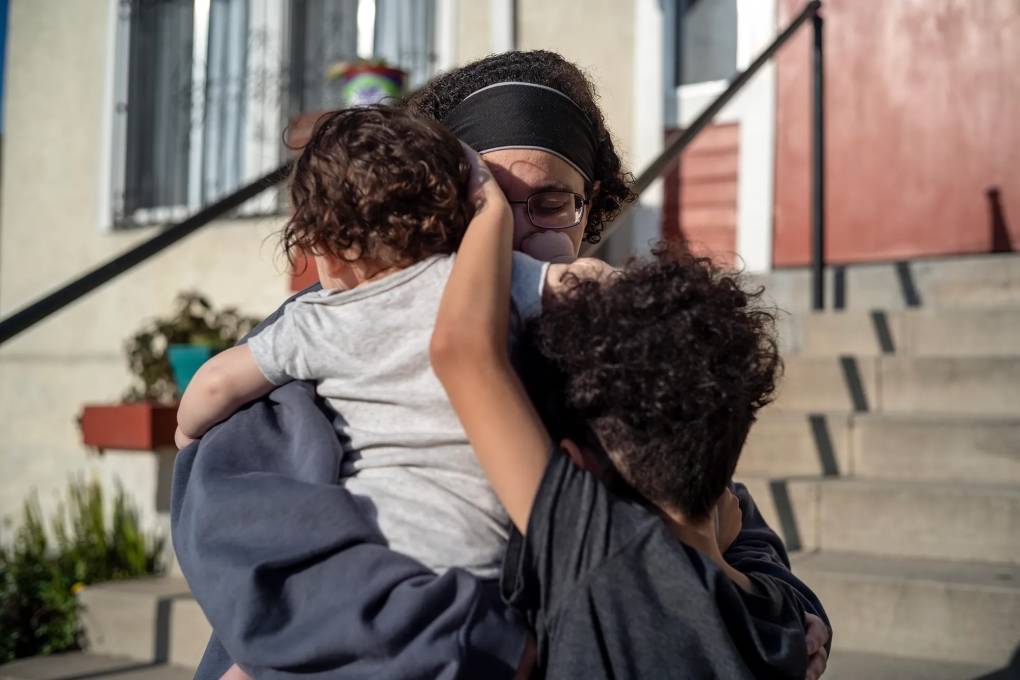
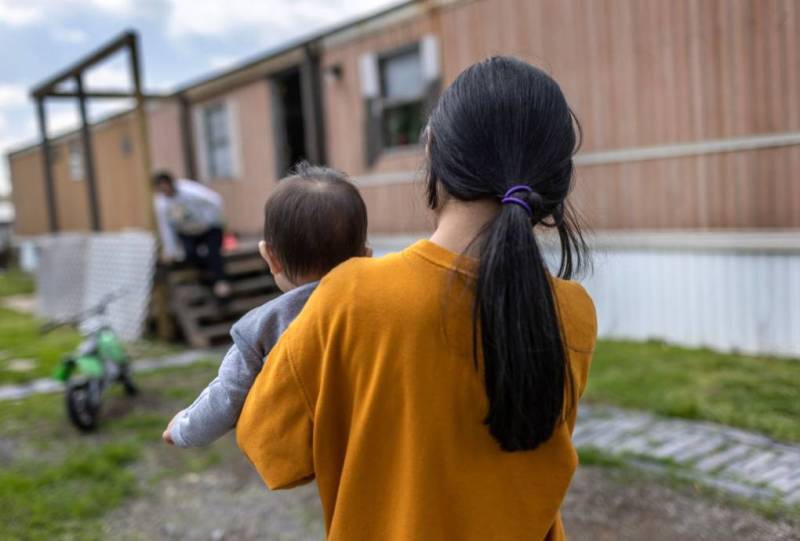
"caption": "Loreal Duran with her children, ages 1 and 7, in front of her apartment complex in Los Angeles on Feb. 8, 2025. Loreal’s husband, Giovanni Duran, was born in El Salvador and detained by US Immigration and Customs Enforcement agents in late January. He is still being held.",
"credit": "Joel Angel Juarez for CalMatters",
"altTag": null,
"description": null,
"imgSizes": {
"medium": {
"file": "https://cdn.kqed.org/wp-content/uploads/sites/10/2025/02/020825_Duran-Family_JAJ_CM_17-copy-800x534.jpg",
"width": 800,
"height": 534,
"mimeType": "image/jpeg"
},
"large": {
"file": "https://cdn.kqed.org/wp-content/uploads/sites/10/2025/02/020825_Duran-Family_JAJ_CM_17-copy-1020x680.jpg",
"width": 1020,
"height": 680,
"mimeType": "image/jpeg"
},
"thumbnail": {
"file": "https://cdn.kqed.org/wp-content/uploads/sites/10/2025/02/020825_Duran-Family_JAJ_CM_17-copy-160x107.jpg",
"width": 160,
"height": 107,
"mimeType": "image/jpeg"
},
"1536x1536": {
"file": "https://cdn.kqed.org/wp-content/uploads/sites/10/2025/02/020825_Duran-Family_JAJ_CM_17-copy-1536x1025.jpg",
"width": 1536,
"height": 1025,
"mimeType": "image/jpeg"
},
"post-thumbnail": {
"file": "https://cdn.kqed.org/wp-content/uploads/sites/10/2025/02/020825_Duran-Family_JAJ_CM_17-copy-672x372.jpg",
"width": 672,
"height": 372,
"mimeType": "image/jpeg"
},
"twentyfourteen-full-width": {
"file": "https://cdn.kqed.org/wp-content/uploads/sites/10/2025/02/020825_Duran-Family_JAJ_CM_17-copy-1038x576.jpg",
"width": 1038,
"height": 576,
"mimeType": "image/jpeg"
},
"full-width": {
"file": "https://cdn.kqed.org/wp-content/uploads/sites/10/2025/02/020825_Duran-Family_JAJ_CM_17-copy-1920x1281.jpg",
"width": 1920,
"height": 1281,
"mimeType": "image/jpeg"
},
"kqedFullSize": {
"file": "https://cdn.kqed.org/wp-content/uploads/sites/10/2025/02/020825_Duran-Family_JAJ_CM_17-copy.jpg",
"width": 2000,
"height": 1334
}
},
"isLoading": false,
"fetchFailed": false
},
"news_11844551": {
"type": "attachments",
"id": "news_11844551",
"meta": {
"index": "attachments_1716263798",
"site": "news",
"id": "11844551",
"found": true
},
"parent": 11844491,
"imgSizes": {
"apple_news_ca_landscape_5_5": {
"file": "https://ww2.kqed.org/app/uploads/sites/10/2020/10/CBP-family-border-1044x783.jpg",
"width": 1044,
"mimeType": "image/jpeg",
"height": 783
},
"apple_news_ca_square_4_0": {
"file": "https://ww2.kqed.org/app/uploads/sites/10/2020/10/CBP-family-border-470x470.jpg",
"width": 470,
"mimeType": "image/jpeg",
"height": 470
},
"twentyfourteen-full-width": {
"file": "https://ww2.kqed.org/app/uploads/sites/10/2020/10/CBP-family-border-1038x576.jpg",
"width": 1038,
"mimeType": "image/jpeg",
"height": 576
},
"thumbnail": {
"file": "https://ww2.kqed.org/app/uploads/sites/10/2020/10/CBP-family-border-160x107.jpg",
"width": 160,
"mimeType": "image/jpeg",
"height": 107
},
"post-thumbnail": {
"file": "https://ww2.kqed.org/app/uploads/sites/10/2020/10/CBP-family-border-672x372.jpg",
"width": 672,
"mimeType": "image/jpeg",
"height": 372
},
"kqedFullSize": {
"file": "https://ww2.kqed.org/app/uploads/sites/10/2020/10/CBP-family-border.jpg",
"width": 1920,
"height": 1280
},
"apple_news_ca_landscape_4_7": {
"file": "https://ww2.kqed.org/app/uploads/sites/10/2020/10/CBP-family-border-632x474.jpg",
"width": 632,
"mimeType": "image/jpeg",
"height": 474
},
"large": {
"file": "https://ww2.kqed.org/app/uploads/sites/10/2020/10/CBP-family-border-1020x680.jpg",
"width": 1020,
"mimeType": "image/jpeg",
"height": 680
},
"apple_news_ca_landscape_4_0": {
"file": "https://ww2.kqed.org/app/uploads/sites/10/2020/10/CBP-family-border-536x402.jpg",
"width": 536,
"mimeType": "image/jpeg",
"height": 402
},
"apple_news_ca_portrait_12_9": {
"file": "https://ww2.kqed.org/app/uploads/sites/10/2020/10/CBP-family-border-1122x1280.jpg",
"width": 1122,
"mimeType": "image/jpeg",
"height": 1280
},
"medium": {
"file": "https://ww2.kqed.org/app/uploads/sites/10/2020/10/CBP-family-border-800x533.jpg",
"width": 800,
"mimeType": "image/jpeg",
"height": 533
},
"apple_news_ca_portrait_4_0": {
"file": "https://ww2.kqed.org/app/uploads/sites/10/2020/10/CBP-family-border-354x472.jpg",
"width": 354,
"mimeType": "image/jpeg",
"height": 472
},
"apple_news_ca_portrait_9_7": {
"file": "https://ww2.kqed.org/app/uploads/sites/10/2020/10/CBP-family-border-840x1120.jpg",
"width": 840,
"mimeType": "image/jpeg",
"height": 1120
},
"apple_news_ca_landscape_12_9": {
"file": "https://ww2.kqed.org/app/uploads/sites/10/2020/10/CBP-family-border-1832x1280.jpg",
"width": 1832,
"mimeType": "image/jpeg",
"height": 1280
},
"apple_news_ca_square_9_7": {
"file": "https://ww2.kqed.org/app/uploads/sites/10/2020/10/CBP-family-border-1104x1104.jpg",
"width": 1104,
"mimeType": "image/jpeg",
"height": 1104
},
"1536x1536": {
"file": "https://ww2.kqed.org/app/uploads/sites/10/2020/10/CBP-family-border-1536x1024.jpg",
"width": 1536,
"mimeType": "image/jpeg",
"height": 1024
},
"apple_news_ca_portrait_4_7": {
"file": "https://ww2.kqed.org/app/uploads/sites/10/2020/10/CBP-family-border-414x552.jpg",
"width": 414,
"mimeType": "image/jpeg",
"height": 552
},
"apple_news_ca_square_12_9": {
"file": "https://ww2.kqed.org/app/uploads/sites/10/2020/10/CBP-family-border-1472x1280.jpg",
"width": 1472,
"mimeType": "image/jpeg",
"height": 1280
},
"apple_news_ca_portrait_5_5": {
"file": "https://ww2.kqed.org/app/uploads/sites/10/2020/10/CBP-family-border-687x916.jpg",
"width": 687,
"mimeType": "image/jpeg",
"height": 916
},
"apple_news_ca_square_4_7": {
"file": "https://ww2.kqed.org/app/uploads/sites/10/2020/10/CBP-family-border-550x550.jpg",
"width": 550,
"mimeType": "image/jpeg",
"height": 550
},
"apple_news_ca_landscape_9_7": {
"file": "https://ww2.kqed.org/app/uploads/sites/10/2020/10/CBP-family-border-1376x1032.jpg",
"width": 1376,
"mimeType": "image/jpeg",
"height": 1032
},
"apple_news_ca_square_5_5": {
"file": "https://ww2.kqed.org/app/uploads/sites/10/2020/10/CBP-family-border-912x912.jpg",
"width": 912,
"mimeType": "image/jpeg",
"height": 912
}
},
"publishDate": 1604083508,
"modified": 1604083584,
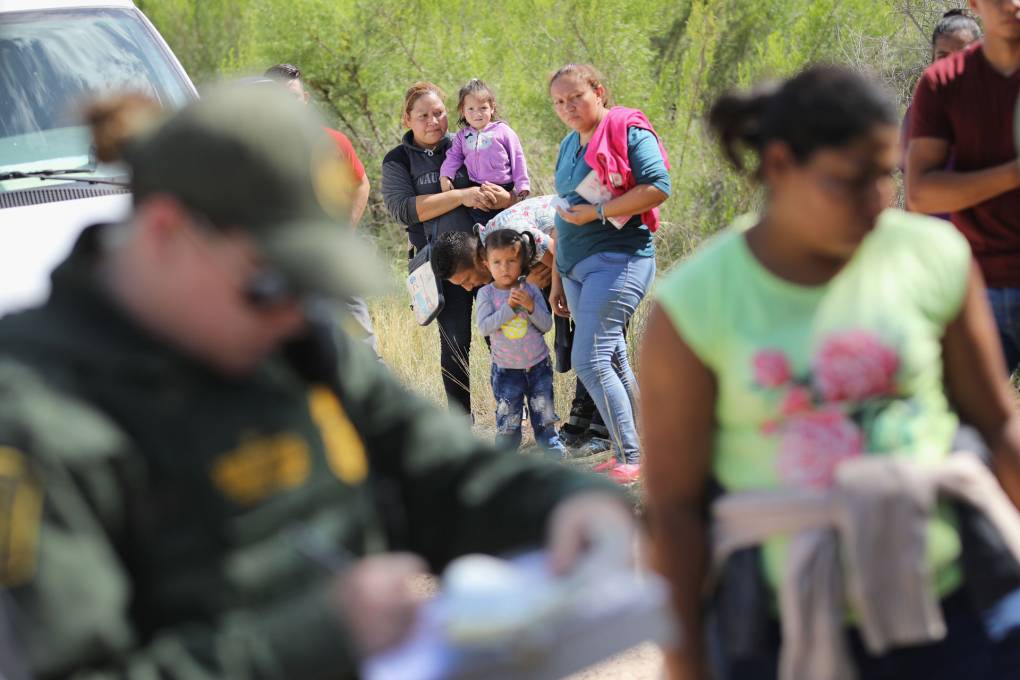
"caption": "Central American asylum seekers wait as U.S. Border Patrol agents take them into custody on June 12, 2018 near McAllen, Texas. The families were then sent to a U.S. Customs and Border Protection (CBP) processing center for possible separation.",
"description": "Central American asylum seekers wait as U.S. Border Patrol agents take them into custody on June 12, 2018 near McAllen, Texas. The families were then sent to a U.S. Customs and Border Protection (CBP) processing center for possible separation.",
"title": "CBP-family-border",
"credit": "John Moore/Getty Images",
"status": "inherit",
"isLoading": false,
"fetchFailed": false
},
"news_12026832": {
"type": "attachments",
"id": "news_12026832",
"meta": {
"index": "attachments_1716263798",
"site": "news",
"id": "12026832",
"found": true
},
"title": "Protests Against Immigration Crackdown Continue In Los Angeles",
"publishDate": 1739404266,
"status": "inherit",
"parent": 12026817,
"modified": 1739404727,
"caption": "A protester waves the national flags of Mexico during a demonstration for immigrants' rights outside of Los Angeles City Hall on Feb. 5, 2025.",
"credit": "Qian Weizhong/VCG via Getty Images",
"altTag": null,
"description": null,
"imgSizes": {
"medium": {
"file": "https://cdn.kqed.org/wp-content/uploads/sites/10/2025/02/GettyImages-2197914000-800x533.jpg",
"width": 800,
"height": 533,
"mimeType": "image/jpeg"
},
"large": {
"file": "https://cdn.kqed.org/wp-content/uploads/sites/10/2025/02/GettyImages-2197914000-1020x680.jpg",
"width": 1020,
"height": 680,
"mimeType": "image/jpeg"
},
"thumbnail": {
"file": "https://cdn.kqed.org/wp-content/uploads/sites/10/2025/02/GettyImages-2197914000-160x107.jpg",
"width": 160,
"height": 107,
"mimeType": "image/jpeg"
},
"1536x1536": {
"file": "https://cdn.kqed.org/wp-content/uploads/sites/10/2025/02/GettyImages-2197914000-1536x1024.jpg",
"width": 1536,
"height": 1024,
"mimeType": "image/jpeg"
},
"2048x2048": {
"file": "https://cdn.kqed.org/wp-content/uploads/sites/10/2025/02/GettyImages-2197914000-2048x1365.jpg",
"width": 2048,
"height": 1365,
"mimeType": "image/jpeg"
},
"post-thumbnail": {
"file": "https://cdn.kqed.org/wp-content/uploads/sites/10/2025/02/GettyImages-2197914000-672x372.jpg",
"width": 672,
"height": 372,
"mimeType": "image/jpeg"
},
"twentyfourteen-full-width": {
"file": "https://cdn.kqed.org/wp-content/uploads/sites/10/2025/02/GettyImages-2197914000-1038x576.jpg",
"width": 1038,
"height": 576,
"mimeType": "image/jpeg"
},
"full-width": {
"file": "https://cdn.kqed.org/wp-content/uploads/sites/10/2025/02/GettyImages-2197914000-1920x1280.jpg",
"width": 1920,
"height": 1280,
"mimeType": "image/jpeg"
},
"kqedFullSize": {
"file": "https://cdn.kqed.org/wp-content/uploads/sites/10/2025/02/GettyImages-2197914000-scaled-e1740613370625.jpg",
"width": 2000,
"height": 1334
}
},
"isLoading": false,
"fetchFailed": false
},
"news_12024430": {
"type": "attachments",
"id": "news_12024430",
"meta": {
"index": "attachments_1716263798",
"site": "news",
"id": "12024430",
"found": true
},
"title": "250128-SFImmigration-08-BL",
"publishDate": 1738105102,
"status": "inherit",
"parent": 12024325,
"modified": 1742325555,
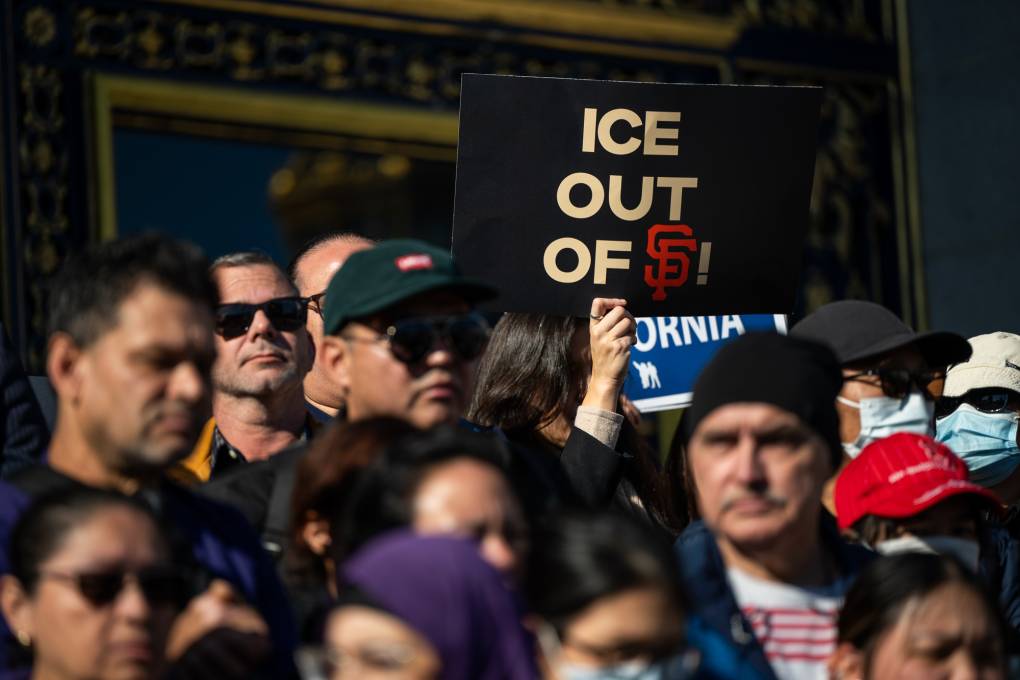
"caption": "A group of elected and public safety officials, labor leaders, and community members fill the steps in front of City Hall in San Francisco on Jan. 28, 2025, during a press conference to reaffirm San Francisco’s commitment to being a Sanctuary City.",
"credit": "Beth LaBerge/KQED",
"altTag": null,
"description": null,
"imgSizes": {
"medium": {
"file": "https://cdn.kqed.org/wp-content/uploads/sites/10/2025/01/250128-SFImmigration-08-BL-800x533.jpg",
"width": 800,
"height": 533,
"mimeType": "image/jpeg"
},
"large": {
"file": "https://cdn.kqed.org/wp-content/uploads/sites/10/2025/01/250128-SFImmigration-08-BL-1020x680.jpg",
"width": 1020,
"height": 680,
"mimeType": "image/jpeg"
},
"thumbnail": {
"file": "https://cdn.kqed.org/wp-content/uploads/sites/10/2025/01/250128-SFImmigration-08-BL-160x107.jpg",
"width": 160,
"height": 107,
"mimeType": "image/jpeg"
},
"1536x1536": {
"file": "https://cdn.kqed.org/wp-content/uploads/sites/10/2025/01/250128-SFImmigration-08-BL-1536x1024.jpg",
"width": 1536,
"height": 1024,
"mimeType": "image/jpeg"
},
"post-thumbnail": {
"file": "https://cdn.kqed.org/wp-content/uploads/sites/10/2025/01/250128-SFImmigration-08-BL-672x372.jpg",
"width": 672,
"height": 372,
"mimeType": "image/jpeg"
},
"twentyfourteen-full-width": {
"file": "https://cdn.kqed.org/wp-content/uploads/sites/10/2025/01/250128-SFImmigration-08-BL-1038x576.jpg",
"width": 1038,
"height": 576,
"mimeType": "image/jpeg"
},
"full-width": {
"file": "https://cdn.kqed.org/wp-content/uploads/sites/10/2025/01/250128-SFImmigration-08-BL-1920x1280.jpg",
"width": 1920,
"height": 1280,
"mimeType": "image/jpeg"
},
"kqedFullSize": {
"file": "https://cdn.kqed.org/wp-content/uploads/sites/10/2025/01/250128-SFImmigration-08-BL.jpg",
"width": 2000,
"height": 1333
}
},
"isLoading": false,
"fetchFailed": false
},
"news_12026446": {
"type": "attachments",
"id": "news_12026446",
"meta": {
"index": "attachments_1716263798",
"site": "news",
"id": "12026446",
"found": true
},
"title": "020625-ICE-Arrest-AP-GB-01-CM",
"publishDate": 1739212388,
"status": "inherit",
"parent": 12026443,
"modified": 1739296136,
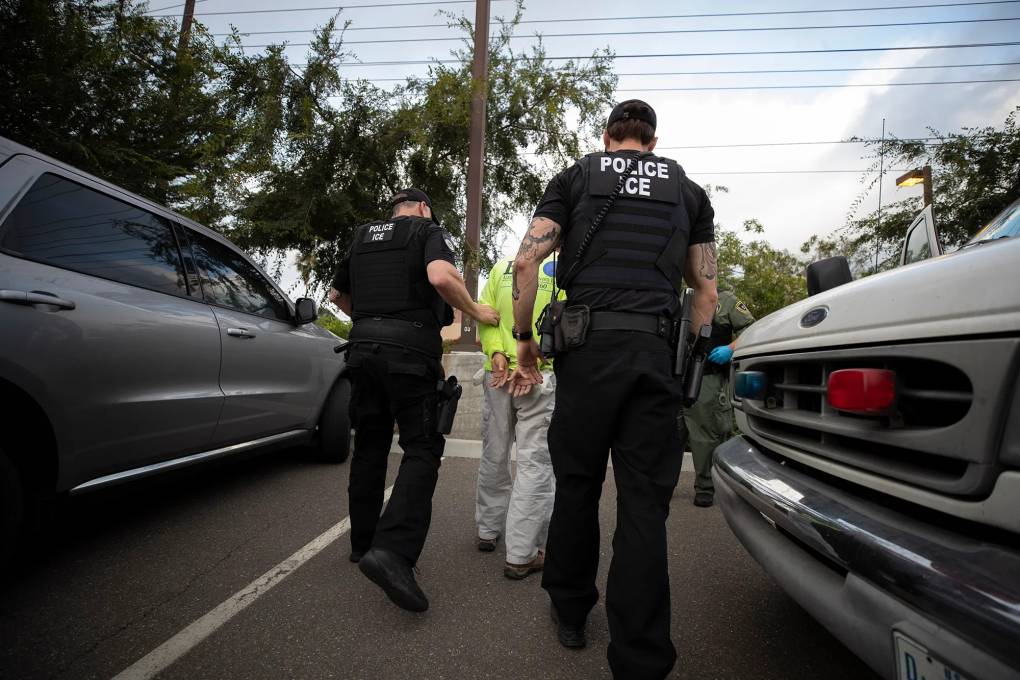
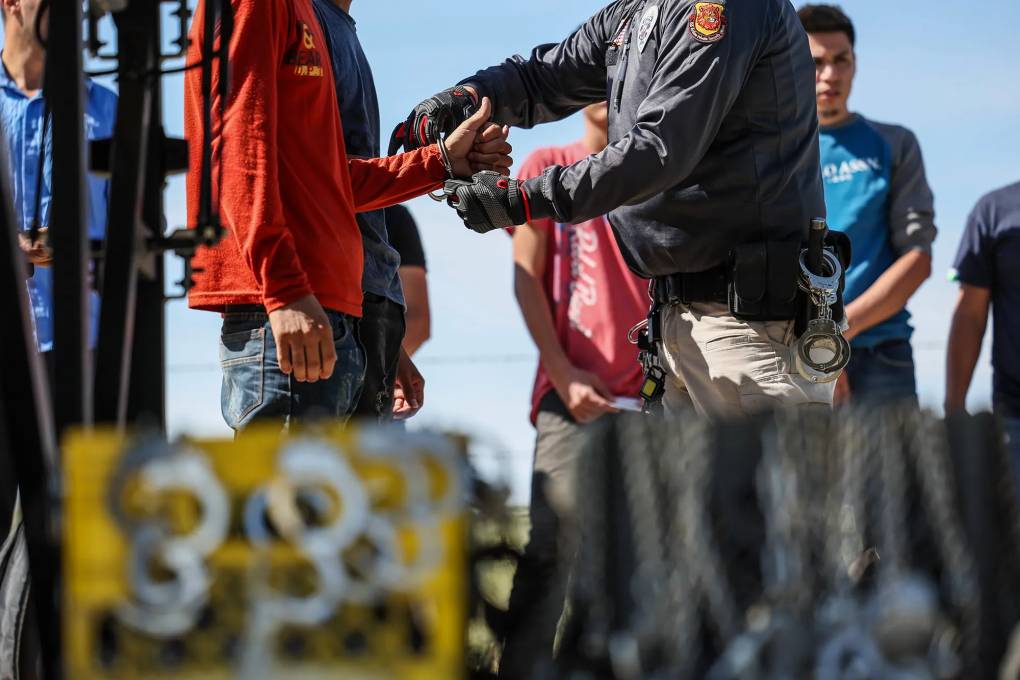
"caption": "A U.S. Immigration and Customs Enforcement (ICE) officer escorts a man in handcuffs during an operation in Escondido on July 8, 2019.",
"credit": "Gregory Bull/AP Photo",
"altTag": null,
"description": null,
"imgSizes": {
"medium": {
"file": "https://cdn.kqed.org/wp-content/uploads/sites/10/2025/02/020625-ICE-Arrest-AP-GB-01-CM-800x533.jpg",
"width": 800,
"height": 533,
"mimeType": "image/jpeg"
},
"large": {
"file": "https://cdn.kqed.org/wp-content/uploads/sites/10/2025/02/020625-ICE-Arrest-AP-GB-01-CM-1020x680.jpg",
"width": 1020,
"height": 680,
"mimeType": "image/jpeg"
},
"thumbnail": {
"file": "https://cdn.kqed.org/wp-content/uploads/sites/10/2025/02/020625-ICE-Arrest-AP-GB-01-CM-160x107.jpg",
"width": 160,
"height": 107,
"mimeType": "image/jpeg"
},
"1536x1536": {
"file": "https://cdn.kqed.org/wp-content/uploads/sites/10/2025/02/020625-ICE-Arrest-AP-GB-01-CM-1536x1024.jpg",
"width": 1536,
"height": 1024,
"mimeType": "image/jpeg"
},
"post-thumbnail": {
"file": "https://cdn.kqed.org/wp-content/uploads/sites/10/2025/02/020625-ICE-Arrest-AP-GB-01-CM-672x372.jpg",
"width": 672,
"height": 372,
"mimeType": "image/jpeg"
},
"twentyfourteen-full-width": {
"file": "https://cdn.kqed.org/wp-content/uploads/sites/10/2025/02/020625-ICE-Arrest-AP-GB-01-CM-1038x576.jpg",
"width": 1038,
"height": 576,
"mimeType": "image/jpeg"
},
"full-width": {
"file": "https://cdn.kqed.org/wp-content/uploads/sites/10/2025/02/020625-ICE-Arrest-AP-GB-01-CM-1920x1280.jpg",
"width": 1920,
"height": 1280,
"mimeType": "image/jpeg"
},
"kqedFullSize": {
"file": "https://cdn.kqed.org/wp-content/uploads/sites/10/2025/02/020625-ICE-Arrest-AP-GB-01-CM.jpg",
"width": 2000,
"height": 1333
}
},
"isLoading": false,
"fetchFailed": false
},
"news_12026181": {
"type": "attachments",
"id": "news_12026181",
"meta": {
"index": "attachments_1716263798",
"site": "news",
"id": "12026181",
"found": true
},
"title": "250128-SFImmigration-04-BL_qed",
"publishDate": 1738952496,
"status": "inherit",
"parent": 12026179,
"modified": 1742325461,
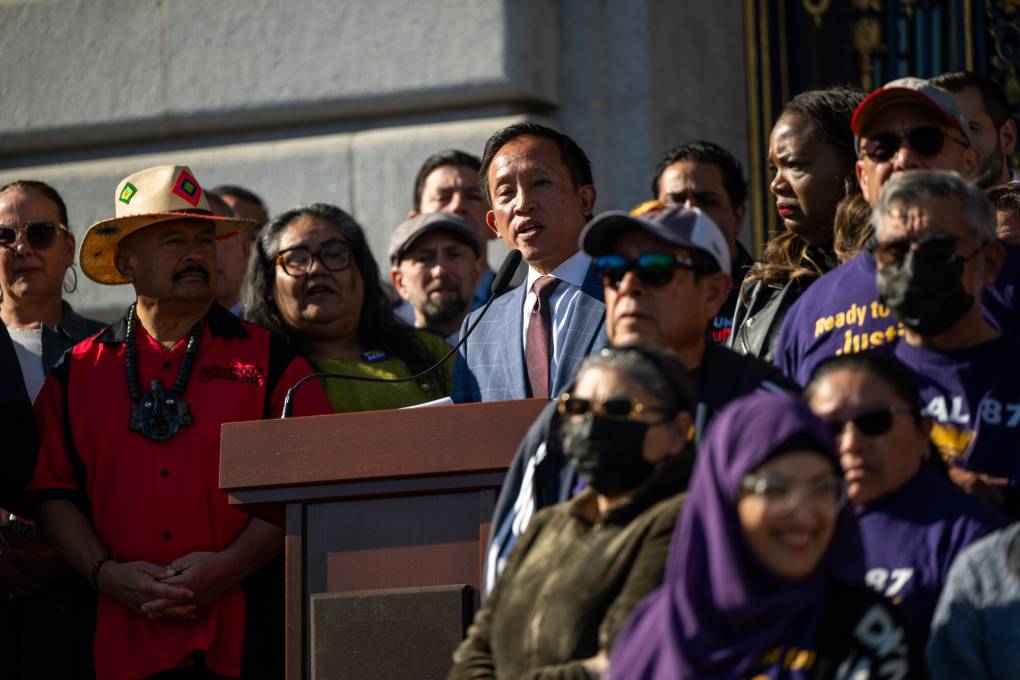
"caption": "San Francisco City Attorney David Chiu speaks during a press conference with elected and public safety officials and labor leaders in front of City Hall in San Francisco on Jan. 28, 2025, to reaffirm San Francisco’s commitment to being a Sanctuary City.",
"credit": "Beth LaBerge/KQED",
"altTag": null,
"description": null,
"imgSizes": {
"medium": {
"file": "https://cdn.kqed.org/wp-content/uploads/sites/10/2025/02/250128-SFImmigration-04-BL_qed-800x533.jpg",
"width": 800,
"height": 533,
"mimeType": "image/jpeg"
},
"large": {
"file": "https://cdn.kqed.org/wp-content/uploads/sites/10/2025/02/250128-SFImmigration-04-BL_qed-1020x680.jpg",
"width": 1020,
"height": 680,
"mimeType": "image/jpeg"
},
"thumbnail": {
"file": "https://cdn.kqed.org/wp-content/uploads/sites/10/2025/02/250128-SFImmigration-04-BL_qed-160x107.jpg",
"width": 160,
"height": 107,
"mimeType": "image/jpeg"
},
"1536x1536": {
"file": "https://cdn.kqed.org/wp-content/uploads/sites/10/2025/02/250128-SFImmigration-04-BL_qed-1536x1024.jpg",
"width": 1536,
"height": 1024,
"mimeType": "image/jpeg"
},
"post-thumbnail": {
"file": "https://cdn.kqed.org/wp-content/uploads/sites/10/2025/02/250128-SFImmigration-04-BL_qed-672x372.jpg",
"width": 672,
"height": 372,
"mimeType": "image/jpeg"
},
"twentyfourteen-full-width": {
"file": "https://cdn.kqed.org/wp-content/uploads/sites/10/2025/02/250128-SFImmigration-04-BL_qed-1038x576.jpg",
"width": 1038,
"height": 576,
"mimeType": "image/jpeg"
},
"full-width": {
"file": "https://cdn.kqed.org/wp-content/uploads/sites/10/2025/02/250128-SFImmigration-04-BL_qed-1920x1280.jpg",
"width": 1920,
"height": 1280,
"mimeType": "image/jpeg"
},
"kqedFullSize": {
"file": "https://cdn.kqed.org/wp-content/uploads/sites/10/2025/02/250128-SFImmigration-04-BL_qed.jpg",
"width": 2000,
"height": 1333
}
},
"isLoading": false,
"fetchFailed": false
},
"news_12024755": {
"type": "attachments",
"id": "news_12024755",
"meta": {
"index": "attachments_1716263798",
"site": "news",
"id": "12024755",
"found": true
},
"title": "20250125_Immigration-Forum_DB_00822",
"publishDate": 1738208185,
"status": "inherit",
"parent": 0,
"modified": 1738872612,
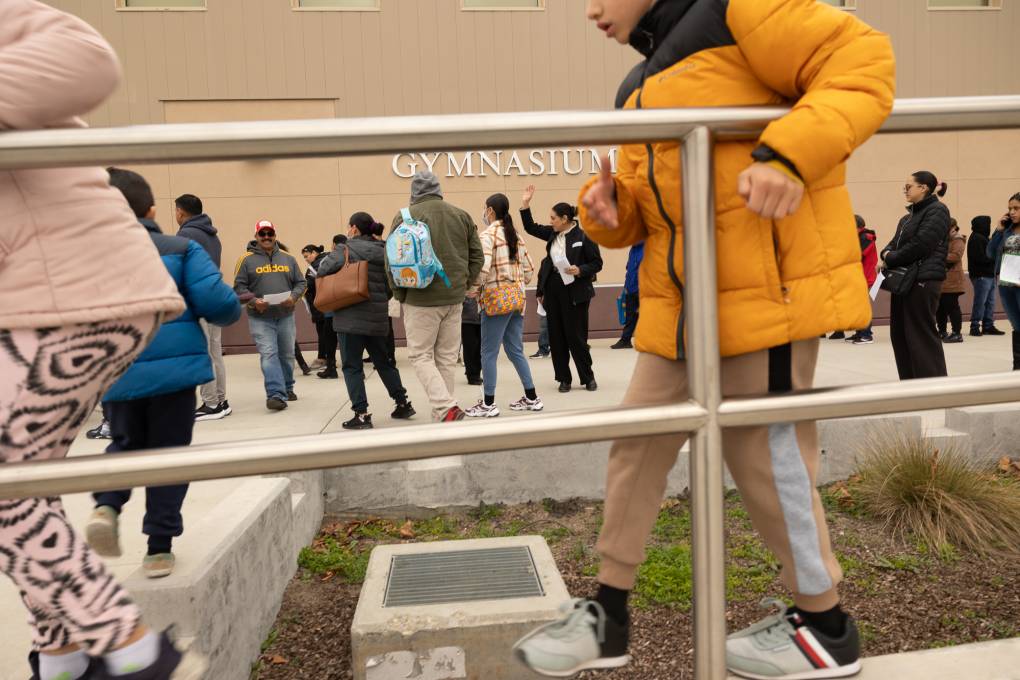
"caption": "People wait in line to register and enter an informational session about immigration services at Willow Cove Elementary in Pittsburg, California, on Jan. 29, 2025. More than 300 people attended the event organized by Stand Together Contra Costa and the Pittsburg Unified School District, which offered free, private consultation with immigration attorneys, along with medical services and a resource fair.",
"credit": "David M. Barreda/KQED",
"altTag": "People stand in line outside a school building.",
"description": null,
"imgSizes": {
"medium": {
"file": "https://cdn.kqed.org/wp-content/uploads/sites/10/2025/01/20250125_Immigration-Forum_DB_00822-800x533.jpg",
"width": 800,
"height": 533,
"mimeType": "image/jpeg"
},
"large": {
"file": "https://cdn.kqed.org/wp-content/uploads/sites/10/2025/01/20250125_Immigration-Forum_DB_00822-1020x680.jpg",
"width": 1020,
"height": 680,
"mimeType": "image/jpeg"
},
"thumbnail": {
"file": "https://cdn.kqed.org/wp-content/uploads/sites/10/2025/01/20250125_Immigration-Forum_DB_00822-160x107.jpg",
"width": 160,
"height": 107,
"mimeType": "image/jpeg"
},
"1536x1536": {
"file": "https://cdn.kqed.org/wp-content/uploads/sites/10/2025/01/20250125_Immigration-Forum_DB_00822-1536x1024.jpg",
"width": 1536,
"height": 1024,
"mimeType": "image/jpeg"
},
"post-thumbnail": {
"file": "https://cdn.kqed.org/wp-content/uploads/sites/10/2025/01/20250125_Immigration-Forum_DB_00822-672x372.jpg",
"width": 672,
"height": 372,
"mimeType": "image/jpeg"
},
"twentyfourteen-full-width": {
"file": "https://cdn.kqed.org/wp-content/uploads/sites/10/2025/01/20250125_Immigration-Forum_DB_00822-1038x576.jpg",
"width": 1038,
"height": 576,
"mimeType": "image/jpeg"
},
"full-width": {
"file": "https://cdn.kqed.org/wp-content/uploads/sites/10/2025/01/20250125_Immigration-Forum_DB_00822-1920x1280.jpg",
"width": 1920,
"height": 1280,
"mimeType": "image/jpeg"
},
"kqedFullSize": {
"file": "https://cdn.kqed.org/wp-content/uploads/sites/10/2025/01/20250125_Immigration-Forum_DB_00822.jpg",
"width": 2000,
"height": 1333
}
},
"isLoading": false,
"fetchFailed": false
},
"news_12024759": {
"type": "attachments",
"id": "news_12024759",
"meta": {
"index": "attachments_1716263798",
"site": "news",
"id": "12024759",
"found": true
},
"title": "20250125_Immigration-Forum_DB_01725",
"publishDate": 1738208208,
"status": "inherit",
"parent": 12025930,
"modified": 1738872208,
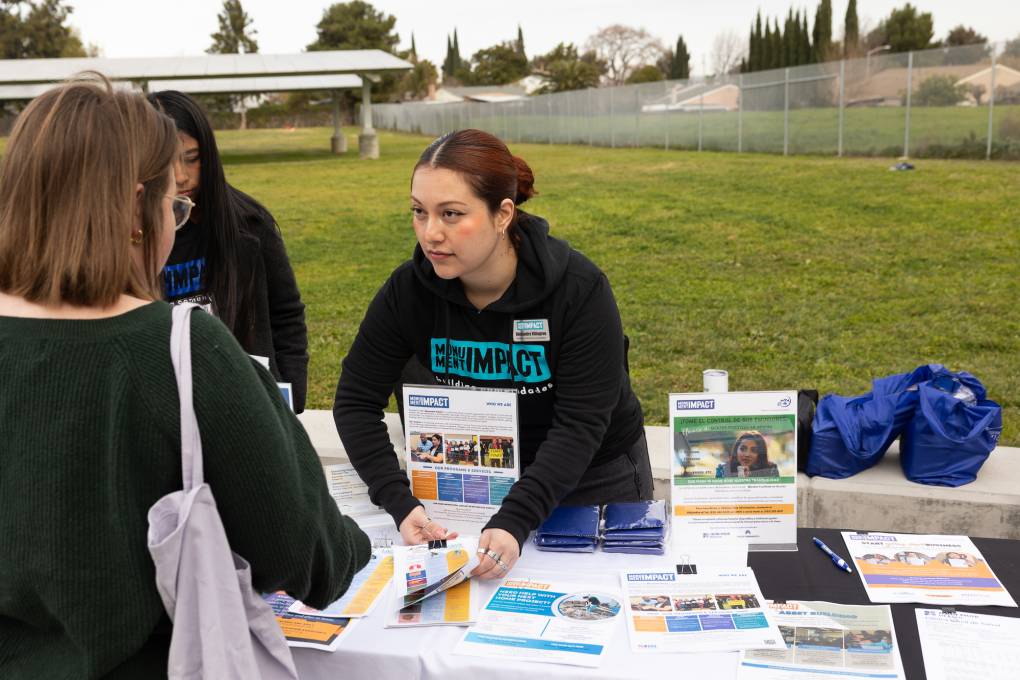
"caption": "Alejandra Villagran, a health community coordinator with Monument Impact, tables at an informational session about immigration services at Willow Cove Elementary in Pittsburg, Calif., on Saturday, Jan. 25, 2025.",
"credit": "David M. Barreda/KQED",
"altTag": null,
"description": null,
"imgSizes": {
"medium": {
"file": "https://cdn.kqed.org/wp-content/uploads/sites/10/2025/01/20250125_Immigration-Forum_DB_01725-800x533.jpg",
"width": 800,
"height": 533,
"mimeType": "image/jpeg"
},
"large": {
"file": "https://cdn.kqed.org/wp-content/uploads/sites/10/2025/01/20250125_Immigration-Forum_DB_01725-1020x680.jpg",
"width": 1020,
"height": 680,
"mimeType": "image/jpeg"
},
"thumbnail": {
"file": "https://cdn.kqed.org/wp-content/uploads/sites/10/2025/01/20250125_Immigration-Forum_DB_01725-160x107.jpg",
"width": 160,
"height": 107,
"mimeType": "image/jpeg"
},
"1536x1536": {
"file": "https://cdn.kqed.org/wp-content/uploads/sites/10/2025/01/20250125_Immigration-Forum_DB_01725-1536x1024.jpg",
"width": 1536,
"height": 1024,
"mimeType": "image/jpeg"
},
"post-thumbnail": {
"file": "https://cdn.kqed.org/wp-content/uploads/sites/10/2025/01/20250125_Immigration-Forum_DB_01725-672x372.jpg",
"width": 672,
"height": 372,
"mimeType": "image/jpeg"
},
"twentyfourteen-full-width": {
"file": "https://cdn.kqed.org/wp-content/uploads/sites/10/2025/01/20250125_Immigration-Forum_DB_01725-1038x576.jpg",
"width": 1038,
"height": 576,
"mimeType": "image/jpeg"
},
"full-width": {
"file": "https://cdn.kqed.org/wp-content/uploads/sites/10/2025/01/20250125_Immigration-Forum_DB_01725-1920x1280.jpg",
"width": 1920,
"height": 1280,
"mimeType": "image/jpeg"
},
"kqedFullSize": {
"file": "https://cdn.kqed.org/wp-content/uploads/sites/10/2025/01/20250125_Immigration-Forum_DB_01725.jpg",
"width": 2000,
"height": 1333
}
},
"isLoading": false,
"fetchFailed": false
},
"news_12023105": {
"type": "attachments",
"id": "news_12023105",
"meta": {
"index": "attachments_1716263798",
"site": "news",
"id": "12023105",
"found": true
},
"title": "060324-CBP-Arrest-GETTY-CM-1",
"publishDate": 1737392456,
"status": "inherit",
"parent": 12023104,
"modified": 1737392496,
"caption": "Immigrant advocates are closely watching California sheriffs to see how they'll uphold the state's sanctuary law in a new Trump administration. Here, people seeking asylum are detained by border patrol after crossing the U.S. and Mexico border near Campo on June 3, 2024.",
"credit": "Robert Gauthier/Los Angeles Times via Getty Images",
"altTag": null,
"description": null,
"imgSizes": {
"medium": {
"file": "https://cdn.kqed.org/wp-content/uploads/sites/10/2025/01/060324-CBP-Arrest-GETTY-CM-1-800x533.jpg",
"width": 800,
"height": 533,
"mimeType": "image/jpeg"
},
"large": {
"file": "https://cdn.kqed.org/wp-content/uploads/sites/10/2025/01/060324-CBP-Arrest-GETTY-CM-1-1020x680.jpg",
"width": 1020,
"height": 680,
"mimeType": "image/jpeg"
},
"thumbnail": {
"file": "https://cdn.kqed.org/wp-content/uploads/sites/10/2025/01/060324-CBP-Arrest-GETTY-CM-1-160x107.jpg",
"width": 160,
"height": 107,
"mimeType": "image/jpeg"
},
"1536x1536": {
"file": "https://cdn.kqed.org/wp-content/uploads/sites/10/2025/01/060324-CBP-Arrest-GETTY-CM-1-1536x1024.jpg",
"width": 1536,
"height": 1024,
"mimeType": "image/jpeg"
},
"post-thumbnail": {
"file": "https://cdn.kqed.org/wp-content/uploads/sites/10/2025/01/060324-CBP-Arrest-GETTY-CM-1-672x372.jpg",
"width": 672,
"height": 372,
"mimeType": "image/jpeg"
},
"twentyfourteen-full-width": {
"file": "https://cdn.kqed.org/wp-content/uploads/sites/10/2025/01/060324-CBP-Arrest-GETTY-CM-1-1038x576.jpg",
"width": 1038,
"height": 576,
"mimeType": "image/jpeg"
},
"full-width": {
"file": "https://cdn.kqed.org/wp-content/uploads/sites/10/2025/01/060324-CBP-Arrest-GETTY-CM-1-1920x1280.jpg",
"width": 1920,
"height": 1280,
"mimeType": "image/jpeg"
},
"kqedFullSize": {
"file": "https://cdn.kqed.org/wp-content/uploads/sites/10/2025/01/060324-CBP-Arrest-GETTY-CM-1.jpg",
"width": 2000,
"height": 1333
}
},
"isLoading": false,
"fetchFailed": false
},
"news_12025468": {
"type": "attachments",
"id": "news_12025468",
"meta": {
"index": "attachments_1716263798",
"site": "news",
"id": "12025468",
"found": true
},
"title": "250203-DayWithoutAnImmigrant-04-BL",
"publishDate": 1738619150,
"status": "inherit",
"parent": 0,
"modified": 1738624102,
"caption": "Amaris, 17, (center), and Christian, 14, march during a rally for immigrants’ rights in the Fruitvale district of Oakland on Monday, Feb. 3, 2025. By Any Means Necessary, a youth-led immigrants' rights organization, organized the rally.",
"credit": "Beth LaBerge/KQED",
"altTag": null,
"description": null,
"imgSizes": {
"medium": {
"file": "https://cdn.kqed.org/wp-content/uploads/sites/10/2025/02/250203-DayWithoutAnImmigrant-04-BL-800x533.jpg",
"width": 800,
"height": 533,
"mimeType": "image/jpeg"
},
"large": {
"file": "https://cdn.kqed.org/wp-content/uploads/sites/10/2025/02/250203-DayWithoutAnImmigrant-04-BL-1020x680.jpg",
"width": 1020,
"height": 680,
"mimeType": "image/jpeg"
},
"thumbnail": {
"file": "https://cdn.kqed.org/wp-content/uploads/sites/10/2025/02/250203-DayWithoutAnImmigrant-04-BL-160x107.jpg",
"width": 160,
"height": 107,
"mimeType": "image/jpeg"
},
"1536x1536": {
"file": "https://cdn.kqed.org/wp-content/uploads/sites/10/2025/02/250203-DayWithoutAnImmigrant-04-BL-1536x1024.jpg",
"width": 1536,
"height": 1024,
"mimeType": "image/jpeg"
},
"post-thumbnail": {
"file": "https://cdn.kqed.org/wp-content/uploads/sites/10/2025/02/250203-DayWithoutAnImmigrant-04-BL-672x372.jpg",
"width": 672,
"height": 372,
"mimeType": "image/jpeg"
},
"twentyfourteen-full-width": {
"file": "https://cdn.kqed.org/wp-content/uploads/sites/10/2025/02/250203-DayWithoutAnImmigrant-04-BL-1038x576.jpg",
"width": 1038,
"height": 576,
"mimeType": "image/jpeg"
},
"full-width": {
"file": "https://cdn.kqed.org/wp-content/uploads/sites/10/2025/02/250203-DayWithoutAnImmigrant-04-BL-1920x1280.jpg",
"width": 1920,
"height": 1280,
"mimeType": "image/jpeg"
},
"kqedFullSize": {
"file": "https://cdn.kqed.org/wp-content/uploads/sites/10/2025/02/250203-DayWithoutAnImmigrant-04-BL.jpg",
"width": 2000,
"height": 1333
}
},
"isLoading": false,
"fetchFailed": false
},
"news_12025030": {
"type": "attachments",
"id": "news_12025030",
"meta": {
"index": "attachments_1716263798",
"site": "news",
"id": "12025030",
"found": true
},
"title": "ICE AGENT",
"publishDate": 1738336230,
"status": "inherit",
"parent": 12025026,
"modified": 1738339568,
"caption": "Desde la toma de protesta del presidente Donald Trump, el miedo y el pánico por posibles redadas de ICE se han extendido en California.",
"credit": null,
"altTag": null,
"description": null,
"imgSizes": {
"medium": {
"file": "https://cdn.kqed.org/wp-content/uploads/sites/10/2025/01/ICE-AGENT-800x533.png",
"width": 800,
"height": 533,
"mimeType": "image/png"
},
"thumbnail": {
"file": "https://cdn.kqed.org/wp-content/uploads/sites/10/2025/01/ICE-AGENT-160x107.png",
"width": 160,
"height": 107,
"mimeType": "image/png"
},
"post-thumbnail": {
"file": "https://cdn.kqed.org/wp-content/uploads/sites/10/2025/01/ICE-AGENT-672x372.png",
"width": 672,
"height": 372,
"mimeType": "image/png"
},
"twentyfourteen-full-width": {
"file": "https://cdn.kqed.org/wp-content/uploads/sites/10/2025/01/ICE-AGENT-1020x576.png",
"width": 1020,
"height": 576,
"mimeType": "image/png"
},
"kqedFullSize": {
"file": "https://cdn.kqed.org/wp-content/uploads/sites/10/2025/01/ICE-AGENT.png",
"width": 1020,
"height": 680
}
},
"isLoading": false,
"fetchFailed": false
},
"news_12025343": {
"type": "attachments",
"id": "news_12025343",
"meta": {
"index": "attachments_1716263798",
"site": "news",
"id": "12025343",
"found": true
},
"title": "lady with child in arms",
"publishDate": 1738552505,
"status": "inherit",
"parent": 12025342,
"modified": 1738552559,
"caption": "La orden ejecutiva de Trump establece que solo se verán afectados los bebés nacidos «dentro de Estados Unidos después de 30 días de la fecha de esta orden», por lo que el 19 de febrero de 2025 sería la fecha oficial de inicio de la política. Sin embargo, un juez federal ha paralizado la orden, que el Departamento de Justicia probablemente recurrirá.",
"credit": "John Moore/Getty Images",
"altTag": null,
"description": null,
"imgSizes": {
"medium": {
"file": "https://cdn.kqed.org/wp-content/uploads/sites/10/2025/02/lady-with-child-in-arms-800x541.jpg",
"width": 800,
"height": 541,
"mimeType": "image/jpeg"
},
"thumbnail": {
"file": "https://cdn.kqed.org/wp-content/uploads/sites/10/2025/02/lady-with-child-in-arms-160x108.jpg",
"width": 160,
"height": 108,
"mimeType": "image/jpeg"
},
"post-thumbnail": {
"file": "https://cdn.kqed.org/wp-content/uploads/sites/10/2025/02/lady-with-child-in-arms-672x372.jpg",
"width": 672,
"height": 372,
"mimeType": "image/jpeg"
},
"twentyfourteen-full-width": {
"file": "https://cdn.kqed.org/wp-content/uploads/sites/10/2025/02/lady-with-child-in-arms-1020x576.jpg",
"width": 1020,
"height": 576,
"mimeType": "image/jpeg"
},
"kqedFullSize": {
"file": "https://cdn.kqed.org/wp-content/uploads/sites/10/2025/02/lady-with-child-in-arms.jpg",
"width": 1020,
"height": 690
}
},
"isLoading": false,
"fetchFailed": false
}
},
"audioPlayerReducer": {
"postId": "stream_live",
"isPaused": true,
"isPlaying": false,
"pfsActive": false,
"pledgeModalIsOpen": true,
"playerDrawerIsOpen": false,
"liveAudioPlayStartedAt": 0,
"liveAudioPlayContext": ""
},
"authorsReducer": {
"byline_news_12027013": {
"type": "authors",
"id": "byline_news_12027013",
"meta": {
"override": true
},
"slug": "byline_news_12027013",
"name": "\u003ca href=\"https://calmatters.org/author/wendy-fry/\">Wendy Fry\u003c/a>, CalMatters",
"isLoading": false
},
"byline_news_12026959": {
"type": "authors",
"id": "byline_news_12026959",
"meta": {
"override": true
},
"slug": "byline_news_12026959",
"name": "Mark Betancourt, The California Newsroom",
"isLoading": false
},
"byline_news_12026443": {
"type": "authors",
"id": "byline_news_12026443",
"meta": {
"override": true
},
"slug": "byline_news_12026443",
"name": "Jeanne Kuang, CalMatters",
"isLoading": false
},
"tychehendricks": {
"type": "authors",
"id": "259",
"meta": {
"index": "authors_1716337520",
"id": "259",
"found": true
},
"name": "Tyche Hendricks",
"firstName": "Tyche",
"lastName": "Hendricks",
"slug": "tychehendricks",
"email": "thendricks@kqed.org",
"display_author_email": true,
"staff_mastheads": [
"news"
],
"title": "KQED Senior Editor, Immigration",
"bio": "\u003cspan style=\"font-weight: 400;\">Tyche Hendricks is KQED’s senior editor for immigration, leading coverage of the policy and politics that affect California’s immigrant communities. Her work for KQED’s radio and online audiences is also carried on NPR and other national outlets. She has been recognized with awards from the Radio and Television News Directors Association, the Society for Professional Journalists; the Education Writers Association; the Best of the West and the National Federation of Community Broadcasters. Before joining KQED in 2010, Tyche spent more than a dozen years as a newspaper reporter, notably at the \u003c/span>\u003ci>\u003cspan style=\"font-weight: 400;\">San Francisco Chronicle\u003c/span>\u003c/i>\u003cspan style=\"font-weight: 400;\">. At different times she has covered criminal justice, government and politics and urban planning. Tyche has taught in the MFA Creative Writing program at the University of San Francisco and at UC Berkeley’s Graduate School of Journalism, where she was co-director of a national immigration symposium for professional journalists. She is the author of \u003c/span>\u003ci>\u003cspan style=\"font-weight: 400;\">The Wind Doesn't Need a Passport: Stories from the U.S.-Mexico Borderlands\u003c/span>\u003c/i>\u003cspan style=\"font-weight: 400;\"> (University of California Press). \u003c/span>",
"avatar": "https://secure.gravatar.com/avatar/b8ee458e2731c2d43df86882ce17267e?s=600&d=blank&r=g",
"twitter": "tychehendricks",
"facebook": null,
"instagram": null,
"linkedin": null,
"sites": [
{
"site": "news",
"roles": [
"editor"
]
},
{
"site": "stateofhealth",
"roles": [
"editor"
]
}
],
"headData": {
"title": "Tyche Hendricks | KQED",
"description": "KQED Senior Editor, Immigration",
"ogImgSrc": "https://secure.gravatar.com/avatar/b8ee458e2731c2d43df86882ce17267e?s=600&d=blank&r=g",
"twImgSrc": "https://secure.gravatar.com/avatar/b8ee458e2731c2d43df86882ce17267e?s=600&d=blank&r=g"
},
"isLoading": false,
"link": "/author/tychehendricks"
},
"mlagos": {
"type": "authors",
"id": "3239",
"meta": {
"index": "authors_1716337520",
"id": "3239",
"found": true
},
"name": "Marisa Lagos",
"firstName": "Marisa",
"lastName": "Lagos",
"slug": "mlagos",
"email": "mlagos@kqed.org",
"display_author_email": false,
"staff_mastheads": [
"news"
],
"title": "KQED Contributor",
"bio": "Marisa Lagos is a correspondent for KQED’s California Politics and Government Desk and co-hosts the award-winning show and podcast, Political Breakdown. At KQED, Lagos also conducts reporting, analysis and investigations into state, local and national politics for radio, TV, online and onstage. In 2022, she and co-host, Scott Shafer, moderated the only gubernatorial debate in California. In 2020, the \u003ci>Washington Post\u003c/i> named her one of the top political journalists in California; she was nominated for a Peabody and won several other awards for her work investigating the 2017 California wildfires. She has worked at the \u003ci>San Francisco Chronicle\u003c/i>, \u003ci>San Francisco Examiner\u003c/i> and \u003ci>Los Angeles Times\u003c/i>. A UC Santa Barbara graduate, she lives in San Francisco with her two sons and husband.",
"avatar": "https://secure.gravatar.com/avatar/a261a0d3696fc066871ef96b85b5e7d2?s=600&d=blank&r=g",
"twitter": "@mlagos",
"facebook": null,
"instagram": null,
"linkedin": null,
"sites": [
{
"site": "arts",
"roles": [
"author"
]
},
{
"site": "news",
"roles": [
"editor"
]
},
{
"site": "science",
"roles": [
"editor"
]
},
{
"site": "forum",
"roles": [
"author"
]
},
{
"site": "liveblog",
"roles": [
"author"
]
}
],
"headData": {
"title": "Marisa Lagos | KQED",
"description": "KQED Contributor",
"ogImgSrc": "https://secure.gravatar.com/avatar/a261a0d3696fc066871ef96b85b5e7d2?s=600&d=blank&r=g",
"twImgSrc": "https://secure.gravatar.com/avatar/a261a0d3696fc066871ef96b85b5e7d2?s=600&d=blank&r=g"
},
"isLoading": false,
"link": "/author/mlagos"
},
"ccabreralomeli": {
"type": "authors",
"id": "11708",
"meta": {
"index": "authors_1716337520",
"id": "11708",
"found": true
},
"name": "Carlos Cabrera-Lomelí",
"firstName": "Carlos",
"lastName": "Cabrera-Lomelí",
"slug": "ccabreralomeli",
"email": "ccabreralomeli@KQED.org",
"display_author_email": true,
"staff_mastheads": [
"news"
],
"title": "Community Reporter",
"bio": "Carlos Cabrera-Lomelí is a community reporter with KQED's digital engagement team. He also reports and co-produces for KQED's bilingual news hub KQED en Español. He grew up in San Francisco's Mission District and has previously worked with Univision, 48 Hills and REFORMA in Mexico City.",
"avatar": "https://secure.gravatar.com/avatar/e95ff80bb2eaf18a8f2af4dcf7ffb54b?s=600&d=mm&r=g",
"twitter": "@LomeliCabrera",
"facebook": null,
"instagram": null,
"linkedin": null,
"sites": [
{
"site": "arts",
"roles": [
"editor"
]
},
{
"site": "news",
"roles": [
"editor"
]
},
{
"site": "about",
"roles": [
"editor"
]
},
{
"site": "science",
"roles": [
"editor"
]
},
{
"site": "perspectives",
"roles": [
"editor"
]
},
{
"site": "elections",
"roles": [
"editor"
]
},
{
"site": "liveblog",
"roles": [
"contributor"
]
}
],
"headData": {
"title": "Carlos Cabrera-Lomelí | KQED",
"description": "Community Reporter",
"ogImgSrc": "https://secure.gravatar.com/avatar/e95ff80bb2eaf18a8f2af4dcf7ffb54b?s=600&d=mm&r=g",
"twImgSrc": "https://secure.gravatar.com/avatar/e95ff80bb2eaf18a8f2af4dcf7ffb54b?s=600&d=mm&r=g"
},
"isLoading": false,
"link": "/author/ccabreralomeli"
},
"kmizuguchi": {
"type": "authors",
"id": "11739",
"meta": {
"index": "authors_1716337520",
"id": "11739",
"found": true
},
"name": "Keith Mizuguchi",
"firstName": "Keith",
"lastName": "Mizuguchi",
"slug": "kmizuguchi",
"email": "kmizuguchi@kqed.org",
"display_author_email": false,
"staff_mastheads": [],
"title": "KQED Contributor",
"bio": null,
"avatar": "https://secure.gravatar.com/avatar/64d8a7de0723d4099b9fe4e915136103febcc20809abce228ee4415bcb237023?s=600&d=blank&r=g",
"twitter": null,
"bluesky": null,
"facebook": null,
"instagram": null,
"linkedin": null,
"sites": [
{
"site": "news",
"roles": [
"editor"
]
},
{
"site": "science",
"roles": [
"editor"
]
}
],
"headData": {
"title": "Keith Mizuguchi | KQED",
"description": "KQED Contributor",
"ogImgSrc": "https://secure.gravatar.com/avatar/64d8a7de0723d4099b9fe4e915136103febcc20809abce228ee4415bcb237023?s=600&d=blank&r=g",
"twImgSrc": "https://secure.gravatar.com/avatar/64d8a7de0723d4099b9fe4e915136103febcc20809abce228ee4415bcb237023?s=600&d=blank&r=g"
},
"isLoading": false,
"link": "/author/kmizuguchi"
},
"nkhan": {
"type": "authors",
"id": "11867",
"meta": {
"index": "authors_1716337520",
"id": "11867",
"found": true
},
"name": "Nisa Khan",
"firstName": "Nisa",
"lastName": "Khan",
"slug": "nkhan",
"email": "nkhan@kqed.org",
"display_author_email": false,
"staff_mastheads": [],
"title": "KQED Contributor",
"bio": "Nisa Khan is a reporter for KQED's Audience News Desk. She was formerly a data reporter at Michigan Radio. She earned a Bachelor of Science in Information from the University of Michigan and a Master of Arts in Communication from Stanford University.",
"avatar": "https://secure.gravatar.com/avatar/a3bf1efcfbe7658d13a434cc54d0b2e3?s=600&d=blank&r=g",
"twitter": "mnisakhan",
"bluesky": null,
"facebook": null,
"instagram": null,
"linkedin": null,
"sites": [
{
"site": "arts",
"roles": [
"editor"
]
},
{
"site": "news",
"roles": [
"editor"
]
},
{
"site": "science",
"roles": [
"editor",
"author"
]
},
{
"site": "forum",
"roles": [
"editor"
]
},
{
"site": "liveblog",
"roles": [
"contributor"
]
}
],
"headData": {
"title": "Nisa Khan | KQED",
"description": "KQED Contributor",
"ogImgSrc": "https://secure.gravatar.com/avatar/a3bf1efcfbe7658d13a434cc54d0b2e3?s=600&d=blank&r=g",
"twImgSrc": "https://secure.gravatar.com/avatar/a3bf1efcfbe7658d13a434cc54d0b2e3?s=600&d=blank&r=g"
},
"isLoading": false,
"link": "/author/nkhan"
},
"kdebenedetti": {
"type": "authors",
"id": "11913",
"meta": {
"index": "authors_1716337520",
"id": "11913",
"found": true
},
"name": "Katie DeBenedetti",
"firstName": "Katie",
"lastName": "DeBenedetti",
"slug": "kdebenedetti",
"email": "kdebenedetti@kqed.org",
"display_author_email": false,
"staff_mastheads": [
"news",
"science"
],
"title": "KQED Contributor",
"bio": "Katie DeBenedetti is a digital reporter covering daily news for the Express Desk. Prior to joining KQED as a culture reporting intern in January 2024, she covered education and city government for the Napa Valley Register.",
"avatar": "https://secure.gravatar.com/avatar/6e31073cb8f7e4214ab03f42771d0f45?s=600&d=blank&r=g",
"twitter": null,
"facebook": null,
"instagram": null,
"linkedin": null,
"sites": [
{
"site": "news",
"roles": [
"author"
]
},
{
"site": "science",
"roles": [
"author"
]
},
{
"site": "liveblog",
"roles": [
"author"
]
}
],
"headData": {
"title": "Katie DeBenedetti | KQED",
"description": "KQED Contributor",
"ogImgSrc": "https://secure.gravatar.com/avatar/6e31073cb8f7e4214ab03f42771d0f45?s=600&d=blank&r=g",
"twImgSrc": "https://secure.gravatar.com/avatar/6e31073cb8f7e4214ab03f42771d0f45?s=600&d=blank&r=g"
},
"isLoading": false,
"link": "/author/kdebenedetti"
},
"slim": {
"type": "authors",
"id": "11920",
"meta": {
"index": "authors_1716337520",
"id": "11920",
"found": true
},
"name": "Samantha Lim",
"firstName": "Samantha",
"lastName": "Lim",
"slug": "slim",
"email": "slim@KQED.org",
"display_author_email": false,
"staff_mastheads": [],
"title": "KQED Contributor",
"bio": null,
"avatar": "https://secure.gravatar.com/avatar/82e592e6c15fe1a04d385e8ad0fb0b4e?s=600&d=blank&r=g",
"twitter": null,
"facebook": null,
"instagram": null,
"linkedin": null,
"sites": [
{
"site": "news",
"roles": []
}
],
"headData": {
"title": "Samantha Lim | KQED",
"description": "KQED Contributor",
"ogImgSrc": "https://secure.gravatar.com/avatar/82e592e6c15fe1a04d385e8ad0fb0b4e?s=600&d=blank&r=g",
"twImgSrc": "https://secure.gravatar.com/avatar/82e592e6c15fe1a04d385e8ad0fb0b4e?s=600&d=blank&r=g"
},
"isLoading": false,
"link": "/author/slim"
}
},
"pagesReducer": {
"news_tag_immigration": {
"type": "terms",
"id": "news_20202",
"meta": {
"index": "terms_1716263798",
"site": "news",
"id": "20202",
"score": 6.9038835
},
"featImg": null,
"name": "immigration",
"description": null,
"taxonomy": "tag",
"headData": {
"twImgId": null,
"twTitle": null,
"ogTitle": null,
"ogImgId": null,
"twDescription": null,
"description": null,
"title": "immigration Archives | KQED News",
"ogDescription": null
},
"ttid": 20219,
"slug": "immigration",
"isLoading": false,
"title": "immigration",
"pageMeta": {
"site": "news",
"WpPageTemplate": "page-topic-editorial",
"currentPage": 35
},
"blocks": [
{
"blockName": "kqed/post-list",
"attrs": {
"layout": "cardArticle2",
"query": "posts/news?tag=immigration",
"seeMore": false,
"paginated": true,
"page": 35
}
},
{
"blockName": "kqed/ad"
}
]
}
},
"pfsSessionReducer": {},
"postsReducer": {
"stream_live": {
"type": "live",
"id": "stream_live",
"audioUrl": "https://streams.kqed.org/kqedradio",
"title": "Live Stream",
"excerpt": "Live Stream information currently unavailable.",
"link": "/radio",
"featImg": "",
"label": {
"name": "KQED Live",
"link": "/"
}
},
"stream_kqedNewscast": {
"type": "posts",
"id": "stream_kqedNewscast",
"audioUrl": "https://www.kqed.org/.stream/anon/radio/RDnews/newscast.mp3?_=1",
"title": "KQED Newscast",
"featImg": "",
"label": {
"name": "88.5 FM",
"link": "/"
}
},
"news_12027013": {
"type": "posts",
"id": "news_12027013",
"meta": {
"index": "posts_1716263798",
"site": "news",
"id": "12027013",
"score": null,
"sort": [
1739533826000
]
},
"guestAuthors": [],
"slug": "it-was-just-a-regular-morning-californians-picked-up-in-recent-ice-raids-include-kids-volunteers",
"title": "As ICE Arrests Hit California, Families Broken Up, Working People Detained",
"publishDate": 1739533826,
"format": "standard",
"headTitle": "As ICE Arrests Hit California, Families Broken Up, Working People Detained | KQED",
"labelTerm": {
"term": 18481,
"site": "news"
},
"content": "\u003cp>A church-going agricultural worker. An Echo Park man taking his son to school. A 16-year-old kid searching for work to support his family in Mexico.\u003c/p>\n\u003cp>Three weeks into President Donald Trump’s second term, a clearer picture is beginning to emerge of some of the first Californians targeted in his high-profile immigration crackdown. It’s very different from the descriptions of hardened criminals President Donald Trump has touted. People CalMatters interviewed about the raids across California suggested those swept up in them are dedicated family members and employees, their lives deeply woven into their communities. None appeared to pose the risks to national security or public safety Trump promised he’d target during his campaign.\u003c/p>\n\u003cp>The state has only begun to grapple with the resulting fear and need for reliable information. Last week Gov. Gavin Newsom signed into law legislation allocating $25 million to provide immigrants with legal services to fight immigration proceedings against them.\u003c/p>\n\u003cp>[ad fullwidth]\u003c/p>\n\u003cp>A spokesman for ICE said officers do not target noncitizens indiscriminately. “ICE’s enforcement resources are based on intelligence-driven leads,” said Richard Beam, a spokesman for ICE’s Los Angeles office.\u003c/p>\n\u003cp>Some people detained during the statewide crackdown said that’s not what it feels like on the ground.\u003c/p>\n\u003cp>“It was just a regular morning,” said Loreal Duran from Echo Park in Los Angeles, describing her family’s before-school rush to get the kids out the door and loaded into the car.\u003c/p>\n\u003cp>But on the morning in question, Jan. 23, as her husband fastened their two young children into their seats, an immigration officer walked up, asking Loreal to show identification. “As he got closer to the car, he saw my husband, and basically, he just went around to the other side to grab my husband out of the car and take him away.”\u003c/p>\n\u003cfigure id=\"attachment_12027015\" class=\"wp-caption aligncenter\" style=\"max-width: 1568px\">\u003cimg loading=\"lazy\" decoding=\"async\" class=\"size-full wp-image-12027015\" src=\"https://cdn.kqed.org/wp-content/uploads/sites/10/2025/02/020825_Duran-Family_JAJ_CM_07-copy.jpg\" alt=\"\" width=\"1568\" height=\"1046\" srcset=\"https://cdn.kqed.org/wp-content/uploads/sites/10/2025/02/020825_Duran-Family_JAJ_CM_07-copy.jpg 1568w, https://cdn.kqed.org/wp-content/uploads/sites/10/2025/02/020825_Duran-Family_JAJ_CM_07-copy-800x534.jpg 800w, https://cdn.kqed.org/wp-content/uploads/sites/10/2025/02/020825_Duran-Family_JAJ_CM_07-copy-1020x680.jpg 1020w, https://cdn.kqed.org/wp-content/uploads/sites/10/2025/02/020825_Duran-Family_JAJ_CM_07-copy-160x107.jpg 160w, https://cdn.kqed.org/wp-content/uploads/sites/10/2025/02/020825_Duran-Family_JAJ_CM_07-copy-1536x1025.jpg 1536w\" sizes=\"auto, (max-width: 1568px) 100vw, 1568px\">\u003cfigcaption class=\"wp-caption-text\">Loreal Duran holds a photo of her with her husband Giovanni Duran at her apartment in Los Angeles on Feb. 8, 2025. \u003ccite>(Joel Angel Juarez for CalMatters)\u003c/cite>\u003c/figcaption>\u003c/figure>\n\u003cfigure id=\"attachment_12027021\" class=\"wp-caption aligncenter\" style=\"max-width: 2500px\">\u003cimg loading=\"lazy\" decoding=\"async\" class=\"size-full wp-image-12027021\" src=\"https://cdn.kqed.org/wp-content/uploads/sites/10/2025/02/Copy-of-KQED-side-by-side-downpage-image.jpg\" alt=\"\" width=\"2500\" height=\"833\" srcset=\"https://cdn.kqed.org/wp-content/uploads/sites/10/2025/02/Copy-of-KQED-side-by-side-downpage-image.jpg 2500w, https://cdn.kqed.org/wp-content/uploads/sites/10/2025/02/Copy-of-KQED-side-by-side-downpage-image-800x267.jpg 800w, https://cdn.kqed.org/wp-content/uploads/sites/10/2025/02/Copy-of-KQED-side-by-side-downpage-image-1020x340.jpg 1020w, https://cdn.kqed.org/wp-content/uploads/sites/10/2025/02/Copy-of-KQED-side-by-side-downpage-image-160x53.jpg 160w, https://cdn.kqed.org/wp-content/uploads/sites/10/2025/02/Copy-of-KQED-side-by-side-downpage-image-1536x512.jpg 1536w, https://cdn.kqed.org/wp-content/uploads/sites/10/2025/02/Copy-of-KQED-side-by-side-downpage-image-2048x682.jpg 2048w, https://cdn.kqed.org/wp-content/uploads/sites/10/2025/02/Copy-of-KQED-side-by-side-downpage-image-1920x640.jpg 1920w\" sizes=\"auto, (max-width: 2500px) 100vw, 2500px\">\u003cfigcaption class=\"wp-caption-text\">Left: The Durans’ 1-year-old daughter, whose identity is being withheld for privacy concerns, eats breakfast at their apartment in Los Angeles. Right: The Durans’ 8-year-old son, whose identity is being withheld for privacy concerns, sits on their bed at their apartment on Feb. 8, 2025. \u003ccite>(Joel Angel Juarez for CalMatters)\u003c/cite>\u003c/figcaption>\u003c/figure>\n\u003cp>Giovanni Duran, 42, came to California from El Salvador without federal authorization when he was 2 years old, brought by his family. He worked as a busser in a sushi restaurant in Los Angeles, Loreal said. Duran is now being held in the Adelanto detention facility, run by a private company under contract to ICE, awaiting deportation to a country he doesn’t know.\u003c/p>\n\u003cp>“I haven’t talked to him in almost two days,” said Loreal last week. She’s had to get counseling for her 7-year-old son after he saw his dad taken away by officers.\u003c/p>\n\u003cp>“He was telling his classmates, ‘Oh, daddy got arrested for not wearing his seatbelt,’” Duran recounted. Later, the second grader asked his mom, “Did daddy get arrested because he’s Brown? I replied back to him, I go: ‘Yea, he kinda did.’”\u003c/p>\n\u003cp>Immigration and Customs Enforcement reported on social media 8,276 arrests nationwide between Jan. 22 and Jan. 31. The agency would not break out those numbers for California or different cities.\u003c/p>\n\u003ch2>Casting a wide net\u003c/h2>\n\u003cp>ProPublica and the \u003cem>Texas Tribune\u003c/em> reported less than half of the approximately 8,200 people arrested from Jan. 20 through Feb. 2, so far have criminal convictions, \u003ca href=\"https://www.propublica.org/article/donald-trump-immigration-executive-orders\">according to government data they obtained\u003c/a>.\u003c/p>\n\u003cp>In California, the apparently broad crackdown has immigrant advocates working around the clock. There have been several high-profile protests — one that shuttered a freeway in Los Angeles and another that prompted police to fire off tear gas at people in National City. Social media channels have been flooded by reported sightings of immigration officers and phones have been ringing nonstop.\u003c/p>\n\u003cp>“You can sense that kind of panic and also hunger; hunger for correct, reliable information as to what they should do in times of a raid or in times of an encounter with an immigration agent,” said Ian M. Seruelo, an immigration attorney in San Diego.\u003c/p>\n\u003cp>Two days after President Donald Trump visited wildfire-scarred Los Angeles, promising to work with California on needed federal assistance for recovery, his administration \u003ca href=\"https://x.com/dealosangeles/status/1883584230804140075?s=46\">announced, with few details, immigration enforcement operations\u003c/a> in the city carried out by federal agencies, such as the Drug Enforcement Administration, the Justice Department, “and other federal law enforcement partners.” Video released with the announcement showed officers in camouflaged uniforms and bullet-proof vests approaching apartment buildings and standing around armored vehicles and mobile command centers.\u003c/p>\n\u003cp>Trump authorized law enforcement agents from across the federal government to participate in immigration enforcement activities. He also lifted longtime guidelines restricting ICE from operating at “sensitive locations” such as schools, churches or hospitals.\u003c/p>\n\u003cp>ICE messaging about its enforcement actions has emphasized the apprehension of criminals. Last week, Enforcement and Removal Operations Los Angeles, a part of the agency, \u003ca href=\"https://x.com/EROLosAngeles/status/1886819216638255342?ref_src=twsrc%5Etfw%7Ctwcamp%5Etweetembed%7Ctwterm%5E1886819216638255342%7Ctwgr%5E8a2028151efab540da31db22ebeb7629d80c687a%7Ctwcon%5Es1_c10&ref_url=https%3A%2F%2Fwww.foxla.com%2Fnews%2Fice-raids-california-protests-immigration\">said officers arrested\u003c/a> a 47-year-old noncitizen who was convicted of DUI. “This noncitizen had previously been arrested for driving without a license and evading a peace officer,” officials said on social media. They also \u003ca href=\"https://x.com/EROLosAngeles/status/1886433176761057748\">said they arrested\u003c/a> an “unlawfully present Venezuelan Tren de Aragua gang member. This noncitizen is currently in ICE custody pending removal proceedings.”\u003c/p>\n\u003cfigure id=\"attachment_12027018\" class=\"wp-caption aligncenter\" style=\"max-width: 1568px\">\u003cimg loading=\"lazy\" decoding=\"async\" class=\"size-full wp-image-12027018\" src=\"https://cdn.kqed.org/wp-content/uploads/sites/10/2025/02/020525-ICE-Raid-AP-CM-01-copy.jpg\" alt=\"\" width=\"1568\" height=\"1045\" srcset=\"https://cdn.kqed.org/wp-content/uploads/sites/10/2025/02/020525-ICE-Raid-AP-CM-01-copy.jpg 1568w, https://cdn.kqed.org/wp-content/uploads/sites/10/2025/02/020525-ICE-Raid-AP-CM-01-copy-800x533.jpg 800w, https://cdn.kqed.org/wp-content/uploads/sites/10/2025/02/020525-ICE-Raid-AP-CM-01-copy-1020x680.jpg 1020w, https://cdn.kqed.org/wp-content/uploads/sites/10/2025/02/020525-ICE-Raid-AP-CM-01-copy-160x107.jpg 160w, https://cdn.kqed.org/wp-content/uploads/sites/10/2025/02/020525-ICE-Raid-AP-CM-01-copy-1536x1024.jpg 1536w\" sizes=\"auto, (max-width: 1568px) 100vw, 1568px\">\u003cfigcaption class=\"wp-caption-text\">Law enforcement officials spread out through an apartment complex during a raid in Denver on Feb. 5, 2025. Officials have also been conducting immigration enforcement activities across California. \u003ccite>(David Zalubowski/Reuters)\u003c/cite>\u003c/figcaption>\u003c/figure>\n\u003cp>Nayna Gupta, the policy director at the American Immigration Council, an advocacy group for immigrants, said for the Trump administration to deport millions of people as the president \u003ca href=\"https://www.washingtonpost.com/politics/2024/11/18/there-arent-20-million-people-deport-trump-will-certainly-try/\">promised\u003c/a>, it will have to target people who have not had contact with the criminal system.\u003c/p>\n\u003cp>“Based on recent data, we know that fewer than 1 in 10 undocumented immigrants has a criminal record,” said Gupta.\u003c/p>\n\u003cp>More than \u003ca href=\"https://dornsife.usc.edu/eri/wp-content/uploads/sites/41/2024/07/Final_SOILA2024_ExecSummary_v5.pdf\">one in three people in Los Angeles County (PDF)\u003c/a> are immigrants, according to a report last year from the University of Southern California. Tens of thousands of county residents had to evacuate following a series of wildfires that began in early January.\u003c/p>\n\u003cp>“It is unconscionable to have or plan for immigration enforcement activities in a natural disaster,” said Angelica Salas, the executive director of the Coalition for Humane Immigrant Rights of Los Angeles. ICE did not respond to a request for comment on the issue.\u003c/p>\n\u003ch2>In the name of public safety\u003c/h2>\n\u003cp>California Republicans appear to be on board with Trump’s actions so far. They urged Newsom to veto two bills signed into law last week. One was the $25 million for immigrant legal defense and the other allocated another $25 million for Attorney General Rob Bonta to pursue litigation against the Trump administration.\u003c/p>\n\u003cp>“We have a public safety problem in California, and a big component of that is international gangs and cartels. Human trafficking has exploded, and it knows no bounds,” said Sen. Suzette Martinez Valladares, a Republican from Santa Clarita, during a floor debate on the legislation.[aside label=\"Related Stories\" postID=\"news_12026959,news_12026817,news_12026582\"]During his campaign, Trump and his advisors repeatedly invoked hardened criminals and threats to national security when promising mass detentions and deportations of undocumented immigrants.\u003c/p>\n\u003cp>That’s what Estefany Peña, 30, from Lincoln, California, believed when she supported Trump for reelection.\u003c/p>\n\u003cp>“I thought they were going to be targeting criminals. No one mentioned during the campaigning of Donald Trump that residents …\u003cem> legal residents\u003c/em> … were going to have to go through this,” she said. Her husband, who came to the country legally in 1999 and has a green card, went to an immigration office in San Francisco for a check-in in late January and still hasn’t come home, she said.\u003c/p>\n\u003cp>“Everything just came crumbling down,” she said of when immigration officers wouldn’t let her husband leave.\u003c/p>\n\u003cp>The husband, Joel Jacuinde, 40, is the breadwinner for his family, working at a rice dryer company east of San Francisco. Peña said he also volunteers for his church and provides the primary source of transportation for the family, regularly taking their 11-year-old son for treatment for his asthma. Both children are covered for health care under Jacuinde’s Medi-Cal account, she said.\u003c/p>\n\u003cp>“My kids are very close to their dad, so it’s taken a terrible toll on them,” she said.\u003c/p>\n\u003cp>Jacuinde doesn’t show up in a database of people being detained by ICE. Peña said he was told he was not free to leave the immigration office and that agents were holding him to pressure him to sign a voluntary removal form. The family has contacted dozens of attorneys but hasn’t been able to secure legal representation, she said.\u003c/p>\n\u003cp>In Tijuana, outside a federal shelter set up to assist recently deported Mexicans, a 16-year-old told CalMatters he had been detained trying to reach Stockton to find work. “They grabbed me,” he said, and within hours, he was back in Mexico.\u003c/p>\n\u003cp>Leaving the same Tijuana shelter, Mario Guerra, 39, a construction worker from Bakersfield, said he ran from about seven or eight ICE agents on Jan. 31. Though he grew up in Bakersfield, he said he was in the U.S. without federal authorization. Guerra said the agents caught him, detained him, and sent him back to Mexico after two days in detention.\u003c/p>\n\u003cfigure id=\"attachment_12027019\" class=\"wp-caption aligncenter\" style=\"max-width: 1568px\">\u003cimg loading=\"lazy\" decoding=\"async\" class=\"size-full wp-image-12027019\" src=\"https://cdn.kqed.org/wp-content/uploads/sites/10/2025/02/020325_Day-Without-Immigrants_JWH_06-copy.jpg\" alt=\"\" width=\"1568\" height=\"1046\" srcset=\"https://cdn.kqed.org/wp-content/uploads/sites/10/2025/02/020325_Day-Without-Immigrants_JWH_06-copy.jpg 1568w, https://cdn.kqed.org/wp-content/uploads/sites/10/2025/02/020325_Day-Without-Immigrants_JWH_06-copy-800x534.jpg 800w, https://cdn.kqed.org/wp-content/uploads/sites/10/2025/02/020325_Day-Without-Immigrants_JWH_06-copy-1020x680.jpg 1020w, https://cdn.kqed.org/wp-content/uploads/sites/10/2025/02/020325_Day-Without-Immigrants_JWH_06-copy-160x107.jpg 160w, https://cdn.kqed.org/wp-content/uploads/sites/10/2025/02/020325_Day-Without-Immigrants_JWH_06-copy-1536x1025.jpg 1536w\" sizes=\"auto, (max-width: 1568px) 100vw, 1568px\">\u003cfigcaption class=\"wp-caption-text\">Protesters gather over US Route 101 in Downtown Los Angeles in support of the ‘Day Without Immigrants’ march on Feb. 3, 2025. \u003ccite>(J.W. Hendricks for CalMatters)\u003c/cite>\u003c/figcaption>\u003c/figure>\n\u003cp>Guerra said the officers handcuffed his feet and hands and left him in a transportation van for hours from Bakersfield to San Ysidro with no restroom breaks and nothing to drink.\u003c/p>\n\u003cp>“We were, basically, telling them that we needed to use the restroom, but they didn’t answer at all,” he said.\u003c/p>\n\u003cp>“The kids are the ones who are going to suffer the most,” he added about his children who are still in Bakersfield.\u003c/p>\n\u003cp>Vilma Ordóñez, 34, said she and her husband and children went out to eat in East Los Angeles on Jan. 26. As they got out of the car in front of the restaurant, two agents wearing bulletproof vests approached “and told my husband that he looked like someone they were looking for,” Ordóñez described.\u003c/p>\n\u003cp>Her stomach dropped as she remembered advice she’d read online, telling her husband, who is in the U.S. without legal status, “Let’s not say anything; let’s just look for an attorney.” The agents kept insisting the couple show them their IDs, she said.\u003c/p>\n\u003cp>“He had to take out his ID,” she said. “He showed it to them, and they said, ‘Oh, we knew you were not the right person.’”\u003c/p>\n\u003cp>“They knew he was not the right person, but yet they still insisted on asking him for his ID?” she asked in Spanish.\u003c/p>\n\u003cp>It’s possible the agents were looking for indications on Ordóñez’s husband’s ID that he was not an authorized immigrant. In 2013, California passed the Safe and Responsible Drivers Act, granting undocumented residents the ability to obtain driver’s licenses. More than a million undocumented Californians \u003ca href=\"https://calmatters.org/california-divide/2023/01/drivers-licenses-undocumented-immigrants/\">got the special licenses\u003c/a>, which look slightly different than regular state licenses. Some advocates worried at the time the licenses could be misused by immigration authorities to identify people who are undocumented. ICE did not respond to a request for comment about whether it is identifying immigrants without legal status by their AB60 driver’s licenses.\u003c/p>\n\u003cp>Ordóñez said the agents let them go, so they went into the restaurant with their children and had dinner. But when they returned to the parking lot, four agents were standing around their car.\u003c/p>\n\u003cp>“They told him he had signed a voluntary return in 1996 and had not left the country, and so they were going to detain him and take him,” she said, adding that he’s currently being held in a California detention facility. Ordóñez said her husband never signed the voluntary return form.\u003c/p>\n\u003cp>“The father has a very important role in the family, and right now, our children are traumatized. More than anything, our kids are suffering,” said Ordóñez. “My husband has always paid his taxes every single year since he entered, and he’s always worked and taken care of his family.”\u003c/p>\n\u003cp>\u003cem>Attention: If someone close to you has recently been detained by immigration agents, and you want to share your story, please reach out to CalMatters via \u003ca href=\"mailto:wendy@calmatters.org\">wendy@calmatters.org\u003c/a>.\u003c/em>\u003c/p>\n\u003cp>\u003cem>Atención: Si tienes un ser querido que recientemente ha sido detenido por agentes de migración y quieres compartir tu historia, por favor comunícate con CalMatters: \u003ca href=\"mailto:wendy@calmatters.org\">wendy@calmatters.org\u003c/a>.\u003c/em>\u003c/p>\n\u003cp>[ad floatright]\u003c/p>\n",
"blocks": [],
"excerpt": "Interviews suggest some people swept up in Trump’s immigration crackdown are dedicated to their families and communities — not hardened criminals.",
"status": "publish",
"parent": 0,
"modified": 1739552966,
"stats": {
"hasAudio": false,
"hasVideo": false,
"hasChartOrMap": false,
"iframeSrcs": [],
"hasGoogleForm": false,
"hasGallery": false,
"hasHearkenModule": false,
"hasPolis": false,
"paragraphCount": 46,
"wordCount": 2265
},
"headData": {
"title": "As ICE Arrests Hit California, Families Broken Up, Working People Detained | KQED",
"description": "Interviews suggest some people swept up in Trump’s immigration crackdown are dedicated to their families and communities — not hardened criminals.",
"ogTitle": "",
"ogDescription": "",
"ogImgId": "",
"twTitle": "",
"twDescription": "",
"twImgId": "",
"schema": {
"@context": "https://schema.org",
"@type": "NewsArticle",
"headline": "As ICE Arrests Hit California, Families Broken Up, Working People Detained",
"datePublished": "2025-02-14T03:50:26-08:00",
"dateModified": "2025-02-14T09:09:26-08:00",
"image": "https://cdn.kqed.org/wp-content/uploads/2020/02/KQED-OG-Image@1x.png",
"isAccessibleForFree": "True",
"publisher": {
"@type": "NewsMediaOrganization",
"@id": "https://www.kqed.org/#organization",
"name": "KQED",
"logo": "https://cdn.kqed.org/wp-content/uploads/2020/02/KQED-OG-Image@1x.png",
"url": "https://www.kqed.org",
"sameAs": [
"https://www.facebook.com/KQED",
"https://twitter.com/KQED",
"https://www.instagram.com/kqed/",
"https://www.tiktok.com/@kqedofficial",
"https://www.linkedin.com/company/kqed",
"https://www.youtube.com/channel/UCeC0IOo7i1P_61zVUWbJ4nw"
]
}
}
},
"sticky": false,
"nprByline": "\u003ca href=\"https://calmatters.org/author/wendy-fry/\">Wendy Fry\u003c/a>, CalMatters",
"nprStoryId": "kqed-12027013",
"excludeFromSiteSearch": "Include",
"showOnAuthorArchivePages": "No",
"articleAge": "0",
"path": "/news/12027013/it-was-just-a-regular-morning-californians-picked-up-in-recent-ice-raids-include-kids-volunteers",
"audioTrackLength": null,
"parsedContent": [
{
"type": "contentString",
"content": "\u003cdiv class=\"post-body\">\u003cp>\u003cp>A church-going agricultural worker. An Echo Park man taking his son to school. A 16-year-old kid searching for work to support his family in Mexico.\u003c/p>\n\u003cp>Three weeks into President Donald Trump’s second term, a clearer picture is beginning to emerge of some of the first Californians targeted in his high-profile immigration crackdown. It’s very different from the descriptions of hardened criminals President Donald Trump has touted. People CalMatters interviewed about the raids across California suggested those swept up in them are dedicated family members and employees, their lives deeply woven into their communities. None appeared to pose the risks to national security or public safety Trump promised he’d target during his campaign.\u003c/p>\n\u003cp>The state has only begun to grapple with the resulting fear and need for reliable information. Last week Gov. Gavin Newsom signed into law legislation allocating $25 million to provide immigrants with legal services to fight immigration proceedings against them.\u003c/p>\n\u003cp>\u003c/p>\u003c/div>",
"attributes": {
"named": {},
"numeric": []
}
},
{
"type": "component",
"content": "",
"name": "ad",
"attributes": {
"named": {
"label": "fullwidth"
},
"numeric": [
"fullwidth"
]
}
},
{
"type": "contentString",
"content": "\u003cdiv class=\"post-body\">\u003cp>\u003c/p>\n\u003cp>A spokesman for ICE said officers do not target noncitizens indiscriminately. “ICE’s enforcement resources are based on intelligence-driven leads,” said Richard Beam, a spokesman for ICE’s Los Angeles office.\u003c/p>\n\u003cp>Some people detained during the statewide crackdown said that’s not what it feels like on the ground.\u003c/p>\n\u003cp>“It was just a regular morning,” said Loreal Duran from Echo Park in Los Angeles, describing her family’s before-school rush to get the kids out the door and loaded into the car.\u003c/p>\n\u003cp>But on the morning in question, Jan. 23, as her husband fastened their two young children into their seats, an immigration officer walked up, asking Loreal to show identification. “As he got closer to the car, he saw my husband, and basically, he just went around to the other side to grab my husband out of the car and take him away.”\u003c/p>\n\u003cfigure id=\"attachment_12027015\" class=\"wp-caption aligncenter\" style=\"max-width: 1568px\">\u003cimg loading=\"lazy\" decoding=\"async\" class=\"size-full wp-image-12027015\" src=\"https://cdn.kqed.org/wp-content/uploads/sites/10/2025/02/020825_Duran-Family_JAJ_CM_07-copy.jpg\" alt=\"\" width=\"1568\" height=\"1046\" srcset=\"https://cdn.kqed.org/wp-content/uploads/sites/10/2025/02/020825_Duran-Family_JAJ_CM_07-copy.jpg 1568w, https://cdn.kqed.org/wp-content/uploads/sites/10/2025/02/020825_Duran-Family_JAJ_CM_07-copy-800x534.jpg 800w, https://cdn.kqed.org/wp-content/uploads/sites/10/2025/02/020825_Duran-Family_JAJ_CM_07-copy-1020x680.jpg 1020w, https://cdn.kqed.org/wp-content/uploads/sites/10/2025/02/020825_Duran-Family_JAJ_CM_07-copy-160x107.jpg 160w, https://cdn.kqed.org/wp-content/uploads/sites/10/2025/02/020825_Duran-Family_JAJ_CM_07-copy-1536x1025.jpg 1536w\" sizes=\"auto, (max-width: 1568px) 100vw, 1568px\">\u003cfigcaption class=\"wp-caption-text\">Loreal Duran holds a photo of her with her husband Giovanni Duran at her apartment in Los Angeles on Feb. 8, 2025. \u003ccite>(Joel Angel Juarez for CalMatters)\u003c/cite>\u003c/figcaption>\u003c/figure>\n\u003cfigure id=\"attachment_12027021\" class=\"wp-caption aligncenter\" style=\"max-width: 2500px\">\u003cimg loading=\"lazy\" decoding=\"async\" class=\"size-full wp-image-12027021\" src=\"https://cdn.kqed.org/wp-content/uploads/sites/10/2025/02/Copy-of-KQED-side-by-side-downpage-image.jpg\" alt=\"\" width=\"2500\" height=\"833\" srcset=\"https://cdn.kqed.org/wp-content/uploads/sites/10/2025/02/Copy-of-KQED-side-by-side-downpage-image.jpg 2500w, https://cdn.kqed.org/wp-content/uploads/sites/10/2025/02/Copy-of-KQED-side-by-side-downpage-image-800x267.jpg 800w, https://cdn.kqed.org/wp-content/uploads/sites/10/2025/02/Copy-of-KQED-side-by-side-downpage-image-1020x340.jpg 1020w, https://cdn.kqed.org/wp-content/uploads/sites/10/2025/02/Copy-of-KQED-side-by-side-downpage-image-160x53.jpg 160w, https://cdn.kqed.org/wp-content/uploads/sites/10/2025/02/Copy-of-KQED-side-by-side-downpage-image-1536x512.jpg 1536w, https://cdn.kqed.org/wp-content/uploads/sites/10/2025/02/Copy-of-KQED-side-by-side-downpage-image-2048x682.jpg 2048w, https://cdn.kqed.org/wp-content/uploads/sites/10/2025/02/Copy-of-KQED-side-by-side-downpage-image-1920x640.jpg 1920w\" sizes=\"auto, (max-width: 2500px) 100vw, 2500px\">\u003cfigcaption class=\"wp-caption-text\">Left: The Durans’ 1-year-old daughter, whose identity is being withheld for privacy concerns, eats breakfast at their apartment in Los Angeles. Right: The Durans’ 8-year-old son, whose identity is being withheld for privacy concerns, sits on their bed at their apartment on Feb. 8, 2025. \u003ccite>(Joel Angel Juarez for CalMatters)\u003c/cite>\u003c/figcaption>\u003c/figure>\n\u003cp>Giovanni Duran, 42, came to California from El Salvador without federal authorization when he was 2 years old, brought by his family. He worked as a busser in a sushi restaurant in Los Angeles, Loreal said. Duran is now being held in the Adelanto detention facility, run by a private company under contract to ICE, awaiting deportation to a country he doesn’t know.\u003c/p>\n\u003cp>“I haven’t talked to him in almost two days,” said Loreal last week. She’s had to get counseling for her 7-year-old son after he saw his dad taken away by officers.\u003c/p>\n\u003cp>“He was telling his classmates, ‘Oh, daddy got arrested for not wearing his seatbelt,’” Duran recounted. Later, the second grader asked his mom, “Did daddy get arrested because he’s Brown? I replied back to him, I go: ‘Yea, he kinda did.’”\u003c/p>\n\u003cp>Immigration and Customs Enforcement reported on social media 8,276 arrests nationwide between Jan. 22 and Jan. 31. The agency would not break out those numbers for California or different cities.\u003c/p>\n\u003ch2>Casting a wide net\u003c/h2>\n\u003cp>ProPublica and the \u003cem>Texas Tribune\u003c/em> reported less than half of the approximately 8,200 people arrested from Jan. 20 through Feb. 2, so far have criminal convictions, \u003ca href=\"https://www.propublica.org/article/donald-trump-immigration-executive-orders\">according to government data they obtained\u003c/a>.\u003c/p>\n\u003cp>In California, the apparently broad crackdown has immigrant advocates working around the clock. There have been several high-profile protests — one that shuttered a freeway in Los Angeles and another that prompted police to fire off tear gas at people in National City. Social media channels have been flooded by reported sightings of immigration officers and phones have been ringing nonstop.\u003c/p>\n\u003cp>“You can sense that kind of panic and also hunger; hunger for correct, reliable information as to what they should do in times of a raid or in times of an encounter with an immigration agent,” said Ian M. Seruelo, an immigration attorney in San Diego.\u003c/p>\n\u003cp>Two days after President Donald Trump visited wildfire-scarred Los Angeles, promising to work with California on needed federal assistance for recovery, his administration \u003ca href=\"https://x.com/dealosangeles/status/1883584230804140075?s=46\">announced, with few details, immigration enforcement operations\u003c/a> in the city carried out by federal agencies, such as the Drug Enforcement Administration, the Justice Department, “and other federal law enforcement partners.” Video released with the announcement showed officers in camouflaged uniforms and bullet-proof vests approaching apartment buildings and standing around armored vehicles and mobile command centers.\u003c/p>\n\u003cp>Trump authorized law enforcement agents from across the federal government to participate in immigration enforcement activities. He also lifted longtime guidelines restricting ICE from operating at “sensitive locations” such as schools, churches or hospitals.\u003c/p>\n\u003cp>ICE messaging about its enforcement actions has emphasized the apprehension of criminals. Last week, Enforcement and Removal Operations Los Angeles, a part of the agency, \u003ca href=\"https://x.com/EROLosAngeles/status/1886819216638255342?ref_src=twsrc%5Etfw%7Ctwcamp%5Etweetembed%7Ctwterm%5E1886819216638255342%7Ctwgr%5E8a2028151efab540da31db22ebeb7629d80c687a%7Ctwcon%5Es1_c10&ref_url=https%3A%2F%2Fwww.foxla.com%2Fnews%2Fice-raids-california-protests-immigration\">said officers arrested\u003c/a> a 47-year-old noncitizen who was convicted of DUI. “This noncitizen had previously been arrested for driving without a license and evading a peace officer,” officials said on social media. They also \u003ca href=\"https://x.com/EROLosAngeles/status/1886433176761057748\">said they arrested\u003c/a> an “unlawfully present Venezuelan Tren de Aragua gang member. This noncitizen is currently in ICE custody pending removal proceedings.”\u003c/p>\n\u003cfigure id=\"attachment_12027018\" class=\"wp-caption aligncenter\" style=\"max-width: 1568px\">\u003cimg loading=\"lazy\" decoding=\"async\" class=\"size-full wp-image-12027018\" src=\"https://cdn.kqed.org/wp-content/uploads/sites/10/2025/02/020525-ICE-Raid-AP-CM-01-copy.jpg\" alt=\"\" width=\"1568\" height=\"1045\" srcset=\"https://cdn.kqed.org/wp-content/uploads/sites/10/2025/02/020525-ICE-Raid-AP-CM-01-copy.jpg 1568w, https://cdn.kqed.org/wp-content/uploads/sites/10/2025/02/020525-ICE-Raid-AP-CM-01-copy-800x533.jpg 800w, https://cdn.kqed.org/wp-content/uploads/sites/10/2025/02/020525-ICE-Raid-AP-CM-01-copy-1020x680.jpg 1020w, https://cdn.kqed.org/wp-content/uploads/sites/10/2025/02/020525-ICE-Raid-AP-CM-01-copy-160x107.jpg 160w, https://cdn.kqed.org/wp-content/uploads/sites/10/2025/02/020525-ICE-Raid-AP-CM-01-copy-1536x1024.jpg 1536w\" sizes=\"auto, (max-width: 1568px) 100vw, 1568px\">\u003cfigcaption class=\"wp-caption-text\">Law enforcement officials spread out through an apartment complex during a raid in Denver on Feb. 5, 2025. Officials have also been conducting immigration enforcement activities across California. \u003ccite>(David Zalubowski/Reuters)\u003c/cite>\u003c/figcaption>\u003c/figure>\n\u003cp>Nayna Gupta, the policy director at the American Immigration Council, an advocacy group for immigrants, said for the Trump administration to deport millions of people as the president \u003ca href=\"https://www.washingtonpost.com/politics/2024/11/18/there-arent-20-million-people-deport-trump-will-certainly-try/\">promised\u003c/a>, it will have to target people who have not had contact with the criminal system.\u003c/p>\n\u003cp>“Based on recent data, we know that fewer than 1 in 10 undocumented immigrants has a criminal record,” said Gupta.\u003c/p>\n\u003cp>More than \u003ca href=\"https://dornsife.usc.edu/eri/wp-content/uploads/sites/41/2024/07/Final_SOILA2024_ExecSummary_v5.pdf\">one in three people in Los Angeles County (PDF)\u003c/a> are immigrants, according to a report last year from the University of Southern California. Tens of thousands of county residents had to evacuate following a series of wildfires that began in early January.\u003c/p>\n\u003cp>“It is unconscionable to have or plan for immigration enforcement activities in a natural disaster,” said Angelica Salas, the executive director of the Coalition for Humane Immigrant Rights of Los Angeles. ICE did not respond to a request for comment on the issue.\u003c/p>\n\u003ch2>In the name of public safety\u003c/h2>\n\u003cp>California Republicans appear to be on board with Trump’s actions so far. They urged Newsom to veto two bills signed into law last week. One was the $25 million for immigrant legal defense and the other allocated another $25 million for Attorney General Rob Bonta to pursue litigation against the Trump administration.\u003c/p>\n\u003cp>“We have a public safety problem in California, and a big component of that is international gangs and cartels. Human trafficking has exploded, and it knows no bounds,” said Sen. Suzette Martinez Valladares, a Republican from Santa Clarita, during a floor debate on the legislation.\u003c/p>\u003c/div>",
"attributes": {
"named": {},
"numeric": []
}
},
{
"type": "component",
"content": "",
"name": "aside",
"attributes": {
"named": {
"label": "Related Stories ",
"postid": "news_12026959,news_12026817,news_12026582"
},
"numeric": []
}
},
{
"type": "contentString",
"content": "\u003cdiv class=\"post-body\">\u003cp>During his campaign, Trump and his advisors repeatedly invoked hardened criminals and threats to national security when promising mass detentions and deportations of undocumented immigrants.\u003c/p>\n\u003cp>That’s what Estefany Peña, 30, from Lincoln, California, believed when she supported Trump for reelection.\u003c/p>\n\u003cp>“I thought they were going to be targeting criminals. No one mentioned during the campaigning of Donald Trump that residents …\u003cem> legal residents\u003c/em> … were going to have to go through this,” she said. Her husband, who came to the country legally in 1999 and has a green card, went to an immigration office in San Francisco for a check-in in late January and still hasn’t come home, she said.\u003c/p>\n\u003cp>“Everything just came crumbling down,” she said of when immigration officers wouldn’t let her husband leave.\u003c/p>\n\u003cp>The husband, Joel Jacuinde, 40, is the breadwinner for his family, working at a rice dryer company east of San Francisco. Peña said he also volunteers for his church and provides the primary source of transportation for the family, regularly taking their 11-year-old son for treatment for his asthma. Both children are covered for health care under Jacuinde’s Medi-Cal account, she said.\u003c/p>\n\u003cp>“My kids are very close to their dad, so it’s taken a terrible toll on them,” she said.\u003c/p>\n\u003cp>Jacuinde doesn’t show up in a database of people being detained by ICE. Peña said he was told he was not free to leave the immigration office and that agents were holding him to pressure him to sign a voluntary removal form. The family has contacted dozens of attorneys but hasn’t been able to secure legal representation, she said.\u003c/p>\n\u003cp>In Tijuana, outside a federal shelter set up to assist recently deported Mexicans, a 16-year-old told CalMatters he had been detained trying to reach Stockton to find work. “They grabbed me,” he said, and within hours, he was back in Mexico.\u003c/p>\n\u003cp>Leaving the same Tijuana shelter, Mario Guerra, 39, a construction worker from Bakersfield, said he ran from about seven or eight ICE agents on Jan. 31. Though he grew up in Bakersfield, he said he was in the U.S. without federal authorization. Guerra said the agents caught him, detained him, and sent him back to Mexico after two days in detention.\u003c/p>\n\u003cfigure id=\"attachment_12027019\" class=\"wp-caption aligncenter\" style=\"max-width: 1568px\">\u003cimg loading=\"lazy\" decoding=\"async\" class=\"size-full wp-image-12027019\" src=\"https://cdn.kqed.org/wp-content/uploads/sites/10/2025/02/020325_Day-Without-Immigrants_JWH_06-copy.jpg\" alt=\"\" width=\"1568\" height=\"1046\" srcset=\"https://cdn.kqed.org/wp-content/uploads/sites/10/2025/02/020325_Day-Without-Immigrants_JWH_06-copy.jpg 1568w, https://cdn.kqed.org/wp-content/uploads/sites/10/2025/02/020325_Day-Without-Immigrants_JWH_06-copy-800x534.jpg 800w, https://cdn.kqed.org/wp-content/uploads/sites/10/2025/02/020325_Day-Without-Immigrants_JWH_06-copy-1020x680.jpg 1020w, https://cdn.kqed.org/wp-content/uploads/sites/10/2025/02/020325_Day-Without-Immigrants_JWH_06-copy-160x107.jpg 160w, https://cdn.kqed.org/wp-content/uploads/sites/10/2025/02/020325_Day-Without-Immigrants_JWH_06-copy-1536x1025.jpg 1536w\" sizes=\"auto, (max-width: 1568px) 100vw, 1568px\">\u003cfigcaption class=\"wp-caption-text\">Protesters gather over US Route 101 in Downtown Los Angeles in support of the ‘Day Without Immigrants’ march on Feb. 3, 2025. \u003ccite>(J.W. Hendricks for CalMatters)\u003c/cite>\u003c/figcaption>\u003c/figure>\n\u003cp>Guerra said the officers handcuffed his feet and hands and left him in a transportation van for hours from Bakersfield to San Ysidro with no restroom breaks and nothing to drink.\u003c/p>\n\u003cp>“We were, basically, telling them that we needed to use the restroom, but they didn’t answer at all,” he said.\u003c/p>\n\u003cp>“The kids are the ones who are going to suffer the most,” he added about his children who are still in Bakersfield.\u003c/p>\n\u003cp>Vilma Ordóñez, 34, said she and her husband and children went out to eat in East Los Angeles on Jan. 26. As they got out of the car in front of the restaurant, two agents wearing bulletproof vests approached “and told my husband that he looked like someone they were looking for,” Ordóñez described.\u003c/p>\n\u003cp>Her stomach dropped as she remembered advice she’d read online, telling her husband, who is in the U.S. without legal status, “Let’s not say anything; let’s just look for an attorney.” The agents kept insisting the couple show them their IDs, she said.\u003c/p>\n\u003cp>“He had to take out his ID,” she said. “He showed it to them, and they said, ‘Oh, we knew you were not the right person.’”\u003c/p>\n\u003cp>“They knew he was not the right person, but yet they still insisted on asking him for his ID?” she asked in Spanish.\u003c/p>\n\u003cp>It’s possible the agents were looking for indications on Ordóñez’s husband’s ID that he was not an authorized immigrant. In 2013, California passed the Safe and Responsible Drivers Act, granting undocumented residents the ability to obtain driver’s licenses. More than a million undocumented Californians \u003ca href=\"https://calmatters.org/california-divide/2023/01/drivers-licenses-undocumented-immigrants/\">got the special licenses\u003c/a>, which look slightly different than regular state licenses. Some advocates worried at the time the licenses could be misused by immigration authorities to identify people who are undocumented. ICE did not respond to a request for comment about whether it is identifying immigrants without legal status by their AB60 driver’s licenses.\u003c/p>\n\u003cp>Ordóñez said the agents let them go, so they went into the restaurant with their children and had dinner. But when they returned to the parking lot, four agents were standing around their car.\u003c/p>\n\u003cp>“They told him he had signed a voluntary return in 1996 and had not left the country, and so they were going to detain him and take him,” she said, adding that he’s currently being held in a California detention facility. Ordóñez said her husband never signed the voluntary return form.\u003c/p>\n\u003cp>“The father has a very important role in the family, and right now, our children are traumatized. More than anything, our kids are suffering,” said Ordóñez. “My husband has always paid his taxes every single year since he entered, and he’s always worked and taken care of his family.”\u003c/p>\n\u003cp>\u003cem>Attention: If someone close to you has recently been detained by immigration agents, and you want to share your story, please reach out to CalMatters via \u003ca href=\"mailto:wendy@calmatters.org\">wendy@calmatters.org\u003c/a>.\u003c/em>\u003c/p>\n\u003cp>\u003cem>Atención: Si tienes un ser querido que recientemente ha sido detenido por agentes de migración y quieres compartir tu historia, por favor comunícate con CalMatters: \u003ca href=\"mailto:wendy@calmatters.org\">wendy@calmatters.org\u003c/a>.\u003c/em>\u003c/p>\n\u003cp>\u003c/p>\u003c/div>",
"attributes": {
"named": {},
"numeric": []
}
},
{
"type": "component",
"content": "",
"name": "ad",
"attributes": {
"named": {
"label": "floatright"
},
"numeric": [
"floatright"
]
}
},
{
"type": "contentString",
"content": "\u003cdiv class=\"post-body\">\u003cp>\u003c/p>\n\u003c/div>\u003c/p>",
"attributes": {
"named": {},
"numeric": []
}
}
],
"link": "/news/12027013/it-was-just-a-regular-morning-californians-picked-up-in-recent-ice-raids-include-kids-volunteers",
"authors": [
"byline_news_12027013"
],
"categories": [
"news_31795",
"news_1169",
"news_6188",
"news_8",
"news_13"
],
"tags": [
"news_18123",
"news_20202",
"news_20857",
"news_20584",
"news_25305",
"news_32380"
],
"affiliates": [
"news_18481"
],
"featImg": "news_12027014",
"label": "news_18481"
},
"news_12026959": {
"type": "posts",
"id": "news_12026959",
"meta": {
"index": "posts_1716263798",
"site": "news",
"id": "12026959",
"score": null,
"sort": [
1739484037000
]
},
"guestAuthors": [],
"slug": "families-separated-at-the-border-are-protected-by-a-2023-settlement-will-trump-honor-it",
"title": "Families Separated at the Border Are Protected by a 2023 Settlement. Will Trump Honor It?",
"publishDate": 1739484037,
"format": "standard",
"headTitle": "Families Separated at the Border Are Protected by a 2023 Settlement. Will Trump Honor It? | KQED",
"labelTerm": {
"site": "news"
},
"content": "\u003cp>[dropcap]O[/dropcap]n the first day of his second term, President Trump sat behind neat stacks of executive orders in the Oval Office and started signing.\u003c/p>\n\u003cp>First, he \u003ca href=\"https://www.kqed.org/news/12023109/3-california-members-jan-6-committee-pardoned-biden-trump-takes-office\">pardoned\u003c/a> the more than 1,500 “hostages,” as he called them, who’d been convicted or charged in connection with the Jan. 6 storming of the Capitol. He went on to sign a slew of immigration-related orders, including one titled “\u003ca href=\"https://www.whitehouse.gov/presidential-actions/2025/01/protecting-the-american-people-against-invasion/\">Protecting The American People Against Invasion\u003c/a>,” which called for a dramatic surge in border enforcement and, among other things, the dissolution of the Family Reunification Task Force.\u003c/p>\n\u003cp>The task force was born out of a \u003ca href=\"https://www.kqed.org/news/11964656/settlement-over-trump-family-separations-at-the-border-limits-future-separations-for-8-years\">federal settlement agreement\u003c/a>, reached in 2023 between the Biden administration and the American Civil Liberties Union after a yearslong lawsuit, that required the government to reunite thousands of families who were forcibly separated during Trump’s first term. The separations were part of the Trump administration’s “Zero Tolerance” immigration policy, a crackdown on illegal border crossings in 2018. As reports emerged of weeping children being taken from their parents’ arms and languishing behind chain-link fences, the policy drew global condemnation for its inhumane treatment of people seeking asylum.\u003c/p>\n\u003cp>Asked by a reporter if he expected his new immigration orders to be challenged in the courts, Trump responded that he didn’t think they could be. “They’re very straight up,” he said.\u003c/p>\n\u003cp>Immigration and civil rights attorneys who work with separated families disagree, saying the sweeping changes will test the strength of the federal settlement agreement, which also banned most separations for eight years.\u003c/p>\n\u003cp>[ad fullwidth]\u003c/p>\n\u003cp>Trump’s broad focus on total enforcement of all immigration laws, without specifying who exactly the orders apply to, has the ACLU and immigrant advocates on alert for anything that resembles a new family separation policy or undermines the settlement. And they’re spring-loaded to fight.\u003c/p>\n\u003cp>“We will be monitoring very closely to see whether the Trump administration faithfully applies the settlement,” said Lee Gelernt, the ACLU attorney who led the lawsuit. “And if they don’t, we’ll be back in court immediately.”\u003c/p>\n\u003cp>Nearly seven years after Zero Tolerance, hundreds of children remain apart from their families. For the more than 3,000 families who have already been reunited and for thousands more making their way toward the border today, even a relatively minor or temporary policy change could jeopardize their claims for asylum.\u003c/p>\n\u003cp>“Basically, [the administration is] trying to shut down the border again to all asylum seekers,” said Laura Peña, director of the South Texas Pro Bono Asylum Representation Project (ProBAR). “And that is going to affect children. It is going to affect families.”\u003c/p>\n\u003cp>Here’s what to know about family separation under President Trump, then and now.\u003c/p>\n\u003ch2>A ‘shameful chapter’\u003c/h2>\n\u003cp>To understand how so many families ended up separated, you have to go back to pre-Trump America. Unauthorized entry to the U.S. is illegal, but for decades, adults who crossed the border illegally with their children, many of whom were fleeing violence and persecution in their home countries, were generally not prosecuted for that infraction alone. Instead, families would either be allowed to stay in the U.S. pending immigration rulings or be deported together. But things changed after Trump took office in 2017.\u003c/p>\n\u003cp>That spring, the U.S. Border Patrol in El Paso, Texas, started toying with a new way to deter people from crossing the border illegally: prosecute every adult, including those crossing with kids. In April of 2018, then-Attorney General Jeff Sessions \u003ca href=\"https://www.justice.gov/opa/press-release/file/1049751/dl\">took the policy border-wide\u003c/a>, dubbing it “Zero Tolerance.”\u003c/p>\n\u003cp>“Having children does not give you immunity from arrest and prosecution,” Sessions \u003ca href=\"https://www.justice.gov/archives/opa/speech/attorney-general-sessions-addresses-recent-criticisms-zero-tolerance-church-leaders#:~:text=That%20is%20what%20the%20law,to%20jail%20with%20their%20parents.\">later said\u003c/a> of the policy.\u003c/p>\n\u003cp>[aside postID=news_11797878]Now, when families were apprehended at the border, federal agents began sending children and their parents or guardians to separate holding facilities. A 14-year-old boy and his older sister, who had raised him, crossed the border into Texas, where they surrendered to the Border Patrol. “On the third day, they took me out of my cage and said I would be separated from my sister, but they didn’t tell me where I was going,” the boy later \u003ca href=\"https://www.hrw.org/news/2019/07/11/written-testimony-kids-cages-inhumane-treatment-border\">told a visitor from Human Rights Watch\u003c/a>. “I don’t understand why they separated us. They didn’t give me a chance to say goodbye.”\u003c/p>\n\u003cp>Three months after Zero Tolerance was formally implemented, the Trump administration began touting a dip in illegal border crossings but did not mention it was a small dip, and \u003ca href=\"https://www.politifact.com/article/2018/jul/19/did-zero-tolerance-policy-reduce-illegal-immigrati/\">typical for that time of year\u003c/a>. Meanwhile, border-area prosecutors complained that their dockets were overwhelmed by all the misdemeanor immigration cases and that people accused of serious crimes were \u003ca href=\"https://oig.justice.gov/sites/default/files/reports/21-028_0.pdf\">slipping through the cracks\u003c/a>.\u003c/p>\n\u003cp>But there was an even more problematic consequence of Zero Tolerance: the massive number of children who were suddenly in the care of the federal government. Children went to holding pens — many of them \u003ca href=\"https://www.npr.org/2018/06/19/621065383/what-we-know-family-separation-and-zero-tolerance-at-the-border\">tents\u003c/a> erected for the purpose — while they waited to be placed in shelters or foster homes. Over 40% of those detention centers were located in California, Arizona and Texas. Humanitarian workers reported that federal authorities were not prepared to care for them, so older children took care of younger ones and illnesses went untreated.\u003c/p>\n\u003cp>Then, the government lost track of which children belonged to which parents.\u003c/p>\n\u003cfigure id=\"attachment_11899567\" class=\"wp-caption aligncenter\" style=\"max-width: 1920px\">\u003cimg loading=\"lazy\" decoding=\"async\" class=\"size-full wp-image-11899567\" src=\"https://cdn.kqed.org/wp-content/uploads/sites/10/2021/12/ap_19276669107972-4157dfa405bb5b5b5ae1512bc469aa8dc930c533-e1639768153780.jpg\" alt=\"Children walk in a line past barricades toward a large white tent.\" width=\"1920\" height=\"1440\">\u003cfigcaption class=\"wp-caption-text\">Migrant youth line up to enter a tent at the Homestead Temporary Shelter for Unaccompanied Children in Homestead, Florida., in Feb. 2019. The American Civil Liberties Union and other attorneys filed a lawsuit in October 2019, on behalf of thousands of families separated at the U.S.-Mexico border. \u003ccite>(Wilfredo Lee/AP)\u003c/cite>\u003c/figcaption>\u003c/figure>\n\u003cp>Caseworkers and therapists asked traumatized kids who they came with, while immigration lawyers tried to calm hysterical parents who had no idea where authorities had taken their children. Many kids panicked, \u003ca href=\"https://www.propublica.org/article/children-separated-from-parents-border-patrol-cbp-trump-immigration-policy\">crying endlessly\u003c/a>, or went catatonic. In one case, after Border Patrol agents forcibly removed a Honduran father’s 3-year-old son from his hands, the man became so agitated he had to be moved to a Texas jail, where he \u003ca href=\"https://www.washingtonpost.com/world/national-security/a-family-was-separated-at-the-border-and-this-distraught-father-took-his-own-life/2018/06/08/24e40b70-6b5d-11e8-9e38-24e693b38637_story.html\">strangled himself to death\u003c/a>.\u003c/p>\n\u003cp>The ACLU filed its class-action lawsuit on behalf of these families, \u003cem>\u003ca href=\"https://www.aclu.org/cases/ms-l-v-ice\">Ms. L v. ICE\u003c/a>\u003c/em>, in February of 2018.\u003c/p>\n\u003cp>In June of that year, under growing public pressure, Trump ordered an end to family separations without revoking Zero Tolerance. Separations slowed but didn’t stop. By the time Trump left office, \u003ca href=\"https://www.kqed.org/news/11782685/new-tally-totals-over-5500-kids-taken-from-parents-at-the-border\">well over 5,000 children\u003c/a> had been taken from their families. While many had been reunited by then, some parents had been deported, leaving their children in the United States with other family members or in foster care.\u003c/p>\n\u003cp>In December of 2023, the Biden administration settled the ACLU’s lawsuit by agreeing to aid in the reunification of separated families and to provide a pathway for their claims to asylum, including access to work permits, various forms of support and a three-year legal status called humanitarian parole.\u003c/p>\n\u003cp>Before approving the settlement, federal judge Dana Sabraw, of the U.S. District Court for the Southern District of California in San Diego, \u003ca href=\"https://www.politico.com/news/2023/12/08/separation-families-border-ruling-00130938\">said\u003c/a> family separation “represents one of the most shameful chapters in the history of our country.”\u003c/p>\n\u003ch2>Out of the frying pan\u003c/h2>\n\u003cp>The ACLU’s Gelernt said there could be as many as 1,000 children still separated from their parents or guardians. Those families have been identified using the sparse records kept by the Trump administration during Zero Tolerance, which often yield little more than a name. The government and a coalition of nonprofit advocacy organizations have not been able to find them.\u003c/p>\n\u003cp>[aside postID=news_11843100]Lesly Tayes, an attorney in Guatemala, has been working to track down separated parents by combing through Guatemalan government records for information on their possible whereabouts. When she finds them, often in rural indigenous communities, she helps them travel to the Guatemalan capital to formally regain custody of their kids. But some parents Tayes worked with had never been to a city in their lives. “I had to support them with transportation or hotels,” she said. “Many of them didn’t even speak Spanish.”\u003c/p>\n\u003cp>Parents who want to join their children in the U.S. and seek asylum often need help removing bureaucratic obstacles first; a sibling may need a passport for the journey or a legal guardian proof of their relationship with the child from whom they were separated.\u003c/p>\n\u003cp>Even after families are together again in the United States, their struggle is hardly over.\u003c/p>\n\u003cp>Alfonso Mercado, a psychologist in Texas’ Rio Grande Valley, has spent the last several years conducting clinical research and consulting as an expert witness in family separation cases at the border. “There was trauma everywhere,” he said. “These children were experiencing difficulties integrating into an environment that abused them,” by which he meant the United States.\u003c/p>\n\u003cp>Joanna Dreby, a sociologist at the State University of New York at Albany who has studied the impact of immigration policies on families for the past two decades, said that even after separated families are reunited, parents and children can struggle to repair their relationships. In some cases, children who were separated when very young are reunited with parents they don’t remember.\u003c/p>\n\u003cp>“Kids might be like, ‘Why did they even go? Why did they do that? It led to this mess,’” Dreby said.\u003c/p>\n\u003cp>[aside postID=news_11843880]The \u003cem>Ms. L\u003c/em> settlement agreement promises that, once reunified in the United States, families will be \u003ca href=\"https://www.aclu.org/press-releases/court-approves-historic-settlement-in-aclus-family-separation-lawsuit\">supported\u003c/a> with mental health and other medical care, housing and legal assistance and the ability to apply for work permits. But advocates say these resources have fallen short of what’s needed.\u003c/p>\n\u003cp>“The increase in mental health services for this population is still very scarce and very limited,” Mercado said. “There’s no continuity of care.”\u003c/p>\n\u003cp>And in the U.S., families face an avalanche of urgent problems. Tayes said parents and guardians often wait months to get authorization to work. “Some of them were struggling with food, housing. It wasn’t easy for them,” she said.\u003c/p>\n\u003cp>Hanging over these families is the specter of another deportation. According to the ACLU, the 2023 court settlement should supersede any immigration-related orders from the Trump administration. But the agreement doesn’t guarantee asylum, and the application process can be difficult to navigate, even with the help of an attorney. Non-governmental organizations serving Ms L. class members say they have struggled to provide pro bono legal help, especially after family separations were no longer a front-page issue and funding sources dried up.\u003c/p>\n\u003cp>The question of legal status can be complicated by the fact that members of separated families are often pursuing separate immigration cases. Children’s asylum claims, for example, were often filed after the initial separation, when the government designated them as “unaccompanied.”\u003c/p>\n\u003cp>“If [parents] lose their asylum cases,” Gelernt said, “then they’re going to be in real trouble of being removed and/or re-separated from their children.”\u003c/p>\n\u003ch2>Separations continue\u003c/h2>\n\u003cp>In settling \u003cem>Ms. L\u003c/em>, the federal government agreed to halt further family separation at the border through 2031, though there are exceptions that have allowed \u003ca href=\"https://www.hhs.gov/sites/default/files/october-2024-monthly-report-on-separated-children.pdf\">hundreds more separations\u003c/a> since the settlement went into effect. For example, parents and children crossing the border illegally are still detained separately when the adults are deemed a national security or public safety risk, a danger to their children or if they’ve been charged with a felony other than crossing the border without authorization. However, the wording of the exceptions allows for broad interpretation. “You can basically run an 18-wheeler through them,” said one immigration law expert with knowledge of family separations.\u003c/p>\n\u003cfigure id=\"attachment_11877202\" class=\"wp-caption aligncenter\" style=\"max-width: 1024px\">\u003cimg loading=\"lazy\" decoding=\"async\" class=\"size-full wp-image-11877202\" src=\"https://cdn.kqed.org/wp-content/uploads/sites/10/2021/06/GettyImages-1232636077.jpg\" alt=\"\" width=\"1024\" height=\"683\" srcset=\"https://cdn.kqed.org/wp-content/uploads/sites/10/2021/06/GettyImages-1232636077.jpg 1024w, https://cdn.kqed.org/wp-content/uploads/sites/10/2021/06/GettyImages-1232636077-800x534.jpg 800w, https://cdn.kqed.org/wp-content/uploads/sites/10/2021/06/GettyImages-1232636077-1020x680.jpg 1020w, https://cdn.kqed.org/wp-content/uploads/sites/10/2021/06/GettyImages-1232636077-160x107.jpg 160w\" sizes=\"auto, (max-width: 1024px) 100vw, 1024px\">\u003cfigcaption class=\"wp-caption-text\">A woman protests family separations at the border as a coalition of activist groups and labor unions participate in a May Day march in Los Angeles for workers and human rights in 2021. \u003ccite>(David McNew/AFP via Getty Images)\u003c/cite>\u003c/figcaption>\u003c/figure>\n\u003cp>Peña, whose organization ProBAR is a project of the American Bar Association, said cases in which border crossers are flagged for national security reasons are hard for attorneys like her to challenge because they often involve classified information. “The government can cite national security risk without revealing what information exactly is underlying that determination,” she said. “So it’s hard to determine the source of the risk and advocate for family reunification.”\u003c/p>\n\u003cp>If a parent is flagged under one of the exceptions, they often go into federal immigration custody while their child goes to a shelter operated by the Office of Refugee Resettlement. Many parents are later released from custody if they successfully fight their case, but because the government has become legally responsible for their children’s welfare, strict guidelines kick in for releasing them into the care of someone else — even their parents. As a result, it can take much longer to reunite a family than to separate them.\u003c/p>\n\u003cp>The settlement agreement mandates that families who are separated be given written notice of the reason. Agencies have to facilitate communication between parents and children, and if parents are being deported, they must be given the option to be deported with or without their children. But Peña said this doesn’t always happen: “There are certain rights that the parents have under this settlement agreement that they’re not going to know about if they don’t have a lawyer who is also educated on these.”\u003c/p>\n\u003cp>Gelernt said the ACLU is relying on organizations like Peña’s to report apparent patterns in immigration enforcement. Cases of parents being flagged under the exceptions could suddenly increase, for example, creating what, in effect, becomes a new separation policy. If that happens, Gelernt said, “We’d go back to court and say, it can’t be that four out of five parents all of a sudden are abusing their children, or four out of every five parents are a public safety threat to the United States.”\u003c/p>\n\u003cp>He thinks the Trump administration knows better than to try to renegotiate or oppose the settlement agreement or to reestablish a formal separation policy. “I’d be surprised if they do forcible separation again, given the outcry against it,” he said. “But I’ve been wrong before about where they’re willing to go.”\u003c/p>\n\u003ch2>The next chapter\u003c/h2>\n\u003cp>Attorneys and immigrants’ rights advocates say it’s too early to tell how Trump’s spiking the task force, which has been a collaboration between the departments of Homeland Security, Health and Human Services, State, and Justice, will impact reunification efforts. The group’s main purpose in recent months has been to determine whether separated families were eligible for relief under the settlement agreement and to smooth the way for reunification.\u003c/p>\n\u003cp>The \u003cem>Ms. L\u003c/em> settlement agreement remains in effect, Gelernt said, so even without a task force, the Trump administration will have to do something to meet its requirements.\u003c/p>\n\u003cp>The White House could not immediately be reached for comment as to whether the Trump administration intends to honor the court-ordered settlement. The Department of Homeland Security (DHS), which houses several federal agencies involved in immigration issues, did not respond to the same question by publication time.\u003c/p>\n\u003cp>NGOs working with separated families said that, so far, the government appears to be meeting its obligations under the settlement.\u003c/p>\n\u003cp>Earlier this month, \u003ca href=\"https://www.dhs.gov/family-reunification-task-force\">the task force’s website\u003c/a> was updated to reflect the new secretaries of Homeland Security and the State Department, Kristi Noem and Marco Rubio, and to remove references to the Biden-Harris administration.\u003c/p>\n\u003cp>[aside postID=news_11907020]The settlement agreement stipulates that the federal website where separated families can register for relief, \u003ca href=\"http://together.gov/\">Together.gov\u003c/a>, has to stay up and that the registration process has to remain open until December 2026. Gelernt worries that potential class members may be afraid to come forward in the current enforcement climate but urges them to register: “Otherwise, they are very vulnerable.”\u003c/p>\n\u003cp>Even if the dismantling of the task force is only symbolic, Gelernt sees it as a tactic to erase Zero Tolerance from the collective consciousness. “That they immediately eliminated the task force highlights the Trump administration’s failure to admit there was such a policy, much less acknowledge the brutal abuse it inflicted on little children,” he said.\u003c/p>\n\u003cp>And even without a formal policy of family separation, sweeping changes to the bureaucracy — especially when they’re rushed — can get messy.\u003c/p>\n\u003cp>Peña worries that, as Trump’s orders take effect, there may not be clear guidance for immigration authorities on the ground. “Law enforcement agencies could really be looking at anybody who’s not a citizen and trying to figure out, ‘Okay, are they a priority or not?’” she said. “Because of the complexity, a lot of people who should not be on this priority list are going to get caught up in it. And that’s where we’re going to see mass family separations, potentially not just at the border, but across the nation.”\u003c/p>\n\u003cp>The ACLU believes they should be notified if class members are picked up for removal, but Gelernt acknowledges the government may hold a different view. DHS did not respond to questions about how it will handle those encounters.\u003c/p>\n\u003cp>Erika Pinheiro, executive director of Al Otro Lado, an organization that supports migrants on both the U.S. and Mexican sides of the border, said her office has been fielding calls from separated families asking how the new executive orders could affect them. “Unfortunately, we can tell them what we know, which isn’t much at this point.”\u003c/p>\n\u003cp>Dreby, the sociologist, has observed that the mere threat of deportation and separation weighs heavily on immigrants, even those with legal status. “The ongoing anxiety is a really big deal,” she said, adding that cultural shifts can matter, as well as changes in policy. “When you have moments of really strong anti-immigrant rhetoric, the anxiety bubbles to the surface.”\u003c/p>\n\u003cp>Mercado put it more succinctly: “As a psychologist, I am very concerned about what’s to come.”\u003c/p>\n\u003cp>In the meantime, Gelernt and other legal advocates are confident that the \u003cem>Ms. L\u003c/em> settlement agreement, and their fight against Zero Tolerance during Trump’s first term, have prepared them for potential legal battles. “By the time we understood that it was systematic, it had already been happening for months and months,” Gelernt said of the original wave of family separations. “This time, I think everyone’s attuned to watching for it.”\u003c/p>\n\u003cp>\u003cem>February 13, 8:50 p.m. This story has been updated to reflect that “Protecting The American People Against Invasion” was not Trump’s second executive order; it was signed later in the same sitting. \u003c/em>\u003c/p>\n\u003cp>[ad floatright]\u003c/p>\n\u003cp>\u003cem>February 13, 5:30 p.m.: This story was updated to clarify that the Ms. L settlement agreement may not require the government to alert the ACLU when it detains a member of the settlement class. \u003c/em>\u003c/p>\n\n",
"blocks": [],
"excerpt": "The ACLU and immigrant advocates are on alert for new actions which might undermine a 2023 settlement meant to protect immigrant families separated at the border under the first Trump presidency.",
"status": "publish",
"parent": 0,
"modified": 1739509089,
"stats": {
"hasAudio": false,
"hasVideo": false,
"hasChartOrMap": false,
"iframeSrcs": [],
"hasGoogleForm": false,
"hasGallery": false,
"hasHearkenModule": false,
"hasPolis": false,
"paragraphCount": 59,
"wordCount": 3277
},
"headData": {
"title": "Families Separated at the Border Are Protected by a 2023 Settlement. Will Trump Honor It? | KQED",
"description": "The ACLU and immigrant advocates are on alert for new actions which might undermine a 2023 settlement meant to protect immigrant families separated at the border under the first Trump presidency.",
"ogTitle": "",
"ogDescription": "",
"ogImgId": "",
"twTitle": "",
"twDescription": "",
"twImgId": "",
"schema": {
"@context": "https://schema.org",
"@type": "NewsArticle",
"headline": "Families Separated at the Border Are Protected by a 2023 Settlement. Will Trump Honor It?",
"datePublished": "2025-02-13T14:00:37-08:00",
"dateModified": "2025-02-13T20:58:09-08:00",
"image": "https://cdn.kqed.org/wp-content/uploads/2020/02/KQED-OG-Image@1x.png",
"isAccessibleForFree": "True",
"publisher": {
"@type": "NewsMediaOrganization",
"@id": "https://www.kqed.org/#organization",
"name": "KQED",
"logo": "https://cdn.kqed.org/wp-content/uploads/2020/02/KQED-OG-Image@1x.png",
"url": "https://www.kqed.org",
"sameAs": [
"https://www.facebook.com/KQED",
"https://twitter.com/KQED",
"https://www.instagram.com/kqed/",
"https://www.tiktok.com/@kqedofficial",
"https://www.linkedin.com/company/kqed",
"https://www.youtube.com/channel/UCeC0IOo7i1P_61zVUWbJ4nw"
]
}
}
},
"sticky": false,
"nprByline": "Mark Betancourt, The California Newsroom",
"nprStoryId": "kqed-12026959",
"excludeFromSiteSearch": "Include",
"showOnAuthorArchivePages": "No",
"articleAge": "0",
"path": "/news/12026959/families-separated-at-the-border-are-protected-by-a-2023-settlement-will-trump-honor-it",
"audioTrackLength": null,
"parsedContent": [
{
"type": "contentString",
"content": "\u003cdiv class=\"post-body\">\u003cp>\u003cp>\u003c/p>\u003cp>\u003cspan class=\"utils-parseShortcode-shortcodes-__dropcapShortcode__dropcap\">O\u003c/span>\u003c/p>\u003cp>n the first day of his second term, President Trump sat behind neat stacks of executive orders in the Oval Office and started signing.\u003c/p>\n\u003cp>First, he \u003ca href=\"https://www.kqed.org/news/12023109/3-california-members-jan-6-committee-pardoned-biden-trump-takes-office\">pardoned\u003c/a> the more than 1,500 “hostages,” as he called them, who’d been convicted or charged in connection with the Jan. 6 storming of the Capitol. He went on to sign a slew of immigration-related orders, including one titled “\u003ca href=\"https://www.whitehouse.gov/presidential-actions/2025/01/protecting-the-american-people-against-invasion/\">Protecting The American People Against Invasion\u003c/a>,” which called for a dramatic surge in border enforcement and, among other things, the dissolution of the Family Reunification Task Force.\u003c/p>\n\u003cp>The task force was born out of a \u003ca href=\"https://www.kqed.org/news/11964656/settlement-over-trump-family-separations-at-the-border-limits-future-separations-for-8-years\">federal settlement agreement\u003c/a>, reached in 2023 between the Biden administration and the American Civil Liberties Union after a yearslong lawsuit, that required the government to reunite thousands of families who were forcibly separated during Trump’s first term. The separations were part of the Trump administration’s “Zero Tolerance” immigration policy, a crackdown on illegal border crossings in 2018. As reports emerged of weeping children being taken from their parents’ arms and languishing behind chain-link fences, the policy drew global condemnation for its inhumane treatment of people seeking asylum.\u003c/p>\n\u003cp>Asked by a reporter if he expected his new immigration orders to be challenged in the courts, Trump responded that he didn’t think they could be. “They’re very straight up,” he said.\u003c/p>\n\u003cp>Immigration and civil rights attorneys who work with separated families disagree, saying the sweeping changes will test the strength of the federal settlement agreement, which also banned most separations for eight years.\u003c/p>\n\u003cp>\u003c/p>\u003c/div>",
"attributes": {
"named": {},
"numeric": []
}
},
{
"type": "component",
"content": "",
"name": "ad",
"attributes": {
"named": {
"label": "fullwidth"
},
"numeric": [
"fullwidth"
]
}
},
{
"type": "contentString",
"content": "\u003cdiv class=\"post-body\">\u003cp>\u003c/p>\n\u003cp>Trump’s broad focus on total enforcement of all immigration laws, without specifying who exactly the orders apply to, has the ACLU and immigrant advocates on alert for anything that resembles a new family separation policy or undermines the settlement. And they’re spring-loaded to fight.\u003c/p>\n\u003cp>“We will be monitoring very closely to see whether the Trump administration faithfully applies the settlement,” said Lee Gelernt, the ACLU attorney who led the lawsuit. “And if they don’t, we’ll be back in court immediately.”\u003c/p>\n\u003cp>Nearly seven years after Zero Tolerance, hundreds of children remain apart from their families. For the more than 3,000 families who have already been reunited and for thousands more making their way toward the border today, even a relatively minor or temporary policy change could jeopardize their claims for asylum.\u003c/p>\n\u003cp>“Basically, [the administration is] trying to shut down the border again to all asylum seekers,” said Laura Peña, director of the South Texas Pro Bono Asylum Representation Project (ProBAR). “And that is going to affect children. It is going to affect families.”\u003c/p>\n\u003cp>Here’s what to know about family separation under President Trump, then and now.\u003c/p>\n\u003ch2>A ‘shameful chapter’\u003c/h2>\n\u003cp>To understand how so many families ended up separated, you have to go back to pre-Trump America. Unauthorized entry to the U.S. is illegal, but for decades, adults who crossed the border illegally with their children, many of whom were fleeing violence and persecution in their home countries, were generally not prosecuted for that infraction alone. Instead, families would either be allowed to stay in the U.S. pending immigration rulings or be deported together. But things changed after Trump took office in 2017.\u003c/p>\n\u003cp>That spring, the U.S. Border Patrol in El Paso, Texas, started toying with a new way to deter people from crossing the border illegally: prosecute every adult, including those crossing with kids. In April of 2018, then-Attorney General Jeff Sessions \u003ca href=\"https://www.justice.gov/opa/press-release/file/1049751/dl\">took the policy border-wide\u003c/a>, dubbing it “Zero Tolerance.”\u003c/p>\n\u003cp>“Having children does not give you immunity from arrest and prosecution,” Sessions \u003ca href=\"https://www.justice.gov/archives/opa/speech/attorney-general-sessions-addresses-recent-criticisms-zero-tolerance-church-leaders#:~:text=That%20is%20what%20the%20law,to%20jail%20with%20their%20parents.\">later said\u003c/a> of the policy.\u003c/p>\n\u003cp>\u003c/p>\u003c/div>",
"attributes": {
"named": {},
"numeric": []
}
},
{
"type": "component",
"content": "",
"name": "aside",
"attributes": {
"named": {
"postid": "news_11797878",
"label": ""
},
"numeric": []
}
},
{
"type": "contentString",
"content": "\u003cdiv class=\"post-body\">\u003cp>Now, when families were apprehended at the border, federal agents began sending children and their parents or guardians to separate holding facilities. A 14-year-old boy and his older sister, who had raised him, crossed the border into Texas, where they surrendered to the Border Patrol. “On the third day, they took me out of my cage and said I would be separated from my sister, but they didn’t tell me where I was going,” the boy later \u003ca href=\"https://www.hrw.org/news/2019/07/11/written-testimony-kids-cages-inhumane-treatment-border\">told a visitor from Human Rights Watch\u003c/a>. “I don’t understand why they separated us. They didn’t give me a chance to say goodbye.”\u003c/p>\n\u003cp>Three months after Zero Tolerance was formally implemented, the Trump administration began touting a dip in illegal border crossings but did not mention it was a small dip, and \u003ca href=\"https://www.politifact.com/article/2018/jul/19/did-zero-tolerance-policy-reduce-illegal-immigrati/\">typical for that time of year\u003c/a>. Meanwhile, border-area prosecutors complained that their dockets were overwhelmed by all the misdemeanor immigration cases and that people accused of serious crimes were \u003ca href=\"https://oig.justice.gov/sites/default/files/reports/21-028_0.pdf\">slipping through the cracks\u003c/a>.\u003c/p>\n\u003cp>But there was an even more problematic consequence of Zero Tolerance: the massive number of children who were suddenly in the care of the federal government. Children went to holding pens — many of them \u003ca href=\"https://www.npr.org/2018/06/19/621065383/what-we-know-family-separation-and-zero-tolerance-at-the-border\">tents\u003c/a> erected for the purpose — while they waited to be placed in shelters or foster homes. Over 40% of those detention centers were located in California, Arizona and Texas. Humanitarian workers reported that federal authorities were not prepared to care for them, so older children took care of younger ones and illnesses went untreated.\u003c/p>\n\u003cp>Then, the government lost track of which children belonged to which parents.\u003c/p>\n\u003cfigure id=\"attachment_11899567\" class=\"wp-caption aligncenter\" style=\"max-width: 1920px\">\u003cimg loading=\"lazy\" decoding=\"async\" class=\"size-full wp-image-11899567\" src=\"https://cdn.kqed.org/wp-content/uploads/sites/10/2021/12/ap_19276669107972-4157dfa405bb5b5b5ae1512bc469aa8dc930c533-e1639768153780.jpg\" alt=\"Children walk in a line past barricades toward a large white tent.\" width=\"1920\" height=\"1440\">\u003cfigcaption class=\"wp-caption-text\">Migrant youth line up to enter a tent at the Homestead Temporary Shelter for Unaccompanied Children in Homestead, Florida., in Feb. 2019. The American Civil Liberties Union and other attorneys filed a lawsuit in October 2019, on behalf of thousands of families separated at the U.S.-Mexico border. \u003ccite>(Wilfredo Lee/AP)\u003c/cite>\u003c/figcaption>\u003c/figure>\n\u003cp>Caseworkers and therapists asked traumatized kids who they came with, while immigration lawyers tried to calm hysterical parents who had no idea where authorities had taken their children. Many kids panicked, \u003ca href=\"https://www.propublica.org/article/children-separated-from-parents-border-patrol-cbp-trump-immigration-policy\">crying endlessly\u003c/a>, or went catatonic. In one case, after Border Patrol agents forcibly removed a Honduran father’s 3-year-old son from his hands, the man became so agitated he had to be moved to a Texas jail, where he \u003ca href=\"https://www.washingtonpost.com/world/national-security/a-family-was-separated-at-the-border-and-this-distraught-father-took-his-own-life/2018/06/08/24e40b70-6b5d-11e8-9e38-24e693b38637_story.html\">strangled himself to death\u003c/a>.\u003c/p>\n\u003cp>The ACLU filed its class-action lawsuit on behalf of these families, \u003cem>\u003ca href=\"https://www.aclu.org/cases/ms-l-v-ice\">Ms. L v. ICE\u003c/a>\u003c/em>, in February of 2018.\u003c/p>\n\u003cp>In June of that year, under growing public pressure, Trump ordered an end to family separations without revoking Zero Tolerance. Separations slowed but didn’t stop. By the time Trump left office, \u003ca href=\"https://www.kqed.org/news/11782685/new-tally-totals-over-5500-kids-taken-from-parents-at-the-border\">well over 5,000 children\u003c/a> had been taken from their families. While many had been reunited by then, some parents had been deported, leaving their children in the United States with other family members or in foster care.\u003c/p>\n\u003cp>In December of 2023, the Biden administration settled the ACLU’s lawsuit by agreeing to aid in the reunification of separated families and to provide a pathway for their claims to asylum, including access to work permits, various forms of support and a three-year legal status called humanitarian parole.\u003c/p>\n\u003cp>Before approving the settlement, federal judge Dana Sabraw, of the U.S. District Court for the Southern District of California in San Diego, \u003ca href=\"https://www.politico.com/news/2023/12/08/separation-families-border-ruling-00130938\">said\u003c/a> family separation “represents one of the most shameful chapters in the history of our country.”\u003c/p>\n\u003ch2>Out of the frying pan\u003c/h2>\n\u003cp>The ACLU’s Gelernt said there could be as many as 1,000 children still separated from their parents or guardians. Those families have been identified using the sparse records kept by the Trump administration during Zero Tolerance, which often yield little more than a name. The government and a coalition of nonprofit advocacy organizations have not been able to find them.\u003c/p>\n\u003cp>\u003c/p>\u003c/div>",
"attributes": {
"named": {},
"numeric": []
}
},
{
"type": "component",
"content": "",
"name": "aside",
"attributes": {
"named": {
"postid": "news_11843100",
"label": ""
},
"numeric": []
}
},
{
"type": "contentString",
"content": "\u003cdiv class=\"post-body\">\u003cp>Lesly Tayes, an attorney in Guatemala, has been working to track down separated parents by combing through Guatemalan government records for information on their possible whereabouts. When she finds them, often in rural indigenous communities, she helps them travel to the Guatemalan capital to formally regain custody of their kids. But some parents Tayes worked with had never been to a city in their lives. “I had to support them with transportation or hotels,” she said. “Many of them didn’t even speak Spanish.”\u003c/p>\n\u003cp>Parents who want to join their children in the U.S. and seek asylum often need help removing bureaucratic obstacles first; a sibling may need a passport for the journey or a legal guardian proof of their relationship with the child from whom they were separated.\u003c/p>\n\u003cp>Even after families are together again in the United States, their struggle is hardly over.\u003c/p>\n\u003cp>Alfonso Mercado, a psychologist in Texas’ Rio Grande Valley, has spent the last several years conducting clinical research and consulting as an expert witness in family separation cases at the border. “There was trauma everywhere,” he said. “These children were experiencing difficulties integrating into an environment that abused them,” by which he meant the United States.\u003c/p>\n\u003cp>Joanna Dreby, a sociologist at the State University of New York at Albany who has studied the impact of immigration policies on families for the past two decades, said that even after separated families are reunited, parents and children can struggle to repair their relationships. In some cases, children who were separated when very young are reunited with parents they don’t remember.\u003c/p>\n\u003cp>“Kids might be like, ‘Why did they even go? Why did they do that? It led to this mess,’” Dreby said.\u003c/p>\n\u003cp>\u003c/p>\u003c/div>",
"attributes": {
"named": {},
"numeric": []
}
},
{
"type": "component",
"content": "",
"name": "aside",
"attributes": {
"named": {
"postid": "news_11843880",
"label": ""
},
"numeric": []
}
},
{
"type": "contentString",
"content": "\u003cdiv class=\"post-body\">\u003cp>The \u003cem>Ms. L\u003c/em> settlement agreement promises that, once reunified in the United States, families will be \u003ca href=\"https://www.aclu.org/press-releases/court-approves-historic-settlement-in-aclus-family-separation-lawsuit\">supported\u003c/a> with mental health and other medical care, housing and legal assistance and the ability to apply for work permits. But advocates say these resources have fallen short of what’s needed.\u003c/p>\n\u003cp>“The increase in mental health services for this population is still very scarce and very limited,” Mercado said. “There’s no continuity of care.”\u003c/p>\n\u003cp>And in the U.S., families face an avalanche of urgent problems. Tayes said parents and guardians often wait months to get authorization to work. “Some of them were struggling with food, housing. It wasn’t easy for them,” she said.\u003c/p>\n\u003cp>Hanging over these families is the specter of another deportation. According to the ACLU, the 2023 court settlement should supersede any immigration-related orders from the Trump administration. But the agreement doesn’t guarantee asylum, and the application process can be difficult to navigate, even with the help of an attorney. Non-governmental organizations serving Ms L. class members say they have struggled to provide pro bono legal help, especially after family separations were no longer a front-page issue and funding sources dried up.\u003c/p>\n\u003cp>The question of legal status can be complicated by the fact that members of separated families are often pursuing separate immigration cases. Children’s asylum claims, for example, were often filed after the initial separation, when the government designated them as “unaccompanied.”\u003c/p>\n\u003cp>“If [parents] lose their asylum cases,” Gelernt said, “then they’re going to be in real trouble of being removed and/or re-separated from their children.”\u003c/p>\n\u003ch2>Separations continue\u003c/h2>\n\u003cp>In settling \u003cem>Ms. L\u003c/em>, the federal government agreed to halt further family separation at the border through 2031, though there are exceptions that have allowed \u003ca href=\"https://www.hhs.gov/sites/default/files/october-2024-monthly-report-on-separated-children.pdf\">hundreds more separations\u003c/a> since the settlement went into effect. For example, parents and children crossing the border illegally are still detained separately when the adults are deemed a national security or public safety risk, a danger to their children or if they’ve been charged with a felony other than crossing the border without authorization. However, the wording of the exceptions allows for broad interpretation. “You can basically run an 18-wheeler through them,” said one immigration law expert with knowledge of family separations.\u003c/p>\n\u003cfigure id=\"attachment_11877202\" class=\"wp-caption aligncenter\" style=\"max-width: 1024px\">\u003cimg loading=\"lazy\" decoding=\"async\" class=\"size-full wp-image-11877202\" src=\"https://cdn.kqed.org/wp-content/uploads/sites/10/2021/06/GettyImages-1232636077.jpg\" alt=\"\" width=\"1024\" height=\"683\" srcset=\"https://cdn.kqed.org/wp-content/uploads/sites/10/2021/06/GettyImages-1232636077.jpg 1024w, https://cdn.kqed.org/wp-content/uploads/sites/10/2021/06/GettyImages-1232636077-800x534.jpg 800w, https://cdn.kqed.org/wp-content/uploads/sites/10/2021/06/GettyImages-1232636077-1020x680.jpg 1020w, https://cdn.kqed.org/wp-content/uploads/sites/10/2021/06/GettyImages-1232636077-160x107.jpg 160w\" sizes=\"auto, (max-width: 1024px) 100vw, 1024px\">\u003cfigcaption class=\"wp-caption-text\">A woman protests family separations at the border as a coalition of activist groups and labor unions participate in a May Day march in Los Angeles for workers and human rights in 2021. \u003ccite>(David McNew/AFP via Getty Images)\u003c/cite>\u003c/figcaption>\u003c/figure>\n\u003cp>Peña, whose organization ProBAR is a project of the American Bar Association, said cases in which border crossers are flagged for national security reasons are hard for attorneys like her to challenge because they often involve classified information. “The government can cite national security risk without revealing what information exactly is underlying that determination,” she said. “So it’s hard to determine the source of the risk and advocate for family reunification.”\u003c/p>\n\u003cp>If a parent is flagged under one of the exceptions, they often go into federal immigration custody while their child goes to a shelter operated by the Office of Refugee Resettlement. Many parents are later released from custody if they successfully fight their case, but because the government has become legally responsible for their children’s welfare, strict guidelines kick in for releasing them into the care of someone else — even their parents. As a result, it can take much longer to reunite a family than to separate them.\u003c/p>\n\u003cp>The settlement agreement mandates that families who are separated be given written notice of the reason. Agencies have to facilitate communication between parents and children, and if parents are being deported, they must be given the option to be deported with or without their children. But Peña said this doesn’t always happen: “There are certain rights that the parents have under this settlement agreement that they’re not going to know about if they don’t have a lawyer who is also educated on these.”\u003c/p>\n\u003cp>Gelernt said the ACLU is relying on organizations like Peña’s to report apparent patterns in immigration enforcement. Cases of parents being flagged under the exceptions could suddenly increase, for example, creating what, in effect, becomes a new separation policy. If that happens, Gelernt said, “We’d go back to court and say, it can’t be that four out of five parents all of a sudden are abusing their children, or four out of every five parents are a public safety threat to the United States.”\u003c/p>\n\u003cp>He thinks the Trump administration knows better than to try to renegotiate or oppose the settlement agreement or to reestablish a formal separation policy. “I’d be surprised if they do forcible separation again, given the outcry against it,” he said. “But I’ve been wrong before about where they’re willing to go.”\u003c/p>\n\u003ch2>The next chapter\u003c/h2>\n\u003cp>Attorneys and immigrants’ rights advocates say it’s too early to tell how Trump’s spiking the task force, which has been a collaboration between the departments of Homeland Security, Health and Human Services, State, and Justice, will impact reunification efforts. The group’s main purpose in recent months has been to determine whether separated families were eligible for relief under the settlement agreement and to smooth the way for reunification.\u003c/p>\n\u003cp>The \u003cem>Ms. L\u003c/em> settlement agreement remains in effect, Gelernt said, so even without a task force, the Trump administration will have to do something to meet its requirements.\u003c/p>\n\u003cp>The White House could not immediately be reached for comment as to whether the Trump administration intends to honor the court-ordered settlement. The Department of Homeland Security (DHS), which houses several federal agencies involved in immigration issues, did not respond to the same question by publication time.\u003c/p>\n\u003cp>NGOs working with separated families said that, so far, the government appears to be meeting its obligations under the settlement.\u003c/p>\n\u003cp>Earlier this month, \u003ca href=\"https://www.dhs.gov/family-reunification-task-force\">the task force’s website\u003c/a> was updated to reflect the new secretaries of Homeland Security and the State Department, Kristi Noem and Marco Rubio, and to remove references to the Biden-Harris administration.\u003c/p>\n\u003cp>\u003c/p>\u003c/div>",
"attributes": {
"named": {},
"numeric": []
}
},
{
"type": "component",
"content": "",
"name": "aside",
"attributes": {
"named": {
"postid": "news_11907020",
"label": ""
},
"numeric": []
}
},
{
"type": "contentString",
"content": "\u003cdiv class=\"post-body\">\u003cp>The settlement agreement stipulates that the federal website where separated families can register for relief, \u003ca href=\"http://together.gov/\">Together.gov\u003c/a>, has to stay up and that the registration process has to remain open until December 2026. Gelernt worries that potential class members may be afraid to come forward in the current enforcement climate but urges them to register: “Otherwise, they are very vulnerable.”\u003c/p>\n\u003cp>Even if the dismantling of the task force is only symbolic, Gelernt sees it as a tactic to erase Zero Tolerance from the collective consciousness. “That they immediately eliminated the task force highlights the Trump administration’s failure to admit there was such a policy, much less acknowledge the brutal abuse it inflicted on little children,” he said.\u003c/p>\n\u003cp>And even without a formal policy of family separation, sweeping changes to the bureaucracy — especially when they’re rushed — can get messy.\u003c/p>\n\u003cp>Peña worries that, as Trump’s orders take effect, there may not be clear guidance for immigration authorities on the ground. “Law enforcement agencies could really be looking at anybody who’s not a citizen and trying to figure out, ‘Okay, are they a priority or not?’” she said. “Because of the complexity, a lot of people who should not be on this priority list are going to get caught up in it. And that’s where we’re going to see mass family separations, potentially not just at the border, but across the nation.”\u003c/p>\n\u003cp>The ACLU believes they should be notified if class members are picked up for removal, but Gelernt acknowledges the government may hold a different view. DHS did not respond to questions about how it will handle those encounters.\u003c/p>\n\u003cp>Erika Pinheiro, executive director of Al Otro Lado, an organization that supports migrants on both the U.S. and Mexican sides of the border, said her office has been fielding calls from separated families asking how the new executive orders could affect them. “Unfortunately, we can tell them what we know, which isn’t much at this point.”\u003c/p>\n\u003cp>Dreby, the sociologist, has observed that the mere threat of deportation and separation weighs heavily on immigrants, even those with legal status. “The ongoing anxiety is a really big deal,” she said, adding that cultural shifts can matter, as well as changes in policy. “When you have moments of really strong anti-immigrant rhetoric, the anxiety bubbles to the surface.”\u003c/p>\n\u003cp>Mercado put it more succinctly: “As a psychologist, I am very concerned about what’s to come.”\u003c/p>\n\u003cp>In the meantime, Gelernt and other legal advocates are confident that the \u003cem>Ms. L\u003c/em> settlement agreement, and their fight against Zero Tolerance during Trump’s first term, have prepared them for potential legal battles. “By the time we understood that it was systematic, it had already been happening for months and months,” Gelernt said of the original wave of family separations. “This time, I think everyone’s attuned to watching for it.”\u003c/p>\n\u003cp>\u003cem>February 13, 8:50 p.m. This story has been updated to reflect that “Protecting The American People Against Invasion” was not Trump’s second executive order; it was signed later in the same sitting. \u003c/em>\u003c/p>\n\u003cp>\u003c/p>\u003c/div>",
"attributes": {
"named": {},
"numeric": []
}
},
{
"type": "component",
"content": "",
"name": "ad",
"attributes": {
"named": {
"label": "floatright"
},
"numeric": [
"floatright"
]
}
},
{
"type": "contentString",
"content": "\u003cdiv class=\"post-body\">\u003cp>\u003c/p>\n\u003cp>\u003cem>February 13, 5:30 p.m.: This story was updated to clarify that the Ms. L settlement agreement may not require the government to alert the ACLU when it detains a member of the settlement class. \u003c/em>\u003c/p>\n\n\u003c/div>\u003c/p>",
"attributes": {
"named": {},
"numeric": []
}
}
],
"link": "/news/12026959/families-separated-at-the-border-are-protected-by-a-2023-settlement-will-trump-honor-it",
"authors": [
"byline_news_12026959"
],
"categories": [
"news_31795",
"news_1169",
"news_6188",
"news_8",
"news_13"
],
"tags": [
"news_1323",
"news_23456",
"news_27626",
"news_20202",
"news_17968",
"news_244"
],
"featImg": "news_11844551",
"label": "news"
},
"news_12026817": {
"type": "posts",
"id": "news_12026817",
"meta": {
"index": "posts_1716263798",
"site": "news",
"id": "12026817",
"score": null,
"sort": [
1739448052000
]
},
"guestAuthors": [],
"slug": "ice-schools-and-children-what-families-should-know",
"title": "Navigating ICE Presence in Schools: Essential Information for Families",
"publishDate": 1739448052,
"format": "standard",
"headTitle": "Navigating ICE Presence in Schools: Essential Information for Families | KQED",
"labelTerm": {
"site": "news"
},
"content": "\u003cp>\u003ca href=\"https://www.kqed.org/news/12027395/ice-las-escuelas-y-los-ninos-lo-que-las-familias-deberian-saber\">\u003cem>Leer en español\u003c/em>\u003c/a>\u003c/p>\n\u003cp>[dropcap]P[/dropcap]anic has continued to spread through immigrant communities across California ever since President Donald Trump’s inauguration in the light of his promises to conduct mass deportations.\u003c/p>\n\u003cp>Some immigrant families in the Bay Area \u003ca href=\"https://www.kqed.org/news/12025930/keeping-ice-out-of-classrooms-how-california-leaders-are-stepping-up-efforts\">say this sense of fear is already affecting their daily lives\u003c/a> — and heightened by frequent \u003ca href=\"https://www.kqed.org/news/12026582/fake-flyer-warning-sf-area-ice-raids-shows-how-false-rumors-spread-fear\">rumors\u003c/a> of \u003ca href=\"https://www.kqed.org/news/12024332/ice-raids-in-california-how-to-sort-fact-from-rumor-online\">Immigrations and Customs Enforcement (ICE) sightings locally\u003c/a>.\u003c/p>\n\u003cp>Concerns have also been stoked by the new administration’s reversal of a 2011 Department of Homeland Security policy that kept immigration agents away from “sensitive locations” like schools and churches. One East Bay mother \u003ca href=\"https://www.kqed.org/news/12025930/keeping-ice-out-of-classrooms-how-california-leaders-are-stepping-up-efforts\">told KQED\u003c/a> that her teenage daughter noticed many of her classmates stopped showing up to school.\u003c/p>\n\u003cp>“They’re staying home because they’re afraid they could be arrested,” said Reina, who asked not to have her last name shared. “Or their parents could be taken away while they’re in class.”\u003c/p>\n\u003cp>[ad fullwidth]\u003c/p>\n\u003cp>According to the California Immigrant Data Portal, in 2021, 20% of minors in the state — around 1.8 million people — were either \u003ca href=\"https://immigrantdataca.org/indicators/mixed-status-families?breakdown=by-age-group\">undocumented or living with someone undocumented\u003c/a>. This was true for \u003ca href=\"https://immigrantdataca.org/indicators/mixed-status-families?breakdown=by-age-group&raceth=03\">32% of Latino teens and children, and 19% of Asian American youth\u003c/a>.\u003c/p>\n\u003cp>So if you are part of a family that has been affected by the administration’s deportation plans, keep reading for how experts and advocates recommend parents and guardians can talk to young people about their rights when it comes to immigration enforcement — and how to prepare for worst-case scenarios.\u003c/p>\n\u003cp>Bear in mind that this is not legal advice, and it’s always recommended that you consult an immigration attorney for guidance on your family’s specific situation.\u003c/p>\n\u003cp>\u003cstrong>Jump straight to:\u003c/strong>\u003c/p>\n\u003cul>\n\u003cli>\u003cstrong>\u003ca href=\"#schools\">What should families know about ICE in schools?\u003c/a>\u003c/strong>\u003c/li>\n\u003cli>\u003cstrong>\u003ca href=\"#talk\">How should you talk to your kids about ICE in the news?\u003c/a>\u003c/strong>\u003c/li>\n\u003c/ul>\n\u003ch2>What does a ‘family preparedness plan’ look like?\u003c/h2>\n\u003cp>Kristina Lovato, the director of the Center on Immigration and Child Welfare Initiative at UC Berkeley, said that it’s “really important” for every family who could be affected by immigration enforcement to have what agencies and organizations call “a family preparedness plan” in case of an emergency.\u003c/p>\n\u003cp>The \u003ca href=\"https://www.ilrc.org/resources/step-step-family-preparedness-plan\">Immigrant Legal Resource Center has a thorough tool kit\u003c/a> with guidance on ways to prepare for such a scenario, focusing on a care plan for children.\u003c/p>\n\u003cp>[aside postID=news_12024332]For example, ILRC suggests that parents should identify a trusted adult to take care of their kids, in case they are detained or deported. (There is a possibility that a child \u003ca href=\"https://www.americanimmigrationcouncil.org/research/us-citizen-children-impacted-immigration-enforcement\">may end up in the child welfare system\u003c/a> after a parent is detained or deported.)\u003c/p>\n\u003cp>There are three avenues to designate a trusted adult to care for for your child:\u003c/p>\n\u003cul>\n\u003cli>Find another adult who can verbally agree to take care of your child in a situation where you cannot. The downside of a verbal agreement is that the trusted adult may not be able to make certain decisions for your child, like medical decisions, in the event that their parent or caregiver is deported.\u003c/li>\n\u003cli>Complete \u003ca href=\"https://www4.courts.ca.gov/documents/caregiver.pdf\">a Caregiver’s Authorization Affidavit (PDF)\u003c/a> so that the trusted adult can also make school and medical decisions on behalf of your child. This option does not impact your parental rights.\u003c/li>\n\u003cli>Have the court \u003ca href=\"https://courts.ca.gov/sites/default/files/courts/default/2024-11/gc211.pdf\">appoint a guardian for your child (PDF)\u003c/a> by filling out a GC-211 form. This new guardian can, in certain situations, make more decisions than an authorized caregiver on behalf of your child, and the guardianship can also be made conditional, to “kick in” if a parent or caregiver is deported. This route does not take away your parental rights, but it does suspend them by granting legal custody of your child to someone else — making it \u003ca href=\"https://www.ilrc.org/resources/step-step-family-preparedness-plan\">“a serious decision” to embark on, notes ILRC\u003c/a>, and one which should be accompanied by legal advice.\u003c/li>\n\u003c/ul>\n\u003cp>In any case, parents or caregivers should let their children know about their plan, recommends ILRC — telling them exactly who they would stay with if they were not there.\u003c/p>\n\u003cp>The toolkit also suggests documenting your child’s medications and medical conditions — like allergies — and giving a copy to their school, and another to the adult you designated as an emergency caretaker.\u003c/p>\n\u003cp>Regardless of your child’s nationality, advocates suggest making sure they have a passport.\u003ca id=\"schools\">\u003c/a>\u003c/p>\n\u003ch2>What should families know about ICE in schools?\u003c/h2>\n\u003cp>\u003cstrong>Be familiar with California policy\u003c/strong>\u003c/p>\n\u003cp>Since the election, California has \u003ca href=\"https://www.kqed.org/news/12024851/california-legislature-approves-50m-to-fight-trump-administration-in-court\">prepared to challenge Trump administration actions the state deems illegal\u003c/a>. And while \u003ca href=\"https://calmatters.org/justice/2025/02/california-deportations-hit-people-with-deep-roots/\">ICE can still operate in California\u003c/a>, the state is not providing resources to them for immigration enforcement, except for cases of detaining people \u003ca href=\"https://www.sacbee.com/news/politics-government/capitol-alert/article299940659.html\">convicted of serious crimes\u003c/a>.)\u003c/p>\n\u003cp>“No matter who is in the White House, in California, we will continue to lead with California values,” State Attorney General Rob Bonta \u003ca href=\"https://oag.ca.gov/news/press-releases/response-increased-threats-california-immigrant-communities-attorney-general\">said in a December news release\u003c/a>. “My office will continue to use the full force of the law and every tool at our disposal to protect the rights of California’s immigrants — and we need staff at these critical locations to do the same.”\u003c/p>\n\u003cp>“We cannot let the Trump deportation machine create a culture of fear and mistrust that prevents immigrants from accessing vital public services,” said Bonta.\u003c/p>\n\u003cp>[aside postID=news_12025930]California law \u003ca href=\"https://oag.ca.gov/news/press-releases/response-increased-threats-california-immigrant-communities-attorney-general\">limits state and local participation in immigration enforcement activities\u003c/a>. Bonta’s office updated its official guidance surrounding immigration enforcement in the state, stipulating that state courthouses, public health care facilities and public schools are \u003ca href=\"https://oag.ca.gov/news/press-releases/response-increased-threats-california-immigrant-communities-attorney-general\">required to adopt these policies “or equivalent policies.”\u003c/a>\u003c/p>\n\u003cp>The state’s \u003ca href=\"https://oag.ca.gov/news/press-releases/attorney-general-bonta-provides-guidance-students-educators-immigration\">updated guidance for staff at schools and campuses\u003c/a> asks that they do the following:\u003c/p>\n\u003cul>\n\u003cli>Notify the local educational agency administrator of any immigration officer’s request to enter campus.\u003c/li>\n\u003cli>Ask to see — and make copies or notes of — the officer’s credentials, including name and badge number; the phone number of their supervisor; any documentation that allows school access, like a warrant.\u003c/li>\n\u003cli>Document the actions of any officer who enters the premises without consent.\u003c/li>\n\u003cli>Notify children’s guardians as soon as possible of ICE activity, and do so before an officer questions or removes a student for immigration-enforcement purposes (“\u003ca href=\"https://oag.ca.gov/news/press-releases/attorney-general-bonta-provides-guidance-students-educators-immigration\">unless prevented by a judicial warrant or subpoena\u003c/a>”).\u003c/li>\n\u003cli>Notify the California Department of Justice of any attempt by an immigration officer to access a school site or a student by emailing \u003ca href=\"mailto:immigration@doj.ca.gov\">immigration@doj.ca.gov.\u003c/a>\u003c/li>\n\u003c/ul>\n\u003cp>According to the state attorney general, \u003ca href=\"https://oag.ca.gov/news/press-releases/attorney-general-bonta-provides-guidance-students-educators-immigration\">your family and your children have the right to\u003c/a>:\u003c/p>\n\u003cul>\n\u003cli>a public education, regardless of a parent or caregiver’s immigration status;\u003c/li>\n\u003cli>have documents remain private and protected by schools, which can only be released by guardian permission or in response to a court order or subpoena;\u003c/li>\n\u003cli>file a complaint or report a \u003ca href=\"https://www.kqed.org/news/11827832/what-is-a-hate-crime-and-what-you-can-do-if-you-experience-one\">hate crime.\u003c/a>\u003c/li>\n\u003c/ul>\n\u003cp>If anyone in California suspects that a school or its staff are assisting ICE, state Attorney General Rob Bonta urged them to \u003ca href=\"https://oag.ca.gov/report\">report these concerns to his office\u003c/a>.\u003c/p>\n\u003cp>\u003cstrong>Know your right to remain silent\u003c/strong>\u003c/p>\n\u003cp>An ICE agent can approach a minor in a public space to ask questions or ask for their identification, said Lovato. But in this case — and almost \u003ca href=\"https://www.kqed.org/news/11955465/dolores-hill-bomb-legal-rights-spectator-onlooker\">all cases with law enforcement\u003c/a> — the young person should know that they do not need to respond to any questions, according to legal experts.\u003c/p>\n\u003cp>Advocates counsel that children \u003ca href=\"https://mobilizationforjustice.org/wp-content/uploads/What-to-do-if-ICE-Comes-to-Your-School.pdf\">should not run away, and try to stay calm (PDF)\u003c/a>.\u003c/p>\n\u003cp>“A minor can state that they want to remain silent until they speak with a lawyer,” Lovato said. “Do not answer any questions about your birthplace, immigration status or how you’ve entered the United States.” Lovato also recommended not giving an ICE agent “any personal information about yourself or anyone in your family.”\u003c/p>\n\u003cp>Advocates say it may also be helpful for a child to \u003ca href=\"https://www.ilrc.org/red-cards-tarjetas-rojas\">carry a card that details their rights\u003c/a> with them when they go out. You can \u003ca href=\"https://www.ilrc.org/red-cards-tarjetas-rojas\">find a printable version from the Immigrant Legal Resource Center\u003c/a>.\u003c/p>\n\u003cp>KQED also has a guide on \u003ca href=\"https://www.kqed.org/news/12025647/what-to-do-if-you-encounter-ice\">what advocates and legal experts say you can do during ICE encounters\u003c/a>, which includes details like how to tell an ICE agent from a police officer and what advocates recommend you do if ICE knocks on your door.\u003c/p>\n\u003cp>[aside postID=news_12025647]If it is safe, legal experts say your child can also attempt to record ICE’s actions. KQED also has a \u003ca href=\"https://www.kqed.org/news/11871364/recording-the-police-what-to-know-and-how-to-stay-safe-doing-it\">guide on your rights when recording officers\u003c/a>.\u003c/p>\n\u003cp>\u003cstrong>What can ICE do with children?\u003c/strong>\u003c/p>\n\u003cp>ICE is \u003ca href=\"https://immigrationforum.org/wp-content/uploads/2021/01/Immigration-Detention-Factsheet_FINAL.pdf\">obligated to hand children over (PDF)\u003c/a> to the Office of Refugee Resettlement — part of the U.S. Department of Health and Human Services — in 72 hours. (\u003ca href=\"https://www.oig.dhs.gov/sites/default/files/assets/2019-07/OIG-19-51-Jul19_.pdf\">This rule has, however, been violated before [PDF]\u003c/a>.)\u003c/p>\n\u003cp>If you are looking for a minor who has been detained, you can call, text, or message (through Whatsapp) \u003ca href=\"https://www.acf.hhs.gov/sites/default/files/documents/orr/national-call-center-eng.pdf\">the Office of Refugee Resettlement (PDF)\u003c/a> at 1-800-203-7001 or email \u003ca href=\"mailto:information@ORRNCC.com\">information@ORRNCC.com\u003c/a>.\u003c/p>\n\u003cp>If your child is 18 or over, you can use \u003ca href=\"https://locator.ice.gov/odls/#/search\">ICE’s Online Detainee Locator System\u003c/a> to search for them. According to the \u003ca href=\"https://help.asylumadvocacy.org/faqs-other-topics/#detained-loved-one\">Asylum Seeker Advocacy Project\u003c/a>, it might take a few days for a person to show up in this ICE database. If this person has still not shown up in the database after those few days, you can contact advocacy organizations like \u003ca href=\"https://www.freedomforimmigrants.org/\">Freedom for Immigrants\u003c/a> through \u003ca href=\"https://www.freedomforimmigrants.org/reunite\">their form online\u003c/a> or call 209-757-3733.\u003c/p>\n\u003cp>Other organizations that support children include \u003ca href=\"https://lsc-sf.org/\">Legal Services for Children, Kids in Need of Defense\u003c/a> and the \u003ca href=\"https://www.icwclaw.org/\">Immigration Center for Women and Children\u003c/a>.\u003c/p>\n\u003cfigure id=\"attachment_12026857\" class=\"wp-caption aligncenter\" style=\"max-width: 2000px\">\u003cimg loading=\"lazy\" decoding=\"async\" class=\"size-full wp-image-12026857\" src=\"https://cdn.kqed.org/wp-content/uploads/sites/10/2025/02/250128-SFImmigration-42-BL_qed-1.jpg\" alt=\"\" width=\"2000\" height=\"1333\" srcset=\"https://cdn.kqed.org/wp-content/uploads/sites/10/2025/02/250128-SFImmigration-42-BL_qed-1.jpg 2000w, https://cdn.kqed.org/wp-content/uploads/sites/10/2025/02/250128-SFImmigration-42-BL_qed-1-800x533.jpg 800w, https://cdn.kqed.org/wp-content/uploads/sites/10/2025/02/250128-SFImmigration-42-BL_qed-1-1020x680.jpg 1020w, https://cdn.kqed.org/wp-content/uploads/sites/10/2025/02/250128-SFImmigration-42-BL_qed-1-160x107.jpg 160w, https://cdn.kqed.org/wp-content/uploads/sites/10/2025/02/250128-SFImmigration-42-BL_qed-1-1536x1024.jpg 1536w, https://cdn.kqed.org/wp-content/uploads/sites/10/2025/02/250128-SFImmigration-42-BL_qed-1-1920x1280.jpg 1920w\" sizes=\"auto, (max-width: 2000px) 100vw, 2000px\">\u003cfigcaption class=\"wp-caption-text\">Nicole Vara (left), with the Latino Task Force, stands with a group of elected and public safety officials, labor leaders, and community members fill the steps in front of City Hall in San Francisco on Jan. 28 during a press conference to reaffirm San Francisco’s commitment to being a sanctuary city. \u003ccite>(Beth LaBerge/KQED)\u003c/cite>\u003c/figcaption>\u003c/figure>\n\u003ch2>How should you talk to your kids about ICE in the news?\u003c/h2>\n\u003cp>Lovato studied the impact of deportations on Los Angeles families during the first Trump administration. She said many young people in these families faced an “\u003ca href=\"https://www.jstor.org/stable/j.ctvjhzrh4\">ambiguous loss\u003c/a>” after seeing a parent forcibly separated from them, coupled with the uncertainty of when they may be reunited.\u003c/p>\n\u003cp>“It’s a type of loss that is often unnoticed by the general public,” she said. She also noted many children in the study who had seen their parents deported then experienced anxiety that they themselves — or other family members — would be next, even if they had documentation.\u003c/p>\n\u003cp>It’s easy for young people and children to pick up on any sense of tension around them — and kids “overhear everything,” said Ioanna Angelakis, a marriage and family therapist based in San Francisco.\u003c/p>\n\u003cp>“They might hear [something] in a certain way that they can’t understand and they can’t process,” she said. This stress can appear in different ways for kids, like acting out in school.”\u003c/p>\n\u003cp>Because of this, she said parents and caregivers should try to explain things to their child in age-appropriate language. The \u003ca href=\"https://www.nasponline.org/resources-and-publications/resources-and-podcasts/school-climate-safety-and-crisis/school-violence-resources/talking-to-children-about-violence-tips-for-parents-and-teachers\">National Association of School Psychologists has this advice\u003c/a> on how to explain traumas, especially in schools, to different age groups. KQED also has \u003ca href=\"https://www.kqed.org/mindshift/59143/war-crisis-tragedy-how-to-talk-with-kids-when-the-news-is-scary\">multiple guides\u003c/a> on \u003ca href=\"https://www.kqed.org/news/11965530/how-to-talk-to-your-child-about-traumatic-world-events\">how to talk to children\u003c/a> when \u003ca href=\"https://www.kqed.org/news/11764070/how-to-talk-with-kids-after-a-traumatic-event\">the news is disturbing\u003c/a>.\u003c/p>\n\u003cp>[aside postID=news_11764070]Some concrete advice advocates suggest for parents and caregivers:\u003c/p>\n\u003cp>\u003cstrong>Reassure your children\u003c/strong>\u003c/p>\n\u003cp>Angelakis said that while it may be difficult, parents need “to get their own fears under control.”\u003c/p>\n\u003cp>She said that parents should explain to their children — even if they’re teenagers — that their family will “continue to protect them” and will do everything they can to “make sure that the kids remain safe.”\u003c/p>\n\u003cp>“There is no easy solution for all of this and it is truly terrifying if a family is in danger,” she said. But Angelakis said that a parent’s reassuring tone can help children from developing tremendous anxiety — or from mirroring their family’s stress.\u003c/p>\n\u003cp>\u003cstrong>Tell your child you have a plan\u003c/strong>\u003c/p>\n\u003cp>Angelakis said parents should try “putting some containment” on the anxiety their child is feeling, and let them know that “our family has a plan and we’re doing everything that we can to stay safe.”\u003c/p>\n\u003cp>These plans would include the back-up child care and guardian situations suggested by the ILRC.\u003c/p>\n\u003cp>\u003cstrong>Tell your child they don’t have to say anything to law enforcement\u003c/strong>\u003c/p>\n\u003cp>Like adults, \u003ca href=\"https://selfhelp.courts.ca.gov/juvenile-justice/arrest#:~:text=Your%20child%20has%20the%20right,the%20court%20will%20appoint%20one.\">children have the right to remain silent\u003c/a> when \u003ca href=\"https://www.kqed.org/news/12025647/what-to-do-if-you-encounter-ice\">interacting with ICE \u003c/a>under the law.\u003c/p>\n\u003cp>What’s more, for some children, advocates acknowledge that going to a police officer or providing information to people or schools might not be helpful for them or their families. This can be the case for a child from a mixed-status family, or a young person whose community has historically experienced violent responses from the police.\u003c/p>\n\u003cp>Lovato explained that immigration organizations have been encouraging parents to tell their kids and engage in a household practice of “saying no to ICE. Actually verbally, reciting it and practicing: just saying no.”\u003c/p>\n\u003cp>\u003cstrong>Regulate your own anxiety\u003c/strong>\u003c/p>\n\u003cp>Angelakis said in many situations, fear is warranted and rational — since for so many, ICE headlines hit close to home.\u003c/p>\n\u003cp>But she emphasized that parents should try to regulate their response when talking to their children. A way for guardians to check on their own anxiety by consulting with other trusted people in their life, and make sure they are not getting “caught in [their] own head,” said Angelakis.\u003c/p>\n\u003cp>This includes “making sure you breathe right,” she recommended. And that “we pass on the relevant information to the child” in a way that isn’t “skyrocketing anyone’s anxiety.”\u003c/p>\n\u003cp>Ways \u003ca href=\"https://www.kidpower.org/library/article/regain-emotional-safety/\">advocates suggest you can do this include\u003c/a>:\u003c/p>\n\u003cul>\n\u003cli>having your child express their feelings, but not letting them try to comfort you;\u003c/li>\n\u003cli>giving a child some positive forms of control, like \u003ca href=\"https://www.kidpower.org/library/article/regain-emotional-safety/\">deciding what to have for dinner or choosing a game to play;\u003c/a>\u003c/li>\n\u003cli>being a role model on how to handle distress and conflict, like making sure anger looks “in-control” rather than “out-of-control.”\u003c/li>\n\u003c/ul>\n\u003cp>Angelakis said that while families can also try to limit their news intake, she acknowledges that many families are hearing about “terrifying” situations which are hard to ignore.\u003c/p>\n\u003cp>“It’s really important that we do have these conversations with kids, and [that] we do minimize any kind of anxiety evoking or anxiety increasing conversations.”\u003c/p>\n\u003cp>But she emphasizes: “Kids are pretty incredible. And super resilient and awfully smart.”\u003c/p>\n\u003cp>[ad floatright]\u003c/p>\n\u003cp>\u003cem>This story contains reporting by KQED’s Tyche Hendricks and Ki Sung.\u003c/em>\u003c/p>\n\n",
"blocks": [],
"excerpt": "If you're worried your family could be affected by Trump's mass deportation plans, explore a guide on how experts and advocates recommend parents and guardians talk to young people about their rights.",
"status": "publish",
"parent": 0,
"modified": 1749136027,
"stats": {
"hasAudio": false,
"hasVideo": false,
"hasChartOrMap": false,
"iframeSrcs": [],
"hasGoogleForm": false,
"hasGallery": false,
"hasHearkenModule": false,
"hasPolis": false,
"paragraphCount": 64,
"wordCount": 2500
},
"headData": {
"title": "Understanding ICE in Schools: A Guide for Families | KQED",
"description": "Learn how to discuss immigration enforcement with children, understand their rights, and prepare for potential ICE encounters at schools.",
"ogTitle": "",
"ogDescription": "",
"ogImgId": "",
"twTitle": "",
"twDescription": "",
"twImgId": "",
"socialTitle": "Understanding ICE in Schools: A Guide for Families | KQED",
"socialDescription": "Learn how to discuss immigration enforcement with children, understand their rights, and prepare for potential ICE encounters at schools.",
"translatedArticles": [
{
"path": "/news/12026817/ice-schools-and-children-what-families-should-know",
"lang": "en"
},
{
"path": "/news/12027395/ice-las-escuelas-y-los-ninos-lo-que-las-familias-deberian-saber",
"lang": "es"
}
],
"schema": {
"@context": "https://schema.org",
"@type": "NewsArticle",
"headline": "Navigating ICE Presence in Schools: Essential Information for Families",
"datePublished": "2025-02-13T04:00:52-08:00",
"dateModified": "2025-06-05T08:07:07-07:00",
"image": "https://cdn.kqed.org/wp-content/uploads/2020/02/KQED-OG-Image@1x.png",
"isAccessibleForFree": "True",
"publisher": {
"@type": "NewsMediaOrganization",
"@id": "https://www.kqed.org/#organization",
"name": "KQED",
"logo": "https://cdn.kqed.org/wp-content/uploads/2020/02/KQED-OG-Image@1x.png",
"url": "https://www.kqed.org",
"sameAs": [
"https://www.facebook.com/KQED",
"https://twitter.com/KQED",
"https://www.instagram.com/kqed/",
"https://www.tiktok.com/@kqedofficial",
"https://www.linkedin.com/company/kqed",
"https://www.youtube.com/channel/UCeC0IOo7i1P_61zVUWbJ4nw"
]
}
}
},
"sticky": false,
"nprStoryId": "kqed-12026817",
"templateType": "standard",
"featuredImageType": "standard",
"excludeFromSiteSearch": "Include",
"articleAge": "0",
"path": "/news/12026817/ice-schools-and-children-what-families-should-know",
"audioTrackLength": null,
"parsedContent": [
{
"type": "contentString",
"content": "\u003cdiv class=\"post-body\">\u003cp>\u003cp>\u003ca href=\"https://www.kqed.org/news/12027395/ice-las-escuelas-y-los-ninos-lo-que-las-familias-deberian-saber\">\u003cem>Leer en español\u003c/em>\u003c/a>\u003c/p>\n\u003cp>\u003c/p>\u003cp>\u003cspan class=\"utils-parseShortcode-shortcodes-__dropcapShortcode__dropcap\">P\u003c/span>\u003c/p>\u003cp>anic has continued to spread through immigrant communities across California ever since President Donald Trump’s inauguration in the light of his promises to conduct mass deportations.\u003c/p>\n\u003cp>Some immigrant families in the Bay Area \u003ca href=\"https://www.kqed.org/news/12025930/keeping-ice-out-of-classrooms-how-california-leaders-are-stepping-up-efforts\">say this sense of fear is already affecting their daily lives\u003c/a> — and heightened by frequent \u003ca href=\"https://www.kqed.org/news/12026582/fake-flyer-warning-sf-area-ice-raids-shows-how-false-rumors-spread-fear\">rumors\u003c/a> of \u003ca href=\"https://www.kqed.org/news/12024332/ice-raids-in-california-how-to-sort-fact-from-rumor-online\">Immigrations and Customs Enforcement (ICE) sightings locally\u003c/a>.\u003c/p>\n\u003cp>Concerns have also been stoked by the new administration’s reversal of a 2011 Department of Homeland Security policy that kept immigration agents away from “sensitive locations” like schools and churches. One East Bay mother \u003ca href=\"https://www.kqed.org/news/12025930/keeping-ice-out-of-classrooms-how-california-leaders-are-stepping-up-efforts\">told KQED\u003c/a> that her teenage daughter noticed many of her classmates stopped showing up to school.\u003c/p>\n\u003cp>“They’re staying home because they’re afraid they could be arrested,” said Reina, who asked not to have her last name shared. “Or their parents could be taken away while they’re in class.”\u003c/p>\n\u003cp>\u003c/p>\u003c/div>",
"attributes": {
"named": {},
"numeric": []
}
},
{
"type": "component",
"content": "",
"name": "ad",
"attributes": {
"named": {
"label": "fullwidth"
},
"numeric": [
"fullwidth"
]
}
},
{
"type": "contentString",
"content": "\u003cdiv class=\"post-body\">\u003cp>\u003c/p>\n\u003cp>According to the California Immigrant Data Portal, in 2021, 20% of minors in the state — around 1.8 million people — were either \u003ca href=\"https://immigrantdataca.org/indicators/mixed-status-families?breakdown=by-age-group\">undocumented or living with someone undocumented\u003c/a>. This was true for \u003ca href=\"https://immigrantdataca.org/indicators/mixed-status-families?breakdown=by-age-group&raceth=03\">32% of Latino teens and children, and 19% of Asian American youth\u003c/a>.\u003c/p>\n\u003cp>So if you are part of a family that has been affected by the administration’s deportation plans, keep reading for how experts and advocates recommend parents and guardians can talk to young people about their rights when it comes to immigration enforcement — and how to prepare for worst-case scenarios.\u003c/p>\n\u003cp>Bear in mind that this is not legal advice, and it’s always recommended that you consult an immigration attorney for guidance on your family’s specific situation.\u003c/p>\n\u003cp>\u003cstrong>Jump straight to:\u003c/strong>\u003c/p>\n\u003cul>\n\u003cli>\u003cstrong>\u003ca href=\"#schools\">What should families know about ICE in schools?\u003c/a>\u003c/strong>\u003c/li>\n\u003cli>\u003cstrong>\u003ca href=\"#talk\">How should you talk to your kids about ICE in the news?\u003c/a>\u003c/strong>\u003c/li>\n\u003c/ul>\n\u003ch2>What does a ‘family preparedness plan’ look like?\u003c/h2>\n\u003cp>Kristina Lovato, the director of the Center on Immigration and Child Welfare Initiative at UC Berkeley, said that it’s “really important” for every family who could be affected by immigration enforcement to have what agencies and organizations call “a family preparedness plan” in case of an emergency.\u003c/p>\n\u003cp>The \u003ca href=\"https://www.ilrc.org/resources/step-step-family-preparedness-plan\">Immigrant Legal Resource Center has a thorough tool kit\u003c/a> with guidance on ways to prepare for such a scenario, focusing on a care plan for children.\u003c/p>\n\u003cp>\u003c/p>\u003c/div>",
"attributes": {
"named": {},
"numeric": []
}
},
{
"type": "component",
"content": "",
"name": "aside",
"attributes": {
"named": {
"postid": "news_12024332",
"label": ""
},
"numeric": []
}
},
{
"type": "contentString",
"content": "\u003cdiv class=\"post-body\">\u003cp>For example, ILRC suggests that parents should identify a trusted adult to take care of their kids, in case they are detained or deported. (There is a possibility that a child \u003ca href=\"https://www.americanimmigrationcouncil.org/research/us-citizen-children-impacted-immigration-enforcement\">may end up in the child welfare system\u003c/a> after a parent is detained or deported.)\u003c/p>\n\u003cp>There are three avenues to designate a trusted adult to care for for your child:\u003c/p>\n\u003cul>\n\u003cli>Find another adult who can verbally agree to take care of your child in a situation where you cannot. The downside of a verbal agreement is that the trusted adult may not be able to make certain decisions for your child, like medical decisions, in the event that their parent or caregiver is deported.\u003c/li>\n\u003cli>Complete \u003ca href=\"https://www4.courts.ca.gov/documents/caregiver.pdf\">a Caregiver’s Authorization Affidavit (PDF)\u003c/a> so that the trusted adult can also make school and medical decisions on behalf of your child. This option does not impact your parental rights.\u003c/li>\n\u003cli>Have the court \u003ca href=\"https://courts.ca.gov/sites/default/files/courts/default/2024-11/gc211.pdf\">appoint a guardian for your child (PDF)\u003c/a> by filling out a GC-211 form. This new guardian can, in certain situations, make more decisions than an authorized caregiver on behalf of your child, and the guardianship can also be made conditional, to “kick in” if a parent or caregiver is deported. This route does not take away your parental rights, but it does suspend them by granting legal custody of your child to someone else — making it \u003ca href=\"https://www.ilrc.org/resources/step-step-family-preparedness-plan\">“a serious decision” to embark on, notes ILRC\u003c/a>, and one which should be accompanied by legal advice.\u003c/li>\n\u003c/ul>\n\u003cp>In any case, parents or caregivers should let their children know about their plan, recommends ILRC — telling them exactly who they would stay with if they were not there.\u003c/p>\n\u003cp>The toolkit also suggests documenting your child’s medications and medical conditions — like allergies — and giving a copy to their school, and another to the adult you designated as an emergency caretaker.\u003c/p>\n\u003cp>Regardless of your child’s nationality, advocates suggest making sure they have a passport.\u003ca id=\"schools\">\u003c/a>\u003c/p>\n\u003ch2>What should families know about ICE in schools?\u003c/h2>\n\u003cp>\u003cstrong>Be familiar with California policy\u003c/strong>\u003c/p>\n\u003cp>Since the election, California has \u003ca href=\"https://www.kqed.org/news/12024851/california-legislature-approves-50m-to-fight-trump-administration-in-court\">prepared to challenge Trump administration actions the state deems illegal\u003c/a>. And while \u003ca href=\"https://calmatters.org/justice/2025/02/california-deportations-hit-people-with-deep-roots/\">ICE can still operate in California\u003c/a>, the state is not providing resources to them for immigration enforcement, except for cases of detaining people \u003ca href=\"https://www.sacbee.com/news/politics-government/capitol-alert/article299940659.html\">convicted of serious crimes\u003c/a>.)\u003c/p>\n\u003cp>“No matter who is in the White House, in California, we will continue to lead with California values,” State Attorney General Rob Bonta \u003ca href=\"https://oag.ca.gov/news/press-releases/response-increased-threats-california-immigrant-communities-attorney-general\">said in a December news release\u003c/a>. “My office will continue to use the full force of the law and every tool at our disposal to protect the rights of California’s immigrants — and we need staff at these critical locations to do the same.”\u003c/p>\n\u003cp>“We cannot let the Trump deportation machine create a culture of fear and mistrust that prevents immigrants from accessing vital public services,” said Bonta.\u003c/p>\n\u003cp>\u003c/p>\u003c/div>",
"attributes": {
"named": {},
"numeric": []
}
},
{
"type": "component",
"content": "",
"name": "aside",
"attributes": {
"named": {
"postid": "news_12025930",
"label": ""
},
"numeric": []
}
},
{
"type": "contentString",
"content": "\u003cdiv class=\"post-body\">\u003cp>California law \u003ca href=\"https://oag.ca.gov/news/press-releases/response-increased-threats-california-immigrant-communities-attorney-general\">limits state and local participation in immigration enforcement activities\u003c/a>. Bonta’s office updated its official guidance surrounding immigration enforcement in the state, stipulating that state courthouses, public health care facilities and public schools are \u003ca href=\"https://oag.ca.gov/news/press-releases/response-increased-threats-california-immigrant-communities-attorney-general\">required to adopt these policies “or equivalent policies.”\u003c/a>\u003c/p>\n\u003cp>The state’s \u003ca href=\"https://oag.ca.gov/news/press-releases/attorney-general-bonta-provides-guidance-students-educators-immigration\">updated guidance for staff at schools and campuses\u003c/a> asks that they do the following:\u003c/p>\n\u003cul>\n\u003cli>Notify the local educational agency administrator of any immigration officer’s request to enter campus.\u003c/li>\n\u003cli>Ask to see — and make copies or notes of — the officer’s credentials, including name and badge number; the phone number of their supervisor; any documentation that allows school access, like a warrant.\u003c/li>\n\u003cli>Document the actions of any officer who enters the premises without consent.\u003c/li>\n\u003cli>Notify children’s guardians as soon as possible of ICE activity, and do so before an officer questions or removes a student for immigration-enforcement purposes (“\u003ca href=\"https://oag.ca.gov/news/press-releases/attorney-general-bonta-provides-guidance-students-educators-immigration\">unless prevented by a judicial warrant or subpoena\u003c/a>”).\u003c/li>\n\u003cli>Notify the California Department of Justice of any attempt by an immigration officer to access a school site or a student by emailing \u003ca href=\"mailto:immigration@doj.ca.gov\">immigration@doj.ca.gov.\u003c/a>\u003c/li>\n\u003c/ul>\n\u003cp>According to the state attorney general, \u003ca href=\"https://oag.ca.gov/news/press-releases/attorney-general-bonta-provides-guidance-students-educators-immigration\">your family and your children have the right to\u003c/a>:\u003c/p>\n\u003cul>\n\u003cli>a public education, regardless of a parent or caregiver’s immigration status;\u003c/li>\n\u003cli>have documents remain private and protected by schools, which can only be released by guardian permission or in response to a court order or subpoena;\u003c/li>\n\u003cli>file a complaint or report a \u003ca href=\"https://www.kqed.org/news/11827832/what-is-a-hate-crime-and-what-you-can-do-if-you-experience-one\">hate crime.\u003c/a>\u003c/li>\n\u003c/ul>\n\u003cp>If anyone in California suspects that a school or its staff are assisting ICE, state Attorney General Rob Bonta urged them to \u003ca href=\"https://oag.ca.gov/report\">report these concerns to his office\u003c/a>.\u003c/p>\n\u003cp>\u003cstrong>Know your right to remain silent\u003c/strong>\u003c/p>\n\u003cp>An ICE agent can approach a minor in a public space to ask questions or ask for their identification, said Lovato. But in this case — and almost \u003ca href=\"https://www.kqed.org/news/11955465/dolores-hill-bomb-legal-rights-spectator-onlooker\">all cases with law enforcement\u003c/a> — the young person should know that they do not need to respond to any questions, according to legal experts.\u003c/p>\n\u003cp>Advocates counsel that children \u003ca href=\"https://mobilizationforjustice.org/wp-content/uploads/What-to-do-if-ICE-Comes-to-Your-School.pdf\">should not run away, and try to stay calm (PDF)\u003c/a>.\u003c/p>\n\u003cp>“A minor can state that they want to remain silent until they speak with a lawyer,” Lovato said. “Do not answer any questions about your birthplace, immigration status or how you’ve entered the United States.” Lovato also recommended not giving an ICE agent “any personal information about yourself or anyone in your family.”\u003c/p>\n\u003cp>Advocates say it may also be helpful for a child to \u003ca href=\"https://www.ilrc.org/red-cards-tarjetas-rojas\">carry a card that details their rights\u003c/a> with them when they go out. You can \u003ca href=\"https://www.ilrc.org/red-cards-tarjetas-rojas\">find a printable version from the Immigrant Legal Resource Center\u003c/a>.\u003c/p>\n\u003cp>KQED also has a guide on \u003ca href=\"https://www.kqed.org/news/12025647/what-to-do-if-you-encounter-ice\">what advocates and legal experts say you can do during ICE encounters\u003c/a>, which includes details like how to tell an ICE agent from a police officer and what advocates recommend you do if ICE knocks on your door.\u003c/p>\n\u003cp>\u003c/p>\u003c/div>",
"attributes": {
"named": {},
"numeric": []
}
},
{
"type": "component",
"content": "",
"name": "aside",
"attributes": {
"named": {
"postid": "news_12025647",
"label": ""
},
"numeric": []
}
},
{
"type": "contentString",
"content": "\u003cdiv class=\"post-body\">\u003cp>If it is safe, legal experts say your child can also attempt to record ICE’s actions. KQED also has a \u003ca href=\"https://www.kqed.org/news/11871364/recording-the-police-what-to-know-and-how-to-stay-safe-doing-it\">guide on your rights when recording officers\u003c/a>.\u003c/p>\n\u003cp>\u003cstrong>What can ICE do with children?\u003c/strong>\u003c/p>\n\u003cp>ICE is \u003ca href=\"https://immigrationforum.org/wp-content/uploads/2021/01/Immigration-Detention-Factsheet_FINAL.pdf\">obligated to hand children over (PDF)\u003c/a> to the Office of Refugee Resettlement — part of the U.S. Department of Health and Human Services — in 72 hours. (\u003ca href=\"https://www.oig.dhs.gov/sites/default/files/assets/2019-07/OIG-19-51-Jul19_.pdf\">This rule has, however, been violated before [PDF]\u003c/a>.)\u003c/p>\n\u003cp>If you are looking for a minor who has been detained, you can call, text, or message (through Whatsapp) \u003ca href=\"https://www.acf.hhs.gov/sites/default/files/documents/orr/national-call-center-eng.pdf\">the Office of Refugee Resettlement (PDF)\u003c/a> at 1-800-203-7001 or email \u003ca href=\"mailto:information@ORRNCC.com\">information@ORRNCC.com\u003c/a>.\u003c/p>\n\u003cp>If your child is 18 or over, you can use \u003ca href=\"https://locator.ice.gov/odls/#/search\">ICE’s Online Detainee Locator System\u003c/a> to search for them. According to the \u003ca href=\"https://help.asylumadvocacy.org/faqs-other-topics/#detained-loved-one\">Asylum Seeker Advocacy Project\u003c/a>, it might take a few days for a person to show up in this ICE database. If this person has still not shown up in the database after those few days, you can contact advocacy organizations like \u003ca href=\"https://www.freedomforimmigrants.org/\">Freedom for Immigrants\u003c/a> through \u003ca href=\"https://www.freedomforimmigrants.org/reunite\">their form online\u003c/a> or call 209-757-3733.\u003c/p>\n\u003cp>Other organizations that support children include \u003ca href=\"https://lsc-sf.org/\">Legal Services for Children, Kids in Need of Defense\u003c/a> and the \u003ca href=\"https://www.icwclaw.org/\">Immigration Center for Women and Children\u003c/a>.\u003c/p>\n\u003cfigure id=\"attachment_12026857\" class=\"wp-caption aligncenter\" style=\"max-width: 2000px\">\u003cimg loading=\"lazy\" decoding=\"async\" class=\"size-full wp-image-12026857\" src=\"https://cdn.kqed.org/wp-content/uploads/sites/10/2025/02/250128-SFImmigration-42-BL_qed-1.jpg\" alt=\"\" width=\"2000\" height=\"1333\" srcset=\"https://cdn.kqed.org/wp-content/uploads/sites/10/2025/02/250128-SFImmigration-42-BL_qed-1.jpg 2000w, https://cdn.kqed.org/wp-content/uploads/sites/10/2025/02/250128-SFImmigration-42-BL_qed-1-800x533.jpg 800w, https://cdn.kqed.org/wp-content/uploads/sites/10/2025/02/250128-SFImmigration-42-BL_qed-1-1020x680.jpg 1020w, https://cdn.kqed.org/wp-content/uploads/sites/10/2025/02/250128-SFImmigration-42-BL_qed-1-160x107.jpg 160w, https://cdn.kqed.org/wp-content/uploads/sites/10/2025/02/250128-SFImmigration-42-BL_qed-1-1536x1024.jpg 1536w, https://cdn.kqed.org/wp-content/uploads/sites/10/2025/02/250128-SFImmigration-42-BL_qed-1-1920x1280.jpg 1920w\" sizes=\"auto, (max-width: 2000px) 100vw, 2000px\">\u003cfigcaption class=\"wp-caption-text\">Nicole Vara (left), with the Latino Task Force, stands with a group of elected and public safety officials, labor leaders, and community members fill the steps in front of City Hall in San Francisco on Jan. 28 during a press conference to reaffirm San Francisco’s commitment to being a sanctuary city. \u003ccite>(Beth LaBerge/KQED)\u003c/cite>\u003c/figcaption>\u003c/figure>\n\u003ch2>How should you talk to your kids about ICE in the news?\u003c/h2>\n\u003cp>Lovato studied the impact of deportations on Los Angeles families during the first Trump administration. She said many young people in these families faced an “\u003ca href=\"https://www.jstor.org/stable/j.ctvjhzrh4\">ambiguous loss\u003c/a>” after seeing a parent forcibly separated from them, coupled with the uncertainty of when they may be reunited.\u003c/p>\n\u003cp>“It’s a type of loss that is often unnoticed by the general public,” she said. She also noted many children in the study who had seen their parents deported then experienced anxiety that they themselves — or other family members — would be next, even if they had documentation.\u003c/p>\n\u003cp>It’s easy for young people and children to pick up on any sense of tension around them — and kids “overhear everything,” said Ioanna Angelakis, a marriage and family therapist based in San Francisco.\u003c/p>\n\u003cp>“They might hear [something] in a certain way that they can’t understand and they can’t process,” she said. This stress can appear in different ways for kids, like acting out in school.”\u003c/p>\n\u003cp>Because of this, she said parents and caregivers should try to explain things to their child in age-appropriate language. The \u003ca href=\"https://www.nasponline.org/resources-and-publications/resources-and-podcasts/school-climate-safety-and-crisis/school-violence-resources/talking-to-children-about-violence-tips-for-parents-and-teachers\">National Association of School Psychologists has this advice\u003c/a> on how to explain traumas, especially in schools, to different age groups. KQED also has \u003ca href=\"https://www.kqed.org/mindshift/59143/war-crisis-tragedy-how-to-talk-with-kids-when-the-news-is-scary\">multiple guides\u003c/a> on \u003ca href=\"https://www.kqed.org/news/11965530/how-to-talk-to-your-child-about-traumatic-world-events\">how to talk to children\u003c/a> when \u003ca href=\"https://www.kqed.org/news/11764070/how-to-talk-with-kids-after-a-traumatic-event\">the news is disturbing\u003c/a>.\u003c/p>\n\u003cp>\u003c/p>\u003c/div>",
"attributes": {
"named": {},
"numeric": []
}
},
{
"type": "component",
"content": "",
"name": "aside",
"attributes": {
"named": {
"postid": "news_11764070",
"label": ""
},
"numeric": []
}
},
{
"type": "contentString",
"content": "\u003cdiv class=\"post-body\">\u003cp>Some concrete advice advocates suggest for parents and caregivers:\u003c/p>\n\u003cp>\u003cstrong>Reassure your children\u003c/strong>\u003c/p>\n\u003cp>Angelakis said that while it may be difficult, parents need “to get their own fears under control.”\u003c/p>\n\u003cp>She said that parents should explain to their children — even if they’re teenagers — that their family will “continue to protect them” and will do everything they can to “make sure that the kids remain safe.”\u003c/p>\n\u003cp>“There is no easy solution for all of this and it is truly terrifying if a family is in danger,” she said. But Angelakis said that a parent’s reassuring tone can help children from developing tremendous anxiety — or from mirroring their family’s stress.\u003c/p>\n\u003cp>\u003cstrong>Tell your child you have a plan\u003c/strong>\u003c/p>\n\u003cp>Angelakis said parents should try “putting some containment” on the anxiety their child is feeling, and let them know that “our family has a plan and we’re doing everything that we can to stay safe.”\u003c/p>\n\u003cp>These plans would include the back-up child care and guardian situations suggested by the ILRC.\u003c/p>\n\u003cp>\u003cstrong>Tell your child they don’t have to say anything to law enforcement\u003c/strong>\u003c/p>\n\u003cp>Like adults, \u003ca href=\"https://selfhelp.courts.ca.gov/juvenile-justice/arrest#:~:text=Your%20child%20has%20the%20right,the%20court%20will%20appoint%20one.\">children have the right to remain silent\u003c/a> when \u003ca href=\"https://www.kqed.org/news/12025647/what-to-do-if-you-encounter-ice\">interacting with ICE \u003c/a>under the law.\u003c/p>\n\u003cp>What’s more, for some children, advocates acknowledge that going to a police officer or providing information to people or schools might not be helpful for them or their families. This can be the case for a child from a mixed-status family, or a young person whose community has historically experienced violent responses from the police.\u003c/p>\n\u003cp>Lovato explained that immigration organizations have been encouraging parents to tell their kids and engage in a household practice of “saying no to ICE. Actually verbally, reciting it and practicing: just saying no.”\u003c/p>\n\u003cp>\u003cstrong>Regulate your own anxiety\u003c/strong>\u003c/p>\n\u003cp>Angelakis said in many situations, fear is warranted and rational — since for so many, ICE headlines hit close to home.\u003c/p>\n\u003cp>But she emphasized that parents should try to regulate their response when talking to their children. A way for guardians to check on their own anxiety by consulting with other trusted people in their life, and make sure they are not getting “caught in [their] own head,” said Angelakis.\u003c/p>\n\u003cp>This includes “making sure you breathe right,” she recommended. And that “we pass on the relevant information to the child” in a way that isn’t “skyrocketing anyone’s anxiety.”\u003c/p>\n\u003cp>Ways \u003ca href=\"https://www.kidpower.org/library/article/regain-emotional-safety/\">advocates suggest you can do this include\u003c/a>:\u003c/p>\n\u003cul>\n\u003cli>having your child express their feelings, but not letting them try to comfort you;\u003c/li>\n\u003cli>giving a child some positive forms of control, like \u003ca href=\"https://www.kidpower.org/library/article/regain-emotional-safety/\">deciding what to have for dinner or choosing a game to play;\u003c/a>\u003c/li>\n\u003cli>being a role model on how to handle distress and conflict, like making sure anger looks “in-control” rather than “out-of-control.”\u003c/li>\n\u003c/ul>\n\u003cp>Angelakis said that while families can also try to limit their news intake, she acknowledges that many families are hearing about “terrifying” situations which are hard to ignore.\u003c/p>\n\u003cp>“It’s really important that we do have these conversations with kids, and [that] we do minimize any kind of anxiety evoking or anxiety increasing conversations.”\u003c/p>\n\u003cp>But she emphasizes: “Kids are pretty incredible. And super resilient and awfully smart.”\u003c/p>\n\u003cp>\u003c/p>\u003c/div>",
"attributes": {
"named": {},
"numeric": []
}
},
{
"type": "component",
"content": "",
"name": "ad",
"attributes": {
"named": {
"label": "floatright"
},
"numeric": [
"floatright"
]
}
},
{
"type": "contentString",
"content": "\u003cdiv class=\"post-body\">\u003cp>\u003c/p>\n\u003cp>\u003cem>This story contains reporting by KQED’s Tyche Hendricks and Ki Sung.\u003c/em>\u003c/p>\n\n\u003c/div>\u003c/p>",
"attributes": {
"named": {},
"numeric": []
}
}
],
"link": "/news/12026817/ice-schools-and-children-what-families-should-know",
"authors": [
"11867"
],
"categories": [
"news_31795",
"news_34168",
"news_1169",
"news_8"
],
"tags": [
"news_32707",
"news_21027",
"news_6904",
"news_20202",
"news_244"
],
"featImg": "news_12026832",
"label": "news"
},
"news_12026582": {
"type": "posts",
"id": "news_12026582",
"meta": {
"index": "posts_1716263798",
"site": "news",
"id": "12026582",
"score": null,
"sort": [
1739309028000
]
},
"guestAuthors": [],
"slug": "fake-flyer-warning-sf-area-ice-raids-shows-how-false-rumors-spread-fear",
"title": "Fake Flyer Warning of SF Area ICE Raids Shows How False Rumors Spread Fear",
"publishDate": 1739309028,
"format": "standard",
"headTitle": "Fake Flyer Warning of SF Area ICE Raids Shows How False Rumors Spread Fear | KQED",
"labelTerm": {
"site": "news"
},
"content": "\u003cp>Over the weekend, a flyer on a supposed Department of Homeland Security letterhead spread through social channels, warning of impending \u003ca href=\"https://www.kqed.org/news/12025647/what-to-do-if-you-encounter-ice\">ICE raids\u003c/a> around the Bay Area.\u003c/p>\n\u003cp>According to the undated notice, immigration officials would be visiting five locations — \u003ca href=\"https://www.kqed.org/news/12025930/keeping-ice-out-of-classrooms-how-california-leaders-are-stepping-up-efforts\">three schools\u003c/a> and two malls in San Francisco and San Mateo County — at 1:30 p.m. “tomorrow,” looking for people who remained in the U.S. past their visa expiration and “jobs that smuggle immigrants.”\u003c/p>\n\u003cp>The \u003ca href=\"https://www.instagram.com/p/DFydy_nSNLU/?img_index=1\">notice was fake\u003c/a>, but the rippling panic it spread through fearful immigrant communities wasn’t.\u003c/p>\n\u003cp>“It’s physically very draining for a lot of folks and mentally draining for a lot of folks to have to respond or get panicked by false reports,” said Gabriel Medina, the executive director of La Raza Community Resource Center. The center is one of 21 partner organizations that form the \u003ca href=\"https://sfildc.org/our-work/rapid-response/\">San Francisco Rapid Response Network\u003c/a>, which verifies and responds to reports of immigration enforcement.\u003c/p>\n\u003cp>[ad fullwidth]\u003c/p>\n\u003cp>Medina said the number of calls coming into the network’s 24-hour hotline has soared since President Trump took office, calling for mass deportations and crackdowns on \u003ca href=\"https://www.kqed.org/news/12026179/san-francisco-leads-lawsuit-against-trumps-threats-to-punish-sanctuary-cities\">sanctuary cities such as San Francisco\u003c/a>. On a day when the network might usually get five calls, it’s answering 50, he said.\u003c/p>\n\u003cp>The flyer that circulated over the weekend, which warned that so-called “415-650 Worksite Inspections” were coming, said agents would target Stonestown Galleria in San Francisco, Westlake Shopping Center in Daly City, and three San Mateo County schools. At the bottom, it said it was signed by Donald Trump, using a cursive typeface but not his actual signature.\u003c/p>\n\u003cfigure id=\"attachment_12023242\" class=\"wp-caption aligncenter\" style=\"max-width: 2000px\">\u003cimg loading=\"lazy\" decoding=\"async\" class=\"size-full wp-image-12023242\" src=\"https://cdn.kqed.org/wp-content/uploads/sites/10/2025/01/Presser_IMG_5746.jpg\" alt=\"\" width=\"2000\" height=\"1500\" srcset=\"https://cdn.kqed.org/wp-content/uploads/sites/10/2025/01/Presser_IMG_5746.jpg 2000w, https://cdn.kqed.org/wp-content/uploads/sites/10/2025/01/Presser_IMG_5746-800x600.jpg 800w, https://cdn.kqed.org/wp-content/uploads/sites/10/2025/01/Presser_IMG_5746-1020x765.jpg 1020w, https://cdn.kqed.org/wp-content/uploads/sites/10/2025/01/Presser_IMG_5746-160x120.jpg 160w, https://cdn.kqed.org/wp-content/uploads/sites/10/2025/01/Presser_IMG_5746-1536x1152.jpg 1536w, https://cdn.kqed.org/wp-content/uploads/sites/10/2025/01/Presser_IMG_5746-1920x1440.jpg 1920w\" sizes=\"auto, (max-width: 2000px) 100vw, 2000px\">\u003cfigcaption class=\"wp-caption-text\">Attorney General Rob Bonta (second from right), City Attorney David Chiu (center), Gabriel Medina from La Raza immigration services and others, at a press conference on Tuesday, Jan. 21, 2025, to announce preliminary injunction against President Donald Trump’s birthright citizenship order. \u003ccite>(Gilare Zada/KQED)\u003c/cite>\u003c/figcaption>\u003c/figure>\n\u003cp>A San Francisco Rapid Response Network infographic on Instagram debunked the message.\u003c/p>\n\u003cp>Some fake reports have been born of legitimate concern — the rapid response team hears from concerned residents every day, including when a San Francisco public school student told school officials they had seen an ICE agent on the 29 Sunset Muni bus last month. Though quickly squashed, the rumor prompted a \u003ca href=\"https://www.instagram.com/p/DFL1mQ5y4vg/?igsh=NTc4MTIwNjQ2YQ%3D%3D\">district email to some school communities\u003c/a> and a \u003ca href=\"https://sfstandard.com/2025/01/23/ice-agent-muni-bus-visitacion-valley/\">media frenzy\u003c/a>.\u003c/p>\n\u003cp>Others have had more questionable intentions. Last week, a man wearing a windbreaker with “ICE Immigration” across the back and chest and a red baseball hat embroidered with “Trump Won” was spotted eating at a taqueria in the Mission District, which has significant Latinx and immigrant communities. The \u003cem>San Francisco Standard \u003c/em>\u003ca href=\"https://sfstandard.com/2025/02/07/daniel-goodwyn-ice-impersonator-mission-taqueria/\">identified the man\u003c/a> as Daniel Goodwyn — among those Trump \u003ca href=\"https://www.kqed.org/news/12023252/2-californians-on-fbis-most-wanted-list-among-capitol-rioters-pardoned-by-trump\">pardoned in connection with the Jan. 6 riot\u003c/a>, and a leader of a San Francisco conservative group — who also \u003ca href=\"https://www.instagram.com/p/DFtynSmJw_a/\">posted a photo on his Instagram account wearing the outfit\u003c/a> in front of City Hall at a Lunar New Year event.\u003c/p>\n\u003cp>“This is a terrorist seeking to intimidate our immigrant community,” Supervisor Jackie Fielder, who represents the Mission, \u003ca href=\"https://www.instagram.com/p/DFyul7wywsK/?img_index=2\">wrote on Instagram\u003c/a> after the man’s visit to the taqueria.\u003c/p>\n\u003cp>[aside postID=news_12025647 hero='https://cdn.kqed.org/wp-content/uploads/sites/10/2025/01/GettyImages-1243312873-1020x680.jpg']\u003c/p>\n\u003cp>“Folks are trying to stoke fear with flyers, with jackets, with phone calls to different agencies, to different emails, letters,” Medina said. “That is their ultimate tool that has the most capacity, but it’s also the one that can be most easily defeated.”\u003c/p>\n\u003cp>While there has been some authenticated ICE activity around the Bay Area since Trump took office — including attempts to \u003ca href=\"https://www.kqed.org/news/12024442/ice-agents-tried-to-enter-downtown-sf-office-buildings-janitors-union-says\">enter downtown San Francisco office buildings\u003c/a> that Democrats and union officials said were in search of janitorial workers, as well as operations in San José — most of the reports haven’t been true. Medina said that during La Raza’s week on call for San Francisco’s rapid response hotline at the end of January, there were seven warrants issued and five arrests.\u003c/p>\n\u003cp>“These are all individual warrants for individual folks, specific locations, specific person. To date, no raid has taken place,” he told KQED.\u003c/p>\n\u003cp>Medina said people who think they see ICE activity should first inform the network so its trained workers can sift through and verify apparent sightings. \u003ca href=\"https://www.kqed.org/news/12024332/ice-raids-in-california-how-to-sort-fact-from-rumor-online#what-does-ice-look-like\">Advocates say\u003c/a> this is a better option than posting on social media or communicating through personal channels right away since that can cause unnecessary panic.\u003c/p>\n\u003cp>“We all have to take a little bit of a deep breath when we hear any of these calls and assess them,” Medina said. “We’re all impacted by it, but we also have to keep in mind who we represent, who we’re fighting for, and make sure to verify and give out good information and be extra careful and understand the impact of any information we share.”\u003c/p>\n\u003cp>\u003c/p>\n",
"blocks": [],
"excerpt": "A flyer shared on social media warned of worksite enforcement in San Francisco and San Mateo County. It was fake, but the panic it sent through immigrant communities wasn’t.",
"status": "publish",
"parent": 0,
"modified": 1739314982,
"stats": {
"hasAudio": false,
"hasVideo": false,
"hasChartOrMap": false,
"iframeSrcs": [],
"hasGoogleForm": false,
"hasGallery": false,
"hasHearkenModule": false,
"hasPolis": false,
"paragraphCount": 18,
"wordCount": 843
},
"headData": {
"title": "Fake Flyer Warning of SF Area ICE Raids Shows How False Rumors Spread Fear | KQED",
"description": "A flyer shared on social media warned of worksite enforcement in San Francisco and San Mateo County. It was fake, but the panic it sent through immigrant communities wasn’t.",
"ogTitle": "",
"ogDescription": "",
"ogImgId": "",
"twTitle": "",
"twDescription": "",
"twImgId": "",
"schema": {
"@context": "https://schema.org",
"@type": "NewsArticle",
"headline": "Fake Flyer Warning of SF Area ICE Raids Shows How False Rumors Spread Fear",
"datePublished": "2025-02-11T13:23:48-08:00",
"dateModified": "2025-02-11T15:03:02-08:00",
"image": "https://cdn.kqed.org/wp-content/uploads/2020/02/KQED-OG-Image@1x.png",
"isAccessibleForFree": "True",
"publisher": {
"@type": "NewsMediaOrganization",
"@id": "https://www.kqed.org/#organization",
"name": "KQED",
"logo": "https://cdn.kqed.org/wp-content/uploads/2020/02/KQED-OG-Image@1x.png",
"url": "https://www.kqed.org",
"sameAs": [
"https://www.facebook.com/KQED",
"https://twitter.com/KQED",
"https://www.instagram.com/kqed/",
"https://www.tiktok.com/@kqedofficial",
"https://www.linkedin.com/company/kqed",
"https://www.youtube.com/channel/UCeC0IOo7i1P_61zVUWbJ4nw"
]
}
}
},
"sticky": false,
"nprStoryId": "kqed-12026582",
"excludeFromSiteSearch": "Include",
"articleAge": "0",
"path": "/news/12026582/fake-flyer-warning-sf-area-ice-raids-shows-how-false-rumors-spread-fear",
"audioTrackLength": null,
"parsedContent": [
{
"type": "contentString",
"content": "\u003cdiv class=\"post-body\">\u003cp>\u003cp>Over the weekend, a flyer on a supposed Department of Homeland Security letterhead spread through social channels, warning of impending \u003ca href=\"https://www.kqed.org/news/12025647/what-to-do-if-you-encounter-ice\">ICE raids\u003c/a> around the Bay Area.\u003c/p>\n\u003cp>According to the undated notice, immigration officials would be visiting five locations — \u003ca href=\"https://www.kqed.org/news/12025930/keeping-ice-out-of-classrooms-how-california-leaders-are-stepping-up-efforts\">three schools\u003c/a> and two malls in San Francisco and San Mateo County — at 1:30 p.m. “tomorrow,” looking for people who remained in the U.S. past their visa expiration and “jobs that smuggle immigrants.”\u003c/p>\n\u003cp>The \u003ca href=\"https://www.instagram.com/p/DFydy_nSNLU/?img_index=1\">notice was fake\u003c/a>, but the rippling panic it spread through fearful immigrant communities wasn’t.\u003c/p>\n\u003cp>“It’s physically very draining for a lot of folks and mentally draining for a lot of folks to have to respond or get panicked by false reports,” said Gabriel Medina, the executive director of La Raza Community Resource Center. The center is one of 21 partner organizations that form the \u003ca href=\"https://sfildc.org/our-work/rapid-response/\">San Francisco Rapid Response Network\u003c/a>, which verifies and responds to reports of immigration enforcement.\u003c/p>\n\u003cp>\u003c/p>\u003c/div>",
"attributes": {
"named": {},
"numeric": []
}
},
{
"type": "component",
"content": "",
"name": "ad",
"attributes": {
"named": {
"label": "fullwidth"
},
"numeric": [
"fullwidth"
]
}
},
{
"type": "contentString",
"content": "\u003cdiv class=\"post-body\">\u003cp>\u003c/p>\n\u003cp>Medina said the number of calls coming into the network’s 24-hour hotline has soared since President Trump took office, calling for mass deportations and crackdowns on \u003ca href=\"https://www.kqed.org/news/12026179/san-francisco-leads-lawsuit-against-trumps-threats-to-punish-sanctuary-cities\">sanctuary cities such as San Francisco\u003c/a>. On a day when the network might usually get five calls, it’s answering 50, he said.\u003c/p>\n\u003cp>The flyer that circulated over the weekend, which warned that so-called “415-650 Worksite Inspections” were coming, said agents would target Stonestown Galleria in San Francisco, Westlake Shopping Center in Daly City, and three San Mateo County schools. At the bottom, it said it was signed by Donald Trump, using a cursive typeface but not his actual signature.\u003c/p>\n\u003cfigure id=\"attachment_12023242\" class=\"wp-caption aligncenter\" style=\"max-width: 2000px\">\u003cimg loading=\"lazy\" decoding=\"async\" class=\"size-full wp-image-12023242\" src=\"https://cdn.kqed.org/wp-content/uploads/sites/10/2025/01/Presser_IMG_5746.jpg\" alt=\"\" width=\"2000\" height=\"1500\" srcset=\"https://cdn.kqed.org/wp-content/uploads/sites/10/2025/01/Presser_IMG_5746.jpg 2000w, https://cdn.kqed.org/wp-content/uploads/sites/10/2025/01/Presser_IMG_5746-800x600.jpg 800w, https://cdn.kqed.org/wp-content/uploads/sites/10/2025/01/Presser_IMG_5746-1020x765.jpg 1020w, https://cdn.kqed.org/wp-content/uploads/sites/10/2025/01/Presser_IMG_5746-160x120.jpg 160w, https://cdn.kqed.org/wp-content/uploads/sites/10/2025/01/Presser_IMG_5746-1536x1152.jpg 1536w, https://cdn.kqed.org/wp-content/uploads/sites/10/2025/01/Presser_IMG_5746-1920x1440.jpg 1920w\" sizes=\"auto, (max-width: 2000px) 100vw, 2000px\">\u003cfigcaption class=\"wp-caption-text\">Attorney General Rob Bonta (second from right), City Attorney David Chiu (center), Gabriel Medina from La Raza immigration services and others, at a press conference on Tuesday, Jan. 21, 2025, to announce preliminary injunction against President Donald Trump’s birthright citizenship order. \u003ccite>(Gilare Zada/KQED)\u003c/cite>\u003c/figcaption>\u003c/figure>\n\u003cp>A San Francisco Rapid Response Network infographic on Instagram debunked the message.\u003c/p>\n\u003cp>Some fake reports have been born of legitimate concern — the rapid response team hears from concerned residents every day, including when a San Francisco public school student told school officials they had seen an ICE agent on the 29 Sunset Muni bus last month. Though quickly squashed, the rumor prompted a \u003ca href=\"https://www.instagram.com/p/DFL1mQ5y4vg/?igsh=NTc4MTIwNjQ2YQ%3D%3D\">district email to some school communities\u003c/a> and a \u003ca href=\"https://sfstandard.com/2025/01/23/ice-agent-muni-bus-visitacion-valley/\">media frenzy\u003c/a>.\u003c/p>\n\u003cp>Others have had more questionable intentions. Last week, a man wearing a windbreaker with “ICE Immigration” across the back and chest and a red baseball hat embroidered with “Trump Won” was spotted eating at a taqueria in the Mission District, which has significant Latinx and immigrant communities. The \u003cem>San Francisco Standard \u003c/em>\u003ca href=\"https://sfstandard.com/2025/02/07/daniel-goodwyn-ice-impersonator-mission-taqueria/\">identified the man\u003c/a> as Daniel Goodwyn — among those Trump \u003ca href=\"https://www.kqed.org/news/12023252/2-californians-on-fbis-most-wanted-list-among-capitol-rioters-pardoned-by-trump\">pardoned in connection with the Jan. 6 riot\u003c/a>, and a leader of a San Francisco conservative group — who also \u003ca href=\"https://www.instagram.com/p/DFtynSmJw_a/\">posted a photo on his Instagram account wearing the outfit\u003c/a> in front of City Hall at a Lunar New Year event.\u003c/p>\n\u003cp>“This is a terrorist seeking to intimidate our immigrant community,” Supervisor Jackie Fielder, who represents the Mission, \u003ca href=\"https://www.instagram.com/p/DFyul7wywsK/?img_index=2\">wrote on Instagram\u003c/a> after the man’s visit to the taqueria.\u003c/p>\n\u003cp>\u003c/p>\u003c/div>",
"attributes": {
"named": {},
"numeric": []
}
},
{
"type": "component",
"content": "",
"name": "aside",
"attributes": {
"named": {
"postid": "news_12025647",
"hero": "https://cdn.kqed.org/wp-content/uploads/sites/10/2025/01/GettyImages-1243312873-1020x680.jpg",
"label": ""
},
"numeric": []
}
},
{
"type": "contentString",
"content": "\u003cdiv class=\"post-body\">\u003cp>\u003c/p>\n\u003cp>“Folks are trying to stoke fear with flyers, with jackets, with phone calls to different agencies, to different emails, letters,” Medina said. “That is their ultimate tool that has the most capacity, but it’s also the one that can be most easily defeated.”\u003c/p>\n\u003cp>While there has been some authenticated ICE activity around the Bay Area since Trump took office — including attempts to \u003ca href=\"https://www.kqed.org/news/12024442/ice-agents-tried-to-enter-downtown-sf-office-buildings-janitors-union-says\">enter downtown San Francisco office buildings\u003c/a> that Democrats and union officials said were in search of janitorial workers, as well as operations in San José — most of the reports haven’t been true. Medina said that during La Raza’s week on call for San Francisco’s rapid response hotline at the end of January, there were seven warrants issued and five arrests.\u003c/p>\n\u003cp>“These are all individual warrants for individual folks, specific locations, specific person. To date, no raid has taken place,” he told KQED.\u003c/p>\n\u003cp>Medina said people who think they see ICE activity should first inform the network so its trained workers can sift through and verify apparent sightings. \u003ca href=\"https://www.kqed.org/news/12024332/ice-raids-in-california-how-to-sort-fact-from-rumor-online#what-does-ice-look-like\">Advocates say\u003c/a> this is a better option than posting on social media or communicating through personal channels right away since that can cause unnecessary panic.\u003c/p>\n\u003cp>“We all have to take a little bit of a deep breath when we hear any of these calls and assess them,” Medina said. “We’re all impacted by it, but we also have to keep in mind who we represent, who we’re fighting for, and make sure to verify and give out good information and be extra careful and understand the impact of any information we share.”\u003c/p>\n\u003cp>\u003c/p>\n\u003c/div>\u003c/p>",
"attributes": {
"named": {},
"numeric": []
}
}
],
"link": "/news/12026582/fake-flyer-warning-sf-area-ice-raids-shows-how-false-rumors-spread-fear",
"authors": [
"11913"
],
"categories": [
"news_31795",
"news_1169",
"news_8"
],
"tags": [
"news_2567",
"news_27626",
"news_20202",
"news_38",
"news_551",
"news_20529"
],
"featImg": "news_12024430",
"label": "news"
},
"news_12026443": {
"type": "posts",
"id": "news_12026443",
"meta": {
"index": "posts_1716263798",
"site": "news",
"id": "12026443",
"score": null,
"sort": [
1739221243000
]
},
"guestAuthors": [],
"slug": "trumps-shock-and-awe-immigration-orders-are-creating-fear-experts-say-thats-the-point",
"title": "Trump’s Early Moves on Immigration Are Creating Fear. California Is Pushing Back",
"publishDate": 1739221243,
"format": "standard",
"headTitle": "Trump’s Early Moves on Immigration Are Creating Fear. California Is Pushing Back | KQED",
"labelTerm": {},
"content": "\u003cp>President Donald Trump returned to office last month with a major show of force on immigration, issuing numerous orders and directives to dramatically increase enforcement.\u003c/p>\n\u003cp>They’ve sparked glee from his supporters, condemnation from his opponents, fear from immigrant communities amid nationwide raids — and also \u003ca href=\"https://www.mynspr.org/news/2025-01-31/north-state-ice-sightings-circulating-on-social-media-likely-false-claims\">plenty of false alarms\u003c/a>.\u003c/p>\n\u003cp>The flurry of new policies — some pushing long-held legal boundaries — are part of a “shock and awe” strategy meant to amplify the promises of a military-assisted mass deportation, experts said. Among the administration’s goals is for fearful immigrants to “voluntarily depart.”\u003c/p>\n\u003cp>“The big issue is this basically full-court press (from the administration) on immigration enforcement and the fear it’s generated,” said UC Davis immigration law professor Kevin Johnson. “(The fear) probably is the biggest impact of all.”\u003c/p>\n\u003cp>The uncertainty over immigrants’ futures has led communities to question whether workers should continue to show up to businesses, children to school and patients to doctors’ offices — and whether there will be economic disruptions and school funding consequences as a result.\u003c/p>\n\u003cp>[ad fullwidth]\u003c/p>\n\u003cp>Many immigrants \u003ca href=\"https://www.nytimes.com/2025/01/30/us/immigrant-communities-hiding-ice.html\">are staying home\u003c/a>. Others have little choice but to continue their routines.\u003c/p>\n\u003cp>In Kern County, an immigrant citrus picker who spoke on the condition that her name not be used because she fears deportation said, like many of her coworkers, she stayed home for a day in the wake of \u003ca href=\"https://calmatters.org/economy/2025/01/kern-county-immigration-sweep/\">a Border Patrol operation last month\u003c/a> — conducted before Trump took office — that seemed to target farmworkers.\u003c/p>\n\u003cp>But she has bills to pay, so she’s continued going to work and sending her child to daycare. Rumors of immigration authority sightings have also continued to spread, including one that prompted the contractor she works for to keep her crew in the orange grove at the end of a recent workday. The contractor didn’t release them to go home until checking that the roads were clear, she said.\u003c/p>\n\u003cp>“Everybody goes out with fear,” she said. “But one has needs. And my needs are bigger than the fear.”\u003c/p>\n\u003cp>Trump’s actions have the potential to drastically remake the immigration landscape. Here’s what’s changed so far and how California is responding.\u003c/p>\n\u003cp>\u003cstrong>Targeting birthright citizenship\u003c/strong>\u003c/p>\n\u003cp>One of Trump’s first-day executive orders sought to end the century-plus-old practice of granting citizenship to all children born on U.S. soil, even if their parents are undocumented. Courts have affirmed the 14th Amendment’s guarantee of birthright citizenship since 1898, in the case of a San Francisco man whose parents were from China.\u003c/p>\n\u003cp>Two federal judges, responding to separate lawsuits, quickly halted the order.\u003c/p>\n\u003cp>A third lawsuit, brought by 18 states, including California and the city of San Francisco, was heard in a Massachusetts federal court last Friday. Attorney General Rob Bonta’s office says the executive order would strip citizenship rights from about 24,500 children who are born in California each year.\u003c/p>\n\u003cp>\u003cstrong>Expanding ICE’s reach\u003c/strong>\u003c/p>\n\u003cp>The administration has directed the Immigration and Customs Enforcement to \u003ca href=\"https://public-inspection.federalregister.gov/2025-01720.pdf\">expand\u003c/a> use of a process called “expedited removal”: deportations that are allowed to bypass immigration courts, where a judge would normally decide the merit of allowing someone to stay in the country. In the past, immigrants without legal status and who do not make an asylum claim can be placed in this process if they’re arrested within 14 days of entering the country and within 100 miles of the border.\u003c/p>\n\u003cp>That already covered most of California. The new order expands the process to the entire country and to immigrants arrested within two years of entering.\u003c/p>\n\u003cp>“That could have a huge effect” on the number of people authorities can arrest and put in the fast-tracked deportation process far from the border, said UCLA law professor Ahilan Arulanantham.\u003c/p>\n\u003cp>Immigration courts have a longstanding backlog that, in \u003ca href=\"https://crsreports.congress.gov/product/pdf/IN/IN12492\">late 2024, rose to 3.5 million cases\u003c/a>.\u003c/p>\n\u003cp>Other Trump actions could also dramatically increase those cases:\u003c/p>\n\u003cul>\n\u003cli>He revoked a policy prohibiting agents from making arrests in “sensitive locations” such as churches, schools and hospitals;\u003c/li>\n\u003cli>And he signed the Laken Riley Act, a GOP bill that had some Democratic support, directing ICE to detain and deport immigrants who are charged — not just convicted — with certain crimes.\u003c/li>\n\u003c/ul>\n\u003cp>Experts say much of how this is carried out still depends on how much Congress is willing to allow ICE to spend. The agency, which operates on about $9 billion a year, estimates it needs $27 billion to carry out the Laken Riley Act, \u003ca href=\"https://www.npr.org/2025/01/16/nx-s1-5262921/laken-riley-act-deportation-ice\">NPR has reported\u003c/a>.\u003c/p>\n\u003cp>The reach of ICE’s recent activity is also unclear. The agency in the last week of January posted daily arrest numbers on the social media platform X, showing nationwide an average of about 800 arrests a day. That’s far higher than daily arrests during the Biden administration, which \u003ca href=\"https://www.cbsnews.com/chicago/news/tracking-administrative-arrests-ice/\">averaged about 300 in 2024\u003c/a>, according to ICE.\u003c/p>\n\u003cp>But it’s not clear how many people have been held in detention, released with immigration court cases pending, or deported: ICE spokesperson Richard Beam said those figures aren’t available, nor was a state-by-state breakdown.\u003c/p>\n\u003cp>The agency also would not provide figures of how many of those arrested have the criminal convictions the administration says it’s targeting. An NBC News report in late January \u003ca href=\"https://www.nbcnews.com/news/latino/ice-trump-deportations-numbers-rcna188937\">found for one of the days\u003c/a>, nearly half of those arrested were nonviolent offenders or had no criminal record.\u003c/p>\n\u003ch2>Cancelling legal immigration paths\u003c/h2>\n\u003cp>In addition to targeting immigrants without legal status, Trump is revoking pathways for immigrants to arrive legally, often on humanitarian grounds.\u003c/p>\n\u003cp>Trump suspended refugee admissions in one Day-One order. In other actions, he’s gone after the temporary legal statuses of immigrants whom the Biden administration allowed to enter. Trump’s administration has called those statuses another way to allow illegal immigration under the guise of government support.\u003c/p>\n\u003cp>For example, his Homeland Security department canceled the temporary status of about 300,000 Venezuelans that had allowed them protections from deportation and work permits. That status, intended to protect people from tumultuous home countries, \u003ca href=\"https://www.npr.org/2025/02/04/nx-s1-5285470/venezuelans-florida-tps-immigration-trump\">expires in April\u003c/a>, and another 250,000 protected Venezuelans’ status expires in September.\u003c/p>\n\u003cp>The administration also is preparing, \u003ca href=\"https://www.nytimes.com/2025/01/23/us/politics/trump-immigrants-deportation.html\">according to the New York Times\u003c/a>, to strip the temporary legal status of immigrants from four countries (Cuba, Nicaragua, Venezuela and Haiti) that the Biden administration had allowed to enter — and gain work permits — if they found American sponsors, as a way to curb illegal border crossings.\u003c/p>\n\u003cp>Similarly, on Day One, Trump ended a Biden-era program allowing migrants at the border to schedule appointments to be temporarily allowed into the U.S. with work permits while they wait for immigration cases to be decided.\u003c/p>\n\u003cp>Because many of those immigrants are newer arrivals, Kathleen Bush-Joseph, policy analyst at the Migration Policy Institute, said, they’re particularly likely to be put in the fast-tracked deportation process.\u003c/p>\n\u003ch2>Trying to secure local cooperation\u003c/h2>\n\u003cp>The administration is again trying to overturn local and state sanctuary laws, meaning we’re likely to see a return to the California-versus-federal showdown from the first Trump administration on how much the state can be required to help immigration agents.\u003c/p>\n\u003cp>Those fights, Arulanantham said, “really are fundamental to balance of power between the federal government and states with respect to how immigration enforcement plays out on the ground.”\u003c/p>\n\u003cp>\u003cspan style=\"font-weight: 400\">[aside label=’Related Coverage' tag='immigration']\u003c/span>\u003c/p>\n\u003cp>From the arresting immigration agents to the detention bed space to the judges considering whether to order deportations, the Trump administration doesn’t have nearly the capacity to carry out the level of crackdown he vows.\u003c/p>\n\u003cp>So, his orders seek to sign on more local police as partners in the effort. The administration is also suing Chicago and Cook County over their non-cooperation policies, accusing the cities of “thwarting” enforcement, and has threatened to prosecute local officials who fail to cooperate with immigration agents.\u003c/p>\n\u003cp>On her first day as attorney general, Pam Bondi ordered the Justice Department to once again pause grants for sanctuary cities and states. That could include California, which in 2017 passed a law barring police and sheriffs from arresting or detaining immigrants on behalf of federal agents.\u003c/p>\n\u003cp>In the previous iteration of this standoff, California won in court when the federal government tried to withhold funding. On Friday, San Francisco and Santa Clara counties renewed the fight, suing Trump over his latest threats.\u003c/p>\n\u003cp>California Attorney General Rob Bonta on Friday said he hadn’t seen any interruptions to grants yet, but “if that happens, we will sue.”\u003c/p>\n\u003cp>California conservative sheriffs are now in an odd position between a blue state and a red federal administration. Riverside County Sheriff Chad Bianco, in a video Thursday, sought to quell fears and “misinformation” among constituents that his agency was involved in immigration enforcement. Yet, in the same video, he said he hoped to assist ICE “within the confines of the sanctuary state laws” with arresting undocumented immigrants who are being held in his jails.\u003c/p>\n\u003ch2>California’s response\u003c/h2>\n\u003cp>The Legislature this week passed $50 million in a special session Gov. Gavin Newsom called to help “Trump-proof” the state — $25 million for the state Department of Justice to sue the federal administration on a variety of matters, including immigration and $25 million toward legal aid to represent immigrants in deportation proceedings.\u003c/p>\n\u003cp>Democratic lawmakers have introduced a series of bills seeking to discourage the presence of immigration authorities near or at schools.\u003c/p>\n\u003cp>Newsom has scaled back his own criticisms of the president in recent weeks as he seeks to secure federal wildfire aid.\u003c/p>\n\u003cp>Bonta has continued to push back with a series of press statements encouraging immigrants to know their rights and advising school employees they don’t have to assist immigration agents in apprehending immigrant students.\u003c/p>\n\u003cp>California notched some big wins in court opposing many policies during the last Trump administration, including halting the Muslim ban and Trump’s efforts to undo temporary legal status for immigrants who were brought to the U.S. illegally as children.\u003c/p>\n\u003cp>But Bush-Joseph noted the Supreme Court in 2023 limited the states’ powers to challenge presidential immigration policies when Texas and other red states tried to sue Biden.\u003c/p>\n\u003cp>[ad floatright]\u003c/p>\n\u003cp>“The inverse can be true under the Trump administration if blue states try to bring lawsuits,” Bush-Joseph said.\u003c/p>\n\n",
"blocks": [],
"excerpt": "A flurry of changes on immigration promises a dramatic crackdown. California pushed back in court last time but may be in a tougher position now, experts say.",
"status": "publish",
"parent": 0,
"modified": 1742510737,
"stats": {
"hasAudio": false,
"hasVideo": false,
"hasChartOrMap": false,
"iframeSrcs": [],
"hasGoogleForm": false,
"hasGallery": false,
"hasHearkenModule": false,
"hasPolis": false,
"paragraphCount": 48,
"wordCount": 1774
},
"headData": {
"title": "Trump’s Early Moves on Immigration Are Creating Fear. California Is Pushing Back | KQED",
"description": "A flurry of changes on immigration promises a dramatic crackdown. California pushed back in court last time but may be in a tougher position now, experts say.",
"ogTitle": "",
"ogDescription": "",
"ogImgId": "",
"twTitle": "",
"twDescription": "",
"twImgId": "",
"schema": {
"@context": "https://schema.org",
"@type": "NewsArticle",
"headline": "Trump’s Early Moves on Immigration Are Creating Fear. California Is Pushing Back",
"datePublished": "2025-02-10T13:00:43-08:00",
"dateModified": "2025-03-20T15:45:37-07:00",
"image": "https://cdn.kqed.org/wp-content/uploads/2020/02/KQED-OG-Image@1x.png",
"isAccessibleForFree": "True",
"publisher": {
"@type": "NewsMediaOrganization",
"@id": "https://www.kqed.org/#organization",
"name": "KQED",
"logo": "https://cdn.kqed.org/wp-content/uploads/2020/02/KQED-OG-Image@1x.png",
"url": "https://www.kqed.org",
"sameAs": [
"https://www.facebook.com/KQED",
"https://twitter.com/KQED",
"https://www.instagram.com/kqed/",
"https://www.tiktok.com/@kqedofficial",
"https://www.linkedin.com/company/kqed",
"https://www.youtube.com/channel/UCeC0IOo7i1P_61zVUWbJ4nw"
]
}
}
},
"source": "CalMatters",
"sourceUrl": "https://calmatters.org/",
"sticky": false,
"nprByline": "Jeanne Kuang, CalMatters",
"nprStoryId": "kqed-12026443",
"templateType": "standard",
"featuredImageType": "standard",
"excludeFromSiteSearch": "Include",
"showOnAuthorArchivePages": "No",
"articleAge": "0",
"path": "/news/12026443/trumps-shock-and-awe-immigration-orders-are-creating-fear-experts-say-thats-the-point",
"audioTrackLength": null,
"parsedContent": [
{
"type": "contentString",
"content": "\u003cdiv class=\"post-body\">\u003cp>\u003cp>President Donald Trump returned to office last month with a major show of force on immigration, issuing numerous orders and directives to dramatically increase enforcement.\u003c/p>\n\u003cp>They’ve sparked glee from his supporters, condemnation from his opponents, fear from immigrant communities amid nationwide raids — and also \u003ca href=\"https://www.mynspr.org/news/2025-01-31/north-state-ice-sightings-circulating-on-social-media-likely-false-claims\">plenty of false alarms\u003c/a>.\u003c/p>\n\u003cp>The flurry of new policies — some pushing long-held legal boundaries — are part of a “shock and awe” strategy meant to amplify the promises of a military-assisted mass deportation, experts said. Among the administration’s goals is for fearful immigrants to “voluntarily depart.”\u003c/p>\n\u003cp>“The big issue is this basically full-court press (from the administration) on immigration enforcement and the fear it’s generated,” said UC Davis immigration law professor Kevin Johnson. “(The fear) probably is the biggest impact of all.”\u003c/p>\n\u003cp>The uncertainty over immigrants’ futures has led communities to question whether workers should continue to show up to businesses, children to school and patients to doctors’ offices — and whether there will be economic disruptions and school funding consequences as a result.\u003c/p>\n\u003cp>\u003c/p>\u003c/div>",
"attributes": {
"named": {},
"numeric": []
}
},
{
"type": "component",
"content": "",
"name": "ad",
"attributes": {
"named": {
"label": "fullwidth"
},
"numeric": [
"fullwidth"
]
}
},
{
"type": "contentString",
"content": "\u003cdiv class=\"post-body\">\u003cp>\u003c/p>\n\u003cp>Many immigrants \u003ca href=\"https://www.nytimes.com/2025/01/30/us/immigrant-communities-hiding-ice.html\">are staying home\u003c/a>. Others have little choice but to continue their routines.\u003c/p>\n\u003cp>In Kern County, an immigrant citrus picker who spoke on the condition that her name not be used because she fears deportation said, like many of her coworkers, she stayed home for a day in the wake of \u003ca href=\"https://calmatters.org/economy/2025/01/kern-county-immigration-sweep/\">a Border Patrol operation last month\u003c/a> — conducted before Trump took office — that seemed to target farmworkers.\u003c/p>\n\u003cp>But she has bills to pay, so she’s continued going to work and sending her child to daycare. Rumors of immigration authority sightings have also continued to spread, including one that prompted the contractor she works for to keep her crew in the orange grove at the end of a recent workday. The contractor didn’t release them to go home until checking that the roads were clear, she said.\u003c/p>\n\u003cp>“Everybody goes out with fear,” she said. “But one has needs. And my needs are bigger than the fear.”\u003c/p>\n\u003cp>Trump’s actions have the potential to drastically remake the immigration landscape. Here’s what’s changed so far and how California is responding.\u003c/p>\n\u003cp>\u003cstrong>Targeting birthright citizenship\u003c/strong>\u003c/p>\n\u003cp>One of Trump’s first-day executive orders sought to end the century-plus-old practice of granting citizenship to all children born on U.S. soil, even if their parents are undocumented. Courts have affirmed the 14th Amendment’s guarantee of birthright citizenship since 1898, in the case of a San Francisco man whose parents were from China.\u003c/p>\n\u003cp>Two federal judges, responding to separate lawsuits, quickly halted the order.\u003c/p>\n\u003cp>A third lawsuit, brought by 18 states, including California and the city of San Francisco, was heard in a Massachusetts federal court last Friday. Attorney General Rob Bonta’s office says the executive order would strip citizenship rights from about 24,500 children who are born in California each year.\u003c/p>\n\u003cp>\u003cstrong>Expanding ICE’s reach\u003c/strong>\u003c/p>\n\u003cp>The administration has directed the Immigration and Customs Enforcement to \u003ca href=\"https://public-inspection.federalregister.gov/2025-01720.pdf\">expand\u003c/a> use of a process called “expedited removal”: deportations that are allowed to bypass immigration courts, where a judge would normally decide the merit of allowing someone to stay in the country. In the past, immigrants without legal status and who do not make an asylum claim can be placed in this process if they’re arrested within 14 days of entering the country and within 100 miles of the border.\u003c/p>\n\u003cp>That already covered most of California. The new order expands the process to the entire country and to immigrants arrested within two years of entering.\u003c/p>\n\u003cp>“That could have a huge effect” on the number of people authorities can arrest and put in the fast-tracked deportation process far from the border, said UCLA law professor Ahilan Arulanantham.\u003c/p>\n\u003cp>Immigration courts have a longstanding backlog that, in \u003ca href=\"https://crsreports.congress.gov/product/pdf/IN/IN12492\">late 2024, rose to 3.5 million cases\u003c/a>.\u003c/p>\n\u003cp>Other Trump actions could also dramatically increase those cases:\u003c/p>\n\u003cul>\n\u003cli>He revoked a policy prohibiting agents from making arrests in “sensitive locations” such as churches, schools and hospitals;\u003c/li>\n\u003cli>And he signed the Laken Riley Act, a GOP bill that had some Democratic support, directing ICE to detain and deport immigrants who are charged — not just convicted — with certain crimes.\u003c/li>\n\u003c/ul>\n\u003cp>Experts say much of how this is carried out still depends on how much Congress is willing to allow ICE to spend. The agency, which operates on about $9 billion a year, estimates it needs $27 billion to carry out the Laken Riley Act, \u003ca href=\"https://www.npr.org/2025/01/16/nx-s1-5262921/laken-riley-act-deportation-ice\">NPR has reported\u003c/a>.\u003c/p>\n\u003cp>The reach of ICE’s recent activity is also unclear. The agency in the last week of January posted daily arrest numbers on the social media platform X, showing nationwide an average of about 800 arrests a day. That’s far higher than daily arrests during the Biden administration, which \u003ca href=\"https://www.cbsnews.com/chicago/news/tracking-administrative-arrests-ice/\">averaged about 300 in 2024\u003c/a>, according to ICE.\u003c/p>\n\u003cp>But it’s not clear how many people have been held in detention, released with immigration court cases pending, or deported: ICE spokesperson Richard Beam said those figures aren’t available, nor was a state-by-state breakdown.\u003c/p>\n\u003cp>The agency also would not provide figures of how many of those arrested have the criminal convictions the administration says it’s targeting. An NBC News report in late January \u003ca href=\"https://www.nbcnews.com/news/latino/ice-trump-deportations-numbers-rcna188937\">found for one of the days\u003c/a>, nearly half of those arrested were nonviolent offenders or had no criminal record.\u003c/p>\n\u003ch2>Cancelling legal immigration paths\u003c/h2>\n\u003cp>In addition to targeting immigrants without legal status, Trump is revoking pathways for immigrants to arrive legally, often on humanitarian grounds.\u003c/p>\n\u003cp>Trump suspended refugee admissions in one Day-One order. In other actions, he’s gone after the temporary legal statuses of immigrants whom the Biden administration allowed to enter. Trump’s administration has called those statuses another way to allow illegal immigration under the guise of government support.\u003c/p>\n\u003cp>For example, his Homeland Security department canceled the temporary status of about 300,000 Venezuelans that had allowed them protections from deportation and work permits. That status, intended to protect people from tumultuous home countries, \u003ca href=\"https://www.npr.org/2025/02/04/nx-s1-5285470/venezuelans-florida-tps-immigration-trump\">expires in April\u003c/a>, and another 250,000 protected Venezuelans’ status expires in September.\u003c/p>\n\u003cp>The administration also is preparing, \u003ca href=\"https://www.nytimes.com/2025/01/23/us/politics/trump-immigrants-deportation.html\">according to the New York Times\u003c/a>, to strip the temporary legal status of immigrants from four countries (Cuba, Nicaragua, Venezuela and Haiti) that the Biden administration had allowed to enter — and gain work permits — if they found American sponsors, as a way to curb illegal border crossings.\u003c/p>\n\u003cp>Similarly, on Day One, Trump ended a Biden-era program allowing migrants at the border to schedule appointments to be temporarily allowed into the U.S. with work permits while they wait for immigration cases to be decided.\u003c/p>\n\u003cp>Because many of those immigrants are newer arrivals, Kathleen Bush-Joseph, policy analyst at the Migration Policy Institute, said, they’re particularly likely to be put in the fast-tracked deportation process.\u003c/p>\n\u003ch2>Trying to secure local cooperation\u003c/h2>\n\u003cp>The administration is again trying to overturn local and state sanctuary laws, meaning we’re likely to see a return to the California-versus-federal showdown from the first Trump administration on how much the state can be required to help immigration agents.\u003c/p>\n\u003cp>Those fights, Arulanantham said, “really are fundamental to balance of power between the federal government and states with respect to how immigration enforcement plays out on the ground.”\u003c/p>\n\u003cp>\u003cspan style=\"font-weight: 400\">\u003c/p>\u003c/div>",
"attributes": {
"named": {},
"numeric": []
}
},
{
"type": "component",
"content": "",
"name": "aside",
"attributes": {
"named": {
"label": "Related Coverage'",
"tag": "immigration"
},
"numeric": [
"Coverage'"
]
}
},
{
"type": "contentString",
"content": "\u003cdiv class=\"post-body\">\u003cp>\u003c/span>\u003c/p>\n\u003cp>From the arresting immigration agents to the detention bed space to the judges considering whether to order deportations, the Trump administration doesn’t have nearly the capacity to carry out the level of crackdown he vows.\u003c/p>\n\u003cp>So, his orders seek to sign on more local police as partners in the effort. The administration is also suing Chicago and Cook County over their non-cooperation policies, accusing the cities of “thwarting” enforcement, and has threatened to prosecute local officials who fail to cooperate with immigration agents.\u003c/p>\n\u003cp>On her first day as attorney general, Pam Bondi ordered the Justice Department to once again pause grants for sanctuary cities and states. That could include California, which in 2017 passed a law barring police and sheriffs from arresting or detaining immigrants on behalf of federal agents.\u003c/p>\n\u003cp>In the previous iteration of this standoff, California won in court when the federal government tried to withhold funding. On Friday, San Francisco and Santa Clara counties renewed the fight, suing Trump over his latest threats.\u003c/p>\n\u003cp>California Attorney General Rob Bonta on Friday said he hadn’t seen any interruptions to grants yet, but “if that happens, we will sue.”\u003c/p>\n\u003cp>California conservative sheriffs are now in an odd position between a blue state and a red federal administration. Riverside County Sheriff Chad Bianco, in a video Thursday, sought to quell fears and “misinformation” among constituents that his agency was involved in immigration enforcement. Yet, in the same video, he said he hoped to assist ICE “within the confines of the sanctuary state laws” with arresting undocumented immigrants who are being held in his jails.\u003c/p>\n\u003ch2>California’s response\u003c/h2>\n\u003cp>The Legislature this week passed $50 million in a special session Gov. Gavin Newsom called to help “Trump-proof” the state — $25 million for the state Department of Justice to sue the federal administration on a variety of matters, including immigration and $25 million toward legal aid to represent immigrants in deportation proceedings.\u003c/p>\n\u003cp>Democratic lawmakers have introduced a series of bills seeking to discourage the presence of immigration authorities near or at schools.\u003c/p>\n\u003cp>Newsom has scaled back his own criticisms of the president in recent weeks as he seeks to secure federal wildfire aid.\u003c/p>\n\u003cp>Bonta has continued to push back with a series of press statements encouraging immigrants to know their rights and advising school employees they don’t have to assist immigration agents in apprehending immigrant students.\u003c/p>\n\u003cp>California notched some big wins in court opposing many policies during the last Trump administration, including halting the Muslim ban and Trump’s efforts to undo temporary legal status for immigrants who were brought to the U.S. illegally as children.\u003c/p>\n\u003cp>But Bush-Joseph noted the Supreme Court in 2023 limited the states’ powers to challenge presidential immigration policies when Texas and other red states tried to sue Biden.\u003c/p>\n\u003cp>\u003c/p>\u003c/div>",
"attributes": {
"named": {},
"numeric": []
}
},
{
"type": "component",
"content": "",
"name": "ad",
"attributes": {
"named": {
"label": "floatright"
},
"numeric": [
"floatright"
]
}
},
{
"type": "contentString",
"content": "\u003cdiv class=\"post-body\">\u003cp>\u003c/p>\n\u003cp>“The inverse can be true under the Trump administration if blue states try to bring lawsuits,” Bush-Joseph said.\u003c/p>\n\n\u003c/div>\u003c/p>",
"attributes": {
"named": {},
"numeric": []
}
}
],
"link": "/news/12026443/trumps-shock-and-awe-immigration-orders-are-creating-fear-experts-say-thats-the-point",
"authors": [
"byline_news_12026443"
],
"categories": [
"news_31795",
"news_34167",
"news_1169",
"news_28250",
"news_8",
"news_13"
],
"tags": [
"news_1323",
"news_17708",
"news_20202",
"news_24303",
"news_3674",
"news_20529"
],
"affiliates": [
"news_18481"
],
"featImg": "news_12026446",
"label": "source_news_12026443"
},
"news_12026179": {
"type": "posts",
"id": "news_12026179",
"meta": {
"index": "posts_1716263798",
"site": "news",
"id": "12026179",
"score": null,
"sort": [
1738956355000
]
},
"guestAuthors": [],
"slug": "san-francisco-leads-lawsuit-against-trumps-threats-to-punish-sanctuary-cities",
"title": "San Francisco Leads Lawsuit Against Trump’s Threats to Punish Sanctuary Cities",
"publishDate": 1738956355,
"format": "standard",
"headTitle": "San Francisco Leads Lawsuit Against Trump’s Threats to Punish Sanctuary Cities | KQED",
"labelTerm": {
"site": "news"
},
"content": "\u003cp>\u003cem>Updated 2:55 p.m. Friday\u003c/em>\u003c/p>\n\u003cp>San Francisco and Santa Clara counties, joined by three other cities and counties across the country, are suing the Trump administration over its threats to punish jurisdictions that have \u003ca href=\"https://www.kqed.org/news/12023560/bay-area-officials-vow-uphold-sanctuary-immigrants-despite-threats-from-trump\">sanctuary immigration policies\u003c/a>, calling the moves unconstitutional.\u003c/p>\n\u003cp>The suit, filed in the Northern District of California, asks the court to declare the Trump administration’s actions unlawful and prevent the federal government from implementing them. The two Bay Area counties brought similar lawsuits during the first Trump administration and won.\u003c/p>\n\u003cp>Attorneys say the Trump administration is violating the 10th Amendment, which says that powers not given to the federal government are reserved for the states. The amendment has been interpreted as prohibiting the federal government from forcing states to use their resources to carry out federal responsibilities, such as immigration enforcement. The suit also alleges that Trump’s actions violate the separation of powers, spending clause, due process clause and administrative procedures act.\u003c/p>\n\u003cp>“This is the federal government illegally asserting a right it does not have, telling cities how to use their resources, and commandeering local law enforcement,” San Francisco City Attorney David Chiu said. “This is the federal government coercing local officials to bend to their will or face defunding or prosecution. That is illegal and authoritarian. As local officials, we have a right to do our jobs without threats and interference from the federal government.”\u003c/p>\n\u003cp>[ad fullwidth]\u003c/p>\n\u003cp>The lawsuit is also joined by Portland, Oregon, New Haven, Connecticut, and King County, Washington.\u003c/p>\n\u003cp>The White House did not immediately respond to a request for comment on the suit.\u003c/p>\n\u003cp>Since Trump took office, he and his administration have made a number of moves to \u003ca href=\"https://www.kqed.org/news/12024342/trump-wants-to-break-californias-sanctuary-state-law-5-things-to-know\">crack down on sanctuary jurisdictions\u003c/a> — generally cities, counties and states that prohibit local officials from participating in most immigration enforcement activities.\u003c/p>\n\u003cfigure id=\"attachment_12025344\" class=\"wp-caption alignnone\" style=\"max-width: 1020px\">\u003ca href=\"https://cdn.kqed.org/wp-content/uploads/sites/10/2025/02/trump-with-executive-order.jpg\">\u003cimg loading=\"lazy\" decoding=\"async\" class=\"size-full wp-image-12025344\" src=\"https://cdn.kqed.org/wp-content/uploads/sites/10/2025/02/trump-with-executive-order.jpg\" alt=\"\" width=\"1020\" height=\"680\" srcset=\"https://cdn.kqed.org/wp-content/uploads/sites/10/2025/02/trump-with-executive-order.jpg 1020w, https://cdn.kqed.org/wp-content/uploads/sites/10/2025/02/trump-with-executive-order-800x533.jpg 800w, https://cdn.kqed.org/wp-content/uploads/sites/10/2025/02/trump-with-executive-order-160x107.jpg 160w\" sizes=\"auto, (max-width: 1020px) 100vw, 1020px\">\u003c/a>\u003cfigcaption class=\"wp-caption-text\">President Donald Trump signs executive orders in the Oval Office on Jan. 20, 2025, in Washington, DC. \u003ccite>(Anna Moneymaker/Getty Images)\u003c/cite>\u003c/figcaption>\u003c/figure>\n\u003cp>Trump issued an \u003ca href=\"https://www.federalregister.gov/documents/2025/01/29/2025-02006/protecting-the-american-people-against-invasion\">executive order\u003c/a> calling for sanctuary cities, counties and states to lose federal funds, and the administration issued Department of Justice \u003ca href=\"https://www.justice.gov/ag/media/1388531/dl?inline\">memos\u003c/a> \u003ca href=\"https://www.documentcloud.org/documents/25501154-doj-all-staff-memo-jan-21/\">instructing\u003c/a> federal law enforcement to investigate and civilly and criminally prosecute local officials who don’t actively assist in immigration enforcement. Earlier this week, the Department of Justice \u003ca href=\"https://www.nytimes.com/2025/01/30/nyregion/ny-sheriff-ithaca-immigration.html\">threatened to prosecute a local sheriff\u003c/a> in New York state for releasing an undocumented immigrant who had pleaded guilty to assault.\u003c/p>\n\u003cp>And on Thursday, the federal government filed suit against Chicago, Cook County and Illinois, challenging their sanctuary laws. \u003ca href=\"https://www.npr.org/2025/02/06/nx-s1-5288871/justice-department-sues-chicago-and-illinois-over-sanctuary-laws\">In that suit, the administration charged\u003c/a> that sanctuary jurisdictions make it more difficult for and deliberately impede federal immigration officers.\u003c/p>\n\u003cp>Chiu said that lawsuit made “the prosecution of state and local officials for following their local laws a reality.”\u003c/p>\n\u003cp>Sanctuary jurisdictions like San Francisco do not prevent the federal government from carrying out its own immigration enforcement. And California’s statewide sanctuary laws include provisions that require state prison and local jail officials to hand over people lacking legal status after they serve their sentence if they are convicted of serious and violent crimes.\u003c/p>\n\u003cp>[aside postID=news_12025395 hero='https://cdn.kqed.org/wp-content/uploads/sites/10/2025/02/250203-DayWithoutAnImmigrant-04-BL.jpg']\u003c/p>\n\u003cp>However, the laws make a clear distinction between federal immigration enforcement and local law enforcement.\u003c/p>\n\u003cp>Supporters say San Francisco’s law, in place since 1989, is aimed at ensuring that immigrants, with legal status or not, feel comfortable reporting crimes to local police. Supporters, including Chiu, argue that such laws make communities safer.\u003c/p>\n\u003cp>“The Trump Administration’s actions have nothing to do with public safety because we know that sanctuary laws improve public safety,” said Chiu.\u003c/p>\n\u003cp>Santa Clara County Counsel Tony LoPresti added that both counties are “striving to create a culture of trust and security within our communities so that our residents know that they can come to the county when they are in need or when they can be of help.”\u003c/p>\n\u003cp>During the first Trump administration, San Francisco and Santa Clara sued the federal government for attempting to withhold federal funds based on their sanctuary policies; the two counties prevailed in that suit before the 9th Circuit Court of Appeals, which ruled that the policies were legal and the withholding of funds were not.\u003c/p>\n\u003cfigure id=\"attachment_12024439\" class=\"wp-caption alignnone\" style=\"max-width: 2000px\">\u003ca href=\"https://cdn.kqed.org/wp-content/uploads/sites/10/2025/01/250128-SFImmigration-42-BL.jpg\">\u003cimg loading=\"lazy\" decoding=\"async\" class=\"size-full wp-image-12024439\" src=\"https://cdn.kqed.org/wp-content/uploads/sites/10/2025/01/250128-SFImmigration-42-BL.jpg\" alt=\"\" width=\"2000\" height=\"1333\" srcset=\"https://cdn.kqed.org/wp-content/uploads/sites/10/2025/01/250128-SFImmigration-42-BL.jpg 2000w, https://cdn.kqed.org/wp-content/uploads/sites/10/2025/01/250128-SFImmigration-42-BL-800x533.jpg 800w, https://cdn.kqed.org/wp-content/uploads/sites/10/2025/01/250128-SFImmigration-42-BL-1020x680.jpg 1020w, https://cdn.kqed.org/wp-content/uploads/sites/10/2025/01/250128-SFImmigration-42-BL-160x107.jpg 160w, https://cdn.kqed.org/wp-content/uploads/sites/10/2025/01/250128-SFImmigration-42-BL-1536x1024.jpg 1536w, https://cdn.kqed.org/wp-content/uploads/sites/10/2025/01/250128-SFImmigration-42-BL-1920x1280.jpg 1920w\" sizes=\"auto, (max-width: 2000px) 100vw, 2000px\">\u003c/a>\u003cfigcaption class=\"wp-caption-text\">Nicole Vara, with the Latino Task Force, stands with a group of elected and public safety officials, labor leaders, and community members fill the steps in front of City Hall in San Francisco on Tuesday, Jan. 28, 2025, during a press conference to reaffirm San Francisco’s commitment to being a Sanctuary City. \u003ccite>(Beth LaBerge/KQED)\u003c/cite>\u003c/figcaption>\u003c/figure>\n\u003cp>Chiu said the latest threats to withhold funding are identical to the first time around, noting Trump used the same exact executive order language that was struck down before — but that this time, the administration also expanded the offensive to include investigations both civil and criminal.\u003c/p>\n\u003cp>“The federal government can’t weaponize federal funding to bully us away from that commitment to trust and security,” LoPresti said. “We worked hand in hand with San Francisco in 2017 to enforce the Constitution against the Trump administration. We litigated before, and we prevailed. We are litigating again, and we will prevail again.”\u003c/p>\n\u003cp>UCLA law professor Hiroshi Motomura said the Constitution does prohibit state law from conflicting with federal law but added that in past cases, the courts have ruled clearly on the sides of the states when it comes to the question of whether the federal government can force a city to use its personnel or resources to do the federal government’s job. Immigration has been clearly defined as in the purview of the federal government, Motomura added.\u003c/p>\n\u003cp>“The Constitution protects city and local autonomy,” he said. “If ICE calls up San Francisco and says we need some of your police officers to back up an immigration raid, the city attorney would surely say that’s commandeering. You can’t tell us how to spend our resources, basically make local decisions for us.”\u003c/p>\n\u003cp>Still, Motomura said part of the Trump administration’s goal is a chilling effect, to scare immigrants in sanctuary jurisdictions — and prevent other cities and counties from enacting new sanctuary laws or policies.\u003c/p>\n\u003cp>“A lot of what’s going on in the administration is, you know, basically messaging and making people afraid. And so a lot of that is accomplished whether or not there is even ever a lawsuit or even follow through,” he said.\u003c/p>\n\u003cp>San Francisco and Santa Clara County receive billions of dollars a year from the federal government. Chiu and LoPresti said that the Trump administration has not yet actually withheld any funds.\u003c/p>\n\u003cp>But, LoPresti added, “We have seen the administration moving so fast, and oftentimes so chaotically, it’s difficult to tell when they are putting something forward or withdrawing it. So rather than be caught flat-footed, we definitely felt like we needed to be proactive rather than wait for the impacts to our residents in our community.”\u003c/p>\n\u003cp>[ad floatright]\u003c/p>\n",
"blocks": [],
"excerpt": "San Francisco and Santa Clara counties are joined by three other cities and counties in accusing the Trump administration of illegally coercing them to carry out federal responsibilities.\r\n",
"status": "publish",
"parent": 0,
"modified": 1738977183,
"stats": {
"hasAudio": false,
"hasVideo": false,
"hasChartOrMap": false,
"iframeSrcs": [],
"hasGoogleForm": false,
"hasGallery": false,
"hasHearkenModule": false,
"hasPolis": false,
"paragraphCount": 28,
"wordCount": 1194
},
"headData": {
"title": "San Francisco Leads Lawsuit Against Trump’s Threats to Punish Sanctuary Cities | KQED",
"description": "San Francisco and Santa Clara counties are joined by three other cities and counties in accusing the Trump administration of illegally coercing them to carry out federal responsibilities.\r\n",
"ogTitle": "",
"ogDescription": "",
"ogImgId": "",
"twTitle": "",
"twDescription": "",
"twImgId": "",
"schema": {
"@context": "https://schema.org",
"@type": "NewsArticle",
"headline": "San Francisco Leads Lawsuit Against Trump’s Threats to Punish Sanctuary Cities",
"datePublished": "2025-02-07T11:25:55-08:00",
"dateModified": "2025-02-07T17:13:03-08:00",
"image": "https://cdn.kqed.org/wp-content/uploads/2020/02/KQED-OG-Image@1x.png",
"isAccessibleForFree": "True",
"publisher": {
"@type": "NewsMediaOrganization",
"@id": "https://www.kqed.org/#organization",
"name": "KQED",
"logo": "https://cdn.kqed.org/wp-content/uploads/2020/02/KQED-OG-Image@1x.png",
"url": "https://www.kqed.org",
"sameAs": [
"https://www.facebook.com/KQED",
"https://twitter.com/KQED",
"https://www.instagram.com/kqed/",
"https://www.tiktok.com/@kqedofficial",
"https://www.linkedin.com/company/kqed",
"https://www.youtube.com/channel/UCeC0IOo7i1P_61zVUWbJ4nw"
]
}
}
},
"sticky": false,
"nprStoryId": "kqed-12026179",
"excludeFromSiteSearch": "Include",
"articleAge": "0",
"path": "/news/12026179/san-francisco-leads-lawsuit-against-trumps-threats-to-punish-sanctuary-cities",
"audioTrackLength": null,
"parsedContent": [
{
"type": "contentString",
"content": "\u003cdiv class=\"post-body\">\u003cp>\u003cp>\u003cem>Updated 2:55 p.m. Friday\u003c/em>\u003c/p>\n\u003cp>San Francisco and Santa Clara counties, joined by three other cities and counties across the country, are suing the Trump administration over its threats to punish jurisdictions that have \u003ca href=\"https://www.kqed.org/news/12023560/bay-area-officials-vow-uphold-sanctuary-immigrants-despite-threats-from-trump\">sanctuary immigration policies\u003c/a>, calling the moves unconstitutional.\u003c/p>\n\u003cp>The suit, filed in the Northern District of California, asks the court to declare the Trump administration’s actions unlawful and prevent the federal government from implementing them. The two Bay Area counties brought similar lawsuits during the first Trump administration and won.\u003c/p>\n\u003cp>Attorneys say the Trump administration is violating the 10th Amendment, which says that powers not given to the federal government are reserved for the states. The amendment has been interpreted as prohibiting the federal government from forcing states to use their resources to carry out federal responsibilities, such as immigration enforcement. The suit also alleges that Trump’s actions violate the separation of powers, spending clause, due process clause and administrative procedures act.\u003c/p>\n\u003cp>“This is the federal government illegally asserting a right it does not have, telling cities how to use their resources, and commandeering local law enforcement,” San Francisco City Attorney David Chiu said. “This is the federal government coercing local officials to bend to their will or face defunding or prosecution. That is illegal and authoritarian. As local officials, we have a right to do our jobs without threats and interference from the federal government.”\u003c/p>\n\u003cp>\u003c/p>\u003c/div>",
"attributes": {
"named": {},
"numeric": []
}
},
{
"type": "component",
"content": "",
"name": "ad",
"attributes": {
"named": {
"label": "fullwidth"
},
"numeric": [
"fullwidth"
]
}
},
{
"type": "contentString",
"content": "\u003cdiv class=\"post-body\">\u003cp>\u003c/p>\n\u003cp>The lawsuit is also joined by Portland, Oregon, New Haven, Connecticut, and King County, Washington.\u003c/p>\n\u003cp>The White House did not immediately respond to a request for comment on the suit.\u003c/p>\n\u003cp>Since Trump took office, he and his administration have made a number of moves to \u003ca href=\"https://www.kqed.org/news/12024342/trump-wants-to-break-californias-sanctuary-state-law-5-things-to-know\">crack down on sanctuary jurisdictions\u003c/a> — generally cities, counties and states that prohibit local officials from participating in most immigration enforcement activities.\u003c/p>\n\u003cfigure id=\"attachment_12025344\" class=\"wp-caption alignnone\" style=\"max-width: 1020px\">\u003ca href=\"https://cdn.kqed.org/wp-content/uploads/sites/10/2025/02/trump-with-executive-order.jpg\">\u003cimg loading=\"lazy\" decoding=\"async\" class=\"size-full wp-image-12025344\" src=\"https://cdn.kqed.org/wp-content/uploads/sites/10/2025/02/trump-with-executive-order.jpg\" alt=\"\" width=\"1020\" height=\"680\" srcset=\"https://cdn.kqed.org/wp-content/uploads/sites/10/2025/02/trump-with-executive-order.jpg 1020w, https://cdn.kqed.org/wp-content/uploads/sites/10/2025/02/trump-with-executive-order-800x533.jpg 800w, https://cdn.kqed.org/wp-content/uploads/sites/10/2025/02/trump-with-executive-order-160x107.jpg 160w\" sizes=\"auto, (max-width: 1020px) 100vw, 1020px\">\u003c/a>\u003cfigcaption class=\"wp-caption-text\">President Donald Trump signs executive orders in the Oval Office on Jan. 20, 2025, in Washington, DC. \u003ccite>(Anna Moneymaker/Getty Images)\u003c/cite>\u003c/figcaption>\u003c/figure>\n\u003cp>Trump issued an \u003ca href=\"https://www.federalregister.gov/documents/2025/01/29/2025-02006/protecting-the-american-people-against-invasion\">executive order\u003c/a> calling for sanctuary cities, counties and states to lose federal funds, and the administration issued Department of Justice \u003ca href=\"https://www.justice.gov/ag/media/1388531/dl?inline\">memos\u003c/a> \u003ca href=\"https://www.documentcloud.org/documents/25501154-doj-all-staff-memo-jan-21/\">instructing\u003c/a> federal law enforcement to investigate and civilly and criminally prosecute local officials who don’t actively assist in immigration enforcement. Earlier this week, the Department of Justice \u003ca href=\"https://www.nytimes.com/2025/01/30/nyregion/ny-sheriff-ithaca-immigration.html\">threatened to prosecute a local sheriff\u003c/a> in New York state for releasing an undocumented immigrant who had pleaded guilty to assault.\u003c/p>\n\u003cp>And on Thursday, the federal government filed suit against Chicago, Cook County and Illinois, challenging their sanctuary laws. \u003ca href=\"https://www.npr.org/2025/02/06/nx-s1-5288871/justice-department-sues-chicago-and-illinois-over-sanctuary-laws\">In that suit, the administration charged\u003c/a> that sanctuary jurisdictions make it more difficult for and deliberately impede federal immigration officers.\u003c/p>\n\u003cp>Chiu said that lawsuit made “the prosecution of state and local officials for following their local laws a reality.”\u003c/p>\n\u003cp>Sanctuary jurisdictions like San Francisco do not prevent the federal government from carrying out its own immigration enforcement. And California’s statewide sanctuary laws include provisions that require state prison and local jail officials to hand over people lacking legal status after they serve their sentence if they are convicted of serious and violent crimes.\u003c/p>\n\u003cp>\u003c/p>\u003c/div>",
"attributes": {
"named": {},
"numeric": []
}
},
{
"type": "component",
"content": "",
"name": "aside",
"attributes": {
"named": {
"postid": "news_12025395",
"hero": "https://cdn.kqed.org/wp-content/uploads/sites/10/2025/02/250203-DayWithoutAnImmigrant-04-BL.jpg",
"label": ""
},
"numeric": []
}
},
{
"type": "contentString",
"content": "\u003cdiv class=\"post-body\">\u003cp>\u003c/p>\n\u003cp>However, the laws make a clear distinction between federal immigration enforcement and local law enforcement.\u003c/p>\n\u003cp>Supporters say San Francisco’s law, in place since 1989, is aimed at ensuring that immigrants, with legal status or not, feel comfortable reporting crimes to local police. Supporters, including Chiu, argue that such laws make communities safer.\u003c/p>\n\u003cp>“The Trump Administration’s actions have nothing to do with public safety because we know that sanctuary laws improve public safety,” said Chiu.\u003c/p>\n\u003cp>Santa Clara County Counsel Tony LoPresti added that both counties are “striving to create a culture of trust and security within our communities so that our residents know that they can come to the county when they are in need or when they can be of help.”\u003c/p>\n\u003cp>During the first Trump administration, San Francisco and Santa Clara sued the federal government for attempting to withhold federal funds based on their sanctuary policies; the two counties prevailed in that suit before the 9th Circuit Court of Appeals, which ruled that the policies were legal and the withholding of funds were not.\u003c/p>\n\u003cfigure id=\"attachment_12024439\" class=\"wp-caption alignnone\" style=\"max-width: 2000px\">\u003ca href=\"https://cdn.kqed.org/wp-content/uploads/sites/10/2025/01/250128-SFImmigration-42-BL.jpg\">\u003cimg loading=\"lazy\" decoding=\"async\" class=\"size-full wp-image-12024439\" src=\"https://cdn.kqed.org/wp-content/uploads/sites/10/2025/01/250128-SFImmigration-42-BL.jpg\" alt=\"\" width=\"2000\" height=\"1333\" srcset=\"https://cdn.kqed.org/wp-content/uploads/sites/10/2025/01/250128-SFImmigration-42-BL.jpg 2000w, https://cdn.kqed.org/wp-content/uploads/sites/10/2025/01/250128-SFImmigration-42-BL-800x533.jpg 800w, https://cdn.kqed.org/wp-content/uploads/sites/10/2025/01/250128-SFImmigration-42-BL-1020x680.jpg 1020w, https://cdn.kqed.org/wp-content/uploads/sites/10/2025/01/250128-SFImmigration-42-BL-160x107.jpg 160w, https://cdn.kqed.org/wp-content/uploads/sites/10/2025/01/250128-SFImmigration-42-BL-1536x1024.jpg 1536w, https://cdn.kqed.org/wp-content/uploads/sites/10/2025/01/250128-SFImmigration-42-BL-1920x1280.jpg 1920w\" sizes=\"auto, (max-width: 2000px) 100vw, 2000px\">\u003c/a>\u003cfigcaption class=\"wp-caption-text\">Nicole Vara, with the Latino Task Force, stands with a group of elected and public safety officials, labor leaders, and community members fill the steps in front of City Hall in San Francisco on Tuesday, Jan. 28, 2025, during a press conference to reaffirm San Francisco’s commitment to being a Sanctuary City. \u003ccite>(Beth LaBerge/KQED)\u003c/cite>\u003c/figcaption>\u003c/figure>\n\u003cp>Chiu said the latest threats to withhold funding are identical to the first time around, noting Trump used the same exact executive order language that was struck down before — but that this time, the administration also expanded the offensive to include investigations both civil and criminal.\u003c/p>\n\u003cp>“The federal government can’t weaponize federal funding to bully us away from that commitment to trust and security,” LoPresti said. “We worked hand in hand with San Francisco in 2017 to enforce the Constitution against the Trump administration. We litigated before, and we prevailed. We are litigating again, and we will prevail again.”\u003c/p>\n\u003cp>UCLA law professor Hiroshi Motomura said the Constitution does prohibit state law from conflicting with federal law but added that in past cases, the courts have ruled clearly on the sides of the states when it comes to the question of whether the federal government can force a city to use its personnel or resources to do the federal government’s job. Immigration has been clearly defined as in the purview of the federal government, Motomura added.\u003c/p>\n\u003cp>“The Constitution protects city and local autonomy,” he said. “If ICE calls up San Francisco and says we need some of your police officers to back up an immigration raid, the city attorney would surely say that’s commandeering. You can’t tell us how to spend our resources, basically make local decisions for us.”\u003c/p>\n\u003cp>Still, Motomura said part of the Trump administration’s goal is a chilling effect, to scare immigrants in sanctuary jurisdictions — and prevent other cities and counties from enacting new sanctuary laws or policies.\u003c/p>\n\u003cp>“A lot of what’s going on in the administration is, you know, basically messaging and making people afraid. And so a lot of that is accomplished whether or not there is even ever a lawsuit or even follow through,” he said.\u003c/p>\n\u003cp>San Francisco and Santa Clara County receive billions of dollars a year from the federal government. Chiu and LoPresti said that the Trump administration has not yet actually withheld any funds.\u003c/p>\n\u003cp>But, LoPresti added, “We have seen the administration moving so fast, and oftentimes so chaotically, it’s difficult to tell when they are putting something forward or withdrawing it. So rather than be caught flat-footed, we definitely felt like we needed to be proactive rather than wait for the impacts to our residents in our community.”\u003c/p>\n\u003cp>\u003c/p>\u003c/div>",
"attributes": {
"named": {},
"numeric": []
}
},
{
"type": "component",
"content": "",
"name": "ad",
"attributes": {
"named": {
"label": "floatright"
},
"numeric": [
"floatright"
]
}
},
{
"type": "contentString",
"content": "\u003cdiv class=\"post-body\">\u003cp>\u003c/p>\n\u003c/div>\u003c/p>",
"attributes": {
"named": {},
"numeric": []
}
}
],
"link": "/news/12026179/san-francisco-leads-lawsuit-against-trumps-threats-to-punish-sanctuary-cities",
"authors": [
"3239"
],
"categories": [
"news_31795",
"news_8",
"news_13"
],
"tags": [
"news_1323",
"news_34377",
"news_34927",
"news_20202",
"news_20465",
"news_20857",
"news_34992",
"news_17968"
],
"featImg": "news_12026181",
"label": "news"
},
"news_12025930": {
"type": "posts",
"id": "news_12025930",
"meta": {
"index": "posts_1716263798",
"site": "news",
"id": "12025930",
"score": null,
"sort": [
1738872012000
]
},
"guestAuthors": [],
"slug": "keeping-ice-out-of-classrooms-how-california-leaders-are-stepping-up-efforts",
"title": "Keeping ICE Out of Classrooms: How California Leaders Are Stepping Up Efforts",
"publishDate": 1738872012,
"format": "image",
"headTitle": "Keeping ICE Out of Classrooms: How California Leaders Are Stepping Up Efforts | KQED",
"labelTerm": {
"site": "news"
},
"content": "\u003cp>On a recent Saturday morning at Willow Cove Elementary School in the East Bay city of Pittsburg, two sisters, originally from Honduras, were waiting their turn to sit down with a lawyer at a free immigration clinic.\u003c/p>\n\u003cp>The women, Reina and María, said they had come for advice about María’s asylum claim after learning that the lawyer they’d hired was disbarred. Although Reina is a U.S. citizen, KQED is not using the women’s last names because of María’s uncertain immigration status.\u003c/p>\n\u003cp>They were among hundreds of anxious families who had turned out for the event, organized by the Pittsburg Unified School District and \u003ca href=\"https://standtogethercontracosta.org/about/our-partners/\">Stand Together Contra Costa\u003c/a>, an immigrant legal services network.\u003c/p>\n\u003cp>In recent weeks, schools and colleges have become some of the places where fear is hitting immigrants the hardest amid President Donald Trump’s ongoing pledge of mass deportations. That’s especially true since \u003ca href=\"https://www.dhs.gov/news/2025/01/21/statement-dhs-spokesperson-directives-expanding-law-enforcement-and-ending-abuse\">the administration last month reversed\u003c/a> a Department of Homeland Security policy dating back to 2011 \u003ca href=\"https://www.dhs.gov/sites/default/files/publications/21_1027_opa_guidelines-enforcement-actions-in-near-protected-areas.pdf\">that kept immigration agents away\u003c/a> from schools, churches and other so-called “protected” areas.\u003c/p>\n\u003cp>Reina, 50, said she’s hearing from her teenage daughter that a lot of high school students aren’t showing up for school.\u003c/p>\n\u003cp>[ad fullwidth]\u003c/p>\n\u003cp>“They’re staying home because they’re afraid they could be arrested,” she said, “Or their parents could be taken away while they’re in class.”\u003c/p>\n\u003cp>María said when she walks her 8-year-old son to school, she meets other immigrant mothers looking anxiously at passing cars, some too scared to approach the campus. For her part, María said she sometimes couldn’t eat or sleep out of fear of being sent back to Honduras, adding that she was forced to abandon her coffee farm and flee the country four years ago after receiving death threats.\u003c/p>\n\u003cp>Now, she sees the climate of fear affecting her son.\u003c/p>\n\u003cp>“He can tell things are changing, and he asks if we’re going to get deported,” she said.\u003c/p>\n\u003cfigure id=\"attachment_12024761\" class=\"wp-caption aligncenter\" style=\"max-width: 2000px\">\u003ca href=\"https://cdn.kqed.org/wp-content/uploads/sites/10/2025/01/20250125_Immigration-Forum_DB_02022.jpg\">\u003cimg loading=\"lazy\" decoding=\"async\" class=\"size-full wp-image-12024761\" src=\"https://cdn.kqed.org/wp-content/uploads/sites/10/2025/01/20250125_Immigration-Forum_DB_02022.jpg\" alt=\"\" width=\"2000\" height=\"1333\" srcset=\"https://cdn.kqed.org/wp-content/uploads/sites/10/2025/01/20250125_Immigration-Forum_DB_02022.jpg 2000w, https://cdn.kqed.org/wp-content/uploads/sites/10/2025/01/20250125_Immigration-Forum_DB_02022-800x533.jpg 800w, https://cdn.kqed.org/wp-content/uploads/sites/10/2025/01/20250125_Immigration-Forum_DB_02022-1020x680.jpg 1020w, https://cdn.kqed.org/wp-content/uploads/sites/10/2025/01/20250125_Immigration-Forum_DB_02022-160x107.jpg 160w, https://cdn.kqed.org/wp-content/uploads/sites/10/2025/01/20250125_Immigration-Forum_DB_02022-1536x1024.jpg 1536w, https://cdn.kqed.org/wp-content/uploads/sites/10/2025/01/20250125_Immigration-Forum_DB_02022-1920x1280.jpg 1920w\" sizes=\"auto, (max-width: 2000px) 100vw, 2000px\">\u003c/a>\u003cfigcaption class=\"wp-caption-text\">Ixchel Barragán, left, and Maria Zavaleta, a legal assistant and attorney respectively with Bean, Lloyd, Mukherji, & Taylor, LLP, meet with a woman seeking legal advice at an informational session about immigration services at Willow Cove Elementary in Pittsburg on Jan. 29, 2025. \u003ccite>(David M. Barreda/KQED)\u003c/cite>\u003c/figcaption>\u003c/figure>\n\u003ch2>Safeguarding schools\u003c/h2>\n\u003cp>California \u003ca href=\"https://www.kqed.org/news/11621200/governor-jerry-brown-signs-sanctuary-state-bill-setting-up-standoff-with-trump-adminstration\">already limits\u003c/a> the use of state and local resources in immigration enforcement. However, some state legislators want to go a step further to protect students in classrooms.\u003c/p>\n\u003cp>Almost immediately after assuming power, the Trump administration began launching high-profile immigration enforcement operations in a handful of cities across the country — although there have so far been no known reports of such actions at any school sites. While officials have said they’re targeting dangerous criminals, agents have also arrested people with no criminal history.\u003c/p>\n\u003cp>When \u003ca href=\"https://www.youtube.com/watch?v=tODarHnNiNs\">asked last month on CBS News \u003c/a>whether she thought immigrants with criminal records were likely to be found in churches, hospitals and schools, Homeland Security Secretary Kristi Noem responded: “I’m saying those are not going to be safe zones.”\u003c/p>\n\u003cp>In that context, California lawmakers have recently introduced three new bills in the state Legislature that aim to keep immigration agents away from schools.\u003c/p>\n\u003cp>[aside label=more on immigration\" tag=\"immigration\"]One, AB 49, \u003ca href=\"https://www.kqed.org/news/12016440/california-bill-would-protect-schools-child-care-centers-from-immigration-raids\">introduced by Assemblymember Al Muratsuchi\u003c/a> (D–Torrance), would prohibit school or child care center employees from letting ICE officers enter their sites without a valid ID, statement of purpose, court order and approval from the school district’s superintendent or child care center director.\u003c/p>\n\u003cp>Another, SB 48, \u003ca href=\"https://www.kqed.org/news/12018681/california-lawmaker-seeks-keep-ice-agents-1-mile-from-schools\">introduced by state Senate Majority Leader Lena Gonzalez\u003c/a> (D–Los Angeles), would prohibit local police from assisting ICE agents in the 1-mile radius around a school and bar immigration authorities from entering schools or obtaining information about students, their families and school employees without a judicial warrant.\u003c/p>\n\u003cp>A third bill, SB 98, \u003ca href=\"https://sd25.senate.ca.gov/news/senator-perez-introduces-safe-act-expand-school-alert-systems-warn-immigration-enforcement\">introduced by state Sen. Sasha Renee Pérez\u003c/a> (D–Alhambra) would require schools and colleges to create an alert system and notify students, parents, faculty and staff whenever immigration officers come onto the campus.\u003c/p>\n\u003cp>Muratsuchi said his goal is to ensure that children — and their parents — feel safe going to school.\u003c/p>\n\u003cp>“Regardless of how you feel about efforts to establish a safe and secure border or in pursuing undocumented immigrants who have committed crimes, that’s not what we’re talking about here,” he said. “We’re talking about kids.”\u003c/p>\n\u003cfigure id=\"attachment_12024764\" class=\"wp-caption aligncenter\" style=\"max-width: 2000px\">\u003ca href=\"https://cdn.kqed.org/wp-content/uploads/sites/10/2025/01/20250125_Immigration-Forum_DB_02323.jpg\">\u003cimg loading=\"lazy\" decoding=\"async\" class=\"size-full wp-image-12024764\" src=\"https://cdn.kqed.org/wp-content/uploads/sites/10/2025/01/20250125_Immigration-Forum_DB_02323.jpg\" alt=\"\" width=\"2000\" height=\"1333\" srcset=\"https://cdn.kqed.org/wp-content/uploads/sites/10/2025/01/20250125_Immigration-Forum_DB_02323.jpg 2000w, https://cdn.kqed.org/wp-content/uploads/sites/10/2025/01/20250125_Immigration-Forum_DB_02323-800x533.jpg 800w, https://cdn.kqed.org/wp-content/uploads/sites/10/2025/01/20250125_Immigration-Forum_DB_02323-1020x680.jpg 1020w, https://cdn.kqed.org/wp-content/uploads/sites/10/2025/01/20250125_Immigration-Forum_DB_02323-160x107.jpg 160w, https://cdn.kqed.org/wp-content/uploads/sites/10/2025/01/20250125_Immigration-Forum_DB_02323-1536x1024.jpg 1536w, https://cdn.kqed.org/wp-content/uploads/sites/10/2025/01/20250125_Immigration-Forum_DB_02323-1920x1280.jpg 1920w\" sizes=\"auto, (max-width: 2000px) 100vw, 2000px\">\u003c/a>\u003cfigcaption class=\"wp-caption-text\">Pittsburg School Board President Heliodoro Moreno leads a “Know Your Rights” workshop at an informational session about immigration services at Willow Cove Elementary in Pittsburg on Jan. 25, 2025. \u003ccite>(David M. Barreda/KQED)\u003c/cite>\u003c/figcaption>\u003c/figure>\n\u003ch2>California’s ‘sanctuary state’ protections\u003c/h2>\n\u003cp>The new proposed measures would build on existing safeguards for California’s large immigrant population.\u003c/p>\n\u003cp>Under the \u003ca href=\"https://leginfo.legislature.ca.gov/faces/billNavClient.xhtml?bill_id=201720180SB54\">2017 California Values Act\u003c/a> (SB 54), passed at the start of Trump’s first term, schools and universities, as well as police, courts, county hospitals and other public institutions, are discouraged from voluntarily working with immigration agents. In adopting the law, California became the first in the nation to enact a statewide ‘sanctuary law,’ aimed at promoting trust and cooperation between local authorities and the communities they serve, regardless of immigration status.\u003c/p>\n\u003cp>California Secretary of State Rob \u003ca href=\"https://oag.ca.gov/news/press-releases/response-increased-threats-california-immigrant-communities-attorney-general\">Bonta recently issued guidance\u003c/a> for schools and other institutions on how to put the law into practice. He acknowledged that the federal government has the right to enforce immigration laws, including arresting — and potentially deporting — people living in California. However, he noted that federal courts have upheld the state’s right not to use its resources to assist.\u003c/p>\n\u003cfigure id=\"attachment_12024765\" class=\"wp-caption aligncenter\" style=\"max-width: 2000px\">\u003ca href=\"https://cdn.kqed.org/wp-content/uploads/sites/10/2025/01/20250125_Immigration-Forum_DB_02460.jpg\">\u003cimg loading=\"lazy\" decoding=\"async\" class=\"size-full wp-image-12024765\" src=\"https://cdn.kqed.org/wp-content/uploads/sites/10/2025/01/20250125_Immigration-Forum_DB_02460.jpg\" alt=\"\" width=\"2000\" height=\"1333\" srcset=\"https://cdn.kqed.org/wp-content/uploads/sites/10/2025/01/20250125_Immigration-Forum_DB_02460.jpg 2000w, https://cdn.kqed.org/wp-content/uploads/sites/10/2025/01/20250125_Immigration-Forum_DB_02460-800x533.jpg 800w, https://cdn.kqed.org/wp-content/uploads/sites/10/2025/01/20250125_Immigration-Forum_DB_02460-1020x680.jpg 1020w, https://cdn.kqed.org/wp-content/uploads/sites/10/2025/01/20250125_Immigration-Forum_DB_02460-160x107.jpg 160w, https://cdn.kqed.org/wp-content/uploads/sites/10/2025/01/20250125_Immigration-Forum_DB_02460-1536x1024.jpg 1536w, https://cdn.kqed.org/wp-content/uploads/sites/10/2025/01/20250125_Immigration-Forum_DB_02460-1920x1280.jpg 1920w\" sizes=\"auto, (max-width: 2000px) 100vw, 2000px\">\u003c/a>\u003cfigcaption class=\"wp-caption-text\">Emma Valencia, 5, blows bubbles with her cousin Blanca Valencia, of Pittsburg, Calif., on a lawn outside of an informational session about immigration services at Willow Cove Elementary in Pittsburg on Jan. 25, 2025. \u003ccite>(David M. Barreda/KQED)\u003c/cite>\u003c/figcaption>\u003c/figure>\n\u003cp>And he added, “Every child has the right to a free public education, regardless of their immigration status. Every child and family also has the right to keep their education records and personal information confidential.”\u003c/p>\n\u003cp>In Pittsburg, schools Superintendent Janet Schulze said her district has already implemented the SB 54 policies Bonta outlined.\u003c/p>\n\u003cp>“We already had a process in place for the unlikely event if immigration comes to any of our schools,” she said. “So we reviewed that, made sure it was in alignment with the attorney general, and then had our board recommit.”\u003c/p>\n\u003cp>Now, she said, her district is training the front office staff at every school so they know how to keep student records confidential and refer all law enforcement officials to her office to verify any warrants or requests for access.\u003c/p>\n\u003cp>And hosting the Saturday immigration clinic was another way to combat the fear that many immigrant families in the district are feeling, Schulze said.\u003c/p>\n\u003cp>“It’s an important event for all of our community members to understand what’s happening, to know their rights, and to know what services are available,” she said. “That just makes us stronger as a school district.”\u003c/p>\n\u003cfigure id=\"attachment_12024753\" class=\"wp-caption aligncenter\" style=\"max-width: 2000px\">\u003ca href=\"https://cdn.kqed.org/wp-content/uploads/sites/10/2025/01/20250125_Immigration-Forum_DB_00499.jpg\">\u003cimg loading=\"lazy\" decoding=\"async\" class=\"size-full wp-image-12024753\" src=\"https://cdn.kqed.org/wp-content/uploads/sites/10/2025/01/20250125_Immigration-Forum_DB_00499.jpg\" alt=\"\" width=\"2000\" height=\"1333\" srcset=\"https://cdn.kqed.org/wp-content/uploads/sites/10/2025/01/20250125_Immigration-Forum_DB_00499.jpg 2000w, https://cdn.kqed.org/wp-content/uploads/sites/10/2025/01/20250125_Immigration-Forum_DB_00499-800x533.jpg 800w, https://cdn.kqed.org/wp-content/uploads/sites/10/2025/01/20250125_Immigration-Forum_DB_00499-1020x680.jpg 1020w, https://cdn.kqed.org/wp-content/uploads/sites/10/2025/01/20250125_Immigration-Forum_DB_00499-160x107.jpg 160w, https://cdn.kqed.org/wp-content/uploads/sites/10/2025/01/20250125_Immigration-Forum_DB_00499-1536x1024.jpg 1536w, https://cdn.kqed.org/wp-content/uploads/sites/10/2025/01/20250125_Immigration-Forum_DB_00499-1920x1280.jpg 1920w\" sizes=\"auto, (max-width: 2000px) 100vw, 2000px\">\u003c/a>\u003cfigcaption class=\"wp-caption-text\">John Cardenas, a legal assistant with Stand Together Contra Costa, registers participants at an informational session about immigration services at Willow Cove Elementary in Pittsburg on Jan. 25, 2025. \u003ccite>(David M. Barreda/KQED)\u003c/cite>\u003c/figcaption>\u003c/figure>\n\u003ch2>‘A lot of worries and uncertainty’\u003c/h2>\n\u003cp>Meanwhile, public universities in California have long offered financial, legal and other \u003ca href=\"https://www.universityofcalifornia.edu/student-success/undocumented-students\">support to their undocumented students\u003c/a>.\u003c/p>\n\u003cp>In 2017, the University of California sued the first Trump administration to defend the Deferred Action for Childhood Arrivals program. DACA, as it’s commonly known, provides temporary protection from deportation and a work permit to hundreds of thousands of otherwise undocumented young people who came to the U.S. as children. Though the courts allowed the program to stand, they barred it from accepting new applicants.\u003c/p>\n\u003cp>Ju Hong runs the \u003ca href=\"https://labor.ucla.edu/our-projects/dream-resource-center/\">Dream Resource Center\u003c/a> at UCLA. He said undocumented students, with and without DACA, are anxious — and hungry for information about fast-changing federal policies.\u003c/p>\n\u003cp>“There are a lot of worries and uncertainty,” Hong said. “They just want some policy updates. … And definitely legal support.”\u003c/p>\n\u003cp>So far, however, UC leadership has said little. The UC Office of the President declined KQED’s request for an interview and instead issued a short statement that reads in part: “We are monitoring the [presidential] transition closely and assessing the potential impacts to the UC community. In the meantime, we proudly welcome students from all backgrounds, experiences, and perspectives, regardless of immigration status.”\u003c/p>\n\u003cp>That’s not enough assurance for many students, including a group at UC Berkeley who \u003ca href=\"https://www.kqed.org/news/12024593/uc-berkeley-students-march-for-undocumented-classmates-say-school-isnt-doing-enough\">marched on campus\u003c/a> last week demanding more support for immigrant students.\u003c/p>\n\u003cfigure id=\"attachment_12024759\" class=\"wp-caption aligncenter\" style=\"max-width: 2000px\">\u003ca href=\"https://cdn.kqed.org/wp-content/uploads/sites/10/2025/01/20250125_Immigration-Forum_DB_01725.jpg\">\u003cimg loading=\"lazy\" decoding=\"async\" class=\"size-full wp-image-12024759\" src=\"https://cdn.kqed.org/wp-content/uploads/sites/10/2025/01/20250125_Immigration-Forum_DB_01725.jpg\" alt=\"\" width=\"2000\" height=\"1333\" srcset=\"https://cdn.kqed.org/wp-content/uploads/sites/10/2025/01/20250125_Immigration-Forum_DB_01725.jpg 2000w, https://cdn.kqed.org/wp-content/uploads/sites/10/2025/01/20250125_Immigration-Forum_DB_01725-800x533.jpg 800w, https://cdn.kqed.org/wp-content/uploads/sites/10/2025/01/20250125_Immigration-Forum_DB_01725-1020x680.jpg 1020w, https://cdn.kqed.org/wp-content/uploads/sites/10/2025/01/20250125_Immigration-Forum_DB_01725-160x107.jpg 160w, https://cdn.kqed.org/wp-content/uploads/sites/10/2025/01/20250125_Immigration-Forum_DB_01725-1536x1024.jpg 1536w, https://cdn.kqed.org/wp-content/uploads/sites/10/2025/01/20250125_Immigration-Forum_DB_01725-1920x1280.jpg 1920w\" sizes=\"auto, (max-width: 2000px) 100vw, 2000px\">\u003c/a>\u003cfigcaption class=\"wp-caption-text\">Alejandra Villagrán, a community health coordinator with Monument Impact, tables at an informational session about immigration services at Willow Cove Elementary in Pittsburg on Jan. 25, 2025. \u003ccite>(David M. Barreda/KQED)\u003c/cite>\u003c/figcaption>\u003c/figure>\n\u003ch2>‘Afraid it could be a trap’\u003c/h2>\n\u003cp>While they waited to meet with an immigration lawyer at Pittsburg’s Willow Cove Elementary, Reina and María, the Honduran sisters, sat in on a “Know Your Rights” workshop, led by school board president Heliodoro Moreno, in the library.\u003c/p>\n\u003cp>Switching seamlessly between English and Spanish, Moreno, who’s also an immigration attorney with the Contra Costa Public Defender’s Office, told attendees that they’re not legally obliged to open the door of their homes to ICE agents unless agents show a warrant signed by a judge.\u003c/p>\n\u003cp>The information was helpful, María said, but she was sorry more people weren’t taking advantage of the forum.\u003c/p>\n\u003cp>[ad floatright]\u003c/p>\n\u003cp>“I told a lot of my friends they should come today,” she said. “But they said no. They were afraid it could be a trap, and immigration agents could come and take us all away.”\u003c/p>\n\n",
"blocks": [],
"excerpt": "As fear of arrest and deportation rises among California's immigrant families, some California school districts and state leaders are working to strengthen protections for immigrant students in schools.\r\n",
"status": "publish",
"parent": 0,
"modified": 1739312593,
"stats": {
"hasAudio": false,
"hasVideo": false,
"hasChartOrMap": false,
"iframeSrcs": [],
"hasGoogleForm": false,
"hasGallery": false,
"hasHearkenModule": false,
"hasPolis": false,
"paragraphCount": 39,
"wordCount": 1702
},
"headData": {
"title": "Keeping ICE Out of Classrooms: How California Leaders Are Stepping Up Efforts | KQED",
"description": "As fear of arrest and deportation rises among California's immigrant families, some California school districts and state leaders are working to strengthen protections for immigrant students in schools.\r\n",
"ogTitle": "",
"ogDescription": "",
"ogImgId": "",
"twTitle": "",
"twDescription": "",
"twImgId": "",
"schema": {
"@context": "https://schema.org",
"@type": "NewsArticle",
"headline": "Keeping ICE Out of Classrooms: How California Leaders Are Stepping Up Efforts",
"datePublished": "2025-02-06T12:00:12-08:00",
"dateModified": "2025-02-11T14:23:13-08:00",
"image": "https://cdn.kqed.org/wp-content/uploads/2020/02/KQED-OG-Image@1x.png",
"isAccessibleForFree": "True",
"publisher": {
"@type": "NewsMediaOrganization",
"@id": "https://www.kqed.org/#organization",
"name": "KQED",
"logo": "https://cdn.kqed.org/wp-content/uploads/2020/02/KQED-OG-Image@1x.png",
"url": "https://www.kqed.org",
"sameAs": [
"https://www.facebook.com/KQED",
"https://twitter.com/KQED",
"https://www.instagram.com/kqed/",
"https://www.tiktok.com/@kqedofficial",
"https://www.linkedin.com/company/kqed",
"https://www.youtube.com/channel/UCeC0IOo7i1P_61zVUWbJ4nw"
]
}
}
},
"audioUrl": "https://traffic.omny.fm/d/clips/0af137ef-751e-4b19-a055-aaef00d2d578/ffca7e9f-6831-41c5-bcaf-aaef00f5a073/825d6f92-a26d-4997-be19-b27a010ef2f1/audio.mp3",
"sticky": false,
"nprStoryId": "kqed-12025930",
"excludeFromSiteSearch": "Include",
"articleAge": "0",
"path": "/news/12025930/keeping-ice-out-of-classrooms-how-california-leaders-are-stepping-up-efforts",
"audioTrackLength": null,
"parsedContent": [
{
"type": "contentString",
"content": "\u003cdiv class=\"post-body\">\u003cp>\u003cp>On a recent Saturday morning at Willow Cove Elementary School in the East Bay city of Pittsburg, two sisters, originally from Honduras, were waiting their turn to sit down with a lawyer at a free immigration clinic.\u003c/p>\n\u003cp>The women, Reina and María, said they had come for advice about María’s asylum claim after learning that the lawyer they’d hired was disbarred. Although Reina is a U.S. citizen, KQED is not using the women’s last names because of María’s uncertain immigration status.\u003c/p>\n\u003cp>They were among hundreds of anxious families who had turned out for the event, organized by the Pittsburg Unified School District and \u003ca href=\"https://standtogethercontracosta.org/about/our-partners/\">Stand Together Contra Costa\u003c/a>, an immigrant legal services network.\u003c/p>\n\u003cp>In recent weeks, schools and colleges have become some of the places where fear is hitting immigrants the hardest amid President Donald Trump’s ongoing pledge of mass deportations. That’s especially true since \u003ca href=\"https://www.dhs.gov/news/2025/01/21/statement-dhs-spokesperson-directives-expanding-law-enforcement-and-ending-abuse\">the administration last month reversed\u003c/a> a Department of Homeland Security policy dating back to 2011 \u003ca href=\"https://www.dhs.gov/sites/default/files/publications/21_1027_opa_guidelines-enforcement-actions-in-near-protected-areas.pdf\">that kept immigration agents away\u003c/a> from schools, churches and other so-called “protected” areas.\u003c/p>\n\u003cp>Reina, 50, said she’s hearing from her teenage daughter that a lot of high school students aren’t showing up for school.\u003c/p>\n\u003cp>\u003c/p>\u003c/div>",
"attributes": {
"named": {},
"numeric": []
}
},
{
"type": "component",
"content": "",
"name": "ad",
"attributes": {
"named": {
"label": "fullwidth"
},
"numeric": [
"fullwidth"
]
}
},
{
"type": "contentString",
"content": "\u003cdiv class=\"post-body\">\u003cp>\u003c/p>\n\u003cp>“They’re staying home because they’re afraid they could be arrested,” she said, “Or their parents could be taken away while they’re in class.”\u003c/p>\n\u003cp>María said when she walks her 8-year-old son to school, she meets other immigrant mothers looking anxiously at passing cars, some too scared to approach the campus. For her part, María said she sometimes couldn’t eat or sleep out of fear of being sent back to Honduras, adding that she was forced to abandon her coffee farm and flee the country four years ago after receiving death threats.\u003c/p>\n\u003cp>Now, she sees the climate of fear affecting her son.\u003c/p>\n\u003cp>“He can tell things are changing, and he asks if we’re going to get deported,” she said.\u003c/p>\n\u003cfigure id=\"attachment_12024761\" class=\"wp-caption aligncenter\" style=\"max-width: 2000px\">\u003ca href=\"https://cdn.kqed.org/wp-content/uploads/sites/10/2025/01/20250125_Immigration-Forum_DB_02022.jpg\">\u003cimg loading=\"lazy\" decoding=\"async\" class=\"size-full wp-image-12024761\" src=\"https://cdn.kqed.org/wp-content/uploads/sites/10/2025/01/20250125_Immigration-Forum_DB_02022.jpg\" alt=\"\" width=\"2000\" height=\"1333\" srcset=\"https://cdn.kqed.org/wp-content/uploads/sites/10/2025/01/20250125_Immigration-Forum_DB_02022.jpg 2000w, https://cdn.kqed.org/wp-content/uploads/sites/10/2025/01/20250125_Immigration-Forum_DB_02022-800x533.jpg 800w, https://cdn.kqed.org/wp-content/uploads/sites/10/2025/01/20250125_Immigration-Forum_DB_02022-1020x680.jpg 1020w, https://cdn.kqed.org/wp-content/uploads/sites/10/2025/01/20250125_Immigration-Forum_DB_02022-160x107.jpg 160w, https://cdn.kqed.org/wp-content/uploads/sites/10/2025/01/20250125_Immigration-Forum_DB_02022-1536x1024.jpg 1536w, https://cdn.kqed.org/wp-content/uploads/sites/10/2025/01/20250125_Immigration-Forum_DB_02022-1920x1280.jpg 1920w\" sizes=\"auto, (max-width: 2000px) 100vw, 2000px\">\u003c/a>\u003cfigcaption class=\"wp-caption-text\">Ixchel Barragán, left, and Maria Zavaleta, a legal assistant and attorney respectively with Bean, Lloyd, Mukherji, & Taylor, LLP, meet with a woman seeking legal advice at an informational session about immigration services at Willow Cove Elementary in Pittsburg on Jan. 29, 2025. \u003ccite>(David M. Barreda/KQED)\u003c/cite>\u003c/figcaption>\u003c/figure>\n\u003ch2>Safeguarding schools\u003c/h2>\n\u003cp>California \u003ca href=\"https://www.kqed.org/news/11621200/governor-jerry-brown-signs-sanctuary-state-bill-setting-up-standoff-with-trump-adminstration\">already limits\u003c/a> the use of state and local resources in immigration enforcement. However, some state legislators want to go a step further to protect students in classrooms.\u003c/p>\n\u003cp>Almost immediately after assuming power, the Trump administration began launching high-profile immigration enforcement operations in a handful of cities across the country — although there have so far been no known reports of such actions at any school sites. While officials have said they’re targeting dangerous criminals, agents have also arrested people with no criminal history.\u003c/p>\n\u003cp>When \u003ca href=\"https://www.youtube.com/watch?v=tODarHnNiNs\">asked last month on CBS News \u003c/a>whether she thought immigrants with criminal records were likely to be found in churches, hospitals and schools, Homeland Security Secretary Kristi Noem responded: “I’m saying those are not going to be safe zones.”\u003c/p>\n\u003cp>In that context, California lawmakers have recently introduced three new bills in the state Legislature that aim to keep immigration agents away from schools.\u003c/p>\n\u003cp>\u003c/p>\u003c/div>",
"attributes": {
"named": {},
"numeric": []
}
},
{
"type": "component",
"content": "",
"name": "aside",
"attributes": {
"named": {
"label": "more on immigration\"",
"tag": "immigration"
},
"numeric": [
"on",
"immigration\""
]
}
},
{
"type": "contentString",
"content": "\u003cdiv class=\"post-body\">\u003cp>One, AB 49, \u003ca href=\"https://www.kqed.org/news/12016440/california-bill-would-protect-schools-child-care-centers-from-immigration-raids\">introduced by Assemblymember Al Muratsuchi\u003c/a> (D–Torrance), would prohibit school or child care center employees from letting ICE officers enter their sites without a valid ID, statement of purpose, court order and approval from the school district’s superintendent or child care center director.\u003c/p>\n\u003cp>Another, SB 48, \u003ca href=\"https://www.kqed.org/news/12018681/california-lawmaker-seeks-keep-ice-agents-1-mile-from-schools\">introduced by state Senate Majority Leader Lena Gonzalez\u003c/a> (D–Los Angeles), would prohibit local police from assisting ICE agents in the 1-mile radius around a school and bar immigration authorities from entering schools or obtaining information about students, their families and school employees without a judicial warrant.\u003c/p>\n\u003cp>A third bill, SB 98, \u003ca href=\"https://sd25.senate.ca.gov/news/senator-perez-introduces-safe-act-expand-school-alert-systems-warn-immigration-enforcement\">introduced by state Sen. Sasha Renee Pérez\u003c/a> (D–Alhambra) would require schools and colleges to create an alert system and notify students, parents, faculty and staff whenever immigration officers come onto the campus.\u003c/p>\n\u003cp>Muratsuchi said his goal is to ensure that children — and their parents — feel safe going to school.\u003c/p>\n\u003cp>“Regardless of how you feel about efforts to establish a safe and secure border or in pursuing undocumented immigrants who have committed crimes, that’s not what we’re talking about here,” he said. “We’re talking about kids.”\u003c/p>\n\u003cfigure id=\"attachment_12024764\" class=\"wp-caption aligncenter\" style=\"max-width: 2000px\">\u003ca href=\"https://cdn.kqed.org/wp-content/uploads/sites/10/2025/01/20250125_Immigration-Forum_DB_02323.jpg\">\u003cimg loading=\"lazy\" decoding=\"async\" class=\"size-full wp-image-12024764\" src=\"https://cdn.kqed.org/wp-content/uploads/sites/10/2025/01/20250125_Immigration-Forum_DB_02323.jpg\" alt=\"\" width=\"2000\" height=\"1333\" srcset=\"https://cdn.kqed.org/wp-content/uploads/sites/10/2025/01/20250125_Immigration-Forum_DB_02323.jpg 2000w, https://cdn.kqed.org/wp-content/uploads/sites/10/2025/01/20250125_Immigration-Forum_DB_02323-800x533.jpg 800w, https://cdn.kqed.org/wp-content/uploads/sites/10/2025/01/20250125_Immigration-Forum_DB_02323-1020x680.jpg 1020w, https://cdn.kqed.org/wp-content/uploads/sites/10/2025/01/20250125_Immigration-Forum_DB_02323-160x107.jpg 160w, https://cdn.kqed.org/wp-content/uploads/sites/10/2025/01/20250125_Immigration-Forum_DB_02323-1536x1024.jpg 1536w, https://cdn.kqed.org/wp-content/uploads/sites/10/2025/01/20250125_Immigration-Forum_DB_02323-1920x1280.jpg 1920w\" sizes=\"auto, (max-width: 2000px) 100vw, 2000px\">\u003c/a>\u003cfigcaption class=\"wp-caption-text\">Pittsburg School Board President Heliodoro Moreno leads a “Know Your Rights” workshop at an informational session about immigration services at Willow Cove Elementary in Pittsburg on Jan. 25, 2025. \u003ccite>(David M. Barreda/KQED)\u003c/cite>\u003c/figcaption>\u003c/figure>\n\u003ch2>California’s ‘sanctuary state’ protections\u003c/h2>\n\u003cp>The new proposed measures would build on existing safeguards for California’s large immigrant population.\u003c/p>\n\u003cp>Under the \u003ca href=\"https://leginfo.legislature.ca.gov/faces/billNavClient.xhtml?bill_id=201720180SB54\">2017 California Values Act\u003c/a> (SB 54), passed at the start of Trump’s first term, schools and universities, as well as police, courts, county hospitals and other public institutions, are discouraged from voluntarily working with immigration agents. In adopting the law, California became the first in the nation to enact a statewide ‘sanctuary law,’ aimed at promoting trust and cooperation between local authorities and the communities they serve, regardless of immigration status.\u003c/p>\n\u003cp>California Secretary of State Rob \u003ca href=\"https://oag.ca.gov/news/press-releases/response-increased-threats-california-immigrant-communities-attorney-general\">Bonta recently issued guidance\u003c/a> for schools and other institutions on how to put the law into practice. He acknowledged that the federal government has the right to enforce immigration laws, including arresting — and potentially deporting — people living in California. However, he noted that federal courts have upheld the state’s right not to use its resources to assist.\u003c/p>\n\u003cfigure id=\"attachment_12024765\" class=\"wp-caption aligncenter\" style=\"max-width: 2000px\">\u003ca href=\"https://cdn.kqed.org/wp-content/uploads/sites/10/2025/01/20250125_Immigration-Forum_DB_02460.jpg\">\u003cimg loading=\"lazy\" decoding=\"async\" class=\"size-full wp-image-12024765\" src=\"https://cdn.kqed.org/wp-content/uploads/sites/10/2025/01/20250125_Immigration-Forum_DB_02460.jpg\" alt=\"\" width=\"2000\" height=\"1333\" srcset=\"https://cdn.kqed.org/wp-content/uploads/sites/10/2025/01/20250125_Immigration-Forum_DB_02460.jpg 2000w, https://cdn.kqed.org/wp-content/uploads/sites/10/2025/01/20250125_Immigration-Forum_DB_02460-800x533.jpg 800w, https://cdn.kqed.org/wp-content/uploads/sites/10/2025/01/20250125_Immigration-Forum_DB_02460-1020x680.jpg 1020w, https://cdn.kqed.org/wp-content/uploads/sites/10/2025/01/20250125_Immigration-Forum_DB_02460-160x107.jpg 160w, https://cdn.kqed.org/wp-content/uploads/sites/10/2025/01/20250125_Immigration-Forum_DB_02460-1536x1024.jpg 1536w, https://cdn.kqed.org/wp-content/uploads/sites/10/2025/01/20250125_Immigration-Forum_DB_02460-1920x1280.jpg 1920w\" sizes=\"auto, (max-width: 2000px) 100vw, 2000px\">\u003c/a>\u003cfigcaption class=\"wp-caption-text\">Emma Valencia, 5, blows bubbles with her cousin Blanca Valencia, of Pittsburg, Calif., on a lawn outside of an informational session about immigration services at Willow Cove Elementary in Pittsburg on Jan. 25, 2025. \u003ccite>(David M. Barreda/KQED)\u003c/cite>\u003c/figcaption>\u003c/figure>\n\u003cp>And he added, “Every child has the right to a free public education, regardless of their immigration status. Every child and family also has the right to keep their education records and personal information confidential.”\u003c/p>\n\u003cp>In Pittsburg, schools Superintendent Janet Schulze said her district has already implemented the SB 54 policies Bonta outlined.\u003c/p>\n\u003cp>“We already had a process in place for the unlikely event if immigration comes to any of our schools,” she said. “So we reviewed that, made sure it was in alignment with the attorney general, and then had our board recommit.”\u003c/p>\n\u003cp>Now, she said, her district is training the front office staff at every school so they know how to keep student records confidential and refer all law enforcement officials to her office to verify any warrants or requests for access.\u003c/p>\n\u003cp>And hosting the Saturday immigration clinic was another way to combat the fear that many immigrant families in the district are feeling, Schulze said.\u003c/p>\n\u003cp>“It’s an important event for all of our community members to understand what’s happening, to know their rights, and to know what services are available,” she said. “That just makes us stronger as a school district.”\u003c/p>\n\u003cfigure id=\"attachment_12024753\" class=\"wp-caption aligncenter\" style=\"max-width: 2000px\">\u003ca href=\"https://cdn.kqed.org/wp-content/uploads/sites/10/2025/01/20250125_Immigration-Forum_DB_00499.jpg\">\u003cimg loading=\"lazy\" decoding=\"async\" class=\"size-full wp-image-12024753\" src=\"https://cdn.kqed.org/wp-content/uploads/sites/10/2025/01/20250125_Immigration-Forum_DB_00499.jpg\" alt=\"\" width=\"2000\" height=\"1333\" srcset=\"https://cdn.kqed.org/wp-content/uploads/sites/10/2025/01/20250125_Immigration-Forum_DB_00499.jpg 2000w, https://cdn.kqed.org/wp-content/uploads/sites/10/2025/01/20250125_Immigration-Forum_DB_00499-800x533.jpg 800w, https://cdn.kqed.org/wp-content/uploads/sites/10/2025/01/20250125_Immigration-Forum_DB_00499-1020x680.jpg 1020w, https://cdn.kqed.org/wp-content/uploads/sites/10/2025/01/20250125_Immigration-Forum_DB_00499-160x107.jpg 160w, https://cdn.kqed.org/wp-content/uploads/sites/10/2025/01/20250125_Immigration-Forum_DB_00499-1536x1024.jpg 1536w, https://cdn.kqed.org/wp-content/uploads/sites/10/2025/01/20250125_Immigration-Forum_DB_00499-1920x1280.jpg 1920w\" sizes=\"auto, (max-width: 2000px) 100vw, 2000px\">\u003c/a>\u003cfigcaption class=\"wp-caption-text\">John Cardenas, a legal assistant with Stand Together Contra Costa, registers participants at an informational session about immigration services at Willow Cove Elementary in Pittsburg on Jan. 25, 2025. \u003ccite>(David M. Barreda/KQED)\u003c/cite>\u003c/figcaption>\u003c/figure>\n\u003ch2>‘A lot of worries and uncertainty’\u003c/h2>\n\u003cp>Meanwhile, public universities in California have long offered financial, legal and other \u003ca href=\"https://www.universityofcalifornia.edu/student-success/undocumented-students\">support to their undocumented students\u003c/a>.\u003c/p>\n\u003cp>In 2017, the University of California sued the first Trump administration to defend the Deferred Action for Childhood Arrivals program. DACA, as it’s commonly known, provides temporary protection from deportation and a work permit to hundreds of thousands of otherwise undocumented young people who came to the U.S. as children. Though the courts allowed the program to stand, they barred it from accepting new applicants.\u003c/p>\n\u003cp>Ju Hong runs the \u003ca href=\"https://labor.ucla.edu/our-projects/dream-resource-center/\">Dream Resource Center\u003c/a> at UCLA. He said undocumented students, with and without DACA, are anxious — and hungry for information about fast-changing federal policies.\u003c/p>\n\u003cp>“There are a lot of worries and uncertainty,” Hong said. “They just want some policy updates. … And definitely legal support.”\u003c/p>\n\u003cp>So far, however, UC leadership has said little. The UC Office of the President declined KQED’s request for an interview and instead issued a short statement that reads in part: “We are monitoring the [presidential] transition closely and assessing the potential impacts to the UC community. In the meantime, we proudly welcome students from all backgrounds, experiences, and perspectives, regardless of immigration status.”\u003c/p>\n\u003cp>That’s not enough assurance for many students, including a group at UC Berkeley who \u003ca href=\"https://www.kqed.org/news/12024593/uc-berkeley-students-march-for-undocumented-classmates-say-school-isnt-doing-enough\">marched on campus\u003c/a> last week demanding more support for immigrant students.\u003c/p>\n\u003cfigure id=\"attachment_12024759\" class=\"wp-caption aligncenter\" style=\"max-width: 2000px\">\u003ca href=\"https://cdn.kqed.org/wp-content/uploads/sites/10/2025/01/20250125_Immigration-Forum_DB_01725.jpg\">\u003cimg loading=\"lazy\" decoding=\"async\" class=\"size-full wp-image-12024759\" src=\"https://cdn.kqed.org/wp-content/uploads/sites/10/2025/01/20250125_Immigration-Forum_DB_01725.jpg\" alt=\"\" width=\"2000\" height=\"1333\" srcset=\"https://cdn.kqed.org/wp-content/uploads/sites/10/2025/01/20250125_Immigration-Forum_DB_01725.jpg 2000w, https://cdn.kqed.org/wp-content/uploads/sites/10/2025/01/20250125_Immigration-Forum_DB_01725-800x533.jpg 800w, https://cdn.kqed.org/wp-content/uploads/sites/10/2025/01/20250125_Immigration-Forum_DB_01725-1020x680.jpg 1020w, https://cdn.kqed.org/wp-content/uploads/sites/10/2025/01/20250125_Immigration-Forum_DB_01725-160x107.jpg 160w, https://cdn.kqed.org/wp-content/uploads/sites/10/2025/01/20250125_Immigration-Forum_DB_01725-1536x1024.jpg 1536w, https://cdn.kqed.org/wp-content/uploads/sites/10/2025/01/20250125_Immigration-Forum_DB_01725-1920x1280.jpg 1920w\" sizes=\"auto, (max-width: 2000px) 100vw, 2000px\">\u003c/a>\u003cfigcaption class=\"wp-caption-text\">Alejandra Villagrán, a community health coordinator with Monument Impact, tables at an informational session about immigration services at Willow Cove Elementary in Pittsburg on Jan. 25, 2025. \u003ccite>(David M. Barreda/KQED)\u003c/cite>\u003c/figcaption>\u003c/figure>\n\u003ch2>‘Afraid it could be a trap’\u003c/h2>\n\u003cp>While they waited to meet with an immigration lawyer at Pittsburg’s Willow Cove Elementary, Reina and María, the Honduran sisters, sat in on a “Know Your Rights” workshop, led by school board president Heliodoro Moreno, in the library.\u003c/p>\n\u003cp>Switching seamlessly between English and Spanish, Moreno, who’s also an immigration attorney with the Contra Costa Public Defender’s Office, told attendees that they’re not legally obliged to open the door of their homes to ICE agents unless agents show a warrant signed by a judge.\u003c/p>\n\u003cp>The information was helpful, María said, but she was sorry more people weren’t taking advantage of the forum.\u003c/p>\n\u003cp>\u003c/p>\u003c/div>",
"attributes": {
"named": {},
"numeric": []
}
},
{
"type": "component",
"content": "",
"name": "ad",
"attributes": {
"named": {
"label": "floatright"
},
"numeric": [
"floatright"
]
}
},
{
"type": "contentString",
"content": "\u003cdiv class=\"post-body\">\u003cp>\u003c/p>\n\u003cp>“I told a lot of my friends they should come today,” she said. “But they said no. They were afraid it could be a trap, and immigration agents could come and take us all away.”\u003c/p>\n\n\u003c/div>\u003c/p>",
"attributes": {
"named": {},
"numeric": []
}
}
],
"link": "/news/12025930/keeping-ice-out-of-classrooms-how-california-leaders-are-stepping-up-efforts",
"authors": [
"259"
],
"categories": [
"news_18540",
"news_1169",
"news_8"
],
"tags": [
"news_1323",
"news_20013",
"news_27626",
"news_21027",
"news_20202",
"news_17968",
"news_23272",
"news_20529",
"news_244"
],
"featImg": "news_12024755",
"label": "news"
},
"news_12025568": {
"type": "posts",
"id": "news_12025568",
"meta": {
"index": "posts_1716263798",
"site": "news",
"id": "12025568",
"score": null,
"sort": [
1738696966000
]
},
"guestAuthors": [],
"slug": "california-schools-try-to-reassure-families-as-deportation-fears-loom",
"title": "California Schools Try To Reassure Families As Deportation Fears Loom",
"publishDate": 1738696966,
"format": "audio",
"headTitle": "California Schools Try To Reassure Families As Deportation Fears Loom | KQED",
"labelTerm": {},
"content": "\u003cp>\u003cb>Here are the morning’s top stories on Tuesday, February 4, 2025…\u003c/b>\u003c/p>\n\u003cul>\n\u003cli style=\"font-weight: 400\">\u003cspan style=\"font-weight: 400\">Schools and colleges are some of the places where the fear of President Donald Trump’s pledge of “mass deportations” is hitting hardest. That’s especially after the administration reversed a policy keeping immigration agents away from \u003c/span>\u003ca href=\"https://www.kqed.org/news/12024246/trump-signals-schools-hospitals-and-churches-could-see-ice-raids\">\u003cspan style=\"font-weight: 400\">schools, churches and other “sensitive locations.” \u003c/span>\u003c/a>\u003cspan style=\"font-weight: 400\">In California there are laws to limit cooperation with federal immigration enforcement. But some lawmakers want to go further to protect classrooms.\u003c/span>\u003c/li>\n\u003cli>In the wake of the devastating Los Angeles fires, State Farm, the largest homeowners’ insurance company in California, is seeking \u003ca href=\"https://www.kqed.org/news/12025436/state-farm-seeks-emergency-rate-hike-california-after-la-fires\">an emergency rate hike from the state.\u003c/a> Those fires resulted in more than 8,700 claims made to State Farm and more than a billion dollars, so far, in payouts.\u003c/li>\n\u003c/ul>\n\u003ch2>\u003cstrong>Schools Help Families Navigate Immigration Questions\u003c/strong>\u003c/h2>\n\u003cp>On a Saturday morning in Pittsburg, a working class city in Contra Costa County, hundreds of families have come out to an immigration forum at a local elementary school. There’s a ‘know your rights’ workshop, where a lawyer says: if agents are at your door, you don’t have to let them in – unless they can show a warrant signed by a judge.\u003c/p>\n\u003cp>Under California’s sanctuary law – schools, courts and other public institutions won’t voluntarily work with immigration agents. And the state has just rolled out guidance on how to put that in practice. Pittsburg schools superintendent Janet Schulze helped organize this immigration clinic. “We already had a process in place for the unlikely event if immigration comes to any of our schools. So we are training our front office staff so that they are aware of what to do,” she said.\u003c/p>\n\u003cp>Some California lawmakers don’t think the state’s existing laws are strong enough. Democratic Assemblymember Al Muratsuchi introduced one of \u003ca href=\"https://a66.asmdc.org/press-releases/20241203-assemblymember-al-muratsuchi-introduces-california-safe-haven-schools-and\">three new bills\u003c/a> aiming to keep immigration agents away from schools. “Children should not feel threatened by going to school. They should feel safe by going to school. And parents should feel safe in dropping their kids off at school,” Muratsuchi said.\u003c/p>\n\u003ch1 class=\"routes-Site-routes-Post-Title-__Title__title\">\u003ca href=\"https://www.kqed.org/news/12025436/state-farm-seeks-emergency-rate-hike-california-after-la-fires\">State Farm Seeks Emergency Rate Hike In California After LA Fires\u003c/a>\u003c/h1>\n\u003cp>State Farm is asking California regulators to approve a significant emergency rate hike, saying it is needed to avert a “dire situation for our customers and the insurance market in the state” accelerated by the \u003ca href=\"https://www.kqed.org/news/12025125/advice-to-those-recovering-from-wildfire-from-northern-californians-whove-been-there\">disastrous wildfires across Southern California\u003c/a>.\u003c/p>\n\u003cp>[ad fullwidth]\u003c/p>\n\u003cp>The company, California’s largest insurance group, requested “urgent assistance” in a letter to Insurance Commissioner Ricardo Lara on Monday asking for the following average rate hikes to be effective May 1, 2025:\u003c/p>\n\u003cul>\n\u003cli>22% increase in homeowners insurance\u003c/li>\n\u003cli>15% increase in condominium owners insurance\u003c/li>\n\u003cli>38% increase in renters insurance\u003c/li>\n\u003c/ul>\n\u003cp>\u003c/p>\n\u003cp>State Farm General, the company’s California subsidiary, holds millions of policies and represents more than a million homeowners in the state. Last June, the company sought \u003ca href=\"https://www.kqed.org/news/11992399/state-farm-seeks-enormous-rate-increases-in-california-to-prevent-insolvency\">a series of major rate increases to prevent insolvency\u003c/a>, which called its financial stability into doubt amid an ongoing \u003ca href=\"https://www.kqed.org/science/1992401/homeowners-insurance-market-stretched-even-thinner-as-2-more-companies-leave-california\">crisis in the state’s insurance market\u003c/a>.\u003c/p>\n\n",
"blocks": [],
"excerpt": "Some lawmakers want to go further to protect classrooms from any possible immigration actions.",
"status": "publish",
"parent": 0,
"modified": 1738696966,
"stats": {
"hasAudio": false,
"hasVideo": false,
"hasChartOrMap": false,
"iframeSrcs": [],
"hasGoogleForm": false,
"hasGallery": false,
"hasHearkenModule": false,
"hasPolis": false,
"paragraphCount": 9,
"wordCount": 530
},
"headData": {
"title": "California Schools Try To Reassure Families As Deportation Fears Loom | KQED",
"description": "Some lawmakers want to go further to protect classrooms from any possible immigration actions.",
"ogTitle": "",
"ogDescription": "",
"ogImgId": "",
"twTitle": "",
"twDescription": "",
"twImgId": "",
"schema": {
"@context": "https://schema.org",
"@type": "NewsArticle",
"headline": "California Schools Try To Reassure Families As Deportation Fears Loom",
"datePublished": "2025-02-04T11:22:46-08:00",
"dateModified": "2025-02-04T11:22:46-08:00",
"image": "https://cdn.kqed.org/wp-content/uploads/2020/02/KQED-OG-Image@1x.png",
"isAccessibleForFree": "True",
"publisher": {
"@type": "NewsMediaOrganization",
"@id": "https://www.kqed.org/#organization",
"name": "KQED",
"logo": "https://cdn.kqed.org/wp-content/uploads/2020/02/KQED-OG-Image@1x.png",
"url": "https://www.kqed.org",
"sameAs": [
"https://www.facebook.com/KQED",
"https://twitter.com/KQED",
"https://www.instagram.com/kqed/",
"https://www.tiktok.com/@kqedofficial",
"https://www.linkedin.com/company/kqed",
"https://www.youtube.com/channel/UCeC0IOo7i1P_61zVUWbJ4nw"
]
}
}
},
"source": "The California Report",
"sourceUrl": "https://www.kqed.org/news/tag/tcrarchive/",
"audioUrl": "https://www.podtrac.com/pts/redirect.mp3/chrt.fm/track/G6C7C3/traffic.megaphone.fm/KQINC4843431432.mp3?updated=1738682096",
"sticky": false,
"nprStoryId": "kqed-12025568",
"excludeFromSiteSearch": "Include",
"articleAge": "0",
"path": "/news/12025568/california-schools-try-to-reassure-families-as-deportation-fears-loom",
"audioTrackLength": null,
"parsedContent": [
{
"type": "contentString",
"content": "\u003cdiv class=\"post-body\">\u003cp>\u003cp>\u003cb>Here are the morning’s top stories on Tuesday, February 4, 2025…\u003c/b>\u003c/p>\n\u003cul>\n\u003cli style=\"font-weight: 400\">\u003cspan style=\"font-weight: 400\">Schools and colleges are some of the places where the fear of President Donald Trump’s pledge of “mass deportations” is hitting hardest. That’s especially after the administration reversed a policy keeping immigration agents away from \u003c/span>\u003ca href=\"https://www.kqed.org/news/12024246/trump-signals-schools-hospitals-and-churches-could-see-ice-raids\">\u003cspan style=\"font-weight: 400\">schools, churches and other “sensitive locations.” \u003c/span>\u003c/a>\u003cspan style=\"font-weight: 400\">In California there are laws to limit cooperation with federal immigration enforcement. But some lawmakers want to go further to protect classrooms.\u003c/span>\u003c/li>\n\u003cli>In the wake of the devastating Los Angeles fires, State Farm, the largest homeowners’ insurance company in California, is seeking \u003ca href=\"https://www.kqed.org/news/12025436/state-farm-seeks-emergency-rate-hike-california-after-la-fires\">an emergency rate hike from the state.\u003c/a> Those fires resulted in more than 8,700 claims made to State Farm and more than a billion dollars, so far, in payouts.\u003c/li>\n\u003c/ul>\n\u003ch2>\u003cstrong>Schools Help Families Navigate Immigration Questions\u003c/strong>\u003c/h2>\n\u003cp>On a Saturday morning in Pittsburg, a working class city in Contra Costa County, hundreds of families have come out to an immigration forum at a local elementary school. There’s a ‘know your rights’ workshop, where a lawyer says: if agents are at your door, you don’t have to let them in – unless they can show a warrant signed by a judge.\u003c/p>\n\u003cp>Under California’s sanctuary law – schools, courts and other public institutions won’t voluntarily work with immigration agents. And the state has just rolled out guidance on how to put that in practice. Pittsburg schools superintendent Janet Schulze helped organize this immigration clinic. “We already had a process in place for the unlikely event if immigration comes to any of our schools. So we are training our front office staff so that they are aware of what to do,” she said.\u003c/p>\n\u003cp>Some California lawmakers don’t think the state’s existing laws are strong enough. Democratic Assemblymember Al Muratsuchi introduced one of \u003ca href=\"https://a66.asmdc.org/press-releases/20241203-assemblymember-al-muratsuchi-introduces-california-safe-haven-schools-and\">three new bills\u003c/a> aiming to keep immigration agents away from schools. “Children should not feel threatened by going to school. They should feel safe by going to school. And parents should feel safe in dropping their kids off at school,” Muratsuchi said.\u003c/p>\n\u003ch1 class=\"routes-Site-routes-Post-Title-__Title__title\">\u003ca href=\"https://www.kqed.org/news/12025436/state-farm-seeks-emergency-rate-hike-california-after-la-fires\">State Farm Seeks Emergency Rate Hike In California After LA Fires\u003c/a>\u003c/h1>\n\u003cp>State Farm is asking California regulators to approve a significant emergency rate hike, saying it is needed to avert a “dire situation for our customers and the insurance market in the state” accelerated by the \u003ca href=\"https://www.kqed.org/news/12025125/advice-to-those-recovering-from-wildfire-from-northern-californians-whove-been-there\">disastrous wildfires across Southern California\u003c/a>.\u003c/p>\n\u003cp>\u003c/p>\u003c/div>",
"attributes": {
"named": {},
"numeric": []
}
},
{
"type": "component",
"content": "",
"name": "ad",
"attributes": {
"named": {
"label": "fullwidth"
},
"numeric": [
"fullwidth"
]
}
},
{
"type": "contentString",
"content": "\u003cdiv class=\"post-body\">\u003cp>\u003c/p>\n\u003cp>The company, California’s largest insurance group, requested “urgent assistance” in a letter to Insurance Commissioner Ricardo Lara on Monday asking for the following average rate hikes to be effective May 1, 2025:\u003c/p>\n\u003cul>\n\u003cli>22% increase in homeowners insurance\u003c/li>\n\u003cli>15% increase in condominium owners insurance\u003c/li>\n\u003cli>38% increase in renters insurance\u003c/li>\n\u003c/ul>\n\u003cp>\u003c/p>\n\u003cp>State Farm General, the company’s California subsidiary, holds millions of policies and represents more than a million homeowners in the state. Last June, the company sought \u003ca href=\"https://www.kqed.org/news/11992399/state-farm-seeks-enormous-rate-increases-in-california-to-prevent-insolvency\">a series of major rate increases to prevent insolvency\u003c/a>, which called its financial stability into doubt amid an ongoing \u003ca href=\"https://www.kqed.org/science/1992401/homeowners-insurance-market-stretched-even-thinner-as-2-more-companies-leave-california\">crisis in the state’s insurance market\u003c/a>.\u003c/p>\n\n\u003c/div>\u003c/p>",
"attributes": {
"named": {},
"numeric": []
}
}
],
"link": "/news/12025568/california-schools-try-to-reassure-families-as-deportation-fears-loom",
"authors": [
"11739"
],
"programs": [
"news_72"
],
"categories": [
"news_33520",
"news_34018"
],
"tags": [
"news_20202",
"news_18159",
"news_34964",
"news_2998",
"news_34963",
"news_21998",
"news_21268"
],
"featImg": "news_12024759",
"label": "source_news_12025568"
},
"news_12025493": {
"type": "posts",
"id": "news_12025493",
"meta": {
"index": "posts_1716263798",
"site": "news",
"id": "12025493",
"score": null,
"sort": [
1738674015000
]
},
"guestAuthors": [],
"slug": "uc-law-joins-lawsuit-against-trumps-asylum-suspension-order-unlawful",
"title": "UC Law's Refugee Center Joins Lawsuit Against Trump’s Asylum Suspension Order",
"publishDate": 1738674015,
"format": "standard",
"headTitle": "UC Law’s Refugee Center Joins Lawsuit Against Trump’s Asylum Suspension Order | KQED",
"labelTerm": {
"site": "news"
},
"content": "\u003cp>The Center for Gender and Refugee Studies at UC Law San Francisco and other legal service providers are challenging an executive order by \u003ca href=\"https://www.kqed.org/news/tag/donald-trump\">President Donald Trump\u003c/a> that suspends entry to the United States for asylum seekers, claiming that it violates immigration protections put in place by Congress.\u003c/p>\n\u003cp>The center joined a federal lawsuit Monday opposing Trump’s proclamation that there was an “invasion” at the U.S.-Mexico border. The suit claims that the order is in violation of federal law, which requires the U.S. to allow people to enter the country to apply for asylum and prohibits the government from returning people to a country where they face the threat of persecution or torture.\u003c/p>\n\u003cp>“Under the Proclamation, the government is doing just what Congress by statute decreed that the United States must not do. It is returning asylum seekers — not just single adults, but families too — to countries where they face persecution or torture, without allowing them to invoke the protections Congress has provided,” the suit reads.\u003c/p>\n\u003cp>[ad fullwidth]\u003c/p>\n\u003cp>Trump’s order relies on Section 212(f) of the Immigration and Nationality Act, which says that the president can “suspend the entry” of non-citizens when their entry “would be detrimental to the interest of the United States.”\u003c/p>\n\u003cp>The order classifies immigration at the southern border as an “invasion” and says that under Article IV of the Constitution, the president has the responsibility to protect the country. Trump has ordered the Secretary of Homeland Security, Secretary of State and Attorney General to block asylum seekers from entering the country.\u003c/p>\n\u003cp>The lawsuit argues that Trump has not given a definition of an invasion and that immigration at any scale would not be considered one.\u003c/p>\n\u003cfigure id=\"attachment_12024922\" class=\"wp-caption aligncenter\" style=\"max-width: 2000px\">\u003cimg loading=\"lazy\" decoding=\"async\" class=\"size-full wp-image-12024922\" src=\"https://cdn.kqed.org/wp-content/uploads/sites/10/2025/01/GettyImages-2194989581.jpg\" alt=\"\" width=\"2000\" height=\"1333\" srcset=\"https://cdn.kqed.org/wp-content/uploads/sites/10/2025/01/GettyImages-2194989581.jpg 2000w, https://cdn.kqed.org/wp-content/uploads/sites/10/2025/01/GettyImages-2194989581-800x533.jpg 800w, https://cdn.kqed.org/wp-content/uploads/sites/10/2025/01/GettyImages-2194989581-1020x680.jpg 1020w, https://cdn.kqed.org/wp-content/uploads/sites/10/2025/01/GettyImages-2194989581-160x107.jpg 160w, https://cdn.kqed.org/wp-content/uploads/sites/10/2025/01/GettyImages-2194989581-1536x1024.jpg 1536w, https://cdn.kqed.org/wp-content/uploads/sites/10/2025/01/GettyImages-2194989581-1920x1280.jpg 1920w\" sizes=\"auto, (max-width: 2000px) 100vw, 2000px\">\u003cfigcaption class=\"wp-caption-text\">President Donald Trump signs executive orders in the Oval Office on January 20, 2025, in Washington, D.C. \u003ccite>(Anna Monkeymaker/Getty)\u003c/cite>\u003c/figcaption>\u003c/figure>\n\u003cp>“The invasion provision of the Constitution has in the past been used in wartime,” said Melissa Crow, the director of litigation for the Center for Gender and Refugee Studies. “We are alleging that [Trump] is abusing his authority, both because there’s not an invasion and because there are numerous separate provisions of the immigration law that give people who are either physically present in the United States or who arrive in the United States the right to apply for asylum.”\u003c/p>\n\u003cp>Other sections of the Immigration and Nationality Act prevent the U.S. from removing people who have reached ports of entry or entered the country without inspection. The law says that anyone who does arrive is entitled to apply for asylum and prohibits the country from removing non-citizens to a country where their life or freedom would be threatened or returning them to a country where the U.S. believes they would be in danger of being tortured.\u003c/p>\n\u003cp>[aside postID=news_12025063 hero='https://cdn.kqed.org/wp-content/uploads/sites/10/2024/09/081723_Assembly-Floor-File_SN_CM-05-1020x680.jpg']\u003c/p>\n\u003cp>“As far as we can tell, under the terms of the proclamation, these people will be expelled from the United States without any process,” Crow said. “Immigration laws provide a very specific process that people have to go through before they can be removed or deported from the United States. That is not happening here.”\u003c/p>\n\u003cp>Under the Immigration and Nationality Act, asylum seekers who arrive without valid documents, like a visa, are entitled to an interview with an asylum officer to determine if they have a “credible fear” of returning to the country from which they fled. If fear is established, they are eligible for a full hearing. Immigration judges decide whether to grant asylum.\u003c/p>\n\u003cp>Trump’s order calls for the suspension of that process entirely, including for unaccompanied children who previously had additional protections.\u003c/p>\n\u003cp>In 2016, the U.S. began putting constraints on the flow of asylum seekers through metering. U.S. Customs and Border Protection officials began “turnbacks” when people “were simply told that there wasn’t capacity to process them,” Crow told KQED.\u003c/p>\n\u003cp>She said the issue isn’t so much that too many people are arriving at the border but that the immigration system hasn’t been bolstered to process people in a reasonable amount of time.\u003c/p>\n\u003cp>The Center for Gender and Refugee Studies and other legal providers have been litigating the metering policy for years, alleging that it violates federal and international law. Now, they are also fighting the new order.\u003c/p>\n\u003cp>“People are going to keep coming because they are fleeing for their lives,” she said. “The fact that they’re going to be turned back is something they’re only going to realize when they get here.”\u003c/p>\n\u003cp>\u003cem>Feb. 5: This story’s headline was updated to distinguish the Center for Gender and Refugee Studies from the full UC Law San Francisco college.\u003c/em>\u003c/p>\n\u003cp>\u003c/p>\n",
"blocks": [],
"excerpt": "President Donald Trump’s executive order suspending entry to asylum seekers was met with an immediate challenge.",
"status": "publish",
"parent": 0,
"modified": 1738772638,
"stats": {
"hasAudio": false,
"hasVideo": false,
"hasChartOrMap": false,
"iframeSrcs": [],
"hasGoogleForm": false,
"hasGallery": false,
"hasHearkenModule": false,
"hasPolis": false,
"paragraphCount": 19,
"wordCount": 835
},
"headData": {
"title": "UC Law's Refugee Center Joins Lawsuit Against Trump’s Asylum Suspension Order | KQED",
"description": "President Donald Trump’s executive order suspending entry to asylum seekers was met with an immediate challenge.",
"ogTitle": "",
"ogDescription": "",
"ogImgId": "",
"twTitle": "",
"twDescription": "",
"twImgId": "",
"schema": {
"@context": "https://schema.org",
"@type": "NewsArticle",
"headline": "UC Law's Refugee Center Joins Lawsuit Against Trump’s Asylum Suspension Order",
"datePublished": "2025-02-04T05:00:15-08:00",
"dateModified": "2025-02-05T08:23:58-08:00",
"image": "https://cdn.kqed.org/wp-content/uploads/2020/02/KQED-OG-Image@1x.png",
"isAccessibleForFree": "True",
"publisher": {
"@type": "NewsMediaOrganization",
"@id": "https://www.kqed.org/#organization",
"name": "KQED",
"logo": "https://cdn.kqed.org/wp-content/uploads/2020/02/KQED-OG-Image@1x.png",
"url": "https://www.kqed.org",
"sameAs": [
"https://www.facebook.com/KQED",
"https://twitter.com/KQED",
"https://www.instagram.com/kqed/",
"https://www.tiktok.com/@kqedofficial",
"https://www.linkedin.com/company/kqed",
"https://www.youtube.com/channel/UCeC0IOo7i1P_61zVUWbJ4nw"
]
}
}
},
"sticky": false,
"nprStoryId": "kqed-12025493",
"excludeFromSiteSearch": "Include",
"articleAge": "0",
"path": "/news/12025493/uc-law-joins-lawsuit-against-trumps-asylum-suspension-order-unlawful",
"audioTrackLength": null,
"parsedContent": [
{
"type": "contentString",
"content": "\u003cdiv class=\"post-body\">\u003cp>\u003cp>The Center for Gender and Refugee Studies at UC Law San Francisco and other legal service providers are challenging an executive order by \u003ca href=\"https://www.kqed.org/news/tag/donald-trump\">President Donald Trump\u003c/a> that suspends entry to the United States for asylum seekers, claiming that it violates immigration protections put in place by Congress.\u003c/p>\n\u003cp>The center joined a federal lawsuit Monday opposing Trump’s proclamation that there was an “invasion” at the U.S.-Mexico border. The suit claims that the order is in violation of federal law, which requires the U.S. to allow people to enter the country to apply for asylum and prohibits the government from returning people to a country where they face the threat of persecution or torture.\u003c/p>\n\u003cp>“Under the Proclamation, the government is doing just what Congress by statute decreed that the United States must not do. It is returning asylum seekers — not just single adults, but families too — to countries where they face persecution or torture, without allowing them to invoke the protections Congress has provided,” the suit reads.\u003c/p>\n\u003cp>\u003c/p>\u003c/div>",
"attributes": {
"named": {},
"numeric": []
}
},
{
"type": "component",
"content": "",
"name": "ad",
"attributes": {
"named": {
"label": "fullwidth"
},
"numeric": [
"fullwidth"
]
}
},
{
"type": "contentString",
"content": "\u003cdiv class=\"post-body\">\u003cp>\u003c/p>\n\u003cp>Trump’s order relies on Section 212(f) of the Immigration and Nationality Act, which says that the president can “suspend the entry” of non-citizens when their entry “would be detrimental to the interest of the United States.”\u003c/p>\n\u003cp>The order classifies immigration at the southern border as an “invasion” and says that under Article IV of the Constitution, the president has the responsibility to protect the country. Trump has ordered the Secretary of Homeland Security, Secretary of State and Attorney General to block asylum seekers from entering the country.\u003c/p>\n\u003cp>The lawsuit argues that Trump has not given a definition of an invasion and that immigration at any scale would not be considered one.\u003c/p>\n\u003cfigure id=\"attachment_12024922\" class=\"wp-caption aligncenter\" style=\"max-width: 2000px\">\u003cimg loading=\"lazy\" decoding=\"async\" class=\"size-full wp-image-12024922\" src=\"https://cdn.kqed.org/wp-content/uploads/sites/10/2025/01/GettyImages-2194989581.jpg\" alt=\"\" width=\"2000\" height=\"1333\" srcset=\"https://cdn.kqed.org/wp-content/uploads/sites/10/2025/01/GettyImages-2194989581.jpg 2000w, https://cdn.kqed.org/wp-content/uploads/sites/10/2025/01/GettyImages-2194989581-800x533.jpg 800w, https://cdn.kqed.org/wp-content/uploads/sites/10/2025/01/GettyImages-2194989581-1020x680.jpg 1020w, https://cdn.kqed.org/wp-content/uploads/sites/10/2025/01/GettyImages-2194989581-160x107.jpg 160w, https://cdn.kqed.org/wp-content/uploads/sites/10/2025/01/GettyImages-2194989581-1536x1024.jpg 1536w, https://cdn.kqed.org/wp-content/uploads/sites/10/2025/01/GettyImages-2194989581-1920x1280.jpg 1920w\" sizes=\"auto, (max-width: 2000px) 100vw, 2000px\">\u003cfigcaption class=\"wp-caption-text\">President Donald Trump signs executive orders in the Oval Office on January 20, 2025, in Washington, D.C. \u003ccite>(Anna Monkeymaker/Getty)\u003c/cite>\u003c/figcaption>\u003c/figure>\n\u003cp>“The invasion provision of the Constitution has in the past been used in wartime,” said Melissa Crow, the director of litigation for the Center for Gender and Refugee Studies. “We are alleging that [Trump] is abusing his authority, both because there’s not an invasion and because there are numerous separate provisions of the immigration law that give people who are either physically present in the United States or who arrive in the United States the right to apply for asylum.”\u003c/p>\n\u003cp>Other sections of the Immigration and Nationality Act prevent the U.S. from removing people who have reached ports of entry or entered the country without inspection. The law says that anyone who does arrive is entitled to apply for asylum and prohibits the country from removing non-citizens to a country where their life or freedom would be threatened or returning them to a country where the U.S. believes they would be in danger of being tortured.\u003c/p>\n\u003cp>\u003c/p>\u003c/div>",
"attributes": {
"named": {},
"numeric": []
}
},
{
"type": "component",
"content": "",
"name": "aside",
"attributes": {
"named": {
"postid": "news_12025063",
"hero": "https://cdn.kqed.org/wp-content/uploads/sites/10/2024/09/081723_Assembly-Floor-File_SN_CM-05-1020x680.jpg",
"label": ""
},
"numeric": []
}
},
{
"type": "contentString",
"content": "\u003cdiv class=\"post-body\">\u003cp>\u003c/p>\n\u003cp>“As far as we can tell, under the terms of the proclamation, these people will be expelled from the United States without any process,” Crow said. “Immigration laws provide a very specific process that people have to go through before they can be removed or deported from the United States. That is not happening here.”\u003c/p>\n\u003cp>Under the Immigration and Nationality Act, asylum seekers who arrive without valid documents, like a visa, are entitled to an interview with an asylum officer to determine if they have a “credible fear” of returning to the country from which they fled. If fear is established, they are eligible for a full hearing. Immigration judges decide whether to grant asylum.\u003c/p>\n\u003cp>Trump’s order calls for the suspension of that process entirely, including for unaccompanied children who previously had additional protections.\u003c/p>\n\u003cp>In 2016, the U.S. began putting constraints on the flow of asylum seekers through metering. U.S. Customs and Border Protection officials began “turnbacks” when people “were simply told that there wasn’t capacity to process them,” Crow told KQED.\u003c/p>\n\u003cp>She said the issue isn’t so much that too many people are arriving at the border but that the immigration system hasn’t been bolstered to process people in a reasonable amount of time.\u003c/p>\n\u003cp>The Center for Gender and Refugee Studies and other legal providers have been litigating the metering policy for years, alleging that it violates federal and international law. Now, they are also fighting the new order.\u003c/p>\n\u003cp>“People are going to keep coming because they are fleeing for their lives,” she said. “The fact that they’re going to be turned back is something they’re only going to realize when they get here.”\u003c/p>\n\u003cp>\u003cem>Feb. 5: This story’s headline was updated to distinguish the Center for Gender and Refugee Studies from the full UC Law San Francisco college.\u003c/em>\u003c/p>\n\u003cp>\u003c/p>\n\u003c/div>\u003c/p>",
"attributes": {
"named": {},
"numeric": []
}
}
],
"link": "/news/12025493/uc-law-joins-lawsuit-against-trumps-asylum-suspension-order-unlawful",
"authors": [
"11913"
],
"categories": [
"news_31795",
"news_8",
"news_13"
],
"tags": [
"news_23087",
"news_23653",
"news_18538",
"news_20226",
"news_1323",
"news_34377",
"news_20202",
"news_17968",
"news_19006",
"news_38",
"news_20445",
"news_32743"
],
"featImg": "news_12023105",
"label": "news"
},
"news_12025395": {
"type": "posts",
"id": "news_12025395",
"meta": {
"index": "posts_1716263798",
"site": "news",
"id": "12025395",
"score": null,
"sort": [
1738670415000
]
},
"guestAuthors": [],
"slug": "across-bay-area-day-without-immigrants-meets-trump-crackdown-protests",
"title": "Across Bay Area, ‘A Day Without Immigrants’ Meets Trump Crackdown With Protests",
"publishDate": 1738670415,
"format": "standard",
"headTitle": "Across Bay Area, ‘A Day Without Immigrants’ Meets Trump Crackdown With Protests | KQED",
"labelTerm": {
"site": "news"
},
"content": "\u003cp>Across the Bay Area, immigrant rights advocates and allies participated in a national day of action on Monday, refusing to work or attend school in solidarity amid \u003ca href=\"https://www.kqed.org/news/12024325/sf-leaders-reaffirm-sanctuary-city-status-amid-trumps-immigration-crackdown\">President Trump’s crackdown\u003c/a>.\u003c/p>\n\u003cp>Organizers also called on the public to abstain from shopping and for businesses to close their doors to mark what was called A Day Without Immigrants. Ronald Cruz, an attorney at the civil rights group By Any Means Necessary, or BAMN, said he hoped the demonstrations would show the economic benefits that immigrants and undocumented workers bring to the United States.\u003c/p>\n\u003cp>“We are going to resist Trump’s deportations and defend our friends, coworkers, families, neighbors and classmates,” Cruz told KQED.\u003c/p>\n\u003cp>[ad fullwidth]\u003c/p>\n\u003cp>At Oakland’s Fruitvale BART station, around 100 people gathered Monday morning with signs that read “Immigrants Built This Country” and “No One is Illegal” and marched through the streets. Organizers encouraged residents to intervene on behalf of immigrant or undocumented neighbors if they saw Immigration and Customs Enforcement in their communities.\u003c/p>\n\u003cp>“We want to encourage people to build community defense guards,” said Jose Lagos, a community organizer with BAMN. “There’s a high chance we can stop those deportations if we’re prepared to act collectively.”\u003c/p>\n\u003cfigure id=\"attachment_12025470\" class=\"wp-caption aligncenter\" style=\"max-width: 2000px\">\u003cimg loading=\"lazy\" decoding=\"async\" class=\"size-full wp-image-12025470\" src=\"https://cdn.kqed.org/wp-content/uploads/sites/10/2025/02/250203-DayWithoutAnImmigrant-03-BL.jpg\" alt=\"\" width=\"2000\" height=\"1333\" srcset=\"https://cdn.kqed.org/wp-content/uploads/sites/10/2025/02/250203-DayWithoutAnImmigrant-03-BL.jpg 2000w, https://cdn.kqed.org/wp-content/uploads/sites/10/2025/02/250203-DayWithoutAnImmigrant-03-BL-800x533.jpg 800w, https://cdn.kqed.org/wp-content/uploads/sites/10/2025/02/250203-DayWithoutAnImmigrant-03-BL-1020x680.jpg 1020w, https://cdn.kqed.org/wp-content/uploads/sites/10/2025/02/250203-DayWithoutAnImmigrant-03-BL-160x107.jpg 160w, https://cdn.kqed.org/wp-content/uploads/sites/10/2025/02/250203-DayWithoutAnImmigrant-03-BL-1536x1024.jpg 1536w, https://cdn.kqed.org/wp-content/uploads/sites/10/2025/02/250203-DayWithoutAnImmigrant-03-BL-1920x1280.jpg 1920w\" sizes=\"auto, (max-width: 2000px) 100vw, 2000px\">\u003cfigcaption class=\"wp-caption-text\">Jovanna Diaz (right) and her niece, Lluvia, 15, march during a rally for immigrants’ rights in the Fruitvale district of Oakland on Monday, Feb. 3, 2025. \u003ccite>(Beth LaBerge/KQED)\u003c/cite>\u003c/figcaption>\u003c/figure>\n\u003cp>The national day of action is traditionally held in May but was moved forward this year in light of the Trump administration’s threats of mass deportations. Since the start of his second term, Trump has signed several executive orders on immigration, several of which have received backlash from community organizers and officials in sanctuary cities such as San Francisco and Oakland.\u003c/p>\n\u003cp>Many Bay Area residents and leaders are concerned about what Trump’s aggressive stance could mean for undocumented people in the region. There were reports of \u003ca href=\"https://www.kqed.org/news/12024442/ice-agents-tried-to-enter-downtown-sf-office-buildings-janitors-union-says\">immigration enforcement raids in San Francisco\u003c/a> and San Jose last week, and nonprofit groups working in immigrant communities are concerned about the fear and anxiety being caused by Trump’s threats and directives.\u003c/p>\n\u003cp>“I want to use my voice to help empower those who are afraid,” said Rubi Cortes, whose parents immigrated from Mexico. “Trump is creating divisions and hatred, and that’s not a good leader.”\u003c/p>\n\u003cfigure id=\"attachment_12025466\" class=\"wp-caption aligncenter\" style=\"max-width: 2000px\">\u003cimg loading=\"lazy\" decoding=\"async\" class=\"size-full wp-image-12025466\" src=\"https://cdn.kqed.org/wp-content/uploads/sites/10/2025/02/250203-DayWithoutAnImmigrant-01-BL.jpg\" alt=\"\" width=\"2000\" height=\"1333\" srcset=\"https://cdn.kqed.org/wp-content/uploads/sites/10/2025/02/250203-DayWithoutAnImmigrant-01-BL.jpg 2000w, https://cdn.kqed.org/wp-content/uploads/sites/10/2025/02/250203-DayWithoutAnImmigrant-01-BL-800x533.jpg 800w, https://cdn.kqed.org/wp-content/uploads/sites/10/2025/02/250203-DayWithoutAnImmigrant-01-BL-1020x680.jpg 1020w, https://cdn.kqed.org/wp-content/uploads/sites/10/2025/02/250203-DayWithoutAnImmigrant-01-BL-160x107.jpg 160w, https://cdn.kqed.org/wp-content/uploads/sites/10/2025/02/250203-DayWithoutAnImmigrant-01-BL-1536x1024.jpg 1536w, https://cdn.kqed.org/wp-content/uploads/sites/10/2025/02/250203-DayWithoutAnImmigrant-01-BL-1920x1280.jpg 1920w\" sizes=\"auto, (max-width: 2000px) 100vw, 2000px\">\u003cfigcaption class=\"wp-caption-text\">Demonstrators gather at Fruitvale Plaza in Oakland on Monday, Feb. 3, 2025, to rally for immigrants’ rights. \u003ccite>(Beth LaBerge/KQED)\u003c/cite>\u003c/figcaption>\u003c/figure>\n\u003cp>BAMN attorney Cruz said policies like the \u003ca href=\"https://www.kqed.org/news/12024776/laken-riley-act-raises-alarms-from-bay-area-civil-rights-attorneys\">Laken Riley Act\u003c/a>, a law signed by Trump that directs federal immigration officers to detain undocumented persons who have been accused but not convicted of certain crimes, criminalize immigrant communities and encourage racist rhetoric.\u003c/p>\n\u003cp>He added that communities need to band together to protect their most vulnerable.\u003c/p>\n\u003cp>[aside postID=news_12024325 hero='https://cdn.kqed.org/wp-content/uploads/sites/10/2025/01/250128-SFImmigration-30-BL-1020x680.jpg']\u003c/p>\n\u003cp>Over 300 high school students from throughout Sonoma County also participated in Monday’s day of action. The county has a significant Latinx population, and several students and their families are undocumented, said Isabel Lopez, executive director of the nonprofit Raizes Collective.\u003c/p>\n\u003cp>“Their hope is for the administration of all school districts to declare their schools sanctuaries and to stand up against ICE raids,” Lopez said. “By uniting and showing the Sonoma County leadership that we do have power in numbers, they will be able to push not just for sanctuary districts and schools but to implement a sanctuary law countywide.”\u003c/p>\n\u003cp>Across California, other groups have also organized against Trump’s directives. Hundreds of students at UC Berkeley \u003ca href=\"https://www.kqed.org/news/12024593/uc-berkeley-students-march-for-undocumented-classmates-say-school-isnt-doing-enough\">marched through the university’s campus\u003c/a> last week in an act of solidarity with their undocumented classmates. In Los Angeles, thousands of people rallied in the city’s downtown area on Sunday, blocking off highways and pouring into the streets.\u003c/p>\n\u003cp>\u003cem>KQED’s \u003c/em>\u003ca href=\"https://www.kqed.org/author/vrancano\">\u003cem>Vanessa Rancaño\u003c/em>\u003c/a>\u003cem> contributed to this report. \u003c/em>\u003c/p>\n\u003cp>\u003c/p>\n",
"blocks": [],
"excerpt": "Immigrant rights advocates and allies took part in a national day of action — traditionally held in May but moved up in light of the Trump administration’s threats of mass deportations.",
"status": "publish",
"parent": 0,
"modified": 1738633120,
"stats": {
"hasAudio": false,
"hasVideo": false,
"hasChartOrMap": false,
"iframeSrcs": [],
"hasGoogleForm": false,
"hasGallery": false,
"hasHearkenModule": false,
"hasPolis": false,
"paragraphCount": 17,
"wordCount": 683
},
"headData": {
"title": "Across Bay Area, ‘A Day Without Immigrants’ Meets Trump Crackdown With Protests | KQED",
"description": "Immigrant rights advocates and allies took part in a national day of action — traditionally held in May but moved up in light of the Trump administration’s threats of mass deportations.",
"ogTitle": "",
"ogDescription": "",
"ogImgId": "",
"twTitle": "",
"twDescription": "",
"twImgId": "",
"schema": {
"@context": "https://schema.org",
"@type": "NewsArticle",
"headline": "Across Bay Area, ‘A Day Without Immigrants’ Meets Trump Crackdown With Protests",
"datePublished": "2025-02-04T04:00:15-08:00",
"dateModified": "2025-02-03T17:38:40-08:00",
"image": "https://cdn.kqed.org/wp-content/uploads/2020/02/KQED-OG-Image@1x.png",
"isAccessibleForFree": "True",
"publisher": {
"@type": "NewsMediaOrganization",
"@id": "https://www.kqed.org/#organization",
"name": "KQED",
"logo": "https://cdn.kqed.org/wp-content/uploads/2020/02/KQED-OG-Image@1x.png",
"url": "https://www.kqed.org",
"sameAs": [
"https://www.facebook.com/KQED",
"https://twitter.com/KQED",
"https://www.instagram.com/kqed/",
"https://www.tiktok.com/@kqedofficial",
"https://www.linkedin.com/company/kqed",
"https://www.youtube.com/channel/UCeC0IOo7i1P_61zVUWbJ4nw"
]
}
}
},
"sticky": false,
"excludeFromSiteSearch": "Include",
"articleAge": "0",
"path": "/news/12025395/across-bay-area-day-without-immigrants-meets-trump-crackdown-protests",
"audioTrackLength": null,
"parsedContent": [
{
"type": "contentString",
"content": "\u003cdiv class=\"post-body\">\u003cp>\u003cp>Across the Bay Area, immigrant rights advocates and allies participated in a national day of action on Monday, refusing to work or attend school in solidarity amid \u003ca href=\"https://www.kqed.org/news/12024325/sf-leaders-reaffirm-sanctuary-city-status-amid-trumps-immigration-crackdown\">President Trump’s crackdown\u003c/a>.\u003c/p>\n\u003cp>Organizers also called on the public to abstain from shopping and for businesses to close their doors to mark what was called A Day Without Immigrants. Ronald Cruz, an attorney at the civil rights group By Any Means Necessary, or BAMN, said he hoped the demonstrations would show the economic benefits that immigrants and undocumented workers bring to the United States.\u003c/p>\n\u003cp>“We are going to resist Trump’s deportations and defend our friends, coworkers, families, neighbors and classmates,” Cruz told KQED.\u003c/p>\n\u003cp>\u003c/p>\u003c/div>",
"attributes": {
"named": {},
"numeric": []
}
},
{
"type": "component",
"content": "",
"name": "ad",
"attributes": {
"named": {
"label": "fullwidth"
},
"numeric": [
"fullwidth"
]
}
},
{
"type": "contentString",
"content": "\u003cdiv class=\"post-body\">\u003cp>\u003c/p>\n\u003cp>At Oakland’s Fruitvale BART station, around 100 people gathered Monday morning with signs that read “Immigrants Built This Country” and “No One is Illegal” and marched through the streets. Organizers encouraged residents to intervene on behalf of immigrant or undocumented neighbors if they saw Immigration and Customs Enforcement in their communities.\u003c/p>\n\u003cp>“We want to encourage people to build community defense guards,” said Jose Lagos, a community organizer with BAMN. “There’s a high chance we can stop those deportations if we’re prepared to act collectively.”\u003c/p>\n\u003cfigure id=\"attachment_12025470\" class=\"wp-caption aligncenter\" style=\"max-width: 2000px\">\u003cimg loading=\"lazy\" decoding=\"async\" class=\"size-full wp-image-12025470\" src=\"https://cdn.kqed.org/wp-content/uploads/sites/10/2025/02/250203-DayWithoutAnImmigrant-03-BL.jpg\" alt=\"\" width=\"2000\" height=\"1333\" srcset=\"https://cdn.kqed.org/wp-content/uploads/sites/10/2025/02/250203-DayWithoutAnImmigrant-03-BL.jpg 2000w, https://cdn.kqed.org/wp-content/uploads/sites/10/2025/02/250203-DayWithoutAnImmigrant-03-BL-800x533.jpg 800w, https://cdn.kqed.org/wp-content/uploads/sites/10/2025/02/250203-DayWithoutAnImmigrant-03-BL-1020x680.jpg 1020w, https://cdn.kqed.org/wp-content/uploads/sites/10/2025/02/250203-DayWithoutAnImmigrant-03-BL-160x107.jpg 160w, https://cdn.kqed.org/wp-content/uploads/sites/10/2025/02/250203-DayWithoutAnImmigrant-03-BL-1536x1024.jpg 1536w, https://cdn.kqed.org/wp-content/uploads/sites/10/2025/02/250203-DayWithoutAnImmigrant-03-BL-1920x1280.jpg 1920w\" sizes=\"auto, (max-width: 2000px) 100vw, 2000px\">\u003cfigcaption class=\"wp-caption-text\">Jovanna Diaz (right) and her niece, Lluvia, 15, march during a rally for immigrants’ rights in the Fruitvale district of Oakland on Monday, Feb. 3, 2025. \u003ccite>(Beth LaBerge/KQED)\u003c/cite>\u003c/figcaption>\u003c/figure>\n\u003cp>The national day of action is traditionally held in May but was moved forward this year in light of the Trump administration’s threats of mass deportations. Since the start of his second term, Trump has signed several executive orders on immigration, several of which have received backlash from community organizers and officials in sanctuary cities such as San Francisco and Oakland.\u003c/p>\n\u003cp>Many Bay Area residents and leaders are concerned about what Trump’s aggressive stance could mean for undocumented people in the region. There were reports of \u003ca href=\"https://www.kqed.org/news/12024442/ice-agents-tried-to-enter-downtown-sf-office-buildings-janitors-union-says\">immigration enforcement raids in San Francisco\u003c/a> and San Jose last week, and nonprofit groups working in immigrant communities are concerned about the fear and anxiety being caused by Trump’s threats and directives.\u003c/p>\n\u003cp>“I want to use my voice to help empower those who are afraid,” said Rubi Cortes, whose parents immigrated from Mexico. “Trump is creating divisions and hatred, and that’s not a good leader.”\u003c/p>\n\u003cfigure id=\"attachment_12025466\" class=\"wp-caption aligncenter\" style=\"max-width: 2000px\">\u003cimg loading=\"lazy\" decoding=\"async\" class=\"size-full wp-image-12025466\" src=\"https://cdn.kqed.org/wp-content/uploads/sites/10/2025/02/250203-DayWithoutAnImmigrant-01-BL.jpg\" alt=\"\" width=\"2000\" height=\"1333\" srcset=\"https://cdn.kqed.org/wp-content/uploads/sites/10/2025/02/250203-DayWithoutAnImmigrant-01-BL.jpg 2000w, https://cdn.kqed.org/wp-content/uploads/sites/10/2025/02/250203-DayWithoutAnImmigrant-01-BL-800x533.jpg 800w, https://cdn.kqed.org/wp-content/uploads/sites/10/2025/02/250203-DayWithoutAnImmigrant-01-BL-1020x680.jpg 1020w, https://cdn.kqed.org/wp-content/uploads/sites/10/2025/02/250203-DayWithoutAnImmigrant-01-BL-160x107.jpg 160w, https://cdn.kqed.org/wp-content/uploads/sites/10/2025/02/250203-DayWithoutAnImmigrant-01-BL-1536x1024.jpg 1536w, https://cdn.kqed.org/wp-content/uploads/sites/10/2025/02/250203-DayWithoutAnImmigrant-01-BL-1920x1280.jpg 1920w\" sizes=\"auto, (max-width: 2000px) 100vw, 2000px\">\u003cfigcaption class=\"wp-caption-text\">Demonstrators gather at Fruitvale Plaza in Oakland on Monday, Feb. 3, 2025, to rally for immigrants’ rights. \u003ccite>(Beth LaBerge/KQED)\u003c/cite>\u003c/figcaption>\u003c/figure>\n\u003cp>BAMN attorney Cruz said policies like the \u003ca href=\"https://www.kqed.org/news/12024776/laken-riley-act-raises-alarms-from-bay-area-civil-rights-attorneys\">Laken Riley Act\u003c/a>, a law signed by Trump that directs federal immigration officers to detain undocumented persons who have been accused but not convicted of certain crimes, criminalize immigrant communities and encourage racist rhetoric.\u003c/p>\n\u003cp>He added that communities need to band together to protect their most vulnerable.\u003c/p>\n\u003cp>\u003c/p>\u003c/div>",
"attributes": {
"named": {},
"numeric": []
}
},
{
"type": "component",
"content": "",
"name": "aside",
"attributes": {
"named": {
"postid": "news_12024325",
"hero": "https://cdn.kqed.org/wp-content/uploads/sites/10/2025/01/250128-SFImmigration-30-BL-1020x680.jpg",
"label": ""
},
"numeric": []
}
},
{
"type": "contentString",
"content": "\u003cdiv class=\"post-body\">\u003cp>\u003c/p>\n\u003cp>Over 300 high school students from throughout Sonoma County also participated in Monday’s day of action. The county has a significant Latinx population, and several students and their families are undocumented, said Isabel Lopez, executive director of the nonprofit Raizes Collective.\u003c/p>\n\u003cp>“Their hope is for the administration of all school districts to declare their schools sanctuaries and to stand up against ICE raids,” Lopez said. “By uniting and showing the Sonoma County leadership that we do have power in numbers, they will be able to push not just for sanctuary districts and schools but to implement a sanctuary law countywide.”\u003c/p>\n\u003cp>Across California, other groups have also organized against Trump’s directives. Hundreds of students at UC Berkeley \u003ca href=\"https://www.kqed.org/news/12024593/uc-berkeley-students-march-for-undocumented-classmates-say-school-isnt-doing-enough\">marched through the university’s campus\u003c/a> last week in an act of solidarity with their undocumented classmates. In Los Angeles, thousands of people rallied in the city’s downtown area on Sunday, blocking off highways and pouring into the streets.\u003c/p>\n\u003cp>\u003cem>KQED’s \u003c/em>\u003ca href=\"https://www.kqed.org/author/vrancano\">\u003cem>Vanessa Rancaño\u003c/em>\u003c/a>\u003cem> contributed to this report. \u003c/em>\u003c/p>\n\u003cp>\u003c/p>\n\u003c/div>\u003c/p>",
"attributes": {
"named": {},
"numeric": []
}
}
],
"link": "/news/12025395/across-bay-area-day-without-immigrants-meets-trump-crackdown-protests",
"authors": [
"11920"
],
"categories": [
"news_31795",
"news_1169",
"news_34551",
"news_8"
],
"tags": [
"news_1386",
"news_18538",
"news_4750",
"news_20226",
"news_1323",
"news_27626",
"news_34377",
"news_20579",
"news_17708",
"news_20202",
"news_19904",
"news_17968",
"news_244"
],
"featImg": "news_12025468",
"label": "news"
},
"news_12025026": {
"type": "posts",
"id": "news_12025026",
"meta": {
"index": "posts_1716263798",
"site": "news",
"id": "12025026",
"score": null,
"sort": [
1738629027000
]
},
"guestAuthors": [],
"slug": "ice-redadas-desinformacion",
"title": "Operativos de ICE en California: Qué es verdad y qué es rumor en las redes sociales",
"publishDate": 1738629027,
"format": "standard",
"headTitle": "Operativos de ICE en California: Qué es verdad y qué es rumor en las redes sociales | KQED",
"labelTerm": {},
"content": "\u003cp>\u003cem>\u003ca href=\"https://www.kqed.org/news/12024332/ice-raids-in-california-how-to-sort-fact-from-rumor-online\">Read in English\u003c/a>\u003c/em>\u003c/p>\n\u003cp>Desde antes de que el presidente Donald Trump asumiera su segundo mandato, ya se había desatado \u003ca href=\"https://www.kqed.org/news/12023560/bay-area-officials-vow-uphold-sanctuary-immigrants-despite-threats-from-trump\">el pánico por sus prometidas “deportaciones masivas”\u003c/a> y las redadas del Servicio de Inmigración y Control de Aduanas de Estados Unidos (ICE, por sus siglas en inglés).\u003c/p>\n\u003cp>Por ejemplo, la oficina del alguacil del condado de Santa Clara realizó a principios de enero \u003ca href=\"https://sheriff.santaclaracounty.gov/misinformation-about-raids-triggers-panic-among-immigrant-communities\">dos órdenes de cateo relacionadas con robo de comercios\u003c/a>. Pese a que este operativo no tenía nada que ver con ICE, las imágenes de las camionetas utilizadas por la oficina del alguacil comenzaron a difundirse en las redes sociales, acompañadas de mensajes que afirmaban que ICE estaba presente y deteniendo a personas en el este de San José, donde viven miles de familias inmigrantes.\u003c/p>\n\u003cp>“Personas de la comunidad me llamaron para preguntarme si esto era cierto”, dijo Huy Tran, director ejecutivo de \u003ca href=\"https://www.sirenimmigrantrights.org/\">Services, Immigrant Rights and Education Network\u003c/a> (o SIREN), una organización con oficinas en San José y Fresno que ofrece asistencia legal a comunidades inmigrantes.\u003c/p>\n\u003cp>https://www.instagram.com/reel/DFgRPYWzrAD/\u003c/p>\n\u003cp>En toda California, hay redes de voluntarios y abogados que están respondiendo a posibles actividades de ICE las 24 horas del día; estos esfuerzos se conocen como \u003ca href=\"https://sfilen.org/resources/sf-rapid-response-network/?r=934#googtrans(en%7Ces)\">Redes de Respuesta Rápida\u003c/a>. SIREN, por ejemplo, forma parte de la Red de Respuesta Rápida del condado de Santa Clara, que, el 26 de enero, respondió a otro reporte de posible actividad de ICE en el este de San José. Esta vez, la Red de Respuesta Rápida \u003ca href=\"https://www.facebook.com/photo/?fbid=641298691891287&set=pcb.641298741891282\">confirmó que los rumores eran ciertos\u003c/a>: los agentes de ICE estaban efectivamente trasladando a personas que habían recibido órdenes de deportación.\u003c/p>\n\u003cp>Desde la inauguración, \u003ca href=\"https://www.cbsnews.com/minnesota/news/immigration-advocates-ice-raids-deportation-social/\">se han incrementado las publicaciones en redes sociales sobre operativos de ICE en las comunidades de inmigrantes del Área de la Bahía\u003c/a>, lo que ha provocado preocupación y pánico.\u003c/p>\n\u003cp>Pero puede ser difícil distinguir los hechos de los rumores en las redes sociales. Hablamos con expertos y defensores en materia de inmigración sobre las operaciones actuales del ICE en California y cómo evitar compartir información errónea, por muy buenas que sean las intenciones.\u003c/p>\n\u003cp>\u003cstrong>Ir directo a:\u003c/strong>\u003c/p>\n\u003cul>\n\u003cli>\u003ca href=\"#ICE\">\u003cstrong>¿Cómo puedo verificar un avistamiento de ICE antes de compartirlo en las redes sociales?\u003c/strong>\u003c/a>\u003c/li>\n\u003cli>\u003ca href=\"#video\">\u003cstrong>¿Cómo puedo reconocer a un agente de ICE a través de un vídeo?\u003c/strong>\u003c/a>\u003c/li>\n\u003c/ul>\n\u003ch2>ICE y el miedo que provoca\u003c/h2>\n\u003cp>Activistas a favor de la inmigración afirman que además de políticas más estrictas, el gobierno de Trump también utiliza el miedo como arma para intimidar \u003ca href=\"https://www.pewresearch.org/short-reads/2024/07/22/what-we-know-about-unauthorized-immigrants-living-in-the-us/\">a las 2 millones de personas indocumentadas que viven en California\u003c/a>.\u003c/p>\n\u003cp>“Es más probable que el gobierno federal tome medidas que puedan dar a la administración Trump más visibilidad”, dijo Lourdes Martínez, abogada en el \u003ca href=\"https://www.centrolegal.org/\">Centro Legal de la Raza\u003c/a> en Oakland. “Sólo tienen que detener a unos pocos para que el miedo crezca”.\u003c/p>\n\u003cp>Es lógico que nos asuste la presencia de ICE en nuestros vecindarios, dijo Tran, de SIREN. “Entiendo el deseo de querer hacer algo, de compartir información de manera inmediata” añadió.\u003c/p>\n\u003cp>Pero el miedo también dificulta que la gente distinga la información negativa de la buena, y el pánico puede llevar a la gente a compartir rápidamente lo que publican en Internet sin comprobarlo más a fondo. “La ansiedad, el miedo, se propaga con una rapidez increíble”, dice Tran. “Cuando la gente envía información a estas inmensas redes, se propaga a lo largo y ancho, y con mucha rapidez”.\u003c/p>\n\u003cfigure id=\"attachment_12025032\" class=\"wp-caption alignnone\" style=\"max-width: 1536px\">\u003cimg loading=\"lazy\" decoding=\"async\" class=\"size-full wp-image-12025032\" src=\"https://cdn.kqed.org/wp-content/uploads/sites/10/2025/01/crowd-with-DACA-posters.jpg\" alt=\"\" width=\"1536\" height=\"949\" srcset=\"https://cdn.kqed.org/wp-content/uploads/sites/10/2025/01/crowd-with-DACA-posters.jpg 1536w, https://cdn.kqed.org/wp-content/uploads/sites/10/2025/01/crowd-with-DACA-posters-800x494.jpg 800w, https://cdn.kqed.org/wp-content/uploads/sites/10/2025/01/crowd-with-DACA-posters-1020x630.jpg 1020w, https://cdn.kqed.org/wp-content/uploads/sites/10/2025/01/crowd-with-DACA-posters-160x99.jpg 160w\" sizes=\"auto, (max-width: 1536px) 100vw, 1536px\">\u003cfigcaption class=\"wp-caption-text\">Estudiantes y defensores de DACA (programa de Acción Diferida para los Llegados en la Infancia) se manifiestan en el centro de Los Ángeles el 12 de noviembre de 2019. \u003ccite>(Frederic J. BrownAFP vía Getty Images)\u003c/cite>\u003c/figcaption>\u003c/figure>\n\u003ch2>¿Cómo han sido las detenciones de ICE en las primeras semanas de Trump y cuál es el enfoque?\u003c/h2>\n\u003cp>Durante su campaña de 2024, Trump prometió que su administración pondría en marcha \u003ca href=\"https://www.opb.org/article/2024/11/15/trump-mass-deportation-immigration-border/\">“el mayor programa de deportación de delincuentes de la historia de Estados Unidos”\u003c/a>. Incluso \u003ca href=\"https://www.politico.com/live-updates/2024/11/18/congress/donald-trump-military-deportation-plan-00190168\">prometió desplegar al ejército para las deportaciones\u003c/a>.\u003c/p>\n\u003cp>En su primera semana tras su regreso como presidente, Trump firmó una orden ejecutiva que decretaba \u003ca href=\"https://www.whitehouse.gov/presidential-actions/2025/01/declaring-a-national-emergency-at-the-southern-border-of-the-united-states/\">“una invasión” en la frontera sur\u003c/a> y puso fin a una regla del gobierno de Biden que restringía a ICE operar en \u003ca href=\"https://www.pbs.org/newshour/politics/migrants-can-now-be-arrested-at-churches-and-schools-after-trump-administration-throws-out-policies\">“lugares delicados” como escuelas, iglesias y hospitales\u003c/a>. Las detenciones del ICE también \u003ca href=\"https://blockclubchicago.org/2025/01/27/ice-arrests-dozens-in-chicago-as-part-of-targeted-operation-with-dr-phil-broadcasting-live/\">se han intensificado en Chicago\u003c/a> desde la investidura, donde el gobierno ha dicho que ha puesto en marcha “operaciones intensificadas y específicas”.\u003c/p>\n\u003cp>Pero, aunque Trump diga que su administración seguirá adelante con las deportaciones masivas, los funcionarios nombrados por él son más cuidadosos con sus palabras y, por ahora, se está haciendo un énfasis especial en las personas con antecedentes penales. “Si estás en el país ilegalmente, ICE puede visitarte”, dijo Tom Homan, a quien Trump nombró “zar de la frontera”.\u003c/p>\n\u003cp>[ad fullwidth]\u003c/p>\n\u003cp>“Pero ahora mismo … nos estamos enfocando primero en los peores” aclaró Homan durante una entrevista con la cadena de noticias Fox News el 29 de enero. “Las amenazas a la seguridad pública”.\u003c/p>\n\u003cp>En la misma entrevista, Homan dijo que ICE había arrestado a 308 personas indocumentadas con condenas penales tan sólo el día anterior. Para contextualizar, esa cifra sigue aún muy por debajo del \u003ca href=\"https://www.migrationpolicy.org/article/obama-record-deportations-deporter-chief-or-not\">promedio diario de arrestos y deportaciones durante la administración del presidente Obama\u003c/a>.\u003c/p>\n\u003cp>En cuanto a la promesa de Trump de utilizar el ejército para las deportaciones, la única prueba de que la administración lo está haciendo es \u003ca href=\"https://www.reuters.com/world/americas/us-military-aircraft-deport-migrants-pentagon-readies-more-troops-border-2025-01-24/\">el uso de aviones militares para trasladar a los migrantes detenidos por el ICE a sus países de origen\u003c/a>. También han llegado tropas adicionales a San Diego, pero el Pentágono ha dicho que \u003ca href=\"https://www.cbsnews.com/news/trump-troops-us-mexico-border/\">estas fuerzas no participarán en la aplicación de la ley\u003c/a>.\u003c/p>\n\u003ch2>\u003ca id=\"ICE\">\u003c/a>¿Qué debo hacer si veo una publicación en línea sobre ICE en mi comunidad?\u003c/h2>\n\u003cp>La principal enseñanza: si cree que ve a ICE en su vecindario o lo ve reportado en las redes sociales, expertos migratorios aconsejan que primero llame a la Red de Respuesta Rápida en lugar de hacer circular el rumor en línea.\u003c/p>\n\u003cp>\u003ca href=\"https://www.ccijustice.org/carrn\">Encuentre la Red de Respuesta Rápida que atiende a su comunidad\u003c/a>.\u003c/p>\n\u003cp>https://twitter.com/BarrioDrive/status/1882505353289769141\u003c/p>\n\u003cp>Es posible que la Red de Respuesta Rápida de su ciudad ya haya verificado el reporte de ICE que usted vio en sus redes, por lo que si los llama, puede obtener información completa de las personas que están en el lugar de los hechos. También podría \u003ca href=\"https://es.witness.org/recursos/\">alertarlos sobre otra situación que aún no esté en su radar\u003c/a>.\u003c/p>\n\u003cp>La organización comunitaria de San Francisco \u003ca href=\"https://www.missionaction.org/es/misionaccion/\">Mission Action\u003c/a> instó a la gente a evitar compartir información no verificada, y la directora ejecutiva Laura Váldez dijo que esos rumores “pueden aumentar innecesariamente el miedo y la confusión” y que las comunidades deberían confiar en las redes de respuesta rápida para “verificar los informes y compartir actualizaciones claras y prácticas”.\u003c/p>\n\u003cp>La organización dijo que cualquier persona que sea testigo directo de la actividad del ICE puede ponerse en contacto con la línea directa de San Francisco, disponible las 24 horas, llamando al 415-200-1548.\u003c/p>\n\u003cp>Como regla general, para desconfiar de la información errónea en línea, comprueba qué organización está publicando sobre aparentes avistamientos de ICE y \u003ca href=\"https://guides.law.stanford.edu/c.php?g=1255722&p=9200578\">busque cualquier fuente de información\u003c/a>. Tenga en cuenta que \u003ca href=\"https://www.cnn.com/2023/04/24/tech/musk-twitter-blue-check-mark/index.html\">los usuarios de la plataforma X (antes Twitter) pueden comprar “marcas de verificación azules”\u003c/a>, por lo que una marca de verificación azul por sí sola no es prueba de credibilidad.\u003c/p>\n\u003cp>La búsqueda inversa de imágenes de Google \u003ca href=\"https://firstdraftnews.org/long-form-article/too-much-information/\">puede ser una manera fácil\u003c/a> de ver dónde se ha utilizado una foto en internet. Por ejemplo, una imagen que supuestamente muestra una “redada de ICE” reciente podría ser, de hecho, una imagen de archivo del año pasado.\u003c/p>\n\u003cp>\u003ca href=\"https://www.kqed.org/news/12021954/misinformation-about-the-la-fires-spreads-fast-heres-how-to-spot-it\">Lea más consejos para detectar información engañosa en internet\u003c/a>.\u003c/p>\n\u003ch2>\u003ca id=\"video\">\u003c/a>¿Cómo puedo reconocer a un agente de ICE en la vida real o por vídeo?\u003c/h2>\n\u003cp>Los agentes del ICE a veces pueden vestir uniformes o equipos que sugieran que son policías o agentes de libertad condicional, según \u003ca href=\"https://www.aclusocal.org/en/paginas-en-espanol\">la Unión Americana de Libertades Civiles del Sur de California\u003c/a> (o ACLU por sus siglas en inglés).\u003c/p>\n\u003cp>Esto a veces puede convencer a la personas a dejar que los \u003ca href=\"https://www.npr.org/2017/02/21/516488396/without-warrants-immigration-agents-often-pose-as-police-officers\">agentes entren en una casa\u003c/a> sin una orden judicial. En 2018, varios comisionados de la policía de San Francisco \u003ca href=\"https://www.kqed.org/news/11642905/s-f-police-commissioners-want-ice-agents-to-stop-impersonating-police\">pidieron al ICE\u003c/a> que pusiera fin a \u003ca href=\"https://www.immigrantdefenseproject.org/raids-foia/\">estas prácticas\u003c/a>, alegando que entorpecían la labor policial local.\u003c/p>\n\u003cp>Los agentes del ICE también pueden ir vestidos de civil o con ropa oscura lisa y un chaleco antibalas.\u003c/p>\n\u003cp>Sin embargo, los agentes de policía suelen llevar un uniforme de aspecto más específico “\u003ca href=\"https://www.aclusocal.org/en/paginas-en-espanol\">con insignias identificativas\u003c/a>”, dijo la ACLU del sur de Californial.\u003c/p>\n\u003ch2>¿Cuál es la diferencia entre ICE y CBP?\u003c/h2>\n\u003cp>ICE y la Oficina de Aduanas y Protección Fronteriza (o CBP por sus siglas en inglés) son agencias de control de inmigración dentro del Departamento de Seguridad Nacional. ICE lleva a cabo \u003ca href=\"https://crsreports.congress.gov/product/pdf/LSB/LSB10362\">la aplicación de la ley dentro de los EE. UU.\u003c/a> y gestiona las operaciones de detención y deportación. El CBP realiza inspecciones en todos los “puertos de entrada” de los EE. UU., en las fronteras terrestres, los puertos marítimos y los aeropuertos.\u003c/p>\n\u003cp>Los agentes del ICE y la CBP suelen necesitar una orden administrativa (firmada por un supervisor del ICE o la CBP) para detener a una persona. Sin embargo, pueden efectuar una detención sin necesidad de una orden si ven a una persona entrando ilegalmente en el país, o si tienen “motivos para creer” que una persona está aquí ilegalmente y es probable que huya antes de que puedan conseguir una orden.[aside label='Más en español' tag='kqed-en-espanol']Usted cuenta con más protección si algo pasa cuando usted está en su casa. Según la 4ª Enmienda, si los agentes de ICE o CBP (o cualquier agente de la ley) llegan a su puerta y quieren entrar en su casa, deben presentar una orden judicial firmada por un juez (no basta con una orden administrativa de su agencia) o necesitan su consentimiento. Técnicamente, \u003ca href=\"https://www.axios.com/2025/01/27/ice-warrants-undocumented-immigrants-raids-arrests\">los agentes también podrían entrar sin permiso si informan de que han escuchado una emergencia\u003c/a> en el interior de la casa.\u003c/p>\n\u003cp>Si no quiere que el agente entre, dicen los defensores legales, no tiene que abrir la puerta a menos que el agente le muestre una orden judicial. Expertos migratiorios sugieren pedir al agente que deslice la orden por debajo de la puerta o que la sostenga frente a una ventana donde pueda leerla.\u003c/p>\n\u003cp>Al igual que el ICE, los agentes de la CBP pueden \u003ca href=\"https://careers.cbp.gov/s/career-paths/ofo/cbpo\">llevar escrito de forma visible “policía” en su uniforme\u003c/a>. “Aduanas y Protección Fronteriza de EE. UU.” puede estar escrito en su manga o en la espalda.\u003c/p>\n\u003cp>La ley federal otorga poderes adicionales a la CBP dentro de \u003ca href=\"https://www.aclu.org/know-your-rights/border-zone\">una amplia zona fronteriza\u003c/a> que el gobierno ha definido como 100 millas aéreas más allá de una “frontera externa” de los EE. UU. Dentro de esa zona, que abarca la mayoría de las ciudades litorales del país, incluida \u003ca href=\"https://www.kqed.org/news/11801962/immigration-advocates-call-sending-border-patrol-agents-to-sanctuary-cities-a-scare-tactic\">San Francisco\u003c/a>, los \u003ca href=\"https://crsreports.congress.gov/product/pdf/LSB/LSB10559\">agentes de la CBP pueden detener e interrogar a personas\u003c/a>, y subir a embarcaciones, autobuses y trenes para buscar inmigrantes no autorizados sin una orden judicial.\u003c/p>\n\u003cp>Dicho esto, usted sigue teniendo protecciones constitucionales, incluido el derecho a permanecer en silencio para no decir algo que pueda incriminarle. Los agentes de inmigración no pueden detenerle sin una “sospecha razonable” de un delito, y no pueden registrarle a usted ni a sus pertenencias sin una “causa probable”, a menos que usted dé su consentimiento.\u003c/p>\n\u003cp>\u003ca href=\"https://www.axios.com/2025/01/27/ice-warrants-undocumented-immigrants-raids-arrests\">Lea más de la agencia de noticias Axios sobre cómo los agentes del ICE aplican las órdenes judiciales para entrar en una casa y realizar detenciones\u003c/a>.\u003c/p>\n\u003ch2>Líneas directas para incidentes y avistamientos de ICE:\u003c/h2>\n\u003cul>\n\u003cli>\u003ca href=\"https://immigrants.sf.gov/es/node/22\">Línea directa de San Francisco\u003c/a> disponible las 24 horas para reportar avistamientos de ICE y obtener asistencia legal: 415-200-1548. Esta línea es administrada por la \u003ca href=\"https://sfilen.org/?r=349#googtrans(en%7Ces)\">Red Legal y de Educación para Inmigrantes de San Francisco\u003c/a> (o SFILEN por sus siglas en inglés).\u003c/li>\n\u003cli>En el condado de Alameda, las organizaciones locales \u003ca href=\"https://www.acilep.org/\">están trabajando para establecer una línea directa que estará disponible el 17 de febrero\u003c/a>. Mientras tanto, se puede llamar al \u003ca href=\"https://www.centrolegal.org/\">Centro Legal de la Raza\u003c/a> de 9 a.m. a 5 p.m. al 510-437-1554.\u003c/li>\n\u003cli>Línea directa del \u003ca href=\"https://pactsj.org/\">condado de Santa Clara\u003c/a>: 408-290-1144\u003c/li>\n\u003cli>Línea de ayuda del \u003ca href=\"https://montereycountyrrn.com/\">condado de Monterey\u003c/a>: 831-643-5225\u003c/li>\n\u003cli>Línea de ayuda del \u003ca href=\"https://www.facebook.com/YARRsantacruz/\">condado de Santa Cruz\u003c/a>: 831-239-4289\u003c/li>\n\u003cli>Línea de ayuda del \u003ca href=\"https://www.marinrrn.org/\">condado de Marín\u003c/a>: 415-991-4545\u003c/li>\n\u003cli>Línea de ayuda del \u003ca href=\"https://podersf.org/wp-content/uploads/2023/11/Northern-California-Rapid-Response-Network.pdf\">condado de San Mateo\u003c/a>: 203-666-4472\u003c/li>\n\u003cli>Línea directa del condado de Sacramento: 916-245-6773\u003c/li>\n\u003cli>Línea directa de los condados de \u003ca href=\"https://www.northbayop.org/es/nbrrn\">Sonoma, Solano y Napa\u003c/a>: 707-800-4544\u003c/li>\n\u003cli>Línea directa del Valle Central (condados de Fresno, San Joaquín, Merced, Stanislaus y Kern): 559-206-0151\u003c/li>\n\u003cli>Línea directa del condado de Los Ángeles: 888-624-4752\u003c/li>\n\u003c/ul>\n\u003cp>Si alguien está recluido en un centro de detención, puede marcar 9233# desde un teléfono del interior del centro los martes, miércoles y jueves para comunicarse con \u003ca href=\"https://www.freedomforimmigrants.org/resources\">la línea directa nacional de detención de inmigrantes\u003c/a>.\u003c/p>\n\u003ch2>Recursos comunitarios:\u003c/h2>\n\u003cul>\n\u003cli>\u003ca href=\"https://www.centrolegal.org/\">Centro Legal de la Raza\u003c/a>\u003c/li>\n\u003cli>\u003ca href=\"https://www.missionaction.org/es/encuentre-servicios/\">Mission Action\u003c/a>\u003c/li>\n\u003cli>\u003ca href=\"https://mujeresunidas.net/\">Mujeres Unidas y Activas\u003c/a>\u003c/li>\n\u003cli>\u003ca href=\"https://www.asianlawcaucus.org/get-help\">Asian Law Caucus\u003c/a>\u003c/li>\n\u003cli>\u003ca href=\"https://unitedwedream.org/our-work/undocuhealth-wellness/\">UndocuHealth\u003c/a>\u003c/li>\n\u003cli>\u003ca href=\"https://iibayarea.org/es/\">Immigration Institute of the Bay Area\u003c/a>\u003c/li>\n\u003cli>\u003ca href=\"https://www.chirla.org/es/\">Coalition for Humane Immigrant Rights (CHIRLA)\u003c/a>\u003c/li>\n\u003cli>\u003ca href=\"https://www.sfbar.org/\">Bar Association of San Francisco\u003c/a>\u003c/li>\n\u003cli>\u003ca href=\"https://www.immigrationadvocates.org/nonprofit/legaldirectory/search?state=CA\">National Immigration Legal Services\u003c/a>\u003c/li>\n\u003cli>\u003ca href=\"https://www.inmigranteinformado.com/ayuda-legal/\">Inmigrante Informado\u003c/a>\u003c/li>\n\u003cli>\u003ca href=\"https://help.asylumadvocacy.org/private-attorneys/\">Busque un abogado de inmigración privado\u003c/a>\u003c/li>\n\u003c/ul>\n\u003cp>\u003cem>Tyche Hendricks y Samantha Lim, de KQED, han contribuido a este reportaje.\u003c/em>\u003c/p>\n\u003chr>\n\u003cp>\u003cem>Este artículo fue traducido por la periodista \u003ca href=\"https://www.kqed.org/author/mpena/\">María Peña\u003c/a> y esa traducción fue editada por el periodista \u003ca href=\"https://www.kqed.org/author/ccabreralomeli\">Carlos Cabrera-Lomelí\u003c/a>.\u003c/em>\u003c/p>\n\u003cp>[ad fullwidth]\u003c/p>\n\u003cp>[ad floatright]\u003c/p>\n",
"blocks": [],
"excerpt": "¿Ha visto en redes que ICE está operando en su ciudad? Antes de compartir algo en su propia cuenta, verifique si en verdad es la migra para prevenir la desinformación.",
"status": "publish",
"parent": 0,
"modified": 1738695777,
"stats": {
"hasAudio": false,
"hasVideo": false,
"hasChartOrMap": false,
"iframeSrcs": [],
"hasGoogleForm": false,
"hasGallery": false,
"hasHearkenModule": false,
"hasPolis": false,
"paragraphCount": 43,
"wordCount": 2690
},
"headData": {
"title": "Operativos de ICE en California: Qué es verdad y qué es rumor en las redes sociales | KQED",
"description": "¿Ha visto en redes que ICE está operando en su ciudad? Antes de compartir algo en su propia cuenta, verifique si en verdad es la migra para prevenir la desinformación.",
"ogTitle": "",
"ogDescription": "",
"ogImgId": "",
"twTitle": "",
"twDescription": "",
"twImgId": "",
"translatedArticles": [
{
"path": "/news/12024332/ice-raids-in-california-how-to-sort-fact-from-rumor-online#what-does-ice-look-like",
"lang": "en"
},
{
"path": "/news/12025026/ice-redadas-desinformacion",
"lang": "es"
}
],
"schema": {
"@context": "https://schema.org",
"@type": "NewsArticle",
"headline": "Operativos de ICE en California: Qué es verdad y qué es rumor en las redes sociales",
"datePublished": "2025-02-03T16:30:27-08:00",
"dateModified": "2025-02-04T11:02:57-08:00",
"image": "https://cdn.kqed.org/wp-content/uploads/2020/02/KQED-OG-Image@1x.png",
"isAccessibleForFree": "True",
"publisher": {
"@type": "NewsMediaOrganization",
"@id": "https://www.kqed.org/#organization",
"name": "KQED",
"logo": "https://cdn.kqed.org/wp-content/uploads/2020/02/KQED-OG-Image@1x.png",
"url": "https://www.kqed.org",
"sameAs": [
"https://www.facebook.com/KQED",
"https://twitter.com/KQED",
"https://www.instagram.com/kqed/",
"https://www.tiktok.com/@kqedofficial",
"https://www.linkedin.com/company/kqed",
"https://www.youtube.com/channel/UCeC0IOo7i1P_61zVUWbJ4nw"
]
}
}
},
"source": "KQED en Español",
"sourceUrl": "https://www.kqed.org/kqedenespanol",
"sticky": false,
"nprStoryId": "kqed-12025026",
"excludeFromSiteSearch": "Include",
"articleAge": "0",
"path": "/news/12025026/ice-redadas-desinformacion",
"audioTrackLength": null,
"parsedContent": [
{
"type": "contentString",
"content": "\u003cdiv class=\"post-body\">\u003cp>\u003cp>\u003cem>\u003ca href=\"https://www.kqed.org/news/12024332/ice-raids-in-california-how-to-sort-fact-from-rumor-online\">Read in English\u003c/a>\u003c/em>\u003c/p>\n\u003cp>Desde antes de que el presidente Donald Trump asumiera su segundo mandato, ya se había desatado \u003ca href=\"https://www.kqed.org/news/12023560/bay-area-officials-vow-uphold-sanctuary-immigrants-despite-threats-from-trump\">el pánico por sus prometidas “deportaciones masivas”\u003c/a> y las redadas del Servicio de Inmigración y Control de Aduanas de Estados Unidos (ICE, por sus siglas en inglés).\u003c/p>\n\u003cp>Por ejemplo, la oficina del alguacil del condado de Santa Clara realizó a principios de enero \u003ca href=\"https://sheriff.santaclaracounty.gov/misinformation-about-raids-triggers-panic-among-immigrant-communities\">dos órdenes de cateo relacionadas con robo de comercios\u003c/a>. Pese a que este operativo no tenía nada que ver con ICE, las imágenes de las camionetas utilizadas por la oficina del alguacil comenzaron a difundirse en las redes sociales, acompañadas de mensajes que afirmaban que ICE estaba presente y deteniendo a personas en el este de San José, donde viven miles de familias inmigrantes.\u003c/p>\n\u003cp>“Personas de la comunidad me llamaron para preguntarme si esto era cierto”, dijo Huy Tran, director ejecutivo de \u003ca href=\"https://www.sirenimmigrantrights.org/\">Services, Immigrant Rights and Education Network\u003c/a> (o SIREN), una organización con oficinas en San José y Fresno que ofrece asistencia legal a comunidades inmigrantes.\u003c/p>\u003c/p>\u003c/div>",
"attributes": {
"named": {},
"numeric": []
}
},
{
"type": "component",
"content": "",
"name": "instagramLink",
"attributes": {
"named": {
"instagramUrl": "https://www.instagram.com/reel/DFgRPYWzrAD/"
},
"numeric": []
}
},
{
"type": "contentString",
"content": "\u003cdiv class=\"post-body\">\u003cp>\u003cp>En toda California, hay redes de voluntarios y abogados que están respondiendo a posibles actividades de ICE las 24 horas del día; estos esfuerzos se conocen como \u003ca href=\"https://sfilen.org/resources/sf-rapid-response-network/?r=934#googtrans(en%7Ces)\">Redes de Respuesta Rápida\u003c/a>. SIREN, por ejemplo, forma parte de la Red de Respuesta Rápida del condado de Santa Clara, que, el 26 de enero, respondió a otro reporte de posible actividad de ICE en el este de San José. Esta vez, la Red de Respuesta Rápida \u003ca href=\"https://www.facebook.com/photo/?fbid=641298691891287&set=pcb.641298741891282\">confirmó que los rumores eran ciertos\u003c/a>: los agentes de ICE estaban efectivamente trasladando a personas que habían recibido órdenes de deportación.\u003c/p>\n\u003cp>Desde la inauguración, \u003ca href=\"https://www.cbsnews.com/minnesota/news/immigration-advocates-ice-raids-deportation-social/\">se han incrementado las publicaciones en redes sociales sobre operativos de ICE en las comunidades de inmigrantes del Área de la Bahía\u003c/a>, lo que ha provocado preocupación y pánico.\u003c/p>\n\u003cp>Pero puede ser difícil distinguir los hechos de los rumores en las redes sociales. Hablamos con expertos y defensores en materia de inmigración sobre las operaciones actuales del ICE en California y cómo evitar compartir información errónea, por muy buenas que sean las intenciones.\u003c/p>\n\u003cp>\u003cstrong>Ir directo a:\u003c/strong>\u003c/p>\n\u003cul>\n\u003cli>\u003ca href=\"#ICE\">\u003cstrong>¿Cómo puedo verificar un avistamiento de ICE antes de compartirlo en las redes sociales?\u003c/strong>\u003c/a>\u003c/li>\n\u003cli>\u003ca href=\"#video\">\u003cstrong>¿Cómo puedo reconocer a un agente de ICE a través de un vídeo?\u003c/strong>\u003c/a>\u003c/li>\n\u003c/ul>\n\u003ch2>ICE y el miedo que provoca\u003c/h2>\n\u003cp>Activistas a favor de la inmigración afirman que además de políticas más estrictas, el gobierno de Trump también utiliza el miedo como arma para intimidar \u003ca href=\"https://www.pewresearch.org/short-reads/2024/07/22/what-we-know-about-unauthorized-immigrants-living-in-the-us/\">a las 2 millones de personas indocumentadas que viven en California\u003c/a>.\u003c/p>\n\u003cp>“Es más probable que el gobierno federal tome medidas que puedan dar a la administración Trump más visibilidad”, dijo Lourdes Martínez, abogada en el \u003ca href=\"https://www.centrolegal.org/\">Centro Legal de la Raza\u003c/a> en Oakland. “Sólo tienen que detener a unos pocos para que el miedo crezca”.\u003c/p>\n\u003cp>Es lógico que nos asuste la presencia de ICE en nuestros vecindarios, dijo Tran, de SIREN. “Entiendo el deseo de querer hacer algo, de compartir información de manera inmediata” añadió.\u003c/p>\n\u003cp>Pero el miedo también dificulta que la gente distinga la información negativa de la buena, y el pánico puede llevar a la gente a compartir rápidamente lo que publican en Internet sin comprobarlo más a fondo. “La ansiedad, el miedo, se propaga con una rapidez increíble”, dice Tran. “Cuando la gente envía información a estas inmensas redes, se propaga a lo largo y ancho, y con mucha rapidez”.\u003c/p>\n\u003cfigure id=\"attachment_12025032\" class=\"wp-caption alignnone\" style=\"max-width: 1536px\">\u003cimg loading=\"lazy\" decoding=\"async\" class=\"size-full wp-image-12025032\" src=\"https://cdn.kqed.org/wp-content/uploads/sites/10/2025/01/crowd-with-DACA-posters.jpg\" alt=\"\" width=\"1536\" height=\"949\" srcset=\"https://cdn.kqed.org/wp-content/uploads/sites/10/2025/01/crowd-with-DACA-posters.jpg 1536w, https://cdn.kqed.org/wp-content/uploads/sites/10/2025/01/crowd-with-DACA-posters-800x494.jpg 800w, https://cdn.kqed.org/wp-content/uploads/sites/10/2025/01/crowd-with-DACA-posters-1020x630.jpg 1020w, https://cdn.kqed.org/wp-content/uploads/sites/10/2025/01/crowd-with-DACA-posters-160x99.jpg 160w\" sizes=\"auto, (max-width: 1536px) 100vw, 1536px\">\u003cfigcaption class=\"wp-caption-text\">Estudiantes y defensores de DACA (programa de Acción Diferida para los Llegados en la Infancia) se manifiestan en el centro de Los Ángeles el 12 de noviembre de 2019. \u003ccite>(Frederic J. BrownAFP vía Getty Images)\u003c/cite>\u003c/figcaption>\u003c/figure>\n\u003ch2>¿Cómo han sido las detenciones de ICE en las primeras semanas de Trump y cuál es el enfoque?\u003c/h2>\n\u003cp>Durante su campaña de 2024, Trump prometió que su administración pondría en marcha \u003ca href=\"https://www.opb.org/article/2024/11/15/trump-mass-deportation-immigration-border/\">“el mayor programa de deportación de delincuentes de la historia de Estados Unidos”\u003c/a>. Incluso \u003ca href=\"https://www.politico.com/live-updates/2024/11/18/congress/donald-trump-military-deportation-plan-00190168\">prometió desplegar al ejército para las deportaciones\u003c/a>.\u003c/p>\n\u003cp>En su primera semana tras su regreso como presidente, Trump firmó una orden ejecutiva que decretaba \u003ca href=\"https://www.whitehouse.gov/presidential-actions/2025/01/declaring-a-national-emergency-at-the-southern-border-of-the-united-states/\">“una invasión” en la frontera sur\u003c/a> y puso fin a una regla del gobierno de Biden que restringía a ICE operar en \u003ca href=\"https://www.pbs.org/newshour/politics/migrants-can-now-be-arrested-at-churches-and-schools-after-trump-administration-throws-out-policies\">“lugares delicados” como escuelas, iglesias y hospitales\u003c/a>. Las detenciones del ICE también \u003ca href=\"https://blockclubchicago.org/2025/01/27/ice-arrests-dozens-in-chicago-as-part-of-targeted-operation-with-dr-phil-broadcasting-live/\">se han intensificado en Chicago\u003c/a> desde la investidura, donde el gobierno ha dicho que ha puesto en marcha “operaciones intensificadas y específicas”.\u003c/p>\n\u003cp>Pero, aunque Trump diga que su administración seguirá adelante con las deportaciones masivas, los funcionarios nombrados por él son más cuidadosos con sus palabras y, por ahora, se está haciendo un énfasis especial en las personas con antecedentes penales. “Si estás en el país ilegalmente, ICE puede visitarte”, dijo Tom Homan, a quien Trump nombró “zar de la frontera”.\u003c/p>\n\u003cp>\u003c/p>\u003c/div>",
"attributes": {
"named": {},
"numeric": []
}
},
{
"type": "component",
"content": "",
"name": "ad",
"attributes": {
"named": {
"label": "fullwidth"
},
"numeric": [
"fullwidth"
]
}
},
{
"type": "contentString",
"content": "\u003cdiv class=\"post-body\">\u003cp>\u003c/p>\n\u003cp>“Pero ahora mismo … nos estamos enfocando primero en los peores” aclaró Homan durante una entrevista con la cadena de noticias Fox News el 29 de enero. “Las amenazas a la seguridad pública”.\u003c/p>\n\u003cp>En la misma entrevista, Homan dijo que ICE había arrestado a 308 personas indocumentadas con condenas penales tan sólo el día anterior. Para contextualizar, esa cifra sigue aún muy por debajo del \u003ca href=\"https://www.migrationpolicy.org/article/obama-record-deportations-deporter-chief-or-not\">promedio diario de arrestos y deportaciones durante la administración del presidente Obama\u003c/a>.\u003c/p>\n\u003cp>En cuanto a la promesa de Trump de utilizar el ejército para las deportaciones, la única prueba de que la administración lo está haciendo es \u003ca href=\"https://www.reuters.com/world/americas/us-military-aircraft-deport-migrants-pentagon-readies-more-troops-border-2025-01-24/\">el uso de aviones militares para trasladar a los migrantes detenidos por el ICE a sus países de origen\u003c/a>. También han llegado tropas adicionales a San Diego, pero el Pentágono ha dicho que \u003ca href=\"https://www.cbsnews.com/news/trump-troops-us-mexico-border/\">estas fuerzas no participarán en la aplicación de la ley\u003c/a>.\u003c/p>\n\u003ch2>\u003ca id=\"ICE\">\u003c/a>¿Qué debo hacer si veo una publicación en línea sobre ICE en mi comunidad?\u003c/h2>\n\u003cp>La principal enseñanza: si cree que ve a ICE en su vecindario o lo ve reportado en las redes sociales, expertos migratorios aconsejan que primero llame a la Red de Respuesta Rápida en lugar de hacer circular el rumor en línea.\u003c/p>\n\u003cp>\u003ca href=\"https://www.ccijustice.org/carrn\">Encuentre la Red de Respuesta Rápida que atiende a su comunidad\u003c/a>.\u003c/p>\u003c/p>\u003c/div>",
"attributes": {
"named": {},
"numeric": []
}
},
{
"type": "component",
"content": "",
"name": "singleTwitterStatus",
"attributes": {
"named": {
"id": "1882505353289769141"
},
"numeric": []
}
},
{
"type": "contentString",
"content": "\u003cdiv class=\"post-body\">\u003cp>\n\u003cp>Es posible que la Red de Respuesta Rápida de su ciudad ya haya verificado el reporte de ICE que usted vio en sus redes, por lo que si los llama, puede obtener información completa de las personas que están en el lugar de los hechos. También podría \u003ca href=\"https://es.witness.org/recursos/\">alertarlos sobre otra situación que aún no esté en su radar\u003c/a>.\u003c/p>\n\u003cp>La organización comunitaria de San Francisco \u003ca href=\"https://www.missionaction.org/es/misionaccion/\">Mission Action\u003c/a> instó a la gente a evitar compartir información no verificada, y la directora ejecutiva Laura Váldez dijo que esos rumores “pueden aumentar innecesariamente el miedo y la confusión” y que las comunidades deberían confiar en las redes de respuesta rápida para “verificar los informes y compartir actualizaciones claras y prácticas”.\u003c/p>\n\u003cp>La organización dijo que cualquier persona que sea testigo directo de la actividad del ICE puede ponerse en contacto con la línea directa de San Francisco, disponible las 24 horas, llamando al 415-200-1548.\u003c/p>\n\u003cp>Como regla general, para desconfiar de la información errónea en línea, comprueba qué organización está publicando sobre aparentes avistamientos de ICE y \u003ca href=\"https://guides.law.stanford.edu/c.php?g=1255722&p=9200578\">busque cualquier fuente de información\u003c/a>. Tenga en cuenta que \u003ca href=\"https://www.cnn.com/2023/04/24/tech/musk-twitter-blue-check-mark/index.html\">los usuarios de la plataforma X (antes Twitter) pueden comprar “marcas de verificación azules”\u003c/a>, por lo que una marca de verificación azul por sí sola no es prueba de credibilidad.\u003c/p>\n\u003cp>La búsqueda inversa de imágenes de Google \u003ca href=\"https://firstdraftnews.org/long-form-article/too-much-information/\">puede ser una manera fácil\u003c/a> de ver dónde se ha utilizado una foto en internet. Por ejemplo, una imagen que supuestamente muestra una “redada de ICE” reciente podría ser, de hecho, una imagen de archivo del año pasado.\u003c/p>\n\u003cp>\u003ca href=\"https://www.kqed.org/news/12021954/misinformation-about-the-la-fires-spreads-fast-heres-how-to-spot-it\">Lea más consejos para detectar información engañosa en internet\u003c/a>.\u003c/p>\n\u003ch2>\u003ca id=\"video\">\u003c/a>¿Cómo puedo reconocer a un agente de ICE en la vida real o por vídeo?\u003c/h2>\n\u003cp>Los agentes del ICE a veces pueden vestir uniformes o equipos que sugieran que son policías o agentes de libertad condicional, según \u003ca href=\"https://www.aclusocal.org/en/paginas-en-espanol\">la Unión Americana de Libertades Civiles del Sur de California\u003c/a> (o ACLU por sus siglas en inglés).\u003c/p>\n\u003cp>Esto a veces puede convencer a la personas a dejar que los \u003ca href=\"https://www.npr.org/2017/02/21/516488396/without-warrants-immigration-agents-often-pose-as-police-officers\">agentes entren en una casa\u003c/a> sin una orden judicial. En 2018, varios comisionados de la policía de San Francisco \u003ca href=\"https://www.kqed.org/news/11642905/s-f-police-commissioners-want-ice-agents-to-stop-impersonating-police\">pidieron al ICE\u003c/a> que pusiera fin a \u003ca href=\"https://www.immigrantdefenseproject.org/raids-foia/\">estas prácticas\u003c/a>, alegando que entorpecían la labor policial local.\u003c/p>\n\u003cp>Los agentes del ICE también pueden ir vestidos de civil o con ropa oscura lisa y un chaleco antibalas.\u003c/p>\n\u003cp>Sin embargo, los agentes de policía suelen llevar un uniforme de aspecto más específico “\u003ca href=\"https://www.aclusocal.org/en/paginas-en-espanol\">con insignias identificativas\u003c/a>”, dijo la ACLU del sur de Californial.\u003c/p>\n\u003ch2>¿Cuál es la diferencia entre ICE y CBP?\u003c/h2>\n\u003cp>ICE y la Oficina de Aduanas y Protección Fronteriza (o CBP por sus siglas en inglés) son agencias de control de inmigración dentro del Departamento de Seguridad Nacional. ICE lleva a cabo \u003ca href=\"https://crsreports.congress.gov/product/pdf/LSB/LSB10362\">la aplicación de la ley dentro de los EE. UU.\u003c/a> y gestiona las operaciones de detención y deportación. El CBP realiza inspecciones en todos los “puertos de entrada” de los EE. UU., en las fronteras terrestres, los puertos marítimos y los aeropuertos.\u003c/p>\n\u003cp>Los agentes del ICE y la CBP suelen necesitar una orden administrativa (firmada por un supervisor del ICE o la CBP) para detener a una persona. Sin embargo, pueden efectuar una detención sin necesidad de una orden si ven a una persona entrando ilegalmente en el país, o si tienen “motivos para creer” que una persona está aquí ilegalmente y es probable que huya antes de que puedan conseguir una orden.\u003c/p>\u003c/div>",
"attributes": {
"named": {},
"numeric": []
}
},
{
"type": "component",
"content": "",
"name": "aside",
"attributes": {
"named": {
"label": "Más en español ",
"tag": "kqed-en-espanol"
},
"numeric": []
}
},
{
"type": "contentString",
"content": "\u003cdiv class=\"post-body\">\u003cp>Usted cuenta con más protección si algo pasa cuando usted está en su casa. Según la 4ª Enmienda, si los agentes de ICE o CBP (o cualquier agente de la ley) llegan a su puerta y quieren entrar en su casa, deben presentar una orden judicial firmada por un juez (no basta con una orden administrativa de su agencia) o necesitan su consentimiento. Técnicamente, \u003ca href=\"https://www.axios.com/2025/01/27/ice-warrants-undocumented-immigrants-raids-arrests\">los agentes también podrían entrar sin permiso si informan de que han escuchado una emergencia\u003c/a> en el interior de la casa.\u003c/p>\n\u003cp>Si no quiere que el agente entre, dicen los defensores legales, no tiene que abrir la puerta a menos que el agente le muestre una orden judicial. Expertos migratiorios sugieren pedir al agente que deslice la orden por debajo de la puerta o que la sostenga frente a una ventana donde pueda leerla.\u003c/p>\n\u003cp>Al igual que el ICE, los agentes de la CBP pueden \u003ca href=\"https://careers.cbp.gov/s/career-paths/ofo/cbpo\">llevar escrito de forma visible “policía” en su uniforme\u003c/a>. “Aduanas y Protección Fronteriza de EE. UU.” puede estar escrito en su manga o en la espalda.\u003c/p>\n\u003cp>La ley federal otorga poderes adicionales a la CBP dentro de \u003ca href=\"https://www.aclu.org/know-your-rights/border-zone\">una amplia zona fronteriza\u003c/a> que el gobierno ha definido como 100 millas aéreas más allá de una “frontera externa” de los EE. UU. Dentro de esa zona, que abarca la mayoría de las ciudades litorales del país, incluida \u003ca href=\"https://www.kqed.org/news/11801962/immigration-advocates-call-sending-border-patrol-agents-to-sanctuary-cities-a-scare-tactic\">San Francisco\u003c/a>, los \u003ca href=\"https://crsreports.congress.gov/product/pdf/LSB/LSB10559\">agentes de la CBP pueden detener e interrogar a personas\u003c/a>, y subir a embarcaciones, autobuses y trenes para buscar inmigrantes no autorizados sin una orden judicial.\u003c/p>\n\u003cp>Dicho esto, usted sigue teniendo protecciones constitucionales, incluido el derecho a permanecer en silencio para no decir algo que pueda incriminarle. Los agentes de inmigración no pueden detenerle sin una “sospecha razonable” de un delito, y no pueden registrarle a usted ni a sus pertenencias sin una “causa probable”, a menos que usted dé su consentimiento.\u003c/p>\n\u003cp>\u003ca href=\"https://www.axios.com/2025/01/27/ice-warrants-undocumented-immigrants-raids-arrests\">Lea más de la agencia de noticias Axios sobre cómo los agentes del ICE aplican las órdenes judiciales para entrar en una casa y realizar detenciones\u003c/a>.\u003c/p>\n\u003ch2>Líneas directas para incidentes y avistamientos de ICE:\u003c/h2>\n\u003cul>\n\u003cli>\u003ca href=\"https://immigrants.sf.gov/es/node/22\">Línea directa de San Francisco\u003c/a> disponible las 24 horas para reportar avistamientos de ICE y obtener asistencia legal: 415-200-1548. Esta línea es administrada por la \u003ca href=\"https://sfilen.org/?r=349#googtrans(en%7Ces)\">Red Legal y de Educación para Inmigrantes de San Francisco\u003c/a> (o SFILEN por sus siglas en inglés).\u003c/li>\n\u003cli>En el condado de Alameda, las organizaciones locales \u003ca href=\"https://www.acilep.org/\">están trabajando para establecer una línea directa que estará disponible el 17 de febrero\u003c/a>. Mientras tanto, se puede llamar al \u003ca href=\"https://www.centrolegal.org/\">Centro Legal de la Raza\u003c/a> de 9 a.m. a 5 p.m. al 510-437-1554.\u003c/li>\n\u003cli>Línea directa del \u003ca href=\"https://pactsj.org/\">condado de Santa Clara\u003c/a>: 408-290-1144\u003c/li>\n\u003cli>Línea de ayuda del \u003ca href=\"https://montereycountyrrn.com/\">condado de Monterey\u003c/a>: 831-643-5225\u003c/li>\n\u003cli>Línea de ayuda del \u003ca href=\"https://www.facebook.com/YARRsantacruz/\">condado de Santa Cruz\u003c/a>: 831-239-4289\u003c/li>\n\u003cli>Línea de ayuda del \u003ca href=\"https://www.marinrrn.org/\">condado de Marín\u003c/a>: 415-991-4545\u003c/li>\n\u003cli>Línea de ayuda del \u003ca href=\"https://podersf.org/wp-content/uploads/2023/11/Northern-California-Rapid-Response-Network.pdf\">condado de San Mateo\u003c/a>: 203-666-4472\u003c/li>\n\u003cli>Línea directa del condado de Sacramento: 916-245-6773\u003c/li>\n\u003cli>Línea directa de los condados de \u003ca href=\"https://www.northbayop.org/es/nbrrn\">Sonoma, Solano y Napa\u003c/a>: 707-800-4544\u003c/li>\n\u003cli>Línea directa del Valle Central (condados de Fresno, San Joaquín, Merced, Stanislaus y Kern): 559-206-0151\u003c/li>\n\u003cli>Línea directa del condado de Los Ángeles: 888-624-4752\u003c/li>\n\u003c/ul>\n\u003cp>Si alguien está recluido en un centro de detención, puede marcar 9233# desde un teléfono del interior del centro los martes, miércoles y jueves para comunicarse con \u003ca href=\"https://www.freedomforimmigrants.org/resources\">la línea directa nacional de detención de inmigrantes\u003c/a>.\u003c/p>\n\u003ch2>Recursos comunitarios:\u003c/h2>\n\u003cul>\n\u003cli>\u003ca href=\"https://www.centrolegal.org/\">Centro Legal de la Raza\u003c/a>\u003c/li>\n\u003cli>\u003ca href=\"https://www.missionaction.org/es/encuentre-servicios/\">Mission Action\u003c/a>\u003c/li>\n\u003cli>\u003ca href=\"https://mujeresunidas.net/\">Mujeres Unidas y Activas\u003c/a>\u003c/li>\n\u003cli>\u003ca href=\"https://www.asianlawcaucus.org/get-help\">Asian Law Caucus\u003c/a>\u003c/li>\n\u003cli>\u003ca href=\"https://unitedwedream.org/our-work/undocuhealth-wellness/\">UndocuHealth\u003c/a>\u003c/li>\n\u003cli>\u003ca href=\"https://iibayarea.org/es/\">Immigration Institute of the Bay Area\u003c/a>\u003c/li>\n\u003cli>\u003ca href=\"https://www.chirla.org/es/\">Coalition for Humane Immigrant Rights (CHIRLA)\u003c/a>\u003c/li>\n\u003cli>\u003ca href=\"https://www.sfbar.org/\">Bar Association of San Francisco\u003c/a>\u003c/li>\n\u003cli>\u003ca href=\"https://www.immigrationadvocates.org/nonprofit/legaldirectory/search?state=CA\">National Immigration Legal Services\u003c/a>\u003c/li>\n\u003cli>\u003ca href=\"https://www.inmigranteinformado.com/ayuda-legal/\">Inmigrante Informado\u003c/a>\u003c/li>\n\u003cli>\u003ca href=\"https://help.asylumadvocacy.org/private-attorneys/\">Busque un abogado de inmigración privado\u003c/a>\u003c/li>\n\u003c/ul>\n\u003cp>\u003cem>Tyche Hendricks y Samantha Lim, de KQED, han contribuido a este reportaje.\u003c/em>\u003c/p>\n\u003chr>\n\u003cp>\u003cem>Este artículo fue traducido por la periodista \u003ca href=\"https://www.kqed.org/author/mpena/\">María Peña\u003c/a> y esa traducción fue editada por el periodista \u003ca href=\"https://www.kqed.org/author/ccabreralomeli\">Carlos Cabrera-Lomelí\u003c/a>.\u003c/em>\u003c/p>\n\u003cp>\u003c/p>\u003c/div>",
"attributes": {
"named": {},
"numeric": []
}
},
{
"type": "component",
"content": "",
"name": "ad",
"attributes": {
"named": {
"label": "fullwidth"
},
"numeric": [
"fullwidth"
]
}
},
{
"type": "contentString",
"content": "\u003cdiv class=\"post-body\">\u003cp>\u003c/p>\n\u003cp>\u003c/p>\u003c/div>",
"attributes": {
"named": {},
"numeric": []
}
},
{
"type": "component",
"content": "",
"name": "ad",
"attributes": {
"named": {
"label": "floatright"
},
"numeric": [
"floatright"
]
}
},
{
"type": "contentString",
"content": "\u003cdiv class=\"post-body\">\u003cp>\u003c/p>\n\u003c/div>\u003c/p>",
"attributes": {
"named": {},
"numeric": []
}
}
],
"link": "/news/12025026/ice-redadas-desinformacion",
"authors": [
"11867",
"11708"
],
"series": [
"news_28487"
],
"categories": [
"news_31795",
"news_1169",
"news_28523"
],
"tags": [
"news_18123",
"news_1323",
"news_28586",
"news_20202",
"news_20857",
"news_27775",
"news_28444"
],
"featImg": "news_12025030",
"label": "source_news_12025026"
},
"news_12025342": {
"type": "posts",
"id": "news_12025342",
"meta": {
"index": "posts_1716263798",
"site": "news",
"id": "12025342",
"score": null,
"sort": [
1738618236000
]
},
"guestAuthors": [],
"slug": "ciudadania-por-nacimiento-trump",
"title": "Ciudadanía por nacimiento: ¿puede Trump cambiarla?",
"publishDate": 1738618236,
"format": "standard",
"headTitle": "Ciudadanía por nacimiento: ¿puede Trump cambiarla? | KQED",
"labelTerm": {},
"content": "\u003cp>\u003cem>\u003ca href=\"https://www.kqed.org/news/12024082/qa-what-to-know-about-birthright-citizenship\">Read in English\u003c/a>\u003c/em>\u003c/p>\n\u003cp>En su primer día de regreso a la Casa Blanca, el presidente Donald Trump firmó una orden ejecutiva que pretende \u003ca href=\"https://www.kqed.org/news/12023126/california-leaders-to-sue-trump-over-birthright-citizenship-border-policies\">cambiar quién obtiene la ciudadanía estadounidense por nacimiento\u003c/a>.\u003c/p>\n\u003cp>Durante su campaña electoral en 2024, Trump \u003ca href=\"https://x.com/TrumpWarRoom/status/1663537082633953282\">prometió poner fin a la ciudadanía por nacimiento para los niños nacidos en Estados Unidos de padres indocumentados.\u003c/a>\u003c/p>\n\u003cp>Pero su \u003ca href=\"https://www.whitehouse.gov/presidential-actions/2025/01/protecting-the-meaning-and-value-of-american-citizenship/\">orden ejecutiva del 20 de enero\u003c/a>\u003ca href=\"https://x.com/TrumpWarRoom/status/1663537082633953282\"> va más allá: Niega la ciudadanía por nacimiento a los bebés nacidos a partir del 19 de febrero de 2025 que no tengan al menos un padre que sea ciudadano o residente legal permanente.\u003c/a>\u003c/p>\n\u003cp>En menos de 24 horas del anuncio de Trump, \u003ca href=\"https://www.kqed.org/news/12023126/california-leaders-to-sue-trump-over-birthright-citizenship-border-policies\">22 estados — incluyendo a California — presentaron demandas\u003c/a> contra el gobierno federal \u003ca href=\"https://oag.ca.gov/system/files/attachments/press-docs/2025%200121%20Complaint.pdf\">con el objetivo de anular la orden\u003c/a>. El 23 de enero, un juez federal del estado de Washington declaró que la orden va en contra de la Constitución “de manera descarada” e impidió al gobierno federal seguir adelante con sus planes por un período de 14 días.\u003c/p>\n\u003cp>\u003cb>Ir directamente a:\u003c/b>\u003c/p>\n\u003cul>\n\u003cli>\u003ca href=\"#nacimiento\">\u003cstrong>¿Qué es la ciudadanía por nacimiento?\u003c/strong>\u003c/a>\u003c/li>\n\u003cli>\u003ca href=\"#Trump\">\u003cstrong>¿A quién afecta la orden ejecutiva de Trump?\u003c/strong>\u003c/a>\u003c/li>\n\u003cli>\u003ca href=\"#estadounidense\">\u003cstrong>¿Despojará esta orden a alguien de su actual ciudadanía estadounidense?\u003c/strong>\u003c/a>\u003c/li>\n\u003cli>\u003ca href=\"#espera\">\u003cstrong>Estoy en espera de un bebé. ¿Qué debo saber?\u003c/strong>\u003c/a>\u003c/li>\n\u003c/ul>\n\u003cp>Esta orden ejecutiva ha creado una gran confusión e incluso pánico, especialmente entre los padres que se preocupan si sus hijos y futuros hijos perderán su derecho a la ciudadanía.\u003c/p>\n\u003cp>Siga leyendo para saber qué significa realmente la ciudadanía por nacimiento, quién se vería realmente afectado por esta orden ejecutiva y lo más reciente sobre la batalla legal que podría poner fin a los planes de Trump.\u003cbr>\n[ad fullwidth]\u003c/p>\n\u003ch2>\u003ca id=\"nacimiento\">\u003c/a>¿Qué es la ciudadanía por nacimiento?\u003c/h2>\n\u003cp>Si ha escuchado el término “ciudadanía por nacimiento” repetido una y otra vez en las noticias y no tiene claro qué en verdad significa este término, aquí se lo explicamos: Según la ley y la Constitución de EE.UU., \u003ca href=\"https://efaidnbmnnnibpcajpcglclefindmkaj/https://crsreports.congress.gov/product/pdf/LSB/LSB10214/2\">las personas nacidas en suelo estadounidense son reconocidas automáticamente como ciudadanos estadounidenses en el momento de su nacimiento\u003c/a>.\u003c/p>\n\u003cp>La 14ª Enmienda de la Constitución, un documento cuyo poder es mayor que el de cualquier funcionario, \u003ca href=\"https://www.kqed.org/news/12015449/a-129-year-old-san-francisco-lawsuit-could-stop-trump-from-ending-birthright-citizenship\">estableció la ciudadanía por nacimiento en 1868. La primera cláusula de la enmienda establece:\u003c/a>\u003c/p>\n\u003cp>\u003cem>Toda persona nacida o naturalizada en los Estados Unidos, y sujeta a su jurisdicción, es ciudadana de los Estados Unidos y del estado en que resida.\u003c/em>\u003c/p>\n\u003cp>El Congreso propuso por primera vez la 14ª Enmienda después de la Guerra Civil de 1861, para proteger los derechos de las personas afroamericanas que anteriormente fueron esclavizadas.\u003c/p>\n\u003cp>Y aunque los legisladores que redactaron la enmienda lo hicieron para responder a la discriminación que enfrentaba la población,, la Corte Suprema, que tiene la responsabilidad de interpretar lo que realmente significa la Constitución, declaró en 1898 que la ciudadanía por nacimiento \u003ca href=\"https://www.law.cornell.edu/supremecourt/text/169/649\">también incluye a los hijos de padres inmigrantes que no son ciudadanos de EE.UU.\u003c/a>\u003c/p>\n\u003cp>La Corte Suprema estableció este precedente en el caso histórico EE.UU. contra Wong Kim Ark, llamado así por un hombre nacido en San Francisco en la década de 1870 de padres inmigrantes chinos. A Wong se le negó la entrada a los EE.UU. después de viajar a China para visitar a su familia. Las autoridades insistieron en que no era ciudadano estadounidense, sino un nacional chino, un grupo al que se le prohibía entrar en el país debido a la Ley de Exclusión China.\u003c/p>\n\u003cp>El gobierno argumentó que la ciudadanía de Wong no dependía de dónde había nacido, sino de la nacionalidad de sus padres. Pero la Corte Suprema no aceptó esa premisa y dictaminó que Wong era ciudadano debido a que había nacido en San Francisco, y añadió que la 14ª Enmienda “en palabras claras y con intención manifiesta, incluye a los niños nacidos en el territorio de los EE.UU. de todas las demás personas, de cualquier raza o color, domiciliadas en los EE.UU.” \u003ca href=\"https://www.kqed.org/news/12015449/a-129-year-old-san-francisco-lawsuit-could-stop-trump-from-ending-birthright-citizenship\">Lea más sobre este caso histórico de ciudadanía por nacimiento\u003c/a>.\u003c/p>\n\u003ch2>\u003cb>¿Existen excepciones a la ciudadanía por nacimiento?\u003c/b>\u003c/h2>\n\u003cp>Sí, pero solo se aplican en circunstancias muy específicas.\u003c/p>\n\u003cp>Desde el caso \u003ci>Wong Kim Ark\u003c/i>, la Corte Suprema \u003ca href=\"http://https//efaidnbmnnnibpcajpcglclefindmkaj/https://sgp.fas.org/crs/misc/LSB10214.pdf\">ha establecido tres excepciones a la 14.ª Enmienda\u003c/a>:\u003c/p>\n\u003cul>\n\u003cli>Si, en el momento de su nacimiento, sus padres se encuentran en EE.UU. como diplomáticos extranjeros de alto rango sujetos a la jurisdicción de los EE.UU. Esto podría incluir al embajador de un país extranjero que goza de inmunidad diplomática y está exento de cumplir ciertas leyes e impuestos estadounidenses.\u003c/li>\n\u003cli>Si, en el momento de su nacimiento, sus padres se encuentran en EE.UU. como parte de un ejército invasor.\u003c/li>\n\u003cli>Los niños nacidos en tribus indígenas de EE.UU. con una autonomía específica del gobierno federal, pero esta excepción se eliminó más tarde cuando el Congreso aprobó \u003ca href=\"https://www.loc.gov/item/today-in-history/june-02/#:~:text=to%20this%20page-,Indian%20Citizenship%20Act,barred%20Native%20Americans%20from%20voting.\">la Ley de Ciudadanía India de 1924, que concede la ciudadanía a todas personas que pertenecen a una tribu dentro de los EE.UU\u003c/a>.\u003c/li>\n\u003c/ul>\n\u003cp>A lo largo del siglo XX, el Congreso aprobó una serie de leyes que también concedían la ciudadanía por nacimiento a las personas nacidas en determinados territorios de EE.UU., como \u003ca href=\"https://www.cga.ct.gov/PS97/rpt/olr/htm/97-R-0359.htm#:~:text=The%20Nationality%20Act%20of%201940,1187%2C%201139).\">Puerto Rico\u003c/a> y \u003ca href=\"https://uscode.house.gov/view.xhtml?path=/prelim@title48/chapter8A&edition=prelim\">Guam\u003c/a>.\u003c/p>\n\u003cfigure id=\"attachment_12025344\" class=\"wp-caption alignnone\" style=\"max-width: 1020px\">\u003cimg loading=\"lazy\" decoding=\"async\" class=\"size-full wp-image-12025344\" src=\"https://cdn.kqed.org/wp-content/uploads/sites/10/2025/02/trump-with-executive-order.jpg\" alt=\"\" width=\"1020\" height=\"680\" srcset=\"https://cdn.kqed.org/wp-content/uploads/sites/10/2025/02/trump-with-executive-order.jpg 1020w, https://cdn.kqed.org/wp-content/uploads/sites/10/2025/02/trump-with-executive-order-800x533.jpg 800w, https://cdn.kqed.org/wp-content/uploads/sites/10/2025/02/trump-with-executive-order-160x107.jpg 160w\" sizes=\"auto, (max-width: 1020px) 100vw, 1020px\">\u003cfigcaption class=\"wp-caption-text\">President Donald Trump signs executive orders in the Oval Office on Jan. 20, 2025, in Washington, DC. \u003ccite>(Anna Moneymaker/Getty Images)\u003c/cite>\u003c/figcaption>\u003c/figure>\n\u003ch2>\u003ca id=\"Trum\">\u003c/a>¿A quién afecta la orden de ciudadanía por nacimiento de Trump?\u003c/h2>\n\u003cp>La orden declara que la ciudadanía estadounidense “\u003ca href=\"https://www.whitehouse.gov/presidential-actions/2025/01/protecting-the-meaning-and-value-of-american-citizenship/\">es un regalo profundo e invaluable\u003c/a>” y luego insiste que la 14.ª Enmienda “nunca ha sido interpretadada para extender la ciudadanía universalmente a todos quienes nacen dentro de los Estados Unidos”.\u003c/p>\n\u003cp>Según la orden, a partir del 19 de febrero de 2025, el gobierno federal dejará de conceder documentos que confirmen la ciudadanía, como el número de la Seguridad Social o el pasaporte, a los niños nacidos a partir del 19 de febrero, que se encuentren en las siguientes situaciones:\u003c/p>\n\u003cul>\n\u003cli>En el momento del nacimiento, la madre biológica del bebé se encontraba presente en el país “de manera ilegal” (sin estatus migratorio) en EE. UU. y el padre biológico no era ciudadano estadounidense ni residente permanente legal.\u003c/li>\n\u003cli>En el momento del nacimiento, la madre biológica del bebé se encontraba en EE.UU. con un visado o permiso temporal, y el padre biológico no era ciudadano estadounidense ni residente permanente legal.\u003c/li>\n\u003c/ul>\n\u003cp>Si un gobierno estatal o local proporciona documentos que afirman que un niño en esta situación es ciudadano estadounidense, el gobierno federal no reconocerá esa documentación\u003c/p>\n\u003cp>El texto de la orden ejecutiva puede resultar confuso para muchos, ya que está diseñado principalmente para ser leído por funcionarios y abogados. Pero, según las circunstancias que describe la orden, estas son las familias que podrían verse afectadas por la orden ejecutiva de ciudadanía por nacimiento de Trump:\u003c/p>\n\u003cul>\n\u003cli>Familias en las que ninguno de los padres tiene documentos legales de inmigración en el momento que nació su bebé.\u003c/li>\n\u003cli>Familias en las que ambos padres sólo tienen un estatus legal temporal, que podría incluir: \u003ca href=\"https://www.uscis.gov/es/programas-humanitarios/estatus-de-proteccion-temporal\">Estatus de Protección Temporal (TPS)\u003c/a>, \u003ca href=\"https://www.uscis.gov/es/DACA\">Acción Diferida para los Llegados en la Infancia (DACA)\u003c/a>, titulares de H1-B, una visa J-1 de estudiante o una visa H-2A para trabajadores agrícolas, u otra visa temporal o permiso humanitario. En estos casos, su bebé no tendría la ciudadanía por nacimiento.\u003c/li>\n\u003cli>Si uno de los padres no tiene estatus legal y el otro sólo tiene un estatus legal temporal, que podría incluir: \u003ca href=\"https://www.uscis.gov/es/programas-humanitarios/estatus-de-proteccion-temporal\">Estatus de Protección Temporal (TPS)\u003c/a>, \u003ca href=\"https://www.uscis.gov/es/DACA\">Acción Diferida para los Llegados en la Infancia (DACA)\u003c/a>, titulares de visados H1-B, un visado J-1 de estudiante o un visado H-2A para trabajadores agrícolas, u otro visado temporal o permiso humanitario. En estos casos, su bebé no tendría la ciudadanía por nacimiento.\u003c/li>\n\u003c/ul>\n\u003cp>Pero es muy importante recordar que, a partir del 23 de enero, esta orden ejecutiva sobre la ciudadanía por nacimiento ha sido congelada por un juez federal y su destino será ahora decidido por el sistema judicial. Hasta que los tribunales no hayan tomado una decisión final, lo que podría ocurrir en la Corte Suprema o en un tribunal federal de apelaciones, no sabremos si esta orden realmente se implementará.\u003c/p>\n\u003ch2>\u003cb>Estoy preocupado: ¿mi bebé sigue siendo ciudadano estadounidense?\u003c/b>\u003c/h2>\n\u003cp>Según la orden ejecutiva, sólo se verán afectados los bebés nacidos “en Estados Unidos después de 30 días a partir de la fecha de esta orden”, lo que haría que el 19 de febrero de 2025 fuera la fecha oficial de inicio de esta política.\u003c/p>\n\u003cp>Si su bebé nace en cualquier momento antes de esa fecha, el gobierno federal seguirá reconociéndolo como ciudadano estadounidense, sin importar el estatus migratorio de los padres.\u003c/p>\n\u003ch2>\u003cb>He visto que la orden ejecutiva de Trump “eliminó la 14.ª Enmienda”. ¿Es eso cierto?\u003c/b>\u003c/h2>\n\u003cp>No, la orden ejecutiva de Trump no eliminó la 14.ª Enmienda, ya que hacerlo requeriría un proceso complicado en el Congreso y que al menos 37 de los 50 estados votaran a favor del cambio.\u003c/p>\n\u003ch2>\u003ca id=\"estadounidense\">\u003c/a>¿Se despojaría a alguien de su ciudadanía estadounidense actual con esta orden?\u003c/h2>\n\u003cp>La orden ejecutiva de Trump sólo seguirá adelante si los tribunales terminan fallando a su favor. Si eso sucediera, y la orden se hace cumplir el 19 de febrero, nadie nacido antes de esa fecha perderá su ciudadanía estadounidense.\u003c/p>\n\u003cp>La orden ejecutiva no dice nada sobre quitar la ciudadanía a las personas que ya nacieron en EE.UU. antes del 19 de febrero, independientemente del estatus migratorio de sus padres.\u003c/p>\n\u003ch2>\u003ca id=\"espera\">\u003c/a>Estoy en espera de un bebé que podría nacer después del 19 de febrero. ¿Seguirán siendo ciudadanos estadounidenses automáticamente?\u003c/h2>\n\u003cp>Esto es una cuestión complicada, ya que depende totalmente de lo que decidan los tribunales.\u003c/p>\n\u003cp>En su decisión del 23 de enero, \u003ca href=\"https://www.kqed.org/news/12023740/federal-judge-temporarily-blocks-trumps-executive-order-ending-birthright-citizenship\">el juez de distrito de EE.UU. John Coughenour, del estado de Washington, congeló la orden ejecutiva solo durante 14 días, hasta el 6 de febrero\u003c/a>. Este caso fue interpuesto por los estados de Washington, Arizona, Illinois y Oregón, pero hay otras cuatro demandas importantes contra el gobierno federal (incluida la de California) que buscan revocar permanentemente la orden ejecutiva.\u003c/p>\n\u003cp>Un juez federal diferente podría emitir otra moratoria que vaya más allá del 6 de febrero, o anular la orden por completo. Sin embargo, el Departamento de Justicia, que representa al gobierno federal, dijo en un comunicado que \u003ca href=\"https://apnews.com/article/birthright-citizenship-donald-trump-lawsuit-immigration-9ac27b234c854a68a9b9f8c0d6cd8a1c\">“defenderá enérgicamente” la orden de Trump\u003c/a>, y se espera que apele cualquier decisión que intente detener la orden. Un caso tendría que pasar por los diferentes niveles del sistema judicial antes de llegar a la Corte Suprema, que luego tomaría una decisión definitiva.\u003c/p>\n\u003cp>Sin embargo, no está claro si el caso llegará al expediente de la Corte Suprema antes del 19 de febrero. Actualizaremos esta sección para incluir la información más reciente de los tribunales.\u003c/p>\n\u003cp>\u003cem>Este artículo fue traducido por la periodista \u003ca href=\"https://www.kqed.org/author/mpena/\">María Peña\u003c/a> y esa traducción fue editada por el periodista \u003ca href=\"https://www.kqed.org/author/ccabreralomeli\">Carlos Cabrera-Lomelí\u003c/a>.\u003c/em>\u003c/p>\n\u003cp>[ad fullwidth]\u003c/p>\n\u003cp>[ad floatright]\u003c/p>\n",
"blocks": [],
"excerpt": "¿Es usted inmigrante con hijos ciudadanos de Estados Unidos y se preocupa si su familia será afectada por la orden ejecutiva de Trump que propone limitar la ciudadanía por nacimiento? Le explicamos qué está pasando.",
"status": "publish",
"parent": 0,
"modified": 1749136496,
"stats": {
"hasAudio": false,
"hasVideo": false,
"hasChartOrMap": false,
"iframeSrcs": [],
"hasGoogleForm": false,
"hasGallery": false,
"hasHearkenModule": false,
"hasPolis": false,
"paragraphCount": 35,
"wordCount": 2188
},
"headData": {
"title": "Trump busca limitar la ciudadanía por nacimiento | KQED",
"description": "La orden de Trump genera dudas entre padres. Entienda si su hijo sería ciudadano y cómo avanza la batalla legal en EE.UU.",
"ogTitle": "",
"ogDescription": "",
"ogImgId": "",
"twTitle": "",
"twDescription": "",
"twImgId": "",
"socialTitle": "Trump busca limitar la ciudadanía por nacimiento | KQED",
"socialDescription": "La orden de Trump genera dudas entre padres. Entienda si su hijo sería ciudadano y cómo avanza la batalla legal en EE.UU.",
"translatedArticles": [
{
"path": "/news/12024082/qa-what-to-know-about-birthright-citizenship#D",
"lang": "en"
},
{
"path": "/news/12025342/ciudadania-por-nacimiento-trump",
"lang": "es"
}
],
"schema": {
"@context": "https://schema.org",
"@type": "NewsArticle",
"headline": "Ciudadanía por nacimiento: ¿puede Trump cambiarla?",
"datePublished": "2025-02-03T13:30:36-08:00",
"dateModified": "2025-06-05T08:14:56-07:00",
"image": "https://cdn.kqed.org/wp-content/uploads/2020/02/KQED-OG-Image@1x.png",
"isAccessibleForFree": "True",
"publisher": {
"@type": "NewsMediaOrganization",
"@id": "https://www.kqed.org/#organization",
"name": "KQED",
"logo": "https://cdn.kqed.org/wp-content/uploads/2020/02/KQED-OG-Image@1x.png",
"url": "https://www.kqed.org",
"sameAs": [
"https://www.facebook.com/KQED",
"https://twitter.com/KQED",
"https://www.instagram.com/kqed/",
"https://www.tiktok.com/@kqedofficial",
"https://www.linkedin.com/company/kqed",
"https://www.youtube.com/channel/UCeC0IOo7i1P_61zVUWbJ4nw"
]
}
}
},
"source": "KQED en Español",
"sourceUrl": "https://www.kqed.org/kqedenespanol",
"sticky": false,
"nprStoryId": "kqed-12025342",
"templateType": "standard",
"featuredImageType": "standard",
"excludeFromSiteSearch": "Include",
"articleAge": "0",
"path": "/news/12025342/ciudadania-por-nacimiento-trump",
"audioTrackLength": null,
"parsedContent": [
{
"type": "contentString",
"content": "\u003cdiv class=\"post-body\">\u003cp>\u003cp>\u003cem>\u003ca href=\"https://www.kqed.org/news/12024082/qa-what-to-know-about-birthright-citizenship\">Read in English\u003c/a>\u003c/em>\u003c/p>\n\u003cp>En su primer día de regreso a la Casa Blanca, el presidente Donald Trump firmó una orden ejecutiva que pretende \u003ca href=\"https://www.kqed.org/news/12023126/california-leaders-to-sue-trump-over-birthright-citizenship-border-policies\">cambiar quién obtiene la ciudadanía estadounidense por nacimiento\u003c/a>.\u003c/p>\n\u003cp>Durante su campaña electoral en 2024, Trump \u003ca href=\"https://x.com/TrumpWarRoom/status/1663537082633953282\">prometió poner fin a la ciudadanía por nacimiento para los niños nacidos en Estados Unidos de padres indocumentados.\u003c/a>\u003c/p>\n\u003cp>Pero su \u003ca href=\"https://www.whitehouse.gov/presidential-actions/2025/01/protecting-the-meaning-and-value-of-american-citizenship/\">orden ejecutiva del 20 de enero\u003c/a>\u003ca href=\"https://x.com/TrumpWarRoom/status/1663537082633953282\"> va más allá: Niega la ciudadanía por nacimiento a los bebés nacidos a partir del 19 de febrero de 2025 que no tengan al menos un padre que sea ciudadano o residente legal permanente.\u003c/a>\u003c/p>\n\u003cp>En menos de 24 horas del anuncio de Trump, \u003ca href=\"https://www.kqed.org/news/12023126/california-leaders-to-sue-trump-over-birthright-citizenship-border-policies\">22 estados — incluyendo a California — presentaron demandas\u003c/a> contra el gobierno federal \u003ca href=\"https://oag.ca.gov/system/files/attachments/press-docs/2025%200121%20Complaint.pdf\">con el objetivo de anular la orden\u003c/a>. El 23 de enero, un juez federal del estado de Washington declaró que la orden va en contra de la Constitución “de manera descarada” e impidió al gobierno federal seguir adelante con sus planes por un período de 14 días.\u003c/p>\n\u003cp>\u003cb>Ir directamente a:\u003c/b>\u003c/p>\n\u003cul>\n\u003cli>\u003ca href=\"#nacimiento\">\u003cstrong>¿Qué es la ciudadanía por nacimiento?\u003c/strong>\u003c/a>\u003c/li>\n\u003cli>\u003ca href=\"#Trump\">\u003cstrong>¿A quién afecta la orden ejecutiva de Trump?\u003c/strong>\u003c/a>\u003c/li>\n\u003cli>\u003ca href=\"#estadounidense\">\u003cstrong>¿Despojará esta orden a alguien de su actual ciudadanía estadounidense?\u003c/strong>\u003c/a>\u003c/li>\n\u003cli>\u003ca href=\"#espera\">\u003cstrong>Estoy en espera de un bebé. ¿Qué debo saber?\u003c/strong>\u003c/a>\u003c/li>\n\u003c/ul>\n\u003cp>Esta orden ejecutiva ha creado una gran confusión e incluso pánico, especialmente entre los padres que se preocupan si sus hijos y futuros hijos perderán su derecho a la ciudadanía.\u003c/p>\n\u003cp>Siga leyendo para saber qué significa realmente la ciudadanía por nacimiento, quién se vería realmente afectado por esta orden ejecutiva y lo más reciente sobre la batalla legal que podría poner fin a los planes de Trump.\u003cbr>\n\u003c/p>\u003c/div>",
"attributes": {
"named": {},
"numeric": []
}
},
{
"type": "component",
"content": "",
"name": "ad",
"attributes": {
"named": {
"label": "fullwidth"
},
"numeric": [
"fullwidth"
]
}
},
{
"type": "contentString",
"content": "\u003cdiv class=\"post-body\">\u003cp>\u003c/p>\n\u003ch2>\u003ca id=\"nacimiento\">\u003c/a>¿Qué es la ciudadanía por nacimiento?\u003c/h2>\n\u003cp>Si ha escuchado el término “ciudadanía por nacimiento” repetido una y otra vez en las noticias y no tiene claro qué en verdad significa este término, aquí se lo explicamos: Según la ley y la Constitución de EE.UU., \u003ca href=\"https://efaidnbmnnnibpcajpcglclefindmkaj/https://crsreports.congress.gov/product/pdf/LSB/LSB10214/2\">las personas nacidas en suelo estadounidense son reconocidas automáticamente como ciudadanos estadounidenses en el momento de su nacimiento\u003c/a>.\u003c/p>\n\u003cp>La 14ª Enmienda de la Constitución, un documento cuyo poder es mayor que el de cualquier funcionario, \u003ca href=\"https://www.kqed.org/news/12015449/a-129-year-old-san-francisco-lawsuit-could-stop-trump-from-ending-birthright-citizenship\">estableció la ciudadanía por nacimiento en 1868. La primera cláusula de la enmienda establece:\u003c/a>\u003c/p>\n\u003cp>\u003cem>Toda persona nacida o naturalizada en los Estados Unidos, y sujeta a su jurisdicción, es ciudadana de los Estados Unidos y del estado en que resida.\u003c/em>\u003c/p>\n\u003cp>El Congreso propuso por primera vez la 14ª Enmienda después de la Guerra Civil de 1861, para proteger los derechos de las personas afroamericanas que anteriormente fueron esclavizadas.\u003c/p>\n\u003cp>Y aunque los legisladores que redactaron la enmienda lo hicieron para responder a la discriminación que enfrentaba la población,, la Corte Suprema, que tiene la responsabilidad de interpretar lo que realmente significa la Constitución, declaró en 1898 que la ciudadanía por nacimiento \u003ca href=\"https://www.law.cornell.edu/supremecourt/text/169/649\">también incluye a los hijos de padres inmigrantes que no son ciudadanos de EE.UU.\u003c/a>\u003c/p>\n\u003cp>La Corte Suprema estableció este precedente en el caso histórico EE.UU. contra Wong Kim Ark, llamado así por un hombre nacido en San Francisco en la década de 1870 de padres inmigrantes chinos. A Wong se le negó la entrada a los EE.UU. después de viajar a China para visitar a su familia. Las autoridades insistieron en que no era ciudadano estadounidense, sino un nacional chino, un grupo al que se le prohibía entrar en el país debido a la Ley de Exclusión China.\u003c/p>\n\u003cp>El gobierno argumentó que la ciudadanía de Wong no dependía de dónde había nacido, sino de la nacionalidad de sus padres. Pero la Corte Suprema no aceptó esa premisa y dictaminó que Wong era ciudadano debido a que había nacido en San Francisco, y añadió que la 14ª Enmienda “en palabras claras y con intención manifiesta, incluye a los niños nacidos en el territorio de los EE.UU. de todas las demás personas, de cualquier raza o color, domiciliadas en los EE.UU.” \u003ca href=\"https://www.kqed.org/news/12015449/a-129-year-old-san-francisco-lawsuit-could-stop-trump-from-ending-birthright-citizenship\">Lea más sobre este caso histórico de ciudadanía por nacimiento\u003c/a>.\u003c/p>\n\u003ch2>\u003cb>¿Existen excepciones a la ciudadanía por nacimiento?\u003c/b>\u003c/h2>\n\u003cp>Sí, pero solo se aplican en circunstancias muy específicas.\u003c/p>\n\u003cp>Desde el caso \u003ci>Wong Kim Ark\u003c/i>, la Corte Suprema \u003ca href=\"http://https//efaidnbmnnnibpcajpcglclefindmkaj/https://sgp.fas.org/crs/misc/LSB10214.pdf\">ha establecido tres excepciones a la 14.ª Enmienda\u003c/a>:\u003c/p>\n\u003cul>\n\u003cli>Si, en el momento de su nacimiento, sus padres se encuentran en EE.UU. como diplomáticos extranjeros de alto rango sujetos a la jurisdicción de los EE.UU. Esto podría incluir al embajador de un país extranjero que goza de inmunidad diplomática y está exento de cumplir ciertas leyes e impuestos estadounidenses.\u003c/li>\n\u003cli>Si, en el momento de su nacimiento, sus padres se encuentran en EE.UU. como parte de un ejército invasor.\u003c/li>\n\u003cli>Los niños nacidos en tribus indígenas de EE.UU. con una autonomía específica del gobierno federal, pero esta excepción se eliminó más tarde cuando el Congreso aprobó \u003ca href=\"https://www.loc.gov/item/today-in-history/june-02/#:~:text=to%20this%20page-,Indian%20Citizenship%20Act,barred%20Native%20Americans%20from%20voting.\">la Ley de Ciudadanía India de 1924, que concede la ciudadanía a todas personas que pertenecen a una tribu dentro de los EE.UU\u003c/a>.\u003c/li>\n\u003c/ul>\n\u003cp>A lo largo del siglo XX, el Congreso aprobó una serie de leyes que también concedían la ciudadanía por nacimiento a las personas nacidas en determinados territorios de EE.UU., como \u003ca href=\"https://www.cga.ct.gov/PS97/rpt/olr/htm/97-R-0359.htm#:~:text=The%20Nationality%20Act%20of%201940,1187%2C%201139).\">Puerto Rico\u003c/a> y \u003ca href=\"https://uscode.house.gov/view.xhtml?path=/prelim@title48/chapter8A&edition=prelim\">Guam\u003c/a>.\u003c/p>\n\u003cfigure id=\"attachment_12025344\" class=\"wp-caption alignnone\" style=\"max-width: 1020px\">\u003cimg loading=\"lazy\" decoding=\"async\" class=\"size-full wp-image-12025344\" src=\"https://cdn.kqed.org/wp-content/uploads/sites/10/2025/02/trump-with-executive-order.jpg\" alt=\"\" width=\"1020\" height=\"680\" srcset=\"https://cdn.kqed.org/wp-content/uploads/sites/10/2025/02/trump-with-executive-order.jpg 1020w, https://cdn.kqed.org/wp-content/uploads/sites/10/2025/02/trump-with-executive-order-800x533.jpg 800w, https://cdn.kqed.org/wp-content/uploads/sites/10/2025/02/trump-with-executive-order-160x107.jpg 160w\" sizes=\"auto, (max-width: 1020px) 100vw, 1020px\">\u003cfigcaption class=\"wp-caption-text\">President Donald Trump signs executive orders in the Oval Office on Jan. 20, 2025, in Washington, DC. \u003ccite>(Anna Moneymaker/Getty Images)\u003c/cite>\u003c/figcaption>\u003c/figure>\n\u003ch2>\u003ca id=\"Trum\">\u003c/a>¿A quién afecta la orden de ciudadanía por nacimiento de Trump?\u003c/h2>\n\u003cp>La orden declara que la ciudadanía estadounidense “\u003ca href=\"https://www.whitehouse.gov/presidential-actions/2025/01/protecting-the-meaning-and-value-of-american-citizenship/\">es un regalo profundo e invaluable\u003c/a>” y luego insiste que la 14.ª Enmienda “nunca ha sido interpretadada para extender la ciudadanía universalmente a todos quienes nacen dentro de los Estados Unidos”.\u003c/p>\n\u003cp>Según la orden, a partir del 19 de febrero de 2025, el gobierno federal dejará de conceder documentos que confirmen la ciudadanía, como el número de la Seguridad Social o el pasaporte, a los niños nacidos a partir del 19 de febrero, que se encuentren en las siguientes situaciones:\u003c/p>\n\u003cul>\n\u003cli>En el momento del nacimiento, la madre biológica del bebé se encontraba presente en el país “de manera ilegal” (sin estatus migratorio) en EE. UU. y el padre biológico no era ciudadano estadounidense ni residente permanente legal.\u003c/li>\n\u003cli>En el momento del nacimiento, la madre biológica del bebé se encontraba en EE.UU. con un visado o permiso temporal, y el padre biológico no era ciudadano estadounidense ni residente permanente legal.\u003c/li>\n\u003c/ul>\n\u003cp>Si un gobierno estatal o local proporciona documentos que afirman que un niño en esta situación es ciudadano estadounidense, el gobierno federal no reconocerá esa documentación\u003c/p>\n\u003cp>El texto de la orden ejecutiva puede resultar confuso para muchos, ya que está diseñado principalmente para ser leído por funcionarios y abogados. Pero, según las circunstancias que describe la orden, estas son las familias que podrían verse afectadas por la orden ejecutiva de ciudadanía por nacimiento de Trump:\u003c/p>\n\u003cul>\n\u003cli>Familias en las que ninguno de los padres tiene documentos legales de inmigración en el momento que nació su bebé.\u003c/li>\n\u003cli>Familias en las que ambos padres sólo tienen un estatus legal temporal, que podría incluir: \u003ca href=\"https://www.uscis.gov/es/programas-humanitarios/estatus-de-proteccion-temporal\">Estatus de Protección Temporal (TPS)\u003c/a>, \u003ca href=\"https://www.uscis.gov/es/DACA\">Acción Diferida para los Llegados en la Infancia (DACA)\u003c/a>, titulares de H1-B, una visa J-1 de estudiante o una visa H-2A para trabajadores agrícolas, u otra visa temporal o permiso humanitario. En estos casos, su bebé no tendría la ciudadanía por nacimiento.\u003c/li>\n\u003cli>Si uno de los padres no tiene estatus legal y el otro sólo tiene un estatus legal temporal, que podría incluir: \u003ca href=\"https://www.uscis.gov/es/programas-humanitarios/estatus-de-proteccion-temporal\">Estatus de Protección Temporal (TPS)\u003c/a>, \u003ca href=\"https://www.uscis.gov/es/DACA\">Acción Diferida para los Llegados en la Infancia (DACA)\u003c/a>, titulares de visados H1-B, un visado J-1 de estudiante o un visado H-2A para trabajadores agrícolas, u otro visado temporal o permiso humanitario. En estos casos, su bebé no tendría la ciudadanía por nacimiento.\u003c/li>\n\u003c/ul>\n\u003cp>Pero es muy importante recordar que, a partir del 23 de enero, esta orden ejecutiva sobre la ciudadanía por nacimiento ha sido congelada por un juez federal y su destino será ahora decidido por el sistema judicial. Hasta que los tribunales no hayan tomado una decisión final, lo que podría ocurrir en la Corte Suprema o en un tribunal federal de apelaciones, no sabremos si esta orden realmente se implementará.\u003c/p>\n\u003ch2>\u003cb>Estoy preocupado: ¿mi bebé sigue siendo ciudadano estadounidense?\u003c/b>\u003c/h2>\n\u003cp>Según la orden ejecutiva, sólo se verán afectados los bebés nacidos “en Estados Unidos después de 30 días a partir de la fecha de esta orden”, lo que haría que el 19 de febrero de 2025 fuera la fecha oficial de inicio de esta política.\u003c/p>\n\u003cp>Si su bebé nace en cualquier momento antes de esa fecha, el gobierno federal seguirá reconociéndolo como ciudadano estadounidense, sin importar el estatus migratorio de los padres.\u003c/p>\n\u003ch2>\u003cb>He visto que la orden ejecutiva de Trump “eliminó la 14.ª Enmienda”. ¿Es eso cierto?\u003c/b>\u003c/h2>\n\u003cp>No, la orden ejecutiva de Trump no eliminó la 14.ª Enmienda, ya que hacerlo requeriría un proceso complicado en el Congreso y que al menos 37 de los 50 estados votaran a favor del cambio.\u003c/p>\n\u003ch2>\u003ca id=\"estadounidense\">\u003c/a>¿Se despojaría a alguien de su ciudadanía estadounidense actual con esta orden?\u003c/h2>\n\u003cp>La orden ejecutiva de Trump sólo seguirá adelante si los tribunales terminan fallando a su favor. Si eso sucediera, y la orden se hace cumplir el 19 de febrero, nadie nacido antes de esa fecha perderá su ciudadanía estadounidense.\u003c/p>\n\u003cp>La orden ejecutiva no dice nada sobre quitar la ciudadanía a las personas que ya nacieron en EE.UU. antes del 19 de febrero, independientemente del estatus migratorio de sus padres.\u003c/p>\n\u003ch2>\u003ca id=\"espera\">\u003c/a>Estoy en espera de un bebé que podría nacer después del 19 de febrero. ¿Seguirán siendo ciudadanos estadounidenses automáticamente?\u003c/h2>\n\u003cp>Esto es una cuestión complicada, ya que depende totalmente de lo que decidan los tribunales.\u003c/p>\n\u003cp>En su decisión del 23 de enero, \u003ca href=\"https://www.kqed.org/news/12023740/federal-judge-temporarily-blocks-trumps-executive-order-ending-birthright-citizenship\">el juez de distrito de EE.UU. John Coughenour, del estado de Washington, congeló la orden ejecutiva solo durante 14 días, hasta el 6 de febrero\u003c/a>. Este caso fue interpuesto por los estados de Washington, Arizona, Illinois y Oregón, pero hay otras cuatro demandas importantes contra el gobierno federal (incluida la de California) que buscan revocar permanentemente la orden ejecutiva.\u003c/p>\n\u003cp>Un juez federal diferente podría emitir otra moratoria que vaya más allá del 6 de febrero, o anular la orden por completo. Sin embargo, el Departamento de Justicia, que representa al gobierno federal, dijo en un comunicado que \u003ca href=\"https://apnews.com/article/birthright-citizenship-donald-trump-lawsuit-immigration-9ac27b234c854a68a9b9f8c0d6cd8a1c\">“defenderá enérgicamente” la orden de Trump\u003c/a>, y se espera que apele cualquier decisión que intente detener la orden. Un caso tendría que pasar por los diferentes niveles del sistema judicial antes de llegar a la Corte Suprema, que luego tomaría una decisión definitiva.\u003c/p>\n\u003cp>Sin embargo, no está claro si el caso llegará al expediente de la Corte Suprema antes del 19 de febrero. Actualizaremos esta sección para incluir la información más reciente de los tribunales.\u003c/p>\n\u003cp>\u003cem>Este artículo fue traducido por la periodista \u003ca href=\"https://www.kqed.org/author/mpena/\">María Peña\u003c/a> y esa traducción fue editada por el periodista \u003ca href=\"https://www.kqed.org/author/ccabreralomeli\">Carlos Cabrera-Lomelí\u003c/a>.\u003c/em>\u003c/p>\n\u003cp>\u003c/p>\u003c/div>",
"attributes": {
"named": {},
"numeric": []
}
},
{
"type": "component",
"content": "",
"name": "ad",
"attributes": {
"named": {
"label": "fullwidth"
},
"numeric": [
"fullwidth"
]
}
},
{
"type": "contentString",
"content": "\u003cdiv class=\"post-body\">\u003cp>\u003c/p>\n\u003cp>\u003c/p>\u003c/div>",
"attributes": {
"named": {},
"numeric": []
}
},
{
"type": "component",
"content": "",
"name": "ad",
"attributes": {
"named": {
"label": "floatright"
},
"numeric": [
"floatright"
]
}
},
{
"type": "contentString",
"content": "\u003cdiv class=\"post-body\">\u003cp>\u003c/p>\n\u003c/div>\u003c/p>",
"attributes": {
"named": {},
"numeric": []
}
}
],
"link": "/news/12025342/ciudadania-por-nacimiento-trump",
"authors": [
"11708"
],
"series": [
"news_28487"
],
"categories": [
"news_31795",
"news_1169",
"news_28523",
"news_8"
],
"tags": [
"news_32707",
"news_34903",
"news_28586",
"news_20202",
"news_27775",
"news_28444"
],
"featImg": "news_12025343",
"label": "source_news_12025342"
}
},
"podcastsReducer": {
"isFetching": false,
"fetchFailed": false,
"hasFetched": false,
"podcasts": {}
},
"radioProgramsReducer": {
"isFetching": false,
"fetchFailed": false,
"hasFetched": false,
"radioPrograms": {}
},
"programsReducer": {
"all-things-considered": {
"id": "all-things-considered",
"title": "All Things Considered",
"info": "Every weekday, \u003cem>All Things Considered\u003c/em> hosts Robert Siegel, Audie Cornish, Ari Shapiro, and Kelly McEvers present the program's trademark mix of news, interviews, commentaries, reviews, and offbeat features. Michel Martin hosts on the weekends.",
"airtime": "MON-FRI 1pm-2pm, 4:30pm-6:30pm\u003cbr />SAT-SUN 5pm-6pm",
"imageSrc": "https://cdn.kqed.org/wp-content/uploads/2024/04/All-Things-Considered-Podcast-Tile-360x360-1.jpg",
"officialWebsiteLink": "https://www.npr.org/programs/all-things-considered/",
"meta": {
"site": "news",
"source": "npr"
},
"link": "/radio/program/all-things-considered"
},
"american-suburb-podcast": {
"id": "american-suburb-podcast",
"title": "American Suburb: The Podcast",
"tagline": "The flip side of gentrification, told through one town",
"info": "Gentrification is changing cities across America, forcing people from neighborhoods they have long called home. Call them the displaced. Now those priced out of the Bay Area are looking for a better life in an unlikely place. American Suburb follows this migration to one California town along the Delta, 45 miles from San Francisco. But is this once sleepy suburb ready for them?",
"imageSrc": "https://cdn.kqed.org/wp-content/uploads/2024/04/American-Suburb-Podcast-Tile-703x703-1.jpg",
"officialWebsiteLink": "/news/series/american-suburb-podcast",
"meta": {
"site": "news",
"source": "kqed",
"order": 19
},
"link": "/news/series/american-suburb-podcast/",
"subscribe": {
"npr": "https://rpb3r.app.goo.gl/RBrW",
"apple": "https://itunes.apple.com/WebObjects/MZStore.woa/wa/viewPodcast?mt=2&id=1287748328",
"tuneIn": "https://tunein.com/radio/American-Suburb-p1086805/",
"rss": "https://ww2.kqed.org/news/series/american-suburb-podcast/feed/podcast",
"google": "https://podcasts.google.com/feed/aHR0cHM6Ly9mZWVkcy5tZWdhcGhvbmUuZm0vS1FJTkMzMDExODgxNjA5"
}
},
"baycurious": {
"id": "baycurious",
"title": "Bay Curious",
"tagline": "Exploring the Bay Area, one question at a time",
"info": "KQED’s new podcast, Bay Curious, gets to the bottom of the mysteries — both profound and peculiar — that give the Bay Area its unique identity. And we’ll do it with your help! You ask the questions. You decide what Bay Curious investigates. And you join us on the journey to find the answers.",
"imageSrc": "https://cdn.kqed.org/wp-content/uploads/2024/04/Bay-Curious-Podcast-Tile-703x703-1.jpg",
"imageAlt": "KQED Bay Curious",
"officialWebsiteLink": "/news/series/baycurious",
"meta": {
"site": "news",
"source": "kqed",
"order": 3
},
"link": "/podcasts/baycurious",
"subscribe": {
"apple": "https://podcasts.apple.com/us/podcast/bay-curious/id1172473406",
"npr": "https://www.npr.org/podcasts/500557090/bay-curious",
"rss": "https://ww2.kqed.org/news/category/bay-curious-podcast/feed/podcast",
"amazon": "https://music.amazon.com/podcasts/9a90d476-aa04-455d-9a4c-0871ed6216d4/bay-curious",
"stitcher": "https://www.stitcher.com/podcast/kqed/bay-curious",
"spotify": "https://open.spotify.com/show/6O76IdmhixfijmhTZLIJ8k"
}
},
"bbc-world-service": {
"id": "bbc-world-service",
"title": "BBC World Service",
"info": "The day's top stories from BBC News compiled twice daily in the week, once at weekends.",
"airtime": "MON-FRI 9pm-10pm, TUE-FRI 1am-2am",
"imageSrc": "https://cdn.kqed.org/wp-content/uploads/2024/04/BBC-World-Service-Podcast-Tile-360x360-1.jpg",
"officialWebsiteLink": "https://www.bbc.co.uk/sounds/play/live:bbc_world_service",
"meta": {
"site": "news",
"source": "BBC World Service"
},
"link": "/radio/program/bbc-world-service",
"subscribe": {
"apple": "https://itunes.apple.com/us/podcast/global-news-podcast/id135067274?mt=2",
"tuneIn": "https://tunein.com/radio/BBC-World-Service-p455581/",
"rss": "https://podcasts.files.bbci.co.uk/p02nq0gn.rss"
}
},
"californiareport": {
"id": "californiareport",
"title": "The California Report",
"tagline": "California, day by day",
"info": "KQED’s statewide radio news program providing daily coverage of issues, trends and public policy decisions.",
"imageSrc": "https://cdn.kqed.org/wp-content/uploads/2024/04/The-California-Report-Podcast-Tile-703x703-1.jpg",
"imageAlt": "KQED The California Report",
"officialWebsiteLink": "/californiareport",
"meta": {
"site": "news",
"source": "kqed",
"order": 8
},
"link": "/californiareport",
"subscribe": {
"apple": "https://podcasts.apple.com/us/podcast/kqeds-the-california-report/id79681292",
"amazon": "https://music.amazon.com/podcasts/26099305-72af-4542-9dde-ac1807fe36d5/kqed-s-the-california-report",
"npr": "https://www.npr.org/podcasts/432285393/the-california-report",
"stitcher": "https://www.stitcher.com/podcast/kqedfm-kqeds-the-california-report-podcast-8838",
"rss": "https://ww2.kqed.org/news/tag/tcram/feed/podcast"
}
},
"californiareportmagazine": {
"id": "californiareportmagazine",
"title": "The California Report Magazine",
"tagline": "Your state, your stories",
"info": "Every week, The California Report Magazine takes you on a road trip for the ears: to visit the places and meet the people who make California unique. The in-depth storytelling podcast from the California Report.",
"airtime": "FRI 4:30pm-5pm, 6:30pm-7pm, 11pm-11:30pm",
"imageSrc": "https://cdn.kqed.org/wp-content/uploads/2024/04/The-California-Report-Magazine-Podcast-Tile-703x703-1.jpg",
"imageAlt": "KQED The California Report Magazine",
"officialWebsiteLink": "/californiareportmagazine",
"meta": {
"site": "news",
"source": "kqed",
"order": 10
},
"link": "/californiareportmagazine",
"subscribe": {
"apple": "https://podcasts.apple.com/us/podcast/the-california-report-magazine/id1314750545",
"google": "https://podcasts.google.com/feed/aHR0cHM6Ly9mZWVkcy5tZWdhcGhvbmUuZm0vS1FJTkM3NjkwNjk1OTAz",
"npr": "https://www.npr.org/podcasts/564733126/the-california-report-magazine",
"stitcher": "https://www.stitcher.com/podcast/kqed/the-california-report-magazine",
"rss": "https://ww2.kqed.org/news/tag/tcrmag/feed/podcast"
}
},
"city-arts": {
"id": "city-arts",
"title": "City Arts & Lectures",
"info": "A one-hour radio program to hear celebrated writers, artists and thinkers address contemporary ideas and values, often discussing the creative process. Please note: tapes or transcripts are not available",
"imageSrc": "https://ww2.kqed.org/radio/wp-content/uploads/sites/50/2018/05/cityartsandlecture-300x300.jpg",
"officialWebsiteLink": "https://www.cityarts.net/",
"airtime": "SUN 1pm-2pm, TUE 10pm, WED 1am",
"meta": {
"site": "news",
"source": "City Arts & Lectures"
},
"link": "https://www.cityarts.net",
"subscribe": {
"tuneIn": "https://tunein.com/radio/City-Arts-and-Lectures-p692/",
"rss": "https://www.cityarts.net/feed/"
}
},
"closealltabs": {
"id": "closealltabs",
"title": "Close All Tabs",
"tagline": "Your irreverent guide to the trends redefining our world",
"info": "Close All Tabs breaks down how digital culture shapes our world through thoughtful insights and irreverent humor.",
"imageSrc": "https://cdn.kqed.org/wp-content/uploads/2025/02/CAT_2_Tile-scaled.jpg",
"imageAlt": "KQED Close All Tabs",
"officialWebsiteLink": "/podcasts/closealltabs",
"meta": {
"site": "news",
"source": "kqed",
"order": 1
},
"link": "/podcasts/closealltabs",
"subscribe": {
"apple": "https://podcasts.apple.com/us/podcast/close-all-tabs/id214663465",
"rss": "https://feeds.megaphone.fm/KQINC6993880386",
"amazon": "https://music.amazon.com/podcasts/92d9d4ac-67a3-4eed-b10a-fb45d45b1ef2/close-all-tabs",
"spotify": "https://open.spotify.com/show/6LAJFHnGK1pYXYzv6SIol6?si=deb0cae19813417c"
}
},
"code-switch-life-kit": {
"id": "code-switch-life-kit",
"title": "Code Switch / Life Kit",
"info": "\u003cem>Code Switch\u003c/em>, which listeners will hear in the first part of the hour, has fearless and much-needed conversations about race. Hosted by journalists of color, the show tackles the subject of race head-on, exploring how it impacts every part of society — from politics and pop culture to history, sports and more.\u003cbr />\u003cbr />\u003cem>Life Kit\u003c/em>, which will be in the second part of the hour, guides you through spaces and feelings no one prepares you for — from finances to mental health, from workplace microaggressions to imposter syndrome, from relationships to parenting. The show features experts with real world experience and shares their knowledge. Because everyone needs a little help being human.\u003cbr />\u003cbr />\u003ca href=\"https://www.npr.org/podcasts/510312/codeswitch\">\u003cem>Code Switch\u003c/em> offical site and podcast\u003c/a>\u003cbr />\u003ca href=\"https://www.npr.org/lifekit\">\u003cem>Life Kit\u003c/em> offical site and podcast\u003c/a>\u003cbr />",
"airtime": "SUN 9pm-10pm",
"imageSrc": "https://cdn.kqed.org/wp-content/uploads/2024/04/Code-Switch-Life-Kit-Podcast-Tile-360x360-1.jpg",
"meta": {
"site": "radio",
"source": "npr"
},
"link": "/radio/program/code-switch-life-kit",
"subscribe": {
"apple": "https://podcasts.apple.com/podcast/1112190608?mt=2&at=11l79Y&ct=nprdirectory",
"google": "https://podcasts.google.com/feed/aHR0cHM6Ly93d3cubnByLm9yZy9yc3MvcG9kY2FzdC5waHA_aWQ9NTEwMzEy",
"spotify": "https://open.spotify.com/show/3bExJ9JQpkwNhoHvaIIuyV",
"rss": "https://feeds.npr.org/510312/podcast.xml"
}
},
"commonwealth-club": {
"id": "commonwealth-club",
"title": "Commonwealth Club of California Podcast",
"info": "The Commonwealth Club of California is the nation's oldest and largest public affairs forum. As a non-partisan forum, The Club brings to the public airwaves diverse viewpoints on important topics. The Club's weekly radio broadcast - the oldest in the U.S., dating back to 1924 - is carried across the nation on public radio stations and is now podcasting. Our website archive features audio of our recent programs, as well as selected speeches from our long and distinguished history. This podcast feed is usually updated twice a week and is always un-edited.",
"airtime": "THU 10pm, FRI 1am",
"imageSrc": "https://cdn.kqed.org/wp-content/uploads/2024/04/Commonwealth-Club-Podcast-Tile-360x360-1.jpg",
"officialWebsiteLink": "https://www.commonwealthclub.org/podcasts",
"meta": {
"site": "news",
"source": "Commonwealth Club of California"
},
"link": "/radio/program/commonwealth-club",
"subscribe": {
"apple": "https://itunes.apple.com/us/podcast/commonwealth-club-of-california-podcast/id976334034?mt=2",
"google": "https://podcasts.google.com/feed/aHR0cDovL3d3dy5jb21tb253ZWFsdGhjbHViLm9yZy9hdWRpby9wb2RjYXN0L3dlZWtseS54bWw",
"tuneIn": "https://tunein.com/radio/Commonwealth-Club-of-California-p1060/"
}
},
"forum": {
"id": "forum",
"title": "Forum",
"tagline": "The conversation starts here",
"info": "KQED’s live call-in program discussing local, state, national and international issues, as well as in-depth interviews.",
"airtime": "MON-FRI 9am-11am, 10pm-11pm",
"imageSrc": "https://cdn.kqed.org/wp-content/uploads/2024/04/Forum-Podcast-Tile-703x703-1.jpg",
"imageAlt": "KQED Forum with Mina Kim and Alexis Madrigal",
"officialWebsiteLink": "/forum",
"meta": {
"site": "news",
"source": "kqed",
"order": 9
},
"link": "/forum",
"subscribe": {
"apple": "https://podcasts.apple.com/us/podcast/kqeds-forum/id73329719",
"google": "https://podcasts.google.com/feed/aHR0cHM6Ly9mZWVkcy5tZWdhcGhvbmUuZm0vS1FJTkM5NTU3MzgxNjMz",
"npr": "https://www.npr.org/podcasts/432307980/forum",
"stitcher": "https://www.stitcher.com/podcast/kqedfm-kqeds-forum-podcast",
"rss": "https://feeds.megaphone.fm/KQINC9557381633"
}
},
"freakonomics-radio": {
"id": "freakonomics-radio",
"title": "Freakonomics Radio",
"info": "Freakonomics Radio is a one-hour award-winning podcast and public-radio project hosted by Stephen Dubner, with co-author Steve Levitt as a regular guest. It is produced in partnership with WNYC.",
"imageSrc": "https://ww2.kqed.org/news/wp-content/uploads/sites/10/2018/05/freakonomicsRadio.png",
"officialWebsiteLink": "http://freakonomics.com/",
"airtime": "SUN 1am-2am, SAT 3pm-4pm",
"meta": {
"site": "radio",
"source": "WNYC"
},
"link": "/radio/program/freakonomics-radio",
"subscribe": {
"npr": "https://rpb3r.app.goo.gl/4s8b",
"apple": "https://itunes.apple.com/us/podcast/freakonomics-radio/id354668519",
"tuneIn": "https://tunein.com/podcasts/WNYC-Podcasts/Freakonomics-Radio-p272293/",
"rss": "https://feeds.feedburner.com/freakonomicsradio"
}
},
"fresh-air": {
"id": "fresh-air",
"title": "Fresh Air",
"info": "Hosted by Terry Gross, \u003cem>Fresh Air from WHYY\u003c/em> is the Peabody Award-winning weekday magazine of contemporary arts and issues. One of public radio's most popular programs, Fresh Air features intimate conversations with today's biggest luminaries.",
"airtime": "MON-FRI 7pm-8pm",
"imageSrc": "https://cdn.kqed.org/wp-content/uploads/2024/04/Fresh-Air-Podcast-Tile-360x360-1.jpg",
"officialWebsiteLink": "https://www.npr.org/programs/fresh-air/",
"meta": {
"site": "radio",
"source": "npr"
},
"link": "/radio/program/fresh-air",
"subscribe": {
"npr": "https://rpb3r.app.goo.gl/4s8b",
"apple": "https://itunes.apple.com/WebObjects/MZStore.woa/wa/viewPodcast?s=143441&mt=2&id=214089682&at=11l79Y&ct=nprdirectory",
"tuneIn": "https://tunein.com/radio/Fresh-Air-p17/",
"rss": "https://feeds.npr.org/381444908/podcast.xml"
}
},
"here-and-now": {
"id": "here-and-now",
"title": "Here & Now",
"info": "A live production of NPR and WBUR Boston, in collaboration with stations across the country, Here & Now reflects the fluid world of news as it's happening in the middle of the day, with timely, in-depth news, interviews and conversation. Hosted by Robin Young, Jeremy Hobson and Tonya Mosley.",
"airtime": "MON-THU 11am-12pm",
"imageSrc": "https://cdn.kqed.org/wp-content/uploads/2024/04/Here-And-Now-Podcast-Tile-360x360-1.jpg",
"officialWebsiteLink": "http://www.wbur.org/hereandnow",
"meta": {
"site": "news",
"source": "npr"
},
"link": "/radio/program/here-and-now",
"subsdcribe": {
"apple": "https://itunes.apple.com/WebObjects/MZStore.woa/wa/viewPodcast?mt=2&id=426698661",
"tuneIn": "https://tunein.com/radio/Here--Now-p211/",
"rss": "https://feeds.npr.org/510051/podcast.xml"
}
},
"hidden-brain": {
"id": "hidden-brain",
"title": "Hidden Brain",
"info": "Shankar Vedantam uses science and storytelling to reveal the unconscious patterns that drive human behavior, shape our choices and direct our relationships.",
"imageSrc": "https://ww2.kqed.org/radio/wp-content/uploads/sites/50/2018/05/hiddenbrain.jpg",
"officialWebsiteLink": "https://www.npr.org/series/423302056/hidden-brain",
"airtime": "SUN 7pm-8pm",
"meta": {
"site": "news",
"source": "NPR"
},
"link": "/radio/program/hidden-brain",
"subscribe": {
"apple": "https://itunes.apple.com/us/podcast/hidden-brain/id1028908750?mt=2",
"tuneIn": "https://tunein.com/podcasts/Science-Podcasts/Hidden-Brain-p787503/",
"rss": "https://feeds.npr.org/510308/podcast.xml"
}
},
"how-i-built-this": {
"id": "how-i-built-this",
"title": "How I Built This with Guy Raz",
"info": "Guy Raz dives into the stories behind some of the world's best known companies. How I Built This weaves a narrative journey about innovators, entrepreneurs and idealists—and the movements they built.",
"imageSrc": "https://ww2.kqed.org/news/wp-content/uploads/sites/10/2018/05/howIBuiltThis.png",
"officialWebsiteLink": "https://www.npr.org/podcasts/510313/how-i-built-this",
"airtime": "SUN 7:30pm-8pm",
"meta": {
"site": "news",
"source": "npr"
},
"link": "/radio/program/how-i-built-this",
"subscribe": {
"npr": "https://rpb3r.app.goo.gl/3zxy",
"apple": "https://itunes.apple.com/us/podcast/how-i-built-this-with-guy-raz/id1150510297?mt=2",
"tuneIn": "https://tunein.com/podcasts/Arts--Culture-Podcasts/How-I-Built-This-p910896/",
"rss": "https://feeds.npr.org/510313/podcast.xml"
}
},
"hyphenacion": {
"id": "hyphenacion",
"title": "Hyphenación",
"tagline": "Where conversation and cultura meet",
"info": "What kind of no sabo word is Hyphenación? For us, it’s about living within a hyphenation. Like being a third-gen Mexican-American from the Texas border now living that Bay Area Chicano life. Like Xorje! Each week we bring together a couple of hyphenated Latinos to talk all about personal life choices: family, careers, relationships, belonging … everything is on the table. ",
"imageSrc": "https://cdn.kqed.org/wp-content/uploads/2025/03/Hyphenacion_FinalAssets_PodcastTile.png",
"imageAlt": "KQED Hyphenación",
"officialWebsiteLink": "/podcasts/hyphenacion",
"meta": {
"site": "news",
"source": "kqed",
"order": 15
},
"link": "/podcasts/hyphenacion",
"subscribe": {
"apple": "https://podcasts.apple.com/us/podcast/hyphenaci%C3%B3n/id1191591838",
"spotify": "https://open.spotify.com/show/2p3Fifq96nw9BPcmFdIq0o?si=39209f7b25774f38",
"youtube": "https://www.youtube.com/c/kqedarts",
"amazon": "https://music.amazon.com/podcasts/6c3dd23c-93fb-4aab-97ba-1725fa6315f1/hyphenaci%C3%B3n",
"rss": "https://feeds.megaphone.fm/KQINC2275451163"
}
},
"jerrybrown": {
"id": "jerrybrown",
"title": "The Political Mind of Jerry Brown",
"tagline": "Lessons from a lifetime in politics",
"info": "The Political Mind of Jerry Brown brings listeners the wisdom of the former Governor, Mayor, and presidential candidate. Scott Shafer interviewed Brown for more than 40 hours, covering the former governor's life and half-century in the political game – and Brown has some lessons he'd like to share. ",
"imageSrc": "https://cdn.kqed.org/wp-content/uploads/2024/04/The-Political-Mind-of-Jerry-Brown-Podcast-Tile-703x703-1.jpg",
"imageAlt": "KQED The Political Mind of Jerry Brown",
"officialWebsiteLink": "/podcasts/jerrybrown",
"meta": {
"site": "news",
"source": "kqed",
"order": 18
},
"link": "/podcasts/jerrybrown",
"subscribe": {
"npr": "https://www.npr.org/podcasts/790253322/the-political-mind-of-jerry-brown",
"apple": "https://itunes.apple.com/us/podcast/id1492194549",
"rss": "https://ww2.kqed.org/news/series/jerrybrown/feed/podcast/",
"tuneIn": "http://tun.in/pjGcK",
"stitcher": "https://www.stitcher.com/podcast/kqed/the-political-mind-of-jerry-brown",
"spotify": "https://open.spotify.com/show/54C1dmuyFyKMFttY6X2j6r?si=K8SgRCoISNK6ZbjpXrX5-w",
"amazon": "https://music.amazon.com/podcasts/44420f75-3b0e-4301-ab3b-16da6b09e543/the-political-mind-of-jerry-brown"
}
},
"latino-usa": {
"id": "latino-usa",
"title": "Latino USA",
"airtime": "MON 1am-2am, SUN 6pm-7pm",
"info": "Latino USA, the radio journal of news and culture, is the only national, English-language radio program produced from a Latino perspective.",
"imageSrc": "https://ww2.kqed.org/radio/wp-content/uploads/sites/50/2018/04/latinoUsa.jpg",
"officialWebsiteLink": "http://latinousa.org/",
"meta": {
"site": "news",
"source": "npr"
},
"link": "/radio/program/latino-usa",
"subscribe": {
"npr": "https://rpb3r.app.goo.gl/xtTd",
"apple": "https://itunes.apple.com/WebObjects/MZStore.woa/wa/viewPodcast?s=143441&mt=2&id=79681317&at=11l79Y&ct=nprdirectory",
"tuneIn": "https://tunein.com/radio/Latino-USA-p621/",
"rss": "https://feeds.npr.org/510016/podcast.xml"
}
},
"marketplace": {
"id": "marketplace",
"title": "Marketplace",
"info": "Our flagship program, helmed by Kai Ryssdal, examines what the day in money delivered, through stories, conversations, newsworthy numbers and more. Updated Monday through Friday at about 3:30 p.m. PT.",
"airtime": "MON-FRI 4pm-4:30pm, MON-WED 6:30pm-7pm",
"imageSrc": "https://cdn.kqed.org/wp-content/uploads/2024/04/Marketplace-Podcast-Tile-360x360-1.jpg",
"officialWebsiteLink": "https://www.marketplace.org/",
"meta": {
"site": "news",
"source": "American Public Media"
},
"link": "/radio/program/marketplace",
"subscribe": {
"apple": "https://itunes.apple.com/WebObjects/MZStore.woa/wa/viewPodcast?s=143441&mt=2&id=201853034&at=11l79Y&ct=nprdirectory",
"tuneIn": "https://tunein.com/radio/APM-Marketplace-p88/",
"rss": "https://feeds.publicradio.org/public_feeds/marketplace-pm/rss/rss"
}
},
"masters-of-scale": {
"id": "masters-of-scale",
"title": "Masters of Scale",
"info": "Masters of Scale is an original podcast in which LinkedIn co-founder and Greylock Partner Reid Hoffman sets out to describe and prove theories that explain how great entrepreneurs take their companies from zero to a gazillion in ingenious fashion.",
"airtime": "Every other Wednesday June 12 through October 16 at 8pm (repeats Thursdays at 2am)",
"imageSrc": "https://cdn.kqed.org/wp-content/uploads/2024/04/Masters-of-Scale-Podcast-Tile-360x360-1.jpg",
"officialWebsiteLink": "https://mastersofscale.com/",
"meta": {
"site": "radio",
"source": "WaitWhat"
},
"link": "/radio/program/masters-of-scale",
"subscribe": {
"apple": "http://mastersofscale.app.link/",
"rss": "https://rss.art19.com/masters-of-scale"
}
},
"mindshift": {
"id": "mindshift",
"title": "MindShift",
"tagline": "A podcast about the future of learning and how we raise our kids",
"info": "The MindShift podcast explores the innovations in education that are shaping how kids learn. Hosts Ki Sung and Katrina Schwartz introduce listeners to educators, researchers, parents and students who are developing effective ways to improve how kids learn. We cover topics like how fed-up administrators are developing surprising tactics to deal with classroom disruptions; how listening to podcasts are helping kids develop reading skills; the consequences of overparenting; and why interdisciplinary learning can engage students on all ends of the traditional achievement spectrum. This podcast is part of the MindShift education site, a division of KQED News. KQED is an NPR/PBS member station based in San Francisco. You can also visit the MindShift website for episodes and supplemental blog posts or tweet us \u003ca href=\"https://twitter.com/MindShiftKQED\">@MindShiftKQED\u003c/a> or visit us at \u003ca href=\"/mindshift\">MindShift.KQED.org\u003c/a>",
"imageSrc": "https://cdn.kqed.org/wp-content/uploads/2024/04/Mindshift-Podcast-Tile-703x703-1.jpg",
"imageAlt": "KQED MindShift: How We Will Learn",
"officialWebsiteLink": "/mindshift/",
"meta": {
"site": "news",
"source": "kqed",
"order": 12
},
"link": "/podcasts/mindshift",
"subscribe": {
"apple": "https://podcasts.apple.com/us/podcast/mindshift-podcast/id1078765985",
"google": "https://podcasts.google.com/feed/aHR0cHM6Ly9mZWVkcy5tZWdhcGhvbmUuZm0vS1FJTkM1NzY0NjAwNDI5",
"npr": "https://www.npr.org/podcasts/464615685/mind-shift-podcast",
"stitcher": "https://www.stitcher.com/podcast/kqed/stories-teachers-share",
"spotify": "https://open.spotify.com/show/0MxSpNYZKNprFLCl7eEtyx"
}
},
"morning-edition": {
"id": "morning-edition",
"title": "Morning Edition",
"info": "\u003cem>Morning Edition\u003c/em> takes listeners around the country and the world with multi-faceted stories and commentaries every weekday. Hosts Steve Inskeep, David Greene and Rachel Martin bring you the latest breaking news and features to prepare you for the day.",
"airtime": "MON-FRI 3am-9am",
"imageSrc": "https://cdn.kqed.org/wp-content/uploads/2024/04/Morning-Edition-Podcast-Tile-360x360-1.jpg",
"officialWebsiteLink": "https://www.npr.org/programs/morning-edition/",
"meta": {
"site": "news",
"source": "npr"
},
"link": "/radio/program/morning-edition"
},
"onourwatch": {
"id": "onourwatch",
"title": "On Our Watch",
"tagline": "Deeply-reported investigative journalism",
"info": "For decades, the process for how police police themselves has been inconsistent – if not opaque. In some states, like California, these proceedings were completely hidden. After a new police transparency law unsealed scores of internal affairs files, our reporters set out to examine these cases and the shadow world of police discipline. On Our Watch brings listeners into the rooms where officers are questioned and witnesses are interrogated to find out who this system is really protecting. Is it the officers, or the public they've sworn to serve?",
"imageSrc": "https://cdn.kqed.org/wp-content/uploads/2024/04/On-Our-Watch-Podcast-Tile-703x703-1.jpg",
"imageAlt": "On Our Watch from NPR and KQED",
"officialWebsiteLink": "/podcasts/onourwatch",
"meta": {
"site": "news",
"source": "kqed",
"order": 11
},
"link": "/podcasts/onourwatch",
"subscribe": {
"apple": "https://podcasts.apple.com/podcast/id1567098962",
"google": "https://podcasts.google.com/feed/aHR0cHM6Ly9mZWVkcy5ucHIub3JnLzUxMDM2MC9wb2RjYXN0LnhtbD9zYz1nb29nbGVwb2RjYXN0cw",
"npr": "https://rpb3r.app.goo.gl/onourwatch",
"spotify": "https://open.spotify.com/show/0OLWoyizopu6tY1XiuX70x",
"tuneIn": "https://tunein.com/radio/On-Our-Watch-p1436229/",
"stitcher": "https://www.stitcher.com/show/on-our-watch",
"rss": "https://feeds.npr.org/510360/podcast.xml"
}
},
"on-the-media": {
"id": "on-the-media",
"title": "On The Media",
"info": "Our weekly podcast explores how the media 'sausage' is made, casts an incisive eye on fluctuations in the marketplace of ideas, and examines threats to the freedom of information and expression in America and abroad. For one hour a week, the show tries to lift the veil from the process of \"making media,\" especially news media, because it's through that lens that we see the world and the world sees us",
"airtime": "SUN 2pm-3pm, MON 12am-1am",
"imageSrc": "https://ww2.kqed.org/radio/wp-content/uploads/sites/50/2018/04/onTheMedia.png",
"officialWebsiteLink": "https://www.wnycstudios.org/shows/otm",
"meta": {
"site": "news",
"source": "wnyc"
},
"link": "/radio/program/on-the-media",
"subscribe": {
"apple": "https://itunes.apple.com/us/podcast/on-the-media/id73330715?mt=2",
"tuneIn": "https://tunein.com/radio/On-the-Media-p69/",
"rss": "http://feeds.wnyc.org/onthemedia"
}
},
"pbs-newshour": {
"id": "pbs-newshour",
"title": "PBS NewsHour",
"info": "Analysis, background reports and updates from the PBS NewsHour putting today's news in context.",
"airtime": "MON-FRI 3pm-4pm",
"imageSrc": "https://cdn.kqed.org/wp-content/uploads/2024/04/PBS-News-Hour-Podcast-Tile-360x360-1.jpg",
"officialWebsiteLink": "https://www.pbs.org/newshour/",
"meta": {
"site": "news",
"source": "pbs"
},
"link": "/radio/program/pbs-newshour",
"subscribe": {
"apple": "https://itunes.apple.com/us/podcast/pbs-newshour-full-show/id394432287?mt=2",
"tuneIn": "https://tunein.com/radio/PBS-NewsHour---Full-Show-p425698/",
"rss": "https://www.pbs.org/newshour/feeds/rss/podcasts/show"
}
},
"perspectives": {
"id": "perspectives",
"title": "Perspectives",
"tagline": "KQED's series of daily listener commentaries since 1991",
"info": "KQED's series of daily listener commentaries since 1991.",
"imageSrc": "https://cdn.kqed.org/wp-content/uploads/2025/01/Perspectives_Tile_Final.jpg",
"imageAlt": "KQED Perspectives",
"officialWebsiteLink": "/perspectives/",
"meta": {
"site": "radio",
"source": "kqed",
"order": 14
},
"link": "/perspectives",
"subscribe": {
"apple": "https://podcasts.apple.com/us/podcast/id73801135",
"npr": "https://www.npr.org/podcasts/432309616/perspectives",
"rss": "https://ww2.kqed.org/perspectives/category/perspectives/feed/",
"google": "https://podcasts.google.com/feed/aHR0cHM6Ly93dzIua3FlZC5vcmcvcGVyc3BlY3RpdmVzL2NhdGVnb3J5L3BlcnNwZWN0aXZlcy9mZWVkLw"
}
},
"planet-money": {
"id": "planet-money",
"title": "Planet Money",
"info": "The economy explained. Imagine you could call up a friend and say, Meet me at the bar and tell me what's going on with the economy. Now imagine that's actually a fun evening.",
"airtime": "SUN 3pm-4pm",
"imageSrc": "https://ww2.kqed.org/radio/wp-content/uploads/sites/50/2018/04/planetmoney.jpg",
"officialWebsiteLink": "https://www.npr.org/sections/money/",
"meta": {
"site": "news",
"source": "npr"
},
"link": "/radio/program/planet-money",
"subscribe": {
"npr": "https://rpb3r.app.goo.gl/M4f5",
"apple": "https://itunes.apple.com/us/podcast/planet-money/id290783428?mt=2",
"tuneIn": "https://tunein.com/podcasts/Business--Economics-Podcasts/Planet-Money-p164680/",
"rss": "https://feeds.npr.org/510289/podcast.xml"
}
},
"politicalbreakdown": {
"id": "politicalbreakdown",
"title": "Political Breakdown",
"tagline": "Politics from a personal perspective",
"info": "Political Breakdown is a new series that explores the political intersection of California and the nation. Each week hosts Scott Shafer and Marisa Lagos are joined with a new special guest to unpack politics -- with personality — and offer an insider’s glimpse at how politics happens.",
"airtime": "THU 6:30pm-7pm",
"imageSrc": "https://cdn.kqed.org/wp-content/uploads/2024/04/Political-Breakdown-2024-Podcast-Tile-703x703-1.jpg",
"imageAlt": "KQED Political Breakdown",
"officialWebsiteLink": "/podcasts/politicalbreakdown",
"meta": {
"site": "radio",
"source": "kqed",
"order": 5
},
"link": "/podcasts/politicalbreakdown",
"subscribe": {
"apple": "https://podcasts.apple.com/us/podcast/political-breakdown/id1327641087",
"amazon": "https://music.amazon.com/podcasts/e0c2d153-ad36-4c8d-901d-f1da6a724824/political-breakdown",
"npr": "https://www.npr.org/podcasts/572155894/political-breakdown",
"stitcher": "https://www.stitcher.com/podcast/kqed/political-breakdown",
"spotify": "https://open.spotify.com/show/07RVyIjIdk2WDuVehvBMoN",
"rss": "https://ww2.kqed.org/news/tag/political-breakdown/feed/podcast"
}
},
"possible": {
"id": "possible",
"title": "Possible",
"info": "Possible is hosted by entrepreneur Reid Hoffman and writer Aria Finger. Together in Possible, Hoffman and Finger lead enlightening discussions about building a brighter collective future. The show features interviews with visionary guests like Trevor Noah, Sam Altman and Janette Sadik-Khan. Possible paints an optimistic portrait of the world we can create through science, policy, business, art and our shared humanity. It asks: What if everything goes right for once? How can we get there? Each episode also includes a short fiction story generated by advanced AI GPT-4, serving as a thought-provoking springboard to speculate how humanity could leverage technology for good.",
"airtime": "SUN 2pm",
"imageSrc": "https://cdn.kqed.org/wp-content/uploads/2024/04/Possible-Podcast-Tile-360x360-1.jpg",
"officialWebsiteLink": "https://www.possible.fm/",
"meta": {
"site": "news",
"source": "Possible"
},
"link": "/radio/program/possible",
"subscribe": {
"apple": "https://podcasts.apple.com/us/podcast/possible/id1677184070",
"spotify": "https://open.spotify.com/show/730YpdUSNlMyPQwNnyjp4k"
}
},
"pri-the-world": {
"id": "pri-the-world",
"title": "PRI's The World: Latest Edition",
"info": "Each weekday, host Marco Werman and his team of producers bring you the world's most interesting stories in an hour of radio that reminds us just how small our planet really is.",
"airtime": "MON-FRI 2pm-3pm",
"imageSrc": "https://cdn.kqed.org/wp-content/uploads/2024/04/The-World-Podcast-Tile-360x360-1.jpg",
"officialWebsiteLink": "https://www.pri.org/programs/the-world",
"meta": {
"site": "news",
"source": "PRI"
},
"link": "/radio/program/pri-the-world",
"subscribe": {
"apple": "https://itunes.apple.com/us/podcast/pris-the-world-latest-edition/id278196007?mt=2",
"tuneIn": "https://tunein.com/podcasts/News--Politics-Podcasts/PRIs-The-World-p24/",
"rss": "http://feeds.feedburner.com/pri/theworld"
}
},
"radiolab": {
"id": "radiolab",
"title": "Radiolab",
"info": "A two-time Peabody Award-winner, Radiolab is an investigation told through sounds and stories, and centered around one big idea. In the Radiolab world, information sounds like music and science and culture collide. Hosted by Jad Abumrad and Robert Krulwich, the show is designed for listeners who demand skepticism, but appreciate wonder. WNYC Studios is the producer of other leading podcasts including Freakonomics Radio, Death, Sex & Money, On the Media and many more.",
"airtime": "SUN 12am-1am, SAT 2pm-3pm",
"imageSrc": "https://ww2.kqed.org/radio/wp-content/uploads/sites/50/2018/04/radiolab1400.png",
"officialWebsiteLink": "https://www.wnycstudios.org/shows/radiolab/",
"meta": {
"site": "science",
"source": "WNYC"
},
"link": "/radio/program/radiolab",
"subscribe": {
"apple": "https://itunes.apple.com/us/podcast/radiolab/id152249110?mt=2",
"tuneIn": "https://tunein.com/radio/RadioLab-p68032/",
"rss": "https://feeds.wnyc.org/radiolab"
}
},
"reveal": {
"id": "reveal",
"title": "Reveal",
"info": "Created by The Center for Investigative Reporting and PRX, Reveal is public radios first one-hour weekly radio show and podcast dedicated to investigative reporting. Credible, fact based and without a partisan agenda, Reveal combines the power and artistry of driveway moment storytelling with data-rich reporting on critically important issues. The result is stories that inform and inspire, arming our listeners with information to right injustices, hold the powerful accountable and improve lives.Reveal is hosted by Al Letson and showcases the award-winning work of CIR and newsrooms large and small across the nation. In a radio and podcast market crowded with choices, Reveal focuses on important and often surprising stories that illuminate the world for our listeners.",
"airtime": "SAT 4pm-5pm",
"imageSrc": "https://ww2.kqed.org/radio/wp-content/uploads/sites/50/2018/04/reveal300px.png",
"officialWebsiteLink": "https://www.revealnews.org/episodes/",
"meta": {
"site": "news",
"source": "npr"
},
"link": "/radio/program/reveal",
"subscribe": {
"apple": "https://itunes.apple.com/us/podcast/reveal/id886009669",
"tuneIn": "https://tunein.com/radio/Reveal-p679597/",
"rss": "http://feeds.revealradio.org/revealpodcast"
}
},
"rightnowish": {
"id": "rightnowish",
"title": "Rightnowish",
"tagline": "Art is where you find it",
"info": "Rightnowish digs into life in the Bay Area right now… ish. Journalist Pendarvis Harshaw takes us to galleries painted on the sides of liquor stores in West Oakland. We'll dance in warehouses in the Bayview, make smoothies with kids in South Berkeley, and listen to classical music in a 1984 Cutlass Supreme in Richmond. Every week, Pen talks to movers and shakers about how the Bay Area shapes what they create, and how they shape the place we call home.",
"imageSrc": "https://cdn.kqed.org/wp-content/uploads/2024/04/Rightnowish-Podcast-Tile-500x500-1.jpg",
"imageAlt": "KQED Rightnowish with Pendarvis Harshaw",
"officialWebsiteLink": "/podcasts/rightnowish",
"meta": {
"site": "arts",
"source": "kqed",
"order": 16
},
"link": "/podcasts/rightnowish",
"subscribe": {
"npr": "https://www.npr.org/podcasts/721590300/rightnowish",
"rss": "https://ww2.kqed.org/arts/programs/rightnowish/feed/podcast",
"apple": "https://podcasts.apple.com/us/podcast/rightnowish/id1482187648",
"stitcher": "https://www.stitcher.com/podcast/kqed/rightnowish",
"google": "https://podcasts.google.com/feed/aHR0cHM6Ly9mZWVkcy5tZWdhcGhvbmUuZm0vS1FJTkMxMjU5MTY3NDc4",
"spotify": "https://open.spotify.com/show/7kEJuafTzTVan7B78ttz1I"
}
},
"science-friday": {
"id": "science-friday",
"title": "Science Friday",
"info": "Science Friday is a weekly science talk show, broadcast live over public radio stations nationwide. Each week, the show focuses on science topics that are in the news and tries to bring an educated, balanced discussion to bear on the scientific issues at hand. Panels of expert guests join host Ira Flatow, a veteran science journalist, to discuss science and to take questions from listeners during the call-in portion of the program.",
"airtime": "FRI 11am-1pm",
"imageSrc": "https://cdn.kqed.org/wp-content/uploads/2024/04/Science-Friday-Podcast-Tile-360x360-1.jpg",
"officialWebsiteLink": "https://www.wnycstudios.org/shows/science-friday",
"meta": {
"site": "news",
"source": "npr"
},
"link": "/radio/program/science-friday",
"subscribe": {
"apple": "https://itunes.apple.com/WebObjects/MZStore.woa/wa/viewPodcast?s=143441&mt=2&id=73329284&at=11l79Y&ct=nprdirectory",
"tuneIn": "https://tunein.com/radio/Science-Friday-p394/",
"rss": "http://feeds.wnyc.org/science-friday"
}
},
"snap-judgment": {
"id": "snap-judgment",
"title": "Snap Judgment",
"tagline": "Real stories with killer beats",
"info": "The Snap Judgment radio show and podcast mixes real stories with killer beats to produce cinematic, dramatic radio. Snap's musical brand of storytelling dares listeners to see the world through the eyes of another. This is storytelling... with a BEAT!! Snap first aired on public radio stations nationwide in July 2010. Today, Snap Judgment airs on over 450 public radio stations and is brought to the airwaves by KQED & PRX.",
"airtime": "SAT 1pm-2pm, 9pm-10pm",
"imageSrc": "https://cdn.kqed.org/wp-content/uploads/2024/05/Snap-Judgment-Podcast-Tile-703x703-1.jpg",
"imageAlt": "KQED Snap Judgment",
"officialWebsiteLink": "https://snapjudgment.org",
"meta": {
"site": "arts",
"source": "kqed",
"order": 4
},
"link": "https://snapjudgment.org",
"subscribe": {
"apple": "https://podcasts.apple.com/us/podcast/snap-judgment/id283657561",
"npr": "https://www.npr.org/podcasts/449018144/snap-judgment",
"stitcher": "https://www.pandora.com/podcast/snap-judgment/PC:241?source=stitcher-sunset",
"spotify": "https://open.spotify.com/show/3Cct7ZWmxHNAtLgBTqjC5v",
"rss": "https://snap.feed.snapjudgment.org/"
}
},
"soldout": {
"id": "soldout",
"title": "SOLD OUT: Rethinking Housing in America",
"tagline": "A new future for housing",
"info": "Sold Out: Rethinking Housing in America",
"imageSrc": "https://cdn.kqed.org/wp-content/uploads/2024/04/Sold-Out-Podcast-Tile-703x703-1.jpg",
"imageAlt": "KQED Sold Out: Rethinking Housing in America",
"officialWebsiteLink": "/podcasts/soldout",
"meta": {
"site": "news",
"source": "kqed",
"order": 13
},
"link": "/podcasts/soldout",
"subscribe": {
"npr": "https://www.npr.org/podcasts/911586047/s-o-l-d-o-u-t-a-new-future-for-housing",
"apple": "https://podcasts.apple.com/us/podcast/introducing-sold-out-rethinking-housing-in-america/id1531354937",
"rss": "https://feeds.megaphone.fm/soldout",
"spotify": "https://open.spotify.com/show/38dTBSk2ISFoPiyYNoKn1X",
"stitcher": "https://www.stitcher.com/podcast/kqed/sold-out-rethinking-housing-in-america",
"tunein": "https://tunein.com/radio/SOLD-OUT-Rethinking-Housing-in-America-p1365871/"
}
},
"spooked": {
"id": "spooked",
"title": "Spooked",
"tagline": "True-life supernatural stories",
"info": "",
"imageSrc": "https://cdn.kqed.org/wp-content/uploads/2024/10/Spooked-Podcast-Tile-703x703-1.jpg",
"imageAlt": "KQED Spooked",
"officialWebsiteLink": "https://spookedpodcast.org/",
"meta": {
"site": "news",
"source": "kqed",
"order": 7
},
"link": "https://spookedpodcast.org/",
"subscribe": {
"apple": "https://podcasts.apple.com/us/podcast/spooked/id1279361017",
"npr": "https://www.npr.org/podcasts/549547848/snap-judgment-presents-spooked",
"spotify": "https://open.spotify.com/show/76571Rfl3m7PLJQZKQIGCT",
"rss": "https://feeds.simplecast.com/TBotaapn"
}
},
"tech-nation": {
"id": "tech-nation",
"title": "Tech Nation Radio Podcast",
"info": "Tech Nation is a weekly public radio program, hosted by Dr. Moira Gunn. Founded in 1993, it has grown from a simple interview show to a multi-faceted production, featuring conversations with noted technology and science leaders, and a weekly science and technology-related commentary.",
"airtime": "FRI 10pm",
"imageSrc": "https://cdn.kqed.org/wp-content/uploads/2024/04/Tech-Nation-Radio-Podcast-Tile-360x360-1.jpg",
"officialWebsiteLink": "http://technation.podomatic.com/",
"meta": {
"site": "science",
"source": "Tech Nation Media"
},
"link": "/radio/program/tech-nation",
"subscribe": {
"rss": "https://technation.podomatic.com/rss2.xml"
}
},
"ted-radio-hour": {
"id": "ted-radio-hour",
"title": "TED Radio Hour",
"info": "The TED Radio Hour is a journey through fascinating ideas, astonishing inventions, fresh approaches to old problems, and new ways to think and create.",
"airtime": "SUN 3pm-4pm, SAT 10pm-11pm",
"imageSrc": "https://ww2.kqed.org/radio/wp-content/uploads/sites/50/2018/04/tedRadioHour.jpg",
"officialWebsiteLink": "https://www.npr.org/programs/ted-radio-hour/?showDate=2018-06-22",
"meta": {
"site": "news",
"source": "npr"
},
"link": "/radio/program/ted-radio-hour",
"subscribe": {
"npr": "https://rpb3r.app.goo.gl/8vsS",
"apple": "https://itunes.apple.com/WebObjects/MZStore.woa/wa/viewPodcast?s=143441&mt=2&id=523121474&at=11l79Y&ct=nprdirectory",
"tuneIn": "https://tunein.com/radio/TED-Radio-Hour-p418021/",
"rss": "https://feeds.npr.org/510298/podcast.xml"
}
},
"thebay": {
"id": "thebay",
"title": "The Bay",
"tagline": "Local news to keep you rooted",
"info": "Host Devin Katayama walks you through the biggest story of the day with reporters and newsmakers.",
"imageSrc": "https://cdn.kqed.org/wp-content/uploads/2024/04/The-Bay-Podcast-Tile-703x703-1.jpg",
"imageAlt": "KQED The Bay",
"officialWebsiteLink": "/podcasts/thebay",
"meta": {
"site": "radio",
"source": "kqed",
"order": 2
},
"link": "/podcasts/thebay",
"subscribe": {
"apple": "https://podcasts.apple.com/us/podcast/the-bay/id1350043452",
"amazon": "https://music.amazon.com/podcasts/d800ea4c-7a2c-42f2-b861-edaf78a5db0b/the-bay",
"npr": "https://www.npr.org/podcasts/586725995/the-bay",
"stitcher": "https://www.stitcher.com/podcast/kqed/the-bay",
"spotify": "https://open.spotify.com/show/4BIKBKIujizLHlIlBNaAqQ",
"rss": "https://feeds.megaphone.fm/KQINC8259786327"
}
},
"thelatest": {
"id": "thelatest",
"title": "The Latest",
"tagline": "Trusted local news in real time",
"info": "",
"imageSrc": "https://cdn.kqed.org/wp-content/uploads/2025/05/The-Latest-2025-Podcast-Tile-703x703-1.jpg",
"imageAlt": "KQED The Latest",
"officialWebsiteLink": "/thelatest",
"meta": {
"site": "news",
"source": "kqed",
"order": 6
},
"link": "/thelatest",
"subscribe": {
"apple": "https://podcasts.apple.com/us/podcast/the-latest-from-kqed/id1197721799",
"npr": "https://www.npr.org/podcasts/1257949365/the-latest-from-k-q-e-d",
"spotify": "https://open.spotify.com/show/5KIIXMgM9GTi5AepwOYvIZ?si=bd3053fec7244dba",
"rss": "https://feeds.megaphone.fm/KQINC9137121918"
}
},
"theleap": {
"id": "theleap",
"title": "The Leap",
"tagline": "What if you closed your eyes, and jumped?",
"info": "Stories about people making dramatic, risky changes, told by award-winning public radio reporter Judy Campbell.",
"imageSrc": "https://cdn.kqed.org/wp-content/uploads/2024/04/The-Leap-Podcast-Tile-703x703-1.jpg",
"imageAlt": "KQED The Leap",
"officialWebsiteLink": "/podcasts/theleap",
"meta": {
"site": "news",
"source": "kqed",
"order": 17
},
"link": "/podcasts/theleap",
"subscribe": {
"apple": "https://podcasts.apple.com/us/podcast/the-leap/id1046668171",
"npr": "https://www.npr.org/podcasts/447248267/the-leap",
"stitcher": "https://www.stitcher.com/podcast/kqed/the-leap",
"spotify": "https://open.spotify.com/show/3sSlVHHzU0ytLwuGs1SD1U",
"rss": "https://ww2.kqed.org/news/programs/the-leap/feed/podcast"
}
},
"the-moth-radio-hour": {
"id": "the-moth-radio-hour",
"title": "The Moth Radio Hour",
"info": "Since its launch in 1997, The Moth has presented thousands of true stories, told live and without notes, to standing-room-only crowds worldwide. Moth storytellers stand alone, under a spotlight, with only a microphone and a roomful of strangers. The storyteller and the audience embark on a high-wire act of shared experience which is both terrifying and exhilarating. Since 2008, The Moth podcast has featured many of our favorite stories told live on Moth stages around the country. For information on all of our programs and live events, visit themoth.org.",
"airtime": "SAT 8pm-9pm and SUN 11am-12pm",
"imageSrc": "https://ww2.kqed.org/radio/wp-content/uploads/sites/50/2018/04/theMoth.jpg",
"officialWebsiteLink": "https://themoth.org/",
"meta": {
"site": "arts",
"source": "prx"
},
"link": "/radio/program/the-moth-radio-hour",
"subscribe": {
"apple": "https://itunes.apple.com/us/podcast/the-moth-podcast/id275699983?mt=2",
"tuneIn": "https://tunein.com/radio/The-Moth-p273888/",
"rss": "http://feeds.themoth.org/themothpodcast"
}
},
"the-new-yorker-radio-hour": {
"id": "the-new-yorker-radio-hour",
"title": "The New Yorker Radio Hour",
"info": "The New Yorker Radio Hour is a weekly program presented by the magazine's editor, David Remnick, and produced by WNYC Studios and The New Yorker. Each episode features a diverse mix of interviews, profiles, storytelling, and an occasional burst of humor inspired by the magazine, and shaped by its writers, artists, and editors. This isn't a radio version of a magazine, but something all its own, reflecting the rich possibilities of audio storytelling and conversation. Theme music for the show was composed and performed by Merrill Garbus of tUnE-YArDs.",
"airtime": "SAT 10am-11am",
"imageSrc": "https://cdn.kqed.org/wp-content/uploads/2024/04/The-New-Yorker-Podcast-Tile-360x360-1.jpg",
"officialWebsiteLink": "https://www.wnycstudios.org/shows/tnyradiohour",
"meta": {
"site": "arts",
"source": "WNYC"
},
"link": "/radio/program/the-new-yorker-radio-hour",
"subscribe": {
"apple": "https://itunes.apple.com/us/podcast/id1050430296",
"tuneIn": "https://tunein.com/podcasts/WNYC-Podcasts/New-Yorker-Radio-Hour-p803804/",
"rss": "https://feeds.feedburner.com/newyorkerradiohour"
}
},
"the-sam-sanders-show": {
"id": "the-sam-sanders-show",
"title": "The Sam Sanders Show",
"info": "One of public radio's most dynamic voices, Sam Sanders helped launch The NPR Politics Podcast and hosted NPR's hit show It's Been A Minute. Now, the award-winning host returns with something brand new, The Sam Sanders Show. Every week, Sam Sanders and friends dig into the culture that shapes our lives: what's driving the biggest trends, how artists really think, and even the memes you can't stop scrolling past. Sam is beloved for his way of unpacking the world and bringing you up close to fresh currents and engaging conversations. The Sam Sanders Show is smart, funny and always a good time.",
"airtime": "FRI 12-1pm AND SAT 11am-12pm",
"imageSrc": "https://cdn.kqed.org/wp-content/uploads/2025/11/The-Sam-Sanders-Show-Podcast-Tile-400x400-1.jpg",
"officialWebsiteLink": "https://www.kcrw.com/shows/the-sam-sanders-show/latest",
"meta": {
"site": "arts",
"source": "KCRW"
},
"link": "https://www.kcrw.com/shows/the-sam-sanders-show/latest",
"subscribe": {
"rss": "https://feed.cdnstream1.com/zjb/feed/download/ac/28/59/ac28594c-e1d0-4231-8728-61865cdc80e8.xml"
}
},
"the-splendid-table": {
"id": "the-splendid-table",
"title": "The Splendid Table",
"info": "\u003cem>The Splendid Table\u003c/em> hosts our nation's conversations about cooking, sustainability and food culture.",
"imageSrc": "https://cdn.kqed.org/wp-content/uploads/2024/04/The-Splendid-Table-Podcast-Tile-360x360-1.jpg",
"officialWebsiteLink": "https://www.splendidtable.org/",
"airtime": "SUN 10-11 pm",
"meta": {
"site": "radio",
"source": "npr"
},
"link": "/radio/program/the-splendid-table"
},
"this-american-life": {
"id": "this-american-life",
"title": "This American Life",
"info": "This American Life is a weekly public radio show, heard by 2.2 million people on more than 500 stations. Another 2.5 million people download the weekly podcast. It is hosted by Ira Glass, produced in collaboration with Chicago Public Media, delivered to stations by PRX The Public Radio Exchange, and has won all of the major broadcasting awards.",
"airtime": "SAT 12pm-1pm, 7pm-8pm",
"imageSrc": "https://ww2.kqed.org/radio/wp-content/uploads/sites/50/2018/04/thisAmericanLife.png",
"officialWebsiteLink": "https://www.thisamericanlife.org/",
"meta": {
"site": "news",
"source": "wbez"
},
"link": "/radio/program/this-american-life",
"subscribe": {
"apple": "https://itunes.apple.com/WebObjects/MZStore.woa/wa/viewPodcast?s=143441&mt=2&id=201671138&at=11l79Y&ct=nprdirectory",
"rss": "https://www.thisamericanlife.org/podcast/rss.xml"
}
},
"tinydeskradio": {
"id": "tinydeskradio",
"title": "Tiny Desk Radio",
"info": "We're bringing the best of Tiny Desk to the airwaves, only on public radio.",
"airtime": "SUN 8pm and SAT 9pm",
"imageSrc": "https://cdn.kqed.org/wp-content/uploads/2025/04/300x300-For-Member-Station-Logo-Tiny-Desk-Radio-@2x.png",
"officialWebsiteLink": "https://www.npr.org/series/g-s1-52030/tiny-desk-radio",
"meta": {
"site": "news",
"source": "npr"
},
"link": "/radio/program/tinydeskradio",
"subscribe": {
"rss": "https://feeds.npr.org/g-s1-52030/rss.xml"
}
},
"wait-wait-dont-tell-me": {
"id": "wait-wait-dont-tell-me",
"title": "Wait Wait... Don't Tell Me!",
"info": "Peter Sagal and Bill Kurtis host the weekly NPR News quiz show alongside some of the best and brightest news and entertainment personalities.",
"airtime": "SUN 10am-11am, SAT 11am-12pm, SAT 6pm-7pm",
"imageSrc": "https://cdn.kqed.org/wp-content/uploads/2024/04/Wait-Wait-Podcast-Tile-300x300-1.jpg",
"officialWebsiteLink": "https://www.npr.org/programs/wait-wait-dont-tell-me/",
"meta": {
"site": "news",
"source": "npr"
},
"link": "/radio/program/wait-wait-dont-tell-me",
"subscribe": {
"npr": "https://rpb3r.app.goo.gl/Xogv",
"apple": "https://itunes.apple.com/WebObjects/MZStore.woa/wa/viewPodcast?s=143441&mt=2&id=121493804&at=11l79Y&ct=nprdirectory",
"tuneIn": "https://tunein.com/radio/Wait-Wait-Dont-Tell-Me-p46/",
"rss": "https://feeds.npr.org/344098539/podcast.xml"
}
},
"weekend-edition-saturday": {
"id": "weekend-edition-saturday",
"title": "Weekend Edition Saturday",
"info": "Weekend Edition Saturday wraps up the week's news and offers a mix of analysis and features on a wide range of topics, including arts, sports, entertainment, and human interest stories. The two-hour program is hosted by NPR's Peabody Award-winning Scott Simon.",
"airtime": "SAT 5am-10am",
"imageSrc": "https://cdn.kqed.org/wp-content/uploads/2024/04/Weekend-Edition-Podcast-Tile-360x360-1.jpg",
"officialWebsiteLink": "https://www.npr.org/programs/weekend-edition-saturday/",
"meta": {
"site": "news",
"source": "npr"
},
"link": "/radio/program/weekend-edition-saturday"
},
"weekend-edition-sunday": {
"id": "weekend-edition-sunday",
"title": "Weekend Edition Sunday",
"info": "Weekend Edition Sunday features interviews with newsmakers, artists, scientists, politicians, musicians, writers, theologians and historians. The program has covered news events from Nelson Mandela's 1990 release from a South African prison to the capture of Saddam Hussein.",
"airtime": "SUN 5am-10am",
"imageSrc": "https://cdn.kqed.org/wp-content/uploads/2024/04/Weekend-Edition-Podcast-Tile-360x360-1.jpg",
"officialWebsiteLink": "https://www.npr.org/programs/weekend-edition-sunday/",
"meta": {
"site": "news",
"source": "npr"
},
"link": "/radio/program/weekend-edition-sunday"
}
},
"racesReducer": {},
"racesGenElectionReducer": {},
"racesGenElection2026Reducer": {},
"radioSchedulesReducer": {},
"listsReducer": {
"posts/news?tag=immigration": {
"isFetching": false,
"latestQuery": {
"from": 408,
"size": 12
},
"vitalsOnly": false,
"totalRequested": 12,
"isLoading": false,
"isLoadingMore": true,
"total": {
"value": 1098,
"relation": "eq"
},
"items": [
"news_12027013",
"news_12026959",
"news_12026817",
"news_12026582",
"news_12026443",
"news_12026179",
"news_12025930",
"news_12025568",
"news_12025493",
"news_12025395",
"news_12025026",
"news_12025342"
],
"complete": true
}
},
"recallGuideReducer": {
"intros": {},
"policy": {},
"candidates": {}
},
"savedArticleReducer": {
"articles": [],
"status": {}
},
"newslettersReducer": {
"isFetching": false,
"fetchFailed": false,
"hasFetched": false,
"newsletters": {},
"isSubscribing": false,
"isUnsubscribing": false,
"subscribedNewsletters": {}
},
"termsReducer": {
"about": {
"name": "About",
"type": "terms",
"id": "about",
"slug": "about",
"link": "/about",
"taxonomy": "site"
},
"arts": {
"name": "Arts & Culture",
"grouping": [
"arts",
"pop",
"trulyca"
],
"description": "KQED Arts provides daily in-depth coverage of the Bay Area's music, art, film, performing arts, literature and arts news, as well as cultural commentary and criticism.",
"type": "terms",
"id": "arts",
"slug": "arts",
"link": "/arts",
"taxonomy": "site"
},
"artschool": {
"name": "Art School",
"parent": "arts",
"type": "terms",
"id": "artschool",
"slug": "artschool",
"link": "/artschool",
"taxonomy": "site"
},
"bayareabites": {
"name": "KQED food",
"grouping": [
"food",
"bayareabites",
"checkplease"
],
"parent": "food",
"type": "terms",
"id": "bayareabites",
"slug": "bayareabites",
"link": "/food",
"taxonomy": "site"
},
"bayareahiphop": {
"name": "Bay Area Hiphop",
"type": "terms",
"id": "bayareahiphop",
"slug": "bayareahiphop",
"link": "/bayareahiphop",
"taxonomy": "site"
},
"campaign21": {
"name": "Campaign 21",
"type": "terms",
"id": "campaign21",
"slug": "campaign21",
"link": "/campaign21",
"taxonomy": "site"
},
"careers": {
"name": "Careers",
"type": "terms",
"id": "careers",
"slug": "careers",
"link": "/careers",
"taxonomy": "site"
},
"checkplease": {
"name": "KQED food",
"grouping": [
"food",
"bayareabites",
"checkplease"
],
"parent": "food",
"type": "terms",
"id": "checkplease",
"slug": "checkplease",
"link": "/food",
"taxonomy": "site"
},
"education": {
"name": "Education",
"grouping": [
"education"
],
"type": "terms",
"id": "education",
"slug": "education",
"link": "/education",
"taxonomy": "site"
},
"elections": {
"name": "Elections",
"type": "terms",
"id": "elections",
"slug": "elections",
"link": "/elections",
"taxonomy": "site"
},
"events": {
"name": "Events",
"type": "terms",
"id": "events",
"slug": "events",
"link": "/events",
"taxonomy": "site"
},
"event": {
"name": "Event",
"alias": "events",
"type": "terms",
"id": "event",
"slug": "event",
"link": "/event",
"taxonomy": "site"
},
"filmschoolshorts": {
"name": "Film School Shorts",
"type": "terms",
"id": "filmschoolshorts",
"slug": "filmschoolshorts",
"link": "/filmschoolshorts",
"taxonomy": "site"
},
"food": {
"name": "KQED food",
"grouping": [
"food",
"bayareabites",
"checkplease"
],
"type": "terms",
"id": "food",
"slug": "food",
"link": "/food",
"taxonomy": "site"
},
"forum": {
"name": "Forum",
"relatedContentQuery": "posts/forum?",
"parent": "news",
"type": "terms",
"id": "forum",
"slug": "forum",
"link": "/forum",
"taxonomy": "site"
},
"futureofyou": {
"name": "Future of You",
"grouping": [
"science",
"futureofyou"
],
"parent": "science",
"type": "terms",
"id": "futureofyou",
"slug": "futureofyou",
"link": "/futureofyou",
"taxonomy": "site"
},
"jpepinheart": {
"name": "KQED food",
"relatedContentQuery": "posts/food,bayareabites,checkplease",
"parent": "food",
"type": "terms",
"id": "jpepinheart",
"slug": "jpepinheart",
"link": "/food",
"taxonomy": "site"
},
"liveblog": {
"name": "Live Blog",
"type": "terms",
"id": "liveblog",
"slug": "liveblog",
"link": "/liveblog",
"taxonomy": "site"
},
"livetv": {
"name": "Live TV",
"parent": "tv",
"type": "terms",
"id": "livetv",
"slug": "livetv",
"link": "/livetv",
"taxonomy": "site"
},
"lowdown": {
"name": "The Lowdown",
"relatedContentQuery": "posts/lowdown?",
"parent": "news",
"type": "terms",
"id": "lowdown",
"slug": "lowdown",
"link": "/lowdown",
"taxonomy": "site"
},
"mindshift": {
"name": "Mindshift",
"parent": "news",
"description": "MindShift explores the future of education by highlighting the innovative – and sometimes counterintuitive – ways educators and parents are helping all children succeed.",
"type": "terms",
"id": "mindshift",
"slug": "mindshift",
"link": "/mindshift",
"taxonomy": "site"
},
"news": {
"name": "News",
"grouping": [
"news",
"forum"
],
"type": "terms",
"id": "news",
"slug": "news",
"link": "/news",
"taxonomy": "site"
},
"newsletters": {
"name": "newsletters",
"type": "terms",
"id": "newsletters",
"slug": "newsletters",
"link": "/newsletters",
"taxonomy": "site"
},
"perspectives": {
"name": "Perspectives",
"parent": "radio",
"type": "terms",
"id": "perspectives",
"slug": "perspectives",
"link": "/perspectives",
"taxonomy": "site"
},
"podcasts": {
"name": "Podcasts",
"type": "terms",
"id": "podcasts",
"slug": "podcasts",
"link": "/podcasts",
"taxonomy": "site"
},
"pop": {
"name": "Pop",
"parent": "arts",
"type": "terms",
"id": "pop",
"slug": "pop",
"link": "/pop",
"taxonomy": "site"
},
"pressroom": {
"name": "Pressroom",
"type": "terms",
"id": "pressroom",
"slug": "pressroom",
"link": "/pressroom",
"taxonomy": "site"
},
"quest": {
"name": "Quest",
"parent": "science",
"type": "terms",
"id": "quest",
"slug": "quest",
"link": "/quest",
"taxonomy": "site"
},
"radio": {
"name": "Radio",
"grouping": [
"forum",
"perspectives"
],
"description": "Listen to KQED Public Radio – home of Forum and The California Report – on 88.5 FM in San Francisco, 89.3 FM in Sacramento, 88.3 FM in Santa Rosa and 88.1 FM in Martinez.",
"type": "terms",
"id": "radio",
"slug": "radio",
"link": "/radio",
"taxonomy": "site"
},
"root": {
"name": "KQED",
"image": "https://ww2.kqed.org/app/uploads/2020/02/KQED-OG-Image@1x.png",
"imageWidth": 1200,
"imageHeight": 630,
"headData": {
"title": "KQED | News, Radio, Podcasts, TV | Public Media for Northern California",
"description": "KQED provides public radio, television, and independent reporting on issues that matter to the Bay Area. We’re the NPR and PBS member station for Northern California."
},
"type": "terms",
"id": "root",
"slug": "root",
"link": "/root",
"taxonomy": "site"
},
"science": {
"name": "Science",
"grouping": [
"science",
"futureofyou"
],
"description": "KQED Science brings you award-winning science and environment coverage from the Bay Area and beyond.",
"type": "terms",
"id": "science",
"slug": "science",
"link": "/science",
"taxonomy": "site"
},
"stateofhealth": {
"name": "State of Health",
"parent": "science",
"type": "terms",
"id": "stateofhealth",
"slug": "stateofhealth",
"link": "/stateofhealth",
"taxonomy": "site"
},
"support": {
"name": "Support",
"type": "terms",
"id": "support",
"slug": "support",
"link": "/support",
"taxonomy": "site"
},
"thedolist": {
"name": "The Do List",
"parent": "arts",
"type": "terms",
"id": "thedolist",
"slug": "thedolist",
"link": "/thedolist",
"taxonomy": "site"
},
"trulyca": {
"name": "Truly CA",
"grouping": [
"arts",
"pop",
"trulyca"
],
"parent": "arts",
"type": "terms",
"id": "trulyca",
"slug": "trulyca",
"link": "/trulyca",
"taxonomy": "site"
},
"tv": {
"name": "TV",
"type": "terms",
"id": "tv",
"slug": "tv",
"link": "/tv",
"taxonomy": "site"
},
"voterguide": {
"name": "Voter Guide",
"parent": "elections",
"alias": "elections",
"type": "terms",
"id": "voterguide",
"slug": "voterguide",
"link": "/voterguide",
"taxonomy": "site"
},
"guiaelectoral": {
"name": "Guia Electoral",
"parent": "elections",
"alias": "elections",
"type": "terms",
"id": "guiaelectoral",
"slug": "guiaelectoral",
"link": "/guiaelectoral",
"taxonomy": "site"
},
"news_tag_immigration": {
"isLoading": true
},
"news_20202": {
"type": "terms",
"id": "news_20202",
"meta": {
"index": "terms_1716263798",
"site": "news",
"id": "20202",
"found": true
},
"relationships": {},
"featImg": null,
"name": "immigration",
"description": null,
"taxonomy": "tag",
"headData": {
"twImgId": null,
"twTitle": null,
"ogTitle": null,
"ogImgId": null,
"twDescription": null,
"description": null,
"title": "immigration Archives | KQED News",
"ogDescription": null
},
"ttid": 20219,
"slug": "immigration",
"isLoading": false,
"link": "/news/tag/immigration"
},
"source_news_12026443": {
"type": "terms",
"id": "source_news_12026443",
"meta": {
"override": true
},
"name": "CalMatters",
"link": "https://calmatters.org/",
"isLoading": false
},
"source_news_12025568": {
"type": "terms",
"id": "source_news_12025568",
"meta": {
"override": true
},
"name": "The California Report",
"link": "https://www.kqed.org/news/tag/tcrarchive/",
"isLoading": false
},
"source_news_12025026": {
"type": "terms",
"id": "source_news_12025026",
"meta": {
"override": true
},
"name": "KQED en Español",
"link": "https://www.kqed.org/kqedenespanol",
"isLoading": false
},
"source_news_12025342": {
"type": "terms",
"id": "source_news_12025342",
"meta": {
"override": true
},
"name": "KQED en Español",
"link": "https://www.kqed.org/kqedenespanol",
"isLoading": false
},
"news_31795": {
"type": "terms",
"id": "news_31795",
"meta": {
"index": "terms_1716263798",
"site": "news",
"id": "31795",
"found": true
},
"relationships": {},
"featImg": null,
"name": "California",
"description": null,
"taxonomy": "category",
"headData": {
"twImgId": null,
"twTitle": null,
"ogTitle": null,
"ogImgId": null,
"twDescription": null,
"description": null,
"title": "California Archives | KQED News",
"ogDescription": null
},
"ttid": 31812,
"slug": "california",
"isLoading": false,
"link": "/news/category/california"
},
"news_1169": {
"type": "terms",
"id": "news_1169",
"meta": {
"index": "terms_1716263798",
"site": "news",
"id": "1169",
"found": true
},
"relationships": {},
"featImg": null,
"name": "Immigration",
"description": null,
"taxonomy": "category",
"headData": {
"twImgId": null,
"twTitle": null,
"ogTitle": null,
"ogImgId": null,
"twDescription": null,
"description": null,
"title": "Immigration Archives | KQED News",
"ogDescription": null
},
"ttid": 1180,
"slug": "immigration",
"isLoading": false,
"link": "/news/category/immigration"
},
"news_6188": {
"type": "terms",
"id": "news_6188",
"meta": {
"index": "terms_1716263798",
"site": "news",
"id": "6188",
"found": true
},
"relationships": {},
"featImg": null,
"name": "Law and Justice",
"description": null,
"taxonomy": "category",
"headData": {
"twImgId": null,
"twTitle": null,
"ogTitle": null,
"ogImgId": null,
"twDescription": null,
"description": null,
"title": "Law and Justice Archives | KQED News",
"ogDescription": null
},
"ttid": 6212,
"slug": "law-and-justice",
"isLoading": false,
"link": "/news/category/law-and-justice"
},
"news_8": {
"type": "terms",
"id": "news_8",
"meta": {
"index": "terms_1716263798",
"site": "news",
"id": "8",
"found": true
},
"relationships": {},
"featImg": null,
"name": "News",
"description": null,
"taxonomy": "category",
"headData": {
"twImgId": null,
"twTitle": null,
"ogTitle": null,
"ogImgId": null,
"twDescription": null,
"description": null,
"title": "News Archives | KQED News",
"ogDescription": null
},
"ttid": 8,
"slug": "news",
"isLoading": false,
"link": "/news/category/news"
},
"news_13": {
"type": "terms",
"id": "news_13",
"meta": {
"index": "terms_1716263798",
"site": "news",
"id": "13",
"found": true
},
"relationships": {},
"name": "Politics",
"slug": "politics",
"taxonomy": "category",
"description": null,
"featImg": null,
"headData": {
"title": "Politics | KQED News",
"description": null,
"ogTitle": null,
"ogDescription": null,
"ogImgId": null,
"twTitle": null,
"twDescription": null,
"twImgId": null
},
"ttid": 13,
"isLoading": false,
"link": "/news/category/politics"
},
"news_18123": {
"type": "terms",
"id": "news_18123",
"meta": {
"index": "terms_1716263798",
"site": "news",
"id": "18123",
"found": true
},
"relationships": {},
"featImg": null,
"name": "deportation",
"description": null,
"taxonomy": "tag",
"headData": {
"twImgId": null,
"twTitle": null,
"ogTitle": null,
"ogImgId": null,
"twDescription": null,
"description": null,
"title": "deportation Archives | KQED News",
"ogDescription": null
},
"ttid": 18157,
"slug": "deportation",
"isLoading": false,
"link": "/news/tag/deportation"
},
"news_20857": {
"type": "terms",
"id": "news_20857",
"meta": {
"index": "terms_1716263798",
"site": "news",
"id": "20857",
"found": true
},
"relationships": {},
"featImg": null,
"name": "Immigration Customs and Enforcement",
"description": null,
"taxonomy": "tag",
"headData": {
"twImgId": null,
"twTitle": null,
"ogTitle": null,
"ogImgId": null,
"twDescription": null,
"description": null,
"title": "Immigration Customs and Enforcement Archives | KQED News",
"ogDescription": null
},
"ttid": 20874,
"slug": "immigration-customs-and-enforcement",
"isLoading": false,
"link": "/news/tag/immigration-customs-and-enforcement"
},
"news_20584": {
"type": "terms",
"id": "news_20584",
"meta": {
"index": "terms_1716263798",
"site": "news",
"id": "20584",
"found": true
},
"relationships": {},
"featImg": null,
"name": "immigration detention",
"description": null,
"taxonomy": "tag",
"headData": {
"twImgId": null,
"twTitle": null,
"ogTitle": null,
"ogImgId": null,
"twDescription": null,
"description": null,
"title": "immigration detention Archives | KQED News",
"ogDescription": null
},
"ttid": 20601,
"slug": "immigration-detention",
"isLoading": false,
"link": "/news/tag/immigration-detention"
},
"news_25305": {
"type": "terms",
"id": "news_25305",
"meta": {
"index": "terms_1716263798",
"site": "news",
"id": "25305",
"found": true
},
"relationships": {},
"featImg": null,
"name": "undocumented immigrant",
"description": null,
"taxonomy": "tag",
"headData": {
"twImgId": null,
"twTitle": null,
"ogTitle": null,
"ogImgId": null,
"twDescription": null,
"description": null,
"title": "undocumented immigrant Archives | KQED News",
"ogDescription": null
},
"ttid": 25322,
"slug": "undocumented-immigrant",
"isLoading": false,
"link": "/news/tag/undocumented-immigrant"
},
"news_32380": {
"type": "terms",
"id": "news_32380",
"meta": {
"index": "terms_1716263798",
"site": "news",
"id": "32380",
"found": true
},
"relationships": {},
"featImg": null,
"name": "undocumented workers",
"description": null,
"taxonomy": "tag",
"headData": {
"twImgId": null,
"twTitle": null,
"ogTitle": null,
"ogImgId": null,
"twDescription": null,
"description": null,
"title": "undocumented workers Archives | KQED News",
"ogDescription": null
},
"ttid": 32397,
"slug": "undocumented-workers",
"isLoading": false,
"link": "/news/tag/undocumented-workers"
},
"news_18481": {
"type": "terms",
"id": "news_18481",
"meta": {
"index": "terms_1716263798",
"site": "news",
"id": "18481",
"found": true
},
"relationships": {},
"featImg": null,
"name": "CALmatters",
"description": null,
"taxonomy": "affiliate",
"headData": {
"twImgId": null,
"twTitle": null,
"ogTitle": null,
"ogImgId": null,
"twDescription": null,
"description": null,
"title": "CALmatters Archives | KQED Arts",
"ogDescription": null
},
"ttid": 18515,
"slug": "calmatters",
"isLoading": false,
"link": "/news/affiliate/calmatters"
},
"news_33738": {
"type": "terms",
"id": "news_33738",
"meta": {
"index": "terms_1716263798",
"site": "news",
"id": "33738",
"found": true
},
"relationships": {},
"featImg": null,
"name": "California",
"description": null,
"taxonomy": "interest",
"headData": {
"twImgId": null,
"twTitle": null,
"ogTitle": null,
"ogImgId": null,
"twDescription": null,
"description": null,
"title": "California Archives | KQED News",
"ogDescription": null
},
"ttid": 33755,
"slug": "california",
"isLoading": false,
"link": "/news/interest/california"
},
"news_33748": {
"type": "terms",
"id": "news_33748",
"meta": {
"index": "terms_1716263798",
"site": "news",
"id": "33748",
"found": true
},
"relationships": {},
"featImg": null,
"name": "Immigration",
"description": null,
"taxonomy": "interest",
"headData": {
"twImgId": null,
"twTitle": null,
"ogTitle": null,
"ogImgId": null,
"twDescription": null,
"description": null,
"title": "Immigration Archives | KQED News",
"ogDescription": null
},
"ttid": 33765,
"slug": "immigration",
"isLoading": false,
"link": "/news/interest/immigration"
},
"news_33733": {
"type": "terms",
"id": "news_33733",
"meta": {
"index": "terms_1716263798",
"site": "news",
"id": "33733",
"found": true
},
"relationships": {},
"featImg": null,
"name": "News",
"description": null,
"taxonomy": "interest",
"headData": {
"twImgId": null,
"twTitle": null,
"ogTitle": null,
"ogImgId": null,
"twDescription": null,
"description": null,
"title": "News Archives | KQED News",
"ogDescription": null
},
"ttid": 33750,
"slug": "news",
"isLoading": false,
"link": "/news/interest/news"
},
"news_1323": {
"type": "terms",
"id": "news_1323",
"meta": {
"index": "terms_1716263798",
"site": "news",
"id": "1323",
"found": true
},
"relationships": {},
"featImg": null,
"name": "Donald Trump",
"description": null,
"taxonomy": "tag",
"headData": {
"twImgId": null,
"twTitle": null,
"ogTitle": null,
"ogImgId": null,
"twDescription": null,
"description": null,
"title": "Donald Trump Archives | KQED News",
"ogDescription": null
},
"ttid": 1335,
"slug": "donald-trump",
"isLoading": false,
"link": "/news/tag/donald-trump"
},
"news_23456": {
"type": "terms",
"id": "news_23456",
"meta": {
"index": "terms_1716263798",
"site": "news",
"id": "23456",
"found": true
},
"relationships": {},
"featImg": null,
"name": "family separation",
"description": null,
"taxonomy": "tag",
"headData": {
"twImgId": null,
"twTitle": null,
"ogTitle": null,
"ogImgId": null,
"twDescription": null,
"description": null,
"title": "family separation Archives | KQED News",
"ogDescription": null
},
"ttid": 23473,
"slug": "family-separation",
"isLoading": false,
"link": "/news/tag/family-separation"
},
"news_27626": {
"type": "terms",
"id": "news_27626",
"meta": {
"index": "terms_1716263798",
"site": "news",
"id": "27626",
"found": true
},
"relationships": {},
"featImg": null,
"name": "featured-news",
"description": null,
"taxonomy": "tag",
"headData": {
"twImgId": null,
"twTitle": null,
"ogTitle": null,
"ogImgId": null,
"twDescription": null,
"description": null,
"title": "featured-news Archives | KQED News",
"ogDescription": null
},
"ttid": 27643,
"slug": "featured-news",
"isLoading": false,
"link": "/news/tag/featured-news"
},
"news_17968": {
"type": "terms",
"id": "news_17968",
"meta": {
"index": "terms_1716263798",
"site": "news",
"id": "17968",
"found": true
},
"relationships": {},
"name": "Politics",
"slug": "politics",
"taxonomy": "tag",
"description": null,
"featImg": null,
"headData": {
"title": "Politics | KQED News",
"description": null,
"ogTitle": null,
"ogDescription": null,
"ogImgId": null,
"twTitle": null,
"twDescription": null,
"twImgId": null
},
"ttid": 18002,
"isLoading": false,
"link": "/news/tag/politics"
},
"news_244": {
"type": "terms",
"id": "news_244",
"meta": {
"index": "terms_1716263798",
"site": "news",
"id": "244",
"found": true
},
"relationships": {},
"featImg": null,
"name": "undocumented immigrants",
"description": null,
"taxonomy": "tag",
"headData": {
"twImgId": null,
"twTitle": null,
"ogTitle": null,
"ogImgId": null,
"twDescription": null,
"description": null,
"title": "undocumented immigrants Archives | KQED News",
"ogDescription": null
},
"ttid": 252,
"slug": "undocumented-immigrants",
"isLoading": false,
"link": "/news/tag/undocumented-immigrants"
},
"news_34168": {
"type": "terms",
"id": "news_34168",
"meta": {
"index": "terms_1716263798",
"site": "news",
"id": "34168",
"found": true
},
"relationships": {},
"name": "Guides and Explainers",
"slug": "guides-and-explainers",
"taxonomy": "category",
"description": null,
"featImg": null,
"headData": {
"title": "Guides and Explainers Archives | KQED News",
"description": null,
"ogTitle": null,
"ogDescription": null,
"ogImgId": null,
"twTitle": null,
"twDescription": null,
"twImgId": null
},
"ttid": 34185,
"isLoading": false,
"link": "/news/category/guides-and-explainers"
},
"news_32707": {
"type": "terms",
"id": "news_32707",
"meta": {
"index": "terms_1716263798",
"site": "news",
"id": "32707",
"found": true
},
"relationships": {},
"featImg": null,
"name": "audience-news",
"description": null,
"taxonomy": "tag",
"headData": {
"twImgId": null,
"twTitle": null,
"ogTitle": null,
"ogImgId": null,
"twDescription": null,
"description": null,
"title": "audience-news Archives | KQED News",
"ogDescription": null
},
"ttid": 32724,
"slug": "audience-news",
"isLoading": false,
"link": "/news/tag/audience-news"
},
"news_21027": {
"type": "terms",
"id": "news_21027",
"meta": {
"index": "terms_1716263798",
"site": "news",
"id": "21027",
"found": true
},
"relationships": {},
"featImg": null,
"name": "ICE",
"description": null,
"taxonomy": "tag",
"headData": {
"twImgId": null,
"twTitle": null,
"ogTitle": null,
"ogImgId": null,
"twDescription": null,
"description": null,
"title": "ICE Archives | KQED News",
"ogDescription": null
},
"ttid": 21044,
"slug": "ice",
"isLoading": false,
"link": "/news/tag/ice"
},
"news_6904": {
"type": "terms",
"id": "news_6904",
"meta": {
"index": "terms_1716263798",
"site": "news",
"id": "6904",
"found": true
},
"relationships": {},
"featImg": null,
"name": "immigrant children",
"description": null,
"taxonomy": "tag",
"headData": {
"twImgId": null,
"twTitle": null,
"ogTitle": null,
"ogImgId": null,
"twDescription": null,
"description": null,
"title": "immigrant children Archives | KQED News",
"ogDescription": null
},
"ttid": 6928,
"slug": "immigrant-children",
"isLoading": false,
"link": "/news/tag/immigrant-children"
},
"news_2567": {
"type": "terms",
"id": "news_2567",
"meta": {
"index": "terms_1716263798",
"site": "news",
"id": "2567",
"found": true
},
"relationships": {},
"featImg": null,
"name": "Daly City",
"description": null,
"taxonomy": "tag",
"headData": {
"twImgId": null,
"twTitle": null,
"ogTitle": null,
"ogImgId": null,
"twDescription": null,
"description": null,
"title": "Daly City Archives | KQED News",
"ogDescription": null
},
"ttid": 2582,
"slug": "daly-city",
"isLoading": false,
"link": "/news/tag/daly-city"
},
"news_38": {
"type": "terms",
"id": "news_38",
"meta": {
"index": "terms_1716263798",
"site": "news",
"id": "38",
"found": true
},
"relationships": {},
"featImg": null,
"name": "San Francisco",
"description": null,
"taxonomy": "tag",
"headData": {
"twImgId": null,
"twTitle": null,
"ogTitle": null,
"ogImgId": null,
"twDescription": null,
"description": null,
"title": "San Francisco Archives | KQED News",
"ogDescription": null
},
"ttid": 58,
"slug": "san-francisco",
"isLoading": false,
"link": "/news/tag/san-francisco"
},
"news_551": {
"type": "terms",
"id": "news_551",
"meta": {
"index": "terms_1716263798",
"site": "news",
"id": "551",
"found": true
},
"relationships": {},
"featImg": null,
"name": "San Mateo County",
"description": null,
"taxonomy": "tag",
"headData": {
"twImgId": null,
"twTitle": null,
"ogTitle": null,
"ogImgId": null,
"twDescription": null,
"description": null,
"title": "San Mateo County Archives | KQED News",
"ogDescription": null
},
"ttid": 560,
"slug": "san-mateo-county",
"isLoading": false,
"link": "/news/tag/san-mateo-county"
},
"news_20529": {
"type": "terms",
"id": "news_20529",
"meta": {
"index": "terms_1716263798",
"site": "news",
"id": "20529",
"found": true
},
"relationships": {},
"featImg": null,
"name": "U.S. Immigration and Customs Enforcement",
"description": null,
"taxonomy": "tag",
"headData": {
"twImgId": null,
"twTitle": null,
"ogTitle": null,
"ogImgId": null,
"twDescription": null,
"description": null,
"title": "U.S. Immigration and Customs Enforcement Archives | KQED News",
"ogDescription": null
},
"ttid": 20546,
"slug": "u-s-immigration-and-customs-enforcement",
"isLoading": false,
"link": "/news/tag/u-s-immigration-and-customs-enforcement"
},
"news_33729": {
"type": "terms",
"id": "news_33729",
"meta": {
"index": "terms_1716263798",
"site": "news",
"id": "33729",
"found": true
},
"relationships": {},
"featImg": null,
"name": "San Francisco",
"description": null,
"taxonomy": "interest",
"headData": {
"twImgId": null,
"twTitle": null,
"ogTitle": null,
"ogImgId": null,
"twDescription": null,
"description": null,
"title": "San Francisco Archives | KQED News",
"ogDescription": null
},
"ttid": 33746,
"slug": "san-francisco",
"isLoading": false,
"link": "/news/interest/san-francisco"
},
"news_34167": {
"type": "terms",
"id": "news_34167",
"meta": {
"index": "terms_1716263798",
"site": "news",
"id": "34167",
"found": true
},
"relationships": {},
"name": "Criminal Justice",
"slug": "criminal-justice",
"taxonomy": "category",
"description": null,
"featImg": null,
"headData": {
"title": "Criminal Justice Archives | KQED News",
"description": null,
"ogTitle": null,
"ogDescription": null,
"ogImgId": null,
"twTitle": null,
"twDescription": null,
"twImgId": null
},
"ttid": 34184,
"isLoading": false,
"link": "/news/category/criminal-justice"
},
"news_28250": {
"type": "terms",
"id": "news_28250",
"meta": {
"index": "terms_1716263798",
"site": "news",
"id": "28250",
"found": true
},
"relationships": {},
"featImg": null,
"name": "Local",
"description": null,
"taxonomy": "category",
"headData": {
"twImgId": null,
"twTitle": null,
"ogTitle": null,
"ogImgId": null,
"twDescription": null,
"description": null,
"title": "Local Archives | KQED News",
"ogDescription": null
},
"ttid": 28267,
"slug": "local",
"isLoading": false,
"link": "/news/category/local"
},
"news_17708": {
"type": "terms",
"id": "news_17708",
"meta": {
"index": "terms_1716263798",
"site": "news",
"id": "17708",
"found": true
},
"relationships": {},
"featImg": null,
"name": "immigrants",
"description": null,
"taxonomy": "tag",
"headData": {
"twImgId": null,
"twTitle": null,
"ogTitle": null,
"ogImgId": null,
"twDescription": null,
"description": null,
"title": "immigrants Archives | KQED News",
"ogDescription": null
},
"ttid": 17742,
"slug": "immigrants",
"isLoading": false,
"link": "/news/tag/immigrants"
},
"news_24303": {
"type": "terms",
"id": "news_24303",
"meta": {
"index": "terms_1716263798",
"site": "news",
"id": "24303",
"found": true
},
"relationships": {},
"featImg": null,
"name": "immigration policy",
"description": null,
"taxonomy": "tag",
"headData": {
"twImgId": null,
"twTitle": null,
"ogTitle": null,
"ogImgId": null,
"twDescription": null,
"description": null,
"title": "immigration policy Archives | KQED News",
"ogDescription": null
},
"ttid": 24320,
"slug": "immigration-policy",
"isLoading": false,
"link": "/news/tag/immigration-policy"
},
"news_3674": {
"type": "terms",
"id": "news_3674",
"meta": {
"index": "terms_1716263798",
"site": "news",
"id": "3674",
"found": true
},
"relationships": {},
"featImg": null,
"name": "Rob Bonta",
"description": null,
"taxonomy": "tag",
"headData": {
"twImgId": null,
"twTitle": null,
"ogTitle": null,
"ogImgId": null,
"twDescription": null,
"description": null,
"title": "Rob Bonta Archives | KQED News",
"ogDescription": null
},
"ttid": 3692,
"slug": "rob-bonta",
"isLoading": false,
"link": "/news/tag/rob-bonta"
},
"news_33745": {
"type": "terms",
"id": "news_33745",
"meta": {
"index": "terms_1716263798",
"site": "news",
"id": "33745",
"found": true
},
"relationships": {},
"featImg": null,
"name": "Criminal Justice",
"description": null,
"taxonomy": "interest",
"headData": {
"twImgId": null,
"twTitle": null,
"ogTitle": null,
"ogImgId": null,
"twDescription": null,
"description": null,
"title": "Criminal Justice Archives | KQED News",
"ogDescription": null
},
"ttid": 33762,
"slug": "criminal-justice",
"isLoading": false,
"link": "/news/interest/criminal-justice"
},
"news_34377": {
"type": "terms",
"id": "news_34377",
"meta": {
"index": "terms_1716263798",
"site": "news",
"id": "34377",
"found": true
},
"relationships": {},
"name": "featured-politics",
"slug": "featured-politics",
"taxonomy": "tag",
"description": null,
"featImg": null,
"headData": {
"title": "featured-politics Archives | KQED News",
"description": null,
"ogTitle": null,
"ogDescription": null,
"ogImgId": null,
"twTitle": null,
"twDescription": null,
"twImgId": null
},
"ttid": 34394,
"isLoading": false,
"link": "/news/tag/featured-politics"
},
"news_34927": {
"type": "terms",
"id": "news_34927",
"meta": {
"index": "terms_1716263798",
"site": "news",
"id": "34927",
"found": true
},
"relationships": {},
"name": "federal funds",
"slug": "federal-funds",
"taxonomy": "tag",
"description": null,
"featImg": null,
"headData": {
"title": "federal funds | KQED News",
"description": null,
"ogTitle": null,
"ogDescription": null,
"ogImgId": null,
"twTitle": null,
"twDescription": null,
"twImgId": null
},
"ttid": 34944,
"isLoading": false,
"link": "/news/tag/federal-funds"
},
"news_20465": {
"type": "terms",
"id": "news_20465",
"meta": {
"index": "terms_1716263798",
"site": "news",
"id": "20465",
"found": true
},
"relationships": {},
"featImg": null,
"name": "immigration ban",
"description": null,
"taxonomy": "tag",
"headData": {
"twImgId": null,
"twTitle": null,
"ogTitle": null,
"ogImgId": null,
"twDescription": null,
"description": null,
"title": "immigration ban Archives | KQED News",
"ogDescription": null
},
"ttid": 20482,
"slug": "immigration-ban",
"isLoading": false,
"link": "/news/tag/immigration-ban"
},
"news_34992": {
"type": "terms",
"id": "news_34992",
"meta": {
"index": "terms_1716263798",
"site": "news",
"id": "34992",
"found": true
},
"relationships": {},
"name": "legal action",
"slug": "legal-action",
"taxonomy": "tag",
"description": null,
"featImg": null,
"headData": {
"title": "legal action | KQED News",
"description": null,
"ogTitle": null,
"ogDescription": null,
"ogImgId": null,
"twTitle": null,
"twDescription": null,
"twImgId": null
},
"ttid": 35009,
"isLoading": false,
"link": "/news/tag/legal-action"
},
"news_33734": {
"type": "terms",
"id": "news_33734",
"meta": {
"index": "terms_1716263798",
"site": "news",
"id": "33734",
"found": true
},
"relationships": {},
"featImg": null,
"name": "Local Politics",
"description": null,
"taxonomy": "interest",
"headData": {
"twImgId": null,
"twTitle": null,
"ogTitle": null,
"ogImgId": null,
"twDescription": null,
"description": null,
"title": "Local Politics Archives | KQED News",
"ogDescription": null
},
"ttid": 33751,
"slug": "local-politics",
"isLoading": false,
"link": "/news/interest/local-politics"
},
"news_18540": {
"type": "terms",
"id": "news_18540",
"meta": {
"index": "terms_1716263798",
"site": "news",
"id": "18540",
"found": true
},
"relationships": {},
"featImg": null,
"name": "Education",
"description": null,
"taxonomy": "category",
"headData": {
"twImgId": null,
"twTitle": null,
"ogTitle": null,
"ogImgId": null,
"twDescription": null,
"description": null,
"title": "Education Archives | KQED News",
"ogDescription": null
},
"ttid": 2595,
"slug": "education",
"isLoading": false,
"link": "/news/category/education"
},
"news_20013": {
"type": "terms",
"id": "news_20013",
"meta": {
"index": "terms_1716263798",
"site": "news",
"id": "20013",
"found": true
},
"relationships": {},
"featImg": null,
"name": "education",
"description": null,
"taxonomy": "tag",
"headData": {
"twImgId": null,
"twTitle": null,
"ogTitle": null,
"ogImgId": null,
"twDescription": null,
"description": null,
"title": "education Archives | KQED News",
"ogDescription": null
},
"ttid": 20030,
"slug": "education",
"isLoading": false,
"link": "/news/tag/education"
},
"news_23272": {
"type": "terms",
"id": "news_23272",
"meta": {
"index": "terms_1716263798",
"site": "news",
"id": "23272",
"found": true
},
"relationships": {},
"featImg": null,
"name": "Sanctuary State",
"description": null,
"taxonomy": "tag",
"headData": {
"twImgId": null,
"twTitle": null,
"ogTitle": null,
"ogImgId": null,
"twDescription": null,
"description": null,
"title": "Sanctuary State Archives | KQED News",
"ogDescription": null
},
"ttid": 23289,
"slug": "sanctuary-state",
"isLoading": false,
"link": "/news/tag/sanctuary-state"
},
"news_33746": {
"type": "terms",
"id": "news_33746",
"meta": {
"index": "terms_1716263798",
"site": "news",
"id": "33746",
"found": true
},
"relationships": {},
"featImg": null,
"name": "Education",
"description": null,
"taxonomy": "interest",
"headData": {
"twImgId": null,
"twTitle": null,
"ogTitle": null,
"ogImgId": null,
"twDescription": null,
"description": null,
"title": "Education Archives | KQED News",
"ogDescription": null
},
"ttid": 33763,
"slug": "education",
"isLoading": false,
"link": "/news/interest/education"
},
"news_72": {
"type": "terms",
"id": "news_72",
"meta": {
"index": "terms_1716263798",
"site": "news",
"id": "72",
"found": true
},
"relationships": {},
"featImg": "https://ww2.kqed.org/app/uploads/sites/10/2014/10/TCR-2-Logo-Web-Banners-03.png",
"name": "The California Report",
"description": null,
"taxonomy": "program",
"headData": {
"twImgId": null,
"twTitle": null,
"ogTitle": null,
"ogImgId": null,
"twDescription": null,
"description": null,
"title": "The California Report Archives | KQED News",
"ogDescription": null
},
"ttid": 6969,
"slug": "the-california-report",
"isLoading": false,
"link": "/news/program/the-california-report"
},
"news_33520": {
"type": "terms",
"id": "news_33520",
"meta": {
"index": "terms_1716263798",
"site": "news",
"id": "33520",
"found": true
},
"relationships": {},
"featImg": null,
"name": "Podcast",
"description": null,
"taxonomy": "category",
"headData": {
"twImgId": null,
"twTitle": null,
"ogTitle": null,
"ogImgId": null,
"twDescription": null,
"description": null,
"title": "Podcast Archives | KQED News",
"ogDescription": null
},
"ttid": 33537,
"slug": "podcast",
"isLoading": false,
"link": "/news/category/podcast"
},
"news_34018": {
"type": "terms",
"id": "news_34018",
"meta": {
"index": "terms_1716263798",
"site": "news",
"id": "34018",
"found": true
},
"relationships": {},
"featImg": null,
"name": "tcr",
"description": null,
"taxonomy": "category",
"headData": {
"twImgId": null,
"twTitle": null,
"ogTitle": null,
"ogImgId": null,
"twDescription": null,
"description": null,
"title": "tcr Archives | KQED News",
"ogDescription": null
},
"ttid": 34035,
"slug": "tcr",
"isLoading": false,
"link": "/news/category/tcr"
},
"news_18159": {
"type": "terms",
"id": "news_18159",
"meta": {
"index": "terms_1716263798",
"site": "news",
"id": "18159",
"found": true
},
"relationships": {},
"featImg": null,
"name": "insurance",
"description": null,
"taxonomy": "tag",
"headData": {
"twImgId": null,
"twTitle": null,
"ogTitle": null,
"ogImgId": null,
"twDescription": null,
"description": null,
"title": "insurance Archives | KQED News",
"ogDescription": null
},
"ttid": 18193,
"slug": "insurance",
"isLoading": false,
"link": "/news/tag/insurance"
},
"news_34964": {
"type": "terms",
"id": "news_34964",
"meta": {
"index": "terms_1716263798",
"site": "news",
"id": "34964",
"found": true
},
"relationships": {},
"name": "rate hikes",
"slug": "rate-hikes",
"taxonomy": "tag",
"description": null,
"featImg": null,
"headData": {
"title": "rate hikes | KQED News",
"description": null,
"ogTitle": null,
"ogDescription": null,
"ogImgId": null,
"twTitle": null,
"twDescription": null,
"twImgId": null
},
"ttid": 34981,
"isLoading": false,
"link": "/news/tag/rate-hikes"
},
"news_2998": {
"type": "terms",
"id": "news_2998",
"meta": {
"index": "terms_1716263798",
"site": "news",
"id": "2998",
"found": true
},
"relationships": {},
"featImg": null,
"name": "schools",
"description": null,
"taxonomy": "tag",
"headData": {
"twImgId": null,
"twTitle": null,
"ogTitle": null,
"ogImgId": null,
"twDescription": null,
"description": null,
"title": "schools Archives | KQED News",
"ogDescription": null
},
"ttid": 3016,
"slug": "schools",
"isLoading": false,
"link": "/news/tag/schools"
},
"news_34963": {
"type": "terms",
"id": "news_34963",
"meta": {
"index": "terms_1716263798",
"site": "news",
"id": "34963",
"found": true
},
"relationships": {},
"name": "State Farm",
"slug": "state-farm",
"taxonomy": "tag",
"description": null,
"featImg": null,
"headData": {
"title": "State Farm | KQED News",
"description": null,
"ogTitle": null,
"ogDescription": null,
"ogImgId": null,
"twTitle": null,
"twDescription": null,
"twImgId": null
},
"ttid": 34980,
"isLoading": false,
"link": "/news/tag/state-farm"
},
"news_21998": {
"type": "terms",
"id": "news_21998",
"meta": {
"index": "terms_1716263798",
"site": "news",
"id": "21998",
"found": true
},
"relationships": {},
"featImg": null,
"name": "TCRAM",
"description": null,
"taxonomy": "tag",
"headData": {
"twImgId": null,
"twTitle": null,
"ogTitle": null,
"ogImgId": null,
"twDescription": null,
"description": null,
"title": "TCRAM Archives | KQED News",
"ogDescription": null
},
"ttid": 22015,
"slug": "tcram",
"isLoading": false,
"link": "/news/tag/tcram"
},
"news_21268": {
"type": "terms",
"id": "news_21268",
"meta": {
"index": "terms_1716263798",
"site": "news",
"id": "21268",
"found": true
},
"relationships": {},
"featImg": null,
"name": "tcrarchive",
"description": null,
"taxonomy": "tag",
"headData": {
"twImgId": null,
"twTitle": null,
"ogTitle": null,
"ogImgId": null,
"twDescription": null,
"description": null,
"title": "tcrarchive Archives | KQED News",
"ogDescription": null
},
"ttid": 21285,
"slug": "tcrarchive",
"isLoading": false,
"link": "/news/tag/tcrarchive"
},
"news_23087": {
"type": "terms",
"id": "news_23087",
"meta": {
"index": "terms_1716263798",
"site": "news",
"id": "23087",
"found": true
},
"relationships": {},
"featImg": null,
"name": "Asylum",
"description": null,
"taxonomy": "tag",
"headData": {
"twImgId": null,
"twTitle": null,
"ogTitle": null,
"ogImgId": null,
"twDescription": null,
"description": null,
"title": "Asylum Archives | KQED News",
"ogDescription": null
},
"ttid": 23104,
"slug": "asylum",
"isLoading": false,
"link": "/news/tag/asylum"
},
"news_23653": {
"type": "terms",
"id": "news_23653",
"meta": {
"index": "terms_1716263798",
"site": "news",
"id": "23653",
"found": true
},
"relationships": {},
"featImg": null,
"name": "Asylum-seekers",
"description": null,
"taxonomy": "tag",
"headData": {
"twImgId": null,
"twTitle": null,
"ogTitle": null,
"ogImgId": null,
"twDescription": null,
"description": null,
"title": "Asylum-seekers Archives | KQED News",
"ogDescription": null
},
"ttid": 23670,
"slug": "asylum-seekers",
"isLoading": false,
"link": "/news/tag/asylum-seekers"
},
"news_18538": {
"type": "terms",
"id": "news_18538",
"meta": {
"index": "terms_1716263798",
"site": "news",
"id": "18538",
"found": true
},
"relationships": {},
"featImg": null,
"name": "California",
"description": null,
"taxonomy": "tag",
"headData": {
"twImgId": null,
"twTitle": null,
"ogTitle": null,
"ogImgId": null,
"twDescription": null,
"description": null,
"title": "California Archives | KQED News",
"ogDescription": null
},
"ttid": 31,
"slug": "california",
"isLoading": false,
"link": "/news/tag/california"
},
"news_20226": {
"type": "terms",
"id": "news_20226",
"meta": {
"index": "terms_1716263798",
"site": "news",
"id": "20226",
"found": true
},
"relationships": {},
"featImg": null,
"name": "DACA",
"description": null,
"taxonomy": "tag",
"headData": {
"twImgId": null,
"twTitle": null,
"ogTitle": null,
"ogImgId": null,
"twDescription": null,
"description": null,
"title": "DACA Archives | KQED News",
"ogDescription": null
},
"ttid": 20243,
"slug": "daca",
"isLoading": false,
"link": "/news/tag/daca"
},
"news_19006": {
"type": "terms",
"id": "news_19006",
"meta": {
"index": "terms_1716263798",
"site": "news",
"id": "19006",
"found": true
},
"relationships": {},
"featImg": null,
"name": "refugees",
"description": null,
"taxonomy": "tag",
"headData": {
"twImgId": null,
"twTitle": null,
"ogTitle": null,
"ogImgId": null,
"twDescription": null,
"description": null,
"title": "refugees Archives | KQED News",
"ogDescription": null
},
"ttid": 19023,
"slug": "refugees",
"isLoading": false,
"link": "/news/tag/refugees"
},
"news_20445": {
"type": "terms",
"id": "news_20445",
"meta": {
"index": "terms_1716263798",
"site": "news",
"id": "20445",
"found": true
},
"relationships": {},
"featImg": null,
"name": "Sanctuary Cities",
"description": null,
"taxonomy": "tag",
"headData": {
"twImgId": null,
"twTitle": null,
"ogTitle": null,
"ogImgId": null,
"twDescription": null,
"description": null,
"title": "Sanctuary Cities Archives | KQED News",
"ogDescription": null
},
"ttid": 20462,
"slug": "sanctuary-cities",
"isLoading": false,
"link": "/news/tag/sanctuary-cities"
},
"news_32743": {
"type": "terms",
"id": "news_32743",
"meta": {
"index": "terms_1716263798",
"site": "news",
"id": "32743",
"found": true
},
"relationships": {},
"featImg": null,
"name": "UC Law SF",
"description": null,
"taxonomy": "tag",
"headData": {
"twImgId": null,
"twTitle": null,
"ogTitle": null,
"ogImgId": null,
"twDescription": null,
"description": null,
"title": "UC Law SF Archives | KQED News",
"ogDescription": null
},
"ttid": 32760,
"slug": "uc-law-sf",
"isLoading": false,
"link": "/news/tag/uc-law-sf"
},
"news_34551": {
"type": "terms",
"id": "news_34551",
"meta": {
"index": "terms_1716263798",
"site": "news",
"id": "34551",
"found": true
},
"relationships": {},
"name": "Labor",
"slug": "labor",
"taxonomy": "category",
"description": "We examine worker safety, workplace regulation, employment trends and union organizing.",
"featImg": null,
"headData": {
"title": "Labor | KQED News",
"description": "We examine worker safety, workplace regulation, employment trends and union organizing.",
"ogTitle": null,
"ogDescription": null,
"ogImgId": null,
"twTitle": null,
"twDescription": null,
"twImgId": null
},
"ttid": 34568,
"isLoading": false,
"link": "/news/category/labor"
},
"news_1386": {
"type": "terms",
"id": "news_1386",
"meta": {
"index": "terms_1716263798",
"site": "news",
"id": "1386",
"found": true
},
"relationships": {},
"featImg": null,
"name": "Bay Area",
"description": null,
"taxonomy": "tag",
"headData": {
"twImgId": null,
"twTitle": null,
"ogTitle": null,
"ogImgId": null,
"twDescription": null,
"description": null,
"title": "Bay Area Archives | KQED News",
"ogDescription": null
},
"ttid": 1398,
"slug": "bay-area",
"isLoading": false,
"link": "/news/tag/bay-area"
},
"news_4750": {
"type": "terms",
"id": "news_4750",
"meta": {
"index": "terms_1716263798",
"site": "news",
"id": "4750",
"found": true
},
"relationships": {},
"featImg": null,
"name": "civil rights",
"description": null,
"taxonomy": "tag",
"headData": {
"twImgId": null,
"twTitle": null,
"ogTitle": null,
"ogImgId": null,
"twDescription": null,
"description": null,
"title": "civil rights Archives | KQED News",
"ogDescription": null
},
"ttid": 4769,
"slug": "civil-rights",
"isLoading": false,
"link": "/news/tag/civil-rights"
},
"news_20579": {
"type": "terms",
"id": "news_20579",
"meta": {
"index": "terms_1716263798",
"site": "news",
"id": "20579",
"found": true
},
"relationships": {},
"featImg": null,
"name": "immigrant rights",
"description": null,
"taxonomy": "tag",
"headData": {
"twImgId": null,
"twTitle": null,
"ogTitle": null,
"ogImgId": null,
"twDescription": null,
"description": null,
"title": "immigrant rights Archives | KQED News",
"ogDescription": null
},
"ttid": 20596,
"slug": "immigrant-rights",
"isLoading": false,
"link": "/news/tag/immigrant-rights"
},
"news_19904": {
"type": "terms",
"id": "news_19904",
"meta": {
"index": "terms_1716263798",
"site": "news",
"id": "19904",
"found": true
},
"relationships": {},
"name": "Labor",
"slug": "labor",
"taxonomy": "tag",
"description": null,
"featImg": null,
"headData": {
"title": "Labor | KQED News",
"description": null,
"ogTitle": null,
"ogDescription": null,
"ogImgId": null,
"twTitle": null,
"twDescription": null,
"twImgId": null
},
"ttid": 19921,
"isLoading": false,
"link": "/news/tag/labor"
},
"news_28487": {
"type": "terms",
"id": "news_28487",
"meta": {
"index": "terms_1716263798",
"site": "news",
"id": "28487",
"found": true
},
"relationships": {},
"featImg": null,
"name": "KQED en Espanol",
"description": null,
"taxonomy": "series",
"headData": {
"twImgId": null,
"twTitle": null,
"ogTitle": null,
"ogImgId": null,
"twDescription": null,
"description": null,
"title": "KQED en Espanol Archives | KQED News",
"ogDescription": null
},
"ttid": 28504,
"slug": "kqed-en-espanol",
"isLoading": false,
"link": "/news/series/kqed-en-espanol"
},
"news_28523": {
"type": "terms",
"id": "news_28523",
"meta": {
"index": "terms_1716263798",
"site": "news",
"id": "28523",
"found": true
},
"relationships": {},
"featImg": null,
"name": "KQED en Español",
"description": null,
"taxonomy": "category",
"headData": {
"twImgId": null,
"twTitle": null,
"ogTitle": null,
"ogImgId": null,
"twDescription": null,
"description": null,
"title": "KQED en Español Archives | KQED News",
"ogDescription": null
},
"ttid": 28540,
"slug": "kqed-en-espanol",
"isLoading": false,
"link": "/news/category/kqed-en-espanol"
},
"news_28586": {
"type": "terms",
"id": "news_28586",
"meta": {
"index": "terms_1716263798",
"site": "news",
"id": "28586",
"found": true
},
"relationships": {},
"featImg": null,
"name": "en español",
"description": null,
"taxonomy": "tag",
"headData": {
"twImgId": null,
"twTitle": null,
"ogTitle": null,
"ogImgId": null,
"twDescription": null,
"description": null,
"title": "en español Archives | KQED News",
"ogDescription": null
},
"ttid": 28603,
"slug": "en-espanol",
"isLoading": false,
"link": "/news/tag/en-espanol"
},
"news_27775": {
"type": "terms",
"id": "news_27775",
"meta": {
"index": "terms_1716263798",
"site": "news",
"id": "27775",
"found": true
},
"relationships": {},
"featImg": null,
"name": "kqed en español",
"description": null,
"taxonomy": "tag",
"headData": {
"twImgId": null,
"twTitle": null,
"ogTitle": null,
"ogImgId": null,
"twDescription": null,
"description": null,
"title": "kqed en español Archives | KQED News",
"ogDescription": null
},
"ttid": 27792,
"slug": "kqed-en-espanol",
"isLoading": false,
"link": "/news/tag/kqed-en-espanol"
},
"news_28444": {
"type": "terms",
"id": "news_28444",
"meta": {
"index": "terms_1716263798",
"site": "news",
"id": "28444",
"found": true
},
"relationships": {},
"featImg": null,
"name": "kqedenespanol",
"description": null,
"taxonomy": "tag",
"headData": {
"twImgId": null,
"twTitle": null,
"ogTitle": null,
"ogImgId": null,
"twDescription": null,
"description": null,
"title": "kqedenespanol Archives | KQED News",
"ogDescription": null
},
"ttid": 28461,
"slug": "kqedenespanol",
"isLoading": false,
"link": "/news/tag/kqedenespanol"
},
"news_34903": {
"type": "terms",
"id": "news_34903",
"meta": {
"index": "terms_1716263798",
"site": "news",
"id": "34903",
"found": true
},
"relationships": {},
"name": "birthright citizenship",
"slug": "birthright-citizenship",
"taxonomy": "tag",
"description": null,
"featImg": null,
"headData": {
"title": "birthright citizenship | KQED News",
"description": null,
"ogTitle": null,
"ogDescription": null,
"ogImgId": null,
"twTitle": null,
"twDescription": null,
"twImgId": null
},
"ttid": 34920,
"isLoading": false,
"link": "/news/tag/birthright-citizenship"
}
},
"userPermissionsReducer": {
"wpLoggedIn": false
},
"eventsReducer": {},
"fssReducer": {},
"tvDailyScheduleReducer": {},
"tvWeeklyScheduleReducer": {},
"tvPrimetimeScheduleReducer": {},
"tvMonthlyScheduleReducer": {},
"userAccountReducer": {
"user": {
"email": null,
"emailStatus": "EMAIL_UNVALIDATED",
"loggedStatus": "LOGGED_OUT",
"loggingChecked": false,
"articles": [],
"firstName": null,
"lastName": null,
"phoneNumber": null,
"fetchingMembership": false,
"membershipError": false,
"memberships": [
{
"id": null,
"startDate": null,
"firstName": null,
"lastName": null,
"familyNumber": null,
"memberNumber": null,
"memberSince": null,
"expirationDate": null,
"pfsEligible": false,
"isSustaining": false,
"membershipLevel": "Prospect",
"membershipStatus": "Non Member",
"lastGiftDate": null,
"renewalDate": null,
"lastDonationAmount": null
}
]
},
"authModal": {
"isOpen": false,
"view": "LANDING_VIEW"
},
"error": null
},
"youthMediaReducer": {},
"checkPleaseReducer": {
"filterData": {
"region": {
"key": "Restaurant Region",
"filters": [
"Any Region"
]
},
"cuisine": {
"key": "Restaurant Cuisine",
"filters": [
"Any Cuisine"
]
}
},
"restaurantDataById": {},
"restaurantIdsSorted": [],
"error": null
},
"userAgentReducer": {
"userAgent": "Mozilla/5.0 AppleWebKit/537.36 (KHTML, like Gecko; compatible; ClaudeBot/1.0; +claudebot@anthropic.com)",
"isBot": true
}
}