window.__IS_SSR__=true
window.__INITIAL_STATE__={
"attachmentsReducer": {
"audio_0": {
"type": "attachments",
"id": "audio_0",
"imgSizes": {
"kqedFullSize": {
"file": "https://ww2.kqed.org/news/wp-content/themes/KQED-unified/img/audio_bgs/background0.jpg"
}
}
},
"audio_1": {
"type": "attachments",
"id": "audio_1",
"imgSizes": {
"kqedFullSize": {
"file": "https://ww2.kqed.org/news/wp-content/themes/KQED-unified/img/audio_bgs/background1.jpg"
}
}
},
"audio_2": {
"type": "attachments",
"id": "audio_2",
"imgSizes": {
"kqedFullSize": {
"file": "https://ww2.kqed.org/news/wp-content/themes/KQED-unified/img/audio_bgs/background2.jpg"
}
}
},
"audio_3": {
"type": "attachments",
"id": "audio_3",
"imgSizes": {
"kqedFullSize": {
"file": "https://ww2.kqed.org/news/wp-content/themes/KQED-unified/img/audio_bgs/background3.jpg"
}
}
},
"audio_4": {
"type": "attachments",
"id": "audio_4",
"imgSizes": {
"kqedFullSize": {
"file": "https://ww2.kqed.org/news/wp-content/themes/KQED-unified/img/audio_bgs/background4.jpg"
}
}
},
"placeholder": {
"type": "attachments",
"id": "placeholder",
"imgSizes": {
"thumbnail": {
"file": "https://cdn.kqed.org/wp-content/uploads/2024/12/KQED-Default-Image-816638274-2000x1333-1-160x107.jpg",
"width": 160,
"height": 107,
"mimeType": "image/jpeg"
},
"medium": {
"file": "https://cdn.kqed.org/wp-content/uploads/2024/12/KQED-Default-Image-816638274-2000x1333-1-800x533.jpg",
"width": 800,
"height": 533,
"mimeType": "image/jpeg"
},
"medium_large": {
"file": "https://cdn.kqed.org/wp-content/uploads/2024/12/KQED-Default-Image-816638274-2000x1333-1-768x512.jpg",
"width": 768,
"height": 512,
"mimeType": "image/jpeg"
},
"large": {
"file": "https://cdn.kqed.org/wp-content/uploads/2024/12/KQED-Default-Image-816638274-2000x1333-1-1020x680.jpg",
"width": 1020,
"height": 680,
"mimeType": "image/jpeg"
},
"1536x1536": {
"file": "https://cdn.kqed.org/wp-content/uploads/2024/12/KQED-Default-Image-816638274-2000x1333-1-1536x1024.jpg",
"width": 1536,
"height": 1024,
"mimeType": "image/jpeg"
},
"fd-lrg": {
"file": "https://cdn.kqed.org/wp-content/uploads/2024/12/KQED-Default-Image-816638274-2000x1333-1-1536x1024.jpg",
"width": 1536,
"height": 1024,
"mimeType": "image/jpeg"
},
"fd-med": {
"file": "https://cdn.kqed.org/wp-content/uploads/2024/12/KQED-Default-Image-816638274-2000x1333-1-1020x680.jpg",
"width": 1020,
"height": 680,
"mimeType": "image/jpeg"
},
"fd-sm": {
"file": "https://cdn.kqed.org/wp-content/uploads/2024/12/KQED-Default-Image-816638274-2000x1333-1-800x533.jpg",
"width": 800,
"height": 533,
"mimeType": "image/jpeg"
},
"post-thumbnail": {
"file": "https://cdn.kqed.org/wp-content/uploads/2024/12/KQED-Default-Image-816638274-2000x1333-1-672x372.jpg",
"width": 672,
"height": 372,
"mimeType": "image/jpeg"
},
"twentyfourteen-full-width": {
"file": "https://cdn.kqed.org/wp-content/uploads/2024/12/KQED-Default-Image-816638274-2000x1333-1-1038x576.jpg",
"width": 1038,
"height": 576,
"mimeType": "image/jpeg"
},
"xxsmall": {
"file": "https://cdn.kqed.org/wp-content/uploads/2024/12/KQED-Default-Image-816638274-2000x1333-1-160x107.jpg",
"width": 160,
"height": 107,
"mimeType": "image/jpeg"
},
"xsmall": {
"file": "https://cdn.kqed.org/wp-content/uploads/2024/12/KQED-Default-Image-816638274-2000x1333-1-672x372.jpg",
"width": 672,
"height": 372,
"mimeType": "image/jpeg"
},
"small": {
"file": "https://cdn.kqed.org/wp-content/uploads/2024/12/KQED-Default-Image-816638274-2000x1333-1-672x372.jpg",
"width": 672,
"height": 372,
"mimeType": "image/jpeg"
},
"xlarge": {
"file": "https://cdn.kqed.org/wp-content/uploads/2024/12/KQED-Default-Image-816638274-2000x1333-1-1020x680.jpg",
"width": 1020,
"height": 680,
"mimeType": "image/jpeg"
},
"full-width": {
"file": "https://cdn.kqed.org/wp-content/uploads/2024/12/KQED-Default-Image-816638274-2000x1333-1-1920x1280.jpg",
"width": 1920,
"height": 1280,
"mimeType": "image/jpeg"
},
"guest-author-32": {
"file": "https://cdn.kqed.org/wp-content/uploads/2025/01/KQED-Default-Image-816638274-1333x1333-1-160x160.jpg",
"width": 32,
"height": 32,
"mimeType": "image/jpeg"
},
"guest-author-50": {
"file": "https://cdn.kqed.org/wp-content/uploads/2025/01/KQED-Default-Image-816638274-1333x1333-1-160x160.jpg",
"width": 50,
"height": 50,
"mimeType": "image/jpeg"
},
"guest-author-64": {
"file": "https://cdn.kqed.org/wp-content/uploads/2025/01/KQED-Default-Image-816638274-1333x1333-1-160x160.jpg",
"width": 64,
"height": 64,
"mimeType": "image/jpeg"
},
"guest-author-96": {
"file": "https://cdn.kqed.org/wp-content/uploads/2025/01/KQED-Default-Image-816638274-1333x1333-1-160x160.jpg",
"width": 96,
"height": 96,
"mimeType": "image/jpeg"
},
"guest-author-128": {
"file": "https://cdn.kqed.org/wp-content/uploads/2025/01/KQED-Default-Image-816638274-1333x1333-1-160x160.jpg",
"width": 128,
"height": 128,
"mimeType": "image/jpeg"
},
"detail": {
"file": "https://cdn.kqed.org/wp-content/uploads/2025/01/KQED-Default-Image-816638274-1333x1333-1-160x160.jpg",
"width": 160,
"height": 160,
"mimeType": "image/jpeg"
},
"kqedFullSize": {
"file": "https://cdn.kqed.org/wp-content/uploads/2024/12/KQED-Default-Image-816638274-2000x1333-1.jpg",
"width": 2000,
"height": 1333
}
}
},
"news_12033223": {
"type": "attachments",
"id": "news_12033223",
"meta": {
"index": "attachments_1716263798",
"site": "news",
"id": "12033223",
"found": true
},
"title": "11.21.2024-LeadMuseum-10-scaled copy",
"publishDate": 1743029398,
"status": "inherit",
"parent": 12033218,
"modified": 1743029489,
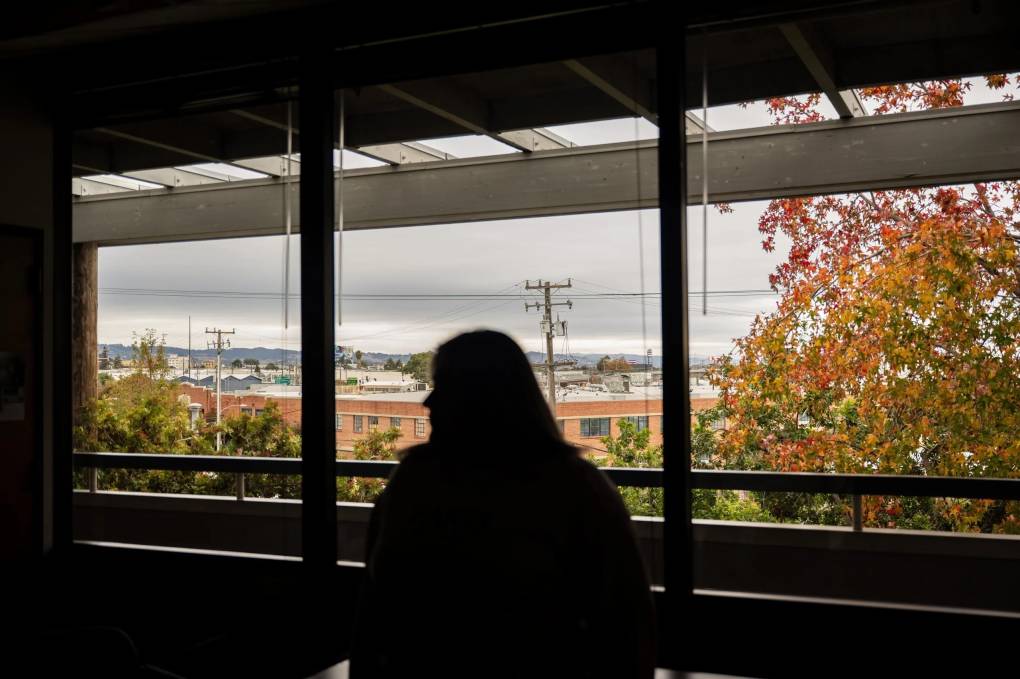
"caption": "Eloisa Ramos, outreach coordinator at the Alameda County Healthy Homes Department, in their East Oakland office on Thursday, Nov.21, 2024.",
"credit": "Hiram Alejandro Durán for El Tímpano/CatchLight Local/Report for America corps member",
"altTag": "A woman's silhouette seen from behind, sitting on a balcony looking out on a city, trees, cloudy skies.",
"description": null,
"imgSizes": {
"medium": {
"file": "https://cdn.kqed.org/wp-content/uploads/sites/10/2025/03/11.21.2024-LeadMuseum-10-scaled-copy-800x532.jpg",
"width": 800,
"height": 532,
"mimeType": "image/jpeg"
},
"large": {
"file": "https://cdn.kqed.org/wp-content/uploads/sites/10/2025/03/11.21.2024-LeadMuseum-10-scaled-copy-1020x679.jpg",
"width": 1020,
"height": 679,
"mimeType": "image/jpeg"
},
"thumbnail": {
"file": "https://cdn.kqed.org/wp-content/uploads/sites/10/2025/03/11.21.2024-LeadMuseum-10-scaled-copy-160x106.jpg",
"width": 160,
"height": 106,
"mimeType": "image/jpeg"
},
"1536x1536": {
"file": "https://cdn.kqed.org/wp-content/uploads/sites/10/2025/03/11.21.2024-LeadMuseum-10-scaled-copy-1536x1022.jpg",
"width": 1536,
"height": 1022,
"mimeType": "image/jpeg"
},
"2048x2048": {
"file": "https://cdn.kqed.org/wp-content/uploads/sites/10/2025/03/11.21.2024-LeadMuseum-10-scaled-copy-2048x1362.jpg",
"width": 2048,
"height": 1362,
"mimeType": "image/jpeg"
},
"post-thumbnail": {
"file": "https://cdn.kqed.org/wp-content/uploads/sites/10/2025/03/11.21.2024-LeadMuseum-10-scaled-copy-672x372.jpg",
"width": 672,
"height": 372,
"mimeType": "image/jpeg"
},
"twentyfourteen-full-width": {
"file": "https://cdn.kqed.org/wp-content/uploads/sites/10/2025/03/11.21.2024-LeadMuseum-10-scaled-copy-1038x576.jpg",
"width": 1038,
"height": 576,
"mimeType": "image/jpeg"
},
"full-width": {
"file": "https://cdn.kqed.org/wp-content/uploads/sites/10/2025/03/11.21.2024-LeadMuseum-10-scaled-copy-1920x1277.jpg",
"width": 1920,
"height": 1277,
"mimeType": "image/jpeg"
},
"kqedFullSize": {
"file": "https://cdn.kqed.org/wp-content/uploads/sites/10/2025/03/11.21.2024-LeadMuseum-10-scaled-copy.jpg",
"width": 2560,
"height": 1703
}
},
"isLoading": false,
"fetchFailed": false
},
"news_12032511": {
"type": "attachments",
"id": "news_12032511",
"meta": {
"index": "attachments_1716263798",
"site": "news",
"id": "12032511",
"found": true
},
"title": "250320-JAPANESEAMERICANSDENOUNCE-03-BL-KQED",
"publishDate": 1742590682,
"status": "inherit",
"parent": 0,
"modified": 1742590695,
"caption": "Joyce Nakamura, from the Japanese American Citizens League, speaks at the Japanese Cultural and Community Center in San Francisco on March 20, 2025, during a press conference condemning the use of the Alien Enemies Act to target immigrants.",
"credit": "Beth LaBerge/KQED",
"altTag": null,
"description": null,
"imgSizes": {
"medium": {
"file": "https://cdn.kqed.org/wp-content/uploads/sites/10/2025/03/250320-JAPANESEAMERICANSDENOUNCE-03-BL-KQED-800x533.jpg",
"width": 800,
"height": 533,
"mimeType": "image/jpeg"
},
"large": {
"file": "https://cdn.kqed.org/wp-content/uploads/sites/10/2025/03/250320-JAPANESEAMERICANSDENOUNCE-03-BL-KQED-1020x680.jpg",
"width": 1020,
"height": 680,
"mimeType": "image/jpeg"
},
"thumbnail": {
"file": "https://cdn.kqed.org/wp-content/uploads/sites/10/2025/03/250320-JAPANESEAMERICANSDENOUNCE-03-BL-KQED-160x107.jpg",
"width": 160,
"height": 107,
"mimeType": "image/jpeg"
},
"1536x1536": {
"file": "https://cdn.kqed.org/wp-content/uploads/sites/10/2025/03/250320-JAPANESEAMERICANSDENOUNCE-03-BL-KQED-1536x1024.jpg",
"width": 1536,
"height": 1024,
"mimeType": "image/jpeg"
},
"post-thumbnail": {
"file": "https://cdn.kqed.org/wp-content/uploads/sites/10/2025/03/250320-JAPANESEAMERICANSDENOUNCE-03-BL-KQED-672x372.jpg",
"width": 672,
"height": 372,
"mimeType": "image/jpeg"
},
"twentyfourteen-full-width": {
"file": "https://cdn.kqed.org/wp-content/uploads/sites/10/2025/03/250320-JAPANESEAMERICANSDENOUNCE-03-BL-KQED-1038x576.jpg",
"width": 1038,
"height": 576,
"mimeType": "image/jpeg"
},
"full-width": {
"file": "https://cdn.kqed.org/wp-content/uploads/sites/10/2025/03/250320-JAPANESEAMERICANSDENOUNCE-03-BL-KQED-1920x1280.jpg",
"width": 1920,
"height": 1280,
"mimeType": "image/jpeg"
},
"kqedFullSize": {
"file": "https://cdn.kqed.org/wp-content/uploads/sites/10/2025/03/250320-JAPANESEAMERICANSDENOUNCE-03-BL-KQED.jpg",
"width": 2000,
"height": 1333
}
},
"isLoading": false,
"fetchFailed": false
},
"news_12032340": {
"type": "attachments",
"id": "news_12032340",
"meta": {
"index": "attachments_1716263798",
"site": "news",
"id": "12032340",
"found": true
},
"title": "Sac_state_protest_2025_02_11_FG_S1A6149 copy",
"publishDate": 1742508793,
"status": "inherit",
"parent": 12032339,
"modified": 1742508822,
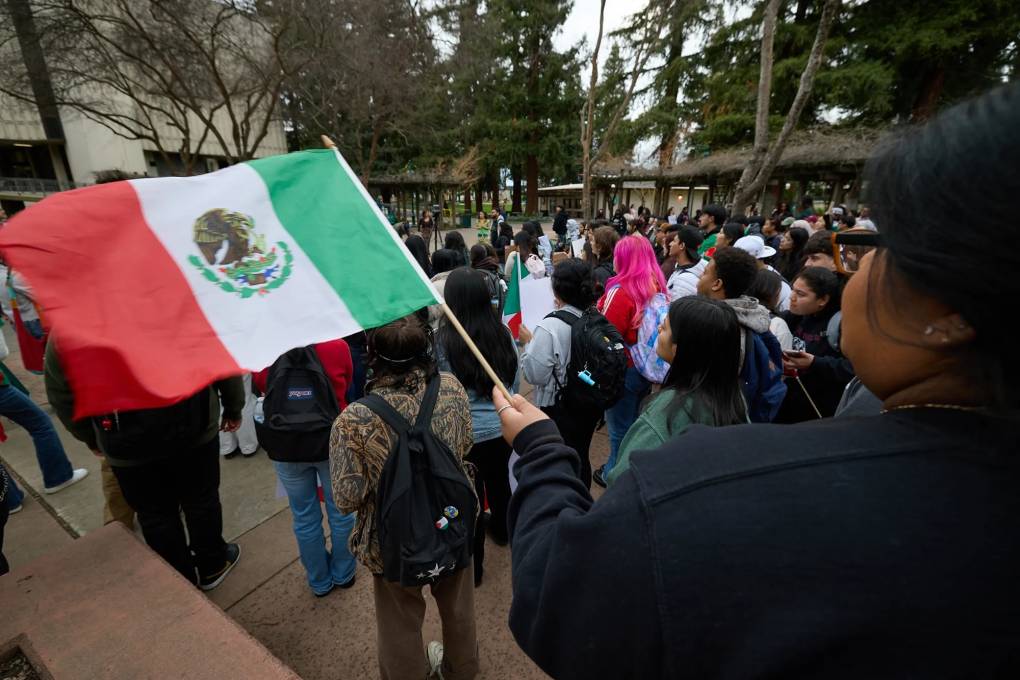
"caption": "A student waves a Mexican flag while participating in an anti-deportation protest at Sacramento State University on Feb. 12, 2025.\n",
"credit": "Fred Greaves for CalMatters",
"altTag": null,
"description": null,
"imgSizes": {
"medium": {
"file": "https://cdn.kqed.org/wp-content/uploads/sites/10/2025/03/Sac_state_protest_2025_02_11_FG_S1A6149-copy-800x533.jpg",
"width": 800,
"height": 533,
"mimeType": "image/jpeg"
},
"large": {
"file": "https://cdn.kqed.org/wp-content/uploads/sites/10/2025/03/Sac_state_protest_2025_02_11_FG_S1A6149-copy-1020x680.jpg",
"width": 1020,
"height": 680,
"mimeType": "image/jpeg"
},
"thumbnail": {
"file": "https://cdn.kqed.org/wp-content/uploads/sites/10/2025/03/Sac_state_protest_2025_02_11_FG_S1A6149-copy-160x107.jpg",
"width": 160,
"height": 107,
"mimeType": "image/jpeg"
},
"1536x1536": {
"file": "https://cdn.kqed.org/wp-content/uploads/sites/10/2025/03/Sac_state_protest_2025_02_11_FG_S1A6149-copy-1536x1024.jpg",
"width": 1536,
"height": 1024,
"mimeType": "image/jpeg"
},
"post-thumbnail": {
"file": "https://cdn.kqed.org/wp-content/uploads/sites/10/2025/03/Sac_state_protest_2025_02_11_FG_S1A6149-copy-672x372.jpg",
"width": 672,
"height": 372,
"mimeType": "image/jpeg"
},
"twentyfourteen-full-width": {
"file": "https://cdn.kqed.org/wp-content/uploads/sites/10/2025/03/Sac_state_protest_2025_02_11_FG_S1A6149-copy-1038x576.jpg",
"width": 1038,
"height": 576,
"mimeType": "image/jpeg"
},
"full-width": {
"file": "https://cdn.kqed.org/wp-content/uploads/sites/10/2025/03/Sac_state_protest_2025_02_11_FG_S1A6149-copy-1920x1280.jpg",
"width": 1920,
"height": 1280,
"mimeType": "image/jpeg"
},
"kqedFullSize": {
"file": "https://cdn.kqed.org/wp-content/uploads/sites/10/2025/03/Sac_state_protest_2025_02_11_FG_S1A6149-copy.jpg",
"width": 2000,
"height": 1333
}
},
"isLoading": false,
"fetchFailed": false
},
"news_12031870": {
"type": "attachments",
"id": "news_12031870",
"meta": {
"index": "attachments_1716263798",
"site": "news",
"id": "12031870",
"found": true
},
"title": "US-FRAUD-AUTOMOBILE-INTERNET-MUSK-TWITTER",
"publishDate": 1742324979,
"status": "inherit",
"parent": 12081802,
"modified": 1777579953,
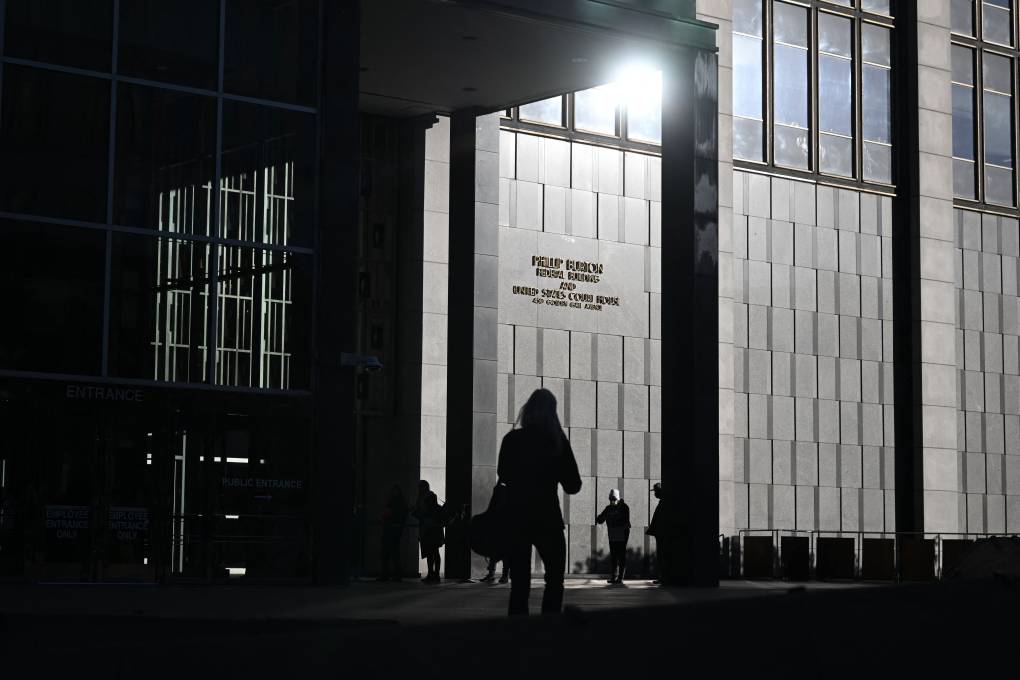
"caption": "The exterior of the Phillip Burton Federal Building and U.S. Courthouse in San Francisco, California, on Jan. 20, 2019. ",
"credit": "Patrick T. Fallon/AFP via Getty Images",
"altTag": null,
"description": null,
"imgSizes": {
"medium": {
"file": "https://cdn.kqed.org/wp-content/uploads/sites/10/2025/03/GettyImages-1246387515-800x533.jpg",
"width": 800,
"height": 533,
"mimeType": "image/jpeg"
},
"large": {
"file": "https://cdn.kqed.org/wp-content/uploads/sites/10/2025/03/GettyImages-1246387515-1020x680.jpg",
"width": 1020,
"height": 680,
"mimeType": "image/jpeg"
},
"thumbnail": {
"file": "https://cdn.kqed.org/wp-content/uploads/sites/10/2025/03/GettyImages-1246387515-160x107.jpg",
"width": 160,
"height": 107,
"mimeType": "image/jpeg"
},
"1536x1536": {
"file": "https://cdn.kqed.org/wp-content/uploads/sites/10/2025/03/GettyImages-1246387515-1536x1024.jpg",
"width": 1536,
"height": 1024,
"mimeType": "image/jpeg"
},
"2048x2048": {
"file": "https://cdn.kqed.org/wp-content/uploads/sites/10/2025/03/GettyImages-1246387515-2048x1365.jpg",
"width": 2048,
"height": 1365,
"mimeType": "image/jpeg"
},
"post-thumbnail": {
"file": "https://cdn.kqed.org/wp-content/uploads/sites/10/2025/03/GettyImages-1246387515-672x372.jpg",
"width": 672,
"height": 372,
"mimeType": "image/jpeg"
},
"twentyfourteen-full-width": {
"file": "https://cdn.kqed.org/wp-content/uploads/sites/10/2025/03/GettyImages-1246387515-1038x576.jpg",
"width": 1038,
"height": 576,
"mimeType": "image/jpeg"
},
"full-width": {
"file": "https://cdn.kqed.org/wp-content/uploads/sites/10/2025/03/GettyImages-1246387515-1920x1280.jpg",
"width": 1920,
"height": 1280,
"mimeType": "image/jpeg"
},
"kqedFullSize": {
"file": "https://cdn.kqed.org/wp-content/uploads/sites/10/2025/03/GettyImages-1246387515-scaled-e1742325160899.jpg",
"width": 2000,
"height": 1334
}
},
"isLoading": false,
"fetchFailed": false
},
"news_12023747": {
"type": "attachments",
"id": "news_12023747",
"meta": {
"index": "attachments_1716263798",
"site": "news",
"id": "12023747",
"found": true
},
"title": "US-POLITICS-TRUMP-INAUGURATION",
"publishDate": 1737658482,
"status": "inherit",
"parent": 12023740,
"modified": 1737660022,
"caption": "U.S. President Donald Trump signs an executive order in the Oval Office of the White House in Washington, D.C., on Jan. 20, 2025.",
"credit": "Jim Watson/Pool/AFP via Getty Images",
"altTag": null,
"description": null,
"imgSizes": {
"medium": {
"file": "https://cdn.kqed.org/wp-content/uploads/sites/10/2025/01/DonaldTrumpEOGetty-800x521.jpg",
"width": 800,
"height": 521,
"mimeType": "image/jpeg"
},
"large": {
"file": "https://cdn.kqed.org/wp-content/uploads/sites/10/2025/01/DonaldTrumpEOGetty-1020x664.jpg",
"width": 1020,
"height": 664,
"mimeType": "image/jpeg"
},
"thumbnail": {
"file": "https://cdn.kqed.org/wp-content/uploads/sites/10/2025/01/DonaldTrumpEOGetty-160x104.jpg",
"width": 160,
"height": 104,
"mimeType": "image/jpeg"
},
"1536x1536": {
"file": "https://cdn.kqed.org/wp-content/uploads/sites/10/2025/01/DonaldTrumpEOGetty-1536x1000.jpg",
"width": 1536,
"height": 1000,
"mimeType": "image/jpeg"
},
"post-thumbnail": {
"file": "https://cdn.kqed.org/wp-content/uploads/sites/10/2025/01/DonaldTrumpEOGetty-672x372.jpg",
"width": 672,
"height": 372,
"mimeType": "image/jpeg"
},
"twentyfourteen-full-width": {
"file": "https://cdn.kqed.org/wp-content/uploads/sites/10/2025/01/DonaldTrumpEOGetty-1038x576.jpg",
"width": 1038,
"height": 576,
"mimeType": "image/jpeg"
},
"full-width": {
"file": "https://cdn.kqed.org/wp-content/uploads/sites/10/2025/01/DonaldTrumpEOGetty-1920x1250.jpg",
"width": 1920,
"height": 1250,
"mimeType": "image/jpeg"
},
"kqedFullSize": {
"file": "https://cdn.kqed.org/wp-content/uploads/sites/10/2025/01/DonaldTrumpEOGetty.jpg",
"width": 2000,
"height": 1302
}
},
"isLoading": false,
"fetchFailed": false
},
"news_12030970": {
"type": "attachments",
"id": "news_12030970",
"meta": {
"index": "attachments_1716263798",
"site": "news",
"id": "12030970",
"found": true
},
"title": "UC Berkeley Students Hold Rally In Support Of Gaza",
"publishDate": 1741802904,
"status": "inherit",
"parent": 12066489,
"modified": 1765410696,
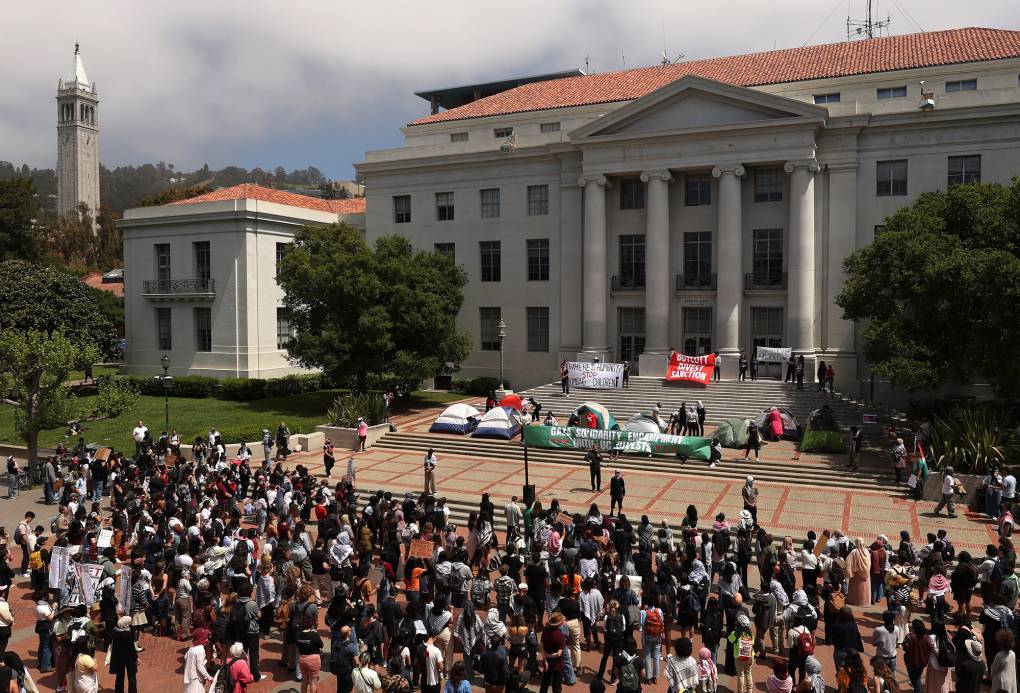
"caption": "Pro-Palestinian protesters set up a tent encampment in front of Sproul Hall on the UC Berkeley campus on April 22, 2024, in Berkeley, California. ",
"credit": "Justin Sullivan/Getty Images",
"altTag": null,
"description": null,
"imgSizes": {
"medium": {
"file": "https://cdn.kqed.org/wp-content/uploads/sites/10/2025/03/GettyImages-2149730456-800x543.jpg",
"width": 800,
"height": 543,
"mimeType": "image/jpeg"
},
"large": {
"file": "https://cdn.kqed.org/wp-content/uploads/sites/10/2025/03/GettyImages-2149730456-1020x693.jpg",
"width": 1020,
"height": 693,
"mimeType": "image/jpeg"
},
"thumbnail": {
"file": "https://cdn.kqed.org/wp-content/uploads/sites/10/2025/03/GettyImages-2149730456-160x109.jpg",
"width": 160,
"height": 109,
"mimeType": "image/jpeg"
},
"1536x1536": {
"file": "https://cdn.kqed.org/wp-content/uploads/sites/10/2025/03/GettyImages-2149730456-1536x1043.jpg",
"width": 1536,
"height": 1043,
"mimeType": "image/jpeg"
},
"post-thumbnail": {
"file": "https://cdn.kqed.org/wp-content/uploads/sites/10/2025/03/GettyImages-2149730456-672x372.jpg",
"width": 672,
"height": 372,
"mimeType": "image/jpeg"
},
"twentyfourteen-full-width": {
"file": "https://cdn.kqed.org/wp-content/uploads/sites/10/2025/03/GettyImages-2149730456-1038x576.jpg",
"width": 1038,
"height": 576,
"mimeType": "image/jpeg"
},
"full-width": {
"file": "https://cdn.kqed.org/wp-content/uploads/sites/10/2025/03/GettyImages-2149730456-1920x1304.jpg",
"width": 1920,
"height": 1304,
"mimeType": "image/jpeg"
},
"kqedFullSize": {
"file": "https://cdn.kqed.org/wp-content/uploads/sites/10/2025/03/GettyImages-2149730456.jpg",
"width": 2000,
"height": 1358
}
},
"isLoading": false,
"fetchFailed": false
},
"news_12031545": {
"type": "attachments",
"id": "news_12031545",
"meta": {
"index": "attachments_1716263798",
"site": "news",
"id": "12031545",
"found": true
},
"title": "033023_Hollister-Hospital_LV_CM_21 copy",
"publishDate": 1742067371,
"status": "inherit",
"parent": 12031544,
"modified": 1761002221,
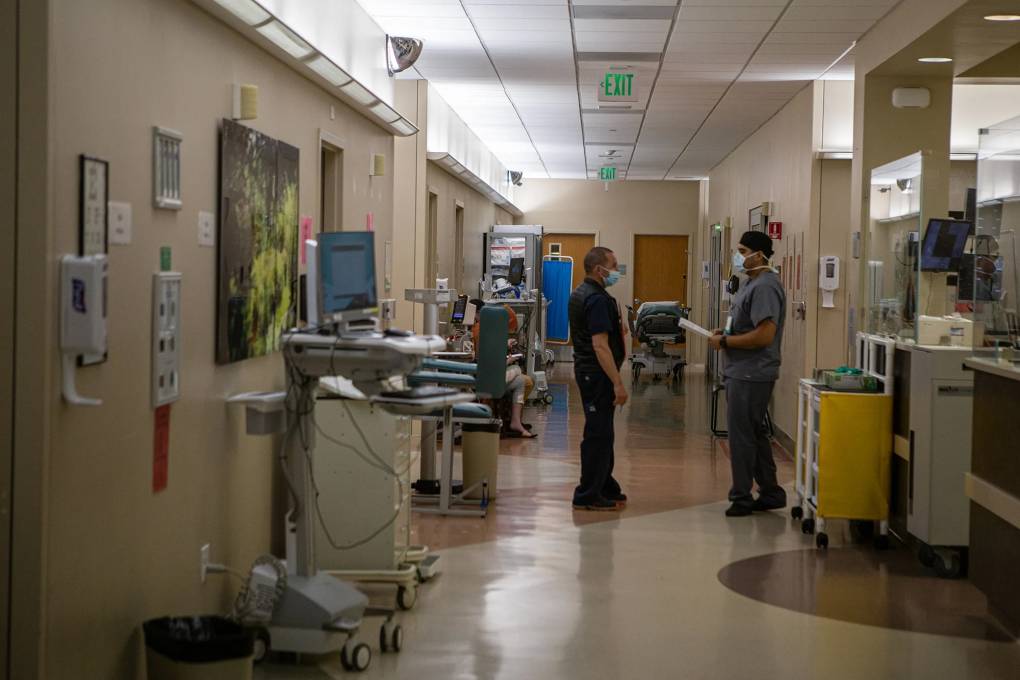
"caption": "Medical personnel work in the emergency room unit at the Hazel Hawkins Memorial Hospital in Hollister, California, on March 30, 2023. ",
"credit": "Larry Valenzuela/CalMatters/CatchLight Local",
"altTag": null,
"description": null,
"imgSizes": {
"medium": {
"file": "https://cdn.kqed.org/wp-content/uploads/sites/10/2025/03/033023_Hollister-Hospital_LV_CM_21-copy-800x533.jpg",
"width": 800,
"height": 533,
"mimeType": "image/jpeg"
},
"large": {
"file": "https://cdn.kqed.org/wp-content/uploads/sites/10/2025/03/033023_Hollister-Hospital_LV_CM_21-copy-1020x680.jpg",
"width": 1020,
"height": 680,
"mimeType": "image/jpeg"
},
"thumbnail": {
"file": "https://cdn.kqed.org/wp-content/uploads/sites/10/2025/03/033023_Hollister-Hospital_LV_CM_21-copy-160x107.jpg",
"width": 160,
"height": 107,
"mimeType": "image/jpeg"
},
"1536x1536": {
"file": "https://cdn.kqed.org/wp-content/uploads/sites/10/2025/03/033023_Hollister-Hospital_LV_CM_21-copy-1536x1024.jpg",
"width": 1536,
"height": 1024,
"mimeType": "image/jpeg"
},
"post-thumbnail": {
"file": "https://cdn.kqed.org/wp-content/uploads/sites/10/2025/03/033023_Hollister-Hospital_LV_CM_21-copy-672x372.jpg",
"width": 672,
"height": 372,
"mimeType": "image/jpeg"
},
"twentyfourteen-full-width": {
"file": "https://cdn.kqed.org/wp-content/uploads/sites/10/2025/03/033023_Hollister-Hospital_LV_CM_21-copy-1038x576.jpg",
"width": 1038,
"height": 576,
"mimeType": "image/jpeg"
},
"full-width": {
"file": "https://cdn.kqed.org/wp-content/uploads/sites/10/2025/03/033023_Hollister-Hospital_LV_CM_21-copy-1920x1280.jpg",
"width": 1920,
"height": 1280,
"mimeType": "image/jpeg"
},
"kqedFullSize": {
"file": "https://cdn.kqed.org/wp-content/uploads/sites/10/2025/03/033023_Hollister-Hospital_LV_CM_21-copy.jpg",
"width": 2000,
"height": 1333
}
},
"isLoading": false,
"fetchFailed": false
},
"news_12031084": {
"type": "attachments",
"id": "news_12031084",
"meta": {
"index": "attachments_1716263798",
"site": "news",
"id": "12031084",
"found": true
},
"title": "250312-RICHMOND CITY HALL-MD-02-KQED-1",
"publishDate": 1741819632,
"status": "inherit",
"parent": 12030930,
"modified": 1741819645,
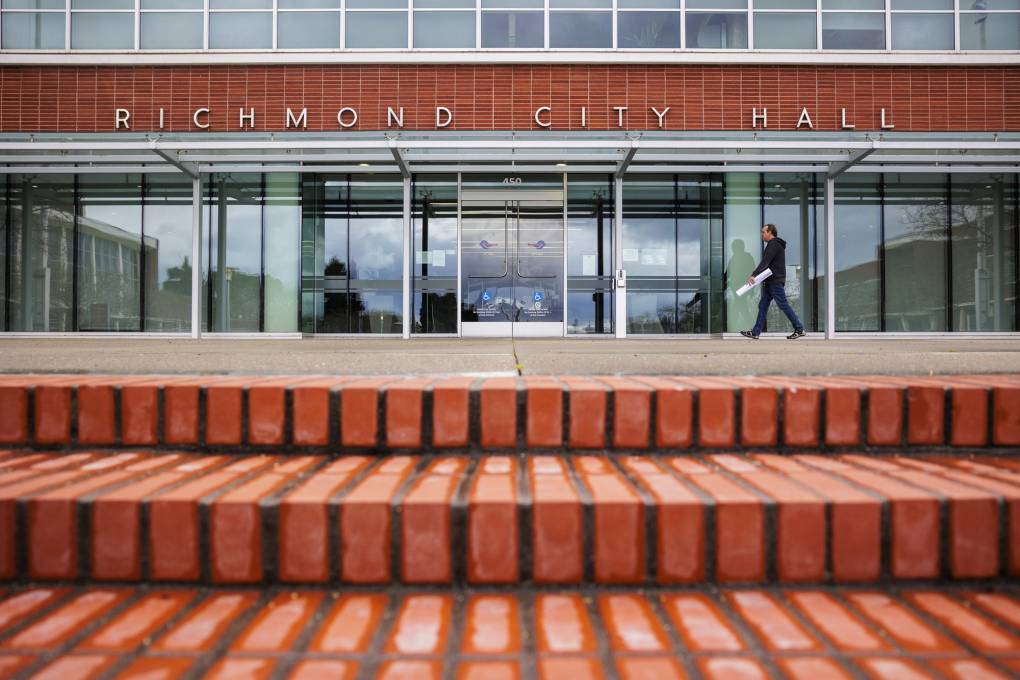
"caption": "Richmond City Hall on March 12, 2025. Richmond joined several California cities in strengthening its sanctuary city ordinances to limit involvement with federal immigration enforcement.",
"credit": "Martin do Nascimento/KQED",
"altTag": null,
"description": null,
"imgSizes": {
"medium": {
"file": "https://cdn.kqed.org/wp-content/uploads/sites/10/2025/03/250312-RICHMOND-CITY-HALL-MD-02-KQED-1-800x533.jpg",
"width": 800,
"height": 533,
"mimeType": "image/jpeg"
},
"large": {
"file": "https://cdn.kqed.org/wp-content/uploads/sites/10/2025/03/250312-RICHMOND-CITY-HALL-MD-02-KQED-1-1020x680.jpg",
"width": 1020,
"height": 680,
"mimeType": "image/jpeg"
},
"thumbnail": {
"file": "https://cdn.kqed.org/wp-content/uploads/sites/10/2025/03/250312-RICHMOND-CITY-HALL-MD-02-KQED-1-160x107.jpg",
"width": 160,
"height": 107,
"mimeType": "image/jpeg"
},
"1536x1536": {
"file": "https://cdn.kqed.org/wp-content/uploads/sites/10/2025/03/250312-RICHMOND-CITY-HALL-MD-02-KQED-1-1536x1024.jpg",
"width": 1536,
"height": 1024,
"mimeType": "image/jpeg"
},
"post-thumbnail": {
"file": "https://cdn.kqed.org/wp-content/uploads/sites/10/2025/03/250312-RICHMOND-CITY-HALL-MD-02-KQED-1-672x372.jpg",
"width": 672,
"height": 372,
"mimeType": "image/jpeg"
},
"twentyfourteen-full-width": {
"file": "https://cdn.kqed.org/wp-content/uploads/sites/10/2025/03/250312-RICHMOND-CITY-HALL-MD-02-KQED-1-1038x576.jpg",
"width": 1038,
"height": 576,
"mimeType": "image/jpeg"
},
"full-width": {
"file": "https://cdn.kqed.org/wp-content/uploads/sites/10/2025/03/250312-RICHMOND-CITY-HALL-MD-02-KQED-1-1920x1280.jpg",
"width": 1920,
"height": 1280,
"mimeType": "image/jpeg"
},
"kqedFullSize": {
"file": "https://cdn.kqed.org/wp-content/uploads/sites/10/2025/03/250312-RICHMOND-CITY-HALL-MD-02-KQED-1.jpg",
"width": 2000,
"height": 1333
}
},
"isLoading": false,
"fetchFailed": false
},
"news_12030005": {
"type": "attachments",
"id": "news_12030005",
"meta": {
"index": "attachments_1716263798",
"site": "news",
"id": "12030005",
"found": true
},
"title": "250305-Lariza Dugan-Cuadra-MD-07",
"publishDate": 1741261280,
"status": "inherit",
"parent": 0,
"modified": 1741267613,
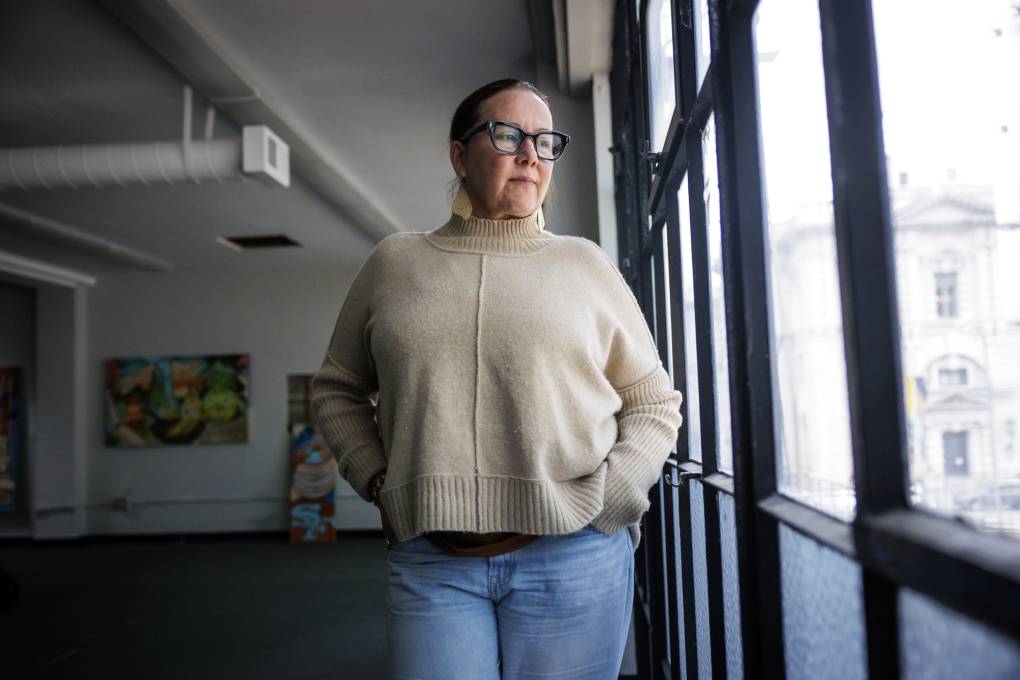
"caption": "Lariza Dugan-Cuadra, Executive Director of CARECEN SF, looks out of the windows at the CARECEN SF offices in San Francisco on March 5, 2025.",
"credit": "Martin do Nascimento/KQED",
"altTag": null,
"description": null,
"imgSizes": {
"medium": {
"file": "https://cdn.kqed.org/wp-content/uploads/sites/10/2025/03/250305-Lariza-Dugan-Cuadra-MD-07-800x533.jpg",
"width": 800,
"height": 533,
"mimeType": "image/jpeg"
},
"large": {
"file": "https://cdn.kqed.org/wp-content/uploads/sites/10/2025/03/250305-Lariza-Dugan-Cuadra-MD-07-1020x680.jpg",
"width": 1020,
"height": 680,
"mimeType": "image/jpeg"
},
"thumbnail": {
"file": "https://cdn.kqed.org/wp-content/uploads/sites/10/2025/03/250305-Lariza-Dugan-Cuadra-MD-07-160x107.jpg",
"width": 160,
"height": 107,
"mimeType": "image/jpeg"
},
"1536x1536": {
"file": "https://cdn.kqed.org/wp-content/uploads/sites/10/2025/03/250305-Lariza-Dugan-Cuadra-MD-07-1536x1024.jpg",
"width": 1536,
"height": 1024,
"mimeType": "image/jpeg"
},
"post-thumbnail": {
"file": "https://cdn.kqed.org/wp-content/uploads/sites/10/2025/03/250305-Lariza-Dugan-Cuadra-MD-07-672x372.jpg",
"width": 672,
"height": 372,
"mimeType": "image/jpeg"
},
"twentyfourteen-full-width": {
"file": "https://cdn.kqed.org/wp-content/uploads/sites/10/2025/03/250305-Lariza-Dugan-Cuadra-MD-07-1038x576.jpg",
"width": 1038,
"height": 576,
"mimeType": "image/jpeg"
},
"full-width": {
"file": "https://cdn.kqed.org/wp-content/uploads/sites/10/2025/03/250305-Lariza-Dugan-Cuadra-MD-07-1920x1280.jpg",
"width": 1920,
"height": 1280,
"mimeType": "image/jpeg"
},
"kqedFullSize": {
"file": "https://cdn.kqed.org/wp-content/uploads/sites/10/2025/03/250305-Lariza-Dugan-Cuadra-MD-07.jpg",
"width": 2000,
"height": 1333
}
},
"isLoading": false,
"fetchFailed": false
},
"news_12027414": {
"type": "attachments",
"id": "news_12027414",
"meta": {
"index": "attachments_1716263798",
"site": "news",
"id": "12027414",
"found": true
},
"title": "20241215-JSEI-JY-917",
"publishDate": 1739804952,
"status": "inherit",
"parent": 12025613,
"modified": 1741375858,
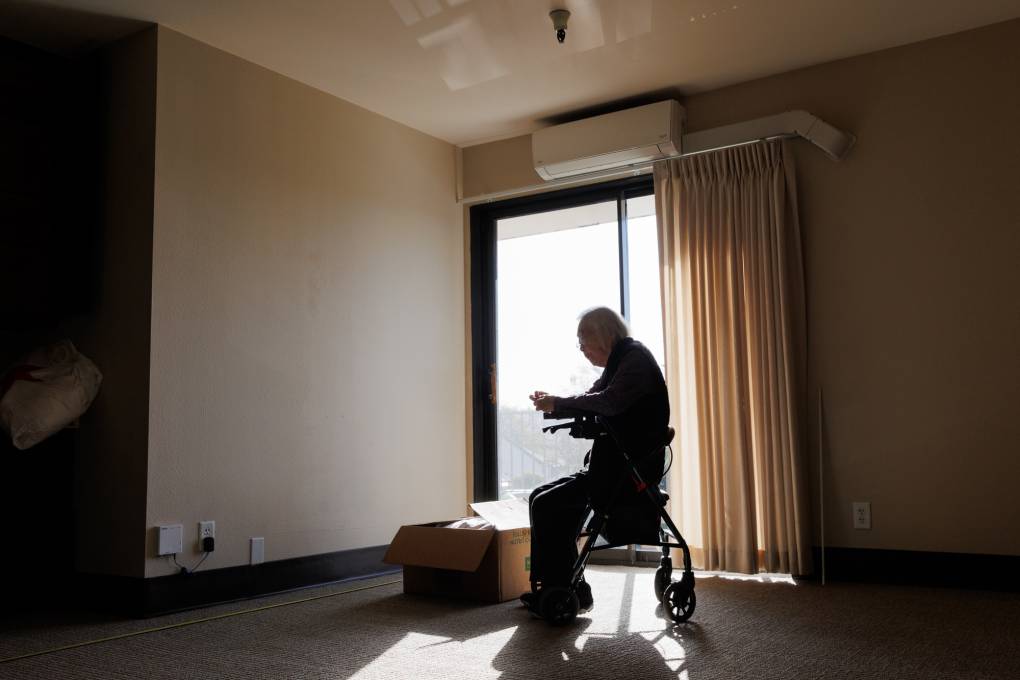
"caption": "Grace Aikawa looks around at her empty room at her new care facility in Castro Valley, California, on Sunday, Dec. 15, 2024.",
"credit": "Juliana Yamada/KQED",
"altTag": null,
"description": null,
"imgSizes": {
"medium": {
"file": "https://cdn.kqed.org/wp-content/uploads/sites/10/2025/02/20241215-JSEI-JY-917-800x533.jpg",
"width": 800,
"height": 533,
"mimeType": "image/jpeg"
},
"large": {
"file": "https://cdn.kqed.org/wp-content/uploads/sites/10/2025/02/20241215-JSEI-JY-917-1020x680.jpg",
"width": 1020,
"height": 680,
"mimeType": "image/jpeg"
},
"thumbnail": {
"file": "https://cdn.kqed.org/wp-content/uploads/sites/10/2025/02/20241215-JSEI-JY-917-160x107.jpg",
"width": 160,
"height": 107,
"mimeType": "image/jpeg"
},
"1536x1536": {
"file": "https://cdn.kqed.org/wp-content/uploads/sites/10/2025/02/20241215-JSEI-JY-917-1536x1024.jpg",
"width": 1536,
"height": 1024,
"mimeType": "image/jpeg"
},
"post-thumbnail": {
"file": "https://cdn.kqed.org/wp-content/uploads/sites/10/2025/02/20241215-JSEI-JY-917-672x372.jpg",
"width": 672,
"height": 372,
"mimeType": "image/jpeg"
},
"twentyfourteen-full-width": {
"file": "https://cdn.kqed.org/wp-content/uploads/sites/10/2025/02/20241215-JSEI-JY-917-1038x576.jpg",
"width": 1038,
"height": 576,
"mimeType": "image/jpeg"
},
"full-width": {
"file": "https://cdn.kqed.org/wp-content/uploads/sites/10/2025/02/20241215-JSEI-JY-917-1920x1280.jpg",
"width": 1920,
"height": 1280,
"mimeType": "image/jpeg"
},
"kqedFullSize": {
"file": "https://cdn.kqed.org/wp-content/uploads/sites/10/2025/02/20241215-JSEI-JY-917.jpg",
"width": 2000,
"height": 1333
}
},
"isLoading": false,
"fetchFailed": false
},
"news_12030368": {
"type": "attachments",
"id": "news_12030368",
"meta": {
"index": "attachments_1716263798",
"site": "news",
"id": "12030368",
"found": true
},
"title": "President Trump Hosts Ukrainian President Zelensky At The White House",
"publishDate": 1741381161,
"status": "inherit",
"parent": 12030273,
"modified": 1741401644,
"caption": "US President Donald Trump and Ukrainian President Volodymyr Zelensky meet in the Oval Office at the White House on Feb. 28, 202,5, in Washington, DC. ",
"credit": "Andrew Harnik/Getty Images",
"altTag": null,
"description": null,
"imgSizes": {
"medium": {
"file": "https://cdn.kqed.org/wp-content/uploads/sites/10/2025/03/GettyImages-2202530063-800x561.jpg",
"width": 800,
"height": 561,
"mimeType": "image/jpeg"
},
"large": {
"file": "https://cdn.kqed.org/wp-content/uploads/sites/10/2025/03/GettyImages-2202530063-1020x715.jpg",
"width": 1020,
"height": 715,
"mimeType": "image/jpeg"
},
"thumbnail": {
"file": "https://cdn.kqed.org/wp-content/uploads/sites/10/2025/03/GettyImages-2202530063-160x112.jpg",
"width": 160,
"height": 112,
"mimeType": "image/jpeg"
},
"1536x1536": {
"file": "https://cdn.kqed.org/wp-content/uploads/sites/10/2025/03/GettyImages-2202530063-1536x1076.jpg",
"width": 1536,
"height": 1076,
"mimeType": "image/jpeg"
},
"2048x2048": {
"file": "https://cdn.kqed.org/wp-content/uploads/sites/10/2025/03/GettyImages-2202530063-2048x1435.jpg",
"width": 2048,
"height": 1435,
"mimeType": "image/jpeg"
},
"post-thumbnail": {
"file": "https://cdn.kqed.org/wp-content/uploads/sites/10/2025/03/GettyImages-2202530063-672x372.jpg",
"width": 672,
"height": 372,
"mimeType": "image/jpeg"
},
"twentyfourteen-full-width": {
"file": "https://cdn.kqed.org/wp-content/uploads/sites/10/2025/03/GettyImages-2202530063-1038x576.jpg",
"width": 1038,
"height": 576,
"mimeType": "image/jpeg"
},
"full-width": {
"file": "https://cdn.kqed.org/wp-content/uploads/sites/10/2025/03/GettyImages-2202530063-1920x1345.jpg",
"width": 1920,
"height": 1345,
"mimeType": "image/jpeg"
},
"kqedFullSize": {
"file": "https://cdn.kqed.org/wp-content/uploads/sites/10/2025/03/GettyImages-2202530063-scaled-e1741381201419.jpg",
"width": 2000,
"height": 1402
}
},
"isLoading": false,
"fetchFailed": false
},
"news_12029901": {
"type": "attachments",
"id": "news_12029901",
"meta": {
"index": "attachments_1716263798",
"site": "news",
"id": "12029901",
"found": true
},
"title": "20250305_TARIFFSIMPACT_GC-6-KQED",
"publishDate": 1741216483,
"status": "inherit",
"parent": 0,
"modified": 1741288968,
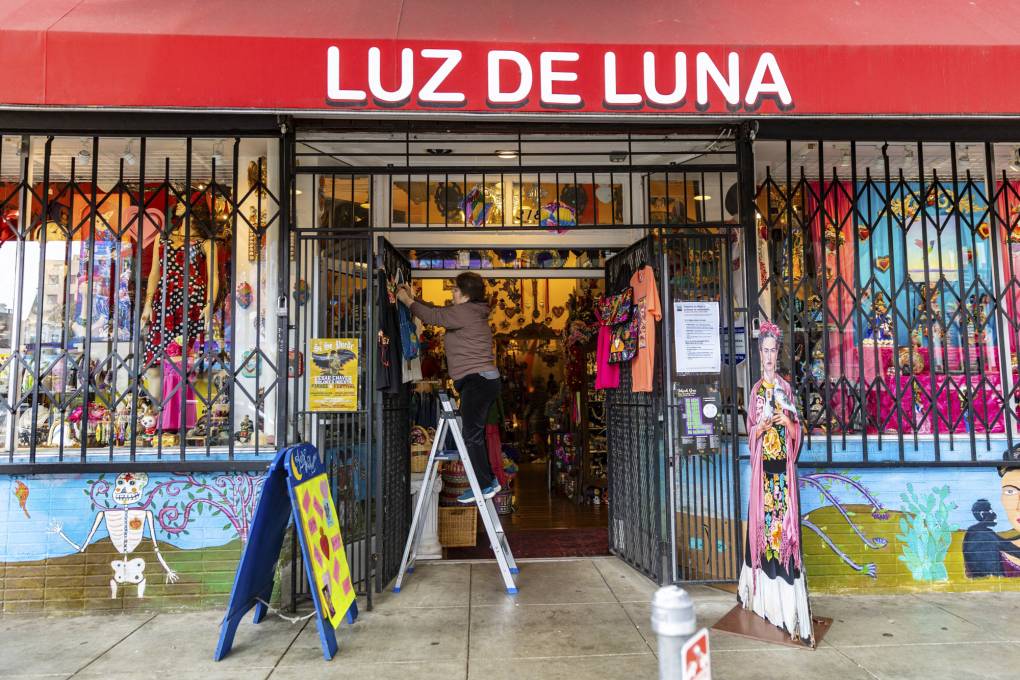
"caption": "An employee, who did not want to be named, hangs up bags for sale at Luz de Luna, a gift store on 24th Street in San Francisco, on March 5, 2025. Owner Denise Gonzales says about 70% of the products sold in her store are imported from Mexico.",
"credit": "Gina Castro/KQED",
"altTag": null,
"description": null,
"imgSizes": {
"medium": {
"file": "https://cdn.kqed.org/wp-content/uploads/sites/10/2025/03/20250305_TARIFFSIMPACT_GC-6-KQED-800x533.jpg",
"width": 800,
"height": 533,
"mimeType": "image/jpeg"
},
"large": {
"file": "https://cdn.kqed.org/wp-content/uploads/sites/10/2025/03/20250305_TARIFFSIMPACT_GC-6-KQED-1020x680.jpg",
"width": 1020,
"height": 680,
"mimeType": "image/jpeg"
},
"thumbnail": {
"file": "https://cdn.kqed.org/wp-content/uploads/sites/10/2025/03/20250305_TARIFFSIMPACT_GC-6-KQED-160x107.jpg",
"width": 160,
"height": 107,
"mimeType": "image/jpeg"
},
"1536x1536": {
"file": "https://cdn.kqed.org/wp-content/uploads/sites/10/2025/03/20250305_TARIFFSIMPACT_GC-6-KQED-1536x1024.jpg",
"width": 1536,
"height": 1024,
"mimeType": "image/jpeg"
},
"post-thumbnail": {
"file": "https://cdn.kqed.org/wp-content/uploads/sites/10/2025/03/20250305_TARIFFSIMPACT_GC-6-KQED-672x372.jpg",
"width": 672,
"height": 372,
"mimeType": "image/jpeg"
},
"twentyfourteen-full-width": {
"file": "https://cdn.kqed.org/wp-content/uploads/sites/10/2025/03/20250305_TARIFFSIMPACT_GC-6-KQED-1038x576.jpg",
"width": 1038,
"height": 576,
"mimeType": "image/jpeg"
},
"full-width": {
"file": "https://cdn.kqed.org/wp-content/uploads/sites/10/2025/03/20250305_TARIFFSIMPACT_GC-6-KQED-1920x1280.jpg",
"width": 1920,
"height": 1280,
"mimeType": "image/jpeg"
},
"kqedFullSize": {
"file": "https://cdn.kqed.org/wp-content/uploads/sites/10/2025/03/20250305_TARIFFSIMPACT_GC-6-KQED.jpg",
"width": 2000,
"height": 1333
}
},
"isLoading": false,
"fetchFailed": false
}
},
"audioPlayerReducer": {
"postId": "stream_live",
"isPaused": true,
"isPlaying": false,
"pfsActive": false,
"pledgeModalIsOpen": true,
"playerDrawerIsOpen": false,
"liveAudioPlayStartedAt": 0,
"liveAudioPlayContext": ""
},
"authorsReducer": {
"byline_news_12033218": {
"type": "authors",
"id": "byline_news_12033218",
"meta": {
"override": true
},
"slug": "byline_news_12033218",
"name": "\u003ca href=\"https://www.eltimpano.org/author/jasmine-aguilera/\">Jasmine Aguilera\u003c/a>, El Tímpano",
"isLoading": false
},
"byline_news_12032339": {
"type": "authors",
"id": "byline_news_12032339",
"meta": {
"override": true
},
"slug": "byline_news_12032339",
"name": "\u003ca href=\"https://calmatters.org/author/delilah-brumer/\">Delilah Brumer\u003c/a>, CalMatters",
"isLoading": false
},
"byline_news_12031544": {
"type": "authors",
"id": "byline_news_12031544",
"meta": {
"override": true
},
"slug": "byline_news_12031544",
"name": "\u003ca href=\"https://calmatters.org/author/anaibarra/\">Ana B. Ibarra\u003c/a> and \u003ca href=\"https://calmatters.org/author/kristen-hwang/\">Kristen Hwang\u003c/a>, CalMatters",
"isLoading": false
},
"tychehendricks": {
"type": "authors",
"id": "259",
"meta": {
"index": "authors_1716337520",
"id": "259",
"found": true
},
"name": "Tyche Hendricks",
"firstName": "Tyche",
"lastName": "Hendricks",
"slug": "tychehendricks",
"email": "thendricks@kqed.org",
"display_author_email": true,
"staff_mastheads": [
"news"
],
"title": "KQED Senior Editor, Immigration",
"bio": "\u003cspan style=\"font-weight: 400;\">Tyche Hendricks is KQED’s senior editor for immigration, leading coverage of the policy and politics that affect California’s immigrant communities. Her work for KQED’s radio and online audiences is also carried on NPR and other national outlets. She has been recognized with awards from the Radio and Television News Directors Association, the Society for Professional Journalists; the Education Writers Association; the Best of the West and the National Federation of Community Broadcasters. Before joining KQED in 2010, Tyche spent more than a dozen years as a newspaper reporter, notably at the \u003c/span>\u003ci>\u003cspan style=\"font-weight: 400;\">San Francisco Chronicle\u003c/span>\u003c/i>\u003cspan style=\"font-weight: 400;\">. At different times she has covered criminal justice, government and politics and urban planning. Tyche has taught in the MFA Creative Writing program at the University of San Francisco and at UC Berkeley’s Graduate School of Journalism, where she was co-director of a national immigration symposium for professional journalists. She is the author of \u003c/span>\u003ci>\u003cspan style=\"font-weight: 400;\">The Wind Doesn't Need a Passport: Stories from the U.S.-Mexico Borderlands\u003c/span>\u003c/i>\u003cspan style=\"font-weight: 400;\"> (University of California Press). \u003c/span>",
"avatar": "https://secure.gravatar.com/avatar/b8ee458e2731c2d43df86882ce17267e?s=600&d=blank&r=g",
"twitter": "tychehendricks",
"facebook": null,
"instagram": null,
"linkedin": null,
"sites": [
{
"site": "news",
"roles": [
"editor"
]
},
{
"site": "stateofhealth",
"roles": [
"editor"
]
}
],
"headData": {
"title": "Tyche Hendricks | KQED",
"description": "KQED Senior Editor, Immigration",
"ogImgSrc": "https://secure.gravatar.com/avatar/b8ee458e2731c2d43df86882ce17267e?s=600&d=blank&r=g",
"twImgSrc": "https://secure.gravatar.com/avatar/b8ee458e2731c2d43df86882ce17267e?s=600&d=blank&r=g"
},
"isLoading": false,
"link": "/author/tychehendricks"
},
"mlagos": {
"type": "authors",
"id": "3239",
"meta": {
"index": "authors_1716337520",
"id": "3239",
"found": true
},
"name": "Marisa Lagos",
"firstName": "Marisa",
"lastName": "Lagos",
"slug": "mlagos",
"email": "mlagos@kqed.org",
"display_author_email": false,
"staff_mastheads": [
"news"
],
"title": "KQED Contributor",
"bio": "Marisa Lagos is a correspondent for KQED’s California Politics and Government Desk and co-hosts the award-winning show and podcast, Political Breakdown. At KQED, Lagos also conducts reporting, analysis and investigations into state, local and national politics for radio, TV, online and onstage. In 2022, she and co-host, Scott Shafer, moderated the only gubernatorial debate in California. In 2020, the \u003ci>Washington Post\u003c/i> named her one of the top political journalists in California; she was nominated for a Peabody and won several other awards for her work investigating the 2017 California wildfires. She has worked at the \u003ci>San Francisco Chronicle\u003c/i>, \u003ci>San Francisco Examiner\u003c/i> and \u003ci>Los Angeles Times\u003c/i>. A UC Santa Barbara graduate, she lives in San Francisco with her two sons and husband.",
"avatar": "https://secure.gravatar.com/avatar/a261a0d3696fc066871ef96b85b5e7d2?s=600&d=blank&r=g",
"twitter": "@mlagos",
"facebook": null,
"instagram": null,
"linkedin": null,
"sites": [
{
"site": "arts",
"roles": [
"author"
]
},
{
"site": "news",
"roles": [
"editor"
]
},
{
"site": "science",
"roles": [
"editor"
]
},
{
"site": "forum",
"roles": [
"author"
]
},
{
"site": "liveblog",
"roles": [
"author"
]
}
],
"headData": {
"title": "Marisa Lagos | KQED",
"description": "KQED Contributor",
"ogImgSrc": "https://secure.gravatar.com/avatar/a261a0d3696fc066871ef96b85b5e7d2?s=600&d=blank&r=g",
"twImgSrc": "https://secure.gravatar.com/avatar/a261a0d3696fc066871ef96b85b5e7d2?s=600&d=blank&r=g"
},
"isLoading": false,
"link": "/author/mlagos"
},
"clei": {
"type": "authors",
"id": "8617",
"meta": {
"index": "authors_1716337520",
"id": "8617",
"found": true
},
"name": "Cecilia Lei",
"firstName": "Cecilia",
"lastName": "Lei",
"slug": "clei",
"email": "clei@KQED.org",
"display_author_email": false,
"staff_mastheads": [],
"title": "KQED Contributor",
"bio": "Cecilia Lei is an on-call host and producer for KQED News and Podcasts. Previously, she was the executive producer and host of the San Francisco Chronicle's daily news podcast, 'Fifth and Mission'. Cecilia is a graduate of UC Berkeley’s Graduate School of Journalism and the former president of the Asian American Journalists Association San Francisco Bay Area chapter.",
"avatar": "https://secure.gravatar.com/avatar/40975f1f88fccf628ee537bf6ffc2af8?s=600&d=blank&r=g",
"twitter": null,
"facebook": null,
"instagram": null,
"linkedin": null,
"sites": [
{
"site": "arts",
"roles": [
"contributor"
]
},
{
"site": "news",
"roles": [
"author",
"read_private_posts"
]
},
{
"site": "about",
"roles": [
"editor"
]
}
],
"headData": {
"title": "Cecilia Lei | KQED",
"description": "KQED Contributor",
"ogImgSrc": "https://secure.gravatar.com/avatar/40975f1f88fccf628ee537bf6ffc2af8?s=600&d=blank&r=g",
"twImgSrc": "https://secure.gravatar.com/avatar/40975f1f88fccf628ee537bf6ffc2af8?s=600&d=blank&r=g"
},
"isLoading": false,
"link": "/author/clei"
},
"btorres": {
"type": "authors",
"id": "11666",
"meta": {
"index": "authors_1716337520",
"id": "11666",
"found": true
},
"name": "Blanca Torres",
"firstName": "Blanca",
"lastName": "Torres",
"slug": "btorres",
"email": "btorres@kqed.org",
"display_author_email": true,
"staff_mastheads": [
"news"
],
"title": "Producer, Forum",
"bio": "Blanca Torres brings sharp news judgement and keen sense of lively conversation to her work as producer for Forum. She loves producing shows that leave listeners feeling like they heard distinctive voices, learned something new and gained a fresh perspective.\r\n\r\nShe joined KQED in January of 2020 after 16 years of working as a newspaper reporter most recently at the \u003cem>San Francisco Business Times,\u003c/em> where she wrote about real estate and economic development. Before that, she covered a variety of beats including crime, education, retail, workplace, the economy, consumer issues, and small business for the \u003cem>Contra Costa Times, Baltimore Sun\u003c/em> and\u003cem> The Seattle Times\u003c/em>. In addition to reporting, she worked as an editorial writer and columnist for the \u003cem>Seattle Times\u003c/em>. From 2017 to 2020, Blanca won a total of ten awards from the National Association of Real Estate Editors and won first place for land use reporting from the California News Publishers Association two years in a row. She is also a member and former board member for the National Association of Hispanic Journalists.\r\n\r\nA native of the Pacific Northwest, Blanca earned her bachelor's degree from Vanderbilt University in Nashville and a master's in fine arts in creative writing at Mills College. She lives in the East Bay with her family.",
"avatar": "https://secure.gravatar.com/avatar/f2322ff46076d337f7ba731ee6068cb1?s=600&d=blank&r=g",
"twitter": "@blancawrites",
"facebook": null,
"instagram": null,
"linkedin": null,
"sites": [
{
"site": "arts",
"roles": [
"editor"
]
},
{
"site": "news",
"roles": [
"editor"
]
},
{
"site": "forum",
"roles": [
"editor"
]
}
],
"headData": {
"title": "Blanca Torres | KQED",
"description": "Producer, Forum",
"ogImgSrc": "https://secure.gravatar.com/avatar/f2322ff46076d337f7ba731ee6068cb1?s=600&d=blank&r=g",
"twImgSrc": "https://secure.gravatar.com/avatar/f2322ff46076d337f7ba731ee6068cb1?s=600&d=blank&r=g"
},
"isLoading": false,
"link": "/author/btorres"
},
"jyamada": {
"type": "authors",
"id": "11876",
"meta": {
"index": "authors_1716337520",
"id": "11876",
"found": true
},
"name": "Juliana Yamada",
"firstName": "Juliana",
"lastName": "Yamada",
"slug": "jyamada",
"email": "julianayamada@kqed.org",
"display_author_email": false,
"staff_mastheads": [],
"title": "KQED Photojournalist",
"bio": null,
"avatar": "https://secure.gravatar.com/avatar/cf3070075b6f3d12aac4e1e40079b3ba5fd828442b579f0ce48c293178a5f269?s=600&d=blank&r=g",
"twitter": "julianayphoto",
"bluesky": null,
"facebook": null,
"instagram": "https://www.instagram.com/julianayamadaphoto/",
"linkedin": null,
"sites": [
{
"site": "arts",
"roles": [
"author"
]
},
{
"site": "news",
"roles": [
"editor"
]
}
],
"headData": {
"title": "Juliana Yamada | KQED",
"description": "KQED Photojournalist",
"ogImgSrc": "https://secure.gravatar.com/avatar/cf3070075b6f3d12aac4e1e40079b3ba5fd828442b579f0ce48c293178a5f269?s=600&d=blank&r=g",
"twImgSrc": "https://secure.gravatar.com/avatar/cf3070075b6f3d12aac4e1e40079b3ba5fd828442b579f0ce48c293178a5f269?s=600&d=blank&r=g"
},
"isLoading": false,
"link": "/author/jyamada"
},
"kdebenedetti": {
"type": "authors",
"id": "11913",
"meta": {
"index": "authors_1716337520",
"id": "11913",
"found": true
},
"name": "Katie DeBenedetti",
"firstName": "Katie",
"lastName": "DeBenedetti",
"slug": "kdebenedetti",
"email": "kdebenedetti@kqed.org",
"display_author_email": false,
"staff_mastheads": [
"news",
"science"
],
"title": "KQED Contributor",
"bio": "Katie DeBenedetti is a digital reporter covering daily news for the Express Desk. Prior to joining KQED as a culture reporting intern in January 2024, she covered education and city government for the Napa Valley Register.",
"avatar": "https://secure.gravatar.com/avatar/6e31073cb8f7e4214ab03f42771d0f45?s=600&d=blank&r=g",
"twitter": null,
"facebook": null,
"instagram": null,
"linkedin": null,
"sites": [
{
"site": "news",
"roles": [
"author"
]
},
{
"site": "science",
"roles": [
"author"
]
},
{
"site": "liveblog",
"roles": [
"author"
]
}
],
"headData": {
"title": "Katie DeBenedetti | KQED",
"description": "KQED Contributor",
"ogImgSrc": "https://secure.gravatar.com/avatar/6e31073cb8f7e4214ab03f42771d0f45?s=600&d=blank&r=g",
"twImgSrc": "https://secure.gravatar.com/avatar/6e31073cb8f7e4214ab03f42771d0f45?s=600&d=blank&r=g"
},
"isLoading": false,
"link": "/author/kdebenedetti"
},
"rcooke": {
"type": "authors",
"id": "11921",
"meta": {
"index": "authors_1716337520",
"id": "11921",
"found": true
},
"name": "Riley Cooke",
"firstName": "Riley",
"lastName": "Cooke",
"slug": "rcooke",
"email": "rcooke@kqed.org",
"display_author_email": true,
"staff_mastheads": [
"news"
],
"title": "KQED Contributor",
"bio": "Riley is a senior at UC Berkeley, where she studies political science and journalism. Her work has appeared in SFGate, NBC Bay Area, Local News Matters and more. She enjoys reporting on politics, housing and homelessness — and using as many em dashes as her editors will allow.",
"avatar": "https://secure.gravatar.com/avatar/792f98c126cc5e270a8a96f77f7224ea?s=600&d=blank&r=g",
"twitter": "rrileycooke",
"facebook": null,
"instagram": null,
"linkedin": null,
"sites": [
{
"site": "arts",
"roles": [
"author"
]
},
{
"site": "news",
"roles": [
"author"
]
}
],
"headData": {
"title": "Riley Cooke | KQED",
"description": "KQED Contributor",
"ogImgSrc": "https://secure.gravatar.com/avatar/792f98c126cc5e270a8a96f77f7224ea?s=600&d=blank&r=g",
"twImgSrc": "https://secure.gravatar.com/avatar/792f98c126cc5e270a8a96f77f7224ea?s=600&d=blank&r=g"
},
"isLoading": false,
"link": "/author/rcooke"
},
"gzada": {
"type": "authors",
"id": "11929",
"meta": {
"index": "authors_1716337520",
"id": "11929",
"found": true
},
"name": "Gilare Zada",
"firstName": "Gilare",
"lastName": "Zada",
"slug": "gzada",
"email": "gzada@kqed.org",
"display_author_email": true,
"staff_mastheads": [
"news"
],
"title": null,
"bio": "Gilare Zada is a Kurdish-American from San Diego, CA. Storytelling, fitness, and binge reading are some of her passions outside of news reporting. Her work has appeared in Mission Local, the Peninsula Press, the San Francisco Press Club, and more. She also writes as a class correspondent for the Stanford Magazine - go Card!",
"avatar": "https://secure.gravatar.com/avatar/33a75f2b947669a488a805edec3fbf3838c1cedaedda710e983770633b4d6a75?s=600&d=blank&r=g",
"twitter": null,
"bluesky": null,
"facebook": null,
"instagram": null,
"linkedin": null,
"sites": [
{
"site": "arts",
"roles": [
"editor"
]
},
{
"site": "news",
"roles": [
"editor",
"contributor"
]
},
{
"site": "science",
"roles": [
"editor"
]
}
],
"headData": {
"title": "Gilare Zada | KQED",
"description": null,
"ogImgSrc": "https://secure.gravatar.com/avatar/33a75f2b947669a488a805edec3fbf3838c1cedaedda710e983770633b4d6a75?s=600&d=blank&r=g",
"twImgSrc": "https://secure.gravatar.com/avatar/33a75f2b947669a488a805edec3fbf3838c1cedaedda710e983770633b4d6a75?s=600&d=blank&r=g"
},
"isLoading": false,
"link": "/author/gzada"
}
},
"pagesReducer": {
"news_tag_immigration": {
"type": "terms",
"id": "news_20202",
"meta": {
"index": "terms_1716263798",
"site": "news",
"id": "20202",
"score": 6.90447
},
"featImg": null,
"name": "immigration",
"description": null,
"taxonomy": "tag",
"headData": {
"twImgId": null,
"twTitle": null,
"ogTitle": null,
"ogImgId": null,
"twDescription": null,
"description": null,
"title": "immigration Archives | KQED News",
"ogDescription": null
},
"ttid": 20219,
"slug": "immigration",
"isLoading": false,
"title": "immigration",
"pageMeta": {
"site": "news",
"WpPageTemplate": "page-topic-editorial",
"currentPage": 33
},
"blocks": [
{
"blockName": "kqed/post-list",
"attrs": {
"layout": "cardArticle2",
"query": "posts/news?tag=immigration",
"seeMore": false,
"paginated": true,
"page": 33
}
},
{
"blockName": "kqed/ad"
}
]
}
},
"pfsSessionReducer": {},
"postsReducer": {
"stream_live": {
"type": "live",
"id": "stream_live",
"audioUrl": "https://streams.kqed.org/kqedradio",
"title": "Live Stream",
"excerpt": "Live Stream information currently unavailable.",
"link": "/radio",
"featImg": "",
"label": {
"name": "KQED Live",
"link": "/"
}
},
"stream_kqedNewscast": {
"type": "posts",
"id": "stream_kqedNewscast",
"audioUrl": "https://www.kqed.org/.stream/anon/radio/RDnews/newscast.mp3?_=1",
"title": "KQED Newscast",
"featImg": "",
"label": {
"name": "88.5 FM",
"link": "/"
}
},
"news_12033218": {
"type": "posts",
"id": "news_12033218",
"meta": {
"index": "posts_1716263798",
"site": "news",
"id": "12033218",
"score": null,
"sort": [
1743098418000
]
},
"guestAuthors": [],
"slug": "it-may-be-too-late-how-oakland-addresses-lead-contamination-puts-children-at-risk-medical-experts-say",
"title": "'It May Be Too Late': How Oakland Addresses Lead Contamination Puts Children at Risk, Medical Experts Say",
"publishDate": 1743098418,
"format": "standard",
"headTitle": "‘It May Be Too Late’: How Oakland Addresses Lead Contamination Puts Children at Risk, Medical Experts Say | KQED",
"labelTerm": {},
"content": "\u003cp>[dropcap]L[/dropcap]ead has been a part of 41-year-old Silvia Guzman’s life since she was a child. She immigrated with her parents and two siblings to San Francisco in 1991. Though the details are fuzzy for her, she said she remembers her mother enrolling her and her siblings in school and telling administrators that her younger brother tested positive for lead when they lived in Mexico. Their response scarred her.\u003c/p>\n\u003cp>“What I recall from that experience is that feeling of everybody shaming us, my parents, the family,” she said. They told her parents, “‘You’re not doing a good job, you brought children in sick. They need to go to treatment. You need to be responsible.’ … When I look back in time, I really don’t think any of us needed to go through that.”\u003c/p>\n\u003cp>The administrators’ reactions, she added, shaped her perception that lead exposure had to do with the fact that she was an immigrant from Mexico — not knowing, yet, that lead is pervasive throughout the Bay Area, and in particular Oakland, where Guzman later relocated and started her own family.\u003c/p>\n\u003cp>[ad fullwidth]\u003c/p>\n\u003cp>“The notion has always been for me internally that people who migrate bring it with us,” she said. “Being of Mexican descent, all my candy was just poisonous … my culture was poisonous.”\u003c/p>\n\u003cp>Now, Guzman works to dispel that myth as a \u003cem>promotora\u003c/em> for La Clinica’s Healthy Housing Champion’s project, an initiative by the health center to inform Oakland’s Spanish-speaking population about the threat of lead in much of the city’s older housing stock, encourage childhood testing and connect them to treatment. According to a city report, all of Oakland’s predominately Latino census tracts are in the top percentile of lead risk in the state of California.\u003c/p>\n\u003cfigure id=\"attachment_12033225\" class=\"wp-caption aligncenter\" style=\"max-width: 1568px\">\u003cimg loading=\"lazy\" decoding=\"async\" class=\"size-full wp-image-12033225\" src=\"https://cdn.kqed.org/wp-content/uploads/sites/10/2025/03/11.21.2024-LeadMuseum-02-scaled-copy.jpg\" alt=\"\" width=\"1568\" height=\"1043\" srcset=\"https://cdn.kqed.org/wp-content/uploads/sites/10/2025/03/11.21.2024-LeadMuseum-02-scaled-copy.jpg 1568w, https://cdn.kqed.org/wp-content/uploads/sites/10/2025/03/11.21.2024-LeadMuseum-02-scaled-copy-800x532.jpg 800w, https://cdn.kqed.org/wp-content/uploads/sites/10/2025/03/11.21.2024-LeadMuseum-02-scaled-copy-1020x678.jpg 1020w, https://cdn.kqed.org/wp-content/uploads/sites/10/2025/03/11.21.2024-LeadMuseum-02-scaled-copy-160x106.jpg 160w, https://cdn.kqed.org/wp-content/uploads/sites/10/2025/03/11.21.2024-LeadMuseum-02-scaled-copy-1536x1022.jpg 1536w\" sizes=\"auto, (max-width: 1568px) 100vw, 1568px\">\u003cfigcaption class=\"wp-caption-text\">Household goods and decorations are labeled with sticky notes to denote the level of lead they contain. The collection, known internally as the ‘Lead Museum,’ is housed inside of the Alameda County Healthy Homes Department offices in East Oakland, and is made up of items the team has collected throughout their years of work in the county. Photographed on Thursday, Nov. 21, 2024. \u003ccite>(Hiram Alejandro Durán for El Tímpano/CatchLight Local/Report for America corps member)\u003c/cite>\u003c/figcaption>\u003c/figure>\n\u003cp>But despite the data, and evidence that no amount of lead is safe to have in the body, Alameda County-run lead abatement efforts typically begin only after a child has tested positive for exposure to the dangerous toxin. Abatement measures — treating the child and the home for lead — mostly range from virtual consultations to home visits to test for the source of the lead contamination and take steps to remove it from the home.\u003c/p>\n\u003cp>[aside postID=news_12016094 hero='https://cdn.kqed.org/wp-content/uploads/sites/10/2024/12/10.09.2024-Yazmin-16-scaled-1-1020x679.jpg']\u003c/p>\n\u003cp>Because a medical test usually triggers the process of abatement, doctors and nurses have become the de facto frontline for abatement efforts throughout Alameda County. Children first test positive for lead, then the source of their contamination is investigated — a system that relies on kids being poisoned before action takes place. Many in the local health care industry have said they resent being placed in this position and have called for change.\u003c/p>\n\u003cp>It’s a flawed system, according to some lead researchers, and culture plays a complicated role in how treatment does and doesn’t work. Parents, like Guzman’s mother, face shame and stigma for having sick kids. Moreover, because many of Oakland’s children testing positive for lead come from Latino households with mixed-status family members, Alameda County nurses dedicated to lead treatment say they sometimes struggle to convince parents to utilize their services.\u003c/p>\n\u003cp>“I think it reflects racial segregation and disadvantage and great income inequality … within California,” said Jessica Wolpaw Reyes, a professor of economics at Amherst College whose research focuses on economic disparities and public and environmental health. “For white kids, California would rank really good on things they do for kids, right? But for Black and Latino kids, no.”\u003c/p>\n\u003ch2>Triggering the system\u003c/h2>\n\u003cfigure id=\"attachment_12033226\" class=\"wp-caption aligncenter\" style=\"max-width: 1568px\">\u003cimg loading=\"lazy\" decoding=\"async\" class=\"size-full wp-image-12033226\" src=\"https://cdn.kqed.org/wp-content/uploads/sites/10/2025/03/11.21.2024-LeadMuseum-05-scaled-copy.jpg\" alt=\"\" width=\"1568\" height=\"1043\" srcset=\"https://cdn.kqed.org/wp-content/uploads/sites/10/2025/03/11.21.2024-LeadMuseum-05-scaled-copy.jpg 1568w, https://cdn.kqed.org/wp-content/uploads/sites/10/2025/03/11.21.2024-LeadMuseum-05-scaled-copy-800x532.jpg 800w, https://cdn.kqed.org/wp-content/uploads/sites/10/2025/03/11.21.2024-LeadMuseum-05-scaled-copy-1020x678.jpg 1020w, https://cdn.kqed.org/wp-content/uploads/sites/10/2025/03/11.21.2024-LeadMuseum-05-scaled-copy-160x106.jpg 160w, https://cdn.kqed.org/wp-content/uploads/sites/10/2025/03/11.21.2024-LeadMuseum-05-scaled-copy-1536x1022.jpg 1536w\" sizes=\"auto, (max-width: 1568px) 100vw, 1568px\">\u003cfigcaption class=\"wp-caption-text\">Marilen Biding, a public health nurse at the Alameda County Healthy Homes Department sits for a portrait on Thursday, Nov. 21, 2024. \u003ccite>(Hiram Alejandro Durán for El Tímpano/CatchLight Local/Report for America corps member)\u003c/cite>\u003c/figcaption>\u003c/figure>\n\u003cp>California children with Medi-Cal coverage, the state’s program for people with low income, are required to be tested for lead at one and two years of age. But according to Oakland’s 2021 Racial Equity Impact Analysis, across Alameda County, the percentage of children enrolled in Medi-Cal who missed their mandatory testing ranged between 37% to 81% per census tract.\u003c/p>\n\u003cp>According to the most recent data from the \u003ca href=\"https://www.cdph.ca.gov/Programs/CCDPHP/DEODC/CLPPB/CDPH%20Document%20Library/CLPPBReport2024.pdf\">California Department of Public Health (PDF)\u003c/a>, more than 14,000 children under the age of six tested positive for low amounts of lead in their blood in 2022. An additional 458 children under six tested positive for amounts of lead higher than 3.5 micrograms per deciliter, a measurement that requires a response from the county.\u003c/p>\n\u003cp>“Families, I can only imagine, are just feeling like, ‘What do I do? I don’t know what I’m supposed to do. I didn’t even know it’s a thing. What do I do now?’” said Marilen Biding, a public health nurse with Alameda County Healthy Homes Department, the office that oversees lead abatement efforts and treatment. “That’s exactly where we come in. We’re on their team and we’re here to support them as much as possible.”\u003c/p>\n\u003cp>But the amount of resources a family receives will vary depending on the severity of the child’s blood lead levels. In cases of blood lead levels above 14.5%, the family “gets the full nine,” Biding says. That involves regular check-ins with a public health nurse like herself, meetings and advice by video calls and in person, a nutrition plan, lab testing of the home to determine the source of the contamination and further blood lead level testing over time to check that the level of contamination is going down.\u003c/p>\n\u003cp>“We don’t have the bandwidth to be able to give all of the cases the same type of service,” Biding said. “We would love to, right, but it’s just not possible frankly.”\u003c/p>\n\u003cp>Cases of children who test lower than 14.5 will be referred to a Community Health Outreach Worker within the department. As of September 2024, the Healthy Homes Department was responding to about 1,200 active cases that fell between 3.5 and 9.4 micrograms per deciliter. Those cases will receive support from an outreach worker for a year who can advise parents about the steps they should take to treat their children and provide referrals for additional testing if necessary. Children whose blood lead levels fall between 9.5 and 14.4 receive additional at-home support.\u003c/p>\n\u003cp>While public health responses might vary per jurisdiction, across the nation most systems are “reactive” to lead poisoning, rather than actively working on prevention, Wolpaw Reyes said. “A kind of reactive, medically centered [process] that burdens pediatricians, I would say is kind of common,” she said.\u003c/p>\n\u003cp>Oakland, now, is considering whether the city should adopt a new model that prioritizes proactive inspections of rental units to test for lead and other hazards without involving tenants or relying on blood lead level tests — a model supported by many of the city’s pediatricians.\u003c/p>\n\u003ch2>‘It may be too late to effectively intervene.’\u003c/h2>\n\u003cp>While resources for those children with the highest levels of lead in their system exist at the county level, there has long been a debate between city and county officials about how to do better for all children with lead exposure.\u003c/p>\n\u003cp>A legal settlement against paint manufacturers that were allegedly selling lead-based paint resulted in the city of Oakland and Alameda County receiving $24 million to address lead hazards. In December 2021, after two years of negotiation, county and city officials agreed that Oakland would receive $4.8 million of the settlement dollars immediately. An El Tímpano investigation found that as of August 2024, that money had not been spent. An additional $9.6 million of the settlement fund will go toward the benefit of Oakland residents at a later date, after a plan for how to spend the money is negotiated between the two jurisdictions.\u003c/p>\n\u003cp>Pediatricians and community health care centers in Alameda County have tried to put pressure on Oakland city officials to move faster on plans to utilize the money already in their accounts. In September 2024, 60 pediatricians in Oakland signed a letter addressed to then-Mayor Sheng Thao urging the city to design a \u003ca href=\"https://www.eltimpano.org/english/housing/making-a-complaint-can-feel-dangerous-oaklands-slow-moves-on-inspections-puts-the-onus-on-tenants/\">Proactive Rental Inspection Program\u003c/a>, which would aim to ease the onus on health care providers and renters to address lead hazards that harm children.\u003c/p>\n\u003cp>A PRIP, the doctors argue, would create a code compliance model that, in theory, would keep children from being exposed to lead hazards in the first place by requiring regular inspections of rental units. At the moment, a landlord isn’t required to test a home for lead unless a tenant complains.\u003c/p>\n\u003cp>“Municipalities typically utilize rental code enforcement to address these problems, which is complaint-based. However, the most vulnerable tenants often do not feel safe lodging complaints against landlords out of fear of eviction, or they may have language barriers or disabilities that make navigating the code enforcement system difficult,” the pediatricians said in their letter. “Heartbreakingly, because of this policy, when we pediatricians identify lead-exposed children it may be too late to effectively intervene.”\u003c/p>\n\u003cp>The city of Oakland announced in the fall of 2024 that it had hired a consultant to evaluate whether a lead hazard abatement program could work alongside a PRIP. The consultant has until mid-2025 to complete their report.\u003c/p>\n\u003cp>“I owe it to my patients to not only know about the risks, but to advocate for change to prevent lead poisoning in the first place,” said Brianna Doherty, a resident physician at UCSF Benioff Children’s Hospital who helped organize the pediatrician’s petition. “It feels incredibly frustrating to wait for change.”\u003c/p>\n\u003ch2>Building trust\u003c/h2>\n\u003cfigure id=\"attachment_12033228\" class=\"wp-caption aligncenter\" style=\"max-width: 1568px\">\u003cimg loading=\"lazy\" decoding=\"async\" class=\"size-full wp-image-12033228\" src=\"https://cdn.kqed.org/wp-content/uploads/sites/10/2025/03/11.21.2024-LeadMuseum-09-scaled-copy-e1743029921775.jpg\" alt=\"\" width=\"1568\" height=\"1262\" srcset=\"https://cdn.kqed.org/wp-content/uploads/sites/10/2025/03/11.21.2024-LeadMuseum-09-scaled-copy-e1743029921775.jpg 1568w, https://cdn.kqed.org/wp-content/uploads/sites/10/2025/03/11.21.2024-LeadMuseum-09-scaled-copy-e1743029921775-800x644.jpg 800w, https://cdn.kqed.org/wp-content/uploads/sites/10/2025/03/11.21.2024-LeadMuseum-09-scaled-copy-e1743029921775-1020x821.jpg 1020w, https://cdn.kqed.org/wp-content/uploads/sites/10/2025/03/11.21.2024-LeadMuseum-09-scaled-copy-e1743029921775-160x129.jpg 160w, https://cdn.kqed.org/wp-content/uploads/sites/10/2025/03/11.21.2024-LeadMuseum-09-scaled-copy-e1743029921775-1536x1236.jpg 1536w\" sizes=\"auto, (max-width: 1568px) 100vw, 1568px\">\u003cfigcaption class=\"wp-caption-text\">Ramos sits for a portrait at the Alameda County Healthy Homes Department office in East Oakland on Thursday, Nov. 21, 2024. \u003ccite>(Hiram Alejandro Durán for El Tímpano/CatchLight Local/Report for America corps member)\u003c/cite>\u003c/figcaption>\u003c/figure>\n\u003cp>Without an alternative, Healthy Home’s community outreach coordinator Eloisa Ramos says her team has to spend time building trust with immigrant families who, in some cases, fear getting involved with government programs.\u003c/p>\n\u003cp>“They have to go to the owners for the owners to address these hazards,” Ramos said. “And that’s when we do get a little bit of a hesitation from those renters because they are afraid of retaliation, and that really just breaks my heart because, obviously, it’s illegal for an owner to retaliate against a tenant for wanting to address these hazards. It’s owners’ responsibility to provide a healthy environment for these tenants.”\u003c/p>\n\u003cp>Ramos said she leans on her language skills to build trust with Spanish-speaking families. “I let them know that I’m only here to help you,” she said. “I’m not here to, you know, gain this information to have it be worked against you. This is just for me to help you and your family.”\u003c/p>\n\u003ch2>What should parents do to advocate for their children?\u003c/h2>\n\u003cp>Guzman said she understands how advocating for children in the doctor’s office can be a challenge — she herself was denied a blood lead level test by a pediatrician when she requested one for her kids.\u003c/p>\n\u003cp>She had found out through a neighbor that she and her children had been living in an apartment complex that contained lead when they were young. She and her family had already moved out of the apartment when she learned the news, so she asked that her children, 12-year-old twins, be tested. The pediatrician, she said, told her that her kids were too old to receive a test and that their risk was now low because they no longer lived in the apartment.\u003c/p>\n\u003cp>“\u003cem>Fue como una burla\u003c/em>,” she said in Spanish, “you know, it was like a joke.”\u003c/p>\n\u003cp>She said she spends significant time providing educational information about lead to members of the Latino immigrant community.\u003c/p>\n\u003cp>The rules guiding who is tested for lead and when the results are shared are perplexing, as Guzman’s experience suggests.\u003c/p>\n\u003cp>Parents should insist on a blood lead level test for their children, and ask the medical provider to record when they deny a test, according to La Clinica de la Raza, which provided advice to attendees of a lead testing workshop hosted by El Tímpano in July.\u003c/p>\n\u003cp>Parents should also request to see the results of the test regardless of the results — in many cases parents won’t receive the results of the test unless the child has a blood lead level of 3.5 or higher.\u003c/p>\n\u003cp>“I think one of the most constant stories that I hear repeat itself over and over is people telling me, grown adults telling me, ‘I thought we would not have these kinds of problems here,’” Guzman said. “A lot of people tell me that they thought lead lived only outside of this country, that this country couldn’t possibly have lead because it is the number one country. I guess with all the money going around, how could this country have lead, or the state?”\u003c/p>\n\u003cp>\u003cem>Former senior housing reporter Cassandra Garibay contributed to this article. This story was produced as part of the Pulitzer Center’s StoryReach U.S. Fellowship.\u003c/em>\u003c/p>\n\u003cp>[ad floatright]\u003c/p>\n",
"blocks": [],
"excerpt": "Lead in homes should identified before, not after, children suffer from lead poisoning, according to pediatricians.",
"status": "publish",
"parent": 0,
"modified": 1743099310,
"stats": {
"hasAudio": false,
"hasVideo": false,
"hasChartOrMap": false,
"iframeSrcs": [],
"hasGoogleForm": false,
"hasGallery": false,
"hasHearkenModule": false,
"hasPolis": false,
"paragraphCount": 39,
"wordCount": 2412
},
"headData": {
"title": "'It May Be Too Late': How Oakland Addresses Lead Contamination Puts Children at Risk, Medical Experts Say | KQED",
"description": "Lead in homes should identified before, not after, children suffer from lead poisoning, according to pediatricians.",
"ogTitle": "",
"ogDescription": "",
"ogImgId": "",
"twTitle": "",
"twDescription": "",
"twImgId": "",
"schema": {
"@context": "https://schema.org",
"@type": "NewsArticle",
"headline": "'It May Be Too Late': How Oakland Addresses Lead Contamination Puts Children at Risk, Medical Experts Say",
"datePublished": "2025-03-27T11:00:18-07:00",
"dateModified": "2025-03-27T11:15:10-07:00",
"image": "https://cdn.kqed.org/wp-content/uploads/2020/02/KQED-OG-Image@1x.png",
"isAccessibleForFree": "True",
"publisher": {
"@type": "NewsMediaOrganization",
"@id": "https://www.kqed.org/#organization",
"name": "KQED",
"logo": "https://cdn.kqed.org/wp-content/uploads/2020/02/KQED-OG-Image@1x.png",
"url": "https://www.kqed.org",
"sameAs": [
"https://www.facebook.com/KQED",
"https://twitter.com/KQED",
"https://www.instagram.com/kqed/",
"https://www.tiktok.com/@kqedofficial",
"https://www.linkedin.com/company/kqed",
"https://www.youtube.com/channel/UCeC0IOo7i1P_61zVUWbJ4nw"
]
}
}
},
"source": "El Tímpano",
"sourceUrl": "https://www.eltimpano.org/",
"sticky": false,
"nprByline": "\u003ca href=\"https://www.eltimpano.org/author/jasmine-aguilera/\">Jasmine Aguilera\u003c/a>, El Tímpano",
"nprStoryId": "kqed-12033218",
"templateType": "standard",
"featuredImageType": "standard",
"excludeFromSiteSearch": "Include",
"showOnAuthorArchivePages": "No",
"articleAge": "0",
"path": "/news/12033218/it-may-be-too-late-how-oakland-addresses-lead-contamination-puts-children-at-risk-medical-experts-say",
"audioTrackLength": null,
"parsedContent": [
{
"type": "contentString",
"content": "\u003cdiv class=\"post-body\">\u003cp>\u003cp>\u003c/p>\u003cp>\u003cspan class=\"utils-parseShortcode-shortcodes-__dropcapShortcode__dropcap\">L\u003c/span>\u003c/p>\u003cp>ead has been a part of 41-year-old Silvia Guzman’s life since she was a child. She immigrated with her parents and two siblings to San Francisco in 1991. Though the details are fuzzy for her, she said she remembers her mother enrolling her and her siblings in school and telling administrators that her younger brother tested positive for lead when they lived in Mexico. Their response scarred her.\u003c/p>\n\u003cp>“What I recall from that experience is that feeling of everybody shaming us, my parents, the family,” she said. They told her parents, “‘You’re not doing a good job, you brought children in sick. They need to go to treatment. You need to be responsible.’ … When I look back in time, I really don’t think any of us needed to go through that.”\u003c/p>\n\u003cp>The administrators’ reactions, she added, shaped her perception that lead exposure had to do with the fact that she was an immigrant from Mexico — not knowing, yet, that lead is pervasive throughout the Bay Area, and in particular Oakland, where Guzman later relocated and started her own family.\u003c/p>\n\u003cp>\u003c/p>\u003c/div>",
"attributes": {
"named": {},
"numeric": []
}
},
{
"type": "component",
"content": "",
"name": "ad",
"attributes": {
"named": {
"label": "fullwidth"
},
"numeric": [
"fullwidth"
]
}
},
{
"type": "contentString",
"content": "\u003cdiv class=\"post-body\">\u003cp>\u003c/p>\n\u003cp>“The notion has always been for me internally that people who migrate bring it with us,” she said. “Being of Mexican descent, all my candy was just poisonous … my culture was poisonous.”\u003c/p>\n\u003cp>Now, Guzman works to dispel that myth as a \u003cem>promotora\u003c/em> for La Clinica’s Healthy Housing Champion’s project, an initiative by the health center to inform Oakland’s Spanish-speaking population about the threat of lead in much of the city’s older housing stock, encourage childhood testing and connect them to treatment. According to a city report, all of Oakland’s predominately Latino census tracts are in the top percentile of lead risk in the state of California.\u003c/p>\n\u003cfigure id=\"attachment_12033225\" class=\"wp-caption aligncenter\" style=\"max-width: 1568px\">\u003cimg loading=\"lazy\" decoding=\"async\" class=\"size-full wp-image-12033225\" src=\"https://cdn.kqed.org/wp-content/uploads/sites/10/2025/03/11.21.2024-LeadMuseum-02-scaled-copy.jpg\" alt=\"\" width=\"1568\" height=\"1043\" srcset=\"https://cdn.kqed.org/wp-content/uploads/sites/10/2025/03/11.21.2024-LeadMuseum-02-scaled-copy.jpg 1568w, https://cdn.kqed.org/wp-content/uploads/sites/10/2025/03/11.21.2024-LeadMuseum-02-scaled-copy-800x532.jpg 800w, https://cdn.kqed.org/wp-content/uploads/sites/10/2025/03/11.21.2024-LeadMuseum-02-scaled-copy-1020x678.jpg 1020w, https://cdn.kqed.org/wp-content/uploads/sites/10/2025/03/11.21.2024-LeadMuseum-02-scaled-copy-160x106.jpg 160w, https://cdn.kqed.org/wp-content/uploads/sites/10/2025/03/11.21.2024-LeadMuseum-02-scaled-copy-1536x1022.jpg 1536w\" sizes=\"auto, (max-width: 1568px) 100vw, 1568px\">\u003cfigcaption class=\"wp-caption-text\">Household goods and decorations are labeled with sticky notes to denote the level of lead they contain. The collection, known internally as the ‘Lead Museum,’ is housed inside of the Alameda County Healthy Homes Department offices in East Oakland, and is made up of items the team has collected throughout their years of work in the county. Photographed on Thursday, Nov. 21, 2024. \u003ccite>(Hiram Alejandro Durán for El Tímpano/CatchLight Local/Report for America corps member)\u003c/cite>\u003c/figcaption>\u003c/figure>\n\u003cp>But despite the data, and evidence that no amount of lead is safe to have in the body, Alameda County-run lead abatement efforts typically begin only after a child has tested positive for exposure to the dangerous toxin. Abatement measures — treating the child and the home for lead — mostly range from virtual consultations to home visits to test for the source of the lead contamination and take steps to remove it from the home.\u003c/p>\n\u003cp>\u003c/p>\u003c/div>",
"attributes": {
"named": {},
"numeric": []
}
},
{
"type": "component",
"content": "",
"name": "aside",
"attributes": {
"named": {
"postid": "news_12016094",
"hero": "https://cdn.kqed.org/wp-content/uploads/sites/10/2024/12/10.09.2024-Yazmin-16-scaled-1-1020x679.jpg",
"label": ""
},
"numeric": []
}
},
{
"type": "contentString",
"content": "\u003cdiv class=\"post-body\">\u003cp>\u003c/p>\n\u003cp>Because a medical test usually triggers the process of abatement, doctors and nurses have become the de facto frontline for abatement efforts throughout Alameda County. Children first test positive for lead, then the source of their contamination is investigated — a system that relies on kids being poisoned before action takes place. Many in the local health care industry have said they resent being placed in this position and have called for change.\u003c/p>\n\u003cp>It’s a flawed system, according to some lead researchers, and culture plays a complicated role in how treatment does and doesn’t work. Parents, like Guzman’s mother, face shame and stigma for having sick kids. Moreover, because many of Oakland’s children testing positive for lead come from Latino households with mixed-status family members, Alameda County nurses dedicated to lead treatment say they sometimes struggle to convince parents to utilize their services.\u003c/p>\n\u003cp>“I think it reflects racial segregation and disadvantage and great income inequality … within California,” said Jessica Wolpaw Reyes, a professor of economics at Amherst College whose research focuses on economic disparities and public and environmental health. “For white kids, California would rank really good on things they do for kids, right? But for Black and Latino kids, no.”\u003c/p>\n\u003ch2>Triggering the system\u003c/h2>\n\u003cfigure id=\"attachment_12033226\" class=\"wp-caption aligncenter\" style=\"max-width: 1568px\">\u003cimg loading=\"lazy\" decoding=\"async\" class=\"size-full wp-image-12033226\" src=\"https://cdn.kqed.org/wp-content/uploads/sites/10/2025/03/11.21.2024-LeadMuseum-05-scaled-copy.jpg\" alt=\"\" width=\"1568\" height=\"1043\" srcset=\"https://cdn.kqed.org/wp-content/uploads/sites/10/2025/03/11.21.2024-LeadMuseum-05-scaled-copy.jpg 1568w, https://cdn.kqed.org/wp-content/uploads/sites/10/2025/03/11.21.2024-LeadMuseum-05-scaled-copy-800x532.jpg 800w, https://cdn.kqed.org/wp-content/uploads/sites/10/2025/03/11.21.2024-LeadMuseum-05-scaled-copy-1020x678.jpg 1020w, https://cdn.kqed.org/wp-content/uploads/sites/10/2025/03/11.21.2024-LeadMuseum-05-scaled-copy-160x106.jpg 160w, https://cdn.kqed.org/wp-content/uploads/sites/10/2025/03/11.21.2024-LeadMuseum-05-scaled-copy-1536x1022.jpg 1536w\" sizes=\"auto, (max-width: 1568px) 100vw, 1568px\">\u003cfigcaption class=\"wp-caption-text\">Marilen Biding, a public health nurse at the Alameda County Healthy Homes Department sits for a portrait on Thursday, Nov. 21, 2024. \u003ccite>(Hiram Alejandro Durán for El Tímpano/CatchLight Local/Report for America corps member)\u003c/cite>\u003c/figcaption>\u003c/figure>\n\u003cp>California children with Medi-Cal coverage, the state’s program for people with low income, are required to be tested for lead at one and two years of age. But according to Oakland’s 2021 Racial Equity Impact Analysis, across Alameda County, the percentage of children enrolled in Medi-Cal who missed their mandatory testing ranged between 37% to 81% per census tract.\u003c/p>\n\u003cp>According to the most recent data from the \u003ca href=\"https://www.cdph.ca.gov/Programs/CCDPHP/DEODC/CLPPB/CDPH%20Document%20Library/CLPPBReport2024.pdf\">California Department of Public Health (PDF)\u003c/a>, more than 14,000 children under the age of six tested positive for low amounts of lead in their blood in 2022. An additional 458 children under six tested positive for amounts of lead higher than 3.5 micrograms per deciliter, a measurement that requires a response from the county.\u003c/p>\n\u003cp>“Families, I can only imagine, are just feeling like, ‘What do I do? I don’t know what I’m supposed to do. I didn’t even know it’s a thing. What do I do now?’” said Marilen Biding, a public health nurse with Alameda County Healthy Homes Department, the office that oversees lead abatement efforts and treatment. “That’s exactly where we come in. We’re on their team and we’re here to support them as much as possible.”\u003c/p>\n\u003cp>But the amount of resources a family receives will vary depending on the severity of the child’s blood lead levels. In cases of blood lead levels above 14.5%, the family “gets the full nine,” Biding says. That involves regular check-ins with a public health nurse like herself, meetings and advice by video calls and in person, a nutrition plan, lab testing of the home to determine the source of the contamination and further blood lead level testing over time to check that the level of contamination is going down.\u003c/p>\n\u003cp>“We don’t have the bandwidth to be able to give all of the cases the same type of service,” Biding said. “We would love to, right, but it’s just not possible frankly.”\u003c/p>\n\u003cp>Cases of children who test lower than 14.5 will be referred to a Community Health Outreach Worker within the department. As of September 2024, the Healthy Homes Department was responding to about 1,200 active cases that fell between 3.5 and 9.4 micrograms per deciliter. Those cases will receive support from an outreach worker for a year who can advise parents about the steps they should take to treat their children and provide referrals for additional testing if necessary. Children whose blood lead levels fall between 9.5 and 14.4 receive additional at-home support.\u003c/p>\n\u003cp>While public health responses might vary per jurisdiction, across the nation most systems are “reactive” to lead poisoning, rather than actively working on prevention, Wolpaw Reyes said. “A kind of reactive, medically centered [process] that burdens pediatricians, I would say is kind of common,” she said.\u003c/p>\n\u003cp>Oakland, now, is considering whether the city should adopt a new model that prioritizes proactive inspections of rental units to test for lead and other hazards without involving tenants or relying on blood lead level tests — a model supported by many of the city’s pediatricians.\u003c/p>\n\u003ch2>‘It may be too late to effectively intervene.’\u003c/h2>\n\u003cp>While resources for those children with the highest levels of lead in their system exist at the county level, there has long been a debate between city and county officials about how to do better for all children with lead exposure.\u003c/p>\n\u003cp>A legal settlement against paint manufacturers that were allegedly selling lead-based paint resulted in the city of Oakland and Alameda County receiving $24 million to address lead hazards. In December 2021, after two years of negotiation, county and city officials agreed that Oakland would receive $4.8 million of the settlement dollars immediately. An El Tímpano investigation found that as of August 2024, that money had not been spent. An additional $9.6 million of the settlement fund will go toward the benefit of Oakland residents at a later date, after a plan for how to spend the money is negotiated between the two jurisdictions.\u003c/p>\n\u003cp>Pediatricians and community health care centers in Alameda County have tried to put pressure on Oakland city officials to move faster on plans to utilize the money already in their accounts. In September 2024, 60 pediatricians in Oakland signed a letter addressed to then-Mayor Sheng Thao urging the city to design a \u003ca href=\"https://www.eltimpano.org/english/housing/making-a-complaint-can-feel-dangerous-oaklands-slow-moves-on-inspections-puts-the-onus-on-tenants/\">Proactive Rental Inspection Program\u003c/a>, which would aim to ease the onus on health care providers and renters to address lead hazards that harm children.\u003c/p>\n\u003cp>A PRIP, the doctors argue, would create a code compliance model that, in theory, would keep children from being exposed to lead hazards in the first place by requiring regular inspections of rental units. At the moment, a landlord isn’t required to test a home for lead unless a tenant complains.\u003c/p>\n\u003cp>“Municipalities typically utilize rental code enforcement to address these problems, which is complaint-based. However, the most vulnerable tenants often do not feel safe lodging complaints against landlords out of fear of eviction, or they may have language barriers or disabilities that make navigating the code enforcement system difficult,” the pediatricians said in their letter. “Heartbreakingly, because of this policy, when we pediatricians identify lead-exposed children it may be too late to effectively intervene.”\u003c/p>\n\u003cp>The city of Oakland announced in the fall of 2024 that it had hired a consultant to evaluate whether a lead hazard abatement program could work alongside a PRIP. The consultant has until mid-2025 to complete their report.\u003c/p>\n\u003cp>“I owe it to my patients to not only know about the risks, but to advocate for change to prevent lead poisoning in the first place,” said Brianna Doherty, a resident physician at UCSF Benioff Children’s Hospital who helped organize the pediatrician’s petition. “It feels incredibly frustrating to wait for change.”\u003c/p>\n\u003ch2>Building trust\u003c/h2>\n\u003cfigure id=\"attachment_12033228\" class=\"wp-caption aligncenter\" style=\"max-width: 1568px\">\u003cimg loading=\"lazy\" decoding=\"async\" class=\"size-full wp-image-12033228\" src=\"https://cdn.kqed.org/wp-content/uploads/sites/10/2025/03/11.21.2024-LeadMuseum-09-scaled-copy-e1743029921775.jpg\" alt=\"\" width=\"1568\" height=\"1262\" srcset=\"https://cdn.kqed.org/wp-content/uploads/sites/10/2025/03/11.21.2024-LeadMuseum-09-scaled-copy-e1743029921775.jpg 1568w, https://cdn.kqed.org/wp-content/uploads/sites/10/2025/03/11.21.2024-LeadMuseum-09-scaled-copy-e1743029921775-800x644.jpg 800w, https://cdn.kqed.org/wp-content/uploads/sites/10/2025/03/11.21.2024-LeadMuseum-09-scaled-copy-e1743029921775-1020x821.jpg 1020w, https://cdn.kqed.org/wp-content/uploads/sites/10/2025/03/11.21.2024-LeadMuseum-09-scaled-copy-e1743029921775-160x129.jpg 160w, https://cdn.kqed.org/wp-content/uploads/sites/10/2025/03/11.21.2024-LeadMuseum-09-scaled-copy-e1743029921775-1536x1236.jpg 1536w\" sizes=\"auto, (max-width: 1568px) 100vw, 1568px\">\u003cfigcaption class=\"wp-caption-text\">Ramos sits for a portrait at the Alameda County Healthy Homes Department office in East Oakland on Thursday, Nov. 21, 2024. \u003ccite>(Hiram Alejandro Durán for El Tímpano/CatchLight Local/Report for America corps member)\u003c/cite>\u003c/figcaption>\u003c/figure>\n\u003cp>Without an alternative, Healthy Home’s community outreach coordinator Eloisa Ramos says her team has to spend time building trust with immigrant families who, in some cases, fear getting involved with government programs.\u003c/p>\n\u003cp>“They have to go to the owners for the owners to address these hazards,” Ramos said. “And that’s when we do get a little bit of a hesitation from those renters because they are afraid of retaliation, and that really just breaks my heart because, obviously, it’s illegal for an owner to retaliate against a tenant for wanting to address these hazards. It’s owners’ responsibility to provide a healthy environment for these tenants.”\u003c/p>\n\u003cp>Ramos said she leans on her language skills to build trust with Spanish-speaking families. “I let them know that I’m only here to help you,” she said. “I’m not here to, you know, gain this information to have it be worked against you. This is just for me to help you and your family.”\u003c/p>\n\u003ch2>What should parents do to advocate for their children?\u003c/h2>\n\u003cp>Guzman said she understands how advocating for children in the doctor’s office can be a challenge — she herself was denied a blood lead level test by a pediatrician when she requested one for her kids.\u003c/p>\n\u003cp>She had found out through a neighbor that she and her children had been living in an apartment complex that contained lead when they were young. She and her family had already moved out of the apartment when she learned the news, so she asked that her children, 12-year-old twins, be tested. The pediatrician, she said, told her that her kids were too old to receive a test and that their risk was now low because they no longer lived in the apartment.\u003c/p>\n\u003cp>“\u003cem>Fue como una burla\u003c/em>,” she said in Spanish, “you know, it was like a joke.”\u003c/p>\n\u003cp>She said she spends significant time providing educational information about lead to members of the Latino immigrant community.\u003c/p>\n\u003cp>The rules guiding who is tested for lead and when the results are shared are perplexing, as Guzman’s experience suggests.\u003c/p>\n\u003cp>Parents should insist on a blood lead level test for their children, and ask the medical provider to record when they deny a test, according to La Clinica de la Raza, which provided advice to attendees of a lead testing workshop hosted by El Tímpano in July.\u003c/p>\n\u003cp>Parents should also request to see the results of the test regardless of the results — in many cases parents won’t receive the results of the test unless the child has a blood lead level of 3.5 or higher.\u003c/p>\n\u003cp>“I think one of the most constant stories that I hear repeat itself over and over is people telling me, grown adults telling me, ‘I thought we would not have these kinds of problems here,’” Guzman said. “A lot of people tell me that they thought lead lived only outside of this country, that this country couldn’t possibly have lead because it is the number one country. I guess with all the money going around, how could this country have lead, or the state?”\u003c/p>\n\u003cp>\u003cem>Former senior housing reporter Cassandra Garibay contributed to this article. This story was produced as part of the Pulitzer Center’s StoryReach U.S. Fellowship.\u003c/em>\u003c/p>\n\u003cp>\u003c/p>\u003c/div>",
"attributes": {
"named": {},
"numeric": []
}
},
{
"type": "component",
"content": "",
"name": "ad",
"attributes": {
"named": {
"label": "floatright"
},
"numeric": [
"floatright"
]
}
},
{
"type": "contentString",
"content": "\u003cdiv class=\"post-body\">\u003cp>\u003c/p>\n\u003c/div>\u003c/p>",
"attributes": {
"named": {},
"numeric": []
}
}
],
"link": "/news/12033218/it-may-be-too-late-how-oakland-addresses-lead-contamination-puts-children-at-risk-medical-experts-say",
"authors": [
"byline_news_12033218"
],
"categories": [
"news_457",
"news_6266",
"news_1169",
"news_8"
],
"tags": [
"news_20202",
"news_3025",
"news_5355",
"news_5356",
"news_34054"
],
"featImg": "news_12033223",
"label": "source_news_12033218"
},
"news_12032263": {
"type": "posts",
"id": "news_12032263",
"meta": {
"index": "posts_1716263798",
"site": "news",
"id": "12032263",
"score": null,
"sort": [
1742670034000
]
},
"guestAuthors": [],
"slug": "bay-area-japanese-americans-condemn-trumps-use-of-alien-enemies-act",
"title": "Bay Area Japanese Americans Condemn Trump’s Use of Alien Enemies Act",
"publishDate": 1742670034,
"format": "standard",
"headTitle": "Bay Area Japanese Americans Condemn Trump’s Use of Alien Enemies Act | KQED",
"labelTerm": {
"site": "news"
},
"content": "\u003cp>More than 70 passionate community members, activists and organizational leaders gathered at the Japanese Cultural Community Center of Northern California in San Francisco’s Japantown to rebuke the use of the Alien Enemies Act of 1798 by \u003ca href=\"https://www.kqed.org/news/tag/donald-trump\">President Donald Trump\u003c/a>.\u003c/p>\n\u003cp>The room buzzed with a sense of urgency after Trump invoked the centuries-old law to \u003ca href=\"https://www.npr.org/2025/03/16/g-s1-54154/alien-enemies-el-salvador-trump\">deport more than 200 people\u003c/a> with alleged ties to a notorious Venezuelan gang last week.\u003c/p>\n\u003cp>For many at the cultural center on Thursday, the Trump administration’s immigration crackdown carried troubling echoes of history. The last time the Alien Enemies Act was invoked was 84 years ago, after the bombing of Pearl Harbor. The act, which led to the detention of Japanese, German and Italian nationals, was the precursor to the incarceration of over 120,000 people with Japanese ancestry during World War II.\u003c/p>\n\u003cp>[ad fullwidth]\u003c/p>\n\u003cp>It authorized then-President Franklin D. Roosevelt to detain any Japanese national who was suspected of sabotage or espionage and allowed the FBI to raid Japanese homes and businesses.\u003c/p>\n\u003cp>“In 1941, our religious leaders, our community leaders, our school teachers were branded criminals,” Jon Osaki, executive director of the Japanese Community Youth Council, said at the event. “We need to make sure that those who are targeted in this country right now know that there are people who support them and are looking out for them.”\u003c/p>\n\u003cp>In the weeks leading up to Trump’s inauguration, many \u003ca href=\"https://www.kqed.org/news/12021919/bay-area-japanese-americans-draw-on-wwii-trauma-resist-deportation-threats\">Bay Area Japanese American community members had been on edge\u003c/a>, fearing he would follow through on his campaign promise to resurrect the dormant law — which has been used only three times during wartime — as a tool for mass deportation.\u003c/p>\n\u003cfigure id=\"attachment_12032501\" class=\"wp-caption aligncenter\" style=\"max-width: 2000px\">\u003cimg loading=\"lazy\" decoding=\"async\" class=\"size-full wp-image-12032501\" src=\"https://cdn.kqed.org/wp-content/uploads/sites/10/2025/03/250320-JAPANESEAMERICANSDENOUNCE-09-BL-KQED.jpg\" alt=\"\" width=\"2000\" height=\"1333\" srcset=\"https://cdn.kqed.org/wp-content/uploads/sites/10/2025/03/250320-JAPANESEAMERICANSDENOUNCE-09-BL-KQED.jpg 2000w, https://cdn.kqed.org/wp-content/uploads/sites/10/2025/03/250320-JAPANESEAMERICANSDENOUNCE-09-BL-KQED-800x533.jpg 800w, https://cdn.kqed.org/wp-content/uploads/sites/10/2025/03/250320-JAPANESEAMERICANSDENOUNCE-09-BL-KQED-1020x680.jpg 1020w, https://cdn.kqed.org/wp-content/uploads/sites/10/2025/03/250320-JAPANESEAMERICANSDENOUNCE-09-BL-KQED-160x107.jpg 160w, https://cdn.kqed.org/wp-content/uploads/sites/10/2025/03/250320-JAPANESEAMERICANSDENOUNCE-09-BL-KQED-1536x1024.jpg 1536w, https://cdn.kqed.org/wp-content/uploads/sites/10/2025/03/250320-JAPANESEAMERICANSDENOUNCE-09-BL-KQED-1920x1280.jpg 1920w\" sizes=\"auto, (max-width: 2000px) 100vw, 2000px\">\u003cfigcaption class=\"wp-caption-text\">Annie Lee (center), from Chinese for Affirmative Action, speaks at the Japanese Cultural and Community Center. \u003ccite>(Beth LaBerge/KQED)\u003c/cite>\u003c/figcaption>\u003c/figure>\n\u003cp>A week ago, those fears became reality. Trump invoked the Alien Enemies Act to justify removing alleged Venezuelan gang members, likening them to a foreign invasion despite \u003ca href=\"https://www.npr.org/2025/03/15/nx-s1-5246028/trump-alien-enemies-act-tren-de-aragua-deportation\">a federal court order\u003c/a> to halt the deportations and the use of wartime powers.\u003c/p>\n\u003cp>Now, Japanese American community members say the stakes couldn’t be any clearer.\u003c/p>\n\u003cp>“We’re no longer in the place where we’re bracing,” Carl Takei of the Asian Law Caucus, told KQED. “This is the point where fundamental aspects of our freedoms are very clearly at risk.”[aside postID=news_12021919 hero='https://cdn.kqed.org/wp-content/uploads/sites/10/2025/01/20250115_JapaneseAmericanActivism_GC-47-1020x680.jpg']A panel that included representatives from social justice organizations such as Tsuru for Solidarity, Chinese for Affirmative Action and the San Francisco Labor Council drew parallels between Trump’s anti-immigration policies and the injustices Japanese Americans endured years ago.\u003c/p>\n\u003cp>Some audience members were moved to tears. Others cheered as speakers urged people to take action.\u003c/p>\n\u003cp>Mano Raju, one of the panelists and San Francisco’s Public Defender, underscored the troubling scope of Trump’s power grab. By invoking the Alien Enemies Act, he asserted, Trump had effectively stripped immigrants of their right to due process — critical protections for anyone accused of criminal activity.\u003c/p>\n\u003cp>“Some of the people — who were essentially kidnapped by the U.S. government and shipped off to El Salvador in violation of a federal court order — have pending civil court dates in order to obtain their immigration status,” Raju said.\u003c/p>\n\u003cp>Having represented individuals accused of gang affiliation, Raju called the mass deportations without a day in court “terrifying and outrageous.”\u003c/p>\n\u003cp>“If I were representing any of those individuals, I would actually be digging deep to understand the dynamics of who they are, and I bet you a lot of times we’re going to find that these allegations against them are actually not true,” Raju told KQED.\u003c/p>\n\u003cfigure id=\"attachment_12032493\" class=\"wp-caption aligncenter\" style=\"max-width: 2000px\">\u003cimg loading=\"lazy\" decoding=\"async\" class=\"size-full wp-image-12032493\" src=\"https://cdn.kqed.org/wp-content/uploads/sites/10/2025/03/250320-JAPANESEAMERICANSDENOUNCE-01-BL-KQED.jpg\" alt=\"\" width=\"2000\" height=\"1333\" srcset=\"https://cdn.kqed.org/wp-content/uploads/sites/10/2025/03/250320-JAPANESEAMERICANSDENOUNCE-01-BL-KQED.jpg 2000w, https://cdn.kqed.org/wp-content/uploads/sites/10/2025/03/250320-JAPANESEAMERICANSDENOUNCE-01-BL-KQED-800x533.jpg 800w, https://cdn.kqed.org/wp-content/uploads/sites/10/2025/03/250320-JAPANESEAMERICANSDENOUNCE-01-BL-KQED-1020x680.jpg 1020w, https://cdn.kqed.org/wp-content/uploads/sites/10/2025/03/250320-JAPANESEAMERICANSDENOUNCE-01-BL-KQED-160x107.jpg 160w, https://cdn.kqed.org/wp-content/uploads/sites/10/2025/03/250320-JAPANESEAMERICANSDENOUNCE-01-BL-KQED-1536x1024.jpg 1536w, https://cdn.kqed.org/wp-content/uploads/sites/10/2025/03/250320-JAPANESEAMERICANSDENOUNCE-01-BL-KQED-1920x1280.jpg 1920w\" sizes=\"auto, (max-width: 2000px) 100vw, 2000px\">\u003cfigcaption class=\"wp-caption-text\">San Francisco Public Defender Mano Raju speaking at the Japanese Cultural and Community Center. \u003ccite>(Beth LaBerge/KQED)\u003c/cite>\u003c/figcaption>\u003c/figure>\n\u003cp>Takei noted the chilling similarities between the deportations and the targeting of Japanese immigrants during World War II.\u003c/p>\n\u003cp>“These initial roundups of Japanese immigrants who were not U.S. citizens were based on very thin evidence,” said Takei, who shared how the FBI targeted his great-grandfather for speaking to civilian ship captains who were mistaken for Japanese naval officials.\u003c/p>\n\u003cp>Takei said last weekend’s deportations could be the first step in a dangerous progression that mirrors the blueprint of the gradual expansion of arrests and detentions during World War II.\u003c/p>\n\u003cp>“The first stage is the one that looks very much like what is happening right now — that is the roundups of the Issei (immigrant) generation on the basis of the Alien Enemies invocation, and the phase that came after that was a much bigger roundup of everybody, citizens and noncitizens alike,” he said.\u003c/p>\n\u003cfigure id=\"attachment_12032498\" class=\"wp-caption aligncenter\" style=\"max-width: 2000px\">\u003cimg loading=\"lazy\" decoding=\"async\" class=\"size-full wp-image-12032498\" src=\"https://cdn.kqed.org/wp-content/uploads/sites/10/2025/03/250320-JAPANESEAMERICANSDENOUNCE-22-BL-KQED.jpg\" alt=\"\" width=\"2000\" height=\"1333\" srcset=\"https://cdn.kqed.org/wp-content/uploads/sites/10/2025/03/250320-JAPANESEAMERICANSDENOUNCE-22-BL-KQED.jpg 2000w, https://cdn.kqed.org/wp-content/uploads/sites/10/2025/03/250320-JAPANESEAMERICANSDENOUNCE-22-BL-KQED-800x533.jpg 800w, https://cdn.kqed.org/wp-content/uploads/sites/10/2025/03/250320-JAPANESEAMERICANSDENOUNCE-22-BL-KQED-1020x680.jpg 1020w, https://cdn.kqed.org/wp-content/uploads/sites/10/2025/03/250320-JAPANESEAMERICANSDENOUNCE-22-BL-KQED-160x107.jpg 160w, https://cdn.kqed.org/wp-content/uploads/sites/10/2025/03/250320-JAPANESEAMERICANSDENOUNCE-22-BL-KQED-1536x1024.jpg 1536w, https://cdn.kqed.org/wp-content/uploads/sites/10/2025/03/250320-JAPANESEAMERICANSDENOUNCE-22-BL-KQED-1920x1280.jpg 1920w\" sizes=\"auto, (max-width: 2000px) 100vw, 2000px\">\u003cfigcaption class=\"wp-caption-text\">The Japanese Cultural and Community Center. \u003ccite>(Beth LaBerge/KQED)\u003c/cite>\u003c/figcaption>\u003c/figure>\n\u003cp>That second phase came when Roosevelt issued Executive Order 9066. A majority of the Japanese people sent to prison camps were American citizens.\u003c/p>\n\u003cp>“Knowing that progression took place during World War II is one of the reasons why Japanese Americans are so angered and afraid by what is going on right now,” said Takei, who warned that if the invocation of the Alien Enemies Act stands in the courts, the implications could be serious for other immigrant groups since it blurs the line between state and non-state actors who can be deemed an invasive enemy of the U.S.\u003c/p>\n\u003cp>Derrlyn Tom, a resident of San Francisco’s Mission District, said she attended the meeting because she wants to be an ally to vulnerable immigrant groups. She said that sense of responsibility came from her time as a science teacher at Mission High School, where she taught for over 25 years, and the majority of the student population was Latino. Many students were refugees and had minimal connections or access to resources.\u003c/p>\n\u003cfigure id=\"attachment_12032495\" class=\"wp-caption aligncenter\" style=\"max-width: 2000px\">\u003cimg loading=\"lazy\" decoding=\"async\" class=\"size-full wp-image-12032495\" src=\"https://cdn.kqed.org/wp-content/uploads/sites/10/2025/03/250320-JAPANESEAMERICANSDENOUNCE-05-BL-KQED.jpg\" alt=\"\" width=\"2000\" height=\"1333\" srcset=\"https://cdn.kqed.org/wp-content/uploads/sites/10/2025/03/250320-JAPANESEAMERICANSDENOUNCE-05-BL-KQED.jpg 2000w, https://cdn.kqed.org/wp-content/uploads/sites/10/2025/03/250320-JAPANESEAMERICANSDENOUNCE-05-BL-KQED-800x533.jpg 800w, https://cdn.kqed.org/wp-content/uploads/sites/10/2025/03/250320-JAPANESEAMERICANSDENOUNCE-05-BL-KQED-1020x680.jpg 1020w, https://cdn.kqed.org/wp-content/uploads/sites/10/2025/03/250320-JAPANESEAMERICANSDENOUNCE-05-BL-KQED-160x107.jpg 160w, https://cdn.kqed.org/wp-content/uploads/sites/10/2025/03/250320-JAPANESEAMERICANSDENOUNCE-05-BL-KQED-1536x1024.jpg 1536w, https://cdn.kqed.org/wp-content/uploads/sites/10/2025/03/250320-JAPANESEAMERICANSDENOUNCE-05-BL-KQED-1920x1280.jpg 1920w\" sizes=\"auto, (max-width: 2000px) 100vw, 2000px\">\u003cfigcaption class=\"wp-caption-text\">Attendees clap for speaker Joyce Nakamura. \u003ccite>(Beth LaBerge/KQED)\u003c/cite>\u003c/figcaption>\u003c/figure>\n\u003cp>Tom told KQED that she also attended to connect more deeply with her Japanese heritage by witnessing how the Japanese American community was mobilizing on behalf of others.\u003c/p>\n\u003cp>“I feel it’s an honor to just be here, to see that this is happening,” Tom, 67, said. “I feel like I can and should be proud of this.”\u003c/p>\n\u003cp>Rev. Deborah Lee of the Interfaith Movement for Human Integrity emphasized that Japanese Americans speaking up now will be crucial to resisting the Trump administration’s efforts to upend the nation’s immigration system.\u003c/p>\n\u003cp>“Their history is a marker on the U.S. It’s one of the few times the United States has ever \u003ca href=\"https://www.kqed.org/news/11906015/how-japanese-americans-in-the-bay-area-are-carrying-forward-the-legacy-of-reparations\">admitted doing wrong and apologized\u003c/a>,” Lee said. “It’s so powerful to see the way they’re using their experience. Each community in the United States has some piece of the story.”\u003c/p>\n\u003cfigure id=\"attachment_12032497\" class=\"wp-caption aligncenter\" style=\"max-width: 2000px\">\u003cimg loading=\"lazy\" decoding=\"async\" class=\"size-full wp-image-12032497\" src=\"https://cdn.kqed.org/wp-content/uploads/sites/10/2025/03/250320-JAPANESEAMERICANSDENOUNCE-18-BL-KQED.jpg\" alt=\"\" width=\"2000\" height=\"1333\" srcset=\"https://cdn.kqed.org/wp-content/uploads/sites/10/2025/03/250320-JAPANESEAMERICANSDENOUNCE-18-BL-KQED.jpg 2000w, https://cdn.kqed.org/wp-content/uploads/sites/10/2025/03/250320-JAPANESEAMERICANSDENOUNCE-18-BL-KQED-800x533.jpg 800w, https://cdn.kqed.org/wp-content/uploads/sites/10/2025/03/250320-JAPANESEAMERICANSDENOUNCE-18-BL-KQED-1020x680.jpg 1020w, https://cdn.kqed.org/wp-content/uploads/sites/10/2025/03/250320-JAPANESEAMERICANSDENOUNCE-18-BL-KQED-160x107.jpg 160w, https://cdn.kqed.org/wp-content/uploads/sites/10/2025/03/250320-JAPANESEAMERICANSDENOUNCE-18-BL-KQED-1536x1024.jpg 1536w, https://cdn.kqed.org/wp-content/uploads/sites/10/2025/03/250320-JAPANESEAMERICANSDENOUNCE-18-BL-KQED-1920x1280.jpg 1920w\" sizes=\"auto, (max-width: 2000px) 100vw, 2000px\">\u003cfigcaption class=\"wp-caption-text\">Derrlyn Tom (right) speaks with friends at the Japanese Cultural and Community Center. \u003ccite>(Beth LaBerge/KQED)\u003c/cite>\u003c/figcaption>\u003c/figure>\n\u003cp>Satsuki Ina, co-founder of Tsuru for Solidarity, a group that seeks to eliminate detention centers, said Trump’s use of the Alien Enemies Act should be a last-straw moment for Japanese Americans, a wake-up call to speak out on behalf of others facing the same fate their families once did — and to be the kind of allies that the Japanese community needed and did not have during World War II.\u003c/p>\n\u003cp>In recent weeks, she said, Japanese American community members, including elderly survivors of World War II incarceration, have increasingly stepped forward to resist Trump’s immigration policies. Some have joined her group and are participating in know-your-rights training to take action, such as serving as witnesses to Immigration and Customs Enforcement raids.\u003c/p>\n\u003cp>Her co-founder, Mike Ishii, echoed that call to resistance, emphasizing that standing up against injustice is a long-standing tradition in the Japanese American community.\u003c/p>\n\u003cp>“This moment may feel especially fraught with anxiety, but our community has risen to the occasion many times,” he said. “We are strong, powerful, loving and resilient people. And you should not make us angry. Because when our righteous indignation is activated, we become a force to be reckoned with.”\u003c/p>\n\u003cp>[ad floatright]\u003c/p>\n",
"blocks": [],
"excerpt": "Japanese Americans, including elderly survivors of World War II incarceration, are stepping forward to resist Trump’s immigration policies.",
"status": "publish",
"parent": 0,
"modified": 1742775535,
"stats": {
"hasAudio": false,
"hasVideo": false,
"hasChartOrMap": false,
"iframeSrcs": [],
"hasGoogleForm": false,
"hasGallery": false,
"hasHearkenModule": false,
"hasPolis": false,
"paragraphCount": 31,
"wordCount": 1391
},
"headData": {
"title": "Bay Area Japanese Americans Condemn Trump’s Use of Alien Enemies Act | KQED",
"description": "Japanese Americans, including elderly survivors of World War II incarceration, are stepping forward to resist Trump’s immigration policies.",
"ogTitle": "",
"ogDescription": "",
"ogImgId": "",
"twTitle": "",
"twDescription": "",
"twImgId": "",
"schema": {
"@context": "https://schema.org",
"@type": "NewsArticle",
"headline": "Bay Area Japanese Americans Condemn Trump’s Use of Alien Enemies Act",
"datePublished": "2025-03-22T12:00:34-07:00",
"dateModified": "2025-03-23T17:18:55-07:00",
"image": "https://cdn.kqed.org/wp-content/uploads/2020/02/KQED-OG-Image@1x.png",
"isAccessibleForFree": "True",
"publisher": {
"@type": "NewsMediaOrganization",
"@id": "https://www.kqed.org/#organization",
"name": "KQED",
"logo": "https://cdn.kqed.org/wp-content/uploads/2020/02/KQED-OG-Image@1x.png",
"url": "https://www.kqed.org",
"sameAs": [
"https://www.facebook.com/KQED",
"https://twitter.com/KQED",
"https://www.instagram.com/kqed/",
"https://www.tiktok.com/@kqedofficial",
"https://www.linkedin.com/company/kqed",
"https://www.youtube.com/channel/UCeC0IOo7i1P_61zVUWbJ4nw"
]
}
}
},
"sticky": false,
"nprStoryId": "kqed-12032263",
"templateType": "standard",
"featuredImageType": "standard",
"excludeFromSiteSearch": "Include",
"articleAge": "0",
"path": "/news/12032263/bay-area-japanese-americans-condemn-trumps-use-of-alien-enemies-act",
"audioTrackLength": null,
"parsedContent": [
{
"type": "contentString",
"content": "\u003cdiv class=\"post-body\">\u003cp>\u003cp>More than 70 passionate community members, activists and organizational leaders gathered at the Japanese Cultural Community Center of Northern California in San Francisco’s Japantown to rebuke the use of the Alien Enemies Act of 1798 by \u003ca href=\"https://www.kqed.org/news/tag/donald-trump\">President Donald Trump\u003c/a>.\u003c/p>\n\u003cp>The room buzzed with a sense of urgency after Trump invoked the centuries-old law to \u003ca href=\"https://www.npr.org/2025/03/16/g-s1-54154/alien-enemies-el-salvador-trump\">deport more than 200 people\u003c/a> with alleged ties to a notorious Venezuelan gang last week.\u003c/p>\n\u003cp>For many at the cultural center on Thursday, the Trump administration’s immigration crackdown carried troubling echoes of history. The last time the Alien Enemies Act was invoked was 84 years ago, after the bombing of Pearl Harbor. The act, which led to the detention of Japanese, German and Italian nationals, was the precursor to the incarceration of over 120,000 people with Japanese ancestry during World War II.\u003c/p>\n\u003cp>\u003c/p>\u003c/div>",
"attributes": {
"named": {},
"numeric": []
}
},
{
"type": "component",
"content": "",
"name": "ad",
"attributes": {
"named": {
"label": "fullwidth"
},
"numeric": [
"fullwidth"
]
}
},
{
"type": "contentString",
"content": "\u003cdiv class=\"post-body\">\u003cp>\u003c/p>\n\u003cp>It authorized then-President Franklin D. Roosevelt to detain any Japanese national who was suspected of sabotage or espionage and allowed the FBI to raid Japanese homes and businesses.\u003c/p>\n\u003cp>“In 1941, our religious leaders, our community leaders, our school teachers were branded criminals,” Jon Osaki, executive director of the Japanese Community Youth Council, said at the event. “We need to make sure that those who are targeted in this country right now know that there are people who support them and are looking out for them.”\u003c/p>\n\u003cp>In the weeks leading up to Trump’s inauguration, many \u003ca href=\"https://www.kqed.org/news/12021919/bay-area-japanese-americans-draw-on-wwii-trauma-resist-deportation-threats\">Bay Area Japanese American community members had been on edge\u003c/a>, fearing he would follow through on his campaign promise to resurrect the dormant law — which has been used only three times during wartime — as a tool for mass deportation.\u003c/p>\n\u003cfigure id=\"attachment_12032501\" class=\"wp-caption aligncenter\" style=\"max-width: 2000px\">\u003cimg loading=\"lazy\" decoding=\"async\" class=\"size-full wp-image-12032501\" src=\"https://cdn.kqed.org/wp-content/uploads/sites/10/2025/03/250320-JAPANESEAMERICANSDENOUNCE-09-BL-KQED.jpg\" alt=\"\" width=\"2000\" height=\"1333\" srcset=\"https://cdn.kqed.org/wp-content/uploads/sites/10/2025/03/250320-JAPANESEAMERICANSDENOUNCE-09-BL-KQED.jpg 2000w, https://cdn.kqed.org/wp-content/uploads/sites/10/2025/03/250320-JAPANESEAMERICANSDENOUNCE-09-BL-KQED-800x533.jpg 800w, https://cdn.kqed.org/wp-content/uploads/sites/10/2025/03/250320-JAPANESEAMERICANSDENOUNCE-09-BL-KQED-1020x680.jpg 1020w, https://cdn.kqed.org/wp-content/uploads/sites/10/2025/03/250320-JAPANESEAMERICANSDENOUNCE-09-BL-KQED-160x107.jpg 160w, https://cdn.kqed.org/wp-content/uploads/sites/10/2025/03/250320-JAPANESEAMERICANSDENOUNCE-09-BL-KQED-1536x1024.jpg 1536w, https://cdn.kqed.org/wp-content/uploads/sites/10/2025/03/250320-JAPANESEAMERICANSDENOUNCE-09-BL-KQED-1920x1280.jpg 1920w\" sizes=\"auto, (max-width: 2000px) 100vw, 2000px\">\u003cfigcaption class=\"wp-caption-text\">Annie Lee (center), from Chinese for Affirmative Action, speaks at the Japanese Cultural and Community Center. \u003ccite>(Beth LaBerge/KQED)\u003c/cite>\u003c/figcaption>\u003c/figure>\n\u003cp>A week ago, those fears became reality. Trump invoked the Alien Enemies Act to justify removing alleged Venezuelan gang members, likening them to a foreign invasion despite \u003ca href=\"https://www.npr.org/2025/03/15/nx-s1-5246028/trump-alien-enemies-act-tren-de-aragua-deportation\">a federal court order\u003c/a> to halt the deportations and the use of wartime powers.\u003c/p>\n\u003cp>Now, Japanese American community members say the stakes couldn’t be any clearer.\u003c/p>\n\u003cp>“We’re no longer in the place where we’re bracing,” Carl Takei of the Asian Law Caucus, told KQED. “This is the point where fundamental aspects of our freedoms are very clearly at risk.”\u003c/p>\u003c/div>",
"attributes": {
"named": {},
"numeric": []
}
},
{
"type": "component",
"content": "",
"name": "aside",
"attributes": {
"named": {
"postid": "news_12021919",
"hero": "https://cdn.kqed.org/wp-content/uploads/sites/10/2025/01/20250115_JapaneseAmericanActivism_GC-47-1020x680.jpg",
"label": ""
},
"numeric": []
}
},
{
"type": "contentString",
"content": "\u003cdiv class=\"post-body\">\u003cp>A panel that included representatives from social justice organizations such as Tsuru for Solidarity, Chinese for Affirmative Action and the San Francisco Labor Council drew parallels between Trump’s anti-immigration policies and the injustices Japanese Americans endured years ago.\u003c/p>\n\u003cp>Some audience members were moved to tears. Others cheered as speakers urged people to take action.\u003c/p>\n\u003cp>Mano Raju, one of the panelists and San Francisco’s Public Defender, underscored the troubling scope of Trump’s power grab. By invoking the Alien Enemies Act, he asserted, Trump had effectively stripped immigrants of their right to due process — critical protections for anyone accused of criminal activity.\u003c/p>\n\u003cp>“Some of the people — who were essentially kidnapped by the U.S. government and shipped off to El Salvador in violation of a federal court order — have pending civil court dates in order to obtain their immigration status,” Raju said.\u003c/p>\n\u003cp>Having represented individuals accused of gang affiliation, Raju called the mass deportations without a day in court “terrifying and outrageous.”\u003c/p>\n\u003cp>“If I were representing any of those individuals, I would actually be digging deep to understand the dynamics of who they are, and I bet you a lot of times we’re going to find that these allegations against them are actually not true,” Raju told KQED.\u003c/p>\n\u003cfigure id=\"attachment_12032493\" class=\"wp-caption aligncenter\" style=\"max-width: 2000px\">\u003cimg loading=\"lazy\" decoding=\"async\" class=\"size-full wp-image-12032493\" src=\"https://cdn.kqed.org/wp-content/uploads/sites/10/2025/03/250320-JAPANESEAMERICANSDENOUNCE-01-BL-KQED.jpg\" alt=\"\" width=\"2000\" height=\"1333\" srcset=\"https://cdn.kqed.org/wp-content/uploads/sites/10/2025/03/250320-JAPANESEAMERICANSDENOUNCE-01-BL-KQED.jpg 2000w, https://cdn.kqed.org/wp-content/uploads/sites/10/2025/03/250320-JAPANESEAMERICANSDENOUNCE-01-BL-KQED-800x533.jpg 800w, https://cdn.kqed.org/wp-content/uploads/sites/10/2025/03/250320-JAPANESEAMERICANSDENOUNCE-01-BL-KQED-1020x680.jpg 1020w, https://cdn.kqed.org/wp-content/uploads/sites/10/2025/03/250320-JAPANESEAMERICANSDENOUNCE-01-BL-KQED-160x107.jpg 160w, https://cdn.kqed.org/wp-content/uploads/sites/10/2025/03/250320-JAPANESEAMERICANSDENOUNCE-01-BL-KQED-1536x1024.jpg 1536w, https://cdn.kqed.org/wp-content/uploads/sites/10/2025/03/250320-JAPANESEAMERICANSDENOUNCE-01-BL-KQED-1920x1280.jpg 1920w\" sizes=\"auto, (max-width: 2000px) 100vw, 2000px\">\u003cfigcaption class=\"wp-caption-text\">San Francisco Public Defender Mano Raju speaking at the Japanese Cultural and Community Center. \u003ccite>(Beth LaBerge/KQED)\u003c/cite>\u003c/figcaption>\u003c/figure>\n\u003cp>Takei noted the chilling similarities between the deportations and the targeting of Japanese immigrants during World War II.\u003c/p>\n\u003cp>“These initial roundups of Japanese immigrants who were not U.S. citizens were based on very thin evidence,” said Takei, who shared how the FBI targeted his great-grandfather for speaking to civilian ship captains who were mistaken for Japanese naval officials.\u003c/p>\n\u003cp>Takei said last weekend’s deportations could be the first step in a dangerous progression that mirrors the blueprint of the gradual expansion of arrests and detentions during World War II.\u003c/p>\n\u003cp>“The first stage is the one that looks very much like what is happening right now — that is the roundups of the Issei (immigrant) generation on the basis of the Alien Enemies invocation, and the phase that came after that was a much bigger roundup of everybody, citizens and noncitizens alike,” he said.\u003c/p>\n\u003cfigure id=\"attachment_12032498\" class=\"wp-caption aligncenter\" style=\"max-width: 2000px\">\u003cimg loading=\"lazy\" decoding=\"async\" class=\"size-full wp-image-12032498\" src=\"https://cdn.kqed.org/wp-content/uploads/sites/10/2025/03/250320-JAPANESEAMERICANSDENOUNCE-22-BL-KQED.jpg\" alt=\"\" width=\"2000\" height=\"1333\" srcset=\"https://cdn.kqed.org/wp-content/uploads/sites/10/2025/03/250320-JAPANESEAMERICANSDENOUNCE-22-BL-KQED.jpg 2000w, https://cdn.kqed.org/wp-content/uploads/sites/10/2025/03/250320-JAPANESEAMERICANSDENOUNCE-22-BL-KQED-800x533.jpg 800w, https://cdn.kqed.org/wp-content/uploads/sites/10/2025/03/250320-JAPANESEAMERICANSDENOUNCE-22-BL-KQED-1020x680.jpg 1020w, https://cdn.kqed.org/wp-content/uploads/sites/10/2025/03/250320-JAPANESEAMERICANSDENOUNCE-22-BL-KQED-160x107.jpg 160w, https://cdn.kqed.org/wp-content/uploads/sites/10/2025/03/250320-JAPANESEAMERICANSDENOUNCE-22-BL-KQED-1536x1024.jpg 1536w, https://cdn.kqed.org/wp-content/uploads/sites/10/2025/03/250320-JAPANESEAMERICANSDENOUNCE-22-BL-KQED-1920x1280.jpg 1920w\" sizes=\"auto, (max-width: 2000px) 100vw, 2000px\">\u003cfigcaption class=\"wp-caption-text\">The Japanese Cultural and Community Center. \u003ccite>(Beth LaBerge/KQED)\u003c/cite>\u003c/figcaption>\u003c/figure>\n\u003cp>That second phase came when Roosevelt issued Executive Order 9066. A majority of the Japanese people sent to prison camps were American citizens.\u003c/p>\n\u003cp>“Knowing that progression took place during World War II is one of the reasons why Japanese Americans are so angered and afraid by what is going on right now,” said Takei, who warned that if the invocation of the Alien Enemies Act stands in the courts, the implications could be serious for other immigrant groups since it blurs the line between state and non-state actors who can be deemed an invasive enemy of the U.S.\u003c/p>\n\u003cp>Derrlyn Tom, a resident of San Francisco’s Mission District, said she attended the meeting because she wants to be an ally to vulnerable immigrant groups. She said that sense of responsibility came from her time as a science teacher at Mission High School, where she taught for over 25 years, and the majority of the student population was Latino. Many students were refugees and had minimal connections or access to resources.\u003c/p>\n\u003cfigure id=\"attachment_12032495\" class=\"wp-caption aligncenter\" style=\"max-width: 2000px\">\u003cimg loading=\"lazy\" decoding=\"async\" class=\"size-full wp-image-12032495\" src=\"https://cdn.kqed.org/wp-content/uploads/sites/10/2025/03/250320-JAPANESEAMERICANSDENOUNCE-05-BL-KQED.jpg\" alt=\"\" width=\"2000\" height=\"1333\" srcset=\"https://cdn.kqed.org/wp-content/uploads/sites/10/2025/03/250320-JAPANESEAMERICANSDENOUNCE-05-BL-KQED.jpg 2000w, https://cdn.kqed.org/wp-content/uploads/sites/10/2025/03/250320-JAPANESEAMERICANSDENOUNCE-05-BL-KQED-800x533.jpg 800w, https://cdn.kqed.org/wp-content/uploads/sites/10/2025/03/250320-JAPANESEAMERICANSDENOUNCE-05-BL-KQED-1020x680.jpg 1020w, https://cdn.kqed.org/wp-content/uploads/sites/10/2025/03/250320-JAPANESEAMERICANSDENOUNCE-05-BL-KQED-160x107.jpg 160w, https://cdn.kqed.org/wp-content/uploads/sites/10/2025/03/250320-JAPANESEAMERICANSDENOUNCE-05-BL-KQED-1536x1024.jpg 1536w, https://cdn.kqed.org/wp-content/uploads/sites/10/2025/03/250320-JAPANESEAMERICANSDENOUNCE-05-BL-KQED-1920x1280.jpg 1920w\" sizes=\"auto, (max-width: 2000px) 100vw, 2000px\">\u003cfigcaption class=\"wp-caption-text\">Attendees clap for speaker Joyce Nakamura. \u003ccite>(Beth LaBerge/KQED)\u003c/cite>\u003c/figcaption>\u003c/figure>\n\u003cp>Tom told KQED that she also attended to connect more deeply with her Japanese heritage by witnessing how the Japanese American community was mobilizing on behalf of others.\u003c/p>\n\u003cp>“I feel it’s an honor to just be here, to see that this is happening,” Tom, 67, said. “I feel like I can and should be proud of this.”\u003c/p>\n\u003cp>Rev. Deborah Lee of the Interfaith Movement for Human Integrity emphasized that Japanese Americans speaking up now will be crucial to resisting the Trump administration’s efforts to upend the nation’s immigration system.\u003c/p>\n\u003cp>“Their history is a marker on the U.S. It’s one of the few times the United States has ever \u003ca href=\"https://www.kqed.org/news/11906015/how-japanese-americans-in-the-bay-area-are-carrying-forward-the-legacy-of-reparations\">admitted doing wrong and apologized\u003c/a>,” Lee said. “It’s so powerful to see the way they’re using their experience. Each community in the United States has some piece of the story.”\u003c/p>\n\u003cfigure id=\"attachment_12032497\" class=\"wp-caption aligncenter\" style=\"max-width: 2000px\">\u003cimg loading=\"lazy\" decoding=\"async\" class=\"size-full wp-image-12032497\" src=\"https://cdn.kqed.org/wp-content/uploads/sites/10/2025/03/250320-JAPANESEAMERICANSDENOUNCE-18-BL-KQED.jpg\" alt=\"\" width=\"2000\" height=\"1333\" srcset=\"https://cdn.kqed.org/wp-content/uploads/sites/10/2025/03/250320-JAPANESEAMERICANSDENOUNCE-18-BL-KQED.jpg 2000w, https://cdn.kqed.org/wp-content/uploads/sites/10/2025/03/250320-JAPANESEAMERICANSDENOUNCE-18-BL-KQED-800x533.jpg 800w, https://cdn.kqed.org/wp-content/uploads/sites/10/2025/03/250320-JAPANESEAMERICANSDENOUNCE-18-BL-KQED-1020x680.jpg 1020w, https://cdn.kqed.org/wp-content/uploads/sites/10/2025/03/250320-JAPANESEAMERICANSDENOUNCE-18-BL-KQED-160x107.jpg 160w, https://cdn.kqed.org/wp-content/uploads/sites/10/2025/03/250320-JAPANESEAMERICANSDENOUNCE-18-BL-KQED-1536x1024.jpg 1536w, https://cdn.kqed.org/wp-content/uploads/sites/10/2025/03/250320-JAPANESEAMERICANSDENOUNCE-18-BL-KQED-1920x1280.jpg 1920w\" sizes=\"auto, (max-width: 2000px) 100vw, 2000px\">\u003cfigcaption class=\"wp-caption-text\">Derrlyn Tom (right) speaks with friends at the Japanese Cultural and Community Center. \u003ccite>(Beth LaBerge/KQED)\u003c/cite>\u003c/figcaption>\u003c/figure>\n\u003cp>Satsuki Ina, co-founder of Tsuru for Solidarity, a group that seeks to eliminate detention centers, said Trump’s use of the Alien Enemies Act should be a last-straw moment for Japanese Americans, a wake-up call to speak out on behalf of others facing the same fate their families once did — and to be the kind of allies that the Japanese community needed and did not have during World War II.\u003c/p>\n\u003cp>In recent weeks, she said, Japanese American community members, including elderly survivors of World War II incarceration, have increasingly stepped forward to resist Trump’s immigration policies. Some have joined her group and are participating in know-your-rights training to take action, such as serving as witnesses to Immigration and Customs Enforcement raids.\u003c/p>\n\u003cp>Her co-founder, Mike Ishii, echoed that call to resistance, emphasizing that standing up against injustice is a long-standing tradition in the Japanese American community.\u003c/p>\n\u003cp>“This moment may feel especially fraught with anxiety, but our community has risen to the occasion many times,” he said. “We are strong, powerful, loving and resilient people. And you should not make us angry. Because when our righteous indignation is activated, we become a force to be reckoned with.”\u003c/p>\n\u003cp>\u003c/p>\u003c/div>",
"attributes": {
"named": {},
"numeric": []
}
},
{
"type": "component",
"content": "",
"name": "ad",
"attributes": {
"named": {
"label": "floatright"
},
"numeric": [
"floatright"
]
}
},
{
"type": "contentString",
"content": "\u003cdiv class=\"post-body\">\u003cp>\u003c/p>\n\u003c/div>\u003c/p>",
"attributes": {
"named": {},
"numeric": []
}
}
],
"link": "/news/12032263/bay-area-japanese-americans-condemn-trumps-use-of-alien-enemies-act",
"authors": [
"8617"
],
"categories": [
"news_31795",
"news_1169",
"news_8",
"news_13"
],
"tags": [
"news_18538",
"news_1323",
"news_20466",
"news_33935",
"news_27626",
"news_34377",
"news_20202",
"news_6431",
"news_17856",
"news_2267",
"news_23056",
"news_17968",
"news_38",
"news_20529"
],
"featImg": "news_12032511",
"label": "news"
},
"news_12032339": {
"type": "posts",
"id": "news_12032339",
"meta": {
"index": "posts_1716263798",
"site": "news",
"id": "12032339",
"score": null,
"sort": [
1742655647000
]
},
"guestAuthors": [],
"slug": "students-call-on-california-colleges-to-protect-campuses-from-immigration-enforcement",
"title": "Students Call on California Colleges to Protect Campuses From Immigration Enforcement",
"publishDate": 1742655647,
"format": "standard",
"headTitle": "Students Call on California Colleges to Protect Campuses From Immigration Enforcement | KQED",
"labelTerm": {
"term": 18481,
"site": "news"
},
"content": "\u003cp>\u003cem>This story was originally published by \u003ca href=\"https://calmatters.org/\">CalMatters\u003c/a>. \u003ca href=\"https://calmatters.org/subscribe-to-calmatters/\">Sign up\u003c/a> for their newsletters. \u003c/em>\u003cem>Lea esta historia en \u003ca href=\"https://calmatters.org/calmatters-en-espanol/2025/03/universidades-estudiantes-migrantes-recursos-autoridades-migratorias/\">Español.\u003c/a>\u003c/em>\u003c/p>\n\u003cp>Fearing immigration enforcement on or near college campuses during President Donald Trump’s second term, students across the state have been demanding university officials offer more protections. Students have been protesting against Trump’s pledge of mass deportations at campuses such as UC Berkeley and Sacramento State. Recently, about 300 students at Cal State Northridge gathered on their university’s lawn with signs, flags and megaphones in hand. They chanted “Jobs and education, not mass deportation” and “Say it loud, say it clear, ICE is not welcome here.”\u003c/p>\n\u003cp>At Cal State Northridge, where 71% of students are the first in their family to go to college and 80% are students of color, many protestors said they have peers or family members who could be affected by increased immigration enforcement. An estimated \u003ca href=\"https://www.csac.ca.gov/undocumented-student-affordability-report\">100,000 college students\u003c/a> live in California without permanent legal status, and 3.3 million Californians live in mixed-status households, according to data from Equity Research Institute, a USC research group.\u003c/p>\n\u003cp>In January, the Trump administration \u003ca href=\"https://www.dhs.gov/news/2025/01/21/statement-dhs-spokesperson-directives-expanding-law-enforcement-and-ending-abuse\">scrapped policies\u003c/a> dating back to 2011 that limited immigration agents from arresting people at churches, schools and other areas designated as “sensitive locations.” Despite the change, there have been few, if any, reports of immigration arrests on or near California college campuses — but for students like Karisma Ramos Ayala, who grew up in a mixed-status household, the fear and anger remain.\u003c/p>\n\u003cfigure id=\"attachment_12032360\" class=\"wp-caption aligncenter\" style=\"max-width: 1568px\">\u003cimg loading=\"lazy\" decoding=\"async\" class=\"size-full wp-image-12032360\" src=\"https://cdn.kqed.org/wp-content/uploads/sites/10/2025/03/031725-CalState-Northridge-CM-01-copy.jpg\" alt=\"\" width=\"1568\" height=\"1045\" srcset=\"https://cdn.kqed.org/wp-content/uploads/sites/10/2025/03/031725-CalState-Northridge-CM-01-copy.jpg 1568w, https://cdn.kqed.org/wp-content/uploads/sites/10/2025/03/031725-CalState-Northridge-CM-01-copy-800x533.jpg 800w, https://cdn.kqed.org/wp-content/uploads/sites/10/2025/03/031725-CalState-Northridge-CM-01-copy-1020x680.jpg 1020w, https://cdn.kqed.org/wp-content/uploads/sites/10/2025/03/031725-CalState-Northridge-CM-01-copy-160x107.jpg 160w, https://cdn.kqed.org/wp-content/uploads/sites/10/2025/03/031725-CalState-Northridge-CM-01-copy-1536x1024.jpg 1536w\" sizes=\"auto, (max-width: 1568px) 100vw, 1568px\">\u003cfigcaption class=\"wp-caption-text\">Students and staff protest President Donald Trump’s immigration policies in front of the University Library at Cal State Northridge on Feb. 19, 2025. The demonstrators, led by the group CSUN Students Organizing Against Repression, called on university administration to declare the university a ‘sanctuary campus.’ \u003ccite>(Delilah Brumer/CalMatters)\u003c/cite>\u003c/figcaption>\u003c/figure>\n\u003cp>“I don’t think ICE should be anywhere near schools or colleges or students,” said Ramos Ayala, an undergraduate creative writing major at Cal State Northridge. “It’s really sad and scary at the same time. People are here for education, they’re here for something good, and we can’t let that be taken away.”\u003c/p>\n\u003cp>Many of California’s colleges and universities provide resources for immigrant students and students from mixed-status families, including \u003ca href=\"https://www.ilrc.org/red-cards-tarjetas-rojas\">“Know Your Rights” cards\u003c/a>, on-campus \u003ca href=\"https://calmatters.org/education/higher-education/college-beat/2025/02/dream-centers-legal-services/\">Dream resource centers\u003c/a> and free immigration legal services through partner nonprofits. However, public higher education institutions are limited by federal laws from attempting to prevent immigration enforcement agents from coming onto or near public parts of campus.\u003c/p>\n\u003cp>[ad fullwidth]\u003c/p>\n\u003cp>“The universities couldn’t physically try to stop immigration enforcement from coming on the campuses, but there’s a lot that can be done through legal means and just providing assistance to students that could be important in these times,” said Kevin R. Johnson, an immigration law professor and the former dean of the UC Davis School of Law. “Tensions are high right now, and we’ll have to wait and see what happens.”\u003c/p>\n\u003ch2>\u003cstrong>State and campuses offer guidance\u003c/strong>\u003c/h2>\n\u003cp>State Attorney General Rob Bonta \u003ca href=\"https://oag.ca.gov/sites/all/files/agweb/pdfs/immigration/higher-education-guidance.pdf\">issued guidance\u003c/a> to California’s public colleges and universities, outlining that immigration enforcement agents are able to enter campus areas that are generally open to the public, such as central quads. For private areas, such as campus housing, immigration enforcement officers do not have a right to enter without a judicial warrant, due to the Fourth Amendment of the U.S. Constitution.[aside postID=news_12025647 hero='https://cdn.kqed.org/wp-content/uploads/sites/10/2025/01/GettyImages-1243312873-1020x680.jpg']Policies for where immigration enforcement officers can and cannot enter become murkier when it comes to other campus areas, such as classrooms, student services centers and labs. According to Bonta’s directives, immigration enforcement officers do not have the right to enter campus locations that are “designated for students and staff only.” This varies significantly from campus to campus, because while some colleges and universities designate certain buildings as restricted by posting signage or requiring student IDs, others do not.\u003c/p>\n\u003cp>Each of the state’s three public higher education systems have published guidance on how to respond to immigration enforcement, emphasizing that California campus police departments are prohibited \u003ca href=\"https://calmatters.digitaldemocracy.org/bills/ca_201720180sb54\">by a 2017 state law \u003c/a>from “generally providing personal information … about an individual for immigration enforcement purposes, including, but not limited to, the individual’s home address or work address, unless that information is available to the public.”\u003c/p>\n\u003cp>The California Community Colleges system, which serves the largest share of students in California who lack permanent legal status, \u003ca href=\"https://www.cccco.edu/-/media/CCCCO-Website/docs/legal-advisory/2025-02-27advisory-update-sanctuary-jurisdiction-a11y.pdf?la=en&hash=B2F5B1F5500FFFA9ED94B23E56068828A874CA0D\">issued a directive (PDF) \u003c/a>to its 116 colleges reminding administrators of their obligations “to prevent students, staff, and faculty from participating in federal immigration enforcement efforts unless required by state or federal law.” The California State University and University of California systems have communicated similar information to administrators, faculty and staff, and all three systems offer web pages with system-specific immigration information and resources.\u003c/p>\n\u003cfigure id=\"attachment_12032361\" class=\"wp-caption aligncenter\" style=\"max-width: 1568px\">\u003cimg loading=\"lazy\" decoding=\"async\" class=\"size-full wp-image-12032361\" src=\"https://cdn.kqed.org/wp-content/uploads/sites/10/2025/03/020425-Rob-Bonta-Presser-FG-CM-04-copy.jpg\" alt=\"\" width=\"1568\" height=\"1045\" srcset=\"https://cdn.kqed.org/wp-content/uploads/sites/10/2025/03/020425-Rob-Bonta-Presser-FG-CM-04-copy.jpg 1568w, https://cdn.kqed.org/wp-content/uploads/sites/10/2025/03/020425-Rob-Bonta-Presser-FG-CM-04-copy-800x533.jpg 800w, https://cdn.kqed.org/wp-content/uploads/sites/10/2025/03/020425-Rob-Bonta-Presser-FG-CM-04-copy-1020x680.jpg 1020w, https://cdn.kqed.org/wp-content/uploads/sites/10/2025/03/020425-Rob-Bonta-Presser-FG-CM-04-copy-160x107.jpg 160w, https://cdn.kqed.org/wp-content/uploads/sites/10/2025/03/020425-Rob-Bonta-Presser-FG-CM-04-copy-1536x1024.jpg 1536w\" sizes=\"auto, (max-width: 1568px) 100vw, 1568px\">\u003cfigcaption class=\"wp-caption-text\">California Attorney General Rob Bonta addresses the media during a press conference at the California Department of Justice in Sacramento on Feb. 4, 2025. \u003ccite>(Fred Greaves/CalMatters)\u003c/cite>\u003c/figcaption>\u003c/figure>\n\u003cp>Like many other California colleges and universities, Cal Poly Humboldt outlines \u003ca href=\"https://www.humboldt.edu/immigration#:~:text=Current%20policy%20prevents%20ICE%20agents,are%20available%20to%20assist%20you.\">on its website \u003c/a>that anyone who sees an immigration enforcement officer on campus should immediately call the chief human resources officer or campus police, and should not “voluntarily grant access” to any non-public places, if the officer does not have a judicial warrant. Similarly, \u003ca href=\"https://www.universityofcalifornia.edu/frequently-asked-questions-university-employees-about-possible-federal-immigration-enforcement\">the UC system advises\u003c/a> any university employee who is asked by an immigration enforcement officer to grant access to campus housing to “ask the officer for documentation of their name, identification number, agency affiliation, and business card; ask for a copy of any warrant or subpoena presented, inform the officer that you are not obstructing their process but need to consult with Campus Counsel for assistance, and contact Campus Counsel.”\u003c/p>\n\u003cp>Private university campuses are generally not considered open to the public, meaning immigration enforcement officers would need a judicial warrant to enter. At the University of Southern California, \u003ca href=\"https://generalcounsel.usc.edu/services/subpoenas-summons-and-complaints-2/subpoena/\">a five-step protocol \u003c/a>for staff who are presented with a warrant includes asking for an officer’s credentials and contact information, referring the officer to the university’s office of the general counsel and not attempting to physically block the officer.\u003c/p>\n\u003cp>When the Trump administration threw out the “sensitive locations” policy, \u003ca href=\"https://www.dhs.gov/news/2025/01/21/statement-dhs-spokesperson-directives-expanding-law-enforcement-and-ending-abuse\">a statement\u003c/a> from the Department of Homeland Security said the change was “to empower law enforcement to protect Americans.”\u003c/p>\n\u003cfigure id=\"attachment_12032365\" class=\"wp-caption aligncenter\" style=\"max-width: 1568px\">\u003cimg loading=\"lazy\" decoding=\"async\" class=\"size-full wp-image-12032365\" src=\"https://cdn.kqed.org/wp-content/uploads/sites/10/2025/03/Sac_state_protest_2025_02_11_FG_S1A5984-copy.jpg\" alt=\"\" width=\"1568\" height=\"1045\" srcset=\"https://cdn.kqed.org/wp-content/uploads/sites/10/2025/03/Sac_state_protest_2025_02_11_FG_S1A5984-copy.jpg 1568w, https://cdn.kqed.org/wp-content/uploads/sites/10/2025/03/Sac_state_protest_2025_02_11_FG_S1A5984-copy-800x533.jpg 800w, https://cdn.kqed.org/wp-content/uploads/sites/10/2025/03/Sac_state_protest_2025_02_11_FG_S1A5984-copy-1020x680.jpg 1020w, https://cdn.kqed.org/wp-content/uploads/sites/10/2025/03/Sac_state_protest_2025_02_11_FG_S1A5984-copy-160x107.jpg 160w, https://cdn.kqed.org/wp-content/uploads/sites/10/2025/03/Sac_state_protest_2025_02_11_FG_S1A5984-copy-1536x1024.jpg 1536w\" sizes=\"auto, (max-width: 1568px) 100vw, 1568px\">\u003cfigcaption class=\"wp-caption-text\">Students hold signs while participating in an anti-deportation protest at Sacramento State University on Feb. 12, 2025. \u003ccite>(Fred Greaves for CalMatters)\u003c/cite>\u003c/figcaption>\u003c/figure>\n\u003cp>“Criminals will no longer be able to hide in America’s schools and churches to avoid arrest,” the statement said. “The Trump Administration will not tie the hands of our brave law enforcement, and instead trusts them to use common sense.”\u003c/p>\n\u003cp>Key to California institutions’ strategies for supporting immigrant and mixed-status students are Dream resource centers, which are on-campus spaces that offer assistance with financial aid forms, mental health support, academic resources and referrals to nonprofit immigration law firms. A 2019 \u003ca href=\"https://leginfo.legislature.ca.gov/faces/billTextClient.xhtml?bill_id=201920200AB1645\">state law \u003c/a>first encouraged the designation of Dream center liaisons, and, in the more than five years since, the state has provided $52.2 million to fund the centers and personnel.\u003c/p>\n\u003cp>Alouette Cervantes-Salazar, the Dream Resource Center coordinator at East Los Angeles College, has been hosting check-in chats in the months since the 2024 presidential election, to outline students’ rights and hear their concerns. The chats include information from lawyers at the Central American Resource Center, a nonprofit immigration service provider which partners with 20 colleges and universities across the state.\u003c/p>\n\u003cp>“We focus on what we can do, and what is in our control, and continuing to have a safe place for all students, regardless of their immigration status,” Cervantes-Salazar said. Her center has served students from Costa Rica, England, Nigeria, Mexico, Myanmar and more than 20 other countries.\u003c/p>\n\u003cfigure id=\"attachment_12032364\" class=\"wp-caption aligncenter\" style=\"max-width: 1568px\">\u003cimg loading=\"lazy\" decoding=\"async\" class=\"size-full wp-image-12032364\" src=\"https://cdn.kqed.org/wp-content/uploads/sites/10/2025/03/Sac_state_protest_2025_02_11_FG_FG26318-copy.jpg\" alt=\"\" width=\"1568\" height=\"1045\" srcset=\"https://cdn.kqed.org/wp-content/uploads/sites/10/2025/03/Sac_state_protest_2025_02_11_FG_FG26318-copy.jpg 1568w, https://cdn.kqed.org/wp-content/uploads/sites/10/2025/03/Sac_state_protest_2025_02_11_FG_FG26318-copy-800x533.jpg 800w, https://cdn.kqed.org/wp-content/uploads/sites/10/2025/03/Sac_state_protest_2025_02_11_FG_FG26318-copy-1020x680.jpg 1020w, https://cdn.kqed.org/wp-content/uploads/sites/10/2025/03/Sac_state_protest_2025_02_11_FG_FG26318-copy-160x107.jpg 160w, https://cdn.kqed.org/wp-content/uploads/sites/10/2025/03/Sac_state_protest_2025_02_11_FG_FG26318-copy-1536x1024.jpg 1536w\" sizes=\"auto, (max-width: 1568px) 100vw, 1568px\">\u003cfigcaption class=\"wp-caption-text\">A speaker fires up attendees during an anti-deportation protest at Sacramento State University on Feb. 12, 2025. \u003ccite>(Fred Greaves for CalMatters)\u003c/cite>\u003c/figcaption>\u003c/figure>\n\u003cfigure>\u003c/figure>\n\u003ch2>\u003cstrong>Advocates push for further protections\u003c/strong>\u003c/h2>\n\u003cp>Campus protesters have not only called on Trump to change course on immigration, but also for their universities to do more to support students. At Cal State Northridge, protesters urged university officials to declare the school a “sanctuary campus” and bar any immigration enforcement officers from entering campus. At Sacramento State, students read poems and shared their families’ immigration stories, calling for the campus to unite behind immigrant students.\u003c/p>\n\u003cp>Cal State system spokesperson Amy Bentley-Smith wrote in a statement to CalMatters that the system’s 23 campuses are “deeply committed to ensuring academic opportunities are available to all students, regardless of immigration status.”\u003c/p>\n\u003cp>“Core to the CSU mission is providing a space where all students feel welcomed and safe as they pursue their education,” the statement said. “The CSU will do everything we can to support our undocumented community.”\u003c/p>\n\u003cp>Aditi Hariharan, the president of the UC Student Association and an undergraduate at UC Davis, wants the UC system to dedicate more funding for immigration resources. The organization is also pushing California campuses to notify their communities immediately, through alert systems, if immigration enforcement officials are spotted nearby.\u003c/p>\n\u003cp>Hariharan criticized the UC system for \u003ca href=\"https://calmatters.org/education/higher-education/2024/01/undocumented-students-2/\">rejecting a student-led proposal\u003c/a> last year to allow students who lack permanent legal status to work on-campus jobs. Gov. Gavin Newsom vetoed a similar proposal, \u003ca href=\"https://calmatters.org/education/higher-education/2024/05/undocumented-students-work/\">citing potential liability\u003c/a> for the state if it were to implement the policy.\u003c/p>\n\u003cp>“I think that the fears present on campus currently extrapolate to the whole campus community, and it’s vital for UC to really prove to its undocumented students that it’s in support of them, or else it’s really difficult to cultivate a safe campus environment,” Hariharan said.\u003c/p>\n\u003cp>A UC system statement emphasized \u003ca href=\"https://undoc.universityofcalifornia.edu/\">the resources\u003c/a> they offer to immigrant students, which include help with financial aid forms, mental health counseling and legal advising.\u003c/p>\n\u003cp>“We recognize there is uncertainty among many in the University of California community in light of actions from the federal administration,” the statement said. “The University continues to closely monitor and assess the potential impacts to our communities. We proudly welcome students from all backgrounds, experiences, and perspectives, regardless of immigration status.”\u003c/p>\n\u003cp>Some conservative student groups have mobilized on campuses and on social media to back the Trump administration’s stance that colleges should not be sanctuary locations, including at Cal State Long Beach, where a handful of demonstrators recently held signs that read “We support mass deportations.” As the \u003ca href=\"https://lbcurrent.com/news/2025/02/25/students-debate-pro-mass-deportation-content-creators/\">student newspaper The Long Beach Current \u003c/a>reported, protesters and counter-protesters debated the role of immigration enforcement and the safety of students on campus.\u003c/p>\n\u003cp>Chicano studies professor Rosa Rivera Furumoto spoke at the Cal State Northridge protest to support immigrants, at the invitation of the student organizers. She said she is hopeful as she sees “a youth movement” against Trump’s immigration enforcement policies gain traction across the state.\u003c/p>\n\u003cp>“We’re in a situation that is really scary, and we need to rise up,” Rivera Furumoto said.\u003c/p>\n\u003cp>\u003cem>Delilah Brumer is a fellow with the College Journalism Network, a collaboration between CalMatters and student journalists from across California. CalMatters higher education coverage is supported by a grant from the College Futures Foundation.\u003c/em>\u003c/p>\n\u003cp>\u003cem>This article was \u003ca href=\"https://calmatters.org/education/2025/03/california-colleges-immigration-enforcement/\">originally published on CalMatters\u003c/a> and was republished under the \u003ca href=\"https://creativecommons.org/licenses/by-nc-nd/4.0/\">Creative Commons Attribution-NonCommercial-NoDerivatives\u003c/a> license.\u003c/em>\u003c/p>\n\u003cp>[ad floatright]\u003c/p>\n",
"blocks": [],
"excerpt": "After the Trump administration threw out policies dating back to 2011 limiting immigration arrests at 'sensitive locations,' California colleges and universities are providing resources to support students, but can’t stop immigration enforcement from entering public spaces. Some advocates say more must be done.",
"status": "publish",
"parent": 0,
"modified": 1742594063,
"stats": {
"hasAudio": false,
"hasVideo": false,
"hasChartOrMap": false,
"iframeSrcs": [],
"hasGoogleForm": false,
"hasGallery": false,
"hasHearkenModule": false,
"hasPolis": false,
"paragraphCount": 32,
"wordCount": 1977
},
"headData": {
"title": "Students Call on California Colleges to Protect Campuses From Immigration Enforcement | KQED",
"description": "After the Trump administration threw out policies dating back to 2011 limiting immigration arrests at 'sensitive locations,' California colleges and universities are providing resources to support students, but can’t stop immigration enforcement from entering public spaces. Some advocates say more must be done.",
"ogTitle": "",
"ogDescription": "",
"ogImgId": "",
"twTitle": "",
"twDescription": "",
"twImgId": "",
"schema": {
"@context": "https://schema.org",
"@type": "NewsArticle",
"headline": "Students Call on California Colleges to Protect Campuses From Immigration Enforcement",
"datePublished": "2025-03-22T08:00:47-07:00",
"dateModified": "2025-03-21T14:54:23-07:00",
"image": "https://cdn.kqed.org/wp-content/uploads/2020/02/KQED-OG-Image@1x.png",
"isAccessibleForFree": "True",
"publisher": {
"@type": "NewsMediaOrganization",
"@id": "https://www.kqed.org/#organization",
"name": "KQED",
"logo": "https://cdn.kqed.org/wp-content/uploads/2020/02/KQED-OG-Image@1x.png",
"url": "https://www.kqed.org",
"sameAs": [
"https://www.facebook.com/KQED",
"https://twitter.com/KQED",
"https://www.instagram.com/kqed/",
"https://www.tiktok.com/@kqedofficial",
"https://www.linkedin.com/company/kqed",
"https://www.youtube.com/channel/UCeC0IOo7i1P_61zVUWbJ4nw"
]
}
}
},
"sticky": false,
"nprByline": "\u003ca href=\"https://calmatters.org/author/delilah-brumer/\">Delilah Brumer\u003c/a>, CalMatters",
"templateType": "standard",
"featuredImageType": "standard",
"excludeFromSiteSearch": "Include",
"showOnAuthorArchivePages": "No",
"articleAge": "0",
"path": "/news/12032339/students-call-on-california-colleges-to-protect-campuses-from-immigration-enforcement",
"audioTrackLength": null,
"parsedContent": [
{
"type": "contentString",
"content": "\u003cdiv class=\"post-body\">\u003cp>\u003cp>\u003cem>This story was originally published by \u003ca href=\"https://calmatters.org/\">CalMatters\u003c/a>. \u003ca href=\"https://calmatters.org/subscribe-to-calmatters/\">Sign up\u003c/a> for their newsletters. \u003c/em>\u003cem>Lea esta historia en \u003ca href=\"https://calmatters.org/calmatters-en-espanol/2025/03/universidades-estudiantes-migrantes-recursos-autoridades-migratorias/\">Español.\u003c/a>\u003c/em>\u003c/p>\n\u003cp>Fearing immigration enforcement on or near college campuses during President Donald Trump’s second term, students across the state have been demanding university officials offer more protections. Students have been protesting against Trump’s pledge of mass deportations at campuses such as UC Berkeley and Sacramento State. Recently, about 300 students at Cal State Northridge gathered on their university’s lawn with signs, flags and megaphones in hand. They chanted “Jobs and education, not mass deportation” and “Say it loud, say it clear, ICE is not welcome here.”\u003c/p>\n\u003cp>At Cal State Northridge, where 71% of students are the first in their family to go to college and 80% are students of color, many protestors said they have peers or family members who could be affected by increased immigration enforcement. An estimated \u003ca href=\"https://www.csac.ca.gov/undocumented-student-affordability-report\">100,000 college students\u003c/a> live in California without permanent legal status, and 3.3 million Californians live in mixed-status households, according to data from Equity Research Institute, a USC research group.\u003c/p>\n\u003cp>In January, the Trump administration \u003ca href=\"https://www.dhs.gov/news/2025/01/21/statement-dhs-spokesperson-directives-expanding-law-enforcement-and-ending-abuse\">scrapped policies\u003c/a> dating back to 2011 that limited immigration agents from arresting people at churches, schools and other areas designated as “sensitive locations.” Despite the change, there have been few, if any, reports of immigration arrests on or near California college campuses — but for students like Karisma Ramos Ayala, who grew up in a mixed-status household, the fear and anger remain.\u003c/p>\n\u003cfigure id=\"attachment_12032360\" class=\"wp-caption aligncenter\" style=\"max-width: 1568px\">\u003cimg loading=\"lazy\" decoding=\"async\" class=\"size-full wp-image-12032360\" src=\"https://cdn.kqed.org/wp-content/uploads/sites/10/2025/03/031725-CalState-Northridge-CM-01-copy.jpg\" alt=\"\" width=\"1568\" height=\"1045\" srcset=\"https://cdn.kqed.org/wp-content/uploads/sites/10/2025/03/031725-CalState-Northridge-CM-01-copy.jpg 1568w, https://cdn.kqed.org/wp-content/uploads/sites/10/2025/03/031725-CalState-Northridge-CM-01-copy-800x533.jpg 800w, https://cdn.kqed.org/wp-content/uploads/sites/10/2025/03/031725-CalState-Northridge-CM-01-copy-1020x680.jpg 1020w, https://cdn.kqed.org/wp-content/uploads/sites/10/2025/03/031725-CalState-Northridge-CM-01-copy-160x107.jpg 160w, https://cdn.kqed.org/wp-content/uploads/sites/10/2025/03/031725-CalState-Northridge-CM-01-copy-1536x1024.jpg 1536w\" sizes=\"auto, (max-width: 1568px) 100vw, 1568px\">\u003cfigcaption class=\"wp-caption-text\">Students and staff protest President Donald Trump’s immigration policies in front of the University Library at Cal State Northridge on Feb. 19, 2025. The demonstrators, led by the group CSUN Students Organizing Against Repression, called on university administration to declare the university a ‘sanctuary campus.’ \u003ccite>(Delilah Brumer/CalMatters)\u003c/cite>\u003c/figcaption>\u003c/figure>\n\u003cp>“I don’t think ICE should be anywhere near schools or colleges or students,” said Ramos Ayala, an undergraduate creative writing major at Cal State Northridge. “It’s really sad and scary at the same time. People are here for education, they’re here for something good, and we can’t let that be taken away.”\u003c/p>\n\u003cp>Many of California’s colleges and universities provide resources for immigrant students and students from mixed-status families, including \u003ca href=\"https://www.ilrc.org/red-cards-tarjetas-rojas\">“Know Your Rights” cards\u003c/a>, on-campus \u003ca href=\"https://calmatters.org/education/higher-education/college-beat/2025/02/dream-centers-legal-services/\">Dream resource centers\u003c/a> and free immigration legal services through partner nonprofits. However, public higher education institutions are limited by federal laws from attempting to prevent immigration enforcement agents from coming onto or near public parts of campus.\u003c/p>\n\u003cp>\u003c/p>\u003c/div>",
"attributes": {
"named": {},
"numeric": []
}
},
{
"type": "component",
"content": "",
"name": "ad",
"attributes": {
"named": {
"label": "fullwidth"
},
"numeric": [
"fullwidth"
]
}
},
{
"type": "contentString",
"content": "\u003cdiv class=\"post-body\">\u003cp>\u003c/p>\n\u003cp>“The universities couldn’t physically try to stop immigration enforcement from coming on the campuses, but there’s a lot that can be done through legal means and just providing assistance to students that could be important in these times,” said Kevin R. Johnson, an immigration law professor and the former dean of the UC Davis School of Law. “Tensions are high right now, and we’ll have to wait and see what happens.”\u003c/p>\n\u003ch2>\u003cstrong>State and campuses offer guidance\u003c/strong>\u003c/h2>\n\u003cp>State Attorney General Rob Bonta \u003ca href=\"https://oag.ca.gov/sites/all/files/agweb/pdfs/immigration/higher-education-guidance.pdf\">issued guidance\u003c/a> to California’s public colleges and universities, outlining that immigration enforcement agents are able to enter campus areas that are generally open to the public, such as central quads. For private areas, such as campus housing, immigration enforcement officers do not have a right to enter without a judicial warrant, due to the Fourth Amendment of the U.S. Constitution.\u003c/p>\u003c/div>",
"attributes": {
"named": {},
"numeric": []
}
},
{
"type": "component",
"content": "",
"name": "aside",
"attributes": {
"named": {
"postid": "news_12025647",
"hero": "https://cdn.kqed.org/wp-content/uploads/sites/10/2025/01/GettyImages-1243312873-1020x680.jpg",
"label": ""
},
"numeric": []
}
},
{
"type": "contentString",
"content": "\u003cdiv class=\"post-body\">\u003cp>Policies for where immigration enforcement officers can and cannot enter become murkier when it comes to other campus areas, such as classrooms, student services centers and labs. According to Bonta’s directives, immigration enforcement officers do not have the right to enter campus locations that are “designated for students and staff only.” This varies significantly from campus to campus, because while some colleges and universities designate certain buildings as restricted by posting signage or requiring student IDs, others do not.\u003c/p>\n\u003cp>Each of the state’s three public higher education systems have published guidance on how to respond to immigration enforcement, emphasizing that California campus police departments are prohibited \u003ca href=\"https://calmatters.digitaldemocracy.org/bills/ca_201720180sb54\">by a 2017 state law \u003c/a>from “generally providing personal information … about an individual for immigration enforcement purposes, including, but not limited to, the individual’s home address or work address, unless that information is available to the public.”\u003c/p>\n\u003cp>The California Community Colleges system, which serves the largest share of students in California who lack permanent legal status, \u003ca href=\"https://www.cccco.edu/-/media/CCCCO-Website/docs/legal-advisory/2025-02-27advisory-update-sanctuary-jurisdiction-a11y.pdf?la=en&hash=B2F5B1F5500FFFA9ED94B23E56068828A874CA0D\">issued a directive (PDF) \u003c/a>to its 116 colleges reminding administrators of their obligations “to prevent students, staff, and faculty from participating in federal immigration enforcement efforts unless required by state or federal law.” The California State University and University of California systems have communicated similar information to administrators, faculty and staff, and all three systems offer web pages with system-specific immigration information and resources.\u003c/p>\n\u003cfigure id=\"attachment_12032361\" class=\"wp-caption aligncenter\" style=\"max-width: 1568px\">\u003cimg loading=\"lazy\" decoding=\"async\" class=\"size-full wp-image-12032361\" src=\"https://cdn.kqed.org/wp-content/uploads/sites/10/2025/03/020425-Rob-Bonta-Presser-FG-CM-04-copy.jpg\" alt=\"\" width=\"1568\" height=\"1045\" srcset=\"https://cdn.kqed.org/wp-content/uploads/sites/10/2025/03/020425-Rob-Bonta-Presser-FG-CM-04-copy.jpg 1568w, https://cdn.kqed.org/wp-content/uploads/sites/10/2025/03/020425-Rob-Bonta-Presser-FG-CM-04-copy-800x533.jpg 800w, https://cdn.kqed.org/wp-content/uploads/sites/10/2025/03/020425-Rob-Bonta-Presser-FG-CM-04-copy-1020x680.jpg 1020w, https://cdn.kqed.org/wp-content/uploads/sites/10/2025/03/020425-Rob-Bonta-Presser-FG-CM-04-copy-160x107.jpg 160w, https://cdn.kqed.org/wp-content/uploads/sites/10/2025/03/020425-Rob-Bonta-Presser-FG-CM-04-copy-1536x1024.jpg 1536w\" sizes=\"auto, (max-width: 1568px) 100vw, 1568px\">\u003cfigcaption class=\"wp-caption-text\">California Attorney General Rob Bonta addresses the media during a press conference at the California Department of Justice in Sacramento on Feb. 4, 2025. \u003ccite>(Fred Greaves/CalMatters)\u003c/cite>\u003c/figcaption>\u003c/figure>\n\u003cp>Like many other California colleges and universities, Cal Poly Humboldt outlines \u003ca href=\"https://www.humboldt.edu/immigration#:~:text=Current%20policy%20prevents%20ICE%20agents,are%20available%20to%20assist%20you.\">on its website \u003c/a>that anyone who sees an immigration enforcement officer on campus should immediately call the chief human resources officer or campus police, and should not “voluntarily grant access” to any non-public places, if the officer does not have a judicial warrant. Similarly, \u003ca href=\"https://www.universityofcalifornia.edu/frequently-asked-questions-university-employees-about-possible-federal-immigration-enforcement\">the UC system advises\u003c/a> any university employee who is asked by an immigration enforcement officer to grant access to campus housing to “ask the officer for documentation of their name, identification number, agency affiliation, and business card; ask for a copy of any warrant or subpoena presented, inform the officer that you are not obstructing their process but need to consult with Campus Counsel for assistance, and contact Campus Counsel.”\u003c/p>\n\u003cp>Private university campuses are generally not considered open to the public, meaning immigration enforcement officers would need a judicial warrant to enter. At the University of Southern California, \u003ca href=\"https://generalcounsel.usc.edu/services/subpoenas-summons-and-complaints-2/subpoena/\">a five-step protocol \u003c/a>for staff who are presented with a warrant includes asking for an officer’s credentials and contact information, referring the officer to the university’s office of the general counsel and not attempting to physically block the officer.\u003c/p>\n\u003cp>When the Trump administration threw out the “sensitive locations” policy, \u003ca href=\"https://www.dhs.gov/news/2025/01/21/statement-dhs-spokesperson-directives-expanding-law-enforcement-and-ending-abuse\">a statement\u003c/a> from the Department of Homeland Security said the change was “to empower law enforcement to protect Americans.”\u003c/p>\n\u003cfigure id=\"attachment_12032365\" class=\"wp-caption aligncenter\" style=\"max-width: 1568px\">\u003cimg loading=\"lazy\" decoding=\"async\" class=\"size-full wp-image-12032365\" src=\"https://cdn.kqed.org/wp-content/uploads/sites/10/2025/03/Sac_state_protest_2025_02_11_FG_S1A5984-copy.jpg\" alt=\"\" width=\"1568\" height=\"1045\" srcset=\"https://cdn.kqed.org/wp-content/uploads/sites/10/2025/03/Sac_state_protest_2025_02_11_FG_S1A5984-copy.jpg 1568w, https://cdn.kqed.org/wp-content/uploads/sites/10/2025/03/Sac_state_protest_2025_02_11_FG_S1A5984-copy-800x533.jpg 800w, https://cdn.kqed.org/wp-content/uploads/sites/10/2025/03/Sac_state_protest_2025_02_11_FG_S1A5984-copy-1020x680.jpg 1020w, https://cdn.kqed.org/wp-content/uploads/sites/10/2025/03/Sac_state_protest_2025_02_11_FG_S1A5984-copy-160x107.jpg 160w, https://cdn.kqed.org/wp-content/uploads/sites/10/2025/03/Sac_state_protest_2025_02_11_FG_S1A5984-copy-1536x1024.jpg 1536w\" sizes=\"auto, (max-width: 1568px) 100vw, 1568px\">\u003cfigcaption class=\"wp-caption-text\">Students hold signs while participating in an anti-deportation protest at Sacramento State University on Feb. 12, 2025. \u003ccite>(Fred Greaves for CalMatters)\u003c/cite>\u003c/figcaption>\u003c/figure>\n\u003cp>“Criminals will no longer be able to hide in America’s schools and churches to avoid arrest,” the statement said. “The Trump Administration will not tie the hands of our brave law enforcement, and instead trusts them to use common sense.”\u003c/p>\n\u003cp>Key to California institutions’ strategies for supporting immigrant and mixed-status students are Dream resource centers, which are on-campus spaces that offer assistance with financial aid forms, mental health support, academic resources and referrals to nonprofit immigration law firms. A 2019 \u003ca href=\"https://leginfo.legislature.ca.gov/faces/billTextClient.xhtml?bill_id=201920200AB1645\">state law \u003c/a>first encouraged the designation of Dream center liaisons, and, in the more than five years since, the state has provided $52.2 million to fund the centers and personnel.\u003c/p>\n\u003cp>Alouette Cervantes-Salazar, the Dream Resource Center coordinator at East Los Angeles College, has been hosting check-in chats in the months since the 2024 presidential election, to outline students’ rights and hear their concerns. The chats include information from lawyers at the Central American Resource Center, a nonprofit immigration service provider which partners with 20 colleges and universities across the state.\u003c/p>\n\u003cp>“We focus on what we can do, and what is in our control, and continuing to have a safe place for all students, regardless of their immigration status,” Cervantes-Salazar said. Her center has served students from Costa Rica, England, Nigeria, Mexico, Myanmar and more than 20 other countries.\u003c/p>\n\u003cfigure id=\"attachment_12032364\" class=\"wp-caption aligncenter\" style=\"max-width: 1568px\">\u003cimg loading=\"lazy\" decoding=\"async\" class=\"size-full wp-image-12032364\" src=\"https://cdn.kqed.org/wp-content/uploads/sites/10/2025/03/Sac_state_protest_2025_02_11_FG_FG26318-copy.jpg\" alt=\"\" width=\"1568\" height=\"1045\" srcset=\"https://cdn.kqed.org/wp-content/uploads/sites/10/2025/03/Sac_state_protest_2025_02_11_FG_FG26318-copy.jpg 1568w, https://cdn.kqed.org/wp-content/uploads/sites/10/2025/03/Sac_state_protest_2025_02_11_FG_FG26318-copy-800x533.jpg 800w, https://cdn.kqed.org/wp-content/uploads/sites/10/2025/03/Sac_state_protest_2025_02_11_FG_FG26318-copy-1020x680.jpg 1020w, https://cdn.kqed.org/wp-content/uploads/sites/10/2025/03/Sac_state_protest_2025_02_11_FG_FG26318-copy-160x107.jpg 160w, https://cdn.kqed.org/wp-content/uploads/sites/10/2025/03/Sac_state_protest_2025_02_11_FG_FG26318-copy-1536x1024.jpg 1536w\" sizes=\"auto, (max-width: 1568px) 100vw, 1568px\">\u003cfigcaption class=\"wp-caption-text\">A speaker fires up attendees during an anti-deportation protest at Sacramento State University on Feb. 12, 2025. \u003ccite>(Fred Greaves for CalMatters)\u003c/cite>\u003c/figcaption>\u003c/figure>\n\u003cfigure>\u003c/figure>\n\u003ch2>\u003cstrong>Advocates push for further protections\u003c/strong>\u003c/h2>\n\u003cp>Campus protesters have not only called on Trump to change course on immigration, but also for their universities to do more to support students. At Cal State Northridge, protesters urged university officials to declare the school a “sanctuary campus” and bar any immigration enforcement officers from entering campus. At Sacramento State, students read poems and shared their families’ immigration stories, calling for the campus to unite behind immigrant students.\u003c/p>\n\u003cp>Cal State system spokesperson Amy Bentley-Smith wrote in a statement to CalMatters that the system’s 23 campuses are “deeply committed to ensuring academic opportunities are available to all students, regardless of immigration status.”\u003c/p>\n\u003cp>“Core to the CSU mission is providing a space where all students feel welcomed and safe as they pursue their education,” the statement said. “The CSU will do everything we can to support our undocumented community.”\u003c/p>\n\u003cp>Aditi Hariharan, the president of the UC Student Association and an undergraduate at UC Davis, wants the UC system to dedicate more funding for immigration resources. The organization is also pushing California campuses to notify their communities immediately, through alert systems, if immigration enforcement officials are spotted nearby.\u003c/p>\n\u003cp>Hariharan criticized the UC system for \u003ca href=\"https://calmatters.org/education/higher-education/2024/01/undocumented-students-2/\">rejecting a student-led proposal\u003c/a> last year to allow students who lack permanent legal status to work on-campus jobs. Gov. Gavin Newsom vetoed a similar proposal, \u003ca href=\"https://calmatters.org/education/higher-education/2024/05/undocumented-students-work/\">citing potential liability\u003c/a> for the state if it were to implement the policy.\u003c/p>\n\u003cp>“I think that the fears present on campus currently extrapolate to the whole campus community, and it’s vital for UC to really prove to its undocumented students that it’s in support of them, or else it’s really difficult to cultivate a safe campus environment,” Hariharan said.\u003c/p>\n\u003cp>A UC system statement emphasized \u003ca href=\"https://undoc.universityofcalifornia.edu/\">the resources\u003c/a> they offer to immigrant students, which include help with financial aid forms, mental health counseling and legal advising.\u003c/p>\n\u003cp>“We recognize there is uncertainty among many in the University of California community in light of actions from the federal administration,” the statement said. “The University continues to closely monitor and assess the potential impacts to our communities. We proudly welcome students from all backgrounds, experiences, and perspectives, regardless of immigration status.”\u003c/p>\n\u003cp>Some conservative student groups have mobilized on campuses and on social media to back the Trump administration’s stance that colleges should not be sanctuary locations, including at Cal State Long Beach, where a handful of demonstrators recently held signs that read “We support mass deportations.” As the \u003ca href=\"https://lbcurrent.com/news/2025/02/25/students-debate-pro-mass-deportation-content-creators/\">student newspaper The Long Beach Current \u003c/a>reported, protesters and counter-protesters debated the role of immigration enforcement and the safety of students on campus.\u003c/p>\n\u003cp>Chicano studies professor Rosa Rivera Furumoto spoke at the Cal State Northridge protest to support immigrants, at the invitation of the student organizers. She said she is hopeful as she sees “a youth movement” against Trump’s immigration enforcement policies gain traction across the state.\u003c/p>\n\u003cp>“We’re in a situation that is really scary, and we need to rise up,” Rivera Furumoto said.\u003c/p>\n\u003cp>\u003cem>Delilah Brumer is a fellow with the College Journalism Network, a collaboration between CalMatters and student journalists from across California. CalMatters higher education coverage is supported by a grant from the College Futures Foundation.\u003c/em>\u003c/p>\n\u003cp>\u003cem>This article was \u003ca href=\"https://calmatters.org/education/2025/03/california-colleges-immigration-enforcement/\">originally published on CalMatters\u003c/a> and was republished under the \u003ca href=\"https://creativecommons.org/licenses/by-nc-nd/4.0/\">Creative Commons Attribution-NonCommercial-NoDerivatives\u003c/a> license.\u003c/em>\u003c/p>\n\u003cp>\u003c/p>\u003c/div>",
"attributes": {
"named": {},
"numeric": []
}
},
{
"type": "component",
"content": "",
"name": "ad",
"attributes": {
"named": {
"label": "floatright"
},
"numeric": [
"floatright"
]
}
},
{
"type": "contentString",
"content": "\u003cdiv class=\"post-body\">\u003cp>\u003c/p>\n\u003c/div>\u003c/p>",
"attributes": {
"named": {},
"numeric": []
}
}
],
"link": "/news/12032339/students-call-on-california-colleges-to-protect-campuses-from-immigration-enforcement",
"authors": [
"byline_news_12032339"
],
"categories": [
"news_8"
],
"tags": [
"news_32239",
"news_20013",
"news_20202",
"news_32906",
"news_20529"
],
"affiliates": [
"news_18481"
],
"featImg": "news_12032340",
"label": "news_18481"
},
"news_12031821": {
"type": "posts",
"id": "news_12031821",
"meta": {
"index": "posts_1716263798",
"site": "news",
"id": "12031821",
"score": null,
"sort": [
1742468441000
]
},
"guestAuthors": [],
"slug": "legal-showdown-over-sanctuary-laws-tests-federal-vs-state-power-again",
"title": "Legal Showdown Over Sanctuary Laws Tests Federal vs. State Power Again",
"publishDate": 1742468441,
"format": "standard",
"headTitle": "Legal Showdown Over Sanctuary Laws Tests Federal vs. State Power Again | KQED",
"labelTerm": {
"site": "news"
},
"content": "\u003cp>\u003ca href=\"https://www.kqed.org/news/tag/donald-trump\">\u003cspan style=\"font-weight: 400\">President Donald Trump\u003c/span>\u003c/a>\u003cspan style=\"font-weight: 400\"> has made no secret of his disdain for sanctuary laws, but the first time he was president, his administration repeatedly ended up on the losing side of legal cases over whether states, cities and counties can be forced to participate in immigration enforcement.\u003c/span>\u003c/p>\n\u003cp>\u003cspan style=\"font-weight: 400\">In 2017, courts of appeals \u003c/span>\u003ca href=\"https://www.npr.org/sections/thetwo-way/2017/11/21/565678707/enter-title\">\u003cspan style=\"font-weight: 400\">sided\u003c/span>\u003c/a>\u003cspan style=\"font-weight: 400\"> with San Francisco and Santa Clara counties, as well as the city of Chicago, in two cases challenging Trump’s attempts to withhold federal law enforcement funds from sanctuary jurisdictions. An appeals court also \u003c/span>\u003ca href=\"https://www.scotusblog.com/2020/06/court-turns-down-governments-sanctuary-state-petition/\">\u003cspan style=\"font-weight: 400\">ruled\u003c/span>\u003c/a>\u003cspan style=\"font-weight: 400\"> that California’s statewide sanctuary law was legal in a suit brought by the Trump administration. \u003c/span>\u003c/p>\n\u003cp>\u003cspan style=\"font-weight: 400\">However, none of the cases went to the U.S. Supreme Court. Eight years later, the legal battle is being reprised. San Francisco and Santa Clara counties, along with 14 other jurisdictions, \u003c/span>\u003ca href=\"https://www.kqed.org/news/12026179/san-francisco-leads-lawsuit-against-trumps-threats-to-punish-sanctuary-cities\">\u003cspan style=\"font-weight: 400\">are suing again\u003c/span>\u003c/a>\u003cspan style=\"font-weight: 400\"> over Trump’s expanded order to strip sanctuary jurisdictions of all federal funding, not just law enforcement grants. The Trump administration has filed two lawsuits — one against the state of Illinois and one against the state of New York — over laws limiting cooperation with federal immigration enforcement officials.\u003c/span>\u003c/p>\n\u003cp>[ad fullwidth]\u003c/p>\n\u003cp>\u003cspan style=\"font-weight: 400\">Trump and the Department of Justice are also threatening to investigate and prosecute state and local officials who impede or interfere with the enforcement of federal immigration laws. Defenders of sanctuary laws argue that they do not obstruct immigration enforcement but simply prevent local police from carrying out the federal government’s responsibilities.\u003c/span>\u003c/p>\n\u003cp>\u003cspan style=\"font-weight: 400\">“This is the federal government coercing local officials to bend to their will or face defunding or prosecution and that is illegal,” San Francisco City Attorney David Chiu said as he introduced the latest San Francisco lawsuit last month. “Last I checked, we still live in a democracy under the rule of law.”\u003c/span>\u003c/p>\n\u003cfigure id=\"attachment_12024429\" class=\"wp-caption aligncenter\" style=\"max-width: 2000px\">\u003cimg loading=\"lazy\" decoding=\"async\" class=\"size-full wp-image-12024429\" src=\"https://cdn.kqed.org/wp-content/uploads/sites/10/2025/01/250128-SFImmigration-05-BL.jpg\" alt=\"\" width=\"2000\" height=\"1333\" srcset=\"https://cdn.kqed.org/wp-content/uploads/sites/10/2025/01/250128-SFImmigration-05-BL.jpg 2000w, https://cdn.kqed.org/wp-content/uploads/sites/10/2025/01/250128-SFImmigration-05-BL-800x533.jpg 800w, https://cdn.kqed.org/wp-content/uploads/sites/10/2025/01/250128-SFImmigration-05-BL-1020x680.jpg 1020w, https://cdn.kqed.org/wp-content/uploads/sites/10/2025/01/250128-SFImmigration-05-BL-160x107.jpg 160w, https://cdn.kqed.org/wp-content/uploads/sites/10/2025/01/250128-SFImmigration-05-BL-1536x1024.jpg 1536w, https://cdn.kqed.org/wp-content/uploads/sites/10/2025/01/250128-SFImmigration-05-BL-1920x1280.jpg 1920w\" sizes=\"auto, (max-width: 2000px) 100vw, 2000px\">\u003cfigcaption class=\"wp-caption-text\">San Francisco City Attorney David Chiu speaks during a press conference with elected and public safety officials and labor leaders in front of City Hall in San Francisco on Jan. 28, 2025, to reaffirm San Francisco’s commitment to being a Sanctuary City. \u003ccite>(Beth LaBerge/KQED)\u003c/cite>\u003c/figcaption>\u003c/figure>\n\u003cp>\u003cspan style=\"font-weight: 400\">At issue are decades-old policies that supporters say encourage immigrant communities to cooperate with police, as well as fundamental disagreements over the separation of powers between federal and state governments.\u003c/span>\u003c/p>\n\u003cp>\u003cspan style=\"font-weight: 400\">Backers of sanctuary laws say they exist to enhance public safety and they point to \u003c/span>\u003ca href=\"https://www.pnas.org/doi/10.1073/pnas.2014673117\">\u003cspan style=\"font-weight: 400\">studies\u003c/span>\u003c/a>\u003cspan style=\"font-weight: 400\"> showing no negative effects on crime rates. \u003c/span>\u003c/p>\n\u003cp>\u003cspan style=\"font-weight: 400\">“We are striving to create a culture of trust and security within our communities so that our residents know that they can come to the county when they are in need,” Santa Clara County Counsel Tony LoPresti said. “That includes feeling safe, coming to local law enforcement to report crimes or to participate in investigations without fearing that they or their loved ones face deportation.”\u003c/span>\u003c/p>\n\u003cp>\u003cspan style=\"font-weight: 400\">LoPresti and other local officials argue that immigration enforcement is the purview of the federal government and that state and local officials cannot be forced or coerced into doing that job. Chiu said the purpose of sanctuary laws is not to interfere with Immigration and Customs Enforcement, or ICE.\u003c/span>\u003c/p>\n\u003cfigure id=\"attachment_12024430\" class=\"wp-caption aligncenter\" style=\"max-width: 2000px\">\u003cimg loading=\"lazy\" decoding=\"async\" class=\"size-full wp-image-12024430\" src=\"https://cdn.kqed.org/wp-content/uploads/sites/10/2025/01/250128-SFImmigration-08-BL.jpg\" alt=\"\" width=\"2000\" height=\"1333\" srcset=\"https://cdn.kqed.org/wp-content/uploads/sites/10/2025/01/250128-SFImmigration-08-BL.jpg 2000w, https://cdn.kqed.org/wp-content/uploads/sites/10/2025/01/250128-SFImmigration-08-BL-800x533.jpg 800w, https://cdn.kqed.org/wp-content/uploads/sites/10/2025/01/250128-SFImmigration-08-BL-1020x680.jpg 1020w, https://cdn.kqed.org/wp-content/uploads/sites/10/2025/01/250128-SFImmigration-08-BL-160x107.jpg 160w, https://cdn.kqed.org/wp-content/uploads/sites/10/2025/01/250128-SFImmigration-08-BL-1536x1024.jpg 1536w, https://cdn.kqed.org/wp-content/uploads/sites/10/2025/01/250128-SFImmigration-08-BL-1920x1280.jpg 1920w\" sizes=\"auto, (max-width: 2000px) 100vw, 2000px\">\u003cfigcaption class=\"wp-caption-text\">A group of elected and public safety officials, labor leaders, and community members fill the steps in front of City Hall in San Francisco on Jan. 28, 2025, during a press conference to reaffirm San Francisco’s commitment to being a Sanctuary City. \u003ccite>(Beth LaBerge/KQED)\u003c/cite>\u003c/figcaption>\u003c/figure>\n\u003cp>\u003cspan style=\"font-weight: 400\">“ICE agents can come to all of our cities and states and enforce immigration law lawfully,” Chiu said. “What we are saying is under the Constitution, under the law, immigration enforcement is squarely a responsibility of the federal government, not a responsibility of state and local government … and we have a right to use our scarce law enforcement resources to actually solve crimes and promote public safety, not to be forced to have our law enforcement officers commandeered as ICE agents.”\u003c/span>\u003c/p>\n\u003cp>\u003cspan style=\"font-weight: 400\">Critics maintain sanctuary laws make people less safe.\u003c/span>\u003c/p>\n\u003cp>\u003cspan style=\"font-weight: 400\">“The main objection that I have to sanctuary policies is that they undermine public safety because they inevitably result in criminal aliens that ICE is trying to take custody of for removal being released back into the community,” said Jessica Vaughan, director of policy studies at the Center for Immigration Studies, which advocates for less immigration into the U.S.\u003c/span>\u003c/p>\n\u003cp>[aside postID=news_12030930 hero='https://cdn.kqed.org/wp-content/uploads/sites/10/2025/03/250312-RICHMOND-CITY-HALL-MD-02-KQED-1-1020x680.jpg']\u003c/p>\n\u003cp>\u003cspan style=\"font-weight: 400\">Vaughan was referring to the limits sanctuary policies place on prison and jail officials’ ability to communicate with ICE about people in their custody. While federal officials are automatically notified about every inmate booked into a jail or prison and sent their fingerprints, many sanctuary policies prohibit local and state officials from cooperating further, such as by providing a release date or holding someone in custody beyond that release date for ICE.\u003c/span>\u003c/p>\n\u003cp>\u003cspan style=\"font-weight: 400\">“ICE isn’t asking [local officials] to enforce immigration laws,” Vaughan said. “They’re asking them to give the kind of cooperation that these local agencies would give to any other — and every other — law enforcement agency.” \u003c/span>\u003c/p>\n\u003cp>\u003cspan style=\"font-weight: 400\">Vaughan rejects the argument that immigration communities will be scared to come forward and report crimes in the absence of sanctuary policies, saying federal surveys of victims show immigrants are actually \u003c/span>\u003ca href=\"https://cis.org/Report/Are-Immigrants-Less-Willing-Report-Crime\">\u003cspan style=\"font-weight: 400\">more likely than citizens\u003c/span>\u003c/a>\u003cspan style=\"font-weight: 400\"> to report crimes. \u003c/span>\u003c/p>\n\u003cp>\u003cspan style=\"font-weight: 400\">However, the legal cases do not focus on public safety; they largely center on how much power the federal government has to compel state and local governments to act — or to punish them for refusing to comply.\u003c/span>\u003c/p>\n\u003cp>\u003cspan style=\"font-weight: 400\">Liberal and conservative scholars agree that the Tenth Amendment of the Constitution, which divides power between the federal and state governments, offers sanctuary jurisdictions some legal protection.\u003c/span>\u003c/p>\n\u003cfigure id=\"attachment_12024757\" class=\"wp-caption aligncenter\" style=\"max-width: 2000px\">\u003cimg loading=\"lazy\" decoding=\"async\" class=\"wp-image-12024757 size-full\" src=\"https://cdn.kqed.org/wp-content/uploads/sites/10/2025/01/20250125_Immigration-Forum_DB_00985.jpg\" alt=\"\" width=\"2000\" height=\"1333\" srcset=\"https://cdn.kqed.org/wp-content/uploads/sites/10/2025/01/20250125_Immigration-Forum_DB_00985.jpg 2000w, https://cdn.kqed.org/wp-content/uploads/sites/10/2025/01/20250125_Immigration-Forum_DB_00985-800x533.jpg 800w, https://cdn.kqed.org/wp-content/uploads/sites/10/2025/01/20250125_Immigration-Forum_DB_00985-1020x680.jpg 1020w, https://cdn.kqed.org/wp-content/uploads/sites/10/2025/01/20250125_Immigration-Forum_DB_00985-160x107.jpg 160w, https://cdn.kqed.org/wp-content/uploads/sites/10/2025/01/20250125_Immigration-Forum_DB_00985-1536x1024.jpg 1536w, https://cdn.kqed.org/wp-content/uploads/sites/10/2025/01/20250125_Immigration-Forum_DB_00985-1920x1280.jpg 1920w\" sizes=\"auto, (max-width: 2000px) 100vw, 2000px\">\u003cfigcaption class=\"wp-caption-text\">People wait in line to register and enter an informational session about immigration services at Willow Cove Elementary in Pittsburg, California, on Jan. 29, 2025. More than 300 people attended the event organized by Stand Together Contra Costa and the Pittsburg Unified School District, which offered free, private consultation with immigration attorneys, medical services and a resource fair. \u003ccite>(David M. Barreda/KQED)\u003c/cite>\u003c/figcaption>\u003c/figure>\n\u003cp>\u003cspan style=\"font-weight: 400\"> \u003c/span>\u003cspan style=\"font-weight: 400\">“The federal government can’t force the states to enforce immigration law,” said Josh Blackman, a constitutional law professor at the South Texas College of Law Houston. “That’s called commandeering.”\u003c/span>\u003c/p>\n\u003cp>\u003cspan style=\"font-weight: 400\">Blackman, an adjunct scholar at the conservative Cato Institute, said that the constitutional principle — that the federal government cannot force state and local governments to use their resources for federal purposes — was the basis of court rulings in favor of sanctuary jurisdictions during Trump’s first term.\u003c/span>\u003c/p>\n\u003cp>\u003cspan style=\"font-weight: 400\">Trump’s first administration tried to cut off law enforcement grant funding, but the courts found that cooperation with immigration enforcement was not a condition Congress had placed on the grants. Trump’s recent executive order goes even further, threatening to cut off all federal funding to sanctuary jurisdictions. \u003c/span>\u003c/p>\n\u003cp>\u003cspan style=\"font-weight: 400\">The broadness of the executive order is giving some sanctuary supporters hope that they will prevail again. \u003c/span>\u003c/p>\n\u003cfigure id=\"attachment_12024505\" class=\"wp-caption aligncenter\" style=\"max-width: 2000px\">\u003cimg loading=\"lazy\" decoding=\"async\" class=\"size-full wp-image-12024505\" src=\"https://cdn.kqed.org/wp-content/uploads/sites/10/2025/01/05162019_Trump_qed.jpg\" alt=\"\" width=\"2000\" height=\"1316\" srcset=\"https://cdn.kqed.org/wp-content/uploads/sites/10/2025/01/05162019_Trump_qed.jpg 2000w, https://cdn.kqed.org/wp-content/uploads/sites/10/2025/01/05162019_Trump_qed-800x526.jpg 800w, https://cdn.kqed.org/wp-content/uploads/sites/10/2025/01/05162019_Trump_qed-1020x671.jpg 1020w, https://cdn.kqed.org/wp-content/uploads/sites/10/2025/01/05162019_Trump_qed-160x105.jpg 160w, https://cdn.kqed.org/wp-content/uploads/sites/10/2025/01/05162019_Trump_qed-1536x1011.jpg 1536w, https://cdn.kqed.org/wp-content/uploads/sites/10/2025/01/05162019_Trump_qed-1920x1263.jpg 1920w\" sizes=\"auto, (max-width: 2000px) 100vw, 2000px\">\u003cfigcaption class=\"wp-caption-text\">U.S. President Donald Trump gestures as he delivers remarks on immigration at the Rose Garden of the White House in Washington, D.C. on May 16, 2019. \u003ccite>(Mandel Ngan/AFP/Getty Images)\u003c/cite>\u003c/figcaption>\u003c/figure>\n\u003cp>\u003cspan style=\"font-weight: 400\">Fred Tsao, senior policy counsel with the Illinois Coalition for Immigrants and Refugee Rights, said even if Congress were to pass a law similar to the executive order, “they’re still going to run afoul of the 10th Amendment issue.”\u003c/span>\u003c/p>\n\u003cp>\u003cspan style=\"font-weight: 400\">Tsao noted that the current Supreme Court precedent on federal overreach was established through a lawsuit brought by Republican-led states challenging the Affordable Care Act’s requirement to expand Medicaid or risk losing funding. The court ruled in favor of the states.\u003c/span>\u003c/p>\n\u003cp>\u003cspan style=\"font-weight: 400\">Tsao helped write the Illinois and Chicago sanctuary laws, which the Trump administration is suing to overturn. He said the suit relies on another constitutional principle: the Supremacy Clause, which establishes that federal law takes precedence over state law if the two conflict. \u003c/span>\u003c/p>\n\u003cp>\u003cspan style=\"font-weight: 400\">But UCLA School of Law professor Hiroshi Motomura\u003c/span> \u003cspan style=\"font-weight: 400\">said it’s not clear that sanctuary laws actually conflict with federal immigration laws because they’ve been narrowly crafted to specify only what local officials cannot do.[aside postID=news_12026179 hero='https://cdn.kqed.org/wp-content/uploads/sites/10/2025/02/250128-SFImmigration-04-BL_qed-1020x680.jpg']\u003c/span>\u003cspan style=\"font-weight: 400\">Motomura, a scholar of immigration and citizenship, argued that the Trump administration’s goal in pursuing litigation likely goes beyond just winning the legal case: The suits are forcing sanctuary cities, counties and states to use their resources to mount costly legal battles.\u003c/span>\u003c/p>\n\u003cp>\u003cspan style=\"font-weight: 400\">UC Berkeley’s Caitlin Patler agreed, noting that the lawsuits send a message to other local and state officials who may be considering enacting their own sanctuary laws. \u003c/span>\u003c/p>\n\u003cp>\u003cspan style=\"font-weight: 400\">“I think there is some element of the federal government right now trying to put pressure on local governments,” said Patler, an associate professor at the Goldman School of Public Policy. “Litigation is costly. Litigation is time-consuming. Litigation can be politically detrimental for, say, an elected sheriff. And so, it could have a chilling effect on other jurisdictions.\u003c/span>\u003c/p>\n\u003cp>\u003cspan style=\"font-weight: 400\">“It’s bullying.”\u003c/span>\u003c/p>\n\u003cp>\u003cspan style=\"font-weight: 400\">Vaughan said litigation and funding threats may be the only tools at the federal government’s disposal to push local officials to change policies she believes “cross a line and undermine public safety.”\u003c/span>\u003c/p>\n\u003cp>\u003cspan style=\"font-weight: 400\">“We didn’t get any real (legal) impact on the sanctuary cities in the last administration,” Blackman said. “I think to the extent you have a different story now, it might actually be political more than legal.”\u003c/span>\u003c/p>\n\u003cp>\u003cspan style=\"font-weight: 400\">There have been several unsuccessful attempts in Chicago to repeal that city’s sanctuary laws. And in California, Republican lawmakers recently introduced legislation to \u003c/span>\u003ca href=\"https://www.kqed.org/news/12028147/republicans-seek-to-weaken-californias-sanctuary-law\">\u003cspan style=\"font-weight: 400\">weaken the state’s sanctuary law\u003c/span>\u003c/a>\u003cspan style=\"font-weight: 400\">. \u003c/span>\u003c/p>\n\u003cp>\u003cspan style=\"font-weight: 400\">The bill has not yet received a hearing. \u003c/span>\u003c/p>\n\u003cp>[ad floatright]\u003c/p>\n",
"blocks": [],
"excerpt": "The Trump administration is threatening to investigate and prosecute state and local officials who impede the enforcement of federal immigration laws. California cities and counties are in the crosshairs.",
"status": "publish",
"parent": 0,
"modified": 1742495450,
"stats": {
"hasAudio": false,
"hasVideo": false,
"hasChartOrMap": false,
"iframeSrcs": [],
"hasGoogleForm": false,
"hasGallery": false,
"hasHearkenModule": false,
"hasPolis": false,
"paragraphCount": 34,
"wordCount": 1683
},
"headData": {
"title": "Legal Showdown Over Sanctuary Laws Tests Federal vs. State Power Again | KQED",
"description": "The Trump administration is threatening to investigate and prosecute state and local officials who impede the enforcement of federal immigration laws. California cities and counties are in the crosshairs.",
"ogTitle": "",
"ogDescription": "",
"ogImgId": "",
"twTitle": "",
"twDescription": "",
"twImgId": "",
"schema": {
"@context": "https://schema.org",
"@type": "NewsArticle",
"headline": "Legal Showdown Over Sanctuary Laws Tests Federal vs. State Power Again",
"datePublished": "2025-03-20T04:00:41-07:00",
"dateModified": "2025-03-20T11:30:50-07:00",
"image": "https://cdn.kqed.org/wp-content/uploads/2020/02/KQED-OG-Image@1x.png",
"isAccessibleForFree": "True",
"publisher": {
"@type": "NewsMediaOrganization",
"@id": "https://www.kqed.org/#organization",
"name": "KQED",
"logo": "https://cdn.kqed.org/wp-content/uploads/2020/02/KQED-OG-Image@1x.png",
"url": "https://www.kqed.org",
"sameAs": [
"https://www.facebook.com/KQED",
"https://twitter.com/KQED",
"https://www.instagram.com/kqed/",
"https://www.tiktok.com/@kqedofficial",
"https://www.linkedin.com/company/kqed",
"https://www.youtube.com/channel/UCeC0IOo7i1P_61zVUWbJ4nw"
]
}
}
},
"audioUrl": "https://traffic.omny.fm/d/clips/0af137ef-751e-4b19-a055-aaef00d2d578/ffca7e9f-6831-41c5-bcaf-aaef00f5a073/dbbac2c9-4bd8-4252-b541-b2a301057c64/audio.mp3",
"sticky": false,
"nprStoryId": "kqed-12031821",
"templateType": "standard",
"featuredImageType": "standard",
"excludeFromSiteSearch": "Include",
"articleAge": "0",
"path": "/news/12031821/legal-showdown-over-sanctuary-laws-tests-federal-vs-state-power-again",
"audioTrackLength": null,
"parsedContent": [
{
"type": "contentString",
"content": "\u003cdiv class=\"post-body\">\u003cp>\u003cp>\u003ca href=\"https://www.kqed.org/news/tag/donald-trump\">\u003cspan style=\"font-weight: 400\">President Donald Trump\u003c/span>\u003c/a>\u003cspan style=\"font-weight: 400\"> has made no secret of his disdain for sanctuary laws, but the first time he was president, his administration repeatedly ended up on the losing side of legal cases over whether states, cities and counties can be forced to participate in immigration enforcement.\u003c/span>\u003c/p>\n\u003cp>\u003cspan style=\"font-weight: 400\">In 2017, courts of appeals \u003c/span>\u003ca href=\"https://www.npr.org/sections/thetwo-way/2017/11/21/565678707/enter-title\">\u003cspan style=\"font-weight: 400\">sided\u003c/span>\u003c/a>\u003cspan style=\"font-weight: 400\"> with San Francisco and Santa Clara counties, as well as the city of Chicago, in two cases challenging Trump’s attempts to withhold federal law enforcement funds from sanctuary jurisdictions. An appeals court also \u003c/span>\u003ca href=\"https://www.scotusblog.com/2020/06/court-turns-down-governments-sanctuary-state-petition/\">\u003cspan style=\"font-weight: 400\">ruled\u003c/span>\u003c/a>\u003cspan style=\"font-weight: 400\"> that California’s statewide sanctuary law was legal in a suit brought by the Trump administration. \u003c/span>\u003c/p>\n\u003cp>\u003cspan style=\"font-weight: 400\">However, none of the cases went to the U.S. Supreme Court. Eight years later, the legal battle is being reprised. San Francisco and Santa Clara counties, along with 14 other jurisdictions, \u003c/span>\u003ca href=\"https://www.kqed.org/news/12026179/san-francisco-leads-lawsuit-against-trumps-threats-to-punish-sanctuary-cities\">\u003cspan style=\"font-weight: 400\">are suing again\u003c/span>\u003c/a>\u003cspan style=\"font-weight: 400\"> over Trump’s expanded order to strip sanctuary jurisdictions of all federal funding, not just law enforcement grants. The Trump administration has filed two lawsuits — one against the state of Illinois and one against the state of New York — over laws limiting cooperation with federal immigration enforcement officials.\u003c/span>\u003c/p>\n\u003cp>\u003c/p>\u003c/div>",
"attributes": {
"named": {},
"numeric": []
}
},
{
"type": "component",
"content": "",
"name": "ad",
"attributes": {
"named": {
"label": "fullwidth"
},
"numeric": [
"fullwidth"
]
}
},
{
"type": "contentString",
"content": "\u003cdiv class=\"post-body\">\u003cp>\u003c/p>\n\u003cp>\u003cspan style=\"font-weight: 400\">Trump and the Department of Justice are also threatening to investigate and prosecute state and local officials who impede or interfere with the enforcement of federal immigration laws. Defenders of sanctuary laws argue that they do not obstruct immigration enforcement but simply prevent local police from carrying out the federal government’s responsibilities.\u003c/span>\u003c/p>\n\u003cp>\u003cspan style=\"font-weight: 400\">“This is the federal government coercing local officials to bend to their will or face defunding or prosecution and that is illegal,” San Francisco City Attorney David Chiu said as he introduced the latest San Francisco lawsuit last month. “Last I checked, we still live in a democracy under the rule of law.”\u003c/span>\u003c/p>\n\u003cfigure id=\"attachment_12024429\" class=\"wp-caption aligncenter\" style=\"max-width: 2000px\">\u003cimg loading=\"lazy\" decoding=\"async\" class=\"size-full wp-image-12024429\" src=\"https://cdn.kqed.org/wp-content/uploads/sites/10/2025/01/250128-SFImmigration-05-BL.jpg\" alt=\"\" width=\"2000\" height=\"1333\" srcset=\"https://cdn.kqed.org/wp-content/uploads/sites/10/2025/01/250128-SFImmigration-05-BL.jpg 2000w, https://cdn.kqed.org/wp-content/uploads/sites/10/2025/01/250128-SFImmigration-05-BL-800x533.jpg 800w, https://cdn.kqed.org/wp-content/uploads/sites/10/2025/01/250128-SFImmigration-05-BL-1020x680.jpg 1020w, https://cdn.kqed.org/wp-content/uploads/sites/10/2025/01/250128-SFImmigration-05-BL-160x107.jpg 160w, https://cdn.kqed.org/wp-content/uploads/sites/10/2025/01/250128-SFImmigration-05-BL-1536x1024.jpg 1536w, https://cdn.kqed.org/wp-content/uploads/sites/10/2025/01/250128-SFImmigration-05-BL-1920x1280.jpg 1920w\" sizes=\"auto, (max-width: 2000px) 100vw, 2000px\">\u003cfigcaption class=\"wp-caption-text\">San Francisco City Attorney David Chiu speaks during a press conference with elected and public safety officials and labor leaders in front of City Hall in San Francisco on Jan. 28, 2025, to reaffirm San Francisco’s commitment to being a Sanctuary City. \u003ccite>(Beth LaBerge/KQED)\u003c/cite>\u003c/figcaption>\u003c/figure>\n\u003cp>\u003cspan style=\"font-weight: 400\">At issue are decades-old policies that supporters say encourage immigrant communities to cooperate with police, as well as fundamental disagreements over the separation of powers between federal and state governments.\u003c/span>\u003c/p>\n\u003cp>\u003cspan style=\"font-weight: 400\">Backers of sanctuary laws say they exist to enhance public safety and they point to \u003c/span>\u003ca href=\"https://www.pnas.org/doi/10.1073/pnas.2014673117\">\u003cspan style=\"font-weight: 400\">studies\u003c/span>\u003c/a>\u003cspan style=\"font-weight: 400\"> showing no negative effects on crime rates. \u003c/span>\u003c/p>\n\u003cp>\u003cspan style=\"font-weight: 400\">“We are striving to create a culture of trust and security within our communities so that our residents know that they can come to the county when they are in need,” Santa Clara County Counsel Tony LoPresti said. “That includes feeling safe, coming to local law enforcement to report crimes or to participate in investigations without fearing that they or their loved ones face deportation.”\u003c/span>\u003c/p>\n\u003cp>\u003cspan style=\"font-weight: 400\">LoPresti and other local officials argue that immigration enforcement is the purview of the federal government and that state and local officials cannot be forced or coerced into doing that job. Chiu said the purpose of sanctuary laws is not to interfere with Immigration and Customs Enforcement, or ICE.\u003c/span>\u003c/p>\n\u003cfigure id=\"attachment_12024430\" class=\"wp-caption aligncenter\" style=\"max-width: 2000px\">\u003cimg loading=\"lazy\" decoding=\"async\" class=\"size-full wp-image-12024430\" src=\"https://cdn.kqed.org/wp-content/uploads/sites/10/2025/01/250128-SFImmigration-08-BL.jpg\" alt=\"\" width=\"2000\" height=\"1333\" srcset=\"https://cdn.kqed.org/wp-content/uploads/sites/10/2025/01/250128-SFImmigration-08-BL.jpg 2000w, https://cdn.kqed.org/wp-content/uploads/sites/10/2025/01/250128-SFImmigration-08-BL-800x533.jpg 800w, https://cdn.kqed.org/wp-content/uploads/sites/10/2025/01/250128-SFImmigration-08-BL-1020x680.jpg 1020w, https://cdn.kqed.org/wp-content/uploads/sites/10/2025/01/250128-SFImmigration-08-BL-160x107.jpg 160w, https://cdn.kqed.org/wp-content/uploads/sites/10/2025/01/250128-SFImmigration-08-BL-1536x1024.jpg 1536w, https://cdn.kqed.org/wp-content/uploads/sites/10/2025/01/250128-SFImmigration-08-BL-1920x1280.jpg 1920w\" sizes=\"auto, (max-width: 2000px) 100vw, 2000px\">\u003cfigcaption class=\"wp-caption-text\">A group of elected and public safety officials, labor leaders, and community members fill the steps in front of City Hall in San Francisco on Jan. 28, 2025, during a press conference to reaffirm San Francisco’s commitment to being a Sanctuary City. \u003ccite>(Beth LaBerge/KQED)\u003c/cite>\u003c/figcaption>\u003c/figure>\n\u003cp>\u003cspan style=\"font-weight: 400\">“ICE agents can come to all of our cities and states and enforce immigration law lawfully,” Chiu said. “What we are saying is under the Constitution, under the law, immigration enforcement is squarely a responsibility of the federal government, not a responsibility of state and local government … and we have a right to use our scarce law enforcement resources to actually solve crimes and promote public safety, not to be forced to have our law enforcement officers commandeered as ICE agents.”\u003c/span>\u003c/p>\n\u003cp>\u003cspan style=\"font-weight: 400\">Critics maintain sanctuary laws make people less safe.\u003c/span>\u003c/p>\n\u003cp>\u003cspan style=\"font-weight: 400\">“The main objection that I have to sanctuary policies is that they undermine public safety because they inevitably result in criminal aliens that ICE is trying to take custody of for removal being released back into the community,” said Jessica Vaughan, director of policy studies at the Center for Immigration Studies, which advocates for less immigration into the U.S.\u003c/span>\u003c/p>\n\u003cp>\u003c/p>\u003c/div>",
"attributes": {
"named": {},
"numeric": []
}
},
{
"type": "component",
"content": "",
"name": "aside",
"attributes": {
"named": {
"postid": "news_12030930",
"hero": "https://cdn.kqed.org/wp-content/uploads/sites/10/2025/03/250312-RICHMOND-CITY-HALL-MD-02-KQED-1-1020x680.jpg",
"label": ""
},
"numeric": []
}
},
{
"type": "contentString",
"content": "\u003cdiv class=\"post-body\">\u003cp>\u003c/p>\n\u003cp>\u003cspan style=\"font-weight: 400\">Vaughan was referring to the limits sanctuary policies place on prison and jail officials’ ability to communicate with ICE about people in their custody. While federal officials are automatically notified about every inmate booked into a jail or prison and sent their fingerprints, many sanctuary policies prohibit local and state officials from cooperating further, such as by providing a release date or holding someone in custody beyond that release date for ICE.\u003c/span>\u003c/p>\n\u003cp>\u003cspan style=\"font-weight: 400\">“ICE isn’t asking [local officials] to enforce immigration laws,” Vaughan said. “They’re asking them to give the kind of cooperation that these local agencies would give to any other — and every other — law enforcement agency.” \u003c/span>\u003c/p>\n\u003cp>\u003cspan style=\"font-weight: 400\">Vaughan rejects the argument that immigration communities will be scared to come forward and report crimes in the absence of sanctuary policies, saying federal surveys of victims show immigrants are actually \u003c/span>\u003ca href=\"https://cis.org/Report/Are-Immigrants-Less-Willing-Report-Crime\">\u003cspan style=\"font-weight: 400\">more likely than citizens\u003c/span>\u003c/a>\u003cspan style=\"font-weight: 400\"> to report crimes. \u003c/span>\u003c/p>\n\u003cp>\u003cspan style=\"font-weight: 400\">However, the legal cases do not focus on public safety; they largely center on how much power the federal government has to compel state and local governments to act — or to punish them for refusing to comply.\u003c/span>\u003c/p>\n\u003cp>\u003cspan style=\"font-weight: 400\">Liberal and conservative scholars agree that the Tenth Amendment of the Constitution, which divides power between the federal and state governments, offers sanctuary jurisdictions some legal protection.\u003c/span>\u003c/p>\n\u003cfigure id=\"attachment_12024757\" class=\"wp-caption aligncenter\" style=\"max-width: 2000px\">\u003cimg loading=\"lazy\" decoding=\"async\" class=\"wp-image-12024757 size-full\" src=\"https://cdn.kqed.org/wp-content/uploads/sites/10/2025/01/20250125_Immigration-Forum_DB_00985.jpg\" alt=\"\" width=\"2000\" height=\"1333\" srcset=\"https://cdn.kqed.org/wp-content/uploads/sites/10/2025/01/20250125_Immigration-Forum_DB_00985.jpg 2000w, https://cdn.kqed.org/wp-content/uploads/sites/10/2025/01/20250125_Immigration-Forum_DB_00985-800x533.jpg 800w, https://cdn.kqed.org/wp-content/uploads/sites/10/2025/01/20250125_Immigration-Forum_DB_00985-1020x680.jpg 1020w, https://cdn.kqed.org/wp-content/uploads/sites/10/2025/01/20250125_Immigration-Forum_DB_00985-160x107.jpg 160w, https://cdn.kqed.org/wp-content/uploads/sites/10/2025/01/20250125_Immigration-Forum_DB_00985-1536x1024.jpg 1536w, https://cdn.kqed.org/wp-content/uploads/sites/10/2025/01/20250125_Immigration-Forum_DB_00985-1920x1280.jpg 1920w\" sizes=\"auto, (max-width: 2000px) 100vw, 2000px\">\u003cfigcaption class=\"wp-caption-text\">People wait in line to register and enter an informational session about immigration services at Willow Cove Elementary in Pittsburg, California, on Jan. 29, 2025. More than 300 people attended the event organized by Stand Together Contra Costa and the Pittsburg Unified School District, which offered free, private consultation with immigration attorneys, medical services and a resource fair. \u003ccite>(David M. Barreda/KQED)\u003c/cite>\u003c/figcaption>\u003c/figure>\n\u003cp>\u003cspan style=\"font-weight: 400\"> \u003c/span>\u003cspan style=\"font-weight: 400\">“The federal government can’t force the states to enforce immigration law,” said Josh Blackman, a constitutional law professor at the South Texas College of Law Houston. “That’s called commandeering.”\u003c/span>\u003c/p>\n\u003cp>\u003cspan style=\"font-weight: 400\">Blackman, an adjunct scholar at the conservative Cato Institute, said that the constitutional principle — that the federal government cannot force state and local governments to use their resources for federal purposes — was the basis of court rulings in favor of sanctuary jurisdictions during Trump’s first term.\u003c/span>\u003c/p>\n\u003cp>\u003cspan style=\"font-weight: 400\">Trump’s first administration tried to cut off law enforcement grant funding, but the courts found that cooperation with immigration enforcement was not a condition Congress had placed on the grants. Trump’s recent executive order goes even further, threatening to cut off all federal funding to sanctuary jurisdictions. \u003c/span>\u003c/p>\n\u003cp>\u003cspan style=\"font-weight: 400\">The broadness of the executive order is giving some sanctuary supporters hope that they will prevail again. \u003c/span>\u003c/p>\n\u003cfigure id=\"attachment_12024505\" class=\"wp-caption aligncenter\" style=\"max-width: 2000px\">\u003cimg loading=\"lazy\" decoding=\"async\" class=\"size-full wp-image-12024505\" src=\"https://cdn.kqed.org/wp-content/uploads/sites/10/2025/01/05162019_Trump_qed.jpg\" alt=\"\" width=\"2000\" height=\"1316\" srcset=\"https://cdn.kqed.org/wp-content/uploads/sites/10/2025/01/05162019_Trump_qed.jpg 2000w, https://cdn.kqed.org/wp-content/uploads/sites/10/2025/01/05162019_Trump_qed-800x526.jpg 800w, https://cdn.kqed.org/wp-content/uploads/sites/10/2025/01/05162019_Trump_qed-1020x671.jpg 1020w, https://cdn.kqed.org/wp-content/uploads/sites/10/2025/01/05162019_Trump_qed-160x105.jpg 160w, https://cdn.kqed.org/wp-content/uploads/sites/10/2025/01/05162019_Trump_qed-1536x1011.jpg 1536w, https://cdn.kqed.org/wp-content/uploads/sites/10/2025/01/05162019_Trump_qed-1920x1263.jpg 1920w\" sizes=\"auto, (max-width: 2000px) 100vw, 2000px\">\u003cfigcaption class=\"wp-caption-text\">U.S. President Donald Trump gestures as he delivers remarks on immigration at the Rose Garden of the White House in Washington, D.C. on May 16, 2019. \u003ccite>(Mandel Ngan/AFP/Getty Images)\u003c/cite>\u003c/figcaption>\u003c/figure>\n\u003cp>\u003cspan style=\"font-weight: 400\">Fred Tsao, senior policy counsel with the Illinois Coalition for Immigrants and Refugee Rights, said even if Congress were to pass a law similar to the executive order, “they’re still going to run afoul of the 10th Amendment issue.”\u003c/span>\u003c/p>\n\u003cp>\u003cspan style=\"font-weight: 400\">Tsao noted that the current Supreme Court precedent on federal overreach was established through a lawsuit brought by Republican-led states challenging the Affordable Care Act’s requirement to expand Medicaid or risk losing funding. The court ruled in favor of the states.\u003c/span>\u003c/p>\n\u003cp>\u003cspan style=\"font-weight: 400\">Tsao helped write the Illinois and Chicago sanctuary laws, which the Trump administration is suing to overturn. He said the suit relies on another constitutional principle: the Supremacy Clause, which establishes that federal law takes precedence over state law if the two conflict. \u003c/span>\u003c/p>\n\u003cp>\u003cspan style=\"font-weight: 400\">But UCLA School of Law professor Hiroshi Motomura\u003c/span> \u003cspan style=\"font-weight: 400\">said it’s not clear that sanctuary laws actually conflict with federal immigration laws because they’ve been narrowly crafted to specify only what local officials cannot do.\u003c/p>\u003c/div>",
"attributes": {
"named": {},
"numeric": []
}
},
{
"type": "component",
"content": "",
"name": "aside",
"attributes": {
"named": {
"postid": "news_12026179",
"hero": "https://cdn.kqed.org/wp-content/uploads/sites/10/2025/02/250128-SFImmigration-04-BL_qed-1020x680.jpg",
"label": ""
},
"numeric": []
}
},
{
"type": "contentString",
"content": "\u003cdiv class=\"post-body\">\u003cp>\u003c/span>\u003cspan style=\"font-weight: 400\">Motomura, a scholar of immigration and citizenship, argued that the Trump administration’s goal in pursuing litigation likely goes beyond just winning the legal case: The suits are forcing sanctuary cities, counties and states to use their resources to mount costly legal battles.\u003c/span>\u003c/p>\n\u003cp>\u003cspan style=\"font-weight: 400\">UC Berkeley’s Caitlin Patler agreed, noting that the lawsuits send a message to other local and state officials who may be considering enacting their own sanctuary laws. \u003c/span>\u003c/p>\n\u003cp>\u003cspan style=\"font-weight: 400\">“I think there is some element of the federal government right now trying to put pressure on local governments,” said Patler, an associate professor at the Goldman School of Public Policy. “Litigation is costly. Litigation is time-consuming. Litigation can be politically detrimental for, say, an elected sheriff. And so, it could have a chilling effect on other jurisdictions.\u003c/span>\u003c/p>\n\u003cp>\u003cspan style=\"font-weight: 400\">“It’s bullying.”\u003c/span>\u003c/p>\n\u003cp>\u003cspan style=\"font-weight: 400\">Vaughan said litigation and funding threats may be the only tools at the federal government’s disposal to push local officials to change policies she believes “cross a line and undermine public safety.”\u003c/span>\u003c/p>\n\u003cp>\u003cspan style=\"font-weight: 400\">“We didn’t get any real (legal) impact on the sanctuary cities in the last administration,” Blackman said. “I think to the extent you have a different story now, it might actually be political more than legal.”\u003c/span>\u003c/p>\n\u003cp>\u003cspan style=\"font-weight: 400\">There have been several unsuccessful attempts in Chicago to repeal that city’s sanctuary laws. And in California, Republican lawmakers recently introduced legislation to \u003c/span>\u003ca href=\"https://www.kqed.org/news/12028147/republicans-seek-to-weaken-californias-sanctuary-law\">\u003cspan style=\"font-weight: 400\">weaken the state’s sanctuary law\u003c/span>\u003c/a>\u003cspan style=\"font-weight: 400\">. \u003c/span>\u003c/p>\n\u003cp>\u003cspan style=\"font-weight: 400\">The bill has not yet received a hearing. \u003c/span>\u003c/p>\n\u003cp>\u003c/p>\u003c/div>",
"attributes": {
"named": {},
"numeric": []
}
},
{
"type": "component",
"content": "",
"name": "ad",
"attributes": {
"named": {
"label": "floatright"
},
"numeric": [
"floatright"
]
}
},
{
"type": "contentString",
"content": "\u003cdiv class=\"post-body\">\u003cp>\u003c/p>\n\u003c/div>\u003c/p>",
"attributes": {
"named": {},
"numeric": []
}
}
],
"link": "/news/12031821/legal-showdown-over-sanctuary-laws-tests-federal-vs-state-power-again",
"authors": [
"3239"
],
"categories": [
"news_31795",
"news_8",
"news_13"
],
"tags": [
"news_34903",
"news_18538",
"news_1323",
"news_20466",
"news_34377",
"news_16",
"news_20202",
"news_17968",
"news_38",
"news_20445",
"news_18188"
],
"featImg": "news_12031870",
"label": "news"
},
"news_12032046": {
"type": "posts",
"id": "news_12032046",
"meta": {
"index": "posts_1716263798",
"site": "news",
"id": "12032046",
"score": null,
"sort": [
1742415899000
]
},
"guestAuthors": [],
"slug": "as-anxiety-mounts-possible-new-trump-travel-ban-community-leaders-speak-out",
"title": "As Anxiety Mounts Over a Possible New Trump Travel Ban, Community Leaders Speak Out",
"publishDate": 1742415899,
"format": "standard",
"headTitle": "As Anxiety Mounts Over a Possible New Trump Travel Ban, Community Leaders Speak Out | KQED",
"labelTerm": {
"site": "news"
},
"content": "\u003cp>California lawmakers and civil rights advocates are voicing condemnation as President Trump is expected to impose a new “travel ban” barring foreign nationals from entering the U.S. based simply on their country of origin.\u003c/p>\n\u003cp>The expected ban was prefigured by \u003ca href=\"https://www.whitehouse.gov/presidential-actions/2025/01/protecting-the-united-states-from-foreign-terrorists-and-othernational-security-and-public-safety-threats/\">a Jan. 20 executive order\u003c/a> that called on several agencies to identify countries with “deficiencies” in vetting the identity of their citizens and determine how many people from those countries entered the U.S. since former President Joe Biden took office. The order gave the agencies — including the departments of State, Justice and Homeland Security — 60 days to produce such a list, meaning it could be released by Friday.\u003c/p>\n\u003cp>Such a ban would echo \u003ca href=\"https://www.kqed.org/news/11346996/trump-signs-new-order-blocking-arrivals-from-6-majority-muslim-countries\">restrictions from Trump’s first term\u003c/a>, which barred admission to people from several majority-Muslim countries.\u003c/p>\n\u003cp>[ad fullwidth]\u003c/p>\n\u003cp>Drafts of the new list described in recent reports by \u003ca href=\"https://www.reuters.com/world/us/trump-administration-weighs-travel-ban-dozens-countries-memo-says-2025-03-15/\">Reuters\u003c/a> and the \u003ca href=\"https://www.nytimes.com/2025/03/14/us/politics/trump-travel-ban.html\">New York Times\u003c/a> suggest more than 40 countries divided into red, orange and yellow tiers. The most restrictive “red” tier — a flat ban on entry — would include Afghanistan, Cuba, Iran, Libya, North Korea, Somalia, Sudan, Syria, Venezuela and Yemen.\u003c/p>\n\u003cp>Rep. Judy Chu (D–Pasadena) called it “discrimination, pure and simple,” that would disproportionately affect not only travelers but also Muslim Americans from targeted countries.\u003c/p>\n\u003cfigure id=\"attachment_11889809\" class=\"wp-caption aligncenter\" style=\"max-width: 1920px\">\u003cimg loading=\"lazy\" decoding=\"async\" class=\"size-full wp-image-11889809\" src=\"https://cdn.kqed.org/wp-content/uploads/sites/10/2021/09/RS51647_GettyImages-1318655605-qut.jpg\" alt=\"\" width=\"1920\" height=\"1313\" srcset=\"https://cdn.kqed.org/wp-content/uploads/sites/10/2021/09/RS51647_GettyImages-1318655605-qut.jpg 1920w, https://cdn.kqed.org/wp-content/uploads/sites/10/2021/09/RS51647_GettyImages-1318655605-qut-800x547.jpg 800w, https://cdn.kqed.org/wp-content/uploads/sites/10/2021/09/RS51647_GettyImages-1318655605-qut-1020x698.jpg 1020w, https://cdn.kqed.org/wp-content/uploads/sites/10/2021/09/RS51647_GettyImages-1318655605-qut-160x109.jpg 160w, https://cdn.kqed.org/wp-content/uploads/sites/10/2021/09/RS51647_GettyImages-1318655605-qut-1536x1050.jpg 1536w\" sizes=\"auto, (max-width: 1920px) 100vw, 1920px\">\u003cfigcaption class=\"wp-caption-text\">Rep. Judy Chu (D-CA) at the U.S. Capitol on May 18, 2021 in Washington, D.C. \u003ccite>(Kevin Dietsch/Getty Images)\u003c/cite>\u003c/figcaption>\u003c/figure>\n\u003cp>“To say that those who are coming in just as visitors, but possibly as graduate students or as relatives, that they would automatically be under suspicion and must be banned, is a sweeping indictment of those folks,” she said. “All it does is heighten prejudice and discrimination against people from those countries or who are of that heritage.”\u003c/p>\n\u003cp>The Department of Homeland Security did not respond to KQED’s requests for comment on a possible travel ban.\u003c/p>\n\u003ch2>‘We don’t know how far this administration will go’\u003c/h2>\n\u003cp>The mounting anxiety over another travel ban comes during \u003ca href=\"https://www.kqed.org/news/12029204/ramadan-2025-where-to-find-iftar-and-suhoor-in-the-bay-area\">the holy month of Ramadan,\u003c/a> when more Muslims are attending congregational prayers. Zahra Billoo, executive director of the Council on American-Islamic Relations of the San Francisco Bay Area, and her colleagues have been visiting mosques nightly to inform people about the risks facing Muslims under the Trump administration.\u003c/p>\n\u003cp>“And every single night, I have been approached by one or more people asking about the safety of their upcoming travel,” she said, adding that CAIR is advising people to pause international travel plans for 30 days until the outlines of a travel ban become clear and encouraging visa holders outside the country to return as soon as possible.\u003c/p>\n\u003cfigure id=\"attachment_12008663\" class=\"wp-caption aligncenter\" style=\"max-width: 2000px\">\u003cimg loading=\"lazy\" decoding=\"async\" class=\"size-full wp-image-12008663\" src=\"https://cdn.kqed.org/wp-content/uploads/sites/10/2024/10/241008-UCB-CAMPUS-WALKOUT-MD-09-KQED.jpg\" alt=\"\" width=\"2000\" height=\"1333\" srcset=\"https://cdn.kqed.org/wp-content/uploads/sites/10/2024/10/241008-UCB-CAMPUS-WALKOUT-MD-09-KQED.jpg 2000w, https://cdn.kqed.org/wp-content/uploads/sites/10/2024/10/241008-UCB-CAMPUS-WALKOUT-MD-09-KQED-800x533.jpg 800w, https://cdn.kqed.org/wp-content/uploads/sites/10/2024/10/241008-UCB-CAMPUS-WALKOUT-MD-09-KQED-1020x680.jpg 1020w, https://cdn.kqed.org/wp-content/uploads/sites/10/2024/10/241008-UCB-CAMPUS-WALKOUT-MD-09-KQED-160x107.jpg 160w, https://cdn.kqed.org/wp-content/uploads/sites/10/2024/10/241008-UCB-CAMPUS-WALKOUT-MD-09-KQED-1536x1024.jpg 1536w, https://cdn.kqed.org/wp-content/uploads/sites/10/2024/10/241008-UCB-CAMPUS-WALKOUT-MD-09-KQED-1920x1280.jpg 1920w\" sizes=\"auto, (max-width: 2000px) 100vw, 2000px\">\u003cfigcaption class=\"wp-caption-text\">A walkout and rally for Gaza and Lebanon at the University of California, Berkeley, on Oct. 8, 2024. \u003ccite>(Martin do Nascimento/KQED)\u003c/cite>\u003c/figcaption>\u003c/figure>\n\u003cp>Billoo also said the recent arrest of Mahmoud Khalil, a Columbia University graduate and pro-Palestinian activist, by immigration officers — and the Trump administration’s stated intention to strip him of his green card (something that an immigration judge will have to decide) — have chilling implications for other non-citizens.\u003c/p>\n\u003cp>“This administration has demonstrated its complete disregard for due process. Mahmoud Khalil has not been charged with a crime, and he was abducted from his home without the presentation of any evidence of wrongdoing,” she said. “So when we take this one scenario, and we extrapolate how a new travel ban could affect people, what’s most concerning is that we don’t know how far this administration will go.\u003cem>”\u003c/em>\u003c/p>\n\u003cp>Officials with Jewish Family and Community Services of the East Bay say they’ve helped resettle more than 2,300 Afghans who fled the 2021 Taliban takeover of Afghanistan and are assisting many others with applications still in the pipeline.\u003c/p>\n\u003cp>JFCS director of refugee services Fouzia Azizi said the possibility of a new travel ban is leading to panic among Afghans who are here and trying to bring their spouses and children, as well as among those who’ve been approved for Special Immigrant Visas based on their work alongside U.S. troops in Afghanistan.\u003c/p>\n\u003cp>And the uncertainty comes at a time when Trump has declared that admitting refugees is \u003ca href=\"https://www.whitehouse.gov/presidential-actions/2025/01/realigning-the-united-states-refugee-admissions-program/\">“detrimental to the interests of the United States”\u003c/a> and the \u003ca href=\"https://apnews.com/article/trump-refugee-seattle-ruling-lawsuit-90d4f5eef5ff751e5b4fd45e5c9d9358\">refugee resettlement system is in peril\u003c/a>.\u003c/p>\n\u003cp>“All of this has had a significant impact, creating fear and anxiety among the community we serve,” said Azizi. “We are also getting calls daily from Special Immigrant Visa holders who had their travel and resettlement canceled and are arriving to our community on their own. Everyone is trying to get out before the travel ban begins so they can reunite with their families.”\u003c/p>\n\u003ch2>Concerns over broad language\u003c/h2>\n\u003cp>Legal and policy advocates representing Arab and Muslim Americans say they are concerned that a new order from the Trump administration could affect not only new arrivals from targeted countries but also people in the U.S. who came from those countries during the Biden years.\u003c/p>\n\u003cp>They point to language in the Jan. 20 executive order titled, Protecting the United States From Foreign Terrorists and Other National Security and Public Safety Threats, that says:\u003c/p>\n\u003cp>“… the United States must ensure that admitted aliens and aliens otherwise already present in the United States do not bear hostile attitudes toward its citizens, culture, government, institutions, or founding principles, and do not advocate for aid, or support designated foreign terrorists and other threats to our national security.”[aside postID=news_12031867 hero='https://cdn.kqed.org/wp-content/uploads/sites/10/2025/03/250318-SF-ISRAEL-AIRSRTIKES-PROTEST-AC-06-KQED-1020x680.jpg']Yasmine Taeb, legislative director for the Muslim political organization MPower Change, called that “retroactive” language alarming.\u003c/p>\n\u003cp>“The order referenced removals for those in the U.S. that hold hostile attitudes towards the government or institutions,” she said. “We could potentially see an uptick in the number of individuals targeted under the travel ban and threatened with deportation because of their activism for Gaza … [or] based on their First Amendment protected activity and political speech.”\u003c/p>\n\u003cp>Rep. Chu recently re-introduced a bill in Congress, dubbed the NO BAN Act, that \u003ca href=\"https://www.coons.senate.gov/imo/media/doc/no_bans_act_section_by_section.pdf\">would require visa restrictions\u003c/a> to be narrowly tailored, non-discriminatory and based on specific evidence. The bill passed the House in 2021 on a largely party-line vote, including support from all California Democrats and opposition from all California Republicans. It stalled in the Senate.\u003c/p>\n\u003cp>This year, Bay Area lawmakers Rep. Zoe Lofgren (D–San José) and Rep. Lateefah Simon (D–Oakland) have expressed support for the bill, and U.S. Sen. Alex Padilla (D–Calif.) is a co-sponsor of the Senate version. None of California’s Republican delegation, including Rep. Tom McClintock (R–Modesto), the chair of the House Judiciary Committee’s immigration subcommittee, responded to requests for comment on their positions on the NO BAN Act or a possible travel ban.\u003c/p>\n\u003cp>For her part, Chu remembered rushing to Los Angeles International Airport in 2017 when Trump’s first travel ban was imposed — a scenario she hopes will never be repeated.\u003c/p>\n\u003cp>“I got these frantic calls about 50 Muslims being detained who had green cards, legitimate travel documents, but they were kept there with no food, water or access to basic legal representation,” she said. “Our legislation would say that future presidents can’t abuse their authority to suspend the entry of people to pursue anti-immigrant or bigoted ends.”\u003c/p>\n\u003ch2>Chaos at airports from first-term travel ban\u003c/h2>\n\u003cp>In January 2017, at the start of his first term, Trump signed an executive order banning travel to the U.S. by people from seven predominantly Muslim countries: Iraq, Iran, Syria, Yemen, Libya, Somalia and Sudan. The order created chaos at airports, as \u003ca href=\"https://www.nytimes.com/2018/01/19/us/politics/homeland-security-travel-ban-inspector-general.html\">border officials were initially caught off guard\u003c/a> and travelers with valid visas were \u003ca href=\"https://www.kqed.org/news/11301672/girl-12-caught-in-trump-ban-to-reunite-with-california-family\">stuck in transit\u003c/a>, turned back or stranded inside airports.\u003c/p>\n\u003cp>The ban sent \u003ca href=\"https://www.kqed.org/news/11291018/protesters-rush-to-airports-as-trump-order-targeting-refugees-take-effect\">hundreds of protesters rushing to San Francisco International Airport\u003c/a> and other airports nationwide, while \u003ca href=\"https://www.sfbar.org/wp-content/uploads/2021/06/fighting-power-with-knowledge.pdf\">dozens of civil rights attorneys\u003c/a> set up shop in SFO’s arrival areas to assist families or travelers in limbo. By the time a federal judge stayed the executive order on Feb. 3,\u003ca href=\"https://www.npr.org/sections/thetwo-way/2017/02/03/513306413/state-department-says-fewer-than-60-000-visas-revoked-under-travel-order\"> 60,000 visas\u003c/a> had been provisionally revoked nationwide.\u003c/p>\n\u003cfigure id=\"attachment_11847558\" class=\"wp-caption aligncenter\" style=\"max-width: 1920px\">\u003cimg loading=\"lazy\" decoding=\"async\" class=\"size-full wp-image-11847558\" src=\"https://cdn.kqed.org/wp-content/uploads/sites/10/2020/11/GettyImages-634187236_1920x.jpg\" alt=\"Protesters stand in front of the United States Court of Appeals for the Ninth Circuit in San Francisco, California on February 7, 2017.\" width=\"1920\" height=\"1157\" srcset=\"https://cdn.kqed.org/wp-content/uploads/sites/10/2020/11/GettyImages-634187236_1920x.jpg 1920w, https://cdn.kqed.org/wp-content/uploads/sites/10/2020/11/GettyImages-634187236_1920x-800x482.jpg 800w, https://cdn.kqed.org/wp-content/uploads/sites/10/2020/11/GettyImages-634187236_1920x-1020x615.jpg 1020w, https://cdn.kqed.org/wp-content/uploads/sites/10/2020/11/GettyImages-634187236_1920x-160x96.jpg 160w, https://cdn.kqed.org/wp-content/uploads/sites/10/2020/11/GettyImages-634187236_1920x-1536x926.jpg 1536w\" sizes=\"auto, (max-width: 1920px) 100vw, 1920px\">\u003cfigcaption class=\"wp-caption-text\">Protesters stand in front of the United States Court of Appeals for the Ninth Circuit in San Francisco on Feb. 7, 2017. \u003ccite>(Josh Edelson/AFP via Getty Images)\u003c/cite>\u003c/figcaption>\u003c/figure>\n\u003cp>A \u003ca href=\"https://www.kqed.org/news/11459169/9th-circuit-focuses-on-trumps-muslim-statements-in-travel-ban-hearing\">series of court challenges\u003c/a> prompted the Trump administration to revise the order twice before the U.S. Supreme Court \u003ca href=\"https://www.npr.org/2018/06/26/606481548/supreme-court-upholds-trump-travel-ban\">upheld a third version\u003c/a> in June 2018. That version applied to individuals from Iran, Libya, North Korea, Somalia, Syria and Yemen, plus government officials from Venezuela.\u003c/p>\n\u003cp>On his first day in office in 2021, former President Joe Biden \u003ca href=\"https://bidenwhitehouse.archives.gov/briefing-room/presidential-actions/2021/01/20/proclamation-ending-discriminatory-bans-on-entry-to-the-united-states/\">rescinded the ban\u003c/a>, calling it “a stain on our national conscience.”\u003c/p>\n\u003cp>The third version of the ban was supposed to include a mechanism for citizens from banned countries to request a waiver permitting them to travel to the U.S. However, \u003ca href=\"https://www.kqed.org/news/11763562/federal-judge-in-s-f-allows-challenge-to-travel-ban-visa-waiver-program-to-proceed\">the process was unclear, and most applications were denied\u003c/a>. The San José-based Pars Equality Center sued and won.\u003c/p>\n\u003cp>Finally, in May, \u003ca href=\"https://parsequalitycenter.org/2024/05/15/travel-ban-victims-reach-landmark-agreement-for-redress/\">a federal judge cleared the way\u003c/a> for 25,000 people from affected countries to submit new visa applications, with fees waived.\u003c/p>\n\u003cp>Pars Equality Center’s legal director, Paris Etemadi Scott, said a new travel ban could do away with that access. She added that \u003ca href=\"https://www.federalregister.gov/documents/2017/04/03/2017-06702/implementing-immediate-heightened-screening-and-vetting-of-applications-for-visas-and-other\">Biden-era vetting and screening protocols for visa applicants\u003c/a> are already so rigorous that a total travel ban seems unnecessary.\u003c/p>\n\u003cp>“We’re all for keeping terrorists out. We’re all for keeping bad elements out,” she said. “But we already have such an extreme vetting system that you’d think that they would catch whoever may be a risk to the security of the United States. So that’s the part we don’t understand.”\u003c/p>\n\u003cp>[ad floatright]\u003c/p>\n",
"blocks": [],
"excerpt": "California lawmakers and civil rights advocates are preparing for President Trump to impose a new “travel ban” based on foreign nationals’ countries of origin.",
"status": "publish",
"parent": 0,
"modified": 1742424201,
"stats": {
"hasAudio": false,
"hasVideo": false,
"hasChartOrMap": false,
"iframeSrcs": [],
"hasGoogleForm": false,
"hasGallery": false,
"hasHearkenModule": false,
"hasPolis": false,
"paragraphCount": 33,
"wordCount": 1702
},
"headData": {
"title": "As Anxiety Mounts Over a Possible New Trump Travel Ban, Community Leaders Speak Out | KQED",
"description": "California lawmakers and civil rights advocates are preparing for President Trump to impose a new “travel ban” based on foreign nationals’ countries of origin.",
"ogTitle": "",
"ogDescription": "",
"ogImgId": "",
"twTitle": "",
"twDescription": "",
"twImgId": "",
"schema": {
"@context": "https://schema.org",
"@type": "NewsArticle",
"headline": "As Anxiety Mounts Over a Possible New Trump Travel Ban, Community Leaders Speak Out",
"datePublished": "2025-03-19T13:24:59-07:00",
"dateModified": "2025-03-19T15:43:21-07:00",
"image": "https://cdn.kqed.org/wp-content/uploads/2020/02/KQED-OG-Image@1x.png",
"isAccessibleForFree": "True",
"publisher": {
"@type": "NewsMediaOrganization",
"@id": "https://www.kqed.org/#organization",
"name": "KQED",
"logo": "https://cdn.kqed.org/wp-content/uploads/2020/02/KQED-OG-Image@1x.png",
"url": "https://www.kqed.org",
"sameAs": [
"https://www.facebook.com/KQED",
"https://twitter.com/KQED",
"https://www.instagram.com/kqed/",
"https://www.tiktok.com/@kqedofficial",
"https://www.linkedin.com/company/kqed",
"https://www.youtube.com/channel/UCeC0IOo7i1P_61zVUWbJ4nw"
]
}
}
},
"audioUrl": "https://traffic.omny.fm/d/clips/0af137ef-751e-4b19-a055-aaef00d2d578/ffca7e9f-6831-4[…]f-aaef00f5a073/1b0530af-bd8e-4afe-aa2e-b2a501684792/audio.mp3",
"sticky": false,
"nprStoryId": "kqed-12032046",
"templateType": "standard",
"featuredImageType": "standard",
"excludeFromSiteSearch": "Include",
"articleAge": "0",
"path": "/news/12032046/as-anxiety-mounts-possible-new-trump-travel-ban-community-leaders-speak-out",
"audioTrackLength": null,
"parsedContent": [
{
"type": "contentString",
"content": "\u003cdiv class=\"post-body\">\u003cp>\u003cp>California lawmakers and civil rights advocates are voicing condemnation as President Trump is expected to impose a new “travel ban” barring foreign nationals from entering the U.S. based simply on their country of origin.\u003c/p>\n\u003cp>The expected ban was prefigured by \u003ca href=\"https://www.whitehouse.gov/presidential-actions/2025/01/protecting-the-united-states-from-foreign-terrorists-and-othernational-security-and-public-safety-threats/\">a Jan. 20 executive order\u003c/a> that called on several agencies to identify countries with “deficiencies” in vetting the identity of their citizens and determine how many people from those countries entered the U.S. since former President Joe Biden took office. The order gave the agencies — including the departments of State, Justice and Homeland Security — 60 days to produce such a list, meaning it could be released by Friday.\u003c/p>\n\u003cp>Such a ban would echo \u003ca href=\"https://www.kqed.org/news/11346996/trump-signs-new-order-blocking-arrivals-from-6-majority-muslim-countries\">restrictions from Trump’s first term\u003c/a>, which barred admission to people from several majority-Muslim countries.\u003c/p>\n\u003cp>\u003c/p>\u003c/div>",
"attributes": {
"named": {},
"numeric": []
}
},
{
"type": "component",
"content": "",
"name": "ad",
"attributes": {
"named": {
"label": "fullwidth"
},
"numeric": [
"fullwidth"
]
}
},
{
"type": "contentString",
"content": "\u003cdiv class=\"post-body\">\u003cp>\u003c/p>\n\u003cp>Drafts of the new list described in recent reports by \u003ca href=\"https://www.reuters.com/world/us/trump-administration-weighs-travel-ban-dozens-countries-memo-says-2025-03-15/\">Reuters\u003c/a> and the \u003ca href=\"https://www.nytimes.com/2025/03/14/us/politics/trump-travel-ban.html\">New York Times\u003c/a> suggest more than 40 countries divided into red, orange and yellow tiers. The most restrictive “red” tier — a flat ban on entry — would include Afghanistan, Cuba, Iran, Libya, North Korea, Somalia, Sudan, Syria, Venezuela and Yemen.\u003c/p>\n\u003cp>Rep. Judy Chu (D–Pasadena) called it “discrimination, pure and simple,” that would disproportionately affect not only travelers but also Muslim Americans from targeted countries.\u003c/p>\n\u003cfigure id=\"attachment_11889809\" class=\"wp-caption aligncenter\" style=\"max-width: 1920px\">\u003cimg loading=\"lazy\" decoding=\"async\" class=\"size-full wp-image-11889809\" src=\"https://cdn.kqed.org/wp-content/uploads/sites/10/2021/09/RS51647_GettyImages-1318655605-qut.jpg\" alt=\"\" width=\"1920\" height=\"1313\" srcset=\"https://cdn.kqed.org/wp-content/uploads/sites/10/2021/09/RS51647_GettyImages-1318655605-qut.jpg 1920w, https://cdn.kqed.org/wp-content/uploads/sites/10/2021/09/RS51647_GettyImages-1318655605-qut-800x547.jpg 800w, https://cdn.kqed.org/wp-content/uploads/sites/10/2021/09/RS51647_GettyImages-1318655605-qut-1020x698.jpg 1020w, https://cdn.kqed.org/wp-content/uploads/sites/10/2021/09/RS51647_GettyImages-1318655605-qut-160x109.jpg 160w, https://cdn.kqed.org/wp-content/uploads/sites/10/2021/09/RS51647_GettyImages-1318655605-qut-1536x1050.jpg 1536w\" sizes=\"auto, (max-width: 1920px) 100vw, 1920px\">\u003cfigcaption class=\"wp-caption-text\">Rep. Judy Chu (D-CA) at the U.S. Capitol on May 18, 2021 in Washington, D.C. \u003ccite>(Kevin Dietsch/Getty Images)\u003c/cite>\u003c/figcaption>\u003c/figure>\n\u003cp>“To say that those who are coming in just as visitors, but possibly as graduate students or as relatives, that they would automatically be under suspicion and must be banned, is a sweeping indictment of those folks,” she said. “All it does is heighten prejudice and discrimination against people from those countries or who are of that heritage.”\u003c/p>\n\u003cp>The Department of Homeland Security did not respond to KQED’s requests for comment on a possible travel ban.\u003c/p>\n\u003ch2>‘We don’t know how far this administration will go’\u003c/h2>\n\u003cp>The mounting anxiety over another travel ban comes during \u003ca href=\"https://www.kqed.org/news/12029204/ramadan-2025-where-to-find-iftar-and-suhoor-in-the-bay-area\">the holy month of Ramadan,\u003c/a> when more Muslims are attending congregational prayers. Zahra Billoo, executive director of the Council on American-Islamic Relations of the San Francisco Bay Area, and her colleagues have been visiting mosques nightly to inform people about the risks facing Muslims under the Trump administration.\u003c/p>\n\u003cp>“And every single night, I have been approached by one or more people asking about the safety of their upcoming travel,” she said, adding that CAIR is advising people to pause international travel plans for 30 days until the outlines of a travel ban become clear and encouraging visa holders outside the country to return as soon as possible.\u003c/p>\n\u003cfigure id=\"attachment_12008663\" class=\"wp-caption aligncenter\" style=\"max-width: 2000px\">\u003cimg loading=\"lazy\" decoding=\"async\" class=\"size-full wp-image-12008663\" src=\"https://cdn.kqed.org/wp-content/uploads/sites/10/2024/10/241008-UCB-CAMPUS-WALKOUT-MD-09-KQED.jpg\" alt=\"\" width=\"2000\" height=\"1333\" srcset=\"https://cdn.kqed.org/wp-content/uploads/sites/10/2024/10/241008-UCB-CAMPUS-WALKOUT-MD-09-KQED.jpg 2000w, https://cdn.kqed.org/wp-content/uploads/sites/10/2024/10/241008-UCB-CAMPUS-WALKOUT-MD-09-KQED-800x533.jpg 800w, https://cdn.kqed.org/wp-content/uploads/sites/10/2024/10/241008-UCB-CAMPUS-WALKOUT-MD-09-KQED-1020x680.jpg 1020w, https://cdn.kqed.org/wp-content/uploads/sites/10/2024/10/241008-UCB-CAMPUS-WALKOUT-MD-09-KQED-160x107.jpg 160w, https://cdn.kqed.org/wp-content/uploads/sites/10/2024/10/241008-UCB-CAMPUS-WALKOUT-MD-09-KQED-1536x1024.jpg 1536w, https://cdn.kqed.org/wp-content/uploads/sites/10/2024/10/241008-UCB-CAMPUS-WALKOUT-MD-09-KQED-1920x1280.jpg 1920w\" sizes=\"auto, (max-width: 2000px) 100vw, 2000px\">\u003cfigcaption class=\"wp-caption-text\">A walkout and rally for Gaza and Lebanon at the University of California, Berkeley, on Oct. 8, 2024. \u003ccite>(Martin do Nascimento/KQED)\u003c/cite>\u003c/figcaption>\u003c/figure>\n\u003cp>Billoo also said the recent arrest of Mahmoud Khalil, a Columbia University graduate and pro-Palestinian activist, by immigration officers — and the Trump administration’s stated intention to strip him of his green card (something that an immigration judge will have to decide) — have chilling implications for other non-citizens.\u003c/p>\n\u003cp>“This administration has demonstrated its complete disregard for due process. Mahmoud Khalil has not been charged with a crime, and he was abducted from his home without the presentation of any evidence of wrongdoing,” she said. “So when we take this one scenario, and we extrapolate how a new travel ban could affect people, what’s most concerning is that we don’t know how far this administration will go.\u003cem>”\u003c/em>\u003c/p>\n\u003cp>Officials with Jewish Family and Community Services of the East Bay say they’ve helped resettle more than 2,300 Afghans who fled the 2021 Taliban takeover of Afghanistan and are assisting many others with applications still in the pipeline.\u003c/p>\n\u003cp>JFCS director of refugee services Fouzia Azizi said the possibility of a new travel ban is leading to panic among Afghans who are here and trying to bring their spouses and children, as well as among those who’ve been approved for Special Immigrant Visas based on their work alongside U.S. troops in Afghanistan.\u003c/p>\n\u003cp>And the uncertainty comes at a time when Trump has declared that admitting refugees is \u003ca href=\"https://www.whitehouse.gov/presidential-actions/2025/01/realigning-the-united-states-refugee-admissions-program/\">“detrimental to the interests of the United States”\u003c/a> and the \u003ca href=\"https://apnews.com/article/trump-refugee-seattle-ruling-lawsuit-90d4f5eef5ff751e5b4fd45e5c9d9358\">refugee resettlement system is in peril\u003c/a>.\u003c/p>\n\u003cp>“All of this has had a significant impact, creating fear and anxiety among the community we serve,” said Azizi. “We are also getting calls daily from Special Immigrant Visa holders who had their travel and resettlement canceled and are arriving to our community on their own. Everyone is trying to get out before the travel ban begins so they can reunite with their families.”\u003c/p>\n\u003ch2>Concerns over broad language\u003c/h2>\n\u003cp>Legal and policy advocates representing Arab and Muslim Americans say they are concerned that a new order from the Trump administration could affect not only new arrivals from targeted countries but also people in the U.S. who came from those countries during the Biden years.\u003c/p>\n\u003cp>They point to language in the Jan. 20 executive order titled, Protecting the United States From Foreign Terrorists and Other National Security and Public Safety Threats, that says:\u003c/p>\n\u003cp>“… the United States must ensure that admitted aliens and aliens otherwise already present in the United States do not bear hostile attitudes toward its citizens, culture, government, institutions, or founding principles, and do not advocate for aid, or support designated foreign terrorists and other threats to our national security.”\u003c/p>\u003c/div>",
"attributes": {
"named": {},
"numeric": []
}
},
{
"type": "component",
"content": "",
"name": "aside",
"attributes": {
"named": {
"postid": "news_12031867",
"hero": "https://cdn.kqed.org/wp-content/uploads/sites/10/2025/03/250318-SF-ISRAEL-AIRSRTIKES-PROTEST-AC-06-KQED-1020x680.jpg",
"label": ""
},
"numeric": []
}
},
{
"type": "contentString",
"content": "\u003cdiv class=\"post-body\">\u003cp>Yasmine Taeb, legislative director for the Muslim political organization MPower Change, called that “retroactive” language alarming.\u003c/p>\n\u003cp>“The order referenced removals for those in the U.S. that hold hostile attitudes towards the government or institutions,” she said. “We could potentially see an uptick in the number of individuals targeted under the travel ban and threatened with deportation because of their activism for Gaza … [or] based on their First Amendment protected activity and political speech.”\u003c/p>\n\u003cp>Rep. Chu recently re-introduced a bill in Congress, dubbed the NO BAN Act, that \u003ca href=\"https://www.coons.senate.gov/imo/media/doc/no_bans_act_section_by_section.pdf\">would require visa restrictions\u003c/a> to be narrowly tailored, non-discriminatory and based on specific evidence. The bill passed the House in 2021 on a largely party-line vote, including support from all California Democrats and opposition from all California Republicans. It stalled in the Senate.\u003c/p>\n\u003cp>This year, Bay Area lawmakers Rep. Zoe Lofgren (D–San José) and Rep. Lateefah Simon (D–Oakland) have expressed support for the bill, and U.S. Sen. Alex Padilla (D–Calif.) is a co-sponsor of the Senate version. None of California’s Republican delegation, including Rep. Tom McClintock (R–Modesto), the chair of the House Judiciary Committee’s immigration subcommittee, responded to requests for comment on their positions on the NO BAN Act or a possible travel ban.\u003c/p>\n\u003cp>For her part, Chu remembered rushing to Los Angeles International Airport in 2017 when Trump’s first travel ban was imposed — a scenario she hopes will never be repeated.\u003c/p>\n\u003cp>“I got these frantic calls about 50 Muslims being detained who had green cards, legitimate travel documents, but they were kept there with no food, water or access to basic legal representation,” she said. “Our legislation would say that future presidents can’t abuse their authority to suspend the entry of people to pursue anti-immigrant or bigoted ends.”\u003c/p>\n\u003ch2>Chaos at airports from first-term travel ban\u003c/h2>\n\u003cp>In January 2017, at the start of his first term, Trump signed an executive order banning travel to the U.S. by people from seven predominantly Muslim countries: Iraq, Iran, Syria, Yemen, Libya, Somalia and Sudan. The order created chaos at airports, as \u003ca href=\"https://www.nytimes.com/2018/01/19/us/politics/homeland-security-travel-ban-inspector-general.html\">border officials were initially caught off guard\u003c/a> and travelers with valid visas were \u003ca href=\"https://www.kqed.org/news/11301672/girl-12-caught-in-trump-ban-to-reunite-with-california-family\">stuck in transit\u003c/a>, turned back or stranded inside airports.\u003c/p>\n\u003cp>The ban sent \u003ca href=\"https://www.kqed.org/news/11291018/protesters-rush-to-airports-as-trump-order-targeting-refugees-take-effect\">hundreds of protesters rushing to San Francisco International Airport\u003c/a> and other airports nationwide, while \u003ca href=\"https://www.sfbar.org/wp-content/uploads/2021/06/fighting-power-with-knowledge.pdf\">dozens of civil rights attorneys\u003c/a> set up shop in SFO’s arrival areas to assist families or travelers in limbo. By the time a federal judge stayed the executive order on Feb. 3,\u003ca href=\"https://www.npr.org/sections/thetwo-way/2017/02/03/513306413/state-department-says-fewer-than-60-000-visas-revoked-under-travel-order\"> 60,000 visas\u003c/a> had been provisionally revoked nationwide.\u003c/p>\n\u003cfigure id=\"attachment_11847558\" class=\"wp-caption aligncenter\" style=\"max-width: 1920px\">\u003cimg loading=\"lazy\" decoding=\"async\" class=\"size-full wp-image-11847558\" src=\"https://cdn.kqed.org/wp-content/uploads/sites/10/2020/11/GettyImages-634187236_1920x.jpg\" alt=\"Protesters stand in front of the United States Court of Appeals for the Ninth Circuit in San Francisco, California on February 7, 2017.\" width=\"1920\" height=\"1157\" srcset=\"https://cdn.kqed.org/wp-content/uploads/sites/10/2020/11/GettyImages-634187236_1920x.jpg 1920w, https://cdn.kqed.org/wp-content/uploads/sites/10/2020/11/GettyImages-634187236_1920x-800x482.jpg 800w, https://cdn.kqed.org/wp-content/uploads/sites/10/2020/11/GettyImages-634187236_1920x-1020x615.jpg 1020w, https://cdn.kqed.org/wp-content/uploads/sites/10/2020/11/GettyImages-634187236_1920x-160x96.jpg 160w, https://cdn.kqed.org/wp-content/uploads/sites/10/2020/11/GettyImages-634187236_1920x-1536x926.jpg 1536w\" sizes=\"auto, (max-width: 1920px) 100vw, 1920px\">\u003cfigcaption class=\"wp-caption-text\">Protesters stand in front of the United States Court of Appeals for the Ninth Circuit in San Francisco on Feb. 7, 2017. \u003ccite>(Josh Edelson/AFP via Getty Images)\u003c/cite>\u003c/figcaption>\u003c/figure>\n\u003cp>A \u003ca href=\"https://www.kqed.org/news/11459169/9th-circuit-focuses-on-trumps-muslim-statements-in-travel-ban-hearing\">series of court challenges\u003c/a> prompted the Trump administration to revise the order twice before the U.S. Supreme Court \u003ca href=\"https://www.npr.org/2018/06/26/606481548/supreme-court-upholds-trump-travel-ban\">upheld a third version\u003c/a> in June 2018. That version applied to individuals from Iran, Libya, North Korea, Somalia, Syria and Yemen, plus government officials from Venezuela.\u003c/p>\n\u003cp>On his first day in office in 2021, former President Joe Biden \u003ca href=\"https://bidenwhitehouse.archives.gov/briefing-room/presidential-actions/2021/01/20/proclamation-ending-discriminatory-bans-on-entry-to-the-united-states/\">rescinded the ban\u003c/a>, calling it “a stain on our national conscience.”\u003c/p>\n\u003cp>The third version of the ban was supposed to include a mechanism for citizens from banned countries to request a waiver permitting them to travel to the U.S. However, \u003ca href=\"https://www.kqed.org/news/11763562/federal-judge-in-s-f-allows-challenge-to-travel-ban-visa-waiver-program-to-proceed\">the process was unclear, and most applications were denied\u003c/a>. The San José-based Pars Equality Center sued and won.\u003c/p>\n\u003cp>Finally, in May, \u003ca href=\"https://parsequalitycenter.org/2024/05/15/travel-ban-victims-reach-landmark-agreement-for-redress/\">a federal judge cleared the way\u003c/a> for 25,000 people from affected countries to submit new visa applications, with fees waived.\u003c/p>\n\u003cp>Pars Equality Center’s legal director, Paris Etemadi Scott, said a new travel ban could do away with that access. She added that \u003ca href=\"https://www.federalregister.gov/documents/2017/04/03/2017-06702/implementing-immediate-heightened-screening-and-vetting-of-applications-for-visas-and-other\">Biden-era vetting and screening protocols for visa applicants\u003c/a> are already so rigorous that a total travel ban seems unnecessary.\u003c/p>\n\u003cp>“We’re all for keeping terrorists out. We’re all for keeping bad elements out,” she said. “But we already have such an extreme vetting system that you’d think that they would catch whoever may be a risk to the security of the United States. So that’s the part we don’t understand.”\u003c/p>\n\u003cp>\u003c/p>\u003c/div>",
"attributes": {
"named": {},
"numeric": []
}
},
{
"type": "component",
"content": "",
"name": "ad",
"attributes": {
"named": {
"label": "floatright"
},
"numeric": [
"floatright"
]
}
},
{
"type": "contentString",
"content": "\u003cdiv class=\"post-body\">\u003cp>\u003c/p>\n\u003c/div>\u003c/p>",
"attributes": {
"named": {},
"numeric": []
}
}
],
"link": "/news/12032046/as-anxiety-mounts-possible-new-trump-travel-ban-community-leaders-speak-out",
"authors": [
"259"
],
"categories": [
"news_1169",
"news_8",
"news_13"
],
"tags": [
"news_18538",
"news_1323",
"news_20466",
"news_27626",
"news_34377",
"news_20202",
"news_17968",
"news_20467"
],
"featImg": "news_12023747",
"label": "news"
},
"news_12030938": {
"type": "posts",
"id": "news_12030938",
"meta": {
"index": "posts_1716263798",
"site": "news",
"id": "12030938",
"score": null,
"sort": [
1742072416000
]
},
"guestAuthors": [],
"slug": "uc-berkeley-students-faculty-rally-against-trumps-push-to-deport-protesters",
"title": "UC Berkeley Students, Faculty Rally Against Trump’s Push to Deport Protesters",
"publishDate": 1742072416,
"format": "standard",
"headTitle": "UC Berkeley Students, Faculty Rally Against Trump’s Push to Deport Protesters | KQED",
"labelTerm": {
"site": "news"
},
"content": "\u003cp>As the \u003ca href=\"https://www.kqed.org/news/tag/donald-trump\">Trump administration\u003c/a> pledges to continue arresting pro-Palestinian protesters with the aim of deporting them, faculty and students at UC Berkeley rallied to challenge Trump’s assertion that the arrests are tied to combating antisemitism.\u003c/p>\n\u003cp>Students held two major campus protests this week in response to the arrest and detention of Mahmoud Khalil, a former Columbia University student and permanent legal resident of the United States who organized pro-Palestinian demonstrations on the school’s campus last year.\u003c/p>\n\u003cp>Khalil is being held in a Louisiana detention facility as federal officials attempt to deport him. He has not been charged.\u003c/p>\n\u003cp>“Solidarity alone is not enough. We must take action and move with the oppressed communities. Just as those before us who fought for our rights, just as they resisted injustice to pave the way for our presence here today, it is now our turn to rise,” second-year student Charlie Cea told protesters at UC Berkeley’s Sproul Plaza on Thursday. “We carry a privilege just being on this campus, and we need to acknowledge and utilize it.”\u003c/p>\n\u003cp>[ad fullwidth]\u003c/p>\n\u003cp>On Monday, UC Berkeley professors released a statement signed by over 100 Jewish faculty and staff members, urging their colleagues to refuse pressure from the Trump administration to compile lists of \u003ca href=\"https://www.kqed.org/news/12008430/uc-berkeley-walkout-grows-tense-bay-area-college-students-mark-1-year-war-gaza\">pro-Palestinian activists\u003c/a>.\u003c/p>\n\u003cp>The protests come after White House Press Secretary Karoline Leavitt told reporters on Tuesday that the Department of Homeland Security has been “using intelligence to identify individuals on our nation’s colleges and universities” who took part in pro-Palestinian protests. The Trump administration has repeatedly referred to the actions as “pro-Hamas” activities that align with terrorism and threaten Jewish students.\u003c/p>\n\u003cfigure id=\"attachment_12031514\" class=\"wp-caption aligncenter\" style=\"max-width: 2000px\">\u003ca href=\"https://cdn.kqed.org/wp-content/uploads/sites/10/2025/03/AP25068571884044-scaled-e1741996644763.jpg\">\u003cimg loading=\"lazy\" decoding=\"async\" class=\"size-full wp-image-12031514\" src=\"https://cdn.kqed.org/wp-content/uploads/sites/10/2025/03/AP25068571884044-scaled-e1741996644763.jpg\" alt=\"\" width=\"2000\" height=\"1334\">\u003c/a>\u003cfigcaption class=\"wp-caption-text\">Student negotiator Mahmoud Khalil is on the Columbia University campus in New York at a pro-Palestinian protest encampment on April 29, 2024. Khalil is currently being held in Louisiana and is not charged with a crime. \u003ccite>(AP Photo/Ted Shaffrey)\u003c/cite>\u003c/figcaption>\u003c/figure>\n\u003cp>“We expect all of America’s colleges and universities to comply with this administration’s policy,” Leavitt said.\u003c/p>\n\u003cp>UC Berkeley is also \u003ca href=\"https://www.kqed.org/news/12029887/trump-doj-investigate-university-california-over-antisemitism-allegations\">one of five universities under investigation\u003c/a> by the Department of Education for reports of “widespread antisemitic harassment.” The investigation is part of the Trump administration’s promise to crack down on antisemitism in the wake of widespread student protests last spring. Critics say that the tactics stretch the meaning of antisemitism.\u003c/p>\n\u003cp>Associate professor Ethan Katz, who helped circulate the statement signed by Jewish faculty and staff members, said the coalition of signatories includes people with both Zionist and anti-Zionist beliefs.\u003c/p>\n\u003cp>[aside postID=news_11821950 hero='https://ww2.kqed.org/app/uploads/sites/10/2023/04/RS64575_022_KQED_AntiochPoliceRacistTextProtest_04182023-qut-1020x680.jpg']\u003c/p>\n\u003cp>“The Trump administration, when it does these things in the name of combating antisemitism, it can confuse people and give them the impression that Jews are aligned with those measures,” Katz said. “And I believe the vast majority of Jews in our community, and in most communities in this country, are not aligned with those measures.”\u003c/p>\n\u003cp>Although the statement does not name Khalil, it describes detentions like his as a dangerous precedent.\u003c/p>\n\u003cp>“As Jews, we know from our history that the compiling of lists of those who are legally vulnerable with the intent to deport is an authoritarian practice that is never benign,” the statement reads.\u003c/p>\n\u003cp>Bay Area officials have expressed concern that Khalil’s arrest has dire implications not just for lawful permanent residents but potentially U.S. citizens as well.\u003c/p>\n\u003cp>“The first amendment explicitly guarantees freedom of expression for people in the United States and everyone — including green card holders — is entitled to due process,” Democratic Sen. Alex Padilla said in a statement. “President Trump is clearly willing to weaponize the government against his political enemies or people he disagrees with.”\u003c/p>\n\u003cp>Rep. Mark DeSaulnier (D-Concord) said Khalil is “entitled to First Amendment protections, one of our most sacred rights in this country.”\u003c/p>\n\u003cp>[aside postID=news_11978998 hero='https://cdn.kqed.org/wp-content/uploads/sites/10/2024/03/240311-JEWISHPROTEST-JY-31-KQED-1020x680.jpg']\u003c/p>\n\u003cp>“We should all be concerned that the President is trying to revoke green cards from people whose speech he doesn’t like,” he said in a statement. “This is a slippery slope on the path to full-blown authoritarianism.”\u003c/p>\n\u003cp>Just 13 representatives in the House signed a letter demanding the immediate release of Khalil immediately, including East Bay Rep. Lateefah Simon. The letter, signed on Tuesday, describes his arrest as “a direct assault on the freedom of speech of everyone in this country” and motivated by anti-Palestinian racism.\u003c/p>\n\u003cp>Representatives also called on universities across the country to protect their students from similar attempts by Homeland Security and ICE to make arrests.\u003c/p>\n\u003cp>UC Berkeley Chancellor Rich Lyons reiterated Thursday that campus police will not detain or arrest students based on immigration status.\u003c/p>\n\u003cp>“The UC has shown already levels of support, but we are really hoping that this support continues very strong, that we don’t buckle under the pressures of the national administration,” said second-year Renaissance Zhang, who helped organize Thursday’s campus protest.\u003c/p>\n\u003cp>\u003c/p>\n",
"blocks": [],
"excerpt": "Students held two major campus protests this week in response to the arrest and detention of a former Columbia University student who organized pro-Palestinian demonstrations on campus last year.",
"status": "publish",
"parent": 0,
"modified": 1742075045,
"stats": {
"hasAudio": false,
"hasVideo": false,
"hasChartOrMap": false,
"iframeSrcs": [],
"hasGoogleForm": false,
"hasGallery": false,
"hasHearkenModule": false,
"hasPolis": false,
"paragraphCount": 24,
"wordCount": 886
},
"headData": {
"title": "UC Berkeley Students, Faculty Rally Against Trump’s Push to Deport Protesters | KQED",
"description": "Students held two major campus protests this week in response to the arrest and detention of a former Columbia University student who organized pro-Palestinian demonstrations on campus last year.",
"ogTitle": "",
"ogDescription": "",
"ogImgId": "",
"twTitle": "",
"twDescription": "",
"twImgId": "",
"schema": {
"@context": "https://schema.org",
"@type": "NewsArticle",
"headline": "UC Berkeley Students, Faculty Rally Against Trump’s Push to Deport Protesters",
"datePublished": "2025-03-15T14:00:16-07:00",
"dateModified": "2025-03-15T14:44:05-07:00",
"image": "https://cdn.kqed.org/wp-content/uploads/2020/02/KQED-OG-Image@1x.png",
"isAccessibleForFree": "True",
"publisher": {
"@type": "NewsMediaOrganization",
"@id": "https://www.kqed.org/#organization",
"name": "KQED",
"logo": "https://cdn.kqed.org/wp-content/uploads/2020/02/KQED-OG-Image@1x.png",
"url": "https://www.kqed.org",
"sameAs": [
"https://www.facebook.com/KQED",
"https://twitter.com/KQED",
"https://www.instagram.com/kqed/",
"https://www.tiktok.com/@kqedofficial",
"https://www.linkedin.com/company/kqed",
"https://www.youtube.com/channel/UCeC0IOo7i1P_61zVUWbJ4nw"
]
}
}
},
"sticky": false,
"nprStoryId": "kqed-12030938",
"templateType": "standard",
"featuredImageType": "standard",
"excludeFromSiteSearch": "Include",
"articleAge": "0",
"path": "/news/12030938/uc-berkeley-students-faculty-rally-against-trumps-push-to-deport-protesters",
"audioTrackLength": null,
"parsedContent": [
{
"type": "contentString",
"content": "\u003cdiv class=\"post-body\">\u003cp>\u003cp>As the \u003ca href=\"https://www.kqed.org/news/tag/donald-trump\">Trump administration\u003c/a> pledges to continue arresting pro-Palestinian protesters with the aim of deporting them, faculty and students at UC Berkeley rallied to challenge Trump’s assertion that the arrests are tied to combating antisemitism.\u003c/p>\n\u003cp>Students held two major campus protests this week in response to the arrest and detention of Mahmoud Khalil, a former Columbia University student and permanent legal resident of the United States who organized pro-Palestinian demonstrations on the school’s campus last year.\u003c/p>\n\u003cp>Khalil is being held in a Louisiana detention facility as federal officials attempt to deport him. He has not been charged.\u003c/p>\n\u003cp>“Solidarity alone is not enough. We must take action and move with the oppressed communities. Just as those before us who fought for our rights, just as they resisted injustice to pave the way for our presence here today, it is now our turn to rise,” second-year student Charlie Cea told protesters at UC Berkeley’s Sproul Plaza on Thursday. “We carry a privilege just being on this campus, and we need to acknowledge and utilize it.”\u003c/p>\n\u003cp>\u003c/p>\u003c/div>",
"attributes": {
"named": {},
"numeric": []
}
},
{
"type": "component",
"content": "",
"name": "ad",
"attributes": {
"named": {
"label": "fullwidth"
},
"numeric": [
"fullwidth"
]
}
},
{
"type": "contentString",
"content": "\u003cdiv class=\"post-body\">\u003cp>\u003c/p>\n\u003cp>On Monday, UC Berkeley professors released a statement signed by over 100 Jewish faculty and staff members, urging their colleagues to refuse pressure from the Trump administration to compile lists of \u003ca href=\"https://www.kqed.org/news/12008430/uc-berkeley-walkout-grows-tense-bay-area-college-students-mark-1-year-war-gaza\">pro-Palestinian activists\u003c/a>.\u003c/p>\n\u003cp>The protests come after White House Press Secretary Karoline Leavitt told reporters on Tuesday that the Department of Homeland Security has been “using intelligence to identify individuals on our nation’s colleges and universities” who took part in pro-Palestinian protests. The Trump administration has repeatedly referred to the actions as “pro-Hamas” activities that align with terrorism and threaten Jewish students.\u003c/p>\n\u003cfigure id=\"attachment_12031514\" class=\"wp-caption aligncenter\" style=\"max-width: 2000px\">\u003ca href=\"https://cdn.kqed.org/wp-content/uploads/sites/10/2025/03/AP25068571884044-scaled-e1741996644763.jpg\">\u003cimg loading=\"lazy\" decoding=\"async\" class=\"size-full wp-image-12031514\" src=\"https://cdn.kqed.org/wp-content/uploads/sites/10/2025/03/AP25068571884044-scaled-e1741996644763.jpg\" alt=\"\" width=\"2000\" height=\"1334\">\u003c/a>\u003cfigcaption class=\"wp-caption-text\">Student negotiator Mahmoud Khalil is on the Columbia University campus in New York at a pro-Palestinian protest encampment on April 29, 2024. Khalil is currently being held in Louisiana and is not charged with a crime. \u003ccite>(AP Photo/Ted Shaffrey)\u003c/cite>\u003c/figcaption>\u003c/figure>\n\u003cp>“We expect all of America’s colleges and universities to comply with this administration’s policy,” Leavitt said.\u003c/p>\n\u003cp>UC Berkeley is also \u003ca href=\"https://www.kqed.org/news/12029887/trump-doj-investigate-university-california-over-antisemitism-allegations\">one of five universities under investigation\u003c/a> by the Department of Education for reports of “widespread antisemitic harassment.” The investigation is part of the Trump administration’s promise to crack down on antisemitism in the wake of widespread student protests last spring. Critics say that the tactics stretch the meaning of antisemitism.\u003c/p>\n\u003cp>Associate professor Ethan Katz, who helped circulate the statement signed by Jewish faculty and staff members, said the coalition of signatories includes people with both Zionist and anti-Zionist beliefs.\u003c/p>\n\u003cp>\u003c/p>\u003c/div>",
"attributes": {
"named": {},
"numeric": []
}
},
{
"type": "component",
"content": "",
"name": "aside",
"attributes": {
"named": {
"postid": "news_11821950",
"hero": "https://ww2.kqed.org/app/uploads/sites/10/2023/04/RS64575_022_KQED_AntiochPoliceRacistTextProtest_04182023-qut-1020x680.jpg",
"label": ""
},
"numeric": []
}
},
{
"type": "contentString",
"content": "\u003cdiv class=\"post-body\">\u003cp>\u003c/p>\n\u003cp>“The Trump administration, when it does these things in the name of combating antisemitism, it can confuse people and give them the impression that Jews are aligned with those measures,” Katz said. “And I believe the vast majority of Jews in our community, and in most communities in this country, are not aligned with those measures.”\u003c/p>\n\u003cp>Although the statement does not name Khalil, it describes detentions like his as a dangerous precedent.\u003c/p>\n\u003cp>“As Jews, we know from our history that the compiling of lists of those who are legally vulnerable with the intent to deport is an authoritarian practice that is never benign,” the statement reads.\u003c/p>\n\u003cp>Bay Area officials have expressed concern that Khalil’s arrest has dire implications not just for lawful permanent residents but potentially U.S. citizens as well.\u003c/p>\n\u003cp>“The first amendment explicitly guarantees freedom of expression for people in the United States and everyone — including green card holders — is entitled to due process,” Democratic Sen. Alex Padilla said in a statement. “President Trump is clearly willing to weaponize the government against his political enemies or people he disagrees with.”\u003c/p>\n\u003cp>Rep. Mark DeSaulnier (D-Concord) said Khalil is “entitled to First Amendment protections, one of our most sacred rights in this country.”\u003c/p>\n\u003cp>\u003c/p>\u003c/div>",
"attributes": {
"named": {},
"numeric": []
}
},
{
"type": "component",
"content": "",
"name": "aside",
"attributes": {
"named": {
"postid": "news_11978998",
"hero": "https://cdn.kqed.org/wp-content/uploads/sites/10/2024/03/240311-JEWISHPROTEST-JY-31-KQED-1020x680.jpg",
"label": ""
},
"numeric": []
}
},
{
"type": "contentString",
"content": "\u003cdiv class=\"post-body\">\u003cp>\u003c/p>\n\u003cp>“We should all be concerned that the President is trying to revoke green cards from people whose speech he doesn’t like,” he said in a statement. “This is a slippery slope on the path to full-blown authoritarianism.”\u003c/p>\n\u003cp>Just 13 representatives in the House signed a letter demanding the immediate release of Khalil immediately, including East Bay Rep. Lateefah Simon. The letter, signed on Tuesday, describes his arrest as “a direct assault on the freedom of speech of everyone in this country” and motivated by anti-Palestinian racism.\u003c/p>\n\u003cp>Representatives also called on universities across the country to protect their students from similar attempts by Homeland Security and ICE to make arrests.\u003c/p>\n\u003cp>UC Berkeley Chancellor Rich Lyons reiterated Thursday that campus police will not detain or arrest students based on immigration status.\u003c/p>\n\u003cp>“The UC has shown already levels of support, but we are really hoping that this support continues very strong, that we don’t buckle under the pressures of the national administration,” said second-year Renaissance Zhang, who helped organize Thursday’s campus protest.\u003c/p>\n\u003cp>\u003c/p>\n\u003c/div>\u003c/p>",
"attributes": {
"named": {},
"numeric": []
}
}
],
"link": "/news/12030938/uc-berkeley-students-faculty-rally-against-trumps-push-to-deport-protesters",
"authors": [
"11921"
],
"categories": [
"news_31795",
"news_8",
"news_13"
],
"tags": [
"news_18538",
"news_18123",
"news_1323",
"news_20013",
"news_20466",
"news_27626",
"news_34377",
"news_6631",
"news_20202",
"news_33333",
"news_20310",
"news_19904",
"news_17968",
"news_33647",
"news_17597"
],
"featImg": "news_12030970",
"label": "news"
},
"news_12031544": {
"type": "posts",
"id": "news_12031544",
"meta": {
"index": "posts_1716263798",
"site": "news",
"id": "12031544",
"score": null,
"sort": [
1742068828000
]
},
"guestAuthors": [],
"slug": "providing-health-care-for-immigrants-is-costing-california-more-than-expected-is-coverage-at-risk",
"title": "Providing Health Care for Immigrants Is Costing California More Than Expected. Is Coverage at Risk?",
"publishDate": 1742068828,
"format": "standard",
"headTitle": "Providing Health Care for Immigrants Is Costing California More Than Expected. Is Coverage at Risk? | KQED",
"labelTerm": {
"term": 18481,
"site": "news"
},
"content": "\u003cp>The California health care program that covers almost 15 million people is costing more money than Gov. Gavin Newsom projected, creating a \u003ca href=\"https://calmatters.org/tag/california-budget/\">new budget problem\u003c/a> in a lean year.\u003c/p>\n\u003cp>Now his administration is borrowing $3.4 billion from the state’s general fund to cover the unexpected cost increase. It’s unclear when the administration plans to restore the money.\u003c/p>\n\u003cp>The administration acknowledged that more people are enrolled in the program than the state anticipated, and that the state is spending $2.7 billion more than it planned on coverage expansions for immigrants without legal status.\u003c/p>\n\u003cp>[ad fullwidth]\u003c/p>\n\u003cp>Roughly 1.6 million immigrants without legal status are enrolled in \u003ca href=\"https://calmatters.org/tag/medi-cal/\">Medi-Cal\u003c/a>, according to state data. The program is a lifeline to people who traditionally have not had access to health insurance, and California is one of six states that \u003ca href=\"https://www.kff.org/racial-equity-and-health-policy/press-release/more-states-are-providing-fully-state-funded-health-coverage-to-some-individuals-regardless-of-immigration-status/\">offer coverage to immigrant adults \u003c/a>regardless of whether they are in the country legally.\u003c/p>\n\u003cp>Senate Minority Leader Brian Jones said Newsom has overpromised and under-delivered on health care at a time when all Californians are struggling to afford the cost of living in the state.\u003c/p>\n\u003cp>“Democrats and the governor are picking priorities, and they’re prioritizing people that have come into our country illegally over people who immigrated here legally, people that are citizens,” Jones said.\u003c/p>\n\u003cp>The state’s Medi-Cal expansion for undocumented immigrants costs about $8.5 billion from the state general fund annually, according to \u003ca href=\"https://calmatters.digitaldemocracy.org/hearings/258448\">a recent budget hearing\u003c/a>.\u003c/p>\n\u003cp>“If we weren’t spending eight-and-a-half billion dollars on illegal immigrants, we wouldn’t need to borrow $3.4 billion to cover the difference,” Jones said.\u003c/p>\n\u003cp>H.D. Palmer, a spokesperson for the state’s finance department, acknowledged that the rise in spending is partially attributable to higher-than-projected costs associated with larger enrollment numbers for California’s undocumented population. In January,\u003cstrong> \u003c/strong>the \u003ca href=\"https://www.dhcs.ca.gov/Documents/Budget-Highlights/DHCS-FY-2025-26-Governors-Budget-Highlights.pdf\">Department of Health Care Services (PDF)\u003c/a>, which oversees Medi-Cal, estimated California is spending $2.7 billion beyond what it budgeted due to the cost of covering care and prescriptions for newly enrolled immigrants.\u003c/p>\n\u003cp>But immigrants aren’t the only population that is using Medi-Cal more than the state expected.\u003c/p>\n\u003cp>California’s Medi-Cal population in general ballooned during the COVID-19 pandemic when the federal government temporarily suspended income eligibility checks to keep people insured during the national emergency. Before the pandemic about 13 million people used Medi-Cal. That number peaked at 15.6 million in 2023 when \u003ca href=\"https://www.chcf.org/collection/medi-cal-end-public-health-emergency/#:~:text=The%20requirement%20ended%20on%20March,Californians%20may%20leave%20the%20program.\">eligibility checks resumed\u003c/a>. Today 14.9 million people are enrolled, according to \u003ca href=\"https://lao.ca.gov/Publications/Report/5010\">state data\u003c/a>.[aside postID=news_12022068 hero='https://cdn.kqed.org/wp-content/uploads/sites/10/2024/11/GettyImages-536950177-1020x680.jpg']The Legislative Analyst’s Office has also noted \u003ca href=\"https://lao.ca.gov/reports/2025/5010/Understanding-Recent-Increases-Medi-Cal-Senior-Caseload-030525.pdf\">a 40% growth over the last four years (PDF)\u003c/a> in the number of seniors enrolled in Medi-Cal. While seniors make up only about 10% of the program’s enrollees, they account for a large part of the program’s spending because benefits such as long-term care are among the most expensive.\u003c/p>\n\u003cp>Medi-Cal spends about $15,000 a year per senior. That compares to the $8,000 a year the program spends on average on other enrollees.\u003c/p>\n\u003cp>Newsom’s office said these issues are neither new nor unique to California. Medi-Cal is California’s version of Medicaid, the federal-state program that provides health coverage nationwide to low-income households.\u003c/p>\n\u003cp>“Rising Medicaid costs are a national challenge, affecting both red and blue states alike,” Elana Ross, a spokesperson for the governor’s office, said in an email.\u003c/p>\n\u003ch2>Democrats pledge to protect immigrant health care\u003c/h2>\n\u003cp>Sen. Roger Niello, a long-time critic of the state’s closed-door budgeting process, which is typically hashed out between Democratic leaders and the governor, acknowledged that other factors like senior enrollment and high drug costs could be contributing to the high expenses. He said Republicans are worried about increasing spending on immigrant health care.\u003c/p>\n\u003cp>The Republican from Roseville criticized the lack of transparency from Newsom’s finance department.\u003c/p>\n\u003cp>“The completely opaque nature of the request, which says nothing about any of that, is entirely inappropriate,” Niello said.\u003c/p>\n\u003cfigure id=\"attachment_12031546\" class=\"wp-caption aligncenter\" style=\"max-width: 1568px\">\u003cimg loading=\"lazy\" decoding=\"async\" class=\"size-full wp-image-12031546\" src=\"https://cdn.kqed.org/wp-content/uploads/sites/10/2025/03/031327_Niello-MediCal_FG_CM_05-copy.jpg\" alt=\"\" width=\"1568\" height=\"1045\" srcset=\"https://cdn.kqed.org/wp-content/uploads/sites/10/2025/03/031327_Niello-MediCal_FG_CM_05-copy.jpg 1568w, https://cdn.kqed.org/wp-content/uploads/sites/10/2025/03/031327_Niello-MediCal_FG_CM_05-copy-800x533.jpg 800w, https://cdn.kqed.org/wp-content/uploads/sites/10/2025/03/031327_Niello-MediCal_FG_CM_05-copy-1020x680.jpg 1020w, https://cdn.kqed.org/wp-content/uploads/sites/10/2025/03/031327_Niello-MediCal_FG_CM_05-copy-160x107.jpg 160w, https://cdn.kqed.org/wp-content/uploads/sites/10/2025/03/031327_Niello-MediCal_FG_CM_05-copy-1536x1024.jpg 1536w\" sizes=\"auto, (max-width: 1568px) 100vw, 1568px\">\u003cfigcaption class=\"wp-caption-text\">State Sen. Roger Niello holds a news conference in the rotunda of the state Capitol in Sacramento on March 13, 2025. Niello requested more transparency from Gov. Newsom as to why the state needs $3.5 billion to keep Medi-Cal solvent. \u003ccite>(Fred Greaves for CalMatters)\u003c/cite>\u003c/figcaption>\u003c/figure>\n\u003cp>Democratic lawmakers said they need more information about what exactly is behind the unexpected spending increases, but pushed back on the idea that the state would need to roll back coverage for its undocumented population.\u003c/p>\n\u003cp>“Immigrant workers and families, who pay billions in taxes, deserve access to care, and I am proud to protect California’s progress expanding Medi-Cal,” Assembly Speaker Robert Rivas said in a statement. “There are tough choices ahead, and Assembly Democrats will closely examine any proposal from the governor. But let’s be clear: We will not roll over and leave our immigrants behind.”[aside postID=news_12029294 hero='https://cdn.kqed.org/wp-content/uploads/sites/10/2025/03/072820-Doctor-Pediatrician-Kid-GETTY-CM-01-copy-1020x680.jpg']Immigrants lacking permanent status contribute approximately \u003ca href=\"https://calbudgetcenter.org/news/new-study-undocumented-immigrants-contribute-8-5-billion-in-california-taxes-a-year/\">$8.5 billion in state and local taxes a year\u003c/a>, according to an analysis by the California Budget and Policy Center, a nonprofit research group. That’s about the same amount it’s costing the state to give them Medi-Cal.\u003c/p>\n\u003cp>State lawmakers first allowed undocumented children to enroll in Medi-Cal in 2016 under Gov. Jerry Brown. Since then Newsom has approved adding young adults up to age 25 in 2020 and older adults and seniors in 2022. Adults ages 26–49 were the final group added in 2024. Throughout those years, even \u003ca href=\"https://calmatters.org/health/2024/01/undocumented-health-care-politics/\">some Republican lawmakers supported covering this population.\u003c/a>\u003c/p>\n\u003cp>“The Republicans need to take a better and keen-eyed look at the timeline associated with those expansions,” said Assemblymember Mia Bonta, an Oakland Democrat who leads the Health Committee. “For them to just try to play the blame game and put it all at the feet of California values to ensure that we have universal health coverage for all with this particular age group being included is just specious.”\u003c/p>\n\u003ch2>Billions more in potential Medicaid cuts\u003c/h2>\n\u003cp>Assemblymember Dawn Addis, who chairs a budget subcommittee on health, said she will be questioning Newsom officials closely about the spending increase in an upcoming hearing.\u003c/p>\n\u003cp>“We really need to understand the details of what the Department of Finance is saying, what the executive is seeing, and how they’re calculating this information,” Addis, a Democrat from San Luis Obispo, said.\u003c/p>\n\u003cp>Addis emphasized that the biggest threat to Medi-Cal right now is coming from the federal government.\u003c/p>\n\u003cp>House Republicans recently voted to advance a proposal that could result in cuts of \u003ca href=\"https://calmatters.org/health/2025/02/medicaid-medi-cal-trump-cuts/\">$880 billion to a group of programs\u003c/a>, largely Medicaid, over the next 10 years. The California Budget and Policy Center has estimated that the proposals currently at play in Congress could translate into annual losses of $10 billion to $20 billion a year for the state.\u003c/p>\n\u003cp>“The reason why it’s so important for us to fight back against cuts at the federal level to Medicaid is because there is no easy or painless solution to fill that budget hole,” said Amanda McAllister-Wallner, interim executive director of Health Access California.\u003c/p>\n\u003cp>Health Access California along with the California Immigrant Policy Center spearheaded the campaign nearly a decade ago to insure all immigrants in the state.\u003c/p>\n\u003cp>McAllister-Wallner said it was unfair and unreasonable to pin the state budget shortfall on the immigrant expansions. Over the same time period, the state has added benefits, such as \u003ca href=\"https://www.chcf.org/wp-content/uploads/2023/08/MediCalExplainedNewServicesGlance20202023.pdf\">doula services and family therapy (PDF)\u003c/a>, and invested heavily in reforming the system through a multibillion-dollar initiative called CalAIM.\u003c/p>\n\u003cp>“Those changes that we’ve made in Medi-Cal made the program stronger (and) have made the state healthier,” McAllister-Wallner said.\u003c/p>\n\u003cp>\u003cem>CalMatters reporter Alexei Koseff contributed to this story.\u003c/em>\u003c/p>\n\u003cp>[ad floatright]\u003c/p>\n",
"blocks": [],
"excerpt": "California is spending more than it expected on Medi-Cal and Republican lawmakers are pointing to coverage expansions that benefited immigrant households.",
"status": "publish",
"parent": 0,
"modified": 1742068512,
"stats": {
"hasAudio": false,
"hasVideo": false,
"hasChartOrMap": false,
"iframeSrcs": [],
"hasGoogleForm": false,
"hasGallery": false,
"hasHearkenModule": false,
"hasPolis": false,
"paragraphCount": 32,
"wordCount": 1392
},
"headData": {
"title": "Providing Health Care for Immigrants Is Costing California More Than Expected. Is Coverage at Risk? | KQED",
"description": "California is spending more than it expected on Medi-Cal and Republican lawmakers are pointing to coverage expansions that benefited immigrant households.",
"ogTitle": "",
"ogDescription": "",
"ogImgId": "",
"twTitle": "",
"twDescription": "",
"twImgId": "",
"schema": {
"@context": "https://schema.org",
"@type": "NewsArticle",
"headline": "Providing Health Care for Immigrants Is Costing California More Than Expected. Is Coverage at Risk?",
"datePublished": "2025-03-15T13:00:28-07:00",
"dateModified": "2025-03-15T12:55:12-07:00",
"image": "https://cdn.kqed.org/wp-content/uploads/2020/02/KQED-OG-Image@1x.png",
"isAccessibleForFree": "True",
"publisher": {
"@type": "NewsMediaOrganization",
"@id": "https://www.kqed.org/#organization",
"name": "KQED",
"logo": "https://cdn.kqed.org/wp-content/uploads/2020/02/KQED-OG-Image@1x.png",
"url": "https://www.kqed.org",
"sameAs": [
"https://www.facebook.com/KQED",
"https://twitter.com/KQED",
"https://www.instagram.com/kqed/",
"https://www.tiktok.com/@kqedofficial",
"https://www.linkedin.com/company/kqed",
"https://www.youtube.com/channel/UCeC0IOo7i1P_61zVUWbJ4nw"
]
}
}
},
"sticky": false,
"nprByline": "\u003ca href=\"https://calmatters.org/author/anaibarra/\">Ana B. Ibarra\u003c/a> and \u003ca href=\"https://calmatters.org/author/kristen-hwang/\">Kristen Hwang\u003c/a>, CalMatters",
"templateType": "standard",
"featuredImageType": "standard",
"excludeFromSiteSearch": "Include",
"showOnAuthorArchivePages": "No",
"articleAge": "0",
"path": "/news/12031544/providing-health-care-for-immigrants-is-costing-california-more-than-expected-is-coverage-at-risk",
"audioTrackLength": null,
"parsedContent": [
{
"type": "contentString",
"content": "\u003cdiv class=\"post-body\">\u003cp>\u003cp>The California health care program that covers almost 15 million people is costing more money than Gov. Gavin Newsom projected, creating a \u003ca href=\"https://calmatters.org/tag/california-budget/\">new budget problem\u003c/a> in a lean year.\u003c/p>\n\u003cp>Now his administration is borrowing $3.4 billion from the state’s general fund to cover the unexpected cost increase. It’s unclear when the administration plans to restore the money.\u003c/p>\n\u003cp>The administration acknowledged that more people are enrolled in the program than the state anticipated, and that the state is spending $2.7 billion more than it planned on coverage expansions for immigrants without legal status.\u003c/p>\n\u003cp>\u003c/p>\u003c/div>",
"attributes": {
"named": {},
"numeric": []
}
},
{
"type": "component",
"content": "",
"name": "ad",
"attributes": {
"named": {
"label": "fullwidth"
},
"numeric": [
"fullwidth"
]
}
},
{
"type": "contentString",
"content": "\u003cdiv class=\"post-body\">\u003cp>\u003c/p>\n\u003cp>Roughly 1.6 million immigrants without legal status are enrolled in \u003ca href=\"https://calmatters.org/tag/medi-cal/\">Medi-Cal\u003c/a>, according to state data. The program is a lifeline to people who traditionally have not had access to health insurance, and California is one of six states that \u003ca href=\"https://www.kff.org/racial-equity-and-health-policy/press-release/more-states-are-providing-fully-state-funded-health-coverage-to-some-individuals-regardless-of-immigration-status/\">offer coverage to immigrant adults \u003c/a>regardless of whether they are in the country legally.\u003c/p>\n\u003cp>Senate Minority Leader Brian Jones said Newsom has overpromised and under-delivered on health care at a time when all Californians are struggling to afford the cost of living in the state.\u003c/p>\n\u003cp>“Democrats and the governor are picking priorities, and they’re prioritizing people that have come into our country illegally over people who immigrated here legally, people that are citizens,” Jones said.\u003c/p>\n\u003cp>The state’s Medi-Cal expansion for undocumented immigrants costs about $8.5 billion from the state general fund annually, according to \u003ca href=\"https://calmatters.digitaldemocracy.org/hearings/258448\">a recent budget hearing\u003c/a>.\u003c/p>\n\u003cp>“If we weren’t spending eight-and-a-half billion dollars on illegal immigrants, we wouldn’t need to borrow $3.4 billion to cover the difference,” Jones said.\u003c/p>\n\u003cp>H.D. Palmer, a spokesperson for the state’s finance department, acknowledged that the rise in spending is partially attributable to higher-than-projected costs associated with larger enrollment numbers for California’s undocumented population. In January,\u003cstrong> \u003c/strong>the \u003ca href=\"https://www.dhcs.ca.gov/Documents/Budget-Highlights/DHCS-FY-2025-26-Governors-Budget-Highlights.pdf\">Department of Health Care Services (PDF)\u003c/a>, which oversees Medi-Cal, estimated California is spending $2.7 billion beyond what it budgeted due to the cost of covering care and prescriptions for newly enrolled immigrants.\u003c/p>\n\u003cp>But immigrants aren’t the only population that is using Medi-Cal more than the state expected.\u003c/p>\n\u003cp>California’s Medi-Cal population in general ballooned during the COVID-19 pandemic when the federal government temporarily suspended income eligibility checks to keep people insured during the national emergency. Before the pandemic about 13 million people used Medi-Cal. That number peaked at 15.6 million in 2023 when \u003ca href=\"https://www.chcf.org/collection/medi-cal-end-public-health-emergency/#:~:text=The%20requirement%20ended%20on%20March,Californians%20may%20leave%20the%20program.\">eligibility checks resumed\u003c/a>. Today 14.9 million people are enrolled, according to \u003ca href=\"https://lao.ca.gov/Publications/Report/5010\">state data\u003c/a>.\u003c/p>\u003c/div>",
"attributes": {
"named": {},
"numeric": []
}
},
{
"type": "component",
"content": "",
"name": "aside",
"attributes": {
"named": {
"postid": "news_12022068",
"hero": "https://cdn.kqed.org/wp-content/uploads/sites/10/2024/11/GettyImages-536950177-1020x680.jpg",
"label": ""
},
"numeric": []
}
},
{
"type": "contentString",
"content": "\u003cdiv class=\"post-body\">\u003cp>The Legislative Analyst’s Office has also noted \u003ca href=\"https://lao.ca.gov/reports/2025/5010/Understanding-Recent-Increases-Medi-Cal-Senior-Caseload-030525.pdf\">a 40% growth over the last four years (PDF)\u003c/a> in the number of seniors enrolled in Medi-Cal. While seniors make up only about 10% of the program’s enrollees, they account for a large part of the program’s spending because benefits such as long-term care are among the most expensive.\u003c/p>\n\u003cp>Medi-Cal spends about $15,000 a year per senior. That compares to the $8,000 a year the program spends on average on other enrollees.\u003c/p>\n\u003cp>Newsom’s office said these issues are neither new nor unique to California. Medi-Cal is California’s version of Medicaid, the federal-state program that provides health coverage nationwide to low-income households.\u003c/p>\n\u003cp>“Rising Medicaid costs are a national challenge, affecting both red and blue states alike,” Elana Ross, a spokesperson for the governor’s office, said in an email.\u003c/p>\n\u003ch2>Democrats pledge to protect immigrant health care\u003c/h2>\n\u003cp>Sen. Roger Niello, a long-time critic of the state’s closed-door budgeting process, which is typically hashed out between Democratic leaders and the governor, acknowledged that other factors like senior enrollment and high drug costs could be contributing to the high expenses. He said Republicans are worried about increasing spending on immigrant health care.\u003c/p>\n\u003cp>The Republican from Roseville criticized the lack of transparency from Newsom’s finance department.\u003c/p>\n\u003cp>“The completely opaque nature of the request, which says nothing about any of that, is entirely inappropriate,” Niello said.\u003c/p>\n\u003cfigure id=\"attachment_12031546\" class=\"wp-caption aligncenter\" style=\"max-width: 1568px\">\u003cimg loading=\"lazy\" decoding=\"async\" class=\"size-full wp-image-12031546\" src=\"https://cdn.kqed.org/wp-content/uploads/sites/10/2025/03/031327_Niello-MediCal_FG_CM_05-copy.jpg\" alt=\"\" width=\"1568\" height=\"1045\" srcset=\"https://cdn.kqed.org/wp-content/uploads/sites/10/2025/03/031327_Niello-MediCal_FG_CM_05-copy.jpg 1568w, https://cdn.kqed.org/wp-content/uploads/sites/10/2025/03/031327_Niello-MediCal_FG_CM_05-copy-800x533.jpg 800w, https://cdn.kqed.org/wp-content/uploads/sites/10/2025/03/031327_Niello-MediCal_FG_CM_05-copy-1020x680.jpg 1020w, https://cdn.kqed.org/wp-content/uploads/sites/10/2025/03/031327_Niello-MediCal_FG_CM_05-copy-160x107.jpg 160w, https://cdn.kqed.org/wp-content/uploads/sites/10/2025/03/031327_Niello-MediCal_FG_CM_05-copy-1536x1024.jpg 1536w\" sizes=\"auto, (max-width: 1568px) 100vw, 1568px\">\u003cfigcaption class=\"wp-caption-text\">State Sen. Roger Niello holds a news conference in the rotunda of the state Capitol in Sacramento on March 13, 2025. Niello requested more transparency from Gov. Newsom as to why the state needs $3.5 billion to keep Medi-Cal solvent. \u003ccite>(Fred Greaves for CalMatters)\u003c/cite>\u003c/figcaption>\u003c/figure>\n\u003cp>Democratic lawmakers said they need more information about what exactly is behind the unexpected spending increases, but pushed back on the idea that the state would need to roll back coverage for its undocumented population.\u003c/p>\n\u003cp>“Immigrant workers and families, who pay billions in taxes, deserve access to care, and I am proud to protect California’s progress expanding Medi-Cal,” Assembly Speaker Robert Rivas said in a statement. “There are tough choices ahead, and Assembly Democrats will closely examine any proposal from the governor. But let’s be clear: We will not roll over and leave our immigrants behind.”\u003c/p>\u003c/div>",
"attributes": {
"named": {},
"numeric": []
}
},
{
"type": "component",
"content": "",
"name": "aside",
"attributes": {
"named": {
"postid": "news_12029294",
"hero": "https://cdn.kqed.org/wp-content/uploads/sites/10/2025/03/072820-Doctor-Pediatrician-Kid-GETTY-CM-01-copy-1020x680.jpg",
"label": ""
},
"numeric": []
}
},
{
"type": "contentString",
"content": "\u003cdiv class=\"post-body\">\u003cp>Immigrants lacking permanent status contribute approximately \u003ca href=\"https://calbudgetcenter.org/news/new-study-undocumented-immigrants-contribute-8-5-billion-in-california-taxes-a-year/\">$8.5 billion in state and local taxes a year\u003c/a>, according to an analysis by the California Budget and Policy Center, a nonprofit research group. That’s about the same amount it’s costing the state to give them Medi-Cal.\u003c/p>\n\u003cp>State lawmakers first allowed undocumented children to enroll in Medi-Cal in 2016 under Gov. Jerry Brown. Since then Newsom has approved adding young adults up to age 25 in 2020 and older adults and seniors in 2022. Adults ages 26–49 were the final group added in 2024. Throughout those years, even \u003ca href=\"https://calmatters.org/health/2024/01/undocumented-health-care-politics/\">some Republican lawmakers supported covering this population.\u003c/a>\u003c/p>\n\u003cp>“The Republicans need to take a better and keen-eyed look at the timeline associated with those expansions,” said Assemblymember Mia Bonta, an Oakland Democrat who leads the Health Committee. “For them to just try to play the blame game and put it all at the feet of California values to ensure that we have universal health coverage for all with this particular age group being included is just specious.”\u003c/p>\n\u003ch2>Billions more in potential Medicaid cuts\u003c/h2>\n\u003cp>Assemblymember Dawn Addis, who chairs a budget subcommittee on health, said she will be questioning Newsom officials closely about the spending increase in an upcoming hearing.\u003c/p>\n\u003cp>“We really need to understand the details of what the Department of Finance is saying, what the executive is seeing, and how they’re calculating this information,” Addis, a Democrat from San Luis Obispo, said.\u003c/p>\n\u003cp>Addis emphasized that the biggest threat to Medi-Cal right now is coming from the federal government.\u003c/p>\n\u003cp>House Republicans recently voted to advance a proposal that could result in cuts of \u003ca href=\"https://calmatters.org/health/2025/02/medicaid-medi-cal-trump-cuts/\">$880 billion to a group of programs\u003c/a>, largely Medicaid, over the next 10 years. The California Budget and Policy Center has estimated that the proposals currently at play in Congress could translate into annual losses of $10 billion to $20 billion a year for the state.\u003c/p>\n\u003cp>“The reason why it’s so important for us to fight back against cuts at the federal level to Medicaid is because there is no easy or painless solution to fill that budget hole,” said Amanda McAllister-Wallner, interim executive director of Health Access California.\u003c/p>\n\u003cp>Health Access California along with the California Immigrant Policy Center spearheaded the campaign nearly a decade ago to insure all immigrants in the state.\u003c/p>\n\u003cp>McAllister-Wallner said it was unfair and unreasonable to pin the state budget shortfall on the immigrant expansions. Over the same time period, the state has added benefits, such as \u003ca href=\"https://www.chcf.org/wp-content/uploads/2023/08/MediCalExplainedNewServicesGlance20202023.pdf\">doula services and family therapy (PDF)\u003c/a>, and invested heavily in reforming the system through a multibillion-dollar initiative called CalAIM.\u003c/p>\n\u003cp>“Those changes that we’ve made in Medi-Cal made the program stronger (and) have made the state healthier,” McAllister-Wallner said.\u003c/p>\n\u003cp>\u003cem>CalMatters reporter Alexei Koseff contributed to this story.\u003c/em>\u003c/p>\n\u003cp>\u003c/p>\u003c/div>",
"attributes": {
"named": {},
"numeric": []
}
},
{
"type": "component",
"content": "",
"name": "ad",
"attributes": {
"named": {
"label": "floatright"
},
"numeric": [
"floatright"
]
}
},
{
"type": "contentString",
"content": "\u003cdiv class=\"post-body\">\u003cp>\u003c/p>\n\u003c/div>\u003c/p>",
"attributes": {
"named": {},
"numeric": []
}
}
],
"link": "/news/12031544/providing-health-care-for-immigrants-is-costing-california-more-than-expected-is-coverage-at-risk",
"authors": [
"byline_news_12031544"
],
"categories": [
"news_31795",
"news_457",
"news_1169",
"news_8"
],
"tags": [
"news_402",
"news_16",
"news_18543",
"news_1054",
"news_20202",
"news_2605",
"news_30761",
"news_20666",
"news_26763"
],
"affiliates": [
"news_18481"
],
"featImg": "news_12031545",
"label": "news_18481"
},
"news_12030930": {
"type": "posts",
"id": "news_12030930",
"meta": {
"index": "posts_1716263798",
"site": "news",
"id": "12030930",
"score": null,
"sort": [
1741815700000
]
},
"guestAuthors": [],
"slug": "another-bay-area-city-steps-up-its-sanctuary-policies-in-the-face-of-trumps-threats",
"title": "Another Bay Area City Steps Up Its Sanctuary Policies in the Face of Trump’s Threats",
"publishDate": 1741815700,
"format": "standard",
"headTitle": "Another Bay Area City Steps Up Its Sanctuary Policies in the Face of Trump’s Threats | KQED",
"labelTerm": {
"site": "news"
},
"content": "\u003cp>The East Bay’s city of Richmond is strengthening its sanctuary city status after a unanimous City Council vote on Tuesday night.\u003c/p>\n\u003cp>The council approved a proposal that bars the use of city personnel and resources in assisting federal immigration enforcement officers or asking individuals about their citizenship status.\u003c/p>\n\u003cp>The proposal, submitted by the City Attorney’s office, follows a string of the city’s immigrant protection laws that were deemed no longer sufficient to protect Richmond’s immigrant population.\u003c/p>\n\u003cp>[ad fullwidth]\u003c/p>\n\u003cp>The proposal also suggested banning city personnel from aiding federal immigration enforcement to “gather or disseminate information regarding [the] release status of individuals or any other such personal information.”\u003c/p>\n\u003cp>In their meeting, the council raised the point that they were already closely following the practices outlined in the proposal.\u003c/p>\n\u003cp>In response, Kimberly Chen, Senior Assistant at the City Attorney’s office, said codifying the practices was crucial to have better protections and precedent in the instance that the Trump administration took retaliatory action against the city.\u003c/p>\n\u003cp>“The City and County of San Francisco vs. Trump case did hold that the president exceeded his authority and violated the separation of powers when directing administrative agencies to withhold funding from jurisdictions that adopted sanctuary policies,” Chen said.\u003c/p>\n\u003cp>Although supportive of the proposal, Councilmember Jamelia Brown raised concerns about the approximately $62.3 million in federal funding that the city of Richmond receives and the possibility of the Trump administration withholding them in retaliation.[aside postID=news_12028147 hero='https://cdn.kqed.org/wp-content/uploads/sites/10/2024/05/240517-BrianJonesPB-21-BL-1020x680.jpg']“We are standing with the undocumented community, but if we are putting critical funding at risk, then we’re leaving out another group of individuals who we serve daily,” Brown said.\u003c/p>\n\u003cp>Dozens of citizens attended to voice their opinions, with the majority largely in favor of the proposal.\u003c/p>\n\u003cp>“California pays more in taxes to the federal government than it receives from the federal government,” said Elsa Stevens, a citizen who took the stand. “So if we are to be punished for being kind to new people, then maybe we should withhold funds.”\u003c/p>\n\u003cp>Only one citizen was not in favor — he began to berate the council, the Richmond police chief, and those who showed up in support of the proposal until he was gently escorted out.\u003c/p>\n\u003cp>After the vote, the council moved to amend the ordinance with more data protection items, per their legal team’s review.\u003c/p>\n\u003cp>“Fear is real,” Brown said, but I also want to acknowledge that fear can be exploited.”\u003c/p>\n\u003cp>\u003c/p>\n",
"blocks": [],
"excerpt": "Richmond joined several California cities in strengthening its sanctuary city ordinances to limit involvement with federal immigration enforcement.",
"status": "publish",
"parent": 0,
"modified": 1741819710,
"stats": {
"hasAudio": false,
"hasVideo": false,
"hasChartOrMap": false,
"iframeSrcs": [],
"hasGoogleForm": false,
"hasGallery": false,
"hasHearkenModule": false,
"hasPolis": false,
"paragraphCount": 15,
"wordCount": 447
},
"headData": {
"title": "Another Bay Area City Steps Up Its Sanctuary Policies in the Face of Trump’s Threats | KQED",
"description": "Richmond joined several California cities in strengthening its sanctuary city ordinances to limit involvement with federal immigration enforcement.",
"ogTitle": "",
"ogDescription": "",
"ogImgId": "",
"twTitle": "",
"twDescription": "",
"twImgId": "",
"schema": {
"@context": "https://schema.org",
"@type": "NewsArticle",
"headline": "Another Bay Area City Steps Up Its Sanctuary Policies in the Face of Trump’s Threats",
"datePublished": "2025-03-12T14:41:40-07:00",
"dateModified": "2025-03-12T15:48:30-07:00",
"image": "https://cdn.kqed.org/wp-content/uploads/2020/02/KQED-OG-Image@1x.png",
"isAccessibleForFree": "True",
"publisher": {
"@type": "NewsMediaOrganization",
"@id": "https://www.kqed.org/#organization",
"name": "KQED",
"logo": "https://cdn.kqed.org/wp-content/uploads/2020/02/KQED-OG-Image@1x.png",
"url": "https://www.kqed.org",
"sameAs": [
"https://www.facebook.com/KQED",
"https://twitter.com/KQED",
"https://www.instagram.com/kqed/",
"https://www.tiktok.com/@kqedofficial",
"https://www.linkedin.com/company/kqed",
"https://www.youtube.com/channel/UCeC0IOo7i1P_61zVUWbJ4nw"
]
}
}
},
"sticky": false,
"nprStoryId": "kqed-12030930",
"templateType": "standard",
"featuredImageType": "standard",
"excludeFromSiteSearch": "Include",
"articleAge": "0",
"path": "/news/12030930/another-bay-area-city-steps-up-its-sanctuary-policies-in-the-face-of-trumps-threats",
"audioTrackLength": null,
"parsedContent": [
{
"type": "contentString",
"content": "\u003cdiv class=\"post-body\">\u003cp>\u003cp>The East Bay’s city of Richmond is strengthening its sanctuary city status after a unanimous City Council vote on Tuesday night.\u003c/p>\n\u003cp>The council approved a proposal that bars the use of city personnel and resources in assisting federal immigration enforcement officers or asking individuals about their citizenship status.\u003c/p>\n\u003cp>The proposal, submitted by the City Attorney’s office, follows a string of the city’s immigrant protection laws that were deemed no longer sufficient to protect Richmond’s immigrant population.\u003c/p>\n\u003cp>\u003c/p>\u003c/div>",
"attributes": {
"named": {},
"numeric": []
}
},
{
"type": "component",
"content": "",
"name": "ad",
"attributes": {
"named": {
"label": "fullwidth"
},
"numeric": [
"fullwidth"
]
}
},
{
"type": "contentString",
"content": "\u003cdiv class=\"post-body\">\u003cp>\u003c/p>\n\u003cp>The proposal also suggested banning city personnel from aiding federal immigration enforcement to “gather or disseminate information regarding [the] release status of individuals or any other such personal information.”\u003c/p>\n\u003cp>In their meeting, the council raised the point that they were already closely following the practices outlined in the proposal.\u003c/p>\n\u003cp>In response, Kimberly Chen, Senior Assistant at the City Attorney’s office, said codifying the practices was crucial to have better protections and precedent in the instance that the Trump administration took retaliatory action against the city.\u003c/p>\n\u003cp>“The City and County of San Francisco vs. Trump case did hold that the president exceeded his authority and violated the separation of powers when directing administrative agencies to withhold funding from jurisdictions that adopted sanctuary policies,” Chen said.\u003c/p>\n\u003cp>Although supportive of the proposal, Councilmember Jamelia Brown raised concerns about the approximately $62.3 million in federal funding that the city of Richmond receives and the possibility of the Trump administration withholding them in retaliation.\u003c/p>\u003c/div>",
"attributes": {
"named": {},
"numeric": []
}
},
{
"type": "component",
"content": "",
"name": "aside",
"attributes": {
"named": {
"postid": "news_12028147",
"hero": "https://cdn.kqed.org/wp-content/uploads/sites/10/2024/05/240517-BrianJonesPB-21-BL-1020x680.jpg",
"label": ""
},
"numeric": []
}
},
{
"type": "contentString",
"content": "\u003cdiv class=\"post-body\">\u003cp>“We are standing with the undocumented community, but if we are putting critical funding at risk, then we’re leaving out another group of individuals who we serve daily,” Brown said.\u003c/p>\n\u003cp>Dozens of citizens attended to voice their opinions, with the majority largely in favor of the proposal.\u003c/p>\n\u003cp>“California pays more in taxes to the federal government than it receives from the federal government,” said Elsa Stevens, a citizen who took the stand. “So if we are to be punished for being kind to new people, then maybe we should withhold funds.”\u003c/p>\n\u003cp>Only one citizen was not in favor — he began to berate the council, the Richmond police chief, and those who showed up in support of the proposal until he was gently escorted out.\u003c/p>\n\u003cp>After the vote, the council moved to amend the ordinance with more data protection items, per their legal team’s review.\u003c/p>\n\u003cp>“Fear is real,” Brown said, but I also want to acknowledge that fear can be exploited.”\u003c/p>\n\u003cp>\u003c/p>\n\u003c/div>\u003c/p>",
"attributes": {
"named": {},
"numeric": []
}
}
],
"link": "/news/12030930/another-bay-area-city-steps-up-its-sanctuary-policies-in-the-face-of-trumps-threats",
"authors": [
"11929"
],
"categories": [
"news_31795",
"news_1169",
"news_8"
],
"tags": [
"news_18538",
"news_1323",
"news_20466",
"news_34377",
"news_20202",
"news_17968",
"news_579",
"news_20445",
"news_18775"
],
"featImg": "news_12031084",
"label": "news"
},
"news_12030170": {
"type": "posts",
"id": "news_12030170",
"meta": {
"index": "posts_1716263798",
"site": "news",
"id": "12030170",
"score": null,
"sort": [
1741698001000
]
},
"guestAuthors": [],
"slug": "carecen-sf-uses-arts-advocacy-empower-bay-area-immigrant-youth",
"title": "CARECEN SF Uses Arts and Advocacy to Empower Bay Area Immigrant Youth",
"publishDate": 1741698001,
"format": "standard",
"headTitle": "CARECEN SF Uses Arts and Advocacy to Empower Bay Area Immigrant Youth | KQED",
"labelTerm": {},
"content": "\u003cp>\u003cem>This story was reported for K Onda KQED, a monthly newsletter focused on the Bay Area’s Latinx community. \u003c/em>\u003ca href=\"https://www.kqed.org/newsletters/k-onda\">\u003cem>Click here to subscribe.\u003c/em>\u003c/a>\u003c/p>\n\u003cp>On Thursdays after school, a group of teenagers arrives at the Mid-Market headquarters of the Central American Resource Center of Northern California, or CARECEN SF, a social services organization for the \u003ca href=\"https://www.kqed.org/forum/2010101885738/system-challenges-ever-present-for-central-american-asylum-seekers\">Bay Area’s Central American communities\u003c/a>.\u003c/p>\n\u003cp>They participate in a drum circle with instructor Victorino Cartagena, who leads them in learning a song inspired by Afro-Brazilian rhythms. Some are experienced drummers who have studied music for years, while others are picking it up for the first time.\u003c/p>\n\u003cp>One student described playing the drums as therapy. Others said it was an escape from daily life and a chance to connect with other musicians.\u003c/p>\n\u003cp>[ad fullwidth]\u003c/p>\n\u003cp>The students typically share a meal, catch up on homework and socialize before they start playing. One student said he discovered CARECEN SF through the drum circle and now views it as a support system.\u003c/p>\n\u003cp>Lariza Dugan-Cuadra, CARECEN SF’s executive director, told me that supporting young people is at the heart of the organization. The mission is more important with an anti-immigrant \u003ca href=\"https://www.kqed.org/news/tag/donald-trump\">Trump administration\u003c/a>.\u003c/p>\n\u003cfigure id=\"attachment_12030653\" class=\"wp-caption aligncenter\" style=\"max-width: 2000px\">\u003cimg loading=\"lazy\" decoding=\"async\" class=\"size-full wp-image-12030653\" src=\"https://cdn.kqed.org/wp-content/uploads/sites/10/2025/03/K-ONDA-CARECEN-01-KQED.jpg\" alt=\"\" width=\"2000\" height=\"1333\" srcset=\"https://cdn.kqed.org/wp-content/uploads/sites/10/2025/03/K-ONDA-CARECEN-01-KQED.jpg 2000w, https://cdn.kqed.org/wp-content/uploads/sites/10/2025/03/K-ONDA-CARECEN-01-KQED-800x533.jpg 800w, https://cdn.kqed.org/wp-content/uploads/sites/10/2025/03/K-ONDA-CARECEN-01-KQED-1020x680.jpg 1020w, https://cdn.kqed.org/wp-content/uploads/sites/10/2025/03/K-ONDA-CARECEN-01-KQED-160x107.jpg 160w, https://cdn.kqed.org/wp-content/uploads/sites/10/2025/03/K-ONDA-CARECEN-01-KQED-1536x1024.jpg 1536w, https://cdn.kqed.org/wp-content/uploads/sites/10/2025/03/K-ONDA-CARECEN-01-KQED-1920x1280.jpg 1920w\" sizes=\"auto, (max-width: 2000px) 100vw, 2000px\">\u003cfigcaption class=\"wp-caption-text\">CARECEN SF runs various arts programs for youth with the goal of affirming culture and identity. \u003ccite>(Courtesy of CARECEN SF)\u003c/cite>\u003c/figcaption>\u003c/figure>\n\u003cp>“We’re really, one, recognizing that there’s fear and there’s pain,” she said. “Second, I’m really trying to create spaces and activities and outlets for young people to harness their power and transform them to action. And so we do that through a lot of culture, and the arts are critical to resilience.”\u003c/p>\n\u003cp>Immigrants come to CARECEN SF seeking legal help to gain residency or citizenship. They come for the organization’s mental health, physical health and wellness programs. Many times, the organization’s clients are struggling with necessities.\u003c/p>\n\u003cp>CARECEN SF takes an intergenerational approach, supporting everyone from recent arrivals to second- and third-generation Americans seeking guidance, community and cultural connection, Dugan-Cuadra said. The organization was founded in 1986 to assist waves of Central American migrants fleeing civil wars and dictatorships with their asylum cases.\u003c/p>\n\u003cp>[aside postID=forum_2010101885738 hero='https://ww2.kqed.org/app/uploads/sites/43/2021/09/GettyImages-1235130060-RESIZED-1020x574.jpg']\u003c/p>\n\u003cp>“The bottom line is that people who migrate from any corner of the globe have continuously faced barriers to access our legal system, our immigration legal system,” Dugan-Cuadra said. “So that has remained the same across different administrations, whether it was Democrats or Republicans.”\u003c/p>\n\u003cp>“What feels very different now is this very overt xenophobic, criminalizing, dehumanizing narrative and speech that just strips people who migrate from their humanity, and it feels really like a psychological warfare,” she continued. “The way politicians talk about immigrants is void of any context other than strict hate. That’s been incredibly damaging to our community.”\u003c/p>\n\u003cp>Dugan-Cuadra said the organization provides youth mental health counseling, summer field trips around the Bay Area to learn about the region, a travel program to connect young with their ancestral homelands and a mentorship program for youth who have had experiences with the criminal justice system.\u003c/p>\n\u003cp>I met with Dugan-Cuadra at CARECEN SF’s Market Street building, which is undergoing a major renovation to transform the 1908 office space into a modern, 20,000-square-foot community center spanning five floors and a basement. The center, near the Civic Center Station, will include meeting rooms, staff offices, event spaces and lounge areas.\u003c/p>\n\u003cp>Dugan-Cuadra said supporting young people is crucial to creating a stronger community. She was born in Connecticut to an Irish father and a Nicaraguan mother who decided to raise her and her sister in Nicaragua. Her mother sent her back to San Francisco at 16, when the civil war made it too dangerous for her to stay in the country.\u003c/p>\n\u003cfigure id=\"attachment_12030654\" class=\"wp-caption aligncenter\" style=\"max-width: 2000px\">\u003cimg loading=\"lazy\" decoding=\"async\" class=\"wp-image-12030654 size-full\" src=\"https://cdn.kqed.org/wp-content/uploads/sites/10/2025/03/K-ONDA-CARECEN-02-KQED.jpg\" alt=\"\" width=\"2000\" height=\"1333\" srcset=\"https://cdn.kqed.org/wp-content/uploads/sites/10/2025/03/K-ONDA-CARECEN-02-KQED.jpg 2000w, https://cdn.kqed.org/wp-content/uploads/sites/10/2025/03/K-ONDA-CARECEN-02-KQED-800x533.jpg 800w, https://cdn.kqed.org/wp-content/uploads/sites/10/2025/03/K-ONDA-CARECEN-02-KQED-1020x680.jpg 1020w, https://cdn.kqed.org/wp-content/uploads/sites/10/2025/03/K-ONDA-CARECEN-02-KQED-160x107.jpg 160w, https://cdn.kqed.org/wp-content/uploads/sites/10/2025/03/K-ONDA-CARECEN-02-KQED-1536x1024.jpg 1536w, https://cdn.kqed.org/wp-content/uploads/sites/10/2025/03/K-ONDA-CARECEN-02-KQED-1920x1280.jpg 1920w\" sizes=\"auto, (max-width: 2000px) 100vw, 2000px\">\u003cfigcaption class=\"wp-caption-text\">CARECEN SF’s executive director, Lariza Dugan-Cuadra, says supporting young people is at the heart of the organization. \u003ccite>(Courtesy of CARECEN SF)\u003c/cite>\u003c/figcaption>\u003c/figure>\n\u003cp>She recalled not speaking English when she arrived in San Francisco, where she met other refugees from Latin America who had fled their countries and ended up in the Mission district.\u003c/p>\n\u003cp>“That was just like a home, in the sense of people who were very social justice-minded and who had sacrificed a lot in their personal lifetimes for these visions of justice,” she said.\u003c/p>\n\u003cp>Before coming to the United States, she thought of it as a place of abundance “where everybody’s happy.”\u003c/p>\n\u003cp>[aside postID=news_12026423 hero='https://cdn.kqed.org/wp-content/uploads/sites/10/2025/02/20250127_K-ONDA_DB_00057-KQED-1020x680.jpg']\u003c/p>\n\u003cp>“And then I came to San Francisco and learned that there was poverty and that there was racism, and that there was social injustice and police brutality,” Dugan-Cuadra said. “And I was like, ‘OK, well, there’s work to be done here.’”\u003c/p>\n\u003cp>Dugan-Cuadra came to CARECEN SF in 2012 after working for the Mayor’s Office of Housing and Community Development managing programs. She also previously worked for KQED on media literacy programs and outreach to the Latino community. The throughline in her career has been a focus on strengthening community and giving people resources to better themselves.\u003c/p>\n\u003cp>At the drumming circle last week, students were concerned about Trump’s threats of mass deportations because, even if they were not directly affected, someone in their family or community might be. One student, who said he doesn’t follow political news, shared that he has seen reports on social media about federal agents \u003ca href=\"https://www.kqed.org/news/12028303/ice-arrest-left-bay-area-man-hospitalized-struggling-breathe-attorney-says\">arresting immigrants in the Bay Area\u003c/a>.\u003c/p>\n\u003cp>“Even though I’m here legally, my parents just got their citizenship,” said one 16-year-old girl whose parents are originally from El Salvador. “It’s still important to stand up for our community and for others, even if it’s not affecting us because one day something could be affecting us, and then there’s no one else standing up for us.\u003c/p>\n\u003cp>“We have to stand up for each other.”\u003c/p>\n\u003cp>CARECEN SF has focused on educating adults and young people on their legal rights to help subdue the fear, anger and confusion many of them are feeling.\u003c/p>\n\u003cp>“We’re trying to build community and bridges and create a space where all young people feel included. They feel seen, they feel welcome,” Dugan-Cuadra said. “We want to offer a place where they can safely explore the challenges that they face, connect to services and then really affirm their vision of what a healthy, thriving adulthood looks like.”\u003c/p>\n\u003cp>[ad floatright]\u003c/p>\n",
"blocks": [],
"excerpt": "Lariza Dugan-Cuadra, CARECEN SF’s executive director, says supporting young people is at the heart of the organization. The mission is more important with an anti-immigrant Trump administration.",
"status": "publish",
"parent": 0,
"modified": 1741795079,
"stats": {
"hasAudio": false,
"hasVideo": false,
"hasChartOrMap": false,
"iframeSrcs": [],
"hasGoogleForm": false,
"hasGallery": false,
"hasHearkenModule": false,
"hasPolis": false,
"paragraphCount": 28,
"wordCount": 1144
},
"headData": {
"title": "CARECEN SF Uses Arts and Advocacy to Empower Bay Area Immigrant Youth | KQED",
"description": "Lariza Dugan-Cuadra, CARECEN SF’s executive director, says supporting young people is at the heart of the organization. The mission is more important with an anti-immigrant Trump administration.",
"ogTitle": "",
"ogDescription": "",
"ogImgId": "",
"twTitle": "",
"twDescription": "",
"twImgId": "",
"schema": {
"@context": "https://schema.org",
"@type": "NewsArticle",
"headline": "CARECEN SF Uses Arts and Advocacy to Empower Bay Area Immigrant Youth",
"datePublished": "2025-03-11T06:00:01-07:00",
"dateModified": "2025-03-12T08:57:59-07:00",
"image": "https://cdn.kqed.org/wp-content/uploads/2020/02/KQED-OG-Image@1x.png",
"isAccessibleForFree": "True",
"publisher": {
"@type": "NewsMediaOrganization",
"@id": "https://www.kqed.org/#organization",
"name": "KQED",
"logo": "https://cdn.kqed.org/wp-content/uploads/2020/02/KQED-OG-Image@1x.png",
"url": "https://www.kqed.org",
"sameAs": [
"https://www.facebook.com/KQED",
"https://twitter.com/KQED",
"https://www.instagram.com/kqed/",
"https://www.tiktok.com/@kqedofficial",
"https://www.linkedin.com/company/kqed",
"https://www.youtube.com/channel/UCeC0IOo7i1P_61zVUWbJ4nw"
]
}
}
},
"source": "Commentary",
"sticky": false,
"nprStoryId": "kqed-12030170",
"templateType": "standard",
"featuredImageType": "standard",
"excludeFromSiteSearch": "Include",
"showOnAuthorArchivePages": "No",
"articleAge": "0",
"path": "/news/12030170/carecen-sf-uses-arts-advocacy-empower-bay-area-immigrant-youth",
"audioTrackLength": null,
"parsedContent": [
{
"type": "contentString",
"content": "\u003cdiv class=\"post-body\">\u003cp>\u003cp>\u003cem>This story was reported for K Onda KQED, a monthly newsletter focused on the Bay Area’s Latinx community. \u003c/em>\u003ca href=\"https://www.kqed.org/newsletters/k-onda\">\u003cem>Click here to subscribe.\u003c/em>\u003c/a>\u003c/p>\n\u003cp>On Thursdays after school, a group of teenagers arrives at the Mid-Market headquarters of the Central American Resource Center of Northern California, or CARECEN SF, a social services organization for the \u003ca href=\"https://www.kqed.org/forum/2010101885738/system-challenges-ever-present-for-central-american-asylum-seekers\">Bay Area’s Central American communities\u003c/a>.\u003c/p>\n\u003cp>They participate in a drum circle with instructor Victorino Cartagena, who leads them in learning a song inspired by Afro-Brazilian rhythms. Some are experienced drummers who have studied music for years, while others are picking it up for the first time.\u003c/p>\n\u003cp>One student described playing the drums as therapy. Others said it was an escape from daily life and a chance to connect with other musicians.\u003c/p>\n\u003cp>\u003c/p>\u003c/div>",
"attributes": {
"named": {},
"numeric": []
}
},
{
"type": "component",
"content": "",
"name": "ad",
"attributes": {
"named": {
"label": "fullwidth"
},
"numeric": [
"fullwidth"
]
}
},
{
"type": "contentString",
"content": "\u003cdiv class=\"post-body\">\u003cp>\u003c/p>\n\u003cp>The students typically share a meal, catch up on homework and socialize before they start playing. One student said he discovered CARECEN SF through the drum circle and now views it as a support system.\u003c/p>\n\u003cp>Lariza Dugan-Cuadra, CARECEN SF’s executive director, told me that supporting young people is at the heart of the organization. The mission is more important with an anti-immigrant \u003ca href=\"https://www.kqed.org/news/tag/donald-trump\">Trump administration\u003c/a>.\u003c/p>\n\u003cfigure id=\"attachment_12030653\" class=\"wp-caption aligncenter\" style=\"max-width: 2000px\">\u003cimg loading=\"lazy\" decoding=\"async\" class=\"size-full wp-image-12030653\" src=\"https://cdn.kqed.org/wp-content/uploads/sites/10/2025/03/K-ONDA-CARECEN-01-KQED.jpg\" alt=\"\" width=\"2000\" height=\"1333\" srcset=\"https://cdn.kqed.org/wp-content/uploads/sites/10/2025/03/K-ONDA-CARECEN-01-KQED.jpg 2000w, https://cdn.kqed.org/wp-content/uploads/sites/10/2025/03/K-ONDA-CARECEN-01-KQED-800x533.jpg 800w, https://cdn.kqed.org/wp-content/uploads/sites/10/2025/03/K-ONDA-CARECEN-01-KQED-1020x680.jpg 1020w, https://cdn.kqed.org/wp-content/uploads/sites/10/2025/03/K-ONDA-CARECEN-01-KQED-160x107.jpg 160w, https://cdn.kqed.org/wp-content/uploads/sites/10/2025/03/K-ONDA-CARECEN-01-KQED-1536x1024.jpg 1536w, https://cdn.kqed.org/wp-content/uploads/sites/10/2025/03/K-ONDA-CARECEN-01-KQED-1920x1280.jpg 1920w\" sizes=\"auto, (max-width: 2000px) 100vw, 2000px\">\u003cfigcaption class=\"wp-caption-text\">CARECEN SF runs various arts programs for youth with the goal of affirming culture and identity. \u003ccite>(Courtesy of CARECEN SF)\u003c/cite>\u003c/figcaption>\u003c/figure>\n\u003cp>“We’re really, one, recognizing that there’s fear and there’s pain,” she said. “Second, I’m really trying to create spaces and activities and outlets for young people to harness their power and transform them to action. And so we do that through a lot of culture, and the arts are critical to resilience.”\u003c/p>\n\u003cp>Immigrants come to CARECEN SF seeking legal help to gain residency or citizenship. They come for the organization’s mental health, physical health and wellness programs. Many times, the organization’s clients are struggling with necessities.\u003c/p>\n\u003cp>CARECEN SF takes an intergenerational approach, supporting everyone from recent arrivals to second- and third-generation Americans seeking guidance, community and cultural connection, Dugan-Cuadra said. The organization was founded in 1986 to assist waves of Central American migrants fleeing civil wars and dictatorships with their asylum cases.\u003c/p>\n\u003cp>\u003c/p>\u003c/div>",
"attributes": {
"named": {},
"numeric": []
}
},
{
"type": "component",
"content": "",
"name": "aside",
"attributes": {
"named": {
"postid": "forum_2010101885738",
"hero": "https://ww2.kqed.org/app/uploads/sites/43/2021/09/GettyImages-1235130060-RESIZED-1020x574.jpg",
"label": ""
},
"numeric": []
}
},
{
"type": "contentString",
"content": "\u003cdiv class=\"post-body\">\u003cp>\u003c/p>\n\u003cp>“The bottom line is that people who migrate from any corner of the globe have continuously faced barriers to access our legal system, our immigration legal system,” Dugan-Cuadra said. “So that has remained the same across different administrations, whether it was Democrats or Republicans.”\u003c/p>\n\u003cp>“What feels very different now is this very overt xenophobic, criminalizing, dehumanizing narrative and speech that just strips people who migrate from their humanity, and it feels really like a psychological warfare,” she continued. “The way politicians talk about immigrants is void of any context other than strict hate. That’s been incredibly damaging to our community.”\u003c/p>\n\u003cp>Dugan-Cuadra said the organization provides youth mental health counseling, summer field trips around the Bay Area to learn about the region, a travel program to connect young with their ancestral homelands and a mentorship program for youth who have had experiences with the criminal justice system.\u003c/p>\n\u003cp>I met with Dugan-Cuadra at CARECEN SF’s Market Street building, which is undergoing a major renovation to transform the 1908 office space into a modern, 20,000-square-foot community center spanning five floors and a basement. The center, near the Civic Center Station, will include meeting rooms, staff offices, event spaces and lounge areas.\u003c/p>\n\u003cp>Dugan-Cuadra said supporting young people is crucial to creating a stronger community. She was born in Connecticut to an Irish father and a Nicaraguan mother who decided to raise her and her sister in Nicaragua. Her mother sent her back to San Francisco at 16, when the civil war made it too dangerous for her to stay in the country.\u003c/p>\n\u003cfigure id=\"attachment_12030654\" class=\"wp-caption aligncenter\" style=\"max-width: 2000px\">\u003cimg loading=\"lazy\" decoding=\"async\" class=\"wp-image-12030654 size-full\" src=\"https://cdn.kqed.org/wp-content/uploads/sites/10/2025/03/K-ONDA-CARECEN-02-KQED.jpg\" alt=\"\" width=\"2000\" height=\"1333\" srcset=\"https://cdn.kqed.org/wp-content/uploads/sites/10/2025/03/K-ONDA-CARECEN-02-KQED.jpg 2000w, https://cdn.kqed.org/wp-content/uploads/sites/10/2025/03/K-ONDA-CARECEN-02-KQED-800x533.jpg 800w, https://cdn.kqed.org/wp-content/uploads/sites/10/2025/03/K-ONDA-CARECEN-02-KQED-1020x680.jpg 1020w, https://cdn.kqed.org/wp-content/uploads/sites/10/2025/03/K-ONDA-CARECEN-02-KQED-160x107.jpg 160w, https://cdn.kqed.org/wp-content/uploads/sites/10/2025/03/K-ONDA-CARECEN-02-KQED-1536x1024.jpg 1536w, https://cdn.kqed.org/wp-content/uploads/sites/10/2025/03/K-ONDA-CARECEN-02-KQED-1920x1280.jpg 1920w\" sizes=\"auto, (max-width: 2000px) 100vw, 2000px\">\u003cfigcaption class=\"wp-caption-text\">CARECEN SF’s executive director, Lariza Dugan-Cuadra, says supporting young people is at the heart of the organization. \u003ccite>(Courtesy of CARECEN SF)\u003c/cite>\u003c/figcaption>\u003c/figure>\n\u003cp>She recalled not speaking English when she arrived in San Francisco, where she met other refugees from Latin America who had fled their countries and ended up in the Mission district.\u003c/p>\n\u003cp>“That was just like a home, in the sense of people who were very social justice-minded and who had sacrificed a lot in their personal lifetimes for these visions of justice,” she said.\u003c/p>\n\u003cp>Before coming to the United States, she thought of it as a place of abundance “where everybody’s happy.”\u003c/p>\n\u003cp>\u003c/p>\u003c/div>",
"attributes": {
"named": {},
"numeric": []
}
},
{
"type": "component",
"content": "",
"name": "aside",
"attributes": {
"named": {
"postid": "news_12026423",
"hero": "https://cdn.kqed.org/wp-content/uploads/sites/10/2025/02/20250127_K-ONDA_DB_00057-KQED-1020x680.jpg",
"label": ""
},
"numeric": []
}
},
{
"type": "contentString",
"content": "\u003cdiv class=\"post-body\">\u003cp>\u003c/p>\n\u003cp>“And then I came to San Francisco and learned that there was poverty and that there was racism, and that there was social injustice and police brutality,” Dugan-Cuadra said. “And I was like, ‘OK, well, there’s work to be done here.’”\u003c/p>\n\u003cp>Dugan-Cuadra came to CARECEN SF in 2012 after working for the Mayor’s Office of Housing and Community Development managing programs. She also previously worked for KQED on media literacy programs and outreach to the Latino community. The throughline in her career has been a focus on strengthening community and giving people resources to better themselves.\u003c/p>\n\u003cp>At the drumming circle last week, students were concerned about Trump’s threats of mass deportations because, even if they were not directly affected, someone in their family or community might be. One student, who said he doesn’t follow political news, shared that he has seen reports on social media about federal agents \u003ca href=\"https://www.kqed.org/news/12028303/ice-arrest-left-bay-area-man-hospitalized-struggling-breathe-attorney-says\">arresting immigrants in the Bay Area\u003c/a>.\u003c/p>\n\u003cp>“Even though I’m here legally, my parents just got their citizenship,” said one 16-year-old girl whose parents are originally from El Salvador. “It’s still important to stand up for our community and for others, even if it’s not affecting us because one day something could be affecting us, and then there’s no one else standing up for us.\u003c/p>\n\u003cp>“We have to stand up for each other.”\u003c/p>\n\u003cp>CARECEN SF has focused on educating adults and young people on their legal rights to help subdue the fear, anger and confusion many of them are feeling.\u003c/p>\n\u003cp>“We’re trying to build community and bridges and create a space where all young people feel included. They feel seen, they feel welcome,” Dugan-Cuadra said. “We want to offer a place where they can safely explore the challenges that they face, connect to services and then really affirm their vision of what a healthy, thriving adulthood looks like.”\u003c/p>\n\u003cp>\u003c/p>\u003c/div>",
"attributes": {
"named": {},
"numeric": []
}
},
{
"type": "component",
"content": "",
"name": "ad",
"attributes": {
"named": {
"label": "floatright"
},
"numeric": [
"floatright"
]
}
},
{
"type": "contentString",
"content": "\u003cdiv class=\"post-body\">\u003cp>\u003c/p>\n\u003c/div>\u003c/p>",
"attributes": {
"named": {},
"numeric": []
}
}
],
"link": "/news/12030170/carecen-sf-uses-arts-advocacy-empower-bay-area-immigrant-youth",
"authors": [
"11666"
],
"categories": [
"news_1169",
"news_8",
"news_13"
],
"tags": [
"news_1386",
"news_18538",
"news_31116",
"news_22973",
"news_1323",
"news_20202",
"news_18142",
"news_25409",
"news_17968",
"news_38",
"news_98"
],
"featImg": "news_12030005",
"label": "source_news_12030170"
},
"news_12027418": {
"type": "posts",
"id": "news_12027418",
"meta": {
"index": "posts_1716263798",
"site": "news",
"id": "12027418",
"score": null,
"sort": [
1741525230000
]
},
"guestAuthors": [],
"slug": "japanese-american-seniors-caregivers-say-goodbye-j-sei-home",
"title": "‘Like Family’: Japanese American Seniors and Caregivers Say Goodbye to J-Sei Home",
"publishDate": 1741525230,
"format": "standard",
"headTitle": "‘Like Family’: Japanese American Seniors and Caregivers Say Goodbye to J-Sei Home | KQED",
"labelTerm": {
"site": "news"
},
"content": "\u003cp>\u003cem>\u003cstrong>[This is the first story of a two-part project that explores the influence and importance of culture in end-of-life care. \u003ca href=\"https://www.kqed.org/news/12025613/j-sei-home-closes-after-30-years-leaving-bay-area-japanese-seniors-in-need\">Part two will be published Monday\u003c/a>.] \u003c/strong>\u003c/em>\u003c/p>\n\u003cp>J-Sei Home was a 14-bed residential care facility for the elderly geared toward \u003ca href=\"https://www.kqed.org/news/tag/japanese-americans\">Japanese Americans\u003c/a> in Hayward, California.\u003c/p>\n\u003cp>The residents ate Japanese meals, walked through the Japanese garden, watched Japanese TV programs, celebrated Japanese holidays and spoke Japanese with the staff. Residents were embraced by the tight-knit community of caregivers and staff, whether they lived there for seven years or nine months.\u003c/p>\n\u003cp>In October 2024, J-Sei Home announced that it was closing because of financial instability. Families had five months to find new facilities for their loved ones. By the end of January, J-Sei Home was empty.\u003c/p>\n\u003cp>Photographer \u003ca href=\"https://www.julianayamada.com/\">Juliana Yamada\u003c/a> spent 13 months documenting the lives of the facility’s residents and staff.\u003c/p>\n\u003cp>[ad fullwidth]\u003c/p>\n\u003ch2>Grace Aikawa, 96\u003c/h2>\n\u003cfigure id=\"attachment_12027417\" class=\"wp-caption aligncenter\" style=\"max-width: 2000px\">\u003ca href=\"https://cdn.kqed.org/wp-content/uploads/sites/10/2025/02/jsei_JY_278.jpg\">\u003cimg loading=\"lazy\" decoding=\"async\" class=\"wp-image-12027417 size-full\" src=\"https://cdn.kqed.org/wp-content/uploads/sites/10/2025/02/jsei_JY_278.jpg\" alt=\"\" width=\"2000\" height=\"1333\" srcset=\"https://cdn.kqed.org/wp-content/uploads/sites/10/2025/02/jsei_JY_278.jpg 2000w, https://cdn.kqed.org/wp-content/uploads/sites/10/2025/02/jsei_JY_278-800x533.jpg 800w, https://cdn.kqed.org/wp-content/uploads/sites/10/2025/02/jsei_JY_278-1020x680.jpg 1020w, https://cdn.kqed.org/wp-content/uploads/sites/10/2025/02/jsei_JY_278-160x107.jpg 160w, https://cdn.kqed.org/wp-content/uploads/sites/10/2025/02/jsei_JY_278-1536x1024.jpg 1536w, https://cdn.kqed.org/wp-content/uploads/sites/10/2025/02/jsei_JY_278-1920x1280.jpg 1920w\" sizes=\"auto, (max-width: 2000px) 100vw, 2000px\">\u003c/a>\u003cfigcaption class=\"wp-caption-text\">Grace Aikawa poses for a portrait in the garden at J-Sei Home in Hayward, California, last October. That month, the board announced they were closing the facility due to financial instability. \u003ccite>(Juliana Yamada/KQED)\u003c/cite>\u003c/figcaption>\u003c/figure>\n\u003cp>Grace Aikawa was born in 1928 in San José, California, but grew up more than 100 miles north in the town of Loomis, a commercial and cultural center for Japanese families.\u003c/p>\n\u003cp>When Executive Order 9066 was signed during World War II, Aikawa and her family were forcibly relocated, and she spent her high school years at the Granada War Relocation Center, commonly known as Camp Amache, in eastern Colorado. Aikawa and her husband raised four children in the Oakland hills, where she lived until moving to J-Sei Home in March 2024.\u003c/p>\n\u003cfigure id=\"attachment_12027416\" class=\"wp-caption aligncenter\" style=\"max-width: 2000px\">\u003cimg loading=\"lazy\" decoding=\"async\" class=\"wp-image-12027416 size-full\" src=\"https://cdn.kqed.org/wp-content/uploads/sites/10/2025/02/jsei_JY_147.jpg\" alt=\"\" width=\"2000\" height=\"1333\" srcset=\"https://cdn.kqed.org/wp-content/uploads/sites/10/2025/02/jsei_JY_147.jpg 2000w, https://cdn.kqed.org/wp-content/uploads/sites/10/2025/02/jsei_JY_147-800x533.jpg 800w, https://cdn.kqed.org/wp-content/uploads/sites/10/2025/02/jsei_JY_147-1020x680.jpg 1020w, https://cdn.kqed.org/wp-content/uploads/sites/10/2025/02/jsei_JY_147-160x107.jpg 160w, https://cdn.kqed.org/wp-content/uploads/sites/10/2025/02/jsei_JY_147-1536x1024.jpg 1536w, https://cdn.kqed.org/wp-content/uploads/sites/10/2025/02/jsei_JY_147-1920x1280.jpg 1920w\" sizes=\"auto, (max-width: 2000px) 100vw, 2000px\">\u003cfigcaption class=\"wp-caption-text\">Administrator Ron Salvador shows new resident Grace Aikawa the view from her room as she moves into J-Sei Home in Hayward, California, on Wednesday, March 27, 2024. \u003ccite>(Juliana Yamada/KQED)\u003c/cite>\u003c/figcaption>\u003c/figure>\n\u003cp>Aikawa quickly made friends at J-Sei Home and settled into her activities and habits. She and her next-door neighbor Emiko Roaden, 93, took walks in the yard together after each meal, feeding the stray cats kibble and scraps of meat or fish. Aikawa spent days working on puzzles or crocheting in front of the TV.\u003c/p>\n\u003cp>She spent most evenings with fellow resident Sawako Issacs, watching \u003cem>Jeopardy\u003c/em> and \u003cem>Wheel of Fortune\u003c/em> while the rest of the house got ready for bed. Aikawa’s daughter, Kim Aikawa-Olin, said her mom loved living in the community and was fortunate to move into the same new facility as Roaden — once again as next-door neighbors.\u003c/p>\n\u003cfigure id=\"attachment_12027421\" class=\"wp-caption aligncenter\" style=\"max-width: 2000px\">\u003cimg loading=\"lazy\" decoding=\"async\" class=\"size-full wp-image-12027421\" src=\"https://cdn.kqed.org/wp-content/uploads/sites/10/2025/02/20241215-JSEI-JY-966_duo.jpg\" alt=\"\" width=\"2000\" height=\"660\" srcset=\"https://cdn.kqed.org/wp-content/uploads/sites/10/2025/02/20241215-JSEI-JY-966_duo.jpg 2000w, https://cdn.kqed.org/wp-content/uploads/sites/10/2025/02/20241215-JSEI-JY-966_duo-800x264.jpg 800w, https://cdn.kqed.org/wp-content/uploads/sites/10/2025/02/20241215-JSEI-JY-966_duo-1020x337.jpg 1020w, https://cdn.kqed.org/wp-content/uploads/sites/10/2025/02/20241215-JSEI-JY-966_duo-160x53.jpg 160w, https://cdn.kqed.org/wp-content/uploads/sites/10/2025/02/20241215-JSEI-JY-966_duo-1536x507.jpg 1536w, https://cdn.kqed.org/wp-content/uploads/sites/10/2025/02/20241215-JSEI-JY-966_duo-1920x634.jpg 1920w\" sizes=\"auto, (max-width: 2000px) 100vw, 2000px\">\u003cfigcaption class=\"wp-caption-text\">(Left) Caregivers Nida Maagma, left, and Imelda Merritt, center, cry as resident Aikawa, right, moves out of J-Sei Home in December 2024. Aikawa lived at J-Sei Home for only about nine months. (Right) Aikawa’s family helps move her into her new care facility in the Castro Valley. \u003ccite>(Juliana Yamada/KQED)\u003c/cite>\u003c/figcaption>\u003c/figure>\n\u003cfigure id=\"attachment_12027411\" class=\"wp-caption aligncenter\" style=\"max-width: 2000px\">\u003cimg loading=\"lazy\" decoding=\"async\" class=\"size-full wp-image-12027411\" src=\"https://cdn.kqed.org/wp-content/uploads/sites/10/2025/02/20241215-JSEI-JY-026.jpg\" alt=\"\" width=\"2000\" height=\"1333\" srcset=\"https://cdn.kqed.org/wp-content/uploads/sites/10/2025/02/20241215-JSEI-JY-026.jpg 2000w, https://cdn.kqed.org/wp-content/uploads/sites/10/2025/02/20241215-JSEI-JY-026-800x533.jpg 800w, https://cdn.kqed.org/wp-content/uploads/sites/10/2025/02/20241215-JSEI-JY-026-1020x680.jpg 1020w, https://cdn.kqed.org/wp-content/uploads/sites/10/2025/02/20241215-JSEI-JY-026-160x107.jpg 160w, https://cdn.kqed.org/wp-content/uploads/sites/10/2025/02/20241215-JSEI-JY-026-1536x1024.jpg 1536w, https://cdn.kqed.org/wp-content/uploads/sites/10/2025/02/20241215-JSEI-JY-026-1920x1280.jpg 1920w\" sizes=\"auto, (max-width: 2000px) 100vw, 2000px\">\u003cfigcaption class=\"wp-caption-text\">From left to right: Karen Aikawa-Simkover, Kim Aikawa-Olin and Mark Aikawa prepare to move the final boxes of their mother’s belongings out of J-Sei Home. \u003ccite>(Juliana Yamada/KQED)\u003c/cite>\u003c/figcaption>\u003c/figure>\n\u003cfigure id=\"attachment_12027412\" class=\"wp-caption aligncenter\" style=\"max-width: 800px\">\u003cimg loading=\"lazy\" decoding=\"async\" class=\"wp-image-12027412 size-medium\" src=\"https://cdn.kqed.org/wp-content/uploads/sites/10/2025/02/20241215-JSEI-JY-528-800x533.jpg\" alt=\"\" width=\"800\" height=\"533\" srcset=\"https://cdn.kqed.org/wp-content/uploads/sites/10/2025/02/20241215-JSEI-JY-528-800x533.jpg 800w, https://cdn.kqed.org/wp-content/uploads/sites/10/2025/02/20241215-JSEI-JY-528-1020x680.jpg 1020w, https://cdn.kqed.org/wp-content/uploads/sites/10/2025/02/20241215-JSEI-JY-528-160x107.jpg 160w, https://cdn.kqed.org/wp-content/uploads/sites/10/2025/02/20241215-JSEI-JY-528-1536x1024.jpg 1536w, https://cdn.kqed.org/wp-content/uploads/sites/10/2025/02/20241215-JSEI-JY-528-1920x1280.jpg 1920w, https://cdn.kqed.org/wp-content/uploads/sites/10/2025/02/20241215-JSEI-JY-528.jpg 2000w\" sizes=\"auto, (max-width: 800px) 100vw, 800px\">\u003cfigcaption class=\"wp-caption-text\">Aikawa holds hands with her friend and neighbor Sawako Issacs, 91, as they watch TV together for the last time before Aikawa moved out of J-Sei Home. The two watched TV together nightly, often being the last two residents awake. \u003ccite>(Juliana Yamada/KQED)\u003c/cite>\u003c/figcaption>\u003c/figure>\n\u003ch2>Kazue Granich, 101\u003c/h2>\n\u003cfigure id=\"attachment_12027424\" class=\"wp-caption aligncenter\" style=\"max-width: 2000px\">\u003cimg loading=\"lazy\" decoding=\"async\" class=\"size-full wp-image-12027424\" src=\"https://cdn.kqed.org/wp-content/uploads/sites/10/2025/02/jsei_JY_126.jpg\" alt=\"\" width=\"2000\" height=\"1333\" srcset=\"https://cdn.kqed.org/wp-content/uploads/sites/10/2025/02/jsei_JY_126.jpg 2000w, https://cdn.kqed.org/wp-content/uploads/sites/10/2025/02/jsei_JY_126-800x533.jpg 800w, https://cdn.kqed.org/wp-content/uploads/sites/10/2025/02/jsei_JY_126-1020x680.jpg 1020w, https://cdn.kqed.org/wp-content/uploads/sites/10/2025/02/jsei_JY_126-160x107.jpg 160w, https://cdn.kqed.org/wp-content/uploads/sites/10/2025/02/jsei_JY_126-1536x1024.jpg 1536w, https://cdn.kqed.org/wp-content/uploads/sites/10/2025/02/jsei_JY_126-1920x1280.jpg 1920w\" sizes=\"auto, (max-width: 2000px) 100vw, 2000px\">\u003cfigcaption class=\"wp-caption-text\">Caregiver Amparo Chow helps Kazue Granich, 101, eat lunch at J-Sei Home on Friday, March 15, 2024. \u003ccite>(Juliana Yamada/KQED)\u003c/cite>\u003c/figcaption>\u003c/figure>\n\u003cp>Kazue Granich was J-Sei Home’s oldest resident and, possibly, the shortest at just shy of 5 feet tall. She lived there for over seven years.\u003c/p>\n\u003cp>Born and raised on the Big Island of Hawaii, Granich obtained her bachelor’s degree from the University of Hawaii before earning a master’s degree at Columbia University. She and her husband, Michael, had three children and moved to the Bay Area in the early 1950s.\u003c/p>\n\u003cfigure id=\"attachment_12027426\" class=\"wp-caption aligncenter\" style=\"max-width: 2000px\">\u003cimg loading=\"lazy\" decoding=\"async\" class=\"size-full wp-image-12027426\" src=\"https://cdn.kqed.org/wp-content/uploads/sites/10/2025/02/20241219-JSEI-JY-130.jpg\" alt=\"\" width=\"2000\" height=\"1333\" srcset=\"https://cdn.kqed.org/wp-content/uploads/sites/10/2025/02/20241219-JSEI-JY-130.jpg 2000w, https://cdn.kqed.org/wp-content/uploads/sites/10/2025/02/20241219-JSEI-JY-130-800x533.jpg 800w, https://cdn.kqed.org/wp-content/uploads/sites/10/2025/02/20241219-JSEI-JY-130-1020x680.jpg 1020w, https://cdn.kqed.org/wp-content/uploads/sites/10/2025/02/20241219-JSEI-JY-130-160x107.jpg 160w, https://cdn.kqed.org/wp-content/uploads/sites/10/2025/02/20241219-JSEI-JY-130-1536x1024.jpg 1536w, https://cdn.kqed.org/wp-content/uploads/sites/10/2025/02/20241219-JSEI-JY-130-1920x1280.jpg 1920w\" sizes=\"auto, (max-width: 2000px) 100vw, 2000px\">\u003cfigcaption class=\"wp-caption-text\">Caregiver Rose Velasco, left, and son Charles Granich, right, help Kazue Granich to the car as she moves out of J-Sei Home in December 2024. Granich lived at J-Sei Home for seven years but had to find a new home when the facility announced its closure. \u003ccite>(Juliana Yamada/KQED)\u003c/cite>\u003c/figcaption>\u003c/figure>\n\u003cp>Granich was a special education teacher for the majority of her career and loved teaching and learning new arts and crafts. She was an avid swimmer at the Berkeley YMCA.\u003c/p>\n\u003cp>While at J-Sei Home, Granich was normally in her designated recliner in the living room, watching the other residents or resting. In the past few years, she has become less conversational. However, she would become instantly animated during visits with her children.\u003c/p>\n\u003cfigure id=\"attachment_12027425\" class=\"wp-caption aligncenter\" style=\"max-width: 2000px\">\u003cimg loading=\"lazy\" decoding=\"async\" class=\"size-full wp-image-12027425\" src=\"https://cdn.kqed.org/wp-content/uploads/sites/10/2025/02/jsei_JY_133.jpg\" alt=\"\" width=\"2000\" height=\"1333\" srcset=\"https://cdn.kqed.org/wp-content/uploads/sites/10/2025/02/jsei_JY_133.jpg 2000w, https://cdn.kqed.org/wp-content/uploads/sites/10/2025/02/jsei_JY_133-800x533.jpg 800w, https://cdn.kqed.org/wp-content/uploads/sites/10/2025/02/jsei_JY_133-1020x680.jpg 1020w, https://cdn.kqed.org/wp-content/uploads/sites/10/2025/02/jsei_JY_133-160x107.jpg 160w, https://cdn.kqed.org/wp-content/uploads/sites/10/2025/02/jsei_JY_133-1536x1024.jpg 1536w, https://cdn.kqed.org/wp-content/uploads/sites/10/2025/02/jsei_JY_133-1920x1280.jpg 1920w\" sizes=\"auto, (max-width: 2000px) 100vw, 2000px\">\u003cfigcaption class=\"wp-caption-text\">Kazi Okamoto, 9, and Momo Okamoto, 8, play with a recliner chair next to Granich in the living room at J-Sei Home. The Okamotos’ mother, Hiroko, is one of the caregivers at J-Sei Home. \u003ccite>(Juliana Yamada/KQED)\u003c/cite>\u003c/figcaption>\u003c/figure>\n\u003cp>While Granich isn’t a woman of many words, she was J-Sei Home’s loudest karaoke singer. Once or twice a week, caregiver Fumi Tsuchiya would lead the residents in karaoke through the J-Sei songbook. Granich would belt the lyrics to “You are My Sunshine” and “Somewhere Over the Rainbow.”\u003c/p>\n\u003cfigure id=\"attachment_12027422\" class=\"wp-caption aligncenter\" style=\"max-width: 2560px\">\u003cimg loading=\"lazy\" decoding=\"async\" class=\"wp-image-12027422 size-full\" src=\"https://cdn.kqed.org/wp-content/uploads/sites/10/2025/02/jsei_JY_173_duo-scaled.jpg\" alt=\"\" width=\"2560\" height=\"845\" srcset=\"https://cdn.kqed.org/wp-content/uploads/sites/10/2025/02/jsei_JY_173_duo-scaled.jpg 2560w, https://cdn.kqed.org/wp-content/uploads/sites/10/2025/02/jsei_JY_173_duo-800x264.jpg 800w, https://cdn.kqed.org/wp-content/uploads/sites/10/2025/02/jsei_JY_173_duo-1020x337.jpg 1020w, https://cdn.kqed.org/wp-content/uploads/sites/10/2025/02/jsei_JY_173_duo-160x53.jpg 160w, https://cdn.kqed.org/wp-content/uploads/sites/10/2025/02/jsei_JY_173_duo-1536x507.jpg 1536w, https://cdn.kqed.org/wp-content/uploads/sites/10/2025/02/jsei_JY_173_duo-2048x676.jpg 2048w, https://cdn.kqed.org/wp-content/uploads/sites/10/2025/02/jsei_JY_173_duo-1920x634.jpg 1920w\" sizes=\"auto, (max-width: 2560px) 100vw, 2560px\">\u003cfigcaption class=\"wp-caption-text\">(Left) Caregiver Fumi Tsuchiya sings karaoke with Granich at J-Sei Home last year. Granich preferred singing karaoke to conversations most days. (Right) Granich is helped into the car by caregiver Hiroko Okamoto, left, and her son Charles, right, as she moves out of J-Sei Home. \u003ccite>(Juliana Yamada/KQED)\u003c/cite>\u003c/figcaption>\u003c/figure>\n\u003cfigure id=\"attachment_12027423\" class=\"wp-caption aligncenter\" style=\"max-width: 2000px\">\u003cimg loading=\"lazy\" decoding=\"async\" class=\"wp-image-12027423 size-full\" src=\"https://cdn.kqed.org/wp-content/uploads/sites/10/2025/02/20250130-JSeiHome-JY-711.jpg\" alt=\"\" width=\"2000\" height=\"1333\" srcset=\"https://cdn.kqed.org/wp-content/uploads/sites/10/2025/02/20250130-JSeiHome-JY-711.jpg 2000w, https://cdn.kqed.org/wp-content/uploads/sites/10/2025/02/20250130-JSeiHome-JY-711-800x533.jpg 800w, https://cdn.kqed.org/wp-content/uploads/sites/10/2025/02/20250130-JSeiHome-JY-711-1020x680.jpg 1020w, https://cdn.kqed.org/wp-content/uploads/sites/10/2025/02/20250130-JSeiHome-JY-711-160x107.jpg 160w, https://cdn.kqed.org/wp-content/uploads/sites/10/2025/02/20250130-JSeiHome-JY-711-1536x1024.jpg 1536w, https://cdn.kqed.org/wp-content/uploads/sites/10/2025/02/20250130-JSeiHome-JY-711-1920x1280.jpg 1920w\" sizes=\"auto, (max-width: 2000px) 100vw, 2000px\">\u003cfigcaption class=\"wp-caption-text\">Sandy Granich, right, sits with her mother, Kazue Granich, at RN Loving Care Home in El Cerrito, California, in January 2025. Her mother has been less engaged and talkative since leaving J-Sei Home. \u003ccite>(Juliana Yamada/KQED)\u003c/cite>\u003c/figcaption>\u003c/figure>\n\u003ch2>Emiko Roaden, 93\u003c/h2>\n\u003cfigure id=\"attachment_12027429\" class=\"wp-caption aligncenter\" style=\"max-width: 2000px\">\u003cimg loading=\"lazy\" decoding=\"async\" class=\"wp-image-12027429 size-full\" src=\"https://cdn.kqed.org/wp-content/uploads/sites/10/2025/02/jsei_JY_195_duo.jpg\" alt=\"\" width=\"2000\" height=\"1339\" srcset=\"https://cdn.kqed.org/wp-content/uploads/sites/10/2025/02/jsei_JY_195_duo.jpg 2000w, https://cdn.kqed.org/wp-content/uploads/sites/10/2025/02/jsei_JY_195_duo-800x536.jpg 800w, https://cdn.kqed.org/wp-content/uploads/sites/10/2025/02/jsei_JY_195_duo-1020x683.jpg 1020w, https://cdn.kqed.org/wp-content/uploads/sites/10/2025/02/jsei_JY_195_duo-160x107.jpg 160w, https://cdn.kqed.org/wp-content/uploads/sites/10/2025/02/jsei_JY_195_duo-1536x1028.jpg 1536w, https://cdn.kqed.org/wp-content/uploads/sites/10/2025/02/jsei_JY_195_duo-1920x1285.jpg 1920w\" sizes=\"auto, (max-width: 2000px) 100vw, 2000px\">\u003cfigcaption class=\"wp-caption-text\">(Clockwise from top left) Emiko Roaden’s old photos are displayed in her room. Roaden holds a photo of her younger self, wearing a dress she made. Roaden was a skilled seamstress, making many clothes for herself throughout her life. Photos from Roaden’s past are on display on a wooden shelf. A wedding day photograph of Roaden and her late husband Don circa 1963. \u003ccite>(Juliana Yamada/KQED)\u003c/cite>\u003c/figcaption>\u003c/figure>\n\u003cp>Emiko Roaden was the fashionista of J-Sei Home. Originally from Hakata, a ward in Fukuoka, Japan, Roaden moved to the United States in 1938.\u003c/p>\n\u003cp>[aside postID=news_12021919 hero='https://cdn.kqed.org/wp-content/uploads/sites/10/2025/01/20250115_JapaneseAmericanActivism_GC-47-1020x680.jpg']\u003c/p>\n\u003cp>In 1963, she married her husband, Don, and they bought a house in San Leandro, where they lived for more than 50 years. Roaden was a skilled seamstress and homemaker, keeping a meticulous home and garden, according to Craig Wenger, her best friend’s son.\u003c/p>\n\u003cp>She moved to J-Sei Home in 2023 after Don passed away. Her closet was filled with sweaters she had knitted and crocheted and a jewelry collection that spanned decades, much of which her husband had carved and polished. Photos from her life decorated her room.\u003c/p>\n\u003cp>She was always proud to show photos of her husband and her younger self, including photographs showcasing her handmade clothing. Roaden loved taking walks in the yard at J-Sei Home and was thrilled to gain a walking partner when Grace Aikawa moved in. She and Aikawa became close.\u003c/p>\n\u003cp>When J-Sei Home announced its closure, the two were lucky enough to move into a new care facility together in Castro Valley.\u003c/p>\n\u003ch2>Ruth Fukuchi, 90\u003c/h2>\n\u003cfigure id=\"attachment_12027444\" class=\"wp-caption aligncenter\" style=\"max-width: 2000px\">\u003cimg loading=\"lazy\" decoding=\"async\" class=\"wp-image-12027444 size-full\" src=\"https://cdn.kqed.org/wp-content/uploads/sites/10/2025/02/jsei_JY_270.jpg\" alt=\"\" width=\"2000\" height=\"1333\" srcset=\"https://cdn.kqed.org/wp-content/uploads/sites/10/2025/02/jsei_JY_270.jpg 2000w, https://cdn.kqed.org/wp-content/uploads/sites/10/2025/02/jsei_JY_270-800x533.jpg 800w, https://cdn.kqed.org/wp-content/uploads/sites/10/2025/02/jsei_JY_270-1020x680.jpg 1020w, https://cdn.kqed.org/wp-content/uploads/sites/10/2025/02/jsei_JY_270-160x107.jpg 160w, https://cdn.kqed.org/wp-content/uploads/sites/10/2025/02/jsei_JY_270-1536x1024.jpg 1536w, https://cdn.kqed.org/wp-content/uploads/sites/10/2025/02/jsei_JY_270-1920x1280.jpg 1920w\" sizes=\"auto, (max-width: 2000px) 100vw, 2000px\">\u003cfigcaption class=\"wp-caption-text\">Resident Ruth Fukuchi, 90, poses for a portrait at J-Sei Home in October 2024. \u003ccite>(Juliana Yamada/KQED)\u003c/cite>\u003c/figcaption>\u003c/figure>\n\u003cp>Ruth Fukuchi was 8 when her family was incarcerated at the Poston War Relocation Center in Arizona during World War II. Fukuchi earned a degree in microbiology from UC Berkeley, becoming a successful microbiologist in Berkeley and Richmond.\u003c/p>\n\u003cp>She and her husband, Tak, raised two children, Cathy Fukuchi-Wong and Matt Fukuchi. Fukuchi developed vascular dementia in her later years and eventually needed more care than her family could offer.\u003c/p>\n\u003cfigure id=\"attachment_12027438\" class=\"wp-caption aligncenter\" style=\"max-width: 2000px\">\u003cimg loading=\"lazy\" decoding=\"async\" class=\"size-full wp-image-12027438\" src=\"https://cdn.kqed.org/wp-content/uploads/sites/10/2025/02/jsei_JY_167_duo.jpg\" alt=\"\" width=\"2000\" height=\"660\" srcset=\"https://cdn.kqed.org/wp-content/uploads/sites/10/2025/02/jsei_JY_167_duo.jpg 2000w, https://cdn.kqed.org/wp-content/uploads/sites/10/2025/02/jsei_JY_167_duo-800x264.jpg 800w, https://cdn.kqed.org/wp-content/uploads/sites/10/2025/02/jsei_JY_167_duo-1020x337.jpg 1020w, https://cdn.kqed.org/wp-content/uploads/sites/10/2025/02/jsei_JY_167_duo-160x53.jpg 160w, https://cdn.kqed.org/wp-content/uploads/sites/10/2025/02/jsei_JY_167_duo-1536x507.jpg 1536w, https://cdn.kqed.org/wp-content/uploads/sites/10/2025/02/jsei_JY_167_duo-1920x634.jpg 1920w\" sizes=\"auto, (max-width: 2000px) 100vw, 2000px\">\u003cfigcaption class=\"wp-caption-text\">(Left) Cathy Fukuchi-Wong speaks to her mother, Ruth Fukuchi, during a visit at J Sei Home in May 2024. Fukuchi-Wong drove from Marin almost every day to visit her mother because she said she knew she wasn’t “getting more days with her, but less.” (Right) Fukuchi flips through a book of tulips at J-Sei Home. While other residents watch TV, Fukuchi often reads newspapers, magazines and books. \u003ccite>(Juliana Yamada/KQED)\u003c/cite>\u003c/figcaption>\u003c/figure>\n\u003cp>J-Sei Home was an obvious choice for Fukuchi’s children, as their family has been involved with the organization for generations. Fukuchi moved to J-Sei Home in 2021 and remained there until her death on Dec. 29, 2024.\u003c/p>\n\u003cp>The caregivers and staff compassionately helped Fukuchi with her basic needs. Fukuchi-Wong said the care meant everything to their family. “I don’t think you can get this sort of family feeling anywhere else.”\u003c/p>\n\u003cfigure id=\"attachment_12027442\" class=\"wp-caption aligncenter\" style=\"max-width: 2000px\">\u003cimg loading=\"lazy\" decoding=\"async\" class=\"size-full wp-image-12027442\" src=\"https://cdn.kqed.org/wp-content/uploads/sites/10/2025/02/jsei_JY_223.jpg\" alt=\"\" width=\"2000\" height=\"1333\" srcset=\"https://cdn.kqed.org/wp-content/uploads/sites/10/2025/02/jsei_JY_223.jpg 2000w, https://cdn.kqed.org/wp-content/uploads/sites/10/2025/02/jsei_JY_223-800x533.jpg 800w, https://cdn.kqed.org/wp-content/uploads/sites/10/2025/02/jsei_JY_223-1020x680.jpg 1020w, https://cdn.kqed.org/wp-content/uploads/sites/10/2025/02/jsei_JY_223-160x107.jpg 160w, https://cdn.kqed.org/wp-content/uploads/sites/10/2025/02/jsei_JY_223-1536x1024.jpg 1536w, https://cdn.kqed.org/wp-content/uploads/sites/10/2025/02/jsei_JY_223-1920x1280.jpg 1920w\" sizes=\"auto, (max-width: 2000px) 100vw, 2000px\">\u003cfigcaption class=\"wp-caption-text\">J-Sei Home caregiver Fumi Tsuchiya helps Ruth Fukuchi out of her wheelchair before bed on Friday, Aug. 9, 2024. Fukuchi relied completely on the J-Sei staff for daily tasks. \u003ccite>(Juliana Yamada/KQED)\u003c/cite>\u003c/figcaption>\u003c/figure>\n\u003cfigure id=\"attachment_12027437\" class=\"wp-caption aligncenter\" style=\"max-width: 2560px\">\u003cimg loading=\"lazy\" decoding=\"async\" class=\"size-full wp-image-12027437\" src=\"https://cdn.kqed.org/wp-content/uploads/sites/10/2025/02/jsei_JY_212_duo-scaled.jpg\" alt=\"\" width=\"2560\" height=\"845\" srcset=\"https://cdn.kqed.org/wp-content/uploads/sites/10/2025/02/jsei_JY_212_duo-scaled.jpg 2560w, https://cdn.kqed.org/wp-content/uploads/sites/10/2025/02/jsei_JY_212_duo-800x264.jpg 800w, https://cdn.kqed.org/wp-content/uploads/sites/10/2025/02/jsei_JY_212_duo-1020x337.jpg 1020w, https://cdn.kqed.org/wp-content/uploads/sites/10/2025/02/jsei_JY_212_duo-160x53.jpg 160w, https://cdn.kqed.org/wp-content/uploads/sites/10/2025/02/jsei_JY_212_duo-1536x507.jpg 1536w, https://cdn.kqed.org/wp-content/uploads/sites/10/2025/02/jsei_JY_212_duo-2048x676.jpg 2048w, https://cdn.kqed.org/wp-content/uploads/sites/10/2025/02/jsei_JY_212_duo-1920x634.jpg 1920w\" sizes=\"auto, (max-width: 2560px) 100vw, 2560px\">\u003cfigcaption class=\"wp-caption-text\">(Left) Sonata Hospice licensed vocational nurse Danilo Valle changes a dressing on Fukuchi’s leg at J-Sei Home. (Right) Tsuchiya helps Fukuchi brush her teeth after dinner. \u003ccite>(Juliana Yamada/KQED)\u003c/cite>\u003c/figcaption>\u003c/figure>\n\u003cfigure id=\"attachment_12027441\" class=\"wp-caption aligncenter\" style=\"max-width: 2000px\">\u003cimg loading=\"lazy\" decoding=\"async\" class=\"size-full wp-image-12027441\" src=\"https://cdn.kqed.org/wp-content/uploads/sites/10/2025/02/20241225-JSEI-JY-058.jpg\" alt=\"\" width=\"2000\" height=\"1333\" srcset=\"https://cdn.kqed.org/wp-content/uploads/sites/10/2025/02/20241225-JSEI-JY-058.jpg 2000w, https://cdn.kqed.org/wp-content/uploads/sites/10/2025/02/20241225-JSEI-JY-058-800x533.jpg 800w, https://cdn.kqed.org/wp-content/uploads/sites/10/2025/02/20241225-JSEI-JY-058-1020x680.jpg 1020w, https://cdn.kqed.org/wp-content/uploads/sites/10/2025/02/20241225-JSEI-JY-058-160x107.jpg 160w, https://cdn.kqed.org/wp-content/uploads/sites/10/2025/02/20241225-JSEI-JY-058-1536x1024.jpg 1536w, https://cdn.kqed.org/wp-content/uploads/sites/10/2025/02/20241225-JSEI-JY-058-1920x1280.jpg 1920w\" sizes=\"auto, (max-width: 2000px) 100vw, 2000px\">\u003cfigcaption class=\"wp-caption-text\">Fukuchi-Wong offers her mom tea as she lies in bed at J-Sei Home on Christmas Day 2024. In Fukuchi’s final days, she only wanted to eat Japanese arare, rice crackers, beef donburi or rice bowls, and drink green tea. \u003ccite>(Juliana Yamada/KQED)\u003c/cite>\u003c/figcaption>\u003c/figure>\n\u003cfigure id=\"attachment_12027440\" class=\"wp-caption aligncenter\" style=\"max-width: 2000px\">\u003cimg loading=\"lazy\" decoding=\"async\" class=\"size-full wp-image-12027440\" src=\"https://cdn.kqed.org/wp-content/uploads/sites/10/2025/02/20250130-JSeiHome-JY-1742.jpg\" alt=\"\" width=\"2000\" height=\"1333\" srcset=\"https://cdn.kqed.org/wp-content/uploads/sites/10/2025/02/20250130-JSeiHome-JY-1742.jpg 2000w, https://cdn.kqed.org/wp-content/uploads/sites/10/2025/02/20250130-JSeiHome-JY-1742-800x533.jpg 800w, https://cdn.kqed.org/wp-content/uploads/sites/10/2025/02/20250130-JSeiHome-JY-1742-1020x680.jpg 1020w, https://cdn.kqed.org/wp-content/uploads/sites/10/2025/02/20250130-JSeiHome-JY-1742-160x107.jpg 160w, https://cdn.kqed.org/wp-content/uploads/sites/10/2025/02/20250130-JSeiHome-JY-1742-1536x1024.jpg 1536w, https://cdn.kqed.org/wp-content/uploads/sites/10/2025/02/20250130-JSeiHome-JY-1742-1920x1280.jpg 1920w\" sizes=\"auto, (max-width: 2000px) 100vw, 2000px\">\u003cfigcaption class=\"wp-caption-text\">Mourners lined up to offer flowers and pay their respects to Fukuchi and her family at Sycamore Congregational Church in El Cerrito in January. \u003ccite>(Juliana Yamada/KQED)\u003c/cite>\u003c/figcaption>\u003c/figure>\n\u003cfigure id=\"attachment_12027439\" class=\"wp-caption aligncenter\" style=\"max-width: 2000px\">\u003cimg loading=\"lazy\" decoding=\"async\" class=\"size-full wp-image-12027439\" src=\"https://cdn.kqed.org/wp-content/uploads/sites/10/2025/02/20250130-JSeiHome-JY-1708.jpg\" alt=\"\" width=\"2000\" height=\"1333\" srcset=\"https://cdn.kqed.org/wp-content/uploads/sites/10/2025/02/20250130-JSeiHome-JY-1708.jpg 2000w, https://cdn.kqed.org/wp-content/uploads/sites/10/2025/02/20250130-JSeiHome-JY-1708-800x533.jpg 800w, https://cdn.kqed.org/wp-content/uploads/sites/10/2025/02/20250130-JSeiHome-JY-1708-1020x680.jpg 1020w, https://cdn.kqed.org/wp-content/uploads/sites/10/2025/02/20250130-JSeiHome-JY-1708-160x107.jpg 160w, https://cdn.kqed.org/wp-content/uploads/sites/10/2025/02/20250130-JSeiHome-JY-1708-1536x1024.jpg 1536w, https://cdn.kqed.org/wp-content/uploads/sites/10/2025/02/20250130-JSeiHome-JY-1708-1920x1280.jpg 1920w\" sizes=\"auto, (max-width: 2000px) 100vw, 2000px\">\u003cfigcaption class=\"wp-caption-text\">A “Dear Grammy” sash decorates a wreath of flowers at the memorial service. Fukuchi is survived by three grandchildren: Lauren, Rex and Vanessa. \u003ccite>(Juliana Yamada/KQED)\u003c/cite>\u003c/figcaption>\u003c/figure>\n\u003cp>\u003ci>This piece was made possible by the help of \u003ca href=\"https://www.womenphotograph.com/\" target=\"_blank\" rel=\"noopener\">Women Photograph\u003c/a>.\u003c/i>\u003c/p>\n\u003cp>[ad floatright]\u003c/p>\n",
"blocks": [],
"excerpt": "For more than a year, KQED documented the closure of J-Sei Home, a residential care facility for elderly Japanese Americans in Hayward.",
"status": "publish",
"parent": 0,
"modified": 1741894313,
"stats": {
"hasAudio": false,
"hasVideo": false,
"hasChartOrMap": false,
"iframeSrcs": [],
"hasGoogleForm": false,
"hasGallery": false,
"hasHearkenModule": false,
"hasPolis": false,
"paragraphCount": 27,
"wordCount": 1677
},
"headData": {
"title": "‘Like Family’: Japanese American Seniors and Caregivers Say Goodbye to J-Sei Home | KQED",
"description": "For more than a year, KQED documented the closure of J-Sei Home, a residential care facility for elderly Japanese Americans in Hayward.",
"ogTitle": "",
"ogDescription": "",
"ogImgId": "",
"twTitle": "",
"twDescription": "",
"twImgId": "",
"schema": {
"@context": "https://schema.org",
"@type": "NewsArticle",
"headline": "‘Like Family’: Japanese American Seniors and Caregivers Say Goodbye to J-Sei Home",
"datePublished": "2025-03-09T06:00:30-07:00",
"dateModified": "2025-03-13T12:31:53-07:00",
"image": "https://cdn.kqed.org/wp-content/uploads/2020/02/KQED-OG-Image@1x.png",
"isAccessibleForFree": "True",
"publisher": {
"@type": "NewsMediaOrganization",
"@id": "https://www.kqed.org/#organization",
"name": "KQED",
"logo": "https://cdn.kqed.org/wp-content/uploads/2020/02/KQED-OG-Image@1x.png",
"url": "https://www.kqed.org",
"sameAs": [
"https://www.facebook.com/KQED",
"https://twitter.com/KQED",
"https://www.instagram.com/kqed/",
"https://www.tiktok.com/@kqedofficial",
"https://www.linkedin.com/company/kqed",
"https://www.youtube.com/channel/UCeC0IOo7i1P_61zVUWbJ4nw"
]
}
}
},
"sticky": false,
"nprStoryId": "kqed-12027418",
"templateType": "standard",
"featuredImageType": "standard",
"excludeFromSiteSearch": "Include",
"articleAge": "0",
"path": "/news/12027418/japanese-american-seniors-caregivers-say-goodbye-j-sei-home",
"audioTrackLength": null,
"parsedContent": [
{
"type": "contentString",
"content": "\u003cdiv class=\"post-body\">\u003cp>\u003cp>\u003cem>\u003cstrong>[This is the first story of a two-part project that explores the influence and importance of culture in end-of-life care. \u003ca href=\"https://www.kqed.org/news/12025613/j-sei-home-closes-after-30-years-leaving-bay-area-japanese-seniors-in-need\">Part two will be published Monday\u003c/a>.] \u003c/strong>\u003c/em>\u003c/p>\n\u003cp>J-Sei Home was a 14-bed residential care facility for the elderly geared toward \u003ca href=\"https://www.kqed.org/news/tag/japanese-americans\">Japanese Americans\u003c/a> in Hayward, California.\u003c/p>\n\u003cp>The residents ate Japanese meals, walked through the Japanese garden, watched Japanese TV programs, celebrated Japanese holidays and spoke Japanese with the staff. Residents were embraced by the tight-knit community of caregivers and staff, whether they lived there for seven years or nine months.\u003c/p>\n\u003cp>In October 2024, J-Sei Home announced that it was closing because of financial instability. Families had five months to find new facilities for their loved ones. By the end of January, J-Sei Home was empty.\u003c/p>\n\u003cp>Photographer \u003ca href=\"https://www.julianayamada.com/\">Juliana Yamada\u003c/a> spent 13 months documenting the lives of the facility’s residents and staff.\u003c/p>\n\u003cp>\u003c/p>\u003c/div>",
"attributes": {
"named": {},
"numeric": []
}
},
{
"type": "component",
"content": "",
"name": "ad",
"attributes": {
"named": {
"label": "fullwidth"
},
"numeric": [
"fullwidth"
]
}
},
{
"type": "contentString",
"content": "\u003cdiv class=\"post-body\">\u003cp>\u003c/p>\n\u003ch2>Grace Aikawa, 96\u003c/h2>\n\u003cfigure id=\"attachment_12027417\" class=\"wp-caption aligncenter\" style=\"max-width: 2000px\">\u003ca href=\"https://cdn.kqed.org/wp-content/uploads/sites/10/2025/02/jsei_JY_278.jpg\">\u003cimg loading=\"lazy\" decoding=\"async\" class=\"wp-image-12027417 size-full\" src=\"https://cdn.kqed.org/wp-content/uploads/sites/10/2025/02/jsei_JY_278.jpg\" alt=\"\" width=\"2000\" height=\"1333\" srcset=\"https://cdn.kqed.org/wp-content/uploads/sites/10/2025/02/jsei_JY_278.jpg 2000w, https://cdn.kqed.org/wp-content/uploads/sites/10/2025/02/jsei_JY_278-800x533.jpg 800w, https://cdn.kqed.org/wp-content/uploads/sites/10/2025/02/jsei_JY_278-1020x680.jpg 1020w, https://cdn.kqed.org/wp-content/uploads/sites/10/2025/02/jsei_JY_278-160x107.jpg 160w, https://cdn.kqed.org/wp-content/uploads/sites/10/2025/02/jsei_JY_278-1536x1024.jpg 1536w, https://cdn.kqed.org/wp-content/uploads/sites/10/2025/02/jsei_JY_278-1920x1280.jpg 1920w\" sizes=\"auto, (max-width: 2000px) 100vw, 2000px\">\u003c/a>\u003cfigcaption class=\"wp-caption-text\">Grace Aikawa poses for a portrait in the garden at J-Sei Home in Hayward, California, last October. That month, the board announced they were closing the facility due to financial instability. \u003ccite>(Juliana Yamada/KQED)\u003c/cite>\u003c/figcaption>\u003c/figure>\n\u003cp>Grace Aikawa was born in 1928 in San José, California, but grew up more than 100 miles north in the town of Loomis, a commercial and cultural center for Japanese families.\u003c/p>\n\u003cp>When Executive Order 9066 was signed during World War II, Aikawa and her family were forcibly relocated, and she spent her high school years at the Granada War Relocation Center, commonly known as Camp Amache, in eastern Colorado. Aikawa and her husband raised four children in the Oakland hills, where she lived until moving to J-Sei Home in March 2024.\u003c/p>\n\u003cfigure id=\"attachment_12027416\" class=\"wp-caption aligncenter\" style=\"max-width: 2000px\">\u003cimg loading=\"lazy\" decoding=\"async\" class=\"wp-image-12027416 size-full\" src=\"https://cdn.kqed.org/wp-content/uploads/sites/10/2025/02/jsei_JY_147.jpg\" alt=\"\" width=\"2000\" height=\"1333\" srcset=\"https://cdn.kqed.org/wp-content/uploads/sites/10/2025/02/jsei_JY_147.jpg 2000w, https://cdn.kqed.org/wp-content/uploads/sites/10/2025/02/jsei_JY_147-800x533.jpg 800w, https://cdn.kqed.org/wp-content/uploads/sites/10/2025/02/jsei_JY_147-1020x680.jpg 1020w, https://cdn.kqed.org/wp-content/uploads/sites/10/2025/02/jsei_JY_147-160x107.jpg 160w, https://cdn.kqed.org/wp-content/uploads/sites/10/2025/02/jsei_JY_147-1536x1024.jpg 1536w, https://cdn.kqed.org/wp-content/uploads/sites/10/2025/02/jsei_JY_147-1920x1280.jpg 1920w\" sizes=\"auto, (max-width: 2000px) 100vw, 2000px\">\u003cfigcaption class=\"wp-caption-text\">Administrator Ron Salvador shows new resident Grace Aikawa the view from her room as she moves into J-Sei Home in Hayward, California, on Wednesday, March 27, 2024. \u003ccite>(Juliana Yamada/KQED)\u003c/cite>\u003c/figcaption>\u003c/figure>\n\u003cp>Aikawa quickly made friends at J-Sei Home and settled into her activities and habits. She and her next-door neighbor Emiko Roaden, 93, took walks in the yard together after each meal, feeding the stray cats kibble and scraps of meat or fish. Aikawa spent days working on puzzles or crocheting in front of the TV.\u003c/p>\n\u003cp>She spent most evenings with fellow resident Sawako Issacs, watching \u003cem>Jeopardy\u003c/em> and \u003cem>Wheel of Fortune\u003c/em> while the rest of the house got ready for bed. Aikawa’s daughter, Kim Aikawa-Olin, said her mom loved living in the community and was fortunate to move into the same new facility as Roaden — once again as next-door neighbors.\u003c/p>\n\u003cfigure id=\"attachment_12027421\" class=\"wp-caption aligncenter\" style=\"max-width: 2000px\">\u003cimg loading=\"lazy\" decoding=\"async\" class=\"size-full wp-image-12027421\" src=\"https://cdn.kqed.org/wp-content/uploads/sites/10/2025/02/20241215-JSEI-JY-966_duo.jpg\" alt=\"\" width=\"2000\" height=\"660\" srcset=\"https://cdn.kqed.org/wp-content/uploads/sites/10/2025/02/20241215-JSEI-JY-966_duo.jpg 2000w, https://cdn.kqed.org/wp-content/uploads/sites/10/2025/02/20241215-JSEI-JY-966_duo-800x264.jpg 800w, https://cdn.kqed.org/wp-content/uploads/sites/10/2025/02/20241215-JSEI-JY-966_duo-1020x337.jpg 1020w, https://cdn.kqed.org/wp-content/uploads/sites/10/2025/02/20241215-JSEI-JY-966_duo-160x53.jpg 160w, https://cdn.kqed.org/wp-content/uploads/sites/10/2025/02/20241215-JSEI-JY-966_duo-1536x507.jpg 1536w, https://cdn.kqed.org/wp-content/uploads/sites/10/2025/02/20241215-JSEI-JY-966_duo-1920x634.jpg 1920w\" sizes=\"auto, (max-width: 2000px) 100vw, 2000px\">\u003cfigcaption class=\"wp-caption-text\">(Left) Caregivers Nida Maagma, left, and Imelda Merritt, center, cry as resident Aikawa, right, moves out of J-Sei Home in December 2024. Aikawa lived at J-Sei Home for only about nine months. (Right) Aikawa’s family helps move her into her new care facility in the Castro Valley. \u003ccite>(Juliana Yamada/KQED)\u003c/cite>\u003c/figcaption>\u003c/figure>\n\u003cfigure id=\"attachment_12027411\" class=\"wp-caption aligncenter\" style=\"max-width: 2000px\">\u003cimg loading=\"lazy\" decoding=\"async\" class=\"size-full wp-image-12027411\" src=\"https://cdn.kqed.org/wp-content/uploads/sites/10/2025/02/20241215-JSEI-JY-026.jpg\" alt=\"\" width=\"2000\" height=\"1333\" srcset=\"https://cdn.kqed.org/wp-content/uploads/sites/10/2025/02/20241215-JSEI-JY-026.jpg 2000w, https://cdn.kqed.org/wp-content/uploads/sites/10/2025/02/20241215-JSEI-JY-026-800x533.jpg 800w, https://cdn.kqed.org/wp-content/uploads/sites/10/2025/02/20241215-JSEI-JY-026-1020x680.jpg 1020w, https://cdn.kqed.org/wp-content/uploads/sites/10/2025/02/20241215-JSEI-JY-026-160x107.jpg 160w, https://cdn.kqed.org/wp-content/uploads/sites/10/2025/02/20241215-JSEI-JY-026-1536x1024.jpg 1536w, https://cdn.kqed.org/wp-content/uploads/sites/10/2025/02/20241215-JSEI-JY-026-1920x1280.jpg 1920w\" sizes=\"auto, (max-width: 2000px) 100vw, 2000px\">\u003cfigcaption class=\"wp-caption-text\">From left to right: Karen Aikawa-Simkover, Kim Aikawa-Olin and Mark Aikawa prepare to move the final boxes of their mother’s belongings out of J-Sei Home. \u003ccite>(Juliana Yamada/KQED)\u003c/cite>\u003c/figcaption>\u003c/figure>\n\u003cfigure id=\"attachment_12027412\" class=\"wp-caption aligncenter\" style=\"max-width: 800px\">\u003cimg loading=\"lazy\" decoding=\"async\" class=\"wp-image-12027412 size-medium\" src=\"https://cdn.kqed.org/wp-content/uploads/sites/10/2025/02/20241215-JSEI-JY-528-800x533.jpg\" alt=\"\" width=\"800\" height=\"533\" srcset=\"https://cdn.kqed.org/wp-content/uploads/sites/10/2025/02/20241215-JSEI-JY-528-800x533.jpg 800w, https://cdn.kqed.org/wp-content/uploads/sites/10/2025/02/20241215-JSEI-JY-528-1020x680.jpg 1020w, https://cdn.kqed.org/wp-content/uploads/sites/10/2025/02/20241215-JSEI-JY-528-160x107.jpg 160w, https://cdn.kqed.org/wp-content/uploads/sites/10/2025/02/20241215-JSEI-JY-528-1536x1024.jpg 1536w, https://cdn.kqed.org/wp-content/uploads/sites/10/2025/02/20241215-JSEI-JY-528-1920x1280.jpg 1920w, https://cdn.kqed.org/wp-content/uploads/sites/10/2025/02/20241215-JSEI-JY-528.jpg 2000w\" sizes=\"auto, (max-width: 800px) 100vw, 800px\">\u003cfigcaption class=\"wp-caption-text\">Aikawa holds hands with her friend and neighbor Sawako Issacs, 91, as they watch TV together for the last time before Aikawa moved out of J-Sei Home. The two watched TV together nightly, often being the last two residents awake. \u003ccite>(Juliana Yamada/KQED)\u003c/cite>\u003c/figcaption>\u003c/figure>\n\u003ch2>Kazue Granich, 101\u003c/h2>\n\u003cfigure id=\"attachment_12027424\" class=\"wp-caption aligncenter\" style=\"max-width: 2000px\">\u003cimg loading=\"lazy\" decoding=\"async\" class=\"size-full wp-image-12027424\" src=\"https://cdn.kqed.org/wp-content/uploads/sites/10/2025/02/jsei_JY_126.jpg\" alt=\"\" width=\"2000\" height=\"1333\" srcset=\"https://cdn.kqed.org/wp-content/uploads/sites/10/2025/02/jsei_JY_126.jpg 2000w, https://cdn.kqed.org/wp-content/uploads/sites/10/2025/02/jsei_JY_126-800x533.jpg 800w, https://cdn.kqed.org/wp-content/uploads/sites/10/2025/02/jsei_JY_126-1020x680.jpg 1020w, https://cdn.kqed.org/wp-content/uploads/sites/10/2025/02/jsei_JY_126-160x107.jpg 160w, https://cdn.kqed.org/wp-content/uploads/sites/10/2025/02/jsei_JY_126-1536x1024.jpg 1536w, https://cdn.kqed.org/wp-content/uploads/sites/10/2025/02/jsei_JY_126-1920x1280.jpg 1920w\" sizes=\"auto, (max-width: 2000px) 100vw, 2000px\">\u003cfigcaption class=\"wp-caption-text\">Caregiver Amparo Chow helps Kazue Granich, 101, eat lunch at J-Sei Home on Friday, March 15, 2024. \u003ccite>(Juliana Yamada/KQED)\u003c/cite>\u003c/figcaption>\u003c/figure>\n\u003cp>Kazue Granich was J-Sei Home’s oldest resident and, possibly, the shortest at just shy of 5 feet tall. She lived there for over seven years.\u003c/p>\n\u003cp>Born and raised on the Big Island of Hawaii, Granich obtained her bachelor’s degree from the University of Hawaii before earning a master’s degree at Columbia University. She and her husband, Michael, had three children and moved to the Bay Area in the early 1950s.\u003c/p>\n\u003cfigure id=\"attachment_12027426\" class=\"wp-caption aligncenter\" style=\"max-width: 2000px\">\u003cimg loading=\"lazy\" decoding=\"async\" class=\"size-full wp-image-12027426\" src=\"https://cdn.kqed.org/wp-content/uploads/sites/10/2025/02/20241219-JSEI-JY-130.jpg\" alt=\"\" width=\"2000\" height=\"1333\" srcset=\"https://cdn.kqed.org/wp-content/uploads/sites/10/2025/02/20241219-JSEI-JY-130.jpg 2000w, https://cdn.kqed.org/wp-content/uploads/sites/10/2025/02/20241219-JSEI-JY-130-800x533.jpg 800w, https://cdn.kqed.org/wp-content/uploads/sites/10/2025/02/20241219-JSEI-JY-130-1020x680.jpg 1020w, https://cdn.kqed.org/wp-content/uploads/sites/10/2025/02/20241219-JSEI-JY-130-160x107.jpg 160w, https://cdn.kqed.org/wp-content/uploads/sites/10/2025/02/20241219-JSEI-JY-130-1536x1024.jpg 1536w, https://cdn.kqed.org/wp-content/uploads/sites/10/2025/02/20241219-JSEI-JY-130-1920x1280.jpg 1920w\" sizes=\"auto, (max-width: 2000px) 100vw, 2000px\">\u003cfigcaption class=\"wp-caption-text\">Caregiver Rose Velasco, left, and son Charles Granich, right, help Kazue Granich to the car as she moves out of J-Sei Home in December 2024. Granich lived at J-Sei Home for seven years but had to find a new home when the facility announced its closure. \u003ccite>(Juliana Yamada/KQED)\u003c/cite>\u003c/figcaption>\u003c/figure>\n\u003cp>Granich was a special education teacher for the majority of her career and loved teaching and learning new arts and crafts. She was an avid swimmer at the Berkeley YMCA.\u003c/p>\n\u003cp>While at J-Sei Home, Granich was normally in her designated recliner in the living room, watching the other residents or resting. In the past few years, she has become less conversational. However, she would become instantly animated during visits with her children.\u003c/p>\n\u003cfigure id=\"attachment_12027425\" class=\"wp-caption aligncenter\" style=\"max-width: 2000px\">\u003cimg loading=\"lazy\" decoding=\"async\" class=\"size-full wp-image-12027425\" src=\"https://cdn.kqed.org/wp-content/uploads/sites/10/2025/02/jsei_JY_133.jpg\" alt=\"\" width=\"2000\" height=\"1333\" srcset=\"https://cdn.kqed.org/wp-content/uploads/sites/10/2025/02/jsei_JY_133.jpg 2000w, https://cdn.kqed.org/wp-content/uploads/sites/10/2025/02/jsei_JY_133-800x533.jpg 800w, https://cdn.kqed.org/wp-content/uploads/sites/10/2025/02/jsei_JY_133-1020x680.jpg 1020w, https://cdn.kqed.org/wp-content/uploads/sites/10/2025/02/jsei_JY_133-160x107.jpg 160w, https://cdn.kqed.org/wp-content/uploads/sites/10/2025/02/jsei_JY_133-1536x1024.jpg 1536w, https://cdn.kqed.org/wp-content/uploads/sites/10/2025/02/jsei_JY_133-1920x1280.jpg 1920w\" sizes=\"auto, (max-width: 2000px) 100vw, 2000px\">\u003cfigcaption class=\"wp-caption-text\">Kazi Okamoto, 9, and Momo Okamoto, 8, play with a recliner chair next to Granich in the living room at J-Sei Home. The Okamotos’ mother, Hiroko, is one of the caregivers at J-Sei Home. \u003ccite>(Juliana Yamada/KQED)\u003c/cite>\u003c/figcaption>\u003c/figure>\n\u003cp>While Granich isn’t a woman of many words, she was J-Sei Home’s loudest karaoke singer. Once or twice a week, caregiver Fumi Tsuchiya would lead the residents in karaoke through the J-Sei songbook. Granich would belt the lyrics to “You are My Sunshine” and “Somewhere Over the Rainbow.”\u003c/p>\n\u003cfigure id=\"attachment_12027422\" class=\"wp-caption aligncenter\" style=\"max-width: 2560px\">\u003cimg loading=\"lazy\" decoding=\"async\" class=\"wp-image-12027422 size-full\" src=\"https://cdn.kqed.org/wp-content/uploads/sites/10/2025/02/jsei_JY_173_duo-scaled.jpg\" alt=\"\" width=\"2560\" height=\"845\" srcset=\"https://cdn.kqed.org/wp-content/uploads/sites/10/2025/02/jsei_JY_173_duo-scaled.jpg 2560w, https://cdn.kqed.org/wp-content/uploads/sites/10/2025/02/jsei_JY_173_duo-800x264.jpg 800w, https://cdn.kqed.org/wp-content/uploads/sites/10/2025/02/jsei_JY_173_duo-1020x337.jpg 1020w, https://cdn.kqed.org/wp-content/uploads/sites/10/2025/02/jsei_JY_173_duo-160x53.jpg 160w, https://cdn.kqed.org/wp-content/uploads/sites/10/2025/02/jsei_JY_173_duo-1536x507.jpg 1536w, https://cdn.kqed.org/wp-content/uploads/sites/10/2025/02/jsei_JY_173_duo-2048x676.jpg 2048w, https://cdn.kqed.org/wp-content/uploads/sites/10/2025/02/jsei_JY_173_duo-1920x634.jpg 1920w\" sizes=\"auto, (max-width: 2560px) 100vw, 2560px\">\u003cfigcaption class=\"wp-caption-text\">(Left) Caregiver Fumi Tsuchiya sings karaoke with Granich at J-Sei Home last year. Granich preferred singing karaoke to conversations most days. (Right) Granich is helped into the car by caregiver Hiroko Okamoto, left, and her son Charles, right, as she moves out of J-Sei Home. \u003ccite>(Juliana Yamada/KQED)\u003c/cite>\u003c/figcaption>\u003c/figure>\n\u003cfigure id=\"attachment_12027423\" class=\"wp-caption aligncenter\" style=\"max-width: 2000px\">\u003cimg loading=\"lazy\" decoding=\"async\" class=\"wp-image-12027423 size-full\" src=\"https://cdn.kqed.org/wp-content/uploads/sites/10/2025/02/20250130-JSeiHome-JY-711.jpg\" alt=\"\" width=\"2000\" height=\"1333\" srcset=\"https://cdn.kqed.org/wp-content/uploads/sites/10/2025/02/20250130-JSeiHome-JY-711.jpg 2000w, https://cdn.kqed.org/wp-content/uploads/sites/10/2025/02/20250130-JSeiHome-JY-711-800x533.jpg 800w, https://cdn.kqed.org/wp-content/uploads/sites/10/2025/02/20250130-JSeiHome-JY-711-1020x680.jpg 1020w, https://cdn.kqed.org/wp-content/uploads/sites/10/2025/02/20250130-JSeiHome-JY-711-160x107.jpg 160w, https://cdn.kqed.org/wp-content/uploads/sites/10/2025/02/20250130-JSeiHome-JY-711-1536x1024.jpg 1536w, https://cdn.kqed.org/wp-content/uploads/sites/10/2025/02/20250130-JSeiHome-JY-711-1920x1280.jpg 1920w\" sizes=\"auto, (max-width: 2000px) 100vw, 2000px\">\u003cfigcaption class=\"wp-caption-text\">Sandy Granich, right, sits with her mother, Kazue Granich, at RN Loving Care Home in El Cerrito, California, in January 2025. Her mother has been less engaged and talkative since leaving J-Sei Home. \u003ccite>(Juliana Yamada/KQED)\u003c/cite>\u003c/figcaption>\u003c/figure>\n\u003ch2>Emiko Roaden, 93\u003c/h2>\n\u003cfigure id=\"attachment_12027429\" class=\"wp-caption aligncenter\" style=\"max-width: 2000px\">\u003cimg loading=\"lazy\" decoding=\"async\" class=\"wp-image-12027429 size-full\" src=\"https://cdn.kqed.org/wp-content/uploads/sites/10/2025/02/jsei_JY_195_duo.jpg\" alt=\"\" width=\"2000\" height=\"1339\" srcset=\"https://cdn.kqed.org/wp-content/uploads/sites/10/2025/02/jsei_JY_195_duo.jpg 2000w, https://cdn.kqed.org/wp-content/uploads/sites/10/2025/02/jsei_JY_195_duo-800x536.jpg 800w, https://cdn.kqed.org/wp-content/uploads/sites/10/2025/02/jsei_JY_195_duo-1020x683.jpg 1020w, https://cdn.kqed.org/wp-content/uploads/sites/10/2025/02/jsei_JY_195_duo-160x107.jpg 160w, https://cdn.kqed.org/wp-content/uploads/sites/10/2025/02/jsei_JY_195_duo-1536x1028.jpg 1536w, https://cdn.kqed.org/wp-content/uploads/sites/10/2025/02/jsei_JY_195_duo-1920x1285.jpg 1920w\" sizes=\"auto, (max-width: 2000px) 100vw, 2000px\">\u003cfigcaption class=\"wp-caption-text\">(Clockwise from top left) Emiko Roaden’s old photos are displayed in her room. Roaden holds a photo of her younger self, wearing a dress she made. Roaden was a skilled seamstress, making many clothes for herself throughout her life. Photos from Roaden’s past are on display on a wooden shelf. A wedding day photograph of Roaden and her late husband Don circa 1963. \u003ccite>(Juliana Yamada/KQED)\u003c/cite>\u003c/figcaption>\u003c/figure>\n\u003cp>Emiko Roaden was the fashionista of J-Sei Home. Originally from Hakata, a ward in Fukuoka, Japan, Roaden moved to the United States in 1938.\u003c/p>\n\u003cp>\u003c/p>\u003c/div>",
"attributes": {
"named": {},
"numeric": []
}
},
{
"type": "component",
"content": "",
"name": "aside",
"attributes": {
"named": {
"postid": "news_12021919",
"hero": "https://cdn.kqed.org/wp-content/uploads/sites/10/2025/01/20250115_JapaneseAmericanActivism_GC-47-1020x680.jpg",
"label": ""
},
"numeric": []
}
},
{
"type": "contentString",
"content": "\u003cdiv class=\"post-body\">\u003cp>\u003c/p>\n\u003cp>In 1963, she married her husband, Don, and they bought a house in San Leandro, where they lived for more than 50 years. Roaden was a skilled seamstress and homemaker, keeping a meticulous home and garden, according to Craig Wenger, her best friend’s son.\u003c/p>\n\u003cp>She moved to J-Sei Home in 2023 after Don passed away. Her closet was filled with sweaters she had knitted and crocheted and a jewelry collection that spanned decades, much of which her husband had carved and polished. Photos from her life decorated her room.\u003c/p>\n\u003cp>She was always proud to show photos of her husband and her younger self, including photographs showcasing her handmade clothing. Roaden loved taking walks in the yard at J-Sei Home and was thrilled to gain a walking partner when Grace Aikawa moved in. She and Aikawa became close.\u003c/p>\n\u003cp>When J-Sei Home announced its closure, the two were lucky enough to move into a new care facility together in Castro Valley.\u003c/p>\n\u003ch2>Ruth Fukuchi, 90\u003c/h2>\n\u003cfigure id=\"attachment_12027444\" class=\"wp-caption aligncenter\" style=\"max-width: 2000px\">\u003cimg loading=\"lazy\" decoding=\"async\" class=\"wp-image-12027444 size-full\" src=\"https://cdn.kqed.org/wp-content/uploads/sites/10/2025/02/jsei_JY_270.jpg\" alt=\"\" width=\"2000\" height=\"1333\" srcset=\"https://cdn.kqed.org/wp-content/uploads/sites/10/2025/02/jsei_JY_270.jpg 2000w, https://cdn.kqed.org/wp-content/uploads/sites/10/2025/02/jsei_JY_270-800x533.jpg 800w, https://cdn.kqed.org/wp-content/uploads/sites/10/2025/02/jsei_JY_270-1020x680.jpg 1020w, https://cdn.kqed.org/wp-content/uploads/sites/10/2025/02/jsei_JY_270-160x107.jpg 160w, https://cdn.kqed.org/wp-content/uploads/sites/10/2025/02/jsei_JY_270-1536x1024.jpg 1536w, https://cdn.kqed.org/wp-content/uploads/sites/10/2025/02/jsei_JY_270-1920x1280.jpg 1920w\" sizes=\"auto, (max-width: 2000px) 100vw, 2000px\">\u003cfigcaption class=\"wp-caption-text\">Resident Ruth Fukuchi, 90, poses for a portrait at J-Sei Home in October 2024. \u003ccite>(Juliana Yamada/KQED)\u003c/cite>\u003c/figcaption>\u003c/figure>\n\u003cp>Ruth Fukuchi was 8 when her family was incarcerated at the Poston War Relocation Center in Arizona during World War II. Fukuchi earned a degree in microbiology from UC Berkeley, becoming a successful microbiologist in Berkeley and Richmond.\u003c/p>\n\u003cp>She and her husband, Tak, raised two children, Cathy Fukuchi-Wong and Matt Fukuchi. Fukuchi developed vascular dementia in her later years and eventually needed more care than her family could offer.\u003c/p>\n\u003cfigure id=\"attachment_12027438\" class=\"wp-caption aligncenter\" style=\"max-width: 2000px\">\u003cimg loading=\"lazy\" decoding=\"async\" class=\"size-full wp-image-12027438\" src=\"https://cdn.kqed.org/wp-content/uploads/sites/10/2025/02/jsei_JY_167_duo.jpg\" alt=\"\" width=\"2000\" height=\"660\" srcset=\"https://cdn.kqed.org/wp-content/uploads/sites/10/2025/02/jsei_JY_167_duo.jpg 2000w, https://cdn.kqed.org/wp-content/uploads/sites/10/2025/02/jsei_JY_167_duo-800x264.jpg 800w, https://cdn.kqed.org/wp-content/uploads/sites/10/2025/02/jsei_JY_167_duo-1020x337.jpg 1020w, https://cdn.kqed.org/wp-content/uploads/sites/10/2025/02/jsei_JY_167_duo-160x53.jpg 160w, https://cdn.kqed.org/wp-content/uploads/sites/10/2025/02/jsei_JY_167_duo-1536x507.jpg 1536w, https://cdn.kqed.org/wp-content/uploads/sites/10/2025/02/jsei_JY_167_duo-1920x634.jpg 1920w\" sizes=\"auto, (max-width: 2000px) 100vw, 2000px\">\u003cfigcaption class=\"wp-caption-text\">(Left) Cathy Fukuchi-Wong speaks to her mother, Ruth Fukuchi, during a visit at J Sei Home in May 2024. Fukuchi-Wong drove from Marin almost every day to visit her mother because she said she knew she wasn’t “getting more days with her, but less.” (Right) Fukuchi flips through a book of tulips at J-Sei Home. While other residents watch TV, Fukuchi often reads newspapers, magazines and books. \u003ccite>(Juliana Yamada/KQED)\u003c/cite>\u003c/figcaption>\u003c/figure>\n\u003cp>J-Sei Home was an obvious choice for Fukuchi’s children, as their family has been involved with the organization for generations. Fukuchi moved to J-Sei Home in 2021 and remained there until her death on Dec. 29, 2024.\u003c/p>\n\u003cp>The caregivers and staff compassionately helped Fukuchi with her basic needs. Fukuchi-Wong said the care meant everything to their family. “I don’t think you can get this sort of family feeling anywhere else.”\u003c/p>\n\u003cfigure id=\"attachment_12027442\" class=\"wp-caption aligncenter\" style=\"max-width: 2000px\">\u003cimg loading=\"lazy\" decoding=\"async\" class=\"size-full wp-image-12027442\" src=\"https://cdn.kqed.org/wp-content/uploads/sites/10/2025/02/jsei_JY_223.jpg\" alt=\"\" width=\"2000\" height=\"1333\" srcset=\"https://cdn.kqed.org/wp-content/uploads/sites/10/2025/02/jsei_JY_223.jpg 2000w, https://cdn.kqed.org/wp-content/uploads/sites/10/2025/02/jsei_JY_223-800x533.jpg 800w, https://cdn.kqed.org/wp-content/uploads/sites/10/2025/02/jsei_JY_223-1020x680.jpg 1020w, https://cdn.kqed.org/wp-content/uploads/sites/10/2025/02/jsei_JY_223-160x107.jpg 160w, https://cdn.kqed.org/wp-content/uploads/sites/10/2025/02/jsei_JY_223-1536x1024.jpg 1536w, https://cdn.kqed.org/wp-content/uploads/sites/10/2025/02/jsei_JY_223-1920x1280.jpg 1920w\" sizes=\"auto, (max-width: 2000px) 100vw, 2000px\">\u003cfigcaption class=\"wp-caption-text\">J-Sei Home caregiver Fumi Tsuchiya helps Ruth Fukuchi out of her wheelchair before bed on Friday, Aug. 9, 2024. Fukuchi relied completely on the J-Sei staff for daily tasks. \u003ccite>(Juliana Yamada/KQED)\u003c/cite>\u003c/figcaption>\u003c/figure>\n\u003cfigure id=\"attachment_12027437\" class=\"wp-caption aligncenter\" style=\"max-width: 2560px\">\u003cimg loading=\"lazy\" decoding=\"async\" class=\"size-full wp-image-12027437\" src=\"https://cdn.kqed.org/wp-content/uploads/sites/10/2025/02/jsei_JY_212_duo-scaled.jpg\" alt=\"\" width=\"2560\" height=\"845\" srcset=\"https://cdn.kqed.org/wp-content/uploads/sites/10/2025/02/jsei_JY_212_duo-scaled.jpg 2560w, https://cdn.kqed.org/wp-content/uploads/sites/10/2025/02/jsei_JY_212_duo-800x264.jpg 800w, https://cdn.kqed.org/wp-content/uploads/sites/10/2025/02/jsei_JY_212_duo-1020x337.jpg 1020w, https://cdn.kqed.org/wp-content/uploads/sites/10/2025/02/jsei_JY_212_duo-160x53.jpg 160w, https://cdn.kqed.org/wp-content/uploads/sites/10/2025/02/jsei_JY_212_duo-1536x507.jpg 1536w, https://cdn.kqed.org/wp-content/uploads/sites/10/2025/02/jsei_JY_212_duo-2048x676.jpg 2048w, https://cdn.kqed.org/wp-content/uploads/sites/10/2025/02/jsei_JY_212_duo-1920x634.jpg 1920w\" sizes=\"auto, (max-width: 2560px) 100vw, 2560px\">\u003cfigcaption class=\"wp-caption-text\">(Left) Sonata Hospice licensed vocational nurse Danilo Valle changes a dressing on Fukuchi’s leg at J-Sei Home. (Right) Tsuchiya helps Fukuchi brush her teeth after dinner. \u003ccite>(Juliana Yamada/KQED)\u003c/cite>\u003c/figcaption>\u003c/figure>\n\u003cfigure id=\"attachment_12027441\" class=\"wp-caption aligncenter\" style=\"max-width: 2000px\">\u003cimg loading=\"lazy\" decoding=\"async\" class=\"size-full wp-image-12027441\" src=\"https://cdn.kqed.org/wp-content/uploads/sites/10/2025/02/20241225-JSEI-JY-058.jpg\" alt=\"\" width=\"2000\" height=\"1333\" srcset=\"https://cdn.kqed.org/wp-content/uploads/sites/10/2025/02/20241225-JSEI-JY-058.jpg 2000w, https://cdn.kqed.org/wp-content/uploads/sites/10/2025/02/20241225-JSEI-JY-058-800x533.jpg 800w, https://cdn.kqed.org/wp-content/uploads/sites/10/2025/02/20241225-JSEI-JY-058-1020x680.jpg 1020w, https://cdn.kqed.org/wp-content/uploads/sites/10/2025/02/20241225-JSEI-JY-058-160x107.jpg 160w, https://cdn.kqed.org/wp-content/uploads/sites/10/2025/02/20241225-JSEI-JY-058-1536x1024.jpg 1536w, https://cdn.kqed.org/wp-content/uploads/sites/10/2025/02/20241225-JSEI-JY-058-1920x1280.jpg 1920w\" sizes=\"auto, (max-width: 2000px) 100vw, 2000px\">\u003cfigcaption class=\"wp-caption-text\">Fukuchi-Wong offers her mom tea as she lies in bed at J-Sei Home on Christmas Day 2024. In Fukuchi’s final days, she only wanted to eat Japanese arare, rice crackers, beef donburi or rice bowls, and drink green tea. \u003ccite>(Juliana Yamada/KQED)\u003c/cite>\u003c/figcaption>\u003c/figure>\n\u003cfigure id=\"attachment_12027440\" class=\"wp-caption aligncenter\" style=\"max-width: 2000px\">\u003cimg loading=\"lazy\" decoding=\"async\" class=\"size-full wp-image-12027440\" src=\"https://cdn.kqed.org/wp-content/uploads/sites/10/2025/02/20250130-JSeiHome-JY-1742.jpg\" alt=\"\" width=\"2000\" height=\"1333\" srcset=\"https://cdn.kqed.org/wp-content/uploads/sites/10/2025/02/20250130-JSeiHome-JY-1742.jpg 2000w, https://cdn.kqed.org/wp-content/uploads/sites/10/2025/02/20250130-JSeiHome-JY-1742-800x533.jpg 800w, https://cdn.kqed.org/wp-content/uploads/sites/10/2025/02/20250130-JSeiHome-JY-1742-1020x680.jpg 1020w, https://cdn.kqed.org/wp-content/uploads/sites/10/2025/02/20250130-JSeiHome-JY-1742-160x107.jpg 160w, https://cdn.kqed.org/wp-content/uploads/sites/10/2025/02/20250130-JSeiHome-JY-1742-1536x1024.jpg 1536w, https://cdn.kqed.org/wp-content/uploads/sites/10/2025/02/20250130-JSeiHome-JY-1742-1920x1280.jpg 1920w\" sizes=\"auto, (max-width: 2000px) 100vw, 2000px\">\u003cfigcaption class=\"wp-caption-text\">Mourners lined up to offer flowers and pay their respects to Fukuchi and her family at Sycamore Congregational Church in El Cerrito in January. \u003ccite>(Juliana Yamada/KQED)\u003c/cite>\u003c/figcaption>\u003c/figure>\n\u003cfigure id=\"attachment_12027439\" class=\"wp-caption aligncenter\" style=\"max-width: 2000px\">\u003cimg loading=\"lazy\" decoding=\"async\" class=\"size-full wp-image-12027439\" src=\"https://cdn.kqed.org/wp-content/uploads/sites/10/2025/02/20250130-JSeiHome-JY-1708.jpg\" alt=\"\" width=\"2000\" height=\"1333\" srcset=\"https://cdn.kqed.org/wp-content/uploads/sites/10/2025/02/20250130-JSeiHome-JY-1708.jpg 2000w, https://cdn.kqed.org/wp-content/uploads/sites/10/2025/02/20250130-JSeiHome-JY-1708-800x533.jpg 800w, https://cdn.kqed.org/wp-content/uploads/sites/10/2025/02/20250130-JSeiHome-JY-1708-1020x680.jpg 1020w, https://cdn.kqed.org/wp-content/uploads/sites/10/2025/02/20250130-JSeiHome-JY-1708-160x107.jpg 160w, https://cdn.kqed.org/wp-content/uploads/sites/10/2025/02/20250130-JSeiHome-JY-1708-1536x1024.jpg 1536w, https://cdn.kqed.org/wp-content/uploads/sites/10/2025/02/20250130-JSeiHome-JY-1708-1920x1280.jpg 1920w\" sizes=\"auto, (max-width: 2000px) 100vw, 2000px\">\u003cfigcaption class=\"wp-caption-text\">A “Dear Grammy” sash decorates a wreath of flowers at the memorial service. Fukuchi is survived by three grandchildren: Lauren, Rex and Vanessa. \u003ccite>(Juliana Yamada/KQED)\u003c/cite>\u003c/figcaption>\u003c/figure>\n\u003cp>\u003ci>This piece was made possible by the help of \u003ca href=\"https://www.womenphotograph.com/\" target=\"_blank\" rel=\"noopener\">Women Photograph\u003c/a>.\u003c/i>\u003c/p>\n\u003cp>\u003c/p>\u003c/div>",
"attributes": {
"named": {},
"numeric": []
}
},
{
"type": "component",
"content": "",
"name": "ad",
"attributes": {
"named": {
"label": "floatright"
},
"numeric": [
"floatright"
]
}
},
{
"type": "contentString",
"content": "\u003cdiv class=\"post-body\">\u003cp>\u003c/p>\n\u003c/div>\u003c/p>",
"attributes": {
"named": {},
"numeric": []
}
}
],
"link": "/news/12027418/japanese-american-seniors-caregivers-say-goodbye-j-sei-home",
"authors": [
"11876"
],
"categories": [
"news_223",
"news_1169",
"news_8"
],
"tags": [
"news_1386",
"news_35161",
"news_22960",
"news_22973",
"news_18352",
"news_22072",
"news_460",
"news_27626",
"news_34512",
"news_20202",
"news_17856",
"news_2672",
"news_2923"
],
"featImg": "news_12027414",
"label": "news"
},
"news_12030273": {
"type": "posts",
"id": "news_12030273",
"meta": {
"index": "posts_1716263798",
"site": "news",
"id": "12030273",
"score": null,
"sort": [
1741381429000
]
},
"guestAuthors": [],
"slug": "if-trump-revokes-ukrainian-refugees-legal-status-many-in-california-fear-deportation",
"title": "If Trump Revokes Ukrainian Refugees’ Legal Status, Many in California Fear Deportation",
"publishDate": 1741381429,
"format": "standard",
"headTitle": "If Trump Revokes Ukrainian Refugees’ Legal Status, Many in California Fear Deportation | KQED",
"labelTerm": {
"site": "news"
},
"content": "\u003cp>Panic is surging in Northern California’s Ukrainian community over reports that the Trump administration may soon revoke humanitarian parole for 280,000 people who fled \u003ca href=\"https://www.kqed.org/news/12029087/where-does-trumps-pivot-to-russia-leave-europe-nato-and-ukraine\">the war in Ukraine\u003c/a> and potentially deport them.\u003c/p>\n\u003cp>Many Ukrainians are full of questions, including whether they will be forcibly detained or deported if parole is revoked and what will happen to their U.S.-born children, said Karen Bird, an immigration lawyer with Jewish Family and Community Services in Concord. She said she’s encouraging Ukrainian clients to apply for any other kind of immigration status they might qualify for, but the options are few.\u003c/p>\n\u003cp>“Anxiety levels are off the charts,” she said. “My heart breaks for my clients. In the past few weeks, they have had their fears increase about the war in Ukraine, and now they fear they’ll have to leave the safety and homes they have here in the U.S. I pray the U.S. doesn’t abandon them.”\u003c/p>\n\u003cp>[ad fullwidth]\u003c/p>\n\u003cp>The Ukrainians were granted temporary protection in the U.S. and work authorization under a Biden-era program called \u003ca href=\"https://www.dhs.gov/sites/default/files/2024-12/2024_1104_dmo_plcy_uniting_for_ukraine_process_overview_and_assessment.pdf\">Uniting for Ukraine (PDF)\u003c/a>. President Donald Trump \u003ca href=\"https://www.whitehouse.gov/presidential-actions/2025/01/securing-our-borders/\">halted the program\u003c/a> on his first day in office but didn’t immediately revoke parole status for Ukrainians.\u003c/p>\n\u003cp>On Thursday, \u003ca href=\"https://www.usnews.com/news/world/articles/2025-03-06/exclusive-trump-plans-to-revoke-legal-status-of-ukrainians-who-fled-to-us-sources-say\">Reuters first reported\u003c/a> that the administration was planning to terminate parole for Ukrainians as soon as April, as part of a plan to revoke humanitarian protection for 1.8 million people who obtained it under the Biden administration, including Afghans, Cubans, Haitians, Nicaraguans and Venezuelans. The news agency cited four unnamed sources familiar with the matter, including a senior Trump administration official.\u003c/p>\n\u003cfigure id=\"attachment_12019641\" class=\"wp-caption alignnone\" style=\"max-width: 1600px\">\u003ca href=\"https://cdn.kqed.org/wp-content/uploads/sites/10/2024/12/npr.brightspotcdn-copy-4.jpg\">\u003cimg loading=\"lazy\" decoding=\"async\" class=\"size-full wp-image-12019641\" src=\"https://cdn.kqed.org/wp-content/uploads/sites/10/2024/12/npr.brightspotcdn-copy-4.jpg\" alt=\"\" width=\"1600\" height=\"1067\" srcset=\"https://cdn.kqed.org/wp-content/uploads/sites/10/2024/12/npr.brightspotcdn-copy-4.jpg 1600w, https://cdn.kqed.org/wp-content/uploads/sites/10/2024/12/npr.brightspotcdn-copy-4-800x534.jpg 800w, https://cdn.kqed.org/wp-content/uploads/sites/10/2024/12/npr.brightspotcdn-copy-4-1020x680.jpg 1020w, https://cdn.kqed.org/wp-content/uploads/sites/10/2024/12/npr.brightspotcdn-copy-4-160x107.jpg 160w, https://cdn.kqed.org/wp-content/uploads/sites/10/2024/12/npr.brightspotcdn-copy-4-1536x1024.jpg 1536w\" sizes=\"auto, (max-width: 1600px) 100vw, 1600px\">\u003c/a>\u003cfigcaption class=\"wp-caption-text\">Oksana Demidenko hangs traditional Ukrainian embroidered shirts at her home in Richmond on Dec. 17, 2024. Hanging from the closet is a sign made by her Uniting for Ukraine sponsor, Mary Wogec, welcoming her and her cats to the United States. \u003ccite>(Beth LaBerge for NPR)\u003c/cite>\u003c/figcaption>\u003c/figure>\n\u003cp>White House press secretary Karoline Leavitt \u003ca href=\"https://x.com/PressSec/status/1897667362897219916\">disputed the report in a social media post\u003c/a>, calling it “fake news” and saying “no decision has been made at this time.”\u003c/p>\n\u003cp>Later that day, Reuters reported that \u003ca href=\"https://www.reuters.com/world/us/trump-plans-revoke-legal-status-ukrainians-who-fled-us-sources-say-2025-03-06/\">Trump told reporters\u003c/a> in the Oval Office he would decide soon, saying, “We’re not looking to hurt anybody, we’re certainly not looking to hurt them.”\u003c/p>\n\u003cp>The growing insecurity over parole comes at a time when many Ukrainians in the U.S. are frantic over Trump’s halt to military aid and intelligence for Ukraine as Russia continues its bombardment, three years after invading the country.\u003c/p>\n\u003cp>“Witnessing what this administration is doing against the victims is very painful,” said Ulyana Balaban, a lawyer from Ukraine who’s now a U.S. citizen raising a family in San José. “They are punishing Ukrainians. The people I know, my friends who came here, they work. They’re not using any taxpayers’ money. It’s just not fair to treat people like that.”\u003c/p>\n\u003cp>Balaban, 44, said her mother lives in a Russian-occupied area of the city of Kherson, and soldiers frequently come into her house and check every room. Her cousins, a maternity nurse and a fisherman, were tortured and murdered by Russian troops, she said.[aside postID=news_11986437 hero='https://cdn.kqed.org/wp-content/uploads/sites/10/2024/04/240429-CENTRAL-AMERICAN-MINORS-MD-01-KQED-1020x680.jpg']She fears her autistic brother, who is with her in San José under \u003ca href=\"https://www.kqed.org/news/12019638\">a different humanitarian program called Temporary Protected Status\u003c/a>, could be sent back there.\u003c/p>\n\u003cp>“They try to recruit young men to join the Russian Army. So my brother does not have a place to go back home,” Balaban said. “We’re desperate. I don’t know what to do.”\u003c/p>\n\u003cp>Ruslan Gurzhiy, the editor of the news organization Slavic Sacramento, said the majority of Ukrainians with parole are women with children who are now in local schools. At a recent online forum for leaders in California’s Ukrainian diaspora, many of those women voiced concerns and anxiety, he said.\u003c/p>\n\u003cp>“Psychologically, mentally, they’ve had traumas. They lost their homes. Some of them lost their husbands in Ukraine,” he said. “And now the United States would send them back to Ukraine?”\u003c/p>\n\u003cp>Lesia Kotova, a Bay Area software analyst, grew up in Zaporizhzhya, another Ukrainian city now occupied by Russia. She said she lived for years in Moscow before fleeing growing repression under President Vladimir Putin.\u003c/p>\n\u003cp>Now, in Palo Alto, she was able to sponsor her mother for parole under the Uniting for Ukraine program. But their family home in Zaporizhzhya was destroyed by bombs, leaving nothing to return to.\u003c/p>\n\u003cp>She called Trump’s withdrawal of support for Ukraine’s defense and threats to revoke humanitarian parole “ruthless.”\u003c/p>\n\u003cp>“People feel fear,” she said. “And they’re really surprised by such ‘Russian behavior’ from the government of the best country in the world.”\u003c/p>\n\u003cp>For her part, Balaban said she felt a sense of welcome when she became a U.S. citizen, but now she questions the promise of America as a place of refuge.\u003c/p>\n\u003cp>“I always thought that this country was safe for other people … sort of like an umbrella for those who were seeking asylum and help,” she said. “And right now, I just don’t feel that way.”\u003c/p>\n\u003cp>\u003c/p>\n",
"blocks": [],
"excerpt": "The Trump administration is reportedly considering revoking humanitarian parole for Ukrainians as soon as April. 'Anxiety levels are off the charts,' one immigration lawyer said.",
"status": "publish",
"parent": 0,
"modified": 1741402213,
"stats": {
"hasAudio": false,
"hasVideo": false,
"hasChartOrMap": false,
"iframeSrcs": [],
"hasGoogleForm": false,
"hasGallery": false,
"hasHearkenModule": false,
"hasPolis": false,
"paragraphCount": 21,
"wordCount": 924
},
"headData": {
"title": "If Trump Revokes Ukrainian Refugees’ Legal Status, Many in California Fear Deportation | KQED",
"description": "The Trump administration is reportedly considering revoking humanitarian parole for Ukrainians as soon as April. 'Anxiety levels are off the charts,' one immigration lawyer said.",
"ogTitle": "",
"ogDescription": "",
"ogImgId": "",
"twTitle": "",
"twDescription": "",
"twImgId": "",
"schema": {
"@context": "https://schema.org",
"@type": "NewsArticle",
"headline": "If Trump Revokes Ukrainian Refugees’ Legal Status, Many in California Fear Deportation",
"datePublished": "2025-03-07T13:03:49-08:00",
"dateModified": "2025-03-07T18:50:13-08:00",
"image": "https://cdn.kqed.org/wp-content/uploads/2020/02/KQED-OG-Image@1x.png",
"isAccessibleForFree": "True",
"publisher": {
"@type": "NewsMediaOrganization",
"@id": "https://www.kqed.org/#organization",
"name": "KQED",
"logo": "https://cdn.kqed.org/wp-content/uploads/2020/02/KQED-OG-Image@1x.png",
"url": "https://www.kqed.org",
"sameAs": [
"https://www.facebook.com/KQED",
"https://twitter.com/KQED",
"https://www.instagram.com/kqed/",
"https://www.tiktok.com/@kqedofficial",
"https://www.linkedin.com/company/kqed",
"https://www.youtube.com/channel/UCeC0IOo7i1P_61zVUWbJ4nw"
]
}
}
},
"audioUrl": "https://traffic.omny.fm/d/clips/0af137ef-751e-4b19-a055-aaef00d2d578/ffca7e9f-6831-41c5-bcaf-aaef00f5a073/1bccf76f-1905-4b2e-ae11-b299016d92ae/audio.mp3",
"sticky": false,
"nprStoryId": "kqed-12030273",
"templateType": "standard",
"featuredImageType": "standard",
"excludeFromSiteSearch": "Include",
"articleAge": "0",
"path": "/news/12030273/if-trump-revokes-ukrainian-refugees-legal-status-many-in-california-fear-deportation",
"audioTrackLength": null,
"parsedContent": [
{
"type": "contentString",
"content": "\u003cdiv class=\"post-body\">\u003cp>\u003cp>Panic is surging in Northern California’s Ukrainian community over reports that the Trump administration may soon revoke humanitarian parole for 280,000 people who fled \u003ca href=\"https://www.kqed.org/news/12029087/where-does-trumps-pivot-to-russia-leave-europe-nato-and-ukraine\">the war in Ukraine\u003c/a> and potentially deport them.\u003c/p>\n\u003cp>Many Ukrainians are full of questions, including whether they will be forcibly detained or deported if parole is revoked and what will happen to their U.S.-born children, said Karen Bird, an immigration lawyer with Jewish Family and Community Services in Concord. She said she’s encouraging Ukrainian clients to apply for any other kind of immigration status they might qualify for, but the options are few.\u003c/p>\n\u003cp>“Anxiety levels are off the charts,” she said. “My heart breaks for my clients. In the past few weeks, they have had their fears increase about the war in Ukraine, and now they fear they’ll have to leave the safety and homes they have here in the U.S. I pray the U.S. doesn’t abandon them.”\u003c/p>\n\u003cp>\u003c/p>\u003c/div>",
"attributes": {
"named": {},
"numeric": []
}
},
{
"type": "component",
"content": "",
"name": "ad",
"attributes": {
"named": {
"label": "fullwidth"
},
"numeric": [
"fullwidth"
]
}
},
{
"type": "contentString",
"content": "\u003cdiv class=\"post-body\">\u003cp>\u003c/p>\n\u003cp>The Ukrainians were granted temporary protection in the U.S. and work authorization under a Biden-era program called \u003ca href=\"https://www.dhs.gov/sites/default/files/2024-12/2024_1104_dmo_plcy_uniting_for_ukraine_process_overview_and_assessment.pdf\">Uniting for Ukraine (PDF)\u003c/a>. President Donald Trump \u003ca href=\"https://www.whitehouse.gov/presidential-actions/2025/01/securing-our-borders/\">halted the program\u003c/a> on his first day in office but didn’t immediately revoke parole status for Ukrainians.\u003c/p>\n\u003cp>On Thursday, \u003ca href=\"https://www.usnews.com/news/world/articles/2025-03-06/exclusive-trump-plans-to-revoke-legal-status-of-ukrainians-who-fled-to-us-sources-say\">Reuters first reported\u003c/a> that the administration was planning to terminate parole for Ukrainians as soon as April, as part of a plan to revoke humanitarian protection for 1.8 million people who obtained it under the Biden administration, including Afghans, Cubans, Haitians, Nicaraguans and Venezuelans. The news agency cited four unnamed sources familiar with the matter, including a senior Trump administration official.\u003c/p>\n\u003cfigure id=\"attachment_12019641\" class=\"wp-caption alignnone\" style=\"max-width: 1600px\">\u003ca href=\"https://cdn.kqed.org/wp-content/uploads/sites/10/2024/12/npr.brightspotcdn-copy-4.jpg\">\u003cimg loading=\"lazy\" decoding=\"async\" class=\"size-full wp-image-12019641\" src=\"https://cdn.kqed.org/wp-content/uploads/sites/10/2024/12/npr.brightspotcdn-copy-4.jpg\" alt=\"\" width=\"1600\" height=\"1067\" srcset=\"https://cdn.kqed.org/wp-content/uploads/sites/10/2024/12/npr.brightspotcdn-copy-4.jpg 1600w, https://cdn.kqed.org/wp-content/uploads/sites/10/2024/12/npr.brightspotcdn-copy-4-800x534.jpg 800w, https://cdn.kqed.org/wp-content/uploads/sites/10/2024/12/npr.brightspotcdn-copy-4-1020x680.jpg 1020w, https://cdn.kqed.org/wp-content/uploads/sites/10/2024/12/npr.brightspotcdn-copy-4-160x107.jpg 160w, https://cdn.kqed.org/wp-content/uploads/sites/10/2024/12/npr.brightspotcdn-copy-4-1536x1024.jpg 1536w\" sizes=\"auto, (max-width: 1600px) 100vw, 1600px\">\u003c/a>\u003cfigcaption class=\"wp-caption-text\">Oksana Demidenko hangs traditional Ukrainian embroidered shirts at her home in Richmond on Dec. 17, 2024. Hanging from the closet is a sign made by her Uniting for Ukraine sponsor, Mary Wogec, welcoming her and her cats to the United States. \u003ccite>(Beth LaBerge for NPR)\u003c/cite>\u003c/figcaption>\u003c/figure>\n\u003cp>White House press secretary Karoline Leavitt \u003ca href=\"https://x.com/PressSec/status/1897667362897219916\">disputed the report in a social media post\u003c/a>, calling it “fake news” and saying “no decision has been made at this time.”\u003c/p>\n\u003cp>Later that day, Reuters reported that \u003ca href=\"https://www.reuters.com/world/us/trump-plans-revoke-legal-status-ukrainians-who-fled-us-sources-say-2025-03-06/\">Trump told reporters\u003c/a> in the Oval Office he would decide soon, saying, “We’re not looking to hurt anybody, we’re certainly not looking to hurt them.”\u003c/p>\n\u003cp>The growing insecurity over parole comes at a time when many Ukrainians in the U.S. are frantic over Trump’s halt to military aid and intelligence for Ukraine as Russia continues its bombardment, three years after invading the country.\u003c/p>\n\u003cp>“Witnessing what this administration is doing against the victims is very painful,” said Ulyana Balaban, a lawyer from Ukraine who’s now a U.S. citizen raising a family in San José. “They are punishing Ukrainians. The people I know, my friends who came here, they work. They’re not using any taxpayers’ money. It’s just not fair to treat people like that.”\u003c/p>\n\u003cp>Balaban, 44, said her mother lives in a Russian-occupied area of the city of Kherson, and soldiers frequently come into her house and check every room. Her cousins, a maternity nurse and a fisherman, were tortured and murdered by Russian troops, she said.\u003c/p>\u003c/div>",
"attributes": {
"named": {},
"numeric": []
}
},
{
"type": "component",
"content": "",
"name": "aside",
"attributes": {
"named": {
"postid": "news_11986437",
"hero": "https://cdn.kqed.org/wp-content/uploads/sites/10/2024/04/240429-CENTRAL-AMERICAN-MINORS-MD-01-KQED-1020x680.jpg",
"label": ""
},
"numeric": []
}
},
{
"type": "contentString",
"content": "\u003cdiv class=\"post-body\">\u003cp>She fears her autistic brother, who is with her in San José under \u003ca href=\"https://www.kqed.org/news/12019638\">a different humanitarian program called Temporary Protected Status\u003c/a>, could be sent back there.\u003c/p>\n\u003cp>“They try to recruit young men to join the Russian Army. So my brother does not have a place to go back home,” Balaban said. “We’re desperate. I don’t know what to do.”\u003c/p>\n\u003cp>Ruslan Gurzhiy, the editor of the news organization Slavic Sacramento, said the majority of Ukrainians with parole are women with children who are now in local schools. At a recent online forum for leaders in California’s Ukrainian diaspora, many of those women voiced concerns and anxiety, he said.\u003c/p>\n\u003cp>“Psychologically, mentally, they’ve had traumas. They lost their homes. Some of them lost their husbands in Ukraine,” he said. “And now the United States would send them back to Ukraine?”\u003c/p>\n\u003cp>Lesia Kotova, a Bay Area software analyst, grew up in Zaporizhzhya, another Ukrainian city now occupied by Russia. She said she lived for years in Moscow before fleeing growing repression under President Vladimir Putin.\u003c/p>\n\u003cp>Now, in Palo Alto, she was able to sponsor her mother for parole under the Uniting for Ukraine program. But their family home in Zaporizhzhya was destroyed by bombs, leaving nothing to return to.\u003c/p>\n\u003cp>She called Trump’s withdrawal of support for Ukraine’s defense and threats to revoke humanitarian parole “ruthless.”\u003c/p>\n\u003cp>“People feel fear,” she said. “And they’re really surprised by such ‘Russian behavior’ from the government of the best country in the world.”\u003c/p>\n\u003cp>For her part, Balaban said she felt a sense of welcome when she became a U.S. citizen, but now she questions the promise of America as a place of refuge.\u003c/p>\n\u003cp>“I always thought that this country was safe for other people … sort of like an umbrella for those who were seeking asylum and help,” she said. “And right now, I just don’t feel that way.”\u003c/p>\n\u003cp>\u003c/p>\n\u003c/div>\u003c/p>",
"attributes": {
"named": {},
"numeric": []
}
}
],
"link": "/news/12030273/if-trump-revokes-ukrainian-refugees-legal-status-many-in-california-fear-deportation",
"authors": [
"259"
],
"categories": [
"news_31795",
"news_1169",
"news_8"
],
"tags": [
"news_1386",
"news_18538",
"news_1323",
"news_27626",
"news_20202",
"news_17996",
"news_26723"
],
"featImg": "news_12030368",
"label": "news"
},
"news_12029791": {
"type": "posts",
"id": "news_12029791",
"meta": {
"index": "posts_1716263798",
"site": "news",
"id": "12029791",
"score": null,
"sort": [
1741288525000
]
},
"guestAuthors": [],
"slug": "sfs-mission-district-uncertainty-around-trumps-tariffs-shop-owners-edge",
"title": "Trump Suspends Mexico Tariffs, but Anxiety Reigns at SF Mission District Shops",
"publishDate": 1741288525,
"format": "standard",
"headTitle": "Trump Suspends Mexico Tariffs, but Anxiety Reigns at SF Mission District Shops | KQED",
"labelTerm": {
"site": "news"
},
"content": "\u003cp>\u003cem>Updated 12:36 p.m. Thursday\u003c/em>\u003c/p>\n\u003cp>Brightly colored Catrina and Lupita dolls, a mariachi band of skeleton figurines, and clay and wood calaveras and corazóns crowd the shelves at Luz de Luna on 24th Street in \u003ca href=\"https://www.kqed.org/news/tag/san-francisco\">San Francisco\u003c/a>.\u003c/p>\n\u003cp>The Mission District gift shop’s ceiling-length window displays are bursting with goodies for holidays, birthdays and special occasions — items that owner Denise Gonzales said many locals cherish but might not be able to afford if costs increase under \u003ca href=\"https://www.kqed.org/forum/2010101909121/trump-addresses-congress-after-imposing-sweeping-tariffs-halting-ukrainian-aid\">President Trump’s newly announced federal tariffs\u003c/a>. More than two-thirds of the store’s inventory is handmade and imported from Mexico, according to Gonzales.\u003c/p>\n\u003cp>“The items that we sell are not a necessity, they are not like bread and butter,” Gonzales told KQED. “This is a luxury or something that we buy once in a while, so if the prices are going to go up, people won’t be able to afford us anymore, [and] that makes me nervous.”\u003c/p>\n\u003cp>[ad fullwidth]\u003c/p>\n\u003cp>As Trump announced a new 25% tariff on imports from Mexico on Monday, she worried that she would have to raise prices on the woven falsa blankets, fabrics from San Miguel, little girls’ dresses and traditional blouses, and Día de los Muertos artwork that customers rely on her shop for. Then on Thursday, Trump reversed course and suspended the tariffs. Most goods imported from Mexico, including those Gonzales carries, will get \u003ca href=\"https://apnews.com/live/trump-presidency-updates-3-6-2025\">a month-long exemption\u003c/a> — compounding the uncertainty for many businesses.\u003c/p>\n\u003cp>Whether customers will be able to weather higher prices if Trump does instate a tariff in April is a question Gonzales has been asking herself a lot.\u003c/p>\n\u003cfigure id=\"attachment_12030084\" class=\"wp-caption aligncenter\" style=\"max-width: 2000px\">\u003cimg loading=\"lazy\" decoding=\"async\" class=\"wp-image-12030084 size-full\" src=\"https://cdn.kqed.org/wp-content/uploads/sites/10/2025/03/20250305_TariffsImpact_GC-10_qed.jpg\" alt=\"\" width=\"2000\" height=\"1333\" srcset=\"https://cdn.kqed.org/wp-content/uploads/sites/10/2025/03/20250305_TariffsImpact_GC-10_qed.jpg 2000w, https://cdn.kqed.org/wp-content/uploads/sites/10/2025/03/20250305_TariffsImpact_GC-10_qed-800x533.jpg 800w, https://cdn.kqed.org/wp-content/uploads/sites/10/2025/03/20250305_TariffsImpact_GC-10_qed-1020x680.jpg 1020w, https://cdn.kqed.org/wp-content/uploads/sites/10/2025/03/20250305_TariffsImpact_GC-10_qed-160x107.jpg 160w, https://cdn.kqed.org/wp-content/uploads/sites/10/2025/03/20250305_TariffsImpact_GC-10_qed-1536x1024.jpg 1536w, https://cdn.kqed.org/wp-content/uploads/sites/10/2025/03/20250305_TariffsImpact_GC-10_qed-1920x1280.jpg 1920w\" sizes=\"auto, (max-width: 2000px) 100vw, 2000px\">\u003cfigcaption class=\"wp-caption-text\">Dolls for sale at Luz de Luna, a gift store on 24th Street in San Francisco, on March 5, 2025. \u003ccite>(Gina Castro/KQED)\u003c/cite>\u003c/figcaption>\u003c/figure>\n\u003cp>“I have clients that work in restaurants, and they have to [wear] a Mexican shirt,” Gonzales said. “They used to pay $40, are they going to pay $60? Can they afford that?”\u003c/p>\n\u003cp>Tariffs are \u003ca href=\"https://www.pbs.org/newshour/economy/5-things-to-know-about-tariffs-and-how-they-work\">paid by the importer\u003c/a> bringing the goods into the U.S., not the country of origin, despite Trump’s assertions otherwise. Those higher costs are typically passed on to the consumer.\u003c/p>\n\u003cp>Gonzales is still navigating how, and when, she should adjust prices. Since she hadn’t placed any orders since the tariff was announced earlier this week, she didn’t want to raise costs preemptively or risk losing sales.\u003c/p>\n\u003cp>“I want items to keep selling,” she said. “I don’t want to just wait and add 25% because I haven’t paid that.”\u003c/p>\n\u003cp>But she knows that in the coming weeks, she’ll have to do so if the tariffs take effect since continuing to stock the store with authentic items is a priority that will cost her more.\u003c/p>\n\u003cfigure id=\"attachment_12029904\" class=\"wp-caption aligncenter\" style=\"max-width: 2000px\">\u003cimg loading=\"lazy\" decoding=\"async\" class=\"wp-image-12029904 size-full\" src=\"https://cdn.kqed.org/wp-content/uploads/sites/10/2025/03/20250305_TARIFFSIMPACT_GC-15-KQED.jpg\" alt=\"\" width=\"2000\" height=\"1333\" srcset=\"https://cdn.kqed.org/wp-content/uploads/sites/10/2025/03/20250305_TARIFFSIMPACT_GC-15-KQED.jpg 2000w, https://cdn.kqed.org/wp-content/uploads/sites/10/2025/03/20250305_TARIFFSIMPACT_GC-15-KQED-800x533.jpg 800w, https://cdn.kqed.org/wp-content/uploads/sites/10/2025/03/20250305_TARIFFSIMPACT_GC-15-KQED-1020x680.jpg 1020w, https://cdn.kqed.org/wp-content/uploads/sites/10/2025/03/20250305_TARIFFSIMPACT_GC-15-KQED-160x107.jpg 160w, https://cdn.kqed.org/wp-content/uploads/sites/10/2025/03/20250305_TARIFFSIMPACT_GC-15-KQED-1536x1024.jpg 1536w, https://cdn.kqed.org/wp-content/uploads/sites/10/2025/03/20250305_TARIFFSIMPACT_GC-15-KQED-1920x1280.jpg 1920w\" sizes=\"auto, (max-width: 2000px) 100vw, 2000px\">\u003cfigcaption class=\"wp-caption-text\">Denise Gonzales, owner of Luz de Luna, a gift store on 24th Street, poses for a photo at the entrance of the store in San Francisco on March 5, 2025. \u003ccite>(Gina Castro/KQED)\u003c/cite>\u003c/figcaption>\u003c/figure>\n\u003cp>“Everything is handcrafted and made in Mexico and is work by the people. They live out of that money that they create,” she told KQED. “Too many times I see things on the internet, I see things much cheaper in other shops, but they are made somewhere else. They are not authentic, they are just copies.”\u003c/p>\n\u003cp>Karla Dubon Castillo, who owns Tienda de Unica down the street, said many of her customers come to get canned goods, vitamins and supplements from Mexico.\u003c/p>\n\u003cp>“When you buy these things, it feels [like] you’re connected to home, to your family, to what you left behind,” she told KQED in Spanish. Tienda de Unica, which translates to Unique Store, carries items from Mexico, Honduras and Guatemala. “It’s what allows you to live and feel like you are not so far away from home.”\u003c/p>\n\u003cp>She’s also worried about raising prices. Castillo said that since Trump took office, her store has already been quieter. She believes some community members are staying home, worried about increased \u003ca href=\"https://www.kqed.org/news/12029195/border-patrol-slashed-tires-dragged-people-from-cars-bakersfield-raids-aclu-says\">immigration enforcement\u003c/a>.\u003c/p>\n\u003cp>“We don’t sell as we used to sell. It’s slower, and the sales are very low, and that worries us because we have to pay bills,” she told KQED.\u003c/p>\n\u003cfigure id=\"attachment_12029903\" class=\"wp-caption aligncenter\" style=\"max-width: 2000px\">\u003cimg loading=\"lazy\" decoding=\"async\" class=\"wp-image-12029903 size-full\" src=\"https://cdn.kqed.org/wp-content/uploads/sites/10/2025/03/20250305_TARIFFSIMPACT_GC-14-KQED.jpg\" alt=\"\" width=\"2000\" height=\"1333\" srcset=\"https://cdn.kqed.org/wp-content/uploads/sites/10/2025/03/20250305_TARIFFSIMPACT_GC-14-KQED.jpg 2000w, https://cdn.kqed.org/wp-content/uploads/sites/10/2025/03/20250305_TARIFFSIMPACT_GC-14-KQED-800x533.jpg 800w, https://cdn.kqed.org/wp-content/uploads/sites/10/2025/03/20250305_TARIFFSIMPACT_GC-14-KQED-1020x680.jpg 1020w, https://cdn.kqed.org/wp-content/uploads/sites/10/2025/03/20250305_TARIFFSIMPACT_GC-14-KQED-160x107.jpg 160w, https://cdn.kqed.org/wp-content/uploads/sites/10/2025/03/20250305_TARIFFSIMPACT_GC-14-KQED-1536x1024.jpg 1536w, https://cdn.kqed.org/wp-content/uploads/sites/10/2025/03/20250305_TARIFFSIMPACT_GC-14-KQED-1920x1280.jpg 1920w\" sizes=\"auto, (max-width: 2000px) 100vw, 2000px\">\u003cfigcaption class=\"wp-caption-text\">Products for sale at Luz de Luna, a gift store on 24th Street in San Francisco, on March 5, 2025. \u003ccite>(Gina Castro/KQED)\u003c/cite>\u003c/figcaption>\u003c/figure>\n\u003cp>After a month-long delay following widespread pushback from Democrats and economic leaders, Trump \u003ca href=\"https://www.whitehouse.gov/fact-sheets/2025/03/fact-sheet-president-donald-j-trump-proceeds-with-tariffs-on-imports-from-canada-and-mexico/\">levied new 25% tariffs\u003c/a> on goods imported from Mexico and Canada under the International Emergency Economic Powers Act on Monday, saying that the flow of fentanyl and other drugs from the countries “is a national emergency and public health crisis.” The administration also imposed a 20% tariff on goods imported from China and a 10% tariff on Canadian energy products.\u003c/p>\n\u003cp>Days later, he signed executive orders on Thursday to give both Canada and Mexico a temporary exemption for goods that are traded under the U.S.-Mexico-Canada Agreement, which he signed during his first term to replace the North American Free Trade Agreement and covers most imports. The pause will last until April 2; Canada and Mexico can avoid the tariffs longer if they show they have made more progress curbing fentanyl trafficking, a senior administration official told reporters on a conference call ahead of the signing, speaking on condition of anonymity.\u003c/p>\n\u003cp>The back-and-forth about where tariffs stand has been confusing for business owners like Arturo Felix, who manages Casa Lucas Market in the Mission.\u003c/p>\n\u003cfigure id=\"attachment_12029905\" class=\"wp-caption aligncenter\" style=\"max-width: 2000px\">\u003cimg loading=\"lazy\" decoding=\"async\" class=\"size-full wp-image-12029905\" src=\"https://cdn.kqed.org/wp-content/uploads/sites/10/2025/03/20250305_TARIFFSIMPACT_GC-18-KQED.jpg\" alt=\"\" width=\"2000\" height=\"1333\" srcset=\"https://cdn.kqed.org/wp-content/uploads/sites/10/2025/03/20250305_TARIFFSIMPACT_GC-18-KQED.jpg 2000w, https://cdn.kqed.org/wp-content/uploads/sites/10/2025/03/20250305_TARIFFSIMPACT_GC-18-KQED-800x533.jpg 800w, https://cdn.kqed.org/wp-content/uploads/sites/10/2025/03/20250305_TARIFFSIMPACT_GC-18-KQED-1020x680.jpg 1020w, https://cdn.kqed.org/wp-content/uploads/sites/10/2025/03/20250305_TARIFFSIMPACT_GC-18-KQED-160x107.jpg 160w, https://cdn.kqed.org/wp-content/uploads/sites/10/2025/03/20250305_TARIFFSIMPACT_GC-18-KQED-1536x1024.jpg 1536w, https://cdn.kqed.org/wp-content/uploads/sites/10/2025/03/20250305_TARIFFSIMPACT_GC-18-KQED-1920x1280.jpg 1920w\" sizes=\"auto, (max-width: 2000px) 100vw, 2000px\">\u003cfigcaption class=\"wp-caption-text\">Fruit for sale at Casa Lucas Market on 24th Street in San Francisco on March 5, 2025. President Trump recently implemented a 25% additional tariff on products imported from Mexico. \u003ccite>(Gina Castro/KQED)\u003c/cite>\u003c/figcaption>\u003c/figure>\n\u003cp>“Today, I did talk to a couple of shippers, and they did start quoting me higher prices,” he said. “I didn’t even think about that, but right now I’m going back to it — I talked to these guys early in the morning — and they all did quote me like a few more dollars. It probably did hit. But this is like brand new stuff, so it’s all green, and it’s not ready to use yet.”\u003c/p>\n\u003cp>Gov. Gavin Newsom called the tariffs “taxes on American families” that would drive up costs on everyday items like groceries, which Felix said is a daunting thought for customers already seeing sky-high prices.\u003c/p>\n\u003cp>[aside postID=news_12029157 hero='https://cdn.kqed.org/wp-content/uploads/sites/10/2025/02/IMG_1518-1020x765.jpeg']\u003c/p>\n\u003cp>“Tomatoes recently got up to like $3 a pound’ it was so crazy, and demand did go down,” said Felix, whose father has owned the popular Mexican grocery store for more than 40 years. “When it does get too expensive, people will buy less.”\u003c/p>\n\u003cp>Customers streaming through the market on 24th and Florida streets Wednesday afternoon were buying avocados, mangoes, limes and oranges that Felix sources from Mexico for most of the year. A lot of tomatoes also come into California from British Columbia and Vancouver, he said.\u003c/p>\n\u003cp>Felix said sometimes Casa Lucas can absorb price hikes from shippers — as it did when tomato prices rose — but eventually, it becomes unsustainable not to raise the store’s prices.\u003c/p>\n\u003cp>He’s remaining hopeful that the tariffs won’t have a huge impact on essentials like food.\u003c/p>\n\u003cp>“I would think that that would probably affect more high-priced items,” he said. “Food items are cheaper than like a car.\u003c/p>\n\u003cp>“I hope that everything gets settled, because food does get imported a lot from Mexico. You’d be surprised how much stuff comes from there and Canada, too,” Felix said. “Hopefully, everything gets settled up, and we can just work together.”\u003c/p>\n\u003cp>\u003cem>KQED’s \u003c/em>\u003ca href=\"https://www.kqed.org/author/ccabreralomeli\">\u003cem>Carlos Cabrera-Lomelí\u003c/em>\u003c/a>\u003cem> contributed to this report.\u003c/em>\u003c/p>\n\u003cp>[ad floatright]\u003c/p>\n",
"blocks": [],
"excerpt": "Amid a back-and-forth over tariffs on imports from Mexico and Canada, many San Francisco small businesses that sell handmade goods, clothes, food and other items are rattled.",
"status": "publish",
"parent": 0,
"modified": 1743709944,
"stats": {
"hasAudio": false,
"hasVideo": false,
"hasChartOrMap": false,
"iframeSrcs": [],
"hasGoogleForm": false,
"hasGallery": false,
"hasHearkenModule": false,
"hasPolis": false,
"paragraphCount": 31,
"wordCount": 1358
},
"headData": {
"title": "Trump Suspends Mexico Tariffs, but Anxiety Reigns at SF Mission District Shops | KQED",
"description": "Amid a back-and-forth over tariffs on imports from Mexico and Canada, many San Francisco small businesses that sell handmade goods, clothes, food and other items are rattled.",
"ogTitle": "",
"ogDescription": "",
"ogImgId": "",
"twTitle": "",
"twDescription": "",
"twImgId": "",
"schema": {
"@context": "https://schema.org",
"@type": "NewsArticle",
"headline": "Trump Suspends Mexico Tariffs, but Anxiety Reigns at SF Mission District Shops",
"datePublished": "2025-03-06T11:15:25-08:00",
"dateModified": "2025-04-03T12:52:24-07:00",
"image": "https://cdn.kqed.org/wp-content/uploads/2020/02/KQED-OG-Image@1x.png",
"isAccessibleForFree": "True",
"publisher": {
"@type": "NewsMediaOrganization",
"@id": "https://www.kqed.org/#organization",
"name": "KQED",
"logo": "https://cdn.kqed.org/wp-content/uploads/2020/02/KQED-OG-Image@1x.png",
"url": "https://www.kqed.org",
"sameAs": [
"https://www.facebook.com/KQED",
"https://twitter.com/KQED",
"https://www.instagram.com/kqed/",
"https://www.tiktok.com/@kqedofficial",
"https://www.linkedin.com/company/kqed",
"https://www.youtube.com/channel/UCeC0IOo7i1P_61zVUWbJ4nw"
]
}
}
},
"audioUrl": "https://traffic.omny.fm/d/clips/0af137ef-751e-4b19-a055-aaef00d2d578/ffca7e9f-6831-41c5-bcaf-aaef00f5a073/cde1514b-71c5-4cbe-a59e-b29d0108dd20/audio.mp3",
"sticky": false,
"nprStoryId": "kqed-12029791",
"templateType": "standard",
"featuredImageType": "standard",
"excludeFromSiteSearch": "Include",
"articleAge": "0",
"path": "/news/12029791/sfs-mission-district-uncertainty-around-trumps-tariffs-shop-owners-edge",
"audioTrackLength": null,
"parsedContent": [
{
"type": "contentString",
"content": "\u003cdiv class=\"post-body\">\u003cp>\u003cp>\u003cem>Updated 12:36 p.m. Thursday\u003c/em>\u003c/p>\n\u003cp>Brightly colored Catrina and Lupita dolls, a mariachi band of skeleton figurines, and clay and wood calaveras and corazóns crowd the shelves at Luz de Luna on 24th Street in \u003ca href=\"https://www.kqed.org/news/tag/san-francisco\">San Francisco\u003c/a>.\u003c/p>\n\u003cp>The Mission District gift shop’s ceiling-length window displays are bursting with goodies for holidays, birthdays and special occasions — items that owner Denise Gonzales said many locals cherish but might not be able to afford if costs increase under \u003ca href=\"https://www.kqed.org/forum/2010101909121/trump-addresses-congress-after-imposing-sweeping-tariffs-halting-ukrainian-aid\">President Trump’s newly announced federal tariffs\u003c/a>. More than two-thirds of the store’s inventory is handmade and imported from Mexico, according to Gonzales.\u003c/p>\n\u003cp>“The items that we sell are not a necessity, they are not like bread and butter,” Gonzales told KQED. “This is a luxury or something that we buy once in a while, so if the prices are going to go up, people won’t be able to afford us anymore, [and] that makes me nervous.”\u003c/p>\n\u003cp>\u003c/p>\u003c/div>",
"attributes": {
"named": {},
"numeric": []
}
},
{
"type": "component",
"content": "",
"name": "ad",
"attributes": {
"named": {
"label": "fullwidth"
},
"numeric": [
"fullwidth"
]
}
},
{
"type": "contentString",
"content": "\u003cdiv class=\"post-body\">\u003cp>\u003c/p>\n\u003cp>As Trump announced a new 25% tariff on imports from Mexico on Monday, she worried that she would have to raise prices on the woven falsa blankets, fabrics from San Miguel, little girls’ dresses and traditional blouses, and Día de los Muertos artwork that customers rely on her shop for. Then on Thursday, Trump reversed course and suspended the tariffs. Most goods imported from Mexico, including those Gonzales carries, will get \u003ca href=\"https://apnews.com/live/trump-presidency-updates-3-6-2025\">a month-long exemption\u003c/a> — compounding the uncertainty for many businesses.\u003c/p>\n\u003cp>Whether customers will be able to weather higher prices if Trump does instate a tariff in April is a question Gonzales has been asking herself a lot.\u003c/p>\n\u003cfigure id=\"attachment_12030084\" class=\"wp-caption aligncenter\" style=\"max-width: 2000px\">\u003cimg loading=\"lazy\" decoding=\"async\" class=\"wp-image-12030084 size-full\" src=\"https://cdn.kqed.org/wp-content/uploads/sites/10/2025/03/20250305_TariffsImpact_GC-10_qed.jpg\" alt=\"\" width=\"2000\" height=\"1333\" srcset=\"https://cdn.kqed.org/wp-content/uploads/sites/10/2025/03/20250305_TariffsImpact_GC-10_qed.jpg 2000w, https://cdn.kqed.org/wp-content/uploads/sites/10/2025/03/20250305_TariffsImpact_GC-10_qed-800x533.jpg 800w, https://cdn.kqed.org/wp-content/uploads/sites/10/2025/03/20250305_TariffsImpact_GC-10_qed-1020x680.jpg 1020w, https://cdn.kqed.org/wp-content/uploads/sites/10/2025/03/20250305_TariffsImpact_GC-10_qed-160x107.jpg 160w, https://cdn.kqed.org/wp-content/uploads/sites/10/2025/03/20250305_TariffsImpact_GC-10_qed-1536x1024.jpg 1536w, https://cdn.kqed.org/wp-content/uploads/sites/10/2025/03/20250305_TariffsImpact_GC-10_qed-1920x1280.jpg 1920w\" sizes=\"auto, (max-width: 2000px) 100vw, 2000px\">\u003cfigcaption class=\"wp-caption-text\">Dolls for sale at Luz de Luna, a gift store on 24th Street in San Francisco, on March 5, 2025. \u003ccite>(Gina Castro/KQED)\u003c/cite>\u003c/figcaption>\u003c/figure>\n\u003cp>“I have clients that work in restaurants, and they have to [wear] a Mexican shirt,” Gonzales said. “They used to pay $40, are they going to pay $60? Can they afford that?”\u003c/p>\n\u003cp>Tariffs are \u003ca href=\"https://www.pbs.org/newshour/economy/5-things-to-know-about-tariffs-and-how-they-work\">paid by the importer\u003c/a> bringing the goods into the U.S., not the country of origin, despite Trump’s assertions otherwise. Those higher costs are typically passed on to the consumer.\u003c/p>\n\u003cp>Gonzales is still navigating how, and when, she should adjust prices. Since she hadn’t placed any orders since the tariff was announced earlier this week, she didn’t want to raise costs preemptively or risk losing sales.\u003c/p>\n\u003cp>“I want items to keep selling,” she said. “I don’t want to just wait and add 25% because I haven’t paid that.”\u003c/p>\n\u003cp>But she knows that in the coming weeks, she’ll have to do so if the tariffs take effect since continuing to stock the store with authentic items is a priority that will cost her more.\u003c/p>\n\u003cfigure id=\"attachment_12029904\" class=\"wp-caption aligncenter\" style=\"max-width: 2000px\">\u003cimg loading=\"lazy\" decoding=\"async\" class=\"wp-image-12029904 size-full\" src=\"https://cdn.kqed.org/wp-content/uploads/sites/10/2025/03/20250305_TARIFFSIMPACT_GC-15-KQED.jpg\" alt=\"\" width=\"2000\" height=\"1333\" srcset=\"https://cdn.kqed.org/wp-content/uploads/sites/10/2025/03/20250305_TARIFFSIMPACT_GC-15-KQED.jpg 2000w, https://cdn.kqed.org/wp-content/uploads/sites/10/2025/03/20250305_TARIFFSIMPACT_GC-15-KQED-800x533.jpg 800w, https://cdn.kqed.org/wp-content/uploads/sites/10/2025/03/20250305_TARIFFSIMPACT_GC-15-KQED-1020x680.jpg 1020w, https://cdn.kqed.org/wp-content/uploads/sites/10/2025/03/20250305_TARIFFSIMPACT_GC-15-KQED-160x107.jpg 160w, https://cdn.kqed.org/wp-content/uploads/sites/10/2025/03/20250305_TARIFFSIMPACT_GC-15-KQED-1536x1024.jpg 1536w, https://cdn.kqed.org/wp-content/uploads/sites/10/2025/03/20250305_TARIFFSIMPACT_GC-15-KQED-1920x1280.jpg 1920w\" sizes=\"auto, (max-width: 2000px) 100vw, 2000px\">\u003cfigcaption class=\"wp-caption-text\">Denise Gonzales, owner of Luz de Luna, a gift store on 24th Street, poses for a photo at the entrance of the store in San Francisco on March 5, 2025. \u003ccite>(Gina Castro/KQED)\u003c/cite>\u003c/figcaption>\u003c/figure>\n\u003cp>“Everything is handcrafted and made in Mexico and is work by the people. They live out of that money that they create,” she told KQED. “Too many times I see things on the internet, I see things much cheaper in other shops, but they are made somewhere else. They are not authentic, they are just copies.”\u003c/p>\n\u003cp>Karla Dubon Castillo, who owns Tienda de Unica down the street, said many of her customers come to get canned goods, vitamins and supplements from Mexico.\u003c/p>\n\u003cp>“When you buy these things, it feels [like] you’re connected to home, to your family, to what you left behind,” she told KQED in Spanish. Tienda de Unica, which translates to Unique Store, carries items from Mexico, Honduras and Guatemala. “It’s what allows you to live and feel like you are not so far away from home.”\u003c/p>\n\u003cp>She’s also worried about raising prices. Castillo said that since Trump took office, her store has already been quieter. She believes some community members are staying home, worried about increased \u003ca href=\"https://www.kqed.org/news/12029195/border-patrol-slashed-tires-dragged-people-from-cars-bakersfield-raids-aclu-says\">immigration enforcement\u003c/a>.\u003c/p>\n\u003cp>“We don’t sell as we used to sell. It’s slower, and the sales are very low, and that worries us because we have to pay bills,” she told KQED.\u003c/p>\n\u003cfigure id=\"attachment_12029903\" class=\"wp-caption aligncenter\" style=\"max-width: 2000px\">\u003cimg loading=\"lazy\" decoding=\"async\" class=\"wp-image-12029903 size-full\" src=\"https://cdn.kqed.org/wp-content/uploads/sites/10/2025/03/20250305_TARIFFSIMPACT_GC-14-KQED.jpg\" alt=\"\" width=\"2000\" height=\"1333\" srcset=\"https://cdn.kqed.org/wp-content/uploads/sites/10/2025/03/20250305_TARIFFSIMPACT_GC-14-KQED.jpg 2000w, https://cdn.kqed.org/wp-content/uploads/sites/10/2025/03/20250305_TARIFFSIMPACT_GC-14-KQED-800x533.jpg 800w, https://cdn.kqed.org/wp-content/uploads/sites/10/2025/03/20250305_TARIFFSIMPACT_GC-14-KQED-1020x680.jpg 1020w, https://cdn.kqed.org/wp-content/uploads/sites/10/2025/03/20250305_TARIFFSIMPACT_GC-14-KQED-160x107.jpg 160w, https://cdn.kqed.org/wp-content/uploads/sites/10/2025/03/20250305_TARIFFSIMPACT_GC-14-KQED-1536x1024.jpg 1536w, https://cdn.kqed.org/wp-content/uploads/sites/10/2025/03/20250305_TARIFFSIMPACT_GC-14-KQED-1920x1280.jpg 1920w\" sizes=\"auto, (max-width: 2000px) 100vw, 2000px\">\u003cfigcaption class=\"wp-caption-text\">Products for sale at Luz de Luna, a gift store on 24th Street in San Francisco, on March 5, 2025. \u003ccite>(Gina Castro/KQED)\u003c/cite>\u003c/figcaption>\u003c/figure>\n\u003cp>After a month-long delay following widespread pushback from Democrats and economic leaders, Trump \u003ca href=\"https://www.whitehouse.gov/fact-sheets/2025/03/fact-sheet-president-donald-j-trump-proceeds-with-tariffs-on-imports-from-canada-and-mexico/\">levied new 25% tariffs\u003c/a> on goods imported from Mexico and Canada under the International Emergency Economic Powers Act on Monday, saying that the flow of fentanyl and other drugs from the countries “is a national emergency and public health crisis.” The administration also imposed a 20% tariff on goods imported from China and a 10% tariff on Canadian energy products.\u003c/p>\n\u003cp>Days later, he signed executive orders on Thursday to give both Canada and Mexico a temporary exemption for goods that are traded under the U.S.-Mexico-Canada Agreement, which he signed during his first term to replace the North American Free Trade Agreement and covers most imports. The pause will last until April 2; Canada and Mexico can avoid the tariffs longer if they show they have made more progress curbing fentanyl trafficking, a senior administration official told reporters on a conference call ahead of the signing, speaking on condition of anonymity.\u003c/p>\n\u003cp>The back-and-forth about where tariffs stand has been confusing for business owners like Arturo Felix, who manages Casa Lucas Market in the Mission.\u003c/p>\n\u003cfigure id=\"attachment_12029905\" class=\"wp-caption aligncenter\" style=\"max-width: 2000px\">\u003cimg loading=\"lazy\" decoding=\"async\" class=\"size-full wp-image-12029905\" src=\"https://cdn.kqed.org/wp-content/uploads/sites/10/2025/03/20250305_TARIFFSIMPACT_GC-18-KQED.jpg\" alt=\"\" width=\"2000\" height=\"1333\" srcset=\"https://cdn.kqed.org/wp-content/uploads/sites/10/2025/03/20250305_TARIFFSIMPACT_GC-18-KQED.jpg 2000w, https://cdn.kqed.org/wp-content/uploads/sites/10/2025/03/20250305_TARIFFSIMPACT_GC-18-KQED-800x533.jpg 800w, https://cdn.kqed.org/wp-content/uploads/sites/10/2025/03/20250305_TARIFFSIMPACT_GC-18-KQED-1020x680.jpg 1020w, https://cdn.kqed.org/wp-content/uploads/sites/10/2025/03/20250305_TARIFFSIMPACT_GC-18-KQED-160x107.jpg 160w, https://cdn.kqed.org/wp-content/uploads/sites/10/2025/03/20250305_TARIFFSIMPACT_GC-18-KQED-1536x1024.jpg 1536w, https://cdn.kqed.org/wp-content/uploads/sites/10/2025/03/20250305_TARIFFSIMPACT_GC-18-KQED-1920x1280.jpg 1920w\" sizes=\"auto, (max-width: 2000px) 100vw, 2000px\">\u003cfigcaption class=\"wp-caption-text\">Fruit for sale at Casa Lucas Market on 24th Street in San Francisco on March 5, 2025. President Trump recently implemented a 25% additional tariff on products imported from Mexico. \u003ccite>(Gina Castro/KQED)\u003c/cite>\u003c/figcaption>\u003c/figure>\n\u003cp>“Today, I did talk to a couple of shippers, and they did start quoting me higher prices,” he said. “I didn’t even think about that, but right now I’m going back to it — I talked to these guys early in the morning — and they all did quote me like a few more dollars. It probably did hit. But this is like brand new stuff, so it’s all green, and it’s not ready to use yet.”\u003c/p>\n\u003cp>Gov. Gavin Newsom called the tariffs “taxes on American families” that would drive up costs on everyday items like groceries, which Felix said is a daunting thought for customers already seeing sky-high prices.\u003c/p>\n\u003cp>\u003c/p>\u003c/div>",
"attributes": {
"named": {},
"numeric": []
}
},
{
"type": "component",
"content": "",
"name": "aside",
"attributes": {
"named": {
"postid": "news_12029157",
"hero": "https://cdn.kqed.org/wp-content/uploads/sites/10/2025/02/IMG_1518-1020x765.jpeg",
"label": ""
},
"numeric": []
}
},
{
"type": "contentString",
"content": "\u003cdiv class=\"post-body\">\u003cp>\u003c/p>\n\u003cp>“Tomatoes recently got up to like $3 a pound’ it was so crazy, and demand did go down,” said Felix, whose father has owned the popular Mexican grocery store for more than 40 years. “When it does get too expensive, people will buy less.”\u003c/p>\n\u003cp>Customers streaming through the market on 24th and Florida streets Wednesday afternoon were buying avocados, mangoes, limes and oranges that Felix sources from Mexico for most of the year. A lot of tomatoes also come into California from British Columbia and Vancouver, he said.\u003c/p>\n\u003cp>Felix said sometimes Casa Lucas can absorb price hikes from shippers — as it did when tomato prices rose — but eventually, it becomes unsustainable not to raise the store’s prices.\u003c/p>\n\u003cp>He’s remaining hopeful that the tariffs won’t have a huge impact on essentials like food.\u003c/p>\n\u003cp>“I would think that that would probably affect more high-priced items,” he said. “Food items are cheaper than like a car.\u003c/p>\n\u003cp>“I hope that everything gets settled, because food does get imported a lot from Mexico. You’d be surprised how much stuff comes from there and Canada, too,” Felix said. “Hopefully, everything gets settled up, and we can just work together.”\u003c/p>\n\u003cp>\u003cem>KQED’s \u003c/em>\u003ca href=\"https://www.kqed.org/author/ccabreralomeli\">\u003cem>Carlos Cabrera-Lomelí\u003c/em>\u003c/a>\u003cem> contributed to this report.\u003c/em>\u003c/p>\n\u003cp>\u003c/p>\u003c/div>",
"attributes": {
"named": {},
"numeric": []
}
},
{
"type": "component",
"content": "",
"name": "ad",
"attributes": {
"named": {
"label": "floatright"
},
"numeric": [
"floatright"
]
}
},
{
"type": "contentString",
"content": "\u003cdiv class=\"post-body\">\u003cp>\u003c/p>\n\u003c/div>\u003c/p>",
"attributes": {
"named": {},
"numeric": []
}
}
],
"link": "/news/12029791/sfs-mission-district-uncertainty-around-trumps-tariffs-shop-owners-edge",
"authors": [
"11913"
],
"categories": [
"news_31795",
"news_8",
"news_13"
],
"tags": [
"news_1323",
"news_27626",
"news_34377",
"news_20202",
"news_18142",
"news_23121",
"news_5270",
"news_17968",
"news_38",
"news_27734",
"news_23908"
],
"featImg": "news_12029901",
"label": "news"
}
},
"podcastsReducer": {
"isFetching": false,
"fetchFailed": false,
"hasFetched": false,
"podcasts": {}
},
"radioProgramsReducer": {
"isFetching": false,
"fetchFailed": false,
"hasFetched": false,
"radioPrograms": {}
},
"programsReducer": {
"all-things-considered": {
"id": "all-things-considered",
"title": "All Things Considered",
"info": "Every weekday, \u003cem>All Things Considered\u003c/em> hosts Robert Siegel, Audie Cornish, Ari Shapiro, and Kelly McEvers present the program's trademark mix of news, interviews, commentaries, reviews, and offbeat features. Michel Martin hosts on the weekends.",
"airtime": "MON-FRI 1pm-2pm, 4:30pm-6:30pm\u003cbr />SAT-SUN 5pm-6pm",
"imageSrc": "https://cdn.kqed.org/wp-content/uploads/2024/04/All-Things-Considered-Podcast-Tile-360x360-1.jpg",
"officialWebsiteLink": "https://www.npr.org/programs/all-things-considered/",
"meta": {
"site": "news",
"source": "npr"
},
"link": "/radio/program/all-things-considered"
},
"american-suburb-podcast": {
"id": "american-suburb-podcast",
"title": "American Suburb: The Podcast",
"tagline": "The flip side of gentrification, told through one town",
"info": "Gentrification is changing cities across America, forcing people from neighborhoods they have long called home. Call them the displaced. Now those priced out of the Bay Area are looking for a better life in an unlikely place. American Suburb follows this migration to one California town along the Delta, 45 miles from San Francisco. But is this once sleepy suburb ready for them?",
"imageSrc": "https://cdn.kqed.org/wp-content/uploads/2024/04/American-Suburb-Podcast-Tile-703x703-1.jpg",
"officialWebsiteLink": "/news/series/american-suburb-podcast",
"meta": {
"site": "news",
"source": "kqed",
"order": 19
},
"link": "/news/series/american-suburb-podcast/",
"subscribe": {
"npr": "https://rpb3r.app.goo.gl/RBrW",
"apple": "https://itunes.apple.com/WebObjects/MZStore.woa/wa/viewPodcast?mt=2&id=1287748328",
"tuneIn": "https://tunein.com/radio/American-Suburb-p1086805/",
"rss": "https://ww2.kqed.org/news/series/american-suburb-podcast/feed/podcast",
"google": "https://podcasts.google.com/feed/aHR0cHM6Ly9mZWVkcy5tZWdhcGhvbmUuZm0vS1FJTkMzMDExODgxNjA5"
}
},
"baycurious": {
"id": "baycurious",
"title": "Bay Curious",
"tagline": "Exploring the Bay Area, one question at a time",
"info": "KQED’s new podcast, Bay Curious, gets to the bottom of the mysteries — both profound and peculiar — that give the Bay Area its unique identity. And we’ll do it with your help! You ask the questions. You decide what Bay Curious investigates. And you join us on the journey to find the answers.",
"imageSrc": "https://cdn.kqed.org/wp-content/uploads/2024/04/Bay-Curious-Podcast-Tile-703x703-1.jpg",
"imageAlt": "KQED Bay Curious",
"officialWebsiteLink": "/news/series/baycurious",
"meta": {
"site": "news",
"source": "kqed",
"order": 3
},
"link": "/podcasts/baycurious",
"subscribe": {
"apple": "https://podcasts.apple.com/us/podcast/bay-curious/id1172473406",
"npr": "https://www.npr.org/podcasts/500557090/bay-curious",
"rss": "https://ww2.kqed.org/news/category/bay-curious-podcast/feed/podcast",
"amazon": "https://music.amazon.com/podcasts/9a90d476-aa04-455d-9a4c-0871ed6216d4/bay-curious",
"stitcher": "https://www.stitcher.com/podcast/kqed/bay-curious",
"spotify": "https://open.spotify.com/show/6O76IdmhixfijmhTZLIJ8k"
}
},
"bbc-world-service": {
"id": "bbc-world-service",
"title": "BBC World Service",
"info": "The day's top stories from BBC News compiled twice daily in the week, once at weekends.",
"airtime": "MON-FRI 9pm-10pm, TUE-FRI 1am-2am",
"imageSrc": "https://cdn.kqed.org/wp-content/uploads/2024/04/BBC-World-Service-Podcast-Tile-360x360-1.jpg",
"officialWebsiteLink": "https://www.bbc.co.uk/sounds/play/live:bbc_world_service",
"meta": {
"site": "news",
"source": "BBC World Service"
},
"link": "/radio/program/bbc-world-service",
"subscribe": {
"apple": "https://itunes.apple.com/us/podcast/global-news-podcast/id135067274?mt=2",
"tuneIn": "https://tunein.com/radio/BBC-World-Service-p455581/",
"rss": "https://podcasts.files.bbci.co.uk/p02nq0gn.rss"
}
},
"californiareport": {
"id": "californiareport",
"title": "The California Report",
"tagline": "California, day by day",
"info": "KQED’s statewide radio news program providing daily coverage of issues, trends and public policy decisions.",
"imageSrc": "https://cdn.kqed.org/wp-content/uploads/2024/04/The-California-Report-Podcast-Tile-703x703-1.jpg",
"imageAlt": "KQED The California Report",
"officialWebsiteLink": "/californiareport",
"meta": {
"site": "news",
"source": "kqed",
"order": 8
},
"link": "/californiareport",
"subscribe": {
"apple": "https://podcasts.apple.com/us/podcast/kqeds-the-california-report/id79681292",
"amazon": "https://music.amazon.com/podcasts/26099305-72af-4542-9dde-ac1807fe36d5/kqed-s-the-california-report",
"npr": "https://www.npr.org/podcasts/432285393/the-california-report",
"stitcher": "https://www.stitcher.com/podcast/kqedfm-kqeds-the-california-report-podcast-8838",
"rss": "https://ww2.kqed.org/news/tag/tcram/feed/podcast"
}
},
"californiareportmagazine": {
"id": "californiareportmagazine",
"title": "The California Report Magazine",
"tagline": "Your state, your stories",
"info": "Every week, The California Report Magazine takes you on a road trip for the ears: to visit the places and meet the people who make California unique. The in-depth storytelling podcast from the California Report.",
"airtime": "FRI 4:30pm-5pm, 6:30pm-7pm, 11pm-11:30pm",
"imageSrc": "https://cdn.kqed.org/wp-content/uploads/2024/04/The-California-Report-Magazine-Podcast-Tile-703x703-1.jpg",
"imageAlt": "KQED The California Report Magazine",
"officialWebsiteLink": "/californiareportmagazine",
"meta": {
"site": "news",
"source": "kqed",
"order": 10
},
"link": "/californiareportmagazine",
"subscribe": {
"apple": "https://podcasts.apple.com/us/podcast/the-california-report-magazine/id1314750545",
"google": "https://podcasts.google.com/feed/aHR0cHM6Ly9mZWVkcy5tZWdhcGhvbmUuZm0vS1FJTkM3NjkwNjk1OTAz",
"npr": "https://www.npr.org/podcasts/564733126/the-california-report-magazine",
"stitcher": "https://www.stitcher.com/podcast/kqed/the-california-report-magazine",
"rss": "https://ww2.kqed.org/news/tag/tcrmag/feed/podcast"
}
},
"city-arts": {
"id": "city-arts",
"title": "City Arts & Lectures",
"info": "A one-hour radio program to hear celebrated writers, artists and thinkers address contemporary ideas and values, often discussing the creative process. Please note: tapes or transcripts are not available",
"imageSrc": "https://ww2.kqed.org/radio/wp-content/uploads/sites/50/2018/05/cityartsandlecture-300x300.jpg",
"officialWebsiteLink": "https://www.cityarts.net/",
"airtime": "SUN 1pm-2pm, TUE 10pm, WED 1am",
"meta": {
"site": "news",
"source": "City Arts & Lectures"
},
"link": "https://www.cityarts.net",
"subscribe": {
"tuneIn": "https://tunein.com/radio/City-Arts-and-Lectures-p692/",
"rss": "https://www.cityarts.net/feed/"
}
},
"closealltabs": {
"id": "closealltabs",
"title": "Close All Tabs",
"tagline": "Your irreverent guide to the trends redefining our world",
"info": "Close All Tabs breaks down how digital culture shapes our world through thoughtful insights and irreverent humor.",
"imageSrc": "https://cdn.kqed.org/wp-content/uploads/2025/02/CAT_2_Tile-scaled.jpg",
"imageAlt": "KQED Close All Tabs",
"officialWebsiteLink": "/podcasts/closealltabs",
"meta": {
"site": "news",
"source": "kqed",
"order": 1
},
"link": "/podcasts/closealltabs",
"subscribe": {
"apple": "https://podcasts.apple.com/us/podcast/close-all-tabs/id214663465",
"rss": "https://feeds.megaphone.fm/KQINC6993880386",
"amazon": "https://music.amazon.com/podcasts/92d9d4ac-67a3-4eed-b10a-fb45d45b1ef2/close-all-tabs",
"spotify": "https://open.spotify.com/show/6LAJFHnGK1pYXYzv6SIol6?si=deb0cae19813417c"
}
},
"code-switch-life-kit": {
"id": "code-switch-life-kit",
"title": "Code Switch / Life Kit",
"info": "\u003cem>Code Switch\u003c/em>, which listeners will hear in the first part of the hour, has fearless and much-needed conversations about race. Hosted by journalists of color, the show tackles the subject of race head-on, exploring how it impacts every part of society — from politics and pop culture to history, sports and more.\u003cbr />\u003cbr />\u003cem>Life Kit\u003c/em>, which will be in the second part of the hour, guides you through spaces and feelings no one prepares you for — from finances to mental health, from workplace microaggressions to imposter syndrome, from relationships to parenting. The show features experts with real world experience and shares their knowledge. Because everyone needs a little help being human.\u003cbr />\u003cbr />\u003ca href=\"https://www.npr.org/podcasts/510312/codeswitch\">\u003cem>Code Switch\u003c/em> offical site and podcast\u003c/a>\u003cbr />\u003ca href=\"https://www.npr.org/lifekit\">\u003cem>Life Kit\u003c/em> offical site and podcast\u003c/a>\u003cbr />",
"airtime": "SUN 9pm-10pm",
"imageSrc": "https://cdn.kqed.org/wp-content/uploads/2024/04/Code-Switch-Life-Kit-Podcast-Tile-360x360-1.jpg",
"meta": {
"site": "radio",
"source": "npr"
},
"link": "/radio/program/code-switch-life-kit",
"subscribe": {
"apple": "https://podcasts.apple.com/podcast/1112190608?mt=2&at=11l79Y&ct=nprdirectory",
"google": "https://podcasts.google.com/feed/aHR0cHM6Ly93d3cubnByLm9yZy9yc3MvcG9kY2FzdC5waHA_aWQ9NTEwMzEy",
"spotify": "https://open.spotify.com/show/3bExJ9JQpkwNhoHvaIIuyV",
"rss": "https://feeds.npr.org/510312/podcast.xml"
}
},
"commonwealth-club": {
"id": "commonwealth-club",
"title": "Commonwealth Club of California Podcast",
"info": "The Commonwealth Club of California is the nation's oldest and largest public affairs forum. As a non-partisan forum, The Club brings to the public airwaves diverse viewpoints on important topics. The Club's weekly radio broadcast - the oldest in the U.S., dating back to 1924 - is carried across the nation on public radio stations and is now podcasting. Our website archive features audio of our recent programs, as well as selected speeches from our long and distinguished history. This podcast feed is usually updated twice a week and is always un-edited.",
"airtime": "THU 10pm, FRI 1am",
"imageSrc": "https://cdn.kqed.org/wp-content/uploads/2024/04/Commonwealth-Club-Podcast-Tile-360x360-1.jpg",
"officialWebsiteLink": "https://www.commonwealthclub.org/podcasts",
"meta": {
"site": "news",
"source": "Commonwealth Club of California"
},
"link": "/radio/program/commonwealth-club",
"subscribe": {
"apple": "https://itunes.apple.com/us/podcast/commonwealth-club-of-california-podcast/id976334034?mt=2",
"google": "https://podcasts.google.com/feed/aHR0cDovL3d3dy5jb21tb253ZWFsdGhjbHViLm9yZy9hdWRpby9wb2RjYXN0L3dlZWtseS54bWw",
"tuneIn": "https://tunein.com/radio/Commonwealth-Club-of-California-p1060/"
}
},
"forum": {
"id": "forum",
"title": "Forum",
"tagline": "The conversation starts here",
"info": "KQED’s live call-in program discussing local, state, national and international issues, as well as in-depth interviews.",
"airtime": "MON-FRI 9am-11am, 10pm-11pm",
"imageSrc": "https://cdn.kqed.org/wp-content/uploads/2024/04/Forum-Podcast-Tile-703x703-1.jpg",
"imageAlt": "KQED Forum with Mina Kim and Alexis Madrigal",
"officialWebsiteLink": "/forum",
"meta": {
"site": "news",
"source": "kqed",
"order": 9
},
"link": "/forum",
"subscribe": {
"apple": "https://podcasts.apple.com/us/podcast/kqeds-forum/id73329719",
"google": "https://podcasts.google.com/feed/aHR0cHM6Ly9mZWVkcy5tZWdhcGhvbmUuZm0vS1FJTkM5NTU3MzgxNjMz",
"npr": "https://www.npr.org/podcasts/432307980/forum",
"stitcher": "https://www.stitcher.com/podcast/kqedfm-kqeds-forum-podcast",
"rss": "https://feeds.megaphone.fm/KQINC9557381633"
}
},
"freakonomics-radio": {
"id": "freakonomics-radio",
"title": "Freakonomics Radio",
"info": "Freakonomics Radio is a one-hour award-winning podcast and public-radio project hosted by Stephen Dubner, with co-author Steve Levitt as a regular guest. It is produced in partnership with WNYC.",
"imageSrc": "https://ww2.kqed.org/news/wp-content/uploads/sites/10/2018/05/freakonomicsRadio.png",
"officialWebsiteLink": "http://freakonomics.com/",
"airtime": "SUN 1am-2am, SAT 3pm-4pm",
"meta": {
"site": "radio",
"source": "WNYC"
},
"link": "/radio/program/freakonomics-radio",
"subscribe": {
"npr": "https://rpb3r.app.goo.gl/4s8b",
"apple": "https://itunes.apple.com/us/podcast/freakonomics-radio/id354668519",
"tuneIn": "https://tunein.com/podcasts/WNYC-Podcasts/Freakonomics-Radio-p272293/",
"rss": "https://feeds.feedburner.com/freakonomicsradio"
}
},
"fresh-air": {
"id": "fresh-air",
"title": "Fresh Air",
"info": "Hosted by Terry Gross, \u003cem>Fresh Air from WHYY\u003c/em> is the Peabody Award-winning weekday magazine of contemporary arts and issues. One of public radio's most popular programs, Fresh Air features intimate conversations with today's biggest luminaries.",
"airtime": "MON-FRI 7pm-8pm",
"imageSrc": "https://cdn.kqed.org/wp-content/uploads/2024/04/Fresh-Air-Podcast-Tile-360x360-1.jpg",
"officialWebsiteLink": "https://www.npr.org/programs/fresh-air/",
"meta": {
"site": "radio",
"source": "npr"
},
"link": "/radio/program/fresh-air",
"subscribe": {
"npr": "https://rpb3r.app.goo.gl/4s8b",
"apple": "https://itunes.apple.com/WebObjects/MZStore.woa/wa/viewPodcast?s=143441&mt=2&id=214089682&at=11l79Y&ct=nprdirectory",
"tuneIn": "https://tunein.com/radio/Fresh-Air-p17/",
"rss": "https://feeds.npr.org/381444908/podcast.xml"
}
},
"here-and-now": {
"id": "here-and-now",
"title": "Here & Now",
"info": "A live production of NPR and WBUR Boston, in collaboration with stations across the country, Here & Now reflects the fluid world of news as it's happening in the middle of the day, with timely, in-depth news, interviews and conversation. Hosted by Robin Young, Jeremy Hobson and Tonya Mosley.",
"airtime": "MON-THU 11am-12pm",
"imageSrc": "https://cdn.kqed.org/wp-content/uploads/2024/04/Here-And-Now-Podcast-Tile-360x360-1.jpg",
"officialWebsiteLink": "http://www.wbur.org/hereandnow",
"meta": {
"site": "news",
"source": "npr"
},
"link": "/radio/program/here-and-now",
"subsdcribe": {
"apple": "https://itunes.apple.com/WebObjects/MZStore.woa/wa/viewPodcast?mt=2&id=426698661",
"tuneIn": "https://tunein.com/radio/Here--Now-p211/",
"rss": "https://feeds.npr.org/510051/podcast.xml"
}
},
"hidden-brain": {
"id": "hidden-brain",
"title": "Hidden Brain",
"info": "Shankar Vedantam uses science and storytelling to reveal the unconscious patterns that drive human behavior, shape our choices and direct our relationships.",
"imageSrc": "https://ww2.kqed.org/radio/wp-content/uploads/sites/50/2018/05/hiddenbrain.jpg",
"officialWebsiteLink": "https://www.npr.org/series/423302056/hidden-brain",
"airtime": "SUN 7pm-8pm",
"meta": {
"site": "news",
"source": "NPR"
},
"link": "/radio/program/hidden-brain",
"subscribe": {
"apple": "https://itunes.apple.com/us/podcast/hidden-brain/id1028908750?mt=2",
"tuneIn": "https://tunein.com/podcasts/Science-Podcasts/Hidden-Brain-p787503/",
"rss": "https://feeds.npr.org/510308/podcast.xml"
}
},
"how-i-built-this": {
"id": "how-i-built-this",
"title": "How I Built This with Guy Raz",
"info": "Guy Raz dives into the stories behind some of the world's best known companies. How I Built This weaves a narrative journey about innovators, entrepreneurs and idealists—and the movements they built.",
"imageSrc": "https://ww2.kqed.org/news/wp-content/uploads/sites/10/2018/05/howIBuiltThis.png",
"officialWebsiteLink": "https://www.npr.org/podcasts/510313/how-i-built-this",
"airtime": "SUN 7:30pm-8pm",
"meta": {
"site": "news",
"source": "npr"
},
"link": "/radio/program/how-i-built-this",
"subscribe": {
"npr": "https://rpb3r.app.goo.gl/3zxy",
"apple": "https://itunes.apple.com/us/podcast/how-i-built-this-with-guy-raz/id1150510297?mt=2",
"tuneIn": "https://tunein.com/podcasts/Arts--Culture-Podcasts/How-I-Built-This-p910896/",
"rss": "https://feeds.npr.org/510313/podcast.xml"
}
},
"hyphenacion": {
"id": "hyphenacion",
"title": "Hyphenación",
"tagline": "Where conversation and cultura meet",
"info": "What kind of no sabo word is Hyphenación? For us, it’s about living within a hyphenation. Like being a third-gen Mexican-American from the Texas border now living that Bay Area Chicano life. Like Xorje! Each week we bring together a couple of hyphenated Latinos to talk all about personal life choices: family, careers, relationships, belonging … everything is on the table. ",
"imageSrc": "https://cdn.kqed.org/wp-content/uploads/2025/03/Hyphenacion_FinalAssets_PodcastTile.png",
"imageAlt": "KQED Hyphenación",
"officialWebsiteLink": "/podcasts/hyphenacion",
"meta": {
"site": "news",
"source": "kqed",
"order": 15
},
"link": "/podcasts/hyphenacion",
"subscribe": {
"apple": "https://podcasts.apple.com/us/podcast/hyphenaci%C3%B3n/id1191591838",
"spotify": "https://open.spotify.com/show/2p3Fifq96nw9BPcmFdIq0o?si=39209f7b25774f38",
"youtube": "https://www.youtube.com/c/kqedarts",
"amazon": "https://music.amazon.com/podcasts/6c3dd23c-93fb-4aab-97ba-1725fa6315f1/hyphenaci%C3%B3n",
"rss": "https://feeds.megaphone.fm/KQINC2275451163"
}
},
"jerrybrown": {
"id": "jerrybrown",
"title": "The Political Mind of Jerry Brown",
"tagline": "Lessons from a lifetime in politics",
"info": "The Political Mind of Jerry Brown brings listeners the wisdom of the former Governor, Mayor, and presidential candidate. Scott Shafer interviewed Brown for more than 40 hours, covering the former governor's life and half-century in the political game – and Brown has some lessons he'd like to share. ",
"imageSrc": "https://cdn.kqed.org/wp-content/uploads/2024/04/The-Political-Mind-of-Jerry-Brown-Podcast-Tile-703x703-1.jpg",
"imageAlt": "KQED The Political Mind of Jerry Brown",
"officialWebsiteLink": "/podcasts/jerrybrown",
"meta": {
"site": "news",
"source": "kqed",
"order": 18
},
"link": "/podcasts/jerrybrown",
"subscribe": {
"npr": "https://www.npr.org/podcasts/790253322/the-political-mind-of-jerry-brown",
"apple": "https://itunes.apple.com/us/podcast/id1492194549",
"rss": "https://ww2.kqed.org/news/series/jerrybrown/feed/podcast/",
"tuneIn": "http://tun.in/pjGcK",
"stitcher": "https://www.stitcher.com/podcast/kqed/the-political-mind-of-jerry-brown",
"spotify": "https://open.spotify.com/show/54C1dmuyFyKMFttY6X2j6r?si=K8SgRCoISNK6ZbjpXrX5-w",
"amazon": "https://music.amazon.com/podcasts/44420f75-3b0e-4301-ab3b-16da6b09e543/the-political-mind-of-jerry-brown"
}
},
"latino-usa": {
"id": "latino-usa",
"title": "Latino USA",
"airtime": "MON 1am-2am, SUN 6pm-7pm",
"info": "Latino USA, the radio journal of news and culture, is the only national, English-language radio program produced from a Latino perspective.",
"imageSrc": "https://ww2.kqed.org/radio/wp-content/uploads/sites/50/2018/04/latinoUsa.jpg",
"officialWebsiteLink": "http://latinousa.org/",
"meta": {
"site": "news",
"source": "npr"
},
"link": "/radio/program/latino-usa",
"subscribe": {
"npr": "https://rpb3r.app.goo.gl/xtTd",
"apple": "https://itunes.apple.com/WebObjects/MZStore.woa/wa/viewPodcast?s=143441&mt=2&id=79681317&at=11l79Y&ct=nprdirectory",
"tuneIn": "https://tunein.com/radio/Latino-USA-p621/",
"rss": "https://feeds.npr.org/510016/podcast.xml"
}
},
"marketplace": {
"id": "marketplace",
"title": "Marketplace",
"info": "Our flagship program, helmed by Kai Ryssdal, examines what the day in money delivered, through stories, conversations, newsworthy numbers and more. Updated Monday through Friday at about 3:30 p.m. PT.",
"airtime": "MON-FRI 4pm-4:30pm, MON-WED 6:30pm-7pm",
"imageSrc": "https://cdn.kqed.org/wp-content/uploads/2024/04/Marketplace-Podcast-Tile-360x360-1.jpg",
"officialWebsiteLink": "https://www.marketplace.org/",
"meta": {
"site": "news",
"source": "American Public Media"
},
"link": "/radio/program/marketplace",
"subscribe": {
"apple": "https://itunes.apple.com/WebObjects/MZStore.woa/wa/viewPodcast?s=143441&mt=2&id=201853034&at=11l79Y&ct=nprdirectory",
"tuneIn": "https://tunein.com/radio/APM-Marketplace-p88/",
"rss": "https://feeds.publicradio.org/public_feeds/marketplace-pm/rss/rss"
}
},
"masters-of-scale": {
"id": "masters-of-scale",
"title": "Masters of Scale",
"info": "Masters of Scale is an original podcast in which LinkedIn co-founder and Greylock Partner Reid Hoffman sets out to describe and prove theories that explain how great entrepreneurs take their companies from zero to a gazillion in ingenious fashion.",
"airtime": "Every other Wednesday June 12 through October 16 at 8pm (repeats Thursdays at 2am)",
"imageSrc": "https://cdn.kqed.org/wp-content/uploads/2024/04/Masters-of-Scale-Podcast-Tile-360x360-1.jpg",
"officialWebsiteLink": "https://mastersofscale.com/",
"meta": {
"site": "radio",
"source": "WaitWhat"
},
"link": "/radio/program/masters-of-scale",
"subscribe": {
"apple": "http://mastersofscale.app.link/",
"rss": "https://rss.art19.com/masters-of-scale"
}
},
"mindshift": {
"id": "mindshift",
"title": "MindShift",
"tagline": "A podcast about the future of learning and how we raise our kids",
"info": "The MindShift podcast explores the innovations in education that are shaping how kids learn. Hosts Ki Sung and Katrina Schwartz introduce listeners to educators, researchers, parents and students who are developing effective ways to improve how kids learn. We cover topics like how fed-up administrators are developing surprising tactics to deal with classroom disruptions; how listening to podcasts are helping kids develop reading skills; the consequences of overparenting; and why interdisciplinary learning can engage students on all ends of the traditional achievement spectrum. This podcast is part of the MindShift education site, a division of KQED News. KQED is an NPR/PBS member station based in San Francisco. You can also visit the MindShift website for episodes and supplemental blog posts or tweet us \u003ca href=\"https://twitter.com/MindShiftKQED\">@MindShiftKQED\u003c/a> or visit us at \u003ca href=\"/mindshift\">MindShift.KQED.org\u003c/a>",
"imageSrc": "https://cdn.kqed.org/wp-content/uploads/2024/04/Mindshift-Podcast-Tile-703x703-1.jpg",
"imageAlt": "KQED MindShift: How We Will Learn",
"officialWebsiteLink": "/mindshift/",
"meta": {
"site": "news",
"source": "kqed",
"order": 12
},
"link": "/podcasts/mindshift",
"subscribe": {
"apple": "https://podcasts.apple.com/us/podcast/mindshift-podcast/id1078765985",
"google": "https://podcasts.google.com/feed/aHR0cHM6Ly9mZWVkcy5tZWdhcGhvbmUuZm0vS1FJTkM1NzY0NjAwNDI5",
"npr": "https://www.npr.org/podcasts/464615685/mind-shift-podcast",
"stitcher": "https://www.stitcher.com/podcast/kqed/stories-teachers-share",
"spotify": "https://open.spotify.com/show/0MxSpNYZKNprFLCl7eEtyx"
}
},
"morning-edition": {
"id": "morning-edition",
"title": "Morning Edition",
"info": "\u003cem>Morning Edition\u003c/em> takes listeners around the country and the world with multi-faceted stories and commentaries every weekday. Hosts Steve Inskeep, David Greene and Rachel Martin bring you the latest breaking news and features to prepare you for the day.",
"airtime": "MON-FRI 3am-9am",
"imageSrc": "https://cdn.kqed.org/wp-content/uploads/2024/04/Morning-Edition-Podcast-Tile-360x360-1.jpg",
"officialWebsiteLink": "https://www.npr.org/programs/morning-edition/",
"meta": {
"site": "news",
"source": "npr"
},
"link": "/radio/program/morning-edition"
},
"onourwatch": {
"id": "onourwatch",
"title": "On Our Watch",
"tagline": "Deeply-reported investigative journalism",
"info": "For decades, the process for how police police themselves has been inconsistent – if not opaque. In some states, like California, these proceedings were completely hidden. After a new police transparency law unsealed scores of internal affairs files, our reporters set out to examine these cases and the shadow world of police discipline. On Our Watch brings listeners into the rooms where officers are questioned and witnesses are interrogated to find out who this system is really protecting. Is it the officers, or the public they've sworn to serve?",
"imageSrc": "https://cdn.kqed.org/wp-content/uploads/2024/04/On-Our-Watch-Podcast-Tile-703x703-1.jpg",
"imageAlt": "On Our Watch from NPR and KQED",
"officialWebsiteLink": "/podcasts/onourwatch",
"meta": {
"site": "news",
"source": "kqed",
"order": 11
},
"link": "/podcasts/onourwatch",
"subscribe": {
"apple": "https://podcasts.apple.com/podcast/id1567098962",
"google": "https://podcasts.google.com/feed/aHR0cHM6Ly9mZWVkcy5ucHIub3JnLzUxMDM2MC9wb2RjYXN0LnhtbD9zYz1nb29nbGVwb2RjYXN0cw",
"npr": "https://rpb3r.app.goo.gl/onourwatch",
"spotify": "https://open.spotify.com/show/0OLWoyizopu6tY1XiuX70x",
"tuneIn": "https://tunein.com/radio/On-Our-Watch-p1436229/",
"stitcher": "https://www.stitcher.com/show/on-our-watch",
"rss": "https://feeds.npr.org/510360/podcast.xml"
}
},
"on-the-media": {
"id": "on-the-media",
"title": "On The Media",
"info": "Our weekly podcast explores how the media 'sausage' is made, casts an incisive eye on fluctuations in the marketplace of ideas, and examines threats to the freedom of information and expression in America and abroad. For one hour a week, the show tries to lift the veil from the process of \"making media,\" especially news media, because it's through that lens that we see the world and the world sees us",
"airtime": "SUN 2pm-3pm, MON 12am-1am",
"imageSrc": "https://ww2.kqed.org/radio/wp-content/uploads/sites/50/2018/04/onTheMedia.png",
"officialWebsiteLink": "https://www.wnycstudios.org/shows/otm",
"meta": {
"site": "news",
"source": "wnyc"
},
"link": "/radio/program/on-the-media",
"subscribe": {
"apple": "https://itunes.apple.com/us/podcast/on-the-media/id73330715?mt=2",
"tuneIn": "https://tunein.com/radio/On-the-Media-p69/",
"rss": "http://feeds.wnyc.org/onthemedia"
}
},
"pbs-newshour": {
"id": "pbs-newshour",
"title": "PBS NewsHour",
"info": "Analysis, background reports and updates from the PBS NewsHour putting today's news in context.",
"airtime": "MON-FRI 3pm-4pm",
"imageSrc": "https://cdn.kqed.org/wp-content/uploads/2024/04/PBS-News-Hour-Podcast-Tile-360x360-1.jpg",
"officialWebsiteLink": "https://www.pbs.org/newshour/",
"meta": {
"site": "news",
"source": "pbs"
},
"link": "/radio/program/pbs-newshour",
"subscribe": {
"apple": "https://itunes.apple.com/us/podcast/pbs-newshour-full-show/id394432287?mt=2",
"tuneIn": "https://tunein.com/radio/PBS-NewsHour---Full-Show-p425698/",
"rss": "https://www.pbs.org/newshour/feeds/rss/podcasts/show"
}
},
"perspectives": {
"id": "perspectives",
"title": "Perspectives",
"tagline": "KQED's series of daily listener commentaries since 1991",
"info": "KQED's series of daily listener commentaries since 1991.",
"imageSrc": "https://cdn.kqed.org/wp-content/uploads/2025/01/Perspectives_Tile_Final.jpg",
"imageAlt": "KQED Perspectives",
"officialWebsiteLink": "/perspectives/",
"meta": {
"site": "radio",
"source": "kqed",
"order": 14
},
"link": "/perspectives",
"subscribe": {
"apple": "https://podcasts.apple.com/us/podcast/id73801135",
"npr": "https://www.npr.org/podcasts/432309616/perspectives",
"rss": "https://ww2.kqed.org/perspectives/category/perspectives/feed/",
"google": "https://podcasts.google.com/feed/aHR0cHM6Ly93dzIua3FlZC5vcmcvcGVyc3BlY3RpdmVzL2NhdGVnb3J5L3BlcnNwZWN0aXZlcy9mZWVkLw"
}
},
"planet-money": {
"id": "planet-money",
"title": "Planet Money",
"info": "The economy explained. Imagine you could call up a friend and say, Meet me at the bar and tell me what's going on with the economy. Now imagine that's actually a fun evening.",
"airtime": "SUN 3pm-4pm",
"imageSrc": "https://ww2.kqed.org/radio/wp-content/uploads/sites/50/2018/04/planetmoney.jpg",
"officialWebsiteLink": "https://www.npr.org/sections/money/",
"meta": {
"site": "news",
"source": "npr"
},
"link": "/radio/program/planet-money",
"subscribe": {
"npr": "https://rpb3r.app.goo.gl/M4f5",
"apple": "https://itunes.apple.com/us/podcast/planet-money/id290783428?mt=2",
"tuneIn": "https://tunein.com/podcasts/Business--Economics-Podcasts/Planet-Money-p164680/",
"rss": "https://feeds.npr.org/510289/podcast.xml"
}
},
"politicalbreakdown": {
"id": "politicalbreakdown",
"title": "Political Breakdown",
"tagline": "Politics from a personal perspective",
"info": "Political Breakdown is a new series that explores the political intersection of California and the nation. Each week hosts Scott Shafer and Marisa Lagos are joined with a new special guest to unpack politics -- with personality — and offer an insider’s glimpse at how politics happens.",
"airtime": "THU 6:30pm-7pm",
"imageSrc": "https://cdn.kqed.org/wp-content/uploads/2024/04/Political-Breakdown-2024-Podcast-Tile-703x703-1.jpg",
"imageAlt": "KQED Political Breakdown",
"officialWebsiteLink": "/podcasts/politicalbreakdown",
"meta": {
"site": "radio",
"source": "kqed",
"order": 5
},
"link": "/podcasts/politicalbreakdown",
"subscribe": {
"apple": "https://podcasts.apple.com/us/podcast/political-breakdown/id1327641087",
"amazon": "https://music.amazon.com/podcasts/e0c2d153-ad36-4c8d-901d-f1da6a724824/political-breakdown",
"npr": "https://www.npr.org/podcasts/572155894/political-breakdown",
"stitcher": "https://www.stitcher.com/podcast/kqed/political-breakdown",
"spotify": "https://open.spotify.com/show/07RVyIjIdk2WDuVehvBMoN",
"rss": "https://ww2.kqed.org/news/tag/political-breakdown/feed/podcast"
}
},
"possible": {
"id": "possible",
"title": "Possible",
"info": "Possible is hosted by entrepreneur Reid Hoffman and writer Aria Finger. Together in Possible, Hoffman and Finger lead enlightening discussions about building a brighter collective future. The show features interviews with visionary guests like Trevor Noah, Sam Altman and Janette Sadik-Khan. Possible paints an optimistic portrait of the world we can create through science, policy, business, art and our shared humanity. It asks: What if everything goes right for once? How can we get there? Each episode also includes a short fiction story generated by advanced AI GPT-4, serving as a thought-provoking springboard to speculate how humanity could leverage technology for good.",
"airtime": "SUN 2pm",
"imageSrc": "https://cdn.kqed.org/wp-content/uploads/2024/04/Possible-Podcast-Tile-360x360-1.jpg",
"officialWebsiteLink": "https://www.possible.fm/",
"meta": {
"site": "news",
"source": "Possible"
},
"link": "/radio/program/possible",
"subscribe": {
"apple": "https://podcasts.apple.com/us/podcast/possible/id1677184070",
"spotify": "https://open.spotify.com/show/730YpdUSNlMyPQwNnyjp4k"
}
},
"pri-the-world": {
"id": "pri-the-world",
"title": "PRI's The World: Latest Edition",
"info": "Each weekday, host Marco Werman and his team of producers bring you the world's most interesting stories in an hour of radio that reminds us just how small our planet really is.",
"airtime": "MON-FRI 2pm-3pm",
"imageSrc": "https://cdn.kqed.org/wp-content/uploads/2024/04/The-World-Podcast-Tile-360x360-1.jpg",
"officialWebsiteLink": "https://www.pri.org/programs/the-world",
"meta": {
"site": "news",
"source": "PRI"
},
"link": "/radio/program/pri-the-world",
"subscribe": {
"apple": "https://itunes.apple.com/us/podcast/pris-the-world-latest-edition/id278196007?mt=2",
"tuneIn": "https://tunein.com/podcasts/News--Politics-Podcasts/PRIs-The-World-p24/",
"rss": "http://feeds.feedburner.com/pri/theworld"
}
},
"radiolab": {
"id": "radiolab",
"title": "Radiolab",
"info": "A two-time Peabody Award-winner, Radiolab is an investigation told through sounds and stories, and centered around one big idea. In the Radiolab world, information sounds like music and science and culture collide. Hosted by Jad Abumrad and Robert Krulwich, the show is designed for listeners who demand skepticism, but appreciate wonder. WNYC Studios is the producer of other leading podcasts including Freakonomics Radio, Death, Sex & Money, On the Media and many more.",
"airtime": "SUN 12am-1am, SAT 2pm-3pm",
"imageSrc": "https://ww2.kqed.org/radio/wp-content/uploads/sites/50/2018/04/radiolab1400.png",
"officialWebsiteLink": "https://www.wnycstudios.org/shows/radiolab/",
"meta": {
"site": "science",
"source": "WNYC"
},
"link": "/radio/program/radiolab",
"subscribe": {
"apple": "https://itunes.apple.com/us/podcast/radiolab/id152249110?mt=2",
"tuneIn": "https://tunein.com/radio/RadioLab-p68032/",
"rss": "https://feeds.wnyc.org/radiolab"
}
},
"reveal": {
"id": "reveal",
"title": "Reveal",
"info": "Created by The Center for Investigative Reporting and PRX, Reveal is public radios first one-hour weekly radio show and podcast dedicated to investigative reporting. Credible, fact based and without a partisan agenda, Reveal combines the power and artistry of driveway moment storytelling with data-rich reporting on critically important issues. The result is stories that inform and inspire, arming our listeners with information to right injustices, hold the powerful accountable and improve lives.Reveal is hosted by Al Letson and showcases the award-winning work of CIR and newsrooms large and small across the nation. In a radio and podcast market crowded with choices, Reveal focuses on important and often surprising stories that illuminate the world for our listeners.",
"airtime": "SAT 4pm-5pm",
"imageSrc": "https://ww2.kqed.org/radio/wp-content/uploads/sites/50/2018/04/reveal300px.png",
"officialWebsiteLink": "https://www.revealnews.org/episodes/",
"meta": {
"site": "news",
"source": "npr"
},
"link": "/radio/program/reveal",
"subscribe": {
"apple": "https://itunes.apple.com/us/podcast/reveal/id886009669",
"tuneIn": "https://tunein.com/radio/Reveal-p679597/",
"rss": "http://feeds.revealradio.org/revealpodcast"
}
},
"rightnowish": {
"id": "rightnowish",
"title": "Rightnowish",
"tagline": "Art is where you find it",
"info": "Rightnowish digs into life in the Bay Area right now… ish. Journalist Pendarvis Harshaw takes us to galleries painted on the sides of liquor stores in West Oakland. We'll dance in warehouses in the Bayview, make smoothies with kids in South Berkeley, and listen to classical music in a 1984 Cutlass Supreme in Richmond. Every week, Pen talks to movers and shakers about how the Bay Area shapes what they create, and how they shape the place we call home.",
"imageSrc": "https://cdn.kqed.org/wp-content/uploads/2024/04/Rightnowish-Podcast-Tile-500x500-1.jpg",
"imageAlt": "KQED Rightnowish with Pendarvis Harshaw",
"officialWebsiteLink": "/podcasts/rightnowish",
"meta": {
"site": "arts",
"source": "kqed",
"order": 16
},
"link": "/podcasts/rightnowish",
"subscribe": {
"npr": "https://www.npr.org/podcasts/721590300/rightnowish",
"rss": "https://ww2.kqed.org/arts/programs/rightnowish/feed/podcast",
"apple": "https://podcasts.apple.com/us/podcast/rightnowish/id1482187648",
"stitcher": "https://www.stitcher.com/podcast/kqed/rightnowish",
"google": "https://podcasts.google.com/feed/aHR0cHM6Ly9mZWVkcy5tZWdhcGhvbmUuZm0vS1FJTkMxMjU5MTY3NDc4",
"spotify": "https://open.spotify.com/show/7kEJuafTzTVan7B78ttz1I"
}
},
"science-friday": {
"id": "science-friday",
"title": "Science Friday",
"info": "Science Friday is a weekly science talk show, broadcast live over public radio stations nationwide. Each week, the show focuses on science topics that are in the news and tries to bring an educated, balanced discussion to bear on the scientific issues at hand. Panels of expert guests join host Ira Flatow, a veteran science journalist, to discuss science and to take questions from listeners during the call-in portion of the program.",
"airtime": "FRI 11am-1pm",
"imageSrc": "https://cdn.kqed.org/wp-content/uploads/2024/04/Science-Friday-Podcast-Tile-360x360-1.jpg",
"officialWebsiteLink": "https://www.wnycstudios.org/shows/science-friday",
"meta": {
"site": "news",
"source": "npr"
},
"link": "/radio/program/science-friday",
"subscribe": {
"apple": "https://itunes.apple.com/WebObjects/MZStore.woa/wa/viewPodcast?s=143441&mt=2&id=73329284&at=11l79Y&ct=nprdirectory",
"tuneIn": "https://tunein.com/radio/Science-Friday-p394/",
"rss": "http://feeds.wnyc.org/science-friday"
}
},
"snap-judgment": {
"id": "snap-judgment",
"title": "Snap Judgment",
"tagline": "Real stories with killer beats",
"info": "The Snap Judgment radio show and podcast mixes real stories with killer beats to produce cinematic, dramatic radio. Snap's musical brand of storytelling dares listeners to see the world through the eyes of another. This is storytelling... with a BEAT!! Snap first aired on public radio stations nationwide in July 2010. Today, Snap Judgment airs on over 450 public radio stations and is brought to the airwaves by KQED & PRX.",
"airtime": "SAT 1pm-2pm, 9pm-10pm",
"imageSrc": "https://cdn.kqed.org/wp-content/uploads/2024/05/Snap-Judgment-Podcast-Tile-703x703-1.jpg",
"imageAlt": "KQED Snap Judgment",
"officialWebsiteLink": "https://snapjudgment.org",
"meta": {
"site": "arts",
"source": "kqed",
"order": 4
},
"link": "https://snapjudgment.org",
"subscribe": {
"apple": "https://podcasts.apple.com/us/podcast/snap-judgment/id283657561",
"npr": "https://www.npr.org/podcasts/449018144/snap-judgment",
"stitcher": "https://www.pandora.com/podcast/snap-judgment/PC:241?source=stitcher-sunset",
"spotify": "https://open.spotify.com/show/3Cct7ZWmxHNAtLgBTqjC5v",
"rss": "https://snap.feed.snapjudgment.org/"
}
},
"soldout": {
"id": "soldout",
"title": "SOLD OUT: Rethinking Housing in America",
"tagline": "A new future for housing",
"info": "Sold Out: Rethinking Housing in America",
"imageSrc": "https://cdn.kqed.org/wp-content/uploads/2024/04/Sold-Out-Podcast-Tile-703x703-1.jpg",
"imageAlt": "KQED Sold Out: Rethinking Housing in America",
"officialWebsiteLink": "/podcasts/soldout",
"meta": {
"site": "news",
"source": "kqed",
"order": 13
},
"link": "/podcasts/soldout",
"subscribe": {
"npr": "https://www.npr.org/podcasts/911586047/s-o-l-d-o-u-t-a-new-future-for-housing",
"apple": "https://podcasts.apple.com/us/podcast/introducing-sold-out-rethinking-housing-in-america/id1531354937",
"rss": "https://feeds.megaphone.fm/soldout",
"spotify": "https://open.spotify.com/show/38dTBSk2ISFoPiyYNoKn1X",
"stitcher": "https://www.stitcher.com/podcast/kqed/sold-out-rethinking-housing-in-america",
"tunein": "https://tunein.com/radio/SOLD-OUT-Rethinking-Housing-in-America-p1365871/"
}
},
"spooked": {
"id": "spooked",
"title": "Spooked",
"tagline": "True-life supernatural stories",
"info": "",
"imageSrc": "https://cdn.kqed.org/wp-content/uploads/2024/10/Spooked-Podcast-Tile-703x703-1.jpg",
"imageAlt": "KQED Spooked",
"officialWebsiteLink": "https://spookedpodcast.org/",
"meta": {
"site": "news",
"source": "kqed",
"order": 7
},
"link": "https://spookedpodcast.org/",
"subscribe": {
"apple": "https://podcasts.apple.com/us/podcast/spooked/id1279361017",
"npr": "https://www.npr.org/podcasts/549547848/snap-judgment-presents-spooked",
"spotify": "https://open.spotify.com/show/76571Rfl3m7PLJQZKQIGCT",
"rss": "https://feeds.simplecast.com/TBotaapn"
}
},
"tech-nation": {
"id": "tech-nation",
"title": "Tech Nation Radio Podcast",
"info": "Tech Nation is a weekly public radio program, hosted by Dr. Moira Gunn. Founded in 1993, it has grown from a simple interview show to a multi-faceted production, featuring conversations with noted technology and science leaders, and a weekly science and technology-related commentary.",
"airtime": "FRI 10pm",
"imageSrc": "https://cdn.kqed.org/wp-content/uploads/2024/04/Tech-Nation-Radio-Podcast-Tile-360x360-1.jpg",
"officialWebsiteLink": "http://technation.podomatic.com/",
"meta": {
"site": "science",
"source": "Tech Nation Media"
},
"link": "/radio/program/tech-nation",
"subscribe": {
"rss": "https://technation.podomatic.com/rss2.xml"
}
},
"ted-radio-hour": {
"id": "ted-radio-hour",
"title": "TED Radio Hour",
"info": "The TED Radio Hour is a journey through fascinating ideas, astonishing inventions, fresh approaches to old problems, and new ways to think and create.",
"airtime": "SUN 3pm-4pm, SAT 10pm-11pm",
"imageSrc": "https://ww2.kqed.org/radio/wp-content/uploads/sites/50/2018/04/tedRadioHour.jpg",
"officialWebsiteLink": "https://www.npr.org/programs/ted-radio-hour/?showDate=2018-06-22",
"meta": {
"site": "news",
"source": "npr"
},
"link": "/radio/program/ted-radio-hour",
"subscribe": {
"npr": "https://rpb3r.app.goo.gl/8vsS",
"apple": "https://itunes.apple.com/WebObjects/MZStore.woa/wa/viewPodcast?s=143441&mt=2&id=523121474&at=11l79Y&ct=nprdirectory",
"tuneIn": "https://tunein.com/radio/TED-Radio-Hour-p418021/",
"rss": "https://feeds.npr.org/510298/podcast.xml"
}
},
"thebay": {
"id": "thebay",
"title": "The Bay",
"tagline": "Local news to keep you rooted",
"info": "Host Devin Katayama walks you through the biggest story of the day with reporters and newsmakers.",
"imageSrc": "https://cdn.kqed.org/wp-content/uploads/2024/04/The-Bay-Podcast-Tile-703x703-1.jpg",
"imageAlt": "KQED The Bay",
"officialWebsiteLink": "/podcasts/thebay",
"meta": {
"site": "radio",
"source": "kqed",
"order": 2
},
"link": "/podcasts/thebay",
"subscribe": {
"apple": "https://podcasts.apple.com/us/podcast/the-bay/id1350043452",
"amazon": "https://music.amazon.com/podcasts/d800ea4c-7a2c-42f2-b861-edaf78a5db0b/the-bay",
"npr": "https://www.npr.org/podcasts/586725995/the-bay",
"stitcher": "https://www.stitcher.com/podcast/kqed/the-bay",
"spotify": "https://open.spotify.com/show/4BIKBKIujizLHlIlBNaAqQ",
"rss": "https://feeds.megaphone.fm/KQINC8259786327"
}
},
"thelatest": {
"id": "thelatest",
"title": "The Latest",
"tagline": "Trusted local news in real time",
"info": "",
"imageSrc": "https://cdn.kqed.org/wp-content/uploads/2025/05/The-Latest-2025-Podcast-Tile-703x703-1.jpg",
"imageAlt": "KQED The Latest",
"officialWebsiteLink": "/thelatest",
"meta": {
"site": "news",
"source": "kqed",
"order": 6
},
"link": "/thelatest",
"subscribe": {
"apple": "https://podcasts.apple.com/us/podcast/the-latest-from-kqed/id1197721799",
"npr": "https://www.npr.org/podcasts/1257949365/the-latest-from-k-q-e-d",
"spotify": "https://open.spotify.com/show/5KIIXMgM9GTi5AepwOYvIZ?si=bd3053fec7244dba",
"rss": "https://feeds.megaphone.fm/KQINC9137121918"
}
},
"theleap": {
"id": "theleap",
"title": "The Leap",
"tagline": "What if you closed your eyes, and jumped?",
"info": "Stories about people making dramatic, risky changes, told by award-winning public radio reporter Judy Campbell.",
"imageSrc": "https://cdn.kqed.org/wp-content/uploads/2024/04/The-Leap-Podcast-Tile-703x703-1.jpg",
"imageAlt": "KQED The Leap",
"officialWebsiteLink": "/podcasts/theleap",
"meta": {
"site": "news",
"source": "kqed",
"order": 17
},
"link": "/podcasts/theleap",
"subscribe": {
"apple": "https://podcasts.apple.com/us/podcast/the-leap/id1046668171",
"npr": "https://www.npr.org/podcasts/447248267/the-leap",
"stitcher": "https://www.stitcher.com/podcast/kqed/the-leap",
"spotify": "https://open.spotify.com/show/3sSlVHHzU0ytLwuGs1SD1U",
"rss": "https://ww2.kqed.org/news/programs/the-leap/feed/podcast"
}
},
"the-moth-radio-hour": {
"id": "the-moth-radio-hour",
"title": "The Moth Radio Hour",
"info": "Since its launch in 1997, The Moth has presented thousands of true stories, told live and without notes, to standing-room-only crowds worldwide. Moth storytellers stand alone, under a spotlight, with only a microphone and a roomful of strangers. The storyteller and the audience embark on a high-wire act of shared experience which is both terrifying and exhilarating. Since 2008, The Moth podcast has featured many of our favorite stories told live on Moth stages around the country. For information on all of our programs and live events, visit themoth.org.",
"airtime": "SAT 8pm-9pm and SUN 11am-12pm",
"imageSrc": "https://ww2.kqed.org/radio/wp-content/uploads/sites/50/2018/04/theMoth.jpg",
"officialWebsiteLink": "https://themoth.org/",
"meta": {
"site": "arts",
"source": "prx"
},
"link": "/radio/program/the-moth-radio-hour",
"subscribe": {
"apple": "https://itunes.apple.com/us/podcast/the-moth-podcast/id275699983?mt=2",
"tuneIn": "https://tunein.com/radio/The-Moth-p273888/",
"rss": "http://feeds.themoth.org/themothpodcast"
}
},
"the-new-yorker-radio-hour": {
"id": "the-new-yorker-radio-hour",
"title": "The New Yorker Radio Hour",
"info": "The New Yorker Radio Hour is a weekly program presented by the magazine's editor, David Remnick, and produced by WNYC Studios and The New Yorker. Each episode features a diverse mix of interviews, profiles, storytelling, and an occasional burst of humor inspired by the magazine, and shaped by its writers, artists, and editors. This isn't a radio version of a magazine, but something all its own, reflecting the rich possibilities of audio storytelling and conversation. Theme music for the show was composed and performed by Merrill Garbus of tUnE-YArDs.",
"airtime": "SAT 10am-11am",
"imageSrc": "https://cdn.kqed.org/wp-content/uploads/2024/04/The-New-Yorker-Podcast-Tile-360x360-1.jpg",
"officialWebsiteLink": "https://www.wnycstudios.org/shows/tnyradiohour",
"meta": {
"site": "arts",
"source": "WNYC"
},
"link": "/radio/program/the-new-yorker-radio-hour",
"subscribe": {
"apple": "https://itunes.apple.com/us/podcast/id1050430296",
"tuneIn": "https://tunein.com/podcasts/WNYC-Podcasts/New-Yorker-Radio-Hour-p803804/",
"rss": "https://feeds.feedburner.com/newyorkerradiohour"
}
},
"the-sam-sanders-show": {
"id": "the-sam-sanders-show",
"title": "The Sam Sanders Show",
"info": "One of public radio's most dynamic voices, Sam Sanders helped launch The NPR Politics Podcast and hosted NPR's hit show It's Been A Minute. Now, the award-winning host returns with something brand new, The Sam Sanders Show. Every week, Sam Sanders and friends dig into the culture that shapes our lives: what's driving the biggest trends, how artists really think, and even the memes you can't stop scrolling past. Sam is beloved for his way of unpacking the world and bringing you up close to fresh currents and engaging conversations. The Sam Sanders Show is smart, funny and always a good time.",
"airtime": "FRI 12-1pm AND SAT 11am-12pm",
"imageSrc": "https://cdn.kqed.org/wp-content/uploads/2025/11/The-Sam-Sanders-Show-Podcast-Tile-400x400-1.jpg",
"officialWebsiteLink": "https://www.kcrw.com/shows/the-sam-sanders-show/latest",
"meta": {
"site": "arts",
"source": "KCRW"
},
"link": "https://www.kcrw.com/shows/the-sam-sanders-show/latest",
"subscribe": {
"rss": "https://feed.cdnstream1.com/zjb/feed/download/ac/28/59/ac28594c-e1d0-4231-8728-61865cdc80e8.xml"
}
},
"the-splendid-table": {
"id": "the-splendid-table",
"title": "The Splendid Table",
"info": "\u003cem>The Splendid Table\u003c/em> hosts our nation's conversations about cooking, sustainability and food culture.",
"imageSrc": "https://cdn.kqed.org/wp-content/uploads/2024/04/The-Splendid-Table-Podcast-Tile-360x360-1.jpg",
"officialWebsiteLink": "https://www.splendidtable.org/",
"airtime": "SUN 10-11 pm",
"meta": {
"site": "radio",
"source": "npr"
},
"link": "/radio/program/the-splendid-table"
},
"this-american-life": {
"id": "this-american-life",
"title": "This American Life",
"info": "This American Life is a weekly public radio show, heard by 2.2 million people on more than 500 stations. Another 2.5 million people download the weekly podcast. It is hosted by Ira Glass, produced in collaboration with Chicago Public Media, delivered to stations by PRX The Public Radio Exchange, and has won all of the major broadcasting awards.",
"airtime": "SAT 12pm-1pm, 7pm-8pm",
"imageSrc": "https://ww2.kqed.org/radio/wp-content/uploads/sites/50/2018/04/thisAmericanLife.png",
"officialWebsiteLink": "https://www.thisamericanlife.org/",
"meta": {
"site": "news",
"source": "wbez"
},
"link": "/radio/program/this-american-life",
"subscribe": {
"apple": "https://itunes.apple.com/WebObjects/MZStore.woa/wa/viewPodcast?s=143441&mt=2&id=201671138&at=11l79Y&ct=nprdirectory",
"rss": "https://www.thisamericanlife.org/podcast/rss.xml"
}
},
"tinydeskradio": {
"id": "tinydeskradio",
"title": "Tiny Desk Radio",
"info": "We're bringing the best of Tiny Desk to the airwaves, only on public radio.",
"airtime": "SUN 8pm and SAT 9pm",
"imageSrc": "https://cdn.kqed.org/wp-content/uploads/2025/04/300x300-For-Member-Station-Logo-Tiny-Desk-Radio-@2x.png",
"officialWebsiteLink": "https://www.npr.org/series/g-s1-52030/tiny-desk-radio",
"meta": {
"site": "news",
"source": "npr"
},
"link": "/radio/program/tinydeskradio",
"subscribe": {
"rss": "https://feeds.npr.org/g-s1-52030/rss.xml"
}
},
"wait-wait-dont-tell-me": {
"id": "wait-wait-dont-tell-me",
"title": "Wait Wait... Don't Tell Me!",
"info": "Peter Sagal and Bill Kurtis host the weekly NPR News quiz show alongside some of the best and brightest news and entertainment personalities.",
"airtime": "SUN 10am-11am, SAT 11am-12pm, SAT 6pm-7pm",
"imageSrc": "https://cdn.kqed.org/wp-content/uploads/2024/04/Wait-Wait-Podcast-Tile-300x300-1.jpg",
"officialWebsiteLink": "https://www.npr.org/programs/wait-wait-dont-tell-me/",
"meta": {
"site": "news",
"source": "npr"
},
"link": "/radio/program/wait-wait-dont-tell-me",
"subscribe": {
"npr": "https://rpb3r.app.goo.gl/Xogv",
"apple": "https://itunes.apple.com/WebObjects/MZStore.woa/wa/viewPodcast?s=143441&mt=2&id=121493804&at=11l79Y&ct=nprdirectory",
"tuneIn": "https://tunein.com/radio/Wait-Wait-Dont-Tell-Me-p46/",
"rss": "https://feeds.npr.org/344098539/podcast.xml"
}
},
"weekend-edition-saturday": {
"id": "weekend-edition-saturday",
"title": "Weekend Edition Saturday",
"info": "Weekend Edition Saturday wraps up the week's news and offers a mix of analysis and features on a wide range of topics, including arts, sports, entertainment, and human interest stories. The two-hour program is hosted by NPR's Peabody Award-winning Scott Simon.",
"airtime": "SAT 5am-10am",
"imageSrc": "https://cdn.kqed.org/wp-content/uploads/2024/04/Weekend-Edition-Podcast-Tile-360x360-1.jpg",
"officialWebsiteLink": "https://www.npr.org/programs/weekend-edition-saturday/",
"meta": {
"site": "news",
"source": "npr"
},
"link": "/radio/program/weekend-edition-saturday"
},
"weekend-edition-sunday": {
"id": "weekend-edition-sunday",
"title": "Weekend Edition Sunday",
"info": "Weekend Edition Sunday features interviews with newsmakers, artists, scientists, politicians, musicians, writers, theologians and historians. The program has covered news events from Nelson Mandela's 1990 release from a South African prison to the capture of Saddam Hussein.",
"airtime": "SUN 5am-10am",
"imageSrc": "https://cdn.kqed.org/wp-content/uploads/2024/04/Weekend-Edition-Podcast-Tile-360x360-1.jpg",
"officialWebsiteLink": "https://www.npr.org/programs/weekend-edition-sunday/",
"meta": {
"site": "news",
"source": "npr"
},
"link": "/radio/program/weekend-edition-sunday"
}
},
"racesReducer": {},
"racesGenElectionReducer": {},
"racesGenElection2026Reducer": {},
"radioSchedulesReducer": {},
"listsReducer": {
"posts/news?tag=immigration": {
"isFetching": false,
"latestQuery": {
"from": 384,
"size": 12
},
"vitalsOnly": false,
"totalRequested": 12,
"isLoading": false,
"isLoadingMore": true,
"total": {
"value": 1098,
"relation": "eq"
},
"items": [
"news_12033218",
"news_12032263",
"news_12032339",
"news_12031821",
"news_12032046",
"news_12030938",
"news_12031544",
"news_12030930",
"news_12030170",
"news_12027418",
"news_12030273",
"news_12029791"
],
"complete": true
}
},
"recallGuideReducer": {
"intros": {},
"policy": {},
"candidates": {}
},
"savedArticleReducer": {
"articles": [],
"status": {}
},
"newslettersReducer": {
"isFetching": false,
"fetchFailed": false,
"hasFetched": false,
"newsletters": {},
"isSubscribing": false,
"isUnsubscribing": false,
"subscribedNewsletters": {}
},
"termsReducer": {
"about": {
"name": "About",
"type": "terms",
"id": "about",
"slug": "about",
"link": "/about",
"taxonomy": "site"
},
"arts": {
"name": "Arts & Culture",
"grouping": [
"arts",
"pop",
"trulyca"
],
"description": "KQED Arts provides daily in-depth coverage of the Bay Area's music, art, film, performing arts, literature and arts news, as well as cultural commentary and criticism.",
"type": "terms",
"id": "arts",
"slug": "arts",
"link": "/arts",
"taxonomy": "site"
},
"artschool": {
"name": "Art School",
"parent": "arts",
"type": "terms",
"id": "artschool",
"slug": "artschool",
"link": "/artschool",
"taxonomy": "site"
},
"bayareabites": {
"name": "KQED food",
"grouping": [
"food",
"bayareabites",
"checkplease"
],
"parent": "food",
"type": "terms",
"id": "bayareabites",
"slug": "bayareabites",
"link": "/food",
"taxonomy": "site"
},
"bayareahiphop": {
"name": "Bay Area Hiphop",
"type": "terms",
"id": "bayareahiphop",
"slug": "bayareahiphop",
"link": "/bayareahiphop",
"taxonomy": "site"
},
"campaign21": {
"name": "Campaign 21",
"type": "terms",
"id": "campaign21",
"slug": "campaign21",
"link": "/campaign21",
"taxonomy": "site"
},
"careers": {
"name": "Careers",
"type": "terms",
"id": "careers",
"slug": "careers",
"link": "/careers",
"taxonomy": "site"
},
"checkplease": {
"name": "KQED food",
"grouping": [
"food",
"bayareabites",
"checkplease"
],
"parent": "food",
"type": "terms",
"id": "checkplease",
"slug": "checkplease",
"link": "/food",
"taxonomy": "site"
},
"education": {
"name": "Education",
"grouping": [
"education"
],
"type": "terms",
"id": "education",
"slug": "education",
"link": "/education",
"taxonomy": "site"
},
"elections": {
"name": "Elections",
"type": "terms",
"id": "elections",
"slug": "elections",
"link": "/elections",
"taxonomy": "site"
},
"events": {
"name": "Events",
"type": "terms",
"id": "events",
"slug": "events",
"link": "/events",
"taxonomy": "site"
},
"event": {
"name": "Event",
"alias": "events",
"type": "terms",
"id": "event",
"slug": "event",
"link": "/event",
"taxonomy": "site"
},
"filmschoolshorts": {
"name": "Film School Shorts",
"type": "terms",
"id": "filmschoolshorts",
"slug": "filmschoolshorts",
"link": "/filmschoolshorts",
"taxonomy": "site"
},
"food": {
"name": "KQED food",
"grouping": [
"food",
"bayareabites",
"checkplease"
],
"type": "terms",
"id": "food",
"slug": "food",
"link": "/food",
"taxonomy": "site"
},
"forum": {
"name": "Forum",
"relatedContentQuery": "posts/forum?",
"parent": "news",
"type": "terms",
"id": "forum",
"slug": "forum",
"link": "/forum",
"taxonomy": "site"
},
"futureofyou": {
"name": "Future of You",
"grouping": [
"science",
"futureofyou"
],
"parent": "science",
"type": "terms",
"id": "futureofyou",
"slug": "futureofyou",
"link": "/futureofyou",
"taxonomy": "site"
},
"jpepinheart": {
"name": "KQED food",
"relatedContentQuery": "posts/food,bayareabites,checkplease",
"parent": "food",
"type": "terms",
"id": "jpepinheart",
"slug": "jpepinheart",
"link": "/food",
"taxonomy": "site"
},
"liveblog": {
"name": "Live Blog",
"type": "terms",
"id": "liveblog",
"slug": "liveblog",
"link": "/liveblog",
"taxonomy": "site"
},
"livetv": {
"name": "Live TV",
"parent": "tv",
"type": "terms",
"id": "livetv",
"slug": "livetv",
"link": "/livetv",
"taxonomy": "site"
},
"lowdown": {
"name": "The Lowdown",
"relatedContentQuery": "posts/lowdown?",
"parent": "news",
"type": "terms",
"id": "lowdown",
"slug": "lowdown",
"link": "/lowdown",
"taxonomy": "site"
},
"mindshift": {
"name": "Mindshift",
"parent": "news",
"description": "MindShift explores the future of education by highlighting the innovative – and sometimes counterintuitive – ways educators and parents are helping all children succeed.",
"type": "terms",
"id": "mindshift",
"slug": "mindshift",
"link": "/mindshift",
"taxonomy": "site"
},
"news": {
"name": "News",
"grouping": [
"news",
"forum"
],
"type": "terms",
"id": "news",
"slug": "news",
"link": "/news",
"taxonomy": "site"
},
"newsletters": {
"name": "newsletters",
"type": "terms",
"id": "newsletters",
"slug": "newsletters",
"link": "/newsletters",
"taxonomy": "site"
},
"perspectives": {
"name": "Perspectives",
"parent": "radio",
"type": "terms",
"id": "perspectives",
"slug": "perspectives",
"link": "/perspectives",
"taxonomy": "site"
},
"podcasts": {
"name": "Podcasts",
"type": "terms",
"id": "podcasts",
"slug": "podcasts",
"link": "/podcasts",
"taxonomy": "site"
},
"pop": {
"name": "Pop",
"parent": "arts",
"type": "terms",
"id": "pop",
"slug": "pop",
"link": "/pop",
"taxonomy": "site"
},
"pressroom": {
"name": "Pressroom",
"type": "terms",
"id": "pressroom",
"slug": "pressroom",
"link": "/pressroom",
"taxonomy": "site"
},
"quest": {
"name": "Quest",
"parent": "science",
"type": "terms",
"id": "quest",
"slug": "quest",
"link": "/quest",
"taxonomy": "site"
},
"radio": {
"name": "Radio",
"grouping": [
"forum",
"perspectives"
],
"description": "Listen to KQED Public Radio – home of Forum and The California Report – on 88.5 FM in San Francisco, 89.3 FM in Sacramento, 88.3 FM in Santa Rosa and 88.1 FM in Martinez.",
"type": "terms",
"id": "radio",
"slug": "radio",
"link": "/radio",
"taxonomy": "site"
},
"root": {
"name": "KQED",
"image": "https://ww2.kqed.org/app/uploads/2020/02/KQED-OG-Image@1x.png",
"imageWidth": 1200,
"imageHeight": 630,
"headData": {
"title": "KQED | News, Radio, Podcasts, TV | Public Media for Northern California",
"description": "KQED provides public radio, television, and independent reporting on issues that matter to the Bay Area. We’re the NPR and PBS member station for Northern California."
},
"type": "terms",
"id": "root",
"slug": "root",
"link": "/root",
"taxonomy": "site"
},
"science": {
"name": "Science",
"grouping": [
"science",
"futureofyou"
],
"description": "KQED Science brings you award-winning science and environment coverage from the Bay Area and beyond.",
"type": "terms",
"id": "science",
"slug": "science",
"link": "/science",
"taxonomy": "site"
},
"stateofhealth": {
"name": "State of Health",
"parent": "science",
"type": "terms",
"id": "stateofhealth",
"slug": "stateofhealth",
"link": "/stateofhealth",
"taxonomy": "site"
},
"support": {
"name": "Support",
"type": "terms",
"id": "support",
"slug": "support",
"link": "/support",
"taxonomy": "site"
},
"thedolist": {
"name": "The Do List",
"parent": "arts",
"type": "terms",
"id": "thedolist",
"slug": "thedolist",
"link": "/thedolist",
"taxonomy": "site"
},
"trulyca": {
"name": "Truly CA",
"grouping": [
"arts",
"pop",
"trulyca"
],
"parent": "arts",
"type": "terms",
"id": "trulyca",
"slug": "trulyca",
"link": "/trulyca",
"taxonomy": "site"
},
"tv": {
"name": "TV",
"type": "terms",
"id": "tv",
"slug": "tv",
"link": "/tv",
"taxonomy": "site"
},
"voterguide": {
"name": "Voter Guide",
"parent": "elections",
"alias": "elections",
"type": "terms",
"id": "voterguide",
"slug": "voterguide",
"link": "/voterguide",
"taxonomy": "site"
},
"guiaelectoral": {
"name": "Guia Electoral",
"parent": "elections",
"alias": "elections",
"type": "terms",
"id": "guiaelectoral",
"slug": "guiaelectoral",
"link": "/guiaelectoral",
"taxonomy": "site"
},
"news_tag_immigration": {
"isLoading": true
},
"news_20202": {
"type": "terms",
"id": "news_20202",
"meta": {
"index": "terms_1716263798",
"site": "news",
"id": "20202",
"found": true
},
"relationships": {},
"featImg": null,
"name": "immigration",
"description": null,
"taxonomy": "tag",
"headData": {
"twImgId": null,
"twTitle": null,
"ogTitle": null,
"ogImgId": null,
"twDescription": null,
"description": null,
"title": "immigration Archives | KQED News",
"ogDescription": null
},
"ttid": 20219,
"slug": "immigration",
"isLoading": false,
"link": "/news/tag/immigration"
},
"source_news_12033218": {
"type": "terms",
"id": "source_news_12033218",
"meta": {
"override": true
},
"name": "El Tímpano",
"link": "https://www.eltimpano.org/",
"isLoading": false
},
"source_news_12030170": {
"type": "terms",
"id": "source_news_12030170",
"meta": {
"override": true
},
"name": "Commentary",
"isLoading": false
},
"news_457": {
"type": "terms",
"id": "news_457",
"meta": {
"index": "terms_1716263798",
"site": "news",
"id": "457",
"found": true
},
"relationships": {},
"featImg": null,
"name": "Health",
"description": null,
"taxonomy": "category",
"headData": {
"twImgId": null,
"twTitle": null,
"ogTitle": null,
"ogImgId": null,
"twDescription": null,
"description": null,
"title": "Health Archives | KQED News",
"ogDescription": null
},
"ttid": 16998,
"slug": "health",
"isLoading": false,
"link": "/news/category/health"
},
"news_6266": {
"type": "terms",
"id": "news_6266",
"meta": {
"index": "terms_1716263798",
"site": "news",
"id": "6266",
"found": true
},
"relationships": {},
"featImg": null,
"name": "Housing",
"description": null,
"taxonomy": "category",
"headData": {
"twImgId": null,
"twTitle": null,
"ogTitle": null,
"ogImgId": null,
"twDescription": null,
"description": null,
"title": "Housing Archives | KQED News",
"ogDescription": null
},
"ttid": 6290,
"slug": "housing",
"isLoading": false,
"link": "/news/category/housing"
},
"news_1169": {
"type": "terms",
"id": "news_1169",
"meta": {
"index": "terms_1716263798",
"site": "news",
"id": "1169",
"found": true
},
"relationships": {},
"featImg": null,
"name": "Immigration",
"description": null,
"taxonomy": "category",
"headData": {
"twImgId": null,
"twTitle": null,
"ogTitle": null,
"ogImgId": null,
"twDescription": null,
"description": null,
"title": "Immigration Archives | KQED News",
"ogDescription": null
},
"ttid": 1180,
"slug": "immigration",
"isLoading": false,
"link": "/news/category/immigration"
},
"news_8": {
"type": "terms",
"id": "news_8",
"meta": {
"index": "terms_1716263798",
"site": "news",
"id": "8",
"found": true
},
"relationships": {},
"featImg": null,
"name": "News",
"description": null,
"taxonomy": "category",
"headData": {
"twImgId": null,
"twTitle": null,
"ogTitle": null,
"ogImgId": null,
"twDescription": null,
"description": null,
"title": "News Archives | KQED News",
"ogDescription": null
},
"ttid": 8,
"slug": "news",
"isLoading": false,
"link": "/news/category/news"
},
"news_3025": {
"type": "terms",
"id": "news_3025",
"meta": {
"index": "terms_1716263798",
"site": "news",
"id": "3025",
"found": true
},
"relationships": {},
"featImg": null,
"name": "lead",
"description": null,
"taxonomy": "tag",
"headData": {
"twImgId": null,
"twTitle": null,
"ogTitle": null,
"ogImgId": null,
"twDescription": null,
"description": null,
"title": "lead Archives | KQED News",
"ogDescription": null
},
"ttid": 3043,
"slug": "lead",
"isLoading": false,
"link": "/news/tag/lead"
},
"news_5355": {
"type": "terms",
"id": "news_5355",
"meta": {
"index": "terms_1716263798",
"site": "news",
"id": "5355",
"found": true
},
"relationships": {},
"featImg": null,
"name": "lead paint",
"description": null,
"taxonomy": "tag",
"headData": {
"twImgId": null,
"twTitle": null,
"ogTitle": null,
"ogImgId": null,
"twDescription": null,
"description": null,
"title": "lead paint Archives | KQED News",
"ogDescription": null
},
"ttid": 5377,
"slug": "lead-paint",
"isLoading": false,
"link": "/news/tag/lead-paint"
},
"news_5356": {
"type": "terms",
"id": "news_5356",
"meta": {
"index": "terms_1716263798",
"site": "news",
"id": "5356",
"found": true
},
"relationships": {},
"featImg": null,
"name": "lead poisoning",
"description": null,
"taxonomy": "tag",
"headData": {
"twImgId": null,
"twTitle": null,
"ogTitle": null,
"ogImgId": null,
"twDescription": null,
"description": null,
"title": "lead poisoning Archives | KQED News",
"ogDescription": null
},
"ttid": 5378,
"slug": "lead-poisoning",
"isLoading": false,
"link": "/news/tag/lead-poisoning"
},
"news_34054": {
"type": "terms",
"id": "news_34054",
"meta": {
"index": "terms_1716263798",
"site": "news",
"id": "34054",
"found": true
},
"relationships": {},
"featImg": null,
"name": "oakland",
"description": null,
"taxonomy": "tag",
"headData": {
"twImgId": null,
"twTitle": null,
"ogTitle": null,
"ogImgId": null,
"twDescription": null,
"description": null,
"title": "oakland Archives | KQED News",
"ogDescription": null
},
"ttid": 34071,
"slug": "oakland",
"isLoading": false,
"link": "/news/tag/oakland"
},
"news_33747": {
"type": "terms",
"id": "news_33747",
"meta": {
"index": "terms_1716263798",
"site": "news",
"id": "33747",
"found": true
},
"relationships": {},
"featImg": null,
"name": "Health",
"description": null,
"taxonomy": "interest",
"headData": {
"twImgId": null,
"twTitle": null,
"ogTitle": null,
"ogImgId": null,
"twDescription": null,
"description": null,
"title": "Health Archives | KQED News",
"ogDescription": null
},
"ttid": 33764,
"slug": "health",
"isLoading": false,
"link": "/news/interest/health"
},
"news_33739": {
"type": "terms",
"id": "news_33739",
"meta": {
"index": "terms_1716263798",
"site": "news",
"id": "33739",
"found": true
},
"relationships": {},
"featImg": null,
"name": "Housing",
"description": null,
"taxonomy": "interest",
"headData": {
"twImgId": null,
"twTitle": null,
"ogTitle": null,
"ogImgId": null,
"twDescription": null,
"description": null,
"title": "Housing Archives | KQED News",
"ogDescription": null
},
"ttid": 33756,
"slug": "housing",
"isLoading": false,
"link": "/news/interest/housing"
},
"news_33748": {
"type": "terms",
"id": "news_33748",
"meta": {
"index": "terms_1716263798",
"site": "news",
"id": "33748",
"found": true
},
"relationships": {},
"featImg": null,
"name": "Immigration",
"description": null,
"taxonomy": "interest",
"headData": {
"twImgId": null,
"twTitle": null,
"ogTitle": null,
"ogImgId": null,
"twDescription": null,
"description": null,
"title": "Immigration Archives | KQED News",
"ogDescription": null
},
"ttid": 33765,
"slug": "immigration",
"isLoading": false,
"link": "/news/interest/immigration"
},
"news_33733": {
"type": "terms",
"id": "news_33733",
"meta": {
"index": "terms_1716263798",
"site": "news",
"id": "33733",
"found": true
},
"relationships": {},
"featImg": null,
"name": "News",
"description": null,
"taxonomy": "interest",
"headData": {
"twImgId": null,
"twTitle": null,
"ogTitle": null,
"ogImgId": null,
"twDescription": null,
"description": null,
"title": "News Archives | KQED News",
"ogDescription": null
},
"ttid": 33750,
"slug": "news",
"isLoading": false,
"link": "/news/interest/news"
},
"news_33730": {
"type": "terms",
"id": "news_33730",
"meta": {
"index": "terms_1716263798",
"site": "news",
"id": "33730",
"found": true
},
"relationships": {},
"featImg": null,
"name": "Oakland",
"description": null,
"taxonomy": "interest",
"headData": {
"twImgId": null,
"twTitle": null,
"ogTitle": null,
"ogImgId": null,
"twDescription": null,
"description": null,
"title": "Oakland Archives | KQED News",
"ogDescription": null
},
"ttid": 33747,
"slug": "oakland",
"isLoading": false,
"link": "/news/interest/oakland"
},
"news_31795": {
"type": "terms",
"id": "news_31795",
"meta": {
"index": "terms_1716263798",
"site": "news",
"id": "31795",
"found": true
},
"relationships": {},
"featImg": null,
"name": "California",
"description": null,
"taxonomy": "category",
"headData": {
"twImgId": null,
"twTitle": null,
"ogTitle": null,
"ogImgId": null,
"twDescription": null,
"description": null,
"title": "California Archives | KQED News",
"ogDescription": null
},
"ttid": 31812,
"slug": "california",
"isLoading": false,
"link": "/news/category/california"
},
"news_13": {
"type": "terms",
"id": "news_13",
"meta": {
"index": "terms_1716263798",
"site": "news",
"id": "13",
"found": true
},
"relationships": {},
"name": "Politics",
"slug": "politics",
"taxonomy": "category",
"description": null,
"featImg": null,
"headData": {
"title": "Politics | KQED News",
"description": null,
"ogTitle": null,
"ogDescription": null,
"ogImgId": null,
"twTitle": null,
"twDescription": null,
"twImgId": null
},
"ttid": 13,
"isLoading": false,
"link": "/news/category/politics"
},
"news_18538": {
"type": "terms",
"id": "news_18538",
"meta": {
"index": "terms_1716263798",
"site": "news",
"id": "18538",
"found": true
},
"relationships": {},
"featImg": null,
"name": "California",
"description": null,
"taxonomy": "tag",
"headData": {
"twImgId": null,
"twTitle": null,
"ogTitle": null,
"ogImgId": null,
"twDescription": null,
"description": null,
"title": "California Archives | KQED News",
"ogDescription": null
},
"ttid": 31,
"slug": "california",
"isLoading": false,
"link": "/news/tag/california"
},
"news_1323": {
"type": "terms",
"id": "news_1323",
"meta": {
"index": "terms_1716263798",
"site": "news",
"id": "1323",
"found": true
},
"relationships": {},
"featImg": null,
"name": "Donald Trump",
"description": null,
"taxonomy": "tag",
"headData": {
"twImgId": null,
"twTitle": null,
"ogTitle": null,
"ogImgId": null,
"twDescription": null,
"description": null,
"title": "Donald Trump Archives | KQED News",
"ogDescription": null
},
"ttid": 1335,
"slug": "donald-trump",
"isLoading": false,
"link": "/news/tag/donald-trump"
},
"news_20466": {
"type": "terms",
"id": "news_20466",
"meta": {
"index": "terms_1716263798",
"site": "news",
"id": "20466",
"found": true
},
"relationships": {},
"featImg": null,
"name": "Executive Order",
"description": null,
"taxonomy": "tag",
"headData": {
"twImgId": null,
"twTitle": null,
"ogTitle": null,
"ogImgId": null,
"twDescription": null,
"description": null,
"title": "Executive Order Archives | KQED News",
"ogDescription": null
},
"ttid": 20483,
"slug": "executive-order",
"isLoading": false,
"link": "/news/tag/executive-order"
},
"news_33935": {
"type": "terms",
"id": "news_33935",
"meta": {
"index": "terms_1716263798",
"site": "news",
"id": "33935",
"found": true
},
"relationships": {},
"featImg": null,
"name": "featured-california-reparations",
"description": null,
"taxonomy": "tag",
"headData": {
"twImgId": null,
"twTitle": null,
"ogTitle": null,
"ogImgId": null,
"twDescription": null,
"description": null,
"title": "featured-california-reparations Archives | KQED News",
"ogDescription": null
},
"ttid": 33952,
"slug": "featured-california-reparations",
"isLoading": false,
"link": "/news/tag/featured-california-reparations"
},
"news_27626": {
"type": "terms",
"id": "news_27626",
"meta": {
"index": "terms_1716263798",
"site": "news",
"id": "27626",
"found": true
},
"relationships": {},
"featImg": null,
"name": "featured-news",
"description": null,
"taxonomy": "tag",
"headData": {
"twImgId": null,
"twTitle": null,
"ogTitle": null,
"ogImgId": null,
"twDescription": null,
"description": null,
"title": "featured-news Archives | KQED News",
"ogDescription": null
},
"ttid": 27643,
"slug": "featured-news",
"isLoading": false,
"link": "/news/tag/featured-news"
},
"news_34377": {
"type": "terms",
"id": "news_34377",
"meta": {
"index": "terms_1716263798",
"site": "news",
"id": "34377",
"found": true
},
"relationships": {},
"name": "featured-politics",
"slug": "featured-politics",
"taxonomy": "tag",
"description": null,
"featImg": null,
"headData": {
"title": "featured-politics Archives | KQED News",
"description": null,
"ogTitle": null,
"ogDescription": null,
"ogImgId": null,
"twTitle": null,
"twDescription": null,
"twImgId": null
},
"ttid": 34394,
"isLoading": false,
"link": "/news/tag/featured-politics"
},
"news_6431": {
"type": "terms",
"id": "news_6431",
"meta": {
"index": "terms_1716263798",
"site": "news",
"id": "6431",
"found": true
},
"relationships": {},
"featImg": null,
"name": "Japanese American internment",
"description": null,
"taxonomy": "tag",
"headData": {
"twImgId": null,
"twTitle": null,
"ogTitle": null,
"ogImgId": null,
"twDescription": null,
"description": null,
"title": "Japanese American internment Archives | KQED News",
"ogDescription": null
},
"ttid": 6455,
"slug": "japanese-american-internment",
"isLoading": false,
"link": "/news/tag/japanese-american-internment"
},
"news_17856": {
"type": "terms",
"id": "news_17856",
"meta": {
"index": "terms_1716263798",
"site": "news",
"id": "17856",
"found": true
},
"relationships": {},
"featImg": null,
"name": "Japanese Americans",
"description": null,
"taxonomy": "tag",
"headData": {
"twImgId": null,
"twTitle": null,
"ogTitle": null,
"ogImgId": null,
"twDescription": null,
"description": null,
"title": "Japanese Americans Archives | KQED News",
"ogDescription": null
},
"ttid": 17890,
"slug": "japanese-americans",
"isLoading": false,
"link": "/news/tag/japanese-americans"
},
"news_2267": {
"type": "terms",
"id": "news_2267",
"meta": {
"index": "terms_1716263798",
"site": "news",
"id": "2267",
"found": true
},
"relationships": {},
"featImg": null,
"name": "Japanese internment",
"description": null,
"taxonomy": "tag",
"headData": {
"twImgId": null,
"twTitle": null,
"ogTitle": null,
"ogImgId": null,
"twDescription": null,
"description": null,
"title": "Japanese internment Archives | KQED News",
"ogDescription": null
},
"ttid": 2282,
"slug": "japanese-internment",
"isLoading": false,
"link": "/news/tag/japanese-internment"
},
"news_23056": {
"type": "terms",
"id": "news_23056",
"meta": {
"index": "terms_1716263798",
"site": "news",
"id": "23056",
"found": true
},
"relationships": {},
"featImg": null,
"name": "japantown",
"description": null,
"taxonomy": "tag",
"headData": {
"twImgId": null,
"twTitle": null,
"ogTitle": null,
"ogImgId": null,
"twDescription": null,
"description": null,
"title": "japantown Archives | KQED News",
"ogDescription": null
},
"ttid": 23073,
"slug": "japantown",
"isLoading": false,
"link": "/news/tag/japantown"
},
"news_17968": {
"type": "terms",
"id": "news_17968",
"meta": {
"index": "terms_1716263798",
"site": "news",
"id": "17968",
"found": true
},
"relationships": {},
"name": "Politics",
"slug": "politics",
"taxonomy": "tag",
"description": null,
"featImg": null,
"headData": {
"title": "Politics | KQED News",
"description": null,
"ogTitle": null,
"ogDescription": null,
"ogImgId": null,
"twTitle": null,
"twDescription": null,
"twImgId": null
},
"ttid": 18002,
"isLoading": false,
"link": "/news/tag/politics"
},
"news_38": {
"type": "terms",
"id": "news_38",
"meta": {
"index": "terms_1716263798",
"site": "news",
"id": "38",
"found": true
},
"relationships": {},
"featImg": null,
"name": "San Francisco",
"description": null,
"taxonomy": "tag",
"headData": {
"twImgId": null,
"twTitle": null,
"ogTitle": null,
"ogImgId": null,
"twDescription": null,
"description": null,
"title": "San Francisco Archives | KQED News",
"ogDescription": null
},
"ttid": 58,
"slug": "san-francisco",
"isLoading": false,
"link": "/news/tag/san-francisco"
},
"news_20529": {
"type": "terms",
"id": "news_20529",
"meta": {
"index": "terms_1716263798",
"site": "news",
"id": "20529",
"found": true
},
"relationships": {},
"featImg": null,
"name": "U.S. Immigration and Customs Enforcement",
"description": null,
"taxonomy": "tag",
"headData": {
"twImgId": null,
"twTitle": null,
"ogTitle": null,
"ogImgId": null,
"twDescription": null,
"description": null,
"title": "U.S. Immigration and Customs Enforcement Archives | KQED News",
"ogDescription": null
},
"ttid": 20546,
"slug": "u-s-immigration-and-customs-enforcement",
"isLoading": false,
"link": "/news/tag/u-s-immigration-and-customs-enforcement"
},
"news_33734": {
"type": "terms",
"id": "news_33734",
"meta": {
"index": "terms_1716263798",
"site": "news",
"id": "33734",
"found": true
},
"relationships": {},
"featImg": null,
"name": "Local Politics",
"description": null,
"taxonomy": "interest",
"headData": {
"twImgId": null,
"twTitle": null,
"ogTitle": null,
"ogImgId": null,
"twDescription": null,
"description": null,
"title": "Local Politics Archives | KQED News",
"ogDescription": null
},
"ttid": 33751,
"slug": "local-politics",
"isLoading": false,
"link": "/news/interest/local-politics"
},
"news_32239": {
"type": "terms",
"id": "news_32239",
"meta": {
"index": "terms_1716263798",
"site": "news",
"id": "32239",
"found": true
},
"relationships": {},
"featImg": null,
"name": "colleges",
"description": null,
"taxonomy": "tag",
"headData": {
"twImgId": null,
"twTitle": null,
"ogTitle": null,
"ogImgId": null,
"twDescription": null,
"description": null,
"title": "colleges Archives | KQED News",
"ogDescription": null
},
"ttid": 32256,
"slug": "colleges",
"isLoading": false,
"link": "/news/tag/colleges"
},
"news_20013": {
"type": "terms",
"id": "news_20013",
"meta": {
"index": "terms_1716263798",
"site": "news",
"id": "20013",
"found": true
},
"relationships": {},
"featImg": null,
"name": "education",
"description": null,
"taxonomy": "tag",
"headData": {
"twImgId": null,
"twTitle": null,
"ogTitle": null,
"ogImgId": null,
"twDescription": null,
"description": null,
"title": "education Archives | KQED News",
"ogDescription": null
},
"ttid": 20030,
"slug": "education",
"isLoading": false,
"link": "/news/tag/education"
},
"news_32906": {
"type": "terms",
"id": "news_32906",
"meta": {
"index": "terms_1716263798",
"site": "news",
"id": "32906",
"found": true
},
"relationships": {},
"featImg": null,
"name": "mass arrests",
"description": null,
"taxonomy": "tag",
"headData": {
"twImgId": null,
"twTitle": null,
"ogTitle": null,
"ogImgId": null,
"twDescription": null,
"description": null,
"title": "mass arrests Archives | KQED News",
"ogDescription": null
},
"ttid": 32923,
"slug": "mass-arrests",
"isLoading": false,
"link": "/news/tag/mass-arrests"
},
"news_18481": {
"type": "terms",
"id": "news_18481",
"meta": {
"index": "terms_1716263798",
"site": "news",
"id": "18481",
"found": true
},
"relationships": {},
"featImg": null,
"name": "CALmatters",
"description": null,
"taxonomy": "affiliate",
"headData": {
"twImgId": null,
"twTitle": null,
"ogTitle": null,
"ogImgId": null,
"twDescription": null,
"description": null,
"title": "CALmatters Archives | KQED Arts",
"ogDescription": null
},
"ttid": 18515,
"slug": "calmatters",
"isLoading": false,
"link": "/news/affiliate/calmatters"
},
"news_34903": {
"type": "terms",
"id": "news_34903",
"meta": {
"index": "terms_1716263798",
"site": "news",
"id": "34903",
"found": true
},
"relationships": {},
"name": "birthright citizenship",
"slug": "birthright-citizenship",
"taxonomy": "tag",
"description": null,
"featImg": null,
"headData": {
"title": "birthright citizenship | KQED News",
"description": null,
"ogTitle": null,
"ogDescription": null,
"ogImgId": null,
"twTitle": null,
"twDescription": null,
"twImgId": null
},
"ttid": 34920,
"isLoading": false,
"link": "/news/tag/birthright-citizenship"
},
"news_16": {
"type": "terms",
"id": "news_16",
"meta": {
"index": "terms_1716263798",
"site": "news",
"id": "16",
"found": true
},
"relationships": {},
"featImg": null,
"name": "Gavin Newsom",
"description": null,
"taxonomy": "tag",
"headData": {
"twImgId": null,
"twTitle": null,
"ogTitle": null,
"ogImgId": null,
"twDescription": null,
"description": null,
"title": "Gavin Newsom Archives | KQED News",
"ogDescription": null
},
"ttid": 16,
"slug": "gavin-newsom",
"isLoading": false,
"link": "/news/tag/gavin-newsom"
},
"news_20445": {
"type": "terms",
"id": "news_20445",
"meta": {
"index": "terms_1716263798",
"site": "news",
"id": "20445",
"found": true
},
"relationships": {},
"featImg": null,
"name": "Sanctuary Cities",
"description": null,
"taxonomy": "tag",
"headData": {
"twImgId": null,
"twTitle": null,
"ogTitle": null,
"ogImgId": null,
"twDescription": null,
"description": null,
"title": "Sanctuary Cities Archives | KQED News",
"ogDescription": null
},
"ttid": 20462,
"slug": "sanctuary-cities",
"isLoading": false,
"link": "/news/tag/sanctuary-cities"
},
"news_18188": {
"type": "terms",
"id": "news_18188",
"meta": {
"index": "terms_1716263798",
"site": "news",
"id": "18188",
"found": true
},
"relationships": {},
"featImg": null,
"name": "Santa Clara County",
"description": null,
"taxonomy": "tag",
"headData": {
"twImgId": null,
"twTitle": null,
"ogTitle": null,
"ogImgId": null,
"twDescription": null,
"description": null,
"title": "Santa Clara County Archives | KQED News",
"ogDescription": null
},
"ttid": 18222,
"slug": "santa-clara-county",
"isLoading": false,
"link": "/news/tag/santa-clara-county"
},
"news_33729": {
"type": "terms",
"id": "news_33729",
"meta": {
"index": "terms_1716263798",
"site": "news",
"id": "33729",
"found": true
},
"relationships": {},
"featImg": null,
"name": "San Francisco",
"description": null,
"taxonomy": "interest",
"headData": {
"twImgId": null,
"twTitle": null,
"ogTitle": null,
"ogImgId": null,
"twDescription": null,
"description": null,
"title": "San Francisco Archives | KQED News",
"ogDescription": null
},
"ttid": 33746,
"slug": "san-francisco",
"isLoading": false,
"link": "/news/interest/san-francisco"
},
"news_20467": {
"type": "terms",
"id": "news_20467",
"meta": {
"index": "terms_1716263798",
"site": "news",
"id": "20467",
"found": true
},
"relationships": {},
"featImg": null,
"name": "Travel Ban",
"description": null,
"taxonomy": "tag",
"headData": {
"twImgId": null,
"twTitle": null,
"ogTitle": null,
"ogImgId": null,
"twDescription": null,
"description": null,
"title": "Travel Ban Archives | KQED News",
"ogDescription": null
},
"ttid": 20484,
"slug": "travel-ban",
"isLoading": false,
"link": "/news/tag/travel-ban"
},
"news_18123": {
"type": "terms",
"id": "news_18123",
"meta": {
"index": "terms_1716263798",
"site": "news",
"id": "18123",
"found": true
},
"relationships": {},
"featImg": null,
"name": "deportation",
"description": null,
"taxonomy": "tag",
"headData": {
"twImgId": null,
"twTitle": null,
"ogTitle": null,
"ogImgId": null,
"twDescription": null,
"description": null,
"title": "deportation Archives | KQED News",
"ogDescription": null
},
"ttid": 18157,
"slug": "deportation",
"isLoading": false,
"link": "/news/tag/deportation"
},
"news_6631": {
"type": "terms",
"id": "news_6631",
"meta": {
"index": "terms_1716263798",
"site": "news",
"id": "6631",
"found": true
},
"relationships": {},
"featImg": null,
"name": "Gaza",
"description": null,
"taxonomy": "tag",
"headData": {
"twImgId": null,
"twTitle": null,
"ogTitle": null,
"ogImgId": null,
"twDescription": null,
"description": null,
"title": "Gaza Archives | KQED News",
"ogDescription": null
},
"ttid": 6655,
"slug": "gaza",
"isLoading": false,
"link": "/news/tag/gaza"
},
"news_33333": {
"type": "terms",
"id": "news_33333",
"meta": {
"index": "terms_1716263798",
"site": "news",
"id": "33333",
"found": true
},
"relationships": {},
"featImg": null,
"name": "Israel-Hamas War",
"description": null,
"taxonomy": "tag",
"headData": {
"twImgId": null,
"twTitle": null,
"ogTitle": null,
"ogImgId": null,
"twDescription": null,
"description": null,
"title": "Israel-Hamas War Archives | KQED News",
"ogDescription": null
},
"ttid": 33350,
"slug": "israel-hamas-war",
"isLoading": false,
"link": "/news/tag/israel-hamas-war"
},
"news_20310": {
"type": "terms",
"id": "news_20310",
"meta": {
"index": "terms_1716263798",
"site": "news",
"id": "20310",
"found": true
},
"relationships": {},
"featImg": null,
"name": "Jewish",
"description": null,
"taxonomy": "tag",
"headData": {
"twImgId": null,
"twTitle": null,
"ogTitle": null,
"ogImgId": null,
"twDescription": null,
"description": null,
"title": "Jewish Archives | KQED News",
"ogDescription": null
},
"ttid": 20327,
"slug": "jewish",
"isLoading": false,
"link": "/news/tag/jewish"
},
"news_19904": {
"type": "terms",
"id": "news_19904",
"meta": {
"index": "terms_1716263798",
"site": "news",
"id": "19904",
"found": true
},
"relationships": {},
"name": "Labor",
"slug": "labor",
"taxonomy": "tag",
"description": null,
"featImg": null,
"headData": {
"title": "Labor | KQED News",
"description": null,
"ogTitle": null,
"ogDescription": null,
"ogImgId": null,
"twTitle": null,
"twDescription": null,
"twImgId": null
},
"ttid": 19921,
"isLoading": false,
"link": "/news/tag/labor"
},
"news_33647": {
"type": "terms",
"id": "news_33647",
"meta": {
"index": "terms_1716263798",
"site": "news",
"id": "33647",
"found": true
},
"relationships": {},
"featImg": null,
"name": "pro-palestinian protest",
"description": null,
"taxonomy": "tag",
"headData": {
"twImgId": null,
"twTitle": null,
"ogTitle": null,
"ogImgId": null,
"twDescription": null,
"description": null,
"title": "pro-palestinian protest Archives | KQED News",
"ogDescription": null
},
"ttid": 33664,
"slug": "pro-palestinian-protest",
"isLoading": false,
"link": "/news/tag/pro-palestinian-protest"
},
"news_17597": {
"type": "terms",
"id": "news_17597",
"meta": {
"index": "terms_1716263798",
"site": "news",
"id": "17597",
"found": true
},
"relationships": {},
"featImg": null,
"name": "UC Berkeley",
"description": null,
"taxonomy": "tag",
"headData": {
"twImgId": null,
"twTitle": null,
"ogTitle": null,
"ogImgId": null,
"twDescription": null,
"description": null,
"title": "UC Berkeley Archives | KQED News",
"ogDescription": null
},
"ttid": 17631,
"slug": "uc-berkeley",
"isLoading": false,
"link": "/news/tag/uc-berkeley"
},
"news_33742": {
"type": "terms",
"id": "news_33742",
"meta": {
"index": "terms_1716263798",
"site": "news",
"id": "33742",
"found": true
},
"relationships": {},
"featImg": null,
"name": "Berkeley",
"description": null,
"taxonomy": "interest",
"headData": {
"twImgId": null,
"twTitle": null,
"ogTitle": null,
"ogImgId": null,
"twDescription": null,
"description": null,
"title": "Berkeley Archives | KQED News",
"ogDescription": null
},
"ttid": 33759,
"slug": "berkeley",
"isLoading": false,
"link": "/news/interest/berkeley"
},
"news_402": {
"type": "terms",
"id": "news_402",
"meta": {
"index": "terms_1716263798",
"site": "news",
"id": "402",
"found": true
},
"relationships": {},
"featImg": null,
"name": "California budget",
"description": null,
"taxonomy": "tag",
"headData": {
"twImgId": null,
"twTitle": null,
"ogTitle": null,
"ogImgId": null,
"twDescription": null,
"description": null,
"title": "California budget Archives | KQED News",
"ogDescription": null
},
"ttid": 410,
"slug": "california-budget",
"isLoading": false,
"link": "/news/tag/california-budget"
},
"news_18543": {
"type": "terms",
"id": "news_18543",
"meta": {
"index": "terms_1716263798",
"site": "news",
"id": "18543",
"found": true
},
"relationships": {},
"featImg": null,
"name": "Health",
"description": null,
"taxonomy": "tag",
"headData": {
"twImgId": null,
"twTitle": null,
"ogTitle": null,
"ogImgId": null,
"twDescription": null,
"description": null,
"title": "Health Archives | KQED News",
"ogDescription": null
},
"ttid": 466,
"slug": "health",
"isLoading": false,
"link": "/news/tag/health"
},
"news_1054": {
"type": "terms",
"id": "news_1054",
"meta": {
"index": "terms_1716263798",
"site": "news",
"id": "1054",
"found": true
},
"relationships": {},
"featImg": null,
"name": "health insurance",
"description": null,
"taxonomy": "tag",
"headData": {
"twImgId": null,
"twTitle": null,
"ogTitle": null,
"ogImgId": null,
"twDescription": null,
"description": null,
"title": "health insurance Archives | KQED News",
"ogDescription": null
},
"ttid": 1065,
"slug": "health-insurance",
"isLoading": false,
"link": "/news/tag/health-insurance"
},
"news_2605": {
"type": "terms",
"id": "news_2605",
"meta": {
"index": "terms_1716263798",
"site": "news",
"id": "2605",
"found": true
},
"relationships": {},
"featImg": null,
"name": "Medi-Cal",
"description": null,
"taxonomy": "tag",
"headData": {
"twImgId": null,
"twTitle": null,
"ogTitle": null,
"ogImgId": null,
"twDescription": null,
"description": null,
"title": "Medi-Cal Archives | KQED News",
"ogDescription": null
},
"ttid": 2621,
"slug": "medi-cal",
"isLoading": false,
"link": "/news/tag/medi-cal"
},
"news_30761": {
"type": "terms",
"id": "news_30761",
"meta": {
"index": "terms_1716263798",
"site": "news",
"id": "30761",
"found": true
},
"relationships": {},
"featImg": null,
"name": "Medi-Cal coverage",
"description": null,
"taxonomy": "tag",
"headData": {
"twImgId": null,
"twTitle": null,
"ogTitle": null,
"ogImgId": null,
"twDescription": null,
"description": null,
"title": "Medi-Cal coverage Archives | KQED News",
"ogDescription": null
},
"ttid": 30778,
"slug": "medi-cal-coverage",
"isLoading": false,
"link": "/news/tag/medi-cal-coverage"
},
"news_20666": {
"type": "terms",
"id": "news_20666",
"meta": {
"index": "terms_1716263798",
"site": "news",
"id": "20666",
"found": true
},
"relationships": {},
"featImg": null,
"name": "Medicaid",
"description": null,
"taxonomy": "tag",
"headData": {
"twImgId": null,
"twTitle": null,
"ogTitle": null,
"ogImgId": null,
"twDescription": null,
"description": null,
"title": "Medicaid Archives | KQED News",
"ogDescription": null
},
"ttid": 20683,
"slug": "medicaid",
"isLoading": false,
"link": "/news/tag/medicaid"
},
"news_26763": {
"type": "terms",
"id": "news_26763",
"meta": {
"index": "terms_1716263798",
"site": "news",
"id": "26763",
"found": true
},
"relationships": {},
"featImg": null,
"name": "Medicare",
"description": null,
"taxonomy": "tag",
"headData": {
"twImgId": null,
"twTitle": null,
"ogTitle": null,
"ogImgId": null,
"twDescription": null,
"description": null,
"title": "Medicare Archives | KQED News",
"ogDescription": null
},
"ttid": 26780,
"slug": "medicare",
"isLoading": false,
"link": "/news/tag/medicare"
},
"news_33738": {
"type": "terms",
"id": "news_33738",
"meta": {
"index": "terms_1716263798",
"site": "news",
"id": "33738",
"found": true
},
"relationships": {},
"featImg": null,
"name": "California",
"description": null,
"taxonomy": "interest",
"headData": {
"twImgId": null,
"twTitle": null,
"ogTitle": null,
"ogImgId": null,
"twDescription": null,
"description": null,
"title": "California Archives | KQED News",
"ogDescription": null
},
"ttid": 33755,
"slug": "california",
"isLoading": false,
"link": "/news/interest/california"
},
"news_579": {
"type": "terms",
"id": "news_579",
"meta": {
"index": "terms_1716263798",
"site": "news",
"id": "579",
"found": true
},
"relationships": {},
"featImg": null,
"name": "Richmond",
"description": null,
"taxonomy": "tag",
"headData": {
"twImgId": null,
"twTitle": null,
"ogTitle": null,
"ogImgId": null,
"twDescription": null,
"description": null,
"title": "Richmond Archives | KQED News",
"ogDescription": null
},
"ttid": 2717,
"slug": "richmond",
"isLoading": false,
"link": "/news/tag/richmond"
},
"news_18775": {
"type": "terms",
"id": "news_18775",
"meta": {
"index": "terms_1716263798",
"site": "news",
"id": "18775",
"found": true
},
"relationships": {},
"featImg": null,
"name": "sanctuary city",
"description": null,
"taxonomy": "tag",
"headData": {
"twImgId": null,
"twTitle": null,
"ogTitle": null,
"ogImgId": null,
"twDescription": null,
"description": null,
"title": "sanctuary city Archives | KQED News",
"ogDescription": null
},
"ttid": 18792,
"slug": "sanctuary-city",
"isLoading": false,
"link": "/news/tag/sanctuary-city"
},
"news_1386": {
"type": "terms",
"id": "news_1386",
"meta": {
"index": "terms_1716263798",
"site": "news",
"id": "1386",
"found": true
},
"relationships": {},
"featImg": null,
"name": "Bay Area",
"description": null,
"taxonomy": "tag",
"headData": {
"twImgId": null,
"twTitle": null,
"ogTitle": null,
"ogImgId": null,
"twDescription": null,
"description": null,
"title": "Bay Area Archives | KQED News",
"ogDescription": null
},
"ttid": 1398,
"slug": "bay-area",
"isLoading": false,
"link": "/news/tag/bay-area"
},
"news_31116": {
"type": "terms",
"id": "news_31116",
"meta": {
"index": "terms_1716263798",
"site": "news",
"id": "31116",
"found": true
},
"relationships": {},
"featImg": null,
"name": "commentary",
"description": null,
"taxonomy": "tag",
"headData": {
"twImgId": null,
"twTitle": null,
"ogTitle": null,
"ogImgId": null,
"twDescription": null,
"description": null,
"title": "commentary Archives | KQED News",
"ogDescription": null
},
"ttid": 31133,
"slug": "commentary",
"isLoading": false,
"link": "/news/tag/commentary"
},
"news_22973": {
"type": "terms",
"id": "news_22973",
"meta": {
"index": "terms_1716263798",
"site": "news",
"id": "22973",
"found": true
},
"relationships": {},
"featImg": null,
"name": "culture",
"description": null,
"taxonomy": "tag",
"headData": {
"twImgId": null,
"twTitle": null,
"ogTitle": null,
"ogImgId": null,
"twDescription": null,
"description": null,
"title": "culture Archives | KQED News",
"ogDescription": null
},
"ttid": 22990,
"slug": "culture",
"isLoading": false,
"link": "/news/tag/culture"
},
"news_18142": {
"type": "terms",
"id": "news_18142",
"meta": {
"index": "terms_1716263798",
"site": "news",
"id": "18142",
"found": true
},
"relationships": {},
"featImg": null,
"name": "Latinos",
"description": null,
"taxonomy": "tag",
"headData": {
"twImgId": null,
"twTitle": null,
"ogTitle": null,
"ogImgId": null,
"twDescription": null,
"description": null,
"title": "Latinos Archives | KQED News",
"ogDescription": null
},
"ttid": 18176,
"slug": "latinos",
"isLoading": false,
"link": "/news/tag/latinos"
},
"news_25409": {
"type": "terms",
"id": "news_25409",
"meta": {
"index": "terms_1716263798",
"site": "news",
"id": "25409",
"found": true
},
"relationships": {},
"featImg": null,
"name": "Latinx",
"description": null,
"taxonomy": "tag",
"headData": {
"twImgId": null,
"twTitle": null,
"ogTitle": null,
"ogImgId": null,
"twDescription": null,
"description": null,
"title": "Latinx Archives | KQED News",
"ogDescription": null
},
"ttid": 25426,
"slug": "latinx",
"isLoading": false,
"link": "/news/tag/latinx"
},
"news_98": {
"type": "terms",
"id": "news_98",
"meta": {
"index": "terms_1716263798",
"site": "news",
"id": "98",
"found": true
},
"relationships": {},
"featImg": null,
"name": "Youth",
"description": null,
"taxonomy": "tag",
"headData": {
"twImgId": null,
"twTitle": null,
"ogTitle": null,
"ogImgId": null,
"twDescription": null,
"description": null,
"title": "Youth Archives | KQED News",
"ogDescription": null
},
"ttid": 101,
"slug": "youth",
"isLoading": false,
"link": "/news/tag/youth"
},
"news_223": {
"type": "terms",
"id": "news_223",
"meta": {
"index": "terms_1716263798",
"site": "news",
"id": "223",
"found": true
},
"relationships": {},
"featImg": null,
"name": "Arts and Culture",
"description": null,
"taxonomy": "category",
"headData": {
"twImgId": null,
"twTitle": null,
"ogTitle": null,
"ogImgId": null,
"twDescription": null,
"description": null,
"title": "Arts and Culture Archives | KQED News",
"ogDescription": null
},
"ttid": 231,
"slug": "arts-and-culture",
"isLoading": false,
"link": "/news/category/arts-and-culture"
},
"news_35161": {
"type": "terms",
"id": "news_35161",
"meta": {
"index": "terms_1716263798",
"site": "news",
"id": "35161",
"found": true
},
"relationships": {},
"name": "california re",
"slug": "california-re",
"taxonomy": "tag",
"description": null,
"featImg": null,
"headData": {
"title": "california re | KQED News",
"description": null,
"ogTitle": null,
"ogDescription": null,
"ogImgId": null,
"twTitle": null,
"twDescription": null,
"twImgId": null
},
"ttid": 35178,
"isLoading": false,
"link": "/news/tag/california-re"
},
"news_22960": {
"type": "terms",
"id": "news_22960",
"meta": {
"index": "terms_1716263798",
"site": "news",
"id": "22960",
"found": true
},
"relationships": {},
"featImg": null,
"name": "community",
"description": null,
"taxonomy": "tag",
"headData": {
"twImgId": null,
"twTitle": null,
"ogTitle": null,
"ogImgId": null,
"twDescription": null,
"description": null,
"title": "community Archives | KQED News",
"ogDescription": null
},
"ttid": 22977,
"slug": "community",
"isLoading": false,
"link": "/news/tag/community"
},
"news_18352": {
"type": "terms",
"id": "news_18352",
"meta": {
"index": "terms_1716263798",
"site": "news",
"id": "18352",
"found": true
},
"relationships": {},
"featImg": null,
"name": "East Bay",
"description": null,
"taxonomy": "tag",
"headData": {
"twImgId": null,
"twTitle": null,
"ogTitle": null,
"ogImgId": null,
"twDescription": null,
"description": null,
"title": "East Bay Archives | KQED News",
"ogDescription": null
},
"ttid": 18386,
"slug": "east-bay",
"isLoading": false,
"link": "/news/tag/east-bay"
},
"news_22072": {
"type": "terms",
"id": "news_22072",
"meta": {
"index": "terms_1716263798",
"site": "news",
"id": "22072",
"found": true
},
"relationships": {},
"featImg": null,
"name": "elderly",
"description": null,
"taxonomy": "tag",
"headData": {
"twImgId": null,
"twTitle": null,
"ogTitle": null,
"ogImgId": null,
"twDescription": null,
"description": null,
"title": "elderly Archives | KQED News",
"ogDescription": null
},
"ttid": 22089,
"slug": "elderly",
"isLoading": false,
"link": "/news/tag/elderly"
},
"news_460": {
"type": "terms",
"id": "news_460",
"meta": {
"index": "terms_1716263798",
"site": "news",
"id": "460",
"found": true
},
"relationships": {},
"featImg": null,
"name": "Emeryville",
"description": null,
"taxonomy": "tag",
"headData": {
"twImgId": null,
"twTitle": null,
"ogTitle": null,
"ogImgId": null,
"twDescription": null,
"description": null,
"title": "Emeryville Archives | KQED News",
"ogDescription": null
},
"ttid": 469,
"slug": "emeryville",
"isLoading": false,
"link": "/news/tag/emeryville"
},
"news_34512": {
"type": "terms",
"id": "news_34512",
"meta": {
"index": "terms_1716263798",
"site": "news",
"id": "34512",
"found": true
},
"relationships": {},
"name": "featured-reparations",
"slug": "featured-reparations",
"taxonomy": "tag",
"description": null,
"featImg": null,
"headData": {
"title": "featured-reparations | KQED News",
"description": null,
"ogTitle": null,
"ogDescription": null,
"ogImgId": null,
"twTitle": null,
"twDescription": null,
"twImgId": null
},
"ttid": 34529,
"isLoading": false,
"link": "/news/tag/featured-reparations"
},
"news_2672": {
"type": "terms",
"id": "news_2672",
"meta": {
"index": "terms_1716263798",
"site": "news",
"id": "2672",
"found": true
},
"relationships": {},
"featImg": null,
"name": "Photography",
"description": "Witness the Bay Area through captivating images and compelling narratives. Explore the latest visually-driven storytelling by KQED and immerse yourself in the heart of our community.",
"taxonomy": "tag",
"headData": {
"twImgId": null,
"twTitle": null,
"ogTitle": null,
"ogImgId": null,
"twDescription": null,
"description": "Witness the Bay Area through captivating images and compelling narratives. Explore the latest visually-driven storytelling by KQED and immerse yourself in the heart of our community.",
"title": "Photography Archives | KQED News",
"ogDescription": null
},
"ttid": 2689,
"slug": "photography",
"isLoading": false,
"link": "/news/tag/photography"
},
"news_2923": {
"type": "terms",
"id": "news_2923",
"meta": {
"index": "terms_1716263798",
"site": "news",
"id": "2923",
"found": true
},
"relationships": {},
"featImg": null,
"name": "reparations",
"description": null,
"taxonomy": "tag",
"headData": {
"twImgId": null,
"twTitle": null,
"ogTitle": null,
"ogImgId": null,
"twDescription": null,
"description": null,
"title": "reparations Archives | KQED News",
"ogDescription": null
},
"ttid": 2941,
"slug": "reparations",
"isLoading": false,
"link": "/news/tag/reparations"
},
"news_33736": {
"type": "terms",
"id": "news_33736",
"meta": {
"index": "terms_1716263798",
"site": "news",
"id": "33736",
"found": true
},
"relationships": {},
"featImg": null,
"name": "Arts and Culture",
"description": null,
"taxonomy": "interest",
"headData": {
"twImgId": null,
"twTitle": null,
"ogTitle": null,
"ogImgId": null,
"twDescription": null,
"description": null,
"title": "Arts and Culture Archives | KQED News",
"ogDescription": null
},
"ttid": 33753,
"slug": "arts-and-culture",
"isLoading": false,
"link": "/news/interest/arts-and-culture"
},
"news_33741": {
"type": "terms",
"id": "news_33741",
"meta": {
"index": "terms_1716263798",
"site": "news",
"id": "33741",
"found": true
},
"relationships": {},
"featImg": null,
"name": "East Bay",
"description": null,
"taxonomy": "interest",
"headData": {
"twImgId": null,
"twTitle": null,
"ogTitle": null,
"ogImgId": null,
"twDescription": null,
"description": null,
"title": "East Bay Archives | KQED News",
"ogDescription": null
},
"ttid": 33758,
"slug": "east-bay",
"isLoading": false,
"link": "/news/interest/east-bay"
},
"news_17996": {
"type": "terms",
"id": "news_17996",
"meta": {
"index": "terms_1716263798",
"site": "news",
"id": "17996",
"found": true
},
"relationships": {},
"featImg": null,
"name": "News",
"description": null,
"taxonomy": "tag",
"headData": {
"twImgId": null,
"twTitle": null,
"ogTitle": null,
"ogImgId": null,
"twDescription": null,
"description": null,
"title": "News Archives | KQED News",
"ogDescription": null
},
"ttid": 18030,
"slug": "news",
"isLoading": false,
"link": "/news/tag/news"
},
"news_26723": {
"type": "terms",
"id": "news_26723",
"meta": {
"index": "terms_1716263798",
"site": "news",
"id": "26723",
"found": true
},
"relationships": {},
"featImg": null,
"name": "ukraine",
"description": null,
"taxonomy": "tag",
"headData": {
"twImgId": null,
"twTitle": null,
"ogTitle": null,
"ogImgId": null,
"twDescription": null,
"description": null,
"title": "ukraine Archives | KQED News",
"ogDescription": null
},
"ttid": 26740,
"slug": "ukraine",
"isLoading": false,
"link": "/news/tag/ukraine"
},
"news_23121": {
"type": "terms",
"id": "news_23121",
"meta": {
"index": "terms_1716263798",
"site": "news",
"id": "23121",
"found": true
},
"relationships": {},
"featImg": null,
"name": "Mexican Americans",
"description": null,
"taxonomy": "tag",
"headData": {
"twImgId": null,
"twTitle": null,
"ogTitle": null,
"ogImgId": null,
"twDescription": null,
"description": null,
"title": "Mexican Americans Archives | KQED News",
"ogDescription": null
},
"ttid": 23138,
"slug": "mexican-americans",
"isLoading": false,
"link": "/news/tag/mexican-americans"
},
"news_5270": {
"type": "terms",
"id": "news_5270",
"meta": {
"index": "terms_1716263798",
"site": "news",
"id": "5270",
"found": true
},
"relationships": {},
"featImg": null,
"name": "Mission District",
"description": null,
"taxonomy": "tag",
"headData": {
"twImgId": null,
"twTitle": null,
"ogTitle": null,
"ogImgId": null,
"twDescription": null,
"description": null,
"title": "Mission District Archives | KQED News",
"ogDescription": null
},
"ttid": 5292,
"slug": "mission-district",
"isLoading": false,
"link": "/news/tag/mission-district"
},
"news_27734": {
"type": "terms",
"id": "news_27734",
"meta": {
"index": "terms_1716263798",
"site": "news",
"id": "27734",
"found": true
},
"relationships": {},
"featImg": null,
"name": "small businesses",
"description": null,
"taxonomy": "tag",
"headData": {
"twImgId": null,
"twTitle": null,
"ogTitle": null,
"ogImgId": null,
"twDescription": null,
"description": null,
"title": "small businesses Archives | KQED News",
"ogDescription": null
},
"ttid": 27751,
"slug": "small-businesses",
"isLoading": false,
"link": "/news/tag/small-businesses"
},
"news_23908": {
"type": "terms",
"id": "news_23908",
"meta": {
"index": "terms_1716263798",
"site": "news",
"id": "23908",
"found": true
},
"relationships": {},
"featImg": null,
"name": "tariffs",
"description": null,
"taxonomy": "tag",
"headData": {
"twImgId": null,
"twTitle": null,
"ogTitle": null,
"ogImgId": null,
"twDescription": null,
"description": null,
"title": "tariffs Archives | KQED News",
"ogDescription": null
},
"ttid": 23925,
"slug": "tariffs",
"isLoading": false,
"link": "/news/tag/tariffs"
}
},
"userPermissionsReducer": {
"wpLoggedIn": false
},
"eventsReducer": {},
"fssReducer": {},
"tvDailyScheduleReducer": {},
"tvWeeklyScheduleReducer": {},
"tvPrimetimeScheduleReducer": {},
"tvMonthlyScheduleReducer": {},
"userAccountReducer": {
"user": {
"email": null,
"emailStatus": "EMAIL_UNVALIDATED",
"loggedStatus": "LOGGED_OUT",
"loggingChecked": false,
"articles": [],
"firstName": null,
"lastName": null,
"phoneNumber": null,
"fetchingMembership": false,
"membershipError": false,
"memberships": [
{
"id": null,
"startDate": null,
"firstName": null,
"lastName": null,
"familyNumber": null,
"memberNumber": null,
"memberSince": null,
"expirationDate": null,
"pfsEligible": false,
"isSustaining": false,
"membershipLevel": "Prospect",
"membershipStatus": "Non Member",
"lastGiftDate": null,
"renewalDate": null,
"lastDonationAmount": null
}
]
},
"authModal": {
"isOpen": false,
"view": "LANDING_VIEW"
},
"error": null
},
"youthMediaReducer": {},
"checkPleaseReducer": {
"filterData": {
"region": {
"key": "Restaurant Region",
"filters": [
"Any Region"
]
},
"cuisine": {
"key": "Restaurant Cuisine",
"filters": [
"Any Cuisine"
]
}
},
"restaurantDataById": {},
"restaurantIdsSorted": [],
"error": null
},
"userAgentReducer": {
"userAgent": "Mozilla/5.0 AppleWebKit/537.36 (KHTML, like Gecko; compatible; ClaudeBot/1.0; +claudebot@anthropic.com)",
"isBot": true
}
}