window.__IS_SSR__=true
window.__INITIAL_STATE__={
"attachmentsReducer": {
"audio_0": {
"type": "attachments",
"id": "audio_0",
"imgSizes": {
"kqedFullSize": {
"file": "https://ww2.kqed.org/news/wp-content/themes/KQED-unified/img/audio_bgs/background0.jpg"
}
}
},
"audio_1": {
"type": "attachments",
"id": "audio_1",
"imgSizes": {
"kqedFullSize": {
"file": "https://ww2.kqed.org/news/wp-content/themes/KQED-unified/img/audio_bgs/background1.jpg"
}
}
},
"audio_2": {
"type": "attachments",
"id": "audio_2",
"imgSizes": {
"kqedFullSize": {
"file": "https://ww2.kqed.org/news/wp-content/themes/KQED-unified/img/audio_bgs/background2.jpg"
}
}
},
"audio_3": {
"type": "attachments",
"id": "audio_3",
"imgSizes": {
"kqedFullSize": {
"file": "https://ww2.kqed.org/news/wp-content/themes/KQED-unified/img/audio_bgs/background3.jpg"
}
}
},
"audio_4": {
"type": "attachments",
"id": "audio_4",
"imgSizes": {
"kqedFullSize": {
"file": "https://ww2.kqed.org/news/wp-content/themes/KQED-unified/img/audio_bgs/background4.jpg"
}
}
},
"placeholder": {
"type": "attachments",
"id": "placeholder",
"imgSizes": {
"thumbnail": {
"file": "https://cdn.kqed.org/wp-content/uploads/2024/12/KQED-Default-Image-816638274-2000x1333-1-160x107.jpg",
"width": 160,
"height": 107,
"mimeType": "image/jpeg"
},
"medium": {
"file": "https://cdn.kqed.org/wp-content/uploads/2024/12/KQED-Default-Image-816638274-2000x1333-1-800x533.jpg",
"width": 800,
"height": 533,
"mimeType": "image/jpeg"
},
"medium_large": {
"file": "https://cdn.kqed.org/wp-content/uploads/2024/12/KQED-Default-Image-816638274-2000x1333-1-768x512.jpg",
"width": 768,
"height": 512,
"mimeType": "image/jpeg"
},
"large": {
"file": "https://cdn.kqed.org/wp-content/uploads/2024/12/KQED-Default-Image-816638274-2000x1333-1-1020x680.jpg",
"width": 1020,
"height": 680,
"mimeType": "image/jpeg"
},
"1536x1536": {
"file": "https://cdn.kqed.org/wp-content/uploads/2024/12/KQED-Default-Image-816638274-2000x1333-1-1536x1024.jpg",
"width": 1536,
"height": 1024,
"mimeType": "image/jpeg"
},
"fd-lrg": {
"file": "https://cdn.kqed.org/wp-content/uploads/2024/12/KQED-Default-Image-816638274-2000x1333-1-1536x1024.jpg",
"width": 1536,
"height": 1024,
"mimeType": "image/jpeg"
},
"fd-med": {
"file": "https://cdn.kqed.org/wp-content/uploads/2024/12/KQED-Default-Image-816638274-2000x1333-1-1020x680.jpg",
"width": 1020,
"height": 680,
"mimeType": "image/jpeg"
},
"fd-sm": {
"file": "https://cdn.kqed.org/wp-content/uploads/2024/12/KQED-Default-Image-816638274-2000x1333-1-800x533.jpg",
"width": 800,
"height": 533,
"mimeType": "image/jpeg"
},
"post-thumbnail": {
"file": "https://cdn.kqed.org/wp-content/uploads/2024/12/KQED-Default-Image-816638274-2000x1333-1-672x372.jpg",
"width": 672,
"height": 372,
"mimeType": "image/jpeg"
},
"twentyfourteen-full-width": {
"file": "https://cdn.kqed.org/wp-content/uploads/2024/12/KQED-Default-Image-816638274-2000x1333-1-1038x576.jpg",
"width": 1038,
"height": 576,
"mimeType": "image/jpeg"
},
"xxsmall": {
"file": "https://cdn.kqed.org/wp-content/uploads/2024/12/KQED-Default-Image-816638274-2000x1333-1-160x107.jpg",
"width": 160,
"height": 107,
"mimeType": "image/jpeg"
},
"xsmall": {
"file": "https://cdn.kqed.org/wp-content/uploads/2024/12/KQED-Default-Image-816638274-2000x1333-1-672x372.jpg",
"width": 672,
"height": 372,
"mimeType": "image/jpeg"
},
"small": {
"file": "https://cdn.kqed.org/wp-content/uploads/2024/12/KQED-Default-Image-816638274-2000x1333-1-672x372.jpg",
"width": 672,
"height": 372,
"mimeType": "image/jpeg"
},
"xlarge": {
"file": "https://cdn.kqed.org/wp-content/uploads/2024/12/KQED-Default-Image-816638274-2000x1333-1-1020x680.jpg",
"width": 1020,
"height": 680,
"mimeType": "image/jpeg"
},
"full-width": {
"file": "https://cdn.kqed.org/wp-content/uploads/2024/12/KQED-Default-Image-816638274-2000x1333-1-1920x1280.jpg",
"width": 1920,
"height": 1280,
"mimeType": "image/jpeg"
},
"guest-author-32": {
"file": "https://cdn.kqed.org/wp-content/uploads/2025/01/KQED-Default-Image-816638274-1333x1333-1-160x160.jpg",
"width": 32,
"height": 32,
"mimeType": "image/jpeg"
},
"guest-author-50": {
"file": "https://cdn.kqed.org/wp-content/uploads/2025/01/KQED-Default-Image-816638274-1333x1333-1-160x160.jpg",
"width": 50,
"height": 50,
"mimeType": "image/jpeg"
},
"guest-author-64": {
"file": "https://cdn.kqed.org/wp-content/uploads/2025/01/KQED-Default-Image-816638274-1333x1333-1-160x160.jpg",
"width": 64,
"height": 64,
"mimeType": "image/jpeg"
},
"guest-author-96": {
"file": "https://cdn.kqed.org/wp-content/uploads/2025/01/KQED-Default-Image-816638274-1333x1333-1-160x160.jpg",
"width": 96,
"height": 96,
"mimeType": "image/jpeg"
},
"guest-author-128": {
"file": "https://cdn.kqed.org/wp-content/uploads/2025/01/KQED-Default-Image-816638274-1333x1333-1-160x160.jpg",
"width": 128,
"height": 128,
"mimeType": "image/jpeg"
},
"detail": {
"file": "https://cdn.kqed.org/wp-content/uploads/2025/01/KQED-Default-Image-816638274-1333x1333-1-160x160.jpg",
"width": 160,
"height": 160,
"mimeType": "image/jpeg"
},
"kqedFullSize": {
"file": "https://cdn.kqed.org/wp-content/uploads/2024/12/KQED-Default-Image-816638274-2000x1333-1.jpg",
"width": 2000,
"height": 1333
}
}
},
"news_12021488": {
"type": "attachments",
"id": "news_12021488",
"meta": {
"index": "attachments_1716263798",
"site": "news",
"id": "12021488",
"found": true
},
"title": "100622_Border-Patrol-Seal_GETTY_CM_01 copy",
"publishDate": 1736538876,
"status": "inherit",
"parent": 12021487,
"modified": 1736538911,
"caption": "A US Customs and Border Protection patch on the uniform of an agent in the Jacumba mountains in Imperial County on Oct. 6, 2022. ",
"credit": "Allison Dinner/AFP via Getty Images",
"altTag": null,
"description": null,
"imgSizes": {
"medium": {
"file": "https://cdn.kqed.org/wp-content/uploads/sites/10/2025/01/100622_Border-Patrol-Seal_GETTY_CM_01-copy-800x533.jpg",
"width": 800,
"height": 533,
"mimeType": "image/jpeg"
},
"large": {
"file": "https://cdn.kqed.org/wp-content/uploads/sites/10/2025/01/100622_Border-Patrol-Seal_GETTY_CM_01-copy-1020x680.jpg",
"width": 1020,
"height": 680,
"mimeType": "image/jpeg"
},
"thumbnail": {
"file": "https://cdn.kqed.org/wp-content/uploads/sites/10/2025/01/100622_Border-Patrol-Seal_GETTY_CM_01-copy-160x107.jpg",
"width": 160,
"height": 107,
"mimeType": "image/jpeg"
},
"1536x1536": {
"file": "https://cdn.kqed.org/wp-content/uploads/sites/10/2025/01/100622_Border-Patrol-Seal_GETTY_CM_01-copy-1536x1024.jpg",
"width": 1536,
"height": 1024,
"mimeType": "image/jpeg"
},
"post-thumbnail": {
"file": "https://cdn.kqed.org/wp-content/uploads/sites/10/2025/01/100622_Border-Patrol-Seal_GETTY_CM_01-copy-672x372.jpg",
"width": 672,
"height": 372,
"mimeType": "image/jpeg"
},
"twentyfourteen-full-width": {
"file": "https://cdn.kqed.org/wp-content/uploads/sites/10/2025/01/100622_Border-Patrol-Seal_GETTY_CM_01-copy-1038x576.jpg",
"width": 1038,
"height": 576,
"mimeType": "image/jpeg"
},
"kqedFullSize": {
"file": "https://cdn.kqed.org/wp-content/uploads/sites/10/2025/01/100622_Border-Patrol-Seal_GETTY_CM_01-copy.jpg",
"width": 1568,
"height": 1045
}
},
"isLoading": false,
"fetchFailed": false
},
"news_12035198": {
"type": "attachments",
"id": "news_12035198",
"meta": {
"index": "attachments_1716263798",
"site": "news",
"id": "12035198",
"found": true
},
"title": "npr.brightspotcdn-1 copy",
"publishDate": 1744225028,
"status": "inherit",
"parent": 12035197,
"modified": 1744225049,
"caption": "Department of Homeland Security Secretary Kristi Noem's agency says the social media screenings will affect immigrants applying for permanent residence status, and foreigners affiliated with educational institutions.",
"credit": "Rebecca Noble/AFP via Getty Images",
"altTag": null,
"description": null,
"imgSizes": {
"medium": {
"file": "https://cdn.kqed.org/wp-content/uploads/sites/10/2025/04/npr.brightspotcdn-1-copy-4-800x534.jpg",
"width": 800,
"height": 534,
"mimeType": "image/jpeg"
},
"large": {
"file": "https://cdn.kqed.org/wp-content/uploads/sites/10/2025/04/npr.brightspotcdn-1-copy-4-1020x680.jpg",
"width": 1020,
"height": 680,
"mimeType": "image/jpeg"
},
"thumbnail": {
"file": "https://cdn.kqed.org/wp-content/uploads/sites/10/2025/04/npr.brightspotcdn-1-copy-4-160x107.jpg",
"width": 160,
"height": 107,
"mimeType": "image/jpeg"
},
"1536x1536": {
"file": "https://cdn.kqed.org/wp-content/uploads/sites/10/2025/04/npr.brightspotcdn-1-copy-4-1536x1024.jpg",
"width": 1536,
"height": 1024,
"mimeType": "image/jpeg"
},
"post-thumbnail": {
"file": "https://cdn.kqed.org/wp-content/uploads/sites/10/2025/04/npr.brightspotcdn-1-copy-4-672x372.jpg",
"width": 672,
"height": 372,
"mimeType": "image/jpeg"
},
"twentyfourteen-full-width": {
"file": "https://cdn.kqed.org/wp-content/uploads/sites/10/2025/04/npr.brightspotcdn-1-copy-4-1038x576.jpg",
"width": 1038,
"height": 576,
"mimeType": "image/jpeg"
},
"kqedFullSize": {
"file": "https://cdn.kqed.org/wp-content/uploads/sites/10/2025/04/npr.brightspotcdn-1-copy-4.jpg",
"width": 1600,
"height": 1067
}
},
"isLoading": false,
"fetchFailed": false
},
"news_12034929": {
"type": "attachments",
"id": "news_12034929",
"meta": {
"index": "attachments_1716263798",
"site": "news",
"id": "12034929",
"found": true
},
"title": "022525-Evident-Border-Trip-EM-CM-01 copy",
"publishDate": 1744144102,
"status": "inherit",
"parent": 12034926,
"modified": 1744144127,
"caption": "Sergeant Gregory Bovino during an interview at El Centro Border Patrol headquarters on Feb. 25, 2025. ",
"credit": "Kevin Clancy/CalMatters and Evident Media",
"altTag": null,
"description": null,
"imgSizes": {
"medium": {
"file": "https://cdn.kqed.org/wp-content/uploads/sites/10/2025/04/022525-Evident-Border-Trip-EM-CM-01-copy-800x533.jpg",
"width": 800,
"height": 533,
"mimeType": "image/jpeg"
},
"large": {
"file": "https://cdn.kqed.org/wp-content/uploads/sites/10/2025/04/022525-Evident-Border-Trip-EM-CM-01-copy-1020x680.jpg",
"width": 1020,
"height": 680,
"mimeType": "image/jpeg"
},
"thumbnail": {
"file": "https://cdn.kqed.org/wp-content/uploads/sites/10/2025/04/022525-Evident-Border-Trip-EM-CM-01-copy-160x107.jpg",
"width": 160,
"height": 107,
"mimeType": "image/jpeg"
},
"1536x1536": {
"file": "https://cdn.kqed.org/wp-content/uploads/sites/10/2025/04/022525-Evident-Border-Trip-EM-CM-01-copy-1536x1024.jpg",
"width": 1536,
"height": 1024,
"mimeType": "image/jpeg"
},
"post-thumbnail": {
"file": "https://cdn.kqed.org/wp-content/uploads/sites/10/2025/04/022525-Evident-Border-Trip-EM-CM-01-copy-672x372.jpg",
"width": 672,
"height": 372,
"mimeType": "image/jpeg"
},
"twentyfourteen-full-width": {
"file": "https://cdn.kqed.org/wp-content/uploads/sites/10/2025/04/022525-Evident-Border-Trip-EM-CM-01-copy-1038x576.jpg",
"width": 1038,
"height": 576,
"mimeType": "image/jpeg"
},
"full-width": {
"file": "https://cdn.kqed.org/wp-content/uploads/sites/10/2025/04/022525-Evident-Border-Trip-EM-CM-01-copy-1920x1280.jpg",
"width": 1920,
"height": 1280,
"mimeType": "image/jpeg"
},
"kqedFullSize": {
"file": "https://cdn.kqed.org/wp-content/uploads/sites/10/2025/04/022525-Evident-Border-Trip-EM-CM-01-copy.jpg",
"width": 2000,
"height": 1333
}
},
"isLoading": false,
"fetchFailed": false
},
"news_12034753": {
"type": "attachments",
"id": "news_12034753",
"meta": {
"index": "attachments_1716263798",
"site": "news",
"id": "12034753",
"found": true
},
"title": "20250129_UCBerkeleyRally_GC-72_qed",
"publishDate": 1744048834,
"status": "inherit",
"parent": 12034742,
"modified": 1744048856,
"caption": "Hundreds of students and supporters rally, in solidarity with their undocumented classmates as the Trump administration begins to carry out mass deportations, at Sproul Plaza at UC Berkeley on Jan. 29, 2025.",
"credit": "Gina Castro/KQED",
"altTag": null,
"description": null,
"imgSizes": {
"medium": {
"file": "https://cdn.kqed.org/wp-content/uploads/sites/10/2025/04/20250129_UCBerkeleyRally_GC-72_qed-800x533.jpg",
"width": 800,
"height": 533,
"mimeType": "image/jpeg"
},
"large": {
"file": "https://cdn.kqed.org/wp-content/uploads/sites/10/2025/04/20250129_UCBerkeleyRally_GC-72_qed-1020x680.jpg",
"width": 1020,
"height": 680,
"mimeType": "image/jpeg"
},
"thumbnail": {
"file": "https://cdn.kqed.org/wp-content/uploads/sites/10/2025/04/20250129_UCBerkeleyRally_GC-72_qed-160x107.jpg",
"width": 160,
"height": 107,
"mimeType": "image/jpeg"
},
"1536x1536": {
"file": "https://cdn.kqed.org/wp-content/uploads/sites/10/2025/04/20250129_UCBerkeleyRally_GC-72_qed-1536x1024.jpg",
"width": 1536,
"height": 1024,
"mimeType": "image/jpeg"
},
"post-thumbnail": {
"file": "https://cdn.kqed.org/wp-content/uploads/sites/10/2025/04/20250129_UCBerkeleyRally_GC-72_qed-672x372.jpg",
"width": 672,
"height": 372,
"mimeType": "image/jpeg"
},
"twentyfourteen-full-width": {
"file": "https://cdn.kqed.org/wp-content/uploads/sites/10/2025/04/20250129_UCBerkeleyRally_GC-72_qed-1038x576.jpg",
"width": 1038,
"height": 576,
"mimeType": "image/jpeg"
},
"full-width": {
"file": "https://cdn.kqed.org/wp-content/uploads/sites/10/2025/04/20250129_UCBerkeleyRally_GC-72_qed-1920x1280.jpg",
"width": 1920,
"height": 1280,
"mimeType": "image/jpeg"
},
"kqedFullSize": {
"file": "https://cdn.kqed.org/wp-content/uploads/sites/10/2025/04/20250129_UCBerkeleyRally_GC-72_qed.jpg",
"width": 2000,
"height": 1333
}
},
"isLoading": false,
"fetchFailed": false
},
"news_12034709": {
"type": "attachments",
"id": "news_12034709",
"meta": {
"index": "attachments_1716263798",
"site": "news",
"id": "12034709",
"found": true
},
"title": "005_KQEDARTS_ALAMEDA_LADONA_07202021-KQED",
"publishDate": 1744045536,
"status": "inherit",
"parent": 0,
"modified": 1744045589,
"caption": "San Francisco artist La Doña released \"Corrido Palestina\" on her 2024 album.",
"credit": "Beth La Berge/KQED",
"altTag": null,
"description": null,
"imgSizes": {
"medium": {
"file": "https://cdn.kqed.org/wp-content/uploads/sites/10/2025/04/005_KQEDARTS_ALAMEDA_LADONA_07202021-KQED-800x533.jpg",
"width": 800,
"height": 533,
"mimeType": "image/jpeg"
},
"large": {
"file": "https://cdn.kqed.org/wp-content/uploads/sites/10/2025/04/005_KQEDARTS_ALAMEDA_LADONA_07202021-KQED-1020x680.jpg",
"width": 1020,
"height": 680,
"mimeType": "image/jpeg"
},
"thumbnail": {
"file": "https://cdn.kqed.org/wp-content/uploads/sites/10/2025/04/005_KQEDARTS_ALAMEDA_LADONA_07202021-KQED-160x107.jpg",
"width": 160,
"height": 107,
"mimeType": "image/jpeg"
},
"1536x1536": {
"file": "https://cdn.kqed.org/wp-content/uploads/sites/10/2025/04/005_KQEDARTS_ALAMEDA_LADONA_07202021-KQED-1536x1024.jpg",
"width": 1536,
"height": 1024,
"mimeType": "image/jpeg"
},
"post-thumbnail": {
"file": "https://cdn.kqed.org/wp-content/uploads/sites/10/2025/04/005_KQEDARTS_ALAMEDA_LADONA_07202021-KQED-672x372.jpg",
"width": 672,
"height": 372,
"mimeType": "image/jpeg"
},
"twentyfourteen-full-width": {
"file": "https://cdn.kqed.org/wp-content/uploads/sites/10/2025/04/005_KQEDARTS_ALAMEDA_LADONA_07202021-KQED-1038x576.jpg",
"width": 1038,
"height": 576,
"mimeType": "image/jpeg"
},
"full-width": {
"file": "https://cdn.kqed.org/wp-content/uploads/sites/10/2025/04/005_KQEDARTS_ALAMEDA_LADONA_07202021-KQED-1920x1280.jpg",
"width": 1920,
"height": 1280,
"mimeType": "image/jpeg"
},
"kqedFullSize": {
"file": "https://cdn.kqed.org/wp-content/uploads/sites/10/2025/04/005_KQEDARTS_ALAMEDA_LADONA_07202021-KQED.jpg",
"width": 2000,
"height": 1333
}
},
"isLoading": false,
"fetchFailed": false
},
"news_12034551": {
"type": "attachments",
"id": "news_12034551",
"meta": {
"index": "attachments_1716263798",
"site": "news",
"id": "12034551",
"found": true
},
"title": "npr.brightspotcdn copy",
"publishDate": 1743795952,
"status": "inherit",
"parent": 12034550,
"modified": 1743795973,
"caption": "Jose Barco in Iraq in 2007.",
"credit": "Courtesy of Tia Barco",
"altTag": null,
"description": null,
"imgSizes": {
"medium": {
"file": "https://cdn.kqed.org/wp-content/uploads/sites/10/2025/04/npr.brightspotcdn-copy-5-800x670.jpg",
"width": 800,
"height": 670,
"mimeType": "image/jpeg"
},
"large": {
"file": "https://cdn.kqed.org/wp-content/uploads/sites/10/2025/04/npr.brightspotcdn-copy-5-1020x854.jpg",
"width": 1020,
"height": 854,
"mimeType": "image/jpeg"
},
"thumbnail": {
"file": "https://cdn.kqed.org/wp-content/uploads/sites/10/2025/04/npr.brightspotcdn-copy-5-160x134.jpg",
"width": 160,
"height": 134,
"mimeType": "image/jpeg"
},
"1536x1536": {
"file": "https://cdn.kqed.org/wp-content/uploads/sites/10/2025/04/npr.brightspotcdn-copy-5-1536x1285.jpg",
"width": 1536,
"height": 1285,
"mimeType": "image/jpeg"
},
"post-thumbnail": {
"file": "https://cdn.kqed.org/wp-content/uploads/sites/10/2025/04/npr.brightspotcdn-copy-5-672x372.jpg",
"width": 672,
"height": 372,
"mimeType": "image/jpeg"
},
"twentyfourteen-full-width": {
"file": "https://cdn.kqed.org/wp-content/uploads/sites/10/2025/04/npr.brightspotcdn-copy-5-1038x576.jpg",
"width": 1038,
"height": 576,
"mimeType": "image/jpeg"
},
"kqedFullSize": {
"file": "https://cdn.kqed.org/wp-content/uploads/sites/10/2025/04/npr.brightspotcdn-copy-5.jpg",
"width": 1600,
"height": 1339
}
},
"isLoading": false,
"fetchFailed": false
},
"news_12034018": {
"type": "attachments",
"id": "news_12034018",
"meta": {
"index": "attachments_1716263798",
"site": "news",
"id": "12034018",
"found": true
},
"title": "DSC_0194_qed",
"publishDate": 1743532379,
"status": "inherit",
"parent": 0,
"modified": 1743532556,
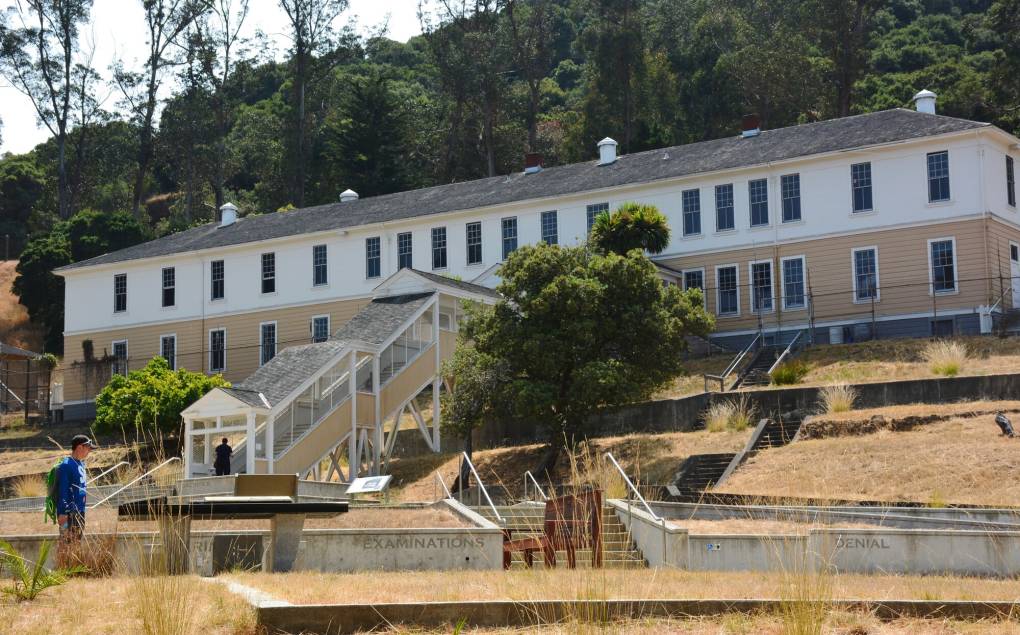
"caption": "Before the station opened in 1910, immigrants coming from the Pacific were housed in unsanitary facilities located at the Pacific Mail Steamship Company docks on the San Francisco waterfront. Angel Island was conceived as an ideal location for detention barracks due to its isolation from the mainland.",
"credit": "Marisol Medina-Cadena/KQED",
"altTag": null,
"description": null,
"imgSizes": {
"medium": {
"file": "https://cdn.kqed.org/wp-content/uploads/sites/10/2025/04/DSC_0194_qed-800x498.jpg",
"width": 800,
"height": 498,
"mimeType": "image/jpeg"
},
"large": {
"file": "https://cdn.kqed.org/wp-content/uploads/sites/10/2025/04/DSC_0194_qed-1020x635.jpg",
"width": 1020,
"height": 635,
"mimeType": "image/jpeg"
},
"thumbnail": {
"file": "https://cdn.kqed.org/wp-content/uploads/sites/10/2025/04/DSC_0194_qed-160x100.jpg",
"width": 160,
"height": 100,
"mimeType": "image/jpeg"
},
"1536x1536": {
"file": "https://cdn.kqed.org/wp-content/uploads/sites/10/2025/04/DSC_0194_qed-1536x957.jpg",
"width": 1536,
"height": 957,
"mimeType": "image/jpeg"
},
"post-thumbnail": {
"file": "https://cdn.kqed.org/wp-content/uploads/sites/10/2025/04/DSC_0194_qed-672x372.jpg",
"width": 672,
"height": 372,
"mimeType": "image/jpeg"
},
"twentyfourteen-full-width": {
"file": "https://cdn.kqed.org/wp-content/uploads/sites/10/2025/04/DSC_0194_qed-1038x576.jpg",
"width": 1038,
"height": 576,
"mimeType": "image/jpeg"
},
"full-width": {
"file": "https://cdn.kqed.org/wp-content/uploads/sites/10/2025/04/DSC_0194_qed-1920x1196.jpg",
"width": 1920,
"height": 1196,
"mimeType": "image/jpeg"
},
"kqedFullSize": {
"file": "https://cdn.kqed.org/wp-content/uploads/sites/10/2025/04/DSC_0194_qed.jpg",
"width": 2000,
"height": 1246
}
},
"isLoading": false,
"fetchFailed": false
},
"news_12023542": {
"type": "attachments",
"id": "news_12023542",
"meta": {
"index": "attachments_1716263798",
"site": "news",
"id": "12023542",
"found": true
},
"title": "250122-OaklandImmigrants-13-BL",
"publishDate": 1737580494,
"status": "inherit",
"parent": 12023560,
"modified": 1737586928,
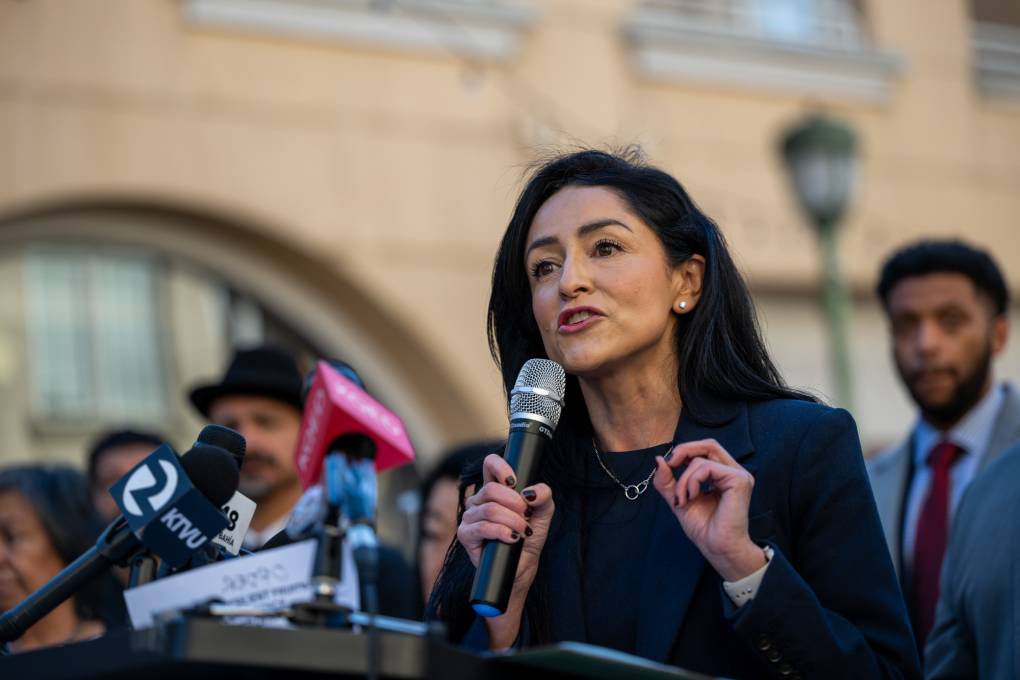
"caption": "Monique Berlanga, Executive Director for Centro Legal de La Raza, speaks during a press conference with leaders from community groups throughout Alameda County in the Fruitvale neighborhood of Oakland on Jan. 22, 2025.",
"credit": "Beth LaBerge/KQED",
"altTag": null,
"description": null,
"imgSizes": {
"medium": {
"file": "https://cdn.kqed.org/wp-content/uploads/sites/10/2025/01/250122-OaklandImmigrants-13-BL-800x533.jpg",
"width": 800,
"height": 533,
"mimeType": "image/jpeg"
},
"large": {
"file": "https://cdn.kqed.org/wp-content/uploads/sites/10/2025/01/250122-OaklandImmigrants-13-BL-1020x680.jpg",
"width": 1020,
"height": 680,
"mimeType": "image/jpeg"
},
"thumbnail": {
"file": "https://cdn.kqed.org/wp-content/uploads/sites/10/2025/01/250122-OaklandImmigrants-13-BL-160x107.jpg",
"width": 160,
"height": 107,
"mimeType": "image/jpeg"
},
"1536x1536": {
"file": "https://cdn.kqed.org/wp-content/uploads/sites/10/2025/01/250122-OaklandImmigrants-13-BL-1536x1024.jpg",
"width": 1536,
"height": 1024,
"mimeType": "image/jpeg"
},
"post-thumbnail": {
"file": "https://cdn.kqed.org/wp-content/uploads/sites/10/2025/01/250122-OaklandImmigrants-13-BL-672x372.jpg",
"width": 672,
"height": 372,
"mimeType": "image/jpeg"
},
"twentyfourteen-full-width": {
"file": "https://cdn.kqed.org/wp-content/uploads/sites/10/2025/01/250122-OaklandImmigrants-13-BL-1038x576.jpg",
"width": 1038,
"height": 576,
"mimeType": "image/jpeg"
},
"full-width": {
"file": "https://cdn.kqed.org/wp-content/uploads/sites/10/2025/01/250122-OaklandImmigrants-13-BL-1920x1280.jpg",
"width": 1920,
"height": 1280,
"mimeType": "image/jpeg"
},
"kqedFullSize": {
"file": "https://cdn.kqed.org/wp-content/uploads/sites/10/2025/01/250122-OaklandImmigrants-13-BL.jpg",
"width": 2000,
"height": 1333
}
},
"isLoading": false,
"fetchFailed": false
},
"news_12034002": {
"type": "attachments",
"id": "news_12034002",
"meta": {
"index": "attachments_1716263798",
"site": "news",
"id": "12034002",
"found": true
},
"title": "034_SanFrancisco_AlexPadillaMissionKids_06012021_qed (1)",
"publishDate": 1743529094,
"status": "inherit",
"parent": 12033989,
"modified": 1743529142,
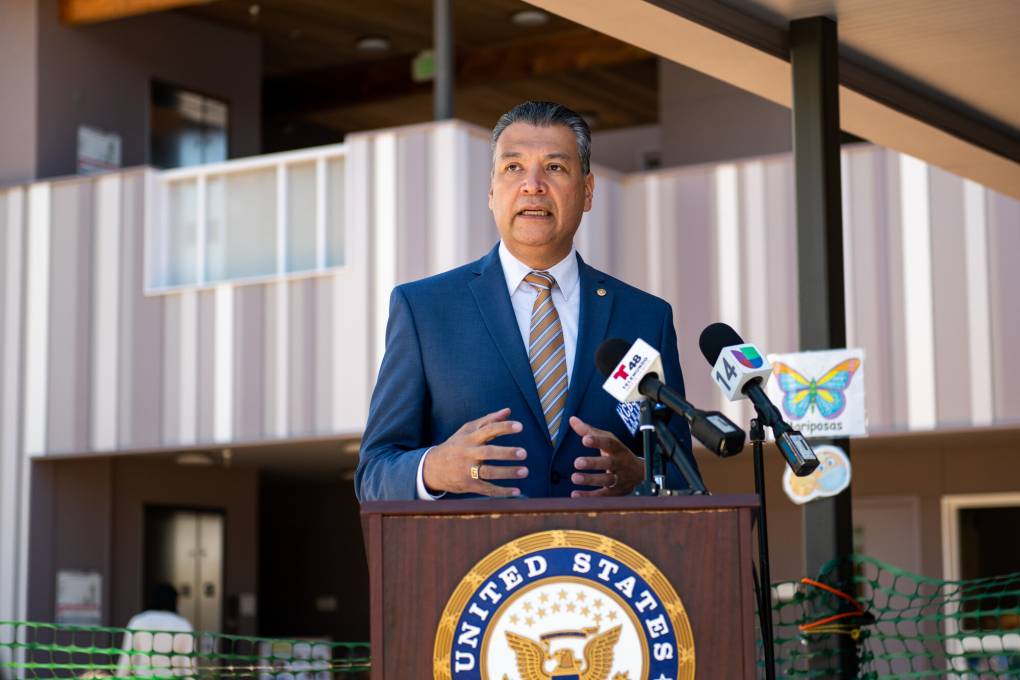
"caption": "Sen. Alex Padilla speaks at a press briefing in San Francisco on June 1, 2021.",
"credit": "Beth LaBerge/KQED",
"altTag": null,
"description": null,
"imgSizes": {
"medium": {
"file": "https://cdn.kqed.org/wp-content/uploads/sites/10/2025/04/034_SanFrancisco_AlexPadillaMissionKids_06012021_qed-1-800x533.jpg",
"width": 800,
"height": 533,
"mimeType": "image/jpeg"
},
"large": {
"file": "https://cdn.kqed.org/wp-content/uploads/sites/10/2025/04/034_SanFrancisco_AlexPadillaMissionKids_06012021_qed-1-1020x680.jpg",
"width": 1020,
"height": 680,
"mimeType": "image/jpeg"
},
"thumbnail": {
"file": "https://cdn.kqed.org/wp-content/uploads/sites/10/2025/04/034_SanFrancisco_AlexPadillaMissionKids_06012021_qed-1-160x107.jpg",
"width": 160,
"height": 107,
"mimeType": "image/jpeg"
},
"1536x1536": {
"file": "https://cdn.kqed.org/wp-content/uploads/sites/10/2025/04/034_SanFrancisco_AlexPadillaMissionKids_06012021_qed-1-1536x1024.jpg",
"width": 1536,
"height": 1024,
"mimeType": "image/jpeg"
},
"post-thumbnail": {
"file": "https://cdn.kqed.org/wp-content/uploads/sites/10/2025/04/034_SanFrancisco_AlexPadillaMissionKids_06012021_qed-1-672x372.jpg",
"width": 672,
"height": 372,
"mimeType": "image/jpeg"
},
"twentyfourteen-full-width": {
"file": "https://cdn.kqed.org/wp-content/uploads/sites/10/2025/04/034_SanFrancisco_AlexPadillaMissionKids_06012021_qed-1-1038x576.jpg",
"width": 1038,
"height": 576,
"mimeType": "image/jpeg"
},
"full-width": {
"file": "https://cdn.kqed.org/wp-content/uploads/sites/10/2025/04/034_SanFrancisco_AlexPadillaMissionKids_06012021_qed-1-1920x1280.jpg",
"width": 1920,
"height": 1280,
"mimeType": "image/jpeg"
},
"kqedFullSize": {
"file": "https://cdn.kqed.org/wp-content/uploads/sites/10/2025/04/034_SanFrancisco_AlexPadillaMissionKids_06012021_qed-1.jpg",
"width": 2000,
"height": 1333
}
},
"isLoading": false,
"fetchFailed": false
},
"news_12032980": {
"type": "attachments",
"id": "news_12032980",
"meta": {
"index": "attachments_1716263798",
"site": "news",
"id": "12032980",
"found": true
},
"title": "250324-WongKimArk-02-BL_qed",
"publishDate": 1742934572,
"status": "inherit",
"parent": 12078171,
"modified": 1775080239,
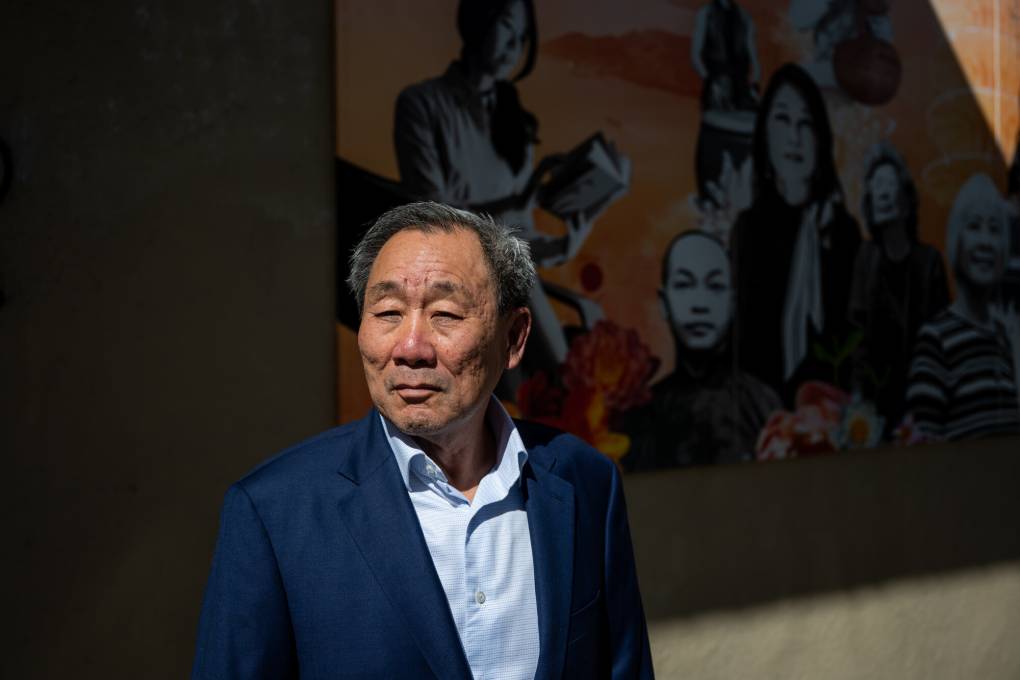
"caption": "Norman Wong, the great-grandson of Wong Kim Ark, stands in front of a mural featuring his great-grandfather in San Francisco’s Chinatown on March 24, 2025, where Wong Kim Ark was born.",
"credit": "Beth LaBerge/KQED",
"altTag": null,
"description": null,
"imgSizes": {
"medium": {
"file": "https://cdn.kqed.org/wp-content/uploads/sites/10/2025/03/250324-WongKimArk-02-BL_qed-800x533.jpg",
"width": 800,
"height": 533,
"mimeType": "image/jpeg"
},
"large": {
"file": "https://cdn.kqed.org/wp-content/uploads/sites/10/2025/03/250324-WongKimArk-02-BL_qed-1020x680.jpg",
"width": 1020,
"height": 680,
"mimeType": "image/jpeg"
},
"thumbnail": {
"file": "https://cdn.kqed.org/wp-content/uploads/sites/10/2025/03/250324-WongKimArk-02-BL_qed-160x107.jpg",
"width": 160,
"height": 107,
"mimeType": "image/jpeg"
},
"1536x1536": {
"file": "https://cdn.kqed.org/wp-content/uploads/sites/10/2025/03/250324-WongKimArk-02-BL_qed-1536x1024.jpg",
"width": 1536,
"height": 1024,
"mimeType": "image/jpeg"
},
"post-thumbnail": {
"file": "https://cdn.kqed.org/wp-content/uploads/sites/10/2025/03/250324-WongKimArk-02-BL_qed-672x372.jpg",
"width": 672,
"height": 372,
"mimeType": "image/jpeg"
},
"twentyfourteen-full-width": {
"file": "https://cdn.kqed.org/wp-content/uploads/sites/10/2025/03/250324-WongKimArk-02-BL_qed-1038x576.jpg",
"width": 1038,
"height": 576,
"mimeType": "image/jpeg"
},
"full-width": {
"file": "https://cdn.kqed.org/wp-content/uploads/sites/10/2025/03/250324-WongKimArk-02-BL_qed-1920x1280.jpg",
"width": 1920,
"height": 1280,
"mimeType": "image/jpeg"
},
"kqedFullSize": {
"file": "https://cdn.kqed.org/wp-content/uploads/sites/10/2025/03/250324-WongKimArk-02-BL_qed.jpg",
"width": 2000,
"height": 1333
}
},
"isLoading": false,
"fetchFailed": false
},
"news_12033721": {
"type": "attachments",
"id": "news_12033721",
"meta": {
"index": "attachments_1716263798",
"site": "news",
"id": "12033721",
"found": true
},
"title": "npr.brightspotcdn copy",
"publishDate": 1743274151,
"status": "inherit",
"parent": 12033720,
"modified": 1743274211,
"caption": "Travelers wait in the security line in Terminal A at Boston Logan International Airport in Boston, Massachusetts, on Dec. 21, 2023. The Transportation Security Administration (TSA) stated that the end-of-the-year holiday travel period starts today and goes through Jan. 2, and predicts that Dec. 21 will be one of the busiest days of the year for travelers with a predicted 2.5 million passengers passing though the airports nationwide. ",
"credit": "Joseph Prezioso/AFP",
"altTag": null,
"description": null,
"imgSizes": {
"medium": {
"file": "https://cdn.kqed.org/wp-content/uploads/sites/10/2025/03/npr.brightspotcdn-copy-15-800x533.jpg",
"width": 800,
"height": 533,
"mimeType": "image/jpeg"
},
"large": {
"file": "https://cdn.kqed.org/wp-content/uploads/sites/10/2025/03/npr.brightspotcdn-copy-15-1020x680.jpg",
"width": 1020,
"height": 680,
"mimeType": "image/jpeg"
},
"thumbnail": {
"file": "https://cdn.kqed.org/wp-content/uploads/sites/10/2025/03/npr.brightspotcdn-copy-15-160x107.jpg",
"width": 160,
"height": 107,
"mimeType": "image/jpeg"
},
"1536x1536": {
"file": "https://cdn.kqed.org/wp-content/uploads/sites/10/2025/03/npr.brightspotcdn-copy-15-1536x1023.jpg",
"width": 1536,
"height": 1023,
"mimeType": "image/jpeg"
},
"post-thumbnail": {
"file": "https://cdn.kqed.org/wp-content/uploads/sites/10/2025/03/npr.brightspotcdn-copy-15-672x372.jpg",
"width": 672,
"height": 372,
"mimeType": "image/jpeg"
},
"twentyfourteen-full-width": {
"file": "https://cdn.kqed.org/wp-content/uploads/sites/10/2025/03/npr.brightspotcdn-copy-15-1038x576.jpg",
"width": 1038,
"height": 576,
"mimeType": "image/jpeg"
},
"kqedFullSize": {
"file": "https://cdn.kqed.org/wp-content/uploads/sites/10/2025/03/npr.brightspotcdn-copy-15.jpg",
"width": 1600,
"height": 1066
}
},
"isLoading": false,
"fetchFailed": false
},
"news_12033529": {
"type": "attachments",
"id": "news_12033529",
"meta": {
"index": "attachments_1716263798",
"site": "news",
"id": "12033529",
"found": true
},
"title": "npr.brightspotcdn copy",
"publishDate": 1743186464,
"status": "inherit",
"parent": 12033527,
"modified": 1743186488,
"caption": "The US Supreme Court is shown March 17, 2025 in Washington, DC.",
"credit": "Win McNamee/Getty Images",
"altTag": null,
"description": null,
"imgSizes": {
"medium": {
"file": "https://cdn.kqed.org/wp-content/uploads/sites/10/2025/03/npr.brightspotcdn-copy-13-800x534.jpg",
"width": 800,
"height": 534,
"mimeType": "image/jpeg"
},
"large": {
"file": "https://cdn.kqed.org/wp-content/uploads/sites/10/2025/03/npr.brightspotcdn-copy-13-1020x680.jpg",
"width": 1020,
"height": 680,
"mimeType": "image/jpeg"
},
"thumbnail": {
"file": "https://cdn.kqed.org/wp-content/uploads/sites/10/2025/03/npr.brightspotcdn-copy-13-160x107.jpg",
"width": 160,
"height": 107,
"mimeType": "image/jpeg"
},
"1536x1536": {
"file": "https://cdn.kqed.org/wp-content/uploads/sites/10/2025/03/npr.brightspotcdn-copy-13-1536x1024.jpg",
"width": 1536,
"height": 1024,
"mimeType": "image/jpeg"
},
"post-thumbnail": {
"file": "https://cdn.kqed.org/wp-content/uploads/sites/10/2025/03/npr.brightspotcdn-copy-13-672x372.jpg",
"width": 672,
"height": 372,
"mimeType": "image/jpeg"
},
"twentyfourteen-full-width": {
"file": "https://cdn.kqed.org/wp-content/uploads/sites/10/2025/03/npr.brightspotcdn-copy-13-1038x576.jpg",
"width": 1038,
"height": 576,
"mimeType": "image/jpeg"
},
"kqedFullSize": {
"file": "https://cdn.kqed.org/wp-content/uploads/sites/10/2025/03/npr.brightspotcdn-copy-13.jpg",
"width": 1600,
"height": 1067
}
},
"isLoading": false,
"fetchFailed": false
}
},
"audioPlayerReducer": {
"postId": "stream_live",
"isPaused": true,
"isPlaying": false,
"pfsActive": false,
"pledgeModalIsOpen": true,
"playerDrawerIsOpen": false,
"liveAudioPlayStartedAt": 0,
"liveAudioPlayContext": ""
},
"authorsReducer": {
"byline_news_12035197": {
"type": "authors",
"id": "byline_news_12035197",
"meta": {
"override": true
},
"slug": "byline_news_12035197",
"name": "\u003ca href=\"https://www.npr.org/people/297147616/jasmine-garsd\">Jasmine Garsd\u003c/a>, NPR",
"isLoading": false
},
"byline_news_12034926": {
"type": "authors",
"id": "byline_news_12034926",
"meta": {
"override": true
},
"slug": "byline_news_12034926",
"name": "\u003ca href=\"https://calmatters.org/author/sergio-olmos/\">Sergio Olmos\u003c/a> and \u003ca href=\"https://calmatters.org/author/wendy-fry/\">Wendy Fry\u003c/a>, CalMatters",
"isLoading": false
},
"byline_news_12034550": {
"type": "authors",
"id": "byline_news_12034550",
"meta": {
"override": true
},
"slug": "byline_news_12034550",
"name": "\u003ca href=\"https://www.npr.org/people/5457129/tom-bowman\">Tom Bowman\u003c/a> and \u003ca href=\"https://www.npr.org/people/105678418/quil-lawrence\">Quil Lawrence\u003c/a>, NPR",
"isLoading": false
},
"byline_news_12033720": {
"type": "authors",
"id": "byline_news_12033720",
"meta": {
"override": true
},
"slug": "byline_news_12033720",
"name": "\u003ca href=\"https://www.npr.org/people/1108419098/juliana-kim\">Juliana Kim\u003c/a>, NPR",
"isLoading": false
},
"byline_news_12033527": {
"type": "authors",
"id": "byline_news_12033527",
"meta": {
"override": true
},
"slug": "byline_news_12033527",
"name": "\u003ca href=\"https://www.npr.org/people/1241652386/sergio-martinez-beltran\">Sergio Martínez-Beltrán\u003c/a>, NPR",
"isLoading": false
},
"tychehendricks": {
"type": "authors",
"id": "259",
"meta": {
"index": "authors_1716337520",
"id": "259",
"found": true
},
"name": "Tyche Hendricks",
"firstName": "Tyche",
"lastName": "Hendricks",
"slug": "tychehendricks",
"email": "thendricks@kqed.org",
"display_author_email": true,
"staff_mastheads": [
"news"
],
"title": "KQED Senior Editor, Immigration",
"bio": "\u003cspan style=\"font-weight: 400;\">Tyche Hendricks is KQED’s senior editor for immigration, leading coverage of the policy and politics that affect California’s immigrant communities. Her work for KQED’s radio and online audiences is also carried on NPR and other national outlets. She has been recognized with awards from the Radio and Television News Directors Association, the Society for Professional Journalists; the Education Writers Association; the Best of the West and the National Federation of Community Broadcasters. Before joining KQED in 2010, Tyche spent more than a dozen years as a newspaper reporter, notably at the \u003c/span>\u003ci>\u003cspan style=\"font-weight: 400;\">San Francisco Chronicle\u003c/span>\u003c/i>\u003cspan style=\"font-weight: 400;\">. At different times she has covered criminal justice, government and politics and urban planning. Tyche has taught in the MFA Creative Writing program at the University of San Francisco and at UC Berkeley’s Graduate School of Journalism, where she was co-director of a national immigration symposium for professional journalists. She is the author of \u003c/span>\u003ci>\u003cspan style=\"font-weight: 400;\">The Wind Doesn't Need a Passport: Stories from the U.S.-Mexico Borderlands\u003c/span>\u003c/i>\u003cspan style=\"font-weight: 400;\"> (University of California Press). \u003c/span>",
"avatar": "https://secure.gravatar.com/avatar/b8ee458e2731c2d43df86882ce17267e?s=600&d=blank&r=g",
"twitter": "tychehendricks",
"facebook": null,
"instagram": null,
"linkedin": null,
"sites": [
{
"site": "news",
"roles": [
"editor"
]
},
{
"site": "stateofhealth",
"roles": [
"editor"
]
}
],
"headData": {
"title": "Tyche Hendricks | KQED",
"description": "KQED Senior Editor, Immigration",
"ogImgSrc": "https://secure.gravatar.com/avatar/b8ee458e2731c2d43df86882ce17267e?s=600&d=blank&r=g",
"twImgSrc": "https://secure.gravatar.com/avatar/b8ee458e2731c2d43df86882ce17267e?s=600&d=blank&r=g"
},
"isLoading": false,
"link": "/author/tychehendricks"
},
"btorres": {
"type": "authors",
"id": "11666",
"meta": {
"index": "authors_1716337520",
"id": "11666",
"found": true
},
"name": "Blanca Torres",
"firstName": "Blanca",
"lastName": "Torres",
"slug": "btorres",
"email": "btorres@kqed.org",
"display_author_email": true,
"staff_mastheads": [
"news"
],
"title": "Producer, Forum",
"bio": "Blanca Torres brings sharp news judgement and keen sense of lively conversation to her work as producer for Forum. She loves producing shows that leave listeners feeling like they heard distinctive voices, learned something new and gained a fresh perspective.\r\n\r\nShe joined KQED in January of 2020 after 16 years of working as a newspaper reporter most recently at the \u003cem>San Francisco Business Times,\u003c/em> where she wrote about real estate and economic development. Before that, she covered a variety of beats including crime, education, retail, workplace, the economy, consumer issues, and small business for the \u003cem>Contra Costa Times, Baltimore Sun\u003c/em> and\u003cem> The Seattle Times\u003c/em>. In addition to reporting, she worked as an editorial writer and columnist for the \u003cem>Seattle Times\u003c/em>. From 2017 to 2020, Blanca won a total of ten awards from the National Association of Real Estate Editors and won first place for land use reporting from the California News Publishers Association two years in a row. She is also a member and former board member for the National Association of Hispanic Journalists.\r\n\r\nA native of the Pacific Northwest, Blanca earned her bachelor's degree from Vanderbilt University in Nashville and a master's in fine arts in creative writing at Mills College. She lives in the East Bay with her family.",
"avatar": "https://secure.gravatar.com/avatar/f2322ff46076d337f7ba731ee6068cb1?s=600&d=blank&r=g",
"twitter": "@blancawrites",
"facebook": null,
"instagram": null,
"linkedin": null,
"sites": [
{
"site": "arts",
"roles": [
"editor"
]
},
{
"site": "news",
"roles": [
"editor"
]
},
{
"site": "forum",
"roles": [
"editor"
]
}
],
"headData": {
"title": "Blanca Torres | KQED",
"description": "Producer, Forum",
"ogImgSrc": "https://secure.gravatar.com/avatar/f2322ff46076d337f7ba731ee6068cb1?s=600&d=blank&r=g",
"twImgSrc": "https://secure.gravatar.com/avatar/f2322ff46076d337f7ba731ee6068cb1?s=600&d=blank&r=g"
},
"isLoading": false,
"link": "/author/btorres"
},
"ccabreralomeli": {
"type": "authors",
"id": "11708",
"meta": {
"index": "authors_1716337520",
"id": "11708",
"found": true
},
"name": "Carlos Cabrera-Lomelí",
"firstName": "Carlos",
"lastName": "Cabrera-Lomelí",
"slug": "ccabreralomeli",
"email": "ccabreralomeli@KQED.org",
"display_author_email": true,
"staff_mastheads": [
"news"
],
"title": "Community Reporter",
"bio": "Carlos Cabrera-Lomelí is a community reporter with KQED's digital engagement team. He also reports and co-produces for KQED's bilingual news hub KQED en Español. He grew up in San Francisco's Mission District and has previously worked with Univision, 48 Hills and REFORMA in Mexico City.",
"avatar": "https://secure.gravatar.com/avatar/e95ff80bb2eaf18a8f2af4dcf7ffb54b?s=600&d=mm&r=g",
"twitter": "@LomeliCabrera",
"facebook": null,
"instagram": null,
"linkedin": null,
"sites": [
{
"site": "arts",
"roles": [
"editor"
]
},
{
"site": "news",
"roles": [
"editor"
]
},
{
"site": "about",
"roles": [
"editor"
]
},
{
"site": "science",
"roles": [
"editor"
]
},
{
"site": "perspectives",
"roles": [
"editor"
]
},
{
"site": "elections",
"roles": [
"editor"
]
},
{
"site": "liveblog",
"roles": [
"contributor"
]
}
],
"headData": {
"title": "Carlos Cabrera-Lomelí | KQED",
"description": "Community Reporter",
"ogImgSrc": "https://secure.gravatar.com/avatar/e95ff80bb2eaf18a8f2af4dcf7ffb54b?s=600&d=mm&r=g",
"twImgSrc": "https://secure.gravatar.com/avatar/e95ff80bb2eaf18a8f2af4dcf7ffb54b?s=600&d=mm&r=g"
},
"isLoading": false,
"link": "/author/ccabreralomeli"
},
"nkhan": {
"type": "authors",
"id": "11867",
"meta": {
"index": "authors_1716337520",
"id": "11867",
"found": true
},
"name": "Nisa Khan",
"firstName": "Nisa",
"lastName": "Khan",
"slug": "nkhan",
"email": "nkhan@kqed.org",
"display_author_email": false,
"staff_mastheads": [],
"title": "KQED Contributor",
"bio": "Nisa Khan is a reporter for KQED's Audience News Desk. She was formerly a data reporter at Michigan Radio. She earned a Bachelor of Science in Information from the University of Michigan and a Master of Arts in Communication from Stanford University.",
"avatar": "https://secure.gravatar.com/avatar/a3bf1efcfbe7658d13a434cc54d0b2e3?s=600&d=blank&r=g",
"twitter": "mnisakhan",
"bluesky": null,
"facebook": null,
"instagram": null,
"linkedin": null,
"sites": [
{
"site": "arts",
"roles": [
"editor"
]
},
{
"site": "news",
"roles": [
"editor"
]
},
{
"site": "science",
"roles": [
"editor",
"author"
]
},
{
"site": "forum",
"roles": [
"editor"
]
},
{
"site": "liveblog",
"roles": [
"contributor"
]
}
],
"headData": {
"title": "Nisa Khan | KQED",
"description": "KQED Contributor",
"ogImgSrc": "https://secure.gravatar.com/avatar/a3bf1efcfbe7658d13a434cc54d0b2e3?s=600&d=blank&r=g",
"twImgSrc": "https://secure.gravatar.com/avatar/a3bf1efcfbe7658d13a434cc54d0b2e3?s=600&d=blank&r=g"
},
"isLoading": false,
"link": "/author/nkhan"
},
"bsiavoshy": {
"type": "authors",
"id": "11890",
"meta": {
"index": "authors_1716337520",
"id": "11890",
"found": true
},
"name": "Bejan Siavoshy",
"firstName": "Bejan",
"lastName": "Siavoshy",
"slug": "bsiavoshy",
"email": "bsiavoshy@kqed.org",
"display_author_email": false,
"staff_mastheads": [],
"title": "KQED Contributor",
"bio": null,
"avatar": "https://secure.gravatar.com/avatar/ead3e7c509634b37a73b1f57677e49f9?s=600&d=blank&r=g",
"twitter": null,
"facebook": null,
"instagram": null,
"linkedin": null,
"sites": [
{
"site": "news",
"roles": [
"editor"
]
}
],
"headData": {
"title": "Bejan Siavoshy | KQED",
"description": "KQED Contributor",
"ogImgSrc": "https://secure.gravatar.com/avatar/ead3e7c509634b37a73b1f57677e49f9?s=600&d=blank&r=g",
"twImgSrc": "https://secure.gravatar.com/avatar/ead3e7c509634b37a73b1f57677e49f9?s=600&d=blank&r=g"
},
"isLoading": false,
"link": "/author/bsiavoshy"
},
"kdebenedetti": {
"type": "authors",
"id": "11913",
"meta": {
"index": "authors_1716337520",
"id": "11913",
"found": true
},
"name": "Katie DeBenedetti",
"firstName": "Katie",
"lastName": "DeBenedetti",
"slug": "kdebenedetti",
"email": "kdebenedetti@kqed.org",
"display_author_email": false,
"staff_mastheads": [
"news",
"science"
],
"title": "KQED Contributor",
"bio": "Katie DeBenedetti is a digital reporter covering daily news for the Express Desk. Prior to joining KQED as a culture reporting intern in January 2024, she covered education and city government for the Napa Valley Register.",
"avatar": "https://secure.gravatar.com/avatar/6e31073cb8f7e4214ab03f42771d0f45?s=600&d=blank&r=g",
"twitter": null,
"facebook": null,
"instagram": null,
"linkedin": null,
"sites": [
{
"site": "news",
"roles": [
"author"
]
},
{
"site": "science",
"roles": [
"author"
]
},
{
"site": "liveblog",
"roles": [
"author"
]
}
],
"headData": {
"title": "Katie DeBenedetti | KQED",
"description": "KQED Contributor",
"ogImgSrc": "https://secure.gravatar.com/avatar/6e31073cb8f7e4214ab03f42771d0f45?s=600&d=blank&r=g",
"twImgSrc": "https://secure.gravatar.com/avatar/6e31073cb8f7e4214ab03f42771d0f45?s=600&d=blank&r=g"
},
"isLoading": false,
"link": "/author/kdebenedetti"
},
"slim": {
"type": "authors",
"id": "11920",
"meta": {
"index": "authors_1716337520",
"id": "11920",
"found": true
},
"name": "Samantha Lim",
"firstName": "Samantha",
"lastName": "Lim",
"slug": "slim",
"email": "slim@KQED.org",
"display_author_email": false,
"staff_mastheads": [],
"title": "KQED Contributor",
"bio": null,
"avatar": "https://secure.gravatar.com/avatar/82e592e6c15fe1a04d385e8ad0fb0b4e?s=600&d=blank&r=g",
"twitter": null,
"facebook": null,
"instagram": null,
"linkedin": null,
"sites": [
{
"site": "news",
"roles": []
}
],
"headData": {
"title": "Samantha Lim | KQED",
"description": "KQED Contributor",
"ogImgSrc": "https://secure.gravatar.com/avatar/82e592e6c15fe1a04d385e8ad0fb0b4e?s=600&d=blank&r=g",
"twImgSrc": "https://secure.gravatar.com/avatar/82e592e6c15fe1a04d385e8ad0fb0b4e?s=600&d=blank&r=g"
},
"isLoading": false,
"link": "/author/slim"
}
},
"pagesReducer": {
"news_tag_immigration": {
"type": "terms",
"id": "news_20202",
"meta": {
"index": "terms_1716263798",
"site": "news",
"id": "20202",
"score": 6.9038835
},
"featImg": null,
"name": "immigration",
"description": null,
"taxonomy": "tag",
"headData": {
"twImgId": null,
"twTitle": null,
"ogTitle": null,
"ogImgId": null,
"twDescription": null,
"description": null,
"title": "immigration Archives | KQED News",
"ogDescription": null
},
"ttid": 20219,
"slug": "immigration",
"isLoading": false,
"title": "immigration",
"pageMeta": {
"site": "news",
"WpPageTemplate": "page-topic-editorial",
"currentPage": 32
},
"blocks": [
{
"blockName": "kqed/post-list",
"attrs": {
"layout": "cardArticle2",
"query": "posts/news?tag=immigration",
"seeMore": false,
"paginated": true,
"page": 32
}
},
{
"blockName": "kqed/ad"
}
]
}
},
"pfsSessionReducer": {},
"postsReducer": {
"stream_live": {
"type": "live",
"id": "stream_live",
"audioUrl": "https://streams.kqed.org/kqedradio",
"title": "Live Stream",
"excerpt": "Live Stream information currently unavailable.",
"link": "/radio",
"featImg": "",
"label": {
"name": "KQED Live",
"link": "/"
}
},
"stream_kqedNewscast": {
"type": "posts",
"id": "stream_kqedNewscast",
"audioUrl": "https://www.kqed.org/.stream/anon/radio/RDnews/newscast.mp3?_=1",
"title": "KQED Newscast",
"featImg": "",
"label": {
"name": "88.5 FM",
"link": "/"
}
},
"news_12035318": {
"type": "posts",
"id": "news_12035318",
"meta": {
"index": "posts_1716263798",
"site": "news",
"id": "12035318",
"score": null,
"sort": [
1744302417000
]
},
"guestAuthors": [],
"slug": "border-patrol-arrest-claims-from-bakersfield-raid-dont-match-records",
"title": "Border Patrol Arrest Claims From Bakersfield Raid Don't Match Records",
"publishDate": 1744302417,
"format": "audio",
"headTitle": "Border Patrol Arrest Claims From Bakersfield Raid Don’t Match Records | KQED",
"labelTerm": {},
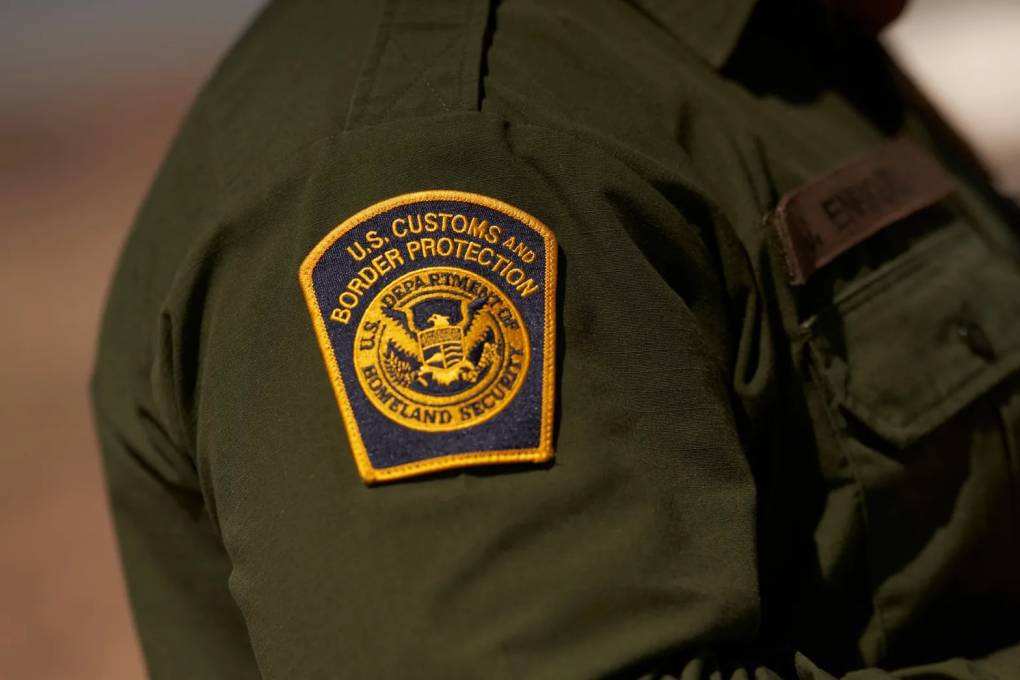
"content": "\u003cp>\u003cstrong>Here are this morning’s top stories for Thursday, April 10th, 2025:\u003c/strong>\u003c/p>\n\u003cul>\n\u003cli>In early January, US Customs and Border Protection (CBP) agents from El Centro near San Diego launched a \u003ca href=\"https://www.kqed.org/news/12021487/an-immigration-raid-in-kern-county-foreshadows-what-awaits-farmworkers-and-the-economy\">deportation raid\u003c/a> in Kern County, more than six hours from their usual area of operation. The man behind the effort is Gregory Bovino, head of CBP’s El Centro sector. He claimed the operation targeted criminals that were illegally in the US, but arrest data show that, of the nearly 80 people that were swept up by the El Centro agents, Border Patrol had an arrest record for just one individual.\u003c/li>\n\u003cli>Ultra low-budget airliner, Avelo, is shuttering its Bay Area hub at Sonoma County’s Charles M. Schultz Airport, after it got tapped by the Trump Administration to \u003ca href=\"https://www.kron4.com/news/bay-area/avelo-airlines-exiting-sonoma-county-airport-after-deal-to-fly-ice-deportation-flights/\">conduct mass deportation flights\u003c/a>. One Sonoma County Supervisor is condemning the move, saying it would hurt the local economy in the long-run.\u003c/li>\n\u003cli>Prop 36, California’s voter-approved “tough on crime” bill, is still a head-scratcher for lawmakers in Sacramento, who are still debating on \u003ca href=\"https://www.sacbee.com/news/politics-government/capitol-alert/article302877334.html\">how to actually fund\u003c/a> its rollout statewide.\u003c/li>\n\u003c/ul>\n\u003cp>\u003ca href=\"https://calmatters.org/economy/2025/04/border-patrol-records-kern-county/\">\u003cstrong>CalMatters Investigates the Fallout From Jan. Border Patrol Raid in Bakersfield\u003c/strong>\u003c/a>\u003c/p>\n\u003cp>On January 7th, a day after President Trump’s 2024 election win was ratified by Congress, Gregory Bovino, the head of Border Patrol’s El Centro sector near San Diego, California, decided to send his agents more than 300 miles away from the US-Mexico Border, to Bakersfield–a city that’s \u003ca href=\"https://www.census.gov/quickfacts/fact/table/bakersfieldcitycalifornia/AGE295223\">more than 50-percent Latino\u003c/a> and a hub of the state’s agriculture activity. Bovino deployed 60 agents in unmarked cars in what he dubbed “Operation Return to Sender,” which he claimed was an effort to round up nationals from Mexico, South America and China \u003ca href=\"https://www.kget.com/news/local-news/us-cbp-issues-statement-on-ongoing-operation-return-to-sender-in-bakersfield-area/\">that were in the country illegally and had criminal histories. \u003c/a>\u003c/p>\n\u003cp>But once the details of the three-day operation started coming to light, Bovino’s claims about getting criminals off the streets didn’t match \u003ca href=\"https://bakersfieldnow.com/news/local/border-patrol-said-it-targeted-known-criminals-in-kern-county-but-it-had-no-record-on-77\">Border Patrol’s own data\u003c/a>. There’s only one record of an arrest among the 78 people that El Centro border agents rounded up in the operation. Meanwhile, immigration and civil rights advocates said the raid was \u003ca href=\"https://www.kqed.org/news/12029195/border-patrol-slashed-tires-dragged-people-from-cars-bakersfield-raids-aclu-says\">fueled by racial profiling\u003c/a>, and had little evidence-based law enforcement behind it. \u003ca href=\"https://www.calonews.com/communities/bakersfield-residents-sue-federal-agencies-for-operation-return-to-sender-immigration-raids/article_c6e3c51c-f90b-11ef-a6ac-a72df3e0cb2d.html\">Lawsuits are mounting\u003c/a> against federal agencies in the fallout from “Operation Return to Sender,” but the damage may have already been done. We speak to CalMatters reporter, Sergio Olmos, who investigated the raid, as well as its fallout.\u003c/p>\n\u003cp>\u003ca href=\"https://www.kqed.org/news/12035165/california-officials-warn-prop-36-may-drain-resources-from-successful-community-programs\">\u003cstrong>California Lawmakers Still Unsure How to Fund Prop. 36\u003c/strong>\u003c/a>\u003c/p>\n\u003cp>[ad fullwidth]\u003c/p>\n\u003cp>Voters approved California’s “tough on crime” bill in the November 5th election by \u003ca href=\"https://www.kqed.org/news/12012656/proposition-36-californias-newest-tough-on-crime-measure-appears-headed-for-victory\">nearly 70 percen\u003c/a>t. The bill re-classifies certain drug and theft crimes from \u003ca href=\"https://voterguide.sos.ca.gov/propositions/36/\">misdemeanors to felonies.\u003c/a> It also offers treatment to drug offenders as an option to avoid prosecution. Now, lawmakers are struggling to figure out how to fund the treatment programs, and \u003ca href=\"https://calmatters.org/newsletter/prop-36-funding-newsletter/\">other statewide initiatives linked to the bill’s passing\u003c/a>.\u003c/p>\n\u003cp>\u003cstrong>Sonoma County Supervisor Condemns Budget Airliner’s Decision to Abandon North Bay to Help Deport Immigrants\u003c/strong>\u003c/p>\n\u003cp>In the wake of budget airliner, Avelo, partnering with the Trump Administration to\u003ca href=\"https://www.cbsnews.com/sanfrancisco/news/budget-airline-avelo-pulling-out-sonoma-county-airport-ice-deportation-flights/\"> conduct deportation flights across the country\u003c/a>, it is cutting its operations from Sonoma County. That means Avelo will no longer fly from the North Bay’s Charles M. Schultz Airport to stops in Boise, Idaho and Salt Lake City, Utah, when it begins deportation flights on May 1st.\u003c/p>\n\u003cp>\u003c/p>\n\u003cp>Sonoma County Supervisor, Lynda Hopkins, said budget airliner’s departure is \u003ca href=\"https://www.pressdemocrat.com/article/news/sonoma-county-deportation-immigration-avelo-airlines/\">a blow to the local tourism economy\u003c/a>, and comes at a time when it’s unclear how the White House’s global trade war will \u003ca href=\"https://sf.eater.com/2025/2/4/24358742/trump-tariff-california-wine-canada\">impact California’s wine industry\u003c/a>. Hopkins said it’s a shame that the Trump Administration is giving a domestic company more financial incentives to deport people than to support local and rural economies.\u003c/p>\n\n",
"blocks": [],
"excerpt": null,
"status": "publish",
"parent": 0,
"modified": 1744393591,
"stats": {
"hasAudio": false,
"hasVideo": false,
"hasChartOrMap": false,
"iframeSrcs": [],
"hasGoogleForm": false,
"hasGallery": false,
"hasHearkenModule": false,
"hasPolis": false,
"paragraphCount": 11,
"wordCount": 671
},
"headData": {
"title": "Border Patrol Arrest Claims From Bakersfield Raid Don't Match Records | KQED",
"description": "Here are this morning's top stories for Thursday, April 10th, 2025: In early January, US Customs and Border Protection (CBP) agents from El Centro near San Diego launched a deportation raid in Kern County, more than six hours from their usual area of operation. The man behind the effort is Gregory Bovino, head of CBP's El Centro sector. He claimed the operation targeted criminals that were illegally in the US, but arrest data show that, of the nearly 80 people that were swept up by the El Centro agents, Border Patrol had an arrest record for just one individual. Ultra",
"ogTitle": "",
"ogDescription": "",
"ogImgId": "",
"twTitle": "",
"twDescription": "",
"twImgId": "",
"schema": {
"@context": "https://schema.org",
"@type": "NewsArticle",
"headline": "Border Patrol Arrest Claims From Bakersfield Raid Don't Match Records",
"datePublished": "2025-04-10T09:26:57-07:00",
"dateModified": "2025-04-11T10:46:31-07:00",
"image": "https://cdn.kqed.org/wp-content/uploads/2020/02/KQED-OG-Image@1x.png",
"isAccessibleForFree": "True",
"publisher": {
"@type": "NewsMediaOrganization",
"@id": "https://www.kqed.org/#organization",
"name": "KQED",
"logo": "https://cdn.kqed.org/wp-content/uploads/2020/02/KQED-OG-Image@1x.png",
"url": "https://www.kqed.org",
"sameAs": [
"https://www.facebook.com/KQED",
"https://twitter.com/KQED",
"https://www.instagram.com/kqed/",
"https://www.tiktok.com/@kqedofficial",
"https://www.linkedin.com/company/kqed",
"https://www.youtube.com/channel/UCeC0IOo7i1P_61zVUWbJ4nw"
]
}
}
},
"source": "The California Report",
"sourceUrl": "https://www.kqed.org/news/tag/tcrarchive/",
"audioUrl": "https://www.podtrac.com/pts/redirect.mp3/chrt.fm/track/G6C7C3/traffic.megaphone.fm/KQINC9942872675.mp3?updated=1744302558",
"sticky": false,
"nprStoryId": "kqed-12035318",
"templateType": "standard",
"featuredImageType": "standard",
"excludeFromSiteSearch": "Include",
"episodeImage": "12021488",
"articleAge": "0",
"path": "/news/12035318/border-patrol-arrest-claims-from-bakersfield-raid-dont-match-records",
"audioTrackLength": null,
"parsedContent": [
{
"type": "contentString",
"content": "\u003cdiv class=\"post-body\">\u003cp>\u003cp>\u003cstrong>Here are this morning’s top stories for Thursday, April 10th, 2025:\u003c/strong>\u003c/p>\n\u003cul>\n\u003cli>In early January, US Customs and Border Protection (CBP) agents from El Centro near San Diego launched a \u003ca href=\"https://www.kqed.org/news/12021487/an-immigration-raid-in-kern-county-foreshadows-what-awaits-farmworkers-and-the-economy\">deportation raid\u003c/a> in Kern County, more than six hours from their usual area of operation. The man behind the effort is Gregory Bovino, head of CBP’s El Centro sector. He claimed the operation targeted criminals that were illegally in the US, but arrest data show that, of the nearly 80 people that were swept up by the El Centro agents, Border Patrol had an arrest record for just one individual.\u003c/li>\n\u003cli>Ultra low-budget airliner, Avelo, is shuttering its Bay Area hub at Sonoma County’s Charles M. Schultz Airport, after it got tapped by the Trump Administration to \u003ca href=\"https://www.kron4.com/news/bay-area/avelo-airlines-exiting-sonoma-county-airport-after-deal-to-fly-ice-deportation-flights/\">conduct mass deportation flights\u003c/a>. One Sonoma County Supervisor is condemning the move, saying it would hurt the local economy in the long-run.\u003c/li>\n\u003cli>Prop 36, California’s voter-approved “tough on crime” bill, is still a head-scratcher for lawmakers in Sacramento, who are still debating on \u003ca href=\"https://www.sacbee.com/news/politics-government/capitol-alert/article302877334.html\">how to actually fund\u003c/a> its rollout statewide.\u003c/li>\n\u003c/ul>\n\u003cp>\u003ca href=\"https://calmatters.org/economy/2025/04/border-patrol-records-kern-county/\">\u003cstrong>CalMatters Investigates the Fallout From Jan. Border Patrol Raid in Bakersfield\u003c/strong>\u003c/a>\u003c/p>\n\u003cp>On January 7th, a day after President Trump’s 2024 election win was ratified by Congress, Gregory Bovino, the head of Border Patrol’s El Centro sector near San Diego, California, decided to send his agents more than 300 miles away from the US-Mexico Border, to Bakersfield–a city that’s \u003ca href=\"https://www.census.gov/quickfacts/fact/table/bakersfieldcitycalifornia/AGE295223\">more than 50-percent Latino\u003c/a> and a hub of the state’s agriculture activity. Bovino deployed 60 agents in unmarked cars in what he dubbed “Operation Return to Sender,” which he claimed was an effort to round up nationals from Mexico, South America and China \u003ca href=\"https://www.kget.com/news/local-news/us-cbp-issues-statement-on-ongoing-operation-return-to-sender-in-bakersfield-area/\">that were in the country illegally and had criminal histories. \u003c/a>\u003c/p>\n\u003cp>But once the details of the three-day operation started coming to light, Bovino’s claims about getting criminals off the streets didn’t match \u003ca href=\"https://bakersfieldnow.com/news/local/border-patrol-said-it-targeted-known-criminals-in-kern-county-but-it-had-no-record-on-77\">Border Patrol’s own data\u003c/a>. There’s only one record of an arrest among the 78 people that El Centro border agents rounded up in the operation. Meanwhile, immigration and civil rights advocates said the raid was \u003ca href=\"https://www.kqed.org/news/12029195/border-patrol-slashed-tires-dragged-people-from-cars-bakersfield-raids-aclu-says\">fueled by racial profiling\u003c/a>, and had little evidence-based law enforcement behind it. \u003ca href=\"https://www.calonews.com/communities/bakersfield-residents-sue-federal-agencies-for-operation-return-to-sender-immigration-raids/article_c6e3c51c-f90b-11ef-a6ac-a72df3e0cb2d.html\">Lawsuits are mounting\u003c/a> against federal agencies in the fallout from “Operation Return to Sender,” but the damage may have already been done. We speak to CalMatters reporter, Sergio Olmos, who investigated the raid, as well as its fallout.\u003c/p>\n\u003cp>\u003ca href=\"https://www.kqed.org/news/12035165/california-officials-warn-prop-36-may-drain-resources-from-successful-community-programs\">\u003cstrong>California Lawmakers Still Unsure How to Fund Prop. 36\u003c/strong>\u003c/a>\u003c/p>\n\u003cp>\u003c/p>\u003c/div>",
"attributes": {
"named": {},
"numeric": []
}
},
{
"type": "component",
"content": "",
"name": "ad",
"attributes": {
"named": {
"label": "fullwidth"
},
"numeric": [
"fullwidth"
]
}
},
{
"type": "contentString",
"content": "\u003cdiv class=\"post-body\">\u003cp>\u003c/p>\n\u003cp>Voters approved California’s “tough on crime” bill in the November 5th election by \u003ca href=\"https://www.kqed.org/news/12012656/proposition-36-californias-newest-tough-on-crime-measure-appears-headed-for-victory\">nearly 70 percen\u003c/a>t. The bill re-classifies certain drug and theft crimes from \u003ca href=\"https://voterguide.sos.ca.gov/propositions/36/\">misdemeanors to felonies.\u003c/a> It also offers treatment to drug offenders as an option to avoid prosecution. Now, lawmakers are struggling to figure out how to fund the treatment programs, and \u003ca href=\"https://calmatters.org/newsletter/prop-36-funding-newsletter/\">other statewide initiatives linked to the bill’s passing\u003c/a>.\u003c/p>\n\u003cp>\u003cstrong>Sonoma County Supervisor Condemns Budget Airliner’s Decision to Abandon North Bay to Help Deport Immigrants\u003c/strong>\u003c/p>\n\u003cp>In the wake of budget airliner, Avelo, partnering with the Trump Administration to\u003ca href=\"https://www.cbsnews.com/sanfrancisco/news/budget-airline-avelo-pulling-out-sonoma-county-airport-ice-deportation-flights/\"> conduct deportation flights across the country\u003c/a>, it is cutting its operations from Sonoma County. That means Avelo will no longer fly from the North Bay’s Charles M. Schultz Airport to stops in Boise, Idaho and Salt Lake City, Utah, when it begins deportation flights on May 1st.\u003c/p>\n\u003cp>\u003c/p>\n\u003cp>Sonoma County Supervisor, Lynda Hopkins, said budget airliner’s departure is \u003ca href=\"https://www.pressdemocrat.com/article/news/sonoma-county-deportation-immigration-avelo-airlines/\">a blow to the local tourism economy\u003c/a>, and comes at a time when it’s unclear how the White House’s global trade war will \u003ca href=\"https://sf.eater.com/2025/2/4/24358742/trump-tariff-california-wine-canada\">impact California’s wine industry\u003c/a>. Hopkins said it’s a shame that the Trump Administration is giving a domestic company more financial incentives to deport people than to support local and rural economies.\u003c/p>\n\n\u003c/div>\u003c/p>",
"attributes": {
"named": {},
"numeric": []
}
}
],
"link": "/news/12035318/border-patrol-arrest-claims-from-bakersfield-raid-dont-match-records",
"authors": [
"11890"
],
"programs": [
"news_72"
],
"categories": [
"news_33520",
"news_34018"
],
"tags": [
"news_5563",
"news_20595",
"news_24736",
"news_21200",
"news_34439",
"news_18269",
"news_35279",
"news_35281",
"news_20202",
"news_35278",
"news_20320",
"news_20199",
"news_35282",
"news_6501",
"news_35277",
"news_35108",
"news_21998",
"news_21268",
"news_20851",
"news_244",
"news_35280"
],
"featImg": "news_12021488",
"label": "source_news_12035318"
},
"news_12035197": {
"type": "posts",
"id": "news_12035197",
"meta": {
"index": "posts_1716263798",
"site": "news",
"id": "12035197",
"score": null,
"sort": [
1744232418000
]
},
"guestAuthors": [],
"slug": "us-says-it-is-now-monitoring-immigrants-social-media-for-antisemitic-activity",
"title": "US Says It Is Now Monitoring Immigrants' Social Media for 'Antisemitic Activity'",
"publishDate": 1744232418,
"format": "standard",
"headTitle": "US Says It Is Now Monitoring Immigrants’ Social Media for ‘Antisemitic Activity’ | KQED",
"labelTerm": {
"term": 253,
"site": "news"
},
"content": "\u003cp>U.S. Citizenship and Immigration Services \u003ca href=\"https://www.uscis.gov/newsroom/news-releases/dhs-to-begin-screening-aliens-social-media-activity-for-antisemitism\">has announced\u003c/a> it will begin screening immigrants’ social media for evidence of antisemitic activity as grounds for denying immigration benefit requests. The screenings will affect people applying for permanent residence status as well as foreigners affiliated with educational institutions. The policy will go into effect immediately.\u003c/p>\n\u003cp>In a statement issued Wednesday morning, the Department of Homeland Security said it will “protect the homeland from extremists and terrorist aliens, including those who support antisemitic terrorism, violent antisemitic ideologies and antisemitic terrorist organizations such as Hamas, Palestinian Islamic Jihad, Hezbollah, or [the Houthis].”\u003c/p>\n\u003cp>[ad fullwidth]\u003c/p>\n\u003cp>“There is no room in the United States for the rest of the world’s terrorist sympathizers, and we are under no obligation to admit them or let them stay here,” said DHS Assistant Secretary for Public Affairs Tricia McLaughlin.\u003c/p>\n\u003cp>The announcement comes following the highly publicized arrests and detentions of pro-Palestinian student activists such as Mahmoud Khalil and Rümeysa Öztürk, who the government alleges engaged in antisemitic activities. Their lawyers deny the allegations.\u003c/p>\n\u003cp>[aside postID=news_12033989 hero='https://cdn.kqed.org/wp-content/uploads/sites/10/2025/04/034_SanFrancisco_AlexPadillaMissionKids_06012021_qed-1-1020x680.jpg']\u003c/p>\n\u003cp>In a statement to NPR, Edward Ahmed Mitchell, the national deputy director of the Council on American-Islamic Relations, said: “The spirit of Joseph McCarthy is alive and well in the Trump administration, which has spent months dishonestly mischaracterizing legitimate criticism of the Israeli government’s war crimes in Gaza as antisemitic, pursuing witch hunts into American colleges, and threatening the free speech rights of immigrants.”\u003c/p>\n\u003cp>“It is a privilege to be granted a visa to live & study in the United States of America,” Homeland Security Secretary Kristi Noem posted on X last month. “When you advocate for violence and terrorism that privilege should be revoked and you should not be in this country.”\u003c/p>\n\u003cp>\u003c/p>\n",
"blocks": [],
"excerpt": "The announcement comes following the arrests and detentions of pro-Palestinian student activists such as Mahmoud Khalil and Rümeysa Öztürk, who the government alleges engaged in antisemitic activities.",
"status": "publish",
"parent": 0,
"modified": 1744226511,
"stats": {
"hasAudio": false,
"hasVideo": false,
"hasChartOrMap": false,
"iframeSrcs": [],
"hasGoogleForm": false,
"hasGallery": false,
"hasHearkenModule": false,
"hasPolis": false,
"paragraphCount": 9,
"wordCount": 328
},
"headData": {
"title": "US Says It Is Now Monitoring Immigrants' Social Media for 'Antisemitic Activity' | KQED",
"description": "The announcement comes following the arrests and detentions of pro-Palestinian student activists such as Mahmoud Khalil and Rümeysa Öztürk, who the government alleges engaged in antisemitic activities.",
"ogTitle": "",
"ogDescription": "",
"ogImgId": "",
"twTitle": "",
"twDescription": "",
"twImgId": "",
"schema": {
"@context": "https://schema.org",
"@type": "NewsArticle",
"headline": "US Says It Is Now Monitoring Immigrants' Social Media for 'Antisemitic Activity'",
"datePublished": "2025-04-09T14:00:18-07:00",
"dateModified": "2025-04-09T12:21:51-07:00",
"image": "https://cdn.kqed.org/wp-content/uploads/2020/02/KQED-OG-Image@1x.png",
"isAccessibleForFree": "True",
"publisher": {
"@type": "NewsMediaOrganization",
"@id": "https://www.kqed.org/#organization",
"name": "KQED",
"logo": "https://cdn.kqed.org/wp-content/uploads/2020/02/KQED-OG-Image@1x.png",
"url": "https://www.kqed.org",
"sameAs": [
"https://www.facebook.com/KQED",
"https://twitter.com/KQED",
"https://www.instagram.com/kqed/",
"https://www.tiktok.com/@kqedofficial",
"https://www.linkedin.com/company/kqed",
"https://www.youtube.com/channel/UCeC0IOo7i1P_61zVUWbJ4nw"
]
}
}
},
"sticky": false,
"nprByline": "\u003ca href=\"https://www.npr.org/people/297147616/jasmine-garsd\">Jasmine Garsd\u003c/a>, NPR",
"templateType": "standard",
"featuredImageType": "standard",
"excludeFromSiteSearch": "Include",
"showOnAuthorArchivePages": "No",
"articleAge": "0",
"path": "/news/12035197/us-says-it-is-now-monitoring-immigrants-social-media-for-antisemitic-activity",
"audioTrackLength": null,
"parsedContent": [
{
"type": "contentString",
"content": "\u003cdiv class=\"post-body\">\u003cp>\u003cp>U.S. Citizenship and Immigration Services \u003ca href=\"https://www.uscis.gov/newsroom/news-releases/dhs-to-begin-screening-aliens-social-media-activity-for-antisemitism\">has announced\u003c/a> it will begin screening immigrants’ social media for evidence of antisemitic activity as grounds for denying immigration benefit requests. The screenings will affect people applying for permanent residence status as well as foreigners affiliated with educational institutions. The policy will go into effect immediately.\u003c/p>\n\u003cp>In a statement issued Wednesday morning, the Department of Homeland Security said it will “protect the homeland from extremists and terrorist aliens, including those who support antisemitic terrorism, violent antisemitic ideologies and antisemitic terrorist organizations such as Hamas, Palestinian Islamic Jihad, Hezbollah, or [the Houthis].”\u003c/p>\n\u003cp>\u003c/p>\u003c/div>",
"attributes": {
"named": {},
"numeric": []
}
},
{
"type": "component",
"content": "",
"name": "ad",
"attributes": {
"named": {
"label": "fullwidth"
},
"numeric": [
"fullwidth"
]
}
},
{
"type": "contentString",
"content": "\u003cdiv class=\"post-body\">\u003cp>\u003c/p>\n\u003cp>“There is no room in the United States for the rest of the world’s terrorist sympathizers, and we are under no obligation to admit them or let them stay here,” said DHS Assistant Secretary for Public Affairs Tricia McLaughlin.\u003c/p>\n\u003cp>The announcement comes following the highly publicized arrests and detentions of pro-Palestinian student activists such as Mahmoud Khalil and Rümeysa Öztürk, who the government alleges engaged in antisemitic activities. Their lawyers deny the allegations.\u003c/p>\n\u003cp>\u003c/p>\u003c/div>",
"attributes": {
"named": {},
"numeric": []
}
},
{
"type": "component",
"content": "",
"name": "aside",
"attributes": {
"named": {
"postid": "news_12033989",
"hero": "https://cdn.kqed.org/wp-content/uploads/sites/10/2025/04/034_SanFrancisco_AlexPadillaMissionKids_06012021_qed-1-1020x680.jpg",
"label": ""
},
"numeric": []
}
},
{
"type": "contentString",
"content": "\u003cdiv class=\"post-body\">\u003cp>\u003c/p>\n\u003cp>In a statement to NPR, Edward Ahmed Mitchell, the national deputy director of the Council on American-Islamic Relations, said: “The spirit of Joseph McCarthy is alive and well in the Trump administration, which has spent months dishonestly mischaracterizing legitimate criticism of the Israeli government’s war crimes in Gaza as antisemitic, pursuing witch hunts into American colleges, and threatening the free speech rights of immigrants.”\u003c/p>\n\u003cp>“It is a privilege to be granted a visa to live & study in the United States of America,” Homeland Security Secretary Kristi Noem posted on X last month. “When you advocate for violence and terrorism that privilege should be revoked and you should not be in this country.”\u003c/p>\n\u003cp>\u003c/p>\n\u003c/div>\u003c/p>",
"attributes": {
"named": {},
"numeric": []
}
}
],
"link": "/news/12035197/us-says-it-is-now-monitoring-immigrants-social-media-for-antisemitic-activity",
"authors": [
"byline_news_12035197"
],
"categories": [
"news_1169",
"news_8",
"news_13"
],
"tags": [
"news_23687",
"news_20202",
"news_1741",
"news_4272",
"news_33647",
"news_1089",
"news_22646",
"news_22226",
"news_35248"
],
"affiliates": [
"news_253"
],
"featImg": "news_12035198",
"label": "news_253"
},
"news_12034926": {
"type": "posts",
"id": "news_12034926",
"meta": {
"index": "posts_1716263798",
"site": "news",
"id": "12034926",
"score": null,
"sort": [
1744144906000
]
},
"guestAuthors": [],
"slug": "border-patrol-said-it-targeted-known-criminals-in-kern-county-but-it-had-no-record-on-77-of-78-arrestees",
"title": "Border Patrol Said It Targeted Known Criminals in Kern County. But It Had No Record on 77 of 78 Arrestees",
"publishDate": 1744144906,
"format": "standard",
"headTitle": "Border Patrol Said It Targeted Known Criminals in Kern County. But It Had No Record on 77 of 78 Arrestees | KQED",
"labelTerm": {
"term": 18481,
"site": "news"
},
"content": "\u003cp>\u003cem>This story was originally published by \u003ca href=\"https://calmatters.org/\">CalMatters\u003c/a>. \u003ca href=\"https://calmatters.org/subscribe-to-calmatters/\">Sign up\u003c/a> for their newsletters.\u003c/em>\u003c/p>\n\u003cp>It was quiet on the border. A Border Patrol agent named James Lee was parked in the shade next to a 30-foot fence in Calexico. The windows of his SUV were rolled up, the engine making that noise when it’s idle for a long time while the air conditioning is running. “We haven’t had any crossing in the last few days,” Lee said.\u003c/p>\n\u003cp>At the height of illegal border crossings in 2023, Border Patrol encountered 3.2 million people. But now the southern border is desolate. Lee is one of around 1,000 agents in the El Centro sector, which has seen a 91% decrease in encounters compared to the same month last year. The decline in crossings that began during the Biden administration has accelerated in the first few months of the Trump administration. When we visited in late February, not a single person had been recorded trying to cross for more than half the week.\u003c/p>\n\u003cp>The man in charge of the El Centro sector, Gregory Bovino, once told congressional investigators, “I’ve always found that idle hands do the devil’s work.” On Jan. 7, the day after Congress certified Trump’s election victory, Bovino sent 65 of his agents into Kern County, six hours north of the border, to conduct a raid that has shaken immigrant communities and agricultural businesses across the state, and has set the stage for a legal battle over how the government carries out mass deportations.\u003c/p>\n\u003cp>https://www.youtube.com/watch?v=m93xbICwsSM&t=7s\u003c/p>\n\u003cp>Border Patrol said it arrested 78 people in what it called “Operation Return to Sender,” but provided few details. Most of the official information about the raid came from Bovino’s Facebook \u003ca href=\"https://www.facebook.com/USBorderPatrolElCentroSector/posts/pfbid02WDPRvfPFmX7kqLWSCwrS8ovzQqzgWb1gaDX21vR75EUfkRaenFea6FTJwUWwoW6Wl\">comments\u003c/a>. He posted \u003ca href=\"https://www.facebook.com/USBorderPatrolElCentroSector/posts/pfbid02WDPRvfPFmX7kqLWSCwrS8ovzQqzgWb1gaDX21vR75EUfkRaenFea6FTJwUWwoW6Wl\">blurred photos\u003c/a> of three Latino men alongside a photo of 33 lbs of marijuana in the trunk of a car. He wrote, “Here in the #PremierSector we go the extra mile — or 500 of them — to protect our nation and communities from bad people and bad things.”\u003c/p>\n\u003cp>On the day of the raids, Casey Creamer, CEO of California Citrus Mutual, an association of citrus growers around Bakersfield, heard that the Border Patrol was targeting criminal activity. He thought that might explain why the agents had come so far north. But the next day, he began to doubt the official narrative.\u003c/p>\n\u003cp>“It does not seem to be a targeted criminal activity just based on what growers are seeing and observing,” he said.\u003c/p>\n\u003cp>[ad fullwidth]\u003c/p>\n\u003cp>Creamer learned that agents detained people outside of a Home Depot and a convenience store frequented by farm workers in the morning on their way to the fields. They pulled over drivers on roads running between farms.\u003c/p>\n\u003cp>“I know for a fact they were stationed on growers’ property. Not public property, but actual growers’ property,” Creamer said.\u003c/p>\n\u003cp>Bovino said that his agents had a “predetermined list of targets,” many of whom had criminal records, before they set off for Kern County. “We did our homework,” he said.\u003c/p>\n\u003cp>But a CalMatters investigation, in partnership with \u003ca href=\"https://www.evidentmedia.org/\">Evident\u003c/a> and \u003ca href=\"https://www.bellingcat.com/\">Bellingcat\u003c/a>, found that Border Patrol officials misrepresented the very basics of their high-profile, large-scale immigration raid. Data obtained from U.S. Customs and Border Protection reveal that Border Patrol had no prior knowledge of criminal or immigration history for 77 of the 78 people arrested.\u003c/p>\n\u003cp>In a spreadsheet provided by the agency, under “Criminal History,” all but one entry contains the following passage: “Criminal and/or immigration history was not known prior to the encounter.”\u003c/p>\n\u003cp>***\u003c/p>\n\u003cp>Bovino sat down with CalMatters in February to talk about the Kern County operation.\u003c/p>\n\u003cp>A handful of armed agents stood as audience for the entire hour. They stayed quiet, listening to their boss tell a reporter what’s what.\u003c/p>\n\u003cp>Bovino stands out among the Border Patrol chiefs. The El Centro sector’s \u003ca href=\"https://www.facebook.com/USBorderPatrolElCentroSector/\">Facebook page\u003c/a> features staged photos of him in uniform, including including a closeup with an AR-15, and one on a white horse in the desert, cradling a shotgun. He has given his sector a brand: “the premier sector.” It’s similar to the way states have mottos on license plates that aren’t necessarily used by anybody else to describe that state.\u003c/p>\n\u003cp>“Twenty sectors in the U.S. Border Patrol, and we do call ourselves the premiere sector,” he said with a smile. “So please let those other chiefs know we said that.”\u003c/p>\n\u003cp>This area of the border is remote. But Bovino’s powers stretch far beyond the border. “Our area goes up through Central California, all the way to the Oregon border,” he said.\u003c/p>\n\u003cfigure id=\"attachment_12034932\" class=\"wp-caption aligncenter\" style=\"max-width: 2000px\">\u003cimg loading=\"lazy\" decoding=\"async\" class=\"size-full wp-image-12034932\" src=\"https://cdn.kqed.org/wp-content/uploads/sites/10/2025/04/022525-Evident-Border-Trip-EM-CM-16-1-copy.jpg\" alt=\"\" width=\"2000\" height=\"1333\" srcset=\"https://cdn.kqed.org/wp-content/uploads/sites/10/2025/04/022525-Evident-Border-Trip-EM-CM-16-1-copy.jpg 2000w, https://cdn.kqed.org/wp-content/uploads/sites/10/2025/04/022525-Evident-Border-Trip-EM-CM-16-1-copy-800x533.jpg 800w, https://cdn.kqed.org/wp-content/uploads/sites/10/2025/04/022525-Evident-Border-Trip-EM-CM-16-1-copy-1020x680.jpg 1020w, https://cdn.kqed.org/wp-content/uploads/sites/10/2025/04/022525-Evident-Border-Trip-EM-CM-16-1-copy-160x107.jpg 160w, https://cdn.kqed.org/wp-content/uploads/sites/10/2025/04/022525-Evident-Border-Trip-EM-CM-16-1-copy-1536x1024.jpg 1536w, https://cdn.kqed.org/wp-content/uploads/sites/10/2025/04/022525-Evident-Border-Trip-EM-CM-16-1-copy-1920x1280.jpg 1920w\" sizes=\"auto, (max-width: 2000px) 100vw, 2000px\">\u003cfigcaption class=\"wp-caption-text\">A view of the U.S. and Mexico border wall near Jacumba Wilderness Area on Feb. 25, 2025. \u003ccite>(Kevin Clancy/CalMatters and Evident Media)\u003c/cite>\u003c/figcaption>\u003c/figure>\n\u003cp>U.S. Customs and Border Protection has the authority to search vehicles and vessels without a warrant “within a reasonable distance from any external boundary” of the U.S., including the entire coastline. The federal government defines this distance as 100 miles.\u003c/p>\n\u003cp>Roughly two-thirds of the U.S. population, about 200 million people, live within this zone.\u003c/p>\n\u003cp>“Federal authority does not just reside at that line in the sand, as some people like to look at it on the border,” Bovino said. “A lot of bad things and bad people that come across that border. And it doesn’t just stay at the border. What comes across that border goes into Anytown, USA and into Ma’ and Pa’ America.”[aside postID=news_12029195 hero='https://cdn.kqed.org/wp-content/uploads/sites/10/2025/02/BakersfieldFarmworkersGetty-1020x680.jpg']Nationwide there are roughly four times more Border Patrol than ICE agents. In El Centro, there are five Border Patrol agents whose job it is to produce videos.\u003c/p>\n\u003cp>Their latest project is a series of fictionalized videos portraying migrants crossing the border as menaces with a bloodlust to commit crimes. Bovino shared the \u003ca href=\"https://x.com/USBPChiefELC/status/1894412561912672762\">first video\u003c/a> on social media with the caption: “Any town. Any neighborhood. Any family. When heartless criminals, sex offenders, and human traffickers illegally enter the United States and get away, they prey on our children, the most vulnerable members of our communities.”\u003c/p>\n\u003cp>In the video, two agents sit in their vehicle at night, listening to a news broadcast about an undocumented migrant charged with the rape and murder of a 64-year-old woman in Santa Maria. The news clip is from a real CBS report from 10 years ago. An agent shakes his head in disgust and turns off the radio, saying “Man, that’s the second one in less than a week. Things are getting out of hand.”\u003c/p>\n\u003cp>At that moment dispatch comes over the radio and tells the agents of a nearby vehicle that’s loaded with migrants. The agents are able to catch three of the men, but one gets away and sneaks into “Anytown, USA,” where he savagely murders an American citizen, taking the man’s cell phone and fleeing. The screen goes dark with the message: “Every apprehension matters. Do you know who got away?”\u003c/p>\n\u003cp>Bovino is proud of the videos, and rejected the idea that the fictional portrayals are, in fact, fictional. “Those fictionalized accounts that you’re talking about are really not fictionalized accounts. Let’s get that straight. Because thousands of American citizens every year die and/or are maimed, killed or raped,” he said. Less than 1% of the people Border Patrol agents encounter have a criminal conviction of any kind, according to agency data. By comparison around 8% of Americans have a felony conviction, according to one \u003ca href=\"https://link.springer.com/article/10.1007/s13524-017-0611-1\">study\u003c/a>.\u003c/p>\n\u003cp>Bovino likes to praise President Dwight Eisenhower, who led the largest deportation in American history, rounding up 1.3 million Mexicans and Mexican Americans in 1954. The first buses deporting migrants — in what was called “Operation Wetback” — rolled out of El Centro \u003ca href=\"https://www.jstor.org/stable/10.3138/j.ctt2ttpgc\">over 70 years ago\u003c/a>. In January, Bovino launched his own operation as “a \u003ca href=\"https://inewsource.org/2025/03/14/lawsuit-border-patrol-el-centro-chief-kern-county-operation/\">proof of concept\u003c/a>,” he has said, to show how Border Patrol could be used for mass deportations in the interior.\u003c/p>\n\u003cp>***\u003c/p>\n\u003cp>The El Centro sector denied requests for details on the 78 people arrested during “Operation Return to Sender.” CalMatters made the same request to Customs and Border Protection headquarters in Washington, D.C., which provided the data. It showed the Border Patrol had a record of criminal or immigration history on only one person. That person’s record showed that they had been ordered to be deported a year earlier.\u003c/p>\n\u003cp>The records directly contradict what Bovino told us in the interview. He maintained his agents went after specific targets, “many of which … were prior deports, already had immigration history, criminal history.”\u003c/p>\n\u003cp>We received the data after our interview with Bovino. We attempted to ask the Border Patrol follow-up questions, but the agency declined, citing “ongoing litigation.” Last month the ACLU \u003ca href=\"https://calmatters.org/justice/2025/02/border-patrol-sued-over-kern-county-raids/\">sued Border Patrol on behalf\u003c/a> of United Farm Workers, arguing that the agency detained people who looked Latino or like farm workers without reasonable suspicion they were doing anything unlawful, and then deprived them of due process by forcing them to sign self-deportation paperwork.\u003c/p>\n\u003cp>In our interview, Bovino also offered an expansive definition of who he considers “criminals.”\u003c/p>\n\u003cp>“Every single one of the 78 that we arrested were criminals. Eight U.S.C. 1325 — illegal entry into the United States,” he said, citing federal code for what is a misdemeanor offense.\u003c/p>\n\u003cp>If the Border Patrol did have a targeted list of people with criminal records, they didn’t arrest them. Regardless, Bovino didn’t see a difference between going after undocumented field workers or drug dealers: “If you’re an illegal alien, you’re getting it. A fentanyl dealer, you get it.”\u003c/p>\n\u003cp>Creamer, who represents the citrus growers, said he has a different definition of criminal activity.\u003c/p>\n\u003cp>He said the people who work in their operations have been there as long as 30 years — “ hard-working people that don’t deserve to be harassed.”\u003c/p>\n\u003cp>“If they’re targeting a rural operation like this, people that are getting up early in the morning to work, those aren’t drug dealers,” he said.\u003c/p>\n\u003cfigure id=\"attachment_12034935\" class=\"wp-caption aligncenter\" style=\"max-width: 2000px\">\u003cimg loading=\"lazy\" decoding=\"async\" class=\"size-full wp-image-12034935\" src=\"https://cdn.kqed.org/wp-content/uploads/sites/10/2025/04/032725-Evident-Bakersfield-EM-CM-12-copy.jpg\" alt=\"\" width=\"2000\" height=\"1333\" srcset=\"https://cdn.kqed.org/wp-content/uploads/sites/10/2025/04/032725-Evident-Bakersfield-EM-CM-12-copy.jpg 2000w, https://cdn.kqed.org/wp-content/uploads/sites/10/2025/04/032725-Evident-Bakersfield-EM-CM-12-copy-800x533.jpg 800w, https://cdn.kqed.org/wp-content/uploads/sites/10/2025/04/032725-Evident-Bakersfield-EM-CM-12-copy-1020x680.jpg 1020w, https://cdn.kqed.org/wp-content/uploads/sites/10/2025/04/032725-Evident-Bakersfield-EM-CM-12-copy-160x107.jpg 160w, https://cdn.kqed.org/wp-content/uploads/sites/10/2025/04/032725-Evident-Bakersfield-EM-CM-12-copy-1536x1024.jpg 1536w, https://cdn.kqed.org/wp-content/uploads/sites/10/2025/04/032725-Evident-Bakersfield-EM-CM-12-copy-1920x1280.jpg 1920w\" sizes=\"auto, (max-width: 2000px) 100vw, 2000px\">\u003cfigcaption class=\"wp-caption-text\">A worker picks oranges on a farm outside of Bakersfield, Feb. 25, 2025. \u003ccite>(Kevin Clancy/CalMatters and Evident Media)\u003c/cite>\u003c/figcaption>\u003c/figure>\n\u003cfigure id=\"attachment_12034936\" class=\"wp-caption aligncenter\" style=\"max-width: 2500px\">\u003cimg loading=\"lazy\" decoding=\"async\" class=\"size-full wp-image-12034936\" src=\"https://cdn.kqed.org/wp-content/uploads/sites/10/2025/04/Copy-of-KQED-side-by-side-downpage-image-2.jpg\" alt=\"\" width=\"2500\" height=\"833\" srcset=\"https://cdn.kqed.org/wp-content/uploads/sites/10/2025/04/Copy-of-KQED-side-by-side-downpage-image-2.jpg 2500w, https://cdn.kqed.org/wp-content/uploads/sites/10/2025/04/Copy-of-KQED-side-by-side-downpage-image-2-800x267.jpg 800w, https://cdn.kqed.org/wp-content/uploads/sites/10/2025/04/Copy-of-KQED-side-by-side-downpage-image-2-1020x340.jpg 1020w, https://cdn.kqed.org/wp-content/uploads/sites/10/2025/04/Copy-of-KQED-side-by-side-downpage-image-2-160x53.jpg 160w, https://cdn.kqed.org/wp-content/uploads/sites/10/2025/04/Copy-of-KQED-side-by-side-downpage-image-2-1536x512.jpg 1536w, https://cdn.kqed.org/wp-content/uploads/sites/10/2025/04/Copy-of-KQED-side-by-side-downpage-image-2-2048x682.jpg 2048w, https://cdn.kqed.org/wp-content/uploads/sites/10/2025/04/Copy-of-KQED-side-by-side-downpage-image-2-1920x640.jpg 1920w\" sizes=\"auto, (max-width: 2500px) 100vw, 2500px\">\u003cfigcaption class=\"wp-caption-text\">Left: Oranges at a packaging facility outside of Bakersfield, on Feb. 27, 2025. Right: A worker at an orange packaging facility outside of Bakersfield, on Feb. 27, 2025. \u003ccite>(Kevin Clancy/CalMatters and Evident Media)\u003c/cite>\u003c/figcaption>\u003c/figure>\n\u003cp>Creamer warned that the United States won’t have a food supply if agriculture doesn’t have a workforce in California and beyond. The USDA Economic Research services says that 42% of agricultural workers are undocumented. Lawmakers in Florida, which is the other major citrus provider, recently introduced legislation to loosen child labor laws to replace field workers following an immigration crackdown.\u003c/p>\n\u003cp>Ninety percent of the nation’s fresh citrus comes from California, according to Citrus Mutual. Zac Green, a citrus farmer in Kern County, said that, in the days after the raid, 85% of his workers stayed home out of fear. “We have to have that reliable workforce,” he said. “We’re feeding people.”\u003c/p>\n\u003cp>“Our people can go back to their communities and put their kids in school. They can buy homes, they can buy vehicles,” he said. “We’re here to work and provide for our families, and that’s what we’re trying to do.”\u003c/p>\n\u003cp>Bree Bernwanger, a senior staff attorney with the ACLU, said she’s not surprised that Border Patrol had prior records on only one of the people arrested.\u003c/p>\n\u003cp>“Border Patrol went on a fishing expedition in the Central Valley. They swarmed the highways and stopped people in agricultural areas,” she said. “People who are just driving down the road because they were brown or because they looked like farm workers. ”\u003c/p>\n\u003cp>The ACLU has asked for a restraining order to stop the agency from conducting similar raids within California while the lawsuit is being heard. The organization argues that Border Patrol must have reasonable suspicion a person is doing something unlawful.\u003c/p>\n\u003cp>“We’re asking a court to order them not to stop people — whether they’re driving down the road or whether they’re in a parking lot — not to stop them unless they have a reason,” Bernwanger said. “And someone looking Latino, looking like a farm worker, looking like a day laborer — those are not legal reasons.”\u003c/p>\n\u003cfigure id=\"attachment_12034937\" class=\"wp-caption aligncenter\" style=\"max-width: 2000px\">\u003cimg loading=\"lazy\" decoding=\"async\" class=\"size-full wp-image-12034937\" src=\"https://cdn.kqed.org/wp-content/uploads/sites/10/2025/04/032725-Evident-Bakersfield-EM-CM-14-copy.jpg\" alt=\"\" width=\"2000\" height=\"1333\" srcset=\"https://cdn.kqed.org/wp-content/uploads/sites/10/2025/04/032725-Evident-Bakersfield-EM-CM-14-copy.jpg 2000w, https://cdn.kqed.org/wp-content/uploads/sites/10/2025/04/032725-Evident-Bakersfield-EM-CM-14-copy-800x533.jpg 800w, https://cdn.kqed.org/wp-content/uploads/sites/10/2025/04/032725-Evident-Bakersfield-EM-CM-14-copy-1020x680.jpg 1020w, https://cdn.kqed.org/wp-content/uploads/sites/10/2025/04/032725-Evident-Bakersfield-EM-CM-14-copy-160x107.jpg 160w, https://cdn.kqed.org/wp-content/uploads/sites/10/2025/04/032725-Evident-Bakersfield-EM-CM-14-copy-1536x1024.jpg 1536w, https://cdn.kqed.org/wp-content/uploads/sites/10/2025/04/032725-Evident-Bakersfield-EM-CM-14-copy-1920x1280.jpg 1920w\" sizes=\"auto, (max-width: 2000px) 100vw, 2000px\">\u003cfigcaption class=\"wp-caption-text\">Workers pick oranges on a farm outside of Bakersfield, Feb. 25, 2025. \u003ccite>(Kevin Clancy/CalMatters and Evident Media)\u003c/cite>\u003c/figcaption>\u003c/figure>\n\u003cp>For his part, Bovino wants to use the Kern operation as a model for immigration enforcement across California.\u003c/p>\n\u003cp>“It’s game on — anywhere,” he said.\u003c/p>\n\u003cp>“It could be Fresno, could be Sacramento, could be Stockton. You never know. We’re going to go where that threat is, and where we can do the most damage to bad people and bad things that we possibly can. That’s what we’re in the business of doing.”\u003c/p>\n\u003cp>\u003cem>This article was \u003ca href=\"https://calmatters.org/economy/2025/04/border-patrol-records-kern-county/\">originally published on CalMatters\u003c/a> and was republished under the \u003ca href=\"https://creativecommons.org/licenses/by-nc-nd/4.0/\">Creative Commons Attribution-NonCommercial-NoDerivatives\u003c/a> license.\u003c/em>\u003c/p>\n\u003cp>[ad floatright]\u003c/p>\n",
"blocks": [],
"excerpt": "Contrary to its public narrative, the agency cast a wide net in its California immigration raid, setting the stage for a legal battle over how the government carries out mass deportations.",
"status": "publish",
"parent": 0,
"modified": 1744145152,
"stats": {
"hasAudio": false,
"hasVideo": true,
"hasChartOrMap": false,
"iframeSrcs": [],
"hasGoogleForm": false,
"hasGallery": false,
"hasHearkenModule": false,
"hasPolis": false,
"paragraphCount": 49,
"wordCount": 2322
},
"headData": {
"title": "Border Patrol Said It Targeted Known Criminals in Kern County. But It Had No Record on 77 of 78 Arrestees | KQED",
"description": "Contrary to its public narrative, the agency cast a wide net in its California immigration raid, setting the stage for a legal battle over how the government carries out mass deportations.",
"ogTitle": "",
"ogDescription": "",
"ogImgId": "",
"twTitle": "",
"twDescription": "",
"twImgId": "",
"schema": {
"@context": "https://schema.org",
"@type": "NewsArticle",
"headline": "Border Patrol Said It Targeted Known Criminals in Kern County. But It Had No Record on 77 of 78 Arrestees",
"datePublished": "2025-04-08T13:41:46-07:00",
"dateModified": "2025-04-08T13:45:52-07:00",
"image": "https://cdn.kqed.org/wp-content/uploads/2020/02/KQED-OG-Image@1x.png",
"isAccessibleForFree": "True",
"publisher": {
"@type": "NewsMediaOrganization",
"@id": "https://www.kqed.org/#organization",
"name": "KQED",
"logo": "https://cdn.kqed.org/wp-content/uploads/2020/02/KQED-OG-Image@1x.png",
"url": "https://www.kqed.org",
"sameAs": [
"https://www.facebook.com/KQED",
"https://twitter.com/KQED",
"https://www.instagram.com/kqed/",
"https://www.tiktok.com/@kqedofficial",
"https://www.linkedin.com/company/kqed",
"https://www.youtube.com/channel/UCeC0IOo7i1P_61zVUWbJ4nw"
]
}
}
},
"sticky": false,
"nprByline": "\u003ca href=\"https://calmatters.org/author/sergio-olmos/\">Sergio Olmos\u003c/a> and \u003ca href=\"https://calmatters.org/author/wendy-fry/\">Wendy Fry\u003c/a>, CalMatters",
"nprStoryId": "kqed-12034926",
"templateType": "standard",
"featuredImageType": "standard",
"excludeFromSiteSearch": "Include",
"showOnAuthorArchivePages": "No",
"articleAge": "0",
"path": "/news/12034926/border-patrol-said-it-targeted-known-criminals-in-kern-county-but-it-had-no-record-on-77-of-78-arrestees",
"audioTrackLength": null,
"parsedContent": [
{
"type": "contentString",
"content": "\u003cdiv class=\"post-body\">\u003cp>\u003cp>\u003cem>This story was originally published by \u003ca href=\"https://calmatters.org/\">CalMatters\u003c/a>. \u003ca href=\"https://calmatters.org/subscribe-to-calmatters/\">Sign up\u003c/a> for their newsletters.\u003c/em>\u003c/p>\n\u003cp>It was quiet on the border. A Border Patrol agent named James Lee was parked in the shade next to a 30-foot fence in Calexico. The windows of his SUV were rolled up, the engine making that noise when it’s idle for a long time while the air conditioning is running. “We haven’t had any crossing in the last few days,” Lee said.\u003c/p>\n\u003cp>At the height of illegal border crossings in 2023, Border Patrol encountered 3.2 million people. But now the southern border is desolate. Lee is one of around 1,000 agents in the El Centro sector, which has seen a 91% decrease in encounters compared to the same month last year. The decline in crossings that began during the Biden administration has accelerated in the first few months of the Trump administration. When we visited in late February, not a single person had been recorded trying to cross for more than half the week.\u003c/p>\n\u003cp>The man in charge of the El Centro sector, Gregory Bovino, once told congressional investigators, “I’ve always found that idle hands do the devil’s work.” On Jan. 7, the day after Congress certified Trump’s election victory, Bovino sent 65 of his agents into Kern County, six hours north of the border, to conduct a raid that has shaken immigrant communities and agricultural businesses across the state, and has set the stage for a legal battle over how the government carries out mass deportations.\u003c/p>\u003c/p>\u003cp>\u003cspan class='utils-parseShortcode-shortcodes-__youtubeShortcode__embedYoutube'>\n \u003cspan class='utils-parseShortcode-shortcodes-__youtubeShortcode__embedYoutubeInside'>\n \u003ciframe\n loading='lazy'\n class='utils-parseShortcode-shortcodes-__youtubeShortcode__youtubePlayer'\n type='text/html'\n src='//www.youtube.com/embed/m93xbICwsSM'\n title='//www.youtube.com/embed/m93xbICwsSM'\n allowfullscreen='true'\n style='border:0;'>\u003c/iframe>\n \u003c/span>\n \u003c/span>\u003c/p>\u003cp>\u003cp>Border Patrol said it arrested 78 people in what it called “Operation Return to Sender,” but provided few details. Most of the official information about the raid came from Bovino’s Facebook \u003ca href=\"https://www.facebook.com/USBorderPatrolElCentroSector/posts/pfbid02WDPRvfPFmX7kqLWSCwrS8ovzQqzgWb1gaDX21vR75EUfkRaenFea6FTJwUWwoW6Wl\">comments\u003c/a>. He posted \u003ca href=\"https://www.facebook.com/USBorderPatrolElCentroSector/posts/pfbid02WDPRvfPFmX7kqLWSCwrS8ovzQqzgWb1gaDX21vR75EUfkRaenFea6FTJwUWwoW6Wl\">blurred photos\u003c/a> of three Latino men alongside a photo of 33 lbs of marijuana in the trunk of a car. He wrote, “Here in the #PremierSector we go the extra mile — or 500 of them — to protect our nation and communities from bad people and bad things.”\u003c/p>\n\u003cp>On the day of the raids, Casey Creamer, CEO of California Citrus Mutual, an association of citrus growers around Bakersfield, heard that the Border Patrol was targeting criminal activity. He thought that might explain why the agents had come so far north. But the next day, he began to doubt the official narrative.\u003c/p>\n\u003cp>“It does not seem to be a targeted criminal activity just based on what growers are seeing and observing,” he said.\u003c/p>\n\u003cp>\u003c/p>\u003c/div>",
"attributes": {
"named": {},
"numeric": []
}
},
{
"type": "component",
"content": "",
"name": "ad",
"attributes": {
"named": {
"label": "fullwidth"
},
"numeric": [
"fullwidth"
]
}
},
{
"type": "contentString",
"content": "\u003cdiv class=\"post-body\">\u003cp>\u003c/p>\n\u003cp>Creamer learned that agents detained people outside of a Home Depot and a convenience store frequented by farm workers in the morning on their way to the fields. They pulled over drivers on roads running between farms.\u003c/p>\n\u003cp>“I know for a fact they were stationed on growers’ property. Not public property, but actual growers’ property,” Creamer said.\u003c/p>\n\u003cp>Bovino said that his agents had a “predetermined list of targets,” many of whom had criminal records, before they set off for Kern County. “We did our homework,” he said.\u003c/p>\n\u003cp>But a CalMatters investigation, in partnership with \u003ca href=\"https://www.evidentmedia.org/\">Evident\u003c/a> and \u003ca href=\"https://www.bellingcat.com/\">Bellingcat\u003c/a>, found that Border Patrol officials misrepresented the very basics of their high-profile, large-scale immigration raid. Data obtained from U.S. Customs and Border Protection reveal that Border Patrol had no prior knowledge of criminal or immigration history for 77 of the 78 people arrested.\u003c/p>\n\u003cp>In a spreadsheet provided by the agency, under “Criminal History,” all but one entry contains the following passage: “Criminal and/or immigration history was not known prior to the encounter.”\u003c/p>\n\u003cp>***\u003c/p>\n\u003cp>Bovino sat down with CalMatters in February to talk about the Kern County operation.\u003c/p>\n\u003cp>A handful of armed agents stood as audience for the entire hour. They stayed quiet, listening to their boss tell a reporter what’s what.\u003c/p>\n\u003cp>Bovino stands out among the Border Patrol chiefs. The El Centro sector’s \u003ca href=\"https://www.facebook.com/USBorderPatrolElCentroSector/\">Facebook page\u003c/a> features staged photos of him in uniform, including including a closeup with an AR-15, and one on a white horse in the desert, cradling a shotgun. He has given his sector a brand: “the premier sector.” It’s similar to the way states have mottos on license plates that aren’t necessarily used by anybody else to describe that state.\u003c/p>\n\u003cp>“Twenty sectors in the U.S. Border Patrol, and we do call ourselves the premiere sector,” he said with a smile. “So please let those other chiefs know we said that.”\u003c/p>\n\u003cp>This area of the border is remote. But Bovino’s powers stretch far beyond the border. “Our area goes up through Central California, all the way to the Oregon border,” he said.\u003c/p>\n\u003cfigure id=\"attachment_12034932\" class=\"wp-caption aligncenter\" style=\"max-width: 2000px\">\u003cimg loading=\"lazy\" decoding=\"async\" class=\"size-full wp-image-12034932\" src=\"https://cdn.kqed.org/wp-content/uploads/sites/10/2025/04/022525-Evident-Border-Trip-EM-CM-16-1-copy.jpg\" alt=\"\" width=\"2000\" height=\"1333\" srcset=\"https://cdn.kqed.org/wp-content/uploads/sites/10/2025/04/022525-Evident-Border-Trip-EM-CM-16-1-copy.jpg 2000w, https://cdn.kqed.org/wp-content/uploads/sites/10/2025/04/022525-Evident-Border-Trip-EM-CM-16-1-copy-800x533.jpg 800w, https://cdn.kqed.org/wp-content/uploads/sites/10/2025/04/022525-Evident-Border-Trip-EM-CM-16-1-copy-1020x680.jpg 1020w, https://cdn.kqed.org/wp-content/uploads/sites/10/2025/04/022525-Evident-Border-Trip-EM-CM-16-1-copy-160x107.jpg 160w, https://cdn.kqed.org/wp-content/uploads/sites/10/2025/04/022525-Evident-Border-Trip-EM-CM-16-1-copy-1536x1024.jpg 1536w, https://cdn.kqed.org/wp-content/uploads/sites/10/2025/04/022525-Evident-Border-Trip-EM-CM-16-1-copy-1920x1280.jpg 1920w\" sizes=\"auto, (max-width: 2000px) 100vw, 2000px\">\u003cfigcaption class=\"wp-caption-text\">A view of the U.S. and Mexico border wall near Jacumba Wilderness Area on Feb. 25, 2025. \u003ccite>(Kevin Clancy/CalMatters and Evident Media)\u003c/cite>\u003c/figcaption>\u003c/figure>\n\u003cp>U.S. Customs and Border Protection has the authority to search vehicles and vessels without a warrant “within a reasonable distance from any external boundary” of the U.S., including the entire coastline. The federal government defines this distance as 100 miles.\u003c/p>\n\u003cp>Roughly two-thirds of the U.S. population, about 200 million people, live within this zone.\u003c/p>\n\u003cp>“Federal authority does not just reside at that line in the sand, as some people like to look at it on the border,” Bovino said. “A lot of bad things and bad people that come across that border. And it doesn’t just stay at the border. What comes across that border goes into Anytown, USA and into Ma’ and Pa’ America.”\u003c/p>\u003c/div>",
"attributes": {
"named": {},
"numeric": []
}
},
{
"type": "component",
"content": "",
"name": "aside",
"attributes": {
"named": {
"postid": "news_12029195",
"hero": "https://cdn.kqed.org/wp-content/uploads/sites/10/2025/02/BakersfieldFarmworkersGetty-1020x680.jpg",
"label": ""
},
"numeric": []
}
},
{
"type": "contentString",
"content": "\u003cdiv class=\"post-body\">\u003cp>Nationwide there are roughly four times more Border Patrol than ICE agents. In El Centro, there are five Border Patrol agents whose job it is to produce videos.\u003c/p>\n\u003cp>Their latest project is a series of fictionalized videos portraying migrants crossing the border as menaces with a bloodlust to commit crimes. Bovino shared the \u003ca href=\"https://x.com/USBPChiefELC/status/1894412561912672762\">first video\u003c/a> on social media with the caption: “Any town. Any neighborhood. Any family. When heartless criminals, sex offenders, and human traffickers illegally enter the United States and get away, they prey on our children, the most vulnerable members of our communities.”\u003c/p>\n\u003cp>In the video, two agents sit in their vehicle at night, listening to a news broadcast about an undocumented migrant charged with the rape and murder of a 64-year-old woman in Santa Maria. The news clip is from a real CBS report from 10 years ago. An agent shakes his head in disgust and turns off the radio, saying “Man, that’s the second one in less than a week. Things are getting out of hand.”\u003c/p>\n\u003cp>At that moment dispatch comes over the radio and tells the agents of a nearby vehicle that’s loaded with migrants. The agents are able to catch three of the men, but one gets away and sneaks into “Anytown, USA,” where he savagely murders an American citizen, taking the man’s cell phone and fleeing. The screen goes dark with the message: “Every apprehension matters. Do you know who got away?”\u003c/p>\n\u003cp>Bovino is proud of the videos, and rejected the idea that the fictional portrayals are, in fact, fictional. “Those fictionalized accounts that you’re talking about are really not fictionalized accounts. Let’s get that straight. Because thousands of American citizens every year die and/or are maimed, killed or raped,” he said. Less than 1% of the people Border Patrol agents encounter have a criminal conviction of any kind, according to agency data. By comparison around 8% of Americans have a felony conviction, according to one \u003ca href=\"https://link.springer.com/article/10.1007/s13524-017-0611-1\">study\u003c/a>.\u003c/p>\n\u003cp>Bovino likes to praise President Dwight Eisenhower, who led the largest deportation in American history, rounding up 1.3 million Mexicans and Mexican Americans in 1954. The first buses deporting migrants — in what was called “Operation Wetback” — rolled out of El Centro \u003ca href=\"https://www.jstor.org/stable/10.3138/j.ctt2ttpgc\">over 70 years ago\u003c/a>. In January, Bovino launched his own operation as “a \u003ca href=\"https://inewsource.org/2025/03/14/lawsuit-border-patrol-el-centro-chief-kern-county-operation/\">proof of concept\u003c/a>,” he has said, to show how Border Patrol could be used for mass deportations in the interior.\u003c/p>\n\u003cp>***\u003c/p>\n\u003cp>The El Centro sector denied requests for details on the 78 people arrested during “Operation Return to Sender.” CalMatters made the same request to Customs and Border Protection headquarters in Washington, D.C., which provided the data. It showed the Border Patrol had a record of criminal or immigration history on only one person. That person’s record showed that they had been ordered to be deported a year earlier.\u003c/p>\n\u003cp>The records directly contradict what Bovino told us in the interview. He maintained his agents went after specific targets, “many of which … were prior deports, already had immigration history, criminal history.”\u003c/p>\n\u003cp>We received the data after our interview with Bovino. We attempted to ask the Border Patrol follow-up questions, but the agency declined, citing “ongoing litigation.” Last month the ACLU \u003ca href=\"https://calmatters.org/justice/2025/02/border-patrol-sued-over-kern-county-raids/\">sued Border Patrol on behalf\u003c/a> of United Farm Workers, arguing that the agency detained people who looked Latino or like farm workers without reasonable suspicion they were doing anything unlawful, and then deprived them of due process by forcing them to sign self-deportation paperwork.\u003c/p>\n\u003cp>In our interview, Bovino also offered an expansive definition of who he considers “criminals.”\u003c/p>\n\u003cp>“Every single one of the 78 that we arrested were criminals. Eight U.S.C. 1325 — illegal entry into the United States,” he said, citing federal code for what is a misdemeanor offense.\u003c/p>\n\u003cp>If the Border Patrol did have a targeted list of people with criminal records, they didn’t arrest them. Regardless, Bovino didn’t see a difference between going after undocumented field workers or drug dealers: “If you’re an illegal alien, you’re getting it. A fentanyl dealer, you get it.”\u003c/p>\n\u003cp>Creamer, who represents the citrus growers, said he has a different definition of criminal activity.\u003c/p>\n\u003cp>He said the people who work in their operations have been there as long as 30 years — “ hard-working people that don’t deserve to be harassed.”\u003c/p>\n\u003cp>“If they’re targeting a rural operation like this, people that are getting up early in the morning to work, those aren’t drug dealers,” he said.\u003c/p>\n\u003cfigure id=\"attachment_12034935\" class=\"wp-caption aligncenter\" style=\"max-width: 2000px\">\u003cimg loading=\"lazy\" decoding=\"async\" class=\"size-full wp-image-12034935\" src=\"https://cdn.kqed.org/wp-content/uploads/sites/10/2025/04/032725-Evident-Bakersfield-EM-CM-12-copy.jpg\" alt=\"\" width=\"2000\" height=\"1333\" srcset=\"https://cdn.kqed.org/wp-content/uploads/sites/10/2025/04/032725-Evident-Bakersfield-EM-CM-12-copy.jpg 2000w, https://cdn.kqed.org/wp-content/uploads/sites/10/2025/04/032725-Evident-Bakersfield-EM-CM-12-copy-800x533.jpg 800w, https://cdn.kqed.org/wp-content/uploads/sites/10/2025/04/032725-Evident-Bakersfield-EM-CM-12-copy-1020x680.jpg 1020w, https://cdn.kqed.org/wp-content/uploads/sites/10/2025/04/032725-Evident-Bakersfield-EM-CM-12-copy-160x107.jpg 160w, https://cdn.kqed.org/wp-content/uploads/sites/10/2025/04/032725-Evident-Bakersfield-EM-CM-12-copy-1536x1024.jpg 1536w, https://cdn.kqed.org/wp-content/uploads/sites/10/2025/04/032725-Evident-Bakersfield-EM-CM-12-copy-1920x1280.jpg 1920w\" sizes=\"auto, (max-width: 2000px) 100vw, 2000px\">\u003cfigcaption class=\"wp-caption-text\">A worker picks oranges on a farm outside of Bakersfield, Feb. 25, 2025. \u003ccite>(Kevin Clancy/CalMatters and Evident Media)\u003c/cite>\u003c/figcaption>\u003c/figure>\n\u003cfigure id=\"attachment_12034936\" class=\"wp-caption aligncenter\" style=\"max-width: 2500px\">\u003cimg loading=\"lazy\" decoding=\"async\" class=\"size-full wp-image-12034936\" src=\"https://cdn.kqed.org/wp-content/uploads/sites/10/2025/04/Copy-of-KQED-side-by-side-downpage-image-2.jpg\" alt=\"\" width=\"2500\" height=\"833\" srcset=\"https://cdn.kqed.org/wp-content/uploads/sites/10/2025/04/Copy-of-KQED-side-by-side-downpage-image-2.jpg 2500w, https://cdn.kqed.org/wp-content/uploads/sites/10/2025/04/Copy-of-KQED-side-by-side-downpage-image-2-800x267.jpg 800w, https://cdn.kqed.org/wp-content/uploads/sites/10/2025/04/Copy-of-KQED-side-by-side-downpage-image-2-1020x340.jpg 1020w, https://cdn.kqed.org/wp-content/uploads/sites/10/2025/04/Copy-of-KQED-side-by-side-downpage-image-2-160x53.jpg 160w, https://cdn.kqed.org/wp-content/uploads/sites/10/2025/04/Copy-of-KQED-side-by-side-downpage-image-2-1536x512.jpg 1536w, https://cdn.kqed.org/wp-content/uploads/sites/10/2025/04/Copy-of-KQED-side-by-side-downpage-image-2-2048x682.jpg 2048w, https://cdn.kqed.org/wp-content/uploads/sites/10/2025/04/Copy-of-KQED-side-by-side-downpage-image-2-1920x640.jpg 1920w\" sizes=\"auto, (max-width: 2500px) 100vw, 2500px\">\u003cfigcaption class=\"wp-caption-text\">Left: Oranges at a packaging facility outside of Bakersfield, on Feb. 27, 2025. Right: A worker at an orange packaging facility outside of Bakersfield, on Feb. 27, 2025. \u003ccite>(Kevin Clancy/CalMatters and Evident Media)\u003c/cite>\u003c/figcaption>\u003c/figure>\n\u003cp>Creamer warned that the United States won’t have a food supply if agriculture doesn’t have a workforce in California and beyond. The USDA Economic Research services says that 42% of agricultural workers are undocumented. Lawmakers in Florida, which is the other major citrus provider, recently introduced legislation to loosen child labor laws to replace field workers following an immigration crackdown.\u003c/p>\n\u003cp>Ninety percent of the nation’s fresh citrus comes from California, according to Citrus Mutual. Zac Green, a citrus farmer in Kern County, said that, in the days after the raid, 85% of his workers stayed home out of fear. “We have to have that reliable workforce,” he said. “We’re feeding people.”\u003c/p>\n\u003cp>“Our people can go back to their communities and put their kids in school. They can buy homes, they can buy vehicles,” he said. “We’re here to work and provide for our families, and that’s what we’re trying to do.”\u003c/p>\n\u003cp>Bree Bernwanger, a senior staff attorney with the ACLU, said she’s not surprised that Border Patrol had prior records on only one of the people arrested.\u003c/p>\n\u003cp>“Border Patrol went on a fishing expedition in the Central Valley. They swarmed the highways and stopped people in agricultural areas,” she said. “People who are just driving down the road because they were brown or because they looked like farm workers. ”\u003c/p>\n\u003cp>The ACLU has asked for a restraining order to stop the agency from conducting similar raids within California while the lawsuit is being heard. The organization argues that Border Patrol must have reasonable suspicion a person is doing something unlawful.\u003c/p>\n\u003cp>“We’re asking a court to order them not to stop people — whether they’re driving down the road or whether they’re in a parking lot — not to stop them unless they have a reason,” Bernwanger said. “And someone looking Latino, looking like a farm worker, looking like a day laborer — those are not legal reasons.”\u003c/p>\n\u003cfigure id=\"attachment_12034937\" class=\"wp-caption aligncenter\" style=\"max-width: 2000px\">\u003cimg loading=\"lazy\" decoding=\"async\" class=\"size-full wp-image-12034937\" src=\"https://cdn.kqed.org/wp-content/uploads/sites/10/2025/04/032725-Evident-Bakersfield-EM-CM-14-copy.jpg\" alt=\"\" width=\"2000\" height=\"1333\" srcset=\"https://cdn.kqed.org/wp-content/uploads/sites/10/2025/04/032725-Evident-Bakersfield-EM-CM-14-copy.jpg 2000w, https://cdn.kqed.org/wp-content/uploads/sites/10/2025/04/032725-Evident-Bakersfield-EM-CM-14-copy-800x533.jpg 800w, https://cdn.kqed.org/wp-content/uploads/sites/10/2025/04/032725-Evident-Bakersfield-EM-CM-14-copy-1020x680.jpg 1020w, https://cdn.kqed.org/wp-content/uploads/sites/10/2025/04/032725-Evident-Bakersfield-EM-CM-14-copy-160x107.jpg 160w, https://cdn.kqed.org/wp-content/uploads/sites/10/2025/04/032725-Evident-Bakersfield-EM-CM-14-copy-1536x1024.jpg 1536w, https://cdn.kqed.org/wp-content/uploads/sites/10/2025/04/032725-Evident-Bakersfield-EM-CM-14-copy-1920x1280.jpg 1920w\" sizes=\"auto, (max-width: 2000px) 100vw, 2000px\">\u003cfigcaption class=\"wp-caption-text\">Workers pick oranges on a farm outside of Bakersfield, Feb. 25, 2025. \u003ccite>(Kevin Clancy/CalMatters and Evident Media)\u003c/cite>\u003c/figcaption>\u003c/figure>\n\u003cp>For his part, Bovino wants to use the Kern operation as a model for immigration enforcement across California.\u003c/p>\n\u003cp>“It’s game on — anywhere,” he said.\u003c/p>\n\u003cp>“It could be Fresno, could be Sacramento, could be Stockton. You never know. We’re going to go where that threat is, and where we can do the most damage to bad people and bad things that we possibly can. That’s what we’re in the business of doing.”\u003c/p>\n\u003cp>\u003cem>This article was \u003ca href=\"https://calmatters.org/economy/2025/04/border-patrol-records-kern-county/\">originally published on CalMatters\u003c/a> and was republished under the \u003ca href=\"https://creativecommons.org/licenses/by-nc-nd/4.0/\">Creative Commons Attribution-NonCommercial-NoDerivatives\u003c/a> license.\u003c/em>\u003c/p>\n\u003cp>\u003c/p>\u003c/div>",
"attributes": {
"named": {},
"numeric": []
}
},
{
"type": "component",
"content": "",
"name": "ad",
"attributes": {
"named": {
"label": "floatright"
},
"numeric": [
"floatright"
]
}
},
{
"type": "contentString",
"content": "\u003cdiv class=\"post-body\">\u003cp>\u003c/p>\n\u003c/div>\u003c/p>",
"attributes": {
"named": {},
"numeric": []
}
}
],
"link": "/news/12034926/border-patrol-said-it-targeted-known-criminals-in-kern-county-but-it-had-no-record-on-77-of-78-arrestees",
"authors": [
"byline_news_12034926"
],
"categories": [
"news_1169",
"news_6188",
"news_8"
],
"tags": [
"news_18538",
"news_24736",
"news_18123",
"news_20202",
"news_21791",
"news_20529"
],
"affiliates": [
"news_18481"
],
"featImg": "news_12034929",
"label": "news_18481"
},
"news_12034742": {
"type": "posts",
"id": "news_12034742",
"meta": {
"index": "posts_1716263798",
"site": "news",
"id": "12034742",
"score": null,
"sort": [
1744139518000
]
},
"guestAuthors": [],
"slug": "california-students-visa-cancellations-sue-trump-administration",
"title": "California Students, Blindsided by Visa Cancellations, Sue Trump Administration",
"publishDate": 1744139518,
"format": "standard",
"headTitle": "California Students, Blindsided by Visa Cancellations, Sue Trump Administration | KQED",
"labelTerm": {
"site": "news"
},
"content": "\u003cp>Two international students at California colleges are suing the federal government after they were among dozens in the state whose \u003ca href=\"https://www.kqed.org/news/12033555/trump-administration-advances-immigration-crackdown-on-foreign-student-protesters\">student visas were revoked\u003c/a> and whose records in a key federal database were terminated, effectively stripping them of the ability to continue studying in the United States.\u003c/p>\n\u003cp>The plaintiffs in both cases have been in the U.S. on student visas for more than five years, according to court filings. One is a student at \u003ca href=\"https://cdn.kqed.org/wp-content/uploads/sites/10/2025/04/Student-Doe-2-v.-Noem_Complaint-4-6-25-2.pdf\" target=\"_blank\" rel=\"noopener\">a college in Orange County\u003c/a>, the other at \u003ca href=\"https://cdn.kqed.org/wp-content/uploads/sites/10/2025/04/SEVIS-Student-Doe-1-4-5-25-Complaint-2.pdf\" target=\"_blank\" rel=\"noopener\">a college in the Inland Empire\u003c/a>. Both were listed in the lawsuits as “Student Doe” to protect their identities. A lawyer representing the students would not divulge where they were enrolled, citing the risk that they could be located and deported by U.S. Immigration and Customs Enforcement.\u003c/p>\n\u003cp>The lawsuits come as the Trump administration has revoked the visas of hundreds of international students (as well as recent graduates engaged in \u003ca href=\"https://www.uscis.gov/working-in-the-united-states/students-and-exchange-visitors/optional-practical-training-extension-for-stem-students-stem-opt\">a program that allows them to get professional training\u003c/a>), in many cases citing their \u003ca href=\"https://www.kqed.org/news/12030938/uc-berkeley-students-faculty-rally-against-trumps-push-to-deport-protesters\">involvement in pro-Palestinian activism\u003c/a> that administration officials have labeled pro-Hamas or antisemitic.\u003c/p>\n\u003cp>[ad fullwidth]\u003c/p>\n\u003cp>At least 96 student visa holders in California have been affected in recent days: six at Stanford; 32 in the California State University system and at least 58 across multiple University of California campuses, including UC Davis, UC Berkeley, UCLA, UC San Diego, UC Irvine, UC Riverside and UC Santa Cruz, according to university officials.\u003c/p>\n\u003cp>“These actions create an uncertain and challenging environment for our campus community,” UC Berkeley Chancellor Richard Lyons said in \u003ca href=\"https://news.berkeley.edu/2025/04/07/a-message-about-recent-federal-visa-program-updates/\">a statement\u003c/a> Monday. “Your university supports, without reservation, the right and ability of immigrant and international students, staff, and faculty to participate fully in the campus experience.”\u003c/p>\n\u003cfigure id=\"attachment_12032122\" class=\"wp-caption aligncenter\" style=\"max-width: 2000px\">\u003cimg loading=\"lazy\" decoding=\"async\" class=\"size-full wp-image-12032122\" src=\"https://cdn.kqed.org/wp-content/uploads/sites/10/2025/03/250319-UCBerkeleyProtest-03-BL.jpg\" alt=\"\" width=\"2000\" height=\"1333\" srcset=\"https://cdn.kqed.org/wp-content/uploads/sites/10/2025/03/250319-UCBerkeleyProtest-03-BL.jpg 2000w, https://cdn.kqed.org/wp-content/uploads/sites/10/2025/03/250319-UCBerkeleyProtest-03-BL-800x533.jpg 800w, https://cdn.kqed.org/wp-content/uploads/sites/10/2025/03/250319-UCBerkeleyProtest-03-BL-1020x680.jpg 1020w, https://cdn.kqed.org/wp-content/uploads/sites/10/2025/03/250319-UCBerkeleyProtest-03-BL-160x107.jpg 160w, https://cdn.kqed.org/wp-content/uploads/sites/10/2025/03/250319-UCBerkeleyProtest-03-BL-1536x1024.jpg 1536w, https://cdn.kqed.org/wp-content/uploads/sites/10/2025/03/250319-UCBerkeleyProtest-03-BL-1920x1280.jpg 1920w\" sizes=\"auto, (max-width: 2000px) 100vw, 2000px\">\u003cfigcaption class=\"wp-caption-text\">Faculty, students, and supporters gather in Sproul Plaza at UC Berkeley on March 19, 2025, to protest the Trump administration’s scrutiny of campus protests and curriculum nationwide. \u003ccite>(Beth LaBerge/KQED)\u003c/cite>\u003c/figcaption>\u003c/figure>\n\u003cp>Khaled Alrabe, a Berkeley-based attorney with the National Immigration Project, is representing the two Southern California students suing the federal government.\u003c/p>\n\u003cp>He said universities and students themselves have been blindsided by a “mass and abrupt cancellation of student statuses” that gained steam last week. The NLG estimates the number of revoked visas could exceed 1,000 nationally.\u003c/p>\n\u003cp>“It’s all across the country, not just in California. It’s just been nonstop,” Alrabe said. “We believe that these cancellations are unlawful, and we’re still trying to figure out a pattern. But people should be very concerned because it seems to be extremely broad and affecting all types of students.”\u003c/p>\n\u003cp>There were more than \u003ca href=\"https://opendoorsdata.org/data/international-students/\">1.1 million international students in the U.S.\u003c/a> last year, including 140,858 in California, according to federal data compiled by the Institute of International Education.\u003c/p>\n\u003cp>Alrabe said many, but not all, students targeted were from Arab or Asian countries. Students who had been involved in political activism or had minor criminal offenses seemed to be a focus, he added.\u003c/p>\n\u003cp>Each of the two California students who sued had a misdemeanor conviction — one for reckless driving, the other for driving under the influence of alcohol. But that’s not enough to justify terminating their student status, according to Alrabe. Rather, the threshold under immigration law is \u003ca href=\"https://www.ecfr.gov/current/title-8/chapter-I/subchapter-B/part-214/subpart-A/section-214.1\">a conviction for “a crime of violence”\u003c/a> with a potential sentence of more than a year.\u003c/p>\n\u003cp>Neither student has a history of activism, Alrabe said, but both are from predominantly Muslim countries. In each case, the government cited a \u003ca href=\"https://codes.findlaw.com/us/title-8-aliens-and-nationality/8-usc-sect-1227/\">seldom-used provision of immigration law\u003c/a> that says a non-citizen is deportable if their “presence or activities in the United States the Secretary of State has reasonable ground to believe would have potentially serious adverse foreign policy consequences.”\u003c/p>\n\u003ch2>‘We believe these terminations are unlawful’\u003c/h2>\n\u003cp>The two lawsuits challenge ICE for terminating their records in the agency’s \u003ca href=\"https://www.ice.gov/sevis\">Student and Exchange Visitor Information Systems (SEVIS) database\u003c/a> rather than taking on the State Department for canceling their F-1 student visas. The SEVIS termination effectively ends their legal basis for remaining in the country and puts them at risk of deportation.\u003c/p>\n\u003cp>The students argue that ICE lacks legal grounds for terminating them because they met all the requirements for student status.\u003c/p>\n\u003cfigure id=\"attachment_12024749\" class=\"wp-caption aligncenter\" style=\"max-width: 2000px\">\u003cimg loading=\"lazy\" decoding=\"async\" class=\"size-full wp-image-12024749\" src=\"https://cdn.kqed.org/wp-content/uploads/sites/10/2025/01/20250129_UCBerkeleyRally_GC-26.jpg\" alt=\"\" width=\"2000\" height=\"1333\" srcset=\"https://cdn.kqed.org/wp-content/uploads/sites/10/2025/01/20250129_UCBerkeleyRally_GC-26.jpg 2000w, https://cdn.kqed.org/wp-content/uploads/sites/10/2025/01/20250129_UCBerkeleyRally_GC-26-800x533.jpg 800w, https://cdn.kqed.org/wp-content/uploads/sites/10/2025/01/20250129_UCBerkeleyRally_GC-26-1020x680.jpg 1020w, https://cdn.kqed.org/wp-content/uploads/sites/10/2025/01/20250129_UCBerkeleyRally_GC-26-160x107.jpg 160w, https://cdn.kqed.org/wp-content/uploads/sites/10/2025/01/20250129_UCBerkeleyRally_GC-26-1536x1024.jpg 1536w, https://cdn.kqed.org/wp-content/uploads/sites/10/2025/01/20250129_UCBerkeleyRally_GC-26-1920x1280.jpg 1920w\" sizes=\"auto, (max-width: 2000px) 100vw, 2000px\">\u003cfigcaption class=\"wp-caption-text\">Students and supporters rally in response to the mass deportations ordered by the Trump administration at Sproul Plaza on the University of California, Berkeley campus on Wednesday, Jan. 29, 2025. \u003ccite>(Gina Castro/KQED)\u003c/cite>\u003c/figcaption>\u003c/figure>\n\u003cp>“We believe these terminations are unlawful,” Alrabe said. “The fact that the students have maintained lawful status, have been in compliance with all the requirements of their student status, and yet still are being punished, is very concerning.”\u003c/p>\n\u003cp>ICE did not respond to KQED’s request for comment by press time. In a statement Monday, the U.S. State Department said it has “zero tolerance for non-citizens who violate U.S. laws.”\u003c/p>\n\u003cp>“Those who break the law, including students, may face visa refusal, visa revocation, and/or deportation,” the statement read in part. “The Department revokes visas every day in order to secure America’s borders and keep our communities safe — and will continue to do so.”\u003c/p>\n\u003ch2>Activists targeted nationwide\u003c/h2>\n\u003cp>Last month, several students critical of Israel’s bombardment of Gaza were \u003ca href=\"https://www.npr.org/2025/03/28/nx-s1-5342680/rubio-says-300-visas-have-been-revoked-as-trump-cracks-down-on-student-activism\">arrested by ICE\u003c/a>, including Columbia University graduate Mahmoud Khalil, a lawful permanent resident, and Tufts University international student Rumeysa Ozturk. Both are being held in an immigration detention in Louisiana.\u003c/p>\n\u003cp>In those cases, Secretary of State Marco Rubio cited foreign policy grounds as a reason to revoke Ozturk’s visa and even Khalil’s green card (a move that would require an immigration judge’s approval).[aside postID=news_12033446 hero='https://cdn.kqed.org/wp-content/uploads/sites/10/2025/03/DonaldTrump100DaysGetty-1020x680.jpg']“We gave you a visa to come and study and get a degree, not to become a social activist that tears up our university campuses,” Rubio said at a \u003ca href=\"https://www.state.gov/secretary-of-state-marco-rubio-and-guyanese-president-irfaan-ali-at-a-joint-press-availability/\">March 27 news conference\u003c/a>. “Every time I find one of these lunatics, I take away their visa.”\u003c/p>\n\u003cp>Now, the visa revocations in California have put students here in a “tailspin,” said Zahra Billoo, executive director of the Bay Area chapter of the Council on American-Islamic Relations.\u003c/p>\n\u003cp>“We have been receiving inquiries from other visa holders, as well as, by the way, from U.S. citizens who are asking, could they be next?” she said. “This administration has been very troubling in its open and flagrant disregard of due process.”\u003c/p>\n\u003cp>Billoo is counseling concerned students to seek legal advice and not allow law enforcement into their homes without a judicial warrant. She added that CAIR believes students with immigration concerns may be safer if they remain in the public eye rather than trying to stay below the radar.\u003c/p>\n\u003ch2>Higher education under pressure\u003c/h2>\n\u003cp>So far, none of the California universities have indicated that students have been arrested by ICE or deported, except for one UC San Diego student who university officials said was “detained at the border, denied entry and deported to their home country.”\u003c/p>\n\u003cp>None of the university officials contacted by KQED was willing to be interviewed about the visa revocations. And their statements ranged from terse to more expansive.\u003c/p>\n\u003cfigure id=\"attachment_11338392\" class=\"wp-caption aligncenter\" style=\"max-width: 1920px\">\u003cimg loading=\"lazy\" decoding=\"async\" class=\"wp-image-11338392 size-full\" src=\"https://cdn.kqed.org/wp-content/uploads/sites/10/2017/02/uc-davis-1920-1.jpg\" alt=\"UC Davis campus police are investigating anti-Semitic flyers posted on and near the campus on Monday.\" width=\"1920\" height=\"1280\" srcset=\"https://cdn.kqed.org/wp-content/uploads/sites/10/2017/02/uc-davis-1920-1.jpg 1920w, https://cdn.kqed.org/wp-content/uploads/sites/10/2017/02/uc-davis-1920-1-160x107.jpg 160w, https://cdn.kqed.org/wp-content/uploads/sites/10/2017/02/uc-davis-1920-1-800x533.jpg 800w, https://cdn.kqed.org/wp-content/uploads/sites/10/2017/02/uc-davis-1920-1-1020x680.jpg 1020w, https://cdn.kqed.org/wp-content/uploads/sites/10/2017/02/uc-davis-1920-1-1180x787.jpg 1180w, https://cdn.kqed.org/wp-content/uploads/sites/10/2017/02/uc-davis-1920-1-960x640.jpg 960w, https://cdn.kqed.org/wp-content/uploads/sites/10/2017/02/uc-davis-1920-1-240x160.jpg 240w, https://cdn.kqed.org/wp-content/uploads/sites/10/2017/02/uc-davis-1920-1-375x250.jpg 375w, https://cdn.kqed.org/wp-content/uploads/sites/10/2017/02/uc-davis-1920-1-520x347.jpg 520w\" sizes=\"auto, (max-width: 1920px) 100vw, 1920px\">\u003cfigcaption class=\"wp-caption-text\">The UC Davis campus on Feb. 28, 2017. UC Davis Chancellor Gary May addressed the Davis community this week after the termination of F-1 visas for seven students and five recent graduates, stating the university is offering support resources to those impacted. \u003ccite>(Christian Ostrosky/Flickr)\u003c/cite>\u003c/figcaption>\u003c/figure>\n\u003cp>The University of California Office of the President issued \u003ca href=\"https://www.universityofcalifornia.edu/press-room/university-california-statement-international-students-visa-status-terminations\">a one-paragraph statement \u003c/a>that read in part: “We are committed to doing what we can to support all members of our community as they exercise their rights under the law. In doing that, the University will continue to follow all applicable state and federal laws.”\u003c/p>\n\u003cp>At UC Davis, where seven students and five recent graduates had their F-1 visas terminated, \u003ca href=\"https://www.ucdavis.edu/news/statement-chancellor-gary-s-may-federal-immigration-enforcement-actions\">Chancellor Gary May released a statement Saturday\u003c/a> saying he recognized the distress students might be feeling and adding that the university was providing resources for those who have been affected.\u003c/p>\n\u003cp>“We reiterate our strong support for our international students and want all of our students, staff and faculty to know we support your ability to work, learn, teach and thrive here,” May said. “We are committed to upholding the law, and we expect local, state and federal agencies to do the same. At the same time, we will continue to advocate at every level of government for the rights and safety of all our community members.”[aside postID=news_12024593 hero='https://cdn.kqed.org/wp-content/uploads/sites/10/2025/01/20250129_UcBerkeleyRally_GC-1-1020x680.jpg']May said the federal government has not explained the reasons behind the terminations. He added that federal agents had not entered the campus or taken any member of the community into custody.\u003c/p>\n\u003cp>Stanford University officials emphasized that they keep student and personnel records private and will not share information with immigration agencies unless legally compelled to do so.\u003c/p>\n\u003cp>\u003ca href=\"https://immigration.stanford.edu\">A statement on the Stanford website\u003c/a> added: “Consistent with the approach of law enforcement agencies in Santa Clara County, [campus public safety] does not inquire about immigration status in the normal course of its duties and will not participate with other agencies in immigration enforcement activities unless legally required to do so.”\u003c/p>\n\u003cp>The visa terminations come at a time when scores of U.S. universities are facing pressure as the Trump administration threatens to withhold \u003ca href=\"https://www.kqed.org/news/12030313/uc-berkeley-scientists-protest-trump-administrations-cuts-to-research-funding\">billions of dollars in research funding\u003c/a> and has launched investigations into campus diversity initiatives and \u003ca href=\"https://www.kqed.org/news/12034221/trump-administration-subpoenas-uc-faculty-information-antisemitism-investigation\">alleged tolerance of antisemitism\u003c/a>. Late last month, Pomona College said it’s \u003ca href=\"https://www.pomona.edu/administration/president/statements/posts/update-congressional-inquiry\">cooperating with a congressional committee’s request for information\u003c/a> related to campus protests but would protect the privacy of student information.\u003c/p>\n\u003cp>“This should be viewed in the context of the larger environment we’re in, where there is targeting of not just students for ideological reasons, but also universities,” Alrabe said. “This is a broader issue. And this is just the beginning of a pattern that is quite concerning.”\u003c/p>\n\u003cp>[ad floatright]\u003c/p>\n",
"blocks": [],
"excerpt": "Lawsuits filed by two international students at California colleges come as hundreds across the country are effectively stripped of the ability to keep studying in the U.S. ",
"status": "publish",
"parent": 0,
"modified": 1744155606,
"stats": {
"hasAudio": false,
"hasVideo": false,
"hasChartOrMap": false,
"iframeSrcs": [],
"hasGoogleForm": false,
"hasGallery": false,
"hasHearkenModule": false,
"hasPolis": false,
"paragraphCount": 33,
"wordCount": 1729
},
"headData": {
"title": "California Students, Blindsided by Visa Cancellations, Sue Trump Administration | KQED",
"description": "Lawsuits filed by two international students at California colleges come as hundreds across the country are effectively stripped of the ability to keep studying in the U.S. ",
"ogTitle": "",
"ogDescription": "",
"ogImgId": "",
"twTitle": "",
"twDescription": "",
"twImgId": "",
"schema": {
"@context": "https://schema.org",
"@type": "NewsArticle",
"headline": "California Students, Blindsided by Visa Cancellations, Sue Trump Administration",
"datePublished": "2025-04-08T12:11:58-07:00",
"dateModified": "2025-04-08T16:40:06-07:00",
"image": "https://cdn.kqed.org/wp-content/uploads/2020/02/KQED-OG-Image@1x.png",
"isAccessibleForFree": "True",
"publisher": {
"@type": "NewsMediaOrganization",
"@id": "https://www.kqed.org/#organization",
"name": "KQED",
"logo": "https://cdn.kqed.org/wp-content/uploads/2020/02/KQED-OG-Image@1x.png",
"url": "https://www.kqed.org",
"sameAs": [
"https://www.facebook.com/KQED",
"https://twitter.com/KQED",
"https://www.instagram.com/kqed/",
"https://www.tiktok.com/@kqedofficial",
"https://www.linkedin.com/company/kqed",
"https://www.youtube.com/channel/UCeC0IOo7i1P_61zVUWbJ4nw"
]
}
}
},
"audioUrl": "https://traffic.omny.fm/d/clips/0af137ef-751e-4b19-a055-aaef00d2d578/ffca7e9f-6831-41c5-bcaf-aaef00f5a073/e1e73e58-c306-4c92-9160-b2b901048d78/audio.mp3",
"sticky": false,
"nprStoryId": "kqed-12034742",
"templateType": "standard",
"featuredImageType": "standard",
"excludeFromSiteSearch": "Include",
"articleAge": "0",
"path": "/news/12034742/california-students-visa-cancellations-sue-trump-administration",
"audioTrackLength": null,
"parsedContent": [
{
"type": "contentString",
"content": "\u003cdiv class=\"post-body\">\u003cp>\u003cp>Two international students at California colleges are suing the federal government after they were among dozens in the state whose \u003ca href=\"https://www.kqed.org/news/12033555/trump-administration-advances-immigration-crackdown-on-foreign-student-protesters\">student visas were revoked\u003c/a> and whose records in a key federal database were terminated, effectively stripping them of the ability to continue studying in the United States.\u003c/p>\n\u003cp>The plaintiffs in both cases have been in the U.S. on student visas for more than five years, according to court filings. One is a student at \u003ca href=\"https://cdn.kqed.org/wp-content/uploads/sites/10/2025/04/Student-Doe-2-v.-Noem_Complaint-4-6-25-2.pdf\" target=\"_blank\" rel=\"noopener\">a college in Orange County\u003c/a>, the other at \u003ca href=\"https://cdn.kqed.org/wp-content/uploads/sites/10/2025/04/SEVIS-Student-Doe-1-4-5-25-Complaint-2.pdf\" target=\"_blank\" rel=\"noopener\">a college in the Inland Empire\u003c/a>. Both were listed in the lawsuits as “Student Doe” to protect their identities. A lawyer representing the students would not divulge where they were enrolled, citing the risk that they could be located and deported by U.S. Immigration and Customs Enforcement.\u003c/p>\n\u003cp>The lawsuits come as the Trump administration has revoked the visas of hundreds of international students (as well as recent graduates engaged in \u003ca href=\"https://www.uscis.gov/working-in-the-united-states/students-and-exchange-visitors/optional-practical-training-extension-for-stem-students-stem-opt\">a program that allows them to get professional training\u003c/a>), in many cases citing their \u003ca href=\"https://www.kqed.org/news/12030938/uc-berkeley-students-faculty-rally-against-trumps-push-to-deport-protesters\">involvement in pro-Palestinian activism\u003c/a> that administration officials have labeled pro-Hamas or antisemitic.\u003c/p>\n\u003cp>\u003c/p>\u003c/div>",
"attributes": {
"named": {},
"numeric": []
}
},
{
"type": "component",
"content": "",
"name": "ad",
"attributes": {
"named": {
"label": "fullwidth"
},
"numeric": [
"fullwidth"
]
}
},
{
"type": "contentString",
"content": "\u003cdiv class=\"post-body\">\u003cp>\u003c/p>\n\u003cp>At least 96 student visa holders in California have been affected in recent days: six at Stanford; 32 in the California State University system and at least 58 across multiple University of California campuses, including UC Davis, UC Berkeley, UCLA, UC San Diego, UC Irvine, UC Riverside and UC Santa Cruz, according to university officials.\u003c/p>\n\u003cp>“These actions create an uncertain and challenging environment for our campus community,” UC Berkeley Chancellor Richard Lyons said in \u003ca href=\"https://news.berkeley.edu/2025/04/07/a-message-about-recent-federal-visa-program-updates/\">a statement\u003c/a> Monday. “Your university supports, without reservation, the right and ability of immigrant and international students, staff, and faculty to participate fully in the campus experience.”\u003c/p>\n\u003cfigure id=\"attachment_12032122\" class=\"wp-caption aligncenter\" style=\"max-width: 2000px\">\u003cimg loading=\"lazy\" decoding=\"async\" class=\"size-full wp-image-12032122\" src=\"https://cdn.kqed.org/wp-content/uploads/sites/10/2025/03/250319-UCBerkeleyProtest-03-BL.jpg\" alt=\"\" width=\"2000\" height=\"1333\" srcset=\"https://cdn.kqed.org/wp-content/uploads/sites/10/2025/03/250319-UCBerkeleyProtest-03-BL.jpg 2000w, https://cdn.kqed.org/wp-content/uploads/sites/10/2025/03/250319-UCBerkeleyProtest-03-BL-800x533.jpg 800w, https://cdn.kqed.org/wp-content/uploads/sites/10/2025/03/250319-UCBerkeleyProtest-03-BL-1020x680.jpg 1020w, https://cdn.kqed.org/wp-content/uploads/sites/10/2025/03/250319-UCBerkeleyProtest-03-BL-160x107.jpg 160w, https://cdn.kqed.org/wp-content/uploads/sites/10/2025/03/250319-UCBerkeleyProtest-03-BL-1536x1024.jpg 1536w, https://cdn.kqed.org/wp-content/uploads/sites/10/2025/03/250319-UCBerkeleyProtest-03-BL-1920x1280.jpg 1920w\" sizes=\"auto, (max-width: 2000px) 100vw, 2000px\">\u003cfigcaption class=\"wp-caption-text\">Faculty, students, and supporters gather in Sproul Plaza at UC Berkeley on March 19, 2025, to protest the Trump administration’s scrutiny of campus protests and curriculum nationwide. \u003ccite>(Beth LaBerge/KQED)\u003c/cite>\u003c/figcaption>\u003c/figure>\n\u003cp>Khaled Alrabe, a Berkeley-based attorney with the National Immigration Project, is representing the two Southern California students suing the federal government.\u003c/p>\n\u003cp>He said universities and students themselves have been blindsided by a “mass and abrupt cancellation of student statuses” that gained steam last week. The NLG estimates the number of revoked visas could exceed 1,000 nationally.\u003c/p>\n\u003cp>“It’s all across the country, not just in California. It’s just been nonstop,” Alrabe said. “We believe that these cancellations are unlawful, and we’re still trying to figure out a pattern. But people should be very concerned because it seems to be extremely broad and affecting all types of students.”\u003c/p>\n\u003cp>There were more than \u003ca href=\"https://opendoorsdata.org/data/international-students/\">1.1 million international students in the U.S.\u003c/a> last year, including 140,858 in California, according to federal data compiled by the Institute of International Education.\u003c/p>\n\u003cp>Alrabe said many, but not all, students targeted were from Arab or Asian countries. Students who had been involved in political activism or had minor criminal offenses seemed to be a focus, he added.\u003c/p>\n\u003cp>Each of the two California students who sued had a misdemeanor conviction — one for reckless driving, the other for driving under the influence of alcohol. But that’s not enough to justify terminating their student status, according to Alrabe. Rather, the threshold under immigration law is \u003ca href=\"https://www.ecfr.gov/current/title-8/chapter-I/subchapter-B/part-214/subpart-A/section-214.1\">a conviction for “a crime of violence”\u003c/a> with a potential sentence of more than a year.\u003c/p>\n\u003cp>Neither student has a history of activism, Alrabe said, but both are from predominantly Muslim countries. In each case, the government cited a \u003ca href=\"https://codes.findlaw.com/us/title-8-aliens-and-nationality/8-usc-sect-1227/\">seldom-used provision of immigration law\u003c/a> that says a non-citizen is deportable if their “presence or activities in the United States the Secretary of State has reasonable ground to believe would have potentially serious adverse foreign policy consequences.”\u003c/p>\n\u003ch2>‘We believe these terminations are unlawful’\u003c/h2>\n\u003cp>The two lawsuits challenge ICE for terminating their records in the agency’s \u003ca href=\"https://www.ice.gov/sevis\">Student and Exchange Visitor Information Systems (SEVIS) database\u003c/a> rather than taking on the State Department for canceling their F-1 student visas. The SEVIS termination effectively ends their legal basis for remaining in the country and puts them at risk of deportation.\u003c/p>\n\u003cp>The students argue that ICE lacks legal grounds for terminating them because they met all the requirements for student status.\u003c/p>\n\u003cfigure id=\"attachment_12024749\" class=\"wp-caption aligncenter\" style=\"max-width: 2000px\">\u003cimg loading=\"lazy\" decoding=\"async\" class=\"size-full wp-image-12024749\" src=\"https://cdn.kqed.org/wp-content/uploads/sites/10/2025/01/20250129_UCBerkeleyRally_GC-26.jpg\" alt=\"\" width=\"2000\" height=\"1333\" srcset=\"https://cdn.kqed.org/wp-content/uploads/sites/10/2025/01/20250129_UCBerkeleyRally_GC-26.jpg 2000w, https://cdn.kqed.org/wp-content/uploads/sites/10/2025/01/20250129_UCBerkeleyRally_GC-26-800x533.jpg 800w, https://cdn.kqed.org/wp-content/uploads/sites/10/2025/01/20250129_UCBerkeleyRally_GC-26-1020x680.jpg 1020w, https://cdn.kqed.org/wp-content/uploads/sites/10/2025/01/20250129_UCBerkeleyRally_GC-26-160x107.jpg 160w, https://cdn.kqed.org/wp-content/uploads/sites/10/2025/01/20250129_UCBerkeleyRally_GC-26-1536x1024.jpg 1536w, https://cdn.kqed.org/wp-content/uploads/sites/10/2025/01/20250129_UCBerkeleyRally_GC-26-1920x1280.jpg 1920w\" sizes=\"auto, (max-width: 2000px) 100vw, 2000px\">\u003cfigcaption class=\"wp-caption-text\">Students and supporters rally in response to the mass deportations ordered by the Trump administration at Sproul Plaza on the University of California, Berkeley campus on Wednesday, Jan. 29, 2025. \u003ccite>(Gina Castro/KQED)\u003c/cite>\u003c/figcaption>\u003c/figure>\n\u003cp>“We believe these terminations are unlawful,” Alrabe said. “The fact that the students have maintained lawful status, have been in compliance with all the requirements of their student status, and yet still are being punished, is very concerning.”\u003c/p>\n\u003cp>ICE did not respond to KQED’s request for comment by press time. In a statement Monday, the U.S. State Department said it has “zero tolerance for non-citizens who violate U.S. laws.”\u003c/p>\n\u003cp>“Those who break the law, including students, may face visa refusal, visa revocation, and/or deportation,” the statement read in part. “The Department revokes visas every day in order to secure America’s borders and keep our communities safe — and will continue to do so.”\u003c/p>\n\u003ch2>Activists targeted nationwide\u003c/h2>\n\u003cp>Last month, several students critical of Israel’s bombardment of Gaza were \u003ca href=\"https://www.npr.org/2025/03/28/nx-s1-5342680/rubio-says-300-visas-have-been-revoked-as-trump-cracks-down-on-student-activism\">arrested by ICE\u003c/a>, including Columbia University graduate Mahmoud Khalil, a lawful permanent resident, and Tufts University international student Rumeysa Ozturk. Both are being held in an immigration detention in Louisiana.\u003c/p>\n\u003cp>In those cases, Secretary of State Marco Rubio cited foreign policy grounds as a reason to revoke Ozturk’s visa and even Khalil’s green card (a move that would require an immigration judge’s approval).\u003c/p>\u003c/div>",
"attributes": {
"named": {},
"numeric": []
}
},
{
"type": "component",
"content": "",
"name": "aside",
"attributes": {
"named": {
"postid": "news_12033446",
"hero": "https://cdn.kqed.org/wp-content/uploads/sites/10/2025/03/DonaldTrump100DaysGetty-1020x680.jpg",
"label": ""
},
"numeric": []
}
},
{
"type": "contentString",
"content": "\u003cdiv class=\"post-body\">\u003cp>“We gave you a visa to come and study and get a degree, not to become a social activist that tears up our university campuses,” Rubio said at a \u003ca href=\"https://www.state.gov/secretary-of-state-marco-rubio-and-guyanese-president-irfaan-ali-at-a-joint-press-availability/\">March 27 news conference\u003c/a>. “Every time I find one of these lunatics, I take away their visa.”\u003c/p>\n\u003cp>Now, the visa revocations in California have put students here in a “tailspin,” said Zahra Billoo, executive director of the Bay Area chapter of the Council on American-Islamic Relations.\u003c/p>\n\u003cp>“We have been receiving inquiries from other visa holders, as well as, by the way, from U.S. citizens who are asking, could they be next?” she said. “This administration has been very troubling in its open and flagrant disregard of due process.”\u003c/p>\n\u003cp>Billoo is counseling concerned students to seek legal advice and not allow law enforcement into their homes without a judicial warrant. She added that CAIR believes students with immigration concerns may be safer if they remain in the public eye rather than trying to stay below the radar.\u003c/p>\n\u003ch2>Higher education under pressure\u003c/h2>\n\u003cp>So far, none of the California universities have indicated that students have been arrested by ICE or deported, except for one UC San Diego student who university officials said was “detained at the border, denied entry and deported to their home country.”\u003c/p>\n\u003cp>None of the university officials contacted by KQED was willing to be interviewed about the visa revocations. And their statements ranged from terse to more expansive.\u003c/p>\n\u003cfigure id=\"attachment_11338392\" class=\"wp-caption aligncenter\" style=\"max-width: 1920px\">\u003cimg loading=\"lazy\" decoding=\"async\" class=\"wp-image-11338392 size-full\" src=\"https://cdn.kqed.org/wp-content/uploads/sites/10/2017/02/uc-davis-1920-1.jpg\" alt=\"UC Davis campus police are investigating anti-Semitic flyers posted on and near the campus on Monday.\" width=\"1920\" height=\"1280\" srcset=\"https://cdn.kqed.org/wp-content/uploads/sites/10/2017/02/uc-davis-1920-1.jpg 1920w, https://cdn.kqed.org/wp-content/uploads/sites/10/2017/02/uc-davis-1920-1-160x107.jpg 160w, https://cdn.kqed.org/wp-content/uploads/sites/10/2017/02/uc-davis-1920-1-800x533.jpg 800w, https://cdn.kqed.org/wp-content/uploads/sites/10/2017/02/uc-davis-1920-1-1020x680.jpg 1020w, https://cdn.kqed.org/wp-content/uploads/sites/10/2017/02/uc-davis-1920-1-1180x787.jpg 1180w, https://cdn.kqed.org/wp-content/uploads/sites/10/2017/02/uc-davis-1920-1-960x640.jpg 960w, https://cdn.kqed.org/wp-content/uploads/sites/10/2017/02/uc-davis-1920-1-240x160.jpg 240w, https://cdn.kqed.org/wp-content/uploads/sites/10/2017/02/uc-davis-1920-1-375x250.jpg 375w, https://cdn.kqed.org/wp-content/uploads/sites/10/2017/02/uc-davis-1920-1-520x347.jpg 520w\" sizes=\"auto, (max-width: 1920px) 100vw, 1920px\">\u003cfigcaption class=\"wp-caption-text\">The UC Davis campus on Feb. 28, 2017. UC Davis Chancellor Gary May addressed the Davis community this week after the termination of F-1 visas for seven students and five recent graduates, stating the university is offering support resources to those impacted. \u003ccite>(Christian Ostrosky/Flickr)\u003c/cite>\u003c/figcaption>\u003c/figure>\n\u003cp>The University of California Office of the President issued \u003ca href=\"https://www.universityofcalifornia.edu/press-room/university-california-statement-international-students-visa-status-terminations\">a one-paragraph statement \u003c/a>that read in part: “We are committed to doing what we can to support all members of our community as they exercise their rights under the law. In doing that, the University will continue to follow all applicable state and federal laws.”\u003c/p>\n\u003cp>At UC Davis, where seven students and five recent graduates had their F-1 visas terminated, \u003ca href=\"https://www.ucdavis.edu/news/statement-chancellor-gary-s-may-federal-immigration-enforcement-actions\">Chancellor Gary May released a statement Saturday\u003c/a> saying he recognized the distress students might be feeling and adding that the university was providing resources for those who have been affected.\u003c/p>\n\u003cp>“We reiterate our strong support for our international students and want all of our students, staff and faculty to know we support your ability to work, learn, teach and thrive here,” May said. “We are committed to upholding the law, and we expect local, state and federal agencies to do the same. At the same time, we will continue to advocate at every level of government for the rights and safety of all our community members.”\u003c/p>\u003c/div>",
"attributes": {
"named": {},
"numeric": []
}
},
{
"type": "component",
"content": "",
"name": "aside",
"attributes": {
"named": {
"postid": "news_12024593",
"hero": "https://cdn.kqed.org/wp-content/uploads/sites/10/2025/01/20250129_UcBerkeleyRally_GC-1-1020x680.jpg",
"label": ""
},
"numeric": []
}
},
{
"type": "contentString",
"content": "\u003cdiv class=\"post-body\">\u003cp>May said the federal government has not explained the reasons behind the terminations. He added that federal agents had not entered the campus or taken any member of the community into custody.\u003c/p>\n\u003cp>Stanford University officials emphasized that they keep student and personnel records private and will not share information with immigration agencies unless legally compelled to do so.\u003c/p>\n\u003cp>\u003ca href=\"https://immigration.stanford.edu\">A statement on the Stanford website\u003c/a> added: “Consistent with the approach of law enforcement agencies in Santa Clara County, [campus public safety] does not inquire about immigration status in the normal course of its duties and will not participate with other agencies in immigration enforcement activities unless legally required to do so.”\u003c/p>\n\u003cp>The visa terminations come at a time when scores of U.S. universities are facing pressure as the Trump administration threatens to withhold \u003ca href=\"https://www.kqed.org/news/12030313/uc-berkeley-scientists-protest-trump-administrations-cuts-to-research-funding\">billions of dollars in research funding\u003c/a> and has launched investigations into campus diversity initiatives and \u003ca href=\"https://www.kqed.org/news/12034221/trump-administration-subpoenas-uc-faculty-information-antisemitism-investigation\">alleged tolerance of antisemitism\u003c/a>. Late last month, Pomona College said it’s \u003ca href=\"https://www.pomona.edu/administration/president/statements/posts/update-congressional-inquiry\">cooperating with a congressional committee’s request for information\u003c/a> related to campus protests but would protect the privacy of student information.\u003c/p>\n\u003cp>“This should be viewed in the context of the larger environment we’re in, where there is targeting of not just students for ideological reasons, but also universities,” Alrabe said. “This is a broader issue. And this is just the beginning of a pattern that is quite concerning.”\u003c/p>\n\u003cp>\u003c/p>\u003c/div>",
"attributes": {
"named": {},
"numeric": []
}
},
{
"type": "component",
"content": "",
"name": "ad",
"attributes": {
"named": {
"label": "floatright"
},
"numeric": [
"floatright"
]
}
},
{
"type": "contentString",
"content": "\u003cdiv class=\"post-body\">\u003cp>\u003c/p>\n\u003c/div>\u003c/p>",
"attributes": {
"named": {},
"numeric": []
}
}
],
"link": "/news/12034742/california-students-visa-cancellations-sue-trump-administration",
"authors": [
"259"
],
"categories": [
"news_18540",
"news_1169",
"news_8",
"news_13"
],
"tags": [
"news_18538",
"news_1323",
"news_20013",
"news_20466",
"news_27626",
"news_34377",
"news_27924",
"news_20202",
"news_17968",
"news_178",
"news_1928",
"news_17597",
"news_33765"
],
"featImg": "news_12034753",
"label": "news"
},
"news_12034651": {
"type": "posts",
"id": "news_12034651",
"meta": {
"index": "posts_1716263798",
"site": "news",
"id": "12034651",
"score": null,
"sort": [
1744117224000
]
},
"guestAuthors": [],
"slug": "k-onda-april",
"title": "Bay Area Musicians Discuss How Corridos Are Connecting New Generations Across Cultures",
"publishDate": 1744117224,
"format": "standard",
"headTitle": "Bay Area Musicians Discuss How Corridos Are Connecting New Generations Across Cultures | KQED",
"labelTerm": {},
"content": "\u003cp>\u003cstrong>\u003cem>This story was reported for K Onda KQED, a monthly newsletter focused on the Bay Area’s Latinx community. \u003ca href=\"https://www.kqed.org/newsletters/k-onda\">Click here to subscribe\u003c/a>.\u003c/em>\u003c/strong>\u003c/p>\n\u003cp>Oakland artist DELACiiO’s latest EP features a corrido titled “R94,” which tells the story of a teenager who hustles to make money, only to find himself in trouble.\u003c/p>\n\u003cp>One verse contains the following lyrics in Spanish: “En las calles de East Oakland / Yo me he ganado el respeto / Muchos dan la mano /Pero te ponen el dedo (But they snitch on you).” In English, it translates to: “On the streets of East Oakland / I have earned respect / Many shake your hand / But they snitch on you.”\u003c/p>\n\u003cp>The song is one of many corridos that have come out of the Bay Area music scene since the 1960s. Corridos are a type of a narrative ballad — a song that tells a story — that is one of the most cherished traditions within the genre of Mexican regional music.\u003c/p>\n\u003cp>[ad fullwidth]\u003c/p>\n\u003cp>The 28-year-old DELACiiO, whose actual name is Ignacio Lopez Jr., started rapping as a teenager but \u003ca href=\"https://www.kqed.org/arts/13953430/oakland-delaciio-regional-mexican-music\">changed gears to Mexican music\u003c/a>.\u003c/p>\n\u003cp>“Once I started dabbling with corridos, it was just something super fun, natural and organic because I was writing what was going on around me in my neighborhood and in Oakland where I’m from,” he said.\u003c/p>\n\u003cp>I wanted to know more about how corridos have evolved and why younger generations think they are cool, so I talked to three Bay Area musicians who have recorded corridos, as well as a UC Berkeley professor who studies corridos as a tool for teaching literacy to young people.\u003c/p>\n\u003cp>“The corrido, as it emerged in the late 1800s in Northern Mexico, was really a type of oral tradition, oral storytelling and story sharing,” said San Francisco artist La Doña, whose real name is Cecilia Peña-Govea. La Doña, 32, grew up listening to and performing corridos with her family’s band.\u003c/p>\n\u003cp>“A big role of art, especially during times of social upheaval, is to witness and to document,” she said. “One of my favorite things about corridos is that it takes you into a time and place, a moment in that story.”\u003c/p>\n\u003cfigure id=\"attachment_12034711\" class=\"wp-caption aligncenter\" style=\"max-width: 2000px\">\u003cimg loading=\"lazy\" decoding=\"async\" class=\"size-full wp-image-12034711\" src=\"https://cdn.kqed.org/wp-content/uploads/sites/10/2025/04/CATI-DE-LOS-RIOS-HEADSHOT-KQED.jpg\" alt=\"\" width=\"2000\" height=\"1196\" srcset=\"https://cdn.kqed.org/wp-content/uploads/sites/10/2025/04/CATI-DE-LOS-RIOS-HEADSHOT-KQED.jpg 2000w, https://cdn.kqed.org/wp-content/uploads/sites/10/2025/04/CATI-DE-LOS-RIOS-HEADSHOT-KQED-800x478.jpg 800w, https://cdn.kqed.org/wp-content/uploads/sites/10/2025/04/CATI-DE-LOS-RIOS-HEADSHOT-KQED-1020x610.jpg 1020w, https://cdn.kqed.org/wp-content/uploads/sites/10/2025/04/CATI-DE-LOS-RIOS-HEADSHOT-KQED-160x96.jpg 160w, https://cdn.kqed.org/wp-content/uploads/sites/10/2025/04/CATI-DE-LOS-RIOS-HEADSHOT-KQED-1536x919.jpg 1536w, https://cdn.kqed.org/wp-content/uploads/sites/10/2025/04/CATI-DE-LOS-RIOS-HEADSHOT-KQED-1920x1148.jpg 1920w\" sizes=\"auto, (max-width: 2000px) 100vw, 2000px\">\u003cfigcaption class=\"wp-caption-text\">Cati de los Ríos is a professor at UC Berkeley who incorporates corridos as a teaching tool in the courses she teaches on literacy and multilingual education. \u003ccite>(Roger Viet Chung / Courtesy of Cati de los Ríos)\u003c/cite>\u003c/figcaption>\u003c/figure>\n\u003cp>Twenty years ago, Cati de los Ríos taught high school in Southern California to students who were mostly immigrants or children of immigrants who spoke Spanish at home. Schools, she said, often treated those students as if they hadn’t been exposed to literature or literary traditions, when in fact many of them were voracious consumers of corridos. She saw an opportunity to use corridos to teach literature and storytelling.\u003c/p>\n\u003cp>“I was so thirsty for materials,” to use in classrooms, she said. She created them through academic research, earning a doctorate from Columbia University. She now teaches courses on literacy and multilingual education at UC Berkeley.\u003c/p>\n\u003cp>“I felt this desire to enter the world of teacher education, get my PhD, and prepare future teachers to not just acknowledge these literacy practices, but sanction them as a legitimate academic practice,” she said.\u003c/p>\n\u003cfigure id=\"attachment_12034710\" class=\"wp-caption aligncenter\" style=\"max-width: 2000px\">\u003cimg loading=\"lazy\" decoding=\"async\" class=\"size-full wp-image-12034710\" src=\"https://cdn.kqed.org/wp-content/uploads/sites/10/2025/04/231101-MUSICTHERAPYHMBFARMWORKERS-43-BL_QED-KQED.jpg\" alt=\"\" width=\"2000\" height=\"1333\" srcset=\"https://cdn.kqed.org/wp-content/uploads/sites/10/2025/04/231101-MUSICTHERAPYHMBFARMWORKERS-43-BL_QED-KQED.jpg 2000w, https://cdn.kqed.org/wp-content/uploads/sites/10/2025/04/231101-MUSICTHERAPYHMBFARMWORKERS-43-BL_QED-KQED-800x533.jpg 800w, https://cdn.kqed.org/wp-content/uploads/sites/10/2025/04/231101-MUSICTHERAPYHMBFARMWORKERS-43-BL_QED-KQED-1020x680.jpg 1020w, https://cdn.kqed.org/wp-content/uploads/sites/10/2025/04/231101-MUSICTHERAPYHMBFARMWORKERS-43-BL_QED-KQED-160x107.jpg 160w, https://cdn.kqed.org/wp-content/uploads/sites/10/2025/04/231101-MUSICTHERAPYHMBFARMWORKERS-43-BL_QED-KQED-1536x1024.jpg 1536w, https://cdn.kqed.org/wp-content/uploads/sites/10/2025/04/231101-MUSICTHERAPYHMBFARMWORKERS-43-BL_QED-KQED-1920x1280.jpg 1920w\" sizes=\"auto, (max-width: 2000px) 100vw, 2000px\">\u003cfigcaption class=\"wp-caption-text\">Hernan Hernandez Jr. is the lead singer of Bay Area band Suenatron, which performs corridos and other musical styles. \u003ccite>(Beth LaBerge/KQED)\u003c/cite>\u003c/figcaption>\u003c/figure>\n\u003cp>Hernan Hernandez Jr. is the lead singer of the Bay Area band Suenatron, which blends a variety of musical genres from cumbia to norteño. The band plans to release a corrido later this year, titled “El Robo,” about a son who turns to crime to pay for his ailing mother’s medical care. Another song, “Bienvenidos,” explores the kinds of welcomes immigrants receive when they arrive in the U.S.\u003c/p>\n\u003cp>Hernandez grew up immersed in corridos, especially those popularized by his father’s group, Los Tigres Del Norte, a legendary band that formed in San José in the late 1960s. Some of Los Tigres’ biggest hits include “Contrabando Y Traición,” a story about a scorned woman who takes revenge, and “La Jaula de Oro,” about a man who feels trapped in the United States after his children assimilate.[aside postID=news_11904539 hero='https://cdn.kqed.org/wp-content/uploads/sites/10/2022/02/Chalino-master.jpg']“When I was a kid, I would see people bumping rap songs; now I see young kids bumping corridos. When I was a kid, people were embarrassed to talk about corridos,” said Hernandez, 45. “I like how corridos have evolved and how they are becoming something new and fresh. This younger generation in the United States, that’s how they connect with the culture, through food or art or music.”\u003c/p>\n\u003cp>DELACiiO agrees that there was a time when corridos were seen as music for family parties and parents.\u003c/p>\n\u003cp>“I compare corridos to reggaetón. Reggaetón had to break the walls and the barriers to get a worldwide platform and be accepted by everybody,” he said. “I feel like corrido is doing the same thing. You have artists like Natanael Cano and Peso Pluma that cross boundaries.”\u003c/p>\n\u003cp>Cano and Peso Pluma are known for corridos tumbados, a fusion of American hip-hop and trap music with Mexican norteño and banda rhythms.\u003c/p>\n\u003cfigure id=\"attachment_12034712\" class=\"wp-caption alignleft\" style=\"max-width: 800px\">\u003cimg loading=\"lazy\" decoding=\"async\" class=\"size-full wp-image-12034712\" src=\"https://cdn.kqed.org/wp-content/uploads/sites/10/2025/04/DELACiiO_KQED.jpg\" alt=\"\" width=\"800\" height=\"1066\" srcset=\"https://cdn.kqed.org/wp-content/uploads/sites/10/2025/04/DELACiiO_KQED.jpg 800w, https://cdn.kqed.org/wp-content/uploads/sites/10/2025/04/DELACiiO_KQED-160x213.jpg 160w\" sizes=\"auto, (max-width: 800px) 100vw, 800px\">\u003cfigcaption class=\"wp-caption-text\">Oakland artist DELACiiO’s latest EP features a corrido titled “R94.” \u003ccite>(Luis Montoya / Courtesy of DELACiiO)\u003c/cite>\u003c/figcaption>\u003c/figure>\n\u003cp>“This music slaps with everybody, right?” de los Ríos said. “When I am doing some research in the East Bay at different high schools, and I hear Southeast Asian kids blasting Peso Pluma, I hear African-American kids blasting Peso Pluma. The horn-driven sound, the accordion, the acoustic guitars — that sound really speaks to a lot of young people in different ways.\u003c/p>\n\u003cp>“But I’m also seeing for the first time a lot kids saying like, ‘Wow, my culture is at the center for once.’”\u003c/p>\n\u003cp>De los Ríos said that while corridos are a valuable art form, some go beyond telling a story to condoning and glorifying misogyny, crime and violence. The current president of Mexico, Claudia Sheinbaum, recently \u003ca href=\"https://www.latimes.com/delos/story/2025-04-02/mexican-corrido-band-us-government-cancel-visas\">called for an investigation\u003c/a> of a musical group that displayed the photo of a notorious cartel leader during a concert.\u003c/p>\n\u003cp>On the other hand, corridos, de los Ríos said, have also been a powerful tool for challenging authority.\u003c/p>\n\u003cp>“My favorite corrido that I’ve written is called ‘Corrido Palestina,’ and it’s about the genocide happening in Palestine, and it really takes to heart that role of truth telling, witnessing and documenting,” said La Doña.\u003c/p>\n\u003cp>The song talks calls for a cease fire and ends with “Viva Palestina.” After she \u003ca href=\"https://www.kqed.org/arts/13963789/la-dona-los-altos-de-la-soledad\">released the song last fall\u003c/a>, blowback was swift from supporters of Israel.\u003c/p>\n\u003cp>“I’ve lost a lot of gigs. I have lost performance opportunities. I have lost contact with certain people in the industry. It has definitely been felt financially, spiritually, and in a lot of ways,” she said. “I expected it, and it’s been difficult, but it’s also not a surprise.”\u003c/p>\n\u003cp>The fact that the song received pushback demonstrates the power of corridos today, La Doña said. She hopes young artists continue producing corridos and reinventing the art form.\u003c/p>\n\u003cp>“Representation of any type of Latinx stories is really important within the pop culture canon,” she said. “I also see a lot of opportunity for diversifying narratives like having more female stories, having more queer stories, having like a lot of different experiences being reflected in a genre that’s typically been very machista, male-dominated and patriarchal.”\u003c/p>\n\u003cp>[ad floatright]\u003c/p>\n",
"blocks": [],
"excerpt": "Corridos, one of the most cherished traditions in Mexican regional music, have become a powerful tool for challenging authority.",
"status": "publish",
"parent": 0,
"modified": 1744059204,
"stats": {
"hasAudio": false,
"hasVideo": false,
"hasChartOrMap": false,
"iframeSrcs": [],
"hasGoogleForm": false,
"hasGallery": false,
"hasHearkenModule": false,
"hasPolis": false,
"paragraphCount": 28,
"wordCount": 1365
},
"headData": {
"title": "Bay Area Musicians Discuss How Corridos Are Connecting New Generations Across Cultures | KQED",
"description": "Corridos, one of the most cherished traditions in Mexican regional music, have become a powerful tool for challenging authority.",
"ogTitle": "",
"ogDescription": "",
"ogImgId": "",
"twTitle": "",
"twDescription": "",
"twImgId": "",
"schema": {
"@context": "https://schema.org",
"@type": "NewsArticle",
"headline": "Bay Area Musicians Discuss How Corridos Are Connecting New Generations Across Cultures",
"datePublished": "2025-04-08T06:00:24-07:00",
"dateModified": "2025-04-07T13:53:24-07:00",
"image": "https://cdn.kqed.org/wp-content/uploads/2020/02/KQED-OG-Image@1x.png",
"isAccessibleForFree": "True",
"publisher": {
"@type": "NewsMediaOrganization",
"@id": "https://www.kqed.org/#organization",
"name": "KQED",
"logo": "https://cdn.kqed.org/wp-content/uploads/2020/02/KQED-OG-Image@1x.png",
"url": "https://www.kqed.org",
"sameAs": [
"https://www.facebook.com/KQED",
"https://twitter.com/KQED",
"https://www.instagram.com/kqed/",
"https://www.tiktok.com/@kqedofficial",
"https://www.linkedin.com/company/kqed",
"https://www.youtube.com/channel/UCeC0IOo7i1P_61zVUWbJ4nw"
]
}
}
},
"source": "COMMENTARY",
"sticky": false,
"templateType": "standard",
"featuredImageType": "standard",
"excludeFromSiteSearch": "Include",
"articleAge": "0",
"path": "/news/12034651/k-onda-april",
"audioTrackLength": null,
"parsedContent": [
{
"type": "contentString",
"content": "\u003cdiv class=\"post-body\">\u003cp>\u003cp>\u003cstrong>\u003cem>This story was reported for K Onda KQED, a monthly newsletter focused on the Bay Area’s Latinx community. \u003ca href=\"https://www.kqed.org/newsletters/k-onda\">Click here to subscribe\u003c/a>.\u003c/em>\u003c/strong>\u003c/p>\n\u003cp>Oakland artist DELACiiO’s latest EP features a corrido titled “R94,” which tells the story of a teenager who hustles to make money, only to find himself in trouble.\u003c/p>\n\u003cp>One verse contains the following lyrics in Spanish: “En las calles de East Oakland / Yo me he ganado el respeto / Muchos dan la mano /Pero te ponen el dedo (But they snitch on you).” In English, it translates to: “On the streets of East Oakland / I have earned respect / Many shake your hand / But they snitch on you.”\u003c/p>\n\u003cp>The song is one of many corridos that have come out of the Bay Area music scene since the 1960s. Corridos are a type of a narrative ballad — a song that tells a story — that is one of the most cherished traditions within the genre of Mexican regional music.\u003c/p>\n\u003cp>\u003c/p>\u003c/div>",
"attributes": {
"named": {},
"numeric": []
}
},
{
"type": "component",
"content": "",
"name": "ad",
"attributes": {
"named": {
"label": "fullwidth"
},
"numeric": [
"fullwidth"
]
}
},
{
"type": "contentString",
"content": "\u003cdiv class=\"post-body\">\u003cp>\u003c/p>\n\u003cp>The 28-year-old DELACiiO, whose actual name is Ignacio Lopez Jr., started rapping as a teenager but \u003ca href=\"https://www.kqed.org/arts/13953430/oakland-delaciio-regional-mexican-music\">changed gears to Mexican music\u003c/a>.\u003c/p>\n\u003cp>“Once I started dabbling with corridos, it was just something super fun, natural and organic because I was writing what was going on around me in my neighborhood and in Oakland where I’m from,” he said.\u003c/p>\n\u003cp>I wanted to know more about how corridos have evolved and why younger generations think they are cool, so I talked to three Bay Area musicians who have recorded corridos, as well as a UC Berkeley professor who studies corridos as a tool for teaching literacy to young people.\u003c/p>\n\u003cp>“The corrido, as it emerged in the late 1800s in Northern Mexico, was really a type of oral tradition, oral storytelling and story sharing,” said San Francisco artist La Doña, whose real name is Cecilia Peña-Govea. La Doña, 32, grew up listening to and performing corridos with her family’s band.\u003c/p>\n\u003cp>“A big role of art, especially during times of social upheaval, is to witness and to document,” she said. “One of my favorite things about corridos is that it takes you into a time and place, a moment in that story.”\u003c/p>\n\u003cfigure id=\"attachment_12034711\" class=\"wp-caption aligncenter\" style=\"max-width: 2000px\">\u003cimg loading=\"lazy\" decoding=\"async\" class=\"size-full wp-image-12034711\" src=\"https://cdn.kqed.org/wp-content/uploads/sites/10/2025/04/CATI-DE-LOS-RIOS-HEADSHOT-KQED.jpg\" alt=\"\" width=\"2000\" height=\"1196\" srcset=\"https://cdn.kqed.org/wp-content/uploads/sites/10/2025/04/CATI-DE-LOS-RIOS-HEADSHOT-KQED.jpg 2000w, https://cdn.kqed.org/wp-content/uploads/sites/10/2025/04/CATI-DE-LOS-RIOS-HEADSHOT-KQED-800x478.jpg 800w, https://cdn.kqed.org/wp-content/uploads/sites/10/2025/04/CATI-DE-LOS-RIOS-HEADSHOT-KQED-1020x610.jpg 1020w, https://cdn.kqed.org/wp-content/uploads/sites/10/2025/04/CATI-DE-LOS-RIOS-HEADSHOT-KQED-160x96.jpg 160w, https://cdn.kqed.org/wp-content/uploads/sites/10/2025/04/CATI-DE-LOS-RIOS-HEADSHOT-KQED-1536x919.jpg 1536w, https://cdn.kqed.org/wp-content/uploads/sites/10/2025/04/CATI-DE-LOS-RIOS-HEADSHOT-KQED-1920x1148.jpg 1920w\" sizes=\"auto, (max-width: 2000px) 100vw, 2000px\">\u003cfigcaption class=\"wp-caption-text\">Cati de los Ríos is a professor at UC Berkeley who incorporates corridos as a teaching tool in the courses she teaches on literacy and multilingual education. \u003ccite>(Roger Viet Chung / Courtesy of Cati de los Ríos)\u003c/cite>\u003c/figcaption>\u003c/figure>\n\u003cp>Twenty years ago, Cati de los Ríos taught high school in Southern California to students who were mostly immigrants or children of immigrants who spoke Spanish at home. Schools, she said, often treated those students as if they hadn’t been exposed to literature or literary traditions, when in fact many of them were voracious consumers of corridos. She saw an opportunity to use corridos to teach literature and storytelling.\u003c/p>\n\u003cp>“I was so thirsty for materials,” to use in classrooms, she said. She created them through academic research, earning a doctorate from Columbia University. She now teaches courses on literacy and multilingual education at UC Berkeley.\u003c/p>\n\u003cp>“I felt this desire to enter the world of teacher education, get my PhD, and prepare future teachers to not just acknowledge these literacy practices, but sanction them as a legitimate academic practice,” she said.\u003c/p>\n\u003cfigure id=\"attachment_12034710\" class=\"wp-caption aligncenter\" style=\"max-width: 2000px\">\u003cimg loading=\"lazy\" decoding=\"async\" class=\"size-full wp-image-12034710\" src=\"https://cdn.kqed.org/wp-content/uploads/sites/10/2025/04/231101-MUSICTHERAPYHMBFARMWORKERS-43-BL_QED-KQED.jpg\" alt=\"\" width=\"2000\" height=\"1333\" srcset=\"https://cdn.kqed.org/wp-content/uploads/sites/10/2025/04/231101-MUSICTHERAPYHMBFARMWORKERS-43-BL_QED-KQED.jpg 2000w, https://cdn.kqed.org/wp-content/uploads/sites/10/2025/04/231101-MUSICTHERAPYHMBFARMWORKERS-43-BL_QED-KQED-800x533.jpg 800w, https://cdn.kqed.org/wp-content/uploads/sites/10/2025/04/231101-MUSICTHERAPYHMBFARMWORKERS-43-BL_QED-KQED-1020x680.jpg 1020w, https://cdn.kqed.org/wp-content/uploads/sites/10/2025/04/231101-MUSICTHERAPYHMBFARMWORKERS-43-BL_QED-KQED-160x107.jpg 160w, https://cdn.kqed.org/wp-content/uploads/sites/10/2025/04/231101-MUSICTHERAPYHMBFARMWORKERS-43-BL_QED-KQED-1536x1024.jpg 1536w, https://cdn.kqed.org/wp-content/uploads/sites/10/2025/04/231101-MUSICTHERAPYHMBFARMWORKERS-43-BL_QED-KQED-1920x1280.jpg 1920w\" sizes=\"auto, (max-width: 2000px) 100vw, 2000px\">\u003cfigcaption class=\"wp-caption-text\">Hernan Hernandez Jr. is the lead singer of Bay Area band Suenatron, which performs corridos and other musical styles. \u003ccite>(Beth LaBerge/KQED)\u003c/cite>\u003c/figcaption>\u003c/figure>\n\u003cp>Hernan Hernandez Jr. is the lead singer of the Bay Area band Suenatron, which blends a variety of musical genres from cumbia to norteño. The band plans to release a corrido later this year, titled “El Robo,” about a son who turns to crime to pay for his ailing mother’s medical care. Another song, “Bienvenidos,” explores the kinds of welcomes immigrants receive when they arrive in the U.S.\u003c/p>\n\u003cp>Hernandez grew up immersed in corridos, especially those popularized by his father’s group, Los Tigres Del Norte, a legendary band that formed in San José in the late 1960s. Some of Los Tigres’ biggest hits include “Contrabando Y Traición,” a story about a scorned woman who takes revenge, and “La Jaula de Oro,” about a man who feels trapped in the United States after his children assimilate.\u003c/p>\u003c/div>",
"attributes": {
"named": {},
"numeric": []
}
},
{
"type": "component",
"content": "",
"name": "aside",
"attributes": {
"named": {
"postid": "news_11904539",
"hero": "https://cdn.kqed.org/wp-content/uploads/sites/10/2022/02/Chalino-master.jpg",
"label": ""
},
"numeric": []
}
},
{
"type": "contentString",
"content": "\u003cdiv class=\"post-body\">\u003cp>“When I was a kid, I would see people bumping rap songs; now I see young kids bumping corridos. When I was a kid, people were embarrassed to talk about corridos,” said Hernandez, 45. “I like how corridos have evolved and how they are becoming something new and fresh. This younger generation in the United States, that’s how they connect with the culture, through food or art or music.”\u003c/p>\n\u003cp>DELACiiO agrees that there was a time when corridos were seen as music for family parties and parents.\u003c/p>\n\u003cp>“I compare corridos to reggaetón. Reggaetón had to break the walls and the barriers to get a worldwide platform and be accepted by everybody,” he said. “I feel like corrido is doing the same thing. You have artists like Natanael Cano and Peso Pluma that cross boundaries.”\u003c/p>\n\u003cp>Cano and Peso Pluma are known for corridos tumbados, a fusion of American hip-hop and trap music with Mexican norteño and banda rhythms.\u003c/p>\n\u003cfigure id=\"attachment_12034712\" class=\"wp-caption alignleft\" style=\"max-width: 800px\">\u003cimg loading=\"lazy\" decoding=\"async\" class=\"size-full wp-image-12034712\" src=\"https://cdn.kqed.org/wp-content/uploads/sites/10/2025/04/DELACiiO_KQED.jpg\" alt=\"\" width=\"800\" height=\"1066\" srcset=\"https://cdn.kqed.org/wp-content/uploads/sites/10/2025/04/DELACiiO_KQED.jpg 800w, https://cdn.kqed.org/wp-content/uploads/sites/10/2025/04/DELACiiO_KQED-160x213.jpg 160w\" sizes=\"auto, (max-width: 800px) 100vw, 800px\">\u003cfigcaption class=\"wp-caption-text\">Oakland artist DELACiiO’s latest EP features a corrido titled “R94.” \u003ccite>(Luis Montoya / Courtesy of DELACiiO)\u003c/cite>\u003c/figcaption>\u003c/figure>\n\u003cp>“This music slaps with everybody, right?” de los Ríos said. “When I am doing some research in the East Bay at different high schools, and I hear Southeast Asian kids blasting Peso Pluma, I hear African-American kids blasting Peso Pluma. The horn-driven sound, the accordion, the acoustic guitars — that sound really speaks to a lot of young people in different ways.\u003c/p>\n\u003cp>“But I’m also seeing for the first time a lot kids saying like, ‘Wow, my culture is at the center for once.’”\u003c/p>\n\u003cp>De los Ríos said that while corridos are a valuable art form, some go beyond telling a story to condoning and glorifying misogyny, crime and violence. The current president of Mexico, Claudia Sheinbaum, recently \u003ca href=\"https://www.latimes.com/delos/story/2025-04-02/mexican-corrido-band-us-government-cancel-visas\">called for an investigation\u003c/a> of a musical group that displayed the photo of a notorious cartel leader during a concert.\u003c/p>\n\u003cp>On the other hand, corridos, de los Ríos said, have also been a powerful tool for challenging authority.\u003c/p>\n\u003cp>“My favorite corrido that I’ve written is called ‘Corrido Palestina,’ and it’s about the genocide happening in Palestine, and it really takes to heart that role of truth telling, witnessing and documenting,” said La Doña.\u003c/p>\n\u003cp>The song talks calls for a cease fire and ends with “Viva Palestina.” After she \u003ca href=\"https://www.kqed.org/arts/13963789/la-dona-los-altos-de-la-soledad\">released the song last fall\u003c/a>, blowback was swift from supporters of Israel.\u003c/p>\n\u003cp>“I’ve lost a lot of gigs. I have lost performance opportunities. I have lost contact with certain people in the industry. It has definitely been felt financially, spiritually, and in a lot of ways,” she said. “I expected it, and it’s been difficult, but it’s also not a surprise.”\u003c/p>\n\u003cp>The fact that the song received pushback demonstrates the power of corridos today, La Doña said. She hopes young artists continue producing corridos and reinventing the art form.\u003c/p>\n\u003cp>“Representation of any type of Latinx stories is really important within the pop culture canon,” she said. “I also see a lot of opportunity for diversifying narratives like having more female stories, having more queer stories, having like a lot of different experiences being reflected in a genre that’s typically been very machista, male-dominated and patriarchal.”\u003c/p>\n\u003cp>\u003c/p>\u003c/div>",
"attributes": {
"named": {},
"numeric": []
}
},
{
"type": "component",
"content": "",
"name": "ad",
"attributes": {
"named": {
"label": "floatright"
},
"numeric": [
"floatright"
]
}
},
{
"type": "contentString",
"content": "\u003cdiv class=\"post-body\">\u003cp>\u003c/p>\n\u003c/div>\u003c/p>",
"attributes": {
"named": {},
"numeric": []
}
}
],
"link": "/news/12034651/k-onda-april",
"authors": [
"11666"
],
"categories": [
"news_31795",
"news_34169",
"news_8"
],
"tags": [
"news_18538",
"news_34270",
"news_20202",
"news_20605",
"news_25409"
],
"featImg": "news_12034709",
"label": "source_news_12034651"
},
"news_12034550": {
"type": "posts",
"id": "news_12034550",
"meta": {
"index": "posts_1716263798",
"site": "news",
"id": "12034550",
"score": null,
"sort": [
1743868826000
]
},
"guestAuthors": [],
"slug": "hes-a-decorated-war-vet-but-a-convicted-criminal-ice-wants-to-deport-him",
"title": "He's a Decorated War Vet but a Convicted Criminal. ICE Wants to Deport Him",
"publishDate": 1743868826,
"format": "standard",
"headTitle": "He’s a Decorated War Vet but a Convicted Criminal. ICE Wants to Deport Him | KQED",
"labelTerm": {
"term": 253,
"site": "news"
},
"content": "\u003cp>This week several dozen Venezuelan nationals were transferred from a U.S. immigration detention center in south Texas and boarded a deportation flight to their home country.\u003c/p>\n\u003cp>Among them was 39-year-old Jose Barco, a decorated American soldier who deployed twice to Iraq, saw horrific combat and received a Purple Heart after an explosion tossed him through the air and left him with a traumatic brain injury.\u003c/p>\n\u003cp>He was just four years old when his family left Venezuela, a country his father fled to after he was being released as a political prisoner in Cuba. Jose Barco’s fellow inmates in Texas, most of them much younger, simply call him “Cuba.”\u003c/p>\n\u003cp>How an American veteran, a father of a 15-year-old daughter, found himself inside this sprawling detention center outside Corpus Christi, Texas, waiting for a flight to a country he barely knows is a tortured tale of battlefield trauma, bureaucratic bumbling and eventually, a serious crime.\u003c/p>\n\u003cp>[ad fullwidth]\u003c/p>\n\u003cp>“His situation is incredibly complex and tragic,” said Anna Stout, a former mayor of Grand Junction, Colo., who is helping his family, told NPR. “It’s the story of multiple failures of the U.S. military when it comes to one of its own soldiers, of a man who fought and bled for the United States believing he was earning his right to be called an American only to find himself in deportation proceedings, and of the tragic intersection of a new age of immigration policy and unfortunate parole timing.”\u003c/p>\n\u003cp>On Thursday Barco’s journey took another unexpected twist: When he arrived in Honduras en route to Venezuela, the Venezuelan authorities there refused to take him. According to his family, the Venezuelan immigration officials didn’t believe Barco’s birth certificate was genuine; they said it looked too new. They said his accent sounded Cuban to them, plus he didn’t know his Venezuelan national identity card number (called a \u003cem>cedula\u003c/em>). One even told Barco it wouldn’t be good for him in Venezuela, because he has no family there.\u003c/p>\n\u003cp>Barco now sits, again, at a U.S. detention center, this time at Port Isabel, near Los Fresnos, Texas, wondering what country will take him — if not the one he risked his life for in Iraq.\u003c/p>\n\u003cp>“I feel very scared for him,” said his wife, Tia. “America should not be sending a decorated veteran to Venezuela.”\u003c/p>\n\u003cp>Now that Venezuela also has rejected him she said, “We have no clue how to navigate this as of now. This whole ordeal has been unimaginable.”\u003c/p>\n\u003ch2>An act of heroism\u003c/h2>\n\u003cp>Barco deployed to Iraq in the summer of 2004 with a unit from Fort Carson in Colorado Springs, Colo. He was a private with Charlie Company, from the 1st Battalion of the 506th Regiment. His unit was in western Iraq, at a time of fierce fighting against insurgent forces and car bombs. While Barco was on patrol in November with his platoon, a car laden with explosives swerved and went airborne, erupting in flames.\u003c/p>\n\u003cfigure id=\"attachment_12034554\" class=\"wp-caption alignright\" style=\"max-width: 800px\">\u003cimg loading=\"lazy\" decoding=\"async\" class=\"size-medium wp-image-12034554\" src=\"https://cdn.kqed.org/wp-content/uploads/sites/10/2025/04/npr.brightspotcdn-1-copy-3-800x1076.jpg\" alt=\"\" width=\"800\" height=\"1076\" srcset=\"https://cdn.kqed.org/wp-content/uploads/sites/10/2025/04/npr.brightspotcdn-1-copy-3-800x1076.jpg 800w, https://cdn.kqed.org/wp-content/uploads/sites/10/2025/04/npr.brightspotcdn-1-copy-3-1020x1371.jpg 1020w, https://cdn.kqed.org/wp-content/uploads/sites/10/2025/04/npr.brightspotcdn-1-copy-3-160x215.jpg 160w, https://cdn.kqed.org/wp-content/uploads/sites/10/2025/04/npr.brightspotcdn-1-copy-3-1143x1536.jpg 1143w, https://cdn.kqed.org/wp-content/uploads/sites/10/2025/04/npr.brightspotcdn-1-copy-3-1523x2048.jpg 1523w, https://cdn.kqed.org/wp-content/uploads/sites/10/2025/04/npr.brightspotcdn-1-copy-3.jpg 1600w\" sizes=\"auto, (max-width: 800px) 100vw, 800px\">\u003cfigcaption class=\"wp-caption-text\">A portrait of Jose Barco when he first enlisted in 2003. \u003ccite>(Courtesy of Tia Barco)\u003c/cite>\u003c/figcaption>\u003c/figure>\n\u003cp>Ryan Krebbs was the company medic. As he was treating a wounded soldier amid the dust and smoke, he spotted Barco lifting the front end of the burning car, which had two soldiers pinned underneath it. “They were unconscious when he pulled them out,” Krebbs remembered. “[Barco] was on fire after lifting the car.”\u003c/p>\n\u003cp>Barco said he remembered none of that, only being thrown against a wall.\u003c/p>\n\u003cp>“I kind of remember the impact of the explosion,” Barco told the PBS series \u003cem>Frontline\u003c/em>, which aired a story in 2010 about his unit called \u003ca href=\"https://www.pbs.org/wgbh/pages/frontline/woundedplatoon/\">\u003cem>The Wounded Platoon\u003c/em>\u003c/a>. “They told me I was just walking around. Walking around in circles or whatever, just cursing out loud. But I don’t remember that.”\u003c/p>\n\u003cp>Barco was treated for burns to his hands and thigh, as well as a lacerated lip. But \u003cem>Frontline\u003c/em> reported there was no record that he lost consciousness for several minutes or any suspicion of a possible brain injury. So Barco soon received further treatment at Brooke Army Medical Center in Texas for burns but no treatment for traumatic brain injury (TBI).\u003c/p>\n\u003cp>Months later, Barco noticed ringing in his ears, and military doctors at Fort Carson realized he had a head injury stemming from the November 2004 explosion, according to \u003cem>Frontline\u003c/em>. He could have received a medical discharge with benefits, but he wanted to go back to Iraq, telling them he was fit for duty.\u003c/p>\n\u003cp>Barco was told that his burns and hearing loss qualified him for an honorable medical retirement from the Army, which would leave him with a lifelong pension and free healthcare with the VA.\u003c/p>\n\u003cp>But Barco pressed his doctors to let him return to his unit,\u003c/p>\n\u003cp>even though he was suffering from nightmares and sleeplessness.\u003c/p>\n\u003cp>[aside postID=forum_2010101909406 hero='https://cdn.kqed.org/wp-content/uploads/sites/43/2025/03/immigration-1020x574.jpg']\u003c/p>\n\u003cp>“I told my doctors, ‘Hey, I want, like, to go back,” Barco said in the documentary. “They were looking at me like, ‘No way, you’re crazy, you should get evaluated, psychologically. They worked with me and they lowered my profile and they dropped everything. Cause, you know, if you want to go, they’re going to let you go, unless you’re paralyzed or something like that. They need people.”\u003c/p>\n\u003cp>Barco made it back to Iraq in the fall of 2006, during the surge of forces meant to tamp down the increasing sectarian violence. A few months before this, on July 6, one of Barco’s commanding officers, Lt. Col. Michael “Hutch” Hutchinson, helped him fill out the forms to become a naturalized citizen. For noncitizens, one of the promises of joining the military is that it’s a path to U.S. citizenship.\u003c/p>\n\u003cp>“I distinctly remember Jose Barco completing and submitting his application for United States citizenship,” Hutchinson wrote in a February 2025 memo for immigration officials. “He was fully eligible and with processing timelines at USCIS at the time should have been approved by the end of calendar year 2006. … At some point the packet was lost and we have not been able to find a chain of custody document.”\u003c/p>\n\u003ch2>Criminal behavior\u003c/h2>\n\u003cp>By the time he returned home in December 2007, Barco’s TBI symptoms worsened after he was exposed to still more explosions in Iraq, telling doctors he felt dazed and had memory problems. He was prescribed a variety of drugs, from Tylenol to Buspar, a psychoactive anti-anxiety drug. Barco said the drugs didn’t help. He was discharged in 2008, when he was 23.\u003c/p>\n\u003cp>Steve Xenakis, a retired Army brigadier general and psychiatrist, said Barco’s injuries happened when the Army had yet to understand these types of hidden wounds.\u003c/p>\n\u003cp>“This was at a time when the Army was not acknowledging the significant effects of blast concussions,” Xenakis said, adding that such a head injury can aggravate PTSD. “You really can’t control your emotions. You become irrational, impulsive.”\u003c/p>\n\u003cp>[aside postID=news_12034004 hero='https://cdn.kqed.org/wp-content/uploads/sites/10/2025/01/250122-OaklandImmigrants-13-BL-1020x680.jpg']\u003c/p>\n\u003cp>What happened next with Barco, Xenakis said, was “not surprising at all.” His mental health problems turned into criminal behavior.\u003c/p>\n\u003cp>In April, 2008, Barco was driving past a house party in Colorado Springs, where he had earlier that night been kicked out for firing a bullet into a basement ceiling.\u003c/p>\n\u003cp>Barco pulled out a handgun and shot into a crowd of teenagers standing on a porch. A bullet struck 19-year-old Ginny Clemens, who was pregnant. It left her with a serious leg injury. Clemens declined to speak with NPR through a relative. Barco has said he has no memory of what happened.\u003c/p>\n\u003cp>Barco was eventually charged with two counts of attempted first-degree murder and one count of menacing. Fourth Judicial District Judge Larry Schwartz sentenced him to 52 years, calling the crime “stunning in its lack of compassion. It brings considerable dishonor upon the uniform you wore,” according to a story in the \u003ca href=\"https://gazette.com/news/ex-soldier-who-wounded-pregnant-woman-sentenced-to-52-years/article_32572acc-123c-529d-8e10-1e2ab5e29d85.html\">\u003cem>Colorado Springs Gazette\u003c/em>\u003c/a>.\u003c/p>\n\u003cp>Barco ended up spending 15 years in prison, where he was a model prisoner, teaching English and math. And for good behavior, his sentence was reduced. A parole board released him on his first hearing. He walked out of prison on Jan. 21, 2025, one day after President Trump was inaugurated where he vowed to crack down on crime and illegal immigration.\u003c/p>\n\u003cp>Barco planned on heading to a family reunion in Florida. Instead he saw agents from Immigration and Customs Enforcement (ICE) waiting for him. He was hustled into a van.\u003c/p>\n\u003cp>“I was shocked. I told my case manager, ‘This is a joke, right? I’m a retired veteran,'” Barco told the \u003cem>Gazette\u003c/em>.\u003c/p>\n\u003cp>Ryan Krebbs, the former Army medic, and Barco’s wife, Tia, said they hired a private lawyer and paid $400 for a consultation, then found a pro bono lawyer in Colorado to help with his case. But when Barco was transferred to Texas they searched in vain for another pro bono immigration lawyer. The ones they contacted were too busy.\u003c/p>\n\u003cp>They reached out to the American Civil Liberties Union but were told the ACLU does not take individual immigration cases.\u003c/p>\n\u003cp>Barco was ordered to be deported to Venezuela by Assistant Chief Immigration Judge Mathew Kaufman in February at Aurora, Colo. Barco said he was not interested in appealing, even though the judge asked, “Are you sure?” Barco later told his brother he was “disillusioned and tired. Send me to a country that will accept me, since my country doesn’t,” according to the \u003cem>Gazette\u003c/em>.\u003c/p>\n\u003cp>“Jose’s spirit’s just broken,” said Krebbs, the medic. “They defeated him for sure.”\u003c/p>\n\u003cp>Krebbs and the other supporters tell NPR they won’t give up. They hope he can maybe get to Mexico where he can get access to better health care and a better life. They are also hoping that Democratic Colorado Gov. Jared Polis will pardon him, opening Barco up again to possible American citizenship. NPR reached out to Polis’ office, which did not comment before publication.\u003c/p>\n\u003cp>“He’s an American and that’s how he sees himself,” Krebbs said. “He’s a disabled combat veteran who saved people that day. In my eyes he’s an American hero.”\u003c/p>\n\u003cp>Krebbs can understand how some, including Ginny Clemens and her family, could find no sympathy for Barco. “What he did was awful. He knows what he did was wrong. He served his time and should be allowed another chance,” Krebbs said.\u003c/p>\n\u003cp>Hutchinson, the Army officer, said in his February memo to immigration authorities that Barco’s “peculiar legal residence status puts him at extreme risk of personal harm if he is extradited.”\u003c/p>\n\u003cp>In an interview with NPR, Hutchinson said, “If you cherry pick the facts of his story we could call him a hero or a villain.”\u003c/p>\n\u003cp>Still, he called Barco an “upstanding person,” who did his time, adding his story is “a symbol of how the prison system is supposed to work.”\u003c/p>\n\u003cp>“It boggles the mind. How you can pin a Purple Heart on someone and not give them citizenship,” said Danitza James with the League of United Latin American Citizens. The organization is tracking some 400 veterans who have been deported or are in that process, going back to the early 1990s.\u003c/p>\n\u003cp>James is\u003cstrong> \u003c/strong>a two-tour combat veteran who served as a gunner on convoys in Iraq. She held a green card at the time, and twice had her citizenship ceremony cancelled because the Army ordered her to redeploy. When she left the military she was still not a citizen, James says, and she was later naturalized when she married another soldier.\u003c/p>\n\u003cp>“ I left the military with an expired green card,” says James.\u003c/p>\n\u003cp>James says LULAC is urging politicians in Texas and Colorado to intervene and let Barco be moved to a VA hospital for medical evaluation.\u003c/p>\n\u003cp>Tia Barco, who is American, said ICE agents earlier this week asked her husband about his citizenship application from 2006.\u003c/p>\n\u003cp>“But he didn’t ask why they were inquiring,” she said.\u003c/p>\n\u003cp>NPR reached out to ICE for comment, but they didn’t respond.\u003c/p>\n\u003cp>[ad floatright]\u003c/p>\n",
"blocks": [],
"excerpt": "The story of how an American veteran, a father of a 15-year-old daughter, found himself inside a sprawling detention center outside Corpus Christi, Texas, waiting for a flight to a country he barely knows.",
"status": "publish",
"parent": 0,
"modified": 1743808406,
"stats": {
"hasAudio": false,
"hasVideo": false,
"hasChartOrMap": false,
"iframeSrcs": [],
"hasGoogleForm": false,
"hasGallery": false,
"hasHearkenModule": false,
"hasPolis": false,
"paragraphCount": 52,
"wordCount": 2144
},
"headData": {
"title": "He's a Decorated War Vet but a Convicted Criminal. ICE Wants to Deport Him | KQED",
"description": "The story of how an American veteran, a father of a 15-year-old daughter, found himself inside a sprawling detention center outside Corpus Christi, Texas, waiting for a flight to a country he barely knows.",
"ogTitle": "",
"ogDescription": "",
"ogImgId": "",
"twTitle": "",
"twDescription": "",
"twImgId": "",
"schema": {
"@context": "https://schema.org",
"@type": "NewsArticle",
"headline": "He's a Decorated War Vet but a Convicted Criminal. ICE Wants to Deport Him",
"datePublished": "2025-04-05T09:00:26-07:00",
"dateModified": "2025-04-04T16:13:26-07:00",
"image": "https://cdn.kqed.org/wp-content/uploads/2020/02/KQED-OG-Image@1x.png",
"isAccessibleForFree": "True",
"publisher": {
"@type": "NewsMediaOrganization",
"@id": "https://www.kqed.org/#organization",
"name": "KQED",
"logo": "https://cdn.kqed.org/wp-content/uploads/2020/02/KQED-OG-Image@1x.png",
"url": "https://www.kqed.org",
"sameAs": [
"https://www.facebook.com/KQED",
"https://twitter.com/KQED",
"https://www.instagram.com/kqed/",
"https://www.tiktok.com/@kqedofficial",
"https://www.linkedin.com/company/kqed",
"https://www.youtube.com/channel/UCeC0IOo7i1P_61zVUWbJ4nw"
]
}
}
},
"sticky": false,
"nprByline": "\u003ca href=\"https://www.npr.org/people/5457129/tom-bowman\">Tom Bowman\u003c/a> and \u003ca href=\"https://www.npr.org/people/105678418/quil-lawrence\">Quil Lawrence\u003c/a>, NPR",
"templateType": "standard",
"featuredImageType": "standard",
"excludeFromSiteSearch": "Include",
"showOnAuthorArchivePages": "No",
"articleAge": "0",
"path": "/news/12034550/hes-a-decorated-war-vet-but-a-convicted-criminal-ice-wants-to-deport-him",
"audioTrackLength": null,
"parsedContent": [
{
"type": "contentString",
"content": "\u003cdiv class=\"post-body\">\u003cp>\u003cp>This week several dozen Venezuelan nationals were transferred from a U.S. immigration detention center in south Texas and boarded a deportation flight to their home country.\u003c/p>\n\u003cp>Among them was 39-year-old Jose Barco, a decorated American soldier who deployed twice to Iraq, saw horrific combat and received a Purple Heart after an explosion tossed him through the air and left him with a traumatic brain injury.\u003c/p>\n\u003cp>He was just four years old when his family left Venezuela, a country his father fled to after he was being released as a political prisoner in Cuba. Jose Barco’s fellow inmates in Texas, most of them much younger, simply call him “Cuba.”\u003c/p>\n\u003cp>How an American veteran, a father of a 15-year-old daughter, found himself inside this sprawling detention center outside Corpus Christi, Texas, waiting for a flight to a country he barely knows is a tortured tale of battlefield trauma, bureaucratic bumbling and eventually, a serious crime.\u003c/p>\n\u003cp>\u003c/p>\u003c/div>",
"attributes": {
"named": {},
"numeric": []
}
},
{
"type": "component",
"content": "",
"name": "ad",
"attributes": {
"named": {
"label": "fullwidth"
},
"numeric": [
"fullwidth"
]
}
},
{
"type": "contentString",
"content": "\u003cdiv class=\"post-body\">\u003cp>\u003c/p>\n\u003cp>“His situation is incredibly complex and tragic,” said Anna Stout, a former mayor of Grand Junction, Colo., who is helping his family, told NPR. “It’s the story of multiple failures of the U.S. military when it comes to one of its own soldiers, of a man who fought and bled for the United States believing he was earning his right to be called an American only to find himself in deportation proceedings, and of the tragic intersection of a new age of immigration policy and unfortunate parole timing.”\u003c/p>\n\u003cp>On Thursday Barco’s journey took another unexpected twist: When he arrived in Honduras en route to Venezuela, the Venezuelan authorities there refused to take him. According to his family, the Venezuelan immigration officials didn’t believe Barco’s birth certificate was genuine; they said it looked too new. They said his accent sounded Cuban to them, plus he didn’t know his Venezuelan national identity card number (called a \u003cem>cedula\u003c/em>). One even told Barco it wouldn’t be good for him in Venezuela, because he has no family there.\u003c/p>\n\u003cp>Barco now sits, again, at a U.S. detention center, this time at Port Isabel, near Los Fresnos, Texas, wondering what country will take him — if not the one he risked his life for in Iraq.\u003c/p>\n\u003cp>“I feel very scared for him,” said his wife, Tia. “America should not be sending a decorated veteran to Venezuela.”\u003c/p>\n\u003cp>Now that Venezuela also has rejected him she said, “We have no clue how to navigate this as of now. This whole ordeal has been unimaginable.”\u003c/p>\n\u003ch2>An act of heroism\u003c/h2>\n\u003cp>Barco deployed to Iraq in the summer of 2004 with a unit from Fort Carson in Colorado Springs, Colo. He was a private with Charlie Company, from the 1st Battalion of the 506th Regiment. His unit was in western Iraq, at a time of fierce fighting against insurgent forces and car bombs. While Barco was on patrol in November with his platoon, a car laden with explosives swerved and went airborne, erupting in flames.\u003c/p>\n\u003cfigure id=\"attachment_12034554\" class=\"wp-caption alignright\" style=\"max-width: 800px\">\u003cimg loading=\"lazy\" decoding=\"async\" class=\"size-medium wp-image-12034554\" src=\"https://cdn.kqed.org/wp-content/uploads/sites/10/2025/04/npr.brightspotcdn-1-copy-3-800x1076.jpg\" alt=\"\" width=\"800\" height=\"1076\" srcset=\"https://cdn.kqed.org/wp-content/uploads/sites/10/2025/04/npr.brightspotcdn-1-copy-3-800x1076.jpg 800w, https://cdn.kqed.org/wp-content/uploads/sites/10/2025/04/npr.brightspotcdn-1-copy-3-1020x1371.jpg 1020w, https://cdn.kqed.org/wp-content/uploads/sites/10/2025/04/npr.brightspotcdn-1-copy-3-160x215.jpg 160w, https://cdn.kqed.org/wp-content/uploads/sites/10/2025/04/npr.brightspotcdn-1-copy-3-1143x1536.jpg 1143w, https://cdn.kqed.org/wp-content/uploads/sites/10/2025/04/npr.brightspotcdn-1-copy-3-1523x2048.jpg 1523w, https://cdn.kqed.org/wp-content/uploads/sites/10/2025/04/npr.brightspotcdn-1-copy-3.jpg 1600w\" sizes=\"auto, (max-width: 800px) 100vw, 800px\">\u003cfigcaption class=\"wp-caption-text\">A portrait of Jose Barco when he first enlisted in 2003. \u003ccite>(Courtesy of Tia Barco)\u003c/cite>\u003c/figcaption>\u003c/figure>\n\u003cp>Ryan Krebbs was the company medic. As he was treating a wounded soldier amid the dust and smoke, he spotted Barco lifting the front end of the burning car, which had two soldiers pinned underneath it. “They were unconscious when he pulled them out,” Krebbs remembered. “[Barco] was on fire after lifting the car.”\u003c/p>\n\u003cp>Barco said he remembered none of that, only being thrown against a wall.\u003c/p>\n\u003cp>“I kind of remember the impact of the explosion,” Barco told the PBS series \u003cem>Frontline\u003c/em>, which aired a story in 2010 about his unit called \u003ca href=\"https://www.pbs.org/wgbh/pages/frontline/woundedplatoon/\">\u003cem>The Wounded Platoon\u003c/em>\u003c/a>. “They told me I was just walking around. Walking around in circles or whatever, just cursing out loud. But I don’t remember that.”\u003c/p>\n\u003cp>Barco was treated for burns to his hands and thigh, as well as a lacerated lip. But \u003cem>Frontline\u003c/em> reported there was no record that he lost consciousness for several minutes or any suspicion of a possible brain injury. So Barco soon received further treatment at Brooke Army Medical Center in Texas for burns but no treatment for traumatic brain injury (TBI).\u003c/p>\n\u003cp>Months later, Barco noticed ringing in his ears, and military doctors at Fort Carson realized he had a head injury stemming from the November 2004 explosion, according to \u003cem>Frontline\u003c/em>. He could have received a medical discharge with benefits, but he wanted to go back to Iraq, telling them he was fit for duty.\u003c/p>\n\u003cp>Barco was told that his burns and hearing loss qualified him for an honorable medical retirement from the Army, which would leave him with a lifelong pension and free healthcare with the VA.\u003c/p>\n\u003cp>But Barco pressed his doctors to let him return to his unit,\u003c/p>\n\u003cp>even though he was suffering from nightmares and sleeplessness.\u003c/p>\n\u003cp>\u003c/p>\u003c/div>",
"attributes": {
"named": {},
"numeric": []
}
},
{
"type": "component",
"content": "",
"name": "aside",
"attributes": {
"named": {
"postid": "forum_2010101909406",
"hero": "https://cdn.kqed.org/wp-content/uploads/sites/43/2025/03/immigration-1020x574.jpg",
"label": ""
},
"numeric": []
}
},
{
"type": "contentString",
"content": "\u003cdiv class=\"post-body\">\u003cp>\u003c/p>\n\u003cp>“I told my doctors, ‘Hey, I want, like, to go back,” Barco said in the documentary. “They were looking at me like, ‘No way, you’re crazy, you should get evaluated, psychologically. They worked with me and they lowered my profile and they dropped everything. Cause, you know, if you want to go, they’re going to let you go, unless you’re paralyzed or something like that. They need people.”\u003c/p>\n\u003cp>Barco made it back to Iraq in the fall of 2006, during the surge of forces meant to tamp down the increasing sectarian violence. A few months before this, on July 6, one of Barco’s commanding officers, Lt. Col. Michael “Hutch” Hutchinson, helped him fill out the forms to become a naturalized citizen. For noncitizens, one of the promises of joining the military is that it’s a path to U.S. citizenship.\u003c/p>\n\u003cp>“I distinctly remember Jose Barco completing and submitting his application for United States citizenship,” Hutchinson wrote in a February 2025 memo for immigration officials. “He was fully eligible and with processing timelines at USCIS at the time should have been approved by the end of calendar year 2006. … At some point the packet was lost and we have not been able to find a chain of custody document.”\u003c/p>\n\u003ch2>Criminal behavior\u003c/h2>\n\u003cp>By the time he returned home in December 2007, Barco’s TBI symptoms worsened after he was exposed to still more explosions in Iraq, telling doctors he felt dazed and had memory problems. He was prescribed a variety of drugs, from Tylenol to Buspar, a psychoactive anti-anxiety drug. Barco said the drugs didn’t help. He was discharged in 2008, when he was 23.\u003c/p>\n\u003cp>Steve Xenakis, a retired Army brigadier general and psychiatrist, said Barco’s injuries happened when the Army had yet to understand these types of hidden wounds.\u003c/p>\n\u003cp>“This was at a time when the Army was not acknowledging the significant effects of blast concussions,” Xenakis said, adding that such a head injury can aggravate PTSD. “You really can’t control your emotions. You become irrational, impulsive.”\u003c/p>\n\u003cp>\u003c/p>\u003c/div>",
"attributes": {
"named": {},
"numeric": []
}
},
{
"type": "component",
"content": "",
"name": "aside",
"attributes": {
"named": {
"postid": "news_12034004",
"hero": "https://cdn.kqed.org/wp-content/uploads/sites/10/2025/01/250122-OaklandImmigrants-13-BL-1020x680.jpg",
"label": ""
},
"numeric": []
}
},
{
"type": "contentString",
"content": "\u003cdiv class=\"post-body\">\u003cp>\u003c/p>\n\u003cp>What happened next with Barco, Xenakis said, was “not surprising at all.” His mental health problems turned into criminal behavior.\u003c/p>\n\u003cp>In April, 2008, Barco was driving past a house party in Colorado Springs, where he had earlier that night been kicked out for firing a bullet into a basement ceiling.\u003c/p>\n\u003cp>Barco pulled out a handgun and shot into a crowd of teenagers standing on a porch. A bullet struck 19-year-old Ginny Clemens, who was pregnant. It left her with a serious leg injury. Clemens declined to speak with NPR through a relative. Barco has said he has no memory of what happened.\u003c/p>\n\u003cp>Barco was eventually charged with two counts of attempted first-degree murder and one count of menacing. Fourth Judicial District Judge Larry Schwartz sentenced him to 52 years, calling the crime “stunning in its lack of compassion. It brings considerable dishonor upon the uniform you wore,” according to a story in the \u003ca href=\"https://gazette.com/news/ex-soldier-who-wounded-pregnant-woman-sentenced-to-52-years/article_32572acc-123c-529d-8e10-1e2ab5e29d85.html\">\u003cem>Colorado Springs Gazette\u003c/em>\u003c/a>.\u003c/p>\n\u003cp>Barco ended up spending 15 years in prison, where he was a model prisoner, teaching English and math. And for good behavior, his sentence was reduced. A parole board released him on his first hearing. He walked out of prison on Jan. 21, 2025, one day after President Trump was inaugurated where he vowed to crack down on crime and illegal immigration.\u003c/p>\n\u003cp>Barco planned on heading to a family reunion in Florida. Instead he saw agents from Immigration and Customs Enforcement (ICE) waiting for him. He was hustled into a van.\u003c/p>\n\u003cp>“I was shocked. I told my case manager, ‘This is a joke, right? I’m a retired veteran,'” Barco told the \u003cem>Gazette\u003c/em>.\u003c/p>\n\u003cp>Ryan Krebbs, the former Army medic, and Barco’s wife, Tia, said they hired a private lawyer and paid $400 for a consultation, then found a pro bono lawyer in Colorado to help with his case. But when Barco was transferred to Texas they searched in vain for another pro bono immigration lawyer. The ones they contacted were too busy.\u003c/p>\n\u003cp>They reached out to the American Civil Liberties Union but were told the ACLU does not take individual immigration cases.\u003c/p>\n\u003cp>Barco was ordered to be deported to Venezuela by Assistant Chief Immigration Judge Mathew Kaufman in February at Aurora, Colo. Barco said he was not interested in appealing, even though the judge asked, “Are you sure?” Barco later told his brother he was “disillusioned and tired. Send me to a country that will accept me, since my country doesn’t,” according to the \u003cem>Gazette\u003c/em>.\u003c/p>\n\u003cp>“Jose’s spirit’s just broken,” said Krebbs, the medic. “They defeated him for sure.”\u003c/p>\n\u003cp>Krebbs and the other supporters tell NPR they won’t give up. They hope he can maybe get to Mexico where he can get access to better health care and a better life. They are also hoping that Democratic Colorado Gov. Jared Polis will pardon him, opening Barco up again to possible American citizenship. NPR reached out to Polis’ office, which did not comment before publication.\u003c/p>\n\u003cp>“He’s an American and that’s how he sees himself,” Krebbs said. “He’s a disabled combat veteran who saved people that day. In my eyes he’s an American hero.”\u003c/p>\n\u003cp>Krebbs can understand how some, including Ginny Clemens and her family, could find no sympathy for Barco. “What he did was awful. He knows what he did was wrong. He served his time and should be allowed another chance,” Krebbs said.\u003c/p>\n\u003cp>Hutchinson, the Army officer, said in his February memo to immigration authorities that Barco’s “peculiar legal residence status puts him at extreme risk of personal harm if he is extradited.”\u003c/p>\n\u003cp>In an interview with NPR, Hutchinson said, “If you cherry pick the facts of his story we could call him a hero or a villain.”\u003c/p>\n\u003cp>Still, he called Barco an “upstanding person,” who did his time, adding his story is “a symbol of how the prison system is supposed to work.”\u003c/p>\n\u003cp>“It boggles the mind. How you can pin a Purple Heart on someone and not give them citizenship,” said Danitza James with the League of United Latin American Citizens. The organization is tracking some 400 veterans who have been deported or are in that process, going back to the early 1990s.\u003c/p>\n\u003cp>James is\u003cstrong> \u003c/strong>a two-tour combat veteran who served as a gunner on convoys in Iraq. She held a green card at the time, and twice had her citizenship ceremony cancelled because the Army ordered her to redeploy. When she left the military she was still not a citizen, James says, and she was later naturalized when she married another soldier.\u003c/p>\n\u003cp>“ I left the military with an expired green card,” says James.\u003c/p>\n\u003cp>James says LULAC is urging politicians in Texas and Colorado to intervene and let Barco be moved to a VA hospital for medical evaluation.\u003c/p>\n\u003cp>Tia Barco, who is American, said ICE agents earlier this week asked her husband about his citizenship application from 2006.\u003c/p>\n\u003cp>“But he didn’t ask why they were inquiring,” she said.\u003c/p>\n\u003cp>NPR reached out to ICE for comment, but they didn’t respond.\u003c/p>\n\u003cp>\u003c/p>\u003c/div>",
"attributes": {
"named": {},
"numeric": []
}
},
{
"type": "component",
"content": "",
"name": "ad",
"attributes": {
"named": {
"label": "floatright"
},
"numeric": [
"floatright"
]
}
},
{
"type": "contentString",
"content": "\u003cdiv class=\"post-body\">\u003cp>\u003c/p>\n\u003c/div>\u003c/p>",
"attributes": {
"named": {},
"numeric": []
}
}
],
"link": "/news/12034550/hes-a-decorated-war-vet-but-a-convicted-criminal-ice-wants-to-deport-him",
"authors": [
"byline_news_12034550"
],
"categories": [
"news_34167",
"news_1169",
"news_8",
"news_13"
],
"tags": [
"news_18123",
"news_20202",
"news_34468",
"news_237"
],
"affiliates": [
"news_253"
],
"featImg": "news_12034551",
"label": "news_253"
},
"news_12034009": {
"type": "posts",
"id": "news_12034009",
"meta": {
"index": "posts_1716263798",
"site": "news",
"id": "12034009",
"score": null,
"sort": [
1743604202000
]
},
"guestAuthors": [],
"slug": "angel-island-exhibit-aims-shine-light-border-surveillance-american-exclusion",
"title": "Angel Island Exhibit Aims to Shine Light on Border Surveillance, American Exclusion",
"publishDate": 1743604202,
"format": "standard",
"headTitle": "Angel Island Exhibit Aims to Shine Light on Border Surveillance, American Exclusion | KQED",
"labelTerm": {
"site": "news"
},
"content": "\u003cp>As the Trump administration cracks down on \u003ca href=\"https://www.kqed.org/immigration\">immigration\u003c/a>, a new exhibit on Angel Island in the San Francisco Bay draws attention to the “virtual wall” that already looms over the \u003ca href=\"https://www.kqed.org/news/tag/u-s-mexico-border\">U.S.–Mexico border\u003c/a> — and the island’s past as a piece of exclusionary American immigration policy.\u003c/p>\n\u003cp>In the early 1900s, the Angel Island Immigration Museum was the site of a hospital and processing station for detained asylum seekers, most of them from China or other parts of Asia. Now, posters set out in the airy building display the blimp-like cameras and tall towers that surveil zones on the U.S.’s southern border.\u003c/p>\n\u003cp>Border communities are keenly aware of the license plate readers that can track their cars and the cameras that can peer into their backyards or at the jungle gyms where their kids play, according to Matthew Guariglia, a senior policy analyst at the Electronic Frontier Foundation, which installed the Angel Island State Park exhibit.\u003c/p>\n\u003cp>[ad fullwidth]\u003c/p>\n\u003cp>The exhibit, which opens Wednesday, “provides a kind of border surveillance 101” for others who might not be aware of the privacy-impeding technology already creating a barrier between the U.S. and its southern neighbor, Guariglia told KQED. “How much surveillance infrastructure there really is on the U.S.–Mexico border, what technology there is, and how it’s being used.”\u003c/p>\n\u003cp>For the past few years, the EFF has been conducting research along the southern border, identifying where surveillance equipment is and the ways that it can be disguised — like the seismic trail sensors that track movement and often look like rocks or litter scattered throughout the desert.\u003c/p>\n\u003cfigure id=\"attachment_12034023\" class=\"wp-caption aligncenter\" style=\"max-width: 2000px\">\u003cimg loading=\"lazy\" decoding=\"async\" class=\"size-full wp-image-12034023\" src=\"https://cdn.kqed.org/wp-content/uploads/sites/10/2025/04/AngelIsland1.jpg\" alt=\"\" width=\"2000\" height=\"1331\" srcset=\"https://cdn.kqed.org/wp-content/uploads/sites/10/2025/04/AngelIsland1.jpg 2000w, https://cdn.kqed.org/wp-content/uploads/sites/10/2025/04/AngelIsland1-800x532.jpg 800w, https://cdn.kqed.org/wp-content/uploads/sites/10/2025/04/AngelIsland1-1020x679.jpg 1020w, https://cdn.kqed.org/wp-content/uploads/sites/10/2025/04/AngelIsland1-160x106.jpg 160w, https://cdn.kqed.org/wp-content/uploads/sites/10/2025/04/AngelIsland1-1536x1022.jpg 1536w, https://cdn.kqed.org/wp-content/uploads/sites/10/2025/04/AngelIsland1-1920x1278.jpg 1920w\" sizes=\"auto, (max-width: 2000px) 100vw, 2000px\">\u003cfigcaption class=\"wp-caption-text\">A visitor observes the Electronic Frontier Foundation’s new exhibit at Angel Island State Park, “Border Surveillance: Places, People and Technology,” the first of its kind in a California State Park. Open through late May, the display examines the U.S. government’s “virtual wall” along the U.S.-Mexico border and its impact on civil rights. \u003ccite>(Courtesy of Electronic Frontier Foundation)\u003c/cite>\u003c/figcaption>\u003c/figure>\n\u003cp>\u003ca href=\"https://www.kqed.org/news/11821133/the-little-known-history-of-japanese-internment-on-angel-island\">Angel Island\u003c/a> felt like the perfect place to debut the work the team has done so far because, according to Guariglia, it is a past “product of Chinese exclusion.”\u003c/p>\n\u003cp>“Here we had right in our own backyard a kind of encapsulation of how the government throws its power around on some of the most vulnerable people there are, which are immigrants,” he said.\u003c/p>\n\u003cp>“From the time that Angel Island served as an immigration station from 1910 to 1940, where the majority of the immigrants detained and processed there were of Asian immigrant heritage, there have also been concurrent efforts along the southern border,” said Ed Tepporn, the executive director of the Angel Island Immigration Station Foundation.[aside postID=news_12032263 hero='https://cdn.kqed.org/wp-content/uploads/sites/10/2025/03/250320-JAPANESEAMERICANSDENOUNCE-03-BL-KQED-1020x680.jpg']Tepporn said that the museum on the island now serves as an educational site for Americans who don’t know as much as they should about the Chinese Exclusion Act — and subsequent expansion of exclusionary efforts to other Asian and Pacific Islander nations.\u003c/p>\n\u003cp>“They’re not just the things that happened to people from a long time ago, but unfortunately, the same detention, exclusion, racism and xenophobia that immigrants who were held and detained at Angel Island experienced over a hundred years ago in many ways is happening to specific immigrant communities today,” he told KQED.\u003c/p>\n\u003cp>The exhibit opens as the Trump administration has promised in its first months to carry out \u003ca href=\"https://www.kqed.org/news/12016488/how-trumps-plan-for-mass-deportations-could-play-out\">mass deportations\u003c/a> of illegal immigrants and attempts to \u003ca href=\"https://www.kqed.org/news/12024082/qa-what-to-know-about-birthright-citizenship\">narrow legal pathways\u003c/a> into the U.S. But the exhibit, and the surveillance it shows, has been in the works for much longer, according to Guariglia.\u003c/p>\n\u003cp>“Now, this is more important than ever, but really, it kind of doesn’t matter who’s been in office,” he said. “Administrations from both [U.S. political] parties have really kind of increased spending on government surveillance infrastructure at the U.S.–Mexico border over the last 20 years.”\u003c/p>\n\u003cfigure id=\"attachment_12034017\" class=\"wp-caption aligncenter\" style=\"max-width: 1999px\">\u003cimg loading=\"lazy\" decoding=\"async\" class=\"size-full wp-image-12034017\" src=\"https://cdn.kqed.org/wp-content/uploads/sites/10/2025/04/KQED-10_qed.jpg\" alt=\"\" width=\"1999\" height=\"1333\" srcset=\"https://cdn.kqed.org/wp-content/uploads/sites/10/2025/04/KQED-10_qed.jpg 1999w, https://cdn.kqed.org/wp-content/uploads/sites/10/2025/04/KQED-10_qed-800x533.jpg 800w, https://cdn.kqed.org/wp-content/uploads/sites/10/2025/04/KQED-10_qed-1020x680.jpg 1020w, https://cdn.kqed.org/wp-content/uploads/sites/10/2025/04/KQED-10_qed-160x107.jpg 160w, https://cdn.kqed.org/wp-content/uploads/sites/10/2025/04/KQED-10_qed-1536x1024.jpg 1536w, https://cdn.kqed.org/wp-content/uploads/sites/10/2025/04/KQED-10_qed-1920x1280.jpg 1920w\" sizes=\"auto, (max-width: 1999px) 100vw, 1999px\">\u003cfigcaption class=\"wp-caption-text\">The U.S.-Mexico border wall runs west between the eastern outskirts of Tijuana and the Otay Mountain Wilderness on Sept. 16, 2024. \u003ccite>(Zoë Meyers for KQED)\u003c/cite>\u003c/figcaption>\u003c/figure>\n\u003cp>That spans the terms of Democrats Barack Obama, who was infamously labeled the “deporter in chief” by immigrant rights groups, and \u003ca href=\"https://www.kqed.org/news/11958372/biden-border-policies-face-challenges-from-left-and-right\">Joe Biden\u003c/a>, whose administration attempted to crack down on the southern border during his — and \u003ca href=\"https://www.kqed.org/news/11999721/as-republicans-attack-harris-on-immigration-heres-what-her-california-record-reveals\">Kamala Harris’\u003c/a> — campaigns last year.\u003c/p>\n\u003cp>Guariglia said that since finalizing the exhibit, the EFF has turned to examining legal and policy strategies to combat the “intense” surveillance happening in border towns. In the meantime, he and Tepporn hope more people become cognizant of the U.S.’s presence there.\u003c/p>\n\u003cp>“Visitors have a chance to reflect on how these histories connect to their own families or their own communities’ experiences and perhaps to imagine together a future that is filled with more welcome and more belonging,” Tepporn told KQED.\u003c/p>\n\u003cp>After the tenancy at Angel Island, the EFF hopes to display its research across the country, potentially moving to Southern California next.\u003c/p>\n\u003cp>\u003cem>KQED’s \u003c/em>\u003ca href=\"https://www.kqed.org/author/emanoukian\">\u003cem>Elize Manoukian\u003c/em>\u003c/a>\u003cem> contributed to this report.\u003c/em>\u003c/p>\n\u003cp>\u003c/p>\n",
"blocks": [],
"excerpt": "Amid Trump’s immigration crackdown, a new exhibit about the U.S.-Mexico border’s “virtual wall” comes to Angel Island, where detained asylum seekers were processed in the 1900s.",
"status": "publish",
"parent": 0,
"modified": 1743554457,
"stats": {
"hasAudio": false,
"hasVideo": false,
"hasChartOrMap": false,
"iframeSrcs": [],
"hasGoogleForm": false,
"hasGallery": false,
"hasHearkenModule": false,
"hasPolis": false,
"paragraphCount": 18,
"wordCount": 897
},
"headData": {
"title": "Angel Island Exhibit Aims to Shine Light on Border Surveillance, American Exclusion | KQED",
"description": "Amid Trump’s immigration crackdown, a new exhibit about the U.S.-Mexico border’s “virtual wall” comes to Angel Island, where detained asylum seekers were processed in the 1900s.",
"ogTitle": "",
"ogDescription": "",
"ogImgId": "",
"twTitle": "",
"twDescription": "",
"twImgId": "",
"schema": {
"@context": "https://schema.org",
"@type": "NewsArticle",
"headline": "Angel Island Exhibit Aims to Shine Light on Border Surveillance, American Exclusion",
"datePublished": "2025-04-02T07:30:02-07:00",
"dateModified": "2025-04-01T17:40:57-07:00",
"image": "https://cdn.kqed.org/wp-content/uploads/2020/02/KQED-OG-Image@1x.png",
"isAccessibleForFree": "True",
"publisher": {
"@type": "NewsMediaOrganization",
"@id": "https://www.kqed.org/#organization",
"name": "KQED",
"logo": "https://cdn.kqed.org/wp-content/uploads/2020/02/KQED-OG-Image@1x.png",
"url": "https://www.kqed.org",
"sameAs": [
"https://www.facebook.com/KQED",
"https://twitter.com/KQED",
"https://www.instagram.com/kqed/",
"https://www.tiktok.com/@kqedofficial",
"https://www.linkedin.com/company/kqed",
"https://www.youtube.com/channel/UCeC0IOo7i1P_61zVUWbJ4nw"
]
}
}
},
"sticky": false,
"templateType": "standard",
"featuredImageType": "standard",
"excludeFromSiteSearch": "Include",
"articleAge": "0",
"path": "/news/12034009/angel-island-exhibit-aims-shine-light-border-surveillance-american-exclusion",
"audioTrackLength": null,
"parsedContent": [
{
"type": "contentString",
"content": "\u003cdiv class=\"post-body\">\u003cp>\u003cp>As the Trump administration cracks down on \u003ca href=\"https://www.kqed.org/immigration\">immigration\u003c/a>, a new exhibit on Angel Island in the San Francisco Bay draws attention to the “virtual wall” that already looms over the \u003ca href=\"https://www.kqed.org/news/tag/u-s-mexico-border\">U.S.–Mexico border\u003c/a> — and the island’s past as a piece of exclusionary American immigration policy.\u003c/p>\n\u003cp>In the early 1900s, the Angel Island Immigration Museum was the site of a hospital and processing station for detained asylum seekers, most of them from China or other parts of Asia. Now, posters set out in the airy building display the blimp-like cameras and tall towers that surveil zones on the U.S.’s southern border.\u003c/p>\n\u003cp>Border communities are keenly aware of the license plate readers that can track their cars and the cameras that can peer into their backyards or at the jungle gyms where their kids play, according to Matthew Guariglia, a senior policy analyst at the Electronic Frontier Foundation, which installed the Angel Island State Park exhibit.\u003c/p>\n\u003cp>\u003c/p>\u003c/div>",
"attributes": {
"named": {},
"numeric": []
}
},
{
"type": "component",
"content": "",
"name": "ad",
"attributes": {
"named": {
"label": "fullwidth"
},
"numeric": [
"fullwidth"
]
}
},
{
"type": "contentString",
"content": "\u003cdiv class=\"post-body\">\u003cp>\u003c/p>\n\u003cp>The exhibit, which opens Wednesday, “provides a kind of border surveillance 101” for others who might not be aware of the privacy-impeding technology already creating a barrier between the U.S. and its southern neighbor, Guariglia told KQED. “How much surveillance infrastructure there really is on the U.S.–Mexico border, what technology there is, and how it’s being used.”\u003c/p>\n\u003cp>For the past few years, the EFF has been conducting research along the southern border, identifying where surveillance equipment is and the ways that it can be disguised — like the seismic trail sensors that track movement and often look like rocks or litter scattered throughout the desert.\u003c/p>\n\u003cfigure id=\"attachment_12034023\" class=\"wp-caption aligncenter\" style=\"max-width: 2000px\">\u003cimg loading=\"lazy\" decoding=\"async\" class=\"size-full wp-image-12034023\" src=\"https://cdn.kqed.org/wp-content/uploads/sites/10/2025/04/AngelIsland1.jpg\" alt=\"\" width=\"2000\" height=\"1331\" srcset=\"https://cdn.kqed.org/wp-content/uploads/sites/10/2025/04/AngelIsland1.jpg 2000w, https://cdn.kqed.org/wp-content/uploads/sites/10/2025/04/AngelIsland1-800x532.jpg 800w, https://cdn.kqed.org/wp-content/uploads/sites/10/2025/04/AngelIsland1-1020x679.jpg 1020w, https://cdn.kqed.org/wp-content/uploads/sites/10/2025/04/AngelIsland1-160x106.jpg 160w, https://cdn.kqed.org/wp-content/uploads/sites/10/2025/04/AngelIsland1-1536x1022.jpg 1536w, https://cdn.kqed.org/wp-content/uploads/sites/10/2025/04/AngelIsland1-1920x1278.jpg 1920w\" sizes=\"auto, (max-width: 2000px) 100vw, 2000px\">\u003cfigcaption class=\"wp-caption-text\">A visitor observes the Electronic Frontier Foundation’s new exhibit at Angel Island State Park, “Border Surveillance: Places, People and Technology,” the first of its kind in a California State Park. Open through late May, the display examines the U.S. government’s “virtual wall” along the U.S.-Mexico border and its impact on civil rights. \u003ccite>(Courtesy of Electronic Frontier Foundation)\u003c/cite>\u003c/figcaption>\u003c/figure>\n\u003cp>\u003ca href=\"https://www.kqed.org/news/11821133/the-little-known-history-of-japanese-internment-on-angel-island\">Angel Island\u003c/a> felt like the perfect place to debut the work the team has done so far because, according to Guariglia, it is a past “product of Chinese exclusion.”\u003c/p>\n\u003cp>“Here we had right in our own backyard a kind of encapsulation of how the government throws its power around on some of the most vulnerable people there are, which are immigrants,” he said.\u003c/p>\n\u003cp>“From the time that Angel Island served as an immigration station from 1910 to 1940, where the majority of the immigrants detained and processed there were of Asian immigrant heritage, there have also been concurrent efforts along the southern border,” said Ed Tepporn, the executive director of the Angel Island Immigration Station Foundation.\u003c/p>\u003c/div>",
"attributes": {
"named": {},
"numeric": []
}
},
{
"type": "component",
"content": "",
"name": "aside",
"attributes": {
"named": {
"postid": "news_12032263",
"hero": "https://cdn.kqed.org/wp-content/uploads/sites/10/2025/03/250320-JAPANESEAMERICANSDENOUNCE-03-BL-KQED-1020x680.jpg",
"label": ""
},
"numeric": []
}
},
{
"type": "contentString",
"content": "\u003cdiv class=\"post-body\">\u003cp>Tepporn said that the museum on the island now serves as an educational site for Americans who don’t know as much as they should about the Chinese Exclusion Act — and subsequent expansion of exclusionary efforts to other Asian and Pacific Islander nations.\u003c/p>\n\u003cp>“They’re not just the things that happened to people from a long time ago, but unfortunately, the same detention, exclusion, racism and xenophobia that immigrants who were held and detained at Angel Island experienced over a hundred years ago in many ways is happening to specific immigrant communities today,” he told KQED.\u003c/p>\n\u003cp>The exhibit opens as the Trump administration has promised in its first months to carry out \u003ca href=\"https://www.kqed.org/news/12016488/how-trumps-plan-for-mass-deportations-could-play-out\">mass deportations\u003c/a> of illegal immigrants and attempts to \u003ca href=\"https://www.kqed.org/news/12024082/qa-what-to-know-about-birthright-citizenship\">narrow legal pathways\u003c/a> into the U.S. But the exhibit, and the surveillance it shows, has been in the works for much longer, according to Guariglia.\u003c/p>\n\u003cp>“Now, this is more important than ever, but really, it kind of doesn’t matter who’s been in office,” he said. “Administrations from both [U.S. political] parties have really kind of increased spending on government surveillance infrastructure at the U.S.–Mexico border over the last 20 years.”\u003c/p>\n\u003cfigure id=\"attachment_12034017\" class=\"wp-caption aligncenter\" style=\"max-width: 1999px\">\u003cimg loading=\"lazy\" decoding=\"async\" class=\"size-full wp-image-12034017\" src=\"https://cdn.kqed.org/wp-content/uploads/sites/10/2025/04/KQED-10_qed.jpg\" alt=\"\" width=\"1999\" height=\"1333\" srcset=\"https://cdn.kqed.org/wp-content/uploads/sites/10/2025/04/KQED-10_qed.jpg 1999w, https://cdn.kqed.org/wp-content/uploads/sites/10/2025/04/KQED-10_qed-800x533.jpg 800w, https://cdn.kqed.org/wp-content/uploads/sites/10/2025/04/KQED-10_qed-1020x680.jpg 1020w, https://cdn.kqed.org/wp-content/uploads/sites/10/2025/04/KQED-10_qed-160x107.jpg 160w, https://cdn.kqed.org/wp-content/uploads/sites/10/2025/04/KQED-10_qed-1536x1024.jpg 1536w, https://cdn.kqed.org/wp-content/uploads/sites/10/2025/04/KQED-10_qed-1920x1280.jpg 1920w\" sizes=\"auto, (max-width: 1999px) 100vw, 1999px\">\u003cfigcaption class=\"wp-caption-text\">The U.S.-Mexico border wall runs west between the eastern outskirts of Tijuana and the Otay Mountain Wilderness on Sept. 16, 2024. \u003ccite>(Zoë Meyers for KQED)\u003c/cite>\u003c/figcaption>\u003c/figure>\n\u003cp>That spans the terms of Democrats Barack Obama, who was infamously labeled the “deporter in chief” by immigrant rights groups, and \u003ca href=\"https://www.kqed.org/news/11958372/biden-border-policies-face-challenges-from-left-and-right\">Joe Biden\u003c/a>, whose administration attempted to crack down on the southern border during his — and \u003ca href=\"https://www.kqed.org/news/11999721/as-republicans-attack-harris-on-immigration-heres-what-her-california-record-reveals\">Kamala Harris’\u003c/a> — campaigns last year.\u003c/p>\n\u003cp>Guariglia said that since finalizing the exhibit, the EFF has turned to examining legal and policy strategies to combat the “intense” surveillance happening in border towns. In the meantime, he and Tepporn hope more people become cognizant of the U.S.’s presence there.\u003c/p>\n\u003cp>“Visitors have a chance to reflect on how these histories connect to their own families or their own communities’ experiences and perhaps to imagine together a future that is filled with more welcome and more belonging,” Tepporn told KQED.\u003c/p>\n\u003cp>After the tenancy at Angel Island, the EFF hopes to display its research across the country, potentially moving to Southern California next.\u003c/p>\n\u003cp>\u003cem>KQED’s \u003c/em>\u003ca href=\"https://www.kqed.org/author/emanoukian\">\u003cem>Elize Manoukian\u003c/em>\u003c/a>\u003cem> contributed to this report.\u003c/em>\u003c/p>\n\u003cp>\u003c/p>\n\u003c/div>\u003c/p>",
"attributes": {
"named": {},
"numeric": []
}
}
],
"link": "/news/12034009/angel-island-exhibit-aims-shine-light-border-surveillance-american-exclusion",
"authors": [
"11913"
],
"categories": [
"news_31795",
"news_1169",
"news_8"
],
"tags": [
"news_28025",
"news_1386",
"news_20458",
"news_20594",
"news_1323",
"news_20466",
"news_34377",
"news_20202",
"news_17968",
"news_1861",
"news_4289",
"news_1631",
"news_21038"
],
"featImg": "news_12034018",
"label": "news"
},
"news_12034004": {
"type": "posts",
"id": "news_12034004",
"meta": {
"index": "posts_1716263798",
"site": "news",
"id": "12034004",
"score": null,
"sort": [
1743595241000
]
},
"guestAuthors": [],
"slug": "as-deportation-fears-rise-alameda-county-invests-in-immigrant-legal-defense",
"title": "As Deportation Fears Rise, Alameda County Invests in Immigrant Legal Defense",
"publishDate": 1743595241,
"format": "standard",
"headTitle": "As Deportation Fears Rise, Alameda County Invests in Immigrant Legal Defense | KQED",
"labelTerm": {
"site": "news"
},
"content": "\u003cp>As the \u003ca href=\"https://www.kqed.org/news/tag/donald-trump\">Trump administration\u003c/a> intensifies attacks on immigrant communities, \u003ca href=\"https://www.kqed.org/news/tag/alameda-county\">Alameda County\u003c/a> supervisors voted Tuesday to allocate roughly $1.3 million to the Alameda Public Defender’s immigration unit, which provides legal representation to people facing possible detention and deportation.\u003c/p>\n\u003cp>The one-time emergency funds will help support the immigration unit for two years — $80,000 has been earmarked for fiscal year 2025, while $1,300,000 will be set aside for fiscal year 2026. Most of the money will be used to expand the office through the hiring of additional immigration attorneys and support staff, while the remaining funds will be used to cover litigation costs in criminal and immigration courts.\u003c/p>\n\u003cp>“There are people who are being stopped, detained, held in custody … and sent back to countries where they might be tortured or executed, and they don’t have access to counsel,” said Brendon Woods, Alameda County’s public defender. “People are being removed from this country when they actually have a legal right to stay here, but they don’t have a lawyer representing them to enforce that right.\u003c/p>\n\u003cp>“That’s why we’re doing it.”\u003c/p>\n\u003cp>[ad fullwidth]\u003c/p>\n\u003cp>Alameda County supervisors approved $3.5 million last month to bolster support services and legal aid for the county’s refugee and immigrant communities. Some of the money is being allocated to the immigration unit at the Public Defender’s Office, with the remaining $2.2 million going to East Bay nonprofits. According to Woods, it’s likely the largest amount of funding that the immigration unit has received.\u003c/p>\n\u003cp>Since the start of President Donald Trump’s second term, widespread anxiety over his anti-immigrant policies has pushed many state and local officials to take action. Bay Area counties have reaffirmed their sanctuary statuses amid reports of \u003ca href=\"https://www.kqed.org/news/12024442/ice-agents-tried-to-enter-downtown-sf-office-buildings-janitors-union-says\">immigration enforcement\u003c/a> in cities such as San José and San Francisco, as well as Trump’s calls for rapid deportations without due process through the \u003ca href=\"https://www.kqed.org/news/12024776/laken-riley-act-raises-alarms-from-bay-area-civil-rights-attorneys\">Laken Riley Act\u003c/a> and the \u003ca href=\"https://www.kqed.org/news/12032263/bay-area-japanese-americans-condemn-trumps-use-of-alien-enemies-act\">Aliens Enemy Act\u003c/a>.\u003c/p>\n\u003cp>Recently, Trump called for the removal of Venezuelans who he claimed belonged to Tren de Aragua, a criminal organization designated as a foreign terrorist group by his administration. However, the administration has provided little evidence to back the allegations, and deportations have already occurred despite court orders.\u003c/p>\n\u003cp>[aside postID=forum_2010101909406 hero='https://cdn.kqed.org/wp-content/uploads/sites/43/2025/03/immigration-1020x574.jpg']\u003c/p>\n\u003cp>“People are terrified and rightfully so as this administration does not give a damn about the legal process,” Woods said. “I don’t think any of us would’ve thought that would be happening in the United States. People with criminal convictions from over 20 years ago, who are legal permanent residents, are being detained and held right now. This is not due process.”\u003c/p>\n\u003cp>In 2014, the Public Defender’s Office became the first in the state to create a deportation defense unit. Other public defenders throughout the Bay Area created similar units after Trump was first elected.\u003c/p>\n\u003cp>The Contra Costa County Office of the Public Defender helped launch the nonprofit Stand Together Contra Costa in 2018 as part of its legal defense initiative for undocumented county residents. Stand Together also manages the county’s rapid response hotline, which residents can use to report immigrant enforcement activity and request legal aid.\u003c/p>\n\u003cp>In 2017, the San Francisco Public Defender’s Office created an immigration unit after the first Trump administration threatened to facilitate mass deportation of undocumented residents. It was the third public defender’s office to provide immigrants with legal representation during removal proceedings.\u003c/p>\n\u003cp>According to Woods, it’s likely that demand for services is going to increase. Alameda County Public Defender’s Office is working with local nonprofits and advocacy groups to make sure that resources are accessible, Woods said, adding that the newly allocated funds will allow it to expand its reach.\u003c/p>\n\u003cp>“I hope we are staffed up and prepared for the coming challenges,” Woods said. “Immigration laws and what we think is normal changes almost daily. It’s almost as if the government or administration is throwing out the playbook.”\u003c/p>\n\u003cp>\u003c/p>\n",
"blocks": [],
"excerpt": "The Alameda County Board of Supervisors allocated $1.3 million to the Alameda Public Defender’s immigration unit.",
"status": "publish",
"parent": 0,
"modified": 1743555352,
"stats": {
"hasAudio": false,
"hasVideo": false,
"hasChartOrMap": false,
"iframeSrcs": [],
"hasGoogleForm": false,
"hasGallery": false,
"hasHearkenModule": false,
"hasPolis": false,
"paragraphCount": 16,
"wordCount": 713
},
"headData": {
"title": "As Deportation Fears Rise, Alameda County Invests in Immigrant Legal Defense | KQED",
"description": "The Alameda County Board of Supervisors allocated $1.3 million to the Alameda Public Defender’s immigration unit.",
"ogTitle": "",
"ogDescription": "",
"ogImgId": "",
"twTitle": "",
"twDescription": "",
"twImgId": "",
"schema": {
"@context": "https://schema.org",
"@type": "NewsArticle",
"headline": "As Deportation Fears Rise, Alameda County Invests in Immigrant Legal Defense",
"datePublished": "2025-04-02T05:00:41-07:00",
"dateModified": "2025-04-01T17:55:52-07:00",
"image": "https://cdn.kqed.org/wp-content/uploads/2020/02/KQED-OG-Image@1x.png",
"isAccessibleForFree": "True",
"publisher": {
"@type": "NewsMediaOrganization",
"@id": "https://www.kqed.org/#organization",
"name": "KQED",
"logo": "https://cdn.kqed.org/wp-content/uploads/2020/02/KQED-OG-Image@1x.png",
"url": "https://www.kqed.org",
"sameAs": [
"https://www.facebook.com/KQED",
"https://twitter.com/KQED",
"https://www.instagram.com/kqed/",
"https://www.tiktok.com/@kqedofficial",
"https://www.linkedin.com/company/kqed",
"https://www.youtube.com/channel/UCeC0IOo7i1P_61zVUWbJ4nw"
]
}
}
},
"sticky": false,
"templateType": "standard",
"featuredImageType": "standard",
"excludeFromSiteSearch": "Include",
"articleAge": "0",
"path": "/news/12034004/as-deportation-fears-rise-alameda-county-invests-in-immigrant-legal-defense",
"audioTrackLength": null,
"parsedContent": [
{
"type": "contentString",
"content": "\u003cdiv class=\"post-body\">\u003cp>\u003cp>As the \u003ca href=\"https://www.kqed.org/news/tag/donald-trump\">Trump administration\u003c/a> intensifies attacks on immigrant communities, \u003ca href=\"https://www.kqed.org/news/tag/alameda-county\">Alameda County\u003c/a> supervisors voted Tuesday to allocate roughly $1.3 million to the Alameda Public Defender’s immigration unit, which provides legal representation to people facing possible detention and deportation.\u003c/p>\n\u003cp>The one-time emergency funds will help support the immigration unit for two years — $80,000 has been earmarked for fiscal year 2025, while $1,300,000 will be set aside for fiscal year 2026. Most of the money will be used to expand the office through the hiring of additional immigration attorneys and support staff, while the remaining funds will be used to cover litigation costs in criminal and immigration courts.\u003c/p>\n\u003cp>“There are people who are being stopped, detained, held in custody … and sent back to countries where they might be tortured or executed, and they don’t have access to counsel,” said Brendon Woods, Alameda County’s public defender. “People are being removed from this country when they actually have a legal right to stay here, but they don’t have a lawyer representing them to enforce that right.\u003c/p>\n\u003cp>“That’s why we’re doing it.”\u003c/p>\n\u003cp>\u003c/p>\u003c/div>",
"attributes": {
"named": {},
"numeric": []
}
},
{
"type": "component",
"content": "",
"name": "ad",
"attributes": {
"named": {
"label": "fullwidth"
},
"numeric": [
"fullwidth"
]
}
},
{
"type": "contentString",
"content": "\u003cdiv class=\"post-body\">\u003cp>\u003c/p>\n\u003cp>Alameda County supervisors approved $3.5 million last month to bolster support services and legal aid for the county’s refugee and immigrant communities. Some of the money is being allocated to the immigration unit at the Public Defender’s Office, with the remaining $2.2 million going to East Bay nonprofits. According to Woods, it’s likely the largest amount of funding that the immigration unit has received.\u003c/p>\n\u003cp>Since the start of President Donald Trump’s second term, widespread anxiety over his anti-immigrant policies has pushed many state and local officials to take action. Bay Area counties have reaffirmed their sanctuary statuses amid reports of \u003ca href=\"https://www.kqed.org/news/12024442/ice-agents-tried-to-enter-downtown-sf-office-buildings-janitors-union-says\">immigration enforcement\u003c/a> in cities such as San José and San Francisco, as well as Trump’s calls for rapid deportations without due process through the \u003ca href=\"https://www.kqed.org/news/12024776/laken-riley-act-raises-alarms-from-bay-area-civil-rights-attorneys\">Laken Riley Act\u003c/a> and the \u003ca href=\"https://www.kqed.org/news/12032263/bay-area-japanese-americans-condemn-trumps-use-of-alien-enemies-act\">Aliens Enemy Act\u003c/a>.\u003c/p>\n\u003cp>Recently, Trump called for the removal of Venezuelans who he claimed belonged to Tren de Aragua, a criminal organization designated as a foreign terrorist group by his administration. However, the administration has provided little evidence to back the allegations, and deportations have already occurred despite court orders.\u003c/p>\n\u003cp>\u003c/p>\u003c/div>",
"attributes": {
"named": {},
"numeric": []
}
},
{
"type": "component",
"content": "",
"name": "aside",
"attributes": {
"named": {
"postid": "forum_2010101909406",
"hero": "https://cdn.kqed.org/wp-content/uploads/sites/43/2025/03/immigration-1020x574.jpg",
"label": ""
},
"numeric": []
}
},
{
"type": "contentString",
"content": "\u003cdiv class=\"post-body\">\u003cp>\u003c/p>\n\u003cp>“People are terrified and rightfully so as this administration does not give a damn about the legal process,” Woods said. “I don’t think any of us would’ve thought that would be happening in the United States. People with criminal convictions from over 20 years ago, who are legal permanent residents, are being detained and held right now. This is not due process.”\u003c/p>\n\u003cp>In 2014, the Public Defender’s Office became the first in the state to create a deportation defense unit. Other public defenders throughout the Bay Area created similar units after Trump was first elected.\u003c/p>\n\u003cp>The Contra Costa County Office of the Public Defender helped launch the nonprofit Stand Together Contra Costa in 2018 as part of its legal defense initiative for undocumented county residents. Stand Together also manages the county’s rapid response hotline, which residents can use to report immigrant enforcement activity and request legal aid.\u003c/p>\n\u003cp>In 2017, the San Francisco Public Defender’s Office created an immigration unit after the first Trump administration threatened to facilitate mass deportation of undocumented residents. It was the third public defender’s office to provide immigrants with legal representation during removal proceedings.\u003c/p>\n\u003cp>According to Woods, it’s likely that demand for services is going to increase. Alameda County Public Defender’s Office is working with local nonprofits and advocacy groups to make sure that resources are accessible, Woods said, adding that the newly allocated funds will allow it to expand its reach.\u003c/p>\n\u003cp>“I hope we are staffed up and prepared for the coming challenges,” Woods said. “Immigration laws and what we think is normal changes almost daily. It’s almost as if the government or administration is throwing out the playbook.”\u003c/p>\n\u003cp>\u003c/p>\n\u003c/div>\u003c/p>",
"attributes": {
"named": {},
"numeric": []
}
}
],
"link": "/news/12034004/as-deportation-fears-rise-alameda-county-invests-in-immigrant-legal-defense",
"authors": [
"11920"
],
"categories": [
"news_1169",
"news_8",
"news_13"
],
"tags": [
"news_18848",
"news_260",
"news_20332",
"news_1323",
"news_20466",
"news_34377",
"news_20202",
"news_17968"
],
"featImg": "news_12023542",
"label": "news"
},
"news_12033989": {
"type": "posts",
"id": "news_12033989",
"meta": {
"index": "posts_1716263798",
"site": "news",
"id": "12033989",
"score": null,
"sort": [
1743591611000
]
},
"guestAuthors": [],
"slug": "guantanamo-ice-detention-costs-40-million-in-1st-month-padilla-calls-spending-exorbitant",
"title": "Guantanamo ICE Detention Costs $40 Million in 1st Month, Padilla Calls Spending ‘Exorbitant’",
"publishDate": 1743591611,
"format": "standard",
"headTitle": "Guantanamo ICE Detention Costs $40 Million in 1st Month, Padilla Calls Spending ‘Exorbitant’ | KQED",
"labelTerm": {
"site": "news"
},
"content": "\u003cp>The \u003ca href=\"https://www.kqed.org/news/tag/donald-trump\">Trump administration’s\u003c/a> move to detain people for Immigration and Customs Enforcement at the U.S. naval base in Guantanamo Bay, Cuba, has cost taxpayers $40 million in its first month, according to U.S. Sen. Alex Padilla, D-Calif., who called the price tag “exorbitant.”\u003c/p>\n\u003cp>Padilla said the administration only disclosed the cost information after he and several other senators \u003ca href=\"https://www.padilla.senate.gov/newsroom/press-releases/after-visiting-guantanamo-bay-senators-blast-trump-admin-for-wasting-taxpayer-dollars-misusing-military-resources/\">traveled to Guantanamo last Friday\u003c/a>. As the ranking Democrat on the Senate Judiciary Subcommittee on Border Security and Immigration, Padilla joined top-ranking members of the Armed Services, Foreign Relations and Homeland Security committees on the oversight trip.\u003c/p>\n\u003cp>On the day of the senators’ visit, 87 people were detained at the facility, according to Padilla’s office. The Department of Homeland Security estimates that each detention bed at standard ICE facilities costs about $165 per day. At that rate, holding 87 people for a month in the U.S. would total about $430,000 — a fraction of the $40 million spent at Guantanamo.\u003c/p>\n\u003cp>[ad fullwidth]\u003c/p>\n\u003cp>“It’s a huge waste of taxpayer dollars,” Padilla said of the Guantanamo operation. “It was done without any significant planning or preparation, simply to give Donald Trump the talking point or the soundbite that he wants. It’s irresponsible, it’s reckless and it undermines due process.”\u003c/p>\n\u003cp>Homeland Security and U.S. Immigration and Customs Enforcement officials did not respond to KQED’s request for comment.\u003c/p>\n\u003cp>Sen. John Cornyn, the chair of the Senate Judiciary’s immigration subcommittee, also did not respond to a request for comment on the senators’ trip to Guantanamo.\u003c/p>\n\u003cp>[aside postID=news_12024663 hero='https://cdn.kqed.org/wp-content/uploads/sites/10/2025/01/GettyImages-2189040714-1020x680.jpg']\u003c/p>\n\u003cp>A significant portion of the cost stems from the use of military personnel for detention operations rather than ICE officials or their contractors. Padilla said that if Trump and his senior adviser Elon Musk are serious about rooting out waste and abuse in government spending, this is a “prime candidate for their attention.”\u003c/p>\n\u003cp>He added that many of the service members there were redeployed on very short notice, taking them away from other “critical missions.”\u003c/p>\n\u003cp>Before the trip, Padilla and other Democratic senators wrote in \u003ca href=\"https://www.judiciary.senate.gov/imo/media/doc/2025-02-24%20-%20Letter%20to%20WH%20re%20Guantanamo.pdf\">a letter to Trump (PDF)\u003c/a> that immigrant detention on foreign soil is “unprecedented, unlawful, and harmful to American national security, values, and interests.”\u003c/p>\n\u003cp>During the visit, Padilla discovered that nearly half of the 87 people in detention were held in a low-security facility, undermining the administration’s claim that only the “\u003ca href=\"https://x.com/Sec_Noem/status/1886875324928938185\">worst of the worst\u003c/a>” violent criminals were being sent to Guantanamo.\u003c/p>\n\u003cp>“Every question we asked led to more and more questions. It became clearer and clearer throughout the day that this was very much a ‘ready, fire, aim’ sequence of events,” Padilla told KQED. “They’ve been doing this for more than a month-and-a-half now, and there’s still some very basic infrastructure that hasn’t been put in place … whether it’s housing, whether it’s affording migrants access to counsel or basic communications.”\u003c/p>\n\u003cp>Immigrant rights and civil liberties groups have filed at least two lawsuits against the Trump administration, calling the transfers to Guantanamo \u003ca href=\"https://static01.nyt.com/newsgraphics/documenttools/fe1ce228b35687ea/d4406899-full.pdf\">illegal and unconstitutional (PDF)\u003c/a> and charging that \u003ca href=\"https://static01.nyt.com/newsgraphics/documenttools/fe1ce228b35687ea/d4406899-full.pdf\">detainees have been held incommunicado (PDF)\u003c/a> without the ability to contact their lawyers or family members.\u003c/p>\n\u003cp>\u003c/p>\n",
"blocks": [],
"excerpt": "Nearly half of the 87 detainees at Guantanamo Bay last week were in low-security housing, contradicting claims that only violent criminals are held there, Sen. Alex Padilla says.",
"status": "publish",
"parent": 0,
"modified": 1743615851,
"stats": {
"hasAudio": false,
"hasVideo": false,
"hasChartOrMap": false,
"iframeSrcs": [],
"hasGoogleForm": false,
"hasGallery": false,
"hasHearkenModule": false,
"hasPolis": false,
"paragraphCount": 15,
"wordCount": 588
},
"headData": {
"title": "Guantanamo ICE Detention Costs $40 Million in 1st Month, Padilla Calls Spending ‘Exorbitant’ | KQED",
"description": "Nearly half of the 87 detainees at Guantanamo Bay last week were in low-security housing, contradicting claims that only violent criminals are held there, Sen. Alex Padilla says.",
"ogTitle": "",
"ogDescription": "",
"ogImgId": "",
"twTitle": "",
"twDescription": "",
"twImgId": "",
"schema": {
"@context": "https://schema.org",
"@type": "NewsArticle",
"headline": "Guantanamo ICE Detention Costs $40 Million in 1st Month, Padilla Calls Spending ‘Exorbitant’",
"datePublished": "2025-04-02T04:00:11-07:00",
"dateModified": "2025-04-02T10:44:11-07:00",
"image": "https://cdn.kqed.org/wp-content/uploads/2020/02/KQED-OG-Image@1x.png",
"isAccessibleForFree": "True",
"publisher": {
"@type": "NewsMediaOrganization",
"@id": "https://www.kqed.org/#organization",
"name": "KQED",
"logo": "https://cdn.kqed.org/wp-content/uploads/2020/02/KQED-OG-Image@1x.png",
"url": "https://www.kqed.org",
"sameAs": [
"https://www.facebook.com/KQED",
"https://twitter.com/KQED",
"https://www.instagram.com/kqed/",
"https://www.tiktok.com/@kqedofficial",
"https://www.linkedin.com/company/kqed",
"https://www.youtube.com/channel/UCeC0IOo7i1P_61zVUWbJ4nw"
]
}
}
},
"audioUrl": "https://traffic.omny.fm/d/clips/0af137ef-751e-4b19-a055-aaef00d2d578/ffca7e9f-6831-4[…]f-aaef00f5a073/e0ba0d6c-775c-42ea-aeac-b2b3010cd6c3/audio.mp3",
"sticky": false,
"nprStoryId": "kqed-12033989",
"templateType": "standard",
"featuredImageType": "standard",
"excludeFromSiteSearch": "Include",
"articleAge": "0",
"path": "/news/12033989/guantanamo-ice-detention-costs-40-million-in-1st-month-padilla-calls-spending-exorbitant",
"audioTrackLength": null,
"parsedContent": [
{
"type": "contentString",
"content": "\u003cdiv class=\"post-body\">\u003cp>\u003cp>The \u003ca href=\"https://www.kqed.org/news/tag/donald-trump\">Trump administration’s\u003c/a> move to detain people for Immigration and Customs Enforcement at the U.S. naval base in Guantanamo Bay, Cuba, has cost taxpayers $40 million in its first month, according to U.S. Sen. Alex Padilla, D-Calif., who called the price tag “exorbitant.”\u003c/p>\n\u003cp>Padilla said the administration only disclosed the cost information after he and several other senators \u003ca href=\"https://www.padilla.senate.gov/newsroom/press-releases/after-visiting-guantanamo-bay-senators-blast-trump-admin-for-wasting-taxpayer-dollars-misusing-military-resources/\">traveled to Guantanamo last Friday\u003c/a>. As the ranking Democrat on the Senate Judiciary Subcommittee on Border Security and Immigration, Padilla joined top-ranking members of the Armed Services, Foreign Relations and Homeland Security committees on the oversight trip.\u003c/p>\n\u003cp>On the day of the senators’ visit, 87 people were detained at the facility, according to Padilla’s office. The Department of Homeland Security estimates that each detention bed at standard ICE facilities costs about $165 per day. At that rate, holding 87 people for a month in the U.S. would total about $430,000 — a fraction of the $40 million spent at Guantanamo.\u003c/p>\n\u003cp>\u003c/p>\u003c/div>",
"attributes": {
"named": {},
"numeric": []
}
},
{
"type": "component",
"content": "",
"name": "ad",
"attributes": {
"named": {
"label": "fullwidth"
},
"numeric": [
"fullwidth"
]
}
},
{
"type": "contentString",
"content": "\u003cdiv class=\"post-body\">\u003cp>\u003c/p>\n\u003cp>“It’s a huge waste of taxpayer dollars,” Padilla said of the Guantanamo operation. “It was done without any significant planning or preparation, simply to give Donald Trump the talking point or the soundbite that he wants. It’s irresponsible, it’s reckless and it undermines due process.”\u003c/p>\n\u003cp>Homeland Security and U.S. Immigration and Customs Enforcement officials did not respond to KQED’s request for comment.\u003c/p>\n\u003cp>Sen. John Cornyn, the chair of the Senate Judiciary’s immigration subcommittee, also did not respond to a request for comment on the senators’ trip to Guantanamo.\u003c/p>\n\u003cp>\u003c/p>\u003c/div>",
"attributes": {
"named": {},
"numeric": []
}
},
{
"type": "component",
"content": "",
"name": "aside",
"attributes": {
"named": {
"postid": "news_12024663",
"hero": "https://cdn.kqed.org/wp-content/uploads/sites/10/2025/01/GettyImages-2189040714-1020x680.jpg",
"label": ""
},
"numeric": []
}
},
{
"type": "contentString",
"content": "\u003cdiv class=\"post-body\">\u003cp>\u003c/p>\n\u003cp>A significant portion of the cost stems from the use of military personnel for detention operations rather than ICE officials or their contractors. Padilla said that if Trump and his senior adviser Elon Musk are serious about rooting out waste and abuse in government spending, this is a “prime candidate for their attention.”\u003c/p>\n\u003cp>He added that many of the service members there were redeployed on very short notice, taking them away from other “critical missions.”\u003c/p>\n\u003cp>Before the trip, Padilla and other Democratic senators wrote in \u003ca href=\"https://www.judiciary.senate.gov/imo/media/doc/2025-02-24%20-%20Letter%20to%20WH%20re%20Guantanamo.pdf\">a letter to Trump (PDF)\u003c/a> that immigrant detention on foreign soil is “unprecedented, unlawful, and harmful to American national security, values, and interests.”\u003c/p>\n\u003cp>During the visit, Padilla discovered that nearly half of the 87 people in detention were held in a low-security facility, undermining the administration’s claim that only the “\u003ca href=\"https://x.com/Sec_Noem/status/1886875324928938185\">worst of the worst\u003c/a>” violent criminals were being sent to Guantanamo.\u003c/p>\n\u003cp>“Every question we asked led to more and more questions. It became clearer and clearer throughout the day that this was very much a ‘ready, fire, aim’ sequence of events,” Padilla told KQED. “They’ve been doing this for more than a month-and-a-half now, and there’s still some very basic infrastructure that hasn’t been put in place … whether it’s housing, whether it’s affording migrants access to counsel or basic communications.”\u003c/p>\n\u003cp>Immigrant rights and civil liberties groups have filed at least two lawsuits against the Trump administration, calling the transfers to Guantanamo \u003ca href=\"https://static01.nyt.com/newsgraphics/documenttools/fe1ce228b35687ea/d4406899-full.pdf\">illegal and unconstitutional (PDF)\u003c/a> and charging that \u003ca href=\"https://static01.nyt.com/newsgraphics/documenttools/fe1ce228b35687ea/d4406899-full.pdf\">detainees have been held incommunicado (PDF)\u003c/a> without the ability to contact their lawyers or family members.\u003c/p>\n\u003cp>\u003c/p>\n\u003c/div>\u003c/p>",
"attributes": {
"named": {},
"numeric": []
}
}
],
"link": "/news/12033989/guantanamo-ice-detention-costs-40-million-in-1st-month-padilla-calls-spending-exorbitant",
"authors": [
"259"
],
"categories": [
"news_1169",
"news_8",
"news_13"
],
"tags": [
"news_19112",
"news_1323",
"news_20466",
"news_35120",
"news_848",
"news_20202",
"news_20529"
],
"featImg": "news_12034002",
"label": "news"
},
"news_12033789": {
"type": "posts",
"id": "news_12033789",
"meta": {
"index": "posts_1716263798",
"site": "news",
"id": "12033789",
"score": null,
"sort": [
1743516024000
]
},
"guestAuthors": [],
"slug": "lets-fight-back-127-years-after-momentous-supreme-court-ruling-san-francisco-honors-wong-kim-ark",
"title": "'Let’s Fight Back': 127 Years After Momentous Supreme Court Ruling, San Francisco Honors Wong Kim Ark",
"publishDate": 1743516024,
"format": "standard",
"headTitle": "‘Let’s Fight Back’: 127 Years After Momentous Supreme Court Ruling, San Francisco Honors Wong Kim Ark | KQED",
"labelTerm": {
"site": "news"
},
"content": "\u003cp>On Friday, the corner of Grant Avenue and Sacramento Street in San Francisco’s Chinatown — usually packed with tourists and residents moving through the narrow sidewalks — saw a different crowd: organizers, lawmakers and historians gathered to honor the 127th anniversary of \u003ca href=\"https://www.kqed.org/news/12015449/a-129-year-old-san-francisco-lawsuit-could-stop-trump-from-ending-birthright-citizenship\">\u003cem>United States v. Wong Kim Ark\u003c/em>\u003c/a>, the landmark Supreme Court ruling that set the precedent for birthright citizenship.\u003c/p>\n\u003cp>Friday’s event was the culmination of a week of programming titled “\u003ca href=\"https://caasf.org/2025/03/born-in-the-usa-wong-kim-ark-and-the-fight-for-citizenship/\">Born in the USA: Wong Kim Ark & The Fight for Citizenship\u003c/a>,” organized by the nonprofit Chinese for Affirmative Action. As the Trump administration continues its fights in the courts to limit who gets to be a \u003ca href=\"https://www.kqed.org/news/12023740/federal-judge-temporarily-blocks-trumps-executive-order-ending-birthright-citizenship\">U.S. citizen at birth\u003c/a>, Chinese and Chinese American organizers and lawmakers in San Francisco are stepping up to honor the legacy of Wong Kim Ark by mobilizing to defend birthright citizenship on the national stage.\u003c/p>\n\u003cp>“Attacks on our constitutional rights are only meant to divide us further in an already fractured world,” Norman Wong, Wong Kim Ark’s great-grandson, said on Friday.\u003c/p>\n\u003cp>[ad fullwidth]\u003c/p>\n\u003cp>Next to him stood officials from across the state, including San Francisco City Attorney David Chiu, who has filed multiple lawsuits for the city against the federal government, \u003ca href=\"https://www.sfcityattorney.org/2025/01/21/san-francisco-city-attorney-and-attorneys-general-file-suit-to-protect-birthright-citizenship/\">including one over birthright citizenship\u003c/a>.\u003c/p>\n\u003cp>Wong Kim Ark was born right on that same block on Sacramento Street in the 1870s to Chinese immigrants. In 1894, he traveled to China to visit his family. During his trip, he \u003ca href=\"https://theamericanscholar.org/birthright-citizens-and-paper-sons/\">married a woman and had a child with her\u003c/a>. On his way back to the U.S., he was detained in San Francisco. Customs officials claimed that he was not a U.S. citizen but rather a Chinese national through his parents, blocking him from entering the country due to the Chinese Exclusion Act of 1882.\u003c/p>\n\u003cfigure id=\"attachment_12033800\" class=\"wp-caption aligncenter\" style=\"max-width: 2000px\">\u003ca href=\"https://cdn.kqed.org/wp-content/uploads/sites/10/2025/03/20250328_WONG-KIM-ARK_DB_00062-KQED.jpg\">\u003cimg loading=\"lazy\" decoding=\"async\" class=\"size-full wp-image-12033800\" src=\"https://cdn.kqed.org/wp-content/uploads/sites/10/2025/03/20250328_WONG-KIM-ARK_DB_00062-KQED.jpg\" alt=\"\" width=\"2000\" height=\"1333\" srcset=\"https://cdn.kqed.org/wp-content/uploads/sites/10/2025/03/20250328_WONG-KIM-ARK_DB_00062-KQED.jpg 2000w, https://cdn.kqed.org/wp-content/uploads/sites/10/2025/03/20250328_WONG-KIM-ARK_DB_00062-KQED-800x533.jpg 800w, https://cdn.kqed.org/wp-content/uploads/sites/10/2025/03/20250328_WONG-KIM-ARK_DB_00062-KQED-1020x680.jpg 1020w, https://cdn.kqed.org/wp-content/uploads/sites/10/2025/03/20250328_WONG-KIM-ARK_DB_00062-KQED-160x107.jpg 160w, https://cdn.kqed.org/wp-content/uploads/sites/10/2025/03/20250328_WONG-KIM-ARK_DB_00062-KQED-1536x1024.jpg 1536w, https://cdn.kqed.org/wp-content/uploads/sites/10/2025/03/20250328_WONG-KIM-ARK_DB_00062-KQED-1920x1280.jpg 1920w\" sizes=\"auto, (max-width: 2000px) 100vw, 2000px\">\u003c/a>\u003cfigcaption class=\"wp-caption-text\">A press conference marking the conclusion of Wong Kim Ark week in San Francisco’s Chinatown on the corner of Grant Avenue and Sacramento Street, at the birthplace of Wong Kim Ark, March 28, 2025. Honoring his legacy and the fight for birthright citizenship, this event featured a plaque rendering of Wong Kim Ark celebrating his enduring impact on birthright citizenship and the ongoing efforts to protect this fundamental right. \u003ccite>(David M Barreda/KQED)\u003c/cite>\u003c/figcaption>\u003c/figure>\n\u003cp>Wong Kim Ark sued the U.S. government in order to be recognized as an American citizen. His case went all the way to the Supreme Court, which affirmed that the Constitution \u003ca href=\"https://www.law.cornell.edu/supremecourt/text/169/649\">recognized Wong as a U.S. citizen\u003c/a> because he was born on American soil. The ruling established birthright citizenship as a constitutional principle.\u003c/p>\n\u003cp>“Wong Kim Ark was not a hero alone,” said Norman Wong, noting that his great-grandfather had the financial and legal support of San Francisco’s Chinese community. “Now we need each of us to find the hero inside to make our world right.”\u003c/p>\n\u003cp>Wong Kim Ark’s case is what could stop President Donald Trump from fulfilling one of his biggest campaign promises: ending birthright citizenship for the U.S.-born children of undocumented immigrants.\u003c/p>\n\u003cp>On his first day back in the White House, Trump \u003ca href=\"https://www.kqed.org/news/12024082/qa-what-to-know-about-birthright-citizenship\">signed an executive order\u003c/a> that would radically transform who gets to be a U.S. citizen at birth. The order goes further than what Trump \u003ca href=\"https://x.com/TrumpWarRoom/status/1663537082633953282\">promised on the campaign trail\u003c/a>: It denies birthright citizenship to babies born on or after Feb. 19, 2025, who don’t have at least one parent who is a citizen or a lawful permanent resident.\u003c/p>\n\u003cp>However, multiple federal judges have already \u003ca href=\"https://abcnews.go.com/US/judge-future-trumps-order-blocking-birthright-citizenship/story?id=118460936\">issued injunctions against the executive order\u003c/a>, blocking the federal government from moving forward with Trump’s plans.\u003c/p>\n\u003cp>Last month, the Trump administration asked the Supreme Court to lift the pause on his policy in some \u003ca href=\"https://www.nytimes.com/2025/03/13/us/politics/trump-birthright-citizenship-supreme-court.html\">parts of the country\u003c/a>. During a March 24 event dedicated to Wong Kim Ark, Chiu described this idea as chaotic.\u003c/p>\n\u003cp>[aside postID=news_12015449 hero='https://cdn.kqed.org/wp-content/uploads/sites/10/2024/11/20241119_BirthrightCitizenshipExplainer_GC-16_qed-1020x680.jpg']\u003c/p>\n\u003cp>“We could have an entire generation of babies, newborns, kids, who were born here in the United States who are literally classless,” Chiu said. “It would create a permanent generation of folks who have never lived anywhere else but are considered undocumented. And we’re talking about kids who would not be able to naturalize or obtain citizenship elsewhere because they’re born here.\u003c/p>\n\u003cp>“We’re talking about casting an entire underclass of babies to lifelong immigration purgatory.”\u003c/p>\n\u003cp>San Francisco Mayor Daniel Lurie proclaimed March 28, 2025, as Wong Kim Ark Day in the city, while California Attorney General Rob Bonta mentioned Wong multiple times when he announced that the state \u003ca href=\"https://oag.ca.gov/news/press-releases/attorney-general-bonta-sues-trump-administration-over-unconstitutional\">would sue the federal government over Trump’s birthright executive order\u003c/a>. And earlier in March, state legislators — including Bay Area Reps. Alex Lee, Matt Haney and Ash Kalra — introduced a joint Assembly resolution which, if passed, would reinforce California’s “commitment to birthright citizenship” in honor of Wong Kim Ark’s legal battle.\u003c/p>\n\u003cp>Annie Lee, managing director of policy at Chinese for Affirmative Action, said getting the resolution passed is an important step to protect California’s immigrant communities. “For those of us who were born citizens, we take for granted what it means to be a citizen,” she said. “But there is so much tied to citizenship.”\u003c/p>\n\u003cp>Similar to Wong Kim Ark, Lee was born in San Francisco and grew up traveling between the U.S. and China to visit family. Having American citizenship allowed her to seek more financial aid for her education and express her beliefs via the ballot box.\u003c/p>\n\u003cp>“The important thing about Wong Kim Ark’s case is not that it happened 127 years ago — it’s that it matters today,” she said. “It matters today because every child born in the United States is a citizen, and we cannot allow that fundamental constitutional right to change.”\u003c/p>\n\u003cfigure id=\"attachment_12033798\" class=\"wp-caption aligncenter\" style=\"max-width: 2000px\">\u003ca href=\"https://cdn.kqed.org/wp-content/uploads/sites/10/2025/03/20250328_WONG-KIM-ARK_DB_00021-KQED.jpg\">\u003cimg loading=\"lazy\" decoding=\"async\" class=\"size-full wp-image-12033798\" src=\"https://cdn.kqed.org/wp-content/uploads/sites/10/2025/03/20250328_WONG-KIM-ARK_DB_00021-KQED.jpg\" alt=\"\" width=\"2000\" height=\"1333\" srcset=\"https://cdn.kqed.org/wp-content/uploads/sites/10/2025/03/20250328_WONG-KIM-ARK_DB_00021-KQED.jpg 2000w, https://cdn.kqed.org/wp-content/uploads/sites/10/2025/03/20250328_WONG-KIM-ARK_DB_00021-KQED-800x533.jpg 800w, https://cdn.kqed.org/wp-content/uploads/sites/10/2025/03/20250328_WONG-KIM-ARK_DB_00021-KQED-1020x680.jpg 1020w, https://cdn.kqed.org/wp-content/uploads/sites/10/2025/03/20250328_WONG-KIM-ARK_DB_00021-KQED-160x107.jpg 160w, https://cdn.kqed.org/wp-content/uploads/sites/10/2025/03/20250328_WONG-KIM-ARK_DB_00021-KQED-1536x1024.jpg 1536w, https://cdn.kqed.org/wp-content/uploads/sites/10/2025/03/20250328_WONG-KIM-ARK_DB_00021-KQED-1920x1280.jpg 1920w\" sizes=\"auto, (max-width: 2000px) 100vw, 2000px\">\u003c/a>\u003cfigcaption class=\"wp-caption-text\">A plaque rendering of Wong Kim Ark is unveiled at the conclusion of Wong Kim Ark week in San Francisco’s Chinatown on the corner of Grant Avenue and Sacramento Street on March 28, 2025. \u003ccite>(David M Barreda/KQED)\u003c/cite>\u003c/figcaption>\u003c/figure>\n\u003cp>When Wong Kim Ark took the federal government to court, his legal argument was based on \u003ca href=\"https://constitution.congress.gov/constitution/amendment-14/\">the Fourteenth Amendment\u003c/a>, which protects rights like birthright citizenship, due process and equal protection. Congress originally passed the Fourteenth Amendment in response to the laws many Southern states instituted after the Civil War that severely restricted the rights of formerly enslaved Black Americans and their children.\u003c/p>\n\u003cp>“I’m so proud of this community, the Chinatown community, because Asian Americans have been in the fight for civil rights for a really long time,” Lee said. “And we don’t just do it for ourselves, we do it in collaboration with other communities of color.”\u003c/p>\n\u003cp>For Norman Wong, a San Francisco native like his great-grandfather, defending birthright citizenship is also about his father and \u003ca href=\"https://theamericanscholar.org/birthright-citizens-and-paper-sons/\">the family’s complex history\u003c/a>.\u003c/p>\n\u003cp>Late into his life, Norman Wong’s father was interviewed by local press and even taken to events on Angel Island where Wong Kim Ark was detained. His father started taking pride in the Wong Kim Ark story.\u003c/p>\n\u003cp>“He did these things without our knowledge,” Wong said. “I was well into my adulthood, probably middle-aged, before I ever heard the name Wong Kim Ark. My father didn’t talk about his past. It’s because my father had a very painful childhood when he came over [from China.]”\u003c/p>\n\u003cp>[aside postID=news_12021919 hero='https://cdn.kqed.org/wp-content/uploads/sites/10/2025/01/20250115_JapaneseAmericanActivism_GC-47-1020x680.jpg']\u003c/p>\n\u003cp>His father began sharing more with him and his wife, pulling out articles and talking about the reporters who visited him.\u003c/p>\n\u003cp>“Parents of our generation, it was different. You did what you were told, and you didn’t really ask questions,” Wong said. “Now, we have all these young people that wanna bring up these questions. I’d like to be part of this, [for] my grandchildren … I think it’s really important to know who your ancestors are.\u003c/p>\n\u003cp>“I want my children and my grandchildren and their children to have a better life … I don’t see them having a better life in this country if everything turns draconian.”\u003c/p>\n\u003cp>But the story equally involves his mother’s side. The Trump administration recently invoked the Alien Enemies Act of 1798 to \u003ca href=\"https://apnews.com/article/trump-venezuela-el-salvador-immigration-dd4f61999f85c4dd8bcaba7d4fc7c9af\">detain and deport hundreds of immigrants\u003c/a> to El Salvador. The last time the act was used was 84 years ago, after the bombing of Pearl Harbor. It led to the detention of Japanese, German and Italian nationals and was the precursor to the incarceration of over 120,000 people with Japanese ancestry during World War II, including Wong’s mother.\u003c/p>\n\u003cp>“Threats to birthright citizenship will only divide us,” Norman Wong said during the March 24 event. “We need to come together to continue the impact of my great-grandfather and to remember the history of my mother.\u003c/p>\n\u003cp>“Let’s fight back.”\u003c/p>\n\u003cp>[ad floatright]\u003c/p>\n",
"blocks": [],
"excerpt": "One hundred and twenty-seven years ago, the Supreme Court case of San Francisco resident Wong Kim Ark set the precedent for birthright citizenship — and last week, the city honored his legacy.",
"status": "publish",
"parent": 0,
"modified": 1743523532,
"stats": {
"hasAudio": false,
"hasVideo": false,
"hasChartOrMap": false,
"iframeSrcs": [],
"hasGoogleForm": false,
"hasGallery": false,
"hasHearkenModule": false,
"hasPolis": false,
"paragraphCount": 32,
"wordCount": 1558
},
"headData": {
"title": "'Let’s Fight Back': 127 Years After Momentous Supreme Court Ruling, San Francisco Honors Wong Kim Ark | KQED",
"description": "One hundred and twenty-seven years ago, the Supreme Court case of San Francisco resident Wong Kim Ark set the precedent for birthright citizenship — and last week, the city honored his legacy.",
"ogTitle": "",
"ogDescription": "",
"ogImgId": "",
"twTitle": "",
"twDescription": "",
"twImgId": "",
"schema": {
"@context": "https://schema.org",
"@type": "NewsArticle",
"headline": "'Let’s Fight Back': 127 Years After Momentous Supreme Court Ruling, San Francisco Honors Wong Kim Ark",
"datePublished": "2025-04-01T07:00:24-07:00",
"dateModified": "2025-04-01T09:05:32-07:00",
"image": "https://cdn.kqed.org/wp-content/uploads/2020/02/KQED-OG-Image@1x.png",
"isAccessibleForFree": "True",
"publisher": {
"@type": "NewsMediaOrganization",
"@id": "https://www.kqed.org/#organization",
"name": "KQED",
"logo": "https://cdn.kqed.org/wp-content/uploads/2020/02/KQED-OG-Image@1x.png",
"url": "https://www.kqed.org",
"sameAs": [
"https://www.facebook.com/KQED",
"https://twitter.com/KQED",
"https://www.instagram.com/kqed/",
"https://www.tiktok.com/@kqedofficial",
"https://www.linkedin.com/company/kqed",
"https://www.youtube.com/channel/UCeC0IOo7i1P_61zVUWbJ4nw"
]
}
}
},
"sticky": false,
"nprStoryId": "kqed-12033789",
"templateType": "standard",
"featuredImageType": "standard",
"excludeFromSiteSearch": "Include",
"articleAge": "0",
"path": "/news/12033789/lets-fight-back-127-years-after-momentous-supreme-court-ruling-san-francisco-honors-wong-kim-ark",
"audioTrackLength": null,
"parsedContent": [
{
"type": "contentString",
"content": "\u003cdiv class=\"post-body\">\u003cp>\u003cp>On Friday, the corner of Grant Avenue and Sacramento Street in San Francisco’s Chinatown — usually packed with tourists and residents moving through the narrow sidewalks — saw a different crowd: organizers, lawmakers and historians gathered to honor the 127th anniversary of \u003ca href=\"https://www.kqed.org/news/12015449/a-129-year-old-san-francisco-lawsuit-could-stop-trump-from-ending-birthright-citizenship\">\u003cem>United States v. Wong Kim Ark\u003c/em>\u003c/a>, the landmark Supreme Court ruling that set the precedent for birthright citizenship.\u003c/p>\n\u003cp>Friday’s event was the culmination of a week of programming titled “\u003ca href=\"https://caasf.org/2025/03/born-in-the-usa-wong-kim-ark-and-the-fight-for-citizenship/\">Born in the USA: Wong Kim Ark & The Fight for Citizenship\u003c/a>,” organized by the nonprofit Chinese for Affirmative Action. As the Trump administration continues its fights in the courts to limit who gets to be a \u003ca href=\"https://www.kqed.org/news/12023740/federal-judge-temporarily-blocks-trumps-executive-order-ending-birthright-citizenship\">U.S. citizen at birth\u003c/a>, Chinese and Chinese American organizers and lawmakers in San Francisco are stepping up to honor the legacy of Wong Kim Ark by mobilizing to defend birthright citizenship on the national stage.\u003c/p>\n\u003cp>“Attacks on our constitutional rights are only meant to divide us further in an already fractured world,” Norman Wong, Wong Kim Ark’s great-grandson, said on Friday.\u003c/p>\n\u003cp>\u003c/p>\u003c/div>",
"attributes": {
"named": {},
"numeric": []
}
},
{
"type": "component",
"content": "",
"name": "ad",
"attributes": {
"named": {
"label": "fullwidth"
},
"numeric": [
"fullwidth"
]
}
},
{
"type": "contentString",
"content": "\u003cdiv class=\"post-body\">\u003cp>\u003c/p>\n\u003cp>Next to him stood officials from across the state, including San Francisco City Attorney David Chiu, who has filed multiple lawsuits for the city against the federal government, \u003ca href=\"https://www.sfcityattorney.org/2025/01/21/san-francisco-city-attorney-and-attorneys-general-file-suit-to-protect-birthright-citizenship/\">including one over birthright citizenship\u003c/a>.\u003c/p>\n\u003cp>Wong Kim Ark was born right on that same block on Sacramento Street in the 1870s to Chinese immigrants. In 1894, he traveled to China to visit his family. During his trip, he \u003ca href=\"https://theamericanscholar.org/birthright-citizens-and-paper-sons/\">married a woman and had a child with her\u003c/a>. On his way back to the U.S., he was detained in San Francisco. Customs officials claimed that he was not a U.S. citizen but rather a Chinese national through his parents, blocking him from entering the country due to the Chinese Exclusion Act of 1882.\u003c/p>\n\u003cfigure id=\"attachment_12033800\" class=\"wp-caption aligncenter\" style=\"max-width: 2000px\">\u003ca href=\"https://cdn.kqed.org/wp-content/uploads/sites/10/2025/03/20250328_WONG-KIM-ARK_DB_00062-KQED.jpg\">\u003cimg loading=\"lazy\" decoding=\"async\" class=\"size-full wp-image-12033800\" src=\"https://cdn.kqed.org/wp-content/uploads/sites/10/2025/03/20250328_WONG-KIM-ARK_DB_00062-KQED.jpg\" alt=\"\" width=\"2000\" height=\"1333\" srcset=\"https://cdn.kqed.org/wp-content/uploads/sites/10/2025/03/20250328_WONG-KIM-ARK_DB_00062-KQED.jpg 2000w, https://cdn.kqed.org/wp-content/uploads/sites/10/2025/03/20250328_WONG-KIM-ARK_DB_00062-KQED-800x533.jpg 800w, https://cdn.kqed.org/wp-content/uploads/sites/10/2025/03/20250328_WONG-KIM-ARK_DB_00062-KQED-1020x680.jpg 1020w, https://cdn.kqed.org/wp-content/uploads/sites/10/2025/03/20250328_WONG-KIM-ARK_DB_00062-KQED-160x107.jpg 160w, https://cdn.kqed.org/wp-content/uploads/sites/10/2025/03/20250328_WONG-KIM-ARK_DB_00062-KQED-1536x1024.jpg 1536w, https://cdn.kqed.org/wp-content/uploads/sites/10/2025/03/20250328_WONG-KIM-ARK_DB_00062-KQED-1920x1280.jpg 1920w\" sizes=\"auto, (max-width: 2000px) 100vw, 2000px\">\u003c/a>\u003cfigcaption class=\"wp-caption-text\">A press conference marking the conclusion of Wong Kim Ark week in San Francisco’s Chinatown on the corner of Grant Avenue and Sacramento Street, at the birthplace of Wong Kim Ark, March 28, 2025. Honoring his legacy and the fight for birthright citizenship, this event featured a plaque rendering of Wong Kim Ark celebrating his enduring impact on birthright citizenship and the ongoing efforts to protect this fundamental right. \u003ccite>(David M Barreda/KQED)\u003c/cite>\u003c/figcaption>\u003c/figure>\n\u003cp>Wong Kim Ark sued the U.S. government in order to be recognized as an American citizen. His case went all the way to the Supreme Court, which affirmed that the Constitution \u003ca href=\"https://www.law.cornell.edu/supremecourt/text/169/649\">recognized Wong as a U.S. citizen\u003c/a> because he was born on American soil. The ruling established birthright citizenship as a constitutional principle.\u003c/p>\n\u003cp>“Wong Kim Ark was not a hero alone,” said Norman Wong, noting that his great-grandfather had the financial and legal support of San Francisco’s Chinese community. “Now we need each of us to find the hero inside to make our world right.”\u003c/p>\n\u003cp>Wong Kim Ark’s case is what could stop President Donald Trump from fulfilling one of his biggest campaign promises: ending birthright citizenship for the U.S.-born children of undocumented immigrants.\u003c/p>\n\u003cp>On his first day back in the White House, Trump \u003ca href=\"https://www.kqed.org/news/12024082/qa-what-to-know-about-birthright-citizenship\">signed an executive order\u003c/a> that would radically transform who gets to be a U.S. citizen at birth. The order goes further than what Trump \u003ca href=\"https://x.com/TrumpWarRoom/status/1663537082633953282\">promised on the campaign trail\u003c/a>: It denies birthright citizenship to babies born on or after Feb. 19, 2025, who don’t have at least one parent who is a citizen or a lawful permanent resident.\u003c/p>\n\u003cp>However, multiple federal judges have already \u003ca href=\"https://abcnews.go.com/US/judge-future-trumps-order-blocking-birthright-citizenship/story?id=118460936\">issued injunctions against the executive order\u003c/a>, blocking the federal government from moving forward with Trump’s plans.\u003c/p>\n\u003cp>Last month, the Trump administration asked the Supreme Court to lift the pause on his policy in some \u003ca href=\"https://www.nytimes.com/2025/03/13/us/politics/trump-birthright-citizenship-supreme-court.html\">parts of the country\u003c/a>. During a March 24 event dedicated to Wong Kim Ark, Chiu described this idea as chaotic.\u003c/p>\n\u003cp>\u003c/p>\u003c/div>",
"attributes": {
"named": {},
"numeric": []
}
},
{
"type": "component",
"content": "",
"name": "aside",
"attributes": {
"named": {
"postid": "news_12015449",
"hero": "https://cdn.kqed.org/wp-content/uploads/sites/10/2024/11/20241119_BirthrightCitizenshipExplainer_GC-16_qed-1020x680.jpg",
"label": ""
},
"numeric": []
}
},
{
"type": "contentString",
"content": "\u003cdiv class=\"post-body\">\u003cp>\u003c/p>\n\u003cp>“We could have an entire generation of babies, newborns, kids, who were born here in the United States who are literally classless,” Chiu said. “It would create a permanent generation of folks who have never lived anywhere else but are considered undocumented. And we’re talking about kids who would not be able to naturalize or obtain citizenship elsewhere because they’re born here.\u003c/p>\n\u003cp>“We’re talking about casting an entire underclass of babies to lifelong immigration purgatory.”\u003c/p>\n\u003cp>San Francisco Mayor Daniel Lurie proclaimed March 28, 2025, as Wong Kim Ark Day in the city, while California Attorney General Rob Bonta mentioned Wong multiple times when he announced that the state \u003ca href=\"https://oag.ca.gov/news/press-releases/attorney-general-bonta-sues-trump-administration-over-unconstitutional\">would sue the federal government over Trump’s birthright executive order\u003c/a>. And earlier in March, state legislators — including Bay Area Reps. Alex Lee, Matt Haney and Ash Kalra — introduced a joint Assembly resolution which, if passed, would reinforce California’s “commitment to birthright citizenship” in honor of Wong Kim Ark’s legal battle.\u003c/p>\n\u003cp>Annie Lee, managing director of policy at Chinese for Affirmative Action, said getting the resolution passed is an important step to protect California’s immigrant communities. “For those of us who were born citizens, we take for granted what it means to be a citizen,” she said. “But there is so much tied to citizenship.”\u003c/p>\n\u003cp>Similar to Wong Kim Ark, Lee was born in San Francisco and grew up traveling between the U.S. and China to visit family. Having American citizenship allowed her to seek more financial aid for her education and express her beliefs via the ballot box.\u003c/p>\n\u003cp>“The important thing about Wong Kim Ark’s case is not that it happened 127 years ago — it’s that it matters today,” she said. “It matters today because every child born in the United States is a citizen, and we cannot allow that fundamental constitutional right to change.”\u003c/p>\n\u003cfigure id=\"attachment_12033798\" class=\"wp-caption aligncenter\" style=\"max-width: 2000px\">\u003ca href=\"https://cdn.kqed.org/wp-content/uploads/sites/10/2025/03/20250328_WONG-KIM-ARK_DB_00021-KQED.jpg\">\u003cimg loading=\"lazy\" decoding=\"async\" class=\"size-full wp-image-12033798\" src=\"https://cdn.kqed.org/wp-content/uploads/sites/10/2025/03/20250328_WONG-KIM-ARK_DB_00021-KQED.jpg\" alt=\"\" width=\"2000\" height=\"1333\" srcset=\"https://cdn.kqed.org/wp-content/uploads/sites/10/2025/03/20250328_WONG-KIM-ARK_DB_00021-KQED.jpg 2000w, https://cdn.kqed.org/wp-content/uploads/sites/10/2025/03/20250328_WONG-KIM-ARK_DB_00021-KQED-800x533.jpg 800w, https://cdn.kqed.org/wp-content/uploads/sites/10/2025/03/20250328_WONG-KIM-ARK_DB_00021-KQED-1020x680.jpg 1020w, https://cdn.kqed.org/wp-content/uploads/sites/10/2025/03/20250328_WONG-KIM-ARK_DB_00021-KQED-160x107.jpg 160w, https://cdn.kqed.org/wp-content/uploads/sites/10/2025/03/20250328_WONG-KIM-ARK_DB_00021-KQED-1536x1024.jpg 1536w, https://cdn.kqed.org/wp-content/uploads/sites/10/2025/03/20250328_WONG-KIM-ARK_DB_00021-KQED-1920x1280.jpg 1920w\" sizes=\"auto, (max-width: 2000px) 100vw, 2000px\">\u003c/a>\u003cfigcaption class=\"wp-caption-text\">A plaque rendering of Wong Kim Ark is unveiled at the conclusion of Wong Kim Ark week in San Francisco’s Chinatown on the corner of Grant Avenue and Sacramento Street on March 28, 2025. \u003ccite>(David M Barreda/KQED)\u003c/cite>\u003c/figcaption>\u003c/figure>\n\u003cp>When Wong Kim Ark took the federal government to court, his legal argument was based on \u003ca href=\"https://constitution.congress.gov/constitution/amendment-14/\">the Fourteenth Amendment\u003c/a>, which protects rights like birthright citizenship, due process and equal protection. Congress originally passed the Fourteenth Amendment in response to the laws many Southern states instituted after the Civil War that severely restricted the rights of formerly enslaved Black Americans and their children.\u003c/p>\n\u003cp>“I’m so proud of this community, the Chinatown community, because Asian Americans have been in the fight for civil rights for a really long time,” Lee said. “And we don’t just do it for ourselves, we do it in collaboration with other communities of color.”\u003c/p>\n\u003cp>For Norman Wong, a San Francisco native like his great-grandfather, defending birthright citizenship is also about his father and \u003ca href=\"https://theamericanscholar.org/birthright-citizens-and-paper-sons/\">the family’s complex history\u003c/a>.\u003c/p>\n\u003cp>Late into his life, Norman Wong’s father was interviewed by local press and even taken to events on Angel Island where Wong Kim Ark was detained. His father started taking pride in the Wong Kim Ark story.\u003c/p>\n\u003cp>“He did these things without our knowledge,” Wong said. “I was well into my adulthood, probably middle-aged, before I ever heard the name Wong Kim Ark. My father didn’t talk about his past. It’s because my father had a very painful childhood when he came over [from China.]”\u003c/p>\n\u003cp>\u003c/p>\u003c/div>",
"attributes": {
"named": {},
"numeric": []
}
},
{
"type": "component",
"content": "",
"name": "aside",
"attributes": {
"named": {
"postid": "news_12021919",
"hero": "https://cdn.kqed.org/wp-content/uploads/sites/10/2025/01/20250115_JapaneseAmericanActivism_GC-47-1020x680.jpg",
"label": ""
},
"numeric": []
}
},
{
"type": "contentString",
"content": "\u003cdiv class=\"post-body\">\u003cp>\u003c/p>\n\u003cp>His father began sharing more with him and his wife, pulling out articles and talking about the reporters who visited him.\u003c/p>\n\u003cp>“Parents of our generation, it was different. You did what you were told, and you didn’t really ask questions,” Wong said. “Now, we have all these young people that wanna bring up these questions. I’d like to be part of this, [for] my grandchildren … I think it’s really important to know who your ancestors are.\u003c/p>\n\u003cp>“I want my children and my grandchildren and their children to have a better life … I don’t see them having a better life in this country if everything turns draconian.”\u003c/p>\n\u003cp>But the story equally involves his mother’s side. The Trump administration recently invoked the Alien Enemies Act of 1798 to \u003ca href=\"https://apnews.com/article/trump-venezuela-el-salvador-immigration-dd4f61999f85c4dd8bcaba7d4fc7c9af\">detain and deport hundreds of immigrants\u003c/a> to El Salvador. The last time the act was used was 84 years ago, after the bombing of Pearl Harbor. It led to the detention of Japanese, German and Italian nationals and was the precursor to the incarceration of over 120,000 people with Japanese ancestry during World War II, including Wong’s mother.\u003c/p>\n\u003cp>“Threats to birthright citizenship will only divide us,” Norman Wong said during the March 24 event. “We need to come together to continue the impact of my great-grandfather and to remember the history of my mother.\u003c/p>\n\u003cp>“Let’s fight back.”\u003c/p>\n\u003cp>\u003c/p>\u003c/div>",
"attributes": {
"named": {},
"numeric": []
}
},
{
"type": "component",
"content": "",
"name": "ad",
"attributes": {
"named": {
"label": "floatright"
},
"numeric": [
"floatright"
]
}
},
{
"type": "contentString",
"content": "\u003cdiv class=\"post-body\">\u003cp>\u003c/p>\n\u003c/div>\u003c/p>",
"attributes": {
"named": {},
"numeric": []
}
}
],
"link": "/news/12033789/lets-fight-back-127-years-after-momentous-supreme-court-ruling-san-francisco-honors-wong-kim-ark",
"authors": [
"11708",
"11867"
],
"categories": [
"news_223",
"news_31795",
"news_8"
],
"tags": [
"news_21077",
"news_20075",
"news_32707",
"news_34903",
"news_30652",
"news_1323",
"news_20466",
"news_27626",
"news_34377",
"news_20202",
"news_17968",
"news_38",
"news_30076"
],
"featImg": "news_12032980",
"label": "news"
},
"news_12033720": {
"type": "posts",
"id": "news_12033720",
"meta": {
"index": "posts_1716263798",
"site": "news",
"id": "12033720",
"score": null,
"sort": [
1743361242000
]
},
"guestAuthors": [],
"slug": "what-green-card-and-visa-holders-should-know-before-traveling-abroad",
"title": "What Green-Card and Visa Holders Should Know Before Traveling Abroad",
"publishDate": 1743361242,
"format": "standard",
"headTitle": "What Green-Card and Visa Holders Should Know Before Traveling Abroad | KQED",
"labelTerm": {
"term": 253,
"site": "news"
},
"content": "\u003cp>Traveling or returning to the U.S. from abroad has become increasingly risky for some — even for people with valid visas and green cards.\u003c/p>\n\u003cp>In recent weeks, international tourists, visa holders and lawful permanent residents — also known as green-card holders — have been facing tougher scrutiny at airports and border crossings. The change comes amid a broader crackdown by the Trump administration to reduce both legal and illegal immigration to the country.\u003c/p>\n\u003cp>And as spring break trips and summer vacations draw near, stories of green-card and visa holders being detained have sparked new concerns about traveling.\u003c/p>\n\u003cp>Earlier this month, for example, Brown University \u003ca href=\"https://today.brown.edu/announcements/193542\">urged\u003c/a> its international staff and students to postpone any plans to travel outside the U.S. “out of an abundance of caution.” Canada, along with several countries in Europe, including Denmark, Ireland and Germany, have also \u003ca href=\"https://www.npr.org/2025/03/22/nx-s1-5336792/european-countries-canada-travel-warnings-us\">updated their travel guidance\u003c/a> for the U.S., urging their citizens to strictly adhere to U.S. entry rules or risk detention.\u003c/p>\n\u003cp>[ad fullwidth]\u003c/p>\n\u003cp>In a statement to NPR, Hilton Beckham, assistant commissioner of U.S. Customs and Border Protection (CBP), said, “Green card holders who have not broken any U.S. laws, committed application fraud, or failed to apply for a re-entry permit after a long period of travel have nothing to fear about entering and exiting the country.”\u003c/p>\n\u003cp>Immigration attorneys told NPR the riskiness of traveling abroad will be different for individual travelers, making it important for them to understand their rights and privileges before making travel plans.\u003c/p>\n\u003cp>Here’s what to know.\u003c/p>\n\u003ch2>Get up to speed on your rights based on your status\u003c/h2>\n\u003cp>There are generally three kinds of travelers who enter the U.S., according to Stephanie Gee, senior director of U.S. legal services at the International Refugee Assistance Project (IRAP).\u003c/p>\n\u003cp>[aside postID=news_12032046 hero='https://cdn.kqed.org/wp-content/uploads/sites/10/2025/01/DonaldTrumpEOGetty-1020x664.jpg']\u003c/p>\n\u003cp>U.S. citizens have guaranteed access to the country, Gee said. Green-card holders have procedural rights, meaning only an immigration judge can revoke their green card status. That means U.S. citizens and green-card holders can choose to not answer CBP officers’ questions or let them search their electronic devices, though refusing to do so can result in a delay in entry.\u003c/p>\n\u003cp>On the other hand, travelers with a temporary visa, which is common among students and tourists, have the “fewest rights,” Gee said. CBP officers have the final say on whether these travelers can enter the country, and can simply deny entry if a visa holder refuses to answer officers’ questions.\u003c/p>\n\u003cp>Stephen Yale-Loehr, a retired immigration law professor from Cornell Law School, recommends that green-card and visa holders double check their immigration documents before they fly.\u003c/p>\n\u003cp>“Make sure everything is in order, their visa hasn’t expired or they don’t have a renewal application pending,” he said.\u003c/p>\n\u003ch2>Assess your risk level, preferably with an immigration attorney\u003c/h2>\n\u003cp>There are additional factors that could raise a traveler’s risk level. Yale-Loehr pointed to a draft list of 43 countries that could be hit with a new travel ban, as reported by \u003ca href=\"https://www.nytimes.com/2025/03/14/us/politics/trump-travel-ban.html\">\u003cem>The New York Times\u003c/em>\u003c/a> earlier this month. (NPR has not independently confirmed the reporting.)\u003c/p>\n\u003cp>Though there’s not a list that’s currently in effect, Yale-Loehr advised that travelers from the 11 countries in the proposed “red” category — places where travel to the U.S. would be banned outright — should think twice before flying here. These countries include Afghanistan, Bhutan, Cuba, Iran, Libya, North Korea, Somalia, Sudan, Syria, Venezuela and Yemen.[aside postID=news_12026273 hero='https://cdn.kqed.org/wp-content/uploads/sites/10/2024/09/GettyImages-1277623147-1020x680.jpg']Yale-Loehr added that typically, visa holders who are denied entry are simply put on the next plane back to their home country. But some people have recently been taken into custody and detained for days and \u003ca href=\"https://www.theguardian.com/uk-news/2025/mar/18/british-tourist-rebecca-burke-held-by-us-over-visa-released-from-detention-says-family\">weeks on end\u003c/a>. “ It’s a seemingly a growing problem,” he said.\u003c/p>\n\u003cp>For green-card holders, factors like a long trip abroad can raise suspicion at the airport. Lately, some immigration attorneys have also been warning that green-card holders with a criminal record, no matter how minor, should avoid leaving the country.\u003c/p>\n\u003cp>In a recent case earlier this month, 34-year-old electrical engineer Fabian Schmidt, a green-card holder originally from Germany, was \u003ca href=\"https://www.npr.org/2025/03/17/nx-s1-5329818/2-cases-boston-focus-immigration-crackdown\">taken to immigration detention\u003c/a> from Logan International Airport in Boston over a decade-old misdemeanor charge for marijuana possession.\u003c/p>\n\u003cp>Gee from IRAP said the best practice is for green-card and visa holders to consult an immigration attorney and get tailored advice on their personal situation.\u003c/p>\n\u003cp>“Even if this is not something you would’ve considered doing and you’ve traveled routinely before,” she said. “Just because its clear that immigration enforcement at airports is picking up in a way that it has not in the past.”\u003c/p>\n\u003ch2>Know that customs officers are allowed to search your electronic devices\u003c/h2>\n\u003cp>CBP officers can ask travelers to unlock their cell phones, give laptop passwords or hand over digital cameras. U.S. citizens and green-card holders can’t be turned away simply because they refuse, but visa holders can, according to Yale-Loehr.\u003c/p>\n\u003cp>He said during an electronic search, CBP officers often look for material that would suggest non-citizens are ineligible to enter the U.S. That includes criminal convictions, domestic violence and support of terrorism.\u003c/p>\n\u003cp>“There’s wide discretion at the border in terms of who to admit to the United States, even if you have a valid visa,” Yale-Loehr said.\u003c/p>\n\u003cp>If a traveler’s electronic device gets confiscated, the \u003ca href=\"https://www.aclunc.org/our-work/know-your-rights/know-your-rights-us-airports-and-ports-entry\">American Civil Liberties Union\u003c/a> suggests asking for the officers’ names, badge numbers and which agency they work for. It also advises that travelers should call the agency to request a receipt documenting that a personal item was taken away.\u003c/p>\n\u003ch2>Alert a trusted friend if things go awry\u003c/h2>\n\u003cp>According to the \u003ca href=\"https://www.aclu.org/know-your-rights/what-do-when-encountering-law-enforcement-airports-and-other-ports-entry-us#do-i-have-to-provide-my-laptop-passwords-or-unlock-my-mobile-phone-for-law-enforcement-officers-at-the-border\">ACLU\u003c/a>, travelers who are asked to undergo further inspection at the airport are not entitled to an attorney.\u003c/p>\n\u003cp>Yale-Loehr said it’s still useful to have an immigration attorney’s contact information on hand. He also suggests travelers to have a friend who can be quickly reached if there’s trouble entering the U.S.\u003c/p>\n\u003cp>“So if it looks like you’re going to be questioned by the border people, you can text a friend saying, ‘I’m being pulled into secondary inspection, contact my immigration lawyer,’ ” he said.\u003c/p>\n\u003cp>Gee from IRAP added that travelers can also ask for an interpreter if they need language assistance during inspections.\u003c/p>\n\u003cp>“That’s really important actually because the questions you’re being asked and your answers to them are really going to determine — a lot of times — the outcome of that situation,” she said. “So you should not be shy about saying, ‘I don’t understand. I need an interpreter.’ If that’s your situation.”\u003c/p>\n\u003cp>Even if authorities do not provide an interpreter, Gee said it’s helpful to have the request on the record.\u003c/p>\n\u003cp>“There’s generally going to be a transcript of the questions and answers in these types of interviews and inspections, and that is the kind of official record of what actually happens during this time,” she said.\u003c/p>\n\u003cp>\u003cem>NPR’s Joel Rose contributed to this story.\u003c/em>\u003c/p>\n\u003cp>[ad floatright]\u003c/p>\n",
"blocks": [],
"excerpt": "Traveling or returning to the US from abroad has become increasingly risky for some — even for people with valid visas and green cards. ",
"status": "publish",
"parent": 0,
"modified": 1743279247,
"stats": {
"hasAudio": false,
"hasVideo": false,
"hasChartOrMap": false,
"iframeSrcs": [],
"hasGoogleForm": false,
"hasGallery": false,
"hasHearkenModule": false,
"hasPolis": false,
"paragraphCount": 33,
"wordCount": 1293
},
"headData": {
"title": "What Green-Card and Visa Holders Should Know Before Traveling Abroad | KQED",
"description": "Traveling or returning to the US from abroad has become increasingly risky for some — even for people with valid visas and green cards. ",
"ogTitle": "",
"ogDescription": "",
"ogImgId": "",
"twTitle": "",
"twDescription": "",
"twImgId": "",
"schema": {
"@context": "https://schema.org",
"@type": "NewsArticle",
"headline": "What Green-Card and Visa Holders Should Know Before Traveling Abroad",
"datePublished": "2025-03-30T12:00:42-07:00",
"dateModified": "2025-03-29T13:14:07-07:00",
"image": "https://cdn.kqed.org/wp-content/uploads/2020/02/KQED-OG-Image@1x.png",
"isAccessibleForFree": "True",
"publisher": {
"@type": "NewsMediaOrganization",
"@id": "https://www.kqed.org/#organization",
"name": "KQED",
"logo": "https://cdn.kqed.org/wp-content/uploads/2020/02/KQED-OG-Image@1x.png",
"url": "https://www.kqed.org",
"sameAs": [
"https://www.facebook.com/KQED",
"https://twitter.com/KQED",
"https://www.instagram.com/kqed/",
"https://www.tiktok.com/@kqedofficial",
"https://www.linkedin.com/company/kqed",
"https://www.youtube.com/channel/UCeC0IOo7i1P_61zVUWbJ4nw"
]
}
}
},
"sticky": false,
"nprByline": "\u003ca href=\"https://www.npr.org/people/1108419098/juliana-kim\">Juliana Kim\u003c/a>, NPR",
"templateType": "standard",
"featuredImageType": "standard",
"excludeFromSiteSearch": "Include",
"showOnAuthorArchivePages": "No",
"articleAge": "0",
"path": "/news/12033720/what-green-card-and-visa-holders-should-know-before-traveling-abroad",
"audioTrackLength": null,
"parsedContent": [
{
"type": "contentString",
"content": "\u003cdiv class=\"post-body\">\u003cp>\u003cp>Traveling or returning to the U.S. from abroad has become increasingly risky for some — even for people with valid visas and green cards.\u003c/p>\n\u003cp>In recent weeks, international tourists, visa holders and lawful permanent residents — also known as green-card holders — have been facing tougher scrutiny at airports and border crossings. The change comes amid a broader crackdown by the Trump administration to reduce both legal and illegal immigration to the country.\u003c/p>\n\u003cp>And as spring break trips and summer vacations draw near, stories of green-card and visa holders being detained have sparked new concerns about traveling.\u003c/p>\n\u003cp>Earlier this month, for example, Brown University \u003ca href=\"https://today.brown.edu/announcements/193542\">urged\u003c/a> its international staff and students to postpone any plans to travel outside the U.S. “out of an abundance of caution.” Canada, along with several countries in Europe, including Denmark, Ireland and Germany, have also \u003ca href=\"https://www.npr.org/2025/03/22/nx-s1-5336792/european-countries-canada-travel-warnings-us\">updated their travel guidance\u003c/a> for the U.S., urging their citizens to strictly adhere to U.S. entry rules or risk detention.\u003c/p>\n\u003cp>\u003c/p>\u003c/div>",
"attributes": {
"named": {},
"numeric": []
}
},
{
"type": "component",
"content": "",
"name": "ad",
"attributes": {
"named": {
"label": "fullwidth"
},
"numeric": [
"fullwidth"
]
}
},
{
"type": "contentString",
"content": "\u003cdiv class=\"post-body\">\u003cp>\u003c/p>\n\u003cp>In a statement to NPR, Hilton Beckham, assistant commissioner of U.S. Customs and Border Protection (CBP), said, “Green card holders who have not broken any U.S. laws, committed application fraud, or failed to apply for a re-entry permit after a long period of travel have nothing to fear about entering and exiting the country.”\u003c/p>\n\u003cp>Immigration attorneys told NPR the riskiness of traveling abroad will be different for individual travelers, making it important for them to understand their rights and privileges before making travel plans.\u003c/p>\n\u003cp>Here’s what to know.\u003c/p>\n\u003ch2>Get up to speed on your rights based on your status\u003c/h2>\n\u003cp>There are generally three kinds of travelers who enter the U.S., according to Stephanie Gee, senior director of U.S. legal services at the International Refugee Assistance Project (IRAP).\u003c/p>\n\u003cp>\u003c/p>\u003c/div>",
"attributes": {
"named": {},
"numeric": []
}
},
{
"type": "component",
"content": "",
"name": "aside",
"attributes": {
"named": {
"postid": "news_12032046",
"hero": "https://cdn.kqed.org/wp-content/uploads/sites/10/2025/01/DonaldTrumpEOGetty-1020x664.jpg",
"label": ""
},
"numeric": []
}
},
{
"type": "contentString",
"content": "\u003cdiv class=\"post-body\">\u003cp>\u003c/p>\n\u003cp>U.S. citizens have guaranteed access to the country, Gee said. Green-card holders have procedural rights, meaning only an immigration judge can revoke their green card status. That means U.S. citizens and green-card holders can choose to not answer CBP officers’ questions or let them search their electronic devices, though refusing to do so can result in a delay in entry.\u003c/p>\n\u003cp>On the other hand, travelers with a temporary visa, which is common among students and tourists, have the “fewest rights,” Gee said. CBP officers have the final say on whether these travelers can enter the country, and can simply deny entry if a visa holder refuses to answer officers’ questions.\u003c/p>\n\u003cp>Stephen Yale-Loehr, a retired immigration law professor from Cornell Law School, recommends that green-card and visa holders double check their immigration documents before they fly.\u003c/p>\n\u003cp>“Make sure everything is in order, their visa hasn’t expired or they don’t have a renewal application pending,” he said.\u003c/p>\n\u003ch2>Assess your risk level, preferably with an immigration attorney\u003c/h2>\n\u003cp>There are additional factors that could raise a traveler’s risk level. Yale-Loehr pointed to a draft list of 43 countries that could be hit with a new travel ban, as reported by \u003ca href=\"https://www.nytimes.com/2025/03/14/us/politics/trump-travel-ban.html\">\u003cem>The New York Times\u003c/em>\u003c/a> earlier this month. (NPR has not independently confirmed the reporting.)\u003c/p>\n\u003cp>Though there’s not a list that’s currently in effect, Yale-Loehr advised that travelers from the 11 countries in the proposed “red” category — places where travel to the U.S. would be banned outright — should think twice before flying here. These countries include Afghanistan, Bhutan, Cuba, Iran, Libya, North Korea, Somalia, Sudan, Syria, Venezuela and Yemen.\u003c/p>\u003c/div>",
"attributes": {
"named": {},
"numeric": []
}
},
{
"type": "component",
"content": "",
"name": "aside",
"attributes": {
"named": {
"postid": "news_12026273",
"hero": "https://cdn.kqed.org/wp-content/uploads/sites/10/2024/09/GettyImages-1277623147-1020x680.jpg",
"label": ""
},
"numeric": []
}
},
{
"type": "contentString",
"content": "\u003cdiv class=\"post-body\">\u003cp>Yale-Loehr added that typically, visa holders who are denied entry are simply put on the next plane back to their home country. But some people have recently been taken into custody and detained for days and \u003ca href=\"https://www.theguardian.com/uk-news/2025/mar/18/british-tourist-rebecca-burke-held-by-us-over-visa-released-from-detention-says-family\">weeks on end\u003c/a>. “ It’s a seemingly a growing problem,” he said.\u003c/p>\n\u003cp>For green-card holders, factors like a long trip abroad can raise suspicion at the airport. Lately, some immigration attorneys have also been warning that green-card holders with a criminal record, no matter how minor, should avoid leaving the country.\u003c/p>\n\u003cp>In a recent case earlier this month, 34-year-old electrical engineer Fabian Schmidt, a green-card holder originally from Germany, was \u003ca href=\"https://www.npr.org/2025/03/17/nx-s1-5329818/2-cases-boston-focus-immigration-crackdown\">taken to immigration detention\u003c/a> from Logan International Airport in Boston over a decade-old misdemeanor charge for marijuana possession.\u003c/p>\n\u003cp>Gee from IRAP said the best practice is for green-card and visa holders to consult an immigration attorney and get tailored advice on their personal situation.\u003c/p>\n\u003cp>“Even if this is not something you would’ve considered doing and you’ve traveled routinely before,” she said. “Just because its clear that immigration enforcement at airports is picking up in a way that it has not in the past.”\u003c/p>\n\u003ch2>Know that customs officers are allowed to search your electronic devices\u003c/h2>\n\u003cp>CBP officers can ask travelers to unlock their cell phones, give laptop passwords or hand over digital cameras. U.S. citizens and green-card holders can’t be turned away simply because they refuse, but visa holders can, according to Yale-Loehr.\u003c/p>\n\u003cp>He said during an electronic search, CBP officers often look for material that would suggest non-citizens are ineligible to enter the U.S. That includes criminal convictions, domestic violence and support of terrorism.\u003c/p>\n\u003cp>“There’s wide discretion at the border in terms of who to admit to the United States, even if you have a valid visa,” Yale-Loehr said.\u003c/p>\n\u003cp>If a traveler’s electronic device gets confiscated, the \u003ca href=\"https://www.aclunc.org/our-work/know-your-rights/know-your-rights-us-airports-and-ports-entry\">American Civil Liberties Union\u003c/a> suggests asking for the officers’ names, badge numbers and which agency they work for. It also advises that travelers should call the agency to request a receipt documenting that a personal item was taken away.\u003c/p>\n\u003ch2>Alert a trusted friend if things go awry\u003c/h2>\n\u003cp>According to the \u003ca href=\"https://www.aclu.org/know-your-rights/what-do-when-encountering-law-enforcement-airports-and-other-ports-entry-us#do-i-have-to-provide-my-laptop-passwords-or-unlock-my-mobile-phone-for-law-enforcement-officers-at-the-border\">ACLU\u003c/a>, travelers who are asked to undergo further inspection at the airport are not entitled to an attorney.\u003c/p>\n\u003cp>Yale-Loehr said it’s still useful to have an immigration attorney’s contact information on hand. He also suggests travelers to have a friend who can be quickly reached if there’s trouble entering the U.S.\u003c/p>\n\u003cp>“So if it looks like you’re going to be questioned by the border people, you can text a friend saying, ‘I’m being pulled into secondary inspection, contact my immigration lawyer,’ ” he said.\u003c/p>\n\u003cp>Gee from IRAP added that travelers can also ask for an interpreter if they need language assistance during inspections.\u003c/p>\n\u003cp>“That’s really important actually because the questions you’re being asked and your answers to them are really going to determine — a lot of times — the outcome of that situation,” she said. “So you should not be shy about saying, ‘I don’t understand. I need an interpreter.’ If that’s your situation.”\u003c/p>\n\u003cp>Even if authorities do not provide an interpreter, Gee said it’s helpful to have the request on the record.\u003c/p>\n\u003cp>“There’s generally going to be a transcript of the questions and answers in these types of interviews and inspections, and that is the kind of official record of what actually happens during this time,” she said.\u003c/p>\n\u003cp>\u003cem>NPR’s Joel Rose contributed to this story.\u003c/em>\u003c/p>\n\u003cp>\u003c/p>\u003c/div>",
"attributes": {
"named": {},
"numeric": []
}
},
{
"type": "component",
"content": "",
"name": "ad",
"attributes": {
"named": {
"label": "floatright"
},
"numeric": [
"floatright"
]
}
},
{
"type": "contentString",
"content": "\u003cdiv class=\"post-body\">\u003cp>\u003c/p>\n\u003c/div>\u003c/p>",
"attributes": {
"named": {},
"numeric": []
}
}
],
"link": "/news/12033720/what-green-card-and-visa-holders-should-know-before-traveling-abroad",
"authors": [
"byline_news_12033720"
],
"categories": [
"news_34168",
"news_1169",
"news_8",
"news_13"
],
"tags": [
"news_20281",
"news_24736",
"news_20829",
"news_20526",
"news_20202",
"news_1855",
"news_23744"
],
"affiliates": [
"news_253"
],
"featImg": "news_12033721",
"label": "news_253"
},
"news_12033527": {
"type": "posts",
"id": "news_12033527",
"meta": {
"index": "posts_1716263798",
"site": "news",
"id": "12033527",
"score": null,
"sort": [
1743188420000
]
},
"guestAuthors": [],
"slug": "trump-asks-supreme-court-to-allow-deportations-under-alien-enemies-act",
"title": "Trump Asks Supreme Court to Allow Deportations Under Alien Enemies Act",
"publishDate": 1743188420,
"format": "standard",
"headTitle": "Trump Asks Supreme Court to Allow Deportations Under Alien Enemies Act | KQED",
"labelTerm": {
"term": 253,
"site": "news"
},
"content": "\u003cp>President Trump’s administration asked the U.S. Supreme Court on Friday to lift a lower court’s order and allow it to use the Alien Enemies Act to swiftly remove alleged members of a Venezuelan gang.\u003c/p>\n\u003cp>Trump invoked \u003ca href=\"https://www.npr.org/2025/03/16/g-s1-54154/alien-enemies-el-salvador-trump\">the rarely used wartime power earlier this month\u003c/a> when it sent more than 200 Venezuelan men to a maximum security prison in El Salvador. But U.S. District \u003ca href=\"https://www.npr.org/2025/03/18/g-s1-54493/judge-boasberg-trump-deportation-flights\">Judge James Boasberg\u003c/a> temporarily blocked the use of the Alien Enemies Act. And a three-judge panel from the D.C. Circuit Court of Appeals earlier this week in a 2–1 ruling agreed to \u003ca href=\"https://www.npr.org/2025/03/26/g-s1-56392/appeals-circuit-alien-enemies-act\">keep Boasberg’s order in place\u003c/a>.\u003c/p>\n\u003cp>[ad fullwidth]\u003c/p>\n\u003cp>“This case presents fundamental questions about who decides how to conduct sensitive national-security-related operations in this country — the President, through Article II, or the Judiciary,” Acting Solicitor General Sarah Harris \u003ca href=\"https://s3.documentcloud.org/documents/25872801/trump-aea-appeal.pdf\">wrote in the appeal (PDF)\u003c/a> to the Supreme Court. “The Constitution supplies a clear answer: the President. The republic cannot afford a different choice.”\u003c/p>\n\u003cp>She added that Boasberg’s orders “have rebuffed the President’s judgments as to how to protect the Nation against foreign terrorist organizations and risk debilitating effects for delicate foreign negotiations.”\u003c/p>\n\u003cp>[aside postID=news_12032263 hero='https://cdn.kqed.org/wp-content/uploads/sites/10/2025/03/250320-JAPANESEAMERICANSDENOUNCE-03-BL-KQED-1020x680.jpg']\u003c/p>\n\u003cp>The American Civil Liberties Union and Democracy Forward sued the Trump administration over its use of the \u003ca href=\"https://www.npr.org/2025/03/18/nx-s1-5331857/alien-enemies-act-trump-deportations\">Alien Enemies Act\u003c/a>. They said the administration removed people without due process.\u003c/p>\n\u003cp>\u003ca href=\"https://www.npr.org/2025/03/24/nx-s1-5338794/appeals-alien-enemies-act-trump\">Judge Patricia Millett said\u003c/a> seemed to concur during oral arguments at the D.C. Circuit this week. “Nazis got better treatment under the Alien Enemies Act than what has happened here,” she said. “They had hearing boards before they were removed.”\u003c/p>\n\u003cp>The White House has said the Venezuelans removed to El Salvador belonged to Tren de Aragua, a criminal organization designated by the Trump administration as a \u003ca href=\"https://www.state.gov/designation-of-international-cartels/\">foreign terrorist group\u003c/a>. But the administration has provided little evidence to back those claims.\u003c/p>\n\u003cp>In fact, the administration has conceded in court documents that many of the people on these flights to El Salvador didn’t have criminal records in the U.S. But it says that “the lack of specific information about each individual actually highlights the risk they pose.”\u003c/p>\n\u003cp>\u003c/p>\n",
"blocks": [],
"excerpt": "The Trump administration asked the Supreme Court on Friday to lift a lower court's order and allow it to use the Alien Enemies Act to swiftly remove alleged members of a Venezuelan gang.",
"status": "publish",
"parent": 0,
"modified": 1743188907,
"stats": {
"hasAudio": false,
"hasVideo": false,
"hasChartOrMap": false,
"iframeSrcs": [],
"hasGoogleForm": false,
"hasGallery": false,
"hasHearkenModule": false,
"hasPolis": false,
"paragraphCount": 11,
"wordCount": 404
},
"headData": {
"title": "Trump Asks Supreme Court to Allow Deportations Under Alien Enemies Act | KQED",
"description": "The Trump administration asked the Supreme Court on Friday to lift a lower court's order and allow it to use the Alien Enemies Act to swiftly remove alleged members of a Venezuelan gang.",
"ogTitle": "",
"ogDescription": "",
"ogImgId": "",
"twTitle": "",
"twDescription": "",
"twImgId": "",
"schema": {
"@context": "https://schema.org",
"@type": "NewsArticle",
"headline": "Trump Asks Supreme Court to Allow Deportations Under Alien Enemies Act",
"datePublished": "2025-03-28T12:00:20-07:00",
"dateModified": "2025-03-28T12:08:27-07:00",
"image": "https://cdn.kqed.org/wp-content/uploads/2020/02/KQED-OG-Image@1x.png",
"isAccessibleForFree": "True",
"publisher": {
"@type": "NewsMediaOrganization",
"@id": "https://www.kqed.org/#organization",
"name": "KQED",
"logo": "https://cdn.kqed.org/wp-content/uploads/2020/02/KQED-OG-Image@1x.png",
"url": "https://www.kqed.org",
"sameAs": [
"https://www.facebook.com/KQED",
"https://twitter.com/KQED",
"https://www.instagram.com/kqed/",
"https://www.tiktok.com/@kqedofficial",
"https://www.linkedin.com/company/kqed",
"https://www.youtube.com/channel/UCeC0IOo7i1P_61zVUWbJ4nw"
]
}
}
},
"sticky": false,
"nprByline": "\u003ca href=\"https://www.npr.org/people/1241652386/sergio-martinez-beltran\">Sergio Martínez-Beltrán\u003c/a>, NPR",
"nprStoryId": "kqed-12033527",
"templateType": "standard",
"featuredImageType": "standard",
"excludeFromSiteSearch": "Include",
"showOnAuthorArchivePages": "No",
"articleAge": "0",
"path": "/news/12033527/trump-asks-supreme-court-to-allow-deportations-under-alien-enemies-act",
"audioTrackLength": null,
"parsedContent": [
{
"type": "contentString",
"content": "\u003cdiv class=\"post-body\">\u003cp>\u003cp>President Trump’s administration asked the U.S. Supreme Court on Friday to lift a lower court’s order and allow it to use the Alien Enemies Act to swiftly remove alleged members of a Venezuelan gang.\u003c/p>\n\u003cp>Trump invoked \u003ca href=\"https://www.npr.org/2025/03/16/g-s1-54154/alien-enemies-el-salvador-trump\">the rarely used wartime power earlier this month\u003c/a> when it sent more than 200 Venezuelan men to a maximum security prison in El Salvador. But U.S. District \u003ca href=\"https://www.npr.org/2025/03/18/g-s1-54493/judge-boasberg-trump-deportation-flights\">Judge James Boasberg\u003c/a> temporarily blocked the use of the Alien Enemies Act. And a three-judge panel from the D.C. Circuit Court of Appeals earlier this week in a 2–1 ruling agreed to \u003ca href=\"https://www.npr.org/2025/03/26/g-s1-56392/appeals-circuit-alien-enemies-act\">keep Boasberg’s order in place\u003c/a>.\u003c/p>\n\u003cp>\u003c/p>\u003c/div>",
"attributes": {
"named": {},
"numeric": []
}
},
{
"type": "component",
"content": "",
"name": "ad",
"attributes": {
"named": {
"label": "fullwidth"
},
"numeric": [
"fullwidth"
]
}
},
{
"type": "contentString",
"content": "\u003cdiv class=\"post-body\">\u003cp>\u003c/p>\n\u003cp>“This case presents fundamental questions about who decides how to conduct sensitive national-security-related operations in this country — the President, through Article II, or the Judiciary,” Acting Solicitor General Sarah Harris \u003ca href=\"https://s3.documentcloud.org/documents/25872801/trump-aea-appeal.pdf\">wrote in the appeal (PDF)\u003c/a> to the Supreme Court. “The Constitution supplies a clear answer: the President. The republic cannot afford a different choice.”\u003c/p>\n\u003cp>She added that Boasberg’s orders “have rebuffed the President’s judgments as to how to protect the Nation against foreign terrorist organizations and risk debilitating effects for delicate foreign negotiations.”\u003c/p>\n\u003cp>\u003c/p>\u003c/div>",
"attributes": {
"named": {},
"numeric": []
}
},
{
"type": "component",
"content": "",
"name": "aside",
"attributes": {
"named": {
"postid": "news_12032263",
"hero": "https://cdn.kqed.org/wp-content/uploads/sites/10/2025/03/250320-JAPANESEAMERICANSDENOUNCE-03-BL-KQED-1020x680.jpg",
"label": ""
},
"numeric": []
}
},
{
"type": "contentString",
"content": "\u003cdiv class=\"post-body\">\u003cp>\u003c/p>\n\u003cp>The American Civil Liberties Union and Democracy Forward sued the Trump administration over its use of the \u003ca href=\"https://www.npr.org/2025/03/18/nx-s1-5331857/alien-enemies-act-trump-deportations\">Alien Enemies Act\u003c/a>. They said the administration removed people without due process.\u003c/p>\n\u003cp>\u003ca href=\"https://www.npr.org/2025/03/24/nx-s1-5338794/appeals-alien-enemies-act-trump\">Judge Patricia Millett said\u003c/a> seemed to concur during oral arguments at the D.C. Circuit this week. “Nazis got better treatment under the Alien Enemies Act than what has happened here,” she said. “They had hearing boards before they were removed.”\u003c/p>\n\u003cp>The White House has said the Venezuelans removed to El Salvador belonged to Tren de Aragua, a criminal organization designated by the Trump administration as a \u003ca href=\"https://www.state.gov/designation-of-international-cartels/\">foreign terrorist group\u003c/a>. But the administration has provided little evidence to back those claims.\u003c/p>\n\u003cp>In fact, the administration has conceded in court documents that many of the people on these flights to El Salvador didn’t have criminal records in the U.S. But it says that “the lack of specific information about each individual actually highlights the risk they pose.”\u003c/p>\n\u003cp>\u003c/p>\n\u003c/div>\u003c/p>",
"attributes": {
"named": {},
"numeric": []
}
}
],
"link": "/news/12033527/trump-asks-supreme-court-to-allow-deportations-under-alien-enemies-act",
"authors": [
"byline_news_12033527"
],
"categories": [
"news_1169",
"news_8",
"news_13"
],
"tags": [
"news_18123",
"news_1323",
"news_20202",
"news_34468",
"news_20529",
"news_1172"
],
"affiliates": [
"news_253"
],
"featImg": "news_12033529",
"label": "news_253"
}
},
"podcastsReducer": {
"isFetching": false,
"fetchFailed": false,
"hasFetched": false,
"podcasts": {}
},
"radioProgramsReducer": {
"isFetching": false,
"fetchFailed": false,
"hasFetched": false,
"radioPrograms": {}
},
"programsReducer": {
"all-things-considered": {
"id": "all-things-considered",
"title": "All Things Considered",
"info": "Every weekday, \u003cem>All Things Considered\u003c/em> hosts Robert Siegel, Audie Cornish, Ari Shapiro, and Kelly McEvers present the program's trademark mix of news, interviews, commentaries, reviews, and offbeat features. Michel Martin hosts on the weekends.",
"airtime": "MON-FRI 1pm-2pm, 4:30pm-6:30pm\u003cbr />SAT-SUN 5pm-6pm",
"imageSrc": "https://cdn.kqed.org/wp-content/uploads/2024/04/All-Things-Considered-Podcast-Tile-360x360-1.jpg",
"officialWebsiteLink": "https://www.npr.org/programs/all-things-considered/",
"meta": {
"site": "news",
"source": "npr"
},
"link": "/radio/program/all-things-considered"
},
"american-suburb-podcast": {
"id": "american-suburb-podcast",
"title": "American Suburb: The Podcast",
"tagline": "The flip side of gentrification, told through one town",
"info": "Gentrification is changing cities across America, forcing people from neighborhoods they have long called home. Call them the displaced. Now those priced out of the Bay Area are looking for a better life in an unlikely place. American Suburb follows this migration to one California town along the Delta, 45 miles from San Francisco. But is this once sleepy suburb ready for them?",
"imageSrc": "https://cdn.kqed.org/wp-content/uploads/2024/04/American-Suburb-Podcast-Tile-703x703-1.jpg",
"officialWebsiteLink": "/news/series/american-suburb-podcast",
"meta": {
"site": "news",
"source": "kqed",
"order": 19
},
"link": "/news/series/american-suburb-podcast/",
"subscribe": {
"npr": "https://rpb3r.app.goo.gl/RBrW",
"apple": "https://itunes.apple.com/WebObjects/MZStore.woa/wa/viewPodcast?mt=2&id=1287748328",
"tuneIn": "https://tunein.com/radio/American-Suburb-p1086805/",
"rss": "https://ww2.kqed.org/news/series/american-suburb-podcast/feed/podcast",
"google": "https://podcasts.google.com/feed/aHR0cHM6Ly9mZWVkcy5tZWdhcGhvbmUuZm0vS1FJTkMzMDExODgxNjA5"
}
},
"baycurious": {
"id": "baycurious",
"title": "Bay Curious",
"tagline": "Exploring the Bay Area, one question at a time",
"info": "KQED’s new podcast, Bay Curious, gets to the bottom of the mysteries — both profound and peculiar — that give the Bay Area its unique identity. And we’ll do it with your help! You ask the questions. You decide what Bay Curious investigates. And you join us on the journey to find the answers.",
"imageSrc": "https://cdn.kqed.org/wp-content/uploads/2024/04/Bay-Curious-Podcast-Tile-703x703-1.jpg",
"imageAlt": "KQED Bay Curious",
"officialWebsiteLink": "/news/series/baycurious",
"meta": {
"site": "news",
"source": "kqed",
"order": 3
},
"link": "/podcasts/baycurious",
"subscribe": {
"apple": "https://podcasts.apple.com/us/podcast/bay-curious/id1172473406",
"npr": "https://www.npr.org/podcasts/500557090/bay-curious",
"rss": "https://ww2.kqed.org/news/category/bay-curious-podcast/feed/podcast",
"amazon": "https://music.amazon.com/podcasts/9a90d476-aa04-455d-9a4c-0871ed6216d4/bay-curious",
"stitcher": "https://www.stitcher.com/podcast/kqed/bay-curious",
"spotify": "https://open.spotify.com/show/6O76IdmhixfijmhTZLIJ8k"
}
},
"bbc-world-service": {
"id": "bbc-world-service",
"title": "BBC World Service",
"info": "The day's top stories from BBC News compiled twice daily in the week, once at weekends.",
"airtime": "MON-FRI 9pm-10pm, TUE-FRI 1am-2am",
"imageSrc": "https://cdn.kqed.org/wp-content/uploads/2024/04/BBC-World-Service-Podcast-Tile-360x360-1.jpg",
"officialWebsiteLink": "https://www.bbc.co.uk/sounds/play/live:bbc_world_service",
"meta": {
"site": "news",
"source": "BBC World Service"
},
"link": "/radio/program/bbc-world-service",
"subscribe": {
"apple": "https://itunes.apple.com/us/podcast/global-news-podcast/id135067274?mt=2",
"tuneIn": "https://tunein.com/radio/BBC-World-Service-p455581/",
"rss": "https://podcasts.files.bbci.co.uk/p02nq0gn.rss"
}
},
"californiareport": {
"id": "californiareport",
"title": "The California Report",
"tagline": "California, day by day",
"info": "KQED’s statewide radio news program providing daily coverage of issues, trends and public policy decisions.",
"imageSrc": "https://cdn.kqed.org/wp-content/uploads/2024/04/The-California-Report-Podcast-Tile-703x703-1.jpg",
"imageAlt": "KQED The California Report",
"officialWebsiteLink": "/californiareport",
"meta": {
"site": "news",
"source": "kqed",
"order": 8
},
"link": "/californiareport",
"subscribe": {
"apple": "https://podcasts.apple.com/us/podcast/kqeds-the-california-report/id79681292",
"amazon": "https://music.amazon.com/podcasts/26099305-72af-4542-9dde-ac1807fe36d5/kqed-s-the-california-report",
"npr": "https://www.npr.org/podcasts/432285393/the-california-report",
"stitcher": "https://www.stitcher.com/podcast/kqedfm-kqeds-the-california-report-podcast-8838",
"rss": "https://ww2.kqed.org/news/tag/tcram/feed/podcast"
}
},
"californiareportmagazine": {
"id": "californiareportmagazine",
"title": "The California Report Magazine",
"tagline": "Your state, your stories",
"info": "Every week, The California Report Magazine takes you on a road trip for the ears: to visit the places and meet the people who make California unique. The in-depth storytelling podcast from the California Report.",
"airtime": "FRI 4:30pm-5pm, 6:30pm-7pm, 11pm-11:30pm",
"imageSrc": "https://cdn.kqed.org/wp-content/uploads/2024/04/The-California-Report-Magazine-Podcast-Tile-703x703-1.jpg",
"imageAlt": "KQED The California Report Magazine",
"officialWebsiteLink": "/californiareportmagazine",
"meta": {
"site": "news",
"source": "kqed",
"order": 10
},
"link": "/californiareportmagazine",
"subscribe": {
"apple": "https://podcasts.apple.com/us/podcast/the-california-report-magazine/id1314750545",
"google": "https://podcasts.google.com/feed/aHR0cHM6Ly9mZWVkcy5tZWdhcGhvbmUuZm0vS1FJTkM3NjkwNjk1OTAz",
"npr": "https://www.npr.org/podcasts/564733126/the-california-report-magazine",
"stitcher": "https://www.stitcher.com/podcast/kqed/the-california-report-magazine",
"rss": "https://ww2.kqed.org/news/tag/tcrmag/feed/podcast"
}
},
"city-arts": {
"id": "city-arts",
"title": "City Arts & Lectures",
"info": "A one-hour radio program to hear celebrated writers, artists and thinkers address contemporary ideas and values, often discussing the creative process. Please note: tapes or transcripts are not available",
"imageSrc": "https://ww2.kqed.org/radio/wp-content/uploads/sites/50/2018/05/cityartsandlecture-300x300.jpg",
"officialWebsiteLink": "https://www.cityarts.net/",
"airtime": "SUN 1pm-2pm, TUE 10pm, WED 1am",
"meta": {
"site": "news",
"source": "City Arts & Lectures"
},
"link": "https://www.cityarts.net",
"subscribe": {
"tuneIn": "https://tunein.com/radio/City-Arts-and-Lectures-p692/",
"rss": "https://www.cityarts.net/feed/"
}
},
"closealltabs": {
"id": "closealltabs",
"title": "Close All Tabs",
"tagline": "Your irreverent guide to the trends redefining our world",
"info": "Close All Tabs breaks down how digital culture shapes our world through thoughtful insights and irreverent humor.",
"imageSrc": "https://cdn.kqed.org/wp-content/uploads/2025/02/CAT_2_Tile-scaled.jpg",
"imageAlt": "KQED Close All Tabs",
"officialWebsiteLink": "/podcasts/closealltabs",
"meta": {
"site": "news",
"source": "kqed",
"order": 1
},
"link": "/podcasts/closealltabs",
"subscribe": {
"apple": "https://podcasts.apple.com/us/podcast/close-all-tabs/id214663465",
"rss": "https://feeds.megaphone.fm/KQINC6993880386",
"amazon": "https://music.amazon.com/podcasts/92d9d4ac-67a3-4eed-b10a-fb45d45b1ef2/close-all-tabs",
"spotify": "https://open.spotify.com/show/6LAJFHnGK1pYXYzv6SIol6?si=deb0cae19813417c"
}
},
"code-switch-life-kit": {
"id": "code-switch-life-kit",
"title": "Code Switch / Life Kit",
"info": "\u003cem>Code Switch\u003c/em>, which listeners will hear in the first part of the hour, has fearless and much-needed conversations about race. Hosted by journalists of color, the show tackles the subject of race head-on, exploring how it impacts every part of society — from politics and pop culture to history, sports and more.\u003cbr />\u003cbr />\u003cem>Life Kit\u003c/em>, which will be in the second part of the hour, guides you through spaces and feelings no one prepares you for — from finances to mental health, from workplace microaggressions to imposter syndrome, from relationships to parenting. The show features experts with real world experience and shares their knowledge. Because everyone needs a little help being human.\u003cbr />\u003cbr />\u003ca href=\"https://www.npr.org/podcasts/510312/codeswitch\">\u003cem>Code Switch\u003c/em> offical site and podcast\u003c/a>\u003cbr />\u003ca href=\"https://www.npr.org/lifekit\">\u003cem>Life Kit\u003c/em> offical site and podcast\u003c/a>\u003cbr />",
"airtime": "SUN 9pm-10pm",
"imageSrc": "https://cdn.kqed.org/wp-content/uploads/2024/04/Code-Switch-Life-Kit-Podcast-Tile-360x360-1.jpg",
"meta": {
"site": "radio",
"source": "npr"
},
"link": "/radio/program/code-switch-life-kit",
"subscribe": {
"apple": "https://podcasts.apple.com/podcast/1112190608?mt=2&at=11l79Y&ct=nprdirectory",
"google": "https://podcasts.google.com/feed/aHR0cHM6Ly93d3cubnByLm9yZy9yc3MvcG9kY2FzdC5waHA_aWQ9NTEwMzEy",
"spotify": "https://open.spotify.com/show/3bExJ9JQpkwNhoHvaIIuyV",
"rss": "https://feeds.npr.org/510312/podcast.xml"
}
},
"commonwealth-club": {
"id": "commonwealth-club",
"title": "Commonwealth Club of California Podcast",
"info": "The Commonwealth Club of California is the nation's oldest and largest public affairs forum. As a non-partisan forum, The Club brings to the public airwaves diverse viewpoints on important topics. The Club's weekly radio broadcast - the oldest in the U.S., dating back to 1924 - is carried across the nation on public radio stations and is now podcasting. Our website archive features audio of our recent programs, as well as selected speeches from our long and distinguished history. This podcast feed is usually updated twice a week and is always un-edited.",
"airtime": "THU 10pm, FRI 1am",
"imageSrc": "https://cdn.kqed.org/wp-content/uploads/2024/04/Commonwealth-Club-Podcast-Tile-360x360-1.jpg",
"officialWebsiteLink": "https://www.commonwealthclub.org/podcasts",
"meta": {
"site": "news",
"source": "Commonwealth Club of California"
},
"link": "/radio/program/commonwealth-club",
"subscribe": {
"apple": "https://itunes.apple.com/us/podcast/commonwealth-club-of-california-podcast/id976334034?mt=2",
"google": "https://podcasts.google.com/feed/aHR0cDovL3d3dy5jb21tb253ZWFsdGhjbHViLm9yZy9hdWRpby9wb2RjYXN0L3dlZWtseS54bWw",
"tuneIn": "https://tunein.com/radio/Commonwealth-Club-of-California-p1060/"
}
},
"forum": {
"id": "forum",
"title": "Forum",
"tagline": "The conversation starts here",
"info": "KQED’s live call-in program discussing local, state, national and international issues, as well as in-depth interviews.",
"airtime": "MON-FRI 9am-11am, 10pm-11pm",
"imageSrc": "https://cdn.kqed.org/wp-content/uploads/2024/04/Forum-Podcast-Tile-703x703-1.jpg",
"imageAlt": "KQED Forum with Mina Kim and Alexis Madrigal",
"officialWebsiteLink": "/forum",
"meta": {
"site": "news",
"source": "kqed",
"order": 9
},
"link": "/forum",
"subscribe": {
"apple": "https://podcasts.apple.com/us/podcast/kqeds-forum/id73329719",
"google": "https://podcasts.google.com/feed/aHR0cHM6Ly9mZWVkcy5tZWdhcGhvbmUuZm0vS1FJTkM5NTU3MzgxNjMz",
"npr": "https://www.npr.org/podcasts/432307980/forum",
"stitcher": "https://www.stitcher.com/podcast/kqedfm-kqeds-forum-podcast",
"rss": "https://feeds.megaphone.fm/KQINC9557381633"
}
},
"freakonomics-radio": {
"id": "freakonomics-radio",
"title": "Freakonomics Radio",
"info": "Freakonomics Radio is a one-hour award-winning podcast and public-radio project hosted by Stephen Dubner, with co-author Steve Levitt as a regular guest. It is produced in partnership with WNYC.",
"imageSrc": "https://ww2.kqed.org/news/wp-content/uploads/sites/10/2018/05/freakonomicsRadio.png",
"officialWebsiteLink": "http://freakonomics.com/",
"airtime": "SUN 1am-2am, SAT 3pm-4pm",
"meta": {
"site": "radio",
"source": "WNYC"
},
"link": "/radio/program/freakonomics-radio",
"subscribe": {
"npr": "https://rpb3r.app.goo.gl/4s8b",
"apple": "https://itunes.apple.com/us/podcast/freakonomics-radio/id354668519",
"tuneIn": "https://tunein.com/podcasts/WNYC-Podcasts/Freakonomics-Radio-p272293/",
"rss": "https://feeds.feedburner.com/freakonomicsradio"
}
},
"fresh-air": {
"id": "fresh-air",
"title": "Fresh Air",
"info": "Hosted by Terry Gross, \u003cem>Fresh Air from WHYY\u003c/em> is the Peabody Award-winning weekday magazine of contemporary arts and issues. One of public radio's most popular programs, Fresh Air features intimate conversations with today's biggest luminaries.",
"airtime": "MON-FRI 7pm-8pm",
"imageSrc": "https://cdn.kqed.org/wp-content/uploads/2024/04/Fresh-Air-Podcast-Tile-360x360-1.jpg",
"officialWebsiteLink": "https://www.npr.org/programs/fresh-air/",
"meta": {
"site": "radio",
"source": "npr"
},
"link": "/radio/program/fresh-air",
"subscribe": {
"npr": "https://rpb3r.app.goo.gl/4s8b",
"apple": "https://itunes.apple.com/WebObjects/MZStore.woa/wa/viewPodcast?s=143441&mt=2&id=214089682&at=11l79Y&ct=nprdirectory",
"tuneIn": "https://tunein.com/radio/Fresh-Air-p17/",
"rss": "https://feeds.npr.org/381444908/podcast.xml"
}
},
"here-and-now": {
"id": "here-and-now",
"title": "Here & Now",
"info": "A live production of NPR and WBUR Boston, in collaboration with stations across the country, Here & Now reflects the fluid world of news as it's happening in the middle of the day, with timely, in-depth news, interviews and conversation. Hosted by Robin Young, Jeremy Hobson and Tonya Mosley.",
"airtime": "MON-THU 11am-12pm",
"imageSrc": "https://cdn.kqed.org/wp-content/uploads/2024/04/Here-And-Now-Podcast-Tile-360x360-1.jpg",
"officialWebsiteLink": "http://www.wbur.org/hereandnow",
"meta": {
"site": "news",
"source": "npr"
},
"link": "/radio/program/here-and-now",
"subsdcribe": {
"apple": "https://itunes.apple.com/WebObjects/MZStore.woa/wa/viewPodcast?mt=2&id=426698661",
"tuneIn": "https://tunein.com/radio/Here--Now-p211/",
"rss": "https://feeds.npr.org/510051/podcast.xml"
}
},
"hidden-brain": {
"id": "hidden-brain",
"title": "Hidden Brain",
"info": "Shankar Vedantam uses science and storytelling to reveal the unconscious patterns that drive human behavior, shape our choices and direct our relationships.",
"imageSrc": "https://ww2.kqed.org/radio/wp-content/uploads/sites/50/2018/05/hiddenbrain.jpg",
"officialWebsiteLink": "https://www.npr.org/series/423302056/hidden-brain",
"airtime": "SUN 7pm-8pm",
"meta": {
"site": "news",
"source": "NPR"
},
"link": "/radio/program/hidden-brain",
"subscribe": {
"apple": "https://itunes.apple.com/us/podcast/hidden-brain/id1028908750?mt=2",
"tuneIn": "https://tunein.com/podcasts/Science-Podcasts/Hidden-Brain-p787503/",
"rss": "https://feeds.npr.org/510308/podcast.xml"
}
},
"how-i-built-this": {
"id": "how-i-built-this",
"title": "How I Built This with Guy Raz",
"info": "Guy Raz dives into the stories behind some of the world's best known companies. How I Built This weaves a narrative journey about innovators, entrepreneurs and idealists—and the movements they built.",
"imageSrc": "https://ww2.kqed.org/news/wp-content/uploads/sites/10/2018/05/howIBuiltThis.png",
"officialWebsiteLink": "https://www.npr.org/podcasts/510313/how-i-built-this",
"airtime": "SUN 7:30pm-8pm",
"meta": {
"site": "news",
"source": "npr"
},
"link": "/radio/program/how-i-built-this",
"subscribe": {
"npr": "https://rpb3r.app.goo.gl/3zxy",
"apple": "https://itunes.apple.com/us/podcast/how-i-built-this-with-guy-raz/id1150510297?mt=2",
"tuneIn": "https://tunein.com/podcasts/Arts--Culture-Podcasts/How-I-Built-This-p910896/",
"rss": "https://feeds.npr.org/510313/podcast.xml"
}
},
"hyphenacion": {
"id": "hyphenacion",
"title": "Hyphenación",
"tagline": "Where conversation and cultura meet",
"info": "What kind of no sabo word is Hyphenación? For us, it’s about living within a hyphenation. Like being a third-gen Mexican-American from the Texas border now living that Bay Area Chicano life. Like Xorje! Each week we bring together a couple of hyphenated Latinos to talk all about personal life choices: family, careers, relationships, belonging … everything is on the table. ",
"imageSrc": "https://cdn.kqed.org/wp-content/uploads/2025/03/Hyphenacion_FinalAssets_PodcastTile.png",
"imageAlt": "KQED Hyphenación",
"officialWebsiteLink": "/podcasts/hyphenacion",
"meta": {
"site": "news",
"source": "kqed",
"order": 15
},
"link": "/podcasts/hyphenacion",
"subscribe": {
"apple": "https://podcasts.apple.com/us/podcast/hyphenaci%C3%B3n/id1191591838",
"spotify": "https://open.spotify.com/show/2p3Fifq96nw9BPcmFdIq0o?si=39209f7b25774f38",
"youtube": "https://www.youtube.com/c/kqedarts",
"amazon": "https://music.amazon.com/podcasts/6c3dd23c-93fb-4aab-97ba-1725fa6315f1/hyphenaci%C3%B3n",
"rss": "https://feeds.megaphone.fm/KQINC2275451163"
}
},
"jerrybrown": {
"id": "jerrybrown",
"title": "The Political Mind of Jerry Brown",
"tagline": "Lessons from a lifetime in politics",
"info": "The Political Mind of Jerry Brown brings listeners the wisdom of the former Governor, Mayor, and presidential candidate. Scott Shafer interviewed Brown for more than 40 hours, covering the former governor's life and half-century in the political game – and Brown has some lessons he'd like to share. ",
"imageSrc": "https://cdn.kqed.org/wp-content/uploads/2024/04/The-Political-Mind-of-Jerry-Brown-Podcast-Tile-703x703-1.jpg",
"imageAlt": "KQED The Political Mind of Jerry Brown",
"officialWebsiteLink": "/podcasts/jerrybrown",
"meta": {
"site": "news",
"source": "kqed",
"order": 18
},
"link": "/podcasts/jerrybrown",
"subscribe": {
"npr": "https://www.npr.org/podcasts/790253322/the-political-mind-of-jerry-brown",
"apple": "https://itunes.apple.com/us/podcast/id1492194549",
"rss": "https://ww2.kqed.org/news/series/jerrybrown/feed/podcast/",
"tuneIn": "http://tun.in/pjGcK",
"stitcher": "https://www.stitcher.com/podcast/kqed/the-political-mind-of-jerry-brown",
"spotify": "https://open.spotify.com/show/54C1dmuyFyKMFttY6X2j6r?si=K8SgRCoISNK6ZbjpXrX5-w",
"amazon": "https://music.amazon.com/podcasts/44420f75-3b0e-4301-ab3b-16da6b09e543/the-political-mind-of-jerry-brown"
}
},
"latino-usa": {
"id": "latino-usa",
"title": "Latino USA",
"airtime": "MON 1am-2am, SUN 6pm-7pm",
"info": "Latino USA, the radio journal of news and culture, is the only national, English-language radio program produced from a Latino perspective.",
"imageSrc": "https://ww2.kqed.org/radio/wp-content/uploads/sites/50/2018/04/latinoUsa.jpg",
"officialWebsiteLink": "http://latinousa.org/",
"meta": {
"site": "news",
"source": "npr"
},
"link": "/radio/program/latino-usa",
"subscribe": {
"npr": "https://rpb3r.app.goo.gl/xtTd",
"apple": "https://itunes.apple.com/WebObjects/MZStore.woa/wa/viewPodcast?s=143441&mt=2&id=79681317&at=11l79Y&ct=nprdirectory",
"tuneIn": "https://tunein.com/radio/Latino-USA-p621/",
"rss": "https://feeds.npr.org/510016/podcast.xml"
}
},
"marketplace": {
"id": "marketplace",
"title": "Marketplace",
"info": "Our flagship program, helmed by Kai Ryssdal, examines what the day in money delivered, through stories, conversations, newsworthy numbers and more. Updated Monday through Friday at about 3:30 p.m. PT.",
"airtime": "MON-FRI 4pm-4:30pm, MON-WED 6:30pm-7pm",
"imageSrc": "https://cdn.kqed.org/wp-content/uploads/2024/04/Marketplace-Podcast-Tile-360x360-1.jpg",
"officialWebsiteLink": "https://www.marketplace.org/",
"meta": {
"site": "news",
"source": "American Public Media"
},
"link": "/radio/program/marketplace",
"subscribe": {
"apple": "https://itunes.apple.com/WebObjects/MZStore.woa/wa/viewPodcast?s=143441&mt=2&id=201853034&at=11l79Y&ct=nprdirectory",
"tuneIn": "https://tunein.com/radio/APM-Marketplace-p88/",
"rss": "https://feeds.publicradio.org/public_feeds/marketplace-pm/rss/rss"
}
},
"masters-of-scale": {
"id": "masters-of-scale",
"title": "Masters of Scale",
"info": "Masters of Scale is an original podcast in which LinkedIn co-founder and Greylock Partner Reid Hoffman sets out to describe and prove theories that explain how great entrepreneurs take their companies from zero to a gazillion in ingenious fashion.",
"airtime": "Every other Wednesday June 12 through October 16 at 8pm (repeats Thursdays at 2am)",
"imageSrc": "https://cdn.kqed.org/wp-content/uploads/2024/04/Masters-of-Scale-Podcast-Tile-360x360-1.jpg",
"officialWebsiteLink": "https://mastersofscale.com/",
"meta": {
"site": "radio",
"source": "WaitWhat"
},
"link": "/radio/program/masters-of-scale",
"subscribe": {
"apple": "http://mastersofscale.app.link/",
"rss": "https://rss.art19.com/masters-of-scale"
}
},
"mindshift": {
"id": "mindshift",
"title": "MindShift",
"tagline": "A podcast about the future of learning and how we raise our kids",
"info": "The MindShift podcast explores the innovations in education that are shaping how kids learn. Hosts Ki Sung and Katrina Schwartz introduce listeners to educators, researchers, parents and students who are developing effective ways to improve how kids learn. We cover topics like how fed-up administrators are developing surprising tactics to deal with classroom disruptions; how listening to podcasts are helping kids develop reading skills; the consequences of overparenting; and why interdisciplinary learning can engage students on all ends of the traditional achievement spectrum. This podcast is part of the MindShift education site, a division of KQED News. KQED is an NPR/PBS member station based in San Francisco. You can also visit the MindShift website for episodes and supplemental blog posts or tweet us \u003ca href=\"https://twitter.com/MindShiftKQED\">@MindShiftKQED\u003c/a> or visit us at \u003ca href=\"/mindshift\">MindShift.KQED.org\u003c/a>",
"imageSrc": "https://cdn.kqed.org/wp-content/uploads/2024/04/Mindshift-Podcast-Tile-703x703-1.jpg",
"imageAlt": "KQED MindShift: How We Will Learn",
"officialWebsiteLink": "/mindshift/",
"meta": {
"site": "news",
"source": "kqed",
"order": 12
},
"link": "/podcasts/mindshift",
"subscribe": {
"apple": "https://podcasts.apple.com/us/podcast/mindshift-podcast/id1078765985",
"google": "https://podcasts.google.com/feed/aHR0cHM6Ly9mZWVkcy5tZWdhcGhvbmUuZm0vS1FJTkM1NzY0NjAwNDI5",
"npr": "https://www.npr.org/podcasts/464615685/mind-shift-podcast",
"stitcher": "https://www.stitcher.com/podcast/kqed/stories-teachers-share",
"spotify": "https://open.spotify.com/show/0MxSpNYZKNprFLCl7eEtyx"
}
},
"morning-edition": {
"id": "morning-edition",
"title": "Morning Edition",
"info": "\u003cem>Morning Edition\u003c/em> takes listeners around the country and the world with multi-faceted stories and commentaries every weekday. Hosts Steve Inskeep, David Greene and Rachel Martin bring you the latest breaking news and features to prepare you for the day.",
"airtime": "MON-FRI 3am-9am",
"imageSrc": "https://cdn.kqed.org/wp-content/uploads/2024/04/Morning-Edition-Podcast-Tile-360x360-1.jpg",
"officialWebsiteLink": "https://www.npr.org/programs/morning-edition/",
"meta": {
"site": "news",
"source": "npr"
},
"link": "/radio/program/morning-edition"
},
"onourwatch": {
"id": "onourwatch",
"title": "On Our Watch",
"tagline": "Deeply-reported investigative journalism",
"info": "For decades, the process for how police police themselves has been inconsistent – if not opaque. In some states, like California, these proceedings were completely hidden. After a new police transparency law unsealed scores of internal affairs files, our reporters set out to examine these cases and the shadow world of police discipline. On Our Watch brings listeners into the rooms where officers are questioned and witnesses are interrogated to find out who this system is really protecting. Is it the officers, or the public they've sworn to serve?",
"imageSrc": "https://cdn.kqed.org/wp-content/uploads/2024/04/On-Our-Watch-Podcast-Tile-703x703-1.jpg",
"imageAlt": "On Our Watch from NPR and KQED",
"officialWebsiteLink": "/podcasts/onourwatch",
"meta": {
"site": "news",
"source": "kqed",
"order": 11
},
"link": "/podcasts/onourwatch",
"subscribe": {
"apple": "https://podcasts.apple.com/podcast/id1567098962",
"google": "https://podcasts.google.com/feed/aHR0cHM6Ly9mZWVkcy5ucHIub3JnLzUxMDM2MC9wb2RjYXN0LnhtbD9zYz1nb29nbGVwb2RjYXN0cw",
"npr": "https://rpb3r.app.goo.gl/onourwatch",
"spotify": "https://open.spotify.com/show/0OLWoyizopu6tY1XiuX70x",
"tuneIn": "https://tunein.com/radio/On-Our-Watch-p1436229/",
"stitcher": "https://www.stitcher.com/show/on-our-watch",
"rss": "https://feeds.npr.org/510360/podcast.xml"
}
},
"on-the-media": {
"id": "on-the-media",
"title": "On The Media",
"info": "Our weekly podcast explores how the media 'sausage' is made, casts an incisive eye on fluctuations in the marketplace of ideas, and examines threats to the freedom of information and expression in America and abroad. For one hour a week, the show tries to lift the veil from the process of \"making media,\" especially news media, because it's through that lens that we see the world and the world sees us",
"airtime": "SUN 2pm-3pm, MON 12am-1am",
"imageSrc": "https://ww2.kqed.org/radio/wp-content/uploads/sites/50/2018/04/onTheMedia.png",
"officialWebsiteLink": "https://www.wnycstudios.org/shows/otm",
"meta": {
"site": "news",
"source": "wnyc"
},
"link": "/radio/program/on-the-media",
"subscribe": {
"apple": "https://itunes.apple.com/us/podcast/on-the-media/id73330715?mt=2",
"tuneIn": "https://tunein.com/radio/On-the-Media-p69/",
"rss": "http://feeds.wnyc.org/onthemedia"
}
},
"pbs-newshour": {
"id": "pbs-newshour",
"title": "PBS NewsHour",
"info": "Analysis, background reports and updates from the PBS NewsHour putting today's news in context.",
"airtime": "MON-FRI 3pm-4pm",
"imageSrc": "https://cdn.kqed.org/wp-content/uploads/2024/04/PBS-News-Hour-Podcast-Tile-360x360-1.jpg",
"officialWebsiteLink": "https://www.pbs.org/newshour/",
"meta": {
"site": "news",
"source": "pbs"
},
"link": "/radio/program/pbs-newshour",
"subscribe": {
"apple": "https://itunes.apple.com/us/podcast/pbs-newshour-full-show/id394432287?mt=2",
"tuneIn": "https://tunein.com/radio/PBS-NewsHour---Full-Show-p425698/",
"rss": "https://www.pbs.org/newshour/feeds/rss/podcasts/show"
}
},
"perspectives": {
"id": "perspectives",
"title": "Perspectives",
"tagline": "KQED's series of daily listener commentaries since 1991",
"info": "KQED's series of daily listener commentaries since 1991.",
"imageSrc": "https://cdn.kqed.org/wp-content/uploads/2025/01/Perspectives_Tile_Final.jpg",
"imageAlt": "KQED Perspectives",
"officialWebsiteLink": "/perspectives/",
"meta": {
"site": "radio",
"source": "kqed",
"order": 14
},
"link": "/perspectives",
"subscribe": {
"apple": "https://podcasts.apple.com/us/podcast/id73801135",
"npr": "https://www.npr.org/podcasts/432309616/perspectives",
"rss": "https://ww2.kqed.org/perspectives/category/perspectives/feed/",
"google": "https://podcasts.google.com/feed/aHR0cHM6Ly93dzIua3FlZC5vcmcvcGVyc3BlY3RpdmVzL2NhdGVnb3J5L3BlcnNwZWN0aXZlcy9mZWVkLw"
}
},
"planet-money": {
"id": "planet-money",
"title": "Planet Money",
"info": "The economy explained. Imagine you could call up a friend and say, Meet me at the bar and tell me what's going on with the economy. Now imagine that's actually a fun evening.",
"airtime": "SUN 3pm-4pm",
"imageSrc": "https://ww2.kqed.org/radio/wp-content/uploads/sites/50/2018/04/planetmoney.jpg",
"officialWebsiteLink": "https://www.npr.org/sections/money/",
"meta": {
"site": "news",
"source": "npr"
},
"link": "/radio/program/planet-money",
"subscribe": {
"npr": "https://rpb3r.app.goo.gl/M4f5",
"apple": "https://itunes.apple.com/us/podcast/planet-money/id290783428?mt=2",
"tuneIn": "https://tunein.com/podcasts/Business--Economics-Podcasts/Planet-Money-p164680/",
"rss": "https://feeds.npr.org/510289/podcast.xml"
}
},
"politicalbreakdown": {
"id": "politicalbreakdown",
"title": "Political Breakdown",
"tagline": "Politics from a personal perspective",
"info": "Political Breakdown is a new series that explores the political intersection of California and the nation. Each week hosts Scott Shafer and Marisa Lagos are joined with a new special guest to unpack politics -- with personality — and offer an insider’s glimpse at how politics happens.",
"airtime": "THU 6:30pm-7pm",
"imageSrc": "https://cdn.kqed.org/wp-content/uploads/2024/04/Political-Breakdown-2024-Podcast-Tile-703x703-1.jpg",
"imageAlt": "KQED Political Breakdown",
"officialWebsiteLink": "/podcasts/politicalbreakdown",
"meta": {
"site": "radio",
"source": "kqed",
"order": 5
},
"link": "/podcasts/politicalbreakdown",
"subscribe": {
"apple": "https://podcasts.apple.com/us/podcast/political-breakdown/id1327641087",
"amazon": "https://music.amazon.com/podcasts/e0c2d153-ad36-4c8d-901d-f1da6a724824/political-breakdown",
"npr": "https://www.npr.org/podcasts/572155894/political-breakdown",
"stitcher": "https://www.stitcher.com/podcast/kqed/political-breakdown",
"spotify": "https://open.spotify.com/show/07RVyIjIdk2WDuVehvBMoN",
"rss": "https://ww2.kqed.org/news/tag/political-breakdown/feed/podcast"
}
},
"possible": {
"id": "possible",
"title": "Possible",
"info": "Possible is hosted by entrepreneur Reid Hoffman and writer Aria Finger. Together in Possible, Hoffman and Finger lead enlightening discussions about building a brighter collective future. The show features interviews with visionary guests like Trevor Noah, Sam Altman and Janette Sadik-Khan. Possible paints an optimistic portrait of the world we can create through science, policy, business, art and our shared humanity. It asks: What if everything goes right for once? How can we get there? Each episode also includes a short fiction story generated by advanced AI GPT-4, serving as a thought-provoking springboard to speculate how humanity could leverage technology for good.",
"airtime": "SUN 2pm",
"imageSrc": "https://cdn.kqed.org/wp-content/uploads/2024/04/Possible-Podcast-Tile-360x360-1.jpg",
"officialWebsiteLink": "https://www.possible.fm/",
"meta": {
"site": "news",
"source": "Possible"
},
"link": "/radio/program/possible",
"subscribe": {
"apple": "https://podcasts.apple.com/us/podcast/possible/id1677184070",
"spotify": "https://open.spotify.com/show/730YpdUSNlMyPQwNnyjp4k"
}
},
"pri-the-world": {
"id": "pri-the-world",
"title": "PRI's The World: Latest Edition",
"info": "Each weekday, host Marco Werman and his team of producers bring you the world's most interesting stories in an hour of radio that reminds us just how small our planet really is.",
"airtime": "MON-FRI 2pm-3pm",
"imageSrc": "https://cdn.kqed.org/wp-content/uploads/2024/04/The-World-Podcast-Tile-360x360-1.jpg",
"officialWebsiteLink": "https://www.pri.org/programs/the-world",
"meta": {
"site": "news",
"source": "PRI"
},
"link": "/radio/program/pri-the-world",
"subscribe": {
"apple": "https://itunes.apple.com/us/podcast/pris-the-world-latest-edition/id278196007?mt=2",
"tuneIn": "https://tunein.com/podcasts/News--Politics-Podcasts/PRIs-The-World-p24/",
"rss": "http://feeds.feedburner.com/pri/theworld"
}
},
"radiolab": {
"id": "radiolab",
"title": "Radiolab",
"info": "A two-time Peabody Award-winner, Radiolab is an investigation told through sounds and stories, and centered around one big idea. In the Radiolab world, information sounds like music and science and culture collide. Hosted by Jad Abumrad and Robert Krulwich, the show is designed for listeners who demand skepticism, but appreciate wonder. WNYC Studios is the producer of other leading podcasts including Freakonomics Radio, Death, Sex & Money, On the Media and many more.",
"airtime": "SUN 12am-1am, SAT 2pm-3pm",
"imageSrc": "https://ww2.kqed.org/radio/wp-content/uploads/sites/50/2018/04/radiolab1400.png",
"officialWebsiteLink": "https://www.wnycstudios.org/shows/radiolab/",
"meta": {
"site": "science",
"source": "WNYC"
},
"link": "/radio/program/radiolab",
"subscribe": {
"apple": "https://itunes.apple.com/us/podcast/radiolab/id152249110?mt=2",
"tuneIn": "https://tunein.com/radio/RadioLab-p68032/",
"rss": "https://feeds.wnyc.org/radiolab"
}
},
"reveal": {
"id": "reveal",
"title": "Reveal",
"info": "Created by The Center for Investigative Reporting and PRX, Reveal is public radios first one-hour weekly radio show and podcast dedicated to investigative reporting. Credible, fact based and without a partisan agenda, Reveal combines the power and artistry of driveway moment storytelling with data-rich reporting on critically important issues. The result is stories that inform and inspire, arming our listeners with information to right injustices, hold the powerful accountable and improve lives.Reveal is hosted by Al Letson and showcases the award-winning work of CIR and newsrooms large and small across the nation. In a radio and podcast market crowded with choices, Reveal focuses on important and often surprising stories that illuminate the world for our listeners.",
"airtime": "SAT 4pm-5pm",
"imageSrc": "https://ww2.kqed.org/radio/wp-content/uploads/sites/50/2018/04/reveal300px.png",
"officialWebsiteLink": "https://www.revealnews.org/episodes/",
"meta": {
"site": "news",
"source": "npr"
},
"link": "/radio/program/reveal",
"subscribe": {
"apple": "https://itunes.apple.com/us/podcast/reveal/id886009669",
"tuneIn": "https://tunein.com/radio/Reveal-p679597/",
"rss": "http://feeds.revealradio.org/revealpodcast"
}
},
"rightnowish": {
"id": "rightnowish",
"title": "Rightnowish",
"tagline": "Art is where you find it",
"info": "Rightnowish digs into life in the Bay Area right now… ish. Journalist Pendarvis Harshaw takes us to galleries painted on the sides of liquor stores in West Oakland. We'll dance in warehouses in the Bayview, make smoothies with kids in South Berkeley, and listen to classical music in a 1984 Cutlass Supreme in Richmond. Every week, Pen talks to movers and shakers about how the Bay Area shapes what they create, and how they shape the place we call home.",
"imageSrc": "https://cdn.kqed.org/wp-content/uploads/2024/04/Rightnowish-Podcast-Tile-500x500-1.jpg",
"imageAlt": "KQED Rightnowish with Pendarvis Harshaw",
"officialWebsiteLink": "/podcasts/rightnowish",
"meta": {
"site": "arts",
"source": "kqed",
"order": 16
},
"link": "/podcasts/rightnowish",
"subscribe": {
"npr": "https://www.npr.org/podcasts/721590300/rightnowish",
"rss": "https://ww2.kqed.org/arts/programs/rightnowish/feed/podcast",
"apple": "https://podcasts.apple.com/us/podcast/rightnowish/id1482187648",
"stitcher": "https://www.stitcher.com/podcast/kqed/rightnowish",
"google": "https://podcasts.google.com/feed/aHR0cHM6Ly9mZWVkcy5tZWdhcGhvbmUuZm0vS1FJTkMxMjU5MTY3NDc4",
"spotify": "https://open.spotify.com/show/7kEJuafTzTVan7B78ttz1I"
}
},
"science-friday": {
"id": "science-friday",
"title": "Science Friday",
"info": "Science Friday is a weekly science talk show, broadcast live over public radio stations nationwide. Each week, the show focuses on science topics that are in the news and tries to bring an educated, balanced discussion to bear on the scientific issues at hand. Panels of expert guests join host Ira Flatow, a veteran science journalist, to discuss science and to take questions from listeners during the call-in portion of the program.",
"airtime": "FRI 11am-1pm",
"imageSrc": "https://cdn.kqed.org/wp-content/uploads/2024/04/Science-Friday-Podcast-Tile-360x360-1.jpg",
"officialWebsiteLink": "https://www.wnycstudios.org/shows/science-friday",
"meta": {
"site": "news",
"source": "npr"
},
"link": "/radio/program/science-friday",
"subscribe": {
"apple": "https://itunes.apple.com/WebObjects/MZStore.woa/wa/viewPodcast?s=143441&mt=2&id=73329284&at=11l79Y&ct=nprdirectory",
"tuneIn": "https://tunein.com/radio/Science-Friday-p394/",
"rss": "http://feeds.wnyc.org/science-friday"
}
},
"snap-judgment": {
"id": "snap-judgment",
"title": "Snap Judgment",
"tagline": "Real stories with killer beats",
"info": "The Snap Judgment radio show and podcast mixes real stories with killer beats to produce cinematic, dramatic radio. Snap's musical brand of storytelling dares listeners to see the world through the eyes of another. This is storytelling... with a BEAT!! Snap first aired on public radio stations nationwide in July 2010. Today, Snap Judgment airs on over 450 public radio stations and is brought to the airwaves by KQED & PRX.",
"airtime": "SAT 1pm-2pm, 9pm-10pm",
"imageSrc": "https://cdn.kqed.org/wp-content/uploads/2024/05/Snap-Judgment-Podcast-Tile-703x703-1.jpg",
"imageAlt": "KQED Snap Judgment",
"officialWebsiteLink": "https://snapjudgment.org",
"meta": {
"site": "arts",
"source": "kqed",
"order": 4
},
"link": "https://snapjudgment.org",
"subscribe": {
"apple": "https://podcasts.apple.com/us/podcast/snap-judgment/id283657561",
"npr": "https://www.npr.org/podcasts/449018144/snap-judgment",
"stitcher": "https://www.pandora.com/podcast/snap-judgment/PC:241?source=stitcher-sunset",
"spotify": "https://open.spotify.com/show/3Cct7ZWmxHNAtLgBTqjC5v",
"rss": "https://snap.feed.snapjudgment.org/"
}
},
"soldout": {
"id": "soldout",
"title": "SOLD OUT: Rethinking Housing in America",
"tagline": "A new future for housing",
"info": "Sold Out: Rethinking Housing in America",
"imageSrc": "https://cdn.kqed.org/wp-content/uploads/2024/04/Sold-Out-Podcast-Tile-703x703-1.jpg",
"imageAlt": "KQED Sold Out: Rethinking Housing in America",
"officialWebsiteLink": "/podcasts/soldout",
"meta": {
"site": "news",
"source": "kqed",
"order": 13
},
"link": "/podcasts/soldout",
"subscribe": {
"npr": "https://www.npr.org/podcasts/911586047/s-o-l-d-o-u-t-a-new-future-for-housing",
"apple": "https://podcasts.apple.com/us/podcast/introducing-sold-out-rethinking-housing-in-america/id1531354937",
"rss": "https://feeds.megaphone.fm/soldout",
"spotify": "https://open.spotify.com/show/38dTBSk2ISFoPiyYNoKn1X",
"stitcher": "https://www.stitcher.com/podcast/kqed/sold-out-rethinking-housing-in-america",
"tunein": "https://tunein.com/radio/SOLD-OUT-Rethinking-Housing-in-America-p1365871/"
}
},
"spooked": {
"id": "spooked",
"title": "Spooked",
"tagline": "True-life supernatural stories",
"info": "",
"imageSrc": "https://cdn.kqed.org/wp-content/uploads/2024/10/Spooked-Podcast-Tile-703x703-1.jpg",
"imageAlt": "KQED Spooked",
"officialWebsiteLink": "https://spookedpodcast.org/",
"meta": {
"site": "news",
"source": "kqed",
"order": 7
},
"link": "https://spookedpodcast.org/",
"subscribe": {
"apple": "https://podcasts.apple.com/us/podcast/spooked/id1279361017",
"npr": "https://www.npr.org/podcasts/549547848/snap-judgment-presents-spooked",
"spotify": "https://open.spotify.com/show/76571Rfl3m7PLJQZKQIGCT",
"rss": "https://feeds.simplecast.com/TBotaapn"
}
},
"tech-nation": {
"id": "tech-nation",
"title": "Tech Nation Radio Podcast",
"info": "Tech Nation is a weekly public radio program, hosted by Dr. Moira Gunn. Founded in 1993, it has grown from a simple interview show to a multi-faceted production, featuring conversations with noted technology and science leaders, and a weekly science and technology-related commentary.",
"airtime": "FRI 10pm",
"imageSrc": "https://cdn.kqed.org/wp-content/uploads/2024/04/Tech-Nation-Radio-Podcast-Tile-360x360-1.jpg",
"officialWebsiteLink": "http://technation.podomatic.com/",
"meta": {
"site": "science",
"source": "Tech Nation Media"
},
"link": "/radio/program/tech-nation",
"subscribe": {
"rss": "https://technation.podomatic.com/rss2.xml"
}
},
"ted-radio-hour": {
"id": "ted-radio-hour",
"title": "TED Radio Hour",
"info": "The TED Radio Hour is a journey through fascinating ideas, astonishing inventions, fresh approaches to old problems, and new ways to think and create.",
"airtime": "SUN 3pm-4pm, SAT 10pm-11pm",
"imageSrc": "https://ww2.kqed.org/radio/wp-content/uploads/sites/50/2018/04/tedRadioHour.jpg",
"officialWebsiteLink": "https://www.npr.org/programs/ted-radio-hour/?showDate=2018-06-22",
"meta": {
"site": "news",
"source": "npr"
},
"link": "/radio/program/ted-radio-hour",
"subscribe": {
"npr": "https://rpb3r.app.goo.gl/8vsS",
"apple": "https://itunes.apple.com/WebObjects/MZStore.woa/wa/viewPodcast?s=143441&mt=2&id=523121474&at=11l79Y&ct=nprdirectory",
"tuneIn": "https://tunein.com/radio/TED-Radio-Hour-p418021/",
"rss": "https://feeds.npr.org/510298/podcast.xml"
}
},
"thebay": {
"id": "thebay",
"title": "The Bay",
"tagline": "Local news to keep you rooted",
"info": "Host Devin Katayama walks you through the biggest story of the day with reporters and newsmakers.",
"imageSrc": "https://cdn.kqed.org/wp-content/uploads/2024/04/The-Bay-Podcast-Tile-703x703-1.jpg",
"imageAlt": "KQED The Bay",
"officialWebsiteLink": "/podcasts/thebay",
"meta": {
"site": "radio",
"source": "kqed",
"order": 2
},
"link": "/podcasts/thebay",
"subscribe": {
"apple": "https://podcasts.apple.com/us/podcast/the-bay/id1350043452",
"amazon": "https://music.amazon.com/podcasts/d800ea4c-7a2c-42f2-b861-edaf78a5db0b/the-bay",
"npr": "https://www.npr.org/podcasts/586725995/the-bay",
"stitcher": "https://www.stitcher.com/podcast/kqed/the-bay",
"spotify": "https://open.spotify.com/show/4BIKBKIujizLHlIlBNaAqQ",
"rss": "https://feeds.megaphone.fm/KQINC8259786327"
}
},
"thelatest": {
"id": "thelatest",
"title": "The Latest",
"tagline": "Trusted local news in real time",
"info": "",
"imageSrc": "https://cdn.kqed.org/wp-content/uploads/2025/05/The-Latest-2025-Podcast-Tile-703x703-1.jpg",
"imageAlt": "KQED The Latest",
"officialWebsiteLink": "/thelatest",
"meta": {
"site": "news",
"source": "kqed",
"order": 6
},
"link": "/thelatest",
"subscribe": {
"apple": "https://podcasts.apple.com/us/podcast/the-latest-from-kqed/id1197721799",
"npr": "https://www.npr.org/podcasts/1257949365/the-latest-from-k-q-e-d",
"spotify": "https://open.spotify.com/show/5KIIXMgM9GTi5AepwOYvIZ?si=bd3053fec7244dba",
"rss": "https://feeds.megaphone.fm/KQINC9137121918"
}
},
"theleap": {
"id": "theleap",
"title": "The Leap",
"tagline": "What if you closed your eyes, and jumped?",
"info": "Stories about people making dramatic, risky changes, told by award-winning public radio reporter Judy Campbell.",
"imageSrc": "https://cdn.kqed.org/wp-content/uploads/2024/04/The-Leap-Podcast-Tile-703x703-1.jpg",
"imageAlt": "KQED The Leap",
"officialWebsiteLink": "/podcasts/theleap",
"meta": {
"site": "news",
"source": "kqed",
"order": 17
},
"link": "/podcasts/theleap",
"subscribe": {
"apple": "https://podcasts.apple.com/us/podcast/the-leap/id1046668171",
"npr": "https://www.npr.org/podcasts/447248267/the-leap",
"stitcher": "https://www.stitcher.com/podcast/kqed/the-leap",
"spotify": "https://open.spotify.com/show/3sSlVHHzU0ytLwuGs1SD1U",
"rss": "https://ww2.kqed.org/news/programs/the-leap/feed/podcast"
}
},
"the-moth-radio-hour": {
"id": "the-moth-radio-hour",
"title": "The Moth Radio Hour",
"info": "Since its launch in 1997, The Moth has presented thousands of true stories, told live and without notes, to standing-room-only crowds worldwide. Moth storytellers stand alone, under a spotlight, with only a microphone and a roomful of strangers. The storyteller and the audience embark on a high-wire act of shared experience which is both terrifying and exhilarating. Since 2008, The Moth podcast has featured many of our favorite stories told live on Moth stages around the country. For information on all of our programs and live events, visit themoth.org.",
"airtime": "SAT 8pm-9pm and SUN 11am-12pm",
"imageSrc": "https://ww2.kqed.org/radio/wp-content/uploads/sites/50/2018/04/theMoth.jpg",
"officialWebsiteLink": "https://themoth.org/",
"meta": {
"site": "arts",
"source": "prx"
},
"link": "/radio/program/the-moth-radio-hour",
"subscribe": {
"apple": "https://itunes.apple.com/us/podcast/the-moth-podcast/id275699983?mt=2",
"tuneIn": "https://tunein.com/radio/The-Moth-p273888/",
"rss": "http://feeds.themoth.org/themothpodcast"
}
},
"the-new-yorker-radio-hour": {
"id": "the-new-yorker-radio-hour",
"title": "The New Yorker Radio Hour",
"info": "The New Yorker Radio Hour is a weekly program presented by the magazine's editor, David Remnick, and produced by WNYC Studios and The New Yorker. Each episode features a diverse mix of interviews, profiles, storytelling, and an occasional burst of humor inspired by the magazine, and shaped by its writers, artists, and editors. This isn't a radio version of a magazine, but something all its own, reflecting the rich possibilities of audio storytelling and conversation. Theme music for the show was composed and performed by Merrill Garbus of tUnE-YArDs.",
"airtime": "SAT 10am-11am",
"imageSrc": "https://cdn.kqed.org/wp-content/uploads/2024/04/The-New-Yorker-Podcast-Tile-360x360-1.jpg",
"officialWebsiteLink": "https://www.wnycstudios.org/shows/tnyradiohour",
"meta": {
"site": "arts",
"source": "WNYC"
},
"link": "/radio/program/the-new-yorker-radio-hour",
"subscribe": {
"apple": "https://itunes.apple.com/us/podcast/id1050430296",
"tuneIn": "https://tunein.com/podcasts/WNYC-Podcasts/New-Yorker-Radio-Hour-p803804/",
"rss": "https://feeds.feedburner.com/newyorkerradiohour"
}
},
"the-sam-sanders-show": {
"id": "the-sam-sanders-show",
"title": "The Sam Sanders Show",
"info": "One of public radio's most dynamic voices, Sam Sanders helped launch The NPR Politics Podcast and hosted NPR's hit show It's Been A Minute. Now, the award-winning host returns with something brand new, The Sam Sanders Show. Every week, Sam Sanders and friends dig into the culture that shapes our lives: what's driving the biggest trends, how artists really think, and even the memes you can't stop scrolling past. Sam is beloved for his way of unpacking the world and bringing you up close to fresh currents and engaging conversations. The Sam Sanders Show is smart, funny and always a good time.",
"airtime": "FRI 12-1pm AND SAT 11am-12pm",
"imageSrc": "https://cdn.kqed.org/wp-content/uploads/2025/11/The-Sam-Sanders-Show-Podcast-Tile-400x400-1.jpg",
"officialWebsiteLink": "https://www.kcrw.com/shows/the-sam-sanders-show/latest",
"meta": {
"site": "arts",
"source": "KCRW"
},
"link": "https://www.kcrw.com/shows/the-sam-sanders-show/latest",
"subscribe": {
"rss": "https://feed.cdnstream1.com/zjb/feed/download/ac/28/59/ac28594c-e1d0-4231-8728-61865cdc80e8.xml"
}
},
"the-splendid-table": {
"id": "the-splendid-table",
"title": "The Splendid Table",
"info": "\u003cem>The Splendid Table\u003c/em> hosts our nation's conversations about cooking, sustainability and food culture.",
"imageSrc": "https://cdn.kqed.org/wp-content/uploads/2024/04/The-Splendid-Table-Podcast-Tile-360x360-1.jpg",
"officialWebsiteLink": "https://www.splendidtable.org/",
"airtime": "SUN 10-11 pm",
"meta": {
"site": "radio",
"source": "npr"
},
"link": "/radio/program/the-splendid-table"
},
"this-american-life": {
"id": "this-american-life",
"title": "This American Life",
"info": "This American Life is a weekly public radio show, heard by 2.2 million people on more than 500 stations. Another 2.5 million people download the weekly podcast. It is hosted by Ira Glass, produced in collaboration with Chicago Public Media, delivered to stations by PRX The Public Radio Exchange, and has won all of the major broadcasting awards.",
"airtime": "SAT 12pm-1pm, 7pm-8pm",
"imageSrc": "https://ww2.kqed.org/radio/wp-content/uploads/sites/50/2018/04/thisAmericanLife.png",
"officialWebsiteLink": "https://www.thisamericanlife.org/",
"meta": {
"site": "news",
"source": "wbez"
},
"link": "/radio/program/this-american-life",
"subscribe": {
"apple": "https://itunes.apple.com/WebObjects/MZStore.woa/wa/viewPodcast?s=143441&mt=2&id=201671138&at=11l79Y&ct=nprdirectory",
"rss": "https://www.thisamericanlife.org/podcast/rss.xml"
}
},
"tinydeskradio": {
"id": "tinydeskradio",
"title": "Tiny Desk Radio",
"info": "We're bringing the best of Tiny Desk to the airwaves, only on public radio.",
"airtime": "SUN 8pm and SAT 9pm",
"imageSrc": "https://cdn.kqed.org/wp-content/uploads/2025/04/300x300-For-Member-Station-Logo-Tiny-Desk-Radio-@2x.png",
"officialWebsiteLink": "https://www.npr.org/series/g-s1-52030/tiny-desk-radio",
"meta": {
"site": "news",
"source": "npr"
},
"link": "/radio/program/tinydeskradio",
"subscribe": {
"rss": "https://feeds.npr.org/g-s1-52030/rss.xml"
}
},
"wait-wait-dont-tell-me": {
"id": "wait-wait-dont-tell-me",
"title": "Wait Wait... Don't Tell Me!",
"info": "Peter Sagal and Bill Kurtis host the weekly NPR News quiz show alongside some of the best and brightest news and entertainment personalities.",
"airtime": "SUN 10am-11am, SAT 11am-12pm, SAT 6pm-7pm",
"imageSrc": "https://cdn.kqed.org/wp-content/uploads/2024/04/Wait-Wait-Podcast-Tile-300x300-1.jpg",
"officialWebsiteLink": "https://www.npr.org/programs/wait-wait-dont-tell-me/",
"meta": {
"site": "news",
"source": "npr"
},
"link": "/radio/program/wait-wait-dont-tell-me",
"subscribe": {
"npr": "https://rpb3r.app.goo.gl/Xogv",
"apple": "https://itunes.apple.com/WebObjects/MZStore.woa/wa/viewPodcast?s=143441&mt=2&id=121493804&at=11l79Y&ct=nprdirectory",
"tuneIn": "https://tunein.com/radio/Wait-Wait-Dont-Tell-Me-p46/",
"rss": "https://feeds.npr.org/344098539/podcast.xml"
}
},
"weekend-edition-saturday": {
"id": "weekend-edition-saturday",
"title": "Weekend Edition Saturday",
"info": "Weekend Edition Saturday wraps up the week's news and offers a mix of analysis and features on a wide range of topics, including arts, sports, entertainment, and human interest stories. The two-hour program is hosted by NPR's Peabody Award-winning Scott Simon.",
"airtime": "SAT 5am-10am",
"imageSrc": "https://cdn.kqed.org/wp-content/uploads/2024/04/Weekend-Edition-Podcast-Tile-360x360-1.jpg",
"officialWebsiteLink": "https://www.npr.org/programs/weekend-edition-saturday/",
"meta": {
"site": "news",
"source": "npr"
},
"link": "/radio/program/weekend-edition-saturday"
},
"weekend-edition-sunday": {
"id": "weekend-edition-sunday",
"title": "Weekend Edition Sunday",
"info": "Weekend Edition Sunday features interviews with newsmakers, artists, scientists, politicians, musicians, writers, theologians and historians. The program has covered news events from Nelson Mandela's 1990 release from a South African prison to the capture of Saddam Hussein.",
"airtime": "SUN 5am-10am",
"imageSrc": "https://cdn.kqed.org/wp-content/uploads/2024/04/Weekend-Edition-Podcast-Tile-360x360-1.jpg",
"officialWebsiteLink": "https://www.npr.org/programs/weekend-edition-sunday/",
"meta": {
"site": "news",
"source": "npr"
},
"link": "/radio/program/weekend-edition-sunday"
}
},
"racesReducer": {},
"racesGenElectionReducer": {},
"racesGenElection2026Reducer": {},
"radioSchedulesReducer": {},
"listsReducer": {
"posts/news?tag=immigration": {
"isFetching": false,
"latestQuery": {
"from": 372,
"size": 12
},
"vitalsOnly": false,
"totalRequested": 12,
"isLoading": false,
"isLoadingMore": true,
"total": {
"value": 1098,
"relation": "eq"
},
"items": [
"news_12035318",
"news_12035197",
"news_12034926",
"news_12034742",
"news_12034651",
"news_12034550",
"news_12034009",
"news_12034004",
"news_12033989",
"news_12033789",
"news_12033720",
"news_12033527"
],
"complete": true
}
},
"recallGuideReducer": {
"intros": {},
"policy": {},
"candidates": {}
},
"savedArticleReducer": {
"articles": [],
"status": {}
},
"newslettersReducer": {
"isFetching": false,
"fetchFailed": false,
"hasFetched": false,
"newsletters": {},
"isSubscribing": false,
"isUnsubscribing": false,
"subscribedNewsletters": {}
},
"termsReducer": {
"about": {
"name": "About",
"type": "terms",
"id": "about",
"slug": "about",
"link": "/about",
"taxonomy": "site"
},
"arts": {
"name": "Arts & Culture",
"grouping": [
"arts",
"pop",
"trulyca"
],
"description": "KQED Arts provides daily in-depth coverage of the Bay Area's music, art, film, performing arts, literature and arts news, as well as cultural commentary and criticism.",
"type": "terms",
"id": "arts",
"slug": "arts",
"link": "/arts",
"taxonomy": "site"
},
"artschool": {
"name": "Art School",
"parent": "arts",
"type": "terms",
"id": "artschool",
"slug": "artschool",
"link": "/artschool",
"taxonomy": "site"
},
"bayareabites": {
"name": "KQED food",
"grouping": [
"food",
"bayareabites",
"checkplease"
],
"parent": "food",
"type": "terms",
"id": "bayareabites",
"slug": "bayareabites",
"link": "/food",
"taxonomy": "site"
},
"bayareahiphop": {
"name": "Bay Area Hiphop",
"type": "terms",
"id": "bayareahiphop",
"slug": "bayareahiphop",
"link": "/bayareahiphop",
"taxonomy": "site"
},
"campaign21": {
"name": "Campaign 21",
"type": "terms",
"id": "campaign21",
"slug": "campaign21",
"link": "/campaign21",
"taxonomy": "site"
},
"careers": {
"name": "Careers",
"type": "terms",
"id": "careers",
"slug": "careers",
"link": "/careers",
"taxonomy": "site"
},
"checkplease": {
"name": "KQED food",
"grouping": [
"food",
"bayareabites",
"checkplease"
],
"parent": "food",
"type": "terms",
"id": "checkplease",
"slug": "checkplease",
"link": "/food",
"taxonomy": "site"
},
"education": {
"name": "Education",
"grouping": [
"education"
],
"type": "terms",
"id": "education",
"slug": "education",
"link": "/education",
"taxonomy": "site"
},
"elections": {
"name": "Elections",
"type": "terms",
"id": "elections",
"slug": "elections",
"link": "/elections",
"taxonomy": "site"
},
"events": {
"name": "Events",
"type": "terms",
"id": "events",
"slug": "events",
"link": "/events",
"taxonomy": "site"
},
"event": {
"name": "Event",
"alias": "events",
"type": "terms",
"id": "event",
"slug": "event",
"link": "/event",
"taxonomy": "site"
},
"filmschoolshorts": {
"name": "Film School Shorts",
"type": "terms",
"id": "filmschoolshorts",
"slug": "filmschoolshorts",
"link": "/filmschoolshorts",
"taxonomy": "site"
},
"food": {
"name": "KQED food",
"grouping": [
"food",
"bayareabites",
"checkplease"
],
"type": "terms",
"id": "food",
"slug": "food",
"link": "/food",
"taxonomy": "site"
},
"forum": {
"name": "Forum",
"relatedContentQuery": "posts/forum?",
"parent": "news",
"type": "terms",
"id": "forum",
"slug": "forum",
"link": "/forum",
"taxonomy": "site"
},
"futureofyou": {
"name": "Future of You",
"grouping": [
"science",
"futureofyou"
],
"parent": "science",
"type": "terms",
"id": "futureofyou",
"slug": "futureofyou",
"link": "/futureofyou",
"taxonomy": "site"
},
"jpepinheart": {
"name": "KQED food",
"relatedContentQuery": "posts/food,bayareabites,checkplease",
"parent": "food",
"type": "terms",
"id": "jpepinheart",
"slug": "jpepinheart",
"link": "/food",
"taxonomy": "site"
},
"liveblog": {
"name": "Live Blog",
"type": "terms",
"id": "liveblog",
"slug": "liveblog",
"link": "/liveblog",
"taxonomy": "site"
},
"livetv": {
"name": "Live TV",
"parent": "tv",
"type": "terms",
"id": "livetv",
"slug": "livetv",
"link": "/livetv",
"taxonomy": "site"
},
"lowdown": {
"name": "The Lowdown",
"relatedContentQuery": "posts/lowdown?",
"parent": "news",
"type": "terms",
"id": "lowdown",
"slug": "lowdown",
"link": "/lowdown",
"taxonomy": "site"
},
"mindshift": {
"name": "Mindshift",
"parent": "news",
"description": "MindShift explores the future of education by highlighting the innovative – and sometimes counterintuitive – ways educators and parents are helping all children succeed.",
"type": "terms",
"id": "mindshift",
"slug": "mindshift",
"link": "/mindshift",
"taxonomy": "site"
},
"news": {
"name": "News",
"grouping": [
"news",
"forum"
],
"type": "terms",
"id": "news",
"slug": "news",
"link": "/news",
"taxonomy": "site"
},
"newsletters": {
"name": "newsletters",
"type": "terms",
"id": "newsletters",
"slug": "newsletters",
"link": "/newsletters",
"taxonomy": "site"
},
"perspectives": {
"name": "Perspectives",
"parent": "radio",
"type": "terms",
"id": "perspectives",
"slug": "perspectives",
"link": "/perspectives",
"taxonomy": "site"
},
"podcasts": {
"name": "Podcasts",
"type": "terms",
"id": "podcasts",
"slug": "podcasts",
"link": "/podcasts",
"taxonomy": "site"
},
"pop": {
"name": "Pop",
"parent": "arts",
"type": "terms",
"id": "pop",
"slug": "pop",
"link": "/pop",
"taxonomy": "site"
},
"pressroom": {
"name": "Pressroom",
"type": "terms",
"id": "pressroom",
"slug": "pressroom",
"link": "/pressroom",
"taxonomy": "site"
},
"quest": {
"name": "Quest",
"parent": "science",
"type": "terms",
"id": "quest",
"slug": "quest",
"link": "/quest",
"taxonomy": "site"
},
"radio": {
"name": "Radio",
"grouping": [
"forum",
"perspectives"
],
"description": "Listen to KQED Public Radio – home of Forum and The California Report – on 88.5 FM in San Francisco, 89.3 FM in Sacramento, 88.3 FM in Santa Rosa and 88.1 FM in Martinez.",
"type": "terms",
"id": "radio",
"slug": "radio",
"link": "/radio",
"taxonomy": "site"
},
"root": {
"name": "KQED",
"image": "https://ww2.kqed.org/app/uploads/2020/02/KQED-OG-Image@1x.png",
"imageWidth": 1200,
"imageHeight": 630,
"headData": {
"title": "KQED | News, Radio, Podcasts, TV | Public Media for Northern California",
"description": "KQED provides public radio, television, and independent reporting on issues that matter to the Bay Area. We’re the NPR and PBS member station for Northern California."
},
"type": "terms",
"id": "root",
"slug": "root",
"link": "/root",
"taxonomy": "site"
},
"science": {
"name": "Science",
"grouping": [
"science",
"futureofyou"
],
"description": "KQED Science brings you award-winning science and environment coverage from the Bay Area and beyond.",
"type": "terms",
"id": "science",
"slug": "science",
"link": "/science",
"taxonomy": "site"
},
"stateofhealth": {
"name": "State of Health",
"parent": "science",
"type": "terms",
"id": "stateofhealth",
"slug": "stateofhealth",
"link": "/stateofhealth",
"taxonomy": "site"
},
"support": {
"name": "Support",
"type": "terms",
"id": "support",
"slug": "support",
"link": "/support",
"taxonomy": "site"
},
"thedolist": {
"name": "The Do List",
"parent": "arts",
"type": "terms",
"id": "thedolist",
"slug": "thedolist",
"link": "/thedolist",
"taxonomy": "site"
},
"trulyca": {
"name": "Truly CA",
"grouping": [
"arts",
"pop",
"trulyca"
],
"parent": "arts",
"type": "terms",
"id": "trulyca",
"slug": "trulyca",
"link": "/trulyca",
"taxonomy": "site"
},
"tv": {
"name": "TV",
"type": "terms",
"id": "tv",
"slug": "tv",
"link": "/tv",
"taxonomy": "site"
},
"voterguide": {
"name": "Voter Guide",
"parent": "elections",
"alias": "elections",
"type": "terms",
"id": "voterguide",
"slug": "voterguide",
"link": "/voterguide",
"taxonomy": "site"
},
"guiaelectoral": {
"name": "Guia Electoral",
"parent": "elections",
"alias": "elections",
"type": "terms",
"id": "guiaelectoral",
"slug": "guiaelectoral",
"link": "/guiaelectoral",
"taxonomy": "site"
},
"news_tag_immigration": {
"isLoading": true
},
"news_20202": {
"type": "terms",
"id": "news_20202",
"meta": {
"index": "terms_1716263798",
"site": "news",
"id": "20202",
"found": true
},
"relationships": {},
"featImg": null,
"name": "immigration",
"description": null,
"taxonomy": "tag",
"headData": {
"twImgId": null,
"twTitle": null,
"ogTitle": null,
"ogImgId": null,
"twDescription": null,
"description": null,
"title": "immigration Archives | KQED News",
"ogDescription": null
},
"ttid": 20219,
"slug": "immigration",
"isLoading": false,
"link": "/news/tag/immigration"
},
"source_news_12035318": {
"type": "terms",
"id": "source_news_12035318",
"meta": {
"override": true
},
"name": "The California Report",
"link": "https://www.kqed.org/news/tag/tcrarchive/",
"isLoading": false
},
"source_news_12034651": {
"type": "terms",
"id": "source_news_12034651",
"meta": {
"override": true
},
"name": "COMMENTARY",
"isLoading": false
},
"news_72": {
"type": "terms",
"id": "news_72",
"meta": {
"index": "terms_1716263798",
"site": "news",
"id": "72",
"found": true
},
"relationships": {},
"featImg": "https://ww2.kqed.org/app/uploads/sites/10/2014/10/TCR-2-Logo-Web-Banners-03.png",
"name": "The California Report",
"description": null,
"taxonomy": "program",
"headData": {
"twImgId": null,
"twTitle": null,
"ogTitle": null,
"ogImgId": null,
"twDescription": null,
"description": null,
"title": "The California Report Archives | KQED News",
"ogDescription": null
},
"ttid": 6969,
"slug": "the-california-report",
"isLoading": false,
"link": "/news/program/the-california-report"
},
"news_33520": {
"type": "terms",
"id": "news_33520",
"meta": {
"index": "terms_1716263798",
"site": "news",
"id": "33520",
"found": true
},
"relationships": {},
"featImg": null,
"name": "Podcast",
"description": null,
"taxonomy": "category",
"headData": {
"twImgId": null,
"twTitle": null,
"ogTitle": null,
"ogImgId": null,
"twDescription": null,
"description": null,
"title": "Podcast Archives | KQED News",
"ogDescription": null
},
"ttid": 33537,
"slug": "podcast",
"isLoading": false,
"link": "/news/category/podcast"
},
"news_34018": {
"type": "terms",
"id": "news_34018",
"meta": {
"index": "terms_1716263798",
"site": "news",
"id": "34018",
"found": true
},
"relationships": {},
"featImg": null,
"name": "tcr",
"description": null,
"taxonomy": "category",
"headData": {
"twImgId": null,
"twTitle": null,
"ogTitle": null,
"ogImgId": null,
"twDescription": null,
"description": null,
"title": "tcr Archives | KQED News",
"ogDescription": null
},
"ttid": 34035,
"slug": "tcr",
"isLoading": false,
"link": "/news/category/tcr"
},
"news_5563": {
"type": "terms",
"id": "news_5563",
"meta": {
"index": "terms_1716263798",
"site": "news",
"id": "5563",
"found": true
},
"relationships": {},
"featImg": null,
"name": "Bakersfield",
"description": null,
"taxonomy": "tag",
"headData": {
"twImgId": null,
"twTitle": null,
"ogTitle": null,
"ogImgId": null,
"twDescription": null,
"description": null,
"title": "Bakersfield Archives | KQED News",
"ogDescription": null
},
"ttid": 5587,
"slug": "bakersfield",
"isLoading": false,
"link": "/news/tag/bakersfield"
},
"news_20595": {
"type": "terms",
"id": "news_20595",
"meta": {
"index": "terms_1716263798",
"site": "news",
"id": "20595",
"found": true
},
"relationships": {},
"featImg": null,
"name": "border patrol",
"description": null,
"taxonomy": "tag",
"headData": {
"twImgId": null,
"twTitle": null,
"ogTitle": null,
"ogImgId": null,
"twDescription": null,
"description": null,
"title": "border patrol Archives | KQED News",
"ogDescription": null
},
"ttid": 20612,
"slug": "border-patrol",
"isLoading": false,
"link": "/news/tag/border-patrol"
},
"news_24736": {
"type": "terms",
"id": "news_24736",
"meta": {
"index": "terms_1716263798",
"site": "news",
"id": "24736",
"found": true
},
"relationships": {},
"featImg": null,
"name": "CBP",
"description": null,
"taxonomy": "tag",
"headData": {
"twImgId": null,
"twTitle": null,
"ogTitle": null,
"ogImgId": null,
"twDescription": null,
"description": null,
"title": "CBP Archives | KQED News",
"ogDescription": null
},
"ttid": 24753,
"slug": "cbp",
"isLoading": false,
"link": "/news/tag/cbp"
},
"news_21200": {
"type": "terms",
"id": "news_21200",
"meta": {
"index": "terms_1716263798",
"site": "news",
"id": "21200",
"found": true
},
"relationships": {},
"featImg": null,
"name": "Customs and Border Protection",
"description": null,
"taxonomy": "tag",
"headData": {
"twImgId": null,
"twTitle": null,
"ogTitle": null,
"ogImgId": null,
"twDescription": null,
"description": null,
"title": "Customs and Border Protection Archives | KQED News",
"ogDescription": null
},
"ttid": 21217,
"slug": "customs-and-border-protection",
"isLoading": false,
"link": "/news/tag/customs-and-border-protection"
},
"news_34439": {
"type": "terms",
"id": "news_34439",
"meta": {
"index": "terms_1716263798",
"site": "news",
"id": "34439",
"found": true
},
"relationships": {},
"name": "El Centro",
"slug": "el-centro",
"taxonomy": "tag",
"description": null,
"featImg": null,
"headData": {
"title": "El Centro | KQED News",
"description": null,
"ogTitle": null,
"ogDescription": null,
"ogImgId": null,
"twTitle": null,
"twDescription": null,
"twImgId": null
},
"ttid": 34456,
"isLoading": false,
"link": "/news/tag/el-centro"
},
"news_18269": {
"type": "terms",
"id": "news_18269",
"meta": {
"index": "terms_1716263798",
"site": "news",
"id": "18269",
"found": true
},
"relationships": {},
"featImg": null,
"name": "farmworkers",
"description": null,
"taxonomy": "tag",
"headData": {
"twImgId": null,
"twTitle": null,
"ogTitle": null,
"ogImgId": null,
"twDescription": null,
"description": null,
"title": "farmworkers Archives | KQED News",
"ogDescription": null
},
"ttid": 18303,
"slug": "farmworkers",
"isLoading": false,
"link": "/news/tag/farmworkers"
},
"news_35279": {
"type": "terms",
"id": "news_35279",
"meta": {
"index": "terms_1716263798",
"site": "news",
"id": "35279",
"found": true
},
"relationships": {},
"name": "Illegal Immigration",
"slug": "illegal-immigration",
"taxonomy": "tag",
"description": null,
"featImg": null,
"headData": {
"title": "Illegal Immigration | KQED News",
"description": null,
"ogTitle": null,
"ogDescription": null,
"ogImgId": null,
"twTitle": null,
"twDescription": null,
"twImgId": null
},
"ttid": 35296,
"isLoading": false,
"link": "/news/tag/illegal-immigration"
},
"news_35281": {
"type": "terms",
"id": "news_35281",
"meta": {
"index": "terms_1716263798",
"site": "news",
"id": "35281",
"found": true
},
"relationships": {},
"name": "Illegal migrants",
"slug": "illegal-migrants",
"taxonomy": "tag",
"description": null,
"featImg": null,
"headData": {
"title": "Illegal migrants | KQED News",
"description": null,
"ogTitle": null,
"ogDescription": null,
"ogImgId": null,
"twTitle": null,
"twDescription": null,
"twImgId": null
},
"ttid": 35298,
"isLoading": false,
"link": "/news/tag/illegal-migrants"
},
"news_35278": {
"type": "terms",
"id": "news_35278",
"meta": {
"index": "terms_1716263798",
"site": "news",
"id": "35278",
"found": true
},
"relationships": {},
"name": "Immigration Raids",
"slug": "immigration-raids",
"taxonomy": "tag",
"description": null,
"featImg": null,
"headData": {
"title": "Immigration Raids | KQED News",
"description": null,
"ogTitle": null,
"ogDescription": null,
"ogImgId": null,
"twTitle": null,
"twDescription": null,
"twImgId": null
},
"ttid": 35295,
"isLoading": false,
"link": "/news/tag/immigration-raids"
},
"news_20320": {
"type": "terms",
"id": "news_20320",
"meta": {
"index": "terms_1716263798",
"site": "news",
"id": "20320",
"found": true
},
"relationships": {},
"featImg": null,
"name": "kern county",
"description": null,
"taxonomy": "tag",
"headData": {
"twImgId": null,
"twTitle": null,
"ogTitle": null,
"ogImgId": null,
"twDescription": null,
"description": null,
"title": "kern county Archives | KQED News",
"ogDescription": null
},
"ttid": 20337,
"slug": "kern-county",
"isLoading": false,
"link": "/news/tag/kern-county"
},
"news_20199": {
"type": "terms",
"id": "news_20199",
"meta": {
"index": "terms_1716263798",
"site": "news",
"id": "20199",
"found": true
},
"relationships": {},
"featImg": null,
"name": "lawsuit",
"description": null,
"taxonomy": "tag",
"headData": {
"twImgId": null,
"twTitle": null,
"ogTitle": null,
"ogImgId": null,
"twDescription": null,
"description": null,
"title": "lawsuit Archives | KQED News",
"ogDescription": null
},
"ttid": 20216,
"slug": "lawsuit",
"isLoading": false,
"link": "/news/tag/lawsuit"
},
"news_35282": {
"type": "terms",
"id": "news_35282",
"meta": {
"index": "terms_1716263798",
"site": "news",
"id": "35282",
"found": true
},
"relationships": {},
"name": "Operation Return to Sender",
"slug": "operation-return-to-sender",
"taxonomy": "tag",
"description": null,
"featImg": null,
"headData": {
"title": "Operation Return to Sender | KQED News",
"description": null,
"ogTitle": null,
"ogDescription": null,
"ogImgId": null,
"twTitle": null,
"twDescription": null,
"twImgId": null
},
"ttid": 35299,
"isLoading": false,
"link": "/news/tag/operation-return-to-sender"
},
"news_6501": {
"type": "terms",
"id": "news_6501",
"meta": {
"index": "terms_1716263798",
"site": "news",
"id": "6501",
"found": true
},
"relationships": {},
"featImg": null,
"name": "racial profiling",
"description": null,
"taxonomy": "tag",
"headData": {
"twImgId": null,
"twTitle": null,
"ogTitle": null,
"ogImgId": null,
"twDescription": null,
"description": null,
"title": "racial profiling Archives | KQED News",
"ogDescription": null
},
"ttid": 6525,
"slug": "racial-profiling",
"isLoading": false,
"link": "/news/tag/racial-profiling"
},
"news_35277": {
"type": "terms",
"id": "news_35277",
"meta": {
"index": "terms_1716263798",
"site": "news",
"id": "35277",
"found": true
},
"relationships": {},
"name": "Raid",
"slug": "raid",
"taxonomy": "tag",
"description": null,
"featImg": null,
"headData": {
"title": "Raid | KQED News",
"description": null,
"ogTitle": null,
"ogDescription": null,
"ogImgId": null,
"twTitle": null,
"twDescription": null,
"twImgId": null
},
"ttid": 35294,
"isLoading": false,
"link": "/news/tag/raid"
},
"news_35108": {
"type": "terms",
"id": "news_35108",
"meta": {
"index": "terms_1716263798",
"site": "news",
"id": "35108",
"found": true
},
"relationships": {},
"name": "raids",
"slug": "raids",
"taxonomy": "tag",
"description": null,
"featImg": null,
"headData": {
"title": "raids | KQED News",
"description": null,
"ogTitle": null,
"ogDescription": null,
"ogImgId": null,
"twTitle": null,
"twDescription": null,
"twImgId": null
},
"ttid": 35125,
"isLoading": false,
"link": "/news/tag/raids"
},
"news_21998": {
"type": "terms",
"id": "news_21998",
"meta": {
"index": "terms_1716263798",
"site": "news",
"id": "21998",
"found": true
},
"relationships": {},
"featImg": null,
"name": "TCRAM",
"description": null,
"taxonomy": "tag",
"headData": {
"twImgId": null,
"twTitle": null,
"ogTitle": null,
"ogImgId": null,
"twDescription": null,
"description": null,
"title": "TCRAM Archives | KQED News",
"ogDescription": null
},
"ttid": 22015,
"slug": "tcram",
"isLoading": false,
"link": "/news/tag/tcram"
},
"news_21268": {
"type": "terms",
"id": "news_21268",
"meta": {
"index": "terms_1716263798",
"site": "news",
"id": "21268",
"found": true
},
"relationships": {},
"featImg": null,
"name": "tcrarchive",
"description": null,
"taxonomy": "tag",
"headData": {
"twImgId": null,
"twTitle": null,
"ogTitle": null,
"ogImgId": null,
"twDescription": null,
"description": null,
"title": "tcrarchive Archives | KQED News",
"ogDescription": null
},
"ttid": 21285,
"slug": "tcrarchive",
"isLoading": false,
"link": "/news/tag/tcrarchive"
},
"news_20851": {
"type": "terms",
"id": "news_20851",
"meta": {
"index": "terms_1716263798",
"site": "news",
"id": "20851",
"found": true
},
"relationships": {},
"featImg": null,
"name": "The California Report",
"description": null,
"taxonomy": "tag",
"headData": {
"twImgId": null,
"twTitle": null,
"ogTitle": null,
"ogImgId": null,
"twDescription": null,
"description": null,
"title": "The California Report Archives | KQED News",
"ogDescription": null
},
"ttid": 20868,
"slug": "the-california-report",
"isLoading": false,
"link": "/news/tag/the-california-report"
},
"news_244": {
"type": "terms",
"id": "news_244",
"meta": {
"index": "terms_1716263798",
"site": "news",
"id": "244",
"found": true
},
"relationships": {},
"featImg": null,
"name": "undocumented immigrants",
"description": null,
"taxonomy": "tag",
"headData": {
"twImgId": null,
"twTitle": null,
"ogTitle": null,
"ogImgId": null,
"twDescription": null,
"description": null,
"title": "undocumented immigrants Archives | KQED News",
"ogDescription": null
},
"ttid": 252,
"slug": "undocumented-immigrants",
"isLoading": false,
"link": "/news/tag/undocumented-immigrants"
},
"news_35280": {
"type": "terms",
"id": "news_35280",
"meta": {
"index": "terms_1716263798",
"site": "news",
"id": "35280",
"found": true
},
"relationships": {},
"name": "undocumented migrants",
"slug": "undocumented-migrants",
"taxonomy": "tag",
"description": null,
"featImg": null,
"headData": {
"title": "undocumented migrants | KQED News",
"description": null,
"ogTitle": null,
"ogDescription": null,
"ogImgId": null,
"twTitle": null,
"twDescription": null,
"twImgId": null
},
"ttid": 35297,
"isLoading": false,
"link": "/news/tag/undocumented-migrants"
},
"news_1169": {
"type": "terms",
"id": "news_1169",
"meta": {
"index": "terms_1716263798",
"site": "news",
"id": "1169",
"found": true
},
"relationships": {},
"featImg": null,
"name": "Immigration",
"description": null,
"taxonomy": "category",
"headData": {
"twImgId": null,
"twTitle": null,
"ogTitle": null,
"ogImgId": null,
"twDescription": null,
"description": null,
"title": "Immigration Archives | KQED News",
"ogDescription": null
},
"ttid": 1180,
"slug": "immigration",
"isLoading": false,
"link": "/news/category/immigration"
},
"news_8": {
"type": "terms",
"id": "news_8",
"meta": {
"index": "terms_1716263798",
"site": "news",
"id": "8",
"found": true
},
"relationships": {},
"featImg": null,
"name": "News",
"description": null,
"taxonomy": "category",
"headData": {
"twImgId": null,
"twTitle": null,
"ogTitle": null,
"ogImgId": null,
"twDescription": null,
"description": null,
"title": "News Archives | KQED News",
"ogDescription": null
},
"ttid": 8,
"slug": "news",
"isLoading": false,
"link": "/news/category/news"
},
"news_13": {
"type": "terms",
"id": "news_13",
"meta": {
"index": "terms_1716263798",
"site": "news",
"id": "13",
"found": true
},
"relationships": {},
"name": "Politics",
"slug": "politics",
"taxonomy": "category",
"description": null,
"featImg": null,
"headData": {
"title": "Politics | KQED News",
"description": null,
"ogTitle": null,
"ogDescription": null,
"ogImgId": null,
"twTitle": null,
"twDescription": null,
"twImgId": null
},
"ttid": 13,
"isLoading": false,
"link": "/news/category/politics"
},
"news_23687": {
"type": "terms",
"id": "news_23687",
"meta": {
"index": "terms_1716263798",
"site": "news",
"id": "23687",
"found": true
},
"relationships": {},
"featImg": null,
"name": "immigrant detention",
"description": null,
"taxonomy": "tag",
"headData": {
"twImgId": null,
"twTitle": null,
"ogTitle": null,
"ogImgId": null,
"twDescription": null,
"description": null,
"title": "immigrant detention Archives | KQED News",
"ogDescription": null
},
"ttid": 23704,
"slug": "immigrant-detention",
"isLoading": false,
"link": "/news/tag/immigrant-detention"
},
"news_1741": {
"type": "terms",
"id": "news_1741",
"meta": {
"index": "terms_1716263798",
"site": "news",
"id": "1741",
"found": true
},
"relationships": {},
"featImg": null,
"name": "Israel",
"description": null,
"taxonomy": "tag",
"headData": {
"twImgId": null,
"twTitle": null,
"ogTitle": null,
"ogImgId": null,
"twDescription": null,
"description": null,
"title": "Israel Archives | KQED News",
"ogDescription": null
},
"ttid": 1753,
"slug": "israel",
"isLoading": false,
"link": "/news/tag/israel"
},
"news_4272": {
"type": "terms",
"id": "news_4272",
"meta": {
"index": "terms_1716263798",
"site": "news",
"id": "4272",
"found": true
},
"relationships": {},
"featImg": null,
"name": "Muslims",
"description": null,
"taxonomy": "tag",
"headData": {
"twImgId": null,
"twTitle": null,
"ogTitle": null,
"ogImgId": null,
"twDescription": null,
"description": null,
"title": "Muslims Archives | KQED News",
"ogDescription": null
},
"ttid": 4291,
"slug": "muslims",
"isLoading": false,
"link": "/news/tag/muslims"
},
"news_33647": {
"type": "terms",
"id": "news_33647",
"meta": {
"index": "terms_1716263798",
"site": "news",
"id": "33647",
"found": true
},
"relationships": {},
"featImg": null,
"name": "pro-palestinian protest",
"description": null,
"taxonomy": "tag",
"headData": {
"twImgId": null,
"twTitle": null,
"ogTitle": null,
"ogImgId": null,
"twDescription": null,
"description": null,
"title": "pro-palestinian protest Archives | KQED News",
"ogDescription": null
},
"ttid": 33664,
"slug": "pro-palestinian-protest",
"isLoading": false,
"link": "/news/tag/pro-palestinian-protest"
},
"news_1089": {
"type": "terms",
"id": "news_1089",
"meta": {
"index": "terms_1716263798",
"site": "news",
"id": "1089",
"found": true
},
"relationships": {},
"featImg": null,
"name": "social media",
"description": null,
"taxonomy": "tag",
"headData": {
"twImgId": null,
"twTitle": null,
"ogTitle": null,
"ogImgId": null,
"twDescription": null,
"description": null,
"title": "social media Archives | KQED News",
"ogDescription": null
},
"ttid": 1100,
"slug": "social-media",
"isLoading": false,
"link": "/news/tag/social-media"
},
"news_22646": {
"type": "terms",
"id": "news_22646",
"meta": {
"index": "terms_1716263798",
"site": "news",
"id": "22646",
"found": true
},
"relationships": {},
"featImg": null,
"name": "student activism",
"description": null,
"taxonomy": "tag",
"headData": {
"twImgId": null,
"twTitle": null,
"ogTitle": null,
"ogImgId": null,
"twDescription": null,
"description": null,
"title": "student activism Archives | KQED News",
"ogDescription": null
},
"ttid": 22663,
"slug": "student-activism",
"isLoading": false,
"link": "/news/tag/student-activism"
},
"news_22226": {
"type": "terms",
"id": "news_22226",
"meta": {
"index": "terms_1716263798",
"site": "news",
"id": "22226",
"found": true
},
"relationships": {},
"featImg": null,
"name": "U.S. Department of Homeland Security",
"description": null,
"taxonomy": "tag",
"headData": {
"twImgId": null,
"twTitle": null,
"ogTitle": null,
"ogImgId": null,
"twDescription": null,
"description": null,
"title": "U.S. Department of Homeland Security Archives | KQED News",
"ogDescription": null
},
"ttid": 22243,
"slug": "u-s-department-of-homeland-security",
"isLoading": false,
"link": "/news/tag/u-s-department-of-homeland-security"
},
"news_35248": {
"type": "terms",
"id": "news_35248",
"meta": {
"index": "terms_1716263798",
"site": "news",
"id": "35248",
"found": true
},
"relationships": {},
"name": "visa",
"slug": "visa",
"taxonomy": "tag",
"description": null,
"featImg": null,
"headData": {
"title": "visa | KQED News",
"description": null,
"ogTitle": null,
"ogDescription": null,
"ogImgId": null,
"twTitle": null,
"twDescription": null,
"twImgId": null
},
"ttid": 35265,
"isLoading": false,
"link": "/news/tag/visa"
},
"news_253": {
"type": "terms",
"id": "news_253",
"meta": {
"index": "terms_1716263798",
"site": "news",
"id": "253",
"found": true
},
"relationships": {},
"featImg": null,
"name": "NPR",
"description": null,
"taxonomy": "affiliate",
"headData": {
"twImgId": null,
"twTitle": null,
"ogTitle": null,
"ogImgId": null,
"twDescription": null,
"description": "KQED is the NPR station for the Bay Area, providing award-winning news, programming, and community engagement.",
"title": "NPR Archives - Get the Latest News and Reports from California | KQED",
"ogDescription": null
},
"ttid": 7083,
"slug": "npr",
"isLoading": false,
"link": "/news/affiliate/npr"
},
"news_33748": {
"type": "terms",
"id": "news_33748",
"meta": {
"index": "terms_1716263798",
"site": "news",
"id": "33748",
"found": true
},
"relationships": {},
"featImg": null,
"name": "Immigration",
"description": null,
"taxonomy": "interest",
"headData": {
"twImgId": null,
"twTitle": null,
"ogTitle": null,
"ogImgId": null,
"twDescription": null,
"description": null,
"title": "Immigration Archives | KQED News",
"ogDescription": null
},
"ttid": 33765,
"slug": "immigration",
"isLoading": false,
"link": "/news/interest/immigration"
},
"news_33733": {
"type": "terms",
"id": "news_33733",
"meta": {
"index": "terms_1716263798",
"site": "news",
"id": "33733",
"found": true
},
"relationships": {},
"featImg": null,
"name": "News",
"description": null,
"taxonomy": "interest",
"headData": {
"twImgId": null,
"twTitle": null,
"ogTitle": null,
"ogImgId": null,
"twDescription": null,
"description": null,
"title": "News Archives | KQED News",
"ogDescription": null
},
"ttid": 33750,
"slug": "news",
"isLoading": false,
"link": "/news/interest/news"
},
"news_6188": {
"type": "terms",
"id": "news_6188",
"meta": {
"index": "terms_1716263798",
"site": "news",
"id": "6188",
"found": true
},
"relationships": {},
"featImg": null,
"name": "Law and Justice",
"description": null,
"taxonomy": "category",
"headData": {
"twImgId": null,
"twTitle": null,
"ogTitle": null,
"ogImgId": null,
"twDescription": null,
"description": null,
"title": "Law and Justice Archives | KQED News",
"ogDescription": null
},
"ttid": 6212,
"slug": "law-and-justice",
"isLoading": false,
"link": "/news/category/law-and-justice"
},
"news_18538": {
"type": "terms",
"id": "news_18538",
"meta": {
"index": "terms_1716263798",
"site": "news",
"id": "18538",
"found": true
},
"relationships": {},
"featImg": null,
"name": "California",
"description": null,
"taxonomy": "tag",
"headData": {
"twImgId": null,
"twTitle": null,
"ogTitle": null,
"ogImgId": null,
"twDescription": null,
"description": null,
"title": "California Archives | KQED News",
"ogDescription": null
},
"ttid": 31,
"slug": "california",
"isLoading": false,
"link": "/news/tag/california"
},
"news_18123": {
"type": "terms",
"id": "news_18123",
"meta": {
"index": "terms_1716263798",
"site": "news",
"id": "18123",
"found": true
},
"relationships": {},
"featImg": null,
"name": "deportation",
"description": null,
"taxonomy": "tag",
"headData": {
"twImgId": null,
"twTitle": null,
"ogTitle": null,
"ogImgId": null,
"twDescription": null,
"description": null,
"title": "deportation Archives | KQED News",
"ogDescription": null
},
"ttid": 18157,
"slug": "deportation",
"isLoading": false,
"link": "/news/tag/deportation"
},
"news_21791": {
"type": "terms",
"id": "news_21791",
"meta": {
"index": "terms_1716263798",
"site": "news",
"id": "21791",
"found": true
},
"relationships": {},
"featImg": null,
"name": "immigration enforcement",
"description": null,
"taxonomy": "tag",
"headData": {
"twImgId": null,
"twTitle": null,
"ogTitle": null,
"ogImgId": null,
"twDescription": null,
"description": null,
"title": "immigration enforcement Archives | KQED News",
"ogDescription": null
},
"ttid": 21808,
"slug": "immigration-enforcement",
"isLoading": false,
"link": "/news/tag/immigration-enforcement"
},
"news_20529": {
"type": "terms",
"id": "news_20529",
"meta": {
"index": "terms_1716263798",
"site": "news",
"id": "20529",
"found": true
},
"relationships": {},
"featImg": null,
"name": "U.S. Immigration and Customs Enforcement",
"description": null,
"taxonomy": "tag",
"headData": {
"twImgId": null,
"twTitle": null,
"ogTitle": null,
"ogImgId": null,
"twDescription": null,
"description": null,
"title": "U.S. Immigration and Customs Enforcement Archives | KQED News",
"ogDescription": null
},
"ttid": 20546,
"slug": "u-s-immigration-and-customs-enforcement",
"isLoading": false,
"link": "/news/tag/u-s-immigration-and-customs-enforcement"
},
"news_18481": {
"type": "terms",
"id": "news_18481",
"meta": {
"index": "terms_1716263798",
"site": "news",
"id": "18481",
"found": true
},
"relationships": {},
"featImg": null,
"name": "CALmatters",
"description": null,
"taxonomy": "affiliate",
"headData": {
"twImgId": null,
"twTitle": null,
"ogTitle": null,
"ogImgId": null,
"twDescription": null,
"description": null,
"title": "CALmatters Archives | KQED Arts",
"ogDescription": null
},
"ttid": 18515,
"slug": "calmatters",
"isLoading": false,
"link": "/news/affiliate/calmatters"
},
"news_18540": {
"type": "terms",
"id": "news_18540",
"meta": {
"index": "terms_1716263798",
"site": "news",
"id": "18540",
"found": true
},
"relationships": {},
"featImg": null,
"name": "Education",
"description": null,
"taxonomy": "category",
"headData": {
"twImgId": null,
"twTitle": null,
"ogTitle": null,
"ogImgId": null,
"twDescription": null,
"description": null,
"title": "Education Archives | KQED News",
"ogDescription": null
},
"ttid": 2595,
"slug": "education",
"isLoading": false,
"link": "/news/category/education"
},
"news_1323": {
"type": "terms",
"id": "news_1323",
"meta": {
"index": "terms_1716263798",
"site": "news",
"id": "1323",
"found": true
},
"relationships": {},
"featImg": null,
"name": "Donald Trump",
"description": null,
"taxonomy": "tag",
"headData": {
"twImgId": null,
"twTitle": null,
"ogTitle": null,
"ogImgId": null,
"twDescription": null,
"description": null,
"title": "Donald Trump Archives | KQED News",
"ogDescription": null
},
"ttid": 1335,
"slug": "donald-trump",
"isLoading": false,
"link": "/news/tag/donald-trump"
},
"news_20013": {
"type": "terms",
"id": "news_20013",
"meta": {
"index": "terms_1716263798",
"site": "news",
"id": "20013",
"found": true
},
"relationships": {},
"featImg": null,
"name": "education",
"description": null,
"taxonomy": "tag",
"headData": {
"twImgId": null,
"twTitle": null,
"ogTitle": null,
"ogImgId": null,
"twDescription": null,
"description": null,
"title": "education Archives | KQED News",
"ogDescription": null
},
"ttid": 20030,
"slug": "education",
"isLoading": false,
"link": "/news/tag/education"
},
"news_20466": {
"type": "terms",
"id": "news_20466",
"meta": {
"index": "terms_1716263798",
"site": "news",
"id": "20466",
"found": true
},
"relationships": {},
"featImg": null,
"name": "Executive Order",
"description": null,
"taxonomy": "tag",
"headData": {
"twImgId": null,
"twTitle": null,
"ogTitle": null,
"ogImgId": null,
"twDescription": null,
"description": null,
"title": "Executive Order Archives | KQED News",
"ogDescription": null
},
"ttid": 20483,
"slug": "executive-order",
"isLoading": false,
"link": "/news/tag/executive-order"
},
"news_27626": {
"type": "terms",
"id": "news_27626",
"meta": {
"index": "terms_1716263798",
"site": "news",
"id": "27626",
"found": true
},
"relationships": {},
"featImg": null,
"name": "featured-news",
"description": null,
"taxonomy": "tag",
"headData": {
"twImgId": null,
"twTitle": null,
"ogTitle": null,
"ogImgId": null,
"twDescription": null,
"description": null,
"title": "featured-news Archives | KQED News",
"ogDescription": null
},
"ttid": 27643,
"slug": "featured-news",
"isLoading": false,
"link": "/news/tag/featured-news"
},
"news_34377": {
"type": "terms",
"id": "news_34377",
"meta": {
"index": "terms_1716263798",
"site": "news",
"id": "34377",
"found": true
},
"relationships": {},
"name": "featured-politics",
"slug": "featured-politics",
"taxonomy": "tag",
"description": null,
"featImg": null,
"headData": {
"title": "featured-politics Archives | KQED News",
"description": null,
"ogTitle": null,
"ogDescription": null,
"ogImgId": null,
"twTitle": null,
"twDescription": null,
"twImgId": null
},
"ttid": 34394,
"isLoading": false,
"link": "/news/tag/featured-politics"
},
"news_27924": {
"type": "terms",
"id": "news_27924",
"meta": {
"index": "terms_1716263798",
"site": "news",
"id": "27924",
"found": true
},
"relationships": {},
"featImg": null,
"name": "immigrant students",
"description": null,
"taxonomy": "tag",
"headData": {
"twImgId": null,
"twTitle": null,
"ogTitle": null,
"ogImgId": null,
"twDescription": null,
"description": null,
"title": "immigrant students Archives | KQED News",
"ogDescription": null
},
"ttid": 27941,
"slug": "immigrant-students",
"isLoading": false,
"link": "/news/tag/immigrant-students"
},
"news_17968": {
"type": "terms",
"id": "news_17968",
"meta": {
"index": "terms_1716263798",
"site": "news",
"id": "17968",
"found": true
},
"relationships": {},
"name": "Politics",
"slug": "politics",
"taxonomy": "tag",
"description": null,
"featImg": null,
"headData": {
"title": "Politics | KQED News",
"description": null,
"ogTitle": null,
"ogDescription": null,
"ogImgId": null,
"twTitle": null,
"twDescription": null,
"twImgId": null
},
"ttid": 18002,
"isLoading": false,
"link": "/news/tag/politics"
},
"news_178": {
"type": "terms",
"id": "news_178",
"meta": {
"index": "terms_1716263798",
"site": "news",
"id": "178",
"found": true
},
"relationships": {},
"featImg": null,
"name": "Stanford",
"description": null,
"taxonomy": "tag",
"headData": {
"twImgId": null,
"twTitle": null,
"ogTitle": null,
"ogImgId": null,
"twDescription": null,
"description": null,
"title": "Stanford Archives | KQED News",
"ogDescription": null
},
"ttid": 185,
"slug": "stanford",
"isLoading": false,
"link": "/news/tag/stanford"
},
"news_1928": {
"type": "terms",
"id": "news_1928",
"meta": {
"index": "terms_1716263798",
"site": "news",
"id": "1928",
"found": true
},
"relationships": {},
"featImg": null,
"name": "Stanford University",
"description": null,
"taxonomy": "tag",
"headData": {
"twImgId": null,
"twTitle": null,
"ogTitle": null,
"ogImgId": null,
"twDescription": null,
"description": null,
"title": "Stanford University Archives | KQED News",
"ogDescription": null
},
"ttid": 1943,
"slug": "stanford-university",
"isLoading": false,
"link": "/news/tag/stanford-university"
},
"news_17597": {
"type": "terms",
"id": "news_17597",
"meta": {
"index": "terms_1716263798",
"site": "news",
"id": "17597",
"found": true
},
"relationships": {},
"featImg": null,
"name": "UC Berkeley",
"description": null,
"taxonomy": "tag",
"headData": {
"twImgId": null,
"twTitle": null,
"ogTitle": null,
"ogImgId": null,
"twDescription": null,
"description": null,
"title": "UC Berkeley Archives | KQED News",
"ogDescription": null
},
"ttid": 17631,
"slug": "uc-berkeley",
"isLoading": false,
"link": "/news/tag/uc-berkeley"
},
"news_33765": {
"type": "terms",
"id": "news_33765",
"meta": {
"index": "terms_1716263798",
"site": "news",
"id": "33765",
"found": true
},
"relationships": {},
"featImg": null,
"name": "universities",
"description": null,
"taxonomy": "tag",
"headData": {
"twImgId": null,
"twTitle": null,
"ogTitle": null,
"ogImgId": null,
"twDescription": null,
"description": null,
"title": "universities Archives | KQED News",
"ogDescription": null
},
"ttid": 33782,
"slug": "universities",
"isLoading": false,
"link": "/news/tag/universities"
},
"news_33746": {
"type": "terms",
"id": "news_33746",
"meta": {
"index": "terms_1716263798",
"site": "news",
"id": "33746",
"found": true
},
"relationships": {},
"featImg": null,
"name": "Education",
"description": null,
"taxonomy": "interest",
"headData": {
"twImgId": null,
"twTitle": null,
"ogTitle": null,
"ogImgId": null,
"twDescription": null,
"description": null,
"title": "Education Archives | KQED News",
"ogDescription": null
},
"ttid": 33763,
"slug": "education",
"isLoading": false,
"link": "/news/interest/education"
},
"news_33734": {
"type": "terms",
"id": "news_33734",
"meta": {
"index": "terms_1716263798",
"site": "news",
"id": "33734",
"found": true
},
"relationships": {},
"featImg": null,
"name": "Local Politics",
"description": null,
"taxonomy": "interest",
"headData": {
"twImgId": null,
"twTitle": null,
"ogTitle": null,
"ogImgId": null,
"twDescription": null,
"description": null,
"title": "Local Politics Archives | KQED News",
"ogDescription": null
},
"ttid": 33751,
"slug": "local-politics",
"isLoading": false,
"link": "/news/interest/local-politics"
},
"news_31795": {
"type": "terms",
"id": "news_31795",
"meta": {
"index": "terms_1716263798",
"site": "news",
"id": "31795",
"found": true
},
"relationships": {},
"featImg": null,
"name": "California",
"description": null,
"taxonomy": "category",
"headData": {
"twImgId": null,
"twTitle": null,
"ogTitle": null,
"ogImgId": null,
"twDescription": null,
"description": null,
"title": "California Archives | KQED News",
"ogDescription": null
},
"ttid": 31812,
"slug": "california",
"isLoading": false,
"link": "/news/category/california"
},
"news_34169": {
"type": "terms",
"id": "news_34169",
"meta": {
"index": "terms_1716263798",
"site": "news",
"id": "34169",
"found": true
},
"relationships": {},
"name": "Cultural Commentary",
"slug": "cultural-commentary",
"taxonomy": "category",
"description": null,
"featImg": null,
"headData": {
"title": "Cultural Commentary Archives | KQED News",
"description": null,
"ogTitle": null,
"ogDescription": null,
"ogImgId": null,
"twTitle": null,
"twDescription": null,
"twImgId": null
},
"ttid": 34186,
"isLoading": false,
"link": "/news/category/cultural-commentary"
},
"news_34270": {
"type": "terms",
"id": "news_34270",
"meta": {
"index": "terms_1716263798",
"site": "news",
"id": "34270",
"found": true
},
"relationships": {},
"name": "corridos",
"slug": "corridos",
"taxonomy": "tag",
"description": null,
"featImg": null,
"headData": {
"title": "corridos Archives | KQED News",
"description": null,
"ogTitle": null,
"ogDescription": null,
"ogImgId": null,
"twTitle": null,
"twDescription": null,
"twImgId": null
},
"ttid": 34287,
"isLoading": false,
"link": "/news/tag/corridos"
},
"news_20605": {
"type": "terms",
"id": "news_20605",
"meta": {
"index": "terms_1716263798",
"site": "news",
"id": "20605",
"found": true
},
"relationships": {},
"featImg": null,
"name": "Latino",
"description": null,
"taxonomy": "tag",
"headData": {
"twImgId": null,
"twTitle": null,
"ogTitle": null,
"ogImgId": null,
"twDescription": null,
"description": null,
"title": "Latino Archives | KQED News",
"ogDescription": null
},
"ttid": 20622,
"slug": "latino",
"isLoading": false,
"link": "/news/tag/latino"
},
"news_25409": {
"type": "terms",
"id": "news_25409",
"meta": {
"index": "terms_1716263798",
"site": "news",
"id": "25409",
"found": true
},
"relationships": {},
"featImg": null,
"name": "Latinx",
"description": null,
"taxonomy": "tag",
"headData": {
"twImgId": null,
"twTitle": null,
"ogTitle": null,
"ogImgId": null,
"twDescription": null,
"description": null,
"title": "Latinx Archives | KQED News",
"ogDescription": null
},
"ttid": 25426,
"slug": "latinx",
"isLoading": false,
"link": "/news/tag/latinx"
},
"news_33738": {
"type": "terms",
"id": "news_33738",
"meta": {
"index": "terms_1716263798",
"site": "news",
"id": "33738",
"found": true
},
"relationships": {},
"featImg": null,
"name": "California",
"description": null,
"taxonomy": "interest",
"headData": {
"twImgId": null,
"twTitle": null,
"ogTitle": null,
"ogImgId": null,
"twDescription": null,
"description": null,
"title": "California Archives | KQED News",
"ogDescription": null
},
"ttid": 33755,
"slug": "california",
"isLoading": false,
"link": "/news/interest/california"
},
"news_34167": {
"type": "terms",
"id": "news_34167",
"meta": {
"index": "terms_1716263798",
"site": "news",
"id": "34167",
"found": true
},
"relationships": {},
"name": "Criminal Justice",
"slug": "criminal-justice",
"taxonomy": "category",
"description": null,
"featImg": null,
"headData": {
"title": "Criminal Justice Archives | KQED News",
"description": null,
"ogTitle": null,
"ogDescription": null,
"ogImgId": null,
"twTitle": null,
"twDescription": null,
"twImgId": null
},
"ttid": 34184,
"isLoading": false,
"link": "/news/category/criminal-justice"
},
"news_34468": {
"type": "terms",
"id": "news_34468",
"meta": {
"index": "terms_1716263798",
"site": "news",
"id": "34468",
"found": true
},
"relationships": {},
"name": "mass deportations",
"slug": "mass-deportations",
"taxonomy": "tag",
"description": null,
"featImg": null,
"headData": {
"title": "mass deportations | KQED News",
"description": null,
"ogTitle": null,
"ogDescription": null,
"ogImgId": null,
"twTitle": null,
"twDescription": null,
"twImgId": null
},
"ttid": 34485,
"isLoading": false,
"link": "/news/tag/mass-deportations"
},
"news_237": {
"type": "terms",
"id": "news_237",
"meta": {
"index": "terms_1716263798",
"site": "news",
"id": "237",
"found": true
},
"relationships": {},
"featImg": null,
"name": "veterans",
"description": null,
"taxonomy": "tag",
"headData": {
"twImgId": null,
"twTitle": null,
"ogTitle": null,
"ogImgId": null,
"twDescription": null,
"description": null,
"title": "veterans Archives | KQED News",
"ogDescription": null
},
"ttid": 245,
"slug": "veterans",
"isLoading": false,
"link": "/news/tag/veterans"
},
"news_28025": {
"type": "terms",
"id": "news_28025",
"meta": {
"index": "terms_1716263798",
"site": "news",
"id": "28025",
"found": true
},
"relationships": {},
"featImg": null,
"name": "Angel Island",
"description": null,
"taxonomy": "tag",
"headData": {
"twImgId": null,
"twTitle": null,
"ogTitle": null,
"ogImgId": null,
"twDescription": null,
"description": null,
"title": "Angel Island Archives | KQED News",
"ogDescription": null
},
"ttid": 28042,
"slug": "angel-island",
"isLoading": false,
"link": "/news/tag/angel-island"
},
"news_1386": {
"type": "terms",
"id": "news_1386",
"meta": {
"index": "terms_1716263798",
"site": "news",
"id": "1386",
"found": true
},
"relationships": {},
"featImg": null,
"name": "Bay Area",
"description": null,
"taxonomy": "tag",
"headData": {
"twImgId": null,
"twTitle": null,
"ogTitle": null,
"ogImgId": null,
"twDescription": null,
"description": null,
"title": "Bay Area Archives | KQED News",
"ogDescription": null
},
"ttid": 1398,
"slug": "bay-area",
"isLoading": false,
"link": "/news/tag/bay-area"
},
"news_20458": {
"type": "terms",
"id": "news_20458",
"meta": {
"index": "terms_1716263798",
"site": "news",
"id": "20458",
"found": true
},
"relationships": {},
"featImg": null,
"name": "border",
"description": null,
"taxonomy": "tag",
"headData": {
"twImgId": null,
"twTitle": null,
"ogTitle": null,
"ogImgId": null,
"twDescription": null,
"description": null,
"title": "border Archives | KQED News",
"ogDescription": null
},
"ttid": 20475,
"slug": "border",
"isLoading": false,
"link": "/news/tag/border"
},
"news_20594": {
"type": "terms",
"id": "news_20594",
"meta": {
"index": "terms_1716263798",
"site": "news",
"id": "20594",
"found": true
},
"relationships": {},
"featImg": null,
"name": "border security",
"description": null,
"taxonomy": "tag",
"headData": {
"twImgId": null,
"twTitle": null,
"ogTitle": null,
"ogImgId": null,
"twDescription": null,
"description": null,
"title": "border security Archives | KQED News",
"ogDescription": null
},
"ttid": 20611,
"slug": "border-security",
"isLoading": false,
"link": "/news/tag/border-security"
},
"news_1861": {
"type": "terms",
"id": "news_1861",
"meta": {
"index": "terms_1716263798",
"site": "news",
"id": "1861",
"found": true
},
"relationships": {},
"featImg": null,
"name": "San Francisco Bay",
"description": null,
"taxonomy": "tag",
"headData": {
"twImgId": null,
"twTitle": null,
"ogTitle": null,
"ogImgId": null,
"twDescription": null,
"description": null,
"title": "San Francisco Bay Archives | KQED News",
"ogDescription": null
},
"ttid": 1876,
"slug": "san-francisco-bay",
"isLoading": false,
"link": "/news/tag/san-francisco-bay"
},
"news_4289": {
"type": "terms",
"id": "news_4289",
"meta": {
"index": "terms_1716263798",
"site": "news",
"id": "4289",
"found": true
},
"relationships": {},
"featImg": null,
"name": "surveillance",
"description": null,
"taxonomy": "tag",
"headData": {
"twImgId": null,
"twTitle": null,
"ogTitle": null,
"ogImgId": null,
"twDescription": null,
"description": null,
"title": "surveillance Archives | KQED News",
"ogDescription": null
},
"ttid": 4308,
"slug": "surveillance",
"isLoading": false,
"link": "/news/tag/surveillance"
},
"news_1631": {
"type": "terms",
"id": "news_1631",
"meta": {
"index": "terms_1716263798",
"site": "news",
"id": "1631",
"found": true
},
"relationships": {},
"name": "Technology",
"slug": "technology",
"taxonomy": "tag",
"description": null,
"featImg": null,
"headData": {
"title": "Technology | KQED News",
"description": null,
"ogTitle": null,
"ogDescription": null,
"ogImgId": null,
"twTitle": null,
"twDescription": null,
"twImgId": null
},
"ttid": 1643,
"isLoading": false,
"link": "/news/tag/technology"
},
"news_21038": {
"type": "terms",
"id": "news_21038",
"meta": {
"index": "terms_1716263798",
"site": "news",
"id": "21038",
"found": true
},
"relationships": {},
"featImg": null,
"name": "U.S. Mexico border",
"description": null,
"taxonomy": "tag",
"headData": {
"twImgId": null,
"twTitle": null,
"ogTitle": null,
"ogImgId": null,
"twDescription": null,
"description": null,
"title": "U.S. Mexico border Archives | KQED News",
"ogDescription": null
},
"ttid": 21055,
"slug": "u-s-mexico-border",
"isLoading": false,
"link": "/news/tag/u-s-mexico-border"
},
"news_33729": {
"type": "terms",
"id": "news_33729",
"meta": {
"index": "terms_1716263798",
"site": "news",
"id": "33729",
"found": true
},
"relationships": {},
"featImg": null,
"name": "San Francisco",
"description": null,
"taxonomy": "interest",
"headData": {
"twImgId": null,
"twTitle": null,
"ogTitle": null,
"ogImgId": null,
"twDescription": null,
"description": null,
"title": "San Francisco Archives | KQED News",
"ogDescription": null
},
"ttid": 33746,
"slug": "san-francisco",
"isLoading": false,
"link": "/news/interest/san-francisco"
},
"news_18848": {
"type": "terms",
"id": "news_18848",
"meta": {
"index": "terms_1716263798",
"site": "news",
"id": "18848",
"found": true
},
"relationships": {},
"featImg": null,
"name": "Alameda",
"description": null,
"taxonomy": "tag",
"headData": {
"twImgId": null,
"twTitle": null,
"ogTitle": null,
"ogImgId": null,
"twDescription": null,
"description": null,
"title": "Alameda Archives | KQED News",
"ogDescription": null
},
"ttid": 18865,
"slug": "alameda",
"isLoading": false,
"link": "/news/tag/alameda"
},
"news_260": {
"type": "terms",
"id": "news_260",
"meta": {
"index": "terms_1716263798",
"site": "news",
"id": "260",
"found": true
},
"relationships": {},
"featImg": null,
"name": "Alameda County",
"description": null,
"taxonomy": "tag",
"headData": {
"twImgId": null,
"twTitle": null,
"ogTitle": null,
"ogImgId": null,
"twDescription": null,
"description": null,
"title": "Alameda County Archives | KQED News",
"ogDescription": null
},
"ttid": 268,
"slug": "alameda-county",
"isLoading": false,
"link": "/news/tag/alameda-county"
},
"news_20332": {
"type": "terms",
"id": "news_20332",
"meta": {
"index": "terms_1716263798",
"site": "news",
"id": "20332",
"found": true
},
"relationships": {},
"featImg": null,
"name": "Board of Supervisors",
"description": null,
"taxonomy": "tag",
"headData": {
"twImgId": null,
"twTitle": null,
"ogTitle": null,
"ogImgId": null,
"twDescription": null,
"description": null,
"title": "Board of Supervisors Archives | KQED News",
"ogDescription": null
},
"ttid": 20349,
"slug": "board-of-supervisors",
"isLoading": false,
"link": "/news/tag/board-of-supervisors"
},
"news_33741": {
"type": "terms",
"id": "news_33741",
"meta": {
"index": "terms_1716263798",
"site": "news",
"id": "33741",
"found": true
},
"relationships": {},
"featImg": null,
"name": "East Bay",
"description": null,
"taxonomy": "interest",
"headData": {
"twImgId": null,
"twTitle": null,
"ogTitle": null,
"ogImgId": null,
"twDescription": null,
"description": null,
"title": "East Bay Archives | KQED News",
"ogDescription": null
},
"ttid": 33758,
"slug": "east-bay",
"isLoading": false,
"link": "/news/interest/east-bay"
},
"news_19112": {
"type": "terms",
"id": "news_19112",
"meta": {
"index": "terms_1716263798",
"site": "news",
"id": "19112",
"found": true
},
"relationships": {},
"featImg": null,
"name": "Alex Padilla",
"description": null,
"taxonomy": "tag",
"headData": {
"twImgId": null,
"twTitle": null,
"ogTitle": null,
"ogImgId": null,
"twDescription": null,
"description": null,
"title": "Alex Padilla Archives | KQED News",
"ogDescription": null
},
"ttid": 19129,
"slug": "alex-padilla",
"isLoading": false,
"link": "/news/tag/alex-padilla"
},
"news_35120": {
"type": "terms",
"id": "news_35120",
"meta": {
"index": "terms_1716263798",
"site": "news",
"id": "35120",
"found": true
},
"relationships": {},
"name": "Guantanamo Bay",
"slug": "guantanamo-bay",
"taxonomy": "tag",
"description": null,
"featImg": null,
"headData": {
"title": "Guantanamo Bay | KQED News",
"description": null,
"ogTitle": null,
"ogDescription": null,
"ogImgId": null,
"twTitle": null,
"twDescription": null,
"twImgId": null
},
"ttid": 35137,
"isLoading": false,
"link": "/news/tag/guantanamo-bay"
},
"news_848": {
"type": "terms",
"id": "news_848",
"meta": {
"index": "terms_1716263798",
"site": "news",
"id": "848",
"found": true
},
"relationships": {},
"featImg": null,
"name": "Guantanamo detainees",
"description": null,
"taxonomy": "tag",
"headData": {
"twImgId": null,
"twTitle": null,
"ogTitle": null,
"ogImgId": null,
"twDescription": null,
"description": null,
"title": "Guantanamo detainees Archives | KQED News",
"ogDescription": null
},
"ttid": 858,
"slug": "guantanamo-detainees",
"isLoading": false,
"link": "/news/tag/guantanamo-detainees"
},
"news_223": {
"type": "terms",
"id": "news_223",
"meta": {
"index": "terms_1716263798",
"site": "news",
"id": "223",
"found": true
},
"relationships": {},
"featImg": null,
"name": "Arts and Culture",
"description": null,
"taxonomy": "category",
"headData": {
"twImgId": null,
"twTitle": null,
"ogTitle": null,
"ogImgId": null,
"twDescription": null,
"description": null,
"title": "Arts and Culture Archives | KQED News",
"ogDescription": null
},
"ttid": 231,
"slug": "arts-and-culture",
"isLoading": false,
"link": "/news/category/arts-and-culture"
},
"news_21077": {
"type": "terms",
"id": "news_21077",
"meta": {
"index": "terms_1716263798",
"site": "news",
"id": "21077",
"found": true
},
"relationships": {},
"featImg": null,
"name": "activism",
"description": null,
"taxonomy": "tag",
"headData": {
"twImgId": null,
"twTitle": null,
"ogTitle": null,
"ogImgId": null,
"twDescription": null,
"description": null,
"title": "activism Archives | KQED News",
"ogDescription": null
},
"ttid": 21094,
"slug": "activism",
"isLoading": false,
"link": "/news/tag/activism"
},
"news_20075": {
"type": "terms",
"id": "news_20075",
"meta": {
"index": "terms_1716263798",
"site": "news",
"id": "20075",
"found": true
},
"relationships": {},
"featImg": null,
"name": "asian americans",
"description": null,
"taxonomy": "tag",
"headData": {
"twImgId": null,
"twTitle": null,
"ogTitle": null,
"ogImgId": null,
"twDescription": null,
"description": null,
"title": "asian americans Archives | KQED News",
"ogDescription": null
},
"ttid": 20092,
"slug": "asian-americans",
"isLoading": false,
"link": "/news/tag/asian-americans"
},
"news_32707": {
"type": "terms",
"id": "news_32707",
"meta": {
"index": "terms_1716263798",
"site": "news",
"id": "32707",
"found": true
},
"relationships": {},
"featImg": null,
"name": "audience-news",
"description": null,
"taxonomy": "tag",
"headData": {
"twImgId": null,
"twTitle": null,
"ogTitle": null,
"ogImgId": null,
"twDescription": null,
"description": null,
"title": "audience-news Archives | KQED News",
"ogDescription": null
},
"ttid": 32724,
"slug": "audience-news",
"isLoading": false,
"link": "/news/tag/audience-news"
},
"news_34903": {
"type": "terms",
"id": "news_34903",
"meta": {
"index": "terms_1716263798",
"site": "news",
"id": "34903",
"found": true
},
"relationships": {},
"name": "birthright citizenship",
"slug": "birthright-citizenship",
"taxonomy": "tag",
"description": null,
"featImg": null,
"headData": {
"title": "birthright citizenship | KQED News",
"description": null,
"ogTitle": null,
"ogDescription": null,
"ogImgId": null,
"twTitle": null,
"twDescription": null,
"twImgId": null
},
"ttid": 34920,
"isLoading": false,
"link": "/news/tag/birthright-citizenship"
},
"news_30652": {
"type": "terms",
"id": "news_30652",
"meta": {
"index": "terms_1716263798",
"site": "news",
"id": "30652",
"found": true
},
"relationships": {},
"featImg": null,
"name": "california-reparations",
"description": null,
"taxonomy": "tag",
"headData": {
"twImgId": null,
"twTitle": null,
"ogTitle": null,
"ogImgId": null,
"twDescription": null,
"description": null,
"title": "california-reparations Archives | KQED News",
"ogDescription": null
},
"ttid": 30669,
"slug": "california-reparations",
"isLoading": false,
"link": "/news/tag/california-reparations"
},
"news_38": {
"type": "terms",
"id": "news_38",
"meta": {
"index": "terms_1716263798",
"site": "news",
"id": "38",
"found": true
},
"relationships": {},
"featImg": null,
"name": "San Francisco",
"description": null,
"taxonomy": "tag",
"headData": {
"twImgId": null,
"twTitle": null,
"ogTitle": null,
"ogImgId": null,
"twDescription": null,
"description": null,
"title": "San Francisco Archives | KQED News",
"ogDescription": null
},
"ttid": 58,
"slug": "san-francisco",
"isLoading": false,
"link": "/news/tag/san-francisco"
},
"news_30076": {
"type": "terms",
"id": "news_30076",
"meta": {
"index": "terms_1716263798",
"site": "news",
"id": "30076",
"found": true
},
"relationships": {},
"featImg": null,
"name": "San Francisco Chinatown",
"description": null,
"taxonomy": "tag",
"headData": {
"twImgId": null,
"twTitle": null,
"ogTitle": null,
"ogImgId": null,
"twDescription": null,
"description": null,
"title": "San Francisco Chinatown Archives | KQED News",
"ogDescription": null
},
"ttid": 30093,
"slug": "san-francisco-chinatown",
"isLoading": false,
"link": "/news/tag/san-francisco-chinatown"
},
"news_33736": {
"type": "terms",
"id": "news_33736",
"meta": {
"index": "terms_1716263798",
"site": "news",
"id": "33736",
"found": true
},
"relationships": {},
"featImg": null,
"name": "Arts and Culture",
"description": null,
"taxonomy": "interest",
"headData": {
"twImgId": null,
"twTitle": null,
"ogTitle": null,
"ogImgId": null,
"twDescription": null,
"description": null,
"title": "Arts and Culture Archives | KQED News",
"ogDescription": null
},
"ttid": 33753,
"slug": "arts-and-culture",
"isLoading": false,
"link": "/news/interest/arts-and-culture"
},
"news_34168": {
"type": "terms",
"id": "news_34168",
"meta": {
"index": "terms_1716263798",
"site": "news",
"id": "34168",
"found": true
},
"relationships": {},
"name": "Guides and Explainers",
"slug": "guides-and-explainers",
"taxonomy": "category",
"description": null,
"featImg": null,
"headData": {
"title": "Guides and Explainers Archives | KQED News",
"description": null,
"ogTitle": null,
"ogDescription": null,
"ogImgId": null,
"twTitle": null,
"twDescription": null,
"twImgId": null
},
"ttid": 34185,
"isLoading": false,
"link": "/news/category/guides-and-explainers"
},
"news_20281": {
"type": "terms",
"id": "news_20281",
"meta": {
"index": "terms_1716263798",
"site": "news",
"id": "20281",
"found": true
},
"relationships": {},
"featImg": null,
"name": "air travel",
"description": null,
"taxonomy": "tag",
"headData": {
"twImgId": null,
"twTitle": null,
"ogTitle": null,
"ogImgId": null,
"twDescription": null,
"description": null,
"title": "air travel Archives | KQED News",
"ogDescription": null
},
"ttid": 20298,
"slug": "air-travel",
"isLoading": false,
"link": "/news/tag/air-travel"
},
"news_20829": {
"type": "terms",
"id": "news_20829",
"meta": {
"index": "terms_1716263798",
"site": "news",
"id": "20829",
"found": true
},
"relationships": {},
"featImg": null,
"name": "green card",
"description": null,
"taxonomy": "tag",
"headData": {
"twImgId": null,
"twTitle": null,
"ogTitle": null,
"ogImgId": null,
"twDescription": null,
"description": null,
"title": "green card Archives | KQED News",
"ogDescription": null
},
"ttid": 20846,
"slug": "green-card",
"isLoading": false,
"link": "/news/tag/green-card"
},
"news_20526": {
"type": "terms",
"id": "news_20526",
"meta": {
"index": "terms_1716263798",
"site": "news",
"id": "20526",
"found": true
},
"relationships": {},
"featImg": null,
"name": "H-1B visas",
"description": null,
"taxonomy": "tag",
"headData": {
"twImgId": null,
"twTitle": null,
"ogTitle": null,
"ogImgId": null,
"twDescription": null,
"description": null,
"title": "H-1B visas Archives | KQED News",
"ogDescription": null
},
"ttid": 20543,
"slug": "h-1b-visas",
"isLoading": false,
"link": "/news/tag/h-1b-visas"
},
"news_1855": {
"type": "terms",
"id": "news_1855",
"meta": {
"index": "terms_1716263798",
"site": "news",
"id": "1855",
"found": true
},
"relationships": {},
"featImg": null,
"name": "travel",
"description": null,
"taxonomy": "tag",
"headData": {
"twImgId": null,
"twTitle": null,
"ogTitle": null,
"ogImgId": null,
"twDescription": null,
"description": null,
"title": "travel Archives | KQED News",
"ogDescription": null
},
"ttid": 1870,
"slug": "travel",
"isLoading": false,
"link": "/news/tag/travel"
},
"news_23744": {
"type": "terms",
"id": "news_23744",
"meta": {
"index": "terms_1716263798",
"site": "news",
"id": "23744",
"found": true
},
"relationships": {},
"featImg": null,
"name": "U.S. Customs and Border Enforcement",
"description": null,
"taxonomy": "tag",
"headData": {
"twImgId": null,
"twTitle": null,
"ogTitle": null,
"ogImgId": null,
"twDescription": null,
"description": null,
"title": "U.S. Customs and Border Enforcement Archives | KQED News",
"ogDescription": null
},
"ttid": 23761,
"slug": "u-s-customs-and-border-enforcement",
"isLoading": false,
"link": "/news/tag/u-s-customs-and-border-enforcement"
},
"news_1172": {
"type": "terms",
"id": "news_1172",
"meta": {
"index": "terms_1716263798",
"site": "news",
"id": "1172",
"found": true
},
"relationships": {},
"featImg": null,
"name": "U.S. Supreme Court",
"description": null,
"taxonomy": "tag",
"headData": {
"twImgId": null,
"twTitle": null,
"ogTitle": null,
"ogImgId": null,
"twDescription": null,
"description": null,
"title": "U.S. Supreme Court Archives | KQED News",
"ogDescription": null
},
"ttid": 1183,
"slug": "u-s-supreme-court",
"isLoading": false,
"link": "/news/tag/u-s-supreme-court"
}
},
"userPermissionsReducer": {
"wpLoggedIn": false
},
"eventsReducer": {},
"fssReducer": {},
"tvDailyScheduleReducer": {},
"tvWeeklyScheduleReducer": {},
"tvPrimetimeScheduleReducer": {},
"tvMonthlyScheduleReducer": {},
"userAccountReducer": {
"user": {
"email": null,
"emailStatus": "EMAIL_UNVALIDATED",
"loggedStatus": "LOGGED_OUT",
"loggingChecked": false,
"articles": [],
"firstName": null,
"lastName": null,
"phoneNumber": null,
"fetchingMembership": false,
"membershipError": false,
"memberships": [
{
"id": null,
"startDate": null,
"firstName": null,
"lastName": null,
"familyNumber": null,
"memberNumber": null,
"memberSince": null,
"expirationDate": null,
"pfsEligible": false,
"isSustaining": false,
"membershipLevel": "Prospect",
"membershipStatus": "Non Member",
"lastGiftDate": null,
"renewalDate": null,
"lastDonationAmount": null
}
]
},
"authModal": {
"isOpen": false,
"view": "LANDING_VIEW"
},
"error": null
},
"youthMediaReducer": {},
"checkPleaseReducer": {
"filterData": {
"region": {
"key": "Restaurant Region",
"filters": [
"Any Region"
]
},
"cuisine": {
"key": "Restaurant Cuisine",
"filters": [
"Any Cuisine"
]
}
},
"restaurantDataById": {},
"restaurantIdsSorted": [],
"error": null
},
"userAgentReducer": {
"userAgent": "Mozilla/5.0 AppleWebKit/537.36 (KHTML, like Gecko; compatible; ClaudeBot/1.0; +claudebot@anthropic.com)",
"isBot": true
}
}