window.__IS_SSR__=true
window.__INITIAL_STATE__={
"attachmentsReducer": {
"audio_0": {
"type": "attachments",
"id": "audio_0",
"imgSizes": {
"kqedFullSize": {
"file": "https://ww2.kqed.org/news/wp-content/themes/KQED-unified/img/audio_bgs/background0.jpg"
}
}
},
"audio_1": {
"type": "attachments",
"id": "audio_1",
"imgSizes": {
"kqedFullSize": {
"file": "https://ww2.kqed.org/news/wp-content/themes/KQED-unified/img/audio_bgs/background1.jpg"
}
}
},
"audio_2": {
"type": "attachments",
"id": "audio_2",
"imgSizes": {
"kqedFullSize": {
"file": "https://ww2.kqed.org/news/wp-content/themes/KQED-unified/img/audio_bgs/background2.jpg"
}
}
},
"audio_3": {
"type": "attachments",
"id": "audio_3",
"imgSizes": {
"kqedFullSize": {
"file": "https://ww2.kqed.org/news/wp-content/themes/KQED-unified/img/audio_bgs/background3.jpg"
}
}
},
"audio_4": {
"type": "attachments",
"id": "audio_4",
"imgSizes": {
"kqedFullSize": {
"file": "https://ww2.kqed.org/news/wp-content/themes/KQED-unified/img/audio_bgs/background4.jpg"
}
}
},
"placeholder": {
"type": "attachments",
"id": "placeholder",
"imgSizes": {
"thumbnail": {
"file": "https://cdn.kqed.org/wp-content/uploads/2024/12/KQED-Default-Image-816638274-2000x1333-1-160x107.jpg",
"width": 160,
"height": 107,
"mimeType": "image/jpeg"
},
"medium": {
"file": "https://cdn.kqed.org/wp-content/uploads/2024/12/KQED-Default-Image-816638274-2000x1333-1-800x533.jpg",
"width": 800,
"height": 533,
"mimeType": "image/jpeg"
},
"medium_large": {
"file": "https://cdn.kqed.org/wp-content/uploads/2024/12/KQED-Default-Image-816638274-2000x1333-1-768x512.jpg",
"width": 768,
"height": 512,
"mimeType": "image/jpeg"
},
"large": {
"file": "https://cdn.kqed.org/wp-content/uploads/2024/12/KQED-Default-Image-816638274-2000x1333-1-1020x680.jpg",
"width": 1020,
"height": 680,
"mimeType": "image/jpeg"
},
"1536x1536": {
"file": "https://cdn.kqed.org/wp-content/uploads/2024/12/KQED-Default-Image-816638274-2000x1333-1-1536x1024.jpg",
"width": 1536,
"height": 1024,
"mimeType": "image/jpeg"
},
"fd-lrg": {
"file": "https://cdn.kqed.org/wp-content/uploads/2024/12/KQED-Default-Image-816638274-2000x1333-1-1536x1024.jpg",
"width": 1536,
"height": 1024,
"mimeType": "image/jpeg"
},
"fd-med": {
"file": "https://cdn.kqed.org/wp-content/uploads/2024/12/KQED-Default-Image-816638274-2000x1333-1-1020x680.jpg",
"width": 1020,
"height": 680,
"mimeType": "image/jpeg"
},
"fd-sm": {
"file": "https://cdn.kqed.org/wp-content/uploads/2024/12/KQED-Default-Image-816638274-2000x1333-1-800x533.jpg",
"width": 800,
"height": 533,
"mimeType": "image/jpeg"
},
"post-thumbnail": {
"file": "https://cdn.kqed.org/wp-content/uploads/2024/12/KQED-Default-Image-816638274-2000x1333-1-672x372.jpg",
"width": 672,
"height": 372,
"mimeType": "image/jpeg"
},
"twentyfourteen-full-width": {
"file": "https://cdn.kqed.org/wp-content/uploads/2024/12/KQED-Default-Image-816638274-2000x1333-1-1038x576.jpg",
"width": 1038,
"height": 576,
"mimeType": "image/jpeg"
},
"xxsmall": {
"file": "https://cdn.kqed.org/wp-content/uploads/2024/12/KQED-Default-Image-816638274-2000x1333-1-160x107.jpg",
"width": 160,
"height": 107,
"mimeType": "image/jpeg"
},
"xsmall": {
"file": "https://cdn.kqed.org/wp-content/uploads/2024/12/KQED-Default-Image-816638274-2000x1333-1-672x372.jpg",
"width": 672,
"height": 372,
"mimeType": "image/jpeg"
},
"small": {
"file": "https://cdn.kqed.org/wp-content/uploads/2024/12/KQED-Default-Image-816638274-2000x1333-1-672x372.jpg",
"width": 672,
"height": 372,
"mimeType": "image/jpeg"
},
"xlarge": {
"file": "https://cdn.kqed.org/wp-content/uploads/2024/12/KQED-Default-Image-816638274-2000x1333-1-1020x680.jpg",
"width": 1020,
"height": 680,
"mimeType": "image/jpeg"
},
"full-width": {
"file": "https://cdn.kqed.org/wp-content/uploads/2024/12/KQED-Default-Image-816638274-2000x1333-1-1920x1280.jpg",
"width": 1920,
"height": 1280,
"mimeType": "image/jpeg"
},
"guest-author-32": {
"file": "https://cdn.kqed.org/wp-content/uploads/2025/01/KQED-Default-Image-816638274-1333x1333-1-160x160.jpg",
"width": 32,
"height": 32,
"mimeType": "image/jpeg"
},
"guest-author-50": {
"file": "https://cdn.kqed.org/wp-content/uploads/2025/01/KQED-Default-Image-816638274-1333x1333-1-160x160.jpg",
"width": 50,
"height": 50,
"mimeType": "image/jpeg"
},
"guest-author-64": {
"file": "https://cdn.kqed.org/wp-content/uploads/2025/01/KQED-Default-Image-816638274-1333x1333-1-160x160.jpg",
"width": 64,
"height": 64,
"mimeType": "image/jpeg"
},
"guest-author-96": {
"file": "https://cdn.kqed.org/wp-content/uploads/2025/01/KQED-Default-Image-816638274-1333x1333-1-160x160.jpg",
"width": 96,
"height": 96,
"mimeType": "image/jpeg"
},
"guest-author-128": {
"file": "https://cdn.kqed.org/wp-content/uploads/2025/01/KQED-Default-Image-816638274-1333x1333-1-160x160.jpg",
"width": 128,
"height": 128,
"mimeType": "image/jpeg"
},
"detail": {
"file": "https://cdn.kqed.org/wp-content/uploads/2025/01/KQED-Default-Image-816638274-1333x1333-1-160x160.jpg",
"width": 160,
"height": 160,
"mimeType": "image/jpeg"
},
"kqedFullSize": {
"file": "https://cdn.kqed.org/wp-content/uploads/2024/12/KQED-Default-Image-816638274-2000x1333-1.jpg",
"width": 2000,
"height": 1333
}
}
},
"news_11823680": {
"type": "attachments",
"id": "news_11823680",
"meta": {
"index": "attachments_1716263798",
"site": "news",
"id": "11823680",
"found": true
},
"parent": 11823616,
"imgSizes": {
"apple_news_ca_landscape_5_5": {
"file": "https://ww2.kqed.org/app/uploads/sites/10/2020/06/Image-from-iOS-1044x783.jpg",
"width": 1044,
"mimeType": "image/jpeg",
"height": 783
},
"apple_news_ca_square_4_0": {
"file": "https://ww2.kqed.org/app/uploads/sites/10/2020/06/Image-from-iOS-470x470.jpg",
"width": 470,
"mimeType": "image/jpeg",
"height": 470
},
"twentyfourteen-full-width": {
"file": "https://ww2.kqed.org/app/uploads/sites/10/2020/06/Image-from-iOS-1038x576.jpg",
"width": 1038,
"mimeType": "image/jpeg",
"height": 576
},
"thumbnail": {
"file": "https://ww2.kqed.org/app/uploads/sites/10/2020/06/Image-from-iOS-160x90.jpg",
"width": 160,
"mimeType": "image/jpeg",
"height": 90
},
"post-thumbnail": {
"file": "https://ww2.kqed.org/app/uploads/sites/10/2020/06/Image-from-iOS-672x372.jpg",
"width": 672,
"mimeType": "image/jpeg",
"height": 372
},
"kqedFullSize": {
"file": "https://ww2.kqed.org/app/uploads/sites/10/2020/06/Image-from-iOS.jpg",
"width": 1920,
"height": 1076
},
"apple_news_ca_landscape_4_7": {
"file": "https://ww2.kqed.org/app/uploads/sites/10/2020/06/Image-from-iOS-632x474.jpg",
"width": 632,
"mimeType": "image/jpeg",
"height": 474
},
"large": {
"file": "https://ww2.kqed.org/app/uploads/sites/10/2020/06/Image-from-iOS-1020x572.jpg",
"width": 1020,
"mimeType": "image/jpeg",
"height": 572
},
"apple_news_ca_landscape_4_0": {
"file": "https://ww2.kqed.org/app/uploads/sites/10/2020/06/Image-from-iOS-536x402.jpg",
"width": 536,
"mimeType": "image/jpeg",
"height": 402
},
"apple_news_ca_portrait_12_9": {
"file": "https://ww2.kqed.org/app/uploads/sites/10/2020/06/Image-from-iOS-1122x1076.jpg",
"width": 1122,
"mimeType": "image/jpeg",
"height": 1076
},
"medium": {
"file": "https://ww2.kqed.org/app/uploads/sites/10/2020/06/Image-from-iOS-800x448.jpg",
"width": 800,
"mimeType": "image/jpeg",
"height": 448
},
"apple_news_ca_portrait_4_0": {
"file": "https://ww2.kqed.org/app/uploads/sites/10/2020/06/Image-from-iOS-354x472.jpg",
"width": 354,
"mimeType": "image/jpeg",
"height": 472
},
"apple_news_ca_portrait_9_7": {
"file": "https://ww2.kqed.org/app/uploads/sites/10/2020/06/Image-from-iOS-840x1076.jpg",
"width": 840,
"mimeType": "image/jpeg",
"height": 1076
},
"apple_news_ca_landscape_12_9": {
"file": "https://ww2.kqed.org/app/uploads/sites/10/2020/06/Image-from-iOS-1832x1076.jpg",
"width": 1832,
"mimeType": "image/jpeg",
"height": 1076
},
"apple_news_ca_square_9_7": {
"file": "https://ww2.kqed.org/app/uploads/sites/10/2020/06/Image-from-iOS-1104x1076.jpg",
"width": 1104,
"mimeType": "image/jpeg",
"height": 1076
},
"apple_news_ca_portrait_4_7": {
"file": "https://ww2.kqed.org/app/uploads/sites/10/2020/06/Image-from-iOS-414x552.jpg",
"width": 414,
"mimeType": "image/jpeg",
"height": 552
},
"apple_news_ca_square_12_9": {
"file": "https://ww2.kqed.org/app/uploads/sites/10/2020/06/Image-from-iOS-1472x1076.jpg",
"width": 1472,
"mimeType": "image/jpeg",
"height": 1076
},
"apple_news_ca_portrait_5_5": {
"file": "https://ww2.kqed.org/app/uploads/sites/10/2020/06/Image-from-iOS-687x916.jpg",
"width": 687,
"mimeType": "image/jpeg",
"height": 916
},
"full-width": {
"file": "https://ww2.kqed.org/app/uploads/sites/10/2020/06/Image-from-iOS-1920x1076.jpg",
"width": 1920,
"mimeType": "image/jpeg",
"height": 1076
},
"apple_news_ca_square_4_7": {
"file": "https://ww2.kqed.org/app/uploads/sites/10/2020/06/Image-from-iOS-550x550.jpg",
"width": 550,
"mimeType": "image/jpeg",
"height": 550
},
"apple_news_ca_landscape_9_7": {
"file": "https://ww2.kqed.org/app/uploads/sites/10/2020/06/Image-from-iOS-1376x1032.jpg",
"width": 1376,
"mimeType": "image/jpeg",
"height": 1032
},
"apple_news_ca_square_5_5": {
"file": "https://ww2.kqed.org/app/uploads/sites/10/2020/06/Image-from-iOS-912x912.jpg",
"width": 912,
"mimeType": "image/jpeg",
"height": 912
}
},
"publishDate": 1591735968,
"modified": 1591843986,
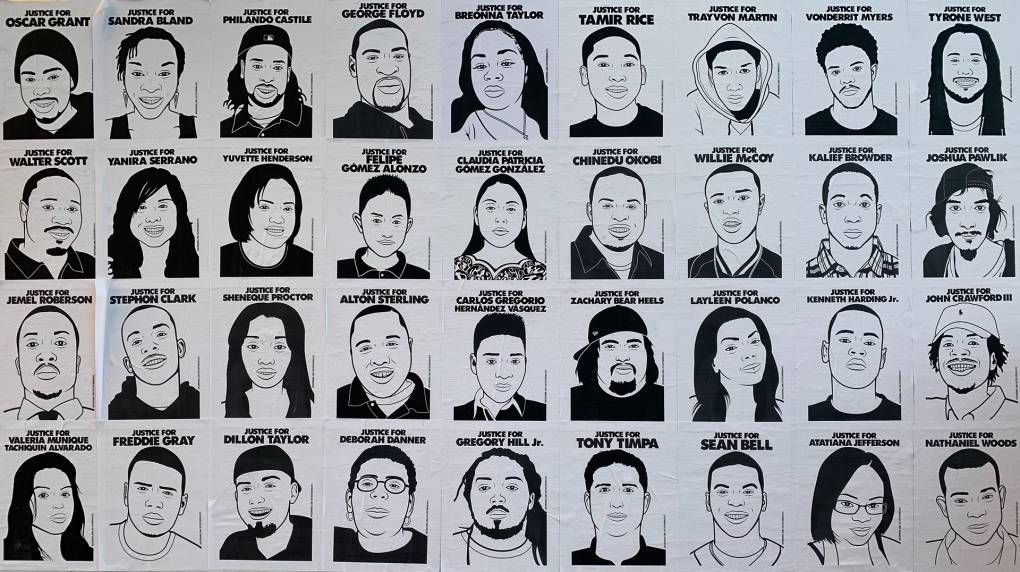
"caption": "Portraits by the Oakland artist Oree Originol of three dozen people slain, mostly by law enforcement officers, were on display at protests in Oakland in 2020.",
"description": "Portraits by the Oakland artist Oree Originol of three dozen people slain, mostly by law enforcement officers, were on display at protests in Oakland last week.",
"title": "Image from iOS",
"credit": "Erin Baldassari/KQED",
"status": "inherit",
"isLoading": false,
"fetchFailed": false
},
"news_12027118": {
"type": "attachments",
"id": "news_12027118",
"meta": {
"index": "attachments_1716263798",
"site": "news",
"id": "12027118",
"found": true
},
"title": "U.S.-SAN FRANCISCO-THANKSGIVING-FLIGHT-TRAVEL",
"publishDate": 1739496901,
"status": "inherit",
"parent": 12027050,
"modified": 1753979148,
"caption": "Passengers at San Francisco International Airport on Nov. 26, 2023. ",
"credit": "Li Jianguo/Xinhua via Getty Images",
"altTag": "A crowded hallway at a busy airport.",
"description": null,
"imgSizes": {
"medium": {
"file": "https://cdn.kqed.org/wp-content/uploads/sites/10/2025/02/GettyImages-1808440413-800x533.jpg",
"width": 800,
"height": 533,
"mimeType": "image/jpeg"
},
"large": {
"file": "https://cdn.kqed.org/wp-content/uploads/sites/10/2025/02/GettyImages-1808440413-1020x680.jpg",
"width": 1020,
"height": 680,
"mimeType": "image/jpeg"
},
"thumbnail": {
"file": "https://cdn.kqed.org/wp-content/uploads/sites/10/2025/02/GettyImages-1808440413-160x107.jpg",
"width": 160,
"height": 107,
"mimeType": "image/jpeg"
},
"1536x1536": {
"file": "https://cdn.kqed.org/wp-content/uploads/sites/10/2025/02/GettyImages-1808440413-1536x1024.jpg",
"width": 1536,
"height": 1024,
"mimeType": "image/jpeg"
},
"2048x2048": {
"file": "https://cdn.kqed.org/wp-content/uploads/sites/10/2025/02/GettyImages-1808440413-2048x1365.jpg",
"width": 2048,
"height": 1365,
"mimeType": "image/jpeg"
},
"post-thumbnail": {
"file": "https://cdn.kqed.org/wp-content/uploads/sites/10/2025/02/GettyImages-1808440413-672x372.jpg",
"width": 672,
"height": 372,
"mimeType": "image/jpeg"
},
"twentyfourteen-full-width": {
"file": "https://cdn.kqed.org/wp-content/uploads/sites/10/2025/02/GettyImages-1808440413-1038x576.jpg",
"width": 1038,
"height": 576,
"mimeType": "image/jpeg"
},
"full-width": {
"file": "https://cdn.kqed.org/wp-content/uploads/sites/10/2025/02/GettyImages-1808440413-1920x1280.jpg",
"width": 1920,
"height": 1280,
"mimeType": "image/jpeg"
},
"kqedFullSize": {
"file": "https://cdn.kqed.org/wp-content/uploads/sites/10/2025/02/GettyImages-1808440413-scaled-e1753979118594.jpg",
"width": 2000,
"height": 1334
}
},
"isLoading": false,
"fetchFailed": false
},
"news_12011901": {
"type": "attachments",
"id": "news_12011901",
"meta": {
"index": "attachments_1716263798",
"site": "news",
"id": "12011901",
"found": true
},
"title": "Early voting process ahead of presidential election in San Francisco",
"publishDate": 1730399191,
"status": "inherit",
"parent": 12011898,
"modified": 1730490547,
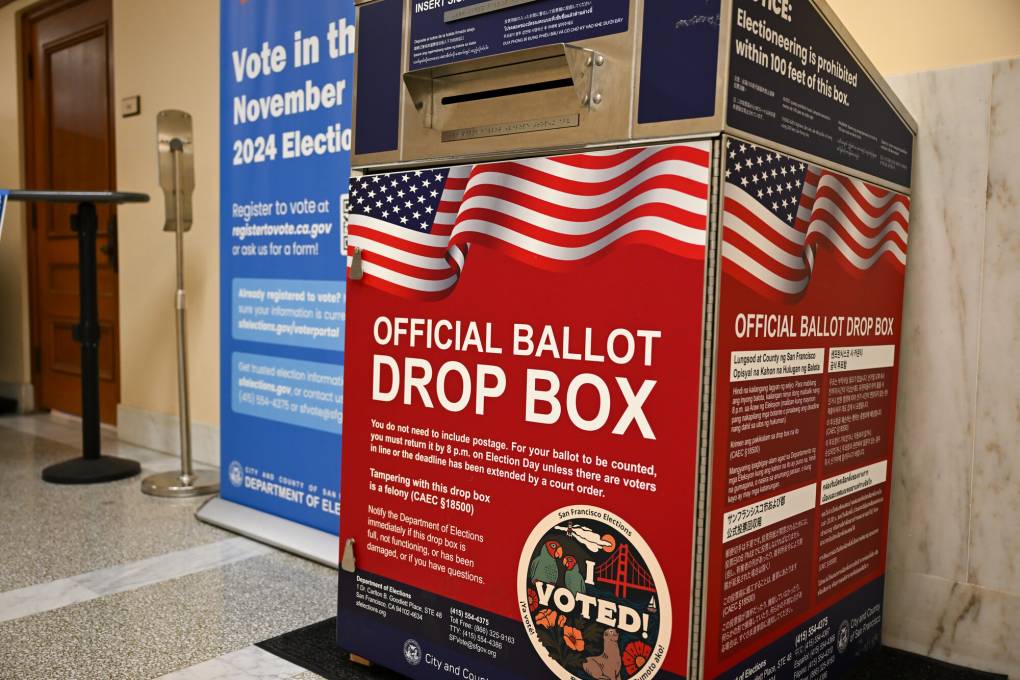
"caption": "A view of an official ballot drop box next to the Department of Elections at City Hall in San Francisco on Oct. 24, 2024. ",
"credit": "Tayfun Coskun/Anadolu via Getty Images",
"altTag": null,
"description": null,
"imgSizes": {
"medium": {
"file": "https://cdn.kqed.org/wp-content/uploads/sites/10/2025/10/GettyImages-2180061713_qed-800x533.jpg",
"width": 800,
"height": 533,
"mimeType": "image/jpeg"
},
"large": {
"file": "https://cdn.kqed.org/wp-content/uploads/sites/10/2025/10/GettyImages-2180061713_qed-1020x680.jpg",
"width": 1020,
"height": 680,
"mimeType": "image/jpeg"
},
"thumbnail": {
"file": "https://cdn.kqed.org/wp-content/uploads/sites/10/2025/10/GettyImages-2180061713_qed-160x107.jpg",
"width": 160,
"height": 107,
"mimeType": "image/jpeg"
},
"1536x1536": {
"file": "https://cdn.kqed.org/wp-content/uploads/sites/10/2025/10/GettyImages-2180061713_qed-1536x1024.jpg",
"width": 1536,
"height": 1024,
"mimeType": "image/jpeg"
},
"post-thumbnail": {
"file": "https://cdn.kqed.org/wp-content/uploads/sites/10/2025/10/GettyImages-2180061713_qed-672x372.jpg",
"width": 672,
"height": 372,
"mimeType": "image/jpeg"
},
"twentyfourteen-full-width": {
"file": "https://cdn.kqed.org/wp-content/uploads/sites/10/2025/10/GettyImages-2180061713_qed-1038x576.jpg",
"width": 1038,
"height": 576,
"mimeType": "image/jpeg"
},
"full-width": {
"file": "https://cdn.kqed.org/wp-content/uploads/sites/10/2025/10/GettyImages-2180061713_qed-1920x1280.jpg",
"width": 1920,
"height": 1280,
"mimeType": "image/jpeg"
},
"kqedFullSize": {
"file": "https://cdn.kqed.org/wp-content/uploads/sites/10/2025/10/GettyImages-2180061713_qed.jpg",
"width": 2000,
"height": 1333
}
},
"isLoading": false,
"fetchFailed": false
},
"news_12050504": {
"type": "attachments",
"id": "news_12050504",
"meta": {
"index": "attachments_1716263798",
"site": "news",
"id": "12050504",
"found": true
},
"title": "250731-DEPORTBILL-JG-2_qed",
"publishDate": 1754002327,
"status": "inherit",
"parent": 12050470,
"modified": 1754004454,
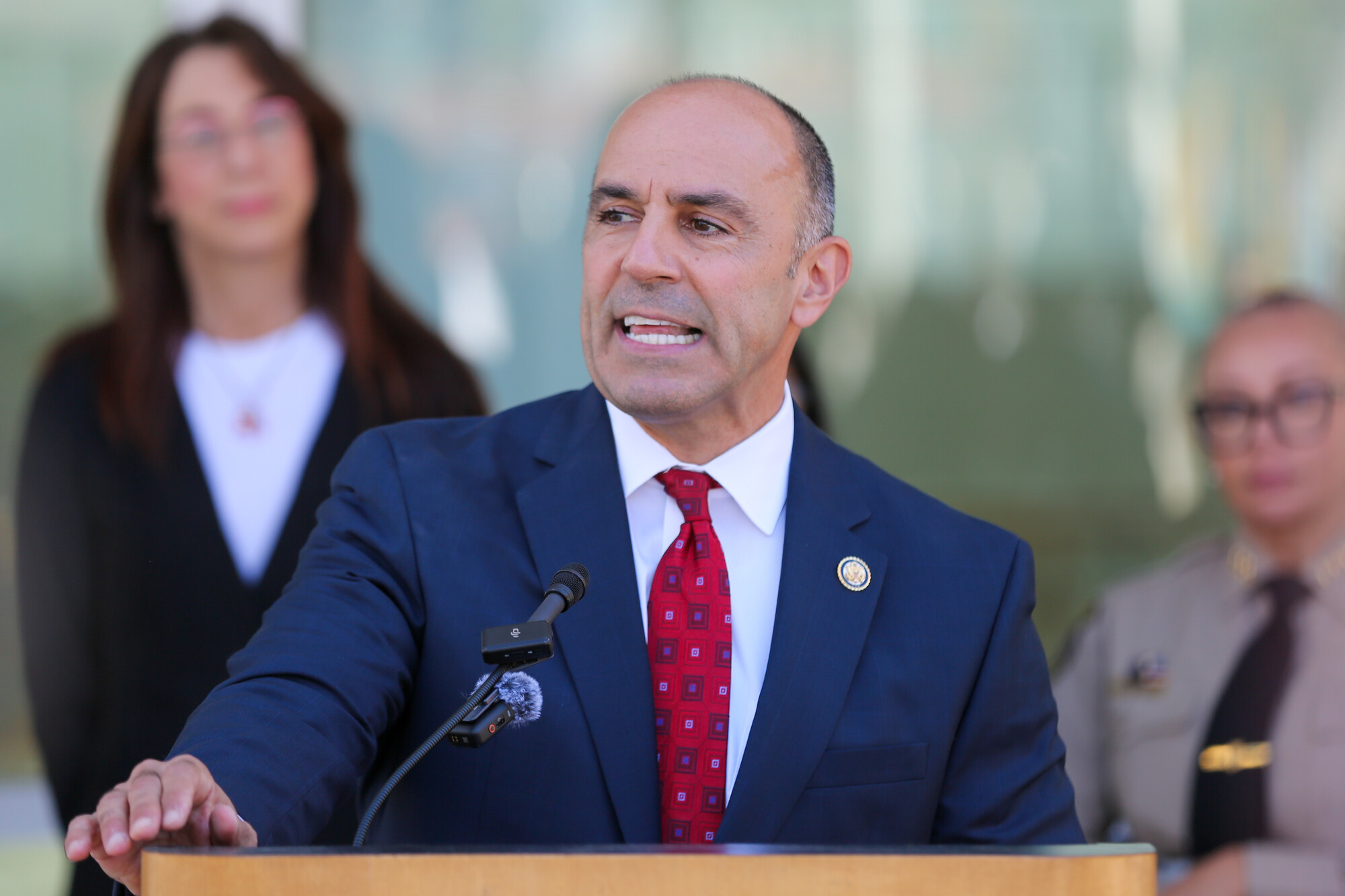
"caption": "South Bay Rep. Jimmy Panetta speaks during a press conference outside San José City Hall, announcing the reintroduction of his Immigrant Witness and Victim Protection Act on July 31, 2025.",
"credit": "Joseph Geha/KQED",
"altTag": null,
"description": null,
"imgSizes": {
"thumbnail": {
"file": "https://cdn.kqed.org/wp-content/uploads/sites/10/2025/07/250731-DEPORTBILL-JG-2_qed-160x107.jpg",
"width": 160,
"height": 107,
"mimeType": "image/jpeg"
},
"1536x1536": {
"file": "https://cdn.kqed.org/wp-content/uploads/sites/10/2025/07/250731-DEPORTBILL-JG-2_qed-1536x1024.jpg",
"width": 1536,
"height": 1024,
"mimeType": "image/jpeg"
},
"post-thumbnail": {
"file": "https://cdn.kqed.org/wp-content/uploads/sites/10/2025/07/250731-DEPORTBILL-JG-2_qed-672x372.jpg",
"width": 672,
"height": 372,
"mimeType": "image/jpeg"
},
"twentyfourteen-full-width": {
"file": "https://cdn.kqed.org/wp-content/uploads/sites/10/2025/07/250731-DEPORTBILL-JG-2_qed-1038x576.jpg",
"width": 1038,
"height": 576,
"mimeType": "image/jpeg"
},
"kqedFullSize": {
"file": "https://cdn.kqed.org/wp-content/uploads/sites/10/2025/07/250731-DEPORTBILL-JG-2_qed.jpg",
"width": 2000,
"height": 1333
}
},
"isLoading": false,
"fetchFailed": false
},
"news_11958488": {
"type": "attachments",
"id": "news_11958488",
"meta": {
"index": "attachments_1716263798",
"site": "news",
"id": "11958488",
"found": true
},
"title": "Climate Change Wine Blues",
"publishDate": 1692298642,
"status": "inherit",
"parent": 12044748,
"modified": 1750196819,
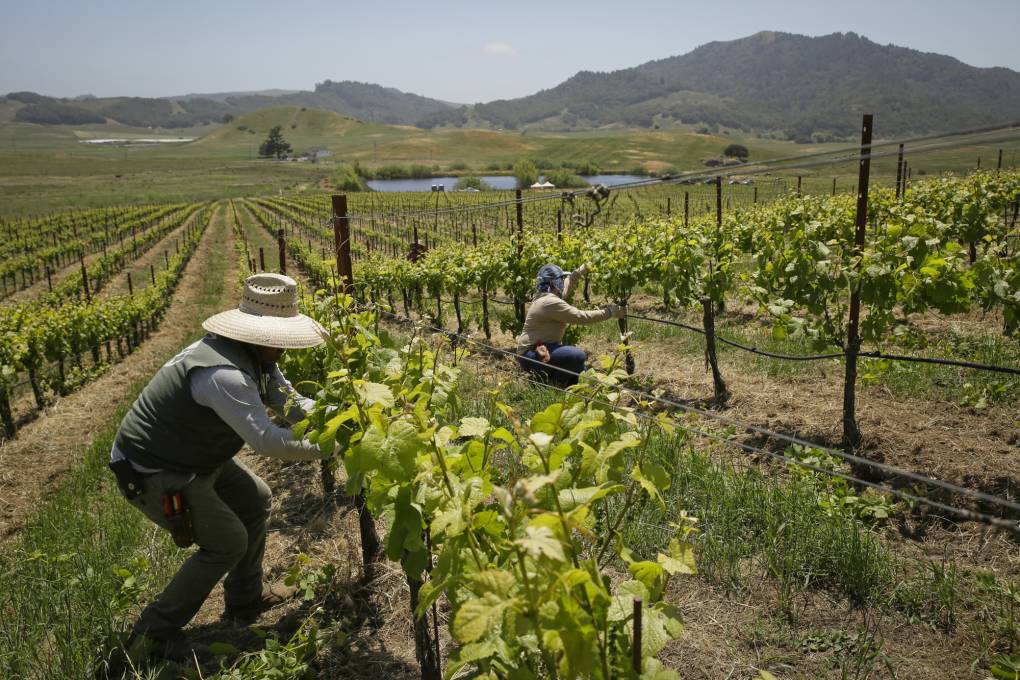
"caption": "Workers trim leaves on Pinot Noir vines in Petaluma on May 21, 2018.",
"credit": "Eric Risberg/AP Photo",
"altTag": "Two people wearing long sleeves, hats and face coverings work in a large outdoor field of grape vines on a sunny day.",
"description": null,
"imgSizes": {
"medium": {
"file": "https://cdn.kqed.org/wp-content/uploads/sites/10/2023/08/230817-PETALUMA-VINEYARD-FARMWORKERS-AP-ER-KQED-800x533.jpg",
"width": 800,
"height": 533,
"mimeType": "image/jpeg"
},
"large": {
"file": "https://cdn.kqed.org/wp-content/uploads/sites/10/2023/08/230817-PETALUMA-VINEYARD-FARMWORKERS-AP-ER-KQED-1020x680.jpg",
"width": 1020,
"height": 680,
"mimeType": "image/jpeg"
},
"thumbnail": {
"file": "https://cdn.kqed.org/wp-content/uploads/sites/10/2023/08/230817-PETALUMA-VINEYARD-FARMWORKERS-AP-ER-KQED-160x107.jpg",
"width": 160,
"height": 107,
"mimeType": "image/jpeg"
},
"1536x1536": {
"file": "https://cdn.kqed.org/wp-content/uploads/sites/10/2023/08/230817-PETALUMA-VINEYARD-FARMWORKERS-AP-ER-KQED-1536x1024.jpg",
"width": 1536,
"height": 1024,
"mimeType": "image/jpeg"
},
"post-thumbnail": {
"file": "https://cdn.kqed.org/wp-content/uploads/sites/10/2023/08/230817-PETALUMA-VINEYARD-FARMWORKERS-AP-ER-KQED-672x372.jpg",
"width": 672,
"height": 372,
"mimeType": "image/jpeg"
},
"twentyfourteen-full-width": {
"file": "https://cdn.kqed.org/wp-content/uploads/sites/10/2023/08/230817-PETALUMA-VINEYARD-FARMWORKERS-AP-ER-KQED-1038x576.jpg",
"width": 1038,
"height": 576,
"mimeType": "image/jpeg"
},
"full-width": {
"file": "https://cdn.kqed.org/wp-content/uploads/sites/10/2023/08/230817-PETALUMA-VINEYARD-FARMWORKERS-AP-ER-KQED-1920x1280.jpg",
"width": 1920,
"height": 1280,
"mimeType": "image/jpeg"
},
"kqedFullSize": {
"file": "https://cdn.kqed.org/wp-content/uploads/sites/10/2023/08/230817-PETALUMA-VINEYARD-FARMWORKERS-AP-ER-KQED.jpg",
"width": 2000,
"height": 1333
}
},
"isLoading": false,
"fetchFailed": false
},
"news_12049548": {
"type": "attachments",
"id": "news_12049548",
"meta": {
"index": "attachments_1716263798",
"site": "news",
"id": "12049548",
"found": true
},
"title": "Poets laureate from California to New Hampshire use their art form to comfort families grappling with pandemic fears, racial justice and social upheaval.",
"publishDate": 1753378389,
"status": "inherit",
"parent": 12049545,
"modified": 1753471406,
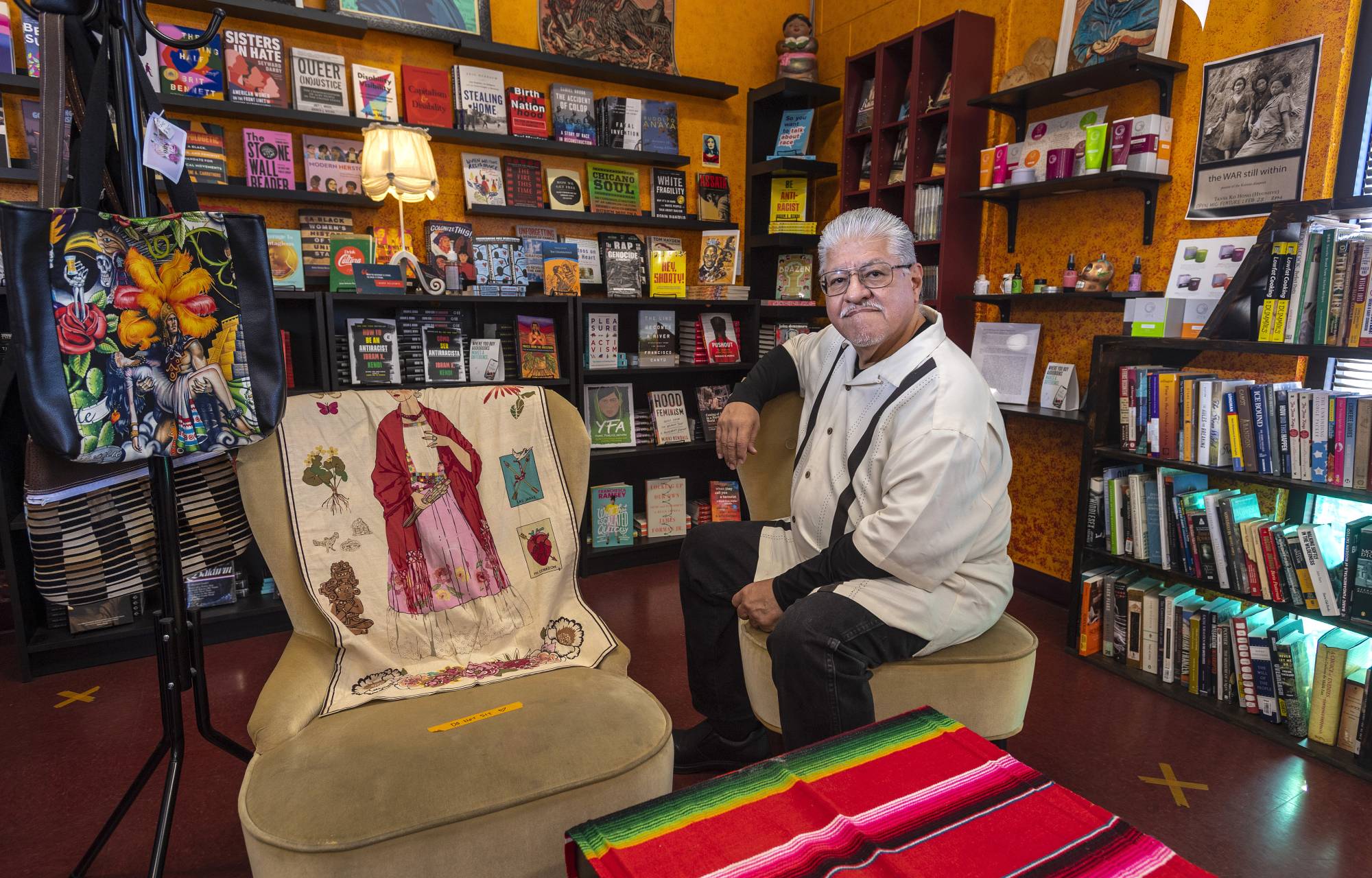
"caption": "Author Luis J. Rodriguez sits at Tía Chucha's Centro Cultural in Sylmar, which Rodriguez co-founded, on Saturday, November 28, 2020. His book of essays, From Our Land to Our Land, came out in February 2020. ",
"credit": "Mark Rightmire/MediaNews Group/Orange County Register via Getty Images",
"altTag": null,
"description": null,
"imgSizes": {
"medium": {
"file": "https://cdn.kqed.org/wp-content/uploads/sites/10/2025/07/GettyImages-1290177307-2000x1280.jpg",
"width": 2000,
"height": 1280,
"mimeType": "image/jpeg"
},
"large": {
"file": "https://cdn.kqed.org/wp-content/uploads/sites/10/2025/07/GettyImages-1290177307-2000x1280.jpg",
"width": 2000,
"height": 1280,
"mimeType": "image/jpeg"
},
"thumbnail": {
"file": "https://cdn.kqed.org/wp-content/uploads/sites/10/2025/07/GettyImages-1290177307-160x102.jpg",
"width": 160,
"height": 102,
"mimeType": "image/jpeg"
},
"1536x1536": {
"file": "https://cdn.kqed.org/wp-content/uploads/sites/10/2025/07/GettyImages-1290177307-1536x983.jpg",
"width": 1536,
"height": 983,
"mimeType": "image/jpeg"
},
"2048x2048": {
"file": "https://cdn.kqed.org/wp-content/uploads/sites/10/2025/07/GettyImages-1290177307-2048x1311.jpg",
"width": 2048,
"height": 1311,
"mimeType": "image/jpeg"
},
"post-thumbnail": {
"file": "https://cdn.kqed.org/wp-content/uploads/sites/10/2025/07/GettyImages-1290177307-672x372.jpg",
"width": 672,
"height": 372,
"mimeType": "image/jpeg"
},
"twentyfourteen-full-width": {
"file": "https://cdn.kqed.org/wp-content/uploads/sites/10/2025/07/GettyImages-1290177307-1038x576.jpg",
"width": 1038,
"height": 576,
"mimeType": "image/jpeg"
},
"full-width": {
"file": "https://cdn.kqed.org/wp-content/uploads/sites/10/2025/07/GettyImages-1290177307-2000x1280.jpg",
"width": 2000,
"height": 1280,
"mimeType": "image/jpeg"
},
"kqedFullSize": {
"file": "https://cdn.kqed.org/wp-content/uploads/sites/10/2025/07/GettyImages-1290177307-scaled-e1753378415984.jpg",
"width": 2000,
"height": 1280
}
},
"isLoading": false,
"fetchFailed": false
},
"news_12049414": {
"type": "attachments",
"id": "news_12049414",
"meta": {
"index": "attachments_1716263798",
"site": "news",
"id": "12049414",
"found": true
},
"title": "Richmond High School in Richmond on July 23, 2025.",
"publishDate": 1753306857,
"status": "inherit",
"parent": 0,
"modified": 1753307085,
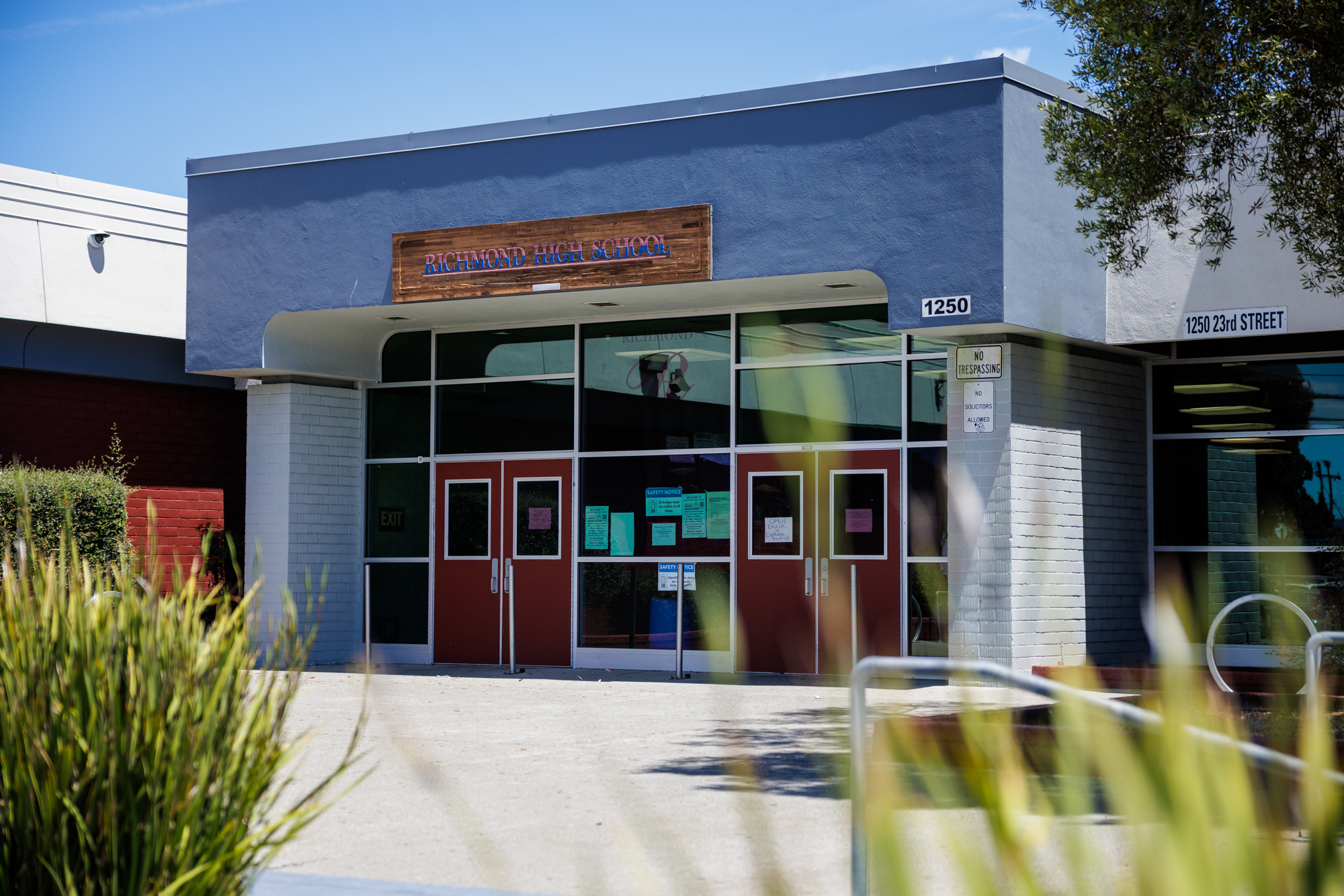
"caption": "Richmond High School in Richmond on July 23, 2025.",
"credit": "Martin do Nascimento/KQED",
"altTag": null,
"description": null,
"imgSizes": {
"thumbnail": {
"file": "https://cdn.kqed.org/wp-content/uploads/sites/10/2025/07/250723-WEST-CO-CO-ICE-MD-02-KQED-160x107.jpg",
"width": 160,
"height": 107,
"mimeType": "image/jpeg"
},
"1536x1536": {
"file": "https://cdn.kqed.org/wp-content/uploads/sites/10/2025/07/250723-WEST-CO-CO-ICE-MD-02-KQED-1536x1025.jpg",
"width": 1536,
"height": 1025,
"mimeType": "image/jpeg"
},
"post-thumbnail": {
"file": "https://cdn.kqed.org/wp-content/uploads/sites/10/2025/07/250723-WEST-CO-CO-ICE-MD-02-KQED-672x372.jpg",
"width": 672,
"height": 372,
"mimeType": "image/jpeg"
},
"twentyfourteen-full-width": {
"file": "https://cdn.kqed.org/wp-content/uploads/sites/10/2025/07/250723-WEST-CO-CO-ICE-MD-02-KQED-1038x576.jpg",
"width": 1038,
"height": 576,
"mimeType": "image/jpeg"
},
"kqedFullSize": {
"file": "https://cdn.kqed.org/wp-content/uploads/sites/10/2025/07/250723-WEST-CO-CO-ICE-MD-02-KQED.jpg",
"width": 2000,
"height": 1334
}
},
"isLoading": false,
"fetchFailed": false
},
"news_12048128": {
"type": "attachments",
"id": "news_12048128",
"meta": {
"index": "attachments_1716263798",
"site": "news",
"id": "12048128",
"found": true
},
"title": "250715-ImmigrationCourtProtests-07-BL_qed",
"publishDate": 1752605208,
"status": "inherit",
"parent": 12049326,
"modified": 1753290972,
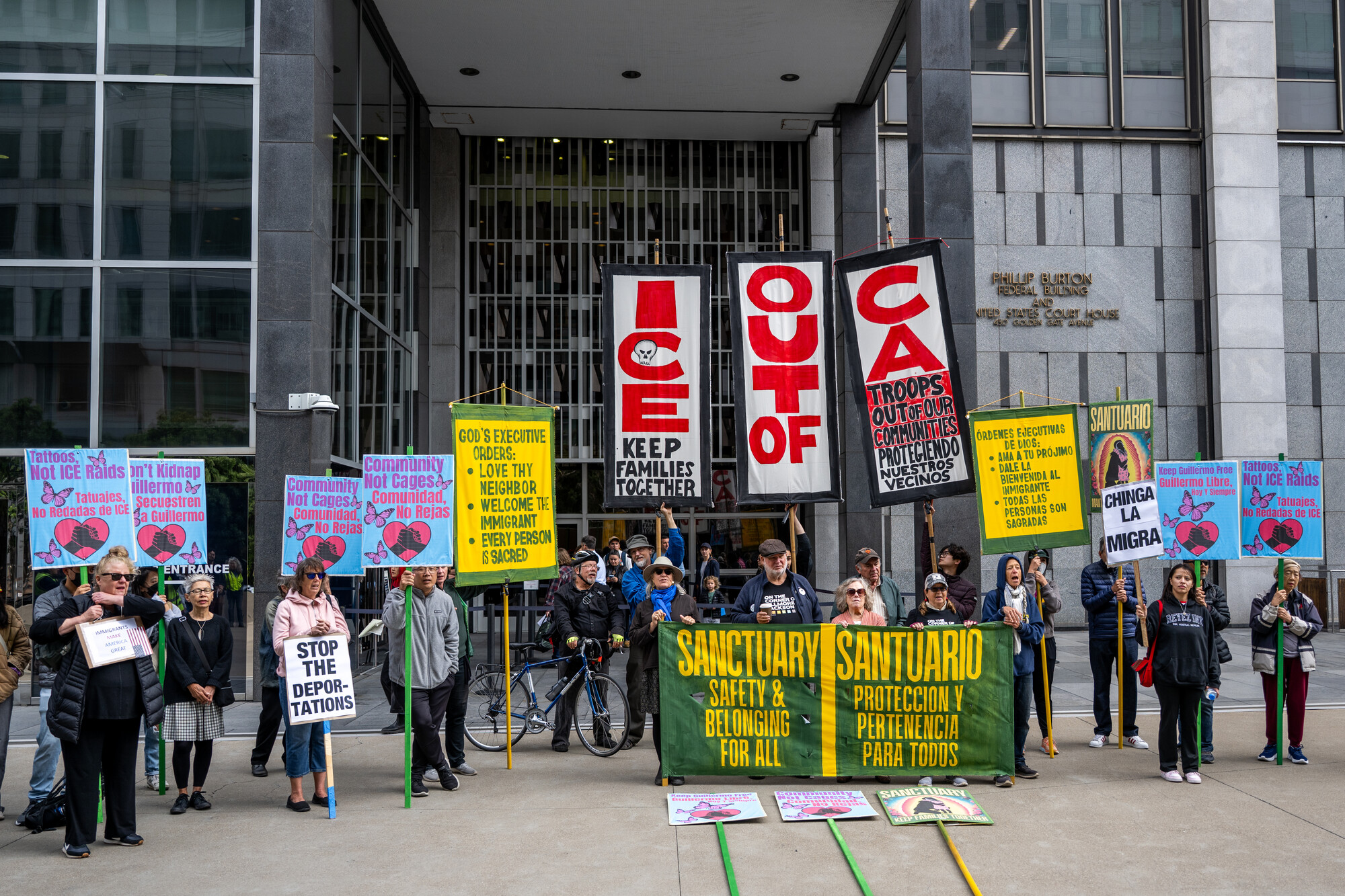
"caption": "Supporters rally outside the U.S. District Court in San Francisco on July 15, 2025, calling on ICE to release Guillermo Medina Reyes ahead of his preliminary injunction hearing.",
"credit": "Beth LaBerge/KQED",
"altTag": null,
"description": null,
"imgSizes": {
"thumbnail": {
"file": "https://cdn.kqed.org/wp-content/uploads/sites/10/2025/07/250715-ImmigrationCourtProtests-07-BL_qed-160x107.jpg",
"width": 160,
"height": 107,
"mimeType": "image/jpeg"
},
"1536x1536": {
"file": "https://cdn.kqed.org/wp-content/uploads/sites/10/2025/07/250715-ImmigrationCourtProtests-07-BL_qed-1536x1024.jpg",
"width": 1536,
"height": 1024,
"mimeType": "image/jpeg"
},
"post-thumbnail": {
"file": "https://cdn.kqed.org/wp-content/uploads/sites/10/2025/07/250715-ImmigrationCourtProtests-07-BL_qed-672x372.jpg",
"width": 672,
"height": 372,
"mimeType": "image/jpeg"
},
"twentyfourteen-full-width": {
"file": "https://cdn.kqed.org/wp-content/uploads/sites/10/2025/07/250715-ImmigrationCourtProtests-07-BL_qed-1038x576.jpg",
"width": 1038,
"height": 576,
"mimeType": "image/jpeg"
},
"kqedFullSize": {
"file": "https://cdn.kqed.org/wp-content/uploads/sites/10/2025/07/250715-ImmigrationCourtProtests-07-BL_qed.jpg",
"width": 2000,
"height": 1333
}
},
"isLoading": false,
"fetchFailed": false
},
"news_11883672": {
"type": "attachments",
"id": "news_11883672",
"meta": {
"index": "attachments_1716263798",
"site": "news",
"id": "11883672",
"found": true
},
"parent": 11883382,
"imgSizes": {
"twentyfourteen-full-width": {
"file": "https://ww2.kqed.org/app/uploads/sites/10/2021/08/Josie-Manalo-leaving-for-America-1920x1080-1-1038x576.jpg",
"width": 1038,
"mimeType": "image/jpeg",
"height": 576
},
"thumbnail": {
"file": "https://ww2.kqed.org/app/uploads/sites/10/2021/08/Josie-Manalo-leaving-for-America-1920x1080-1-160x90.jpg",
"width": 160,
"mimeType": "image/jpeg",
"height": 90
},
"post-thumbnail": {
"file": "https://ww2.kqed.org/app/uploads/sites/10/2021/08/Josie-Manalo-leaving-for-America-1920x1080-1-672x372.jpg",
"width": 672,
"mimeType": "image/jpeg",
"height": 372
},
"kqedFullSize": {
"file": "https://ww2.kqed.org/app/uploads/sites/10/2021/08/Josie-Manalo-leaving-for-America-1920x1080-1.jpg",
"width": 1920,
"height": 1080
},
"large": {
"file": "https://ww2.kqed.org/app/uploads/sites/10/2021/08/Josie-Manalo-leaving-for-America-1920x1080-1-1020x574.jpg",
"width": 1020,
"mimeType": "image/jpeg",
"height": 574
},
"1536x1536": {
"file": "https://ww2.kqed.org/app/uploads/sites/10/2021/08/Josie-Manalo-leaving-for-America-1920x1080-1-1536x864.jpg",
"width": 1536,
"mimeType": "image/jpeg",
"height": 864
},
"medium": {
"file": "https://ww2.kqed.org/app/uploads/sites/10/2021/08/Josie-Manalo-leaving-for-America-1920x1080-1-800x450.jpg",
"width": 800,
"mimeType": "image/jpeg",
"height": 450
}
},
"publishDate": 1628084533,
"modified": 1628176740,
"caption": "Josie Manalo, the mother of Daly City Mayor Juslyn Manalo, getting ready to board her flight from the Philippines to the United States in 1973.",
"description": "A young woman smiles while carrying a large bag over her shoulder. She wears a collared top. There is an airplane in the background.",
"title": "Josie Manalo leaving for America 1920x1080",
"credit": "Courtesy of Juslyn Manalo",
"status": "inherit",
"altTag": "A young woman smiles while carrying a large bag over her shoulder. She wears a collared top. There is an airplane in the background.",
"isLoading": false,
"fetchFailed": false
},
"news_12049369": {
"type": "attachments",
"id": "news_12049369",
"meta": {
"index": "attachments_1716263798",
"site": "news",
"id": "12049369",
"found": true
},
"title": "070125_Migrant-Outdoor-Ed_LV_20 (1)",
"publishDate": 1753298664,
"status": "inherit",
"parent": 12049366,
"modified": 1753298739,
"caption": "Students of the Migrant Outdoor Education Program canoe along the San Joaquin River near the Scout Island Education Center in Fresno on July 11, 2025.",
"credit": "Photo by Larry Valenzuela, CalMatters/CatchLight Local",
"altTag": null,
"description": null,
"imgSizes": {
"thumbnail": {
"file": "https://cdn.kqed.org/wp-content/uploads/sites/10/2025/07/070125_Migrant-Outdoor-Ed_LV_20-1-160x107.jpg",
"width": 160,
"height": 107,
"mimeType": "image/jpeg"
},
"1536x1536": {
"file": "https://cdn.kqed.org/wp-content/uploads/sites/10/2025/07/070125_Migrant-Outdoor-Ed_LV_20-1-1536x1024.jpg",
"width": 1536,
"height": 1024,
"mimeType": "image/jpeg"
},
"post-thumbnail": {
"file": "https://cdn.kqed.org/wp-content/uploads/sites/10/2025/07/070125_Migrant-Outdoor-Ed_LV_20-1-672x372.jpg",
"width": 672,
"height": 372,
"mimeType": "image/jpeg"
},
"twentyfourteen-full-width": {
"file": "https://cdn.kqed.org/wp-content/uploads/sites/10/2025/07/070125_Migrant-Outdoor-Ed_LV_20-1-1038x576.jpg",
"width": 1038,
"height": 576,
"mimeType": "image/jpeg"
},
"kqedFullSize": {
"file": "https://cdn.kqed.org/wp-content/uploads/sites/10/2025/07/070125_Migrant-Outdoor-Ed_LV_20-1.jpg",
"width": 2000,
"height": 1333
}
},
"isLoading": false,
"fetchFailed": false
},
"news_12049125": {
"type": "attachments",
"id": "news_12049125",
"meta": {
"index": "attachments_1716263798",
"site": "news",
"id": "12049125",
"found": true
},
"title": "Out of ICE SF sign",
"publishDate": 1753154187,
"status": "inherit",
"parent": 12049124,
"modified": 1753154223,
"caption": "Manifestantes se reúnen frente al edificio del Estado de California en San Francisco el 9 de junio de 2025 para pedir la liberación del presidente de SEIU California, David Huerta. En medio de las tensiones en el tribunal de inmigración de San Francisco, es fundamental saber cómo encontrar a alguien detenido por ICE y acceder a los recursos de inmigración.",
"credit": "Beth LaBerge/KQED",
"altTag": null,
"description": null,
"imgSizes": {
"thumbnail": {
"file": "https://cdn.kqed.org/wp-content/uploads/sites/10/2025/07/Out-of-ICE-SF-sign-160x107.jpg",
"width": 160,
"height": 107,
"mimeType": "image/jpeg"
},
"1536x1536": {
"file": "https://cdn.kqed.org/wp-content/uploads/sites/10/2025/07/Out-of-ICE-SF-sign-1536x1024.jpg",
"width": 1536,
"height": 1024,
"mimeType": "image/jpeg"
},
"post-thumbnail": {
"file": "https://cdn.kqed.org/wp-content/uploads/sites/10/2025/07/Out-of-ICE-SF-sign-672x372.jpg",
"width": 672,
"height": 372,
"mimeType": "image/jpeg"
},
"twentyfourteen-full-width": {
"file": "https://cdn.kqed.org/wp-content/uploads/sites/10/2025/07/Out-of-ICE-SF-sign-1038x576.jpg",
"width": 1038,
"height": 576,
"mimeType": "image/jpeg"
},
"kqedFullSize": {
"file": "https://cdn.kqed.org/wp-content/uploads/sites/10/2025/07/Out-of-ICE-SF-sign.jpg",
"width": 1999,
"height": 1333
}
},
"isLoading": false,
"fetchFailed": false
},
"news_12049112": {
"type": "attachments",
"id": "news_12049112",
"meta": {
"index": "attachments_1716263798",
"site": "news",
"id": "12049112",
"found": true
},
"title": "101423_Collge-Info-Berkeley_JY-CM-20 copy",
"publishDate": 1753142650,
"status": "inherit",
"parent": 12049109,
"modified": 1753142671,
"caption": "FAFSA fact sheets at College Information Day at UC Berkeley in Berkeley on Oct. 14, 2023. \n",
"credit": "Juliana Yamada for CalMatters",
"altTag": null,
"description": null,
"imgSizes": {
"thumbnail": {
"file": "https://cdn.kqed.org/wp-content/uploads/sites/10/2025/07/101423_Collge-Info-Berkeley_JY-CM-20-copy-160x107.jpg",
"width": 160,
"height": 107,
"mimeType": "image/jpeg"
},
"1536x1536": {
"file": "https://cdn.kqed.org/wp-content/uploads/sites/10/2025/07/101423_Collge-Info-Berkeley_JY-CM-20-copy-1536x1024.jpg",
"width": 1536,
"height": 1024,
"mimeType": "image/jpeg"
},
"post-thumbnail": {
"file": "https://cdn.kqed.org/wp-content/uploads/sites/10/2025/07/101423_Collge-Info-Berkeley_JY-CM-20-copy-672x372.jpg",
"width": 672,
"height": 372,
"mimeType": "image/jpeg"
},
"twentyfourteen-full-width": {
"file": "https://cdn.kqed.org/wp-content/uploads/sites/10/2025/07/101423_Collge-Info-Berkeley_JY-CM-20-copy-1038x576.jpg",
"width": 1038,
"height": 576,
"mimeType": "image/jpeg"
},
"kqedFullSize": {
"file": "https://cdn.kqed.org/wp-content/uploads/sites/10/2025/07/101423_Collge-Info-Berkeley_JY-CM-20-copy.jpg",
"width": 2000,
"height": 1333
}
},
"isLoading": false,
"fetchFailed": false
}
},
"audioPlayerReducer": {
"postId": "stream_live",
"isPaused": true,
"isPlaying": false,
"pfsActive": false,
"pledgeModalIsOpen": true,
"playerDrawerIsOpen": false,
"liveAudioPlayStartedAt": 0,
"liveAudioPlayContext": ""
},
"authorsReducer": {
"byline_news_12049366": {
"type": "authors",
"id": "byline_news_12049366",
"meta": {
"override": true
},
"slug": "byline_news_12049366",
"name": "Carolyn Jones, CalMatters",
"isLoading": false
},
"byline_news_12049109": {
"type": "authors",
"id": "byline_news_12049109",
"meta": {
"override": true
},
"slug": "byline_news_12049109",
"name": "Mercy Sosa, CalMatters",
"isLoading": false
},
"astupi": {
"type": "authors",
"id": "70",
"meta": {
"index": "authors_1716337520",
"id": "70",
"found": true
},
"name": "Amanda Stupi",
"firstName": "Amanda",
"lastName": "Stupi",
"slug": "astupi",
"email": "astupi@kqed.org",
"display_author_email": false,
"staff_mastheads": [],
"title": "Senior Engagement Producer",
"bio": "Amanda joined KQED Science’s engagement team as a Senior Audience Engagement Strategist in the spring of 2019. She has helped craft messaging around wildfires, the coronavirus pandemic, climate change and many other stories. She has also brought KQED Science to new platforms such as Reddit’s Ask Me Anything series. Prior to joining KQED Science, Amanda spent seven years as an engagement producer with Forum, KQED’s daily live call-in show. She got her start in radio at KALW's weekly call in show, City Visions, before going on to an internship and stint at NPR's Talk of the Nation.\r\n\r\nPrior to journalism, Amanda taught English at Lowell High School. She's a native of Petaluma and currently lives under the \"South San Francisco the Industrial City\" sign in South City. She believes that engagement is vital to news’s future and that good journalism listens as much as it asks questions.",
"avatar": "https://secure.gravatar.com/avatar/e981c503e5c162da701dcaccfbf87e35?s=600&d=blank&r=g",
"twitter": null,
"facebook": null,
"instagram": null,
"linkedin": null,
"sites": [
{
"site": "arts",
"roles": [
"Contributor"
]
},
{
"site": "news",
"roles": [
"editor"
]
},
{
"site": "pop",
"roles": [
"contributor"
]
},
{
"site": "stateofhealth",
"roles": [
"editor"
]
},
{
"site": "science",
"roles": []
},
{
"site": "perspectives",
"roles": [
"editor"
]
}
],
"headData": {
"title": "Amanda Stupi | KQED",
"description": "Senior Engagement Producer",
"ogImgSrc": "https://secure.gravatar.com/avatar/e981c503e5c162da701dcaccfbf87e35?s=600&d=blank&r=g",
"twImgSrc": "https://secure.gravatar.com/avatar/e981c503e5c162da701dcaccfbf87e35?s=600&d=blank&r=g"
},
"isLoading": false,
"link": "/author/astupi"
},
"slewis": {
"type": "authors",
"id": "8676",
"meta": {
"index": "authors_1716337520",
"id": "8676",
"found": true
},
"name": "Sukey Lewis",
"firstName": "Sukey",
"lastName": "Lewis",
"slug": "slewis",
"email": "slewis@kqed.org",
"display_author_email": true,
"staff_mastheads": [
"news"
],
"title": "KQED Contributor",
"bio": "Sukey Lewis is a criminal justice reporter and host of \u003cem>On Our Watch\u003c/em>, a new podcast from NPR and KQED about the shadow world of police discipline. In 2018, she co-founded the California Reporting Project, a coalition of newsrooms across the state focused on obtaining previously sealed internal affairs records from law enforcement. In addition to her reporting on police accountability, Sukey has investigated the bail bonds industry, California's wildfires and the high cost of prison phone calls. Sukey earned a master's degree in journalism from the University of California at Berkeley. Send news tips to slewis@kqed.org.",
"avatar": "https://secure.gravatar.com/avatar/03fd6b21024f99d8b0a1966654586de7?s=600&d=blank&r=g",
"twitter": "SukeyLewis",
"facebook": null,
"instagram": null,
"linkedin": null,
"sites": [
{
"site": "news",
"roles": [
"author",
"edit_others_posts"
]
}
],
"headData": {
"title": "Sukey Lewis | KQED",
"description": "KQED Contributor",
"ogImgSrc": "https://secure.gravatar.com/avatar/03fd6b21024f99d8b0a1966654586de7?s=600&d=blank&r=g",
"twImgSrc": "https://secure.gravatar.com/avatar/03fd6b21024f99d8b0a1966654586de7?s=600&d=blank&r=g"
},
"isLoading": false,
"link": "/author/slewis"
},
"ccabreralomeli": {
"type": "authors",
"id": "11708",
"meta": {
"index": "authors_1716337520",
"id": "11708",
"found": true
},
"name": "Carlos Cabrera-Lomelí",
"firstName": "Carlos",
"lastName": "Cabrera-Lomelí",
"slug": "ccabreralomeli",
"email": "ccabreralomeli@KQED.org",
"display_author_email": true,
"staff_mastheads": [
"news"
],
"title": "Community Reporter",
"bio": "Carlos Cabrera-Lomelí is a community reporter with KQED's digital engagement team. He also reports and co-produces for KQED's bilingual news hub KQED en Español. He grew up in San Francisco's Mission District and has previously worked with Univision, 48 Hills and REFORMA in Mexico City.",
"avatar": "https://secure.gravatar.com/avatar/e95ff80bb2eaf18a8f2af4dcf7ffb54b?s=600&d=mm&r=g",
"twitter": "@LomeliCabrera",
"facebook": null,
"instagram": null,
"linkedin": null,
"sites": [
{
"site": "arts",
"roles": [
"editor"
]
},
{
"site": "news",
"roles": [
"editor"
]
},
{
"site": "about",
"roles": [
"editor"
]
},
{
"site": "science",
"roles": [
"editor"
]
},
{
"site": "perspectives",
"roles": [
"editor"
]
},
{
"site": "elections",
"roles": [
"editor"
]
},
{
"site": "liveblog",
"roles": [
"contributor"
]
}
],
"headData": {
"title": "Carlos Cabrera-Lomelí | KQED",
"description": "Community Reporter",
"ogImgSrc": "https://secure.gravatar.com/avatar/e95ff80bb2eaf18a8f2af4dcf7ffb54b?s=600&d=mm&r=g",
"twImgSrc": "https://secure.gravatar.com/avatar/e95ff80bb2eaf18a8f2af4dcf7ffb54b?s=600&d=mm&r=g"
},
"isLoading": false,
"link": "/author/ccabreralomeli"
},
"jlara": {
"type": "authors",
"id": "11761",
"meta": {
"index": "authors_1716337520",
"id": "11761",
"found": true
},
"name": "Juan Carlos Lara",
"firstName": "Juan Carlos",
"lastName": "Lara",
"slug": "jlara",
"email": "jlara@kqed.org",
"display_author_email": false,
"staff_mastheads": [],
"title": "KQED Contributor",
"bio": null,
"avatar": "https://secure.gravatar.com/avatar/19e2052b9b05657c5ff2af2121846e9c?s=600&d=blank&r=g",
"twitter": null,
"facebook": null,
"instagram": null,
"linkedin": null,
"sites": [
{
"site": "arts",
"roles": [
"editor"
]
},
{
"site": "news",
"roles": [
"editor"
]
},
{
"site": "forum",
"roles": [
"editor"
]
},
{
"site": "liveblog",
"roles": [
"contributor"
]
}
],
"headData": {
"title": "Juan Carlos Lara | KQED",
"description": "KQED Contributor",
"ogImgSrc": "https://secure.gravatar.com/avatar/19e2052b9b05657c5ff2af2121846e9c?s=600&d=blank&r=g",
"twImgSrc": "https://secure.gravatar.com/avatar/19e2052b9b05657c5ff2af2121846e9c?s=600&d=blank&r=g"
},
"isLoading": false,
"link": "/author/jlara"
},
"nkhan": {
"type": "authors",
"id": "11867",
"meta": {
"index": "authors_1716337520",
"id": "11867",
"found": true
},
"name": "Nisa Khan",
"firstName": "Nisa",
"lastName": "Khan",
"slug": "nkhan",
"email": "nkhan@kqed.org",
"display_author_email": false,
"staff_mastheads": [],
"title": "KQED Contributor",
"bio": "Nisa Khan is a reporter for KQED's Audience News Desk. She was formerly a data reporter at Michigan Radio. She earned a Bachelor of Science in Information from the University of Michigan and a Master of Arts in Communication from Stanford University.",
"avatar": "https://secure.gravatar.com/avatar/a3bf1efcfbe7658d13a434cc54d0b2e3?s=600&d=blank&r=g",
"twitter": "mnisakhan",
"bluesky": null,
"facebook": null,
"instagram": null,
"linkedin": null,
"sites": [
{
"site": "arts",
"roles": [
"editor"
]
},
{
"site": "news",
"roles": [
"editor"
]
},
{
"site": "science",
"roles": [
"editor",
"author"
]
},
{
"site": "forum",
"roles": [
"editor"
]
},
{
"site": "liveblog",
"roles": [
"contributor"
]
}
],
"headData": {
"title": "Nisa Khan | KQED",
"description": "KQED Contributor",
"ogImgSrc": "https://secure.gravatar.com/avatar/a3bf1efcfbe7658d13a434cc54d0b2e3?s=600&d=blank&r=g",
"twImgSrc": "https://secure.gravatar.com/avatar/a3bf1efcfbe7658d13a434cc54d0b2e3?s=600&d=blank&r=g"
},
"isLoading": false,
"link": "/author/nkhan"
},
"jgeha": {
"type": "authors",
"id": "11906",
"meta": {
"index": "authors_1716337520",
"id": "11906",
"found": true
},
"name": "Joseph Geha",
"firstName": "Joseph",
"lastName": "Geha",
"slug": "jgeha",
"email": "jgeha@kqed.org",
"display_author_email": false,
"staff_mastheads": [
"news",
"science"
],
"title": "KQED Contributor",
"bio": null,
"avatar": "https://secure.gravatar.com/avatar/ea84d2b6dd93d6369d453edf19dd583f117cd1759d2d9c9c92f9de77017354fe?s=600&d=blank&r=g",
"twitter": null,
"bluesky": null,
"facebook": null,
"instagram": null,
"linkedin": null,
"sites": [
{
"site": "news",
"roles": [
"editor"
]
},
{
"site": "liveblog",
"roles": [
"author"
]
}
],
"headData": {
"title": "Joseph Geha | KQED",
"description": "KQED Contributor",
"ogImgSrc": "https://secure.gravatar.com/avatar/ea84d2b6dd93d6369d453edf19dd583f117cd1759d2d9c9c92f9de77017354fe?s=600&d=blank&r=g",
"twImgSrc": "https://secure.gravatar.com/avatar/ea84d2b6dd93d6369d453edf19dd583f117cd1759d2d9c9c92f9de77017354fe?s=600&d=blank&r=g"
},
"isLoading": false,
"link": "/author/jgeha"
},
"mkessler": {
"type": "authors",
"id": "11912",
"meta": {
"index": "authors_1716337520",
"id": "11912",
"found": true
},
"name": "Mike Kessler",
"firstName": "Mike",
"lastName": "Kessler",
"slug": "mkessler",
"email": "mkessler@KQED.org",
"display_author_email": false,
"staff_mastheads": [],
"title": "KQED Contributor",
"bio": null,
"avatar": "https://secure.gravatar.com/avatar/32eb221cb40874894ae1a11599c50ca1?s=600&d=blank&r=g",
"twitter": null,
"facebook": null,
"instagram": null,
"linkedin": null,
"sites": [
{
"site": "",
"roles": [
"editor"
]
},
{
"site": "news",
"roles": [
"editor"
]
}
],
"headData": {
"title": "Mike Kessler | KQED",
"description": "KQED Contributor",
"ogImgSrc": "https://secure.gravatar.com/avatar/32eb221cb40874894ae1a11599c50ca1?s=600&d=blank&r=g",
"twImgSrc": "https://secure.gravatar.com/avatar/32eb221cb40874894ae1a11599c50ca1?s=600&d=blank&r=g"
},
"isLoading": false,
"link": "/author/mkessler"
},
"gzada": {
"type": "authors",
"id": "11929",
"meta": {
"index": "authors_1716337520",
"id": "11929",
"found": true
},
"name": "Gilare Zada",
"firstName": "Gilare",
"lastName": "Zada",
"slug": "gzada",
"email": "gzada@kqed.org",
"display_author_email": true,
"staff_mastheads": [
"news"
],
"title": null,
"bio": "Gilare Zada is a Kurdish-American from San Diego, CA. Storytelling, fitness, and binge reading are some of her passions outside of news reporting. Her work has appeared in Mission Local, the Peninsula Press, the San Francisco Press Club, and more. She also writes as a class correspondent for the Stanford Magazine - go Card!",
"avatar": "https://secure.gravatar.com/avatar/33a75f2b947669a488a805edec3fbf3838c1cedaedda710e983770633b4d6a75?s=600&d=blank&r=g",
"twitter": null,
"bluesky": null,
"facebook": null,
"instagram": null,
"linkedin": null,
"sites": [
{
"site": "arts",
"roles": [
"editor"
]
},
{
"site": "news",
"roles": [
"editor",
"contributor"
]
},
{
"site": "science",
"roles": [
"editor"
]
}
],
"headData": {
"title": "Gilare Zada | KQED",
"description": null,
"ogImgSrc": "https://secure.gravatar.com/avatar/33a75f2b947669a488a805edec3fbf3838c1cedaedda710e983770633b4d6a75?s=600&d=blank&r=g",
"twImgSrc": "https://secure.gravatar.com/avatar/33a75f2b947669a488a805edec3fbf3838c1cedaedda710e983770633b4d6a75?s=600&d=blank&r=g"
},
"isLoading": false,
"link": "/author/gzada"
},
"skennedy": {
"type": "authors",
"id": "11935",
"meta": {
"index": "authors_1716337520",
"id": "11935",
"found": true
},
"name": "Samantha Kennedy",
"firstName": "Samantha",
"lastName": "Kennedy",
"slug": "skennedy",
"email": "SKennedy@kqed.org",
"display_author_email": false,
"staff_mastheads": [],
"title": "KQED Contributor",
"bio": null,
"avatar": "https://secure.gravatar.com/avatar/adc7b14bf1e801793202a156ecc864d4ad505b0fd63162a2f3da0e5ba57222d0?s=600&d=blank&r=g",
"twitter": null,
"bluesky": null,
"facebook": null,
"instagram": null,
"linkedin": null,
"sites": [
{
"site": "arts",
"roles": [
"author"
]
},
{
"site": "news",
"roles": [
"editor"
]
},
{
"site": "science",
"roles": [
"editor"
]
}
],
"headData": {
"title": "Samantha Kennedy | KQED",
"description": "KQED Contributor",
"ogImgSrc": "https://secure.gravatar.com/avatar/adc7b14bf1e801793202a156ecc864d4ad505b0fd63162a2f3da0e5ba57222d0?s=600&d=blank&r=g",
"twImgSrc": "https://secure.gravatar.com/avatar/adc7b14bf1e801793202a156ecc864d4ad505b0fd63162a2f3da0e5ba57222d0?s=600&d=blank&r=g"
},
"isLoading": false,
"link": "/author/skennedy"
},
"sprabha": {
"type": "authors",
"id": "11976",
"meta": {
"index": "authors_1716337520",
"id": "11976",
"found": true
},
"name": "Srishti Prabha",
"firstName": "Srishti",
"lastName": "Prabha",
"slug": "sprabha",
"email": "sprabha@KQED.org",
"display_author_email": false,
"staff_mastheads": [],
"title": "KQED Contributor",
"bio": null,
"avatar": "https://secure.gravatar.com/avatar/cc4d8ef770090714faad7e1d24857f806d09340456c5734167b9a6361b175d7d?s=600&d=blank&r=g",
"twitter": null,
"bluesky": null,
"facebook": null,
"instagram": null,
"linkedin": null,
"sites": [
{
"site": "news",
"roles": [
"editor"
]
}
],
"headData": {
"title": "Srishti Prabha | KQED",
"description": "KQED Contributor",
"ogImgSrc": "https://secure.gravatar.com/avatar/cc4d8ef770090714faad7e1d24857f806d09340456c5734167b9a6361b175d7d?s=600&d=blank&r=g",
"twImgSrc": "https://secure.gravatar.com/avatar/cc4d8ef770090714faad7e1d24857f806d09340456c5734167b9a6361b175d7d?s=600&d=blank&r=g"
},
"isLoading": false,
"link": "/author/sprabha"
}
},
"pagesReducer": {
"news_tag_immigration": {
"type": "terms",
"id": "news_20202",
"meta": {
"index": "terms_1716263798",
"site": "news",
"id": "20202",
"score": 6.90447
},
"featImg": null,
"name": "immigration",
"description": null,
"taxonomy": "tag",
"headData": {
"twImgId": null,
"twTitle": null,
"ogTitle": null,
"ogImgId": null,
"twDescription": null,
"description": null,
"title": "immigration Archives | KQED News",
"ogDescription": null
},
"ttid": 20219,
"slug": "immigration",
"isLoading": false,
"title": "immigration",
"pageMeta": {
"site": "news",
"WpPageTemplate": "page-topic-editorial",
"currentPage": 22
},
"blocks": [
{
"blockName": "kqed/post-list",
"attrs": {
"layout": "cardArticle2",
"query": "posts/news?tag=immigration",
"seeMore": false,
"paginated": true,
"page": 22
}
},
{
"blockName": "kqed/ad"
}
]
}
},
"pfsSessionReducer": {},
"postsReducer": {
"stream_live": {
"type": "live",
"id": "stream_live",
"audioUrl": "https://streams.kqed.org/kqedradio",
"title": "Live Stream",
"excerpt": "Live Stream information currently unavailable.",
"link": "/radio",
"featImg": "",
"label": {
"name": "KQED Live",
"link": "/"
}
},
"stream_kqedNewscast": {
"type": "posts",
"id": "stream_kqedNewscast",
"audioUrl": "https://www.kqed.org/.stream/anon/radio/RDnews/newscast.mp3?_=1",
"title": "KQED Newscast",
"featImg": "",
"label": {
"name": "88.5 FM",
"link": "/"
}
},
"news_12050100": {
"type": "posts",
"id": "news_12050100",
"meta": {
"index": "posts_1716263798",
"site": "news",
"id": "12050100",
"score": null,
"sort": [
1754305247000
]
},
"guestAuthors": [],
"slug": "thousands-of-once-secret-police-records-are-now-public-heres-how-you-can-use-them",
"title": "Thousands of Once-Secret Police Records Are Now Public. Here’s How You Can Use Them",
"publishDate": 1754305247,
"format": "image",
"headTitle": "Thousands of Once-Secret Police Records Are Now Public. Here’s How You Can Use Them | KQED",
"labelTerm": {
"site": "news"
},
"content": "\u003cp>\u003cem>Updated 10:20 a.m. Monday\u003c/em>\u003c/p>\n\u003cp>Today, for the first time, you can look up serious use of force and police misconduct incidents in \u003ca href=\"https://www.kqed.org/news/tag/california\">California\u003c/a>.\u003c/p>\n\u003cp>KQED, along with journalism and police accountability advocates, is publishing a database that houses thousands of once-confidential records gathered from the state’s nearly 700 law enforcement and oversight agencies.\u003c/p>\n\u003cul>\n\u003cli>\u003cstrong>Jump straight to: \u003ca href=\"#Howtousethepolicerecordsdatabaseyourself\">How to use the police records database yourself\u003c/a>\u003c/strong>\u003c/li>\n\u003c/ul>\n\u003cp>The free \u003ca href=\"http://policerecords.kqed.org/\">database\u003c/a>, which has been in the works for seven years and contains files for almost 12,000 cases, promises to give anyone — including attorneys, victims of police violence, journalists and law enforcement hiring officials — insight into police shootings and officers’ past behavior.\u003c/p>\n\u003cp>[ad fullwidth]\u003c/p>\n\u003cp>Cephus Johnson, whose nephew Oscar Grant was fatally shot in the back by a BART police officer in Oakland in the early morning hours of Jan. 1, 2009, knows firsthand just how important this database will be to other families who’ve lost people to police violence.\u003c/p>\n\u003cp>“ For impacted families, the first question is: ‘What happened?’” he said.\u003c/p>\n\u003cp>They can now find details of what happened to their loved ones and how the police investigated it — or what they overlooked — without having to deal with the often frustrating process of trying to obtain the records themselves.\u003c/p>\n\u003cp>Getting those answers, Johnson said, “is the beginning of part of the healing process.”\u003c/p>\n\u003cp>\u003cem>Click \u003ca href=\"https://policerecords.kqed.org/\" target=\"_blank\" rel=\"noopener\">here\u003c/a> to search the database.\u003c/em>\u003c/p>\n\u003cfigure id=\"attachment_12050667\" class=\"wp-caption aligncenter\" style=\"max-width: 1002px\">\u003cimg loading=\"lazy\" decoding=\"async\" class=\"wp-image-12050667 size-full\" src=\"https://cdn.kqed.org/wp-content/uploads/sites/10/2025/08/image-7.png\" alt=\"\" width=\"1002\" height=\"404\" srcset=\"https://cdn.kqed.org/wp-content/uploads/sites/10/2025/08/image-7.png 1002w, https://cdn.kqed.org/wp-content/uploads/sites/10/2025/08/image-7-160x65.png 160w\" sizes=\"auto, (max-width: 1002px) 100vw, 1002px\">\u003cfigcaption class=\"wp-caption-text\">A screenshot of the Police Records Access Project database.\u003c/figcaption>\u003c/figure>\n\u003ch2>Shedding light on secret records\u003c/h2>\n\u003cp>For decades, misconduct and use-of-force records for California law enforcement officers were among the most difficult to obtain. That began to change in 2018 with the passage of \u003ca href=\"https://projects.scpr.org/california-reporting-project/\">Senate Bill 1421, the “Right to Know” Act\u003c/a>, which came about with the help of Johnson and other police accountability advocates.\u003c/p>\n\u003cp>The law unsealed records for incidents in which officers fired a gun or used force resulting in serious injury or death, and for officers who were found to have been dishonest or committed sexual assault. In 2021, the passage of \u003ca href=\"https://leginfo.legislature.ca.gov/faces/billTextClient.xhtml?bill_id=202120220SB16\">another bill\u003c/a> expanded the law to include cases of officer discrimination, excessive force and wrongful arrests or searches.\u003c/p>\n\u003cfigure id=\"attachment_11854857\" class=\"wp-caption aligncenter\" style=\"max-width: 1920px\">\u003cimg loading=\"lazy\" decoding=\"async\" class=\"size-full wp-image-11854857\" src=\"https://cdn.kqed.org/wp-content/uploads/sites/10/2021/01/Oscar-Grant-Mural.jpg\" alt=\"Oscar Grant mural\" width=\"1920\" height=\"1394\" srcset=\"https://cdn.kqed.org/wp-content/uploads/sites/10/2021/01/Oscar-Grant-Mural.jpg 1920w, https://cdn.kqed.org/wp-content/uploads/sites/10/2021/01/Oscar-Grant-Mural-800x581.jpg 800w, https://cdn.kqed.org/wp-content/uploads/sites/10/2021/01/Oscar-Grant-Mural-1020x741.jpg 1020w, https://cdn.kqed.org/wp-content/uploads/sites/10/2021/01/Oscar-Grant-Mural-160x116.jpg 160w, https://cdn.kqed.org/wp-content/uploads/sites/10/2021/01/Oscar-Grant-Mural-1536x1115.jpg 1536w\" sizes=\"auto, (max-width: 1920px) 100vw, 1920px\">\u003cfigcaption class=\"wp-caption-text\">A mural of Oscar Grant outside BART’s Fruitvale Station, where a now-former BART police officer fatally shot Grant as he lay face-down on the platform on Jan. 1, 2009. \u003ccite>(Sonja Hutson/KQED)\u003c/cite>\u003c/figcaption>\u003c/figure>\n\u003cp>But the new laws were just the beginning of the fight to pry open the black box of police accountability — which continues today. Agencies often slow-walk or refuse to provide records, \u003ca href=\"https://www.latimes.com/local/lanow/la-me-police-records-california-20190630-story.html\">and have even destroyed them\u003c/a>. KQED and other outlets have sued multiple agencies, including the state attorney general, in order to force compliance.\u003c/p>\n\u003cp>Faced with these obstacles — and the difficulty of navigating California’s disparate law enforcement agencies, including 58 sheriff’s departments, hundreds of police departments, transit authorities and the California Department of Corrections and Rehabilitation — KQED co-founded \u003ca href=\"https://projects.scpr.org/california-reporting-project/\">The California Reporting Project,\u003c/a> a collaborative of more than 30 news outlets which is now led by \u003ca href=\"https://cjlab.stanford.edu/projects/big-local-news/\">Big Local News\u003c/a> at Stanford University, the \u003ca href=\"https://journalism.berkeley.edu/programs/mj/investigative-reporting/\">UC Berkeley Investigative Reporting Program\u003c/a> and the \u003ca href=\"https://bids.berkeley.edu/\">Berkeley Institute of Data Science\u003c/a>.\u003c/p>\n\u003cp>“We knew from the start that this information needed to be available to the public,” KQED Editor-in-Chief Ethan Toven-Lindsey said. “Police misconduct records shouldn’t be locked away in filing cabinets where only a few people can see them.”\u003c/p>\n\u003cfigure id=\"attachment_11639714\" class=\"wp-caption aligncenter\" style=\"max-width: 1920px\">\u003cimg loading=\"lazy\" decoding=\"async\" class=\"size-full wp-image-11639714\" src=\"https://cdn.kqed.org/wp-content/uploads/sites/10/2018/01/RS28734_GettyImages-583550860-qut.jpg\" alt=\"(L-R) Cleopatra Pendleton-Cowley, mother of Hadiya Pendleton; Wanda Johnson, mother of Oscar Grant; and Lezley McSpadden, mother of Mike Brown stand on stage prior to delivering remarks on the second day of the Democratic National Convention at the Wells Fargo Center, July 26, 2016 in Philadelphia, Pennsylvania. Johnson says she talks regularly with other mothers who have lost loved ones to police violence.\" width=\"1920\" height=\"1280\" srcset=\"https://cdn.kqed.org/wp-content/uploads/sites/10/2018/01/RS28734_GettyImages-583550860-qut.jpg 1920w, https://cdn.kqed.org/wp-content/uploads/sites/10/2018/01/RS28734_GettyImages-583550860-qut-160x107.jpg 160w, https://cdn.kqed.org/wp-content/uploads/sites/10/2018/01/RS28734_GettyImages-583550860-qut-800x533.jpg 800w, https://cdn.kqed.org/wp-content/uploads/sites/10/2018/01/RS28734_GettyImages-583550860-qut-1020x680.jpg 1020w, https://cdn.kqed.org/wp-content/uploads/sites/10/2018/01/RS28734_GettyImages-583550860-qut-1180x787.jpg 1180w, https://cdn.kqed.org/wp-content/uploads/sites/10/2018/01/RS28734_GettyImages-583550860-qut-960x640.jpg 960w, https://cdn.kqed.org/wp-content/uploads/sites/10/2018/01/RS28734_GettyImages-583550860-qut-240x160.jpg 240w, https://cdn.kqed.org/wp-content/uploads/sites/10/2018/01/RS28734_GettyImages-583550860-qut-375x250.jpg 375w, https://cdn.kqed.org/wp-content/uploads/sites/10/2018/01/RS28734_GettyImages-583550860-qut-520x347.jpg 520w\" sizes=\"auto, (max-width: 1920px) 100vw, 1920px\">\u003cfigcaption class=\"wp-caption-text\">(L-R) Cleopatra Pendleton-Cowley, mother of Hadiya Pendleton; Wanda Johnson, mother of Oscar Grant; and Lezley McSpadden, mother of Mike Brown, stand on stage prior to delivering remarks on the second day of the Democratic National Convention at the Wells Fargo Center, July 26, 2016, in Philadelphia, Pennsylvania. Johnson said she talks regularly with other mothers who have lost loved ones to police violence. \u003ccite>(Jessica Kourkounis/Getty Images)\u003c/cite>\u003c/figcaption>\u003c/figure>\n\u003cp>Eventually, The California Reporting Project joined forces with the Police Records Access Project, a transparency coalition which includes the ACLU, the Innocence Project, Stanford and UC Berkeley. In 2023, Gov. Gavin Newsom allocated \u003ca href=\"https://www.universityofcalifornia.edu/news/state-funds-development-first-its-kind-police-misconduct-database#:~:text=The%20funding%20will%20%E2%80%9Ctransform%20that%20effort%20and,launched%20by%20a%20consortium%20that%20includes%20BIDS\">$6.7 million\u003c/a> for the effort.\u003c/p>\n\u003cp>Jumana Musa, director of the Fourth Amendment Center at the National Association of Criminal Defense Lawyers (NACDL), said her organization joined the collaborative because justice requires transparency.\u003c/p>\n\u003cp>“This information gets hidden, it gets buried, it is not accessible,” she said. While Musa will use the database to help defend her clients, she said there’s an even more acute need for law enforcement agencies get familiar with the tool: “to ensure that you’re not gonna hire people and give them a weapon and give them a badge when that person has been known to be problematic [or] dangerous.”\u003c/p>\n\u003cp>The California Police Chiefs Association did not respond to KQED’s request for comment.\u003c/p>\n\u003ch2>\u003ca id=\"Howtousethepolicerecordsdatabaseyourself\">\u003c/a>How can I use the database?\u003c/h2>\n\u003cp>The nearly 12,000 cases make up about 1.5 million pages at the time of publication — but there are several ways to search and use the database.\u003c/p>\n\u003cp>Three categories divide the cases: use of force, shootings and misconduct. There is a range of document types, from investigative reports to interview transcripts and incident summaries.\u003c/p>\n\u003cp>There is no cost for using the tool, and you won’t be asked to provide any information to search these records.\u003c/p>\n\u003cfigure id=\"attachment_11987039\" class=\"wp-caption aligncenter\" style=\"max-width: 2000px\">\u003cimg loading=\"lazy\" decoding=\"async\" class=\"size-full wp-image-11987039\" src=\"https://cdn.kqed.org/wp-content/uploads/sites/10/2024/05/200529-GeorgeFloyd-04-BL.jpg\" alt=\"\" width=\"2000\" height=\"1333\" srcset=\"https://cdn.kqed.org/wp-content/uploads/sites/10/2024/05/200529-GeorgeFloyd-04-BL.jpg 2000w, https://cdn.kqed.org/wp-content/uploads/sites/10/2024/05/200529-GeorgeFloyd-04-BL-800x533.jpg 800w, https://cdn.kqed.org/wp-content/uploads/sites/10/2024/05/200529-GeorgeFloyd-04-BL-1020x680.jpg 1020w, https://cdn.kqed.org/wp-content/uploads/sites/10/2024/05/200529-GeorgeFloyd-04-BL-160x107.jpg 160w, https://cdn.kqed.org/wp-content/uploads/sites/10/2024/05/200529-GeorgeFloyd-04-BL-1536x1024.jpg 1536w, https://cdn.kqed.org/wp-content/uploads/sites/10/2024/05/200529-GeorgeFloyd-04-BL-1920x1280.jpg 1920w\" sizes=\"auto, (max-width: 2000px) 100vw, 2000px\">\u003cfigcaption class=\"wp-caption-text\">A demonstrator outside Oakland police headquarters on May 29 2020, carries a sign with the words, “I can’t breathe” spoken by George Floyd, the man murdered on May 25, 2020, by police in Minneapolis. \u003ccite>(Beth LaBerge/KQED)\u003c/cite>\u003c/figcaption>\u003c/figure>\n\u003cp>Lisa Pickoff-White, co-founder and research director of The California Reporting Project, said it’s helpful to take some time to understand the kinds of cases and records in the database before drawing any conclusions.\u003c/p>\n\u003cp>You can do keyword searches, filter your search by date or the agency that provided the records — for example, the San Francisco Sheriff’s Office, vs. the San Francisco Police Department.\u003c/p>\n\u003cp>Pickoff-White suggests starting simply. “Search for things like ‘taser’ or ‘canine.’ Or search for an officer’s name. Then review the records to see if you’ve found cases where they used force or violated policy.” But remember: just because an officer’s name is in the database, it doesn’t necessarily mean they were involved in misconduct or use of force.\u003c/p>\n\u003cp>The \u003ca href=\"https://policerecords.kqed.org/about\">“About”\u003c/a> page explains the type of records, methodology and the limitations of the database. If you find information in the database that you don’t think should be public, you can also submit a request to remove it.\u003c/p>\n\u003cp>Keep in mind this database is a living thing and is far from complete — the people maintaining it are adding new records as they receive them.\u003c/p>\n\u003ch2>Who is this database for?\u003c/h2>\n\u003cp>\u003cstrong>Victims of police violence and their families\u003c/strong>\u003c/p>\n\u003cp>The records in the database, Cephus Johnson said, can give families like his who have experienced police violence a clearer picture of what took place, and help them “determine how they will get justice for their loved one.”\u003c/p>\n\u003cp>But Johnson advises families to use the tool with a great deal of care because sometimes the records can contain examples of callous police behavior, negligence or descriptions of graphic injuries.\u003c/p>\n\u003cfigure id=\"attachment_12050677\" class=\"wp-caption aligncenter\" style=\"max-width: 2560px\">\u003cimg loading=\"lazy\" decoding=\"async\" class=\"wp-image-12050677 size-full\" src=\"https://cdn.kqed.org/wp-content/uploads/sites/10/2025/08/IMG_1110.jpg\" alt=\"\" width=\"2560\" height=\"1920\" srcset=\"https://cdn.kqed.org/wp-content/uploads/sites/10/2025/08/IMG_1110.jpg 2560w, https://cdn.kqed.org/wp-content/uploads/sites/10/2025/08/IMG_1110-2000x1500.jpg 2000w, https://cdn.kqed.org/wp-content/uploads/sites/10/2025/08/IMG_1110-160x120.jpg 160w, https://cdn.kqed.org/wp-content/uploads/sites/10/2025/08/IMG_1110-1536x1152.jpg 1536w, https://cdn.kqed.org/wp-content/uploads/sites/10/2025/08/IMG_1110-2048x1536.jpg 2048w\" sizes=\"auto, (max-width: 2560px) 100vw, 2560px\">\u003cfigcaption class=\"wp-caption-text\">The records in the database can give families who have experienced police violence a clearer picture of what took place, and help them determine how to get justice for their loved one. \u003ccite>(Illustration by Anna Vignet/KQED)\u003c/cite>\u003c/figcaption>\u003c/figure>\n\u003cp>“On top of the mourning, you’re angry, you got many emotions that you gotta really deal with,” he said.\u003c/p>\n\u003cp>Johnson suggests that certain family members — say, the grieving mother of someone killed by police — might be better served if a relative or friend reviews the records.\u003c/p>\n\u003cp>“There’s got to be some caretaking,” he said, “because we know sometimes you’re gonna hear things that you just can’t believe these officers would do.”\u003c/p>\n\u003cp>\u003cstrong>Researchers\u003c/strong>\u003c/p>\n\u003cp>“This kind of data is necessary for even basic forms of independent oversight,” said Tarak Shah, a data scientist who helped manage the Police Records Access Project.\u003c/p>\n\u003cp>Shah said he’s excited about the database’s potential to contribute to criminal justice research. He’s spoken to researchers interested in how police killings get classified by independent medical examiners vs. coroners, who are under the purview of the local sheriff.\u003c/p>\n\u003cfigure id=\"attachment_12050676\" class=\"wp-caption aligncenter\" style=\"max-width: 2560px\">\u003cimg loading=\"lazy\" decoding=\"async\" class=\"wp-image-12050676 size-full\" src=\"https://cdn.kqed.org/wp-content/uploads/sites/10/2025/08/IMG_1111-scaled.jpg\" alt=\"\" width=\"2560\" height=\"1440\" srcset=\"https://cdn.kqed.org/wp-content/uploads/sites/10/2025/08/IMG_1111-scaled.jpg 2560w, https://cdn.kqed.org/wp-content/uploads/sites/10/2025/08/IMG_1111-2000x1125.jpg 2000w, https://cdn.kqed.org/wp-content/uploads/sites/10/2025/08/IMG_1111-160x90.jpg 160w, https://cdn.kqed.org/wp-content/uploads/sites/10/2025/08/IMG_1111-1536x864.jpg 1536w, https://cdn.kqed.org/wp-content/uploads/sites/10/2025/08/IMG_1111-2048x1152.jpg 2048w\" sizes=\"auto, (max-width: 2560px) 100vw, 2560px\">\u003cfigcaption class=\"wp-caption-text\">According to data scientist Tarak Shah, who helped manage the Police Records Access Project, the database would not be possible without the latest advancements in AI and large language models, which were used to help categorize and sort the records, and identify and redact sensitive information. \u003ccite>(Illustration by Anna Vignet/KQED)\u003c/cite>\u003c/figcaption>\u003c/figure>\n\u003cp>“As a researcher, you might have questions about whether it’s possible to do unbiased investigations in those scenarios,” he said. Those cause-of-death determinations can mean the difference between a criminal investigation of a law enforcement officer and a death essentially going unexamined.\u003c/p>\n\u003cp>Other research areas could include the intersection of mental health and law enforcement, the role drug and alcohol impairment can play in some police encounters and a better understanding of what consequences officers face for misconduct — ranging from casual misogyny and racism to excessive force.\u003c/p>\n\u003cp>Shah said the depth and complexity of the investigative files have been both the “strength and the main challenge of this project.” The database contains incredibly granular information about officer behaviors and key incidents, but the records are not neatly organized into structured data like you might see in a spreadsheet.\u003c/p>\n\u003cp>He said the database would not be possible without the latest advancements in AI and large language models, which they used to help categorize and sort the records, and to identify and redact sensitive information.\u003c/p>\n\u003cp>\u003cstrong>Lawyers\u003c/strong>\u003c/p>\n\u003cp>Police officers’ credibility is fundamental to the criminal justice system; when officers take the stand, their word often determines the outcome of a case. Attorneys can now look up officers who’ve been dishonest or biased — key information for juries assessing the truth of their testimony.\u003c/p>\n\u003cp>“To me, the primary use is to impeach officers on the stand or to be able to properly defend the client, with full knowledge of who it [is] they’re dealing with,” said Musa, the attorney with NACDL.\u003c/p>\n\u003cfigure id=\"attachment_12050710\" class=\"wp-caption aligncenter\" style=\"max-width: 2560px\">\u003cimg loading=\"lazy\" decoding=\"async\" class=\"wp-image-12050710 size-full\" src=\"https://cdn.kqed.org/wp-content/uploads/sites/10/2025/08/IMG_1116.jpg\" alt=\"\" width=\"2560\" height=\"1920\" srcset=\"https://cdn.kqed.org/wp-content/uploads/sites/10/2025/08/IMG_1116.jpg 2560w, https://cdn.kqed.org/wp-content/uploads/sites/10/2025/08/IMG_1116-2000x1500.jpg 2000w, https://cdn.kqed.org/wp-content/uploads/sites/10/2025/08/IMG_1116-160x120.jpg 160w, https://cdn.kqed.org/wp-content/uploads/sites/10/2025/08/IMG_1116-1536x1152.jpg 1536w, https://cdn.kqed.org/wp-content/uploads/sites/10/2025/08/IMG_1116-2048x1536.jpg 2048w\" sizes=\"auto, (max-width: 2560px) 100vw, 2560px\">\u003cfigcaption class=\"wp-caption-text\">With the Police Records Access Project database, attorneys can now look up officers who’ve been dishonest or biased. \u003ccite>(Illustration by Anna Vignet/KQED)\u003c/cite>\u003c/figcaption>\u003c/figure>\n\u003cp>In 2019, in one of the first cases unsealed by the new transparency law, KQED uncovered the story of a Rio Vista police officer who had lied on official documents. As a result, \u003ca href=\"https://www.kqed.org/news/11730477/impact-da-dismisses-charges-against-woman-mauled-by-rio-vista-police-dog\">the Solano County District Attorney dropped criminal charges\u003c/a> against a woman who a police dog had mauled.\u003c/p>\n\u003cp>Civil rights attorneys who often look for evidence of patterns and practices within departments to substantiate their clients’ claims could also find useful information in the database.\u003c/p>\n\u003cp>\u003cstrong>Journalists\u003c/strong>\u003c/p>\n\u003cp>“The one thing that moves the needle when it comes to getting accountability in the criminal legal system is investigative journalism,” said Barry Scheck, co-founder of the Innocence Project. “If you can expose people that are systematically breaking the law or not playing by the rules or harming people they should be protecting — when you get those stories, that’s when things change.”[aside postID=news_12017652,news_11880600,news_11828774 label= Highlights from KQED's police records reporting]Since 2019, KQED has also published more than 100 stories and two seasons of the award-winning podcast \u003ca href=\"https://www.kqed.org/podcasts/onourwatch\">On Our Watch\u003c/a> using records that are now a part of the database.\u003c/p>\n\u003cp>Around the state, members of the collaborative:\u003c/p>\n\u003cul>\n\u003cli>Succeeded in forcing the city of Richmond to release\u003ca href=\"https://www.mercurynews.com/2021/12/19/one-bay-area-city-73-police-dog-bites-and-the-law-that-made-them-public/\"> records revealing 73 police dog bites\u003c/a>\u003c/li>\n\u003cli>\u003ca href=\"https://www.latimes.com/california/story/2021-03-19/sb-1421-sheriffs-department-disclosure\">Identified 70 Los Angeles Sheriff’s deputies\u003c/a> with a range of previously undisclosed transgressions on their records\u003c/li>\n\u003cli>\u003ca href=\"https://www.latimes.com/california/story/2021-03-19/sb-1421-sheriffs-department-disclosure\">Unveiled records\u003c/a> that showed how a Sutter County sheriff’s deputy used his position to coerce women into having sex with him on duty.\u003c/li>\n\u003c/ul>\n\u003cp>Taken together, press coverage has helped move the needle on police reform in California. In 2020, state lawmakers passed a law requiring the state attorney general to investigate \u003cem>all \u003c/em>police shootings in which the subject was not armed.\u003c/p>\n\u003cp>In 2022, they passed a police decertification law, putting in place a mechanism to strip officers who’ve committed egregious misconduct of their badges. This year, the Legislature is considering a number of additional \u003ca href=\"https://leginfo.legislature.ca.gov/faces/billTextClient.xhtml?bill_id=202520260AB847&search_keywords=misconduct\">transparency\u003c/a> and \u003ca href=\"https://leginfo.legislature.ca.gov/faces/billCompareClient.xhtml?bill_id=202520260AB847&showamends=false\">oversight\u003c/a> measures.\u003c/p>\n\u003ch2>Have you found this database useful?\u003c/h2>\n\u003cp>We want to hear who you are, how you’re using this database and why. Please tell us a bit about yourself, your work and what brought you to the database.\u003c/p>\n\u003cp>https://docs.google.com/forms/d/e/1FAIpQLSfgci5neDDn_OhZ3fAuqoI6rHvboIiTkjbjhxDaqy-oltQkcw/viewform?embedded=true\u003c/p>\n\u003cp>[ad floatright]\u003c/p>\n",
"blocks": [],
"excerpt": "The database, which includes about 12,000 cases detailing police misconduct and serious use of force from hundreds of agencies, is the first of its kind in California.",
"status": "publish",
"parent": 0,
"modified": 1754501007,
"stats": {
"hasAudio": false,
"hasVideo": false,
"hasChartOrMap": false,
"iframeSrcs": [],
"hasGoogleForm": true,
"hasGallery": false,
"hasHearkenModule": false,
"hasPolis": false,
"paragraphCount": 52,
"wordCount": 2170
},
"headData": {
"title": "Thousands of Once-Secret Police Records Are Now Public. Here’s How You Can Use Them | KQED",
"description": "The database, which includes about 12,000 cases detailing police misconduct and serious use of force from hundreds of agencies, is the first of its kind in California.",
"ogTitle": "",
"ogDescription": "",
"ogImgId": "",
"twTitle": "",
"twDescription": "",
"twImgId": "",
"schema": {
"@context": "https://schema.org",
"@type": "NewsArticle",
"headline": "Thousands of Once-Secret Police Records Are Now Public. Here’s How You Can Use Them",
"datePublished": "2025-08-04T04:00:47-07:00",
"dateModified": "2025-08-06T10:23:27-07:00",
"image": "https://cdn.kqed.org/wp-content/uploads/2020/02/KQED-OG-Image@1x.png",
"isAccessibleForFree": "True",
"publisher": {
"@type": "NewsMediaOrganization",
"@id": "https://www.kqed.org/#organization",
"name": "KQED",
"logo": "https://cdn.kqed.org/wp-content/uploads/2020/02/KQED-OG-Image@1x.png",
"url": "https://www.kqed.org",
"sameAs": [
"https://www.facebook.com/KQED",
"https://twitter.com/KQED",
"https://www.instagram.com/kqed/",
"https://www.tiktok.com/@kqedofficial",
"https://www.linkedin.com/company/kqed",
"https://www.youtube.com/channel/UCeC0IOo7i1P_61zVUWbJ4nw"
]
}
}
},
"primaryCategory": {
"termId": 8,
"slug": "news",
"name": "News"
},
"sticky": false,
"nprStoryId": "kqed-12050100",
"templateType": "standard",
"featuredImageType": "standard",
"excludeFromSiteSearch": "Include",
"showOnAuthorArchivePages": "No",
"articleAge": "0",
"path": "/news/12050100/thousands-of-once-secret-police-records-are-now-public-heres-how-you-can-use-them",
"audioTrackLength": null,
"parsedContent": [
{
"type": "contentString",
"content": "\u003cdiv class=\"post-body\">\u003cp>\u003cp>\u003cem>Updated 10:20 a.m. Monday\u003c/em>\u003c/p>\n\u003cp>Today, for the first time, you can look up serious use of force and police misconduct incidents in \u003ca href=\"https://www.kqed.org/news/tag/california\">California\u003c/a>.\u003c/p>\n\u003cp>KQED, along with journalism and police accountability advocates, is publishing a database that houses thousands of once-confidential records gathered from the state’s nearly 700 law enforcement and oversight agencies.\u003c/p>\n\u003cul>\n\u003cli>\u003cstrong>Jump straight to: \u003ca href=\"#Howtousethepolicerecordsdatabaseyourself\">How to use the police records database yourself\u003c/a>\u003c/strong>\u003c/li>\n\u003c/ul>\n\u003cp>The free \u003ca href=\"http://policerecords.kqed.org/\">database\u003c/a>, which has been in the works for seven years and contains files for almost 12,000 cases, promises to give anyone — including attorneys, victims of police violence, journalists and law enforcement hiring officials — insight into police shootings and officers’ past behavior.\u003c/p>\n\u003cp>\u003c/p>\u003c/div>",
"attributes": {
"named": {},
"numeric": []
}
},
{
"type": "component",
"content": "",
"name": "ad",
"attributes": {
"named": {
"label": "fullwidth"
},
"numeric": [
"fullwidth"
]
}
},
{
"type": "contentString",
"content": "\u003cdiv class=\"post-body\">\u003cp>\u003c/p>\n\u003cp>Cephus Johnson, whose nephew Oscar Grant was fatally shot in the back by a BART police officer in Oakland in the early morning hours of Jan. 1, 2009, knows firsthand just how important this database will be to other families who’ve lost people to police violence.\u003c/p>\n\u003cp>“ For impacted families, the first question is: ‘What happened?’” he said.\u003c/p>\n\u003cp>They can now find details of what happened to their loved ones and how the police investigated it — or what they overlooked — without having to deal with the often frustrating process of trying to obtain the records themselves.\u003c/p>\n\u003cp>Getting those answers, Johnson said, “is the beginning of part of the healing process.”\u003c/p>\n\u003cp>\u003cem>Click \u003ca href=\"https://policerecords.kqed.org/\" target=\"_blank\" rel=\"noopener\">here\u003c/a> to search the database.\u003c/em>\u003c/p>\n\u003cfigure id=\"attachment_12050667\" class=\"wp-caption aligncenter\" style=\"max-width: 1002px\">\u003cimg loading=\"lazy\" decoding=\"async\" class=\"wp-image-12050667 size-full\" src=\"https://cdn.kqed.org/wp-content/uploads/sites/10/2025/08/image-7.png\" alt=\"\" width=\"1002\" height=\"404\" srcset=\"https://cdn.kqed.org/wp-content/uploads/sites/10/2025/08/image-7.png 1002w, https://cdn.kqed.org/wp-content/uploads/sites/10/2025/08/image-7-160x65.png 160w\" sizes=\"auto, (max-width: 1002px) 100vw, 1002px\">\u003cfigcaption class=\"wp-caption-text\">A screenshot of the Police Records Access Project database.\u003c/figcaption>\u003c/figure>\n\u003ch2>Shedding light on secret records\u003c/h2>\n\u003cp>For decades, misconduct and use-of-force records for California law enforcement officers were among the most difficult to obtain. That began to change in 2018 with the passage of \u003ca href=\"https://projects.scpr.org/california-reporting-project/\">Senate Bill 1421, the “Right to Know” Act\u003c/a>, which came about with the help of Johnson and other police accountability advocates.\u003c/p>\n\u003cp>The law unsealed records for incidents in which officers fired a gun or used force resulting in serious injury or death, and for officers who were found to have been dishonest or committed sexual assault. In 2021, the passage of \u003ca href=\"https://leginfo.legislature.ca.gov/faces/billTextClient.xhtml?bill_id=202120220SB16\">another bill\u003c/a> expanded the law to include cases of officer discrimination, excessive force and wrongful arrests or searches.\u003c/p>\n\u003cfigure id=\"attachment_11854857\" class=\"wp-caption aligncenter\" style=\"max-width: 1920px\">\u003cimg loading=\"lazy\" decoding=\"async\" class=\"size-full wp-image-11854857\" src=\"https://cdn.kqed.org/wp-content/uploads/sites/10/2021/01/Oscar-Grant-Mural.jpg\" alt=\"Oscar Grant mural\" width=\"1920\" height=\"1394\" srcset=\"https://cdn.kqed.org/wp-content/uploads/sites/10/2021/01/Oscar-Grant-Mural.jpg 1920w, https://cdn.kqed.org/wp-content/uploads/sites/10/2021/01/Oscar-Grant-Mural-800x581.jpg 800w, https://cdn.kqed.org/wp-content/uploads/sites/10/2021/01/Oscar-Grant-Mural-1020x741.jpg 1020w, https://cdn.kqed.org/wp-content/uploads/sites/10/2021/01/Oscar-Grant-Mural-160x116.jpg 160w, https://cdn.kqed.org/wp-content/uploads/sites/10/2021/01/Oscar-Grant-Mural-1536x1115.jpg 1536w\" sizes=\"auto, (max-width: 1920px) 100vw, 1920px\">\u003cfigcaption class=\"wp-caption-text\">A mural of Oscar Grant outside BART’s Fruitvale Station, where a now-former BART police officer fatally shot Grant as he lay face-down on the platform on Jan. 1, 2009. \u003ccite>(Sonja Hutson/KQED)\u003c/cite>\u003c/figcaption>\u003c/figure>\n\u003cp>But the new laws were just the beginning of the fight to pry open the black box of police accountability — which continues today. Agencies often slow-walk or refuse to provide records, \u003ca href=\"https://www.latimes.com/local/lanow/la-me-police-records-california-20190630-story.html\">and have even destroyed them\u003c/a>. KQED and other outlets have sued multiple agencies, including the state attorney general, in order to force compliance.\u003c/p>\n\u003cp>Faced with these obstacles — and the difficulty of navigating California’s disparate law enforcement agencies, including 58 sheriff’s departments, hundreds of police departments, transit authorities and the California Department of Corrections and Rehabilitation — KQED co-founded \u003ca href=\"https://projects.scpr.org/california-reporting-project/\">The California Reporting Project,\u003c/a> a collaborative of more than 30 news outlets which is now led by \u003ca href=\"https://cjlab.stanford.edu/projects/big-local-news/\">Big Local News\u003c/a> at Stanford University, the \u003ca href=\"https://journalism.berkeley.edu/programs/mj/investigative-reporting/\">UC Berkeley Investigative Reporting Program\u003c/a> and the \u003ca href=\"https://bids.berkeley.edu/\">Berkeley Institute of Data Science\u003c/a>.\u003c/p>\n\u003cp>“We knew from the start that this information needed to be available to the public,” KQED Editor-in-Chief Ethan Toven-Lindsey said. “Police misconduct records shouldn’t be locked away in filing cabinets where only a few people can see them.”\u003c/p>\n\u003cfigure id=\"attachment_11639714\" class=\"wp-caption aligncenter\" style=\"max-width: 1920px\">\u003cimg loading=\"lazy\" decoding=\"async\" class=\"size-full wp-image-11639714\" src=\"https://cdn.kqed.org/wp-content/uploads/sites/10/2018/01/RS28734_GettyImages-583550860-qut.jpg\" alt=\"(L-R) Cleopatra Pendleton-Cowley, mother of Hadiya Pendleton; Wanda Johnson, mother of Oscar Grant; and Lezley McSpadden, mother of Mike Brown stand on stage prior to delivering remarks on the second day of the Democratic National Convention at the Wells Fargo Center, July 26, 2016 in Philadelphia, Pennsylvania. Johnson says she talks regularly with other mothers who have lost loved ones to police violence.\" width=\"1920\" height=\"1280\" srcset=\"https://cdn.kqed.org/wp-content/uploads/sites/10/2018/01/RS28734_GettyImages-583550860-qut.jpg 1920w, https://cdn.kqed.org/wp-content/uploads/sites/10/2018/01/RS28734_GettyImages-583550860-qut-160x107.jpg 160w, https://cdn.kqed.org/wp-content/uploads/sites/10/2018/01/RS28734_GettyImages-583550860-qut-800x533.jpg 800w, https://cdn.kqed.org/wp-content/uploads/sites/10/2018/01/RS28734_GettyImages-583550860-qut-1020x680.jpg 1020w, https://cdn.kqed.org/wp-content/uploads/sites/10/2018/01/RS28734_GettyImages-583550860-qut-1180x787.jpg 1180w, https://cdn.kqed.org/wp-content/uploads/sites/10/2018/01/RS28734_GettyImages-583550860-qut-960x640.jpg 960w, https://cdn.kqed.org/wp-content/uploads/sites/10/2018/01/RS28734_GettyImages-583550860-qut-240x160.jpg 240w, https://cdn.kqed.org/wp-content/uploads/sites/10/2018/01/RS28734_GettyImages-583550860-qut-375x250.jpg 375w, https://cdn.kqed.org/wp-content/uploads/sites/10/2018/01/RS28734_GettyImages-583550860-qut-520x347.jpg 520w\" sizes=\"auto, (max-width: 1920px) 100vw, 1920px\">\u003cfigcaption class=\"wp-caption-text\">(L-R) Cleopatra Pendleton-Cowley, mother of Hadiya Pendleton; Wanda Johnson, mother of Oscar Grant; and Lezley McSpadden, mother of Mike Brown, stand on stage prior to delivering remarks on the second day of the Democratic National Convention at the Wells Fargo Center, July 26, 2016, in Philadelphia, Pennsylvania. Johnson said she talks regularly with other mothers who have lost loved ones to police violence. \u003ccite>(Jessica Kourkounis/Getty Images)\u003c/cite>\u003c/figcaption>\u003c/figure>\n\u003cp>Eventually, The California Reporting Project joined forces with the Police Records Access Project, a transparency coalition which includes the ACLU, the Innocence Project, Stanford and UC Berkeley. In 2023, Gov. Gavin Newsom allocated \u003ca href=\"https://www.universityofcalifornia.edu/news/state-funds-development-first-its-kind-police-misconduct-database#:~:text=The%20funding%20will%20%E2%80%9Ctransform%20that%20effort%20and,launched%20by%20a%20consortium%20that%20includes%20BIDS\">$6.7 million\u003c/a> for the effort.\u003c/p>\n\u003cp>Jumana Musa, director of the Fourth Amendment Center at the National Association of Criminal Defense Lawyers (NACDL), said her organization joined the collaborative because justice requires transparency.\u003c/p>\n\u003cp>“This information gets hidden, it gets buried, it is not accessible,” she said. While Musa will use the database to help defend her clients, she said there’s an even more acute need for law enforcement agencies get familiar with the tool: “to ensure that you’re not gonna hire people and give them a weapon and give them a badge when that person has been known to be problematic [or] dangerous.”\u003c/p>\n\u003cp>The California Police Chiefs Association did not respond to KQED’s request for comment.\u003c/p>\n\u003ch2>\u003ca id=\"Howtousethepolicerecordsdatabaseyourself\">\u003c/a>How can I use the database?\u003c/h2>\n\u003cp>The nearly 12,000 cases make up about 1.5 million pages at the time of publication — but there are several ways to search and use the database.\u003c/p>\n\u003cp>Three categories divide the cases: use of force, shootings and misconduct. There is a range of document types, from investigative reports to interview transcripts and incident summaries.\u003c/p>\n\u003cp>There is no cost for using the tool, and you won’t be asked to provide any information to search these records.\u003c/p>\n\u003cfigure id=\"attachment_11987039\" class=\"wp-caption aligncenter\" style=\"max-width: 2000px\">\u003cimg loading=\"lazy\" decoding=\"async\" class=\"size-full wp-image-11987039\" src=\"https://cdn.kqed.org/wp-content/uploads/sites/10/2024/05/200529-GeorgeFloyd-04-BL.jpg\" alt=\"\" width=\"2000\" height=\"1333\" srcset=\"https://cdn.kqed.org/wp-content/uploads/sites/10/2024/05/200529-GeorgeFloyd-04-BL.jpg 2000w, https://cdn.kqed.org/wp-content/uploads/sites/10/2024/05/200529-GeorgeFloyd-04-BL-800x533.jpg 800w, https://cdn.kqed.org/wp-content/uploads/sites/10/2024/05/200529-GeorgeFloyd-04-BL-1020x680.jpg 1020w, https://cdn.kqed.org/wp-content/uploads/sites/10/2024/05/200529-GeorgeFloyd-04-BL-160x107.jpg 160w, https://cdn.kqed.org/wp-content/uploads/sites/10/2024/05/200529-GeorgeFloyd-04-BL-1536x1024.jpg 1536w, https://cdn.kqed.org/wp-content/uploads/sites/10/2024/05/200529-GeorgeFloyd-04-BL-1920x1280.jpg 1920w\" sizes=\"auto, (max-width: 2000px) 100vw, 2000px\">\u003cfigcaption class=\"wp-caption-text\">A demonstrator outside Oakland police headquarters on May 29 2020, carries a sign with the words, “I can’t breathe” spoken by George Floyd, the man murdered on May 25, 2020, by police in Minneapolis. \u003ccite>(Beth LaBerge/KQED)\u003c/cite>\u003c/figcaption>\u003c/figure>\n\u003cp>Lisa Pickoff-White, co-founder and research director of The California Reporting Project, said it’s helpful to take some time to understand the kinds of cases and records in the database before drawing any conclusions.\u003c/p>\n\u003cp>You can do keyword searches, filter your search by date or the agency that provided the records — for example, the San Francisco Sheriff’s Office, vs. the San Francisco Police Department.\u003c/p>\n\u003cp>Pickoff-White suggests starting simply. “Search for things like ‘taser’ or ‘canine.’ Or search for an officer’s name. Then review the records to see if you’ve found cases where they used force or violated policy.” But remember: just because an officer’s name is in the database, it doesn’t necessarily mean they were involved in misconduct or use of force.\u003c/p>\n\u003cp>The \u003ca href=\"https://policerecords.kqed.org/about\">“About”\u003c/a> page explains the type of records, methodology and the limitations of the database. If you find information in the database that you don’t think should be public, you can also submit a request to remove it.\u003c/p>\n\u003cp>Keep in mind this database is a living thing and is far from complete — the people maintaining it are adding new records as they receive them.\u003c/p>\n\u003ch2>Who is this database for?\u003c/h2>\n\u003cp>\u003cstrong>Victims of police violence and their families\u003c/strong>\u003c/p>\n\u003cp>The records in the database, Cephus Johnson said, can give families like his who have experienced police violence a clearer picture of what took place, and help them “determine how they will get justice for their loved one.”\u003c/p>\n\u003cp>But Johnson advises families to use the tool with a great deal of care because sometimes the records can contain examples of callous police behavior, negligence or descriptions of graphic injuries.\u003c/p>\n\u003cfigure id=\"attachment_12050677\" class=\"wp-caption aligncenter\" style=\"max-width: 2560px\">\u003cimg loading=\"lazy\" decoding=\"async\" class=\"wp-image-12050677 size-full\" src=\"https://cdn.kqed.org/wp-content/uploads/sites/10/2025/08/IMG_1110.jpg\" alt=\"\" width=\"2560\" height=\"1920\" srcset=\"https://cdn.kqed.org/wp-content/uploads/sites/10/2025/08/IMG_1110.jpg 2560w, https://cdn.kqed.org/wp-content/uploads/sites/10/2025/08/IMG_1110-2000x1500.jpg 2000w, https://cdn.kqed.org/wp-content/uploads/sites/10/2025/08/IMG_1110-160x120.jpg 160w, https://cdn.kqed.org/wp-content/uploads/sites/10/2025/08/IMG_1110-1536x1152.jpg 1536w, https://cdn.kqed.org/wp-content/uploads/sites/10/2025/08/IMG_1110-2048x1536.jpg 2048w\" sizes=\"auto, (max-width: 2560px) 100vw, 2560px\">\u003cfigcaption class=\"wp-caption-text\">The records in the database can give families who have experienced police violence a clearer picture of what took place, and help them determine how to get justice for their loved one. \u003ccite>(Illustration by Anna Vignet/KQED)\u003c/cite>\u003c/figcaption>\u003c/figure>\n\u003cp>“On top of the mourning, you’re angry, you got many emotions that you gotta really deal with,” he said.\u003c/p>\n\u003cp>Johnson suggests that certain family members — say, the grieving mother of someone killed by police — might be better served if a relative or friend reviews the records.\u003c/p>\n\u003cp>“There’s got to be some caretaking,” he said, “because we know sometimes you’re gonna hear things that you just can’t believe these officers would do.”\u003c/p>\n\u003cp>\u003cstrong>Researchers\u003c/strong>\u003c/p>\n\u003cp>“This kind of data is necessary for even basic forms of independent oversight,” said Tarak Shah, a data scientist who helped manage the Police Records Access Project.\u003c/p>\n\u003cp>Shah said he’s excited about the database’s potential to contribute to criminal justice research. He’s spoken to researchers interested in how police killings get classified by independent medical examiners vs. coroners, who are under the purview of the local sheriff.\u003c/p>\n\u003cfigure id=\"attachment_12050676\" class=\"wp-caption aligncenter\" style=\"max-width: 2560px\">\u003cimg loading=\"lazy\" decoding=\"async\" class=\"wp-image-12050676 size-full\" src=\"https://cdn.kqed.org/wp-content/uploads/sites/10/2025/08/IMG_1111-scaled.jpg\" alt=\"\" width=\"2560\" height=\"1440\" srcset=\"https://cdn.kqed.org/wp-content/uploads/sites/10/2025/08/IMG_1111-scaled.jpg 2560w, https://cdn.kqed.org/wp-content/uploads/sites/10/2025/08/IMG_1111-2000x1125.jpg 2000w, https://cdn.kqed.org/wp-content/uploads/sites/10/2025/08/IMG_1111-160x90.jpg 160w, https://cdn.kqed.org/wp-content/uploads/sites/10/2025/08/IMG_1111-1536x864.jpg 1536w, https://cdn.kqed.org/wp-content/uploads/sites/10/2025/08/IMG_1111-2048x1152.jpg 2048w\" sizes=\"auto, (max-width: 2560px) 100vw, 2560px\">\u003cfigcaption class=\"wp-caption-text\">According to data scientist Tarak Shah, who helped manage the Police Records Access Project, the database would not be possible without the latest advancements in AI and large language models, which were used to help categorize and sort the records, and identify and redact sensitive information. \u003ccite>(Illustration by Anna Vignet/KQED)\u003c/cite>\u003c/figcaption>\u003c/figure>\n\u003cp>“As a researcher, you might have questions about whether it’s possible to do unbiased investigations in those scenarios,” he said. Those cause-of-death determinations can mean the difference between a criminal investigation of a law enforcement officer and a death essentially going unexamined.\u003c/p>\n\u003cp>Other research areas could include the intersection of mental health and law enforcement, the role drug and alcohol impairment can play in some police encounters and a better understanding of what consequences officers face for misconduct — ranging from casual misogyny and racism to excessive force.\u003c/p>\n\u003cp>Shah said the depth and complexity of the investigative files have been both the “strength and the main challenge of this project.” The database contains incredibly granular information about officer behaviors and key incidents, but the records are not neatly organized into structured data like you might see in a spreadsheet.\u003c/p>\n\u003cp>He said the database would not be possible without the latest advancements in AI and large language models, which they used to help categorize and sort the records, and to identify and redact sensitive information.\u003c/p>\n\u003cp>\u003cstrong>Lawyers\u003c/strong>\u003c/p>\n\u003cp>Police officers’ credibility is fundamental to the criminal justice system; when officers take the stand, their word often determines the outcome of a case. Attorneys can now look up officers who’ve been dishonest or biased — key information for juries assessing the truth of their testimony.\u003c/p>\n\u003cp>“To me, the primary use is to impeach officers on the stand or to be able to properly defend the client, with full knowledge of who it [is] they’re dealing with,” said Musa, the attorney with NACDL.\u003c/p>\n\u003cfigure id=\"attachment_12050710\" class=\"wp-caption aligncenter\" style=\"max-width: 2560px\">\u003cimg loading=\"lazy\" decoding=\"async\" class=\"wp-image-12050710 size-full\" src=\"https://cdn.kqed.org/wp-content/uploads/sites/10/2025/08/IMG_1116.jpg\" alt=\"\" width=\"2560\" height=\"1920\" srcset=\"https://cdn.kqed.org/wp-content/uploads/sites/10/2025/08/IMG_1116.jpg 2560w, https://cdn.kqed.org/wp-content/uploads/sites/10/2025/08/IMG_1116-2000x1500.jpg 2000w, https://cdn.kqed.org/wp-content/uploads/sites/10/2025/08/IMG_1116-160x120.jpg 160w, https://cdn.kqed.org/wp-content/uploads/sites/10/2025/08/IMG_1116-1536x1152.jpg 1536w, https://cdn.kqed.org/wp-content/uploads/sites/10/2025/08/IMG_1116-2048x1536.jpg 2048w\" sizes=\"auto, (max-width: 2560px) 100vw, 2560px\">\u003cfigcaption class=\"wp-caption-text\">With the Police Records Access Project database, attorneys can now look up officers who’ve been dishonest or biased. \u003ccite>(Illustration by Anna Vignet/KQED)\u003c/cite>\u003c/figcaption>\u003c/figure>\n\u003cp>In 2019, in one of the first cases unsealed by the new transparency law, KQED uncovered the story of a Rio Vista police officer who had lied on official documents. As a result, \u003ca href=\"https://www.kqed.org/news/11730477/impact-da-dismisses-charges-against-woman-mauled-by-rio-vista-police-dog\">the Solano County District Attorney dropped criminal charges\u003c/a> against a woman who a police dog had mauled.\u003c/p>\n\u003cp>Civil rights attorneys who often look for evidence of patterns and practices within departments to substantiate their clients’ claims could also find useful information in the database.\u003c/p>\n\u003cp>\u003cstrong>Journalists\u003c/strong>\u003c/p>\n\u003cp>“The one thing that moves the needle when it comes to getting accountability in the criminal legal system is investigative journalism,” said Barry Scheck, co-founder of the Innocence Project. “If you can expose people that are systematically breaking the law or not playing by the rules or harming people they should be protecting — when you get those stories, that’s when things change.”\u003c/p>\u003c/div>",
"attributes": {
"named": {},
"numeric": []
}
},
{
"type": "component",
"content": "",
"name": "aside",
"attributes": {
"named": {
"postid": "news_12017652,news_11880600,news_11828774",
"label": "Highlights from KQED's police records reporting"
},
"numeric": [
"from",
"KQED's",
"police",
"records",
"reporting"
]
}
},
{
"type": "contentString",
"content": "\u003cdiv class=\"post-body\">\u003cp>Since 2019, KQED has also published more than 100 stories and two seasons of the award-winning podcast \u003ca href=\"https://www.kqed.org/podcasts/onourwatch\">On Our Watch\u003c/a> using records that are now a part of the database.\u003c/p>\n\u003cp>Around the state, members of the collaborative:\u003c/p>\n\u003cul>\n\u003cli>Succeeded in forcing the city of Richmond to release\u003ca href=\"https://www.mercurynews.com/2021/12/19/one-bay-area-city-73-police-dog-bites-and-the-law-that-made-them-public/\"> records revealing 73 police dog bites\u003c/a>\u003c/li>\n\u003cli>\u003ca href=\"https://www.latimes.com/california/story/2021-03-19/sb-1421-sheriffs-department-disclosure\">Identified 70 Los Angeles Sheriff’s deputies\u003c/a> with a range of previously undisclosed transgressions on their records\u003c/li>\n\u003cli>\u003ca href=\"https://www.latimes.com/california/story/2021-03-19/sb-1421-sheriffs-department-disclosure\">Unveiled records\u003c/a> that showed how a Sutter County sheriff’s deputy used his position to coerce women into having sex with him on duty.\u003c/li>\n\u003c/ul>\n\u003cp>Taken together, press coverage has helped move the needle on police reform in California. In 2020, state lawmakers passed a law requiring the state attorney general to investigate \u003cem>all \u003c/em>police shootings in which the subject was not armed.\u003c/p>\n\u003cp>In 2022, they passed a police decertification law, putting in place a mechanism to strip officers who’ve committed egregious misconduct of their badges. This year, the Legislature is considering a number of additional \u003ca href=\"https://leginfo.legislature.ca.gov/faces/billTextClient.xhtml?bill_id=202520260AB847&search_keywords=misconduct\">transparency\u003c/a> and \u003ca href=\"https://leginfo.legislature.ca.gov/faces/billCompareClient.xhtml?bill_id=202520260AB847&showamends=false\">oversight\u003c/a> measures.\u003c/p>\n\u003ch2>Have you found this database useful?\u003c/h2>\n\u003cp>We want to hear who you are, how you’re using this database and why. Please tell us a bit about yourself, your work and what brought you to the database.\u003c/p>\u003c/p>\u003cp>\u003cdiv class='utils-parseShortcode-shortcodes-__shortcodes__shortcodeWrapper'>\n \u003ciframe\n src='https://docs.google.com/forms/d/e/1FAIpQLSfgci5neDDn_OhZ3fAuqoI6rHvboIiTkjbjhxDaqy-oltQkcw/viewform?embedded=true?embedded=true'\n title='https://docs.google.com/forms/d/e/1FAIpQLSfgci5neDDn_OhZ3fAuqoI6rHvboIiTkjbjhxDaqy-oltQkcw/viewform?embedded=true'\n width='760' height='500'\n frameborder='0'\n marginheight='0' marginwidth='0'>\u003c/iframe>\u003c/div>\u003c/p>\u003cp>\u003cp>\u003c/p>\u003c/div>",
"attributes": {
"named": {},
"numeric": []
}
},
{
"type": "component",
"content": "",
"name": "ad",
"attributes": {
"named": {
"label": "floatright"
},
"numeric": [
"floatright"
]
}
},
{
"type": "contentString",
"content": "\u003cdiv class=\"post-body\">\u003cp>\u003c/p>\n\u003c/div>\u003c/p>",
"attributes": {
"named": {},
"numeric": []
}
}
],
"link": "/news/12050100/thousands-of-once-secret-police-records-are-now-public-heres-how-you-can-use-them",
"authors": [
"8676",
"11912"
],
"categories": [
"news_31795",
"news_34167",
"news_34168",
"news_1169",
"news_6188",
"news_8"
],
"tags": [
"news_32707",
"news_18538",
"news_17725",
"news_27626",
"news_20202",
"news_19954",
"news_19903",
"news_116",
"news_20529"
],
"featImg": "news_11823680",
"label": "news"
},
"news_12050395": {
"type": "posts",
"id": "news_12050395",
"meta": {
"index": "posts_1716263798",
"site": "news",
"id": "12050395",
"score": null,
"sort": [
1754006016000
]
},
"guestAuthors": [],
"slug": "green-card-holder-detained-at-sfo-raises-alarm-over-trump-era-immigration-crackdown",
"title": "Green Card Holder Detained at SFO Raises Alarm Over Trump-Era Immigration Crackdown",
"publishDate": 1754006016,
"format": "standard",
"headTitle": "Green Card Holder Detained at SFO Raises Alarm Over Trump-Era Immigration Crackdown | KQED",
"labelTerm": {
"site": "news"
},
"content": "\u003cp>\u003cem>Updated 1:20 p.m. Friday\u003c/em>\u003c/p>\n\u003cp>A permanent U.S. resident who was detained by federal law enforcement at \u003ca href=\"https://www.kqed.org/news/tag/san-francisco-international-airport\">San Francisco International Airport \u003c/a>for a week is now being held at an immigration detention center, according to one of his lawyers.\u003c/p>\n\u003cp>Tae “Will” Heung Kim, a Korean-born Lyme disease researcher who has been in the U.S. since he was 5, was held in Customs and Border Protection’s facility with “no daylight, sleeping in [a] chair, and no access to [a] lawyer,” attorney Eric Lee posted on the social media website X this week.\u003c/p>\n\u003cp>“There’s a certain historic, dark historical resonance to the fact that an Asian person was coming to San Francisco and kept for a week in deplorable, inhumane conditions,” Lee told KQED, referring to the treatment Asian immigrants faced on Angel Island. “This administration is dredging up everything dirty and mucky from American history and flinging it for all of us to see.”\u003c/p>\n\u003cp>[ad fullwidth]\u003c/p>\n\u003cp>Kim had arrived at SFO on a connecting flight to Texas after traveling from South Korea, according to Lee.\u003c/p>\n\u003cp>A spokesperson for U.S. Immigration and Customs Enforcement did not immediately respond to requests for comment on why Kim was detained. Supporters of Kim have suggested that a 14-year-old misdemeanor marijuana possession charge could be the reason for his detention.\u003c/p>\n\u003cp>“If people were subject to the type of conditions that he was subjected to this last week because of minor marijuana possession, over half the country would be in jail,” said Lee, who confirmed Kim’s previous charge.\u003c/p>\n\u003cp>A spokesperson for Customs and Border Protection said that “this alien is in ICE custody pending removal proceedings.”\u003c/p>\n\u003cp>“If a green card holder is convicted of a drug offense, violating their status, that person is issued a Notice to Appear and CBP coordinates detention space with ICE ERO,” the agency said.\u003c/p>\n\u003cp>In a letter calling for Kim’s release, the National Korean American Service and Education Consortium said the case highlights broader concerns.[aside postID=news_12047506 hero='https://cdn.kqed.org/wp-content/uploads/sites/10/2025/07/250609-SEIUProtests-07-BL_qed.jpg']“It spotlights the urgent need for accountability and transparency in federal detention practices and upholds the fundamental rights of those who call America home,” the organization, which organizes around Asian American immigrant issues, said.\u003c/p>\n\u003cp>Lee called the case a “double whammy” because of Kim’s role as a Lyme disease researcher.\u003c/p>\n\u003cp>“What you’re seeing here is an individual who is, as a result of the administration’s crackdown, not able to participate in really critical scientific research to develop a vaccine for a disease that impacts the lives of millions of people,” Lee said. “That’s why I think this case has particularly significant implications for the future.”\u003c/p>\n\u003cp>Kim’s detention comes amid a broader ramp-up of immigration enforcement under the Trump administration. In recent months, immigration attorneys have warned that lawful permanent residents — like Kim — risk being detained if they travel abroad, \u003ca href=\"https://www.npr.org/2025/06/04/nx-s1-5416767/more-green-card-holders-are-being-detained-over-criminal-records-lawyers-say\">according to NPR.\u003c/a>\u003c/p>\n\u003cp>Since Trump took office in January, ICE arrests in the San Francisco area of responsibility have increased 70% compared with the last six months of the Biden administration, according to \u003ca href=\"https://www.sfchronicle.com/bayarea/article/ice-arrest-immigrant-california-20395589.php\">analysis\u003c/a> by the \u003cem>San Francisco Chronicle\u003c/em>.\u003c/p>\n\u003cp>“As an immigration lawyer, to see this type of thing happen is staggering,” Lee said. “Every day there’s some new Rubicon of horrors, which is being crossed.”\u003c/p>\n\u003cp>\u003cem>KQED’s \u003c/em>\u003ca href=\"https://www.kqed.org/author/bkrans\">\u003cem>Brian Krans\u003c/em>\u003c/a>\u003cem> contributed to this story\u003c/em>.\u003c/p>\n\u003cp>\u003c/p>\n",
"blocks": [],
"excerpt": "A Korean American Lyme disease researcher and longtime U.S. resident was detained for a week at San Francisco International Airport. Now, he’s being held by immigration authorities. ",
"status": "publish",
"parent": 0,
"modified": 1754079783,
"stats": {
"hasAudio": false,
"hasVideo": false,
"hasChartOrMap": false,
"iframeSrcs": [],
"hasGoogleForm": false,
"hasGallery": false,
"hasHearkenModule": false,
"hasPolis": false,
"paragraphCount": 18,
"wordCount": 613
},
"headData": {
"title": "Green Card Holder Detained at SFO Raises Alarm Over Trump-Era Immigration Crackdown | KQED",
"description": "A Korean American Lyme disease researcher and longtime U.S. resident was detained for a week at San Francisco International Airport. Now, he’s being held by immigration authorities. ",
"ogTitle": "",
"ogDescription": "",
"ogImgId": "",
"twTitle": "",
"twDescription": "",
"twImgId": "",
"schema": {
"@context": "https://schema.org",
"@type": "NewsArticle",
"headline": "Green Card Holder Detained at SFO Raises Alarm Over Trump-Era Immigration Crackdown",
"datePublished": "2025-07-31T16:53:36-07:00",
"dateModified": "2025-08-01T13:23:03-07:00",
"image": "https://cdn.kqed.org/wp-content/uploads/2020/02/KQED-OG-Image@1x.png",
"isAccessibleForFree": "True",
"publisher": {
"@type": "NewsMediaOrganization",
"@id": "https://www.kqed.org/#organization",
"name": "KQED",
"logo": "https://cdn.kqed.org/wp-content/uploads/2020/02/KQED-OG-Image@1x.png",
"url": "https://www.kqed.org",
"sameAs": [
"https://www.facebook.com/KQED",
"https://twitter.com/KQED",
"https://www.instagram.com/kqed/",
"https://www.tiktok.com/@kqedofficial",
"https://www.linkedin.com/company/kqed",
"https://www.youtube.com/channel/UCeC0IOo7i1P_61zVUWbJ4nw"
]
}
}
},
"primaryCategory": {
"termId": 8,
"slug": "news",
"name": "News"
},
"sticky": false,
"nprStoryId": "kqed-12050395",
"templateType": "standard",
"featuredImageType": "standard",
"excludeFromSiteSearch": "Include",
"articleAge": "0",
"path": "/news/12050395/green-card-holder-detained-at-sfo-raises-alarm-over-trump-era-immigration-crackdown",
"audioTrackLength": null,
"parsedContent": [
{
"type": "contentString",
"content": "\u003cdiv class=\"post-body\">\u003cp>\u003cp>\u003cem>Updated 1:20 p.m. Friday\u003c/em>\u003c/p>\n\u003cp>A permanent U.S. resident who was detained by federal law enforcement at \u003ca href=\"https://www.kqed.org/news/tag/san-francisco-international-airport\">San Francisco International Airport \u003c/a>for a week is now being held at an immigration detention center, according to one of his lawyers.\u003c/p>\n\u003cp>Tae “Will” Heung Kim, a Korean-born Lyme disease researcher who has been in the U.S. since he was 5, was held in Customs and Border Protection’s facility with “no daylight, sleeping in [a] chair, and no access to [a] lawyer,” attorney Eric Lee posted on the social media website X this week.\u003c/p>\n\u003cp>“There’s a certain historic, dark historical resonance to the fact that an Asian person was coming to San Francisco and kept for a week in deplorable, inhumane conditions,” Lee told KQED, referring to the treatment Asian immigrants faced on Angel Island. “This administration is dredging up everything dirty and mucky from American history and flinging it for all of us to see.”\u003c/p>\n\u003cp>\u003c/p>\u003c/div>",
"attributes": {
"named": {},
"numeric": []
}
},
{
"type": "component",
"content": "",
"name": "ad",
"attributes": {
"named": {
"label": "fullwidth"
},
"numeric": [
"fullwidth"
]
}
},
{
"type": "contentString",
"content": "\u003cdiv class=\"post-body\">\u003cp>\u003c/p>\n\u003cp>Kim had arrived at SFO on a connecting flight to Texas after traveling from South Korea, according to Lee.\u003c/p>\n\u003cp>A spokesperson for U.S. Immigration and Customs Enforcement did not immediately respond to requests for comment on why Kim was detained. Supporters of Kim have suggested that a 14-year-old misdemeanor marijuana possession charge could be the reason for his detention.\u003c/p>\n\u003cp>“If people were subject to the type of conditions that he was subjected to this last week because of minor marijuana possession, over half the country would be in jail,” said Lee, who confirmed Kim’s previous charge.\u003c/p>\n\u003cp>A spokesperson for Customs and Border Protection said that “this alien is in ICE custody pending removal proceedings.”\u003c/p>\n\u003cp>“If a green card holder is convicted of a drug offense, violating their status, that person is issued a Notice to Appear and CBP coordinates detention space with ICE ERO,” the agency said.\u003c/p>\n\u003cp>In a letter calling for Kim’s release, the National Korean American Service and Education Consortium said the case highlights broader concerns.\u003c/p>\u003c/div>",
"attributes": {
"named": {},
"numeric": []
}
},
{
"type": "component",
"content": "",
"name": "aside",
"attributes": {
"named": {
"postid": "news_12047506",
"hero": "https://cdn.kqed.org/wp-content/uploads/sites/10/2025/07/250609-SEIUProtests-07-BL_qed.jpg",
"label": ""
},
"numeric": []
}
},
{
"type": "contentString",
"content": "\u003cdiv class=\"post-body\">\u003cp>“It spotlights the urgent need for accountability and transparency in federal detention practices and upholds the fundamental rights of those who call America home,” the organization, which organizes around Asian American immigrant issues, said.\u003c/p>\n\u003cp>Lee called the case a “double whammy” because of Kim’s role as a Lyme disease researcher.\u003c/p>\n\u003cp>“What you’re seeing here is an individual who is, as a result of the administration’s crackdown, not able to participate in really critical scientific research to develop a vaccine for a disease that impacts the lives of millions of people,” Lee said. “That’s why I think this case has particularly significant implications for the future.”\u003c/p>\n\u003cp>Kim’s detention comes amid a broader ramp-up of immigration enforcement under the Trump administration. In recent months, immigration attorneys have warned that lawful permanent residents — like Kim — risk being detained if they travel abroad, \u003ca href=\"https://www.npr.org/2025/06/04/nx-s1-5416767/more-green-card-holders-are-being-detained-over-criminal-records-lawyers-say\">according to NPR.\u003c/a>\u003c/p>\n\u003cp>Since Trump took office in January, ICE arrests in the San Francisco area of responsibility have increased 70% compared with the last six months of the Biden administration, according to \u003ca href=\"https://www.sfchronicle.com/bayarea/article/ice-arrest-immigrant-california-20395589.php\">analysis\u003c/a> by the \u003cem>San Francisco Chronicle\u003c/em>.\u003c/p>\n\u003cp>“As an immigration lawyer, to see this type of thing happen is staggering,” Lee said. “Every day there’s some new Rubicon of horrors, which is being crossed.”\u003c/p>\n\u003cp>\u003cem>KQED’s \u003c/em>\u003ca href=\"https://www.kqed.org/author/bkrans\">\u003cem>Brian Krans\u003c/em>\u003c/a>\u003cem> contributed to this story\u003c/em>.\u003c/p>\n\u003cp>\u003c/p>\n\u003c/div>\u003c/p>",
"attributes": {
"named": {},
"numeric": []
}
}
],
"link": "/news/12050395/green-card-holder-detained-at-sfo-raises-alarm-over-trump-era-immigration-crackdown",
"authors": [
"11935"
],
"categories": [
"news_31795",
"news_1169",
"news_8"
],
"tags": [
"news_1323",
"news_27626",
"news_20829",
"news_20606",
"news_27924",
"news_20202",
"news_21791",
"news_2767",
"news_451",
"news_20529"
],
"featImg": "news_12027118",
"label": "news"
},
"news_12050403": {
"type": "posts",
"id": "news_12050403",
"meta": {
"index": "posts_1716263798",
"site": "news",
"id": "12050403",
"score": null,
"sort": [
1754004923000
]
},
"guestAuthors": [],
"slug": "sf-officials-push-back-as-doj-seeks-data-on-voters-removed-over-citizenship-rules",
"title": "SF Officials Push Back as DOJ Seeks Data on Voters Removed Over Citizenship Rules",
"publishDate": 1754004923,
"format": "standard",
"headTitle": "SF Officials Push Back as DOJ Seeks Data on Voters Removed Over Citizenship Rules | KQED",
"labelTerm": {
"site": "news"
},
"content": "\u003cp>The U.S. Department of Justice is demanding that \u003ca href=\"https://www.kqed.org/news/tag/san-francisco\">San Francisco\u003c/a> election officials share private information about voters whose registration was cancelled for failing to meet citizenship requirements.\u003c/p>\n\u003cp>That’s according to letters exchanged between the city and the federal department, as well as reports from election officials.\u003c/p>\n\u003cp>The DOJ’s \u003ca href=\"https://drive.google.com/file/d/1ROHHzMDHKMPn4sokEjA3V_0SE-YgnA6k/view?usp=sharing\">letter\u003c/a>, dated July 9, requested from the Department of Elections five years’ worth of records related to registered voters who were found ineligible due to citizenship status.\u003c/p>\n\u003cp>[ad fullwidth]\u003c/p>\n\u003cp>Maureen Riordan, a senior official and the letter’s author, also requested a range of personal information about those voters, including driver’s license numbers, Social Security numbers and dates of birth.\u003c/p>\n\u003cp>The move is the latest in a series of actions by the DOJ targeting major California cities over voter data. Last month, the department \u003ca href=\"https://www.justice.gov/opa/pr/justice-department-files-suit-against-orange-county-california-registrar-voters-refusing\">sued \u003c/a>Orange County’s Registrar of Voters for refusing to disclose the requested information.\u003c/p>\n\u003cfigure id=\"attachment_11680891\" class=\"wp-caption aligncenter\" style=\"max-width: 2000px\">\u003cimg loading=\"lazy\" decoding=\"async\" class=\"size-full wp-image-11680891\" src=\"https://cdn.kqed.org/wp-content/uploads/sites/10/2018/07/john-arntz-e1754004589666.jpg\" alt=\"John Arntz, director of San Francisco's elections department.\" width=\"2000\" height=\"1500\">\u003cfigcaption class=\"wp-caption-text\">John Arntz, director of San Francisco’s elections department. \u003ccite>(Chloe Veltman/KQED)\u003c/cite>\u003c/figcaption>\u003c/figure>\n\u003cp>San Francisco’s Director of Elections, John Arntz, \u003ca href=\"https://drive.google.com/file/d/1NnTgAb13j-5Y4lhEIyVFBQ-0qS1c1K4j/view?usp=sharing\">responded \u003c/a>to Riordan on July 23, saying he would review the request but asked the department to clarify “whether records produced will be kept confidential within the Department of Justice.”\u003c/p>\n\u003cp>Arntz, who didn’t respond to KQED’s requests for comment, raised questions about confidentiality that echo broader concerns over fears the Trump administration could use voter data to ramp up aggressive immigration enforcement.\u003c/p>\n\u003cp>David Becker, executive director of the Center for Election Innovation and Research, said the federal government has no legal standing in the case.\u003c/p>\n\u003cp>“The DOJ has absolutely no authority under any federal law to compel a state to look for non-civilians on their list, to dictate to states that state policy,” Becker said.[aside postID=news_12034004 hero='https://cdn.kqed.org/wp-content/uploads/sites/10/2025/01/250122-OaklandImmigrants-13-BL-1020x680.jpg']Riordan cited the Help America Vote Act in her letter to Arntz, but the act requires local officials to work with their state, not federal, counterparts.\u003c/p>\n\u003cp>Becker also noted a pattern in the counties that the DOJ seems to be most aggressively targeting: San Francisco County, Orange County, San Diego County and Los Angeles County — all Democrat strongholds.\u003c/p>\n\u003cp>“Probably four of the counties with the largest number of Democratic Party voters as opposed to Republican Party voters were targeted,” Becker said. “With little justification.”\u003c/p>\n\u003cp>While Becker believes the DOJ’s case lacks merit, UC Berkeley Law School’s Emily Zhang was more measured in her assessment.\u003c/p>\n\u003cp>“If we have some independent state authority not to disclose this information, are those rules superseded, or being preempted, by some federal law?” Zhang asked.\u003c/p>\n\u003cp>Contrary to claims by the Trump administration, noncitizen voting is “extremely rare,” according to Zhang.\u003c/p>\n\u003cp>“That’s the kind of fraud that they’re saying is happening,” Zhang said. “Now that they are in power, there is a pressure to kind of prove that claim, to demonstrate that this is actually a problem.”\u003c/p>\n\u003cp>\u003c/p>\n",
"blocks": [],
"excerpt": "The Department of Justice is pressuring San Francisco and other major California cities to release personal data on canceled voter registrations, raising legal and privacy questions.",
"status": "publish",
"parent": 0,
"modified": 1754008484,
"stats": {
"hasAudio": false,
"hasVideo": false,
"hasChartOrMap": false,
"iframeSrcs": [],
"hasGoogleForm": false,
"hasGallery": false,
"hasHearkenModule": false,
"hasPolis": false,
"paragraphCount": 17,
"wordCount": 524
},
"headData": {
"title": "SF Officials Push Back as DOJ Seeks Data on Voters Removed Over Citizenship Rules | KQED",
"description": "The Department of Justice is pressuring San Francisco and other major California cities to release personal data on canceled voter registrations, raising legal and privacy questions.",
"ogTitle": "",
"ogDescription": "",
"ogImgId": "",
"twTitle": "",
"twDescription": "",
"twImgId": "",
"schema": {
"@context": "https://schema.org",
"@type": "NewsArticle",
"headline": "SF Officials Push Back as DOJ Seeks Data on Voters Removed Over Citizenship Rules",
"datePublished": "2025-07-31T16:35:23-07:00",
"dateModified": "2025-07-31T17:34:44-07:00",
"image": "https://cdn.kqed.org/wp-content/uploads/2020/02/KQED-OG-Image@1x.png",
"isAccessibleForFree": "True",
"publisher": {
"@type": "NewsMediaOrganization",
"@id": "https://www.kqed.org/#organization",
"name": "KQED",
"logo": "https://cdn.kqed.org/wp-content/uploads/2020/02/KQED-OG-Image@1x.png",
"url": "https://www.kqed.org",
"sameAs": [
"https://www.facebook.com/KQED",
"https://twitter.com/KQED",
"https://www.instagram.com/kqed/",
"https://www.tiktok.com/@kqedofficial",
"https://www.linkedin.com/company/kqed",
"https://www.youtube.com/channel/UCeC0IOo7i1P_61zVUWbJ4nw"
]
}
}
},
"primaryCategory": {
"termId": 8,
"slug": "news",
"name": "News"
},
"sticky": false,
"nprStoryId": "kqed-12050403",
"templateType": "standard",
"featuredImageType": "standard",
"excludeFromSiteSearch": "Include",
"articleAge": "0",
"path": "/news/12050403/sf-officials-push-back-as-doj-seeks-data-on-voters-removed-over-citizenship-rules",
"audioTrackLength": null,
"parsedContent": [
{
"type": "contentString",
"content": "\u003cdiv class=\"post-body\">\u003cp>\u003cp>The U.S. Department of Justice is demanding that \u003ca href=\"https://www.kqed.org/news/tag/san-francisco\">San Francisco\u003c/a> election officials share private information about voters whose registration was cancelled for failing to meet citizenship requirements.\u003c/p>\n\u003cp>That’s according to letters exchanged between the city and the federal department, as well as reports from election officials.\u003c/p>\n\u003cp>The DOJ’s \u003ca href=\"https://drive.google.com/file/d/1ROHHzMDHKMPn4sokEjA3V_0SE-YgnA6k/view?usp=sharing\">letter\u003c/a>, dated July 9, requested from the Department of Elections five years’ worth of records related to registered voters who were found ineligible due to citizenship status.\u003c/p>\n\u003cp>\u003c/p>\u003c/div>",
"attributes": {
"named": {},
"numeric": []
}
},
{
"type": "component",
"content": "",
"name": "ad",
"attributes": {
"named": {
"label": "fullwidth"
},
"numeric": [
"fullwidth"
]
}
},
{
"type": "contentString",
"content": "\u003cdiv class=\"post-body\">\u003cp>\u003c/p>\n\u003cp>Maureen Riordan, a senior official and the letter’s author, also requested a range of personal information about those voters, including driver’s license numbers, Social Security numbers and dates of birth.\u003c/p>\n\u003cp>The move is the latest in a series of actions by the DOJ targeting major California cities over voter data. Last month, the department \u003ca href=\"https://www.justice.gov/opa/pr/justice-department-files-suit-against-orange-county-california-registrar-voters-refusing\">sued \u003c/a>Orange County’s Registrar of Voters for refusing to disclose the requested information.\u003c/p>\n\u003cfigure id=\"attachment_11680891\" class=\"wp-caption aligncenter\" style=\"max-width: 2000px\">\u003cimg loading=\"lazy\" decoding=\"async\" class=\"size-full wp-image-11680891\" src=\"https://cdn.kqed.org/wp-content/uploads/sites/10/2018/07/john-arntz-e1754004589666.jpg\" alt=\"John Arntz, director of San Francisco's elections department.\" width=\"2000\" height=\"1500\">\u003cfigcaption class=\"wp-caption-text\">John Arntz, director of San Francisco’s elections department. \u003ccite>(Chloe Veltman/KQED)\u003c/cite>\u003c/figcaption>\u003c/figure>\n\u003cp>San Francisco’s Director of Elections, John Arntz, \u003ca href=\"https://drive.google.com/file/d/1NnTgAb13j-5Y4lhEIyVFBQ-0qS1c1K4j/view?usp=sharing\">responded \u003c/a>to Riordan on July 23, saying he would review the request but asked the department to clarify “whether records produced will be kept confidential within the Department of Justice.”\u003c/p>\n\u003cp>Arntz, who didn’t respond to KQED’s requests for comment, raised questions about confidentiality that echo broader concerns over fears the Trump administration could use voter data to ramp up aggressive immigration enforcement.\u003c/p>\n\u003cp>David Becker, executive director of the Center for Election Innovation and Research, said the federal government has no legal standing in the case.\u003c/p>\n\u003cp>“The DOJ has absolutely no authority under any federal law to compel a state to look for non-civilians on their list, to dictate to states that state policy,” Becker said.\u003c/p>\u003c/div>",
"attributes": {
"named": {},
"numeric": []
}
},
{
"type": "component",
"content": "",
"name": "aside",
"attributes": {
"named": {
"postid": "news_12034004",
"hero": "https://cdn.kqed.org/wp-content/uploads/sites/10/2025/01/250122-OaklandImmigrants-13-BL-1020x680.jpg",
"label": ""
},
"numeric": []
}
},
{
"type": "contentString",
"content": "\u003cdiv class=\"post-body\">\u003cp>Riordan cited the Help America Vote Act in her letter to Arntz, but the act requires local officials to work with their state, not federal, counterparts.\u003c/p>\n\u003cp>Becker also noted a pattern in the counties that the DOJ seems to be most aggressively targeting: San Francisco County, Orange County, San Diego County and Los Angeles County — all Democrat strongholds.\u003c/p>\n\u003cp>“Probably four of the counties with the largest number of Democratic Party voters as opposed to Republican Party voters were targeted,” Becker said. “With little justification.”\u003c/p>\n\u003cp>While Becker believes the DOJ’s case lacks merit, UC Berkeley Law School’s Emily Zhang was more measured in her assessment.\u003c/p>\n\u003cp>“If we have some independent state authority not to disclose this information, are those rules superseded, or being preempted, by some federal law?” Zhang asked.\u003c/p>\n\u003cp>Contrary to claims by the Trump administration, noncitizen voting is “extremely rare,” according to Zhang.\u003c/p>\n\u003cp>“That’s the kind of fraud that they’re saying is happening,” Zhang said. “Now that they are in power, there is a pressure to kind of prove that claim, to demonstrate that this is actually a problem.”\u003c/p>\n\u003cp>\u003c/p>\n\u003c/div>\u003c/p>",
"attributes": {
"named": {},
"numeric": []
}
}
],
"link": "/news/12050403/sf-officials-push-back-as-doj-seeks-data-on-voters-removed-over-citizenship-rules",
"authors": [
"11929"
],
"categories": [
"news_28250",
"news_8",
"news_13"
],
"tags": [
"news_1386",
"news_3014",
"news_4016",
"news_1323",
"news_23394",
"news_34377",
"news_17708",
"news_20202",
"news_17968",
"news_38",
"news_244"
],
"featImg": "news_12011901",
"label": "news"
},
"news_12050470": {
"type": "posts",
"id": "news_12050470",
"meta": {
"index": "posts_1716263798",
"site": "news",
"id": "12050470",
"score": null,
"sort": [
1754002502000
]
},
"guestAuthors": [],
"slug": "south-bay-leaders-back-bill-to-protect-immigrant-crime-victims-from-deportation",
"title": "South Bay Leaders Back Bill to Protect Immigrant Crime Victims From Deportation",
"publishDate": 1754002502,
"format": "standard",
"headTitle": "South Bay Leaders Back Bill to Protect Immigrant Crime Victims From Deportation | KQED",
"labelTerm": {
"site": "news"
},
"content": "\u003cp>\u003ca href=\"https://www.kqed.org/news/tag/south-bay\">South Bay leaders\u003c/a> are hoping to boost safety in their communities by beefing up deportation \u003ca href=\"https://www.kqed.org/immigration\">protections for immigrants\u003c/a> who are victims of or witnesses to crimes.\u003c/p>\n\u003cp>Democratic Rep. Jimmy Panetta, who represents portions of San José, Santa Cruz and southern coastal communities, announced Thursday that he is taking another crack at getting his Immigrant Witness and Victim Protection Act passed into law.\u003c/p>\n\u003cp>“It’s a very straightforward, simple, common-sensical fix that’s needed now more than ever,” Panetta said during a press conference on Thursday outside San José City Hall, flanked by a cohort of local elected officials and law enforcement brass.\u003c/p>\n\u003cp>[ad fullwidth]\u003c/p>\n\u003cp>It’s unclear, however, if the bill will be able to find enough bipartisan support with a Republican controlled Congress and under the watch of the Trump administration, some officials said.\u003c/p>\n\u003cp>Panetta said his bill would remove “arbitrary” caps on U visas, a special visa that can be granted to undocumented immigrants who are victims of crime, abuse, or human trafficking and who cooperate with law enforcement or government agencies.\u003c/p>\n\u003cp>Critically, it would also prevent people applying for the U visas, and a similar T visa, from being detained or deported while their application is pending. It would also set timelines, allowing applicants to gain work permits while waiting for their case to be decided.\u003c/p>\n\u003cfigure id=\"attachment_12024741\" class=\"wp-caption aligncenter\" style=\"max-width: 1600px\">\u003cimg loading=\"lazy\" decoding=\"async\" class=\"size-full wp-image-12024741\" src=\"https://cdn.kqed.org/wp-content/uploads/sites/10/2025/01/20250129_UCBerkeleyRally_GC-4.jpg\" alt=\"\" width=\"1600\" height=\"2000\" srcset=\"https://cdn.kqed.org/wp-content/uploads/sites/10/2025/01/20250129_UCBerkeleyRally_GC-4.jpg 1600w, https://cdn.kqed.org/wp-content/uploads/sites/10/2025/01/20250129_UCBerkeleyRally_GC-4-800x1000.jpg 800w, https://cdn.kqed.org/wp-content/uploads/sites/10/2025/01/20250129_UCBerkeleyRally_GC-4-1020x1275.jpg 1020w, https://cdn.kqed.org/wp-content/uploads/sites/10/2025/01/20250129_UCBerkeleyRally_GC-4-160x200.jpg 160w, https://cdn.kqed.org/wp-content/uploads/sites/10/2025/01/20250129_UCBerkeleyRally_GC-4-1229x1536.jpg 1229w\" sizes=\"auto, (max-width: 1600px) 100vw, 1600px\">\u003cfigcaption class=\"wp-caption-text\">Nichole Espinoza, a junior at the University of California, Berkeley, holds a protest sign in response to the mass deportations ordered by the Trump administration, at Sproul Plaza on the UC Berkeley campus on Wednesday, Jan. 29, 2025. \u003ccite>(Gina Castro/KQED)\u003c/cite>\u003c/figcaption>\u003c/figure>\n\u003cp>“At a time when there is great distrust in government, the Immigrant Witness and Victim Protection Act allows witnesses and victims to trust our criminal justice system, to come out of the shadows and to come forward,” Panetta said.\u003c/p>\n\u003cp>U visas are currently capped at 10,000 annually nationwide, and apply to people who have “suffered mental or physical abuse,” including many forms of domestic violence and sexual assault or rape, according to U.S. Citizenship and Immigration Services. T visas, which apply to people who faced a “severe form of trafficking,” such as sex or labor trafficking, are capped at 5,000.\u003c/p>\n\u003cp>In fiscal year 2018, there were over 117,000 pending applications for U visas, and a three-year waitlist. By 2025, the waiting period increased to five years\u003cstrong>,\u003c/strong> according to Panetta’s office.[aside postID=news_12049817 hero='https://cdn.kqed.org/wp-content/uploads/sites/10/2023/08/230817-PETALUMA-VINEYARD-FARMWORKERS-AP-ER-KQED-1020x680.jpg']The annual cap on T visas has not been reached since its creation in 2000, his office said.\u003c/p>\n\u003cp>Panetta said the Trump administration has cast a wide net in its enforcement of immigration laws, led by White House Deputy Chief of Staff Stephen Miller.\u003c/p>\n\u003cp>“Basically a shotgun approach to rounding up anybody and everybody who is undocumented or even documented and has a misdemeanor or an arrest or has no record at all,” Panetta said.\u003c/p>\n\u003cp>In the Bay Area, residents and advocates have \u003ca href=\"https://www.kqed.org/news/12043139/san-jose-immigrant-advocates-protest-sweeping-ice-arrests\">protested those actions\u003c/a>, including waves of arrests made by Immigration and Customs Enforcement agents at U.S. CIS offices and immigration courts in San Francisco, San José and across the country.\u003c/p>\n\u003cp>San José Mayor Matt Mahan said the actions and the rhetoric from the administration have had an “unacceptable chilling effect” in the city, where more than 40% of the population is immigrants.\u003c/p>\n\u003cp>“I’ve heard first-hand from residents who are now too afraid to leave their homes, too afraid to go to work … too afraid to engage with law enforcement,” Mahan said.\u003c/p>\n\u003cp>“When any of our neighbors live in fear that reporting a crime might put their life in this country at risk, it makes everyone less safe. Our police officers lose the ability to build cases. Our prosecutors lose key witnesses. And our communities are left all the more vulnerable to violent crime.”\u003c/p>\n\u003cfigure id=\"attachment_12050503\" class=\"wp-caption aligncenter\" style=\"max-width: 2000px\">\u003cimg loading=\"lazy\" decoding=\"async\" class=\"size-full wp-image-12050503\" src=\"https://cdn.kqed.org/wp-content/uploads/sites/10/2025/07/250731-DEPORTBILL-JG-3_qed.jpg\" alt=\"\" width=\"2000\" height=\"1333\" srcset=\"https://cdn.kqed.org/wp-content/uploads/sites/10/2025/07/250731-DEPORTBILL-JG-3_qed.jpg 2000w, https://cdn.kqed.org/wp-content/uploads/sites/10/2025/07/250731-DEPORTBILL-JG-3_qed-160x107.jpg 160w, https://cdn.kqed.org/wp-content/uploads/sites/10/2025/07/250731-DEPORTBILL-JG-3_qed-1536x1024.jpg 1536w\" sizes=\"auto, (max-width: 2000px) 100vw, 2000px\">\u003cfigcaption class=\"wp-caption-text\">San José Mayor Matt Mahan speaks about the need for deportation protections for immigrants who have been victims or witnesses of crimes, during a press conference outside City Hall on July 31, 2025. \u003ccite>(Joseph Geha/KQED)\u003c/cite>\u003c/figcaption>\u003c/figure>\n\u003cp>The rate of abuse against immigrant women is \u003ca href=\"https://now.org/wp-content/uploads/2017/06/Learn-More-IPV-and-Immigrant-Womenpdf.pdf\">roughly 49%\u003c/a> — nearly three times the national average — according to the National Organization for Women. Those same victims are much less likely to report the crimes due to fear of deportation.\u003c/p>\n\u003cp>Santa Clara County Assistant District Attorney Terry Harman said that nearly half of all U visa applicants locally are women who have been victims of sexual assault and domestic violence, and that the county has seen a 50% increase in applications over the last five years.\u003c/p>\n\u003cp>“We care about people being held accountable for committing crimes against others. We care about making sure that dangerous people don’t hurt anyone else,” Harman said. “The fact that victims are undocumented does not decriminalize the rape, the murder, the robbery or the scam.”\u003c/p>\n\u003cp>Panetta said he is optimistic about the bill’s ability to find support in the House and Senate, despite the fact that he has introduced the legislation four previous times since 2017, only to see it stall out in committee reviews.\u003c/p>\n\u003cp>“I have seen members on both sides of the aisle who actually want to do something, who understand how beneficial it is to have people who are willing to come here, work here, contribute here, abide by the law and to live that American dream,” Panetta told KQED.\u003c/p>\n\u003cp>He blamed President Trump for using immigration policy as a “political tool” in a nation of immigrants.\u003c/p>\n\u003cp>He said whether on its own, or as part of a broader immigration bill, he hopes to see the changes in his bill enacted into law.\u003c/p>\n\u003cp>“It’s obviously going to take leadership. We’ve got to continue to stand firm, continue to call out ICE for what they’re doing, how they’re acting, and push back on them,” Panetta said. “But at the same time, we can’t just do that. We’ve got to put forward these meaningful reforms to show where we can go in the future.”\u003c/p>\n\u003cp>\u003c/p>\n",
"blocks": [],
"excerpt": "Jimmy Panetta, D-South San José, is pushing a bill to prevent immigrants who are victims of crimes, and who cooperate with law enforcement, from being deported while awaiting visas. ",
"status": "publish",
"parent": 0,
"modified": 1754004704,
"stats": {
"hasAudio": false,
"hasVideo": false,
"hasChartOrMap": false,
"iframeSrcs": [],
"hasGoogleForm": false,
"hasGallery": false,
"hasHearkenModule": false,
"hasPolis": false,
"paragraphCount": 25,
"wordCount": 1064
},
"headData": {
"title": "South Bay Leaders Back Bill to Protect Immigrant Crime Victims From Deportation | KQED",
"description": "Jimmy Panetta, D-South San José, is pushing a bill to prevent immigrants who are victims of crimes, and who cooperate with law enforcement, from being deported while awaiting visas. ",
"ogTitle": "",
"ogDescription": "",
"ogImgId": "",
"twTitle": "",
"twDescription": "",
"twImgId": "",
"schema": {
"@context": "https://schema.org",
"@type": "NewsArticle",
"headline": "South Bay Leaders Back Bill to Protect Immigrant Crime Victims From Deportation",
"datePublished": "2025-07-31T15:55:02-07:00",
"dateModified": "2025-07-31T16:31:44-07:00",
"image": "https://cdn.kqed.org/wp-content/uploads/2020/02/KQED-OG-Image@1x.png",
"isAccessibleForFree": "True",
"publisher": {
"@type": "NewsMediaOrganization",
"@id": "https://www.kqed.org/#organization",
"name": "KQED",
"logo": "https://cdn.kqed.org/wp-content/uploads/2020/02/KQED-OG-Image@1x.png",
"url": "https://www.kqed.org",
"sameAs": [
"https://www.facebook.com/KQED",
"https://twitter.com/KQED",
"https://www.instagram.com/kqed/",
"https://www.tiktok.com/@kqedofficial",
"https://www.linkedin.com/company/kqed",
"https://www.youtube.com/channel/UCeC0IOo7i1P_61zVUWbJ4nw"
]
}
}
},
"primaryCategory": {
"termId": 8,
"slug": "news",
"name": "News"
},
"sticky": false,
"nprStoryId": "kqed-12050470",
"templateType": "standard",
"featuredImageType": "standard",
"excludeFromSiteSearch": "Include",
"articleAge": "0",
"path": "/news/12050470/south-bay-leaders-back-bill-to-protect-immigrant-crime-victims-from-deportation",
"audioTrackLength": null,
"parsedContent": [
{
"type": "contentString",
"content": "\u003cdiv class=\"post-body\">\u003cp>\u003cp>\u003ca href=\"https://www.kqed.org/news/tag/south-bay\">South Bay leaders\u003c/a> are hoping to boost safety in their communities by beefing up deportation \u003ca href=\"https://www.kqed.org/immigration\">protections for immigrants\u003c/a> who are victims of or witnesses to crimes.\u003c/p>\n\u003cp>Democratic Rep. Jimmy Panetta, who represents portions of San José, Santa Cruz and southern coastal communities, announced Thursday that he is taking another crack at getting his Immigrant Witness and Victim Protection Act passed into law.\u003c/p>\n\u003cp>“It’s a very straightforward, simple, common-sensical fix that’s needed now more than ever,” Panetta said during a press conference on Thursday outside San José City Hall, flanked by a cohort of local elected officials and law enforcement brass.\u003c/p>\n\u003cp>\u003c/p>\u003c/div>",
"attributes": {
"named": {},
"numeric": []
}
},
{
"type": "component",
"content": "",
"name": "ad",
"attributes": {
"named": {
"label": "fullwidth"
},
"numeric": [
"fullwidth"
]
}
},
{
"type": "contentString",
"content": "\u003cdiv class=\"post-body\">\u003cp>\u003c/p>\n\u003cp>It’s unclear, however, if the bill will be able to find enough bipartisan support with a Republican controlled Congress and under the watch of the Trump administration, some officials said.\u003c/p>\n\u003cp>Panetta said his bill would remove “arbitrary” caps on U visas, a special visa that can be granted to undocumented immigrants who are victims of crime, abuse, or human trafficking and who cooperate with law enforcement or government agencies.\u003c/p>\n\u003cp>Critically, it would also prevent people applying for the U visas, and a similar T visa, from being detained or deported while their application is pending. It would also set timelines, allowing applicants to gain work permits while waiting for their case to be decided.\u003c/p>\n\u003cfigure id=\"attachment_12024741\" class=\"wp-caption aligncenter\" style=\"max-width: 1600px\">\u003cimg loading=\"lazy\" decoding=\"async\" class=\"size-full wp-image-12024741\" src=\"https://cdn.kqed.org/wp-content/uploads/sites/10/2025/01/20250129_UCBerkeleyRally_GC-4.jpg\" alt=\"\" width=\"1600\" height=\"2000\" srcset=\"https://cdn.kqed.org/wp-content/uploads/sites/10/2025/01/20250129_UCBerkeleyRally_GC-4.jpg 1600w, https://cdn.kqed.org/wp-content/uploads/sites/10/2025/01/20250129_UCBerkeleyRally_GC-4-800x1000.jpg 800w, https://cdn.kqed.org/wp-content/uploads/sites/10/2025/01/20250129_UCBerkeleyRally_GC-4-1020x1275.jpg 1020w, https://cdn.kqed.org/wp-content/uploads/sites/10/2025/01/20250129_UCBerkeleyRally_GC-4-160x200.jpg 160w, https://cdn.kqed.org/wp-content/uploads/sites/10/2025/01/20250129_UCBerkeleyRally_GC-4-1229x1536.jpg 1229w\" sizes=\"auto, (max-width: 1600px) 100vw, 1600px\">\u003cfigcaption class=\"wp-caption-text\">Nichole Espinoza, a junior at the University of California, Berkeley, holds a protest sign in response to the mass deportations ordered by the Trump administration, at Sproul Plaza on the UC Berkeley campus on Wednesday, Jan. 29, 2025. \u003ccite>(Gina Castro/KQED)\u003c/cite>\u003c/figcaption>\u003c/figure>\n\u003cp>“At a time when there is great distrust in government, the Immigrant Witness and Victim Protection Act allows witnesses and victims to trust our criminal justice system, to come out of the shadows and to come forward,” Panetta said.\u003c/p>\n\u003cp>U visas are currently capped at 10,000 annually nationwide, and apply to people who have “suffered mental or physical abuse,” including many forms of domestic violence and sexual assault or rape, according to U.S. Citizenship and Immigration Services. T visas, which apply to people who faced a “severe form of trafficking,” such as sex or labor trafficking, are capped at 5,000.\u003c/p>\n\u003cp>In fiscal year 2018, there were over 117,000 pending applications for U visas, and a three-year waitlist. By 2025, the waiting period increased to five years\u003cstrong>,\u003c/strong> according to Panetta’s office.\u003c/p>\u003c/div>",
"attributes": {
"named": {},
"numeric": []
}
},
{
"type": "component",
"content": "",
"name": "aside",
"attributes": {
"named": {
"postid": "news_12049817",
"hero": "https://cdn.kqed.org/wp-content/uploads/sites/10/2023/08/230817-PETALUMA-VINEYARD-FARMWORKERS-AP-ER-KQED-1020x680.jpg",
"label": ""
},
"numeric": []
}
},
{
"type": "contentString",
"content": "\u003cdiv class=\"post-body\">\u003cp>The annual cap on T visas has not been reached since its creation in 2000, his office said.\u003c/p>\n\u003cp>Panetta said the Trump administration has cast a wide net in its enforcement of immigration laws, led by White House Deputy Chief of Staff Stephen Miller.\u003c/p>\n\u003cp>“Basically a shotgun approach to rounding up anybody and everybody who is undocumented or even documented and has a misdemeanor or an arrest or has no record at all,” Panetta said.\u003c/p>\n\u003cp>In the Bay Area, residents and advocates have \u003ca href=\"https://www.kqed.org/news/12043139/san-jose-immigrant-advocates-protest-sweeping-ice-arrests\">protested those actions\u003c/a>, including waves of arrests made by Immigration and Customs Enforcement agents at U.S. CIS offices and immigration courts in San Francisco, San José and across the country.\u003c/p>\n\u003cp>San José Mayor Matt Mahan said the actions and the rhetoric from the administration have had an “unacceptable chilling effect” in the city, where more than 40% of the population is immigrants.\u003c/p>\n\u003cp>“I’ve heard first-hand from residents who are now too afraid to leave their homes, too afraid to go to work … too afraid to engage with law enforcement,” Mahan said.\u003c/p>\n\u003cp>“When any of our neighbors live in fear that reporting a crime might put their life in this country at risk, it makes everyone less safe. Our police officers lose the ability to build cases. Our prosecutors lose key witnesses. And our communities are left all the more vulnerable to violent crime.”\u003c/p>\n\u003cfigure id=\"attachment_12050503\" class=\"wp-caption aligncenter\" style=\"max-width: 2000px\">\u003cimg loading=\"lazy\" decoding=\"async\" class=\"size-full wp-image-12050503\" src=\"https://cdn.kqed.org/wp-content/uploads/sites/10/2025/07/250731-DEPORTBILL-JG-3_qed.jpg\" alt=\"\" width=\"2000\" height=\"1333\" srcset=\"https://cdn.kqed.org/wp-content/uploads/sites/10/2025/07/250731-DEPORTBILL-JG-3_qed.jpg 2000w, https://cdn.kqed.org/wp-content/uploads/sites/10/2025/07/250731-DEPORTBILL-JG-3_qed-160x107.jpg 160w, https://cdn.kqed.org/wp-content/uploads/sites/10/2025/07/250731-DEPORTBILL-JG-3_qed-1536x1024.jpg 1536w\" sizes=\"auto, (max-width: 2000px) 100vw, 2000px\">\u003cfigcaption class=\"wp-caption-text\">San José Mayor Matt Mahan speaks about the need for deportation protections for immigrants who have been victims or witnesses of crimes, during a press conference outside City Hall on July 31, 2025. \u003ccite>(Joseph Geha/KQED)\u003c/cite>\u003c/figcaption>\u003c/figure>\n\u003cp>The rate of abuse against immigrant women is \u003ca href=\"https://now.org/wp-content/uploads/2017/06/Learn-More-IPV-and-Immigrant-Womenpdf.pdf\">roughly 49%\u003c/a> — nearly three times the national average — according to the National Organization for Women. Those same victims are much less likely to report the crimes due to fear of deportation.\u003c/p>\n\u003cp>Santa Clara County Assistant District Attorney Terry Harman said that nearly half of all U visa applicants locally are women who have been victims of sexual assault and domestic violence, and that the county has seen a 50% increase in applications over the last five years.\u003c/p>\n\u003cp>“We care about people being held accountable for committing crimes against others. We care about making sure that dangerous people don’t hurt anyone else,” Harman said. “The fact that victims are undocumented does not decriminalize the rape, the murder, the robbery or the scam.”\u003c/p>\n\u003cp>Panetta said he is optimistic about the bill’s ability to find support in the House and Senate, despite the fact that he has introduced the legislation four previous times since 2017, only to see it stall out in committee reviews.\u003c/p>\n\u003cp>“I have seen members on both sides of the aisle who actually want to do something, who understand how beneficial it is to have people who are willing to come here, work here, contribute here, abide by the law and to live that American dream,” Panetta told KQED.\u003c/p>\n\u003cp>He blamed President Trump for using immigration policy as a “political tool” in a nation of immigrants.\u003c/p>\n\u003cp>He said whether on its own, or as part of a broader immigration bill, he hopes to see the changes in his bill enacted into law.\u003c/p>\n\u003cp>“It’s obviously going to take leadership. We’ve got to continue to stand firm, continue to call out ICE for what they’re doing, how they’re acting, and push back on them,” Panetta said. “But at the same time, we can’t just do that. We’ve got to put forward these meaningful reforms to show where we can go in the future.”\u003c/p>\n\u003cp>\u003c/p>\n\u003c/div>\u003c/p>",
"attributes": {
"named": {},
"numeric": []
}
}
],
"link": "/news/12050470/south-bay-leaders-back-bill-to-protect-immigrant-crime-victims-from-deportation",
"authors": [
"11906"
],
"categories": [
"news_1169",
"news_28250",
"news_8"
],
"tags": [
"news_17725",
"news_18123",
"news_27626",
"news_17708",
"news_20202",
"news_18541",
"news_21285",
"news_244",
"news_35248"
],
"featImg": "news_12050504",
"label": "news"
},
"news_12049817": {
"type": "posts",
"id": "news_12049817",
"meta": {
"index": "posts_1716263798",
"site": "news",
"id": "12049817",
"score": null,
"sort": [
1753484929000
]
},
"guestAuthors": [],
"slug": "californias-congressional-democrats-take-another-shot-at-expanding-path-to-green-card",
"title": "California’s Congressional Democrats Take Another Shot at Expanding Path to Green Card",
"publishDate": 1753484929,
"format": "standard",
"headTitle": "California’s Congressional Democrats Take Another Shot at Expanding Path to Green Card | KQED",
"labelTerm": {
"site": "news"
},
"content": "\u003cp>As the Trump administration ramps up \u003ca href=\"https://www.kqed.org/news/12049326/as-ice-operations-expand-how-are-immigrant-allies-responding\">immigration arrests and deportations\u003c/a>, California Democrats are renewing an effort to expand a path to permanent residency for millions of immigrants — a push that’s likely to face an uphill battle in the Republican-controlled Congress.\u003c/p>\n\u003cp>Democrats simultaneously announced bills in both houses of Congress on Friday that would allow people who have lived in the U.S. continuously for the past seven years to apply for a green card under the registry provision of the Immigration and Nationality Act.\u003c/p>\n\u003cp>California Sen. \u003ca href=\"https://www.kqed.org/news/tag/alex-padilla\">Alex Padilla\u003c/a>, who announced the Senate version of the legislation, said the move was meant to push back against \u003ca href=\"https://www.kqed.org/news/12048690/no-sanctuary-anywhere-border-patrol-raids-strike-heart-of-california-capitol\">increasing immigration enforcement\u003c/a> under President Trump.\u003c/p>\n\u003cp>[ad fullwidth]\u003c/p>\n\u003cp>“When a father of three U.S. Marines is violently beaten and detained, when U.S. citizens are arrested for no other offense than the color of their skin, when a farmworker falls to their death during an ICE raid, we know it’s gone too far,” Padilla said from Los Angeles, where thousands of National Guard members and U.S. Marines were \u003ca href=\"https://www.kqed.org/forum/2010101910233/deployment-of-marines-and-national-guard-to-la-raises-new-authoritarianism-concerns\">deployed in recent months\u003c/a> amid mass protests over immigration raids.\u003c/p>\n\u003cp>The Immigration and Nationality Act’s registry provision was most recently updated in 1986 under the Reagan administration and applied to immigrants who entered the U.S. by the end of 1971.\u003c/p>\n\u003cfigure id=\"attachment_12034002\" class=\"wp-caption aligncenter\" style=\"max-width: 2000px\">\u003cimg loading=\"lazy\" decoding=\"async\" class=\"size-full wp-image-12034002\" src=\"https://cdn.kqed.org/wp-content/uploads/sites/10/2025/04/034_SanFrancisco_AlexPadillaMissionKids_06012021_qed-1.jpg\" alt=\"\" width=\"2000\" height=\"1333\" srcset=\"https://cdn.kqed.org/wp-content/uploads/sites/10/2025/04/034_SanFrancisco_AlexPadillaMissionKids_06012021_qed-1.jpg 2000w, https://cdn.kqed.org/wp-content/uploads/sites/10/2025/04/034_SanFrancisco_AlexPadillaMissionKids_06012021_qed-1-800x533.jpg 800w, https://cdn.kqed.org/wp-content/uploads/sites/10/2025/04/034_SanFrancisco_AlexPadillaMissionKids_06012021_qed-1-1020x680.jpg 1020w, https://cdn.kqed.org/wp-content/uploads/sites/10/2025/04/034_SanFrancisco_AlexPadillaMissionKids_06012021_qed-1-160x107.jpg 160w, https://cdn.kqed.org/wp-content/uploads/sites/10/2025/04/034_SanFrancisco_AlexPadillaMissionKids_06012021_qed-1-1536x1024.jpg 1536w, https://cdn.kqed.org/wp-content/uploads/sites/10/2025/04/034_SanFrancisco_AlexPadillaMissionKids_06012021_qed-1-1920x1280.jpg 1920w\" sizes=\"auto, (max-width: 2000px) 100vw, 2000px\">\u003cfigcaption class=\"wp-caption-text\">Sen. Alex Padilla speaks at a press briefing in San Francisco on June 1, 2021. \u003ccite>(Beth LaBerge/KQED)\u003c/cite>\u003c/figcaption>\u003c/figure>\n\u003cp>Under the Democrats’ proposed changes, that fixed cutoff date would be replaced with the seven-year residency requirement. It could apply to an estimated 8 million immigrants who have no criminal record and are not eligible for citizenship under the current law.\u003c/p>\n\u003cp>Padilla and other members of Congress emphasized that the law has been updated several times with bipartisan support since it was first passed in 1929.\u003c/p>\n\u003cp>With Republicans in control of both houses of Congress, their support will be necessary to update the law again.[aside postID=news_12049389 hero='https://cdn.kqed.org/wp-content/uploads/sites/10/2025/07/250723-WEST-CO-CO-ICE-MD-02-KQED.jpg']“Our new bill is simple and common sense, and it can help fix our broken immigration system in the same kind of way that Republican President Ronald Reagan did many years ago,” Padilla said. “No new bureaucracy, no new agency, just a simple date change to existing law.”\u003c/p>\n\u003cp>Rep. \u003ca href=\"https://www.kqed.org/news/tag/zoe-lofgren\">Zoe Lofgren\u003c/a>, whose district includes part of Santa Clara County, announced the House version of the bill.\u003c/p>\n\u003cp>Lofgren and Padilla unsuccessfully tried to pass similar legislation in 2022 and 2023, but both legislators expressed optimism that shifting public opinion on the scale of recent deportation efforts could bring some Republicans to their side.\u003c/p>\n\u003cp>“Many of my Republican colleagues are hearing the same thing from their constituents that I’m hearing from mine,” Lofgren said. “They didn’t expect a bunch of \u003ca href=\"https://www.kqed.org/news/12048875/behind-the-masks-who-are-the-people-rounding-up-immigrants-in-california\">masked, armed men\u003c/a> to go in and arrest people who are contributing to the economy, who have been pillars of their communities. They’re not liking that, and this is one way to provide a remedy.”\u003c/p>\n\u003cp>When pressed on the likelihood of getting the bill passed, Padilla insisted that he believes now is the moment to try again.\u003c/p>\n\u003cp>“The whole country has seen the extreme cruelty brought upon by this administration and the polls have shown us what we’ve believed all along,” Padilla said. “The American people disagree with what’s happening. The American people believe in better treatment, respect and opportunities for legalization for immigrants.”\u003c/p>\n\u003cfigure id=\"attachment_12043496\" class=\"wp-caption aligncenter\" style=\"max-width: 2000px\">\u003cimg loading=\"lazy\" decoding=\"async\" class=\"size-full wp-image-12043496\" src=\"https://cdn.kqed.org/wp-content/uploads/sites/10/2025/06/250609-SF-IMMIGRATION-PROTESTS-MD-12-KQED.jpg\" alt=\"\" width=\"2000\" height=\"1334\" srcset=\"https://cdn.kqed.org/wp-content/uploads/sites/10/2025/06/250609-SF-IMMIGRATION-PROTESTS-MD-12-KQED.jpg 2000w, https://cdn.kqed.org/wp-content/uploads/sites/10/2025/06/250609-SF-IMMIGRATION-PROTESTS-MD-12-KQED-160x107.jpg 160w, https://cdn.kqed.org/wp-content/uploads/sites/10/2025/06/250609-SF-IMMIGRATION-PROTESTS-MD-12-KQED-1536x1025.jpg 1536w\" sizes=\"auto, (max-width: 2000px) 100vw, 2000px\">\u003cfigcaption class=\"wp-caption-text\">Protesters rally in the Mission District in San Francisco in opposition to the Trump Administration’s immigration policy and enforcement on June 9, 2025. \u003ccite>(Martin do Nascimento/KQED)\u003c/cite>\u003c/figcaption>\u003c/figure>\n\u003cp>Maximiliano Garde, the supervising attorney for the San Francisco-based La Raza Community Resource Center, said the bill would be a huge boon to millions of immigrants who have been shut out of the process to legalization, but he doesn’t think it will pass.\u003c/p>\n\u003cp>“I’ll believe it when I see it,” Garde said. “This administration has a lot of enmity toward not just Latinos but specifically Mexicans. … And with changing the registry, the main beneficiaries are going to be Latinos and especially Mexicans.”\u003c/p>\n\u003cp>Garde added that he thinks it’s unlikely that Republican members of Congress will break away from Trump if he chooses to oppose the bill.\u003c/p>\n\u003cp>“I don’t see them really having the backbone to resist the pushback that they’re going to get from the White House,” Garde said.\u003c/p>\n\u003cp>But he still believes there is a benefit of introducing the legislation, even if it is doomed to fail.\u003c/p>\n\u003cp>“It shows that the administration is lying,” he said. “They’re not interested in helping the honest, hardworking people that have been in this country for decades. … It’s not just that that’s motivating them, it’s also just some enmity toward immigrants in general.”\u003c/p>\n\u003cp>Trump has suggested that he supports\u003ca href=\"https://www.axios.com/2025/07/11/trump-immigration-farmworkers-visas\"> temporary visas for immigrants in industries like agriculture\u003c/a>, but Padilla also expressed doubt that the president is interested in long-term paths to legalization.\u003c/p>\n\u003cp>“Let’s be clear about what the goals of this administration have been,” Padilla said. “They don’t want to fix a broken immigration system. Have they offered any plans or solutions? They want to exploit immigrants to justify their power grabs.”\u003c/p>\n\u003cp>\u003c/p>\n",
"blocks": [],
"excerpt": "Democrats said shifting public opinion on the Trump administration’s ramped-up immigration arrests could help the legislation, even though Republicans are in control of Congress.",
"status": "publish",
"parent": 0,
"modified": 1753486579,
"stats": {
"hasAudio": false,
"hasVideo": false,
"hasChartOrMap": false,
"iframeSrcs": [],
"hasGoogleForm": false,
"hasGallery": false,
"hasHearkenModule": false,
"hasPolis": false,
"paragraphCount": 23,
"wordCount": 937
},
"headData": {
"title": "California’s Congressional Democrats Take Another Shot at Expanding Path to Green Card | KQED",
"description": "Democrats said shifting public opinion on the Trump administration’s ramped-up immigration arrests could help the legislation, even though Republicans are in control of Congress.",
"ogTitle": "",
"ogDescription": "",
"ogImgId": "",
"twTitle": "",
"twDescription": "",
"twImgId": "",
"schema": {
"@context": "https://schema.org",
"@type": "NewsArticle",
"headline": "California’s Congressional Democrats Take Another Shot at Expanding Path to Green Card",
"datePublished": "2025-07-25T16:08:49-07:00",
"dateModified": "2025-07-25T16:36:19-07:00",
"image": "https://cdn.kqed.org/wp-content/uploads/2020/02/KQED-OG-Image@1x.png",
"isAccessibleForFree": "True",
"publisher": {
"@type": "NewsMediaOrganization",
"@id": "https://www.kqed.org/#organization",
"name": "KQED",
"logo": "https://cdn.kqed.org/wp-content/uploads/2020/02/KQED-OG-Image@1x.png",
"url": "https://www.kqed.org",
"sameAs": [
"https://www.facebook.com/KQED",
"https://twitter.com/KQED",
"https://www.instagram.com/kqed/",
"https://www.tiktok.com/@kqedofficial",
"https://www.linkedin.com/company/kqed",
"https://www.youtube.com/channel/UCeC0IOo7i1P_61zVUWbJ4nw"
]
}
}
},
"primaryCategory": {
"termId": 8,
"slug": "news",
"name": "News"
},
"sticky": false,
"nprStoryId": "kqed-12049817",
"templateType": "standard",
"featuredImageType": "standard",
"excludeFromSiteSearch": "Include",
"articleAge": "0",
"path": "/news/12049817/californias-congressional-democrats-take-another-shot-at-expanding-path-to-green-card",
"audioTrackLength": null,
"parsedContent": [
{
"type": "contentString",
"content": "\u003cdiv class=\"post-body\">\u003cp>\u003cp>As the Trump administration ramps up \u003ca href=\"https://www.kqed.org/news/12049326/as-ice-operations-expand-how-are-immigrant-allies-responding\">immigration arrests and deportations\u003c/a>, California Democrats are renewing an effort to expand a path to permanent residency for millions of immigrants — a push that’s likely to face an uphill battle in the Republican-controlled Congress.\u003c/p>\n\u003cp>Democrats simultaneously announced bills in both houses of Congress on Friday that would allow people who have lived in the U.S. continuously for the past seven years to apply for a green card under the registry provision of the Immigration and Nationality Act.\u003c/p>\n\u003cp>California Sen. \u003ca href=\"https://www.kqed.org/news/tag/alex-padilla\">Alex Padilla\u003c/a>, who announced the Senate version of the legislation, said the move was meant to push back against \u003ca href=\"https://www.kqed.org/news/12048690/no-sanctuary-anywhere-border-patrol-raids-strike-heart-of-california-capitol\">increasing immigration enforcement\u003c/a> under President Trump.\u003c/p>\n\u003cp>\u003c/p>\u003c/div>",
"attributes": {
"named": {},
"numeric": []
}
},
{
"type": "component",
"content": "",
"name": "ad",
"attributes": {
"named": {
"label": "fullwidth"
},
"numeric": [
"fullwidth"
]
}
},
{
"type": "contentString",
"content": "\u003cdiv class=\"post-body\">\u003cp>\u003c/p>\n\u003cp>“When a father of three U.S. Marines is violently beaten and detained, when U.S. citizens are arrested for no other offense than the color of their skin, when a farmworker falls to their death during an ICE raid, we know it’s gone too far,” Padilla said from Los Angeles, where thousands of National Guard members and U.S. Marines were \u003ca href=\"https://www.kqed.org/forum/2010101910233/deployment-of-marines-and-national-guard-to-la-raises-new-authoritarianism-concerns\">deployed in recent months\u003c/a> amid mass protests over immigration raids.\u003c/p>\n\u003cp>The Immigration and Nationality Act’s registry provision was most recently updated in 1986 under the Reagan administration and applied to immigrants who entered the U.S. by the end of 1971.\u003c/p>\n\u003cfigure id=\"attachment_12034002\" class=\"wp-caption aligncenter\" style=\"max-width: 2000px\">\u003cimg loading=\"lazy\" decoding=\"async\" class=\"size-full wp-image-12034002\" src=\"https://cdn.kqed.org/wp-content/uploads/sites/10/2025/04/034_SanFrancisco_AlexPadillaMissionKids_06012021_qed-1.jpg\" alt=\"\" width=\"2000\" height=\"1333\" srcset=\"https://cdn.kqed.org/wp-content/uploads/sites/10/2025/04/034_SanFrancisco_AlexPadillaMissionKids_06012021_qed-1.jpg 2000w, https://cdn.kqed.org/wp-content/uploads/sites/10/2025/04/034_SanFrancisco_AlexPadillaMissionKids_06012021_qed-1-800x533.jpg 800w, https://cdn.kqed.org/wp-content/uploads/sites/10/2025/04/034_SanFrancisco_AlexPadillaMissionKids_06012021_qed-1-1020x680.jpg 1020w, https://cdn.kqed.org/wp-content/uploads/sites/10/2025/04/034_SanFrancisco_AlexPadillaMissionKids_06012021_qed-1-160x107.jpg 160w, https://cdn.kqed.org/wp-content/uploads/sites/10/2025/04/034_SanFrancisco_AlexPadillaMissionKids_06012021_qed-1-1536x1024.jpg 1536w, https://cdn.kqed.org/wp-content/uploads/sites/10/2025/04/034_SanFrancisco_AlexPadillaMissionKids_06012021_qed-1-1920x1280.jpg 1920w\" sizes=\"auto, (max-width: 2000px) 100vw, 2000px\">\u003cfigcaption class=\"wp-caption-text\">Sen. Alex Padilla speaks at a press briefing in San Francisco on June 1, 2021. \u003ccite>(Beth LaBerge/KQED)\u003c/cite>\u003c/figcaption>\u003c/figure>\n\u003cp>Under the Democrats’ proposed changes, that fixed cutoff date would be replaced with the seven-year residency requirement. It could apply to an estimated 8 million immigrants who have no criminal record and are not eligible for citizenship under the current law.\u003c/p>\n\u003cp>Padilla and other members of Congress emphasized that the law has been updated several times with bipartisan support since it was first passed in 1929.\u003c/p>\n\u003cp>With Republicans in control of both houses of Congress, their support will be necessary to update the law again.\u003c/p>\u003c/div>",
"attributes": {
"named": {},
"numeric": []
}
},
{
"type": "component",
"content": "",
"name": "aside",
"attributes": {
"named": {
"postid": "news_12049389",
"hero": "https://cdn.kqed.org/wp-content/uploads/sites/10/2025/07/250723-WEST-CO-CO-ICE-MD-02-KQED.jpg",
"label": ""
},
"numeric": []
}
},
{
"type": "contentString",
"content": "\u003cdiv class=\"post-body\">\u003cp>“Our new bill is simple and common sense, and it can help fix our broken immigration system in the same kind of way that Republican President Ronald Reagan did many years ago,” Padilla said. “No new bureaucracy, no new agency, just a simple date change to existing law.”\u003c/p>\n\u003cp>Rep. \u003ca href=\"https://www.kqed.org/news/tag/zoe-lofgren\">Zoe Lofgren\u003c/a>, whose district includes part of Santa Clara County, announced the House version of the bill.\u003c/p>\n\u003cp>Lofgren and Padilla unsuccessfully tried to pass similar legislation in 2022 and 2023, but both legislators expressed optimism that shifting public opinion on the scale of recent deportation efforts could bring some Republicans to their side.\u003c/p>\n\u003cp>“Many of my Republican colleagues are hearing the same thing from their constituents that I’m hearing from mine,” Lofgren said. “They didn’t expect a bunch of \u003ca href=\"https://www.kqed.org/news/12048875/behind-the-masks-who-are-the-people-rounding-up-immigrants-in-california\">masked, armed men\u003c/a> to go in and arrest people who are contributing to the economy, who have been pillars of their communities. They’re not liking that, and this is one way to provide a remedy.”\u003c/p>\n\u003cp>When pressed on the likelihood of getting the bill passed, Padilla insisted that he believes now is the moment to try again.\u003c/p>\n\u003cp>“The whole country has seen the extreme cruelty brought upon by this administration and the polls have shown us what we’ve believed all along,” Padilla said. “The American people disagree with what’s happening. The American people believe in better treatment, respect and opportunities for legalization for immigrants.”\u003c/p>\n\u003cfigure id=\"attachment_12043496\" class=\"wp-caption aligncenter\" style=\"max-width: 2000px\">\u003cimg loading=\"lazy\" decoding=\"async\" class=\"size-full wp-image-12043496\" src=\"https://cdn.kqed.org/wp-content/uploads/sites/10/2025/06/250609-SF-IMMIGRATION-PROTESTS-MD-12-KQED.jpg\" alt=\"\" width=\"2000\" height=\"1334\" srcset=\"https://cdn.kqed.org/wp-content/uploads/sites/10/2025/06/250609-SF-IMMIGRATION-PROTESTS-MD-12-KQED.jpg 2000w, https://cdn.kqed.org/wp-content/uploads/sites/10/2025/06/250609-SF-IMMIGRATION-PROTESTS-MD-12-KQED-160x107.jpg 160w, https://cdn.kqed.org/wp-content/uploads/sites/10/2025/06/250609-SF-IMMIGRATION-PROTESTS-MD-12-KQED-1536x1025.jpg 1536w\" sizes=\"auto, (max-width: 2000px) 100vw, 2000px\">\u003cfigcaption class=\"wp-caption-text\">Protesters rally in the Mission District in San Francisco in opposition to the Trump Administration’s immigration policy and enforcement on June 9, 2025. \u003ccite>(Martin do Nascimento/KQED)\u003c/cite>\u003c/figcaption>\u003c/figure>\n\u003cp>Maximiliano Garde, the supervising attorney for the San Francisco-based La Raza Community Resource Center, said the bill would be a huge boon to millions of immigrants who have been shut out of the process to legalization, but he doesn’t think it will pass.\u003c/p>\n\u003cp>“I’ll believe it when I see it,” Garde said. “This administration has a lot of enmity toward not just Latinos but specifically Mexicans. … And with changing the registry, the main beneficiaries are going to be Latinos and especially Mexicans.”\u003c/p>\n\u003cp>Garde added that he thinks it’s unlikely that Republican members of Congress will break away from Trump if he chooses to oppose the bill.\u003c/p>\n\u003cp>“I don’t see them really having the backbone to resist the pushback that they’re going to get from the White House,” Garde said.\u003c/p>\n\u003cp>But he still believes there is a benefit of introducing the legislation, even if it is doomed to fail.\u003c/p>\n\u003cp>“It shows that the administration is lying,” he said. “They’re not interested in helping the honest, hardworking people that have been in this country for decades. … It’s not just that that’s motivating them, it’s also just some enmity toward immigrants in general.”\u003c/p>\n\u003cp>Trump has suggested that he supports\u003ca href=\"https://www.axios.com/2025/07/11/trump-immigration-farmworkers-visas\"> temporary visas for immigrants in industries like agriculture\u003c/a>, but Padilla also expressed doubt that the president is interested in long-term paths to legalization.\u003c/p>\n\u003cp>“Let’s be clear about what the goals of this administration have been,” Padilla said. “They don’t want to fix a broken immigration system. Have they offered any plans or solutions? They want to exploit immigrants to justify their power grabs.”\u003c/p>\n\u003cp>\u003c/p>\n\u003c/div>\u003c/p>",
"attributes": {
"named": {},
"numeric": []
}
}
],
"link": "/news/12049817/californias-congressional-democrats-take-another-shot-at-expanding-path-to-green-card",
"authors": [
"11761"
],
"categories": [
"news_31795",
"news_1169",
"news_8",
"news_13"
],
"tags": [
"news_19112",
"news_18538",
"news_1323",
"news_34377",
"news_35606",
"news_20202",
"news_17968",
"news_20529"
],
"featImg": "news_11958488",
"label": "news"
},
"news_12049545": {
"type": "posts",
"id": "news_12049545",
"meta": {
"index": "posts_1716263798",
"site": "news",
"id": "12049545",
"score": null,
"sort": [
1753459219000
]
},
"guestAuthors": [],
"slug": "from-the-barrio-to-the-bookstore-las-former-poet-laureate-on-survival-and-storytelling",
"title": "From Barrio to Bookstore: LA’s Former Poet Laureate on Survival and Storytelling",
"publishDate": 1753459219,
"format": "standard",
"headTitle": "From Barrio to Bookstore: LA’s Former Poet Laureate on Survival and Storytelling | KQED",
"labelTerm": {
"term": 26731,
"site": "news"
},
"content": "\u003cp>\u003cem>This story is part of The California Report Magazine’s \u003ca href=\"https://www.kqed.org/news/tag/resilience\">series about resilient Californians\u003c/a>, and what lessons they may have for the rest of us.\u003c/em>\u003c/p>\n\u003cp>Luis Rodriguez grew up in South San Gabriel in \u003ca href=\"https://www.kqed.org/news/tag/los-angeles-county\">Los Angeles County\u003c/a> during the 1960s, in a largely Mexican immigrant neighborhood that he said embodies resilience.\u003c/p>\n\u003cp>He joined a gang at 11, was using heroin by 12, and was kicked out of his home by 15. But amidst the violence, addiction and housing insecurity, Rodriguez found a lifeline in books, and eventually became a celebrated writer, activist and L.A.’s poet laureate.\u003c/p>\n\u003cp>The American Library Association \u003ca href=\"https://www.ala.org/bbooks/frequentlychallengedbooks/decade2009\">listed\u003c/a> his 1993 memoir \u003cem>Always Running: La Vida Loca: Gang Days in L.A.\u003c/em> as one of the top banned books in the country. The book detailed how police brutality helped fuel gang culture, addressed drug use, explored sexual themes and traced the revolutionary ideals of the Chicano movement.\u003c/p>\n\u003cp>[ad fullwidth]\u003c/p>\n\u003cp>The memoir reflected Rodriguez’s drive to cultivate creative, empowering spaces — a vision he carried into his later work. In 2003, he founded \u003ca href=\"https://www.tiachucha.org/\">Tía Chucha’s Centro Cultural\u003c/a> in Sylmar to create a space for arts, literacy and creative engagement.\u003c/p>\n\u003cp>He joined \u003ca href=\"https://www.kqed.org/californiareportmagazine\">The California Report Magazine\u003c/a> \u003ca href=\"https://www.kqed.org/author/sasha-khokha\">host Sasha Khokha\u003c/a> for a conversation about how reading and writing helped him survive, breaking cycles of trauma and why, in the wake of violent raids and enforcement \u003ca href=\"https://www.kqed.org/news/12049326/as-ice-operations-expand-how-are-immigrant-allies-responding\">targeting L.A.’s immigrant communities\u003c/a>, creativity is key to resilience.\u003c/p>\n\u003cfigure id=\"attachment_12049570\" class=\"wp-caption aligncenter\" style=\"max-width: 2560px\">\u003cimg loading=\"lazy\" decoding=\"async\" class=\"size-full wp-image-12049570\" src=\"https://cdn.kqed.org/wp-content/uploads/sites/10/2025/07/GettyImages-567417339-scaled.jpg\" alt=\"\" width=\"2560\" height=\"1707\" srcset=\"https://cdn.kqed.org/wp-content/uploads/sites/10/2025/07/GettyImages-567417339-scaled.jpg 2560w, https://cdn.kqed.org/wp-content/uploads/sites/10/2025/07/GettyImages-567417339-2000x1333.jpg 2000w, https://cdn.kqed.org/wp-content/uploads/sites/10/2025/07/GettyImages-567417339-160x107.jpg 160w, https://cdn.kqed.org/wp-content/uploads/sites/10/2025/07/GettyImages-567417339-1536x1024.jpg 1536w, https://cdn.kqed.org/wp-content/uploads/sites/10/2025/07/GettyImages-567417339-2048x1365.jpg 2048w\" sizes=\"auto, (max-width: 2560px) 100vw, 2560px\">\u003cfigcaption class=\"wp-caption-text\">Poet, author, activist Luis Rodriguez reads a poem from his book ‘Poems Across the Pavement,’ at ‘Alivio,’ an open mic night in the garage of Eric Contreras. \u003ccite>(Robert Gauthier/Los Angeles Times via Getty Images)\u003c/cite>\u003c/figcaption>\u003c/figure>\n\u003cp>Below are excerpts from their conversation, edited for brevity and clarity. For the full interview, listen to the audio linked at the top of this story.\u003c/p>\n\u003ch2>On growing up voiceless:\u003c/h2>\n\u003cp>When I first went to school, I couldn’t speak English … I uttered some Spanish words in the classroom and the teacher slapped me across the face in front of the class. That impacts a six-year-old kid tremendously.\u003c/p>\n\u003cp>I had nowhere to go with it. I didn’t talk to anybody about it.[aside postID=news_12039743 hero='https://cdn.kqed.org/wp-content/uploads/sites/10/2025/05/Kid-Poems-Resilience_2--1020x659.jpg']It kept me voiceless for many, many years. I was a very shy — I would have to say a broken-down — kid. So self-contained, a very sensitive young man.\u003c/p>\n\u003cp>When we moved to South San Gabriel … it was one of the poorest neighborhoods in all of L.A. County. Dirt roads, no street lamps, little shacks surrounded by well-off white neighborhoods.\u003c/p>\n\u003cp>We were at war not just with poverty, but with a community that was watching us. The sheriff’s deputies — like an army — were used against us.\u003c/p>\n\u003cp>So that slap continued by other means: beaten by cops, harassed by teachers. And some of us joined a gang — I joined a gang at 11.\u003c/p>\n\u003ch2>On living and dying for the neighborhood:\u003c/h2>\n\u003cp>I didn’t think I was gonna make it. I never thought about what I was going to be. When you joined the barrio, the gang — we didn’t call it a gang — some of us dedicated everything for it. And that meant that we were going to live and die and if we had to, we were gonna kill for the neighborhood.\u003c/p>\n\u003cp>We were so tied into this web …. la vida loca [“the crazy life”]. It’s a web that holds you. But you’re not a fly in that web. You’re actually the spider. You’re putting yourself deeper and deeper in it.\u003c/p>\n\u003cp>Our sense was we were prepared to die if we had to. We were gonna die in a blaze of glory that, to us, was for the neighborhood, for the barrio.\u003c/p>\n\u003ch2>On being kicked out and finding books:\u003c/h2>\n\u003cp>I was 15 years old when my parents threw me out. I was already on drugs by 12, getting arrested, stealing, never coming home. I don’t blame them.\u003c/p>\n\u003cp>My mom would say, “Eres veneno,” you’re poison — “and I don’t want you to poison the rest of the family.”\u003c/p>\n\u003cfigure id=\"attachment_12049591\" class=\"wp-caption aligncenter\" style=\"max-width: 1280px\">\u003cimg loading=\"lazy\" decoding=\"async\" class=\"size-full wp-image-12049591\" src=\"https://cdn.kqed.org/wp-content/uploads/sites/10/2025/07/GettyImages-72160164.jpg\" alt=\"\" width=\"1280\" height=\"858\" srcset=\"https://cdn.kqed.org/wp-content/uploads/sites/10/2025/07/GettyImages-72160164.jpg 1280w, https://cdn.kqed.org/wp-content/uploads/sites/10/2025/07/GettyImages-72160164-160x107.jpg 160w\" sizes=\"auto, (max-width: 1280px) 100vw, 1280px\">\u003cfigcaption class=\"wp-caption-text\">Two young Chicano men ride on the hood of a car and raise their fist during a National Chicano Moratorium Committee march in opposition to the war in Vietnam, Los Angeles, Feb. 28, 1970. \u003ccite>(David Fenton/Getty Images)\u003c/cite>\u003c/figcaption>\u003c/figure>\n\u003cp>But they didn’t know that I would love books … that I’d spend hours in the library. It opened up my imagination. It brought out that sensitive kid again.\u003c/p>\n\u003cp>Once you’re tough, I don’t think you lose that toughness. But you can get multidimensional. Emotional balance, emotional threads — that normally get denied. And I was getting back to some of that with those books.\u003c/p>\n\u003ch2>On the library as salvation:\u003c/h2>\n\u003cp>When I was homeless in the streets of L.A., my favorite refuge was the library. That was really a saving grace.\u003c/p>\n\u003cp>I started reading the books I couldn’t even get in schools. From Ray Bradbury and Raymond Chandler to \u003cem>Charlotte’s Web\u003c/em> and Black Power books — Eldridge Cleaver, George Jackson, James Baldwin, Malcolm X — I ate all those books up.\u003c/p>\n\u003cp>There was a librarian — her name was Helene. She saw this rundown kid, saw that I was reading. She introduced me to a lot of books I wouldn’t have read. Librarians were open to a homeless Cholo and realized there’s a dream that could be made there in a world of nightmare.\u003c/p>\n\u003ch2>On how he was arrested during the Chicano Moratorium, a series of protests against the Vietnam War:\u003c/h2>\n\u003cp>They were gonna charge me for murder of three people during the so-called “East L.A. riots.”\u003c/p>\n\u003cp>The sheriff’s deputy said, “You guys started this, and three people died, you’re gonna be charged for this.”[aside postID=news_12040453 hero='https://cdn.kqed.org/wp-content/uploads/sites/10/2025/05/250509-JOHN-POWELL-MD-02-KQED-3-1020x680.jpg']In fact, all three people were killed by sheriff’s deputies or police, LAPD. The idea was, we were the impetus for them to attack the 30,000 people that had gathered against the Vietnam War in East L.A., the largest anti-war protest in a community of color at the time.\u003c/p>\n\u003cp>I saw terrible things. Deputies maced us in the bus while we were shackled. I saw one guy’s arm get broken. And I began to realize the power of the Chicano movement and how important it was.\u003c/p>\n\u003cp>Maybe I didn’t want to be fighting other barrios. Maybe I wanted to be a revolutionary, conscious soldier for change.\u003c/p>\n\u003cp>I was there for several days and nights. They’re not supposed to do more than 72 hours without being arraigned. [Then] they said, “Well, no charges, he’s out.”\u003c/p>\n\u003cp>I came in there as a gangster, and it politicized me.\u003c/p>\n\u003ch2>On discovering his voice in a jail cell:\u003c/h2>\n\u003cp>Somebody had a piece of paper and a pencil. Everybody was drawing or playing cards. I started to write.\u003c/p>\n\u003cp>I didn’t know what I was doing. I was just writing my thoughts.\u003c/p>\n\u003cfigure id=\"attachment_12049592\" class=\"wp-caption aligncenter\" style=\"max-width: 2000px\">\u003cimg loading=\"lazy\" decoding=\"async\" class=\"size-full wp-image-12049592\" src=\"https://cdn.kqed.org/wp-content/uploads/sites/10/2025/07/GettyImages-1290177311-scaled-e1753385339580.jpg\" alt=\"\" width=\"2000\" height=\"1299\">\u003cfigcaption class=\"wp-caption-text\">Kimberly Zuniga, left, of Panorama City, has author Luis J. Rodriguez, right, sign a book of his that she purchased at Tia Chucha’s Centro Cultural in Sylmar, on Saturday, Nov. 28, 2020. \u003ccite>(Mark Rightmire/MediaNews Group/Orange County Register via Getty Images)\u003c/cite>\u003c/figcaption>\u003c/figure>\n\u003cp>I had read enough books … maybe I had a little bit of language. Some of the writings I did there ended up in two poems in my books. That was the first idea I had — maybe I could be a writer, not just a reader.\u003c/p>\n\u003ch2>On fatherhood and generational healing:\u003c/h2>\n\u003cp>Whatever I went through, I never wanted my kids to go through it. But I couldn’t keep my son away from the gang.\u003c/p>\n\u003cp>We were living in Chicago at the time, in Humboldt Park. Rough, gang-ridden. He joined in. I tried to pull him out — and I realized, that’s me at 15 years old running away. And he was reliving my life. So I decided to dedicate myself to helping him, just not leave him, unlike my parents.\u003c/p>\n\u003cp>I told him, “Mijo, we’re gonna go on this roller coaster through hell, you and me. I’m going with you.”\u003c/p>\n\u003cp>I stood by him through all his imprisonment. When I got clean — it’s been 32 years now — he did too. He got out of prison 14 or 15 years ago.\u003c/p>\n\u003ch2>On collective change, shared struggle and resilience:\u003c/h2>\n\u003cp>The only way to break through the madness that we’re going through right now is for us to see the commonality we have and begin to think about how we can empower ourselves to begin to run things to have governance with our agency, our own ideas and our own interests.[aside postID=news_12039754 hero='https://cdn.kqed.org/wp-content/uploads/sites/10/2024/11/20241029_CAREGIVINGPOETS_GC-11-KQED-1020x680.jpg']I think resiliency has to be centered around creativity more than anything, and it keeps you intact.\u003c/p>\n\u003cp>To me, resiliency is keeping intact in the midst of chaos, in the midst of fire, in the midst of a lot of pain, a lot of trauma, that you’re still intact.\u003c/p>\n\u003cp>And what keeps you intact as a human being is that you have an imagination and that it’s abundant.\u003c/p>\n\u003cp>It’s inexhaustible, this beautiful well that we carry. And then if we can keep that intact, anything’s possible.\u003c/p>\n\u003ch2>On opening Tía Chucha’s Centro Cultural in Sylmar:\u003c/h2>\n\u003cp>We have a bookstore, but we also have a performance space. We also have workshop centers where we teach art, dance, theater, writing, painting, all kinds of things. And we also have an art gallery.\u003c/p>\n\u003cp>This is in a community of half a million people, which is about the size of Oakland — one of the largest Mexican and Central American communities in the U.S.\u003c/p>\n\u003cfigure id=\"attachment_12044826\" class=\"wp-caption aligncenter\" style=\"max-width: 2000px\">\u003ca href=\"https://cdn.kqed.org/wp-content/uploads/sites/10/2025/06/GettyImages-2219434485-scaled-e1753393070287.jpg\">\u003cimg loading=\"lazy\" decoding=\"async\" class=\"size-full wp-image-12044826\" src=\"https://cdn.kqed.org/wp-content/uploads/sites/10/2025/06/GettyImages-2219434485-scaled-e1753393070287.jpg\" alt=\"\" width=\"2000\" height=\"1334\">\u003c/a>\u003cfigcaption class=\"wp-caption-text\">A police officer holds a less lethal rifle as protesters confront California National Guard soldiers and police outside of a federal building as protests continue in Los Angeles following 3 days of clashes with police after a series of immigration raids on June 9, 2025. \u003ccite>(David McNew/Getty Images)\u003c/cite>\u003c/figcaption>\u003c/figure>\n\u003cp>There [were] no bookstores, no movie houses, no cultural cafes, no art galleries. We created a space. We’re the only ones doing it. It’s like any of these barrio neighborhoods. You can get liquor stores everywhere. You can buy guns anywhere. You can buy drugs anywhere, but you can’t buy a book.\u003c/p>\n\u003ch2>On what is happening with ICE raids in LA:\u003c/h2>\n\u003cp>There have been many peaceful, disciplined and creative protests in Los Angeles and surrounding areas, often with music, dance, poetry and more.\u003c/p>\n\u003cp>Communities have used apps to track ICE presence in the communities to warn undocumented people to stay away, but to also provide protestors locations they can go to. We’ve had defense teams, and even teams to go door-to-door to find out who needs food, since many people are not even going shopping. People have stepped up to work food carts for those who can no longer work the streets.\u003c/p>\n\u003ch2>On misconceptions he hopes to dispel about his community:\u003c/h2>\n\u003cp>Mexicans and Central Americans have roots in this land as deep as anyone who has ever been here. We are not immigrants. We have the DNA of Mexica (Aztec), Maya, Inca, but also Purepecha, Raramuri, Yoeme, Zapoteco, Mixteco, Otomi, Pipil, Lenca and many more, all related to the Shoshone, Paiute, Lakota, Ojibwa, Cherokee, Cheyenne and more.\u003c/p>\n\u003cp>While we may also have Spanish/Iberian and African [ancestry] after more than 500 years of conquest, colonization [and] slavery, we are not “foreigners” or “strangers.” We all belong, borders or no borders. We need to reexamine and realign to the real origins and histories of Mexicans/Central Americans.\u003c/p>\n\u003cp>[ad floatright]\u003c/p>\n",
"blocks": [],
"excerpt": "Luis Rodriguez grew up in South San Gabriel in Los Angeles County during the 1960s, in a largely Mexican immigrant neighborhood that he says embodies resilience.",
"status": "publish",
"parent": 0,
"modified": 1769795078,
"stats": {
"hasAudio": false,
"hasVideo": false,
"hasChartOrMap": false,
"iframeSrcs": [],
"hasGoogleForm": false,
"hasGallery": false,
"hasHearkenModule": false,
"hasPolis": false,
"paragraphCount": 48,
"wordCount": 2086
},
"headData": {
"title": "From Barrio to Bookstore: LA’s Former Poet Laureate on Survival and Storytelling | KQED",
"description": "Luis Rodriguez grew up in South San Gabriel in Los Angeles County during the 1960s, in a largely Mexican immigrant neighborhood that he says embodies resilience.",
"ogTitle": "",
"ogDescription": "",
"ogImgId": "",
"twTitle": "",
"twDescription": "",
"twImgId": "",
"schema": {
"@context": "https://schema.org",
"@type": "NewsArticle",
"headline": "From Barrio to Bookstore: LA’s Former Poet Laureate on Survival and Storytelling",
"datePublished": "2025-07-25T09:00:19-07:00",
"dateModified": "2026-01-30T09:44:38-08:00",
"image": "https://cdn.kqed.org/wp-content/uploads/2020/02/KQED-OG-Image@1x.png",
"isAccessibleForFree": "True",
"publisher": {
"@type": "NewsMediaOrganization",
"@id": "https://www.kqed.org/#organization",
"name": "KQED",
"logo": "https://cdn.kqed.org/wp-content/uploads/2020/02/KQED-OG-Image@1x.png",
"url": "https://www.kqed.org",
"sameAs": [
"https://www.facebook.com/KQED",
"https://twitter.com/KQED",
"https://www.instagram.com/kqed/",
"https://www.tiktok.com/@kqedofficial",
"https://www.linkedin.com/company/kqed",
"https://www.youtube.com/channel/UCeC0IOo7i1P_61zVUWbJ4nw"
]
}
}
},
"primaryCategory": {
"termId": 8,
"slug": "news",
"name": "News"
},
"audioUrl": "https://dcs-spotify.megaphone.fm/KQINC1496525070.mp3?key=648c672fc18afb6a2e3699721802f003&request_event_id=3c5ab878-8c4f-4cd4-a879-c6e3ba32c98f&session_id=3c5ab878-8c4f-4cd4-a879-c6e3ba32c98f&timetoken=1753398818_5CBBB15561C1577397FCEF42766EE582",
"sticky": false,
"WpOldSlug": "the-eaton-fire-hit-caltech-scientists-close-to-home-now-theyre-studying-the-toxic-aftermath-2",
"nprStoryId": "kqed-12049545",
"templateType": "standard",
"featuredImageType": "standard",
"excludeFromSiteSearch": "Include",
"showOnAuthorArchivePages": "No",
"articleAge": "0",
"path": "/news/12049545/from-the-barrio-to-the-bookstore-las-former-poet-laureate-on-survival-and-storytelling",
"audioTrackLength": null,
"parsedContent": [
{
"type": "contentString",
"content": "\u003cdiv class=\"post-body\">\u003cp>\u003cp>\u003cem>This story is part of The California Report Magazine’s \u003ca href=\"https://www.kqed.org/news/tag/resilience\">series about resilient Californians\u003c/a>, and what lessons they may have for the rest of us.\u003c/em>\u003c/p>\n\u003cp>Luis Rodriguez grew up in South San Gabriel in \u003ca href=\"https://www.kqed.org/news/tag/los-angeles-county\">Los Angeles County\u003c/a> during the 1960s, in a largely Mexican immigrant neighborhood that he said embodies resilience.\u003c/p>\n\u003cp>He joined a gang at 11, was using heroin by 12, and was kicked out of his home by 15. But amidst the violence, addiction and housing insecurity, Rodriguez found a lifeline in books, and eventually became a celebrated writer, activist and L.A.’s poet laureate.\u003c/p>\n\u003cp>The American Library Association \u003ca href=\"https://www.ala.org/bbooks/frequentlychallengedbooks/decade2009\">listed\u003c/a> his 1993 memoir \u003cem>Always Running: La Vida Loca: Gang Days in L.A.\u003c/em> as one of the top banned books in the country. The book detailed how police brutality helped fuel gang culture, addressed drug use, explored sexual themes and traced the revolutionary ideals of the Chicano movement.\u003c/p>\n\u003cp>\u003c/p>\u003c/div>",
"attributes": {
"named": {},
"numeric": []
}
},
{
"type": "component",
"content": "",
"name": "ad",
"attributes": {
"named": {
"label": "fullwidth"
},
"numeric": [
"fullwidth"
]
}
},
{
"type": "contentString",
"content": "\u003cdiv class=\"post-body\">\u003cp>\u003c/p>\n\u003cp>The memoir reflected Rodriguez’s drive to cultivate creative, empowering spaces — a vision he carried into his later work. In 2003, he founded \u003ca href=\"https://www.tiachucha.org/\">Tía Chucha’s Centro Cultural\u003c/a> in Sylmar to create a space for arts, literacy and creative engagement.\u003c/p>\n\u003cp>He joined \u003ca href=\"https://www.kqed.org/californiareportmagazine\">The California Report Magazine\u003c/a> \u003ca href=\"https://www.kqed.org/author/sasha-khokha\">host Sasha Khokha\u003c/a> for a conversation about how reading and writing helped him survive, breaking cycles of trauma and why, in the wake of violent raids and enforcement \u003ca href=\"https://www.kqed.org/news/12049326/as-ice-operations-expand-how-are-immigrant-allies-responding\">targeting L.A.’s immigrant communities\u003c/a>, creativity is key to resilience.\u003c/p>\n\u003cfigure id=\"attachment_12049570\" class=\"wp-caption aligncenter\" style=\"max-width: 2560px\">\u003cimg loading=\"lazy\" decoding=\"async\" class=\"size-full wp-image-12049570\" src=\"https://cdn.kqed.org/wp-content/uploads/sites/10/2025/07/GettyImages-567417339-scaled.jpg\" alt=\"\" width=\"2560\" height=\"1707\" srcset=\"https://cdn.kqed.org/wp-content/uploads/sites/10/2025/07/GettyImages-567417339-scaled.jpg 2560w, https://cdn.kqed.org/wp-content/uploads/sites/10/2025/07/GettyImages-567417339-2000x1333.jpg 2000w, https://cdn.kqed.org/wp-content/uploads/sites/10/2025/07/GettyImages-567417339-160x107.jpg 160w, https://cdn.kqed.org/wp-content/uploads/sites/10/2025/07/GettyImages-567417339-1536x1024.jpg 1536w, https://cdn.kqed.org/wp-content/uploads/sites/10/2025/07/GettyImages-567417339-2048x1365.jpg 2048w\" sizes=\"auto, (max-width: 2560px) 100vw, 2560px\">\u003cfigcaption class=\"wp-caption-text\">Poet, author, activist Luis Rodriguez reads a poem from his book ‘Poems Across the Pavement,’ at ‘Alivio,’ an open mic night in the garage of Eric Contreras. \u003ccite>(Robert Gauthier/Los Angeles Times via Getty Images)\u003c/cite>\u003c/figcaption>\u003c/figure>\n\u003cp>Below are excerpts from their conversation, edited for brevity and clarity. For the full interview, listen to the audio linked at the top of this story.\u003c/p>\n\u003ch2>On growing up voiceless:\u003c/h2>\n\u003cp>When I first went to school, I couldn’t speak English … I uttered some Spanish words in the classroom and the teacher slapped me across the face in front of the class. That impacts a six-year-old kid tremendously.\u003c/p>\n\u003cp>I had nowhere to go with it. I didn’t talk to anybody about it.\u003c/p>\u003c/div>",
"attributes": {
"named": {},
"numeric": []
}
},
{
"type": "component",
"content": "",
"name": "aside",
"attributes": {
"named": {
"postid": "news_12039743",
"hero": "https://cdn.kqed.org/wp-content/uploads/sites/10/2025/05/Kid-Poems-Resilience_2--1020x659.jpg",
"label": ""
},
"numeric": []
}
},
{
"type": "contentString",
"content": "\u003cdiv class=\"post-body\">\u003cp>It kept me voiceless for many, many years. I was a very shy — I would have to say a broken-down — kid. So self-contained, a very sensitive young man.\u003c/p>\n\u003cp>When we moved to South San Gabriel … it was one of the poorest neighborhoods in all of L.A. County. Dirt roads, no street lamps, little shacks surrounded by well-off white neighborhoods.\u003c/p>\n\u003cp>We were at war not just with poverty, but with a community that was watching us. The sheriff’s deputies — like an army — were used against us.\u003c/p>\n\u003cp>So that slap continued by other means: beaten by cops, harassed by teachers. And some of us joined a gang — I joined a gang at 11.\u003c/p>\n\u003ch2>On living and dying for the neighborhood:\u003c/h2>\n\u003cp>I didn’t think I was gonna make it. I never thought about what I was going to be. When you joined the barrio, the gang — we didn’t call it a gang — some of us dedicated everything for it. And that meant that we were going to live and die and if we had to, we were gonna kill for the neighborhood.\u003c/p>\n\u003cp>We were so tied into this web …. la vida loca [“the crazy life”]. It’s a web that holds you. But you’re not a fly in that web. You’re actually the spider. You’re putting yourself deeper and deeper in it.\u003c/p>\n\u003cp>Our sense was we were prepared to die if we had to. We were gonna die in a blaze of glory that, to us, was for the neighborhood, for the barrio.\u003c/p>\n\u003ch2>On being kicked out and finding books:\u003c/h2>\n\u003cp>I was 15 years old when my parents threw me out. I was already on drugs by 12, getting arrested, stealing, never coming home. I don’t blame them.\u003c/p>\n\u003cp>My mom would say, “Eres veneno,” you’re poison — “and I don’t want you to poison the rest of the family.”\u003c/p>\n\u003cfigure id=\"attachment_12049591\" class=\"wp-caption aligncenter\" style=\"max-width: 1280px\">\u003cimg loading=\"lazy\" decoding=\"async\" class=\"size-full wp-image-12049591\" src=\"https://cdn.kqed.org/wp-content/uploads/sites/10/2025/07/GettyImages-72160164.jpg\" alt=\"\" width=\"1280\" height=\"858\" srcset=\"https://cdn.kqed.org/wp-content/uploads/sites/10/2025/07/GettyImages-72160164.jpg 1280w, https://cdn.kqed.org/wp-content/uploads/sites/10/2025/07/GettyImages-72160164-160x107.jpg 160w\" sizes=\"auto, (max-width: 1280px) 100vw, 1280px\">\u003cfigcaption class=\"wp-caption-text\">Two young Chicano men ride on the hood of a car and raise their fist during a National Chicano Moratorium Committee march in opposition to the war in Vietnam, Los Angeles, Feb. 28, 1970. \u003ccite>(David Fenton/Getty Images)\u003c/cite>\u003c/figcaption>\u003c/figure>\n\u003cp>But they didn’t know that I would love books … that I’d spend hours in the library. It opened up my imagination. It brought out that sensitive kid again.\u003c/p>\n\u003cp>Once you’re tough, I don’t think you lose that toughness. But you can get multidimensional. Emotional balance, emotional threads — that normally get denied. And I was getting back to some of that with those books.\u003c/p>\n\u003ch2>On the library as salvation:\u003c/h2>\n\u003cp>When I was homeless in the streets of L.A., my favorite refuge was the library. That was really a saving grace.\u003c/p>\n\u003cp>I started reading the books I couldn’t even get in schools. From Ray Bradbury and Raymond Chandler to \u003cem>Charlotte’s Web\u003c/em> and Black Power books — Eldridge Cleaver, George Jackson, James Baldwin, Malcolm X — I ate all those books up.\u003c/p>\n\u003cp>There was a librarian — her name was Helene. She saw this rundown kid, saw that I was reading. She introduced me to a lot of books I wouldn’t have read. Librarians were open to a homeless Cholo and realized there’s a dream that could be made there in a world of nightmare.\u003c/p>\n\u003ch2>On how he was arrested during the Chicano Moratorium, a series of protests against the Vietnam War:\u003c/h2>\n\u003cp>They were gonna charge me for murder of three people during the so-called “East L.A. riots.”\u003c/p>\n\u003cp>The sheriff’s deputy said, “You guys started this, and three people died, you’re gonna be charged for this.”\u003c/p>\u003c/div>",
"attributes": {
"named": {},
"numeric": []
}
},
{
"type": "component",
"content": "",
"name": "aside",
"attributes": {
"named": {
"postid": "news_12040453",
"hero": "https://cdn.kqed.org/wp-content/uploads/sites/10/2025/05/250509-JOHN-POWELL-MD-02-KQED-3-1020x680.jpg",
"label": ""
},
"numeric": []
}
},
{
"type": "contentString",
"content": "\u003cdiv class=\"post-body\">\u003cp>In fact, all three people were killed by sheriff’s deputies or police, LAPD. The idea was, we were the impetus for them to attack the 30,000 people that had gathered against the Vietnam War in East L.A., the largest anti-war protest in a community of color at the time.\u003c/p>\n\u003cp>I saw terrible things. Deputies maced us in the bus while we were shackled. I saw one guy’s arm get broken. And I began to realize the power of the Chicano movement and how important it was.\u003c/p>\n\u003cp>Maybe I didn’t want to be fighting other barrios. Maybe I wanted to be a revolutionary, conscious soldier for change.\u003c/p>\n\u003cp>I was there for several days and nights. They’re not supposed to do more than 72 hours without being arraigned. [Then] they said, “Well, no charges, he’s out.”\u003c/p>\n\u003cp>I came in there as a gangster, and it politicized me.\u003c/p>\n\u003ch2>On discovering his voice in a jail cell:\u003c/h2>\n\u003cp>Somebody had a piece of paper and a pencil. Everybody was drawing or playing cards. I started to write.\u003c/p>\n\u003cp>I didn’t know what I was doing. I was just writing my thoughts.\u003c/p>\n\u003cfigure id=\"attachment_12049592\" class=\"wp-caption aligncenter\" style=\"max-width: 2000px\">\u003cimg loading=\"lazy\" decoding=\"async\" class=\"size-full wp-image-12049592\" src=\"https://cdn.kqed.org/wp-content/uploads/sites/10/2025/07/GettyImages-1290177311-scaled-e1753385339580.jpg\" alt=\"\" width=\"2000\" height=\"1299\">\u003cfigcaption class=\"wp-caption-text\">Kimberly Zuniga, left, of Panorama City, has author Luis J. Rodriguez, right, sign a book of his that she purchased at Tia Chucha’s Centro Cultural in Sylmar, on Saturday, Nov. 28, 2020. \u003ccite>(Mark Rightmire/MediaNews Group/Orange County Register via Getty Images)\u003c/cite>\u003c/figcaption>\u003c/figure>\n\u003cp>I had read enough books … maybe I had a little bit of language. Some of the writings I did there ended up in two poems in my books. That was the first idea I had — maybe I could be a writer, not just a reader.\u003c/p>\n\u003ch2>On fatherhood and generational healing:\u003c/h2>\n\u003cp>Whatever I went through, I never wanted my kids to go through it. But I couldn’t keep my son away from the gang.\u003c/p>\n\u003cp>We were living in Chicago at the time, in Humboldt Park. Rough, gang-ridden. He joined in. I tried to pull him out — and I realized, that’s me at 15 years old running away. And he was reliving my life. So I decided to dedicate myself to helping him, just not leave him, unlike my parents.\u003c/p>\n\u003cp>I told him, “Mijo, we’re gonna go on this roller coaster through hell, you and me. I’m going with you.”\u003c/p>\n\u003cp>I stood by him through all his imprisonment. When I got clean — it’s been 32 years now — he did too. He got out of prison 14 or 15 years ago.\u003c/p>\n\u003ch2>On collective change, shared struggle and resilience:\u003c/h2>\n\u003cp>The only way to break through the madness that we’re going through right now is for us to see the commonality we have and begin to think about how we can empower ourselves to begin to run things to have governance with our agency, our own ideas and our own interests.\u003c/p>\u003c/div>",
"attributes": {
"named": {},
"numeric": []
}
},
{
"type": "component",
"content": "",
"name": "aside",
"attributes": {
"named": {
"postid": "news_12039754",
"hero": "https://cdn.kqed.org/wp-content/uploads/sites/10/2024/11/20241029_CAREGIVINGPOETS_GC-11-KQED-1020x680.jpg",
"label": ""
},
"numeric": []
}
},
{
"type": "contentString",
"content": "\u003cdiv class=\"post-body\">\u003cp>I think resiliency has to be centered around creativity more than anything, and it keeps you intact.\u003c/p>\n\u003cp>To me, resiliency is keeping intact in the midst of chaos, in the midst of fire, in the midst of a lot of pain, a lot of trauma, that you’re still intact.\u003c/p>\n\u003cp>And what keeps you intact as a human being is that you have an imagination and that it’s abundant.\u003c/p>\n\u003cp>It’s inexhaustible, this beautiful well that we carry. And then if we can keep that intact, anything’s possible.\u003c/p>\n\u003ch2>On opening Tía Chucha’s Centro Cultural in Sylmar:\u003c/h2>\n\u003cp>We have a bookstore, but we also have a performance space. We also have workshop centers where we teach art, dance, theater, writing, painting, all kinds of things. And we also have an art gallery.\u003c/p>\n\u003cp>This is in a community of half a million people, which is about the size of Oakland — one of the largest Mexican and Central American communities in the U.S.\u003c/p>\n\u003cfigure id=\"attachment_12044826\" class=\"wp-caption aligncenter\" style=\"max-width: 2000px\">\u003ca href=\"https://cdn.kqed.org/wp-content/uploads/sites/10/2025/06/GettyImages-2219434485-scaled-e1753393070287.jpg\">\u003cimg loading=\"lazy\" decoding=\"async\" class=\"size-full wp-image-12044826\" src=\"https://cdn.kqed.org/wp-content/uploads/sites/10/2025/06/GettyImages-2219434485-scaled-e1753393070287.jpg\" alt=\"\" width=\"2000\" height=\"1334\">\u003c/a>\u003cfigcaption class=\"wp-caption-text\">A police officer holds a less lethal rifle as protesters confront California National Guard soldiers and police outside of a federal building as protests continue in Los Angeles following 3 days of clashes with police after a series of immigration raids on June 9, 2025. \u003ccite>(David McNew/Getty Images)\u003c/cite>\u003c/figcaption>\u003c/figure>\n\u003cp>There [were] no bookstores, no movie houses, no cultural cafes, no art galleries. We created a space. We’re the only ones doing it. It’s like any of these barrio neighborhoods. You can get liquor stores everywhere. You can buy guns anywhere. You can buy drugs anywhere, but you can’t buy a book.\u003c/p>\n\u003ch2>On what is happening with ICE raids in LA:\u003c/h2>\n\u003cp>There have been many peaceful, disciplined and creative protests in Los Angeles and surrounding areas, often with music, dance, poetry and more.\u003c/p>\n\u003cp>Communities have used apps to track ICE presence in the communities to warn undocumented people to stay away, but to also provide protestors locations they can go to. We’ve had defense teams, and even teams to go door-to-door to find out who needs food, since many people are not even going shopping. People have stepped up to work food carts for those who can no longer work the streets.\u003c/p>\n\u003ch2>On misconceptions he hopes to dispel about his community:\u003c/h2>\n\u003cp>Mexicans and Central Americans have roots in this land as deep as anyone who has ever been here. We are not immigrants. We have the DNA of Mexica (Aztec), Maya, Inca, but also Purepecha, Raramuri, Yoeme, Zapoteco, Mixteco, Otomi, Pipil, Lenca and many more, all related to the Shoshone, Paiute, Lakota, Ojibwa, Cherokee, Cheyenne and more.\u003c/p>\n\u003cp>While we may also have Spanish/Iberian and African [ancestry] after more than 500 years of conquest, colonization [and] slavery, we are not “foreigners” or “strangers.” We all belong, borders or no borders. We need to reexamine and realign to the real origins and histories of Mexicans/Central Americans.\u003c/p>\n\u003cp>\u003c/p>\u003c/div>",
"attributes": {
"named": {},
"numeric": []
}
},
{
"type": "component",
"content": "",
"name": "ad",
"attributes": {
"named": {
"label": "floatright"
},
"numeric": [
"floatright"
]
}
},
{
"type": "contentString",
"content": "\u003cdiv class=\"post-body\">\u003cp>\u003c/p>\n\u003c/div>\u003c/p>",
"attributes": {
"named": {},
"numeric": []
}
}
],
"link": "/news/12049545/from-the-barrio-to-the-bookstore-las-former-poet-laureate-on-survival-and-storytelling",
"authors": [
"11976"
],
"programs": [
"news_72",
"news_26731"
],
"categories": [
"news_31795",
"news_8",
"news_34018"
],
"tags": [
"news_32662",
"news_18538",
"news_20135",
"news_27626",
"news_86",
"news_20202",
"news_20857",
"news_4",
"news_21238",
"news_17996",
"news_1222",
"news_35872",
"news_35871",
"news_20851",
"news_30162"
],
"featImg": "news_12049548",
"label": "news_26731"
},
"news_12049389": {
"type": "posts",
"id": "news_12049389",
"meta": {
"index": "posts_1716263798",
"site": "news",
"id": "12049389",
"score": null,
"sort": [
1753376047000
]
},
"guestAuthors": [],
"slug": "richmond-school-district-to-train-staff-on-ice-raids-due-to-falling-attendance",
"title": "Richmond School District to Train Staff on ICE Raids Due to Falling Attendance",
"publishDate": 1753376047,
"format": "standard",
"headTitle": "Richmond School District to Train Staff on ICE Raids Due to Falling Attendance | KQED",
"labelTerm": {
"site": "news"
},
"content": "\u003cp>\u003cstrong>\u003cem>Updated at 12:15 p.m.\u003c/em>\u003c/strong>\u003c/p>\n\u003cp>West Contra Costa Unified School District is launching a new mandatory training program to teach administrators to protect students and families from \u003ca href=\"https://www.kqed.org/news/tag/immigration\">immigration raids\u003c/a>.\u003c/p>\n\u003cp>The policy aims to curb falling attendance rates amid community concerns about increasing ICE \u003ca href=\"https://www.kqed.org/news/12028076/afraid-to-go-to-school-immigrant-families-in-the-salinas-valley-are-gripped-by-fear\">presence\u003c/a> on school grounds across the state. As part of the training, educators will learn how to recognize immigration warrants and respond if they’re valid.\u003c/p>\n\u003cp>It’s expected to go into effect after the school board gives it final approval on Aug. 6.\u003c/p>\n\u003cp>[ad fullwidth]\u003c/p>\n\u003cp>The district’s current \u003ca href=\"https://drive.google.com/file/d/1jzyLgkvBuUpqS1P035V_Mn8cZBCjV4V5/view\">policy\u003c/a>, which was updated in December 2024, protects all students from immigration enforcement activity on school grounds and prohibits district personnel from sharing information relating to students’ immigration statuses.\u003c/p>\n\u003cp>But the updated plan, shared last week at the school board meeting, requires administrators to receive annual training on how to \u003ca href=\"https://www.nilc.org/wp-content/uploads/2025/01/2025-Subpoenas-Warrants_.pdf\">differentiate\u003c/a> between administrative and judicial warrants.\u003c/p>\n\u003cfigure id=\"attachment_12049415\" class=\"wp-caption aligncenter\" style=\"max-width: 2000px\">\u003cimg loading=\"lazy\" decoding=\"async\" class=\"size-full wp-image-12049415\" src=\"https://cdn.kqed.org/wp-content/uploads/sites/10/2025/07/250723-WEST-CO-CO-ICE-MD-03-KQED.jpg\" alt=\"\" width=\"2000\" height=\"1334\" srcset=\"https://cdn.kqed.org/wp-content/uploads/sites/10/2025/07/250723-WEST-CO-CO-ICE-MD-03-KQED.jpg 2000w, https://cdn.kqed.org/wp-content/uploads/sites/10/2025/07/250723-WEST-CO-CO-ICE-MD-03-KQED-160x107.jpg 160w, https://cdn.kqed.org/wp-content/uploads/sites/10/2025/07/250723-WEST-CO-CO-ICE-MD-03-KQED-1536x1025.jpg 1536w\" sizes=\"auto, (max-width: 2000px) 100vw, 2000px\">\u003cfigcaption class=\"wp-caption-text\">The West Contra Costa School District Offices in Richmond on July 23, 2025. \u003ccite>(Martin do Nascimento/KQED)\u003c/cite>\u003c/figcaption>\u003c/figure>\n\u003cp>Judicial warrants are formal written orders by federal or state judges that authorize law enforcement officers to make arrests, seizures or searches. ICE agents who present judicial warrants are permitted to search school grounds and records.\u003c/p>\n\u003cp>Administrative warrants, however, are issued by federal agencies such as the Department of Homeland Security and do not authorize searches. Schools are not legally required to comply with administrative warrants and can refuse entry.\u003c/p>\n\u003cp>UC Berkeley Labor and Education Center’s Executive Director Brenda Muñoz said that while the district has good intentions, there are some potential issues that could arise from the new policy.[aside postID=news_12049124 hero='https://cdn.kqed.org/wp-content/uploads/sites/10/2025/07/Out-of-ICE-SF-sign.jpg']Muñoz, who specializes in policymaking and education, said differentiating between warrants “is very difficult to do if you don’t have a legal background.”\u003c/p>\n\u003cp>She sees a better solution in UC Berkeley’s protocol for dealing with ICE agents, which entails redirecting them to a central office where legally trained employees can verify their right to enforce.\u003c/p>\n\u003cp>The board at last week’s meeting announced that the district’s safety and emergency preparedness consultant, Michael Booker, is creating signage for school entrances, “so that families, students, staff, and law enforcement know our procedures.”\u003c/p>\n\u003cp>As part of these preparations, the board directed administrators to train faculty and staff on the updated policy, especially secretaries who are the first to communicate with outside visitors.\u003c/p>\n\u003cp>District officials have partly attributed decreased school attendance to fears of immigration enforcement.\u003c/p>\n\u003cfigure id=\"attachment_12049416\" class=\"wp-caption aligncenter\" style=\"max-width: 2000px\">\u003cimg loading=\"lazy\" decoding=\"async\" class=\"size-full wp-image-12049416\" src=\"https://cdn.kqed.org/wp-content/uploads/sites/10/2025/07/250723-WEST-CO-CO-ICE-MD-04-KQED.jpg\" alt=\"\" width=\"2000\" height=\"1334\" srcset=\"https://cdn.kqed.org/wp-content/uploads/sites/10/2025/07/250723-WEST-CO-CO-ICE-MD-04-KQED.jpg 2000w, https://cdn.kqed.org/wp-content/uploads/sites/10/2025/07/250723-WEST-CO-CO-ICE-MD-04-KQED-160x107.jpg 160w, https://cdn.kqed.org/wp-content/uploads/sites/10/2025/07/250723-WEST-CO-CO-ICE-MD-04-KQED-1536x1025.jpg 1536w\" sizes=\"auto, (max-width: 2000px) 100vw, 2000px\">\u003cfigcaption class=\"wp-caption-text\">The West Contra Costa School District Offices in Richmond on July 23, 2025. \u003ccite>(Martin do Nascimento/KQED)\u003c/cite>\u003c/figcaption>\u003c/figure>\n\u003cp>“After Mr. Trump was elected, he made it very clear that immigration and deportation was a priority,” Board President Leslie Reckler told KQED. “And so, I think people were very scared.”\u003c/p>\n\u003cp>At a board meeting in April, the district’s director of positive school climate, LaShante Smith, presented data that showed attendance rates fell by 1% in February alone.\u003c/p>\n\u003cp>“There was a real shift in our political climate,” Smith said. “We did see the impact and the effects of students not coming to school as regularly as before.”[aside postID=news_12047018 hero='https://cdn.kqed.org/wp-content/uploads/sites/10/2025/07/IMG_1067-2000x1500.jpg']Aside from protecting students from unlawful enforcement activity, the training should curb the concerns that have prevented students from attending, according to Superintendent Cheryl Cotton’s presentation at last week’s meeting.\u003c/p>\n\u003cp>“We want to make sure that families know, students know, school is a safe place for them to be,” Cotton said.\u003c/p>\n\u003cp>But Muñoz said the new training is only one piece of the puzzle when it comes to boosting attendance rates.\u003c/p>\n\u003cp>She said even if the student is a citizen, they could have undocumented parents who fear dropping their kids off at school.\u003c/p>\n\u003cp>“Of course, there’s a negative impact when their kid’s not going to school,” Muñoz said. “But there’s a higher risk if they were to get deported and their kid is left here without parents.”\u003c/p>\n\u003cp>The mandatory immigration enforcement training is slated to begin for administrators before school starts on Aug. 19.\u003c/p>\n\u003cp>\u003c/p>\n",
"blocks": [],
"excerpt": "The Contra Costa County school district, based in Richmond, is launching a mandatory training policy requiring administrators to learn how to recognize valid immigration warrants amid falling attendance rates and community concerns about ICE enforcement on school grounds.",
"status": "publish",
"parent": 0,
"modified": 1753386620,
"stats": {
"hasAudio": false,
"hasVideo": false,
"hasChartOrMap": false,
"iframeSrcs": [],
"hasGoogleForm": false,
"hasGallery": false,
"hasHearkenModule": false,
"hasPolis": false,
"paragraphCount": 23,
"wordCount": 737
},
"headData": {
"title": "Richmond School District to Train Staff on ICE Raids Due to Falling Attendance | KQED",
"description": "The Contra Costa County school district, based in Richmond, is launching a mandatory training policy requiring administrators to learn how to recognize valid immigration warrants amid falling attendance rates and community concerns about ICE enforcement on school grounds.",
"ogTitle": "",
"ogDescription": "",
"ogImgId": "",
"twTitle": "",
"twDescription": "",
"twImgId": "",
"schema": {
"@context": "https://schema.org",
"@type": "NewsArticle",
"headline": "Richmond School District to Train Staff on ICE Raids Due to Falling Attendance",
"datePublished": "2025-07-24T09:54:07-07:00",
"dateModified": "2025-07-24T12:50:20-07:00",
"image": "https://cdn.kqed.org/wp-content/uploads/2020/02/KQED-OG-Image@1x.png",
"isAccessibleForFree": "True",
"publisher": {
"@type": "NewsMediaOrganization",
"@id": "https://www.kqed.org/#organization",
"name": "KQED",
"logo": "https://cdn.kqed.org/wp-content/uploads/2020/02/KQED-OG-Image@1x.png",
"url": "https://www.kqed.org",
"sameAs": [
"https://www.facebook.com/KQED",
"https://twitter.com/KQED",
"https://www.instagram.com/kqed/",
"https://www.tiktok.com/@kqedofficial",
"https://www.linkedin.com/company/kqed",
"https://www.youtube.com/channel/UCeC0IOo7i1P_61zVUWbJ4nw"
]
}
}
},
"primaryCategory": {
"termId": 8,
"slug": "news",
"name": "News"
},
"sticky": false,
"nprStoryId": "kqed-12049389",
"templateType": "standard",
"featuredImageType": "standard",
"excludeFromSiteSearch": "Include",
"articleAge": "0",
"path": "/news/12049389/richmond-school-district-to-train-staff-on-ice-raids-due-to-falling-attendance",
"audioTrackLength": null,
"parsedContent": [
{
"type": "contentString",
"content": "\u003cdiv class=\"post-body\">\u003cp>\u003cp>\u003cstrong>\u003cem>Updated at 12:15 p.m.\u003c/em>\u003c/strong>\u003c/p>\n\u003cp>West Contra Costa Unified School District is launching a new mandatory training program to teach administrators to protect students and families from \u003ca href=\"https://www.kqed.org/news/tag/immigration\">immigration raids\u003c/a>.\u003c/p>\n\u003cp>The policy aims to curb falling attendance rates amid community concerns about increasing ICE \u003ca href=\"https://www.kqed.org/news/12028076/afraid-to-go-to-school-immigrant-families-in-the-salinas-valley-are-gripped-by-fear\">presence\u003c/a> on school grounds across the state. As part of the training, educators will learn how to recognize immigration warrants and respond if they’re valid.\u003c/p>\n\u003cp>It’s expected to go into effect after the school board gives it final approval on Aug. 6.\u003c/p>\n\u003cp>\u003c/p>\u003c/div>",
"attributes": {
"named": {},
"numeric": []
}
},
{
"type": "component",
"content": "",
"name": "ad",
"attributes": {
"named": {
"label": "fullwidth"
},
"numeric": [
"fullwidth"
]
}
},
{
"type": "contentString",
"content": "\u003cdiv class=\"post-body\">\u003cp>\u003c/p>\n\u003cp>The district’s current \u003ca href=\"https://drive.google.com/file/d/1jzyLgkvBuUpqS1P035V_Mn8cZBCjV4V5/view\">policy\u003c/a>, which was updated in December 2024, protects all students from immigration enforcement activity on school grounds and prohibits district personnel from sharing information relating to students’ immigration statuses.\u003c/p>\n\u003cp>But the updated plan, shared last week at the school board meeting, requires administrators to receive annual training on how to \u003ca href=\"https://www.nilc.org/wp-content/uploads/2025/01/2025-Subpoenas-Warrants_.pdf\">differentiate\u003c/a> between administrative and judicial warrants.\u003c/p>\n\u003cfigure id=\"attachment_12049415\" class=\"wp-caption aligncenter\" style=\"max-width: 2000px\">\u003cimg loading=\"lazy\" decoding=\"async\" class=\"size-full wp-image-12049415\" src=\"https://cdn.kqed.org/wp-content/uploads/sites/10/2025/07/250723-WEST-CO-CO-ICE-MD-03-KQED.jpg\" alt=\"\" width=\"2000\" height=\"1334\" srcset=\"https://cdn.kqed.org/wp-content/uploads/sites/10/2025/07/250723-WEST-CO-CO-ICE-MD-03-KQED.jpg 2000w, https://cdn.kqed.org/wp-content/uploads/sites/10/2025/07/250723-WEST-CO-CO-ICE-MD-03-KQED-160x107.jpg 160w, https://cdn.kqed.org/wp-content/uploads/sites/10/2025/07/250723-WEST-CO-CO-ICE-MD-03-KQED-1536x1025.jpg 1536w\" sizes=\"auto, (max-width: 2000px) 100vw, 2000px\">\u003cfigcaption class=\"wp-caption-text\">The West Contra Costa School District Offices in Richmond on July 23, 2025. \u003ccite>(Martin do Nascimento/KQED)\u003c/cite>\u003c/figcaption>\u003c/figure>\n\u003cp>Judicial warrants are formal written orders by federal or state judges that authorize law enforcement officers to make arrests, seizures or searches. ICE agents who present judicial warrants are permitted to search school grounds and records.\u003c/p>\n\u003cp>Administrative warrants, however, are issued by federal agencies such as the Department of Homeland Security and do not authorize searches. Schools are not legally required to comply with administrative warrants and can refuse entry.\u003c/p>\n\u003cp>UC Berkeley Labor and Education Center’s Executive Director Brenda Muñoz said that while the district has good intentions, there are some potential issues that could arise from the new policy.\u003c/p>\u003c/div>",
"attributes": {
"named": {},
"numeric": []
}
},
{
"type": "component",
"content": "",
"name": "aside",
"attributes": {
"named": {
"postid": "news_12049124",
"hero": "https://cdn.kqed.org/wp-content/uploads/sites/10/2025/07/Out-of-ICE-SF-sign.jpg",
"label": ""
},
"numeric": []
}
},
{
"type": "contentString",
"content": "\u003cdiv class=\"post-body\">\u003cp>Muñoz, who specializes in policymaking and education, said differentiating between warrants “is very difficult to do if you don’t have a legal background.”\u003c/p>\n\u003cp>She sees a better solution in UC Berkeley’s protocol for dealing with ICE agents, which entails redirecting them to a central office where legally trained employees can verify their right to enforce.\u003c/p>\n\u003cp>The board at last week’s meeting announced that the district’s safety and emergency preparedness consultant, Michael Booker, is creating signage for school entrances, “so that families, students, staff, and law enforcement know our procedures.”\u003c/p>\n\u003cp>As part of these preparations, the board directed administrators to train faculty and staff on the updated policy, especially secretaries who are the first to communicate with outside visitors.\u003c/p>\n\u003cp>District officials have partly attributed decreased school attendance to fears of immigration enforcement.\u003c/p>\n\u003cfigure id=\"attachment_12049416\" class=\"wp-caption aligncenter\" style=\"max-width: 2000px\">\u003cimg loading=\"lazy\" decoding=\"async\" class=\"size-full wp-image-12049416\" src=\"https://cdn.kqed.org/wp-content/uploads/sites/10/2025/07/250723-WEST-CO-CO-ICE-MD-04-KQED.jpg\" alt=\"\" width=\"2000\" height=\"1334\" srcset=\"https://cdn.kqed.org/wp-content/uploads/sites/10/2025/07/250723-WEST-CO-CO-ICE-MD-04-KQED.jpg 2000w, https://cdn.kqed.org/wp-content/uploads/sites/10/2025/07/250723-WEST-CO-CO-ICE-MD-04-KQED-160x107.jpg 160w, https://cdn.kqed.org/wp-content/uploads/sites/10/2025/07/250723-WEST-CO-CO-ICE-MD-04-KQED-1536x1025.jpg 1536w\" sizes=\"auto, (max-width: 2000px) 100vw, 2000px\">\u003cfigcaption class=\"wp-caption-text\">The West Contra Costa School District Offices in Richmond on July 23, 2025. \u003ccite>(Martin do Nascimento/KQED)\u003c/cite>\u003c/figcaption>\u003c/figure>\n\u003cp>“After Mr. Trump was elected, he made it very clear that immigration and deportation was a priority,” Board President Leslie Reckler told KQED. “And so, I think people were very scared.”\u003c/p>\n\u003cp>At a board meeting in April, the district’s director of positive school climate, LaShante Smith, presented data that showed attendance rates fell by 1% in February alone.\u003c/p>\n\u003cp>“There was a real shift in our political climate,” Smith said. “We did see the impact and the effects of students not coming to school as regularly as before.”\u003c/p>\u003c/div>",
"attributes": {
"named": {},
"numeric": []
}
},
{
"type": "component",
"content": "",
"name": "aside",
"attributes": {
"named": {
"postid": "news_12047018",
"hero": "https://cdn.kqed.org/wp-content/uploads/sites/10/2025/07/IMG_1067-2000x1500.jpg",
"label": ""
},
"numeric": []
}
},
{
"type": "contentString",
"content": "\u003cdiv class=\"post-body\">\u003cp>Aside from protecting students from unlawful enforcement activity, the training should curb the concerns that have prevented students from attending, according to Superintendent Cheryl Cotton’s presentation at last week’s meeting.\u003c/p>\n\u003cp>“We want to make sure that families know, students know, school is a safe place for them to be,” Cotton said.\u003c/p>\n\u003cp>But Muñoz said the new training is only one piece of the puzzle when it comes to boosting attendance rates.\u003c/p>\n\u003cp>She said even if the student is a citizen, they could have undocumented parents who fear dropping their kids off at school.\u003c/p>\n\u003cp>“Of course, there’s a negative impact when their kid’s not going to school,” Muñoz said. “But there’s a higher risk if they were to get deported and their kid is left here without parents.”\u003c/p>\n\u003cp>The mandatory immigration enforcement training is slated to begin for administrators before school starts on Aug. 19.\u003c/p>\n\u003cp>\u003c/p>\n\u003c/div>\u003c/p>",
"attributes": {
"named": {},
"numeric": []
}
}
],
"link": "/news/12049389/richmond-school-district-to-train-staff-on-ice-raids-due-to-falling-attendance",
"authors": [
"11929"
],
"categories": [
"news_31795",
"news_18540",
"news_1169",
"news_8",
"news_13"
],
"tags": [
"news_18538",
"news_1467",
"news_1323",
"news_20013",
"news_27626",
"news_35606",
"news_27924",
"news_20202",
"news_20529",
"news_244",
"news_35285"
],
"featImg": "news_12049414",
"label": "news"
},
"news_12049326": {
"type": "posts",
"id": "news_12049326",
"meta": {
"index": "posts_1716263798",
"site": "news",
"id": "12049326",
"score": null,
"sort": [
1753354844000
]
},
"guestAuthors": [],
"slug": "as-ice-operations-expand-how-are-immigrant-allies-responding",
"title": "As ICE Operations Expand, How Are Immigrant Allies Responding?",
"publishDate": 1753354844,
"format": "standard",
"headTitle": "As ICE Operations Expand, How Are Immigrant Allies Responding? | KQED",
"labelTerm": {
"site": "news"
},
"content": "\u003cp>As Julia Meltzer drove to work through \u003ca href=\"https://www.kqed.org/news/tag/los-angeles-county\">Los Angeles\u003c/a>’ Koreatown one Friday morning in June, she spotted two trucks with Arizona license plates parked in the middle of the street, facing oncoming traffic. Standing nearby were three men wearing bulletproof vests.\u003c/p>\n\u003cp>“I thought, ‘ICE raid — happening now,’” she said.\u003c/p>\n\u003cp>It had been just a week since Immigration and Customs Enforcement agents began raiding multiple immigrant communities in downtown L.A., and tensions between residents and federal immigration agents \u003ca href=\"https://www.kqed.org/news/12043314/california-to-sue-trump-for-sending-national-guard-troops-into-la-after-ice-protests\">remained high\u003c/a>. From her car, Meltzer watched as the men — one wearing a vest labeled “HSI,” or \u003ca href=\"https://www.ice.gov/about-ice/hsi\">Homeland Security Investigations\u003c/a> — handcuffed another man.\u003c/p>\n\u003cp>[ad fullwidth]\u003c/p>\n\u003cp>Meltzer, the founder of L.A. arts nonprofit Clockshop, said her instinct was to intervene, but questioned, “What is even allowed? How do I insert myself into this situation?”\u003c/p>\n\u003cp>Despite feeling “very freaked out,” she got out of her car and began filming as agents put the detained man into one of the vehicles.\u003c/p>\n\u003cfigure id=\"attachment_12049135\" class=\"wp-caption aligncenter\" style=\"max-width: 2560px\">\u003ca href=\"https://cdn.kqed.org/wp-content/uploads/sites/10/2025/07/GettyImages-2220155704-scaled.jpg\">\u003cimg loading=\"lazy\" decoding=\"async\" class=\"size-full wp-image-12049135\" src=\"https://cdn.kqed.org/wp-content/uploads/sites/10/2025/07/GettyImages-2220155704-scaled.jpg\" alt=\"\" width=\"2560\" height=\"1708\" srcset=\"https://cdn.kqed.org/wp-content/uploads/sites/10/2025/07/GettyImages-2220155704-scaled.jpg 2560w, https://cdn.kqed.org/wp-content/uploads/sites/10/2025/07/GettyImages-2220155704-2000x1334.jpg 2000w, https://cdn.kqed.org/wp-content/uploads/sites/10/2025/07/GettyImages-2220155704-160x107.jpg 160w\" sizes=\"auto, (max-width: 2560px) 100vw, 2560px\">\u003c/a>\u003cfigcaption class=\"wp-caption-text\">People hold a peaceful protest and vigil where six workers were taken by U.S. Immigration and Customs Enforcement (ICE) on June 18, 2025, in Pasadena, California. \u003ccite>(Photo by David McNew/Getty Images)\u003c/cite>\u003c/figcaption>\u003c/figure>\n\u003cp>As the trucks pulled off, Meltzer saw a woman crying on the sidewalk — the sister of the man taken away.\u003c/p>\n\u003cp>“I hugged her,” Meltzer said. “I just said, ‘I’m sorry.’”\u003c/p>\n\u003cp>\u003cstrong>Responding to ICE activity in the moment\u003c/strong>\u003c/p>\n\u003cp>While Meltzer did not feel prepared for what took place that morning, she said the experience prompted her to further educate herself about how to be an effective ally for her undocumented immigrant neighbors.\u003c/p>\n\u003cp>“It’s our duty to inquire, step up and recognize that \u003ca href=\"https://www.kqed.org/news/12042492/what-is-due-process-habeas-corpus-definition-courts-push-back-trump-moves-limit-this-right\">a lot of what’s happening is not legal,\u003c/a>” she said. “This is the point when people who aren’t being taken away need to step in — especially white people, because it’s brown people who are being taken.”\u003c/p>\n\u003cfigure id=\"attachment_12049161\" class=\"wp-caption aligncenter\" style=\"max-width: 2000px\">\u003ca href=\"https://cdn.kqed.org/wp-content/uploads/sites/10/2025/07/250718-RIDEALONGRAPIDRESPONSE-10-BL-KQED.jpg\">\u003cimg loading=\"lazy\" decoding=\"async\" class=\"size-full wp-image-12049161\" src=\"https://cdn.kqed.org/wp-content/uploads/sites/10/2025/07/250718-RIDEALONGRAPIDRESPONSE-10-BL-KQED.jpg\" alt=\"\" width=\"2000\" height=\"1333\" srcset=\"https://cdn.kqed.org/wp-content/uploads/sites/10/2025/07/250718-RIDEALONGRAPIDRESPONSE-10-BL-KQED.jpg 2000w, https://cdn.kqed.org/wp-content/uploads/sites/10/2025/07/250718-RIDEALONGRAPIDRESPONSE-10-BL-KQED-160x107.jpg 160w, https://cdn.kqed.org/wp-content/uploads/sites/10/2025/07/250718-RIDEALONGRAPIDRESPONSE-10-BL-KQED-1536x1024.jpg 1536w\" sizes=\"auto, (max-width: 2000px) 100vw, 2000px\">\u003c/a>\u003cfigcaption class=\"wp-caption-text\">Socorro Montaño (right), lead dispatcher for the Rapid Response Network, speaks with Luis Urbino about how to report ICE activity and the network’s efforts to verify sightings in San José on July 21, 2025. The Rapid Response Network operates a hotline to mobilize volunteers and support immigrant families during ICE actions. \u003ccite>(Beth LaBerge/KQED)\u003c/cite>\u003c/figcaption>\u003c/figure>\n\u003cp>President Donald Trump’s administration shows no sign of slowing down its immigration enforcement nationwide, with a stated goal of \u003ca href=\"https://www.theguardian.com/us-news/2025/may/29/trump-ice-arrest-quota\">arresting 3,000 people per day\u003c/a>. ICE agents are detaining immigrants — both undocumented and those with temporary legal status — at their homes, in \u003ca href=\"https://www.theguardian.com/us-news/2025/apr/17/ice-detention-massachusetts-man-video\">their cars\u003c/a>, at \u003ca href=\"https://calmatters.org/justice/2025/07/worksite-immigration-raids/\">workplaces\u003c/a> and even at \u003ca href=\"https://www.kqed.org/news/12047018/how-legal-experts-advocates-are-responding-to-the-detention-of-asylum-seekers\">the courthouses where folks go for their immigration proceedings\u003c/a>.\u003c/p>\n\u003cp>And as more U.S. citizens are witnessing these operations, many — like Meltzer — are now wondering how to engage, whether in the moment or afterward.\u003c/p>\n\u003ch2>In the moment: Alerting a rapid response network\u003c/h2>\n\u003cp>There’s one kind of social media post that organizer Socorro Montaño is very familiar with: a photo — usually of an SUV or law enforcement officer — with little context, but with a stark warning: “ICE is here.”\u003c/p>\n\u003cp>“It only takes one person to upload a photo and say, ‘Oh, I saw immigration agents over here,’ and this photo will be [circulating] for the rest of the week,” Montaño said.\u003c/p>\n\u003cp>Montaño is a codirector for the San José-based \u003ca href=\"https://www.lunalatinosunidos.org/\">Latinos United for a New America\u003c/a> and helps lead the \u003ca href=\"https://linktr.ee/rrninscc\">Santa Clara County Rapid Response Network\u003c/a> — a group of trained volunteers who verify community alerts about possible ICE sightings.[aside postID=news_12047875 hero='https://cdn.kqed.org/wp-content/uploads/sites/10/2025/07/250715-ImmigrationCourtProtests-13-BL_qed.jpg']The group’s motto, “Power, not panic,” reflects its focus on the importance of verified information for people living in daily fear of \u003ca href=\"https://www.kqed.org/news/12025647/what-to-do-if-you-encounter-ice\">encountering ICE agents. \u003c/a>\u003c/p>\n\u003cp>“It’s very difficult to handle rumors on social media,” Montaño explained, not least because in their experience, immigration operations can end as suddenly as they’ve begun. “If people tell us that they saw a post from hours or days before, agents are not going to be there anymore.”\u003c/p>\n\u003cp>Montaño’s advice to anyone who sees a post or a text claiming ICE is in a specific location: ask the sender if they have already checked in with \u003ca href=\"https://www.kqed.org/news/12024332/ice-raids-in-california-how-to-sort-fact-from-rumor-online\">their local rapid response network. \u003c/a>\u003c/p>\n\u003cp>“Once you call, volunteers will activate and see if this is true,” Montaño said, noting that people\u003ca href=\"https://www.instagram.com/scc_rapidresponsenetwork/\"> frequently report apparent sightings of ICE agents \u003c/a>that turn out to be local police officers.\u003c/p>\n\u003cp>“Because if it’s not true, your post is causing panic,” they said.\u003c/p>\n\u003cp>\u003cstrong>Getting involved\u003c/strong>\u003c/p>\n\u003cp>“Everybody has a role in our network,” Montaño said. “But the No. 1 need we have for allies right now is folks who are ready to be trained and go verify if ICE presence is legitimate in a neighborhood, or if it is local police.”\u003c/p>\n\u003cp>Responders are trained to observe ICE operations, they stressed — not to interfere. “Our goal is to make sure that ICE can’t work in the shadows and that they know they know they’re being watched,” Montaño said.\u003c/p>\n\u003cfigure id=\"attachment_12049167\" class=\"wp-caption aligncenter\" style=\"max-width: 2000px\">\u003ca href=\"https://cdn.kqed.org/wp-content/uploads/sites/10/2025/07/250718-RIDEALONGRAPIDRESPONSE-27-BL-KQED.jpg\">\u003cimg loading=\"lazy\" decoding=\"async\" class=\"size-full wp-image-12049167\" src=\"https://cdn.kqed.org/wp-content/uploads/sites/10/2025/07/250718-RIDEALONGRAPIDRESPONSE-27-BL-KQED.jpg\" alt=\"\" width=\"2000\" height=\"1333\" srcset=\"https://cdn.kqed.org/wp-content/uploads/sites/10/2025/07/250718-RIDEALONGRAPIDRESPONSE-27-BL-KQED.jpg 2000w, https://cdn.kqed.org/wp-content/uploads/sites/10/2025/07/250718-RIDEALONGRAPIDRESPONSE-27-BL-KQED-160x107.jpg 160w, https://cdn.kqed.org/wp-content/uploads/sites/10/2025/07/250718-RIDEALONGRAPIDRESPONSE-27-BL-KQED-1536x1024.jpg 1536w\" sizes=\"auto, (max-width: 2000px) 100vw, 2000px\">\u003c/a>\u003cfigcaption class=\"wp-caption-text\">Socorro Montaño, lead dispatcher for the Rapid Response Network, speaks with Maria Moreno about how to report ICE activity and the network’s efforts to verify sightings at Mari’s Dulceria in San José on July 21, 2025. The Rapid Response Network operates a hotline to mobilize volunteers and support immigrant families during ICE actions. \u003ccite>(Beth LaBerge/KQED)\u003c/cite>\u003c/figcaption>\u003c/figure>\n\u003cp>Across California, volunteers have established \u003ca href=\"https://www.ccijustice.org/carrn\">dozens of different rapid response networks\u003c/a>. And to galvanize folks who live in a place where a network hasn’t been set up yet, Montaño shared that their own team started off in 2016 as a much smaller group.\u003c/p>\n\u003cp>“First, figure out what the demand is in your community,” they said. “For us, our goal was having a hotline, finding volunteers to staff the hotline and then training these folks on the basics of \u003ca href=\"https://www.aclu.org/know-your-rights/immigrants-rights\">knowing your rights\u003c/a>.”\u003c/p>\n\u003cp>“And then from there, it really depends on the level of involvement you want to have,” Montaño said. “Is your goal to send observers every time? Then you certainly need somebody to train allies on how to do that work.”\u003c/p>\n\u003ch2>At the courthouse: The moral support that accompaniment brings\u003c/h2>\n\u003cp>During the second Trump administration, the Department of Homeland Security — which oversees ICE — has adopted \u003ca href=\"https://www.npr.org/2025/06/12/nx-s1-5409403/trump-immigration-courts-arrests\">a new strategy to detain individuals\u003c/a>: arresting them, or fast-tracking their removal, at \u003ca href=\"https://www.kqed.org/news/12047018/how-legal-experts-advocates-are-responding-to-the-detention-of-asylum-seekers\">their own immigration court hearings.\u003c/a>\u003c/p>\n\u003cp>California lawmakers and civil rights groups have spoken out against the practice. In a letter to ICE, U.S. Rep. Mark DeSaulnier, D-Concord, \u003ca href=\"https://www.kqed.org/news/12044592/bay-area-lawmaker-demands-answers-after-ice-arrests-at-immigration-courts\">said that\u003c/a> “many individuals who need to use these courts are already living in fear,” and that “we should be encouraging immigrants to attend court as instructed, not making them even more afraid to appear.”[aside postID=news_12047018 hero='https://cdn.kqed.org/wp-content/uploads/sites/10/2025/07/IMG_1067-2000x1500.jpg']In response, community groups have ramped up efforts to accompany immigrants to court hearings and scheduled \u003ca href=\"https://portal.ice.gov/immigration-guide/check-ins\">check-ins with ICE\u003c/a>, offering both logistical and emotional support.\u003c/p>\n\u003cp>One of those groups is \u003ca href=\"https://www.norcalresist.org/\">NorCal Resist\u003c/a>, a nonprofit that organizes a rapid response network, bail funds and legal aid workshops. Its accompaniment program has existed for years, helping refugees and asylum seekers settle into their new lives in the U.S., but “this need has grown so much now that we have ICE stalking people at immigration courts,” said Autumn Gonzalez, a volunteer with NorCal Resist.\u003c/p>\n\u003cp>The increase in ICE activity at courthouses — and the protests it has sparked — has turned these buildings into tense, volatile spaces, as recent videos showing ICE officers \u003ca href=\"https://www.kqed.org/news/12047397/ice-officers-drive-through-protesters-trying-to-stop-arrest-at-sf-immigration-court\">driving through protesters\u003c/a> outside a San Francisco courthouse show.\u003c/p>\n\u003cp>“If someone is detained by ICE, we immediately contact their family, let them know what’s going on and get them plugged in with legal resources,” Gonzalez said. “So that we can hopefully help get their loved one out — or at least help them fight their case from inside of detention.”\u003c/p>\n\u003cp>She added: “What we want to make sure never happens is that ICE detains someone, this person disappears and no one knows what happened to them or where they went.”\u003c/p>\n\u003cp>\u003cstrong>Getting involved\u003c/strong>\u003c/p>\n\u003cp>Allies doing this work should acknowledge the risk they themselves may face, Gonzalez said. “We’re in the courts every day watching ICE, and they threaten to arrest our volunteers,” she said. Still, she added, these individuals “have made peace with that possibility, and they know that the organization will support them if it does happen.”\u003c/p>\n\u003cp>You don’t even need a large organization like NorCal Resist to form an accompaniment group in your community, Gonzalez said.\u003c/p>\n\u003cfigure id=\"attachment_12048132\" class=\"wp-caption aligncenter\" style=\"max-width: 2000px\">\u003ca href=\"https://cdn.kqed.org/wp-content/uploads/sites/10/2025/07/250715-ImmigrationCourtProtests-19-BL_qed.jpg\">\u003cimg loading=\"lazy\" decoding=\"async\" class=\"size-full wp-image-12048132\" src=\"https://cdn.kqed.org/wp-content/uploads/sites/10/2025/07/250715-ImmigrationCourtProtests-19-BL_qed.jpg\" alt=\"\" width=\"2000\" height=\"1333\" srcset=\"https://cdn.kqed.org/wp-content/uploads/sites/10/2025/07/250715-ImmigrationCourtProtests-19-BL_qed.jpg 2000w, https://cdn.kqed.org/wp-content/uploads/sites/10/2025/07/250715-ImmigrationCourtProtests-19-BL_qed-160x107.jpg 160w, https://cdn.kqed.org/wp-content/uploads/sites/10/2025/07/250715-ImmigrationCourtProtests-19-BL_qed-1536x1024.jpg 1536w\" sizes=\"auto, (max-width: 2000px) 100vw, 2000px\">\u003c/a>\u003cfigcaption class=\"wp-caption-text\">Author Rebecca Solnit (right) joins supporters during a rally outside the U.S. District Court in San Francisco on July 15, 2025, calling on ICE to release Guillermo Medina Reyes ahead of his preliminary injunction hearing. \u003ccite>(Beth LaBerge/KQED)\u003c/cite>\u003c/figcaption>\u003c/figure>\n\u003cp>“Start small and think about: ‘Who are the impacted people I know?’ Maybe you have impacted people in your own family,” she said. “Tap into those networks that we already have in our lives and make sure that nobody is going to any of these appointments alone.”\u003c/p>\n\u003cp>\u003ca href=\"https://www.kqed.org/news/12047018/how-legal-experts-advocates-are-responding-to-the-detention-of-asylum-seekers\">Read more about the work advocates are doing in California immigration court.\u003c/a>\u003c/p>\n\u003ch2>Creating — and using — new online tools: Apps like ICEBlock\u003c/h2>\n\u003cp>After the 2024 election, Austin, Texas-based programmer Joshua Aaron started thinking about what he could personally do to protect communities he believed the incoming Trump administration would target.\u003c/p>\n\u003cp>On April 2, Aaron launched \u003ca href=\"https://apps.apple.com/us/app/iceblock/id6741939020\">ICEBlock\u003c/a>, a free crowd-sourced app to report ICE sightings in public. The app allows users to report and geo-tag apparent sightings of ICE agents on a map, sending notifications to all other ICEBlock users within a 5-mile radius.\u003c/p>\n\u003cp>“When we are subverting the Constitution, \u003ca href=\"https://www.kqed.org/news/12042492/what-is-due-process-habeas-corpus-definition-courts-push-back-trump-moves-limit-this-right\">taking away habeas corpus or the rights of due process \u003c/a>of our immigrant friends and neighbors, that cannot stand,” Aaron said. He added that recent events remind him of the stories he’d hear growing up from older Jewish relatives and friends about \u003ca href=\"https://www.bbc.co.uk/bitesize/guides/z2932p3/revision/1\">the Gestapo’s activities in Nazi Germany\u003c/a>.[aside postID=news_12045336 hero='https://cdn.kqed.org/wp-content/uploads/sites/10/2025/06/250614-NO-KINGS-SAN-JOSE-AC-09-KQED.jpg']As of early July, the ICEBlock app had over 240,000 users — and had drawn the ire of the White House. In an \u003ca href=\"https://www.foxnews.com/media/attorney-general-pam-bondi-warns-iceblock-app-developer-watch-out-says-doj-looking-him\">interview with Fox News\u003c/a>, Attorney General Pam Bondi accused Aaron of “giving a message to criminals where our federal officers are” and said the Department of Justice was “looking at him, and he better watch out, because that’s not protected speech.”\u003c/p>\n\u003cp>Aaron said he consulted multiple constitutional and criminal law attorneys during development and maintains that the app is legal. It is, he said, “for informational purposes only.”\u003c/p>\n\u003cp>“We are not asking anybody to incite violence or obstruct law enforcement,” he said.\u003c/p>\n\u003cp>Some community groups have expressed concerns that apps like ICEBlock could make it easier for users to spread false sightings. Aaron acknowledged the risk of inaccurate reports but said the app includes safeguards, such as limiting how many reports a user can submit within five minutes and automatically removing all reports every four hours.\u003c/p>\n\u003cp>Aaron also stressed that the app does not collect user data by design. Creating a tool that immigrants and their allies feel safe using is crucial, he said, and reflects his belief that technology has an obligation to social justice.\u003c/p>\n\u003cp>“You have to do something,” he said. “When you see the atrocities that are happening in this country, you’ve got to know in your heart that you should be doing something to help fight back.”\u003c/p>\n\u003cp>\u003cem>This story includes reporting from KQED’s \u003c/em>\u003ca href=\"https://www.kqed.org/author/nkhan\">\u003cem>Nisa Khan\u003c/em>\u003c/a>\u003cem>, \u003c/em>\u003ca href=\"https://www.kqed.org/author/slim\">\u003cem>Samantha Lim\u003c/em>\u003c/a>\u003cem> and \u003c/em>\u003ca href=\"https://www.kqed.org/author/bkrans\">\u003cem>Brian Krans\u003c/em>\u003c/a>\u003cem>.\u003c/em>\u003c/p>\n\u003cp>[ad floatright]\u003c/p>\n",
"blocks": [],
"excerpt": "Communities across the U.S. are organizing rapid response networks, court accompaniments, and using apps like ICEBlock to protect immigrants and fight back against aggressive ICE raids and detentions.",
"status": "publish",
"parent": 0,
"modified": 1753377722,
"stats": {
"hasAudio": false,
"hasVideo": false,
"hasChartOrMap": false,
"iframeSrcs": [],
"hasGoogleForm": false,
"hasGallery": false,
"hasHearkenModule": false,
"hasPolis": false,
"paragraphCount": 47,
"wordCount": 2092
},
"headData": {
"title": "As ICE Operations Expand, How Are Immigrant Allies Responding? | KQED",
"description": "Communities across the U.S. are organizing rapid response networks, court accompaniments, and using apps like ICEBlock to protect immigrants and fight back against aggressive ICE raids and detentions.",
"ogTitle": "",
"ogDescription": "",
"ogImgId": "",
"twTitle": "",
"twDescription": "",
"twImgId": "",
"schema": {
"@context": "https://schema.org",
"@type": "NewsArticle",
"headline": "As ICE Operations Expand, How Are Immigrant Allies Responding?",
"datePublished": "2025-07-24T04:00:44-07:00",
"dateModified": "2025-07-24T10:22:02-07:00",
"image": "https://cdn.kqed.org/wp-content/uploads/2020/02/KQED-OG-Image@1x.png",
"isAccessibleForFree": "True",
"publisher": {
"@type": "NewsMediaOrganization",
"@id": "https://www.kqed.org/#organization",
"name": "KQED",
"logo": "https://cdn.kqed.org/wp-content/uploads/2020/02/KQED-OG-Image@1x.png",
"url": "https://www.kqed.org",
"sameAs": [
"https://www.facebook.com/KQED",
"https://twitter.com/KQED",
"https://www.instagram.com/kqed/",
"https://www.tiktok.com/@kqedofficial",
"https://www.linkedin.com/company/kqed",
"https://www.youtube.com/channel/UCeC0IOo7i1P_61zVUWbJ4nw"
]
}
}
},
"sticky": false,
"nprStoryId": "kqed-12049326",
"templateType": "standard",
"featuredImageType": "standard",
"excludeFromSiteSearch": "Include",
"articleAge": "0",
"path": "/news/12049326/as-ice-operations-expand-how-are-immigrant-allies-responding",
"audioTrackLength": null,
"parsedContent": [
{
"type": "contentString",
"content": "\u003cdiv class=\"post-body\">\u003cp>\u003cp>As Julia Meltzer drove to work through \u003ca href=\"https://www.kqed.org/news/tag/los-angeles-county\">Los Angeles\u003c/a>’ Koreatown one Friday morning in June, she spotted two trucks with Arizona license plates parked in the middle of the street, facing oncoming traffic. Standing nearby were three men wearing bulletproof vests.\u003c/p>\n\u003cp>“I thought, ‘ICE raid — happening now,’” she said.\u003c/p>\n\u003cp>It had been just a week since Immigration and Customs Enforcement agents began raiding multiple immigrant communities in downtown L.A., and tensions between residents and federal immigration agents \u003ca href=\"https://www.kqed.org/news/12043314/california-to-sue-trump-for-sending-national-guard-troops-into-la-after-ice-protests\">remained high\u003c/a>. From her car, Meltzer watched as the men — one wearing a vest labeled “HSI,” or \u003ca href=\"https://www.ice.gov/about-ice/hsi\">Homeland Security Investigations\u003c/a> — handcuffed another man.\u003c/p>\n\u003cp>\u003c/p>\u003c/div>",
"attributes": {
"named": {},
"numeric": []
}
},
{
"type": "component",
"content": "",
"name": "ad",
"attributes": {
"named": {
"label": "fullwidth"
},
"numeric": [
"fullwidth"
]
}
},
{
"type": "contentString",
"content": "\u003cdiv class=\"post-body\">\u003cp>\u003c/p>\n\u003cp>Meltzer, the founder of L.A. arts nonprofit Clockshop, said her instinct was to intervene, but questioned, “What is even allowed? How do I insert myself into this situation?”\u003c/p>\n\u003cp>Despite feeling “very freaked out,” she got out of her car and began filming as agents put the detained man into one of the vehicles.\u003c/p>\n\u003cfigure id=\"attachment_12049135\" class=\"wp-caption aligncenter\" style=\"max-width: 2560px\">\u003ca href=\"https://cdn.kqed.org/wp-content/uploads/sites/10/2025/07/GettyImages-2220155704-scaled.jpg\">\u003cimg loading=\"lazy\" decoding=\"async\" class=\"size-full wp-image-12049135\" src=\"https://cdn.kqed.org/wp-content/uploads/sites/10/2025/07/GettyImages-2220155704-scaled.jpg\" alt=\"\" width=\"2560\" height=\"1708\" srcset=\"https://cdn.kqed.org/wp-content/uploads/sites/10/2025/07/GettyImages-2220155704-scaled.jpg 2560w, https://cdn.kqed.org/wp-content/uploads/sites/10/2025/07/GettyImages-2220155704-2000x1334.jpg 2000w, https://cdn.kqed.org/wp-content/uploads/sites/10/2025/07/GettyImages-2220155704-160x107.jpg 160w\" sizes=\"auto, (max-width: 2560px) 100vw, 2560px\">\u003c/a>\u003cfigcaption class=\"wp-caption-text\">People hold a peaceful protest and vigil where six workers were taken by U.S. Immigration and Customs Enforcement (ICE) on June 18, 2025, in Pasadena, California. \u003ccite>(Photo by David McNew/Getty Images)\u003c/cite>\u003c/figcaption>\u003c/figure>\n\u003cp>As the trucks pulled off, Meltzer saw a woman crying on the sidewalk — the sister of the man taken away.\u003c/p>\n\u003cp>“I hugged her,” Meltzer said. “I just said, ‘I’m sorry.’”\u003c/p>\n\u003cp>\u003cstrong>Responding to ICE activity in the moment\u003c/strong>\u003c/p>\n\u003cp>While Meltzer did not feel prepared for what took place that morning, she said the experience prompted her to further educate herself about how to be an effective ally for her undocumented immigrant neighbors.\u003c/p>\n\u003cp>“It’s our duty to inquire, step up and recognize that \u003ca href=\"https://www.kqed.org/news/12042492/what-is-due-process-habeas-corpus-definition-courts-push-back-trump-moves-limit-this-right\">a lot of what’s happening is not legal,\u003c/a>” she said. “This is the point when people who aren’t being taken away need to step in — especially white people, because it’s brown people who are being taken.”\u003c/p>\n\u003cfigure id=\"attachment_12049161\" class=\"wp-caption aligncenter\" style=\"max-width: 2000px\">\u003ca href=\"https://cdn.kqed.org/wp-content/uploads/sites/10/2025/07/250718-RIDEALONGRAPIDRESPONSE-10-BL-KQED.jpg\">\u003cimg loading=\"lazy\" decoding=\"async\" class=\"size-full wp-image-12049161\" src=\"https://cdn.kqed.org/wp-content/uploads/sites/10/2025/07/250718-RIDEALONGRAPIDRESPONSE-10-BL-KQED.jpg\" alt=\"\" width=\"2000\" height=\"1333\" srcset=\"https://cdn.kqed.org/wp-content/uploads/sites/10/2025/07/250718-RIDEALONGRAPIDRESPONSE-10-BL-KQED.jpg 2000w, https://cdn.kqed.org/wp-content/uploads/sites/10/2025/07/250718-RIDEALONGRAPIDRESPONSE-10-BL-KQED-160x107.jpg 160w, https://cdn.kqed.org/wp-content/uploads/sites/10/2025/07/250718-RIDEALONGRAPIDRESPONSE-10-BL-KQED-1536x1024.jpg 1536w\" sizes=\"auto, (max-width: 2000px) 100vw, 2000px\">\u003c/a>\u003cfigcaption class=\"wp-caption-text\">Socorro Montaño (right), lead dispatcher for the Rapid Response Network, speaks with Luis Urbino about how to report ICE activity and the network’s efforts to verify sightings in San José on July 21, 2025. The Rapid Response Network operates a hotline to mobilize volunteers and support immigrant families during ICE actions. \u003ccite>(Beth LaBerge/KQED)\u003c/cite>\u003c/figcaption>\u003c/figure>\n\u003cp>President Donald Trump’s administration shows no sign of slowing down its immigration enforcement nationwide, with a stated goal of \u003ca href=\"https://www.theguardian.com/us-news/2025/may/29/trump-ice-arrest-quota\">arresting 3,000 people per day\u003c/a>. ICE agents are detaining immigrants — both undocumented and those with temporary legal status — at their homes, in \u003ca href=\"https://www.theguardian.com/us-news/2025/apr/17/ice-detention-massachusetts-man-video\">their cars\u003c/a>, at \u003ca href=\"https://calmatters.org/justice/2025/07/worksite-immigration-raids/\">workplaces\u003c/a> and even at \u003ca href=\"https://www.kqed.org/news/12047018/how-legal-experts-advocates-are-responding-to-the-detention-of-asylum-seekers\">the courthouses where folks go for their immigration proceedings\u003c/a>.\u003c/p>\n\u003cp>And as more U.S. citizens are witnessing these operations, many — like Meltzer — are now wondering how to engage, whether in the moment or afterward.\u003c/p>\n\u003ch2>In the moment: Alerting a rapid response network\u003c/h2>\n\u003cp>There’s one kind of social media post that organizer Socorro Montaño is very familiar with: a photo — usually of an SUV or law enforcement officer — with little context, but with a stark warning: “ICE is here.”\u003c/p>\n\u003cp>“It only takes one person to upload a photo and say, ‘Oh, I saw immigration agents over here,’ and this photo will be [circulating] for the rest of the week,” Montaño said.\u003c/p>\n\u003cp>Montaño is a codirector for the San José-based \u003ca href=\"https://www.lunalatinosunidos.org/\">Latinos United for a New America\u003c/a> and helps lead the \u003ca href=\"https://linktr.ee/rrninscc\">Santa Clara County Rapid Response Network\u003c/a> — a group of trained volunteers who verify community alerts about possible ICE sightings.\u003c/p>\u003c/div>",
"attributes": {
"named": {},
"numeric": []
}
},
{
"type": "component",
"content": "",
"name": "aside",
"attributes": {
"named": {
"postid": "news_12047875",
"hero": "https://cdn.kqed.org/wp-content/uploads/sites/10/2025/07/250715-ImmigrationCourtProtests-13-BL_qed.jpg",
"label": ""
},
"numeric": []
}
},
{
"type": "contentString",
"content": "\u003cdiv class=\"post-body\">\u003cp>The group’s motto, “Power, not panic,” reflects its focus on the importance of verified information for people living in daily fear of \u003ca href=\"https://www.kqed.org/news/12025647/what-to-do-if-you-encounter-ice\">encountering ICE agents. \u003c/a>\u003c/p>\n\u003cp>“It’s very difficult to handle rumors on social media,” Montaño explained, not least because in their experience, immigration operations can end as suddenly as they’ve begun. “If people tell us that they saw a post from hours or days before, agents are not going to be there anymore.”\u003c/p>\n\u003cp>Montaño’s advice to anyone who sees a post or a text claiming ICE is in a specific location: ask the sender if they have already checked in with \u003ca href=\"https://www.kqed.org/news/12024332/ice-raids-in-california-how-to-sort-fact-from-rumor-online\">their local rapid response network. \u003c/a>\u003c/p>\n\u003cp>“Once you call, volunteers will activate and see if this is true,” Montaño said, noting that people\u003ca href=\"https://www.instagram.com/scc_rapidresponsenetwork/\"> frequently report apparent sightings of ICE agents \u003c/a>that turn out to be local police officers.\u003c/p>\n\u003cp>“Because if it’s not true, your post is causing panic,” they said.\u003c/p>\n\u003cp>\u003cstrong>Getting involved\u003c/strong>\u003c/p>\n\u003cp>“Everybody has a role in our network,” Montaño said. “But the No. 1 need we have for allies right now is folks who are ready to be trained and go verify if ICE presence is legitimate in a neighborhood, or if it is local police.”\u003c/p>\n\u003cp>Responders are trained to observe ICE operations, they stressed — not to interfere. “Our goal is to make sure that ICE can’t work in the shadows and that they know they know they’re being watched,” Montaño said.\u003c/p>\n\u003cfigure id=\"attachment_12049167\" class=\"wp-caption aligncenter\" style=\"max-width: 2000px\">\u003ca href=\"https://cdn.kqed.org/wp-content/uploads/sites/10/2025/07/250718-RIDEALONGRAPIDRESPONSE-27-BL-KQED.jpg\">\u003cimg loading=\"lazy\" decoding=\"async\" class=\"size-full wp-image-12049167\" src=\"https://cdn.kqed.org/wp-content/uploads/sites/10/2025/07/250718-RIDEALONGRAPIDRESPONSE-27-BL-KQED.jpg\" alt=\"\" width=\"2000\" height=\"1333\" srcset=\"https://cdn.kqed.org/wp-content/uploads/sites/10/2025/07/250718-RIDEALONGRAPIDRESPONSE-27-BL-KQED.jpg 2000w, https://cdn.kqed.org/wp-content/uploads/sites/10/2025/07/250718-RIDEALONGRAPIDRESPONSE-27-BL-KQED-160x107.jpg 160w, https://cdn.kqed.org/wp-content/uploads/sites/10/2025/07/250718-RIDEALONGRAPIDRESPONSE-27-BL-KQED-1536x1024.jpg 1536w\" sizes=\"auto, (max-width: 2000px) 100vw, 2000px\">\u003c/a>\u003cfigcaption class=\"wp-caption-text\">Socorro Montaño, lead dispatcher for the Rapid Response Network, speaks with Maria Moreno about how to report ICE activity and the network’s efforts to verify sightings at Mari’s Dulceria in San José on July 21, 2025. The Rapid Response Network operates a hotline to mobilize volunteers and support immigrant families during ICE actions. \u003ccite>(Beth LaBerge/KQED)\u003c/cite>\u003c/figcaption>\u003c/figure>\n\u003cp>Across California, volunteers have established \u003ca href=\"https://www.ccijustice.org/carrn\">dozens of different rapid response networks\u003c/a>. And to galvanize folks who live in a place where a network hasn’t been set up yet, Montaño shared that their own team started off in 2016 as a much smaller group.\u003c/p>\n\u003cp>“First, figure out what the demand is in your community,” they said. “For us, our goal was having a hotline, finding volunteers to staff the hotline and then training these folks on the basics of \u003ca href=\"https://www.aclu.org/know-your-rights/immigrants-rights\">knowing your rights\u003c/a>.”\u003c/p>\n\u003cp>“And then from there, it really depends on the level of involvement you want to have,” Montaño said. “Is your goal to send observers every time? Then you certainly need somebody to train allies on how to do that work.”\u003c/p>\n\u003ch2>At the courthouse: The moral support that accompaniment brings\u003c/h2>\n\u003cp>During the second Trump administration, the Department of Homeland Security — which oversees ICE — has adopted \u003ca href=\"https://www.npr.org/2025/06/12/nx-s1-5409403/trump-immigration-courts-arrests\">a new strategy to detain individuals\u003c/a>: arresting them, or fast-tracking their removal, at \u003ca href=\"https://www.kqed.org/news/12047018/how-legal-experts-advocates-are-responding-to-the-detention-of-asylum-seekers\">their own immigration court hearings.\u003c/a>\u003c/p>\n\u003cp>California lawmakers and civil rights groups have spoken out against the practice. In a letter to ICE, U.S. Rep. Mark DeSaulnier, D-Concord, \u003ca href=\"https://www.kqed.org/news/12044592/bay-area-lawmaker-demands-answers-after-ice-arrests-at-immigration-courts\">said that\u003c/a> “many individuals who need to use these courts are already living in fear,” and that “we should be encouraging immigrants to attend court as instructed, not making them even more afraid to appear.”\u003c/p>\u003c/div>",
"attributes": {
"named": {},
"numeric": []
}
},
{
"type": "component",
"content": "",
"name": "aside",
"attributes": {
"named": {
"postid": "news_12047018",
"hero": "https://cdn.kqed.org/wp-content/uploads/sites/10/2025/07/IMG_1067-2000x1500.jpg",
"label": ""
},
"numeric": []
}
},
{
"type": "contentString",
"content": "\u003cdiv class=\"post-body\">\u003cp>In response, community groups have ramped up efforts to accompany immigrants to court hearings and scheduled \u003ca href=\"https://portal.ice.gov/immigration-guide/check-ins\">check-ins with ICE\u003c/a>, offering both logistical and emotional support.\u003c/p>\n\u003cp>One of those groups is \u003ca href=\"https://www.norcalresist.org/\">NorCal Resist\u003c/a>, a nonprofit that organizes a rapid response network, bail funds and legal aid workshops. Its accompaniment program has existed for years, helping refugees and asylum seekers settle into their new lives in the U.S., but “this need has grown so much now that we have ICE stalking people at immigration courts,” said Autumn Gonzalez, a volunteer with NorCal Resist.\u003c/p>\n\u003cp>The increase in ICE activity at courthouses — and the protests it has sparked — has turned these buildings into tense, volatile spaces, as recent videos showing ICE officers \u003ca href=\"https://www.kqed.org/news/12047397/ice-officers-drive-through-protesters-trying-to-stop-arrest-at-sf-immigration-court\">driving through protesters\u003c/a> outside a San Francisco courthouse show.\u003c/p>\n\u003cp>“If someone is detained by ICE, we immediately contact their family, let them know what’s going on and get them plugged in with legal resources,” Gonzalez said. “So that we can hopefully help get their loved one out — or at least help them fight their case from inside of detention.”\u003c/p>\n\u003cp>She added: “What we want to make sure never happens is that ICE detains someone, this person disappears and no one knows what happened to them or where they went.”\u003c/p>\n\u003cp>\u003cstrong>Getting involved\u003c/strong>\u003c/p>\n\u003cp>Allies doing this work should acknowledge the risk they themselves may face, Gonzalez said. “We’re in the courts every day watching ICE, and they threaten to arrest our volunteers,” she said. Still, she added, these individuals “have made peace with that possibility, and they know that the organization will support them if it does happen.”\u003c/p>\n\u003cp>You don’t even need a large organization like NorCal Resist to form an accompaniment group in your community, Gonzalez said.\u003c/p>\n\u003cfigure id=\"attachment_12048132\" class=\"wp-caption aligncenter\" style=\"max-width: 2000px\">\u003ca href=\"https://cdn.kqed.org/wp-content/uploads/sites/10/2025/07/250715-ImmigrationCourtProtests-19-BL_qed.jpg\">\u003cimg loading=\"lazy\" decoding=\"async\" class=\"size-full wp-image-12048132\" src=\"https://cdn.kqed.org/wp-content/uploads/sites/10/2025/07/250715-ImmigrationCourtProtests-19-BL_qed.jpg\" alt=\"\" width=\"2000\" height=\"1333\" srcset=\"https://cdn.kqed.org/wp-content/uploads/sites/10/2025/07/250715-ImmigrationCourtProtests-19-BL_qed.jpg 2000w, https://cdn.kqed.org/wp-content/uploads/sites/10/2025/07/250715-ImmigrationCourtProtests-19-BL_qed-160x107.jpg 160w, https://cdn.kqed.org/wp-content/uploads/sites/10/2025/07/250715-ImmigrationCourtProtests-19-BL_qed-1536x1024.jpg 1536w\" sizes=\"auto, (max-width: 2000px) 100vw, 2000px\">\u003c/a>\u003cfigcaption class=\"wp-caption-text\">Author Rebecca Solnit (right) joins supporters during a rally outside the U.S. District Court in San Francisco on July 15, 2025, calling on ICE to release Guillermo Medina Reyes ahead of his preliminary injunction hearing. \u003ccite>(Beth LaBerge/KQED)\u003c/cite>\u003c/figcaption>\u003c/figure>\n\u003cp>“Start small and think about: ‘Who are the impacted people I know?’ Maybe you have impacted people in your own family,” she said. “Tap into those networks that we already have in our lives and make sure that nobody is going to any of these appointments alone.”\u003c/p>\n\u003cp>\u003ca href=\"https://www.kqed.org/news/12047018/how-legal-experts-advocates-are-responding-to-the-detention-of-asylum-seekers\">Read more about the work advocates are doing in California immigration court.\u003c/a>\u003c/p>\n\u003ch2>Creating — and using — new online tools: Apps like ICEBlock\u003c/h2>\n\u003cp>After the 2024 election, Austin, Texas-based programmer Joshua Aaron started thinking about what he could personally do to protect communities he believed the incoming Trump administration would target.\u003c/p>\n\u003cp>On April 2, Aaron launched \u003ca href=\"https://apps.apple.com/us/app/iceblock/id6741939020\">ICEBlock\u003c/a>, a free crowd-sourced app to report ICE sightings in public. The app allows users to report and geo-tag apparent sightings of ICE agents on a map, sending notifications to all other ICEBlock users within a 5-mile radius.\u003c/p>\n\u003cp>“When we are subverting the Constitution, \u003ca href=\"https://www.kqed.org/news/12042492/what-is-due-process-habeas-corpus-definition-courts-push-back-trump-moves-limit-this-right\">taking away habeas corpus or the rights of due process \u003c/a>of our immigrant friends and neighbors, that cannot stand,” Aaron said. He added that recent events remind him of the stories he’d hear growing up from older Jewish relatives and friends about \u003ca href=\"https://www.bbc.co.uk/bitesize/guides/z2932p3/revision/1\">the Gestapo’s activities in Nazi Germany\u003c/a>.\u003c/p>\u003c/div>",
"attributes": {
"named": {},
"numeric": []
}
},
{
"type": "component",
"content": "",
"name": "aside",
"attributes": {
"named": {
"postid": "news_12045336",
"hero": "https://cdn.kqed.org/wp-content/uploads/sites/10/2025/06/250614-NO-KINGS-SAN-JOSE-AC-09-KQED.jpg",
"label": ""
},
"numeric": []
}
},
{
"type": "contentString",
"content": "\u003cdiv class=\"post-body\">\u003cp>As of early July, the ICEBlock app had over 240,000 users — and had drawn the ire of the White House. In an \u003ca href=\"https://www.foxnews.com/media/attorney-general-pam-bondi-warns-iceblock-app-developer-watch-out-says-doj-looking-him\">interview with Fox News\u003c/a>, Attorney General Pam Bondi accused Aaron of “giving a message to criminals where our federal officers are” and said the Department of Justice was “looking at him, and he better watch out, because that’s not protected speech.”\u003c/p>\n\u003cp>Aaron said he consulted multiple constitutional and criminal law attorneys during development and maintains that the app is legal. It is, he said, “for informational purposes only.”\u003c/p>\n\u003cp>“We are not asking anybody to incite violence or obstruct law enforcement,” he said.\u003c/p>\n\u003cp>Some community groups have expressed concerns that apps like ICEBlock could make it easier for users to spread false sightings. Aaron acknowledged the risk of inaccurate reports but said the app includes safeguards, such as limiting how many reports a user can submit within five minutes and automatically removing all reports every four hours.\u003c/p>\n\u003cp>Aaron also stressed that the app does not collect user data by design. Creating a tool that immigrants and their allies feel safe using is crucial, he said, and reflects his belief that technology has an obligation to social justice.\u003c/p>\n\u003cp>“You have to do something,” he said. “When you see the atrocities that are happening in this country, you’ve got to know in your heart that you should be doing something to help fight back.”\u003c/p>\n\u003cp>\u003cem>This story includes reporting from KQED’s \u003c/em>\u003ca href=\"https://www.kqed.org/author/nkhan\">\u003cem>Nisa Khan\u003c/em>\u003c/a>\u003cem>, \u003c/em>\u003ca href=\"https://www.kqed.org/author/slim\">\u003cem>Samantha Lim\u003c/em>\u003c/a>\u003cem> and \u003c/em>\u003ca href=\"https://www.kqed.org/author/bkrans\">\u003cem>Brian Krans\u003c/em>\u003c/a>\u003cem>.\u003c/em>\u003c/p>\n\u003cp>\u003c/p>\u003c/div>",
"attributes": {
"named": {},
"numeric": []
}
},
{
"type": "component",
"content": "",
"name": "ad",
"attributes": {
"named": {
"label": "floatright"
},
"numeric": [
"floatright"
]
}
},
{
"type": "contentString",
"content": "\u003cdiv class=\"post-body\">\u003cp>\u003c/p>\n\u003c/div>\u003c/p>",
"attributes": {
"named": {},
"numeric": []
}
}
],
"link": "/news/12049326/as-ice-operations-expand-how-are-immigrant-allies-responding",
"authors": [
"11708"
],
"categories": [
"news_8"
],
"tags": [
"news_32707",
"news_20202",
"news_20857"
],
"featImg": "news_12048128",
"label": "news"
},
"news_11883382": {
"type": "posts",
"id": "news_11883382",
"meta": {
"index": "posts_1716263798",
"site": "news",
"id": "11883382",
"score": null,
"sort": [
1753351218000
]
},
"guestAuthors": [],
"slug": "in-daly-city-the-bayanihan-spirit-is-alive-and-well",
"title": "In Daly City, the Bayanihan Spirit Is Alive and Well",
"publishDate": 1753351218,
"format": "image",
"headTitle": "In Daly City, the Bayanihan Spirit Is Alive and Well | KQED",
"labelTerm": {},
"content": "\u003cp>\u003cem>\u003ca href=\"#episode-transcript\">View the full episode transcript.\u003c/a>\u003c/em>\u003c/p>\n\u003cp>\u003cem>This article first published August 5, 2021. Since then, Juslyn Manalo finished her term as mayor and has transitioned back onto the city council.\u003c/em>\u003c/p>\n\u003cp>Whether it’s the smells of señorita bread wafting from Ling Nam Starbread, or storefronts advertising \u003ca href=\"https://www.latimes.com/local/lanow/la-me-balikbayan-boxes-20180428-htmlstory.html\">balikbayan boxes\u003c/a> — Filipinos and Filipino Americans often find something familiar in Daly City.\u003c/p>\n\u003cp>Nearly one in three Daly City residents identify as Filipino, \u003ca href=\"https://data.census.gov/cedsci/table?q=Daly%20City&tid=ACSDP1Y2019.DP05&hidePreview=false\">according to 2019 Census data\u003c/a>. But it wasn’t always this way. After World War II, a lot of \u003ca href=\"https://www.kqed.org/news/11882379/how-daly-city-became-one-of-the-most-densely-populated-cities-in-the-country\">the houses built in Daly City were in whites-only developments like Westlake\u003c/a>.\u003c/p>\n\u003cp>Ricky Tjandra works for a language school in San Francisco, and used to be in charge of finding families for students to live with. Often the retired couples who hosted students were living in Daly City. And more often than not, they were Filipino American.\u003c/p>\n\u003cp>[ad fullwidth]\u003c/p>\n\u003cp>This got Ricky wondering about the connection between Daly City and the Philippines.\u003c/p>\n\u003cp>[baycuriouspodcastinfo]\u003c/p>\n\u003cp>“I notice that there’s a large Filipino community in Daly City, and I’m just wondering how that came to be,” he asked.\u003c/p>\n\u003ch3>Golden Gate Nursery\u003c/h3>\n\u003cp>Why have so many Filipino immigrants and Filipino Americans chosen Daly City, as opposed to say Berkeley or Oakland?\u003c/p>\n\u003cp>“There was a big nursery, one of the biggest in Northern California,” said Dan Gonzales, who teaches Asian American Studies at San Francisco State University. “It was called the Golden Gate Nursery. And the anchor crew was mostly Filipino.”\u003c/p>\n\u003cp>The nursery ran along Hillside Boulevard opposite the \u003ca href=\"https://www.kqed.org/news/10779164/why-are-so-many-dead-people-in-colma-and-so-few-in-san-francisco\">cemeteries in Colma\u003c/a>. It was a major supplier of cut flowers to the cemeteries and florists in the area, said Gonzales. His mother and father worked there alongside some of the first Filipino families to buy homes in Daly City.\u003c/p>\n\u003cfigure id=\"attachment_11882808\" class=\"wp-caption aligncenter\" style=\"max-width: 2500px\">\u003cimg loading=\"lazy\" decoding=\"async\" class=\"size-full wp-image-11882808\" src=\"https://ww2.kqed.org/app/uploads/sites/10/2021/07/07272021_MinoBucheli_DalyCity-0272.jpg\" alt=\"A view from the Saint Francis neighborhood in Daly City. \" width=\"2500\" height=\"1667\" srcset=\"https://cdn.kqed.org/wp-content/uploads/sites/10/2021/07/07272021_MinoBucheli_DalyCity-0272.jpg 2500w, https://cdn.kqed.org/wp-content/uploads/sites/10/2021/07/07272021_MinoBucheli_DalyCity-0272-800x533.jpg 800w, https://cdn.kqed.org/wp-content/uploads/sites/10/2021/07/07272021_MinoBucheli_DalyCity-0272-1020x680.jpg 1020w, https://cdn.kqed.org/wp-content/uploads/sites/10/2021/07/07272021_MinoBucheli_DalyCity-0272-160x107.jpg 160w, https://cdn.kqed.org/wp-content/uploads/sites/10/2021/07/07272021_MinoBucheli_DalyCity-0272-1536x1024.jpg 1536w, https://cdn.kqed.org/wp-content/uploads/sites/10/2021/07/07272021_MinoBucheli_DalyCity-0272-2048x1366.jpg 2048w, https://cdn.kqed.org/wp-content/uploads/sites/10/2021/07/07272021_MinoBucheli_DalyCity-0272-1920x1280.jpg 1920w\" sizes=\"auto, (max-width: 2500px) 100vw, 2500px\">\u003cfigcaption class=\"wp-caption-text\">A view from the St. Francis neighborhood in Daly City. \u003ccite>(Sebastian Miño-Bucheli/KQED)\u003c/cite>\u003c/figcaption>\u003c/figure>\n\u003cp>“[Filipinos] started moving out to Daly City as early as the mid and late ’50s, but they were relegated to the area to the east of Junipero Serra [Boulevard],” said Gonzales.\u003c/p>\n\u003cp>Those older homes were often owned by Italian immigrants and were not part of redlined developments like Westlake where \u003ca href=\"https://www.kqed.org/news/11882379/how-daly-city-became-one-of-the-most-densely-populated-cities-in-the-country\">racial covenants prevented Filipinos or anyone of color from buying\u003c/a>.\u003c/p>\n\u003cp>As those first families left Daly City for jobs and homes further down the peninsula, they often sold their homes to other Filipino families. This likely established the roots of Daly City’s Filipino American population.\u003c/p>\n\u003cp>But to fully answer Ricky’s question, we need to step back and look at the complicated relationship between the Philippines and the United States going back over 100 years.\u003c/p>\n\u003ch3>A Relationship Built on Colonialism\u003c/h3>\n\u003cp>\u003ca href=\"https://history.state.gov/milestones/1899-1913/war\" target=\"_blank\" rel=\"noopener noreferrer\">The United States took control of the Philippines\u003c/a> after driving the Spanish out of the islands in 1898. Filipinos fought U.S. occupation for three years. The war and subsequent famine and disease killed an estimated 200,000 Filipino civilians.\u003c/p>\n\u003cp>It wasn’t long before English was being taught in Filipino elementary schools, American nurses were \u003ca href=\"https://www.zocalopublicsquare.org/2019/09/30/why-are-there-so-many-filipino-nurses-in-california/ideas/essay/\" target=\"_blank\" rel=\"noopener noreferrer\">teaching Western methods to students\u003c/a> and American businesses used the islands as a source of cheap labor.\u003c/p>\n\u003cp>https://www.youtube.com/watch?v=yw8a8n7ZAZg\u003c/p>\n\u003cp>That labor connection has driven a lot of emigration from the Philippines to the U.S., which occurred in three major waves.\u003c/p>\n\u003ch3>A Bachelor Society\u003c/h3>\n\u003cp>The first large wave of Filipino immigrants arrived in the early 1900s — thousands of single men answered the call for agricultural labor in Hawaii and California.\u003c/p>\n\u003cp>These men created a so-called bachelor society in California’s Central Valley, including a “Little Manila” neighborhood in Stockton.\u003c/p>\n\u003cp>“That group was really the beginning of really substantial arrival and settlement in the United States,” said Gonzales.\u003c/p>\n\u003cp>https://www.youtube.com/watch?v=FNCZ8sGJs8I\u003c/p>\n\u003ch3>Home From War\u003c/h3>\n\u003cp>Thousands of Filipinos joined the United States military to liberate the Philippines from the Japanese during World War II and to defend the United States.\u003c/p>\n\u003cp>“My father was one of them, my wife’s father. In my generation, just about all of our fathers” joined the war effort, said Gonzales.\u003c/p>\n\u003cp>Many of the soldiers stationed in the Philippines brought wives and children home with them, creating another spike in immigration from the islands.\u003c/p>\n\u003cfigure id=\"attachment_11883676\" class=\"wp-caption aligncenter\" style=\"max-width: 756px\">\u003cimg loading=\"lazy\" decoding=\"async\" class=\"wp-image-11883676 size-full\" src=\"https://ww2.kqed.org/app/uploads/sites/10/2021/08/Soledad-and-Julian-Gonzales-1959-in-front-of-their-house-in-SF.png\" alt=\"A well-dressed Filipino couple stop for a photo in front of their house in 1959.\" width=\"756\" height=\"755\" srcset=\"https://cdn.kqed.org/wp-content/uploads/sites/10/2021/08/Soledad-and-Julian-Gonzales-1959-in-front-of-their-house-in-SF.png 756w, https://cdn.kqed.org/wp-content/uploads/sites/10/2021/08/Soledad-and-Julian-Gonzales-1959-in-front-of-their-house-in-SF-160x160.png 160w\" sizes=\"auto, (max-width: 756px) 100vw, 756px\">\u003cfigcaption class=\"wp-caption-text\">Soledad and Julian Gonzales met during World War II when Julian was in the Army and stationed in the Philippines. \u003ccite>(Courtesy of Dan Gonzales)\u003c/cite>\u003c/figcaption>\u003c/figure>\n\u003cp>In Gonzales’ case, his mother, Soledad, married his father, Julian, several years after the war, giving him time to save up money for a wedding. After marrying in the Philippines, they moved to a small apartment in San Francisco’s South of Market neighborhood, but eventually bought a house in the Excelsior/Crocker Amazon neighborhood.\u003c/p>\n\u003cp>“I have really vivid recollections of segregation,” said Gonzales. “There was always an issue of, you know, will the white people let you live there? I mean, it was it was very clear that white people had the power to exclude.”\u003c/p>\n\u003cfigure id=\"attachment_11883682\" class=\"wp-caption aligncenter\" style=\"max-width: 756px\">\u003cimg loading=\"lazy\" decoding=\"async\" class=\"wp-image-11883682 size-full\" src=\"https://ww2.kqed.org/app/uploads/sites/10/2021/08/Dan-Gonzales-1960.png\" alt=\"A young Filipino boy straddles a bike in front of a house in 1960.\" width=\"756\" height=\"1008\" srcset=\"https://cdn.kqed.org/wp-content/uploads/sites/10/2021/08/Dan-Gonzales-1960.png 756w, https://cdn.kqed.org/wp-content/uploads/sites/10/2021/08/Dan-Gonzales-1960-160x213.png 160w\" sizes=\"auto, (max-width: 756px) 100vw, 756px\">\u003cfigcaption class=\"wp-caption-text\">Dan Gonzales grew up around a community of Filipino immigrants and Filipino Americans. He said discrimination was common, so the community relied on one another for help and support. \u003ccite>(Courtesy Dan Gonzales)\u003c/cite>\u003c/figcaption>\u003c/figure>\n\u003cp>He recalls one time when he and his parents were driving around San Francisco and they stopped to look at a house that was for sale.\u003c/p>\n\u003cp>“The [real estate agent] ran up the stairs and he was really eager to talk to the owner to see whether or not he would show the house to my parents,” said Gonzales. “He talked to the owner for a couple of moments, walked down the stairs very slowly and he walked up to the driver’s side of the car where my father was sitting and said, ‘I’m sorry, Mr. and Mrs. Gonzales, but the owner refuses to show you the house and he has the right to do that.’ ”\u003c/p>\n\u003cp>Gonzales said that his dad, who had been in the U.S. since before the war, wasn’t surprised. But his mother was shocked. “I think she cried for three days. … She never missed work,” said Gonzales, “but she didn’t go to work the next day.”\u003c/p>\n\u003ch3>A Change in Policy\u003c/h3>\n\u003cp>“People refer to the third wave very commonly as the 1965 group,” Gonzales said. “Post 65. Those are the big numbers.”\u003c/p>\n\u003cp>The third large wave of immigrants from the Philippines came after the \u003ca href=\"https://history.house.gov/Historical-Highlights/1951-2000/Immigration-and-Nationality-Act-of-1965/\">Immigration and Nationality Act of 1965\u003c/a>, which changed United States policy from one focused on country of origin to one that prioritized people with desirable skills and family already in the U.S. Many Filipinos had both, due in part to the Americanization of their culture during the U.S occupation of the Philippines.\u003c/p>\n\u003cp>Juslyn Manalo grew up in Daly City and is now mayor. Her mother, Josie, came to the U.S. by herself in 1973 with plans to teach. \u003ca href=\"https://www.zocalopublicsquare.org/2019/09/30/why-are-there-so-many-filipino-nurses-in-california/ideas/essay/\">Like nursing\u003c/a>, teaching is a profession for which many Filipinos are recruited to come to the U.S.\u003c/p>\n\u003cfigure id=\"attachment_11883670\" class=\"wp-caption aligncenter\" style=\"max-width: 1125px\">\u003cimg loading=\"lazy\" decoding=\"async\" class=\"size-full wp-image-11883670\" src=\"https://ww2.kqed.org/app/uploads/sites/10/2021/08/Image-from-iOS-3.jpg\" alt=\"A Filipino American family poses for a photograph. They are wearing clothes and have hairstyles that were popular in the 1990s.\" width=\"1125\" height=\"1370\" srcset=\"https://cdn.kqed.org/wp-content/uploads/sites/10/2021/08/Image-from-iOS-3.jpg 1125w, https://cdn.kqed.org/wp-content/uploads/sites/10/2021/08/Image-from-iOS-3-800x974.jpg 800w, https://cdn.kqed.org/wp-content/uploads/sites/10/2021/08/Image-from-iOS-3-1020x1242.jpg 1020w, https://cdn.kqed.org/wp-content/uploads/sites/10/2021/08/Image-from-iOS-3-160x195.jpg 160w\" sizes=\"auto, (max-width: 1125px) 100vw, 1125px\">\u003cfigcaption class=\"wp-caption-text\">Daly City Mayor Juslyn Manalo’s family poses for a photo in their Daly City home during the 1990s. \u003ccite>(Courtesy Juslyn Manalo)\u003c/cite>\u003c/figcaption>\u003c/figure>\n\u003cp>Manalo recalls her mother’s classroom experience with laughter: “And at that point, you know, she’s 5 feet. She got the sixth grade class. And unfortunately, she was like, ‘Oh, my goodness!’ She was in culture shock.”\u003c/p>\n\u003cp>Manalo’s father, Carlito, moved to San Francisco several years later, on the day that Manalo was born.\u003c/p>\n\u003cp>They also lived in an apartment in San Francisco before buying a house in Daly City, which they chose for it’s short commute to the city, Manalo said.\u003c/p>\n\u003cfigure id=\"attachment_11883705\" class=\"wp-caption aligncenter\" style=\"max-width: 1920px\">\u003cimg loading=\"lazy\" decoding=\"async\" class=\"size-full wp-image-11883705\" src=\"https://ww2.kqed.org/app/uploads/sites/10/2021/08/JuslynManaloCityHall.jpg\" alt=\"Daly City Mayor Juslyn Manalo points to a wall of past mayors on the wall of City Hall. For many years white men dominated, but more recently the city's diverse community is represented here too.\" width=\"1920\" height=\"1080\" srcset=\"https://cdn.kqed.org/wp-content/uploads/sites/10/2021/08/JuslynManaloCityHall.jpg 1920w, https://cdn.kqed.org/wp-content/uploads/sites/10/2021/08/JuslynManaloCityHall-800x450.jpg 800w, https://cdn.kqed.org/wp-content/uploads/sites/10/2021/08/JuslynManaloCityHall-1020x574.jpg 1020w, https://cdn.kqed.org/wp-content/uploads/sites/10/2021/08/JuslynManaloCityHall-160x90.jpg 160w, https://cdn.kqed.org/wp-content/uploads/sites/10/2021/08/JuslynManaloCityHall-1536x864.jpg 1536w\" sizes=\"auto, (max-width: 1920px) 100vw, 1920px\">\u003cfigcaption class=\"wp-caption-text\">Daly City Mayor Juslyn Manalo points to a wall of past mayors on the wall of City Hall. For many years white men dominated, but more recently the city’s diverse community has been represented here, too. \u003ccite>(Sebastian Miño-Bucheli/KQED)\u003c/cite>\u003c/figcaption>\u003c/figure>\n\u003cp>Manalo’s parents worked hard to pay their mortgage and support the family. They didn’t get involved in local politics, but Manalo said her desire to represent her community is built on the shoulders of leaders who came before her.\u003c/p>\n\u003cp>“There was and is a robust, civically engaged group of Filipino Americans that, you know, my parents probably weren’t involved in,” said Manalo. She cites the decades-old Filipino American Democratic Club of San Mateo County and Alice Peña Bulos, the “Godmother of Filipino American politics.”\u003c/p>\n\u003ch3>Daly City’s International Name Recognition\u003c/h3>\n\u003cfigure id=\"attachment_11883701\" class=\"wp-caption aligncenter\" style=\"max-width: 1920px\">\u003cimg loading=\"lazy\" decoding=\"async\" class=\"size-full wp-image-11883701\" src=\"https://ww2.kqed.org/app/uploads/sites/10/2021/08/Jollibees.jpg\" alt=\"There are now 37 Jollibees locations across the U.S., but the first one opened in Daly City.\" width=\"1920\" height=\"1080\" srcset=\"https://cdn.kqed.org/wp-content/uploads/sites/10/2021/08/Jollibees.jpg 1920w, https://cdn.kqed.org/wp-content/uploads/sites/10/2021/08/Jollibees-800x450.jpg 800w, https://cdn.kqed.org/wp-content/uploads/sites/10/2021/08/Jollibees-1020x574.jpg 1020w, https://cdn.kqed.org/wp-content/uploads/sites/10/2021/08/Jollibees-160x90.jpg 160w, https://cdn.kqed.org/wp-content/uploads/sites/10/2021/08/Jollibees-1536x864.jpg 1536w\" sizes=\"auto, (max-width: 1920px) 100vw, 1920px\">\u003cfigcaption class=\"wp-caption-text\">There are now 37 Jollibee locations across the U.S., but the first one opened in Daly City. \u003ccite>(Sebastian Muño-Bucheli/KQEDii)\u003c/cite>\u003c/figcaption>\u003c/figure>\n\u003cp>“A lot of it is just a matter of practicality,” said James Zarsadiaz, director of the University of San Francisco’s \u003ca href=\"https://www.usfca.edu/arts-sciences/undergraduate-programs/philippine-studies\">Yuchengco Philippine Studies Program\u003c/a>, when asked why so many Filipino Americans have settled in Daly City. He’s right: From those first homebuyers who worked at the Colma nursery, to Juslyn Manalo and Dan Gonzales’ parents, proximity to work and a desire for more space has brought a lot of people to this particular suburb.\u003c/p>\n\u003cp>And Daly City is certainly not alone in having a large Filipino American population. Large Filipino American communities exist in Southern California, in New York and in Seattle. According to 2019 census data, 4.2 million people who identify as Filipino or Filipino and another race live in the United States.\u003c/p>\n\u003cp>But Daly City has something those cities don’t have: name recognition.\u003c/p>\n\u003cp>“Among Filipino Americans and Filipinos around the world, you can say Daly City and they know where that is because they probably have a friend, a relative, some family member or connection that lives in Daly City,” Zarsadiaz said.\u003c/p>\n\u003cfigure id=\"attachment_11883703\" class=\"wp-caption aligncenter\" style=\"max-width: 1920px\">\u003cimg loading=\"lazy\" decoding=\"async\" class=\"size-full wp-image-11883703\" src=\"https://ww2.kqed.org/app/uploads/sites/10/2021/08/JollibeesMenu.jpg\" alt=\"\" width=\"1920\" height=\"1080\" srcset=\"https://cdn.kqed.org/wp-content/uploads/sites/10/2021/08/JollibeesMenu.jpg 1920w, https://cdn.kqed.org/wp-content/uploads/sites/10/2021/08/JollibeesMenu-800x450.jpg 800w, https://cdn.kqed.org/wp-content/uploads/sites/10/2021/08/JollibeesMenu-1020x574.jpg 1020w, https://cdn.kqed.org/wp-content/uploads/sites/10/2021/08/JollibeesMenu-160x90.jpg 160w, https://cdn.kqed.org/wp-content/uploads/sites/10/2021/08/JollibeesMenu-1536x864.jpg 1536w\" sizes=\"auto, (max-width: 1920px) 100vw, 1920px\">\u003cfigcaption class=\"wp-caption-text\">Jolly Spaghetti and ChickenJoy are just a few of the items that have made Jollibee popular around the world. \u003ccite>(Sebastian Miño-Bucheli/KQED)\u003c/cite>\u003c/figcaption>\u003c/figure>\n\u003cp>There are business connections, too. The Filipino Channel is headquartered in Daly City. And the Filipino fast food restaurant chain Jollibee picked Daly City for its first U.S. location.\u003c/p>\n\u003cp>“It may not be the Philippines itself, but you have access to the goods, to friends and social networks that make it easier [for immigrants] to feel more comfortable and to kind of ease into a new landscape and new way of life,” Zarsadiaz said.\u003c/p>\n\u003cp>Growing up as part of a large Filipino community has helped shape the identity of many younger Daly City residents who were born here or came to the U.S when they were young.\u003c/p>\n\u003cp>“They grew up with these spaces, these foods, these traditions,” said Zarsadiaz. “And it’s a big part of who they are and how they see themselves as part of a wider network and community.”\u003c/p>\n\u003cp>https://youtu.be/lEmsbjbcE8Q\u003c/p>\n\u003ch3>Bayanihan Spirit\u003c/h3>\n\u003cp>“When there is family that moved to a certain place, then other family members will move close by,” said Manalo.\u003c/p>\n\u003cp>She mentioned bayanihan, the Filipino concept of doing something for the greater good.\u003c/p>\n\u003cp>Things like running for city council, packing up a balikbayan box with your cousins’ favorite cookies, being an extra in your young neighbor’s movie, hosting a foreign language student in your home — these are all examples of the bayanihan spirit.\u003c/p>\n\u003cp>[baycuriousquestion]\u003c/p>\n\u003ch2>\u003ca id=\"episode-transcript\">\u003c/a>Episode Transcript\u003c/h2>\n\u003cp>\u003cem>This is a computer-generated transcript. While our team has reviewed it, there may be errors.\u003c/em>\u003c/p>\n\u003cp>\u003cb>Patricio Ginelsa: \u003c/b>The running joke of Daly city is that the reason why it’s so foggy is because everyone opens up the rice cookers at the same time.\u003c/p>\n\u003cp>\u003cb>Katrina Schwartz:\u003c/b> This is Patricio Ginelsa. He directed the indy cult classic \u003ci>Lumpia\u003c/i> and its sequel, \u003ci>Lumpia with a Vengeance\u003c/i>.\u003c/p>\n\u003cp>\u003cb>From Lumpia With A Vengeance Trailer: \u003c/b>All my sexy Pinoys and Pinais!\u003c/p>\n\u003cp>\u003cb>Katrina Schwartz: \u003c/b>The fictional Fogtown in the film is really his hometown…Daly City.\u003c/p>\n\u003cp>\u003cb>\u003c/b>\u003cb>From Lumpia With A Vengeance Trailer: \u003c/b>Welcome to fogtown where over 60 percent of the population is Filipino.\u003c/p>\n\u003cp>\u003cb>Katrina Schwartz: \u003c/b>Patricio shot the first Lumpia movie when he was home on summer break from USC film school. His friends are the actors, his neighbors the extras….and the Filipino food staple lumpia… his hero’s weapon of choice.\u003c/p>\n\u003cp>\u003cb>From Lumpia With A Vengeance Trailer: \u003c/b>It’s not a taquito. It’s Lumpia, the Filipino eggroll.\u003c/p>\n\u003cp>\u003cb>Katrina Schwartz: \u003c/b>It’s a very fun film…an action comedy, but deals with the sensitive issue of discrimination against newer immigrants within the Filipino community.\u003c/p>\n\u003cp>\u003cb>Patricio Ginelsa: \u003c/b>It gave me an opportunity to talk about these experiences through a wacky comic book filter.\u003c/p>\n\u003cp>\u003cb>Katrina Schwartz: \u003c/b>I met up with Patricio at his old high school, Jefferson High, where he shot scenes for both movies. Growing up he didn’t realize how unique it was to be surrounded by so many Filipino people.\u003c/p>\n\u003cp>\u003cb>Patricio Ginelsa: \u003c/b>I thought it was like this everywhere else in the United States at that point.\u003c/p>\n\u003cp>\u003cb>Katrina Schwartz: \u003c/b>But Daly City is not like everywhere else. Filipino people are not a minority here..a fact that’s apparent to anyone who works in the community. Ricky Tjandra, our question asker this week, used to help international students find homestay placements. Many families he worked with in Daly City were Filipino.\u003c/p>\n\u003cp>\u003cb>Ricky Tjandra: \u003c/b>I noticed that there’s a large Filipino population in Daly City and I was always curious about the origins of that and how it came about.\u003c/p>\n\u003cp>\u003cb>Katrina Schwartz: \u003c/b>Daly City does have a large Filipino population, about 30%. But it wasn’t always this way. After World War II, a lot of the houses built in Daly City were in whites-only developments like Westlake. We made a Bay Curious episode all about that history — I’ll put a link to it in the show notes. Check it out.\u003c/p>\n\u003cp>Today, we’re going back more than a hundred years to explain the complicated relationship between the US and the Philippines, why so many Filipino people chose to settle in Daly City, and how this place has become a cultural touchstone for Filipinos around the world. This episode first aired in August of 2021.\u003c/p>\n\u003cp>I’m Katrina Schwartz and you’re listening to Bay Curious.\u003c/p>\n\u003cp>\u003ci>Sponsor Message\u003c/i>\u003c/p>\n\u003cp>\u003cb>Katrina Schwartz: \u003c/b>Producer Amanda Stupi used to live in South San Francisco and has family in Daly City. She’s spent her fair share of time hanging out at the Serramonte Mall food court. And she’s been looking into why Daly City is such a hub for the Filipino community. Hi, Amanda.\u003c/p>\n\u003cp>\u003cb>Amanda Stupi:\u003c/b> Hi, Katrina.\u003c/p>\n\u003cp>\u003cb>Katrina Schwartz:\u003c/b> I know the relationship between the U.S. and the Philippines goes back a long way. When do we see immigration from the Philippines begin?\u003c/p>\n\u003cp>\u003cb>Amanda Stupi:\u003c/b> Filipino immigration to the US goes back to the 1890s.\u003c/p>\n\u003cp>By then, the western United States had seen a lot of immigration from Asia and many white people resented that immigrants from places like China and Japan were starting to buy land and farm.\u003c/p>\n\u003cp>\u003cb>Dan Gonzales: \u003c/b>And then in nineteen twenty four, there was a strong push nationally, not just statewide, but nationally to exclude Japanese immigrants, but what they did was they said why just exclude Japanese immigrants? Let’s exclude them all.\u003c/p>\n\u003cp>\u003cb>Amanda Stupi: \u003c/b>This is Dan Gonzales, professor of Asian American studies at San Francisco State. Back then, the Philippines were technically part of the United States because after the US military drove the Spanish out of the Philippines, the Americans decided to occupy the islands and colonize them.\u003c/p>\n\u003cp>\u003cb>Dan Gonzales:\u003c/b> Because the American flag flew over the Philippines they couldn’t be excluded, Filipinos could be restricted, but they couldn’t be excluded.\u003c/p>\n\u003cp>\u003cb>Amanda Stupi: \u003c/b>At the same time, California was becoming an agricultural powerhouse. Farmers and businesses needed cheap labor. They found it in the Philippines. Thousands of young Filipino men came to California to harvest crops like asparagus.\u003c/p>\n\u003cp>\u003cb>Dimitri Ente Jr: \u003c/b>The hardest work I ever done was asparagus. You had to get the asparagus out of the fields because during the hot day, the sun will soak up the liquid in the grass, the asparagus.\u003c/p>\n\u003cp>\u003cb>Amanda Stupi: \u003c/b>That’s Dimitri Ente Jr, who was interviewed in a PBS documentary about Stockton’s Little Manila neighborhood.\u003c/p>\n\u003cp>\u003cb>Dimitri Ente Jr:\u003c/b> When working in the grass, the wind was just blowing on that peat dust. You couldn’t see your hand in front of your face. I wore two pairs of pants, 3 shirts, a bandana over my head, a scarf and goggles.\u003c/p>\n\u003cp>\u003cb>Amanda Stupi: \u003c/b>During the Great Depression of the 1930s displaced people flooded into California looking for jobs. Jobs Filipino immigrants were already doing. That set the stage for conflict. Gonzales says that animosity spurred the US government to once again limit immigration, this time from the Philippines.\u003c/p>\n\u003cp>Dan Gonzales again.\u003c/p>\n\u003cp>\u003cb>Dan Gonzales:\u003c/b> It was just as much race, as it was for economic reasons.\u003c/p>\n\u003cp>\u003cb>Amanda Stupi: \u003c/b>Immigration from the Philippines dried to a trickle until World War 2.\u003c/p>\n\u003cp>\u003cb>Amanda Stupi: \u003c/b>By the time the war broke out…the US had seen 50 years of immigration from the Philippines. Thousands of those immigrants joined the military to fight the Japanese in the Pacific.\u003c/p>\n\u003cp>\u003cb>Dan Gonzales: \u003c/b>My father was one of them, my father, my and my wife’s father, my generation, just about all of our fathers.\u003c/p>\n\u003cp>\u003cb>Amanda Stupi: \u003c/b>Many of those soldiers… who’d fought in the Pacific… met and married wives in the Philippines. That led to a second wave of immigration…this time with women and children.\u003c/p>\n\u003cp>\u003cb>Amanda Stupi: \u003c/b>Gonzales’ mother married his father a couple of years after the war, giving him time to save up for a wedding and … Gonzales teases, for his mother to be\u003c/p>\n\u003cp>\u003cb>Dan Gonzales: \u003c/b>Courted properly. Right.\u003c/p>\n\u003cp>\u003cb>Amanda Stupi: \u003c/b> When she first arrived in San Francisco, Gonzales’ mother and father worked at Golden Gate Nursery…a huge operation that sold flowers to the Colma cemeteries.\u003c/p>\n\u003cp>\u003cb>Dan Gonzales: \u003c/b>There was a big nursery, one of the biggest in Northern California. And the anchor crew was mostly Filipino.\u003c/p>\n\u003cp>\u003cb>Amanda Stupi: \u003c/b>Gonzalez says the nursery workers were some of the first Filipinos to buy houses in Daly City. And when they moved on — often for jobs down the peninsula — they sold their houses to other Filipino families. That’s likely how Filipino Americans started to build a community in Daly City.\u003c/p>\n\u003cp>\u003cb>Dan Gonzales: \u003c/b>They started moving out to Daly City as early as the mid and late 50s, but they were relegated to the area to the east of Junipero Serra. And typically to the older homes that were built in the 20s and 30s.\u003c/p>\n\u003cp>\u003cb>Amanda Stupi: \u003c/b>These houses weren’t part of big developments…and didn’t have rules about who could…or couldn’t… live there like some Daly City neighborhoods.\u003c/p>\n\u003cp>\u003cb>Dan Gonzales:\u003c/b> There was always an issue of, you know, will the white people let you live there? I mean, it was very clear that white people had the power to exclude.\u003c/p>\n\u003cp>\u003cb>Amanda Stupi: \u003c/b>Dan Gonzalez remembers growing up in the South of Market area ….one of the few places Filipino families could rent when they arrived in San Francisco.\u003c/p>\n\u003cp>\u003cb>Dan Gonzales: \u003c/b>I have really vivid recollections of segregation.\u003c/p>\n\u003cp>\u003cb>Amanda Stupi: \u003c/b>After saving up money, his parents started thinking about moving. He remembers a time in the 1950s when they were driving around and stopped to look at a house that was for sale. The real estate agent went to ask the owner about showing it to Gonazales’ parents.\u003c/p>\n\u003cp>\u003cb>Dan Gonzales: \u003c/b>He talked to the owner for a couple of moments, walked down the stairs very slowly and he walked up to the driver’s side of the car where my father was sitting and and said, I’m sorry, Mr. and Mrs. Gonzales, but the owner refuses to show you the house and he has the right to do that.\u003c/p>\n\u003cp>\u003ci>Music starts playing\u003c/i>\u003c/p>\n\u003cp>\u003cb>Dan Gonzales: \u003c/b>And you know, my dad, who had been here since before the Second World War, he knew about that. And so he knew he had to accept that when my mother, who had not come here until after the Second World War, was shocked by it, dismayed by it. And I tell you, I think she cried for three days because one of the few times that she didn’t go to work the next day, she never missed work.\u003c/p>\n\u003cp>\u003cb>Amanda Stupi: \u003c/b>Gonzales’ family did eventually buy a home and settle down in San Francisco’s Excelsior neighborhood, now a thriving, diverse neighborhood.\u003c/p>\n\u003cp>\u003ci>Music\u003c/i>\u003c/p>\n\u003cp>A small but steady stream of Filipinos continued immigrating to the US through the 1960s. Then, immigration policy shifted in a major way.\u003c/p>\n\u003cp>In 1965, the U.S got rid of its racist immigration policy that kept Asian immigrants out. The law now favored people with education or who had family already in the United States. Many Filipinos had both.\u003c/p>\n\u003cp>\u003cb>Dan Gonzales: \u003c/b>As the Filipinos arrive after 1965, some of them are not only educated, but they are experienced. They actually have been working in their professions in the Philippines. And so they’re recruited to pretty decent jobs.\u003c/p>\n\u003cp>\u003cb>Amanda Stupi: \u003c/b>One of those people was Josie Manalo.\u003c/p>\n\u003cp>\u003cb>Juslyn Manalo: \u003c/b>My mother, Josie Manolo, she came in 1974 as a single woman and she came here, you know, of course for a better opportunity.\u003c/p>\n\u003cp>\u003cb>Amanda Stupi: \u003c/b>This is Daly City mayor Juslyn Manalo.\u003c/p>\n\u003cp>\u003cb>Juslyn Manalo: \u003c/b>She came to be a teacher over here, but her story is when she went to get her kind of first assignment, they gave her the sixth grade class. you know, she’s five feet. she was in culture shock.\u003c/p>\n\u003cp>\u003cb>Amanda Stupi: \u003c/b>Like a lot of immigrants, Juslyn’s parents moved directly to San Francisco where there was a Filipino community and jobs. And then, after saving up money, and growing tired of living in a small apartment, they moved to the closest, most affordable suburb — Daly City.\u003c/p>\n\u003cp>\u003cb>Juslyn Manalo: \u003c/b>As an eight year old I thought it was so far. I mean, going on a freeway, I was like, oh, my gosh, I’m moving so far. And in hindsight, it was actually so close.\u003c/p>\n\u003cp>\u003cb>Amanda Stupi: \u003c/b>Around this time, San Francisco planners were tearing down and “redeveloping” the Fillmore and South of Market neighborhoods. So whether they wanted to leave or not, the Filipinos living in those areas needed another affordable place to live and many found that in Daly City.\u003c/p>\n\u003cp>By this time the Fair Housing Act of 1968 had passed, making housing discrimination based on race illegal. That set the stage for Daly City to become the diverse place it is today.\u003c/p>\n\u003cp>\u003ci>Music\u003c/i>\u003c/p>\n\u003cp>\u003cb>Juslyn Manalo: \u003c/b>When there is family that moved to a certain place, then other family members will move close by. And I think that’s also, you know, how the population grew.\u003c/p>\n\u003cp>\u003cb>Amanda Stupi: \u003c/b>And people in the Filipino community help one another. It’s a cultural value called bayanihan.\u003c/p>\n\u003cp>\u003cb>J\u003c/b>\u003cb>ames Zarsadiaz:\u003c/b> So when folks say they’re doing something in the bayanihan spirit, what they’re often referring to is doing something for the greater good, for the community at large.\u003c/p>\n\u003cp>\u003cb>Amanda Stupi: \u003c/b>Here’s James Zarsadiaz, head of the Yuchengo Center for Filipino Studies at the University of San Francisco.\u003c/p>\n\u003cp>Zarzadiaz says the Bayanihan spirit has helped Daly City thrive. Now it has something a lot of other Filipino communities around the country don’t have.\u003c/p>\n\u003cp>\u003cb>J\u003c/b>\u003cb>ames Zarsadiaz: \u003c/b>International name recognition among Filipino Americans and Filipinos around the world, you can say Daly City and they know where that is because they probably have a friend, a relative, some family member or connection that lives in Daly City.\u003c/p>\n\u003cp>\u003cb>Amanda Stupi: \u003c/b>The Filipino Channel is headquartered in Daly City. There are dozens of Filipino restaurants and bakeries. And the Filipino fast food restaurant Jollibees picked Daly City for its first U.S. location.\u003c/p>\n\u003cp>\u003cb>J\u003c/b>\u003cb>ames Zarsadiaz:\u003c/b> It may not be the Philippines itself, but you have access to the goods, to friends and social networks that make it easier for them to feel more comfortable and to kind of ease into a new landscape and new way of life.\u003c/p>\n\u003cp>\u003ci>Music in\u003c/i>\u003c/p>\n\u003cp>\u003cb>Amanda Stupi: \u003c/b>Mayor Juslyn Manalo is from a generation of Filipino Americans who grew up surrounded by these tastes and sounds of Filipino culture.\u003c/p>\n\u003cp>\u003cb>J\u003c/b>\u003cb>ames Zarsadiaz:\u003c/b> It’s part of their identity. They grew up with these spaces, these foods, these traditions. And it’s a big part of who they are and how they see themselves as part of a wider network and community.\u003c/p>\n\u003cp>\u003cb>Amanda Stupi: \u003c/b>Now Manalo is committed to making Daly City a welcoming place for people of all backgrounds. She says she owes it to her elders.\u003c/p>\n\u003cp>\u003cb>Juslyn Manalo: \u003c/b>So I’m a beneficiary of those that were leaders way before my time.\u003c/p>\n\u003cp>\u003cb>Amanda Stupi: \u003c/b>The Filipino and Filipino-American roots run deep in Daly City. More than 70 years. You can see it at City Hall. There’s this wall with photos of past mayors.\u003c/p>\n\u003cp>\u003cb>Juslyn Manalo: \u003c/b>You’ll see kind of the change along the years, there was heavily Caucasian men on that wall and then finally a Caucasian woman. And then further down the line, you saw diversity. So you know, there has been that change that reflects the population.\u003c/p>\n\u003cp>\u003cb>Amanda Stupi: \u003c/b>Over the last three decades Manalo says Filipino Americans like her have been showing up on that wall.\u003c/p>\n\u003cp>\u003cb>Katrina Schwartz:\u003c/b> That was producer Amanda Stupi.\u003c/p>\n\u003cp>Be sure to check out our other episode about \u003ca href=\"https://www.kqed.org/news/11882379/how-daly-city-became-one-of-the-most-densely-populated-cities-in-the-country\">why Daly City is so densely populated\u003c/a>. We’ll put a link to it in our show notes. You’ll also see a link to donate there. As you may have heard, funding for public media is in jeopardy right now and we need folks like you to step up and support the show. Every little bit helps. We really appreciate it.\u003c/p>\n\u003cp>Bay Curious is a production of member-supported KQED in San Francisco.\u003c/p>\n\u003cp>Our show is made by Gabriela Glueck, Christopher Beale and me, Katrina Schwartz. With extra support from Maha Sanad, Katie Springer, Jen Chien and everyone at team KQED.\u003c/p>\n\u003cp>Some members of the KQED podcast team are represented by The Screen Actors Guild, American Federation of Television and Radio Artists. San Francisco Northern California Local.\u003c/p>\n\u003cp>[ad floatright]\u003c/p>\n\u003cp>Thanks for listening! Have a great week.\u003c/p>\n\n",
"blocks": [],
"excerpt": "We dig into why and how Daly City on San Francisco's southern border has an international reputation as a Filipino hub.",
"status": "publish",
"parent": 0,
"modified": 1752880890,
"stats": {
"hasAudio": false,
"hasVideo": true,
"hasChartOrMap": false,
"iframeSrcs": [],
"hasGoogleForm": false,
"hasGallery": false,
"hasHearkenModule": true,
"hasPolis": false,
"paragraphCount": 138,
"wordCount": 4508
},
"headData": {
"title": "In Daly City, the Bayanihan Spirit Is Alive and Well | KQED",
"description": "We dig into why and how Daly City on San Francisco's southern border has an international reputation as a Filipino hub.",
"ogTitle": "",
"ogDescription": "",
"ogImgId": "",
"twTitle": "",
"twDescription": "",
"twImgId": "",
"schema": {
"@context": "https://schema.org",
"@type": "NewsArticle",
"headline": "In Daly City, the Bayanihan Spirit Is Alive and Well",
"datePublished": "2025-07-24T03:00:18-07:00",
"dateModified": "2025-07-18T16:21:30-07:00",
"image": "https://cdn.kqed.org/wp-content/uploads/2020/02/KQED-OG-Image@1x.png",
"isAccessibleForFree": "True",
"publisher": {
"@type": "NewsMediaOrganization",
"@id": "https://www.kqed.org/#organization",
"name": "KQED",
"logo": "https://cdn.kqed.org/wp-content/uploads/2020/02/KQED-OG-Image@1x.png",
"url": "https://www.kqed.org",
"sameAs": [
"https://www.facebook.com/KQED",
"https://twitter.com/KQED",
"https://www.instagram.com/kqed/",
"https://www.tiktok.com/@kqedofficial",
"https://www.linkedin.com/company/kqed",
"https://www.youtube.com/channel/UCeC0IOo7i1P_61zVUWbJ4nw"
]
}
}
},
"primaryCategory": {
"termId": 223,
"slug": "arts-and-culture",
"name": "Arts and Culture"
},
"source": "Bay Curious",
"sourceUrl": "https://www.kqed.org/podcasts/baycurious",
"audioUrl": "https://www.podtrac.com/pts/redirect.mp3/pdst.fm/e/chrt.fm/track/G6C7C3/traffic.megaphone.fm/KQINC8056802343.mp3?updated=1752271547",
"sticky": false,
"templateType": "standard",
"featuredImageType": "standard",
"excludeFromSiteSearch": "Include",
"articleAge": "0",
"path": "/news/11883382/in-daly-city-the-bayanihan-spirit-is-alive-and-well",
"audioTrackLength": null,
"parsedContent": [
{
"type": "contentString",
"content": "\u003cdiv class=\"post-body\">\u003cp>\u003cp>\u003cem>\u003ca href=\"#episode-transcript\">View the full episode transcript.\u003c/a>\u003c/em>\u003c/p>\n\u003cp>\u003cem>This article first published August 5, 2021. Since then, Juslyn Manalo finished her term as mayor and has transitioned back onto the city council.\u003c/em>\u003c/p>\n\u003cp>Whether it’s the smells of señorita bread wafting from Ling Nam Starbread, or storefronts advertising \u003ca href=\"https://www.latimes.com/local/lanow/la-me-balikbayan-boxes-20180428-htmlstory.html\">balikbayan boxes\u003c/a> — Filipinos and Filipino Americans often find something familiar in Daly City.\u003c/p>\n\u003cp>Nearly one in three Daly City residents identify as Filipino, \u003ca href=\"https://data.census.gov/cedsci/table?q=Daly%20City&tid=ACSDP1Y2019.DP05&hidePreview=false\">according to 2019 Census data\u003c/a>. But it wasn’t always this way. After World War II, a lot of \u003ca href=\"https://www.kqed.org/news/11882379/how-daly-city-became-one-of-the-most-densely-populated-cities-in-the-country\">the houses built in Daly City were in whites-only developments like Westlake\u003c/a>.\u003c/p>\n\u003cp>Ricky Tjandra works for a language school in San Francisco, and used to be in charge of finding families for students to live with. Often the retired couples who hosted students were living in Daly City. And more often than not, they were Filipino American.\u003c/p>\n\u003cp>\u003c/p>\u003c/div>",
"attributes": {
"named": {},
"numeric": []
}
},
{
"type": "component",
"content": "",
"name": "ad",
"attributes": {
"named": {
"label": "fullwidth"
},
"numeric": [
"fullwidth"
]
}
},
{
"type": "contentString",
"content": "\u003cdiv class=\"post-body\">\u003cp>\u003c/p>\n\u003cp>This got Ricky wondering about the connection between Daly City and the Philippines.\u003c/p>\n\u003cp>\u003c/p>\u003cp>\u003caside class=\"alignleft utils-parseShortcode-shortcodes-__bayCuriousPodcastShortcode__bayCurious\">\u003cimg src=https://cdn.kqed.org/wp-content/uploads/2023/02/bayCuriousLogo.png alt=\"Bay Curious Podcast\" loading=\"lazy\" />\n \u003ca href=\"/news/series/baycurious\">Bay Curious\u003c/a> is a podcast that answers your questions about the Bay Area.\n Subscribe on \u003ca href=\"https://itunes.apple.com/us/podcast/bay-curious/id1172473406\" target=\"_blank\" rel=\"noopener noreferrer\">Apple Podcasts\u003c/a>,\n \u003ca href=\"http://www.npr.org/podcasts/500557090/bay-curious\" target=\"_blank\" rel=\"noopener noreferrer\">NPR One\u003c/a> or your favorite podcast platform.\u003c/aside>\u003c/p>\u003cp>\u003c/p>\n\u003cp>“I notice that there’s a large Filipino community in Daly City, and I’m just wondering how that came to be,” he asked.\u003c/p>\n\u003ch3>Golden Gate Nursery\u003c/h3>\n\u003cp>Why have so many Filipino immigrants and Filipino Americans chosen Daly City, as opposed to say Berkeley or Oakland?\u003c/p>\n\u003cp>“There was a big nursery, one of the biggest in Northern California,” said Dan Gonzales, who teaches Asian American Studies at San Francisco State University. “It was called the Golden Gate Nursery. And the anchor crew was mostly Filipino.”\u003c/p>\n\u003cp>The nursery ran along Hillside Boulevard opposite the \u003ca href=\"https://www.kqed.org/news/10779164/why-are-so-many-dead-people-in-colma-and-so-few-in-san-francisco\">cemeteries in Colma\u003c/a>. It was a major supplier of cut flowers to the cemeteries and florists in the area, said Gonzales. His mother and father worked there alongside some of the first Filipino families to buy homes in Daly City.\u003c/p>\n\u003cfigure id=\"attachment_11882808\" class=\"wp-caption aligncenter\" style=\"max-width: 2500px\">\u003cimg loading=\"lazy\" decoding=\"async\" class=\"size-full wp-image-11882808\" src=\"https://ww2.kqed.org/app/uploads/sites/10/2021/07/07272021_MinoBucheli_DalyCity-0272.jpg\" alt=\"A view from the Saint Francis neighborhood in Daly City. \" width=\"2500\" height=\"1667\" srcset=\"https://cdn.kqed.org/wp-content/uploads/sites/10/2021/07/07272021_MinoBucheli_DalyCity-0272.jpg 2500w, https://cdn.kqed.org/wp-content/uploads/sites/10/2021/07/07272021_MinoBucheli_DalyCity-0272-800x533.jpg 800w, https://cdn.kqed.org/wp-content/uploads/sites/10/2021/07/07272021_MinoBucheli_DalyCity-0272-1020x680.jpg 1020w, https://cdn.kqed.org/wp-content/uploads/sites/10/2021/07/07272021_MinoBucheli_DalyCity-0272-160x107.jpg 160w, https://cdn.kqed.org/wp-content/uploads/sites/10/2021/07/07272021_MinoBucheli_DalyCity-0272-1536x1024.jpg 1536w, https://cdn.kqed.org/wp-content/uploads/sites/10/2021/07/07272021_MinoBucheli_DalyCity-0272-2048x1366.jpg 2048w, https://cdn.kqed.org/wp-content/uploads/sites/10/2021/07/07272021_MinoBucheli_DalyCity-0272-1920x1280.jpg 1920w\" sizes=\"auto, (max-width: 2500px) 100vw, 2500px\">\u003cfigcaption class=\"wp-caption-text\">A view from the St. Francis neighborhood in Daly City. \u003ccite>(Sebastian Miño-Bucheli/KQED)\u003c/cite>\u003c/figcaption>\u003c/figure>\n\u003cp>“[Filipinos] started moving out to Daly City as early as the mid and late ’50s, but they were relegated to the area to the east of Junipero Serra [Boulevard],” said Gonzales.\u003c/p>\n\u003cp>Those older homes were often owned by Italian immigrants and were not part of redlined developments like Westlake where \u003ca href=\"https://www.kqed.org/news/11882379/how-daly-city-became-one-of-the-most-densely-populated-cities-in-the-country\">racial covenants prevented Filipinos or anyone of color from buying\u003c/a>.\u003c/p>\n\u003cp>As those first families left Daly City for jobs and homes further down the peninsula, they often sold their homes to other Filipino families. This likely established the roots of Daly City’s Filipino American population.\u003c/p>\n\u003cp>But to fully answer Ricky’s question, we need to step back and look at the complicated relationship between the Philippines and the United States going back over 100 years.\u003c/p>\n\u003ch3>A Relationship Built on Colonialism\u003c/h3>\n\u003cp>\u003ca href=\"https://history.state.gov/milestones/1899-1913/war\" target=\"_blank\" rel=\"noopener noreferrer\">The United States took control of the Philippines\u003c/a> after driving the Spanish out of the islands in 1898. Filipinos fought U.S. occupation for three years. The war and subsequent famine and disease killed an estimated 200,000 Filipino civilians.\u003c/p>\n\u003cp>It wasn’t long before English was being taught in Filipino elementary schools, American nurses were \u003ca href=\"https://www.zocalopublicsquare.org/2019/09/30/why-are-there-so-many-filipino-nurses-in-california/ideas/essay/\" target=\"_blank\" rel=\"noopener noreferrer\">teaching Western methods to students\u003c/a> and American businesses used the islands as a source of cheap labor.\u003c/p>\u003c/p>\u003cp>\u003cspan class='utils-parseShortcode-shortcodes-__youtubeShortcode__embedYoutube'>\n \u003cspan class='utils-parseShortcode-shortcodes-__youtubeShortcode__embedYoutubeInside'>\n \u003ciframe\n loading='lazy'\n class='utils-parseShortcode-shortcodes-__youtubeShortcode__youtubePlayer'\n type='text/html'\n src='//www.youtube.com/embed/yw8a8n7ZAZg'\n title='//www.youtube.com/embed/yw8a8n7ZAZg'\n allowfullscreen='true'\n style='border:0;'>\u003c/iframe>\n \u003c/span>\n \u003c/span>\u003c/p>\u003cp>\u003cp>That labor connection has driven a lot of emigration from the Philippines to the U.S., which occurred in three major waves.\u003c/p>\n\u003ch3>A Bachelor Society\u003c/h3>\n\u003cp>The first large wave of Filipino immigrants arrived in the early 1900s — thousands of single men answered the call for agricultural labor in Hawaii and California.\u003c/p>\n\u003cp>These men created a so-called bachelor society in California’s Central Valley, including a “Little Manila” neighborhood in Stockton.\u003c/p>\n\u003cp>“That group was really the beginning of really substantial arrival and settlement in the United States,” said Gonzales.\u003c/p>\u003c/p>\u003cp>\u003cspan class='utils-parseShortcode-shortcodes-__youtubeShortcode__embedYoutube'>\n \u003cspan class='utils-parseShortcode-shortcodes-__youtubeShortcode__embedYoutubeInside'>\n \u003ciframe\n loading='lazy'\n class='utils-parseShortcode-shortcodes-__youtubeShortcode__youtubePlayer'\n type='text/html'\n src='//www.youtube.com/embed/FNCZ8sGJs8I'\n title='//www.youtube.com/embed/FNCZ8sGJs8I'\n allowfullscreen='true'\n style='border:0;'>\u003c/iframe>\n \u003c/span>\n \u003c/span>\u003c/p>\u003cp>\u003ch3>Home From War\u003c/h3>\n\u003cp>Thousands of Filipinos joined the United States military to liberate the Philippines from the Japanese during World War II and to defend the United States.\u003c/p>\n\u003cp>“My father was one of them, my wife’s father. In my generation, just about all of our fathers” joined the war effort, said Gonzales.\u003c/p>\n\u003cp>Many of the soldiers stationed in the Philippines brought wives and children home with them, creating another spike in immigration from the islands.\u003c/p>\n\u003cfigure id=\"attachment_11883676\" class=\"wp-caption aligncenter\" style=\"max-width: 756px\">\u003cimg loading=\"lazy\" decoding=\"async\" class=\"wp-image-11883676 size-full\" src=\"https://ww2.kqed.org/app/uploads/sites/10/2021/08/Soledad-and-Julian-Gonzales-1959-in-front-of-their-house-in-SF.png\" alt=\"A well-dressed Filipino couple stop for a photo in front of their house in 1959.\" width=\"756\" height=\"755\" srcset=\"https://cdn.kqed.org/wp-content/uploads/sites/10/2021/08/Soledad-and-Julian-Gonzales-1959-in-front-of-their-house-in-SF.png 756w, https://cdn.kqed.org/wp-content/uploads/sites/10/2021/08/Soledad-and-Julian-Gonzales-1959-in-front-of-their-house-in-SF-160x160.png 160w\" sizes=\"auto, (max-width: 756px) 100vw, 756px\">\u003cfigcaption class=\"wp-caption-text\">Soledad and Julian Gonzales met during World War II when Julian was in the Army and stationed in the Philippines. \u003ccite>(Courtesy of Dan Gonzales)\u003c/cite>\u003c/figcaption>\u003c/figure>\n\u003cp>In Gonzales’ case, his mother, Soledad, married his father, Julian, several years after the war, giving him time to save up money for a wedding. After marrying in the Philippines, they moved to a small apartment in San Francisco’s South of Market neighborhood, but eventually bought a house in the Excelsior/Crocker Amazon neighborhood.\u003c/p>\n\u003cp>“I have really vivid recollections of segregation,” said Gonzales. “There was always an issue of, you know, will the white people let you live there? I mean, it was it was very clear that white people had the power to exclude.”\u003c/p>\n\u003cfigure id=\"attachment_11883682\" class=\"wp-caption aligncenter\" style=\"max-width: 756px\">\u003cimg loading=\"lazy\" decoding=\"async\" class=\"wp-image-11883682 size-full\" src=\"https://ww2.kqed.org/app/uploads/sites/10/2021/08/Dan-Gonzales-1960.png\" alt=\"A young Filipino boy straddles a bike in front of a house in 1960.\" width=\"756\" height=\"1008\" srcset=\"https://cdn.kqed.org/wp-content/uploads/sites/10/2021/08/Dan-Gonzales-1960.png 756w, https://cdn.kqed.org/wp-content/uploads/sites/10/2021/08/Dan-Gonzales-1960-160x213.png 160w\" sizes=\"auto, (max-width: 756px) 100vw, 756px\">\u003cfigcaption class=\"wp-caption-text\">Dan Gonzales grew up around a community of Filipino immigrants and Filipino Americans. He said discrimination was common, so the community relied on one another for help and support. \u003ccite>(Courtesy Dan Gonzales)\u003c/cite>\u003c/figcaption>\u003c/figure>\n\u003cp>He recalls one time when he and his parents were driving around San Francisco and they stopped to look at a house that was for sale.\u003c/p>\n\u003cp>“The [real estate agent] ran up the stairs and he was really eager to talk to the owner to see whether or not he would show the house to my parents,” said Gonzales. “He talked to the owner for a couple of moments, walked down the stairs very slowly and he walked up to the driver’s side of the car where my father was sitting and said, ‘I’m sorry, Mr. and Mrs. Gonzales, but the owner refuses to show you the house and he has the right to do that.’ ”\u003c/p>\n\u003cp>Gonzales said that his dad, who had been in the U.S. since before the war, wasn’t surprised. But his mother was shocked. “I think she cried for three days. … She never missed work,” said Gonzales, “but she didn’t go to work the next day.”\u003c/p>\n\u003ch3>A Change in Policy\u003c/h3>\n\u003cp>“People refer to the third wave very commonly as the 1965 group,” Gonzales said. “Post 65. Those are the big numbers.”\u003c/p>\n\u003cp>The third large wave of immigrants from the Philippines came after the \u003ca href=\"https://history.house.gov/Historical-Highlights/1951-2000/Immigration-and-Nationality-Act-of-1965/\">Immigration and Nationality Act of 1965\u003c/a>, which changed United States policy from one focused on country of origin to one that prioritized people with desirable skills and family already in the U.S. Many Filipinos had both, due in part to the Americanization of their culture during the U.S occupation of the Philippines.\u003c/p>\n\u003cp>Juslyn Manalo grew up in Daly City and is now mayor. Her mother, Josie, came to the U.S. by herself in 1973 with plans to teach. \u003ca href=\"https://www.zocalopublicsquare.org/2019/09/30/why-are-there-so-many-filipino-nurses-in-california/ideas/essay/\">Like nursing\u003c/a>, teaching is a profession for which many Filipinos are recruited to come to the U.S.\u003c/p>\n\u003cfigure id=\"attachment_11883670\" class=\"wp-caption aligncenter\" style=\"max-width: 1125px\">\u003cimg loading=\"lazy\" decoding=\"async\" class=\"size-full wp-image-11883670\" src=\"https://ww2.kqed.org/app/uploads/sites/10/2021/08/Image-from-iOS-3.jpg\" alt=\"A Filipino American family poses for a photograph. They are wearing clothes and have hairstyles that were popular in the 1990s.\" width=\"1125\" height=\"1370\" srcset=\"https://cdn.kqed.org/wp-content/uploads/sites/10/2021/08/Image-from-iOS-3.jpg 1125w, https://cdn.kqed.org/wp-content/uploads/sites/10/2021/08/Image-from-iOS-3-800x974.jpg 800w, https://cdn.kqed.org/wp-content/uploads/sites/10/2021/08/Image-from-iOS-3-1020x1242.jpg 1020w, https://cdn.kqed.org/wp-content/uploads/sites/10/2021/08/Image-from-iOS-3-160x195.jpg 160w\" sizes=\"auto, (max-width: 1125px) 100vw, 1125px\">\u003cfigcaption class=\"wp-caption-text\">Daly City Mayor Juslyn Manalo’s family poses for a photo in their Daly City home during the 1990s. \u003ccite>(Courtesy Juslyn Manalo)\u003c/cite>\u003c/figcaption>\u003c/figure>\n\u003cp>Manalo recalls her mother’s classroom experience with laughter: “And at that point, you know, she’s 5 feet. She got the sixth grade class. And unfortunately, she was like, ‘Oh, my goodness!’ She was in culture shock.”\u003c/p>\n\u003cp>Manalo’s father, Carlito, moved to San Francisco several years later, on the day that Manalo was born.\u003c/p>\n\u003cp>They also lived in an apartment in San Francisco before buying a house in Daly City, which they chose for it’s short commute to the city, Manalo said.\u003c/p>\n\u003cfigure id=\"attachment_11883705\" class=\"wp-caption aligncenter\" style=\"max-width: 1920px\">\u003cimg loading=\"lazy\" decoding=\"async\" class=\"size-full wp-image-11883705\" src=\"https://ww2.kqed.org/app/uploads/sites/10/2021/08/JuslynManaloCityHall.jpg\" alt=\"Daly City Mayor Juslyn Manalo points to a wall of past mayors on the wall of City Hall. For many years white men dominated, but more recently the city's diverse community is represented here too.\" width=\"1920\" height=\"1080\" srcset=\"https://cdn.kqed.org/wp-content/uploads/sites/10/2021/08/JuslynManaloCityHall.jpg 1920w, https://cdn.kqed.org/wp-content/uploads/sites/10/2021/08/JuslynManaloCityHall-800x450.jpg 800w, https://cdn.kqed.org/wp-content/uploads/sites/10/2021/08/JuslynManaloCityHall-1020x574.jpg 1020w, https://cdn.kqed.org/wp-content/uploads/sites/10/2021/08/JuslynManaloCityHall-160x90.jpg 160w, https://cdn.kqed.org/wp-content/uploads/sites/10/2021/08/JuslynManaloCityHall-1536x864.jpg 1536w\" sizes=\"auto, (max-width: 1920px) 100vw, 1920px\">\u003cfigcaption class=\"wp-caption-text\">Daly City Mayor Juslyn Manalo points to a wall of past mayors on the wall of City Hall. For many years white men dominated, but more recently the city’s diverse community has been represented here, too. \u003ccite>(Sebastian Miño-Bucheli/KQED)\u003c/cite>\u003c/figcaption>\u003c/figure>\n\u003cp>Manalo’s parents worked hard to pay their mortgage and support the family. They didn’t get involved in local politics, but Manalo said her desire to represent her community is built on the shoulders of leaders who came before her.\u003c/p>\n\u003cp>“There was and is a robust, civically engaged group of Filipino Americans that, you know, my parents probably weren’t involved in,” said Manalo. She cites the decades-old Filipino American Democratic Club of San Mateo County and Alice Peña Bulos, the “Godmother of Filipino American politics.”\u003c/p>\n\u003ch3>Daly City’s International Name Recognition\u003c/h3>\n\u003cfigure id=\"attachment_11883701\" class=\"wp-caption aligncenter\" style=\"max-width: 1920px\">\u003cimg loading=\"lazy\" decoding=\"async\" class=\"size-full wp-image-11883701\" src=\"https://ww2.kqed.org/app/uploads/sites/10/2021/08/Jollibees.jpg\" alt=\"There are now 37 Jollibees locations across the U.S., but the first one opened in Daly City.\" width=\"1920\" height=\"1080\" srcset=\"https://cdn.kqed.org/wp-content/uploads/sites/10/2021/08/Jollibees.jpg 1920w, https://cdn.kqed.org/wp-content/uploads/sites/10/2021/08/Jollibees-800x450.jpg 800w, https://cdn.kqed.org/wp-content/uploads/sites/10/2021/08/Jollibees-1020x574.jpg 1020w, https://cdn.kqed.org/wp-content/uploads/sites/10/2021/08/Jollibees-160x90.jpg 160w, https://cdn.kqed.org/wp-content/uploads/sites/10/2021/08/Jollibees-1536x864.jpg 1536w\" sizes=\"auto, (max-width: 1920px) 100vw, 1920px\">\u003cfigcaption class=\"wp-caption-text\">There are now 37 Jollibee locations across the U.S., but the first one opened in Daly City. \u003ccite>(Sebastian Muño-Bucheli/KQEDii)\u003c/cite>\u003c/figcaption>\u003c/figure>\n\u003cp>“A lot of it is just a matter of practicality,” said James Zarsadiaz, director of the University of San Francisco’s \u003ca href=\"https://www.usfca.edu/arts-sciences/undergraduate-programs/philippine-studies\">Yuchengco Philippine Studies Program\u003c/a>, when asked why so many Filipino Americans have settled in Daly City. He’s right: From those first homebuyers who worked at the Colma nursery, to Juslyn Manalo and Dan Gonzales’ parents, proximity to work and a desire for more space has brought a lot of people to this particular suburb.\u003c/p>\n\u003cp>And Daly City is certainly not alone in having a large Filipino American population. Large Filipino American communities exist in Southern California, in New York and in Seattle. According to 2019 census data, 4.2 million people who identify as Filipino or Filipino and another race live in the United States.\u003c/p>\n\u003cp>But Daly City has something those cities don’t have: name recognition.\u003c/p>\n\u003cp>“Among Filipino Americans and Filipinos around the world, you can say Daly City and they know where that is because they probably have a friend, a relative, some family member or connection that lives in Daly City,” Zarsadiaz said.\u003c/p>\n\u003cfigure id=\"attachment_11883703\" class=\"wp-caption aligncenter\" style=\"max-width: 1920px\">\u003cimg loading=\"lazy\" decoding=\"async\" class=\"size-full wp-image-11883703\" src=\"https://ww2.kqed.org/app/uploads/sites/10/2021/08/JollibeesMenu.jpg\" alt=\"\" width=\"1920\" height=\"1080\" srcset=\"https://cdn.kqed.org/wp-content/uploads/sites/10/2021/08/JollibeesMenu.jpg 1920w, https://cdn.kqed.org/wp-content/uploads/sites/10/2021/08/JollibeesMenu-800x450.jpg 800w, https://cdn.kqed.org/wp-content/uploads/sites/10/2021/08/JollibeesMenu-1020x574.jpg 1020w, https://cdn.kqed.org/wp-content/uploads/sites/10/2021/08/JollibeesMenu-160x90.jpg 160w, https://cdn.kqed.org/wp-content/uploads/sites/10/2021/08/JollibeesMenu-1536x864.jpg 1536w\" sizes=\"auto, (max-width: 1920px) 100vw, 1920px\">\u003cfigcaption class=\"wp-caption-text\">Jolly Spaghetti and ChickenJoy are just a few of the items that have made Jollibee popular around the world. \u003ccite>(Sebastian Miño-Bucheli/KQED)\u003c/cite>\u003c/figcaption>\u003c/figure>\n\u003cp>There are business connections, too. The Filipino Channel is headquartered in Daly City. And the Filipino fast food restaurant chain Jollibee picked Daly City for its first U.S. location.\u003c/p>\n\u003cp>“It may not be the Philippines itself, but you have access to the goods, to friends and social networks that make it easier [for immigrants] to feel more comfortable and to kind of ease into a new landscape and new way of life,” Zarsadiaz said.\u003c/p>\n\u003cp>Growing up as part of a large Filipino community has helped shape the identity of many younger Daly City residents who were born here or came to the U.S when they were young.\u003c/p>\n\u003cp>“They grew up with these spaces, these foods, these traditions,” said Zarsadiaz. “And it’s a big part of who they are and how they see themselves as part of a wider network and community.”\u003c/p>\u003c/p>\u003cp>\u003cspan class='utils-parseShortcode-shortcodes-__youtubeShortcode__embedYoutube'>\n \u003cspan class='utils-parseShortcode-shortcodes-__youtubeShortcode__embedYoutubeInside'>\n \u003ciframe\n loading='lazy'\n class='utils-parseShortcode-shortcodes-__youtubeShortcode__youtubePlayer'\n type='text/html'\n src='//www.youtube.com/embed/lEmsbjbcE8Q'\n title='//www.youtube.com/embed/lEmsbjbcE8Q'\n allowfullscreen='true'\n style='border:0;'>\u003c/iframe>\n \u003c/span>\n \u003c/span>\u003c/p>\u003cp>\u003ch3>Bayanihan Spirit\u003c/h3>\n\u003cp>“When there is family that moved to a certain place, then other family members will move close by,” said Manalo.\u003c/p>\n\u003cp>She mentioned bayanihan, the Filipino concept of doing something for the greater good.\u003c/p>\n\u003cp>Things like running for city council, packing up a balikbayan box with your cousins’ favorite cookies, being an extra in your young neighbor’s movie, hosting a foreign language student in your home — these are all examples of the bayanihan spirit.\u003c/p>\n\u003cp>\u003c/p>\u003c/div>",
"attributes": {
"named": {},
"numeric": []
}
},
{
"type": "component",
"content": "",
"name": "baycuriousquestion",
"attributes": {
"named": {
"label": ""
},
"numeric": []
}
},
{
"type": "contentString",
"content": "\u003cdiv class=\"post-body\">\u003cp>\u003c/p>\n\u003ch2>\u003ca id=\"episode-transcript\">\u003c/a>Episode Transcript\u003c/h2>\n\u003cp>\u003cem>This is a computer-generated transcript. While our team has reviewed it, there may be errors.\u003c/em>\u003c/p>\n\u003cp>\u003cb>Patricio Ginelsa: \u003c/b>The running joke of Daly city is that the reason why it’s so foggy is because everyone opens up the rice cookers at the same time.\u003c/p>\n\u003cp>\u003cb>Katrina Schwartz:\u003c/b> This is Patricio Ginelsa. He directed the indy cult classic \u003ci>Lumpia\u003c/i> and its sequel, \u003ci>Lumpia with a Vengeance\u003c/i>.\u003c/p>\n\u003cp>\u003cb>From Lumpia With A Vengeance Trailer: \u003c/b>All my sexy Pinoys and Pinais!\u003c/p>\n\u003cp>\u003cb>Katrina Schwartz: \u003c/b>The fictional Fogtown in the film is really his hometown…Daly City.\u003c/p>\n\u003cp>\u003cb>\u003c/b>\u003cb>From Lumpia With A Vengeance Trailer: \u003c/b>Welcome to fogtown where over 60 percent of the population is Filipino.\u003c/p>\n\u003cp>\u003cb>Katrina Schwartz: \u003c/b>Patricio shot the first Lumpia movie when he was home on summer break from USC film school. His friends are the actors, his neighbors the extras….and the Filipino food staple lumpia… his hero’s weapon of choice.\u003c/p>\n\u003cp>\u003cb>From Lumpia With A Vengeance Trailer: \u003c/b>It’s not a taquito. It’s Lumpia, the Filipino eggroll.\u003c/p>\n\u003cp>\u003cb>Katrina Schwartz: \u003c/b>It’s a very fun film…an action comedy, but deals with the sensitive issue of discrimination against newer immigrants within the Filipino community.\u003c/p>\n\u003cp>\u003cb>Patricio Ginelsa: \u003c/b>It gave me an opportunity to talk about these experiences through a wacky comic book filter.\u003c/p>\n\u003cp>\u003cb>Katrina Schwartz: \u003c/b>I met up with Patricio at his old high school, Jefferson High, where he shot scenes for both movies. Growing up he didn’t realize how unique it was to be surrounded by so many Filipino people.\u003c/p>\n\u003cp>\u003cb>Patricio Ginelsa: \u003c/b>I thought it was like this everywhere else in the United States at that point.\u003c/p>\n\u003cp>\u003cb>Katrina Schwartz: \u003c/b>But Daly City is not like everywhere else. Filipino people are not a minority here..a fact that’s apparent to anyone who works in the community. Ricky Tjandra, our question asker this week, used to help international students find homestay placements. Many families he worked with in Daly City were Filipino.\u003c/p>\n\u003cp>\u003cb>Ricky Tjandra: \u003c/b>I noticed that there’s a large Filipino population in Daly City and I was always curious about the origins of that and how it came about.\u003c/p>\n\u003cp>\u003cb>Katrina Schwartz: \u003c/b>Daly City does have a large Filipino population, about 30%. But it wasn’t always this way. After World War II, a lot of the houses built in Daly City were in whites-only developments like Westlake. We made a Bay Curious episode all about that history — I’ll put a link to it in the show notes. Check it out.\u003c/p>\n\u003cp>Today, we’re going back more than a hundred years to explain the complicated relationship between the US and the Philippines, why so many Filipino people chose to settle in Daly City, and how this place has become a cultural touchstone for Filipinos around the world. This episode first aired in August of 2021.\u003c/p>\n\u003cp>I’m Katrina Schwartz and you’re listening to Bay Curious.\u003c/p>\n\u003cp>\u003ci>Sponsor Message\u003c/i>\u003c/p>\n\u003cp>\u003cb>Katrina Schwartz: \u003c/b>Producer Amanda Stupi used to live in South San Francisco and has family in Daly City. She’s spent her fair share of time hanging out at the Serramonte Mall food court. And she’s been looking into why Daly City is such a hub for the Filipino community. Hi, Amanda.\u003c/p>\n\u003cp>\u003cb>Amanda Stupi:\u003c/b> Hi, Katrina.\u003c/p>\n\u003cp>\u003cb>Katrina Schwartz:\u003c/b> I know the relationship between the U.S. and the Philippines goes back a long way. When do we see immigration from the Philippines begin?\u003c/p>\n\u003cp>\u003cb>Amanda Stupi:\u003c/b> Filipino immigration to the US goes back to the 1890s.\u003c/p>\n\u003cp>By then, the western United States had seen a lot of immigration from Asia and many white people resented that immigrants from places like China and Japan were starting to buy land and farm.\u003c/p>\n\u003cp>\u003cb>Dan Gonzales: \u003c/b>And then in nineteen twenty four, there was a strong push nationally, not just statewide, but nationally to exclude Japanese immigrants, but what they did was they said why just exclude Japanese immigrants? Let’s exclude them all.\u003c/p>\n\u003cp>\u003cb>Amanda Stupi: \u003c/b>This is Dan Gonzales, professor of Asian American studies at San Francisco State. Back then, the Philippines were technically part of the United States because after the US military drove the Spanish out of the Philippines, the Americans decided to occupy the islands and colonize them.\u003c/p>\n\u003cp>\u003cb>Dan Gonzales:\u003c/b> Because the American flag flew over the Philippines they couldn’t be excluded, Filipinos could be restricted, but they couldn’t be excluded.\u003c/p>\n\u003cp>\u003cb>Amanda Stupi: \u003c/b>At the same time, California was becoming an agricultural powerhouse. Farmers and businesses needed cheap labor. They found it in the Philippines. Thousands of young Filipino men came to California to harvest crops like asparagus.\u003c/p>\n\u003cp>\u003cb>Dimitri Ente Jr: \u003c/b>The hardest work I ever done was asparagus. You had to get the asparagus out of the fields because during the hot day, the sun will soak up the liquid in the grass, the asparagus.\u003c/p>\n\u003cp>\u003cb>Amanda Stupi: \u003c/b>That’s Dimitri Ente Jr, who was interviewed in a PBS documentary about Stockton’s Little Manila neighborhood.\u003c/p>\n\u003cp>\u003cb>Dimitri Ente Jr:\u003c/b> When working in the grass, the wind was just blowing on that peat dust. You couldn’t see your hand in front of your face. I wore two pairs of pants, 3 shirts, a bandana over my head, a scarf and goggles.\u003c/p>\n\u003cp>\u003cb>Amanda Stupi: \u003c/b>During the Great Depression of the 1930s displaced people flooded into California looking for jobs. Jobs Filipino immigrants were already doing. That set the stage for conflict. Gonzales says that animosity spurred the US government to once again limit immigration, this time from the Philippines.\u003c/p>\n\u003cp>Dan Gonzales again.\u003c/p>\n\u003cp>\u003cb>Dan Gonzales:\u003c/b> It was just as much race, as it was for economic reasons.\u003c/p>\n\u003cp>\u003cb>Amanda Stupi: \u003c/b>Immigration from the Philippines dried to a trickle until World War 2.\u003c/p>\n\u003cp>\u003cb>Amanda Stupi: \u003c/b>By the time the war broke out…the US had seen 50 years of immigration from the Philippines. Thousands of those immigrants joined the military to fight the Japanese in the Pacific.\u003c/p>\n\u003cp>\u003cb>Dan Gonzales: \u003c/b>My father was one of them, my father, my and my wife’s father, my generation, just about all of our fathers.\u003c/p>\n\u003cp>\u003cb>Amanda Stupi: \u003c/b>Many of those soldiers… who’d fought in the Pacific… met and married wives in the Philippines. That led to a second wave of immigration…this time with women and children.\u003c/p>\n\u003cp>\u003cb>Amanda Stupi: \u003c/b>Gonzales’ mother married his father a couple of years after the war, giving him time to save up for a wedding and … Gonzales teases, for his mother to be\u003c/p>\n\u003cp>\u003cb>Dan Gonzales: \u003c/b>Courted properly. Right.\u003c/p>\n\u003cp>\u003cb>Amanda Stupi: \u003c/b> When she first arrived in San Francisco, Gonzales’ mother and father worked at Golden Gate Nursery…a huge operation that sold flowers to the Colma cemeteries.\u003c/p>\n\u003cp>\u003cb>Dan Gonzales: \u003c/b>There was a big nursery, one of the biggest in Northern California. And the anchor crew was mostly Filipino.\u003c/p>\n\u003cp>\u003cb>Amanda Stupi: \u003c/b>Gonzalez says the nursery workers were some of the first Filipinos to buy houses in Daly City. And when they moved on — often for jobs down the peninsula — they sold their houses to other Filipino families. That’s likely how Filipino Americans started to build a community in Daly City.\u003c/p>\n\u003cp>\u003cb>Dan Gonzales: \u003c/b>They started moving out to Daly City as early as the mid and late 50s, but they were relegated to the area to the east of Junipero Serra. And typically to the older homes that were built in the 20s and 30s.\u003c/p>\n\u003cp>\u003cb>Amanda Stupi: \u003c/b>These houses weren’t part of big developments…and didn’t have rules about who could…or couldn’t… live there like some Daly City neighborhoods.\u003c/p>\n\u003cp>\u003cb>Dan Gonzales:\u003c/b> There was always an issue of, you know, will the white people let you live there? I mean, it was very clear that white people had the power to exclude.\u003c/p>\n\u003cp>\u003cb>Amanda Stupi: \u003c/b>Dan Gonzalez remembers growing up in the South of Market area ….one of the few places Filipino families could rent when they arrived in San Francisco.\u003c/p>\n\u003cp>\u003cb>Dan Gonzales: \u003c/b>I have really vivid recollections of segregation.\u003c/p>\n\u003cp>\u003cb>Amanda Stupi: \u003c/b>After saving up money, his parents started thinking about moving. He remembers a time in the 1950s when they were driving around and stopped to look at a house that was for sale. The real estate agent went to ask the owner about showing it to Gonazales’ parents.\u003c/p>\n\u003cp>\u003cb>Dan Gonzales: \u003c/b>He talked to the owner for a couple of moments, walked down the stairs very slowly and he walked up to the driver’s side of the car where my father was sitting and and said, I’m sorry, Mr. and Mrs. Gonzales, but the owner refuses to show you the house and he has the right to do that.\u003c/p>\n\u003cp>\u003ci>Music starts playing\u003c/i>\u003c/p>\n\u003cp>\u003cb>Dan Gonzales: \u003c/b>And you know, my dad, who had been here since before the Second World War, he knew about that. And so he knew he had to accept that when my mother, who had not come here until after the Second World War, was shocked by it, dismayed by it. And I tell you, I think she cried for three days because one of the few times that she didn’t go to work the next day, she never missed work.\u003c/p>\n\u003cp>\u003cb>Amanda Stupi: \u003c/b>Gonzales’ family did eventually buy a home and settle down in San Francisco’s Excelsior neighborhood, now a thriving, diverse neighborhood.\u003c/p>\n\u003cp>\u003ci>Music\u003c/i>\u003c/p>\n\u003cp>A small but steady stream of Filipinos continued immigrating to the US through the 1960s. Then, immigration policy shifted in a major way.\u003c/p>\n\u003cp>In 1965, the U.S got rid of its racist immigration policy that kept Asian immigrants out. The law now favored people with education or who had family already in the United States. Many Filipinos had both.\u003c/p>\n\u003cp>\u003cb>Dan Gonzales: \u003c/b>As the Filipinos arrive after 1965, some of them are not only educated, but they are experienced. They actually have been working in their professions in the Philippines. And so they’re recruited to pretty decent jobs.\u003c/p>\n\u003cp>\u003cb>Amanda Stupi: \u003c/b>One of those people was Josie Manalo.\u003c/p>\n\u003cp>\u003cb>Juslyn Manalo: \u003c/b>My mother, Josie Manolo, she came in 1974 as a single woman and she came here, you know, of course for a better opportunity.\u003c/p>\n\u003cp>\u003cb>Amanda Stupi: \u003c/b>This is Daly City mayor Juslyn Manalo.\u003c/p>\n\u003cp>\u003cb>Juslyn Manalo: \u003c/b>She came to be a teacher over here, but her story is when she went to get her kind of first assignment, they gave her the sixth grade class. you know, she’s five feet. she was in culture shock.\u003c/p>\n\u003cp>\u003cb>Amanda Stupi: \u003c/b>Like a lot of immigrants, Juslyn’s parents moved directly to San Francisco where there was a Filipino community and jobs. And then, after saving up money, and growing tired of living in a small apartment, they moved to the closest, most affordable suburb — Daly City.\u003c/p>\n\u003cp>\u003cb>Juslyn Manalo: \u003c/b>As an eight year old I thought it was so far. I mean, going on a freeway, I was like, oh, my gosh, I’m moving so far. And in hindsight, it was actually so close.\u003c/p>\n\u003cp>\u003cb>Amanda Stupi: \u003c/b>Around this time, San Francisco planners were tearing down and “redeveloping” the Fillmore and South of Market neighborhoods. So whether they wanted to leave or not, the Filipinos living in those areas needed another affordable place to live and many found that in Daly City.\u003c/p>\n\u003cp>By this time the Fair Housing Act of 1968 had passed, making housing discrimination based on race illegal. That set the stage for Daly City to become the diverse place it is today.\u003c/p>\n\u003cp>\u003ci>Music\u003c/i>\u003c/p>\n\u003cp>\u003cb>Juslyn Manalo: \u003c/b>When there is family that moved to a certain place, then other family members will move close by. And I think that’s also, you know, how the population grew.\u003c/p>\n\u003cp>\u003cb>Amanda Stupi: \u003c/b>And people in the Filipino community help one another. It’s a cultural value called bayanihan.\u003c/p>\n\u003cp>\u003cb>J\u003c/b>\u003cb>ames Zarsadiaz:\u003c/b> So when folks say they’re doing something in the bayanihan spirit, what they’re often referring to is doing something for the greater good, for the community at large.\u003c/p>\n\u003cp>\u003cb>Amanda Stupi: \u003c/b>Here’s James Zarsadiaz, head of the Yuchengo Center for Filipino Studies at the University of San Francisco.\u003c/p>\n\u003cp>Zarzadiaz says the Bayanihan spirit has helped Daly City thrive. Now it has something a lot of other Filipino communities around the country don’t have.\u003c/p>\n\u003cp>\u003cb>J\u003c/b>\u003cb>ames Zarsadiaz: \u003c/b>International name recognition among Filipino Americans and Filipinos around the world, you can say Daly City and they know where that is because they probably have a friend, a relative, some family member or connection that lives in Daly City.\u003c/p>\n\u003cp>\u003cb>Amanda Stupi: \u003c/b>The Filipino Channel is headquartered in Daly City. There are dozens of Filipino restaurants and bakeries. And the Filipino fast food restaurant Jollibees picked Daly City for its first U.S. location.\u003c/p>\n\u003cp>\u003cb>J\u003c/b>\u003cb>ames Zarsadiaz:\u003c/b> It may not be the Philippines itself, but you have access to the goods, to friends and social networks that make it easier for them to feel more comfortable and to kind of ease into a new landscape and new way of life.\u003c/p>\n\u003cp>\u003ci>Music in\u003c/i>\u003c/p>\n\u003cp>\u003cb>Amanda Stupi: \u003c/b>Mayor Juslyn Manalo is from a generation of Filipino Americans who grew up surrounded by these tastes and sounds of Filipino culture.\u003c/p>\n\u003cp>\u003cb>J\u003c/b>\u003cb>ames Zarsadiaz:\u003c/b> It’s part of their identity. They grew up with these spaces, these foods, these traditions. And it’s a big part of who they are and how they see themselves as part of a wider network and community.\u003c/p>\n\u003cp>\u003cb>Amanda Stupi: \u003c/b>Now Manalo is committed to making Daly City a welcoming place for people of all backgrounds. She says she owes it to her elders.\u003c/p>\n\u003cp>\u003cb>Juslyn Manalo: \u003c/b>So I’m a beneficiary of those that were leaders way before my time.\u003c/p>\n\u003cp>\u003cb>Amanda Stupi: \u003c/b>The Filipino and Filipino-American roots run deep in Daly City. More than 70 years. You can see it at City Hall. There’s this wall with photos of past mayors.\u003c/p>\n\u003cp>\u003cb>Juslyn Manalo: \u003c/b>You’ll see kind of the change along the years, there was heavily Caucasian men on that wall and then finally a Caucasian woman. And then further down the line, you saw diversity. So you know, there has been that change that reflects the population.\u003c/p>\n\u003cp>\u003cb>Amanda Stupi: \u003c/b>Over the last three decades Manalo says Filipino Americans like her have been showing up on that wall.\u003c/p>\n\u003cp>\u003cb>Katrina Schwartz:\u003c/b> That was producer Amanda Stupi.\u003c/p>\n\u003cp>Be sure to check out our other episode about \u003ca href=\"https://www.kqed.org/news/11882379/how-daly-city-became-one-of-the-most-densely-populated-cities-in-the-country\">why Daly City is so densely populated\u003c/a>. We’ll put a link to it in our show notes. You’ll also see a link to donate there. As you may have heard, funding for public media is in jeopardy right now and we need folks like you to step up and support the show. Every little bit helps. We really appreciate it.\u003c/p>\n\u003cp>Bay Curious is a production of member-supported KQED in San Francisco.\u003c/p>\n\u003cp>Our show is made by Gabriela Glueck, Christopher Beale and me, Katrina Schwartz. With extra support from Maha Sanad, Katie Springer, Jen Chien and everyone at team KQED.\u003c/p>\n\u003cp>Some members of the KQED podcast team are represented by The Screen Actors Guild, American Federation of Television and Radio Artists. San Francisco Northern California Local.\u003c/p>\n\u003cp>\u003c/p>\u003c/div>",
"attributes": {
"named": {},
"numeric": []
}
},
{
"type": "component",
"content": "",
"name": "ad",
"attributes": {
"named": {
"label": "floatright"
},
"numeric": [
"floatright"
]
}
},
{
"type": "contentString",
"content": "\u003cdiv class=\"post-body\">\u003cp>\u003c/p>\n\u003cp>Thanks for listening! Have a great week.\u003c/p>\n\n\u003c/div>\u003c/p>",
"attributes": {
"named": {},
"numeric": []
}
}
],
"link": "/news/11883382/in-daly-city-the-bayanihan-spirit-is-alive-and-well",
"authors": [
"70"
],
"programs": [
"news_33523",
"news_34552",
"news_28779"
],
"series": [
"news_17986"
],
"categories": [
"news_223",
"news_1169",
"news_28250",
"news_8",
"news_33520"
],
"tags": [
"news_20855",
"news_5056",
"news_20202"
],
"featImg": "news_11883672",
"label": "source_news_11883382"
},
"news_12049366": {
"type": "posts",
"id": "news_12049366",
"meta": {
"index": "posts_1716263798",
"site": "news",
"id": "12049366",
"score": null,
"sort": [
1753311618000
]
},
"guestAuthors": [],
"slug": "their-families-keep-california-farms-running-trump-cuts-just-stripped-a-lifeline-from-them",
"title": "Their Families Keep California Farms Running. Trump Cuts Just Stripped a Lifeline From Them",
"publishDate": 1753311618,
"format": "standard",
"headTitle": "Their Families Keep California Farms Running. Trump Cuts Just Stripped a Lifeline From Them | KQED",
"labelTerm": {
"term": 18481,
"site": "news"
},
"content": "\u003cp>When Yvette Medina was growing up in the labor camps of \u003ca href=\"https://www.kqed.org/news/tag/central-valley\">California’s Central Valley\u003c/a>, she’d often accompany her father to the bank to cash checks.\u003c/p>\n\u003cp>“He’d tell me, ‘You should be a bank teller. You’re inside all day, out of the sun,’” Medina recalled. “For me, growing up, there weren’t a lot of options or things to aspire to. My parents just didn’t know what was out there.”\u003c/p>\n\u003cp>A program called Mini-Corps changed all that.\u003c/p>\n\u003cp>[ad fullwidth]\u003c/p>\n\u003cp>Mini-Corps, part of the state’s Migrant Education program, sends bilingual tutors to schools and labor camps to help children whose parents work in California’s agricultural fields, dairies, fisheries and timberlands. Medina credits Mini-Corps tutors with getting her through high school and helping her enroll in college, where she ultimately earned a teaching credential.\u003c/p>\n\u003cp>But now the Migrant Education program is defunded, at least temporarily, after President Donald Trump withheld its grant money on July 1. \u003ca href=\"https://calmatters.org/education/k-12-education/2025/07/education-funding-california/\">Several other education programs\u003c/a> were also halted, including after-school centers, English learner programs and professional development for teachers. In California, the cuts totaled more than $810 million.\u003c/p>\n\u003cfigure id=\"attachment_12049506\" class=\"wp-caption aligncenter\" style=\"max-width: 1536px\">\u003ca href=\"https://cdn.kqed.org/wp-content/uploads/sites/10/2025/07/070125_Migrant-Outdoor-Ed_LV_04-1.jpg\">\u003cimg loading=\"lazy\" decoding=\"async\" src=\"https://cdn.kqed.org/wp-content/uploads/sites/10/2025/07/070125_Migrant-Outdoor-Ed_LV_04-1.jpg\" alt=\"\" width=\"1536\" height=\"1024\" class=\"size-full wp-image-12049506\" srcset=\"https://cdn.kqed.org/wp-content/uploads/sites/10/2025/07/070125_Migrant-Outdoor-Ed_LV_04-1.jpg 1536w, https://cdn.kqed.org/wp-content/uploads/sites/10/2025/07/070125_Migrant-Outdoor-Ed_LV_04-1-160x107.jpg 160w\" sizes=\"auto, (max-width: 1536px) 100vw, 1536px\">\u003c/a>\u003cfigcaption class=\"wp-caption-text\">Students of the Migrant Outdoor Education Program canoe along the San Joaquin River near the Scout Island Education Center in Fresno on July 11, 2025. \u003ccite>(Larry Valenzuela, CalMatters/CatchLight Local)\u003c/cite>\u003c/figcaption>\u003c/figure>\n\u003cp>The U.S. Department of Education said it would not release the money until it completed a review of the programs to ensure “taxpayer resources are spent in accordance with the President’s priorities and the Department’s statutory responsibilities.” Last week it \u003ca href=\"https://calmatters.org/education/2025/07/after-school-california/\">released the after-school grants\u003c/a>, but nothing else.\u003c/p>\n\u003cp>The department didn’t say when that review would happen. Meanwhile, California and 23 other states have \u003ca href=\"https://oag.ca.gov/news/press-releases/attorney-general-bonta-sues-trump-administration-freezing-billions-education\">sued\u003c/a>, saying that Trump had no right to withhold the money because it had already been appropriated by Congress.\u003c/p>\n\u003cp>Almost every county in California has Migrant Education programs. Kern has the largest number of migrant students — nearly 5,000 — but even urban counties like San Francisco have at least a few dozen.[aside postID=news_12047875 hero='https://cdn.kqed.org/wp-content/uploads/sites/10/2025/07/250715-ImmigrationCourtProtests-13-BL_qed.jpg']Now, programs for those students have been put on hold or cut back. Some school districts scraped together money to keep the programs running through summer, but others canceled programs altogether and laid off staff.\u003c/p>\n\u003cp>The Butte County Office of Education, which oversees the Mini-Corps program for the state, laid off more than 400 employees as a result of the cuts. The Santa Clara County Office of Education laid off 22 staff and shuttered many services for migrant students, including college visits, a math and science program, a debate tournament and summer programs.\u003c/p>\n\u003cp>“Our hope is that we find some other finding source,” said Tad Alexander, deputy superintendent of the Butte County Office of Education. “But right now it feels like they’re trying to bleed it out.”\u003c/p>\n\u003ch2>On the move with the harvest\u003c/h2>\n\u003cp>Nearly 80,000 students in California are migrants, moving every few months with their parents for work, according to a \u003ca href=\"https://mephelpcenter.wested.org/hc/en-us/articles/34555377299988-2023-24-Migrant-Re-interview-Report\">recent report by West Ed\u003c/a>, an educational research and development organization. \u003c/p>\n\u003cp>That could mean winter in Porterville for the orange harvest, spring in Salinas for strawberries, summer in Madera for peaches, fall in Oroville for almonds. Some families even venture to Washington for cherry season, or to Mexico between harvests. The majority of migrant farm workers are legally authorized to live and work in the U.S., according to WestEd.\u003c/p>\n\u003cfigure id=\"attachment_12049507\" class=\"wp-caption aligncenter\" style=\"max-width: 1536px\">\u003ca href=\"https://cdn.kqed.org/wp-content/uploads/sites/10/2025/07/070125_Migrant-Outdoor-Ed_LV_23.jpg\">\u003cimg loading=\"lazy\" decoding=\"async\" src=\"https://cdn.kqed.org/wp-content/uploads/sites/10/2025/07/070125_Migrant-Outdoor-Ed_LV_23.jpg\" alt=\"\" width=\"1536\" height=\"1024\" class=\"size-full wp-image-12049507\" srcset=\"https://cdn.kqed.org/wp-content/uploads/sites/10/2025/07/070125_Migrant-Outdoor-Ed_LV_23.jpg 1536w, https://cdn.kqed.org/wp-content/uploads/sites/10/2025/07/070125_Migrant-Outdoor-Ed_LV_23-160x107.jpg 160w\" sizes=\"auto, (max-width: 1536px) 100vw, 1536px\">\u003c/a>\u003cfigcaption class=\"wp-caption-text\">Students of the Migrant Outdoor Education Program canoe along the San Joaquin River near the Scout Island Education Center in Fresno on July 11, 2025. \u003ccite>(Photos by Larry Valenzuela, CalMatters/CatchLight Local)\u003c/cite>\u003c/figcaption>\u003c/figure>\n\u003cp>Although most migrant students are in school at least part of the time, some aren’t enrolled in school at all. They’re either working in the fields themselves, caring for younger siblings or otherwise helping their families.\u003c/p>\n\u003cp>But migrant students had relatively high graduation and college-going rates – primarily community college – in part thanks to the Migrant Education program. Students can get help with reading, math, science, English language skills, one-on-one tutoring, health and social-emotional support, and help enrolling in college and navigating life after high school.\u003c/p>\n\u003cp>For nearly a century, the U.S. has offered services and protections to farm laborers from other countries. The Bracero program, an agreement between the U.S. and Mexico starting in 1942, allowed Mexican laborers to legally work in U.S. agricultural fields.\u003c/p>\n\u003cp>That program ended in 1964, but President Lyndon Johnson stepped in to enact a host of other programs that benefitted migrant laborers, including the landmark \u003ca href=\"https://www.lbjlibrary.org/news-and-press/media-kits/immigration-and-nationality-act\">Immigration and Nationality Act \u003c/a>and the Migrant Education program.\u003c/p>\n\u003cp>Early in his career, Johnson had worked as a teacher at a school along the Texas-Mexico border where most of his students were the children of immigrants. He helped teach them English, started sports and literary clubs and drove them to nearby towns for athletic and speech competitions. He used his first paycheck to buy playground equipment.\u003c/p>\n\u003cp>That experience was the inspiration for the Migrant Education program as well as Johnson’s other anti-poverty programs from that era, according to the National Archives.\u003c/p>\n\u003cp>The Migrant Education program served about 270,000 students nationwide last year, and is among the smallest of the federal education grants. Of all the programs Trump defunded on July 1, Migrant Education has the lowest price tag: $121 million for California, $375 million nationwide.\u003c/p>\n\u003ch2>‘Dark times’\u003c/h2>\n\u003cp>De-funding the program has had a chilling effect on migrant families everywhere, said Debra Benitez, director of migrant education services for WestEd. Most migrant families deeply value education, she said, and are willing to make extraordinary sacrifices for their children to go to school.\u003c/p>\n\u003cp>The Migrant Education program allows that to happen, she said.[aside postID=news_12049156 hero='https://cdn.kqed.org/wp-content/uploads/sites/10/2025/07/250722-SUPERVISORBILALMAHMOODPB-11-BL-KQED.jpg']“This is a population of individuals who’ve dedicated their lives to agricultural labor, very difficult work which we know historically no one else is willing to do,” said Benitez, whose grandparents were migrant laborers in the San Joaquin Valley.\u003c/p>\n\u003cp>“All they want is for their children to be educated.”\u003c/p>\n\u003cp>She believes that defunding Migrant Education will ultimately hurt the economy because immigrants play such a crucial role in farming, dairy, fishing and other industries.\u003c/p>\n\u003cp>“These families who have historically worked as migratory farm laborers, their plight has long been hard and arduous. But they’re proud to contribute to California’s economy,” Benitez said. “And then there’s the human side of it. It’s painful. These feel like dark times.”\u003c/p>\n\u003ch2>Bilingual teacher pipeline\u003c/h2>\n\u003cp>Mini-Corps works with 28 colleges and universities in the state to train tutors to work in schools and camps. Tutors earn $17.25 an hour and gain classroom experience that can give them a leg up for a teaching career. Most are bilingual Spanish speakers, but some speak Punjabi, Chinese, Hmong and other languages of California migrants.\u003c/p>\n\u003cp>The idea is to help migrant children while also creating a pipeline of bilingual teachers.\u003c/p>\n\u003cfigure id=\"attachment_12049511\" class=\"wp-caption aligncenter\" style=\"max-width: 1536px\">\u003ca href=\"https://cdn.kqed.org/wp-content/uploads/sites/10/2025/07/070125_Migrant-Outdoor-Ed_LV_23-1.jpg\">\u003cimg loading=\"lazy\" decoding=\"async\" src=\"https://cdn.kqed.org/wp-content/uploads/sites/10/2025/07/070125_Migrant-Outdoor-Ed_LV_23-1.jpg\" alt=\"\" width=\"1536\" height=\"1024\" class=\"size-full wp-image-12049511\" srcset=\"https://cdn.kqed.org/wp-content/uploads/sites/10/2025/07/070125_Migrant-Outdoor-Ed_LV_23-1.jpg 1536w, https://cdn.kqed.org/wp-content/uploads/sites/10/2025/07/070125_Migrant-Outdoor-Ed_LV_23-1-160x107.jpg 160w\" sizes=\"auto, (max-width: 1536px) 100vw, 1536px\">\u003c/a>\u003cfigcaption class=\"wp-caption-text\">Students of the Migrant Outdoor Education Program canoe along the San Joaquin River near the Scout Island Education Center in Fresno on July 11, 2025. \u003ccite>( Photo by Larry Valenzuela, CalMatters/CatchLight Local)\u003c/cite>\u003c/figcaption>\u003c/figure>\n\u003cp>Daniel Martinez-Osornio worked as a Mini-Corps tutor for migrant children when he was a student at Cal State San Marcos. He spent his time at schools in Vista and San Marcos, helping students with classwork but also “building connections, helping kids so they didn’t feel called out or uncomfortable,” he said.\u003c/p>\n\u003cp>Having grown up in Salinas, Martinez-Osornio understood the challenges that migrant students faced. Although his family didn’t move frequently for work, many of his cousins and friends did. With more than 4,300 migrant students, Monterey County has one of the highest percentages of migrant students in the state.\u003c/p>\n\u003cp>“I know it’s tough. The parents are working all day, and kids have to be home to take care of their siblings — or be taken care of by siblings,” he said. “The kids just want someone to talk to about their day, what’s going on, express their feelings. They just want to have some happiness.”\u003c/p>\n\u003cp>Martinez-Osornio was so inspired by his work in the Mini-Corps program that he decided to become a teacher. He recently earned his credential at Stanford and hopes to be a bilingual elementary teacher in Salinas.\u003c/p>\n\u003cp>He was shocked when he heard that the federal government stopped funding the program.\u003c/p>\n\u003cp>“It breaks my heart,” he said. “I just couldn’t believe it, considering the impact it has on kids and families. It’s generational impact.”\u003c/p>\n\u003ch2>Waiting and hoping\u003c/h2>\n\u003cp>Some counties have been able to salvage their summer migrant programs without laying off staff, at least for now. The Fresno County Office of Education, which has the state’s third-largest migrant program with 6,300 students, has converted half of its summer programming to a hybrid virtual format.\u003c/p>\n\u003cp>Instead of two weeks at an outdoor education camp called Scout Island, students will spend one week there and one week on other activities, including online learning.[aside postID=news_12049124 hero='https://cdn.kqed.org/wp-content/uploads/sites/10/2025/07/Out-of-ICE-SF-sign.jpg']Fresno County Superintendent of Schools Michele Cantwell-Copher said her office would continue to help migrant students as best it can, but it will likely have to make deep program cuts.\u003c/p>\n\u003cp>“(This program) is a lifeline for thousands of students in Fresno County,” she said. “The students who are impacted by cuts to migrant services are the same students whose families put food on our tables. We will continue to advocate fiercely to ensure these young people get the support they deserve.”\u003c/p>\n\u003cp>Imperial County, which has 3,543 migrant students, received nearly $5 million last year for its migrant education program. Nonetheless, the county doesn’t plan any layoffs or program cuts, in part because County Superintendent of Schools Todd Finnell said he’s confident that the federal money will come through eventually. Also, the program is worth keeping even without the federal resources, he said.\u003c/p>\n\u003cp>“Our students and families benefit significantly from the program and any reduction or elimination would certainly be a loss in our mission to improve the quality of life in Imperial County,” Finnell said.\u003c/p>\n\u003ch2>‘Hope that you didn’t have before’\u003c/h2>\n\u003cp>Yvette Medina, whose parents are laborers from Mexico, moved every few months as a child. Her parents picked cherries, tomatoes, watermelon, asparagus and apricots, sometimes working in packing plants in Stockton or Tracy. Medina didn’t spend an entire year at one school until her senior year in high school, when she stayed with an aunt in Manteca.\u003c/p>\n\u003cp>Mentors in the Migrant Education program helped her enroll at Sacramento State, and inspired her to become a Mini-Corps tutor herself.\u003c/p>\n\u003cfigure>\u003cimg decoding=\"async\" src=\"https://calmatters.org/wp-content/uploads/2025/07/070125_Migrant-Outdoor-Ed_LV_28-1024x682.jpg\" alt=\"A group of three children with towels, swim gear, and backpacks walk along a dirt path in a forest area near a river.\">\u003cfigcaption>Students of the Migrant Outdoor Education Program walk along a path near the San Joaquin River at the Scout Island Education Center in Fresno on July 11, 2025. Photo by Larry Valenzuela, CalMatters/CatchLight Local\u003c/figcaption>\u003c/figure>\n\u003cp>“In a world where you feel lost, it’s another person who speaks your language, reflects your culture,” Medina said. “They’re in college, they’re role models. You think, oh my gosh, I want to be like that too.”\u003c/p>\n\u003cp>Medina worked as an elementary school teacher for several years after graduating, and now runs the Mini-Corps program at the Butte County Office of Education. In addition to running that program, the office oversees Migrant Education for 22 counties between Sacramento and the Oregon border.\u003c/p>\n\u003cp>“Mini-Corps changed my life, it changed my family’s life,” Medina said. “It introduced me to a profession where I’d have access to a salary, benefits, networks. It gives you hope that you didn’t have before.”\u003c/p>\n\u003cp>This article was \u003ca href=\"https://calmatters.org/education/k-12-education/2025/07/migrant-california/\">originally published on CalMatters\u003c/a> and was republished under the \u003ca href=\"https://creativecommons.org/licenses/by-nc-nd/4.0/\">Creative Commons Attribution-NonCommercial-NoDerivatives\u003c/a> license.\u003c/p>\n\u003cp>[ad floatright]\u003c/p>\n",
"blocks": [],
"excerpt": "Migrant Education programs that serve students whose parents work in California’s agricultural fields, dairies, fisheries and timberlands are now under threat from the Trump administration.",
"status": "publish",
"parent": 0,
"modified": 1753316406,
"stats": {
"hasAudio": false,
"hasVideo": false,
"hasChartOrMap": false,
"iframeSrcs": [],
"hasGoogleForm": false,
"hasGallery": false,
"hasHearkenModule": false,
"hasPolis": false,
"paragraphCount": 45,
"wordCount": 2100
},
"headData": {
"title": "Their Families Keep California Farms Running. Trump Cuts Just Stripped a Lifeline From Them | KQED",
"description": "Migrant Education programs that serve students whose parents work in California’s agricultural fields, dairies, fisheries and timberlands are now under threat from the Trump administration.",
"ogTitle": "",
"ogDescription": "",
"ogImgId": "",
"twTitle": "",
"twDescription": "",
"twImgId": "",
"schema": {
"@context": "https://schema.org",
"@type": "NewsArticle",
"headline": "Their Families Keep California Farms Running. Trump Cuts Just Stripped a Lifeline From Them",
"datePublished": "2025-07-23T16:00:18-07:00",
"dateModified": "2025-07-23T17:20:06-07:00",
"image": "https://cdn.kqed.org/wp-content/uploads/2020/02/KQED-OG-Image@1x.png",
"isAccessibleForFree": "True",
"publisher": {
"@type": "NewsMediaOrganization",
"@id": "https://www.kqed.org/#organization",
"name": "KQED",
"logo": "https://cdn.kqed.org/wp-content/uploads/2020/02/KQED-OG-Image@1x.png",
"url": "https://www.kqed.org",
"sameAs": [
"https://www.facebook.com/KQED",
"https://twitter.com/KQED",
"https://www.instagram.com/kqed/",
"https://www.tiktok.com/@kqedofficial",
"https://www.linkedin.com/company/kqed",
"https://www.youtube.com/channel/UCeC0IOo7i1P_61zVUWbJ4nw"
]
}
}
},
"primaryCategory": {
"termId": 8,
"slug": "news",
"name": "News"
},
"sticky": false,
"nprByline": "Carolyn Jones, CalMatters",
"nprStoryId": "kqed-12049366",
"templateType": "standard",
"featuredImageType": "standard",
"excludeFromSiteSearch": "Include",
"showOnAuthorArchivePages": "No",
"articleAge": "0",
"path": "/news/12049366/their-families-keep-california-farms-running-trump-cuts-just-stripped-a-lifeline-from-them",
"audioTrackLength": null,
"parsedContent": [
{
"type": "contentString",
"content": "\u003cdiv class=\"post-body\">\u003cp>\u003cp>When Yvette Medina was growing up in the labor camps of \u003ca href=\"https://www.kqed.org/news/tag/central-valley\">California’s Central Valley\u003c/a>, she’d often accompany her father to the bank to cash checks.\u003c/p>\n\u003cp>“He’d tell me, ‘You should be a bank teller. You’re inside all day, out of the sun,’” Medina recalled. “For me, growing up, there weren’t a lot of options or things to aspire to. My parents just didn’t know what was out there.”\u003c/p>\n\u003cp>A program called Mini-Corps changed all that.\u003c/p>\n\u003cp>\u003c/p>\u003c/div>",
"attributes": {
"named": {},
"numeric": []
}
},
{
"type": "component",
"content": "",
"name": "ad",
"attributes": {
"named": {
"label": "fullwidth"
},
"numeric": [
"fullwidth"
]
}
},
{
"type": "contentString",
"content": "\u003cdiv class=\"post-body\">\u003cp>\u003c/p>\n\u003cp>Mini-Corps, part of the state’s Migrant Education program, sends bilingual tutors to schools and labor camps to help children whose parents work in California’s agricultural fields, dairies, fisheries and timberlands. Medina credits Mini-Corps tutors with getting her through high school and helping her enroll in college, where she ultimately earned a teaching credential.\u003c/p>\n\u003cp>But now the Migrant Education program is defunded, at least temporarily, after President Donald Trump withheld its grant money on July 1. \u003ca href=\"https://calmatters.org/education/k-12-education/2025/07/education-funding-california/\">Several other education programs\u003c/a> were also halted, including after-school centers, English learner programs and professional development for teachers. In California, the cuts totaled more than $810 million.\u003c/p>\n\u003cfigure id=\"attachment_12049506\" class=\"wp-caption aligncenter\" style=\"max-width: 1536px\">\u003ca href=\"https://cdn.kqed.org/wp-content/uploads/sites/10/2025/07/070125_Migrant-Outdoor-Ed_LV_04-1.jpg\">\u003cimg loading=\"lazy\" decoding=\"async\" src=\"https://cdn.kqed.org/wp-content/uploads/sites/10/2025/07/070125_Migrant-Outdoor-Ed_LV_04-1.jpg\" alt=\"\" width=\"1536\" height=\"1024\" class=\"size-full wp-image-12049506\" srcset=\"https://cdn.kqed.org/wp-content/uploads/sites/10/2025/07/070125_Migrant-Outdoor-Ed_LV_04-1.jpg 1536w, https://cdn.kqed.org/wp-content/uploads/sites/10/2025/07/070125_Migrant-Outdoor-Ed_LV_04-1-160x107.jpg 160w\" sizes=\"auto, (max-width: 1536px) 100vw, 1536px\">\u003c/a>\u003cfigcaption class=\"wp-caption-text\">Students of the Migrant Outdoor Education Program canoe along the San Joaquin River near the Scout Island Education Center in Fresno on July 11, 2025. \u003ccite>(Larry Valenzuela, CalMatters/CatchLight Local)\u003c/cite>\u003c/figcaption>\u003c/figure>\n\u003cp>The U.S. Department of Education said it would not release the money until it completed a review of the programs to ensure “taxpayer resources are spent in accordance with the President’s priorities and the Department’s statutory responsibilities.” Last week it \u003ca href=\"https://calmatters.org/education/2025/07/after-school-california/\">released the after-school grants\u003c/a>, but nothing else.\u003c/p>\n\u003cp>The department didn’t say when that review would happen. Meanwhile, California and 23 other states have \u003ca href=\"https://oag.ca.gov/news/press-releases/attorney-general-bonta-sues-trump-administration-freezing-billions-education\">sued\u003c/a>, saying that Trump had no right to withhold the money because it had already been appropriated by Congress.\u003c/p>\n\u003cp>Almost every county in California has Migrant Education programs. Kern has the largest number of migrant students — nearly 5,000 — but even urban counties like San Francisco have at least a few dozen.\u003c/p>\u003c/div>",
"attributes": {
"named": {},
"numeric": []
}
},
{
"type": "component",
"content": "",
"name": "aside",
"attributes": {
"named": {
"postid": "news_12047875",
"hero": "https://cdn.kqed.org/wp-content/uploads/sites/10/2025/07/250715-ImmigrationCourtProtests-13-BL_qed.jpg",
"label": ""
},
"numeric": []
}
},
{
"type": "contentString",
"content": "\u003cdiv class=\"post-body\">\u003cp>Now, programs for those students have been put on hold or cut back. Some school districts scraped together money to keep the programs running through summer, but others canceled programs altogether and laid off staff.\u003c/p>\n\u003cp>The Butte County Office of Education, which oversees the Mini-Corps program for the state, laid off more than 400 employees as a result of the cuts. The Santa Clara County Office of Education laid off 22 staff and shuttered many services for migrant students, including college visits, a math and science program, a debate tournament and summer programs.\u003c/p>\n\u003cp>“Our hope is that we find some other finding source,” said Tad Alexander, deputy superintendent of the Butte County Office of Education. “But right now it feels like they’re trying to bleed it out.”\u003c/p>\n\u003ch2>On the move with the harvest\u003c/h2>\n\u003cp>Nearly 80,000 students in California are migrants, moving every few months with their parents for work, according to a \u003ca href=\"https://mephelpcenter.wested.org/hc/en-us/articles/34555377299988-2023-24-Migrant-Re-interview-Report\">recent report by West Ed\u003c/a>, an educational research and development organization. \u003c/p>\n\u003cp>That could mean winter in Porterville for the orange harvest, spring in Salinas for strawberries, summer in Madera for peaches, fall in Oroville for almonds. Some families even venture to Washington for cherry season, or to Mexico between harvests. The majority of migrant farm workers are legally authorized to live and work in the U.S., according to WestEd.\u003c/p>\n\u003cfigure id=\"attachment_12049507\" class=\"wp-caption aligncenter\" style=\"max-width: 1536px\">\u003ca href=\"https://cdn.kqed.org/wp-content/uploads/sites/10/2025/07/070125_Migrant-Outdoor-Ed_LV_23.jpg\">\u003cimg loading=\"lazy\" decoding=\"async\" src=\"https://cdn.kqed.org/wp-content/uploads/sites/10/2025/07/070125_Migrant-Outdoor-Ed_LV_23.jpg\" alt=\"\" width=\"1536\" height=\"1024\" class=\"size-full wp-image-12049507\" srcset=\"https://cdn.kqed.org/wp-content/uploads/sites/10/2025/07/070125_Migrant-Outdoor-Ed_LV_23.jpg 1536w, https://cdn.kqed.org/wp-content/uploads/sites/10/2025/07/070125_Migrant-Outdoor-Ed_LV_23-160x107.jpg 160w\" sizes=\"auto, (max-width: 1536px) 100vw, 1536px\">\u003c/a>\u003cfigcaption class=\"wp-caption-text\">Students of the Migrant Outdoor Education Program canoe along the San Joaquin River near the Scout Island Education Center in Fresno on July 11, 2025. \u003ccite>(Photos by Larry Valenzuela, CalMatters/CatchLight Local)\u003c/cite>\u003c/figcaption>\u003c/figure>\n\u003cp>Although most migrant students are in school at least part of the time, some aren’t enrolled in school at all. They’re either working in the fields themselves, caring for younger siblings or otherwise helping their families.\u003c/p>\n\u003cp>But migrant students had relatively high graduation and college-going rates – primarily community college – in part thanks to the Migrant Education program. Students can get help with reading, math, science, English language skills, one-on-one tutoring, health and social-emotional support, and help enrolling in college and navigating life after high school.\u003c/p>\n\u003cp>For nearly a century, the U.S. has offered services and protections to farm laborers from other countries. The Bracero program, an agreement between the U.S. and Mexico starting in 1942, allowed Mexican laborers to legally work in U.S. agricultural fields.\u003c/p>\n\u003cp>That program ended in 1964, but President Lyndon Johnson stepped in to enact a host of other programs that benefitted migrant laborers, including the landmark \u003ca href=\"https://www.lbjlibrary.org/news-and-press/media-kits/immigration-and-nationality-act\">Immigration and Nationality Act \u003c/a>and the Migrant Education program.\u003c/p>\n\u003cp>Early in his career, Johnson had worked as a teacher at a school along the Texas-Mexico border where most of his students were the children of immigrants. He helped teach them English, started sports and literary clubs and drove them to nearby towns for athletic and speech competitions. He used his first paycheck to buy playground equipment.\u003c/p>\n\u003cp>That experience was the inspiration for the Migrant Education program as well as Johnson’s other anti-poverty programs from that era, according to the National Archives.\u003c/p>\n\u003cp>The Migrant Education program served about 270,000 students nationwide last year, and is among the smallest of the federal education grants. Of all the programs Trump defunded on July 1, Migrant Education has the lowest price tag: $121 million for California, $375 million nationwide.\u003c/p>\n\u003ch2>‘Dark times’\u003c/h2>\n\u003cp>De-funding the program has had a chilling effect on migrant families everywhere, said Debra Benitez, director of migrant education services for WestEd. Most migrant families deeply value education, she said, and are willing to make extraordinary sacrifices for their children to go to school.\u003c/p>\n\u003cp>The Migrant Education program allows that to happen, she said.\u003c/p>\u003c/div>",
"attributes": {
"named": {},
"numeric": []
}
},
{
"type": "component",
"content": "",
"name": "aside",
"attributes": {
"named": {
"postid": "news_12049156",
"hero": "https://cdn.kqed.org/wp-content/uploads/sites/10/2025/07/250722-SUPERVISORBILALMAHMOODPB-11-BL-KQED.jpg",
"label": ""
},
"numeric": []
}
},
{
"type": "contentString",
"content": "\u003cdiv class=\"post-body\">\u003cp>“This is a population of individuals who’ve dedicated their lives to agricultural labor, very difficult work which we know historically no one else is willing to do,” said Benitez, whose grandparents were migrant laborers in the San Joaquin Valley.\u003c/p>\n\u003cp>“All they want is for their children to be educated.”\u003c/p>\n\u003cp>She believes that defunding Migrant Education will ultimately hurt the economy because immigrants play such a crucial role in farming, dairy, fishing and other industries.\u003c/p>\n\u003cp>“These families who have historically worked as migratory farm laborers, their plight has long been hard and arduous. But they’re proud to contribute to California’s economy,” Benitez said. “And then there’s the human side of it. It’s painful. These feel like dark times.”\u003c/p>\n\u003ch2>Bilingual teacher pipeline\u003c/h2>\n\u003cp>Mini-Corps works with 28 colleges and universities in the state to train tutors to work in schools and camps. Tutors earn $17.25 an hour and gain classroom experience that can give them a leg up for a teaching career. Most are bilingual Spanish speakers, but some speak Punjabi, Chinese, Hmong and other languages of California migrants.\u003c/p>\n\u003cp>The idea is to help migrant children while also creating a pipeline of bilingual teachers.\u003c/p>\n\u003cfigure id=\"attachment_12049511\" class=\"wp-caption aligncenter\" style=\"max-width: 1536px\">\u003ca href=\"https://cdn.kqed.org/wp-content/uploads/sites/10/2025/07/070125_Migrant-Outdoor-Ed_LV_23-1.jpg\">\u003cimg loading=\"lazy\" decoding=\"async\" src=\"https://cdn.kqed.org/wp-content/uploads/sites/10/2025/07/070125_Migrant-Outdoor-Ed_LV_23-1.jpg\" alt=\"\" width=\"1536\" height=\"1024\" class=\"size-full wp-image-12049511\" srcset=\"https://cdn.kqed.org/wp-content/uploads/sites/10/2025/07/070125_Migrant-Outdoor-Ed_LV_23-1.jpg 1536w, https://cdn.kqed.org/wp-content/uploads/sites/10/2025/07/070125_Migrant-Outdoor-Ed_LV_23-1-160x107.jpg 160w\" sizes=\"auto, (max-width: 1536px) 100vw, 1536px\">\u003c/a>\u003cfigcaption class=\"wp-caption-text\">Students of the Migrant Outdoor Education Program canoe along the San Joaquin River near the Scout Island Education Center in Fresno on July 11, 2025. \u003ccite>( Photo by Larry Valenzuela, CalMatters/CatchLight Local)\u003c/cite>\u003c/figcaption>\u003c/figure>\n\u003cp>Daniel Martinez-Osornio worked as a Mini-Corps tutor for migrant children when he was a student at Cal State San Marcos. He spent his time at schools in Vista and San Marcos, helping students with classwork but also “building connections, helping kids so they didn’t feel called out or uncomfortable,” he said.\u003c/p>\n\u003cp>Having grown up in Salinas, Martinez-Osornio understood the challenges that migrant students faced. Although his family didn’t move frequently for work, many of his cousins and friends did. With more than 4,300 migrant students, Monterey County has one of the highest percentages of migrant students in the state.\u003c/p>\n\u003cp>“I know it’s tough. The parents are working all day, and kids have to be home to take care of their siblings — or be taken care of by siblings,” he said. “The kids just want someone to talk to about their day, what’s going on, express their feelings. They just want to have some happiness.”\u003c/p>\n\u003cp>Martinez-Osornio was so inspired by his work in the Mini-Corps program that he decided to become a teacher. He recently earned his credential at Stanford and hopes to be a bilingual elementary teacher in Salinas.\u003c/p>\n\u003cp>He was shocked when he heard that the federal government stopped funding the program.\u003c/p>\n\u003cp>“It breaks my heart,” he said. “I just couldn’t believe it, considering the impact it has on kids and families. It’s generational impact.”\u003c/p>\n\u003ch2>Waiting and hoping\u003c/h2>\n\u003cp>Some counties have been able to salvage their summer migrant programs without laying off staff, at least for now. The Fresno County Office of Education, which has the state’s third-largest migrant program with 6,300 students, has converted half of its summer programming to a hybrid virtual format.\u003c/p>\n\u003cp>Instead of two weeks at an outdoor education camp called Scout Island, students will spend one week there and one week on other activities, including online learning.\u003c/p>\u003c/div>",
"attributes": {
"named": {},
"numeric": []
}
},
{
"type": "component",
"content": "",
"name": "aside",
"attributes": {
"named": {
"postid": "news_12049124",
"hero": "https://cdn.kqed.org/wp-content/uploads/sites/10/2025/07/Out-of-ICE-SF-sign.jpg",
"label": ""
},
"numeric": []
}
},
{
"type": "contentString",
"content": "\u003cdiv class=\"post-body\">\u003cp>Fresno County Superintendent of Schools Michele Cantwell-Copher said her office would continue to help migrant students as best it can, but it will likely have to make deep program cuts.\u003c/p>\n\u003cp>“(This program) is a lifeline for thousands of students in Fresno County,” she said. “The students who are impacted by cuts to migrant services are the same students whose families put food on our tables. We will continue to advocate fiercely to ensure these young people get the support they deserve.”\u003c/p>\n\u003cp>Imperial County, which has 3,543 migrant students, received nearly $5 million last year for its migrant education program. Nonetheless, the county doesn’t plan any layoffs or program cuts, in part because County Superintendent of Schools Todd Finnell said he’s confident that the federal money will come through eventually. Also, the program is worth keeping even without the federal resources, he said.\u003c/p>\n\u003cp>“Our students and families benefit significantly from the program and any reduction or elimination would certainly be a loss in our mission to improve the quality of life in Imperial County,” Finnell said.\u003c/p>\n\u003ch2>‘Hope that you didn’t have before’\u003c/h2>\n\u003cp>Yvette Medina, whose parents are laborers from Mexico, moved every few months as a child. Her parents picked cherries, tomatoes, watermelon, asparagus and apricots, sometimes working in packing plants in Stockton or Tracy. Medina didn’t spend an entire year at one school until her senior year in high school, when she stayed with an aunt in Manteca.\u003c/p>\n\u003cp>Mentors in the Migrant Education program helped her enroll at Sacramento State, and inspired her to become a Mini-Corps tutor herself.\u003c/p>\n\u003cfigure>\u003cimg decoding=\"async\" src=\"https://calmatters.org/wp-content/uploads/2025/07/070125_Migrant-Outdoor-Ed_LV_28-1024x682.jpg\" alt=\"A group of three children with towels, swim gear, and backpacks walk along a dirt path in a forest area near a river.\">\u003cfigcaption>Students of the Migrant Outdoor Education Program walk along a path near the San Joaquin River at the Scout Island Education Center in Fresno on July 11, 2025. Photo by Larry Valenzuela, CalMatters/CatchLight Local\u003c/figcaption>\u003c/figure>\n\u003cp>“In a world where you feel lost, it’s another person who speaks your language, reflects your culture,” Medina said. “They’re in college, they’re role models. You think, oh my gosh, I want to be like that too.”\u003c/p>\n\u003cp>Medina worked as an elementary school teacher for several years after graduating, and now runs the Mini-Corps program at the Butte County Office of Education. In addition to running that program, the office oversees Migrant Education for 22 counties between Sacramento and the Oregon border.\u003c/p>\n\u003cp>“Mini-Corps changed my life, it changed my family’s life,” Medina said. “It introduced me to a profession where I’d have access to a salary, benefits, networks. It gives you hope that you didn’t have before.”\u003c/p>\n\u003cp>This article was \u003ca href=\"https://calmatters.org/education/k-12-education/2025/07/migrant-california/\">originally published on CalMatters\u003c/a> and was republished under the \u003ca href=\"https://creativecommons.org/licenses/by-nc-nd/4.0/\">Creative Commons Attribution-NonCommercial-NoDerivatives\u003c/a> license.\u003c/p>\n\u003cp>\u003c/p>\u003c/div>",
"attributes": {
"named": {},
"numeric": []
}
},
{
"type": "component",
"content": "",
"name": "ad",
"attributes": {
"named": {
"label": "floatright"
},
"numeric": [
"floatright"
]
}
},
{
"type": "contentString",
"content": "\u003cdiv class=\"post-body\">\u003cp>\u003c/p>\n\u003c/div>\u003c/p>",
"attributes": {
"named": {},
"numeric": []
}
}
],
"link": "/news/12049366/their-families-keep-california-farms-running-trump-cuts-just-stripped-a-lifeline-from-them",
"authors": [
"byline_news_12049366"
],
"categories": [
"news_18540",
"news_1169",
"news_8"
],
"tags": [
"news_18538",
"news_26800",
"news_20202",
"news_35337",
"news_20529"
],
"affiliates": [
"news_18481"
],
"featImg": "news_12049369",
"label": "news_18481"
},
"news_12049124": {
"type": "posts",
"id": "news_12049124",
"meta": {
"index": "posts_1716263798",
"site": "news",
"id": "12049124",
"score": null,
"sort": [
1753216198000
]
},
"guestAuthors": [],
"slug": "como-buscar-alguien-detenido-por-ice",
"title": "¿Un conocido fue detenido por ICE? Cómo saber dónde está ahora",
"publishDate": 1753216198,
"format": "standard",
"headTitle": "¿Un conocido fue detenido por ICE? Cómo saber dónde está ahora | KQED",
"labelTerm": {},
"content": "\u003cp>\u003ca href=\"https://www.kqed.org/news/12047506/searching-for-a-loved-one-in-ice-custody-heres-what-you-need-to-know\">\u003cem>\u003cstrong>Read in English\u003c/strong>\u003c/em>\u003c/a>\u003c/p>\n\u003cp>La tensión entre activistas y agentes de inmigración en San Francisco \u003ca href=\"https://www.kqed.org/news/12047397/ice-officers-drive-through-protesters-trying-to-stop-arrest-at-sf-immigration-court\">llegó a su punto crítico\u003c/a> a principios de julio cuando los funcionarios federales atropellaron en sus vehículos un grupo de manifestantes frente al tribunal de inmigración en esa ciudad, según \u003ca href=\"https://www.instagram.com/p/DL2-Y7zB-Hr/\">los vídeos grabados por civiles y periodistas\u003c/a>.\u003c/p>\n\u003cp>Los manifestantes intentaban impedir que los agentes de inmigración sacaran a un hombre detenido del interior del tribunal y lo subieran a una camioneta que se encontraba afuera. La camioneta atravesó el grupo, arrastrando a un manifestante que se aferraba al vehículo.\u003c/p>\n\u003cp>Las detenciones y arrestos dentro de los juzgados de inmigración se han convertido en \u003ca href=\"https://www.kqed.org/news/12041473/unprecedented-ice-officers-operating-inside-bay-area-immigration-courts-lawyers-say\">una táctica sin precedentes\u003c/a> para los agentes de inmigración, quienes buscan cumplir una cuota de 3 mil detenciones diarias. Según la base de datos \u003ca href=\"https://deportationdata.org/es/about.html\">Deportation Data Project\u003c/a>, el Servicio de Inmigración y Control de Aduanas (o ICE por sus siglas en inglés) ha detenido a \u003ca href=\"https://www.nytimes.com/interactive/2025/06/27/us/ice-arrests-trump.html\">más de 5 mil 800 inmigrantes\u003c/a> a nivel estatal desde enero, lo que supone \u003ca href=\"https://www.nytimes.com/interactive/2025/06/27/us/ice-arrests-trump.html?smid=url-share&rsrc=deeplink#ice_arrests_California\">un aumento del 123%\u003c/a> con respecto a 2024.\u003c/p>\n\u003cp>La represión contra la comunidad inmigrante ha \u003ca href=\"https://www.kqed.org/news/12043346/sf-rallies-for-david-huerta-california-union-leader-arrested-in-la-immigration-raid\">aterrorizado y enfurecido a los residentes del Área de la Bahía\u003c/a>, lo que ha provocado manifestaciones y \u003ca href=\"https://www.kqed.org/news/12047018/how-legal-experts-advocates-are-responding-to-the-detention-of-asylum-seekers\">acciones para evitar detenciones\u003c/a>, sobre todo teniendo en cuenta que los agentes de ICE a veces llevan el rostro cubierto para ocultar su identidad. El senador Alex Padilla ha \u003ca href=\"https://www.theguardian.com/us-news/2025/jul/08/ice-agents-masks-bill-democrats\">presentado un proyecto de ley\u003c/a> que prohibiría a los agentes llevar máscaras y les obligaría a mostrar su número de placa. Muchas familias han contado \u003ca href=\"https://www.npr.org/2025/06/21/nx-s1-5439578/ice-detention-father-daughter-protest-immigration-department-homeland-security\">a los medios de comunicación\u003c/a>, que tan difícil es \u003ca href=\"https://sourcenm.com/2025/03/17/ice-has-disappeared-48-new-mexico-residents-attorneys-say/\">localizar\u003c/a> a sus seres queridos en el sistema.\u003c/p>\n\u003cp>KQED ha elaborado una guía sobre cómo navegar por la base de datos en línea de ICE para buscar a alguien en el sistema. Tenga en cuenta que este reportaje no es asesoría legal y que consultar a un abogado puede ayudarle en su situación específica. KQED también tiene una guía sobre dónde encontrar \u003ca href=\"https://www.kqed.org/news/12013522/free-legal-aid-in-the-bay-area-how-it-works-where-to-find-it\">asistencia legal gratuita o de bajo costo en el Área de la Bahía\u003c/a>.\u003c/p>\n\u003cfigure id=\"attachment_12049126\" class=\"wp-caption aligncenter\" style=\"max-width: 1536px\">\u003cimg loading=\"lazy\" decoding=\"async\" class=\"wp-image-12049126 size-full\" src=\"https://cdn.kqed.org/wp-content/uploads/sites/10/2025/07/ice-agents-on-horses.jpg\" alt=\"Una persona lleva puesta una bandera de Estados Unidos y enfrente de ella aparecen varios agentes de policía montados en caballo.\" width=\"1536\" height=\"1024\" srcset=\"https://cdn.kqed.org/wp-content/uploads/sites/10/2025/07/ice-agents-on-horses.jpg 1536w, https://cdn.kqed.org/wp-content/uploads/sites/10/2025/07/ice-agents-on-horses-160x107.jpg 160w\" sizes=\"auto, (max-width: 1536px) 100vw, 1536px\">\u003cfigcaption class=\"wp-caption-text\">La policía se enfrenta a manifestantes frente al Ayuntamiento de Los Ángeles durante las protestas por las redadas federales contra inmigrantes indocumentados el miércoles 11 de junio de 2025 en Los Ángeles. \u003ccite>(Ethan Swope/AP Photo)\u003c/cite>\u003c/figcaption>\u003c/figure>\n\u003ch2>Utilice el sistema en línea de ICE\u003c/h2>\n\u003cp>Si la persona es adulta, puede utilizar el \u003ca href=\"https://locator.ice.gov/odls/#/search\">Sistema de Localización de Detenidos en Línea de ICE\u003c/a> para buscarla, o puede llamar al \u003ca href=\"https://www.help.cbp.gov/s/article/Article-1706?language=es\">(866) 347-2423\u003c/a>.\u003c/p>\n\u003cp>Necesitará tener lista \u003ca href=\"https://www.latimes.com/california/story/2025-06-27/what-to-do-if-relative-detained-immigration-officials\">la información de la persona\u003c/a>, como:\u003c/p>\n\u003cul>\n\u003cli>Su “número de registro de extranjero” (o número A), asignado por el Departamento de Seguridad Nacional. Este número se encuentra en la tarjeta de residencia, el permiso de trabajo u otros documentos de inmigración, y suele tener \u003ca href=\"https://www.uscis.gov/es/glossary-term/50684\">siete o nueve dígitos\u003c/a>.\u003c/li>\n\u003cli>Su nombre completo\u003c/li>\n\u003cli>Su país de nacimiento\u003c/li>\n\u003cli>Su fecha de nacimiento\u003c/li>\n\u003c/ul>\n\u003cp>Según el \u003ca href=\"https://asaptogether.org/es/preguntas-frecuentes-otros-temas/\">Proyecto de Defensa de los Solicitantes de Asilo\u003c/a> (o ASAP por sus siglas en inglés), pueden pasar varios días hasta que una persona aparezca en la base de datos de ICE.\u003c/p>\n\u003cp>Si el nombre que busca no aparece en el sistema de ICE, o si le preocupa su seguridad y su posible deportación, puede solicitar ayuda a organizaciones de defensa como \u003ca href=\"https://www.freedomforimmigrants.org/\">Freedom for Immigrants\u003c/a> a través de \u003ca href=\"https://www.freedomforimmigrants.org/reunite\">un formulario en línea\u003c/a> o llamando al 209-757-3733. (También puede encontrar asistencia legal gratuita o de bajo costo específica para inmigrantes \u003ca href=\"https://www.kqed.org/news/12026143/que-hacer-si-se-topa-con-ice\">en esta guía de KQED\u003c/a>).\u003c/p>\n\u003cp>[ad fullwidth]\u003c/p>\n\u003ch2>Consulte la herramienta de búsqueda de la Oficina de Prisiones\u003c/h2>\n\u003cp>Según el Centro Nacional de Leyes de Inmigración (NILC por sus siglas en inglés), \u003ca href=\"https://www.latimes.com/california/story/2025-02-12/trump-administration-immigrants-dublin-federal-prison\">este año\u003c/a>, \u003ca href=\"https://www.nilc.org/wp-content/uploads/2025/04/How-to-Locate-a-ICE-Disappearance.pdf\">“ICE comenzó a utilizar prisiones gestionadas por la Oficina de Prisiones para retener a personas por casos de inmigración”\u003c/a>.\u003c/p>\n\u003cp>Puede utilizar \u003ca href=\"https://www.bop.gov/inmateloc/\">la herramienta de búsqueda de la Oficina de Prisiones\u003c/a> (BOP por sus siglas en inglés) para buscar a una persona. El NILC afirma que las personas que están detenidas por BOP también deberían aparecer en el \u003ca href=\"https://locator.ice.gov/odls/#/search\">sistema de localización en línea de ICE\u003c/a>.\u003c/p>\n\u003cp>Si conoce alguien que fue detenido cerca de una de estas prisiones, \u003ca href=\"https://www.bop.gov/locations/map.jsp?region=WXR\">puede intentar llamar directamente al centro\u003c/a>.\u003c/p>\n\u003cfigure id=\"attachment_12049127\" class=\"wp-caption aligncenter\" style=\"max-width: 2000px\">\u003cimg loading=\"lazy\" decoding=\"async\" class=\"wp-image-12049127 size-full\" src=\"https://cdn.kqed.org/wp-content/uploads/sites/10/2025/07/little-girl-with-Mexican-flag.jpg\" alt=\"Un adulto abraza a una niña que lleva en la mano una bandera mexicana.\" width=\"2000\" height=\"1334\" srcset=\"https://cdn.kqed.org/wp-content/uploads/sites/10/2025/07/little-girl-with-Mexican-flag.jpg 2000w, https://cdn.kqed.org/wp-content/uploads/sites/10/2025/07/little-girl-with-Mexican-flag-160x107.jpg 160w, https://cdn.kqed.org/wp-content/uploads/sites/10/2025/07/little-girl-with-Mexican-flag-1536x1025.jpg 1536w\" sizes=\"auto, (max-width: 2000px) 100vw, 2000px\">\u003cfigcaption class=\"wp-caption-text\">Una joven asiste a una manifestación por los derechos de los inmigrantes frente al Ayuntamiento de Los Ángeles el 5 de febrero de 2025. \u003ccite>(Qian Weizhong/VCG vía Getty Images)\u003c/cite>\u003c/figcaption>\u003c/figure>\n\u003ch2>¿Busca a un menor?\u003c/h2>\n\u003cp>Si trata de encontrar a un menor que sospecha que ha sido detenido, puede llamar a ICE al 800-203-7001. También puede enviar un correo electrónico a la \u003ca href=\"https://www.cbp.gov/sites/default/files/assets/documents/2018-Jun/next-steps-for-families.pdf\">Oficina de Reasentamiento de Refugiados\u003c/a> al correo \u003ca href=\"mailto:information@ORRNCC.com\">information@ORRNCC.com\u003c/a>.\u003c/p>\n\u003ch2>Póngase en contacto con una oficina local de ICE\u003c/h2>\n\u003cp>La oficina local de Operaciones de Control y Deportación de ICE en San Francisco supervisa un área que incluye el \u003ca href=\"https://www.ice.gov/es\">norte de California, Hawái, Guam y Saipán\u003c/a>.\u003c/p>\n\u003cp>Puede ponerse en contacto con la oficina local de SF, situada en 630 Sansome St., por teléfono al 415-365-8800 o por correo electrónico a SanFrancisco.Outreach@ice.dhs.gov.\u003c/p>\n\u003cp>Tenga en cuenta que el NILC advierte que si llama o envía un correo electrónico a una oficina local, \u003ca href=\"https://www.nilc.org/wp-content/uploads/2025/04/How-to-Locate-a-ICE-Disappearance.pdf\">“no proporcione a los agentes más información de la necesaria”\u003c/a> y “solo facilite el número A o la información básica, como el nombre y el país de nacimiento, que utilizaría en el localizador en línea”.\u003c/p>\n\u003cp>Si no puede comunicarse con nadie en la oficina local, San Francisco cuenta con un oficial de relaciones comunitarias de ICE y puede escribirle un correo a: \u003ca href=\"mailto:CommunityRelations.SanFrancisco@ice.dhs.gov\">CommunityRelations.SanFrancisco@ice.dhs.gov\u003c/a>.\u003c/p>\n\u003ch2>Llame a un centro de detención\u003c/h2>\n\u003cp>El sitio web de ICE enumera \u003ca href=\"https://www.ice.gov/es\">cinco centros de detención\u003c/a> asociados con la oficina local de San Francisco, aunque no todos se encuentran en California.\u003c/p>\n\u003cp>Si conoce alguien que \u003ca href=\"https://www.usa.gov/es/localizar-persona-detenida-ice\">se encuentra detenido en un centro de detención\u003c/a>, puede llamar para intentar obtener más información.\u003c/p>\n\u003cul>\n\u003cli>\u003ca href=\"https://www.ice.gov/detain/detention-facilities/golden-state-annex\">Golden State Annex\u003c/a> en McFarland. El número es (661) 792-2731 y puede llamar de 8 a.m. a 3:30 p.m.\u003c/li>\n\u003cli>\u003ca href=\"https://www.ice.gov/detain/detention-facilities/mesa-verde-ice-processing-facility\">El centro de procesamiento de ICE Mesa Verde\u003c/a> en Bakersfield. Puede llamar al (661) 859-1028 de 8 a.m. a 3:30 p.m.\u003c/li>\n\u003cli>\u003ca href=\"https://www.ice.gov/detain/detention-facilities/federal-detention-center-honolulu-fdc-honolulu\">Centro federal de detención Honolulu\u003c/a> en Hawái. Puede llamar al (808) 529-1970 de 8 a.m. a 3 p.m. Recuerde que Hawái tiene tres horas menos que San Francisco.\u003c/li>\n\u003cli>\u003ca href=\"https://www.ice.gov/detain/detention-facilities/guam-department-corrections-hagatna-detention-facility\">El centro de detención Hagatna del departamento correccional de Guam\u003c/a>. Puede llamar al (671) 777-2976 de 7:30 a.m. a 3:30 p.m. Recuerde que Guam tiene 17 horas más que San Francisco.\u003c/li>\n\u003cli>\u003ca href=\"https://www.ice.gov/detain/detention-facilities/cnmi-department-corrections\">El departamento correccional CNMI\u003c/a> en las Islas Marianas del Norte. Puede llamar al 670-237-6000 de 8 a. m. a 4 p. m. Recuerde que las Islas Marianas del Norte tienen 17 horas más que San Francisco.\u003c/li>\n\u003c/ul>\n\u003cp>Según el sitio web de ICE, las personas detenidas no pueden recibir llamadas. Debe dejar un mensaje en el centro con el nombre completo del detenido, su número de registro de extranjero (su “número A”), así como su nombre y número de teléfono donde se le puede localizar.\u003c/p>\n\u003ch2>\u003cstrong>Póngase en contacto con el consulado de la persona\u003c/strong>\u003c/h2>\n\u003cp>Según el \u003ca href=\"https://www.nilc.org/wp-content/uploads/2025/04/How-to-Locate-a-ICE-Disappearance.pdf\">NILC\u003c/a>, “Todos los inmigrantes en las cárceles de ICE \u003ca href=\"https://www.ice.gov/detain/detention-management/national-detainee-handbook\">tienen derecho\u003c/a> a ponerse en contacto con el consulado de su país”. También puede intentar ponerse en contacto con esta oficina usted mismo para tratar de localizar a la persona. Sin embargo, \u003ca href=\"https://www.nilc.org/wp-content/uploads/2025/04/How-to-Locate-a-ICE-Disappearance.pdf\">el NILC recomienda encarecidamente\u003c/a> que no lo haga si la persona está solicitando asilo o teme por su vida en su país de origen.[aside label='Más en español' tag='kqed-en-espanol']\u003c/p>\n\u003ch2>\u003cstrong>Averigüe la posible fecha de su audiencia judicial\u003c/strong>\u003c/h2>\n\u003cp>Si le preocupa que alguien sea deportado por el proceso de “deportación acelerada”, primero confirme si esta persona tiene una audiencia judicial. “Si alguien tiene una fecha pendiente para comparecer ante un tribunal, eso significa que todavía no enfrentan un proceso de deportación acelerada”, afirma Jordan Weiner, director jurídico en La Raza Centro Legal en San Francisco. “Pero una vez que inicie el proceso de deportación acelerada, la posibilidad de una audiencia con la corte desaparece”.\u003c/p>\n\u003cp>Puede buscar la próxima fecha de audiencia de una persona utilizando su número A en el \u003ca href=\"https://acis.eoir.justice.gov/es/\">sitio web de la Oficina ejecutiva de revisión de inmigración\u003c/a> (EOIR por sus siglas en inglés).\u003c/p>\n\u003cp>Las personas especialmente vulnerables a la deportación acelerada son aquellas que están detenidas y no tienen información que aparezca en el sitio web de la EOIR, porque nunca se les otorgó una notificación para comparecer ante la corte.\u003c/p>\n\u003cp>Si el caso de alguien ha sido desestimado o no aparece en el sistema pero luego aparece con una fecha de comparecencia ante el tribunal, esto “probablemente significa que ha superado \u003ca href=\"http://their%20credible%20fear%20interview\">la entrevista de temor creíble\u003c/a> y ha vuelto a ser procesado ante un juez de inmigración”, explicó Weiner.\u003c/p>\n\u003cp>“Lo cual es bueno, porque significa que puede defender su caso”, agregó.\u003c/p>\n\u003cp>\u003cem>La periodista \u003ca href=\"https://www.kqed.org/author/kdebenedetti\">Katie DeBenedetti\u003c/a> de KQED contribuyó a este reportaje.\u003c/em>\u003c/p>\n\u003chr>\n\u003cp>\u003cem>Este artículo fue traducido por la periodista \u003ca href=\"https://www.kqed.org/author/mpena/\">María Peña\u003c/a> y esa traducción fue editada por el periodista \u003ca href=\"https://www.kqed.org/author/ccabreralomeli\">Carlos Cabrera-Lomelí\u003c/a>.\u003c/em>\u003c/p>\n\u003cp>[ad fullwidth]\u003c/p>\n\u003cp>[ad floatright]\u003c/p>\n",
"blocks": [],
"excerpt": "Hay varias maneras para buscar a alguien que fue detenido por ICE. Pero tendrá que tener listo varios datos de esa persona, incluyendo su número de registro de extranjero o \"número A\".",
"status": "publish",
"parent": 0,
"modified": 1753216838,
"stats": {
"hasAudio": false,
"hasVideo": false,
"hasChartOrMap": false,
"iframeSrcs": [],
"hasGoogleForm": false,
"hasGallery": false,
"hasHearkenModule": false,
"hasPolis": false,
"paragraphCount": 32,
"wordCount": 1800
},
"headData": {
"title": "¿Un conocido fue detenido por ICE? Cómo saber dónde está ahora | KQED",
"description": "Hay varias maneras para buscar a alguien que fue detenido por ICE. Pero tendrá que tener listo varios datos de esa persona, incluyendo su número de registro de extranjero o "número A".",
"ogTitle": "",
"ogDescription": "",
"ogImgId": "",
"twTitle": "",
"twDescription": "",
"twImgId": "",
"translatedArticles": [
{
"path": "/news/12049124/como-buscar-alguien-detenido-por-ice",
"lang": "es"
},
{
"path": "/news/12047506/searching-for-a-loved-one-in-ice-custody-heres-what-you-need-to-know",
"lang": "en"
}
],
"schema": {
"@context": "https://schema.org",
"@type": "NewsArticle",
"headline": "¿Un conocido fue detenido por ICE? Cómo saber dónde está ahora",
"datePublished": "2025-07-22T13:29:58-07:00",
"dateModified": "2025-07-22T13:40:38-07:00",
"image": "https://cdn.kqed.org/wp-content/uploads/2020/02/KQED-OG-Image@1x.png",
"isAccessibleForFree": "True",
"publisher": {
"@type": "NewsMediaOrganization",
"@id": "https://www.kqed.org/#organization",
"name": "KQED",
"logo": "https://cdn.kqed.org/wp-content/uploads/2020/02/KQED-OG-Image@1x.png",
"url": "https://www.kqed.org",
"sameAs": [
"https://www.facebook.com/KQED",
"https://twitter.com/KQED",
"https://www.instagram.com/kqed/",
"https://www.tiktok.com/@kqedofficial",
"https://www.linkedin.com/company/kqed",
"https://www.youtube.com/channel/UCeC0IOo7i1P_61zVUWbJ4nw"
]
}
}
},
"primaryCategory": {
"termId": 28523,
"slug": "kqed-en-espanol",
"name": "KQED en Español"
},
"source": "KQED en Español",
"sourceUrl": "https://www.kqed.org/kqedenespanol",
"sticky": false,
"nprStoryId": "kqed-12049124",
"templateType": "standard",
"featuredImageType": "standard",
"excludeFromSiteSearch": "Include",
"articleAge": "0",
"path": "/news/12049124/como-buscar-alguien-detenido-por-ice",
"audioTrackLength": null,
"parsedContent": [
{
"type": "contentString",
"content": "\u003cdiv class=\"post-body\">\u003cp>\u003cp>\u003ca href=\"https://www.kqed.org/news/12047506/searching-for-a-loved-one-in-ice-custody-heres-what-you-need-to-know\">\u003cem>\u003cstrong>Read in English\u003c/strong>\u003c/em>\u003c/a>\u003c/p>\n\u003cp>La tensión entre activistas y agentes de inmigración en San Francisco \u003ca href=\"https://www.kqed.org/news/12047397/ice-officers-drive-through-protesters-trying-to-stop-arrest-at-sf-immigration-court\">llegó a su punto crítico\u003c/a> a principios de julio cuando los funcionarios federales atropellaron en sus vehículos un grupo de manifestantes frente al tribunal de inmigración en esa ciudad, según \u003ca href=\"https://www.instagram.com/p/DL2-Y7zB-Hr/\">los vídeos grabados por civiles y periodistas\u003c/a>.\u003c/p>\n\u003cp>Los manifestantes intentaban impedir que los agentes de inmigración sacaran a un hombre detenido del interior del tribunal y lo subieran a una camioneta que se encontraba afuera. La camioneta atravesó el grupo, arrastrando a un manifestante que se aferraba al vehículo.\u003c/p>\n\u003cp>Las detenciones y arrestos dentro de los juzgados de inmigración se han convertido en \u003ca href=\"https://www.kqed.org/news/12041473/unprecedented-ice-officers-operating-inside-bay-area-immigration-courts-lawyers-say\">una táctica sin precedentes\u003c/a> para los agentes de inmigración, quienes buscan cumplir una cuota de 3 mil detenciones diarias. Según la base de datos \u003ca href=\"https://deportationdata.org/es/about.html\">Deportation Data Project\u003c/a>, el Servicio de Inmigración y Control de Aduanas (o ICE por sus siglas en inglés) ha detenido a \u003ca href=\"https://www.nytimes.com/interactive/2025/06/27/us/ice-arrests-trump.html\">más de 5 mil 800 inmigrantes\u003c/a> a nivel estatal desde enero, lo que supone \u003ca href=\"https://www.nytimes.com/interactive/2025/06/27/us/ice-arrests-trump.html?smid=url-share&rsrc=deeplink#ice_arrests_California\">un aumento del 123%\u003c/a> con respecto a 2024.\u003c/p>\n\u003cp>La represión contra la comunidad inmigrante ha \u003ca href=\"https://www.kqed.org/news/12043346/sf-rallies-for-david-huerta-california-union-leader-arrested-in-la-immigration-raid\">aterrorizado y enfurecido a los residentes del Área de la Bahía\u003c/a>, lo que ha provocado manifestaciones y \u003ca href=\"https://www.kqed.org/news/12047018/how-legal-experts-advocates-are-responding-to-the-detention-of-asylum-seekers\">acciones para evitar detenciones\u003c/a>, sobre todo teniendo en cuenta que los agentes de ICE a veces llevan el rostro cubierto para ocultar su identidad. El senador Alex Padilla ha \u003ca href=\"https://www.theguardian.com/us-news/2025/jul/08/ice-agents-masks-bill-democrats\">presentado un proyecto de ley\u003c/a> que prohibiría a los agentes llevar máscaras y les obligaría a mostrar su número de placa. Muchas familias han contado \u003ca href=\"https://www.npr.org/2025/06/21/nx-s1-5439578/ice-detention-father-daughter-protest-immigration-department-homeland-security\">a los medios de comunicación\u003c/a>, que tan difícil es \u003ca href=\"https://sourcenm.com/2025/03/17/ice-has-disappeared-48-new-mexico-residents-attorneys-say/\">localizar\u003c/a> a sus seres queridos en el sistema.\u003c/p>\n\u003cp>KQED ha elaborado una guía sobre cómo navegar por la base de datos en línea de ICE para buscar a alguien en el sistema. Tenga en cuenta que este reportaje no es asesoría legal y que consultar a un abogado puede ayudarle en su situación específica. KQED también tiene una guía sobre dónde encontrar \u003ca href=\"https://www.kqed.org/news/12013522/free-legal-aid-in-the-bay-area-how-it-works-where-to-find-it\">asistencia legal gratuita o de bajo costo en el Área de la Bahía\u003c/a>.\u003c/p>\n\u003cfigure id=\"attachment_12049126\" class=\"wp-caption aligncenter\" style=\"max-width: 1536px\">\u003cimg loading=\"lazy\" decoding=\"async\" class=\"wp-image-12049126 size-full\" src=\"https://cdn.kqed.org/wp-content/uploads/sites/10/2025/07/ice-agents-on-horses.jpg\" alt=\"Una persona lleva puesta una bandera de Estados Unidos y enfrente de ella aparecen varios agentes de policía montados en caballo.\" width=\"1536\" height=\"1024\" srcset=\"https://cdn.kqed.org/wp-content/uploads/sites/10/2025/07/ice-agents-on-horses.jpg 1536w, https://cdn.kqed.org/wp-content/uploads/sites/10/2025/07/ice-agents-on-horses-160x107.jpg 160w\" sizes=\"auto, (max-width: 1536px) 100vw, 1536px\">\u003cfigcaption class=\"wp-caption-text\">La policía se enfrenta a manifestantes frente al Ayuntamiento de Los Ángeles durante las protestas por las redadas federales contra inmigrantes indocumentados el miércoles 11 de junio de 2025 en Los Ángeles. \u003ccite>(Ethan Swope/AP Photo)\u003c/cite>\u003c/figcaption>\u003c/figure>\n\u003ch2>Utilice el sistema en línea de ICE\u003c/h2>\n\u003cp>Si la persona es adulta, puede utilizar el \u003ca href=\"https://locator.ice.gov/odls/#/search\">Sistema de Localización de Detenidos en Línea de ICE\u003c/a> para buscarla, o puede llamar al \u003ca href=\"https://www.help.cbp.gov/s/article/Article-1706?language=es\">(866) 347-2423\u003c/a>.\u003c/p>\n\u003cp>Necesitará tener lista \u003ca href=\"https://www.latimes.com/california/story/2025-06-27/what-to-do-if-relative-detained-immigration-officials\">la información de la persona\u003c/a>, como:\u003c/p>\n\u003cul>\n\u003cli>Su “número de registro de extranjero” (o número A), asignado por el Departamento de Seguridad Nacional. Este número se encuentra en la tarjeta de residencia, el permiso de trabajo u otros documentos de inmigración, y suele tener \u003ca href=\"https://www.uscis.gov/es/glossary-term/50684\">siete o nueve dígitos\u003c/a>.\u003c/li>\n\u003cli>Su nombre completo\u003c/li>\n\u003cli>Su país de nacimiento\u003c/li>\n\u003cli>Su fecha de nacimiento\u003c/li>\n\u003c/ul>\n\u003cp>Según el \u003ca href=\"https://asaptogether.org/es/preguntas-frecuentes-otros-temas/\">Proyecto de Defensa de los Solicitantes de Asilo\u003c/a> (o ASAP por sus siglas en inglés), pueden pasar varios días hasta que una persona aparezca en la base de datos de ICE.\u003c/p>\n\u003cp>Si el nombre que busca no aparece en el sistema de ICE, o si le preocupa su seguridad y su posible deportación, puede solicitar ayuda a organizaciones de defensa como \u003ca href=\"https://www.freedomforimmigrants.org/\">Freedom for Immigrants\u003c/a> a través de \u003ca href=\"https://www.freedomforimmigrants.org/reunite\">un formulario en línea\u003c/a> o llamando al 209-757-3733. (También puede encontrar asistencia legal gratuita o de bajo costo específica para inmigrantes \u003ca href=\"https://www.kqed.org/news/12026143/que-hacer-si-se-topa-con-ice\">en esta guía de KQED\u003c/a>).\u003c/p>\n\u003cp>\u003c/p>\u003c/div>",
"attributes": {
"named": {},
"numeric": []
}
},
{
"type": "component",
"content": "",
"name": "ad",
"attributes": {
"named": {
"label": "fullwidth"
},
"numeric": [
"fullwidth"
]
}
},
{
"type": "contentString",
"content": "\u003cdiv class=\"post-body\">\u003cp>\u003c/p>\n\u003ch2>Consulte la herramienta de búsqueda de la Oficina de Prisiones\u003c/h2>\n\u003cp>Según el Centro Nacional de Leyes de Inmigración (NILC por sus siglas en inglés), \u003ca href=\"https://www.latimes.com/california/story/2025-02-12/trump-administration-immigrants-dublin-federal-prison\">este año\u003c/a>, \u003ca href=\"https://www.nilc.org/wp-content/uploads/2025/04/How-to-Locate-a-ICE-Disappearance.pdf\">“ICE comenzó a utilizar prisiones gestionadas por la Oficina de Prisiones para retener a personas por casos de inmigración”\u003c/a>.\u003c/p>\n\u003cp>Puede utilizar \u003ca href=\"https://www.bop.gov/inmateloc/\">la herramienta de búsqueda de la Oficina de Prisiones\u003c/a> (BOP por sus siglas en inglés) para buscar a una persona. El NILC afirma que las personas que están detenidas por BOP también deberían aparecer en el \u003ca href=\"https://locator.ice.gov/odls/#/search\">sistema de localización en línea de ICE\u003c/a>.\u003c/p>\n\u003cp>Si conoce alguien que fue detenido cerca de una de estas prisiones, \u003ca href=\"https://www.bop.gov/locations/map.jsp?region=WXR\">puede intentar llamar directamente al centro\u003c/a>.\u003c/p>\n\u003cfigure id=\"attachment_12049127\" class=\"wp-caption aligncenter\" style=\"max-width: 2000px\">\u003cimg loading=\"lazy\" decoding=\"async\" class=\"wp-image-12049127 size-full\" src=\"https://cdn.kqed.org/wp-content/uploads/sites/10/2025/07/little-girl-with-Mexican-flag.jpg\" alt=\"Un adulto abraza a una niña que lleva en la mano una bandera mexicana.\" width=\"2000\" height=\"1334\" srcset=\"https://cdn.kqed.org/wp-content/uploads/sites/10/2025/07/little-girl-with-Mexican-flag.jpg 2000w, https://cdn.kqed.org/wp-content/uploads/sites/10/2025/07/little-girl-with-Mexican-flag-160x107.jpg 160w, https://cdn.kqed.org/wp-content/uploads/sites/10/2025/07/little-girl-with-Mexican-flag-1536x1025.jpg 1536w\" sizes=\"auto, (max-width: 2000px) 100vw, 2000px\">\u003cfigcaption class=\"wp-caption-text\">Una joven asiste a una manifestación por los derechos de los inmigrantes frente al Ayuntamiento de Los Ángeles el 5 de febrero de 2025. \u003ccite>(Qian Weizhong/VCG vía Getty Images)\u003c/cite>\u003c/figcaption>\u003c/figure>\n\u003ch2>¿Busca a un menor?\u003c/h2>\n\u003cp>Si trata de encontrar a un menor que sospecha que ha sido detenido, puede llamar a ICE al 800-203-7001. También puede enviar un correo electrónico a la \u003ca href=\"https://www.cbp.gov/sites/default/files/assets/documents/2018-Jun/next-steps-for-families.pdf\">Oficina de Reasentamiento de Refugiados\u003c/a> al correo \u003ca href=\"mailto:information@ORRNCC.com\">information@ORRNCC.com\u003c/a>.\u003c/p>\n\u003ch2>Póngase en contacto con una oficina local de ICE\u003c/h2>\n\u003cp>La oficina local de Operaciones de Control y Deportación de ICE en San Francisco supervisa un área que incluye el \u003ca href=\"https://www.ice.gov/es\">norte de California, Hawái, Guam y Saipán\u003c/a>.\u003c/p>\n\u003cp>Puede ponerse en contacto con la oficina local de SF, situada en 630 Sansome St., por teléfono al 415-365-8800 o por correo electrónico a SanFrancisco.Outreach@ice.dhs.gov.\u003c/p>\n\u003cp>Tenga en cuenta que el NILC advierte que si llama o envía un correo electrónico a una oficina local, \u003ca href=\"https://www.nilc.org/wp-content/uploads/2025/04/How-to-Locate-a-ICE-Disappearance.pdf\">“no proporcione a los agentes más información de la necesaria”\u003c/a> y “solo facilite el número A o la información básica, como el nombre y el país de nacimiento, que utilizaría en el localizador en línea”.\u003c/p>\n\u003cp>Si no puede comunicarse con nadie en la oficina local, San Francisco cuenta con un oficial de relaciones comunitarias de ICE y puede escribirle un correo a: \u003ca href=\"mailto:CommunityRelations.SanFrancisco@ice.dhs.gov\">CommunityRelations.SanFrancisco@ice.dhs.gov\u003c/a>.\u003c/p>\n\u003ch2>Llame a un centro de detención\u003c/h2>\n\u003cp>El sitio web de ICE enumera \u003ca href=\"https://www.ice.gov/es\">cinco centros de detención\u003c/a> asociados con la oficina local de San Francisco, aunque no todos se encuentran en California.\u003c/p>\n\u003cp>Si conoce alguien que \u003ca href=\"https://www.usa.gov/es/localizar-persona-detenida-ice\">se encuentra detenido en un centro de detención\u003c/a>, puede llamar para intentar obtener más información.\u003c/p>\n\u003cul>\n\u003cli>\u003ca href=\"https://www.ice.gov/detain/detention-facilities/golden-state-annex\">Golden State Annex\u003c/a> en McFarland. El número es (661) 792-2731 y puede llamar de 8 a.m. a 3:30 p.m.\u003c/li>\n\u003cli>\u003ca href=\"https://www.ice.gov/detain/detention-facilities/mesa-verde-ice-processing-facility\">El centro de procesamiento de ICE Mesa Verde\u003c/a> en Bakersfield. Puede llamar al (661) 859-1028 de 8 a.m. a 3:30 p.m.\u003c/li>\n\u003cli>\u003ca href=\"https://www.ice.gov/detain/detention-facilities/federal-detention-center-honolulu-fdc-honolulu\">Centro federal de detención Honolulu\u003c/a> en Hawái. Puede llamar al (808) 529-1970 de 8 a.m. a 3 p.m. Recuerde que Hawái tiene tres horas menos que San Francisco.\u003c/li>\n\u003cli>\u003ca href=\"https://www.ice.gov/detain/detention-facilities/guam-department-corrections-hagatna-detention-facility\">El centro de detención Hagatna del departamento correccional de Guam\u003c/a>. Puede llamar al (671) 777-2976 de 7:30 a.m. a 3:30 p.m. Recuerde que Guam tiene 17 horas más que San Francisco.\u003c/li>\n\u003cli>\u003ca href=\"https://www.ice.gov/detain/detention-facilities/cnmi-department-corrections\">El departamento correccional CNMI\u003c/a> en las Islas Marianas del Norte. Puede llamar al 670-237-6000 de 8 a. m. a 4 p. m. Recuerde que las Islas Marianas del Norte tienen 17 horas más que San Francisco.\u003c/li>\n\u003c/ul>\n\u003cp>Según el sitio web de ICE, las personas detenidas no pueden recibir llamadas. Debe dejar un mensaje en el centro con el nombre completo del detenido, su número de registro de extranjero (su “número A”), así como su nombre y número de teléfono donde se le puede localizar.\u003c/p>\n\u003ch2>\u003cstrong>Póngase en contacto con el consulado de la persona\u003c/strong>\u003c/h2>\n\u003cp>Según el \u003ca href=\"https://www.nilc.org/wp-content/uploads/2025/04/How-to-Locate-a-ICE-Disappearance.pdf\">NILC\u003c/a>, “Todos los inmigrantes en las cárceles de ICE \u003ca href=\"https://www.ice.gov/detain/detention-management/national-detainee-handbook\">tienen derecho\u003c/a> a ponerse en contacto con el consulado de su país”. También puede intentar ponerse en contacto con esta oficina usted mismo para tratar de localizar a la persona. Sin embargo, \u003ca href=\"https://www.nilc.org/wp-content/uploads/2025/04/How-to-Locate-a-ICE-Disappearance.pdf\">el NILC recomienda encarecidamente\u003c/a> que no lo haga si la persona está solicitando asilo o teme por su vida en su país de origen.\u003c/p>\u003c/div>",
"attributes": {
"named": {},
"numeric": []
}
},
{
"type": "component",
"content": "",
"name": "aside",
"attributes": {
"named": {
"label": "Más en español ",
"tag": "kqed-en-espanol"
},
"numeric": []
}
},
{
"type": "contentString",
"content": "\u003cdiv class=\"post-body\">\u003cp>\u003c/p>\n\u003ch2>\u003cstrong>Averigüe la posible fecha de su audiencia judicial\u003c/strong>\u003c/h2>\n\u003cp>Si le preocupa que alguien sea deportado por el proceso de “deportación acelerada”, primero confirme si esta persona tiene una audiencia judicial. “Si alguien tiene una fecha pendiente para comparecer ante un tribunal, eso significa que todavía no enfrentan un proceso de deportación acelerada”, afirma Jordan Weiner, director jurídico en La Raza Centro Legal en San Francisco. “Pero una vez que inicie el proceso de deportación acelerada, la posibilidad de una audiencia con la corte desaparece”.\u003c/p>\n\u003cp>Puede buscar la próxima fecha de audiencia de una persona utilizando su número A en el \u003ca href=\"https://acis.eoir.justice.gov/es/\">sitio web de la Oficina ejecutiva de revisión de inmigración\u003c/a> (EOIR por sus siglas en inglés).\u003c/p>\n\u003cp>Las personas especialmente vulnerables a la deportación acelerada son aquellas que están detenidas y no tienen información que aparezca en el sitio web de la EOIR, porque nunca se les otorgó una notificación para comparecer ante la corte.\u003c/p>\n\u003cp>Si el caso de alguien ha sido desestimado o no aparece en el sistema pero luego aparece con una fecha de comparecencia ante el tribunal, esto “probablemente significa que ha superado \u003ca href=\"http://their%20credible%20fear%20interview\">la entrevista de temor creíble\u003c/a> y ha vuelto a ser procesado ante un juez de inmigración”, explicó Weiner.\u003c/p>\n\u003cp>“Lo cual es bueno, porque significa que puede defender su caso”, agregó.\u003c/p>\n\u003cp>\u003cem>La periodista \u003ca href=\"https://www.kqed.org/author/kdebenedetti\">Katie DeBenedetti\u003c/a> de KQED contribuyó a este reportaje.\u003c/em>\u003c/p>\n\u003chr>\n\u003cp>\u003cem>Este artículo fue traducido por la periodista \u003ca href=\"https://www.kqed.org/author/mpena/\">María Peña\u003c/a> y esa traducción fue editada por el periodista \u003ca href=\"https://www.kqed.org/author/ccabreralomeli\">Carlos Cabrera-Lomelí\u003c/a>.\u003c/em>\u003c/p>\n\u003cp>\u003c/p>\u003c/div>",
"attributes": {
"named": {},
"numeric": []
}
},
{
"type": "component",
"content": "",
"name": "ad",
"attributes": {
"named": {
"label": "fullwidth"
},
"numeric": [
"fullwidth"
]
}
},
{
"type": "contentString",
"content": "\u003cdiv class=\"post-body\">\u003cp>\u003c/p>\n\u003cp>\u003c/p>\u003c/div>",
"attributes": {
"named": {},
"numeric": []
}
},
{
"type": "component",
"content": "",
"name": "ad",
"attributes": {
"named": {
"label": "floatright"
},
"numeric": [
"floatright"
]
}
},
{
"type": "contentString",
"content": "\u003cdiv class=\"post-body\">\u003cp>\u003c/p>\n\u003c/div>\u003c/p>",
"attributes": {
"named": {},
"numeric": []
}
}
],
"link": "/news/12049124/como-buscar-alguien-detenido-por-ice",
"authors": [
"11867"
],
"categories": [
"news_31795",
"news_1169",
"news_28523",
"news_6188",
"news_8"
],
"tags": [
"news_32707",
"news_28586",
"news_30152",
"news_20202",
"news_27775",
"news_28444",
"news_244"
],
"featImg": "news_12049125",
"label": "source_news_12049124"
},
"news_12049109": {
"type": "posts",
"id": "news_12049109",
"meta": {
"index": "posts_1716263798",
"site": "news",
"id": "12049109",
"score": null,
"sort": [
1753214435000
]
},
"guestAuthors": [],
"slug": "california-students-with-immigrant-parents-seek-financial-aid-despite-deportation-risks",
"title": "California Students With Immigrant Parents Seek Financial Aid Despite Deportation Risks",
"publishDate": 1753214435,
"format": "standard",
"headTitle": "California Students With Immigrant Parents Seek Financial Aid Despite Deportation Risks | KQED",
"labelTerm": {
"term": 18481,
"site": "news"
},
"content": "\u003cp>\u003c!-- Creative Commons Attribution-NonCommercial-NoDerivatives https://creativecommons.org/licenses/by-nc-nd/4.0/ -->\u003c/p>\n\u003cp>\u003cem>This story was originally published by \u003ca href=\"https://calmatters.org/\">CalMatters\u003c/a>. \u003ca href=\"https://calmatters.org/subscribe-to-calmatters/\">Sign up\u003c/a> for their newsletters.\u003c/em>\u003c/p>\n\u003cp>While witnessing a rise in deportations across the country, college-bound high school seniors with immigrant parents in California had to decide this spring whether to submit a federal financial aid application. Their fear: The federal government will use sensitive personal information from the application to identify people in the country who lack legal status. \u003ca href=\"https://www.npr.org/2025/04/08/g-s1-59056/irs-dhs-information-sharing-deal-immigrants-tax-records\">An agreement\u003c/a> between the IRS and U.S. Immigration and Customs Enforcement to share tax information is already in motion.\u003c/p>\n\u003cp>However, the latest data available from the California Student Aid Commission shows that the number of high school senior applicants from mixed-status families has not decreased as much as \u003ca href=\"https://calmatters.org/education/higher-education/2025/02/financial-aid-2/\">some financial aid advocates feared\u003c/a> it would. In fact, the number of high school senior applicants with at least one parent lacking legal status has nearly rebounded to the 2023 number after the revised financial aid form last year kept them from being able to apply without parental Social Security numbers for several months.\u003c/p>\n\u003cp>[ad fullwidth]\u003c/p>\n\u003cp>Despite the risk of exposing their parents to a deportation dragnet, 35% more college-bound high school seniors from mixed-status families have submitted a Free Application for Federal Student Aid as of the May 2 deadline compared to applications submitted by the same date last year. However, 9% fewer high school seniors from mixed-status families submitted their FAFSA compared to the same date two years ago. Community college students are notably excluded from these numbers as they have a separate deadline of Sept. 2.\u003c/p>\n\u003cp>Students who choose not to submit a financial aid application lose potential federal aid through grants, work study and loans. While the federal deadline is not until the end of the academic year for which a student applies, California sets its own early deadline for the FAFSA to determine state aid such as Cal Grants.\u003c/p>\n\u003cp>[aside postID=forum_2010101909645 hero='https://cdn.kqed.org/wp-content/uploads/sites/43/2025/04/GettyImages-2205113389-1-1020x574.jpg']\u003c/p>\n\u003cp>California officials gave students a one-month extension from April 2 to May 2 to submit the FAFSA after the U.S. Department of Education opened the application in December 2024 rather than the usual launch of October.\u003c/p>\n\u003cp>The \u003ca href=\"https://www.csac.ca.gov/about\">California Student Aid Commission\u003c/a> administers financial aid programs for students in California and helps organizations that counsel students on their financial aid applications. The commission’s spokesperson, Shelveen Ratnam, said the federal student aid application should have been a little easier for mixed-status families this time around.\u003c/p>\n\u003cp>“Now the concern this year has kind of been the federal landscape, the federal administration, given… all the increased immigration enforcement (and) the unprecedented data sharing between federal agencies,” Ratnam said.\u003c/p>\n\u003cp>In the federal financial aid application, parents must submit personal details such as their Social Security numbers. If parents do not have them due to their legal status, they need to click a box that says “I do not have a SSN.” Although Ratnam and fellow staff at the commission are not currently aware of any efforts by immigration enforcement to access the personal information of FAFSA applicants, some students said they are concerned about the possibility that the personal details of their parents might be used to deport them.\u003c/p>\n\u003ch2>\u003cstrong>Students and parents face a tough choice\u003c/strong>\u003c/h2>\n\u003cp>College-bound high school seniors in California who spoke to CalMatters for this story say the importance of going to college outweighs fears of their parents being deported.\u003c/p>\n\u003cp>A graduate of Hawthorne High School in Los Angeles, Janet said she and her parents were antsy as they filled out the application together for the first time. Due to her family’s mixed legal status, she asked to go by her first name only. Janet recalls the concern from one of her parents who lacks permanent legal status that by submitting the application to the federal government they would be exposing themselves to immigration enforcement. However, her parents decided it was more important that their daughter receive financial aid for college.\u003c/p>\n\u003cp>“When we submitted the application together, they said to me, ‘This is for you Janet. This is for the future generations and I hope we stay together,’” she said.\u003c/p>\n\u003cfigure>\u003cimg decoding=\"async\" src=\"https://calmatters.org/wp-content/uploads/2025/07/032725_CJN-FAFSA_AJ_05-1024x682.jpg\" alt=\"\">\u003cfigcaption>Janet, a high school senior, outside of Hawthorne High School in Los Angeles on March 27, 2025. Janet is hoping to study theatre in college. \u003cem>(Alisha Jucevic for CalMatters)\u003c/em>\u003c/figcaption>\u003c/figure>\n\u003cp>Alondra, a graduate of University High School Charter in Los Angeles, says she feels stress because most of her family does not have permanent legal status. Alondra also requested to use only her first name to protect her family from potential deportation. Alondra said it surprised her family when she informed them of the possible risk if they apply. However, a counselor in the One Voice Scholars Program, which works with low-income, first-generation students, pointed out that Alondra’s parents already share their personal information with the federal government when they file taxes.\u003c/p>\n\u003cp>“So, it’s like we already know that my parents are already in the system, so we just kind of hope that me submitting my FAFSA isn’t adding on to that risk,” Alondra said.\u003c/p>\n\u003cp>Some students from mixed-status families who have older siblings may already have shared their data with the U.S. Department of Education, according to Alison De Lucca, executive director of the Southern California College Access Network. She said each family has to determine the pros and cons of the implications when applying for financial aid. Mixed-status families are also likely sharing their data with the state and federal government when they file taxes, get a driver’s license, or adjust their immigration status.[aside postID=news_12024593 hero='https://cdn.kqed.org/wp-content/uploads/sites/10/2025/01/20250129_UcBerkeleyRally_GC-1-1020x680.jpg']Angela, a graduate of the Los Angeles County High School of the Arts who also requested to use her first name only due to her family’s mixed legal status, said she started grappling with the decision of whether to apply for federal student aid during her sophomore year. At the time, her parents were still in the process of obtaining their citizenship and did not know if they would receive it in time for Angela’s financial aid application.\u003c/p>\n\u003cp>“They just really wanted me to be able to go (to college) for as cheap as possible,” Angela said.\u003c/p>\n\u003cp>Angela’s parents were able to obtain citizenship recently. However, she feels some of her college options are “off the table,” including Cornell University, which had offered her a scholarship that would have funded her first year at the university. Angela grew concerned about attending universities in New York after hearing reports of Immigration and Customs Enforcement “targeting” students that led pro-Palestinian protests, such as \u003ca href=\"https://www.nbcnews.com/news/us-news/mahmoud-khalil-columbia-ice-deportation-rcna199814\">Mahmoud Khalil\u003c/a> at Columbia and \u003ca href=\"https://www.nbcnews.com/news/us-news/momodou-taal-cornell-student-activist-surrender-ice-rcna197604\">Momodou Taal\u003c/a> at Cornell.\u003c/p>\n\u003cp>She also feels guilt as some of her extended family and friends who are applying for financial aid do not have parents with permanent legal status in the U.S.\u003c/p>\n\u003cp>“I’m happy for myself but that feels selfish,” Angela said. “I know that I can help my family in that sense, but it’s really upsetting. You worry for your friends that might not be able to do it, might not be able to get that future that they really dream of.”\u003c/p>\n\u003ch2>\u003cstrong>Federal financial aid application faces new problems\u003c/strong>\u003c/h2>\n\u003cp>Following President Donald Trump’s \u003ca href=\"https://www.whitehouse.gov/presidential-actions/2025/03/improving-education-outcomes-by-empowering-parents-states-and-communities/\">executive order \u003c/a>to dismantle the U.S. Department of Education, the department’s spokesperson James Bergeron wrote \u003ca href=\"https://fsapartners.ed.gov/knowledge-center/library/electronic-announcements/2025-03-17/acting-under-secretary-james-bergeron-letter-education-stakeholders-march-14-2025\">in a letter on March 14\u003c/a> that those working directly with the federal financial aid application or student loan servicing were not affected by the staff reductions.\u003c/p>\n\u003cp>Although Bergeron’s letter addressed the department’s staff reduction, De Lucca said that she and fellow staff at the College Access Network are concerned that layoffs at the department could lead to less support available for students and families when they call for assistance with their financial aid applications.\u003c/p>\n\u003cfigure>\u003cimg decoding=\"async\" src=\"https://calmatters.org/wp-content/uploads/2024/05/101423_Collge-Info-Berkeley_JY_CM_22-1024x682.jpg\" alt=\"\">\u003cfigcaption>FAFSA fact sheets are displayed at College Information Day at UC Berkeley in Berkeley on Oct. 14, 2023. \u003cem>(Juliana Yamada for CalMatters)\u003c/em>\u003c/figcaption>\u003c/figure>\n\u003cp>“There’s less staff at the Department of Education to consult with community-based organizations like SoCal CAN (College Access Network) and our members,” De Lucca said. “So for us, it’s been more difficult to reach folks at the department when we do have questions.”\u003c/p>\n\u003cp>\u003ca href=\"https://www.insidehighered.com/news/government/student-aid-policy/2025/03/27/how-education-department-cuts-could-jeopardize-fafsa\">Inside Higher Ed reported\u003c/a> in March that the staff reductions in the Office of Federal Student Aid would impact the staff’s ability to fix technical issues with the form, which were prevalent last year. Additional cuts were made to the FAFSA call center and training for financial aid practitioners, according to the same story by Inside Higher Ed.\u003c/p>\n\u003cp>A \u003ca href=\"https://www.politico.com/news/2025/05/22/education-department-court-ruling-firings-00365170\">federal judge blocked Trump’s executive order\u003c/a> that led to the massive staff reduction at the education department in May. However, on July 14 \u003ca href=\"https://apnews.com/article/supreme-court-trump-education-layoffs-9370415531185092341b16a6bfea9344\">the U.S. Supreme Court allowed for the president’s plan to continue\u003c/a>.\u003c/p>\n\u003cp>The education department’s press office did not respond to repeated requests from CalMatters about the number of staff cuts at the Office of Federal Student Aid.\u003c/p>\n\u003cp>During last year’s updated FAFSA rollout, students faced technical issues with the application’s overhaul, \u003ca href=\"https://www.gao.gov/blog/botched-fafsa-rollout-leaves-uncertainty-students-seeking-financial-aid-college\">prompting a review by the U.S. Government Accountability Office\u003c/a>. Revisions to the application included reducing the number of questions by pulling students’ and parents’ financial information straight from the IRS. If parents were missing Social Security numbers then students could not submit a financial aid application.\u003c/p>\n\u003cp>Students had to wait until March 12, 2024 for the glitch on the website to be fixed before completing their submission, still ahead of the state’s extended deadline of May 2. The issues with the application last year resulted in 9,642 fewer federal financial aid applications submitted by May 2 from students in mixed-status families in the state compared to this year, according to the California Student Aid Commission.\u003c/p>\n\u003cp>Sacramento State senior Fernanda Arteaga spent four months trying to submit a FAFSA last year due to her parents not having Social Security numbers.\u003c/p>\n\u003cp>Arteaga tried calling the office about six times to ensure that her application had the necessary information to be submitted, but each time she had to wait for assistance, leading her to hang up and try again at another time. Finally, Arteaga was able to reach a staff member and submit her application. Experts from the federal \u003ca href=\"https://www.gao.gov/blog/botched-fafsa-rollout-leaves-uncertainty-students-seeking-financial-aid-college\">Governmental Accountability Office\u003c/a> testified before Congress in the fall of 2024 that 74% of the calls to the department’s call center went unanswered due to understaffing.\u003c/p>\n\u003cfigure>\u003cimg decoding=\"async\" src=\"https://calmatters.org/wp-content/uploads/2025/03/032025-Fernanda-FAFSA-CM-01-1024x682.jpg\" alt=\"A person with dark hair pulled back by a headband stands in front of a colorful mural featuring Indigenous and cultural motifs. They wear a floral-patterned dress with a square neckline and gold hoop earrings. Their expression is calm and confident, with soft lighting highlighting their face. Lush greenery surrounds the scene, and a modern glass building is visible in the background.\">\u003cfigcaption>Cal State Sacramento senior Fernanda Arteaga stands by Lassen Hall, where students can access assistance with their financial aid and scholarships, on Jan. 16, 2025. Arteaga, who comes from a mixed-status family, faced difficulties when applying for federal financial aid last year due to glitches on the site. \u003cem>(Mercy Sosa/CalMatters)\u003c/em>\u003c/figcaption>\u003c/figure>\n\u003cp>“I would mainly say that I just overcame those obstacles by just constantly checking in with the (Office of Federal Student Aid) and making sure that everything I could do on my end was done, and that everything I had was there,” Arteaga said. She finally received her financial aid a month into the fall 2024 semester and was granted an extension to pay for her tuition by the university while the funds were disbursed.\u003c/p>\n\u003cp>With this year’s federal financial aid application, Arteaga did not encounter any website glitches, and had an easier process applying. Instead, Arteaga was concerned about the implications of applying for federal student aid given the political climate. Arteaga and her parents accepted the risk of immigration enforcement accessing their personal information through the application and ultimately applied.\u003c/p>\n\u003cp>“Obviously it is a federal organization,” Arteaga said. “So we were concerned that … our information wasn’t going to be protected. But my parents, since we’ve already done applications … in the past, they were like just do it. We really need the money, and we want to get you to finish your last year in college.”\u003c/p>\n\u003ch2>\u003cstrong>California offers alternative financial aid application\u003c/strong>\u003c/h2>\n\u003cp>Students who lack permanent legal status themselves are not eligible for federal financial aid. However, since 2013, the state has administered the California Dream Act Application, also known as CADAA, for those students to apply for state and campus-based aid. When students from mixed-status families were unable to submit a federal application in 2024, California opened its financial aid application temporarily to those students so they could at least apply for state aid.\u003c/p>\n\u003cp>The California Student Aid Commission again opened the Dream Act application to \u003ca href=\"https://www.csac.ca.gov/cadaa-msf\">students from mixed-status families\u003c/a> this year to provide them a state-protected way to apply for financial aid. California \u003ca href=\"https://leginfo.legislature.ca.gov/faces/codes_displaySection.xhtml?lawCode=GOV§ionNum=7284.8.\">state law\u003c/a> protects students and families by not sharing their personal information with immigration officials.\u003c/p>\n\u003cp>Now a state senator is proposing to open the financial aid application permanently to students from mixed-status families. State Sen. Sasha Renée Pérez, a Democrat from Pasadena, proposed \u003ca href=\"https://calmatters.digitaldemocracy.org/bills/ca_202520260sb323\">Senate Bill 323\u003c/a>, which would require the California Student Aid Commission to ensure that the state application can be used by “any student eligible for state financial aid programs,” according to the bill text.\u003c/p>\n\u003cp>“It is crucial we provide California college bound students with a stable, safe, and alternative state-based financial aid application to feel safe in applying for financial aid and choosing to go to college,” \u003ca href=\"https://calmatters.digitaldemocracy.org/hearings/259431?t=1593&f=ac41f44fc0a8b5d4e237cc540187d245\">Pérez said on the Senate floor June 2\u003c/a>.\u003c/p>\n\u003cp>Emmanuel Rodriguez, senior director of policy and advocacy at The Institute for College Access and Success, said California’s Dream Act application adds a level of security for applicants as the information they receive is only shared with the campuses listed on a student’s application to determine whether the student is eligible for financial aid.\u003c/p>\n\u003cp>Financial aid advocates say that each family applying for financial aid must make a decision based on their specific situation and whether they should submit the federal application, the state Dream Act application, or both.\u003c/p>\n\u003cp>\u003cem>Samantha Yee contributed to this story. Mercy Sosa is a fellow with the College Journalism Network, a collaboration between CalMatters and student journalists from across California. CalMatters higher education coverage is supported by a grant from the College Futures Foundation.\u003c/em>\u003c/p>\n\u003cp>\u003cem>This article was \u003ca href=\"https://calmatters.org/education/2025/07/financial-aid-immigration-deportation-fears/\">originally published on CalMatters\u003c/a> and was republished under the \u003ca href=\"https://creativecommons.org/licenses/by-nc-nd/4.0/\">Creative Commons Attribution-NonCommercial-NoDerivatives\u003c/a> license.\u003c/em>\u003c/p>\n\u003cp>[ad floatright]\u003c/p>\n",
"blocks": [],
"excerpt": "Despite fears the federal government will use personal information from financial aid applications to identify immigrant parents who lack legal status, the number of high school senior applicants from mixed-status families has not decreased as much as some thought it would, according to the California Student Aid Commission.",
"status": "publish",
"parent": 0,
"modified": 1753143716,
"stats": {
"hasAudio": false,
"hasVideo": false,
"hasChartOrMap": false,
"iframeSrcs": [],
"hasGoogleForm": false,
"hasGallery": false,
"hasHearkenModule": false,
"hasPolis": false,
"paragraphCount": 44,
"wordCount": 2461
},
"headData": {
"title": "California Students With Immigrant Parents Seek Financial Aid Despite Deportation Risks | KQED",
"description": "Despite fears the federal government will use personal information from financial aid applications to identify immigrant parents who lack legal status, the number of high school senior applicants from mixed-status families has not decreased as much as some thought it would, according to the California Student Aid Commission.",
"ogTitle": "",
"ogDescription": "",
"ogImgId": "",
"twTitle": "",
"twDescription": "",
"twImgId": "",
"schema": {
"@context": "https://schema.org",
"@type": "NewsArticle",
"headline": "California Students With Immigrant Parents Seek Financial Aid Despite Deportation Risks",
"datePublished": "2025-07-22T13:00:35-07:00",
"dateModified": "2025-07-21T17:21:56-07:00",
"image": "https://cdn.kqed.org/wp-content/uploads/2020/02/KQED-OG-Image@1x.png",
"isAccessibleForFree": "True",
"publisher": {
"@type": "NewsMediaOrganization",
"@id": "https://www.kqed.org/#organization",
"name": "KQED",
"logo": "https://cdn.kqed.org/wp-content/uploads/2020/02/KQED-OG-Image@1x.png",
"url": "https://www.kqed.org",
"sameAs": [
"https://www.facebook.com/KQED",
"https://twitter.com/KQED",
"https://www.instagram.com/kqed/",
"https://www.tiktok.com/@kqedofficial",
"https://www.linkedin.com/company/kqed",
"https://www.youtube.com/channel/UCeC0IOo7i1P_61zVUWbJ4nw"
]
}
}
},
"primaryCategory": {
"termId": 8,
"slug": "news",
"name": "News"
},
"sticky": false,
"nprByline": "Mercy Sosa, CalMatters",
"templateType": "standard",
"featuredImageType": "standard",
"excludeFromSiteSearch": "Include",
"showOnAuthorArchivePages": "No",
"articleAge": "0",
"path": "/news/12049109/california-students-with-immigrant-parents-seek-financial-aid-despite-deportation-risks",
"audioTrackLength": null,
"parsedContent": [
{
"type": "contentString",
"content": "\u003cdiv class=\"post-body\">\u003cp>\u003cp>\u003c!-- Creative Commons Attribution-NonCommercial-NoDerivatives https://creativecommons.org/licenses/by-nc-nd/4.0/ -->\u003c/p>\n\u003cp>\u003cem>This story was originally published by \u003ca href=\"https://calmatters.org/\">CalMatters\u003c/a>. \u003ca href=\"https://calmatters.org/subscribe-to-calmatters/\">Sign up\u003c/a> for their newsletters.\u003c/em>\u003c/p>\n\u003cp>While witnessing a rise in deportations across the country, college-bound high school seniors with immigrant parents in California had to decide this spring whether to submit a federal financial aid application. Their fear: The federal government will use sensitive personal information from the application to identify people in the country who lack legal status. \u003ca href=\"https://www.npr.org/2025/04/08/g-s1-59056/irs-dhs-information-sharing-deal-immigrants-tax-records\">An agreement\u003c/a> between the IRS and U.S. Immigration and Customs Enforcement to share tax information is already in motion.\u003c/p>\n\u003cp>However, the latest data available from the California Student Aid Commission shows that the number of high school senior applicants from mixed-status families has not decreased as much as \u003ca href=\"https://calmatters.org/education/higher-education/2025/02/financial-aid-2/\">some financial aid advocates feared\u003c/a> it would. In fact, the number of high school senior applicants with at least one parent lacking legal status has nearly rebounded to the 2023 number after the revised financial aid form last year kept them from being able to apply without parental Social Security numbers for several months.\u003c/p>\n\u003cp>\u003c/p>\u003c/div>",
"attributes": {
"named": {},
"numeric": []
}
},
{
"type": "component",
"content": "",
"name": "ad",
"attributes": {
"named": {
"label": "fullwidth"
},
"numeric": [
"fullwidth"
]
}
},
{
"type": "contentString",
"content": "\u003cdiv class=\"post-body\">\u003cp>\u003c/p>\n\u003cp>Despite the risk of exposing their parents to a deportation dragnet, 35% more college-bound high school seniors from mixed-status families have submitted a Free Application for Federal Student Aid as of the May 2 deadline compared to applications submitted by the same date last year. However, 9% fewer high school seniors from mixed-status families submitted their FAFSA compared to the same date two years ago. Community college students are notably excluded from these numbers as they have a separate deadline of Sept. 2.\u003c/p>\n\u003cp>Students who choose not to submit a financial aid application lose potential federal aid through grants, work study and loans. While the federal deadline is not until the end of the academic year for which a student applies, California sets its own early deadline for the FAFSA to determine state aid such as Cal Grants.\u003c/p>\n\u003cp>\u003c/p>\u003c/div>",
"attributes": {
"named": {},
"numeric": []
}
},
{
"type": "component",
"content": "",
"name": "aside",
"attributes": {
"named": {
"postid": "forum_2010101909645",
"hero": "https://cdn.kqed.org/wp-content/uploads/sites/43/2025/04/GettyImages-2205113389-1-1020x574.jpg",
"label": ""
},
"numeric": []
}
},
{
"type": "contentString",
"content": "\u003cdiv class=\"post-body\">\u003cp>\u003c/p>\n\u003cp>California officials gave students a one-month extension from April 2 to May 2 to submit the FAFSA after the U.S. Department of Education opened the application in December 2024 rather than the usual launch of October.\u003c/p>\n\u003cp>The \u003ca href=\"https://www.csac.ca.gov/about\">California Student Aid Commission\u003c/a> administers financial aid programs for students in California and helps organizations that counsel students on their financial aid applications. The commission’s spokesperson, Shelveen Ratnam, said the federal student aid application should have been a little easier for mixed-status families this time around.\u003c/p>\n\u003cp>“Now the concern this year has kind of been the federal landscape, the federal administration, given… all the increased immigration enforcement (and) the unprecedented data sharing between federal agencies,” Ratnam said.\u003c/p>\n\u003cp>In the federal financial aid application, parents must submit personal details such as their Social Security numbers. If parents do not have them due to their legal status, they need to click a box that says “I do not have a SSN.” Although Ratnam and fellow staff at the commission are not currently aware of any efforts by immigration enforcement to access the personal information of FAFSA applicants, some students said they are concerned about the possibility that the personal details of their parents might be used to deport them.\u003c/p>\n\u003ch2>\u003cstrong>Students and parents face a tough choice\u003c/strong>\u003c/h2>\n\u003cp>College-bound high school seniors in California who spoke to CalMatters for this story say the importance of going to college outweighs fears of their parents being deported.\u003c/p>\n\u003cp>A graduate of Hawthorne High School in Los Angeles, Janet said she and her parents were antsy as they filled out the application together for the first time. Due to her family’s mixed legal status, she asked to go by her first name only. Janet recalls the concern from one of her parents who lacks permanent legal status that by submitting the application to the federal government they would be exposing themselves to immigration enforcement. However, her parents decided it was more important that their daughter receive financial aid for college.\u003c/p>\n\u003cp>“When we submitted the application together, they said to me, ‘This is for you Janet. This is for the future generations and I hope we stay together,’” she said.\u003c/p>\n\u003cfigure>\u003cimg decoding=\"async\" src=\"https://calmatters.org/wp-content/uploads/2025/07/032725_CJN-FAFSA_AJ_05-1024x682.jpg\" alt=\"\">\u003cfigcaption>Janet, a high school senior, outside of Hawthorne High School in Los Angeles on March 27, 2025. Janet is hoping to study theatre in college. \u003cem>(Alisha Jucevic for CalMatters)\u003c/em>\u003c/figcaption>\u003c/figure>\n\u003cp>Alondra, a graduate of University High School Charter in Los Angeles, says she feels stress because most of her family does not have permanent legal status. Alondra also requested to use only her first name to protect her family from potential deportation. Alondra said it surprised her family when she informed them of the possible risk if they apply. However, a counselor in the One Voice Scholars Program, which works with low-income, first-generation students, pointed out that Alondra’s parents already share their personal information with the federal government when they file taxes.\u003c/p>\n\u003cp>“So, it’s like we already know that my parents are already in the system, so we just kind of hope that me submitting my FAFSA isn’t adding on to that risk,” Alondra said.\u003c/p>\n\u003cp>Some students from mixed-status families who have older siblings may already have shared their data with the U.S. Department of Education, according to Alison De Lucca, executive director of the Southern California College Access Network. She said each family has to determine the pros and cons of the implications when applying for financial aid. Mixed-status families are also likely sharing their data with the state and federal government when they file taxes, get a driver’s license, or adjust their immigration status.\u003c/p>\u003c/div>",
"attributes": {
"named": {},
"numeric": []
}
},
{
"type": "component",
"content": "",
"name": "aside",
"attributes": {
"named": {
"postid": "news_12024593",
"hero": "https://cdn.kqed.org/wp-content/uploads/sites/10/2025/01/20250129_UcBerkeleyRally_GC-1-1020x680.jpg",
"label": ""
},
"numeric": []
}
},
{
"type": "contentString",
"content": "\u003cdiv class=\"post-body\">\u003cp>Angela, a graduate of the Los Angeles County High School of the Arts who also requested to use her first name only due to her family’s mixed legal status, said she started grappling with the decision of whether to apply for federal student aid during her sophomore year. At the time, her parents were still in the process of obtaining their citizenship and did not know if they would receive it in time for Angela’s financial aid application.\u003c/p>\n\u003cp>“They just really wanted me to be able to go (to college) for as cheap as possible,” Angela said.\u003c/p>\n\u003cp>Angela’s parents were able to obtain citizenship recently. However, she feels some of her college options are “off the table,” including Cornell University, which had offered her a scholarship that would have funded her first year at the university. Angela grew concerned about attending universities in New York after hearing reports of Immigration and Customs Enforcement “targeting” students that led pro-Palestinian protests, such as \u003ca href=\"https://www.nbcnews.com/news/us-news/mahmoud-khalil-columbia-ice-deportation-rcna199814\">Mahmoud Khalil\u003c/a> at Columbia and \u003ca href=\"https://www.nbcnews.com/news/us-news/momodou-taal-cornell-student-activist-surrender-ice-rcna197604\">Momodou Taal\u003c/a> at Cornell.\u003c/p>\n\u003cp>She also feels guilt as some of her extended family and friends who are applying for financial aid do not have parents with permanent legal status in the U.S.\u003c/p>\n\u003cp>“I’m happy for myself but that feels selfish,” Angela said. “I know that I can help my family in that sense, but it’s really upsetting. You worry for your friends that might not be able to do it, might not be able to get that future that they really dream of.”\u003c/p>\n\u003ch2>\u003cstrong>Federal financial aid application faces new problems\u003c/strong>\u003c/h2>\n\u003cp>Following President Donald Trump’s \u003ca href=\"https://www.whitehouse.gov/presidential-actions/2025/03/improving-education-outcomes-by-empowering-parents-states-and-communities/\">executive order \u003c/a>to dismantle the U.S. Department of Education, the department’s spokesperson James Bergeron wrote \u003ca href=\"https://fsapartners.ed.gov/knowledge-center/library/electronic-announcements/2025-03-17/acting-under-secretary-james-bergeron-letter-education-stakeholders-march-14-2025\">in a letter on March 14\u003c/a> that those working directly with the federal financial aid application or student loan servicing were not affected by the staff reductions.\u003c/p>\n\u003cp>Although Bergeron’s letter addressed the department’s staff reduction, De Lucca said that she and fellow staff at the College Access Network are concerned that layoffs at the department could lead to less support available for students and families when they call for assistance with their financial aid applications.\u003c/p>\n\u003cfigure>\u003cimg decoding=\"async\" src=\"https://calmatters.org/wp-content/uploads/2024/05/101423_Collge-Info-Berkeley_JY_CM_22-1024x682.jpg\" alt=\"\">\u003cfigcaption>FAFSA fact sheets are displayed at College Information Day at UC Berkeley in Berkeley on Oct. 14, 2023. \u003cem>(Juliana Yamada for CalMatters)\u003c/em>\u003c/figcaption>\u003c/figure>\n\u003cp>“There’s less staff at the Department of Education to consult with community-based organizations like SoCal CAN (College Access Network) and our members,” De Lucca said. “So for us, it’s been more difficult to reach folks at the department when we do have questions.”\u003c/p>\n\u003cp>\u003ca href=\"https://www.insidehighered.com/news/government/student-aid-policy/2025/03/27/how-education-department-cuts-could-jeopardize-fafsa\">Inside Higher Ed reported\u003c/a> in March that the staff reductions in the Office of Federal Student Aid would impact the staff’s ability to fix technical issues with the form, which were prevalent last year. Additional cuts were made to the FAFSA call center and training for financial aid practitioners, according to the same story by Inside Higher Ed.\u003c/p>\n\u003cp>A \u003ca href=\"https://www.politico.com/news/2025/05/22/education-department-court-ruling-firings-00365170\">federal judge blocked Trump’s executive order\u003c/a> that led to the massive staff reduction at the education department in May. However, on July 14 \u003ca href=\"https://apnews.com/article/supreme-court-trump-education-layoffs-9370415531185092341b16a6bfea9344\">the U.S. Supreme Court allowed for the president’s plan to continue\u003c/a>.\u003c/p>\n\u003cp>The education department’s press office did not respond to repeated requests from CalMatters about the number of staff cuts at the Office of Federal Student Aid.\u003c/p>\n\u003cp>During last year’s updated FAFSA rollout, students faced technical issues with the application’s overhaul, \u003ca href=\"https://www.gao.gov/blog/botched-fafsa-rollout-leaves-uncertainty-students-seeking-financial-aid-college\">prompting a review by the U.S. Government Accountability Office\u003c/a>. Revisions to the application included reducing the number of questions by pulling students’ and parents’ financial information straight from the IRS. If parents were missing Social Security numbers then students could not submit a financial aid application.\u003c/p>\n\u003cp>Students had to wait until March 12, 2024 for the glitch on the website to be fixed before completing their submission, still ahead of the state’s extended deadline of May 2. The issues with the application last year resulted in 9,642 fewer federal financial aid applications submitted by May 2 from students in mixed-status families in the state compared to this year, according to the California Student Aid Commission.\u003c/p>\n\u003cp>Sacramento State senior Fernanda Arteaga spent four months trying to submit a FAFSA last year due to her parents not having Social Security numbers.\u003c/p>\n\u003cp>Arteaga tried calling the office about six times to ensure that her application had the necessary information to be submitted, but each time she had to wait for assistance, leading her to hang up and try again at another time. Finally, Arteaga was able to reach a staff member and submit her application. Experts from the federal \u003ca href=\"https://www.gao.gov/blog/botched-fafsa-rollout-leaves-uncertainty-students-seeking-financial-aid-college\">Governmental Accountability Office\u003c/a> testified before Congress in the fall of 2024 that 74% of the calls to the department’s call center went unanswered due to understaffing.\u003c/p>\n\u003cfigure>\u003cimg decoding=\"async\" src=\"https://calmatters.org/wp-content/uploads/2025/03/032025-Fernanda-FAFSA-CM-01-1024x682.jpg\" alt=\"A person with dark hair pulled back by a headband stands in front of a colorful mural featuring Indigenous and cultural motifs. They wear a floral-patterned dress with a square neckline and gold hoop earrings. Their expression is calm and confident, with soft lighting highlighting their face. Lush greenery surrounds the scene, and a modern glass building is visible in the background.\">\u003cfigcaption>Cal State Sacramento senior Fernanda Arteaga stands by Lassen Hall, where students can access assistance with their financial aid and scholarships, on Jan. 16, 2025. Arteaga, who comes from a mixed-status family, faced difficulties when applying for federal financial aid last year due to glitches on the site. \u003cem>(Mercy Sosa/CalMatters)\u003c/em>\u003c/figcaption>\u003c/figure>\n\u003cp>“I would mainly say that I just overcame those obstacles by just constantly checking in with the (Office of Federal Student Aid) and making sure that everything I could do on my end was done, and that everything I had was there,” Arteaga said. She finally received her financial aid a month into the fall 2024 semester and was granted an extension to pay for her tuition by the university while the funds were disbursed.\u003c/p>\n\u003cp>With this year’s federal financial aid application, Arteaga did not encounter any website glitches, and had an easier process applying. Instead, Arteaga was concerned about the implications of applying for federal student aid given the political climate. Arteaga and her parents accepted the risk of immigration enforcement accessing their personal information through the application and ultimately applied.\u003c/p>\n\u003cp>“Obviously it is a federal organization,” Arteaga said. “So we were concerned that … our information wasn’t going to be protected. But my parents, since we’ve already done applications … in the past, they were like just do it. We really need the money, and we want to get you to finish your last year in college.”\u003c/p>\n\u003ch2>\u003cstrong>California offers alternative financial aid application\u003c/strong>\u003c/h2>\n\u003cp>Students who lack permanent legal status themselves are not eligible for federal financial aid. However, since 2013, the state has administered the California Dream Act Application, also known as CADAA, for those students to apply for state and campus-based aid. When students from mixed-status families were unable to submit a federal application in 2024, California opened its financial aid application temporarily to those students so they could at least apply for state aid.\u003c/p>\n\u003cp>The California Student Aid Commission again opened the Dream Act application to \u003ca href=\"https://www.csac.ca.gov/cadaa-msf\">students from mixed-status families\u003c/a> this year to provide them a state-protected way to apply for financial aid. California \u003ca href=\"https://leginfo.legislature.ca.gov/faces/codes_displaySection.xhtml?lawCode=GOV§ionNum=7284.8.\">state law\u003c/a> protects students and families by not sharing their personal information with immigration officials.\u003c/p>\n\u003cp>Now a state senator is proposing to open the financial aid application permanently to students from mixed-status families. State Sen. Sasha Renée Pérez, a Democrat from Pasadena, proposed \u003ca href=\"https://calmatters.digitaldemocracy.org/bills/ca_202520260sb323\">Senate Bill 323\u003c/a>, which would require the California Student Aid Commission to ensure that the state application can be used by “any student eligible for state financial aid programs,” according to the bill text.\u003c/p>\n\u003cp>“It is crucial we provide California college bound students with a stable, safe, and alternative state-based financial aid application to feel safe in applying for financial aid and choosing to go to college,” \u003ca href=\"https://calmatters.digitaldemocracy.org/hearings/259431?t=1593&f=ac41f44fc0a8b5d4e237cc540187d245\">Pérez said on the Senate floor June 2\u003c/a>.\u003c/p>\n\u003cp>Emmanuel Rodriguez, senior director of policy and advocacy at The Institute for College Access and Success, said California’s Dream Act application adds a level of security for applicants as the information they receive is only shared with the campuses listed on a student’s application to determine whether the student is eligible for financial aid.\u003c/p>\n\u003cp>Financial aid advocates say that each family applying for financial aid must make a decision based on their specific situation and whether they should submit the federal application, the state Dream Act application, or both.\u003c/p>\n\u003cp>\u003cem>Samantha Yee contributed to this story. Mercy Sosa is a fellow with the College Journalism Network, a collaboration between CalMatters and student journalists from across California. CalMatters higher education coverage is supported by a grant from the College Futures Foundation.\u003c/em>\u003c/p>\n\u003cp>\u003cem>This article was \u003ca href=\"https://calmatters.org/education/2025/07/financial-aid-immigration-deportation-fears/\">originally published on CalMatters\u003c/a> and was republished under the \u003ca href=\"https://creativecommons.org/licenses/by-nc-nd/4.0/\">Creative Commons Attribution-NonCommercial-NoDerivatives\u003c/a> license.\u003c/em>\u003c/p>\n\u003cp>\u003c/p>\u003c/div>",
"attributes": {
"named": {},
"numeric": []
}
},
{
"type": "component",
"content": "",
"name": "ad",
"attributes": {
"named": {
"label": "floatright"
},
"numeric": [
"floatright"
]
}
},
{
"type": "contentString",
"content": "\u003cdiv class=\"post-body\">\u003cp>\u003c/p>\n\u003c/div>\u003c/p>",
"attributes": {
"named": {},
"numeric": []
}
}
],
"link": "/news/12049109/california-students-with-immigrant-parents-seek-financial-aid-despite-deportation-risks",
"authors": [
"byline_news_12049109"
],
"categories": [
"news_31795",
"news_18540",
"news_1169",
"news_8",
"news_13"
],
"tags": [
"news_30911",
"news_31715",
"news_27924",
"news_20202",
"news_17968",
"news_3457",
"news_35256",
"news_35285"
],
"affiliates": [
"news_18481"
],
"featImg": "news_12049112",
"label": "news_18481"
}
},
"podcastsReducer": {
"isFetching": false,
"fetchFailed": false,
"hasFetched": false,
"podcasts": {}
},
"radioProgramsReducer": {
"isFetching": false,
"fetchFailed": false,
"hasFetched": false,
"radioPrograms": {}
},
"programsReducer": {
"all-things-considered": {
"id": "all-things-considered",
"title": "All Things Considered",
"info": "Every weekday, \u003cem>All Things Considered\u003c/em> hosts Robert Siegel, Audie Cornish, Ari Shapiro, and Kelly McEvers present the program's trademark mix of news, interviews, commentaries, reviews, and offbeat features. Michel Martin hosts on the weekends.",
"airtime": "MON-FRI 1pm-2pm, 4:30pm-6:30pm\u003cbr />SAT-SUN 5pm-6pm",
"imageSrc": "https://cdn.kqed.org/wp-content/uploads/2024/04/All-Things-Considered-Podcast-Tile-360x360-1.jpg",
"officialWebsiteLink": "https://www.npr.org/programs/all-things-considered/",
"meta": {
"site": "news",
"source": "npr"
},
"link": "/radio/program/all-things-considered"
},
"american-suburb-podcast": {
"id": "american-suburb-podcast",
"title": "American Suburb: The Podcast",
"tagline": "The flip side of gentrification, told through one town",
"info": "Gentrification is changing cities across America, forcing people from neighborhoods they have long called home. Call them the displaced. Now those priced out of the Bay Area are looking for a better life in an unlikely place. American Suburb follows this migration to one California town along the Delta, 45 miles from San Francisco. But is this once sleepy suburb ready for them?",
"imageSrc": "https://cdn.kqed.org/wp-content/uploads/2024/04/American-Suburb-Podcast-Tile-703x703-1.jpg",
"officialWebsiteLink": "/news/series/american-suburb-podcast",
"meta": {
"site": "news",
"source": "kqed",
"order": 19
},
"link": "/news/series/american-suburb-podcast/",
"subscribe": {
"npr": "https://rpb3r.app.goo.gl/RBrW",
"apple": "https://itunes.apple.com/WebObjects/MZStore.woa/wa/viewPodcast?mt=2&id=1287748328",
"tuneIn": "https://tunein.com/radio/American-Suburb-p1086805/",
"rss": "https://ww2.kqed.org/news/series/american-suburb-podcast/feed/podcast",
"google": "https://podcasts.google.com/feed/aHR0cHM6Ly9mZWVkcy5tZWdhcGhvbmUuZm0vS1FJTkMzMDExODgxNjA5"
}
},
"baycurious": {
"id": "baycurious",
"title": "Bay Curious",
"tagline": "Exploring the Bay Area, one question at a time",
"info": "KQED’s new podcast, Bay Curious, gets to the bottom of the mysteries — both profound and peculiar — that give the Bay Area its unique identity. And we’ll do it with your help! You ask the questions. You decide what Bay Curious investigates. And you join us on the journey to find the answers.",
"imageSrc": "https://cdn.kqed.org/wp-content/uploads/2024/04/Bay-Curious-Podcast-Tile-703x703-1.jpg",
"imageAlt": "KQED Bay Curious",
"officialWebsiteLink": "/news/series/baycurious",
"meta": {
"site": "news",
"source": "kqed",
"order": 3
},
"link": "/podcasts/baycurious",
"subscribe": {
"apple": "https://podcasts.apple.com/us/podcast/bay-curious/id1172473406",
"npr": "https://www.npr.org/podcasts/500557090/bay-curious",
"rss": "https://ww2.kqed.org/news/category/bay-curious-podcast/feed/podcast",
"amazon": "https://music.amazon.com/podcasts/9a90d476-aa04-455d-9a4c-0871ed6216d4/bay-curious",
"stitcher": "https://www.stitcher.com/podcast/kqed/bay-curious",
"spotify": "https://open.spotify.com/show/6O76IdmhixfijmhTZLIJ8k"
}
},
"bbc-world-service": {
"id": "bbc-world-service",
"title": "BBC World Service",
"info": "The day's top stories from BBC News compiled twice daily in the week, once at weekends.",
"airtime": "MON-FRI 9pm-10pm, TUE-FRI 1am-2am",
"imageSrc": "https://cdn.kqed.org/wp-content/uploads/2024/04/BBC-World-Service-Podcast-Tile-360x360-1.jpg",
"officialWebsiteLink": "https://www.bbc.co.uk/sounds/play/live:bbc_world_service",
"meta": {
"site": "news",
"source": "BBC World Service"
},
"link": "/radio/program/bbc-world-service",
"subscribe": {
"apple": "https://itunes.apple.com/us/podcast/global-news-podcast/id135067274?mt=2",
"tuneIn": "https://tunein.com/radio/BBC-World-Service-p455581/",
"rss": "https://podcasts.files.bbci.co.uk/p02nq0gn.rss"
}
},
"californiareport": {
"id": "californiareport",
"title": "The California Report",
"tagline": "California, day by day",
"info": "KQED’s statewide radio news program providing daily coverage of issues, trends and public policy decisions.",
"imageSrc": "https://cdn.kqed.org/wp-content/uploads/2024/04/The-California-Report-Podcast-Tile-703x703-1.jpg",
"imageAlt": "KQED The California Report",
"officialWebsiteLink": "/californiareport",
"meta": {
"site": "news",
"source": "kqed",
"order": 8
},
"link": "/californiareport",
"subscribe": {
"apple": "https://podcasts.apple.com/us/podcast/kqeds-the-california-report/id79681292",
"amazon": "https://music.amazon.com/podcasts/26099305-72af-4542-9dde-ac1807fe36d5/kqed-s-the-california-report",
"npr": "https://www.npr.org/podcasts/432285393/the-california-report",
"stitcher": "https://www.stitcher.com/podcast/kqedfm-kqeds-the-california-report-podcast-8838",
"rss": "https://ww2.kqed.org/news/tag/tcram/feed/podcast"
}
},
"californiareportmagazine": {
"id": "californiareportmagazine",
"title": "The California Report Magazine",
"tagline": "Your state, your stories",
"info": "Every week, The California Report Magazine takes you on a road trip for the ears: to visit the places and meet the people who make California unique. The in-depth storytelling podcast from the California Report.",
"airtime": "FRI 4:30pm-5pm, 6:30pm-7pm, 11pm-11:30pm",
"imageSrc": "https://cdn.kqed.org/wp-content/uploads/2024/04/The-California-Report-Magazine-Podcast-Tile-703x703-1.jpg",
"imageAlt": "KQED The California Report Magazine",
"officialWebsiteLink": "/californiareportmagazine",
"meta": {
"site": "news",
"source": "kqed",
"order": 10
},
"link": "/californiareportmagazine",
"subscribe": {
"apple": "https://podcasts.apple.com/us/podcast/the-california-report-magazine/id1314750545",
"google": "https://podcasts.google.com/feed/aHR0cHM6Ly9mZWVkcy5tZWdhcGhvbmUuZm0vS1FJTkM3NjkwNjk1OTAz",
"npr": "https://www.npr.org/podcasts/564733126/the-california-report-magazine",
"stitcher": "https://www.stitcher.com/podcast/kqed/the-california-report-magazine",
"rss": "https://ww2.kqed.org/news/tag/tcrmag/feed/podcast"
}
},
"city-arts": {
"id": "city-arts",
"title": "City Arts & Lectures",
"info": "A one-hour radio program to hear celebrated writers, artists and thinkers address contemporary ideas and values, often discussing the creative process. Please note: tapes or transcripts are not available",
"imageSrc": "https://ww2.kqed.org/radio/wp-content/uploads/sites/50/2018/05/cityartsandlecture-300x300.jpg",
"officialWebsiteLink": "https://www.cityarts.net/",
"airtime": "SUN 1pm-2pm, TUE 10pm, WED 1am",
"meta": {
"site": "news",
"source": "City Arts & Lectures"
},
"link": "https://www.cityarts.net",
"subscribe": {
"tuneIn": "https://tunein.com/radio/City-Arts-and-Lectures-p692/",
"rss": "https://www.cityarts.net/feed/"
}
},
"closealltabs": {
"id": "closealltabs",
"title": "Close All Tabs",
"tagline": "Your irreverent guide to the trends redefining our world",
"info": "Close All Tabs breaks down how digital culture shapes our world through thoughtful insights and irreverent humor.",
"imageSrc": "https://cdn.kqed.org/wp-content/uploads/2025/02/CAT_2_Tile-scaled.jpg",
"imageAlt": "KQED Close All Tabs",
"officialWebsiteLink": "/podcasts/closealltabs",
"meta": {
"site": "news",
"source": "kqed",
"order": 1
},
"link": "/podcasts/closealltabs",
"subscribe": {
"apple": "https://podcasts.apple.com/us/podcast/close-all-tabs/id214663465",
"rss": "https://feeds.megaphone.fm/KQINC6993880386",
"amazon": "https://music.amazon.com/podcasts/92d9d4ac-67a3-4eed-b10a-fb45d45b1ef2/close-all-tabs",
"spotify": "https://open.spotify.com/show/6LAJFHnGK1pYXYzv6SIol6?si=deb0cae19813417c"
}
},
"code-switch-life-kit": {
"id": "code-switch-life-kit",
"title": "Code Switch / Life Kit",
"info": "\u003cem>Code Switch\u003c/em>, which listeners will hear in the first part of the hour, has fearless and much-needed conversations about race. Hosted by journalists of color, the show tackles the subject of race head-on, exploring how it impacts every part of society — from politics and pop culture to history, sports and more.\u003cbr />\u003cbr />\u003cem>Life Kit\u003c/em>, which will be in the second part of the hour, guides you through spaces and feelings no one prepares you for — from finances to mental health, from workplace microaggressions to imposter syndrome, from relationships to parenting. The show features experts with real world experience and shares their knowledge. Because everyone needs a little help being human.\u003cbr />\u003cbr />\u003ca href=\"https://www.npr.org/podcasts/510312/codeswitch\">\u003cem>Code Switch\u003c/em> offical site and podcast\u003c/a>\u003cbr />\u003ca href=\"https://www.npr.org/lifekit\">\u003cem>Life Kit\u003c/em> offical site and podcast\u003c/a>\u003cbr />",
"airtime": "SUN 9pm-10pm",
"imageSrc": "https://cdn.kqed.org/wp-content/uploads/2024/04/Code-Switch-Life-Kit-Podcast-Tile-360x360-1.jpg",
"meta": {
"site": "radio",
"source": "npr"
},
"link": "/radio/program/code-switch-life-kit",
"subscribe": {
"apple": "https://podcasts.apple.com/podcast/1112190608?mt=2&at=11l79Y&ct=nprdirectory",
"google": "https://podcasts.google.com/feed/aHR0cHM6Ly93d3cubnByLm9yZy9yc3MvcG9kY2FzdC5waHA_aWQ9NTEwMzEy",
"spotify": "https://open.spotify.com/show/3bExJ9JQpkwNhoHvaIIuyV",
"rss": "https://feeds.npr.org/510312/podcast.xml"
}
},
"commonwealth-club": {
"id": "commonwealth-club",
"title": "Commonwealth Club of California Podcast",
"info": "The Commonwealth Club of California is the nation's oldest and largest public affairs forum. As a non-partisan forum, The Club brings to the public airwaves diverse viewpoints on important topics. The Club's weekly radio broadcast - the oldest in the U.S., dating back to 1924 - is carried across the nation on public radio stations and is now podcasting. Our website archive features audio of our recent programs, as well as selected speeches from our long and distinguished history. This podcast feed is usually updated twice a week and is always un-edited.",
"airtime": "THU 10pm, FRI 1am",
"imageSrc": "https://cdn.kqed.org/wp-content/uploads/2024/04/Commonwealth-Club-Podcast-Tile-360x360-1.jpg",
"officialWebsiteLink": "https://www.commonwealthclub.org/podcasts",
"meta": {
"site": "news",
"source": "Commonwealth Club of California"
},
"link": "/radio/program/commonwealth-club",
"subscribe": {
"apple": "https://itunes.apple.com/us/podcast/commonwealth-club-of-california-podcast/id976334034?mt=2",
"google": "https://podcasts.google.com/feed/aHR0cDovL3d3dy5jb21tb253ZWFsdGhjbHViLm9yZy9hdWRpby9wb2RjYXN0L3dlZWtseS54bWw",
"tuneIn": "https://tunein.com/radio/Commonwealth-Club-of-California-p1060/"
}
},
"forum": {
"id": "forum",
"title": "Forum",
"tagline": "The conversation starts here",
"info": "KQED’s live call-in program discussing local, state, national and international issues, as well as in-depth interviews.",
"airtime": "MON-FRI 9am-11am, 10pm-11pm",
"imageSrc": "https://cdn.kqed.org/wp-content/uploads/2024/04/Forum-Podcast-Tile-703x703-1.jpg",
"imageAlt": "KQED Forum with Mina Kim and Alexis Madrigal",
"officialWebsiteLink": "/forum",
"meta": {
"site": "news",
"source": "kqed",
"order": 9
},
"link": "/forum",
"subscribe": {
"apple": "https://podcasts.apple.com/us/podcast/kqeds-forum/id73329719",
"google": "https://podcasts.google.com/feed/aHR0cHM6Ly9mZWVkcy5tZWdhcGhvbmUuZm0vS1FJTkM5NTU3MzgxNjMz",
"npr": "https://www.npr.org/podcasts/432307980/forum",
"stitcher": "https://www.stitcher.com/podcast/kqedfm-kqeds-forum-podcast",
"rss": "https://feeds.megaphone.fm/KQINC9557381633"
}
},
"freakonomics-radio": {
"id": "freakonomics-radio",
"title": "Freakonomics Radio",
"info": "Freakonomics Radio is a one-hour award-winning podcast and public-radio project hosted by Stephen Dubner, with co-author Steve Levitt as a regular guest. It is produced in partnership with WNYC.",
"imageSrc": "https://ww2.kqed.org/news/wp-content/uploads/sites/10/2018/05/freakonomicsRadio.png",
"officialWebsiteLink": "http://freakonomics.com/",
"airtime": "SUN 1am-2am, SAT 3pm-4pm",
"meta": {
"site": "radio",
"source": "WNYC"
},
"link": "/radio/program/freakonomics-radio",
"subscribe": {
"npr": "https://rpb3r.app.goo.gl/4s8b",
"apple": "https://itunes.apple.com/us/podcast/freakonomics-radio/id354668519",
"tuneIn": "https://tunein.com/podcasts/WNYC-Podcasts/Freakonomics-Radio-p272293/",
"rss": "https://feeds.feedburner.com/freakonomicsradio"
}
},
"fresh-air": {
"id": "fresh-air",
"title": "Fresh Air",
"info": "Hosted by Terry Gross, \u003cem>Fresh Air from WHYY\u003c/em> is the Peabody Award-winning weekday magazine of contemporary arts and issues. One of public radio's most popular programs, Fresh Air features intimate conversations with today's biggest luminaries.",
"airtime": "MON-FRI 7pm-8pm",
"imageSrc": "https://cdn.kqed.org/wp-content/uploads/2024/04/Fresh-Air-Podcast-Tile-360x360-1.jpg",
"officialWebsiteLink": "https://www.npr.org/programs/fresh-air/",
"meta": {
"site": "radio",
"source": "npr"
},
"link": "/radio/program/fresh-air",
"subscribe": {
"npr": "https://rpb3r.app.goo.gl/4s8b",
"apple": "https://itunes.apple.com/WebObjects/MZStore.woa/wa/viewPodcast?s=143441&mt=2&id=214089682&at=11l79Y&ct=nprdirectory",
"tuneIn": "https://tunein.com/radio/Fresh-Air-p17/",
"rss": "https://feeds.npr.org/381444908/podcast.xml"
}
},
"here-and-now": {
"id": "here-and-now",
"title": "Here & Now",
"info": "A live production of NPR and WBUR Boston, in collaboration with stations across the country, Here & Now reflects the fluid world of news as it's happening in the middle of the day, with timely, in-depth news, interviews and conversation. Hosted by Robin Young, Jeremy Hobson and Tonya Mosley.",
"airtime": "MON-THU 11am-12pm",
"imageSrc": "https://cdn.kqed.org/wp-content/uploads/2024/04/Here-And-Now-Podcast-Tile-360x360-1.jpg",
"officialWebsiteLink": "http://www.wbur.org/hereandnow",
"meta": {
"site": "news",
"source": "npr"
},
"link": "/radio/program/here-and-now",
"subsdcribe": {
"apple": "https://itunes.apple.com/WebObjects/MZStore.woa/wa/viewPodcast?mt=2&id=426698661",
"tuneIn": "https://tunein.com/radio/Here--Now-p211/",
"rss": "https://feeds.npr.org/510051/podcast.xml"
}
},
"hidden-brain": {
"id": "hidden-brain",
"title": "Hidden Brain",
"info": "Shankar Vedantam uses science and storytelling to reveal the unconscious patterns that drive human behavior, shape our choices and direct our relationships.",
"imageSrc": "https://ww2.kqed.org/radio/wp-content/uploads/sites/50/2018/05/hiddenbrain.jpg",
"officialWebsiteLink": "https://www.npr.org/series/423302056/hidden-brain",
"airtime": "SUN 7pm-8pm",
"meta": {
"site": "news",
"source": "NPR"
},
"link": "/radio/program/hidden-brain",
"subscribe": {
"apple": "https://itunes.apple.com/us/podcast/hidden-brain/id1028908750?mt=2",
"tuneIn": "https://tunein.com/podcasts/Science-Podcasts/Hidden-Brain-p787503/",
"rss": "https://feeds.npr.org/510308/podcast.xml"
}
},
"how-i-built-this": {
"id": "how-i-built-this",
"title": "How I Built This with Guy Raz",
"info": "Guy Raz dives into the stories behind some of the world's best known companies. How I Built This weaves a narrative journey about innovators, entrepreneurs and idealists—and the movements they built.",
"imageSrc": "https://ww2.kqed.org/news/wp-content/uploads/sites/10/2018/05/howIBuiltThis.png",
"officialWebsiteLink": "https://www.npr.org/podcasts/510313/how-i-built-this",
"airtime": "SUN 7:30pm-8pm",
"meta": {
"site": "news",
"source": "npr"
},
"link": "/radio/program/how-i-built-this",
"subscribe": {
"npr": "https://rpb3r.app.goo.gl/3zxy",
"apple": "https://itunes.apple.com/us/podcast/how-i-built-this-with-guy-raz/id1150510297?mt=2",
"tuneIn": "https://tunein.com/podcasts/Arts--Culture-Podcasts/How-I-Built-This-p910896/",
"rss": "https://feeds.npr.org/510313/podcast.xml"
}
},
"hyphenacion": {
"id": "hyphenacion",
"title": "Hyphenación",
"tagline": "Where conversation and cultura meet",
"info": "What kind of no sabo word is Hyphenación? For us, it’s about living within a hyphenation. Like being a third-gen Mexican-American from the Texas border now living that Bay Area Chicano life. Like Xorje! Each week we bring together a couple of hyphenated Latinos to talk all about personal life choices: family, careers, relationships, belonging … everything is on the table. ",
"imageSrc": "https://cdn.kqed.org/wp-content/uploads/2025/03/Hyphenacion_FinalAssets_PodcastTile.png",
"imageAlt": "KQED Hyphenación",
"officialWebsiteLink": "/podcasts/hyphenacion",
"meta": {
"site": "news",
"source": "kqed",
"order": 15
},
"link": "/podcasts/hyphenacion",
"subscribe": {
"apple": "https://podcasts.apple.com/us/podcast/hyphenaci%C3%B3n/id1191591838",
"spotify": "https://open.spotify.com/show/2p3Fifq96nw9BPcmFdIq0o?si=39209f7b25774f38",
"youtube": "https://www.youtube.com/c/kqedarts",
"amazon": "https://music.amazon.com/podcasts/6c3dd23c-93fb-4aab-97ba-1725fa6315f1/hyphenaci%C3%B3n",
"rss": "https://feeds.megaphone.fm/KQINC2275451163"
}
},
"jerrybrown": {
"id": "jerrybrown",
"title": "The Political Mind of Jerry Brown",
"tagline": "Lessons from a lifetime in politics",
"info": "The Political Mind of Jerry Brown brings listeners the wisdom of the former Governor, Mayor, and presidential candidate. Scott Shafer interviewed Brown for more than 40 hours, covering the former governor's life and half-century in the political game – and Brown has some lessons he'd like to share. ",
"imageSrc": "https://cdn.kqed.org/wp-content/uploads/2024/04/The-Political-Mind-of-Jerry-Brown-Podcast-Tile-703x703-1.jpg",
"imageAlt": "KQED The Political Mind of Jerry Brown",
"officialWebsiteLink": "/podcasts/jerrybrown",
"meta": {
"site": "news",
"source": "kqed",
"order": 18
},
"link": "/podcasts/jerrybrown",
"subscribe": {
"npr": "https://www.npr.org/podcasts/790253322/the-political-mind-of-jerry-brown",
"apple": "https://itunes.apple.com/us/podcast/id1492194549",
"rss": "https://ww2.kqed.org/news/series/jerrybrown/feed/podcast/",
"tuneIn": "http://tun.in/pjGcK",
"stitcher": "https://www.stitcher.com/podcast/kqed/the-political-mind-of-jerry-brown",
"spotify": "https://open.spotify.com/show/54C1dmuyFyKMFttY6X2j6r?si=K8SgRCoISNK6ZbjpXrX5-w",
"amazon": "https://music.amazon.com/podcasts/44420f75-3b0e-4301-ab3b-16da6b09e543/the-political-mind-of-jerry-brown"
}
},
"latino-usa": {
"id": "latino-usa",
"title": "Latino USA",
"airtime": "MON 1am-2am, SUN 6pm-7pm",
"info": "Latino USA, the radio journal of news and culture, is the only national, English-language radio program produced from a Latino perspective.",
"imageSrc": "https://ww2.kqed.org/radio/wp-content/uploads/sites/50/2018/04/latinoUsa.jpg",
"officialWebsiteLink": "http://latinousa.org/",
"meta": {
"site": "news",
"source": "npr"
},
"link": "/radio/program/latino-usa",
"subscribe": {
"npr": "https://rpb3r.app.goo.gl/xtTd",
"apple": "https://itunes.apple.com/WebObjects/MZStore.woa/wa/viewPodcast?s=143441&mt=2&id=79681317&at=11l79Y&ct=nprdirectory",
"tuneIn": "https://tunein.com/radio/Latino-USA-p621/",
"rss": "https://feeds.npr.org/510016/podcast.xml"
}
},
"marketplace": {
"id": "marketplace",
"title": "Marketplace",
"info": "Our flagship program, helmed by Kai Ryssdal, examines what the day in money delivered, through stories, conversations, newsworthy numbers and more. Updated Monday through Friday at about 3:30 p.m. PT.",
"airtime": "MON-FRI 4pm-4:30pm, MON-WED 6:30pm-7pm",
"imageSrc": "https://cdn.kqed.org/wp-content/uploads/2024/04/Marketplace-Podcast-Tile-360x360-1.jpg",
"officialWebsiteLink": "https://www.marketplace.org/",
"meta": {
"site": "news",
"source": "American Public Media"
},
"link": "/radio/program/marketplace",
"subscribe": {
"apple": "https://itunes.apple.com/WebObjects/MZStore.woa/wa/viewPodcast?s=143441&mt=2&id=201853034&at=11l79Y&ct=nprdirectory",
"tuneIn": "https://tunein.com/radio/APM-Marketplace-p88/",
"rss": "https://feeds.publicradio.org/public_feeds/marketplace-pm/rss/rss"
}
},
"masters-of-scale": {
"id": "masters-of-scale",
"title": "Masters of Scale",
"info": "Masters of Scale is an original podcast in which LinkedIn co-founder and Greylock Partner Reid Hoffman sets out to describe and prove theories that explain how great entrepreneurs take their companies from zero to a gazillion in ingenious fashion.",
"airtime": "Every other Wednesday June 12 through October 16 at 8pm (repeats Thursdays at 2am)",
"imageSrc": "https://cdn.kqed.org/wp-content/uploads/2024/04/Masters-of-Scale-Podcast-Tile-360x360-1.jpg",
"officialWebsiteLink": "https://mastersofscale.com/",
"meta": {
"site": "radio",
"source": "WaitWhat"
},
"link": "/radio/program/masters-of-scale",
"subscribe": {
"apple": "http://mastersofscale.app.link/",
"rss": "https://rss.art19.com/masters-of-scale"
}
},
"mindshift": {
"id": "mindshift",
"title": "MindShift",
"tagline": "A podcast about the future of learning and how we raise our kids",
"info": "The MindShift podcast explores the innovations in education that are shaping how kids learn. Hosts Ki Sung and Katrina Schwartz introduce listeners to educators, researchers, parents and students who are developing effective ways to improve how kids learn. We cover topics like how fed-up administrators are developing surprising tactics to deal with classroom disruptions; how listening to podcasts are helping kids develop reading skills; the consequences of overparenting; and why interdisciplinary learning can engage students on all ends of the traditional achievement spectrum. This podcast is part of the MindShift education site, a division of KQED News. KQED is an NPR/PBS member station based in San Francisco. You can also visit the MindShift website for episodes and supplemental blog posts or tweet us \u003ca href=\"https://twitter.com/MindShiftKQED\">@MindShiftKQED\u003c/a> or visit us at \u003ca href=\"/mindshift\">MindShift.KQED.org\u003c/a>",
"imageSrc": "https://cdn.kqed.org/wp-content/uploads/2024/04/Mindshift-Podcast-Tile-703x703-1.jpg",
"imageAlt": "KQED MindShift: How We Will Learn",
"officialWebsiteLink": "/mindshift/",
"meta": {
"site": "news",
"source": "kqed",
"order": 12
},
"link": "/podcasts/mindshift",
"subscribe": {
"apple": "https://podcasts.apple.com/us/podcast/mindshift-podcast/id1078765985",
"google": "https://podcasts.google.com/feed/aHR0cHM6Ly9mZWVkcy5tZWdhcGhvbmUuZm0vS1FJTkM1NzY0NjAwNDI5",
"npr": "https://www.npr.org/podcasts/464615685/mind-shift-podcast",
"stitcher": "https://www.stitcher.com/podcast/kqed/stories-teachers-share",
"spotify": "https://open.spotify.com/show/0MxSpNYZKNprFLCl7eEtyx"
}
},
"morning-edition": {
"id": "morning-edition",
"title": "Morning Edition",
"info": "\u003cem>Morning Edition\u003c/em> takes listeners around the country and the world with multi-faceted stories and commentaries every weekday. Hosts Steve Inskeep, David Greene and Rachel Martin bring you the latest breaking news and features to prepare you for the day.",
"airtime": "MON-FRI 3am-9am",
"imageSrc": "https://cdn.kqed.org/wp-content/uploads/2024/04/Morning-Edition-Podcast-Tile-360x360-1.jpg",
"officialWebsiteLink": "https://www.npr.org/programs/morning-edition/",
"meta": {
"site": "news",
"source": "npr"
},
"link": "/radio/program/morning-edition"
},
"onourwatch": {
"id": "onourwatch",
"title": "On Our Watch",
"tagline": "Deeply-reported investigative journalism",
"info": "For decades, the process for how police police themselves has been inconsistent – if not opaque. In some states, like California, these proceedings were completely hidden. After a new police transparency law unsealed scores of internal affairs files, our reporters set out to examine these cases and the shadow world of police discipline. On Our Watch brings listeners into the rooms where officers are questioned and witnesses are interrogated to find out who this system is really protecting. Is it the officers, or the public they've sworn to serve?",
"imageSrc": "https://cdn.kqed.org/wp-content/uploads/2024/04/On-Our-Watch-Podcast-Tile-703x703-1.jpg",
"imageAlt": "On Our Watch from NPR and KQED",
"officialWebsiteLink": "/podcasts/onourwatch",
"meta": {
"site": "news",
"source": "kqed",
"order": 11
},
"link": "/podcasts/onourwatch",
"subscribe": {
"apple": "https://podcasts.apple.com/podcast/id1567098962",
"google": "https://podcasts.google.com/feed/aHR0cHM6Ly9mZWVkcy5ucHIub3JnLzUxMDM2MC9wb2RjYXN0LnhtbD9zYz1nb29nbGVwb2RjYXN0cw",
"npr": "https://rpb3r.app.goo.gl/onourwatch",
"spotify": "https://open.spotify.com/show/0OLWoyizopu6tY1XiuX70x",
"tuneIn": "https://tunein.com/radio/On-Our-Watch-p1436229/",
"stitcher": "https://www.stitcher.com/show/on-our-watch",
"rss": "https://feeds.npr.org/510360/podcast.xml"
}
},
"on-the-media": {
"id": "on-the-media",
"title": "On The Media",
"info": "Our weekly podcast explores how the media 'sausage' is made, casts an incisive eye on fluctuations in the marketplace of ideas, and examines threats to the freedom of information and expression in America and abroad. For one hour a week, the show tries to lift the veil from the process of \"making media,\" especially news media, because it's through that lens that we see the world and the world sees us",
"airtime": "SUN 2pm-3pm, MON 12am-1am",
"imageSrc": "https://ww2.kqed.org/radio/wp-content/uploads/sites/50/2018/04/onTheMedia.png",
"officialWebsiteLink": "https://www.wnycstudios.org/shows/otm",
"meta": {
"site": "news",
"source": "wnyc"
},
"link": "/radio/program/on-the-media",
"subscribe": {
"apple": "https://itunes.apple.com/us/podcast/on-the-media/id73330715?mt=2",
"tuneIn": "https://tunein.com/radio/On-the-Media-p69/",
"rss": "http://feeds.wnyc.org/onthemedia"
}
},
"pbs-newshour": {
"id": "pbs-newshour",
"title": "PBS NewsHour",
"info": "Analysis, background reports and updates from the PBS NewsHour putting today's news in context.",
"airtime": "MON-FRI 3pm-4pm",
"imageSrc": "https://cdn.kqed.org/wp-content/uploads/2024/04/PBS-News-Hour-Podcast-Tile-360x360-1.jpg",
"officialWebsiteLink": "https://www.pbs.org/newshour/",
"meta": {
"site": "news",
"source": "pbs"
},
"link": "/radio/program/pbs-newshour",
"subscribe": {
"apple": "https://itunes.apple.com/us/podcast/pbs-newshour-full-show/id394432287?mt=2",
"tuneIn": "https://tunein.com/radio/PBS-NewsHour---Full-Show-p425698/",
"rss": "https://www.pbs.org/newshour/feeds/rss/podcasts/show"
}
},
"perspectives": {
"id": "perspectives",
"title": "Perspectives",
"tagline": "KQED's series of daily listener commentaries since 1991",
"info": "KQED's series of daily listener commentaries since 1991.",
"imageSrc": "https://cdn.kqed.org/wp-content/uploads/2025/01/Perspectives_Tile_Final.jpg",
"imageAlt": "KQED Perspectives",
"officialWebsiteLink": "/perspectives/",
"meta": {
"site": "radio",
"source": "kqed",
"order": 14
},
"link": "/perspectives",
"subscribe": {
"apple": "https://podcasts.apple.com/us/podcast/id73801135",
"npr": "https://www.npr.org/podcasts/432309616/perspectives",
"rss": "https://ww2.kqed.org/perspectives/category/perspectives/feed/",
"google": "https://podcasts.google.com/feed/aHR0cHM6Ly93dzIua3FlZC5vcmcvcGVyc3BlY3RpdmVzL2NhdGVnb3J5L3BlcnNwZWN0aXZlcy9mZWVkLw"
}
},
"planet-money": {
"id": "planet-money",
"title": "Planet Money",
"info": "The economy explained. Imagine you could call up a friend and say, Meet me at the bar and tell me what's going on with the economy. Now imagine that's actually a fun evening.",
"airtime": "SUN 3pm-4pm",
"imageSrc": "https://ww2.kqed.org/radio/wp-content/uploads/sites/50/2018/04/planetmoney.jpg",
"officialWebsiteLink": "https://www.npr.org/sections/money/",
"meta": {
"site": "news",
"source": "npr"
},
"link": "/radio/program/planet-money",
"subscribe": {
"npr": "https://rpb3r.app.goo.gl/M4f5",
"apple": "https://itunes.apple.com/us/podcast/planet-money/id290783428?mt=2",
"tuneIn": "https://tunein.com/podcasts/Business--Economics-Podcasts/Planet-Money-p164680/",
"rss": "https://feeds.npr.org/510289/podcast.xml"
}
},
"politicalbreakdown": {
"id": "politicalbreakdown",
"title": "Political Breakdown",
"tagline": "Politics from a personal perspective",
"info": "Political Breakdown is a new series that explores the political intersection of California and the nation. Each week hosts Scott Shafer and Marisa Lagos are joined with a new special guest to unpack politics -- with personality — and offer an insider’s glimpse at how politics happens.",
"airtime": "THU 6:30pm-7pm",
"imageSrc": "https://cdn.kqed.org/wp-content/uploads/2024/04/Political-Breakdown-2024-Podcast-Tile-703x703-1.jpg",
"imageAlt": "KQED Political Breakdown",
"officialWebsiteLink": "/podcasts/politicalbreakdown",
"meta": {
"site": "radio",
"source": "kqed",
"order": 5
},
"link": "/podcasts/politicalbreakdown",
"subscribe": {
"apple": "https://podcasts.apple.com/us/podcast/political-breakdown/id1327641087",
"amazon": "https://music.amazon.com/podcasts/e0c2d153-ad36-4c8d-901d-f1da6a724824/political-breakdown",
"npr": "https://www.npr.org/podcasts/572155894/political-breakdown",
"stitcher": "https://www.stitcher.com/podcast/kqed/political-breakdown",
"spotify": "https://open.spotify.com/show/07RVyIjIdk2WDuVehvBMoN",
"rss": "https://ww2.kqed.org/news/tag/political-breakdown/feed/podcast"
}
},
"possible": {
"id": "possible",
"title": "Possible",
"info": "Possible is hosted by entrepreneur Reid Hoffman and writer Aria Finger. Together in Possible, Hoffman and Finger lead enlightening discussions about building a brighter collective future. The show features interviews with visionary guests like Trevor Noah, Sam Altman and Janette Sadik-Khan. Possible paints an optimistic portrait of the world we can create through science, policy, business, art and our shared humanity. It asks: What if everything goes right for once? How can we get there? Each episode also includes a short fiction story generated by advanced AI GPT-4, serving as a thought-provoking springboard to speculate how humanity could leverage technology for good.",
"airtime": "SUN 2pm",
"imageSrc": "https://cdn.kqed.org/wp-content/uploads/2024/04/Possible-Podcast-Tile-360x360-1.jpg",
"officialWebsiteLink": "https://www.possible.fm/",
"meta": {
"site": "news",
"source": "Possible"
},
"link": "/radio/program/possible",
"subscribe": {
"apple": "https://podcasts.apple.com/us/podcast/possible/id1677184070",
"spotify": "https://open.spotify.com/show/730YpdUSNlMyPQwNnyjp4k"
}
},
"pri-the-world": {
"id": "pri-the-world",
"title": "PRI's The World: Latest Edition",
"info": "Each weekday, host Marco Werman and his team of producers bring you the world's most interesting stories in an hour of radio that reminds us just how small our planet really is.",
"airtime": "MON-FRI 2pm-3pm",
"imageSrc": "https://cdn.kqed.org/wp-content/uploads/2024/04/The-World-Podcast-Tile-360x360-1.jpg",
"officialWebsiteLink": "https://www.pri.org/programs/the-world",
"meta": {
"site": "news",
"source": "PRI"
},
"link": "/radio/program/pri-the-world",
"subscribe": {
"apple": "https://itunes.apple.com/us/podcast/pris-the-world-latest-edition/id278196007?mt=2",
"tuneIn": "https://tunein.com/podcasts/News--Politics-Podcasts/PRIs-The-World-p24/",
"rss": "http://feeds.feedburner.com/pri/theworld"
}
},
"radiolab": {
"id": "radiolab",
"title": "Radiolab",
"info": "A two-time Peabody Award-winner, Radiolab is an investigation told through sounds and stories, and centered around one big idea. In the Radiolab world, information sounds like music and science and culture collide. Hosted by Jad Abumrad and Robert Krulwich, the show is designed for listeners who demand skepticism, but appreciate wonder. WNYC Studios is the producer of other leading podcasts including Freakonomics Radio, Death, Sex & Money, On the Media and many more.",
"airtime": "SUN 12am-1am, SAT 2pm-3pm",
"imageSrc": "https://ww2.kqed.org/radio/wp-content/uploads/sites/50/2018/04/radiolab1400.png",
"officialWebsiteLink": "https://www.wnycstudios.org/shows/radiolab/",
"meta": {
"site": "science",
"source": "WNYC"
},
"link": "/radio/program/radiolab",
"subscribe": {
"apple": "https://itunes.apple.com/us/podcast/radiolab/id152249110?mt=2",
"tuneIn": "https://tunein.com/radio/RadioLab-p68032/",
"rss": "https://feeds.wnyc.org/radiolab"
}
},
"reveal": {
"id": "reveal",
"title": "Reveal",
"info": "Created by The Center for Investigative Reporting and PRX, Reveal is public radios first one-hour weekly radio show and podcast dedicated to investigative reporting. Credible, fact based and without a partisan agenda, Reveal combines the power and artistry of driveway moment storytelling with data-rich reporting on critically important issues. The result is stories that inform and inspire, arming our listeners with information to right injustices, hold the powerful accountable and improve lives.Reveal is hosted by Al Letson and showcases the award-winning work of CIR and newsrooms large and small across the nation. In a radio and podcast market crowded with choices, Reveal focuses on important and often surprising stories that illuminate the world for our listeners.",
"airtime": "SAT 4pm-5pm",
"imageSrc": "https://ww2.kqed.org/radio/wp-content/uploads/sites/50/2018/04/reveal300px.png",
"officialWebsiteLink": "https://www.revealnews.org/episodes/",
"meta": {
"site": "news",
"source": "npr"
},
"link": "/radio/program/reveal",
"subscribe": {
"apple": "https://itunes.apple.com/us/podcast/reveal/id886009669",
"tuneIn": "https://tunein.com/radio/Reveal-p679597/",
"rss": "http://feeds.revealradio.org/revealpodcast"
}
},
"rightnowish": {
"id": "rightnowish",
"title": "Rightnowish",
"tagline": "Art is where you find it",
"info": "Rightnowish digs into life in the Bay Area right now… ish. Journalist Pendarvis Harshaw takes us to galleries painted on the sides of liquor stores in West Oakland. We'll dance in warehouses in the Bayview, make smoothies with kids in South Berkeley, and listen to classical music in a 1984 Cutlass Supreme in Richmond. Every week, Pen talks to movers and shakers about how the Bay Area shapes what they create, and how they shape the place we call home.",
"imageSrc": "https://cdn.kqed.org/wp-content/uploads/2024/04/Rightnowish-Podcast-Tile-500x500-1.jpg",
"imageAlt": "KQED Rightnowish with Pendarvis Harshaw",
"officialWebsiteLink": "/podcasts/rightnowish",
"meta": {
"site": "arts",
"source": "kqed",
"order": 16
},
"link": "/podcasts/rightnowish",
"subscribe": {
"npr": "https://www.npr.org/podcasts/721590300/rightnowish",
"rss": "https://ww2.kqed.org/arts/programs/rightnowish/feed/podcast",
"apple": "https://podcasts.apple.com/us/podcast/rightnowish/id1482187648",
"stitcher": "https://www.stitcher.com/podcast/kqed/rightnowish",
"google": "https://podcasts.google.com/feed/aHR0cHM6Ly9mZWVkcy5tZWdhcGhvbmUuZm0vS1FJTkMxMjU5MTY3NDc4",
"spotify": "https://open.spotify.com/show/7kEJuafTzTVan7B78ttz1I"
}
},
"science-friday": {
"id": "science-friday",
"title": "Science Friday",
"info": "Science Friday is a weekly science talk show, broadcast live over public radio stations nationwide. Each week, the show focuses on science topics that are in the news and tries to bring an educated, balanced discussion to bear on the scientific issues at hand. Panels of expert guests join host Ira Flatow, a veteran science journalist, to discuss science and to take questions from listeners during the call-in portion of the program.",
"airtime": "FRI 11am-1pm",
"imageSrc": "https://cdn.kqed.org/wp-content/uploads/2024/04/Science-Friday-Podcast-Tile-360x360-1.jpg",
"officialWebsiteLink": "https://www.wnycstudios.org/shows/science-friday",
"meta": {
"site": "news",
"source": "npr"
},
"link": "/radio/program/science-friday",
"subscribe": {
"apple": "https://itunes.apple.com/WebObjects/MZStore.woa/wa/viewPodcast?s=143441&mt=2&id=73329284&at=11l79Y&ct=nprdirectory",
"tuneIn": "https://tunein.com/radio/Science-Friday-p394/",
"rss": "http://feeds.wnyc.org/science-friday"
}
},
"snap-judgment": {
"id": "snap-judgment",
"title": "Snap Judgment",
"tagline": "Real stories with killer beats",
"info": "The Snap Judgment radio show and podcast mixes real stories with killer beats to produce cinematic, dramatic radio. Snap's musical brand of storytelling dares listeners to see the world through the eyes of another. This is storytelling... with a BEAT!! Snap first aired on public radio stations nationwide in July 2010. Today, Snap Judgment airs on over 450 public radio stations and is brought to the airwaves by KQED & PRX.",
"airtime": "SAT 1pm-2pm, 9pm-10pm",
"imageSrc": "https://cdn.kqed.org/wp-content/uploads/2024/05/Snap-Judgment-Podcast-Tile-703x703-1.jpg",
"imageAlt": "KQED Snap Judgment",
"officialWebsiteLink": "https://snapjudgment.org",
"meta": {
"site": "arts",
"source": "kqed",
"order": 4
},
"link": "https://snapjudgment.org",
"subscribe": {
"apple": "https://podcasts.apple.com/us/podcast/snap-judgment/id283657561",
"npr": "https://www.npr.org/podcasts/449018144/snap-judgment",
"stitcher": "https://www.pandora.com/podcast/snap-judgment/PC:241?source=stitcher-sunset",
"spotify": "https://open.spotify.com/show/3Cct7ZWmxHNAtLgBTqjC5v",
"rss": "https://snap.feed.snapjudgment.org/"
}
},
"soldout": {
"id": "soldout",
"title": "SOLD OUT: Rethinking Housing in America",
"tagline": "A new future for housing",
"info": "Sold Out: Rethinking Housing in America",
"imageSrc": "https://cdn.kqed.org/wp-content/uploads/2024/04/Sold-Out-Podcast-Tile-703x703-1.jpg",
"imageAlt": "KQED Sold Out: Rethinking Housing in America",
"officialWebsiteLink": "/podcasts/soldout",
"meta": {
"site": "news",
"source": "kqed",
"order": 13
},
"link": "/podcasts/soldout",
"subscribe": {
"npr": "https://www.npr.org/podcasts/911586047/s-o-l-d-o-u-t-a-new-future-for-housing",
"apple": "https://podcasts.apple.com/us/podcast/introducing-sold-out-rethinking-housing-in-america/id1531354937",
"rss": "https://feeds.megaphone.fm/soldout",
"spotify": "https://open.spotify.com/show/38dTBSk2ISFoPiyYNoKn1X",
"stitcher": "https://www.stitcher.com/podcast/kqed/sold-out-rethinking-housing-in-america",
"tunein": "https://tunein.com/radio/SOLD-OUT-Rethinking-Housing-in-America-p1365871/"
}
},
"spooked": {
"id": "spooked",
"title": "Spooked",
"tagline": "True-life supernatural stories",
"info": "",
"imageSrc": "https://cdn.kqed.org/wp-content/uploads/2024/10/Spooked-Podcast-Tile-703x703-1.jpg",
"imageAlt": "KQED Spooked",
"officialWebsiteLink": "https://spookedpodcast.org/",
"meta": {
"site": "news",
"source": "kqed",
"order": 7
},
"link": "https://spookedpodcast.org/",
"subscribe": {
"apple": "https://podcasts.apple.com/us/podcast/spooked/id1279361017",
"npr": "https://www.npr.org/podcasts/549547848/snap-judgment-presents-spooked",
"spotify": "https://open.spotify.com/show/76571Rfl3m7PLJQZKQIGCT",
"rss": "https://feeds.simplecast.com/TBotaapn"
}
},
"tech-nation": {
"id": "tech-nation",
"title": "Tech Nation Radio Podcast",
"info": "Tech Nation is a weekly public radio program, hosted by Dr. Moira Gunn. Founded in 1993, it has grown from a simple interview show to a multi-faceted production, featuring conversations with noted technology and science leaders, and a weekly science and technology-related commentary.",
"airtime": "FRI 10pm",
"imageSrc": "https://cdn.kqed.org/wp-content/uploads/2024/04/Tech-Nation-Radio-Podcast-Tile-360x360-1.jpg",
"officialWebsiteLink": "http://technation.podomatic.com/",
"meta": {
"site": "science",
"source": "Tech Nation Media"
},
"link": "/radio/program/tech-nation",
"subscribe": {
"rss": "https://technation.podomatic.com/rss2.xml"
}
},
"ted-radio-hour": {
"id": "ted-radio-hour",
"title": "TED Radio Hour",
"info": "The TED Radio Hour is a journey through fascinating ideas, astonishing inventions, fresh approaches to old problems, and new ways to think and create.",
"airtime": "SUN 3pm-4pm, SAT 10pm-11pm",
"imageSrc": "https://ww2.kqed.org/radio/wp-content/uploads/sites/50/2018/04/tedRadioHour.jpg",
"officialWebsiteLink": "https://www.npr.org/programs/ted-radio-hour/?showDate=2018-06-22",
"meta": {
"site": "news",
"source": "npr"
},
"link": "/radio/program/ted-radio-hour",
"subscribe": {
"npr": "https://rpb3r.app.goo.gl/8vsS",
"apple": "https://itunes.apple.com/WebObjects/MZStore.woa/wa/viewPodcast?s=143441&mt=2&id=523121474&at=11l79Y&ct=nprdirectory",
"tuneIn": "https://tunein.com/radio/TED-Radio-Hour-p418021/",
"rss": "https://feeds.npr.org/510298/podcast.xml"
}
},
"thebay": {
"id": "thebay",
"title": "The Bay",
"tagline": "Local news to keep you rooted",
"info": "Host Devin Katayama walks you through the biggest story of the day with reporters and newsmakers.",
"imageSrc": "https://cdn.kqed.org/wp-content/uploads/2024/04/The-Bay-Podcast-Tile-703x703-1.jpg",
"imageAlt": "KQED The Bay",
"officialWebsiteLink": "/podcasts/thebay",
"meta": {
"site": "radio",
"source": "kqed",
"order": 2
},
"link": "/podcasts/thebay",
"subscribe": {
"apple": "https://podcasts.apple.com/us/podcast/the-bay/id1350043452",
"amazon": "https://music.amazon.com/podcasts/d800ea4c-7a2c-42f2-b861-edaf78a5db0b/the-bay",
"npr": "https://www.npr.org/podcasts/586725995/the-bay",
"stitcher": "https://www.stitcher.com/podcast/kqed/the-bay",
"spotify": "https://open.spotify.com/show/4BIKBKIujizLHlIlBNaAqQ",
"rss": "https://feeds.megaphone.fm/KQINC8259786327"
}
},
"thelatest": {
"id": "thelatest",
"title": "The Latest",
"tagline": "Trusted local news in real time",
"info": "",
"imageSrc": "https://cdn.kqed.org/wp-content/uploads/2025/05/The-Latest-2025-Podcast-Tile-703x703-1.jpg",
"imageAlt": "KQED The Latest",
"officialWebsiteLink": "/thelatest",
"meta": {
"site": "news",
"source": "kqed",
"order": 6
},
"link": "/thelatest",
"subscribe": {
"apple": "https://podcasts.apple.com/us/podcast/the-latest-from-kqed/id1197721799",
"npr": "https://www.npr.org/podcasts/1257949365/the-latest-from-k-q-e-d",
"spotify": "https://open.spotify.com/show/5KIIXMgM9GTi5AepwOYvIZ?si=bd3053fec7244dba",
"rss": "https://feeds.megaphone.fm/KQINC9137121918"
}
},
"theleap": {
"id": "theleap",
"title": "The Leap",
"tagline": "What if you closed your eyes, and jumped?",
"info": "Stories about people making dramatic, risky changes, told by award-winning public radio reporter Judy Campbell.",
"imageSrc": "https://cdn.kqed.org/wp-content/uploads/2024/04/The-Leap-Podcast-Tile-703x703-1.jpg",
"imageAlt": "KQED The Leap",
"officialWebsiteLink": "/podcasts/theleap",
"meta": {
"site": "news",
"source": "kqed",
"order": 17
},
"link": "/podcasts/theleap",
"subscribe": {
"apple": "https://podcasts.apple.com/us/podcast/the-leap/id1046668171",
"npr": "https://www.npr.org/podcasts/447248267/the-leap",
"stitcher": "https://www.stitcher.com/podcast/kqed/the-leap",
"spotify": "https://open.spotify.com/show/3sSlVHHzU0ytLwuGs1SD1U",
"rss": "https://ww2.kqed.org/news/programs/the-leap/feed/podcast"
}
},
"the-moth-radio-hour": {
"id": "the-moth-radio-hour",
"title": "The Moth Radio Hour",
"info": "Since its launch in 1997, The Moth has presented thousands of true stories, told live and without notes, to standing-room-only crowds worldwide. Moth storytellers stand alone, under a spotlight, with only a microphone and a roomful of strangers. The storyteller and the audience embark on a high-wire act of shared experience which is both terrifying and exhilarating. Since 2008, The Moth podcast has featured many of our favorite stories told live on Moth stages around the country. For information on all of our programs and live events, visit themoth.org.",
"airtime": "SAT 8pm-9pm and SUN 11am-12pm",
"imageSrc": "https://ww2.kqed.org/radio/wp-content/uploads/sites/50/2018/04/theMoth.jpg",
"officialWebsiteLink": "https://themoth.org/",
"meta": {
"site": "arts",
"source": "prx"
},
"link": "/radio/program/the-moth-radio-hour",
"subscribe": {
"apple": "https://itunes.apple.com/us/podcast/the-moth-podcast/id275699983?mt=2",
"tuneIn": "https://tunein.com/radio/The-Moth-p273888/",
"rss": "http://feeds.themoth.org/themothpodcast"
}
},
"the-new-yorker-radio-hour": {
"id": "the-new-yorker-radio-hour",
"title": "The New Yorker Radio Hour",
"info": "The New Yorker Radio Hour is a weekly program presented by the magazine's editor, David Remnick, and produced by WNYC Studios and The New Yorker. Each episode features a diverse mix of interviews, profiles, storytelling, and an occasional burst of humor inspired by the magazine, and shaped by its writers, artists, and editors. This isn't a radio version of a magazine, but something all its own, reflecting the rich possibilities of audio storytelling and conversation. Theme music for the show was composed and performed by Merrill Garbus of tUnE-YArDs.",
"airtime": "SAT 10am-11am",
"imageSrc": "https://cdn.kqed.org/wp-content/uploads/2024/04/The-New-Yorker-Podcast-Tile-360x360-1.jpg",
"officialWebsiteLink": "https://www.wnycstudios.org/shows/tnyradiohour",
"meta": {
"site": "arts",
"source": "WNYC"
},
"link": "/radio/program/the-new-yorker-radio-hour",
"subscribe": {
"apple": "https://itunes.apple.com/us/podcast/id1050430296",
"tuneIn": "https://tunein.com/podcasts/WNYC-Podcasts/New-Yorker-Radio-Hour-p803804/",
"rss": "https://feeds.feedburner.com/newyorkerradiohour"
}
},
"the-sam-sanders-show": {
"id": "the-sam-sanders-show",
"title": "The Sam Sanders Show",
"info": "One of public radio's most dynamic voices, Sam Sanders helped launch The NPR Politics Podcast and hosted NPR's hit show It's Been A Minute. Now, the award-winning host returns with something brand new, The Sam Sanders Show. Every week, Sam Sanders and friends dig into the culture that shapes our lives: what's driving the biggest trends, how artists really think, and even the memes you can't stop scrolling past. Sam is beloved for his way of unpacking the world and bringing you up close to fresh currents and engaging conversations. The Sam Sanders Show is smart, funny and always a good time.",
"airtime": "FRI 12-1pm AND SAT 11am-12pm",
"imageSrc": "https://cdn.kqed.org/wp-content/uploads/2025/11/The-Sam-Sanders-Show-Podcast-Tile-400x400-1.jpg",
"officialWebsiteLink": "https://www.kcrw.com/shows/the-sam-sanders-show/latest",
"meta": {
"site": "arts",
"source": "KCRW"
},
"link": "https://www.kcrw.com/shows/the-sam-sanders-show/latest",
"subscribe": {
"rss": "https://feed.cdnstream1.com/zjb/feed/download/ac/28/59/ac28594c-e1d0-4231-8728-61865cdc80e8.xml"
}
},
"the-splendid-table": {
"id": "the-splendid-table",
"title": "The Splendid Table",
"info": "\u003cem>The Splendid Table\u003c/em> hosts our nation's conversations about cooking, sustainability and food culture.",
"imageSrc": "https://cdn.kqed.org/wp-content/uploads/2024/04/The-Splendid-Table-Podcast-Tile-360x360-1.jpg",
"officialWebsiteLink": "https://www.splendidtable.org/",
"airtime": "SUN 10-11 pm",
"meta": {
"site": "radio",
"source": "npr"
},
"link": "/radio/program/the-splendid-table"
},
"this-american-life": {
"id": "this-american-life",
"title": "This American Life",
"info": "This American Life is a weekly public radio show, heard by 2.2 million people on more than 500 stations. Another 2.5 million people download the weekly podcast. It is hosted by Ira Glass, produced in collaboration with Chicago Public Media, delivered to stations by PRX The Public Radio Exchange, and has won all of the major broadcasting awards.",
"airtime": "SAT 12pm-1pm, 7pm-8pm",
"imageSrc": "https://ww2.kqed.org/radio/wp-content/uploads/sites/50/2018/04/thisAmericanLife.png",
"officialWebsiteLink": "https://www.thisamericanlife.org/",
"meta": {
"site": "news",
"source": "wbez"
},
"link": "/radio/program/this-american-life",
"subscribe": {
"apple": "https://itunes.apple.com/WebObjects/MZStore.woa/wa/viewPodcast?s=143441&mt=2&id=201671138&at=11l79Y&ct=nprdirectory",
"rss": "https://www.thisamericanlife.org/podcast/rss.xml"
}
},
"tinydeskradio": {
"id": "tinydeskradio",
"title": "Tiny Desk Radio",
"info": "We're bringing the best of Tiny Desk to the airwaves, only on public radio.",
"airtime": "SUN 8pm and SAT 9pm",
"imageSrc": "https://cdn.kqed.org/wp-content/uploads/2025/04/300x300-For-Member-Station-Logo-Tiny-Desk-Radio-@2x.png",
"officialWebsiteLink": "https://www.npr.org/series/g-s1-52030/tiny-desk-radio",
"meta": {
"site": "news",
"source": "npr"
},
"link": "/radio/program/tinydeskradio",
"subscribe": {
"rss": "https://feeds.npr.org/g-s1-52030/rss.xml"
}
},
"wait-wait-dont-tell-me": {
"id": "wait-wait-dont-tell-me",
"title": "Wait Wait... Don't Tell Me!",
"info": "Peter Sagal and Bill Kurtis host the weekly NPR News quiz show alongside some of the best and brightest news and entertainment personalities.",
"airtime": "SUN 10am-11am, SAT 11am-12pm, SAT 6pm-7pm",
"imageSrc": "https://cdn.kqed.org/wp-content/uploads/2024/04/Wait-Wait-Podcast-Tile-300x300-1.jpg",
"officialWebsiteLink": "https://www.npr.org/programs/wait-wait-dont-tell-me/",
"meta": {
"site": "news",
"source": "npr"
},
"link": "/radio/program/wait-wait-dont-tell-me",
"subscribe": {
"npr": "https://rpb3r.app.goo.gl/Xogv",
"apple": "https://itunes.apple.com/WebObjects/MZStore.woa/wa/viewPodcast?s=143441&mt=2&id=121493804&at=11l79Y&ct=nprdirectory",
"tuneIn": "https://tunein.com/radio/Wait-Wait-Dont-Tell-Me-p46/",
"rss": "https://feeds.npr.org/344098539/podcast.xml"
}
},
"weekend-edition-saturday": {
"id": "weekend-edition-saturday",
"title": "Weekend Edition Saturday",
"info": "Weekend Edition Saturday wraps up the week's news and offers a mix of analysis and features on a wide range of topics, including arts, sports, entertainment, and human interest stories. The two-hour program is hosted by NPR's Peabody Award-winning Scott Simon.",
"airtime": "SAT 5am-10am",
"imageSrc": "https://cdn.kqed.org/wp-content/uploads/2024/04/Weekend-Edition-Podcast-Tile-360x360-1.jpg",
"officialWebsiteLink": "https://www.npr.org/programs/weekend-edition-saturday/",
"meta": {
"site": "news",
"source": "npr"
},
"link": "/radio/program/weekend-edition-saturday"
},
"weekend-edition-sunday": {
"id": "weekend-edition-sunday",
"title": "Weekend Edition Sunday",
"info": "Weekend Edition Sunday features interviews with newsmakers, artists, scientists, politicians, musicians, writers, theologians and historians. The program has covered news events from Nelson Mandela's 1990 release from a South African prison to the capture of Saddam Hussein.",
"airtime": "SUN 5am-10am",
"imageSrc": "https://cdn.kqed.org/wp-content/uploads/2024/04/Weekend-Edition-Podcast-Tile-360x360-1.jpg",
"officialWebsiteLink": "https://www.npr.org/programs/weekend-edition-sunday/",
"meta": {
"site": "news",
"source": "npr"
},
"link": "/radio/program/weekend-edition-sunday"
}
},
"racesReducer": {},
"racesGenElectionReducer": {},
"racesGenElection2026Reducer": {},
"radioSchedulesReducer": {},
"listsReducer": {
"posts/news?tag=immigration": {
"isFetching": false,
"latestQuery": {
"from": 252,
"size": 12
},
"vitalsOnly": false,
"totalRequested": 12,
"isLoading": false,
"isLoadingMore": true,
"total": {
"value": 1098,
"relation": "eq"
},
"items": [
"news_12050100",
"news_12050395",
"news_12050403",
"news_12050470",
"news_12049817",
"news_12049545",
"news_12049389",
"news_12049326",
"news_11883382",
"news_12049366",
"news_12049124",
"news_12049109"
],
"complete": true
}
},
"recallGuideReducer": {
"intros": {},
"policy": {},
"candidates": {}
},
"savedArticleReducer": {
"articles": [],
"status": {}
},
"newslettersReducer": {
"isFetching": false,
"fetchFailed": false,
"hasFetched": false,
"newsletters": {},
"isSubscribing": false,
"isUnsubscribing": false,
"subscribedNewsletters": {}
},
"termsReducer": {
"about": {
"name": "About",
"type": "terms",
"id": "about",
"slug": "about",
"link": "/about",
"taxonomy": "site"
},
"arts": {
"name": "Arts & Culture",
"grouping": [
"arts",
"pop",
"trulyca"
],
"description": "KQED Arts provides daily in-depth coverage of the Bay Area's music, art, film, performing arts, literature and arts news, as well as cultural commentary and criticism.",
"type": "terms",
"id": "arts",
"slug": "arts",
"link": "/arts",
"taxonomy": "site"
},
"artschool": {
"name": "Art School",
"parent": "arts",
"type": "terms",
"id": "artschool",
"slug": "artschool",
"link": "/artschool",
"taxonomy": "site"
},
"bayareabites": {
"name": "KQED food",
"grouping": [
"food",
"bayareabites",
"checkplease"
],
"parent": "food",
"type": "terms",
"id": "bayareabites",
"slug": "bayareabites",
"link": "/food",
"taxonomy": "site"
},
"bayareahiphop": {
"name": "Bay Area Hiphop",
"type": "terms",
"id": "bayareahiphop",
"slug": "bayareahiphop",
"link": "/bayareahiphop",
"taxonomy": "site"
},
"campaign21": {
"name": "Campaign 21",
"type": "terms",
"id": "campaign21",
"slug": "campaign21",
"link": "/campaign21",
"taxonomy": "site"
},
"careers": {
"name": "Careers",
"type": "terms",
"id": "careers",
"slug": "careers",
"link": "/careers",
"taxonomy": "site"
},
"checkplease": {
"name": "KQED food",
"grouping": [
"food",
"bayareabites",
"checkplease"
],
"parent": "food",
"type": "terms",
"id": "checkplease",
"slug": "checkplease",
"link": "/food",
"taxonomy": "site"
},
"education": {
"name": "Education",
"grouping": [
"education"
],
"type": "terms",
"id": "education",
"slug": "education",
"link": "/education",
"taxonomy": "site"
},
"elections": {
"name": "Elections",
"type": "terms",
"id": "elections",
"slug": "elections",
"link": "/elections",
"taxonomy": "site"
},
"events": {
"name": "Events",
"type": "terms",
"id": "events",
"slug": "events",
"link": "/events",
"taxonomy": "site"
},
"event": {
"name": "Event",
"alias": "events",
"type": "terms",
"id": "event",
"slug": "event",
"link": "/event",
"taxonomy": "site"
},
"filmschoolshorts": {
"name": "Film School Shorts",
"type": "terms",
"id": "filmschoolshorts",
"slug": "filmschoolshorts",
"link": "/filmschoolshorts",
"taxonomy": "site"
},
"food": {
"name": "KQED food",
"grouping": [
"food",
"bayareabites",
"checkplease"
],
"type": "terms",
"id": "food",
"slug": "food",
"link": "/food",
"taxonomy": "site"
},
"forum": {
"name": "Forum",
"relatedContentQuery": "posts/forum?",
"parent": "news",
"type": "terms",
"id": "forum",
"slug": "forum",
"link": "/forum",
"taxonomy": "site"
},
"futureofyou": {
"name": "Future of You",
"grouping": [
"science",
"futureofyou"
],
"parent": "science",
"type": "terms",
"id": "futureofyou",
"slug": "futureofyou",
"link": "/futureofyou",
"taxonomy": "site"
},
"jpepinheart": {
"name": "KQED food",
"relatedContentQuery": "posts/food,bayareabites,checkplease",
"parent": "food",
"type": "terms",
"id": "jpepinheart",
"slug": "jpepinheart",
"link": "/food",
"taxonomy": "site"
},
"liveblog": {
"name": "Live Blog",
"type": "terms",
"id": "liveblog",
"slug": "liveblog",
"link": "/liveblog",
"taxonomy": "site"
},
"livetv": {
"name": "Live TV",
"parent": "tv",
"type": "terms",
"id": "livetv",
"slug": "livetv",
"link": "/livetv",
"taxonomy": "site"
},
"lowdown": {
"name": "The Lowdown",
"relatedContentQuery": "posts/lowdown?",
"parent": "news",
"type": "terms",
"id": "lowdown",
"slug": "lowdown",
"link": "/lowdown",
"taxonomy": "site"
},
"mindshift": {
"name": "Mindshift",
"parent": "news",
"description": "MindShift explores the future of education by highlighting the innovative – and sometimes counterintuitive – ways educators and parents are helping all children succeed.",
"type": "terms",
"id": "mindshift",
"slug": "mindshift",
"link": "/mindshift",
"taxonomy": "site"
},
"news": {
"name": "News",
"grouping": [
"news",
"forum"
],
"type": "terms",
"id": "news",
"slug": "news",
"link": "/news",
"taxonomy": "site"
},
"newsletters": {
"name": "newsletters",
"type": "terms",
"id": "newsletters",
"slug": "newsletters",
"link": "/newsletters",
"taxonomy": "site"
},
"perspectives": {
"name": "Perspectives",
"parent": "radio",
"type": "terms",
"id": "perspectives",
"slug": "perspectives",
"link": "/perspectives",
"taxonomy": "site"
},
"podcasts": {
"name": "Podcasts",
"type": "terms",
"id": "podcasts",
"slug": "podcasts",
"link": "/podcasts",
"taxonomy": "site"
},
"pop": {
"name": "Pop",
"parent": "arts",
"type": "terms",
"id": "pop",
"slug": "pop",
"link": "/pop",
"taxonomy": "site"
},
"pressroom": {
"name": "Pressroom",
"type": "terms",
"id": "pressroom",
"slug": "pressroom",
"link": "/pressroom",
"taxonomy": "site"
},
"quest": {
"name": "Quest",
"parent": "science",
"type": "terms",
"id": "quest",
"slug": "quest",
"link": "/quest",
"taxonomy": "site"
},
"radio": {
"name": "Radio",
"grouping": [
"forum",
"perspectives"
],
"description": "Listen to KQED Public Radio – home of Forum and The California Report – on 88.5 FM in San Francisco, 89.3 FM in Sacramento, 88.3 FM in Santa Rosa and 88.1 FM in Martinez.",
"type": "terms",
"id": "radio",
"slug": "radio",
"link": "/radio",
"taxonomy": "site"
},
"root": {
"name": "KQED",
"image": "https://ww2.kqed.org/app/uploads/2020/02/KQED-OG-Image@1x.png",
"imageWidth": 1200,
"imageHeight": 630,
"headData": {
"title": "KQED | News, Radio, Podcasts, TV | Public Media for Northern California",
"description": "KQED provides public radio, television, and independent reporting on issues that matter to the Bay Area. We’re the NPR and PBS member station for Northern California."
},
"type": "terms",
"id": "root",
"slug": "root",
"link": "/root",
"taxonomy": "site"
},
"science": {
"name": "Science",
"grouping": [
"science",
"futureofyou"
],
"description": "KQED Science brings you award-winning science and environment coverage from the Bay Area and beyond.",
"type": "terms",
"id": "science",
"slug": "science",
"link": "/science",
"taxonomy": "site"
},
"stateofhealth": {
"name": "State of Health",
"parent": "science",
"type": "terms",
"id": "stateofhealth",
"slug": "stateofhealth",
"link": "/stateofhealth",
"taxonomy": "site"
},
"support": {
"name": "Support",
"type": "terms",
"id": "support",
"slug": "support",
"link": "/support",
"taxonomy": "site"
},
"thedolist": {
"name": "The Do List",
"parent": "arts",
"type": "terms",
"id": "thedolist",
"slug": "thedolist",
"link": "/thedolist",
"taxonomy": "site"
},
"trulyca": {
"name": "Truly CA",
"grouping": [
"arts",
"pop",
"trulyca"
],
"parent": "arts",
"type": "terms",
"id": "trulyca",
"slug": "trulyca",
"link": "/trulyca",
"taxonomy": "site"
},
"tv": {
"name": "TV",
"type": "terms",
"id": "tv",
"slug": "tv",
"link": "/tv",
"taxonomy": "site"
},
"voterguide": {
"name": "Voter Guide",
"parent": "elections",
"alias": "elections",
"type": "terms",
"id": "voterguide",
"slug": "voterguide",
"link": "/voterguide",
"taxonomy": "site"
},
"guiaelectoral": {
"name": "Guia Electoral",
"parent": "elections",
"alias": "elections",
"type": "terms",
"id": "guiaelectoral",
"slug": "guiaelectoral",
"link": "/guiaelectoral",
"taxonomy": "site"
},
"news_tag_immigration": {
"isLoading": true
},
"news_20202": {
"type": "terms",
"id": "news_20202",
"meta": {
"index": "terms_1716263798",
"site": "news",
"id": "20202",
"found": true
},
"relationships": {},
"featImg": null,
"name": "immigration",
"description": null,
"taxonomy": "tag",
"headData": {
"twImgId": null,
"twTitle": null,
"ogTitle": null,
"ogImgId": null,
"twDescription": null,
"description": null,
"title": "immigration Archives | KQED News",
"ogDescription": null
},
"ttid": 20219,
"slug": "immigration",
"isLoading": false,
"link": "/news/tag/immigration"
},
"source_news_11883382": {
"type": "terms",
"id": "source_news_11883382",
"meta": {
"override": true
},
"name": "Bay Curious",
"link": "https://www.kqed.org/podcasts/baycurious",
"isLoading": false
},
"source_news_12049124": {
"type": "terms",
"id": "source_news_12049124",
"meta": {
"override": true
},
"name": "KQED en Español",
"link": "https://www.kqed.org/kqedenespanol",
"isLoading": false
},
"news_31795": {
"type": "terms",
"id": "news_31795",
"meta": {
"index": "terms_1716263798",
"site": "news",
"id": "31795",
"found": true
},
"relationships": {},
"featImg": null,
"name": "California",
"description": null,
"taxonomy": "category",
"headData": {
"twImgId": null,
"twTitle": null,
"ogTitle": null,
"ogImgId": null,
"twDescription": null,
"description": null,
"title": "California Archives | KQED News",
"ogDescription": null
},
"ttid": 31812,
"slug": "california",
"isLoading": false,
"link": "/news/category/california"
},
"news_34167": {
"type": "terms",
"id": "news_34167",
"meta": {
"index": "terms_1716263798",
"site": "news",
"id": "34167",
"found": true
},
"relationships": {},
"name": "Criminal Justice",
"slug": "criminal-justice",
"taxonomy": "category",
"description": null,
"featImg": null,
"headData": {
"title": "Criminal Justice Archives | KQED News",
"description": null,
"ogTitle": null,
"ogDescription": null,
"ogImgId": null,
"twTitle": null,
"twDescription": null,
"twImgId": null
},
"ttid": 34184,
"isLoading": false,
"link": "/news/category/criminal-justice"
},
"news_34168": {
"type": "terms",
"id": "news_34168",
"meta": {
"index": "terms_1716263798",
"site": "news",
"id": "34168",
"found": true
},
"relationships": {},
"name": "Guides and Explainers",
"slug": "guides-and-explainers",
"taxonomy": "category",
"description": null,
"featImg": null,
"headData": {
"title": "Guides and Explainers Archives | KQED News",
"description": null,
"ogTitle": null,
"ogDescription": null,
"ogImgId": null,
"twTitle": null,
"twDescription": null,
"twImgId": null
},
"ttid": 34185,
"isLoading": false,
"link": "/news/category/guides-and-explainers"
},
"news_1169": {
"type": "terms",
"id": "news_1169",
"meta": {
"index": "terms_1716263798",
"site": "news",
"id": "1169",
"found": true
},
"relationships": {},
"featImg": null,
"name": "Immigration",
"description": null,
"taxonomy": "category",
"headData": {
"twImgId": null,
"twTitle": null,
"ogTitle": null,
"ogImgId": null,
"twDescription": null,
"description": null,
"title": "Immigration Archives | KQED News",
"ogDescription": null
},
"ttid": 1180,
"slug": "immigration",
"isLoading": false,
"link": "/news/category/immigration"
},
"news_6188": {
"type": "terms",
"id": "news_6188",
"meta": {
"index": "terms_1716263798",
"site": "news",
"id": "6188",
"found": true
},
"relationships": {},
"featImg": null,
"name": "Law and Justice",
"description": null,
"taxonomy": "category",
"headData": {
"twImgId": null,
"twTitle": null,
"ogTitle": null,
"ogImgId": null,
"twDescription": null,
"description": null,
"title": "Law and Justice Archives | KQED News",
"ogDescription": null
},
"ttid": 6212,
"slug": "law-and-justice",
"isLoading": false,
"link": "/news/category/law-and-justice"
},
"news_8": {
"type": "terms",
"id": "news_8",
"meta": {
"index": "terms_1716263798",
"site": "news",
"id": "8",
"found": true
},
"relationships": {},
"featImg": null,
"name": "News",
"description": null,
"taxonomy": "category",
"headData": {
"twImgId": null,
"twTitle": null,
"ogTitle": null,
"ogImgId": null,
"twDescription": null,
"description": null,
"title": "News Archives | KQED News",
"ogDescription": null
},
"ttid": 8,
"slug": "news",
"isLoading": false,
"link": "/news/category/news"
},
"news_32707": {
"type": "terms",
"id": "news_32707",
"meta": {
"index": "terms_1716263798",
"site": "news",
"id": "32707",
"found": true
},
"relationships": {},
"featImg": null,
"name": "audience-news",
"description": null,
"taxonomy": "tag",
"headData": {
"twImgId": null,
"twTitle": null,
"ogTitle": null,
"ogImgId": null,
"twDescription": null,
"description": null,
"title": "audience-news Archives | KQED News",
"ogDescription": null
},
"ttid": 32724,
"slug": "audience-news",
"isLoading": false,
"link": "/news/tag/audience-news"
},
"news_18538": {
"type": "terms",
"id": "news_18538",
"meta": {
"index": "terms_1716263798",
"site": "news",
"id": "18538",
"found": true
},
"relationships": {},
"featImg": null,
"name": "California",
"description": null,
"taxonomy": "tag",
"headData": {
"twImgId": null,
"twTitle": null,
"ogTitle": null,
"ogImgId": null,
"twDescription": null,
"description": null,
"title": "California Archives | KQED News",
"ogDescription": null
},
"ttid": 31,
"slug": "california",
"isLoading": false,
"link": "/news/tag/california"
},
"news_17725": {
"type": "terms",
"id": "news_17725",
"meta": {
"index": "terms_1716263798",
"site": "news",
"id": "17725",
"found": true
},
"relationships": {},
"featImg": null,
"name": "criminal justice",
"description": null,
"taxonomy": "tag",
"headData": {
"twImgId": null,
"twTitle": null,
"ogTitle": null,
"ogImgId": null,
"twDescription": null,
"description": null,
"title": "criminal justice Archives | KQED News",
"ogDescription": null
},
"ttid": 17759,
"slug": "criminal-justice",
"isLoading": false,
"link": "/news/tag/criminal-justice"
},
"news_27626": {
"type": "terms",
"id": "news_27626",
"meta": {
"index": "terms_1716263798",
"site": "news",
"id": "27626",
"found": true
},
"relationships": {},
"featImg": null,
"name": "featured-news",
"description": null,
"taxonomy": "tag",
"headData": {
"twImgId": null,
"twTitle": null,
"ogTitle": null,
"ogImgId": null,
"twDescription": null,
"description": null,
"title": "featured-news Archives | KQED News",
"ogDescription": null
},
"ttid": 27643,
"slug": "featured-news",
"isLoading": false,
"link": "/news/tag/featured-news"
},
"news_19954": {
"type": "terms",
"id": "news_19954",
"meta": {
"index": "terms_1716263798",
"site": "news",
"id": "19954",
"found": true
},
"relationships": {},
"featImg": null,
"name": "Law and Justice",
"description": null,
"taxonomy": "tag",
"headData": {
"twImgId": null,
"twTitle": null,
"ogTitle": null,
"ogImgId": null,
"twDescription": null,
"description": null,
"title": "Law and Justice Archives | KQED News",
"ogDescription": null
},
"ttid": 19971,
"slug": "law-and-justice",
"isLoading": false,
"link": "/news/tag/law-and-justice"
},
"news_19903": {
"type": "terms",
"id": "news_19903",
"meta": {
"index": "terms_1716263798",
"site": "news",
"id": "19903",
"found": true
},
"relationships": {},
"featImg": null,
"name": "law enforcement",
"description": null,
"taxonomy": "tag",
"headData": {
"twImgId": null,
"twTitle": null,
"ogTitle": null,
"ogImgId": null,
"twDescription": null,
"description": null,
"title": "law enforcement Archives | KQED News",
"ogDescription": null
},
"ttid": 19920,
"slug": "law-enforcement",
"isLoading": false,
"link": "/news/tag/law-enforcement"
},
"news_116": {
"type": "terms",
"id": "news_116",
"meta": {
"index": "terms_1716263798",
"site": "news",
"id": "116",
"found": true
},
"relationships": {},
"featImg": null,
"name": "police",
"description": null,
"taxonomy": "tag",
"headData": {
"twImgId": null,
"twTitle": null,
"ogTitle": null,
"ogImgId": null,
"twDescription": null,
"description": null,
"title": "police Archives | KQED News",
"ogDescription": null
},
"ttid": 120,
"slug": "police",
"isLoading": false,
"link": "/news/tag/police"
},
"news_20529": {
"type": "terms",
"id": "news_20529",
"meta": {
"index": "terms_1716263798",
"site": "news",
"id": "20529",
"found": true
},
"relationships": {},
"featImg": null,
"name": "U.S. Immigration and Customs Enforcement",
"description": null,
"taxonomy": "tag",
"headData": {
"twImgId": null,
"twTitle": null,
"ogTitle": null,
"ogImgId": null,
"twDescription": null,
"description": null,
"title": "U.S. Immigration and Customs Enforcement Archives | KQED News",
"ogDescription": null
},
"ttid": 20546,
"slug": "u-s-immigration-and-customs-enforcement",
"isLoading": false,
"link": "/news/tag/u-s-immigration-and-customs-enforcement"
},
"news_33738": {
"type": "terms",
"id": "news_33738",
"meta": {
"index": "terms_1716263798",
"site": "news",
"id": "33738",
"found": true
},
"relationships": {},
"featImg": null,
"name": "California",
"description": null,
"taxonomy": "interest",
"headData": {
"twImgId": null,
"twTitle": null,
"ogTitle": null,
"ogImgId": null,
"twDescription": null,
"description": null,
"title": "California Archives | KQED News",
"ogDescription": null
},
"ttid": 33755,
"slug": "california",
"isLoading": false,
"link": "/news/interest/california"
},
"news_33745": {
"type": "terms",
"id": "news_33745",
"meta": {
"index": "terms_1716263798",
"site": "news",
"id": "33745",
"found": true
},
"relationships": {},
"featImg": null,
"name": "Criminal Justice",
"description": null,
"taxonomy": "interest",
"headData": {
"twImgId": null,
"twTitle": null,
"ogTitle": null,
"ogImgId": null,
"twDescription": null,
"description": null,
"title": "Criminal Justice Archives | KQED News",
"ogDescription": null
},
"ttid": 33762,
"slug": "criminal-justice",
"isLoading": false,
"link": "/news/interest/criminal-justice"
},
"news_33733": {
"type": "terms",
"id": "news_33733",
"meta": {
"index": "terms_1716263798",
"site": "news",
"id": "33733",
"found": true
},
"relationships": {},
"featImg": null,
"name": "News",
"description": null,
"taxonomy": "interest",
"headData": {
"twImgId": null,
"twTitle": null,
"ogTitle": null,
"ogImgId": null,
"twDescription": null,
"description": null,
"title": "News Archives | KQED News",
"ogDescription": null
},
"ttid": 33750,
"slug": "news",
"isLoading": false,
"link": "/news/interest/news"
},
"news_1323": {
"type": "terms",
"id": "news_1323",
"meta": {
"index": "terms_1716263798",
"site": "news",
"id": "1323",
"found": true
},
"relationships": {},
"featImg": null,
"name": "Donald Trump",
"description": null,
"taxonomy": "tag",
"headData": {
"twImgId": null,
"twTitle": null,
"ogTitle": null,
"ogImgId": null,
"twDescription": null,
"description": null,
"title": "Donald Trump Archives | KQED News",
"ogDescription": null
},
"ttid": 1335,
"slug": "donald-trump",
"isLoading": false,
"link": "/news/tag/donald-trump"
},
"news_20829": {
"type": "terms",
"id": "news_20829",
"meta": {
"index": "terms_1716263798",
"site": "news",
"id": "20829",
"found": true
},
"relationships": {},
"featImg": null,
"name": "green card",
"description": null,
"taxonomy": "tag",
"headData": {
"twImgId": null,
"twTitle": null,
"ogTitle": null,
"ogImgId": null,
"twDescription": null,
"description": null,
"title": "green card Archives | KQED News",
"ogDescription": null
},
"ttid": 20846,
"slug": "green-card",
"isLoading": false,
"link": "/news/tag/green-card"
},
"news_20606": {
"type": "terms",
"id": "news_20606",
"meta": {
"index": "terms_1716263798",
"site": "news",
"id": "20606",
"found": true
},
"relationships": {},
"featImg": null,
"name": "immigrant detainees",
"description": null,
"taxonomy": "tag",
"headData": {
"twImgId": null,
"twTitle": null,
"ogTitle": null,
"ogImgId": null,
"twDescription": null,
"description": null,
"title": "immigrant detainees Archives | KQED News",
"ogDescription": null
},
"ttid": 20623,
"slug": "immigrant-detainees",
"isLoading": false,
"link": "/news/tag/immigrant-detainees"
},
"news_27924": {
"type": "terms",
"id": "news_27924",
"meta": {
"index": "terms_1716263798",
"site": "news",
"id": "27924",
"found": true
},
"relationships": {},
"featImg": null,
"name": "immigrant students",
"description": null,
"taxonomy": "tag",
"headData": {
"twImgId": null,
"twTitle": null,
"ogTitle": null,
"ogImgId": null,
"twDescription": null,
"description": null,
"title": "immigrant students Archives | KQED News",
"ogDescription": null
},
"ttid": 27941,
"slug": "immigrant-students",
"isLoading": false,
"link": "/news/tag/immigrant-students"
},
"news_21791": {
"type": "terms",
"id": "news_21791",
"meta": {
"index": "terms_1716263798",
"site": "news",
"id": "21791",
"found": true
},
"relationships": {},
"featImg": null,
"name": "immigration enforcement",
"description": null,
"taxonomy": "tag",
"headData": {
"twImgId": null,
"twTitle": null,
"ogTitle": null,
"ogImgId": null,
"twDescription": null,
"description": null,
"title": "immigration enforcement Archives | KQED News",
"ogDescription": null
},
"ttid": 21808,
"slug": "immigration-enforcement",
"isLoading": false,
"link": "/news/tag/immigration-enforcement"
},
"news_2767": {
"type": "terms",
"id": "news_2767",
"meta": {
"index": "terms_1716263798",
"site": "news",
"id": "2767",
"found": true
},
"relationships": {},
"featImg": null,
"name": "San Francisco international Airport",
"description": null,
"taxonomy": "tag",
"headData": {
"twImgId": null,
"twTitle": null,
"ogTitle": null,
"ogImgId": null,
"twDescription": null,
"description": null,
"title": "San Francisco international Airport Archives | KQED News",
"ogDescription": null
},
"ttid": 2785,
"slug": "san-francisco-international-airport",
"isLoading": false,
"link": "/news/tag/san-francisco-international-airport"
},
"news_451": {
"type": "terms",
"id": "news_451",
"meta": {
"index": "terms_1716263798",
"site": "news",
"id": "451",
"found": true
},
"relationships": {},
"featImg": null,
"name": "SFO",
"description": null,
"taxonomy": "tag",
"headData": {
"twImgId": null,
"twTitle": null,
"ogTitle": null,
"ogImgId": null,
"twDescription": null,
"description": null,
"title": "SFO Archives | KQED News",
"ogDescription": null
},
"ttid": 460,
"slug": "sfo",
"isLoading": false,
"link": "/news/tag/sfo"
},
"news_33748": {
"type": "terms",
"id": "news_33748",
"meta": {
"index": "terms_1716263798",
"site": "news",
"id": "33748",
"found": true
},
"relationships": {},
"featImg": null,
"name": "Immigration",
"description": null,
"taxonomy": "interest",
"headData": {
"twImgId": null,
"twTitle": null,
"ogTitle": null,
"ogImgId": null,
"twDescription": null,
"description": null,
"title": "Immigration Archives | KQED News",
"ogDescription": null
},
"ttid": 33765,
"slug": "immigration",
"isLoading": false,
"link": "/news/interest/immigration"
},
"news_33729": {
"type": "terms",
"id": "news_33729",
"meta": {
"index": "terms_1716263798",
"site": "news",
"id": "33729",
"found": true
},
"relationships": {},
"featImg": null,
"name": "San Francisco",
"description": null,
"taxonomy": "interest",
"headData": {
"twImgId": null,
"twTitle": null,
"ogTitle": null,
"ogImgId": null,
"twDescription": null,
"description": null,
"title": "San Francisco Archives | KQED News",
"ogDescription": null
},
"ttid": 33746,
"slug": "san-francisco",
"isLoading": false,
"link": "/news/interest/san-francisco"
},
"news_28250": {
"type": "terms",
"id": "news_28250",
"meta": {
"index": "terms_1716263798",
"site": "news",
"id": "28250",
"found": true
},
"relationships": {},
"featImg": null,
"name": "Local",
"description": null,
"taxonomy": "category",
"headData": {
"twImgId": null,
"twTitle": null,
"ogTitle": null,
"ogImgId": null,
"twDescription": null,
"description": null,
"title": "Local Archives | KQED News",
"ogDescription": null
},
"ttid": 28267,
"slug": "local",
"isLoading": false,
"link": "/news/category/local"
},
"news_13": {
"type": "terms",
"id": "news_13",
"meta": {
"index": "terms_1716263798",
"site": "news",
"id": "13",
"found": true
},
"relationships": {},
"name": "Politics",
"slug": "politics",
"taxonomy": "category",
"description": null,
"featImg": null,
"headData": {
"title": "Politics | KQED News",
"description": null,
"ogTitle": null,
"ogDescription": null,
"ogImgId": null,
"twTitle": null,
"twDescription": null,
"twImgId": null
},
"ttid": 13,
"isLoading": false,
"link": "/news/category/politics"
},
"news_1386": {
"type": "terms",
"id": "news_1386",
"meta": {
"index": "terms_1716263798",
"site": "news",
"id": "1386",
"found": true
},
"relationships": {},
"featImg": null,
"name": "Bay Area",
"description": null,
"taxonomy": "tag",
"headData": {
"twImgId": null,
"twTitle": null,
"ogTitle": null,
"ogImgId": null,
"twDescription": null,
"description": null,
"title": "Bay Area Archives | KQED News",
"ogDescription": null
},
"ttid": 1398,
"slug": "bay-area",
"isLoading": false,
"link": "/news/tag/bay-area"
},
"news_3014": {
"type": "terms",
"id": "news_3014",
"meta": {
"index": "terms_1716263798",
"site": "news",
"id": "3014",
"found": true
},
"relationships": {},
"featImg": null,
"name": "California Department of Justice",
"description": null,
"taxonomy": "tag",
"headData": {
"twImgId": null,
"twTitle": null,
"ogTitle": null,
"ogImgId": null,
"twDescription": null,
"description": null,
"title": "California Department of Justice Archives | KQED News",
"ogDescription": null
},
"ttid": 3032,
"slug": "california-department-of-justice",
"isLoading": false,
"link": "/news/tag/california-department-of-justice"
},
"news_4016": {
"type": "terms",
"id": "news_4016",
"meta": {
"index": "terms_1716263798",
"site": "news",
"id": "4016",
"found": true
},
"relationships": {},
"featImg": null,
"name": "Department of Justice",
"description": null,
"taxonomy": "tag",
"headData": {
"twImgId": null,
"twTitle": null,
"ogTitle": null,
"ogImgId": null,
"twDescription": null,
"description": null,
"title": "Department of Justice Archives | KQED News",
"ogDescription": null
},
"ttid": 4035,
"slug": "department-of-justice",
"isLoading": false,
"link": "/news/tag/department-of-justice"
},
"news_23394": {
"type": "terms",
"id": "news_23394",
"meta": {
"index": "terms_1716263798",
"site": "news",
"id": "23394",
"found": true
},
"relationships": {},
"featImg": null,
"name": "elections",
"description": null,
"taxonomy": "tag",
"headData": {
"twImgId": null,
"twTitle": null,
"ogTitle": null,
"ogImgId": null,
"twDescription": null,
"description": null,
"title": "elections Archives | KQED News",
"ogDescription": null
},
"ttid": 23411,
"slug": "elections",
"isLoading": false,
"link": "/news/tag/elections"
},
"news_34377": {
"type": "terms",
"id": "news_34377",
"meta": {
"index": "terms_1716263798",
"site": "news",
"id": "34377",
"found": true
},
"relationships": {},
"name": "featured-politics",
"slug": "featured-politics",
"taxonomy": "tag",
"description": null,
"featImg": null,
"headData": {
"title": "featured-politics Archives | KQED News",
"description": null,
"ogTitle": null,
"ogDescription": null,
"ogImgId": null,
"twTitle": null,
"twDescription": null,
"twImgId": null
},
"ttid": 34394,
"isLoading": false,
"link": "/news/tag/featured-politics"
},
"news_17708": {
"type": "terms",
"id": "news_17708",
"meta": {
"index": "terms_1716263798",
"site": "news",
"id": "17708",
"found": true
},
"relationships": {},
"featImg": null,
"name": "immigrants",
"description": null,
"taxonomy": "tag",
"headData": {
"twImgId": null,
"twTitle": null,
"ogTitle": null,
"ogImgId": null,
"twDescription": null,
"description": null,
"title": "immigrants Archives | KQED News",
"ogDescription": null
},
"ttid": 17742,
"slug": "immigrants",
"isLoading": false,
"link": "/news/tag/immigrants"
},
"news_17968": {
"type": "terms",
"id": "news_17968",
"meta": {
"index": "terms_1716263798",
"site": "news",
"id": "17968",
"found": true
},
"relationships": {},
"name": "Politics",
"slug": "politics",
"taxonomy": "tag",
"description": null,
"featImg": null,
"headData": {
"title": "Politics | KQED News",
"description": null,
"ogTitle": null,
"ogDescription": null,
"ogImgId": null,
"twTitle": null,
"twDescription": null,
"twImgId": null
},
"ttid": 18002,
"isLoading": false,
"link": "/news/tag/politics"
},
"news_38": {
"type": "terms",
"id": "news_38",
"meta": {
"index": "terms_1716263798",
"site": "news",
"id": "38",
"found": true
},
"relationships": {},
"featImg": null,
"name": "San Francisco",
"description": null,
"taxonomy": "tag",
"headData": {
"twImgId": null,
"twTitle": null,
"ogTitle": null,
"ogImgId": null,
"twDescription": null,
"description": null,
"title": "San Francisco Archives | KQED News",
"ogDescription": null
},
"ttid": 58,
"slug": "san-francisco",
"isLoading": false,
"link": "/news/tag/san-francisco"
},
"news_244": {
"type": "terms",
"id": "news_244",
"meta": {
"index": "terms_1716263798",
"site": "news",
"id": "244",
"found": true
},
"relationships": {},
"featImg": null,
"name": "undocumented immigrants",
"description": null,
"taxonomy": "tag",
"headData": {
"twImgId": null,
"twTitle": null,
"ogTitle": null,
"ogImgId": null,
"twDescription": null,
"description": null,
"title": "undocumented immigrants Archives | KQED News",
"ogDescription": null
},
"ttid": 252,
"slug": "undocumented-immigrants",
"isLoading": false,
"link": "/news/tag/undocumented-immigrants"
},
"news_33734": {
"type": "terms",
"id": "news_33734",
"meta": {
"index": "terms_1716263798",
"site": "news",
"id": "33734",
"found": true
},
"relationships": {},
"featImg": null,
"name": "Local Politics",
"description": null,
"taxonomy": "interest",
"headData": {
"twImgId": null,
"twTitle": null,
"ogTitle": null,
"ogImgId": null,
"twDescription": null,
"description": null,
"title": "Local Politics Archives | KQED News",
"ogDescription": null
},
"ttid": 33751,
"slug": "local-politics",
"isLoading": false,
"link": "/news/interest/local-politics"
},
"news_18123": {
"type": "terms",
"id": "news_18123",
"meta": {
"index": "terms_1716263798",
"site": "news",
"id": "18123",
"found": true
},
"relationships": {},
"featImg": null,
"name": "deportation",
"description": null,
"taxonomy": "tag",
"headData": {
"twImgId": null,
"twTitle": null,
"ogTitle": null,
"ogImgId": null,
"twDescription": null,
"description": null,
"title": "deportation Archives | KQED News",
"ogDescription": null
},
"ttid": 18157,
"slug": "deportation",
"isLoading": false,
"link": "/news/tag/deportation"
},
"news_18541": {
"type": "terms",
"id": "news_18541",
"meta": {
"index": "terms_1716263798",
"site": "news",
"id": "18541",
"found": true
},
"relationships": {},
"featImg": null,
"name": "San Jose",
"description": null,
"taxonomy": "tag",
"headData": {
"twImgId": null,
"twTitle": null,
"ogTitle": null,
"ogImgId": null,
"twDescription": null,
"description": null,
"title": "San Jose Archives | KQED News",
"ogDescription": null
},
"ttid": 91,
"slug": "san-jose",
"isLoading": false,
"link": "/news/tag/san-jose"
},
"news_21285": {
"type": "terms",
"id": "news_21285",
"meta": {
"index": "terms_1716263798",
"site": "news",
"id": "21285",
"found": true
},
"relationships": {},
"featImg": null,
"name": "South Bay",
"description": null,
"taxonomy": "tag",
"headData": {
"twImgId": null,
"twTitle": null,
"ogTitle": null,
"ogImgId": null,
"twDescription": null,
"description": null,
"title": "South Bay Archives | KQED News",
"ogDescription": null
},
"ttid": 21302,
"slug": "south-bay",
"isLoading": false,
"link": "/news/tag/south-bay"
},
"news_35248": {
"type": "terms",
"id": "news_35248",
"meta": {
"index": "terms_1716263798",
"site": "news",
"id": "35248",
"found": true
},
"relationships": {},
"name": "visa",
"slug": "visa",
"taxonomy": "tag",
"description": null,
"featImg": null,
"headData": {
"title": "visa | KQED News",
"description": null,
"ogTitle": null,
"ogDescription": null,
"ogImgId": null,
"twTitle": null,
"twDescription": null,
"twImgId": null
},
"ttid": 35265,
"isLoading": false,
"link": "/news/tag/visa"
},
"news_33731": {
"type": "terms",
"id": "news_33731",
"meta": {
"index": "terms_1716263798",
"site": "news",
"id": "33731",
"found": true
},
"relationships": {},
"featImg": null,
"name": "South Bay",
"description": null,
"taxonomy": "interest",
"headData": {
"twImgId": null,
"twTitle": null,
"ogTitle": null,
"ogImgId": null,
"twDescription": null,
"description": null,
"title": "South Bay Archives | KQED News",
"ogDescription": null
},
"ttid": 33748,
"slug": "south-bay",
"isLoading": false,
"link": "/news/interest/south-bay"
},
"news_19112": {
"type": "terms",
"id": "news_19112",
"meta": {
"index": "terms_1716263798",
"site": "news",
"id": "19112",
"found": true
},
"relationships": {},
"featImg": null,
"name": "Alex Padilla",
"description": null,
"taxonomy": "tag",
"headData": {
"twImgId": null,
"twTitle": null,
"ogTitle": null,
"ogImgId": null,
"twDescription": null,
"description": null,
"title": "Alex Padilla Archives | KQED News",
"ogDescription": null
},
"ttid": 19129,
"slug": "alex-padilla",
"isLoading": false,
"link": "/news/tag/alex-padilla"
},
"news_35606": {
"type": "terms",
"id": "news_35606",
"meta": {
"index": "terms_1716263798",
"site": "news",
"id": "35606",
"found": true
},
"relationships": {},
"name": "ICE raids",
"slug": "ice-raids",
"taxonomy": "tag",
"description": null,
"featImg": null,
"headData": {
"title": "ICE raids | KQED News",
"description": null,
"ogTitle": null,
"ogDescription": null,
"ogImgId": null,
"twTitle": null,
"twDescription": null,
"twImgId": null
},
"ttid": 35623,
"isLoading": false,
"link": "/news/tag/ice-raids"
},
"news_72": {
"type": "terms",
"id": "news_72",
"meta": {
"index": "terms_1716263798",
"site": "news",
"id": "72",
"found": true
},
"relationships": {},
"featImg": "https://ww2.kqed.org/app/uploads/sites/10/2014/10/TCR-2-Logo-Web-Banners-03.png",
"name": "The California Report",
"description": null,
"taxonomy": "program",
"headData": {
"twImgId": null,
"twTitle": null,
"ogTitle": null,
"ogImgId": null,
"twDescription": null,
"description": null,
"title": "The California Report Archives | KQED News",
"ogDescription": null
},
"ttid": 6969,
"slug": "the-california-report",
"isLoading": false,
"link": "/news/program/the-california-report"
},
"news_26731": {
"type": "terms",
"id": "news_26731",
"meta": {
"index": "terms_1716263798",
"site": "news",
"id": "26731",
"found": true
},
"relationships": {},
"featImg": null,
"name": "The California Report Magazine",
"description": null,
"taxonomy": "program",
"headData": {
"twImgId": null,
"twTitle": null,
"ogTitle": null,
"ogImgId": null,
"twDescription": null,
"description": null,
"title": "The California Report Magazine Archives | KQED News",
"ogDescription": null
},
"ttid": 26748,
"slug": "the-california-report-magazine",
"isLoading": false,
"link": "/news/program/the-california-report-magazine"
},
"news_34018": {
"type": "terms",
"id": "news_34018",
"meta": {
"index": "terms_1716263798",
"site": "news",
"id": "34018",
"found": true
},
"relationships": {},
"featImg": null,
"name": "tcr",
"description": null,
"taxonomy": "category",
"headData": {
"twImgId": null,
"twTitle": null,
"ogTitle": null,
"ogImgId": null,
"twDescription": null,
"description": null,
"title": "tcr Archives | KQED News",
"ogDescription": null
},
"ttid": 34035,
"slug": "tcr",
"isLoading": false,
"link": "/news/category/tcr"
},
"news_32662": {
"type": "terms",
"id": "news_32662",
"meta": {
"index": "terms_1716263798",
"site": "news",
"id": "32662",
"found": true
},
"relationships": {},
"featImg": null,
"name": "arts and culture",
"description": null,
"taxonomy": "tag",
"headData": {
"twImgId": null,
"twTitle": null,
"ogTitle": null,
"ogImgId": null,
"twDescription": null,
"description": null,
"title": "arts and culture Archives | KQED News",
"ogDescription": null
},
"ttid": 32679,
"slug": "arts-and-culture",
"isLoading": false,
"link": "/news/tag/arts-and-culture"
},
"news_20135": {
"type": "terms",
"id": "news_20135",
"meta": {
"index": "terms_1716263798",
"site": "news",
"id": "20135",
"found": true
},
"relationships": {},
"featImg": null,
"name": "Chicano",
"description": null,
"taxonomy": "tag",
"headData": {
"twImgId": null,
"twTitle": null,
"ogTitle": null,
"ogImgId": null,
"twDescription": null,
"description": null,
"title": "Chicano Archives | KQED News",
"ogDescription": null
},
"ttid": 20152,
"slug": "chicano",
"isLoading": false,
"link": "/news/tag/chicano"
},
"news_86": {
"type": "terms",
"id": "news_86",
"meta": {
"index": "terms_1716263798",
"site": "news",
"id": "86",
"found": true
},
"relationships": {},
"featImg": null,
"name": "gangs",
"description": null,
"taxonomy": "tag",
"headData": {
"twImgId": null,
"twTitle": null,
"ogTitle": null,
"ogImgId": null,
"twDescription": null,
"description": null,
"title": "gangs Archives | KQED News",
"ogDescription": null
},
"ttid": 88,
"slug": "gangs",
"isLoading": false,
"link": "/news/tag/gangs"
},
"news_20857": {
"type": "terms",
"id": "news_20857",
"meta": {
"index": "terms_1716263798",
"site": "news",
"id": "20857",
"found": true
},
"relationships": {},
"featImg": null,
"name": "Immigration Customs and Enforcement",
"description": null,
"taxonomy": "tag",
"headData": {
"twImgId": null,
"twTitle": null,
"ogTitle": null,
"ogImgId": null,
"twDescription": null,
"description": null,
"title": "Immigration Customs and Enforcement Archives | KQED News",
"ogDescription": null
},
"ttid": 20874,
"slug": "immigration-customs-and-enforcement",
"isLoading": false,
"link": "/news/tag/immigration-customs-and-enforcement"
},
"news_4": {
"type": "terms",
"id": "news_4",
"meta": {
"index": "terms_1716263798",
"site": "news",
"id": "4",
"found": true
},
"relationships": {},
"featImg": null,
"name": "los angeles",
"description": null,
"taxonomy": "tag",
"headData": {
"twImgId": null,
"twTitle": null,
"ogTitle": null,
"ogImgId": null,
"twDescription": null,
"description": null,
"title": "los angeles Archives | KQED News",
"ogDescription": null
},
"ttid": 4,
"slug": "los-angeles",
"isLoading": false,
"link": "/news/tag/los-angeles"
},
"news_21238": {
"type": "terms",
"id": "news_21238",
"meta": {
"index": "terms_1716263798",
"site": "news",
"id": "21238",
"found": true
},
"relationships": {},
"featImg": null,
"name": "Los Angeles County",
"description": null,
"taxonomy": "tag",
"headData": {
"twImgId": null,
"twTitle": null,
"ogTitle": null,
"ogImgId": null,
"twDescription": null,
"description": null,
"title": "Los Angeles County Archives | KQED News",
"ogDescription": null
},
"ttid": 21255,
"slug": "los-angeles-county",
"isLoading": false,
"link": "/news/tag/los-angeles-county"
},
"news_17996": {
"type": "terms",
"id": "news_17996",
"meta": {
"index": "terms_1716263798",
"site": "news",
"id": "17996",
"found": true
},
"relationships": {},
"featImg": null,
"name": "News",
"description": null,
"taxonomy": "tag",
"headData": {
"twImgId": null,
"twTitle": null,
"ogTitle": null,
"ogImgId": null,
"twDescription": null,
"description": null,
"title": "News Archives | KQED News",
"ogDescription": null
},
"ttid": 18030,
"slug": "news",
"isLoading": false,
"link": "/news/tag/news"
},
"news_1222": {
"type": "terms",
"id": "news_1222",
"meta": {
"index": "terms_1716263798",
"site": "news",
"id": "1222",
"found": true
},
"relationships": {},
"featImg": null,
"name": "poetry",
"description": null,
"taxonomy": "tag",
"headData": {
"twImgId": null,
"twTitle": null,
"ogTitle": null,
"ogImgId": null,
"twDescription": null,
"description": null,
"title": "poetry Archives | KQED News",
"ogDescription": null
},
"ttid": 1234,
"slug": "poetry",
"isLoading": false,
"link": "/news/tag/poetry"
},
"news_35872": {
"type": "terms",
"id": "news_35872",
"meta": {
"index": "terms_1716263798",
"site": "news",
"id": "35872",
"found": true
},
"relationships": {},
"name": "Resilience",
"slug": "resilience",
"taxonomy": "tag",
"description": "This story is part of The California Report Magazine’s series about resilient Californians, and what lessons they may have for the rest of us.",
"featImg": null,
"headData": {
"title": "Resilience | KQED News",
"description": "This story is part of The California Report Magazine’s series about resilient Californians, and what lessons they may have for the rest of us.",
"ogTitle": null,
"ogDescription": null,
"ogImgId": null,
"twTitle": null,
"twDescription": null,
"twImgId": null
},
"ttid": 35889,
"isLoading": false,
"link": "/news/tag/resilience"
},
"news_35871": {
"type": "terms",
"id": "news_35871",
"meta": {
"index": "terms_1716263798",
"site": "news",
"id": "35871",
"found": true
},
"relationships": {},
"name": "ResilientCA",
"slug": "resilientca",
"taxonomy": "tag",
"description": null,
"featImg": null,
"headData": {
"title": "ResilientCA | KQED News",
"description": null,
"ogTitle": null,
"ogDescription": null,
"ogImgId": null,
"twTitle": null,
"twDescription": null,
"twImgId": null
},
"ttid": 35888,
"isLoading": false,
"link": "/news/tag/resilientca"
},
"news_20851": {
"type": "terms",
"id": "news_20851",
"meta": {
"index": "terms_1716263798",
"site": "news",
"id": "20851",
"found": true
},
"relationships": {},
"featImg": null,
"name": "The California Report",
"description": null,
"taxonomy": "tag",
"headData": {
"twImgId": null,
"twTitle": null,
"ogTitle": null,
"ogImgId": null,
"twDescription": null,
"description": null,
"title": "The California Report Archives | KQED News",
"ogDescription": null
},
"ttid": 20868,
"slug": "the-california-report",
"isLoading": false,
"link": "/news/tag/the-california-report"
},
"news_30162": {
"type": "terms",
"id": "news_30162",
"meta": {
"index": "terms_1716263798",
"site": "news",
"id": "30162",
"found": true
},
"relationships": {},
"featImg": null,
"name": "The California Report Magazine",
"description": null,
"taxonomy": "tag",
"headData": {
"twImgId": null,
"twTitle": null,
"ogTitle": null,
"ogImgId": null,
"twDescription": null,
"description": null,
"title": "The California Report Magazine Archives | KQED News",
"ogDescription": null
},
"ttid": 30179,
"slug": "the-california-report-magazine",
"isLoading": false,
"link": "/news/tag/the-california-report-magazine"
},
"news_18540": {
"type": "terms",
"id": "news_18540",
"meta": {
"index": "terms_1716263798",
"site": "news",
"id": "18540",
"found": true
},
"relationships": {},
"featImg": null,
"name": "Education",
"description": null,
"taxonomy": "category",
"headData": {
"twImgId": null,
"twTitle": null,
"ogTitle": null,
"ogImgId": null,
"twDescription": null,
"description": null,
"title": "Education Archives | KQED News",
"ogDescription": null
},
"ttid": 2595,
"slug": "education",
"isLoading": false,
"link": "/news/category/education"
},
"news_1467": {
"type": "terms",
"id": "news_1467",
"meta": {
"index": "terms_1716263798",
"site": "news",
"id": "1467",
"found": true
},
"relationships": {},
"featImg": null,
"name": "Contra Costa County",
"description": null,
"taxonomy": "tag",
"headData": {
"twImgId": null,
"twTitle": null,
"ogTitle": null,
"ogImgId": null,
"twDescription": null,
"description": null,
"title": "Contra Costa County Archives | KQED News",
"ogDescription": null
},
"ttid": 1479,
"slug": "contra-costa-county",
"isLoading": false,
"link": "/news/tag/contra-costa-county"
},
"news_20013": {
"type": "terms",
"id": "news_20013",
"meta": {
"index": "terms_1716263798",
"site": "news",
"id": "20013",
"found": true
},
"relationships": {},
"featImg": null,
"name": "education",
"description": null,
"taxonomy": "tag",
"headData": {
"twImgId": null,
"twTitle": null,
"ogTitle": null,
"ogImgId": null,
"twDescription": null,
"description": null,
"title": "education Archives | KQED News",
"ogDescription": null
},
"ttid": 20030,
"slug": "education",
"isLoading": false,
"link": "/news/tag/education"
},
"news_35285": {
"type": "terms",
"id": "news_35285",
"meta": {
"index": "terms_1716263798",
"site": "news",
"id": "35285",
"found": true
},
"relationships": {},
"name": "undocumented students",
"slug": "undocumented-students",
"taxonomy": "tag",
"description": null,
"featImg": null,
"headData": {
"title": "undocumented students | KQED News",
"description": null,
"ogTitle": null,
"ogDescription": null,
"ogImgId": null,
"twTitle": null,
"twDescription": null,
"twImgId": null
},
"ttid": 35302,
"isLoading": false,
"link": "/news/tag/undocumented-students"
},
"news_33523": {
"type": "terms",
"id": "news_33523",
"meta": {
"index": "terms_1716263798",
"site": "news",
"id": "33523",
"found": true
},
"relationships": {},
"featImg": null,
"name": "Bay Curious",
"description": null,
"taxonomy": "program",
"headData": {
"twImgId": null,
"twTitle": null,
"ogTitle": null,
"ogImgId": null,
"twDescription": null,
"description": null,
"title": "Bay Curious Archives | KQED News",
"ogDescription": null
},
"ttid": 33540,
"slug": "bay-curious",
"isLoading": false,
"link": "/news/program/bay-curious"
},
"news_34552": {
"type": "terms",
"id": "news_34552",
"meta": {
"index": "terms_1716263798",
"site": "news",
"id": "34552",
"found": true
},
"relationships": {},
"name": "baycurious",
"slug": "baycurious",
"taxonomy": "program",
"description": null,
"featImg": null,
"headData": {
"title": "baycurious | KQED News",
"description": null,
"ogTitle": null,
"ogDescription": null,
"ogImgId": null,
"twTitle": null,
"twDescription": null,
"twImgId": null
},
"ttid": 34569,
"isLoading": false,
"link": "/news/program/baycurious"
},
"news_28779": {
"type": "terms",
"id": "news_28779",
"meta": {
"index": "terms_1716263798",
"site": "news",
"id": "28779",
"found": true
},
"relationships": {},
"featImg": null,
"name": "The Bay",
"description": null,
"taxonomy": "program",
"headData": {
"twImgId": null,
"twTitle": null,
"ogTitle": null,
"ogImgId": null,
"twDescription": null,
"description": "The Bay is a daily news and culture program from KQED that covers the latest headlines, trends, and stories that matter to the Bay Area.",
"title": "The Bay Area Archives | KQED",
"ogDescription": null
},
"ttid": 28796,
"slug": "the-bay",
"isLoading": false,
"link": "/news/program/the-bay"
},
"news_17986": {
"type": "terms",
"id": "news_17986",
"meta": {
"index": "terms_1716263798",
"site": "news",
"id": "17986",
"found": true
},
"relationships": {},
"featImg": "https://ww2.kqed.org/app/uploads/sites/10/2016/11/BayCuriousLogoFinal01-e1493662037229.png",
"name": "Bay Curious",
"description": "\u003ch2>A podcast exploring the Bay Area one question at a time\u003c/h2>\r\n\r\n\u003caside>\r\n\u003cdiv style=\"width: 100%; padding-right: 20px;\">\r\n\r\nKQED’s \u003cstrong>Bay Curious\u003c/strong> gets to the bottom of the mysteries — both profound and peculiar — that give the Bay Area its unique identity. And we’ll do it with your help! You ask the questions. You decide what Bay Curious investigates. And you join us on the journey to find the answers.\r\n\u003cbr />\r\n\u003cspan class=\"alignleft\">\u003ca href=\"https://itunes.apple.com/us/podcast/id1172473406\">\u003cimg width=\"75px\" src=\"https://ww2.kqed.org/news/wp-content/uploads/sites/10/2016/11/DownloadOniTunes_100x100.png\">\u003c/a> \u003ca href=\"https://goo.gl/app/playmusic?ibi=com.google.PlayMusic&isi=691797987&ius=googleplaymusic&link=https://play.google.com/music/m/Ipi2mc5aqfen4nr2daayiziiyuy?t%3DBay_Curious\">\u003cimg width=\"75px\" src=\"https://ww2.kqed.org/news/wp-content/uploads/sites/10/2016/11/Google_Play_100x100.png\">\u003c/a>\u003c/span>\u003c/div>\r\n\u003c/aside> \r\n\u003ch2>What's your question?\u003c/h2>\r\n\u003cdiv id=\"huxq6\" class=\"curiosity-module\" data-pym-src=\"//modules.wearehearken.com/kqed/curiosity_modules/133\">\u003c/div>\r\n\u003cscript src=\"//assets.wearehearken.com/production/thirdparty/p.m.js\">\u003c/script>\r\n\u003ch2>Bay Curious monthly newsletter\u003c/h2>\r\nWe're launching it soon! \u003ca href=\"https://docs.google.com/forms/d/e/1FAIpQLSdEtzbyNbSQkRHCCAkKhoGiAl3Bd0zWxhk0ZseJ1KH_o_ZDjQ/viewform\" target=\"_blank\">Sign up\u003c/a> so you don't miss it when it drops.\r\n",
"taxonomy": "series",
"headData": {
"twImgId": null,
"twTitle": null,
"ogTitle": null,
"ogImgId": null,
"twDescription": null,
"description": "A podcast exploring the Bay Area one question at a time KQED’s Bay Curious gets to the bottom of the mysteries — both profound and peculiar — that give the Bay Area its unique identity. And we’ll do it with your help! You ask the questions. You decide what Bay Curious investigates. And you join us on the journey to find the answers. What's your question? Bay Curious monthly newsletter We're launching it soon! Sign up so you don't miss it when it drops.",
"title": "Bay Curious Archives | KQED News",
"ogDescription": null
},
"ttid": 18020,
"slug": "baycurious",
"isLoading": false,
"link": "/news/series/baycurious"
},
"news_223": {
"type": "terms",
"id": "news_223",
"meta": {
"index": "terms_1716263798",
"site": "news",
"id": "223",
"found": true
},
"relationships": {},
"featImg": null,
"name": "Arts and Culture",
"description": null,
"taxonomy": "category",
"headData": {
"twImgId": null,
"twTitle": null,
"ogTitle": null,
"ogImgId": null,
"twDescription": null,
"description": null,
"title": "Arts and Culture Archives | KQED News",
"ogDescription": null
},
"ttid": 231,
"slug": "arts-and-culture",
"isLoading": false,
"link": "/news/category/arts-and-culture"
},
"news_33520": {
"type": "terms",
"id": "news_33520",
"meta": {
"index": "terms_1716263798",
"site": "news",
"id": "33520",
"found": true
},
"relationships": {},
"featImg": null,
"name": "Podcast",
"description": null,
"taxonomy": "category",
"headData": {
"twImgId": null,
"twTitle": null,
"ogTitle": null,
"ogImgId": null,
"twDescription": null,
"description": null,
"title": "Podcast Archives | KQED News",
"ogDescription": null
},
"ttid": 33537,
"slug": "podcast",
"isLoading": false,
"link": "/news/category/podcast"
},
"news_20855": {
"type": "terms",
"id": "news_20855",
"meta": {
"index": "terms_1716263798",
"site": "news",
"id": "20855",
"found": true
},
"relationships": {},
"featImg": null,
"name": "Filipino",
"description": null,
"taxonomy": "tag",
"headData": {
"twImgId": null,
"twTitle": null,
"ogTitle": null,
"ogImgId": null,
"twDescription": null,
"description": null,
"title": "Filipino Archives | KQED News",
"ogDescription": null
},
"ttid": 20872,
"slug": "filipino",
"isLoading": false,
"link": "/news/tag/filipino"
},
"news_5056": {
"type": "terms",
"id": "news_5056",
"meta": {
"index": "terms_1716263798",
"site": "news",
"id": "5056",
"found": true
},
"relationships": {},
"featImg": null,
"name": "Filipino Americans",
"description": null,
"taxonomy": "tag",
"headData": {
"twImgId": null,
"twTitle": null,
"ogTitle": null,
"ogImgId": null,
"twDescription": null,
"description": null,
"title": "Filipino Americans Archives | KQED News",
"ogDescription": null
},
"ttid": 5077,
"slug": "filipino-americans",
"isLoading": false,
"link": "/news/tag/filipino-americans"
},
"news_26800": {
"type": "terms",
"id": "news_26800",
"meta": {
"index": "terms_1716263798",
"site": "news",
"id": "26800",
"found": true
},
"relationships": {},
"featImg": null,
"name": "farm workers",
"description": null,
"taxonomy": "tag",
"headData": {
"twImgId": null,
"twTitle": null,
"ogTitle": null,
"ogImgId": null,
"twDescription": null,
"description": null,
"title": "farm workers Archives | KQED News",
"ogDescription": null
},
"ttid": 26817,
"slug": "farm-workers",
"isLoading": false,
"link": "/news/tag/farm-workers"
},
"news_35337": {
"type": "terms",
"id": "news_35337",
"meta": {
"index": "terms_1716263798",
"site": "news",
"id": "35337",
"found": true
},
"relationships": {},
"name": "President Donald Trump",
"slug": "president-donald-trump",
"taxonomy": "tag",
"description": null,
"featImg": null,
"headData": {
"title": "President Donald Trump | KQED News",
"description": null,
"ogTitle": null,
"ogDescription": null,
"ogImgId": null,
"twTitle": null,
"twDescription": null,
"twImgId": null
},
"ttid": 35354,
"isLoading": false,
"link": "/news/tag/president-donald-trump"
},
"news_18481": {
"type": "terms",
"id": "news_18481",
"meta": {
"index": "terms_1716263798",
"site": "news",
"id": "18481",
"found": true
},
"relationships": {},
"featImg": null,
"name": "CALmatters",
"description": null,
"taxonomy": "affiliate",
"headData": {
"twImgId": null,
"twTitle": null,
"ogTitle": null,
"ogImgId": null,
"twDescription": null,
"description": null,
"title": "CALmatters Archives | KQED Arts",
"ogDescription": null
},
"ttid": 18515,
"slug": "calmatters",
"isLoading": false,
"link": "/news/affiliate/calmatters"
},
"news_28523": {
"type": "terms",
"id": "news_28523",
"meta": {
"index": "terms_1716263798",
"site": "news",
"id": "28523",
"found": true
},
"relationships": {},
"featImg": null,
"name": "KQED en Español",
"description": null,
"taxonomy": "category",
"headData": {
"twImgId": null,
"twTitle": null,
"ogTitle": null,
"ogImgId": null,
"twDescription": null,
"description": null,
"title": "KQED en Español Archives | KQED News",
"ogDescription": null
},
"ttid": 28540,
"slug": "kqed-en-espanol",
"isLoading": false,
"link": "/news/category/kqed-en-espanol"
},
"news_28586": {
"type": "terms",
"id": "news_28586",
"meta": {
"index": "terms_1716263798",
"site": "news",
"id": "28586",
"found": true
},
"relationships": {},
"featImg": null,
"name": "en español",
"description": null,
"taxonomy": "tag",
"headData": {
"twImgId": null,
"twTitle": null,
"ogTitle": null,
"ogImgId": null,
"twDescription": null,
"description": null,
"title": "en español Archives | KQED News",
"ogDescription": null
},
"ttid": 28603,
"slug": "en-espanol",
"isLoading": false,
"link": "/news/tag/en-espanol"
},
"news_30152": {
"type": "terms",
"id": "news_30152",
"meta": {
"index": "terms_1716263798",
"site": "news",
"id": "30152",
"found": true
},
"relationships": {},
"featImg": null,
"name": "guías de KQED",
"description": null,
"taxonomy": "tag",
"headData": {
"twImgId": null,
"twTitle": null,
"ogTitle": null,
"ogImgId": null,
"twDescription": null,
"description": null,
"title": "guías de KQED Archives | KQED News",
"ogDescription": null
},
"ttid": 30169,
"slug": "guias-de-kqed",
"isLoading": false,
"link": "/news/tag/guias-de-kqed"
},
"news_27775": {
"type": "terms",
"id": "news_27775",
"meta": {
"index": "terms_1716263798",
"site": "news",
"id": "27775",
"found": true
},
"relationships": {},
"featImg": null,
"name": "kqed en español",
"description": null,
"taxonomy": "tag",
"headData": {
"twImgId": null,
"twTitle": null,
"ogTitle": null,
"ogImgId": null,
"twDescription": null,
"description": null,
"title": "kqed en español Archives | KQED News",
"ogDescription": null
},
"ttid": 27792,
"slug": "kqed-en-espanol",
"isLoading": false,
"link": "/news/tag/kqed-en-espanol"
},
"news_28444": {
"type": "terms",
"id": "news_28444",
"meta": {
"index": "terms_1716263798",
"site": "news",
"id": "28444",
"found": true
},
"relationships": {},
"featImg": null,
"name": "kqedenespanol",
"description": null,
"taxonomy": "tag",
"headData": {
"twImgId": null,
"twTitle": null,
"ogTitle": null,
"ogImgId": null,
"twDescription": null,
"description": null,
"title": "kqedenespanol Archives | KQED News",
"ogDescription": null
},
"ttid": 28461,
"slug": "kqedenespanol",
"isLoading": false,
"link": "/news/tag/kqedenespanol"
},
"news_30911": {
"type": "terms",
"id": "news_30911",
"meta": {
"index": "terms_1716263798",
"site": "news",
"id": "30911",
"found": true
},
"relationships": {},
"featImg": null,
"name": "california schools",
"description": null,
"taxonomy": "tag",
"headData": {
"twImgId": null,
"twTitle": null,
"ogTitle": null,
"ogImgId": null,
"twDescription": null,
"description": null,
"title": "california schools Archives | KQED News",
"ogDescription": null
},
"ttid": 30928,
"slug": "california-schools",
"isLoading": false,
"link": "/news/tag/california-schools"
},
"news_31715": {
"type": "terms",
"id": "news_31715",
"meta": {
"index": "terms_1716263798",
"site": "news",
"id": "31715",
"found": true
},
"relationships": {},
"featImg": null,
"name": "FAFSA",
"description": null,
"taxonomy": "tag",
"headData": {
"twImgId": null,
"twTitle": null,
"ogTitle": null,
"ogImgId": null,
"twDescription": null,
"description": null,
"title": "FAFSA Archives | KQED News",
"ogDescription": null
},
"ttid": 31732,
"slug": "fafsa",
"isLoading": false,
"link": "/news/tag/fafsa"
},
"news_3457": {
"type": "terms",
"id": "news_3457",
"meta": {
"index": "terms_1716263798",
"site": "news",
"id": "3457",
"found": true
},
"relationships": {},
"name": "Students",
"slug": "students",
"taxonomy": "tag",
"description": null,
"featImg": null,
"headData": {
"title": "Students | KQED News",
"description": null,
"ogTitle": null,
"ogDescription": null,
"ogImgId": null,
"twTitle": null,
"twDescription": null,
"twImgId": null
},
"ttid": 3475,
"isLoading": false,
"link": "/news/tag/students"
},
"news_35256": {
"type": "terms",
"id": "news_35256",
"meta": {
"index": "terms_1716263798",
"site": "news",
"id": "35256",
"found": true
},
"relationships": {},
"name": "Trump Administration",
"slug": "trump-administration",
"taxonomy": "tag",
"description": null,
"featImg": null,
"headData": {
"title": "Trump Administration | KQED News",
"description": null,
"ogTitle": null,
"ogDescription": null,
"ogImgId": null,
"twTitle": null,
"twDescription": null,
"twImgId": null
},
"ttid": 35273,
"isLoading": false,
"link": "/news/tag/trump-administration"
},
"news_33746": {
"type": "terms",
"id": "news_33746",
"meta": {
"index": "terms_1716263798",
"site": "news",
"id": "33746",
"found": true
},
"relationships": {},
"featImg": null,
"name": "Education",
"description": null,
"taxonomy": "interest",
"headData": {
"twImgId": null,
"twTitle": null,
"ogTitle": null,
"ogImgId": null,
"twDescription": null,
"description": null,
"title": "Education Archives | KQED News",
"ogDescription": null
},
"ttid": 33763,
"slug": "education",
"isLoading": false,
"link": "/news/interest/education"
}
},
"userPermissionsReducer": {
"wpLoggedIn": false
},
"eventsReducer": {},
"fssReducer": {},
"tvDailyScheduleReducer": {},
"tvWeeklyScheduleReducer": {},
"tvPrimetimeScheduleReducer": {},
"tvMonthlyScheduleReducer": {},
"userAccountReducer": {
"user": {
"email": null,
"emailStatus": "EMAIL_UNVALIDATED",
"loggedStatus": "LOGGED_OUT",
"loggingChecked": false,
"articles": [],
"firstName": null,
"lastName": null,
"phoneNumber": null,
"fetchingMembership": false,
"membershipError": false,
"memberships": [
{
"id": null,
"startDate": null,
"firstName": null,
"lastName": null,
"familyNumber": null,
"memberNumber": null,
"memberSince": null,
"expirationDate": null,
"pfsEligible": false,
"isSustaining": false,
"membershipLevel": "Prospect",
"membershipStatus": "Non Member",
"lastGiftDate": null,
"renewalDate": null,
"lastDonationAmount": null
}
]
},
"authModal": {
"isOpen": false,
"view": "LANDING_VIEW"
},
"error": null
},
"youthMediaReducer": {},
"checkPleaseReducer": {
"filterData": {
"region": {
"key": "Restaurant Region",
"filters": [
"Any Region"
]
},
"cuisine": {
"key": "Restaurant Cuisine",
"filters": [
"Any Cuisine"
]
}
},
"restaurantDataById": {},
"restaurantIdsSorted": [],
"error": null
},
"userAgentReducer": {
"userAgent": "Mozilla/5.0 AppleWebKit/537.36 (KHTML, like Gecko; compatible; ClaudeBot/1.0; +claudebot@anthropic.com)",
"isBot": true
}
}