window.__IS_SSR__=true
window.__INITIAL_STATE__={
"attachmentsReducer": {
"audio_0": {
"type": "attachments",
"id": "audio_0",
"imgSizes": {
"kqedFullSize": {
"file": "https://ww2.kqed.org/news/wp-content/themes/KQED-unified/img/audio_bgs/background0.jpg"
}
}
},
"audio_1": {
"type": "attachments",
"id": "audio_1",
"imgSizes": {
"kqedFullSize": {
"file": "https://ww2.kqed.org/news/wp-content/themes/KQED-unified/img/audio_bgs/background1.jpg"
}
}
},
"audio_2": {
"type": "attachments",
"id": "audio_2",
"imgSizes": {
"kqedFullSize": {
"file": "https://ww2.kqed.org/news/wp-content/themes/KQED-unified/img/audio_bgs/background2.jpg"
}
}
},
"audio_3": {
"type": "attachments",
"id": "audio_3",
"imgSizes": {
"kqedFullSize": {
"file": "https://ww2.kqed.org/news/wp-content/themes/KQED-unified/img/audio_bgs/background3.jpg"
}
}
},
"audio_4": {
"type": "attachments",
"id": "audio_4",
"imgSizes": {
"kqedFullSize": {
"file": "https://ww2.kqed.org/news/wp-content/themes/KQED-unified/img/audio_bgs/background4.jpg"
}
}
},
"placeholder": {
"type": "attachments",
"id": "placeholder",
"imgSizes": {
"thumbnail": {
"file": "https://cdn.kqed.org/wp-content/uploads/2024/12/KQED-Default-Image-816638274-2000x1333-1-160x107.jpg",
"width": 160,
"height": 107,
"mimeType": "image/jpeg"
},
"medium": {
"file": "https://cdn.kqed.org/wp-content/uploads/2024/12/KQED-Default-Image-816638274-2000x1333-1-800x533.jpg",
"width": 800,
"height": 533,
"mimeType": "image/jpeg"
},
"medium_large": {
"file": "https://cdn.kqed.org/wp-content/uploads/2024/12/KQED-Default-Image-816638274-2000x1333-1-768x512.jpg",
"width": 768,
"height": 512,
"mimeType": "image/jpeg"
},
"large": {
"file": "https://cdn.kqed.org/wp-content/uploads/2024/12/KQED-Default-Image-816638274-2000x1333-1-1020x680.jpg",
"width": 1020,
"height": 680,
"mimeType": "image/jpeg"
},
"1536x1536": {
"file": "https://cdn.kqed.org/wp-content/uploads/2024/12/KQED-Default-Image-816638274-2000x1333-1-1536x1024.jpg",
"width": 1536,
"height": 1024,
"mimeType": "image/jpeg"
},
"fd-lrg": {
"file": "https://cdn.kqed.org/wp-content/uploads/2024/12/KQED-Default-Image-816638274-2000x1333-1-1536x1024.jpg",
"width": 1536,
"height": 1024,
"mimeType": "image/jpeg"
},
"fd-med": {
"file": "https://cdn.kqed.org/wp-content/uploads/2024/12/KQED-Default-Image-816638274-2000x1333-1-1020x680.jpg",
"width": 1020,
"height": 680,
"mimeType": "image/jpeg"
},
"fd-sm": {
"file": "https://cdn.kqed.org/wp-content/uploads/2024/12/KQED-Default-Image-816638274-2000x1333-1-800x533.jpg",
"width": 800,
"height": 533,
"mimeType": "image/jpeg"
},
"post-thumbnail": {
"file": "https://cdn.kqed.org/wp-content/uploads/2024/12/KQED-Default-Image-816638274-2000x1333-1-672x372.jpg",
"width": 672,
"height": 372,
"mimeType": "image/jpeg"
},
"twentyfourteen-full-width": {
"file": "https://cdn.kqed.org/wp-content/uploads/2024/12/KQED-Default-Image-816638274-2000x1333-1-1038x576.jpg",
"width": 1038,
"height": 576,
"mimeType": "image/jpeg"
},
"xxsmall": {
"file": "https://cdn.kqed.org/wp-content/uploads/2024/12/KQED-Default-Image-816638274-2000x1333-1-160x107.jpg",
"width": 160,
"height": 107,
"mimeType": "image/jpeg"
},
"xsmall": {
"file": "https://cdn.kqed.org/wp-content/uploads/2024/12/KQED-Default-Image-816638274-2000x1333-1-672x372.jpg",
"width": 672,
"height": 372,
"mimeType": "image/jpeg"
},
"small": {
"file": "https://cdn.kqed.org/wp-content/uploads/2024/12/KQED-Default-Image-816638274-2000x1333-1-672x372.jpg",
"width": 672,
"height": 372,
"mimeType": "image/jpeg"
},
"xlarge": {
"file": "https://cdn.kqed.org/wp-content/uploads/2024/12/KQED-Default-Image-816638274-2000x1333-1-1020x680.jpg",
"width": 1020,
"height": 680,
"mimeType": "image/jpeg"
},
"full-width": {
"file": "https://cdn.kqed.org/wp-content/uploads/2024/12/KQED-Default-Image-816638274-2000x1333-1-1920x1280.jpg",
"width": 1920,
"height": 1280,
"mimeType": "image/jpeg"
},
"guest-author-32": {
"file": "https://cdn.kqed.org/wp-content/uploads/2025/01/KQED-Default-Image-816638274-1333x1333-1-160x160.jpg",
"width": 32,
"height": 32,
"mimeType": "image/jpeg"
},
"guest-author-50": {
"file": "https://cdn.kqed.org/wp-content/uploads/2025/01/KQED-Default-Image-816638274-1333x1333-1-160x160.jpg",
"width": 50,
"height": 50,
"mimeType": "image/jpeg"
},
"guest-author-64": {
"file": "https://cdn.kqed.org/wp-content/uploads/2025/01/KQED-Default-Image-816638274-1333x1333-1-160x160.jpg",
"width": 64,
"height": 64,
"mimeType": "image/jpeg"
},
"guest-author-96": {
"file": "https://cdn.kqed.org/wp-content/uploads/2025/01/KQED-Default-Image-816638274-1333x1333-1-160x160.jpg",
"width": 96,
"height": 96,
"mimeType": "image/jpeg"
},
"guest-author-128": {
"file": "https://cdn.kqed.org/wp-content/uploads/2025/01/KQED-Default-Image-816638274-1333x1333-1-160x160.jpg",
"width": 128,
"height": 128,
"mimeType": "image/jpeg"
},
"detail": {
"file": "https://cdn.kqed.org/wp-content/uploads/2025/01/KQED-Default-Image-816638274-1333x1333-1-160x160.jpg",
"width": 160,
"height": 160,
"mimeType": "image/jpeg"
},
"kqedFullSize": {
"file": "https://cdn.kqed.org/wp-content/uploads/2024/12/KQED-Default-Image-816638274-2000x1333-1.jpg",
"width": 2000,
"height": 1333
}
}
},
"news_12048135": {
"type": "attachments",
"id": "news_12048135",
"meta": {
"index": "attachments_1716263798",
"site": "news",
"id": "12048135",
"found": true
},
"title": "Protests Erupt In L.A. County Sparked By Federal Immigration Raids",
"publishDate": 1752605450,
"status": "inherit",
"parent": 12048121,
"modified": 1779816898,
"caption": "Federal agents guard a federal building and Immigration and Customs Enforcement (ICE) detention center in downtown Los Angeles on June 13, 2025, in Los Angeles, California. In East Oakland, ICE officers raided a home on Tuesday, detaining six people — including a minor and an adult with Down syndrome. ",
"credit": "Spencer Platt/Getty Images",
"altTag": null,
"description": null,
"imgSizes": {
"medium": {
"file": "https://cdn.kqed.org/wp-content/uploads/sites/10/2025/07/GettyImages-2220045842-2000x1334.jpg",
"width": 2000,
"height": 1334,
"mimeType": "image/jpeg"
},
"large": {
"file": "https://cdn.kqed.org/wp-content/uploads/sites/10/2025/07/GettyImages-2220045842-2000x1334.jpg",
"width": 2000,
"height": 1334,
"mimeType": "image/jpeg"
},
"thumbnail": {
"file": "https://cdn.kqed.org/wp-content/uploads/sites/10/2025/07/GettyImages-2220045842-160x107.jpg",
"width": 160,
"height": 107,
"mimeType": "image/jpeg"
},
"1536x1536": {
"file": "https://cdn.kqed.org/wp-content/uploads/sites/10/2025/07/GettyImages-2220045842-1536x1025.jpg",
"width": 1536,
"height": 1025,
"mimeType": "image/jpeg"
},
"2048x2048": {
"file": "https://cdn.kqed.org/wp-content/uploads/sites/10/2025/07/GettyImages-2220045842-2048x1366.jpg",
"width": 2048,
"height": 1366,
"mimeType": "image/jpeg"
},
"post-thumbnail": {
"file": "https://cdn.kqed.org/wp-content/uploads/sites/10/2025/07/GettyImages-2220045842-672x372.jpg",
"width": 672,
"height": 372,
"mimeType": "image/jpeg"
},
"twentyfourteen-full-width": {
"file": "https://cdn.kqed.org/wp-content/uploads/sites/10/2025/07/GettyImages-2220045842-1038x576.jpg",
"width": 1038,
"height": 576,
"mimeType": "image/jpeg"
},
"full-width": {
"file": "https://cdn.kqed.org/wp-content/uploads/sites/10/2025/07/GettyImages-2220045842-2000x1334.jpg",
"width": 2000,
"height": 1334,
"mimeType": "image/jpeg"
},
"kqedFullSize": {
"file": "https://cdn.kqed.org/wp-content/uploads/sites/10/2025/07/GettyImages-2220045842-scaled-e1752857672682.jpg",
"width": 2000,
"height": 1334
}
},
"isLoading": false,
"fetchFailed": false
},
"news_12051970": {
"type": "attachments",
"id": "news_12051970",
"meta": {
"index": "attachments_1716263798",
"site": "news",
"id": "12051970",
"found": true
},
"title": "Immigration California Lawsuit",
"publishDate": 1755042034,
"status": "inherit",
"parent": 12051954,
"modified": 1761004716,
"caption": "Federal agents stage at MacArthur Park on July 7, 2025, in Los Angeles, California. ",
"credit": "Damian Dovarganes/AP Photo",
"altTag": null,
"description": null,
"imgSizes": {
"thumbnail": {
"file": "https://cdn.kqed.org/wp-content/uploads/sites/10/2025/08/NationalGuardTrumpAP-160x107.jpg",
"width": 160,
"height": 107,
"mimeType": "image/jpeg"
},
"1536x1536": {
"file": "https://cdn.kqed.org/wp-content/uploads/sites/10/2025/08/NationalGuardTrumpAP-1536x1027.jpg",
"width": 1536,
"height": 1027,
"mimeType": "image/jpeg"
},
"post-thumbnail": {
"file": "https://cdn.kqed.org/wp-content/uploads/sites/10/2025/08/NationalGuardTrumpAP-672x372.jpg",
"width": 672,
"height": 372,
"mimeType": "image/jpeg"
},
"twentyfourteen-full-width": {
"file": "https://cdn.kqed.org/wp-content/uploads/sites/10/2025/08/NationalGuardTrumpAP-1038x576.jpg",
"width": 1038,
"height": 576,
"mimeType": "image/jpeg"
},
"kqedFullSize": {
"file": "https://cdn.kqed.org/wp-content/uploads/sites/10/2025/08/NationalGuardTrumpAP.jpg",
"width": 2000,
"height": 1337
}
},
"isLoading": false,
"fetchFailed": false
},
"news_12051669": {
"type": "attachments",
"id": "news_12051669",
"meta": {
"index": "attachments_1716263798",
"site": "news",
"id": "12051669",
"found": true
},
"title": "Latino man with worker",
"publishDate": 1754875927,
"status": "inherit",
"parent": 12051668,
"modified": 1755111061,
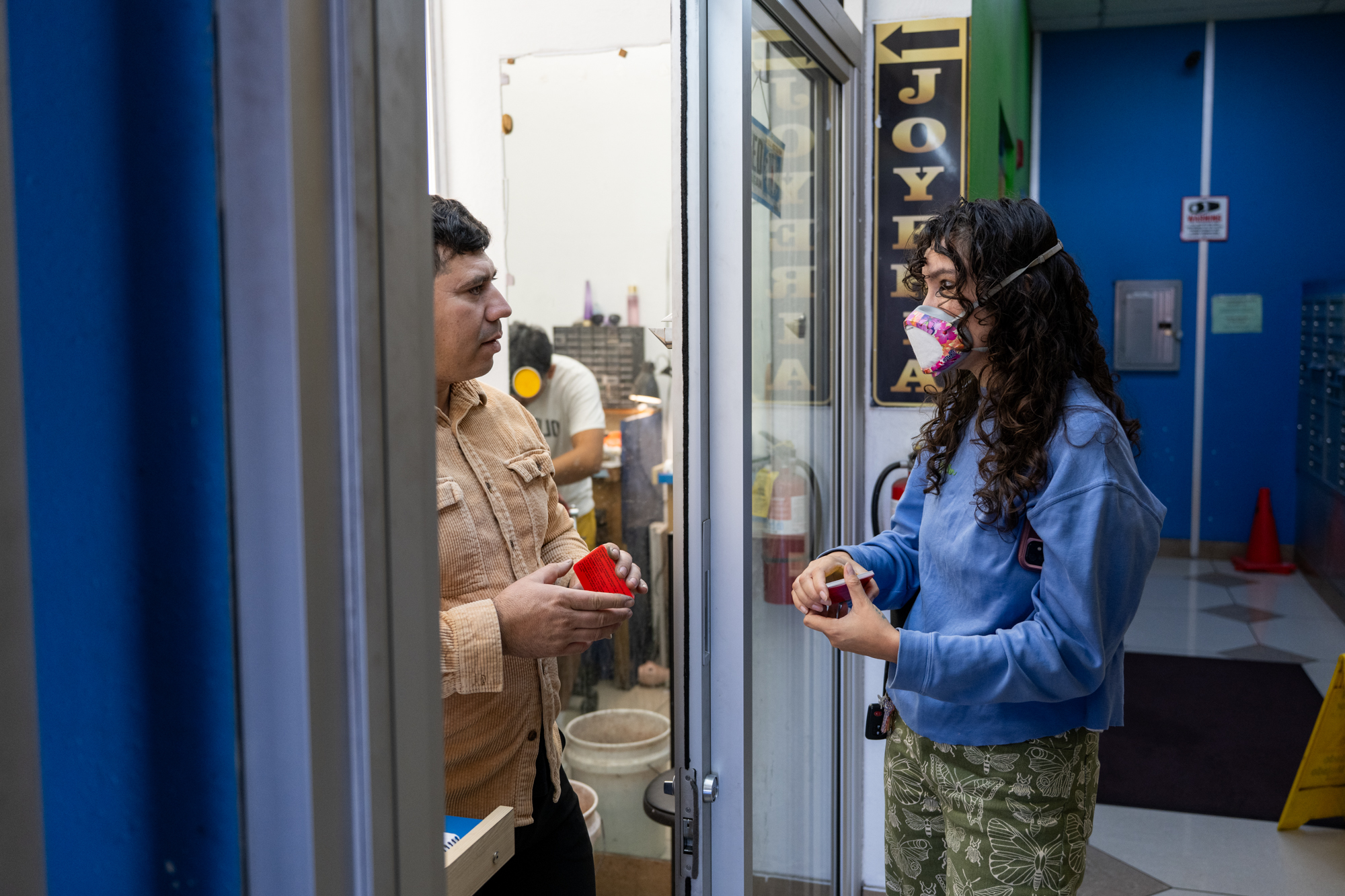
"caption": "Socorro Montaño (derecha), coordinadora de la Red de Respuesta Rápida, habla con Luis Urbino sobre cómo reportar actividades del ICE y los esfuerzos de la red para verificar avistamientos en San José, el 21 de julio de 2025. La Red de Respuesta Rápida opera una línea directa para movilizar voluntarios y apoyar a familias inmigrantes durante acciones del ICE.",
"credit": "Beth LaBerge/KQED",
"altTag": "Dos personas hablan afuera de un negocio dentro de una plaza comercial.",
"description": null,
"imgSizes": {
"thumbnail": {
"file": "https://cdn.kqed.org/wp-content/uploads/sites/10/2025/08/Latino-man-with-worker-160x107.jpg",
"width": 160,
"height": 107,
"mimeType": "image/jpeg"
},
"1536x1536": {
"file": "https://cdn.kqed.org/wp-content/uploads/sites/10/2025/08/Latino-man-with-worker-1536x1024.jpg",
"width": 1536,
"height": 1024,
"mimeType": "image/jpeg"
},
"post-thumbnail": {
"file": "https://cdn.kqed.org/wp-content/uploads/sites/10/2025/08/Latino-man-with-worker-672x372.jpg",
"width": 672,
"height": 372,
"mimeType": "image/jpeg"
},
"twentyfourteen-full-width": {
"file": "https://cdn.kqed.org/wp-content/uploads/sites/10/2025/08/Latino-man-with-worker-1038x576.jpg",
"width": 1038,
"height": 576,
"mimeType": "image/jpeg"
},
"kqedFullSize": {
"file": "https://cdn.kqed.org/wp-content/uploads/sites/10/2025/08/Latino-man-with-worker.jpg",
"width": 2000,
"height": 1333
}
},
"isLoading": false,
"fetchFailed": false
},
"news_11988704": {
"type": "attachments",
"id": "news_11988704",
"meta": {
"index": "attachments_1716263798",
"site": "news",
"id": "11988704",
"found": true
},
"title": "240520-TKPARENTSDILEMMA-07-BL-KQED",
"publishDate": 1717439637,
"status": "inherit",
"parent": 11989789,
"modified": 1718138364,
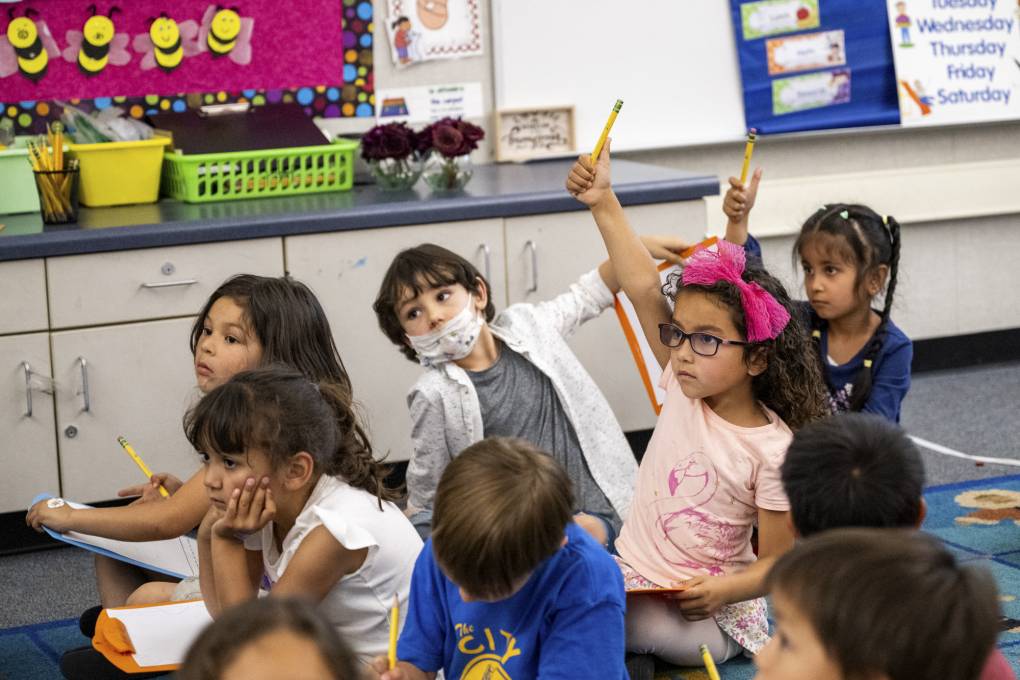
"caption": "Students listen to teacher Gina Viggiano in a transitional kindergarten class at Holbrook Language Academy in Concord on May 20, 2024.",
"credit": "Beth LaBerge/KQED",
"altTag": null,
"description": null,
"imgSizes": {
"medium": {
"file": "https://cdn.kqed.org/wp-content/uploads/sites/10/2024/06/240520-TKPARENTSDILEMMA-07-BL-KQED-800x533.jpg",
"width": 800,
"height": 533,
"mimeType": "image/jpeg"
},
"large": {
"file": "https://cdn.kqed.org/wp-content/uploads/sites/10/2024/06/240520-TKPARENTSDILEMMA-07-BL-KQED-1020x680.jpg",
"width": 1020,
"height": 680,
"mimeType": "image/jpeg"
},
"thumbnail": {
"file": "https://cdn.kqed.org/wp-content/uploads/sites/10/2024/06/240520-TKPARENTSDILEMMA-07-BL-KQED-160x107.jpg",
"width": 160,
"height": 107,
"mimeType": "image/jpeg"
},
"1536x1536": {
"file": "https://cdn.kqed.org/wp-content/uploads/sites/10/2024/06/240520-TKPARENTSDILEMMA-07-BL-KQED-1536x1024.jpg",
"width": 1536,
"height": 1024,
"mimeType": "image/jpeg"
},
"post-thumbnail": {
"file": "https://cdn.kqed.org/wp-content/uploads/sites/10/2024/06/240520-TKPARENTSDILEMMA-07-BL-KQED-672x372.jpg",
"width": 672,
"height": 372,
"mimeType": "image/jpeg"
},
"twentyfourteen-full-width": {
"file": "https://cdn.kqed.org/wp-content/uploads/sites/10/2024/06/240520-TKPARENTSDILEMMA-07-BL-KQED-1038x576.jpg",
"width": 1038,
"height": 576,
"mimeType": "image/jpeg"
},
"full-width": {
"file": "https://cdn.kqed.org/wp-content/uploads/sites/10/2024/06/240520-TKPARENTSDILEMMA-07-BL-KQED-1920x1280.jpg",
"width": 1920,
"height": 1280,
"mimeType": "image/jpeg"
},
"kqedFullSize": {
"file": "https://cdn.kqed.org/wp-content/uploads/sites/10/2024/06/240520-TKPARENTSDILEMMA-07-BL-KQED.jpg",
"width": 2000,
"height": 1333
}
},
"isLoading": false,
"fetchFailed": false
},
"news_12050122": {
"type": "attachments",
"id": "news_12050122",
"meta": {
"index": "attachments_1716263798",
"site": "news",
"id": "12050122",
"found": true
},
"title": "José R. Torres at KQED in San Francisco on July 25, 2025.",
"publishDate": 1753820132,
"status": "inherit",
"parent": 0,
"modified": 1753820139,
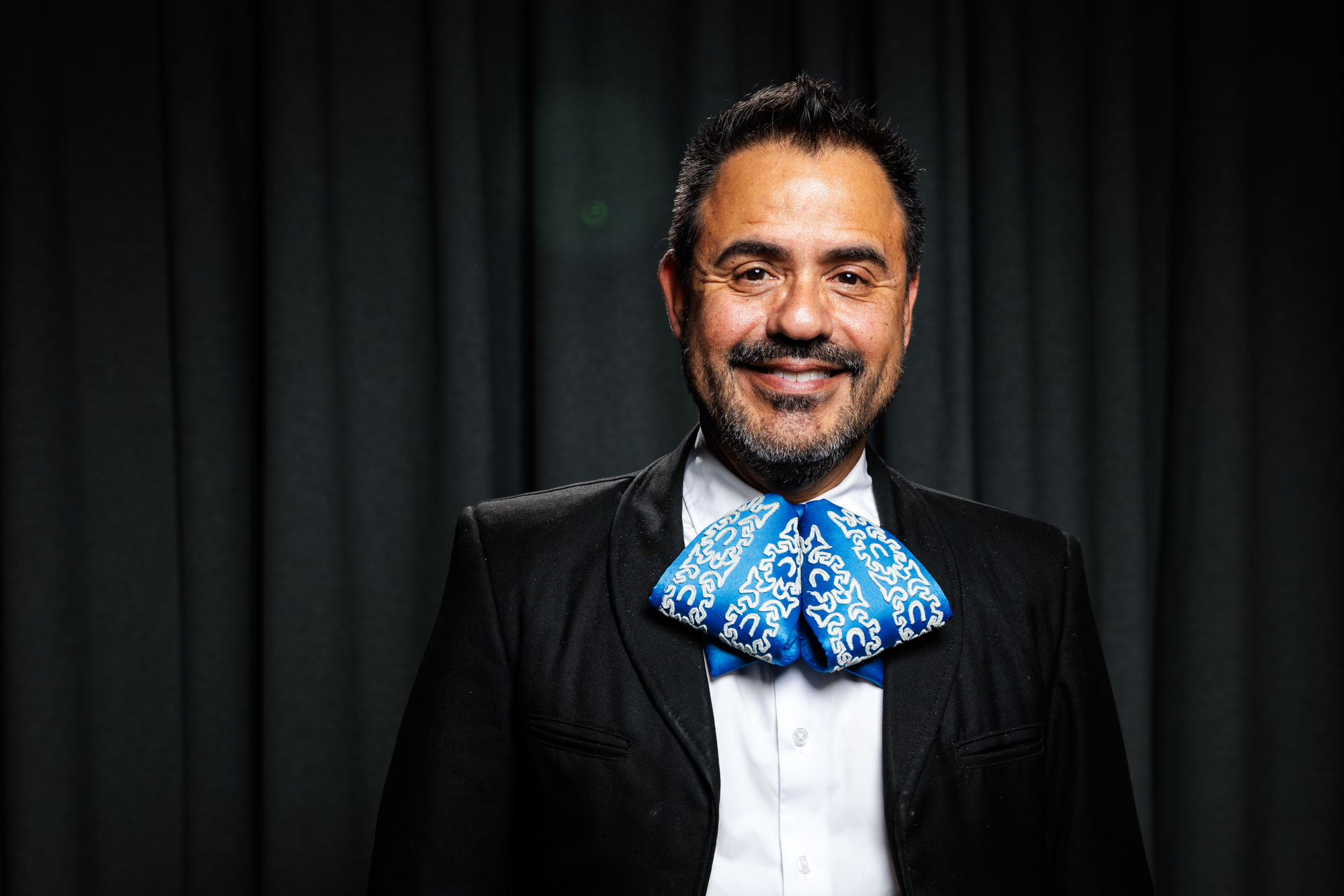
"caption": "José R. Torres at KQED in San Francisco on July 25, 2025.",
"credit": "Martin do Nascimento/KQED",
"altTag": null,
"description": null,
"imgSizes": {
"thumbnail": {
"file": "https://cdn.kqed.org/wp-content/uploads/sites/10/2025/07/250725-K-ONDA-AUGUST-MD-04-KQED-1-160x107.jpg",
"width": 160,
"height": 107,
"mimeType": "image/jpeg"
},
"1536x1536": {
"file": "https://cdn.kqed.org/wp-content/uploads/sites/10/2025/07/250725-K-ONDA-AUGUST-MD-04-KQED-1-1536x1025.jpg",
"width": 1536,
"height": 1025,
"mimeType": "image/jpeg"
},
"post-thumbnail": {
"file": "https://cdn.kqed.org/wp-content/uploads/sites/10/2025/07/250725-K-ONDA-AUGUST-MD-04-KQED-1-672x372.jpg",
"width": 672,
"height": 372,
"mimeType": "image/jpeg"
},
"twentyfourteen-full-width": {
"file": "https://cdn.kqed.org/wp-content/uploads/sites/10/2025/07/250725-K-ONDA-AUGUST-MD-04-KQED-1-1038x576.jpg",
"width": 1038,
"height": 576,
"mimeType": "image/jpeg"
},
"kqedFullSize": {
"file": "https://cdn.kqed.org/wp-content/uploads/sites/10/2025/07/250725-K-ONDA-AUGUST-MD-04-KQED-1.jpg",
"width": 2000,
"height": 1334
}
},
"isLoading": false,
"fetchFailed": false
},
"news_12051688": {
"type": "attachments",
"id": "news_12051688",
"meta": {
"index": "attachments_1716263798",
"site": "news",
"id": "12051688",
"found": true
},
"title": "060825-Natl-Guard-MDC-DTLA-TS-03",
"publishDate": 1754929382,
"status": "inherit",
"parent": 12051687,
"modified": 1761173536,
"caption": "California National Guard soldiers stand with shields outside the Federal Detention Center in downtown Los Angeles, on June 8, 2025. ",
"credit": "Ted Soqui for CalMatters",
"altTag": null,
"description": null,
"imgSizes": {
"thumbnail": {
"file": "https://cdn.kqed.org/wp-content/uploads/sites/10/2025/08/060825-Natl-Guard-MDC-DTLA-TS-03-160x107.jpg",
"width": 160,
"height": 107,
"mimeType": "image/jpeg"
},
"1536x1536": {
"file": "https://cdn.kqed.org/wp-content/uploads/sites/10/2025/08/060825-Natl-Guard-MDC-DTLA-TS-03-1536x1025.jpg",
"width": 1536,
"height": 1025,
"mimeType": "image/jpeg"
},
"post-thumbnail": {
"file": "https://cdn.kqed.org/wp-content/uploads/sites/10/2025/08/060825-Natl-Guard-MDC-DTLA-TS-03-672x372.jpg",
"width": 672,
"height": 372,
"mimeType": "image/jpeg"
},
"twentyfourteen-full-width": {
"file": "https://cdn.kqed.org/wp-content/uploads/sites/10/2025/08/060825-Natl-Guard-MDC-DTLA-TS-03-1038x576.jpg",
"width": 1038,
"height": 576,
"mimeType": "image/jpeg"
},
"kqedFullSize": {
"file": "https://cdn.kqed.org/wp-content/uploads/sites/10/2025/08/060825-Natl-Guard-MDC-DTLA-TS-03.jpg",
"width": 2000,
"height": 1334
}
},
"isLoading": false,
"fetchFailed": false
},
"news_12051641": {
"type": "attachments",
"id": "news_12051641",
"meta": {
"index": "attachments_1716263798",
"site": "news",
"id": "12051641",
"found": true
},
"title": "061225_Intl-Students_LB_CM_21 copy",
"publishDate": 1754754801,
"status": "inherit",
"parent": 12051638,
"modified": 1754754828,
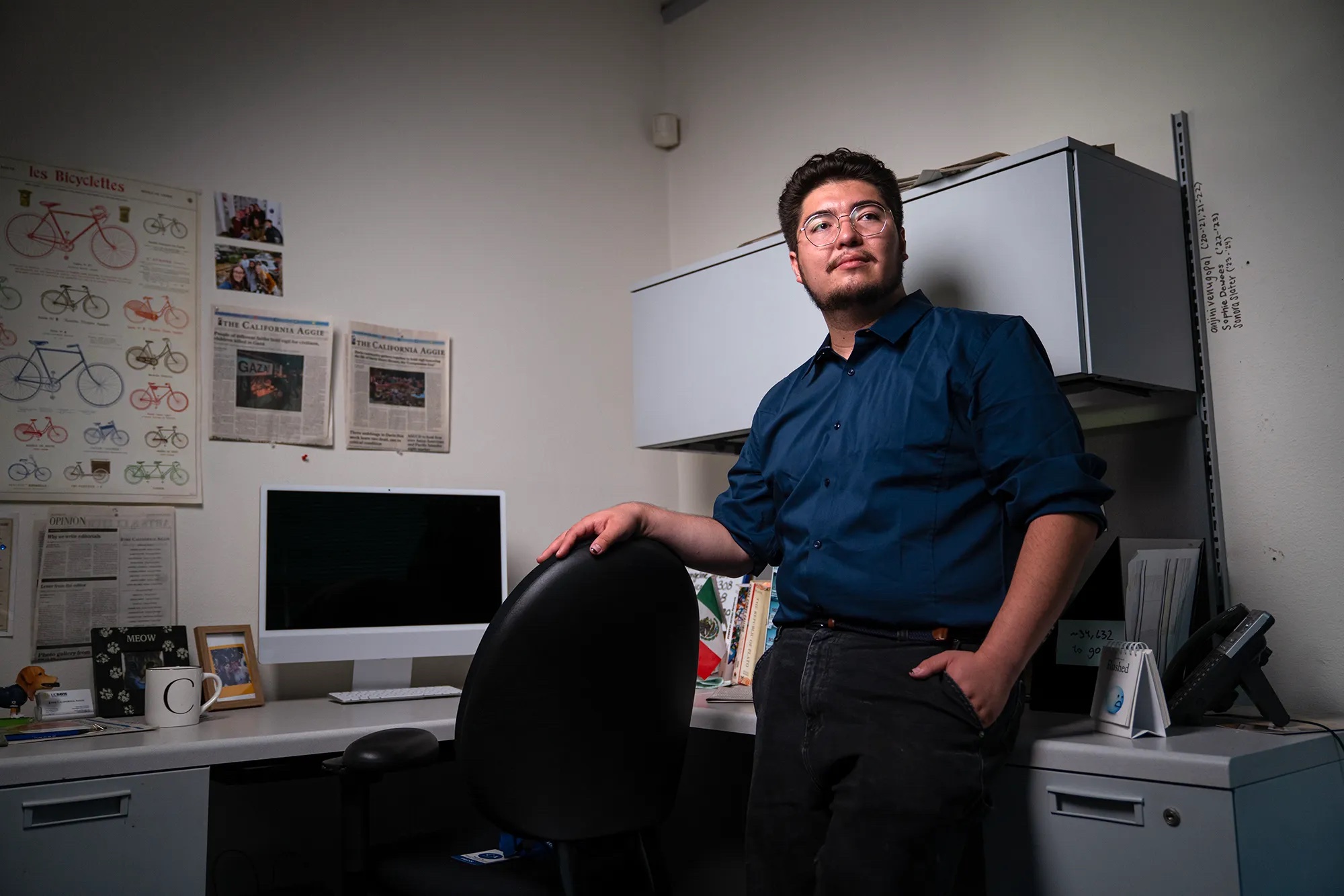
"caption": "Chris Ponce, former editor-in-chief of The California Aggie, in the UC Davis newsroom at UC Davis, on June 12, 2025. Fear of immigration consequences has shifted how international students engage with speech and activism across UC campuses. ",
"credit": "Louis Bryant III for CalMatters",
"altTag": null,
"description": null,
"imgSizes": {
"thumbnail": {
"file": "https://cdn.kqed.org/wp-content/uploads/sites/10/2025/08/061225_Intl-Students_LB_CM_21-copy-160x107.jpg",
"width": 160,
"height": 107,
"mimeType": "image/jpeg"
},
"1536x1536": {
"file": "https://cdn.kqed.org/wp-content/uploads/sites/10/2025/08/061225_Intl-Students_LB_CM_21-copy-1536x1025.jpg",
"width": 1536,
"height": 1025,
"mimeType": "image/jpeg"
},
"post-thumbnail": {
"file": "https://cdn.kqed.org/wp-content/uploads/sites/10/2025/08/061225_Intl-Students_LB_CM_21-copy-672x372.jpg",
"width": 672,
"height": 372,
"mimeType": "image/jpeg"
},
"twentyfourteen-full-width": {
"file": "https://cdn.kqed.org/wp-content/uploads/sites/10/2025/08/061225_Intl-Students_LB_CM_21-copy-1038x576.jpg",
"width": 1038,
"height": 576,
"mimeType": "image/jpeg"
},
"kqedFullSize": {
"file": "https://cdn.kqed.org/wp-content/uploads/sites/10/2025/08/061225_Intl-Students_LB_CM_21-copy.jpg",
"width": 2000,
"height": 1334
}
},
"isLoading": false,
"fetchFailed": false
},
"news_12051123": {
"type": "attachments",
"id": "news_12051123",
"meta": {
"index": "attachments_1716263798",
"site": "news",
"id": "12051123",
"found": true
},
"title": "Covered California Enroll Here signs are seen outside the Life Long West Berkeley Family Practice on Friday, January 13, 2017 in Berkeley, Calif.",
"publishDate": 1754503023,
"status": "inherit",
"parent": 12050242,
"modified": 1781122466,
"caption": "Covered California Enroll Here signs in Berkeley on Jan. 13, 2017.",
"credit": "Lea Suzuki/The San Francisco Chronicle via Getty Images",
"altTag": null,
"description": null,
"imgSizes": {
"thumbnail": {
"file": "https://cdn.kqed.org/wp-content/uploads/sites/10/2025/08/GETTYIMAGES-1322125650-KQED-160x99.jpg",
"width": 160,
"height": 99,
"mimeType": "image/jpeg"
},
"1536x1536": {
"file": "https://cdn.kqed.org/wp-content/uploads/sites/10/2025/08/GETTYIMAGES-1322125650-KQED-1536x946.jpg",
"width": 1536,
"height": 946,
"mimeType": "image/jpeg"
},
"post-thumbnail": {
"file": "https://cdn.kqed.org/wp-content/uploads/sites/10/2025/08/GETTYIMAGES-1322125650-KQED-672x372.jpg",
"width": 672,
"height": 372,
"mimeType": "image/jpeg"
},
"twentyfourteen-full-width": {
"file": "https://cdn.kqed.org/wp-content/uploads/sites/10/2025/08/GETTYIMAGES-1322125650-KQED-1038x576.jpg",
"width": 1038,
"height": 576,
"mimeType": "image/jpeg"
},
"kqedFullSize": {
"file": "https://cdn.kqed.org/wp-content/uploads/sites/10/2025/08/GETTYIMAGES-1322125650-KQED.jpg",
"width": 2000,
"height": 1232
}
},
"isLoading": false,
"fetchFailed": false
},
"news_12050011": {
"type": "attachments",
"id": "news_12050011",
"meta": {
"index": "attachments_1716263798",
"site": "news",
"id": "12050011",
"found": true
},
"title": "250721-AFGHANSINFREMONT-11-BL-KQED",
"publishDate": 1753726598,
"status": "inherit",
"parent": 0,
"modified": 1753921939,
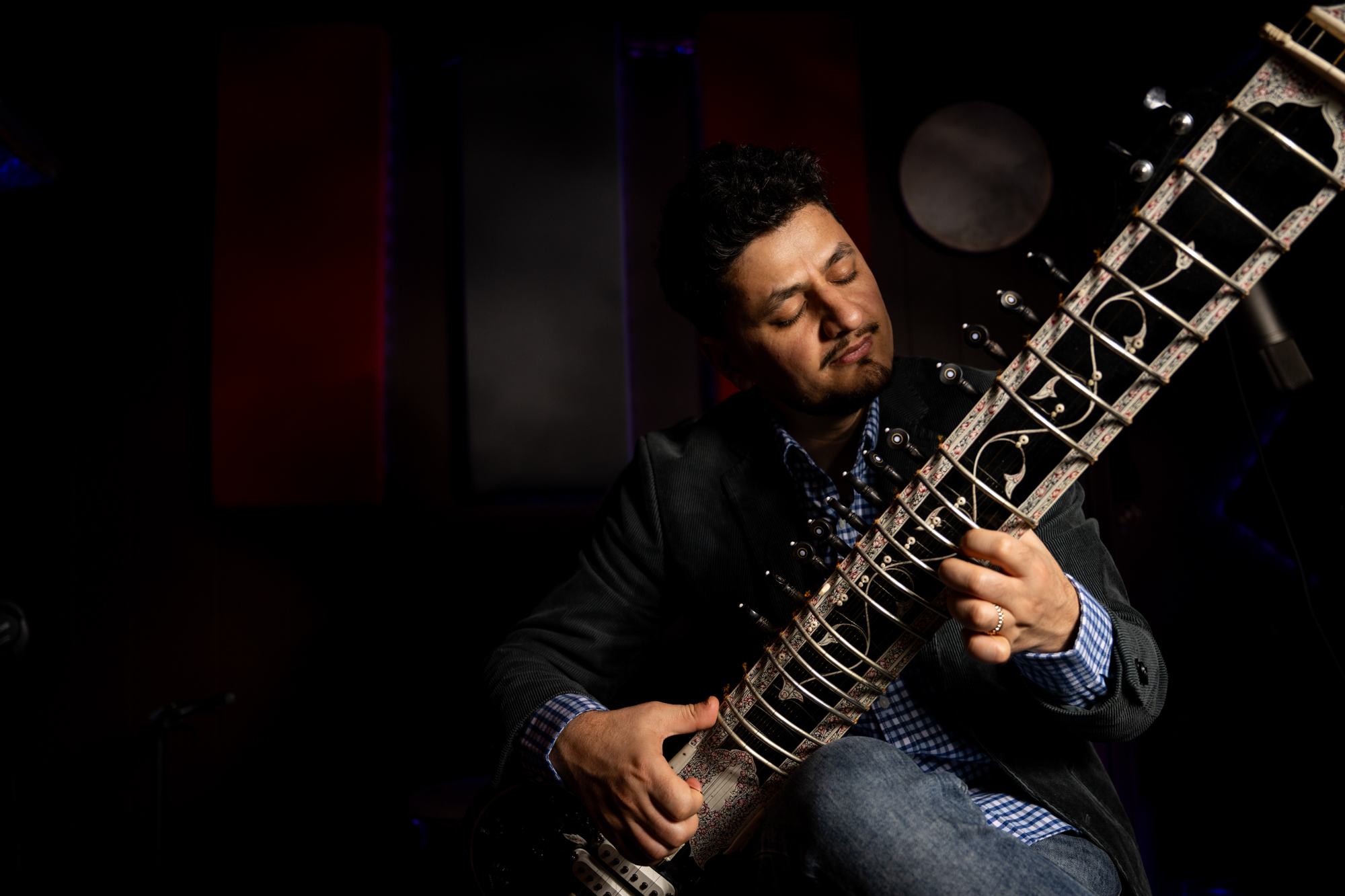
"caption": "Hasib Sepand plays the sitar at Sepand Studios in Fremont on July 21, 2025, where his music academy offers instruction in sitar, tabla, harmonium and other instruments, and he composes and produces music.",
"credit": "Beth LaBerge/KQED",
"altTag": null,
"description": null,
"imgSizes": {
"thumbnail": {
"file": "https://cdn.kqed.org/wp-content/uploads/sites/10/2025/07/250721-AFGHANSINFREMONT-11-BL-KQED-160x107.jpg",
"width": 160,
"height": 107,
"mimeType": "image/jpeg"
},
"1536x1536": {
"file": "https://cdn.kqed.org/wp-content/uploads/sites/10/2025/07/250721-AFGHANSINFREMONT-11-BL-KQED-1536x1024.jpg",
"width": 1536,
"height": 1024,
"mimeType": "image/jpeg"
},
"post-thumbnail": {
"file": "https://cdn.kqed.org/wp-content/uploads/sites/10/2025/07/250721-AFGHANSINFREMONT-11-BL-KQED-672x372.jpg",
"width": 672,
"height": 372,
"mimeType": "image/jpeg"
},
"twentyfourteen-full-width": {
"file": "https://cdn.kqed.org/wp-content/uploads/sites/10/2025/07/250721-AFGHANSINFREMONT-11-BL-KQED-1038x576.jpg",
"width": 1038,
"height": 576,
"mimeType": "image/jpeg"
},
"kqedFullSize": {
"file": "https://cdn.kqed.org/wp-content/uploads/sites/10/2025/07/250721-AFGHANSINFREMONT-11-BL-KQED.jpg",
"width": 2000,
"height": 1333
}
},
"isLoading": false,
"fetchFailed": false
},
"news_12049161": {
"type": "attachments",
"id": "news_12049161",
"meta": {
"index": "attachments_1716263798",
"site": "news",
"id": "12049161",
"found": true
},
"title": "250718-RIDEALONGRAPIDRESPONSE-10-BL-KQED",
"publishDate": 1753206396,
"status": "inherit",
"parent": 12049326,
"modified": 1753312110,
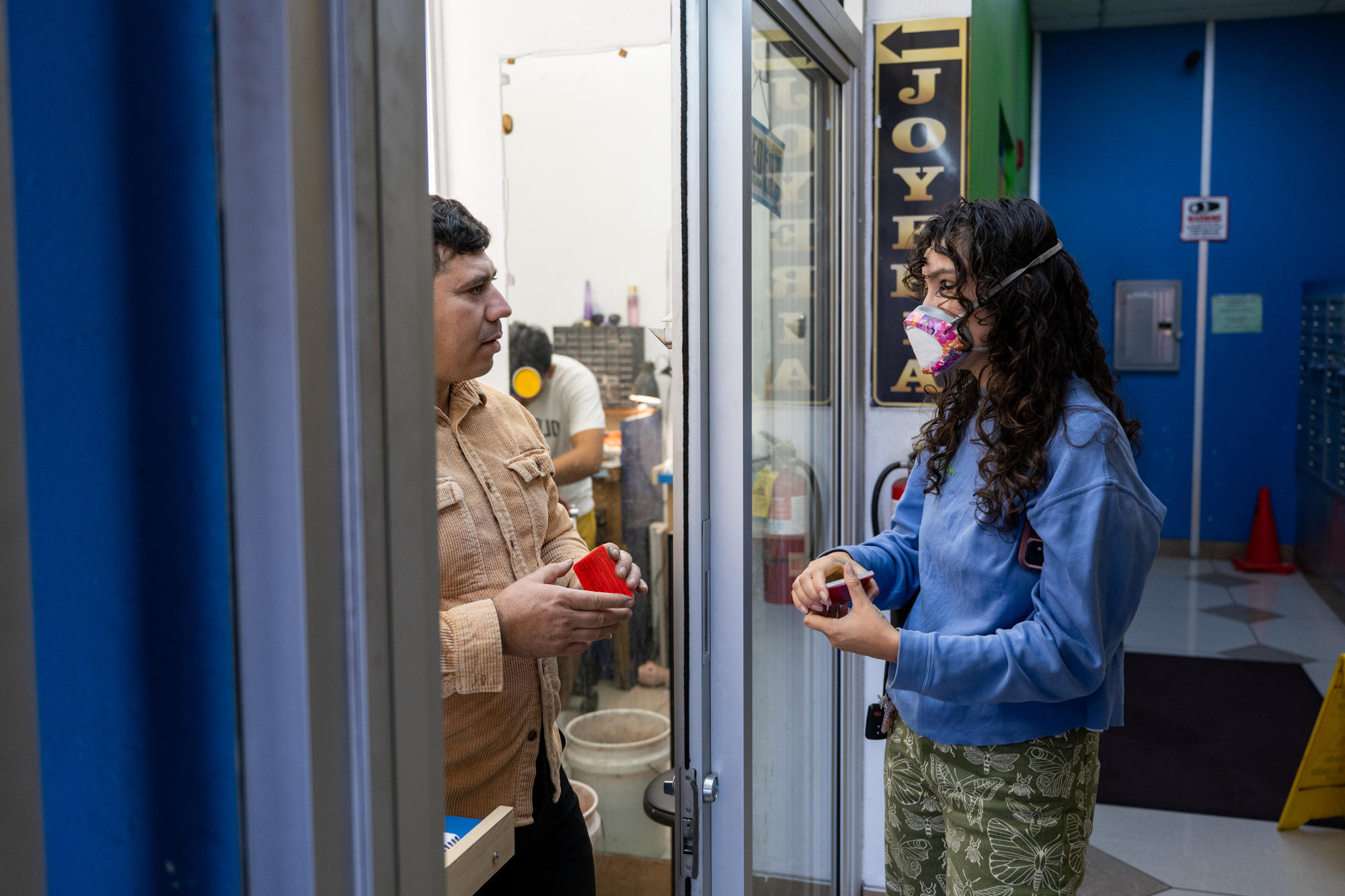
"caption": "Socorro Montaño (right), lead dispatcher for the Rapid Response Network, speaks with Luis Urbino about how to report ICE activity and the network’s efforts to verify sightings in San José on July 21, 2025. The Rapid Response Network operates a hotline to mobilize volunteers and support immigrant families during ICE actions.",
"credit": "Beth LaBerge/KQED",
"altTag": null,
"description": null,
"imgSizes": {
"thumbnail": {
"file": "https://cdn.kqed.org/wp-content/uploads/sites/10/2025/07/250718-RIDEALONGRAPIDRESPONSE-10-BL-KQED-160x107.jpg",
"width": 160,
"height": 107,
"mimeType": "image/jpeg"
},
"1536x1536": {
"file": "https://cdn.kqed.org/wp-content/uploads/sites/10/2025/07/250718-RIDEALONGRAPIDRESPONSE-10-BL-KQED-1536x1024.jpg",
"width": 1536,
"height": 1024,
"mimeType": "image/jpeg"
},
"post-thumbnail": {
"file": "https://cdn.kqed.org/wp-content/uploads/sites/10/2025/07/250718-RIDEALONGRAPIDRESPONSE-10-BL-KQED-672x372.jpg",
"width": 672,
"height": 372,
"mimeType": "image/jpeg"
},
"twentyfourteen-full-width": {
"file": "https://cdn.kqed.org/wp-content/uploads/sites/10/2025/07/250718-RIDEALONGRAPIDRESPONSE-10-BL-KQED-1038x576.jpg",
"width": 1038,
"height": 576,
"mimeType": "image/jpeg"
},
"kqedFullSize": {
"file": "https://cdn.kqed.org/wp-content/uploads/sites/10/2025/07/250718-RIDEALONGRAPIDRESPONSE-10-BL-KQED.jpg",
"width": 2000,
"height": 1333
}
},
"isLoading": false,
"fetchFailed": false
},
"news_12050965": {
"type": "attachments",
"id": "news_12050965",
"meta": {
"index": "attachments_1716263798",
"site": "news",
"id": "12050965",
"found": true
},
"title": "250805-SONOMA HUNGER STRIKE-BL-01-KQED",
"publishDate": 1754420780,
"status": "inherit",
"parent": 0,
"modified": 1754421014,
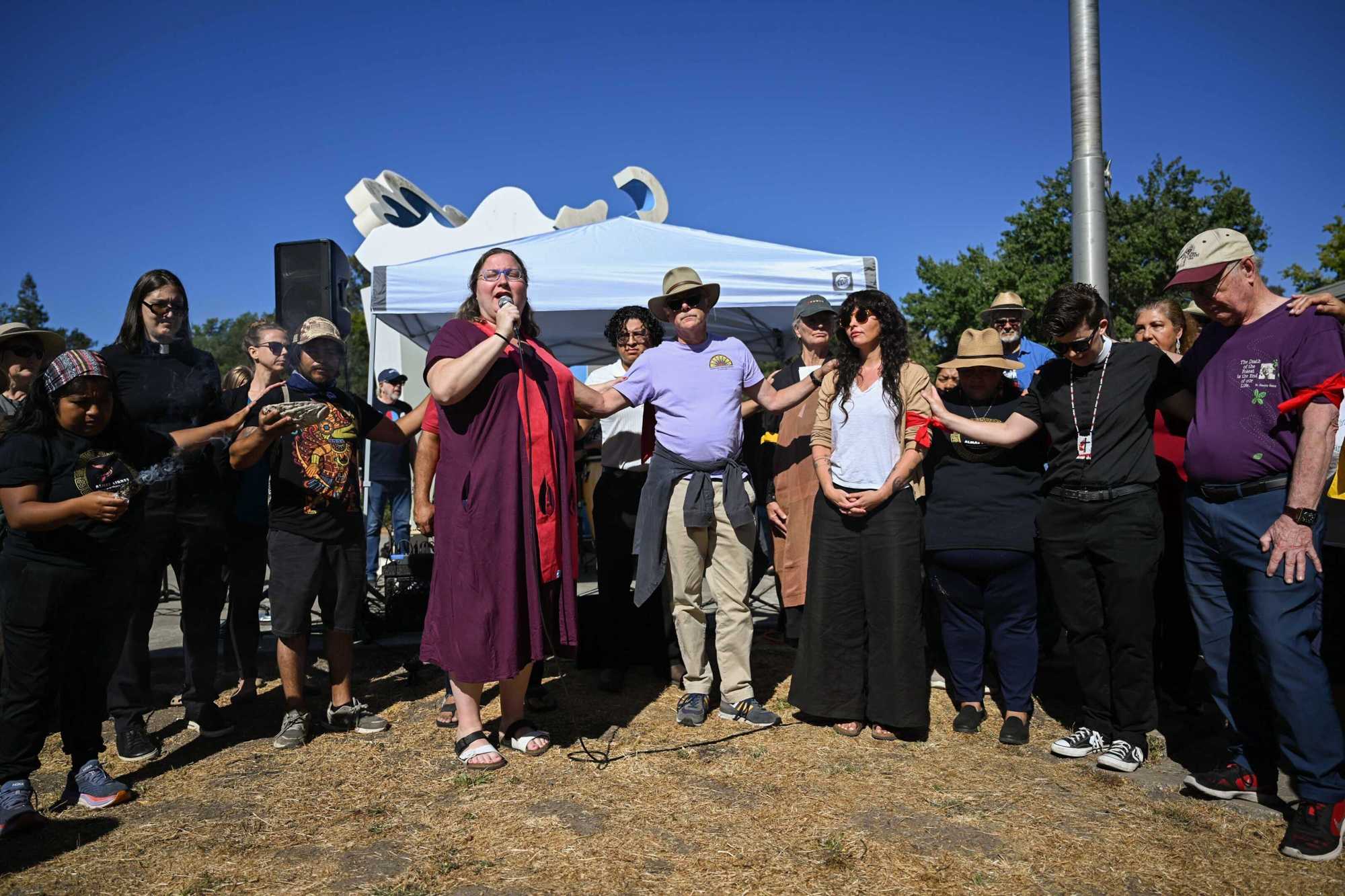
"caption": "Rev Aija Simpson-Newbury speaks to faith leaders, congregation members, immigrant rights groups and allies outside of the Sonoma County Board of Supervisors offices in Santa Rosa on Aug. 5, 2025, during a rally to launch an indefinite hunger strike urging the county to adopt a sanctuary law.",
"credit": "Beth LaBerge/KQED",
"altTag": null,
"description": null,
"imgSizes": {
"thumbnail": {
"file": "https://cdn.kqed.org/wp-content/uploads/sites/10/2025/08/250805-SONOMA-HUNGER-STRIKE-BL-01-KQED-160x107.jpg",
"width": 160,
"height": 107,
"mimeType": "image/jpeg"
},
"1536x1536": {
"file": "https://cdn.kqed.org/wp-content/uploads/sites/10/2025/08/250805-SONOMA-HUNGER-STRIKE-BL-01-KQED-1536x1024.jpg",
"width": 1536,
"height": 1024,
"mimeType": "image/jpeg"
},
"post-thumbnail": {
"file": "https://cdn.kqed.org/wp-content/uploads/sites/10/2025/08/250805-SONOMA-HUNGER-STRIKE-BL-01-KQED-672x372.jpg",
"width": 672,
"height": 372,
"mimeType": "image/jpeg"
},
"twentyfourteen-full-width": {
"file": "https://cdn.kqed.org/wp-content/uploads/sites/10/2025/08/250805-SONOMA-HUNGER-STRIKE-BL-01-KQED-1038x576.jpg",
"width": 1038,
"height": 576,
"mimeType": "image/jpeg"
},
"kqedFullSize": {
"file": "https://cdn.kqed.org/wp-content/uploads/sites/10/2025/08/250805-SONOMA-HUNGER-STRIKE-BL-01-KQED.jpg",
"width": 2000,
"height": 1333
}
},
"isLoading": false,
"fetchFailed": false
},
"news_12050658": {
"type": "attachments",
"id": "news_12050658",
"meta": {
"index": "attachments_1716263798",
"site": "news",
"id": "12050658",
"found": true
},
"title": "07112025-ICECOUPLEDEPORTED-ET-PU-06-KQED",
"publishDate": 1754073904,
"status": "inherit",
"parent": 0,
"modified": 1754346713,
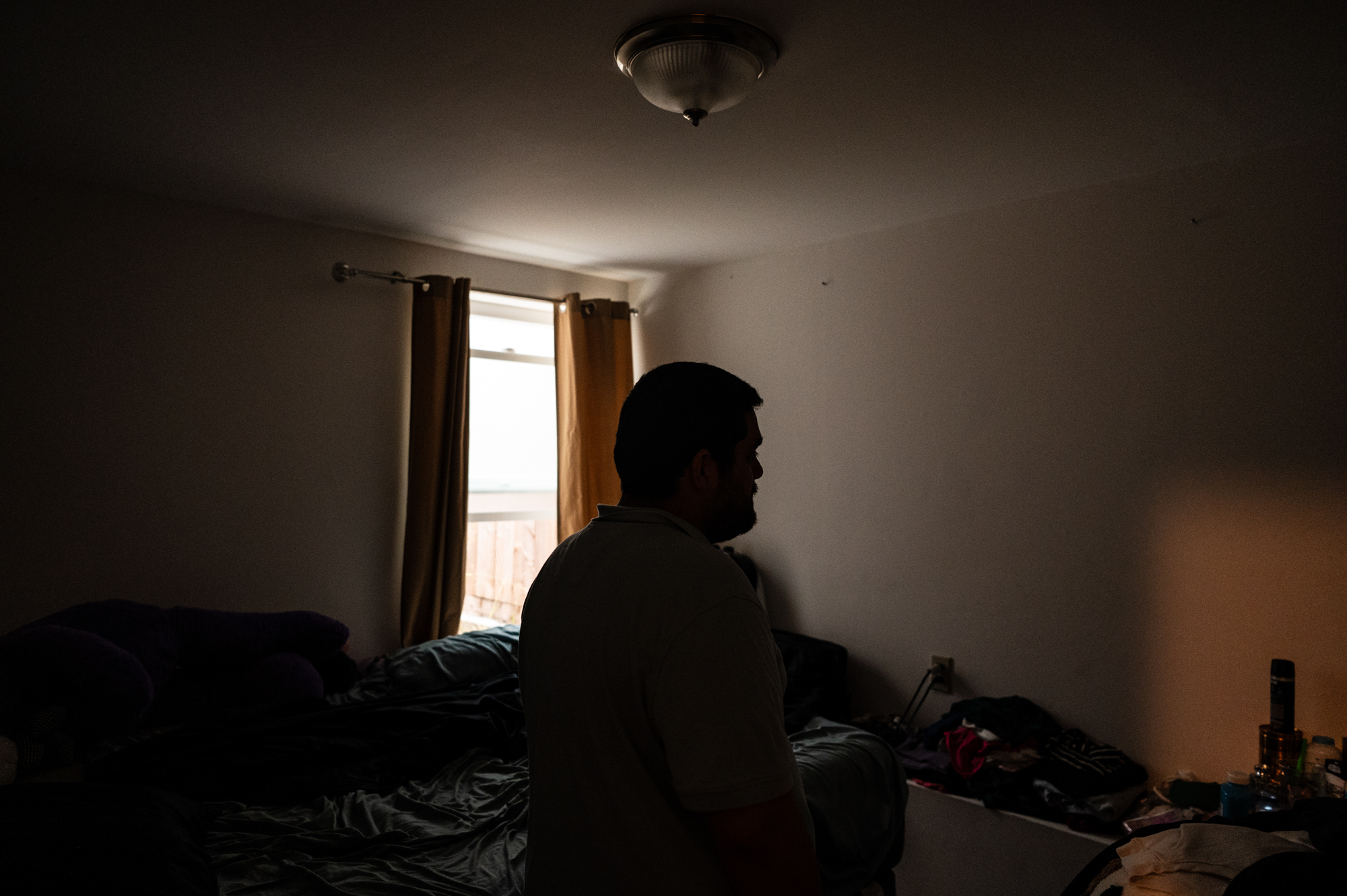
"caption": "Roberto stands in the bedroom of the apartment he shares with his wife, Sandra, whose belongings remain untouched after she was arrested and detained by immigration authorities during a check-in at ICE’s San Francisco office on July 11, 2025.",
"credit": "Pablo Unzueta for El Tecolote for CatchLight Local",
"altTag": null,
"description": null,
"imgSizes": {
"thumbnail": {
"file": "https://cdn.kqed.org/wp-content/uploads/sites/10/2025/08/07112025-ICECOUPLEDEPORTED-ET-PU-06-KQED-160x106.jpg",
"width": 160,
"height": 106,
"mimeType": "image/jpeg"
},
"1536x1536": {
"file": "https://cdn.kqed.org/wp-content/uploads/sites/10/2025/08/07112025-ICECOUPLEDEPORTED-ET-PU-06-KQED-1536x1022.jpg",
"width": 1536,
"height": 1022,
"mimeType": "image/jpeg"
},
"post-thumbnail": {
"file": "https://cdn.kqed.org/wp-content/uploads/sites/10/2025/08/07112025-ICECOUPLEDEPORTED-ET-PU-06-KQED-672x372.jpg",
"width": 672,
"height": 372,
"mimeType": "image/jpeg"
},
"twentyfourteen-full-width": {
"file": "https://cdn.kqed.org/wp-content/uploads/sites/10/2025/08/07112025-ICECOUPLEDEPORTED-ET-PU-06-KQED-1038x576.jpg",
"width": 1038,
"height": 576,
"mimeType": "image/jpeg"
},
"kqedFullSize": {
"file": "https://cdn.kqed.org/wp-content/uploads/sites/10/2025/08/07112025-ICECOUPLEDEPORTED-ET-PU-06-KQED.jpg",
"width": 2000,
"height": 1331
}
},
"isLoading": false,
"fetchFailed": false
}
},
"audioPlayerReducer": {
"postId": "stream_live",
"isPaused": true,
"isPlaying": false,
"pfsActive": false,
"pledgeModalIsOpen": true,
"playerDrawerIsOpen": false,
"liveAudioPlayStartedAt": 0,
"liveAudioPlayContext": ""
},
"authorsReducer": {
"byline_news_11989955": {
"type": "authors",
"id": "byline_news_11989955",
"meta": {
"override": true
},
"slug": "byline_news_11989955",
"name": "Daisy Nguyen, Blanca Torres and Elly Yu",
"isLoading": false
},
"byline_news_12051687": {
"type": "authors",
"id": "byline_news_12051687",
"meta": {
"override": true
},
"slug": "byline_news_12051687",
"name": "Mikhail Zinshteyn, CalMatters",
"isLoading": false
},
"byline_news_12051638": {
"type": "authors",
"id": "byline_news_12051638",
"meta": {
"override": true
},
"slug": "byline_news_12051638",
"name": "Emewodesh Eshete, CalMatters",
"isLoading": false
},
"byline_news_12050841": {
"type": "authors",
"id": "byline_news_12050841",
"meta": {
"override": true
},
"slug": "byline_news_12050841",
"name": "Mariana Duran, El Tecolote",
"isLoading": false
},
"aehsanipour": {
"type": "authors",
"id": "11580",
"meta": {
"index": "authors_1716337520",
"id": "11580",
"found": true
},
"name": "Asal Ehsanipour",
"firstName": "Asal",
"lastName": "Ehsanipour",
"slug": "aehsanipour",
"email": "aehsanipour@kqed.org",
"display_author_email": false,
"staff_mastheads": [],
"title": "Reporter and Producer",
"bio": "Asal Ehsanipour is a producer and reporter for Rightnowish, Bay Curious and The California Report Magazine. She is also a producer for \u003ca href=\"https://www.thedoubleshift.com/\">The Double Shift\u003c/a>, a podcast about a new generation of working mothers. In 2018, Asal was named an Emerging Journalist Fellow by the Journalism and Women’s Symposium. Her work has appeared on KQED, KALW, PRI’s The World, and in several food and travel publications.",
"avatar": "https://secure.gravatar.com/avatar/c0e210438f5dca1b76921ff9f0eada52?s=600&d=blank&r=g",
"twitter": null,
"facebook": null,
"instagram": null,
"linkedin": null,
"sites": [
{
"site": "arts",
"roles": []
},
{
"site": "news",
"roles": [
"author",
"edit_others_posts"
]
}
],
"headData": {
"title": "Asal Ehsanipour | KQED",
"description": "Reporter and Producer",
"ogImgSrc": "https://secure.gravatar.com/avatar/c0e210438f5dca1b76921ff9f0eada52?s=600&d=blank&r=g",
"twImgSrc": "https://secure.gravatar.com/avatar/c0e210438f5dca1b76921ff9f0eada52?s=600&d=blank&r=g"
},
"isLoading": false,
"link": "/author/aehsanipour"
},
"btorres": {
"type": "authors",
"id": "11666",
"meta": {
"index": "authors_1716337520",
"id": "11666",
"found": true
},
"name": "Blanca Torres",
"firstName": "Blanca",
"lastName": "Torres",
"slug": "btorres",
"email": "btorres@kqed.org",
"display_author_email": true,
"staff_mastheads": [
"news"
],
"title": "Producer, Forum",
"bio": "Blanca Torres brings sharp news judgement and keen sense of lively conversation to her work as producer for Forum. She loves producing shows that leave listeners feeling like they heard distinctive voices, learned something new and gained a fresh perspective.\r\n\r\nShe joined KQED in January of 2020 after 16 years of working as a newspaper reporter most recently at the \u003cem>San Francisco Business Times,\u003c/em> where she wrote about real estate and economic development. Before that, she covered a variety of beats including crime, education, retail, workplace, the economy, consumer issues, and small business for the \u003cem>Contra Costa Times, Baltimore Sun\u003c/em> and\u003cem> The Seattle Times\u003c/em>. In addition to reporting, she worked as an editorial writer and columnist for the \u003cem>Seattle Times\u003c/em>. From 2017 to 2020, Blanca won a total of ten awards from the National Association of Real Estate Editors and won first place for land use reporting from the California News Publishers Association two years in a row. She is also a member and former board member for the National Association of Hispanic Journalists.\r\n\r\nA native of the Pacific Northwest, Blanca earned her bachelor's degree from Vanderbilt University in Nashville and a master's in fine arts in creative writing at Mills College. She lives in the East Bay with her family.",
"avatar": "https://secure.gravatar.com/avatar/f2322ff46076d337f7ba731ee6068cb1?s=600&d=blank&r=g",
"twitter": "@blancawrites",
"facebook": null,
"instagram": null,
"linkedin": null,
"sites": [
{
"site": "arts",
"roles": [
"editor"
]
},
{
"site": "news",
"roles": [
"editor"
]
},
{
"site": "forum",
"roles": [
"editor"
]
}
],
"headData": {
"title": "Blanca Torres | KQED",
"description": "Producer, Forum",
"ogImgSrc": "https://secure.gravatar.com/avatar/f2322ff46076d337f7ba731ee6068cb1?s=600&d=blank&r=g",
"twImgSrc": "https://secure.gravatar.com/avatar/f2322ff46076d337f7ba731ee6068cb1?s=600&d=blank&r=g"
},
"isLoading": false,
"link": "/author/btorres"
},
"ccabreralomeli": {
"type": "authors",
"id": "11708",
"meta": {
"index": "authors_1716337520",
"id": "11708",
"found": true
},
"name": "Carlos Cabrera-Lomelí",
"firstName": "Carlos",
"lastName": "Cabrera-Lomelí",
"slug": "ccabreralomeli",
"email": "ccabreralomeli@KQED.org",
"display_author_email": true,
"staff_mastheads": [
"news"
],
"title": "Community Reporter",
"bio": "Carlos Cabrera-Lomelí is a community reporter with KQED's digital engagement team. He also reports and co-produces for KQED's bilingual news hub KQED en Español. He grew up in San Francisco's Mission District and has previously worked with Univision, 48 Hills and REFORMA in Mexico City.",
"avatar": "https://secure.gravatar.com/avatar/e95ff80bb2eaf18a8f2af4dcf7ffb54b?s=600&d=mm&r=g",
"twitter": "@LomeliCabrera",
"facebook": null,
"instagram": null,
"linkedin": null,
"sites": [
{
"site": "arts",
"roles": [
"editor"
]
},
{
"site": "news",
"roles": [
"editor"
]
},
{
"site": "about",
"roles": [
"editor"
]
},
{
"site": "science",
"roles": [
"editor"
]
},
{
"site": "perspectives",
"roles": [
"editor"
]
},
{
"site": "elections",
"roles": [
"editor"
]
},
{
"site": "liveblog",
"roles": [
"contributor"
]
}
],
"headData": {
"title": "Carlos Cabrera-Lomelí | KQED",
"description": "Community Reporter",
"ogImgSrc": "https://secure.gravatar.com/avatar/e95ff80bb2eaf18a8f2af4dcf7ffb54b?s=600&d=mm&r=g",
"twImgSrc": "https://secure.gravatar.com/avatar/e95ff80bb2eaf18a8f2af4dcf7ffb54b?s=600&d=mm&r=g"
},
"isLoading": false,
"link": "/author/ccabreralomeli"
},
"sjohnson": {
"type": "authors",
"id": "11840",
"meta": {
"index": "authors_1716337520",
"id": "11840",
"found": true
},
"name": "Sydney Johnson",
"firstName": "Sydney",
"lastName": "Johnson",
"slug": "sjohnson",
"email": "sjohnson@kqed.org",
"display_author_email": false,
"staff_mastheads": [
"news"
],
"title": "KQED Reporter",
"bio": "Sydney Johnson is a general assignment reporter at KQED. She previously reported on public health and city government at the San Francisco Examiner, and before that, she covered statewide education policy for EdSource. Her reporting has won multiple local, state and national awards. Sydney is a graduate of the University of California, Berkeley and lives in San Francisco.",
"avatar": "https://secure.gravatar.com/avatar/97855f2719b72ad6190b7c535fe642c8?s=600&d=blank&r=g",
"twitter": "sydneyfjohnson",
"facebook": null,
"instagram": null,
"linkedin": null,
"sites": [
{
"site": "news",
"roles": [
"editor"
]
}
],
"headData": {
"title": "Sydney Johnson | KQED",
"description": "KQED Reporter",
"ogImgSrc": "https://secure.gravatar.com/avatar/97855f2719b72ad6190b7c535fe642c8?s=600&d=blank&r=g",
"twImgSrc": "https://secure.gravatar.com/avatar/97855f2719b72ad6190b7c535fe642c8?s=600&d=blank&r=g"
},
"isLoading": false,
"link": "/author/sjohnson"
},
"kdebenedetti": {
"type": "authors",
"id": "11913",
"meta": {
"index": "authors_1716337520",
"id": "11913",
"found": true
},
"name": "Katie DeBenedetti",
"firstName": "Katie",
"lastName": "DeBenedetti",
"slug": "kdebenedetti",
"email": "kdebenedetti@kqed.org",
"display_author_email": false,
"staff_mastheads": [
"news",
"science"
],
"title": "KQED Contributor",
"bio": "Katie DeBenedetti is a digital reporter covering daily news for the Express Desk. Prior to joining KQED as a culture reporting intern in January 2024, she covered education and city government for the Napa Valley Register.",
"avatar": "https://secure.gravatar.com/avatar/6e31073cb8f7e4214ab03f42771d0f45?s=600&d=blank&r=g",
"twitter": null,
"facebook": null,
"instagram": null,
"linkedin": null,
"sites": [
{
"site": "news",
"roles": [
"author"
]
},
{
"site": "science",
"roles": [
"author"
]
},
{
"site": "liveblog",
"roles": [
"author"
]
}
],
"headData": {
"title": "Katie DeBenedetti | KQED",
"description": "KQED Contributor",
"ogImgSrc": "https://secure.gravatar.com/avatar/6e31073cb8f7e4214ab03f42771d0f45?s=600&d=blank&r=g",
"twImgSrc": "https://secure.gravatar.com/avatar/6e31073cb8f7e4214ab03f42771d0f45?s=600&d=blank&r=g"
},
"isLoading": false,
"link": "/author/kdebenedetti"
}
},
"pagesReducer": {
"news_tag_immigration": {
"type": "terms",
"id": "news_20202",
"meta": {
"index": "terms_1716263798",
"site": "news",
"id": "20202",
"score": 6.90445
},
"featImg": null,
"name": "immigration",
"description": null,
"taxonomy": "tag",
"headData": {
"twImgId": null,
"twTitle": null,
"ogTitle": null,
"ogImgId": null,
"twDescription": null,
"description": null,
"title": "immigration Archives | KQED News",
"ogDescription": null
},
"ttid": 20219,
"slug": "immigration",
"isLoading": false,
"title": "immigration",
"pageMeta": {
"site": "news",
"WpPageTemplate": "page-topic-editorial",
"currentPage": 21
},
"blocks": [
{
"blockName": "kqed/post-list",
"attrs": {
"layout": "cardArticle2",
"query": "posts/news?tag=immigration",
"seeMore": false,
"paginated": true,
"page": 21
}
},
{
"blockName": "kqed/ad"
}
]
}
},
"pfsSessionReducer": {},
"postsReducer": {
"stream_live": {
"type": "live",
"id": "stream_live",
"audioUrl": "https://streams.kqed.org/kqedradio",
"title": "Live Stream",
"excerpt": "Live Stream information currently unavailable.",
"link": "/radio",
"featImg": "",
"label": {
"name": "KQED Live",
"link": "/"
}
},
"stream_kqedNewscast": {
"type": "posts",
"id": "stream_kqedNewscast",
"audioUrl": "https://www.kqed.org/.stream/anon/radio/RDnews/newscast.mp3?_=1",
"title": "KQED Newscast",
"featImg": "",
"label": {
"name": "88.5 FM",
"link": "/"
}
},
"news_12052198": {
"type": "posts",
"id": "news_12052198",
"meta": {
"index": "posts_1716263798",
"site": "news",
"id": "12052198",
"score": null,
"sort": [
1755200388000
]
},
"guestAuthors": [],
"slug": "teen-arrested-in-ice-raid-at-an-oakland-home-detained-out-of-state-attorney-says",
"title": "Teen Arrested in ICE Raid at an Oakland Home Detained Out of State, Attorney Says",
"publishDate": 1755200388,
"format": "standard",
"headTitle": "Teen Arrested in ICE Raid at an Oakland Home Detained Out of State, Attorney Says | KQED",
"labelTerm": {
"site": "news"
},
"content": "\u003cp>\u003cem>Updated 1:40 p.m. Thursday\u003c/em>\u003c/p>\n\u003cp>A teenager and a 21-year-old with a developmental disability arrested by immigration officials in \u003ca href=\"https://www.kqed.org/news/tag/oakland\">Oakland\u003c/a> this week have been sent to detention centers outside of the state, according to an \u003ca href=\"https://www.kqed.org/news/tag/alameda-county\">Alameda County\u003c/a> immigration nonprofit.\u003c/p>\n\u003cp>The two young people, who are now being held in New York and Washington, were among six detained after Immigration and Customs Enforcement agents raided an East Oakland home on Tuesday, according to Abby Sullivan Engen, the immigration director at Centro Legal de La Raza in Oakland.\u003c/p>\n\u003cp>“We understand that an individual or a group of people was being investigated in some way, but … all of these other people got swept up by ICE. They, in their discretion, decided to arrest not only law-abiding adults, [but] a 17-year-old child and an adult with Down syndrome,” she said.\u003c/p>\n\u003cp>[ad fullwidth]\u003c/p>\n\u003cp>On Thursday morning, Centro Legal learned that the minor had been transferred to New York, where he is presumably being held at a youth detention center operated by the Department of Health and Human Services. The 21-year-old with Down syndrome was taken to a detention center in Tacoma, Washington. At least some of the other adults were also transferred to Washington, though Engen said Centro Legal does not know all of their statuses.\u003c/p>\n\u003cp>The six people, some of whom advocates believe are related, were detained at their home near 79th Street and Hillside Road in East Oakland.\u003c/p>\n\u003cp>Shortly after the raid, the county’s rapid response hotline received a call from a detained individual’s family member.\u003c/p>\n\u003cp>While Engen said she hadn’t seen any proof of a warrant to search the house, she said that in most instances where ICE detains people at private residences, it happens when someone inside allows ICE access. Although people have the right not to open their doors, it often feels like they cannot in the moment, she said.\u003c/p>\n\u003cp>After the arrests, all of the individuals were first taken to ICE’s field office in San Francisco.\u003c/p>\n\u003cp>At a press conference Thursday, Nikolas De Bremaeker, one of Centro Legal’s attorneys who has been in communication with the detained individuals, said the minor, a 17-year-old boy, was forced to remain in a cement-floored holding cell for hours with just a piece of plastic to use as a blanket.\u003c/p>\n\u003cp>“He was terrified. He was in tears,” De Bremaeker said. “When I had to explain that his family members had been transferred, he burrowed down in tears, just feeling left behind.”\u003c/p>\n\u003cp>In the evening, he was taken to sleep at a hotel before being returned to custody at the office on Wednesday morning. While it is illegal under federal law for ICE to detain a minor for more than 24 hours in facilities that don’t meet specific standards in most cases, Engen said a hotel stay does not constitute release.\u003c/p>\n\u003cp>“He wasn’t released to a hotel where he had freedom of movement,” she said. “He was brought to a hotel where he was then being guarded by ICE overnight.”[aside postID=news_12051954 hero='https://cdn.kqed.org/wp-content/uploads/sites/10/2025/08/NationalGuardTrumpAP.jpg']Engen added that the others were forced to stay in the immigration office overnight, which isn’t set up to house people. ICE’s policy says detainees should not be kept in holding facilities for more than 12 hours, “absent exceptional circumstances.”\u003c/p>\n\u003cp>“We’ve heard reports of people being held there overnight, sleeping on the floor with no mattress, no blankets, inadequate food, inadequate water,” she said. “We haven’t been able to get detailed reports of the conditions of these specific people, [but] with many others in similar circumstances, we’ve gotten confirmation that they’re held in very inhumane conditions.”\u003c/p>\n\u003cp>One of Centro Legal’s attorneys, Nikolas De Bremaeker, has been advocating for the minor and the young adult with Down syndrome to be released, but was given very little contact with the detainees before their transfers out of state on Thursday, Engen told KQED.\u003c/p>\n\u003cp>“They operate in the shadows. They do everything possible to prevent attorneys from having access to their clients,” she said, adding that the young people have also been prohibited from communicating with their families. “Other than very, very minimal contact last night, [both] have been prohibited from having any contact with family members, which is blatantly illegal given their inability to — the minor being underage and the adult being disabled — to consent to things, sign documents themselves.”\u003c/p>\n\u003cp>ICE did not respond to KQED’s request for comment by the time of publication.\u003c/p>\n\u003cp>Engen said the incident should be a reminder that people have the right to decline ICE officials’ entrance to their homes and can revoke permission at any time.\u003c/p>\n\u003cp>“This wasn’t an instance of ICE roaming the streets or roaming a neighborhood looking for people; it’s just an example to highlight the importance of knowing what your rights are,” she said. “Once they are allowed into your home, [ICE] can pick up anybody they see, and that appears to be exactly what happened here.”\u003c/p>\n\u003cp>KQED’s \u003ca href=\"https://www.kqed.org/author/ahall\">Alex Hall \u003c/a>contributed to this report.\u003c/p>\n\u003cp>\u003c/p>\n",
"blocks": [],
"excerpt": "ICE officers raided an East Oakland home on Tuesday, detaining six people — including a minor and an adult with Down syndrome. ",
"status": "publish",
"parent": 0,
"modified": 1755279552,
"stats": {
"hasAudio": false,
"hasVideo": false,
"hasChartOrMap": false,
"iframeSrcs": [],
"hasGoogleForm": false,
"hasGallery": false,
"hasHearkenModule": false,
"hasPolis": false,
"paragraphCount": 22,
"wordCount": 909
},
"headData": {
"title": "Teen Arrested in ICE Raid at an Oakland Home Detained Out of State, Attorney Says | KQED",
"description": "ICE officers raided an East Oakland home on Tuesday, detaining six people — including a minor and an adult with Down syndrome. ",
"ogTitle": "",
"ogDescription": "",
"ogImgId": "",
"twTitle": "",
"twDescription": "",
"twImgId": "",
"schema": {
"@context": "https://schema.org",
"@type": "NewsArticle",
"headline": "Teen Arrested in ICE Raid at an Oakland Home Detained Out of State, Attorney Says",
"datePublished": "2025-08-14T12:39:48-07:00",
"dateModified": "2025-08-15T10:39:12-07:00",
"image": "https://cdn.kqed.org/wp-content/uploads/2020/02/KQED-OG-Image@1x.png",
"isAccessibleForFree": "True",
"publisher": {
"@type": "NewsMediaOrganization",
"@id": "https://www.kqed.org/#organization",
"name": "KQED",
"logo": "https://cdn.kqed.org/wp-content/uploads/2020/02/KQED-OG-Image@1x.png",
"url": "https://www.kqed.org",
"sameAs": [
"https://www.facebook.com/KQED",
"https://twitter.com/KQED",
"https://www.instagram.com/kqed/",
"https://www.tiktok.com/@kqedofficial",
"https://www.linkedin.com/company/kqed",
"https://www.youtube.com/channel/UCeC0IOo7i1P_61zVUWbJ4nw"
]
}
}
},
"primaryCategory": {
"termId": 8,
"slug": "news",
"name": "News"
},
"sticky": false,
"nprStoryId": "kqed-12052198",
"templateType": "standard",
"featuredImageType": "standard",
"excludeFromSiteSearch": "Include",
"articleAge": "0",
"path": "/news/12052198/teen-arrested-in-ice-raid-at-an-oakland-home-detained-out-of-state-attorney-says",
"audioTrackLength": null,
"parsedContent": [
{
"type": "contentString",
"content": "\u003cdiv class=\"post-body\">\u003cp>\u003cp>\u003cem>Updated 1:40 p.m. Thursday\u003c/em>\u003c/p>\n\u003cp>A teenager and a 21-year-old with a developmental disability arrested by immigration officials in \u003ca href=\"https://www.kqed.org/news/tag/oakland\">Oakland\u003c/a> this week have been sent to detention centers outside of the state, according to an \u003ca href=\"https://www.kqed.org/news/tag/alameda-county\">Alameda County\u003c/a> immigration nonprofit.\u003c/p>\n\u003cp>The two young people, who are now being held in New York and Washington, were among six detained after Immigration and Customs Enforcement agents raided an East Oakland home on Tuesday, according to Abby Sullivan Engen, the immigration director at Centro Legal de La Raza in Oakland.\u003c/p>\n\u003cp>“We understand that an individual or a group of people was being investigated in some way, but … all of these other people got swept up by ICE. They, in their discretion, decided to arrest not only law-abiding adults, [but] a 17-year-old child and an adult with Down syndrome,” she said.\u003c/p>\n\u003cp>\u003c/p>\u003c/div>",
"attributes": {
"named": {},
"numeric": []
}
},
{
"type": "component",
"content": "",
"name": "ad",
"attributes": {
"named": {
"label": "fullwidth"
},
"numeric": [
"fullwidth"
]
}
},
{
"type": "contentString",
"content": "\u003cdiv class=\"post-body\">\u003cp>\u003c/p>\n\u003cp>On Thursday morning, Centro Legal learned that the minor had been transferred to New York, where he is presumably being held at a youth detention center operated by the Department of Health and Human Services. The 21-year-old with Down syndrome was taken to a detention center in Tacoma, Washington. At least some of the other adults were also transferred to Washington, though Engen said Centro Legal does not know all of their statuses.\u003c/p>\n\u003cp>The six people, some of whom advocates believe are related, were detained at their home near 79th Street and Hillside Road in East Oakland.\u003c/p>\n\u003cp>Shortly after the raid, the county’s rapid response hotline received a call from a detained individual’s family member.\u003c/p>\n\u003cp>While Engen said she hadn’t seen any proof of a warrant to search the house, she said that in most instances where ICE detains people at private residences, it happens when someone inside allows ICE access. Although people have the right not to open their doors, it often feels like they cannot in the moment, she said.\u003c/p>\n\u003cp>After the arrests, all of the individuals were first taken to ICE’s field office in San Francisco.\u003c/p>\n\u003cp>At a press conference Thursday, Nikolas De Bremaeker, one of Centro Legal’s attorneys who has been in communication with the detained individuals, said the minor, a 17-year-old boy, was forced to remain in a cement-floored holding cell for hours with just a piece of plastic to use as a blanket.\u003c/p>\n\u003cp>“He was terrified. He was in tears,” De Bremaeker said. “When I had to explain that his family members had been transferred, he burrowed down in tears, just feeling left behind.”\u003c/p>\n\u003cp>In the evening, he was taken to sleep at a hotel before being returned to custody at the office on Wednesday morning. While it is illegal under federal law for ICE to detain a minor for more than 24 hours in facilities that don’t meet specific standards in most cases, Engen said a hotel stay does not constitute release.\u003c/p>\n\u003cp>“He wasn’t released to a hotel where he had freedom of movement,” she said. “He was brought to a hotel where he was then being guarded by ICE overnight.”\u003c/p>\u003c/div>",
"attributes": {
"named": {},
"numeric": []
}
},
{
"type": "component",
"content": "",
"name": "aside",
"attributes": {
"named": {
"postid": "news_12051954",
"hero": "https://cdn.kqed.org/wp-content/uploads/sites/10/2025/08/NationalGuardTrumpAP.jpg",
"label": ""
},
"numeric": []
}
},
{
"type": "contentString",
"content": "\u003cdiv class=\"post-body\">\u003cp>Engen added that the others were forced to stay in the immigration office overnight, which isn’t set up to house people. ICE’s policy says detainees should not be kept in holding facilities for more than 12 hours, “absent exceptional circumstances.”\u003c/p>\n\u003cp>“We’ve heard reports of people being held there overnight, sleeping on the floor with no mattress, no blankets, inadequate food, inadequate water,” she said. “We haven’t been able to get detailed reports of the conditions of these specific people, [but] with many others in similar circumstances, we’ve gotten confirmation that they’re held in very inhumane conditions.”\u003c/p>\n\u003cp>One of Centro Legal’s attorneys, Nikolas De Bremaeker, has been advocating for the minor and the young adult with Down syndrome to be released, but was given very little contact with the detainees before their transfers out of state on Thursday, Engen told KQED.\u003c/p>\n\u003cp>“They operate in the shadows. They do everything possible to prevent attorneys from having access to their clients,” she said, adding that the young people have also been prohibited from communicating with their families. “Other than very, very minimal contact last night, [both] have been prohibited from having any contact with family members, which is blatantly illegal given their inability to — the minor being underage and the adult being disabled — to consent to things, sign documents themselves.”\u003c/p>\n\u003cp>ICE did not respond to KQED’s request for comment by the time of publication.\u003c/p>\n\u003cp>Engen said the incident should be a reminder that people have the right to decline ICE officials’ entrance to their homes and can revoke permission at any time.\u003c/p>\n\u003cp>“This wasn’t an instance of ICE roaming the streets or roaming a neighborhood looking for people; it’s just an example to highlight the importance of knowing what your rights are,” she said. “Once they are allowed into your home, [ICE] can pick up anybody they see, and that appears to be exactly what happened here.”\u003c/p>\n\u003cp>KQED’s \u003ca href=\"https://www.kqed.org/author/ahall\">Alex Hall \u003c/a>contributed to this report.\u003c/p>\n\u003cp>\u003c/p>\n\u003c/div>\u003c/p>",
"attributes": {
"named": {},
"numeric": []
}
}
],
"link": "/news/12052198/teen-arrested-in-ice-raid-at-an-oakland-home-detained-out-of-state-attorney-says",
"authors": [
"11913"
],
"categories": [
"news_31795",
"news_1169",
"news_28250",
"news_8",
"news_13"
],
"tags": [
"news_22185",
"news_18538",
"news_4750",
"news_1323",
"news_18352",
"news_27626",
"news_16",
"news_35606",
"news_17708",
"news_20202",
"news_34054",
"news_22456",
"news_6501",
"news_20529",
"news_244"
],
"featImg": "news_12048135",
"label": "news"
},
"news_12051954": {
"type": "posts",
"id": "news_12051954",
"meta": {
"index": "posts_1716263798",
"site": "news",
"id": "12051954",
"score": null,
"sort": [
1755176450000
]
},
"guestAuthors": [],
"slug": "judge-to-rule-whether-trumps-use-of-troops-in-la-violated-federal-law",
"title": "Judge to Rule Whether Trump’s Use of Troops in LA Violated Federal Law",
"publishDate": 1755176450,
"format": "standard",
"headTitle": "Judge to Rule Whether Trump’s Use of Troops in LA Violated Federal Law | KQED",
"labelTerm": {
"site": "news"
},
"content": "\u003cp>Attorneys for the state and federal governments gave their final arguments on Wednesday over the legality of President Donald Trump’s \u003ca href=\"https://www.kqed.org/news/12051797/california-argues-trumps-use-of-troops-in-l-a-violated-federal-law\">ongoing deployment of the National Guard\u003c/a> in Southern California.\u003c/p>\n\u003cp>The three-day court hearing wrapped up the day after Trump announced he could send National Guard troops to other U.S. cities, such as Washington, D.C., and Oakland, to address local crime rates.\u003c/p>\n\u003cp>Earlier this year, California Attorney General Rob Bonta sued the Trump Administration over the mobilization of around 4,000 California National Guard members and 700 Marines to Los Angeles to clamp down on protests against immigration enforcement raids.\u003c/p>\n\u003cp>[ad fullwidth]\u003c/p>\n\u003cp>Closing arguments hinged on whether the president violated a federal law restricting the use of the U.S. military for domestic law enforcement purposes, the Posse Comitatus Act.\u003c/p>\n\u003cp>“It’s a president who, over the wishes of the local officials, is deciding to send in the National Guard, saying things are terrible on the ground,” said Jessica Levinson, professor at Loyola Law School, on KQED’s Political Breakdown. “For California, what they’re arguing in this case is essentially, do you have the power to send in the troops? And once the troops are here, did they violate the Posse Comitatus Act?”\u003c/p>\n\u003cfigure id=\"attachment_12046313\" class=\"wp-caption aligncenter\" style=\"max-width: 2000px\">\u003cimg loading=\"lazy\" decoding=\"async\" class=\"size-full wp-image-12046313\" src=\"https://cdn.kqed.org/wp-content/uploads/sites/10/2025/06/GavinNewsomGetty2.jpg\" alt=\"\" width=\"2000\" height=\"1333\" srcset=\"https://cdn.kqed.org/wp-content/uploads/sites/10/2025/06/GavinNewsomGetty2.jpg 2000w, https://cdn.kqed.org/wp-content/uploads/sites/10/2025/06/GavinNewsomGetty2-160x107.jpg 160w, https://cdn.kqed.org/wp-content/uploads/sites/10/2025/06/GavinNewsomGetty2-1536x1024.jpg 1536w\" sizes=\"auto, (max-width: 2000px) 100vw, 2000px\">\u003cfigcaption class=\"wp-caption-text\">Gov. Gavin Newsom speaks after U.S. District Judge Charles Breyer granted an emergency temporary restraining order to stop President Trump’s deployment of the California National Guard, on Thursday, June 12, 2025, at the California State Supreme Court building in San Francisco. \u003ccite>(Santiago Mejia/San Francisco Chronicle via Getty Images)\u003c/cite>\u003c/figcaption>\u003c/figure>\n\u003cp>Senior District Judge Charles R. Breyer is expected to decide in the coming weeks.\u003c/p>\n\u003cp>“The judge will do some line drawing to say, ‘I understand the line between what is acceptable for the federal government to do with the Marines and National Guard and what’s not acceptable,’ and then will say there is evidence of if they did or did not cross that line,” said David Levine, professor of law at UC Law San Francisco.\u003c/p>\n\u003cp>U.S. attorneys argued that Trump adhered to federal law that prohibits presidents from ordering the military to enforce law domestically, with few exceptions, by limiting military actions to protecting federal officers.\u003c/p>\n\u003cp>Deputy Assistant Attorney General Eric Hamilton described protests in Los Angeles as a “rebellion” and deemed them a risk.[aside postID=news_12051699 hero='https://cdn.kqed.org/wp-content/uploads/sites/10/2025/08/AP25221029877312-2000x1333.jpg']Breyer said the reasoning behind the order was vague, and asked attorneys to define legal limits on the president sending the military in to enforce federal law.\u003c/p>\n\u003cp>“We’re going to see federal officers everywhere if the president determines there’s risk,” Breyer said. “There’s a big difference between a violation of the law and the inability to address the violation of the law by (local) law enforcement.\u003c/p>\n\u003cp>“That’s what police officers do every day. They walk the streets, they see violations of the law, and they take appropriate actions that they can take. Is there any evidence that local law enforcement, the SWAT teams or any local law enforcement were unable to enforce the law?”\u003c/p>\n\u003cp>Around 300 troops are still stationed in California, down from more than 4,000 earlier this spring. California argued the deployment violated state police power and is asking Judge Breyer to order the Trump administration to return control of the remaining troops to Gov. Gavin Newsom. The governor is the commander-in-chief of each state’s National Guard.\u003c/p>\n\u003cp>While there are rare instances where the president has taken state resources and federalized them, “most of the time it’s with [the state in] cooperation during an emergency,” Levine said, pointing to incidents like Hurricane Katrina.\u003c/p>\n\u003cp>California Deputy Attorney General Meghan Strong argued that recent incidents, such as when National Guard soldiers in Humvees arrived at Los Angeles’s MacArthur Park this July, lacked a clear cause.\u003c/p>\n\u003cfigure id=\"attachment_11903923\" class=\"wp-caption aligncenter\" style=\"max-width: 1920px\">\u003cimg loading=\"lazy\" decoding=\"async\" class=\"size-full wp-image-11903923\" src=\"https://cdn.kqed.org/wp-content/uploads/sites/10/2022/02/Crosswalk2-scaled-e1643926956960.jpg\" alt=\"A lone person crossing a broad street, with the sun rising behind her.\" width=\"1920\" height=\"1439\">\u003cfigcaption class=\"wp-caption-text\">A woman crosses a large boulevard in Los Angeles’ MacArthur Park neighborhood. \u003ccite>(Saul Gonzalez/KQED)\u003c/cite>\u003c/figcaption>\u003c/figure>\n\u003cp>The action “harms quasi-sovereign interest in the health and wellbeing of residents … Shows of force like that in MacArthur Park are designed to strike fear in civilians so they will obey and comply with law enforcement and military commands alike,” Strong said. “The operations that the federal government and the military were engaging in escalated tensions and caused further harm to the state and its civilians.”\u003c/p>\n\u003cp>Experts following the case closely say this is a unique case that has not been tested before in court.\u003c/p>\n\u003cp>The U.S. Constitution limits presidential and military power on domestic soil in the Third Amendment. But, “besides the Third Amendment, the president has huge amounts of power over the military,” Levine said.\u003c/p>\n\u003cp>The Posse Comitatus Act is a relic of the Reconstruction period, passed after several southern states sought to prohibit the federal government from using the military to protect recently freed slaves after the Emancipation Proclamation.\u003c/p>\n\u003cp>On Wednesday, both parties argued whether a federal judge has the authority to rein in the president’s use of the military domestically. The defendants argued that the state has no standing to base their case on Posse Comitatus because it falls under federal criminal law.\u003c/p>\n\u003cp>Strong said on Tuesday that the military could assist federal law enforcement at any time danger may be present and can protect federal buildings.\u003c/p>\n\u003cp>The outcome of California’s lawsuit against Trump for deploying troops in Los Angeles, however, may not necessarily establish precedent in other jurisdictions.\u003c/p>\n\u003cp>“Whatever Breyer rules, it’s only binding on these parties, and could be persuasive in other legal cases, but not binding,” Levine said. “The president hasn’t yet moved into Republican controlled states. If he moves into Houston, he’ll have an eager conversation with Gov. Abbot. Until we get to another blue state, we might not face this problem.”\u003c/p>\n\u003cp>\u003cem>KQED reporter \u003ca href=\"https://www.kqed.org/author/bkrans\">Brian Krans\u003c/a> and \u003ca href=\"https://www.kqed.org/author/jsmall\">Julie Small\u003c/a> contributed to this report. \u003c/em>\u003c/p>\n\u003cp>\u003c/p>\n",
"blocks": [],
"excerpt": "Attorneys for the State of California argued that President Trump bulldozed a federal law restricting the use of the U.S. military for domestic law enforcement purposes.",
"status": "publish",
"parent": 0,
"modified": 1755189110,
"stats": {
"hasAudio": false,
"hasVideo": false,
"hasChartOrMap": false,
"iframeSrcs": [],
"hasGoogleForm": false,
"hasGallery": false,
"hasHearkenModule": false,
"hasPolis": false,
"paragraphCount": 25,
"wordCount": 1029
},
"headData": {
"title": "Judge to Rule Whether Trump’s Use of Troops in LA Violated Federal Law | KQED",
"description": "Attorneys for the State of California argued that President Trump bulldozed a federal law restricting the use of the U.S. military for domestic law enforcement purposes.",
"ogTitle": "",
"ogDescription": "",
"ogImgId": "",
"twTitle": "",
"twDescription": "",
"twImgId": "",
"schema": {
"@context": "https://schema.org",
"@type": "NewsArticle",
"headline": "Judge to Rule Whether Trump’s Use of Troops in LA Violated Federal Law",
"datePublished": "2025-08-14T06:00:50-07:00",
"dateModified": "2025-08-14T09:31:50-07:00",
"image": "https://cdn.kqed.org/wp-content/uploads/2020/02/KQED-OG-Image@1x.png",
"isAccessibleForFree": "True",
"publisher": {
"@type": "NewsMediaOrganization",
"@id": "https://www.kqed.org/#organization",
"name": "KQED",
"logo": "https://cdn.kqed.org/wp-content/uploads/2020/02/KQED-OG-Image@1x.png",
"url": "https://www.kqed.org",
"sameAs": [
"https://www.facebook.com/KQED",
"https://twitter.com/KQED",
"https://www.instagram.com/kqed/",
"https://www.tiktok.com/@kqedofficial",
"https://www.linkedin.com/company/kqed",
"https://www.youtube.com/channel/UCeC0IOo7i1P_61zVUWbJ4nw"
]
}
}
},
"primaryCategory": {
"termId": 8,
"slug": "news",
"name": "News"
},
"sticky": false,
"nprStoryId": "kqed-12051954",
"templateType": "standard",
"featuredImageType": "standard",
"excludeFromSiteSearch": "Include",
"articleAge": "0",
"path": "/news/12051954/judge-to-rule-whether-trumps-use-of-troops-in-la-violated-federal-law",
"audioTrackLength": null,
"parsedContent": [
{
"type": "contentString",
"content": "\u003cdiv class=\"post-body\">\u003cp>\u003cp>Attorneys for the state and federal governments gave their final arguments on Wednesday over the legality of President Donald Trump’s \u003ca href=\"https://www.kqed.org/news/12051797/california-argues-trumps-use-of-troops-in-l-a-violated-federal-law\">ongoing deployment of the National Guard\u003c/a> in Southern California.\u003c/p>\n\u003cp>The three-day court hearing wrapped up the day after Trump announced he could send National Guard troops to other U.S. cities, such as Washington, D.C., and Oakland, to address local crime rates.\u003c/p>\n\u003cp>Earlier this year, California Attorney General Rob Bonta sued the Trump Administration over the mobilization of around 4,000 California National Guard members and 700 Marines to Los Angeles to clamp down on protests against immigration enforcement raids.\u003c/p>\n\u003cp>\u003c/p>\u003c/div>",
"attributes": {
"named": {},
"numeric": []
}
},
{
"type": "component",
"content": "",
"name": "ad",
"attributes": {
"named": {
"label": "fullwidth"
},
"numeric": [
"fullwidth"
]
}
},
{
"type": "contentString",
"content": "\u003cdiv class=\"post-body\">\u003cp>\u003c/p>\n\u003cp>Closing arguments hinged on whether the president violated a federal law restricting the use of the U.S. military for domestic law enforcement purposes, the Posse Comitatus Act.\u003c/p>\n\u003cp>“It’s a president who, over the wishes of the local officials, is deciding to send in the National Guard, saying things are terrible on the ground,” said Jessica Levinson, professor at Loyola Law School, on KQED’s Political Breakdown. “For California, what they’re arguing in this case is essentially, do you have the power to send in the troops? And once the troops are here, did they violate the Posse Comitatus Act?”\u003c/p>\n\u003cfigure id=\"attachment_12046313\" class=\"wp-caption aligncenter\" style=\"max-width: 2000px\">\u003cimg loading=\"lazy\" decoding=\"async\" class=\"size-full wp-image-12046313\" src=\"https://cdn.kqed.org/wp-content/uploads/sites/10/2025/06/GavinNewsomGetty2.jpg\" alt=\"\" width=\"2000\" height=\"1333\" srcset=\"https://cdn.kqed.org/wp-content/uploads/sites/10/2025/06/GavinNewsomGetty2.jpg 2000w, https://cdn.kqed.org/wp-content/uploads/sites/10/2025/06/GavinNewsomGetty2-160x107.jpg 160w, https://cdn.kqed.org/wp-content/uploads/sites/10/2025/06/GavinNewsomGetty2-1536x1024.jpg 1536w\" sizes=\"auto, (max-width: 2000px) 100vw, 2000px\">\u003cfigcaption class=\"wp-caption-text\">Gov. Gavin Newsom speaks after U.S. District Judge Charles Breyer granted an emergency temporary restraining order to stop President Trump’s deployment of the California National Guard, on Thursday, June 12, 2025, at the California State Supreme Court building in San Francisco. \u003ccite>(Santiago Mejia/San Francisco Chronicle via Getty Images)\u003c/cite>\u003c/figcaption>\u003c/figure>\n\u003cp>Senior District Judge Charles R. Breyer is expected to decide in the coming weeks.\u003c/p>\n\u003cp>“The judge will do some line drawing to say, ‘I understand the line between what is acceptable for the federal government to do with the Marines and National Guard and what’s not acceptable,’ and then will say there is evidence of if they did or did not cross that line,” said David Levine, professor of law at UC Law San Francisco.\u003c/p>\n\u003cp>U.S. attorneys argued that Trump adhered to federal law that prohibits presidents from ordering the military to enforce law domestically, with few exceptions, by limiting military actions to protecting federal officers.\u003c/p>\n\u003cp>Deputy Assistant Attorney General Eric Hamilton described protests in Los Angeles as a “rebellion” and deemed them a risk.\u003c/p>\u003c/div>",
"attributes": {
"named": {},
"numeric": []
}
},
{
"type": "component",
"content": "",
"name": "aside",
"attributes": {
"named": {
"postid": "news_12051699",
"hero": "https://cdn.kqed.org/wp-content/uploads/sites/10/2025/08/AP25221029877312-2000x1333.jpg",
"label": ""
},
"numeric": []
}
},
{
"type": "contentString",
"content": "\u003cdiv class=\"post-body\">\u003cp>Breyer said the reasoning behind the order was vague, and asked attorneys to define legal limits on the president sending the military in to enforce federal law.\u003c/p>\n\u003cp>“We’re going to see federal officers everywhere if the president determines there’s risk,” Breyer said. “There’s a big difference between a violation of the law and the inability to address the violation of the law by (local) law enforcement.\u003c/p>\n\u003cp>“That’s what police officers do every day. They walk the streets, they see violations of the law, and they take appropriate actions that they can take. Is there any evidence that local law enforcement, the SWAT teams or any local law enforcement were unable to enforce the law?”\u003c/p>\n\u003cp>Around 300 troops are still stationed in California, down from more than 4,000 earlier this spring. California argued the deployment violated state police power and is asking Judge Breyer to order the Trump administration to return control of the remaining troops to Gov. Gavin Newsom. The governor is the commander-in-chief of each state’s National Guard.\u003c/p>\n\u003cp>While there are rare instances where the president has taken state resources and federalized them, “most of the time it’s with [the state in] cooperation during an emergency,” Levine said, pointing to incidents like Hurricane Katrina.\u003c/p>\n\u003cp>California Deputy Attorney General Meghan Strong argued that recent incidents, such as when National Guard soldiers in Humvees arrived at Los Angeles’s MacArthur Park this July, lacked a clear cause.\u003c/p>\n\u003cfigure id=\"attachment_11903923\" class=\"wp-caption aligncenter\" style=\"max-width: 1920px\">\u003cimg loading=\"lazy\" decoding=\"async\" class=\"size-full wp-image-11903923\" src=\"https://cdn.kqed.org/wp-content/uploads/sites/10/2022/02/Crosswalk2-scaled-e1643926956960.jpg\" alt=\"A lone person crossing a broad street, with the sun rising behind her.\" width=\"1920\" height=\"1439\">\u003cfigcaption class=\"wp-caption-text\">A woman crosses a large boulevard in Los Angeles’ MacArthur Park neighborhood. \u003ccite>(Saul Gonzalez/KQED)\u003c/cite>\u003c/figcaption>\u003c/figure>\n\u003cp>The action “harms quasi-sovereign interest in the health and wellbeing of residents … Shows of force like that in MacArthur Park are designed to strike fear in civilians so they will obey and comply with law enforcement and military commands alike,” Strong said. “The operations that the federal government and the military were engaging in escalated tensions and caused further harm to the state and its civilians.”\u003c/p>\n\u003cp>Experts following the case closely say this is a unique case that has not been tested before in court.\u003c/p>\n\u003cp>The U.S. Constitution limits presidential and military power on domestic soil in the Third Amendment. But, “besides the Third Amendment, the president has huge amounts of power over the military,” Levine said.\u003c/p>\n\u003cp>The Posse Comitatus Act is a relic of the Reconstruction period, passed after several southern states sought to prohibit the federal government from using the military to protect recently freed slaves after the Emancipation Proclamation.\u003c/p>\n\u003cp>On Wednesday, both parties argued whether a federal judge has the authority to rein in the president’s use of the military domestically. The defendants argued that the state has no standing to base their case on Posse Comitatus because it falls under federal criminal law.\u003c/p>\n\u003cp>Strong said on Tuesday that the military could assist federal law enforcement at any time danger may be present and can protect federal buildings.\u003c/p>\n\u003cp>The outcome of California’s lawsuit against Trump for deploying troops in Los Angeles, however, may not necessarily establish precedent in other jurisdictions.\u003c/p>\n\u003cp>“Whatever Breyer rules, it’s only binding on these parties, and could be persuasive in other legal cases, but not binding,” Levine said. “The president hasn’t yet moved into Republican controlled states. If he moves into Houston, he’ll have an eager conversation with Gov. Abbot. Until we get to another blue state, we might not face this problem.”\u003c/p>\n\u003cp>\u003cem>KQED reporter \u003ca href=\"https://www.kqed.org/author/bkrans\">Brian Krans\u003c/a> and \u003ca href=\"https://www.kqed.org/author/jsmall\">Julie Small\u003c/a> contributed to this report. \u003c/em>\u003c/p>\n\u003cp>\u003c/p>\n\u003c/div>\u003c/p>",
"attributes": {
"named": {},
"numeric": []
}
}
],
"link": "/news/12051954/judge-to-rule-whether-trumps-use-of-troops-in-la-violated-federal-law",
"authors": [
"11840"
],
"categories": [
"news_31795",
"news_8",
"news_13"
],
"tags": [
"news_18538",
"news_20098",
"news_17626",
"news_17725",
"news_1323",
"news_34377",
"news_16",
"news_35606",
"news_20202",
"news_19954",
"news_4",
"news_35532",
"news_79",
"news_17968",
"news_38"
],
"featImg": "news_12051970",
"label": "news"
},
"news_12051668": {
"type": "posts",
"id": "news_12051668",
"meta": {
"index": "posts_1716263798",
"site": "news",
"id": "12051668",
"score": null,
"sort": [
1755111601000
]
},
"guestAuthors": [],
"slug": "la-red-de-respuesta-rapida-en-el-condado-de-santa-clara",
"title": "La red de respuesta rápida en San José, creada para responder al temor a ICE",
"publishDate": 1755111601,
"format": "standard",
"headTitle": "La red de respuesta rápida en San José, creada para responder al temor a ICE | KQED",
"labelTerm": {},
"content": "\u003cp>\u003ca href=\"https://www.kqed.org/news/12050993/a-day-in-the-life-of-san-joses-rapid-response-network-built-to-resist-ice-fear\">\u003cem>Read in English\u003c/em>\u003c/a>\u003c/p>\n\u003cp>Lo que hace poco fue uno de los centros comerciales más concurridos \u003ca href=\"https://www.kqed.org/news/tag/san-jose\">de San José\u003c/a> es ahora un lugar mucho más tranquilo. En la Placita Tropicana, situada en la esquina de las calles Story y King, los vestidos de quinceañera siguen brillando, las pupusas siguen chisporroteando y el pan dulce se hornea cada mañana.\u003c/p>\n\u003cp>“Pero ahora la gente tiene demasiado miedo de salir”, afirma Elizabeth Ramírez, quien trabaja en Joyería Cruz, una boutique y tienda de ropa. “A veces se corre la voz que en la Tropicana está migración y la gente se desaparece, se queda totalmente solo y las ventas bajan”.\u003c/p>\n\u003cp>Y cuando los clientes vienen, dice, a menudo tienen miedo de que haya agentes de Inmigración y Aduanas (ICE, por sus siglas en inglés) cerca. “Cuando veo esa mirada en sus caras, les doy estas tarjetas”, dice, mostrando dos juegos de tarjetas: uno rojo y otro amarillo.\u003c/p>\n\u003cp>\u003ca href=\"https://www.ilrc.org/red-cards-tarjetas-rojas\">La tarjeta roja\u003c/a>, proporcionada por el Centro de Recursos Legales para Inmigrantes, enumera los derechos que alguien tiene si se topa con agentes federales de inmigración. Pero es la tarjeta amarilla la que tiene un mensaje mucho más directo: “Protege nuestra comunidad. Si ves a la migra, ¡repórtala!”.\u003c/p>\n\u003cp>Las tarjetas amarillas son de \u003ca href=\"https://linktr.ee/rrninscc\">la Red de Respuesta Rápida en el Condado de Santa Clara\u003c/a>, una coalición de 11 organizaciones comunitarias y cientos de voluntarios que trabajan las 24 horas del día para verificar posibles avistamientos de ICE. Muchos voluntarios son inmigrantes o hijos de inmigrantes, todos impulsados por la convicción de que las familias inmigrantes tienen un hogar en San José y South Bay, sin importar su estatus migratorio.\u003c/p>\n\u003cfigure id=\"attachment_12051670\" class=\"wp-caption aligncenter\" style=\"max-width: 1536px\">\u003cimg loading=\"lazy\" decoding=\"async\" class=\"wp-image-12051670 size-full\" src=\"https://cdn.kqed.org/wp-content/uploads/sites/10/2025/08/hand-with-yellow-card.jpg\" alt=\"\" width=\"1536\" height=\"1024\" srcset=\"https://cdn.kqed.org/wp-content/uploads/sites/10/2025/08/hand-with-yellow-card.jpg 1536w, https://cdn.kqed.org/wp-content/uploads/sites/10/2025/08/hand-with-yellow-card-160x107.jpg 160w\" sizes=\"auto, (max-width: 1536px) 100vw, 1536px\">\u003cfigcaption class=\"wp-caption-text\">Socorro Montaño, coordinadora de la Red de Respuesta Rápida, habla con un dueño de negocio sobre cómo reportar actividades de ICE y los esfuerzos de la red para verificar avistamientos en San José, el 21 de julio de 2025. \u003ccite>(Beth LaBerge/KQED)\u003c/cite>\u003c/figcaption>\u003c/figure>\n\u003cp>El objetivo: difundir información fiable sobre las actividades de ICE lo más rápido posible. La línea directa de la red conecta a quien llame con voluntarios capacitados que pueden confirmar o desmentir rumores sobre operativos de inmigración. Si ICE está presente, la red alerta rápidamente a miles de miembros de la comunidad a través de las redes sociales y chats grupales.\u003c/p>\n\u003cp>La red ahora está redoblando sus esfuerzos, tomando en cuenta que el gobierno del presidente Donald Trump ha aumentado el presupuesto de ICE \u003ca href=\"https://www.cbsnews.com/news/ice-funding-big-beautiful-bill-trump-deportations/\">en 75 mil millones de dólares\u003c/a>. Cuando no están atendiendo la línea directa, los voluntarios enseñan a vecinos cómo identificar correctamente a los agentes de ICE, e incluso cómo prepararse para una posible separación familiar. Aunque el Área de la Bahía no ha visto redadas de inmigración a \u003ca href=\"https://www.kqed.org/news/12046457/much-of-las-community-of-immigrants-is-hiding-leaving-a-hole-in-the-fabric-of-the-city\">la misma escala a las que se vieron en Los Ángeles\u003c/a> a principios de este verano, los voluntarios no quieren que su comunidad sea tomada por sorpresa.\u003c/p>\n\u003cp>“Cuando la respuesta rápida envía alertas, no está pidiendo permiso al Gobierno”, afirma Socorro Montaño, codirectora de \u003ca href=\"https://www.lunalatinosunidos.org/\">Latinos Unidos por una Nueva América\u003c/a> (LUNA), un grupo con sede en San José que forma parte de \u003ca href=\"https://www.kqed.org/news/12049326/as-ice-operations-expand-how-are-immigrant-allies-responding\">la Red de Respuesta Rápida en el Condado de Santa Clara\u003c/a>. “En cuestión de minutos, la red está teniendo un impacto tangible en la vida de las personas … Es el poder del pueblo sin tener que ceder poder en la esfera política”.\u003c/p>\n\u003cp>Un viernes reciente, Montaño visitó a Ramírez en su tienda para asegurarse de que tuviera suficientes tarjetas. La red, dice Montaño, es tan fuerte como la comunidad que la impulsa. “Todos los que tienen nuestro número guardado, todos los que alguna vez nos han llamado o han compartido el número con un ser querido, forman parte de la red”.\u003c/p>\n\u003cp>“Para mí, todo esto sí sirve”, dice Ramírez. Cuando oye un rumor en WhatsApp sobre que ICE se está moviendo por San José, lo primero que ella hace es consultar la red de respuesta rápida. En cuestión de minutos, comparte con sus seres queridos la información verificada por los voluntarios. “Cada quien toma lo que necesita. Para mí, ha sido un apoyo bien grande”.\u003c/p>\n\u003cp>Cuando no están gestionando las líneas telefónicas, Montaño y otros voluntarios visitan negocios por todo el sur de la Bahía para repartir tarjetas e informar a los residentes. Su siguiente parada: una joyería y relojería situada a pocos metros, llena del zumbido y el chirrido de las máquinas de pulir.\u003c/p>\n\u003cp>“Yo soy Socorro. Mucho gusto”, se presenta Montaño. “Lo que más me importa hoy es hablarle sobre la red de respuesta rápida”.\u003c/p>\n\u003cp>Luis Urbina, el propietario de la tienda, había visto las tarjetas rojas antes, pero no sabía nada de la red. “Se paraliza uno con toda esta situación”, dice. “En verdad no sabía qué pasaría si me detuvieran. Ahora, ya lo sé.”.\u003c/p>\n\u003ch2>\u003cstrong>¿Quién contesta el teléfono?\u003c/strong>\u003c/h2>\n\u003cp>Mientras Montaño y otros difunden el mensaje, otros integrantes de la red esperan a que lleguen las llamadas. A menudo es difícil cubrir la línea directa.\u003c/p>\n\u003cp>“Cuando contestas una llamada, puedes oír lo angustiada que está la gente”, dice Carmen Torres, organizadora de Services, Immigrant Rights and Education Network (SIREN), otro grupo de la coalición. Sólo este año, la línea directa ha recibido miles de llamadas. Algunas son falsas alarmas: la gente confunde a los agentes de policía de San José con agentes de ICE.\u003c/p>\n\u003cfigure id=\"attachment_12051671\" class=\"wp-caption aligncenter\" style=\"max-width: 1536px\">\u003cimg loading=\"lazy\" decoding=\"async\" class=\"size-full wp-image-12051671\" src=\"https://cdn.kqed.org/wp-content/uploads/sites/10/2025/08/Socorro-with-two-ladies-in-the-store.jpg\" alt=\"\" width=\"1536\" height=\"1024\" srcset=\"https://cdn.kqed.org/wp-content/uploads/sites/10/2025/08/Socorro-with-two-ladies-in-the-store.jpg 1536w, https://cdn.kqed.org/wp-content/uploads/sites/10/2025/08/Socorro-with-two-ladies-in-the-store-160x107.jpg 160w\" sizes=\"auto, (max-width: 1536px) 100vw, 1536px\">\u003cfigcaption class=\"wp-caption-text\">Socorro Montaño (izquierda), una de las coordinadoras de la Red de Respuesta Rápida, habla con otros integrantes de la red en San José, el 21 de julio de 2025. La Red de Respuesta Rápida opera una línea directa para movilizar voluntarios y apoyar a familias inmigrantes durante acciones de ICE. \u003ccite>(Beth LaBerge/KQED)\u003c/cite>\u003c/figcaption>\u003c/figure>\n\u003cp>Pero a veces, las personas que llaman se sienten abrumadas por el miedo a que ICE separe a su familia. “La gente nos dice que ha estado llamando a todas partes para encontrar un abogado, pero nadie acepta nuevos casos”, dice Torres. “¿Qué más les podemos decir?”\u003c/p>\n\u003cp>“Como dicen en inglés, ‘I go to the wall’. Es un muro y no puedes hacer nada en ese momento”, agrega.\u003c/p>\n\u003cp>La demanda por servicios legales en el Área de la Bahía es tan grande en este momento que la red sólo puede movilizar abogados en situaciones urgentes. Tomando en cuenta esta limitación, SIREN también ayuda a las familias a hacer planes en caso de que un padre o tutor sea detenido.\u003c/p>\n\u003cp>“A veces, la gente se asusta solo con oír la palabra ‘planificar’, porque significa pensar que nos puede pasar lo peor”, dice María Aceves, que, junto con su marido, Eliseo, lleva más de 20 años como voluntaria en SIREN y otras iniciativas a favor de los inmigrantes. “Pero yo les digo que lo mejor que podemos hacer es estar preparados e investigar cómo prepararnos y defendernos, en lugar de quedarnos en casa con miedo”.\u003cbr>\n[ad fullwidth]\u003cbr>\nEl miedo a la deportación no sólo afecta a los negocios de San José. En las comunidades de \u003ca href=\"https://www.cnn.com/2025/07/04/us/los-angeles-ghost-towns\">inmigrantes de California\u003c/a> y del \u003ca href=\"https://www.axios.com/local/charlotte/2025/07/10/ice-immigration-business-north-carolina\">resto del país\u003c/a>, cada vez hay menos gente \u003ca href=\"https://www.univision.com/local/sacramento-kuvs/politica-sacramento/menos-ventas-mas-miedo-temor-a-los-operativos-migratorios-aleja-a-los-clientes-de-los-comercios-video\">comprando\u003c/a>, \u003ca href=\"https://www.npr.org/2025/06/11/nx-s1-5428350/immigration-crackdowns-pose-problems-to-businesses-reliant-on-those-in-u-s-illegally\">trabajando\u003c/a> o incluso \u003ca href=\"https://siepr.stanford.edu/news/student-absences-increased-under-threat-deportation-efforts-study-finds\">llevando a sus hijos a la escuela\u003c/a>. Los distritos escolares en la región del Valle Central, que han visto un aumento de las medidas de control de la inmigración, registraron un aumento medio del 22 % en ausiencias estudiantiles a principios de este año.\u003c/p>\n\u003cp>“Sabemos que [Trump] no nos va durar toda la vida. Nomás son cuatro años, pero en esos cuatro años nos pueden destruir”, dice Aceves. Como inmigrante, comprende el miedo que sienten otros miembros de su comunidad, pero insiste en que hay que afrontarlo directamente.\u003c/p>\n\u003cp>“Me dice mi hija a veces, ‘Mamá, ya no deberías de ir de voluntario'”, dice. “Pero le digo que tengo ya su edad haciendo esto. Me gusta … Ustedes ya saben lo que tienen que hacer en caso de que algo pase. Yo voy con Dios por delante de mí”.\u003c/p>\n\u003cp>Torres dice que le da gusto dar a las personas información precisa sobre operativos de inmigración para que puedan continuar con sus vidas. El lema de la red, después de todo, es “Poder, no pánico”.\u003c/p>\n\u003cp>“No sabemos lo que está pensando Trump. No sabemos lo que está pensando la migra. Pero sí sabemos cuáles derechos tenemos”, ella sostiene. “Vamos a la comunidad, les damos la información de cómo defenderse y luego venimos acá a contestar los teléfonos. Es un círculo para nosotros”.\u003c/p>\n\u003ch2>\u003cstrong>Un original de San José\u003c/strong>\u003c/h2>\n\u003cp>El sol de verano se eleva sobre Alum Rock, y el calor llena las calles de este vecindario que por décadas ha sido poblado por familias mexicanas. Montaño, acompañada de dos activistas de la organización Amigos de Guadalupe, va de negocio en negocio para hablar sobre la red de respuesta rápida.\u003c/p>\n\u003cp>Algunos vendedores las reconocen y muestran con orgullo las tarjetas rojas y amarillas que han colocado cerca de sus puertas. Otros las reciben por primera vez.\u003c/p>\n\u003cfigure id=\"attachment_12051672\" class=\"wp-caption aligncenter\" style=\"max-width: 1536px\">\u003cimg loading=\"lazy\" decoding=\"async\" class=\"size-full wp-image-12051672\" src=\"https://cdn.kqed.org/wp-content/uploads/sites/10/2025/08/business-owner-behind-display.jpg\" alt=\"\" width=\"1536\" height=\"1024\" srcset=\"https://cdn.kqed.org/wp-content/uploads/sites/10/2025/08/business-owner-behind-display.jpg 1536w, https://cdn.kqed.org/wp-content/uploads/sites/10/2025/08/business-owner-behind-display-160x107.jpg 160w\" sizes=\"auto, (max-width: 1536px) 100vw, 1536px\">\u003cfigcaption class=\"wp-caption-text\">María Moreno (centro), residente de San José por más de 40 años y dueña de una tienda de dulces, conversa con Socorro Montaño, coordinadora de la Red de Respuesta Rápida, sobre cómo reportar actividades del ICE en San José, el 21 de julio de 2025. \u003ccite>(Beth LaBerge/KQED)\u003c/cite>\u003c/figcaption>\u003c/figure>\n\u003cp>“Siempre hay que tener la tarjetita”, dice María Moreno, residente en San José desde hace más de 40 años y propietaria de una tienda de dulces en Alum Rock. “Se las voy a dar a mis clientes. Ya no hay que tener miedo cuando estemos en la calle”.\u003c/p>\n\u003cp>Muchas de las tiendas de Alum Rock pertenecen a familias mexicanas y chicanas desde hace generaciones. Pero también hay restaurantes \u003ca href=\"https://www.kqed.org/sanjosefood\">vietnamitas, sudasiáticos y colombianos\u003c/a>, lo que refleja en gran medida cómo la cultura y la economía de San José dependen de la mano de obra inmigrante. Más del 40 por ciento de la población de la ciudad \u003ca href=\"https://data.census.gov/profile/San_Jose_CCD,_Santa_Clara_County,_California?g=060XX00US0608592830\">es extranjera\u003c/a>, un porcentaje superior al de San Francisco y Nueva York.\u003c/p>\n\u003cp>Para Montaño, proteger a los inmigrantes de la ciudad de la deportación es parte de lo que significa ser de San José. Nacida y criada en la ciudad, una parte de su familia emigró recientemente de Nicaragua, mientras que la otra lleva tres generaciones viviendo en el condado de Santa Clara.\u003c/p>\n\u003cp>“Soy una chica de la Bahía”, dice. “Casi dondequiera que esté, nuestra comunidad es tan profunda y sólida que sé que puedo encontrar gente de confianza”.[aside label='Más en español' tag='kqed-en-espanol']Tras las elecciones de 2016, un pequeño grupo de voluntarios formó la red de respuesta rápida en el condado de Santa Clara. A medida que se unieron más grupos, el alcance de la red se amplió: tanto la \u003ca href=\"https://www.sanjoseca.gov/your-government/departments-offices/office-of-the-city-manager/racial-equity/immigrant-affairs/rapid-response-hotline\">ciudad de San José\u003c/a> como \u003ca href=\"https://www.santaclaracounty.gov/one-county-one-future\">funcionarios del condado\u003c/a> la incluyen ahora como recurso. Se están \u003ca href=\"https://www.ccijustice.org/carrn\">formando redes similares en todo el país\u003c/a>, inspiradas en la creencia de que las comunidades de inmigrantes pueden, con sus propia capacidad y recursos, responder al gobierno federal.\u003c/p>\n\u003cp>Ahora, Montaño y otros buscan garantizar que este trabajo pueda mantenerse durante los próximos cuatro años.\u003c/p>\n\u003cp>“Hace unas semanas, me hicieron una pregunta durante una reunión: ‘Si pudieras vivir en cualquier parte del mundo, ¿dónde vivirías?'”, cuenta Montaño. “Yo respondí, ‘San José, California’. Este es mi hogar. Y este es el hogar que estoy construyendo”.\u003c/p>\n\u003chr>\n\u003cp>\u003cem>Este artículo fue traducido por la periodista \u003ca href=\"https://www.kqed.org/author/mpena/\">María Peña\u003c/a> y esa traducción fue editada por el periodista \u003ca href=\"https://www.kqed.org/author/ccabreralomeli\">Carlos Cabrera-Lomelí\u003c/a>.\u003c/em>\u003c/p>\n\u003cp>[ad fullwidth]\u003c/p>\n\u003cp>[ad floatright]\u003c/p>\n",
"blocks": [],
"excerpt": "En una de las ciudades más grandes de California, cientos de voluntarios operan una red telefónica para proveer información fiable sobre los operativos de ICE y contener el miedo que provocan las redadas.",
"status": "publish",
"parent": 0,
"modified": 1755111825,
"stats": {
"hasAudio": false,
"hasVideo": false,
"hasChartOrMap": false,
"iframeSrcs": [],
"hasGoogleForm": false,
"hasGallery": false,
"hasHearkenModule": false,
"hasPolis": false,
"paragraphCount": 35,
"wordCount": 2308
},
"headData": {
"title": "La red de respuesta rápida en San José, creada para responder al temor a ICE | KQED",
"description": "En una de las ciudades más grandes de California, cientos de voluntarios operan una red telefónica para proveer información fiable sobre los operativos de ICE y contener el miedo que provocan las redadas.",
"ogTitle": "",
"ogDescription": "",
"ogImgId": "",
"twTitle": "",
"twDescription": "",
"twImgId": "",
"translatedArticles": [
{
"path": "/news/12050993/a-day-in-the-life-of-san-joses-rapid-response-network-built-to-resist-ice-fear",
"lang": "en"
},
{
"path": "/news/12051668/la-red-de-respuesta-rapida-en-el-condado-de-santa-clara",
"lang": "es"
}
],
"schema": {
"@context": "https://schema.org",
"@type": "NewsArticle",
"headline": "La red de respuesta rápida en San José, creada para responder al temor a ICE",
"datePublished": "2025-08-13T12:00:01-07:00",
"dateModified": "2025-08-13T12:03:45-07:00",
"image": "https://cdn.kqed.org/wp-content/uploads/2020/02/KQED-OG-Image@1x.png",
"isAccessibleForFree": "True",
"publisher": {
"@type": "NewsMediaOrganization",
"@id": "https://www.kqed.org/#organization",
"name": "KQED",
"logo": "https://cdn.kqed.org/wp-content/uploads/2020/02/KQED-OG-Image@1x.png",
"url": "https://www.kqed.org",
"sameAs": [
"https://www.facebook.com/KQED",
"https://twitter.com/KQED",
"https://www.instagram.com/kqed/",
"https://www.tiktok.com/@kqedofficial",
"https://www.linkedin.com/company/kqed",
"https://www.youtube.com/channel/UCeC0IOo7i1P_61zVUWbJ4nw"
]
}
}
},
"primaryCategory": {
"termId": 28523,
"slug": "kqed-en-espanol",
"name": "KQED en Español"
},
"source": "KQED en Español",
"sourceUrl": "https://www.kqed.org/kqedenespanol",
"sticky": false,
"nprStoryId": "kqed-12051668",
"templateType": "standard",
"featuredImageType": "standard",
"excludeFromSiteSearch": "Include",
"articleAge": "0",
"path": "/news/12051668/la-red-de-respuesta-rapida-en-el-condado-de-santa-clara",
"audioTrackLength": null,
"parsedContent": [
{
"type": "contentString",
"content": "\u003cdiv class=\"post-body\">\u003cp>\u003cp>\u003ca href=\"https://www.kqed.org/news/12050993/a-day-in-the-life-of-san-joses-rapid-response-network-built-to-resist-ice-fear\">\u003cem>Read in English\u003c/em>\u003c/a>\u003c/p>\n\u003cp>Lo que hace poco fue uno de los centros comerciales más concurridos \u003ca href=\"https://www.kqed.org/news/tag/san-jose\">de San José\u003c/a> es ahora un lugar mucho más tranquilo. En la Placita Tropicana, situada en la esquina de las calles Story y King, los vestidos de quinceañera siguen brillando, las pupusas siguen chisporroteando y el pan dulce se hornea cada mañana.\u003c/p>\n\u003cp>“Pero ahora la gente tiene demasiado miedo de salir”, afirma Elizabeth Ramírez, quien trabaja en Joyería Cruz, una boutique y tienda de ropa. “A veces se corre la voz que en la Tropicana está migración y la gente se desaparece, se queda totalmente solo y las ventas bajan”.\u003c/p>\n\u003cp>Y cuando los clientes vienen, dice, a menudo tienen miedo de que haya agentes de Inmigración y Aduanas (ICE, por sus siglas en inglés) cerca. “Cuando veo esa mirada en sus caras, les doy estas tarjetas”, dice, mostrando dos juegos de tarjetas: uno rojo y otro amarillo.\u003c/p>\n\u003cp>\u003ca href=\"https://www.ilrc.org/red-cards-tarjetas-rojas\">La tarjeta roja\u003c/a>, proporcionada por el Centro de Recursos Legales para Inmigrantes, enumera los derechos que alguien tiene si se topa con agentes federales de inmigración. Pero es la tarjeta amarilla la que tiene un mensaje mucho más directo: “Protege nuestra comunidad. Si ves a la migra, ¡repórtala!”.\u003c/p>\n\u003cp>Las tarjetas amarillas son de \u003ca href=\"https://linktr.ee/rrninscc\">la Red de Respuesta Rápida en el Condado de Santa Clara\u003c/a>, una coalición de 11 organizaciones comunitarias y cientos de voluntarios que trabajan las 24 horas del día para verificar posibles avistamientos de ICE. Muchos voluntarios son inmigrantes o hijos de inmigrantes, todos impulsados por la convicción de que las familias inmigrantes tienen un hogar en San José y South Bay, sin importar su estatus migratorio.\u003c/p>\n\u003cfigure id=\"attachment_12051670\" class=\"wp-caption aligncenter\" style=\"max-width: 1536px\">\u003cimg loading=\"lazy\" decoding=\"async\" class=\"wp-image-12051670 size-full\" src=\"https://cdn.kqed.org/wp-content/uploads/sites/10/2025/08/hand-with-yellow-card.jpg\" alt=\"\" width=\"1536\" height=\"1024\" srcset=\"https://cdn.kqed.org/wp-content/uploads/sites/10/2025/08/hand-with-yellow-card.jpg 1536w, https://cdn.kqed.org/wp-content/uploads/sites/10/2025/08/hand-with-yellow-card-160x107.jpg 160w\" sizes=\"auto, (max-width: 1536px) 100vw, 1536px\">\u003cfigcaption class=\"wp-caption-text\">Socorro Montaño, coordinadora de la Red de Respuesta Rápida, habla con un dueño de negocio sobre cómo reportar actividades de ICE y los esfuerzos de la red para verificar avistamientos en San José, el 21 de julio de 2025. \u003ccite>(Beth LaBerge/KQED)\u003c/cite>\u003c/figcaption>\u003c/figure>\n\u003cp>El objetivo: difundir información fiable sobre las actividades de ICE lo más rápido posible. La línea directa de la red conecta a quien llame con voluntarios capacitados que pueden confirmar o desmentir rumores sobre operativos de inmigración. Si ICE está presente, la red alerta rápidamente a miles de miembros de la comunidad a través de las redes sociales y chats grupales.\u003c/p>\n\u003cp>La red ahora está redoblando sus esfuerzos, tomando en cuenta que el gobierno del presidente Donald Trump ha aumentado el presupuesto de ICE \u003ca href=\"https://www.cbsnews.com/news/ice-funding-big-beautiful-bill-trump-deportations/\">en 75 mil millones de dólares\u003c/a>. Cuando no están atendiendo la línea directa, los voluntarios enseñan a vecinos cómo identificar correctamente a los agentes de ICE, e incluso cómo prepararse para una posible separación familiar. Aunque el Área de la Bahía no ha visto redadas de inmigración a \u003ca href=\"https://www.kqed.org/news/12046457/much-of-las-community-of-immigrants-is-hiding-leaving-a-hole-in-the-fabric-of-the-city\">la misma escala a las que se vieron en Los Ángeles\u003c/a> a principios de este verano, los voluntarios no quieren que su comunidad sea tomada por sorpresa.\u003c/p>\n\u003cp>“Cuando la respuesta rápida envía alertas, no está pidiendo permiso al Gobierno”, afirma Socorro Montaño, codirectora de \u003ca href=\"https://www.lunalatinosunidos.org/\">Latinos Unidos por una Nueva América\u003c/a> (LUNA), un grupo con sede en San José que forma parte de \u003ca href=\"https://www.kqed.org/news/12049326/as-ice-operations-expand-how-are-immigrant-allies-responding\">la Red de Respuesta Rápida en el Condado de Santa Clara\u003c/a>. “En cuestión de minutos, la red está teniendo un impacto tangible en la vida de las personas … Es el poder del pueblo sin tener que ceder poder en la esfera política”.\u003c/p>\n\u003cp>Un viernes reciente, Montaño visitó a Ramírez en su tienda para asegurarse de que tuviera suficientes tarjetas. La red, dice Montaño, es tan fuerte como la comunidad que la impulsa. “Todos los que tienen nuestro número guardado, todos los que alguna vez nos han llamado o han compartido el número con un ser querido, forman parte de la red”.\u003c/p>\n\u003cp>“Para mí, todo esto sí sirve”, dice Ramírez. Cuando oye un rumor en WhatsApp sobre que ICE se está moviendo por San José, lo primero que ella hace es consultar la red de respuesta rápida. En cuestión de minutos, comparte con sus seres queridos la información verificada por los voluntarios. “Cada quien toma lo que necesita. Para mí, ha sido un apoyo bien grande”.\u003c/p>\n\u003cp>Cuando no están gestionando las líneas telefónicas, Montaño y otros voluntarios visitan negocios por todo el sur de la Bahía para repartir tarjetas e informar a los residentes. Su siguiente parada: una joyería y relojería situada a pocos metros, llena del zumbido y el chirrido de las máquinas de pulir.\u003c/p>\n\u003cp>“Yo soy Socorro. Mucho gusto”, se presenta Montaño. “Lo que más me importa hoy es hablarle sobre la red de respuesta rápida”.\u003c/p>\n\u003cp>Luis Urbina, el propietario de la tienda, había visto las tarjetas rojas antes, pero no sabía nada de la red. “Se paraliza uno con toda esta situación”, dice. “En verdad no sabía qué pasaría si me detuvieran. Ahora, ya lo sé.”.\u003c/p>\n\u003ch2>\u003cstrong>¿Quién contesta el teléfono?\u003c/strong>\u003c/h2>\n\u003cp>Mientras Montaño y otros difunden el mensaje, otros integrantes de la red esperan a que lleguen las llamadas. A menudo es difícil cubrir la línea directa.\u003c/p>\n\u003cp>“Cuando contestas una llamada, puedes oír lo angustiada que está la gente”, dice Carmen Torres, organizadora de Services, Immigrant Rights and Education Network (SIREN), otro grupo de la coalición. Sólo este año, la línea directa ha recibido miles de llamadas. Algunas son falsas alarmas: la gente confunde a los agentes de policía de San José con agentes de ICE.\u003c/p>\n\u003cfigure id=\"attachment_12051671\" class=\"wp-caption aligncenter\" style=\"max-width: 1536px\">\u003cimg loading=\"lazy\" decoding=\"async\" class=\"size-full wp-image-12051671\" src=\"https://cdn.kqed.org/wp-content/uploads/sites/10/2025/08/Socorro-with-two-ladies-in-the-store.jpg\" alt=\"\" width=\"1536\" height=\"1024\" srcset=\"https://cdn.kqed.org/wp-content/uploads/sites/10/2025/08/Socorro-with-two-ladies-in-the-store.jpg 1536w, https://cdn.kqed.org/wp-content/uploads/sites/10/2025/08/Socorro-with-two-ladies-in-the-store-160x107.jpg 160w\" sizes=\"auto, (max-width: 1536px) 100vw, 1536px\">\u003cfigcaption class=\"wp-caption-text\">Socorro Montaño (izquierda), una de las coordinadoras de la Red de Respuesta Rápida, habla con otros integrantes de la red en San José, el 21 de julio de 2025. La Red de Respuesta Rápida opera una línea directa para movilizar voluntarios y apoyar a familias inmigrantes durante acciones de ICE. \u003ccite>(Beth LaBerge/KQED)\u003c/cite>\u003c/figcaption>\u003c/figure>\n\u003cp>Pero a veces, las personas que llaman se sienten abrumadas por el miedo a que ICE separe a su familia. “La gente nos dice que ha estado llamando a todas partes para encontrar un abogado, pero nadie acepta nuevos casos”, dice Torres. “¿Qué más les podemos decir?”\u003c/p>\n\u003cp>“Como dicen en inglés, ‘I go to the wall’. Es un muro y no puedes hacer nada en ese momento”, agrega.\u003c/p>\n\u003cp>La demanda por servicios legales en el Área de la Bahía es tan grande en este momento que la red sólo puede movilizar abogados en situaciones urgentes. Tomando en cuenta esta limitación, SIREN también ayuda a las familias a hacer planes en caso de que un padre o tutor sea detenido.\u003c/p>\n\u003cp>“A veces, la gente se asusta solo con oír la palabra ‘planificar’, porque significa pensar que nos puede pasar lo peor”, dice María Aceves, que, junto con su marido, Eliseo, lleva más de 20 años como voluntaria en SIREN y otras iniciativas a favor de los inmigrantes. “Pero yo les digo que lo mejor que podemos hacer es estar preparados e investigar cómo prepararnos y defendernos, en lugar de quedarnos en casa con miedo”.\u003cbr>\n\u003c/p>\u003c/div>",
"attributes": {
"named": {},
"numeric": []
}
},
{
"type": "component",
"content": "",
"name": "ad",
"attributes": {
"named": {
"label": "fullwidth"
},
"numeric": [
"fullwidth"
]
}
},
{
"type": "contentString",
"content": "\u003cdiv class=\"post-body\">\u003cp>\u003cbr>\nEl miedo a la deportación no sólo afecta a los negocios de San José. En las comunidades de \u003ca href=\"https://www.cnn.com/2025/07/04/us/los-angeles-ghost-towns\">inmigrantes de California\u003c/a> y del \u003ca href=\"https://www.axios.com/local/charlotte/2025/07/10/ice-immigration-business-north-carolina\">resto del país\u003c/a>, cada vez hay menos gente \u003ca href=\"https://www.univision.com/local/sacramento-kuvs/politica-sacramento/menos-ventas-mas-miedo-temor-a-los-operativos-migratorios-aleja-a-los-clientes-de-los-comercios-video\">comprando\u003c/a>, \u003ca href=\"https://www.npr.org/2025/06/11/nx-s1-5428350/immigration-crackdowns-pose-problems-to-businesses-reliant-on-those-in-u-s-illegally\">trabajando\u003c/a> o incluso \u003ca href=\"https://siepr.stanford.edu/news/student-absences-increased-under-threat-deportation-efforts-study-finds\">llevando a sus hijos a la escuela\u003c/a>. Los distritos escolares en la región del Valle Central, que han visto un aumento de las medidas de control de la inmigración, registraron un aumento medio del 22 % en ausiencias estudiantiles a principios de este año.\u003c/p>\n\u003cp>“Sabemos que [Trump] no nos va durar toda la vida. Nomás son cuatro años, pero en esos cuatro años nos pueden destruir”, dice Aceves. Como inmigrante, comprende el miedo que sienten otros miembros de su comunidad, pero insiste en que hay que afrontarlo directamente.\u003c/p>\n\u003cp>“Me dice mi hija a veces, ‘Mamá, ya no deberías de ir de voluntario'”, dice. “Pero le digo que tengo ya su edad haciendo esto. Me gusta … Ustedes ya saben lo que tienen que hacer en caso de que algo pase. Yo voy con Dios por delante de mí”.\u003c/p>\n\u003cp>Torres dice que le da gusto dar a las personas información precisa sobre operativos de inmigración para que puedan continuar con sus vidas. El lema de la red, después de todo, es “Poder, no pánico”.\u003c/p>\n\u003cp>“No sabemos lo que está pensando Trump. No sabemos lo que está pensando la migra. Pero sí sabemos cuáles derechos tenemos”, ella sostiene. “Vamos a la comunidad, les damos la información de cómo defenderse y luego venimos acá a contestar los teléfonos. Es un círculo para nosotros”.\u003c/p>\n\u003ch2>\u003cstrong>Un original de San José\u003c/strong>\u003c/h2>\n\u003cp>El sol de verano se eleva sobre Alum Rock, y el calor llena las calles de este vecindario que por décadas ha sido poblado por familias mexicanas. Montaño, acompañada de dos activistas de la organización Amigos de Guadalupe, va de negocio en negocio para hablar sobre la red de respuesta rápida.\u003c/p>\n\u003cp>Algunos vendedores las reconocen y muestran con orgullo las tarjetas rojas y amarillas que han colocado cerca de sus puertas. Otros las reciben por primera vez.\u003c/p>\n\u003cfigure id=\"attachment_12051672\" class=\"wp-caption aligncenter\" style=\"max-width: 1536px\">\u003cimg loading=\"lazy\" decoding=\"async\" class=\"size-full wp-image-12051672\" src=\"https://cdn.kqed.org/wp-content/uploads/sites/10/2025/08/business-owner-behind-display.jpg\" alt=\"\" width=\"1536\" height=\"1024\" srcset=\"https://cdn.kqed.org/wp-content/uploads/sites/10/2025/08/business-owner-behind-display.jpg 1536w, https://cdn.kqed.org/wp-content/uploads/sites/10/2025/08/business-owner-behind-display-160x107.jpg 160w\" sizes=\"auto, (max-width: 1536px) 100vw, 1536px\">\u003cfigcaption class=\"wp-caption-text\">María Moreno (centro), residente de San José por más de 40 años y dueña de una tienda de dulces, conversa con Socorro Montaño, coordinadora de la Red de Respuesta Rápida, sobre cómo reportar actividades del ICE en San José, el 21 de julio de 2025. \u003ccite>(Beth LaBerge/KQED)\u003c/cite>\u003c/figcaption>\u003c/figure>\n\u003cp>“Siempre hay que tener la tarjetita”, dice María Moreno, residente en San José desde hace más de 40 años y propietaria de una tienda de dulces en Alum Rock. “Se las voy a dar a mis clientes. Ya no hay que tener miedo cuando estemos en la calle”.\u003c/p>\n\u003cp>Muchas de las tiendas de Alum Rock pertenecen a familias mexicanas y chicanas desde hace generaciones. Pero también hay restaurantes \u003ca href=\"https://www.kqed.org/sanjosefood\">vietnamitas, sudasiáticos y colombianos\u003c/a>, lo que refleja en gran medida cómo la cultura y la economía de San José dependen de la mano de obra inmigrante. Más del 40 por ciento de la población de la ciudad \u003ca href=\"https://data.census.gov/profile/San_Jose_CCD,_Santa_Clara_County,_California?g=060XX00US0608592830\">es extranjera\u003c/a>, un porcentaje superior al de San Francisco y Nueva York.\u003c/p>\n\u003cp>Para Montaño, proteger a los inmigrantes de la ciudad de la deportación es parte de lo que significa ser de San José. Nacida y criada en la ciudad, una parte de su familia emigró recientemente de Nicaragua, mientras que la otra lleva tres generaciones viviendo en el condado de Santa Clara.\u003c/p>\n\u003cp>“Soy una chica de la Bahía”, dice. “Casi dondequiera que esté, nuestra comunidad es tan profunda y sólida que sé que puedo encontrar gente de confianza”.\u003c/p>\u003c/div>",
"attributes": {
"named": {},
"numeric": []
}
},
{
"type": "component",
"content": "",
"name": "aside",
"attributes": {
"named": {
"label": "Más en español ",
"tag": "kqed-en-espanol"
},
"numeric": []
}
},
{
"type": "contentString",
"content": "\u003cdiv class=\"post-body\">\u003cp>Tras las elecciones de 2016, un pequeño grupo de voluntarios formó la red de respuesta rápida en el condado de Santa Clara. A medida que se unieron más grupos, el alcance de la red se amplió: tanto la \u003ca href=\"https://www.sanjoseca.gov/your-government/departments-offices/office-of-the-city-manager/racial-equity/immigrant-affairs/rapid-response-hotline\">ciudad de San José\u003c/a> como \u003ca href=\"https://www.santaclaracounty.gov/one-county-one-future\">funcionarios del condado\u003c/a> la incluyen ahora como recurso. Se están \u003ca href=\"https://www.ccijustice.org/carrn\">formando redes similares en todo el país\u003c/a>, inspiradas en la creencia de que las comunidades de inmigrantes pueden, con sus propia capacidad y recursos, responder al gobierno federal.\u003c/p>\n\u003cp>Ahora, Montaño y otros buscan garantizar que este trabajo pueda mantenerse durante los próximos cuatro años.\u003c/p>\n\u003cp>“Hace unas semanas, me hicieron una pregunta durante una reunión: ‘Si pudieras vivir en cualquier parte del mundo, ¿dónde vivirías?'”, cuenta Montaño. “Yo respondí, ‘San José, California’. Este es mi hogar. Y este es el hogar que estoy construyendo”.\u003c/p>\n\u003chr>\n\u003cp>\u003cem>Este artículo fue traducido por la periodista \u003ca href=\"https://www.kqed.org/author/mpena/\">María Peña\u003c/a> y esa traducción fue editada por el periodista \u003ca href=\"https://www.kqed.org/author/ccabreralomeli\">Carlos Cabrera-Lomelí\u003c/a>.\u003c/em>\u003c/p>\n\u003cp>\u003c/p>\u003c/div>",
"attributes": {
"named": {},
"numeric": []
}
},
{
"type": "component",
"content": "",
"name": "ad",
"attributes": {
"named": {
"label": "fullwidth"
},
"numeric": [
"fullwidth"
]
}
},
{
"type": "contentString",
"content": "\u003cdiv class=\"post-body\">\u003cp>\u003c/p>\n\u003cp>\u003c/p>\u003c/div>",
"attributes": {
"named": {},
"numeric": []
}
},
{
"type": "component",
"content": "",
"name": "ad",
"attributes": {
"named": {
"label": "floatright"
},
"numeric": [
"floatright"
]
}
},
{
"type": "contentString",
"content": "\u003cdiv class=\"post-body\">\u003cp>\u003c/p>\n\u003c/div>\u003c/p>",
"attributes": {
"named": {},
"numeric": []
}
}
],
"link": "/news/12051668/la-red-de-respuesta-rapida-en-el-condado-de-santa-clara",
"authors": [
"11708"
],
"series": [
"news_28487"
],
"categories": [
"news_31795",
"news_1169",
"news_28523",
"news_8",
"news_13"
],
"tags": [
"news_18538",
"news_28586",
"news_35606",
"news_17708",
"news_20202",
"news_27775",
"news_28444",
"news_18541",
"news_20529",
"news_244"
],
"featImg": "news_12051669",
"label": "source_news_12051668"
},
"news_11989955": {
"type": "posts",
"id": "news_11989955",
"meta": {
"index": "posts_1716263798",
"site": "news",
"id": "11989955",
"score": null,
"sort": [
1755018079000
]
},
"guestAuthors": [],
"slug": "what-to-expect-when-enrolling-your-child-in-transitional-kindergarten",
"title": "What to Expect When Enrolling Your Child in Transitional Kindergarten",
"publishDate": 1755018079,
"format": "standard",
"headTitle": "What to Expect When Enrolling Your Child in Transitional Kindergarten | KQED",
"labelTerm": {
"term": 72,
"site": "news"
},
"content": "\u003cp>\u003cem>Updated 10 a.m. Tuesday — \u003ca href=\"https://www.kqed.org/news/12052579/que-es-kinder-de-transicion-tk-california\">\u003cstrong>Leer en español\u003c/strong>\u003c/a>\u003c/em>\u003c/p>\n\u003cp>This year, every 4-year-old in California can enter transitional kindergarten at their local school district. But fewer parents know about TK, and that it can be an option for their family, than they did just a few years ago, according to \u003ca href=\"https://laist.com/news/education/early-childhood-education-pre-k/california-transitional-kindergarten-awareness-research-stanford\">a survey by the Stanford Center on Early Childhood\u003c/a>.\u003c/p>\n\u003cp>Here are some frequently asked questions about this new grade in \u003ca href=\"https://www.kqed.org/news/11989465/california-teacher-shortage-hinders-transitional-kindergarten-and-bilingual-education-goals\">California’s public school system\u003c/a>.\u003c/p>\n\u003cp>[ad fullwidth]\u003c/p>\n\u003ch2>What is transitional kindergarten?\u003c/h2>\n\u003cp>\u003ca href=\"https://www.kqed.org/forum/2010101906814/can-californias-universal-transitional-kindergarten-plan-make-the-grade\">Transitional kindergarten is part of California’s ambitious plan\u003c/a> to create the nation’s largest free early education program. The state describes TK as the first of a two-year kindergarten program to prepare children for the rigors of elementary school.\u003c/p>\n\u003cp>Starting in 2012, some school districts introduced TK on a limited basis to serve a group of children who narrowly missed the cutoff date to enter kindergarten.\u003c/p>\n\u003cfigure id=\"attachment_11988070\" class=\"wp-caption aligncenter\" style=\"max-width: 1920px\">\u003cimg loading=\"lazy\" decoding=\"async\" class=\"size-full wp-image-11988070\" src=\"https://cdn.kqed.org/wp-content/uploads/sites/10/2024/05/240517-TKBilingualLearners-135-BL_qut.jpg\" alt=\"A woman teacher leans over and smiles at two young students in a classroom\" width=\"1920\" height=\"1280\" srcset=\"https://cdn.kqed.org/wp-content/uploads/sites/10/2024/05/240517-TKBilingualLearners-135-BL_qut.jpg 1920w, https://cdn.kqed.org/wp-content/uploads/sites/10/2024/05/240517-TKBilingualLearners-135-BL_qut-800x533.jpg 800w, https://cdn.kqed.org/wp-content/uploads/sites/10/2024/05/240517-TKBilingualLearners-135-BL_qut-1020x680.jpg 1020w, https://cdn.kqed.org/wp-content/uploads/sites/10/2024/05/240517-TKBilingualLearners-135-BL_qut-160x107.jpg 160w, https://cdn.kqed.org/wp-content/uploads/sites/10/2024/05/240517-TKBilingualLearners-135-BL_qut-1536x1024.jpg 1536w\" sizes=\"auto, (max-width: 1920px) 100vw, 1920px\">\u003cfigcaption class=\"wp-caption-text\">Teacher Erika Vargas checks in on students during playtime during a bilingual transitional kindergarten class at Global Family Elementary School in Oakland on May 17, 2024. \u003ccite>(Beth LaBerge/KQED)\u003c/cite>\u003c/figcaption>\u003c/figure>\n\u003cp>In 2021, they began accepting more 4-year-olds by expanding the birthday cutoffs each year. Starting this school year, all school districts are required to offer universal access to TK. They must also limit classroom sizes to one adult for every ten students.\u003c/p>\n\u003ch2>How do I know if my kid is eligible for TK?\u003c/h2>\n\u003cp>Students who will turn 4 by Sept. 1 of the school year can enroll.\u003c/p>\n\u003ch2>What do kids learn in TK?\u003c/h2>\n\u003cp>TK is a play-based program where children learn through play and interaction with each other. Schools are expected to align with the state’s framework, the \u003ca href=\"https://www.cde.ca.gov/sp/cd/re/psfoundations.asp\">Preschool/Transitional Kindergarten Learning Foundations\u003c/a>, when they set the curriculum for TK.[aside postID=news_11989789 hero='https://cdn.kqed.org/wp-content/uploads/sites/10/2024/06/240610-TKParentsDilemma-24-BL_qut-1020x680.jpg']The document lays out the knowledge and skills that 3- to 5-year-old children can acquire, such as focusing attention and collaborating with others, if given the benefits of a high-quality early education.\u003c/p>\n\u003cp>Erika Vargas, a transitional kindergarten teacher at Global Family Elementary School in Oakland, said a year in TK gives children a “grace period” to learn the routines and expectations of being in school and develop the skills necessary for kindergarten.\u003c/p>\n\u003cp>“Our goal is to expose them to literature, to develop that love of books, reading, writing and drawing,” she said. “Socially, we want them to learn how to make friends and resolve conflicts.”\u003c/p>\n\u003cp>Kids also start on basic skills such as learning the alphabet and numbers, but the focus is more on social and emotional development, said Tanya Harris, director of elementary education for the Alameda Unified School District.\u003c/p>\n\u003ch2>How is TK different from other types of preschool?\u003c/h2>\n\u003cp>TK is the only free school option for all 4-year-olds in California. Two other publicly funded preschool programs — Head Start and the California State Preschool Program — prioritize students based on certain criteria, like income and living situation.\u003c/p>\n\u003cp>Private preschools are businesses or nonprofits that are required to comply with local zoning and health and safety codes. They set their own curriculum.\u003c/p>\n\u003ch2>Why does California want to make TK universal?\u003c/h2>\n\u003cp>Gov. Gavin Newsom said the goal of making TK universal is so that “every 4-year-old in California from here on out can start their schooling on the right track, setting them up for success further down the road.”\u003c/p>\n\u003cfigure id=\"attachment_11988706\" class=\"wp-caption aligncenter\" style=\"max-width: 2000px\">\u003cimg loading=\"lazy\" decoding=\"async\" class=\"size-full wp-image-11988706\" src=\"https://cdn.kqed.org/wp-content/uploads/sites/10/2024/06/240520-TKPARENTSDILEMMA-23-BL-KQED.jpg\" alt=\"\" width=\"2000\" height=\"1333\" srcset=\"https://cdn.kqed.org/wp-content/uploads/sites/10/2024/06/240520-TKPARENTSDILEMMA-23-BL-KQED.jpg 2000w, https://cdn.kqed.org/wp-content/uploads/sites/10/2024/06/240520-TKPARENTSDILEMMA-23-BL-KQED-800x533.jpg 800w, https://cdn.kqed.org/wp-content/uploads/sites/10/2024/06/240520-TKPARENTSDILEMMA-23-BL-KQED-1020x680.jpg 1020w, https://cdn.kqed.org/wp-content/uploads/sites/10/2024/06/240520-TKPARENTSDILEMMA-23-BL-KQED-160x107.jpg 160w, https://cdn.kqed.org/wp-content/uploads/sites/10/2024/06/240520-TKPARENTSDILEMMA-23-BL-KQED-1536x1024.jpg 1536w, https://cdn.kqed.org/wp-content/uploads/sites/10/2024/06/240520-TKPARENTSDILEMMA-23-BL-KQED-1920x1280.jpg 1920w\" sizes=\"auto, (max-width: 2000px) 100vw, 2000px\">\u003cfigcaption class=\"wp-caption-text\">Gina Viggiano teaches a transitional kindergarten class at Holbrook Language Academy in Concord on May 20, 2024. \u003ccite>(Beth LaBerge/KQED)\u003c/cite>\u003c/figcaption>\u003c/figure>\n\u003cp>Experts also say that TK brings students into the K–12 system sooner so that they can acclimate to going to school and feel comfortable in a classroom, while parents benefit from an extra year of free care and education for their children.\u003c/p>\n\u003ch2>Does my child have to attend TK?\u003c/h2>\n\u003cp>No. TK and kindergarten are considered optional in California. Children are not mandated to enroll in school until first grade.\u003c/p>\n\u003ch2>When should I start researching transitional kindergarten options for my child?\u003c/h2>\n\u003cp>Many school districts start enrollment in January for the fall and may give priority to school placement for those who enroll early. Also, schools often hold tours and information sessions in the spring.\u003c/p>\n\u003cp>But don’t expect your local school district to reach out to you with a reminder to sign up for your child. Many parents have told us they find out about TK from other parents and do their research into options and deadlines.\u003c/p>\n\u003ch2>What happens if I wait to enroll my child until right before school starts?\u003c/h2>\n\u003cp>Children can enroll in school at any time, but that may limit your options for which school or program your child can enroll in. Some schools may fill up, which means you will have to look at other options.\u003c/p>\n\u003ch2>How can I assess if transitional kindergarten is right for my child?\u003c/h2>\n\u003cp>Since TK may not cover all the child care hours parents need to fit their work schedule, families must consider if they can make it work logistically and if their child can handle switching from school to an aftercare arrangement.\u003c/p>\n\u003cfigure id=\"attachment_11988053\" class=\"wp-caption aligncenter\" style=\"max-width: 1920px\">\u003cimg loading=\"lazy\" decoding=\"async\" class=\"size-full wp-image-11988053\" src=\"https://cdn.kqed.org/wp-content/uploads/sites/10/2024/05/240517-TKBilingualLearners-15-BL_qut.jpg\" alt=\"A teacher wearing a facemask high-fives a young student at a classroom table\" width=\"1920\" height=\"1280\" srcset=\"https://cdn.kqed.org/wp-content/uploads/sites/10/2024/05/240517-TKBilingualLearners-15-BL_qut.jpg 1920w, https://cdn.kqed.org/wp-content/uploads/sites/10/2024/05/240517-TKBilingualLearners-15-BL_qut-800x533.jpg 800w, https://cdn.kqed.org/wp-content/uploads/sites/10/2024/05/240517-TKBilingualLearners-15-BL_qut-1020x680.jpg 1020w, https://cdn.kqed.org/wp-content/uploads/sites/10/2024/05/240517-TKBilingualLearners-15-BL_qut-160x107.jpg 160w, https://cdn.kqed.org/wp-content/uploads/sites/10/2024/05/240517-TKBilingualLearners-15-BL_qut-1536x1024.jpg 1536w\" sizes=\"auto, (max-width: 1920px) 100vw, 1920px\">\u003cfigcaption class=\"wp-caption-text\">Bernadette Pilar Zermeño, a multilingual early childhood educator, sits with transitional kindergarten students during snack time at the International Community School in Oakland. \u003ccite>(Beth LaBerge/KQED)\u003c/cite>\u003c/figcaption>\u003c/figure>\n\u003cp>Some families prefer to keep their child in a program that can provide full-day care, said Kym Johnson, CEO of Bananas, an agency that refers parents to child care options in Alameda County.\u003c/p>\n\u003cp>On the other hand, some parents want their kids to enter a school environment. “Four-year-olds are at different stages and levels of independence,” Johnson said. “We believe families know what’s best for their kids.”\u003c/p>\n\u003ch2>What should I look for in a TK program?\u003c/h2>\n\u003cp>A high-quality TK classroom ought to have ample space for play-based activities, said Hanna Melnick, senior policy adviser for the Learning Policy Institute based in Palo Alto.[aside postID=news_11989615 hero='https://cdn.kqed.org/wp-content/uploads/sites/10/2024/06/TKBackPack-1020x647.jpg']“You want to see literacy, math and science activities in the classroom that are thoughtfully planned,” Melnick said. “And you want to make sure that the curriculum and assessments are taking into account the needs of the whole child — their social and emotional needs, their physical development as well as what’s more considered traditional academic development in math and reading.”\u003c/p>\n\u003cp>Dale Farran, an early childhood education researcher and emeritus professor at Vanderbilt University, said parents need to look for learning opportunities in the classroom that go beyond basic instruction.\u003c/p>\n\u003cp>“They need to be up, they need to be exploring, they need to be interacting with each other and with the teacher, and they need to have an environment that facilitates all of that happening,” Farran said.\u003c/p>\n\u003ch2>What should I ask the school about how TK is run?\u003c/h2>\n\u003cul>\n\u003cli>What kind of outdoor time do children get, and what do those spaces offer?\u003c/li>\n\u003cli>How do you incorporate play into the curriculum?\u003c/li>\n\u003cli>Are there bathrooms attached to the classroom?\u003c/li>\n\u003cli>If not, is there a bathroom inside the classroom? Where are the closest bathrooms, and how do the children get there?\u003c/li>\n\u003cli>Where will they eat their lunch and snacks? Will it be in the classroom or the cafeteria?\u003c/li>\n\u003cli>Do you have any special additional programs for TK students, e.g., dual immersion?\u003c/li>\n\u003cli>What kind of after-school care do you offer?\u003c/li>\n\u003cli>Can I take a tour?\u003c/li>\n\u003cli>Can I talk to the principal and teacher?\u003c/li>\n\u003c/ul>\n\u003ch2>What are common challenges parents encounter?\u003c/h2>\n\u003cp>Many parents find that arranging pick-up and drop-off can be a huge challenge, depending on their work schedules. The other big challenge is finding before- and after-school care since TK schedules vary in length, anywhere from three to five hours a day.\u003c/p>\n\u003cp>The state has provided funding for schools to add after-school care and enrichment classes in art, STEM or sports, but availability varies from school to school. Some programs charge fees while others are free.\u003c/p>\n\u003ch2>Anything else I should consider?\u003c/h2>\n\u003cp>Napping and toilet training. Some 4-year-olds still nap in the afternoon, which is not part of most TK programs. If that’s a problem, then perhaps you could consider how your child could still nap after school or phase out napping.\u003c/p>\n\u003cfigure id=\"attachment_11988060\" class=\"wp-caption aligncenter\" style=\"max-width: 1920px\">\u003cimg loading=\"lazy\" decoding=\"async\" class=\"size-full wp-image-11988060\" src=\"https://cdn.kqed.org/wp-content/uploads/sites/10/2024/05/240517-TKBilingualLearners-80-BL_qut.jpg\" alt=\"Three young students hold hands outside as they walk away from the camera towards a play gym structure during recess\" width=\"1920\" height=\"1280\" srcset=\"https://cdn.kqed.org/wp-content/uploads/sites/10/2024/05/240517-TKBilingualLearners-80-BL_qut.jpg 1920w, https://cdn.kqed.org/wp-content/uploads/sites/10/2024/05/240517-TKBilingualLearners-80-BL_qut-800x533.jpg 800w, https://cdn.kqed.org/wp-content/uploads/sites/10/2024/05/240517-TKBilingualLearners-80-BL_qut-1020x680.jpg 1020w, https://cdn.kqed.org/wp-content/uploads/sites/10/2024/05/240517-TKBilingualLearners-80-BL_qut-160x107.jpg 160w, https://cdn.kqed.org/wp-content/uploads/sites/10/2024/05/240517-TKBilingualLearners-80-BL_qut-1536x1024.jpg 1536w\" sizes=\"auto, (max-width: 1920px) 100vw, 1920px\">\u003cfigcaption class=\"wp-caption-text\">Transitional kindergarten students play outside during recess at the International Community School in Oakland on May 17, 2024. \u003ccite>(Beth LaBerge/KQED)\u003c/cite>\u003c/figcaption>\u003c/figure>\n\u003cp>Another issue some parents worry about is how prepared their child is to use the bathroom on their own. Marji D. Calbeck, director of elementary support for the Mount Diablo Unified School District, recommends that parents talk with teachers at the start of the school year about any concerns and even pack their kids an extra change of clothes in case they have an accident. Potty accidents happen in school, she said, noting it’s something educators should be equipped to deal with.\u003c/p>\n\u003ch2>What if my child isn’t ready for TK? What are my other options?\u003c/h2>\n\u003cp>California offers several publicly funded early childhood education programs to help meet families’ diverse child care needs.\u003c/p>\n\u003cp>Under the state’s \u003ca href=\"https://cauniversalprek.org/\">Universal Pre-Kindergarten (UPK)\u003c/a> initiative, income-eligible families can enroll in federal Head Start programs, the California State Preschool Program or subsidized early learning programs such as home-based “family child care” or private preschools.\u003c/p>\n\u003cp>CSPP offers part-day and full-day options for 2- to 4-year-olds.\u003c/p>\n\u003cp>\u003ca href=\"https://www.cde.ca.gov/sp/cd/ci/mb2306.asp\">Click here to\u003c/a> find out whether you meet the income requirement to enroll your child in CSPP.\u003c/p>\n\u003ch2>Where can I find more information?\u003c/h2>\n\u003cp>The state has set up a \u003ca href=\"https://cauniversalprek.org/families/\">website with information about UPK\u003c/a>. To find a program in your area, start with your local school district. You can also explore parent forums or groups on social media.\u003c/p>\n\u003cp>Parents can also search for child care that meets their specific needs via \u003ca href=\"http://mychildcareplan.org\">MyChildCarePlan.org\u003c/a>, a search tool supported by California’s network of resource and referral agencies.\u003c/p>\n\u003cp>If there’s a question you have we didn’t include, feel free to reach out to us — \u003ca href=\"mailto:daisynguyen@kqed.org\">Daisy Nguyen \u003c/a>or \u003ca href=\"mailto:eyu@laist.com\">Elly Yu\u003c/a> — and we’ll do our best to find answers.\u003c/p>\n\u003cp>[ad floatright]\u003c/p>\n",
"blocks": [],
"excerpt": "California is offering transitional kindergarten to all 4-year-olds starting this school year. So what is it, and how do you know if it’s right for your child and your family? ",
"status": "publish",
"parent": 0,
"modified": 1755796357,
"stats": {
"hasAudio": false,
"hasVideo": false,
"hasChartOrMap": false,
"iframeSrcs": [],
"hasGoogleForm": false,
"hasGallery": false,
"hasHearkenModule": false,
"hasPolis": false,
"paragraphCount": 38,
"wordCount": 1743
},
"headData": {
"title": "What to Expect When Enrolling Your Child in Transitional Kindergarten | KQED",
"description": "California is offering transitional kindergarten to all 4-year-olds starting this school year. So what is it, and how do you know if it’s right for your child and your family? ",
"ogTitle": "",
"ogDescription": "",
"ogImgId": "",
"twTitle": "",
"twDescription": "",
"twImgId": "",
"translatedArticles": [
{
"path": "/news/11989955/what-to-expect-when-enrolling-your-child-in-transitional-kindergarten",
"lang": "en"
},
{
"path": "/news/12052579/que-es-kinder-de-transicion-tk-california",
"lang": "es"
}
],
"schema": {
"@context": "https://schema.org",
"@type": "NewsArticle",
"headline": "What to Expect When Enrolling Your Child in Transitional Kindergarten",
"datePublished": "2025-08-12T10:01:19-07:00",
"dateModified": "2025-08-21T10:12:37-07:00",
"image": "https://cdn.kqed.org/wp-content/uploads/2020/02/KQED-OG-Image@1x.png",
"isAccessibleForFree": "True",
"publisher": {
"@type": "NewsMediaOrganization",
"@id": "https://www.kqed.org/#organization",
"name": "KQED",
"logo": "https://cdn.kqed.org/wp-content/uploads/2020/02/KQED-OG-Image@1x.png",
"url": "https://www.kqed.org",
"sameAs": [
"https://www.facebook.com/KQED",
"https://twitter.com/KQED",
"https://www.instagram.com/kqed/",
"https://www.tiktok.com/@kqedofficial",
"https://www.linkedin.com/company/kqed",
"https://www.youtube.com/channel/UCeC0IOo7i1P_61zVUWbJ4nw"
]
}
}
},
"primaryCategory": {
"termId": 8,
"slug": "news",
"name": "News"
},
"sticky": false,
"nprByline": "Daisy Nguyen, Blanca Torres and Elly Yu",
"nprStoryId": "kqed-11989955",
"templateType": "standard",
"featuredImageType": "standard",
"excludeFromSiteSearch": "Include",
"showOnAuthorArchivePages": "No",
"articleAge": "0",
"path": "/news/11989955/what-to-expect-when-enrolling-your-child-in-transitional-kindergarten",
"audioTrackLength": null,
"parsedContent": [
{
"type": "contentString",
"content": "\u003cdiv class=\"post-body\">\u003cp>\u003cp>\u003cem>Updated 10 a.m. Tuesday — \u003ca href=\"https://www.kqed.org/news/12052579/que-es-kinder-de-transicion-tk-california\">\u003cstrong>Leer en español\u003c/strong>\u003c/a>\u003c/em>\u003c/p>\n\u003cp>This year, every 4-year-old in California can enter transitional kindergarten at their local school district. But fewer parents know about TK, and that it can be an option for their family, than they did just a few years ago, according to \u003ca href=\"https://laist.com/news/education/early-childhood-education-pre-k/california-transitional-kindergarten-awareness-research-stanford\">a survey by the Stanford Center on Early Childhood\u003c/a>.\u003c/p>\n\u003cp>Here are some frequently asked questions about this new grade in \u003ca href=\"https://www.kqed.org/news/11989465/california-teacher-shortage-hinders-transitional-kindergarten-and-bilingual-education-goals\">California’s public school system\u003c/a>.\u003c/p>\n\u003cp>\u003c/p>\u003c/div>",
"attributes": {
"named": {},
"numeric": []
}
},
{
"type": "component",
"content": "",
"name": "ad",
"attributes": {
"named": {
"label": "fullwidth"
},
"numeric": [
"fullwidth"
]
}
},
{
"type": "contentString",
"content": "\u003cdiv class=\"post-body\">\u003cp>\u003c/p>\n\u003ch2>What is transitional kindergarten?\u003c/h2>\n\u003cp>\u003ca href=\"https://www.kqed.org/forum/2010101906814/can-californias-universal-transitional-kindergarten-plan-make-the-grade\">Transitional kindergarten is part of California’s ambitious plan\u003c/a> to create the nation’s largest free early education program. The state describes TK as the first of a two-year kindergarten program to prepare children for the rigors of elementary school.\u003c/p>\n\u003cp>Starting in 2012, some school districts introduced TK on a limited basis to serve a group of children who narrowly missed the cutoff date to enter kindergarten.\u003c/p>\n\u003cfigure id=\"attachment_11988070\" class=\"wp-caption aligncenter\" style=\"max-width: 1920px\">\u003cimg loading=\"lazy\" decoding=\"async\" class=\"size-full wp-image-11988070\" src=\"https://cdn.kqed.org/wp-content/uploads/sites/10/2024/05/240517-TKBilingualLearners-135-BL_qut.jpg\" alt=\"A woman teacher leans over and smiles at two young students in a classroom\" width=\"1920\" height=\"1280\" srcset=\"https://cdn.kqed.org/wp-content/uploads/sites/10/2024/05/240517-TKBilingualLearners-135-BL_qut.jpg 1920w, https://cdn.kqed.org/wp-content/uploads/sites/10/2024/05/240517-TKBilingualLearners-135-BL_qut-800x533.jpg 800w, https://cdn.kqed.org/wp-content/uploads/sites/10/2024/05/240517-TKBilingualLearners-135-BL_qut-1020x680.jpg 1020w, https://cdn.kqed.org/wp-content/uploads/sites/10/2024/05/240517-TKBilingualLearners-135-BL_qut-160x107.jpg 160w, https://cdn.kqed.org/wp-content/uploads/sites/10/2024/05/240517-TKBilingualLearners-135-BL_qut-1536x1024.jpg 1536w\" sizes=\"auto, (max-width: 1920px) 100vw, 1920px\">\u003cfigcaption class=\"wp-caption-text\">Teacher Erika Vargas checks in on students during playtime during a bilingual transitional kindergarten class at Global Family Elementary School in Oakland on May 17, 2024. \u003ccite>(Beth LaBerge/KQED)\u003c/cite>\u003c/figcaption>\u003c/figure>\n\u003cp>In 2021, they began accepting more 4-year-olds by expanding the birthday cutoffs each year. Starting this school year, all school districts are required to offer universal access to TK. They must also limit classroom sizes to one adult for every ten students.\u003c/p>\n\u003ch2>How do I know if my kid is eligible for TK?\u003c/h2>\n\u003cp>Students who will turn 4 by Sept. 1 of the school year can enroll.\u003c/p>\n\u003ch2>What do kids learn in TK?\u003c/h2>\n\u003cp>TK is a play-based program where children learn through play and interaction with each other. Schools are expected to align with the state’s framework, the \u003ca href=\"https://www.cde.ca.gov/sp/cd/re/psfoundations.asp\">Preschool/Transitional Kindergarten Learning Foundations\u003c/a>, when they set the curriculum for TK.\u003c/p>\u003c/div>",
"attributes": {
"named": {},
"numeric": []
}
},
{
"type": "component",
"content": "",
"name": "aside",
"attributes": {
"named": {
"postid": "news_11989789",
"hero": "https://cdn.kqed.org/wp-content/uploads/sites/10/2024/06/240610-TKParentsDilemma-24-BL_qut-1020x680.jpg",
"label": ""
},
"numeric": []
}
},
{
"type": "contentString",
"content": "\u003cdiv class=\"post-body\">\u003cp>The document lays out the knowledge and skills that 3- to 5-year-old children can acquire, such as focusing attention and collaborating with others, if given the benefits of a high-quality early education.\u003c/p>\n\u003cp>Erika Vargas, a transitional kindergarten teacher at Global Family Elementary School in Oakland, said a year in TK gives children a “grace period” to learn the routines and expectations of being in school and develop the skills necessary for kindergarten.\u003c/p>\n\u003cp>“Our goal is to expose them to literature, to develop that love of books, reading, writing and drawing,” she said. “Socially, we want them to learn how to make friends and resolve conflicts.”\u003c/p>\n\u003cp>Kids also start on basic skills such as learning the alphabet and numbers, but the focus is more on social and emotional development, said Tanya Harris, director of elementary education for the Alameda Unified School District.\u003c/p>\n\u003ch2>How is TK different from other types of preschool?\u003c/h2>\n\u003cp>TK is the only free school option for all 4-year-olds in California. Two other publicly funded preschool programs — Head Start and the California State Preschool Program — prioritize students based on certain criteria, like income and living situation.\u003c/p>\n\u003cp>Private preschools are businesses or nonprofits that are required to comply with local zoning and health and safety codes. They set their own curriculum.\u003c/p>\n\u003ch2>Why does California want to make TK universal?\u003c/h2>\n\u003cp>Gov. Gavin Newsom said the goal of making TK universal is so that “every 4-year-old in California from here on out can start their schooling on the right track, setting them up for success further down the road.”\u003c/p>\n\u003cfigure id=\"attachment_11988706\" class=\"wp-caption aligncenter\" style=\"max-width: 2000px\">\u003cimg loading=\"lazy\" decoding=\"async\" class=\"size-full wp-image-11988706\" src=\"https://cdn.kqed.org/wp-content/uploads/sites/10/2024/06/240520-TKPARENTSDILEMMA-23-BL-KQED.jpg\" alt=\"\" width=\"2000\" height=\"1333\" srcset=\"https://cdn.kqed.org/wp-content/uploads/sites/10/2024/06/240520-TKPARENTSDILEMMA-23-BL-KQED.jpg 2000w, https://cdn.kqed.org/wp-content/uploads/sites/10/2024/06/240520-TKPARENTSDILEMMA-23-BL-KQED-800x533.jpg 800w, https://cdn.kqed.org/wp-content/uploads/sites/10/2024/06/240520-TKPARENTSDILEMMA-23-BL-KQED-1020x680.jpg 1020w, https://cdn.kqed.org/wp-content/uploads/sites/10/2024/06/240520-TKPARENTSDILEMMA-23-BL-KQED-160x107.jpg 160w, https://cdn.kqed.org/wp-content/uploads/sites/10/2024/06/240520-TKPARENTSDILEMMA-23-BL-KQED-1536x1024.jpg 1536w, https://cdn.kqed.org/wp-content/uploads/sites/10/2024/06/240520-TKPARENTSDILEMMA-23-BL-KQED-1920x1280.jpg 1920w\" sizes=\"auto, (max-width: 2000px) 100vw, 2000px\">\u003cfigcaption class=\"wp-caption-text\">Gina Viggiano teaches a transitional kindergarten class at Holbrook Language Academy in Concord on May 20, 2024. \u003ccite>(Beth LaBerge/KQED)\u003c/cite>\u003c/figcaption>\u003c/figure>\n\u003cp>Experts also say that TK brings students into the K–12 system sooner so that they can acclimate to going to school and feel comfortable in a classroom, while parents benefit from an extra year of free care and education for their children.\u003c/p>\n\u003ch2>Does my child have to attend TK?\u003c/h2>\n\u003cp>No. TK and kindergarten are considered optional in California. Children are not mandated to enroll in school until first grade.\u003c/p>\n\u003ch2>When should I start researching transitional kindergarten options for my child?\u003c/h2>\n\u003cp>Many school districts start enrollment in January for the fall and may give priority to school placement for those who enroll early. Also, schools often hold tours and information sessions in the spring.\u003c/p>\n\u003cp>But don’t expect your local school district to reach out to you with a reminder to sign up for your child. Many parents have told us they find out about TK from other parents and do their research into options and deadlines.\u003c/p>\n\u003ch2>What happens if I wait to enroll my child until right before school starts?\u003c/h2>\n\u003cp>Children can enroll in school at any time, but that may limit your options for which school or program your child can enroll in. Some schools may fill up, which means you will have to look at other options.\u003c/p>\n\u003ch2>How can I assess if transitional kindergarten is right for my child?\u003c/h2>\n\u003cp>Since TK may not cover all the child care hours parents need to fit their work schedule, families must consider if they can make it work logistically and if their child can handle switching from school to an aftercare arrangement.\u003c/p>\n\u003cfigure id=\"attachment_11988053\" class=\"wp-caption aligncenter\" style=\"max-width: 1920px\">\u003cimg loading=\"lazy\" decoding=\"async\" class=\"size-full wp-image-11988053\" src=\"https://cdn.kqed.org/wp-content/uploads/sites/10/2024/05/240517-TKBilingualLearners-15-BL_qut.jpg\" alt=\"A teacher wearing a facemask high-fives a young student at a classroom table\" width=\"1920\" height=\"1280\" srcset=\"https://cdn.kqed.org/wp-content/uploads/sites/10/2024/05/240517-TKBilingualLearners-15-BL_qut.jpg 1920w, https://cdn.kqed.org/wp-content/uploads/sites/10/2024/05/240517-TKBilingualLearners-15-BL_qut-800x533.jpg 800w, https://cdn.kqed.org/wp-content/uploads/sites/10/2024/05/240517-TKBilingualLearners-15-BL_qut-1020x680.jpg 1020w, https://cdn.kqed.org/wp-content/uploads/sites/10/2024/05/240517-TKBilingualLearners-15-BL_qut-160x107.jpg 160w, https://cdn.kqed.org/wp-content/uploads/sites/10/2024/05/240517-TKBilingualLearners-15-BL_qut-1536x1024.jpg 1536w\" sizes=\"auto, (max-width: 1920px) 100vw, 1920px\">\u003cfigcaption class=\"wp-caption-text\">Bernadette Pilar Zermeño, a multilingual early childhood educator, sits with transitional kindergarten students during snack time at the International Community School in Oakland. \u003ccite>(Beth LaBerge/KQED)\u003c/cite>\u003c/figcaption>\u003c/figure>\n\u003cp>Some families prefer to keep their child in a program that can provide full-day care, said Kym Johnson, CEO of Bananas, an agency that refers parents to child care options in Alameda County.\u003c/p>\n\u003cp>On the other hand, some parents want their kids to enter a school environment. “Four-year-olds are at different stages and levels of independence,” Johnson said. “We believe families know what’s best for their kids.”\u003c/p>\n\u003ch2>What should I look for in a TK program?\u003c/h2>\n\u003cp>A high-quality TK classroom ought to have ample space for play-based activities, said Hanna Melnick, senior policy adviser for the Learning Policy Institute based in Palo Alto.\u003c/p>\u003c/div>",
"attributes": {
"named": {},
"numeric": []
}
},
{
"type": "component",
"content": "",
"name": "aside",
"attributes": {
"named": {
"postid": "news_11989615",
"hero": "https://cdn.kqed.org/wp-content/uploads/sites/10/2024/06/TKBackPack-1020x647.jpg",
"label": ""
},
"numeric": []
}
},
{
"type": "contentString",
"content": "\u003cdiv class=\"post-body\">\u003cp>“You want to see literacy, math and science activities in the classroom that are thoughtfully planned,” Melnick said. “And you want to make sure that the curriculum and assessments are taking into account the needs of the whole child — their social and emotional needs, their physical development as well as what’s more considered traditional academic development in math and reading.”\u003c/p>\n\u003cp>Dale Farran, an early childhood education researcher and emeritus professor at Vanderbilt University, said parents need to look for learning opportunities in the classroom that go beyond basic instruction.\u003c/p>\n\u003cp>“They need to be up, they need to be exploring, they need to be interacting with each other and with the teacher, and they need to have an environment that facilitates all of that happening,” Farran said.\u003c/p>\n\u003ch2>What should I ask the school about how TK is run?\u003c/h2>\n\u003cul>\n\u003cli>What kind of outdoor time do children get, and what do those spaces offer?\u003c/li>\n\u003cli>How do you incorporate play into the curriculum?\u003c/li>\n\u003cli>Are there bathrooms attached to the classroom?\u003c/li>\n\u003cli>If not, is there a bathroom inside the classroom? Where are the closest bathrooms, and how do the children get there?\u003c/li>\n\u003cli>Where will they eat their lunch and snacks? Will it be in the classroom or the cafeteria?\u003c/li>\n\u003cli>Do you have any special additional programs for TK students, e.g., dual immersion?\u003c/li>\n\u003cli>What kind of after-school care do you offer?\u003c/li>\n\u003cli>Can I take a tour?\u003c/li>\n\u003cli>Can I talk to the principal and teacher?\u003c/li>\n\u003c/ul>\n\u003ch2>What are common challenges parents encounter?\u003c/h2>\n\u003cp>Many parents find that arranging pick-up and drop-off can be a huge challenge, depending on their work schedules. The other big challenge is finding before- and after-school care since TK schedules vary in length, anywhere from three to five hours a day.\u003c/p>\n\u003cp>The state has provided funding for schools to add after-school care and enrichment classes in art, STEM or sports, but availability varies from school to school. Some programs charge fees while others are free.\u003c/p>\n\u003ch2>Anything else I should consider?\u003c/h2>\n\u003cp>Napping and toilet training. Some 4-year-olds still nap in the afternoon, which is not part of most TK programs. If that’s a problem, then perhaps you could consider how your child could still nap after school or phase out napping.\u003c/p>\n\u003cfigure id=\"attachment_11988060\" class=\"wp-caption aligncenter\" style=\"max-width: 1920px\">\u003cimg loading=\"lazy\" decoding=\"async\" class=\"size-full wp-image-11988060\" src=\"https://cdn.kqed.org/wp-content/uploads/sites/10/2024/05/240517-TKBilingualLearners-80-BL_qut.jpg\" alt=\"Three young students hold hands outside as they walk away from the camera towards a play gym structure during recess\" width=\"1920\" height=\"1280\" srcset=\"https://cdn.kqed.org/wp-content/uploads/sites/10/2024/05/240517-TKBilingualLearners-80-BL_qut.jpg 1920w, https://cdn.kqed.org/wp-content/uploads/sites/10/2024/05/240517-TKBilingualLearners-80-BL_qut-800x533.jpg 800w, https://cdn.kqed.org/wp-content/uploads/sites/10/2024/05/240517-TKBilingualLearners-80-BL_qut-1020x680.jpg 1020w, https://cdn.kqed.org/wp-content/uploads/sites/10/2024/05/240517-TKBilingualLearners-80-BL_qut-160x107.jpg 160w, https://cdn.kqed.org/wp-content/uploads/sites/10/2024/05/240517-TKBilingualLearners-80-BL_qut-1536x1024.jpg 1536w\" sizes=\"auto, (max-width: 1920px) 100vw, 1920px\">\u003cfigcaption class=\"wp-caption-text\">Transitional kindergarten students play outside during recess at the International Community School in Oakland on May 17, 2024. \u003ccite>(Beth LaBerge/KQED)\u003c/cite>\u003c/figcaption>\u003c/figure>\n\u003cp>Another issue some parents worry about is how prepared their child is to use the bathroom on their own. Marji D. Calbeck, director of elementary support for the Mount Diablo Unified School District, recommends that parents talk with teachers at the start of the school year about any concerns and even pack their kids an extra change of clothes in case they have an accident. Potty accidents happen in school, she said, noting it’s something educators should be equipped to deal with.\u003c/p>\n\u003ch2>What if my child isn’t ready for TK? What are my other options?\u003c/h2>\n\u003cp>California offers several publicly funded early childhood education programs to help meet families’ diverse child care needs.\u003c/p>\n\u003cp>Under the state’s \u003ca href=\"https://cauniversalprek.org/\">Universal Pre-Kindergarten (UPK)\u003c/a> initiative, income-eligible families can enroll in federal Head Start programs, the California State Preschool Program or subsidized early learning programs such as home-based “family child care” or private preschools.\u003c/p>\n\u003cp>CSPP offers part-day and full-day options for 2- to 4-year-olds.\u003c/p>\n\u003cp>\u003ca href=\"https://www.cde.ca.gov/sp/cd/ci/mb2306.asp\">Click here to\u003c/a> find out whether you meet the income requirement to enroll your child in CSPP.\u003c/p>\n\u003ch2>Where can I find more information?\u003c/h2>\n\u003cp>The state has set up a \u003ca href=\"https://cauniversalprek.org/families/\">website with information about UPK\u003c/a>. To find a program in your area, start with your local school district. You can also explore parent forums or groups on social media.\u003c/p>\n\u003cp>Parents can also search for child care that meets their specific needs via \u003ca href=\"http://mychildcareplan.org\">MyChildCarePlan.org\u003c/a>, a search tool supported by California’s network of resource and referral agencies.\u003c/p>\n\u003cp>If there’s a question you have we didn’t include, feel free to reach out to us — \u003ca href=\"mailto:daisynguyen@kqed.org\">Daisy Nguyen \u003c/a>or \u003ca href=\"mailto:eyu@laist.com\">Elly Yu\u003c/a> — and we’ll do our best to find answers.\u003c/p>\n\u003cp>\u003c/p>\u003c/div>",
"attributes": {
"named": {},
"numeric": []
}
},
{
"type": "component",
"content": "",
"name": "ad",
"attributes": {
"named": {
"label": "floatright"
},
"numeric": [
"floatright"
]
}
},
{
"type": "contentString",
"content": "\u003cdiv class=\"post-body\">\u003cp>\u003c/p>\n\u003c/div>\u003c/p>",
"attributes": {
"named": {},
"numeric": []
}
}
],
"link": "/news/11989955/what-to-expect-when-enrolling-your-child-in-transitional-kindergarten",
"authors": [
"byline_news_11989955"
],
"programs": [
"news_72"
],
"categories": [
"news_18540",
"news_34168",
"news_1169",
"news_8",
"news_33520"
],
"tags": [
"news_32707",
"news_18538",
"news_32102",
"news_20013",
"news_27626",
"news_6904",
"news_20202",
"news_25409",
"news_2252"
],
"featImg": "news_11988704",
"label": "news_72"
},
"news_12051704": {
"type": "posts",
"id": "news_12051704",
"meta": {
"index": "posts_1716263798",
"site": "news",
"id": "12051704",
"score": null,
"sort": [
1755003652000
]
},
"guestAuthors": [],
"slug": "mariachi-strikes-a-chord-with-bay-area-youth-preserving-tradition",
"title": "Mariachi Strikes a Chord With Bay Area Youth, Preserving Tradition",
"publishDate": 1755003652,
"format": "standard",
"headTitle": "Mariachi Strikes a Chord With Bay Area Youth, Preserving Tradition | KQED",
"labelTerm": {},
"content": "\u003cp>\u003cstrong>\u003cem>This story was reported for K Onda KQED, a monthly newsletter focused on the Bay Area’s Latinx community. \u003ca href=\"https://www.kqed.org/newsletters/k-onda\">Click here to subscribe\u003c/a>.\u003c/em>\u003c/strong>\u003c/p>\n\u003cp>Santa Clara native Abril Dorado has loved mariachi music for as long as she can remember. Every time she saw a mariachi perform, she thought, “I want to do that, too.”\u003c/p>\n\u003cp>The 19-year-old picked up the violin in middle school. Her parents steered her toward classical music, but her interest in mariachi didn’t wane. She proved her talent when she surprised her parents at her quinceñera by performing two songs: an instrumental track and a cover of Solamente una Vez.\u003c/p>\n\u003cp>“I made them cry,” she said with a tone of satisfaction.\u003c/p>\n\u003cp>[ad fullwidth]\u003c/p>\n\u003cp>I met Dorado on a recent Friday morning when she \u003ca href=\"https://www.kqed.org/forum/2010101910702/mariachi-san-jose-performs-live-in-studio\">performed live with Mariachi San José\u003c/a> on Forum at KQED, the show I work on as a producer. She was the first to arrive, wearing her elegant black charro outfit.\u003c/p>\n\u003cp>“I started with classical music, but I love my culture and I wanted to play mariachi music so bad,” she said. “I’m doing what I love most.”\u003c/p>\n\u003cp>Dorado, a student at De Anza College in Cupertino, is among a growing number of young people in the Bay Area pursuing mariachi music. More Northern California schools are adding academic programs in an effort to catch up to more established offerings in places such as Southern California and Texas.\u003c/p>\n\u003cp>Mariachi San José is based at San José State University, which last year hired ethnomusicologist Jose Torres-Ramos to establish a mariachi studies program in the School of Music. The ensemble appeared on Forum to \u003ca href=\"https://www.schoolofartsandculture.org/fiesta-del-mariachi\">promote Fiesta Del Mariachi\u003c/a> in San José on July 26. The perennial event draws local and nationally recognized mariachi groups.\u003c/p>\n\u003cp>“(Mariachi) is very infectious music because it has a lot of energy. It has a lot of sentiment,” Torres-Ramos said. “It sounds so cliche, but it’s very true that once you start playing mariachi, you fall in love with it and it becomes a passion.”\u003c/p>\n\u003cfigure id=\"attachment_12049747\" class=\"wp-caption aligncenter\" style=\"max-width: 2000px\">\u003cimg loading=\"lazy\" decoding=\"async\" class=\"size-full wp-image-12049747\" src=\"https://cdn.kqed.org/wp-content/uploads/sites/10/2025/07/250725-K-ONDA-AUGUST-MD-01-KQED.jpg\" alt=\"\" width=\"2000\" height=\"1334\" srcset=\"https://cdn.kqed.org/wp-content/uploads/sites/10/2025/07/250725-K-ONDA-AUGUST-MD-01-KQED.jpg 2000w, https://cdn.kqed.org/wp-content/uploads/sites/10/2025/07/250725-K-ONDA-AUGUST-MD-01-KQED-160x107.jpg 160w, https://cdn.kqed.org/wp-content/uploads/sites/10/2025/07/250725-K-ONDA-AUGUST-MD-01-KQED-1536x1025.jpg 1536w\" sizes=\"auto, (max-width: 2000px) 100vw, 2000px\">\u003cfigcaption class=\"wp-caption-text\">Members of Mariachi San José performed on Forum on July 25, 2025. From right to left: Jorge Dovalina, José R. Torres-Ramos, Thomas Hernández, Anthony Cera, Debra Barrera and Abril Dorado. \u003ccite>(Martin do Nascimento/KQED)\u003c/cite>\u003c/figcaption>\u003c/figure>\n\u003cp>Mariachi is considered Mexico’s most popular musical genre, with fans and devotees spanning the globe. It’s also an older style that originated in the 18th century in the western state of Jalisco — and yet it is constantly evolving, keeping it fresh and relevant to young people.\u003c/p>\n\u003cp>Torres-Ramos, a Texas native, is well-versed in the intensity of high school mariachi programs there, where regional and state competitions are just as competitive as football. This dynamic is beautifully captured in the 2024 Netflix documentary \u003cem>\u003ca href=\"https://www.netflix.com/title/81749914\">Going Varsity in Mariachi\u003c/a>\u003c/em>, which you should definitely watch if you haven’t.\u003c/p>\n\u003cp>“If you’re Latino like I am, my father’s from Puerto Rico and my mother is of Mexican heritage, it’s a music that’s very much identified with Latino culture in general because its popularity spans throughout all of Latin America, not just in Mexico,” Torres-Ramos said. “When I started playing it, it was the one place where I could go and practice my culture. It made me feel like I could sing in Spanish.”\u003c/p>\n\u003cp>Like Dorado, I grew up hearing mariachi at special events or at home on the radio. I have a deep love for many of Mexico’s music genres — cumbia, nortena and banda — for dancing and parties, but when it comes to music that really encapsulates the emotionality of life, no other genre can match mariachi.\u003c/p>\n\u003cp>Many people associate mariachi with background music at a Mexican restaurant. In fact, one listener wrote into Forum to ask if mariachi was only happy and festive. “Are there any sad mariachi songs?” the listener wrote.\u003c/p>\n\u003cp>Mexican culture tends to prize stoicism, valiance and strength during hard times, but it’s perfectly acceptable to sob loudly during a mariachi song. The lyrics and melodies provide an outlet for complicated feelings.\u003c/p>\n\u003cfigure id=\"attachment_11957045\" class=\"wp-caption aligncenter\" style=\"max-width: 2000px\">\u003cimg loading=\"lazy\" decoding=\"async\" class=\"size-full wp-image-11957045\" src=\"https://cdn.kqed.org/wp-content/uploads/sites/10/2023/08/RS67482_230730-MariachiBonitasWedding-18-BL-KQED.jpg\" alt=\"Women wearing ornate white outfits sing and play instruments in an outdoor setting as a child in a suit runs by.\" width=\"2000\" height=\"1333\" srcset=\"https://cdn.kqed.org/wp-content/uploads/sites/10/2023/08/RS67482_230730-MariachiBonitasWedding-18-BL-KQED.jpg 2000w, https://cdn.kqed.org/wp-content/uploads/sites/10/2023/08/RS67482_230730-MariachiBonitasWedding-18-BL-KQED-800x533.jpg 800w, https://cdn.kqed.org/wp-content/uploads/sites/10/2023/08/RS67482_230730-MariachiBonitasWedding-18-BL-KQED-1020x680.jpg 1020w, https://cdn.kqed.org/wp-content/uploads/sites/10/2023/08/RS67482_230730-MariachiBonitasWedding-18-BL-KQED-160x107.jpg 160w, https://cdn.kqed.org/wp-content/uploads/sites/10/2023/08/RS67482_230730-MariachiBonitasWedding-18-BL-KQED-1536x1024.jpg 1536w, https://cdn.kqed.org/wp-content/uploads/sites/10/2023/08/RS67482_230730-MariachiBonitasWedding-18-BL-KQED-1920x1280.jpg 1920w\" sizes=\"auto, (max-width: 2000px) 100vw, 2000px\">\u003cfigcaption class=\"wp-caption-text\">The group Mariachi Bonitas performs during a wedding at Grand Island Mansion in Walnut Grove, Calif., on July 30, 2023. The group of all-women musicians performs throughout Northern California. \u003ccite>(Beth LaBerge/KQED)\u003c/cite>\u003c/figcaption>\u003c/figure>\n\u003cp>My family has hired mariachi bands for weddings, funerals and milestone birthdays. In 2020, we had planned a big party for my mother’s 80th birthday, but had to cancel those plans because of the pandemic. Instead, we surprised her with a private mariachi concert in our backyard with just immediate family.\u003c/p>\n\u003cp>Hearing one of my favorite ranchera songs in the car, such as \u003cem>\u003ca href=\"https://www.npr.org/2019/08/11/749901083/juan-gabriels-amor-eterno-takes-on-new-meaning-after-el-paso-shooting\">Amor Eterno (Eternal Love)\u003c/a>\u003c/em>, a standard about losing a loved one, can bring me to tears.\u003c/p>\n\u003cp>Besides its emotional resonance, “there is so much pride in listening to and singing mariachi,” Dorado told me. This kind of music isn’t just an artistic and cultural import; it also affirms cultural identity and combats the erasure of Mexican heritage in the United States.\u003c/p>\n\u003cp>Mariachi education is especially important when the current presidential administration has attacked diversity programs, and California is walking back its plan to require high school students to take one ethnic studies class before graduation.[aside postID=news_11963416 hero='https://cdn.kqed.org/wp-content/uploads/sites/10/2023/08/RS67515_230726-MariachiBonitasDinorahKlingler-07-BL-KQED.jpg']In the Bay Area, school districts in Castro Valley, Pleasanton and Alum Rock in San José offer mariachi instruction. \u003ca href=\"https://www.loscenzontles.com/\">Los Cenzontles\u003c/a> in San Pablo, \u003ca href=\"http://www.mariachiacademy.org/\">Mariachi Academy of Music\u003c/a> in San José and Gilroy and \u003ca href=\"https://lutherburbankcenter.org/education/for-community/mariachi-ensemble/\">Luther Burbank Center for the Arts\u003c/a> in Santa Rosa offer private programs.\u003c/p>\n\u003cp>A group from Sonoma County recently placed third in the \u003ca href=\"https://castatefair.com/viva-el-mariachi-2025-youth-mariachi-competition-2/\">California State Fair’s Viva El Mariachi youth competition\u003c/a> on July 20, which drew nine teams from counties across the state.\u003c/p>\n\u003cp>“Opportunities for youth groups to compete and perform in public are less common in Northern California than they are in the southern part of the state, yet they are vital to a music education,” said Ashleigh Worley, director of education and community engagement for Luther Burbank Center, the organization that trained and sponsored the Sonoma County team, which was the only ensemble from the Bay Area that participated in the statewide competition.\u003c/p>\n\u003cp>Dorado wasn’t sure how to follow through on her desire to play mariachi until one of her instructors from the youth symphony connected her with Torres-Ramos to see if she could practice with Mariachi San José. She ended up joining as a member.\u003c/p>\n\u003cp>The group’s performance at the Fiesta del Mariachi was exhilarating, she said. Even practicing for eight hours a day for weeks leading up to the performance was “fun.” She plans to transfer to San José State to pursue a career as a speech pathologist and to continue learning and playing mariachi.\u003c/p>\n\u003cp>“I am going to take mariachi as far as I can. I would love to perform on big stages,” Dorado said. “I just want to do it. It makes me happy whether I play with a big professional group or a small group.”\u003c/p>\n\u003cp>[ad floatright]\u003c/p>\n",
"blocks": [],
"excerpt": "In Northern California, a new generation of musicians is embracing mariachi, passing down the beloved Mexican tradition while keeping its music and culture alive for the future.\r\n",
"status": "publish",
"parent": 0,
"modified": 1754956535,
"stats": {
"hasAudio": false,
"hasVideo": false,
"hasChartOrMap": false,
"iframeSrcs": [],
"hasGoogleForm": false,
"hasGallery": false,
"hasHearkenModule": false,
"hasPolis": false,
"paragraphCount": 26,
"wordCount": 1244
},
"headData": {
"title": "Mariachi Strikes a Chord With Bay Area Youth, Preserving Tradition | KQED",
"description": "In Northern California, a new generation of musicians is embracing mariachi, passing down the beloved Mexican tradition while keeping its music and culture alive for the future.\r\n",
"ogTitle": "",
"ogDescription": "",
"ogImgId": "",
"twTitle": "",
"twDescription": "",
"twImgId": "",
"schema": {
"@context": "https://schema.org",
"@type": "NewsArticle",
"headline": "Mariachi Strikes a Chord With Bay Area Youth, Preserving Tradition",
"datePublished": "2025-08-12T06:00:52-07:00",
"dateModified": "2025-08-11T16:55:35-07:00",
"image": "https://cdn.kqed.org/wp-content/uploads/2020/02/KQED-OG-Image@1x.png",
"isAccessibleForFree": "True",
"publisher": {
"@type": "NewsMediaOrganization",
"@id": "https://www.kqed.org/#organization",
"name": "KQED",
"logo": "https://cdn.kqed.org/wp-content/uploads/2020/02/KQED-OG-Image@1x.png",
"url": "https://www.kqed.org",
"sameAs": [
"https://www.facebook.com/KQED",
"https://twitter.com/KQED",
"https://www.instagram.com/kqed/",
"https://www.tiktok.com/@kqedofficial",
"https://www.linkedin.com/company/kqed",
"https://www.youtube.com/channel/UCeC0IOo7i1P_61zVUWbJ4nw"
]
}
}
},
"primaryCategory": {
"termId": 8,
"slug": "news",
"name": "News"
},
"source": "COMMENTARY",
"sticky": false,
"templateType": "standard",
"featuredImageType": "standard",
"excludeFromSiteSearch": "Include",
"articleAge": "0",
"path": "/news/12051704/mariachi-strikes-a-chord-with-bay-area-youth-preserving-tradition",
"audioTrackLength": null,
"parsedContent": [
{
"type": "contentString",
"content": "\u003cdiv class=\"post-body\">\u003cp>\u003cp>\u003cstrong>\u003cem>This story was reported for K Onda KQED, a monthly newsletter focused on the Bay Area’s Latinx community. \u003ca href=\"https://www.kqed.org/newsletters/k-onda\">Click here to subscribe\u003c/a>.\u003c/em>\u003c/strong>\u003c/p>\n\u003cp>Santa Clara native Abril Dorado has loved mariachi music for as long as she can remember. Every time she saw a mariachi perform, she thought, “I want to do that, too.”\u003c/p>\n\u003cp>The 19-year-old picked up the violin in middle school. Her parents steered her toward classical music, but her interest in mariachi didn’t wane. She proved her talent when she surprised her parents at her quinceñera by performing two songs: an instrumental track and a cover of Solamente una Vez.\u003c/p>\n\u003cp>“I made them cry,” she said with a tone of satisfaction.\u003c/p>\n\u003cp>\u003c/p>\u003c/div>",
"attributes": {
"named": {},
"numeric": []
}
},
{
"type": "component",
"content": "",
"name": "ad",
"attributes": {
"named": {
"label": "fullwidth"
},
"numeric": [
"fullwidth"
]
}
},
{
"type": "contentString",
"content": "\u003cdiv class=\"post-body\">\u003cp>\u003c/p>\n\u003cp>I met Dorado on a recent Friday morning when she \u003ca href=\"https://www.kqed.org/forum/2010101910702/mariachi-san-jose-performs-live-in-studio\">performed live with Mariachi San José\u003c/a> on Forum at KQED, the show I work on as a producer. She was the first to arrive, wearing her elegant black charro outfit.\u003c/p>\n\u003cp>“I started with classical music, but I love my culture and I wanted to play mariachi music so bad,” she said. “I’m doing what I love most.”\u003c/p>\n\u003cp>Dorado, a student at De Anza College in Cupertino, is among a growing number of young people in the Bay Area pursuing mariachi music. More Northern California schools are adding academic programs in an effort to catch up to more established offerings in places such as Southern California and Texas.\u003c/p>\n\u003cp>Mariachi San José is based at San José State University, which last year hired ethnomusicologist Jose Torres-Ramos to establish a mariachi studies program in the School of Music. The ensemble appeared on Forum to \u003ca href=\"https://www.schoolofartsandculture.org/fiesta-del-mariachi\">promote Fiesta Del Mariachi\u003c/a> in San José on July 26. The perennial event draws local and nationally recognized mariachi groups.\u003c/p>\n\u003cp>“(Mariachi) is very infectious music because it has a lot of energy. It has a lot of sentiment,” Torres-Ramos said. “It sounds so cliche, but it’s very true that once you start playing mariachi, you fall in love with it and it becomes a passion.”\u003c/p>\n\u003cfigure id=\"attachment_12049747\" class=\"wp-caption aligncenter\" style=\"max-width: 2000px\">\u003cimg loading=\"lazy\" decoding=\"async\" class=\"size-full wp-image-12049747\" src=\"https://cdn.kqed.org/wp-content/uploads/sites/10/2025/07/250725-K-ONDA-AUGUST-MD-01-KQED.jpg\" alt=\"\" width=\"2000\" height=\"1334\" srcset=\"https://cdn.kqed.org/wp-content/uploads/sites/10/2025/07/250725-K-ONDA-AUGUST-MD-01-KQED.jpg 2000w, https://cdn.kqed.org/wp-content/uploads/sites/10/2025/07/250725-K-ONDA-AUGUST-MD-01-KQED-160x107.jpg 160w, https://cdn.kqed.org/wp-content/uploads/sites/10/2025/07/250725-K-ONDA-AUGUST-MD-01-KQED-1536x1025.jpg 1536w\" sizes=\"auto, (max-width: 2000px) 100vw, 2000px\">\u003cfigcaption class=\"wp-caption-text\">Members of Mariachi San José performed on Forum on July 25, 2025. From right to left: Jorge Dovalina, José R. Torres-Ramos, Thomas Hernández, Anthony Cera, Debra Barrera and Abril Dorado. \u003ccite>(Martin do Nascimento/KQED)\u003c/cite>\u003c/figcaption>\u003c/figure>\n\u003cp>Mariachi is considered Mexico’s most popular musical genre, with fans and devotees spanning the globe. It’s also an older style that originated in the 18th century in the western state of Jalisco — and yet it is constantly evolving, keeping it fresh and relevant to young people.\u003c/p>\n\u003cp>Torres-Ramos, a Texas native, is well-versed in the intensity of high school mariachi programs there, where regional and state competitions are just as competitive as football. This dynamic is beautifully captured in the 2024 Netflix documentary \u003cem>\u003ca href=\"https://www.netflix.com/title/81749914\">Going Varsity in Mariachi\u003c/a>\u003c/em>, which you should definitely watch if you haven’t.\u003c/p>\n\u003cp>“If you’re Latino like I am, my father’s from Puerto Rico and my mother is of Mexican heritage, it’s a music that’s very much identified with Latino culture in general because its popularity spans throughout all of Latin America, not just in Mexico,” Torres-Ramos said. “When I started playing it, it was the one place where I could go and practice my culture. It made me feel like I could sing in Spanish.”\u003c/p>\n\u003cp>Like Dorado, I grew up hearing mariachi at special events or at home on the radio. I have a deep love for many of Mexico’s music genres — cumbia, nortena and banda — for dancing and parties, but when it comes to music that really encapsulates the emotionality of life, no other genre can match mariachi.\u003c/p>\n\u003cp>Many people associate mariachi with background music at a Mexican restaurant. In fact, one listener wrote into Forum to ask if mariachi was only happy and festive. “Are there any sad mariachi songs?” the listener wrote.\u003c/p>\n\u003cp>Mexican culture tends to prize stoicism, valiance and strength during hard times, but it’s perfectly acceptable to sob loudly during a mariachi song. The lyrics and melodies provide an outlet for complicated feelings.\u003c/p>\n\u003cfigure id=\"attachment_11957045\" class=\"wp-caption aligncenter\" style=\"max-width: 2000px\">\u003cimg loading=\"lazy\" decoding=\"async\" class=\"size-full wp-image-11957045\" src=\"https://cdn.kqed.org/wp-content/uploads/sites/10/2023/08/RS67482_230730-MariachiBonitasWedding-18-BL-KQED.jpg\" alt=\"Women wearing ornate white outfits sing and play instruments in an outdoor setting as a child in a suit runs by.\" width=\"2000\" height=\"1333\" srcset=\"https://cdn.kqed.org/wp-content/uploads/sites/10/2023/08/RS67482_230730-MariachiBonitasWedding-18-BL-KQED.jpg 2000w, https://cdn.kqed.org/wp-content/uploads/sites/10/2023/08/RS67482_230730-MariachiBonitasWedding-18-BL-KQED-800x533.jpg 800w, https://cdn.kqed.org/wp-content/uploads/sites/10/2023/08/RS67482_230730-MariachiBonitasWedding-18-BL-KQED-1020x680.jpg 1020w, https://cdn.kqed.org/wp-content/uploads/sites/10/2023/08/RS67482_230730-MariachiBonitasWedding-18-BL-KQED-160x107.jpg 160w, https://cdn.kqed.org/wp-content/uploads/sites/10/2023/08/RS67482_230730-MariachiBonitasWedding-18-BL-KQED-1536x1024.jpg 1536w, https://cdn.kqed.org/wp-content/uploads/sites/10/2023/08/RS67482_230730-MariachiBonitasWedding-18-BL-KQED-1920x1280.jpg 1920w\" sizes=\"auto, (max-width: 2000px) 100vw, 2000px\">\u003cfigcaption class=\"wp-caption-text\">The group Mariachi Bonitas performs during a wedding at Grand Island Mansion in Walnut Grove, Calif., on July 30, 2023. The group of all-women musicians performs throughout Northern California. \u003ccite>(Beth LaBerge/KQED)\u003c/cite>\u003c/figcaption>\u003c/figure>\n\u003cp>My family has hired mariachi bands for weddings, funerals and milestone birthdays. In 2020, we had planned a big party for my mother’s 80th birthday, but had to cancel those plans because of the pandemic. Instead, we surprised her with a private mariachi concert in our backyard with just immediate family.\u003c/p>\n\u003cp>Hearing one of my favorite ranchera songs in the car, such as \u003cem>\u003ca href=\"https://www.npr.org/2019/08/11/749901083/juan-gabriels-amor-eterno-takes-on-new-meaning-after-el-paso-shooting\">Amor Eterno (Eternal Love)\u003c/a>\u003c/em>, a standard about losing a loved one, can bring me to tears.\u003c/p>\n\u003cp>Besides its emotional resonance, “there is so much pride in listening to and singing mariachi,” Dorado told me. This kind of music isn’t just an artistic and cultural import; it also affirms cultural identity and combats the erasure of Mexican heritage in the United States.\u003c/p>\n\u003cp>Mariachi education is especially important when the current presidential administration has attacked diversity programs, and California is walking back its plan to require high school students to take one ethnic studies class before graduation.\u003c/p>\u003c/div>",
"attributes": {
"named": {},
"numeric": []
}
},
{
"type": "component",
"content": "",
"name": "aside",
"attributes": {
"named": {
"postid": "news_11963416",
"hero": "https://cdn.kqed.org/wp-content/uploads/sites/10/2023/08/RS67515_230726-MariachiBonitasDinorahKlingler-07-BL-KQED.jpg",
"label": ""
},
"numeric": []
}
},
{
"type": "contentString",
"content": "\u003cdiv class=\"post-body\">\u003cp>In the Bay Area, school districts in Castro Valley, Pleasanton and Alum Rock in San José offer mariachi instruction. \u003ca href=\"https://www.loscenzontles.com/\">Los Cenzontles\u003c/a> in San Pablo, \u003ca href=\"http://www.mariachiacademy.org/\">Mariachi Academy of Music\u003c/a> in San José and Gilroy and \u003ca href=\"https://lutherburbankcenter.org/education/for-community/mariachi-ensemble/\">Luther Burbank Center for the Arts\u003c/a> in Santa Rosa offer private programs.\u003c/p>\n\u003cp>A group from Sonoma County recently placed third in the \u003ca href=\"https://castatefair.com/viva-el-mariachi-2025-youth-mariachi-competition-2/\">California State Fair’s Viva El Mariachi youth competition\u003c/a> on July 20, which drew nine teams from counties across the state.\u003c/p>\n\u003cp>“Opportunities for youth groups to compete and perform in public are less common in Northern California than they are in the southern part of the state, yet they are vital to a music education,” said Ashleigh Worley, director of education and community engagement for Luther Burbank Center, the organization that trained and sponsored the Sonoma County team, which was the only ensemble from the Bay Area that participated in the statewide competition.\u003c/p>\n\u003cp>Dorado wasn’t sure how to follow through on her desire to play mariachi until one of her instructors from the youth symphony connected her with Torres-Ramos to see if she could practice with Mariachi San José. She ended up joining as a member.\u003c/p>\n\u003cp>The group’s performance at the Fiesta del Mariachi was exhilarating, she said. Even practicing for eight hours a day for weeks leading up to the performance was “fun.” She plans to transfer to San José State to pursue a career as a speech pathologist and to continue learning and playing mariachi.\u003c/p>\n\u003cp>“I am going to take mariachi as far as I can. I would love to perform on big stages,” Dorado said. “I just want to do it. It makes me happy whether I play with a big professional group or a small group.”\u003c/p>\n\u003cp>\u003c/p>\u003c/div>",
"attributes": {
"named": {},
"numeric": []
}
},
{
"type": "component",
"content": "",
"name": "ad",
"attributes": {
"named": {
"label": "floatright"
},
"numeric": [
"floatright"
]
}
},
{
"type": "contentString",
"content": "\u003cdiv class=\"post-body\">\u003cp>\u003c/p>\n\u003c/div>\u003c/p>",
"attributes": {
"named": {},
"numeric": []
}
}
],
"link": "/news/12051704/mariachi-strikes-a-chord-with-bay-area-youth-preserving-tradition",
"authors": [
"11666"
],
"categories": [
"news_1169",
"news_28523",
"news_8"
],
"tags": [
"news_27626",
"news_20202",
"news_20605",
"news_25409",
"news_18541"
],
"featImg": "news_12050122",
"label": "source_news_12051704"
},
"news_12051687": {
"type": "posts",
"id": "news_12051687",
"meta": {
"index": "posts_1716263798",
"site": "news",
"id": "12051687",
"score": null,
"sort": [
1754929870000
]
},
"guestAuthors": [],
"slug": "5-things-to-know-as-newsom-and-trump-go-back-to-court-over-the-national-guard-in-la",
"title": "5 Things to Know as Newsom and Trump Go Back to Court Over the National Guard in LA",
"publishDate": 1754929870,
"format": "standard",
"headTitle": "5 Things to Know as Newsom and Trump Go Back to Court Over the National Guard in LA | KQED",
"labelTerm": {},
"content": "\u003cp>\u003cem>This story was originally published by \u003ca href=\"https://calmatters.org/\">CalMatters\u003c/a>. \u003ca href=\"https://calmatters.org/subscribe-to-calmatters/\">Sign up\u003c/a> for their newsletters.\u003c/em>\u003c/p>\n\u003cp>Did the U.S. military illegally engage in civilian law enforcement when they were deployed to Los Angeles in June under the orders of President \u003ca href=\"https://calmatters.org/tag/donald-trump/\">Donald Trump\u003c/a> and Secretary of Defense Pete Hegseth?\u003c/p>\n\u003cp>California Gov. \u003ca href=\"https://calmatters.org/tag/gavin-newsom\">Gavin Newsom\u003c/a> and Attorney General Rob Bonta say yes. Trump’s Department of Justice says no. The three-day trial to answer this question is scheduled to \u003ca href=\"https://storage.courtlistener.com/recap/gov.uscourts.cand.450934/gov.uscourts.cand.450934.123.0_3.pdf\">commence today at 10 a.m\u003c/a>. in a California federal district court, with implications for the country as Trump continues to signal a desire to deploy troops to patrol domestic city streets.\u003c/p>\n\u003cp>The president has appointed himself chair of a task force on the 2028 Olympic Games in Los Angeles, \u003ca href=\"https://www.latimes.com/politics/story/2025-08-05/trump-l-a-2028-olympics-task-force-billion-dollar-security-effort\">telling reporters\u003c/a> that “we’ll do anything necessary to keep the Olympics safe, including using our National Guard or military, OK?”\u003c/p>\n\u003cp>[ad fullwidth]\u003c/p>\n\u003cp>Relatedly, the Department of Defense issued a \u003ca href=\"https://storage.courtlistener.com/recap/gov.uscourts.cand.450934/gov.uscourts.cand.450934.140.2.pdf\">new activation order\u003c/a> to deploy troops in California for another 90 days on Aug. 5, California lawyers told the court in a filing. That came two weeks after the Marines \u003ca href=\"https://www.pbs.org/newshour/nation/pentagon-withdraws-700-marines-from-los-angeles\">deployed to Los Angeles left\u003c/a> and a week after the Trump administration \u003ca href=\"https://www.gov.ca.gov/2025/07/31/nearly-all-national-guard-soldiers-in-los-angeles-are-demobilizing-governor-newsom-demands-those-remaining-be-released/\">demobilized most of the National Guard\u003c/a>.\u003c/p>\n\u003cp>California’s lawyers assert evidence in their briefs, often redacted \u003ca href=\"https://storage.courtlistener.com/recap/gov.uscourts.cand.450934/gov.uscourts.cand.450934.114.0_1.pdf\">because of a court order\u003c/a>, that the military took part in law enforcement in violation of 19th Century law called the Posse Comitatus Act. They want a judge to order the Trump administration to permanently \u003ca href=\"https://oag.ca.gov/news/press-releases/ahead-trial-attorney-general-bonta-lays-out-case-against-trump-administration%E2%80%99s\">halt those actions\u003c/a>. \u003c/p>\n\u003cfigure id=\"attachment_12046313\" class=\"wp-caption aligncenter\" style=\"max-width: 2000px\">\u003ca href=\"https://cdn.kqed.org/wp-content/uploads/sites/10/2025/06/GavinNewsomGetty2.jpg\">\u003cimg loading=\"lazy\" decoding=\"async\" src=\"https://cdn.kqed.org/wp-content/uploads/sites/10/2025/06/GavinNewsomGetty2.jpg\" alt=\"\" width=\"2000\" height=\"1333\" class=\"size-full wp-image-12046313\" srcset=\"https://cdn.kqed.org/wp-content/uploads/sites/10/2025/06/GavinNewsomGetty2.jpg 2000w, https://cdn.kqed.org/wp-content/uploads/sites/10/2025/06/GavinNewsomGetty2-160x107.jpg 160w, https://cdn.kqed.org/wp-content/uploads/sites/10/2025/06/GavinNewsomGetty2-1536x1024.jpg 1536w\" sizes=\"auto, (max-width: 2000px) 100vw, 2000px\">\u003c/a>\u003cfigcaption class=\"wp-caption-text\">Gov. Gavin Newsom speaks after U.S. District Judge Charles Breyer granted an emergency temporary restraining order to stop President Trump’s deployment of the California National Guard, on Thursday, June 12, 2025, at the California State Supreme Court building in San Francisco. \u003ccite>(Santiago Mejia/San Francisco Chronicle via Getty Images)\u003c/cite>\u003c/figcaption>\u003c/figure>\n\u003cp>The Trump Department of Justice counters that those engagements don’t count as law enforcement, but rather fall under the category of supporting immigration law enforcement agents or protecting federal buildings.\u003c/p>\n\u003cp>Trump has not invoked the \u003ca href=\"https://www.brennancenter.org/our-work/analysis-opinion/unpacking-trumps-order-authorizing-domestic-deployment-military\">Insurrection Act\u003c/a>, a law that would allow the military to engage in \u003ca href=\"https://www.lawfaremedia.org/article/unpacking-the-protective-power\">law enforcement activity\u003c/a>.\u003c/p>\n\u003ch2>\u003cstrong>How did we get here?\u003c/strong>\u003c/h2>\n\u003cp>This trial is an extension of the \u003ca href=\"https://calmatters.org/justice/2025/06/los-angeles-marines-newsom-lawsuit/\">June lawsuit\u003c/a> that Newsom filed against Trump after the president took over California’s National Guard. Trump did that in response to protests that broke out in the Los Angeles area after immigration law enforcement agents began workforce raids \u003ca href=\"http://google.com/search?q=sergio+olmos+calmatters+mexico+bus+stop&rlz=1C5GCEM_enUS1146US1146&oq=sergio+olmos+calmatters+mexico+bus+stop&gs_lcrp=EgZjaHJvbWUyBggAEEUYOTIHCAEQIRigATIHCAIQIRigATIHCAMQIRigATIHCAQQIRigATIHCAUQIRiPAtIBCTE5MDY1ajBqN6gCALACAA&sourceid=chrome&ie=UTF-8\">to apprehend individuals\u003c/a> allegedly in the U.S. without proper authorization.\u003c/p>\n\u003cp>Ultimately, about 4,000 troops from the California National Guard and 700 U.S. Marines were deployed to Los Angeles.\u003c/p>\n\u003cp>That month marked a new nadir in the relations between Newsom and Trump. The governor likened the president to \u003ca href=\"https://www.gov.ca.gov/2025/06/10/governor-newsoms-address-to-california-democracy-at-a-crossroads/\">failed dictators.\u003c/a> Trump \u003ca href=\"https://www.youtube.com/watch?v=zeJCrSyEMyk\">endorsed the idea of arresting Newsom\u003c/a>.[aside postID=news_12051521 hero='https://cdn.kqed.org/wp-content/uploads/sites/10/2025/08/UCLAAP.jpg']Charles Breyer, the judge in Monday’s case and oversaw the June hearings, initially sided with Newsom, ordering that Trump return the National Guard to the governor. A three-judge panel on the 9th Circuit Court of Appeals \u003ca href=\"https://calmatters.org/justice/2025/06/9th-circuit-los-angeles-national-guard/\">blocked that move\u003c/a>. They found that the Trump administration legitimately called up troops to protect federal buildings and federal employees \u003ca href=\"https://storage.courtlistener.com/recap/gov.uscourts.cand.450934/gov.uscourts.cand.450934.116.0.pdf#page=3\">from some protesters\u003c/a> who tossed chunks of concrete and used trash dumpsters as battering rams. California lawyers said the troops’ presence inflamed the protests.\u003c/p>\n\u003cp>The June protests lasted about a week and were largely isolated to a handful of city blocks in the downtown area; Los Angeles is roughly 500 square miles.\u003c/p>\n\u003cp>Breyer then allowed California’s lawyers \u003ca href=\"https://storage.courtlistener.com/recap/gov.uscourts.cand.450934/gov.uscourts.cand.450934.101.0_1.pdf\">to depose Trump officials\u003c/a> and gather documents to argue California’s case that the Trump administration was violating the law barring the military from acting as a police force. Trump’s Department of Justice lawyers \u003ca href=\"https://storage.courtlistener.com/recap/gov.uscourts.cand.450934/gov.uscourts.cand.450934.137.0_1.pdf\">tried to cancel the trial but failed\u003c/a>.\u003c/p>\n\u003ch2>\u003cstrong>What is California’s latest allegation?\u003c/strong>\u003c/h2>\n\u003cp>That Los Angeles residents were “\u003ca href=\"https://storage.courtlistener.com/recap/gov.uscourts.cand.450934/gov.uscourts.cand.450934.127.0.pdf\">subjected to a form of military occupation\u003c/a>” as federal troops worked alongside federal immigration agents, “often indistinguishable from each other.”\u003c/p>\n\u003cp>The lawyers \u003ca href=\"https://storage.courtlistener.com/recap/gov.uscourts.cand.450934/gov.uscourts.cand.450934.140.0.pdf\">say that\u003c/a> “never before, in the history of the Nation, has the federal government utilized the military for domestic law enforcement in this manner.”\u003c/p>\n\u003cfigure id=\"attachment_12048135\" class=\"wp-caption aligncenter\" style=\"max-width: 2000px\">\u003ca href=\"https://cdn.kqed.org/wp-content/uploads/sites/10/2025/07/GettyImages-2220045842-scaled-e1752857672682.jpg\">\u003cimg loading=\"lazy\" decoding=\"async\" src=\"https://cdn.kqed.org/wp-content/uploads/sites/10/2025/07/GettyImages-2220045842-scaled-e1752857672682.jpg\" alt=\"\" width=\"2000\" height=\"1334\" class=\"size-full wp-image-12048135\">\u003c/a>\u003cfigcaption class=\"wp-caption-text\">Federal agents guard outside of a federal building and Immigration and Customs Enforcement (ICE) detention center in downtown Los Angeles as demonstrations continue after a series of immigration raids began last Friday on June 13, 2025, in Los Angeles, California. Tensions in the city remain high after the Trump administration called in the National Guard and the Marines against the wishes of city leaders. \u003ccite>(Spencer Platt/Getty Images)\u003c/cite>\u003c/figcaption>\u003c/figure>\n\u003cp>The Trump administration’s “insistence that perimeters, blockades, and other security functions are permissible makes clear they will continue to engage in these activities,” California lawyers with the state attorney general’s office \u003ca href=\"https://storage.courtlistener.com/recap/gov.uscourts.cand.450934/gov.uscourts.cand.450934.140.0.pdf#page=19\">wrote to Breyer\u003c/a>.\u003c/p>\n\u003cp>The lawyers argued that if military forces can accompany U.S. Immigration and Customs Enforcement agents in their raids and arrests, as had been unfolding in Los Angeles, “there would be no logical basis to preclude members of the Armed Forces from accompanying other law enforcement agents when performing their duties,” \u003ca href=\"https://storage.courtlistener.com/recap/gov.uscourts.cand.450934/gov.uscourts.cand.450934.127.0.pdf#page=20\">the California lawyers wrote\u003c/a>. Military personnel could accompany federal food safety inspectors, medical fraud investigators or accompany federal voting rights officials to “monitor” election polling places, they wrote.\u003c/p>\n\u003ch2>\u003cstrong>What are California’s examples of the military acting as police?\u003c/strong>\u003c/h2>\n\u003cp>Attorneys representing the state pointed to several instances in which they allege troops went too far and violated the 1878 Posse Comitatus Act, which limits the use of the military in civilian settings:\u003c/p>\n\u003cul>\n\u003cli>California attorneys deposed an Immigration and Customs Enforcement field director \u003ca href=\"https://calmatters.org/wp-content/uploads/2025/08/127-2.pdf#page=16\">who said\u003c/a> National Guard soldiers accompanied immigration officers on as many as 75% of their missions.\u003c/li>\n\u003cli>Troops accompanied a federal agency during a “\u003ca href=\"https://storage.courtlistener.com/recap/gov.uscourts.cand.450934/gov.uscourts.cand.450934.127.0.pdf#page=6\">law enforcement operation\u003c/a>” at a cannabis facility in Riverside County and formed a security perimeter that prevented people from leaving the site. \u003c/li>\n\u003cli>Troops allegedly \u003ca href=\"https://storage.courtlistener.com/recap/gov.uscourts.cand.450934/gov.uscourts.cand.450934.127.0.pdf#page=7\">formed security perimeters\u003c/a> on July 7 during a demonstration at MacArthur Park in Los Angeles during raids at cannabis farms in Ventura County.\u003c/li>\n\u003cli>In \u003ca href=\"https://storage.courtlistener.com/recap/gov.uscourts.cand.450934/gov.uscourts.cand.450934.127.0.pdf#page=7\">two incidents\u003c/a>, military service members detained civilians, the California lawyers wrote. One took place in Carpinteria in Santa Barbara County, where National Guard troops allegedly “apprehended” a protester. In the other, a Marine on June 13 allegedly detained someone at the Wilshire Federal Building in Los Angeles.\u003c/li>\n\u003cli>California attorneys collected testimony from the deputy chief of staff of the military unit in Los Angeles who said the National Guard \u003ca href=\"https://storage.courtlistener.com/recap/gov.uscourts.cand.450934/gov.uscourts.cand.450934.150.0.pdf#page=4\">is subject\u003c/a> to Posse Comitatus and cannot engage in civilian law enforcement. \u003c/li>\n\u003cli>The attorneys point to military-issued guidance that “directly providing ‘security functions’ for civilian law enforcement agents is a violation of the Posse Comitatus Act,” \u003ca href=\"https://storage.courtlistener.com/recap/gov.uscourts.cand.450934/gov.uscourts.cand.450934.127.0.pdf#page=12\">per their summary\u003c/a>. But, the lawyers note, the military unit in L.A. was ordered to “actively provide security during civil law enforcement operations on a near-continuous basis since the deployment began,” the California lawyers wrote. \u003c/li>\n\u003c/ul>\n\u003ch2>\u003cstrong>How does the federal government respond?\u003c/strong>\u003c/h2>\n\u003cp>\u003ca href=\"https://storage.courtlistener.com/recap/gov.uscourts.cand.450934/gov.uscourts.cand.450934.136.0.pdf\">The federal government says\u003c/a> California is wrong for four reasons. Some are disputes over technical court procedure and some disputing the facts California’s legal team is presenting.\u003c/p>\n\u003cul>\n\u003cli>Federal lawyers wrote that Posse Comitatus is \u003ca href=\"https://storage.courtlistener.com/recap/gov.uscourts.cand.450934/gov.uscourts.cand.450934.136.0.pdf#page=7\">a criminal statute\u003c/a>, which cannot be used in a civil case, and the lawsuit is civil, not criminal. \u003c/li>\n\u003cli>They dispute that the president or the Department of Defense exceeded its authority in ordering the troops to assist federal immigration law enforcement in apprehensions. “As Supreme Court precedent makes clear, the (Posse Comitatus Act) does not prohibit the President from using troops to protect federal personnel and property,” the \u003ca href=\"https://storage.courtlistener.com/recap/gov.uscourts.cand.450934/gov.uscourts.cand.450934.136.0.pdf#page=8\">Trump administration lawyers wrote\u003c/a>.\u003c/li>\n\u003cli>The federal lawyers also say California has \u003ca href=\"https://storage.courtlistener.com/recap/gov.uscourts.cand.450934/gov.uscourts.cand.450934.136.0.pdf#page=17\">no standing to sue\u003c/a>. (California’s attorneys \u003ca href=\"https://storage.courtlistener.com/recap/gov.uscourts.cand.450934/gov.uscourts.cand.450934.140.0.pdf#page=12\">dispute this\u003c/a>.)\u003c/li>\n\u003cli>Fourth, the lawyers say that the National Guard can act as a police force because the law Trump cited to federalize them \u003ca href=\"https://storage.courtlistener.com/recap/gov.uscourts.cand.450934/gov.uscourts.cand.450934.136.0.pdf#page=8\">permits the National Guard\u003c/a> to “execute the laws of the United States” if the president is unable to do that with “regular forces,” which at minimum \u003ca href=\"https://storage.courtlistener.com/recap/gov.uscourts.cand.450934/gov.uscourts.cand.450934.136.0.pdf#page=19\">means enforcing\u003c/a> “federal immigration laws as well as laws forbidding interference with federal functions or assaults on federal officers and property,” the federal lawyers wrote.\u003c/li>\n\u003c/ul>\n\u003cp>The lawyers also dispute that the military’s role counts as law enforcement. California’s lawyers say the Marines “briefly detained” a protester. But the \u003ca href=\"https://storage.courtlistener.com/recap/gov.uscourts.cand.450934/gov.uscourts.cand.450934.84.0.pdf#page=29\">federal lawyers wrote\u003c/a> that action “was in protection of federal property (the individual had attempted to enter a restricted area on federal property multiple times) and the Marines turned that individual over to the LAPD minutes later.”\u003c/p>\n\u003cp>And providing a perimeter for federal immigration law enforcement also doesn’t violate Posse Comitatus, because, as a previous federal court found, “Posse Comitatus Act does not apply to federal troops playing ‘a passive role in civilian enforcement activities,’” \u003ca href=\"https://storage.courtlistener.com/recap/gov.uscourts.cand.450934/gov.uscourts.cand.450934.84.0.pdf#page=29\">the federal lawyers wrote\u003c/a>.\u003c/p>\n\u003ch2>\u003cstrong>What is likely to happen after this trial?\u003c/strong>\u003c/h2>\n\u003cp>How Breyer will rule is impossible to forecast. He sided with California already only to have a three-judge panel in the 9th Circuit Court of Appeals block his orders.\u003c/p>\n\u003cp>Nor is the military the main force acting on the Trump administration’s interpretation of immigration law. The Department of Homeland Security has that role through its various agencies, including Immigration and Customs Enforcement and Border Patrol.\u003c/p>\n\u003cp>Those agencies were \u003ca href=\"https://calmatters.org/justice/2025/07/la-immigration-restraining-order/\">temporarily blocked\u003c/a> by a lower district court judge from making apprehensions in Southern California based on race, ethnicity, language, and location or employment. The move sought to block “roving” immigration stops in California’s most populous region. \u003c/p>\n\u003cp>A panel on the 9th Circuit Court of Appeals upheld that block. Last week the Trump administration\u003ca href=\"https://calmatters.org/justice/2025/08/trump-appeals-ban-on-la-immigration-raids/\"> appealed to the Supreme Court of the United States\u003c/a> to lift the lower court’s restraining order.\u003c/p>\n\u003cp>This article was \u003ca href=\"https://calmatters.org/justice/2025/08/newsom-vs-trump-national-guard/\">originally published on CalMatters\u003c/a> and was republished under the \u003ca href=\"https://creativecommons.org/licenses/by-nc-nd/4.0/\">Creative Commons Attribution-NonCommercial-NoDerivatives\u003c/a> license.\u003c/p>\n\u003cp>[ad floatright]\u003c/p>\n",
"blocks": [],
"excerpt": "Gov. Gavin Newsom alleges the Trump administration broke a 19th century law called the Posse Comitatus Act when it deployed military units to Los Angeles in June.",
"status": "publish",
"parent": 0,
"modified": 1754929870,
"stats": {
"hasAudio": false,
"hasVideo": false,
"hasChartOrMap": false,
"iframeSrcs": [],
"hasGoogleForm": false,
"hasGallery": false,
"hasHearkenModule": false,
"hasPolis": false,
"paragraphCount": 28,
"wordCount": 1692
},
"headData": {
"title": "5 Things to Know as Newsom and Trump Go Back to Court Over the National Guard in LA | KQED",
"description": "Gov. Gavin Newsom alleges the Trump administration broke a 19th century law called the Posse Comitatus Act when it deployed military units to Los Angeles in June.",
"ogTitle": "",
"ogDescription": "",
"ogImgId": "",
"twTitle": "",
"twDescription": "",
"twImgId": "",
"schema": {
"@context": "https://schema.org",
"@type": "NewsArticle",
"headline": "5 Things to Know as Newsom and Trump Go Back to Court Over the National Guard in LA",
"datePublished": "2025-08-11T09:31:10-07:00",
"dateModified": "2025-08-11T09:31:10-07:00",
"image": "https://cdn.kqed.org/wp-content/uploads/2020/02/KQED-OG-Image@1x.png",
"isAccessibleForFree": "True",
"publisher": {
"@type": "NewsMediaOrganization",
"@id": "https://www.kqed.org/#organization",
"name": "KQED",
"logo": "https://cdn.kqed.org/wp-content/uploads/2020/02/KQED-OG-Image@1x.png",
"url": "https://www.kqed.org",
"sameAs": [
"https://www.facebook.com/KQED",
"https://twitter.com/KQED",
"https://www.instagram.com/kqed/",
"https://www.tiktok.com/@kqedofficial",
"https://www.linkedin.com/company/kqed",
"https://www.youtube.com/channel/UCeC0IOo7i1P_61zVUWbJ4nw"
]
}
}
},
"primaryCategory": {
"termId": 8,
"slug": "news",
"name": "News"
},
"source": "CalMatters",
"sourceUrl": "https://calmatters.org/",
"sticky": false,
"nprByline": "Mikhail Zinshteyn, CalMatters",
"nprStoryId": "kqed-12051687",
"templateType": "standard",
"featuredImageType": "standard",
"excludeFromSiteSearch": "Include",
"showOnAuthorArchivePages": "No",
"articleAge": "0",
"path": "/news/12051687/5-things-to-know-as-newsom-and-trump-go-back-to-court-over-the-national-guard-in-la",
"audioTrackLength": null,
"parsedContent": [
{
"type": "contentString",
"content": "\u003cdiv class=\"post-body\">\u003cp>\u003cp>\u003cem>This story was originally published by \u003ca href=\"https://calmatters.org/\">CalMatters\u003c/a>. \u003ca href=\"https://calmatters.org/subscribe-to-calmatters/\">Sign up\u003c/a> for their newsletters.\u003c/em>\u003c/p>\n\u003cp>Did the U.S. military illegally engage in civilian law enforcement when they were deployed to Los Angeles in June under the orders of President \u003ca href=\"https://calmatters.org/tag/donald-trump/\">Donald Trump\u003c/a> and Secretary of Defense Pete Hegseth?\u003c/p>\n\u003cp>California Gov. \u003ca href=\"https://calmatters.org/tag/gavin-newsom\">Gavin Newsom\u003c/a> and Attorney General Rob Bonta say yes. Trump’s Department of Justice says no. The three-day trial to answer this question is scheduled to \u003ca href=\"https://storage.courtlistener.com/recap/gov.uscourts.cand.450934/gov.uscourts.cand.450934.123.0_3.pdf\">commence today at 10 a.m\u003c/a>. in a California federal district court, with implications for the country as Trump continues to signal a desire to deploy troops to patrol domestic city streets.\u003c/p>\n\u003cp>The president has appointed himself chair of a task force on the 2028 Olympic Games in Los Angeles, \u003ca href=\"https://www.latimes.com/politics/story/2025-08-05/trump-l-a-2028-olympics-task-force-billion-dollar-security-effort\">telling reporters\u003c/a> that “we’ll do anything necessary to keep the Olympics safe, including using our National Guard or military, OK?”\u003c/p>\n\u003cp>\u003c/p>\u003c/div>",
"attributes": {
"named": {},
"numeric": []
}
},
{
"type": "component",
"content": "",
"name": "ad",
"attributes": {
"named": {
"label": "fullwidth"
},
"numeric": [
"fullwidth"
]
}
},
{
"type": "contentString",
"content": "\u003cdiv class=\"post-body\">\u003cp>\u003c/p>\n\u003cp>Relatedly, the Department of Defense issued a \u003ca href=\"https://storage.courtlistener.com/recap/gov.uscourts.cand.450934/gov.uscourts.cand.450934.140.2.pdf\">new activation order\u003c/a> to deploy troops in California for another 90 days on Aug. 5, California lawyers told the court in a filing. That came two weeks after the Marines \u003ca href=\"https://www.pbs.org/newshour/nation/pentagon-withdraws-700-marines-from-los-angeles\">deployed to Los Angeles left\u003c/a> and a week after the Trump administration \u003ca href=\"https://www.gov.ca.gov/2025/07/31/nearly-all-national-guard-soldiers-in-los-angeles-are-demobilizing-governor-newsom-demands-those-remaining-be-released/\">demobilized most of the National Guard\u003c/a>.\u003c/p>\n\u003cp>California’s lawyers assert evidence in their briefs, often redacted \u003ca href=\"https://storage.courtlistener.com/recap/gov.uscourts.cand.450934/gov.uscourts.cand.450934.114.0_1.pdf\">because of a court order\u003c/a>, that the military took part in law enforcement in violation of 19th Century law called the Posse Comitatus Act. They want a judge to order the Trump administration to permanently \u003ca href=\"https://oag.ca.gov/news/press-releases/ahead-trial-attorney-general-bonta-lays-out-case-against-trump-administration%E2%80%99s\">halt those actions\u003c/a>. \u003c/p>\n\u003cfigure id=\"attachment_12046313\" class=\"wp-caption aligncenter\" style=\"max-width: 2000px\">\u003ca href=\"https://cdn.kqed.org/wp-content/uploads/sites/10/2025/06/GavinNewsomGetty2.jpg\">\u003cimg loading=\"lazy\" decoding=\"async\" src=\"https://cdn.kqed.org/wp-content/uploads/sites/10/2025/06/GavinNewsomGetty2.jpg\" alt=\"\" width=\"2000\" height=\"1333\" class=\"size-full wp-image-12046313\" srcset=\"https://cdn.kqed.org/wp-content/uploads/sites/10/2025/06/GavinNewsomGetty2.jpg 2000w, https://cdn.kqed.org/wp-content/uploads/sites/10/2025/06/GavinNewsomGetty2-160x107.jpg 160w, https://cdn.kqed.org/wp-content/uploads/sites/10/2025/06/GavinNewsomGetty2-1536x1024.jpg 1536w\" sizes=\"auto, (max-width: 2000px) 100vw, 2000px\">\u003c/a>\u003cfigcaption class=\"wp-caption-text\">Gov. Gavin Newsom speaks after U.S. District Judge Charles Breyer granted an emergency temporary restraining order to stop President Trump’s deployment of the California National Guard, on Thursday, June 12, 2025, at the California State Supreme Court building in San Francisco. \u003ccite>(Santiago Mejia/San Francisco Chronicle via Getty Images)\u003c/cite>\u003c/figcaption>\u003c/figure>\n\u003cp>The Trump Department of Justice counters that those engagements don’t count as law enforcement, but rather fall under the category of supporting immigration law enforcement agents or protecting federal buildings.\u003c/p>\n\u003cp>Trump has not invoked the \u003ca href=\"https://www.brennancenter.org/our-work/analysis-opinion/unpacking-trumps-order-authorizing-domestic-deployment-military\">Insurrection Act\u003c/a>, a law that would allow the military to engage in \u003ca href=\"https://www.lawfaremedia.org/article/unpacking-the-protective-power\">law enforcement activity\u003c/a>.\u003c/p>\n\u003ch2>\u003cstrong>How did we get here?\u003c/strong>\u003c/h2>\n\u003cp>This trial is an extension of the \u003ca href=\"https://calmatters.org/justice/2025/06/los-angeles-marines-newsom-lawsuit/\">June lawsuit\u003c/a> that Newsom filed against Trump after the president took over California’s National Guard. Trump did that in response to protests that broke out in the Los Angeles area after immigration law enforcement agents began workforce raids \u003ca href=\"http://google.com/search?q=sergio+olmos+calmatters+mexico+bus+stop&rlz=1C5GCEM_enUS1146US1146&oq=sergio+olmos+calmatters+mexico+bus+stop&gs_lcrp=EgZjaHJvbWUyBggAEEUYOTIHCAEQIRigATIHCAIQIRigATIHCAMQIRigATIHCAQQIRigATIHCAUQIRiPAtIBCTE5MDY1ajBqN6gCALACAA&sourceid=chrome&ie=UTF-8\">to apprehend individuals\u003c/a> allegedly in the U.S. without proper authorization.\u003c/p>\n\u003cp>Ultimately, about 4,000 troops from the California National Guard and 700 U.S. Marines were deployed to Los Angeles.\u003c/p>\n\u003cp>That month marked a new nadir in the relations between Newsom and Trump. The governor likened the president to \u003ca href=\"https://www.gov.ca.gov/2025/06/10/governor-newsoms-address-to-california-democracy-at-a-crossroads/\">failed dictators.\u003c/a> Trump \u003ca href=\"https://www.youtube.com/watch?v=zeJCrSyEMyk\">endorsed the idea of arresting Newsom\u003c/a>.\u003c/p>\u003c/div>",
"attributes": {
"named": {},
"numeric": []
}
},
{
"type": "component",
"content": "",
"name": "aside",
"attributes": {
"named": {
"postid": "news_12051521",
"hero": "https://cdn.kqed.org/wp-content/uploads/sites/10/2025/08/UCLAAP.jpg",
"label": ""
},
"numeric": []
}
},
{
"type": "contentString",
"content": "\u003cdiv class=\"post-body\">\u003cp>Charles Breyer, the judge in Monday’s case and oversaw the June hearings, initially sided with Newsom, ordering that Trump return the National Guard to the governor. A three-judge panel on the 9th Circuit Court of Appeals \u003ca href=\"https://calmatters.org/justice/2025/06/9th-circuit-los-angeles-national-guard/\">blocked that move\u003c/a>. They found that the Trump administration legitimately called up troops to protect federal buildings and federal employees \u003ca href=\"https://storage.courtlistener.com/recap/gov.uscourts.cand.450934/gov.uscourts.cand.450934.116.0.pdf#page=3\">from some protesters\u003c/a> who tossed chunks of concrete and used trash dumpsters as battering rams. California lawyers said the troops’ presence inflamed the protests.\u003c/p>\n\u003cp>The June protests lasted about a week and were largely isolated to a handful of city blocks in the downtown area; Los Angeles is roughly 500 square miles.\u003c/p>\n\u003cp>Breyer then allowed California’s lawyers \u003ca href=\"https://storage.courtlistener.com/recap/gov.uscourts.cand.450934/gov.uscourts.cand.450934.101.0_1.pdf\">to depose Trump officials\u003c/a> and gather documents to argue California’s case that the Trump administration was violating the law barring the military from acting as a police force. Trump’s Department of Justice lawyers \u003ca href=\"https://storage.courtlistener.com/recap/gov.uscourts.cand.450934/gov.uscourts.cand.450934.137.0_1.pdf\">tried to cancel the trial but failed\u003c/a>.\u003c/p>\n\u003ch2>\u003cstrong>What is California’s latest allegation?\u003c/strong>\u003c/h2>\n\u003cp>That Los Angeles residents were “\u003ca href=\"https://storage.courtlistener.com/recap/gov.uscourts.cand.450934/gov.uscourts.cand.450934.127.0.pdf\">subjected to a form of military occupation\u003c/a>” as federal troops worked alongside federal immigration agents, “often indistinguishable from each other.”\u003c/p>\n\u003cp>The lawyers \u003ca href=\"https://storage.courtlistener.com/recap/gov.uscourts.cand.450934/gov.uscourts.cand.450934.140.0.pdf\">say that\u003c/a> “never before, in the history of the Nation, has the federal government utilized the military for domestic law enforcement in this manner.”\u003c/p>\n\u003cfigure id=\"attachment_12048135\" class=\"wp-caption aligncenter\" style=\"max-width: 2000px\">\u003ca href=\"https://cdn.kqed.org/wp-content/uploads/sites/10/2025/07/GettyImages-2220045842-scaled-e1752857672682.jpg\">\u003cimg loading=\"lazy\" decoding=\"async\" src=\"https://cdn.kqed.org/wp-content/uploads/sites/10/2025/07/GettyImages-2220045842-scaled-e1752857672682.jpg\" alt=\"\" width=\"2000\" height=\"1334\" class=\"size-full wp-image-12048135\">\u003c/a>\u003cfigcaption class=\"wp-caption-text\">Federal agents guard outside of a federal building and Immigration and Customs Enforcement (ICE) detention center in downtown Los Angeles as demonstrations continue after a series of immigration raids began last Friday on June 13, 2025, in Los Angeles, California. Tensions in the city remain high after the Trump administration called in the National Guard and the Marines against the wishes of city leaders. \u003ccite>(Spencer Platt/Getty Images)\u003c/cite>\u003c/figcaption>\u003c/figure>\n\u003cp>The Trump administration’s “insistence that perimeters, blockades, and other security functions are permissible makes clear they will continue to engage in these activities,” California lawyers with the state attorney general’s office \u003ca href=\"https://storage.courtlistener.com/recap/gov.uscourts.cand.450934/gov.uscourts.cand.450934.140.0.pdf#page=19\">wrote to Breyer\u003c/a>.\u003c/p>\n\u003cp>The lawyers argued that if military forces can accompany U.S. Immigration and Customs Enforcement agents in their raids and arrests, as had been unfolding in Los Angeles, “there would be no logical basis to preclude members of the Armed Forces from accompanying other law enforcement agents when performing their duties,” \u003ca href=\"https://storage.courtlistener.com/recap/gov.uscourts.cand.450934/gov.uscourts.cand.450934.127.0.pdf#page=20\">the California lawyers wrote\u003c/a>. Military personnel could accompany federal food safety inspectors, medical fraud investigators or accompany federal voting rights officials to “monitor” election polling places, they wrote.\u003c/p>\n\u003ch2>\u003cstrong>What are California’s examples of the military acting as police?\u003c/strong>\u003c/h2>\n\u003cp>Attorneys representing the state pointed to several instances in which they allege troops went too far and violated the 1878 Posse Comitatus Act, which limits the use of the military in civilian settings:\u003c/p>\n\u003cul>\n\u003cli>California attorneys deposed an Immigration and Customs Enforcement field director \u003ca href=\"https://calmatters.org/wp-content/uploads/2025/08/127-2.pdf#page=16\">who said\u003c/a> National Guard soldiers accompanied immigration officers on as many as 75% of their missions.\u003c/li>\n\u003cli>Troops accompanied a federal agency during a “\u003ca href=\"https://storage.courtlistener.com/recap/gov.uscourts.cand.450934/gov.uscourts.cand.450934.127.0.pdf#page=6\">law enforcement operation\u003c/a>” at a cannabis facility in Riverside County and formed a security perimeter that prevented people from leaving the site. \u003c/li>\n\u003cli>Troops allegedly \u003ca href=\"https://storage.courtlistener.com/recap/gov.uscourts.cand.450934/gov.uscourts.cand.450934.127.0.pdf#page=7\">formed security perimeters\u003c/a> on July 7 during a demonstration at MacArthur Park in Los Angeles during raids at cannabis farms in Ventura County.\u003c/li>\n\u003cli>In \u003ca href=\"https://storage.courtlistener.com/recap/gov.uscourts.cand.450934/gov.uscourts.cand.450934.127.0.pdf#page=7\">two incidents\u003c/a>, military service members detained civilians, the California lawyers wrote. One took place in Carpinteria in Santa Barbara County, where National Guard troops allegedly “apprehended” a protester. In the other, a Marine on June 13 allegedly detained someone at the Wilshire Federal Building in Los Angeles.\u003c/li>\n\u003cli>California attorneys collected testimony from the deputy chief of staff of the military unit in Los Angeles who said the National Guard \u003ca href=\"https://storage.courtlistener.com/recap/gov.uscourts.cand.450934/gov.uscourts.cand.450934.150.0.pdf#page=4\">is subject\u003c/a> to Posse Comitatus and cannot engage in civilian law enforcement. \u003c/li>\n\u003cli>The attorneys point to military-issued guidance that “directly providing ‘security functions’ for civilian law enforcement agents is a violation of the Posse Comitatus Act,” \u003ca href=\"https://storage.courtlistener.com/recap/gov.uscourts.cand.450934/gov.uscourts.cand.450934.127.0.pdf#page=12\">per their summary\u003c/a>. But, the lawyers note, the military unit in L.A. was ordered to “actively provide security during civil law enforcement operations on a near-continuous basis since the deployment began,” the California lawyers wrote. \u003c/li>\n\u003c/ul>\n\u003ch2>\u003cstrong>How does the federal government respond?\u003c/strong>\u003c/h2>\n\u003cp>\u003ca href=\"https://storage.courtlistener.com/recap/gov.uscourts.cand.450934/gov.uscourts.cand.450934.136.0.pdf\">The federal government says\u003c/a> California is wrong for four reasons. Some are disputes over technical court procedure and some disputing the facts California’s legal team is presenting.\u003c/p>\n\u003cul>\n\u003cli>Federal lawyers wrote that Posse Comitatus is \u003ca href=\"https://storage.courtlistener.com/recap/gov.uscourts.cand.450934/gov.uscourts.cand.450934.136.0.pdf#page=7\">a criminal statute\u003c/a>, which cannot be used in a civil case, and the lawsuit is civil, not criminal. \u003c/li>\n\u003cli>They dispute that the president or the Department of Defense exceeded its authority in ordering the troops to assist federal immigration law enforcement in apprehensions. “As Supreme Court precedent makes clear, the (Posse Comitatus Act) does not prohibit the President from using troops to protect federal personnel and property,” the \u003ca href=\"https://storage.courtlistener.com/recap/gov.uscourts.cand.450934/gov.uscourts.cand.450934.136.0.pdf#page=8\">Trump administration lawyers wrote\u003c/a>.\u003c/li>\n\u003cli>The federal lawyers also say California has \u003ca href=\"https://storage.courtlistener.com/recap/gov.uscourts.cand.450934/gov.uscourts.cand.450934.136.0.pdf#page=17\">no standing to sue\u003c/a>. (California’s attorneys \u003ca href=\"https://storage.courtlistener.com/recap/gov.uscourts.cand.450934/gov.uscourts.cand.450934.140.0.pdf#page=12\">dispute this\u003c/a>.)\u003c/li>\n\u003cli>Fourth, the lawyers say that the National Guard can act as a police force because the law Trump cited to federalize them \u003ca href=\"https://storage.courtlistener.com/recap/gov.uscourts.cand.450934/gov.uscourts.cand.450934.136.0.pdf#page=8\">permits the National Guard\u003c/a> to “execute the laws of the United States” if the president is unable to do that with “regular forces,” which at minimum \u003ca href=\"https://storage.courtlistener.com/recap/gov.uscourts.cand.450934/gov.uscourts.cand.450934.136.0.pdf#page=19\">means enforcing\u003c/a> “federal immigration laws as well as laws forbidding interference with federal functions or assaults on federal officers and property,” the federal lawyers wrote.\u003c/li>\n\u003c/ul>\n\u003cp>The lawyers also dispute that the military’s role counts as law enforcement. California’s lawyers say the Marines “briefly detained” a protester. But the \u003ca href=\"https://storage.courtlistener.com/recap/gov.uscourts.cand.450934/gov.uscourts.cand.450934.84.0.pdf#page=29\">federal lawyers wrote\u003c/a> that action “was in protection of federal property (the individual had attempted to enter a restricted area on federal property multiple times) and the Marines turned that individual over to the LAPD minutes later.”\u003c/p>\n\u003cp>And providing a perimeter for federal immigration law enforcement also doesn’t violate Posse Comitatus, because, as a previous federal court found, “Posse Comitatus Act does not apply to federal troops playing ‘a passive role in civilian enforcement activities,’” \u003ca href=\"https://storage.courtlistener.com/recap/gov.uscourts.cand.450934/gov.uscourts.cand.450934.84.0.pdf#page=29\">the federal lawyers wrote\u003c/a>.\u003c/p>\n\u003ch2>\u003cstrong>What is likely to happen after this trial?\u003c/strong>\u003c/h2>\n\u003cp>How Breyer will rule is impossible to forecast. He sided with California already only to have a three-judge panel in the 9th Circuit Court of Appeals block his orders.\u003c/p>\n\u003cp>Nor is the military the main force acting on the Trump administration’s interpretation of immigration law. The Department of Homeland Security has that role through its various agencies, including Immigration and Customs Enforcement and Border Patrol.\u003c/p>\n\u003cp>Those agencies were \u003ca href=\"https://calmatters.org/justice/2025/07/la-immigration-restraining-order/\">temporarily blocked\u003c/a> by a lower district court judge from making apprehensions in Southern California based on race, ethnicity, language, and location or employment. The move sought to block “roving” immigration stops in California’s most populous region. \u003c/p>\n\u003cp>A panel on the 9th Circuit Court of Appeals upheld that block. Last week the Trump administration\u003ca href=\"https://calmatters.org/justice/2025/08/trump-appeals-ban-on-la-immigration-raids/\"> appealed to the Supreme Court of the United States\u003c/a> to lift the lower court’s restraining order.\u003c/p>\n\u003cp>This article was \u003ca href=\"https://calmatters.org/justice/2025/08/newsom-vs-trump-national-guard/\">originally published on CalMatters\u003c/a> and was republished under the \u003ca href=\"https://creativecommons.org/licenses/by-nc-nd/4.0/\">Creative Commons Attribution-NonCommercial-NoDerivatives\u003c/a> license.\u003c/p>\n\u003cp>\u003c/p>\u003c/div>",
"attributes": {
"named": {},
"numeric": []
}
},
{
"type": "component",
"content": "",
"name": "ad",
"attributes": {
"named": {
"label": "floatright"
},
"numeric": [
"floatright"
]
}
},
{
"type": "contentString",
"content": "\u003cdiv class=\"post-body\">\u003cp>\u003c/p>\n\u003c/div>\u003c/p>",
"attributes": {
"named": {},
"numeric": []
}
}
],
"link": "/news/12051687/5-things-to-know-as-newsom-and-trump-go-back-to-court-over-the-national-guard-in-la",
"authors": [
"byline_news_12051687"
],
"categories": [
"news_31795",
"news_8",
"news_13"
],
"tags": [
"news_18538",
"news_1323",
"news_16",
"news_20202"
],
"featImg": "news_12051688",
"label": "source_news_12051687"
},
"news_12051638": {
"type": "posts",
"id": "news_12051638",
"meta": {
"index": "posts_1716263798",
"site": "news",
"id": "12051638",
"score": null,
"sort": [
1754758842000
]
},
"guestAuthors": [],
"slug": "fearing-deportation-international-students-go-silent-at-californias-universities",
"title": "Fearing Deportation, International Students Go Silent at California’s Universities",
"publishDate": 1754758842,
"format": "standard",
"headTitle": "Fearing Deportation, International Students Go Silent at California’s Universities | KQED",
"labelTerm": {
"term": 18481,
"site": "news"
},
"content": "\u003cp>\u003c!-- Creative Commons Attribution-NonCommercial-NoDerivatives https://creativecommons.org/licenses/by-nc-nd/4.0/ -->\u003c/p>\n\u003cp>\u003cem>This story was originally published by \u003ca href=\"https://calmatters.org/\">CalMatters\u003c/a>. \u003ca href=\"https://calmatters.org/subscribe-to-calmatters/\">Sign up\u003c/a> for their newsletters.\u003c/em>\u003c/p>\n\u003cp>International college students are learning that speech isn’t as free as they thought in the United States. After President Donald Trump began his second term, hundreds of international students lost their student status as part of an executive order cracking down on immigration and alleged antisemitism.\u003c/p>\n\u003cp>While lawsuits resulted in many of those students having their status reinstated since April, the uncertainty of it happening again has created fear among international students, particularly within the University of California system, where international students make up 13.6% of student enrollment as of Fall 2024.\u003c/p>\n\u003cp>Some international students told CalMatters they have changed their involvement in campus activities, from the routes they take on campus to avoid free speech areas, to the topics they include in their research projects, to scrubbing their social media posts and limiting their political activism.\u003c/p>\n\u003cp>[ad fullwidth]\u003c/p>\n\u003cp>The fear began spreading in late January, when the White House \u003ca href=\"https://www.whitehouse.gov/fact-sheets/2025/01/fact-sheet-president-donald-j-trump-takes-forceful-and-unprecedented-steps-to-combat-anti-semitism/\">released a fact sheet\u003c/a> about Trump’s \u003ca href=\"https://www.federalregister.gov/documents/2025/02/03/2025-02230/additional-measures-to-combat-anti-semitism\">Executive Order 14188\u003c/a>, “Additional Measures to Combat Anti-Semitism,” stating, “resident aliens who joined in the pro-jihadist protests, we put you on notice: come 2025, we will find you, and we will deport you.” Additionally, it mentioned cancelling visas of “Hamas sympathizers” on college campuses.\u003c/p>\n\u003cp>Since then, there have been a few high-profile arrests of international students, including Mahmoud Khalil at Columbia University, a legal permanent resident who was involved in leading pro-Palestinian protests, and Rümeysa Öztürk at Tufts University, a Turkish national who co-wrote an op-ed asking her university to divest. \u003ca href=\"https://www.npr.org/2025/06/23/nx-s1-5441691/mahmoud-khalil-interview\">Khalil\u003c/a> has since been released on bail and \u003ca href=\"https://www.npr.org/2025/05/09/nx-s1-5393055/tufts-student-rumeysa-ozturk-ordered-freed-from-immigration-detention\">Öztürk\u003c/a> was released by order of a federal judge. Still, these detentions have triggered concerns among international students about how their actions could be used against them.\u003c/p>\n\u003cp>[aside postID=news_12051521 hero='https://cdn.kqed.org/wp-content/uploads/sites/10/2025/08/UCLAAP.jpg']\u003c/p>\n\u003cp>Additionally, U.S. Secretary of State Marco Rubio recently \u003ca href=\"https://calmatters.org/education/higher-education/2025/05/chinese-student-visas-california-trump/\">announced\u003c/a> the U.S. would start “aggressively” revoking Chinese student visas, more specifically, those with ties to the Chinese Communist Party or studying in fields that are considered “critical.”\u003c/p>\n\u003cp>Federal officials haven’t released any information about how many international students had their status revoked, or which campuses they attend. However, \u003ca href=\"https://www.insidehighered.com/news/global/international-students-us/2025/04/07/where-students-have-had-their-visas-revoked\">Inside Higher Ed\u003c/a> compiled news reports of more than 1,800 students nationwide, including over 200 in California, whose status were revoked in the spring.\u003c/p>\n\u003cp>CalMatters reached out to all 10 UC campuses inquiring about the number of international students who have had their statuses reinstated, but only two responded. As of April 28, UC San Diego’s 35 terminated student visas had been reactivated, and one student was deported. At UC Santa Barbara, 11 of the 12 visas had been reinstated, though the “situation remains fluid,” said Media Relations Manager Kiki Reyes.\u003c/p>\n\u003ch2>\u003cstrong>International students are chilling their speech\u003c/strong>\u003c/h2>\n\u003cp>None of the international students interviewed for this story wanted their names or areas of study published due to fears of being identified and having their status revoked for speaking publicly.[aside postID=forum_2010101909645 hero='https://cdn.kqed.org/wp-content/uploads/sites/43/2025/04/GettyImages-2205113389-1-1020x574.jpg']At UC Berkeley, a sophomore told CalMatters that she was involved in campus activism for about a year and a half until about March, when she saw international students losing their visas and heard rumors of immigration enforcement agents on campus. Her thoughts on protesting have changed drastically. “Everything I say can be used against me,” she said. She has been coming up with creative ways to be involved while trying to keep herself and other international students safe. For example, she participates in student club meetings, where she feels she can speak more privately.\u003c/p>\n\u003cp>“I came to the United States because those are things that I wasn’t comfortable doing in my country,” the sophomore said. “I wasn’t comfortable speaking out. It was like a dictatorship, and that’s why I came to America, which is, like, where the freedom is supposed to be. And then I got met with this. It’s really, really disappointing.”\u003c/p>\n\u003cp>Also at UC Berkeley, a junior from the UK said that last year she felt much freer. During the campus pro-Palestinian protests last year, she wanted to participate but was too busy. Her regret has now turned into relief because if anyone had taken a picture of her near a protest, she believes she would have suffered consequences.\u003c/p>\n\u003cp>“Under a Biden administration, I would have felt like I was free to criticize the administration. I was free to take part in protests,” she said. “Because of Trump’s recent decision — especially with the students at Columbia — I feel like I can’t be anywhere near a protest.”\u003c/p>\n\u003cfigure>\u003cimg decoding=\"async\" src=\"https://calmatters.org/wp-content/uploads/2025/08/042324_Berkeley-Gaza_MO_CM_10-1024x682.jpg\" alt='Protesters hold signs reading \"Healthcare Workers Demand: Stop Bombing Hospitals\" during a demonstration. The signs are white with green and red text and feature an image of a hand with a stethoscope. Some protesters wear keffiyehs and face masks, and the background shows an urban street scene with other participants.'>\u003cfigcaption>Health Care Workers for Gaza participate in the “Free Palestine Camp” demonstration outside of Sproul Hall at UC Berkeley on April 23, 2024. \u003cem>Manuel Orbegozo for CalMatters\u003c/em>\u003c/figcaption>\u003c/figure>\n\u003cp>An international graduate student at another UC — he does not want to name his campus in fear of not passing his dissertation — is working on a research project about the interplay of international politics and media. His research paper includes a section on human rights violations and genocide. Initially, he included coverage of the Israel-Hamas war. Faculty advised him to remove the parts about Israel from his final project, he said.\u003c/p>\n\u003cp>“It does not have that big an impact on the entire project … but personally I’m just disappointed that I could not talk about it in my final events,” the graduate student said. “I will be presenting this to a set of faculty from my department, and they will be grading that, determining whether I can graduate or not based on the paper. It impacts a little bit on my department, and regarding freedom of speech.”\u003c/p>\n\u003ch2>\u003cstrong>Balancing the support of Jewish students and due process \u003c/strong>\u003c/h2>\n\u003cp>In his executive order, Trump promises to protect the civil rights of Jewish citizens, who have faced harassment, physical threats and assault on college campuses.\u003c/p>\n\u003cp>UC Irvine Jewish student Shir — who requested not to use her full name because she fears discrimination – believes if a student on a visa is “celebrating terror explicitly,” their student status should be evaluated. However, she notes the importance of drawing the line at terror and hate and not overstepping legal boundaries.\u003c/p>\n\u003cp>“Skipping [due] process doesn’t protect [against] antisemitism, it only creates more hate in the system,” Shir said in an email. “We are all humans first and should be treated as such.”\u003c/p>\n\u003cp>While she supports students’ right to protest, Shir wrote “there have been students repeating and glorifying slogans and ideas used by Hamas, a terrorist organization. This is where action is needed. I and many other Jewish students have been confronted at these protests and on campus, told I am a terrorist, that my family in Israel deserves to die, and had protesters outright justify Hamas’ actions to me.”\u003c/p>\n\u003cfigure>\u003cimg decoding=\"async\" src=\"https://calmatters.org/wp-content/uploads/2023/12/110723_UCLA-Israel-Rally_LJ_CM_02-1024x682.jpg\" alt='A person holds a sign reading \"No Hostage Left Behind\" during a rally, with Israeli flags visible in the crowd. The sign is in focus, while people and flags in the foreground are blurred. The event appears to be outdoors, with trees in the background.'>\u003cfigcaption>Hillel, a campus religious group, hosts a rally calling for the release of kidnapped Israelis at UCLA’s Wilson Plaza on Nov. 7, 2023 in Los Angeles. \u003cem>Lauren Justice for CalMatters\u003c/em>\u003c/figcaption>\u003c/figure>\n\u003cp>Raquel Aldana, a law professor at UC Davis, said the language being used by the Trump administration about antisemitism is extremely broad and could be read to include anything that is anti-Israel.\u003c/p>\n\u003cp>“One of the areas they’re going to be watching is how these institutions of higher learning respond to allegations of antisemitism, which could end up targeting foreign students,” Aldana said.\u003c/p>\n\u003cp>The Trump administration’s antisemitism task force is investigating allegations of antisemitic incidents at \u003ca href=\"https://www.justice.gov/opa/pr/federal-task-force-combat-antisemitism-announces-visits-10-college-campuses-experienced\">at least 10 college campuses \u003c/a>across the country, including UCLA, UC Berkeley and the University of Southern California.\u003c/p>\n\u003cp>Aldana said she didn’t understand what problems the investigations are meant to address — adding that it “feels like a political move and not a true concern.”\u003c/p>\n\u003ch2>\u003cstrong>International students limited on travel options\u003c/strong>\u003c/h2>\n\u003cp>Three UC campuses that responded to CalMatters said they’ve sent communications to international students to use caution if they plan to travel outside the country.[aside postID=news_12036406 hero='https://cdn.kqed.org/wp-content/uploads/sites/10/2025/04/250417-HIGHEREDPROTESTS-08-BL-KQED-1020x680.jpg']Right before spring break, international students said they received travel warning emails from their international student offices about the risks of leaving the country. At UC Berkeley, the sophomore student said an \u003ca href=\"https://mailchi.mp/berkeley/spring-break-2025-travel-reminders-students\">email from the Berkeley International Office\u003c/a> said the office could not guarantee international students’ ability to return to the U.S. if they left the country, even though the \u003ca href=\"https://travel.state.gov/content/travel/en/us-visas/study/student-visa.html#:~:text=Continuing%20Students%C2%A0%2D%C2%A0Student%20(F%20and%20M)%20visas%20for%20continuing%20students%20may%20be%20issued%20at%20any%20time%2C%20as%20long%20as%20the%20student%20is%20currently%20enrolled%20at%20a%20SEVP%2Dapproved%20school%20or%20institution%20and%20in%20SEVIS.%20%C2%A0Continuing%20students%20may%20enter%20the%20United%20States%20at%20any%20time%20before%20classes%20start.\">U.S. State Department’s website\u003c/a> states continuing students may enter the country at any time.\u003c/p>\n\u003cp>“We had to spend our spring break in the U.S., [when] people want to go home,” the UC Berkeley sophomore said. “Not having that option is really disappointing, the fact that no one at the university can advocate for the small percentage of [international] students they have, … is insane to me.”\u003c/p>\n\u003cp>For the summer break, UC Berkeley’s International Office sent another email in May that \u003ca href=\"https://mailchi.mp/berkeley/temporary-delay-for-scheduling-of-visa-appointments-for-f-and-j-applicants-9013441\">urged “caution”\u003c/a> for continuing international students who planned to travel out of the country. On June 4, the White House released a \u003ca href=\"https://www.whitehouse.gov/presidential-actions/2025/06/restricting-the-entry-of-foreign-nationals-to-protect-the-united-states-from-foreign-terrorists-and-other-national-security-and-public-safety-threats/\">Presidential Proclamation\u003c/a> announcing restrictions from 19 designated countries to enter the U.S. As a result, UC Davis and UC Irvine recommended that international students from those 19 countries not leave the U.S. because the travel ban may prevent them from re-entering.\u003c/p>\n\u003ch2>\u003cstrong>Student newspapers face ethical dilemmas \u003c/strong>\u003c/h2>\n\u003cp>Öztürk, the Tufts university student arrested after criticizing her university’s response to the Israel-Hamas war, \u003ca href=\"https://www.nytimes.com/2025/05/10/us/tufts-rumeysa-ozturk-release.html\">returned to Massachusetts\u003c/a> after a judge ordered her release from a detention facility in Louisiana in May. Her arrest spurred college publications to take extra precautions.\u003c/p>\n\u003cp>Adalia Luo, editor-in-chief of UC San Diego’s student news organization \u003ca href=\"https://ucsdguardian.org/policies/\">The Guardian\u003c/a>, and Chris Ponce, editor-in-chief of \u003ca href=\"https://theaggie.org/the-california-aggie-code-of-ethics/\">The California Aggie \u003c/a>at UC Davis, said their opinion departments have been making changes. Luo said her organization has removed names from articles by international student writers upon request. Luo added that the priority is protecting the students even though removing a byline weakens a story’s credibility.\u003c/p>\n\u003cp>UC Davis’ student news staff has discussed a similar issue. Ponce said they’re not simply granting anonymity for anyone who asks. However, they are “now more than ever” open to removing whole articles if it means protecting the status of international students, which they are doing on a case-by-case basis.\u003c/p>\n\u003cfigure>\u003cimg decoding=\"async\" src=\"https://calmatters.org/wp-content/uploads/2025/08/061225_Intl-Students_LB_CM_26-1024x683.jpg\" alt=\"A person wearing glasses and a dark blue shirt smiles while holding up a copy of The California Aggie newspaper. The issue’s illustrated cover reads “Best of 2025” and features drawings of local landmarks and scenery. A dartboard is visible in the background on the wall.\">\u003cfigcaption>Chris Ponce, former editor-in-chief of The California Aggie, holds up a copy of the “Best of Davis 2025” on his last day of school at UC Davis, on June 12, 2025. \u003cem>Louis Bryant III for CalMatters\u003c/em>\u003c/figcaption>\u003c/figure>\n\u003cp>One student newspaper is challenging the Trump administration’s policies regarding noncitizen students. The Stanford Daily, represented by the \u003ca href=\"https://www.thefire.org/news/lawsuit-fire-challenges-unconstitutional-provisions-rubio-uses-crusade-deport-legal-immigrants\">Foundation for Individual Rights and Expression\u003c/a>, or FIRE, is suing Secretary of State Marco Rubio and Secretary of Homeland Security Kristi Noem over immigration laws that allow the revocation of student visas for protected speech.\u003c/p>\n\u003cp>According to a \u003ca href=\"https://stanforddaily.com/2025/08/07/letter-from-the-editors-on-the-dailys-lawsuit-with-fire/\">letter from the editors\u003c/a>, far fewer international students are willing to speak to The Daily, and those who do request anonymity. “Several international members of our own staff even left their positions at The Daily. Many of those who stayed requested to stop writing news articles related to protests or political events on campus and asked that their previous articles be taken off our website,” the letter states.\u003c/p>\n\u003cp>The junior at UC Berkeley said she writes for a campus political magazine. Once the Trump administration started targeting international students, she asked for the articles to be taken down, and the magazine obliged.\u003c/p>\n\u003cp>“I didn’t want my name affiliated with criticisms of the administration, as that would either risk me getting deported or a future visa being rejected. I believe the articles are still inaccessible, and my goal is that they remain so for the rest of Trump’s term,” the junior said.\u003c/p>\n\u003cp>Despite fears about sharing their viewpoints publicly, international students say it’s important to be advocates for themselves and each other.\u003c/p>\n\u003cp>The UC Berkeley sophomore said international students should continue to consider their safety as well as their rights.\u003c/p>\n\u003cp>“You should be taking precautions to keep your status and to keep yourself safe, but to also know that if we back down, change will never happen,” the sophomore said.\u003c/p>\n\u003cp>\u003cem>Mercy Sosa contributed to this story. Emewodesh Eshete and Mercy Sosa are contributors with the College Journalism Network, a collaboration between CalMatters and student journalists from across California. CalMatters higher education coverage is supported by a grant from the College Futures Foundation.\u003c/em>\u003c/p>\n\u003cp>\u003cem>This article was \u003ca href=\"https://calmatters.org/education/2025/08/international-students-california-universities/\">originally published on CalMatters\u003c/a> and was republished under the \u003ca href=\"https://creativecommons.org/licenses/by-nc-nd/4.0/\">Creative Commons Attribution-NonCommercial-NoDerivatives\u003c/a> license.\u003c/em>\u003c/p>\n\u003cp>[ad floatright]\u003c/p>\n",
"blocks": [],
"excerpt": "After hundreds of international students lost their status this spring, then regained it following lawsuits, the uncertainty of it happening again has created fear.",
"status": "publish",
"parent": 0,
"modified": 1754761002,
"stats": {
"hasAudio": false,
"hasVideo": false,
"hasChartOrMap": false,
"iframeSrcs": [],
"hasGoogleForm": false,
"hasGallery": false,
"hasHearkenModule": false,
"hasPolis": false,
"paragraphCount": 42,
"wordCount": 2234
},
"headData": {
"title": "Fearing Deportation, International Students Go Silent at California’s Universities | KQED",
"description": "After hundreds of international students lost their status this spring, then regained it following lawsuits, the uncertainty of it happening again has created fear.",
"ogTitle": "",
"ogDescription": "",
"ogImgId": "",
"twTitle": "",
"twDescription": "",
"twImgId": "",
"schema": {
"@context": "https://schema.org",
"@type": "NewsArticle",
"headline": "Fearing Deportation, International Students Go Silent at California’s Universities",
"datePublished": "2025-08-09T10:00:42-07:00",
"dateModified": "2025-08-09T10:36:42-07:00",
"image": "https://cdn.kqed.org/wp-content/uploads/2020/02/KQED-OG-Image@1x.png",
"isAccessibleForFree": "True",
"publisher": {
"@type": "NewsMediaOrganization",
"@id": "https://www.kqed.org/#organization",
"name": "KQED",
"logo": "https://cdn.kqed.org/wp-content/uploads/2020/02/KQED-OG-Image@1x.png",
"url": "https://www.kqed.org",
"sameAs": [
"https://www.facebook.com/KQED",
"https://twitter.com/KQED",
"https://www.instagram.com/kqed/",
"https://www.tiktok.com/@kqedofficial",
"https://www.linkedin.com/company/kqed",
"https://www.youtube.com/channel/UCeC0IOo7i1P_61zVUWbJ4nw"
]
}
}
},
"primaryCategory": {
"termId": 8,
"slug": "news",
"name": "News"
},
"sticky": false,
"nprByline": "Emewodesh Eshete, CalMatters",
"nprStoryId": "kqed-12051638",
"templateType": "standard",
"featuredImageType": "standard",
"excludeFromSiteSearch": "Include",
"showOnAuthorArchivePages": "No",
"articleAge": "0",
"path": "/news/12051638/fearing-deportation-international-students-go-silent-at-californias-universities",
"audioTrackLength": null,
"parsedContent": [
{
"type": "contentString",
"content": "\u003cdiv class=\"post-body\">\u003cp>\u003cp>\u003c!-- Creative Commons Attribution-NonCommercial-NoDerivatives https://creativecommons.org/licenses/by-nc-nd/4.0/ -->\u003c/p>\n\u003cp>\u003cem>This story was originally published by \u003ca href=\"https://calmatters.org/\">CalMatters\u003c/a>. \u003ca href=\"https://calmatters.org/subscribe-to-calmatters/\">Sign up\u003c/a> for their newsletters.\u003c/em>\u003c/p>\n\u003cp>International college students are learning that speech isn’t as free as they thought in the United States. After President Donald Trump began his second term, hundreds of international students lost their student status as part of an executive order cracking down on immigration and alleged antisemitism.\u003c/p>\n\u003cp>While lawsuits resulted in many of those students having their status reinstated since April, the uncertainty of it happening again has created fear among international students, particularly within the University of California system, where international students make up 13.6% of student enrollment as of Fall 2024.\u003c/p>\n\u003cp>Some international students told CalMatters they have changed their involvement in campus activities, from the routes they take on campus to avoid free speech areas, to the topics they include in their research projects, to scrubbing their social media posts and limiting their political activism.\u003c/p>\n\u003cp>\u003c/p>\u003c/div>",
"attributes": {
"named": {},
"numeric": []
}
},
{
"type": "component",
"content": "",
"name": "ad",
"attributes": {
"named": {
"label": "fullwidth"
},
"numeric": [
"fullwidth"
]
}
},
{
"type": "contentString",
"content": "\u003cdiv class=\"post-body\">\u003cp>\u003c/p>\n\u003cp>The fear began spreading in late January, when the White House \u003ca href=\"https://www.whitehouse.gov/fact-sheets/2025/01/fact-sheet-president-donald-j-trump-takes-forceful-and-unprecedented-steps-to-combat-anti-semitism/\">released a fact sheet\u003c/a> about Trump’s \u003ca href=\"https://www.federalregister.gov/documents/2025/02/03/2025-02230/additional-measures-to-combat-anti-semitism\">Executive Order 14188\u003c/a>, “Additional Measures to Combat Anti-Semitism,” stating, “resident aliens who joined in the pro-jihadist protests, we put you on notice: come 2025, we will find you, and we will deport you.” Additionally, it mentioned cancelling visas of “Hamas sympathizers” on college campuses.\u003c/p>\n\u003cp>Since then, there have been a few high-profile arrests of international students, including Mahmoud Khalil at Columbia University, a legal permanent resident who was involved in leading pro-Palestinian protests, and Rümeysa Öztürk at Tufts University, a Turkish national who co-wrote an op-ed asking her university to divest. \u003ca href=\"https://www.npr.org/2025/06/23/nx-s1-5441691/mahmoud-khalil-interview\">Khalil\u003c/a> has since been released on bail and \u003ca href=\"https://www.npr.org/2025/05/09/nx-s1-5393055/tufts-student-rumeysa-ozturk-ordered-freed-from-immigration-detention\">Öztürk\u003c/a> was released by order of a federal judge. Still, these detentions have triggered concerns among international students about how their actions could be used against them.\u003c/p>\n\u003cp>\u003c/p>\u003c/div>",
"attributes": {
"named": {},
"numeric": []
}
},
{
"type": "component",
"content": "",
"name": "aside",
"attributes": {
"named": {
"postid": "news_12051521",
"hero": "https://cdn.kqed.org/wp-content/uploads/sites/10/2025/08/UCLAAP.jpg",
"label": ""
},
"numeric": []
}
},
{
"type": "contentString",
"content": "\u003cdiv class=\"post-body\">\u003cp>\u003c/p>\n\u003cp>Additionally, U.S. Secretary of State Marco Rubio recently \u003ca href=\"https://calmatters.org/education/higher-education/2025/05/chinese-student-visas-california-trump/\">announced\u003c/a> the U.S. would start “aggressively” revoking Chinese student visas, more specifically, those with ties to the Chinese Communist Party or studying in fields that are considered “critical.”\u003c/p>\n\u003cp>Federal officials haven’t released any information about how many international students had their status revoked, or which campuses they attend. However, \u003ca href=\"https://www.insidehighered.com/news/global/international-students-us/2025/04/07/where-students-have-had-their-visas-revoked\">Inside Higher Ed\u003c/a> compiled news reports of more than 1,800 students nationwide, including over 200 in California, whose status were revoked in the spring.\u003c/p>\n\u003cp>CalMatters reached out to all 10 UC campuses inquiring about the number of international students who have had their statuses reinstated, but only two responded. As of April 28, UC San Diego’s 35 terminated student visas had been reactivated, and one student was deported. At UC Santa Barbara, 11 of the 12 visas had been reinstated, though the “situation remains fluid,” said Media Relations Manager Kiki Reyes.\u003c/p>\n\u003ch2>\u003cstrong>International students are chilling their speech\u003c/strong>\u003c/h2>\n\u003cp>None of the international students interviewed for this story wanted their names or areas of study published due to fears of being identified and having their status revoked for speaking publicly.\u003c/p>\u003c/div>",
"attributes": {
"named": {},
"numeric": []
}
},
{
"type": "component",
"content": "",
"name": "aside",
"attributes": {
"named": {
"postid": "forum_2010101909645",
"hero": "https://cdn.kqed.org/wp-content/uploads/sites/43/2025/04/GettyImages-2205113389-1-1020x574.jpg",
"label": ""
},
"numeric": []
}
},
{
"type": "contentString",
"content": "\u003cdiv class=\"post-body\">\u003cp>At UC Berkeley, a sophomore told CalMatters that she was involved in campus activism for about a year and a half until about March, when she saw international students losing their visas and heard rumors of immigration enforcement agents on campus. Her thoughts on protesting have changed drastically. “Everything I say can be used against me,” she said. She has been coming up with creative ways to be involved while trying to keep herself and other international students safe. For example, she participates in student club meetings, where she feels she can speak more privately.\u003c/p>\n\u003cp>“I came to the United States because those are things that I wasn’t comfortable doing in my country,” the sophomore said. “I wasn’t comfortable speaking out. It was like a dictatorship, and that’s why I came to America, which is, like, where the freedom is supposed to be. And then I got met with this. It’s really, really disappointing.”\u003c/p>\n\u003cp>Also at UC Berkeley, a junior from the UK said that last year she felt much freer. During the campus pro-Palestinian protests last year, she wanted to participate but was too busy. Her regret has now turned into relief because if anyone had taken a picture of her near a protest, she believes she would have suffered consequences.\u003c/p>\n\u003cp>“Under a Biden administration, I would have felt like I was free to criticize the administration. I was free to take part in protests,” she said. “Because of Trump’s recent decision — especially with the students at Columbia — I feel like I can’t be anywhere near a protest.”\u003c/p>\n\u003cfigure>\u003cimg decoding=\"async\" src=\"https://calmatters.org/wp-content/uploads/2025/08/042324_Berkeley-Gaza_MO_CM_10-1024x682.jpg\" alt='Protesters hold signs reading \"Healthcare Workers Demand: Stop Bombing Hospitals\" during a demonstration. The signs are white with green and red text and feature an image of a hand with a stethoscope. Some protesters wear keffiyehs and face masks, and the background shows an urban street scene with other participants.'>\u003cfigcaption>Health Care Workers for Gaza participate in the “Free Palestine Camp” demonstration outside of Sproul Hall at UC Berkeley on April 23, 2024. \u003cem>Manuel Orbegozo for CalMatters\u003c/em>\u003c/figcaption>\u003c/figure>\n\u003cp>An international graduate student at another UC — he does not want to name his campus in fear of not passing his dissertation — is working on a research project about the interplay of international politics and media. His research paper includes a section on human rights violations and genocide. Initially, he included coverage of the Israel-Hamas war. Faculty advised him to remove the parts about Israel from his final project, he said.\u003c/p>\n\u003cp>“It does not have that big an impact on the entire project … but personally I’m just disappointed that I could not talk about it in my final events,” the graduate student said. “I will be presenting this to a set of faculty from my department, and they will be grading that, determining whether I can graduate or not based on the paper. It impacts a little bit on my department, and regarding freedom of speech.”\u003c/p>\n\u003ch2>\u003cstrong>Balancing the support of Jewish students and due process \u003c/strong>\u003c/h2>\n\u003cp>In his executive order, Trump promises to protect the civil rights of Jewish citizens, who have faced harassment, physical threats and assault on college campuses.\u003c/p>\n\u003cp>UC Irvine Jewish student Shir — who requested not to use her full name because she fears discrimination – believes if a student on a visa is “celebrating terror explicitly,” their student status should be evaluated. However, she notes the importance of drawing the line at terror and hate and not overstepping legal boundaries.\u003c/p>\n\u003cp>“Skipping [due] process doesn’t protect [against] antisemitism, it only creates more hate in the system,” Shir said in an email. “We are all humans first and should be treated as such.”\u003c/p>\n\u003cp>While she supports students’ right to protest, Shir wrote “there have been students repeating and glorifying slogans and ideas used by Hamas, a terrorist organization. This is where action is needed. I and many other Jewish students have been confronted at these protests and on campus, told I am a terrorist, that my family in Israel deserves to die, and had protesters outright justify Hamas’ actions to me.”\u003c/p>\n\u003cfigure>\u003cimg decoding=\"async\" src=\"https://calmatters.org/wp-content/uploads/2023/12/110723_UCLA-Israel-Rally_LJ_CM_02-1024x682.jpg\" alt='A person holds a sign reading \"No Hostage Left Behind\" during a rally, with Israeli flags visible in the crowd. The sign is in focus, while people and flags in the foreground are blurred. The event appears to be outdoors, with trees in the background.'>\u003cfigcaption>Hillel, a campus religious group, hosts a rally calling for the release of kidnapped Israelis at UCLA’s Wilson Plaza on Nov. 7, 2023 in Los Angeles. \u003cem>Lauren Justice for CalMatters\u003c/em>\u003c/figcaption>\u003c/figure>\n\u003cp>Raquel Aldana, a law professor at UC Davis, said the language being used by the Trump administration about antisemitism is extremely broad and could be read to include anything that is anti-Israel.\u003c/p>\n\u003cp>“One of the areas they’re going to be watching is how these institutions of higher learning respond to allegations of antisemitism, which could end up targeting foreign students,” Aldana said.\u003c/p>\n\u003cp>The Trump administration’s antisemitism task force is investigating allegations of antisemitic incidents at \u003ca href=\"https://www.justice.gov/opa/pr/federal-task-force-combat-antisemitism-announces-visits-10-college-campuses-experienced\">at least 10 college campuses \u003c/a>across the country, including UCLA, UC Berkeley and the University of Southern California.\u003c/p>\n\u003cp>Aldana said she didn’t understand what problems the investigations are meant to address — adding that it “feels like a political move and not a true concern.”\u003c/p>\n\u003ch2>\u003cstrong>International students limited on travel options\u003c/strong>\u003c/h2>\n\u003cp>Three UC campuses that responded to CalMatters said they’ve sent communications to international students to use caution if they plan to travel outside the country.\u003c/p>\u003c/div>",
"attributes": {
"named": {},
"numeric": []
}
},
{
"type": "component",
"content": "",
"name": "aside",
"attributes": {
"named": {
"postid": "news_12036406",
"hero": "https://cdn.kqed.org/wp-content/uploads/sites/10/2025/04/250417-HIGHEREDPROTESTS-08-BL-KQED-1020x680.jpg",
"label": ""
},
"numeric": []
}
},
{
"type": "contentString",
"content": "\u003cdiv class=\"post-body\">\u003cp>Right before spring break, international students said they received travel warning emails from their international student offices about the risks of leaving the country. At UC Berkeley, the sophomore student said an \u003ca href=\"https://mailchi.mp/berkeley/spring-break-2025-travel-reminders-students\">email from the Berkeley International Office\u003c/a> said the office could not guarantee international students’ ability to return to the U.S. if they left the country, even though the \u003ca href=\"https://travel.state.gov/content/travel/en/us-visas/study/student-visa.html#:~:text=Continuing%20Students%C2%A0%2D%C2%A0Student%20(F%20and%20M)%20visas%20for%20continuing%20students%20may%20be%20issued%20at%20any%20time%2C%20as%20long%20as%20the%20student%20is%20currently%20enrolled%20at%20a%20SEVP%2Dapproved%20school%20or%20institution%20and%20in%20SEVIS.%20%C2%A0Continuing%20students%20may%20enter%20the%20United%20States%20at%20any%20time%20before%20classes%20start.\">U.S. State Department’s website\u003c/a> states continuing students may enter the country at any time.\u003c/p>\n\u003cp>“We had to spend our spring break in the U.S., [when] people want to go home,” the UC Berkeley sophomore said. “Not having that option is really disappointing, the fact that no one at the university can advocate for the small percentage of [international] students they have, … is insane to me.”\u003c/p>\n\u003cp>For the summer break, UC Berkeley’s International Office sent another email in May that \u003ca href=\"https://mailchi.mp/berkeley/temporary-delay-for-scheduling-of-visa-appointments-for-f-and-j-applicants-9013441\">urged “caution”\u003c/a> for continuing international students who planned to travel out of the country. On June 4, the White House released a \u003ca href=\"https://www.whitehouse.gov/presidential-actions/2025/06/restricting-the-entry-of-foreign-nationals-to-protect-the-united-states-from-foreign-terrorists-and-other-national-security-and-public-safety-threats/\">Presidential Proclamation\u003c/a> announcing restrictions from 19 designated countries to enter the U.S. As a result, UC Davis and UC Irvine recommended that international students from those 19 countries not leave the U.S. because the travel ban may prevent them from re-entering.\u003c/p>\n\u003ch2>\u003cstrong>Student newspapers face ethical dilemmas \u003c/strong>\u003c/h2>\n\u003cp>Öztürk, the Tufts university student arrested after criticizing her university’s response to the Israel-Hamas war, \u003ca href=\"https://www.nytimes.com/2025/05/10/us/tufts-rumeysa-ozturk-release.html\">returned to Massachusetts\u003c/a> after a judge ordered her release from a detention facility in Louisiana in May. Her arrest spurred college publications to take extra precautions.\u003c/p>\n\u003cp>Adalia Luo, editor-in-chief of UC San Diego’s student news organization \u003ca href=\"https://ucsdguardian.org/policies/\">The Guardian\u003c/a>, and Chris Ponce, editor-in-chief of \u003ca href=\"https://theaggie.org/the-california-aggie-code-of-ethics/\">The California Aggie \u003c/a>at UC Davis, said their opinion departments have been making changes. Luo said her organization has removed names from articles by international student writers upon request. Luo added that the priority is protecting the students even though removing a byline weakens a story’s credibility.\u003c/p>\n\u003cp>UC Davis’ student news staff has discussed a similar issue. Ponce said they’re not simply granting anonymity for anyone who asks. However, they are “now more than ever” open to removing whole articles if it means protecting the status of international students, which they are doing on a case-by-case basis.\u003c/p>\n\u003cfigure>\u003cimg decoding=\"async\" src=\"https://calmatters.org/wp-content/uploads/2025/08/061225_Intl-Students_LB_CM_26-1024x683.jpg\" alt=\"A person wearing glasses and a dark blue shirt smiles while holding up a copy of The California Aggie newspaper. The issue’s illustrated cover reads “Best of 2025” and features drawings of local landmarks and scenery. A dartboard is visible in the background on the wall.\">\u003cfigcaption>Chris Ponce, former editor-in-chief of The California Aggie, holds up a copy of the “Best of Davis 2025” on his last day of school at UC Davis, on June 12, 2025. \u003cem>Louis Bryant III for CalMatters\u003c/em>\u003c/figcaption>\u003c/figure>\n\u003cp>One student newspaper is challenging the Trump administration’s policies regarding noncitizen students. The Stanford Daily, represented by the \u003ca href=\"https://www.thefire.org/news/lawsuit-fire-challenges-unconstitutional-provisions-rubio-uses-crusade-deport-legal-immigrants\">Foundation for Individual Rights and Expression\u003c/a>, or FIRE, is suing Secretary of State Marco Rubio and Secretary of Homeland Security Kristi Noem over immigration laws that allow the revocation of student visas for protected speech.\u003c/p>\n\u003cp>According to a \u003ca href=\"https://stanforddaily.com/2025/08/07/letter-from-the-editors-on-the-dailys-lawsuit-with-fire/\">letter from the editors\u003c/a>, far fewer international students are willing to speak to The Daily, and those who do request anonymity. “Several international members of our own staff even left their positions at The Daily. Many of those who stayed requested to stop writing news articles related to protests or political events on campus and asked that their previous articles be taken off our website,” the letter states.\u003c/p>\n\u003cp>The junior at UC Berkeley said she writes for a campus political magazine. Once the Trump administration started targeting international students, she asked for the articles to be taken down, and the magazine obliged.\u003c/p>\n\u003cp>“I didn’t want my name affiliated with criticisms of the administration, as that would either risk me getting deported or a future visa being rejected. I believe the articles are still inaccessible, and my goal is that they remain so for the rest of Trump’s term,” the junior said.\u003c/p>\n\u003cp>Despite fears about sharing their viewpoints publicly, international students say it’s important to be advocates for themselves and each other.\u003c/p>\n\u003cp>The UC Berkeley sophomore said international students should continue to consider their safety as well as their rights.\u003c/p>\n\u003cp>“You should be taking precautions to keep your status and to keep yourself safe, but to also know that if we back down, change will never happen,” the sophomore said.\u003c/p>\n\u003cp>\u003cem>Mercy Sosa contributed to this story. Emewodesh Eshete and Mercy Sosa are contributors with the College Journalism Network, a collaboration between CalMatters and student journalists from across California. CalMatters higher education coverage is supported by a grant from the College Futures Foundation.\u003c/em>\u003c/p>\n\u003cp>\u003cem>This article was \u003ca href=\"https://calmatters.org/education/2025/08/international-students-california-universities/\">originally published on CalMatters\u003c/a> and was republished under the \u003ca href=\"https://creativecommons.org/licenses/by-nc-nd/4.0/\">Creative Commons Attribution-NonCommercial-NoDerivatives\u003c/a> license.\u003c/em>\u003c/p>\n\u003cp>\u003c/p>\u003c/div>",
"attributes": {
"named": {},
"numeric": []
}
},
{
"type": "component",
"content": "",
"name": "ad",
"attributes": {
"named": {
"label": "floatright"
},
"numeric": [
"floatright"
]
}
},
{
"type": "contentString",
"content": "\u003cdiv class=\"post-body\">\u003cp>\u003c/p>\n\u003c/div>\u003c/p>",
"attributes": {
"named": {},
"numeric": []
}
}
],
"link": "/news/12051638/fearing-deportation-international-students-go-silent-at-californias-universities",
"authors": [
"byline_news_12051638"
],
"categories": [
"news_31795",
"news_18540",
"news_1169",
"news_8",
"news_13"
],
"tags": [
"news_31933",
"news_35247",
"news_20202",
"news_35257",
"news_33765"
],
"affiliates": [
"news_18481"
],
"featImg": "news_12051641",
"label": "news_18481"
},
"news_12051104": {
"type": "posts",
"id": "news_12051104",
"meta": {
"index": "posts_1716263798",
"site": "news",
"id": "12051104",
"score": null,
"sort": [
1754564447000
]
},
"guestAuthors": [],
"slug": "covered-california-is-dropping-daca-recipients-whats-available-now",
"title": "Covered California Is Dropping DACA Recipients. What's Available Now?",
"publishDate": 1754564447,
"format": "standard",
"headTitle": "Covered California Is Dropping DACA Recipients. What’s Available Now? | KQED",
"labelTerm": {
"site": "news"
},
"content": "\u003cp>\u003ca href=\"https://www.kqed.org/news/12052590/fin-de-covered-california-para-beneficiarios-de-daca\">\u003cem>Leer en español\u003c/em>\u003c/a>\u003c/p>\n\u003cp>On Aug. 31, Covered California, the state’s health insurance marketplace, will stop offering coverage to residents who are part of the \u003ca href=\"https://www.kqed.org/news/tag/daca\">Deferred Action for Childhood Arrivals\u003c/a> program.\u003c/p>\n\u003cp>This means DACA recipients who currently have health insurance through Covered California, approximately 2,300 people statewide, will lose their existing coverage by the end of the month.\u003c/p>\n\u003cp>State officials \u003ca href=\"https://www.coveredca.com/newsroom/news-releases/2025/07/31/covered-california-offers-information-and-resources-for-daca-recipients-no-longer-eligible-for-affordable-care-act-coverage/\">are complying with new rules\u003c/a> from President Donald Trump’s administration, which \u003ca href=\"https://www.cms.gov/newsroom/fact-sheets/2025-marketplace-integrity-and-affordability-final-rule\">block DACA recipients\u003c/a> from seeking insurance in state marketplaces created by the Affordable Care Act and also disqualify them from federal funds to help pay for their health plans.\u003c/p>\n\u003cp>[ad fullwidth]\u003c/p>\n\u003cp>“We were at the start of a journey to expand coverage to our DACA recipients and were incredibly excited to do that,” said Jessica Altman, executive director of Covered California. “Unfortunately, we’re gonna have to move backwards.”\u003c/p>\n\u003cp>If you’re on DACA or you know someone who is, keep reading for what to know about these upcoming changes to Covered California.\u003c/p>\n\u003ch2>Which DACA recipients are affected by these new rules?\u003c/h2>\n\u003cp>More than 164,000 DACA recipients \u003ca href=\"https://www.uscis.gov/sites/default/files/document/data/Active_DACA_Recipients_March_FY23_qtr2.pdf\">live in California\u003c/a>. Many of them have health insurance through their jobs, their family or through Medi-Cal (the state’s Medicaid program).\u003c/p>\n\u003cp>If this is your situation, these changes at the federal level will \u003cem>not \u003c/em>impact your coverage.\u003c/p>\n\u003cfigure id=\"attachment_12040806\" class=\"wp-caption aligncenter\" style=\"max-width: 2000px\">\u003cimg loading=\"lazy\" decoding=\"async\" class=\"size-full wp-image-12040806\" src=\"https://cdn.kqed.org/wp-content/uploads/sites/10/2025/05/250506-SACRAMENTOFILE-04-BL-KQED.jpg\" alt=\"\" width=\"2000\" height=\"1333\" srcset=\"https://cdn.kqed.org/wp-content/uploads/sites/10/2025/05/250506-SACRAMENTOFILE-04-BL-KQED.jpg 2000w, https://cdn.kqed.org/wp-content/uploads/sites/10/2025/05/250506-SACRAMENTOFILE-04-BL-KQED-800x533.jpg 800w, https://cdn.kqed.org/wp-content/uploads/sites/10/2025/05/250506-SACRAMENTOFILE-04-BL-KQED-1020x680.jpg 1020w, https://cdn.kqed.org/wp-content/uploads/sites/10/2025/05/250506-SACRAMENTOFILE-04-BL-KQED-160x107.jpg 160w, https://cdn.kqed.org/wp-content/uploads/sites/10/2025/05/250506-SACRAMENTOFILE-04-BL-KQED-1536x1024.jpg 1536w, https://cdn.kqed.org/wp-content/uploads/sites/10/2025/05/250506-SACRAMENTOFILE-04-BL-KQED-1920x1280.jpg 1920w\" sizes=\"auto, (max-width: 2000px) 100vw, 2000px\">\u003cfigcaption class=\"wp-caption-text\">The California State Capitol in Sacramento on May 6, 2025. \u003ccite>(Beth LaBerge/KQED)\u003c/cite>\u003c/figcaption>\u003c/figure>\n\u003cp>If you bought your plan by visiting the Covered California website or calling the agency’s number or signed up with the help of a community organization, you’ll receive a letter, email or call in the coming days from a Covered California representative about your coverage ending.\u003c/p>\n\u003cp>If you have health insurance but don’t remember how you found your plan, you can double-check by logging into \u003ca href=\"https://www.coveredca.com/\">Covered California’s website\u003c/a> or calling directly at 800-300-1506.\u003c/p>\n\u003cp>“The vast majority of DACA recipients in California are not going to see changes in their coverage,” Altman said. “You can always call Covered California and double-check if you want to be sure.”\u003c/p>\n\u003ch2>If I’m about to lose my Covered California health care because I’m on DACA, what can I do?\u003c/h2>\n\u003cp>The best thing you can do right now is educate yourself on how your access to health care will change, Altman said. After Aug. 31, DACA recipients who lose their Covered California plans can still get health care through other methods:\u003c/p>\n\u003cp>\u003cstrong>An employer\u003c/strong>\u003c/p>\n\u003cp>If you currently work for an employer that offers health care benefits or you know you will in the future, ask your boss or human resources department about what you need to join a plan.\u003c/p>\n\u003cp>\u003cstrong>A family member\u003c/strong>\u003c/p>\n\u003cp>If their job covers your spouse or parents, check in with them about possibly joining their plan as a dependent. Some companies even allow domestic partners to be added, but this varies by employer.[aside postID=news_12050993 hero='https://cdn.kqed.org/wp-content/uploads/sites/10/2025/07/250718-RIDEALONGRAPIDRESPONSE-10-BL-KQED.jpg']\u003c/p>\n\u003cp>\u003cstrong>Medi-Cal (aka Medicaid in California)\u003c/strong>\u003c/p>\n\u003cp>More than 1.6 million low-income undocumented Californians are currently covered by an extension of Medi-Cal that is solely funded by the state, not the federal government. After Aug. 31, DACA recipients will have to contact \u003ca href=\"https://www.dhcs.ca.gov/services/medi-cal/Pages/CountyOffices.aspx\">their county’s Medi-Cal office\u003c/a> directly to apply for coverage. (\u003ca href=\"https://www.dhcs.ca.gov/services/medi-cal/Pages/DoYouQualifyForMedi-Cal.aspx\">Check the income-based eligibility limits for Medi-Cal\u003c/a>.)\u003c/p>\n\u003cp>Keep in mind, however, that time is running out for this option: state officials plan to \u003ca href=\"https://www.kqed.org/news/12047647/trumps-health-law-spurs-big-medi-cal-changes-what-californians-need-to-know\">freeze new Medi-Cal enrollment\u003c/a> for undocumented immigrants who are 19 and older at the start of 2026.\u003c/p>\n\u003cp>\u003cstrong>Your county\u003c/strong>\u003c/p>\n\u003cp>A few Bay Area counties have programs that help cover the costs of specific health services for uninsured people, which don’t exclude DACA recipients, including:\u003c/p>\n\u003cul>\n\u003cli>\u003ca href=\"https://healthysanfrancisco.org/visitors/are-you-eligible/\">Healthy San Francisco\u003c/a>, which covers primary and specialty care for city residents who don’t qualify for Medi-Cal or Covered California, regardless of immigration status\u003c/li>\n\u003cli>Contra Costa County’s \u003ca href=\"https://www.cchealth.org/health-insurance/get-insured/basic-health-care\">Basic Health Care\u003c/a> program for people making less than 300% of the federal poverty level who can’t join Medi-Cal\u003c/li>\n\u003c/ul>\n\u003cp>Other counties, like Santa Clara, \u003ca href=\"https://health.santaclaracounty.gov/get-help-finding-healthcare-coverage\">have their own health systems\u003c/a> and offer financial aid for certain treatments, depending on your income.\u003c/p>\n\u003cp>\u003cstrong>Individual health plans\u003c/strong>\u003c/p>\n\u003cp>While DACA recipients can no longer look for new health care plans on the Covered California website after Aug. 25, you can still go to the websites of individual insurance companies and buy a plan. But without the subsidies from Covered California, you would have to pay for the full cost of premiums and deductibles.\u003c/p>\n\u003cp>\u003cstrong>Community clinics\u003c/strong>\u003c/p>\n\u003cp>If you end up uninsured for some time after Aug. 31, remember that there are multiple community clinics in California that offer basic care for free or at a sliding scale. The services provided by these clinics, however, are limited and cannot match the range covered by an HMO or PPO plan.\u003c/p>\n\u003cp>In the Bay Area, some community clinics serving uninsured residents are:\u003c/p>\n\u003cfigure id=\"attachment_12051124\" class=\"wp-caption aligncenter\" style=\"max-width: 1999px\">\u003cimg loading=\"lazy\" decoding=\"async\" class=\"size-full wp-image-12051124\" src=\"https://cdn.kqed.org/wp-content/uploads/sites/10/2025/08/479421059_qed-1.jpg\" alt=\"\" width=\"1999\" height=\"1333\" srcset=\"https://cdn.kqed.org/wp-content/uploads/sites/10/2025/08/479421059_qed-1.jpg 1999w, https://cdn.kqed.org/wp-content/uploads/sites/10/2025/08/479421059_qed-1-160x107.jpg 160w, https://cdn.kqed.org/wp-content/uploads/sites/10/2025/08/479421059_qed-1-1536x1024.jpg 1536w\" sizes=\"auto, (max-width: 1999px) 100vw, 1999px\">\u003cfigcaption class=\"wp-caption-text\">The Covered California website is displayed during a health care enrollment fair at the office of SEIU-United Healthcare Workers West on March 18, 2014, in San Francisco, California. \u003ccite>(Justin Sullivan/Getty Images)\u003c/cite>\u003c/figcaption>\u003c/figure>\n\u003cp>\u003cstrong>San Francisco Free Clinic:\u003c/strong> Offers primary care to uninsured people. To make an appointment, call 415-750-9894 from 10 a.m. to 4:30 p.m., Monday through Friday. \u003cem>Located at 4900 California St., in San Francisco.\u003c/em>\u003c/p>\n\u003cp>\u003cstrong>RotaCare Bay Area Clinics:\u003c/strong> A network of volunteers travel around the Bay Area staffing clinics that serve uninsured residents a few times each month. \u003cem>Locations served include Daly City, Half Moon Bay, Pittsburg, San José, San Pablo and San Rafael.\u003c/em>\u003c/p>\n\u003cp>\u003cstrong>Ashland Free Medical Clinic:\u003c/strong> Offers remote and in-person primary care, optometry and mental health services on Saturdays. Call 510-407-2362 ahead of time to check eligibility. \u003cem>Located at 6539 Ashland Ave., in San Lorenzo.\u003c/em>\u003c/p>\n\u003cp>\u003cstrong>Jewish Community Free Clinic:\u003c/strong> Offers primary care, testing, acupuncture and therapy services. Fill out \u003ca href=\"https://www.jewishfreeclinic.org/contact-us-and-directions\">an online form to request an appointment\u003c/a>, which can also happen virtually. \u003cem>Located at 50 Montgomery Drive, in Santa Rosa.\u003c/em>\u003c/p>\n\u003ch2>Keep communicating with your doctors\u003c/h2>\n\u003cp>As you decide what you’ll do after Aug. 31, keep your primary care doctor, along with any specialists you see, in the loop about your situation. If you end up changing your healthcare provider, let your doctor know ahead of time so they can advise you on how you can access your medical information once you make the switch.\u003c/p>\n\u003cp>If you are receiving treatment for a chronic health condition, make a plan with your physician on how to continue receiving the care you need after Aug. 31.\u003c/p>\n\u003cp>If you go to therapy with your old health plan and will be uninsured after Aug. 31, you can ask your therapist to refer you to sliding-scale therapy services or check out \u003ca href=\"https://www.kqed.org/arts/13881725/where-to-find-affordable-culturally-competent-therapy-in-bay-area-and-beyond\">KQED’s guide on how to find affordable therapy in the Bay Area\u003c/a>.\u003c/p>\n\u003cp>[ad floatright]\u003c/p>\n",
"blocks": [],
"excerpt": "Starting Aug. 31, DACA recipients will no longer be able to find health care plans through Covered California. There are some limited options available.",
"status": "publish",
"parent": 0,
"modified": 1755630552,
"stats": {
"hasAudio": false,
"hasVideo": false,
"hasChartOrMap": false,
"iframeSrcs": [],
"hasGoogleForm": false,
"hasGallery": false,
"hasHearkenModule": false,
"hasPolis": false,
"paragraphCount": 36,
"wordCount": 1175
},
"headData": {
"title": "Covered California Is Dropping DACA Recipients. What's Available Now? | KQED",
"description": "Starting Aug. 31, DACA recipients will no longer be able to find health care plans through Covered California. There are some limited options available.",
"ogTitle": "",
"ogDescription": "",
"ogImgId": "",
"twTitle": "",
"twDescription": "",
"twImgId": "",
"translatedArticles": [
{
"path": "/news/12051104/covered-california-is-dropping-daca-recipients-whats-available-now",
"lang": "en"
},
{
"path": "/news/12052590/fin-de-covered-california-para-beneficiarios-de-daca",
"lang": "es"
}
],
"schema": {
"@context": "https://schema.org",
"@type": "NewsArticle",
"headline": "Covered California Is Dropping DACA Recipients. What's Available Now?",
"datePublished": "2025-08-07T04:00:47-07:00",
"dateModified": "2025-08-19T12:09:12-07:00",
"image": "https://cdn.kqed.org/wp-content/uploads/2020/02/KQED-OG-Image@1x.png",
"isAccessibleForFree": "True",
"publisher": {
"@type": "NewsMediaOrganization",
"@id": "https://www.kqed.org/#organization",
"name": "KQED",
"logo": "https://cdn.kqed.org/wp-content/uploads/2020/02/KQED-OG-Image@1x.png",
"url": "https://www.kqed.org",
"sameAs": [
"https://www.facebook.com/KQED",
"https://twitter.com/KQED",
"https://www.instagram.com/kqed/",
"https://www.tiktok.com/@kqedofficial",
"https://www.linkedin.com/company/kqed",
"https://www.youtube.com/channel/UCeC0IOo7i1P_61zVUWbJ4nw"
]
}
}
},
"primaryCategory": {
"termId": 8,
"slug": "news",
"name": "News"
},
"sticky": false,
"nprStoryId": "kqed-12051104",
"templateType": "standard",
"featuredImageType": "standard",
"excludeFromSiteSearch": "Include",
"articleAge": "0",
"path": "/news/12051104/covered-california-is-dropping-daca-recipients-whats-available-now",
"audioTrackLength": null,
"parsedContent": [
{
"type": "contentString",
"content": "\u003cdiv class=\"post-body\">\u003cp>\u003cp>\u003ca href=\"https://www.kqed.org/news/12052590/fin-de-covered-california-para-beneficiarios-de-daca\">\u003cem>Leer en español\u003c/em>\u003c/a>\u003c/p>\n\u003cp>On Aug. 31, Covered California, the state’s health insurance marketplace, will stop offering coverage to residents who are part of the \u003ca href=\"https://www.kqed.org/news/tag/daca\">Deferred Action for Childhood Arrivals\u003c/a> program.\u003c/p>\n\u003cp>This means DACA recipients who currently have health insurance through Covered California, approximately 2,300 people statewide, will lose their existing coverage by the end of the month.\u003c/p>\n\u003cp>State officials \u003ca href=\"https://www.coveredca.com/newsroom/news-releases/2025/07/31/covered-california-offers-information-and-resources-for-daca-recipients-no-longer-eligible-for-affordable-care-act-coverage/\">are complying with new rules\u003c/a> from President Donald Trump’s administration, which \u003ca href=\"https://www.cms.gov/newsroom/fact-sheets/2025-marketplace-integrity-and-affordability-final-rule\">block DACA recipients\u003c/a> from seeking insurance in state marketplaces created by the Affordable Care Act and also disqualify them from federal funds to help pay for their health plans.\u003c/p>\n\u003cp>\u003c/p>\u003c/div>",
"attributes": {
"named": {},
"numeric": []
}
},
{
"type": "component",
"content": "",
"name": "ad",
"attributes": {
"named": {
"label": "fullwidth"
},
"numeric": [
"fullwidth"
]
}
},
{
"type": "contentString",
"content": "\u003cdiv class=\"post-body\">\u003cp>\u003c/p>\n\u003cp>“We were at the start of a journey to expand coverage to our DACA recipients and were incredibly excited to do that,” said Jessica Altman, executive director of Covered California. “Unfortunately, we’re gonna have to move backwards.”\u003c/p>\n\u003cp>If you’re on DACA or you know someone who is, keep reading for what to know about these upcoming changes to Covered California.\u003c/p>\n\u003ch2>Which DACA recipients are affected by these new rules?\u003c/h2>\n\u003cp>More than 164,000 DACA recipients \u003ca href=\"https://www.uscis.gov/sites/default/files/document/data/Active_DACA_Recipients_March_FY23_qtr2.pdf\">live in California\u003c/a>. Many of them have health insurance through their jobs, their family or through Medi-Cal (the state’s Medicaid program).\u003c/p>\n\u003cp>If this is your situation, these changes at the federal level will \u003cem>not \u003c/em>impact your coverage.\u003c/p>\n\u003cfigure id=\"attachment_12040806\" class=\"wp-caption aligncenter\" style=\"max-width: 2000px\">\u003cimg loading=\"lazy\" decoding=\"async\" class=\"size-full wp-image-12040806\" src=\"https://cdn.kqed.org/wp-content/uploads/sites/10/2025/05/250506-SACRAMENTOFILE-04-BL-KQED.jpg\" alt=\"\" width=\"2000\" height=\"1333\" srcset=\"https://cdn.kqed.org/wp-content/uploads/sites/10/2025/05/250506-SACRAMENTOFILE-04-BL-KQED.jpg 2000w, https://cdn.kqed.org/wp-content/uploads/sites/10/2025/05/250506-SACRAMENTOFILE-04-BL-KQED-800x533.jpg 800w, https://cdn.kqed.org/wp-content/uploads/sites/10/2025/05/250506-SACRAMENTOFILE-04-BL-KQED-1020x680.jpg 1020w, https://cdn.kqed.org/wp-content/uploads/sites/10/2025/05/250506-SACRAMENTOFILE-04-BL-KQED-160x107.jpg 160w, https://cdn.kqed.org/wp-content/uploads/sites/10/2025/05/250506-SACRAMENTOFILE-04-BL-KQED-1536x1024.jpg 1536w, https://cdn.kqed.org/wp-content/uploads/sites/10/2025/05/250506-SACRAMENTOFILE-04-BL-KQED-1920x1280.jpg 1920w\" sizes=\"auto, (max-width: 2000px) 100vw, 2000px\">\u003cfigcaption class=\"wp-caption-text\">The California State Capitol in Sacramento on May 6, 2025. \u003ccite>(Beth LaBerge/KQED)\u003c/cite>\u003c/figcaption>\u003c/figure>\n\u003cp>If you bought your plan by visiting the Covered California website or calling the agency’s number or signed up with the help of a community organization, you’ll receive a letter, email or call in the coming days from a Covered California representative about your coverage ending.\u003c/p>\n\u003cp>If you have health insurance but don’t remember how you found your plan, you can double-check by logging into \u003ca href=\"https://www.coveredca.com/\">Covered California’s website\u003c/a> or calling directly at 800-300-1506.\u003c/p>\n\u003cp>“The vast majority of DACA recipients in California are not going to see changes in their coverage,” Altman said. “You can always call Covered California and double-check if you want to be sure.”\u003c/p>\n\u003ch2>If I’m about to lose my Covered California health care because I’m on DACA, what can I do?\u003c/h2>\n\u003cp>The best thing you can do right now is educate yourself on how your access to health care will change, Altman said. After Aug. 31, DACA recipients who lose their Covered California plans can still get health care through other methods:\u003c/p>\n\u003cp>\u003cstrong>An employer\u003c/strong>\u003c/p>\n\u003cp>If you currently work for an employer that offers health care benefits or you know you will in the future, ask your boss or human resources department about what you need to join a plan.\u003c/p>\n\u003cp>\u003cstrong>A family member\u003c/strong>\u003c/p>\n\u003cp>If their job covers your spouse or parents, check in with them about possibly joining their plan as a dependent. Some companies even allow domestic partners to be added, but this varies by employer.\u003c/p>\u003c/div>",
"attributes": {
"named": {},
"numeric": []
}
},
{
"type": "component",
"content": "",
"name": "aside",
"attributes": {
"named": {
"postid": "news_12050993",
"hero": "https://cdn.kqed.org/wp-content/uploads/sites/10/2025/07/250718-RIDEALONGRAPIDRESPONSE-10-BL-KQED.jpg",
"label": ""
},
"numeric": []
}
},
{
"type": "contentString",
"content": "\u003cdiv class=\"post-body\">\u003cp>\u003c/p>\n\u003cp>\u003cstrong>Medi-Cal (aka Medicaid in California)\u003c/strong>\u003c/p>\n\u003cp>More than 1.6 million low-income undocumented Californians are currently covered by an extension of Medi-Cal that is solely funded by the state, not the federal government. After Aug. 31, DACA recipients will have to contact \u003ca href=\"https://www.dhcs.ca.gov/services/medi-cal/Pages/CountyOffices.aspx\">their county’s Medi-Cal office\u003c/a> directly to apply for coverage. (\u003ca href=\"https://www.dhcs.ca.gov/services/medi-cal/Pages/DoYouQualifyForMedi-Cal.aspx\">Check the income-based eligibility limits for Medi-Cal\u003c/a>.)\u003c/p>\n\u003cp>Keep in mind, however, that time is running out for this option: state officials plan to \u003ca href=\"https://www.kqed.org/news/12047647/trumps-health-law-spurs-big-medi-cal-changes-what-californians-need-to-know\">freeze new Medi-Cal enrollment\u003c/a> for undocumented immigrants who are 19 and older at the start of 2026.\u003c/p>\n\u003cp>\u003cstrong>Your county\u003c/strong>\u003c/p>\n\u003cp>A few Bay Area counties have programs that help cover the costs of specific health services for uninsured people, which don’t exclude DACA recipients, including:\u003c/p>\n\u003cul>\n\u003cli>\u003ca href=\"https://healthysanfrancisco.org/visitors/are-you-eligible/\">Healthy San Francisco\u003c/a>, which covers primary and specialty care for city residents who don’t qualify for Medi-Cal or Covered California, regardless of immigration status\u003c/li>\n\u003cli>Contra Costa County’s \u003ca href=\"https://www.cchealth.org/health-insurance/get-insured/basic-health-care\">Basic Health Care\u003c/a> program for people making less than 300% of the federal poverty level who can’t join Medi-Cal\u003c/li>\n\u003c/ul>\n\u003cp>Other counties, like Santa Clara, \u003ca href=\"https://health.santaclaracounty.gov/get-help-finding-healthcare-coverage\">have their own health systems\u003c/a> and offer financial aid for certain treatments, depending on your income.\u003c/p>\n\u003cp>\u003cstrong>Individual health plans\u003c/strong>\u003c/p>\n\u003cp>While DACA recipients can no longer look for new health care plans on the Covered California website after Aug. 25, you can still go to the websites of individual insurance companies and buy a plan. But without the subsidies from Covered California, you would have to pay for the full cost of premiums and deductibles.\u003c/p>\n\u003cp>\u003cstrong>Community clinics\u003c/strong>\u003c/p>\n\u003cp>If you end up uninsured for some time after Aug. 31, remember that there are multiple community clinics in California that offer basic care for free or at a sliding scale. The services provided by these clinics, however, are limited and cannot match the range covered by an HMO or PPO plan.\u003c/p>\n\u003cp>In the Bay Area, some community clinics serving uninsured residents are:\u003c/p>\n\u003cfigure id=\"attachment_12051124\" class=\"wp-caption aligncenter\" style=\"max-width: 1999px\">\u003cimg loading=\"lazy\" decoding=\"async\" class=\"size-full wp-image-12051124\" src=\"https://cdn.kqed.org/wp-content/uploads/sites/10/2025/08/479421059_qed-1.jpg\" alt=\"\" width=\"1999\" height=\"1333\" srcset=\"https://cdn.kqed.org/wp-content/uploads/sites/10/2025/08/479421059_qed-1.jpg 1999w, https://cdn.kqed.org/wp-content/uploads/sites/10/2025/08/479421059_qed-1-160x107.jpg 160w, https://cdn.kqed.org/wp-content/uploads/sites/10/2025/08/479421059_qed-1-1536x1024.jpg 1536w\" sizes=\"auto, (max-width: 1999px) 100vw, 1999px\">\u003cfigcaption class=\"wp-caption-text\">The Covered California website is displayed during a health care enrollment fair at the office of SEIU-United Healthcare Workers West on March 18, 2014, in San Francisco, California. \u003ccite>(Justin Sullivan/Getty Images)\u003c/cite>\u003c/figcaption>\u003c/figure>\n\u003cp>\u003cstrong>San Francisco Free Clinic:\u003c/strong> Offers primary care to uninsured people. To make an appointment, call 415-750-9894 from 10 a.m. to 4:30 p.m., Monday through Friday. \u003cem>Located at 4900 California St., in San Francisco.\u003c/em>\u003c/p>\n\u003cp>\u003cstrong>RotaCare Bay Area Clinics:\u003c/strong> A network of volunteers travel around the Bay Area staffing clinics that serve uninsured residents a few times each month. \u003cem>Locations served include Daly City, Half Moon Bay, Pittsburg, San José, San Pablo and San Rafael.\u003c/em>\u003c/p>\n\u003cp>\u003cstrong>Ashland Free Medical Clinic:\u003c/strong> Offers remote and in-person primary care, optometry and mental health services on Saturdays. Call 510-407-2362 ahead of time to check eligibility. \u003cem>Located at 6539 Ashland Ave., in San Lorenzo.\u003c/em>\u003c/p>\n\u003cp>\u003cstrong>Jewish Community Free Clinic:\u003c/strong> Offers primary care, testing, acupuncture and therapy services. Fill out \u003ca href=\"https://www.jewishfreeclinic.org/contact-us-and-directions\">an online form to request an appointment\u003c/a>, which can also happen virtually. \u003cem>Located at 50 Montgomery Drive, in Santa Rosa.\u003c/em>\u003c/p>\n\u003ch2>Keep communicating with your doctors\u003c/h2>\n\u003cp>As you decide what you’ll do after Aug. 31, keep your primary care doctor, along with any specialists you see, in the loop about your situation. If you end up changing your healthcare provider, let your doctor know ahead of time so they can advise you on how you can access your medical information once you make the switch.\u003c/p>\n\u003cp>If you are receiving treatment for a chronic health condition, make a plan with your physician on how to continue receiving the care you need after Aug. 31.\u003c/p>\n\u003cp>If you go to therapy with your old health plan and will be uninsured after Aug. 31, you can ask your therapist to refer you to sliding-scale therapy services or check out \u003ca href=\"https://www.kqed.org/arts/13881725/where-to-find-affordable-culturally-competent-therapy-in-bay-area-and-beyond\">KQED’s guide on how to find affordable therapy in the Bay Area\u003c/a>.\u003c/p>\n\u003cp>\u003c/p>\u003c/div>",
"attributes": {
"named": {},
"numeric": []
}
},
{
"type": "component",
"content": "",
"name": "ad",
"attributes": {
"named": {
"label": "floatright"
},
"numeric": [
"floatright"
]
}
},
{
"type": "contentString",
"content": "\u003cdiv class=\"post-body\">\u003cp>\u003c/p>\n\u003c/div>\u003c/p>",
"attributes": {
"named": {},
"numeric": []
}
}
],
"link": "/news/12051104/covered-california-is-dropping-daca-recipients-whats-available-now",
"authors": [
"11708"
],
"categories": [
"news_31795",
"news_34168",
"news_457",
"news_1169",
"news_8",
"news_13"
],
"tags": [
"news_32707",
"news_18538",
"news_5164",
"news_20226",
"news_1323",
"news_27626",
"news_34377",
"news_35118",
"news_35606",
"news_17708",
"news_20202",
"news_2605",
"news_20666",
"news_26763",
"news_17968"
],
"featImg": "news_12051123",
"label": "news"
},
"news_12050357": {
"type": "posts",
"id": "news_12050357",
"meta": {
"index": "posts_1716263798",
"site": "news",
"id": "12050357",
"score": null,
"sort": [
1754560801000
]
},
"guestAuthors": [],
"slug": "how-did-fremont-come-to-be-known-as-little-kabul",
"title": "How Did Fremont Come to Be Known as ‘Little Kabul’?",
"publishDate": 1754560801,
"format": "standard",
"headTitle": "How Did Fremont Come to Be Known as ‘Little Kabul’? | KQED",
"labelTerm": {},
"content": "\u003cp>\u003cem>\u003ca href=\"#A\">View the full episode transcript.\u003c/a>\u003c/em>\u003c/p>\n\u003cp>On a typical afternoon, shoppers pour in and out of \u003ca href=\"https://www.maiwandmarket.com/\">Maiwand Market \u003c/a>in Fremont’s Centerville District, making a beeline for the bakery, where \u003ca href=\"https://www.kqed.org/bayareabites/2584/afghan-bread-in-fremonts-little-kabul\">traditional Afghan naan is made fresh each day\u003c/a>. Customers bag their loaves up themselves at a nearby table — some stocking up on a dozen at a time. A short walk in either direction leads to additional grocery stores and restaurants serving Afghan delicacies like beef kabobs, bolani kachaloo and qabilil pallow.\u003c/p>\n\u003cp>Fremont is home to one of the largest concentrations of Afghans in the United States. Over the past 40-some years, this community — often celebrated for its thriving tech industry and diverse population — has even become known as Little Kabul.[baycuriouspodcastinfo] It’s a fact that has made its way into pop culture, including the 2023 indie film \u003cem>Fremont\u003c/em> and Khaled Hosseini’s bestselling novel, \u003cem>The Kite Runner\u003c/em>.\u003c/p>\n\u003cp>[ad fullwidth]\u003c/p>\n\u003cp>The name Little Kabul, along with the frequent cultural references, got one Bay Curious listener wondering: How did Fremont become a cultural hub for so many Afghan Americans?\u003c/p>\n\u003cp>The answer goes back more than 45 years and can be broken down into four distinct waves of immigration, each based on a moment of conflict and political change in Afghanistan. But, it’s also a story of people fleeing their home country, a place they love, and looking for community and something familiar in their new home.\u003c/p>\n\u003cfigure id=\"attachment_12050024\" class=\"wp-caption aligncenter\" style=\"max-width: 2000px\">\u003ca href=\"https://cdn.kqed.org/wp-content/uploads/sites/10/2025/07/006_FREMONT_MAIWANDMARKET_08272021-KQED.jpg\">\u003cimg loading=\"lazy\" decoding=\"async\" class=\"size-full wp-image-12050024\" src=\"https://cdn.kqed.org/wp-content/uploads/sites/10/2025/07/006_FREMONT_MAIWANDMARKET_08272021-KQED.jpg\" alt=\"\" width=\"2000\" height=\"1333\" srcset=\"https://cdn.kqed.org/wp-content/uploads/sites/10/2025/07/006_FREMONT_MAIWANDMARKET_08272021-KQED.jpg 2000w, https://cdn.kqed.org/wp-content/uploads/sites/10/2025/07/006_FREMONT_MAIWANDMARKET_08272021-KQED-160x107.jpg 160w, https://cdn.kqed.org/wp-content/uploads/sites/10/2025/07/006_FREMONT_MAIWANDMARKET_08272021-KQED-1536x1024.jpg 1536w\" sizes=\"auto, (max-width: 2000px) 100vw, 2000px\">\u003c/a>\u003cfigcaption class=\"wp-caption-text\">A customer buys Afghan bread made at Maiwand Market in Fremont on Aug. 27, 2021. \u003ccite>(Beth LaBerge/KQED)\u003c/cite>\u003c/figcaption>\u003c/figure>\n\u003ch2>Soviets invade Afghanistan, spark first major exodus\u003c/h2>\n\u003cp>The first wave of Afghan immigrants left home during the \u003ca href=\"https://history.state.gov/milestones/1977-1980/soviet-invasion-afghanistan\">Soviet Union’s 1979 invasion of Afghanistan\u003c/a>. The USSR seized military control of Kabul and transformed the country into a war zone. Millions of Afghans were killed and millions more were forced to flee.\u003c/p>\n\u003cp>This wave of refugees included ordinary civilians and religious minorities, as well as those who had held government jobs under previous administrations. Many Afghans fled to neighboring countries like Iran and Pakistan. Others immigrated to the United States.\u003c/p>\n\u003cp>“We didn’t come by our choice; we were forced to leave the country,” said Hanifa Sai Tokhi, a volunteer who helps run the \u003ca href=\"https://www.afghanelderlyassociation.org/our-programs.html\">Afghan Elderly Association’s Healthy Aging Program\u003c/a> in Fremont. “I was crying for two and a half years.”\u003c/p>\n\u003cp>Tokhi vividly remembers leaving Afghanistan 47 years ago. Her husband was a government employee under \u003ca href=\"https://www.history.com/this-day-in-history/april-27/afghan-president-is-overthrown-and-murdered\">Afghan President Mohammad Daoud Khan\u003c/a>. After the Soviet invasion, their family received a notice that he would be arrested for his work under the country’s previous leadership.[aside postID=news_12040425 hero='https://cdn.kqed.org/wp-content/uploads/sites/10/2025/05/20250514_AFGHANREFUGEESTPS_GC-1-KQED-1020x680.jpg']With just $1,000 to their names, Tokhi, her husband and their two small children made their way to the Bay Area. By the time they joined their extended family in San Jose, Tokhi said they had just $22 left.\u003c/p>\n\u003cp>Tokhi, who had been an assistant professor of chemistry and biology back in Kabul, said that establishing herself in California was hard. She and her husband struggled to pay the mortgage and sometimes went without electricity. But eventually, they got political asylum and work permits. They were able to land jobs in the early days of Silicon Valley.\u003c/p>\n\u003cp>Like so many immigrant communities, Afghans like Tokhi came to Northern California because they knew someone in the area. When it was no longer safe to stay in Afghanistan, entire families relocated to where family members had come for work or school.\u003c/p>\n\u003cp>“Fremont was like a magnet for Afghans to come and join this beautiful city,” said Dr. Masoud Juya, the associate director of the \u003ca href=\"https://afghancoalition.org/\">Afghan Coalition\u003c/a>. “One reason that [is] a big attractive factor for Afghans is definitely this landscape, the beauty, the geography, and the weather.”\u003c/p>\n\u003cp>The East Bay hills reminded many Afghans of the mountainous terrain of their homeland. Entrepreneurial immigrants opened mosques, rug stores, and halal butcher shops. Specialty grocery stores like Maiwand Market soon opened their doors, offering fresh bread and other imported goods to local Afghans.\u003c/p>\n\u003cp>The city of Fremont supported these endeavors by offering grants to Afghan business owners.\u003c/p>\n\u003cp>Fremont was more affordable than bigger cities like San Francisco or Oakland, and California also had generous welfare benefits that helped people get resettled here.\u003c/p>\n\u003cp>“Slowly it started to get built until this city was called ‘Little Kabul,’ which is a very attractive name,” said Juya.\u003c/p>\n\u003ch2>A civil war prompts more people to leave Afghanistan\u003c/h2>\n\u003cp>The second wave of immigration took place in the 1990s during the Afghan Civil War, following the collapse of the Soviet-backed Afghan government. The war took place between different ethnic groups and eventually resulted in the Taliban’s rise to power.\u003c/p>\n\u003cp>Though Juya was in elementary school at the time, he still remembers how tumultuous and disruptive the civil war was. Tens of thousands of Afghans — mostly civilians — were killed throughout the conflict.\u003c/p>\n\u003cfigure id=\"attachment_12050014\" class=\"wp-caption aligncenter\" style=\"max-width: 2000px\">\u003ca href=\"https://cdn.kqed.org/wp-content/uploads/sites/10/2025/07/250723-AFGHANSINFREMONT-04-BL-KQED.jpg\">\u003cimg loading=\"lazy\" decoding=\"async\" class=\"size-full wp-image-12050014\" src=\"https://cdn.kqed.org/wp-content/uploads/sites/10/2025/07/250723-AFGHANSINFREMONT-04-BL-KQED.jpg\" alt=\"\" width=\"2000\" height=\"1333\" srcset=\"https://cdn.kqed.org/wp-content/uploads/sites/10/2025/07/250723-AFGHANSINFREMONT-04-BL-KQED.jpg 2000w, https://cdn.kqed.org/wp-content/uploads/sites/10/2025/07/250723-AFGHANSINFREMONT-04-BL-KQED-160x107.jpg 160w, https://cdn.kqed.org/wp-content/uploads/sites/10/2025/07/250723-AFGHANSINFREMONT-04-BL-KQED-1536x1024.jpg 1536w\" sizes=\"auto, (max-width: 2000px) 100vw, 2000px\">\u003c/a>\u003cfigcaption class=\"wp-caption-text\">Participants wave colorful scarves during an exercise segment at the Afghan Elderly Association’s weekly wellness gathering in Fremont on July 23, 2025. The event is part of the nonprofit’s Healthy Aging Program, supporting Afghan elders through social connection, movement, meals, and health education. \u003ccite>(Beth LaBerge/KQED)\u003c/cite>\u003c/figcaption>\u003c/figure>\n\u003cp>“A lot of homes were destroyed due to the civil war, and our home was no exception,” Juya recalled, adding that he had been buried under the rubble. His family was displaced to a new city, though many Afghans left Afghanistan altogether.\u003c/p>\n\u003cp>Again, many migrated to the United States.\u003c/p>\n\u003cp>“When they ended up here, then the first question they asked was like, ‘OK, which state has more Afghans? Let’s go and join our communities there,’” Juya said.\u003c/p>\n\u003cp>When the second wave of immigrants arrived in Northern California, the first wave was ready to help them get settled. The Afghan Coalition, was established in Fremont during this time. Since 1996, the mission of this international organization has been to offer social services to Afghan refugees, including assistance with housing, professional resources and mental health support.\u003c/p>\n\u003cp>The Afghan Elderly Association was founded a year earlier to provide Afghans with culturally appropriate health programs. The organization’s founders went door-to-door, individually recruiting each elder.[aside postID=news_11883382 hero='https://cdn.kqed.org/wp-content/uploads/sites/10/2021/08/Josie-Manalo-leaving-for-America-1920x1080-1.jpg']“We were going with these ladies to advocate to the doctors and translate,” said Tokhi, who worked with the group as a health promoter. “We were going to their homes. We were doing medication management. Sometimes they cannot read English, and we would ask, ‘What is this medicine for?’”\u003c/p>\n\u003cp>But the organization knew that healthy living wasn’t just about medication and doctor’s visits. There needed to be a social element, \u003ca href=\"https://www.afghanelderlyassociation.org/our-programs.html\">which they eventually offered through its Healthy Aging Program\u003c/a>. Each week, the program offers a hot meal, exercise classes and medical check-ups from Afghan nurses who speak Farsi.\u003c/p>\n\u003cp>“They brought these ladies out of isolation,” Tokhi said. She now helps run the program as a volunteer. “There is some gossip, too,” Tokhi said with a laugh. “I have to have gossip.”\u003c/p>\n\u003cp>Programs like this created more opportunities for immigrants to feel comfortable and connected when they got to Fremont. And the city supported them. For years, Fremont’s Human Services Department collaborated with the Afghan Elderly Association by providing staffing support, along with office and meeting spaces.\u003c/p>\n\u003ch2>9/11 upends the social order in Afghanistan\u003c/h2>\n\u003cp>The third wave of immigration to Fremont occurred after the terrorist attacks on Sept. 11, 2001. The United States sent troops into Afghanistan to oust the Taliban leaders, sparking an overseas conflict that continued for 20 years.\u003c/p>\n\u003cp>The toppling of the Taliban regime ushered in a new Afghan government and constitution. With the end of the Taliban’s religious extremism also came opportunities for women to work and girls to get an education.\u003c/p>\n\u003cfigure id=\"attachment_12050017\" class=\"wp-caption aligncenter\" style=\"max-width: 2000px\">\u003ca href=\"https://cdn.kqed.org/wp-content/uploads/sites/10/2025/07/250723-AFGHANSINFREMONT-12-BL-KQED.jpg\">\u003cimg loading=\"lazy\" decoding=\"async\" class=\"size-full wp-image-12050017\" src=\"https://cdn.kqed.org/wp-content/uploads/sites/10/2025/07/250723-AFGHANSINFREMONT-12-BL-KQED.jpg\" alt=\"\" width=\"2000\" height=\"1333\" srcset=\"https://cdn.kqed.org/wp-content/uploads/sites/10/2025/07/250723-AFGHANSINFREMONT-12-BL-KQED.jpg 2000w, https://cdn.kqed.org/wp-content/uploads/sites/10/2025/07/250723-AFGHANSINFREMONT-12-BL-KQED-160x107.jpg 160w, https://cdn.kqed.org/wp-content/uploads/sites/10/2025/07/250723-AFGHANSINFREMONT-12-BL-KQED-1536x1024.jpg 1536w\" sizes=\"auto, (max-width: 2000px) 100vw, 2000px\">\u003c/a>\u003cfigcaption class=\"wp-caption-text\">Volunteer Hanifa Tokhi speaks to the group at the Afghan Elderly Association’s weekly wellness gathering in Fremont on July 23, 2025. The event is part of the nonprofit’s Healthy Aging Program, supporting Afghan elders through social connection, movement, meals, and health education. \u003ccite>(Beth LaBerge/KQED)\u003c/cite>\u003c/figcaption>\u003c/figure>\n\u003cp>“This was the beginning of a big change for Afghanistan,” said Juya. “It was the first time after all those dark periods that Afghanistan was connected to the rest of the world.”\u003c/p>\n\u003cp>Rather than needing to flee as refugees as in the earlier immigration waves, Afghans could finally come to the U.S. on cultural exchange programs or to study.\u003c/p>\n\u003cp>“They freely moved out of Afghanistan because of the opportunities that were available,” Juya said.[aside postID=news_12048251 hero='https://cdn.kqed.org/wp-content/uploads/sites/10/2025/07/250716-CherrylandUnincorporated-11-BL_qed.jpg']Juya himself first came to the United States during the third wave, in 2009. He’d just graduated medical school and was pursuing a Fulbright scholarship. He later traveled back and forth to Afghanistan, where he opened a successful university and a health science institute inspired by his time in the U.S.\u003c/p>\n\u003cp>“We put into practice pretty much every bit of information we learned here,” said Dr. Juya. “We were really revolutionists in terms of helping Afghanistan develop.”\u003c/p>\n\u003cp>While he’s grateful for all he learned studying in the U.S., the experience wasn’t all positive. He, like other Afghan immigrants, faced discrimination as a Muslim.*\u003c/p>\n\u003cp>“There is an added layer of difficulty because of stigma, discrimination,” he said. “This in itself is also another factor that might motivate community members to come together so that they prevent themselves from additional threats or risks.”\u003c/p>\n\u003cp>Even Fremont experienced that stigma. In 2001, \u003ca href=\"https://www.sfgate.com/bayarea/article/a-worrisome-wake-fear-of-backlash-lurks-in-a-2878560.php\">local news outlets\u003c/a> reported on hate crimes directed at Afghans, including death threats and a smashed store window around Little Kabul. A few days later, the owner of the vandalized store put an American flag in those same windows to show his loyalty to the U.S.\u003c/p>\n\u003cp>Years later, Afghan Americans asked the City Council to formally recognize the area known as Little Kabul. However, \u003ca href=\"https://www.eastbaytimes.com/2004/09/27/fremont-wont-have-a-little-kabul/\">the initiative stalled after local businesses banded together to oppose the idea\u003c/a>.\u003c/p>\n\u003ch2>US troops withdraw from Afghanistan\u003c/h2>\n\u003cp>The fourth and largest wave of immigration started in 2021 with President Biden’s decision to withdraw U.S. troops from Afghanistan. Almost immediately, the Taliban returned to power and anyone who had participated in opening Afghanistan up, making it more liberal and democratic, was in danger. People like Juya.\u003c/p>\n\u003cp>“I was fighting hard as a member of my community against extremism,” Juya said. “I was really at high risk, and I had to leave as soon as I could.”\u003c/p>\n\u003cfigure id=\"attachment_12050012\" class=\"wp-caption aligncenter\" style=\"max-width: 2000px\">\u003ca href=\"https://cdn.kqed.org/wp-content/uploads/sites/10/2025/07/250721-AFGHANSINFREMONT-14-BL-KQED.jpg\">\u003cimg loading=\"lazy\" decoding=\"async\" class=\"size-full wp-image-12050012\" src=\"https://cdn.kqed.org/wp-content/uploads/sites/10/2025/07/250721-AFGHANSINFREMONT-14-BL-KQED.jpg\" alt=\"\" width=\"2000\" height=\"1333\" srcset=\"https://cdn.kqed.org/wp-content/uploads/sites/10/2025/07/250721-AFGHANSINFREMONT-14-BL-KQED.jpg 2000w, https://cdn.kqed.org/wp-content/uploads/sites/10/2025/07/250721-AFGHANSINFREMONT-14-BL-KQED-160x107.jpg 160w, https://cdn.kqed.org/wp-content/uploads/sites/10/2025/07/250721-AFGHANSINFREMONT-14-BL-KQED-1536x1024.jpg 1536w\" sizes=\"auto, (max-width: 2000px) 100vw, 2000px\">\u003c/a>\u003cfigcaption class=\"wp-caption-text\">Associate Director Masoud Juya sits in a conference room at the offices of the Afghan Coalition in Fremont on July 21, 2025. The organization provides health, education, and social services to support Afghan and other immigrant communities in the Bay Area. \u003ccite>(Beth LaBerge/KQED)\u003c/cite>\u003c/figcaption>\u003c/figure>\n\u003cp>Juya eventually left Afghanistan through an American Ph.D. program, after which he settled in Concord in search of a stable life.**\u003c/p>\n\u003cp>He is one of \u003ca href=\"https://www.fremont.gov/home/showpublisheddocument/12395/638119693632730000\">roughly 10,000 Afghans\u003c/a> who ended up in California after the 2021 withdrawal. The refugees during this fourth wave came from all parts of Afghan society, including academics, musicians, journalists, human rights advocates, and those who had worked with the U.S. military and allied forces.\u003c/p>\n\u003cp>So many people wanted to get out of Afghanistan during the hectic withdrawal that \u003ca href=\"https://www.youtube.com/watch?v=FiRJRjsLx-M&ab_channel=GuardianNews\">some people sprinted after U.S. military planes trying to get onboard\u003c/a> and others held onto the wings as the planes took off.[aside postID=news_11887630 hero='https://ww2.kqed.org/app/uploads/sites/10/2021/09/RS51406_021_Fremont_MaiwandMarket_08272021-qut-1020x680.jpg']As these horrific scenes unfolded, the City of Fremont again stepped up to support its local Afghan community. The Human Services Department raised $485,000 for an \u003ca href=\"https://www.fremont.gov/home/showpublisheddocument/12395/638119693632730000\">Afghan Refugee Help Fund\u003c/a>, which paid for necessities like filing immigration documents, temporary housing, new cell phones, mental health resources, and driving lessons for recent arrivals. The effort was coordinated in collaboration with Afghan organizations and businesses.\u003c/p>\n\u003cp>As ever, the Afghans who had already established themselves in the Bay Area mobilized to help newcomers.\u003c/p>\n\u003cp>Soon after Juya arrived in Fremont, his fellow Afghans hired him to help run the Afghan Coalition. But, he said, the volume of new Afghan arrivals has made a competitive job market even tougher. And many people don’t have the skills to fit into Silicon Valley’s high-tech, AI-driven economy.\u003c/p>\n\u003cp>“They were professionals back home,” he said. “They come here but they cannot find a professional job, so I see a lot of frustration for some of the young, talented Afghans.” Many are hustling as DoorDash or Uber drivers.\u003c/p>\n\u003ch2>Promoting ‘positive energy’\u003c/h2>\n\u003cp>The music composer and producer Hasib Sepand was lucky enough to arrive in Fremont before the U.S. military withdrew from Afghanistan. He opened a music school, called \u003ca href=\"https://www.sepandstudios.com/service/sepand-music-academy/\">The Sepand Music Academy\u003c/a>. Just six months later, the Taliban came back to power.\u003c/p>\n\u003cp>“Nobody was interested in music, even myself,” he said. “We were like mentally very depressed. I didn’t have that courage to play music because my family’s over there.”\u003c/p>\n\u003cfigure id=\"attachment_12050026\" class=\"wp-caption aligncenter\" style=\"max-width: 2000px\">\u003ca href=\"https://cdn.kqed.org/wp-content/uploads/sites/10/2025/07/250721-AfghansinFremont-04-BL_qed.jpg\">\u003cimg loading=\"lazy\" decoding=\"async\" class=\"size-full wp-image-12050026\" src=\"https://cdn.kqed.org/wp-content/uploads/sites/10/2025/07/250721-AfghansinFremont-04-BL_qed.jpg\" alt=\"\" width=\"2000\" height=\"1333\" srcset=\"https://cdn.kqed.org/wp-content/uploads/sites/10/2025/07/250721-AfghansinFremont-04-BL_qed.jpg 2000w, https://cdn.kqed.org/wp-content/uploads/sites/10/2025/07/250721-AfghansinFremont-04-BL_qed-160x107.jpg 160w, https://cdn.kqed.org/wp-content/uploads/sites/10/2025/07/250721-AfghansinFremont-04-BL_qed-1536x1024.jpg 1536w\" sizes=\"auto, (max-width: 2000px) 100vw, 2000px\">\u003c/a>\u003cfigcaption class=\"wp-caption-text\">Hasib Sepand plays the harmonium at Sepand Studios in Fremont on July 21, 2025, where his music academy offers instruction in sitar, tabla, harmonium, and other instruments, and he composes and produces music. \u003ccite>(Beth LaBerge/KQED)\u003c/cite>\u003c/figcaption>\u003c/figure>\n\u003cp>Sepand came from a family of well-known musicians in Afghanistan, who were forced to relocate to Pakistan after the Taliban’s first rise to power. During the U.S. war with Afghanistan, Sepand’s family had also worked with the American Army. They were able to qualify for Special Immigrant Visas.\u003c/p>\n\u003cp>“The last American plane that flew from Afghanistan included my family,” Sepand said. “It’s like a film.”[aside postID=news_12045917 hero='https://cdn.kqed.org/wp-content/uploads/sites/10/2025/06/ATK6-KQED.jpg']After he helped resettle his family in the Bay Area, Sepand reached out to the City of Fremont. They collaborated to offer three months of free music classes to new arrivals as a part of the Afghan Refugee Help Fund. Sepand taught students to sing traditional Afghan music and play instruments like the tabla and sitar.\u003c/p>\n\u003cp>“My class is not only a music class,” he said. “I tried to give a positive energy, especially for the newcomers, because they face a lot of problems. They face stress, depression, different culture, different language, sometimes no job.”\u003c/p>\n\u003cp>Sepand said that students would often tell him his music class was the highlight of their week.\u003c/p>\n\u003cp>Before he came to Fremont and learned the firsthand challenges of starting over in America, Sepand thought it would be a more glamorous place. But Fremont was not the America Hasib had pictured. Over time, as he has watched the community come together to support one another, he has come to love this place.\u003c/p>\n\u003cp>“Now, to me, it looks a hundred times better than every place in America because I live here and I have friends and I enjoy everything in Fremont,” Sepand said. “I love Fremont.”\u003c/p>\n\u003cp>\u003cem>*An earlier version of this story stated that Juya experienced discrimination for being Muslim and Arab. But Afghans are not Arab. We regret the error.\u003c/em>\u003c/p>\n\u003cp>\u003cem>**A previous version of this story stated that Juya settled in Fremont. In fact, he lives in Concord.\u003c/em>\u003c/p>\n\u003cp>[baycuriousquestion]\u003c/p>\n\u003ch2>\u003ca id=\"A\">\u003c/a>Episode Transcript\u003c/h2>\n\u003cp>\u003cem>This is a computer-generated transcript. While our team has reviewed it, there may be errors.\u003c/em>\u003c/p>\n\u003cp>\u003cstrong>Katrina Schwartz:\u003c/strong> Fremont is the fourth-largest town in the Bay Area, but it doesn’t always get the love it deserves. It’s a quiet place, but has a thriving tech industry, an incredibly diverse population and played an important role in the early silent film industry. It’s also home to one of the largest Afghan populations in the country…a fact that often shows up in pop culture.\u003c/p>\n\u003cp>\u003cstrong>Clip from \u003cem>Fremont\u003c/em>: \u003c/strong>Do you live in Fremont? Are you also from Afghanistan? Yes, I am. On the Special Immigration Visa? Yes. I was a translator in Afghanistan.\u003c/p>\n\u003cp>\u003cstrong>Katrina Schwartz: \u003c/strong>That’s a clip from the 2023 indie film “Fremont” about a military translator starting over in Fremont after being forced to leave Afghanistan.\u003c/p>\n\u003cp>It’s a premise rooted in reality. Over the past 40-some years, Fremont’s Afghans have slowly built a cultural hub here. There’s even a business district known as Little Kabul.\u003c/p>\n\u003cp>That name, Little Kabul, sparked the interest of one Bay Curious listener who wanted to know more about how Fremont became home to so many Afghans.\u003c/p>\n\u003cp>Today on Bay Curious, we’re tracing four distinct waves of Afghan immigration to the U.S. and illuminating how 40 years of U.S. foreign policy have led us to this point. We’ll meet Afghan refugees who’ve settled here, learn what makes this community unique and dig into some of the challenges they face.\u003c/p>\n\u003cp>I’m Katrina Schwartz, filling in for Olivia Allen-Price. Stay with us.\u003c/p>\n\u003cp>\u003cem>Sponsor message\u003c/em>\u003c/p>\n\u003cp>\u003cstrong>Katrina Schwartz:\u003c/strong> Northern California is home to the largest concentration of Afghans in the United States. And many have settled in the Bay Area city of Fremont. Reporter Asal Ehsanipour went to find out why so many folks have decided to make this East Bay town home.\u003c/p>\n\u003cp>\u003cstrong>Asal Ehsanipour:\u003c/strong> Recently, I went to an Eid dinner to celebrate the end of Ramadan.\u003c/p>\n\u003cp>\u003cstrong>Masoud Juya: \u003c/strong>We have, of course, the delicious kabuli pulao, which is a very common Afghan dish.\u003c/p>\n\u003cp>\u003cstrong>Asal Ehsanipour: \u003c/strong>Tables piled with plates of homemade rice and pastries made by local Afghans.\u003c/p>\n\u003cp>\u003cstrong>Masoud Juya:\u003c/strong> This is called simion. It’s a very popular dried fruit, usually during Eid, it is used in Afghanistan.\u003c/p>\n\u003cp>\u003cstrong>Asal Ehsanipour: \u003c/strong>Guiding me on this food tour is Dr. Masoud Juya, the associate director of a local nonprofit called the Afghan Coalition.\u003c/p>\n\u003cp>\u003cstrong>Masoud Juya: \u003c/strong>We have come here today to celebrate Eid and also to enjoy the Afghan culture, food, music. And to kind of enhance our collegiality, you know, over the joy and feast of Eid.\u003c/p>\n\u003cp>\u003cstrong>Asal Ehsanipour: \u003c/strong>Roughly 66,000 people of Afghan descent live in California, according to the 2019 Census. And historically, the highest concentration has been right here in Fremont. Making it one of the largest Afghan communities in the country.\u003c/p>\n\u003cp>\u003cstrong>Masoud Juya: \u003c/strong>Fremont was like a magnet for Afghans to come and join this beautiful city. And one reason that it’s a big attractive factor for Afghans is definitely this landscape, the beauty, the geography, and the weather.\u003c/p>\n\u003cp>\u003cstrong>Asal Ehsanipour: \u003c/strong>It doesn’t hurt that the East Bay has these majestic hills, which remind Afghans of home.\u003c/p>\n\u003cp>\u003cstrong>Masoud Juya: \u003c/strong>When you see these hills, it’s really reminiscent of those beautiful memories.\u003c/p>\n\u003cp>\u003cstrong>Asal Ehsanipour: \u003c/strong>Fremont’s Afghan community has been growing for decades. Masoud says you can break it down into four – distinct waves, each based on a moment of conflict and political change in Afghanistan.\u003c/p>\n\u003cp>The first wave of immigration began in the late 1970s when the USSR invaded Afghanistan and took control of Kabul.\u003c/p>\n\u003cp>\u003cstrong>News Clip: \u003c/strong>In 1979, the Soviet Union determined that Afghanistan would be a communist nation … forever.\u003c/p>\n\u003cp>\u003cstrong>Asal Ehsanipour: \u003c/strong>The Soviet invasion and the U.S. decision to arm rebel groups within Afghanistan as part of a proxy Cold War kicked off decades of instability for Afghanistan. Millions were killed. And millions more fled as refugees.\u003c/p>\n\u003cp>\u003cstrong>News Clip: \u003c/strong>In that decade of war, over 1,000 villages and towns have been destroyed by tanks and bombs.\u003c/p>\n\u003cp>\u003cstrong>Masoud Juya:\u003c/strong> The immigrants from that era were those who were persecuted by the communist regime.\u003c/p>\n\u003cp>\u003cstrong>Asal Ehsanipour: \u003c/strong>They included religious minorities and people who’d held government jobs.\u003c/p>\n\u003cp>\u003cstrong>Masoud Juya:\u003c/strong> As well as civilians, ordinary civilians who did not feel safe to stay in the country.\u003c/p>\n\u003cp>\u003cstrong>Asal Ehsanipour: \u003c/strong>Many Afghans fled to neighboring countries, like Iran and Pakistan. Others came to America.\u003c/p>\n\u003cp>\u003cstrong>Masoud Juya:\u003c/strong> Some of them ended up in Virginia first, and then they knew somebody who had recently come to this part of the country, and they were satisfied. So then they talked together and they decided to join each other here.\u003c/p>\n\u003cp>\u003cstrong>Asal Ehsanipour: \u003c/strong>Like so many immigrant communities, Afghans came to California because that’s where they knew people. If entire families were to uproot their lives and move across the world, they needed to stick together.\u003c/p>\n\u003cp>At a weekly health event put on by the Afghan Elderly Association, women I met said they’d followed family members who’d come to Fremont for work or school.\u003c/p>\n\u003cp>\u003cstrong>Woman 1: \u003c/strong>My daughter, she went to San José State.\u003c/p>\n\u003cp>\u003cstrong>Woman 2: \u003c/strong>Aunts and uncle.\u003cstrong> \u003c/strong>\u003c/p>\n\u003cp>\u003cstrong>Woman 3: \u003c/strong>My friend, my relative.\u003c/p>\n\u003cp>\u003cstrong>Woman 2: \u003c/strong>Everybody was here in Fremont, so I came to join them, join the group.\u003c/p>\n\u003cp>\u003cstrong>Asal Ehsanipour: \u003c/strong>Hanifa Sai Tokhi came to the Bay Area 47 years ago. But she still feels the pain of leaving Afghanistan.\u003c/p>\n\u003cp>\u003cstrong>Hanifa Sai Tokhi:\u003c/strong> I was crying for two and a half years. We didn’t come by our choice. We were forced to leave the country.\u003c/p>\n\u003cp>\u003cstrong>Asal Ehsanipour: \u003c/strong>Hanifa’s husband had worked for the Afghan government before the Soviet invasion. One day, they heard a knock at the door.\u003c/p>\n\u003cp>\u003cstrong>Hanifa Sai Tokhi:\u003c/strong> They sent the notices that they’re going to arrest him and put him in jail. And even they told him to be ready when the soldiers come, go with them.\u003c/p>\n\u003cp>\u003cstrong>Asal Ehsanipour: \u003c/strong>With just $1,000 to their names, Hanifa, her husband, and their two small children made their way to the Bay Area. Hanifa had a brother-in-law in San Jose.\u003c/p>\n\u003cp>\u003cstrong>Hanifa Sai Tokhi:\u003c/strong> By the time we came, we had $22 because most of the money was spent.\u003c/p>\n\u003cp>\u003cstrong>Asal Ehsanipour: \u003c/strong>Hanifa says life was hard. They struggled to pay the mortgage, sometimes went without electricity. Eventually, she and her husband got political asylum and work permits, applied for jobs in the early days of Silicon Valley.\u003c/p>\n\u003cp>\u003cstrong>Hanifa Sai Tokhi:\u003c/strong> But then, there is not a lot of people coming to San Jose, but mostly was coming to Fremont.\u003c/p>\n\u003cp>\u003cstrong>Asal Ehsanipour: \u003c/strong>Almost immediately, Fremont became the center of Afghan life. Grocery stores like Maiwand Market sold tastes of home. And immigrants opened mosques, rug stores, and Halal butcher shops. And the City of Fremont supported them. It offered grants to help Afghan business owners get started.\u003c/p>\n\u003cp>\u003cstrong>Masoud Juya:\u003c/strong> Slowly, it started to get built. Until this city was called Little Kabul, which is a very attractive name.\u003c/p>\n\u003cp>\u003cstrong>Asal Ehsanipour: \u003c/strong>Masoud Juya says Fremont was more affordable than bigger cities like San Francisco or Oakland. Plus, California had generous welfare benefits that helped people get resettled here.\u003c/p>\n\u003cp>So, Afghans trickled into Fremont throughout the 1980s until the next big wave of immigration a decade later.\u003c/p>\n\u003cp>\u003cstrong>Masoud Juya: \u003c/strong>The second wave actually was in the 1990s, when Afghanistan was experiencing a civil war.\u003c/p>\n\u003cp>\u003cstrong>News clip:\u003c/strong> The Shiite Southwest District of Kabul begin the latest battlefield in the fight to control Afghanistan’s capital.\u003c/p>\n\u003cp>\u003cstrong>Asal Ehsanipour: \u003c/strong>The civil war was between different ethnic groups in Afghanistan and resulted in the Taliban’s rise to power.\u003c/p>\n\u003cp>Masoud remembers how tumultuous and disruptive that time was.\u003c/p>\n\u003cp>\u003cstrong>Masoud Juya: \u003c/strong>I was actually in the primary school, and the war was terrible.\u003c/p>\n\u003cp>\u003cstrong>News clip: \u003c/strong>Rebels reportedly fired hundreds of rockets in the residential area.\u003c/p>\n\u003cp>\u003cstrong>Masoud Juya: \u003c/strong>A lot of homes were destroyed due to the civil war, and our home was no exception. So every Afghan was doing their best to get out of the country.\u003c/p>\n\u003cp>\u003cstrong>Asal Ehsanipour: \u003c/strong>Again, many Afghans came to the U.S.\u003c/p>\n\u003cp>\u003cstrong>Masoud Juya: \u003c/strong>When they ended up here, then the first question they asked was like, OK, which state has more Afghans? Let’s go and join our communities there.\u003c/p>\n\u003cp>\u003cstrong>Asal Ehsanipour: \u003c/strong>When the \u003cem>second\u003c/em> wave of immigrants got to Fremont, the \u003cem>first\u003c/em> wave was ready to help them get settled. That’s how Masoud’s organization, the Afghan Coalition, was founded in 1996. Since then, they’ve offered social services to Afghan refugees, helping them find housing, jobs, and mental health support.\u003c/p>\n\u003cp>And it was around the time the Afghan Elderly Association started its work. The founders went door to door individually recruiting each member.\u003c/p>\n\u003cp>\u003cstrong>Hanifa Sai Tokhi: \u003c/strong>I was working with this association for 16 years.\u003c/p>\n\u003cp>\u003cstrong>Asal Ehsanipour: \u003c/strong>Here’s Hanifa Sai Tokhi again. After leaving Afghanistan during the Soviet Invasion, she eventually became a \u003cem>health promoter\u003c/em> for the Afghan Elderly Association. Her job was to bring culturally appropriate health services to older community members.\u003c/p>\n\u003cp>\u003cstrong>Hanifa Sai Tokhi: \u003c/strong>We were going with these ladies to advocate to the doctors and translate. Like sometimes they cannot read English, and we would ask what is this medicine for?\u003c/p>\n\u003cp>\u003cstrong>Asal Ehsanipour: \u003c/strong>But the organization knew that healthy living wasn’t just about medication and doctor’s visits. There needed to be a social element. So, they created the Healthy Aging Program. And, it still exists!\u003c/p>\n\u003cp>\u003cstrong>Hanifa Sai Tokhi: \u003c/strong>They brought these ladies out of isolation.\u003c/p>\n\u003cp>\u003cstrong>Asal Ehsanipour: \u003c/strong>Here, each week, they offer a hot meal, exercise classes and medical check-ups from Afghan nurses who speak Farsi.\u003c/p>\n\u003cp>\u003cstrong>Hanifa Sai Tokhi: \u003c/strong>And also, there is some gossip, too. I have to have gossip.\u003c/p>\n\u003cp>\u003cstrong>Asal Ehsanipour: \u003c/strong>Programs like this created more opportunities for immigrants to feel comfortable and connected when they got to Fremont. And for years, the city of Fremont’s Human Services Department collaborated with the Afghan Elderly Association. They provided staffing support, along with office and meeting spaces.\u003c/p>\n\u003cp>And so with that second wave, the Afghan community was growing. Thriving in a Fremont bubble, until the 9/11 attacks put the international spotlight back on Afghanistan.\u003c/p>\n\u003cp>\u003cstrong>News clip: \u003c/strong>We have a very tragic alert for you right now. An incredible plane crash into the World Trade Center here at the lower tip of Manhattan.\u003c/p>\n\u003cp>\u003cstrong>George W. Bush: \u003c/strong>On my orders, the United States military has begun strikes against al-Qaeda terrorist training camps and military installations of the Taliban regime and Afghanistan.\u003c/p>\n\u003cp>\u003cstrong>Masoud Juya: \u003c/strong>The Taliban government was toppled post-9/11, and a new administration was built in Afghanistan.\u003c/p>\n\u003cp>\u003cstrong>Asal Ehsanipour: \u003c/strong>With the new government came a new constitution. It meant an end to the Taliban’s religious extremism, opportunities for women to work, and girls to get an education.\u003c/p>\n\u003cp>\u003cstrong>Masoud Juya: \u003c/strong>So this was the beginning of a big change for Afghanistan. It was the first time after all those dark periods that Afghanistan was connected to the rest of the world.\u003c/p>\n\u003cp>\u003cstrong>Asal Ehsanipour: \u003c/strong>Rather than needing to flee as refugees, people could finally come to the U.S. on cultural exchange programs or to study. But when they got here, they were faced with a very Islamophobic America.\u003c/p>\n\u003cp>\u003cstrong>Masoud Juya: \u003c/strong>When there is maybe an added layer of difficulty because of stigma, discrimination, or whatsoever, this in itself is also another factor that might motivate community members to come together so that they prevent themselves from additional threats or risks.\u003c/p>\n\u003cp>\u003cstrong>Asal Ehsanipour: \u003c/strong>Masoud first came to the U.S. during this third wave after the fall of the Taliban. He wanted to learn as much as he could and bring that knowledge back to Afghanistan.\u003c/p>\n\u003cp>\u003cstrong>Masoud Juya:\u003c/strong> We put into practice pretty much every bit of information we learned here. And we were really, in our own sense, we were really revolutionists in terms of helping Afghanistan develop.\u003c/p>\n\u003cp>\u003cstrong>Asal Ehsanipour: \u003c/strong>Inspired by his time in the States, he opened a successful university and a health science institute.\u003c/p>\n\u003cp>\u003cstrong>Masoud Juya: \u003c/strong>And that’s why people like me were always staying there until we really had to leave post-2021.\u003c/p>\n\u003cp>\u003cstrong>Asal Ehsanipour: \u003c/strong>2021, when the United States \u003cem>withdrew\u003c/em> from Afghanistan.\u003c/p>\n\u003cp>\u003cstrong>Joe Biden:\u003c/strong> I concluded it’s time to end America’s longest war. It’s time for American troops to come home.\u003c/p>\n\u003cp>\u003cstrong>Asal Ehsanipour: \u003c/strong>The Taliban took back control of the country.\u003c/p>\n\u003cp>\u003cstrong>News clip: \u003c/strong>The Taliban advance appears unstoppable. Ruthless as ever, to those who stand in their way.\u003c/p>\n\u003cp>\u003cstrong>Asal Ehsanipour: \u003c/strong>This U.S. policy decision caused the fourth and most recent wave of immigration.\u003c/p>\n\u003cp>\u003cstrong>News clip: \u003c/strong>Now the Taliban is back, anyone who worked for the Afghan government has fled or is in hiding. Women and girls live in fear.\u003c/p>\n\u003cp>\u003cstrong>Asal Ehsanipour: \u003c/strong>Masoud was also afraid. He had been at the forefront of trying to rebuild a more liberal, democratic Afghanistan. But now, all of that was smoke.\u003c/p>\n\u003cp>\u003cstrong>Masoud Juya:\u003c/strong> I was fighting hard as a member of my community against extremism. So I was really at high risk, and I had to leave as soon as I could.\u003c/p>\n\u003cp>\u003cstrong>Asal Ehsanipour: \u003c/strong>Masoud explored every avenue and eventually got out through an American Ph.D. program.\u003c/p>\n\u003cp>\u003cstrong>Masoud Juya:\u003c/strong> But after I completed my Ph.D., then I was thinking of staying somewhere for a stable life.\u003c/p>\n\u003cp>\u003cstrong>Asal Ehsanipour: \u003c/strong>The obvious choice: Fremont. Masoud is one of roughly 10,000 Afghans who ended up in California after the 2021 withdrawal. And this time, the refugees came from all parts of Afghan society.\u003c/p>\n\u003cp>\u003cstrong>Masoud Juya: \u003c/strong>The fourth wave is actually a very, very different group of people: vocalists, musicians, academics.\u003c/p>\n\u003cp>\u003cstrong>Asal Ehsanipour: \u003c/strong>Journalists and human rights advocates, too.\u003c/p>\n\u003cp>\u003cstrong>Masoud Juya:\u003c/strong> More importantly, people who really worked with the Afghan government and the U.S. Government.\u003c/p>\n\u003cp>\u003cstrong>Asal Ehsanipour: \u003c/strong>Including members of the U.S. military and allied forces.\u003c/p>\n\u003cp>\u003cstrong>Masoud Juya:\u003c/strong> But then there were also some civilians who just went to the airport because they are also afraid.\u003c/p>\n\u003cp>\u003cstrong>Asal Ehsanipour: \u003c/strong>You might remember news footage of desperate Afghans sprinting after U.S. military planes trying to get onboard. Some even held onto the wings as the planes took off.\u003c/p>\n\u003cp>\u003cstrong>Masoud Juya:\u003c/strong> People who were really scared of their lives.\u003c/p>\n\u003cp>\u003cstrong>Asal Ehsanipour: \u003c/strong>As these horrific scenes unfolded, the city of Fremont again stepped up to support the Afghan community. It raised $485,000 for an Afghan Refugee Help Fund … to help pay for things like filing immigration documents, temporary housing, mental health resources, and driving lessons for recent arrivals. This was done in collaboration with Afghan organizations and businesses. As ever, those who had already established themselves mobilized to help newcomers. And new immigrants leveraged what earlier waves had built.\u003c/p>\n\u003cp>\u003cstrong>Masoud Juya:\u003c/strong> Yeah, all these resources that Afghans created, institutions that they built, connections that they had, the knowledge that they have from navigating the U.S. System, I think they were all transferred into the new waves.\u003c/p>\n\u003cp>\u003cstrong>Asal Ehsanipour: \u003c/strong>When Masoud got to Fremont, his expertise building institutions in Afghanistan made him the perfect guy for a job at the Afghan Coalition, helping other refugees get settled. But he was one of the lucky few.\u003c/p>\n\u003cp>\u003cstrong>Masoud Juya:\u003c/strong> Afghans come here, and I see they were professionals back home. They come here, but they cannot find a professional job.\u003c/p>\n\u003cp>\u003cstrong>Asal Ehsanipour: \u003c/strong>This fourth wave is bigger than the prior ones. And people don’t have the skills to fit into the Bay Area’s high-tech, AI-driven economy.\u003c/p>\n\u003cp>\u003cstrong>Masoud Juya:\u003c/strong> So I see a lot of frustration for some of the young, talented Afghans.\u003c/p>\n\u003cp>\u003cstrong>Asal Ehsanipour: \u003c/strong>One of those young, talented Afghans is Hasib Sepand. He arrived in Fremont before the U.S. military withdrew from Afghanistan and started a music school, called The Sepand Academy … Just six months later, the Taliban came back to power.\u003c/p>\n\u003cp>\u003cstrong>Hasib Sepand:\u003c/strong> Nobody was interested in music, even myself. So, we were like mentally very depressed. I didn’t have that courage to play music. Because my family’s over there.\u003cstrong> \u003c/strong>\u003c/p>\n\u003cp>\u003cstrong>Asal Ehsanipour: \u003c/strong>Like Hasib, his family were musicians. And Hasib’s siblings had also worked with the American Army. Because of that, they were able to qualify for Special Immigrant Visas.\u003c/p>\n\u003cp>\u003cstrong>Hasib Sepand:\u003c/strong> And the last American plane that flew from Afghanistan included my family. It’s like a film.\u003c/p>\n\u003cp>\u003cstrong>Asal Ehsanipour: \u003c/strong>Hasib was so grateful his family made it to safety, he wanted to help other newcomers. With the city’s help, Hasib offered three months of free music classes to new arrivals. They sang and played instruments like the tabla and sitar. You’re hearing them play now.\u003c/p>\n\u003cp>\u003cem>Sounds of music class playing\u003c/em>\u003c/p>\n\u003cp>\u003cstrong>Hasib Sepand:\u003c/strong> I tried to give a positive energy, especially for the newcomers, because they face a lot of problems. They face stress, depression, different culture, different language, sometimes no job.\u003c/p>\n\u003cp>\u003cstrong>Asal Ehsanipour: \u003c/strong>Hasib says before he came to Fremont — before he knew anything about how hard it would be to live in the U.S. — he thought it would be a more glamorous place.\u003c/p>\n\u003cp>\u003cstrong>Hasib Sepand: \u003c/strong>My Afghan friends, they used to tell me, “OK, so you are going to Fremont. Oh my god. That’s a dream city.” And they gave me kind of like wrong imagination.\u003c/p>\n\u003cp>\u003cstrong>Asal Ehsanipour: \u003c/strong>This was not the “America” Hasib had pictured. But as he’s watched the community come together to support one another, he’s come to love this place.\u003c/p>\n\u003cp>\u003cstrong>Hasib Sepand:\u003c/strong> Now, to me, it looks a hundred times better than every place in America because I live here and I have friends and I enjoy everything in Fremont.\u003c/p>\n\u003cp>\u003cstrong>Asal Ehsanipour: \u003c/strong>He says he loves the people, the fellowship created at local Afghan bakeries and banquet halls.\u003c/p>\n\u003cp>\u003cstrong>Hasib Sepand:\u003c/strong> Right now, I feel that I’m in Afghanistan. I’m in my hometown. Most of the time, I don’t speak English because everywhere I go is like Afghans. And when my friends come from Canada or from Europe, they are jealous. I love Fremont.\u003c/p>\n\u003cp>\u003cstrong>Asal Ehsanipour: \u003c/strong>Or as Hasib calls it: Little Kabul.\u003c/p>\n\u003cp>\u003cstrong>Katrina Schwartz:\u003c/strong> That was reporter Asal Ehsanipour.\u003c/p>\n\u003cp>Fremont’s Afghan community is under threat once again. President Trump recently announced plans to end temporary protected status for a host of countries, including Afghanistan. The administration also put a halt to most refugee resettlements programs.\u003c/p>\n\u003cp>The other big difficulty facing this community is cost of living in the Bay Area. More Afghans are choosing to settle in Sacramento than Fremont now because it’s more affordable.\u003c/p>\n\u003cp>As you may have heard, this is a perilous time for public media and KQED. So, if you have a moment, head on over to kqed dot org slash donate. Every little bit helps to support the shows you love, and we appreciate you so much.\u003c/p>\n\u003cp>Bay Curious is produced in San Francisco at member-supported KQED.\u003c/p>\n\u003cp>Our show is made by Gabriela Glueck, Christopher Beale and me, Katrina Schwartz.\u003c/p>\n\u003cp>With extra support from Maha Sanad, Katie Sprenger, Jen Chien and everyone on team KQED.\u003c/p>\n\u003cp>Some members of the KQED podcast team are represented by the Screen Actors Guild, American Federation of Television and Radio Artists. San Francisco Northern California Local.\u003c/p>\n\u003cp>Have a great week.\u003c/p>\n\u003cp>[ad floatright]\u003c/p>\n",
"blocks": [],
"excerpt": "The East Bay town of Fremont is known for its diversity and growing tech sector, but also as a hub of Afghan life and culture. We explore the forces that created Little Kabul.",
"status": "publish",
"parent": 0,
"modified": 1755116422,
"stats": {
"hasAudio": false,
"hasVideo": false,
"hasChartOrMap": false,
"iframeSrcs": [],
"hasGoogleForm": false,
"hasGallery": false,
"hasHearkenModule": true,
"hasPolis": false,
"paragraphCount": 183,
"wordCount": 5947
},
"headData": {
"title": "How Did Fremont Come to Be Known as ‘Little Kabul’? | KQED",
"description": "The East Bay town of Fremont is known for its diversity and growing tech sector, but also as a hub of Afghan life and culture. We explore the forces that created Little Kabul.",
"ogTitle": "",
"ogDescription": "",
"ogImgId": "",
"twTitle": "",
"twDescription": "",
"twImgId": "",
"schema": {
"@context": "https://schema.org",
"@type": "NewsArticle",
"headline": "How Did Fremont Come to Be Known as ‘Little Kabul’?",
"datePublished": "2025-08-07T03:00:01-07:00",
"dateModified": "2025-08-13T13:20:22-07:00",
"image": "https://cdn.kqed.org/wp-content/uploads/2020/02/KQED-OG-Image@1x.png",
"isAccessibleForFree": "True",
"publisher": {
"@type": "NewsMediaOrganization",
"@id": "https://www.kqed.org/#organization",
"name": "KQED",
"logo": "https://cdn.kqed.org/wp-content/uploads/2020/02/KQED-OG-Image@1x.png",
"url": "https://www.kqed.org",
"sameAs": [
"https://www.facebook.com/KQED",
"https://twitter.com/KQED",
"https://www.instagram.com/kqed/",
"https://www.tiktok.com/@kqedofficial",
"https://www.linkedin.com/company/kqed",
"https://www.youtube.com/channel/UCeC0IOo7i1P_61zVUWbJ4nw"
]
}
}
},
"primaryCategory": {
"termId": 223,
"slug": "arts-and-culture",
"name": "Arts and Culture"
},
"source": "Bay Curious",
"sourceUrl": "https://www.kqed.org/podcasts/baycurious",
"audioUrl": "https://www.podtrac.com/pts/redirect.mp3/pdst.fm/e/chrt.fm/track/G6C7C3/traffic.megaphone.fm/KQINC9663181355.mp3?updated=1753742294",
"sticky": false,
"templateType": "standard",
"featuredImageType": "standard",
"excludeFromSiteSearch": "Include",
"articleAge": "0",
"path": "/news/12050357/how-did-fremont-come-to-be-known-as-little-kabul",
"audioTrackLength": null,
"parsedContent": [
{
"type": "contentString",
"content": "\u003cdiv class=\"post-body\">\u003cp>\u003cp>\u003cem>\u003ca href=\"#A\">View the full episode transcript.\u003c/a>\u003c/em>\u003c/p>\n\u003cp>On a typical afternoon, shoppers pour in and out of \u003ca href=\"https://www.maiwandmarket.com/\">Maiwand Market \u003c/a>in Fremont’s Centerville District, making a beeline for the bakery, where \u003ca href=\"https://www.kqed.org/bayareabites/2584/afghan-bread-in-fremonts-little-kabul\">traditional Afghan naan is made fresh each day\u003c/a>. Customers bag their loaves up themselves at a nearby table — some stocking up on a dozen at a time. A short walk in either direction leads to additional grocery stores and restaurants serving Afghan delicacies like beef kabobs, bolani kachaloo and qabilil pallow.\u003c/p>\n\u003cp>Fremont is home to one of the largest concentrations of Afghans in the United States. Over the past 40-some years, this community — often celebrated for its thriving tech industry and diverse population — has even become known as Little Kabul.\u003c/p>\u003cp>\u003caside class=\"alignleft utils-parseShortcode-shortcodes-__bayCuriousPodcastShortcode__bayCurious\">\u003cimg src=https://cdn.kqed.org/wp-content/uploads/2023/02/bayCuriousLogo.png alt=\"Bay Curious Podcast\" loading=\"lazy\" />\n \u003ca href=\"/news/series/baycurious\">Bay Curious\u003c/a> is a podcast that answers your questions about the Bay Area.\n Subscribe on \u003ca href=\"https://itunes.apple.com/us/podcast/bay-curious/id1172473406\" target=\"_blank\" rel=\"noopener noreferrer\">Apple Podcasts\u003c/a>,\n \u003ca href=\"http://www.npr.org/podcasts/500557090/bay-curious\" target=\"_blank\" rel=\"noopener noreferrer\">NPR One\u003c/a> or your favorite podcast platform.\u003c/aside>\u003c/p>\u003cp> It’s a fact that has made its way into pop culture, including the 2023 indie film \u003cem>Fremont\u003c/em> and Khaled Hosseini’s bestselling novel, \u003cem>The Kite Runner\u003c/em>.\u003c/p>\n\u003cp>\u003c/p>\u003c/div>",
"attributes": {
"named": {},
"numeric": []
}
},
{
"type": "component",
"content": "",
"name": "ad",
"attributes": {
"named": {
"label": "fullwidth"
},
"numeric": [
"fullwidth"
]
}
},
{
"type": "contentString",
"content": "\u003cdiv class=\"post-body\">\u003cp>\u003c/p>\n\u003cp>The name Little Kabul, along with the frequent cultural references, got one Bay Curious listener wondering: How did Fremont become a cultural hub for so many Afghan Americans?\u003c/p>\n\u003cp>The answer goes back more than 45 years and can be broken down into four distinct waves of immigration, each based on a moment of conflict and political change in Afghanistan. But, it’s also a story of people fleeing their home country, a place they love, and looking for community and something familiar in their new home.\u003c/p>\n\u003cfigure id=\"attachment_12050024\" class=\"wp-caption aligncenter\" style=\"max-width: 2000px\">\u003ca href=\"https://cdn.kqed.org/wp-content/uploads/sites/10/2025/07/006_FREMONT_MAIWANDMARKET_08272021-KQED.jpg\">\u003cimg loading=\"lazy\" decoding=\"async\" class=\"size-full wp-image-12050024\" src=\"https://cdn.kqed.org/wp-content/uploads/sites/10/2025/07/006_FREMONT_MAIWANDMARKET_08272021-KQED.jpg\" alt=\"\" width=\"2000\" height=\"1333\" srcset=\"https://cdn.kqed.org/wp-content/uploads/sites/10/2025/07/006_FREMONT_MAIWANDMARKET_08272021-KQED.jpg 2000w, https://cdn.kqed.org/wp-content/uploads/sites/10/2025/07/006_FREMONT_MAIWANDMARKET_08272021-KQED-160x107.jpg 160w, https://cdn.kqed.org/wp-content/uploads/sites/10/2025/07/006_FREMONT_MAIWANDMARKET_08272021-KQED-1536x1024.jpg 1536w\" sizes=\"auto, (max-width: 2000px) 100vw, 2000px\">\u003c/a>\u003cfigcaption class=\"wp-caption-text\">A customer buys Afghan bread made at Maiwand Market in Fremont on Aug. 27, 2021. \u003ccite>(Beth LaBerge/KQED)\u003c/cite>\u003c/figcaption>\u003c/figure>\n\u003ch2>Soviets invade Afghanistan, spark first major exodus\u003c/h2>\n\u003cp>The first wave of Afghan immigrants left home during the \u003ca href=\"https://history.state.gov/milestones/1977-1980/soviet-invasion-afghanistan\">Soviet Union’s 1979 invasion of Afghanistan\u003c/a>. The USSR seized military control of Kabul and transformed the country into a war zone. Millions of Afghans were killed and millions more were forced to flee.\u003c/p>\n\u003cp>This wave of refugees included ordinary civilians and religious minorities, as well as those who had held government jobs under previous administrations. Many Afghans fled to neighboring countries like Iran and Pakistan. Others immigrated to the United States.\u003c/p>\n\u003cp>“We didn’t come by our choice; we were forced to leave the country,” said Hanifa Sai Tokhi, a volunteer who helps run the \u003ca href=\"https://www.afghanelderlyassociation.org/our-programs.html\">Afghan Elderly Association’s Healthy Aging Program\u003c/a> in Fremont. “I was crying for two and a half years.”\u003c/p>\n\u003cp>Tokhi vividly remembers leaving Afghanistan 47 years ago. Her husband was a government employee under \u003ca href=\"https://www.history.com/this-day-in-history/april-27/afghan-president-is-overthrown-and-murdered\">Afghan President Mohammad Daoud Khan\u003c/a>. After the Soviet invasion, their family received a notice that he would be arrested for his work under the country’s previous leadership.\u003c/p>\u003c/div>",
"attributes": {
"named": {},
"numeric": []
}
},
{
"type": "component",
"content": "",
"name": "aside",
"attributes": {
"named": {
"postid": "news_12040425",
"hero": "https://cdn.kqed.org/wp-content/uploads/sites/10/2025/05/20250514_AFGHANREFUGEESTPS_GC-1-KQED-1020x680.jpg",
"label": ""
},
"numeric": []
}
},
{
"type": "contentString",
"content": "\u003cdiv class=\"post-body\">\u003cp>With just $1,000 to their names, Tokhi, her husband and their two small children made their way to the Bay Area. By the time they joined their extended family in San Jose, Tokhi said they had just $22 left.\u003c/p>\n\u003cp>Tokhi, who had been an assistant professor of chemistry and biology back in Kabul, said that establishing herself in California was hard. She and her husband struggled to pay the mortgage and sometimes went without electricity. But eventually, they got political asylum and work permits. They were able to land jobs in the early days of Silicon Valley.\u003c/p>\n\u003cp>Like so many immigrant communities, Afghans like Tokhi came to Northern California because they knew someone in the area. When it was no longer safe to stay in Afghanistan, entire families relocated to where family members had come for work or school.\u003c/p>\n\u003cp>“Fremont was like a magnet for Afghans to come and join this beautiful city,” said Dr. Masoud Juya, the associate director of the \u003ca href=\"https://afghancoalition.org/\">Afghan Coalition\u003c/a>. “One reason that [is] a big attractive factor for Afghans is definitely this landscape, the beauty, the geography, and the weather.”\u003c/p>\n\u003cp>The East Bay hills reminded many Afghans of the mountainous terrain of their homeland. Entrepreneurial immigrants opened mosques, rug stores, and halal butcher shops. Specialty grocery stores like Maiwand Market soon opened their doors, offering fresh bread and other imported goods to local Afghans.\u003c/p>\n\u003cp>The city of Fremont supported these endeavors by offering grants to Afghan business owners.\u003c/p>\n\u003cp>Fremont was more affordable than bigger cities like San Francisco or Oakland, and California also had generous welfare benefits that helped people get resettled here.\u003c/p>\n\u003cp>“Slowly it started to get built until this city was called ‘Little Kabul,’ which is a very attractive name,” said Juya.\u003c/p>\n\u003ch2>A civil war prompts more people to leave Afghanistan\u003c/h2>\n\u003cp>The second wave of immigration took place in the 1990s during the Afghan Civil War, following the collapse of the Soviet-backed Afghan government. The war took place between different ethnic groups and eventually resulted in the Taliban’s rise to power.\u003c/p>\n\u003cp>Though Juya was in elementary school at the time, he still remembers how tumultuous and disruptive the civil war was. Tens of thousands of Afghans — mostly civilians — were killed throughout the conflict.\u003c/p>\n\u003cfigure id=\"attachment_12050014\" class=\"wp-caption aligncenter\" style=\"max-width: 2000px\">\u003ca href=\"https://cdn.kqed.org/wp-content/uploads/sites/10/2025/07/250723-AFGHANSINFREMONT-04-BL-KQED.jpg\">\u003cimg loading=\"lazy\" decoding=\"async\" class=\"size-full wp-image-12050014\" src=\"https://cdn.kqed.org/wp-content/uploads/sites/10/2025/07/250723-AFGHANSINFREMONT-04-BL-KQED.jpg\" alt=\"\" width=\"2000\" height=\"1333\" srcset=\"https://cdn.kqed.org/wp-content/uploads/sites/10/2025/07/250723-AFGHANSINFREMONT-04-BL-KQED.jpg 2000w, https://cdn.kqed.org/wp-content/uploads/sites/10/2025/07/250723-AFGHANSINFREMONT-04-BL-KQED-160x107.jpg 160w, https://cdn.kqed.org/wp-content/uploads/sites/10/2025/07/250723-AFGHANSINFREMONT-04-BL-KQED-1536x1024.jpg 1536w\" sizes=\"auto, (max-width: 2000px) 100vw, 2000px\">\u003c/a>\u003cfigcaption class=\"wp-caption-text\">Participants wave colorful scarves during an exercise segment at the Afghan Elderly Association’s weekly wellness gathering in Fremont on July 23, 2025. The event is part of the nonprofit’s Healthy Aging Program, supporting Afghan elders through social connection, movement, meals, and health education. \u003ccite>(Beth LaBerge/KQED)\u003c/cite>\u003c/figcaption>\u003c/figure>\n\u003cp>“A lot of homes were destroyed due to the civil war, and our home was no exception,” Juya recalled, adding that he had been buried under the rubble. His family was displaced to a new city, though many Afghans left Afghanistan altogether.\u003c/p>\n\u003cp>Again, many migrated to the United States.\u003c/p>\n\u003cp>“When they ended up here, then the first question they asked was like, ‘OK, which state has more Afghans? Let’s go and join our communities there,’” Juya said.\u003c/p>\n\u003cp>When the second wave of immigrants arrived in Northern California, the first wave was ready to help them get settled. The Afghan Coalition, was established in Fremont during this time. Since 1996, the mission of this international organization has been to offer social services to Afghan refugees, including assistance with housing, professional resources and mental health support.\u003c/p>\n\u003cp>The Afghan Elderly Association was founded a year earlier to provide Afghans with culturally appropriate health programs. The organization’s founders went door-to-door, individually recruiting each elder.\u003c/p>\u003c/div>",
"attributes": {
"named": {},
"numeric": []
}
},
{
"type": "component",
"content": "",
"name": "aside",
"attributes": {
"named": {
"postid": "news_11883382",
"hero": "https://cdn.kqed.org/wp-content/uploads/sites/10/2021/08/Josie-Manalo-leaving-for-America-1920x1080-1.jpg",
"label": ""
},
"numeric": []
}
},
{
"type": "contentString",
"content": "\u003cdiv class=\"post-body\">\u003cp>“We were going with these ladies to advocate to the doctors and translate,” said Tokhi, who worked with the group as a health promoter. “We were going to their homes. We were doing medication management. Sometimes they cannot read English, and we would ask, ‘What is this medicine for?’”\u003c/p>\n\u003cp>But the organization knew that healthy living wasn’t just about medication and doctor’s visits. There needed to be a social element, \u003ca href=\"https://www.afghanelderlyassociation.org/our-programs.html\">which they eventually offered through its Healthy Aging Program\u003c/a>. Each week, the program offers a hot meal, exercise classes and medical check-ups from Afghan nurses who speak Farsi.\u003c/p>\n\u003cp>“They brought these ladies out of isolation,” Tokhi said. She now helps run the program as a volunteer. “There is some gossip, too,” Tokhi said with a laugh. “I have to have gossip.”\u003c/p>\n\u003cp>Programs like this created more opportunities for immigrants to feel comfortable and connected when they got to Fremont. And the city supported them. For years, Fremont’s Human Services Department collaborated with the Afghan Elderly Association by providing staffing support, along with office and meeting spaces.\u003c/p>\n\u003ch2>9/11 upends the social order in Afghanistan\u003c/h2>\n\u003cp>The third wave of immigration to Fremont occurred after the terrorist attacks on Sept. 11, 2001. The United States sent troops into Afghanistan to oust the Taliban leaders, sparking an overseas conflict that continued for 20 years.\u003c/p>\n\u003cp>The toppling of the Taliban regime ushered in a new Afghan government and constitution. With the end of the Taliban’s religious extremism also came opportunities for women to work and girls to get an education.\u003c/p>\n\u003cfigure id=\"attachment_12050017\" class=\"wp-caption aligncenter\" style=\"max-width: 2000px\">\u003ca href=\"https://cdn.kqed.org/wp-content/uploads/sites/10/2025/07/250723-AFGHANSINFREMONT-12-BL-KQED.jpg\">\u003cimg loading=\"lazy\" decoding=\"async\" class=\"size-full wp-image-12050017\" src=\"https://cdn.kqed.org/wp-content/uploads/sites/10/2025/07/250723-AFGHANSINFREMONT-12-BL-KQED.jpg\" alt=\"\" width=\"2000\" height=\"1333\" srcset=\"https://cdn.kqed.org/wp-content/uploads/sites/10/2025/07/250723-AFGHANSINFREMONT-12-BL-KQED.jpg 2000w, https://cdn.kqed.org/wp-content/uploads/sites/10/2025/07/250723-AFGHANSINFREMONT-12-BL-KQED-160x107.jpg 160w, https://cdn.kqed.org/wp-content/uploads/sites/10/2025/07/250723-AFGHANSINFREMONT-12-BL-KQED-1536x1024.jpg 1536w\" sizes=\"auto, (max-width: 2000px) 100vw, 2000px\">\u003c/a>\u003cfigcaption class=\"wp-caption-text\">Volunteer Hanifa Tokhi speaks to the group at the Afghan Elderly Association’s weekly wellness gathering in Fremont on July 23, 2025. The event is part of the nonprofit’s Healthy Aging Program, supporting Afghan elders through social connection, movement, meals, and health education. \u003ccite>(Beth LaBerge/KQED)\u003c/cite>\u003c/figcaption>\u003c/figure>\n\u003cp>“This was the beginning of a big change for Afghanistan,” said Juya. “It was the first time after all those dark periods that Afghanistan was connected to the rest of the world.”\u003c/p>\n\u003cp>Rather than needing to flee as refugees as in the earlier immigration waves, Afghans could finally come to the U.S. on cultural exchange programs or to study.\u003c/p>\n\u003cp>“They freely moved out of Afghanistan because of the opportunities that were available,” Juya said.\u003c/p>\u003c/div>",
"attributes": {
"named": {},
"numeric": []
}
},
{
"type": "component",
"content": "",
"name": "aside",
"attributes": {
"named": {
"postid": "news_12048251",
"hero": "https://cdn.kqed.org/wp-content/uploads/sites/10/2025/07/250716-CherrylandUnincorporated-11-BL_qed.jpg",
"label": ""
},
"numeric": []
}
},
{
"type": "contentString",
"content": "\u003cdiv class=\"post-body\">\u003cp>Juya himself first came to the United States during the third wave, in 2009. He’d just graduated medical school and was pursuing a Fulbright scholarship. He later traveled back and forth to Afghanistan, where he opened a successful university and a health science institute inspired by his time in the U.S.\u003c/p>\n\u003cp>“We put into practice pretty much every bit of information we learned here,” said Dr. Juya. “We were really revolutionists in terms of helping Afghanistan develop.”\u003c/p>\n\u003cp>While he’s grateful for all he learned studying in the U.S., the experience wasn’t all positive. He, like other Afghan immigrants, faced discrimination as a Muslim.*\u003c/p>\n\u003cp>“There is an added layer of difficulty because of stigma, discrimination,” he said. “This in itself is also another factor that might motivate community members to come together so that they prevent themselves from additional threats or risks.”\u003c/p>\n\u003cp>Even Fremont experienced that stigma. In 2001, \u003ca href=\"https://www.sfgate.com/bayarea/article/a-worrisome-wake-fear-of-backlash-lurks-in-a-2878560.php\">local news outlets\u003c/a> reported on hate crimes directed at Afghans, including death threats and a smashed store window around Little Kabul. A few days later, the owner of the vandalized store put an American flag in those same windows to show his loyalty to the U.S.\u003c/p>\n\u003cp>Years later, Afghan Americans asked the City Council to formally recognize the area known as Little Kabul. However, \u003ca href=\"https://www.eastbaytimes.com/2004/09/27/fremont-wont-have-a-little-kabul/\">the initiative stalled after local businesses banded together to oppose the idea\u003c/a>.\u003c/p>\n\u003ch2>US troops withdraw from Afghanistan\u003c/h2>\n\u003cp>The fourth and largest wave of immigration started in 2021 with President Biden’s decision to withdraw U.S. troops from Afghanistan. Almost immediately, the Taliban returned to power and anyone who had participated in opening Afghanistan up, making it more liberal and democratic, was in danger. People like Juya.\u003c/p>\n\u003cp>“I was fighting hard as a member of my community against extremism,” Juya said. “I was really at high risk, and I had to leave as soon as I could.”\u003c/p>\n\u003cfigure id=\"attachment_12050012\" class=\"wp-caption aligncenter\" style=\"max-width: 2000px\">\u003ca href=\"https://cdn.kqed.org/wp-content/uploads/sites/10/2025/07/250721-AFGHANSINFREMONT-14-BL-KQED.jpg\">\u003cimg loading=\"lazy\" decoding=\"async\" class=\"size-full wp-image-12050012\" src=\"https://cdn.kqed.org/wp-content/uploads/sites/10/2025/07/250721-AFGHANSINFREMONT-14-BL-KQED.jpg\" alt=\"\" width=\"2000\" height=\"1333\" srcset=\"https://cdn.kqed.org/wp-content/uploads/sites/10/2025/07/250721-AFGHANSINFREMONT-14-BL-KQED.jpg 2000w, https://cdn.kqed.org/wp-content/uploads/sites/10/2025/07/250721-AFGHANSINFREMONT-14-BL-KQED-160x107.jpg 160w, https://cdn.kqed.org/wp-content/uploads/sites/10/2025/07/250721-AFGHANSINFREMONT-14-BL-KQED-1536x1024.jpg 1536w\" sizes=\"auto, (max-width: 2000px) 100vw, 2000px\">\u003c/a>\u003cfigcaption class=\"wp-caption-text\">Associate Director Masoud Juya sits in a conference room at the offices of the Afghan Coalition in Fremont on July 21, 2025. The organization provides health, education, and social services to support Afghan and other immigrant communities in the Bay Area. \u003ccite>(Beth LaBerge/KQED)\u003c/cite>\u003c/figcaption>\u003c/figure>\n\u003cp>Juya eventually left Afghanistan through an American Ph.D. program, after which he settled in Concord in search of a stable life.**\u003c/p>\n\u003cp>He is one of \u003ca href=\"https://www.fremont.gov/home/showpublisheddocument/12395/638119693632730000\">roughly 10,000 Afghans\u003c/a> who ended up in California after the 2021 withdrawal. The refugees during this fourth wave came from all parts of Afghan society, including academics, musicians, journalists, human rights advocates, and those who had worked with the U.S. military and allied forces.\u003c/p>\n\u003cp>So many people wanted to get out of Afghanistan during the hectic withdrawal that \u003ca href=\"https://www.youtube.com/watch?v=FiRJRjsLx-M&ab_channel=GuardianNews\">some people sprinted after U.S. military planes trying to get onboard\u003c/a> and others held onto the wings as the planes took off.\u003c/p>\u003c/div>",
"attributes": {
"named": {},
"numeric": []
}
},
{
"type": "component",
"content": "",
"name": "aside",
"attributes": {
"named": {
"postid": "news_11887630",
"hero": "https://ww2.kqed.org/app/uploads/sites/10/2021/09/RS51406_021_Fremont_MaiwandMarket_08272021-qut-1020x680.jpg",
"label": ""
},
"numeric": []
}
},
{
"type": "contentString",
"content": "\u003cdiv class=\"post-body\">\u003cp>As these horrific scenes unfolded, the City of Fremont again stepped up to support its local Afghan community. The Human Services Department raised $485,000 for an \u003ca href=\"https://www.fremont.gov/home/showpublisheddocument/12395/638119693632730000\">Afghan Refugee Help Fund\u003c/a>, which paid for necessities like filing immigration documents, temporary housing, new cell phones, mental health resources, and driving lessons for recent arrivals. The effort was coordinated in collaboration with Afghan organizations and businesses.\u003c/p>\n\u003cp>As ever, the Afghans who had already established themselves in the Bay Area mobilized to help newcomers.\u003c/p>\n\u003cp>Soon after Juya arrived in Fremont, his fellow Afghans hired him to help run the Afghan Coalition. But, he said, the volume of new Afghan arrivals has made a competitive job market even tougher. And many people don’t have the skills to fit into Silicon Valley’s high-tech, AI-driven economy.\u003c/p>\n\u003cp>“They were professionals back home,” he said. “They come here but they cannot find a professional job, so I see a lot of frustration for some of the young, talented Afghans.” Many are hustling as DoorDash or Uber drivers.\u003c/p>\n\u003ch2>Promoting ‘positive energy’\u003c/h2>\n\u003cp>The music composer and producer Hasib Sepand was lucky enough to arrive in Fremont before the U.S. military withdrew from Afghanistan. He opened a music school, called \u003ca href=\"https://www.sepandstudios.com/service/sepand-music-academy/\">The Sepand Music Academy\u003c/a>. Just six months later, the Taliban came back to power.\u003c/p>\n\u003cp>“Nobody was interested in music, even myself,” he said. “We were like mentally very depressed. I didn’t have that courage to play music because my family’s over there.”\u003c/p>\n\u003cfigure id=\"attachment_12050026\" class=\"wp-caption aligncenter\" style=\"max-width: 2000px\">\u003ca href=\"https://cdn.kqed.org/wp-content/uploads/sites/10/2025/07/250721-AfghansinFremont-04-BL_qed.jpg\">\u003cimg loading=\"lazy\" decoding=\"async\" class=\"size-full wp-image-12050026\" src=\"https://cdn.kqed.org/wp-content/uploads/sites/10/2025/07/250721-AfghansinFremont-04-BL_qed.jpg\" alt=\"\" width=\"2000\" height=\"1333\" srcset=\"https://cdn.kqed.org/wp-content/uploads/sites/10/2025/07/250721-AfghansinFremont-04-BL_qed.jpg 2000w, https://cdn.kqed.org/wp-content/uploads/sites/10/2025/07/250721-AfghansinFremont-04-BL_qed-160x107.jpg 160w, https://cdn.kqed.org/wp-content/uploads/sites/10/2025/07/250721-AfghansinFremont-04-BL_qed-1536x1024.jpg 1536w\" sizes=\"auto, (max-width: 2000px) 100vw, 2000px\">\u003c/a>\u003cfigcaption class=\"wp-caption-text\">Hasib Sepand plays the harmonium at Sepand Studios in Fremont on July 21, 2025, where his music academy offers instruction in sitar, tabla, harmonium, and other instruments, and he composes and produces music. \u003ccite>(Beth LaBerge/KQED)\u003c/cite>\u003c/figcaption>\u003c/figure>\n\u003cp>Sepand came from a family of well-known musicians in Afghanistan, who were forced to relocate to Pakistan after the Taliban’s first rise to power. During the U.S. war with Afghanistan, Sepand’s family had also worked with the American Army. They were able to qualify for Special Immigrant Visas.\u003c/p>\n\u003cp>“The last American plane that flew from Afghanistan included my family,” Sepand said. “It’s like a film.”\u003c/p>\u003c/div>",
"attributes": {
"named": {},
"numeric": []
}
},
{
"type": "component",
"content": "",
"name": "aside",
"attributes": {
"named": {
"postid": "news_12045917",
"hero": "https://cdn.kqed.org/wp-content/uploads/sites/10/2025/06/ATK6-KQED.jpg",
"label": ""
},
"numeric": []
}
},
{
"type": "contentString",
"content": "\u003cdiv class=\"post-body\">\u003cp>After he helped resettle his family in the Bay Area, Sepand reached out to the City of Fremont. They collaborated to offer three months of free music classes to new arrivals as a part of the Afghan Refugee Help Fund. Sepand taught students to sing traditional Afghan music and play instruments like the tabla and sitar.\u003c/p>\n\u003cp>“My class is not only a music class,” he said. “I tried to give a positive energy, especially for the newcomers, because they face a lot of problems. They face stress, depression, different culture, different language, sometimes no job.”\u003c/p>\n\u003cp>Sepand said that students would often tell him his music class was the highlight of their week.\u003c/p>\n\u003cp>Before he came to Fremont and learned the firsthand challenges of starting over in America, Sepand thought it would be a more glamorous place. But Fremont was not the America Hasib had pictured. Over time, as he has watched the community come together to support one another, he has come to love this place.\u003c/p>\n\u003cp>“Now, to me, it looks a hundred times better than every place in America because I live here and I have friends and I enjoy everything in Fremont,” Sepand said. “I love Fremont.”\u003c/p>\n\u003cp>\u003cem>*An earlier version of this story stated that Juya experienced discrimination for being Muslim and Arab. But Afghans are not Arab. We regret the error.\u003c/em>\u003c/p>\n\u003cp>\u003cem>**A previous version of this story stated that Juya settled in Fremont. In fact, he lives in Concord.\u003c/em>\u003c/p>\n\u003cp>\u003c/p>\u003c/div>",
"attributes": {
"named": {},
"numeric": []
}
},
{
"type": "component",
"content": "",
"name": "baycuriousquestion",
"attributes": {
"named": {
"label": ""
},
"numeric": []
}
},
{
"type": "contentString",
"content": "\u003cdiv class=\"post-body\">\u003cp>\u003c/p>\n\u003ch2>\u003ca id=\"A\">\u003c/a>Episode Transcript\u003c/h2>\n\u003cp>\u003cem>This is a computer-generated transcript. While our team has reviewed it, there may be errors.\u003c/em>\u003c/p>\n\u003cp>\u003cstrong>Katrina Schwartz:\u003c/strong> Fremont is the fourth-largest town in the Bay Area, but it doesn’t always get the love it deserves. It’s a quiet place, but has a thriving tech industry, an incredibly diverse population and played an important role in the early silent film industry. It’s also home to one of the largest Afghan populations in the country…a fact that often shows up in pop culture.\u003c/p>\n\u003cp>\u003cstrong>Clip from \u003cem>Fremont\u003c/em>: \u003c/strong>Do you live in Fremont? Are you also from Afghanistan? Yes, I am. On the Special Immigration Visa? Yes. I was a translator in Afghanistan.\u003c/p>\n\u003cp>\u003cstrong>Katrina Schwartz: \u003c/strong>That’s a clip from the 2023 indie film “Fremont” about a military translator starting over in Fremont after being forced to leave Afghanistan.\u003c/p>\n\u003cp>It’s a premise rooted in reality. Over the past 40-some years, Fremont’s Afghans have slowly built a cultural hub here. There’s even a business district known as Little Kabul.\u003c/p>\n\u003cp>That name, Little Kabul, sparked the interest of one Bay Curious listener who wanted to know more about how Fremont became home to so many Afghans.\u003c/p>\n\u003cp>Today on Bay Curious, we’re tracing four distinct waves of Afghan immigration to the U.S. and illuminating how 40 years of U.S. foreign policy have led us to this point. We’ll meet Afghan refugees who’ve settled here, learn what makes this community unique and dig into some of the challenges they face.\u003c/p>\n\u003cp>I’m Katrina Schwartz, filling in for Olivia Allen-Price. Stay with us.\u003c/p>\n\u003cp>\u003cem>Sponsor message\u003c/em>\u003c/p>\n\u003cp>\u003cstrong>Katrina Schwartz:\u003c/strong> Northern California is home to the largest concentration of Afghans in the United States. And many have settled in the Bay Area city of Fremont. Reporter Asal Ehsanipour went to find out why so many folks have decided to make this East Bay town home.\u003c/p>\n\u003cp>\u003cstrong>Asal Ehsanipour:\u003c/strong> Recently, I went to an Eid dinner to celebrate the end of Ramadan.\u003c/p>\n\u003cp>\u003cstrong>Masoud Juya: \u003c/strong>We have, of course, the delicious kabuli pulao, which is a very common Afghan dish.\u003c/p>\n\u003cp>\u003cstrong>Asal Ehsanipour: \u003c/strong>Tables piled with plates of homemade rice and pastries made by local Afghans.\u003c/p>\n\u003cp>\u003cstrong>Masoud Juya:\u003c/strong> This is called simion. It’s a very popular dried fruit, usually during Eid, it is used in Afghanistan.\u003c/p>\n\u003cp>\u003cstrong>Asal Ehsanipour: \u003c/strong>Guiding me on this food tour is Dr. Masoud Juya, the associate director of a local nonprofit called the Afghan Coalition.\u003c/p>\n\u003cp>\u003cstrong>Masoud Juya: \u003c/strong>We have come here today to celebrate Eid and also to enjoy the Afghan culture, food, music. And to kind of enhance our collegiality, you know, over the joy and feast of Eid.\u003c/p>\n\u003cp>\u003cstrong>Asal Ehsanipour: \u003c/strong>Roughly 66,000 people of Afghan descent live in California, according to the 2019 Census. And historically, the highest concentration has been right here in Fremont. Making it one of the largest Afghan communities in the country.\u003c/p>\n\u003cp>\u003cstrong>Masoud Juya: \u003c/strong>Fremont was like a magnet for Afghans to come and join this beautiful city. And one reason that it’s a big attractive factor for Afghans is definitely this landscape, the beauty, the geography, and the weather.\u003c/p>\n\u003cp>\u003cstrong>Asal Ehsanipour: \u003c/strong>It doesn’t hurt that the East Bay has these majestic hills, which remind Afghans of home.\u003c/p>\n\u003cp>\u003cstrong>Masoud Juya: \u003c/strong>When you see these hills, it’s really reminiscent of those beautiful memories.\u003c/p>\n\u003cp>\u003cstrong>Asal Ehsanipour: \u003c/strong>Fremont’s Afghan community has been growing for decades. Masoud says you can break it down into four – distinct waves, each based on a moment of conflict and political change in Afghanistan.\u003c/p>\n\u003cp>The first wave of immigration began in the late 1970s when the USSR invaded Afghanistan and took control of Kabul.\u003c/p>\n\u003cp>\u003cstrong>News Clip: \u003c/strong>In 1979, the Soviet Union determined that Afghanistan would be a communist nation … forever.\u003c/p>\n\u003cp>\u003cstrong>Asal Ehsanipour: \u003c/strong>The Soviet invasion and the U.S. decision to arm rebel groups within Afghanistan as part of a proxy Cold War kicked off decades of instability for Afghanistan. Millions were killed. And millions more fled as refugees.\u003c/p>\n\u003cp>\u003cstrong>News Clip: \u003c/strong>In that decade of war, over 1,000 villages and towns have been destroyed by tanks and bombs.\u003c/p>\n\u003cp>\u003cstrong>Masoud Juya:\u003c/strong> The immigrants from that era were those who were persecuted by the communist regime.\u003c/p>\n\u003cp>\u003cstrong>Asal Ehsanipour: \u003c/strong>They included religious minorities and people who’d held government jobs.\u003c/p>\n\u003cp>\u003cstrong>Masoud Juya:\u003c/strong> As well as civilians, ordinary civilians who did not feel safe to stay in the country.\u003c/p>\n\u003cp>\u003cstrong>Asal Ehsanipour: \u003c/strong>Many Afghans fled to neighboring countries, like Iran and Pakistan. Others came to America.\u003c/p>\n\u003cp>\u003cstrong>Masoud Juya:\u003c/strong> Some of them ended up in Virginia first, and then they knew somebody who had recently come to this part of the country, and they were satisfied. So then they talked together and they decided to join each other here.\u003c/p>\n\u003cp>\u003cstrong>Asal Ehsanipour: \u003c/strong>Like so many immigrant communities, Afghans came to California because that’s where they knew people. If entire families were to uproot their lives and move across the world, they needed to stick together.\u003c/p>\n\u003cp>At a weekly health event put on by the Afghan Elderly Association, women I met said they’d followed family members who’d come to Fremont for work or school.\u003c/p>\n\u003cp>\u003cstrong>Woman 1: \u003c/strong>My daughter, she went to San José State.\u003c/p>\n\u003cp>\u003cstrong>Woman 2: \u003c/strong>Aunts and uncle.\u003cstrong> \u003c/strong>\u003c/p>\n\u003cp>\u003cstrong>Woman 3: \u003c/strong>My friend, my relative.\u003c/p>\n\u003cp>\u003cstrong>Woman 2: \u003c/strong>Everybody was here in Fremont, so I came to join them, join the group.\u003c/p>\n\u003cp>\u003cstrong>Asal Ehsanipour: \u003c/strong>Hanifa Sai Tokhi came to the Bay Area 47 years ago. But she still feels the pain of leaving Afghanistan.\u003c/p>\n\u003cp>\u003cstrong>Hanifa Sai Tokhi:\u003c/strong> I was crying for two and a half years. We didn’t come by our choice. We were forced to leave the country.\u003c/p>\n\u003cp>\u003cstrong>Asal Ehsanipour: \u003c/strong>Hanifa’s husband had worked for the Afghan government before the Soviet invasion. One day, they heard a knock at the door.\u003c/p>\n\u003cp>\u003cstrong>Hanifa Sai Tokhi:\u003c/strong> They sent the notices that they’re going to arrest him and put him in jail. And even they told him to be ready when the soldiers come, go with them.\u003c/p>\n\u003cp>\u003cstrong>Asal Ehsanipour: \u003c/strong>With just $1,000 to their names, Hanifa, her husband, and their two small children made their way to the Bay Area. Hanifa had a brother-in-law in San Jose.\u003c/p>\n\u003cp>\u003cstrong>Hanifa Sai Tokhi:\u003c/strong> By the time we came, we had $22 because most of the money was spent.\u003c/p>\n\u003cp>\u003cstrong>Asal Ehsanipour: \u003c/strong>Hanifa says life was hard. They struggled to pay the mortgage, sometimes went without electricity. Eventually, she and her husband got political asylum and work permits, applied for jobs in the early days of Silicon Valley.\u003c/p>\n\u003cp>\u003cstrong>Hanifa Sai Tokhi:\u003c/strong> But then, there is not a lot of people coming to San Jose, but mostly was coming to Fremont.\u003c/p>\n\u003cp>\u003cstrong>Asal Ehsanipour: \u003c/strong>Almost immediately, Fremont became the center of Afghan life. Grocery stores like Maiwand Market sold tastes of home. And immigrants opened mosques, rug stores, and Halal butcher shops. And the City of Fremont supported them. It offered grants to help Afghan business owners get started.\u003c/p>\n\u003cp>\u003cstrong>Masoud Juya:\u003c/strong> Slowly, it started to get built. Until this city was called Little Kabul, which is a very attractive name.\u003c/p>\n\u003cp>\u003cstrong>Asal Ehsanipour: \u003c/strong>Masoud Juya says Fremont was more affordable than bigger cities like San Francisco or Oakland. Plus, California had generous welfare benefits that helped people get resettled here.\u003c/p>\n\u003cp>So, Afghans trickled into Fremont throughout the 1980s until the next big wave of immigration a decade later.\u003c/p>\n\u003cp>\u003cstrong>Masoud Juya: \u003c/strong>The second wave actually was in the 1990s, when Afghanistan was experiencing a civil war.\u003c/p>\n\u003cp>\u003cstrong>News clip:\u003c/strong> The Shiite Southwest District of Kabul begin the latest battlefield in the fight to control Afghanistan’s capital.\u003c/p>\n\u003cp>\u003cstrong>Asal Ehsanipour: \u003c/strong>The civil war was between different ethnic groups in Afghanistan and resulted in the Taliban’s rise to power.\u003c/p>\n\u003cp>Masoud remembers how tumultuous and disruptive that time was.\u003c/p>\n\u003cp>\u003cstrong>Masoud Juya: \u003c/strong>I was actually in the primary school, and the war was terrible.\u003c/p>\n\u003cp>\u003cstrong>News clip: \u003c/strong>Rebels reportedly fired hundreds of rockets in the residential area.\u003c/p>\n\u003cp>\u003cstrong>Masoud Juya: \u003c/strong>A lot of homes were destroyed due to the civil war, and our home was no exception. So every Afghan was doing their best to get out of the country.\u003c/p>\n\u003cp>\u003cstrong>Asal Ehsanipour: \u003c/strong>Again, many Afghans came to the U.S.\u003c/p>\n\u003cp>\u003cstrong>Masoud Juya: \u003c/strong>When they ended up here, then the first question they asked was like, OK, which state has more Afghans? Let’s go and join our communities there.\u003c/p>\n\u003cp>\u003cstrong>Asal Ehsanipour: \u003c/strong>When the \u003cem>second\u003c/em> wave of immigrants got to Fremont, the \u003cem>first\u003c/em> wave was ready to help them get settled. That’s how Masoud’s organization, the Afghan Coalition, was founded in 1996. Since then, they’ve offered social services to Afghan refugees, helping them find housing, jobs, and mental health support.\u003c/p>\n\u003cp>And it was around the time the Afghan Elderly Association started its work. The founders went door to door individually recruiting each member.\u003c/p>\n\u003cp>\u003cstrong>Hanifa Sai Tokhi: \u003c/strong>I was working with this association for 16 years.\u003c/p>\n\u003cp>\u003cstrong>Asal Ehsanipour: \u003c/strong>Here’s Hanifa Sai Tokhi again. After leaving Afghanistan during the Soviet Invasion, she eventually became a \u003cem>health promoter\u003c/em> for the Afghan Elderly Association. Her job was to bring culturally appropriate health services to older community members.\u003c/p>\n\u003cp>\u003cstrong>Hanifa Sai Tokhi: \u003c/strong>We were going with these ladies to advocate to the doctors and translate. Like sometimes they cannot read English, and we would ask what is this medicine for?\u003c/p>\n\u003cp>\u003cstrong>Asal Ehsanipour: \u003c/strong>But the organization knew that healthy living wasn’t just about medication and doctor’s visits. There needed to be a social element. So, they created the Healthy Aging Program. And, it still exists!\u003c/p>\n\u003cp>\u003cstrong>Hanifa Sai Tokhi: \u003c/strong>They brought these ladies out of isolation.\u003c/p>\n\u003cp>\u003cstrong>Asal Ehsanipour: \u003c/strong>Here, each week, they offer a hot meal, exercise classes and medical check-ups from Afghan nurses who speak Farsi.\u003c/p>\n\u003cp>\u003cstrong>Hanifa Sai Tokhi: \u003c/strong>And also, there is some gossip, too. I have to have gossip.\u003c/p>\n\u003cp>\u003cstrong>Asal Ehsanipour: \u003c/strong>Programs like this created more opportunities for immigrants to feel comfortable and connected when they got to Fremont. And for years, the city of Fremont’s Human Services Department collaborated with the Afghan Elderly Association. They provided staffing support, along with office and meeting spaces.\u003c/p>\n\u003cp>And so with that second wave, the Afghan community was growing. Thriving in a Fremont bubble, until the 9/11 attacks put the international spotlight back on Afghanistan.\u003c/p>\n\u003cp>\u003cstrong>News clip: \u003c/strong>We have a very tragic alert for you right now. An incredible plane crash into the World Trade Center here at the lower tip of Manhattan.\u003c/p>\n\u003cp>\u003cstrong>George W. Bush: \u003c/strong>On my orders, the United States military has begun strikes against al-Qaeda terrorist training camps and military installations of the Taliban regime and Afghanistan.\u003c/p>\n\u003cp>\u003cstrong>Masoud Juya: \u003c/strong>The Taliban government was toppled post-9/11, and a new administration was built in Afghanistan.\u003c/p>\n\u003cp>\u003cstrong>Asal Ehsanipour: \u003c/strong>With the new government came a new constitution. It meant an end to the Taliban’s religious extremism, opportunities for women to work, and girls to get an education.\u003c/p>\n\u003cp>\u003cstrong>Masoud Juya: \u003c/strong>So this was the beginning of a big change for Afghanistan. It was the first time after all those dark periods that Afghanistan was connected to the rest of the world.\u003c/p>\n\u003cp>\u003cstrong>Asal Ehsanipour: \u003c/strong>Rather than needing to flee as refugees, people could finally come to the U.S. on cultural exchange programs or to study. But when they got here, they were faced with a very Islamophobic America.\u003c/p>\n\u003cp>\u003cstrong>Masoud Juya: \u003c/strong>When there is maybe an added layer of difficulty because of stigma, discrimination, or whatsoever, this in itself is also another factor that might motivate community members to come together so that they prevent themselves from additional threats or risks.\u003c/p>\n\u003cp>\u003cstrong>Asal Ehsanipour: \u003c/strong>Masoud first came to the U.S. during this third wave after the fall of the Taliban. He wanted to learn as much as he could and bring that knowledge back to Afghanistan.\u003c/p>\n\u003cp>\u003cstrong>Masoud Juya:\u003c/strong> We put into practice pretty much every bit of information we learned here. And we were really, in our own sense, we were really revolutionists in terms of helping Afghanistan develop.\u003c/p>\n\u003cp>\u003cstrong>Asal Ehsanipour: \u003c/strong>Inspired by his time in the States, he opened a successful university and a health science institute.\u003c/p>\n\u003cp>\u003cstrong>Masoud Juya: \u003c/strong>And that’s why people like me were always staying there until we really had to leave post-2021.\u003c/p>\n\u003cp>\u003cstrong>Asal Ehsanipour: \u003c/strong>2021, when the United States \u003cem>withdrew\u003c/em> from Afghanistan.\u003c/p>\n\u003cp>\u003cstrong>Joe Biden:\u003c/strong> I concluded it’s time to end America’s longest war. It’s time for American troops to come home.\u003c/p>\n\u003cp>\u003cstrong>Asal Ehsanipour: \u003c/strong>The Taliban took back control of the country.\u003c/p>\n\u003cp>\u003cstrong>News clip: \u003c/strong>The Taliban advance appears unstoppable. Ruthless as ever, to those who stand in their way.\u003c/p>\n\u003cp>\u003cstrong>Asal Ehsanipour: \u003c/strong>This U.S. policy decision caused the fourth and most recent wave of immigration.\u003c/p>\n\u003cp>\u003cstrong>News clip: \u003c/strong>Now the Taliban is back, anyone who worked for the Afghan government has fled or is in hiding. Women and girls live in fear.\u003c/p>\n\u003cp>\u003cstrong>Asal Ehsanipour: \u003c/strong>Masoud was also afraid. He had been at the forefront of trying to rebuild a more liberal, democratic Afghanistan. But now, all of that was smoke.\u003c/p>\n\u003cp>\u003cstrong>Masoud Juya:\u003c/strong> I was fighting hard as a member of my community against extremism. So I was really at high risk, and I had to leave as soon as I could.\u003c/p>\n\u003cp>\u003cstrong>Asal Ehsanipour: \u003c/strong>Masoud explored every avenue and eventually got out through an American Ph.D. program.\u003c/p>\n\u003cp>\u003cstrong>Masoud Juya:\u003c/strong> But after I completed my Ph.D., then I was thinking of staying somewhere for a stable life.\u003c/p>\n\u003cp>\u003cstrong>Asal Ehsanipour: \u003c/strong>The obvious choice: Fremont. Masoud is one of roughly 10,000 Afghans who ended up in California after the 2021 withdrawal. And this time, the refugees came from all parts of Afghan society.\u003c/p>\n\u003cp>\u003cstrong>Masoud Juya: \u003c/strong>The fourth wave is actually a very, very different group of people: vocalists, musicians, academics.\u003c/p>\n\u003cp>\u003cstrong>Asal Ehsanipour: \u003c/strong>Journalists and human rights advocates, too.\u003c/p>\n\u003cp>\u003cstrong>Masoud Juya:\u003c/strong> More importantly, people who really worked with the Afghan government and the U.S. Government.\u003c/p>\n\u003cp>\u003cstrong>Asal Ehsanipour: \u003c/strong>Including members of the U.S. military and allied forces.\u003c/p>\n\u003cp>\u003cstrong>Masoud Juya:\u003c/strong> But then there were also some civilians who just went to the airport because they are also afraid.\u003c/p>\n\u003cp>\u003cstrong>Asal Ehsanipour: \u003c/strong>You might remember news footage of desperate Afghans sprinting after U.S. military planes trying to get onboard. Some even held onto the wings as the planes took off.\u003c/p>\n\u003cp>\u003cstrong>Masoud Juya:\u003c/strong> People who were really scared of their lives.\u003c/p>\n\u003cp>\u003cstrong>Asal Ehsanipour: \u003c/strong>As these horrific scenes unfolded, the city of Fremont again stepped up to support the Afghan community. It raised $485,000 for an Afghan Refugee Help Fund … to help pay for things like filing immigration documents, temporary housing, mental health resources, and driving lessons for recent arrivals. This was done in collaboration with Afghan organizations and businesses. As ever, those who had already established themselves mobilized to help newcomers. And new immigrants leveraged what earlier waves had built.\u003c/p>\n\u003cp>\u003cstrong>Masoud Juya:\u003c/strong> Yeah, all these resources that Afghans created, institutions that they built, connections that they had, the knowledge that they have from navigating the U.S. System, I think they were all transferred into the new waves.\u003c/p>\n\u003cp>\u003cstrong>Asal Ehsanipour: \u003c/strong>When Masoud got to Fremont, his expertise building institutions in Afghanistan made him the perfect guy for a job at the Afghan Coalition, helping other refugees get settled. But he was one of the lucky few.\u003c/p>\n\u003cp>\u003cstrong>Masoud Juya:\u003c/strong> Afghans come here, and I see they were professionals back home. They come here, but they cannot find a professional job.\u003c/p>\n\u003cp>\u003cstrong>Asal Ehsanipour: \u003c/strong>This fourth wave is bigger than the prior ones. And people don’t have the skills to fit into the Bay Area’s high-tech, AI-driven economy.\u003c/p>\n\u003cp>\u003cstrong>Masoud Juya:\u003c/strong> So I see a lot of frustration for some of the young, talented Afghans.\u003c/p>\n\u003cp>\u003cstrong>Asal Ehsanipour: \u003c/strong>One of those young, talented Afghans is Hasib Sepand. He arrived in Fremont before the U.S. military withdrew from Afghanistan and started a music school, called The Sepand Academy … Just six months later, the Taliban came back to power.\u003c/p>\n\u003cp>\u003cstrong>Hasib Sepand:\u003c/strong> Nobody was interested in music, even myself. So, we were like mentally very depressed. I didn’t have that courage to play music. Because my family’s over there.\u003cstrong> \u003c/strong>\u003c/p>\n\u003cp>\u003cstrong>Asal Ehsanipour: \u003c/strong>Like Hasib, his family were musicians. And Hasib’s siblings had also worked with the American Army. Because of that, they were able to qualify for Special Immigrant Visas.\u003c/p>\n\u003cp>\u003cstrong>Hasib Sepand:\u003c/strong> And the last American plane that flew from Afghanistan included my family. It’s like a film.\u003c/p>\n\u003cp>\u003cstrong>Asal Ehsanipour: \u003c/strong>Hasib was so grateful his family made it to safety, he wanted to help other newcomers. With the city’s help, Hasib offered three months of free music classes to new arrivals. They sang and played instruments like the tabla and sitar. You’re hearing them play now.\u003c/p>\n\u003cp>\u003cem>Sounds of music class playing\u003c/em>\u003c/p>\n\u003cp>\u003cstrong>Hasib Sepand:\u003c/strong> I tried to give a positive energy, especially for the newcomers, because they face a lot of problems. They face stress, depression, different culture, different language, sometimes no job.\u003c/p>\n\u003cp>\u003cstrong>Asal Ehsanipour: \u003c/strong>Hasib says before he came to Fremont — before he knew anything about how hard it would be to live in the U.S. — he thought it would be a more glamorous place.\u003c/p>\n\u003cp>\u003cstrong>Hasib Sepand: \u003c/strong>My Afghan friends, they used to tell me, “OK, so you are going to Fremont. Oh my god. That’s a dream city.” And they gave me kind of like wrong imagination.\u003c/p>\n\u003cp>\u003cstrong>Asal Ehsanipour: \u003c/strong>This was not the “America” Hasib had pictured. But as he’s watched the community come together to support one another, he’s come to love this place.\u003c/p>\n\u003cp>\u003cstrong>Hasib Sepand:\u003c/strong> Now, to me, it looks a hundred times better than every place in America because I live here and I have friends and I enjoy everything in Fremont.\u003c/p>\n\u003cp>\u003cstrong>Asal Ehsanipour: \u003c/strong>He says he loves the people, the fellowship created at local Afghan bakeries and banquet halls.\u003c/p>\n\u003cp>\u003cstrong>Hasib Sepand:\u003c/strong> Right now, I feel that I’m in Afghanistan. I’m in my hometown. Most of the time, I don’t speak English because everywhere I go is like Afghans. And when my friends come from Canada or from Europe, they are jealous. I love Fremont.\u003c/p>\n\u003cp>\u003cstrong>Asal Ehsanipour: \u003c/strong>Or as Hasib calls it: Little Kabul.\u003c/p>\n\u003cp>\u003cstrong>Katrina Schwartz:\u003c/strong> That was reporter Asal Ehsanipour.\u003c/p>\n\u003cp>Fremont’s Afghan community is under threat once again. President Trump recently announced plans to end temporary protected status for a host of countries, including Afghanistan. The administration also put a halt to most refugee resettlements programs.\u003c/p>\n\u003cp>The other big difficulty facing this community is cost of living in the Bay Area. More Afghans are choosing to settle in Sacramento than Fremont now because it’s more affordable.\u003c/p>\n\u003cp>As you may have heard, this is a perilous time for public media and KQED. So, if you have a moment, head on over to kqed dot org slash donate. Every little bit helps to support the shows you love, and we appreciate you so much.\u003c/p>\n\u003cp>Bay Curious is produced in San Francisco at member-supported KQED.\u003c/p>\n\u003cp>Our show is made by Gabriela Glueck, Christopher Beale and me, Katrina Schwartz.\u003c/p>\n\u003cp>With extra support from Maha Sanad, Katie Sprenger, Jen Chien and everyone on team KQED.\u003c/p>\n\u003cp>Some members of the KQED podcast team are represented by the Screen Actors Guild, American Federation of Television and Radio Artists. San Francisco Northern California Local.\u003c/p>\n\u003cp>Have a great week.\u003c/p>\n\u003cp>\u003c/p>\u003c/div>",
"attributes": {
"named": {},
"numeric": []
}
},
{
"type": "component",
"content": "",
"name": "ad",
"attributes": {
"named": {
"label": "floatright"
},
"numeric": [
"floatright"
]
}
},
{
"type": "contentString",
"content": "\u003cdiv class=\"post-body\">\u003cp>\u003c/p>\n\u003c/div>\u003c/p>",
"attributes": {
"named": {},
"numeric": []
}
}
],
"link": "/news/12050357/how-did-fremont-come-to-be-known-as-little-kabul",
"authors": [
"11580"
],
"programs": [
"news_33523",
"news_34552",
"news_28779"
],
"series": [
"news_17986"
],
"categories": [
"news_223",
"news_1169",
"news_28250",
"news_8",
"news_33520"
],
"tags": [
"news_29800",
"news_29803",
"news_19537",
"news_18426",
"news_18538",
"news_66",
"news_20202"
],
"featImg": "news_12050011",
"label": "source_news_12050357"
},
"news_12050993": {
"type": "posts",
"id": "news_12050993",
"meta": {
"index": "posts_1716263798",
"site": "news",
"id": "12050993",
"score": null,
"sort": [
1754490649000
]
},
"guestAuthors": [],
"slug": "a-day-in-the-life-of-san-joses-rapid-response-network-built-to-resist-ice-fear",
"title": "A Day in the Life of San José’s Rapid Response Network, Built to Resist ICE Fear",
"publishDate": 1754490649,
"format": "standard",
"headTitle": "A Day in the Life of San José’s Rapid Response Network, Built to Resist ICE Fear | KQED",
"labelTerm": {
"site": "news"
},
"content": "\u003cp>\u003ca href=\"https://www.kqed.org/news/12051668/la-red-de-respuesta-rapida-en-el-condado-de-santa-clara\">\u003cem>Leer en español\u003c/em>\u003c/a>\u003c/p>\n\u003cp>What once was one of the busiest shopping plazas \u003ca href=\"https://www.kqed.org/news/tag/san-jose\">in San José\u003c/a> is now a much quieter place. At Placita Tropicana — located on the corner of Story and King roads — quinceañera dresses still sparkle, pupusas still sizzle and pan dulce is baked fresh every morning.\u003c/p>\n\u003cp>“But people are too afraid to come out now,” said Elizabeth Ramírez, who works at Joyería Cruz, a boutique and clothing store. “Once there’s a rumor out on social media that immigration agents are at Tropicana, everyone disappears and sales go down.”\u003c/p>\n\u003cp>And when customers do come in, she said, they’re often scared that Immigration and Customs Enforcement may be nearby. “When I see that look on their face, I give them these cards,” she said, holding up two sets of cards: one red and the other yellow.\u003c/p>\n\u003cp>[ad fullwidth]\u003c/p>\n\u003cp>The \u003ca href=\"https://www.ilrc.org/red-cards-tarjetas-rojas\">red card\u003c/a>, provided by the Immigrant Legal Resource Center, lists in both English and Spanish the rights of individuals during encounters with federal immigration agents. But it’s the yellow card that has a much more direct message: “Protect our community. Report ICE activity!”\u003c/p>\n\u003cp>The yellow cards are from the \u003ca href=\"https://linktr.ee/rrninscc\">Rapid Response Network in Santa Clara County\u003c/a>, a coalition of 11 organizations and hundreds of volunteers who work around the clock to verify possible ICE sightings. Many volunteers are immigrants or children of immigrants, all driven by the belief that immigrant families have a home in San José and the South Bay, regardless of their immigration status.\u003c/p>\n\u003cfigure id=\"attachment_12049160\" class=\"wp-caption aligncenter\" style=\"max-width: 2000px\">\u003cimg loading=\"lazy\" decoding=\"async\" class=\"size-full wp-image-12049160\" src=\"https://cdn.kqed.org/wp-content/uploads/sites/10/2025/07/250718-RIDEALONGRAPIDRESPONSE-08-BL-KQED.jpg\" alt=\"\" width=\"2000\" height=\"1333\" srcset=\"https://cdn.kqed.org/wp-content/uploads/sites/10/2025/07/250718-RIDEALONGRAPIDRESPONSE-08-BL-KQED.jpg 2000w, https://cdn.kqed.org/wp-content/uploads/sites/10/2025/07/250718-RIDEALONGRAPIDRESPONSE-08-BL-KQED-160x107.jpg 160w, https://cdn.kqed.org/wp-content/uploads/sites/10/2025/07/250718-RIDEALONGRAPIDRESPONSE-08-BL-KQED-1536x1024.jpg 1536w\" sizes=\"auto, (max-width: 2000px) 100vw, 2000px\">\u003cfigcaption class=\"wp-caption-text\">Socorro Montaño, lead dispatcher for the Rapid Response Network, speaks with a business owner about how to report ICE activity and the network’s efforts to verify sightings in San José on July 21, 2025. \u003ccite>(Beth LaBerge/KQED)\u003c/cite>\u003c/figcaption>\u003c/figure>\n\u003cp>The goal: spread the word about ICE activity as quickly as possible. The network’s hotline connects callers to responders who can confirm or refute rumors of immigration enforcement. If ICE \u003cem>is\u003c/em> present, the network swiftly alerts thousands of community members through social media and group chats.\u003c/p>\n\u003cp>As ICE plans to further expand its operations nationwide — with an \u003ca href=\"https://www.cbsnews.com/news/ice-funding-big-beautiful-bill-trump-deportations/\">additional $75 billion in funding\u003c/a> from President Donald Trump’s One Big Beautiful Bill — the network is doubling down on its efforts. When not staffing the hotline, volunteers are training neighbors on how to correctly spot ICE, what immigration agents can and cannot do and even how to prepare for a potential family separation. While the Bay Area has not seen immigration raids \u003ca href=\"https://www.kqed.org/news/12046457/much-of-las-community-of-immigrants-is-hiding-leaving-a-hole-in-the-fabric-of-the-city\">at the same scale as Los Angeles\u003c/a> earlier this summer, volunteers do not want their community to be caught off guard.\u003c/p>\n\u003cp>“When the rapid response sends alerts, they’re not asking the government for permission,” said Socorro Montaño, codirector of \u003ca href=\"https://www.lunalatinosunidos.org/\">Latinos United for a New America\u003c/a>, a San José-based group in the \u003ca href=\"https://www.kqed.org/news/12049326/as-ice-operations-expand-how-are-immigrant-allies-responding\">Santa Clara County Rapid Response Network\u003c/a>. “In minutes, the network is having a tangible impact on people’s lives … This is people power without having to concede power in the political sphere.”[aside postID=news_12049326 hero='https://cdn.kqed.org/wp-content/uploads/sites/10/2025/07/250715-ImmigrationCourtProtests-07-BL_qed.jpg']On a recent Friday morning, Montaño visited Ramírez at her shop to ensure she had enough cards. The network, Montaño said, is only as strong as the community that powers it. “Everybody who has our number saved, everybody who’s ever called us or shared the number with a loved one — they are part of the network.”\u003c/p>\n\u003cp>“All of this works,” said Ramírez. When she hears a rumor on WhatsApp about ICE moving through San José, she said the first thing she does is check in with the rapid response network. Within minutes, she shares verified updates from volunteers with her loved ones. “You take what you need from this. And for me, it has been an incredible support.”\u003c/p>\n\u003cp>When they’re not managing the phone lines, Montaño and other volunteers visit local South Bay businesses to hand out cards and educate residents. Their next stop: a jewelry and watch repair shop next door, filled with the high-pitched whirring and humming of polishing machines.\u003c/p>\n\u003cp>“Yo soy Socorro,” Montaño introduced themselves. “Lo que más me importa hoy es hablarle sobre la red de respuesta rápida.” (“What’s most important for me today is to talk to you about the rapid response network.”)\u003c/p>\n\u003cp>Luis Urbina, the shop’s owner, had seen the red cards before but didn’t know about the network.\u003c/p>\n\u003cp>“This whole situation almost paralyzes you,” he said, “Honestly, I wouldn’t know what to do if I were stopped by immigration. But now I do.”\u003c/p>\n\u003ch2>Who picks up the phone\u003c/h2>\n\u003cp>While Montaño and others spread the word, coalition members stand by for calls to come in. Staffing the hotline is often difficult.\u003c/p>\n\u003cp>“When you pick up a call, you can hear how anxious people are,” said Carmen Torres, an organizer with \u003ca href=\"https://www.sirenimmigrantrights.org/\">Services, Immigrant Rights and Education Network\u003c/a>, another group in the coalition. This year alone, the hotline has received \u003ca href=\"https://www.kqed.org/news/12045336/growing-south-bay-ice-fears-lead-to-surge-in-immigrant-hotline-calls\">thousands of calls\u003c/a>. Some are false alarms — people mistaking San José police officers for ICE agents.\u003c/p>\n\u003cfigure id=\"attachment_12049166\" class=\"wp-caption aligncenter\" style=\"max-width: 2000px\">\u003cimg loading=\"lazy\" decoding=\"async\" class=\"size-full wp-image-12049166\" src=\"https://cdn.kqed.org/wp-content/uploads/sites/10/2025/07/250718-RIDEALONGRAPIDRESPONSE-24-BL-KQED.jpg\" alt=\"\" width=\"2000\" height=\"1333\" srcset=\"https://cdn.kqed.org/wp-content/uploads/sites/10/2025/07/250718-RIDEALONGRAPIDRESPONSE-24-BL-KQED.jpg 2000w, https://cdn.kqed.org/wp-content/uploads/sites/10/2025/07/250718-RIDEALONGRAPIDRESPONSE-24-BL-KQED-160x107.jpg 160w, https://cdn.kqed.org/wp-content/uploads/sites/10/2025/07/250718-RIDEALONGRAPIDRESPONSE-24-BL-KQED-1536x1024.jpg 1536w\" sizes=\"auto, (max-width: 2000px) 100vw, 2000px\">\u003cfigcaption class=\"wp-caption-text\">Socorro Montaño (left), lead dispatcher for the Rapid Response Network, speaks with Cruz (middle) and Monse Roa in San José on July 21, 2025. The Rapid Response Network operates a hotline to mobilize volunteers and support immigrant families during ICE actions. \u003ccite>(Beth LaBerge/KQED)\u003c/cite>\u003c/figcaption>\u003c/figure>\n\u003cp>But sometimes, callers are overwhelmed by the fear that ICE will separate their family. “People tell us that they’ve been calling everywhere trying to find a lawyer, but no one is taking new cases,” Torres said. “But what more can I say to them then? I think that’s when I feel like the expression, ‘I go to the wall.’”\u003c/p>\n\u003cp>The demand for immigration lawyers is so great right now in the Bay Area that the network can only mobilize attorneys in urgent situations. Acknowledging the limitation, SIREN also helps families make plans in case a parent or guardian is detained.\u003c/p>\n\u003cp>“Sometimes people get scared with just hearing that word — plan — because it means thinking that the worst could happen to us,” said María Aceves, who, along with her husband, Eliseo, has volunteered with SIREN and other immigration justice efforts for more than 20 years. “But I tell them that the best thing we can do is to be prepared and research how to prepare and defend yourself instead of staying in your house in fear.”[aside postID=news_12045336 hero='https://cdn.kqed.org/wp-content/uploads/sites/10/2025/06/250614-NO-KINGS-SAN-JOSE-AC-09-KQED.jpg']The fear of deportation is not just affecting San José businesses. In immigrant communities \u003ca href=\"https://www.cnn.com/2025/07/04/us/los-angeles-ghost-towns\">across California\u003c/a> and the \u003ca href=\"https://www.axios.com/local/charlotte/2025/07/10/ice-immigration-business-north-carolina\">rest of the country\u003c/a>, fewer people are \u003ca href=\"https://www.univision.com/local/sacramento-kuvs/politica-sacramento/menos-ventas-mas-miedo-temor-a-los-operativos-migratorios-aleja-a-los-clientes-de-los-comercios-video\">shopping\u003c/a>, \u003ca href=\"https://www.npr.org/2025/06/11/nx-s1-5428350/immigration-crackdowns-pose-problems-to-businesses-reliant-on-those-in-u-s-illegally\">working\u003c/a> or even \u003ca href=\"https://siepr.stanford.edu/news/student-absences-increased-under-threat-deportation-efforts-study-finds\">taking their children to school\u003c/a>. Central Valley school districts facing increased immigration enforcement saw an average 22% rise in student absences earlier this year.\u003c/p>\n\u003cp>“We know that [Trump] will only be in power for four years, but in those four years, they could destroy us,” said Aceves. As an immigrant, she understands the fear others in her community feel but insists that it needs to be faced directly.\u003c/p>\n\u003cp>“My daughter sometimes tells me to stop coming out to volunteer,” she said. “But I tell her that I’ve done this work for longer than she’s been alive, and I like it … You know what to do in case something happens. I will let God guide me.”\u003c/p>\n\u003cp>Torres said it feels good to give people accurate information about immigration enforcement so they can continue with their lives. The network’s motto, after all, is “Power, not panic.”\u003c/p>\n\u003cp>“We don’t know what Trump’s thinking. We don’t know what immigration enforcement is thinking. But we do know what rights we have,” she said. “When we go out to the community, give out information and then come back and pick up the phones, it’s all connected.”\u003c/p>\n\u003ch2>A San José original\u003c/h2>\n\u003cp>As the summer sun rises higher over Alum Rock, a historic Mexican American district, the streets warm. Montaño — joined by two organizers from \u003ca href=\"https://www.amigoscenter.com/rapid-respon\">Amigos de Guadalupe\u003c/a> — make their way from business to business to talk about the network.\u003c/p>\n\u003cp>Some vendors recognized them and showed off their supply of red and yellow cards placed near their front doors. Others received their decks for the first time.\u003c/p>\n\u003cfigure id=\"attachment_12049167\" class=\"wp-caption aligncenter\" style=\"max-width: 2000px\">\u003cimg loading=\"lazy\" decoding=\"async\" class=\"wp-image-12049167 size-full\" src=\"https://cdn.kqed.org/wp-content/uploads/sites/10/2025/07/250718-RIDEALONGRAPIDRESPONSE-27-BL-KQED.jpg\" alt=\"\" width=\"2000\" height=\"1333\" srcset=\"https://cdn.kqed.org/wp-content/uploads/sites/10/2025/07/250718-RIDEALONGRAPIDRESPONSE-27-BL-KQED.jpg 2000w, https://cdn.kqed.org/wp-content/uploads/sites/10/2025/07/250718-RIDEALONGRAPIDRESPONSE-27-BL-KQED-160x107.jpg 160w, https://cdn.kqed.org/wp-content/uploads/sites/10/2025/07/250718-RIDEALONGRAPIDRESPONSE-27-BL-KQED-1536x1024.jpg 1536w\" sizes=\"auto, (max-width: 2000px) 100vw, 2000px\">\u003cfigcaption class=\"wp-caption-text\">Maria Moreno (center), a San José resident for over 40 years and owner of a candy store, speaks to Socorro Montaño, lead dispatcher for the Rapid Response Network, about how to report ICE activity in San José on July 21, 2025. \u003ccite>(Beth LaBerge/KQED)\u003c/cite>\u003c/figcaption>\u003c/figure>\n\u003cp>“We all need to have these cards ready,” said María Moreno, a San José resident for over 40 years and owner of a candy store in Alum Rock. “I want to share these with my customers. We need to feel confident walking down the street again.”\u003c/p>\n\u003cp>Many of the shops in Alum Rock have been owned by Mexican and Mexican American families for generations. But you will also find \u003ca href=\"https://www.kqed.org/sanjosefood\">Vietnamese, South Asian and Colombian restaurants\u003c/a> — a reflection of how much of San José’s culture and economy depends on immigrant labor. More than 40% of the city’s population \u003ca href=\"https://data.census.gov/profile/San_Jose_CCD,_Santa_Clara_County,_California?g=060XX00US0608592830\">is foreign-born\u003c/a>, a percentage higher than both San Francisco and New York City.\u003c/p>\n\u003cp>For Montaño, protecting the city’s immigrants from deportation is part of what it means to be from San José. Born and raised in the city, one side of their family recently migrated from Nicaragua — while the other has lived in Santa Clara County for three generations.\u003c/p>\n\u003cp>“I’m a Bay Area kid,” they said. “Almost wherever I am, our community runs so deep and thick that I know I can find trusted people.”\u003c/p>\n\u003cp>After the 2016 election, a handful of volunteers formed the rapid response network in Santa Clara County. As more groups joined, the network’s reach expanded: both \u003ca href=\"https://www.sanjoseca.gov/your-government/departments-offices/office-of-the-city-manager/racial-equity/immigrant-affairs/rapid-response-hotline\">the city of San José\u003c/a> and \u003ca href=\"https://www.santaclaracounty.gov/one-county-one-future\">the county\u003c/a> now list it as a resource. Similar networks are \u003ca href=\"https://www.ccijustice.org/carrn\">forming across the country\u003c/a>, inspired by the belief that immigrant communities have the capacity to respond to the federal government.\u003c/p>\n\u003cp>Now, Montaño and others are focused on ensuring this work can be sustained for the next four years.\u003c/p>\n\u003cp>“A few weeks ago, I was asked an icebreaker question: ‘If you could live anywhere in the world, where would you live?’” Montaño said. “I answered ‘San José, California.’ This is my home. And this is the home that I’m building.”\u003c/p>\n\u003cp>[ad floatright]\u003c/p>\n",
"blocks": [],
"excerpt": "In San José, a rapid response network of volunteers and immigrant-led groups is fighting fear of ICE raids by distributing know-your-rights cards, staffing hotlines, and empowering local businesses to protect their communities.",
"status": "publish",
"parent": 0,
"modified": 1759505647,
"stats": {
"hasAudio": false,
"hasVideo": false,
"hasChartOrMap": false,
"iframeSrcs": [],
"hasGoogleForm": false,
"hasGallery": false,
"hasHearkenModule": false,
"hasPolis": false,
"paragraphCount": 34,
"wordCount": 1909
},
"headData": {
"title": "A Day in the Life of San José’s Rapid Response Network, Built to Resist ICE Fear | KQED",
"description": "In San José, a rapid response network of volunteers and immigrant-led groups is fighting fear of ICE raids by distributing know-your-rights cards, staffing hotlines, and empowering local businesses to protect their communities.",
"ogTitle": "",
"ogDescription": "",
"ogImgId": "",
"twTitle": "",
"twDescription": "",
"twImgId": "",
"translatedArticles": [
{
"path": "/news/12050993/a-day-in-the-life-of-san-joses-rapid-response-network-built-to-resist-ice-fear",
"lang": "en"
},
{
"path": "/news/12051668/la-red-de-respuesta-rapida-en-el-condado-de-santa-clara",
"lang": "es"
}
],
"schema": {
"@context": "https://schema.org",
"@type": "NewsArticle",
"headline": "A Day in the Life of San José’s Rapid Response Network, Built to Resist ICE Fear",
"datePublished": "2025-08-06T07:30:49-07:00",
"dateModified": "2025-10-03T08:34:07-07:00",
"image": "https://cdn.kqed.org/wp-content/uploads/2020/02/KQED-OG-Image@1x.png",
"isAccessibleForFree": "True",
"publisher": {
"@type": "NewsMediaOrganization",
"@id": "https://www.kqed.org/#organization",
"name": "KQED",
"logo": "https://cdn.kqed.org/wp-content/uploads/2020/02/KQED-OG-Image@1x.png",
"url": "https://www.kqed.org",
"sameAs": [
"https://www.facebook.com/KQED",
"https://twitter.com/KQED",
"https://www.instagram.com/kqed/",
"https://www.tiktok.com/@kqedofficial",
"https://www.linkedin.com/company/kqed",
"https://www.youtube.com/channel/UCeC0IOo7i1P_61zVUWbJ4nw"
]
}
}
},
"primaryCategory": {
"termId": 8,
"slug": "news",
"name": "News"
},
"audioUrl": "https://traffic.omny.fm/d/clips/0af137ef-751e-4b19-a055-aaef00d2d578/ffca7e9f-6831-41c5-bcaf-aaef00f5a073/5452cddd-51a7-44e1-8899-b35b010bf135/audio.mp3",
"sticky": false,
"nprStoryId": "kqed-12050993",
"templateType": "standard",
"featuredImageType": "standard",
"excludeFromSiteSearch": "Include",
"articleAge": "0",
"path": "/news/12050993/a-day-in-the-life-of-san-joses-rapid-response-network-built-to-resist-ice-fear",
"audioTrackLength": null,
"parsedContent": [
{
"type": "contentString",
"content": "\u003cdiv class=\"post-body\">\u003cp>\u003cp>\u003ca href=\"https://www.kqed.org/news/12051668/la-red-de-respuesta-rapida-en-el-condado-de-santa-clara\">\u003cem>Leer en español\u003c/em>\u003c/a>\u003c/p>\n\u003cp>What once was one of the busiest shopping plazas \u003ca href=\"https://www.kqed.org/news/tag/san-jose\">in San José\u003c/a> is now a much quieter place. At Placita Tropicana — located on the corner of Story and King roads — quinceañera dresses still sparkle, pupusas still sizzle and pan dulce is baked fresh every morning.\u003c/p>\n\u003cp>“But people are too afraid to come out now,” said Elizabeth Ramírez, who works at Joyería Cruz, a boutique and clothing store. “Once there’s a rumor out on social media that immigration agents are at Tropicana, everyone disappears and sales go down.”\u003c/p>\n\u003cp>And when customers do come in, she said, they’re often scared that Immigration and Customs Enforcement may be nearby. “When I see that look on their face, I give them these cards,” she said, holding up two sets of cards: one red and the other yellow.\u003c/p>\n\u003cp>\u003c/p>\u003c/div>",
"attributes": {
"named": {},
"numeric": []
}
},
{
"type": "component",
"content": "",
"name": "ad",
"attributes": {
"named": {
"label": "fullwidth"
},
"numeric": [
"fullwidth"
]
}
},
{
"type": "contentString",
"content": "\u003cdiv class=\"post-body\">\u003cp>\u003c/p>\n\u003cp>The \u003ca href=\"https://www.ilrc.org/red-cards-tarjetas-rojas\">red card\u003c/a>, provided by the Immigrant Legal Resource Center, lists in both English and Spanish the rights of individuals during encounters with federal immigration agents. But it’s the yellow card that has a much more direct message: “Protect our community. Report ICE activity!”\u003c/p>\n\u003cp>The yellow cards are from the \u003ca href=\"https://linktr.ee/rrninscc\">Rapid Response Network in Santa Clara County\u003c/a>, a coalition of 11 organizations and hundreds of volunteers who work around the clock to verify possible ICE sightings. Many volunteers are immigrants or children of immigrants, all driven by the belief that immigrant families have a home in San José and the South Bay, regardless of their immigration status.\u003c/p>\n\u003cfigure id=\"attachment_12049160\" class=\"wp-caption aligncenter\" style=\"max-width: 2000px\">\u003cimg loading=\"lazy\" decoding=\"async\" class=\"size-full wp-image-12049160\" src=\"https://cdn.kqed.org/wp-content/uploads/sites/10/2025/07/250718-RIDEALONGRAPIDRESPONSE-08-BL-KQED.jpg\" alt=\"\" width=\"2000\" height=\"1333\" srcset=\"https://cdn.kqed.org/wp-content/uploads/sites/10/2025/07/250718-RIDEALONGRAPIDRESPONSE-08-BL-KQED.jpg 2000w, https://cdn.kqed.org/wp-content/uploads/sites/10/2025/07/250718-RIDEALONGRAPIDRESPONSE-08-BL-KQED-160x107.jpg 160w, https://cdn.kqed.org/wp-content/uploads/sites/10/2025/07/250718-RIDEALONGRAPIDRESPONSE-08-BL-KQED-1536x1024.jpg 1536w\" sizes=\"auto, (max-width: 2000px) 100vw, 2000px\">\u003cfigcaption class=\"wp-caption-text\">Socorro Montaño, lead dispatcher for the Rapid Response Network, speaks with a business owner about how to report ICE activity and the network’s efforts to verify sightings in San José on July 21, 2025. \u003ccite>(Beth LaBerge/KQED)\u003c/cite>\u003c/figcaption>\u003c/figure>\n\u003cp>The goal: spread the word about ICE activity as quickly as possible. The network’s hotline connects callers to responders who can confirm or refute rumors of immigration enforcement. If ICE \u003cem>is\u003c/em> present, the network swiftly alerts thousands of community members through social media and group chats.\u003c/p>\n\u003cp>As ICE plans to further expand its operations nationwide — with an \u003ca href=\"https://www.cbsnews.com/news/ice-funding-big-beautiful-bill-trump-deportations/\">additional $75 billion in funding\u003c/a> from President Donald Trump’s One Big Beautiful Bill — the network is doubling down on its efforts. When not staffing the hotline, volunteers are training neighbors on how to correctly spot ICE, what immigration agents can and cannot do and even how to prepare for a potential family separation. While the Bay Area has not seen immigration raids \u003ca href=\"https://www.kqed.org/news/12046457/much-of-las-community-of-immigrants-is-hiding-leaving-a-hole-in-the-fabric-of-the-city\">at the same scale as Los Angeles\u003c/a> earlier this summer, volunteers do not want their community to be caught off guard.\u003c/p>\n\u003cp>“When the rapid response sends alerts, they’re not asking the government for permission,” said Socorro Montaño, codirector of \u003ca href=\"https://www.lunalatinosunidos.org/\">Latinos United for a New America\u003c/a>, a San José-based group in the \u003ca href=\"https://www.kqed.org/news/12049326/as-ice-operations-expand-how-are-immigrant-allies-responding\">Santa Clara County Rapid Response Network\u003c/a>. “In minutes, the network is having a tangible impact on people’s lives … This is people power without having to concede power in the political sphere.”\u003c/p>\u003c/div>",
"attributes": {
"named": {},
"numeric": []
}
},
{
"type": "component",
"content": "",
"name": "aside",
"attributes": {
"named": {
"postid": "news_12049326",
"hero": "https://cdn.kqed.org/wp-content/uploads/sites/10/2025/07/250715-ImmigrationCourtProtests-07-BL_qed.jpg",
"label": ""
},
"numeric": []
}
},
{
"type": "contentString",
"content": "\u003cdiv class=\"post-body\">\u003cp>On a recent Friday morning, Montaño visited Ramírez at her shop to ensure she had enough cards. The network, Montaño said, is only as strong as the community that powers it. “Everybody who has our number saved, everybody who’s ever called us or shared the number with a loved one — they are part of the network.”\u003c/p>\n\u003cp>“All of this works,” said Ramírez. When she hears a rumor on WhatsApp about ICE moving through San José, she said the first thing she does is check in with the rapid response network. Within minutes, she shares verified updates from volunteers with her loved ones. “You take what you need from this. And for me, it has been an incredible support.”\u003c/p>\n\u003cp>When they’re not managing the phone lines, Montaño and other volunteers visit local South Bay businesses to hand out cards and educate residents. Their next stop: a jewelry and watch repair shop next door, filled with the high-pitched whirring and humming of polishing machines.\u003c/p>\n\u003cp>“Yo soy Socorro,” Montaño introduced themselves. “Lo que más me importa hoy es hablarle sobre la red de respuesta rápida.” (“What’s most important for me today is to talk to you about the rapid response network.”)\u003c/p>\n\u003cp>Luis Urbina, the shop’s owner, had seen the red cards before but didn’t know about the network.\u003c/p>\n\u003cp>“This whole situation almost paralyzes you,” he said, “Honestly, I wouldn’t know what to do if I were stopped by immigration. But now I do.”\u003c/p>\n\u003ch2>Who picks up the phone\u003c/h2>\n\u003cp>While Montaño and others spread the word, coalition members stand by for calls to come in. Staffing the hotline is often difficult.\u003c/p>\n\u003cp>“When you pick up a call, you can hear how anxious people are,” said Carmen Torres, an organizer with \u003ca href=\"https://www.sirenimmigrantrights.org/\">Services, Immigrant Rights and Education Network\u003c/a>, another group in the coalition. This year alone, the hotline has received \u003ca href=\"https://www.kqed.org/news/12045336/growing-south-bay-ice-fears-lead-to-surge-in-immigrant-hotline-calls\">thousands of calls\u003c/a>. Some are false alarms — people mistaking San José police officers for ICE agents.\u003c/p>\n\u003cfigure id=\"attachment_12049166\" class=\"wp-caption aligncenter\" style=\"max-width: 2000px\">\u003cimg loading=\"lazy\" decoding=\"async\" class=\"size-full wp-image-12049166\" src=\"https://cdn.kqed.org/wp-content/uploads/sites/10/2025/07/250718-RIDEALONGRAPIDRESPONSE-24-BL-KQED.jpg\" alt=\"\" width=\"2000\" height=\"1333\" srcset=\"https://cdn.kqed.org/wp-content/uploads/sites/10/2025/07/250718-RIDEALONGRAPIDRESPONSE-24-BL-KQED.jpg 2000w, https://cdn.kqed.org/wp-content/uploads/sites/10/2025/07/250718-RIDEALONGRAPIDRESPONSE-24-BL-KQED-160x107.jpg 160w, https://cdn.kqed.org/wp-content/uploads/sites/10/2025/07/250718-RIDEALONGRAPIDRESPONSE-24-BL-KQED-1536x1024.jpg 1536w\" sizes=\"auto, (max-width: 2000px) 100vw, 2000px\">\u003cfigcaption class=\"wp-caption-text\">Socorro Montaño (left), lead dispatcher for the Rapid Response Network, speaks with Cruz (middle) and Monse Roa in San José on July 21, 2025. The Rapid Response Network operates a hotline to mobilize volunteers and support immigrant families during ICE actions. \u003ccite>(Beth LaBerge/KQED)\u003c/cite>\u003c/figcaption>\u003c/figure>\n\u003cp>But sometimes, callers are overwhelmed by the fear that ICE will separate their family. “People tell us that they’ve been calling everywhere trying to find a lawyer, but no one is taking new cases,” Torres said. “But what more can I say to them then? I think that’s when I feel like the expression, ‘I go to the wall.’”\u003c/p>\n\u003cp>The demand for immigration lawyers is so great right now in the Bay Area that the network can only mobilize attorneys in urgent situations. Acknowledging the limitation, SIREN also helps families make plans in case a parent or guardian is detained.\u003c/p>\n\u003cp>“Sometimes people get scared with just hearing that word — plan — because it means thinking that the worst could happen to us,” said María Aceves, who, along with her husband, Eliseo, has volunteered with SIREN and other immigration justice efforts for more than 20 years. “But I tell them that the best thing we can do is to be prepared and research how to prepare and defend yourself instead of staying in your house in fear.”\u003c/p>\u003c/div>",
"attributes": {
"named": {},
"numeric": []
}
},
{
"type": "component",
"content": "",
"name": "aside",
"attributes": {
"named": {
"postid": "news_12045336",
"hero": "https://cdn.kqed.org/wp-content/uploads/sites/10/2025/06/250614-NO-KINGS-SAN-JOSE-AC-09-KQED.jpg",
"label": ""
},
"numeric": []
}
},
{
"type": "contentString",
"content": "\u003cdiv class=\"post-body\">\u003cp>The fear of deportation is not just affecting San José businesses. In immigrant communities \u003ca href=\"https://www.cnn.com/2025/07/04/us/los-angeles-ghost-towns\">across California\u003c/a> and the \u003ca href=\"https://www.axios.com/local/charlotte/2025/07/10/ice-immigration-business-north-carolina\">rest of the country\u003c/a>, fewer people are \u003ca href=\"https://www.univision.com/local/sacramento-kuvs/politica-sacramento/menos-ventas-mas-miedo-temor-a-los-operativos-migratorios-aleja-a-los-clientes-de-los-comercios-video\">shopping\u003c/a>, \u003ca href=\"https://www.npr.org/2025/06/11/nx-s1-5428350/immigration-crackdowns-pose-problems-to-businesses-reliant-on-those-in-u-s-illegally\">working\u003c/a> or even \u003ca href=\"https://siepr.stanford.edu/news/student-absences-increased-under-threat-deportation-efforts-study-finds\">taking their children to school\u003c/a>. Central Valley school districts facing increased immigration enforcement saw an average 22% rise in student absences earlier this year.\u003c/p>\n\u003cp>“We know that [Trump] will only be in power for four years, but in those four years, they could destroy us,” said Aceves. As an immigrant, she understands the fear others in her community feel but insists that it needs to be faced directly.\u003c/p>\n\u003cp>“My daughter sometimes tells me to stop coming out to volunteer,” she said. “But I tell her that I’ve done this work for longer than she’s been alive, and I like it … You know what to do in case something happens. I will let God guide me.”\u003c/p>\n\u003cp>Torres said it feels good to give people accurate information about immigration enforcement so they can continue with their lives. The network’s motto, after all, is “Power, not panic.”\u003c/p>\n\u003cp>“We don’t know what Trump’s thinking. We don’t know what immigration enforcement is thinking. But we do know what rights we have,” she said. “When we go out to the community, give out information and then come back and pick up the phones, it’s all connected.”\u003c/p>\n\u003ch2>A San José original\u003c/h2>\n\u003cp>As the summer sun rises higher over Alum Rock, a historic Mexican American district, the streets warm. Montaño — joined by two organizers from \u003ca href=\"https://www.amigoscenter.com/rapid-respon\">Amigos de Guadalupe\u003c/a> — make their way from business to business to talk about the network.\u003c/p>\n\u003cp>Some vendors recognized them and showed off their supply of red and yellow cards placed near their front doors. Others received their decks for the first time.\u003c/p>\n\u003cfigure id=\"attachment_12049167\" class=\"wp-caption aligncenter\" style=\"max-width: 2000px\">\u003cimg loading=\"lazy\" decoding=\"async\" class=\"wp-image-12049167 size-full\" src=\"https://cdn.kqed.org/wp-content/uploads/sites/10/2025/07/250718-RIDEALONGRAPIDRESPONSE-27-BL-KQED.jpg\" alt=\"\" width=\"2000\" height=\"1333\" srcset=\"https://cdn.kqed.org/wp-content/uploads/sites/10/2025/07/250718-RIDEALONGRAPIDRESPONSE-27-BL-KQED.jpg 2000w, https://cdn.kqed.org/wp-content/uploads/sites/10/2025/07/250718-RIDEALONGRAPIDRESPONSE-27-BL-KQED-160x107.jpg 160w, https://cdn.kqed.org/wp-content/uploads/sites/10/2025/07/250718-RIDEALONGRAPIDRESPONSE-27-BL-KQED-1536x1024.jpg 1536w\" sizes=\"auto, (max-width: 2000px) 100vw, 2000px\">\u003cfigcaption class=\"wp-caption-text\">Maria Moreno (center), a San José resident for over 40 years and owner of a candy store, speaks to Socorro Montaño, lead dispatcher for the Rapid Response Network, about how to report ICE activity in San José on July 21, 2025. \u003ccite>(Beth LaBerge/KQED)\u003c/cite>\u003c/figcaption>\u003c/figure>\n\u003cp>“We all need to have these cards ready,” said María Moreno, a San José resident for over 40 years and owner of a candy store in Alum Rock. “I want to share these with my customers. We need to feel confident walking down the street again.”\u003c/p>\n\u003cp>Many of the shops in Alum Rock have been owned by Mexican and Mexican American families for generations. But you will also find \u003ca href=\"https://www.kqed.org/sanjosefood\">Vietnamese, South Asian and Colombian restaurants\u003c/a> — a reflection of how much of San José’s culture and economy depends on immigrant labor. More than 40% of the city’s population \u003ca href=\"https://data.census.gov/profile/San_Jose_CCD,_Santa_Clara_County,_California?g=060XX00US0608592830\">is foreign-born\u003c/a>, a percentage higher than both San Francisco and New York City.\u003c/p>\n\u003cp>For Montaño, protecting the city’s immigrants from deportation is part of what it means to be from San José. Born and raised in the city, one side of their family recently migrated from Nicaragua — while the other has lived in Santa Clara County for three generations.\u003c/p>\n\u003cp>“I’m a Bay Area kid,” they said. “Almost wherever I am, our community runs so deep and thick that I know I can find trusted people.”\u003c/p>\n\u003cp>After the 2016 election, a handful of volunteers formed the rapid response network in Santa Clara County. As more groups joined, the network’s reach expanded: both \u003ca href=\"https://www.sanjoseca.gov/your-government/departments-offices/office-of-the-city-manager/racial-equity/immigrant-affairs/rapid-response-hotline\">the city of San José\u003c/a> and \u003ca href=\"https://www.santaclaracounty.gov/one-county-one-future\">the county\u003c/a> now list it as a resource. Similar networks are \u003ca href=\"https://www.ccijustice.org/carrn\">forming across the country\u003c/a>, inspired by the belief that immigrant communities have the capacity to respond to the federal government.\u003c/p>\n\u003cp>Now, Montaño and others are focused on ensuring this work can be sustained for the next four years.\u003c/p>\n\u003cp>“A few weeks ago, I was asked an icebreaker question: ‘If you could live anywhere in the world, where would you live?’” Montaño said. “I answered ‘San José, California.’ This is my home. And this is the home that I’m building.”\u003c/p>\n\u003cp>\u003c/p>\u003c/div>",
"attributes": {
"named": {},
"numeric": []
}
},
{
"type": "component",
"content": "",
"name": "ad",
"attributes": {
"named": {
"label": "floatright"
},
"numeric": [
"floatright"
]
}
},
{
"type": "contentString",
"content": "\u003cdiv class=\"post-body\">\u003cp>\u003c/p>\n\u003c/div>\u003c/p>",
"attributes": {
"named": {},
"numeric": []
}
}
],
"link": "/news/12050993/a-day-in-the-life-of-san-joses-rapid-response-network-built-to-resist-ice-fear",
"authors": [
"11708"
],
"categories": [
"news_31795",
"news_1169",
"news_8",
"news_13"
],
"tags": [
"news_32707",
"news_18538",
"news_18123",
"news_1323",
"news_34377",
"news_35606",
"news_17708",
"news_20202",
"news_17968",
"news_18541",
"news_21285",
"news_20529",
"news_244"
],
"featImg": "news_12049161",
"label": "news"
},
"news_12050872": {
"type": "posts",
"id": "news_12050872",
"meta": {
"index": "posts_1716263798",
"site": "news",
"id": "12050872",
"score": null,
"sort": [
1754421406000
]
},
"guestAuthors": [],
"slug": "activists-declare-hunger-strike-demanding-sanctuary-status-for-sonoma-county",
"title": "Activists Declare Hunger Strike, Demanding Sanctuary Status for Sonoma County",
"publishDate": 1754421406,
"format": "standard",
"headTitle": "Activists Declare Hunger Strike, Demanding Sanctuary Status for Sonoma County | KQED",
"labelTerm": {
"site": "news"
},
"content": "\u003cp>A group of faith leaders and activists set up camp outside of \u003ca href=\"https://www.kqed.org/news/tag/sonoma-county\">Sonoma County\u003c/a>’s office in Santa Rosa on Tuesday, vowing not to eat or leave until the jurisdiction declares itself a sanctuary for undocumented immigrants.\u003c/p>\n\u003cp>About a dozen people, coordinated by the Sonoma County Sanctuary Coalition, a group of local faith-based and immigrants’ rights organizers, plan to hunger strike outside of the county’s Board of Supervisors’ chamber until the county agrees to pass a resolution protecting immigrants from federal Immigration and Customs Enforcement.\u003c/p>\n\u003cp>“With the large immigrant community that [Sonoma County] has — immigrant workers who sustain the wine industry and the hospitality and tourism industries — it really is a slap in the face that the Board of Supervisors has not yet passed this law,” said Renee Saucedo, a community organizer with environmental group Raizes Collective and one of the strikers.\u003c/p>\n\u003cp>[ad fullwidth]\u003c/p>\n\u003cp>“We’re going to camp all day, every day, and we’re not going to give up until Sonoma County minimally passes a sanctuary ordinance so that people can feel safe that local law enforcement will not report them to ICE,” she continued.\u003c/p>\n\u003cp>Saucedo said that activists have urged the county to pass a sanctuary policy for years, but that the need has become increasingly pressing in recent months as ICE enforcement has escalated throughout California and after the agency received a federal budget boost.\u003c/p>\n\u003cfigure id=\"attachment_12050969\" class=\"wp-caption aligncenter\" style=\"max-width: 2000px\">\u003cimg loading=\"lazy\" decoding=\"async\" class=\"size-full wp-image-12050969\" src=\"https://cdn.kqed.org/wp-content/uploads/sites/10/2025/08/250805-SONOMA-HUNGER-STRIKE-BL-05-KQED.jpg\" alt=\"\" width=\"2000\" height=\"1333\" srcset=\"https://cdn.kqed.org/wp-content/uploads/sites/10/2025/08/250805-SONOMA-HUNGER-STRIKE-BL-05-KQED.jpg 2000w, https://cdn.kqed.org/wp-content/uploads/sites/10/2025/08/250805-SONOMA-HUNGER-STRIKE-BL-05-KQED-160x107.jpg 160w, https://cdn.kqed.org/wp-content/uploads/sites/10/2025/08/250805-SONOMA-HUNGER-STRIKE-BL-05-KQED-1536x1024.jpg 1536w\" sizes=\"auto, (max-width: 2000px) 100vw, 2000px\">\u003cfigcaption class=\"wp-caption-text\">Miguel Trujillo listens to speakers alongside leaders, immigrant rights groups and allies outside of the Sonoma County Board of Supervisors offices in Santa Rosa on Aug. 5, 2025, during a rally to launch an indefinite hunger strike urging the county to adopt a sanctuary law. \u003ccite>(Beth LaBerge/KQED)\u003c/cite>\u003c/figcaption>\u003c/figure>\n\u003cp>She said the Sanctuary Coalition, which formed after President Trump’s election in November, is worried that Sonoma could begin to see more widespread raids like those occurring at farms, hardware stores and gas stations in \u003ca href=\"https://www.kqed.org/news/12043885/increased-ice-raids-send-shock-waves-through-farm-worker-community\">Southern California\u003c/a>, and more recently, \u003ca href=\"https://www.kqed.org/news/12048690/no-sanctuary-anywhere-border-patrol-raids-strike-heart-of-california-capitol\">Sacramento\u003c/a>.\u003c/p>\n\u003cp>Sonoma County is one of four Bay Area counties that does not have a local ordinance declaring itself a sanctuary for undocumented people, but in January, supervisors did pass a resolution pledging to protect immigrants’ civil rights.\u003c/p>\n\u003cp>Sonoma County Supervisor Lynda Hopkins said the resolution — which is less forceful than an ordinance — directed county departments to safeguard immigrants’ sensitive information and ensure they can continue to access services. The resolution also calls for the county to comply with a \u003ca href=\"https://www.kqed.org/news/12016037/california-is-a-sanctuary-state-how-much-protection-will-that-give-immigrants-from-trumps-deportation-plans\">trio of California sanctuary laws\u003c/a> that limit how local law enforcement agencies interact with ICE.[aside postID=news_12050403 hero='https://cdn.kqed.org/wp-content/uploads/sites/10/2025/10/GettyImages-2180061713_qed-1020x680.jpg']Hopkins, who chairs the board, said she and Vice Chair Rebecca Hermosillo met with the Sanctuary Coalition earlier this summer, and have another discussion set for later this month. Hopkins said she respects their pledge to strike, and believes the activists and county largely have the same priorities for protecting immigrants.\u003c/p>\n\u003cp>In her opinion, however, a sanctuary ordinance would do little to expand actual protections for undocumented people, while peddling false hope.\u003c/p>\n\u003cp>“We, at this point, can’t actually create a sanctuary county,” Hopkins said. “Even if we called ourselves a sanctuary county, ICE is still able to come in here and, honestly, take folks anytime, anywhere. That’s a really alarming reality that we’re facing.”\u003c/p>\n\u003cp>She also reiterated a fear expressed by \u003ca href=\"https://www.pressdemocrat.com/article/napa/immigration-napa-ice-state-california/\">Napa police\u003c/a> officials in January when discussing why they had not passed local sanctuary laws: that doing so could draw scrutiny from the federal government.\u003c/p>\n\u003cp>“It might actually put a target on the backs of our immigrant community and lead to increased ICE action and ICE presence in our community,” Hopkins said.\u003c/p>\n\u003cfigure id=\"attachment_12050967\" class=\"wp-caption aligncenter\" style=\"max-width: 2000px\">\u003cimg loading=\"lazy\" decoding=\"async\" class=\"size-full wp-image-12050967\" src=\"https://cdn.kqed.org/wp-content/uploads/sites/10/2025/08/250805-SONOMA-HUNGER-STRIKE-BL-03-KQED.jpg\" alt=\"\" width=\"2000\" height=\"1333\" srcset=\"https://cdn.kqed.org/wp-content/uploads/sites/10/2025/08/250805-SONOMA-HUNGER-STRIKE-BL-03-KQED.jpg 2000w, https://cdn.kqed.org/wp-content/uploads/sites/10/2025/08/250805-SONOMA-HUNGER-STRIKE-BL-03-KQED-160x107.jpg 160w, https://cdn.kqed.org/wp-content/uploads/sites/10/2025/08/250805-SONOMA-HUNGER-STRIKE-BL-03-KQED-1536x1024.jpg 1536w\" sizes=\"auto, (max-width: 2000px) 100vw, 2000px\">\u003cfigcaption class=\"wp-caption-text\">Faith leaders, immigrant rights groups and allies gather outside of the Sonoma County Board of Supervisors offices in Santa Rosa on Aug. 5, 2025, during a rally to launch an indefinite hunger strike urging the county to adopt a sanctuary law. \u003ccite>(Beth LaBerge/KQED)\u003c/cite>\u003c/figcaption>\u003c/figure>\n\u003cp>Along with Napa and Sonoma, Contra Costa and Marin counties also lack express sanctuary laws. Contra Costa County has said it follows state law and supports immigrants in the East Bay county.\u003c/p>\n\u003cp>In Marin County, a tense, hourslong debate at a Board of Supervisors meeting in 2020 \u003ca href=\"https://web.archive.org/web/20220527210637/https://www.marinij.com/2020/09/16/marin-supervisors-reject-call-for-sanctuary-county/\">ended without a sanctuary ordinance\u003c/a>. The supervisors at the time passed a resolution calling on the Sheriff’s Office to greatly reduce its correspondence with ICE, but stopped short of declaring a sanctuary county, citing disagreements with the sheriff over what he should report.\u003c/p>\n\u003cp>Unlike cities, whose councils directly oversee their police chiefs, county officials do not have authority over sheriff’s offices beyond approving their budgets.\u003c/p>\n\u003cp>Then-Marin County Sheriff Robert Doyle defended sharing information — like when some incarcerated people will be released — with ICE, according to reporting from the \u003cem>Marin Independent Journal\u003c/em> at the time. Supervisors passed a resolution urging Doyle to limit publicly posting release dates, limit reporting released to ICE to only undocumented people with serious or violent felony convictions, and notify ICE if someone facing pending charges for a serious crime is undocumented, only if a judge determines there is probable cause at a preliminary hearing.\u003c/p>\n\u003cfigure id=\"attachment_12050966\" class=\"wp-caption aligncenter\" style=\"max-width: 2000px\">\u003cimg loading=\"lazy\" decoding=\"async\" class=\"size-full wp-image-12050966\" src=\"https://cdn.kqed.org/wp-content/uploads/sites/10/2025/08/250805-SONOMA-HUNGER-STRIKE-BL-02-KQED.jpg\" alt=\"\" width=\"2000\" height=\"1333\" srcset=\"https://cdn.kqed.org/wp-content/uploads/sites/10/2025/08/250805-SONOMA-HUNGER-STRIKE-BL-02-KQED.jpg 2000w, https://cdn.kqed.org/wp-content/uploads/sites/10/2025/08/250805-SONOMA-HUNGER-STRIKE-BL-02-KQED-160x107.jpg 160w, https://cdn.kqed.org/wp-content/uploads/sites/10/2025/08/250805-SONOMA-HUNGER-STRIKE-BL-02-KQED-1536x1024.jpg 1536w\" sizes=\"auto, (max-width: 2000px) 100vw, 2000px\">\u003cfigcaption class=\"wp-caption-text\">Gabriela Hernandez, from Almas Libres, leads a cleansing for hunger strikers during a rally to launch an indefinite hunger strike urging the county to adopt a sanctuary law outside of the Sonoma County Board of Supervisors offices in Santa Rosa on Aug. 5, 2025. \u003ccite>(Beth LaBerge/KQED)\u003c/cite>\u003c/figcaption>\u003c/figure>\n\u003cp>While Saucedo said she believes Sonoma’s sheriff is complying with ICE, Hopkins believes California law already prevents the Sonoma County Sheriff’s Office from sharing personal information, like immigration status, with ICE unless it is subpoenaed.\u003c/p>\n\u003cp>She said the Sheriff’s Office doesn’t ask people their immigration status, and if ICE were to subpoena their data collection system, the records would not include that information.\u003c/p>\n\u003cp>“He’s actually going above and beyond [California law] in terms of noncooperation with ICE or non-notification based on ICE requests,” Hopkins told KQED.\u003c/p>\n\u003cp>Sheriff’s Office spokesperson Juan Valencia told KQED that the department doesn’t proactively contact ICE, and only responds to its information requests when it seeks public intel or is legally required to.\u003c/p>\n\u003cp>The department will only hold a person being released for immigration officials if they receive a warrant.\u003c/p>\n\u003cfigure id=\"attachment_12050968\" class=\"wp-caption aligncenter\" style=\"max-width: 2000px\">\u003cimg loading=\"lazy\" decoding=\"async\" class=\"size-full wp-image-12050968\" src=\"https://cdn.kqed.org/wp-content/uploads/sites/10/2025/08/250805-SONOMA-HUNGER-STRIKE-BL-04-KQED.jpg\" alt=\"\" width=\"2000\" height=\"1333\" srcset=\"https://cdn.kqed.org/wp-content/uploads/sites/10/2025/08/250805-SONOMA-HUNGER-STRIKE-BL-04-KQED.jpg 2000w, https://cdn.kqed.org/wp-content/uploads/sites/10/2025/08/250805-SONOMA-HUNGER-STRIKE-BL-04-KQED-160x107.jpg 160w, https://cdn.kqed.org/wp-content/uploads/sites/10/2025/08/250805-SONOMA-HUNGER-STRIKE-BL-04-KQED-1536x1024.jpg 1536w\" sizes=\"auto, (max-width: 2000px) 100vw, 2000px\">\u003cfigcaption class=\"wp-caption-text\">Faith leaders, immigrant rights groups and allies gather outside of the Sonoma County Board of Supervisors offices in Santa Rosa on Aug. 5, 2025, during a rally to launch an indefinite hunger strike urging the county to adopt a sanctuary law. \u003ccite>(Beth LaBerge/KQED)\u003c/cite>\u003c/figcaption>\u003c/figure>\n\u003cp>“We don’t actually do any enforcement at all of immigration, that’s not our job,” Valencia said.\u003c/p>\n\u003cp>Even with the state law, Saucedo said several other Bay Area counties, including San Francisco, San Mateo, Santa Clara and Alameda, have passed local ordinances expanding sanctuary protections.\u003c/p>\n\u003cp>She also pointed out that Humboldt County in Northern California — “which,” she said, “is not considered to be the bastion of radical politics” — has one of the state’s strongest laws against ICE.\u003c/p>\n\u003cp>“It really is unforgivable,” she told KQED, that Sonoma has not followed suit.\u003c/p>\n\u003cp>She and a group of 10 to 15 strikers began their action on Tuesday at 9 a.m., pitching tents and holding a ceremonial opening with dozens more activists and faith leaders. Throughout the week, Saucedo said people plan to join the core group of strikers for a day of fasting or support, but only a small group will remain camped outside the county office.\u003c/p>\n\u003cp>“We’re holding this hunger strike to convey the message to the Board of Supervisors and to the community at large that we won’t stop until our law passes, and immigrant communities are safer,” Saucedo said.\u003c/p>\n\u003cp>\u003cem>KQED’s \u003c/em>\u003ca href=\"https://www.kqed.org/author/carlysevern\">\u003cem>Carly Severn\u003c/em>\u003c/a>\u003cem> contributed to this report.\u003c/em>\u003c/p>\n\u003cp>[ad floatright]\u003c/p>\n",
"blocks": [],
"excerpt": "Faith leaders and community organizers said they would not end their strike until Sonoma County passes a sanctuary ordinance, enshrining protections against immigration enforcement. ",
"status": "publish",
"parent": 0,
"modified": 1754421406,
"stats": {
"hasAudio": false,
"hasVideo": false,
"hasChartOrMap": false,
"iframeSrcs": [],
"hasGoogleForm": false,
"hasGallery": false,
"hasHearkenModule": false,
"hasPolis": false,
"paragraphCount": 30,
"wordCount": 1346
},
"headData": {
"title": "Activists Declare Hunger Strike, Demanding Sanctuary Status for Sonoma County | KQED",
"description": "Faith leaders and community organizers said they would not end their strike until Sonoma County passes a sanctuary ordinance, enshrining protections against immigration enforcement. ",
"ogTitle": "",
"ogDescription": "",
"ogImgId": "",
"twTitle": "",
"twDescription": "",
"twImgId": "",
"schema": {
"@context": "https://schema.org",
"@type": "NewsArticle",
"headline": "Activists Declare Hunger Strike, Demanding Sanctuary Status for Sonoma County",
"datePublished": "2025-08-05T12:16:46-07:00",
"dateModified": "2025-08-05T12:16:46-07:00",
"image": "https://cdn.kqed.org/wp-content/uploads/2020/02/KQED-OG-Image@1x.png",
"isAccessibleForFree": "True",
"publisher": {
"@type": "NewsMediaOrganization",
"@id": "https://www.kqed.org/#organization",
"name": "KQED",
"logo": "https://cdn.kqed.org/wp-content/uploads/2020/02/KQED-OG-Image@1x.png",
"url": "https://www.kqed.org",
"sameAs": [
"https://www.facebook.com/KQED",
"https://twitter.com/KQED",
"https://www.instagram.com/kqed/",
"https://www.tiktok.com/@kqedofficial",
"https://www.linkedin.com/company/kqed",
"https://www.youtube.com/channel/UCeC0IOo7i1P_61zVUWbJ4nw"
]
}
}
},
"primaryCategory": {
"termId": 8,
"slug": "news",
"name": "News"
},
"sticky": false,
"nprStoryId": "kqed-12050872",
"templateType": "standard",
"featuredImageType": "standard",
"excludeFromSiteSearch": "Include",
"articleAge": "0",
"path": "/news/12050872/activists-declare-hunger-strike-demanding-sanctuary-status-for-sonoma-county",
"audioTrackLength": null,
"parsedContent": [
{
"type": "contentString",
"content": "\u003cdiv class=\"post-body\">\u003cp>\u003cp>A group of faith leaders and activists set up camp outside of \u003ca href=\"https://www.kqed.org/news/tag/sonoma-county\">Sonoma County\u003c/a>’s office in Santa Rosa on Tuesday, vowing not to eat or leave until the jurisdiction declares itself a sanctuary for undocumented immigrants.\u003c/p>\n\u003cp>About a dozen people, coordinated by the Sonoma County Sanctuary Coalition, a group of local faith-based and immigrants’ rights organizers, plan to hunger strike outside of the county’s Board of Supervisors’ chamber until the county agrees to pass a resolution protecting immigrants from federal Immigration and Customs Enforcement.\u003c/p>\n\u003cp>“With the large immigrant community that [Sonoma County] has — immigrant workers who sustain the wine industry and the hospitality and tourism industries — it really is a slap in the face that the Board of Supervisors has not yet passed this law,” said Renee Saucedo, a community organizer with environmental group Raizes Collective and one of the strikers.\u003c/p>\n\u003cp>\u003c/p>\u003c/div>",
"attributes": {
"named": {},
"numeric": []
}
},
{
"type": "component",
"content": "",
"name": "ad",
"attributes": {
"named": {
"label": "fullwidth"
},
"numeric": [
"fullwidth"
]
}
},
{
"type": "contentString",
"content": "\u003cdiv class=\"post-body\">\u003cp>\u003c/p>\n\u003cp>“We’re going to camp all day, every day, and we’re not going to give up until Sonoma County minimally passes a sanctuary ordinance so that people can feel safe that local law enforcement will not report them to ICE,” she continued.\u003c/p>\n\u003cp>Saucedo said that activists have urged the county to pass a sanctuary policy for years, but that the need has become increasingly pressing in recent months as ICE enforcement has escalated throughout California and after the agency received a federal budget boost.\u003c/p>\n\u003cfigure id=\"attachment_12050969\" class=\"wp-caption aligncenter\" style=\"max-width: 2000px\">\u003cimg loading=\"lazy\" decoding=\"async\" class=\"size-full wp-image-12050969\" src=\"https://cdn.kqed.org/wp-content/uploads/sites/10/2025/08/250805-SONOMA-HUNGER-STRIKE-BL-05-KQED.jpg\" alt=\"\" width=\"2000\" height=\"1333\" srcset=\"https://cdn.kqed.org/wp-content/uploads/sites/10/2025/08/250805-SONOMA-HUNGER-STRIKE-BL-05-KQED.jpg 2000w, https://cdn.kqed.org/wp-content/uploads/sites/10/2025/08/250805-SONOMA-HUNGER-STRIKE-BL-05-KQED-160x107.jpg 160w, https://cdn.kqed.org/wp-content/uploads/sites/10/2025/08/250805-SONOMA-HUNGER-STRIKE-BL-05-KQED-1536x1024.jpg 1536w\" sizes=\"auto, (max-width: 2000px) 100vw, 2000px\">\u003cfigcaption class=\"wp-caption-text\">Miguel Trujillo listens to speakers alongside leaders, immigrant rights groups and allies outside of the Sonoma County Board of Supervisors offices in Santa Rosa on Aug. 5, 2025, during a rally to launch an indefinite hunger strike urging the county to adopt a sanctuary law. \u003ccite>(Beth LaBerge/KQED)\u003c/cite>\u003c/figcaption>\u003c/figure>\n\u003cp>She said the Sanctuary Coalition, which formed after President Trump’s election in November, is worried that Sonoma could begin to see more widespread raids like those occurring at farms, hardware stores and gas stations in \u003ca href=\"https://www.kqed.org/news/12043885/increased-ice-raids-send-shock-waves-through-farm-worker-community\">Southern California\u003c/a>, and more recently, \u003ca href=\"https://www.kqed.org/news/12048690/no-sanctuary-anywhere-border-patrol-raids-strike-heart-of-california-capitol\">Sacramento\u003c/a>.\u003c/p>\n\u003cp>Sonoma County is one of four Bay Area counties that does not have a local ordinance declaring itself a sanctuary for undocumented people, but in January, supervisors did pass a resolution pledging to protect immigrants’ civil rights.\u003c/p>\n\u003cp>Sonoma County Supervisor Lynda Hopkins said the resolution — which is less forceful than an ordinance — directed county departments to safeguard immigrants’ sensitive information and ensure they can continue to access services. The resolution also calls for the county to comply with a \u003ca href=\"https://www.kqed.org/news/12016037/california-is-a-sanctuary-state-how-much-protection-will-that-give-immigrants-from-trumps-deportation-plans\">trio of California sanctuary laws\u003c/a> that limit how local law enforcement agencies interact with ICE.\u003c/p>\u003c/div>",
"attributes": {
"named": {},
"numeric": []
}
},
{
"type": "component",
"content": "",
"name": "aside",
"attributes": {
"named": {
"postid": "news_12050403",
"hero": "https://cdn.kqed.org/wp-content/uploads/sites/10/2025/10/GettyImages-2180061713_qed-1020x680.jpg",
"label": ""
},
"numeric": []
}
},
{
"type": "contentString",
"content": "\u003cdiv class=\"post-body\">\u003cp>Hopkins, who chairs the board, said she and Vice Chair Rebecca Hermosillo met with the Sanctuary Coalition earlier this summer, and have another discussion set for later this month. Hopkins said she respects their pledge to strike, and believes the activists and county largely have the same priorities for protecting immigrants.\u003c/p>\n\u003cp>In her opinion, however, a sanctuary ordinance would do little to expand actual protections for undocumented people, while peddling false hope.\u003c/p>\n\u003cp>“We, at this point, can’t actually create a sanctuary county,” Hopkins said. “Even if we called ourselves a sanctuary county, ICE is still able to come in here and, honestly, take folks anytime, anywhere. That’s a really alarming reality that we’re facing.”\u003c/p>\n\u003cp>She also reiterated a fear expressed by \u003ca href=\"https://www.pressdemocrat.com/article/napa/immigration-napa-ice-state-california/\">Napa police\u003c/a> officials in January when discussing why they had not passed local sanctuary laws: that doing so could draw scrutiny from the federal government.\u003c/p>\n\u003cp>“It might actually put a target on the backs of our immigrant community and lead to increased ICE action and ICE presence in our community,” Hopkins said.\u003c/p>\n\u003cfigure id=\"attachment_12050967\" class=\"wp-caption aligncenter\" style=\"max-width: 2000px\">\u003cimg loading=\"lazy\" decoding=\"async\" class=\"size-full wp-image-12050967\" src=\"https://cdn.kqed.org/wp-content/uploads/sites/10/2025/08/250805-SONOMA-HUNGER-STRIKE-BL-03-KQED.jpg\" alt=\"\" width=\"2000\" height=\"1333\" srcset=\"https://cdn.kqed.org/wp-content/uploads/sites/10/2025/08/250805-SONOMA-HUNGER-STRIKE-BL-03-KQED.jpg 2000w, https://cdn.kqed.org/wp-content/uploads/sites/10/2025/08/250805-SONOMA-HUNGER-STRIKE-BL-03-KQED-160x107.jpg 160w, https://cdn.kqed.org/wp-content/uploads/sites/10/2025/08/250805-SONOMA-HUNGER-STRIKE-BL-03-KQED-1536x1024.jpg 1536w\" sizes=\"auto, (max-width: 2000px) 100vw, 2000px\">\u003cfigcaption class=\"wp-caption-text\">Faith leaders, immigrant rights groups and allies gather outside of the Sonoma County Board of Supervisors offices in Santa Rosa on Aug. 5, 2025, during a rally to launch an indefinite hunger strike urging the county to adopt a sanctuary law. \u003ccite>(Beth LaBerge/KQED)\u003c/cite>\u003c/figcaption>\u003c/figure>\n\u003cp>Along with Napa and Sonoma, Contra Costa and Marin counties also lack express sanctuary laws. Contra Costa County has said it follows state law and supports immigrants in the East Bay county.\u003c/p>\n\u003cp>In Marin County, a tense, hourslong debate at a Board of Supervisors meeting in 2020 \u003ca href=\"https://web.archive.org/web/20220527210637/https://www.marinij.com/2020/09/16/marin-supervisors-reject-call-for-sanctuary-county/\">ended without a sanctuary ordinance\u003c/a>. The supervisors at the time passed a resolution calling on the Sheriff’s Office to greatly reduce its correspondence with ICE, but stopped short of declaring a sanctuary county, citing disagreements with the sheriff over what he should report.\u003c/p>\n\u003cp>Unlike cities, whose councils directly oversee their police chiefs, county officials do not have authority over sheriff’s offices beyond approving their budgets.\u003c/p>\n\u003cp>Then-Marin County Sheriff Robert Doyle defended sharing information — like when some incarcerated people will be released — with ICE, according to reporting from the \u003cem>Marin Independent Journal\u003c/em> at the time. Supervisors passed a resolution urging Doyle to limit publicly posting release dates, limit reporting released to ICE to only undocumented people with serious or violent felony convictions, and notify ICE if someone facing pending charges for a serious crime is undocumented, only if a judge determines there is probable cause at a preliminary hearing.\u003c/p>\n\u003cfigure id=\"attachment_12050966\" class=\"wp-caption aligncenter\" style=\"max-width: 2000px\">\u003cimg loading=\"lazy\" decoding=\"async\" class=\"size-full wp-image-12050966\" src=\"https://cdn.kqed.org/wp-content/uploads/sites/10/2025/08/250805-SONOMA-HUNGER-STRIKE-BL-02-KQED.jpg\" alt=\"\" width=\"2000\" height=\"1333\" srcset=\"https://cdn.kqed.org/wp-content/uploads/sites/10/2025/08/250805-SONOMA-HUNGER-STRIKE-BL-02-KQED.jpg 2000w, https://cdn.kqed.org/wp-content/uploads/sites/10/2025/08/250805-SONOMA-HUNGER-STRIKE-BL-02-KQED-160x107.jpg 160w, https://cdn.kqed.org/wp-content/uploads/sites/10/2025/08/250805-SONOMA-HUNGER-STRIKE-BL-02-KQED-1536x1024.jpg 1536w\" sizes=\"auto, (max-width: 2000px) 100vw, 2000px\">\u003cfigcaption class=\"wp-caption-text\">Gabriela Hernandez, from Almas Libres, leads a cleansing for hunger strikers during a rally to launch an indefinite hunger strike urging the county to adopt a sanctuary law outside of the Sonoma County Board of Supervisors offices in Santa Rosa on Aug. 5, 2025. \u003ccite>(Beth LaBerge/KQED)\u003c/cite>\u003c/figcaption>\u003c/figure>\n\u003cp>While Saucedo said she believes Sonoma’s sheriff is complying with ICE, Hopkins believes California law already prevents the Sonoma County Sheriff’s Office from sharing personal information, like immigration status, with ICE unless it is subpoenaed.\u003c/p>\n\u003cp>She said the Sheriff’s Office doesn’t ask people their immigration status, and if ICE were to subpoena their data collection system, the records would not include that information.\u003c/p>\n\u003cp>“He’s actually going above and beyond [California law] in terms of noncooperation with ICE or non-notification based on ICE requests,” Hopkins told KQED.\u003c/p>\n\u003cp>Sheriff’s Office spokesperson Juan Valencia told KQED that the department doesn’t proactively contact ICE, and only responds to its information requests when it seeks public intel or is legally required to.\u003c/p>\n\u003cp>The department will only hold a person being released for immigration officials if they receive a warrant.\u003c/p>\n\u003cfigure id=\"attachment_12050968\" class=\"wp-caption aligncenter\" style=\"max-width: 2000px\">\u003cimg loading=\"lazy\" decoding=\"async\" class=\"size-full wp-image-12050968\" src=\"https://cdn.kqed.org/wp-content/uploads/sites/10/2025/08/250805-SONOMA-HUNGER-STRIKE-BL-04-KQED.jpg\" alt=\"\" width=\"2000\" height=\"1333\" srcset=\"https://cdn.kqed.org/wp-content/uploads/sites/10/2025/08/250805-SONOMA-HUNGER-STRIKE-BL-04-KQED.jpg 2000w, https://cdn.kqed.org/wp-content/uploads/sites/10/2025/08/250805-SONOMA-HUNGER-STRIKE-BL-04-KQED-160x107.jpg 160w, https://cdn.kqed.org/wp-content/uploads/sites/10/2025/08/250805-SONOMA-HUNGER-STRIKE-BL-04-KQED-1536x1024.jpg 1536w\" sizes=\"auto, (max-width: 2000px) 100vw, 2000px\">\u003cfigcaption class=\"wp-caption-text\">Faith leaders, immigrant rights groups and allies gather outside of the Sonoma County Board of Supervisors offices in Santa Rosa on Aug. 5, 2025, during a rally to launch an indefinite hunger strike urging the county to adopt a sanctuary law. \u003ccite>(Beth LaBerge/KQED)\u003c/cite>\u003c/figcaption>\u003c/figure>\n\u003cp>“We don’t actually do any enforcement at all of immigration, that’s not our job,” Valencia said.\u003c/p>\n\u003cp>Even with the state law, Saucedo said several other Bay Area counties, including San Francisco, San Mateo, Santa Clara and Alameda, have passed local ordinances expanding sanctuary protections.\u003c/p>\n\u003cp>She also pointed out that Humboldt County in Northern California — “which,” she said, “is not considered to be the bastion of radical politics” — has one of the state’s strongest laws against ICE.\u003c/p>\n\u003cp>“It really is unforgivable,” she told KQED, that Sonoma has not followed suit.\u003c/p>\n\u003cp>She and a group of 10 to 15 strikers began their action on Tuesday at 9 a.m., pitching tents and holding a ceremonial opening with dozens more activists and faith leaders. Throughout the week, Saucedo said people plan to join the core group of strikers for a day of fasting or support, but only a small group will remain camped outside the county office.\u003c/p>\n\u003cp>“We’re holding this hunger strike to convey the message to the Board of Supervisors and to the community at large that we won’t stop until our law passes, and immigrant communities are safer,” Saucedo said.\u003c/p>\n\u003cp>\u003cem>KQED’s \u003c/em>\u003ca href=\"https://www.kqed.org/author/carlysevern\">\u003cem>Carly Severn\u003c/em>\u003c/a>\u003cem> contributed to this report.\u003c/em>\u003c/p>\n\u003cp>\u003c/p>\u003c/div>",
"attributes": {
"named": {},
"numeric": []
}
},
{
"type": "component",
"content": "",
"name": "ad",
"attributes": {
"named": {
"label": "floatright"
},
"numeric": [
"floatright"
]
}
},
{
"type": "contentString",
"content": "\u003cdiv class=\"post-body\">\u003cp>\u003c/p>\n\u003c/div>\u003c/p>",
"attributes": {
"named": {},
"numeric": []
}
}
],
"link": "/news/12050872/activists-declare-hunger-strike-demanding-sanctuary-status-for-sonoma-county",
"authors": [
"11913"
],
"categories": [
"news_31795",
"news_1169",
"news_8",
"news_13"
],
"tags": [
"news_1386",
"news_18538",
"news_1323",
"news_27626",
"news_34377",
"news_1925",
"news_35606",
"news_20202",
"news_17968",
"news_20445",
"news_18775",
"news_474",
"news_21766",
"news_20529"
],
"featImg": "news_12050965",
"label": "news"
},
"news_12050841": {
"type": "posts",
"id": "news_12050841",
"meta": {
"index": "posts_1716263798",
"site": "news",
"id": "12050841",
"score": null,
"sort": [
1754402401000
]
},
"guestAuthors": [],
"slug": "shes-my-home-an-sf-couples-life-unraveled-after-an-ice-check-in",
"title": "‘She’s My Home’: An SF Couple’s Life Unraveled After an ICE Check-In",
"publishDate": 1754402401,
"format": "standard",
"headTitle": "‘She’s My Home’: An SF Couple’s Life Unraveled After an ICE Check-In | KQED",
"labelTerm": {},
"content": "\u003cp>He hadn’t moved anything in the house. Their bed was still unmade — it had been like that for days, he said, since the last night they slept in it. Her shoes, tossed near the front door. On the small dining table were further scattered bits of her presence: the leaves of her morning mate, a stack of her unopened letters.\u003c/p>\n\u003cp>In the kitchen, their dishes still sat untouched in the sink. He said he couldn’t bring himself to wash the ones they had used to eat breakfast before they left the house that last morning.\u003c/p>\n\u003cp>“We didn’t know this was the last time she was going to come back,” he told \u003cem>El Tecolote\u003c/em>.\u003c/p>\n\u003cp>[ad fullwidth]\u003c/p>\n\u003cp>For the past weeks, Roberto has been sleeping on a friend’s couch, too distraught to spend the night alone in his house.\u003c/p>\n\u003cp>This July, Roberto’s wife Sandra was arrested by Immigration and Customs Enforcement during a routine check-in appointment at the agency’s San Francisco field office. Since then, she has been held in a detention center, waiting for updates on her pending asylum case.\u003c/p>\n\u003cp>For years, ICE has allowed many immigrants with pending cases, like Sandra, to remain in their communities and work while they go through immigration proceedings. As an alternative to detention, those individuals must comply with several ICE supervision guidelines, including attending regular check-in appointments at ICE’s field offices.\u003c/p>\n\u003cfigure id=\"attachment_12050656\" class=\"wp-caption aligncenter\" style=\"max-width: 2000px\">\u003cimg loading=\"lazy\" decoding=\"async\" class=\"size-full wp-image-12050656\" src=\"https://cdn.kqed.org/wp-content/uploads/sites/10/2025/08/07112025-ICECOUPLEDEPORTED-ET-PU-02-KQED.jpg\" alt=\"\" width=\"2000\" height=\"1331\" srcset=\"https://cdn.kqed.org/wp-content/uploads/sites/10/2025/08/07112025-ICECOUPLEDEPORTED-ET-PU-02-KQED.jpg 2000w, https://cdn.kqed.org/wp-content/uploads/sites/10/2025/08/07112025-ICECOUPLEDEPORTED-ET-PU-02-KQED-160x106.jpg 160w, https://cdn.kqed.org/wp-content/uploads/sites/10/2025/08/07112025-ICECOUPLEDEPORTED-ET-PU-02-KQED-1536x1022.jpg 1536w\" sizes=\"auto, (max-width: 2000px) 100vw, 2000px\">\u003cfigcaption class=\"wp-caption-text\">Sandra’s closet remains full in the home she shares with her husband, Roberto, after she was detained during a check-in with immigration authorities in San Francisco, California, on July 11, 2025. \u003ccite>(Pablo Unzueta for El Tecolote for CatchLight Local)\u003c/cite>\u003c/figcaption>\u003c/figure>\n\u003cp>But since the Trump administration raised ICE’s daily arrest quotas in late May, arrests at routine check-ins have \u003ca href=\"https://eltecolote.org/content/en/sf-ice-detentions-checkin-court-arrests/\">surged\u003c/a>, sparking protests in San Francisco and beyond. Immigration advocates warn that the trend, coupled with \u003ca href=\"https://www.nytimes.com/2025/06/28/us/immigrant-detention-conditions.html\">harsh detention conditions\u003c/a>, could pressure some asylum seekers to abandon viable claims.\u003c/p>\n\u003cp>Legal aid groups say dozens have been detained in recent weeks, with an estimated\u003ca href=\"https://missionlocal.org/2025/07/qa-meet-the-attorney-at-the-center-of-s-f-s-response-to-ice/\"> five to 15 arrests\u003c/a> daily at ICE’s San Francisco office, though shifting policies make the agency’s actions hard to predict.\u003c/p>\n\u003cp>Roberto said that the day Sandra was detained, ICE agents told him she could wait for updates on her case from inside a detention center, just as she had while living with him. Yet her process has already been ongoing for years. Sandra is still waiting for her first court date, according to ICE and immigration court records. With the backlog mounting, there is no telling when her case might move forward.[aside postID=news_12049817 hero='https://cdn.kqed.org/wp-content/uploads/sites/10/2023/08/230817-PETALUMA-VINEYARD-FARMWORKERS-AP-ER-KQED-1020x680.jpg']“For them, it’s very normal. But the result is a home destroyed,” Roberto said. “I’m really depressed. I haven’t eaten in days. I’m not hungry, I don’t want to eat anything.”\u003c/p>\n\u003cp>“She’s my family,” he added. “She’s my home.”\u003c/p>\n\u003cp style=\"text-align: center;\">…\u003c/p>\n\u003cp>Roberto met Sandra on Facebook in 2017, when they were still living on different continents. He was in San Francisco, working as a social worker and awaiting a decision on his own immigration case, when her profile popped up under the platform’s “People you might know” tab. Curious, he sent her a friendship request, and they began chatting, quickly discovering they had a world of commonalities.\u003c/p>\n\u003cp>She lived in the same small town that his parents had grown up in and that he had visited in his childhood. Her house was just three blocks away from his grandmother’s. She had spent 10 years living in the South American country where Roberto had been born and raised. Though they’d unknowingly walked the same streets, they had never crossed paths.\u003c/p>\n\u003cp>They dated online for a few months, but after a while, the relationship fizzled out. Still, they stayed in touch: liking each other’s pictures and celebrating each other’s birthdays. In 2021, Roberto asked a friend traveling to Sandra’s town to buy and bring her candies. Their relationship rekindled.\u003c/p>\n\u003cfigure id=\"attachment_12050659\" class=\"wp-caption aligncenter\" style=\"max-width: 2000px\">\u003cimg loading=\"lazy\" decoding=\"async\" class=\"size-full wp-image-12050659\" src=\"https://cdn.kqed.org/wp-content/uploads/sites/10/2025/08/07112025-ICECOUPLEDEPORTED-ET-PU-08-KQED.jpg\" alt=\"\" width=\"2000\" height=\"1331\" srcset=\"https://cdn.kqed.org/wp-content/uploads/sites/10/2025/08/07112025-ICECOUPLEDEPORTED-ET-PU-08-KQED.jpg 2000w, https://cdn.kqed.org/wp-content/uploads/sites/10/2025/08/07112025-ICECOUPLEDEPORTED-ET-PU-08-KQED-160x106.jpg 160w, https://cdn.kqed.org/wp-content/uploads/sites/10/2025/08/07112025-ICECOUPLEDEPORTED-ET-PU-08-KQED-1536x1022.jpg 1536w\" sizes=\"auto, (max-width: 2000px) 100vw, 2000px\">\u003cfigcaption class=\"wp-caption-text\">Roberto shows a photograph on his phone of a heart shape made with his and Sandra’s hands. Sandra was arrested and detained by immigration authorities during a check-in at the U.S. Immigration and Customs Enforcement office in San Francisco on July 11, 2025. \u003ccite>(Pablo Unzueta for El Tecolote for CatchLight Local)\u003c/cite>\u003c/figcaption>\u003c/figure>\n\u003cp>A year later, Sandra embarked on a months-long journey to meet him. She took several planes, crossed Central America on foot with some relatives, and got lost for 10 days in the Darien Gap, a dangerous stretch of rainforest between Colombia and Panama known as a major route for migrants. “She almost died,” Roberto said.\u003c/p>\n\u003cp>When she eventually made it out of the jungle, she reunited with the relatives she had been walking with. Together, they made their way to the U.S.-Mexico border, where she turned herself in to border officials.\u003c/p>\n\u003cp>After two months in detention, she was released to her uncle’s house in another U.S. state, and Roberto flew to see her for the first time.\u003c/p>\n\u003cp>“It was a magical moment,” he said. “I had been waiting for a long time to meet her.”\u003c/p>\n\u003cp>Over the next three years, the couple started building a life together in San Francisco as they waited for updates on their immigration cases. Sandra started taking English classes at City College. They traveled across the U.S., visiting landmarks and meeting each other’s families. They slowly covered their fridge with magnets of the places they visited: New York City, Las Vegas, and Arizona. They put up souvenirs that their new friends had brought them from their trips around the world. Early this year, they celebrated their wedding.[aside postID=news_12047506 hero='https://cdn.kqed.org/wp-content/uploads/sites/10/2025/07/250609-SEIUProtests-07-BL_qed.jpg']“We’re not just married,” Roberto said. “We go to the gym together, we’re together throughout the day and through the night. And we don’t get bored of each other.”\u003c/p>\n\u003cp>Sandra, he said, is someone “everyone loves.” She buys clothes to donate to homeless shelters. She cooks for her friends and Roberto’s coworkers, and always returns from her trips with gifts for them. She calls her parents regularly and is very close to his family.\u003c/p>\n\u003cp>This summer, Roberto said, “Many things started happening at once.” After almost a decade of waiting, Roberto secured legal status. In late June, they took a trip so Sandra could reunite with her two brothers. Soon after, he received a promotion at work. The couple was elated.\u003c/p>\n\u003cp>They were already planning their next trip to Washington D.C., and once Sandra obtained legal status, to visit the rest of the world, starting with Denmark and the Dominican Republic.\u003c/p>\n\u003cp>“We were looking to start a family,” he said.\u003c/p>\n\u003cp>But the morning after they learned of Roberto’s promotion, their lives took a turn when ICE arrested Sandra.\u003c/p>\n\u003cp style=\"text-align: center;\">…\u003c/p>\n\u003cp>Roberto can’t stop lamenting that day. That morning, as they waited for her appointment, she was “more affectionate than normal,” taking a selfie with Roberto and giving him small kisses.\u003c/p>\n\u003cp>She asked him to give her a hug, he said, and he told her she was being dramatic.\u003c/p>\n\u003cfigure id=\"attachment_12050657\" class=\"wp-caption aligncenter\" style=\"max-width: 2000px\">\u003cimg loading=\"lazy\" decoding=\"async\" class=\"size-full wp-image-12050657\" src=\"https://cdn.kqed.org/wp-content/uploads/sites/10/2025/08/07112025-ICECOUPLEDEPORTED-ET-PU-04-KQED.jpg\" alt=\"\" width=\"2000\" height=\"1331\" srcset=\"https://cdn.kqed.org/wp-content/uploads/sites/10/2025/08/07112025-ICECOUPLEDEPORTED-ET-PU-04-KQED.jpg 2000w, https://cdn.kqed.org/wp-content/uploads/sites/10/2025/08/07112025-ICECOUPLEDEPORTED-ET-PU-04-KQED-160x106.jpg 160w, https://cdn.kqed.org/wp-content/uploads/sites/10/2025/08/07112025-ICECOUPLEDEPORTED-ET-PU-04-KQED-1536x1022.jpg 1536w\" sizes=\"auto, (max-width: 2000px) 100vw, 2000px\">\u003cfigcaption class=\"wp-caption-text\">Sandra’s teddy bear remains untouched on the couple’s bed after she was arrested and detained by immigration authorities during a check-in at ICE’s San Francisco office on July 11, 2025. \u003ccite>(Pablo Unzueta for El Tecolote for CatchLight Local)\u003c/cite>\u003c/figcaption>\u003c/figure>\n\u003cp>As 9 a.m. approached, Roberto told Sandra he had to leave for work. She didn’t want to be left alone and asked him to call in sick. But he was scheduled to start in 30 minutes, and decided to go in for the first part of the work day.\u003c/p>\n\u003cp>“My love,” he said he told her, “I’ll come back.”\u003c/p>\n\u003cp>But by the time he was clocking in, his phone rang. The call, he said, came from an unidentified number. When he picked up, he heard Sandra’s voice. She had been arrested, she told him, and would soon be moved to a detention center. Roberto rushed out of work and began calling legal aid groups. It was already too late.\u003c/p>\n\u003cp>“It’s like she could feel like something was going to happen,” Roberto said. “And I was so stupid … I think that if I had been with her, maybe they wouldn’t have taken her. I don’t know.”\u003c/p>\n\u003cp>ICE transferred Sandra to a detention center where she remains, according to \u003ca href=\"https://locator.ice.gov/odls/\">the agency’s detainee locator\u003c/a>. And Roberto was left outside, facing new beginnings, but separated from the person he most wanted to share them with.\u003c/p>\n\u003cfigure id=\"attachment_12050660\" class=\"wp-caption aligncenter\" style=\"max-width: 2000px\">\u003cimg loading=\"lazy\" decoding=\"async\" class=\"size-full wp-image-12050660\" src=\"https://cdn.kqed.org/wp-content/uploads/sites/10/2025/08/07112025-ICECOUPLEDEPORTED-ET-PU-12-KQED.jpg\" alt=\"\" width=\"2000\" height=\"1331\" srcset=\"https://cdn.kqed.org/wp-content/uploads/sites/10/2025/08/07112025-ICECOUPLEDEPORTED-ET-PU-12-KQED.jpg 2000w, https://cdn.kqed.org/wp-content/uploads/sites/10/2025/08/07112025-ICECOUPLEDEPORTED-ET-PU-12-KQED-160x106.jpg 160w, https://cdn.kqed.org/wp-content/uploads/sites/10/2025/08/07112025-ICECOUPLEDEPORTED-ET-PU-12-KQED-1536x1022.jpg 1536w\" sizes=\"auto, (max-width: 2000px) 100vw, 2000px\">\u003cfigcaption class=\"wp-caption-text\">Roberto stands in the kitchen of the apartment he shares with his wife, Sandra. The space remains untouched after Sandra was arrested and detained by immigration authorities during a check-in at the U.S. Immigration and Customs Enforcement office in San Francisco on July 11, 2025. \u003ccite>(Pablo Unzueta for El Tecolote for CatchLight Local)\u003c/cite>\u003c/figcaption>\u003c/figure>\n\u003cp>“How can I stay focused?” he said. “I’ve gone to church a lot to beg God. I’ve gone to the beach because that’s where you feel the presence. And I’ve cried. I’ve cried so much. I won’t be at peace until we’re together again.”\u003c/p>\n\u003cp>Now, Roberto and Sandra call every day. He sends her money so she can rent a tablet from the facility and pay for video calls with him and her lawyer. Roberto said agents at the facility told Sandra that her case would take time to be resolved, making her feel hopeless.\u003c/p>\n\u003cp>“She doesn’t want to be there for a long time,” Roberto said.\u003c/p>\n\u003cp>Despite urging Sandra not to sign any documents, Roberto said lawyers and nonprofits haven’t given them much hope either.[aside postID=news_12050470 hero='https://cdn.kqed.org/wp-content/uploads/sites/10/2025/07/250731-DEPORTBILL-JG-2_qed.jpg']Some told him Sandra might be deported to her home country. Others said that she might be able to get out of detention, but that it will take time. Some said it might be easier for her to decide to leave on her own, and for Roberto to bring her back, a path that could take years. One supposed attorney claimed he could get Sandra out in a year for $25,000 up front — an offer many nonprofits warn immigrants to be wary of. Roberto walked out. Sandra’s attorney, meanwhile, continues to fight for her pending asylum application, which allows her to remain in the U.S.\u003c/p>\n\u003cp>ICE has also made it harder for many detained immigrants to be released, said Alex Mensing of the California Collaborative for Immigrant Justice (CCIJ). A new July policy made millions \u003ca href=\"https://abcnews.go.com/US/millions-undocumented-immigrants-longer-eligible-bond-hearings-ice/story?id=123761973\">ineligible for bond hearings\u003c/a>, and release decisions now often rely on ICE’s discretion, making outcomes “arbitrary and very political.” The current landscape could further complicate Roberto and Sandra’s desire to reunite.\u003c/p>\n\u003cp>“All I want is to have her with me,” Roberto said. “That’s all I want. I want my wife to be with me again, but it doesn’t seem like it will be possible.”\u003c/p>\n\u003cp>Roberto has considered visiting the detention center so he can see Sandra in person, but lawyers and family have warned him not to, fearing that, without citizenship, he might be at risk of detention as well.\u003c/p>\n\u003cp>Inside his house, he said, it’s impossible not to remember her. On a cabinet near the kitchen table are three framed photographs: the two of them bundled up in Lake Tahoe, Roberto kissing Sandra’s cheek at the edge of the Grand Canyon, and a portrait of Sandra’s parents, smiling. Her favorite snacks are still stocked in the drawers. Her makeup is still in the bathroom. Her gym bag sits by the door.\u003c/p>\n\u003cp>Roberto said he can’t bring himself to touch anything Sandra left behind.\u003c/p>\n\u003cp>“She’s my best friend,” he said. “And I don’t know when I’m going to be with her again. I don’t know why they’re doing this.”\u003c/p>\n\u003cp>\u003cstrong>Editor’s note:\u003c/strong> \u003ca href=\"https://eltecolote.org/content/en/ice-check-in-sf-separated/\">\u003cem>El Tecolote originally published this article\u003c/em>\u003c/a>\u003cem>. The couple’s names and countries of origin have been changed or withheld at their request, due to fear of retaliation. Key details were verified via ICE and immigration court records, documentation reviewed during a home visit and confirmation from legal advocates.\u003c/em>\u003c/p>\n\u003cp>[ad floatright]\u003c/p>\n",
"blocks": [],
"excerpt": "He fell in love with an asylum seeker. After building a life together in San Francisco, a routine Immigration and Customs Enforcement check-in tore them apart again.\r\n",
"status": "publish",
"parent": 0,
"modified": 1754412298,
"stats": {
"hasAudio": false,
"hasVideo": false,
"hasChartOrMap": false,
"iframeSrcs": [],
"hasGoogleForm": false,
"hasGallery": false,
"hasHearkenModule": false,
"hasPolis": false,
"paragraphCount": 43,
"wordCount": 2213
},
"headData": {
"title": "‘She’s My Home’: An SF Couple’s Life Unraveled After an ICE Check-In | KQED",
"description": "He fell in love with an asylum seeker. After building a life together in San Francisco, a routine Immigration and Customs Enforcement check-in tore them apart again.\r\n",
"ogTitle": "",
"ogDescription": "",
"ogImgId": "",
"twTitle": "",
"twDescription": "",
"twImgId": "",
"schema": {
"@context": "https://schema.org",
"@type": "NewsArticle",
"headline": "‘She’s My Home’: An SF Couple’s Life Unraveled After an ICE Check-In",
"datePublished": "2025-08-05T07:00:01-07:00",
"dateModified": "2025-08-05T09:44:58-07:00",
"image": "https://cdn.kqed.org/wp-content/uploads/2020/02/KQED-OG-Image@1x.png",
"isAccessibleForFree": "True",
"publisher": {
"@type": "NewsMediaOrganization",
"@id": "https://www.kqed.org/#organization",
"name": "KQED",
"logo": "https://cdn.kqed.org/wp-content/uploads/2020/02/KQED-OG-Image@1x.png",
"url": "https://www.kqed.org",
"sameAs": [
"https://www.facebook.com/KQED",
"https://twitter.com/KQED",
"https://www.instagram.com/kqed/",
"https://www.tiktok.com/@kqedofficial",
"https://www.linkedin.com/company/kqed",
"https://www.youtube.com/channel/UCeC0IOo7i1P_61zVUWbJ4nw"
]
}
}
},
"primaryCategory": {
"termId": 8,
"slug": "news",
"name": "News"
},
"source": "El Tecolote",
"sourceUrl": "https://eltecolote.org/content/en/",
"sticky": false,
"nprByline": "Mariana Duran, El Tecolote",
"nprStoryId": "kqed-12050841",
"templateType": "standard",
"featuredImageType": "standard",
"excludeFromSiteSearch": "Include",
"showOnAuthorArchivePages": "No",
"articleAge": "0",
"path": "/news/12050841/shes-my-home-an-sf-couples-life-unraveled-after-an-ice-check-in",
"audioTrackLength": null,
"parsedContent": [
{
"type": "contentString",
"content": "\u003cdiv class=\"post-body\">\u003cp>\u003cp>He hadn’t moved anything in the house. Their bed was still unmade — it had been like that for days, he said, since the last night they slept in it. Her shoes, tossed near the front door. On the small dining table were further scattered bits of her presence: the leaves of her morning mate, a stack of her unopened letters.\u003c/p>\n\u003cp>In the kitchen, their dishes still sat untouched in the sink. He said he couldn’t bring himself to wash the ones they had used to eat breakfast before they left the house that last morning.\u003c/p>\n\u003cp>“We didn’t know this was the last time she was going to come back,” he told \u003cem>El Tecolote\u003c/em>.\u003c/p>\n\u003cp>\u003c/p>\u003c/div>",
"attributes": {
"named": {},
"numeric": []
}
},
{
"type": "component",
"content": "",
"name": "ad",
"attributes": {
"named": {
"label": "fullwidth"
},
"numeric": [
"fullwidth"
]
}
},
{
"type": "contentString",
"content": "\u003cdiv class=\"post-body\">\u003cp>\u003c/p>\n\u003cp>For the past weeks, Roberto has been sleeping on a friend’s couch, too distraught to spend the night alone in his house.\u003c/p>\n\u003cp>This July, Roberto’s wife Sandra was arrested by Immigration and Customs Enforcement during a routine check-in appointment at the agency’s San Francisco field office. Since then, she has been held in a detention center, waiting for updates on her pending asylum case.\u003c/p>\n\u003cp>For years, ICE has allowed many immigrants with pending cases, like Sandra, to remain in their communities and work while they go through immigration proceedings. As an alternative to detention, those individuals must comply with several ICE supervision guidelines, including attending regular check-in appointments at ICE’s field offices.\u003c/p>\n\u003cfigure id=\"attachment_12050656\" class=\"wp-caption aligncenter\" style=\"max-width: 2000px\">\u003cimg loading=\"lazy\" decoding=\"async\" class=\"size-full wp-image-12050656\" src=\"https://cdn.kqed.org/wp-content/uploads/sites/10/2025/08/07112025-ICECOUPLEDEPORTED-ET-PU-02-KQED.jpg\" alt=\"\" width=\"2000\" height=\"1331\" srcset=\"https://cdn.kqed.org/wp-content/uploads/sites/10/2025/08/07112025-ICECOUPLEDEPORTED-ET-PU-02-KQED.jpg 2000w, https://cdn.kqed.org/wp-content/uploads/sites/10/2025/08/07112025-ICECOUPLEDEPORTED-ET-PU-02-KQED-160x106.jpg 160w, https://cdn.kqed.org/wp-content/uploads/sites/10/2025/08/07112025-ICECOUPLEDEPORTED-ET-PU-02-KQED-1536x1022.jpg 1536w\" sizes=\"auto, (max-width: 2000px) 100vw, 2000px\">\u003cfigcaption class=\"wp-caption-text\">Sandra’s closet remains full in the home she shares with her husband, Roberto, after she was detained during a check-in with immigration authorities in San Francisco, California, on July 11, 2025. \u003ccite>(Pablo Unzueta for El Tecolote for CatchLight Local)\u003c/cite>\u003c/figcaption>\u003c/figure>\n\u003cp>But since the Trump administration raised ICE’s daily arrest quotas in late May, arrests at routine check-ins have \u003ca href=\"https://eltecolote.org/content/en/sf-ice-detentions-checkin-court-arrests/\">surged\u003c/a>, sparking protests in San Francisco and beyond. Immigration advocates warn that the trend, coupled with \u003ca href=\"https://www.nytimes.com/2025/06/28/us/immigrant-detention-conditions.html\">harsh detention conditions\u003c/a>, could pressure some asylum seekers to abandon viable claims.\u003c/p>\n\u003cp>Legal aid groups say dozens have been detained in recent weeks, with an estimated\u003ca href=\"https://missionlocal.org/2025/07/qa-meet-the-attorney-at-the-center-of-s-f-s-response-to-ice/\"> five to 15 arrests\u003c/a> daily at ICE’s San Francisco office, though shifting policies make the agency’s actions hard to predict.\u003c/p>\n\u003cp>Roberto said that the day Sandra was detained, ICE agents told him she could wait for updates on her case from inside a detention center, just as she had while living with him. Yet her process has already been ongoing for years. Sandra is still waiting for her first court date, according to ICE and immigration court records. With the backlog mounting, there is no telling when her case might move forward.\u003c/p>\u003c/div>",
"attributes": {
"named": {},
"numeric": []
}
},
{
"type": "component",
"content": "",
"name": "aside",
"attributes": {
"named": {
"postid": "news_12049817",
"hero": "https://cdn.kqed.org/wp-content/uploads/sites/10/2023/08/230817-PETALUMA-VINEYARD-FARMWORKERS-AP-ER-KQED-1020x680.jpg",
"label": ""
},
"numeric": []
}
},
{
"type": "contentString",
"content": "\u003cdiv class=\"post-body\">\u003cp>“For them, it’s very normal. But the result is a home destroyed,” Roberto said. “I’m really depressed. I haven’t eaten in days. I’m not hungry, I don’t want to eat anything.”\u003c/p>\n\u003cp>“She’s my family,” he added. “She’s my home.”\u003c/p>\n\u003cp style=\"text-align: center;\">…\u003c/p>\n\u003cp>Roberto met Sandra on Facebook in 2017, when they were still living on different continents. He was in San Francisco, working as a social worker and awaiting a decision on his own immigration case, when her profile popped up under the platform’s “People you might know” tab. Curious, he sent her a friendship request, and they began chatting, quickly discovering they had a world of commonalities.\u003c/p>\n\u003cp>She lived in the same small town that his parents had grown up in and that he had visited in his childhood. Her house was just three blocks away from his grandmother’s. She had spent 10 years living in the South American country where Roberto had been born and raised. Though they’d unknowingly walked the same streets, they had never crossed paths.\u003c/p>\n\u003cp>They dated online for a few months, but after a while, the relationship fizzled out. Still, they stayed in touch: liking each other’s pictures and celebrating each other’s birthdays. In 2021, Roberto asked a friend traveling to Sandra’s town to buy and bring her candies. Their relationship rekindled.\u003c/p>\n\u003cfigure id=\"attachment_12050659\" class=\"wp-caption aligncenter\" style=\"max-width: 2000px\">\u003cimg loading=\"lazy\" decoding=\"async\" class=\"size-full wp-image-12050659\" src=\"https://cdn.kqed.org/wp-content/uploads/sites/10/2025/08/07112025-ICECOUPLEDEPORTED-ET-PU-08-KQED.jpg\" alt=\"\" width=\"2000\" height=\"1331\" srcset=\"https://cdn.kqed.org/wp-content/uploads/sites/10/2025/08/07112025-ICECOUPLEDEPORTED-ET-PU-08-KQED.jpg 2000w, https://cdn.kqed.org/wp-content/uploads/sites/10/2025/08/07112025-ICECOUPLEDEPORTED-ET-PU-08-KQED-160x106.jpg 160w, https://cdn.kqed.org/wp-content/uploads/sites/10/2025/08/07112025-ICECOUPLEDEPORTED-ET-PU-08-KQED-1536x1022.jpg 1536w\" sizes=\"auto, (max-width: 2000px) 100vw, 2000px\">\u003cfigcaption class=\"wp-caption-text\">Roberto shows a photograph on his phone of a heart shape made with his and Sandra’s hands. Sandra was arrested and detained by immigration authorities during a check-in at the U.S. Immigration and Customs Enforcement office in San Francisco on July 11, 2025. \u003ccite>(Pablo Unzueta for El Tecolote for CatchLight Local)\u003c/cite>\u003c/figcaption>\u003c/figure>\n\u003cp>A year later, Sandra embarked on a months-long journey to meet him. She took several planes, crossed Central America on foot with some relatives, and got lost for 10 days in the Darien Gap, a dangerous stretch of rainforest between Colombia and Panama known as a major route for migrants. “She almost died,” Roberto said.\u003c/p>\n\u003cp>When she eventually made it out of the jungle, she reunited with the relatives she had been walking with. Together, they made their way to the U.S.-Mexico border, where she turned herself in to border officials.\u003c/p>\n\u003cp>After two months in detention, she was released to her uncle’s house in another U.S. state, and Roberto flew to see her for the first time.\u003c/p>\n\u003cp>“It was a magical moment,” he said. “I had been waiting for a long time to meet her.”\u003c/p>\n\u003cp>Over the next three years, the couple started building a life together in San Francisco as they waited for updates on their immigration cases. Sandra started taking English classes at City College. They traveled across the U.S., visiting landmarks and meeting each other’s families. They slowly covered their fridge with magnets of the places they visited: New York City, Las Vegas, and Arizona. They put up souvenirs that their new friends had brought them from their trips around the world. Early this year, they celebrated their wedding.\u003c/p>\u003c/div>",
"attributes": {
"named": {},
"numeric": []
}
},
{
"type": "component",
"content": "",
"name": "aside",
"attributes": {
"named": {
"postid": "news_12047506",
"hero": "https://cdn.kqed.org/wp-content/uploads/sites/10/2025/07/250609-SEIUProtests-07-BL_qed.jpg",
"label": ""
},
"numeric": []
}
},
{
"type": "contentString",
"content": "\u003cdiv class=\"post-body\">\u003cp>“We’re not just married,” Roberto said. “We go to the gym together, we’re together throughout the day and through the night. And we don’t get bored of each other.”\u003c/p>\n\u003cp>Sandra, he said, is someone “everyone loves.” She buys clothes to donate to homeless shelters. She cooks for her friends and Roberto’s coworkers, and always returns from her trips with gifts for them. She calls her parents regularly and is very close to his family.\u003c/p>\n\u003cp>This summer, Roberto said, “Many things started happening at once.” After almost a decade of waiting, Roberto secured legal status. In late June, they took a trip so Sandra could reunite with her two brothers. Soon after, he received a promotion at work. The couple was elated.\u003c/p>\n\u003cp>They were already planning their next trip to Washington D.C., and once Sandra obtained legal status, to visit the rest of the world, starting with Denmark and the Dominican Republic.\u003c/p>\n\u003cp>“We were looking to start a family,” he said.\u003c/p>\n\u003cp>But the morning after they learned of Roberto’s promotion, their lives took a turn when ICE arrested Sandra.\u003c/p>\n\u003cp style=\"text-align: center;\">…\u003c/p>\n\u003cp>Roberto can’t stop lamenting that day. That morning, as they waited for her appointment, she was “more affectionate than normal,” taking a selfie with Roberto and giving him small kisses.\u003c/p>\n\u003cp>She asked him to give her a hug, he said, and he told her she was being dramatic.\u003c/p>\n\u003cfigure id=\"attachment_12050657\" class=\"wp-caption aligncenter\" style=\"max-width: 2000px\">\u003cimg loading=\"lazy\" decoding=\"async\" class=\"size-full wp-image-12050657\" src=\"https://cdn.kqed.org/wp-content/uploads/sites/10/2025/08/07112025-ICECOUPLEDEPORTED-ET-PU-04-KQED.jpg\" alt=\"\" width=\"2000\" height=\"1331\" srcset=\"https://cdn.kqed.org/wp-content/uploads/sites/10/2025/08/07112025-ICECOUPLEDEPORTED-ET-PU-04-KQED.jpg 2000w, https://cdn.kqed.org/wp-content/uploads/sites/10/2025/08/07112025-ICECOUPLEDEPORTED-ET-PU-04-KQED-160x106.jpg 160w, https://cdn.kqed.org/wp-content/uploads/sites/10/2025/08/07112025-ICECOUPLEDEPORTED-ET-PU-04-KQED-1536x1022.jpg 1536w\" sizes=\"auto, (max-width: 2000px) 100vw, 2000px\">\u003cfigcaption class=\"wp-caption-text\">Sandra’s teddy bear remains untouched on the couple’s bed after she was arrested and detained by immigration authorities during a check-in at ICE’s San Francisco office on July 11, 2025. \u003ccite>(Pablo Unzueta for El Tecolote for CatchLight Local)\u003c/cite>\u003c/figcaption>\u003c/figure>\n\u003cp>As 9 a.m. approached, Roberto told Sandra he had to leave for work. She didn’t want to be left alone and asked him to call in sick. But he was scheduled to start in 30 minutes, and decided to go in for the first part of the work day.\u003c/p>\n\u003cp>“My love,” he said he told her, “I’ll come back.”\u003c/p>\n\u003cp>But by the time he was clocking in, his phone rang. The call, he said, came from an unidentified number. When he picked up, he heard Sandra’s voice. She had been arrested, she told him, and would soon be moved to a detention center. Roberto rushed out of work and began calling legal aid groups. It was already too late.\u003c/p>\n\u003cp>“It’s like she could feel like something was going to happen,” Roberto said. “And I was so stupid … I think that if I had been with her, maybe they wouldn’t have taken her. I don’t know.”\u003c/p>\n\u003cp>ICE transferred Sandra to a detention center where she remains, according to \u003ca href=\"https://locator.ice.gov/odls/\">the agency’s detainee locator\u003c/a>. And Roberto was left outside, facing new beginnings, but separated from the person he most wanted to share them with.\u003c/p>\n\u003cfigure id=\"attachment_12050660\" class=\"wp-caption aligncenter\" style=\"max-width: 2000px\">\u003cimg loading=\"lazy\" decoding=\"async\" class=\"size-full wp-image-12050660\" src=\"https://cdn.kqed.org/wp-content/uploads/sites/10/2025/08/07112025-ICECOUPLEDEPORTED-ET-PU-12-KQED.jpg\" alt=\"\" width=\"2000\" height=\"1331\" srcset=\"https://cdn.kqed.org/wp-content/uploads/sites/10/2025/08/07112025-ICECOUPLEDEPORTED-ET-PU-12-KQED.jpg 2000w, https://cdn.kqed.org/wp-content/uploads/sites/10/2025/08/07112025-ICECOUPLEDEPORTED-ET-PU-12-KQED-160x106.jpg 160w, https://cdn.kqed.org/wp-content/uploads/sites/10/2025/08/07112025-ICECOUPLEDEPORTED-ET-PU-12-KQED-1536x1022.jpg 1536w\" sizes=\"auto, (max-width: 2000px) 100vw, 2000px\">\u003cfigcaption class=\"wp-caption-text\">Roberto stands in the kitchen of the apartment he shares with his wife, Sandra. The space remains untouched after Sandra was arrested and detained by immigration authorities during a check-in at the U.S. Immigration and Customs Enforcement office in San Francisco on July 11, 2025. \u003ccite>(Pablo Unzueta for El Tecolote for CatchLight Local)\u003c/cite>\u003c/figcaption>\u003c/figure>\n\u003cp>“How can I stay focused?” he said. “I’ve gone to church a lot to beg God. I’ve gone to the beach because that’s where you feel the presence. And I’ve cried. I’ve cried so much. I won’t be at peace until we’re together again.”\u003c/p>\n\u003cp>Now, Roberto and Sandra call every day. He sends her money so she can rent a tablet from the facility and pay for video calls with him and her lawyer. Roberto said agents at the facility told Sandra that her case would take time to be resolved, making her feel hopeless.\u003c/p>\n\u003cp>“She doesn’t want to be there for a long time,” Roberto said.\u003c/p>\n\u003cp>Despite urging Sandra not to sign any documents, Roberto said lawyers and nonprofits haven’t given them much hope either.\u003c/p>\u003c/div>",
"attributes": {
"named": {},
"numeric": []
}
},
{
"type": "component",
"content": "",
"name": "aside",
"attributes": {
"named": {
"postid": "news_12050470",
"hero": "https://cdn.kqed.org/wp-content/uploads/sites/10/2025/07/250731-DEPORTBILL-JG-2_qed.jpg",
"label": ""
},
"numeric": []
}
},
{
"type": "contentString",
"content": "\u003cdiv class=\"post-body\">\u003cp>Some told him Sandra might be deported to her home country. Others said that she might be able to get out of detention, but that it will take time. Some said it might be easier for her to decide to leave on her own, and for Roberto to bring her back, a path that could take years. One supposed attorney claimed he could get Sandra out in a year for $25,000 up front — an offer many nonprofits warn immigrants to be wary of. Roberto walked out. Sandra’s attorney, meanwhile, continues to fight for her pending asylum application, which allows her to remain in the U.S.\u003c/p>\n\u003cp>ICE has also made it harder for many detained immigrants to be released, said Alex Mensing of the California Collaborative for Immigrant Justice (CCIJ). A new July policy made millions \u003ca href=\"https://abcnews.go.com/US/millions-undocumented-immigrants-longer-eligible-bond-hearings-ice/story?id=123761973\">ineligible for bond hearings\u003c/a>, and release decisions now often rely on ICE’s discretion, making outcomes “arbitrary and very political.” The current landscape could further complicate Roberto and Sandra’s desire to reunite.\u003c/p>\n\u003cp>“All I want is to have her with me,” Roberto said. “That’s all I want. I want my wife to be with me again, but it doesn’t seem like it will be possible.”\u003c/p>\n\u003cp>Roberto has considered visiting the detention center so he can see Sandra in person, but lawyers and family have warned him not to, fearing that, without citizenship, he might be at risk of detention as well.\u003c/p>\n\u003cp>Inside his house, he said, it’s impossible not to remember her. On a cabinet near the kitchen table are three framed photographs: the two of them bundled up in Lake Tahoe, Roberto kissing Sandra’s cheek at the edge of the Grand Canyon, and a portrait of Sandra’s parents, smiling. Her favorite snacks are still stocked in the drawers. Her makeup is still in the bathroom. Her gym bag sits by the door.\u003c/p>\n\u003cp>Roberto said he can’t bring himself to touch anything Sandra left behind.\u003c/p>\n\u003cp>“She’s my best friend,” he said. “And I don’t know when I’m going to be with her again. I don’t know why they’re doing this.”\u003c/p>\n\u003cp>\u003cstrong>Editor’s note:\u003c/strong> \u003ca href=\"https://eltecolote.org/content/en/ice-check-in-sf-separated/\">\u003cem>El Tecolote originally published this article\u003c/em>\u003c/a>\u003cem>. The couple’s names and countries of origin have been changed or withheld at their request, due to fear of retaliation. Key details were verified via ICE and immigration court records, documentation reviewed during a home visit and confirmation from legal advocates.\u003c/em>\u003c/p>\n\u003cp>\u003c/p>\u003c/div>",
"attributes": {
"named": {},
"numeric": []
}
},
{
"type": "component",
"content": "",
"name": "ad",
"attributes": {
"named": {
"label": "floatright"
},
"numeric": [
"floatright"
]
}
},
{
"type": "contentString",
"content": "\u003cdiv class=\"post-body\">\u003cp>\u003c/p>\n\u003c/div>\u003c/p>",
"attributes": {
"named": {},
"numeric": []
}
}
],
"link": "/news/12050841/shes-my-home-an-sf-couples-life-unraveled-after-an-ice-check-in",
"authors": [
"byline_news_12050841"
],
"categories": [
"news_31795",
"news_1169",
"news_28250",
"news_8",
"news_13"
],
"tags": [
"news_23087",
"news_26233",
"news_23653",
"news_1386",
"news_18538",
"news_1323",
"news_20466",
"news_27626",
"news_35606",
"news_17708",
"news_20202",
"news_35278",
"news_17968",
"news_38",
"news_20529",
"news_244"
],
"affiliates": [
"news_28184"
],
"featImg": "news_12050658",
"label": "source_news_12050841"
}
},
"podcastsReducer": {
"isFetching": false,
"fetchFailed": false,
"hasFetched": false,
"podcasts": {}
},
"radioProgramsReducer": {
"isFetching": false,
"fetchFailed": false,
"hasFetched": false,
"radioPrograms": {}
},
"programsReducer": {
"all-things-considered": {
"id": "all-things-considered",
"title": "All Things Considered",
"info": "Every weekday, \u003cem>All Things Considered\u003c/em> hosts Robert Siegel, Audie Cornish, Ari Shapiro, and Kelly McEvers present the program's trademark mix of news, interviews, commentaries, reviews, and offbeat features. Michel Martin hosts on the weekends.",
"airtime": "MON-FRI 1pm-2pm, 4:30pm-6:30pm\u003cbr />SAT-SUN 5pm-6pm",
"imageSrc": "https://cdn.kqed.org/wp-content/uploads/2024/04/All-Things-Considered-Podcast-Tile-360x360-1.jpg",
"officialWebsiteLink": "https://www.npr.org/programs/all-things-considered/",
"meta": {
"site": "news",
"source": "npr"
},
"link": "/radio/program/all-things-considered"
},
"american-suburb-podcast": {
"id": "american-suburb-podcast",
"title": "American Suburb: The Podcast",
"tagline": "The flip side of gentrification, told through one town",
"info": "Gentrification is changing cities across America, forcing people from neighborhoods they have long called home. Call them the displaced. Now those priced out of the Bay Area are looking for a better life in an unlikely place. American Suburb follows this migration to one California town along the Delta, 45 miles from San Francisco. But is this once sleepy suburb ready for them?",
"imageSrc": "https://cdn.kqed.org/wp-content/uploads/2024/04/American-Suburb-Podcast-Tile-703x703-1.jpg",
"officialWebsiteLink": "/news/series/american-suburb-podcast",
"meta": {
"site": "news",
"source": "kqed",
"order": 19
},
"link": "/news/series/american-suburb-podcast/",
"subscribe": {
"npr": "https://rpb3r.app.goo.gl/RBrW",
"apple": "https://itunes.apple.com/WebObjects/MZStore.woa/wa/viewPodcast?mt=2&id=1287748328",
"tuneIn": "https://tunein.com/radio/American-Suburb-p1086805/",
"rss": "https://ww2.kqed.org/news/series/american-suburb-podcast/feed/podcast",
"google": "https://podcasts.google.com/feed/aHR0cHM6Ly9mZWVkcy5tZWdhcGhvbmUuZm0vS1FJTkMzMDExODgxNjA5"
}
},
"baycurious": {
"id": "baycurious",
"title": "Bay Curious",
"tagline": "Exploring the Bay Area, one question at a time",
"info": "KQED’s new podcast, Bay Curious, gets to the bottom of the mysteries — both profound and peculiar — that give the Bay Area its unique identity. And we’ll do it with your help! You ask the questions. You decide what Bay Curious investigates. And you join us on the journey to find the answers.",
"imageSrc": "https://cdn.kqed.org/wp-content/uploads/2024/04/Bay-Curious-Podcast-Tile-703x703-1.jpg",
"imageAlt": "KQED Bay Curious",
"officialWebsiteLink": "/news/series/baycurious",
"meta": {
"site": "news",
"source": "kqed",
"order": 3
},
"link": "/podcasts/baycurious",
"subscribe": {
"apple": "https://podcasts.apple.com/us/podcast/bay-curious/id1172473406",
"npr": "https://www.npr.org/podcasts/500557090/bay-curious",
"rss": "https://ww2.kqed.org/news/category/bay-curious-podcast/feed/podcast",
"amazon": "https://music.amazon.com/podcasts/9a90d476-aa04-455d-9a4c-0871ed6216d4/bay-curious",
"stitcher": "https://www.stitcher.com/podcast/kqed/bay-curious",
"spotify": "https://open.spotify.com/show/6O76IdmhixfijmhTZLIJ8k"
}
},
"bbc-world-service": {
"id": "bbc-world-service",
"title": "BBC World Service",
"info": "The day's top stories from BBC News compiled twice daily in the week, once at weekends.",
"airtime": "MON-FRI 9pm-10pm, TUE-FRI 1am-2am",
"imageSrc": "https://cdn.kqed.org/wp-content/uploads/2024/04/BBC-World-Service-Podcast-Tile-360x360-1.jpg",
"officialWebsiteLink": "https://www.bbc.co.uk/sounds/play/live:bbc_world_service",
"meta": {
"site": "news",
"source": "BBC World Service"
},
"link": "/radio/program/bbc-world-service",
"subscribe": {
"apple": "https://itunes.apple.com/us/podcast/global-news-podcast/id135067274?mt=2",
"tuneIn": "https://tunein.com/radio/BBC-World-Service-p455581/",
"rss": "https://podcasts.files.bbci.co.uk/p02nq0gn.rss"
}
},
"californiareport": {
"id": "californiareport",
"title": "The California Report",
"tagline": "California, day by day",
"info": "KQED’s statewide radio news program providing daily coverage of issues, trends and public policy decisions.",
"imageSrc": "https://cdn.kqed.org/wp-content/uploads/2024/04/The-California-Report-Podcast-Tile-703x703-1.jpg",
"imageAlt": "KQED The California Report",
"officialWebsiteLink": "/californiareport",
"meta": {
"site": "news",
"source": "kqed",
"order": 8
},
"link": "/californiareport",
"subscribe": {
"apple": "https://podcasts.apple.com/us/podcast/kqeds-the-california-report/id79681292",
"amazon": "https://music.amazon.com/podcasts/26099305-72af-4542-9dde-ac1807fe36d5/kqed-s-the-california-report",
"npr": "https://www.npr.org/podcasts/432285393/the-california-report",
"stitcher": "https://www.stitcher.com/podcast/kqedfm-kqeds-the-california-report-podcast-8838",
"rss": "https://ww2.kqed.org/news/tag/tcram/feed/podcast"
}
},
"californiareportmagazine": {
"id": "californiareportmagazine",
"title": "The California Report Magazine",
"tagline": "Your state, your stories",
"info": "Every week, The California Report Magazine takes you on a road trip for the ears: to visit the places and meet the people who make California unique. The in-depth storytelling podcast from the California Report.",
"airtime": "FRI 4:30pm-5pm, 6:30pm-7pm, 11pm-11:30pm",
"imageSrc": "https://cdn.kqed.org/wp-content/uploads/2024/04/The-California-Report-Magazine-Podcast-Tile-703x703-1.jpg",
"imageAlt": "KQED The California Report Magazine",
"officialWebsiteLink": "/californiareportmagazine",
"meta": {
"site": "news",
"source": "kqed",
"order": 10
},
"link": "/californiareportmagazine",
"subscribe": {
"apple": "https://podcasts.apple.com/us/podcast/the-california-report-magazine/id1314750545",
"google": "https://podcasts.google.com/feed/aHR0cHM6Ly9mZWVkcy5tZWdhcGhvbmUuZm0vS1FJTkM3NjkwNjk1OTAz",
"npr": "https://www.npr.org/podcasts/564733126/the-california-report-magazine",
"stitcher": "https://www.stitcher.com/podcast/kqed/the-california-report-magazine",
"rss": "https://ww2.kqed.org/news/tag/tcrmag/feed/podcast"
}
},
"city-arts": {
"id": "city-arts",
"title": "City Arts & Lectures",
"info": "A one-hour radio program to hear celebrated writers, artists and thinkers address contemporary ideas and values, often discussing the creative process. Please note: tapes or transcripts are not available",
"imageSrc": "https://ww2.kqed.org/radio/wp-content/uploads/sites/50/2018/05/cityartsandlecture-300x300.jpg",
"officialWebsiteLink": "https://www.cityarts.net/",
"airtime": "SUN 1pm-2pm, TUE 10pm, WED 1am",
"meta": {
"site": "news",
"source": "City Arts & Lectures"
},
"link": "https://www.cityarts.net",
"subscribe": {
"tuneIn": "https://tunein.com/radio/City-Arts-and-Lectures-p692/",
"rss": "https://www.cityarts.net/feed/"
}
},
"closealltabs": {
"id": "closealltabs",
"title": "Close All Tabs",
"tagline": "Your irreverent guide to the trends redefining our world",
"info": "Close All Tabs breaks down how digital culture shapes our world through thoughtful insights and irreverent humor.",
"imageSrc": "https://cdn.kqed.org/wp-content/uploads/2025/02/CAT_2_Tile-scaled.jpg",
"imageAlt": "KQED Close All Tabs",
"officialWebsiteLink": "/podcasts/closealltabs",
"meta": {
"site": "news",
"source": "kqed",
"order": 1
},
"link": "/podcasts/closealltabs",
"subscribe": {
"apple": "https://podcasts.apple.com/us/podcast/close-all-tabs/id214663465",
"rss": "https://feeds.megaphone.fm/KQINC6993880386",
"amazon": "https://music.amazon.com/podcasts/92d9d4ac-67a3-4eed-b10a-fb45d45b1ef2/close-all-tabs",
"spotify": "https://open.spotify.com/show/6LAJFHnGK1pYXYzv6SIol6?si=deb0cae19813417c"
}
},
"code-switch-life-kit": {
"id": "code-switch-life-kit",
"title": "Code Switch / Life Kit",
"info": "\u003cem>Code Switch\u003c/em>, which listeners will hear in the first part of the hour, has fearless and much-needed conversations about race. Hosted by journalists of color, the show tackles the subject of race head-on, exploring how it impacts every part of society — from politics and pop culture to history, sports and more.\u003cbr />\u003cbr />\u003cem>Life Kit\u003c/em>, which will be in the second part of the hour, guides you through spaces and feelings no one prepares you for — from finances to mental health, from workplace microaggressions to imposter syndrome, from relationships to parenting. The show features experts with real world experience and shares their knowledge. Because everyone needs a little help being human.\u003cbr />\u003cbr />\u003ca href=\"https://www.npr.org/podcasts/510312/codeswitch\">\u003cem>Code Switch\u003c/em> offical site and podcast\u003c/a>\u003cbr />\u003ca href=\"https://www.npr.org/lifekit\">\u003cem>Life Kit\u003c/em> offical site and podcast\u003c/a>\u003cbr />",
"airtime": "SUN 9pm-10pm",
"imageSrc": "https://cdn.kqed.org/wp-content/uploads/2024/04/Code-Switch-Life-Kit-Podcast-Tile-360x360-1.jpg",
"meta": {
"site": "radio",
"source": "npr"
},
"link": "/radio/program/code-switch-life-kit",
"subscribe": {
"apple": "https://podcasts.apple.com/podcast/1112190608?mt=2&at=11l79Y&ct=nprdirectory",
"google": "https://podcasts.google.com/feed/aHR0cHM6Ly93d3cubnByLm9yZy9yc3MvcG9kY2FzdC5waHA_aWQ9NTEwMzEy",
"spotify": "https://open.spotify.com/show/3bExJ9JQpkwNhoHvaIIuyV",
"rss": "https://feeds.npr.org/510312/podcast.xml"
}
},
"commonwealth-club": {
"id": "commonwealth-club",
"title": "Commonwealth Club of California Podcast",
"info": "The Commonwealth Club of California is the nation's oldest and largest public affairs forum. As a non-partisan forum, The Club brings to the public airwaves diverse viewpoints on important topics. The Club's weekly radio broadcast - the oldest in the U.S., dating back to 1924 - is carried across the nation on public radio stations and is now podcasting. Our website archive features audio of our recent programs, as well as selected speeches from our long and distinguished history. This podcast feed is usually updated twice a week and is always un-edited.",
"airtime": "THU 10pm, FRI 1am",
"imageSrc": "https://cdn.kqed.org/wp-content/uploads/2024/04/Commonwealth-Club-Podcast-Tile-360x360-1.jpg",
"officialWebsiteLink": "https://www.commonwealthclub.org/podcasts",
"meta": {
"site": "news",
"source": "Commonwealth Club of California"
},
"link": "/radio/program/commonwealth-club",
"subscribe": {
"apple": "https://itunes.apple.com/us/podcast/commonwealth-club-of-california-podcast/id976334034?mt=2",
"google": "https://podcasts.google.com/feed/aHR0cDovL3d3dy5jb21tb253ZWFsdGhjbHViLm9yZy9hdWRpby9wb2RjYXN0L3dlZWtseS54bWw",
"tuneIn": "https://tunein.com/radio/Commonwealth-Club-of-California-p1060/"
}
},
"forum": {
"id": "forum",
"title": "Forum",
"tagline": "The conversation starts here",
"info": "KQED’s live call-in program discussing local, state, national and international issues, as well as in-depth interviews.",
"airtime": "MON-FRI 9am-11am, 10pm-11pm",
"imageSrc": "https://cdn.kqed.org/wp-content/uploads/2024/04/Forum-Podcast-Tile-703x703-1.jpg",
"imageAlt": "KQED Forum with Mina Kim and Alexis Madrigal",
"officialWebsiteLink": "/forum",
"meta": {
"site": "news",
"source": "kqed",
"order": 9
},
"link": "/forum",
"subscribe": {
"apple": "https://podcasts.apple.com/us/podcast/kqeds-forum/id73329719",
"google": "https://podcasts.google.com/feed/aHR0cHM6Ly9mZWVkcy5tZWdhcGhvbmUuZm0vS1FJTkM5NTU3MzgxNjMz",
"npr": "https://www.npr.org/podcasts/432307980/forum",
"stitcher": "https://www.stitcher.com/podcast/kqedfm-kqeds-forum-podcast",
"rss": "https://feeds.megaphone.fm/KQINC9557381633"
}
},
"freakonomics-radio": {
"id": "freakonomics-radio",
"title": "Freakonomics Radio",
"info": "Freakonomics Radio is a one-hour award-winning podcast and public-radio project hosted by Stephen Dubner, with co-author Steve Levitt as a regular guest. It is produced in partnership with WNYC.",
"imageSrc": "https://ww2.kqed.org/news/wp-content/uploads/sites/10/2018/05/freakonomicsRadio.png",
"officialWebsiteLink": "http://freakonomics.com/",
"airtime": "SUN 1am-2am, SAT 3pm-4pm",
"meta": {
"site": "radio",
"source": "WNYC"
},
"link": "/radio/program/freakonomics-radio",
"subscribe": {
"npr": "https://rpb3r.app.goo.gl/4s8b",
"apple": "https://itunes.apple.com/us/podcast/freakonomics-radio/id354668519",
"tuneIn": "https://tunein.com/podcasts/WNYC-Podcasts/Freakonomics-Radio-p272293/",
"rss": "https://feeds.feedburner.com/freakonomicsradio"
}
},
"fresh-air": {
"id": "fresh-air",
"title": "Fresh Air",
"info": "Hosted by Terry Gross, \u003cem>Fresh Air from WHYY\u003c/em> is the Peabody Award-winning weekday magazine of contemporary arts and issues. One of public radio's most popular programs, Fresh Air features intimate conversations with today's biggest luminaries.",
"airtime": "MON-FRI 7pm-8pm",
"imageSrc": "https://cdn.kqed.org/wp-content/uploads/2024/04/Fresh-Air-Podcast-Tile-360x360-1.jpg",
"officialWebsiteLink": "https://www.npr.org/programs/fresh-air/",
"meta": {
"site": "radio",
"source": "npr"
},
"link": "/radio/program/fresh-air",
"subscribe": {
"npr": "https://rpb3r.app.goo.gl/4s8b",
"apple": "https://itunes.apple.com/WebObjects/MZStore.woa/wa/viewPodcast?s=143441&mt=2&id=214089682&at=11l79Y&ct=nprdirectory",
"tuneIn": "https://tunein.com/radio/Fresh-Air-p17/",
"rss": "https://feeds.npr.org/381444908/podcast.xml"
}
},
"here-and-now": {
"id": "here-and-now",
"title": "Here & Now",
"info": "A live production of NPR and WBUR Boston, in collaboration with stations across the country, Here & Now reflects the fluid world of news as it's happening in the middle of the day, with timely, in-depth news, interviews and conversation. Hosted by Robin Young, Jeremy Hobson and Tonya Mosley.",
"airtime": "MON-THU 11am-12pm",
"imageSrc": "https://cdn.kqed.org/wp-content/uploads/2024/04/Here-And-Now-Podcast-Tile-360x360-1.jpg",
"officialWebsiteLink": "http://www.wbur.org/hereandnow",
"meta": {
"site": "news",
"source": "npr"
},
"link": "/radio/program/here-and-now",
"subsdcribe": {
"apple": "https://itunes.apple.com/WebObjects/MZStore.woa/wa/viewPodcast?mt=2&id=426698661",
"tuneIn": "https://tunein.com/radio/Here--Now-p211/",
"rss": "https://feeds.npr.org/510051/podcast.xml"
}
},
"hidden-brain": {
"id": "hidden-brain",
"title": "Hidden Brain",
"info": "Shankar Vedantam uses science and storytelling to reveal the unconscious patterns that drive human behavior, shape our choices and direct our relationships.",
"imageSrc": "https://ww2.kqed.org/radio/wp-content/uploads/sites/50/2018/05/hiddenbrain.jpg",
"officialWebsiteLink": "https://www.npr.org/series/423302056/hidden-brain",
"airtime": "SUN 7pm-8pm",
"meta": {
"site": "news",
"source": "NPR"
},
"link": "/radio/program/hidden-brain",
"subscribe": {
"apple": "https://itunes.apple.com/us/podcast/hidden-brain/id1028908750?mt=2",
"tuneIn": "https://tunein.com/podcasts/Science-Podcasts/Hidden-Brain-p787503/",
"rss": "https://feeds.npr.org/510308/podcast.xml"
}
},
"how-i-built-this": {
"id": "how-i-built-this",
"title": "How I Built This with Guy Raz",
"info": "Guy Raz dives into the stories behind some of the world's best known companies. How I Built This weaves a narrative journey about innovators, entrepreneurs and idealists—and the movements they built.",
"imageSrc": "https://ww2.kqed.org/news/wp-content/uploads/sites/10/2018/05/howIBuiltThis.png",
"officialWebsiteLink": "https://www.npr.org/podcasts/510313/how-i-built-this",
"airtime": "SUN 7:30pm-8pm",
"meta": {
"site": "news",
"source": "npr"
},
"link": "/radio/program/how-i-built-this",
"subscribe": {
"npr": "https://rpb3r.app.goo.gl/3zxy",
"apple": "https://itunes.apple.com/us/podcast/how-i-built-this-with-guy-raz/id1150510297?mt=2",
"tuneIn": "https://tunein.com/podcasts/Arts--Culture-Podcasts/How-I-Built-This-p910896/",
"rss": "https://feeds.npr.org/510313/podcast.xml"
}
},
"hyphenacion": {
"id": "hyphenacion",
"title": "Hyphenación",
"tagline": "Where conversation and cultura meet",
"info": "What kind of no sabo word is Hyphenación? For us, it’s about living within a hyphenation. Like being a third-gen Mexican-American from the Texas border now living that Bay Area Chicano life. Like Xorje! Each week we bring together a couple of hyphenated Latinos to talk all about personal life choices: family, careers, relationships, belonging … everything is on the table. ",
"imageSrc": "https://cdn.kqed.org/wp-content/uploads/2025/03/Hyphenacion_FinalAssets_PodcastTile.png",
"imageAlt": "KQED Hyphenación",
"officialWebsiteLink": "/podcasts/hyphenacion",
"meta": {
"site": "news",
"source": "kqed",
"order": 15
},
"link": "/podcasts/hyphenacion",
"subscribe": {
"apple": "https://podcasts.apple.com/us/podcast/hyphenaci%C3%B3n/id1191591838",
"spotify": "https://open.spotify.com/show/2p3Fifq96nw9BPcmFdIq0o?si=39209f7b25774f38",
"youtube": "https://www.youtube.com/c/kqedarts",
"amazon": "https://music.amazon.com/podcasts/6c3dd23c-93fb-4aab-97ba-1725fa6315f1/hyphenaci%C3%B3n",
"rss": "https://feeds.megaphone.fm/KQINC2275451163"
}
},
"jerrybrown": {
"id": "jerrybrown",
"title": "The Political Mind of Jerry Brown",
"tagline": "Lessons from a lifetime in politics",
"info": "The Political Mind of Jerry Brown brings listeners the wisdom of the former Governor, Mayor, and presidential candidate. Scott Shafer interviewed Brown for more than 40 hours, covering the former governor's life and half-century in the political game – and Brown has some lessons he'd like to share. ",
"imageSrc": "https://cdn.kqed.org/wp-content/uploads/2024/04/The-Political-Mind-of-Jerry-Brown-Podcast-Tile-703x703-1.jpg",
"imageAlt": "KQED The Political Mind of Jerry Brown",
"officialWebsiteLink": "/podcasts/jerrybrown",
"meta": {
"site": "news",
"source": "kqed",
"order": 18
},
"link": "/podcasts/jerrybrown",
"subscribe": {
"npr": "https://www.npr.org/podcasts/790253322/the-political-mind-of-jerry-brown",
"apple": "https://itunes.apple.com/us/podcast/id1492194549",
"rss": "https://ww2.kqed.org/news/series/jerrybrown/feed/podcast/",
"tuneIn": "http://tun.in/pjGcK",
"stitcher": "https://www.stitcher.com/podcast/kqed/the-political-mind-of-jerry-brown",
"spotify": "https://open.spotify.com/show/54C1dmuyFyKMFttY6X2j6r?si=K8SgRCoISNK6ZbjpXrX5-w",
"amazon": "https://music.amazon.com/podcasts/44420f75-3b0e-4301-ab3b-16da6b09e543/the-political-mind-of-jerry-brown"
}
},
"latino-usa": {
"id": "latino-usa",
"title": "Latino USA",
"airtime": "MON 1am-2am, SUN 6pm-7pm",
"info": "Latino USA, the radio journal of news and culture, is the only national, English-language radio program produced from a Latino perspective.",
"imageSrc": "https://ww2.kqed.org/radio/wp-content/uploads/sites/50/2018/04/latinoUsa.jpg",
"officialWebsiteLink": "http://latinousa.org/",
"meta": {
"site": "news",
"source": "npr"
},
"link": "/radio/program/latino-usa",
"subscribe": {
"npr": "https://rpb3r.app.goo.gl/xtTd",
"apple": "https://itunes.apple.com/WebObjects/MZStore.woa/wa/viewPodcast?s=143441&mt=2&id=79681317&at=11l79Y&ct=nprdirectory",
"tuneIn": "https://tunein.com/radio/Latino-USA-p621/",
"rss": "https://feeds.npr.org/510016/podcast.xml"
}
},
"marketplace": {
"id": "marketplace",
"title": "Marketplace",
"info": "Our flagship program, helmed by Kai Ryssdal, examines what the day in money delivered, through stories, conversations, newsworthy numbers and more. Updated Monday through Friday at about 3:30 p.m. PT.",
"airtime": "MON-FRI 4pm-4:30pm, MON-WED 6:30pm-7pm",
"imageSrc": "https://cdn.kqed.org/wp-content/uploads/2024/04/Marketplace-Podcast-Tile-360x360-1.jpg",
"officialWebsiteLink": "https://www.marketplace.org/",
"meta": {
"site": "news",
"source": "American Public Media"
},
"link": "/radio/program/marketplace",
"subscribe": {
"apple": "https://itunes.apple.com/WebObjects/MZStore.woa/wa/viewPodcast?s=143441&mt=2&id=201853034&at=11l79Y&ct=nprdirectory",
"tuneIn": "https://tunein.com/radio/APM-Marketplace-p88/",
"rss": "https://feeds.publicradio.org/public_feeds/marketplace-pm/rss/rss"
}
},
"masters-of-scale": {
"id": "masters-of-scale",
"title": "Masters of Scale",
"info": "Masters of Scale is an original podcast in which LinkedIn co-founder and Greylock Partner Reid Hoffman sets out to describe and prove theories that explain how great entrepreneurs take their companies from zero to a gazillion in ingenious fashion.",
"airtime": "Every other Wednesday June 12 through October 16 at 8pm (repeats Thursdays at 2am)",
"imageSrc": "https://cdn.kqed.org/wp-content/uploads/2024/04/Masters-of-Scale-Podcast-Tile-360x360-1.jpg",
"officialWebsiteLink": "https://mastersofscale.com/",
"meta": {
"site": "radio",
"source": "WaitWhat"
},
"link": "/radio/program/masters-of-scale",
"subscribe": {
"apple": "http://mastersofscale.app.link/",
"rss": "https://rss.art19.com/masters-of-scale"
}
},
"mindshift": {
"id": "mindshift",
"title": "MindShift",
"tagline": "A podcast about the future of learning and how we raise our kids",
"info": "The MindShift podcast explores the innovations in education that are shaping how kids learn. Hosts Ki Sung and Katrina Schwartz introduce listeners to educators, researchers, parents and students who are developing effective ways to improve how kids learn. We cover topics like how fed-up administrators are developing surprising tactics to deal with classroom disruptions; how listening to podcasts are helping kids develop reading skills; the consequences of overparenting; and why interdisciplinary learning can engage students on all ends of the traditional achievement spectrum. This podcast is part of the MindShift education site, a division of KQED News. KQED is an NPR/PBS member station based in San Francisco. You can also visit the MindShift website for episodes and supplemental blog posts or tweet us \u003ca href=\"https://twitter.com/MindShiftKQED\">@MindShiftKQED\u003c/a> or visit us at \u003ca href=\"/mindshift\">MindShift.KQED.org\u003c/a>",
"imageSrc": "https://cdn.kqed.org/wp-content/uploads/2024/04/Mindshift-Podcast-Tile-703x703-1.jpg",
"imageAlt": "KQED MindShift: How We Will Learn",
"officialWebsiteLink": "/mindshift/",
"meta": {
"site": "news",
"source": "kqed",
"order": 12
},
"link": "/podcasts/mindshift",
"subscribe": {
"apple": "https://podcasts.apple.com/us/podcast/mindshift-podcast/id1078765985",
"google": "https://podcasts.google.com/feed/aHR0cHM6Ly9mZWVkcy5tZWdhcGhvbmUuZm0vS1FJTkM1NzY0NjAwNDI5",
"npr": "https://www.npr.org/podcasts/464615685/mind-shift-podcast",
"stitcher": "https://www.stitcher.com/podcast/kqed/stories-teachers-share",
"spotify": "https://open.spotify.com/show/0MxSpNYZKNprFLCl7eEtyx"
}
},
"morning-edition": {
"id": "morning-edition",
"title": "Morning Edition",
"info": "\u003cem>Morning Edition\u003c/em> takes listeners around the country and the world with multi-faceted stories and commentaries every weekday. Hosts Steve Inskeep, David Greene and Rachel Martin bring you the latest breaking news and features to prepare you for the day.",
"airtime": "MON-FRI 3am-9am",
"imageSrc": "https://cdn.kqed.org/wp-content/uploads/2024/04/Morning-Edition-Podcast-Tile-360x360-1.jpg",
"officialWebsiteLink": "https://www.npr.org/programs/morning-edition/",
"meta": {
"site": "news",
"source": "npr"
},
"link": "/radio/program/morning-edition"
},
"onourwatch": {
"id": "onourwatch",
"title": "On Our Watch",
"tagline": "Deeply-reported investigative journalism",
"info": "For decades, the process for how police police themselves has been inconsistent – if not opaque. In some states, like California, these proceedings were completely hidden. After a new police transparency law unsealed scores of internal affairs files, our reporters set out to examine these cases and the shadow world of police discipline. On Our Watch brings listeners into the rooms where officers are questioned and witnesses are interrogated to find out who this system is really protecting. Is it the officers, or the public they've sworn to serve?",
"imageSrc": "https://cdn.kqed.org/wp-content/uploads/2024/04/On-Our-Watch-Podcast-Tile-703x703-1.jpg",
"imageAlt": "On Our Watch from NPR and KQED",
"officialWebsiteLink": "/podcasts/onourwatch",
"meta": {
"site": "news",
"source": "kqed",
"order": 11
},
"link": "/podcasts/onourwatch",
"subscribe": {
"apple": "https://podcasts.apple.com/podcast/id1567098962",
"google": "https://podcasts.google.com/feed/aHR0cHM6Ly9mZWVkcy5ucHIub3JnLzUxMDM2MC9wb2RjYXN0LnhtbD9zYz1nb29nbGVwb2RjYXN0cw",
"npr": "https://rpb3r.app.goo.gl/onourwatch",
"spotify": "https://open.spotify.com/show/0OLWoyizopu6tY1XiuX70x",
"tuneIn": "https://tunein.com/radio/On-Our-Watch-p1436229/",
"stitcher": "https://www.stitcher.com/show/on-our-watch",
"rss": "https://feeds.npr.org/510360/podcast.xml"
}
},
"on-the-media": {
"id": "on-the-media",
"title": "On The Media",
"info": "Our weekly podcast explores how the media 'sausage' is made, casts an incisive eye on fluctuations in the marketplace of ideas, and examines threats to the freedom of information and expression in America and abroad. For one hour a week, the show tries to lift the veil from the process of \"making media,\" especially news media, because it's through that lens that we see the world and the world sees us",
"airtime": "SUN 2pm-3pm, MON 12am-1am",
"imageSrc": "https://ww2.kqed.org/radio/wp-content/uploads/sites/50/2018/04/onTheMedia.png",
"officialWebsiteLink": "https://www.wnycstudios.org/shows/otm",
"meta": {
"site": "news",
"source": "wnyc"
},
"link": "/radio/program/on-the-media",
"subscribe": {
"apple": "https://itunes.apple.com/us/podcast/on-the-media/id73330715?mt=2",
"tuneIn": "https://tunein.com/radio/On-the-Media-p69/",
"rss": "http://feeds.wnyc.org/onthemedia"
}
},
"pbs-newshour": {
"id": "pbs-newshour",
"title": "PBS NewsHour",
"info": "Analysis, background reports and updates from the PBS NewsHour putting today's news in context.",
"airtime": "MON-FRI 3pm-4pm",
"imageSrc": "https://cdn.kqed.org/wp-content/uploads/2024/04/PBS-News-Hour-Podcast-Tile-360x360-1.jpg",
"officialWebsiteLink": "https://www.pbs.org/newshour/",
"meta": {
"site": "news",
"source": "pbs"
},
"link": "/radio/program/pbs-newshour",
"subscribe": {
"apple": "https://itunes.apple.com/us/podcast/pbs-newshour-full-show/id394432287?mt=2",
"tuneIn": "https://tunein.com/radio/PBS-NewsHour---Full-Show-p425698/",
"rss": "https://www.pbs.org/newshour/feeds/rss/podcasts/show"
}
},
"perspectives": {
"id": "perspectives",
"title": "Perspectives",
"tagline": "KQED's series of daily listener commentaries since 1991",
"info": "KQED's series of daily listener commentaries since 1991.",
"imageSrc": "https://cdn.kqed.org/wp-content/uploads/2025/01/Perspectives_Tile_Final.jpg",
"imageAlt": "KQED Perspectives",
"officialWebsiteLink": "/perspectives/",
"meta": {
"site": "radio",
"source": "kqed",
"order": 14
},
"link": "/perspectives",
"subscribe": {
"apple": "https://podcasts.apple.com/us/podcast/id73801135",
"npr": "https://www.npr.org/podcasts/432309616/perspectives",
"rss": "https://ww2.kqed.org/perspectives/category/perspectives/feed/",
"google": "https://podcasts.google.com/feed/aHR0cHM6Ly93dzIua3FlZC5vcmcvcGVyc3BlY3RpdmVzL2NhdGVnb3J5L3BlcnNwZWN0aXZlcy9mZWVkLw"
}
},
"planet-money": {
"id": "planet-money",
"title": "Planet Money",
"info": "The economy explained. Imagine you could call up a friend and say, Meet me at the bar and tell me what's going on with the economy. Now imagine that's actually a fun evening.",
"airtime": "SUN 3pm-4pm",
"imageSrc": "https://ww2.kqed.org/radio/wp-content/uploads/sites/50/2018/04/planetmoney.jpg",
"officialWebsiteLink": "https://www.npr.org/sections/money/",
"meta": {
"site": "news",
"source": "npr"
},
"link": "/radio/program/planet-money",
"subscribe": {
"npr": "https://rpb3r.app.goo.gl/M4f5",
"apple": "https://itunes.apple.com/us/podcast/planet-money/id290783428?mt=2",
"tuneIn": "https://tunein.com/podcasts/Business--Economics-Podcasts/Planet-Money-p164680/",
"rss": "https://feeds.npr.org/510289/podcast.xml"
}
},
"politicalbreakdown": {
"id": "politicalbreakdown",
"title": "Political Breakdown",
"tagline": "Politics from a personal perspective",
"info": "Political Breakdown is a new series that explores the political intersection of California and the nation. Each week hosts Scott Shafer and Marisa Lagos are joined with a new special guest to unpack politics -- with personality — and offer an insider’s glimpse at how politics happens.",
"airtime": "THU 6:30pm-7pm",
"imageSrc": "https://cdn.kqed.org/wp-content/uploads/2024/04/Political-Breakdown-2024-Podcast-Tile-703x703-1.jpg",
"imageAlt": "KQED Political Breakdown",
"officialWebsiteLink": "/podcasts/politicalbreakdown",
"meta": {
"site": "radio",
"source": "kqed",
"order": 5
},
"link": "/podcasts/politicalbreakdown",
"subscribe": {
"apple": "https://podcasts.apple.com/us/podcast/political-breakdown/id1327641087",
"amazon": "https://music.amazon.com/podcasts/e0c2d153-ad36-4c8d-901d-f1da6a724824/political-breakdown",
"npr": "https://www.npr.org/podcasts/572155894/political-breakdown",
"stitcher": "https://www.stitcher.com/podcast/kqed/political-breakdown",
"spotify": "https://open.spotify.com/show/07RVyIjIdk2WDuVehvBMoN",
"rss": "https://ww2.kqed.org/news/tag/political-breakdown/feed/podcast"
}
},
"possible": {
"id": "possible",
"title": "Possible",
"info": "Possible is hosted by entrepreneur Reid Hoffman and writer Aria Finger. Together in Possible, Hoffman and Finger lead enlightening discussions about building a brighter collective future. The show features interviews with visionary guests like Trevor Noah, Sam Altman and Janette Sadik-Khan. Possible paints an optimistic portrait of the world we can create through science, policy, business, art and our shared humanity. It asks: What if everything goes right for once? How can we get there? Each episode also includes a short fiction story generated by advanced AI GPT-4, serving as a thought-provoking springboard to speculate how humanity could leverage technology for good.",
"airtime": "SUN 2pm",
"imageSrc": "https://cdn.kqed.org/wp-content/uploads/2024/04/Possible-Podcast-Tile-360x360-1.jpg",
"officialWebsiteLink": "https://www.possible.fm/",
"meta": {
"site": "news",
"source": "Possible"
},
"link": "/radio/program/possible",
"subscribe": {
"apple": "https://podcasts.apple.com/us/podcast/possible/id1677184070",
"spotify": "https://open.spotify.com/show/730YpdUSNlMyPQwNnyjp4k"
}
},
"pri-the-world": {
"id": "pri-the-world",
"title": "PRI's The World: Latest Edition",
"info": "Each weekday, host Marco Werman and his team of producers bring you the world's most interesting stories in an hour of radio that reminds us just how small our planet really is.",
"airtime": "MON-FRI 2pm-3pm",
"imageSrc": "https://cdn.kqed.org/wp-content/uploads/2024/04/The-World-Podcast-Tile-360x360-1.jpg",
"officialWebsiteLink": "https://www.pri.org/programs/the-world",
"meta": {
"site": "news",
"source": "PRI"
},
"link": "/radio/program/pri-the-world",
"subscribe": {
"apple": "https://itunes.apple.com/us/podcast/pris-the-world-latest-edition/id278196007?mt=2",
"tuneIn": "https://tunein.com/podcasts/News--Politics-Podcasts/PRIs-The-World-p24/",
"rss": "http://feeds.feedburner.com/pri/theworld"
}
},
"radiolab": {
"id": "radiolab",
"title": "Radiolab",
"info": "A two-time Peabody Award-winner, Radiolab is an investigation told through sounds and stories, and centered around one big idea. In the Radiolab world, information sounds like music and science and culture collide. Hosted by Jad Abumrad and Robert Krulwich, the show is designed for listeners who demand skepticism, but appreciate wonder. WNYC Studios is the producer of other leading podcasts including Freakonomics Radio, Death, Sex & Money, On the Media and many more.",
"airtime": "SUN 12am-1am, SAT 2pm-3pm",
"imageSrc": "https://ww2.kqed.org/radio/wp-content/uploads/sites/50/2018/04/radiolab1400.png",
"officialWebsiteLink": "https://www.wnycstudios.org/shows/radiolab/",
"meta": {
"site": "science",
"source": "WNYC"
},
"link": "/radio/program/radiolab",
"subscribe": {
"apple": "https://itunes.apple.com/us/podcast/radiolab/id152249110?mt=2",
"tuneIn": "https://tunein.com/radio/RadioLab-p68032/",
"rss": "https://feeds.wnyc.org/radiolab"
}
},
"reveal": {
"id": "reveal",
"title": "Reveal",
"info": "Created by The Center for Investigative Reporting and PRX, Reveal is public radios first one-hour weekly radio show and podcast dedicated to investigative reporting. Credible, fact based and without a partisan agenda, Reveal combines the power and artistry of driveway moment storytelling with data-rich reporting on critically important issues. The result is stories that inform and inspire, arming our listeners with information to right injustices, hold the powerful accountable and improve lives.Reveal is hosted by Al Letson and showcases the award-winning work of CIR and newsrooms large and small across the nation. In a radio and podcast market crowded with choices, Reveal focuses on important and often surprising stories that illuminate the world for our listeners.",
"airtime": "SAT 4pm-5pm",
"imageSrc": "https://ww2.kqed.org/radio/wp-content/uploads/sites/50/2018/04/reveal300px.png",
"officialWebsiteLink": "https://www.revealnews.org/episodes/",
"meta": {
"site": "news",
"source": "npr"
},
"link": "/radio/program/reveal",
"subscribe": {
"apple": "https://itunes.apple.com/us/podcast/reveal/id886009669",
"tuneIn": "https://tunein.com/radio/Reveal-p679597/",
"rss": "http://feeds.revealradio.org/revealpodcast"
}
},
"rightnowish": {
"id": "rightnowish",
"title": "Rightnowish",
"tagline": "Art is where you find it",
"info": "Rightnowish digs into life in the Bay Area right now… ish. Journalist Pendarvis Harshaw takes us to galleries painted on the sides of liquor stores in West Oakland. We'll dance in warehouses in the Bayview, make smoothies with kids in South Berkeley, and listen to classical music in a 1984 Cutlass Supreme in Richmond. Every week, Pen talks to movers and shakers about how the Bay Area shapes what they create, and how they shape the place we call home.",
"imageSrc": "https://cdn.kqed.org/wp-content/uploads/2024/04/Rightnowish-Podcast-Tile-500x500-1.jpg",
"imageAlt": "KQED Rightnowish with Pendarvis Harshaw",
"officialWebsiteLink": "/podcasts/rightnowish",
"meta": {
"site": "arts",
"source": "kqed",
"order": 16
},
"link": "/podcasts/rightnowish",
"subscribe": {
"npr": "https://www.npr.org/podcasts/721590300/rightnowish",
"rss": "https://ww2.kqed.org/arts/programs/rightnowish/feed/podcast",
"apple": "https://podcasts.apple.com/us/podcast/rightnowish/id1482187648",
"stitcher": "https://www.stitcher.com/podcast/kqed/rightnowish",
"google": "https://podcasts.google.com/feed/aHR0cHM6Ly9mZWVkcy5tZWdhcGhvbmUuZm0vS1FJTkMxMjU5MTY3NDc4",
"spotify": "https://open.spotify.com/show/7kEJuafTzTVan7B78ttz1I"
}
},
"science-friday": {
"id": "science-friday",
"title": "Science Friday",
"info": "Science Friday is a weekly science talk show, broadcast live over public radio stations nationwide. Each week, the show focuses on science topics that are in the news and tries to bring an educated, balanced discussion to bear on the scientific issues at hand. Panels of expert guests join host Ira Flatow, a veteran science journalist, to discuss science and to take questions from listeners during the call-in portion of the program.",
"airtime": "FRI 11am-1pm",
"imageSrc": "https://cdn.kqed.org/wp-content/uploads/2024/04/Science-Friday-Podcast-Tile-360x360-1.jpg",
"officialWebsiteLink": "https://www.wnycstudios.org/shows/science-friday",
"meta": {
"site": "news",
"source": "npr"
},
"link": "/radio/program/science-friday",
"subscribe": {
"apple": "https://itunes.apple.com/WebObjects/MZStore.woa/wa/viewPodcast?s=143441&mt=2&id=73329284&at=11l79Y&ct=nprdirectory",
"tuneIn": "https://tunein.com/radio/Science-Friday-p394/",
"rss": "http://feeds.wnyc.org/science-friday"
}
},
"snap-judgment": {
"id": "snap-judgment",
"title": "Snap Judgment",
"tagline": "Real stories with killer beats",
"info": "The Snap Judgment radio show and podcast mixes real stories with killer beats to produce cinematic, dramatic radio. Snap's musical brand of storytelling dares listeners to see the world through the eyes of another. This is storytelling... with a BEAT!! Snap first aired on public radio stations nationwide in July 2010. Today, Snap Judgment airs on over 450 public radio stations and is brought to the airwaves by KQED & PRX.",
"airtime": "SAT 1pm-2pm, 9pm-10pm",
"imageSrc": "https://cdn.kqed.org/wp-content/uploads/2024/05/Snap-Judgment-Podcast-Tile-703x703-1.jpg",
"imageAlt": "KQED Snap Judgment",
"officialWebsiteLink": "https://snapjudgment.org",
"meta": {
"site": "arts",
"source": "kqed",
"order": 4
},
"link": "https://snapjudgment.org",
"subscribe": {
"apple": "https://podcasts.apple.com/us/podcast/snap-judgment/id283657561",
"npr": "https://www.npr.org/podcasts/449018144/snap-judgment",
"stitcher": "https://www.pandora.com/podcast/snap-judgment/PC:241?source=stitcher-sunset",
"spotify": "https://open.spotify.com/show/3Cct7ZWmxHNAtLgBTqjC5v",
"rss": "https://snap.feed.snapjudgment.org/"
}
},
"soldout": {
"id": "soldout",
"title": "SOLD OUT: Rethinking Housing in America",
"tagline": "A new future for housing",
"info": "Sold Out: Rethinking Housing in America",
"imageSrc": "https://cdn.kqed.org/wp-content/uploads/2024/04/Sold-Out-Podcast-Tile-703x703-1.jpg",
"imageAlt": "KQED Sold Out: Rethinking Housing in America",
"officialWebsiteLink": "/podcasts/soldout",
"meta": {
"site": "news",
"source": "kqed",
"order": 13
},
"link": "/podcasts/soldout",
"subscribe": {
"npr": "https://www.npr.org/podcasts/911586047/s-o-l-d-o-u-t-a-new-future-for-housing",
"apple": "https://podcasts.apple.com/us/podcast/introducing-sold-out-rethinking-housing-in-america/id1531354937",
"rss": "https://feeds.megaphone.fm/soldout",
"spotify": "https://open.spotify.com/show/38dTBSk2ISFoPiyYNoKn1X",
"stitcher": "https://www.stitcher.com/podcast/kqed/sold-out-rethinking-housing-in-america",
"tunein": "https://tunein.com/radio/SOLD-OUT-Rethinking-Housing-in-America-p1365871/"
}
},
"spooked": {
"id": "spooked",
"title": "Spooked",
"tagline": "True-life supernatural stories",
"info": "",
"imageSrc": "https://cdn.kqed.org/wp-content/uploads/2024/10/Spooked-Podcast-Tile-703x703-1.jpg",
"imageAlt": "KQED Spooked",
"officialWebsiteLink": "https://spookedpodcast.org/",
"meta": {
"site": "news",
"source": "kqed",
"order": 7
},
"link": "https://spookedpodcast.org/",
"subscribe": {
"apple": "https://podcasts.apple.com/us/podcast/spooked/id1279361017",
"npr": "https://www.npr.org/podcasts/549547848/snap-judgment-presents-spooked",
"spotify": "https://open.spotify.com/show/76571Rfl3m7PLJQZKQIGCT",
"rss": "https://feeds.simplecast.com/TBotaapn"
}
},
"tech-nation": {
"id": "tech-nation",
"title": "Tech Nation Radio Podcast",
"info": "Tech Nation is a weekly public radio program, hosted by Dr. Moira Gunn. Founded in 1993, it has grown from a simple interview show to a multi-faceted production, featuring conversations with noted technology and science leaders, and a weekly science and technology-related commentary.",
"airtime": "FRI 10pm",
"imageSrc": "https://cdn.kqed.org/wp-content/uploads/2024/04/Tech-Nation-Radio-Podcast-Tile-360x360-1.jpg",
"officialWebsiteLink": "http://technation.podomatic.com/",
"meta": {
"site": "science",
"source": "Tech Nation Media"
},
"link": "/radio/program/tech-nation",
"subscribe": {
"rss": "https://technation.podomatic.com/rss2.xml"
}
},
"ted-radio-hour": {
"id": "ted-radio-hour",
"title": "TED Radio Hour",
"info": "The TED Radio Hour is a journey through fascinating ideas, astonishing inventions, fresh approaches to old problems, and new ways to think and create.",
"airtime": "SUN 3pm-4pm, SAT 10pm-11pm",
"imageSrc": "https://ww2.kqed.org/radio/wp-content/uploads/sites/50/2018/04/tedRadioHour.jpg",
"officialWebsiteLink": "https://www.npr.org/programs/ted-radio-hour/?showDate=2018-06-22",
"meta": {
"site": "news",
"source": "npr"
},
"link": "/radio/program/ted-radio-hour",
"subscribe": {
"npr": "https://rpb3r.app.goo.gl/8vsS",
"apple": "https://itunes.apple.com/WebObjects/MZStore.woa/wa/viewPodcast?s=143441&mt=2&id=523121474&at=11l79Y&ct=nprdirectory",
"tuneIn": "https://tunein.com/radio/TED-Radio-Hour-p418021/",
"rss": "https://feeds.npr.org/510298/podcast.xml"
}
},
"thebay": {
"id": "thebay",
"title": "The Bay",
"tagline": "Local news to keep you rooted",
"info": "Host Devin Katayama walks you through the biggest story of the day with reporters and newsmakers.",
"imageSrc": "https://cdn.kqed.org/wp-content/uploads/2024/04/The-Bay-Podcast-Tile-703x703-1.jpg",
"imageAlt": "KQED The Bay",
"officialWebsiteLink": "/podcasts/thebay",
"meta": {
"site": "radio",
"source": "kqed",
"order": 2
},
"link": "/podcasts/thebay",
"subscribe": {
"apple": "https://podcasts.apple.com/us/podcast/the-bay/id1350043452",
"amazon": "https://music.amazon.com/podcasts/d800ea4c-7a2c-42f2-b861-edaf78a5db0b/the-bay",
"npr": "https://www.npr.org/podcasts/586725995/the-bay",
"stitcher": "https://www.stitcher.com/podcast/kqed/the-bay",
"spotify": "https://open.spotify.com/show/4BIKBKIujizLHlIlBNaAqQ",
"rss": "https://feeds.megaphone.fm/KQINC8259786327"
}
},
"thelatest": {
"id": "thelatest",
"title": "The Latest",
"tagline": "Trusted local news in real time",
"info": "",
"imageSrc": "https://cdn.kqed.org/wp-content/uploads/2025/05/The-Latest-2025-Podcast-Tile-703x703-1.jpg",
"imageAlt": "KQED The Latest",
"officialWebsiteLink": "/thelatest",
"meta": {
"site": "news",
"source": "kqed",
"order": 6
},
"link": "/thelatest",
"subscribe": {
"apple": "https://podcasts.apple.com/us/podcast/the-latest-from-kqed/id1197721799",
"npr": "https://www.npr.org/podcasts/1257949365/the-latest-from-k-q-e-d",
"spotify": "https://open.spotify.com/show/5KIIXMgM9GTi5AepwOYvIZ?si=bd3053fec7244dba",
"rss": "https://feeds.megaphone.fm/KQINC9137121918"
}
},
"theleap": {
"id": "theleap",
"title": "The Leap",
"tagline": "What if you closed your eyes, and jumped?",
"info": "Stories about people making dramatic, risky changes, told by award-winning public radio reporter Judy Campbell.",
"imageSrc": "https://cdn.kqed.org/wp-content/uploads/2024/04/The-Leap-Podcast-Tile-703x703-1.jpg",
"imageAlt": "KQED The Leap",
"officialWebsiteLink": "/podcasts/theleap",
"meta": {
"site": "news",
"source": "kqed",
"order": 17
},
"link": "/podcasts/theleap",
"subscribe": {
"apple": "https://podcasts.apple.com/us/podcast/the-leap/id1046668171",
"npr": "https://www.npr.org/podcasts/447248267/the-leap",
"stitcher": "https://www.stitcher.com/podcast/kqed/the-leap",
"spotify": "https://open.spotify.com/show/3sSlVHHzU0ytLwuGs1SD1U",
"rss": "https://ww2.kqed.org/news/programs/the-leap/feed/podcast"
}
},
"the-moth-radio-hour": {
"id": "the-moth-radio-hour",
"title": "The Moth Radio Hour",
"info": "Since its launch in 1997, The Moth has presented thousands of true stories, told live and without notes, to standing-room-only crowds worldwide. Moth storytellers stand alone, under a spotlight, with only a microphone and a roomful of strangers. The storyteller and the audience embark on a high-wire act of shared experience which is both terrifying and exhilarating. Since 2008, The Moth podcast has featured many of our favorite stories told live on Moth stages around the country. For information on all of our programs and live events, visit themoth.org.",
"airtime": "SAT 8pm-9pm and SUN 11am-12pm",
"imageSrc": "https://ww2.kqed.org/radio/wp-content/uploads/sites/50/2018/04/theMoth.jpg",
"officialWebsiteLink": "https://themoth.org/",
"meta": {
"site": "arts",
"source": "prx"
},
"link": "/radio/program/the-moth-radio-hour",
"subscribe": {
"apple": "https://itunes.apple.com/us/podcast/the-moth-podcast/id275699983?mt=2",
"tuneIn": "https://tunein.com/radio/The-Moth-p273888/",
"rss": "http://feeds.themoth.org/themothpodcast"
}
},
"the-new-yorker-radio-hour": {
"id": "the-new-yorker-radio-hour",
"title": "The New Yorker Radio Hour",
"info": "The New Yorker Radio Hour is a weekly program presented by the magazine's editor, David Remnick, and produced by WNYC Studios and The New Yorker. Each episode features a diverse mix of interviews, profiles, storytelling, and an occasional burst of humor inspired by the magazine, and shaped by its writers, artists, and editors. This isn't a radio version of a magazine, but something all its own, reflecting the rich possibilities of audio storytelling and conversation. Theme music for the show was composed and performed by Merrill Garbus of tUnE-YArDs.",
"airtime": "SAT 10am-11am",
"imageSrc": "https://cdn.kqed.org/wp-content/uploads/2024/04/The-New-Yorker-Podcast-Tile-360x360-1.jpg",
"officialWebsiteLink": "https://www.wnycstudios.org/shows/tnyradiohour",
"meta": {
"site": "arts",
"source": "WNYC"
},
"link": "/radio/program/the-new-yorker-radio-hour",
"subscribe": {
"apple": "https://itunes.apple.com/us/podcast/id1050430296",
"tuneIn": "https://tunein.com/podcasts/WNYC-Podcasts/New-Yorker-Radio-Hour-p803804/",
"rss": "https://feeds.feedburner.com/newyorkerradiohour"
}
},
"the-sam-sanders-show": {
"id": "the-sam-sanders-show",
"title": "The Sam Sanders Show",
"info": "One of public radio's most dynamic voices, Sam Sanders helped launch The NPR Politics Podcast and hosted NPR's hit show It's Been A Minute. Now, the award-winning host returns with something brand new, The Sam Sanders Show. Every week, Sam Sanders and friends dig into the culture that shapes our lives: what's driving the biggest trends, how artists really think, and even the memes you can't stop scrolling past. Sam is beloved for his way of unpacking the world and bringing you up close to fresh currents and engaging conversations. The Sam Sanders Show is smart, funny and always a good time.",
"airtime": "FRI 12-1pm AND SAT 11am-12pm",
"imageSrc": "https://cdn.kqed.org/wp-content/uploads/2025/11/The-Sam-Sanders-Show-Podcast-Tile-400x400-1.jpg",
"officialWebsiteLink": "https://www.kcrw.com/shows/the-sam-sanders-show/latest",
"meta": {
"site": "arts",
"source": "KCRW"
},
"link": "https://www.kcrw.com/shows/the-sam-sanders-show/latest",
"subscribe": {
"rss": "https://feed.cdnstream1.com/zjb/feed/download/ac/28/59/ac28594c-e1d0-4231-8728-61865cdc80e8.xml"
}
},
"the-splendid-table": {
"id": "the-splendid-table",
"title": "The Splendid Table",
"info": "\u003cem>The Splendid Table\u003c/em> hosts our nation's conversations about cooking, sustainability and food culture.",
"imageSrc": "https://cdn.kqed.org/wp-content/uploads/2024/04/The-Splendid-Table-Podcast-Tile-360x360-1.jpg",
"officialWebsiteLink": "https://www.splendidtable.org/",
"airtime": "SUN 10-11 pm",
"meta": {
"site": "radio",
"source": "npr"
},
"link": "/radio/program/the-splendid-table"
},
"this-american-life": {
"id": "this-american-life",
"title": "This American Life",
"info": "This American Life is a weekly public radio show, heard by 2.2 million people on more than 500 stations. Another 2.5 million people download the weekly podcast. It is hosted by Ira Glass, produced in collaboration with Chicago Public Media, delivered to stations by PRX The Public Radio Exchange, and has won all of the major broadcasting awards.",
"airtime": "SAT 12pm-1pm, 7pm-8pm",
"imageSrc": "https://ww2.kqed.org/radio/wp-content/uploads/sites/50/2018/04/thisAmericanLife.png",
"officialWebsiteLink": "https://www.thisamericanlife.org/",
"meta": {
"site": "news",
"source": "wbez"
},
"link": "/radio/program/this-american-life",
"subscribe": {
"apple": "https://itunes.apple.com/WebObjects/MZStore.woa/wa/viewPodcast?s=143441&mt=2&id=201671138&at=11l79Y&ct=nprdirectory",
"rss": "https://www.thisamericanlife.org/podcast/rss.xml"
}
},
"tinydeskradio": {
"id": "tinydeskradio",
"title": "Tiny Desk Radio",
"info": "We're bringing the best of Tiny Desk to the airwaves, only on public radio.",
"airtime": "SUN 8pm and SAT 9pm",
"imageSrc": "https://cdn.kqed.org/wp-content/uploads/2025/04/300x300-For-Member-Station-Logo-Tiny-Desk-Radio-@2x.png",
"officialWebsiteLink": "https://www.npr.org/series/g-s1-52030/tiny-desk-radio",
"meta": {
"site": "news",
"source": "npr"
},
"link": "/radio/program/tinydeskradio",
"subscribe": {
"rss": "https://feeds.npr.org/g-s1-52030/rss.xml"
}
},
"wait-wait-dont-tell-me": {
"id": "wait-wait-dont-tell-me",
"title": "Wait Wait... Don't Tell Me!",
"info": "Peter Sagal and Bill Kurtis host the weekly NPR News quiz show alongside some of the best and brightest news and entertainment personalities.",
"airtime": "SUN 10am-11am, SAT 11am-12pm, SAT 6pm-7pm",
"imageSrc": "https://cdn.kqed.org/wp-content/uploads/2024/04/Wait-Wait-Podcast-Tile-300x300-1.jpg",
"officialWebsiteLink": "https://www.npr.org/programs/wait-wait-dont-tell-me/",
"meta": {
"site": "news",
"source": "npr"
},
"link": "/radio/program/wait-wait-dont-tell-me",
"subscribe": {
"npr": "https://rpb3r.app.goo.gl/Xogv",
"apple": "https://itunes.apple.com/WebObjects/MZStore.woa/wa/viewPodcast?s=143441&mt=2&id=121493804&at=11l79Y&ct=nprdirectory",
"tuneIn": "https://tunein.com/radio/Wait-Wait-Dont-Tell-Me-p46/",
"rss": "https://feeds.npr.org/344098539/podcast.xml"
}
},
"weekend-edition-saturday": {
"id": "weekend-edition-saturday",
"title": "Weekend Edition Saturday",
"info": "Weekend Edition Saturday wraps up the week's news and offers a mix of analysis and features on a wide range of topics, including arts, sports, entertainment, and human interest stories. The two-hour program is hosted by NPR's Peabody Award-winning Scott Simon.",
"airtime": "SAT 5am-10am",
"imageSrc": "https://cdn.kqed.org/wp-content/uploads/2024/04/Weekend-Edition-Podcast-Tile-360x360-1.jpg",
"officialWebsiteLink": "https://www.npr.org/programs/weekend-edition-saturday/",
"meta": {
"site": "news",
"source": "npr"
},
"link": "/radio/program/weekend-edition-saturday"
},
"weekend-edition-sunday": {
"id": "weekend-edition-sunday",
"title": "Weekend Edition Sunday",
"info": "Weekend Edition Sunday features interviews with newsmakers, artists, scientists, politicians, musicians, writers, theologians and historians. The program has covered news events from Nelson Mandela's 1990 release from a South African prison to the capture of Saddam Hussein.",
"airtime": "SUN 5am-10am",
"imageSrc": "https://cdn.kqed.org/wp-content/uploads/2024/04/Weekend-Edition-Podcast-Tile-360x360-1.jpg",
"officialWebsiteLink": "https://www.npr.org/programs/weekend-edition-sunday/",
"meta": {
"site": "news",
"source": "npr"
},
"link": "/radio/program/weekend-edition-sunday"
}
},
"racesReducer": {},
"racesGenElectionReducer": {},
"racesGenElection2026Reducer": {},
"radioSchedulesReducer": {},
"listsReducer": {
"posts/news?tag=immigration": {
"isFetching": false,
"latestQuery": {
"from": 240,
"size": 12
},
"vitalsOnly": false,
"totalRequested": 12,
"isLoading": false,
"isLoadingMore": true,
"total": {
"value": 1098,
"relation": "eq"
},
"items": [
"news_12052198",
"news_12051954",
"news_12051668",
"news_11989955",
"news_12051704",
"news_12051687",
"news_12051638",
"news_12051104",
"news_12050357",
"news_12050993",
"news_12050872",
"news_12050841"
],
"complete": true
}
},
"recallGuideReducer": {
"intros": {},
"policy": {},
"candidates": {}
},
"savedArticleReducer": {
"articles": [],
"status": {}
},
"newslettersReducer": {
"isFetching": false,
"fetchFailed": false,
"hasFetched": false,
"newsletters": {},
"isSubscribing": false,
"isUnsubscribing": false,
"subscribedNewsletters": {}
},
"termsReducer": {
"about": {
"name": "About",
"type": "terms",
"id": "about",
"slug": "about",
"link": "/about",
"taxonomy": "site"
},
"arts": {
"name": "Arts & Culture",
"grouping": [
"arts",
"pop",
"trulyca"
],
"description": "KQED Arts provides daily in-depth coverage of the Bay Area's music, art, film, performing arts, literature and arts news, as well as cultural commentary and criticism.",
"type": "terms",
"id": "arts",
"slug": "arts",
"link": "/arts",
"taxonomy": "site"
},
"artschool": {
"name": "Art School",
"parent": "arts",
"type": "terms",
"id": "artschool",
"slug": "artschool",
"link": "/artschool",
"taxonomy": "site"
},
"bayareabites": {
"name": "KQED food",
"grouping": [
"food",
"bayareabites",
"checkplease"
],
"parent": "food",
"type": "terms",
"id": "bayareabites",
"slug": "bayareabites",
"link": "/food",
"taxonomy": "site"
},
"bayareahiphop": {
"name": "Bay Area Hiphop",
"type": "terms",
"id": "bayareahiphop",
"slug": "bayareahiphop",
"link": "/bayareahiphop",
"taxonomy": "site"
},
"campaign21": {
"name": "Campaign 21",
"type": "terms",
"id": "campaign21",
"slug": "campaign21",
"link": "/campaign21",
"taxonomy": "site"
},
"careers": {
"name": "Careers",
"type": "terms",
"id": "careers",
"slug": "careers",
"link": "/careers",
"taxonomy": "site"
},
"checkplease": {
"name": "KQED food",
"grouping": [
"food",
"bayareabites",
"checkplease"
],
"parent": "food",
"type": "terms",
"id": "checkplease",
"slug": "checkplease",
"link": "/food",
"taxonomy": "site"
},
"education": {
"name": "Education",
"grouping": [
"education"
],
"type": "terms",
"id": "education",
"slug": "education",
"link": "/education",
"taxonomy": "site"
},
"elections": {
"name": "Elections",
"type": "terms",
"id": "elections",
"slug": "elections",
"link": "/elections",
"taxonomy": "site"
},
"events": {
"name": "Events",
"type": "terms",
"id": "events",
"slug": "events",
"link": "/events",
"taxonomy": "site"
},
"event": {
"name": "Event",
"alias": "events",
"type": "terms",
"id": "event",
"slug": "event",
"link": "/event",
"taxonomy": "site"
},
"filmschoolshorts": {
"name": "Film School Shorts",
"type": "terms",
"id": "filmschoolshorts",
"slug": "filmschoolshorts",
"link": "/filmschoolshorts",
"taxonomy": "site"
},
"food": {
"name": "KQED food",
"grouping": [
"food",
"bayareabites",
"checkplease"
],
"type": "terms",
"id": "food",
"slug": "food",
"link": "/food",
"taxonomy": "site"
},
"forum": {
"name": "Forum",
"relatedContentQuery": "posts/forum?",
"parent": "news",
"type": "terms",
"id": "forum",
"slug": "forum",
"link": "/forum",
"taxonomy": "site"
},
"futureofyou": {
"name": "Future of You",
"grouping": [
"science",
"futureofyou"
],
"parent": "science",
"type": "terms",
"id": "futureofyou",
"slug": "futureofyou",
"link": "/futureofyou",
"taxonomy": "site"
},
"jpepinheart": {
"name": "KQED food",
"relatedContentQuery": "posts/food,bayareabites,checkplease",
"parent": "food",
"type": "terms",
"id": "jpepinheart",
"slug": "jpepinheart",
"link": "/food",
"taxonomy": "site"
},
"liveblog": {
"name": "Live Blog",
"type": "terms",
"id": "liveblog",
"slug": "liveblog",
"link": "/liveblog",
"taxonomy": "site"
},
"livetv": {
"name": "Live TV",
"parent": "tv",
"type": "terms",
"id": "livetv",
"slug": "livetv",
"link": "/livetv",
"taxonomy": "site"
},
"lowdown": {
"name": "The Lowdown",
"relatedContentQuery": "posts/lowdown?",
"parent": "news",
"type": "terms",
"id": "lowdown",
"slug": "lowdown",
"link": "/lowdown",
"taxonomy": "site"
},
"mindshift": {
"name": "Mindshift",
"parent": "news",
"description": "MindShift explores the future of education by highlighting the innovative – and sometimes counterintuitive – ways educators and parents are helping all children succeed.",
"type": "terms",
"id": "mindshift",
"slug": "mindshift",
"link": "/mindshift",
"taxonomy": "site"
},
"news": {
"name": "News",
"grouping": [
"news",
"forum"
],
"type": "terms",
"id": "news",
"slug": "news",
"link": "/news",
"taxonomy": "site"
},
"newsletters": {
"name": "newsletters",
"type": "terms",
"id": "newsletters",
"slug": "newsletters",
"link": "/newsletters",
"taxonomy": "site"
},
"perspectives": {
"name": "Perspectives",
"parent": "radio",
"type": "terms",
"id": "perspectives",
"slug": "perspectives",
"link": "/perspectives",
"taxonomy": "site"
},
"podcasts": {
"name": "Podcasts",
"type": "terms",
"id": "podcasts",
"slug": "podcasts",
"link": "/podcasts",
"taxonomy": "site"
},
"pop": {
"name": "Pop",
"parent": "arts",
"type": "terms",
"id": "pop",
"slug": "pop",
"link": "/pop",
"taxonomy": "site"
},
"pressroom": {
"name": "Pressroom",
"type": "terms",
"id": "pressroom",
"slug": "pressroom",
"link": "/pressroom",
"taxonomy": "site"
},
"quest": {
"name": "Quest",
"parent": "science",
"type": "terms",
"id": "quest",
"slug": "quest",
"link": "/quest",
"taxonomy": "site"
},
"radio": {
"name": "Radio",
"grouping": [
"forum",
"perspectives"
],
"description": "Listen to KQED Public Radio – home of Forum and The California Report – on 88.5 FM in San Francisco, 89.3 FM in Sacramento, 88.3 FM in Santa Rosa and 88.1 FM in Martinez.",
"type": "terms",
"id": "radio",
"slug": "radio",
"link": "/radio",
"taxonomy": "site"
},
"root": {
"name": "KQED",
"image": "https://ww2.kqed.org/app/uploads/2020/02/KQED-OG-Image@1x.png",
"imageWidth": 1200,
"imageHeight": 630,
"headData": {
"title": "KQED | News, Radio, Podcasts, TV | Public Media for Northern California",
"description": "KQED provides public radio, television, and independent reporting on issues that matter to the Bay Area. We’re the NPR and PBS member station for Northern California."
},
"type": "terms",
"id": "root",
"slug": "root",
"link": "/root",
"taxonomy": "site"
},
"science": {
"name": "Science",
"grouping": [
"science",
"futureofyou"
],
"description": "KQED Science brings you award-winning science and environment coverage from the Bay Area and beyond.",
"type": "terms",
"id": "science",
"slug": "science",
"link": "/science",
"taxonomy": "site"
},
"stateofhealth": {
"name": "State of Health",
"parent": "science",
"type": "terms",
"id": "stateofhealth",
"slug": "stateofhealth",
"link": "/stateofhealth",
"taxonomy": "site"
},
"support": {
"name": "Support",
"type": "terms",
"id": "support",
"slug": "support",
"link": "/support",
"taxonomy": "site"
},
"thedolist": {
"name": "The Do List",
"parent": "arts",
"type": "terms",
"id": "thedolist",
"slug": "thedolist",
"link": "/thedolist",
"taxonomy": "site"
},
"trulyca": {
"name": "Truly CA",
"grouping": [
"arts",
"pop",
"trulyca"
],
"parent": "arts",
"type": "terms",
"id": "trulyca",
"slug": "trulyca",
"link": "/trulyca",
"taxonomy": "site"
},
"tv": {
"name": "TV",
"type": "terms",
"id": "tv",
"slug": "tv",
"link": "/tv",
"taxonomy": "site"
},
"voterguide": {
"name": "Voter Guide",
"parent": "elections",
"alias": "elections",
"type": "terms",
"id": "voterguide",
"slug": "voterguide",
"link": "/voterguide",
"taxonomy": "site"
},
"guiaelectoral": {
"name": "Guia Electoral",
"parent": "elections",
"alias": "elections",
"type": "terms",
"id": "guiaelectoral",
"slug": "guiaelectoral",
"link": "/guiaelectoral",
"taxonomy": "site"
},
"news_tag_immigration": {
"isLoading": true
},
"news_20202": {
"type": "terms",
"id": "news_20202",
"meta": {
"index": "terms_1716263798",
"site": "news",
"id": "20202",
"found": true
},
"relationships": {},
"featImg": null,
"name": "immigration",
"description": null,
"taxonomy": "tag",
"headData": {
"twImgId": null,
"twTitle": null,
"ogTitle": null,
"ogImgId": null,
"twDescription": null,
"description": null,
"title": "immigration Archives | KQED News",
"ogDescription": null
},
"ttid": 20219,
"slug": "immigration",
"isLoading": false,
"link": "/news/tag/immigration"
},
"source_news_12051668": {
"type": "terms",
"id": "source_news_12051668",
"meta": {
"override": true
},
"name": "KQED en Español",
"link": "https://www.kqed.org/kqedenespanol",
"isLoading": false
},
"source_news_12051704": {
"type": "terms",
"id": "source_news_12051704",
"meta": {
"override": true
},
"name": "COMMENTARY",
"isLoading": false
},
"source_news_12051687": {
"type": "terms",
"id": "source_news_12051687",
"meta": {
"override": true
},
"name": "CalMatters",
"link": "https://calmatters.org/",
"isLoading": false
},
"source_news_12050357": {
"type": "terms",
"id": "source_news_12050357",
"meta": {
"override": true
},
"name": "Bay Curious",
"link": "https://www.kqed.org/podcasts/baycurious",
"isLoading": false
},
"source_news_12050841": {
"type": "terms",
"id": "source_news_12050841",
"meta": {
"override": true
},
"name": "El Tecolote",
"link": "https://eltecolote.org/content/en/",
"isLoading": false
},
"news_31795": {
"type": "terms",
"id": "news_31795",
"meta": {
"index": "terms_1716263798",
"site": "news",
"id": "31795",
"found": true
},
"relationships": {},
"featImg": null,
"name": "California",
"description": null,
"taxonomy": "category",
"headData": {
"twImgId": null,
"twTitle": null,
"ogTitle": null,
"ogImgId": null,
"twDescription": null,
"description": null,
"title": "California Archives | KQED News",
"ogDescription": null
},
"ttid": 31812,
"slug": "california",
"isLoading": false,
"link": "/news/category/california"
},
"news_1169": {
"type": "terms",
"id": "news_1169",
"meta": {
"index": "terms_1716263798",
"site": "news",
"id": "1169",
"found": true
},
"relationships": {},
"featImg": null,
"name": "Immigration",
"description": null,
"taxonomy": "category",
"headData": {
"twImgId": null,
"twTitle": null,
"ogTitle": null,
"ogImgId": null,
"twDescription": null,
"description": null,
"title": "Immigration Archives | KQED News",
"ogDescription": null
},
"ttid": 1180,
"slug": "immigration",
"isLoading": false,
"link": "/news/category/immigration"
},
"news_28250": {
"type": "terms",
"id": "news_28250",
"meta": {
"index": "terms_1716263798",
"site": "news",
"id": "28250",
"found": true
},
"relationships": {},
"featImg": null,
"name": "Local",
"description": null,
"taxonomy": "category",
"headData": {
"twImgId": null,
"twTitle": null,
"ogTitle": null,
"ogImgId": null,
"twDescription": null,
"description": null,
"title": "Local Archives | KQED News",
"ogDescription": null
},
"ttid": 28267,
"slug": "local",
"isLoading": false,
"link": "/news/category/local"
},
"news_8": {
"type": "terms",
"id": "news_8",
"meta": {
"index": "terms_1716263798",
"site": "news",
"id": "8",
"found": true
},
"relationships": {},
"featImg": null,
"name": "News",
"description": null,
"taxonomy": "category",
"headData": {
"twImgId": null,
"twTitle": null,
"ogTitle": null,
"ogImgId": null,
"twDescription": null,
"description": null,
"title": "News Archives | KQED News",
"ogDescription": null
},
"ttid": 8,
"slug": "news",
"isLoading": false,
"link": "/news/category/news"
},
"news_13": {
"type": "terms",
"id": "news_13",
"meta": {
"index": "terms_1716263798",
"site": "news",
"id": "13",
"found": true
},
"relationships": {},
"name": "Politics",
"slug": "politics",
"taxonomy": "category",
"description": null,
"featImg": null,
"headData": {
"title": "Politics | KQED News",
"description": null,
"ogTitle": null,
"ogDescription": null,
"ogImgId": null,
"twTitle": null,
"twDescription": null,
"twImgId": null
},
"ttid": 13,
"isLoading": false,
"link": "/news/category/politics"
},
"news_22185": {
"type": "terms",
"id": "news_22185",
"meta": {
"index": "terms_1716263798",
"site": "news",
"id": "22185",
"found": true
},
"relationships": {},
"featImg": null,
"name": "Barbara Lee",
"description": null,
"taxonomy": "tag",
"headData": {
"twImgId": null,
"twTitle": null,
"ogTitle": null,
"ogImgId": null,
"twDescription": null,
"description": null,
"title": "Barbara Lee Archives | KQED News",
"ogDescription": null
},
"ttid": 22202,
"slug": "barbara-lee",
"isLoading": false,
"link": "/news/tag/barbara-lee"
},
"news_18538": {
"type": "terms",
"id": "news_18538",
"meta": {
"index": "terms_1716263798",
"site": "news",
"id": "18538",
"found": true
},
"relationships": {},
"featImg": null,
"name": "California",
"description": null,
"taxonomy": "tag",
"headData": {
"twImgId": null,
"twTitle": null,
"ogTitle": null,
"ogImgId": null,
"twDescription": null,
"description": null,
"title": "California Archives | KQED News",
"ogDescription": null
},
"ttid": 31,
"slug": "california",
"isLoading": false,
"link": "/news/tag/california"
},
"news_4750": {
"type": "terms",
"id": "news_4750",
"meta": {
"index": "terms_1716263798",
"site": "news",
"id": "4750",
"found": true
},
"relationships": {},
"featImg": null,
"name": "civil rights",
"description": null,
"taxonomy": "tag",
"headData": {
"twImgId": null,
"twTitle": null,
"ogTitle": null,
"ogImgId": null,
"twDescription": null,
"description": null,
"title": "civil rights Archives | KQED News",
"ogDescription": null
},
"ttid": 4769,
"slug": "civil-rights",
"isLoading": false,
"link": "/news/tag/civil-rights"
},
"news_1323": {
"type": "terms",
"id": "news_1323",
"meta": {
"index": "terms_1716263798",
"site": "news",
"id": "1323",
"found": true
},
"relationships": {},
"featImg": null,
"name": "Donald Trump",
"description": null,
"taxonomy": "tag",
"headData": {
"twImgId": null,
"twTitle": null,
"ogTitle": null,
"ogImgId": null,
"twDescription": null,
"description": null,
"title": "Donald Trump Archives | KQED News",
"ogDescription": null
},
"ttid": 1335,
"slug": "donald-trump",
"isLoading": false,
"link": "/news/tag/donald-trump"
},
"news_18352": {
"type": "terms",
"id": "news_18352",
"meta": {
"index": "terms_1716263798",
"site": "news",
"id": "18352",
"found": true
},
"relationships": {},
"featImg": null,
"name": "East Bay",
"description": null,
"taxonomy": "tag",
"headData": {
"twImgId": null,
"twTitle": null,
"ogTitle": null,
"ogImgId": null,
"twDescription": null,
"description": null,
"title": "East Bay Archives | KQED News",
"ogDescription": null
},
"ttid": 18386,
"slug": "east-bay",
"isLoading": false,
"link": "/news/tag/east-bay"
},
"news_27626": {
"type": "terms",
"id": "news_27626",
"meta": {
"index": "terms_1716263798",
"site": "news",
"id": "27626",
"found": true
},
"relationships": {},
"featImg": null,
"name": "featured-news",
"description": null,
"taxonomy": "tag",
"headData": {
"twImgId": null,
"twTitle": null,
"ogTitle": null,
"ogImgId": null,
"twDescription": null,
"description": null,
"title": "featured-news Archives | KQED News",
"ogDescription": null
},
"ttid": 27643,
"slug": "featured-news",
"isLoading": false,
"link": "/news/tag/featured-news"
},
"news_16": {
"type": "terms",
"id": "news_16",
"meta": {
"index": "terms_1716263798",
"site": "news",
"id": "16",
"found": true
},
"relationships": {},
"featImg": null,
"name": "Gavin Newsom",
"description": null,
"taxonomy": "tag",
"headData": {
"twImgId": null,
"twTitle": null,
"ogTitle": null,
"ogImgId": null,
"twDescription": null,
"description": null,
"title": "Gavin Newsom Archives | KQED News",
"ogDescription": null
},
"ttid": 16,
"slug": "gavin-newsom",
"isLoading": false,
"link": "/news/tag/gavin-newsom"
},
"news_35606": {
"type": "terms",
"id": "news_35606",
"meta": {
"index": "terms_1716263798",
"site": "news",
"id": "35606",
"found": true
},
"relationships": {},
"name": "ICE raids",
"slug": "ice-raids",
"taxonomy": "tag",
"description": null,
"featImg": null,
"headData": {
"title": "ICE raids | KQED News",
"description": null,
"ogTitle": null,
"ogDescription": null,
"ogImgId": null,
"twTitle": null,
"twDescription": null,
"twImgId": null
},
"ttid": 35623,
"isLoading": false,
"link": "/news/tag/ice-raids"
},
"news_17708": {
"type": "terms",
"id": "news_17708",
"meta": {
"index": "terms_1716263798",
"site": "news",
"id": "17708",
"found": true
},
"relationships": {},
"featImg": null,
"name": "immigrants",
"description": null,
"taxonomy": "tag",
"headData": {
"twImgId": null,
"twTitle": null,
"ogTitle": null,
"ogImgId": null,
"twDescription": null,
"description": null,
"title": "immigrants Archives | KQED News",
"ogDescription": null
},
"ttid": 17742,
"slug": "immigrants",
"isLoading": false,
"link": "/news/tag/immigrants"
},
"news_34054": {
"type": "terms",
"id": "news_34054",
"meta": {
"index": "terms_1716263798",
"site": "news",
"id": "34054",
"found": true
},
"relationships": {},
"featImg": null,
"name": "oakland",
"description": null,
"taxonomy": "tag",
"headData": {
"twImgId": null,
"twTitle": null,
"ogTitle": null,
"ogImgId": null,
"twDescription": null,
"description": null,
"title": "oakland Archives | KQED News",
"ogDescription": null
},
"ttid": 34071,
"slug": "oakland",
"isLoading": false,
"link": "/news/tag/oakland"
},
"news_22456": {
"type": "terms",
"id": "news_22456",
"meta": {
"index": "terms_1716263798",
"site": "news",
"id": "22456",
"found": true
},
"relationships": {},
"featImg": null,
"name": "public safety",
"description": null,
"taxonomy": "tag",
"headData": {
"twImgId": null,
"twTitle": null,
"ogTitle": null,
"ogImgId": null,
"twDescription": null,
"description": null,
"title": "public safety Archives | KQED News",
"ogDescription": null
},
"ttid": 22473,
"slug": "public-safety",
"isLoading": false,
"link": "/news/tag/public-safety"
},
"news_6501": {
"type": "terms",
"id": "news_6501",
"meta": {
"index": "terms_1716263798",
"site": "news",
"id": "6501",
"found": true
},
"relationships": {},
"featImg": null,
"name": "racial profiling",
"description": null,
"taxonomy": "tag",
"headData": {
"twImgId": null,
"twTitle": null,
"ogTitle": null,
"ogImgId": null,
"twDescription": null,
"description": null,
"title": "racial profiling Archives | KQED News",
"ogDescription": null
},
"ttid": 6525,
"slug": "racial-profiling",
"isLoading": false,
"link": "/news/tag/racial-profiling"
},
"news_20529": {
"type": "terms",
"id": "news_20529",
"meta": {
"index": "terms_1716263798",
"site": "news",
"id": "20529",
"found": true
},
"relationships": {},
"featImg": null,
"name": "U.S. Immigration and Customs Enforcement",
"description": null,
"taxonomy": "tag",
"headData": {
"twImgId": null,
"twTitle": null,
"ogTitle": null,
"ogImgId": null,
"twDescription": null,
"description": null,
"title": "U.S. Immigration and Customs Enforcement Archives | KQED News",
"ogDescription": null
},
"ttid": 20546,
"slug": "u-s-immigration-and-customs-enforcement",
"isLoading": false,
"link": "/news/tag/u-s-immigration-and-customs-enforcement"
},
"news_244": {
"type": "terms",
"id": "news_244",
"meta": {
"index": "terms_1716263798",
"site": "news",
"id": "244",
"found": true
},
"relationships": {},
"featImg": null,
"name": "undocumented immigrants",
"description": null,
"taxonomy": "tag",
"headData": {
"twImgId": null,
"twTitle": null,
"ogTitle": null,
"ogImgId": null,
"twDescription": null,
"description": null,
"title": "undocumented immigrants Archives | KQED News",
"ogDescription": null
},
"ttid": 252,
"slug": "undocumented-immigrants",
"isLoading": false,
"link": "/news/tag/undocumented-immigrants"
},
"news_33748": {
"type": "terms",
"id": "news_33748",
"meta": {
"index": "terms_1716263798",
"site": "news",
"id": "33748",
"found": true
},
"relationships": {},
"featImg": null,
"name": "Immigration",
"description": null,
"taxonomy": "interest",
"headData": {
"twImgId": null,
"twTitle": null,
"ogTitle": null,
"ogImgId": null,
"twDescription": null,
"description": null,
"title": "Immigration Archives | KQED News",
"ogDescription": null
},
"ttid": 33765,
"slug": "immigration",
"isLoading": false,
"link": "/news/interest/immigration"
},
"news_33733": {
"type": "terms",
"id": "news_33733",
"meta": {
"index": "terms_1716263798",
"site": "news",
"id": "33733",
"found": true
},
"relationships": {},
"featImg": null,
"name": "News",
"description": null,
"taxonomy": "interest",
"headData": {
"twImgId": null,
"twTitle": null,
"ogTitle": null,
"ogImgId": null,
"twDescription": null,
"description": null,
"title": "News Archives | KQED News",
"ogDescription": null
},
"ttid": 33750,
"slug": "news",
"isLoading": false,
"link": "/news/interest/news"
},
"news_33730": {
"type": "terms",
"id": "news_33730",
"meta": {
"index": "terms_1716263798",
"site": "news",
"id": "33730",
"found": true
},
"relationships": {},
"featImg": null,
"name": "Oakland",
"description": null,
"taxonomy": "interest",
"headData": {
"twImgId": null,
"twTitle": null,
"ogTitle": null,
"ogImgId": null,
"twDescription": null,
"description": null,
"title": "Oakland Archives | KQED News",
"ogDescription": null
},
"ttid": 33747,
"slug": "oakland",
"isLoading": false,
"link": "/news/interest/oakland"
},
"news_20098": {
"type": "terms",
"id": "news_20098",
"meta": {
"index": "terms_1716263798",
"site": "news",
"id": "20098",
"found": true
},
"relationships": {},
"featImg": null,
"name": "California National Guard",
"description": null,
"taxonomy": "tag",
"headData": {
"twImgId": null,
"twTitle": null,
"ogTitle": null,
"ogImgId": null,
"twDescription": null,
"description": null,
"title": "California National Guard Archives | KQED News",
"ogDescription": null
},
"ttid": 20115,
"slug": "california-national-guard",
"isLoading": false,
"link": "/news/tag/california-national-guard"
},
"news_17626": {
"type": "terms",
"id": "news_17626",
"meta": {
"index": "terms_1716263798",
"site": "news",
"id": "17626",
"found": true
},
"relationships": {},
"featImg": null,
"name": "crime",
"description": null,
"taxonomy": "tag",
"headData": {
"twImgId": null,
"twTitle": null,
"ogTitle": null,
"ogImgId": null,
"twDescription": null,
"description": null,
"title": "crime Archives | KQED News",
"ogDescription": null
},
"ttid": 17660,
"slug": "crime",
"isLoading": false,
"link": "/news/tag/crime"
},
"news_17725": {
"type": "terms",
"id": "news_17725",
"meta": {
"index": "terms_1716263798",
"site": "news",
"id": "17725",
"found": true
},
"relationships": {},
"featImg": null,
"name": "criminal justice",
"description": null,
"taxonomy": "tag",
"headData": {
"twImgId": null,
"twTitle": null,
"ogTitle": null,
"ogImgId": null,
"twDescription": null,
"description": null,
"title": "criminal justice Archives | KQED News",
"ogDescription": null
},
"ttid": 17759,
"slug": "criminal-justice",
"isLoading": false,
"link": "/news/tag/criminal-justice"
},
"news_34377": {
"type": "terms",
"id": "news_34377",
"meta": {
"index": "terms_1716263798",
"site": "news",
"id": "34377",
"found": true
},
"relationships": {},
"name": "featured-politics",
"slug": "featured-politics",
"taxonomy": "tag",
"description": null,
"featImg": null,
"headData": {
"title": "featured-politics Archives | KQED News",
"description": null,
"ogTitle": null,
"ogDescription": null,
"ogImgId": null,
"twTitle": null,
"twDescription": null,
"twImgId": null
},
"ttid": 34394,
"isLoading": false,
"link": "/news/tag/featured-politics"
},
"news_19954": {
"type": "terms",
"id": "news_19954",
"meta": {
"index": "terms_1716263798",
"site": "news",
"id": "19954",
"found": true
},
"relationships": {},
"featImg": null,
"name": "Law and Justice",
"description": null,
"taxonomy": "tag",
"headData": {
"twImgId": null,
"twTitle": null,
"ogTitle": null,
"ogImgId": null,
"twDescription": null,
"description": null,
"title": "Law and Justice Archives | KQED News",
"ogDescription": null
},
"ttid": 19971,
"slug": "law-and-justice",
"isLoading": false,
"link": "/news/tag/law-and-justice"
},
"news_4": {
"type": "terms",
"id": "news_4",
"meta": {
"index": "terms_1716263798",
"site": "news",
"id": "4",
"found": true
},
"relationships": {},
"featImg": null,
"name": "los angeles",
"description": null,
"taxonomy": "tag",
"headData": {
"twImgId": null,
"twTitle": null,
"ogTitle": null,
"ogImgId": null,
"twDescription": null,
"description": null,
"title": "los angeles Archives | KQED News",
"ogDescription": null
},
"ttid": 4,
"slug": "los-angeles",
"isLoading": false,
"link": "/news/tag/los-angeles"
},
"news_35532": {
"type": "terms",
"id": "news_35532",
"meta": {
"index": "terms_1716263798",
"site": "news",
"id": "35532",
"found": true
},
"relationships": {},
"name": "los angeles protests",
"slug": "los-angeles-protests",
"taxonomy": "tag",
"description": null,
"featImg": null,
"headData": {
"title": "los angeles protests | KQED News",
"description": null,
"ogTitle": null,
"ogDescription": null,
"ogImgId": null,
"twTitle": null,
"twDescription": null,
"twImgId": null
},
"ttid": 35549,
"isLoading": false,
"link": "/news/tag/los-angeles-protests"
},
"news_79": {
"type": "terms",
"id": "news_79",
"meta": {
"index": "terms_1716263798",
"site": "news",
"id": "79",
"found": true
},
"relationships": {},
"featImg": null,
"name": "National Guard",
"description": null,
"taxonomy": "tag",
"headData": {
"twImgId": null,
"twTitle": null,
"ogTitle": null,
"ogImgId": null,
"twDescription": null,
"description": null,
"title": "National Guard Archives | KQED News",
"ogDescription": null
},
"ttid": 80,
"slug": "national-guard",
"isLoading": false,
"link": "/news/tag/national-guard"
},
"news_17968": {
"type": "terms",
"id": "news_17968",
"meta": {
"index": "terms_1716263798",
"site": "news",
"id": "17968",
"found": true
},
"relationships": {},
"name": "Politics",
"slug": "politics",
"taxonomy": "tag",
"description": null,
"featImg": null,
"headData": {
"title": "Politics | KQED News",
"description": null,
"ogTitle": null,
"ogDescription": null,
"ogImgId": null,
"twTitle": null,
"twDescription": null,
"twImgId": null
},
"ttid": 18002,
"isLoading": false,
"link": "/news/tag/politics"
},
"news_38": {
"type": "terms",
"id": "news_38",
"meta": {
"index": "terms_1716263798",
"site": "news",
"id": "38",
"found": true
},
"relationships": {},
"featImg": null,
"name": "San Francisco",
"description": null,
"taxonomy": "tag",
"headData": {
"twImgId": null,
"twTitle": null,
"ogTitle": null,
"ogImgId": null,
"twDescription": null,
"description": null,
"title": "San Francisco Archives | KQED News",
"ogDescription": null
},
"ttid": 58,
"slug": "san-francisco",
"isLoading": false,
"link": "/news/tag/san-francisco"
},
"news_33738": {
"type": "terms",
"id": "news_33738",
"meta": {
"index": "terms_1716263798",
"site": "news",
"id": "33738",
"found": true
},
"relationships": {},
"featImg": null,
"name": "California",
"description": null,
"taxonomy": "interest",
"headData": {
"twImgId": null,
"twTitle": null,
"ogTitle": null,
"ogImgId": null,
"twDescription": null,
"description": null,
"title": "California Archives | KQED News",
"ogDescription": null
},
"ttid": 33755,
"slug": "california",
"isLoading": false,
"link": "/news/interest/california"
},
"news_33734": {
"type": "terms",
"id": "news_33734",
"meta": {
"index": "terms_1716263798",
"site": "news",
"id": "33734",
"found": true
},
"relationships": {},
"featImg": null,
"name": "Local Politics",
"description": null,
"taxonomy": "interest",
"headData": {
"twImgId": null,
"twTitle": null,
"ogTitle": null,
"ogImgId": null,
"twDescription": null,
"description": null,
"title": "Local Politics Archives | KQED News",
"ogDescription": null
},
"ttid": 33751,
"slug": "local-politics",
"isLoading": false,
"link": "/news/interest/local-politics"
},
"news_28487": {
"type": "terms",
"id": "news_28487",
"meta": {
"index": "terms_1716263798",
"site": "news",
"id": "28487",
"found": true
},
"relationships": {},
"featImg": null,
"name": "KQED en Espanol",
"description": null,
"taxonomy": "series",
"headData": {
"twImgId": null,
"twTitle": null,
"ogTitle": null,
"ogImgId": null,
"twDescription": null,
"description": null,
"title": "KQED en Espanol Archives | KQED News",
"ogDescription": null
},
"ttid": 28504,
"slug": "kqed-en-espanol",
"isLoading": false,
"link": "/news/series/kqed-en-espanol"
},
"news_28523": {
"type": "terms",
"id": "news_28523",
"meta": {
"index": "terms_1716263798",
"site": "news",
"id": "28523",
"found": true
},
"relationships": {},
"featImg": null,
"name": "KQED en Español",
"description": null,
"taxonomy": "category",
"headData": {
"twImgId": null,
"twTitle": null,
"ogTitle": null,
"ogImgId": null,
"twDescription": null,
"description": null,
"title": "KQED en Español Archives | KQED News",
"ogDescription": null
},
"ttid": 28540,
"slug": "kqed-en-espanol",
"isLoading": false,
"link": "/news/category/kqed-en-espanol"
},
"news_28586": {
"type": "terms",
"id": "news_28586",
"meta": {
"index": "terms_1716263798",
"site": "news",
"id": "28586",
"found": true
},
"relationships": {},
"featImg": null,
"name": "en español",
"description": null,
"taxonomy": "tag",
"headData": {
"twImgId": null,
"twTitle": null,
"ogTitle": null,
"ogImgId": null,
"twDescription": null,
"description": null,
"title": "en español Archives | KQED News",
"ogDescription": null
},
"ttid": 28603,
"slug": "en-espanol",
"isLoading": false,
"link": "/news/tag/en-espanol"
},
"news_27775": {
"type": "terms",
"id": "news_27775",
"meta": {
"index": "terms_1716263798",
"site": "news",
"id": "27775",
"found": true
},
"relationships": {},
"featImg": null,
"name": "kqed en español",
"description": null,
"taxonomy": "tag",
"headData": {
"twImgId": null,
"twTitle": null,
"ogTitle": null,
"ogImgId": null,
"twDescription": null,
"description": null,
"title": "kqed en español Archives | KQED News",
"ogDescription": null
},
"ttid": 27792,
"slug": "kqed-en-espanol",
"isLoading": false,
"link": "/news/tag/kqed-en-espanol"
},
"news_28444": {
"type": "terms",
"id": "news_28444",
"meta": {
"index": "terms_1716263798",
"site": "news",
"id": "28444",
"found": true
},
"relationships": {},
"featImg": null,
"name": "kqedenespanol",
"description": null,
"taxonomy": "tag",
"headData": {
"twImgId": null,
"twTitle": null,
"ogTitle": null,
"ogImgId": null,
"twDescription": null,
"description": null,
"title": "kqedenespanol Archives | KQED News",
"ogDescription": null
},
"ttid": 28461,
"slug": "kqedenespanol",
"isLoading": false,
"link": "/news/tag/kqedenespanol"
},
"news_18541": {
"type": "terms",
"id": "news_18541",
"meta": {
"index": "terms_1716263798",
"site": "news",
"id": "18541",
"found": true
},
"relationships": {},
"featImg": null,
"name": "San Jose",
"description": null,
"taxonomy": "tag",
"headData": {
"twImgId": null,
"twTitle": null,
"ogTitle": null,
"ogImgId": null,
"twDescription": null,
"description": null,
"title": "San Jose Archives | KQED News",
"ogDescription": null
},
"ttid": 91,
"slug": "san-jose",
"isLoading": false,
"link": "/news/tag/san-jose"
},
"news_33731": {
"type": "terms",
"id": "news_33731",
"meta": {
"index": "terms_1716263798",
"site": "news",
"id": "33731",
"found": true
},
"relationships": {},
"featImg": null,
"name": "South Bay",
"description": null,
"taxonomy": "interest",
"headData": {
"twImgId": null,
"twTitle": null,
"ogTitle": null,
"ogImgId": null,
"twDescription": null,
"description": null,
"title": "South Bay Archives | KQED News",
"ogDescription": null
},
"ttid": 33748,
"slug": "south-bay",
"isLoading": false,
"link": "/news/interest/south-bay"
},
"news_72": {
"type": "terms",
"id": "news_72",
"meta": {
"index": "terms_1716263798",
"site": "news",
"id": "72",
"found": true
},
"relationships": {},
"featImg": "https://ww2.kqed.org/app/uploads/sites/10/2014/10/TCR-2-Logo-Web-Banners-03.png",
"name": "The California Report",
"description": null,
"taxonomy": "program",
"headData": {
"twImgId": null,
"twTitle": null,
"ogTitle": null,
"ogImgId": null,
"twDescription": null,
"description": null,
"title": "The California Report Archives | KQED News",
"ogDescription": null
},
"ttid": 6969,
"slug": "the-california-report",
"isLoading": false,
"link": "/news/program/the-california-report"
},
"news_18540": {
"type": "terms",
"id": "news_18540",
"meta": {
"index": "terms_1716263798",
"site": "news",
"id": "18540",
"found": true
},
"relationships": {},
"featImg": null,
"name": "Education",
"description": null,
"taxonomy": "category",
"headData": {
"twImgId": null,
"twTitle": null,
"ogTitle": null,
"ogImgId": null,
"twDescription": null,
"description": null,
"title": "Education Archives | KQED News",
"ogDescription": null
},
"ttid": 2595,
"slug": "education",
"isLoading": false,
"link": "/news/category/education"
},
"news_34168": {
"type": "terms",
"id": "news_34168",
"meta": {
"index": "terms_1716263798",
"site": "news",
"id": "34168",
"found": true
},
"relationships": {},
"name": "Guides and Explainers",
"slug": "guides-and-explainers",
"taxonomy": "category",
"description": null,
"featImg": null,
"headData": {
"title": "Guides and Explainers Archives | KQED News",
"description": null,
"ogTitle": null,
"ogDescription": null,
"ogImgId": null,
"twTitle": null,
"twDescription": null,
"twImgId": null
},
"ttid": 34185,
"isLoading": false,
"link": "/news/category/guides-and-explainers"
},
"news_33520": {
"type": "terms",
"id": "news_33520",
"meta": {
"index": "terms_1716263798",
"site": "news",
"id": "33520",
"found": true
},
"relationships": {},
"featImg": null,
"name": "Podcast",
"description": null,
"taxonomy": "category",
"headData": {
"twImgId": null,
"twTitle": null,
"ogTitle": null,
"ogImgId": null,
"twDescription": null,
"description": null,
"title": "Podcast Archives | KQED News",
"ogDescription": null
},
"ttid": 33537,
"slug": "podcast",
"isLoading": false,
"link": "/news/category/podcast"
},
"news_32707": {
"type": "terms",
"id": "news_32707",
"meta": {
"index": "terms_1716263798",
"site": "news",
"id": "32707",
"found": true
},
"relationships": {},
"featImg": null,
"name": "audience-news",
"description": null,
"taxonomy": "tag",
"headData": {
"twImgId": null,
"twTitle": null,
"ogTitle": null,
"ogImgId": null,
"twDescription": null,
"description": null,
"title": "audience-news Archives | KQED News",
"ogDescription": null
},
"ttid": 32724,
"slug": "audience-news",
"isLoading": false,
"link": "/news/tag/audience-news"
},
"news_32102": {
"type": "terms",
"id": "news_32102",
"meta": {
"index": "terms_1716263798",
"site": "news",
"id": "32102",
"found": true
},
"relationships": {},
"featImg": null,
"name": "early childhood education and care",
"description": null,
"taxonomy": "tag",
"headData": {
"twImgId": null,
"twTitle": null,
"ogTitle": null,
"ogImgId": null,
"twDescription": null,
"description": null,
"title": "early childhood education and care Archives | KQED News",
"ogDescription": null
},
"ttid": 32119,
"slug": "early-childhood-education-and-care",
"isLoading": false,
"link": "/news/tag/early-childhood-education-and-care"
},
"news_20013": {
"type": "terms",
"id": "news_20013",
"meta": {
"index": "terms_1716263798",
"site": "news",
"id": "20013",
"found": true
},
"relationships": {},
"featImg": null,
"name": "education",
"description": null,
"taxonomy": "tag",
"headData": {
"twImgId": null,
"twTitle": null,
"ogTitle": null,
"ogImgId": null,
"twDescription": null,
"description": null,
"title": "education Archives | KQED News",
"ogDescription": null
},
"ttid": 20030,
"slug": "education",
"isLoading": false,
"link": "/news/tag/education"
},
"news_6904": {
"type": "terms",
"id": "news_6904",
"meta": {
"index": "terms_1716263798",
"site": "news",
"id": "6904",
"found": true
},
"relationships": {},
"featImg": null,
"name": "immigrant children",
"description": null,
"taxonomy": "tag",
"headData": {
"twImgId": null,
"twTitle": null,
"ogTitle": null,
"ogImgId": null,
"twDescription": null,
"description": null,
"title": "immigrant children Archives | KQED News",
"ogDescription": null
},
"ttid": 6928,
"slug": "immigrant-children",
"isLoading": false,
"link": "/news/tag/immigrant-children"
},
"news_25409": {
"type": "terms",
"id": "news_25409",
"meta": {
"index": "terms_1716263798",
"site": "news",
"id": "25409",
"found": true
},
"relationships": {},
"featImg": null,
"name": "Latinx",
"description": null,
"taxonomy": "tag",
"headData": {
"twImgId": null,
"twTitle": null,
"ogTitle": null,
"ogImgId": null,
"twDescription": null,
"description": null,
"title": "Latinx Archives | KQED News",
"ogDescription": null
},
"ttid": 25426,
"slug": "latinx",
"isLoading": false,
"link": "/news/tag/latinx"
},
"news_2252": {
"type": "terms",
"id": "news_2252",
"meta": {
"index": "terms_1716263798",
"site": "news",
"id": "2252",
"found": true
},
"relationships": {},
"featImg": null,
"name": "transitional kindergarten",
"description": null,
"taxonomy": "tag",
"headData": {
"twImgId": null,
"twTitle": null,
"ogTitle": null,
"ogImgId": null,
"twDescription": null,
"description": null,
"title": "transitional kindergarten Archives | KQED News",
"ogDescription": null
},
"ttid": 2267,
"slug": "transitional-kindergarten",
"isLoading": false,
"link": "/news/tag/transitional-kindergarten"
},
"news_33746": {
"type": "terms",
"id": "news_33746",
"meta": {
"index": "terms_1716263798",
"site": "news",
"id": "33746",
"found": true
},
"relationships": {},
"featImg": null,
"name": "Education",
"description": null,
"taxonomy": "interest",
"headData": {
"twImgId": null,
"twTitle": null,
"ogTitle": null,
"ogImgId": null,
"twDescription": null,
"description": null,
"title": "Education Archives | KQED News",
"ogDescription": null
},
"ttid": 33763,
"slug": "education",
"isLoading": false,
"link": "/news/interest/education"
},
"news_20605": {
"type": "terms",
"id": "news_20605",
"meta": {
"index": "terms_1716263798",
"site": "news",
"id": "20605",
"found": true
},
"relationships": {},
"featImg": null,
"name": "Latino",
"description": null,
"taxonomy": "tag",
"headData": {
"twImgId": null,
"twTitle": null,
"ogTitle": null,
"ogImgId": null,
"twDescription": null,
"description": null,
"title": "Latino Archives | KQED News",
"ogDescription": null
},
"ttid": 20622,
"slug": "latino",
"isLoading": false,
"link": "/news/tag/latino"
},
"news_31933": {
"type": "terms",
"id": "news_31933",
"meta": {
"index": "terms_1716263798",
"site": "news",
"id": "31933",
"found": true
},
"relationships": {},
"featImg": null,
"name": "California education",
"description": null,
"taxonomy": "tag",
"headData": {
"twImgId": null,
"twTitle": null,
"ogTitle": null,
"ogImgId": null,
"twDescription": null,
"description": null,
"title": "California education Archives | KQED News",
"ogDescription": null
},
"ttid": 31950,
"slug": "california-education",
"isLoading": false,
"link": "/news/tag/california-education"
},
"news_35247": {
"type": "terms",
"id": "news_35247",
"meta": {
"index": "terms_1716263798",
"site": "news",
"id": "35247",
"found": true
},
"relationships": {},
"name": "foreign students",
"slug": "foreign-students",
"taxonomy": "tag",
"description": null,
"featImg": null,
"headData": {
"title": "foreign students | KQED News",
"description": null,
"ogTitle": null,
"ogDescription": null,
"ogImgId": null,
"twTitle": null,
"twDescription": null,
"twImgId": null
},
"ttid": 35264,
"isLoading": false,
"link": "/news/tag/foreign-students"
},
"news_35257": {
"type": "terms",
"id": "news_35257",
"meta": {
"index": "terms_1716263798",
"site": "news",
"id": "35257",
"found": true
},
"relationships": {},
"name": "student visas",
"slug": "student-visas",
"taxonomy": "tag",
"description": null,
"featImg": null,
"headData": {
"title": "student visas | KQED News",
"description": null,
"ogTitle": null,
"ogDescription": null,
"ogImgId": null,
"twTitle": null,
"twDescription": null,
"twImgId": null
},
"ttid": 35274,
"isLoading": false,
"link": "/news/tag/student-visas"
},
"news_33765": {
"type": "terms",
"id": "news_33765",
"meta": {
"index": "terms_1716263798",
"site": "news",
"id": "33765",
"found": true
},
"relationships": {},
"featImg": null,
"name": "universities",
"description": null,
"taxonomy": "tag",
"headData": {
"twImgId": null,
"twTitle": null,
"ogTitle": null,
"ogImgId": null,
"twDescription": null,
"description": null,
"title": "universities Archives | KQED News",
"ogDescription": null
},
"ttid": 33782,
"slug": "universities",
"isLoading": false,
"link": "/news/tag/universities"
},
"news_18481": {
"type": "terms",
"id": "news_18481",
"meta": {
"index": "terms_1716263798",
"site": "news",
"id": "18481",
"found": true
},
"relationships": {},
"featImg": null,
"name": "CALmatters",
"description": null,
"taxonomy": "affiliate",
"headData": {
"twImgId": null,
"twTitle": null,
"ogTitle": null,
"ogImgId": null,
"twDescription": null,
"description": null,
"title": "CALmatters Archives | KQED Arts",
"ogDescription": null
},
"ttid": 18515,
"slug": "calmatters",
"isLoading": false,
"link": "/news/affiliate/calmatters"
},
"news_457": {
"type": "terms",
"id": "news_457",
"meta": {
"index": "terms_1716263798",
"site": "news",
"id": "457",
"found": true
},
"relationships": {},
"featImg": null,
"name": "Health",
"description": null,
"taxonomy": "category",
"headData": {
"twImgId": null,
"twTitle": null,
"ogTitle": null,
"ogImgId": null,
"twDescription": null,
"description": null,
"title": "Health Archives | KQED News",
"ogDescription": null
},
"ttid": 16998,
"slug": "health",
"isLoading": false,
"link": "/news/category/health"
},
"news_5164": {
"type": "terms",
"id": "news_5164",
"meta": {
"index": "terms_1716263798",
"site": "news",
"id": "5164",
"found": true
},
"relationships": {},
"featImg": null,
"name": "Covered California",
"description": null,
"taxonomy": "tag",
"headData": {
"twImgId": null,
"twTitle": null,
"ogTitle": null,
"ogImgId": null,
"twDescription": null,
"description": null,
"title": "Covered California Archives | KQED News",
"ogDescription": null
},
"ttid": 5185,
"slug": "covered-california",
"isLoading": false,
"link": "/news/tag/covered-california"
},
"news_20226": {
"type": "terms",
"id": "news_20226",
"meta": {
"index": "terms_1716263798",
"site": "news",
"id": "20226",
"found": true
},
"relationships": {},
"featImg": null,
"name": "DACA",
"description": null,
"taxonomy": "tag",
"headData": {
"twImgId": null,
"twTitle": null,
"ogTitle": null,
"ogImgId": null,
"twDescription": null,
"description": null,
"title": "DACA Archives | KQED News",
"ogDescription": null
},
"ttid": 20243,
"slug": "daca",
"isLoading": false,
"link": "/news/tag/daca"
},
"news_35118": {
"type": "terms",
"id": "news_35118",
"meta": {
"index": "terms_1716263798",
"site": "news",
"id": "35118",
"found": true
},
"relationships": {},
"name": "health care",
"slug": "health-care",
"taxonomy": "tag",
"description": null,
"featImg": null,
"headData": {
"title": "health care | KQED News",
"description": null,
"ogTitle": null,
"ogDescription": null,
"ogImgId": null,
"twTitle": null,
"twDescription": null,
"twImgId": null
},
"ttid": 35135,
"isLoading": false,
"link": "/news/tag/health-care"
},
"news_2605": {
"type": "terms",
"id": "news_2605",
"meta": {
"index": "terms_1716263798",
"site": "news",
"id": "2605",
"found": true
},
"relationships": {},
"featImg": null,
"name": "Medi-Cal",
"description": null,
"taxonomy": "tag",
"headData": {
"twImgId": null,
"twTitle": null,
"ogTitle": null,
"ogImgId": null,
"twDescription": null,
"description": null,
"title": "Medi-Cal Archives | KQED News",
"ogDescription": null
},
"ttid": 2621,
"slug": "medi-cal",
"isLoading": false,
"link": "/news/tag/medi-cal"
},
"news_20666": {
"type": "terms",
"id": "news_20666",
"meta": {
"index": "terms_1716263798",
"site": "news",
"id": "20666",
"found": true
},
"relationships": {},
"featImg": null,
"name": "Medicaid",
"description": null,
"taxonomy": "tag",
"headData": {
"twImgId": null,
"twTitle": null,
"ogTitle": null,
"ogImgId": null,
"twDescription": null,
"description": null,
"title": "Medicaid Archives | KQED News",
"ogDescription": null
},
"ttid": 20683,
"slug": "medicaid",
"isLoading": false,
"link": "/news/tag/medicaid"
},
"news_26763": {
"type": "terms",
"id": "news_26763",
"meta": {
"index": "terms_1716263798",
"site": "news",
"id": "26763",
"found": true
},
"relationships": {},
"featImg": null,
"name": "Medicare",
"description": null,
"taxonomy": "tag",
"headData": {
"twImgId": null,
"twTitle": null,
"ogTitle": null,
"ogImgId": null,
"twDescription": null,
"description": null,
"title": "Medicare Archives | KQED News",
"ogDescription": null
},
"ttid": 26780,
"slug": "medicare",
"isLoading": false,
"link": "/news/tag/medicare"
},
"news_33747": {
"type": "terms",
"id": "news_33747",
"meta": {
"index": "terms_1716263798",
"site": "news",
"id": "33747",
"found": true
},
"relationships": {},
"featImg": null,
"name": "Health",
"description": null,
"taxonomy": "interest",
"headData": {
"twImgId": null,
"twTitle": null,
"ogTitle": null,
"ogImgId": null,
"twDescription": null,
"description": null,
"title": "Health Archives | KQED News",
"ogDescription": null
},
"ttid": 33764,
"slug": "health",
"isLoading": false,
"link": "/news/interest/health"
},
"news_33523": {
"type": "terms",
"id": "news_33523",
"meta": {
"index": "terms_1716263798",
"site": "news",
"id": "33523",
"found": true
},
"relationships": {},
"featImg": null,
"name": "Bay Curious",
"description": null,
"taxonomy": "program",
"headData": {
"twImgId": null,
"twTitle": null,
"ogTitle": null,
"ogImgId": null,
"twDescription": null,
"description": null,
"title": "Bay Curious Archives | KQED News",
"ogDescription": null
},
"ttid": 33540,
"slug": "bay-curious",
"isLoading": false,
"link": "/news/program/bay-curious"
},
"news_34552": {
"type": "terms",
"id": "news_34552",
"meta": {
"index": "terms_1716263798",
"site": "news",
"id": "34552",
"found": true
},
"relationships": {},
"name": "baycurious",
"slug": "baycurious",
"taxonomy": "program",
"description": null,
"featImg": null,
"headData": {
"title": "baycurious | KQED News",
"description": null,
"ogTitle": null,
"ogDescription": null,
"ogImgId": null,
"twTitle": null,
"twDescription": null,
"twImgId": null
},
"ttid": 34569,
"isLoading": false,
"link": "/news/program/baycurious"
},
"news_28779": {
"type": "terms",
"id": "news_28779",
"meta": {
"index": "terms_1716263798",
"site": "news",
"id": "28779",
"found": true
},
"relationships": {},
"featImg": null,
"name": "The Bay",
"description": null,
"taxonomy": "program",
"headData": {
"twImgId": null,
"twTitle": null,
"ogTitle": null,
"ogImgId": null,
"twDescription": null,
"description": "The Bay is a daily news and culture program from KQED that covers the latest headlines, trends, and stories that matter to the Bay Area.",
"title": "The Bay Area Archives | KQED",
"ogDescription": null
},
"ttid": 28796,
"slug": "the-bay",
"isLoading": false,
"link": "/news/program/the-bay"
},
"news_17986": {
"type": "terms",
"id": "news_17986",
"meta": {
"index": "terms_1716263798",
"site": "news",
"id": "17986",
"found": true
},
"relationships": {},
"featImg": "https://ww2.kqed.org/app/uploads/sites/10/2016/11/BayCuriousLogoFinal01-e1493662037229.png",
"name": "Bay Curious",
"description": "\u003ch2>A podcast exploring the Bay Area one question at a time\u003c/h2>\r\n\r\n\u003caside>\r\n\u003cdiv style=\"width: 100%; padding-right: 20px;\">\r\n\r\nKQED’s \u003cstrong>Bay Curious\u003c/strong> gets to the bottom of the mysteries — both profound and peculiar — that give the Bay Area its unique identity. And we’ll do it with your help! You ask the questions. You decide what Bay Curious investigates. And you join us on the journey to find the answers.\r\n\u003cbr />\r\n\u003cspan class=\"alignleft\">\u003ca href=\"https://itunes.apple.com/us/podcast/id1172473406\">\u003cimg width=\"75px\" src=\"https://ww2.kqed.org/news/wp-content/uploads/sites/10/2016/11/DownloadOniTunes_100x100.png\">\u003c/a> \u003ca href=\"https://goo.gl/app/playmusic?ibi=com.google.PlayMusic&isi=691797987&ius=googleplaymusic&link=https://play.google.com/music/m/Ipi2mc5aqfen4nr2daayiziiyuy?t%3DBay_Curious\">\u003cimg width=\"75px\" src=\"https://ww2.kqed.org/news/wp-content/uploads/sites/10/2016/11/Google_Play_100x100.png\">\u003c/a>\u003c/span>\u003c/div>\r\n\u003c/aside> \r\n\u003ch2>What's your question?\u003c/h2>\r\n\u003cdiv id=\"huxq6\" class=\"curiosity-module\" data-pym-src=\"//modules.wearehearken.com/kqed/curiosity_modules/133\">\u003c/div>\r\n\u003cscript src=\"//assets.wearehearken.com/production/thirdparty/p.m.js\">\u003c/script>\r\n\u003ch2>Bay Curious monthly newsletter\u003c/h2>\r\nWe're launching it soon! \u003ca href=\"https://docs.google.com/forms/d/e/1FAIpQLSdEtzbyNbSQkRHCCAkKhoGiAl3Bd0zWxhk0ZseJ1KH_o_ZDjQ/viewform\" target=\"_blank\">Sign up\u003c/a> so you don't miss it when it drops.\r\n",
"taxonomy": "series",
"headData": {
"twImgId": null,
"twTitle": null,
"ogTitle": null,
"ogImgId": null,
"twDescription": null,
"description": "A podcast exploring the Bay Area one question at a time KQED’s Bay Curious gets to the bottom of the mysteries — both profound and peculiar — that give the Bay Area its unique identity. And we’ll do it with your help! You ask the questions. You decide what Bay Curious investigates. And you join us on the journey to find the answers. What's your question? Bay Curious monthly newsletter We're launching it soon! Sign up so you don't miss it when it drops.",
"title": "Bay Curious Archives | KQED News",
"ogDescription": null
},
"ttid": 18020,
"slug": "baycurious",
"isLoading": false,
"link": "/news/series/baycurious"
},
"news_223": {
"type": "terms",
"id": "news_223",
"meta": {
"index": "terms_1716263798",
"site": "news",
"id": "223",
"found": true
},
"relationships": {},
"featImg": null,
"name": "Arts and Culture",
"description": null,
"taxonomy": "category",
"headData": {
"twImgId": null,
"twTitle": null,
"ogTitle": null,
"ogImgId": null,
"twDescription": null,
"description": null,
"title": "Arts and Culture Archives | KQED News",
"ogDescription": null
},
"ttid": 231,
"slug": "arts-and-culture",
"isLoading": false,
"link": "/news/category/arts-and-culture"
},
"news_29800": {
"type": "terms",
"id": "news_29800",
"meta": {
"index": "terms_1716263798",
"site": "news",
"id": "29800",
"found": true
},
"relationships": {},
"name": "afghan american",
"slug": "afghan-american",
"taxonomy": "tag",
"description": null,
"featImg": null,
"headData": {
"title": "afghan american | KQED News",
"description": null,
"ogTitle": null,
"ogDescription": null,
"ogImgId": null,
"twTitle": null,
"twDescription": null,
"twImgId": null,
"metaRobotsNoIndex": "noindex"
},
"ttid": 29817,
"isLoading": false,
"link": "/news/tag/afghan-american"
},
"news_29803": {
"type": "terms",
"id": "news_29803",
"meta": {
"index": "terms_1716263798",
"site": "news",
"id": "29803",
"found": true
},
"relationships": {},
"featImg": null,
"name": "Afghan refugees",
"description": null,
"taxonomy": "tag",
"headData": {
"twImgId": null,
"twTitle": null,
"ogTitle": null,
"ogImgId": null,
"twDescription": null,
"description": null,
"title": "Afghan refugees Archives | KQED News",
"ogDescription": null
},
"ttid": 29820,
"slug": "afghan-refugees",
"isLoading": false,
"link": "/news/tag/afghan-refugees"
},
"news_19537": {
"type": "terms",
"id": "news_19537",
"meta": {
"index": "terms_1716263798",
"site": "news",
"id": "19537",
"found": true
},
"relationships": {},
"featImg": null,
"name": "Afghanistan",
"description": null,
"taxonomy": "tag",
"headData": {
"twImgId": null,
"twTitle": null,
"ogTitle": null,
"ogImgId": null,
"twDescription": null,
"description": null,
"title": "Afghanistan Archives | KQED News",
"ogDescription": null
},
"ttid": 19554,
"slug": "afghanistan",
"isLoading": false,
"link": "/news/tag/afghanistan"
},
"news_18426": {
"type": "terms",
"id": "news_18426",
"meta": {
"index": "terms_1716263798",
"site": "news",
"id": "18426",
"found": true
},
"relationships": {},
"featImg": null,
"name": "Bay Curious",
"description": null,
"taxonomy": "tag",
"headData": {
"twImgId": null,
"twTitle": null,
"ogTitle": null,
"ogImgId": null,
"twDescription": null,
"description": null,
"title": "Bay Curious Archives | KQED News",
"ogDescription": null
},
"ttid": 18460,
"slug": "bay-curious",
"isLoading": false,
"link": "/news/tag/bay-curious"
},
"news_66": {
"type": "terms",
"id": "news_66",
"meta": {
"index": "terms_1716263798",
"site": "news",
"id": "66",
"found": true
},
"relationships": {},
"featImg": null,
"name": "Fremont",
"description": null,
"taxonomy": "tag",
"headData": {
"twImgId": null,
"twTitle": null,
"ogTitle": null,
"ogImgId": null,
"twDescription": null,
"description": null,
"title": "Fremont Archives | KQED News",
"ogDescription": null
},
"ttid": 67,
"slug": "fremont",
"isLoading": false,
"link": "/news/tag/fremont"
},
"news_18123": {
"type": "terms",
"id": "news_18123",
"meta": {
"index": "terms_1716263798",
"site": "news",
"id": "18123",
"found": true
},
"relationships": {},
"featImg": null,
"name": "deportation",
"description": null,
"taxonomy": "tag",
"headData": {
"twImgId": null,
"twTitle": null,
"ogTitle": null,
"ogImgId": null,
"twDescription": null,
"description": null,
"title": "deportation Archives | KQED News",
"ogDescription": null
},
"ttid": 18157,
"slug": "deportation",
"isLoading": false,
"link": "/news/tag/deportation"
},
"news_21285": {
"type": "terms",
"id": "news_21285",
"meta": {
"index": "terms_1716263798",
"site": "news",
"id": "21285",
"found": true
},
"relationships": {},
"featImg": null,
"name": "South Bay",
"description": null,
"taxonomy": "tag",
"headData": {
"twImgId": null,
"twTitle": null,
"ogTitle": null,
"ogImgId": null,
"twDescription": null,
"description": null,
"title": "South Bay Archives | KQED News",
"ogDescription": null
},
"ttid": 21302,
"slug": "south-bay",
"isLoading": false,
"link": "/news/tag/south-bay"
},
"news_1386": {
"type": "terms",
"id": "news_1386",
"meta": {
"index": "terms_1716263798",
"site": "news",
"id": "1386",
"found": true
},
"relationships": {},
"featImg": null,
"name": "Bay Area",
"description": null,
"taxonomy": "tag",
"headData": {
"twImgId": null,
"twTitle": null,
"ogTitle": null,
"ogImgId": null,
"twDescription": null,
"description": null,
"title": "Bay Area Archives | KQED News",
"ogDescription": null
},
"ttid": 1398,
"slug": "bay-area",
"isLoading": false,
"link": "/news/tag/bay-area"
},
"news_1925": {
"type": "terms",
"id": "news_1925",
"meta": {
"index": "terms_1716263798",
"site": "news",
"id": "1925",
"found": true
},
"relationships": {},
"featImg": null,
"name": "hunger strike",
"description": null,
"taxonomy": "tag",
"headData": {
"twImgId": null,
"twTitle": null,
"ogTitle": null,
"ogImgId": null,
"twDescription": null,
"description": null,
"title": "hunger strike Archives | KQED News",
"ogDescription": null
},
"ttid": 1940,
"slug": "hunger-strike",
"isLoading": false,
"link": "/news/tag/hunger-strike"
},
"news_20445": {
"type": "terms",
"id": "news_20445",
"meta": {
"index": "terms_1716263798",
"site": "news",
"id": "20445",
"found": true
},
"relationships": {},
"featImg": null,
"name": "Sanctuary Cities",
"description": null,
"taxonomy": "tag",
"headData": {
"twImgId": null,
"twTitle": null,
"ogTitle": null,
"ogImgId": null,
"twDescription": null,
"description": null,
"title": "Sanctuary Cities Archives | KQED News",
"ogDescription": null
},
"ttid": 20462,
"slug": "sanctuary-cities",
"isLoading": false,
"link": "/news/tag/sanctuary-cities"
},
"news_18775": {
"type": "terms",
"id": "news_18775",
"meta": {
"index": "terms_1716263798",
"site": "news",
"id": "18775",
"found": true
},
"relationships": {},
"featImg": null,
"name": "sanctuary city",
"description": null,
"taxonomy": "tag",
"headData": {
"twImgId": null,
"twTitle": null,
"ogTitle": null,
"ogImgId": null,
"twDescription": null,
"description": null,
"title": "sanctuary city Archives | KQED News",
"ogDescription": null
},
"ttid": 18792,
"slug": "sanctuary-city",
"isLoading": false,
"link": "/news/tag/sanctuary-city"
},
"news_474": {
"type": "terms",
"id": "news_474",
"meta": {
"index": "terms_1716263798",
"site": "news",
"id": "474",
"found": true
},
"relationships": {},
"featImg": null,
"name": "Santa Rosa",
"description": null,
"taxonomy": "tag",
"headData": {
"twImgId": null,
"twTitle": null,
"ogTitle": null,
"ogImgId": null,
"twDescription": null,
"description": null,
"title": "Santa Rosa Archives | KQED News",
"ogDescription": null
},
"ttid": 483,
"slug": "santa-rosa",
"isLoading": false,
"link": "/news/tag/santa-rosa"
},
"news_21766": {
"type": "terms",
"id": "news_21766",
"meta": {
"index": "terms_1716263798",
"site": "news",
"id": "21766",
"found": true
},
"relationships": {},
"featImg": null,
"name": "Sonoma",
"description": null,
"taxonomy": "tag",
"headData": {
"twImgId": null,
"twTitle": null,
"ogTitle": null,
"ogImgId": null,
"twDescription": null,
"description": null,
"title": "Sonoma Archives | KQED News",
"ogDescription": null
},
"ttid": 21783,
"slug": "sonoma",
"isLoading": false,
"link": "/news/tag/sonoma"
},
"news_23087": {
"type": "terms",
"id": "news_23087",
"meta": {
"index": "terms_1716263798",
"site": "news",
"id": "23087",
"found": true
},
"relationships": {},
"featImg": null,
"name": "Asylum",
"description": null,
"taxonomy": "tag",
"headData": {
"twImgId": null,
"twTitle": null,
"ogTitle": null,
"ogImgId": null,
"twDescription": null,
"description": null,
"title": "Asylum Archives | KQED News",
"ogDescription": null
},
"ttid": 23104,
"slug": "asylum",
"isLoading": false,
"link": "/news/tag/asylum"
},
"news_26233": {
"type": "terms",
"id": "news_26233",
"meta": {
"index": "terms_1716263798",
"site": "news",
"id": "26233",
"found": true
},
"relationships": {},
"featImg": null,
"name": "asylum seeker",
"description": null,
"taxonomy": "tag",
"headData": {
"twImgId": null,
"twTitle": null,
"ogTitle": null,
"ogImgId": null,
"twDescription": null,
"description": null,
"title": "asylum seeker Archives | KQED News",
"ogDescription": null
},
"ttid": 26250,
"slug": "asylum-seeker",
"isLoading": false,
"link": "/news/tag/asylum-seeker"
},
"news_23653": {
"type": "terms",
"id": "news_23653",
"meta": {
"index": "terms_1716263798",
"site": "news",
"id": "23653",
"found": true
},
"relationships": {},
"featImg": null,
"name": "Asylum-seekers",
"description": null,
"taxonomy": "tag",
"headData": {
"twImgId": null,
"twTitle": null,
"ogTitle": null,
"ogImgId": null,
"twDescription": null,
"description": null,
"title": "Asylum-seekers Archives | KQED News",
"ogDescription": null
},
"ttid": 23670,
"slug": "asylum-seekers",
"isLoading": false,
"link": "/news/tag/asylum-seekers"
},
"news_20466": {
"type": "terms",
"id": "news_20466",
"meta": {
"index": "terms_1716263798",
"site": "news",
"id": "20466",
"found": true
},
"relationships": {},
"featImg": null,
"name": "Executive Order",
"description": null,
"taxonomy": "tag",
"headData": {
"twImgId": null,
"twTitle": null,
"ogTitle": null,
"ogImgId": null,
"twDescription": null,
"description": null,
"title": "Executive Order Archives | KQED News",
"ogDescription": null
},
"ttid": 20483,
"slug": "executive-order",
"isLoading": false,
"link": "/news/tag/executive-order"
},
"news_35278": {
"type": "terms",
"id": "news_35278",
"meta": {
"index": "terms_1716263798",
"site": "news",
"id": "35278",
"found": true
},
"relationships": {},
"name": "Immigration Raids",
"slug": "immigration-raids",
"taxonomy": "tag",
"description": null,
"featImg": null,
"headData": {
"title": "Immigration Raids | KQED News",
"description": null,
"ogTitle": null,
"ogDescription": null,
"ogImgId": null,
"twTitle": null,
"twDescription": null,
"twImgId": null
},
"ttid": 35295,
"isLoading": false,
"link": "/news/tag/immigration-raids"
},
"news_28184": {
"type": "terms",
"id": "news_28184",
"meta": {
"index": "terms_1716263798",
"site": "news",
"id": "28184",
"found": true
},
"relationships": {},
"featImg": null,
"name": "El Tecolote",
"description": null,
"taxonomy": "affiliate",
"headData": {
"twImgId": null,
"twTitle": null,
"ogTitle": null,
"ogImgId": null,
"twDescription": null,
"description": null,
"title": "El Tecolote Archives | KQED Arts",
"ogDescription": null
},
"ttid": 28201,
"slug": "el-tecolote",
"isLoading": false,
"link": "/news/affiliate/el-tecolote"
}
},
"userPermissionsReducer": {
"wpLoggedIn": false
},
"eventsReducer": {},
"fssReducer": {},
"tvDailyScheduleReducer": {},
"tvWeeklyScheduleReducer": {},
"tvPrimetimeScheduleReducer": {},
"tvMonthlyScheduleReducer": {},
"userAccountReducer": {
"user": {
"email": null,
"emailStatus": "EMAIL_UNVALIDATED",
"loggedStatus": "LOGGED_OUT",
"loggingChecked": false,
"articles": [],
"firstName": null,
"lastName": null,
"phoneNumber": null,
"fetchingMembership": false,
"membershipError": false,
"memberships": [
{
"id": null,
"startDate": null,
"firstName": null,
"lastName": null,
"familyNumber": null,
"memberNumber": null,
"memberSince": null,
"expirationDate": null,
"pfsEligible": false,
"isSustaining": false,
"membershipLevel": "Prospect",
"membershipStatus": "Non Member",
"lastGiftDate": null,
"renewalDate": null,
"lastDonationAmount": null
}
]
},
"authModal": {
"isOpen": false,
"view": "LANDING_VIEW"
},
"error": null
},
"youthMediaReducer": {},
"checkPleaseReducer": {
"filterData": {
"region": {
"key": "Restaurant Region",
"filters": [
"Any Region"
]
},
"cuisine": {
"key": "Restaurant Cuisine",
"filters": [
"Any Cuisine"
]
}
},
"restaurantDataById": {},
"restaurantIdsSorted": [],
"error": null
},
"userAgentReducer": {
"userAgent": "Mozilla/5.0 AppleWebKit/537.36 (KHTML, like Gecko; compatible; ClaudeBot/1.0; +claudebot@anthropic.com)",
"isBot": true
}
}