window.__IS_SSR__=true
window.__INITIAL_STATE__={
"attachmentsReducer": {
"audio_0": {
"type": "attachments",
"id": "audio_0",
"imgSizes": {
"kqedFullSize": {
"file": "https://ww2.kqed.org/news/wp-content/themes/KQED-unified/img/audio_bgs/background0.jpg"
}
}
},
"audio_1": {
"type": "attachments",
"id": "audio_1",
"imgSizes": {
"kqedFullSize": {
"file": "https://ww2.kqed.org/news/wp-content/themes/KQED-unified/img/audio_bgs/background1.jpg"
}
}
},
"audio_2": {
"type": "attachments",
"id": "audio_2",
"imgSizes": {
"kqedFullSize": {
"file": "https://ww2.kqed.org/news/wp-content/themes/KQED-unified/img/audio_bgs/background2.jpg"
}
}
},
"audio_3": {
"type": "attachments",
"id": "audio_3",
"imgSizes": {
"kqedFullSize": {
"file": "https://ww2.kqed.org/news/wp-content/themes/KQED-unified/img/audio_bgs/background3.jpg"
}
}
},
"audio_4": {
"type": "attachments",
"id": "audio_4",
"imgSizes": {
"kqedFullSize": {
"file": "https://ww2.kqed.org/news/wp-content/themes/KQED-unified/img/audio_bgs/background4.jpg"
}
}
},
"placeholder": {
"type": "attachments",
"id": "placeholder",
"imgSizes": {
"thumbnail": {
"file": "https://cdn.kqed.org/wp-content/uploads/2024/12/KQED-Default-Image-816638274-2000x1333-1-160x107.jpg",
"width": 160,
"height": 107,
"mimeType": "image/jpeg"
},
"medium": {
"file": "https://cdn.kqed.org/wp-content/uploads/2024/12/KQED-Default-Image-816638274-2000x1333-1-800x533.jpg",
"width": 800,
"height": 533,
"mimeType": "image/jpeg"
},
"medium_large": {
"file": "https://cdn.kqed.org/wp-content/uploads/2024/12/KQED-Default-Image-816638274-2000x1333-1-768x512.jpg",
"width": 768,
"height": 512,
"mimeType": "image/jpeg"
},
"large": {
"file": "https://cdn.kqed.org/wp-content/uploads/2024/12/KQED-Default-Image-816638274-2000x1333-1-1020x680.jpg",
"width": 1020,
"height": 680,
"mimeType": "image/jpeg"
},
"1536x1536": {
"file": "https://cdn.kqed.org/wp-content/uploads/2024/12/KQED-Default-Image-816638274-2000x1333-1-1536x1024.jpg",
"width": 1536,
"height": 1024,
"mimeType": "image/jpeg"
},
"fd-lrg": {
"file": "https://cdn.kqed.org/wp-content/uploads/2024/12/KQED-Default-Image-816638274-2000x1333-1-1536x1024.jpg",
"width": 1536,
"height": 1024,
"mimeType": "image/jpeg"
},
"fd-med": {
"file": "https://cdn.kqed.org/wp-content/uploads/2024/12/KQED-Default-Image-816638274-2000x1333-1-1020x680.jpg",
"width": 1020,
"height": 680,
"mimeType": "image/jpeg"
},
"fd-sm": {
"file": "https://cdn.kqed.org/wp-content/uploads/2024/12/KQED-Default-Image-816638274-2000x1333-1-800x533.jpg",
"width": 800,
"height": 533,
"mimeType": "image/jpeg"
},
"post-thumbnail": {
"file": "https://cdn.kqed.org/wp-content/uploads/2024/12/KQED-Default-Image-816638274-2000x1333-1-672x372.jpg",
"width": 672,
"height": 372,
"mimeType": "image/jpeg"
},
"twentyfourteen-full-width": {
"file": "https://cdn.kqed.org/wp-content/uploads/2024/12/KQED-Default-Image-816638274-2000x1333-1-1038x576.jpg",
"width": 1038,
"height": 576,
"mimeType": "image/jpeg"
},
"xxsmall": {
"file": "https://cdn.kqed.org/wp-content/uploads/2024/12/KQED-Default-Image-816638274-2000x1333-1-160x107.jpg",
"width": 160,
"height": 107,
"mimeType": "image/jpeg"
},
"xsmall": {
"file": "https://cdn.kqed.org/wp-content/uploads/2024/12/KQED-Default-Image-816638274-2000x1333-1-672x372.jpg",
"width": 672,
"height": 372,
"mimeType": "image/jpeg"
},
"small": {
"file": "https://cdn.kqed.org/wp-content/uploads/2024/12/KQED-Default-Image-816638274-2000x1333-1-672x372.jpg",
"width": 672,
"height": 372,
"mimeType": "image/jpeg"
},
"xlarge": {
"file": "https://cdn.kqed.org/wp-content/uploads/2024/12/KQED-Default-Image-816638274-2000x1333-1-1020x680.jpg",
"width": 1020,
"height": 680,
"mimeType": "image/jpeg"
},
"full-width": {
"file": "https://cdn.kqed.org/wp-content/uploads/2024/12/KQED-Default-Image-816638274-2000x1333-1-1920x1280.jpg",
"width": 1920,
"height": 1280,
"mimeType": "image/jpeg"
},
"guest-author-32": {
"file": "https://cdn.kqed.org/wp-content/uploads/2025/01/KQED-Default-Image-816638274-1333x1333-1-160x160.jpg",
"width": 32,
"height": 32,
"mimeType": "image/jpeg"
},
"guest-author-50": {
"file": "https://cdn.kqed.org/wp-content/uploads/2025/01/KQED-Default-Image-816638274-1333x1333-1-160x160.jpg",
"width": 50,
"height": 50,
"mimeType": "image/jpeg"
},
"guest-author-64": {
"file": "https://cdn.kqed.org/wp-content/uploads/2025/01/KQED-Default-Image-816638274-1333x1333-1-160x160.jpg",
"width": 64,
"height": 64,
"mimeType": "image/jpeg"
},
"guest-author-96": {
"file": "https://cdn.kqed.org/wp-content/uploads/2025/01/KQED-Default-Image-816638274-1333x1333-1-160x160.jpg",
"width": 96,
"height": 96,
"mimeType": "image/jpeg"
},
"guest-author-128": {
"file": "https://cdn.kqed.org/wp-content/uploads/2025/01/KQED-Default-Image-816638274-1333x1333-1-160x160.jpg",
"width": 128,
"height": 128,
"mimeType": "image/jpeg"
},
"detail": {
"file": "https://cdn.kqed.org/wp-content/uploads/2025/01/KQED-Default-Image-816638274-1333x1333-1-160x160.jpg",
"width": 160,
"height": 160,
"mimeType": "image/jpeg"
},
"kqedFullSize": {
"file": "https://cdn.kqed.org/wp-content/uploads/2024/12/KQED-Default-Image-816638274-2000x1333-1.jpg",
"width": 2000,
"height": 1333
}
}
},
"news_12049072": {
"type": "attachments",
"id": "news_12049072",
"meta": {
"index": "attachments_1716263798",
"site": "news",
"id": "12049072",
"found": true
},
"title": "npr.brightspotcdn copy",
"publishDate": 1753137661,
"status": "inherit",
"parent": 12049071,
"modified": 1753137680,
"caption": "A naturalization ceremony at the Nevins Library in Massachusetts on Oct. 30, 2024.",
"credit": "David L. Ryan/The Boston Globe via Getty Images",
"altTag": null,
"description": null,
"imgSizes": {
"thumbnail": {
"file": "https://cdn.kqed.org/wp-content/uploads/sites/10/2025/07/npr.brightspotcdn-copy-15-160x107.jpg",
"width": 160,
"height": 107,
"mimeType": "image/jpeg"
},
"1536x1536": {
"file": "https://cdn.kqed.org/wp-content/uploads/sites/10/2025/07/npr.brightspotcdn-copy-15-1536x1024.jpg",
"width": 1536,
"height": 1024,
"mimeType": "image/jpeg"
},
"post-thumbnail": {
"file": "https://cdn.kqed.org/wp-content/uploads/sites/10/2025/07/npr.brightspotcdn-copy-15-672x372.jpg",
"width": 672,
"height": 372,
"mimeType": "image/jpeg"
},
"twentyfourteen-full-width": {
"file": "https://cdn.kqed.org/wp-content/uploads/sites/10/2025/07/npr.brightspotcdn-copy-15-1038x576.jpg",
"width": 1038,
"height": 576,
"mimeType": "image/jpeg"
},
"kqedFullSize": {
"file": "https://cdn.kqed.org/wp-content/uploads/sites/10/2025/07/npr.brightspotcdn-copy-15.jpg",
"width": 1800,
"height": 1200
}
},
"isLoading": false,
"fetchFailed": false
},
"news_12049032": {
"type": "attachments",
"id": "news_12049032",
"meta": {
"index": "attachments_1716263798",
"site": "news",
"id": "12049032",
"found": true
},
"title": "062025-US-CBP-LA-Raids-GETTY-CM-02 copy",
"publishDate": 1753131836,
"status": "inherit",
"parent": 12049026,
"modified": 1753131870,
"caption": "A person is detained as clashes break out after U.S. Customs and Border Protection (CBP) officers attempted to raid a store in Bell, just south of Los Angeles, on June 20, 2025.",
"credit": "Etienne Laurent/AFP via Getty Images",
"altTag": null,
"description": null,
"imgSizes": {
"thumbnail": {
"file": "https://cdn.kqed.org/wp-content/uploads/sites/10/2025/07/062025-US-CBP-LA-Raids-GETTY-CM-02-copy-160x107.jpg",
"width": 160,
"height": 107,
"mimeType": "image/jpeg"
},
"1536x1536": {
"file": "https://cdn.kqed.org/wp-content/uploads/sites/10/2025/07/062025-US-CBP-LA-Raids-GETTY-CM-02-copy-1536x1025.jpg",
"width": 1536,
"height": 1025,
"mimeType": "image/jpeg"
},
"post-thumbnail": {
"file": "https://cdn.kqed.org/wp-content/uploads/sites/10/2025/07/062025-US-CBP-LA-Raids-GETTY-CM-02-copy-672x372.jpg",
"width": 672,
"height": 372,
"mimeType": "image/jpeg"
},
"twentyfourteen-full-width": {
"file": "https://cdn.kqed.org/wp-content/uploads/sites/10/2025/07/062025-US-CBP-LA-Raids-GETTY-CM-02-copy-1038x576.jpg",
"width": 1038,
"height": 576,
"mimeType": "image/jpeg"
},
"kqedFullSize": {
"file": "https://cdn.kqed.org/wp-content/uploads/sites/10/2025/07/062025-US-CBP-LA-Raids-GETTY-CM-02-copy.jpg",
"width": 2000,
"height": 1334
}
},
"isLoading": false,
"fetchFailed": false
},
"news_12048627": {
"type": "attachments",
"id": "news_12048627",
"meta": {
"index": "attachments_1716263798",
"site": "news",
"id": "12048627",
"found": true
},
"title": "Lurie_3",
"publishDate": 1752791938,
"status": "inherit",
"parent": 0,
"modified": 1752871398,
"caption": "On social media, San Francisco Mayor Daniel Lurie walks a fine line between cheering on the city’s wins and speaking bluntly on politically charged issues.",
"credit": "Illustration by Darren Tu/KQED",
"altTag": null,
"description": null,
"imgSizes": {
"thumbnail": {
"file": "https://cdn.kqed.org/wp-content/uploads/sites/10/2025/07/Lurie_3-160x103.jpg",
"width": 160,
"height": 103,
"mimeType": "image/jpeg"
},
"1536x1536": {
"file": "https://cdn.kqed.org/wp-content/uploads/sites/10/2025/07/Lurie_3-1536x992.jpg",
"width": 1536,
"height": 992,
"mimeType": "image/jpeg"
},
"post-thumbnail": {
"file": "https://cdn.kqed.org/wp-content/uploads/sites/10/2025/07/Lurie_3-672x372.jpg",
"width": 672,
"height": 372,
"mimeType": "image/jpeg"
},
"twentyfourteen-full-width": {
"file": "https://cdn.kqed.org/wp-content/uploads/sites/10/2025/07/Lurie_3-1038x576.jpg",
"width": 1038,
"height": 576,
"mimeType": "image/jpeg"
},
"kqedFullSize": {
"file": "https://cdn.kqed.org/wp-content/uploads/sites/10/2025/07/Lurie_3.jpg",
"width": 1920,
"height": 1240
}
},
"isLoading": false,
"fetchFailed": false
},
"news_12048876": {
"type": "attachments",
"id": "news_12048876",
"meta": {
"index": "attachments_1716263798",
"site": "news",
"id": "12048876",
"found": true
},
"title": "071025-Camarillo-Raid-LV-CM-19 copy",
"publishDate": 1752874787,
"status": "inherit",
"parent": 12048875,
"modified": 1752874810,
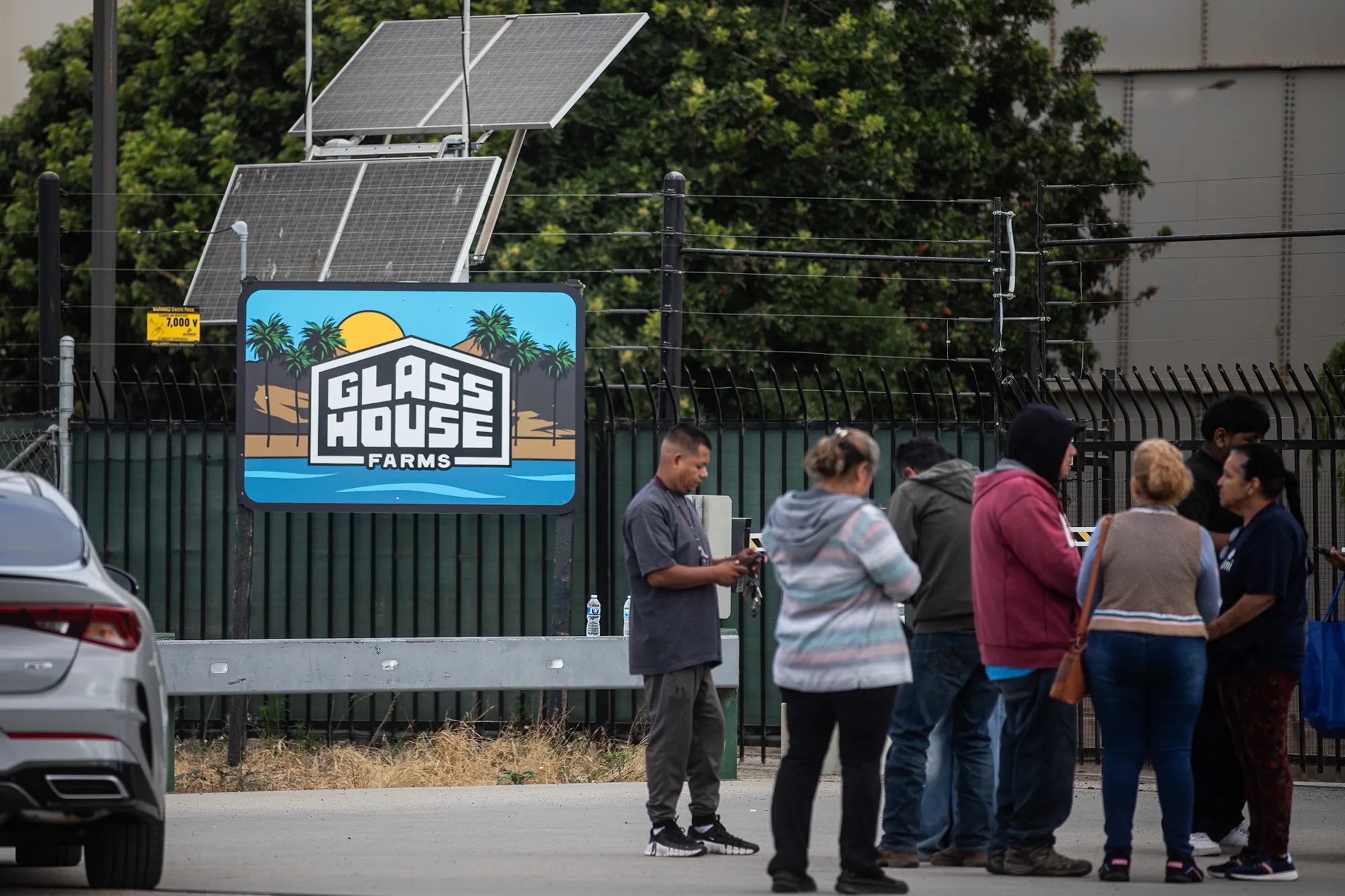
"caption": "A line of federal immigration agents and protesters stand-off near the Glass House Farms facility outside Camarillo on July 10, 2025. Protesters gathered after federal agents conducted an immigration raid earlier in the day.",
"credit": "Larry Valenzuela/CalMatters/CatchLight Local",
"altTag": null,
"description": null,
"imgSizes": {
"thumbnail": {
"file": "https://cdn.kqed.org/wp-content/uploads/sites/10/2025/07/071025-Camarillo-Raid-LV-CM-19-copy-160x107.jpg",
"width": 160,
"height": 107,
"mimeType": "image/jpeg"
},
"1536x1536": {
"file": "https://cdn.kqed.org/wp-content/uploads/sites/10/2025/07/071025-Camarillo-Raid-LV-CM-19-copy-1536x1024.jpg",
"width": 1536,
"height": 1024,
"mimeType": "image/jpeg"
},
"post-thumbnail": {
"file": "https://cdn.kqed.org/wp-content/uploads/sites/10/2025/07/071025-Camarillo-Raid-LV-CM-19-copy-672x372.jpg",
"width": 672,
"height": 372,
"mimeType": "image/jpeg"
},
"twentyfourteen-full-width": {
"file": "https://cdn.kqed.org/wp-content/uploads/sites/10/2025/07/071025-Camarillo-Raid-LV-CM-19-copy-1038x576.jpg",
"width": 1038,
"height": 576,
"mimeType": "image/jpeg"
},
"kqedFullSize": {
"file": "https://cdn.kqed.org/wp-content/uploads/sites/10/2025/07/071025-Camarillo-Raid-LV-CM-19-copy.jpg",
"width": 2000,
"height": 1333
}
},
"isLoading": false,
"fetchFailed": false
},
"news_12048932": {
"type": "attachments",
"id": "news_12048932",
"meta": {
"index": "attachments_1716263798",
"site": "news",
"id": "12048932",
"found": true
},
"title": "070125-Camarillo-Aftermath-LV-CM-06 copy",
"publishDate": 1752948537,
"status": "inherit",
"parent": 12048931,
"modified": 1752948565,
"caption": "Families wait outside the front gates of the Glass House Farms facility outside Camarillo on July 11, 2025. Glasshouse Farms was the site of an immigration raid by federal immigration agents just a day prior, on July 10.",
"credit": "Larry Valenzuela/CalMatters/CatchLight Local",
"altTag": null,
"description": null,
"imgSizes": {
"thumbnail": {
"file": "https://cdn.kqed.org/wp-content/uploads/sites/10/2025/07/070125-Camarillo-Aftermath-LV-CM-06-copy-160x107.jpg",
"width": 160,
"height": 107,
"mimeType": "image/jpeg"
},
"1536x1536": {
"file": "https://cdn.kqed.org/wp-content/uploads/sites/10/2025/07/070125-Camarillo-Aftermath-LV-CM-06-copy-1536x1024.jpg",
"width": 1536,
"height": 1024,
"mimeType": "image/jpeg"
},
"post-thumbnail": {
"file": "https://cdn.kqed.org/wp-content/uploads/sites/10/2025/07/070125-Camarillo-Aftermath-LV-CM-06-copy-672x372.jpg",
"width": 672,
"height": 372,
"mimeType": "image/jpeg"
},
"twentyfourteen-full-width": {
"file": "https://cdn.kqed.org/wp-content/uploads/sites/10/2025/07/070125-Camarillo-Aftermath-LV-CM-06-copy-1038x576.jpg",
"width": 1038,
"height": 576,
"mimeType": "image/jpeg"
},
"kqedFullSize": {
"file": "https://cdn.kqed.org/wp-content/uploads/sites/10/2025/07/070125-Camarillo-Aftermath-LV-CM-06-copy.jpg",
"width": 2000,
"height": 1333
}
},
"isLoading": false,
"fetchFailed": false
},
"news_12048130": {
"type": "attachments",
"id": "news_12048130",
"meta": {
"index": "attachments_1716263798",
"site": "news",
"id": "12048130",
"found": true
},
"title": "250715-ImmigrationCourtProtests-13-BL_qed",
"publishDate": 1752605216,
"status": "inherit",
"parent": 12049326,
"modified": 1753292955,
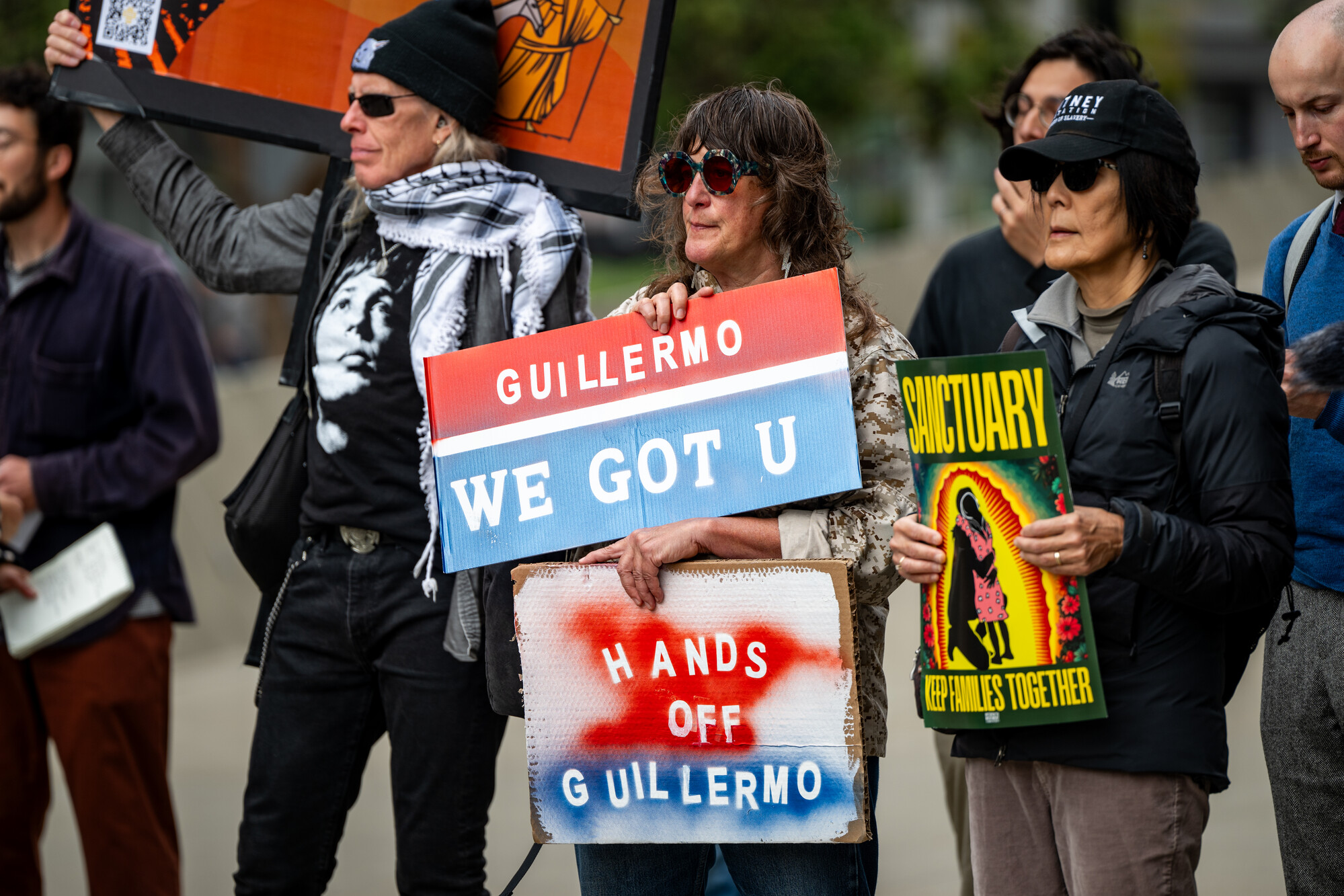
"caption": "Supporters rally outside the U.S. District Court in San Francisco on July 15, 2025, calling on ICE to release Guillermo Medina Reyes ahead of his preliminary injunction hearing.",
"credit": "Beth LaBerge/KQED",
"altTag": null,
"description": null,
"imgSizes": {
"thumbnail": {
"file": "https://cdn.kqed.org/wp-content/uploads/sites/10/2025/07/250715-ImmigrationCourtProtests-13-BL_qed-160x107.jpg",
"width": 160,
"height": 107,
"mimeType": "image/jpeg"
},
"1536x1536": {
"file": "https://cdn.kqed.org/wp-content/uploads/sites/10/2025/07/250715-ImmigrationCourtProtests-13-BL_qed-1536x1024.jpg",
"width": 1536,
"height": 1024,
"mimeType": "image/jpeg"
},
"post-thumbnail": {
"file": "https://cdn.kqed.org/wp-content/uploads/sites/10/2025/07/250715-ImmigrationCourtProtests-13-BL_qed-672x372.jpg",
"width": 672,
"height": 372,
"mimeType": "image/jpeg"
},
"twentyfourteen-full-width": {
"file": "https://cdn.kqed.org/wp-content/uploads/sites/10/2025/07/250715-ImmigrationCourtProtests-13-BL_qed-1038x576.jpg",
"width": 1038,
"height": 576,
"mimeType": "image/jpeg"
},
"kqedFullSize": {
"file": "https://cdn.kqed.org/wp-content/uploads/sites/10/2025/07/250715-ImmigrationCourtProtests-13-BL_qed.jpg",
"width": 1999,
"height": 1333
}
},
"isLoading": false,
"fetchFailed": false
},
"news_12048692": {
"type": "attachments",
"id": "news_12048692",
"meta": {
"index": "attachments_1716263798",
"site": "news",
"id": "12048692",
"found": true
},
"title": "CMBorderPatrolSac1",
"publishDate": 1752856858,
"status": "inherit",
"parent": 12048690,
"modified": 1752856914,
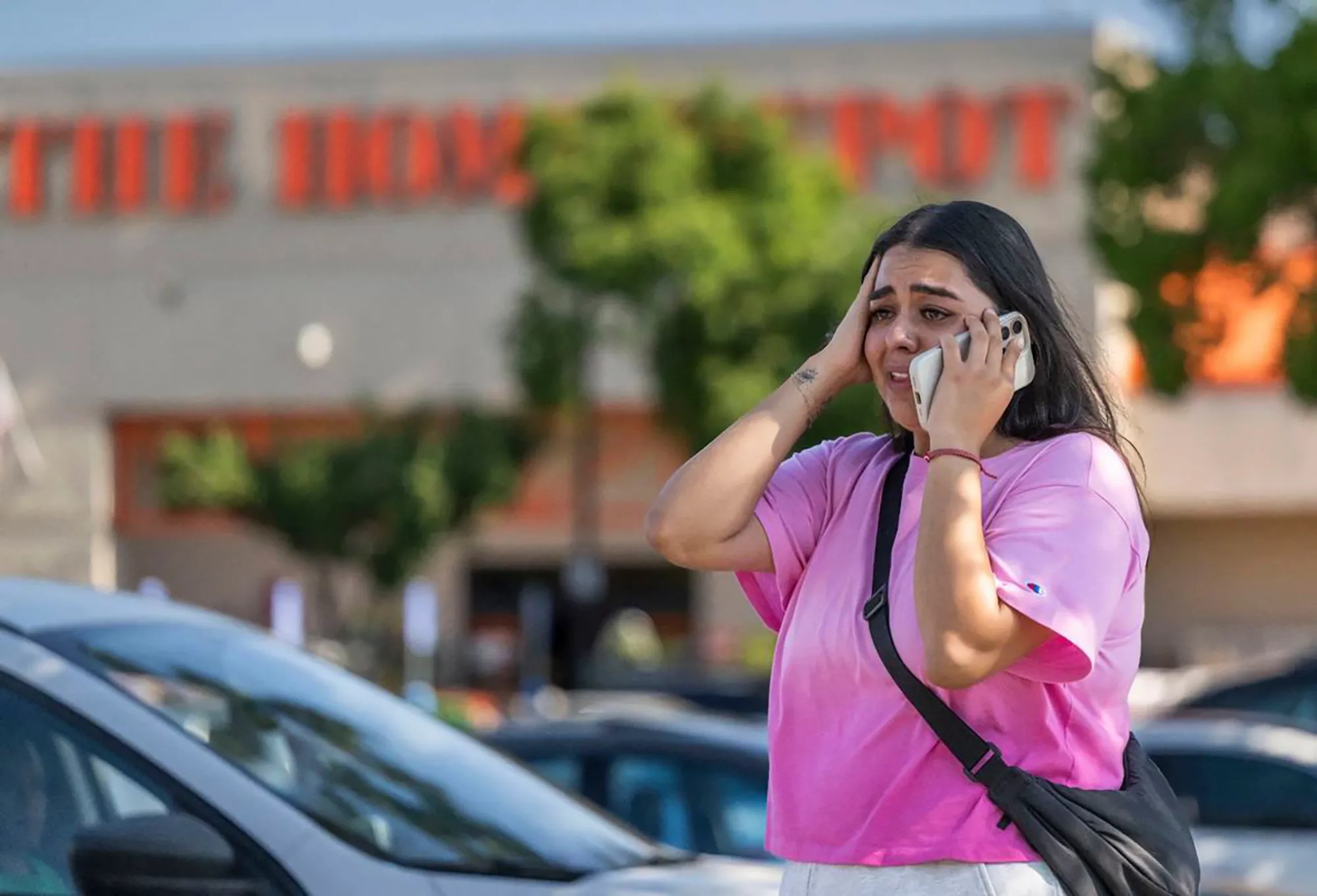
"caption": "Andrea Castillo speaks to a relative after her husband, who she said was born in Sacramento, was taken into custody by masked uniformed men from the U.S. Border Patrol at the Home Depot on Florin Road near Highway 99 in south Sacramento on July 17, 2025.",
"credit": "Hector Amezcua/The Sacramento Bee via Reuters",
"altTag": null,
"description": null,
"imgSizes": {
"thumbnail": {
"file": "https://cdn.kqed.org/wp-content/uploads/sites/10/2025/07/CMBorderPatrolSac1-160x109.jpg",
"width": 160,
"height": 109,
"mimeType": "image/jpeg"
},
"1536x1536": {
"file": "https://cdn.kqed.org/wp-content/uploads/sites/10/2025/07/CMBorderPatrolSac1-1536x1045.jpg",
"width": 1536,
"height": 1045,
"mimeType": "image/jpeg"
},
"post-thumbnail": {
"file": "https://cdn.kqed.org/wp-content/uploads/sites/10/2025/07/CMBorderPatrolSac1-672x372.jpg",
"width": 672,
"height": 372,
"mimeType": "image/jpeg"
},
"twentyfourteen-full-width": {
"file": "https://cdn.kqed.org/wp-content/uploads/sites/10/2025/07/CMBorderPatrolSac1-1038x576.jpg",
"width": 1038,
"height": 576,
"mimeType": "image/jpeg"
},
"kqedFullSize": {
"file": "https://cdn.kqed.org/wp-content/uploads/sites/10/2025/07/CMBorderPatrolSac1.jpg",
"width": 2000,
"height": 1361
}
},
"isLoading": false,
"fetchFailed": false
},
"news_12048626": {
"type": "attachments",
"id": "news_12048626",
"meta": {
"index": "attachments_1716263798",
"site": "news",
"id": "12048626",
"found": true
},
"title": "Interior Secretary Doug Burgum",
"publishDate": 1752791832,
"status": "inherit",
"parent": 0,
"modified": 1752794284,
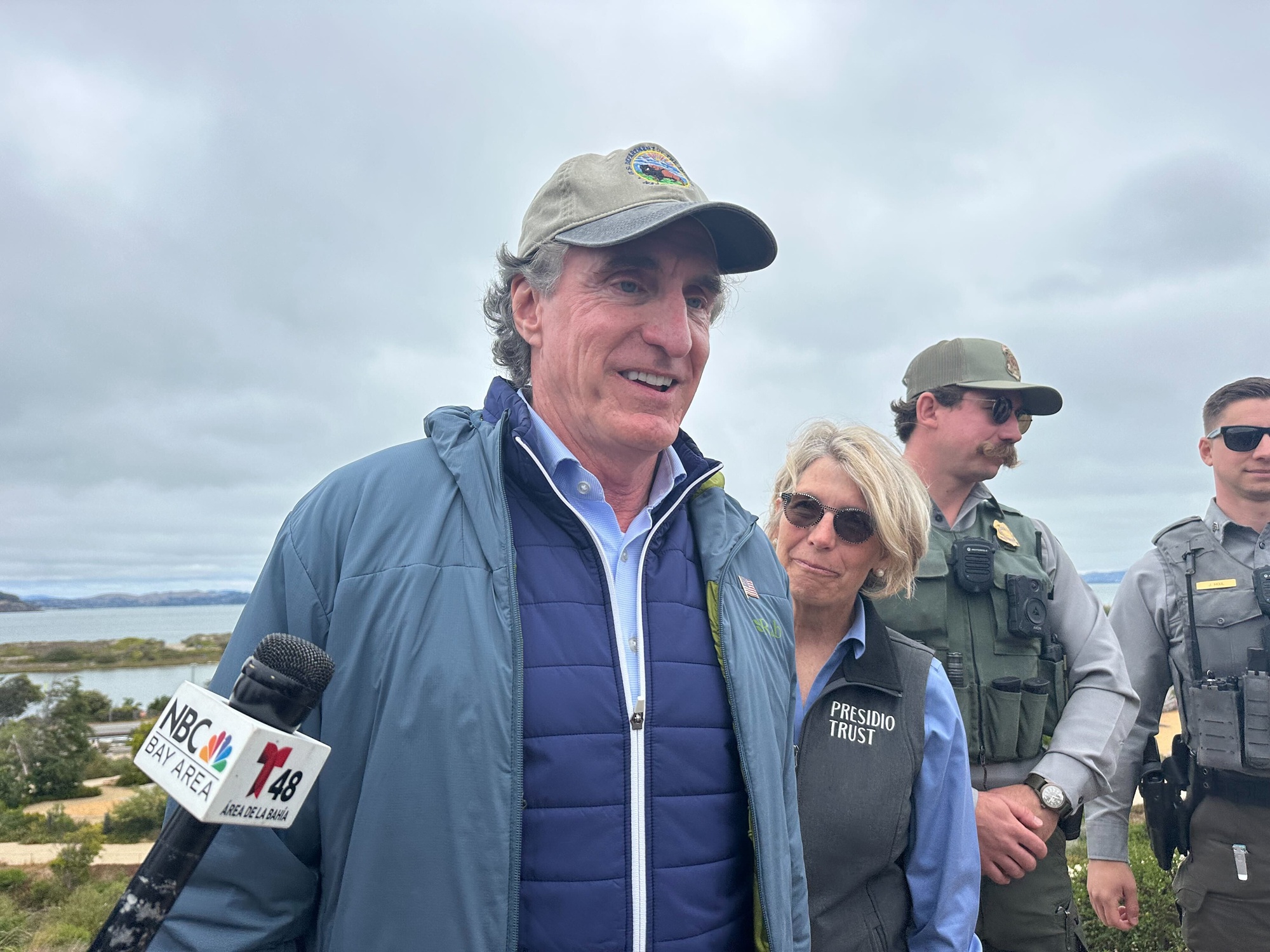
"caption": "Interior Secretary Doug Burgum at the Presidio Tunnel Tops park in San Francisco on Thursday, July 17, 2025.",
"credit": "Katie DeBenedetti/KQED",
"altTag": null,
"description": null,
"imgSizes": {
"thumbnail": {
"file": "https://cdn.kqed.org/wp-content/uploads/sites/10/2025/07/Interior-Secretary-Doug-Burgum-160x120.jpg",
"width": 160,
"height": 120,
"mimeType": "image/jpeg"
},
"1536x1536": {
"file": "https://cdn.kqed.org/wp-content/uploads/sites/10/2025/07/Interior-Secretary-Doug-Burgum-1536x1152.jpg",
"width": 1536,
"height": 1152,
"mimeType": "image/jpeg"
},
"post-thumbnail": {
"file": "https://cdn.kqed.org/wp-content/uploads/sites/10/2025/07/Interior-Secretary-Doug-Burgum-672x372.jpg",
"width": 672,
"height": 372,
"mimeType": "image/jpeg"
},
"twentyfourteen-full-width": {
"file": "https://cdn.kqed.org/wp-content/uploads/sites/10/2025/07/Interior-Secretary-Doug-Burgum-1038x576.jpg",
"width": 1038,
"height": 576,
"mimeType": "image/jpeg"
},
"kqedFullSize": {
"file": "https://cdn.kqed.org/wp-content/uploads/sites/10/2025/07/Interior-Secretary-Doug-Burgum.jpg",
"width": 2000,
"height": 1500
}
},
"isLoading": false,
"fetchFailed": false
},
"news_12048549": {
"type": "attachments",
"id": "news_12048549",
"meta": {
"index": "attachments_1716263798",
"site": "news",
"id": "12048549",
"found": true
},
"title": "Attorney General Alcatraz",
"publishDate": 1752779246,
"status": "inherit",
"parent": 12048367,
"modified": 1752779348,
"caption": "Attorney General Pam Bondi (center left) and Interior Secretary Doug Burgum (behind) arrive at Fort Baker after visiting Alcatraz Island, on Thursday, July 17, 2025, in Sausalito, California. ",
"credit": "Godofredo A. Vásquez/AP Photo",
"altTag": null,
"description": null,
"imgSizes": {
"thumbnail": {
"file": "https://cdn.kqed.org/wp-content/uploads/sites/10/2025/07/BondiBurgumSFVisitAP1-160x107.jpg",
"width": 160,
"height": 107,
"mimeType": "image/jpeg"
},
"1536x1536": {
"file": "https://cdn.kqed.org/wp-content/uploads/sites/10/2025/07/BondiBurgumSFVisitAP1-1536x1024.jpg",
"width": 1536,
"height": 1024,
"mimeType": "image/jpeg"
},
"post-thumbnail": {
"file": "https://cdn.kqed.org/wp-content/uploads/sites/10/2025/07/BondiBurgumSFVisitAP1-672x372.jpg",
"width": 672,
"height": 372,
"mimeType": "image/jpeg"
},
"twentyfourteen-full-width": {
"file": "https://cdn.kqed.org/wp-content/uploads/sites/10/2025/07/BondiBurgumSFVisitAP1-1038x576.jpg",
"width": 1038,
"height": 576,
"mimeType": "image/jpeg"
},
"kqedFullSize": {
"file": "https://cdn.kqed.org/wp-content/uploads/sites/10/2025/07/BondiBurgumSFVisitAP1.jpg",
"width": 2000,
"height": 1333
}
},
"isLoading": false,
"fetchFailed": false
},
"news_12043503": {
"type": "attachments",
"id": "news_12043503",
"meta": {
"index": "attachments_1716263798",
"site": "news",
"id": "12043503",
"found": true
},
"title": "250609-SF IMMIGRATION PROTESTS-MD-08-KQED-3",
"publishDate": 1749532677,
"status": "inherit",
"parent": 12043445,
"modified": 1752704359,
"caption": "San Francisco City Supervisor Jackie Fielder addresses protestors at a rally in the Mission District in San Francisco in opposition to the Trump Administration's immigration policy and enforcement on June 9, 2025.",
"credit": "Martin do Nascimento/KQED",
"altTag": null,
"description": null,
"imgSizes": {
"thumbnail": {
"file": "https://cdn.kqed.org/wp-content/uploads/sites/10/2025/06/250609-SF-IMMIGRATION-PROTESTS-MD-08-KQED-3-160x107.jpg",
"width": 160,
"height": 107,
"mimeType": "image/jpeg"
},
"1536x1536": {
"file": "https://cdn.kqed.org/wp-content/uploads/sites/10/2025/06/250609-SF-IMMIGRATION-PROTESTS-MD-08-KQED-3-1536x1025.jpg",
"width": 1536,
"height": 1025,
"mimeType": "image/jpeg"
},
"post-thumbnail": {
"file": "https://cdn.kqed.org/wp-content/uploads/sites/10/2025/06/250609-SF-IMMIGRATION-PROTESTS-MD-08-KQED-3-672x372.jpg",
"width": 672,
"height": 372,
"mimeType": "image/jpeg"
},
"twentyfourteen-full-width": {
"file": "https://cdn.kqed.org/wp-content/uploads/sites/10/2025/06/250609-SF-IMMIGRATION-PROTESTS-MD-08-KQED-3-1038x576.jpg",
"width": 1038,
"height": 576,
"mimeType": "image/jpeg"
},
"kqedFullSize": {
"file": "https://cdn.kqed.org/wp-content/uploads/sites/10/2025/06/250609-SF-IMMIGRATION-PROTESTS-MD-08-KQED-3.jpg",
"width": 2000,
"height": 1334
}
},
"isLoading": false,
"fetchFailed": false
},
"news_12048392": {
"type": "attachments",
"id": "news_12048392",
"meta": {
"index": "attachments_1716263798",
"site": "news",
"id": "12048392",
"found": true
},
"title": "Wheels Up: Avelo Airlines Takes Flight",
"publishDate": 1752703394,
"status": "inherit",
"parent": 12048388,
"modified": 1752704632,
"caption": "Avelo Airlines takes off with its first flight between Burbank and Santa Rosa at Hollywood Burbank Airport on April 28, 2021, in Burbank, California. ",
"credit": "Joe Scarnici/Getty Images for Avelo Air",
"altTag": null,
"description": null,
"imgSizes": {
"thumbnail": {
"file": "https://cdn.kqed.org/wp-content/uploads/sites/10/2025/07/AveloAirlinesGetty-160x107.jpg",
"width": 160,
"height": 107,
"mimeType": "image/jpeg"
},
"1536x1536": {
"file": "https://cdn.kqed.org/wp-content/uploads/sites/10/2025/07/AveloAirlinesGetty-1536x1025.jpg",
"width": 1536,
"height": 1025,
"mimeType": "image/jpeg"
},
"post-thumbnail": {
"file": "https://cdn.kqed.org/wp-content/uploads/sites/10/2025/07/AveloAirlinesGetty-672x372.jpg",
"width": 672,
"height": 372,
"mimeType": "image/jpeg"
},
"twentyfourteen-full-width": {
"file": "https://cdn.kqed.org/wp-content/uploads/sites/10/2025/07/AveloAirlinesGetty-1038x576.jpg",
"width": 1038,
"height": 576,
"mimeType": "image/jpeg"
},
"kqedFullSize": {
"file": "https://cdn.kqed.org/wp-content/uploads/sites/10/2025/07/AveloAirlinesGetty.jpg",
"width": 2000,
"height": 1334
}
},
"isLoading": false,
"fetchFailed": false
},
"news_12048214": {
"type": "attachments",
"id": "news_12048214",
"meta": {
"index": "attachments_1716263798",
"site": "news",
"id": "12048214",
"found": true
},
"title": "ImmigrationCalMatters",
"publishDate": 1752616689,
"status": "inherit",
"parent": 12048205,
"modified": 1752616749,
"caption": "Federal agents descend on MacArthur Park in Los Angeles on July 7, 2025.",
"credit": "J.W. Hendricks for CalMatters",
"altTag": null,
"description": null,
"imgSizes": {
"thumbnail": {
"file": "https://cdn.kqed.org/wp-content/uploads/sites/10/2025/07/ImmigrationCalMatters-160x107.jpg",
"width": 160,
"height": 107,
"mimeType": "image/jpeg"
},
"1536x1536": {
"file": "https://cdn.kqed.org/wp-content/uploads/sites/10/2025/07/ImmigrationCalMatters-1536x1024.jpg",
"width": 1536,
"height": 1024,
"mimeType": "image/jpeg"
},
"post-thumbnail": {
"file": "https://cdn.kqed.org/wp-content/uploads/sites/10/2025/07/ImmigrationCalMatters-672x372.jpg",
"width": 672,
"height": 372,
"mimeType": "image/jpeg"
},
"twentyfourteen-full-width": {
"file": "https://cdn.kqed.org/wp-content/uploads/sites/10/2025/07/ImmigrationCalMatters-1038x576.jpg",
"width": 1038,
"height": 576,
"mimeType": "image/jpeg"
},
"kqedFullSize": {
"file": "https://cdn.kqed.org/wp-content/uploads/sites/10/2025/07/ImmigrationCalMatters.jpg",
"width": 2000,
"height": 1333
}
},
"isLoading": false,
"fetchFailed": false
}
},
"audioPlayerReducer": {
"postId": "stream_live",
"isPaused": true,
"isPlaying": false,
"pfsActive": false,
"pledgeModalIsOpen": true,
"playerDrawerIsOpen": false,
"liveAudioPlayStartedAt": 0,
"liveAudioPlayContext": ""
},
"authorsReducer": {
"byline_news_12049071": {
"type": "authors",
"id": "byline_news_12049071",
"meta": {
"override": true
},
"slug": "byline_news_12049071",
"name": "Juliana Kim, NPR",
"isLoading": false
},
"byline_news_12049026": {
"type": "authors",
"id": "byline_news_12049026",
"meta": {
"override": true
},
"slug": "byline_news_12049026",
"name": "Robert Greene, CalMatters",
"isLoading": false
},
"byline_news_12048875": {
"type": "authors",
"id": "byline_news_12048875",
"meta": {
"override": true
},
"slug": "byline_news_12048875",
"name": "Michael Lozano, CalMatters",
"isLoading": false
},
"byline_news_12048931": {
"type": "authors",
"id": "byline_news_12048931",
"meta": {
"override": true
},
"slug": "byline_news_12048931",
"name": "Alexei Koseff, CalMatters",
"isLoading": false
},
"byline_news_12048690": {
"type": "authors",
"id": "byline_news_12048690",
"meta": {
"override": true
},
"slug": "byline_news_12048690",
"name": "Wendy Fry and Sergio Olmos, CalMatters",
"isLoading": false
},
"byline_news_12048205": {
"type": "authors",
"id": "byline_news_12048205",
"meta": {
"override": true
},
"slug": "byline_news_12048205",
"name": "Wendy Fry and Sergio Olmos, CalMatters",
"isLoading": false
},
"scottshafer": {
"type": "authors",
"id": "255",
"meta": {
"index": "authors_1716337520",
"id": "255",
"found": true
},
"name": "Scott Shafer",
"firstName": "Scott",
"lastName": "Shafer",
"slug": "scottshafer",
"email": "sshafer@kqed.org",
"display_author_email": false,
"staff_mastheads": [
"news"
],
"title": "KQED Contributor",
"bio": "Scott Shafer is a senior editor with the KQED Politics and Government desk. He is co-host of Political Breakdown, the award-winning radio show and podcast with a personal take on the world of politics. Scott came to KQED in 1998 to host the statewide\u003cem> California Report\u003c/em>. Prior to that he had extended stints in politics and government\u003cem>.\u003c/em> He uses that inside experience at KQED in his, reporting, hosting and analysis for the politics desk. Scott collaborated \u003cem>Political Breakdown a\u003c/em>nd on \u003cem>The Political Mind of Jerry Brown, \u003c/em>an eight-part series about the life and extraordinary political career of the former governor. For fun, he plays water polo with the San Francisco Tsunami.",
"avatar": "https://secure.gravatar.com/avatar/a62ebae45b79d7aed1a39a0e3bf68104?s=600&d=blank&r=g",
"twitter": "scottshafer",
"bluesky": null,
"facebook": null,
"instagram": null,
"linkedin": null,
"sites": [
{
"site": "news",
"roles": [
"editor"
]
},
{
"site": "stateofhealth",
"roles": [
"author"
]
},
{
"site": "science",
"roles": [
"author"
]
},
{
"site": "forum",
"roles": [
"subscriber"
]
},
{
"site": "liveblog",
"roles": [
"author"
]
}
],
"headData": {
"title": "Scott Shafer | KQED",
"description": "KQED Contributor",
"ogImgSrc": "https://secure.gravatar.com/avatar/a62ebae45b79d7aed1a39a0e3bf68104?s=600&d=blank&r=g",
"twImgSrc": "https://secure.gravatar.com/avatar/a62ebae45b79d7aed1a39a0e3bf68104?s=600&d=blank&r=g"
},
"isLoading": false,
"link": "/author/scottshafer"
},
"sjohnson": {
"type": "authors",
"id": "11840",
"meta": {
"index": "authors_1716337520",
"id": "11840",
"found": true
},
"name": "Sydney Johnson",
"firstName": "Sydney",
"lastName": "Johnson",
"slug": "sjohnson",
"email": "sjohnson@kqed.org",
"display_author_email": false,
"staff_mastheads": [
"news"
],
"title": "KQED Reporter",
"bio": "Sydney Johnson is a general assignment reporter at KQED. She previously reported on public health and city government at the San Francisco Examiner, and before that, she covered statewide education policy for EdSource. Her reporting has won multiple local, state and national awards. Sydney is a graduate of the University of California, Berkeley and lives in San Francisco.",
"avatar": "https://secure.gravatar.com/avatar/97855f2719b72ad6190b7c535fe642c8?s=600&d=blank&r=g",
"twitter": "sydneyfjohnson",
"facebook": null,
"instagram": null,
"linkedin": null,
"sites": [
{
"site": "news",
"roles": [
"editor"
]
}
],
"headData": {
"title": "Sydney Johnson | KQED",
"description": "KQED Reporter",
"ogImgSrc": "https://secure.gravatar.com/avatar/97855f2719b72ad6190b7c535fe642c8?s=600&d=blank&r=g",
"twImgSrc": "https://secure.gravatar.com/avatar/97855f2719b72ad6190b7c535fe642c8?s=600&d=blank&r=g"
},
"isLoading": false,
"link": "/author/sjohnson"
},
"kdebenedetti": {
"type": "authors",
"id": "11913",
"meta": {
"index": "authors_1716337520",
"id": "11913",
"found": true
},
"name": "Katie DeBenedetti",
"firstName": "Katie",
"lastName": "DeBenedetti",
"slug": "kdebenedetti",
"email": "kdebenedetti@kqed.org",
"display_author_email": false,
"staff_mastheads": [
"news",
"science"
],
"title": "KQED Contributor",
"bio": "Katie DeBenedetti is a digital reporter covering daily news for the Express Desk. Prior to joining KQED as a culture reporting intern in January 2024, she covered education and city government for the Napa Valley Register.",
"avatar": "https://secure.gravatar.com/avatar/6e31073cb8f7e4214ab03f42771d0f45?s=600&d=blank&r=g",
"twitter": null,
"facebook": null,
"instagram": null,
"linkedin": null,
"sites": [
{
"site": "news",
"roles": [
"author"
]
},
{
"site": "science",
"roles": [
"author"
]
},
{
"site": "liveblog",
"roles": [
"author"
]
}
],
"headData": {
"title": "Katie DeBenedetti | KQED",
"description": "KQED Contributor",
"ogImgSrc": "https://secure.gravatar.com/avatar/6e31073cb8f7e4214ab03f42771d0f45?s=600&d=blank&r=g",
"twImgSrc": "https://secure.gravatar.com/avatar/6e31073cb8f7e4214ab03f42771d0f45?s=600&d=blank&r=g"
},
"isLoading": false,
"link": "/author/kdebenedetti"
},
"slim": {
"type": "authors",
"id": "11920",
"meta": {
"index": "authors_1716337520",
"id": "11920",
"found": true
},
"name": "Samantha Lim",
"firstName": "Samantha",
"lastName": "Lim",
"slug": "slim",
"email": "slim@KQED.org",
"display_author_email": false,
"staff_mastheads": [],
"title": "KQED Contributor",
"bio": null,
"avatar": "https://secure.gravatar.com/avatar/82e592e6c15fe1a04d385e8ad0fb0b4e?s=600&d=blank&r=g",
"twitter": null,
"facebook": null,
"instagram": null,
"linkedin": null,
"sites": [
{
"site": "news",
"roles": []
}
],
"headData": {
"title": "Samantha Lim | KQED",
"description": "KQED Contributor",
"ogImgSrc": "https://secure.gravatar.com/avatar/82e592e6c15fe1a04d385e8ad0fb0b4e?s=600&d=blank&r=g",
"twImgSrc": "https://secure.gravatar.com/avatar/82e592e6c15fe1a04d385e8ad0fb0b4e?s=600&d=blank&r=g"
},
"isLoading": false,
"link": "/author/slim"
}
},
"pagesReducer": {
"news_tag_immigration": {
"type": "terms",
"id": "news_20202",
"meta": {
"index": "terms_1716263798",
"site": "news",
"id": "20202",
"score": 6.90447
},
"featImg": null,
"name": "immigration",
"description": null,
"taxonomy": "tag",
"headData": {
"twImgId": null,
"twTitle": null,
"ogTitle": null,
"ogImgId": null,
"twDescription": null,
"description": null,
"title": "immigration Archives | KQED News",
"ogDescription": null
},
"ttid": 20219,
"slug": "immigration",
"isLoading": false,
"title": "immigration",
"pageMeta": {
"site": "news",
"WpPageTemplate": "page-topic-editorial",
"currentPage": 23
},
"blocks": [
{
"blockName": "kqed/post-list",
"attrs": {
"layout": "cardArticle2",
"query": "posts/news?tag=immigration",
"seeMore": false,
"paginated": true,
"page": 23
}
},
{
"blockName": "kqed/ad"
}
]
}
},
"pfsSessionReducer": {},
"postsReducer": {
"stream_live": {
"type": "live",
"id": "stream_live",
"audioUrl": "https://streams.kqed.org/kqedradio",
"title": "Live Stream",
"excerpt": "Live Stream information currently unavailable.",
"link": "/radio",
"featImg": "",
"label": {
"name": "KQED Live",
"link": "/"
}
},
"stream_kqedNewscast": {
"type": "posts",
"id": "stream_kqedNewscast",
"audioUrl": "https://www.kqed.org/.stream/anon/radio/RDnews/newscast.mp3?_=1",
"title": "KQED Newscast",
"featImg": "",
"label": {
"name": "88.5 FM",
"link": "/"
}
},
"news_12049071": {
"type": "posts",
"id": "news_12049071",
"meta": {
"index": "posts_1716263798",
"site": "news",
"id": "12049071",
"score": null,
"sort": [
1753200024000
]
},
"guestAuthors": [],
"slug": "trump-has-a-welcome-message-for-new-citizens-its-different-from-past-presidents",
"title": "Trump Has a Welcome Message for New Citizens. It's Different From Past Presidents",
"publishDate": 1753200024,
"format": "standard",
"headTitle": "Trump Has a Welcome Message for New Citizens. It’s Different From Past Presidents | KQED",
"labelTerm": {
"term": 253,
"site": "news"
},
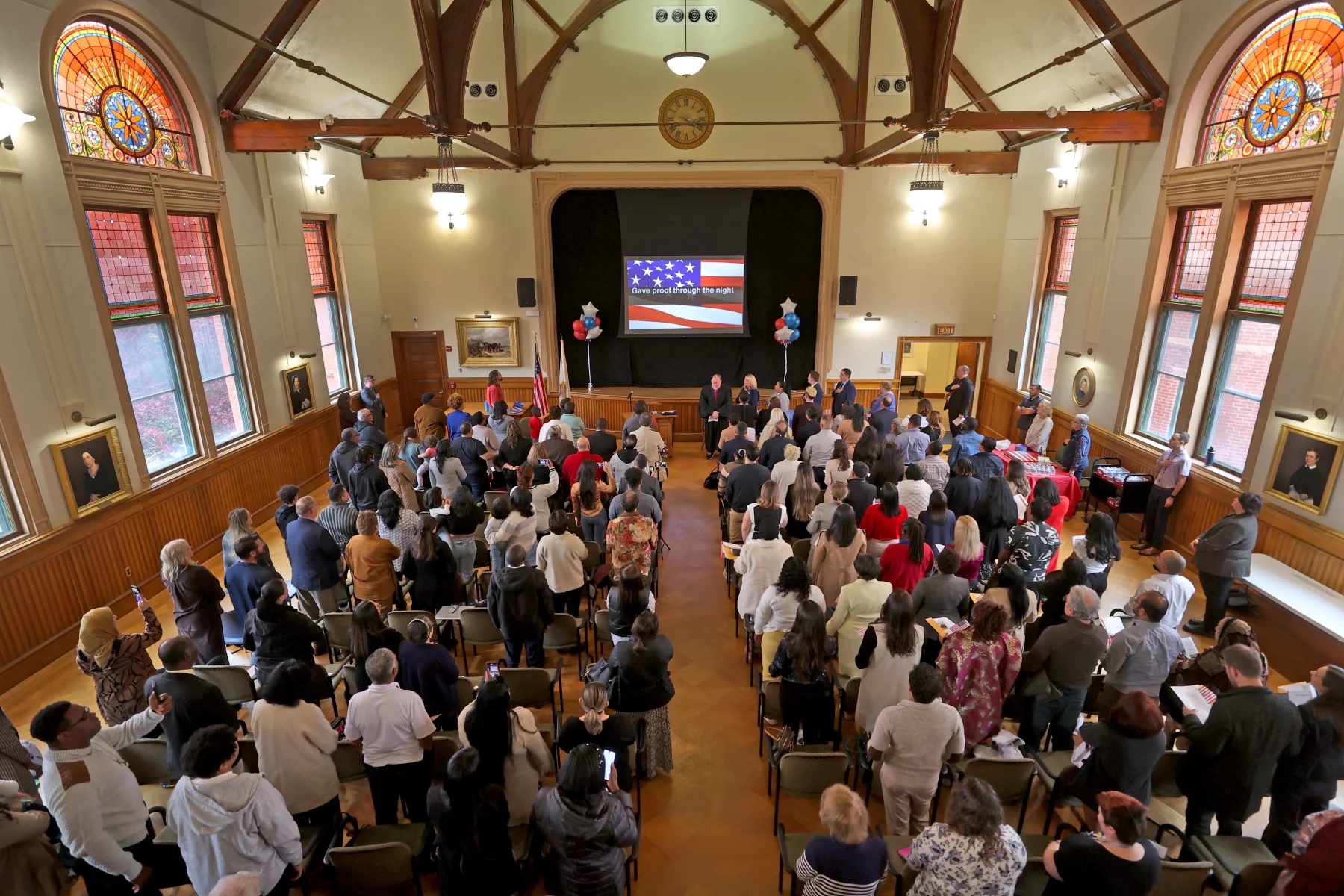
"content": "\u003cp>Over the past two decades, it’s become a tradition for each president to craft their own speech to welcome new citizens.\u003c/p>\n\u003cp>These video messages, played at naturalization ceremonies nationwide, are brief but experts in presidential rhetoric say they are important — not only are they meaningful to newly naturalized citizens, but they provide insight on how each president values immigration and their broader vision for the country.\u003c/p>\n\u003cp>President Trump, whose second term has been marked by his hard-line approach to immigration, released a new naturalization ceremony video last month.\u003c/p>\n\u003cp>“Today you receive one of the most priceless gifts ever granted by human hands. You become a citizen of the United States of America,” Trump said.\u003c/p>\n\u003cp>\u003c!-- iframe plugin v.4.3 wordpress.org/plugins/iframe/ -->\u003cbr>\n\u003ciframe loading=\"lazy\" id=\"jw_embed\" width=\"600\" height=\"338\" src=\"https://www.npr.org/embedded-video?storyId=g-s1-77250&mediaId=g-s1-77250-100&jwMediaType=news\" frameborder=\"0\" scrolling=\"no\" class=\"iframe-class\">\u003c/iframe>\u003c/p>\n\u003cp>Trump went on to welcome new citizens into the “national family,” adding that they now have a responsibility to “fiercely guard” and preserve American culture, including the freedom of speech, religion and the right to bear arms.\u003c/p>\n\u003cp>“That fits into his larger narrative, but that’s not usually what you see at an American naturalization ceremony. It’s much more of a celebration and I’m not saying that Trump doesn’t celebrate those ideas, but it’s less celebratory than his predecessors,” said Jason Edwards, a communications professor at Bridgewater State University in Massachusetts who has studied presidential welcomes to new citizens.\u003c/p>\n\u003cp>[ad fullwidth]\u003c/p>\n\u003ch2>Departure from past presidents’ remarks\u003c/h2>\n\u003cp>Only a handful of presidents have delivered remarks at naturalization ceremonies, either through video or in person. That includes Gerald Ford, George W. Bush, Barack Obama and Joe Biden.\u003c/p>\n\u003cp>Edwards said most have centered their message on how immigrants enrich and renew the country, whereas Trump’s remarks emphasized what the U.S. has to offer new citizens.\u003c/p>\n\u003cp>“No matter where you come from, you now share a home and a heritage with some of the most exceptional heroes, legends and patriots to ever walk the face of the Earth,” Trump said in his speech.\u003c/p>\n\u003cp>[aside postID=news_12026273 hero='https://cdn.kqed.org/wp-content/uploads/sites/10/2024/09/GettyImages-1277623147-1020x680.jpg']\u003c/p>\n\u003cp>“There’s no heterogeneity, there’s no celebration of diversity, there’s no celebration of past immigrants,” Edwards said.\u003c/p>\n\u003cp>A spokesman for the U.S. Citizenship and Immigration Services, or USCIS, which released Trump’s video, said his message is “an essential one” and would be part of naturalization ceremonies moving forward.\u003c/p>\n\u003cp>That message: “U.S. citizenship is a privilege and reserved for those who respect our laws, culture, and history,” USCIS spokesman Matthew Tragesser \u003ca href=\"https://www.uscis.gov/newsroom/news-releases/president-trump-tells-citizens-to-fiercely-guard-american-way-of-life-in-new-naturalization-ceremony\">said in a press release\u003c/a> about the video.\u003c/p>\n\u003cp>In both his first and second term, Trump avoided using the word “immigrant” altogether in his video message congratulating new citizens. That also strayed from his predecessors, who often called the U.S. a nation of immigrants and acknowledged the journey that newcomers took to become American citizens.\u003c/p>\n\u003cp>Biden, for example, spoke about immigrants’ sacrifices and courage, adding that his own ancestors immigrated to the U.S. from Ireland.\u003c/p>\n\u003cp>“I don’t wanna say it’s an erasure, but it’s wanting to kind of erase that idea — you’re no longer an immigrant, you are a citizen,” Edwards said, referring to Trump’s remarks.\u003c/p>\n\u003cp>Instead, Trump shifted the focus to the idea of a “national family,” which often implies loyalty and obligation, according to Matthew Eshbaugh-Soha, a political science professor at the University of North Texas.\u003c/p>\n\u003cp>Eshbaugh-Soha added that the emphasis on family and the explicit reference to the right to bear arms are consistent with traditional conservative values — which is also unusual for ceremonial speeches like naturalization events.\u003c/p>\n\u003cp>“That idea of American family is very much in line with this idea of America first,” he said.\u003c/p>\n\u003cp>Generally, Trump’s rhetoric on immigration has intensified during his second term, especially during his most recent presidential campaign, according to Jennifer Mercieca, a historian of American political rhetoric at Texas A&M University.\u003c/p>\n\u003cp>“The metaphors that he used about immigration, whether it was an invasion, whether immigrants were poisoning the blood of the nation and things like that,” Mercieca said. “Those are very salient ways of talking about immigration and very different from the ways that previous presidents have done.”\u003c/p>\n\u003cp>\u003c/p>\n",
"blocks": [],
"excerpt": "In a naturalization ceremony video released last month, Trump welcomed new citizens into the 'national family,' adding that they now have a responsibility to 'fiercely guard' and preserve American culture — with no mention of diversity or past immigrants.",
"status": "publish",
"parent": 0,
"modified": 1753141829,
"stats": {
"hasAudio": false,
"hasVideo": false,
"hasChartOrMap": true,
"iframeSrcs": [
"https://www.npr.org/embedded-video"
],
"hasGoogleForm": false,
"hasGallery": false,
"hasHearkenModule": false,
"hasPolis": false,
"paragraphCount": 24,
"wordCount": 750
},
"headData": {
"title": "Trump Has a Welcome Message for New Citizens. It's Different From Past Presidents | KQED",
"description": "In a naturalization ceremony video released last month, Trump welcomed new citizens into the 'national family,' adding that they now have a responsibility to 'fiercely guard' and preserve American culture — with no mention of diversity or past immigrants.",
"ogTitle": "",
"ogDescription": "",
"ogImgId": "",
"twTitle": "",
"twDescription": "",
"twImgId": "",
"schema": {
"@context": "https://schema.org",
"@type": "NewsArticle",
"headline": "Trump Has a Welcome Message for New Citizens. It's Different From Past Presidents",
"datePublished": "2025-07-22T09:00:24-07:00",
"dateModified": "2025-07-21T16:50:29-07:00",
"image": "https://cdn.kqed.org/wp-content/uploads/2020/02/KQED-OG-Image@1x.png",
"isAccessibleForFree": "True",
"publisher": {
"@type": "NewsMediaOrganization",
"@id": "https://www.kqed.org/#organization",
"name": "KQED",
"logo": "https://cdn.kqed.org/wp-content/uploads/2020/02/KQED-OG-Image@1x.png",
"url": "https://www.kqed.org",
"sameAs": [
"https://www.facebook.com/KQED",
"https://twitter.com/KQED",
"https://www.instagram.com/kqed/",
"https://www.tiktok.com/@kqedofficial",
"https://www.linkedin.com/company/kqed",
"https://www.youtube.com/channel/UCeC0IOo7i1P_61zVUWbJ4nw"
]
}
}
},
"primaryCategory": {
"termId": 8,
"slug": "news",
"name": "News"
},
"sticky": false,
"nprByline": "Juliana Kim, NPR",
"templateType": "standard",
"featuredImageType": "standard",
"excludeFromSiteSearch": "Include",
"showOnAuthorArchivePages": "No",
"articleAge": "0",
"path": "/news/12049071/trump-has-a-welcome-message-for-new-citizens-its-different-from-past-presidents",
"audioTrackLength": null,
"parsedContent": [
{
"type": "contentString",
"content": "\u003cdiv class=\"post-body\">\u003cp>\u003cp>Over the past two decades, it’s become a tradition for each president to craft their own speech to welcome new citizens.\u003c/p>\n\u003cp>These video messages, played at naturalization ceremonies nationwide, are brief but experts in presidential rhetoric say they are important — not only are they meaningful to newly naturalized citizens, but they provide insight on how each president values immigration and their broader vision for the country.\u003c/p>\n\u003cp>President Trump, whose second term has been marked by his hard-line approach to immigration, released a new naturalization ceremony video last month.\u003c/p>\n\u003cp>“Today you receive one of the most priceless gifts ever granted by human hands. You become a citizen of the United States of America,” Trump said.\u003c/p>\n\u003cp>\u003c!-- iframe plugin v.4.3 wordpress.org/plugins/iframe/ -->\u003cbr>\n\u003ciframe loading=\"lazy\" id=\"jw_embed\" width=\"600\" height=\"338\" src=\"https://www.npr.org/embedded-video?storyId=g-s1-77250&mediaId=g-s1-77250-100&jwMediaType=news\" frameborder=\"0\" scrolling=\"no\" class=\"iframe-class\">\u003c/iframe>\u003c/p>\n\u003cp>Trump went on to welcome new citizens into the “national family,” adding that they now have a responsibility to “fiercely guard” and preserve American culture, including the freedom of speech, religion and the right to bear arms.\u003c/p>\n\u003cp>“That fits into his larger narrative, but that’s not usually what you see at an American naturalization ceremony. It’s much more of a celebration and I’m not saying that Trump doesn’t celebrate those ideas, but it’s less celebratory than his predecessors,” said Jason Edwards, a communications professor at Bridgewater State University in Massachusetts who has studied presidential welcomes to new citizens.\u003c/p>\n\u003cp>\u003c/p>\u003c/div>",
"attributes": {
"named": {},
"numeric": []
}
},
{
"type": "component",
"content": "",
"name": "ad",
"attributes": {
"named": {
"label": "fullwidth"
},
"numeric": [
"fullwidth"
]
}
},
{
"type": "contentString",
"content": "\u003cdiv class=\"post-body\">\u003cp>\u003c/p>\n\u003ch2>Departure from past presidents’ remarks\u003c/h2>\n\u003cp>Only a handful of presidents have delivered remarks at naturalization ceremonies, either through video or in person. That includes Gerald Ford, George W. Bush, Barack Obama and Joe Biden.\u003c/p>\n\u003cp>Edwards said most have centered their message on how immigrants enrich and renew the country, whereas Trump’s remarks emphasized what the U.S. has to offer new citizens.\u003c/p>\n\u003cp>“No matter where you come from, you now share a home and a heritage with some of the most exceptional heroes, legends and patriots to ever walk the face of the Earth,” Trump said in his speech.\u003c/p>\n\u003cp>\u003c/p>\u003c/div>",
"attributes": {
"named": {},
"numeric": []
}
},
{
"type": "component",
"content": "",
"name": "aside",
"attributes": {
"named": {
"postid": "news_12026273",
"hero": "https://cdn.kqed.org/wp-content/uploads/sites/10/2024/09/GettyImages-1277623147-1020x680.jpg",
"label": ""
},
"numeric": []
}
},
{
"type": "contentString",
"content": "\u003cdiv class=\"post-body\">\u003cp>\u003c/p>\n\u003cp>“There’s no heterogeneity, there’s no celebration of diversity, there’s no celebration of past immigrants,” Edwards said.\u003c/p>\n\u003cp>A spokesman for the U.S. Citizenship and Immigration Services, or USCIS, which released Trump’s video, said his message is “an essential one” and would be part of naturalization ceremonies moving forward.\u003c/p>\n\u003cp>That message: “U.S. citizenship is a privilege and reserved for those who respect our laws, culture, and history,” USCIS spokesman Matthew Tragesser \u003ca href=\"https://www.uscis.gov/newsroom/news-releases/president-trump-tells-citizens-to-fiercely-guard-american-way-of-life-in-new-naturalization-ceremony\">said in a press release\u003c/a> about the video.\u003c/p>\n\u003cp>In both his first and second term, Trump avoided using the word “immigrant” altogether in his video message congratulating new citizens. That also strayed from his predecessors, who often called the U.S. a nation of immigrants and acknowledged the journey that newcomers took to become American citizens.\u003c/p>\n\u003cp>Biden, for example, spoke about immigrants’ sacrifices and courage, adding that his own ancestors immigrated to the U.S. from Ireland.\u003c/p>\n\u003cp>“I don’t wanna say it’s an erasure, but it’s wanting to kind of erase that idea — you’re no longer an immigrant, you are a citizen,” Edwards said, referring to Trump’s remarks.\u003c/p>\n\u003cp>Instead, Trump shifted the focus to the idea of a “national family,” which often implies loyalty and obligation, according to Matthew Eshbaugh-Soha, a political science professor at the University of North Texas.\u003c/p>\n\u003cp>Eshbaugh-Soha added that the emphasis on family and the explicit reference to the right to bear arms are consistent with traditional conservative values — which is also unusual for ceremonial speeches like naturalization events.\u003c/p>\n\u003cp>“That idea of American family is very much in line with this idea of America first,” he said.\u003c/p>\n\u003cp>Generally, Trump’s rhetoric on immigration has intensified during his second term, especially during his most recent presidential campaign, according to Jennifer Mercieca, a historian of American political rhetoric at Texas A&M University.\u003c/p>\n\u003cp>“The metaphors that he used about immigration, whether it was an invasion, whether immigrants were poisoning the blood of the nation and things like that,” Mercieca said. “Those are very salient ways of talking about immigration and very different from the ways that previous presidents have done.”\u003c/p>\n\u003cp>\u003c/p>\n\u003c/div>\u003c/p>",
"attributes": {
"named": {},
"numeric": []
}
}
],
"link": "/news/12049071/trump-has-a-welcome-message-for-new-citizens-its-different-from-past-presidents",
"authors": [
"byline_news_12049071"
],
"categories": [
"news_1169",
"news_8",
"news_13"
],
"tags": [
"news_22883",
"news_1323",
"news_20202",
"news_35256",
"news_26537"
],
"affiliates": [
"news_253"
],
"featImg": "news_12049072",
"label": "news_253"
},
"news_12049026": {
"type": "posts",
"id": "news_12049026",
"meta": {
"index": "posts_1716263798",
"site": "news",
"id": "12049026",
"score": null,
"sort": [
1753156804000
]
},
"guestAuthors": [],
"slug": "the-trump-regime-targets-californias-sanctuary-status-at-the-expense-of-the-american-creed",
"title": "The Trump Regime Targets California’s Sanctuary Status at the Expense of the American Creed",
"publishDate": 1753156804,
"format": "standard",
"headTitle": "The Trump Regime Targets California’s Sanctuary Status at the Expense of the American Creed | KQED",
"labelTerm": {
"term": 18481,
"site": "news"
},
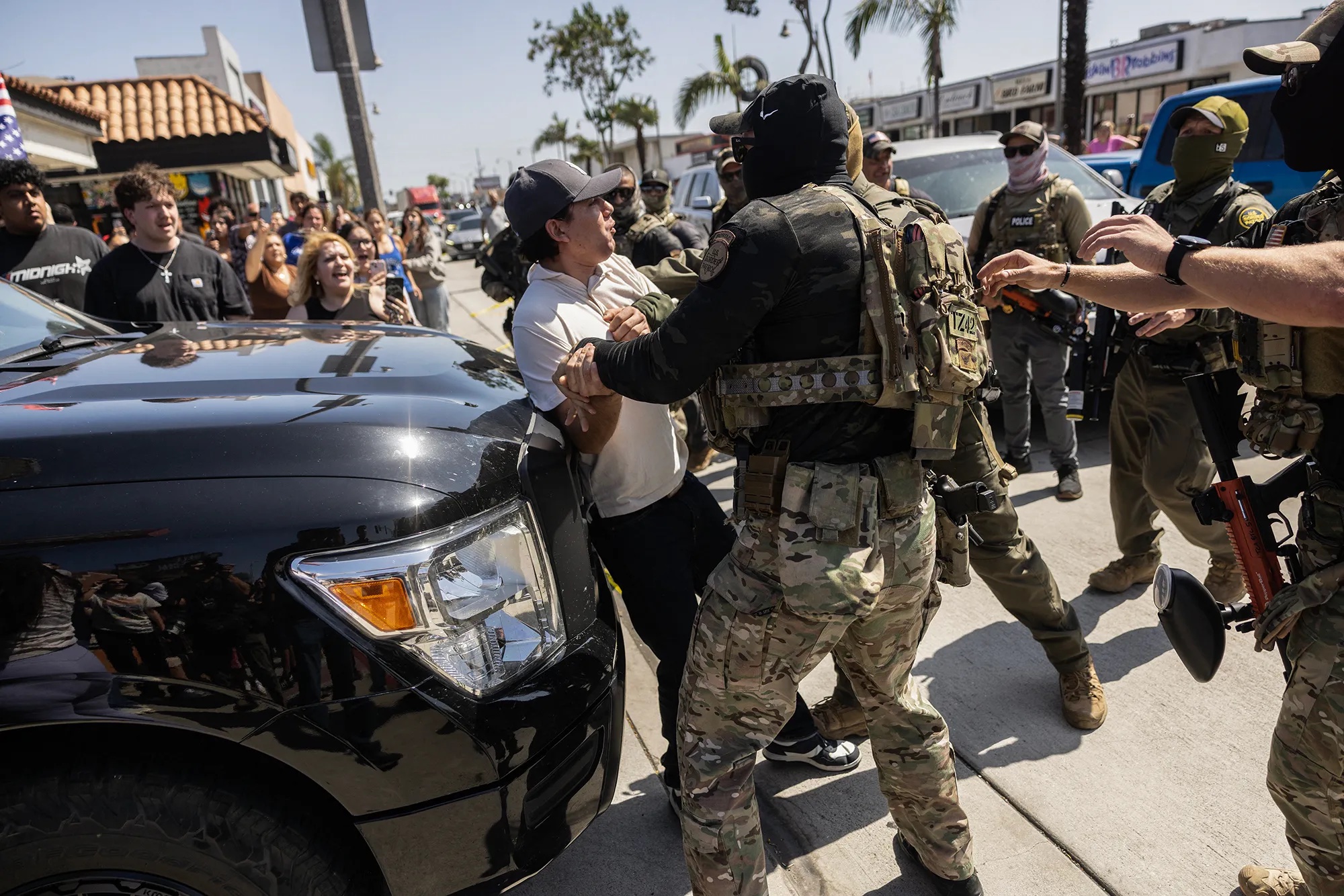
"content": "\u003cp>\u003c!-- Creative Commons Attribution-NonCommercial-NoDerivatives https://creativecommons.org/licenses/by-nc-nd/4.0/ -->\u003c/p>\n\u003cp>\u003cem>This commentary was originally published by \u003ca href=\"https://calmatters.org/\">CalMatters\u003c/a>. \u003ca href=\"https://calmatters.org/subscribe-to-calmatters/\">Sign up\u003c/a> for their newsletters.\u003c/em>\u003c/p>\n\u003cp>\u003cem>This story is part of California Voices, a commentary forum aiming to broaden our understanding of the state and spotlight Californians directly impacted by policy or its absence. Learn more \u003ca href=\"https://calmatters.org/category/commentary/\">here\u003c/a>.\u003c/em>\u003c/p>\n\u003cp>\u003ca href=\"https://calmatters.org/justice/2025/07/la-immigration-restraining-order/\">Blocked for now by a federal court order\u003c/a> from sending warrantless roving immigration patrols through Los Angeles and six other Southern California counties, U.S. agents on Thursday \u003ca href=\"https://calmatters.org/justice/2025/07/sacramento-border-patrol-raids/\">moved their sweeps north to Sacramento\u003c/a>.\u003c/p>\n\u003cp>Border Patrol section chief \u003ca href=\"https://calmatters.org/investigation/2025/06/los-angeles-border-patrol-chief/\">Gregory Bovino\u003c/a> made it abundantly clear that the point of the operation at a Home Depot parking lot in South Sacramento was embodied in the same word, the same concept, as the round-ups in Los Angeles. They are about “sanctuary.”\u003c/p>\n\u003cp>It is a word that has clearly gotten under Bovino’s skin, just as it has gotten under the skin of immigration opponents in the White House and the Capitol.\u003c/p>\n\u003cp>[ad fullwidth]\u003c/p>\n\u003cp>“There is no sanctuary city,” \u003ca href=\"https://x.com/BillMelugin_/status/1945902933813690454\">Bovino told Fox News\u003c/a>. “Sacramento is not a sanctuary city. The state of California is not a sanctuary state. There is no sanctuary anywhere.”\u003c/p>\n\u003cp>If by that he meant that no jurisdiction can protect residents from federal immigration law, he is of course correct. The Constitution’s Supremacy Clause leaves no doubt about that. States, counties and cities that describe themselves as sanctuaries are engaging in recklessly misleading political marketing. Their laws at most prevent local police from \u003ca href=\"https://calmatters.org/justice/2025/01/california-sanctuary-state/\">questioning suspects about their immigration status\u003c/a>, for example, or block jailers from holding inmates past their release dates so the feds can get them.\u003c/p>\n\u003cp>But the federal government’s contempt for sanctuary appears to go well beyond the modest if over-sold local policies. Their actions and statements demonstrate that they respect no sanctuary, no refuge, no protection in the very things they purport to be guarding: the law, the Constitution, the American people, and their safety, values and sovereignty.\u003c/p>\n\u003cp>[aside postID=forum_2010101909877 hero='https://cdn.kqed.org/wp-content/uploads/sites/43/2025/05/250128-SFImmigration-08-BL_qed-1-1020x574.jpg']\u003c/p>\n\u003cp>District Judge Maame Ewusi-Mensah Frimpong’s blistering \u003ca href=\"https://storage.courtlistener.com/recap/gov.uscourts.cacd.975351/gov.uscourts.cacd.975351.87.0.pdf\">July 11 order\u003c/a>, which the administration has appealed, lays out the frightening details of a government that has turned hard-won American freedoms inside out.\u003c/p>\n\u003cp>In this country, unlike most others in the world, the people are free to go about their business without having to show their papers to government agents on demand, absent probable cause to believe they have committed a crime, or at least sufficient suspicion to ask them questions. Those same agents, by contrast, must identify themselves, and not merely by brandishing their guns. They must be clearly distinguishable in action and appearance from crooks of the sort who kidnap residents of third-world countries. Here there is no army of secret police. There are no roving bands of quasi-military thugs.\u003c/p>\n\u003cp>Until now. Border Patrol and ICE agents in \u003ca href=\"https://calmatters.org/commentary/2025/06/ice-san-diego-foreshadowed-protests/\">San Diego\u003c/a>, Los Angeles, Orange and \u003ca href=\"https://www.latimes.com/california/story/2025-07-10/federal-immigration-sweep-ventura-county-farms\">Ventura\u003c/a> counties, and now in Sacramento, \u003ca href=\"https://calmatters.org/justice/2025/07/immigration-raids-who/\">hide their faces\u003c/a>, tint their car windows, remove their license plates, cover their badges, ignore requests for identification, and \u003ca href=\"https://calmatters.org/investigation/2025/07/patterns-in-california-immigration-raids/\">target people based on where they work\u003c/a> and \u003ca href=\"https://calmatters.org/justice/2025/04/border-patrol-injunction/\">how they look\u003c/a>.\u003c/p>\n\u003cp>If this conduct is allowed to stand for federal officers, based on the specious argument that they need protection, it is inevitable that all police, perhaps all jailers, prosecutors and judges, will soon hide their faces and do their government work in secret.\u003c/p>\n\u003cp>Agents recognize no sanctuary in the Fourth Amendment’s protection against warrantless search and seizure. They demand at gunpoint that you show your papers and lock you up if they find them unsatisfactory. Frimpong’s order describes a U.S. citizen showing a driver’s license — and then being grabbed anyway after an agent demanded to see a passport.\u003c/p>\n\u003cp>Since when do American citizens have to carry passports?\u003c/p>\n\u003cp>There is no sanctuary in the 14th Amendment’s promise of equal protection or in generations of civil rights struggles, court rulings and policy updates that supposedly swept away racially disparate treatment. Frimpong’s order describes a stop in which agents let a white person walk away but not a nonwhite person. Border “czar” Tom Homan said recently that ICE agents were \u003ca href=\"https://bsky.app/profile/atrupar.com/post/3ltoyyfr5vt2m\">free to stop people based on their appearance\u003c/a>.\u003c/p>\n\u003cp>There is no sanctuary in the Sixth Amendment’s right to counsel. The order describes shocking conditions in the basement of the immigration building at 300 N. Los Angeles Street, where captured suspects were so cramped they could not sit or lie down and had no access to lawyers for days.\u003c/p>\n\u003cp>There is no sanctuary in \u003ca href=\"https://www.sacbee.com/opinion/article309102735.html\">courthouses\u003c/a>, \u003ca href=\"https://calmatters.org/california-divide/2025/07/ice-targets-immigrants-church-grounds/\">churches\u003c/a>, nursing homes or other places where agents grab people without judicial warrants. There is no sanctuary in essential work, such as farm fields, despite President Trump’s \u003ca href=\"https://www.usatoday.com/story/news/politics/2025/06/20/trump-farmers-migrant-labor/84291870007/\">statement\u003c/a> that perhaps farmworkers and hotel workers might get a break, because after all, farmers would not hire any murderers. He did not explain why the exemption should cover farmworkers but not, say, kitchen workers.\u003c/p>\n\u003cp>There is no sanctuary, no protection from deportation, even in American citizenship. The Department of Justice is \u003ca href=\"https://www.npr.org/2025/06/30/nx-s1-5445398/denaturalization-trump-immigration-enforcement\">stepping up a program to denaturalize people\u003c/a> who were born elsewhere but lawfully go through the citizenship process and take the oath, but who later commit crimes. Such a move creates a second, lesser tier of citizenship, with different standards of conduct and different consequences for the same crimes.\u003c/p>\n\u003cp>Second-tier citizenship was virtually abolished in American society after a century-long post-slavery struggle for equality. Must we countenance its return?\u003c/p>\n\u003cp>But there is no sanctuary even in being born here. The administration is moving to \u003ca href=\"https://apnews.com/article/birthright-citizenship-trump-immigration-new-hampshire-9d54d8b4a75e350b6a2fe41cb79c1c65\">end birthright citizenship\u003c/a>, which long has been an unassailable cornerstone of American identity and civil rights. Our leaders are threatening to, for the first time in 60 years, award or deny fundamental rights based not on who you are or what you do, but who your parents were and what they did.\u003c/p>\n\u003cp>So where can sanctuary be found? If not in lines written on the base of the Statue of Liberty, or in the Constitution, or in citizenship or in simple human decency, then where?\u003c/p>\n\u003cp>Is there sanctuary only in \u003ca href=\"https://www.latintimes.com/dont-you-dare-ever-say-that-again-kristi-noem-threatens-reporter-over-question-ice-racial-587136\">skin color\u003c/a>? If you’re white, or perhaps if you’re Black, you may be OK. If you are brown, you’d better carry your passport for the rest of your days, and teach your children to carry theirs too. Stay away from Home Depot. Endure stops and questions. Keep your head down. It is the dream of the white supremacist. It is the achievement of the 2017 Charlottesville rally to “Unite the Right.” It is a state of affairs repugnant to the American creed.\u003c/p>\n\u003cp>And the only thing, so far, that keeps it from becoming the new American normal is Judge Frimpong’s emergency order.\u003c/p>\n\u003cp>The government has \u003ca href=\"https://www.latimes.com/california/story/2025-07-14/doj-ninth-circuit-immigration-appeal\">appealed\u003c/a>.\u003c/p>\n\u003cp>\u003cem>This article was \u003ca href=\"https://calmatters.org/commentary/2025/07/trump-targets-sanctuary-expense-american-creed/\">originally published on CalMatters\u003c/a> and was republished under the \u003ca href=\"https://creativecommons.org/licenses/by-nc-nd/4.0/\">Creative Commons Attribution-NonCommercial-NoDerivatives\u003c/a> license.\u003c/em>\u003c/p>\n\u003cp>[ad floatright]\u003c/p>\n",
"blocks": [],
"excerpt": "A commentary piece on how the federal government’s immigration sweeps appear to go well beyond contempt for local 'sanctuary' policies and demonstrate that they respect no protection in the very things they purport to be guarding: the law, the Constitution, the American people, and their safety, values and sovereignty.",
"status": "publish",
"parent": 0,
"modified": 1753133524,
"stats": {
"hasAudio": false,
"hasVideo": false,
"hasChartOrMap": false,
"iframeSrcs": [],
"hasGoogleForm": false,
"hasGallery": false,
"hasHearkenModule": false,
"hasPolis": false,
"paragraphCount": 29,
"wordCount": 1174
},
"headData": {
"title": "The Trump Regime Targets California’s Sanctuary Status at the Expense of the American Creed | KQED",
"description": "A commentary piece on how the federal government’s immigration sweeps appear to go well beyond contempt for local 'sanctuary' policies and demonstrate that they respect no protection in the very things they purport to be guarding: the law, the Constitution, the American people, and their safety, values and sovereignty.",
"ogTitle": "",
"ogDescription": "",
"ogImgId": "",
"twTitle": "",
"twDescription": "",
"twImgId": "",
"schema": {
"@context": "https://schema.org",
"@type": "NewsArticle",
"headline": "The Trump Regime Targets California’s Sanctuary Status at the Expense of the American Creed",
"datePublished": "2025-07-21T21:00:04-07:00",
"dateModified": "2025-07-21T14:32:04-07:00",
"image": "https://cdn.kqed.org/wp-content/uploads/2020/02/KQED-OG-Image@1x.png",
"isAccessibleForFree": "True",
"publisher": {
"@type": "NewsMediaOrganization",
"@id": "https://www.kqed.org/#organization",
"name": "KQED",
"logo": "https://cdn.kqed.org/wp-content/uploads/2020/02/KQED-OG-Image@1x.png",
"url": "https://www.kqed.org",
"sameAs": [
"https://www.facebook.com/KQED",
"https://twitter.com/KQED",
"https://www.instagram.com/kqed/",
"https://www.tiktok.com/@kqedofficial",
"https://www.linkedin.com/company/kqed",
"https://www.youtube.com/channel/UCeC0IOo7i1P_61zVUWbJ4nw"
]
}
}
},
"primaryCategory": {
"termId": 8,
"slug": "news",
"name": "News"
},
"sticky": false,
"nprByline": "Robert Greene, CalMatters",
"templateType": "standard",
"featuredImageType": "standard",
"excludeFromSiteSearch": "Include",
"showOnAuthorArchivePages": "No",
"articleAge": "0",
"path": "/news/12049026/the-trump-regime-targets-californias-sanctuary-status-at-the-expense-of-the-american-creed",
"audioTrackLength": null,
"parsedContent": [
{
"type": "contentString",
"content": "\u003cdiv class=\"post-body\">\u003cp>\u003cp>\u003c!-- Creative Commons Attribution-NonCommercial-NoDerivatives https://creativecommons.org/licenses/by-nc-nd/4.0/ -->\u003c/p>\n\u003cp>\u003cem>This commentary was originally published by \u003ca href=\"https://calmatters.org/\">CalMatters\u003c/a>. \u003ca href=\"https://calmatters.org/subscribe-to-calmatters/\">Sign up\u003c/a> for their newsletters.\u003c/em>\u003c/p>\n\u003cp>\u003cem>This story is part of California Voices, a commentary forum aiming to broaden our understanding of the state and spotlight Californians directly impacted by policy or its absence. Learn more \u003ca href=\"https://calmatters.org/category/commentary/\">here\u003c/a>.\u003c/em>\u003c/p>\n\u003cp>\u003ca href=\"https://calmatters.org/justice/2025/07/la-immigration-restraining-order/\">Blocked for now by a federal court order\u003c/a> from sending warrantless roving immigration patrols through Los Angeles and six other Southern California counties, U.S. agents on Thursday \u003ca href=\"https://calmatters.org/justice/2025/07/sacramento-border-patrol-raids/\">moved their sweeps north to Sacramento\u003c/a>.\u003c/p>\n\u003cp>Border Patrol section chief \u003ca href=\"https://calmatters.org/investigation/2025/06/los-angeles-border-patrol-chief/\">Gregory Bovino\u003c/a> made it abundantly clear that the point of the operation at a Home Depot parking lot in South Sacramento was embodied in the same word, the same concept, as the round-ups in Los Angeles. They are about “sanctuary.”\u003c/p>\n\u003cp>It is a word that has clearly gotten under Bovino’s skin, just as it has gotten under the skin of immigration opponents in the White House and the Capitol.\u003c/p>\n\u003cp>\u003c/p>\u003c/div>",
"attributes": {
"named": {},
"numeric": []
}
},
{
"type": "component",
"content": "",
"name": "ad",
"attributes": {
"named": {
"label": "fullwidth"
},
"numeric": [
"fullwidth"
]
}
},
{
"type": "contentString",
"content": "\u003cdiv class=\"post-body\">\u003cp>\u003c/p>\n\u003cp>“There is no sanctuary city,” \u003ca href=\"https://x.com/BillMelugin_/status/1945902933813690454\">Bovino told Fox News\u003c/a>. “Sacramento is not a sanctuary city. The state of California is not a sanctuary state. There is no sanctuary anywhere.”\u003c/p>\n\u003cp>If by that he meant that no jurisdiction can protect residents from federal immigration law, he is of course correct. The Constitution’s Supremacy Clause leaves no doubt about that. States, counties and cities that describe themselves as sanctuaries are engaging in recklessly misleading political marketing. Their laws at most prevent local police from \u003ca href=\"https://calmatters.org/justice/2025/01/california-sanctuary-state/\">questioning suspects about their immigration status\u003c/a>, for example, or block jailers from holding inmates past their release dates so the feds can get them.\u003c/p>\n\u003cp>But the federal government’s contempt for sanctuary appears to go well beyond the modest if over-sold local policies. Their actions and statements demonstrate that they respect no sanctuary, no refuge, no protection in the very things they purport to be guarding: the law, the Constitution, the American people, and their safety, values and sovereignty.\u003c/p>\n\u003cp>\u003c/p>\u003c/div>",
"attributes": {
"named": {},
"numeric": []
}
},
{
"type": "component",
"content": "",
"name": "aside",
"attributes": {
"named": {
"postid": "forum_2010101909877",
"hero": "https://cdn.kqed.org/wp-content/uploads/sites/43/2025/05/250128-SFImmigration-08-BL_qed-1-1020x574.jpg",
"label": ""
},
"numeric": []
}
},
{
"type": "contentString",
"content": "\u003cdiv class=\"post-body\">\u003cp>\u003c/p>\n\u003cp>District Judge Maame Ewusi-Mensah Frimpong’s blistering \u003ca href=\"https://storage.courtlistener.com/recap/gov.uscourts.cacd.975351/gov.uscourts.cacd.975351.87.0.pdf\">July 11 order\u003c/a>, which the administration has appealed, lays out the frightening details of a government that has turned hard-won American freedoms inside out.\u003c/p>\n\u003cp>In this country, unlike most others in the world, the people are free to go about their business without having to show their papers to government agents on demand, absent probable cause to believe they have committed a crime, or at least sufficient suspicion to ask them questions. Those same agents, by contrast, must identify themselves, and not merely by brandishing their guns. They must be clearly distinguishable in action and appearance from crooks of the sort who kidnap residents of third-world countries. Here there is no army of secret police. There are no roving bands of quasi-military thugs.\u003c/p>\n\u003cp>Until now. Border Patrol and ICE agents in \u003ca href=\"https://calmatters.org/commentary/2025/06/ice-san-diego-foreshadowed-protests/\">San Diego\u003c/a>, Los Angeles, Orange and \u003ca href=\"https://www.latimes.com/california/story/2025-07-10/federal-immigration-sweep-ventura-county-farms\">Ventura\u003c/a> counties, and now in Sacramento, \u003ca href=\"https://calmatters.org/justice/2025/07/immigration-raids-who/\">hide their faces\u003c/a>, tint their car windows, remove their license plates, cover their badges, ignore requests for identification, and \u003ca href=\"https://calmatters.org/investigation/2025/07/patterns-in-california-immigration-raids/\">target people based on where they work\u003c/a> and \u003ca href=\"https://calmatters.org/justice/2025/04/border-patrol-injunction/\">how they look\u003c/a>.\u003c/p>\n\u003cp>If this conduct is allowed to stand for federal officers, based on the specious argument that they need protection, it is inevitable that all police, perhaps all jailers, prosecutors and judges, will soon hide their faces and do their government work in secret.\u003c/p>\n\u003cp>Agents recognize no sanctuary in the Fourth Amendment’s protection against warrantless search and seizure. They demand at gunpoint that you show your papers and lock you up if they find them unsatisfactory. Frimpong’s order describes a U.S. citizen showing a driver’s license — and then being grabbed anyway after an agent demanded to see a passport.\u003c/p>\n\u003cp>Since when do American citizens have to carry passports?\u003c/p>\n\u003cp>There is no sanctuary in the 14th Amendment’s promise of equal protection or in generations of civil rights struggles, court rulings and policy updates that supposedly swept away racially disparate treatment. Frimpong’s order describes a stop in which agents let a white person walk away but not a nonwhite person. Border “czar” Tom Homan said recently that ICE agents were \u003ca href=\"https://bsky.app/profile/atrupar.com/post/3ltoyyfr5vt2m\">free to stop people based on their appearance\u003c/a>.\u003c/p>\n\u003cp>There is no sanctuary in the Sixth Amendment’s right to counsel. The order describes shocking conditions in the basement of the immigration building at 300 N. Los Angeles Street, where captured suspects were so cramped they could not sit or lie down and had no access to lawyers for days.\u003c/p>\n\u003cp>There is no sanctuary in \u003ca href=\"https://www.sacbee.com/opinion/article309102735.html\">courthouses\u003c/a>, \u003ca href=\"https://calmatters.org/california-divide/2025/07/ice-targets-immigrants-church-grounds/\">churches\u003c/a>, nursing homes or other places where agents grab people without judicial warrants. There is no sanctuary in essential work, such as farm fields, despite President Trump’s \u003ca href=\"https://www.usatoday.com/story/news/politics/2025/06/20/trump-farmers-migrant-labor/84291870007/\">statement\u003c/a> that perhaps farmworkers and hotel workers might get a break, because after all, farmers would not hire any murderers. He did not explain why the exemption should cover farmworkers but not, say, kitchen workers.\u003c/p>\n\u003cp>There is no sanctuary, no protection from deportation, even in American citizenship. The Department of Justice is \u003ca href=\"https://www.npr.org/2025/06/30/nx-s1-5445398/denaturalization-trump-immigration-enforcement\">stepping up a program to denaturalize people\u003c/a> who were born elsewhere but lawfully go through the citizenship process and take the oath, but who later commit crimes. Such a move creates a second, lesser tier of citizenship, with different standards of conduct and different consequences for the same crimes.\u003c/p>\n\u003cp>Second-tier citizenship was virtually abolished in American society after a century-long post-slavery struggle for equality. Must we countenance its return?\u003c/p>\n\u003cp>But there is no sanctuary even in being born here. The administration is moving to \u003ca href=\"https://apnews.com/article/birthright-citizenship-trump-immigration-new-hampshire-9d54d8b4a75e350b6a2fe41cb79c1c65\">end birthright citizenship\u003c/a>, which long has been an unassailable cornerstone of American identity and civil rights. Our leaders are threatening to, for the first time in 60 years, award or deny fundamental rights based not on who you are or what you do, but who your parents were and what they did.\u003c/p>\n\u003cp>So where can sanctuary be found? If not in lines written on the base of the Statue of Liberty, or in the Constitution, or in citizenship or in simple human decency, then where?\u003c/p>\n\u003cp>Is there sanctuary only in \u003ca href=\"https://www.latintimes.com/dont-you-dare-ever-say-that-again-kristi-noem-threatens-reporter-over-question-ice-racial-587136\">skin color\u003c/a>? If you’re white, or perhaps if you’re Black, you may be OK. If you are brown, you’d better carry your passport for the rest of your days, and teach your children to carry theirs too. Stay away from Home Depot. Endure stops and questions. Keep your head down. It is the dream of the white supremacist. It is the achievement of the 2017 Charlottesville rally to “Unite the Right.” It is a state of affairs repugnant to the American creed.\u003c/p>\n\u003cp>And the only thing, so far, that keeps it from becoming the new American normal is Judge Frimpong’s emergency order.\u003c/p>\n\u003cp>The government has \u003ca href=\"https://www.latimes.com/california/story/2025-07-14/doj-ninth-circuit-immigration-appeal\">appealed\u003c/a>.\u003c/p>\n\u003cp>\u003cem>This article was \u003ca href=\"https://calmatters.org/commentary/2025/07/trump-targets-sanctuary-expense-american-creed/\">originally published on CalMatters\u003c/a> and was republished under the \u003ca href=\"https://creativecommons.org/licenses/by-nc-nd/4.0/\">Creative Commons Attribution-NonCommercial-NoDerivatives\u003c/a> license.\u003c/em>\u003c/p>\n\u003cp>\u003c/p>\u003c/div>",
"attributes": {
"named": {},
"numeric": []
}
},
{
"type": "component",
"content": "",
"name": "ad",
"attributes": {
"named": {
"label": "floatright"
},
"numeric": [
"floatright"
]
}
},
{
"type": "contentString",
"content": "\u003cdiv class=\"post-body\">\u003cp>\u003c/p>\n\u003c/div>\u003c/p>",
"attributes": {
"named": {},
"numeric": []
}
}
],
"link": "/news/12049026/the-trump-regime-targets-californias-sanctuary-status-at-the-expense-of-the-american-creed",
"authors": [
"byline_news_12049026"
],
"categories": [
"news_31795",
"news_34169",
"news_1169",
"news_8",
"news_13"
],
"tags": [
"news_1323",
"news_20202",
"news_35086",
"news_20523",
"news_35168",
"news_23272",
"news_35256"
],
"affiliates": [
"news_18481"
],
"featImg": "news_12049032",
"label": "news_18481"
},
"news_12048631": {
"type": "posts",
"id": "news_12048631",
"meta": {
"index": "posts_1716263798",
"site": "news",
"id": "12048631",
"score": null,
"sort": [
1753106429000
]
},
"guestAuthors": [],
"slug": "san-francisco-mayor-daniel-lurie-is-all-over-instagram-is-he-saying-enough",
"title": "San Francisco Mayor Daniel Lurie Is All Over Instagram. Is He Saying Enough?",
"publishDate": 1753106429,
"format": "standard",
"headTitle": "San Francisco Mayor Daniel Lurie Is All Over Instagram. Is He Saying Enough? | KQED",
"labelTerm": {
"site": "news"
},
"content": "\u003cp>When San Francisco Mayor \u003ca href=\"https://www.kqed.org/news/tag/daniel-lurie\">Daniel Lurie\u003c/a> took to Instagram to announce that a store selling Labubus plush dolls would soon open in Union Square, his thumb was on the pulse.\u003c/p>\n\u003cp>The monster-like dolls have gone viral online among collectors worldwide and have become a social media meme for their absurdity. Lurie’s \u003ca href=\"https://www.instagram.com/p/DL5K9TYxtN4/\">Instagram post\u003c/a> performed well for his account, generating plenty of LOLs and laughing-crying emojis.\u003c/p>\n\u003cp>But Lurie didn’t read the room. His cheeky celebration of economic recovery downtown came a day after Immigration and Customs Enforcement officials \u003ca href=\"https://www.kqed.org/news/12047397/ice-officers-drive-through-protesters-trying-to-stop-arrest-at-sf-immigration-court\">violently clashed with protesters\u003c/a> outside the city’s downtown courthouse.\u003c/p>\n\u003cp>[ad fullwidth]\u003c/p>\n\u003cp>In typical internet fashion, backlash followed almost immediately.\u003c/p>\n\u003cp>“It’s troublingly dystopian to see this video about Labubus from you while your constituents are being kidnapped by federal agents, and those who are trying to stop that from happening are being brutalized. Is this what you want your legacy to be?” read one comment from a group representing a coalition of left-leaning San Francisco City Workers.\u003c/p>\n\u003cp>The comment was one of many criticizing the mayor online for not speaking out more about escalating ICE raids in San Francisco this year.\u003c/p>\n\u003cfigure id=\"attachment_12044573\" class=\"wp-caption aligncenter\" style=\"max-width: 2000px\">\u003cimg loading=\"lazy\" decoding=\"async\" class=\"size-full wp-image-12044573\" src=\"https://cdn.kqed.org/wp-content/uploads/sites/10/2025/06/DSC4999-1_qed.jpg\" alt=\"\" width=\"2000\" height=\"1333\" srcset=\"https://cdn.kqed.org/wp-content/uploads/sites/10/2025/06/DSC4999-1_qed.jpg 2000w, https://cdn.kqed.org/wp-content/uploads/sites/10/2025/06/DSC4999-1_qed-160x107.jpg 160w, https://cdn.kqed.org/wp-content/uploads/sites/10/2025/06/DSC4999-1_qed-1536x1024.jpg 1536w\" sizes=\"auto, (max-width: 2000px) 100vw, 2000px\">\u003cfigcaption class=\"wp-caption-text\">An SFPD officer stares straight ahead past a line of anti-ICE protesters during a protest in San Francisco on June 8, 2025. \u003ccite>(Aryk Copley for KQED)\u003c/cite>\u003c/figcaption>\u003c/figure>\n\u003cp>Lurie takes a cautious, positive approach on TikTok and Instagram, highlighting the city’s recovery while avoiding the partisan fights that fuel much of today’s online political discourse. His strategy reflects the challenge moderate Democrats face in balancing tough issues with hopeful messaging in a polarized digital landscape.\u003c/p>\n\u003cp>Every day, he speaks directly to residents through selfie videos showing off things like thriving coffee shops, housing development plans or AI companies making San Francisco their home base.\u003c/p>\n\u003cp>“What I think is important is that we’ve got to show all the good things happening,” Lurie told KQED after wrapping up a selfie video with Warriors star Jimmy Butler at his new coffee pop-up in the Mission.[aside postID=news_12023569 hero='https://cdn.kqed.org/wp-content/uploads/sites/10/2025/01/240108-LurieInaugurationDay-34_qed-1020x680.jpg']The mayor isn’t shying away from tough topics that San Franciscans care about, like the city’s $800-million budget deficit, homelessness and the overdose crisis. He often films himself walking through parts of the city, talking to residents where those issues are most visible.\u003c/p>\n\u003cp>“I’ll be totally transparent, while driving here, I saw people struggling on the street,” he said on Mission Street. “We have to be honest and transparent with people, and that’s what we’re able to do with our Instagram.”\u003c/p>\n\u003cp>Lurie strikes a different tone online compared to other politicians who have fueled and benefited from online vitriol. President Donald Trump, who also owns the social media website Truth Social, exemplifies how lashing out at \u003ca href=\"https://www.cbsnews.com/sacramento/news/trump-blames-newsom-deadly-los-angeles-fires/\">political opponents\u003c/a> (\u003ca href=\"https://www.cnn.com/business/timeline-elon-musk-trump-x-dg\">or allies\u003c/a>) online can have real implications and capture the internet’s fleeting attention. Trump’s posts have had wild success on social media platforms like X, where \u003ca href=\"https://csmapnyu.org/research/reports-analysis/twitter-amplifies-conservative-politicians-is-it-because-users-mock-them\">studies show\u003c/a> posts from conservative politicians are amplified.\u003c/p>\n\u003cp>Some Democrats have found their niche, too. Gov. Gavin Newsom, for example, saw a \u003ca href=\"https://www.politico.com/newsletters/california-playbook/2025/07/07/how-trolling-trump-is-helping-gavin-newsom-00441062\">boost in popularity online\u003c/a> after criticizing Trump’s deployment of the National Guard to Los Angeles during anti-ICE protests and posting things like \u003ca href=\"https://x.com/GovPressOffice/status/1932447842683249033\">Star Wars memes\u003c/a> to mock White House actions.\u003c/p>\n\u003cp>“At this moment, what goes viral, what gets attention, is really being outspoken either as a MAGA guy or as an anti-MAGA person. And Lurie struggles with both of those,” said Lincoln Mitchell, who teaches politics at Columbia University and writes about San Francisco, where he grew up.\u003c/p>\n\u003cfigure id=\"attachment_12048164\" class=\"wp-caption aligncenter\" style=\"max-width: 2000px\">\u003cimg loading=\"lazy\" decoding=\"async\" class=\"wp-image-12048164 size-full\" src=\"https://cdn.kqed.org/wp-content/uploads/sites/10/2025/07/250714-tiktokpoliticians_00053_TV_qed.jpg\" alt=\"\" width=\"2000\" height=\"1333\" srcset=\"https://cdn.kqed.org/wp-content/uploads/sites/10/2025/07/250714-tiktokpoliticians_00053_TV_qed.jpg 2000w, https://cdn.kqed.org/wp-content/uploads/sites/10/2025/07/250714-tiktokpoliticians_00053_TV_qed-160x107.jpg 160w, https://cdn.kqed.org/wp-content/uploads/sites/10/2025/07/250714-tiktokpoliticians_00053_TV_qed-1536x1024.jpg 1536w\" sizes=\"auto, (max-width: 2000px) 100vw, 2000px\">\u003cfigcaption class=\"wp-caption-text\">Mayor Daniel Lurie (left) and Golden State Warriors player Jimmy Butler (right) record a selfie video together at the opening of the Corner Store in the Mission District in San Francisco on July 14, 2025. Democratic politicians are using social media to rally their supporters, and Mayor Daniel Lurie is doing just that, but moderate Democrats like him face challenges in a volatile online landscape. \u003ccite>(Tâm Vũ/KQED)\u003c/cite>\u003c/figcaption>\u003c/figure>\n\u003cp>Partisan conflict isn’t the only ticket to online success for politicians. New York City mayoral candidate Zohran Mamdani has become nationally known through TikTok and Instagram videos explaining populist economic ideas like free bus service and child care — a factor \u003ca href=\"https://www.nytimes.com/2025/06/29/nyregion/zohran-mamdani-campaign-videos.html\">credited as a powerful tool\u003c/a> in his rise and victory in the city’s mayoral race primary.\u003c/p>\n\u003cp>“Lurie’s not doing just the vibes and values like [Kamala] Harris. He’s also not quite Mamdani, who had this amazing two-minute video of him breaking down the food truck permitting process,” said Zeve Sanderson, executive director of NYU’s Center for Social Media and Politics. “He sort of sits in between those two poles.”\u003c/p>\n\u003cp>Lurie isn’t picking fights or giving followers radical new ideas to chew on. His focus appears to be on presenting a counter-narrative to the so-called “doom loop,” contrasting with his predecessor, former Mayor London Breed.[aside postID=news_12048367 hero='https://cdn.kqed.org/wp-content/uploads/sites/10/2025/07/BondiBurgumSFVisitAP1.jpg']“It’s a good political strategy,” Mitchell said of Lurie’s pro-San Francisco tone. “His predecessor decided that she could benefit by telling a story about how horrible San Francisco is. That has never worked, right?”\u003c/p>\n\u003cp>For some residents, Lurie’s affable selfie videos are a welcome reprieve from headlines of the city’s struggles.\u003c/p>\n\u003cp>“It seems super personable. And the fact that he’s the one taking the selfie videos seems more personal with SF residents versus just having someone make it super professional,” said Boris Cotom, an Excelsior resident who brought his younger brother to wait in line at Butler’s coffee pop-up. “I think it’s a cool way to kind of show what he’s been doing for the city so far.”\u003c/p>\n\u003cp>A recent \u003ca href=\"https://www.sfchronicle.com/politics/article/daniel-lurie-poll-data-sf-20774151.php\">\u003cem>San Francisco Chronicle\u003c/em> poll\u003c/a> found similar opinions. Half of surveyed voters said the mayor should remain focused on local issues, and 29% said Lurie should help lead the opposition to Trump. His Instagram account drew 9.7 million views in the past month, reaching more than 880,000 accounts — all without paid promotion, according to the mayor’s office.\u003c/p>\n\u003cp>Lurie’s cautious online approach aims to project his genuine optimism on the city’s recovery, according to Annie Gabillet, who manages his social media with Gen Z staffers Haakon Black and Sophia Robles-Mendoza. The team follows Lurie around throughout the day, snapping photos, revising texts and quickly editing his videos for residents to see what the mayor is up to.\u003c/p>\n\u003cp>The upbeat “cheerleader dad” tone is authentic to his personality off-camera. A moderate Democrat and father of two, he has rarely, if ever, \u003ca href=\"https://www.kqed.org/news/12023569/lurie-tiptoes-around-trump-as-sf-leaders-challenge-executive-orders\">said Trump’s name\u003c/a> when asked by reporters about federal issues affecting San Franciscans.\u003c/p>\n\u003cfigure id=\"attachment_12048167\" class=\"wp-caption aligncenter\" style=\"max-width: 2000px\">\u003cimg loading=\"lazy\" decoding=\"async\" class=\"wp-image-12048167 size-full\" src=\"https://cdn.kqed.org/wp-content/uploads/sites/10/2025/07/250714-tiktokpoliticians_00159_TV_qed.jpg\" alt=\"\" width=\"2000\" height=\"1333\" srcset=\"https://cdn.kqed.org/wp-content/uploads/sites/10/2025/07/250714-tiktokpoliticians_00159_TV_qed.jpg 2000w, https://cdn.kqed.org/wp-content/uploads/sites/10/2025/07/250714-tiktokpoliticians_00159_TV_qed-160x107.jpg 160w, https://cdn.kqed.org/wp-content/uploads/sites/10/2025/07/250714-tiktokpoliticians_00159_TV_qed-1536x1024.jpg 1536w\" sizes=\"auto, (max-width: 2000px) 100vw, 2000px\">\u003cfigcaption class=\"wp-caption-text\">Mayor Daniel Lurie (left) and Haakon Black (right), a member of his social media team, walk in the Mission District in San Francisco on July 14, 2025. \u003ccite>(Tâm Vũ/KQED)\u003c/cite>\u003c/figcaption>\u003c/figure>\n\u003cp>Meanwhile, several city supervisors have participated in anti-ICE protests. Lurie’s cautious stance has left some followers frustrated, comments to his posts show, and feeling like their outrage over mass deportations, wealth inequality and cuts to public services isn’t echoed by their mayor, who is also an heir to the Levi Strauss fortune.\u003c/p>\n\u003cp>“Politicians just a few years ago were less willing to get into arguments on social media or directly engage in criticism. And I think today, establishment politicians who have been around a while do that on the flip side, sort of Bravo TV-style, just steering into fights,” Sanderson said. “[Lurie] seems to engage with what he perceives to be criticisms or problems, but he doesn’t go full Newsom.”\u003c/p>\n\u003cp>Lurie had never posted a selfie video before running for office. But he understands how provocative content tends to get more attention.\u003c/p>\n\u003cp>That was apparent when JJ Smith, who frequently posts videos of unhoused residents and outdoor drug use on X, filmed Lurie approaching him on the street. \u003ca href=\"https://x.com/TheKevinDalton/status/1925038514393251850\">In the video\u003c/a>, Lurie told Smith that his posting “kills our economy.”\u003c/p>\n\u003cp>It’s unclear if Lurie would help San Francisco by fighting with Republicans online. Breed struck a much stronger tone against Trump during his first presidential term, while Lurie has managed to somewhat steer right-wing pundits’ attention away from the city’s ills.\u003c/p>\n\u003cfigure id=\"attachment_12048168\" class=\"wp-caption aligncenter\" style=\"max-width: 2000px\">\u003cimg loading=\"lazy\" decoding=\"async\" class=\"size-full wp-image-12048168\" src=\"https://cdn.kqed.org/wp-content/uploads/sites/10/2025/07/250714-tiktokpoliticians_00251_TV_qed.jpg\" alt=\"\" width=\"2000\" height=\"1333\" srcset=\"https://cdn.kqed.org/wp-content/uploads/sites/10/2025/07/250714-tiktokpoliticians_00251_TV_qed.jpg 2000w, https://cdn.kqed.org/wp-content/uploads/sites/10/2025/07/250714-tiktokpoliticians_00251_TV_qed-160x107.jpg 160w, https://cdn.kqed.org/wp-content/uploads/sites/10/2025/07/250714-tiktokpoliticians_00251_TV_qed-1536x1024.jpg 1536w\" sizes=\"auto, (max-width: 2000px) 100vw, 2000px\">\u003cfigcaption class=\"wp-caption-text\">Mayor Daniel Lurie looks to his social media team to prepare for a social video recording on 16th Street in the Mission District with his team in San Francisco on July 14, 2025. \u003ccite>(Tâm Vũ/KQED)\u003c/cite>\u003c/figcaption>\u003c/figure>\n\u003cp>When he does wade into thornier territory, such as the city’s drug and homelessness crises, Lurie often acknowledges that there’s “more work to do.”\u003c/p>\n\u003cp>After visiting Butler’s pop-up on Valencia Street, Lurie’s team headed to 16th Street to observe conditions around homelessness and drug use, which neighbors say have worsened as \u003ca href=\"https://www.kqed.org/news/12028996/san-francisco-police-arrest-84-people-in-overnight-drug-market-raid-at-city-park\">crackdowns in the Tenderloin and South of Market\u003c/a> have displaced issues to other neighborhoods.\u003c/p>\n\u003cp>At the 16th Street BART station, Lurie stopped and faced Black, his cameraman, while Gabillet stood to the side, ready to offer feedback. In two takes, Lurie summarized what he saw in the area: mild but incomplete progress clearing the area of outdoor drug use. He chatted with neighborhood outreach workers and police officers before returning to City Hall.\u003c/p>\n\u003cp>“Politicizing it, I don’t get into that. I’m going to work with anybody that wants to fix this issue,” Lurie said as he strolled down Mission Street. “We’re going to work with every side of the issue.”\u003c/p>\n\u003cp>Asked about his carefully crafted online persona and his restraint from wading into heated online debates, Lurie said, “I’m trying to highlight not just to San Franciscans but to the world what is so unique and special about San Francisco.”\u003c/p>\n\u003cp>[ad floatright]\u003c/p>\n",
"blocks": [],
"excerpt": "The San Francisco mayor is steering clear of online fights that other politicians have surfed to stardom. But will his \"nice guy\" persona pay off as political tensions escalate online and off?",
"status": "publish",
"parent": 0,
"modified": 1754336957,
"stats": {
"hasAudio": false,
"hasVideo": false,
"hasChartOrMap": false,
"iframeSrcs": [],
"hasGoogleForm": false,
"hasGallery": false,
"hasHearkenModule": false,
"hasPolis": false,
"paragraphCount": 33,
"wordCount": 1746
},
"headData": {
"title": "San Francisco Mayor Daniel Lurie Is All Over Instagram. Is He Saying Enough? | KQED",
"description": "The San Francisco mayor is steering clear of online fights that other politicians have surfed to stardom. But will his "nice guy" persona pay off as political tensions escalate online and off?",
"ogTitle": "",
"ogDescription": "",
"ogImgId": "",
"twTitle": "",
"twDescription": "",
"twImgId": "",
"schema": {
"@context": "https://schema.org",
"@type": "NewsArticle",
"headline": "San Francisco Mayor Daniel Lurie Is All Over Instagram. Is He Saying Enough?",
"datePublished": "2025-07-21T07:00:29-07:00",
"dateModified": "2025-08-04T12:49:17-07:00",
"image": "https://cdn.kqed.org/wp-content/uploads/2020/02/KQED-OG-Image@1x.png",
"isAccessibleForFree": "True",
"publisher": {
"@type": "NewsMediaOrganization",
"@id": "https://www.kqed.org/#organization",
"name": "KQED",
"logo": "https://cdn.kqed.org/wp-content/uploads/2020/02/KQED-OG-Image@1x.png",
"url": "https://www.kqed.org",
"sameAs": [
"https://www.facebook.com/KQED",
"https://twitter.com/KQED",
"https://www.instagram.com/kqed/",
"https://www.tiktok.com/@kqedofficial",
"https://www.linkedin.com/company/kqed",
"https://www.youtube.com/channel/UCeC0IOo7i1P_61zVUWbJ4nw"
]
}
}
},
"primaryCategory": {
"termId": 8,
"slug": "news",
"name": "News"
},
"audioUrl": "https://traffic.omny.fm/d/clips/0af137ef-751e-4b19-a055-aaef00d2d578/ffca7e9f-6831-4[…]f-aaef00f5a073/29cac3a1-1b16-40a4-befa-b32f010c9987/audio.mp3",
"sticky": false,
"nprStoryId": "kqed-12048631",
"templateType": "standard",
"featuredImageType": "standard",
"excludeFromSiteSearch": "Include",
"articleAge": "0",
"path": "/news/12048631/san-francisco-mayor-daniel-lurie-is-all-over-instagram-is-he-saying-enough",
"audioTrackLength": null,
"parsedContent": [
{
"type": "contentString",
"content": "\u003cdiv class=\"post-body\">\u003cp>\u003cp>When San Francisco Mayor \u003ca href=\"https://www.kqed.org/news/tag/daniel-lurie\">Daniel Lurie\u003c/a> took to Instagram to announce that a store selling Labubus plush dolls would soon open in Union Square, his thumb was on the pulse.\u003c/p>\n\u003cp>The monster-like dolls have gone viral online among collectors worldwide and have become a social media meme for their absurdity. Lurie’s \u003ca href=\"https://www.instagram.com/p/DL5K9TYxtN4/\">Instagram post\u003c/a> performed well for his account, generating plenty of LOLs and laughing-crying emojis.\u003c/p>\n\u003cp>But Lurie didn’t read the room. His cheeky celebration of economic recovery downtown came a day after Immigration and Customs Enforcement officials \u003ca href=\"https://www.kqed.org/news/12047397/ice-officers-drive-through-protesters-trying-to-stop-arrest-at-sf-immigration-court\">violently clashed with protesters\u003c/a> outside the city’s downtown courthouse.\u003c/p>\n\u003cp>\u003c/p>\u003c/div>",
"attributes": {
"named": {},
"numeric": []
}
},
{
"type": "component",
"content": "",
"name": "ad",
"attributes": {
"named": {
"label": "fullwidth"
},
"numeric": [
"fullwidth"
]
}
},
{
"type": "contentString",
"content": "\u003cdiv class=\"post-body\">\u003cp>\u003c/p>\n\u003cp>In typical internet fashion, backlash followed almost immediately.\u003c/p>\n\u003cp>“It’s troublingly dystopian to see this video about Labubus from you while your constituents are being kidnapped by federal agents, and those who are trying to stop that from happening are being brutalized. Is this what you want your legacy to be?” read one comment from a group representing a coalition of left-leaning San Francisco City Workers.\u003c/p>\n\u003cp>The comment was one of many criticizing the mayor online for not speaking out more about escalating ICE raids in San Francisco this year.\u003c/p>\n\u003cfigure id=\"attachment_12044573\" class=\"wp-caption aligncenter\" style=\"max-width: 2000px\">\u003cimg loading=\"lazy\" decoding=\"async\" class=\"size-full wp-image-12044573\" src=\"https://cdn.kqed.org/wp-content/uploads/sites/10/2025/06/DSC4999-1_qed.jpg\" alt=\"\" width=\"2000\" height=\"1333\" srcset=\"https://cdn.kqed.org/wp-content/uploads/sites/10/2025/06/DSC4999-1_qed.jpg 2000w, https://cdn.kqed.org/wp-content/uploads/sites/10/2025/06/DSC4999-1_qed-160x107.jpg 160w, https://cdn.kqed.org/wp-content/uploads/sites/10/2025/06/DSC4999-1_qed-1536x1024.jpg 1536w\" sizes=\"auto, (max-width: 2000px) 100vw, 2000px\">\u003cfigcaption class=\"wp-caption-text\">An SFPD officer stares straight ahead past a line of anti-ICE protesters during a protest in San Francisco on June 8, 2025. \u003ccite>(Aryk Copley for KQED)\u003c/cite>\u003c/figcaption>\u003c/figure>\n\u003cp>Lurie takes a cautious, positive approach on TikTok and Instagram, highlighting the city’s recovery while avoiding the partisan fights that fuel much of today’s online political discourse. His strategy reflects the challenge moderate Democrats face in balancing tough issues with hopeful messaging in a polarized digital landscape.\u003c/p>\n\u003cp>Every day, he speaks directly to residents through selfie videos showing off things like thriving coffee shops, housing development plans or AI companies making San Francisco their home base.\u003c/p>\n\u003cp>“What I think is important is that we’ve got to show all the good things happening,” Lurie told KQED after wrapping up a selfie video with Warriors star Jimmy Butler at his new coffee pop-up in the Mission.\u003c/p>\u003c/div>",
"attributes": {
"named": {},
"numeric": []
}
},
{
"type": "component",
"content": "",
"name": "aside",
"attributes": {
"named": {
"postid": "news_12023569",
"hero": "https://cdn.kqed.org/wp-content/uploads/sites/10/2025/01/240108-LurieInaugurationDay-34_qed-1020x680.jpg",
"label": ""
},
"numeric": []
}
},
{
"type": "contentString",
"content": "\u003cdiv class=\"post-body\">\u003cp>The mayor isn’t shying away from tough topics that San Franciscans care about, like the city’s $800-million budget deficit, homelessness and the overdose crisis. He often films himself walking through parts of the city, talking to residents where those issues are most visible.\u003c/p>\n\u003cp>“I’ll be totally transparent, while driving here, I saw people struggling on the street,” he said on Mission Street. “We have to be honest and transparent with people, and that’s what we’re able to do with our Instagram.”\u003c/p>\n\u003cp>Lurie strikes a different tone online compared to other politicians who have fueled and benefited from online vitriol. President Donald Trump, who also owns the social media website Truth Social, exemplifies how lashing out at \u003ca href=\"https://www.cbsnews.com/sacramento/news/trump-blames-newsom-deadly-los-angeles-fires/\">political opponents\u003c/a> (\u003ca href=\"https://www.cnn.com/business/timeline-elon-musk-trump-x-dg\">or allies\u003c/a>) online can have real implications and capture the internet’s fleeting attention. Trump’s posts have had wild success on social media platforms like X, where \u003ca href=\"https://csmapnyu.org/research/reports-analysis/twitter-amplifies-conservative-politicians-is-it-because-users-mock-them\">studies show\u003c/a> posts from conservative politicians are amplified.\u003c/p>\n\u003cp>Some Democrats have found their niche, too. Gov. Gavin Newsom, for example, saw a \u003ca href=\"https://www.politico.com/newsletters/california-playbook/2025/07/07/how-trolling-trump-is-helping-gavin-newsom-00441062\">boost in popularity online\u003c/a> after criticizing Trump’s deployment of the National Guard to Los Angeles during anti-ICE protests and posting things like \u003ca href=\"https://x.com/GovPressOffice/status/1932447842683249033\">Star Wars memes\u003c/a> to mock White House actions.\u003c/p>\n\u003cp>“At this moment, what goes viral, what gets attention, is really being outspoken either as a MAGA guy or as an anti-MAGA person. And Lurie struggles with both of those,” said Lincoln Mitchell, who teaches politics at Columbia University and writes about San Francisco, where he grew up.\u003c/p>\n\u003cfigure id=\"attachment_12048164\" class=\"wp-caption aligncenter\" style=\"max-width: 2000px\">\u003cimg loading=\"lazy\" decoding=\"async\" class=\"wp-image-12048164 size-full\" src=\"https://cdn.kqed.org/wp-content/uploads/sites/10/2025/07/250714-tiktokpoliticians_00053_TV_qed.jpg\" alt=\"\" width=\"2000\" height=\"1333\" srcset=\"https://cdn.kqed.org/wp-content/uploads/sites/10/2025/07/250714-tiktokpoliticians_00053_TV_qed.jpg 2000w, https://cdn.kqed.org/wp-content/uploads/sites/10/2025/07/250714-tiktokpoliticians_00053_TV_qed-160x107.jpg 160w, https://cdn.kqed.org/wp-content/uploads/sites/10/2025/07/250714-tiktokpoliticians_00053_TV_qed-1536x1024.jpg 1536w\" sizes=\"auto, (max-width: 2000px) 100vw, 2000px\">\u003cfigcaption class=\"wp-caption-text\">Mayor Daniel Lurie (left) and Golden State Warriors player Jimmy Butler (right) record a selfie video together at the opening of the Corner Store in the Mission District in San Francisco on July 14, 2025. Democratic politicians are using social media to rally their supporters, and Mayor Daniel Lurie is doing just that, but moderate Democrats like him face challenges in a volatile online landscape. \u003ccite>(Tâm Vũ/KQED)\u003c/cite>\u003c/figcaption>\u003c/figure>\n\u003cp>Partisan conflict isn’t the only ticket to online success for politicians. New York City mayoral candidate Zohran Mamdani has become nationally known through TikTok and Instagram videos explaining populist economic ideas like free bus service and child care — a factor \u003ca href=\"https://www.nytimes.com/2025/06/29/nyregion/zohran-mamdani-campaign-videos.html\">credited as a powerful tool\u003c/a> in his rise and victory in the city’s mayoral race primary.\u003c/p>\n\u003cp>“Lurie’s not doing just the vibes and values like [Kamala] Harris. He’s also not quite Mamdani, who had this amazing two-minute video of him breaking down the food truck permitting process,” said Zeve Sanderson, executive director of NYU’s Center for Social Media and Politics. “He sort of sits in between those two poles.”\u003c/p>\n\u003cp>Lurie isn’t picking fights or giving followers radical new ideas to chew on. His focus appears to be on presenting a counter-narrative to the so-called “doom loop,” contrasting with his predecessor, former Mayor London Breed.\u003c/p>\u003c/div>",
"attributes": {
"named": {},
"numeric": []
}
},
{
"type": "component",
"content": "",
"name": "aside",
"attributes": {
"named": {
"postid": "news_12048367",
"hero": "https://cdn.kqed.org/wp-content/uploads/sites/10/2025/07/BondiBurgumSFVisitAP1.jpg",
"label": ""
},
"numeric": []
}
},
{
"type": "contentString",
"content": "\u003cdiv class=\"post-body\">\u003cp>“It’s a good political strategy,” Mitchell said of Lurie’s pro-San Francisco tone. “His predecessor decided that she could benefit by telling a story about how horrible San Francisco is. That has never worked, right?”\u003c/p>\n\u003cp>For some residents, Lurie’s affable selfie videos are a welcome reprieve from headlines of the city’s struggles.\u003c/p>\n\u003cp>“It seems super personable. And the fact that he’s the one taking the selfie videos seems more personal with SF residents versus just having someone make it super professional,” said Boris Cotom, an Excelsior resident who brought his younger brother to wait in line at Butler’s coffee pop-up. “I think it’s a cool way to kind of show what he’s been doing for the city so far.”\u003c/p>\n\u003cp>A recent \u003ca href=\"https://www.sfchronicle.com/politics/article/daniel-lurie-poll-data-sf-20774151.php\">\u003cem>San Francisco Chronicle\u003c/em> poll\u003c/a> found similar opinions. Half of surveyed voters said the mayor should remain focused on local issues, and 29% said Lurie should help lead the opposition to Trump. His Instagram account drew 9.7 million views in the past month, reaching more than 880,000 accounts — all without paid promotion, according to the mayor’s office.\u003c/p>\n\u003cp>Lurie’s cautious online approach aims to project his genuine optimism on the city’s recovery, according to Annie Gabillet, who manages his social media with Gen Z staffers Haakon Black and Sophia Robles-Mendoza. The team follows Lurie around throughout the day, snapping photos, revising texts and quickly editing his videos for residents to see what the mayor is up to.\u003c/p>\n\u003cp>The upbeat “cheerleader dad” tone is authentic to his personality off-camera. A moderate Democrat and father of two, he has rarely, if ever, \u003ca href=\"https://www.kqed.org/news/12023569/lurie-tiptoes-around-trump-as-sf-leaders-challenge-executive-orders\">said Trump’s name\u003c/a> when asked by reporters about federal issues affecting San Franciscans.\u003c/p>\n\u003cfigure id=\"attachment_12048167\" class=\"wp-caption aligncenter\" style=\"max-width: 2000px\">\u003cimg loading=\"lazy\" decoding=\"async\" class=\"wp-image-12048167 size-full\" src=\"https://cdn.kqed.org/wp-content/uploads/sites/10/2025/07/250714-tiktokpoliticians_00159_TV_qed.jpg\" alt=\"\" width=\"2000\" height=\"1333\" srcset=\"https://cdn.kqed.org/wp-content/uploads/sites/10/2025/07/250714-tiktokpoliticians_00159_TV_qed.jpg 2000w, https://cdn.kqed.org/wp-content/uploads/sites/10/2025/07/250714-tiktokpoliticians_00159_TV_qed-160x107.jpg 160w, https://cdn.kqed.org/wp-content/uploads/sites/10/2025/07/250714-tiktokpoliticians_00159_TV_qed-1536x1024.jpg 1536w\" sizes=\"auto, (max-width: 2000px) 100vw, 2000px\">\u003cfigcaption class=\"wp-caption-text\">Mayor Daniel Lurie (left) and Haakon Black (right), a member of his social media team, walk in the Mission District in San Francisco on July 14, 2025. \u003ccite>(Tâm Vũ/KQED)\u003c/cite>\u003c/figcaption>\u003c/figure>\n\u003cp>Meanwhile, several city supervisors have participated in anti-ICE protests. Lurie’s cautious stance has left some followers frustrated, comments to his posts show, and feeling like their outrage over mass deportations, wealth inequality and cuts to public services isn’t echoed by their mayor, who is also an heir to the Levi Strauss fortune.\u003c/p>\n\u003cp>“Politicians just a few years ago were less willing to get into arguments on social media or directly engage in criticism. And I think today, establishment politicians who have been around a while do that on the flip side, sort of Bravo TV-style, just steering into fights,” Sanderson said. “[Lurie] seems to engage with what he perceives to be criticisms or problems, but he doesn’t go full Newsom.”\u003c/p>\n\u003cp>Lurie had never posted a selfie video before running for office. But he understands how provocative content tends to get more attention.\u003c/p>\n\u003cp>That was apparent when JJ Smith, who frequently posts videos of unhoused residents and outdoor drug use on X, filmed Lurie approaching him on the street. \u003ca href=\"https://x.com/TheKevinDalton/status/1925038514393251850\">In the video\u003c/a>, Lurie told Smith that his posting “kills our economy.”\u003c/p>\n\u003cp>It’s unclear if Lurie would help San Francisco by fighting with Republicans online. Breed struck a much stronger tone against Trump during his first presidential term, while Lurie has managed to somewhat steer right-wing pundits’ attention away from the city’s ills.\u003c/p>\n\u003cfigure id=\"attachment_12048168\" class=\"wp-caption aligncenter\" style=\"max-width: 2000px\">\u003cimg loading=\"lazy\" decoding=\"async\" class=\"size-full wp-image-12048168\" src=\"https://cdn.kqed.org/wp-content/uploads/sites/10/2025/07/250714-tiktokpoliticians_00251_TV_qed.jpg\" alt=\"\" width=\"2000\" height=\"1333\" srcset=\"https://cdn.kqed.org/wp-content/uploads/sites/10/2025/07/250714-tiktokpoliticians_00251_TV_qed.jpg 2000w, https://cdn.kqed.org/wp-content/uploads/sites/10/2025/07/250714-tiktokpoliticians_00251_TV_qed-160x107.jpg 160w, https://cdn.kqed.org/wp-content/uploads/sites/10/2025/07/250714-tiktokpoliticians_00251_TV_qed-1536x1024.jpg 1536w\" sizes=\"auto, (max-width: 2000px) 100vw, 2000px\">\u003cfigcaption class=\"wp-caption-text\">Mayor Daniel Lurie looks to his social media team to prepare for a social video recording on 16th Street in the Mission District with his team in San Francisco on July 14, 2025. \u003ccite>(Tâm Vũ/KQED)\u003c/cite>\u003c/figcaption>\u003c/figure>\n\u003cp>When he does wade into thornier territory, such as the city’s drug and homelessness crises, Lurie often acknowledges that there’s “more work to do.”\u003c/p>\n\u003cp>After visiting Butler’s pop-up on Valencia Street, Lurie’s team headed to 16th Street to observe conditions around homelessness and drug use, which neighbors say have worsened as \u003ca href=\"https://www.kqed.org/news/12028996/san-francisco-police-arrest-84-people-in-overnight-drug-market-raid-at-city-park\">crackdowns in the Tenderloin and South of Market\u003c/a> have displaced issues to other neighborhoods.\u003c/p>\n\u003cp>At the 16th Street BART station, Lurie stopped and faced Black, his cameraman, while Gabillet stood to the side, ready to offer feedback. In two takes, Lurie summarized what he saw in the area: mild but incomplete progress clearing the area of outdoor drug use. He chatted with neighborhood outreach workers and police officers before returning to City Hall.\u003c/p>\n\u003cp>“Politicizing it, I don’t get into that. I’m going to work with anybody that wants to fix this issue,” Lurie said as he strolled down Mission Street. “We’re going to work with every side of the issue.”\u003c/p>\n\u003cp>Asked about his carefully crafted online persona and his restraint from wading into heated online debates, Lurie said, “I’m trying to highlight not just to San Franciscans but to the world what is so unique and special about San Francisco.”\u003c/p>\n\u003cp>\u003c/p>\u003c/div>",
"attributes": {
"named": {},
"numeric": []
}
},
{
"type": "component",
"content": "",
"name": "ad",
"attributes": {
"named": {
"label": "floatright"
},
"numeric": [
"floatright"
]
}
},
{
"type": "contentString",
"content": "\u003cdiv class=\"post-body\">\u003cp>\u003c/p>\n\u003c/div>\u003c/p>",
"attributes": {
"named": {},
"numeric": []
}
}
],
"link": "/news/12048631/san-francisco-mayor-daniel-lurie-is-all-over-instagram-is-he-saying-enough",
"authors": [
"11840"
],
"categories": [
"news_31795",
"news_8",
"news_13"
],
"tags": [
"news_34055",
"news_1323",
"news_27626",
"news_34377",
"news_4020",
"news_35606",
"news_20202",
"news_17968",
"news_38",
"news_1089",
"news_3181",
"news_29435",
"news_20529"
],
"featImg": "news_12048627",
"label": "news"
},
"news_12048875": {
"type": "posts",
"id": "news_12048875",
"meta": {
"index": "posts_1716263798",
"site": "news",
"id": "12048875",
"score": null,
"sort": [
1753041647000
]
},
"guestAuthors": [],
"slug": "behind-the-masks-who-are-the-people-rounding-up-immigrants-in-california",
"title": "Behind the Masks: Who Are the People Rounding Up Immigrants in California?",
"publishDate": 1753041647,
"format": "standard",
"headTitle": "Behind the Masks: Who Are the People Rounding Up Immigrants in California? | KQED",
"labelTerm": {
"term": 18481,
"site": "news"
},
"content": "\u003cp>\u003c!-- Creative Commons Attribution-NonCommercial-NoDerivatives https://creativecommons.org/licenses/by-nc-nd/4.0/ -->\u003c/p>\n\u003cp>\u003cem>This story was originally published by \u003ca href=\"https://calmatters.org/\">CalMatters\u003c/a>. \u003ca href=\"https://calmatters.org/subscribe-to-calmatters/\">Sign up\u003c/a> for their newsletters.\u003c/em>\u003c/p>\n\u003cp>They appeared in plain clothes outside a \u003ca href=\"https://www.nbcsandiego.com/news/local/immigration-raids-san-diego-hotels-tourism/3859339/\">San Diego\u003c/a> hotel, wore camouflage as they \u003ca href=\"https://calmatters.org/justice/2025/07/worksite-immigration-raids/\">raided a Los Angeles factory\u003c/a> and arrived with military gear at a \u003ca href=\"https://www.latimes.com/california/story/2025-07-10/federal-immigration-sweep-ventura-county-farms\">Ventura County farm\u003c/a>.\u003c/p>\n\u003cp>The presence of thousands of hard-to-identify federal agents is a new fact of life in Southern California this summer as the Trump administration carries out the president’s promised deportations.\u003c/p>\n\u003cp>Many residents may assume these masked agents are officers from Immigration and Customs Enforcement (ICE). But that’s not always the case.\u003c/p>\n\u003cp>Many of them belong to the Border Patrol, the agency that traditionally has policed the nation’s border with Mexico. But the Trump administration sent officers from other agencies to Los Angeles, too, including the FBI and special tactical teams from the Department of Homeland Security not widely seen until now.\u003c/p>\n\u003cp>[ad fullwidth]\u003c/p>\n\u003cp>Democrats in California’s Legislature have proposed measures to unmask the federal agents.\u003c/p>\n\u003cp>Senate Bill 627, the “\u003ca href=\"https://calmatters.digitaldemocracy.org/bills/ca_202520260sb627\">No Secret Police Act\u003c/a>,” seeks to prohibit all local, state and federal officers from using masks with some exceptions. SB 805, the “\u003ca href=\"https://calmatters.digitaldemocracy.org/bills/ca_202520260sb805\">No Vigilantes Act\u003c/a>,” would require that officers clearly display their name or badge number. It’s disputed whether the state can regulate federal officers and law enforcement agencies are lobbying against the proposals.\u003c/p>\n\u003cp>Federal regulations \u003ca href=\"https://www.ecfr.gov/current/title-8/chapter-I/subchapter-B/part-287/section-287.8#p-287.8(c)\">state\u003c/a> that ICE and Border Patrol agents should identify themselves when arresting someone “as soon as it is practical and safe to do so.”\u003c/p>\n\u003cp>And the public is allowed to ask federal agents to identify themselves.\u003c/p>\n\u003cp>[aside postID=news_12047506 hero='https://cdn.kqed.org/wp-content/uploads/sites/10/2025/07/250609-SEIUProtests-07-BL_qed.jpg']\u003c/p>\n\u003cp>But David Levine, a professor at UC Law San Francisco said, “they can ask but it doesn’t mean they’ll get the information.”\u003c/p>\n\u003cp>The number of sweeps and detentions appeared to slow this week after a federal judge issued a \u003ca href=\"https://calmatters.org/justice/2025/07/la-immigration-restraining-order/\">temporary restraining order\u003c/a>, finding that agents stopped people based on someone’s race, language, accent, presence at a specific location or job. For ensuing stops, agents must have “reasonable suspicion” that doesn’t consider those factors “alone or in combination,” according to the judge’s order.\u003c/p>\n\u003cp>While ICE is a different agency than Border Patrol, both are part of the Department of Homeland Security and carry out immigration enforcement.\u003c/p>\n\u003cp>The difference may not always matter much, but misidentifying an agency can confuse the public, as it did with the sighting of \u003ca href=\"https://www.latimes.com/california/story/2025-06-19/dhs-agents-at-dodger-stadium-area\">federal agents\u003c/a> outside Dodger Stadium in June. The agents reportedly had no visible names or badges and attempted to enter the stadium’s parking lots. The Dodgers put out a statement that “ICE agents” had been denied entry to the stadium. ICE denied it was ever there; the Department of Homeland Security then clarified that it had been Customs and Border Protection agents at the venue.\u003c/p>\n\u003cp>Images on social media show a constellation of federal agencies supporting immigration sweeps in Southern California. Here’s how you can identify them.\u003c/p>\n\u003ch2>Border Patrol far from the border\u003c/h2>\n\u003cfigure>\u003cimg decoding=\"async\" src=\"https://calmatters.org/wp-content/uploads/2025/07/070725_ILLO_Operation-Excalibur-MacArthur-Park_Hendricks_CM_14-1024x683.jpg\" alt=\"Three heavily armed U.S. Border Patrol agents in tactical gear stand outside in a city setting with palm trees and buildings in the background. All are wearing helmets, face coverings, and body armor. A zoomed-in inset highlights a round shoulder patch with yellow text reading “U.S. Border Patrol” over a blue map of the United States. The photo is black and white, except for the yellow and blue colors of the patch in the inset.\">\u003cfigcaption>Federal agents descend on MacArthur Park in Los Angeles on July 7, 2025. \u003cem>J.W. Hendricks for CalMatters\u003c/em>\u003c/figcaption>\u003c/figure>\n\u003cp>Border Patrol agents often wear green uniforms and “Border Patrol” and “U.S. Customs and Border Protection” might be labeled on their badge, vest, shoulder, back, bucket hat or cap, and usually in yellow text over blue.\u003c/p>\n\u003cp>Their marked vehicles tend to be white with a green slash, reading “Border Patrol” on the side.\u003c/p>\n\u003cp>Some might confuse Border Patrol with Customs and Border Protection officers. Those officials wear blue and usually stay stationed at ports of entry.\u003c/p>\n\u003cp>You may be wondering why Border Patrol agents are conducting immigration operations deep into Los Angeles neighborhoods, rather than staying closer to the border.[aside postID=news_12047018 hero='https://cdn.kqed.org/wp-content/uploads/sites/10/2025/07/IMG_1067-2000x1500.jpg']Border Patrol agents can search vehicles without a warrant throughout much of the country. They’re allowed to operate 100 miles from any edge of the country and coastline, reaching roughly two-thirds of the U.S. population, according to a \u003ca href=\"https://calmatters.org/economy/2025/04/border-patrol-records-kern-county/\">CalMatters investigation\u003c/a> and documentary produced in partnership with Evident and Bellingcat.\u003c/p>\n\u003cp>Since its \u003ca href=\"https://www.cbp.gov/border-security/along-us-borders/overview\">creation\u003c/a> by Congress in 1924, the Border Patrol’s role has been to prevent unauthorized entry into the United States. The agency \u003ca href=\"https://www.cbp.gov/border-security/along-us-borders\">polices\u003c/a> trade, narcotics, contraband and combats human trafficking.\u003c/p>\n\u003cp>The agency has a SWAT-like unit known as BORTAC, or Border Patrol Tactical Unit, which has also been documented in immigrant hubs such as \u003ca href=\"https://www.instagram.com/mel_buer_/p/DL0bj-LBOyT/?img_index=1\">MacArthur Park\u003c/a>, Los Angeles’ \u003ca href=\"https://www.instagram.com/p/DLlaVtDS-2N/\">Toy District\u003c/a>, and \u003ca href=\"https://www.latimes.com/story/2025-06-20/photos-federal-raid-in-bell-met-with-protests\">Bell\u003c/a>. Border Patrol sources describe the unit’s use for “high-risk” purposes.\u003c/p>\n\u003cp>In fatigues, the unit wears a “BORTAC” patch on the left shoulder with, at times, black undershirts.\u003c/p>\n\u003cp>Customs and Border Protection also \u003ca href=\"https://www.nbclosangeles.com/news/local/federal-agents-execute-search-warrant-in-north-hills-neighborhood/3734363/\">deployed\u003c/a> its tactical Special Response Team in Los Angeles’ North Hills late June, executing a federal search warrant at a “human smuggling hub” tied to national security threats, arresting two, according to the agency.\u003c/p>\n\u003ch2>ICE in police vests\u003c/h2>\n\u003cp>ICE agents might wear an “ICE” patch on the front or back of their vest, usually in black-and-white, though they also can carry a badge of the same design in gold. The ICE emblem features the U.S. Department of Homeland Security eagle \u003ca href=\"https://www.dhs.gov/department-homeland-security-seal\">seal\u003c/a>.\u003c/p>\n\u003cp>ICE agents might display “police” on their uniform. The ACLU wants ICE to stop using the word “police” on uniforms, contending the agency is impersonating local law enforcement officers\u003c/p>\n\u003cp>After 9/11, the Bush administration created the Department of Homeland Security, and Immigration and Customs Enforcement within it shortly thereafter. ICE is \u003ca href=\"https://www.ice.gov/history\">tasked\u003c/a> with enforcing trade and immigration laws, including within the interior of the country.[aside postID=news_12047397 hero='https://ww2.kqed.org/app/uploads/sites/10/2021/07/immigration-protest-1020x680.jpeg']The Cato Institute \u003ca href=\"https://www.cato.org/blog/65-people-taken-ice-had-no-convictions-93-no-violent-convictions\">found\u003c/a> that ICE booked over 200,000 people into detention between October 1 and June 14. More than 93% of book-ins had no violent conviction and 65% had no criminal conviction whatsoever.\u003c/p>\n\u003cp>ICE itself has a few enforcement divisions. That’s why some ICE uniforms might read \u003ca href=\"https://www.ice.gov/about-ice/ero\">ERO \u003c/a>— part of their “Enforcement and Removal Operations” team — or \u003ca href=\"https://www.ice.gov/about-ice/hsi\">HSI\u003c/a> for “Homeland Security Investigations.”\u003c/p>\n\u003cp>In 2024, ICE launched a rebrand and created the investigations unit to develop cases, and improve public outreach, including with local law enforcement, an \u003ca href=\"https://abcnews.go.com/Politics/homeland-security-agency-ice-rebrands-aid-investigations/story?id=109510154\">HSI official told\u003c/a> ABC News.\u003c/p>\n\u003cp>According to its \u003ca href=\"https://www.ice.gov/about-ice\">website\u003c/a>, HSI combats a broad array of transnational-related crime, ranging from narcotics smuggling to cybercrime, and from human trafficking to intellectual property theft.\u003c/p>\n\u003cp>\u003ca href=\"https://www.ice.gov/about-ice/ero\">ERO\u003c/a> meanwhile manages all aspects of the typical immigration enforcement process: identifying, arresting, \u003ca href=\"https://www.ice.gov/statistics\">GPS monitoring\u003c/a>, and deporting unauthorized immigrants. \u003ca href=\"https://www.ice.gov/mission\">Their site description \u003c/a>also says they seek to deport priority undocumented immigrants after they are released from U.S. jails and prisons. They can also assist multi-agency task forces in arresting unauthorized immigrants without any other criminal history who are “deemed a threat to public safety.”\u003c/p>\n\u003cp>ICE also deployed its Special Response Team (SRT), decked in military wear and weaponry, in San Diego late May. It sent a dozen or more of those officers to the \u003ca href=\"https://lapublicpress.org/2025/06/vendor-safety-santa-fe-springs-swap-meet-raid/\">Santa Fe Springs Swap Meet\u003c/a> near southeast Los Angeles in June, detaining two people for deportation.\u003c/p>\n\u003cp>Agents from those teams will often feature their logo on the shoulder and will be seen in heavy military-like uniforms. The teams are meant to engage “high risk” situations, according to \u003ca href=\"https://www.ice.gov/about-ice/hsi/news/hsi-insider/strategic-safety-operations\">ICE\u003c/a>.\u003c/p>\n\u003ch2>Rare National Guard deployment\u003c/h2>\n\u003cp>National Guard troops had been most visible outside a federal building during protests in \u003ca href=\"https://calmatters.org/justice/2025/06/la-immigration-protests-photo-essay/\">downtown Los Angeles\u003c/a>, but have also accompanied a few immigration enforcement operations. In \u003ca href=\"https://x.com/DEALOSANGELES/status/1935558820014809383\">mid-June\u003c/a>, National Guard soldiers accompanied federal agents raiding marijuana farms around Thermal, a desert town near Coachella, where about \u003ca href=\"https://x.com/DEALOSANGELES/status/1935559162144141669\">70 undocumented immigrants\u003c/a> were arrested, according to the Drug Enforcement Administration.\u003c/p>\n\u003cp>On July 7, about 90 California National Guard soldiers swept through the Los Angeles immigrant hub of MacArthur Park, a defense official said, to protect immigration agents from potentially hostile crowds, \u003ca href=\"https://apnews.com/article/california-immigration-raid-troops-military-2d81f5c35f9d11db9e32234e03480497\">according to the Associated Press\u003c/a>. They also were on site in \u003ca href=\"https://www.dvidshub.net/image/9177508/soldiers-support-federal-operation-southern-california\">Carpinteria\u003c/a> last week.\u003c/p>\n\u003cp>The National Guard troops in L.A. wear Army uniforms. Soldiers in the state units have patches on their left shoulder that show a \u003ca href=\"https://www.reddit.com/r/army/comments/rc5ctq/found_this_unit_patch_online_can_anyone_tell_me/\">raven\u003c/a>, a \u003ca href=\"https://www.dvidshub.net/image/9131019/california-national-guard-soldiers-support-federal-security-mission-los-angeles\">sunburst\u003c/a>, or a \u003ca href=\"http://www.uniforms-4u.com/p-49th-military-police-mp-brigade-acu-military-patch-4901.aspx\">sunburst\u003c/a> on top a diamond, each in black and green color schemes. Troops will also have a full color \u003ca href=\"https://www.dvidshub.net/image/9111385/california-national-guard-soldiers-provide-protection-federal-law-enforcement-federal-operation\">U.S. flag\u003c/a> on the right shoulder. The patch under that, if any, can vary and may be based on a soldier’s past deployments.\u003c/p>\n\u003cp>Part of the U.S. military, the National Guard is able to serve both domestically and globally for state and federal duties, assisting with natural disasters, border security, civil unrest, overseas combat, counter-drug efforts and more. Soldiers largely stay in their home state and can be called on by the state governor or president.\u003c/p>\n\u003cp>Gov. Gavin Newsom opposed President Trump’s decision to send the troops to Los Angeles, and the assignment marked the first time that a president has deployed the National Guard \u003ca href=\"https://calmatters.org/politics/2025/06/national-guard-los-angeles-legal/\">over the objections of a governor\u003c/a> since the Civil Rights era.\u003c/p>\n\u003ch2>More federal law enforcement officers\u003c/h2>\n\u003cp>In January, a Homeland Security memo called for Justice Department agents to carry out immigration enforcement, according to \u003ca href=\"https://abcnews.go.com/Politics/dhs-allows-us-marshals-dea-atf-carry-immigration/story?id=118022307\">ABC News\u003c/a>. Deputized bureaus include the Drug Enforcement Administration (DEA), the Bureau of Alcohol Tobacco and Firearms (ATF), the U.S. Marshals Service, the Federal Bureau of Prisons receiving the “same authority already granted to the FBI.”\u003c/p>\n\u003cp>Officers’ affiliations can be seen on their vests, jackets, or at times, their shoulder patches.\u003c/p>\n\u003cp>Agents wearing FBI fatigues were most visible in the worksite sweep at Ambiance Apparel in L.A.’s Fashion District, arguably the first major operation of the current wave of raids.\u003c/p>\n\u003cp>On June 10, FBI Los Angeles’ X account \u003ca href=\"https://x.com/FBILosAngeles/status/1932573649585787303\">touted\u003c/a> its collaboration with an ICE operation in Ventura County. They have also \u003ca href=\"https://www.fox10tv.com/2025/06/26/hsi-fbi-speak-illegal-immigration-raid-gulf-shores-high-school/\">participated\u003c/a> in other immigration raids across the country.\u003c/p>\n\u003cp>A spokesperson with the Justice Department declined to comment on how it deployed agents from various agencies. In early June, the FBI \u003ca href=\"https://ktla.com/news/local-news/federal-agents-raid-home-depot-in-westlake-district/\">told\u003c/a> KTLA that it is participating in immigration enforcement in Los Angeles and nationwide “as directed by the Attorney General,” supporting with SWAT, intelligence and more.\u003c/p>\n\u003cp>The ATF was also seen at the Ambiance Apparel raid. The DEA was there, too, and has since \u003ca href=\"https://x.com/DEALOSANGELES/status/1932898021626556425/photo/1\">collaborated\u003c/a> with ICE in the region.\u003c/p>\n\u003cp>On X, U.S. Marshals \u003ca href=\"https://x.com/USMSLosAngeles/status/1935684366589415896/photo/1\">touted\u003c/a> themselves as “on the front lines of immigration enforcement” in Los Angeles while showing officers interviewing a man on a bike. Marshals were also on \u003ca href=\"https://x.com/USMSLosAngeles/status/1943918200799772806/photo/1\">site\u003c/a> at a Ventura County marijuana farm raid where more than 200 people were arrested.\u003c/p>\n\u003ch2>Can California unmask federal agents?\u003c/h2>\n\u003cp>The use of masked agents without clearly identifying uniforms has confused the public, including local police receiving reports of kidnappings.\u003c/p>\n\u003cp>California Attorney General Rob Bonta \u003ca href=\"https://oag.ca.gov/news/press-releases/attorney-general-bonta-issues-warning-amid-increased-reports-fake-ice-officers\">warned\u003c/a> in March that reports of ICE impersonations were growing. Alleged federal agent impersonations have occurred in Huntington Park, \u003ca href=\"https://www.fox6now.com/news/new-berlin-border-patrol-impersonator-charges\">Wisconsin\u003c/a>, \u003ca href=\"https://www.youtube.com/watch?v=UDUXfqt4QUs\">Philadelphia\u003c/a> and elsewhere.\u003c/p>\n\u003cp>“We don’t even know who these people are. It’s so dangerous, it’s so horrific, and it’s time to put standards in place,” said Sen. Scott Wiener, a San Francisco Democrat who is backing two proposals that would compel law enforcement officers to go without masks and display identification.\u003c/p>\n\u003cp>The Trump administration maintains that the masks are necessary to protect officers’ identities as they carry out investigations.\u003c/p>\n\u003cp>“So, I’m sorry if people are offended by them wearing masks but I’m not going to let my officers and agents go out there and put their lives on the line and their family on the line because people don’t like what immigration enforcement is,” \u003ca href=\"https://newsroom.ap.org/editorial-photos-videos/detail?itemid=dfdb587be6bb4d8d829c7d1b92812a76\">said\u003c/a> acting ICE Director Todd Lyons in a press conference early June.\u003c/p>\n\u003cp>And some law enforcement experts say the federal government has that authority.\u003c/p>\n\u003cp>“Certain legislators are giving a false sense of hope that California can legislate laws to control the practices of federal agents,” said Ed Obayashi, a longtime sheriff’s deputy in California and policy adviser to the Modoc County Sheriff’s Office.\u003c/p>\n\u003cp>“They cannot do that — bottom line. Plain and simple. Federal law is supreme.”\u003c/p>\n\u003cp>Acknowledging potential legal disputes, Wiener said he’s willing to test the “time-sensitive” bills in the courts.\u003cbr>\n\u003cstrong>\u003cbr>\n\u003c/strong>“Federal employees can’t just come in and ignore all California laws,” he said. “There are laws that they have to follow.”\u003c/p>\n\u003cp>\u003cem>This article was \u003ca href=\"https://calmatters.org/justice/2025/07/immigration-raids-who/\">originally published on CalMatters\u003c/a> and was republished under the \u003ca href=\"https://creativecommons.org/licenses/by-nc-nd/4.0/\">Creative Commons Attribution-NonCommercial-NoDerivatives\u003c/a> license.\u003c/em>\u003c/p>\n\u003cp>[ad floatright]\u003c/p>\n",
"blocks": [],
"excerpt": "The presence of masked federal agents is an unnerving part of life in Southern California this summer. Here’s a look at who’s carrying out the immigration raids.",
"status": "publish",
"parent": 0,
"modified": 1752875681,
"stats": {
"hasAudio": false,
"hasVideo": false,
"hasChartOrMap": false,
"iframeSrcs": [],
"hasGoogleForm": false,
"hasGallery": false,
"hasHearkenModule": false,
"hasPolis": false,
"paragraphCount": 57,
"wordCount": 2164
},
"headData": {
"title": "Behind the Masks: Who Are the People Rounding Up Immigrants in California? | KQED",
"description": "The presence of masked federal agents is an unnerving part of life in Southern California this summer. Here’s a look at who’s carrying out the immigration raids.",
"ogTitle": "",
"ogDescription": "",
"ogImgId": "",
"twTitle": "",
"twDescription": "",
"twImgId": "",
"schema": {
"@context": "https://schema.org",
"@type": "NewsArticle",
"headline": "Behind the Masks: Who Are the People Rounding Up Immigrants in California?",
"datePublished": "2025-07-20T13:00:47-07:00",
"dateModified": "2025-07-18T14:54:41-07:00",
"image": "https://cdn.kqed.org/wp-content/uploads/2020/02/KQED-OG-Image@1x.png",
"isAccessibleForFree": "True",
"publisher": {
"@type": "NewsMediaOrganization",
"@id": "https://www.kqed.org/#organization",
"name": "KQED",
"logo": "https://cdn.kqed.org/wp-content/uploads/2020/02/KQED-OG-Image@1x.png",
"url": "https://www.kqed.org",
"sameAs": [
"https://www.facebook.com/KQED",
"https://twitter.com/KQED",
"https://www.instagram.com/kqed/",
"https://www.tiktok.com/@kqedofficial",
"https://www.linkedin.com/company/kqed",
"https://www.youtube.com/channel/UCeC0IOo7i1P_61zVUWbJ4nw"
]
}
}
},
"primaryCategory": {
"termId": 8,
"slug": "news",
"name": "News"
},
"sticky": false,
"nprByline": "Michael Lozano, CalMatters",
"templateType": "standard",
"featuredImageType": "standard",
"excludeFromSiteSearch": "Include",
"showOnAuthorArchivePages": "No",
"articleAge": "0",
"path": "/news/12048875/behind-the-masks-who-are-the-people-rounding-up-immigrants-in-california",
"audioTrackLength": null,
"parsedContent": [
{
"type": "contentString",
"content": "\u003cdiv class=\"post-body\">\u003cp>\u003cp>\u003c!-- Creative Commons Attribution-NonCommercial-NoDerivatives https://creativecommons.org/licenses/by-nc-nd/4.0/ -->\u003c/p>\n\u003cp>\u003cem>This story was originally published by \u003ca href=\"https://calmatters.org/\">CalMatters\u003c/a>. \u003ca href=\"https://calmatters.org/subscribe-to-calmatters/\">Sign up\u003c/a> for their newsletters.\u003c/em>\u003c/p>\n\u003cp>They appeared in plain clothes outside a \u003ca href=\"https://www.nbcsandiego.com/news/local/immigration-raids-san-diego-hotels-tourism/3859339/\">San Diego\u003c/a> hotel, wore camouflage as they \u003ca href=\"https://calmatters.org/justice/2025/07/worksite-immigration-raids/\">raided a Los Angeles factory\u003c/a> and arrived with military gear at a \u003ca href=\"https://www.latimes.com/california/story/2025-07-10/federal-immigration-sweep-ventura-county-farms\">Ventura County farm\u003c/a>.\u003c/p>\n\u003cp>The presence of thousands of hard-to-identify federal agents is a new fact of life in Southern California this summer as the Trump administration carries out the president’s promised deportations.\u003c/p>\n\u003cp>Many residents may assume these masked agents are officers from Immigration and Customs Enforcement (ICE). But that’s not always the case.\u003c/p>\n\u003cp>Many of them belong to the Border Patrol, the agency that traditionally has policed the nation’s border with Mexico. But the Trump administration sent officers from other agencies to Los Angeles, too, including the FBI and special tactical teams from the Department of Homeland Security not widely seen until now.\u003c/p>\n\u003cp>\u003c/p>\u003c/div>",
"attributes": {
"named": {},
"numeric": []
}
},
{
"type": "component",
"content": "",
"name": "ad",
"attributes": {
"named": {
"label": "fullwidth"
},
"numeric": [
"fullwidth"
]
}
},
{
"type": "contentString",
"content": "\u003cdiv class=\"post-body\">\u003cp>\u003c/p>\n\u003cp>Democrats in California’s Legislature have proposed measures to unmask the federal agents.\u003c/p>\n\u003cp>Senate Bill 627, the “\u003ca href=\"https://calmatters.digitaldemocracy.org/bills/ca_202520260sb627\">No Secret Police Act\u003c/a>,” seeks to prohibit all local, state and federal officers from using masks with some exceptions. SB 805, the “\u003ca href=\"https://calmatters.digitaldemocracy.org/bills/ca_202520260sb805\">No Vigilantes Act\u003c/a>,” would require that officers clearly display their name or badge number. It’s disputed whether the state can regulate federal officers and law enforcement agencies are lobbying against the proposals.\u003c/p>\n\u003cp>Federal regulations \u003ca href=\"https://www.ecfr.gov/current/title-8/chapter-I/subchapter-B/part-287/section-287.8#p-287.8(c)\">state\u003c/a> that ICE and Border Patrol agents should identify themselves when arresting someone “as soon as it is practical and safe to do so.”\u003c/p>\n\u003cp>And the public is allowed to ask federal agents to identify themselves.\u003c/p>\n\u003cp>\u003c/p>\u003c/div>",
"attributes": {
"named": {},
"numeric": []
}
},
{
"type": "component",
"content": "",
"name": "aside",
"attributes": {
"named": {
"postid": "news_12047506",
"hero": "https://cdn.kqed.org/wp-content/uploads/sites/10/2025/07/250609-SEIUProtests-07-BL_qed.jpg",
"label": ""
},
"numeric": []
}
},
{
"type": "contentString",
"content": "\u003cdiv class=\"post-body\">\u003cp>\u003c/p>\n\u003cp>But David Levine, a professor at UC Law San Francisco said, “they can ask but it doesn’t mean they’ll get the information.”\u003c/p>\n\u003cp>The number of sweeps and detentions appeared to slow this week after a federal judge issued a \u003ca href=\"https://calmatters.org/justice/2025/07/la-immigration-restraining-order/\">temporary restraining order\u003c/a>, finding that agents stopped people based on someone’s race, language, accent, presence at a specific location or job. For ensuing stops, agents must have “reasonable suspicion” that doesn’t consider those factors “alone or in combination,” according to the judge’s order.\u003c/p>\n\u003cp>While ICE is a different agency than Border Patrol, both are part of the Department of Homeland Security and carry out immigration enforcement.\u003c/p>\n\u003cp>The difference may not always matter much, but misidentifying an agency can confuse the public, as it did with the sighting of \u003ca href=\"https://www.latimes.com/california/story/2025-06-19/dhs-agents-at-dodger-stadium-area\">federal agents\u003c/a> outside Dodger Stadium in June. The agents reportedly had no visible names or badges and attempted to enter the stadium’s parking lots. The Dodgers put out a statement that “ICE agents” had been denied entry to the stadium. ICE denied it was ever there; the Department of Homeland Security then clarified that it had been Customs and Border Protection agents at the venue.\u003c/p>\n\u003cp>Images on social media show a constellation of federal agencies supporting immigration sweeps in Southern California. Here’s how you can identify them.\u003c/p>\n\u003ch2>Border Patrol far from the border\u003c/h2>\n\u003cfigure>\u003cimg decoding=\"async\" src=\"https://calmatters.org/wp-content/uploads/2025/07/070725_ILLO_Operation-Excalibur-MacArthur-Park_Hendricks_CM_14-1024x683.jpg\" alt=\"Three heavily armed U.S. Border Patrol agents in tactical gear stand outside in a city setting with palm trees and buildings in the background. All are wearing helmets, face coverings, and body armor. A zoomed-in inset highlights a round shoulder patch with yellow text reading “U.S. Border Patrol” over a blue map of the United States. The photo is black and white, except for the yellow and blue colors of the patch in the inset.\">\u003cfigcaption>Federal agents descend on MacArthur Park in Los Angeles on July 7, 2025. \u003cem>J.W. Hendricks for CalMatters\u003c/em>\u003c/figcaption>\u003c/figure>\n\u003cp>Border Patrol agents often wear green uniforms and “Border Patrol” and “U.S. Customs and Border Protection” might be labeled on their badge, vest, shoulder, back, bucket hat or cap, and usually in yellow text over blue.\u003c/p>\n\u003cp>Their marked vehicles tend to be white with a green slash, reading “Border Patrol” on the side.\u003c/p>\n\u003cp>Some might confuse Border Patrol with Customs and Border Protection officers. Those officials wear blue and usually stay stationed at ports of entry.\u003c/p>\n\u003cp>You may be wondering why Border Patrol agents are conducting immigration operations deep into Los Angeles neighborhoods, rather than staying closer to the border.\u003c/p>\u003c/div>",
"attributes": {
"named": {},
"numeric": []
}
},
{
"type": "component",
"content": "",
"name": "aside",
"attributes": {
"named": {
"postid": "news_12047018",
"hero": "https://cdn.kqed.org/wp-content/uploads/sites/10/2025/07/IMG_1067-2000x1500.jpg",
"label": ""
},
"numeric": []
}
},
{
"type": "contentString",
"content": "\u003cdiv class=\"post-body\">\u003cp>Border Patrol agents can search vehicles without a warrant throughout much of the country. They’re allowed to operate 100 miles from any edge of the country and coastline, reaching roughly two-thirds of the U.S. population, according to a \u003ca href=\"https://calmatters.org/economy/2025/04/border-patrol-records-kern-county/\">CalMatters investigation\u003c/a> and documentary produced in partnership with Evident and Bellingcat.\u003c/p>\n\u003cp>Since its \u003ca href=\"https://www.cbp.gov/border-security/along-us-borders/overview\">creation\u003c/a> by Congress in 1924, the Border Patrol’s role has been to prevent unauthorized entry into the United States. The agency \u003ca href=\"https://www.cbp.gov/border-security/along-us-borders\">polices\u003c/a> trade, narcotics, contraband and combats human trafficking.\u003c/p>\n\u003cp>The agency has a SWAT-like unit known as BORTAC, or Border Patrol Tactical Unit, which has also been documented in immigrant hubs such as \u003ca href=\"https://www.instagram.com/mel_buer_/p/DL0bj-LBOyT/?img_index=1\">MacArthur Park\u003c/a>, Los Angeles’ \u003ca href=\"https://www.instagram.com/p/DLlaVtDS-2N/\">Toy District\u003c/a>, and \u003ca href=\"https://www.latimes.com/story/2025-06-20/photos-federal-raid-in-bell-met-with-protests\">Bell\u003c/a>. Border Patrol sources describe the unit’s use for “high-risk” purposes.\u003c/p>\n\u003cp>In fatigues, the unit wears a “BORTAC” patch on the left shoulder with, at times, black undershirts.\u003c/p>\n\u003cp>Customs and Border Protection also \u003ca href=\"https://www.nbclosangeles.com/news/local/federal-agents-execute-search-warrant-in-north-hills-neighborhood/3734363/\">deployed\u003c/a> its tactical Special Response Team in Los Angeles’ North Hills late June, executing a federal search warrant at a “human smuggling hub” tied to national security threats, arresting two, according to the agency.\u003c/p>\n\u003ch2>ICE in police vests\u003c/h2>\n\u003cp>ICE agents might wear an “ICE” patch on the front or back of their vest, usually in black-and-white, though they also can carry a badge of the same design in gold. The ICE emblem features the U.S. Department of Homeland Security eagle \u003ca href=\"https://www.dhs.gov/department-homeland-security-seal\">seal\u003c/a>.\u003c/p>\n\u003cp>ICE agents might display “police” on their uniform. The ACLU wants ICE to stop using the word “police” on uniforms, contending the agency is impersonating local law enforcement officers\u003c/p>\n\u003cp>After 9/11, the Bush administration created the Department of Homeland Security, and Immigration and Customs Enforcement within it shortly thereafter. ICE is \u003ca href=\"https://www.ice.gov/history\">tasked\u003c/a> with enforcing trade and immigration laws, including within the interior of the country.\u003c/p>\u003c/div>",
"attributes": {
"named": {},
"numeric": []
}
},
{
"type": "component",
"content": "",
"name": "aside",
"attributes": {
"named": {
"postid": "news_12047397",
"hero": "https://ww2.kqed.org/app/uploads/sites/10/2021/07/immigration-protest-1020x680.jpeg",
"label": ""
},
"numeric": []
}
},
{
"type": "contentString",
"content": "\u003cdiv class=\"post-body\">\u003cp>The Cato Institute \u003ca href=\"https://www.cato.org/blog/65-people-taken-ice-had-no-convictions-93-no-violent-convictions\">found\u003c/a> that ICE booked over 200,000 people into detention between October 1 and June 14. More than 93% of book-ins had no violent conviction and 65% had no criminal conviction whatsoever.\u003c/p>\n\u003cp>ICE itself has a few enforcement divisions. That’s why some ICE uniforms might read \u003ca href=\"https://www.ice.gov/about-ice/ero\">ERO \u003c/a>— part of their “Enforcement and Removal Operations” team — or \u003ca href=\"https://www.ice.gov/about-ice/hsi\">HSI\u003c/a> for “Homeland Security Investigations.”\u003c/p>\n\u003cp>In 2024, ICE launched a rebrand and created the investigations unit to develop cases, and improve public outreach, including with local law enforcement, an \u003ca href=\"https://abcnews.go.com/Politics/homeland-security-agency-ice-rebrands-aid-investigations/story?id=109510154\">HSI official told\u003c/a> ABC News.\u003c/p>\n\u003cp>According to its \u003ca href=\"https://www.ice.gov/about-ice\">website\u003c/a>, HSI combats a broad array of transnational-related crime, ranging from narcotics smuggling to cybercrime, and from human trafficking to intellectual property theft.\u003c/p>\n\u003cp>\u003ca href=\"https://www.ice.gov/about-ice/ero\">ERO\u003c/a> meanwhile manages all aspects of the typical immigration enforcement process: identifying, arresting, \u003ca href=\"https://www.ice.gov/statistics\">GPS monitoring\u003c/a>, and deporting unauthorized immigrants. \u003ca href=\"https://www.ice.gov/mission\">Their site description \u003c/a>also says they seek to deport priority undocumented immigrants after they are released from U.S. jails and prisons. They can also assist multi-agency task forces in arresting unauthorized immigrants without any other criminal history who are “deemed a threat to public safety.”\u003c/p>\n\u003cp>ICE also deployed its Special Response Team (SRT), decked in military wear and weaponry, in San Diego late May. It sent a dozen or more of those officers to the \u003ca href=\"https://lapublicpress.org/2025/06/vendor-safety-santa-fe-springs-swap-meet-raid/\">Santa Fe Springs Swap Meet\u003c/a> near southeast Los Angeles in June, detaining two people for deportation.\u003c/p>\n\u003cp>Agents from those teams will often feature their logo on the shoulder and will be seen in heavy military-like uniforms. The teams are meant to engage “high risk” situations, according to \u003ca href=\"https://www.ice.gov/about-ice/hsi/news/hsi-insider/strategic-safety-operations\">ICE\u003c/a>.\u003c/p>\n\u003ch2>Rare National Guard deployment\u003c/h2>\n\u003cp>National Guard troops had been most visible outside a federal building during protests in \u003ca href=\"https://calmatters.org/justice/2025/06/la-immigration-protests-photo-essay/\">downtown Los Angeles\u003c/a>, but have also accompanied a few immigration enforcement operations. In \u003ca href=\"https://x.com/DEALOSANGELES/status/1935558820014809383\">mid-June\u003c/a>, National Guard soldiers accompanied federal agents raiding marijuana farms around Thermal, a desert town near Coachella, where about \u003ca href=\"https://x.com/DEALOSANGELES/status/1935559162144141669\">70 undocumented immigrants\u003c/a> were arrested, according to the Drug Enforcement Administration.\u003c/p>\n\u003cp>On July 7, about 90 California National Guard soldiers swept through the Los Angeles immigrant hub of MacArthur Park, a defense official said, to protect immigration agents from potentially hostile crowds, \u003ca href=\"https://apnews.com/article/california-immigration-raid-troops-military-2d81f5c35f9d11db9e32234e03480497\">according to the Associated Press\u003c/a>. They also were on site in \u003ca href=\"https://www.dvidshub.net/image/9177508/soldiers-support-federal-operation-southern-california\">Carpinteria\u003c/a> last week.\u003c/p>\n\u003cp>The National Guard troops in L.A. wear Army uniforms. Soldiers in the state units have patches on their left shoulder that show a \u003ca href=\"https://www.reddit.com/r/army/comments/rc5ctq/found_this_unit_patch_online_can_anyone_tell_me/\">raven\u003c/a>, a \u003ca href=\"https://www.dvidshub.net/image/9131019/california-national-guard-soldiers-support-federal-security-mission-los-angeles\">sunburst\u003c/a>, or a \u003ca href=\"http://www.uniforms-4u.com/p-49th-military-police-mp-brigade-acu-military-patch-4901.aspx\">sunburst\u003c/a> on top a diamond, each in black and green color schemes. Troops will also have a full color \u003ca href=\"https://www.dvidshub.net/image/9111385/california-national-guard-soldiers-provide-protection-federal-law-enforcement-federal-operation\">U.S. flag\u003c/a> on the right shoulder. The patch under that, if any, can vary and may be based on a soldier’s past deployments.\u003c/p>\n\u003cp>Part of the U.S. military, the National Guard is able to serve both domestically and globally for state and federal duties, assisting with natural disasters, border security, civil unrest, overseas combat, counter-drug efforts and more. Soldiers largely stay in their home state and can be called on by the state governor or president.\u003c/p>\n\u003cp>Gov. Gavin Newsom opposed President Trump’s decision to send the troops to Los Angeles, and the assignment marked the first time that a president has deployed the National Guard \u003ca href=\"https://calmatters.org/politics/2025/06/national-guard-los-angeles-legal/\">over the objections of a governor\u003c/a> since the Civil Rights era.\u003c/p>\n\u003ch2>More federal law enforcement officers\u003c/h2>\n\u003cp>In January, a Homeland Security memo called for Justice Department agents to carry out immigration enforcement, according to \u003ca href=\"https://abcnews.go.com/Politics/dhs-allows-us-marshals-dea-atf-carry-immigration/story?id=118022307\">ABC News\u003c/a>. Deputized bureaus include the Drug Enforcement Administration (DEA), the Bureau of Alcohol Tobacco and Firearms (ATF), the U.S. Marshals Service, the Federal Bureau of Prisons receiving the “same authority already granted to the FBI.”\u003c/p>\n\u003cp>Officers’ affiliations can be seen on their vests, jackets, or at times, their shoulder patches.\u003c/p>\n\u003cp>Agents wearing FBI fatigues were most visible in the worksite sweep at Ambiance Apparel in L.A.’s Fashion District, arguably the first major operation of the current wave of raids.\u003c/p>\n\u003cp>On June 10, FBI Los Angeles’ X account \u003ca href=\"https://x.com/FBILosAngeles/status/1932573649585787303\">touted\u003c/a> its collaboration with an ICE operation in Ventura County. They have also \u003ca href=\"https://www.fox10tv.com/2025/06/26/hsi-fbi-speak-illegal-immigration-raid-gulf-shores-high-school/\">participated\u003c/a> in other immigration raids across the country.\u003c/p>\n\u003cp>A spokesperson with the Justice Department declined to comment on how it deployed agents from various agencies. In early June, the FBI \u003ca href=\"https://ktla.com/news/local-news/federal-agents-raid-home-depot-in-westlake-district/\">told\u003c/a> KTLA that it is participating in immigration enforcement in Los Angeles and nationwide “as directed by the Attorney General,” supporting with SWAT, intelligence and more.\u003c/p>\n\u003cp>The ATF was also seen at the Ambiance Apparel raid. The DEA was there, too, and has since \u003ca href=\"https://x.com/DEALOSANGELES/status/1932898021626556425/photo/1\">collaborated\u003c/a> with ICE in the region.\u003c/p>\n\u003cp>On X, U.S. Marshals \u003ca href=\"https://x.com/USMSLosAngeles/status/1935684366589415896/photo/1\">touted\u003c/a> themselves as “on the front lines of immigration enforcement” in Los Angeles while showing officers interviewing a man on a bike. Marshals were also on \u003ca href=\"https://x.com/USMSLosAngeles/status/1943918200799772806/photo/1\">site\u003c/a> at a Ventura County marijuana farm raid where more than 200 people were arrested.\u003c/p>\n\u003ch2>Can California unmask federal agents?\u003c/h2>\n\u003cp>The use of masked agents without clearly identifying uniforms has confused the public, including local police receiving reports of kidnappings.\u003c/p>\n\u003cp>California Attorney General Rob Bonta \u003ca href=\"https://oag.ca.gov/news/press-releases/attorney-general-bonta-issues-warning-amid-increased-reports-fake-ice-officers\">warned\u003c/a> in March that reports of ICE impersonations were growing. Alleged federal agent impersonations have occurred in Huntington Park, \u003ca href=\"https://www.fox6now.com/news/new-berlin-border-patrol-impersonator-charges\">Wisconsin\u003c/a>, \u003ca href=\"https://www.youtube.com/watch?v=UDUXfqt4QUs\">Philadelphia\u003c/a> and elsewhere.\u003c/p>\n\u003cp>“We don’t even know who these people are. It’s so dangerous, it’s so horrific, and it’s time to put standards in place,” said Sen. Scott Wiener, a San Francisco Democrat who is backing two proposals that would compel law enforcement officers to go without masks and display identification.\u003c/p>\n\u003cp>The Trump administration maintains that the masks are necessary to protect officers’ identities as they carry out investigations.\u003c/p>\n\u003cp>“So, I’m sorry if people are offended by them wearing masks but I’m not going to let my officers and agents go out there and put their lives on the line and their family on the line because people don’t like what immigration enforcement is,” \u003ca href=\"https://newsroom.ap.org/editorial-photos-videos/detail?itemid=dfdb587be6bb4d8d829c7d1b92812a76\">said\u003c/a> acting ICE Director Todd Lyons in a press conference early June.\u003c/p>\n\u003cp>And some law enforcement experts say the federal government has that authority.\u003c/p>\n\u003cp>“Certain legislators are giving a false sense of hope that California can legislate laws to control the practices of federal agents,” said Ed Obayashi, a longtime sheriff’s deputy in California and policy adviser to the Modoc County Sheriff’s Office.\u003c/p>\n\u003cp>“They cannot do that — bottom line. Plain and simple. Federal law is supreme.”\u003c/p>\n\u003cp>Acknowledging potential legal disputes, Wiener said he’s willing to test the “time-sensitive” bills in the courts.\u003cbr>\n\u003cstrong>\u003cbr>\n\u003c/strong>“Federal employees can’t just come in and ignore all California laws,” he said. “There are laws that they have to follow.”\u003c/p>\n\u003cp>\u003cem>This article was \u003ca href=\"https://calmatters.org/justice/2025/07/immigration-raids-who/\">originally published on CalMatters\u003c/a> and was republished under the \u003ca href=\"https://creativecommons.org/licenses/by-nc-nd/4.0/\">Creative Commons Attribution-NonCommercial-NoDerivatives\u003c/a> license.\u003c/em>\u003c/p>\n\u003cp>\u003c/p>\u003c/div>",
"attributes": {
"named": {},
"numeric": []
}
},
{
"type": "component",
"content": "",
"name": "ad",
"attributes": {
"named": {
"label": "floatright"
},
"numeric": [
"floatright"
]
}
},
{
"type": "contentString",
"content": "\u003cdiv class=\"post-body\">\u003cp>\u003c/p>\n\u003c/div>\u003c/p>",
"attributes": {
"named": {},
"numeric": []
}
}
],
"link": "/news/12048875/behind-the-masks-who-are-the-people-rounding-up-immigrants-in-california",
"authors": [
"byline_news_12048875"
],
"categories": [
"news_31795",
"news_1169",
"news_8",
"news_13"
],
"tags": [
"news_24736",
"news_1323",
"news_35397",
"news_23687",
"news_20202",
"news_35256",
"news_20529",
"news_244"
],
"affiliates": [
"news_18481"
],
"featImg": "news_12048876",
"label": "news_18481"
},
"news_12048931": {
"type": "posts",
"id": "news_12048931",
"meta": {
"index": "posts_1716263798",
"site": "news",
"id": "12048931",
"score": null,
"sort": [
1752958829000
]
},
"guestAuthors": [],
"slug": "california-cannabis-companies-thought-trump-would-be-an-ally-then-the-raids-happened",
"title": "California Cannabis Companies Thought Trump Would Be an Ally. Then the Raids Happened",
"publishDate": 1752958829,
"format": "standard",
"headTitle": "California Cannabis Companies Thought Trump Would Be an Ally. Then the Raids Happened | KQED",
"labelTerm": {
"term": 18481,
"site": "news"
},
"content": "\u003cp>\u003c!-- Creative Commons Attribution-NonCommercial-NoDerivatives https://creativecommons.org/licenses/by-nc-nd/4.0/ -->\u003c/p>\n\u003cp>\u003cem>This story was originally published by \u003ca href=\"https://calmatters.org/\">CalMatters\u003c/a>. \u003ca href=\"https://calmatters.org/subscribe-to-calmatters/\">Sign up\u003c/a> for their newsletters.\u003c/em>\u003c/p>\n\u003cp>After massive federal raids last week at two Southern California cannabis farms, the United Farm Workers \u003ca href=\"https://x.com/UFWupdates/status/1944932225361068168\">posted an urgent message\u003c/a> to its social media accounts. Because weed remains illegal under federal law, the union advised workers who are not U.S. citizens to avoid jobs in the cannabis industry, even at state-licensed facilities.\u003c/p>\n\u003cp>“We know this is unfair,” the United Farm Workers wrote Monday, “but we encourage you to protect yourself and your family.”\u003c/p>\n\u003cp>The immigration enforcement operations at the Camarillo and Carpinteria facilities of Glass House Farms, one of the state’s largest licensed cannabis companies, have unsettled California’s legal industry, which feels more vulnerable than it has since voters approved recreational weed in 2016.\u003c/p>\n\u003cp>[ad fullwidth]\u003c/p>\n\u003cp>The chaotic scene has brought to the forefront simmering concerns that weed farms could become an easy target as President \u003ca href=\"https://calmatters.org/tag/donald-trump/\">Donald Trump\u003c/a> ramps up deportations, because simply working in the industry could provide the criminal pretext to arrest even a legal immigrant.\u003c/p>\n\u003cp>It has also resurfaced for many industry veterans traumatic memories of raids during the “war on drugs,” raising alarms that the Trump administration may be hardening its stance against what remains a federally illegal substance.\u003c/p>\n\u003cp>“There is a sense that the community has gotten a little complacent in our legalization bubbles,” said Caren Woodson, senior director of compliance and licensing for Kiva Brands and the board president of the California Cannabis Industry Association. “We’re definitely in a moment of uncertainty.”\u003c/p>\n\u003cfigure>\u003cimg decoding=\"async\" src=\"https://calmatters.org/wp-content/uploads/2025/07/071025-Camarillo-Raid-LV-CM-06-1024x682.jpg\" alt=\"A line of armored law enforcement officers in tactical gear and gas masks face a crowd at night, illuminated by vehicle headlights and flashlights. One officer stands in the foreground gripping a weapon with orange markings. A protester’s silhouette and a partially visible flag appear in the foreground, with tension palpable in the scene.\">\u003cfigcaption>A line of federal immigration agents and protesters stand-off near the Glass House Farms facility outside Camarillo on July 10, 2025. Protesters gathered after federal immigration agents conducted an immigration raid earlier in the day. \u003cem>Larry Valenzuela/CalMatters/CatchLight Local\u003c/em>\u003c/figcaption>\u003c/figure>\n\u003cp>The fears of California cannabis growers had largely faded in recent decades, since voters legalized medical marijuana in 1996 and its recreational use in 2016. The legal market was \u003ca href=\"https://cdtfa.ca.gov/dataportal/dataset.htm?url=CannabisTaxRevenues\">nearly $4.9 billion last year\u003c/a> and employed an \u003ca href=\"https://www.flowhub.com/cannabis-industry-statistics\">estimated 83,000 people\u003c/a>, though its growth is precarious as it \u003ca href=\"https://calmatters.org/politics/2025/07/california-marijuana-excise-tax-increase/\">struggles to compete\u003c/a> with a stubbornly robust illicit industry.\u003c/p>\n\u003cp>[aside postID=science_1997425 hero='https://cdn.kqed.org/wp-content/uploads/sites/35/2025/06/CannabisStudy.jpg']\u003c/p>\n\u003cp>But any sense of ease was snapped by the immigration raids last week, which were tied to alleged labor violations by Glass House Farms. Federal authorities ultimately reported \u003ca href=\"https://apnews.com/article/immigration-raids-marijuana-farm-southern-california-arrests-ead862824a6e994fdfd5297aa1cd6c79\">more than 360 arrests\u003c/a> of people they suspected of being in the country illegally and the recovery of 14 immigrant minors. Glass House Farms did not respond to emailed questions.\u003c/p>\n\u003cp>“There is absolutely heightened risk working for a cannabis facility. It shouldn’t be that way,” Woodson said. “Folks should be aware of that risk and we should be prepared as an industry to manage that risk.”\u003c/p>\n\u003cp>The Trump administration has not given an indication whether those operations were an isolated incident or a reflection of shifting enforcement priorities on cannabis. The U.S. Drug Enforcement Administration did not respond to emailed questions.\u003c/p>\n\u003cp>Advocates had hoped that Trump might finally lead the way on loosening federal restrictions on cannabis. Yet since \u003ca href=\"https://truthsocial.com/@realDonaldTrump/posts/113105431683796730\">suggesting during his campaign\u003c/a> last fall that he would downgrade the classification of weed so that its medical uses can be more easily studied, Trump has \u003ca href=\"https://www.nytimes.com/2025/05/21/us/trump-biden-marijuana-policy.html\">made no moves toward rescheduling\u003c/a>.\u003c/p>\n\u003cp>Other developments signal that momentum may be moving in the opposite direction. During his confirmation hearing, Trump’s nominee to lead the DEA \u003ca href=\"https://www.cannabisbusinesstimes.com/cannabis-rescheduling/news/15744461/deas-likely-administrator-refuses-to-commit-to-schedule-iii-proposal-for-cannabis\">would not commit to removing\u003c/a> cannabis from the list of serious narcotics, and there is an ongoing effort in Congress to \u003ca href=\"https://www.cannabisbusinesstimes.com/cannabis-rescheduling/news/15750787/us-house-subcommittee-advances-bill-to-prevent-cannabis-rescheduling-under-doj\">block its reclassification\u003c/a>.\u003c/p>\n\u003cfigure>\u003cimg decoding=\"async\" src=\"https://calmatters.org/wp-content/uploads/2025/07/070125-Camarillo-Aftermath-LV-CM-14-1024x682.jpg\" alt=\"A person holds up a smartphone displaying a photo of someone wearing a gray hoodie with bold lettering. The phone is held in both hands, partially covering the holder’s face. The screen includes text in Spanish that reads “El Rey de las Micheladas.” Palm trees are faintly visible in the blurred background.\">\u003cfigcaption>Mia Ortiz holds a photo of her father on her phone while talking to reporters on July 11, 2025. Mia Ortiz said she hasn’t heard from her father, Rafael Ortiz, since she heard about the immigration raid at Glasshouse Farms just a day prior on July 10. \u003cem>Larry Valenzuela/CalMatters/CatchLight Local\u003c/em>\u003c/figcaption>\u003c/figure>\n\u003cp>“We can’t take anything for granted,” Steph Sherer, executive director of the advocacy group Americans For Safe Access, warned industry members on a video call last week following the raids. “We’ve gotten dependent on this broader layer of support for medical cannabis that’s being tested right now.”\u003c/p>\n\u003cp>She suggested that growers learn how to read a search warrant, have a criminal lawyer on retainer and plan how they would pay for bail.\u003c/p>\n\u003cp>Not everyone believes it’s time to panic just yet. Some local members of the cannabis industry have noted that Glass House’s facilities are surrounded by other weed farms that were not raided by federal authorities, which could mean the operation was entirely unrelated to drugs.\u003c/p>\n\u003cp>The California Department of Cannabis Control subsequently confirmed that it was actively \u003ca href=\"https://www.latimes.com/california/story/2025-07-14/pot-farm-raided-by-immigrant-agents-has-open-child-labor-complaint-state-says\">investigating a child labor complaint\u003c/a> against the company.\u003c/p>\n\u003cp>“The employment of individuals under the age of 21 in the cannabis industry is strictly illegal, a serious matter, and is not tolerated,” spokesperson David Hafner said in a statement.\u003c/p>\n\u003cp>\u003cem>This article was \u003ca href=\"https://calmatters.org/justice/2025/07/marijuana-immigration-raid/\">originally published on CalMatters\u003c/a> and was republished under the \u003ca href=\"https://creativecommons.org/licenses/by-nc-nd/4.0/\">Creative Commons Attribution-NonCommercial-NoDerivatives\u003c/a> license.\u003c/em>\u003c/p>\n\u003cp>\u003c/p>\n",
"blocks": [],
"excerpt": "Federal agents arrested hundreds of workers after immigration sweeps at a California cannabis company, stoking fears that President Trump might target the marijuana industry.",
"status": "publish",
"parent": 0,
"modified": 1752951181,
"stats": {
"hasAudio": false,
"hasVideo": false,
"hasChartOrMap": false,
"iframeSrcs": [],
"hasGoogleForm": false,
"hasGallery": false,
"hasHearkenModule": false,
"hasPolis": false,
"paragraphCount": 23,
"wordCount": 872
},
"headData": {
"title": "California Cannabis Companies Thought Trump Would Be an Ally. Then the Raids Happened | KQED",
"description": "Federal agents arrested hundreds of workers after immigration sweeps at a California cannabis company, stoking fears that President Trump might target the marijuana industry.",
"ogTitle": "",
"ogDescription": "",
"ogImgId": "",
"twTitle": "",
"twDescription": "",
"twImgId": "",
"schema": {
"@context": "https://schema.org",
"@type": "NewsArticle",
"headline": "California Cannabis Companies Thought Trump Would Be an Ally. Then the Raids Happened",
"datePublished": "2025-07-19T14:00:29-07:00",
"dateModified": "2025-07-19T11:53:01-07:00",
"image": "https://cdn.kqed.org/wp-content/uploads/2020/02/KQED-OG-Image@1x.png",
"isAccessibleForFree": "True",
"publisher": {
"@type": "NewsMediaOrganization",
"@id": "https://www.kqed.org/#organization",
"name": "KQED",
"logo": "https://cdn.kqed.org/wp-content/uploads/2020/02/KQED-OG-Image@1x.png",
"url": "https://www.kqed.org",
"sameAs": [
"https://www.facebook.com/KQED",
"https://twitter.com/KQED",
"https://www.instagram.com/kqed/",
"https://www.tiktok.com/@kqedofficial",
"https://www.linkedin.com/company/kqed",
"https://www.youtube.com/channel/UCeC0IOo7i1P_61zVUWbJ4nw"
]
}
}
},
"primaryCategory": {
"termId": 8,
"slug": "news",
"name": "News"
},
"sticky": false,
"nprByline": "Alexei Koseff, CalMatters",
"templateType": "standard",
"featuredImageType": "standard",
"excludeFromSiteSearch": "Include",
"showOnAuthorArchivePages": "No",
"articleAge": "0",
"path": "/news/12048931/california-cannabis-companies-thought-trump-would-be-an-ally-then-the-raids-happened",
"audioTrackLength": null,
"parsedContent": [
{
"type": "contentString",
"content": "\u003cdiv class=\"post-body\">\u003cp>\u003cp>\u003c!-- Creative Commons Attribution-NonCommercial-NoDerivatives https://creativecommons.org/licenses/by-nc-nd/4.0/ -->\u003c/p>\n\u003cp>\u003cem>This story was originally published by \u003ca href=\"https://calmatters.org/\">CalMatters\u003c/a>. \u003ca href=\"https://calmatters.org/subscribe-to-calmatters/\">Sign up\u003c/a> for their newsletters.\u003c/em>\u003c/p>\n\u003cp>After massive federal raids last week at two Southern California cannabis farms, the United Farm Workers \u003ca href=\"https://x.com/UFWupdates/status/1944932225361068168\">posted an urgent message\u003c/a> to its social media accounts. Because weed remains illegal under federal law, the union advised workers who are not U.S. citizens to avoid jobs in the cannabis industry, even at state-licensed facilities.\u003c/p>\n\u003cp>“We know this is unfair,” the United Farm Workers wrote Monday, “but we encourage you to protect yourself and your family.”\u003c/p>\n\u003cp>The immigration enforcement operations at the Camarillo and Carpinteria facilities of Glass House Farms, one of the state’s largest licensed cannabis companies, have unsettled California’s legal industry, which feels more vulnerable than it has since voters approved recreational weed in 2016.\u003c/p>\n\u003cp>\u003c/p>\u003c/div>",
"attributes": {
"named": {},
"numeric": []
}
},
{
"type": "component",
"content": "",
"name": "ad",
"attributes": {
"named": {
"label": "fullwidth"
},
"numeric": [
"fullwidth"
]
}
},
{
"type": "contentString",
"content": "\u003cdiv class=\"post-body\">\u003cp>\u003c/p>\n\u003cp>The chaotic scene has brought to the forefront simmering concerns that weed farms could become an easy target as President \u003ca href=\"https://calmatters.org/tag/donald-trump/\">Donald Trump\u003c/a> ramps up deportations, because simply working in the industry could provide the criminal pretext to arrest even a legal immigrant.\u003c/p>\n\u003cp>It has also resurfaced for many industry veterans traumatic memories of raids during the “war on drugs,” raising alarms that the Trump administration may be hardening its stance against what remains a federally illegal substance.\u003c/p>\n\u003cp>“There is a sense that the community has gotten a little complacent in our legalization bubbles,” said Caren Woodson, senior director of compliance and licensing for Kiva Brands and the board president of the California Cannabis Industry Association. “We’re definitely in a moment of uncertainty.”\u003c/p>\n\u003cfigure>\u003cimg decoding=\"async\" src=\"https://calmatters.org/wp-content/uploads/2025/07/071025-Camarillo-Raid-LV-CM-06-1024x682.jpg\" alt=\"A line of armored law enforcement officers in tactical gear and gas masks face a crowd at night, illuminated by vehicle headlights and flashlights. One officer stands in the foreground gripping a weapon with orange markings. A protester’s silhouette and a partially visible flag appear in the foreground, with tension palpable in the scene.\">\u003cfigcaption>A line of federal immigration agents and protesters stand-off near the Glass House Farms facility outside Camarillo on July 10, 2025. Protesters gathered after federal immigration agents conducted an immigration raid earlier in the day. \u003cem>Larry Valenzuela/CalMatters/CatchLight Local\u003c/em>\u003c/figcaption>\u003c/figure>\n\u003cp>The fears of California cannabis growers had largely faded in recent decades, since voters legalized medical marijuana in 1996 and its recreational use in 2016. The legal market was \u003ca href=\"https://cdtfa.ca.gov/dataportal/dataset.htm?url=CannabisTaxRevenues\">nearly $4.9 billion last year\u003c/a> and employed an \u003ca href=\"https://www.flowhub.com/cannabis-industry-statistics\">estimated 83,000 people\u003c/a>, though its growth is precarious as it \u003ca href=\"https://calmatters.org/politics/2025/07/california-marijuana-excise-tax-increase/\">struggles to compete\u003c/a> with a stubbornly robust illicit industry.\u003c/p>\n\u003cp>\u003c/p>\u003c/div>",
"attributes": {
"named": {},
"numeric": []
}
},
{
"type": "component",
"content": "",
"name": "aside",
"attributes": {
"named": {
"postid": "science_1997425",
"hero": "https://cdn.kqed.org/wp-content/uploads/sites/35/2025/06/CannabisStudy.jpg",
"label": ""
},
"numeric": []
}
},
{
"type": "contentString",
"content": "\u003cdiv class=\"post-body\">\u003cp>\u003c/p>\n\u003cp>But any sense of ease was snapped by the immigration raids last week, which were tied to alleged labor violations by Glass House Farms. Federal authorities ultimately reported \u003ca href=\"https://apnews.com/article/immigration-raids-marijuana-farm-southern-california-arrests-ead862824a6e994fdfd5297aa1cd6c79\">more than 360 arrests\u003c/a> of people they suspected of being in the country illegally and the recovery of 14 immigrant minors. Glass House Farms did not respond to emailed questions.\u003c/p>\n\u003cp>“There is absolutely heightened risk working for a cannabis facility. It shouldn’t be that way,” Woodson said. “Folks should be aware of that risk and we should be prepared as an industry to manage that risk.”\u003c/p>\n\u003cp>The Trump administration has not given an indication whether those operations were an isolated incident or a reflection of shifting enforcement priorities on cannabis. The U.S. Drug Enforcement Administration did not respond to emailed questions.\u003c/p>\n\u003cp>Advocates had hoped that Trump might finally lead the way on loosening federal restrictions on cannabis. Yet since \u003ca href=\"https://truthsocial.com/@realDonaldTrump/posts/113105431683796730\">suggesting during his campaign\u003c/a> last fall that he would downgrade the classification of weed so that its medical uses can be more easily studied, Trump has \u003ca href=\"https://www.nytimes.com/2025/05/21/us/trump-biden-marijuana-policy.html\">made no moves toward rescheduling\u003c/a>.\u003c/p>\n\u003cp>Other developments signal that momentum may be moving in the opposite direction. During his confirmation hearing, Trump’s nominee to lead the DEA \u003ca href=\"https://www.cannabisbusinesstimes.com/cannabis-rescheduling/news/15744461/deas-likely-administrator-refuses-to-commit-to-schedule-iii-proposal-for-cannabis\">would not commit to removing\u003c/a> cannabis from the list of serious narcotics, and there is an ongoing effort in Congress to \u003ca href=\"https://www.cannabisbusinesstimes.com/cannabis-rescheduling/news/15750787/us-house-subcommittee-advances-bill-to-prevent-cannabis-rescheduling-under-doj\">block its reclassification\u003c/a>.\u003c/p>\n\u003cfigure>\u003cimg decoding=\"async\" src=\"https://calmatters.org/wp-content/uploads/2025/07/070125-Camarillo-Aftermath-LV-CM-14-1024x682.jpg\" alt=\"A person holds up a smartphone displaying a photo of someone wearing a gray hoodie with bold lettering. The phone is held in both hands, partially covering the holder’s face. The screen includes text in Spanish that reads “El Rey de las Micheladas.” Palm trees are faintly visible in the blurred background.\">\u003cfigcaption>Mia Ortiz holds a photo of her father on her phone while talking to reporters on July 11, 2025. Mia Ortiz said she hasn’t heard from her father, Rafael Ortiz, since she heard about the immigration raid at Glasshouse Farms just a day prior on July 10. \u003cem>Larry Valenzuela/CalMatters/CatchLight Local\u003c/em>\u003c/figcaption>\u003c/figure>\n\u003cp>“We can’t take anything for granted,” Steph Sherer, executive director of the advocacy group Americans For Safe Access, warned industry members on a video call last week following the raids. “We’ve gotten dependent on this broader layer of support for medical cannabis that’s being tested right now.”\u003c/p>\n\u003cp>She suggested that growers learn how to read a search warrant, have a criminal lawyer on retainer and plan how they would pay for bail.\u003c/p>\n\u003cp>Not everyone believes it’s time to panic just yet. Some local members of the cannabis industry have noted that Glass House’s facilities are surrounded by other weed farms that were not raided by federal authorities, which could mean the operation was entirely unrelated to drugs.\u003c/p>\n\u003cp>The California Department of Cannabis Control subsequently confirmed that it was actively \u003ca href=\"https://www.latimes.com/california/story/2025-07-14/pot-farm-raided-by-immigrant-agents-has-open-child-labor-complaint-state-says\">investigating a child labor complaint\u003c/a> against the company.\u003c/p>\n\u003cp>“The employment of individuals under the age of 21 in the cannabis industry is strictly illegal, a serious matter, and is not tolerated,” spokesperson David Hafner said in a statement.\u003c/p>\n\u003cp>\u003cem>This article was \u003ca href=\"https://calmatters.org/justice/2025/07/marijuana-immigration-raid/\">originally published on CalMatters\u003c/a> and was republished under the \u003ca href=\"https://creativecommons.org/licenses/by-nc-nd/4.0/\">Creative Commons Attribution-NonCommercial-NoDerivatives\u003c/a> license.\u003c/em>\u003c/p>\n\u003cp>\u003c/p>\n\u003c/div>\u003c/p>",
"attributes": {
"named": {},
"numeric": []
}
}
],
"link": "/news/12048931/california-cannabis-companies-thought-trump-would-be-an-ally-then-the-raids-happened",
"authors": [
"byline_news_12048931"
],
"categories": [
"news_31795",
"news_1169",
"news_8",
"news_13"
],
"tags": [
"news_19963",
"news_35650",
"news_1323",
"news_20202",
"news_35293",
"news_35256"
],
"affiliates": [
"news_18481"
],
"featImg": "news_12048932",
"label": "news_18481"
},
"news_12047875": {
"type": "posts",
"id": "news_12047875",
"meta": {
"index": "posts_1716263798",
"site": "news",
"id": "12047875",
"score": null,
"sort": [
1752862985000
]
},
"guestAuthors": [],
"slug": "bay-area-organizer-gets-temporary-reprieve-from-ice-detention",
"title": "Bay Area Organizer Gets Extended Reprieve From ICE Detention",
"publishDate": 1752862985,
"format": "standard",
"headTitle": "Bay Area Organizer Gets Extended Reprieve From ICE Detention | KQED",
"labelTerm": {
"site": "news"
},
"content": "\u003cp>\u003cem>Updated 11:23 a.m. Friday\u003c/em>\u003c/p>\n\u003cp>A \u003ca href=\"https://www.kqed.org/news/tag/san-francisco\">San Francisco\u003c/a> judge ruled Thursday that ICE cannot redetain a man without the approval of a neutral third party, keeping Bay Area community organizer Guillermo Medina Reyes out of custody until his case can be heard in front of a judge.\u003c/p>\n\u003cp>U.S. District Judge Rita F. Lin granted a preliminary injunction barring Immigration and Customs Enforcement officials from detaining Reyes, a San José tattoo artist who has lived in the U.S. since he was 6 years old, until a judge can decide on the agency’s argument that he is a flight risk or danger to the community.\u003c/p>\n\u003cp>That came after a Tuesday order extending his temporary reprieve on the day it was set to expire.\u003c/p>\n\u003cp>[ad fullwidth]\u003c/p>\n\u003cp>“ICE is sort of saying that they have complete unilateral authority to detain anyone and that it doesn’t matter who the person is, how deserving the person is,” said Pete Weiss, co-director of Pangea Legal Services, which is representing him. “We are asking the court to basically say that [ICE] cannot detain him until he actually has a court hearing where somebody besides ICE should be making this decision.”\u003c/p>\n\u003cp>Advocates with the Interfaith Movement for Human Integrity, California Collaborative for Immigrant Justice and other local groups rallied outside of the federal courthouse and packed the courtroom for Medina Reyes’ preliminary injunction hearing amid \u003ca href=\"https://www.kqed.org/news/12047397/ice-officers-drive-through-protesters-trying-to-stop-arrest-at-sf-immigration-court\">escalating clashes\u003c/a> between ICE and protesters in San Francisco. Last Tuesday, in one of the\u003ca href=\"https://www.kqed.org/news/12047397/ice-officers-drive-through-protesters-trying-to-stop-arrest-at-sf-immigration-court\"> most violent altercations to date\u003c/a>, about a dozen people outside the city’s immigration court faced off with agents as they tried to detain a man following a hearing.\u003c/p>\n\u003cfigure id=\"attachment_12048132\" class=\"wp-caption aligncenter\" style=\"max-width: 2000px\">\u003cimg loading=\"lazy\" decoding=\"async\" class=\"size-full wp-image-12048132\" src=\"https://cdn.kqed.org/wp-content/uploads/sites/10/2025/07/250715-ImmigrationCourtProtests-19-BL_qed.jpg\" alt=\"\" width=\"2000\" height=\"1333\" srcset=\"https://cdn.kqed.org/wp-content/uploads/sites/10/2025/07/250715-ImmigrationCourtProtests-19-BL_qed.jpg 2000w, https://cdn.kqed.org/wp-content/uploads/sites/10/2025/07/250715-ImmigrationCourtProtests-19-BL_qed-160x107.jpg 160w, https://cdn.kqed.org/wp-content/uploads/sites/10/2025/07/250715-ImmigrationCourtProtests-19-BL_qed-1536x1024.jpg 1536w\" sizes=\"auto, (max-width: 2000px) 100vw, 2000px\">\u003cfigcaption class=\"wp-caption-text\">Author Rebecca Solnit (right) joins supporters during a rally outside the U.S. District Court in San Francisco on July 15, 2025, calling on ICE to release Guillermo Medina Reyes ahead of his preliminary injunction hearing. \u003ccite>(Beth LaBerge/KQED)\u003c/cite>\u003c/figcaption>\u003c/figure>\n\u003cp>Protesters attempted to barricade the agents inside and block their path to a waiting van. They continued to stand in their way as they put the handcuffed man into the vehicle and began to drive away. Video footage captured by journalists and protesters showed people banging on the sides of the van and being shoved in the street by agents.\u003c/p>\n\u003cp>One protester, who dove onto the hood of the unmarked black van, clung on for nearly half a block before falling from the vehicle into an intersection.\u003c/p>\n\u003cp>Outside the Montgomery Street court this week, a much larger group gathered, prepared to intervene in the event of ICE action.[aside postID=news_12047506 hero='https://cdn.kqed.org/wp-content/uploads/sites/10/2025/07/250609-SEIUProtests-07-BL_qed.jpg']Weiss said Medina Reyes is one of many immigrants who have been targeted in recent months amid ramped-up ICE enforcement at Bay Area immigration courts and regional office check-in appointments. Since May, officials have begun arresting people following mandatory asylum case hearings — a practice immigration attorneys \u003ca href=\"https://www.kqed.org/news/12041473/unprecedented-ice-officers-operating-inside-bay-area-immigration-courts-lawyers-say\">previously called unprecedented\u003c/a>.\u003c/p>\n\u003cp>Asylum seekers who don’t show up to these court dates risk automatically losing their cases and being deported in absentia, attorneys told KQED at the time. People who don’t appear at check-in appointments would likely be detained, according to Weiss.\u003c/p>\n\u003cp>Medina Reyes, 31, has been arguing for “withholding of removal” — a protection from deportation that is similar to asylum — for more than two years.\u003c/p>\n\u003cp>He came to San José with his mother as a child and lived in Santa Clara County until he was convicted of attempted murder as a teen. Medina Reyes spent more than a decade in prison, during which time he focused on rehabilitation and committed to advocating for other immigrants and incarcerated people, Weiss said.\u003c/p>\n\u003cp>When he was released on parole in 2021, Medina Reyes was transferred to ICE custody.\u003c/p>\n\u003cfigure id=\"attachment_12048129\" class=\"wp-caption aligncenter\" style=\"max-width: 2000px\">\u003cimg loading=\"lazy\" decoding=\"async\" class=\"size-full wp-image-12048129\" src=\"https://cdn.kqed.org/wp-content/uploads/sites/10/2025/07/250715-ImmigrationCourtProtests-10-BL_qed.jpg\" alt=\"\" width=\"2000\" height=\"1333\" srcset=\"https://cdn.kqed.org/wp-content/uploads/sites/10/2025/07/250715-ImmigrationCourtProtests-10-BL_qed.jpg 2000w, https://cdn.kqed.org/wp-content/uploads/sites/10/2025/07/250715-ImmigrationCourtProtests-10-BL_qed-160x107.jpg 160w, https://cdn.kqed.org/wp-content/uploads/sites/10/2025/07/250715-ImmigrationCourtProtests-10-BL_qed-1536x1024.jpg 1536w\" sizes=\"auto, (max-width: 2000px) 100vw, 2000px\">\u003cfigcaption class=\"wp-caption-text\">Supporters rally outside the U.S. District Court in San Francisco on July 15, 2025, calling on ICE to release Guillermo Medina Reyes ahead of his preliminary injunction hearing. \u003ccite>(Beth LaBerge/KQED)\u003c/cite>\u003c/figcaption>\u003c/figure>\n\u003cp>“ICE didn’t really care about any of that,” Weiss said. “They basically punished him all over again, and said basically, ‘Okay, now it’s our turn.’”\u003c/p>\n\u003cp>After opening a case for withholding of deportation, Medina Reyes was released from detention by an immigration judge in 2023.\u003c/p>\n\u003cp>Weiss said the legal team hasn’t been given an explicit reason for ICE’s renewed interest in detaining Medina Reyes this spring, though he was arrested and charged with vandalism in May following a mental health incident.[aside postID=news_12047018 hero='https://cdn.kqed.org/wp-content/uploads/sites/10/2025/07/IMG_1067.jpg']“An immigration judge already has found that he’s not dangerous and that he is not a flight risk,” he said. The attorneys are arguing “that it would be illegal to re-detain him without another judge reviewing that determination.”\u003c/p>\n\u003cp>During the hearing, U.S. Department of Justice attorney Pam Johann argued that Media Reyes’ re-detainment would be justified because of his May arrest, which she said changed the circumstances of his release and violated its terms. She said that both when Medina Reyes was convicted of attempted murder as a teen and when he was arrested in May, he had been in possession of a knife.\u003c/p>\n\u003cp>But Lin asked Johann to explain why ICE should have the authority to decide that circumstances had changed — likening the agency’s position to a parole officer who can send a parolee back to jail without a hearing.\u003c/p>\n\u003cp>The terms of supervision that Johann said Medina Reyes violated come from ICE, not the immigration court that granted his release.\u003c/p>\n\u003cp>At Medina Reyes’ preliminary injunction hearing, Lin set a two-week deadline for him and the government’s attorneys to submit a timeline to hear the merits of his withholding of removal case, accelerating a final decision on whether he will gain legal status.\u003c/p>\n\u003cfigure id=\"attachment_12048131\" class=\"wp-caption aligncenter\" style=\"max-width: 2000px\">\u003cimg loading=\"lazy\" decoding=\"async\" class=\"size-full wp-image-12048131\" src=\"https://cdn.kqed.org/wp-content/uploads/sites/10/2025/07/250715-ImmigrationCourtProtests-16-BL_qed.jpg\" alt=\"\" width=\"2000\" height=\"1333\" srcset=\"https://cdn.kqed.org/wp-content/uploads/sites/10/2025/07/250715-ImmigrationCourtProtests-16-BL_qed.jpg 2000w, https://cdn.kqed.org/wp-content/uploads/sites/10/2025/07/250715-ImmigrationCourtProtests-16-BL_qed-160x107.jpg 160w, https://cdn.kqed.org/wp-content/uploads/sites/10/2025/07/250715-ImmigrationCourtProtests-16-BL_qed-1536x1024.jpg 1536w\" sizes=\"auto, (max-width: 2000px) 100vw, 2000px\">\u003cfigcaption class=\"wp-caption-text\">Supporters rally outside the U.S. District Court in San Francisco on July 15, 2025, calling on ICE to release Guillermo Medina Reyes ahead of his preliminary injunction hearing. \u003ccite>(Beth LaBerge/KQED)\u003c/cite>\u003c/figcaption>\u003c/figure>\n\u003cp>Medina Reyes said after the hearing that he felt relief, but that his case is not over.\u003c/p>\n\u003cp>“It was a mission to build all of this support. It was a bigger mission even … just to get out of that place,” he told reporters. “Some people do spend two years, three years [in detention], and they still get deported. I still may get deported.\u003c/p>\n\u003cp>“I would hope that everybody keeps on fighting and pushing. It’s not just for me, but it’s for the people that are going to come, generation after generation, because if we don’t put a stop to it now, it’s going to get worse,” he said.\u003c/p>\n\u003cp>In June, protesters \u003ca href=\"https://www.kqed.org/news/12043596/protesters-swarm-sf-immigration-court-after-more-ice-arrests\">shut the court down early\u003c/a> after more than 100 rallied outside the downtown building to oppose two arrests made using the novel tactic. Two weeks later, ICE’s office in San Francisco similarly closed early after a protest broke out as agents transferred two people who had been detained that morning in Concord that morning into holding cells, \u003ca href=\"https://missionlocal.org/2025/06/sf-protests-clash-ice-immigration-arrests/\">\u003cem>Mission Local \u003c/em>reported\u003c/a>.\u003c/p>\n\u003cp>At least 29 people have been detained at San Francisco’s immigration courthouse and ICE office since May, according to Milli Atkinson, director of the Immigrant Legal Defense Program at the San Francisco Bar Association.\u003c/p>\n\u003cp>Weiss said that so far in 2025, Rapid Response Networks in San Mateo and \u003ca href=\"https://www.kqed.org/news/12045336/growing-south-bay-ice-fears-lead-to-surge-in-immigrant-hotline-calls\">Santa Clara\u003c/a> counties have recorded at least 28 and 45 detentions, respectively.\u003c/p>\n\u003cp>[ad floatright]\u003c/p>\n",
"blocks": [],
"excerpt": "Bay Area immigrant and community organizer Guillermo Medina Reyes wins a temporary reprieve from ICE detention as a federal judge reviews his case amid increased immigration enforcement and protests in San Francisco.",
"status": "publish",
"parent": 0,
"modified": 1752863013,
"stats": {
"hasAudio": false,
"hasVideo": false,
"hasChartOrMap": false,
"iframeSrcs": [],
"hasGoogleForm": false,
"hasGallery": false,
"hasHearkenModule": false,
"hasPolis": false,
"paragraphCount": 28,
"wordCount": 1298
},
"headData": {
"title": "Bay Area Organizer Gets Extended Reprieve From ICE Detention | KQED",
"description": "Bay Area immigrant and community organizer Guillermo Medina Reyes wins a temporary reprieve from ICE detention as a federal judge reviews his case amid increased immigration enforcement and protests in San Francisco.",
"ogTitle": "",
"ogDescription": "",
"ogImgId": "",
"twTitle": "",
"twDescription": "",
"twImgId": "",
"schema": {
"@context": "https://schema.org",
"@type": "NewsArticle",
"headline": "Bay Area Organizer Gets Extended Reprieve From ICE Detention",
"datePublished": "2025-07-18T11:23:05-07:00",
"dateModified": "2025-07-18T11:23:33-07:00",
"image": "https://cdn.kqed.org/wp-content/uploads/2020/02/KQED-OG-Image@1x.png",
"isAccessibleForFree": "True",
"publisher": {
"@type": "NewsMediaOrganization",
"@id": "https://www.kqed.org/#organization",
"name": "KQED",
"logo": "https://cdn.kqed.org/wp-content/uploads/2020/02/KQED-OG-Image@1x.png",
"url": "https://www.kqed.org",
"sameAs": [
"https://www.facebook.com/KQED",
"https://twitter.com/KQED",
"https://www.instagram.com/kqed/",
"https://www.tiktok.com/@kqedofficial",
"https://www.linkedin.com/company/kqed",
"https://www.youtube.com/channel/UCeC0IOo7i1P_61zVUWbJ4nw"
]
}
}
},
"primaryCategory": {
"termId": 8,
"slug": "news",
"name": "News"
},
"sticky": false,
"nprStoryId": "kqed-12047875",
"templateType": "standard",
"featuredImageType": "standard",
"excludeFromSiteSearch": "Include",
"articleAge": "0",
"path": "/news/12047875/bay-area-organizer-gets-temporary-reprieve-from-ice-detention",
"audioTrackLength": null,
"parsedContent": [
{
"type": "contentString",
"content": "\u003cdiv class=\"post-body\">\u003cp>\u003cp>\u003cem>Updated 11:23 a.m. Friday\u003c/em>\u003c/p>\n\u003cp>A \u003ca href=\"https://www.kqed.org/news/tag/san-francisco\">San Francisco\u003c/a> judge ruled Thursday that ICE cannot redetain a man without the approval of a neutral third party, keeping Bay Area community organizer Guillermo Medina Reyes out of custody until his case can be heard in front of a judge.\u003c/p>\n\u003cp>U.S. District Judge Rita F. Lin granted a preliminary injunction barring Immigration and Customs Enforcement officials from detaining Reyes, a San José tattoo artist who has lived in the U.S. since he was 6 years old, until a judge can decide on the agency’s argument that he is a flight risk or danger to the community.\u003c/p>\n\u003cp>That came after a Tuesday order extending his temporary reprieve on the day it was set to expire.\u003c/p>\n\u003cp>\u003c/p>\u003c/div>",
"attributes": {
"named": {},
"numeric": []
}
},
{
"type": "component",
"content": "",
"name": "ad",
"attributes": {
"named": {
"label": "fullwidth"
},
"numeric": [
"fullwidth"
]
}
},
{
"type": "contentString",
"content": "\u003cdiv class=\"post-body\">\u003cp>\u003c/p>\n\u003cp>“ICE is sort of saying that they have complete unilateral authority to detain anyone and that it doesn’t matter who the person is, how deserving the person is,” said Pete Weiss, co-director of Pangea Legal Services, which is representing him. “We are asking the court to basically say that [ICE] cannot detain him until he actually has a court hearing where somebody besides ICE should be making this decision.”\u003c/p>\n\u003cp>Advocates with the Interfaith Movement for Human Integrity, California Collaborative for Immigrant Justice and other local groups rallied outside of the federal courthouse and packed the courtroom for Medina Reyes’ preliminary injunction hearing amid \u003ca href=\"https://www.kqed.org/news/12047397/ice-officers-drive-through-protesters-trying-to-stop-arrest-at-sf-immigration-court\">escalating clashes\u003c/a> between ICE and protesters in San Francisco. Last Tuesday, in one of the\u003ca href=\"https://www.kqed.org/news/12047397/ice-officers-drive-through-protesters-trying-to-stop-arrest-at-sf-immigration-court\"> most violent altercations to date\u003c/a>, about a dozen people outside the city’s immigration court faced off with agents as they tried to detain a man following a hearing.\u003c/p>\n\u003cfigure id=\"attachment_12048132\" class=\"wp-caption aligncenter\" style=\"max-width: 2000px\">\u003cimg loading=\"lazy\" decoding=\"async\" class=\"size-full wp-image-12048132\" src=\"https://cdn.kqed.org/wp-content/uploads/sites/10/2025/07/250715-ImmigrationCourtProtests-19-BL_qed.jpg\" alt=\"\" width=\"2000\" height=\"1333\" srcset=\"https://cdn.kqed.org/wp-content/uploads/sites/10/2025/07/250715-ImmigrationCourtProtests-19-BL_qed.jpg 2000w, https://cdn.kqed.org/wp-content/uploads/sites/10/2025/07/250715-ImmigrationCourtProtests-19-BL_qed-160x107.jpg 160w, https://cdn.kqed.org/wp-content/uploads/sites/10/2025/07/250715-ImmigrationCourtProtests-19-BL_qed-1536x1024.jpg 1536w\" sizes=\"auto, (max-width: 2000px) 100vw, 2000px\">\u003cfigcaption class=\"wp-caption-text\">Author Rebecca Solnit (right) joins supporters during a rally outside the U.S. District Court in San Francisco on July 15, 2025, calling on ICE to release Guillermo Medina Reyes ahead of his preliminary injunction hearing. \u003ccite>(Beth LaBerge/KQED)\u003c/cite>\u003c/figcaption>\u003c/figure>\n\u003cp>Protesters attempted to barricade the agents inside and block their path to a waiting van. They continued to stand in their way as they put the handcuffed man into the vehicle and began to drive away. Video footage captured by journalists and protesters showed people banging on the sides of the van and being shoved in the street by agents.\u003c/p>\n\u003cp>One protester, who dove onto the hood of the unmarked black van, clung on for nearly half a block before falling from the vehicle into an intersection.\u003c/p>\n\u003cp>Outside the Montgomery Street court this week, a much larger group gathered, prepared to intervene in the event of ICE action.\u003c/p>\u003c/div>",
"attributes": {
"named": {},
"numeric": []
}
},
{
"type": "component",
"content": "",
"name": "aside",
"attributes": {
"named": {
"postid": "news_12047506",
"hero": "https://cdn.kqed.org/wp-content/uploads/sites/10/2025/07/250609-SEIUProtests-07-BL_qed.jpg",
"label": ""
},
"numeric": []
}
},
{
"type": "contentString",
"content": "\u003cdiv class=\"post-body\">\u003cp>Weiss said Medina Reyes is one of many immigrants who have been targeted in recent months amid ramped-up ICE enforcement at Bay Area immigration courts and regional office check-in appointments. Since May, officials have begun arresting people following mandatory asylum case hearings — a practice immigration attorneys \u003ca href=\"https://www.kqed.org/news/12041473/unprecedented-ice-officers-operating-inside-bay-area-immigration-courts-lawyers-say\">previously called unprecedented\u003c/a>.\u003c/p>\n\u003cp>Asylum seekers who don’t show up to these court dates risk automatically losing their cases and being deported in absentia, attorneys told KQED at the time. People who don’t appear at check-in appointments would likely be detained, according to Weiss.\u003c/p>\n\u003cp>Medina Reyes, 31, has been arguing for “withholding of removal” — a protection from deportation that is similar to asylum — for more than two years.\u003c/p>\n\u003cp>He came to San José with his mother as a child and lived in Santa Clara County until he was convicted of attempted murder as a teen. Medina Reyes spent more than a decade in prison, during which time he focused on rehabilitation and committed to advocating for other immigrants and incarcerated people, Weiss said.\u003c/p>\n\u003cp>When he was released on parole in 2021, Medina Reyes was transferred to ICE custody.\u003c/p>\n\u003cfigure id=\"attachment_12048129\" class=\"wp-caption aligncenter\" style=\"max-width: 2000px\">\u003cimg loading=\"lazy\" decoding=\"async\" class=\"size-full wp-image-12048129\" src=\"https://cdn.kqed.org/wp-content/uploads/sites/10/2025/07/250715-ImmigrationCourtProtests-10-BL_qed.jpg\" alt=\"\" width=\"2000\" height=\"1333\" srcset=\"https://cdn.kqed.org/wp-content/uploads/sites/10/2025/07/250715-ImmigrationCourtProtests-10-BL_qed.jpg 2000w, https://cdn.kqed.org/wp-content/uploads/sites/10/2025/07/250715-ImmigrationCourtProtests-10-BL_qed-160x107.jpg 160w, https://cdn.kqed.org/wp-content/uploads/sites/10/2025/07/250715-ImmigrationCourtProtests-10-BL_qed-1536x1024.jpg 1536w\" sizes=\"auto, (max-width: 2000px) 100vw, 2000px\">\u003cfigcaption class=\"wp-caption-text\">Supporters rally outside the U.S. District Court in San Francisco on July 15, 2025, calling on ICE to release Guillermo Medina Reyes ahead of his preliminary injunction hearing. \u003ccite>(Beth LaBerge/KQED)\u003c/cite>\u003c/figcaption>\u003c/figure>\n\u003cp>“ICE didn’t really care about any of that,” Weiss said. “They basically punished him all over again, and said basically, ‘Okay, now it’s our turn.’”\u003c/p>\n\u003cp>After opening a case for withholding of deportation, Medina Reyes was released from detention by an immigration judge in 2023.\u003c/p>\n\u003cp>Weiss said the legal team hasn’t been given an explicit reason for ICE’s renewed interest in detaining Medina Reyes this spring, though he was arrested and charged with vandalism in May following a mental health incident.\u003c/p>\u003c/div>",
"attributes": {
"named": {},
"numeric": []
}
},
{
"type": "component",
"content": "",
"name": "aside",
"attributes": {
"named": {
"postid": "news_12047018",
"hero": "https://cdn.kqed.org/wp-content/uploads/sites/10/2025/07/IMG_1067.jpg",
"label": ""
},
"numeric": []
}
},
{
"type": "contentString",
"content": "\u003cdiv class=\"post-body\">\u003cp>“An immigration judge already has found that he’s not dangerous and that he is not a flight risk,” he said. The attorneys are arguing “that it would be illegal to re-detain him without another judge reviewing that determination.”\u003c/p>\n\u003cp>During the hearing, U.S. Department of Justice attorney Pam Johann argued that Media Reyes’ re-detainment would be justified because of his May arrest, which she said changed the circumstances of his release and violated its terms. She said that both when Medina Reyes was convicted of attempted murder as a teen and when he was arrested in May, he had been in possession of a knife.\u003c/p>\n\u003cp>But Lin asked Johann to explain why ICE should have the authority to decide that circumstances had changed — likening the agency’s position to a parole officer who can send a parolee back to jail without a hearing.\u003c/p>\n\u003cp>The terms of supervision that Johann said Medina Reyes violated come from ICE, not the immigration court that granted his release.\u003c/p>\n\u003cp>At Medina Reyes’ preliminary injunction hearing, Lin set a two-week deadline for him and the government’s attorneys to submit a timeline to hear the merits of his withholding of removal case, accelerating a final decision on whether he will gain legal status.\u003c/p>\n\u003cfigure id=\"attachment_12048131\" class=\"wp-caption aligncenter\" style=\"max-width: 2000px\">\u003cimg loading=\"lazy\" decoding=\"async\" class=\"size-full wp-image-12048131\" src=\"https://cdn.kqed.org/wp-content/uploads/sites/10/2025/07/250715-ImmigrationCourtProtests-16-BL_qed.jpg\" alt=\"\" width=\"2000\" height=\"1333\" srcset=\"https://cdn.kqed.org/wp-content/uploads/sites/10/2025/07/250715-ImmigrationCourtProtests-16-BL_qed.jpg 2000w, https://cdn.kqed.org/wp-content/uploads/sites/10/2025/07/250715-ImmigrationCourtProtests-16-BL_qed-160x107.jpg 160w, https://cdn.kqed.org/wp-content/uploads/sites/10/2025/07/250715-ImmigrationCourtProtests-16-BL_qed-1536x1024.jpg 1536w\" sizes=\"auto, (max-width: 2000px) 100vw, 2000px\">\u003cfigcaption class=\"wp-caption-text\">Supporters rally outside the U.S. District Court in San Francisco on July 15, 2025, calling on ICE to release Guillermo Medina Reyes ahead of his preliminary injunction hearing. \u003ccite>(Beth LaBerge/KQED)\u003c/cite>\u003c/figcaption>\u003c/figure>\n\u003cp>Medina Reyes said after the hearing that he felt relief, but that his case is not over.\u003c/p>\n\u003cp>“It was a mission to build all of this support. It was a bigger mission even … just to get out of that place,” he told reporters. “Some people do spend two years, three years [in detention], and they still get deported. I still may get deported.\u003c/p>\n\u003cp>“I would hope that everybody keeps on fighting and pushing. It’s not just for me, but it’s for the people that are going to come, generation after generation, because if we don’t put a stop to it now, it’s going to get worse,” he said.\u003c/p>\n\u003cp>In June, protesters \u003ca href=\"https://www.kqed.org/news/12043596/protesters-swarm-sf-immigration-court-after-more-ice-arrests\">shut the court down early\u003c/a> after more than 100 rallied outside the downtown building to oppose two arrests made using the novel tactic. Two weeks later, ICE’s office in San Francisco similarly closed early after a protest broke out as agents transferred two people who had been detained that morning in Concord that morning into holding cells, \u003ca href=\"https://missionlocal.org/2025/06/sf-protests-clash-ice-immigration-arrests/\">\u003cem>Mission Local \u003c/em>reported\u003c/a>.\u003c/p>\n\u003cp>At least 29 people have been detained at San Francisco’s immigration courthouse and ICE office since May, according to Milli Atkinson, director of the Immigrant Legal Defense Program at the San Francisco Bar Association.\u003c/p>\n\u003cp>Weiss said that so far in 2025, Rapid Response Networks in San Mateo and \u003ca href=\"https://www.kqed.org/news/12045336/growing-south-bay-ice-fears-lead-to-surge-in-immigrant-hotline-calls\">Santa Clara\u003c/a> counties have recorded at least 28 and 45 detentions, respectively.\u003c/p>\n\u003cp>\u003c/p>\u003c/div>",
"attributes": {
"named": {},
"numeric": []
}
},
{
"type": "component",
"content": "",
"name": "ad",
"attributes": {
"named": {
"label": "floatright"
},
"numeric": [
"floatright"
]
}
},
{
"type": "contentString",
"content": "\u003cdiv class=\"post-body\">\u003cp>\u003c/p>\n\u003c/div>\u003c/p>",
"attributes": {
"named": {},
"numeric": []
}
}
],
"link": "/news/12047875/bay-area-organizer-gets-temporary-reprieve-from-ice-detention",
"authors": [
"11913"
],
"categories": [
"news_31795",
"news_1169",
"news_8"
],
"tags": [
"news_1386",
"news_18538",
"news_4750",
"news_1323",
"news_35606",
"news_20202",
"news_6883",
"news_35278",
"news_38",
"news_20445",
"news_18775",
"news_20529",
"news_244"
],
"featImg": "news_12048130",
"label": "news"
},
"news_12048690": {
"type": "posts",
"id": "news_12048690",
"meta": {
"index": "posts_1716263798",
"site": "news",
"id": "12048690",
"score": null,
"sort": [
1752859846000
]
},
"guestAuthors": [],
"slug": "no-sanctuary-anywhere-border-patrol-raids-strike-heart-of-california-capitol",
"title": "'No Sanctuary Anywhere': Border Patrol Raids Strike Heart of California Capitol",
"publishDate": 1752859846,
"format": "standard",
"headTitle": "‘No Sanctuary Anywhere’: Border Patrol Raids Strike Heart of California Capitol | KQED",
"labelTerm": {},
"content": "\u003cp>\u003cem>This story was originally published by \u003ca href=\"https://calmatters.org/\">CalMatters\u003c/a>. \u003ca href=\"https://calmatters.org/subscribe-to-calmatters/\">Sign up\u003c/a> for their newsletters.\u003c/em>\u003c/p>\n\u003cp>Border Patrol agents moved their operations northward Thursday to California’s capital, targeting a Home Depot in Sacramento, this time more than 500 miles away from the border.\u003c/p>\n\u003cp>On Friday, a judge in Los Angeles \u003ca href=\"https://calmatters.org/justice/2025/07/la-immigration-restraining-order/\">ordered federal immigration agents\u003c/a> to temporarily stop the “roving patrols” in which \u003ca href=\"https://calmatters.org/investigation/2025/07/patterns-in-california-immigration-raids/\">heavily armed agents\u003c/a> have aggressively detained immigrants and U.S. citizens throughout Southern California during a month-long crackdown. They targeted car washes, construction jobs, and Home Depots, arresting mostly Latino men who were longtime residents of Los Angeles.\u003c/p>\n\u003cp>It appeared agents had stopped the warrantless, aggressive sweeps through Los Angeles since the court ruling, which only applied to the state’s Central District. However, Border Patrol has been under a separate court order to stop similar warrantless raids in the state’s Eastern District — which includes Sacramento — after agents raided a Home Depot and other worksites in January.\u003c/p>\n\u003cp>[ad fullwidth]\u003c/p>\n\u003cp>The architect of both the Central Valley and Los Angeles operations, \u003ca href=\"https://calmatters.org/investigation/2025/06/los-angeles-border-patrol-chief/\">Gregory Bovino\u003c/a>, stood in front of the State Capitol Building on Thursday for \u003ca href=\"https://x.com/billmelugin_/status/1945902933813690454?s=46\">an interview with Fox News\u003c/a>.\u003c/p>\n\u003cp>“There is no sanctuary city. Sacramento is not a sanctuary city. The state of California is not a sanctuary state. There is no sanctuary anywhere,” the El Centro sector’s chief patrol agent said. “We’re here to stay. We’re not going anywhere. We’re going to affect this mission and secure the homeland.”\u003c/p>\n\u003cp>Also on Thursday, a federal appeals court denied on procedural grounds the Department of Homeland Security’s request to pause the temporary restraining order won last week by civil rights groups, who argued that the “\u003ca href=\"https://calmatters.org/justice/2025/07/la-immigration-raids-lawsuit/\">brazen, midday kidnappings\u003c/a>” violated the Constitution’s protections against unreasonable searches. The government was illegally \u003ca href=\"https://calmatters.org/investigation/2025/06/taken-la-immigration-raids/\">denying detainees access to an attorney\u003c/a>.\u003c/p>\n\u003cfigure id=\"attachment_12048135\" class=\"wp-caption aligncenter\" style=\"max-width: 2000px\">\u003cimg loading=\"lazy\" decoding=\"async\" class=\"wp-image-12048135 size-full\" src=\"https://cdn.kqed.org/wp-content/uploads/sites/10/2025/07/GettyImages-2220045842-scaled-e1752857672682.jpg\" alt=\"\" width=\"2000\" height=\"1334\">\u003cfigcaption class=\"wp-caption-text\">Federal agents guard outside of a federal building and Immigration and Customs Enforcement (ICE) detention center in downtown Los Angeles as demonstrations continue after a series of immigration raids began last Friday, on June 13, 2025, in Los Angeles, California. Tensions in the city remain high after the Trump administration called in the National Guard and the Marines against the wishes of city leaders. \u003ccite>(Spencer Platt/Getty Images)\u003c/cite>\u003c/figcaption>\u003c/figure>\n\u003cp>In the Kern County case, a federal judge issued a preliminary injunction in April \u003ca href=\"https://calmatters.org/justice/2025/04/border-patrol-injunction/\">barring agents from using racial profiling\u003c/a> in the Eastern District of California, which includes Sacramento.\u003c/p>\n\u003cp>In court paperwork, the federal government maintains that its tactics are legitimate while \u003ca href=\"https://calmatters.org/justice/2025/04/border-patrol-to-retrain-hundreds-of-california-agents-on-how-to-comply-with-the-constitution/\">vowing to retrain agents\u003c/a> on the Fourth and Fifth Amendments of the U.S. Constitution.\u003c/p>\n\u003cp>Bovino publicly said that Border Patrol went after a list of specific criminal targets, but the \u003ca href=\"https://calmatters.org/economy/2025/04/border-patrol-records-kern-county/\">agency’s own documents\u003c/a> later showed that it only had a previous record on one of the 78 people it arrested.\u003c/p>\n\u003cp>After that court ruling, Border Patrol agents moved districts and became more aggressive, fanning out, while wearing masks, across Southern California.[aside postID=news_12048509 hero='https://cdn.kqed.org/wp-content/uploads/sites/10/2025/07/Interior-Secretary-Doug-Burgum.jpg']Not only do Thursday’s activities mark a return to the Eastern District, but they went right to the heart of California’s government.\u003c/p>\n\u003cp>Gov. Gavin Newsom said the Border Patrol is trying to escape a court order, and said they should get out of California.\u003c/p>\n\u003cp>“The Border Patrol should do their jobs — at the border — instead of continuing their tirade statewide of illegal racial profiling and illegal arrests,” said Diana Crofts-Pelayo, a Newsom spokesperson.\u003c/p>\n\u003cp>Agents arrested about 10 people at the Home Depot in Sacramento on Thursday, according to Border Patrol.\u003c/p>\n\u003cp>\u003ca href=\"https://www.kcra.com/article/border-patrol-raid-home-depot-florin-road-sacramento/65440117\">In a video shared by KCRA\u003c/a>, the NBC affiliate in Sacramento, a woman identified as Andrea Castillo can be heard shouting, “Leave him alone! He’s a U.S. citizen!” as masked agents chase a man running across a parking lot. An agent wearing a mask momentarily turns and points a can of mace at the person filming the video. Another armed man, in a full-face mask and wearing a green vest labeled only “police,” could be seen joining in the chase. Castillo continues shouting, “He’s my husband.”\u003c/p>\n\u003cp>Five men surround the man, who is face-down on the blacktop, while screaming at the person filming the video to stay back. “His brother is a Marine Corps officer,” she shouts while several more armed and masked men join in on the arrest. “Stand back or you will be maced,” another agent screams at her. The woman filming asks one of the agents for his badge number, and he responds: “Google me.”\u003c/p>\n\u003cfigure id=\"attachment_12040806\" class=\"wp-caption aligncenter\" style=\"max-width: 2000px\">\u003cimg loading=\"lazy\" decoding=\"async\" class=\"size-full wp-image-12040806\" src=\"https://cdn.kqed.org/wp-content/uploads/sites/10/2025/05/250506-SACRAMENTOFILE-04-BL-KQED.jpg\" alt=\"\" width=\"2000\" height=\"1333\" srcset=\"https://cdn.kqed.org/wp-content/uploads/sites/10/2025/05/250506-SACRAMENTOFILE-04-BL-KQED.jpg 2000w, https://cdn.kqed.org/wp-content/uploads/sites/10/2025/05/250506-SACRAMENTOFILE-04-BL-KQED-800x533.jpg 800w, https://cdn.kqed.org/wp-content/uploads/sites/10/2025/05/250506-SACRAMENTOFILE-04-BL-KQED-1020x680.jpg 1020w, https://cdn.kqed.org/wp-content/uploads/sites/10/2025/05/250506-SACRAMENTOFILE-04-BL-KQED-160x107.jpg 160w, https://cdn.kqed.org/wp-content/uploads/sites/10/2025/05/250506-SACRAMENTOFILE-04-BL-KQED-1536x1024.jpg 1536w, https://cdn.kqed.org/wp-content/uploads/sites/10/2025/05/250506-SACRAMENTOFILE-04-BL-KQED-1920x1280.jpg 1920w\" sizes=\"auto, (max-width: 2000px) 100vw, 2000px\">\u003cfigcaption class=\"wp-caption-text\">The California State Capitol in Sacramento on May 6, 2025. \u003ccite>(Beth LaBerge/KQED)\u003c/cite>\u003c/figcaption>\u003c/figure>\n\u003cp>Another photo shared to social media shows the man — identified in media reports as Jose Castillo — being arrested with a badly stained face, presumably from mace, and what appears to be a bruise under his left eye. His wife told KCRA he is a U.S. citizen. The Border Patrol said he slashed one of their tires in the Home Depot parking lot.\u003c/p>\n\u003cp>The Mexican government interviewed 330 Mexican nationals who were arrested by immigration officials in Los Angeles between June 6 and July 6, finding more than half had lived in the U.S. for at least a decade. One-third had lived here for more than 20 years, and one-third had U.S.-born children, according to the Mexican Consulate of Los Angeles.\u003c/p>\n\u003cp>The vast majority of those arrested were employed in working-class labor-intensive jobs, with 16.4% working at a car wash, 13.3% in construction, 13% had a factory job, and 11.5% worked as landscapers.[aside postID=news_12048357 hero='https://cdn.kqed.org/wp-content/uploads/sites/10/2025/06/250609-SF-IMMIGRATION-PROTESTS-MD-08-KQED-3.jpg']In a motion to dismiss the Kern County lawsuit, the federal government argued agents are using a variety of factors, and not just a person’s skin color, when considering immigration stops, including the type of haircut a person has.\u003c/p>\n\u003cp>“There are a number of factors Border Patrol can consider in assessing reasonable suspicion, including the characteristic appearance of persons who live in Mexico, such as the mode of dress and haircut,” the federal government wrote in their motion to dismiss the lawsuit brought by the American Civil Liberties Union of Northern California on behalf of the United Farm Workers.\u003c/p>\n\u003cp>The government also said in the court filings that agents are considering a “totality of the circumstances, including the agent’s training and experience,” and prior surveillance of locations known to agents as places where undocumented workers congregate.\u003c/p>\n\u003cp>The Border Patrol also issued new guidelines to agents, the government said, to provide detainees with access to legal counsel before they sign “voluntary removal” orders, after being accused of using coercive tactics like brandishing their guns when someone asked to see an immigration judge.\u003c/p>\n\u003cp>\u003cem>This article was \u003ca href=\"https://calmatters.org/justice/2025/07/sacramento-border-patrol-raids/\">originally published on CalMatters\u003c/a> and was republished under the \u003ca href=\"https://creativecommons.org/licenses/by-nc-nd/4.0/\">Creative Commons Attribution-NonCommercial-NoDerivatives\u003c/a> license.\u003c/em>\u003c/p>\n\u003cp>[ad floatright]\u003c/p>\n",
"blocks": [],
"excerpt": "The Border Patrol began conducting operations in Sacramento on Thursday, as two federal court rulings have ordered them to stop warrantless raids.",
"status": "publish",
"parent": 0,
"modified": 1752858051,
"stats": {
"hasAudio": false,
"hasVideo": false,
"hasChartOrMap": false,
"iframeSrcs": [],
"hasGoogleForm": false,
"hasGallery": false,
"hasHearkenModule": false,
"hasPolis": false,
"paragraphCount": 25,
"wordCount": 1214
},
"headData": {
"title": "'No Sanctuary Anywhere': Border Patrol Raids Strike Heart of California Capitol | KQED",
"description": "The Border Patrol began conducting operations in Sacramento on Thursday, as two federal court rulings have ordered them to stop warrantless raids.",
"ogTitle": "",
"ogDescription": "",
"ogImgId": "",
"twTitle": "",
"twDescription": "",
"twImgId": "",
"schema": {
"@context": "https://schema.org",
"@type": "NewsArticle",
"headline": "'No Sanctuary Anywhere': Border Patrol Raids Strike Heart of California Capitol",
"datePublished": "2025-07-18T10:30:46-07:00",
"dateModified": "2025-07-18T10:00:51-07:00",
"image": "https://cdn.kqed.org/wp-content/uploads/2020/02/KQED-OG-Image@1x.png",
"isAccessibleForFree": "True",
"publisher": {
"@type": "NewsMediaOrganization",
"@id": "https://www.kqed.org/#organization",
"name": "KQED",
"logo": "https://cdn.kqed.org/wp-content/uploads/2020/02/KQED-OG-Image@1x.png",
"url": "https://www.kqed.org",
"sameAs": [
"https://www.facebook.com/KQED",
"https://twitter.com/KQED",
"https://www.instagram.com/kqed/",
"https://www.tiktok.com/@kqedofficial",
"https://www.linkedin.com/company/kqed",
"https://www.youtube.com/channel/UCeC0IOo7i1P_61zVUWbJ4nw"
]
}
}
},
"primaryCategory": {
"termId": 8,
"slug": "news",
"name": "News"
},
"source": "CalMatters",
"sourceUrl": "https://calmatters.org/",
"sticky": false,
"nprByline": "Wendy Fry and Sergio Olmos, CalMatters",
"templateType": "standard",
"featuredImageType": "standard",
"excludeFromSiteSearch": "Include",
"showOnAuthorArchivePages": "No",
"articleAge": "0",
"path": "/news/12048690/no-sanctuary-anywhere-border-patrol-raids-strike-heart-of-california-capitol",
"audioTrackLength": null,
"parsedContent": [
{
"type": "contentString",
"content": "\u003cdiv class=\"post-body\">\u003cp>\u003cp>\u003cem>This story was originally published by \u003ca href=\"https://calmatters.org/\">CalMatters\u003c/a>. \u003ca href=\"https://calmatters.org/subscribe-to-calmatters/\">Sign up\u003c/a> for their newsletters.\u003c/em>\u003c/p>\n\u003cp>Border Patrol agents moved their operations northward Thursday to California’s capital, targeting a Home Depot in Sacramento, this time more than 500 miles away from the border.\u003c/p>\n\u003cp>On Friday, a judge in Los Angeles \u003ca href=\"https://calmatters.org/justice/2025/07/la-immigration-restraining-order/\">ordered federal immigration agents\u003c/a> to temporarily stop the “roving patrols” in which \u003ca href=\"https://calmatters.org/investigation/2025/07/patterns-in-california-immigration-raids/\">heavily armed agents\u003c/a> have aggressively detained immigrants and U.S. citizens throughout Southern California during a month-long crackdown. They targeted car washes, construction jobs, and Home Depots, arresting mostly Latino men who were longtime residents of Los Angeles.\u003c/p>\n\u003cp>It appeared agents had stopped the warrantless, aggressive sweeps through Los Angeles since the court ruling, which only applied to the state’s Central District. However, Border Patrol has been under a separate court order to stop similar warrantless raids in the state’s Eastern District — which includes Sacramento — after agents raided a Home Depot and other worksites in January.\u003c/p>\n\u003cp>\u003c/p>\u003c/div>",
"attributes": {
"named": {},
"numeric": []
}
},
{
"type": "component",
"content": "",
"name": "ad",
"attributes": {
"named": {
"label": "fullwidth"
},
"numeric": [
"fullwidth"
]
}
},
{
"type": "contentString",
"content": "\u003cdiv class=\"post-body\">\u003cp>\u003c/p>\n\u003cp>The architect of both the Central Valley and Los Angeles operations, \u003ca href=\"https://calmatters.org/investigation/2025/06/los-angeles-border-patrol-chief/\">Gregory Bovino\u003c/a>, stood in front of the State Capitol Building on Thursday for \u003ca href=\"https://x.com/billmelugin_/status/1945902933813690454?s=46\">an interview with Fox News\u003c/a>.\u003c/p>\n\u003cp>“There is no sanctuary city. Sacramento is not a sanctuary city. The state of California is not a sanctuary state. There is no sanctuary anywhere,” the El Centro sector’s chief patrol agent said. “We’re here to stay. We’re not going anywhere. We’re going to affect this mission and secure the homeland.”\u003c/p>\n\u003cp>Also on Thursday, a federal appeals court denied on procedural grounds the Department of Homeland Security’s request to pause the temporary restraining order won last week by civil rights groups, who argued that the “\u003ca href=\"https://calmatters.org/justice/2025/07/la-immigration-raids-lawsuit/\">brazen, midday kidnappings\u003c/a>” violated the Constitution’s protections against unreasonable searches. The government was illegally \u003ca href=\"https://calmatters.org/investigation/2025/06/taken-la-immigration-raids/\">denying detainees access to an attorney\u003c/a>.\u003c/p>\n\u003cfigure id=\"attachment_12048135\" class=\"wp-caption aligncenter\" style=\"max-width: 2000px\">\u003cimg loading=\"lazy\" decoding=\"async\" class=\"wp-image-12048135 size-full\" src=\"https://cdn.kqed.org/wp-content/uploads/sites/10/2025/07/GettyImages-2220045842-scaled-e1752857672682.jpg\" alt=\"\" width=\"2000\" height=\"1334\">\u003cfigcaption class=\"wp-caption-text\">Federal agents guard outside of a federal building and Immigration and Customs Enforcement (ICE) detention center in downtown Los Angeles as demonstrations continue after a series of immigration raids began last Friday, on June 13, 2025, in Los Angeles, California. Tensions in the city remain high after the Trump administration called in the National Guard and the Marines against the wishes of city leaders. \u003ccite>(Spencer Platt/Getty Images)\u003c/cite>\u003c/figcaption>\u003c/figure>\n\u003cp>In the Kern County case, a federal judge issued a preliminary injunction in April \u003ca href=\"https://calmatters.org/justice/2025/04/border-patrol-injunction/\">barring agents from using racial profiling\u003c/a> in the Eastern District of California, which includes Sacramento.\u003c/p>\n\u003cp>In court paperwork, the federal government maintains that its tactics are legitimate while \u003ca href=\"https://calmatters.org/justice/2025/04/border-patrol-to-retrain-hundreds-of-california-agents-on-how-to-comply-with-the-constitution/\">vowing to retrain agents\u003c/a> on the Fourth and Fifth Amendments of the U.S. Constitution.\u003c/p>\n\u003cp>Bovino publicly said that Border Patrol went after a list of specific criminal targets, but the \u003ca href=\"https://calmatters.org/economy/2025/04/border-patrol-records-kern-county/\">agency’s own documents\u003c/a> later showed that it only had a previous record on one of the 78 people it arrested.\u003c/p>\n\u003cp>After that court ruling, Border Patrol agents moved districts and became more aggressive, fanning out, while wearing masks, across Southern California.\u003c/p>\u003c/div>",
"attributes": {
"named": {},
"numeric": []
}
},
{
"type": "component",
"content": "",
"name": "aside",
"attributes": {
"named": {
"postid": "news_12048509",
"hero": "https://cdn.kqed.org/wp-content/uploads/sites/10/2025/07/Interior-Secretary-Doug-Burgum.jpg",
"label": ""
},
"numeric": []
}
},
{
"type": "contentString",
"content": "\u003cdiv class=\"post-body\">\u003cp>Not only do Thursday’s activities mark a return to the Eastern District, but they went right to the heart of California’s government.\u003c/p>\n\u003cp>Gov. Gavin Newsom said the Border Patrol is trying to escape a court order, and said they should get out of California.\u003c/p>\n\u003cp>“The Border Patrol should do their jobs — at the border — instead of continuing their tirade statewide of illegal racial profiling and illegal arrests,” said Diana Crofts-Pelayo, a Newsom spokesperson.\u003c/p>\n\u003cp>Agents arrested about 10 people at the Home Depot in Sacramento on Thursday, according to Border Patrol.\u003c/p>\n\u003cp>\u003ca href=\"https://www.kcra.com/article/border-patrol-raid-home-depot-florin-road-sacramento/65440117\">In a video shared by KCRA\u003c/a>, the NBC affiliate in Sacramento, a woman identified as Andrea Castillo can be heard shouting, “Leave him alone! He’s a U.S. citizen!” as masked agents chase a man running across a parking lot. An agent wearing a mask momentarily turns and points a can of mace at the person filming the video. Another armed man, in a full-face mask and wearing a green vest labeled only “police,” could be seen joining in the chase. Castillo continues shouting, “He’s my husband.”\u003c/p>\n\u003cp>Five men surround the man, who is face-down on the blacktop, while screaming at the person filming the video to stay back. “His brother is a Marine Corps officer,” she shouts while several more armed and masked men join in on the arrest. “Stand back or you will be maced,” another agent screams at her. The woman filming asks one of the agents for his badge number, and he responds: “Google me.”\u003c/p>\n\u003cfigure id=\"attachment_12040806\" class=\"wp-caption aligncenter\" style=\"max-width: 2000px\">\u003cimg loading=\"lazy\" decoding=\"async\" class=\"size-full wp-image-12040806\" src=\"https://cdn.kqed.org/wp-content/uploads/sites/10/2025/05/250506-SACRAMENTOFILE-04-BL-KQED.jpg\" alt=\"\" width=\"2000\" height=\"1333\" srcset=\"https://cdn.kqed.org/wp-content/uploads/sites/10/2025/05/250506-SACRAMENTOFILE-04-BL-KQED.jpg 2000w, https://cdn.kqed.org/wp-content/uploads/sites/10/2025/05/250506-SACRAMENTOFILE-04-BL-KQED-800x533.jpg 800w, https://cdn.kqed.org/wp-content/uploads/sites/10/2025/05/250506-SACRAMENTOFILE-04-BL-KQED-1020x680.jpg 1020w, https://cdn.kqed.org/wp-content/uploads/sites/10/2025/05/250506-SACRAMENTOFILE-04-BL-KQED-160x107.jpg 160w, https://cdn.kqed.org/wp-content/uploads/sites/10/2025/05/250506-SACRAMENTOFILE-04-BL-KQED-1536x1024.jpg 1536w, https://cdn.kqed.org/wp-content/uploads/sites/10/2025/05/250506-SACRAMENTOFILE-04-BL-KQED-1920x1280.jpg 1920w\" sizes=\"auto, (max-width: 2000px) 100vw, 2000px\">\u003cfigcaption class=\"wp-caption-text\">The California State Capitol in Sacramento on May 6, 2025. \u003ccite>(Beth LaBerge/KQED)\u003c/cite>\u003c/figcaption>\u003c/figure>\n\u003cp>Another photo shared to social media shows the man — identified in media reports as Jose Castillo — being arrested with a badly stained face, presumably from mace, and what appears to be a bruise under his left eye. His wife told KCRA he is a U.S. citizen. The Border Patrol said he slashed one of their tires in the Home Depot parking lot.\u003c/p>\n\u003cp>The Mexican government interviewed 330 Mexican nationals who were arrested by immigration officials in Los Angeles between June 6 and July 6, finding more than half had lived in the U.S. for at least a decade. One-third had lived here for more than 20 years, and one-third had U.S.-born children, according to the Mexican Consulate of Los Angeles.\u003c/p>\n\u003cp>The vast majority of those arrested were employed in working-class labor-intensive jobs, with 16.4% working at a car wash, 13.3% in construction, 13% had a factory job, and 11.5% worked as landscapers.\u003c/p>\u003c/div>",
"attributes": {
"named": {},
"numeric": []
}
},
{
"type": "component",
"content": "",
"name": "aside",
"attributes": {
"named": {
"postid": "news_12048357",
"hero": "https://cdn.kqed.org/wp-content/uploads/sites/10/2025/06/250609-SF-IMMIGRATION-PROTESTS-MD-08-KQED-3.jpg",
"label": ""
},
"numeric": []
}
},
{
"type": "contentString",
"content": "\u003cdiv class=\"post-body\">\u003cp>In a motion to dismiss the Kern County lawsuit, the federal government argued agents are using a variety of factors, and not just a person’s skin color, when considering immigration stops, including the type of haircut a person has.\u003c/p>\n\u003cp>“There are a number of factors Border Patrol can consider in assessing reasonable suspicion, including the characteristic appearance of persons who live in Mexico, such as the mode of dress and haircut,” the federal government wrote in their motion to dismiss the lawsuit brought by the American Civil Liberties Union of Northern California on behalf of the United Farm Workers.\u003c/p>\n\u003cp>The government also said in the court filings that agents are considering a “totality of the circumstances, including the agent’s training and experience,” and prior surveillance of locations known to agents as places where undocumented workers congregate.\u003c/p>\n\u003cp>The Border Patrol also issued new guidelines to agents, the government said, to provide detainees with access to legal counsel before they sign “voluntary removal” orders, after being accused of using coercive tactics like brandishing their guns when someone asked to see an immigration judge.\u003c/p>\n\u003cp>\u003cem>This article was \u003ca href=\"https://calmatters.org/justice/2025/07/sacramento-border-patrol-raids/\">originally published on CalMatters\u003c/a> and was republished under the \u003ca href=\"https://creativecommons.org/licenses/by-nc-nd/4.0/\">Creative Commons Attribution-NonCommercial-NoDerivatives\u003c/a> license.\u003c/em>\u003c/p>\n\u003cp>\u003c/p>\u003c/div>",
"attributes": {
"named": {},
"numeric": []
}
},
{
"type": "component",
"content": "",
"name": "ad",
"attributes": {
"named": {
"label": "floatright"
},
"numeric": [
"floatright"
]
}
},
{
"type": "contentString",
"content": "\u003cdiv class=\"post-body\">\u003cp>\u003c/p>\n\u003c/div>\u003c/p>",
"attributes": {
"named": {},
"numeric": []
}
}
],
"link": "/news/12048690/no-sanctuary-anywhere-border-patrol-raids-strike-heart-of-california-capitol",
"authors": [
"byline_news_12048690"
],
"categories": [
"news_31795",
"news_1169",
"news_8",
"news_13"
],
"tags": [
"news_20595",
"news_18538",
"news_1323",
"news_20466",
"news_16",
"news_17708",
"news_20202",
"news_31420",
"news_18142",
"news_17968",
"news_95",
"news_20529",
"news_244"
],
"affiliates": [
"news_18481"
],
"featImg": "news_12048692",
"label": "source_news_12048690"
},
"news_12048509": {
"type": "posts",
"id": "news_12048509",
"meta": {
"index": "posts_1716263798",
"site": "news",
"id": "12048509",
"score": null,
"sort": [
1752836423000
]
},
"guestAuthors": [],
"slug": "trump-officials-want-big-changes-at-alcatraz-the-presidio-is-a-different-story",
"title": "Trump Officials Want Big Changes at Alcatraz. The Presidio Is a Different Story",
"publishDate": 1752836423,
"format": "standard",
"headTitle": "Trump Officials Want Big Changes at Alcatraz. The Presidio Is a Different Story | KQED",
"labelTerm": {
"site": "news"
},
"content": "\u003cp>After wrapping up an early morning \u003ca href=\"https://www.kqed.org/news/12048367/can-trump-really-reopen-alcatraz-delegation-heads-to-island-to-make-case\">boat ride to Alcatraz, where he touted \u003c/a>President Trump’s plan to once again put people behind bars there, Interior Secretary Doug Burgum took a stroll on Thursday around another famed San Francisco national park site that Trump has had his eye on: \u003ca href=\"https://www.kqed.org/news/tag/the-presidio\">the Presidio\u003c/a>.\u003c/p>\n\u003cp>His take? The former Army base-turned-park should be an inspiration for the National Park Service as a whole.\u003c/p>\n\u003cp>“This is a model where they’re using private sector tools and market tools with no subsidy and they’ve achieved profitability,” he told reporters outside the Presidio’s visitor center. The Presidio Trust, the federal agency that manages the space, is financially self-sufficient and relies on revenue from leasing historic buildings.\u003c/p>\n\u003cp>[ad fullwidth]\u003c/p>\n\u003cp>“I think they’re a great example of how we can do a great of job of collaborating with the tools to help manage federal resources,” he continued.\u003c/p>\n\u003cp>Though earlier Thursday he advocated for turning Alcatraz back into a federal prison — a move that would require transferring it out of the park system — Burgum had praise for the Presidio’s 1,500 acres of hiking trails, green space and restaurants on the northwest edge of San Francisco.\u003c/p>\n\u003cfigure id=\"attachment_12048572\" class=\"wp-caption aligncenter\" style=\"max-width: 2000px\">\u003cimg loading=\"lazy\" decoding=\"async\" class=\"size-full wp-image-12048572\" src=\"https://cdn.kqed.org/wp-content/uploads/sites/10/2025/07/250717-OutpostMeadows-18-BL_qed.jpg\" alt=\"\" width=\"2000\" height=\"1333\" srcset=\"https://cdn.kqed.org/wp-content/uploads/sites/10/2025/07/250717-OutpostMeadows-18-BL_qed.jpg 2000w, https://cdn.kqed.org/wp-content/uploads/sites/10/2025/07/250717-OutpostMeadows-18-BL_qed-160x107.jpg 160w, https://cdn.kqed.org/wp-content/uploads/sites/10/2025/07/250717-OutpostMeadows-18-BL_qed-1536x1024.jpg 1536w\" sizes=\"auto, (max-width: 2000px) 100vw, 2000px\">\u003cfigcaption class=\"wp-caption-text\">Visitors gather at Outpost Meadow in the Presidio of San Francisco on July 17, 2025, as the new park officially opens to the public. The expansion offers picnic areas, BBQ grills and views of the Golden Gate Bridge as part of the Tunnel Tops project. \u003ccite>(Beth LaBerge/KQED)\u003c/cite>\u003c/figcaption>\u003c/figure>\n\u003cp>It was a far cry from how Trump described the park’s operation in an executive order he \u003ca href=\"https://www.kqed.org/news/12027864/trump-moves-slash-presidio-trust-agency-runs-historic-sf-park\">penned in February\u003c/a>, which could have made the midday tour with the CEO of the Presidio Trust pretty awkward.\u003c/p>\n\u003cp>“This order commences a reduction in the elements of the Federal bureaucracy that the President has determined are unnecessary,” the order reads. It applied to the Presidio Trust and three other agencies that Trump’s order suggested were causing government “waste and abuse.”\u003c/p>\n\u003cp>But as Jean Fraser, the Trust’s CEO, guided Burgum around the fire pit, picnic area and low-back lounge chairs that look out on the Presidio’s premier view of Crissy Field, the secretary seemed to disagree with Trump.[aside postID=news_12048367 hero='https://cdn.kqed.org/wp-content/uploads/sites/10/2025/07/BondiBurgumSFVisitAP1.jpg']When asked if he would be reporting his positive experience back to the president, Burgum didn’t give a direct answer but said that within the Department of the Interior, the model the Presidio uses to fundraise and function “is something we have to look at.”\u003c/p>\n\u003cp>When Congress created the Presidio Trust in 1996, it provided federal money to aid the property’s transition from an Army base but required it to become financially independent by 2013. That public-private partnership lessened the financial burden on the Department of the Interior, helping it garner bipartisan support.\u003c/p>\n\u003cp>Burgum said the National Park Service has a lot of deferred maintenance that needs to be addressed and could benefit from private sector support to do so. The park service manages 85 million acres of land across the U.S.\u003c/p>\n\u003cp>On the 15 or so minute walk through the Presidio, he complimented the red, movable chairs that tourists and locals sat in drinking coffee, gave the park’s landscape designers kudos for the trees and native plants lining its gravel walkways and applauded the recently debuted expansion of the Tunnel Tops picnic area.\u003c/p>\n\u003cp>“National parks have been called America’s best idea, and we need to invest in that,” he said as the tour wrapped up.\u003c/p>\n\u003cp>The current administration, however, has overseen a shrinking National Park Service as it takes a hatchet to federal agencies. Since Trump took office, the NPS has lost \u003ca href=\"https://www.npca.org/articles/9551-staffing-crisis-at-national-parks-reaches-breaking-point-new-data-shows-24\">24% of its permanent staff\u003c/a>.\u003c/p>\n\u003cp>\u003c/p>\n",
"blocks": [],
"excerpt": "In a San Francisco visit, Interior Secretary Doug Burgum said the Presidio’s financial independence should be a model for public lands — a far cry from how Trump described it earlier.",
"status": "publish",
"parent": 0,
"modified": 1752867811,
"stats": {
"hasAudio": false,
"hasVideo": false,
"hasChartOrMap": false,
"iframeSrcs": [],
"hasGoogleForm": false,
"hasGallery": false,
"hasHearkenModule": false,
"hasPolis": false,
"paragraphCount": 15,
"wordCount": 660
},
"headData": {
"title": "Trump Officials Want Big Changes at Alcatraz. The Presidio Is a Different Story | KQED",
"description": "In a San Francisco visit, Interior Secretary Doug Burgum said the Presidio’s financial independence should be a model for public lands — a far cry from how Trump described it earlier.",
"ogTitle": "",
"ogDescription": "",
"ogImgId": "",
"twTitle": "",
"twDescription": "",
"twImgId": "",
"schema": {
"@context": "https://schema.org",
"@type": "NewsArticle",
"headline": "Trump Officials Want Big Changes at Alcatraz. The Presidio Is a Different Story",
"datePublished": "2025-07-18T04:00:23-07:00",
"dateModified": "2025-07-18T12:43:31-07:00",
"image": "https://cdn.kqed.org/wp-content/uploads/2020/02/KQED-OG-Image@1x.png",
"isAccessibleForFree": "True",
"publisher": {
"@type": "NewsMediaOrganization",
"@id": "https://www.kqed.org/#organization",
"name": "KQED",
"logo": "https://cdn.kqed.org/wp-content/uploads/2020/02/KQED-OG-Image@1x.png",
"url": "https://www.kqed.org",
"sameAs": [
"https://www.facebook.com/KQED",
"https://twitter.com/KQED",
"https://www.instagram.com/kqed/",
"https://www.tiktok.com/@kqedofficial",
"https://www.linkedin.com/company/kqed",
"https://www.youtube.com/channel/UCeC0IOo7i1P_61zVUWbJ4nw"
]
}
}
},
"primaryCategory": {
"termId": 8,
"slug": "news",
"name": "News"
},
"audioUrl": "https://traffic.omny.fm/d/clips/0af137ef-751e-4b19-a055-aaef00d2d578/ffca7e9f-6831-41c5-bcaf-aaef00f5a073/bce5d6fb-ca52-41de-8b7e-b31e0142ef38/audio.mp3",
"sticky": false,
"nprStoryId": "kqed-12048509",
"templateType": "standard",
"featuredImageType": "standard",
"excludeFromSiteSearch": "Include",
"articleAge": "0",
"path": "/news/12048509/trump-officials-want-big-changes-at-alcatraz-the-presidio-is-a-different-story",
"audioTrackLength": null,
"parsedContent": [
{
"type": "contentString",
"content": "\u003cdiv class=\"post-body\">\u003cp>\u003cp>After wrapping up an early morning \u003ca href=\"https://www.kqed.org/news/12048367/can-trump-really-reopen-alcatraz-delegation-heads-to-island-to-make-case\">boat ride to Alcatraz, where he touted \u003c/a>President Trump’s plan to once again put people behind bars there, Interior Secretary Doug Burgum took a stroll on Thursday around another famed San Francisco national park site that Trump has had his eye on: \u003ca href=\"https://www.kqed.org/news/tag/the-presidio\">the Presidio\u003c/a>.\u003c/p>\n\u003cp>His take? The former Army base-turned-park should be an inspiration for the National Park Service as a whole.\u003c/p>\n\u003cp>“This is a model where they’re using private sector tools and market tools with no subsidy and they’ve achieved profitability,” he told reporters outside the Presidio’s visitor center. The Presidio Trust, the federal agency that manages the space, is financially self-sufficient and relies on revenue from leasing historic buildings.\u003c/p>\n\u003cp>\u003c/p>\u003c/div>",
"attributes": {
"named": {},
"numeric": []
}
},
{
"type": "component",
"content": "",
"name": "ad",
"attributes": {
"named": {
"label": "fullwidth"
},
"numeric": [
"fullwidth"
]
}
},
{
"type": "contentString",
"content": "\u003cdiv class=\"post-body\">\u003cp>\u003c/p>\n\u003cp>“I think they’re a great example of how we can do a great of job of collaborating with the tools to help manage federal resources,” he continued.\u003c/p>\n\u003cp>Though earlier Thursday he advocated for turning Alcatraz back into a federal prison — a move that would require transferring it out of the park system — Burgum had praise for the Presidio’s 1,500 acres of hiking trails, green space and restaurants on the northwest edge of San Francisco.\u003c/p>\n\u003cfigure id=\"attachment_12048572\" class=\"wp-caption aligncenter\" style=\"max-width: 2000px\">\u003cimg loading=\"lazy\" decoding=\"async\" class=\"size-full wp-image-12048572\" src=\"https://cdn.kqed.org/wp-content/uploads/sites/10/2025/07/250717-OutpostMeadows-18-BL_qed.jpg\" alt=\"\" width=\"2000\" height=\"1333\" srcset=\"https://cdn.kqed.org/wp-content/uploads/sites/10/2025/07/250717-OutpostMeadows-18-BL_qed.jpg 2000w, https://cdn.kqed.org/wp-content/uploads/sites/10/2025/07/250717-OutpostMeadows-18-BL_qed-160x107.jpg 160w, https://cdn.kqed.org/wp-content/uploads/sites/10/2025/07/250717-OutpostMeadows-18-BL_qed-1536x1024.jpg 1536w\" sizes=\"auto, (max-width: 2000px) 100vw, 2000px\">\u003cfigcaption class=\"wp-caption-text\">Visitors gather at Outpost Meadow in the Presidio of San Francisco on July 17, 2025, as the new park officially opens to the public. The expansion offers picnic areas, BBQ grills and views of the Golden Gate Bridge as part of the Tunnel Tops project. \u003ccite>(Beth LaBerge/KQED)\u003c/cite>\u003c/figcaption>\u003c/figure>\n\u003cp>It was a far cry from how Trump described the park’s operation in an executive order he \u003ca href=\"https://www.kqed.org/news/12027864/trump-moves-slash-presidio-trust-agency-runs-historic-sf-park\">penned in February\u003c/a>, which could have made the midday tour with the CEO of the Presidio Trust pretty awkward.\u003c/p>\n\u003cp>“This order commences a reduction in the elements of the Federal bureaucracy that the President has determined are unnecessary,” the order reads. It applied to the Presidio Trust and three other agencies that Trump’s order suggested were causing government “waste and abuse.”\u003c/p>\n\u003cp>But as Jean Fraser, the Trust’s CEO, guided Burgum around the fire pit, picnic area and low-back lounge chairs that look out on the Presidio’s premier view of Crissy Field, the secretary seemed to disagree with Trump.\u003c/p>\u003c/div>",
"attributes": {
"named": {},
"numeric": []
}
},
{
"type": "component",
"content": "",
"name": "aside",
"attributes": {
"named": {
"postid": "news_12048367",
"hero": "https://cdn.kqed.org/wp-content/uploads/sites/10/2025/07/BondiBurgumSFVisitAP1.jpg",
"label": ""
},
"numeric": []
}
},
{
"type": "contentString",
"content": "\u003cdiv class=\"post-body\">\u003cp>When asked if he would be reporting his positive experience back to the president, Burgum didn’t give a direct answer but said that within the Department of the Interior, the model the Presidio uses to fundraise and function “is something we have to look at.”\u003c/p>\n\u003cp>When Congress created the Presidio Trust in 1996, it provided federal money to aid the property’s transition from an Army base but required it to become financially independent by 2013. That public-private partnership lessened the financial burden on the Department of the Interior, helping it garner bipartisan support.\u003c/p>\n\u003cp>Burgum said the National Park Service has a lot of deferred maintenance that needs to be addressed and could benefit from private sector support to do so. The park service manages 85 million acres of land across the U.S.\u003c/p>\n\u003cp>On the 15 or so minute walk through the Presidio, he complimented the red, movable chairs that tourists and locals sat in drinking coffee, gave the park’s landscape designers kudos for the trees and native plants lining its gravel walkways and applauded the recently debuted expansion of the Tunnel Tops picnic area.\u003c/p>\n\u003cp>“National parks have been called America’s best idea, and we need to invest in that,” he said as the tour wrapped up.\u003c/p>\n\u003cp>The current administration, however, has overseen a shrinking National Park Service as it takes a hatchet to federal agencies. Since Trump took office, the NPS has lost \u003ca href=\"https://www.npca.org/articles/9551-staffing-crisis-at-national-parks-reaches-breaking-point-new-data-shows-24\">24% of its permanent staff\u003c/a>.\u003c/p>\n\u003cp>\u003c/p>\n\u003c/div>\u003c/p>",
"attributes": {
"named": {},
"numeric": []
}
}
],
"link": "/news/12048509/trump-officials-want-big-changes-at-alcatraz-the-presidio-is-a-different-story",
"authors": [
"11913"
],
"categories": [
"news_31795",
"news_1169",
"news_8",
"news_13"
],
"tags": [
"news_165",
"news_25738",
"news_34882",
"news_18538",
"news_1323",
"news_27626",
"news_34377",
"news_20202",
"news_17968",
"news_5663",
"news_4170",
"news_20529"
],
"featImg": "news_12048626",
"label": "news"
},
"news_12048367": {
"type": "posts",
"id": "news_12048367",
"meta": {
"index": "posts_1716263798",
"site": "news",
"id": "12048367",
"score": null,
"sort": [
1752775777000
]
},
"guestAuthors": [],
"slug": "can-trump-really-reopen-alcatraz-delegation-heads-to-island-to-make-case",
"title": "Burgum, Bondi Tour Alcatraz to Launch Trump Plan to Reopen Site as Federal Prison",
"publishDate": 1752775777,
"format": "standard",
"headTitle": "Burgum, Bondi Tour Alcatraz to Launch Trump Plan to Reopen Site as Federal Prison | KQED",
"labelTerm": {
"site": "news"
},
"content": "\u003cp>\u003cem>Updated 4:38 p.m. Thursday\u003c/em>\u003c/p>\n\u003cp>Interior Secretary Doug Burgum and Attorney General Pam Bondi visited \u003ca href=\"https://www.kqed.org/news/tag/alcatraz-island\">Alcatraz Island\u003c/a> in San Francisco on Thursday morning to announce plans to reopen the former federal prison.\u003c/p>\n\u003cp>A Department of Justice spokesperson told KQED that Bondi and Burgum toured the prison — which once housed well-known criminals like Al Capone and George “Machine Gun” Kelly — and the surrounding island with park police and directed staff to collaborate on the planning needed to rehabilitate and reopen it.\u003c/p>\n\u003cp>[ad fullwidth]\u003c/p>\n\u003cp>“Spent the day on Alcatraz Island, a [National Park Service] site, to start the work to renovate and reopen the site to house the most dangerous criminals and illegals,” Burgum \u003ca href=\"https://x.com/SecretaryBurgum/status/1945893688338493541\">said on X\u003c/a> Thursday, adding that he was following a directive from President Donald Trump. “This administration is restoring safety, justice, and order to our streets.”\u003c/p>\n\u003cp>The trip comes two months after Trump floated the idea of \u003ca href=\"https://www.kqed.org/news/12038676/trump-says-he-will-reopen-alcatraz-prison\">reopening Alcatraz\u003c/a> on social media. House Republicans are expected to introduce legislation that would make the feat possible, Speaker Emerita Nancy Pelosi’s office confirmed.\u003c/p>\n\u003cp>“The planned announcement to reopen Alcatraz as a federal penitentiary is the Trump Administration’s stupidest initiative yet,” Pelosi said in a statement. “Make no mistake: this stupidity is a diversionary tactic to draw attention away from this Administration’s cruelest actions yet in their Big, Ugly Law.”\u003c/p>\n\u003cfigure id=\"attachment_12047046\" class=\"wp-caption aligncenter\" style=\"max-width: 2000px\">\u003cimg loading=\"lazy\" decoding=\"async\" class=\"size-full wp-image-12047046\" src=\"https://cdn.kqed.org/wp-content/uploads/sites/10/2025/07/NancyPelosiGetty2.jpg\" alt=\"\" width=\"2000\" height=\"1333\" srcset=\"https://cdn.kqed.org/wp-content/uploads/sites/10/2025/07/NancyPelosiGetty2.jpg 2000w, https://cdn.kqed.org/wp-content/uploads/sites/10/2025/07/NancyPelosiGetty2-160x107.jpg 160w, https://cdn.kqed.org/wp-content/uploads/sites/10/2025/07/NancyPelosiGetty2-1536x1024.jpg 1536w\" sizes=\"auto, (max-width: 2000px) 100vw, 2000px\">\u003cfigcaption class=\"wp-caption-text\">Rep. Nancy Pelosi, D-Calif., speaks during a rally opposing House Republicans’ tax proposal prior to the final House Vote on Capitol Hill on May 21, 2025, in Washington, D.C. \u003ccite>(Jemal Countess/Getty Images for Families Over Billionaires)\u003c/cite>\u003c/figcaption>\u003c/figure>\n\u003cp>In May, Trump announced his desire to re-open the federal prison in a \u003ca href=\"https://truthsocial.com/@realDonaldTrump/posts/114452025916969327\">post on Truth Social\u003c/a>, saying he would direct the Bureau of Prisons and federal safety agencies to reopen “a substantially enlarged and rebuilt ALCATRAZ, to house America’s most ruthless and violent Offenders.\u003c/p>\n\u003cp>“The reopening of ALCATRAZ will serve as a symbol of Law, Order, and JUSTICE. We will, MAKE AMERICA GREAT AGAIN,” the post reads.\u003c/p>\n\u003cp>San Francisco Mayor Daniel Lurie told reporters Thursday morning that the Trump administration had no “feasible plan” to reopen the prison.[aside postID=news_12048509 hero='https://cdn.kqed.org/wp-content/uploads/sites/10/2025/07/Interior-Secretary-Doug-Burgum.jpg']“If they want to spend billions and billions and billions of dollars, we have many opportunities,” he said. “Tourists come from all over the world to visit Alcatraz. Over 1.5 million visitors, tens of millions of dollars of economic activity to our city and to our region.”\u003c/p>\n\u003cp>State Sen. Scott Wiener expressed concern on social media that Trump might aim to use the island to hold people detained by ICE on social media.\u003c/p>\n\u003cp>“While this idea is absurd on so many levels — and destructive in seeking to destroy one of the most popular tourist sites in the country — Trump has shown that he executes on many of the insane and destructive things that come out of his warped brain,” he \u003ca href=\"https://x.com/scott_wiener/status/1945842201654874359?s=46\">wrote on X\u003c/a>.\u003c/p>\n\u003cp>In his post on X, Burgum suggested the facility could “house the most dangerous criminals and illegals.”\u003c/p>\n\u003cp>Reopening the prison would be difficult under current legislation that places the island under the Department of the Interior’s control and designates it as part of a national park.\u003c/p>\n\u003cfigure id=\"attachment_12048382\" class=\"wp-caption aligncenter\" style=\"max-width: 2000px\">\u003cimg loading=\"lazy\" decoding=\"async\" class=\"size-full wp-image-12048382\" src=\"https://cdn.kqed.org/wp-content/uploads/sites/10/2025/07/127967603_qed.jpg\" alt=\"\" width=\"2000\" height=\"1333\" srcset=\"https://cdn.kqed.org/wp-content/uploads/sites/10/2025/07/127967603_qed.jpg 2000w, https://cdn.kqed.org/wp-content/uploads/sites/10/2025/07/127967603_qed-160x107.jpg 160w, https://cdn.kqed.org/wp-content/uploads/sites/10/2025/07/127967603_qed-1536x1024.jpg 1536w\" sizes=\"auto, (max-width: 2000px) 100vw, 2000px\">\u003cfigcaption class=\"wp-caption-text\">A National Park Service ranger walks down “Broadway” in the main cell block on Alcatraz Island on June 14, 2007, in San Francisco Bay, California. \u003ccite>(Robyn Beck/AFP via Getty Images)\u003c/cite>\u003c/figcaption>\u003c/figure>\n\u003cp>Nearly a decade after Alcatraz shuttered in 1963, Congress created the Golden Gate Recreation Area, which includes Alcatraz, Muir Woods in Marin County and the Presidio in San Francisco. All three became part of the newly formed national park, which was transferred to National Park Service control.\u003c/p>\n\u003cp>As a part of the Golden Gate Recreation Area, Alcatraz is subject to the Historic Preservation Act and the National Environmental Protection Act — federal protections that would make operating a prison on the site virtually impossible.\u003c/p>\n\u003cp>The 1972 act creating the park requires that the National Park Service and Department of the Interior “shall preserve the recreation area, as far as possible, in its natural setting, and protect it from development and uses which would destroy the scenic beauty and natural character of the area.”\u003c/p>\n\u003cp>As part of the national park system, the land also has to adhere to the\u003ca href=\"https://www.nps.gov/grba/learn/management/organic-act-of-1916.htm\"> Park Service Organic Act,\u003c/a> which says it must “conserve the scenery and the natural and historic objects and the wild life therein and to provide for the enjoyment of the same in such manner and by such means as will leave them unimpaired for the enjoyment of future generations.”\u003c/p>\n\u003cfigure id=\"attachment_12048542\" class=\"wp-caption aligncenter\" style=\"max-width: 2000px\">\u003cimg loading=\"lazy\" decoding=\"async\" class=\"size-full wp-image-12048542\" src=\"https://cdn.kqed.org/wp-content/uploads/sites/10/2025/07/BurgumSFVisit1.jpg\" alt=\"\" width=\"2000\" height=\"1500\" srcset=\"https://cdn.kqed.org/wp-content/uploads/sites/10/2025/07/BurgumSFVisit1.jpg 2000w, https://cdn.kqed.org/wp-content/uploads/sites/10/2025/07/BurgumSFVisit1-160x120.jpg 160w, https://cdn.kqed.org/wp-content/uploads/sites/10/2025/07/BurgumSFVisit1-1536x1152.jpg 1536w\" sizes=\"auto, (max-width: 2000px) 100vw, 2000px\">\u003cfigcaption class=\"wp-caption-text\">Interior Secretary Doug Burgum (center) visited the Tunnel Tops in San Francisco on Thursday morning after he and Attorney General Pam Bondi toured Alcatraz, ahead of their announcement to reopen the former federal prison. \u003ccite>(Katie DeBenedetti/KQED)\u003c/cite>\u003c/figcaption>\u003c/figure>\n\u003cp>But forthcoming legislation would aim to repeal those requirements. Pelosi’s office confirmed that a House representative is expected to propose a bill that would remove key environmental protections governing the island, allowing it to be transferred out of the National Park Service’s control.\u003c/p>\n\u003cp>“Should reason not prevail and Republicans bring this absurdity before the Congress, Democrats will use every parliamentary and budgetary tactic available to stop the lunacy,” Pelosi said.\u003c/p>\n\u003cp>A Department of Justice spokesperson told KQED the Bureau of Prisons would operate the facility if it reopens.\u003c/p>\n\u003cp>The move builds on an earlier attack on the park, when, in February, Trump signed a \u003ca href=\"https://www.kqed.org/news/12027864/trump-moves-slash-presidio-trust-agency-runs-historic-sf-park\">DOGE-inspired executive order\u003c/a> requiring the federal agency that runs the Presidio to submit a review of its operations and shut down any non-required functions, aiming to all but eliminate it.\u003c/p>\n\u003cfigure id=\"attachment_12029842\" class=\"wp-caption aligncenter\" style=\"max-width: 2000px\">\u003cimg loading=\"lazy\" decoding=\"async\" class=\"size-full wp-image-12029842\" src=\"https://cdn.kqed.org/wp-content/uploads/sites/10/2025/03/250224-Presidio-20-BL_qed.jpg\" alt=\"\" width=\"2000\" height=\"1333\" srcset=\"https://cdn.kqed.org/wp-content/uploads/sites/10/2025/03/250224-Presidio-20-BL_qed.jpg 2000w, https://cdn.kqed.org/wp-content/uploads/sites/10/2025/03/250224-Presidio-20-BL_qed-800x533.jpg 800w, https://cdn.kqed.org/wp-content/uploads/sites/10/2025/03/250224-Presidio-20-BL_qed-1020x680.jpg 1020w, https://cdn.kqed.org/wp-content/uploads/sites/10/2025/03/250224-Presidio-20-BL_qed-160x107.jpg 160w, https://cdn.kqed.org/wp-content/uploads/sites/10/2025/03/250224-Presidio-20-BL_qed-1536x1024.jpg 1536w, https://cdn.kqed.org/wp-content/uploads/sites/10/2025/03/250224-Presidio-20-BL_qed-1920x1280.jpg 1920w\" sizes=\"auto, (max-width: 2000px) 100vw, 2000px\">\u003cfigcaption class=\"wp-caption-text\">A view of Crissy Field in the Presidio, a park and former military outpost, in San Francisco on Feb. 25, 2025. \u003ccite>(Beth LaBerge/KQED)\u003c/cite>\u003c/figcaption>\u003c/figure>\n\u003cp>On a tour of the Presidio after the Alcatraz trip, Burgum praised the agency that manages the park, calling its revenue-generating operation a “model” for national parks. The Presidio Trust is financially self-sufficient, relying on money from leasing its historic buildings.\u003c/p>\n\u003cp>Reviving a prison on Alcatraz, on the other hand, would be costly — and inefficient, according to critics.\u003c/p>\n\u003cp>Alcatraz was shut down due to high operating costs, which \u003ca href=\"https://www.bop.gov/about/history/alcatraz.jsp\">the BOP estimated\u003c/a> in 1959 were about three times as high as any other federal facility. At the time, the site also required an estimated $3 million to $5 million in restoration and maintenance work.\u003c/p>\n\u003cp>At its highest occupancy, the site that now serves as a tourist destination housed less than 1% of federal prisoners in the country, with a usual occupancy between 260 and 275, according to the BOP.\u003c/p>\n\u003cp>[ad floatright]\u003c/p>\n",
"blocks": [],
"excerpt": "The Trump administration is pushing to reopen Alcatraz as a federal prison, a move that would require repealing national park protections and transferring control from the Department of the Interior to the Bureau of Prisons.",
"status": "publish",
"parent": 0,
"modified": 1752864911,
"stats": {
"hasAudio": false,
"hasVideo": false,
"hasChartOrMap": false,
"iframeSrcs": [],
"hasGoogleForm": false,
"hasGallery": false,
"hasHearkenModule": false,
"hasPolis": false,
"paragraphCount": 27,
"wordCount": 1160
},
"headData": {
"title": "Burgum, Bondi Tour Alcatraz to Launch Trump Plan to Reopen Site as Federal Prison | KQED",
"description": "The Trump administration is pushing to reopen Alcatraz as a federal prison, a move that would require repealing national park protections and transferring control from the Department of the Interior to the Bureau of Prisons.",
"ogTitle": "",
"ogDescription": "",
"ogImgId": "",
"twTitle": "",
"twDescription": "",
"twImgId": "",
"schema": {
"@context": "https://schema.org",
"@type": "NewsArticle",
"headline": "Burgum, Bondi Tour Alcatraz to Launch Trump Plan to Reopen Site as Federal Prison",
"datePublished": "2025-07-17T11:09:37-07:00",
"dateModified": "2025-07-18T11:55:11-07:00",
"image": "https://cdn.kqed.org/wp-content/uploads/2020/02/KQED-OG-Image@1x.png",
"isAccessibleForFree": "True",
"publisher": {
"@type": "NewsMediaOrganization",
"@id": "https://www.kqed.org/#organization",
"name": "KQED",
"logo": "https://cdn.kqed.org/wp-content/uploads/2020/02/KQED-OG-Image@1x.png",
"url": "https://www.kqed.org",
"sameAs": [
"https://www.facebook.com/KQED",
"https://twitter.com/KQED",
"https://www.instagram.com/kqed/",
"https://www.tiktok.com/@kqedofficial",
"https://www.linkedin.com/company/kqed",
"https://www.youtube.com/channel/UCeC0IOo7i1P_61zVUWbJ4nw"
]
}
}
},
"primaryCategory": {
"termId": 8,
"slug": "news",
"name": "News"
},
"audioUrl": "https://traffic.omny.fm/d/clips/0af137ef-751e-4b19-a055-aaef00d2d578/ffca7e9f-6831-41c5-bcaf-aaef00f5a073/cc48a254-f3c3-4cce-8e72-b31e01012be1/audio.mp3",
"sticky": false,
"nprStoryId": "kqed-12048367",
"templateType": "standard",
"featuredImageType": "standard",
"excludeFromSiteSearch": "Include",
"articleAge": "0",
"path": "/news/12048367/can-trump-really-reopen-alcatraz-delegation-heads-to-island-to-make-case",
"audioTrackLength": null,
"parsedContent": [
{
"type": "contentString",
"content": "\u003cdiv class=\"post-body\">\u003cp>\u003cp>\u003cem>Updated 4:38 p.m. Thursday\u003c/em>\u003c/p>\n\u003cp>Interior Secretary Doug Burgum and Attorney General Pam Bondi visited \u003ca href=\"https://www.kqed.org/news/tag/alcatraz-island\">Alcatraz Island\u003c/a> in San Francisco on Thursday morning to announce plans to reopen the former federal prison.\u003c/p>\n\u003cp>A Department of Justice spokesperson told KQED that Bondi and Burgum toured the prison — which once housed well-known criminals like Al Capone and George “Machine Gun” Kelly — and the surrounding island with park police and directed staff to collaborate on the planning needed to rehabilitate and reopen it.\u003c/p>\n\u003cp>\u003c/p>\u003c/div>",
"attributes": {
"named": {},
"numeric": []
}
},
{
"type": "component",
"content": "",
"name": "ad",
"attributes": {
"named": {
"label": "fullwidth"
},
"numeric": [
"fullwidth"
]
}
},
{
"type": "contentString",
"content": "\u003cdiv class=\"post-body\">\u003cp>\u003c/p>\n\u003cp>“Spent the day on Alcatraz Island, a [National Park Service] site, to start the work to renovate and reopen the site to house the most dangerous criminals and illegals,” Burgum \u003ca href=\"https://x.com/SecretaryBurgum/status/1945893688338493541\">said on X\u003c/a> Thursday, adding that he was following a directive from President Donald Trump. “This administration is restoring safety, justice, and order to our streets.”\u003c/p>\n\u003cp>The trip comes two months after Trump floated the idea of \u003ca href=\"https://www.kqed.org/news/12038676/trump-says-he-will-reopen-alcatraz-prison\">reopening Alcatraz\u003c/a> on social media. House Republicans are expected to introduce legislation that would make the feat possible, Speaker Emerita Nancy Pelosi’s office confirmed.\u003c/p>\n\u003cp>“The planned announcement to reopen Alcatraz as a federal penitentiary is the Trump Administration’s stupidest initiative yet,” Pelosi said in a statement. “Make no mistake: this stupidity is a diversionary tactic to draw attention away from this Administration’s cruelest actions yet in their Big, Ugly Law.”\u003c/p>\n\u003cfigure id=\"attachment_12047046\" class=\"wp-caption aligncenter\" style=\"max-width: 2000px\">\u003cimg loading=\"lazy\" decoding=\"async\" class=\"size-full wp-image-12047046\" src=\"https://cdn.kqed.org/wp-content/uploads/sites/10/2025/07/NancyPelosiGetty2.jpg\" alt=\"\" width=\"2000\" height=\"1333\" srcset=\"https://cdn.kqed.org/wp-content/uploads/sites/10/2025/07/NancyPelosiGetty2.jpg 2000w, https://cdn.kqed.org/wp-content/uploads/sites/10/2025/07/NancyPelosiGetty2-160x107.jpg 160w, https://cdn.kqed.org/wp-content/uploads/sites/10/2025/07/NancyPelosiGetty2-1536x1024.jpg 1536w\" sizes=\"auto, (max-width: 2000px) 100vw, 2000px\">\u003cfigcaption class=\"wp-caption-text\">Rep. Nancy Pelosi, D-Calif., speaks during a rally opposing House Republicans’ tax proposal prior to the final House Vote on Capitol Hill on May 21, 2025, in Washington, D.C. \u003ccite>(Jemal Countess/Getty Images for Families Over Billionaires)\u003c/cite>\u003c/figcaption>\u003c/figure>\n\u003cp>In May, Trump announced his desire to re-open the federal prison in a \u003ca href=\"https://truthsocial.com/@realDonaldTrump/posts/114452025916969327\">post on Truth Social\u003c/a>, saying he would direct the Bureau of Prisons and federal safety agencies to reopen “a substantially enlarged and rebuilt ALCATRAZ, to house America’s most ruthless and violent Offenders.\u003c/p>\n\u003cp>“The reopening of ALCATRAZ will serve as a symbol of Law, Order, and JUSTICE. We will, MAKE AMERICA GREAT AGAIN,” the post reads.\u003c/p>\n\u003cp>San Francisco Mayor Daniel Lurie told reporters Thursday morning that the Trump administration had no “feasible plan” to reopen the prison.\u003c/p>\u003c/div>",
"attributes": {
"named": {},
"numeric": []
}
},
{
"type": "component",
"content": "",
"name": "aside",
"attributes": {
"named": {
"postid": "news_12048509",
"hero": "https://cdn.kqed.org/wp-content/uploads/sites/10/2025/07/Interior-Secretary-Doug-Burgum.jpg",
"label": ""
},
"numeric": []
}
},
{
"type": "contentString",
"content": "\u003cdiv class=\"post-body\">\u003cp>“If they want to spend billions and billions and billions of dollars, we have many opportunities,” he said. “Tourists come from all over the world to visit Alcatraz. Over 1.5 million visitors, tens of millions of dollars of economic activity to our city and to our region.”\u003c/p>\n\u003cp>State Sen. Scott Wiener expressed concern on social media that Trump might aim to use the island to hold people detained by ICE on social media.\u003c/p>\n\u003cp>“While this idea is absurd on so many levels — and destructive in seeking to destroy one of the most popular tourist sites in the country — Trump has shown that he executes on many of the insane and destructive things that come out of his warped brain,” he \u003ca href=\"https://x.com/scott_wiener/status/1945842201654874359?s=46\">wrote on X\u003c/a>.\u003c/p>\n\u003cp>In his post on X, Burgum suggested the facility could “house the most dangerous criminals and illegals.”\u003c/p>\n\u003cp>Reopening the prison would be difficult under current legislation that places the island under the Department of the Interior’s control and designates it as part of a national park.\u003c/p>\n\u003cfigure id=\"attachment_12048382\" class=\"wp-caption aligncenter\" style=\"max-width: 2000px\">\u003cimg loading=\"lazy\" decoding=\"async\" class=\"size-full wp-image-12048382\" src=\"https://cdn.kqed.org/wp-content/uploads/sites/10/2025/07/127967603_qed.jpg\" alt=\"\" width=\"2000\" height=\"1333\" srcset=\"https://cdn.kqed.org/wp-content/uploads/sites/10/2025/07/127967603_qed.jpg 2000w, https://cdn.kqed.org/wp-content/uploads/sites/10/2025/07/127967603_qed-160x107.jpg 160w, https://cdn.kqed.org/wp-content/uploads/sites/10/2025/07/127967603_qed-1536x1024.jpg 1536w\" sizes=\"auto, (max-width: 2000px) 100vw, 2000px\">\u003cfigcaption class=\"wp-caption-text\">A National Park Service ranger walks down “Broadway” in the main cell block on Alcatraz Island on June 14, 2007, in San Francisco Bay, California. \u003ccite>(Robyn Beck/AFP via Getty Images)\u003c/cite>\u003c/figcaption>\u003c/figure>\n\u003cp>Nearly a decade after Alcatraz shuttered in 1963, Congress created the Golden Gate Recreation Area, which includes Alcatraz, Muir Woods in Marin County and the Presidio in San Francisco. All three became part of the newly formed national park, which was transferred to National Park Service control.\u003c/p>\n\u003cp>As a part of the Golden Gate Recreation Area, Alcatraz is subject to the Historic Preservation Act and the National Environmental Protection Act — federal protections that would make operating a prison on the site virtually impossible.\u003c/p>\n\u003cp>The 1972 act creating the park requires that the National Park Service and Department of the Interior “shall preserve the recreation area, as far as possible, in its natural setting, and protect it from development and uses which would destroy the scenic beauty and natural character of the area.”\u003c/p>\n\u003cp>As part of the national park system, the land also has to adhere to the\u003ca href=\"https://www.nps.gov/grba/learn/management/organic-act-of-1916.htm\"> Park Service Organic Act,\u003c/a> which says it must “conserve the scenery and the natural and historic objects and the wild life therein and to provide for the enjoyment of the same in such manner and by such means as will leave them unimpaired for the enjoyment of future generations.”\u003c/p>\n\u003cfigure id=\"attachment_12048542\" class=\"wp-caption aligncenter\" style=\"max-width: 2000px\">\u003cimg loading=\"lazy\" decoding=\"async\" class=\"size-full wp-image-12048542\" src=\"https://cdn.kqed.org/wp-content/uploads/sites/10/2025/07/BurgumSFVisit1.jpg\" alt=\"\" width=\"2000\" height=\"1500\" srcset=\"https://cdn.kqed.org/wp-content/uploads/sites/10/2025/07/BurgumSFVisit1.jpg 2000w, https://cdn.kqed.org/wp-content/uploads/sites/10/2025/07/BurgumSFVisit1-160x120.jpg 160w, https://cdn.kqed.org/wp-content/uploads/sites/10/2025/07/BurgumSFVisit1-1536x1152.jpg 1536w\" sizes=\"auto, (max-width: 2000px) 100vw, 2000px\">\u003cfigcaption class=\"wp-caption-text\">Interior Secretary Doug Burgum (center) visited the Tunnel Tops in San Francisco on Thursday morning after he and Attorney General Pam Bondi toured Alcatraz, ahead of their announcement to reopen the former federal prison. \u003ccite>(Katie DeBenedetti/KQED)\u003c/cite>\u003c/figcaption>\u003c/figure>\n\u003cp>But forthcoming legislation would aim to repeal those requirements. Pelosi’s office confirmed that a House representative is expected to propose a bill that would remove key environmental protections governing the island, allowing it to be transferred out of the National Park Service’s control.\u003c/p>\n\u003cp>“Should reason not prevail and Republicans bring this absurdity before the Congress, Democrats will use every parliamentary and budgetary tactic available to stop the lunacy,” Pelosi said.\u003c/p>\n\u003cp>A Department of Justice spokesperson told KQED the Bureau of Prisons would operate the facility if it reopens.\u003c/p>\n\u003cp>The move builds on an earlier attack on the park, when, in February, Trump signed a \u003ca href=\"https://www.kqed.org/news/12027864/trump-moves-slash-presidio-trust-agency-runs-historic-sf-park\">DOGE-inspired executive order\u003c/a> requiring the federal agency that runs the Presidio to submit a review of its operations and shut down any non-required functions, aiming to all but eliminate it.\u003c/p>\n\u003cfigure id=\"attachment_12029842\" class=\"wp-caption aligncenter\" style=\"max-width: 2000px\">\u003cimg loading=\"lazy\" decoding=\"async\" class=\"size-full wp-image-12029842\" src=\"https://cdn.kqed.org/wp-content/uploads/sites/10/2025/03/250224-Presidio-20-BL_qed.jpg\" alt=\"\" width=\"2000\" height=\"1333\" srcset=\"https://cdn.kqed.org/wp-content/uploads/sites/10/2025/03/250224-Presidio-20-BL_qed.jpg 2000w, https://cdn.kqed.org/wp-content/uploads/sites/10/2025/03/250224-Presidio-20-BL_qed-800x533.jpg 800w, https://cdn.kqed.org/wp-content/uploads/sites/10/2025/03/250224-Presidio-20-BL_qed-1020x680.jpg 1020w, https://cdn.kqed.org/wp-content/uploads/sites/10/2025/03/250224-Presidio-20-BL_qed-160x107.jpg 160w, https://cdn.kqed.org/wp-content/uploads/sites/10/2025/03/250224-Presidio-20-BL_qed-1536x1024.jpg 1536w, https://cdn.kqed.org/wp-content/uploads/sites/10/2025/03/250224-Presidio-20-BL_qed-1920x1280.jpg 1920w\" sizes=\"auto, (max-width: 2000px) 100vw, 2000px\">\u003cfigcaption class=\"wp-caption-text\">A view of Crissy Field in the Presidio, a park and former military outpost, in San Francisco on Feb. 25, 2025. \u003ccite>(Beth LaBerge/KQED)\u003c/cite>\u003c/figcaption>\u003c/figure>\n\u003cp>On a tour of the Presidio after the Alcatraz trip, Burgum praised the agency that manages the park, calling its revenue-generating operation a “model” for national parks. The Presidio Trust is financially self-sufficient, relying on money from leasing its historic buildings.\u003c/p>\n\u003cp>Reviving a prison on Alcatraz, on the other hand, would be costly — and inefficient, according to critics.\u003c/p>\n\u003cp>Alcatraz was shut down due to high operating costs, which \u003ca href=\"https://www.bop.gov/about/history/alcatraz.jsp\">the BOP estimated\u003c/a> in 1959 were about three times as high as any other federal facility. At the time, the site also required an estimated $3 million to $5 million in restoration and maintenance work.\u003c/p>\n\u003cp>At its highest occupancy, the site that now serves as a tourist destination housed less than 1% of federal prisoners in the country, with a usual occupancy between 260 and 275, according to the BOP.\u003c/p>\n\u003cp>\u003c/p>\u003c/div>",
"attributes": {
"named": {},
"numeric": []
}
},
{
"type": "component",
"content": "",
"name": "ad",
"attributes": {
"named": {
"label": "floatright"
},
"numeric": [
"floatright"
]
}
},
{
"type": "contentString",
"content": "\u003cdiv class=\"post-body\">\u003cp>\u003c/p>\n\u003c/div>\u003c/p>",
"attributes": {
"named": {},
"numeric": []
}
}
],
"link": "/news/12048367/can-trump-really-reopen-alcatraz-delegation-heads-to-island-to-make-case",
"authors": [
"11913"
],
"categories": [
"news_31795",
"news_1169",
"news_28250",
"news_8",
"news_13"
],
"tags": [
"news_165",
"news_25738",
"news_1386",
"news_18538",
"news_1323",
"news_27626",
"news_34377",
"news_35606",
"news_20202",
"news_35278",
"news_17968",
"news_5663",
"news_38",
"news_4170",
"news_20529",
"news_244"
],
"featImg": "news_12048549",
"label": "news"
},
"news_12048357": {
"type": "posts",
"id": "news_12048357",
"meta": {
"index": "posts_1716263798",
"site": "news",
"id": "12048357",
"score": null,
"sort": [
1752760853000
]
},
"guestAuthors": [],
"slug": "supervisor-questions-sfpds-response-to-ice-protests-in-sf",
"title": "Supervisor Questions SFPD’s Response to ICE Protests in SF",
"publishDate": 1752760853,
"format": "standard",
"headTitle": "Supervisor Questions SFPD’s Response to ICE Protests in SF | KQED",
"labelTerm": {},
"content": "\u003cp>San Francisco’s \u003ca href=\"https://www.kqed.org/news/12027607/sfs-long-history-as-sanctuary-city-faces-renewed-challenges-under-trump\">status as a sanctuary city\u003c/a> goes back to 1989. The city prides itself as a haven for immigrants, regardless of legal status, and a place where local law enforcement is sharply restricted from cooperating with or assisting federal immigration agents.\u003c/p>\n\u003cp>But under \u003ca href=\"https://www.kqed.org/news/tag/daniel-lurie\">Mayor Daniel Lurie\u003c/a>, the implementation of the policy is facing pressure from Supervisor Jackie Fielder, whose district represents parts of the Mission, Bernal Heights and Portola. Fielder is concerned by two things:\u003c/p>\n\u003cul>\n\u003cli>A \u003ca href=\"https://sfstandard.com/2025/07/14/oakland-san-francisco-ice-license-plate-readers/\">report\u003c/a> that SFPD accessed information from Oakland’s license plate reader database to share with federal law enforcement agencies.\u003c/li>\n\u003cli>Statements made by Deputy Chief Derrick Lew at a town hall in the Castro last week regarding what he described as SFPD’s obligation to \u003ca href=\"https://missionlocal.org/2025/07/sfpd-ice-protesters/\">protect ICE agents\u003c/a> from protesters, to keep them out of harm’s way.\u003c/li>\n\u003c/ul>\n\u003cp>[ad fullwidth]\u003c/p>\n\u003cp>Fielder, who called ICE “a fascist agency doing Trump’s bidding,” \u003ca href=\"https://static1.squarespace.com/static/65023928e628bd272e752a09/t/687554cccdab921972c25b38/1752519885394/LOI+to+SFPD+Protocols+for+ICE+and+protests.pdf\">sent a letter \u003c/a>to interim SFPD Chief Paul Yep, Sheriff Paul Miyamoto, Lurie and the city controller demanding answers about policies that may conflict with the city’s sanctuary law.\u003c/p>\n\u003cp>Although she is a member of the Democratic Socialists of America and one of the Board of Supervisors’ most liberal members, Fielder pledged to keep an open mind to Lurie’s programmatic priorities. But as the Trump administration’s actions toward California and sanctuary cities intensify, there are signs that Fielder is growing impatient with the mayor’s approach.\u003c/p>\n\u003cp>I spoke with Fielder about her concerns.\u003c/p>\n\u003cp>\u003cem>The interview has been edited for length and clarity\u003c/em>.\u003c/p>\n\u003cp>\u003cstrong>Scott Shafer: \u003c/strong>First of all, let’s talk about your letter of inquiry. What prompted you to send it?\u003c/p>\n\u003cp>\u003cstrong>Jackie Fielder: \u003c/strong>Last week, we saw a number of protesters clashing with ICE agents outside of a federal government building where immigration court proceedings take place. And according to \u003ca href=\"https://missionlocal.org/2025/07/video-ice-agents-brandish-rifles-drive-through-protesters-at-s-f-immigration-court/\">reporting by \u003cem>Mission Local\u003c/em>\u003c/a>, protesters were being put in danger as they were trying to basically block ICE agents from coming into or out of the building — to the point where ICE agents used pepper spray, shoved people to the ground and in one instance brandished a rifle on protesters as well as a reporter with \u003cem>Mission Local\u003c/em>.\u003c/p>\n\u003cp>It came to light through a \u003ca href=\"https://sfstandard.com/2025/07/14/oakland-san-francisco-ice-license-plate-readers/\">\u003cem>Standard\u003c/em> article\u003c/a> that SFPD has been requesting data from automatic license plate readers in Oakland on behalf of federal law enforcement agencies, which is a violation of state law. And so I have a lot of questions related to all of these different issues that I’d like answers to very quickly.\u003c/p>\n\u003cfigure id=\"attachment_12024436\" class=\"wp-caption alignnone\" style=\"max-width: 2000px\">\u003cimg loading=\"lazy\" decoding=\"async\" class=\"wp-image-12024436 size-full\" src=\"https://cdn.kqed.org/wp-content/uploads/sites/10/2025/01/250128-SFImmigration-33-BL.jpg\" alt=\"\" width=\"2000\" height=\"1333\" srcset=\"https://cdn.kqed.org/wp-content/uploads/sites/10/2025/01/250128-SFImmigration-33-BL.jpg 2000w, https://cdn.kqed.org/wp-content/uploads/sites/10/2025/01/250128-SFImmigration-33-BL-800x533.jpg 800w, https://cdn.kqed.org/wp-content/uploads/sites/10/2025/01/250128-SFImmigration-33-BL-1020x680.jpg 1020w, https://cdn.kqed.org/wp-content/uploads/sites/10/2025/01/250128-SFImmigration-33-BL-160x107.jpg 160w, https://cdn.kqed.org/wp-content/uploads/sites/10/2025/01/250128-SFImmigration-33-BL-1536x1024.jpg 1536w, https://cdn.kqed.org/wp-content/uploads/sites/10/2025/01/250128-SFImmigration-33-BL-1920x1280.jpg 1920w\" sizes=\"auto, (max-width: 2000px) 100vw, 2000px\">\u003cfigcaption class=\"wp-caption-text\">San Francisco Mayor Daniel Lurie speaks during a press conference with elected and public safety officials and labor leaders in front of City Hall in San Francisco on Tuesday, Jan. 28, 2025. Mayor Lurie has vowed the city will protect immigrants. \u003ccite>(Beth LaBerge/KQED)\u003c/cite>\u003c/figcaption>\u003c/figure>\n\u003cp>\u003cstrong>Shafer\u003c/strong>: You mentioned the meeting in the Castro with Deputy Chief Derrick Lew, where he responded to questions about the role or the responsibility that SFPD has when it comes to protesters and ICE. What was it about his answer that concerns you?\u003c/p>\n\u003cp>\u003cstrong>Fielder: \u003c/strong>What’s concerning is that there’s an equivalency being made between ICE, which is armed, and protesters, who are not. And ICE agents can protect themselves with pepper spray, their guns, their vehicles, their armor as they did July 8.\u003c/p>\n\u003cp>We have sanctuary city laws. [Lew] was basically also comparing ICE with CHP, where ICE is treated differently by our sanctuary laws. We have prohibited our employees from cooperating with ICE. We cannot prevent them from coming into San Francisco, we cannot prevent them from detaining and deporting people, but what we can do is ensure that they are identifying themselves. We can ensure that they’re following due process and, of course, abiding by our basic local public safety and traffic laws.[aside postID=news_12047506 hero='https://cdn.kqed.org/wp-content/uploads/sites/10/2025/07/250609-SEIUProtests-07-BL_qed.jpg']\u003c/p>\n\u003cp>\u003cstrong>Shafer:\u003c/strong> One of the things that Lew said was, essentially, “We can’t just sit by and watch our fellow law enforcement agent or officer get hurt.” Are you saying that, actually, “Yes, you can, and you should step aside and let them defend themselves?”\u003c/p>\n\u003cp>\u003cstrong>Fielder:\u003c/strong> According to the department’s own directives, they’re allowed to intervene in any federal immigration actions when it appears reasonably necessary to prevent serious injury to persons, whether or not a crime is actively happening. That also has to be reconciled with our sanctuary city law, where we’re not allowed to assist ICE or agents for routine operations, investigations or raids. And so I want SFPD to be transparent with their protocols and decision-making for whether they’re going to intervene in a situation or not.\u003c/p>\n\u003cp>\u003cstrong>Shafer:\u003c/strong> Can you see a role for SFPD in “keeping the peace” and putting themselves between the protesters and the ICE agents?\u003c/p>\n\u003cp>\u003cstrong>Fielder: \u003c/strong>Again, SFPD has to intervene wherever there is a threat to people’s safety. And that has to be applied everywhere. What I’m not seeing is questions around how they’re going to protect unarmed and largely defenseless protesters.\u003c/p>\n\u003cp>\u003cstrong>Shafer:\u003c/strong> The city is undergoing a search to hire a new police chief, and I would guess that one of the candidates internally could be Lew. Would you say that his comments are disqualifying for him to be the next chief?\u003c/p>\n\u003cfigure id=\"attachment_12043437\" class=\"wp-caption alignnone\" style=\"max-width: 2000px\">\u003cimg loading=\"lazy\" decoding=\"async\" class=\"size-full wp-image-12043437\" src=\"https://cdn.kqed.org/wp-content/uploads/sites/10/2025/06/250609-SEIUPROTESTS-22-BL-KQED.jpg\" alt=\"\" width=\"2000\" height=\"1333\" srcset=\"https://cdn.kqed.org/wp-content/uploads/sites/10/2025/06/250609-SEIUPROTESTS-22-BL-KQED.jpg 2000w, https://cdn.kqed.org/wp-content/uploads/sites/10/2025/06/250609-SEIUPROTESTS-22-BL-KQED-160x107.jpg 160w, https://cdn.kqed.org/wp-content/uploads/sites/10/2025/06/250609-SEIUPROTESTS-22-BL-KQED-1536x1024.jpg 1536w\" sizes=\"auto, (max-width: 2000px) 100vw, 2000px\">\u003cfigcaption class=\"wp-caption-text\">Demonstrators rally outside the California State Building in San Francisco on June 9, 2025, calling for the release of SEIU California President David Huerta. Huerta was arrested by federal agents on June 6 in Los Angeles while serving as a community observer during a workplace Immigration and Customs Enforcement (ICE) raid. \u003ccite>(Beth LaBerge/KQED)\u003c/cite>\u003c/figcaption>\u003c/figure>\n\u003cp>\u003cstrong>Fielder: \u003c/strong>I would hope that the next chief takes seriously what they say and communicate around our sanctuary city policies. It’s baffling to me that anyone in leadership would equate our protesters with Trump’s armed ICE agents. They should be seen as an extension of Trump himself. They are carrying out his agenda. And their agenda is to instill fear, is to run roughshod over due process and basic constitutional protections.\u003c/p>\n\u003cp>\u003cstrong>Shafer:\u003c/strong> It seems like Lurie has been very \u003ca href=\"https://www.kqed.org/news/12023569/lurie-tiptoes-around-trump-as-sf-leaders-challenge-executive-orders\">cautious about even mentioning Trump’s name\u003c/a>. He has said that the city will protect immigrants. What would you like to see him do or say that so far he has not?[aside postID=news_12047397 hero='https://ww2.kqed.org/app/uploads/sites/10/2021/07/immigration-protest-1020x680.jpeg']\u003cstrong>Fielder:\u003c/strong> I think he could be doing more. He could be saying more. Every single elected leader in our city has made a public stand to honor our sanctuary city laws. He will not say the word sanctuary. He will not mention Trump. And I don’t think it’s a practice that is actually saving us from any repercussions.\u003c/p>\n\u003cp>There are other examples across the country of mayors standing up. For example, Mayor [Michelle] Wu in Boston is filing FOIA requests to try to seek some answers on who exactly ICE is detaining in Boston. The point here is compliance. And by not saying a ton about our sanctuary laws, by not mentioning Trump, I think it just gives them exactly what they want.\u003c/p>\n\u003cp>Here in San Francisco, where we have a large immigrant population, that means that ICE is picking up family, neighbors, friends. These are not people with criminal histories. They are mothers, they’re fathers, they’re sisters and, even at some points, children. And so, SFPD leadership, whoever the next police chief is, has to take this responsibility seriously and take our sanctuary city laws seriously as well.\u003c/p>\n\u003cp>\u003cstrong>Shafer:\u003c/strong> When you came into office, you went out of your way to extend an olive branch to Lurie. Is there still a reservoir of goodwill with the mayor?\u003c/p>\n\u003cp>\u003cstrong>Fielder:\u003c/strong> I’m never gonna close my door to people who change their minds. I’m always open to the possibility of people coming around again. I think we’re headed for a new level of prevalence of ICE agents and terror that we haven’t seen before.\u003c/p>\n\u003cp>[ad floatright]\u003c/p>\n",
"blocks": [],
"excerpt": "San Francisco Supervisor Jackie Fielder is demanding answers about SFPD’s response to ICE protests and whether the department’s actions violate the city’s sanctuary city law.\r\n",
"status": "publish",
"parent": 0,
"modified": 1752704751,
"stats": {
"hasAudio": false,
"hasVideo": false,
"hasChartOrMap": false,
"iframeSrcs": [],
"hasGoogleForm": false,
"hasGallery": false,
"hasHearkenModule": false,
"hasPolis": false,
"paragraphCount": 25,
"wordCount": 1388
},
"headData": {
"title": "Supervisor Questions SFPD’s Response to ICE Protests in SF | KQED",
"description": "San Francisco Supervisor Jackie Fielder is demanding answers about SFPD’s response to ICE protests and whether the department’s actions violate the city’s sanctuary city law.\r\n",
"ogTitle": "",
"ogDescription": "",
"ogImgId": "",
"twTitle": "",
"twDescription": "",
"twImgId": "",
"schema": {
"@context": "https://schema.org",
"@type": "NewsArticle",
"headline": "Supervisor Questions SFPD’s Response to ICE Protests in SF",
"datePublished": "2025-07-17T07:00:53-07:00",
"dateModified": "2025-07-16T15:25:51-07:00",
"image": "https://cdn.kqed.org/wp-content/uploads/2020/02/KQED-OG-Image@1x.png",
"isAccessibleForFree": "True",
"publisher": {
"@type": "NewsMediaOrganization",
"@id": "https://www.kqed.org/#organization",
"name": "KQED",
"logo": "https://cdn.kqed.org/wp-content/uploads/2020/02/KQED-OG-Image@1x.png",
"url": "https://www.kqed.org",
"sameAs": [
"https://www.facebook.com/KQED",
"https://twitter.com/KQED",
"https://www.instagram.com/kqed/",
"https://www.tiktok.com/@kqedofficial",
"https://www.linkedin.com/company/kqed",
"https://www.youtube.com/channel/UCeC0IOo7i1P_61zVUWbJ4nw"
]
}
}
},
"primaryCategory": {
"termId": 8,
"slug": "news",
"name": "News"
},
"source": "Commentary",
"sticky": false,
"templateType": "standard",
"featuredImageType": "standard",
"excludeFromSiteSearch": "Include",
"articleAge": "0",
"path": "/news/12048357/supervisor-questions-sfpds-response-to-ice-protests-in-sf",
"audioTrackLength": null,
"parsedContent": [
{
"type": "contentString",
"content": "\u003cdiv class=\"post-body\">\u003cp>\u003cp>San Francisco’s \u003ca href=\"https://www.kqed.org/news/12027607/sfs-long-history-as-sanctuary-city-faces-renewed-challenges-under-trump\">status as a sanctuary city\u003c/a> goes back to 1989. The city prides itself as a haven for immigrants, regardless of legal status, and a place where local law enforcement is sharply restricted from cooperating with or assisting federal immigration agents.\u003c/p>\n\u003cp>But under \u003ca href=\"https://www.kqed.org/news/tag/daniel-lurie\">Mayor Daniel Lurie\u003c/a>, the implementation of the policy is facing pressure from Supervisor Jackie Fielder, whose district represents parts of the Mission, Bernal Heights and Portola. Fielder is concerned by two things:\u003c/p>\n\u003cul>\n\u003cli>A \u003ca href=\"https://sfstandard.com/2025/07/14/oakland-san-francisco-ice-license-plate-readers/\">report\u003c/a> that SFPD accessed information from Oakland’s license plate reader database to share with federal law enforcement agencies.\u003c/li>\n\u003cli>Statements made by Deputy Chief Derrick Lew at a town hall in the Castro last week regarding what he described as SFPD’s obligation to \u003ca href=\"https://missionlocal.org/2025/07/sfpd-ice-protesters/\">protect ICE agents\u003c/a> from protesters, to keep them out of harm’s way.\u003c/li>\n\u003c/ul>\n\u003cp>\u003c/p>\u003c/div>",
"attributes": {
"named": {},
"numeric": []
}
},
{
"type": "component",
"content": "",
"name": "ad",
"attributes": {
"named": {
"label": "fullwidth"
},
"numeric": [
"fullwidth"
]
}
},
{
"type": "contentString",
"content": "\u003cdiv class=\"post-body\">\u003cp>\u003c/p>\n\u003cp>Fielder, who called ICE “a fascist agency doing Trump’s bidding,” \u003ca href=\"https://static1.squarespace.com/static/65023928e628bd272e752a09/t/687554cccdab921972c25b38/1752519885394/LOI+to+SFPD+Protocols+for+ICE+and+protests.pdf\">sent a letter \u003c/a>to interim SFPD Chief Paul Yep, Sheriff Paul Miyamoto, Lurie and the city controller demanding answers about policies that may conflict with the city’s sanctuary law.\u003c/p>\n\u003cp>Although she is a member of the Democratic Socialists of America and one of the Board of Supervisors’ most liberal members, Fielder pledged to keep an open mind to Lurie’s programmatic priorities. But as the Trump administration’s actions toward California and sanctuary cities intensify, there are signs that Fielder is growing impatient with the mayor’s approach.\u003c/p>\n\u003cp>I spoke with Fielder about her concerns.\u003c/p>\n\u003cp>\u003cem>The interview has been edited for length and clarity\u003c/em>.\u003c/p>\n\u003cp>\u003cstrong>Scott Shafer: \u003c/strong>First of all, let’s talk about your letter of inquiry. What prompted you to send it?\u003c/p>\n\u003cp>\u003cstrong>Jackie Fielder: \u003c/strong>Last week, we saw a number of protesters clashing with ICE agents outside of a federal government building where immigration court proceedings take place. And according to \u003ca href=\"https://missionlocal.org/2025/07/video-ice-agents-brandish-rifles-drive-through-protesters-at-s-f-immigration-court/\">reporting by \u003cem>Mission Local\u003c/em>\u003c/a>, protesters were being put in danger as they were trying to basically block ICE agents from coming into or out of the building — to the point where ICE agents used pepper spray, shoved people to the ground and in one instance brandished a rifle on protesters as well as a reporter with \u003cem>Mission Local\u003c/em>.\u003c/p>\n\u003cp>It came to light through a \u003ca href=\"https://sfstandard.com/2025/07/14/oakland-san-francisco-ice-license-plate-readers/\">\u003cem>Standard\u003c/em> article\u003c/a> that SFPD has been requesting data from automatic license plate readers in Oakland on behalf of federal law enforcement agencies, which is a violation of state law. And so I have a lot of questions related to all of these different issues that I’d like answers to very quickly.\u003c/p>\n\u003cfigure id=\"attachment_12024436\" class=\"wp-caption alignnone\" style=\"max-width: 2000px\">\u003cimg loading=\"lazy\" decoding=\"async\" class=\"wp-image-12024436 size-full\" src=\"https://cdn.kqed.org/wp-content/uploads/sites/10/2025/01/250128-SFImmigration-33-BL.jpg\" alt=\"\" width=\"2000\" height=\"1333\" srcset=\"https://cdn.kqed.org/wp-content/uploads/sites/10/2025/01/250128-SFImmigration-33-BL.jpg 2000w, https://cdn.kqed.org/wp-content/uploads/sites/10/2025/01/250128-SFImmigration-33-BL-800x533.jpg 800w, https://cdn.kqed.org/wp-content/uploads/sites/10/2025/01/250128-SFImmigration-33-BL-1020x680.jpg 1020w, https://cdn.kqed.org/wp-content/uploads/sites/10/2025/01/250128-SFImmigration-33-BL-160x107.jpg 160w, https://cdn.kqed.org/wp-content/uploads/sites/10/2025/01/250128-SFImmigration-33-BL-1536x1024.jpg 1536w, https://cdn.kqed.org/wp-content/uploads/sites/10/2025/01/250128-SFImmigration-33-BL-1920x1280.jpg 1920w\" sizes=\"auto, (max-width: 2000px) 100vw, 2000px\">\u003cfigcaption class=\"wp-caption-text\">San Francisco Mayor Daniel Lurie speaks during a press conference with elected and public safety officials and labor leaders in front of City Hall in San Francisco on Tuesday, Jan. 28, 2025. Mayor Lurie has vowed the city will protect immigrants. \u003ccite>(Beth LaBerge/KQED)\u003c/cite>\u003c/figcaption>\u003c/figure>\n\u003cp>\u003cstrong>Shafer\u003c/strong>: You mentioned the meeting in the Castro with Deputy Chief Derrick Lew, where he responded to questions about the role or the responsibility that SFPD has when it comes to protesters and ICE. What was it about his answer that concerns you?\u003c/p>\n\u003cp>\u003cstrong>Fielder: \u003c/strong>What’s concerning is that there’s an equivalency being made between ICE, which is armed, and protesters, who are not. And ICE agents can protect themselves with pepper spray, their guns, their vehicles, their armor as they did July 8.\u003c/p>\n\u003cp>We have sanctuary city laws. [Lew] was basically also comparing ICE with CHP, where ICE is treated differently by our sanctuary laws. We have prohibited our employees from cooperating with ICE. We cannot prevent them from coming into San Francisco, we cannot prevent them from detaining and deporting people, but what we can do is ensure that they are identifying themselves. We can ensure that they’re following due process and, of course, abiding by our basic local public safety and traffic laws.\u003c/p>\u003c/div>",
"attributes": {
"named": {},
"numeric": []
}
},
{
"type": "component",
"content": "",
"name": "aside",
"attributes": {
"named": {
"postid": "news_12047506",
"hero": "https://cdn.kqed.org/wp-content/uploads/sites/10/2025/07/250609-SEIUProtests-07-BL_qed.jpg",
"label": ""
},
"numeric": []
}
},
{
"type": "contentString",
"content": "\u003cdiv class=\"post-body\">\u003cp>\u003c/p>\n\u003cp>\u003cstrong>Shafer:\u003c/strong> One of the things that Lew said was, essentially, “We can’t just sit by and watch our fellow law enforcement agent or officer get hurt.” Are you saying that, actually, “Yes, you can, and you should step aside and let them defend themselves?”\u003c/p>\n\u003cp>\u003cstrong>Fielder:\u003c/strong> According to the department’s own directives, they’re allowed to intervene in any federal immigration actions when it appears reasonably necessary to prevent serious injury to persons, whether or not a crime is actively happening. That also has to be reconciled with our sanctuary city law, where we’re not allowed to assist ICE or agents for routine operations, investigations or raids. And so I want SFPD to be transparent with their protocols and decision-making for whether they’re going to intervene in a situation or not.\u003c/p>\n\u003cp>\u003cstrong>Shafer:\u003c/strong> Can you see a role for SFPD in “keeping the peace” and putting themselves between the protesters and the ICE agents?\u003c/p>\n\u003cp>\u003cstrong>Fielder: \u003c/strong>Again, SFPD has to intervene wherever there is a threat to people’s safety. And that has to be applied everywhere. What I’m not seeing is questions around how they’re going to protect unarmed and largely defenseless protesters.\u003c/p>\n\u003cp>\u003cstrong>Shafer:\u003c/strong> The city is undergoing a search to hire a new police chief, and I would guess that one of the candidates internally could be Lew. Would you say that his comments are disqualifying for him to be the next chief?\u003c/p>\n\u003cfigure id=\"attachment_12043437\" class=\"wp-caption alignnone\" style=\"max-width: 2000px\">\u003cimg loading=\"lazy\" decoding=\"async\" class=\"size-full wp-image-12043437\" src=\"https://cdn.kqed.org/wp-content/uploads/sites/10/2025/06/250609-SEIUPROTESTS-22-BL-KQED.jpg\" alt=\"\" width=\"2000\" height=\"1333\" srcset=\"https://cdn.kqed.org/wp-content/uploads/sites/10/2025/06/250609-SEIUPROTESTS-22-BL-KQED.jpg 2000w, https://cdn.kqed.org/wp-content/uploads/sites/10/2025/06/250609-SEIUPROTESTS-22-BL-KQED-160x107.jpg 160w, https://cdn.kqed.org/wp-content/uploads/sites/10/2025/06/250609-SEIUPROTESTS-22-BL-KQED-1536x1024.jpg 1536w\" sizes=\"auto, (max-width: 2000px) 100vw, 2000px\">\u003cfigcaption class=\"wp-caption-text\">Demonstrators rally outside the California State Building in San Francisco on June 9, 2025, calling for the release of SEIU California President David Huerta. Huerta was arrested by federal agents on June 6 in Los Angeles while serving as a community observer during a workplace Immigration and Customs Enforcement (ICE) raid. \u003ccite>(Beth LaBerge/KQED)\u003c/cite>\u003c/figcaption>\u003c/figure>\n\u003cp>\u003cstrong>Fielder: \u003c/strong>I would hope that the next chief takes seriously what they say and communicate around our sanctuary city policies. It’s baffling to me that anyone in leadership would equate our protesters with Trump’s armed ICE agents. They should be seen as an extension of Trump himself. They are carrying out his agenda. And their agenda is to instill fear, is to run roughshod over due process and basic constitutional protections.\u003c/p>\n\u003cp>\u003cstrong>Shafer:\u003c/strong> It seems like Lurie has been very \u003ca href=\"https://www.kqed.org/news/12023569/lurie-tiptoes-around-trump-as-sf-leaders-challenge-executive-orders\">cautious about even mentioning Trump’s name\u003c/a>. He has said that the city will protect immigrants. What would you like to see him do or say that so far he has not?\u003c/p>\u003c/div>",
"attributes": {
"named": {},
"numeric": []
}
},
{
"type": "component",
"content": "",
"name": "aside",
"attributes": {
"named": {
"postid": "news_12047397",
"hero": "https://ww2.kqed.org/app/uploads/sites/10/2021/07/immigration-protest-1020x680.jpeg",
"label": ""
},
"numeric": []
}
},
{
"type": "contentString",
"content": "\u003cdiv class=\"post-body\">\u003cp>\u003cstrong>Fielder:\u003c/strong> I think he could be doing more. He could be saying more. Every single elected leader in our city has made a public stand to honor our sanctuary city laws. He will not say the word sanctuary. He will not mention Trump. And I don’t think it’s a practice that is actually saving us from any repercussions.\u003c/p>\n\u003cp>There are other examples across the country of mayors standing up. For example, Mayor [Michelle] Wu in Boston is filing FOIA requests to try to seek some answers on who exactly ICE is detaining in Boston. The point here is compliance. And by not saying a ton about our sanctuary laws, by not mentioning Trump, I think it just gives them exactly what they want.\u003c/p>\n\u003cp>Here in San Francisco, where we have a large immigrant population, that means that ICE is picking up family, neighbors, friends. These are not people with criminal histories. They are mothers, they’re fathers, they’re sisters and, even at some points, children. And so, SFPD leadership, whoever the next police chief is, has to take this responsibility seriously and take our sanctuary city laws seriously as well.\u003c/p>\n\u003cp>\u003cstrong>Shafer:\u003c/strong> When you came into office, you went out of your way to extend an olive branch to Lurie. Is there still a reservoir of goodwill with the mayor?\u003c/p>\n\u003cp>\u003cstrong>Fielder:\u003c/strong> I’m never gonna close my door to people who change their minds. I’m always open to the possibility of people coming around again. I think we’re headed for a new level of prevalence of ICE agents and terror that we haven’t seen before.\u003c/p>\n\u003cp>\u003c/p>\u003c/div>",
"attributes": {
"named": {},
"numeric": []
}
},
{
"type": "component",
"content": "",
"name": "ad",
"attributes": {
"named": {
"label": "floatright"
},
"numeric": [
"floatright"
]
}
},
{
"type": "contentString",
"content": "\u003cdiv class=\"post-body\">\u003cp>\u003c/p>\n\u003c/div>\u003c/p>",
"attributes": {
"named": {},
"numeric": []
}
}
],
"link": "/news/12048357/supervisor-questions-sfpds-response-to-ice-protests-in-sf",
"authors": [
"255"
],
"programs": [
"news_33544"
],
"categories": [
"news_31795",
"news_1169",
"news_28250",
"news_8",
"news_13",
"news_17793"
],
"tags": [
"news_1386",
"news_34055",
"news_1323",
"news_34377",
"news_20202",
"news_35086",
"news_17968",
"news_38",
"news_545",
"news_20445",
"news_18775",
"news_20529"
],
"featImg": "news_12043503",
"label": "source_news_12048357"
},
"news_12048388": {
"type": "posts",
"id": "news_12048388",
"meta": {
"index": "posts_1716263798",
"site": "news",
"id": "12048388",
"score": null,
"sort": [
1752703628000
]
},
"guestAuthors": [],
"slug": "heres-why-avelo-airlines-is-ending-california-and-west-coast-flights-amid-controversy",
"title": "Here’s Why Avelo Airlines Is Ending California and West Coast Flights Amid Controversy",
"publishDate": 1752703628,
"format": "standard",
"headTitle": "Here’s Why Avelo Airlines Is Ending California and West Coast Flights Amid Controversy | KQED",
"labelTerm": {
"site": "news"
},
"content": "\u003cp>A low-budget airline that made headlines earlier this year for conducting \u003ca href=\"https://www.kqed.org/news/12035318/border-patrol-arrest-claims-from-bakersfield-raid-dont-match-records\">deportation flights\u003c/a> in partnership with the Trump administration has announced it will end flights to and from California starting next month.\u003c/p>\n\u003cp>\u003ca href=\"https://www.npr.org/2025/04/30/g-s1-63572/avelo-airlines-deportation-flights-backlash\">Avelo Airlines\u003c/a> will begin reducing operations at its West Coast base at Hollywood Burbank Airport next month. The company previously shuttered its Bay Area hub at Sonoma County’s Charles M. Schulz Airport in May, citing issues with profitability.\u003c/p>\n\u003cp>“We believe the continuation service from [Hollywood Burbank Airport] in the current operating environment will not deliver adequate financial returns in a highly competitive backdrop,” said Courtney Goff, an Avelo Airlines spokesperson, in a statement. “Despite the investment of significant time, resources and efforts, our West Coast operations have not produced the results necessary to continue our presence there.”\u003c/p>\n\u003cp>[ad fullwidth]\u003c/p>\n\u003cp>\u003cstrong>Catch up fast: \u003c/strong>In April, Avelo Airlines announced that it had signed a long-term contract with the U.S. Immigration and Customs Enforcement to conduct deportation flights nationwide. The first of those flights was carried out of Mesa Gateway Airport in Arizona, sparking mass protests and calls for a boycott.\u003c/p>\n\u003cp>Grassroots organizations such as the \u003ca href=\"https://www.stopavelo.org/\">Coalition to Stop Avelo\u003c/a> arranged demonstrations at airports across the United States. Avelo Airlines is one of several air travel companies selected by the Trump administration to carry out its deportation strategy. Others include CSI Aviation and Global Crossing Airlines.\u003c/p>\n\u003cp>\u003cstrong>By the numbers: \u003c/strong>The airline plans to reduce its Burbank operations to a single aircraft starting Aug. 1. The base will fully close Dec. 2, and all aircraft will be transferred to its East Coast locations. The closures will mark the end of Avelo Airlines’ West Coast operations, with the last of its Santa Rosa flights landing in Las Vegas and Burbank.[aside postID=news_12037889 hero='https://cdn.kqed.org/wp-content/uploads/sites/10/2025/04/TravisAirForceBaseGetty-1020x602.jpg']“The aircraft in BUR are expected to support growth in our East coast bases, where we have significantly more opportunity to continue our path to sustainable cash flow generation,” Goff said.\u003c/p>\n\u003cp>Avelo Airlines has previously denied that the decision to reduce operations is connected to its Department of Homeland Security contract.\u003c/p>\n\u003cp>\u003cstrong>The context: \u003c/strong>Since January, President Donald Trump has followed through on his campaign pledge to crack down on immigrant communities and expand immigration enforcement. ICE raids have been carried out across California, and \u003ca href=\"https://www.kqed.org/news/12047018/how-legal-experts-advocates-are-responding-to-the-detention-of-asylum-seekers\">immigration agents\u003c/a> have been spotted detaining people at their immigration court hearings. Trump’s tax and spending package — the so-called “One Big Beautiful Bill” — allocates $170 billion for immigration detention and border security.\u003c/p>\n\u003cp>Immigrant advocacy groups, as well as California Attorney General Rob Bonta, have filed \u003ca href=\"https://www.kqed.org/news/12039912/california-sues-trump-over-efforts-link-federal-grants-immigration-enforcement\">lawsuits\u003c/a> against the Trump administration for its aggressive immigration raids and attempts to withhold federal dollars from states that refuse to cooperate with ICE.\u003c/p>\n\u003cp>\u003cstrong>The bottom line: \u003c/strong>Avelo Airlines is ending its operations in California and across the West Coast due to what it described as inadequate financial returns. Meanwhile, the airline continues to conduct domestic and international deportation flights as part of its contract with the Department of Homeland Security.\u003c/p>\n\u003cp>\u003c/p>\n",
"blocks": [],
"excerpt": "Avelo Airlines is ending its California and West Coast flights following backlash over its deportation flight contracts with the Department of Homeland Security, citing financial challenges and operational changes.",
"status": "publish",
"parent": 0,
"modified": 1752705538,
"stats": {
"hasAudio": false,
"hasVideo": false,
"hasChartOrMap": false,
"iframeSrcs": [],
"hasGoogleForm": false,
"hasGallery": false,
"hasHearkenModule": false,
"hasPolis": false,
"paragraphCount": 12,
"wordCount": 524
},
"headData": {
"title": "Here’s Why Avelo Airlines Is Ending California and West Coast Flights Amid Controversy | KQED",
"description": "Avelo Airlines is ending its California and West Coast flights following backlash over its deportation flight contracts with the Department of Homeland Security, citing financial challenges and operational changes.",
"ogTitle": "",
"ogDescription": "",
"ogImgId": "",
"twTitle": "",
"twDescription": "",
"twImgId": "",
"schema": {
"@context": "https://schema.org",
"@type": "NewsArticle",
"headline": "Here’s Why Avelo Airlines Is Ending California and West Coast Flights Amid Controversy",
"datePublished": "2025-07-16T15:07:08-07:00",
"dateModified": "2025-07-16T15:38:58-07:00",
"image": "https://cdn.kqed.org/wp-content/uploads/2020/02/KQED-OG-Image@1x.png",
"isAccessibleForFree": "True",
"publisher": {
"@type": "NewsMediaOrganization",
"@id": "https://www.kqed.org/#organization",
"name": "KQED",
"logo": "https://cdn.kqed.org/wp-content/uploads/2020/02/KQED-OG-Image@1x.png",
"url": "https://www.kqed.org",
"sameAs": [
"https://www.facebook.com/KQED",
"https://twitter.com/KQED",
"https://www.instagram.com/kqed/",
"https://www.tiktok.com/@kqedofficial",
"https://www.linkedin.com/company/kqed",
"https://www.youtube.com/channel/UCeC0IOo7i1P_61zVUWbJ4nw"
]
}
}
},
"primaryCategory": {
"termId": 8,
"slug": "news",
"name": "News"
},
"sticky": false,
"nprStoryId": "kqed-12048388",
"templateType": "standard",
"featuredImageType": "standard",
"excludeFromSiteSearch": "Include",
"articleAge": "0",
"path": "/news/12048388/heres-why-avelo-airlines-is-ending-california-and-west-coast-flights-amid-controversy",
"audioTrackLength": null,
"parsedContent": [
{
"type": "contentString",
"content": "\u003cdiv class=\"post-body\">\u003cp>\u003cp>A low-budget airline that made headlines earlier this year for conducting \u003ca href=\"https://www.kqed.org/news/12035318/border-patrol-arrest-claims-from-bakersfield-raid-dont-match-records\">deportation flights\u003c/a> in partnership with the Trump administration has announced it will end flights to and from California starting next month.\u003c/p>\n\u003cp>\u003ca href=\"https://www.npr.org/2025/04/30/g-s1-63572/avelo-airlines-deportation-flights-backlash\">Avelo Airlines\u003c/a> will begin reducing operations at its West Coast base at Hollywood Burbank Airport next month. The company previously shuttered its Bay Area hub at Sonoma County’s Charles M. Schulz Airport in May, citing issues with profitability.\u003c/p>\n\u003cp>“We believe the continuation service from [Hollywood Burbank Airport] in the current operating environment will not deliver adequate financial returns in a highly competitive backdrop,” said Courtney Goff, an Avelo Airlines spokesperson, in a statement. “Despite the investment of significant time, resources and efforts, our West Coast operations have not produced the results necessary to continue our presence there.”\u003c/p>\n\u003cp>\u003c/p>\u003c/div>",
"attributes": {
"named": {},
"numeric": []
}
},
{
"type": "component",
"content": "",
"name": "ad",
"attributes": {
"named": {
"label": "fullwidth"
},
"numeric": [
"fullwidth"
]
}
},
{
"type": "contentString",
"content": "\u003cdiv class=\"post-body\">\u003cp>\u003c/p>\n\u003cp>\u003cstrong>Catch up fast: \u003c/strong>In April, Avelo Airlines announced that it had signed a long-term contract with the U.S. Immigration and Customs Enforcement to conduct deportation flights nationwide. The first of those flights was carried out of Mesa Gateway Airport in Arizona, sparking mass protests and calls for a boycott.\u003c/p>\n\u003cp>Grassroots organizations such as the \u003ca href=\"https://www.stopavelo.org/\">Coalition to Stop Avelo\u003c/a> arranged demonstrations at airports across the United States. Avelo Airlines is one of several air travel companies selected by the Trump administration to carry out its deportation strategy. Others include CSI Aviation and Global Crossing Airlines.\u003c/p>\n\u003cp>\u003cstrong>By the numbers: \u003c/strong>The airline plans to reduce its Burbank operations to a single aircraft starting Aug. 1. The base will fully close Dec. 2, and all aircraft will be transferred to its East Coast locations. The closures will mark the end of Avelo Airlines’ West Coast operations, with the last of its Santa Rosa flights landing in Las Vegas and Burbank.\u003c/p>\u003c/div>",
"attributes": {
"named": {},
"numeric": []
}
},
{
"type": "component",
"content": "",
"name": "aside",
"attributes": {
"named": {
"postid": "news_12037889",
"hero": "https://cdn.kqed.org/wp-content/uploads/sites/10/2025/04/TravisAirForceBaseGetty-1020x602.jpg",
"label": ""
},
"numeric": []
}
},
{
"type": "contentString",
"content": "\u003cdiv class=\"post-body\">\u003cp>“The aircraft in BUR are expected to support growth in our East coast bases, where we have significantly more opportunity to continue our path to sustainable cash flow generation,” Goff said.\u003c/p>\n\u003cp>Avelo Airlines has previously denied that the decision to reduce operations is connected to its Department of Homeland Security contract.\u003c/p>\n\u003cp>\u003cstrong>The context: \u003c/strong>Since January, President Donald Trump has followed through on his campaign pledge to crack down on immigrant communities and expand immigration enforcement. ICE raids have been carried out across California, and \u003ca href=\"https://www.kqed.org/news/12047018/how-legal-experts-advocates-are-responding-to-the-detention-of-asylum-seekers\">immigration agents\u003c/a> have been spotted detaining people at their immigration court hearings. Trump’s tax and spending package — the so-called “One Big Beautiful Bill” — allocates $170 billion for immigration detention and border security.\u003c/p>\n\u003cp>Immigrant advocacy groups, as well as California Attorney General Rob Bonta, have filed \u003ca href=\"https://www.kqed.org/news/12039912/california-sues-trump-over-efforts-link-federal-grants-immigration-enforcement\">lawsuits\u003c/a> against the Trump administration for its aggressive immigration raids and attempts to withhold federal dollars from states that refuse to cooperate with ICE.\u003c/p>\n\u003cp>\u003cstrong>The bottom line: \u003c/strong>Avelo Airlines is ending its operations in California and across the West Coast due to what it described as inadequate financial returns. Meanwhile, the airline continues to conduct domestic and international deportation flights as part of its contract with the Department of Homeland Security.\u003c/p>\n\u003cp>\u003c/p>\n\u003c/div>\u003c/p>",
"attributes": {
"named": {},
"numeric": []
}
}
],
"link": "/news/12048388/heres-why-avelo-airlines-is-ending-california-and-west-coast-flights-amid-controversy",
"authors": [
"11920"
],
"categories": [
"news_31795",
"news_1169",
"news_8",
"news_13",
"news_1397"
],
"tags": [
"news_3716",
"news_1323",
"news_34377",
"news_17708",
"news_20202",
"news_17968",
"news_20517",
"news_22226",
"news_20529",
"news_244"
],
"featImg": "news_12048392",
"label": "news"
},
"news_12048205": {
"type": "posts",
"id": "news_12048205",
"meta": {
"index": "posts_1716263798",
"site": "news",
"id": "12048205",
"score": null,
"sort": [
1752618638000
]
},
"guestAuthors": [],
"slug": "judge-says-immigration-agents-must-stop-roving-patrols-that-have-upended-southern-california",
"title": "Judge Says Immigration Agents Must Stop ‘Roving Patrols’ That Have Upended Southern California",
"publishDate": 1752618638,
"format": "standard",
"headTitle": "Judge Says Immigration Agents Must Stop ‘Roving Patrols’ That Have Upended Southern California | KQED",
"labelTerm": {},
"content": "\u003cp>\u003cem>This story was originally published by \u003ca href=\"https://calmatters.org\">CalMatters.\u003c/a> \u003ca href=\"https://calmatters.org/subscribe-to-calmatters\">Sign up\u003c/a> for their newsletters.\u003c/em>\u003c/p>\n\u003cp>A federal judge in \u003ca href=\"https://www.kqed.org/news/tag/los-angeles\">Los Angeles\u003c/a> on Friday granted a temporary restraining order against the federal government’s aggressive, month-long immigration sweep across Southern California.\u003c/p>\n\u003cp>A coalition of civil rights, immigrant rights and local government agencies \u003ca href=\"https://calmatters.org/justice/2025/07/la-immigration-raids-lawsuit/\">sought the order\u003c/a>, arguing the raids have violated constitutional protections against unreasonable searches and seizures by conducting warrantless stops on people who simply appear to be Latino, and due process rights to access to counsel in immigration detention, where they say detainees are facing “dungeon-like conditions.”\u003c/p>\n\u003cp>In a 52-page order issued late Friday evening, U.S. District Judge Maame Ewusi-Mensah Frimpong wrote that the two questions before the court were if the plaintiffs were likely to succeed in proving that the government “is conducting roving patrols without reasonable suspicion and denying access to lawyers?” and “what should be done about that?”\u003c/p>\n\u003cp>[ad fullwidth]\u003c/p>\n\u003cp>The ruling could have far-reaching implications for the Trump administration’s mass deportation plans. Over the last month, \u003ca href=\"https://calmatters.org/investigation/2025/07/patterns-in-california-immigration-raids/\">heavily armed immigration agents\u003c/a>, often in masks and battle fatigues, have been \u003ca href=\"https://calmatters.org/investigation/2025/06/taken-la-immigration-raids/\">aggressively detaining immigrants\u003c/a> and U.S. citizens at Home Depots, car washes, and Latino markets across Los Angeles. Trump and other leaders have promised to bring similar raids to other major U.S. cities.\u003c/p>\n\u003cp>Frimpong wrote, “the individuals and organizations who have brought this lawsuit have made a fairly modest request: that this court order the federal government to stop.” Frimpong wrote: “The court grants their request.”\u003c/p>\n\u003cp>The order bars federal agents from conducting detention stops in the district unless the agent has “reasonable suspicion” the person stopped is in “violation of U.S. immigration law.” The order prohibits agents from relying solely on four factors, either alone or in combination, that include “apparent race or ethnicity, speaking Spanish or English with an accent, presence at a particular location (e.g. bus stop, car wash, tow yard, day laborer pick up site, agricultural site, ect), the type of work one does.”\u003c/p>\n\u003cfigure id=\"attachment_12044278\" class=\"wp-caption alignnone\" style=\"max-width: 2000px\">\u003cimg loading=\"lazy\" decoding=\"async\" class=\"size-full wp-image-12044278\" src=\"https://cdn.kqed.org/wp-content/uploads/sites/10/2025/06/031523-ICE-Arrest-AP-CM-01-copy.jpg\" alt=\"\" width=\"2000\" height=\"1333\" srcset=\"https://cdn.kqed.org/wp-content/uploads/sites/10/2025/06/031523-ICE-Arrest-AP-CM-01-copy.jpg 2000w, https://cdn.kqed.org/wp-content/uploads/sites/10/2025/06/031523-ICE-Arrest-AP-CM-01-copy-160x107.jpg 160w, https://cdn.kqed.org/wp-content/uploads/sites/10/2025/06/031523-ICE-Arrest-AP-CM-01-copy-1536x1024.jpg 1536w\" sizes=\"auto, (max-width: 2000px) 100vw, 2000px\">\u003cfigcaption class=\"wp-caption-text\">Immigration and Customs Enforcement officers escort a man detained at an immigration and customs processing facility in San Diego on March 15, 2023. \u003ccite>(Gregory Bull/AP Photo)\u003c/cite>\u003c/figcaption>\u003c/figure>\n\u003cp>“No matter the color of their skin, what language they speak, or where they work, everyone is guaranteed constitutional rights to protect them from unlawful stops,” Mohammad Tajsar, senior staff attorney with the ACLU Foundation of Southern California said in a statement. “While it does not take a federal judge to recognize that marauding bands of masked, rifle-toting goons have been violating ordinary people’s rights throughout Southern California, we are hopeful that today’s ruling will be a step toward accountability for the federal government’s flagrant lawlessness that we have all been witnessing.”\u003c/p>\n\u003cp>A second ruling orders the federal government to allow immigrants who have been detained to have access to counsel, and repeats concerns about the conditions in which they’ve been detained.\u003c/p>\n\u003cp>“Individuals … are being kept in small, windowless rooms with dozens or more other detainees in cramped quarters. Detainees are also routinely deprived of food, and some have not even been given water other than what comes out of the combined sink and toilet in the group detention room,” the order states.\u003c/p>\n\u003cp>“Is it unlawful to prevent people from having access to lawyers who can help them in immigration court? Yes it is,” the judge wrote, describing an incident in which federal officers deployed chemical agents against family members, attorneys and representatives seeking access to people being detained.\u003c/p>\n\u003cp>In a basement holding area meant to only temporarily process immigrants, people have been held for extended periods of time and denied access to necessary medical care and medications. “The facility cannot provide detainees with basic hygiene; individuals who are menstruating have had to wait long periods before receiving menstrual pads, if they receive them at all,” Frimpong wrote.[aside postID=news_12047875 hero='https://cdn.kqed.org/wp-content/uploads/sites/10/2025/07/250715-ImmigrationCourtProtests-13-BL_qed.jpg']\u003c/p>\n\u003cp>In a Thursday court hearing on the order, attorneys for the Department of Homeland Security argued that the plaintiffs should provide a $30 million bond to pay for training for agents to comply with the court’s order. Frimpong denied that request, writing that her restraining order “does not require any deviation from the training and the policies that appear to be in place, but rather compliance with the existing law.”\u003c/p>\n\u003cp>The complaint, brought by the ACLU and a host of other rights groups, labeled the raids an unconstitutional “immigration dragnet,” driven by arrest quotas rather than probable cause or credible evidence.\u003c/p>\n\u003cp>The Border Patrol carried out a similar, though smaller scale, operation in Kern County in January. Patrol agents arrested farmworkers and daylaborers after slashing tires, breaking windows, pulling people out of their cars, and throwing a grandmother to the ground. That too was \u003ca href=\"https://calmatters.org/justice/2025/04/border-patrol-injunction/\">halted by a federal judge\u003c/a> along similar grounds.\u003c/p>\n\u003cp>In response to that lawsuit, the Department of Homeland Security said it would be retraining some 900 Border Patrol agents on the constitution and following the Fourth Amendment.\u003c/p>\n\u003cp>The Los Angeles area sweeps began more than a month ago with Homeland Security Investigations agents serving warrants at the Ambiance Apparel factory and storefront on June 6; dozens of people were detained. Since then, DHS says it has arrested 2,792 unauthorized immigrants in the Los Angeles area.\u003c/p>\n\u003cp>Those raids turned deadly on Friday when a farmworker fell several stories off a greenhouse during Thursday’s large-scale operation at a marijuana farm in Camarillo, according to the United Farm Workers.\u003c/p>\n\u003cp>“Farm workers rise before dawn to feed this country — there is no labor more dignified,” said Teresa Romero, president of United Farm Workers. “No one should be targeted, profiled, or terrorized for being brown and working hard. We are pleased the court recognized what’s at stake: the basic right to live and work without fear. We will keep fighting until that right is fully protected for all farm workers.”\u003c/p>\n\u003cp>The ACLU and Public Counsel filed the lawsuit on behalf of several immigrants arrested at Los Angeles area bus stops and two U.S. citizens who were also caught up in what the plaintiffs argue were “indiscriminate sweeps.”\u003c/p>\n\u003cfigure id=\"attachment_12044791\" class=\"wp-caption alignnone\" style=\"max-width: 2000px\">\u003cimg loading=\"lazy\" decoding=\"async\" class=\"size-full wp-image-12044791\" src=\"https://cdn.kqed.org/wp-content/uploads/sites/10/2025/06/CaliforniaFarmworkersGetty.jpg\" alt=\"\" width=\"2000\" height=\"1333\" srcset=\"https://cdn.kqed.org/wp-content/uploads/sites/10/2025/06/CaliforniaFarmworkersGetty.jpg 2000w, https://cdn.kqed.org/wp-content/uploads/sites/10/2025/06/CaliforniaFarmworkersGetty-160x107.jpg 160w, https://cdn.kqed.org/wp-content/uploads/sites/10/2025/06/CaliforniaFarmworkersGetty-1536x1024.jpg 1536w\" sizes=\"auto, (max-width: 2000px) 100vw, 2000px\">\u003cfigcaption class=\"wp-caption-text\">A farmworker works in a strawberry field on June 12, 2025 in Oxnard, California. Anti-immigration crackdowns ordered by President Donald Trump has seen federal authorities target factories and work sites since June 6, sparking days of angry protests in Los Angeles. \u003ccite>(Apu Gomes/AFP via Getty Images)\u003c/cite>\u003c/figcaption>\u003c/figure>\n\u003cp>The federal government argues agents are conducting highly targeted operations, indicating they are arresting specific people. The leader of the LA operation, Border Patrol Sector Chief Gregory Bovino, \u003ca href=\"https://calmatters.org/investigation/2025/06/los-angeles-border-patrol-chief/\">made the same claim\u003c/a> about the Kern County operation, which he led. But Border Patrol \u003ca href=\"https://calmatters.org/economy/2025/04/border-patrol-records-kern-county/\">documents later showed\u003c/a> it had no previous record of 77 of the 78 people it arrested.\u003c/p>\n\u003cp>DHS spokesperson Tricia McLaughlin continued to make the same argument in response to the judge’s decision.\u003c/p>\n\u003cp>“A district judge is undermining the will of the American people,” she said. “America’s brave men and women are removing murderers, MS-13 gang members, pedophiles, rapists—truly the worst of the worst from Golden State communities.”\u003c/p>\n\u003cp>The ruling does not stop the federal government from obtaining search warrants and continuing workplace raids. A hearing on whether the temporary restraining order should be extended into a preliminary injunction is expected in the coming weeks.\u003c/p>\n\u003cp>\u003cem>This article was \u003ca href=\"https://calmatters.org/justice/2025/07/la-immigration-restraining-order/\">originally published on CalMatters\u003c/a> and was republished under the \u003ca href=\"https://creativecommons.org/licenses/by-nc-nd/4.0/\">Creative Commons Attribution-NonCommercial-NoDerivatives\u003c/a> license.\u003c/em>\u003c/p>\n\u003cp>[ad floatright]\u003c/p>\n",
"blocks": [],
"excerpt": "A court ruling Friday orders a halt to a chaotic and relentless 36-day immigration crackdown that’s upended life across Southern California.",
"status": "publish",
"parent": 0,
"modified": 1752618810,
"stats": {
"hasAudio": false,
"hasVideo": false,
"hasChartOrMap": false,
"iframeSrcs": [],
"hasGoogleForm": false,
"hasGallery": false,
"hasHearkenModule": false,
"hasPolis": false,
"paragraphCount": 27,
"wordCount": 1311
},
"headData": {
"title": "Judge Says Immigration Agents Must Stop ‘Roving Patrols’ That Have Upended Southern California | KQED",
"description": "A court ruling Friday orders a halt to a chaotic and relentless 36-day immigration crackdown that’s upended life across Southern California.",
"ogTitle": "",
"ogDescription": "",
"ogImgId": "",
"twTitle": "",
"twDescription": "",
"twImgId": "",
"schema": {
"@context": "https://schema.org",
"@type": "NewsArticle",
"headline": "Judge Says Immigration Agents Must Stop ‘Roving Patrols’ That Have Upended Southern California",
"datePublished": "2025-07-15T15:30:38-07:00",
"dateModified": "2025-07-15T15:33:30-07:00",
"image": "https://cdn.kqed.org/wp-content/uploads/2020/02/KQED-OG-Image@1x.png",
"isAccessibleForFree": "True",
"publisher": {
"@type": "NewsMediaOrganization",
"@id": "https://www.kqed.org/#organization",
"name": "KQED",
"logo": "https://cdn.kqed.org/wp-content/uploads/2020/02/KQED-OG-Image@1x.png",
"url": "https://www.kqed.org",
"sameAs": [
"https://www.facebook.com/KQED",
"https://twitter.com/KQED",
"https://www.instagram.com/kqed/",
"https://www.tiktok.com/@kqedofficial",
"https://www.linkedin.com/company/kqed",
"https://www.youtube.com/channel/UCeC0IOo7i1P_61zVUWbJ4nw"
]
}
}
},
"primaryCategory": {
"termId": 8,
"slug": "news",
"name": "News"
},
"source": "CalMatters",
"sourceUrl": "https://calmatters.org/",
"sticky": false,
"nprByline": "Wendy Fry and Sergio Olmos, CalMatters",
"nprStoryId": "kqed-12048205",
"templateType": "standard",
"featuredImageType": "standard",
"excludeFromSiteSearch": "Include",
"showOnAuthorArchivePages": "No",
"articleAge": "0",
"path": "/news/12048205/judge-says-immigration-agents-must-stop-roving-patrols-that-have-upended-southern-california",
"audioTrackLength": null,
"parsedContent": [
{
"type": "contentString",
"content": "\u003cdiv class=\"post-body\">\u003cp>\u003cp>\u003cem>This story was originally published by \u003ca href=\"https://calmatters.org\">CalMatters.\u003c/a> \u003ca href=\"https://calmatters.org/subscribe-to-calmatters\">Sign up\u003c/a> for their newsletters.\u003c/em>\u003c/p>\n\u003cp>A federal judge in \u003ca href=\"https://www.kqed.org/news/tag/los-angeles\">Los Angeles\u003c/a> on Friday granted a temporary restraining order against the federal government’s aggressive, month-long immigration sweep across Southern California.\u003c/p>\n\u003cp>A coalition of civil rights, immigrant rights and local government agencies \u003ca href=\"https://calmatters.org/justice/2025/07/la-immigration-raids-lawsuit/\">sought the order\u003c/a>, arguing the raids have violated constitutional protections against unreasonable searches and seizures by conducting warrantless stops on people who simply appear to be Latino, and due process rights to access to counsel in immigration detention, where they say detainees are facing “dungeon-like conditions.”\u003c/p>\n\u003cp>In a 52-page order issued late Friday evening, U.S. District Judge Maame Ewusi-Mensah Frimpong wrote that the two questions before the court were if the plaintiffs were likely to succeed in proving that the government “is conducting roving patrols without reasonable suspicion and denying access to lawyers?” and “what should be done about that?”\u003c/p>\n\u003cp>\u003c/p>\u003c/div>",
"attributes": {
"named": {},
"numeric": []
}
},
{
"type": "component",
"content": "",
"name": "ad",
"attributes": {
"named": {
"label": "fullwidth"
},
"numeric": [
"fullwidth"
]
}
},
{
"type": "contentString",
"content": "\u003cdiv class=\"post-body\">\u003cp>\u003c/p>\n\u003cp>The ruling could have far-reaching implications for the Trump administration’s mass deportation plans. Over the last month, \u003ca href=\"https://calmatters.org/investigation/2025/07/patterns-in-california-immigration-raids/\">heavily armed immigration agents\u003c/a>, often in masks and battle fatigues, have been \u003ca href=\"https://calmatters.org/investigation/2025/06/taken-la-immigration-raids/\">aggressively detaining immigrants\u003c/a> and U.S. citizens at Home Depots, car washes, and Latino markets across Los Angeles. Trump and other leaders have promised to bring similar raids to other major U.S. cities.\u003c/p>\n\u003cp>Frimpong wrote, “the individuals and organizations who have brought this lawsuit have made a fairly modest request: that this court order the federal government to stop.” Frimpong wrote: “The court grants their request.”\u003c/p>\n\u003cp>The order bars federal agents from conducting detention stops in the district unless the agent has “reasonable suspicion” the person stopped is in “violation of U.S. immigration law.” The order prohibits agents from relying solely on four factors, either alone or in combination, that include “apparent race or ethnicity, speaking Spanish or English with an accent, presence at a particular location (e.g. bus stop, car wash, tow yard, day laborer pick up site, agricultural site, ect), the type of work one does.”\u003c/p>\n\u003cfigure id=\"attachment_12044278\" class=\"wp-caption alignnone\" style=\"max-width: 2000px\">\u003cimg loading=\"lazy\" decoding=\"async\" class=\"size-full wp-image-12044278\" src=\"https://cdn.kqed.org/wp-content/uploads/sites/10/2025/06/031523-ICE-Arrest-AP-CM-01-copy.jpg\" alt=\"\" width=\"2000\" height=\"1333\" srcset=\"https://cdn.kqed.org/wp-content/uploads/sites/10/2025/06/031523-ICE-Arrest-AP-CM-01-copy.jpg 2000w, https://cdn.kqed.org/wp-content/uploads/sites/10/2025/06/031523-ICE-Arrest-AP-CM-01-copy-160x107.jpg 160w, https://cdn.kqed.org/wp-content/uploads/sites/10/2025/06/031523-ICE-Arrest-AP-CM-01-copy-1536x1024.jpg 1536w\" sizes=\"auto, (max-width: 2000px) 100vw, 2000px\">\u003cfigcaption class=\"wp-caption-text\">Immigration and Customs Enforcement officers escort a man detained at an immigration and customs processing facility in San Diego on March 15, 2023. \u003ccite>(Gregory Bull/AP Photo)\u003c/cite>\u003c/figcaption>\u003c/figure>\n\u003cp>“No matter the color of their skin, what language they speak, or where they work, everyone is guaranteed constitutional rights to protect them from unlawful stops,” Mohammad Tajsar, senior staff attorney with the ACLU Foundation of Southern California said in a statement. “While it does not take a federal judge to recognize that marauding bands of masked, rifle-toting goons have been violating ordinary people’s rights throughout Southern California, we are hopeful that today’s ruling will be a step toward accountability for the federal government’s flagrant lawlessness that we have all been witnessing.”\u003c/p>\n\u003cp>A second ruling orders the federal government to allow immigrants who have been detained to have access to counsel, and repeats concerns about the conditions in which they’ve been detained.\u003c/p>\n\u003cp>“Individuals … are being kept in small, windowless rooms with dozens or more other detainees in cramped quarters. Detainees are also routinely deprived of food, and some have not even been given water other than what comes out of the combined sink and toilet in the group detention room,” the order states.\u003c/p>\n\u003cp>“Is it unlawful to prevent people from having access to lawyers who can help them in immigration court? Yes it is,” the judge wrote, describing an incident in which federal officers deployed chemical agents against family members, attorneys and representatives seeking access to people being detained.\u003c/p>\n\u003cp>In a basement holding area meant to only temporarily process immigrants, people have been held for extended periods of time and denied access to necessary medical care and medications. “The facility cannot provide detainees with basic hygiene; individuals who are menstruating have had to wait long periods before receiving menstrual pads, if they receive them at all,” Frimpong wrote.\u003c/p>\u003c/div>",
"attributes": {
"named": {},
"numeric": []
}
},
{
"type": "component",
"content": "",
"name": "aside",
"attributes": {
"named": {
"postid": "news_12047875",
"hero": "https://cdn.kqed.org/wp-content/uploads/sites/10/2025/07/250715-ImmigrationCourtProtests-13-BL_qed.jpg",
"label": ""
},
"numeric": []
}
},
{
"type": "contentString",
"content": "\u003cdiv class=\"post-body\">\u003cp>\u003c/p>\n\u003cp>In a Thursday court hearing on the order, attorneys for the Department of Homeland Security argued that the plaintiffs should provide a $30 million bond to pay for training for agents to comply with the court’s order. Frimpong denied that request, writing that her restraining order “does not require any deviation from the training and the policies that appear to be in place, but rather compliance with the existing law.”\u003c/p>\n\u003cp>The complaint, brought by the ACLU and a host of other rights groups, labeled the raids an unconstitutional “immigration dragnet,” driven by arrest quotas rather than probable cause or credible evidence.\u003c/p>\n\u003cp>The Border Patrol carried out a similar, though smaller scale, operation in Kern County in January. Patrol agents arrested farmworkers and daylaborers after slashing tires, breaking windows, pulling people out of their cars, and throwing a grandmother to the ground. That too was \u003ca href=\"https://calmatters.org/justice/2025/04/border-patrol-injunction/\">halted by a federal judge\u003c/a> along similar grounds.\u003c/p>\n\u003cp>In response to that lawsuit, the Department of Homeland Security said it would be retraining some 900 Border Patrol agents on the constitution and following the Fourth Amendment.\u003c/p>\n\u003cp>The Los Angeles area sweeps began more than a month ago with Homeland Security Investigations agents serving warrants at the Ambiance Apparel factory and storefront on June 6; dozens of people were detained. Since then, DHS says it has arrested 2,792 unauthorized immigrants in the Los Angeles area.\u003c/p>\n\u003cp>Those raids turned deadly on Friday when a farmworker fell several stories off a greenhouse during Thursday’s large-scale operation at a marijuana farm in Camarillo, according to the United Farm Workers.\u003c/p>\n\u003cp>“Farm workers rise before dawn to feed this country — there is no labor more dignified,” said Teresa Romero, president of United Farm Workers. “No one should be targeted, profiled, or terrorized for being brown and working hard. We are pleased the court recognized what’s at stake: the basic right to live and work without fear. We will keep fighting until that right is fully protected for all farm workers.”\u003c/p>\n\u003cp>The ACLU and Public Counsel filed the lawsuit on behalf of several immigrants arrested at Los Angeles area bus stops and two U.S. citizens who were also caught up in what the plaintiffs argue were “indiscriminate sweeps.”\u003c/p>\n\u003cfigure id=\"attachment_12044791\" class=\"wp-caption alignnone\" style=\"max-width: 2000px\">\u003cimg loading=\"lazy\" decoding=\"async\" class=\"size-full wp-image-12044791\" src=\"https://cdn.kqed.org/wp-content/uploads/sites/10/2025/06/CaliforniaFarmworkersGetty.jpg\" alt=\"\" width=\"2000\" height=\"1333\" srcset=\"https://cdn.kqed.org/wp-content/uploads/sites/10/2025/06/CaliforniaFarmworkersGetty.jpg 2000w, https://cdn.kqed.org/wp-content/uploads/sites/10/2025/06/CaliforniaFarmworkersGetty-160x107.jpg 160w, https://cdn.kqed.org/wp-content/uploads/sites/10/2025/06/CaliforniaFarmworkersGetty-1536x1024.jpg 1536w\" sizes=\"auto, (max-width: 2000px) 100vw, 2000px\">\u003cfigcaption class=\"wp-caption-text\">A farmworker works in a strawberry field on June 12, 2025 in Oxnard, California. Anti-immigration crackdowns ordered by President Donald Trump has seen federal authorities target factories and work sites since June 6, sparking days of angry protests in Los Angeles. \u003ccite>(Apu Gomes/AFP via Getty Images)\u003c/cite>\u003c/figcaption>\u003c/figure>\n\u003cp>The federal government argues agents are conducting highly targeted operations, indicating they are arresting specific people. The leader of the LA operation, Border Patrol Sector Chief Gregory Bovino, \u003ca href=\"https://calmatters.org/investigation/2025/06/los-angeles-border-patrol-chief/\">made the same claim\u003c/a> about the Kern County operation, which he led. But Border Patrol \u003ca href=\"https://calmatters.org/economy/2025/04/border-patrol-records-kern-county/\">documents later showed\u003c/a> it had no previous record of 77 of the 78 people it arrested.\u003c/p>\n\u003cp>DHS spokesperson Tricia McLaughlin continued to make the same argument in response to the judge’s decision.\u003c/p>\n\u003cp>“A district judge is undermining the will of the American people,” she said. “America’s brave men and women are removing murderers, MS-13 gang members, pedophiles, rapists—truly the worst of the worst from Golden State communities.”\u003c/p>\n\u003cp>The ruling does not stop the federal government from obtaining search warrants and continuing workplace raids. A hearing on whether the temporary restraining order should be extended into a preliminary injunction is expected in the coming weeks.\u003c/p>\n\u003cp>\u003cem>This article was \u003ca href=\"https://calmatters.org/justice/2025/07/la-immigration-restraining-order/\">originally published on CalMatters\u003c/a> and was republished under the \u003ca href=\"https://creativecommons.org/licenses/by-nc-nd/4.0/\">Creative Commons Attribution-NonCommercial-NoDerivatives\u003c/a> license.\u003c/em>\u003c/p>\n\u003cp>\u003c/p>\u003c/div>",
"attributes": {
"named": {},
"numeric": []
}
},
{
"type": "component",
"content": "",
"name": "ad",
"attributes": {
"named": {
"label": "floatright"
},
"numeric": [
"floatright"
]
}
},
{
"type": "contentString",
"content": "\u003cdiv class=\"post-body\">\u003cp>\u003c/p>\n\u003c/div>\u003c/p>",
"attributes": {
"named": {},
"numeric": []
}
}
],
"link": "/news/12048205/judge-says-immigration-agents-must-stop-roving-patrols-that-have-upended-southern-california",
"authors": [
"byline_news_12048205"
],
"categories": [
"news_31795",
"news_1169",
"news_8"
],
"tags": [
"news_18538",
"news_1323",
"news_20202"
],
"affiliates": [
"news_18481"
],
"featImg": "news_12048214",
"label": "source_news_12048205"
}
},
"podcastsReducer": {
"isFetching": false,
"fetchFailed": false,
"hasFetched": false,
"podcasts": {}
},
"radioProgramsReducer": {
"isFetching": false,
"fetchFailed": false,
"hasFetched": false,
"radioPrograms": {}
},
"programsReducer": {
"all-things-considered": {
"id": "all-things-considered",
"title": "All Things Considered",
"info": "Every weekday, \u003cem>All Things Considered\u003c/em> hosts Robert Siegel, Audie Cornish, Ari Shapiro, and Kelly McEvers present the program's trademark mix of news, interviews, commentaries, reviews, and offbeat features. Michel Martin hosts on the weekends.",
"airtime": "MON-FRI 1pm-2pm, 4:30pm-6:30pm\u003cbr />SAT-SUN 5pm-6pm",
"imageSrc": "https://cdn.kqed.org/wp-content/uploads/2024/04/All-Things-Considered-Podcast-Tile-360x360-1.jpg",
"officialWebsiteLink": "https://www.npr.org/programs/all-things-considered/",
"meta": {
"site": "news",
"source": "npr"
},
"link": "/radio/program/all-things-considered"
},
"american-suburb-podcast": {
"id": "american-suburb-podcast",
"title": "American Suburb: The Podcast",
"tagline": "The flip side of gentrification, told through one town",
"info": "Gentrification is changing cities across America, forcing people from neighborhoods they have long called home. Call them the displaced. Now those priced out of the Bay Area are looking for a better life in an unlikely place. American Suburb follows this migration to one California town along the Delta, 45 miles from San Francisco. But is this once sleepy suburb ready for them?",
"imageSrc": "https://cdn.kqed.org/wp-content/uploads/2024/04/American-Suburb-Podcast-Tile-703x703-1.jpg",
"officialWebsiteLink": "/news/series/american-suburb-podcast",
"meta": {
"site": "news",
"source": "kqed",
"order": 19
},
"link": "/news/series/american-suburb-podcast/",
"subscribe": {
"npr": "https://rpb3r.app.goo.gl/RBrW",
"apple": "https://itunes.apple.com/WebObjects/MZStore.woa/wa/viewPodcast?mt=2&id=1287748328",
"tuneIn": "https://tunein.com/radio/American-Suburb-p1086805/",
"rss": "https://ww2.kqed.org/news/series/american-suburb-podcast/feed/podcast",
"google": "https://podcasts.google.com/feed/aHR0cHM6Ly9mZWVkcy5tZWdhcGhvbmUuZm0vS1FJTkMzMDExODgxNjA5"
}
},
"baycurious": {
"id": "baycurious",
"title": "Bay Curious",
"tagline": "Exploring the Bay Area, one question at a time",
"info": "KQED’s new podcast, Bay Curious, gets to the bottom of the mysteries — both profound and peculiar — that give the Bay Area its unique identity. And we’ll do it with your help! You ask the questions. You decide what Bay Curious investigates. And you join us on the journey to find the answers.",
"imageSrc": "https://cdn.kqed.org/wp-content/uploads/2024/04/Bay-Curious-Podcast-Tile-703x703-1.jpg",
"imageAlt": "KQED Bay Curious",
"officialWebsiteLink": "/news/series/baycurious",
"meta": {
"site": "news",
"source": "kqed",
"order": 3
},
"link": "/podcasts/baycurious",
"subscribe": {
"apple": "https://podcasts.apple.com/us/podcast/bay-curious/id1172473406",
"npr": "https://www.npr.org/podcasts/500557090/bay-curious",
"rss": "https://ww2.kqed.org/news/category/bay-curious-podcast/feed/podcast",
"amazon": "https://music.amazon.com/podcasts/9a90d476-aa04-455d-9a4c-0871ed6216d4/bay-curious",
"stitcher": "https://www.stitcher.com/podcast/kqed/bay-curious",
"spotify": "https://open.spotify.com/show/6O76IdmhixfijmhTZLIJ8k"
}
},
"bbc-world-service": {
"id": "bbc-world-service",
"title": "BBC World Service",
"info": "The day's top stories from BBC News compiled twice daily in the week, once at weekends.",
"airtime": "MON-FRI 9pm-10pm, TUE-FRI 1am-2am",
"imageSrc": "https://cdn.kqed.org/wp-content/uploads/2024/04/BBC-World-Service-Podcast-Tile-360x360-1.jpg",
"officialWebsiteLink": "https://www.bbc.co.uk/sounds/play/live:bbc_world_service",
"meta": {
"site": "news",
"source": "BBC World Service"
},
"link": "/radio/program/bbc-world-service",
"subscribe": {
"apple": "https://itunes.apple.com/us/podcast/global-news-podcast/id135067274?mt=2",
"tuneIn": "https://tunein.com/radio/BBC-World-Service-p455581/",
"rss": "https://podcasts.files.bbci.co.uk/p02nq0gn.rss"
}
},
"californiareport": {
"id": "californiareport",
"title": "The California Report",
"tagline": "California, day by day",
"info": "KQED’s statewide radio news program providing daily coverage of issues, trends and public policy decisions.",
"imageSrc": "https://cdn.kqed.org/wp-content/uploads/2024/04/The-California-Report-Podcast-Tile-703x703-1.jpg",
"imageAlt": "KQED The California Report",
"officialWebsiteLink": "/californiareport",
"meta": {
"site": "news",
"source": "kqed",
"order": 8
},
"link": "/californiareport",
"subscribe": {
"apple": "https://podcasts.apple.com/us/podcast/kqeds-the-california-report/id79681292",
"amazon": "https://music.amazon.com/podcasts/26099305-72af-4542-9dde-ac1807fe36d5/kqed-s-the-california-report",
"npr": "https://www.npr.org/podcasts/432285393/the-california-report",
"stitcher": "https://www.stitcher.com/podcast/kqedfm-kqeds-the-california-report-podcast-8838",
"rss": "https://ww2.kqed.org/news/tag/tcram/feed/podcast"
}
},
"californiareportmagazine": {
"id": "californiareportmagazine",
"title": "The California Report Magazine",
"tagline": "Your state, your stories",
"info": "Every week, The California Report Magazine takes you on a road trip for the ears: to visit the places and meet the people who make California unique. The in-depth storytelling podcast from the California Report.",
"airtime": "FRI 4:30pm-5pm, 6:30pm-7pm, 11pm-11:30pm",
"imageSrc": "https://cdn.kqed.org/wp-content/uploads/2024/04/The-California-Report-Magazine-Podcast-Tile-703x703-1.jpg",
"imageAlt": "KQED The California Report Magazine",
"officialWebsiteLink": "/californiareportmagazine",
"meta": {
"site": "news",
"source": "kqed",
"order": 10
},
"link": "/californiareportmagazine",
"subscribe": {
"apple": "https://podcasts.apple.com/us/podcast/the-california-report-magazine/id1314750545",
"google": "https://podcasts.google.com/feed/aHR0cHM6Ly9mZWVkcy5tZWdhcGhvbmUuZm0vS1FJTkM3NjkwNjk1OTAz",
"npr": "https://www.npr.org/podcasts/564733126/the-california-report-magazine",
"stitcher": "https://www.stitcher.com/podcast/kqed/the-california-report-magazine",
"rss": "https://ww2.kqed.org/news/tag/tcrmag/feed/podcast"
}
},
"city-arts": {
"id": "city-arts",
"title": "City Arts & Lectures",
"info": "A one-hour radio program to hear celebrated writers, artists and thinkers address contemporary ideas and values, often discussing the creative process. Please note: tapes or transcripts are not available",
"imageSrc": "https://ww2.kqed.org/radio/wp-content/uploads/sites/50/2018/05/cityartsandlecture-300x300.jpg",
"officialWebsiteLink": "https://www.cityarts.net/",
"airtime": "SUN 1pm-2pm, TUE 10pm, WED 1am",
"meta": {
"site": "news",
"source": "City Arts & Lectures"
},
"link": "https://www.cityarts.net",
"subscribe": {
"tuneIn": "https://tunein.com/radio/City-Arts-and-Lectures-p692/",
"rss": "https://www.cityarts.net/feed/"
}
},
"closealltabs": {
"id": "closealltabs",
"title": "Close All Tabs",
"tagline": "Your irreverent guide to the trends redefining our world",
"info": "Close All Tabs breaks down how digital culture shapes our world through thoughtful insights and irreverent humor.",
"imageSrc": "https://cdn.kqed.org/wp-content/uploads/2025/02/CAT_2_Tile-scaled.jpg",
"imageAlt": "KQED Close All Tabs",
"officialWebsiteLink": "/podcasts/closealltabs",
"meta": {
"site": "news",
"source": "kqed",
"order": 1
},
"link": "/podcasts/closealltabs",
"subscribe": {
"apple": "https://podcasts.apple.com/us/podcast/close-all-tabs/id214663465",
"rss": "https://feeds.megaphone.fm/KQINC6993880386",
"amazon": "https://music.amazon.com/podcasts/92d9d4ac-67a3-4eed-b10a-fb45d45b1ef2/close-all-tabs",
"spotify": "https://open.spotify.com/show/6LAJFHnGK1pYXYzv6SIol6?si=deb0cae19813417c"
}
},
"code-switch-life-kit": {
"id": "code-switch-life-kit",
"title": "Code Switch / Life Kit",
"info": "\u003cem>Code Switch\u003c/em>, which listeners will hear in the first part of the hour, has fearless and much-needed conversations about race. Hosted by journalists of color, the show tackles the subject of race head-on, exploring how it impacts every part of society — from politics and pop culture to history, sports and more.\u003cbr />\u003cbr />\u003cem>Life Kit\u003c/em>, which will be in the second part of the hour, guides you through spaces and feelings no one prepares you for — from finances to mental health, from workplace microaggressions to imposter syndrome, from relationships to parenting. The show features experts with real world experience and shares their knowledge. Because everyone needs a little help being human.\u003cbr />\u003cbr />\u003ca href=\"https://www.npr.org/podcasts/510312/codeswitch\">\u003cem>Code Switch\u003c/em> offical site and podcast\u003c/a>\u003cbr />\u003ca href=\"https://www.npr.org/lifekit\">\u003cem>Life Kit\u003c/em> offical site and podcast\u003c/a>\u003cbr />",
"airtime": "SUN 9pm-10pm",
"imageSrc": "https://cdn.kqed.org/wp-content/uploads/2024/04/Code-Switch-Life-Kit-Podcast-Tile-360x360-1.jpg",
"meta": {
"site": "radio",
"source": "npr"
},
"link": "/radio/program/code-switch-life-kit",
"subscribe": {
"apple": "https://podcasts.apple.com/podcast/1112190608?mt=2&at=11l79Y&ct=nprdirectory",
"google": "https://podcasts.google.com/feed/aHR0cHM6Ly93d3cubnByLm9yZy9yc3MvcG9kY2FzdC5waHA_aWQ9NTEwMzEy",
"spotify": "https://open.spotify.com/show/3bExJ9JQpkwNhoHvaIIuyV",
"rss": "https://feeds.npr.org/510312/podcast.xml"
}
},
"commonwealth-club": {
"id": "commonwealth-club",
"title": "Commonwealth Club of California Podcast",
"info": "The Commonwealth Club of California is the nation's oldest and largest public affairs forum. As a non-partisan forum, The Club brings to the public airwaves diverse viewpoints on important topics. The Club's weekly radio broadcast - the oldest in the U.S., dating back to 1924 - is carried across the nation on public radio stations and is now podcasting. Our website archive features audio of our recent programs, as well as selected speeches from our long and distinguished history. This podcast feed is usually updated twice a week and is always un-edited.",
"airtime": "THU 10pm, FRI 1am",
"imageSrc": "https://cdn.kqed.org/wp-content/uploads/2024/04/Commonwealth-Club-Podcast-Tile-360x360-1.jpg",
"officialWebsiteLink": "https://www.commonwealthclub.org/podcasts",
"meta": {
"site": "news",
"source": "Commonwealth Club of California"
},
"link": "/radio/program/commonwealth-club",
"subscribe": {
"apple": "https://itunes.apple.com/us/podcast/commonwealth-club-of-california-podcast/id976334034?mt=2",
"google": "https://podcasts.google.com/feed/aHR0cDovL3d3dy5jb21tb253ZWFsdGhjbHViLm9yZy9hdWRpby9wb2RjYXN0L3dlZWtseS54bWw",
"tuneIn": "https://tunein.com/radio/Commonwealth-Club-of-California-p1060/"
}
},
"forum": {
"id": "forum",
"title": "Forum",
"tagline": "The conversation starts here",
"info": "KQED’s live call-in program discussing local, state, national and international issues, as well as in-depth interviews.",
"airtime": "MON-FRI 9am-11am, 10pm-11pm",
"imageSrc": "https://cdn.kqed.org/wp-content/uploads/2024/04/Forum-Podcast-Tile-703x703-1.jpg",
"imageAlt": "KQED Forum with Mina Kim and Alexis Madrigal",
"officialWebsiteLink": "/forum",
"meta": {
"site": "news",
"source": "kqed",
"order": 9
},
"link": "/forum",
"subscribe": {
"apple": "https://podcasts.apple.com/us/podcast/kqeds-forum/id73329719",
"google": "https://podcasts.google.com/feed/aHR0cHM6Ly9mZWVkcy5tZWdhcGhvbmUuZm0vS1FJTkM5NTU3MzgxNjMz",
"npr": "https://www.npr.org/podcasts/432307980/forum",
"stitcher": "https://www.stitcher.com/podcast/kqedfm-kqeds-forum-podcast",
"rss": "https://feeds.megaphone.fm/KQINC9557381633"
}
},
"freakonomics-radio": {
"id": "freakonomics-radio",
"title": "Freakonomics Radio",
"info": "Freakonomics Radio is a one-hour award-winning podcast and public-radio project hosted by Stephen Dubner, with co-author Steve Levitt as a regular guest. It is produced in partnership with WNYC.",
"imageSrc": "https://ww2.kqed.org/news/wp-content/uploads/sites/10/2018/05/freakonomicsRadio.png",
"officialWebsiteLink": "http://freakonomics.com/",
"airtime": "SUN 1am-2am, SAT 3pm-4pm",
"meta": {
"site": "radio",
"source": "WNYC"
},
"link": "/radio/program/freakonomics-radio",
"subscribe": {
"npr": "https://rpb3r.app.goo.gl/4s8b",
"apple": "https://itunes.apple.com/us/podcast/freakonomics-radio/id354668519",
"tuneIn": "https://tunein.com/podcasts/WNYC-Podcasts/Freakonomics-Radio-p272293/",
"rss": "https://feeds.feedburner.com/freakonomicsradio"
}
},
"fresh-air": {
"id": "fresh-air",
"title": "Fresh Air",
"info": "Hosted by Terry Gross, \u003cem>Fresh Air from WHYY\u003c/em> is the Peabody Award-winning weekday magazine of contemporary arts and issues. One of public radio's most popular programs, Fresh Air features intimate conversations with today's biggest luminaries.",
"airtime": "MON-FRI 7pm-8pm",
"imageSrc": "https://cdn.kqed.org/wp-content/uploads/2024/04/Fresh-Air-Podcast-Tile-360x360-1.jpg",
"officialWebsiteLink": "https://www.npr.org/programs/fresh-air/",
"meta": {
"site": "radio",
"source": "npr"
},
"link": "/radio/program/fresh-air",
"subscribe": {
"npr": "https://rpb3r.app.goo.gl/4s8b",
"apple": "https://itunes.apple.com/WebObjects/MZStore.woa/wa/viewPodcast?s=143441&mt=2&id=214089682&at=11l79Y&ct=nprdirectory",
"tuneIn": "https://tunein.com/radio/Fresh-Air-p17/",
"rss": "https://feeds.npr.org/381444908/podcast.xml"
}
},
"here-and-now": {
"id": "here-and-now",
"title": "Here & Now",
"info": "A live production of NPR and WBUR Boston, in collaboration with stations across the country, Here & Now reflects the fluid world of news as it's happening in the middle of the day, with timely, in-depth news, interviews and conversation. Hosted by Robin Young, Jeremy Hobson and Tonya Mosley.",
"airtime": "MON-THU 11am-12pm",
"imageSrc": "https://cdn.kqed.org/wp-content/uploads/2024/04/Here-And-Now-Podcast-Tile-360x360-1.jpg",
"officialWebsiteLink": "http://www.wbur.org/hereandnow",
"meta": {
"site": "news",
"source": "npr"
},
"link": "/radio/program/here-and-now",
"subsdcribe": {
"apple": "https://itunes.apple.com/WebObjects/MZStore.woa/wa/viewPodcast?mt=2&id=426698661",
"tuneIn": "https://tunein.com/radio/Here--Now-p211/",
"rss": "https://feeds.npr.org/510051/podcast.xml"
}
},
"hidden-brain": {
"id": "hidden-brain",
"title": "Hidden Brain",
"info": "Shankar Vedantam uses science and storytelling to reveal the unconscious patterns that drive human behavior, shape our choices and direct our relationships.",
"imageSrc": "https://ww2.kqed.org/radio/wp-content/uploads/sites/50/2018/05/hiddenbrain.jpg",
"officialWebsiteLink": "https://www.npr.org/series/423302056/hidden-brain",
"airtime": "SUN 7pm-8pm",
"meta": {
"site": "news",
"source": "NPR"
},
"link": "/radio/program/hidden-brain",
"subscribe": {
"apple": "https://itunes.apple.com/us/podcast/hidden-brain/id1028908750?mt=2",
"tuneIn": "https://tunein.com/podcasts/Science-Podcasts/Hidden-Brain-p787503/",
"rss": "https://feeds.npr.org/510308/podcast.xml"
}
},
"how-i-built-this": {
"id": "how-i-built-this",
"title": "How I Built This with Guy Raz",
"info": "Guy Raz dives into the stories behind some of the world's best known companies. How I Built This weaves a narrative journey about innovators, entrepreneurs and idealists—and the movements they built.",
"imageSrc": "https://ww2.kqed.org/news/wp-content/uploads/sites/10/2018/05/howIBuiltThis.png",
"officialWebsiteLink": "https://www.npr.org/podcasts/510313/how-i-built-this",
"airtime": "SUN 7:30pm-8pm",
"meta": {
"site": "news",
"source": "npr"
},
"link": "/radio/program/how-i-built-this",
"subscribe": {
"npr": "https://rpb3r.app.goo.gl/3zxy",
"apple": "https://itunes.apple.com/us/podcast/how-i-built-this-with-guy-raz/id1150510297?mt=2",
"tuneIn": "https://tunein.com/podcasts/Arts--Culture-Podcasts/How-I-Built-This-p910896/",
"rss": "https://feeds.npr.org/510313/podcast.xml"
}
},
"hyphenacion": {
"id": "hyphenacion",
"title": "Hyphenación",
"tagline": "Where conversation and cultura meet",
"info": "What kind of no sabo word is Hyphenación? For us, it’s about living within a hyphenation. Like being a third-gen Mexican-American from the Texas border now living that Bay Area Chicano life. Like Xorje! Each week we bring together a couple of hyphenated Latinos to talk all about personal life choices: family, careers, relationships, belonging … everything is on the table. ",
"imageSrc": "https://cdn.kqed.org/wp-content/uploads/2025/03/Hyphenacion_FinalAssets_PodcastTile.png",
"imageAlt": "KQED Hyphenación",
"officialWebsiteLink": "/podcasts/hyphenacion",
"meta": {
"site": "news",
"source": "kqed",
"order": 15
},
"link": "/podcasts/hyphenacion",
"subscribe": {
"apple": "https://podcasts.apple.com/us/podcast/hyphenaci%C3%B3n/id1191591838",
"spotify": "https://open.spotify.com/show/2p3Fifq96nw9BPcmFdIq0o?si=39209f7b25774f38",
"youtube": "https://www.youtube.com/c/kqedarts",
"amazon": "https://music.amazon.com/podcasts/6c3dd23c-93fb-4aab-97ba-1725fa6315f1/hyphenaci%C3%B3n",
"rss": "https://feeds.megaphone.fm/KQINC2275451163"
}
},
"jerrybrown": {
"id": "jerrybrown",
"title": "The Political Mind of Jerry Brown",
"tagline": "Lessons from a lifetime in politics",
"info": "The Political Mind of Jerry Brown brings listeners the wisdom of the former Governor, Mayor, and presidential candidate. Scott Shafer interviewed Brown for more than 40 hours, covering the former governor's life and half-century in the political game – and Brown has some lessons he'd like to share. ",
"imageSrc": "https://cdn.kqed.org/wp-content/uploads/2024/04/The-Political-Mind-of-Jerry-Brown-Podcast-Tile-703x703-1.jpg",
"imageAlt": "KQED The Political Mind of Jerry Brown",
"officialWebsiteLink": "/podcasts/jerrybrown",
"meta": {
"site": "news",
"source": "kqed",
"order": 18
},
"link": "/podcasts/jerrybrown",
"subscribe": {
"npr": "https://www.npr.org/podcasts/790253322/the-political-mind-of-jerry-brown",
"apple": "https://itunes.apple.com/us/podcast/id1492194549",
"rss": "https://ww2.kqed.org/news/series/jerrybrown/feed/podcast/",
"tuneIn": "http://tun.in/pjGcK",
"stitcher": "https://www.stitcher.com/podcast/kqed/the-political-mind-of-jerry-brown",
"spotify": "https://open.spotify.com/show/54C1dmuyFyKMFttY6X2j6r?si=K8SgRCoISNK6ZbjpXrX5-w",
"amazon": "https://music.amazon.com/podcasts/44420f75-3b0e-4301-ab3b-16da6b09e543/the-political-mind-of-jerry-brown"
}
},
"latino-usa": {
"id": "latino-usa",
"title": "Latino USA",
"airtime": "MON 1am-2am, SUN 6pm-7pm",
"info": "Latino USA, the radio journal of news and culture, is the only national, English-language radio program produced from a Latino perspective.",
"imageSrc": "https://ww2.kqed.org/radio/wp-content/uploads/sites/50/2018/04/latinoUsa.jpg",
"officialWebsiteLink": "http://latinousa.org/",
"meta": {
"site": "news",
"source": "npr"
},
"link": "/radio/program/latino-usa",
"subscribe": {
"npr": "https://rpb3r.app.goo.gl/xtTd",
"apple": "https://itunes.apple.com/WebObjects/MZStore.woa/wa/viewPodcast?s=143441&mt=2&id=79681317&at=11l79Y&ct=nprdirectory",
"tuneIn": "https://tunein.com/radio/Latino-USA-p621/",
"rss": "https://feeds.npr.org/510016/podcast.xml"
}
},
"marketplace": {
"id": "marketplace",
"title": "Marketplace",
"info": "Our flagship program, helmed by Kai Ryssdal, examines what the day in money delivered, through stories, conversations, newsworthy numbers and more. Updated Monday through Friday at about 3:30 p.m. PT.",
"airtime": "MON-FRI 4pm-4:30pm, MON-WED 6:30pm-7pm",
"imageSrc": "https://cdn.kqed.org/wp-content/uploads/2024/04/Marketplace-Podcast-Tile-360x360-1.jpg",
"officialWebsiteLink": "https://www.marketplace.org/",
"meta": {
"site": "news",
"source": "American Public Media"
},
"link": "/radio/program/marketplace",
"subscribe": {
"apple": "https://itunes.apple.com/WebObjects/MZStore.woa/wa/viewPodcast?s=143441&mt=2&id=201853034&at=11l79Y&ct=nprdirectory",
"tuneIn": "https://tunein.com/radio/APM-Marketplace-p88/",
"rss": "https://feeds.publicradio.org/public_feeds/marketplace-pm/rss/rss"
}
},
"masters-of-scale": {
"id": "masters-of-scale",
"title": "Masters of Scale",
"info": "Masters of Scale is an original podcast in which LinkedIn co-founder and Greylock Partner Reid Hoffman sets out to describe and prove theories that explain how great entrepreneurs take their companies from zero to a gazillion in ingenious fashion.",
"airtime": "Every other Wednesday June 12 through October 16 at 8pm (repeats Thursdays at 2am)",
"imageSrc": "https://cdn.kqed.org/wp-content/uploads/2024/04/Masters-of-Scale-Podcast-Tile-360x360-1.jpg",
"officialWebsiteLink": "https://mastersofscale.com/",
"meta": {
"site": "radio",
"source": "WaitWhat"
},
"link": "/radio/program/masters-of-scale",
"subscribe": {
"apple": "http://mastersofscale.app.link/",
"rss": "https://rss.art19.com/masters-of-scale"
}
},
"mindshift": {
"id": "mindshift",
"title": "MindShift",
"tagline": "A podcast about the future of learning and how we raise our kids",
"info": "The MindShift podcast explores the innovations in education that are shaping how kids learn. Hosts Ki Sung and Katrina Schwartz introduce listeners to educators, researchers, parents and students who are developing effective ways to improve how kids learn. We cover topics like how fed-up administrators are developing surprising tactics to deal with classroom disruptions; how listening to podcasts are helping kids develop reading skills; the consequences of overparenting; and why interdisciplinary learning can engage students on all ends of the traditional achievement spectrum. This podcast is part of the MindShift education site, a division of KQED News. KQED is an NPR/PBS member station based in San Francisco. You can also visit the MindShift website for episodes and supplemental blog posts or tweet us \u003ca href=\"https://twitter.com/MindShiftKQED\">@MindShiftKQED\u003c/a> or visit us at \u003ca href=\"/mindshift\">MindShift.KQED.org\u003c/a>",
"imageSrc": "https://cdn.kqed.org/wp-content/uploads/2024/04/Mindshift-Podcast-Tile-703x703-1.jpg",
"imageAlt": "KQED MindShift: How We Will Learn",
"officialWebsiteLink": "/mindshift/",
"meta": {
"site": "news",
"source": "kqed",
"order": 12
},
"link": "/podcasts/mindshift",
"subscribe": {
"apple": "https://podcasts.apple.com/us/podcast/mindshift-podcast/id1078765985",
"google": "https://podcasts.google.com/feed/aHR0cHM6Ly9mZWVkcy5tZWdhcGhvbmUuZm0vS1FJTkM1NzY0NjAwNDI5",
"npr": "https://www.npr.org/podcasts/464615685/mind-shift-podcast",
"stitcher": "https://www.stitcher.com/podcast/kqed/stories-teachers-share",
"spotify": "https://open.spotify.com/show/0MxSpNYZKNprFLCl7eEtyx"
}
},
"morning-edition": {
"id": "morning-edition",
"title": "Morning Edition",
"info": "\u003cem>Morning Edition\u003c/em> takes listeners around the country and the world with multi-faceted stories and commentaries every weekday. Hosts Steve Inskeep, David Greene and Rachel Martin bring you the latest breaking news and features to prepare you for the day.",
"airtime": "MON-FRI 3am-9am",
"imageSrc": "https://cdn.kqed.org/wp-content/uploads/2024/04/Morning-Edition-Podcast-Tile-360x360-1.jpg",
"officialWebsiteLink": "https://www.npr.org/programs/morning-edition/",
"meta": {
"site": "news",
"source": "npr"
},
"link": "/radio/program/morning-edition"
},
"onourwatch": {
"id": "onourwatch",
"title": "On Our Watch",
"tagline": "Deeply-reported investigative journalism",
"info": "For decades, the process for how police police themselves has been inconsistent – if not opaque. In some states, like California, these proceedings were completely hidden. After a new police transparency law unsealed scores of internal affairs files, our reporters set out to examine these cases and the shadow world of police discipline. On Our Watch brings listeners into the rooms where officers are questioned and witnesses are interrogated to find out who this system is really protecting. Is it the officers, or the public they've sworn to serve?",
"imageSrc": "https://cdn.kqed.org/wp-content/uploads/2024/04/On-Our-Watch-Podcast-Tile-703x703-1.jpg",
"imageAlt": "On Our Watch from NPR and KQED",
"officialWebsiteLink": "/podcasts/onourwatch",
"meta": {
"site": "news",
"source": "kqed",
"order": 11
},
"link": "/podcasts/onourwatch",
"subscribe": {
"apple": "https://podcasts.apple.com/podcast/id1567098962",
"google": "https://podcasts.google.com/feed/aHR0cHM6Ly9mZWVkcy5ucHIub3JnLzUxMDM2MC9wb2RjYXN0LnhtbD9zYz1nb29nbGVwb2RjYXN0cw",
"npr": "https://rpb3r.app.goo.gl/onourwatch",
"spotify": "https://open.spotify.com/show/0OLWoyizopu6tY1XiuX70x",
"tuneIn": "https://tunein.com/radio/On-Our-Watch-p1436229/",
"stitcher": "https://www.stitcher.com/show/on-our-watch",
"rss": "https://feeds.npr.org/510360/podcast.xml"
}
},
"on-the-media": {
"id": "on-the-media",
"title": "On The Media",
"info": "Our weekly podcast explores how the media 'sausage' is made, casts an incisive eye on fluctuations in the marketplace of ideas, and examines threats to the freedom of information and expression in America and abroad. For one hour a week, the show tries to lift the veil from the process of \"making media,\" especially news media, because it's through that lens that we see the world and the world sees us",
"airtime": "SUN 2pm-3pm, MON 12am-1am",
"imageSrc": "https://ww2.kqed.org/radio/wp-content/uploads/sites/50/2018/04/onTheMedia.png",
"officialWebsiteLink": "https://www.wnycstudios.org/shows/otm",
"meta": {
"site": "news",
"source": "wnyc"
},
"link": "/radio/program/on-the-media",
"subscribe": {
"apple": "https://itunes.apple.com/us/podcast/on-the-media/id73330715?mt=2",
"tuneIn": "https://tunein.com/radio/On-the-Media-p69/",
"rss": "http://feeds.wnyc.org/onthemedia"
}
},
"pbs-newshour": {
"id": "pbs-newshour",
"title": "PBS NewsHour",
"info": "Analysis, background reports and updates from the PBS NewsHour putting today's news in context.",
"airtime": "MON-FRI 3pm-4pm",
"imageSrc": "https://cdn.kqed.org/wp-content/uploads/2024/04/PBS-News-Hour-Podcast-Tile-360x360-1.jpg",
"officialWebsiteLink": "https://www.pbs.org/newshour/",
"meta": {
"site": "news",
"source": "pbs"
},
"link": "/radio/program/pbs-newshour",
"subscribe": {
"apple": "https://itunes.apple.com/us/podcast/pbs-newshour-full-show/id394432287?mt=2",
"tuneIn": "https://tunein.com/radio/PBS-NewsHour---Full-Show-p425698/",
"rss": "https://www.pbs.org/newshour/feeds/rss/podcasts/show"
}
},
"perspectives": {
"id": "perspectives",
"title": "Perspectives",
"tagline": "KQED's series of daily listener commentaries since 1991",
"info": "KQED's series of daily listener commentaries since 1991.",
"imageSrc": "https://cdn.kqed.org/wp-content/uploads/2025/01/Perspectives_Tile_Final.jpg",
"imageAlt": "KQED Perspectives",
"officialWebsiteLink": "/perspectives/",
"meta": {
"site": "radio",
"source": "kqed",
"order": 14
},
"link": "/perspectives",
"subscribe": {
"apple": "https://podcasts.apple.com/us/podcast/id73801135",
"npr": "https://www.npr.org/podcasts/432309616/perspectives",
"rss": "https://ww2.kqed.org/perspectives/category/perspectives/feed/",
"google": "https://podcasts.google.com/feed/aHR0cHM6Ly93dzIua3FlZC5vcmcvcGVyc3BlY3RpdmVzL2NhdGVnb3J5L3BlcnNwZWN0aXZlcy9mZWVkLw"
}
},
"planet-money": {
"id": "planet-money",
"title": "Planet Money",
"info": "The economy explained. Imagine you could call up a friend and say, Meet me at the bar and tell me what's going on with the economy. Now imagine that's actually a fun evening.",
"airtime": "SUN 3pm-4pm",
"imageSrc": "https://ww2.kqed.org/radio/wp-content/uploads/sites/50/2018/04/planetmoney.jpg",
"officialWebsiteLink": "https://www.npr.org/sections/money/",
"meta": {
"site": "news",
"source": "npr"
},
"link": "/radio/program/planet-money",
"subscribe": {
"npr": "https://rpb3r.app.goo.gl/M4f5",
"apple": "https://itunes.apple.com/us/podcast/planet-money/id290783428?mt=2",
"tuneIn": "https://tunein.com/podcasts/Business--Economics-Podcasts/Planet-Money-p164680/",
"rss": "https://feeds.npr.org/510289/podcast.xml"
}
},
"politicalbreakdown": {
"id": "politicalbreakdown",
"title": "Political Breakdown",
"tagline": "Politics from a personal perspective",
"info": "Political Breakdown is a new series that explores the political intersection of California and the nation. Each week hosts Scott Shafer and Marisa Lagos are joined with a new special guest to unpack politics -- with personality — and offer an insider’s glimpse at how politics happens.",
"airtime": "THU 6:30pm-7pm",
"imageSrc": "https://cdn.kqed.org/wp-content/uploads/2024/04/Political-Breakdown-2024-Podcast-Tile-703x703-1.jpg",
"imageAlt": "KQED Political Breakdown",
"officialWebsiteLink": "/podcasts/politicalbreakdown",
"meta": {
"site": "radio",
"source": "kqed",
"order": 5
},
"link": "/podcasts/politicalbreakdown",
"subscribe": {
"apple": "https://podcasts.apple.com/us/podcast/political-breakdown/id1327641087",
"amazon": "https://music.amazon.com/podcasts/e0c2d153-ad36-4c8d-901d-f1da6a724824/political-breakdown",
"npr": "https://www.npr.org/podcasts/572155894/political-breakdown",
"stitcher": "https://www.stitcher.com/podcast/kqed/political-breakdown",
"spotify": "https://open.spotify.com/show/07RVyIjIdk2WDuVehvBMoN",
"rss": "https://ww2.kqed.org/news/tag/political-breakdown/feed/podcast"
}
},
"possible": {
"id": "possible",
"title": "Possible",
"info": "Possible is hosted by entrepreneur Reid Hoffman and writer Aria Finger. Together in Possible, Hoffman and Finger lead enlightening discussions about building a brighter collective future. The show features interviews with visionary guests like Trevor Noah, Sam Altman and Janette Sadik-Khan. Possible paints an optimistic portrait of the world we can create through science, policy, business, art and our shared humanity. It asks: What if everything goes right for once? How can we get there? Each episode also includes a short fiction story generated by advanced AI GPT-4, serving as a thought-provoking springboard to speculate how humanity could leverage technology for good.",
"airtime": "SUN 2pm",
"imageSrc": "https://cdn.kqed.org/wp-content/uploads/2024/04/Possible-Podcast-Tile-360x360-1.jpg",
"officialWebsiteLink": "https://www.possible.fm/",
"meta": {
"site": "news",
"source": "Possible"
},
"link": "/radio/program/possible",
"subscribe": {
"apple": "https://podcasts.apple.com/us/podcast/possible/id1677184070",
"spotify": "https://open.spotify.com/show/730YpdUSNlMyPQwNnyjp4k"
}
},
"pri-the-world": {
"id": "pri-the-world",
"title": "PRI's The World: Latest Edition",
"info": "Each weekday, host Marco Werman and his team of producers bring you the world's most interesting stories in an hour of radio that reminds us just how small our planet really is.",
"airtime": "MON-FRI 2pm-3pm",
"imageSrc": "https://cdn.kqed.org/wp-content/uploads/2024/04/The-World-Podcast-Tile-360x360-1.jpg",
"officialWebsiteLink": "https://www.pri.org/programs/the-world",
"meta": {
"site": "news",
"source": "PRI"
},
"link": "/radio/program/pri-the-world",
"subscribe": {
"apple": "https://itunes.apple.com/us/podcast/pris-the-world-latest-edition/id278196007?mt=2",
"tuneIn": "https://tunein.com/podcasts/News--Politics-Podcasts/PRIs-The-World-p24/",
"rss": "http://feeds.feedburner.com/pri/theworld"
}
},
"radiolab": {
"id": "radiolab",
"title": "Radiolab",
"info": "A two-time Peabody Award-winner, Radiolab is an investigation told through sounds and stories, and centered around one big idea. In the Radiolab world, information sounds like music and science and culture collide. Hosted by Jad Abumrad and Robert Krulwich, the show is designed for listeners who demand skepticism, but appreciate wonder. WNYC Studios is the producer of other leading podcasts including Freakonomics Radio, Death, Sex & Money, On the Media and many more.",
"airtime": "SUN 12am-1am, SAT 2pm-3pm",
"imageSrc": "https://ww2.kqed.org/radio/wp-content/uploads/sites/50/2018/04/radiolab1400.png",
"officialWebsiteLink": "https://www.wnycstudios.org/shows/radiolab/",
"meta": {
"site": "science",
"source": "WNYC"
},
"link": "/radio/program/radiolab",
"subscribe": {
"apple": "https://itunes.apple.com/us/podcast/radiolab/id152249110?mt=2",
"tuneIn": "https://tunein.com/radio/RadioLab-p68032/",
"rss": "https://feeds.wnyc.org/radiolab"
}
},
"reveal": {
"id": "reveal",
"title": "Reveal",
"info": "Created by The Center for Investigative Reporting and PRX, Reveal is public radios first one-hour weekly radio show and podcast dedicated to investigative reporting. Credible, fact based and without a partisan agenda, Reveal combines the power and artistry of driveway moment storytelling with data-rich reporting on critically important issues. The result is stories that inform and inspire, arming our listeners with information to right injustices, hold the powerful accountable and improve lives.Reveal is hosted by Al Letson and showcases the award-winning work of CIR and newsrooms large and small across the nation. In a radio and podcast market crowded with choices, Reveal focuses on important and often surprising stories that illuminate the world for our listeners.",
"airtime": "SAT 4pm-5pm",
"imageSrc": "https://ww2.kqed.org/radio/wp-content/uploads/sites/50/2018/04/reveal300px.png",
"officialWebsiteLink": "https://www.revealnews.org/episodes/",
"meta": {
"site": "news",
"source": "npr"
},
"link": "/radio/program/reveal",
"subscribe": {
"apple": "https://itunes.apple.com/us/podcast/reveal/id886009669",
"tuneIn": "https://tunein.com/radio/Reveal-p679597/",
"rss": "http://feeds.revealradio.org/revealpodcast"
}
},
"rightnowish": {
"id": "rightnowish",
"title": "Rightnowish",
"tagline": "Art is where you find it",
"info": "Rightnowish digs into life in the Bay Area right now… ish. Journalist Pendarvis Harshaw takes us to galleries painted on the sides of liquor stores in West Oakland. We'll dance in warehouses in the Bayview, make smoothies with kids in South Berkeley, and listen to classical music in a 1984 Cutlass Supreme in Richmond. Every week, Pen talks to movers and shakers about how the Bay Area shapes what they create, and how they shape the place we call home.",
"imageSrc": "https://cdn.kqed.org/wp-content/uploads/2024/04/Rightnowish-Podcast-Tile-500x500-1.jpg",
"imageAlt": "KQED Rightnowish with Pendarvis Harshaw",
"officialWebsiteLink": "/podcasts/rightnowish",
"meta": {
"site": "arts",
"source": "kqed",
"order": 16
},
"link": "/podcasts/rightnowish",
"subscribe": {
"npr": "https://www.npr.org/podcasts/721590300/rightnowish",
"rss": "https://ww2.kqed.org/arts/programs/rightnowish/feed/podcast",
"apple": "https://podcasts.apple.com/us/podcast/rightnowish/id1482187648",
"stitcher": "https://www.stitcher.com/podcast/kqed/rightnowish",
"google": "https://podcasts.google.com/feed/aHR0cHM6Ly9mZWVkcy5tZWdhcGhvbmUuZm0vS1FJTkMxMjU5MTY3NDc4",
"spotify": "https://open.spotify.com/show/7kEJuafTzTVan7B78ttz1I"
}
},
"science-friday": {
"id": "science-friday",
"title": "Science Friday",
"info": "Science Friday is a weekly science talk show, broadcast live over public radio stations nationwide. Each week, the show focuses on science topics that are in the news and tries to bring an educated, balanced discussion to bear on the scientific issues at hand. Panels of expert guests join host Ira Flatow, a veteran science journalist, to discuss science and to take questions from listeners during the call-in portion of the program.",
"airtime": "FRI 11am-1pm",
"imageSrc": "https://cdn.kqed.org/wp-content/uploads/2024/04/Science-Friday-Podcast-Tile-360x360-1.jpg",
"officialWebsiteLink": "https://www.wnycstudios.org/shows/science-friday",
"meta": {
"site": "news",
"source": "npr"
},
"link": "/radio/program/science-friday",
"subscribe": {
"apple": "https://itunes.apple.com/WebObjects/MZStore.woa/wa/viewPodcast?s=143441&mt=2&id=73329284&at=11l79Y&ct=nprdirectory",
"tuneIn": "https://tunein.com/radio/Science-Friday-p394/",
"rss": "http://feeds.wnyc.org/science-friday"
}
},
"snap-judgment": {
"id": "snap-judgment",
"title": "Snap Judgment",
"tagline": "Real stories with killer beats",
"info": "The Snap Judgment radio show and podcast mixes real stories with killer beats to produce cinematic, dramatic radio. Snap's musical brand of storytelling dares listeners to see the world through the eyes of another. This is storytelling... with a BEAT!! Snap first aired on public radio stations nationwide in July 2010. Today, Snap Judgment airs on over 450 public radio stations and is brought to the airwaves by KQED & PRX.",
"airtime": "SAT 1pm-2pm, 9pm-10pm",
"imageSrc": "https://cdn.kqed.org/wp-content/uploads/2024/05/Snap-Judgment-Podcast-Tile-703x703-1.jpg",
"imageAlt": "KQED Snap Judgment",
"officialWebsiteLink": "https://snapjudgment.org",
"meta": {
"site": "arts",
"source": "kqed",
"order": 4
},
"link": "https://snapjudgment.org",
"subscribe": {
"apple": "https://podcasts.apple.com/us/podcast/snap-judgment/id283657561",
"npr": "https://www.npr.org/podcasts/449018144/snap-judgment",
"stitcher": "https://www.pandora.com/podcast/snap-judgment/PC:241?source=stitcher-sunset",
"spotify": "https://open.spotify.com/show/3Cct7ZWmxHNAtLgBTqjC5v",
"rss": "https://snap.feed.snapjudgment.org/"
}
},
"soldout": {
"id": "soldout",
"title": "SOLD OUT: Rethinking Housing in America",
"tagline": "A new future for housing",
"info": "Sold Out: Rethinking Housing in America",
"imageSrc": "https://cdn.kqed.org/wp-content/uploads/2024/04/Sold-Out-Podcast-Tile-703x703-1.jpg",
"imageAlt": "KQED Sold Out: Rethinking Housing in America",
"officialWebsiteLink": "/podcasts/soldout",
"meta": {
"site": "news",
"source": "kqed",
"order": 13
},
"link": "/podcasts/soldout",
"subscribe": {
"npr": "https://www.npr.org/podcasts/911586047/s-o-l-d-o-u-t-a-new-future-for-housing",
"apple": "https://podcasts.apple.com/us/podcast/introducing-sold-out-rethinking-housing-in-america/id1531354937",
"rss": "https://feeds.megaphone.fm/soldout",
"spotify": "https://open.spotify.com/show/38dTBSk2ISFoPiyYNoKn1X",
"stitcher": "https://www.stitcher.com/podcast/kqed/sold-out-rethinking-housing-in-america",
"tunein": "https://tunein.com/radio/SOLD-OUT-Rethinking-Housing-in-America-p1365871/"
}
},
"spooked": {
"id": "spooked",
"title": "Spooked",
"tagline": "True-life supernatural stories",
"info": "",
"imageSrc": "https://cdn.kqed.org/wp-content/uploads/2024/10/Spooked-Podcast-Tile-703x703-1.jpg",
"imageAlt": "KQED Spooked",
"officialWebsiteLink": "https://spookedpodcast.org/",
"meta": {
"site": "news",
"source": "kqed",
"order": 7
},
"link": "https://spookedpodcast.org/",
"subscribe": {
"apple": "https://podcasts.apple.com/us/podcast/spooked/id1279361017",
"npr": "https://www.npr.org/podcasts/549547848/snap-judgment-presents-spooked",
"spotify": "https://open.spotify.com/show/76571Rfl3m7PLJQZKQIGCT",
"rss": "https://feeds.simplecast.com/TBotaapn"
}
},
"tech-nation": {
"id": "tech-nation",
"title": "Tech Nation Radio Podcast",
"info": "Tech Nation is a weekly public radio program, hosted by Dr. Moira Gunn. Founded in 1993, it has grown from a simple interview show to a multi-faceted production, featuring conversations with noted technology and science leaders, and a weekly science and technology-related commentary.",
"airtime": "FRI 10pm",
"imageSrc": "https://cdn.kqed.org/wp-content/uploads/2024/04/Tech-Nation-Radio-Podcast-Tile-360x360-1.jpg",
"officialWebsiteLink": "http://technation.podomatic.com/",
"meta": {
"site": "science",
"source": "Tech Nation Media"
},
"link": "/radio/program/tech-nation",
"subscribe": {
"rss": "https://technation.podomatic.com/rss2.xml"
}
},
"ted-radio-hour": {
"id": "ted-radio-hour",
"title": "TED Radio Hour",
"info": "The TED Radio Hour is a journey through fascinating ideas, astonishing inventions, fresh approaches to old problems, and new ways to think and create.",
"airtime": "SUN 3pm-4pm, SAT 10pm-11pm",
"imageSrc": "https://ww2.kqed.org/radio/wp-content/uploads/sites/50/2018/04/tedRadioHour.jpg",
"officialWebsiteLink": "https://www.npr.org/programs/ted-radio-hour/?showDate=2018-06-22",
"meta": {
"site": "news",
"source": "npr"
},
"link": "/radio/program/ted-radio-hour",
"subscribe": {
"npr": "https://rpb3r.app.goo.gl/8vsS",
"apple": "https://itunes.apple.com/WebObjects/MZStore.woa/wa/viewPodcast?s=143441&mt=2&id=523121474&at=11l79Y&ct=nprdirectory",
"tuneIn": "https://tunein.com/radio/TED-Radio-Hour-p418021/",
"rss": "https://feeds.npr.org/510298/podcast.xml"
}
},
"thebay": {
"id": "thebay",
"title": "The Bay",
"tagline": "Local news to keep you rooted",
"info": "Host Devin Katayama walks you through the biggest story of the day with reporters and newsmakers.",
"imageSrc": "https://cdn.kqed.org/wp-content/uploads/2024/04/The-Bay-Podcast-Tile-703x703-1.jpg",
"imageAlt": "KQED The Bay",
"officialWebsiteLink": "/podcasts/thebay",
"meta": {
"site": "radio",
"source": "kqed",
"order": 2
},
"link": "/podcasts/thebay",
"subscribe": {
"apple": "https://podcasts.apple.com/us/podcast/the-bay/id1350043452",
"amazon": "https://music.amazon.com/podcasts/d800ea4c-7a2c-42f2-b861-edaf78a5db0b/the-bay",
"npr": "https://www.npr.org/podcasts/586725995/the-bay",
"stitcher": "https://www.stitcher.com/podcast/kqed/the-bay",
"spotify": "https://open.spotify.com/show/4BIKBKIujizLHlIlBNaAqQ",
"rss": "https://feeds.megaphone.fm/KQINC8259786327"
}
},
"thelatest": {
"id": "thelatest",
"title": "The Latest",
"tagline": "Trusted local news in real time",
"info": "",
"imageSrc": "https://cdn.kqed.org/wp-content/uploads/2025/05/The-Latest-2025-Podcast-Tile-703x703-1.jpg",
"imageAlt": "KQED The Latest",
"officialWebsiteLink": "/thelatest",
"meta": {
"site": "news",
"source": "kqed",
"order": 6
},
"link": "/thelatest",
"subscribe": {
"apple": "https://podcasts.apple.com/us/podcast/the-latest-from-kqed/id1197721799",
"npr": "https://www.npr.org/podcasts/1257949365/the-latest-from-k-q-e-d",
"spotify": "https://open.spotify.com/show/5KIIXMgM9GTi5AepwOYvIZ?si=bd3053fec7244dba",
"rss": "https://feeds.megaphone.fm/KQINC9137121918"
}
},
"theleap": {
"id": "theleap",
"title": "The Leap",
"tagline": "What if you closed your eyes, and jumped?",
"info": "Stories about people making dramatic, risky changes, told by award-winning public radio reporter Judy Campbell.",
"imageSrc": "https://cdn.kqed.org/wp-content/uploads/2024/04/The-Leap-Podcast-Tile-703x703-1.jpg",
"imageAlt": "KQED The Leap",
"officialWebsiteLink": "/podcasts/theleap",
"meta": {
"site": "news",
"source": "kqed",
"order": 17
},
"link": "/podcasts/theleap",
"subscribe": {
"apple": "https://podcasts.apple.com/us/podcast/the-leap/id1046668171",
"npr": "https://www.npr.org/podcasts/447248267/the-leap",
"stitcher": "https://www.stitcher.com/podcast/kqed/the-leap",
"spotify": "https://open.spotify.com/show/3sSlVHHzU0ytLwuGs1SD1U",
"rss": "https://ww2.kqed.org/news/programs/the-leap/feed/podcast"
}
},
"the-moth-radio-hour": {
"id": "the-moth-radio-hour",
"title": "The Moth Radio Hour",
"info": "Since its launch in 1997, The Moth has presented thousands of true stories, told live and without notes, to standing-room-only crowds worldwide. Moth storytellers stand alone, under a spotlight, with only a microphone and a roomful of strangers. The storyteller and the audience embark on a high-wire act of shared experience which is both terrifying and exhilarating. Since 2008, The Moth podcast has featured many of our favorite stories told live on Moth stages around the country. For information on all of our programs and live events, visit themoth.org.",
"airtime": "SAT 8pm-9pm and SUN 11am-12pm",
"imageSrc": "https://ww2.kqed.org/radio/wp-content/uploads/sites/50/2018/04/theMoth.jpg",
"officialWebsiteLink": "https://themoth.org/",
"meta": {
"site": "arts",
"source": "prx"
},
"link": "/radio/program/the-moth-radio-hour",
"subscribe": {
"apple": "https://itunes.apple.com/us/podcast/the-moth-podcast/id275699983?mt=2",
"tuneIn": "https://tunein.com/radio/The-Moth-p273888/",
"rss": "http://feeds.themoth.org/themothpodcast"
}
},
"the-new-yorker-radio-hour": {
"id": "the-new-yorker-radio-hour",
"title": "The New Yorker Radio Hour",
"info": "The New Yorker Radio Hour is a weekly program presented by the magazine's editor, David Remnick, and produced by WNYC Studios and The New Yorker. Each episode features a diverse mix of interviews, profiles, storytelling, and an occasional burst of humor inspired by the magazine, and shaped by its writers, artists, and editors. This isn't a radio version of a magazine, but something all its own, reflecting the rich possibilities of audio storytelling and conversation. Theme music for the show was composed and performed by Merrill Garbus of tUnE-YArDs.",
"airtime": "SAT 10am-11am",
"imageSrc": "https://cdn.kqed.org/wp-content/uploads/2024/04/The-New-Yorker-Podcast-Tile-360x360-1.jpg",
"officialWebsiteLink": "https://www.wnycstudios.org/shows/tnyradiohour",
"meta": {
"site": "arts",
"source": "WNYC"
},
"link": "/radio/program/the-new-yorker-radio-hour",
"subscribe": {
"apple": "https://itunes.apple.com/us/podcast/id1050430296",
"tuneIn": "https://tunein.com/podcasts/WNYC-Podcasts/New-Yorker-Radio-Hour-p803804/",
"rss": "https://feeds.feedburner.com/newyorkerradiohour"
}
},
"the-sam-sanders-show": {
"id": "the-sam-sanders-show",
"title": "The Sam Sanders Show",
"info": "One of public radio's most dynamic voices, Sam Sanders helped launch The NPR Politics Podcast and hosted NPR's hit show It's Been A Minute. Now, the award-winning host returns with something brand new, The Sam Sanders Show. Every week, Sam Sanders and friends dig into the culture that shapes our lives: what's driving the biggest trends, how artists really think, and even the memes you can't stop scrolling past. Sam is beloved for his way of unpacking the world and bringing you up close to fresh currents and engaging conversations. The Sam Sanders Show is smart, funny and always a good time.",
"airtime": "FRI 12-1pm AND SAT 11am-12pm",
"imageSrc": "https://cdn.kqed.org/wp-content/uploads/2025/11/The-Sam-Sanders-Show-Podcast-Tile-400x400-1.jpg",
"officialWebsiteLink": "https://www.kcrw.com/shows/the-sam-sanders-show/latest",
"meta": {
"site": "arts",
"source": "KCRW"
},
"link": "https://www.kcrw.com/shows/the-sam-sanders-show/latest",
"subscribe": {
"rss": "https://feed.cdnstream1.com/zjb/feed/download/ac/28/59/ac28594c-e1d0-4231-8728-61865cdc80e8.xml"
}
},
"the-splendid-table": {
"id": "the-splendid-table",
"title": "The Splendid Table",
"info": "\u003cem>The Splendid Table\u003c/em> hosts our nation's conversations about cooking, sustainability and food culture.",
"imageSrc": "https://cdn.kqed.org/wp-content/uploads/2024/04/The-Splendid-Table-Podcast-Tile-360x360-1.jpg",
"officialWebsiteLink": "https://www.splendidtable.org/",
"airtime": "SUN 10-11 pm",
"meta": {
"site": "radio",
"source": "npr"
},
"link": "/radio/program/the-splendid-table"
},
"this-american-life": {
"id": "this-american-life",
"title": "This American Life",
"info": "This American Life is a weekly public radio show, heard by 2.2 million people on more than 500 stations. Another 2.5 million people download the weekly podcast. It is hosted by Ira Glass, produced in collaboration with Chicago Public Media, delivered to stations by PRX The Public Radio Exchange, and has won all of the major broadcasting awards.",
"airtime": "SAT 12pm-1pm, 7pm-8pm",
"imageSrc": "https://ww2.kqed.org/radio/wp-content/uploads/sites/50/2018/04/thisAmericanLife.png",
"officialWebsiteLink": "https://www.thisamericanlife.org/",
"meta": {
"site": "news",
"source": "wbez"
},
"link": "/radio/program/this-american-life",
"subscribe": {
"apple": "https://itunes.apple.com/WebObjects/MZStore.woa/wa/viewPodcast?s=143441&mt=2&id=201671138&at=11l79Y&ct=nprdirectory",
"rss": "https://www.thisamericanlife.org/podcast/rss.xml"
}
},
"tinydeskradio": {
"id": "tinydeskradio",
"title": "Tiny Desk Radio",
"info": "We're bringing the best of Tiny Desk to the airwaves, only on public radio.",
"airtime": "SUN 8pm and SAT 9pm",
"imageSrc": "https://cdn.kqed.org/wp-content/uploads/2025/04/300x300-For-Member-Station-Logo-Tiny-Desk-Radio-@2x.png",
"officialWebsiteLink": "https://www.npr.org/series/g-s1-52030/tiny-desk-radio",
"meta": {
"site": "news",
"source": "npr"
},
"link": "/radio/program/tinydeskradio",
"subscribe": {
"rss": "https://feeds.npr.org/g-s1-52030/rss.xml"
}
},
"wait-wait-dont-tell-me": {
"id": "wait-wait-dont-tell-me",
"title": "Wait Wait... Don't Tell Me!",
"info": "Peter Sagal and Bill Kurtis host the weekly NPR News quiz show alongside some of the best and brightest news and entertainment personalities.",
"airtime": "SUN 10am-11am, SAT 11am-12pm, SAT 6pm-7pm",
"imageSrc": "https://cdn.kqed.org/wp-content/uploads/2024/04/Wait-Wait-Podcast-Tile-300x300-1.jpg",
"officialWebsiteLink": "https://www.npr.org/programs/wait-wait-dont-tell-me/",
"meta": {
"site": "news",
"source": "npr"
},
"link": "/radio/program/wait-wait-dont-tell-me",
"subscribe": {
"npr": "https://rpb3r.app.goo.gl/Xogv",
"apple": "https://itunes.apple.com/WebObjects/MZStore.woa/wa/viewPodcast?s=143441&mt=2&id=121493804&at=11l79Y&ct=nprdirectory",
"tuneIn": "https://tunein.com/radio/Wait-Wait-Dont-Tell-Me-p46/",
"rss": "https://feeds.npr.org/344098539/podcast.xml"
}
},
"weekend-edition-saturday": {
"id": "weekend-edition-saturday",
"title": "Weekend Edition Saturday",
"info": "Weekend Edition Saturday wraps up the week's news and offers a mix of analysis and features on a wide range of topics, including arts, sports, entertainment, and human interest stories. The two-hour program is hosted by NPR's Peabody Award-winning Scott Simon.",
"airtime": "SAT 5am-10am",
"imageSrc": "https://cdn.kqed.org/wp-content/uploads/2024/04/Weekend-Edition-Podcast-Tile-360x360-1.jpg",
"officialWebsiteLink": "https://www.npr.org/programs/weekend-edition-saturday/",
"meta": {
"site": "news",
"source": "npr"
},
"link": "/radio/program/weekend-edition-saturday"
},
"weekend-edition-sunday": {
"id": "weekend-edition-sunday",
"title": "Weekend Edition Sunday",
"info": "Weekend Edition Sunday features interviews with newsmakers, artists, scientists, politicians, musicians, writers, theologians and historians. The program has covered news events from Nelson Mandela's 1990 release from a South African prison to the capture of Saddam Hussein.",
"airtime": "SUN 5am-10am",
"imageSrc": "https://cdn.kqed.org/wp-content/uploads/2024/04/Weekend-Edition-Podcast-Tile-360x360-1.jpg",
"officialWebsiteLink": "https://www.npr.org/programs/weekend-edition-sunday/",
"meta": {
"site": "news",
"source": "npr"
},
"link": "/radio/program/weekend-edition-sunday"
}
},
"racesReducer": {},
"racesGenElectionReducer": {},
"racesGenElection2026Reducer": {},
"radioSchedulesReducer": {},
"listsReducer": {
"posts/news?tag=immigration": {
"isFetching": false,
"latestQuery": {
"from": 264,
"size": 12
},
"vitalsOnly": false,
"totalRequested": 12,
"isLoading": false,
"isLoadingMore": true,
"total": {
"value": 1098,
"relation": "eq"
},
"items": [
"news_12049071",
"news_12049026",
"news_12048631",
"news_12048875",
"news_12048931",
"news_12047875",
"news_12048690",
"news_12048509",
"news_12048367",
"news_12048357",
"news_12048388",
"news_12048205"
],
"complete": true
}
},
"recallGuideReducer": {
"intros": {},
"policy": {},
"candidates": {}
},
"savedArticleReducer": {
"articles": [],
"status": {}
},
"newslettersReducer": {
"isFetching": false,
"fetchFailed": false,
"hasFetched": false,
"newsletters": {},
"isSubscribing": false,
"isUnsubscribing": false,
"subscribedNewsletters": {}
},
"termsReducer": {
"about": {
"name": "About",
"type": "terms",
"id": "about",
"slug": "about",
"link": "/about",
"taxonomy": "site"
},
"arts": {
"name": "Arts & Culture",
"grouping": [
"arts",
"pop",
"trulyca"
],
"description": "KQED Arts provides daily in-depth coverage of the Bay Area's music, art, film, performing arts, literature and arts news, as well as cultural commentary and criticism.",
"type": "terms",
"id": "arts",
"slug": "arts",
"link": "/arts",
"taxonomy": "site"
},
"artschool": {
"name": "Art School",
"parent": "arts",
"type": "terms",
"id": "artschool",
"slug": "artschool",
"link": "/artschool",
"taxonomy": "site"
},
"bayareabites": {
"name": "KQED food",
"grouping": [
"food",
"bayareabites",
"checkplease"
],
"parent": "food",
"type": "terms",
"id": "bayareabites",
"slug": "bayareabites",
"link": "/food",
"taxonomy": "site"
},
"bayareahiphop": {
"name": "Bay Area Hiphop",
"type": "terms",
"id": "bayareahiphop",
"slug": "bayareahiphop",
"link": "/bayareahiphop",
"taxonomy": "site"
},
"campaign21": {
"name": "Campaign 21",
"type": "terms",
"id": "campaign21",
"slug": "campaign21",
"link": "/campaign21",
"taxonomy": "site"
},
"careers": {
"name": "Careers",
"type": "terms",
"id": "careers",
"slug": "careers",
"link": "/careers",
"taxonomy": "site"
},
"checkplease": {
"name": "KQED food",
"grouping": [
"food",
"bayareabites",
"checkplease"
],
"parent": "food",
"type": "terms",
"id": "checkplease",
"slug": "checkplease",
"link": "/food",
"taxonomy": "site"
},
"education": {
"name": "Education",
"grouping": [
"education"
],
"type": "terms",
"id": "education",
"slug": "education",
"link": "/education",
"taxonomy": "site"
},
"elections": {
"name": "Elections",
"type": "terms",
"id": "elections",
"slug": "elections",
"link": "/elections",
"taxonomy": "site"
},
"events": {
"name": "Events",
"type": "terms",
"id": "events",
"slug": "events",
"link": "/events",
"taxonomy": "site"
},
"event": {
"name": "Event",
"alias": "events",
"type": "terms",
"id": "event",
"slug": "event",
"link": "/event",
"taxonomy": "site"
},
"filmschoolshorts": {
"name": "Film School Shorts",
"type": "terms",
"id": "filmschoolshorts",
"slug": "filmschoolshorts",
"link": "/filmschoolshorts",
"taxonomy": "site"
},
"food": {
"name": "KQED food",
"grouping": [
"food",
"bayareabites",
"checkplease"
],
"type": "terms",
"id": "food",
"slug": "food",
"link": "/food",
"taxonomy": "site"
},
"forum": {
"name": "Forum",
"relatedContentQuery": "posts/forum?",
"parent": "news",
"type": "terms",
"id": "forum",
"slug": "forum",
"link": "/forum",
"taxonomy": "site"
},
"futureofyou": {
"name": "Future of You",
"grouping": [
"science",
"futureofyou"
],
"parent": "science",
"type": "terms",
"id": "futureofyou",
"slug": "futureofyou",
"link": "/futureofyou",
"taxonomy": "site"
},
"jpepinheart": {
"name": "KQED food",
"relatedContentQuery": "posts/food,bayareabites,checkplease",
"parent": "food",
"type": "terms",
"id": "jpepinheart",
"slug": "jpepinheart",
"link": "/food",
"taxonomy": "site"
},
"liveblog": {
"name": "Live Blog",
"type": "terms",
"id": "liveblog",
"slug": "liveblog",
"link": "/liveblog",
"taxonomy": "site"
},
"livetv": {
"name": "Live TV",
"parent": "tv",
"type": "terms",
"id": "livetv",
"slug": "livetv",
"link": "/livetv",
"taxonomy": "site"
},
"lowdown": {
"name": "The Lowdown",
"relatedContentQuery": "posts/lowdown?",
"parent": "news",
"type": "terms",
"id": "lowdown",
"slug": "lowdown",
"link": "/lowdown",
"taxonomy": "site"
},
"mindshift": {
"name": "Mindshift",
"parent": "news",
"description": "MindShift explores the future of education by highlighting the innovative – and sometimes counterintuitive – ways educators and parents are helping all children succeed.",
"type": "terms",
"id": "mindshift",
"slug": "mindshift",
"link": "/mindshift",
"taxonomy": "site"
},
"news": {
"name": "News",
"grouping": [
"news",
"forum"
],
"type": "terms",
"id": "news",
"slug": "news",
"link": "/news",
"taxonomy": "site"
},
"newsletters": {
"name": "newsletters",
"type": "terms",
"id": "newsletters",
"slug": "newsletters",
"link": "/newsletters",
"taxonomy": "site"
},
"perspectives": {
"name": "Perspectives",
"parent": "radio",
"type": "terms",
"id": "perspectives",
"slug": "perspectives",
"link": "/perspectives",
"taxonomy": "site"
},
"podcasts": {
"name": "Podcasts",
"type": "terms",
"id": "podcasts",
"slug": "podcasts",
"link": "/podcasts",
"taxonomy": "site"
},
"pop": {
"name": "Pop",
"parent": "arts",
"type": "terms",
"id": "pop",
"slug": "pop",
"link": "/pop",
"taxonomy": "site"
},
"pressroom": {
"name": "Pressroom",
"type": "terms",
"id": "pressroom",
"slug": "pressroom",
"link": "/pressroom",
"taxonomy": "site"
},
"quest": {
"name": "Quest",
"parent": "science",
"type": "terms",
"id": "quest",
"slug": "quest",
"link": "/quest",
"taxonomy": "site"
},
"radio": {
"name": "Radio",
"grouping": [
"forum",
"perspectives"
],
"description": "Listen to KQED Public Radio – home of Forum and The California Report – on 88.5 FM in San Francisco, 89.3 FM in Sacramento, 88.3 FM in Santa Rosa and 88.1 FM in Martinez.",
"type": "terms",
"id": "radio",
"slug": "radio",
"link": "/radio",
"taxonomy": "site"
},
"root": {
"name": "KQED",
"image": "https://ww2.kqed.org/app/uploads/2020/02/KQED-OG-Image@1x.png",
"imageWidth": 1200,
"imageHeight": 630,
"headData": {
"title": "KQED | News, Radio, Podcasts, TV | Public Media for Northern California",
"description": "KQED provides public radio, television, and independent reporting on issues that matter to the Bay Area. We’re the NPR and PBS member station for Northern California."
},
"type": "terms",
"id": "root",
"slug": "root",
"link": "/root",
"taxonomy": "site"
},
"science": {
"name": "Science",
"grouping": [
"science",
"futureofyou"
],
"description": "KQED Science brings you award-winning science and environment coverage from the Bay Area and beyond.",
"type": "terms",
"id": "science",
"slug": "science",
"link": "/science",
"taxonomy": "site"
},
"stateofhealth": {
"name": "State of Health",
"parent": "science",
"type": "terms",
"id": "stateofhealth",
"slug": "stateofhealth",
"link": "/stateofhealth",
"taxonomy": "site"
},
"support": {
"name": "Support",
"type": "terms",
"id": "support",
"slug": "support",
"link": "/support",
"taxonomy": "site"
},
"thedolist": {
"name": "The Do List",
"parent": "arts",
"type": "terms",
"id": "thedolist",
"slug": "thedolist",
"link": "/thedolist",
"taxonomy": "site"
},
"trulyca": {
"name": "Truly CA",
"grouping": [
"arts",
"pop",
"trulyca"
],
"parent": "arts",
"type": "terms",
"id": "trulyca",
"slug": "trulyca",
"link": "/trulyca",
"taxonomy": "site"
},
"tv": {
"name": "TV",
"type": "terms",
"id": "tv",
"slug": "tv",
"link": "/tv",
"taxonomy": "site"
},
"voterguide": {
"name": "Voter Guide",
"parent": "elections",
"alias": "elections",
"type": "terms",
"id": "voterguide",
"slug": "voterguide",
"link": "/voterguide",
"taxonomy": "site"
},
"guiaelectoral": {
"name": "Guia Electoral",
"parent": "elections",
"alias": "elections",
"type": "terms",
"id": "guiaelectoral",
"slug": "guiaelectoral",
"link": "/guiaelectoral",
"taxonomy": "site"
},
"news_tag_immigration": {
"isLoading": true
},
"news_20202": {
"type": "terms",
"id": "news_20202",
"meta": {
"index": "terms_1716263798",
"site": "news",
"id": "20202",
"found": true
},
"relationships": {},
"featImg": null,
"name": "immigration",
"description": null,
"taxonomy": "tag",
"headData": {
"twImgId": null,
"twTitle": null,
"ogTitle": null,
"ogImgId": null,
"twDescription": null,
"description": null,
"title": "immigration Archives | KQED News",
"ogDescription": null
},
"ttid": 20219,
"slug": "immigration",
"isLoading": false,
"link": "/news/tag/immigration"
},
"source_news_12048690": {
"type": "terms",
"id": "source_news_12048690",
"meta": {
"override": true
},
"name": "CalMatters",
"link": "https://calmatters.org/",
"isLoading": false
},
"source_news_12048357": {
"type": "terms",
"id": "source_news_12048357",
"meta": {
"override": true
},
"name": "Commentary",
"isLoading": false
},
"source_news_12048205": {
"type": "terms",
"id": "source_news_12048205",
"meta": {
"override": true
},
"name": "CalMatters",
"link": "https://calmatters.org/",
"isLoading": false
},
"news_1169": {
"type": "terms",
"id": "news_1169",
"meta": {
"index": "terms_1716263798",
"site": "news",
"id": "1169",
"found": true
},
"relationships": {},
"featImg": null,
"name": "Immigration",
"description": null,
"taxonomy": "category",
"headData": {
"twImgId": null,
"twTitle": null,
"ogTitle": null,
"ogImgId": null,
"twDescription": null,
"description": null,
"title": "Immigration Archives | KQED News",
"ogDescription": null
},
"ttid": 1180,
"slug": "immigration",
"isLoading": false,
"link": "/news/category/immigration"
},
"news_8": {
"type": "terms",
"id": "news_8",
"meta": {
"index": "terms_1716263798",
"site": "news",
"id": "8",
"found": true
},
"relationships": {},
"featImg": null,
"name": "News",
"description": null,
"taxonomy": "category",
"headData": {
"twImgId": null,
"twTitle": null,
"ogTitle": null,
"ogImgId": null,
"twDescription": null,
"description": null,
"title": "News Archives | KQED News",
"ogDescription": null
},
"ttid": 8,
"slug": "news",
"isLoading": false,
"link": "/news/category/news"
},
"news_13": {
"type": "terms",
"id": "news_13",
"meta": {
"index": "terms_1716263798",
"site": "news",
"id": "13",
"found": true
},
"relationships": {},
"name": "Politics",
"slug": "politics",
"taxonomy": "category",
"description": null,
"featImg": null,
"headData": {
"title": "Politics | KQED News",
"description": null,
"ogTitle": null,
"ogDescription": null,
"ogImgId": null,
"twTitle": null,
"twDescription": null,
"twImgId": null
},
"ttid": 13,
"isLoading": false,
"link": "/news/category/politics"
},
"news_22883": {
"type": "terms",
"id": "news_22883",
"meta": {
"index": "terms_1716263798",
"site": "news",
"id": "22883",
"found": true
},
"relationships": {},
"featImg": null,
"name": "citizenship",
"description": null,
"taxonomy": "tag",
"headData": {
"twImgId": null,
"twTitle": null,
"ogTitle": null,
"ogImgId": null,
"twDescription": null,
"description": null,
"title": "citizenship Archives | KQED News",
"ogDescription": null
},
"ttid": 22900,
"slug": "citizenship",
"isLoading": false,
"link": "/news/tag/citizenship"
},
"news_1323": {
"type": "terms",
"id": "news_1323",
"meta": {
"index": "terms_1716263798",
"site": "news",
"id": "1323",
"found": true
},
"relationships": {},
"featImg": null,
"name": "Donald Trump",
"description": null,
"taxonomy": "tag",
"headData": {
"twImgId": null,
"twTitle": null,
"ogTitle": null,
"ogImgId": null,
"twDescription": null,
"description": null,
"title": "Donald Trump Archives | KQED News",
"ogDescription": null
},
"ttid": 1335,
"slug": "donald-trump",
"isLoading": false,
"link": "/news/tag/donald-trump"
},
"news_35256": {
"type": "terms",
"id": "news_35256",
"meta": {
"index": "terms_1716263798",
"site": "news",
"id": "35256",
"found": true
},
"relationships": {},
"name": "Trump Administration",
"slug": "trump-administration",
"taxonomy": "tag",
"description": null,
"featImg": null,
"headData": {
"title": "Trump Administration | KQED News",
"description": null,
"ogTitle": null,
"ogDescription": null,
"ogImgId": null,
"twTitle": null,
"twDescription": null,
"twImgId": null
},
"ttid": 35273,
"isLoading": false,
"link": "/news/tag/trump-administration"
},
"news_26537": {
"type": "terms",
"id": "news_26537",
"meta": {
"index": "terms_1716263798",
"site": "news",
"id": "26537",
"found": true
},
"relationships": {},
"featImg": null,
"name": "USCIS",
"description": null,
"taxonomy": "tag",
"headData": {
"twImgId": null,
"twTitle": null,
"ogTitle": null,
"ogImgId": null,
"twDescription": null,
"description": null,
"title": "USCIS Archives | KQED News",
"ogDescription": null
},
"ttid": 26554,
"slug": "uscis",
"isLoading": false,
"link": "/news/tag/uscis"
},
"news_253": {
"type": "terms",
"id": "news_253",
"meta": {
"index": "terms_1716263798",
"site": "news",
"id": "253",
"found": true
},
"relationships": {},
"featImg": null,
"name": "NPR",
"description": null,
"taxonomy": "affiliate",
"headData": {
"twImgId": null,
"twTitle": null,
"ogTitle": null,
"ogImgId": null,
"twDescription": null,
"description": "KQED is the NPR station for the Bay Area, providing award-winning news, programming, and community engagement.",
"title": "NPR Archives - Get the Latest News and Reports from California | KQED",
"ogDescription": null
},
"ttid": 7083,
"slug": "npr",
"isLoading": false,
"link": "/news/affiliate/npr"
},
"news_33748": {
"type": "terms",
"id": "news_33748",
"meta": {
"index": "terms_1716263798",
"site": "news",
"id": "33748",
"found": true
},
"relationships": {},
"featImg": null,
"name": "Immigration",
"description": null,
"taxonomy": "interest",
"headData": {
"twImgId": null,
"twTitle": null,
"ogTitle": null,
"ogImgId": null,
"twDescription": null,
"description": null,
"title": "Immigration Archives | KQED News",
"ogDescription": null
},
"ttid": 33765,
"slug": "immigration",
"isLoading": false,
"link": "/news/interest/immigration"
},
"news_33733": {
"type": "terms",
"id": "news_33733",
"meta": {
"index": "terms_1716263798",
"site": "news",
"id": "33733",
"found": true
},
"relationships": {},
"featImg": null,
"name": "News",
"description": null,
"taxonomy": "interest",
"headData": {
"twImgId": null,
"twTitle": null,
"ogTitle": null,
"ogImgId": null,
"twDescription": null,
"description": null,
"title": "News Archives | KQED News",
"ogDescription": null
},
"ttid": 33750,
"slug": "news",
"isLoading": false,
"link": "/news/interest/news"
},
"news_31795": {
"type": "terms",
"id": "news_31795",
"meta": {
"index": "terms_1716263798",
"site": "news",
"id": "31795",
"found": true
},
"relationships": {},
"featImg": null,
"name": "California",
"description": null,
"taxonomy": "category",
"headData": {
"twImgId": null,
"twTitle": null,
"ogTitle": null,
"ogImgId": null,
"twDescription": null,
"description": null,
"title": "California Archives | KQED News",
"ogDescription": null
},
"ttid": 31812,
"slug": "california",
"isLoading": false,
"link": "/news/category/california"
},
"news_34169": {
"type": "terms",
"id": "news_34169",
"meta": {
"index": "terms_1716263798",
"site": "news",
"id": "34169",
"found": true
},
"relationships": {},
"name": "Cultural Commentary",
"slug": "cultural-commentary",
"taxonomy": "category",
"description": null,
"featImg": null,
"headData": {
"title": "Cultural Commentary Archives | KQED News",
"description": null,
"ogTitle": null,
"ogDescription": null,
"ogImgId": null,
"twTitle": null,
"twDescription": null,
"twImgId": null
},
"ttid": 34186,
"isLoading": false,
"link": "/news/category/cultural-commentary"
},
"news_35086": {
"type": "terms",
"id": "news_35086",
"meta": {
"index": "terms_1716263798",
"site": "news",
"id": "35086",
"found": true
},
"relationships": {},
"name": "immigration crackdown",
"slug": "immigration-crackdown",
"taxonomy": "tag",
"description": null,
"featImg": null,
"headData": {
"title": "immigration crackdown | KQED News",
"description": null,
"ogTitle": null,
"ogDescription": null,
"ogImgId": null,
"twTitle": null,
"twDescription": null,
"twImgId": null,
"metaRobotsNoIndex": "noindex"
},
"ttid": 35103,
"isLoading": false,
"link": "/news/tag/immigration-crackdown"
},
"news_20523": {
"type": "terms",
"id": "news_20523",
"meta": {
"index": "terms_1716263798",
"site": "news",
"id": "20523",
"found": true
},
"relationships": {},
"featImg": null,
"name": "Sanctuary",
"description": null,
"taxonomy": "tag",
"headData": {
"twImgId": null,
"twTitle": null,
"ogTitle": null,
"ogImgId": null,
"twDescription": null,
"description": null,
"title": "Sanctuary Archives | KQED News",
"ogDescription": null
},
"ttid": 20540,
"slug": "sanctuary",
"isLoading": false,
"link": "/news/tag/sanctuary"
},
"news_35168": {
"type": "terms",
"id": "news_35168",
"meta": {
"index": "terms_1716263798",
"site": "news",
"id": "35168",
"found": true
},
"relationships": {},
"name": "sanctuary policies",
"slug": "sanctuary-policies",
"taxonomy": "tag",
"description": null,
"featImg": null,
"headData": {
"title": "sanctuary policies | KQED News",
"description": null,
"ogTitle": null,
"ogDescription": null,
"ogImgId": null,
"twTitle": null,
"twDescription": null,
"twImgId": null
},
"ttid": 35185,
"isLoading": false,
"link": "/news/tag/sanctuary-policies"
},
"news_23272": {
"type": "terms",
"id": "news_23272",
"meta": {
"index": "terms_1716263798",
"site": "news",
"id": "23272",
"found": true
},
"relationships": {},
"featImg": null,
"name": "Sanctuary State",
"description": null,
"taxonomy": "tag",
"headData": {
"twImgId": null,
"twTitle": null,
"ogTitle": null,
"ogImgId": null,
"twDescription": null,
"description": null,
"title": "Sanctuary State Archives | KQED News",
"ogDescription": null
},
"ttid": 23289,
"slug": "sanctuary-state",
"isLoading": false,
"link": "/news/tag/sanctuary-state"
},
"news_18481": {
"type": "terms",
"id": "news_18481",
"meta": {
"index": "terms_1716263798",
"site": "news",
"id": "18481",
"found": true
},
"relationships": {},
"featImg": null,
"name": "CALmatters",
"description": null,
"taxonomy": "affiliate",
"headData": {
"twImgId": null,
"twTitle": null,
"ogTitle": null,
"ogImgId": null,
"twDescription": null,
"description": null,
"title": "CALmatters Archives | KQED Arts",
"ogDescription": null
},
"ttid": 18515,
"slug": "calmatters",
"isLoading": false,
"link": "/news/affiliate/calmatters"
},
"news_33738": {
"type": "terms",
"id": "news_33738",
"meta": {
"index": "terms_1716263798",
"site": "news",
"id": "33738",
"found": true
},
"relationships": {},
"featImg": null,
"name": "California",
"description": null,
"taxonomy": "interest",
"headData": {
"twImgId": null,
"twTitle": null,
"ogTitle": null,
"ogImgId": null,
"twDescription": null,
"description": null,
"title": "California Archives | KQED News",
"ogDescription": null
},
"ttid": 33755,
"slug": "california",
"isLoading": false,
"link": "/news/interest/california"
},
"news_34055": {
"type": "terms",
"id": "news_34055",
"meta": {
"index": "terms_1716263798",
"site": "news",
"id": "34055",
"found": true
},
"relationships": {},
"name": "Daniel Lurie",
"slug": "daniel-lurie",
"taxonomy": "tag",
"description": null,
"featImg": null,
"headData": {
"title": "Daniel Lurie | KQED News",
"description": null,
"ogTitle": null,
"ogDescription": null,
"ogImgId": null,
"twTitle": null,
"twDescription": null,
"twImgId": null
},
"ttid": 34072,
"isLoading": false,
"link": "/news/tag/daniel-lurie"
},
"news_27626": {
"type": "terms",
"id": "news_27626",
"meta": {
"index": "terms_1716263798",
"site": "news",
"id": "27626",
"found": true
},
"relationships": {},
"featImg": null,
"name": "featured-news",
"description": null,
"taxonomy": "tag",
"headData": {
"twImgId": null,
"twTitle": null,
"ogTitle": null,
"ogImgId": null,
"twDescription": null,
"description": null,
"title": "featured-news Archives | KQED News",
"ogDescription": null
},
"ttid": 27643,
"slug": "featured-news",
"isLoading": false,
"link": "/news/tag/featured-news"
},
"news_34377": {
"type": "terms",
"id": "news_34377",
"meta": {
"index": "terms_1716263798",
"site": "news",
"id": "34377",
"found": true
},
"relationships": {},
"name": "featured-politics",
"slug": "featured-politics",
"taxonomy": "tag",
"description": null,
"featImg": null,
"headData": {
"title": "featured-politics Archives | KQED News",
"description": null,
"ogTitle": null,
"ogDescription": null,
"ogImgId": null,
"twTitle": null,
"twDescription": null,
"twImgId": null
},
"ttid": 34394,
"isLoading": false,
"link": "/news/tag/featured-politics"
},
"news_4020": {
"type": "terms",
"id": "news_4020",
"meta": {
"index": "terms_1716263798",
"site": "news",
"id": "4020",
"found": true
},
"relationships": {},
"name": "Homelessness",
"slug": "homelessness",
"taxonomy": "tag",
"description": null,
"featImg": null,
"headData": {
"title": "Homelessness | KQED News",
"description": null,
"ogTitle": null,
"ogDescription": null,
"ogImgId": null,
"twTitle": null,
"twDescription": null,
"twImgId": null,
"metaRobotsNoIndex": "index"
},
"ttid": 4039,
"isLoading": false,
"link": "/news/tag/homelessness"
},
"news_35606": {
"type": "terms",
"id": "news_35606",
"meta": {
"index": "terms_1716263798",
"site": "news",
"id": "35606",
"found": true
},
"relationships": {},
"name": "ICE raids",
"slug": "ice-raids",
"taxonomy": "tag",
"description": null,
"featImg": null,
"headData": {
"title": "ICE raids | KQED News",
"description": null,
"ogTitle": null,
"ogDescription": null,
"ogImgId": null,
"twTitle": null,
"twDescription": null,
"twImgId": null
},
"ttid": 35623,
"isLoading": false,
"link": "/news/tag/ice-raids"
},
"news_17968": {
"type": "terms",
"id": "news_17968",
"meta": {
"index": "terms_1716263798",
"site": "news",
"id": "17968",
"found": true
},
"relationships": {},
"name": "Politics",
"slug": "politics",
"taxonomy": "tag",
"description": null,
"featImg": null,
"headData": {
"title": "Politics | KQED News",
"description": null,
"ogTitle": null,
"ogDescription": null,
"ogImgId": null,
"twTitle": null,
"twDescription": null,
"twImgId": null
},
"ttid": 18002,
"isLoading": false,
"link": "/news/tag/politics"
},
"news_38": {
"type": "terms",
"id": "news_38",
"meta": {
"index": "terms_1716263798",
"site": "news",
"id": "38",
"found": true
},
"relationships": {},
"featImg": null,
"name": "San Francisco",
"description": null,
"taxonomy": "tag",
"headData": {
"twImgId": null,
"twTitle": null,
"ogTitle": null,
"ogImgId": null,
"twDescription": null,
"description": null,
"title": "San Francisco Archives | KQED News",
"ogDescription": null
},
"ttid": 58,
"slug": "san-francisco",
"isLoading": false,
"link": "/news/tag/san-francisco"
},
"news_1089": {
"type": "terms",
"id": "news_1089",
"meta": {
"index": "terms_1716263798",
"site": "news",
"id": "1089",
"found": true
},
"relationships": {},
"featImg": null,
"name": "social media",
"description": null,
"taxonomy": "tag",
"headData": {
"twImgId": null,
"twTitle": null,
"ogTitle": null,
"ogImgId": null,
"twDescription": null,
"description": null,
"title": "social media Archives | KQED News",
"ogDescription": null
},
"ttid": 1100,
"slug": "social-media",
"isLoading": false,
"link": "/news/tag/social-media"
},
"news_3181": {
"type": "terms",
"id": "news_3181",
"meta": {
"index": "terms_1716263798",
"site": "news",
"id": "3181",
"found": true
},
"relationships": {},
"featImg": null,
"name": "Tenderloin",
"description": null,
"taxonomy": "tag",
"headData": {
"twImgId": null,
"twTitle": null,
"ogTitle": null,
"ogImgId": null,
"twDescription": null,
"description": null,
"title": "Tenderloin Archives | KQED News",
"ogDescription": null
},
"ttid": 3199,
"slug": "tenderloin",
"isLoading": false,
"link": "/news/tag/tenderloin"
},
"news_29435": {
"type": "terms",
"id": "news_29435",
"meta": {
"index": "terms_1716263798",
"site": "news",
"id": "29435",
"found": true
},
"relationships": {},
"featImg": null,
"name": "tiktok",
"description": null,
"taxonomy": "tag",
"headData": {
"twImgId": null,
"twTitle": null,
"ogTitle": null,
"ogImgId": null,
"twDescription": null,
"description": null,
"title": "tiktok Archives | KQED News",
"ogDescription": null
},
"ttid": 29452,
"slug": "tiktok",
"isLoading": false,
"link": "/news/tag/tiktok"
},
"news_20529": {
"type": "terms",
"id": "news_20529",
"meta": {
"index": "terms_1716263798",
"site": "news",
"id": "20529",
"found": true
},
"relationships": {},
"featImg": null,
"name": "U.S. Immigration and Customs Enforcement",
"description": null,
"taxonomy": "tag",
"headData": {
"twImgId": null,
"twTitle": null,
"ogTitle": null,
"ogImgId": null,
"twDescription": null,
"description": null,
"title": "U.S. Immigration and Customs Enforcement Archives | KQED News",
"ogDescription": null
},
"ttid": 20546,
"slug": "u-s-immigration-and-customs-enforcement",
"isLoading": false,
"link": "/news/tag/u-s-immigration-and-customs-enforcement"
},
"news_33734": {
"type": "terms",
"id": "news_33734",
"meta": {
"index": "terms_1716263798",
"site": "news",
"id": "33734",
"found": true
},
"relationships": {},
"featImg": null,
"name": "Local Politics",
"description": null,
"taxonomy": "interest",
"headData": {
"twImgId": null,
"twTitle": null,
"ogTitle": null,
"ogImgId": null,
"twDescription": null,
"description": null,
"title": "Local Politics Archives | KQED News",
"ogDescription": null
},
"ttid": 33751,
"slug": "local-politics",
"isLoading": false,
"link": "/news/interest/local-politics"
},
"news_24736": {
"type": "terms",
"id": "news_24736",
"meta": {
"index": "terms_1716263798",
"site": "news",
"id": "24736",
"found": true
},
"relationships": {},
"featImg": null,
"name": "CBP",
"description": null,
"taxonomy": "tag",
"headData": {
"twImgId": null,
"twTitle": null,
"ogTitle": null,
"ogImgId": null,
"twDescription": null,
"description": null,
"title": "CBP Archives | KQED News",
"ogDescription": null
},
"ttid": 24753,
"slug": "cbp",
"isLoading": false,
"link": "/news/tag/cbp"
},
"news_35397": {
"type": "terms",
"id": "news_35397",
"meta": {
"index": "terms_1716263798",
"site": "news",
"id": "35397",
"found": true
},
"relationships": {},
"name": "federal government",
"slug": "federal-government",
"taxonomy": "tag",
"description": null,
"featImg": null,
"headData": {
"title": "federal government | KQED News",
"description": null,
"ogTitle": null,
"ogDescription": null,
"ogImgId": null,
"twTitle": null,
"twDescription": null,
"twImgId": null
},
"ttid": 35414,
"isLoading": false,
"link": "/news/tag/federal-government"
},
"news_23687": {
"type": "terms",
"id": "news_23687",
"meta": {
"index": "terms_1716263798",
"site": "news",
"id": "23687",
"found": true
},
"relationships": {},
"featImg": null,
"name": "immigrant detention",
"description": null,
"taxonomy": "tag",
"headData": {
"twImgId": null,
"twTitle": null,
"ogTitle": null,
"ogImgId": null,
"twDescription": null,
"description": null,
"title": "immigrant detention Archives | KQED News",
"ogDescription": null
},
"ttid": 23704,
"slug": "immigrant-detention",
"isLoading": false,
"link": "/news/tag/immigrant-detention"
},
"news_244": {
"type": "terms",
"id": "news_244",
"meta": {
"index": "terms_1716263798",
"site": "news",
"id": "244",
"found": true
},
"relationships": {},
"featImg": null,
"name": "undocumented immigrants",
"description": null,
"taxonomy": "tag",
"headData": {
"twImgId": null,
"twTitle": null,
"ogTitle": null,
"ogImgId": null,
"twDescription": null,
"description": null,
"title": "undocumented immigrants Archives | KQED News",
"ogDescription": null
},
"ttid": 252,
"slug": "undocumented-immigrants",
"isLoading": false,
"link": "/news/tag/undocumented-immigrants"
},
"news_19963": {
"type": "terms",
"id": "news_19963",
"meta": {
"index": "terms_1716263798",
"site": "news",
"id": "19963",
"found": true
},
"relationships": {},
"featImg": null,
"name": "Cannabis",
"description": null,
"taxonomy": "tag",
"headData": {
"twImgId": null,
"twTitle": null,
"ogTitle": null,
"ogImgId": null,
"twDescription": null,
"description": null,
"title": "Cannabis Archives | KQED News",
"ogDescription": null
},
"ttid": 19980,
"slug": "cannabis",
"isLoading": false,
"link": "/news/tag/cannabis"
},
"news_35650": {
"type": "terms",
"id": "news_35650",
"meta": {
"index": "terms_1716263798",
"site": "news",
"id": "35650",
"found": true
},
"relationships": {},
"name": "cannabis farm",
"slug": "cannabis-farm",
"taxonomy": "tag",
"description": null,
"featImg": null,
"headData": {
"title": "cannabis farm | KQED News",
"description": null,
"ogTitle": null,
"ogDescription": null,
"ogImgId": null,
"twTitle": null,
"twDescription": null,
"twImgId": null
},
"ttid": 35667,
"isLoading": false,
"link": "/news/tag/cannabis-farm"
},
"news_35293": {
"type": "terms",
"id": "news_35293",
"meta": {
"index": "terms_1716263798",
"site": "news",
"id": "35293",
"found": true
},
"relationships": {},
"name": "immigrations raids",
"slug": "immigrations-raids",
"taxonomy": "tag",
"description": null,
"featImg": null,
"headData": {
"title": "immigrations raids | KQED News",
"description": null,
"ogTitle": null,
"ogDescription": null,
"ogImgId": null,
"twTitle": null,
"twDescription": null,
"twImgId": null
},
"ttid": 35310,
"isLoading": false,
"link": "/news/tag/immigrations-raids"
},
"news_1386": {
"type": "terms",
"id": "news_1386",
"meta": {
"index": "terms_1716263798",
"site": "news",
"id": "1386",
"found": true
},
"relationships": {},
"featImg": null,
"name": "Bay Area",
"description": null,
"taxonomy": "tag",
"headData": {
"twImgId": null,
"twTitle": null,
"ogTitle": null,
"ogImgId": null,
"twDescription": null,
"description": null,
"title": "Bay Area Archives | KQED News",
"ogDescription": null
},
"ttid": 1398,
"slug": "bay-area",
"isLoading": false,
"link": "/news/tag/bay-area"
},
"news_18538": {
"type": "terms",
"id": "news_18538",
"meta": {
"index": "terms_1716263798",
"site": "news",
"id": "18538",
"found": true
},
"relationships": {},
"featImg": null,
"name": "California",
"description": null,
"taxonomy": "tag",
"headData": {
"twImgId": null,
"twTitle": null,
"ogTitle": null,
"ogImgId": null,
"twDescription": null,
"description": null,
"title": "California Archives | KQED News",
"ogDescription": null
},
"ttid": 31,
"slug": "california",
"isLoading": false,
"link": "/news/tag/california"
},
"news_4750": {
"type": "terms",
"id": "news_4750",
"meta": {
"index": "terms_1716263798",
"site": "news",
"id": "4750",
"found": true
},
"relationships": {},
"featImg": null,
"name": "civil rights",
"description": null,
"taxonomy": "tag",
"headData": {
"twImgId": null,
"twTitle": null,
"ogTitle": null,
"ogImgId": null,
"twDescription": null,
"description": null,
"title": "civil rights Archives | KQED News",
"ogDescription": null
},
"ttid": 4769,
"slug": "civil-rights",
"isLoading": false,
"link": "/news/tag/civil-rights"
},
"news_6883": {
"type": "terms",
"id": "news_6883",
"meta": {
"index": "terms_1716263798",
"site": "news",
"id": "6883",
"found": true
},
"relationships": {},
"featImg": null,
"name": "immigration courts",
"description": null,
"taxonomy": "tag",
"headData": {
"twImgId": null,
"twTitle": null,
"ogTitle": null,
"ogImgId": null,
"twDescription": null,
"description": null,
"title": "immigration courts Archives | KQED News",
"ogDescription": null
},
"ttid": 6907,
"slug": "immigration-courts",
"isLoading": false,
"link": "/news/tag/immigration-courts"
},
"news_35278": {
"type": "terms",
"id": "news_35278",
"meta": {
"index": "terms_1716263798",
"site": "news",
"id": "35278",
"found": true
},
"relationships": {},
"name": "Immigration Raids",
"slug": "immigration-raids",
"taxonomy": "tag",
"description": null,
"featImg": null,
"headData": {
"title": "Immigration Raids | KQED News",
"description": null,
"ogTitle": null,
"ogDescription": null,
"ogImgId": null,
"twTitle": null,
"twDescription": null,
"twImgId": null
},
"ttid": 35295,
"isLoading": false,
"link": "/news/tag/immigration-raids"
},
"news_20445": {
"type": "terms",
"id": "news_20445",
"meta": {
"index": "terms_1716263798",
"site": "news",
"id": "20445",
"found": true
},
"relationships": {},
"featImg": null,
"name": "Sanctuary Cities",
"description": null,
"taxonomy": "tag",
"headData": {
"twImgId": null,
"twTitle": null,
"ogTitle": null,
"ogImgId": null,
"twDescription": null,
"description": null,
"title": "Sanctuary Cities Archives | KQED News",
"ogDescription": null
},
"ttid": 20462,
"slug": "sanctuary-cities",
"isLoading": false,
"link": "/news/tag/sanctuary-cities"
},
"news_18775": {
"type": "terms",
"id": "news_18775",
"meta": {
"index": "terms_1716263798",
"site": "news",
"id": "18775",
"found": true
},
"relationships": {},
"featImg": null,
"name": "sanctuary city",
"description": null,
"taxonomy": "tag",
"headData": {
"twImgId": null,
"twTitle": null,
"ogTitle": null,
"ogImgId": null,
"twDescription": null,
"description": null,
"title": "sanctuary city Archives | KQED News",
"ogDescription": null
},
"ttid": 18792,
"slug": "sanctuary-city",
"isLoading": false,
"link": "/news/tag/sanctuary-city"
},
"news_20595": {
"type": "terms",
"id": "news_20595",
"meta": {
"index": "terms_1716263798",
"site": "news",
"id": "20595",
"found": true
},
"relationships": {},
"featImg": null,
"name": "border patrol",
"description": null,
"taxonomy": "tag",
"headData": {
"twImgId": null,
"twTitle": null,
"ogTitle": null,
"ogImgId": null,
"twDescription": null,
"description": null,
"title": "border patrol Archives | KQED News",
"ogDescription": null
},
"ttid": 20612,
"slug": "border-patrol",
"isLoading": false,
"link": "/news/tag/border-patrol"
},
"news_20466": {
"type": "terms",
"id": "news_20466",
"meta": {
"index": "terms_1716263798",
"site": "news",
"id": "20466",
"found": true
},
"relationships": {},
"featImg": null,
"name": "Executive Order",
"description": null,
"taxonomy": "tag",
"headData": {
"twImgId": null,
"twTitle": null,
"ogTitle": null,
"ogImgId": null,
"twDescription": null,
"description": null,
"title": "Executive Order Archives | KQED News",
"ogDescription": null
},
"ttid": 20483,
"slug": "executive-order",
"isLoading": false,
"link": "/news/tag/executive-order"
},
"news_16": {
"type": "terms",
"id": "news_16",
"meta": {
"index": "terms_1716263798",
"site": "news",
"id": "16",
"found": true
},
"relationships": {},
"featImg": null,
"name": "Gavin Newsom",
"description": null,
"taxonomy": "tag",
"headData": {
"twImgId": null,
"twTitle": null,
"ogTitle": null,
"ogImgId": null,
"twDescription": null,
"description": null,
"title": "Gavin Newsom Archives | KQED News",
"ogDescription": null
},
"ttid": 16,
"slug": "gavin-newsom",
"isLoading": false,
"link": "/news/tag/gavin-newsom"
},
"news_17708": {
"type": "terms",
"id": "news_17708",
"meta": {
"index": "terms_1716263798",
"site": "news",
"id": "17708",
"found": true
},
"relationships": {},
"featImg": null,
"name": "immigrants",
"description": null,
"taxonomy": "tag",
"headData": {
"twImgId": null,
"twTitle": null,
"ogTitle": null,
"ogImgId": null,
"twDescription": null,
"description": null,
"title": "immigrants Archives | KQED News",
"ogDescription": null
},
"ttid": 17742,
"slug": "immigrants",
"isLoading": false,
"link": "/news/tag/immigrants"
},
"news_31420": {
"type": "terms",
"id": "news_31420",
"meta": {
"index": "terms_1716263798",
"site": "news",
"id": "31420",
"found": true
},
"relationships": {},
"featImg": null,
"name": "latino community",
"description": null,
"taxonomy": "tag",
"headData": {
"twImgId": null,
"twTitle": null,
"ogTitle": null,
"ogImgId": null,
"twDescription": null,
"description": null,
"title": "latino community Archives | KQED News",
"ogDescription": null
},
"ttid": 31437,
"slug": "latino-community",
"isLoading": false,
"link": "/news/tag/latino-community"
},
"news_18142": {
"type": "terms",
"id": "news_18142",
"meta": {
"index": "terms_1716263798",
"site": "news",
"id": "18142",
"found": true
},
"relationships": {},
"featImg": null,
"name": "Latinos",
"description": null,
"taxonomy": "tag",
"headData": {
"twImgId": null,
"twTitle": null,
"ogTitle": null,
"ogImgId": null,
"twDescription": null,
"description": null,
"title": "Latinos Archives | KQED News",
"ogDescription": null
},
"ttid": 18176,
"slug": "latinos",
"isLoading": false,
"link": "/news/tag/latinos"
},
"news_95": {
"type": "terms",
"id": "news_95",
"meta": {
"index": "terms_1716263798",
"site": "news",
"id": "95",
"found": true
},
"relationships": {},
"featImg": null,
"name": "Sacramento",
"description": null,
"taxonomy": "tag",
"headData": {
"twImgId": null,
"twTitle": null,
"ogTitle": null,
"ogImgId": null,
"twDescription": null,
"description": null,
"title": "Sacramento Archives | KQED News",
"ogDescription": null
},
"ttid": 411,
"slug": "sacramento",
"isLoading": false,
"link": "/news/tag/sacramento"
},
"news_165": {
"type": "terms",
"id": "news_165",
"meta": {
"index": "terms_1716263798",
"site": "news",
"id": "165",
"found": true
},
"relationships": {},
"name": "Alcatraz",
"slug": "alcatraz",
"taxonomy": "tag",
"description": null,
"featImg": null,
"headData": {
"title": "Alcatraz | KQED News",
"description": null,
"ogTitle": null,
"ogDescription": null,
"ogImgId": null,
"twTitle": null,
"twDescription": null,
"twImgId": null,
"metaRobotsNoIndex": "noindex"
},
"ttid": 172,
"isLoading": false,
"link": "/news/tag/alcatraz"
},
"news_25738": {
"type": "terms",
"id": "news_25738",
"meta": {
"index": "terms_1716263798",
"site": "news",
"id": "25738",
"found": true
},
"relationships": {},
"featImg": null,
"name": "Alcatraz Island",
"description": null,
"taxonomy": "tag",
"headData": {
"twImgId": null,
"twTitle": null,
"ogTitle": null,
"ogImgId": null,
"twDescription": null,
"description": null,
"title": "Alcatraz Island Archives | KQED News",
"ogDescription": null
},
"ttid": 25755,
"slug": "alcatraz-island",
"isLoading": false,
"link": "/news/tag/alcatraz-island"
},
"news_34882": {
"type": "terms",
"id": "news_34882",
"meta": {
"index": "terms_1716263798",
"site": "news",
"id": "34882",
"found": true
},
"relationships": {},
"name": "Bondi",
"slug": "bondi",
"taxonomy": "tag",
"description": null,
"featImg": null,
"headData": {
"title": "Bondi | KQED News",
"description": null,
"ogTitle": null,
"ogDescription": null,
"ogImgId": null,
"twTitle": null,
"twDescription": null,
"twImgId": null
},
"ttid": 34899,
"isLoading": false,
"link": "/news/tag/bondi"
},
"news_5663": {
"type": "terms",
"id": "news_5663",
"meta": {
"index": "terms_1716263798",
"site": "news",
"id": "5663",
"found": true
},
"relationships": {},
"featImg": null,
"name": "Presidio",
"description": null,
"taxonomy": "tag",
"headData": {
"twImgId": null,
"twTitle": null,
"ogTitle": null,
"ogImgId": null,
"twDescription": null,
"description": null,
"title": "Presidio Archives | KQED News",
"ogDescription": null
},
"ttid": 5687,
"slug": "presidio",
"isLoading": false,
"link": "/news/tag/presidio"
},
"news_4170": {
"type": "terms",
"id": "news_4170",
"meta": {
"index": "terms_1716263798",
"site": "news",
"id": "4170",
"found": true
},
"relationships": {},
"featImg": null,
"name": "the Presidio",
"description": null,
"taxonomy": "tag",
"headData": {
"twImgId": null,
"twTitle": null,
"ogTitle": null,
"ogImgId": null,
"twDescription": null,
"description": null,
"title": "the Presidio Archives | KQED News",
"ogDescription": null
},
"ttid": 4189,
"slug": "the-presidio",
"isLoading": false,
"link": "/news/tag/the-presidio"
},
"news_33729": {
"type": "terms",
"id": "news_33729",
"meta": {
"index": "terms_1716263798",
"site": "news",
"id": "33729",
"found": true
},
"relationships": {},
"featImg": null,
"name": "San Francisco",
"description": null,
"taxonomy": "interest",
"headData": {
"twImgId": null,
"twTitle": null,
"ogTitle": null,
"ogImgId": null,
"twDescription": null,
"description": null,
"title": "San Francisco Archives | KQED News",
"ogDescription": null
},
"ttid": 33746,
"slug": "san-francisco",
"isLoading": false,
"link": "/news/interest/san-francisco"
},
"news_28250": {
"type": "terms",
"id": "news_28250",
"meta": {
"index": "terms_1716263798",
"site": "news",
"id": "28250",
"found": true
},
"relationships": {},
"featImg": null,
"name": "Local",
"description": null,
"taxonomy": "category",
"headData": {
"twImgId": null,
"twTitle": null,
"ogTitle": null,
"ogImgId": null,
"twDescription": null,
"description": null,
"title": "Local Archives | KQED News",
"ogDescription": null
},
"ttid": 28267,
"slug": "local",
"isLoading": false,
"link": "/news/category/local"
},
"news_33544": {
"type": "terms",
"id": "news_33544",
"meta": {
"index": "terms_1716263798",
"site": "news",
"id": "33544",
"found": true
},
"relationships": {},
"featImg": null,
"name": "Political Breakdown",
"description": null,
"taxonomy": "program",
"headData": {
"twImgId": null,
"twTitle": null,
"ogTitle": null,
"ogImgId": null,
"twDescription": null,
"description": null,
"title": "Political Breakdown Archives | KQED News",
"ogDescription": null
},
"ttid": 33561,
"slug": "political-breakdown",
"isLoading": false,
"link": "/news/program/political-breakdown"
},
"news_17793": {
"type": "terms",
"id": "news_17793",
"meta": {
"index": "terms_1716263798",
"site": "news",
"id": "17793",
"found": true
},
"relationships": {},
"featImg": null,
"name": "Politics Podcast",
"description": null,
"taxonomy": "category",
"headData": {
"twImgId": null,
"twTitle": null,
"ogTitle": null,
"ogImgId": null,
"twDescription": null,
"description": null,
"title": "Politics Podcast Archives | KQED News",
"ogDescription": null
},
"ttid": 17827,
"slug": "politics-podcast",
"isLoading": false,
"link": "/news/category/politics-podcast"
},
"news_545": {
"type": "terms",
"id": "news_545",
"meta": {
"index": "terms_1716263798",
"site": "news",
"id": "545",
"found": true
},
"relationships": {},
"featImg": null,
"name": "San Francisco Police Department",
"description": null,
"taxonomy": "tag",
"headData": {
"twImgId": null,
"twTitle": null,
"ogTitle": null,
"ogImgId": null,
"twDescription": null,
"description": null,
"title": "San Francisco Police Department Archives | KQED News",
"ogDescription": null
},
"ttid": 554,
"slug": "san-francisco-police-department",
"isLoading": false,
"link": "/news/tag/san-francisco-police-department"
},
"news_1397": {
"type": "terms",
"id": "news_1397",
"meta": {
"index": "terms_1716263798",
"site": "news",
"id": "1397",
"found": true
},
"relationships": {},
"featImg": null,
"name": "Transportation",
"description": null,
"taxonomy": "category",
"headData": {
"twImgId": null,
"twTitle": null,
"ogTitle": null,
"ogImgId": null,
"twDescription": null,
"description": null,
"title": "Transportation Archives | KQED News",
"ogDescription": null
},
"ttid": 1409,
"slug": "transportation",
"isLoading": false,
"link": "/news/category/transportation"
},
"news_3716": {
"type": "terms",
"id": "news_3716",
"meta": {
"index": "terms_1716263798",
"site": "news",
"id": "3716",
"found": true
},
"relationships": {},
"featImg": null,
"name": "Department of Homeland Security",
"description": null,
"taxonomy": "tag",
"headData": {
"twImgId": null,
"twTitle": null,
"ogTitle": null,
"ogImgId": null,
"twDescription": null,
"description": null,
"title": "Department of Homeland Security Archives | KQED News",
"ogDescription": null
},
"ttid": 3734,
"slug": "department-of-homeland-security",
"isLoading": false,
"link": "/news/tag/department-of-homeland-security"
},
"news_20517": {
"type": "terms",
"id": "news_20517",
"meta": {
"index": "terms_1716263798",
"site": "news",
"id": "20517",
"found": true
},
"relationships": {},
"featImg": null,
"name": "transportation",
"description": null,
"taxonomy": "tag",
"headData": {
"twImgId": null,
"twTitle": null,
"ogTitle": null,
"ogImgId": null,
"twDescription": null,
"description": null,
"title": "transportation Archives | KQED News",
"ogDescription": null
},
"ttid": 20534,
"slug": "transportation",
"isLoading": false,
"link": "/news/tag/transportation"
},
"news_22226": {
"type": "terms",
"id": "news_22226",
"meta": {
"index": "terms_1716263798",
"site": "news",
"id": "22226",
"found": true
},
"relationships": {},
"featImg": null,
"name": "U.S. Department of Homeland Security",
"description": null,
"taxonomy": "tag",
"headData": {
"twImgId": null,
"twTitle": null,
"ogTitle": null,
"ogImgId": null,
"twDescription": null,
"description": null,
"title": "U.S. Department of Homeland Security Archives | KQED News",
"ogDescription": null
},
"ttid": 22243,
"slug": "u-s-department-of-homeland-security",
"isLoading": false,
"link": "/news/tag/u-s-department-of-homeland-security"
}
},
"userPermissionsReducer": {
"wpLoggedIn": false
},
"eventsReducer": {},
"fssReducer": {},
"tvDailyScheduleReducer": {},
"tvWeeklyScheduleReducer": {},
"tvPrimetimeScheduleReducer": {},
"tvMonthlyScheduleReducer": {},
"userAccountReducer": {
"user": {
"email": null,
"emailStatus": "EMAIL_UNVALIDATED",
"loggedStatus": "LOGGED_OUT",
"loggingChecked": false,
"articles": [],
"firstName": null,
"lastName": null,
"phoneNumber": null,
"fetchingMembership": false,
"membershipError": false,
"memberships": [
{
"id": null,
"startDate": null,
"firstName": null,
"lastName": null,
"familyNumber": null,
"memberNumber": null,
"memberSince": null,
"expirationDate": null,
"pfsEligible": false,
"isSustaining": false,
"membershipLevel": "Prospect",
"membershipStatus": "Non Member",
"lastGiftDate": null,
"renewalDate": null,
"lastDonationAmount": null
}
]
},
"authModal": {
"isOpen": false,
"view": "LANDING_VIEW"
},
"error": null
},
"youthMediaReducer": {},
"checkPleaseReducer": {
"filterData": {
"region": {
"key": "Restaurant Region",
"filters": [
"Any Region"
]
},
"cuisine": {
"key": "Restaurant Cuisine",
"filters": [
"Any Cuisine"
]
}
},
"restaurantDataById": {},
"restaurantIdsSorted": [],
"error": null
},
"userAgentReducer": {
"userAgent": "Mozilla/5.0 AppleWebKit/537.36 (KHTML, like Gecko; compatible; ClaudeBot/1.0; +claudebot@anthropic.com)",
"isBot": true
}
}