window.__IS_SSR__=true
window.__INITIAL_STATE__={
"attachmentsReducer": {
"audio_0": {
"type": "attachments",
"id": "audio_0",
"imgSizes": {
"kqedFullSize": {
"file": "https://ww2.kqed.org/news/wp-content/themes/KQED-unified/img/audio_bgs/background0.jpg"
}
}
},
"audio_1": {
"type": "attachments",
"id": "audio_1",
"imgSizes": {
"kqedFullSize": {
"file": "https://ww2.kqed.org/news/wp-content/themes/KQED-unified/img/audio_bgs/background1.jpg"
}
}
},
"audio_2": {
"type": "attachments",
"id": "audio_2",
"imgSizes": {
"kqedFullSize": {
"file": "https://ww2.kqed.org/news/wp-content/themes/KQED-unified/img/audio_bgs/background2.jpg"
}
}
},
"audio_3": {
"type": "attachments",
"id": "audio_3",
"imgSizes": {
"kqedFullSize": {
"file": "https://ww2.kqed.org/news/wp-content/themes/KQED-unified/img/audio_bgs/background3.jpg"
}
}
},
"audio_4": {
"type": "attachments",
"id": "audio_4",
"imgSizes": {
"kqedFullSize": {
"file": "https://ww2.kqed.org/news/wp-content/themes/KQED-unified/img/audio_bgs/background4.jpg"
}
}
},
"placeholder": {
"type": "attachments",
"id": "placeholder",
"imgSizes": {
"thumbnail": {
"file": "https://cdn.kqed.org/wp-content/uploads/2024/12/KQED-Default-Image-816638274-2000x1333-1-160x107.jpg",
"width": 160,
"height": 107,
"mimeType": "image/jpeg"
},
"medium": {
"file": "https://cdn.kqed.org/wp-content/uploads/2024/12/KQED-Default-Image-816638274-2000x1333-1-800x533.jpg",
"width": 800,
"height": 533,
"mimeType": "image/jpeg"
},
"medium_large": {
"file": "https://cdn.kqed.org/wp-content/uploads/2024/12/KQED-Default-Image-816638274-2000x1333-1-768x512.jpg",
"width": 768,
"height": 512,
"mimeType": "image/jpeg"
},
"large": {
"file": "https://cdn.kqed.org/wp-content/uploads/2024/12/KQED-Default-Image-816638274-2000x1333-1-1020x680.jpg",
"width": 1020,
"height": 680,
"mimeType": "image/jpeg"
},
"1536x1536": {
"file": "https://cdn.kqed.org/wp-content/uploads/2024/12/KQED-Default-Image-816638274-2000x1333-1-1536x1024.jpg",
"width": 1536,
"height": 1024,
"mimeType": "image/jpeg"
},
"fd-lrg": {
"file": "https://cdn.kqed.org/wp-content/uploads/2024/12/KQED-Default-Image-816638274-2000x1333-1-1536x1024.jpg",
"width": 1536,
"height": 1024,
"mimeType": "image/jpeg"
},
"fd-med": {
"file": "https://cdn.kqed.org/wp-content/uploads/2024/12/KQED-Default-Image-816638274-2000x1333-1-1020x680.jpg",
"width": 1020,
"height": 680,
"mimeType": "image/jpeg"
},
"fd-sm": {
"file": "https://cdn.kqed.org/wp-content/uploads/2024/12/KQED-Default-Image-816638274-2000x1333-1-800x533.jpg",
"width": 800,
"height": 533,
"mimeType": "image/jpeg"
},
"post-thumbnail": {
"file": "https://cdn.kqed.org/wp-content/uploads/2024/12/KQED-Default-Image-816638274-2000x1333-1-672x372.jpg",
"width": 672,
"height": 372,
"mimeType": "image/jpeg"
},
"twentyfourteen-full-width": {
"file": "https://cdn.kqed.org/wp-content/uploads/2024/12/KQED-Default-Image-816638274-2000x1333-1-1038x576.jpg",
"width": 1038,
"height": 576,
"mimeType": "image/jpeg"
},
"xxsmall": {
"file": "https://cdn.kqed.org/wp-content/uploads/2024/12/KQED-Default-Image-816638274-2000x1333-1-160x107.jpg",
"width": 160,
"height": 107,
"mimeType": "image/jpeg"
},
"xsmall": {
"file": "https://cdn.kqed.org/wp-content/uploads/2024/12/KQED-Default-Image-816638274-2000x1333-1-672x372.jpg",
"width": 672,
"height": 372,
"mimeType": "image/jpeg"
},
"small": {
"file": "https://cdn.kqed.org/wp-content/uploads/2024/12/KQED-Default-Image-816638274-2000x1333-1-672x372.jpg",
"width": 672,
"height": 372,
"mimeType": "image/jpeg"
},
"xlarge": {
"file": "https://cdn.kqed.org/wp-content/uploads/2024/12/KQED-Default-Image-816638274-2000x1333-1-1020x680.jpg",
"width": 1020,
"height": 680,
"mimeType": "image/jpeg"
},
"full-width": {
"file": "https://cdn.kqed.org/wp-content/uploads/2024/12/KQED-Default-Image-816638274-2000x1333-1-1920x1280.jpg",
"width": 1920,
"height": 1280,
"mimeType": "image/jpeg"
},
"guest-author-32": {
"file": "https://cdn.kqed.org/wp-content/uploads/2025/01/KQED-Default-Image-816638274-1333x1333-1-160x160.jpg",
"width": 32,
"height": 32,
"mimeType": "image/jpeg"
},
"guest-author-50": {
"file": "https://cdn.kqed.org/wp-content/uploads/2025/01/KQED-Default-Image-816638274-1333x1333-1-160x160.jpg",
"width": 50,
"height": 50,
"mimeType": "image/jpeg"
},
"guest-author-64": {
"file": "https://cdn.kqed.org/wp-content/uploads/2025/01/KQED-Default-Image-816638274-1333x1333-1-160x160.jpg",
"width": 64,
"height": 64,
"mimeType": "image/jpeg"
},
"guest-author-96": {
"file": "https://cdn.kqed.org/wp-content/uploads/2025/01/KQED-Default-Image-816638274-1333x1333-1-160x160.jpg",
"width": 96,
"height": 96,
"mimeType": "image/jpeg"
},
"guest-author-128": {
"file": "https://cdn.kqed.org/wp-content/uploads/2025/01/KQED-Default-Image-816638274-1333x1333-1-160x160.jpg",
"width": 128,
"height": 128,
"mimeType": "image/jpeg"
},
"detail": {
"file": "https://cdn.kqed.org/wp-content/uploads/2025/01/KQED-Default-Image-816638274-1333x1333-1-160x160.jpg",
"width": 160,
"height": 160,
"mimeType": "image/jpeg"
},
"kqedFullSize": {
"file": "https://cdn.kqed.org/wp-content/uploads/2024/12/KQED-Default-Image-816638274-2000x1333-1.jpg",
"width": 2000,
"height": 1333
}
}
},
"news_11832709": {
"type": "attachments",
"id": "news_11832709",
"meta": {
"index": "attachments_1716263798",
"site": "news",
"id": "11832709",
"found": true
},
"parent": 11832708,
"imgSizes": {
"apple_news_ca_landscape_5_5": {
"file": "https://ww2.kqed.org/app/uploads/sites/10/2020/08/1920_RS43460_062_KQED_Oakland_GeorgeFloydProtest_05292020-qut-1044x783.jpg",
"width": 1044,
"mimeType": "image/jpeg",
"height": 783
},
"apple_news_ca_square_4_0": {
"file": "https://ww2.kqed.org/app/uploads/sites/10/2020/08/1920_RS43460_062_KQED_Oakland_GeorgeFloydProtest_05292020-qut-470x470.jpg",
"width": 470,
"mimeType": "image/jpeg",
"height": 470
},
"twentyfourteen-full-width": {
"file": "https://ww2.kqed.org/app/uploads/sites/10/2020/08/1920_RS43460_062_KQED_Oakland_GeorgeFloydProtest_05292020-qut-1038x576.jpg",
"width": 1038,
"mimeType": "image/jpeg",
"height": 576
},
"thumbnail": {
"file": "https://ww2.kqed.org/app/uploads/sites/10/2020/08/1920_RS43460_062_KQED_Oakland_GeorgeFloydProtest_05292020-qut-160x90.jpg",
"width": 160,
"mimeType": "image/jpeg",
"height": 90
},
"post-thumbnail": {
"file": "https://ww2.kqed.org/app/uploads/sites/10/2020/08/1920_RS43460_062_KQED_Oakland_GeorgeFloydProtest_05292020-qut-672x372.jpg",
"width": 672,
"mimeType": "image/jpeg",
"height": 372
},
"kqedFullSize": {
"file": "https://ww2.kqed.org/app/uploads/sites/10/2020/08/1920_RS43460_062_KQED_Oakland_GeorgeFloydProtest_05292020-qut.jpg",
"width": 1920,
"height": 1080
},
"apple_news_ca_landscape_4_7": {
"file": "https://ww2.kqed.org/app/uploads/sites/10/2020/08/1920_RS43460_062_KQED_Oakland_GeorgeFloydProtest_05292020-qut-632x474.jpg",
"width": 632,
"mimeType": "image/jpeg",
"height": 474
},
"large": {
"file": "https://ww2.kqed.org/app/uploads/sites/10/2020/08/1920_RS43460_062_KQED_Oakland_GeorgeFloydProtest_05292020-qut-1020x574.jpg",
"width": 1020,
"mimeType": "image/jpeg",
"height": 574
},
"apple_news_ca_landscape_4_0": {
"file": "https://ww2.kqed.org/app/uploads/sites/10/2020/08/1920_RS43460_062_KQED_Oakland_GeorgeFloydProtest_05292020-qut-536x402.jpg",
"width": 536,
"mimeType": "image/jpeg",
"height": 402
},
"apple_news_ca_portrait_12_9": {
"file": "https://ww2.kqed.org/app/uploads/sites/10/2020/08/1920_RS43460_062_KQED_Oakland_GeorgeFloydProtest_05292020-qut-1122x1080.jpg",
"width": 1122,
"mimeType": "image/jpeg",
"height": 1080
},
"medium": {
"file": "https://ww2.kqed.org/app/uploads/sites/10/2020/08/1920_RS43460_062_KQED_Oakland_GeorgeFloydProtest_05292020-qut-800x450.jpg",
"width": 800,
"mimeType": "image/jpeg",
"height": 450
},
"apple_news_ca_portrait_4_0": {
"file": "https://ww2.kqed.org/app/uploads/sites/10/2020/08/1920_RS43460_062_KQED_Oakland_GeorgeFloydProtest_05292020-qut-354x472.jpg",
"width": 354,
"mimeType": "image/jpeg",
"height": 472
},
"apple_news_ca_portrait_9_7": {
"file": "https://ww2.kqed.org/app/uploads/sites/10/2020/08/1920_RS43460_062_KQED_Oakland_GeorgeFloydProtest_05292020-qut-840x1080.jpg",
"width": 840,
"mimeType": "image/jpeg",
"height": 1080
},
"apple_news_ca_landscape_12_9": {
"file": "https://ww2.kqed.org/app/uploads/sites/10/2020/08/1920_RS43460_062_KQED_Oakland_GeorgeFloydProtest_05292020-qut-1832x1080.jpg",
"width": 1832,
"mimeType": "image/jpeg",
"height": 1080
},
"apple_news_ca_square_9_7": {
"file": "https://ww2.kqed.org/app/uploads/sites/10/2020/08/1920_RS43460_062_KQED_Oakland_GeorgeFloydProtest_05292020-qut-1104x1080.jpg",
"width": 1104,
"mimeType": "image/jpeg",
"height": 1080
},
"1536x1536": {
"file": "https://ww2.kqed.org/app/uploads/sites/10/2020/08/1920_RS43460_062_KQED_Oakland_GeorgeFloydProtest_05292020-qut-1536x864.jpg",
"width": 1536,
"mimeType": "image/jpeg",
"height": 864
},
"apple_news_ca_portrait_4_7": {
"file": "https://ww2.kqed.org/app/uploads/sites/10/2020/08/1920_RS43460_062_KQED_Oakland_GeorgeFloydProtest_05292020-qut-414x552.jpg",
"width": 414,
"mimeType": "image/jpeg",
"height": 552
},
"apple_news_ca_square_12_9": {
"file": "https://ww2.kqed.org/app/uploads/sites/10/2020/08/1920_RS43460_062_KQED_Oakland_GeorgeFloydProtest_05292020-qut-1472x1080.jpg",
"width": 1472,
"mimeType": "image/jpeg",
"height": 1080
},
"apple_news_ca_portrait_5_5": {
"file": "https://ww2.kqed.org/app/uploads/sites/10/2020/08/1920_RS43460_062_KQED_Oakland_GeorgeFloydProtest_05292020-qut-687x916.jpg",
"width": 687,
"mimeType": "image/jpeg",
"height": 916
},
"apple_news_ca_square_4_7": {
"file": "https://ww2.kqed.org/app/uploads/sites/10/2020/08/1920_RS43460_062_KQED_Oakland_GeorgeFloydProtest_05292020-qut-550x550.jpg",
"width": 550,
"mimeType": "image/jpeg",
"height": 550
},
"apple_news_ca_landscape_9_7": {
"file": "https://ww2.kqed.org/app/uploads/sites/10/2020/08/1920_RS43460_062_KQED_Oakland_GeorgeFloydProtest_05292020-qut-1376x1032.jpg",
"width": 1376,
"mimeType": "image/jpeg",
"height": 1032
},
"apple_news_ca_square_5_5": {
"file": "https://ww2.kqed.org/app/uploads/sites/10/2020/08/1920_RS43460_062_KQED_Oakland_GeorgeFloydProtest_05292020-qut-912x912.jpg",
"width": 912,
"mimeType": "image/jpeg",
"height": 912
}
},
"publishDate": 1596987250,
"modified": 1596987307,
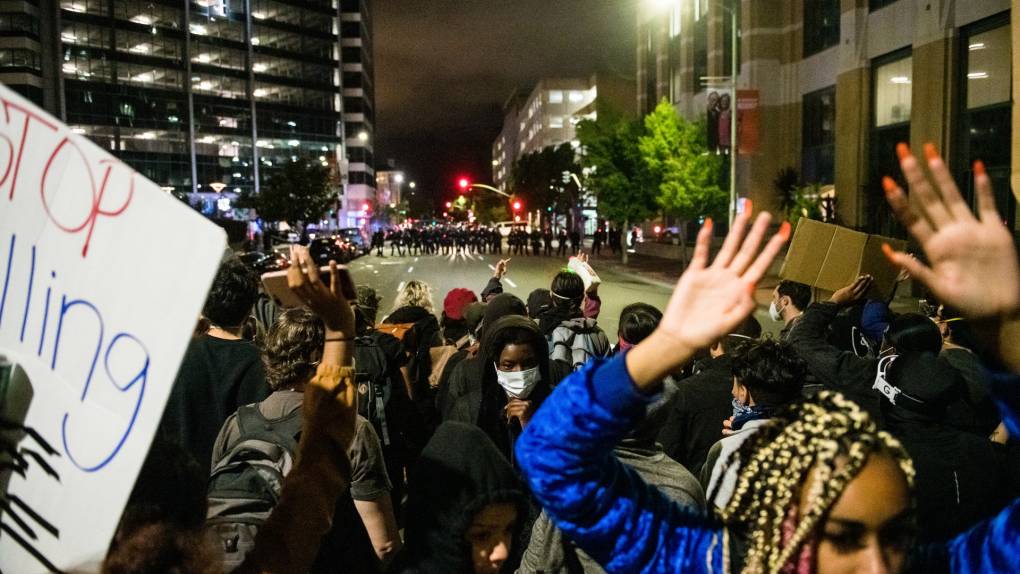
"caption": "Demonstrators face off with a police line-up in Downtown Oakland on May 29, 2020 during a protest after the Minneapolis police killing of George Floyd.",
"description": null,
"title": "1920_RS43460_062_KQED_Oakland_GeorgeFloydProtest_05292020-qut",
"credit": "Beth LaBerge/KQED",
"status": "inherit",
"isLoading": false,
"fetchFailed": false
},
"news_11832627": {
"type": "attachments",
"id": "news_11832627",
"meta": {
"index": "attachments_1716263798",
"site": "news",
"id": "11832627",
"found": true
},
"parent": 11832502,
"imgSizes": {
"apple_news_ca_landscape_5_5": {
"file": "https://ww2.kqed.org/app/uploads/sites/10/2020/08/RS43426_012_KQED_Oakland_GeorgeFloydProtest_05292020-qut-1044x783.jpg",
"width": 1044,
"mimeType": "image/jpeg",
"height": 783
},
"apple_news_ca_square_4_0": {
"file": "https://ww2.kqed.org/app/uploads/sites/10/2020/08/RS43426_012_KQED_Oakland_GeorgeFloydProtest_05292020-qut-470x470.jpg",
"width": 470,
"mimeType": "image/jpeg",
"height": 470
},
"twentyfourteen-full-width": {
"file": "https://ww2.kqed.org/app/uploads/sites/10/2020/08/RS43426_012_KQED_Oakland_GeorgeFloydProtest_05292020-qut-1038x576.jpg",
"width": 1038,
"mimeType": "image/jpeg",
"height": 576
},
"thumbnail": {
"file": "https://ww2.kqed.org/app/uploads/sites/10/2020/08/RS43426_012_KQED_Oakland_GeorgeFloydProtest_05292020-qut-160x107.jpg",
"width": 160,
"mimeType": "image/jpeg",
"height": 107
},
"post-thumbnail": {
"file": "https://ww2.kqed.org/app/uploads/sites/10/2020/08/RS43426_012_KQED_Oakland_GeorgeFloydProtest_05292020-qut-672x372.jpg",
"width": 672,
"mimeType": "image/jpeg",
"height": 372
},
"kqedFullSize": {
"file": "https://ww2.kqed.org/app/uploads/sites/10/2020/08/RS43426_012_KQED_Oakland_GeorgeFloydProtest_05292020-qut.jpg",
"width": 1920,
"height": 1280
},
"apple_news_ca_landscape_4_7": {
"file": "https://ww2.kqed.org/app/uploads/sites/10/2020/08/RS43426_012_KQED_Oakland_GeorgeFloydProtest_05292020-qut-632x474.jpg",
"width": 632,
"mimeType": "image/jpeg",
"height": 474
},
"large": {
"file": "https://ww2.kqed.org/app/uploads/sites/10/2020/08/RS43426_012_KQED_Oakland_GeorgeFloydProtest_05292020-qut-1020x680.jpg",
"width": 1020,
"mimeType": "image/jpeg",
"height": 680
},
"apple_news_ca_landscape_4_0": {
"file": "https://ww2.kqed.org/app/uploads/sites/10/2020/08/RS43426_012_KQED_Oakland_GeorgeFloydProtest_05292020-qut-536x402.jpg",
"width": 536,
"mimeType": "image/jpeg",
"height": 402
},
"apple_news_ca_portrait_12_9": {
"file": "https://ww2.kqed.org/app/uploads/sites/10/2020/08/RS43426_012_KQED_Oakland_GeorgeFloydProtest_05292020-qut-1122x1280.jpg",
"width": 1122,
"mimeType": "image/jpeg",
"height": 1280
},
"medium": {
"file": "https://ww2.kqed.org/app/uploads/sites/10/2020/08/RS43426_012_KQED_Oakland_GeorgeFloydProtest_05292020-qut-800x533.jpg",
"width": 800,
"mimeType": "image/jpeg",
"height": 533
},
"apple_news_ca_portrait_4_0": {
"file": "https://ww2.kqed.org/app/uploads/sites/10/2020/08/RS43426_012_KQED_Oakland_GeorgeFloydProtest_05292020-qut-354x472.jpg",
"width": 354,
"mimeType": "image/jpeg",
"height": 472
},
"apple_news_ca_portrait_9_7": {
"file": "https://ww2.kqed.org/app/uploads/sites/10/2020/08/RS43426_012_KQED_Oakland_GeorgeFloydProtest_05292020-qut-840x1120.jpg",
"width": 840,
"mimeType": "image/jpeg",
"height": 1120
},
"apple_news_ca_landscape_12_9": {
"file": "https://ww2.kqed.org/app/uploads/sites/10/2020/08/RS43426_012_KQED_Oakland_GeorgeFloydProtest_05292020-qut-1832x1280.jpg",
"width": 1832,
"mimeType": "image/jpeg",
"height": 1280
},
"apple_news_ca_square_9_7": {
"file": "https://ww2.kqed.org/app/uploads/sites/10/2020/08/RS43426_012_KQED_Oakland_GeorgeFloydProtest_05292020-qut-1104x1104.jpg",
"width": 1104,
"mimeType": "image/jpeg",
"height": 1104
},
"1536x1536": {
"file": "https://ww2.kqed.org/app/uploads/sites/10/2020/08/RS43426_012_KQED_Oakland_GeorgeFloydProtest_05292020-qut-1536x1024.jpg",
"width": 1536,
"mimeType": "image/jpeg",
"height": 1024
},
"apple_news_ca_portrait_4_7": {
"file": "https://ww2.kqed.org/app/uploads/sites/10/2020/08/RS43426_012_KQED_Oakland_GeorgeFloydProtest_05292020-qut-414x552.jpg",
"width": 414,
"mimeType": "image/jpeg",
"height": 552
},
"apple_news_ca_square_12_9": {
"file": "https://ww2.kqed.org/app/uploads/sites/10/2020/08/RS43426_012_KQED_Oakland_GeorgeFloydProtest_05292020-qut-1472x1280.jpg",
"width": 1472,
"mimeType": "image/jpeg",
"height": 1280
},
"apple_news_ca_portrait_5_5": {
"file": "https://ww2.kqed.org/app/uploads/sites/10/2020/08/RS43426_012_KQED_Oakland_GeorgeFloydProtest_05292020-qut-687x916.jpg",
"width": 687,
"mimeType": "image/jpeg",
"height": 916
},
"apple_news_ca_square_4_7": {
"file": "https://ww2.kqed.org/app/uploads/sites/10/2020/08/RS43426_012_KQED_Oakland_GeorgeFloydProtest_05292020-qut-550x550.jpg",
"width": 550,
"mimeType": "image/jpeg",
"height": 550
},
"apple_news_ca_landscape_9_7": {
"file": "https://ww2.kqed.org/app/uploads/sites/10/2020/08/RS43426_012_KQED_Oakland_GeorgeFloydProtest_05292020-qut-1376x1032.jpg",
"width": 1376,
"mimeType": "image/jpeg",
"height": 1032
},
"apple_news_ca_square_5_5": {
"file": "https://ww2.kqed.org/app/uploads/sites/10/2020/08/RS43426_012_KQED_Oakland_GeorgeFloydProtest_05292020-qut-912x912.jpg",
"width": 912,
"mimeType": "image/jpeg",
"height": 912
}
},
"publishDate": 1596842593,
"modified": 1596842627,
"caption": "Demonstrators marched on Broadway in Oakland on May 29, 2020, during a protest over the Minneapolis police killing of George Floyd.",
"description": "Demonstrators marched on Broadway in Oakland on May 29, 2020, during a protest over the Minneapolis police killing of George Floyd.",
"title": "RS43426_012_KQED_Oakland_GeorgeFloydProtest_05292020-qut",
"credit": "Beth LaBerge/KQED",
"status": "inherit",
"isLoading": false,
"fetchFailed": false
},
"news_11829713": {
"type": "attachments",
"id": "news_11829713",
"meta": {
"index": "attachments_1716263798",
"site": "news",
"id": "11829713",
"found": true
},
"parent": 11829712,
"imgSizes": {
"apple_news_ca_landscape_5_5": {
"file": "https://ww2.kqed.org/app/uploads/sites/10/2013/08/march-book-one-cover-300dpi-cb7fe7b3fac9750c57ffd0b0761cdbbc59854011-1044x783.jpg",
"width": 1044,
"mimeType": "image/jpeg",
"height": 783
},
"apple_news_ca_square_4_0": {
"file": "https://ww2.kqed.org/app/uploads/sites/10/2013/08/march-book-one-cover-300dpi-cb7fe7b3fac9750c57ffd0b0761cdbbc59854011-470x470.jpg",
"width": 470,
"mimeType": "image/jpeg",
"height": 470
},
"twentyfourteen-full-width": {
"file": "https://ww2.kqed.org/app/uploads/sites/10/2013/08/march-book-one-cover-300dpi-cb7fe7b3fac9750c57ffd0b0761cdbbc59854011-1038x576.jpg",
"width": 1038,
"mimeType": "image/jpeg",
"height": 576
},
"thumbnail": {
"file": "https://ww2.kqed.org/app/uploads/sites/10/2013/08/march-book-one-cover-300dpi-cb7fe7b3fac9750c57ffd0b0761cdbbc59854011-160x120.jpg",
"width": 160,
"mimeType": "image/jpeg",
"height": 120
},
"post-thumbnail": {
"file": "https://ww2.kqed.org/app/uploads/sites/10/2013/08/march-book-one-cover-300dpi-cb7fe7b3fac9750c57ffd0b0761cdbbc59854011-672x372.jpg",
"width": 672,
"mimeType": "image/jpeg",
"height": 372
},
"kqedFullSize": {
"file": "https://ww2.kqed.org/app/uploads/sites/10/2013/08/march-book-one-cover-300dpi-cb7fe7b3fac9750c57ffd0b0761cdbbc59854011-e1595367669222.jpg",
"width": 1485,
"height": 1115
},
"apple_news_ca_landscape_4_7": {
"file": "https://ww2.kqed.org/app/uploads/sites/10/2013/08/march-book-one-cover-300dpi-cb7fe7b3fac9750c57ffd0b0761cdbbc59854011-632x474.jpg",
"width": 632,
"mimeType": "image/jpeg",
"height": 474
},
"large": {
"file": "https://ww2.kqed.org/app/uploads/sites/10/2013/08/march-book-one-cover-300dpi-cb7fe7b3fac9750c57ffd0b0761cdbbc59854011-1020x766.jpg",
"width": 1020,
"mimeType": "image/jpeg",
"height": 766
},
"apple_news_ca_landscape_4_0": {
"file": "https://ww2.kqed.org/app/uploads/sites/10/2013/08/march-book-one-cover-300dpi-cb7fe7b3fac9750c57ffd0b0761cdbbc59854011-536x402.jpg",
"width": 536,
"mimeType": "image/jpeg",
"height": 402
},
"apple_news_ca_portrait_12_9": {
"file": "https://ww2.kqed.org/app/uploads/sites/10/2013/08/march-book-one-cover-300dpi-cb7fe7b3fac9750c57ffd0b0761cdbbc59854011-1122x1117.jpg",
"width": 1122,
"mimeType": "image/jpeg",
"height": 1117
},
"medium": {
"file": "https://ww2.kqed.org/app/uploads/sites/10/2013/08/march-book-one-cover-300dpi-cb7fe7b3fac9750c57ffd0b0761cdbbc59854011-800x601.jpg",
"width": 800,
"mimeType": "image/jpeg",
"height": 601
},
"apple_news_ca_portrait_4_0": {
"file": "https://ww2.kqed.org/app/uploads/sites/10/2013/08/march-book-one-cover-300dpi-cb7fe7b3fac9750c57ffd0b0761cdbbc59854011-354x472.jpg",
"width": 354,
"mimeType": "image/jpeg",
"height": 472
},
"apple_news_ca_portrait_9_7": {
"file": "https://ww2.kqed.org/app/uploads/sites/10/2013/08/march-book-one-cover-300dpi-cb7fe7b3fac9750c57ffd0b0761cdbbc59854011-840x1117.jpg",
"width": 840,
"mimeType": "image/jpeg",
"height": 1117
},
"apple_news_ca_square_9_7": {
"file": "https://ww2.kqed.org/app/uploads/sites/10/2013/08/march-book-one-cover-300dpi-cb7fe7b3fac9750c57ffd0b0761cdbbc59854011-1104x1104.jpg",
"width": 1104,
"mimeType": "image/jpeg",
"height": 1104
},
"apple_news_ca_portrait_4_7": {
"file": "https://ww2.kqed.org/app/uploads/sites/10/2013/08/march-book-one-cover-300dpi-cb7fe7b3fac9750c57ffd0b0761cdbbc59854011-414x552.jpg",
"width": 414,
"mimeType": "image/jpeg",
"height": 552
},
"apple_news_ca_square_12_9": {
"file": "https://ww2.kqed.org/app/uploads/sites/10/2013/08/march-book-one-cover-300dpi-cb7fe7b3fac9750c57ffd0b0761cdbbc59854011-1472x1117.jpg",
"width": 1472,
"mimeType": "image/jpeg",
"height": 1117
},
"apple_news_ca_portrait_5_5": {
"file": "https://ww2.kqed.org/app/uploads/sites/10/2013/08/march-book-one-cover-300dpi-cb7fe7b3fac9750c57ffd0b0761cdbbc59854011-687x916.jpg",
"width": 687,
"mimeType": "image/jpeg",
"height": 916
},
"apple_news_ca_square_4_7": {
"file": "https://ww2.kqed.org/app/uploads/sites/10/2013/08/march-book-one-cover-300dpi-cb7fe7b3fac9750c57ffd0b0761cdbbc59854011-550x550.jpg",
"width": 550,
"mimeType": "image/jpeg",
"height": 550
},
"apple_news_ca_landscape_9_7": {
"file": "https://ww2.kqed.org/app/uploads/sites/10/2013/08/march-book-one-cover-300dpi-cb7fe7b3fac9750c57ffd0b0761cdbbc59854011-1376x1032.jpg",
"width": 1376,
"mimeType": "image/jpeg",
"height": 1032
},
"apple_news_ca_square_5_5": {
"file": "https://ww2.kqed.org/app/uploads/sites/10/2013/08/march-book-one-cover-300dpi-cb7fe7b3fac9750c57ffd0b0761cdbbc59854011-912x912.jpg",
"width": 912,
"mimeType": "image/jpeg",
"height": 912
}
},
"publishDate": 1595270744,
"modified": 1595458023,
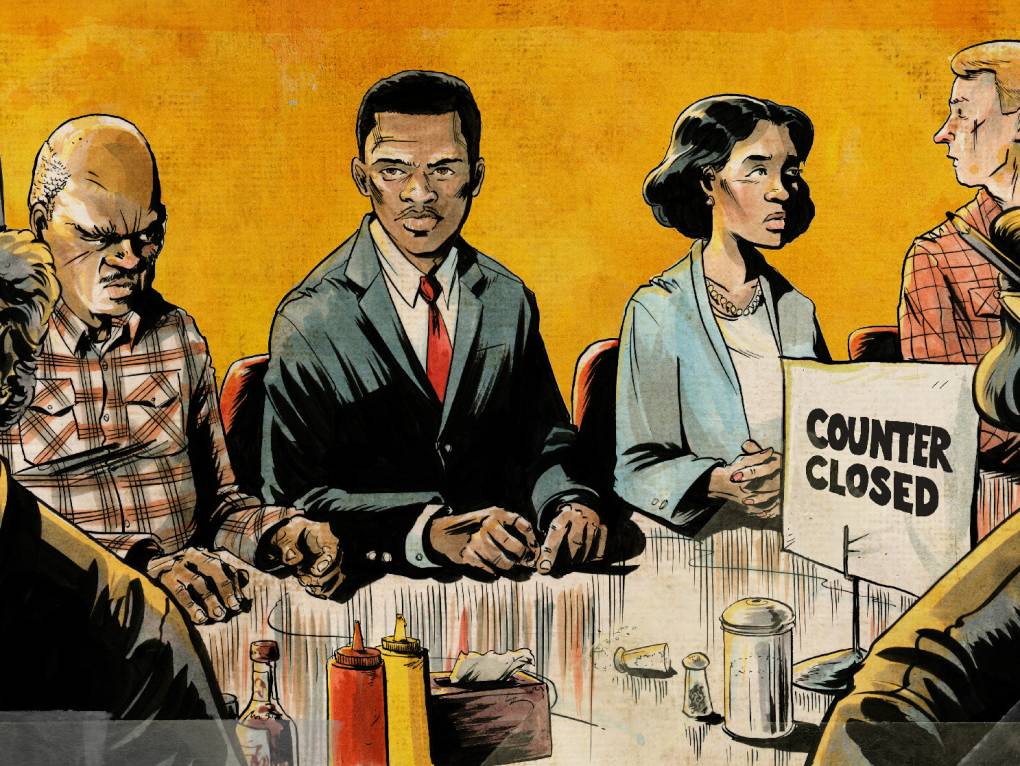
"caption": "Cover detail of \"March: Book One,\" by John Lewis, Andrew Aydin and Nate Powell.",
"description": "Cover detail of \"March: Book One,\" by John Lewis, Andrew Aydin and Nate Powell.",
"title": "March: Book One, cover detail",
"credit": "Courtesy Top Shelf Productions",
"status": "inherit",
"isLoading": false,
"fetchFailed": false
},
"news_11823867": {
"type": "attachments",
"id": "news_11823867",
"meta": {
"index": "attachments_1716263798",
"site": "news",
"id": "11823867",
"found": true
},
"parent": 11823859,
"imgSizes": {
"apple_news_ca_landscape_5_5": {
"file": "https://ww2.kqed.org/app/uploads/sites/10/2020/06/George-Floyd-Oakland-protests-1044x783.jpg",
"width": 1044,
"mimeType": "image/jpeg",
"height": 783
},
"apple_news_ca_square_4_0": {
"file": "https://ww2.kqed.org/app/uploads/sites/10/2020/06/George-Floyd-Oakland-protests-470x470.jpg",
"width": 470,
"mimeType": "image/jpeg",
"height": 470
},
"twentyfourteen-full-width": {
"file": "https://ww2.kqed.org/app/uploads/sites/10/2020/06/George-Floyd-Oakland-protests-1038x576.jpg",
"width": 1038,
"mimeType": "image/jpeg",
"height": 576
},
"thumbnail": {
"file": "https://ww2.kqed.org/app/uploads/sites/10/2020/06/George-Floyd-Oakland-protests-160x107.jpg",
"width": 160,
"mimeType": "image/jpeg",
"height": 107
},
"post-thumbnail": {
"file": "https://ww2.kqed.org/app/uploads/sites/10/2020/06/George-Floyd-Oakland-protests-672x372.jpg",
"width": 672,
"mimeType": "image/jpeg",
"height": 372
},
"kqedFullSize": {
"file": "https://ww2.kqed.org/app/uploads/sites/10/2020/06/George-Floyd-Oakland-protests.jpg",
"width": 1920,
"height": 1280
},
"apple_news_ca_landscape_4_7": {
"file": "https://ww2.kqed.org/app/uploads/sites/10/2020/06/George-Floyd-Oakland-protests-632x474.jpg",
"width": 632,
"mimeType": "image/jpeg",
"height": 474
},
"large": {
"file": "https://ww2.kqed.org/app/uploads/sites/10/2020/06/George-Floyd-Oakland-protests-1020x680.jpg",
"width": 1020,
"mimeType": "image/jpeg",
"height": 680
},
"apple_news_ca_landscape_4_0": {
"file": "https://ww2.kqed.org/app/uploads/sites/10/2020/06/George-Floyd-Oakland-protests-536x402.jpg",
"width": 536,
"mimeType": "image/jpeg",
"height": 402
},
"apple_news_ca_portrait_12_9": {
"file": "https://ww2.kqed.org/app/uploads/sites/10/2020/06/George-Floyd-Oakland-protests-1122x1280.jpg",
"width": 1122,
"mimeType": "image/jpeg",
"height": 1280
},
"medium": {
"file": "https://ww2.kqed.org/app/uploads/sites/10/2020/06/George-Floyd-Oakland-protests-800x533.jpg",
"width": 800,
"mimeType": "image/jpeg",
"height": 533
},
"apple_news_ca_portrait_4_0": {
"file": "https://ww2.kqed.org/app/uploads/sites/10/2020/06/George-Floyd-Oakland-protests-354x472.jpg",
"width": 354,
"mimeType": "image/jpeg",
"height": 472
},
"apple_news_ca_portrait_9_7": {
"file": "https://ww2.kqed.org/app/uploads/sites/10/2020/06/George-Floyd-Oakland-protests-840x1120.jpg",
"width": 840,
"mimeType": "image/jpeg",
"height": 1120
},
"apple_news_ca_landscape_12_9": {
"file": "https://ww2.kqed.org/app/uploads/sites/10/2020/06/George-Floyd-Oakland-protests-1832x1280.jpg",
"width": 1832,
"mimeType": "image/jpeg",
"height": 1280
},
"apple_news_ca_square_9_7": {
"file": "https://ww2.kqed.org/app/uploads/sites/10/2020/06/George-Floyd-Oakland-protests-1104x1104.jpg",
"width": 1104,
"mimeType": "image/jpeg",
"height": 1104
},
"apple_news_ca_portrait_4_7": {
"file": "https://ww2.kqed.org/app/uploads/sites/10/2020/06/George-Floyd-Oakland-protests-414x552.jpg",
"width": 414,
"mimeType": "image/jpeg",
"height": 552
},
"apple_news_ca_square_12_9": {
"file": "https://ww2.kqed.org/app/uploads/sites/10/2020/06/George-Floyd-Oakland-protests-1472x1280.jpg",
"width": 1472,
"mimeType": "image/jpeg",
"height": 1280
},
"apple_news_ca_portrait_5_5": {
"file": "https://ww2.kqed.org/app/uploads/sites/10/2020/06/George-Floyd-Oakland-protests-687x916.jpg",
"width": 687,
"mimeType": "image/jpeg",
"height": 916
},
"full-width": {
"file": "https://ww2.kqed.org/app/uploads/sites/10/2020/06/George-Floyd-Oakland-protests-1920x1280.jpg",
"width": 1920,
"mimeType": "image/jpeg",
"height": 1280
},
"apple_news_ca_square_4_7": {
"file": "https://ww2.kqed.org/app/uploads/sites/10/2020/06/George-Floyd-Oakland-protests-550x550.jpg",
"width": 550,
"mimeType": "image/jpeg",
"height": 550
},
"apple_news_ca_landscape_9_7": {
"file": "https://ww2.kqed.org/app/uploads/sites/10/2020/06/George-Floyd-Oakland-protests-1376x1032.jpg",
"width": 1376,
"mimeType": "image/jpeg",
"height": 1032
},
"apple_news_ca_square_5_5": {
"file": "https://ww2.kqed.org/app/uploads/sites/10/2020/06/George-Floyd-Oakland-protests-912x912.jpg",
"width": 912,
"mimeType": "image/jpeg",
"height": 912
}
},
"publishDate": 1591833433,
"modified": 1595292398,
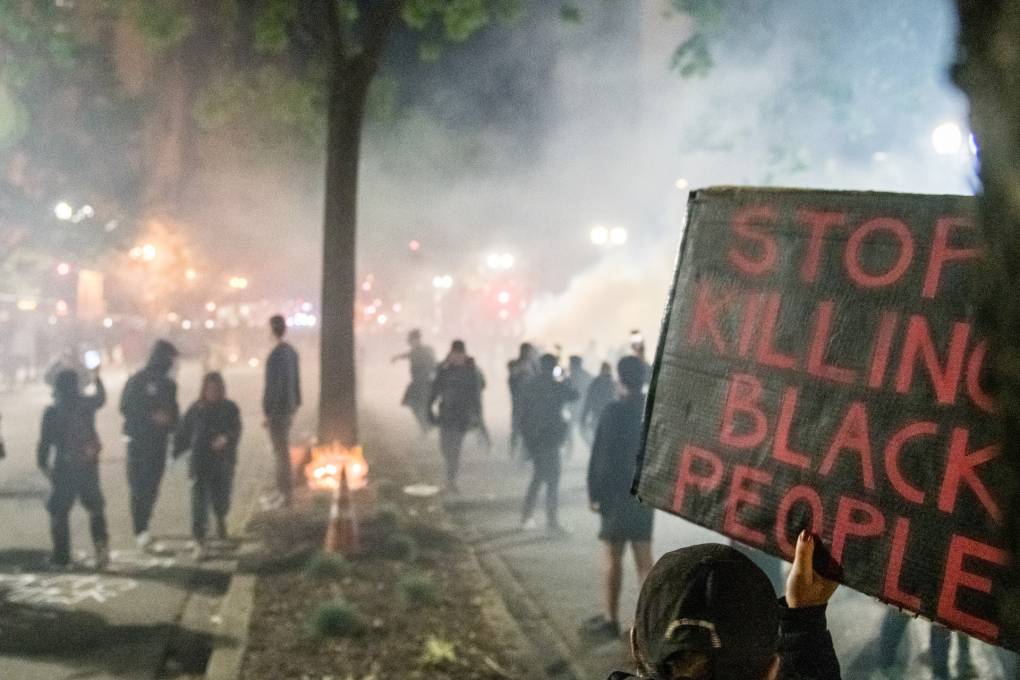
"caption": "Tear gas is fired by the police on Broadway near Oakland Police headquarters on May 29, 2020 during a protest over the Minneapolis police killing of George Floyd.",
"description": null,
"title": "George-Floyd-Oakland-protests",
"credit": "Beth LaBerge/KQED",
"status": "inherit",
"isLoading": false,
"fetchFailed": false
},
"news_11829609": {
"type": "attachments",
"id": "news_11829609",
"meta": {
"index": "attachments_1716263798",
"site": "news",
"id": "11829609",
"found": true
},
"parent": 11829608,
"imgSizes": {
"apple_news_ca_landscape_5_5": {
"file": "https://ww2.kqed.org/app/uploads/sites/10/2020/07/GettyImages-465527618-1-1044x783.jpg",
"width": 1044,
"mimeType": "image/jpeg",
"height": 783
},
"apple_news_ca_square_4_0": {
"file": "https://ww2.kqed.org/app/uploads/sites/10/2020/07/GettyImages-465527618-1-470x470.jpg",
"width": 470,
"mimeType": "image/jpeg",
"height": 470
},
"twentyfourteen-full-width": {
"file": "https://ww2.kqed.org/app/uploads/sites/10/2020/07/GettyImages-465527618-1-1038x576.jpg",
"width": 1038,
"mimeType": "image/jpeg",
"height": 576
},
"thumbnail": {
"file": "https://ww2.kqed.org/app/uploads/sites/10/2020/07/GettyImages-465527618-1-160x108.jpg",
"width": 160,
"mimeType": "image/jpeg",
"height": 108
},
"post-thumbnail": {
"file": "https://ww2.kqed.org/app/uploads/sites/10/2020/07/GettyImages-465527618-1-672x372.jpg",
"width": 672,
"mimeType": "image/jpeg",
"height": 372
},
"kqedFullSize": {
"file": "https://ww2.kqed.org/app/uploads/sites/10/2020/07/GettyImages-465527618-1.jpg",
"width": 1900,
"height": 1287
},
"apple_news_ca_landscape_4_7": {
"file": "https://ww2.kqed.org/app/uploads/sites/10/2020/07/GettyImages-465527618-1-632x474.jpg",
"width": 632,
"mimeType": "image/jpeg",
"height": 474
},
"large": {
"file": "https://ww2.kqed.org/app/uploads/sites/10/2020/07/GettyImages-465527618-1-1020x691.jpg",
"width": 1020,
"mimeType": "image/jpeg",
"height": 691
},
"apple_news_ca_landscape_4_0": {
"file": "https://ww2.kqed.org/app/uploads/sites/10/2020/07/GettyImages-465527618-1-536x402.jpg",
"width": 536,
"mimeType": "image/jpeg",
"height": 402
},
"apple_news_ca_portrait_12_9": {
"file": "https://ww2.kqed.org/app/uploads/sites/10/2020/07/GettyImages-465527618-1-1122x1287.jpg",
"width": 1122,
"mimeType": "image/jpeg",
"height": 1287
},
"medium": {
"file": "https://ww2.kqed.org/app/uploads/sites/10/2020/07/GettyImages-465527618-1-800x542.jpg",
"width": 800,
"mimeType": "image/jpeg",
"height": 542
},
"apple_news_ca_portrait_4_0": {
"file": "https://ww2.kqed.org/app/uploads/sites/10/2020/07/GettyImages-465527618-1-354x472.jpg",
"width": 354,
"mimeType": "image/jpeg",
"height": 472
},
"apple_news_ca_portrait_9_7": {
"file": "https://ww2.kqed.org/app/uploads/sites/10/2020/07/GettyImages-465527618-1-840x1120.jpg",
"width": 840,
"mimeType": "image/jpeg",
"height": 1120
},
"apple_news_ca_landscape_12_9": {
"file": "https://ww2.kqed.org/app/uploads/sites/10/2020/07/GettyImages-465527618-1-1832x1287.jpg",
"width": 1832,
"mimeType": "image/jpeg",
"height": 1287
},
"apple_news_ca_square_9_7": {
"file": "https://ww2.kqed.org/app/uploads/sites/10/2020/07/GettyImages-465527618-1-1104x1104.jpg",
"width": 1104,
"mimeType": "image/jpeg",
"height": 1104
},
"1536x1536": {
"file": "https://ww2.kqed.org/app/uploads/sites/10/2020/07/GettyImages-465527618-1-1536x1040.jpg",
"width": 1536,
"mimeType": "image/jpeg",
"height": 1040
},
"apple_news_ca_portrait_4_7": {
"file": "https://ww2.kqed.org/app/uploads/sites/10/2020/07/GettyImages-465527618-1-414x552.jpg",
"width": 414,
"mimeType": "image/jpeg",
"height": 552
},
"apple_news_ca_square_12_9": {
"file": "https://ww2.kqed.org/app/uploads/sites/10/2020/07/GettyImages-465527618-1-1472x1287.jpg",
"width": 1472,
"mimeType": "image/jpeg",
"height": 1287
},
"apple_news_ca_portrait_5_5": {
"file": "https://ww2.kqed.org/app/uploads/sites/10/2020/07/GettyImages-465527618-1-687x916.jpg",
"width": 687,
"mimeType": "image/jpeg",
"height": 916
},
"apple_news_ca_square_4_7": {
"file": "https://ww2.kqed.org/app/uploads/sites/10/2020/07/GettyImages-465527618-1-550x550.jpg",
"width": 550,
"mimeType": "image/jpeg",
"height": 550
},
"apple_news_ca_landscape_9_7": {
"file": "https://ww2.kqed.org/app/uploads/sites/10/2020/07/GettyImages-465527618-1-1376x1032.jpg",
"width": 1376,
"mimeType": "image/jpeg",
"height": 1032
},
"apple_news_ca_square_5_5": {
"file": "https://ww2.kqed.org/app/uploads/sites/10/2020/07/GettyImages-465527618-1-912x912.jpg",
"width": 912,
"mimeType": "image/jpeg",
"height": 912
}
},
"publishDate": 1595092244,
"modified": 1595092285,
"caption": "US President Barack Obama (R) hugs US Representative John Lewis, Democrat of Georgia, one of the original marchers at Selma, during an event marking the 50th Anniversary of the Selma to Montgomery civil rights marches at the Edmund Pettus Bridge in Selma, Alabama, March 7, 2015. The Obamas traveled to Selma to commemorate Bloody Sunday, when civil rights marchers attempting to walk to the Alabama capital of Montgomery to end voting discrimination against African Americans, clashed with police on the Edmund Pettus Bridge.",
"description": "US President Barack Obama (R) hugs US Representative John Lewis, Democrat of Georgia, one of the original marchers at Selma, during an event marking the 50th Anniversary of the Selma to Montgomery civil rights marches at the Edmund Pettus Bridge in Selma, Alabama, March 7, 2015. The Obamas traveled to Selma to commemorate Bloody Sunday, when civil rights marchers attempting to walk to the Alabama capital of Montgomery to end voting discrimination against African Americans, clashed with police on the Edmund Pettus Bridge.",
"title": "GettyImages-465527618 (1)",
"credit": "Saul Loeb/AFP via Getty Images",
"status": "inherit",
"isLoading": false,
"fetchFailed": false
},
"news_11829137": {
"type": "attachments",
"id": "news_11829137",
"meta": {
"index": "attachments_1716263798",
"site": "news",
"id": "11829137",
"found": true
},
"parent": 11829134,
"imgSizes": {
"apple_news_ca_landscape_5_5": {
"file": "https://ww2.kqed.org/app/uploads/sites/10/2020/07/bpd_071520_final-1044x783.png",
"width": 1044,
"mimeType": "image/png",
"height": 783
},
"apple_news_ca_square_4_0": {
"file": "https://ww2.kqed.org/app/uploads/sites/10/2020/07/bpd_071520_final-470x470.png",
"width": 470,
"mimeType": "image/png",
"height": 470
},
"twentyfourteen-full-width": {
"file": "https://ww2.kqed.org/app/uploads/sites/10/2020/07/bpd_071520_final-1038x576.png",
"width": 1038,
"mimeType": "image/png",
"height": 576
},
"thumbnail": {
"file": "https://ww2.kqed.org/app/uploads/sites/10/2020/07/bpd_071520_final-160x142.png",
"width": 160,
"mimeType": "image/png",
"height": 142
},
"post-thumbnail": {
"file": "https://ww2.kqed.org/app/uploads/sites/10/2020/07/bpd_071520_final-672x372.png",
"width": 672,
"mimeType": "image/png",
"height": 372
},
"kqedFullSize": {
"file": "https://ww2.kqed.org/app/uploads/sites/10/2020/07/bpd_071520_final.png",
"width": 1920,
"height": 1702
},
"apple_news_ca_landscape_4_7": {
"file": "https://ww2.kqed.org/app/uploads/sites/10/2020/07/bpd_071520_final-632x474.png",
"width": 632,
"mimeType": "image/png",
"height": 474
},
"large": {
"file": "https://ww2.kqed.org/app/uploads/sites/10/2020/07/bpd_071520_final-1020x904.png",
"width": 1020,
"mimeType": "image/png",
"height": 904
},
"apple_news_ca_landscape_4_0": {
"file": "https://ww2.kqed.org/app/uploads/sites/10/2020/07/bpd_071520_final-536x402.png",
"width": 536,
"mimeType": "image/png",
"height": 402
},
"apple_news_ca_portrait_12_9": {
"file": "https://ww2.kqed.org/app/uploads/sites/10/2020/07/bpd_071520_final-1122x1496.png",
"width": 1122,
"mimeType": "image/png",
"height": 1496
},
"medium": {
"file": "https://ww2.kqed.org/app/uploads/sites/10/2020/07/bpd_071520_final-800x709.png",
"width": 800,
"mimeType": "image/png",
"height": 709
},
"apple_news_ca_portrait_4_0": {
"file": "https://ww2.kqed.org/app/uploads/sites/10/2020/07/bpd_071520_final-354x472.png",
"width": 354,
"mimeType": "image/png",
"height": 472
},
"apple_news_ca_portrait_9_7": {
"file": "https://ww2.kqed.org/app/uploads/sites/10/2020/07/bpd_071520_final-840x1120.png",
"width": 840,
"mimeType": "image/png",
"height": 1120
},
"apple_news_ca_landscape_12_9": {
"file": "https://ww2.kqed.org/app/uploads/sites/10/2020/07/bpd_071520_final-1832x1374.png",
"width": 1832,
"mimeType": "image/png",
"height": 1374
},
"apple_news_ca_square_9_7": {
"file": "https://ww2.kqed.org/app/uploads/sites/10/2020/07/bpd_071520_final-1104x1104.png",
"width": 1104,
"mimeType": "image/png",
"height": 1104
},
"1536x1536": {
"file": "https://ww2.kqed.org/app/uploads/sites/10/2020/07/bpd_071520_final-1536x1362.png",
"width": 1536,
"mimeType": "image/png",
"height": 1362
},
"apple_news_ca_portrait_4_7": {
"file": "https://ww2.kqed.org/app/uploads/sites/10/2020/07/bpd_071520_final-414x552.png",
"width": 414,
"mimeType": "image/png",
"height": 552
},
"apple_news_ca_square_12_9": {
"file": "https://ww2.kqed.org/app/uploads/sites/10/2020/07/bpd_071520_final-1472x1472.png",
"width": 1472,
"mimeType": "image/png",
"height": 1472
},
"apple_news_ca_portrait_5_5": {
"file": "https://ww2.kqed.org/app/uploads/sites/10/2020/07/bpd_071520_final-687x916.png",
"width": 687,
"mimeType": "image/png",
"height": 916
},
"apple_news_ca_square_4_7": {
"file": "https://ww2.kqed.org/app/uploads/sites/10/2020/07/bpd_071520_final-550x550.png",
"width": 550,
"mimeType": "image/png",
"height": 550
},
"apple_news_ca_landscape_9_7": {
"file": "https://ww2.kqed.org/app/uploads/sites/10/2020/07/bpd_071520_final-1376x1032.png",
"width": 1376,
"mimeType": "image/png",
"height": 1032
},
"apple_news_ca_square_5_5": {
"file": "https://ww2.kqed.org/app/uploads/sites/10/2020/07/bpd_071520_final-912x912.png",
"width": 912,
"mimeType": "image/png",
"height": 912
}
},
"publishDate": 1594846606,
"modified": 1594846646,
"caption": null,
"description": null,
"title": "bpd_071520_final",
"credit": null,
"status": "inherit",
"isLoading": false,
"fetchFailed": false
},
"news_11828666": {
"type": "attachments",
"id": "news_11828666",
"meta": {
"index": "attachments_1716263798",
"site": "news",
"id": "11828666",
"found": true
},
"parent": 11828654,
"imgSizes": {
"apple_news_ca_landscape_5_5": {
"file": "https://ww2.kqed.org/app/uploads/sites/10/2020/07/RS43932_010_KQED_Vallejo_SeanMonterrosa_07112020-qut-1044x783.jpg",
"width": 1044,
"mimeType": "image/jpeg",
"height": 783
},
"apple_news_ca_square_4_0": {
"file": "https://ww2.kqed.org/app/uploads/sites/10/2020/07/RS43932_010_KQED_Vallejo_SeanMonterrosa_07112020-qut-470x470.jpg",
"width": 470,
"mimeType": "image/jpeg",
"height": 470
},
"twentyfourteen-full-width": {
"file": "https://ww2.kqed.org/app/uploads/sites/10/2020/07/RS43932_010_KQED_Vallejo_SeanMonterrosa_07112020-qut-1038x576.jpg",
"width": 1038,
"mimeType": "image/jpeg",
"height": 576
},
"thumbnail": {
"file": "https://ww2.kqed.org/app/uploads/sites/10/2020/07/RS43932_010_KQED_Vallejo_SeanMonterrosa_07112020-qut-160x107.jpg",
"width": 160,
"mimeType": "image/jpeg",
"height": 107
},
"post-thumbnail": {
"file": "https://ww2.kqed.org/app/uploads/sites/10/2020/07/RS43932_010_KQED_Vallejo_SeanMonterrosa_07112020-qut-672x372.jpg",
"width": 672,
"mimeType": "image/jpeg",
"height": 372
},
"kqedFullSize": {
"file": "https://ww2.kqed.org/app/uploads/sites/10/2020/07/RS43932_010_KQED_Vallejo_SeanMonterrosa_07112020-qut.jpg",
"width": 1920,
"height": 1278
},
"apple_news_ca_landscape_4_7": {
"file": "https://ww2.kqed.org/app/uploads/sites/10/2020/07/RS43932_010_KQED_Vallejo_SeanMonterrosa_07112020-qut-632x474.jpg",
"width": 632,
"mimeType": "image/jpeg",
"height": 474
},
"large": {
"file": "https://ww2.kqed.org/app/uploads/sites/10/2020/07/RS43932_010_KQED_Vallejo_SeanMonterrosa_07112020-qut-1020x679.jpg",
"width": 1020,
"mimeType": "image/jpeg",
"height": 679
},
"apple_news_ca_landscape_4_0": {
"file": "https://ww2.kqed.org/app/uploads/sites/10/2020/07/RS43932_010_KQED_Vallejo_SeanMonterrosa_07112020-qut-536x402.jpg",
"width": 536,
"mimeType": "image/jpeg",
"height": 402
},
"apple_news_ca_portrait_12_9": {
"file": "https://ww2.kqed.org/app/uploads/sites/10/2020/07/RS43932_010_KQED_Vallejo_SeanMonterrosa_07112020-qut-1122x1278.jpg",
"width": 1122,
"mimeType": "image/jpeg",
"height": 1278
},
"medium": {
"file": "https://ww2.kqed.org/app/uploads/sites/10/2020/07/RS43932_010_KQED_Vallejo_SeanMonterrosa_07112020-qut-800x533.jpg",
"width": 800,
"mimeType": "image/jpeg",
"height": 533
},
"apple_news_ca_portrait_4_0": {
"file": "https://ww2.kqed.org/app/uploads/sites/10/2020/07/RS43932_010_KQED_Vallejo_SeanMonterrosa_07112020-qut-354x472.jpg",
"width": 354,
"mimeType": "image/jpeg",
"height": 472
},
"apple_news_ca_portrait_9_7": {
"file": "https://ww2.kqed.org/app/uploads/sites/10/2020/07/RS43932_010_KQED_Vallejo_SeanMonterrosa_07112020-qut-840x1120.jpg",
"width": 840,
"mimeType": "image/jpeg",
"height": 1120
},
"apple_news_ca_landscape_12_9": {
"file": "https://ww2.kqed.org/app/uploads/sites/10/2020/07/RS43932_010_KQED_Vallejo_SeanMonterrosa_07112020-qut-1832x1278.jpg",
"width": 1832,
"mimeType": "image/jpeg",
"height": 1278
},
"apple_news_ca_square_9_7": {
"file": "https://ww2.kqed.org/app/uploads/sites/10/2020/07/RS43932_010_KQED_Vallejo_SeanMonterrosa_07112020-qut-1104x1104.jpg",
"width": 1104,
"mimeType": "image/jpeg",
"height": 1104
},
"1536x1536": {
"file": "https://ww2.kqed.org/app/uploads/sites/10/2020/07/RS43932_010_KQED_Vallejo_SeanMonterrosa_07112020-qut-1536x1022.jpg",
"width": 1536,
"mimeType": "image/jpeg",
"height": 1022
},
"apple_news_ca_portrait_4_7": {
"file": "https://ww2.kqed.org/app/uploads/sites/10/2020/07/RS43932_010_KQED_Vallejo_SeanMonterrosa_07112020-qut-414x552.jpg",
"width": 414,
"mimeType": "image/jpeg",
"height": 552
},
"apple_news_ca_square_12_9": {
"file": "https://ww2.kqed.org/app/uploads/sites/10/2020/07/RS43932_010_KQED_Vallejo_SeanMonterrosa_07112020-qut-1472x1278.jpg",
"width": 1472,
"mimeType": "image/jpeg",
"height": 1278
},
"apple_news_ca_portrait_5_5": {
"file": "https://ww2.kqed.org/app/uploads/sites/10/2020/07/RS43932_010_KQED_Vallejo_SeanMonterrosa_07112020-qut-687x916.jpg",
"width": 687,
"mimeType": "image/jpeg",
"height": 916
},
"apple_news_ca_square_4_7": {
"file": "https://ww2.kqed.org/app/uploads/sites/10/2020/07/RS43932_010_KQED_Vallejo_SeanMonterrosa_07112020-qut-550x550.jpg",
"width": 550,
"mimeType": "image/jpeg",
"height": 550
},
"apple_news_ca_landscape_9_7": {
"file": "https://ww2.kqed.org/app/uploads/sites/10/2020/07/RS43932_010_KQED_Vallejo_SeanMonterrosa_07112020-qut-1376x1032.jpg",
"width": 1376,
"mimeType": "image/jpeg",
"height": 1032
},
"apple_news_ca_square_5_5": {
"file": "https://ww2.kqed.org/app/uploads/sites/10/2020/07/RS43932_010_KQED_Vallejo_SeanMonterrosa_07112020-qut-912x912.jpg",
"width": 912,
"mimeType": "image/jpeg",
"height": 912
}
},
"publishDate": 1594581809,
"modified": 1623026600,
"caption": "Nora Monterrosa, mother of Sean, speaks during a protest for justice for her son and others killed by the Vallejo Police Department, on July 11, 2020.",
"description": null,
"title": "RS43932_010_KQED_Vallejo_SeanMonterrosa_07112020-qut",
"credit": "Beth LaBerge/KQED",
"status": "inherit",
"altTag": null,
"isLoading": false,
"fetchFailed": false
},
"news_11827659": {
"type": "attachments",
"id": "news_11827659",
"meta": {
"index": "attachments_1716263798",
"site": "news",
"id": "11827659",
"found": true
},
"parent": 11826151,
"imgSizes": {
"apple_news_ca_landscape_5_5": {
"file": "https://ww2.kqed.org/app/uploads/sites/10/2020/10/serra-ventura-1044x783.jpg",
"width": 1044,
"mimeType": "image/jpeg",
"height": 783
},
"apple_news_ca_square_4_0": {
"file": "https://ww2.kqed.org/app/uploads/sites/10/2020/10/serra-ventura-470x470.jpg",
"width": 470,
"mimeType": "image/jpeg",
"height": 470
},
"twentyfourteen-full-width": {
"file": "https://ww2.kqed.org/app/uploads/sites/10/2020/10/serra-ventura-1038x576.jpg",
"width": 1038,
"mimeType": "image/jpeg",
"height": 576
},
"thumbnail": {
"file": "https://ww2.kqed.org/app/uploads/sites/10/2020/10/serra-ventura-160x108.jpg",
"width": 160,
"mimeType": "image/jpeg",
"height": 108
},
"post-thumbnail": {
"file": "https://ww2.kqed.org/app/uploads/sites/10/2020/10/serra-ventura-672x372.jpg",
"width": 672,
"mimeType": "image/jpeg",
"height": 372
},
"kqedFullSize": {
"file": "https://ww2.kqed.org/app/uploads/sites/10/2020/10/serra-ventura.jpg",
"width": 1900,
"height": 1280
},
"apple_news_ca_landscape_4_7": {
"file": "https://ww2.kqed.org/app/uploads/sites/10/2020/10/serra-ventura-632x474.jpg",
"width": 632,
"mimeType": "image/jpeg",
"height": 474
},
"large": {
"file": "https://ww2.kqed.org/app/uploads/sites/10/2020/10/serra-ventura-1020x687.jpg",
"width": 1020,
"mimeType": "image/jpeg",
"height": 687
},
"apple_news_ca_landscape_4_0": {
"file": "https://ww2.kqed.org/app/uploads/sites/10/2020/10/serra-ventura-536x402.jpg",
"width": 536,
"mimeType": "image/jpeg",
"height": 402
},
"apple_news_ca_portrait_12_9": {
"file": "https://ww2.kqed.org/app/uploads/sites/10/2020/10/serra-ventura-1122x1280.jpg",
"width": 1122,
"mimeType": "image/jpeg",
"height": 1280
},
"medium": {
"file": "https://ww2.kqed.org/app/uploads/sites/10/2020/10/serra-ventura-800x539.jpg",
"width": 800,
"mimeType": "image/jpeg",
"height": 539
},
"apple_news_ca_portrait_4_0": {
"file": "https://ww2.kqed.org/app/uploads/sites/10/2020/10/serra-ventura-354x472.jpg",
"width": 354,
"mimeType": "image/jpeg",
"height": 472
},
"apple_news_ca_portrait_9_7": {
"file": "https://ww2.kqed.org/app/uploads/sites/10/2020/10/serra-ventura-840x1120.jpg",
"width": 840,
"mimeType": "image/jpeg",
"height": 1120
},
"apple_news_ca_landscape_12_9": {
"file": "https://ww2.kqed.org/app/uploads/sites/10/2020/10/serra-ventura-1832x1280.jpg",
"width": 1832,
"mimeType": "image/jpeg",
"height": 1280
},
"apple_news_ca_square_9_7": {
"file": "https://ww2.kqed.org/app/uploads/sites/10/2020/10/serra-ventura-1104x1104.jpg",
"width": 1104,
"mimeType": "image/jpeg",
"height": 1104
},
"1536x1536": {
"file": "https://ww2.kqed.org/app/uploads/sites/10/2020/10/serra-ventura-1536x1035.jpg",
"width": 1536,
"mimeType": "image/jpeg",
"height": 1035
},
"apple_news_ca_portrait_4_7": {
"file": "https://ww2.kqed.org/app/uploads/sites/10/2020/10/serra-ventura-414x552.jpg",
"width": 414,
"mimeType": "image/jpeg",
"height": 552
},
"apple_news_ca_square_12_9": {
"file": "https://ww2.kqed.org/app/uploads/sites/10/2020/10/serra-ventura-1472x1280.jpg",
"width": 1472,
"mimeType": "image/jpeg",
"height": 1280
},
"apple_news_ca_portrait_5_5": {
"file": "https://ww2.kqed.org/app/uploads/sites/10/2020/10/serra-ventura-687x916.jpg",
"width": 687,
"mimeType": "image/jpeg",
"height": 916
},
"apple_news_ca_square_4_7": {
"file": "https://ww2.kqed.org/app/uploads/sites/10/2020/10/serra-ventura-550x550.jpg",
"width": 550,
"mimeType": "image/jpeg",
"height": 550
},
"apple_news_ca_landscape_9_7": {
"file": "https://ww2.kqed.org/app/uploads/sites/10/2020/10/serra-ventura-1376x1032.jpg",
"width": 1376,
"mimeType": "image/jpeg",
"height": 1032
},
"apple_news_ca_square_5_5": {
"file": "https://ww2.kqed.org/app/uploads/sites/10/2020/10/serra-ventura-912x912.jpg",
"width": 912,
"mimeType": "image/jpeg",
"height": 912
}
},
"publishDate": 1594079378,
"modified": 1594154093,
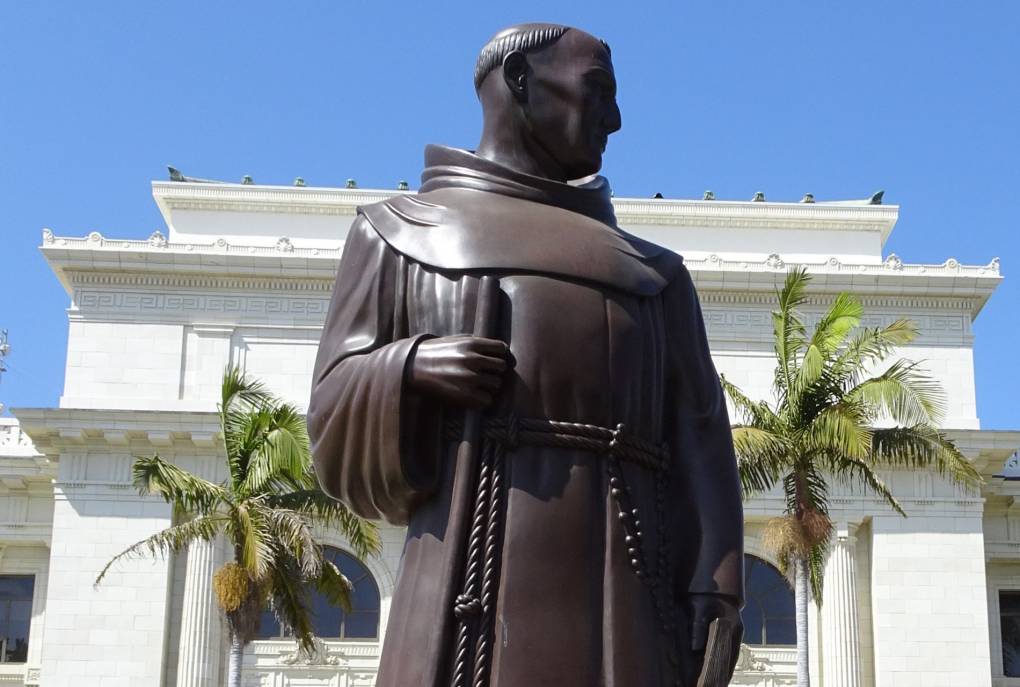
"caption": "A bronze figure of the 18th century missionary Junípero Serra stands outside Ventura City Hall, sculpted in 1936 by Uno John Palo Kangas. Indigenous activists say a reckoning with Serra's legacy is long overdue.",
"description": "A bronze figure of the 18th century missionary Junípero Serra stands outside Ventura City Hall, sculpted in 1936 by Uno John Palo Kangas. Indigenous activists say a reckoning with Serra's legacy is long overdue.",
"title": "serra ventura",
"credit": "Cbl62/Wikimedia Commons",
"status": "inherit",
"isLoading": false,
"fetchFailed": false
},
"news_11826886": {
"type": "attachments",
"id": "news_11826886",
"meta": {
"index": "attachments_1716263798",
"site": "news",
"id": "11826886",
"found": true
},
"parent": 11826883,
"imgSizes": {
"apple_news_ca_square_4_0": {
"file": "https://ww2.kqed.org/app/uploads/sites/10/2020/06/Afrotech-470x470.jpg",
"width": 470,
"mimeType": "image/jpeg",
"height": 470
},
"thumbnail": {
"file": "https://ww2.kqed.org/app/uploads/sites/10/2020/06/Afrotech-160x120.jpg",
"width": 160,
"mimeType": "image/jpeg",
"height": 120
},
"post-thumbnail": {
"file": "https://ww2.kqed.org/app/uploads/sites/10/2020/06/Afrotech-672x372.jpg",
"width": 672,
"mimeType": "image/jpeg",
"height": 372
},
"kqedFullSize": {
"file": "https://ww2.kqed.org/app/uploads/sites/10/2020/06/Afrotech.jpg",
"width": 680,
"height": 510
},
"apple_news_ca_landscape_4_7": {
"file": "https://ww2.kqed.org/app/uploads/sites/10/2020/06/Afrotech-632x474.jpg",
"width": 632,
"mimeType": "image/jpeg",
"height": 474
},
"apple_news_ca_portrait_4_7": {
"file": "https://ww2.kqed.org/app/uploads/sites/10/2020/06/Afrotech-414x510.jpg",
"width": 414,
"mimeType": "image/jpeg",
"height": 510
},
"apple_news_ca_square_4_7": {
"file": "https://ww2.kqed.org/app/uploads/sites/10/2020/06/Afrotech-550x510.jpg",
"width": 550,
"mimeType": "image/jpeg",
"height": 510
},
"apple_news_ca_landscape_4_0": {
"file": "https://ww2.kqed.org/app/uploads/sites/10/2020/06/Afrotech-536x402.jpg",
"width": 536,
"mimeType": "image/jpeg",
"height": 402
},
"apple_news_ca_portrait_4_0": {
"file": "https://ww2.kqed.org/app/uploads/sites/10/2020/06/Afrotech-354x472.jpg",
"width": 354,
"mimeType": "image/jpeg",
"height": 472
}
},
"publishDate": 1593550570,
"modified": 1593550593,
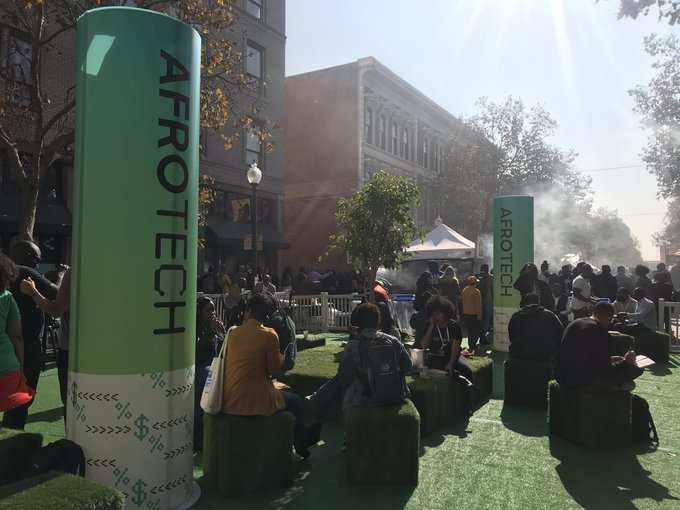
"caption": "Afrotech in Oakland November 2019.",
"description": null,
"title": "Afrotech",
"credit": "Pendarvis Harshaw/KQED",
"status": "inherit",
"isLoading": false,
"fetchFailed": false
},
"news_11826529": {
"type": "attachments",
"id": "news_11826529",
"meta": {
"index": "attachments_1716263798",
"site": "news",
"id": "11826529",
"found": true
},
"parent": 11825569,
"imgSizes": {
"apple_news_ca_landscape_5_5": {
"file": "https://ww2.kqed.org/app/uploads/sites/10/2020/06/Civil_Rights_protesters_and_Woolworths_Sit-In_Durham_NC_10_February_1960._From_the_NO_Negative_Collection_State_Archives_of_North_Carolina_Raleigh_NC._Photos_taken_by_The_News__24495308926-1-1044x740.jpg",
"width": 1044,
"mimeType": "image/jpeg",
"height": 740
},
"apple_news_ca_square_4_0": {
"file": "https://ww2.kqed.org/app/uploads/sites/10/2020/06/Civil_Rights_protesters_and_Woolworths_Sit-In_Durham_NC_10_February_1960._From_the_NO_Negative_Collection_State_Archives_of_North_Carolina_Raleigh_NC._Photos_taken_by_The_News__24495308926-1-470x470.jpg",
"width": 470,
"mimeType": "image/jpeg",
"height": 470
},
"twentyfourteen-full-width": {
"file": "https://ww2.kqed.org/app/uploads/sites/10/2020/06/Civil_Rights_protesters_and_Woolworths_Sit-In_Durham_NC_10_February_1960._From_the_NO_Negative_Collection_State_Archives_of_North_Carolina_Raleigh_NC._Photos_taken_by_The_News__24495308926-1-1038x576.jpg",
"width": 1038,
"mimeType": "image/jpeg",
"height": 576
},
"thumbnail": {
"file": "https://ww2.kqed.org/app/uploads/sites/10/2020/06/Civil_Rights_protesters_and_Woolworths_Sit-In_Durham_NC_10_February_1960._From_the_NO_Negative_Collection_State_Archives_of_North_Carolina_Raleigh_NC._Photos_taken_by_The_News__24495308926-1-160x100.jpg",
"width": 160,
"mimeType": "image/jpeg",
"height": 100
},
"post-thumbnail": {
"file": "https://ww2.kqed.org/app/uploads/sites/10/2020/06/Civil_Rights_protesters_and_Woolworths_Sit-In_Durham_NC_10_February_1960._From_the_NO_Negative_Collection_State_Archives_of_North_Carolina_Raleigh_NC._Photos_taken_by_The_News__24495308926-1-672x372.jpg",
"width": 672,
"mimeType": "image/jpeg",
"height": 372
},
"kqedFullSize": {
"file": "https://ww2.kqed.org/app/uploads/sites/10/2020/06/Civil_Rights_protesters_and_Woolworths_Sit-In_Durham_NC_10_February_1960._From_the_NO_Negative_Collection_State_Archives_of_North_Carolina_Raleigh_NC._Photos_taken_by_The_News__24495308926-1.jpg",
"width": 1187,
"height": 740
},
"apple_news_ca_landscape_4_7": {
"file": "https://ww2.kqed.org/app/uploads/sites/10/2020/06/Civil_Rights_protesters_and_Woolworths_Sit-In_Durham_NC_10_February_1960._From_the_NO_Negative_Collection_State_Archives_of_North_Carolina_Raleigh_NC._Photos_taken_by_The_News__24495308926-1-632x474.jpg",
"width": 632,
"mimeType": "image/jpeg",
"height": 474
},
"large": {
"file": "https://ww2.kqed.org/app/uploads/sites/10/2020/06/Civil_Rights_protesters_and_Woolworths_Sit-In_Durham_NC_10_February_1960._From_the_NO_Negative_Collection_State_Archives_of_North_Carolina_Raleigh_NC._Photos_taken_by_The_News__24495308926-1-1020x636.jpg",
"width": 1020,
"mimeType": "image/jpeg",
"height": 636
},
"apple_news_ca_landscape_4_0": {
"file": "https://ww2.kqed.org/app/uploads/sites/10/2020/06/Civil_Rights_protesters_and_Woolworths_Sit-In_Durham_NC_10_February_1960._From_the_NO_Negative_Collection_State_Archives_of_North_Carolina_Raleigh_NC._Photos_taken_by_The_News__24495308926-1-536x402.jpg",
"width": 536,
"mimeType": "image/jpeg",
"height": 402
},
"apple_news_ca_portrait_12_9": {
"file": "https://ww2.kqed.org/app/uploads/sites/10/2020/06/Civil_Rights_protesters_and_Woolworths_Sit-In_Durham_NC_10_February_1960._From_the_NO_Negative_Collection_State_Archives_of_North_Carolina_Raleigh_NC._Photos_taken_by_The_News__24495308926-1-1122x740.jpg",
"width": 1122,
"mimeType": "image/jpeg",
"height": 740
},
"medium": {
"file": "https://ww2.kqed.org/app/uploads/sites/10/2020/06/Civil_Rights_protesters_and_Woolworths_Sit-In_Durham_NC_10_February_1960._From_the_NO_Negative_Collection_State_Archives_of_North_Carolina_Raleigh_NC._Photos_taken_by_The_News__24495308926-1-800x499.jpg",
"width": 800,
"mimeType": "image/jpeg",
"height": 499
},
"apple_news_ca_portrait_4_0": {
"file": "https://ww2.kqed.org/app/uploads/sites/10/2020/06/Civil_Rights_protesters_and_Woolworths_Sit-In_Durham_NC_10_February_1960._From_the_NO_Negative_Collection_State_Archives_of_North_Carolina_Raleigh_NC._Photos_taken_by_The_News__24495308926-1-354x472.jpg",
"width": 354,
"mimeType": "image/jpeg",
"height": 472
},
"apple_news_ca_portrait_9_7": {
"file": "https://ww2.kqed.org/app/uploads/sites/10/2020/06/Civil_Rights_protesters_and_Woolworths_Sit-In_Durham_NC_10_February_1960._From_the_NO_Negative_Collection_State_Archives_of_North_Carolina_Raleigh_NC._Photos_taken_by_The_News__24495308926-1-840x740.jpg",
"width": 840,
"mimeType": "image/jpeg",
"height": 740
},
"apple_news_ca_square_9_7": {
"file": "https://ww2.kqed.org/app/uploads/sites/10/2020/06/Civil_Rights_protesters_and_Woolworths_Sit-In_Durham_NC_10_February_1960._From_the_NO_Negative_Collection_State_Archives_of_North_Carolina_Raleigh_NC._Photos_taken_by_The_News__24495308926-1-1104x740.jpg",
"width": 1104,
"mimeType": "image/jpeg",
"height": 740
},
"apple_news_ca_portrait_4_7": {
"file": "https://ww2.kqed.org/app/uploads/sites/10/2020/06/Civil_Rights_protesters_and_Woolworths_Sit-In_Durham_NC_10_February_1960._From_the_NO_Negative_Collection_State_Archives_of_North_Carolina_Raleigh_NC._Photos_taken_by_The_News__24495308926-1-414x552.jpg",
"width": 414,
"mimeType": "image/jpeg",
"height": 552
},
"apple_news_ca_portrait_5_5": {
"file": "https://ww2.kqed.org/app/uploads/sites/10/2020/06/Civil_Rights_protesters_and_Woolworths_Sit-In_Durham_NC_10_February_1960._From_the_NO_Negative_Collection_State_Archives_of_North_Carolina_Raleigh_NC._Photos_taken_by_The_News__24495308926-1-687x740.jpg",
"width": 687,
"mimeType": "image/jpeg",
"height": 740
},
"apple_news_ca_square_4_7": {
"file": "https://ww2.kqed.org/app/uploads/sites/10/2020/06/Civil_Rights_protesters_and_Woolworths_Sit-In_Durham_NC_10_February_1960._From_the_NO_Negative_Collection_State_Archives_of_North_Carolina_Raleigh_NC._Photos_taken_by_The_News__24495308926-1-550x550.jpg",
"width": 550,
"mimeType": "image/jpeg",
"height": 550
},
"apple_news_ca_square_5_5": {
"file": "https://ww2.kqed.org/app/uploads/sites/10/2020/06/Civil_Rights_protesters_and_Woolworths_Sit-In_Durham_NC_10_February_1960._From_the_NO_Negative_Collection_State_Archives_of_North_Carolina_Raleigh_NC._Photos_taken_by_The_News__24495308926-1-912x740.jpg",
"width": 912,
"mimeType": "image/jpeg",
"height": 740
}
},
"publishDate": 1593372061,
"modified": 1593372138,
"caption": "Three Civil Rights protesters and Woolworth's Sit-In, Durham, NC, 10 February 1960, as part of a series of protests that led to the end of legal segregation.",
"description": "Three Civil Rights protesters and Woolworth's Sit-In, Durham, NC, 10 February 1960, as part of a series of protests that led to the end of legal segregation.",
"title": "Civil_Rights_protesters_and_Woolworth's_Sit-In,_Durham,_NC,_10_February_1960._From_the_N&O_Negative_Collection,_State_Archives_of_North_Carolina,_Raleigh,_NC._Photos_taken_by_The_News_&_(24495308926) (1)",
"credit": "State Archives of North Carolina under Public Domain",
"status": "inherit",
"isLoading": false,
"fetchFailed": false
},
"news_11826580": {
"type": "attachments",
"id": "news_11826580",
"meta": {
"index": "attachments_1716263798",
"site": "news",
"id": "11826580",
"found": true
},
"parent": 0,
"imgSizes": {
"apple_news_ca_landscape_5_5": {
"file": "https://ww2.kqed.org/app/uploads/sites/10/2020/06/Pride-Protest-3-1044x783.jpg",
"width": 1044,
"mimeType": "image/jpeg",
"height": 783
},
"apple_news_ca_square_4_0": {
"file": "https://ww2.kqed.org/app/uploads/sites/10/2020/06/Pride-Protest-3-470x470.jpg",
"width": 470,
"mimeType": "image/jpeg",
"height": 470
},
"twentyfourteen-full-width": {
"file": "https://ww2.kqed.org/app/uploads/sites/10/2020/06/Pride-Protest-3-1038x576.jpg",
"width": 1038,
"mimeType": "image/jpeg",
"height": 576
},
"thumbnail": {
"file": "https://ww2.kqed.org/app/uploads/sites/10/2020/06/Pride-Protest-3-160x120.jpg",
"width": 160,
"mimeType": "image/jpeg",
"height": 120
},
"post-thumbnail": {
"file": "https://ww2.kqed.org/app/uploads/sites/10/2020/06/Pride-Protest-3-672x372.jpg",
"width": 672,
"mimeType": "image/jpeg",
"height": 372
},
"kqedFullSize": {
"file": "https://ww2.kqed.org/app/uploads/sites/10/2020/06/Pride-Protest-3-scaled.jpg",
"width": 2560,
"height": 1920
},
"2048x2048": {
"file": "https://ww2.kqed.org/app/uploads/sites/10/2020/06/Pride-Protest-3-2048x1536.jpg",
"width": 2048,
"mimeType": "image/jpeg",
"height": 1536
},
"apple_news_ca_landscape_4_7": {
"file": "https://ww2.kqed.org/app/uploads/sites/10/2020/06/Pride-Protest-3-632x474.jpg",
"width": 632,
"mimeType": "image/jpeg",
"height": 474
},
"large": {
"file": "https://ww2.kqed.org/app/uploads/sites/10/2020/06/Pride-Protest-3-1020x765.jpg",
"width": 1020,
"mimeType": "image/jpeg",
"height": 765
},
"apple_news_ca_landscape_4_0": {
"file": "https://ww2.kqed.org/app/uploads/sites/10/2020/06/Pride-Protest-3-536x402.jpg",
"width": 536,
"mimeType": "image/jpeg",
"height": 402
},
"apple_news_ca_portrait_12_9": {
"file": "https://ww2.kqed.org/app/uploads/sites/10/2020/06/Pride-Protest-3-1122x1496.jpg",
"width": 1122,
"mimeType": "image/jpeg",
"height": 1496
},
"medium": {
"file": "https://ww2.kqed.org/app/uploads/sites/10/2020/06/Pride-Protest-3-800x600.jpg",
"width": 800,
"mimeType": "image/jpeg",
"height": 600
},
"apple_news_ca_portrait_4_0": {
"file": "https://ww2.kqed.org/app/uploads/sites/10/2020/06/Pride-Protest-3-354x472.jpg",
"width": 354,
"mimeType": "image/jpeg",
"height": 472
},
"apple_news_ca_portrait_9_7": {
"file": "https://ww2.kqed.org/app/uploads/sites/10/2020/06/Pride-Protest-3-840x1120.jpg",
"width": 840,
"mimeType": "image/jpeg",
"height": 1120
},
"apple_news_ca_landscape_12_9": {
"file": "https://ww2.kqed.org/app/uploads/sites/10/2020/06/Pride-Protest-3-1832x1374.jpg",
"width": 1832,
"mimeType": "image/jpeg",
"height": 1374
},
"apple_news_ca_square_9_7": {
"file": "https://ww2.kqed.org/app/uploads/sites/10/2020/06/Pride-Protest-3-1104x1104.jpg",
"width": 1104,
"mimeType": "image/jpeg",
"height": 1104
},
"1536x1536": {
"file": "https://ww2.kqed.org/app/uploads/sites/10/2020/06/Pride-Protest-3-1536x1152.jpg",
"width": 1536,
"mimeType": "image/jpeg",
"height": 1152
},
"apple_news_ca_portrait_4_7": {
"file": "https://ww2.kqed.org/app/uploads/sites/10/2020/06/Pride-Protest-3-414x552.jpg",
"width": 414,
"mimeType": "image/jpeg",
"height": 552
},
"apple_news_ca_square_12_9": {
"file": "https://ww2.kqed.org/app/uploads/sites/10/2020/06/Pride-Protest-3-1472x1472.jpg",
"width": 1472,
"mimeType": "image/jpeg",
"height": 1472
},
"apple_news_ca_portrait_5_5": {
"file": "https://ww2.kqed.org/app/uploads/sites/10/2020/06/Pride-Protest-3-687x916.jpg",
"width": 687,
"mimeType": "image/jpeg",
"height": 916
},
"full-width": {
"file": "https://ww2.kqed.org/app/uploads/sites/10/2020/06/Pride-Protest-3-1920x1440.jpg",
"width": 1920,
"mimeType": "image/jpeg",
"height": 1440
},
"apple_news_ca_square_4_7": {
"file": "https://ww2.kqed.org/app/uploads/sites/10/2020/06/Pride-Protest-3-550x550.jpg",
"width": 550,
"mimeType": "image/jpeg",
"height": 550
},
"apple_news_ca_landscape_9_7": {
"file": "https://ww2.kqed.org/app/uploads/sites/10/2020/06/Pride-Protest-3-1376x1032.jpg",
"width": 1376,
"mimeType": "image/jpeg",
"height": 1032
},
"apple_news_ca_square_5_5": {
"file": "https://ww2.kqed.org/app/uploads/sites/10/2020/06/Pride-Protest-3-912x912.jpg",
"width": 912,
"mimeType": "image/jpeg",
"height": 912
}
},
"publishDate": 1593386563,
"modified": 1593454212,
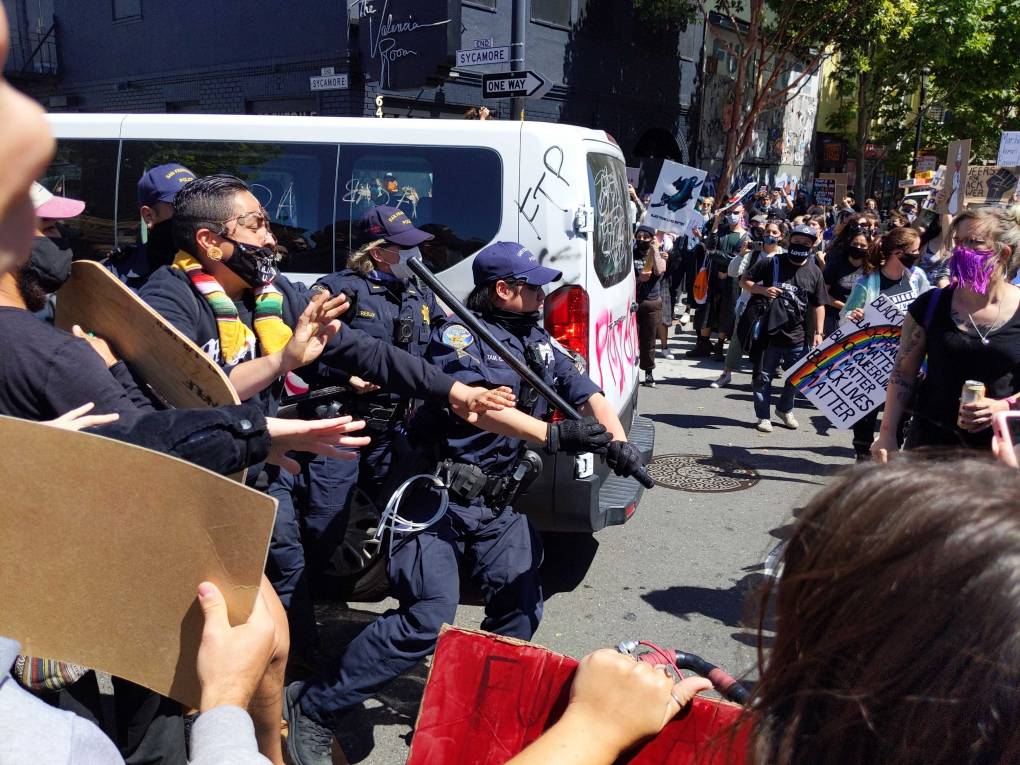
"caption": "A San Francisco police officer raises a baton at a crowd near a police van at the 'Pride is a Riot' march Sunday in San Francisco, which was organized by an anonymous group.",
"description": "A San Francisco police officer raises a baton at a crowd near a police van at the 'Pride is a Riot' march Sunday in San Francisco, which was organized by an anonymous group.",
"title": "Pride Protest 3",
"credit": "Anna Vignet/KQED",
"status": "inherit",
"isLoading": false,
"fetchFailed": false
},
"news_11826193": {
"type": "attachments",
"id": "news_11826193",
"meta": {
"index": "attachments_1716263798",
"site": "news",
"id": "11826193",
"found": true
},
"parent": 11826192,
"imgSizes": {
"apple_news_ca_landscape_5_5": {
"file": "https://ww2.kqed.org/app/uploads/sites/10/2020/06/RS43815_GettyImages-1217492733-qut-1044x783.jpg",
"width": 1044,
"mimeType": "image/jpeg",
"height": 783
},
"apple_news_ca_square_4_0": {
"file": "https://ww2.kqed.org/app/uploads/sites/10/2020/06/RS43815_GettyImages-1217492733-qut-470x470.jpg",
"width": 470,
"mimeType": "image/jpeg",
"height": 470
},
"twentyfourteen-full-width": {
"file": "https://ww2.kqed.org/app/uploads/sites/10/2020/06/RS43815_GettyImages-1217492733-qut-1038x576.jpg",
"width": 1038,
"mimeType": "image/jpeg",
"height": 576
},
"thumbnail": {
"file": "https://ww2.kqed.org/app/uploads/sites/10/2020/06/RS43815_GettyImages-1217492733-qut-160x107.jpg",
"width": 160,
"mimeType": "image/jpeg",
"height": 107
},
"post-thumbnail": {
"file": "https://ww2.kqed.org/app/uploads/sites/10/2020/06/RS43815_GettyImages-1217492733-qut-672x372.jpg",
"width": 672,
"mimeType": "image/jpeg",
"height": 372
},
"kqedFullSize": {
"file": "https://ww2.kqed.org/app/uploads/sites/10/2020/06/RS43815_GettyImages-1217492733-qut.jpg",
"width": 1920,
"height": 1280
},
"apple_news_ca_landscape_4_7": {
"file": "https://ww2.kqed.org/app/uploads/sites/10/2020/06/RS43815_GettyImages-1217492733-qut-632x474.jpg",
"width": 632,
"mimeType": "image/jpeg",
"height": 474
},
"large": {
"file": "https://ww2.kqed.org/app/uploads/sites/10/2020/06/RS43815_GettyImages-1217492733-qut-1020x680.jpg",
"width": 1020,
"mimeType": "image/jpeg",
"height": 680
},
"apple_news_ca_landscape_4_0": {
"file": "https://ww2.kqed.org/app/uploads/sites/10/2020/06/RS43815_GettyImages-1217492733-qut-536x402.jpg",
"width": 536,
"mimeType": "image/jpeg",
"height": 402
},
"apple_news_ca_portrait_12_9": {
"file": "https://ww2.kqed.org/app/uploads/sites/10/2020/06/RS43815_GettyImages-1217492733-qut-1122x1280.jpg",
"width": 1122,
"mimeType": "image/jpeg",
"height": 1280
},
"medium": {
"file": "https://ww2.kqed.org/app/uploads/sites/10/2020/06/RS43815_GettyImages-1217492733-qut-800x533.jpg",
"width": 800,
"mimeType": "image/jpeg",
"height": 533
},
"apple_news_ca_portrait_4_0": {
"file": "https://ww2.kqed.org/app/uploads/sites/10/2020/06/RS43815_GettyImages-1217492733-qut-354x472.jpg",
"width": 354,
"mimeType": "image/jpeg",
"height": 472
},
"apple_news_ca_portrait_9_7": {
"file": "https://ww2.kqed.org/app/uploads/sites/10/2020/06/RS43815_GettyImages-1217492733-qut-840x1120.jpg",
"width": 840,
"mimeType": "image/jpeg",
"height": 1120
},
"apple_news_ca_landscape_12_9": {
"file": "https://ww2.kqed.org/app/uploads/sites/10/2020/06/RS43815_GettyImages-1217492733-qut-1832x1280.jpg",
"width": 1832,
"mimeType": "image/jpeg",
"height": 1280
},
"apple_news_ca_square_9_7": {
"file": "https://ww2.kqed.org/app/uploads/sites/10/2020/06/RS43815_GettyImages-1217492733-qut-1104x1104.jpg",
"width": 1104,
"mimeType": "image/jpeg",
"height": 1104
},
"1536x1536": {
"file": "https://ww2.kqed.org/app/uploads/sites/10/2020/06/RS43815_GettyImages-1217492733-qut-1536x1024.jpg",
"width": 1536,
"mimeType": "image/jpeg",
"height": 1024
},
"apple_news_ca_portrait_4_7": {
"file": "https://ww2.kqed.org/app/uploads/sites/10/2020/06/RS43815_GettyImages-1217492733-qut-414x552.jpg",
"width": 414,
"mimeType": "image/jpeg",
"height": 552
},
"apple_news_ca_square_12_9": {
"file": "https://ww2.kqed.org/app/uploads/sites/10/2020/06/RS43815_GettyImages-1217492733-qut-1472x1280.jpg",
"width": 1472,
"mimeType": "image/jpeg",
"height": 1280
},
"apple_news_ca_portrait_5_5": {
"file": "https://ww2.kqed.org/app/uploads/sites/10/2020/06/RS43815_GettyImages-1217492733-qut-687x916.jpg",
"width": 687,
"mimeType": "image/jpeg",
"height": 916
},
"apple_news_ca_square_4_7": {
"file": "https://ww2.kqed.org/app/uploads/sites/10/2020/06/RS43815_GettyImages-1217492733-qut-550x550.jpg",
"width": 550,
"mimeType": "image/jpeg",
"height": 550
},
"apple_news_ca_landscape_9_7": {
"file": "https://ww2.kqed.org/app/uploads/sites/10/2020/06/RS43815_GettyImages-1217492733-qut-1376x1032.jpg",
"width": 1376,
"mimeType": "image/jpeg",
"height": 1032
},
"apple_news_ca_square_5_5": {
"file": "https://ww2.kqed.org/app/uploads/sites/10/2020/06/RS43815_GettyImages-1217492733-qut-912x912.jpg",
"width": 912,
"mimeType": "image/jpeg",
"height": 912
}
},
"publishDate": 1593124800,
"modified": 1593205048,
"caption": "A mural painted on the ground of Frank Ogawa Plaza in Oakland is pictured during a June 3 \"Sit Out the Curfew\" protest over the death of George Floyd, who died in Minneapolis on May 25 while in police custody. ",
"description": "A mural painted on the ground of Frank Ogawa Plaza in Oakland is pictured during a June 3 \"Sit Out the Curfew\" protest over the death of George Floyd, who died in Minneapolis on May 25 while in police custody. ",
"title": "US-POLITICS-RACE-UNREST",
"credit": "Philip Pacheco/AFP via Getty Images",
"status": "inherit",
"isLoading": false,
"fetchFailed": false
}
},
"audioPlayerReducer": {
"postId": "stream_live",
"isPaused": true,
"isPlaying": false,
"pfsActive": false,
"pledgeModalIsOpen": true,
"playerDrawerIsOpen": false,
"liveAudioPlayStartedAt": 0,
"liveAudioPlayContext": ""
},
"authorsReducer": {
"byline_news_11832708": {
"type": "authors",
"id": "byline_news_11832708",
"meta": {
"override": true
},
"slug": "byline_news_11832708",
"name": "Don Thompson \u003cbr> Associated Press",
"isLoading": false
},
"byline_news_11829608": {
"type": "authors",
"id": "byline_news_11829608",
"meta": {
"override": true
},
"slug": "byline_news_11829608",
"name": "Calvin Woodward \u003cbr />AP\u003cbr>",
"isLoading": false
},
"aemslie": {
"type": "authors",
"id": "3206",
"meta": {
"index": "authors_1716337520",
"id": "3206",
"found": true
},
"name": "Alex Emslie",
"firstName": "Alex",
"lastName": "Emslie",
"slug": "aemslie",
"email": "aemslie@kqed.org",
"display_author_email": true,
"staff_mastheads": [
"news"
],
"title": "KQED Senior Editor",
"bio": "Alex Emslie is senior editor of talent and development at KQED, where he manages dozens of early career journalists and oversees news department internships.\r\n\r\nHe is a former carpenter and proud graduate of City College of San Francisco and San Francisco State University, where he studied journalism and criminal justice before joining KQED in 2013.\r\n\r\nAlex produced investigative journalism focused on \u003ca href=\"https://www.kqed.org/news/11667594/the-trials-of-marvin-mutch-video\">criminal justice\u003c/a> and policing for most of a decade. He has broken major stories about \u003ca href=\"https://www.kqed.org/news/135682/amid-a-series-of-vallejo-police-shootings-one-officers-name-stands-out\">police use of deadly force\u003c/a>, \u003ca href=\"https://www.kqed.org/news/10454955/racist-texts-prompt-sfpd-internal-investigation\">officer misconduct\u003c/a> and \u003ca href=\"https://www.kqed.org/news/11712239/terrorist-or-troll-judge-to-weigh-whether-oakland-man-really-intended-to-attack-bay-area\">other\u003c/a> \u003ca href=\"https://www.kqed.org/news/11221414/hayward-paid-159000-to-husband-of-retired-police-chief-documents-show\">high\u003c/a>-\u003ca href=\"https://www.kqed.org/news/10622762/the-forgotten-tracking-two-homicides-in-san-francisco-public-housing\">profile\u003c/a> \u003ca href=\"https://www.kqed.org/news/11624516/federal-agency-promoted-ranger-just-months-after-his-gun-was-stolen-and-used-in-steinle-killing\">cases\u003c/a>. He co-founded the \u003ca href=\"https://projects.scpr.org/california-reporting-project/\">California Reporting Project\u003c/a> in 2019 to obtain and report on previously confidential police internal investigations. The effort produced well over 100 original stories and changed the course of multiple criminal cases.\r\n\r\nHis work has been recognized with numerous journalism awards, including a national Edward R. Murrow award for several years of \u003ca href=\"https://www.kqed.org/news/11688481/sfpd-officers-in-mario-woods-case-recount-shooting-in-newly-filed-depositions\">reporting\u003c/a> on the San Francisco Police shooting of Mario Woods. His \u003ca href=\"https://www.kqed.org/news/147854/half-of-those-killed-by-san-francisco-police-are-mentally-ill\">reporting\u003c/a> on police killings of people in psychiatric crisis was cited in amicus briefs before the U.S. Supreme Court.\r\n\r\nAlex now enjoys mentoring the next generation of journalists at KQED.",
"avatar": "https://secure.gravatar.com/avatar/e691e65209f20e9da202bd730ead5663?s=600&d=blank&r=g",
"twitter": "SFNewsReporter",
"facebook": null,
"instagram": null,
"linkedin": null,
"sites": [
{
"site": "arts",
"roles": [
"editor"
]
},
{
"site": "news",
"roles": [
"editor"
]
},
{
"site": "mindshift",
"roles": [
"editor"
]
},
{
"site": "stateofhealth",
"roles": [
"editor"
]
},
{
"site": "science",
"roles": [
"administrator"
]
}
],
"headData": {
"title": "Alex Emslie | KQED",
"description": "KQED Senior Editor",
"ogImgSrc": "https://secure.gravatar.com/avatar/e691e65209f20e9da202bd730ead5663?s=600&d=blank&r=g",
"twImgSrc": "https://secure.gravatar.com/avatar/e691e65209f20e9da202bd730ead5663?s=600&d=blank&r=g"
},
"isLoading": false,
"link": "/author/aemslie"
},
"markfiore": {
"type": "authors",
"id": "3236",
"meta": {
"index": "authors_1716337520",
"id": "3236",
"found": true
},
"name": "Mark Fiore",
"firstName": "Mark",
"lastName": "Fiore",
"slug": "markfiore",
"email": "mark@markfiore.com",
"display_author_email": false,
"staff_mastheads": [
"news"
],
"title": "KQED News Cartoonist",
"bio": "\u003ca href=\"http://www.MarkFiore.com\">MarkFiore.com\u003c/a> | \u003ca href=\"https://twitter.com/markfiore\">Follow on Twitter\u003c/a> | \u003ca href=\"https://www.facebook.com/pages/Mark-Fiore-Animated-Political-Cartoons/94451707396?ref=bookmarks\">Facebook\u003c/a> | \u003ca href=\"mailto:mark@markfiore.com\">email\u003c/a>\r\n\r\nPulitzer Prize-winner, Mark Fiore, who the Wall Street Journal has called “the undisputed guru of the form,” creates animated political cartoons in San Francisco, where his work has been featured regularly on the San Francisco Chronicle’s web site, SFGate.com. His work has appeared on Newsweek.com, Slate.com, CBSNews.com, MotherJones.com, DailyKos.com and NPR’s web site. Fiore’s political animation has appeared on CNN, Frontline, Bill Moyers Journal, Salon.com and cable and broadcast outlets across the globe.\r\n\r\nBeginning his professional life by drawing traditional political cartoons for newspapers, Fiore’s work appeared in publications ranging from the Washington Post to the Los Angeles Times. In the late 1990s, he began to experiment with animating political cartoons and, after a short stint at the San Jose Mercury News as their staff cartoonist, Fiore devoted all his energies to animation.\r\nGrowing up in California, Fiore also spent a good portion of his life in the backwoods of Idaho. It was this combination that shaped him politically. Mark majored in political science at Colorado College, where, in a perfect send-off for a cartoonist, he received his diploma in 1991 as commencement speaker Dick Cheney smiled approvingly.\r\nMark Fiore was awarded the Pulitzer Prize for political cartooning in 2010, a Robert F. Kennedy Journalism Award in 2004 and has twice received an Online Journalism Award for commentary from the Online News Association (2002, 2008). Fiore has received two awards for his work in new media from the National Cartoonists Society (2001, 2002), and in 2006 received The James Madison Freedom of Information Award from The Society of Professional Journalists.",
"avatar": "https://secure.gravatar.com/avatar/fc4e2a612b15b67bad0c6f0e1db4ca9b?s=600&d=blank&r=g",
"twitter": "MarkFiore",
"facebook": null,
"instagram": "https://www.instagram.com/markfiore/?hl=en",
"linkedin": null,
"sites": [
{
"site": "arts",
"roles": [
"contributor"
]
},
{
"site": "news",
"roles": [
"editor"
]
},
{
"site": "futureofyou",
"roles": [
"editor"
]
},
{
"site": "science",
"roles": [
"editor"
]
}
],
"headData": {
"title": "Mark Fiore | KQED",
"description": "KQED News Cartoonist",
"ogImgSrc": "https://secure.gravatar.com/avatar/fc4e2a612b15b67bad0c6f0e1db4ca9b?s=600&d=blank&r=g",
"twImgSrc": "https://secure.gravatar.com/avatar/fc4e2a612b15b67bad0c6f0e1db4ca9b?s=600&d=blank&r=g"
},
"isLoading": false,
"link": "/author/markfiore"
},
"carlysevern": {
"type": "authors",
"id": "3243",
"meta": {
"index": "authors_1716337520",
"id": "3243",
"found": true
},
"name": "Carly Severn",
"firstName": "Carly",
"lastName": "Severn",
"slug": "carlysevern",
"email": "csevern@kqed.org",
"display_author_email": false,
"staff_mastheads": [
"news"
],
"title": "Senior Editor, Audience News ",
"bio": "Carly is KQED's Senior Editor of Audience News on the Digital News team, and has reported for the California Report Magazine, Bay Curious and KQED Arts. She's formerly the host of \u003ca href=\"http://ww2.kqed.org/pop/category/the-cooler/\" rel=\"noopener noreferrer\">The Cooler\u003c/a> podcast.",
"avatar": "https://secure.gravatar.com/avatar/54037bf5c128fe678f0ef26cec97a93f2e7f220a22d7285703328f12c42c1b1d?s=600&d=blank&r=g",
"twitter": "teacupinthebay",
"bluesky": null,
"facebook": null,
"instagram": null,
"linkedin": null,
"sites": [
{
"site": "",
"roles": [
"editor"
]
},
{
"site": "arts",
"roles": [
"editor"
]
},
{
"site": "news",
"roles": [
"administrator"
]
},
{
"site": "pop",
"roles": [
"editor"
]
},
{
"site": "futureofyou",
"roles": [
"editor"
]
},
{
"site": "about",
"roles": [
"administrator"
]
},
{
"site": "mindshift",
"roles": [
"editor"
]
},
{
"site": "bayareabites",
"roles": [
"editor"
]
},
{
"site": "stateofhealth",
"roles": [
"editor"
]
},
{
"site": "science",
"roles": [
"editor"
]
},
{
"site": "food",
"roles": [
"contributor"
]
},
{
"site": "forum",
"roles": [
"editor"
]
},
{
"site": "perspectives",
"roles": [
"administrator"
]
},
{
"site": "liveblog",
"roles": [
"editor"
]
}
],
"headData": {
"title": "Carly Severn | KQED",
"description": "Senior Editor, Audience News ",
"ogImgSrc": "https://secure.gravatar.com/avatar/54037bf5c128fe678f0ef26cec97a93f2e7f220a22d7285703328f12c42c1b1d?s=600&d=blank&r=g",
"twImgSrc": "https://secure.gravatar.com/avatar/54037bf5c128fe678f0ef26cec97a93f2e7f220a22d7285703328f12c42c1b1d?s=600&d=blank&r=g"
},
"isLoading": false,
"link": "/author/carlysevern"
},
"sdirks": {
"type": "authors",
"id": "7239",
"meta": {
"index": "authors_1716337520",
"id": "7239",
"found": true
},
"name": "Sandhya Dirks",
"firstName": "Sandhya",
"lastName": "Dirks",
"slug": "sdirks",
"email": "sdirks@kqed.org",
"display_author_email": true,
"staff_mastheads": [],
"title": null,
"bio": "Sandhya Dirks was the race and equity reporter at KQED. She approaches race and equity not as a beat, but as a fundamental lens for all investigative and explanatory reporting.\r\n\r\nSandhya covered policing, housing, social justice movements, and the shifting demographics of cities and suburbs.\r\n\r\nShe was the creator and co-host of the podcast American Suburb, about the transformation of suburbia into the most diverse space in American life. She was the editor for Truth Be Told, an advice show for and by people of color. \r\n\r\nHer stories about race, space, and belonging were part of KQED's So Well Spoken project, which won RNDTA's Kaleidoscope award, honoring outstanding achievements in the coverage of diversity.\r\n\r\nPrior to joining KQED in 2015, Sandhya covered the 2012 presidential election from the swing state of Iowa for Iowa Public Radio. At KPBS in San Diego, she broke the story of a sexual harassment scandal that led to the mayor's resignation.\r\n\r\nShe got her start in radio working on documentaries about Oakland that investigated the high drop-out rate in public schools and mistrust between the police and the community.\r\n\r\nSandhya lives in Oakland and believes all stories are stories about power.",
"avatar": "https://secure.gravatar.com/avatar/c0247cb15929cd4c197672fd73d45300?s=600&d=blank&r=g",
"twitter": "audiosand",
"facebook": null,
"instagram": null,
"linkedin": null,
"sites": [
{
"site": "news",
"roles": [
"subscriber"
]
},
{
"site": "stateofhealth",
"roles": [
"author"
]
}
],
"headData": {
"title": "Sandhya Dirks | KQED",
"description": null,
"ogImgSrc": "https://secure.gravatar.com/avatar/c0247cb15929cd4c197672fd73d45300?s=600&d=blank&r=g",
"twImgSrc": "https://secure.gravatar.com/avatar/c0247cb15929cd4c197672fd73d45300?s=600&d=blank&r=g"
},
"isLoading": false,
"link": "/author/sdirks"
},
"dkatayama": {
"type": "authors",
"id": "7240",
"meta": {
"index": "authors_1716337520",
"id": "7240",
"found": true
},
"name": "Devin Katayama",
"firstName": "Devin",
"lastName": "Katayama",
"slug": "dkatayama",
"email": "dkatayama@kqed.org",
"display_author_email": true,
"staff_mastheads": [
"news"
],
"title": "Editor of Talent and Development",
"bio": "Devin Katayama is former Editor of Talent and Development for KQED. He supported our internship program and on-call staff by looking for equitable opportunities to improve the newsroom.\r\n\r\nHe previously hosted The Bay and American Suburb podcasts from KQED News. Prior to returning to the Bay Area in 2015, Devin was the education reporter for WFPL in Louisville and worked as a producer with radio stations in Chicago and Portland, OR. His work has appeared on NPR’s \u003cem>Morning Edition, All Things Considered, The Takeaway\u003c/em> and \u003cem>Here and Now.\u003c/em>\r\n\r\nDevin earned his MA in Journalism from Columbia College Chicago, where he was a Follett Fellow and the recipient of the 2011 Studs Terkel Community Media Workshop Scholarship for his story on Chicago's homeless youth. He won WBUR's 2014 Daniel Schorr award and a regional RTNDA Edward R. Murrow Award for his documentary \"At Risk\" that looked at issues facing some of Louisville's students. Devin has also received numerous local awards from the Associated Press and the Society of Professional Journalists.",
"avatar": "https://secure.gravatar.com/avatar/d0d2978a31002fb2de107921a8e18405?s=600&d=blank&r=g",
"twitter": "RadioDevin",
"facebook": null,
"instagram": null,
"linkedin": null,
"sites": [
{
"site": "arts",
"roles": []
},
{
"site": "news",
"roles": [
"author"
]
},
{
"site": "stateofhealth",
"roles": [
"author"
]
},
{
"site": "forum",
"roles": [
"editor"
]
},
{
"site": "perspectives",
"roles": [
"editor"
]
}
],
"headData": {
"title": "Devin Katayama | KQED",
"description": "Editor of Talent and Development",
"ogImgSrc": "https://secure.gravatar.com/avatar/d0d2978a31002fb2de107921a8e18405?s=600&d=blank&r=g",
"twImgSrc": "https://secure.gravatar.com/avatar/d0d2978a31002fb2de107921a8e18405?s=600&d=blank&r=g"
},
"isLoading": false,
"link": "/author/dkatayama"
},
"ecruzguevarra": {
"type": "authors",
"id": "8654",
"meta": {
"index": "authors_1716337520",
"id": "8654",
"found": true
},
"name": "Ericka Cruz Guevarra",
"firstName": "Ericka",
"lastName": "Cruz Guevarra",
"slug": "ecruzguevarra",
"email": "ecruzguevarra@kqed.org",
"display_author_email": true,
"staff_mastheads": [
"news"
],
"title": "Producer, The Bay Podcast",
"bio": "Ericka Cruz Guevarra is host of \u003ca href=\"https://www.kqed.org/podcasts/thebay\">\u003cem>The Bay\u003c/em>\u003c/a> podcast at KQED. Before host, she was the show’s producer. Her work in that capacity includes a three-part reported series on policing in Vallejo, which won a 2020 excellence in journalism award from the Society of Professional Journalists. Ericka has worked as a breaking news reporter at Oregon Public Broadcasting, helped produce the Code Switch podcast, and was KQED’s inaugural Raul Ramirez Diversity Fund intern. She’s also an alumna of NPR’s Next Generation Radio program. Send her an email if you have strong feelings about whether Fairfield and Suisun City are the Bay. Ericka is represented by SAG-AFTRA.",
"avatar": "https://secure.gravatar.com/avatar/accefc1de4bafc7e234b69bcb9b6f6536c130fd84709bc3069ef11a78787e1bb?s=600&d=blank&r=g",
"twitter": "NotoriousECG",
"bluesky": null,
"facebook": null,
"instagram": null,
"linkedin": null,
"sites": [
{
"site": "arts",
"roles": [
"subscriber"
]
},
{
"site": "news",
"roles": [
"editor",
"manage_categories"
]
},
{
"site": "futureofyou",
"roles": [
"subscriber"
]
},
{
"site": "stateofhealth",
"roles": [
"subscriber"
]
},
{
"site": "science",
"roles": [
"editor"
]
},
{
"site": "forum",
"roles": [
"subscriber"
]
}
],
"headData": {
"title": "Ericka Cruz Guevarra | KQED",
"description": "Producer, The Bay Podcast",
"ogImgSrc": "https://secure.gravatar.com/avatar/accefc1de4bafc7e234b69bcb9b6f6536c130fd84709bc3069ef11a78787e1bb?s=600&d=blank&r=g",
"twImgSrc": "https://secure.gravatar.com/avatar/accefc1de4bafc7e234b69bcb9b6f6536c130fd84709bc3069ef11a78787e1bb?s=600&d=blank&r=g"
},
"isLoading": false,
"link": "/author/ecruzguevarra"
},
"korr": {
"type": "authors",
"id": "11200",
"meta": {
"index": "authors_1716337520",
"id": "11200",
"found": true
},
"name": "Katie Orr",
"firstName": "Katie",
"lastName": "Orr",
"slug": "korr",
"email": "korr@kqed.org",
"display_author_email": false,
"staff_mastheads": [],
"title": "KQED Contributor",
"bio": "Katie Orr was a Sacramento-based reporter for KQED's Politics and Government Desk, covering the state Capitol and a variety of issues including women in politics, voting and elections and legislation. Prior to joining KQED in 2016, Katie was state government reporter for Capital Public Radio in Sacramento. She's also worked for KPBS in San Diego, where she covered City Hall.\r\n\r\nKatie received her masters degree in political science from San Diego State University and holds a Bachelors degree in broadcast journalism from Arizona State University.\r\n\r\nIn 2015 Katie won a national Clarion Award for a series of stories she did on women in California politics. She's been honored by the Society for Professional Journalists and, in 2013, was named by \u003cem>The Washington Post\u003c/em> as one of the country's top state Capitol reporters. She's also reported for the award-winning documentary series \u003cem>The View from Here \u003c/em>and was part of the team that won national PRNDI and Gabriel Awards in 2015. She lives in Sacramento with her husband. Twitter: @1KatieOrr",
"avatar": "https://secure.gravatar.com/avatar/41a40b25845adc78f50808670860449e?s=600&d=blank&r=g",
"twitter": "1katieorr",
"facebook": null,
"instagram": null,
"linkedin": null,
"sites": [
{
"site": "news",
"roles": [
"subscriber"
]
},
{
"site": "stateofhealth",
"roles": [
"author"
]
},
{
"site": "forum",
"roles": [
"author"
]
}
],
"headData": {
"title": "Katie Orr | KQED",
"description": "KQED Contributor",
"ogImgSrc": "https://secure.gravatar.com/avatar/41a40b25845adc78f50808670860449e?s=600&d=blank&r=g",
"twImgSrc": "https://secure.gravatar.com/avatar/41a40b25845adc78f50808670860449e?s=600&d=blank&r=g"
},
"isLoading": false,
"link": "/author/korr"
},
"vrancano": {
"type": "authors",
"id": "11276",
"meta": {
"index": "authors_1716337520",
"id": "11276",
"found": true
},
"name": "Vanessa Rancaño",
"firstName": "Vanessa",
"lastName": "Rancaño",
"slug": "vrancano",
"email": "vrancano@kqed.org",
"display_author_email": false,
"staff_mastheads": [
"news"
],
"title": "Reporter",
"bio": "Vanessa Rancaño is a features reporter for KQED. She’s also covered homelessness and education for the station and reported from the Central Valley. Her work has aired across public radio, from flagship national news shows to longform narrative podcasts. Before taking up a mic, she worked as a freelance print journalist. She’s been recognized with a number of national and regional awards. Vanessa grew up in California's Central Valley. She's a former NPR Kroc Fellow, and a graduate of the UC Berkeley Graduate School of Journalism.",
"avatar": "https://secure.gravatar.com/avatar/b3a383dfb0e7ee1c17568f2cf067904ab654d6e3de9743fc661f3c788ade1bed?s=600&d=blank&r=g",
"twitter": "vanessarancano",
"bluesky": null,
"facebook": null,
"instagram": null,
"linkedin": null,
"sites": [
{
"site": "arts",
"roles": [
"editor"
]
},
{
"site": "news",
"roles": [
"editor"
]
},
{
"site": "liveblog",
"roles": [
"contributor"
]
}
],
"headData": {
"title": "Vanessa Rancaño | KQED",
"description": "Reporter",
"ogImgSrc": "https://secure.gravatar.com/avatar/b3a383dfb0e7ee1c17568f2cf067904ab654d6e3de9743fc661f3c788ade1bed?s=600&d=blank&r=g",
"twImgSrc": "https://secure.gravatar.com/avatar/b3a383dfb0e7ee1c17568f2cf067904ab654d6e3de9743fc661f3c788ade1bed?s=600&d=blank&r=g"
},
"isLoading": false,
"link": "/author/vrancano"
},
"jchang": {
"type": "authors",
"id": "11642",
"meta": {
"index": "authors_1716337520",
"id": "11642",
"found": true
},
"name": "Julie Chang",
"firstName": "Julie",
"lastName": "Chang",
"slug": "jchang",
"email": "jchang@kqed.org",
"display_author_email": false,
"staff_mastheads": [
"news"
],
"title": "KQED Contributor",
"bio": "Julie Chang is a reporter and producer (and occasional anchor) with the radio and digital teams at KQED. Before KQED, she worked at WAMU 88.5 in Washington D.C. and 89.3 KPCC in Los Angeles County. Her work has been featured on NPR’s Morning Edition and All Things Considered, Here & Now, the New York Times, and more. Julie graduated from UC Berkeley’s Graduate School of Journalism. She previously taught English at Pasadena City College, Fullerton College and Cal Poly Pomona. Julie earned her M.A. in English from Cal Poly Pomona and her B.A. in English from UCI with a minor in criminology.",
"avatar": "https://secure.gravatar.com/avatar/a7afce94ef127082c5475116b4a3b77d?s=600&d=blank&r=g",
"twitter": "BayAreaJulie",
"facebook": null,
"instagram": null,
"linkedin": "https://www.linkedin.com/in/julieyc/",
"sites": [
{
"site": "",
"roles": [
"editor"
]
},
{
"site": "news",
"roles": [
"author"
]
},
{
"site": "science",
"roles": [
"editor"
]
}
],
"headData": {
"title": "Julie Chang | KQED",
"description": "KQED Contributor",
"ogImgSrc": "https://secure.gravatar.com/avatar/a7afce94ef127082c5475116b4a3b77d?s=600&d=blank&r=g",
"twImgSrc": "https://secure.gravatar.com/avatar/a7afce94ef127082c5475116b4a3b77d?s=600&d=blank&r=g"
},
"isLoading": false,
"link": "/author/jchang"
},
"slin": {
"type": "authors",
"id": "11680",
"meta": {
"index": "authors_1716337520",
"id": "11680",
"found": true
},
"name": "Shannon Lin",
"firstName": "Shannon",
"lastName": "Lin",
"slug": "slin",
"email": "slin@KQED.org",
"display_author_email": false,
"staff_mastheads": [
"news"
],
"title": "KQED Contributor",
"bio": null,
"avatar": "https://secure.gravatar.com/avatar/933be81059ee104afe4b7976547cf552?s=600&d=blank&r=g",
"twitter": null,
"facebook": null,
"instagram": null,
"linkedin": null,
"sites": [
{
"site": "news",
"roles": [
"subscriber"
]
},
{
"site": "forum",
"roles": [
"editor"
]
}
],
"headData": {
"title": "Shannon Lin | KQED",
"description": "KQED Contributor",
"ogImgSrc": "https://secure.gravatar.com/avatar/933be81059ee104afe4b7976547cf552?s=600&d=blank&r=g",
"twImgSrc": "https://secure.gravatar.com/avatar/933be81059ee104afe4b7976547cf552?s=600&d=blank&r=g"
},
"isLoading": false,
"link": "/author/slin"
},
"avignet": {
"type": "authors",
"id": "11683",
"meta": {
"index": "authors_1716337520",
"id": "11683",
"found": true
},
"name": "Anna Vignet",
"firstName": "Anna",
"lastName": "Vignet",
"slug": "avignet",
"email": "avignet@kqed.org",
"display_author_email": false,
"staff_mastheads": [
"news"
],
"title": "KQED Contributor",
"bio": null,
"avatar": "https://secure.gravatar.com/avatar/75b1c67fd0f5915bc8c1514aca495240?s=600&d=blank&r=g",
"twitter": null,
"facebook": null,
"instagram": null,
"linkedin": null,
"sites": [
{
"site": "arts",
"roles": [
"author"
]
},
{
"site": "news",
"roles": [
"editor"
]
}
],
"headData": {
"title": "Anna Vignet | KQED",
"description": "KQED Contributor",
"ogImgSrc": "https://secure.gravatar.com/avatar/75b1c67fd0f5915bc8c1514aca495240?s=600&d=blank&r=g",
"twImgSrc": "https://secure.gravatar.com/avatar/75b1c67fd0f5915bc8c1514aca495240?s=600&d=blank&r=g"
},
"isLoading": false,
"link": "/author/avignet"
},
"jrodriguez": {
"type": "authors",
"id": "11690",
"meta": {
"index": "authors_1716337520",
"id": "11690",
"found": true
},
"name": "Joe Fitzgerald Rodriguez",
"firstName": "Joe",
"lastName": "Fitzgerald Rodriguez",
"slug": "jrodriguez",
"email": "jrodriguez@kqed.org",
"display_author_email": true,
"staff_mastheads": [
"news"
],
"title": "Reporter and Producer",
"bio": "Joe Fitzgerald Rodriguez is a reporter and digital producer for KQED covering politics. Joe most recently wrote for the \u003cem>San Francisco Examiner\u003c/em> as a political columnist covering The City. He was raised in San Francisco and has spent his reporting career in his beloved, foggy, city by the bay. Joe was 12-years-old when he conducted his first interview in journalism, grilling former San Francisco Mayor Willie Brown for the Marina Middle School newspaper, \u003cem>The Penguin Press, \u003c/em>and he continues to report on the San Francisco Bay Area to this day.",
"avatar": "https://secure.gravatar.com/avatar/2247beb0564c1e9c62228d5649d2edac?s=600&d=blank&r=g",
"twitter": "FitztheReporter",
"facebook": null,
"instagram": "https://www.instagram.com/fitzthereporter/",
"linkedin": null,
"sites": [
{
"site": "",
"roles": [
"editor"
]
},
{
"site": "arts",
"roles": [
"editor"
]
},
{
"site": "news",
"roles": [
"editor"
]
},
{
"site": "science",
"roles": [
"editor"
]
},
{
"site": "elections",
"roles": [
"editor"
]
},
{
"site": "liveblog",
"roles": [
"editor"
]
}
],
"headData": {
"title": "Joe Fitzgerald Rodriguez | KQED",
"description": "Reporter and Producer",
"ogImgSrc": "https://secure.gravatar.com/avatar/2247beb0564c1e9c62228d5649d2edac?s=600&d=blank&r=g",
"twImgSrc": "https://secure.gravatar.com/avatar/2247beb0564c1e9c62228d5649d2edac?s=600&d=blank&r=g"
},
"isLoading": false,
"link": "/author/jrodriguez"
}
},
"pagesReducer": {
"news_tag_george-floyd": {
"type": "terms",
"id": "news_28031",
"meta": {
"index": "terms_1716263798",
"site": "news",
"id": "28031",
"score": 9.103924
},
"featImg": null,
"name": "George Floyd",
"description": null,
"taxonomy": "tag",
"headData": {
"twImgId": null,
"twTitle": null,
"ogTitle": null,
"ogImgId": null,
"twDescription": null,
"description": null,
"title": "George Floyd Archives | KQED News",
"ogDescription": null
},
"ttid": 28048,
"slug": "george-floyd",
"isLoading": false,
"title": "George Floyd",
"pageMeta": {
"site": "news",
"WpPageTemplate": "page-topic-editorial",
"currentPage": 3
},
"blocks": [
{
"blockName": "kqed/post-list",
"attrs": {
"layout": "cardArticle2",
"query": "posts/news?tag=george-floyd",
"seeMore": false,
"paginated": true,
"page": 3
}
},
{
"blockName": "kqed/ad"
}
]
}
},
"pfsSessionReducer": {},
"postsReducer": {
"stream_live": {
"type": "live",
"id": "stream_live",
"audioUrl": "https://streams.kqed.org/kqedradio",
"title": "Live Stream",
"excerpt": "Live Stream information currently unavailable.",
"link": "/radio",
"featImg": "",
"label": {
"name": "KQED Live",
"link": "/"
}
},
"stream_kqedNewscast": {
"type": "posts",
"id": "stream_kqedNewscast",
"audioUrl": "https://www.kqed.org/.stream/anon/radio/RDnews/newscast.mp3?_=1",
"title": "KQED Newscast",
"featImg": "",
"label": {
"name": "88.5 FM",
"link": "/"
}
},
"news_11832708": {
"type": "posts",
"id": "news_11832708",
"meta": {
"index": "posts_1716263798",
"site": "news",
"id": "11832708",
"score": null,
"sort": [
1596987777000
]
},
"parent": 0,
"labelTerm": {},
"blocks": [],
"publishDate": 1596987777,
"format": "standard",
"disqusTitle": "State Lawmakers Eye 11 Police Reforms After George Floyd’s Death",
"title": "State Lawmakers Eye 11 Police Reforms After George Floyd’s Death",
"headTitle": "KQED News",
"content": "\u003cp>California state lawmakers are pushing to enact nearly a dozen policing reform laws driven by nationwide outrage and protests after George Floyd’s death in Minneapolis in May. Lawmakers have until Aug. 31 to approve and send legislation to Gov. Gavin Newsom.\u003c/p>\n\u003cp>The bills include:\u003c/p>\n\u003ch3>\u003cstrong>Chokeholds\u003c/strong>\u003c/h3>\n\u003cp>[aside postID=\"news_11832502\" label=\"More Related Coverage\"]Assembly Bill 1196 by Assemblyman Mike Gipson, D-Carson, would bar law enforcement agencies from using carotid restraints, chokeholds or similar techniques.\u003c/p>\n\u003cp>The California Police Chiefs Association initially called for banning the carotid and chokeholds, but withdrew its support after it said Gipson broadened his bill “to include additional restrictions that are vague and subjective.”\u003c/p>\n\u003ch3>Duty to Intercede\u003c/h3>\n\u003cp>AB 1022 by Assemblyman Chris Holden, D-Pasadena, would require law enforcement officers to immediately intercede and report what they believe to be the use of excessive force.\u003c/p>\n\u003cp>[ad fullwidth]\u003c/p>\n\u003cp>Officers’ careers would end if they are found to have used excessive force resulting in serious injury or death, or failed to stop the overuse of force by another officer. Officers who don’t intercede could be criminally charged as accessories to any crimes committed by those who use excessive force.\u003c/p>\n\u003cp>Associations representing police officers say a new state law already gives officers a duty to intercede. They say more training and strong policies are better than criminalizing officers who may only have passing involvement.\u003c/p>\n\u003ch3>Victims’ Compensation\u003c/h3>\n\u003cp>\u003cspan style=\"font-weight: 400\">[aside tag=\"sean-monterrosa, vallejo\" label=\"more related stories\"] \u003c/span>AB 767 by Assemblyman Tim Grayson, D-Concord, would allow even criminal suspects and their survivors to apply for victims’ compensation if they were injured or killed by police use of excessive force. The first-in-the-nation proposal supported by State Treasurer Betty Yee, who sits on the California Victim Compensation Board, would also let the board consider documents beyond police reports that proponents said can be biased.\u003c/p>\n\u003cp>Advocates include the sisters of 22-year-old Sean Monterrosa, who was killed June 2 in Vallejo, near San Francisco, when police suspected him of stealing from a pharmacy on the night of a national protests over Floyd’s death. Police say what they thought was a gun turned out to be a hammer.\u003c/p>\n\u003ch3>Rubber Bullets\u003c/h3>\n\u003cp>AB 66 by Assemblywoman Lorena Gonzalez, D-San Diego, would respond to perceived police overreactions during recent protests by limiting the use of tear gas, pepper spray, rubber bullets and other projectiles against demonstrators. [aside postID=\"news_11822442\" label=\"More on Tear Gas\"]\u003c/p>\n\u003cp>The Los Angeles County Sheriff’s Department says barring tear gas risks escalating physical confrontations between officers and demonstrators.\u003c/p>\n\u003ch3>Journalists\u003c/h3>\n\u003cp>Senate Bill 629 by state Sen. Mike McGuire, D-Healdsburg, would protect the right of journalists to cover protests without interference from police.\u003c/p>\n\u003ch3>Military Uniforms\u003c/h3>\n\u003cp>SB 480 would bar law enforcement officials from wearing military-style uniforms. State Sen. Bob Archuleta, D-Pico Rivera, said that can make it difficult for civilians to distinguish officers from members of the National Guard. He said it can also sow fear and confusion, as when federal officers wore camouflage while confronting protesters in Portland, Oregon.\u003c/p>\n\u003ch3>Independent Investigations\u003c/h3>\n\u003cp>AB 1506 by Assemblyman Kevin McCarty, D-Sacramento, would create a new division within the state Department of Justice that, if requested by a local law enforcement agency, would investigate an officer-involved shooting or other use of force that kills a civilian. The department could also prosecute any officer it found had violated state law.\u003c/p>\n\u003ch3>Sheriffs Oversight\u003c/h3>\n\u003cp>AB1185, also by McCarty, would let county supervisors name inspectors general to help oversee independently elected county sheriffs.\u003c/p>\n\u003ch3>Police Records\u003c/h3>\n\u003cp>SB 776 by state Sen. Nancy Skinner, D-Berkeley, would expand a 2019 law that lifted some of the nation’s most secretive police records by requiring public access to disciplinary records involving investigations into officer shootings, use-of-force incidents and incidents involving officer misconduct.\u003c/p>\n\u003cp>It would add records of discipline against officers accused of racist or discriminatory actions, or those who have a history of wrongful arrests or searches, among others. Investigations would be completed even if officers resign. Records fees would be limited and fines imposed on agencies that don’t comply.\u003c/p>\n\u003cp>Numerous law enforcement organizations say the bill would remove a requirement that only sustained complaints be made public.\u003c/p>\n\u003ch3>Decertifying Officers\u003c/h3>\n\u003cp>SB 731 by state Sen. Steven Bradford, D-Gardena, would allow the state Department of Justice to revoke the certification of officers if they are fired for misconduct or convicted of certain crimes, to prevent them from getting new law enforcement jobs elsewhere.\u003c/p>\n\u003cp>The California Police Chiefs Association, which initially supported the idea, now says the legislation “is overly complex” and would remove immunity protections for all public employees.\u003c/p>\n\u003ch3>Juvenile Interrogations\u003c/h3>\n\u003cp>\u003c/p>\n\u003cp>SB 203, also by Bradford, would would bar those who are 17 years old or younger from being questioned by police or waiving their rights until they have a chance to consult with an attorney. California currently applies those restrictions to youths 15 years or younger.\u003c/p>\n\n",
"disqusIdentifier": "11832708 https://ww2.kqed.org/news/?p=11832708",
"disqusUrl": "https://ww2.kqed.org/news/2020/08/09/state-lawmakers-eye-11-police-reforms-after-george-floyds-death/",
"stats": {
"hasVideo": false,
"hasChartOrMap": false,
"hasAudio": false,
"hasPolis": false,
"wordCount": 831,
"hasGoogleForm": false,
"hasGallery": false,
"hasHearkenModule": false,
"iframeSrcs": [],
"paragraphCount": 23
},
"modified": 1597081249,
"excerpt": "Lawmakers in the state have until Aug. 31 to approve and send nearly a dozen police reform laws to Gov. Gavin Newsom.",
"headData": {
"twImgId": "",
"twTitle": "",
"ogTitle": "",
"ogImgId": "",
"twDescription": "",
"description": "Lawmakers in the state have until Aug. 31 to approve and send nearly a dozen police reform laws to Gov. Gavin Newsom.",
"title": "State Lawmakers Eye 11 Police Reforms After George Floyd’s Death | KQED",
"ogDescription": "",
"schema": {
"@context": "https://schema.org",
"@type": "NewsArticle",
"headline": "State Lawmakers Eye 11 Police Reforms After George Floyd’s Death",
"datePublished": "2020-08-09T08:42:57-07:00",
"dateModified": "2020-08-10T10:40:49-07:00",
"image": "https://cdn.kqed.org/wp-content/uploads/2020/02/KQED-OG-Image@1x.png",
"isAccessibleForFree": "True",
"publisher": {
"@type": "NewsMediaOrganization",
"@id": "https://www.kqed.org/#organization",
"name": "KQED",
"logo": "https://cdn.kqed.org/wp-content/uploads/2020/02/KQED-OG-Image@1x.png",
"url": "https://www.kqed.org",
"sameAs": [
"https://www.facebook.com/KQED",
"https://twitter.com/KQED",
"https://www.instagram.com/kqed/",
"https://www.tiktok.com/@kqedofficial",
"https://www.linkedin.com/company/kqed",
"https://www.youtube.com/channel/UCeC0IOo7i1P_61zVUWbJ4nw"
]
}
}
},
"guestAuthors": [],
"slug": "state-lawmakers-eye-11-police-reforms-after-george-floyds-death",
"status": "publish",
"sourceUrl": "http://kqed.org/",
"nprByline": "Don Thompson \u003cbr> Associated Press",
"source": "News",
"path": "/news/11832708/state-lawmakers-eye-11-police-reforms-after-george-floyds-death",
"audioTrackLength": null,
"parsedContent": [
{
"type": "contentString",
"content": "\u003cdiv class=\"post-body\">\u003cp>\u003cp>California state lawmakers are pushing to enact nearly a dozen policing reform laws driven by nationwide outrage and protests after George Floyd’s death in Minneapolis in May. Lawmakers have until Aug. 31 to approve and send legislation to Gov. Gavin Newsom.\u003c/p>\n\u003cp>The bills include:\u003c/p>\n\u003ch3>\u003cstrong>Chokeholds\u003c/strong>\u003c/h3>\n\u003cp>\u003c/p>\u003c/div>",
"attributes": {
"named": {},
"numeric": []
}
},
{
"type": "component",
"content": "",
"name": "aside",
"attributes": {
"named": {
"postid": "news_11832502",
"label": "More Related Coverage "
},
"numeric": []
}
},
{
"type": "contentString",
"content": "\u003cdiv class=\"post-body\">\u003cp>Assembly Bill 1196 by Assemblyman Mike Gipson, D-Carson, would bar law enforcement agencies from using carotid restraints, chokeholds or similar techniques.\u003c/p>\n\u003cp>The California Police Chiefs Association initially called for banning the carotid and chokeholds, but withdrew its support after it said Gipson broadened his bill “to include additional restrictions that are vague and subjective.”\u003c/p>\n\u003ch3>Duty to Intercede\u003c/h3>\n\u003cp>AB 1022 by Assemblyman Chris Holden, D-Pasadena, would require law enforcement officers to immediately intercede and report what they believe to be the use of excessive force.\u003c/p>\n\u003cp>\u003c/p>\u003c/div>",
"attributes": {
"named": {},
"numeric": []
}
},
{
"type": "component",
"content": "",
"name": "ad",
"attributes": {
"named": {
"label": "fullwidth"
},
"numeric": [
"fullwidth"
]
}
},
{
"type": "contentString",
"content": "\u003cdiv class=\"post-body\">\u003cp>\u003c/p>\n\u003cp>Officers’ careers would end if they are found to have used excessive force resulting in serious injury or death, or failed to stop the overuse of force by another officer. Officers who don’t intercede could be criminally charged as accessories to any crimes committed by those who use excessive force.\u003c/p>\n\u003cp>Associations representing police officers say a new state law already gives officers a duty to intercede. They say more training and strong policies are better than criminalizing officers who may only have passing involvement.\u003c/p>\n\u003ch3>Victims’ Compensation\u003c/h3>\n\u003cp>\u003cspan style=\"font-weight: 400\">\u003c/p>\u003c/div>",
"attributes": {
"named": {},
"numeric": []
}
},
{
"type": "component",
"content": "",
"name": "aside",
"attributes": {
"named": {
"tag": "sean-monterrosa, vallejo",
"label": "more related stories "
},
"numeric": []
}
},
{
"type": "contentString",
"content": "\u003cdiv class=\"post-body\">\u003cp> \u003c/span>AB 767 by Assemblyman Tim Grayson, D-Concord, would allow even criminal suspects and their survivors to apply for victims’ compensation if they were injured or killed by police use of excessive force. The first-in-the-nation proposal supported by State Treasurer Betty Yee, who sits on the California Victim Compensation Board, would also let the board consider documents beyond police reports that proponents said can be biased.\u003c/p>\n\u003cp>Advocates include the sisters of 22-year-old Sean Monterrosa, who was killed June 2 in Vallejo, near San Francisco, when police suspected him of stealing from a pharmacy on the night of a national protests over Floyd’s death. Police say what they thought was a gun turned out to be a hammer.\u003c/p>\n\u003ch3>Rubber Bullets\u003c/h3>\n\u003cp>AB 66 by Assemblywoman Lorena Gonzalez, D-San Diego, would respond to perceived police overreactions during recent protests by limiting the use of tear gas, pepper spray, rubber bullets and other projectiles against demonstrators. \u003c/p>\u003c/div>",
"attributes": {
"named": {},
"numeric": []
}
},
{
"type": "component",
"content": "",
"name": "aside",
"attributes": {
"named": {
"postid": "news_11822442",
"label": "More on Tear Gas "
},
"numeric": []
}
},
{
"type": "contentString",
"content": "\u003cdiv class=\"post-body\">\u003cp>\u003c/p>\n\u003cp>The Los Angeles County Sheriff’s Department says barring tear gas risks escalating physical confrontations between officers and demonstrators.\u003c/p>\n\u003ch3>Journalists\u003c/h3>\n\u003cp>Senate Bill 629 by state Sen. Mike McGuire, D-Healdsburg, would protect the right of journalists to cover protests without interference from police.\u003c/p>\n\u003ch3>Military Uniforms\u003c/h3>\n\u003cp>SB 480 would bar law enforcement officials from wearing military-style uniforms. State Sen. Bob Archuleta, D-Pico Rivera, said that can make it difficult for civilians to distinguish officers from members of the National Guard. He said it can also sow fear and confusion, as when federal officers wore camouflage while confronting protesters in Portland, Oregon.\u003c/p>\n\u003ch3>Independent Investigations\u003c/h3>\n\u003cp>AB 1506 by Assemblyman Kevin McCarty, D-Sacramento, would create a new division within the state Department of Justice that, if requested by a local law enforcement agency, would investigate an officer-involved shooting or other use of force that kills a civilian. The department could also prosecute any officer it found had violated state law.\u003c/p>\n\u003ch3>Sheriffs Oversight\u003c/h3>\n\u003cp>AB1185, also by McCarty, would let county supervisors name inspectors general to help oversee independently elected county sheriffs.\u003c/p>\n\u003ch3>Police Records\u003c/h3>\n\u003cp>SB 776 by state Sen. Nancy Skinner, D-Berkeley, would expand a 2019 law that lifted some of the nation’s most secretive police records by requiring public access to disciplinary records involving investigations into officer shootings, use-of-force incidents and incidents involving officer misconduct.\u003c/p>\n\u003cp>It would add records of discipline against officers accused of racist or discriminatory actions, or those who have a history of wrongful arrests or searches, among others. Investigations would be completed even if officers resign. Records fees would be limited and fines imposed on agencies that don’t comply.\u003c/p>\n\u003cp>Numerous law enforcement organizations say the bill would remove a requirement that only sustained complaints be made public.\u003c/p>\n\u003ch3>Decertifying Officers\u003c/h3>\n\u003cp>SB 731 by state Sen. Steven Bradford, D-Gardena, would allow the state Department of Justice to revoke the certification of officers if they are fired for misconduct or convicted of certain crimes, to prevent them from getting new law enforcement jobs elsewhere.\u003c/p>\n\u003cp>The California Police Chiefs Association, which initially supported the idea, now says the legislation “is overly complex” and would remove immunity protections for all public employees.\u003c/p>\n\u003ch3>Juvenile Interrogations\u003c/h3>\n\u003cp>\u003c/p>\n\u003cp>SB 203, also by Bradford, would would bar those who are 17 years old or younger from being questioned by police or waiving their rights until they have a chance to consult with an attorney. California currently applies those restrictions to youths 15 years or younger.\u003c/p>\n\n\u003c/div>\u003c/p>",
"attributes": {
"named": {},
"numeric": []
}
}
],
"link": "/news/11832708/state-lawmakers-eye-11-police-reforms-after-george-floyds-death",
"authors": [
"byline_news_11832708"
],
"categories": [
"news_6188",
"news_8",
"news_13"
],
"tags": [
"news_28383",
"news_18538",
"news_27626",
"news_28031",
"news_2997",
"news_1852"
],
"featImg": "news_11832709",
"label": "source_news_11832708"
},
"news_11832502": {
"type": "posts",
"id": "news_11832502",
"meta": {
"index": "posts_1716263798",
"site": "news",
"id": "11832502",
"score": null,
"sort": [
1596842973000
]
},
"parent": 0,
"labelTerm": {
"site": "news"
},
"blocks": [],
"publishDate": 1596842973,
"format": "standard",
"disqusTitle": "Ban on Police Choke Holds Moves Forward in California Senate",
"title": "Ban on Police Choke Holds Moves Forward in California Senate",
"headTitle": "KQED News",
"content": "\u003cp>\u003ca href=\"http://leginfo.legislature.ca.gov/faces/billNavClient.xhtml?bill_id=201920200AB1196\">Assembly Bill 1196, \u003c/a>which would ban law enforcement in California from using choke holds or similar restraining methods that pose a substantial risk of asphyxiation when detaining people, passed the state Senate Public Safety Committee Friday.\u003c/p>\n\u003cp>The legislation follows sustained national outcry over the death of George Floyd, a Minneapolis man who died after a police officer knelt on his neck for nearly nine minutes.\u003c/p>\n\u003cp>State Sen. Steven Bradford, D-Gardena, who voted in favor of the bill, said law enforcement officers frequently use choke holds and similar restraints even when they have other options available.\u003c/p>\n\u003cp>\"This is a technique that has been used over and over again on communities of color when there was no immediate threat or eminent threat to law enforcement,\" Bradford said.\u003c/p>\n\u003cp>Many cities in California, including San Francisco, Los Angeles and San Diego, already have similar bans in place. This bill would create a uniform policy statewide.\u003c/p>\n\u003cp>[ad fullwidth]\u003c/p>\n\u003cp>The bill would also ban placing people in positions that could restrict their airways, such as putting weight on a person's back or neck for a prolonged period of time.\u003c/p>\n\u003cp>Assemblyman Mike Gipson, D-Carson, who authored the legislation, said choke holds and similar techniques are risky and can easily go wrong.\u003c/p>\n\u003cp>\"Even a good officer using this correctly can also inflict serious injury on someone,\" Gipson said. \"In the hands of a bad apple, this is a weapon.\"\u003c/p>\n\u003cp>[aside label=\"related coverage\" tag=\"george-floyd\"]\u003c/p>\n\u003cp>The Senate Public Safety Committee also passed Friday a bill addressing compensation for victims of police violence.\u003c/p>\n\u003cp>AB 767 would allow survivors of police brutality and family members of those killed by police to receive reimbursement from the California Victim Compensation Board.\u003c/p>\n\u003cp>“AB 767 is California’s opportunity to demonstrate that we value the lives and experiences of all victims and particularly Black and brown victims of police violence,” said Assemblyman Tim Grayson, lead author of the bill.\u003c/p>\n\u003cp>Grayson’s district includes the city of Vallejo, where there have been a number of police shootings, including that of Sean Monterrosa, who was killed by an officer on June 2.\u003c/p>\n\u003cp>If ultimately approved by the Senate, both bills must return to the Assembly for a concurrence vote. They each need a two-thirds vote in both houses to be sent to the governor, and if signed, each bill would take effect immediately.\u003c/p>\n\u003cp>\u003c/p>\n\u003cp>\u003cem>KQED's Julie Chang and Monica Lam contributed to this story.\u003c/em>\u003c/p>\n\n",
"disqusIdentifier": "11832502 https://ww2.kqed.org/news/?p=11832502",
"disqusUrl": "https://ww2.kqed.org/news/2020/08/07/ban-on-police-choke-holds-moves-forward-in-california-senate/",
"stats": {
"hasVideo": false,
"hasChartOrMap": false,
"hasAudio": false,
"hasPolis": false,
"wordCount": 407,
"hasGoogleForm": false,
"hasGallery": false,
"hasHearkenModule": false,
"iframeSrcs": [],
"paragraphCount": 17
},
"modified": 1596847396,
"excerpt": "A bill allowing survivors and family members of victims of police violence to seek compensation also advanced in the state Senate.",
"headData": {
"twImgId": "",
"twTitle": "",
"ogTitle": "",
"ogImgId": "",
"twDescription": "",
"description": "A bill allowing survivors and family members of victims of police violence to seek compensation also advanced in the state Senate.",
"title": "Ban on Police Choke Holds Moves Forward in California Senate | KQED",
"ogDescription": "",
"schema": {
"@context": "https://schema.org",
"@type": "NewsArticle",
"headline": "Ban on Police Choke Holds Moves Forward in California Senate",
"datePublished": "2020-08-07T16:29:33-07:00",
"dateModified": "2020-08-07T17:43:16-07:00",
"image": "https://cdn.kqed.org/wp-content/uploads/2020/02/KQED-OG-Image@1x.png",
"isAccessibleForFree": "True",
"publisher": {
"@type": "NewsMediaOrganization",
"@id": "https://www.kqed.org/#organization",
"name": "KQED",
"logo": "https://cdn.kqed.org/wp-content/uploads/2020/02/KQED-OG-Image@1x.png",
"url": "https://www.kqed.org",
"sameAs": [
"https://www.facebook.com/KQED",
"https://twitter.com/KQED",
"https://www.instagram.com/kqed/",
"https://www.tiktok.com/@kqedofficial",
"https://www.linkedin.com/company/kqed",
"https://www.youtube.com/channel/UCeC0IOo7i1P_61zVUWbJ4nw"
]
}
}
},
"guestAuthors": [],
"slug": "ban-on-police-choke-holds-moves-forward-in-california-senate",
"status": "publish",
"path": "/news/11832502/ban-on-police-choke-holds-moves-forward-in-california-senate",
"audioTrackLength": null,
"parsedContent": [
{
"type": "contentString",
"content": "\u003cdiv class=\"post-body\">\u003cp>\u003cp>\u003ca href=\"http://leginfo.legislature.ca.gov/faces/billNavClient.xhtml?bill_id=201920200AB1196\">Assembly Bill 1196, \u003c/a>which would ban law enforcement in California from using choke holds or similar restraining methods that pose a substantial risk of asphyxiation when detaining people, passed the state Senate Public Safety Committee Friday.\u003c/p>\n\u003cp>The legislation follows sustained national outcry over the death of George Floyd, a Minneapolis man who died after a police officer knelt on his neck for nearly nine minutes.\u003c/p>\n\u003cp>State Sen. Steven Bradford, D-Gardena, who voted in favor of the bill, said law enforcement officers frequently use choke holds and similar restraints even when they have other options available.\u003c/p>\n\u003cp>\"This is a technique that has been used over and over again on communities of color when there was no immediate threat or eminent threat to law enforcement,\" Bradford said.\u003c/p>\n\u003cp>Many cities in California, including San Francisco, Los Angeles and San Diego, already have similar bans in place. This bill would create a uniform policy statewide.\u003c/p>\n\u003cp>\u003c/p>\u003c/div>",
"attributes": {
"named": {},
"numeric": []
}
},
{
"type": "component",
"content": "",
"name": "ad",
"attributes": {
"named": {
"label": "fullwidth"
},
"numeric": [
"fullwidth"
]
}
},
{
"type": "contentString",
"content": "\u003cdiv class=\"post-body\">\u003cp>\u003c/p>\n\u003cp>The bill would also ban placing people in positions that could restrict their airways, such as putting weight on a person's back or neck for a prolonged period of time.\u003c/p>\n\u003cp>Assemblyman Mike Gipson, D-Carson, who authored the legislation, said choke holds and similar techniques are risky and can easily go wrong.\u003c/p>\n\u003cp>\"Even a good officer using this correctly can also inflict serious injury on someone,\" Gipson said. \"In the hands of a bad apple, this is a weapon.\"\u003c/p>\n\u003cp>\u003c/p>\u003c/div>",
"attributes": {
"named": {},
"numeric": []
}
},
{
"type": "component",
"content": "",
"name": "aside",
"attributes": {
"named": {
"label": "related coverage ",
"tag": "george-floyd"
},
"numeric": []
}
},
{
"type": "contentString",
"content": "\u003cdiv class=\"post-body\">\u003cp>\u003c/p>\n\u003cp>The Senate Public Safety Committee also passed Friday a bill addressing compensation for victims of police violence.\u003c/p>\n\u003cp>AB 767 would allow survivors of police brutality and family members of those killed by police to receive reimbursement from the California Victim Compensation Board.\u003c/p>\n\u003cp>“AB 767 is California’s opportunity to demonstrate that we value the lives and experiences of all victims and particularly Black and brown victims of police violence,” said Assemblyman Tim Grayson, lead author of the bill.\u003c/p>\n\u003cp>Grayson’s district includes the city of Vallejo, where there have been a number of police shootings, including that of Sean Monterrosa, who was killed by an officer on June 2.\u003c/p>\n\u003cp>If ultimately approved by the Senate, both bills must return to the Assembly for a concurrence vote. They each need a two-thirds vote in both houses to be sent to the governor, and if signed, each bill would take effect immediately.\u003c/p>\n\u003cp>\u003c/p>\n\u003cp>\u003cem>KQED's Julie Chang and Monica Lam contributed to this story.\u003c/em>\u003c/p>\n\n\u003c/div>\u003c/p>",
"attributes": {
"named": {},
"numeric": []
}
}
],
"link": "/news/11832502/ban-on-police-choke-holds-moves-forward-in-california-senate",
"authors": [
"11200"
],
"categories": [
"news_6188",
"news_8",
"news_13"
],
"tags": [
"news_19971",
"news_2704",
"news_28378",
"news_28031",
"news_19903",
"news_116",
"news_18046"
],
"featImg": "news_11832627",
"label": "news"
},
"news_11829712": {
"type": "posts",
"id": "news_11829712",
"meta": {
"index": "posts_1716263798",
"site": "news",
"id": "11829712",
"score": null,
"sort": [
1595539405000
]
},
"guestAuthors": [],
"slug": "how-john-lewis-built-a-bridge-to-the-next-generation-in-the-pages-of-a-comic-book",
"title": "How John Lewis Built a Bridge to the Next Generation, in the Pages of a Comic Book",
"publishDate": 1595539405,
"format": "audio",
"headTitle": "How John Lewis Built a Bridge to the Next Generation, in the Pages of a Comic Book | KQED",
"labelTerm": {
"site": "news"
},
"content": "\u003cp>John Lewis was just 25 years old when he faced down death, marching across the Edmund Pettus Bridge in Selma, Alabama, and into the rage of white law enforcement waiting on the other side.\u003c/p>\n\u003cp>Like so many monuments in this country, the arched bridge that leads over the Alabama River is \u003ca href=\"https://www.nytimes.com/2020/07/18/us/politics/edmund-pettus-bridge-renamed-john-lewis.html\">named after\u003c/a> a confederate general and Ku Klux Klan grand dragon, who fought to keep people like Lewis brutally enslaved. In 1965, a century after America’s formal system of chattel slavery ended, Lewis was still fighting for freedom.\u003c/p>\n\u003cp>The response was a violent attack by state troopers. Tear gas and police batons filled the air, the sound of skulls — of Lewis’ skull — cracking.\u003c/p>\n\u003cp>The horrific images of that day were beamed into living rooms across the country, creating a groundswell of public and political support for the movement, leading to the passage of the \u003ca href=\"https://kinginstitute.stanford.edu/encyclopedia/voting-rights-act-1965\">Voting Rights Act of 1965.\u003c/a>\u003c/p>\n\u003cp>This summer, the country was again galvanized by police violence against Black people. We watched George Floyd die in front of us across an agonizing span of almost nine minutes, his neck pinned beneath the knee of a white police officer. We watched \u003ca href=\"https://www.nytimes.com/2020/05/31/us/police-tactics-floyd-protests.html\">police beat\u003c/a>, \u003ca href=\"https://www.nytimes.com/2020/07/21/us/detroit-police-shooting-journalists.html\">shoot\u003c/a> and \u003ca href=\"https://www.nytimes.com/interactive/2020/07/14/nyregion/nypd-george-floyd-protests.html\">even drive their cars\u003c/a> into protesters and journalists. The crowds being beaten and injured by law enforcement were much more multiracial than they had been over half a century before, but they were also \u003ca href=\"https://www.nytimes.com/2020/06/05/us/police-violence-george-floyd.html\">stark reminders of systemic racism\u003c/a> in the use of police force.\u003c/p>\n\u003cp>[ad fullwidth]\u003c/p>\n\u003cp>There is something potent that when Lewis died on July 17, it was in the middle of another civil rights movement. The fact that his lifelong calls for justice, for an end to police violence, and for voting rights are still necessary shows how America’s founding promise of freedom is also our unfinished business.\u003c/p>\n\u003cp>But Lewis never stopped believing in the power of people to one day finish the job. He even left behind a comic book — the three-part graphic novel memoir \u003cem>March\u003c/em> — to share his story with the next generation.\u003c/p>\n\u003cp>To promote the book, Lewis went full fanboy, showing up at San Diego’s Comic-Con \u003ca href=\"https://www.nytimes.com/2020/07/21/us/politics/john-lewis-comic-con.html\">multiple times\u003c/a>. Lewis \u003ca href=\"https://www.washingtonpost.com/news/comic-riffs/wp/2015/07/13/the-real-origin-story-behind-how-rep-john-lewis-became-the-hit-of-comic-con/\">even cosplayed himself\u003c/a> — recreating his famous march across the Edmund Pettus Bridge in the halls of San Diego’s convention center. He replicated his outfit, scouring thrift stores to find a trench coat that matched the one he had worn 50 years before and filling a vintage backpack with fruit, water and books. This time it wasn’t 600 protesters, but a group of school children who took his hands and followed his lead.\u003c/p>\n\u003cp>So how did a sitting U.S. congressman and iconic civil rights leader end up becoming a best-selling graphic novelist and Comic-Con’s favorite cosplayer? As you might expect, there’s an origin story.\u003c/p>\n\u003cp>A group of staffers on Lewis’ 2008 reelection campaign were sitting around, talking about summer plans, including Andrew Aydin.\u003c/p>\n\u003cp>“Unashamed, I said I would be going to a comic book convention. And there was a little teasing, but Congressman Lewis stood up for me,” Aydin recalled.\u003c/p>\n\u003cp>Lewis said, “I just said, ‘You shouldn’t laugh. At another time in another period there was a comic book called \u003cem>The Montgomery Story\u003c/em> ― Martin Luther King Jr. and the Montgomery story — that inspired me.”\u003c/p>\n\u003cp>In 1958, at 18 years old, having just arrived at college, Lewis stumbled upon a comic book that played a role in his rapid evolution into a civil rights leader. The \u003ca href=\"https://www.crmvet.org/docs/ms_for_comic.pdf\">16-page long comic\u003c/a> tells the story of Rosa Parks’ symbolic refusal, and it also gives a detailed account of how to practice nonviolent resistance. It was a lesson Lewis took to heart when he staged sit-ins at segregated lunch counters in Nashville in the late ’50s.\u003c/p>\n\u003cp>“It was on February the 13th, and we had the very first sit-in here,” Lewis said in a 1960 NBC documentary. “I took my seat at the counter. I asked the waiter for a hamburger and a Coke.”\u003c/p>\n\u003cp>Lewis’ staffer, Aydin, knew the history but he hadn’t known about the old comic book. Aydin became convinced Lewis should tell his story as a graphic novel. But Lewis wasn’t so sure.\u003c/p>\n\u003cp>“I thought he was somewhat out of his mind. Why would I be writing a comic book?” Lewis said.\u003c/p>\n\u003cp>But then he thought back: “I do remember reading \u003cem>The Montgomery Story\u003c/em> comic book, and I said, ‘Yes, if you would do it with me.’ And it’s been a labor of love.”\u003c/p>\n\u003cp>That labor brought Lewis, alongside co-writer Aydin and the book’s artist, Nate Powell, to Comic-Con in San Diego to launch the first book in 2013. While the geek and supernatural mecca known for its outlandish costumes may seem like an odd location for a sitting congressman, almost immediately Lewis fit right in.\u003c/p>\n\u003cp>Waiting in line for Lewis’ signature, right next to a guy in an elaborate transformers costume, was Mary Clark, a teacher at San Elijo Middle School in San Marcos.\u003c/p>\n\u003cp>“This will go into my library collection,” Clark said. “As a graphic novel, sometimes students who aren’t really enthusiastic readers will pick it up thinking it’s about the pictures.”\u003c/p>\n\u003cp>In other words, graphic novels like this can be the history equivalent of hiding healthy Brussels sprouts in a fussy eater’s mac and cheese.\u003c/p>\n\u003cp>Lewis was always adamant that \u003cem>March\u003c/em> was more than just biography. Like the Martin Luther King Jr. comic book that inspired him, the trilogy was always meant to be a primer on protest and what it means to march for justice.\u003c/p>\n\u003cp>In 2016, the third book in the \u003cem>March\u003c/em> trilogy won a National Book Award. Lewis, with Aydin and Powell beside him, gave \u003ca href=\"https://www.youtube.com/watch?v=uqmYNOPVyO4\">a powerful speech\u003c/a>. Through tears, he recalled that when he was 16 years old, he tried to get a card from his local library. There were few books at home, and he wanted to read.\u003c/p>\n\u003cp>“We were told the library was for whites only, and not for coloreds,” Lewis said. It is a meaningful reminder of the distance we have traveled since then.\u003c/p>\n\u003cp>On Martin Luther King Jr. Day earlier that same year, a group of Black Lives Matter protesters gathered on the Bay Bridge between Oakland and San Francisco. For hours they \u003ca href=\"https://www.theguardian.com/us-news/2016/jan/19/black-lives-matter-protesters-block-san-franciscos-bay-bridge\">blocked five lanes of traffic on the westbound span\u003c/a>. They were dressed to the nines in their Sunday best, donning suits and fedoras.\u003c/p>\n\u003cp>They dressed like that, they said, to replicate and echo the marchers on another bridge, on another day, in another chapter of this fight. Their outfits were a direct nod to Lewis’ march across the Edmund Pettus Bridge.\u003c/p>\n\u003cp>It is a meaningful reminder that we are still a bridge too far from the justice Lewis fought for, which is perhaps why he left an instruction book, in the form of a graphic novel.\u003c/p>\n\u003cp>[ad floatright]\u003c/p>\n\u003cp>“I remember hearing Martin Luther King Jr. preach from time to time,” Lewis said. “And his father would be in the pulpit. And he would say, ‘Son, make it plain, make it plain.’ So, between Nate and Andrew, they made it plain.”\u003c/p>\n\n",
"blocks": [],
"excerpt": "Civil rights superhero John Lewis, who died on June 17, wrote a comic book adaption of his life story which doubles as a protest playbook, so that future generations can carry on his \"March.\" ",
"status": "publish",
"parent": 0,
"modified": 1721125701,
"stats": {
"hasAudio": false,
"hasVideo": false,
"hasChartOrMap": false,
"iframeSrcs": [],
"hasGoogleForm": false,
"hasGallery": false,
"hasHearkenModule": false,
"hasPolis": false,
"paragraphCount": 30,
"wordCount": 1246
},
"headData": {
"title": "How John Lewis Built a Bridge to the Next Generation, in the Pages of a Comic Book | KQED",
"description": "Civil rights superhero John Lewis, who died on June 17, wrote a comic book adaption of his life story which doubles as a protest playbook, so that future generations can carry on his "March." ",
"ogTitle": "",
"ogDescription": "",
"ogImgId": "",
"twTitle": "",
"twDescription": "",
"twImgId": "",
"schema": {
"@context": "https://schema.org",
"@type": "NewsArticle",
"headline": "How John Lewis Built a Bridge to the Next Generation, in the Pages of a Comic Book",
"datePublished": "2020-07-23T14:23:25-07:00",
"dateModified": "2024-07-16T03:28:21-07:00",
"image": "https://cdn.kqed.org/wp-content/uploads/2020/02/KQED-OG-Image@1x.png",
"isAccessibleForFree": "True",
"publisher": {
"@type": "NewsMediaOrganization",
"@id": "https://www.kqed.org/#organization",
"name": "KQED",
"logo": "https://cdn.kqed.org/wp-content/uploads/2020/02/KQED-OG-Image@1x.png",
"url": "https://www.kqed.org",
"sameAs": [
"https://www.facebook.com/KQED",
"https://twitter.com/KQED",
"https://www.instagram.com/kqed/",
"https://www.tiktok.com/@kqedofficial",
"https://www.linkedin.com/company/kqed",
"https://www.youtube.com/channel/UCeC0IOo7i1P_61zVUWbJ4nw"
]
}
}
},
"sticky": false,
"nprImageAgency": " ",
"nprStoryId": "216884526",
"nprApiLink": "http://api.npr.org/query?id=216884526&apiKey=MDAxOTAwOTE4MDEyMTkxMDAzNjczZDljZA004",
"nprHtmlLink": "https://www.npr.org/sections/codeswitch/2013/08/31/216884526/graphic-novel-depicts-john-lewis-march-toward-justice?ft=nprml&f=216884526",
"nprRetrievedStory": "1",
"nprPubDate": "Thu, 23 Jun 2016 07:59:00 -0400",
"nprStoryDate": "Sat, 31 Aug 2013 04:57:00 -0400",
"nprLastModifiedDate": "Thu, 23 Jun 2016 07:59:53 -0400",
"nprAudio": "https://ondemand.npr.org/anon.npr-mp3/npr/wesat/2013/08/20130831_wesat_08.mp3?orgId=1&topicId=1015&d=357&p=7&story=216884526&ft=nprml&f=216884526",
"nprAudioM3u": "http://api.npr.org/m3u/1217511073-6159de.m3u?orgId=1&topicId=1015&d=357&p=7&story=216884526&ft=nprml&f=216884526",
"path": "/news/11829712/how-john-lewis-built-a-bridge-to-the-next-generation-in-the-pages-of-a-comic-book",
"audioUrl": "https://ondemand.npr.org/anon.npr-mp3/npr/wesat/2013/08/20130831_wesat_08.mp3?orgId=1&topicId=1015&d=357&p=7&story=216884526&ft=nprml&f=216884526",
"audioTrackLength": null,
"parsedContent": [
{
"type": "contentString",
"content": "\u003cdiv class=\"post-body\">\u003cp>\u003cp>John Lewis was just 25 years old when he faced down death, marching across the Edmund Pettus Bridge in Selma, Alabama, and into the rage of white law enforcement waiting on the other side.\u003c/p>\n\u003cp>Like so many monuments in this country, the arched bridge that leads over the Alabama River is \u003ca href=\"https://www.nytimes.com/2020/07/18/us/politics/edmund-pettus-bridge-renamed-john-lewis.html\">named after\u003c/a> a confederate general and Ku Klux Klan grand dragon, who fought to keep people like Lewis brutally enslaved. In 1965, a century after America’s formal system of chattel slavery ended, Lewis was still fighting for freedom.\u003c/p>\n\u003cp>The response was a violent attack by state troopers. Tear gas and police batons filled the air, the sound of skulls — of Lewis’ skull — cracking.\u003c/p>\n\u003cp>The horrific images of that day were beamed into living rooms across the country, creating a groundswell of public and political support for the movement, leading to the passage of the \u003ca href=\"https://kinginstitute.stanford.edu/encyclopedia/voting-rights-act-1965\">Voting Rights Act of 1965.\u003c/a>\u003c/p>\n\u003cp>This summer, the country was again galvanized by police violence against Black people. We watched George Floyd die in front of us across an agonizing span of almost nine minutes, his neck pinned beneath the knee of a white police officer. We watched \u003ca href=\"https://www.nytimes.com/2020/05/31/us/police-tactics-floyd-protests.html\">police beat\u003c/a>, \u003ca href=\"https://www.nytimes.com/2020/07/21/us/detroit-police-shooting-journalists.html\">shoot\u003c/a> and \u003ca href=\"https://www.nytimes.com/interactive/2020/07/14/nyregion/nypd-george-floyd-protests.html\">even drive their cars\u003c/a> into protesters and journalists. The crowds being beaten and injured by law enforcement were much more multiracial than they had been over half a century before, but they were also \u003ca href=\"https://www.nytimes.com/2020/06/05/us/police-violence-george-floyd.html\">stark reminders of systemic racism\u003c/a> in the use of police force.\u003c/p>\n\u003cp>\u003c/p>\u003c/div>",
"attributes": {
"named": {},
"numeric": []
}
},
{
"type": "component",
"content": "",
"name": "ad",
"attributes": {
"named": {
"label": "fullwidth"
},
"numeric": [
"fullwidth"
]
}
},
{
"type": "contentString",
"content": "\u003cdiv class=\"post-body\">\u003cp>\u003c/p>\n\u003cp>There is something potent that when Lewis died on July 17, it was in the middle of another civil rights movement. The fact that his lifelong calls for justice, for an end to police violence, and for voting rights are still necessary shows how America’s founding promise of freedom is also our unfinished business.\u003c/p>\n\u003cp>But Lewis never stopped believing in the power of people to one day finish the job. He even left behind a comic book — the three-part graphic novel memoir \u003cem>March\u003c/em> — to share his story with the next generation.\u003c/p>\n\u003cp>To promote the book, Lewis went full fanboy, showing up at San Diego’s Comic-Con \u003ca href=\"https://www.nytimes.com/2020/07/21/us/politics/john-lewis-comic-con.html\">multiple times\u003c/a>. Lewis \u003ca href=\"https://www.washingtonpost.com/news/comic-riffs/wp/2015/07/13/the-real-origin-story-behind-how-rep-john-lewis-became-the-hit-of-comic-con/\">even cosplayed himself\u003c/a> — recreating his famous march across the Edmund Pettus Bridge in the halls of San Diego’s convention center. He replicated his outfit, scouring thrift stores to find a trench coat that matched the one he had worn 50 years before and filling a vintage backpack with fruit, water and books. This time it wasn’t 600 protesters, but a group of school children who took his hands and followed his lead.\u003c/p>\n\u003cp>So how did a sitting U.S. congressman and iconic civil rights leader end up becoming a best-selling graphic novelist and Comic-Con’s favorite cosplayer? As you might expect, there’s an origin story.\u003c/p>\n\u003cp>A group of staffers on Lewis’ 2008 reelection campaign were sitting around, talking about summer plans, including Andrew Aydin.\u003c/p>\n\u003cp>“Unashamed, I said I would be going to a comic book convention. And there was a little teasing, but Congressman Lewis stood up for me,” Aydin recalled.\u003c/p>\n\u003cp>Lewis said, “I just said, ‘You shouldn’t laugh. At another time in another period there was a comic book called \u003cem>The Montgomery Story\u003c/em> ― Martin Luther King Jr. and the Montgomery story — that inspired me.”\u003c/p>\n\u003cp>In 1958, at 18 years old, having just arrived at college, Lewis stumbled upon a comic book that played a role in his rapid evolution into a civil rights leader. The \u003ca href=\"https://www.crmvet.org/docs/ms_for_comic.pdf\">16-page long comic\u003c/a> tells the story of Rosa Parks’ symbolic refusal, and it also gives a detailed account of how to practice nonviolent resistance. It was a lesson Lewis took to heart when he staged sit-ins at segregated lunch counters in Nashville in the late ’50s.\u003c/p>\n\u003cp>“It was on February the 13th, and we had the very first sit-in here,” Lewis said in a 1960 NBC documentary. “I took my seat at the counter. I asked the waiter for a hamburger and a Coke.”\u003c/p>\n\u003cp>Lewis’ staffer, Aydin, knew the history but he hadn’t known about the old comic book. Aydin became convinced Lewis should tell his story as a graphic novel. But Lewis wasn’t so sure.\u003c/p>\n\u003cp>“I thought he was somewhat out of his mind. Why would I be writing a comic book?” Lewis said.\u003c/p>\n\u003cp>But then he thought back: “I do remember reading \u003cem>The Montgomery Story\u003c/em> comic book, and I said, ‘Yes, if you would do it with me.’ And it’s been a labor of love.”\u003c/p>\n\u003cp>That labor brought Lewis, alongside co-writer Aydin and the book’s artist, Nate Powell, to Comic-Con in San Diego to launch the first book in 2013. While the geek and supernatural mecca known for its outlandish costumes may seem like an odd location for a sitting congressman, almost immediately Lewis fit right in.\u003c/p>\n\u003cp>Waiting in line for Lewis’ signature, right next to a guy in an elaborate transformers costume, was Mary Clark, a teacher at San Elijo Middle School in San Marcos.\u003c/p>\n\u003cp>“This will go into my library collection,” Clark said. “As a graphic novel, sometimes students who aren’t really enthusiastic readers will pick it up thinking it’s about the pictures.”\u003c/p>\n\u003cp>In other words, graphic novels like this can be the history equivalent of hiding healthy Brussels sprouts in a fussy eater’s mac and cheese.\u003c/p>\n\u003cp>Lewis was always adamant that \u003cem>March\u003c/em> was more than just biography. Like the Martin Luther King Jr. comic book that inspired him, the trilogy was always meant to be a primer on protest and what it means to march for justice.\u003c/p>\n\u003cp>In 2016, the third book in the \u003cem>March\u003c/em> trilogy won a National Book Award. Lewis, with Aydin and Powell beside him, gave \u003ca href=\"https://www.youtube.com/watch?v=uqmYNOPVyO4\">a powerful speech\u003c/a>. Through tears, he recalled that when he was 16 years old, he tried to get a card from his local library. There were few books at home, and he wanted to read.\u003c/p>\n\u003cp>“We were told the library was for whites only, and not for coloreds,” Lewis said. It is a meaningful reminder of the distance we have traveled since then.\u003c/p>\n\u003cp>On Martin Luther King Jr. Day earlier that same year, a group of Black Lives Matter protesters gathered on the Bay Bridge between Oakland and San Francisco. For hours they \u003ca href=\"https://www.theguardian.com/us-news/2016/jan/19/black-lives-matter-protesters-block-san-franciscos-bay-bridge\">blocked five lanes of traffic on the westbound span\u003c/a>. They were dressed to the nines in their Sunday best, donning suits and fedoras.\u003c/p>\n\u003cp>They dressed like that, they said, to replicate and echo the marchers on another bridge, on another day, in another chapter of this fight. Their outfits were a direct nod to Lewis’ march across the Edmund Pettus Bridge.\u003c/p>\n\u003cp>It is a meaningful reminder that we are still a bridge too far from the justice Lewis fought for, which is perhaps why he left an instruction book, in the form of a graphic novel.\u003c/p>\n\u003cp>\u003c/p>\u003c/div>",
"attributes": {
"named": {},
"numeric": []
}
},
{
"type": "component",
"content": "",
"name": "ad",
"attributes": {
"named": {
"label": "floatright"
},
"numeric": [
"floatright"
]
}
},
{
"type": "contentString",
"content": "\u003cdiv class=\"post-body\">\u003cp>\u003c/p>\n\u003cp>“I remember hearing Martin Luther King Jr. preach from time to time,” Lewis said. “And his father would be in the pulpit. And he would say, ‘Son, make it plain, make it plain.’ So, between Nate and Andrew, they made it plain.”\u003c/p>\n\n\u003c/div>\u003c/p>",
"attributes": {
"named": {},
"numeric": []
}
}
],
"link": "/news/11829712/how-john-lewis-built-a-bridge-to-the-next-generation-in-the-pages-of-a-comic-book",
"authors": [
"7239"
],
"categories": [
"news_223",
"news_8"
],
"tags": [
"news_28031",
"news_20755",
"news_17968"
],
"featImg": "news_11829713",
"label": "news"
},
"news_11829763": {
"type": "posts",
"id": "news_11829763",
"meta": {
"index": "posts_1716263798",
"site": "news",
"id": "11829763",
"score": null,
"sort": [
1595295042000
]
},
"guestAuthors": [],
"slug": "federal-agents-to-police-oakland-protests-plans-unclear-despite-trumps-remarks",
"title": "After Portland, Trump Threatens to Send Federal Agents to Oakland and Other Cities 'Run by Liberal Democrats'",
"publishDate": 1595295042,
"format": "audio",
"headTitle": "After Portland, Trump Threatens to Send Federal Agents to Oakland and Other Cities ‘Run by Liberal Democrats’ | KQED",
"labelTerm": {
"site": "news"
},
"content": "\u003cp>Oakland was among the half dozen major U.S. cities that President Trump said Monday would soon see “more federal law enforcement,” while lauding the recent deployment of federal agents in Portland, Oregon.\u003c/p>\n\u003cp>The Hill \u003ca href=\"https://thehill.com/homenews/administration/508138-trump-signals-he-will-send-federal-agents-to-major-cities\">posted the comments\u003c/a> Trump made to reporters from the Oval Office.\u003c/p>\n\u003cp>“We’re not going to let New York and Chicago and Philadelphia and Detroit and Baltimore and all of these — Oakland is a mess. We’re not going to let this happen in our country,” Trump said, before noting that all of those cities are “run by liberal Democrats.”\u003c/p>\n\u003cp>[pullquote align=\"right\" size=\"medium\" citation=\"Oakland Mayor Libby Schaaf\"]‘We are not experiencing any civil unrest right now. But I can think of nothing more likely to incite it than the presence of Trump-ordered military troops into Oakland.’[/pullquote]\u003c/p>\n\u003cp>Trump went on to say that federal officers have done a “fantastic job” in Portland. “No problem,” he said. “They grab ’em — a lot of people in jail. Their leaders — these are anarchists, these are not protesters.”\u003c/p>\n\u003cp>Unsurprisingly, the response from Oakland leaders has been fast and furious.\u003c/p>\n\u003cp>“People have a constitutional right to protest,” East Bay Democratic Rep. Barbara Lee responded on Twitter. “Stay away from Oakland.”\u003c/p>\n\u003cp>In a quickly issued statement, Oakland Mayor Libby Schaaf said, “Oakland needs COVID relief — not troops — from our President. He should stop slandering diverse, progressive cities like Oakland in his racist dog whistles and divisive campaign tactics.”\u003c/p>\n\u003cp>Trump’s comments come after Oregon Public Broadcasting last week reported unidentified \u003ca href=\"https://www.npr.org/2020/07/17/892277592/federal-officers-use-unmarked-vehicles-to-grab-protesters-in-portland\">federal agents in camouflage and tactical gear\u003c/a> firing tear gas and non-lethal rounds at demonstrators in Portland, and pulling some protesters into unmarked vans, in an effort to quell the city’s more than 50 consecutive nights of protests against racism and police brutality.\u003c/p>\n\u003cp>https://twitter.com/RepBarbaraLee/status/1285317749170896899?s=20\u003c/p>\n\u003cp>Following outcry from Portland city officials and the governor, Oregon’s attorney general \u003ca href=\"https://www.npr.org/2020/07/18/892617402/oregon-to-sue-federal-agencies-over-protest-enforcement\" target=\"_blank\" rel=\"noopener noreferrer\">filed a lawsuit\u003c/a> Friday accusing officers from U.S. Customs and Border Protection and other federal agencies of violating the constitutional right of protesters, \u003ca href=\"https://www.opb.org/news/article/federal-law-enforcement-unmarked-vehicles-portland-protesters/\" target=\"_blank\" rel=\"noopener noreferrer\">OPB\u003c/a> reported.\u003c/p>\n\u003cp>“Ordinarily, a person exercising his right to walk through the streets of Portland who is confronted by anonymous men in military-type fatigues and ordered into an unmarked van can reasonably assume that he is being kidnapped and is the victim of a crime,” the \u003ca href=\"http://opb-imgserve-production.s3-website-us-west-2.amazonaws.com/original/ag_rosenblum_xxxx_updated_complaint_1595086491349.pdf\" target=\"_blank\" rel=\"noopener noreferrer\">lawsuit\u003c/a> states.\u003c/p>\n\u003cp>The U.S. Justice and Homeland Security departments did not respond to requests for comment. But a recent \u003ca href=\"https://www.dhs.gov/news/2020/07/19/backgrounder-day-50-continued-violence-portland\" target=\"_blank\" rel=\"noopener noreferrer\">DHS press release\u003c/a> accused “violent anarchists” of laying siege to a federal courthouse over the weekend and shooting fireworks at the building, “attempting to injure or kill federal officers.” The perpetrators also “attempted to blind federal officers by targeting their eyes with laser weapons,” according to DHS statement.\u003c/p>\n\u003cp>[ad fullwidth]\u003c/p>\n\u003cp>Unlike in Portland, Bay Area demonstrations against police violence have subsided in recent weeks.\u003c/p>\n\u003cp>“We are not experiencing any civil unrest right now,” Schaaf said in her statement. “But I can think of nothing more likely to incite it than the presence of Trump-ordered military troops into Oakland.”\u003c/p>\n\u003cp>The Oakland Police Department “has not, nor would we, request federal assistance to address crowd management within our city,” a department spokeswoman said in an emailed response.\u003c/p>\n\u003cp>[aside label=\"more protest coverage\" tag=\"george-floyd\"]But the exact role of the\u003ca href=\"https://thehill.com/homenews/administration/508138-trump-signals-he-will-send-federal-agents-to-major-cities\" target=\"_blank\" rel=\"noopener noreferrer\"> 175 federal agents\u003c/a> that Trump threatened to deploy is unclear. In his remarks Monday, Trump cited spikes in violent crime in New York and Chicago. Oakland, too, has seen a rise in homicides and shootings compared to this time last year, according to the Police Department.\u003c/p>\n\u003cp>Federal assistance for violent crime investigations is nothing new. The FBI, for example, has long assisted OPD with homicide investigations. But that’s a different role than crowd management, and arresting people for vandalism is unlikely to affect murder rates.\u003c/p>\n\u003cp>California Democratic Sen. Kamala Harris was among seven U.S. lawmakers who introduced legislation Monday to curtail some of the federal enforcement tactics seen in Portland.\u003c/p>\n\u003cp>The legislation, introduced as an amendment to the National Defense Authorization Act, would require federal officers to be clearly identified and limit their crowd control activities to federal property. It would also require public notice within 24 hours when agents are deployed, including the reason for their deployment.\u003c/p>\n\u003cp>“Donald Trump is ordering unidentified law enforcement to violate Americans’ civil rights,” Harris said in a statement. “These actions are those of an authoritarian regime and do not represent who we are as a nation. I call on my colleagues in the Senate to pass this measure immediately — we are better than this.”\u003c/p>\n\u003cp>\u003c/p>\n",
"blocks": [],
"excerpt": "Trump included Oakland in a list of cities he said would soon see 'more federal law enforcement,' while praising the controversial tactics of federal officers in Portland.",
"status": "publish",
"parent": 0,
"modified": 1721155966,
"stats": {
"hasAudio": false,
"hasVideo": false,
"hasChartOrMap": false,
"iframeSrcs": [],
"hasGoogleForm": false,
"hasGallery": false,
"hasHearkenModule": false,
"hasPolis": false,
"paragraphCount": 22,
"wordCount": 815
},
"headData": {
"title": "After Portland, Trump Threatens to Send Federal Agents to Oakland and Other Cities 'Run by Liberal Democrats' | KQED",
"description": "Trump included Oakland in a list of cities he said would soon see 'more federal law enforcement,' while praising the controversial tactics of federal officers in Portland.",
"ogTitle": "",
"ogDescription": "",
"ogImgId": "",
"twTitle": "",
"twDescription": "",
"twImgId": "",
"schema": {
"@context": "https://schema.org",
"@type": "NewsArticle",
"headline": "After Portland, Trump Threatens to Send Federal Agents to Oakland and Other Cities 'Run by Liberal Democrats'",
"datePublished": "2020-07-20T18:30:42-07:00",
"dateModified": "2024-07-16T11:52:46-07:00",
"image": "https://cdn.kqed.org/wp-content/uploads/2020/02/KQED-OG-Image@1x.png",
"isAccessibleForFree": "True",
"publisher": {
"@type": "NewsMediaOrganization",
"@id": "https://www.kqed.org/#organization",
"name": "KQED",
"logo": "https://cdn.kqed.org/wp-content/uploads/2020/02/KQED-OG-Image@1x.png",
"url": "https://www.kqed.org",
"sameAs": [
"https://www.facebook.com/KQED",
"https://twitter.com/KQED",
"https://www.instagram.com/kqed/",
"https://www.tiktok.com/@kqedofficial",
"https://www.linkedin.com/company/kqed",
"https://www.youtube.com/channel/UCeC0IOo7i1P_61zVUWbJ4nw"
]
}
}
},
"audioUrl": "https://traffic.omny.fm/d/clips/0af137ef-751e-4b19-a055-aaef00d2d578/ffca7e9f-6831-41c5-bcaf-aaef00f5a073/1d0a73fb-c2e5-4ea7-a6b2-abff011446f3/audio.mp3",
"sticky": false,
"path": "/news/11829763/federal-agents-to-police-oakland-protests-plans-unclear-despite-trumps-remarks",
"audioDuration": 68000,
"audioTrackLength": null,
"parsedContent": [
{
"type": "contentString",
"content": "\u003cdiv class=\"post-body\">\u003cp>\u003cp>Oakland was among the half dozen major U.S. cities that President Trump said Monday would soon see “more federal law enforcement,” while lauding the recent deployment of federal agents in Portland, Oregon.\u003c/p>\n\u003cp>The Hill \u003ca href=\"https://thehill.com/homenews/administration/508138-trump-signals-he-will-send-federal-agents-to-major-cities\">posted the comments\u003c/a> Trump made to reporters from the Oval Office.\u003c/p>\n\u003cp>“We’re not going to let New York and Chicago and Philadelphia and Detroit and Baltimore and all of these — Oakland is a mess. We’re not going to let this happen in our country,” Trump said, before noting that all of those cities are “run by liberal Democrats.”\u003c/p>\n\u003cp>\u003c/p>\u003c/div>",
"attributes": {
"named": {},
"numeric": []
}
},
{
"type": "component",
"content": "‘We are not experiencing any civil unrest right now. But I can think of nothing more likely to incite it than the presence of Trump-ordered military troops into Oakland.’",
"name": "pullquote",
"attributes": {
"named": {
"align": "right",
"size": "medium",
"citation": "Oakland Mayor Libby Schaaf",
"label": ""
},
"numeric": []
}
},
{
"type": "contentString",
"content": "\u003cdiv class=\"post-body\">\u003cp>\u003c/p>\n\u003cp>Trump went on to say that federal officers have done a “fantastic job” in Portland. “No problem,” he said. “They grab ’em — a lot of people in jail. Their leaders — these are anarchists, these are not protesters.”\u003c/p>\n\u003cp>Unsurprisingly, the response from Oakland leaders has been fast and furious.\u003c/p>\n\u003cp>“People have a constitutional right to protest,” East Bay Democratic Rep. Barbara Lee responded on Twitter. “Stay away from Oakland.”\u003c/p>\n\u003cp>In a quickly issued statement, Oakland Mayor Libby Schaaf said, “Oakland needs COVID relief — not troops — from our President. He should stop slandering diverse, progressive cities like Oakland in his racist dog whistles and divisive campaign tactics.”\u003c/p>\n\u003cp>Trump’s comments come after Oregon Public Broadcasting last week reported unidentified \u003ca href=\"https://www.npr.org/2020/07/17/892277592/federal-officers-use-unmarked-vehicles-to-grab-protesters-in-portland\">federal agents in camouflage and tactical gear\u003c/a> firing tear gas and non-lethal rounds at demonstrators in Portland, and pulling some protesters into unmarked vans, in an effort to quell the city’s more than 50 consecutive nights of protests against racism and police brutality.\u003c/p>\u003c/p>\u003c/div>",
"attributes": {
"named": {},
"numeric": []
}
},
{
"type": "component",
"content": "",
"name": "singleTwitterStatus",
"attributes": {
"named": {
"id": "1285317749170896899"
},
"numeric": []
}
},
{
"type": "contentString",
"content": "\u003cdiv class=\"post-body\">\u003cp>\n\u003cp>Following outcry from Portland city officials and the governor, Oregon’s attorney general \u003ca href=\"https://www.npr.org/2020/07/18/892617402/oregon-to-sue-federal-agencies-over-protest-enforcement\" target=\"_blank\" rel=\"noopener noreferrer\">filed a lawsuit\u003c/a> Friday accusing officers from U.S. Customs and Border Protection and other federal agencies of violating the constitutional right of protesters, \u003ca href=\"https://www.opb.org/news/article/federal-law-enforcement-unmarked-vehicles-portland-protesters/\" target=\"_blank\" rel=\"noopener noreferrer\">OPB\u003c/a> reported.\u003c/p>\n\u003cp>“Ordinarily, a person exercising his right to walk through the streets of Portland who is confronted by anonymous men in military-type fatigues and ordered into an unmarked van can reasonably assume that he is being kidnapped and is the victim of a crime,” the \u003ca href=\"http://opb-imgserve-production.s3-website-us-west-2.amazonaws.com/original/ag_rosenblum_xxxx_updated_complaint_1595086491349.pdf\" target=\"_blank\" rel=\"noopener noreferrer\">lawsuit\u003c/a> states.\u003c/p>\n\u003cp>The U.S. Justice and Homeland Security departments did not respond to requests for comment. But a recent \u003ca href=\"https://www.dhs.gov/news/2020/07/19/backgrounder-day-50-continued-violence-portland\" target=\"_blank\" rel=\"noopener noreferrer\">DHS press release\u003c/a> accused “violent anarchists” of laying siege to a federal courthouse over the weekend and shooting fireworks at the building, “attempting to injure or kill federal officers.” The perpetrators also “attempted to blind federal officers by targeting their eyes with laser weapons,” according to DHS statement.\u003c/p>\n\u003cp>\u003c/p>\u003c/div>",
"attributes": {
"named": {},
"numeric": []
}
},
{
"type": "component",
"content": "",
"name": "ad",
"attributes": {
"named": {
"label": "fullwidth"
},
"numeric": [
"fullwidth"
]
}
},
{
"type": "contentString",
"content": "\u003cdiv class=\"post-body\">\u003cp>\u003c/p>\n\u003cp>Unlike in Portland, Bay Area demonstrations against police violence have subsided in recent weeks.\u003c/p>\n\u003cp>“We are not experiencing any civil unrest right now,” Schaaf said in her statement. “But I can think of nothing more likely to incite it than the presence of Trump-ordered military troops into Oakland.”\u003c/p>\n\u003cp>The Oakland Police Department “has not, nor would we, request federal assistance to address crowd management within our city,” a department spokeswoman said in an emailed response.\u003c/p>\n\u003cp>\u003c/p>\u003c/div>",
"attributes": {
"named": {},
"numeric": []
}
},
{
"type": "component",
"content": "",
"name": "aside",
"attributes": {
"named": {
"label": "more protest coverage ",
"tag": "george-floyd"
},
"numeric": []
}
},
{
"type": "contentString",
"content": "\u003cdiv class=\"post-body\">\u003cp>But the exact role of the\u003ca href=\"https://thehill.com/homenews/administration/508138-trump-signals-he-will-send-federal-agents-to-major-cities\" target=\"_blank\" rel=\"noopener noreferrer\"> 175 federal agents\u003c/a> that Trump threatened to deploy is unclear. In his remarks Monday, Trump cited spikes in violent crime in New York and Chicago. Oakland, too, has seen a rise in homicides and shootings compared to this time last year, according to the Police Department.\u003c/p>\n\u003cp>Federal assistance for violent crime investigations is nothing new. The FBI, for example, has long assisted OPD with homicide investigations. But that’s a different role than crowd management, and arresting people for vandalism is unlikely to affect murder rates.\u003c/p>\n\u003cp>California Democratic Sen. Kamala Harris was among seven U.S. lawmakers who introduced legislation Monday to curtail some of the federal enforcement tactics seen in Portland.\u003c/p>\n\u003cp>The legislation, introduced as an amendment to the National Defense Authorization Act, would require federal officers to be clearly identified and limit their crowd control activities to federal property. It would also require public notice within 24 hours when agents are deployed, including the reason for their deployment.\u003c/p>\n\u003cp>“Donald Trump is ordering unidentified law enforcement to violate Americans’ civil rights,” Harris said in a statement. “These actions are those of an authoritarian regime and do not represent who we are as a nation. I call on my colleagues in the Senate to pass this measure immediately — we are better than this.”\u003c/p>\n\u003cp>\u003c/p>\n\u003c/div>\u003c/p>",
"attributes": {
"named": {},
"numeric": []
}
}
],
"link": "/news/11829763/federal-agents-to-police-oakland-protests-plans-unclear-despite-trumps-remarks",
"authors": [
"3206"
],
"categories": [
"news_6188",
"news_8"
],
"tags": [
"news_22185",
"news_17725",
"news_1323",
"news_20013",
"news_27626",
"news_28031",
"news_6905",
"news_416",
"news_22226",
"news_20058"
],
"featImg": "news_11823867",
"label": "news"
},
"news_11829608": {
"type": "posts",
"id": "news_11829608",
"meta": {
"index": "posts_1716263798",
"site": "news",
"id": "11829608",
"score": null,
"sort": [
1595092655000
]
},
"guestAuthors": [],
"slug": "johnlewis",
"title": "Remembering John Lewis, Rights Icon and 'American Hero'",
"publishDate": 1595092655,
"format": "standard",
"headTitle": "Remembering John Lewis, Rights Icon and ‘American Hero’ | KQED",
"labelTerm": {},
"content": "\u003cp>People paid great heed to John Lewis for much of his life in the civil rights movement. But at the very beginning — when he was just a kid wanting to be a minister someday — his audience didn’t care much for what he had to say.\u003c/p>\n\u003cp>A son of Alabama sharecroppers, the young Lewis first preached moral righteousness to his family’s chickens. His place in the vanguard of the 1960s campaign for Black equality had its roots in that hardscrabble Alabama farm and all those clucks.\u003c/p>\n\u003cp>Lewis, who died Friday at age 80, was the youngest and last survivor of the Big Six civil rights activists who organized the 1963 March on Washington, and spoke shortly before the group’s leader, Rev. Martin Luther King Jr., gave his “I Have a Dream” speech to a vast sea of people.\u003c/p>\n\u003cp>If that speech marked a turning point in the civil rights era — or at least the most famous moment — the struggle was far from over. Two more hard years passed before truncheon-wielding state troopers beat Lewis bloody and fractured his skull as he led 600 protesters over Selma’s Edmund Pettus Bridge.\u003c/p>\n\u003cp>Searing TV images of that brutality helped to galvanize national opposition to racial oppression and embolden leaders in Washington to pass the landmark 1965 Voting Rights Act five months later.\u003c/p>\n\u003cp>[ad fullwidth]\u003c/p>\n\u003cp>“The American public had already seen so much of this sort of thing, countless images of beatings and dogs and cursing and hoses,” Lewis wrote in his memoirs. “But something about that day in Selma touched a nerve deeper than anything that had come before.”\u003c/p>\n\u003cp>That bridge became a touchstone in Lewis’ life. He returned there often during his decades in Congress representing the Atlanta area, bringing lawmakers from both parties to see where “Bloody Sunday” went down.\u003c/p>\n\u003cp>More brutality would loom in his life’s last chapter. He wept watching the video of George Floyd’s death at the hands of police in Minnesota. “I kept saying to myself: How many more? How many young Black men will be murdered?” he said last month.\u003c/p>\n\u003cp>Yet he declared, or at least dared to hope: “We’re one people, we’re one family. We all live in the same house, not just the American house but the world house.”\u003c/p>\n\u003cp>Lewis earned bipartisan respect in Washington, where some called him the “conscience of Congress.” His humble manner contrasted with the puffed chests on Capitol Hill. But as a liberal on the losing side of many issues, he lacked the influence he’d summoned at the segregated lunch counters of his youth, or later, within the Democratic Party, as a steadfast voice for the poor and disenfranchised.\u003c/p>\n\u003cp>He was a guiding voice for a young Illinois senator who became the first Black president.\u003c/p>\n\u003cp>“I told him that I stood on his shoulders,” Obama wrote in a statement marking Lewis’s death. “When I was elected President of the United States, I hugged him on the inauguration stand before I was sworn in and told him I was only there because of the sacrifices he made.”\u003c/p>\n\u003cp>Lewis was a 23-year-old firebrand, a founder of the Student Nonviolent Coordinating Committee, when he joined King and four other civil rights leaders at the Roosevelt Hotel in New York to plan and announce the Washington demonstration. The others were Whitney Young of the National Urban League; A. Philip Randolph of the Negro American Labor Council; James L. Farmer Jr., of the interracial Congress of Racial Equality; and Roy Wilkins of the NAACP.[pullquote size=\"large\" align=\"right\" citation=\"John Lewis\"]“The sight of them rolling over us like human tanks was something that had never been seen before. People just couldn’t believe this was happening, not in America.”[/pullquote]\u003c/p>\n\u003cp>At the National Mall months later, he had a speaking slot before King and toned down his intended remarks, bowing to pressure that “incensed” him.\u003c/p>\n\u003cp>“I wanted it to have an air of militancy,” Lewis said.\u003c/p>\n\u003cp>He dropped a reference to leading a “scorched earth” campaign across the South, like Civil War Maj. Gen. William Tecumseh Sherman’s March to the Sea. (“John, that doesn’t sound like you,” he recalled King telling him.) He scaled back criticism of President John Kennedy’s civil rights record.\u003c/p>\n\u003cp>It was a potent speech nonetheless. He vowed: “By the forces of our demands, our determination and our numbers, we shall splinter the segregated South into a thousand pieces and put them together in an image of God and democracy.”\u003c/p>\n\u003cp>His words were soon and for all time overshadowed by the speech of King. “He changed us forever,” Lewis said of King’s oratory that day.\u003c/p>\n\u003cp>But the change the movement sought would take many more sacrifices.\u003c/p>\n\u003cp>After months of training in nonviolent protest, demonstrators led by Lewis and the Rev. Hosea Williams began a march of more than 50 miles from Selma to Alabama’s capital in Montgomery. They didn’t get far: On March 7, 1965, a phalanx of police blocked their exit from the Selma bridge. Authorities swung truncheons, fired tear gas and charged on horseback, sending many to the hospital. The nation was horrified.\u003c/p>\n\u003cp>“This was a face-off in the most vivid terms between a dignified, composed, completely nonviolent multitude of silent protesters and the truly malevolent force of a heavily armed, hateful battalion of troopers,” Lewis wrote. “The sight of them rolling over us like human tanks was something that had never been seen before. People just couldn’t believe this was happening, not in America.”\u003c/p>\n\u003cp>King swiftly returned to the scene with a multitude, and the march to Montgomery was made whole before the end of the month.Lewis was born on Feb. 21, 1940, outside Troy, in Alabama’s Pike County. He attended segregated public schools and was denied a library card because of his race, but he read books and newspapers avidly, and could rattle off obscure historical facts even in his later years.\u003c/p>\n\u003cp>https://twitter.com/SpeakerPelosi/status/1284336417330651137\u003c/p>\n\u003cp>He was a teenager when he first heard King, then a young minister from Atlanta, preach on the radio. They met after Lewis wrote him seeking support to become the first Black student at his local college. He ultimately attended the American Baptist Theological Seminary and Fisk University instead, in Nashville, Tennessee.\u003c/p>\n\u003cp>Soon, the young man King nicknamed “the boy from Troy” was organizing sit-ins at whites-only lunch counters and volunteering as a Freedom Rider, enduring beatings and arrests while challenging segregation around the South. Lewis helped form the Student Nonviolent Coordinating Committee to organize this effort, led the group from 1963 to 1966 and kept pursuing civil rights work and voter registration drives for years thereafter.\u003c/p>\n\u003cp>President Jimmy Carter appointed Lewis to lead ACTION, a federal volunteer agency, in 1977. In 1981, he was elected to the Atlanta City Council, and then won a seat in Congress in 1986.\u003c/p>\n\u003cp>Humble and unfailingly friendly, Lewis was revered on Capitol Hill. When Democrats controlled the House, he tried to keep them unified as his party’s senior deputy whip, a behind-the-scenes leadership post. The opening of the Smithsonian’s National Museum of African American History and Culture was a key victory. But as one of the most liberal members of Congress, spending much of his career in the minority, he often lost policy battles, from his effort to stop the Iraq War to his defense of young immigrants.\u003c/p>\n\u003cp>Lewis also met bipartisan success in Congress in 2006 when he led efforts to renew the Voting Rights Act, but the Supreme Court invalidated much of the law in 2013, and it became once again what it was in his youth, a work in progress.\u003c/p>\n\u003cp>Lewis initially endorsed Hillary Rodham Clinton in the 2008 Democratic presidential primary, but belatedly backed Obama when it became clear he had more Black support. After Obama’s swearing-in, he signed a commemorative photograph for Lewis that reflected much more than his endorsement, writing “Because of you, John. Barack Obama.” Later, they marched hand in hand in Selma on the 50th anniversary of the attack.\u003c/p>\n\u003cp>And when Obama was succeeded by a president who sought to dismantle much of his legacy, Lewis made no effort to hide his pain.\u003c/p>\n\u003cp>Lewis refused to attend Donald Trump’s inauguration, saying he didn’t consider him a “legitimate president” because Russians had conspired to get him elected. When Trump later complained about immigrants from “s—hole countries,” Lewis declared, “I think he is a racist … we have to try to stand up and speak up and not try to sweep it under the rug.”\u003c/p>\n\u003cp>https://twitter.com/BarackObama/status/1284358592083169280\u003c/p>\n\u003cp>Trump on Saturday ordered flags at half-staff at the White House and all federal public buildings and grounds, including embassies abroad and all military posts and naval stations, until the end of the day.\u003c/p>\n\u003cp>Lewis said he’d been arrested 40 times in the 1960s, five more as a congressman. At 78, he told a rally he’d do it again to help reunite immigrant families separated by the Trump administration.\u003c/p>\n\u003cp>“There cannot be any peace in America until these young children are returned to their parents and set all of our people free,” Lewis said. “If we fail to do it, history will not be kind to us,” he shouted. “I will go to the border. I’ll get arrested again. If necessary, I’m prepared to go to jail.”\u003c/p>\n\u003cp>The rise of the Black Lives Matter movement and the racial diversity of the crowds protesting racism and police brutality gave him encouragement in his last weeks even as the unrest exposed anguished division that would not be overcome in his lifetime.\u003c/p>\n\u003cp>“It was very moving, very moving to see hundreds and thousands of people from all over America and around the world take to the streets to speak up, to speak out,” he said on “CBS This Morning.”\u003c/p>\n\u003cp>He urged protesters seeking justice in Floyd’s killing and the authorities confronting them to be nonviolent, because “there’s something cleansing, something wholesome, about being peaceful and orderly.”\u003c/p>\n\u003cp>Lewis announced in late December 2019 that he had been diagnosed with advanced pancreatic cancer.\u003c/p>\n\u003cp>“I have never faced a fight quite like the one I have now,” he said at the time.\u003c/p>\n\u003cp>https://twitter.com/rihanna/status/1284536062857973761\u003c/p>\n\u003cp>Lewis’ wife of four decades, Lillian Miles, died in 2012. They had one son, John Miles Lewis.\u003c/p>\n\u003cp>If the Voting Rights Act that Lewis cherished was a work in progress, so was America, Lewis observed as he spoke once again from the Lincoln Memorial, a half-century after the March on Washington.\u003c/p>\n\u003cp>“Fifty years later we can ride anywhere we want to ride, we can stay where we want to stay,” he said that day in August 2013. “Those signs that said ‘white’ and ’colored are gone. And you won’t see them anymore except in a museum, in a book, on a video.\u003c/p>\n\u003cp>“But there are still invisible signs buried in the hearts in humankind that form a gulf between us. Too many of us still believe our differences define us instead of the divine spark that runs through all of human creation.”\u003c/p>\n\u003cp>Then came the cheers and applause. This time he was no warm-up act for a giant of history. This was his moment, and there was not a cluck to be heard.\u003c/p>\n\u003cp>___\u003c/p>\n\u003cp>[ad floatright]\u003c/p>\n\u003cp>\u003cem>Associated Press writer Michael Warren contributed to this report.\u003c/em>\u003c/p>\n\n",
"blocks": [],
"excerpt": null,
"status": "publish",
"parent": 0,
"modified": 1721125705,
"stats": {
"hasAudio": false,
"hasVideo": false,
"hasChartOrMap": false,
"iframeSrcs": [],
"hasGoogleForm": false,
"hasGallery": false,
"hasHearkenModule": false,
"hasPolis": false,
"paragraphCount": 47,
"wordCount": 2023
},
"headData": {
"title": "Remembering John Lewis, Rights Icon and 'American Hero' | KQED",
"description": "People paid great heed to John Lewis for much of his life in the civil rights movement. But at the very beginning — when he was just a kid wanting to be a minister someday — his audience didn’t care much for what he had to say. A son of Alabama sharecroppers, the young Lewis",
"ogTitle": "",
"ogDescription": "",
"ogImgId": "",
"twTitle": "",
"twDescription": "",
"twImgId": "",
"schema": {
"@context": "https://schema.org",
"@type": "NewsArticle",
"headline": "Remembering John Lewis, Rights Icon and 'American Hero'",
"datePublished": "2020-07-18T10:17:35-07:00",
"dateModified": "2024-07-16T03:28:25-07:00",
"image": "https://cdn.kqed.org/wp-content/uploads/2020/02/KQED-OG-Image@1x.png",
"isAccessibleForFree": "True",
"publisher": {
"@type": "NewsMediaOrganization",
"@id": "https://www.kqed.org/#organization",
"name": "KQED",
"logo": "https://cdn.kqed.org/wp-content/uploads/2020/02/KQED-OG-Image@1x.png",
"url": "https://www.kqed.org",
"sameAs": [
"https://www.facebook.com/KQED",
"https://twitter.com/KQED",
"https://www.instagram.com/kqed/",
"https://www.tiktok.com/@kqedofficial",
"https://www.linkedin.com/company/kqed",
"https://www.youtube.com/channel/UCeC0IOo7i1P_61zVUWbJ4nw"
]
}
}
},
"source": "Associated Press",
"sourceUrl": "http://www.apnews.com",
"sticky": false,
"nprByline": "Calvin Woodward \u003cbr />AP\u003cbr>",
"path": "/news/11829608/johnlewis",
"audioTrackLength": null,
"parsedContent": [
{
"type": "contentString",
"content": "\u003cdiv class=\"post-body\">\u003cp>\u003cp>People paid great heed to John Lewis for much of his life in the civil rights movement. But at the very beginning — when he was just a kid wanting to be a minister someday — his audience didn’t care much for what he had to say.\u003c/p>\n\u003cp>A son of Alabama sharecroppers, the young Lewis first preached moral righteousness to his family’s chickens. His place in the vanguard of the 1960s campaign for Black equality had its roots in that hardscrabble Alabama farm and all those clucks.\u003c/p>\n\u003cp>Lewis, who died Friday at age 80, was the youngest and last survivor of the Big Six civil rights activists who organized the 1963 March on Washington, and spoke shortly before the group’s leader, Rev. Martin Luther King Jr., gave his “I Have a Dream” speech to a vast sea of people.\u003c/p>\n\u003cp>If that speech marked a turning point in the civil rights era — or at least the most famous moment — the struggle was far from over. Two more hard years passed before truncheon-wielding state troopers beat Lewis bloody and fractured his skull as he led 600 protesters over Selma’s Edmund Pettus Bridge.\u003c/p>\n\u003cp>Searing TV images of that brutality helped to galvanize national opposition to racial oppression and embolden leaders in Washington to pass the landmark 1965 Voting Rights Act five months later.\u003c/p>\n\u003cp>\u003c/p>\u003c/div>",
"attributes": {
"named": {},
"numeric": []
}
},
{
"type": "component",
"content": "",
"name": "ad",
"attributes": {
"named": {
"label": "fullwidth"
},
"numeric": [
"fullwidth"
]
}
},
{
"type": "contentString",
"content": "\u003cdiv class=\"post-body\">\u003cp>\u003c/p>\n\u003cp>“The American public had already seen so much of this sort of thing, countless images of beatings and dogs and cursing and hoses,” Lewis wrote in his memoirs. “But something about that day in Selma touched a nerve deeper than anything that had come before.”\u003c/p>\n\u003cp>That bridge became a touchstone in Lewis’ life. He returned there often during his decades in Congress representing the Atlanta area, bringing lawmakers from both parties to see where “Bloody Sunday” went down.\u003c/p>\n\u003cp>More brutality would loom in his life’s last chapter. He wept watching the video of George Floyd’s death at the hands of police in Minnesota. “I kept saying to myself: How many more? How many young Black men will be murdered?” he said last month.\u003c/p>\n\u003cp>Yet he declared, or at least dared to hope: “We’re one people, we’re one family. We all live in the same house, not just the American house but the world house.”\u003c/p>\n\u003cp>Lewis earned bipartisan respect in Washington, where some called him the “conscience of Congress.” His humble manner contrasted with the puffed chests on Capitol Hill. But as a liberal on the losing side of many issues, he lacked the influence he’d summoned at the segregated lunch counters of his youth, or later, within the Democratic Party, as a steadfast voice for the poor and disenfranchised.\u003c/p>\n\u003cp>He was a guiding voice for a young Illinois senator who became the first Black president.\u003c/p>\n\u003cp>“I told him that I stood on his shoulders,” Obama wrote in a statement marking Lewis’s death. “When I was elected President of the United States, I hugged him on the inauguration stand before I was sworn in and told him I was only there because of the sacrifices he made.”\u003c/p>\n\u003cp>Lewis was a 23-year-old firebrand, a founder of the Student Nonviolent Coordinating Committee, when he joined King and four other civil rights leaders at the Roosevelt Hotel in New York to plan and announce the Washington demonstration. The others were Whitney Young of the National Urban League; A. Philip Randolph of the Negro American Labor Council; James L. Farmer Jr., of the interracial Congress of Racial Equality; and Roy Wilkins of the NAACP.\u003c/p>\u003c/div>",
"attributes": {
"named": {},
"numeric": []
}
},
{
"type": "component",
"content": "“The sight of them rolling over us like human tanks was something that had never been seen before. People just couldn’t believe this was happening, not in America.”",
"name": "pullquote",
"attributes": {
"named": {
"size": "large",
"align": "right",
"citation": "John Lewis",
"label": ""
},
"numeric": []
}
},
{
"type": "contentString",
"content": "\u003cdiv class=\"post-body\">\u003cp>\u003c/p>\n\u003cp>At the National Mall months later, he had a speaking slot before King and toned down his intended remarks, bowing to pressure that “incensed” him.\u003c/p>\n\u003cp>“I wanted it to have an air of militancy,” Lewis said.\u003c/p>\n\u003cp>He dropped a reference to leading a “scorched earth” campaign across the South, like Civil War Maj. Gen. William Tecumseh Sherman’s March to the Sea. (“John, that doesn’t sound like you,” he recalled King telling him.) He scaled back criticism of President John Kennedy’s civil rights record.\u003c/p>\n\u003cp>It was a potent speech nonetheless. He vowed: “By the forces of our demands, our determination and our numbers, we shall splinter the segregated South into a thousand pieces and put them together in an image of God and democracy.”\u003c/p>\n\u003cp>His words were soon and for all time overshadowed by the speech of King. “He changed us forever,” Lewis said of King’s oratory that day.\u003c/p>\n\u003cp>But the change the movement sought would take many more sacrifices.\u003c/p>\n\u003cp>After months of training in nonviolent protest, demonstrators led by Lewis and the Rev. Hosea Williams began a march of more than 50 miles from Selma to Alabama’s capital in Montgomery. They didn’t get far: On March 7, 1965, a phalanx of police blocked their exit from the Selma bridge. Authorities swung truncheons, fired tear gas and charged on horseback, sending many to the hospital. The nation was horrified.\u003c/p>\n\u003cp>“This was a face-off in the most vivid terms between a dignified, composed, completely nonviolent multitude of silent protesters and the truly malevolent force of a heavily armed, hateful battalion of troopers,” Lewis wrote. “The sight of them rolling over us like human tanks was something that had never been seen before. People just couldn’t believe this was happening, not in America.”\u003c/p>\n\u003cp>King swiftly returned to the scene with a multitude, and the march to Montgomery was made whole before the end of the month.Lewis was born on Feb. 21, 1940, outside Troy, in Alabama’s Pike County. He attended segregated public schools and was denied a library card because of his race, but he read books and newspapers avidly, and could rattle off obscure historical facts even in his later years.\u003c/p>\u003c/p>\u003c/div>",
"attributes": {
"named": {},
"numeric": []
}
},
{
"type": "component",
"content": "",
"name": "singleTwitterStatus",
"attributes": {
"named": {
"id": "1284336417330651137"
},
"numeric": []
}
},
{
"type": "contentString",
"content": "\u003cdiv class=\"post-body\">\u003cp>\n\u003cp>He was a teenager when he first heard King, then a young minister from Atlanta, preach on the radio. They met after Lewis wrote him seeking support to become the first Black student at his local college. He ultimately attended the American Baptist Theological Seminary and Fisk University instead, in Nashville, Tennessee.\u003c/p>\n\u003cp>Soon, the young man King nicknamed “the boy from Troy” was organizing sit-ins at whites-only lunch counters and volunteering as a Freedom Rider, enduring beatings and arrests while challenging segregation around the South. Lewis helped form the Student Nonviolent Coordinating Committee to organize this effort, led the group from 1963 to 1966 and kept pursuing civil rights work and voter registration drives for years thereafter.\u003c/p>\n\u003cp>President Jimmy Carter appointed Lewis to lead ACTION, a federal volunteer agency, in 1977. In 1981, he was elected to the Atlanta City Council, and then won a seat in Congress in 1986.\u003c/p>\n\u003cp>Humble and unfailingly friendly, Lewis was revered on Capitol Hill. When Democrats controlled the House, he tried to keep them unified as his party’s senior deputy whip, a behind-the-scenes leadership post. The opening of the Smithsonian’s National Museum of African American History and Culture was a key victory. But as one of the most liberal members of Congress, spending much of his career in the minority, he often lost policy battles, from his effort to stop the Iraq War to his defense of young immigrants.\u003c/p>\n\u003cp>Lewis also met bipartisan success in Congress in 2006 when he led efforts to renew the Voting Rights Act, but the Supreme Court invalidated much of the law in 2013, and it became once again what it was in his youth, a work in progress.\u003c/p>\n\u003cp>Lewis initially endorsed Hillary Rodham Clinton in the 2008 Democratic presidential primary, but belatedly backed Obama when it became clear he had more Black support. After Obama’s swearing-in, he signed a commemorative photograph for Lewis that reflected much more than his endorsement, writing “Because of you, John. Barack Obama.” Later, they marched hand in hand in Selma on the 50th anniversary of the attack.\u003c/p>\n\u003cp>And when Obama was succeeded by a president who sought to dismantle much of his legacy, Lewis made no effort to hide his pain.\u003c/p>\n\u003cp>Lewis refused to attend Donald Trump’s inauguration, saying he didn’t consider him a “legitimate president” because Russians had conspired to get him elected. When Trump later complained about immigrants from “s—hole countries,” Lewis declared, “I think he is a racist … we have to try to stand up and speak up and not try to sweep it under the rug.”\u003c/p>\u003c/p>\u003c/div>",
"attributes": {
"named": {},
"numeric": []
}
},
{
"type": "component",
"content": "",
"name": "singleTwitterStatus",
"attributes": {
"named": {
"id": "1284358592083169280"
},
"numeric": []
}
},
{
"type": "contentString",
"content": "\u003cdiv class=\"post-body\">\u003cp>\n\u003cp>Trump on Saturday ordered flags at half-staff at the White House and all federal public buildings and grounds, including embassies abroad and all military posts and naval stations, until the end of the day.\u003c/p>\n\u003cp>Lewis said he’d been arrested 40 times in the 1960s, five more as a congressman. At 78, he told a rally he’d do it again to help reunite immigrant families separated by the Trump administration.\u003c/p>\n\u003cp>“There cannot be any peace in America until these young children are returned to their parents and set all of our people free,” Lewis said. “If we fail to do it, history will not be kind to us,” he shouted. “I will go to the border. I’ll get arrested again. If necessary, I’m prepared to go to jail.”\u003c/p>\n\u003cp>The rise of the Black Lives Matter movement and the racial diversity of the crowds protesting racism and police brutality gave him encouragement in his last weeks even as the unrest exposed anguished division that would not be overcome in his lifetime.\u003c/p>\n\u003cp>“It was very moving, very moving to see hundreds and thousands of people from all over America and around the world take to the streets to speak up, to speak out,” he said on “CBS This Morning.”\u003c/p>\n\u003cp>He urged protesters seeking justice in Floyd’s killing and the authorities confronting them to be nonviolent, because “there’s something cleansing, something wholesome, about being peaceful and orderly.”\u003c/p>\n\u003cp>Lewis announced in late December 2019 that he had been diagnosed with advanced pancreatic cancer.\u003c/p>\n\u003cp>“I have never faced a fight quite like the one I have now,” he said at the time.\u003c/p>\u003c/p>\u003c/div>",
"attributes": {
"named": {},
"numeric": []
}
},
{
"type": "component",
"content": "",
"name": "singleTwitterStatus",
"attributes": {
"named": {
"id": "1284536062857973761"
},
"numeric": []
}
},
{
"type": "contentString",
"content": "\u003cdiv class=\"post-body\">\u003cp>\n\u003cp>Lewis’ wife of four decades, Lillian Miles, died in 2012. They had one son, John Miles Lewis.\u003c/p>\n\u003cp>If the Voting Rights Act that Lewis cherished was a work in progress, so was America, Lewis observed as he spoke once again from the Lincoln Memorial, a half-century after the March on Washington.\u003c/p>\n\u003cp>“Fifty years later we can ride anywhere we want to ride, we can stay where we want to stay,” he said that day in August 2013. “Those signs that said ‘white’ and ’colored are gone. And you won’t see them anymore except in a museum, in a book, on a video.\u003c/p>\n\u003cp>“But there are still invisible signs buried in the hearts in humankind that form a gulf between us. Too many of us still believe our differences define us instead of the divine spark that runs through all of human creation.”\u003c/p>\n\u003cp>Then came the cheers and applause. This time he was no warm-up act for a giant of history. This was his moment, and there was not a cluck to be heard.\u003c/p>\n\u003cp>___\u003c/p>\n\u003cp>\u003c/p>\u003c/div>",
"attributes": {
"named": {},
"numeric": []
}
},
{
"type": "component",
"content": "",
"name": "ad",
"attributes": {
"named": {
"label": "floatright"
},
"numeric": [
"floatright"
]
}
},
{
"type": "contentString",
"content": "\u003cdiv class=\"post-body\">\u003cp>\u003c/p>\n\u003cp>\u003cem>Associated Press writer Michael Warren contributed to this report.\u003c/em>\u003c/p>\n\n\u003c/div>\u003c/p>",
"attributes": {
"named": {},
"numeric": []
}
}
],
"link": "/news/11829608/johnlewis",
"authors": [
"byline_news_11829608"
],
"categories": [
"news_8"
],
"tags": [
"news_4750",
"news_28031",
"news_17968",
"news_745"
],
"featImg": "news_11829609",
"label": "source_news_11829608"
},
"news_11829134": {
"type": "posts",
"id": "news_11829134",
"meta": {
"index": "posts_1716263798",
"site": "news",
"id": "11829134",
"score": null,
"sort": [
1594848457000
]
},
"guestAuthors": [],
"slug": "defunding-the-police-in-berkeley",
"title": "Defunding the Police in Berkeley",
"publishDate": 1594848457,
"format": "standard",
"headTitle": "Defunding the Police in Berkeley | KQED",
"labelTerm": {
"term": 18515,
"site": "news"
},
"content": "\u003cp>Big changes are coming to the Berkeley Police Department after the \u003ca href=\"https://bit.ly/fiorebpdreform\">City Council approved\u003c/a> a sweeping police reform package.\u003c/p>\n\u003cp>With calls to “defund the police” resounding across the country, police in Berkeley will be stripped of certain duties and may lose 50% of their funding.\u003c/p>\n\u003cp>That funding isn’t just disappearing, though, it will be used for crisis response teams and for traffic enforcement that isn’t armed.\u003c/p>\n\u003cp>If you ask me, more mental health support and crisis response teams sure seem to make a lot more sense than responding to nearly every call with an armed police officer.\u003c/p>\n\u003cp>[ad fullwidth]\u003c/p>\n\u003cp>\u003c/p>\n",
"blocks": [],
"excerpt": "Big changes are coming to the Berkeley Police Department after the City Council approved a sweeping police reform package.",
"status": "publish",
"parent": 0,
"modified": 1721125214,
"stats": {
"hasAudio": false,
"hasVideo": false,
"hasChartOrMap": false,
"iframeSrcs": [],
"hasGoogleForm": false,
"hasGallery": false,
"hasHearkenModule": false,
"hasPolis": false,
"paragraphCount": 6,
"wordCount": 105
},
"headData": {
"title": "Defunding the Police in Berkeley | KQED",
"description": "Big changes are coming to the Berkeley Police Department after the City Council approved a sweeping police reform package.",
"ogTitle": "",
"ogDescription": "",
"ogImgId": "",
"twTitle": "",
"twDescription": "",
"twImgId": "",
"schema": {
"@context": "https://schema.org",
"@type": "NewsArticle",
"headline": "Defunding the Police in Berkeley",
"datePublished": "2020-07-15T14:27:37-07:00",
"dateModified": "2024-07-16T03:20:14-07:00",
"image": "https://cdn.kqed.org/wp-content/uploads/2020/02/KQED-OG-Image@1x.png",
"isAccessibleForFree": "True",
"publisher": {
"@type": "NewsMediaOrganization",
"@id": "https://www.kqed.org/#organization",
"name": "KQED",
"logo": "https://cdn.kqed.org/wp-content/uploads/2020/02/KQED-OG-Image@1x.png",
"url": "https://www.kqed.org",
"sameAs": [
"https://www.facebook.com/KQED",
"https://twitter.com/KQED",
"https://www.instagram.com/kqed/",
"https://www.tiktok.com/@kqedofficial",
"https://www.linkedin.com/company/kqed",
"https://www.youtube.com/channel/UCeC0IOo7i1P_61zVUWbJ4nw"
]
}
}
},
"sticky": false,
"path": "/news/11829134/defunding-the-police-in-berkeley",
"audioTrackLength": null,
"parsedContent": [
{
"type": "contentString",
"content": "\u003cdiv class=\"post-body\">\u003cp>\u003cp>Big changes are coming to the Berkeley Police Department after the \u003ca href=\"https://bit.ly/fiorebpdreform\">City Council approved\u003c/a> a sweeping police reform package.\u003c/p>\n\u003cp>With calls to “defund the police” resounding across the country, police in Berkeley will be stripped of certain duties and may lose 50% of their funding.\u003c/p>\n\u003cp>That funding isn’t just disappearing, though, it will be used for crisis response teams and for traffic enforcement that isn’t armed.\u003c/p>\n\u003cp>If you ask me, more mental health support and crisis response teams sure seem to make a lot more sense than responding to nearly every call with an armed police officer.\u003c/p>\n\u003cp>\u003c/p>\u003c/div>",
"attributes": {
"named": {},
"numeric": []
}
},
{
"type": "component",
"content": "",
"name": "ad",
"attributes": {
"named": {
"label": "fullwidth"
},
"numeric": [
"fullwidth"
]
}
},
{
"type": "contentString",
"content": "\u003cdiv class=\"post-body\">\u003cp>\u003c/p>\n\u003cp>\u003c/p>\n\u003c/div>\u003c/p>",
"attributes": {
"named": {},
"numeric": []
}
}
],
"link": "/news/11829134/defunding-the-police-in-berkeley",
"authors": [
"3236"
],
"series": [
"news_18515"
],
"categories": [
"news_6188",
"news_13"
],
"tags": [
"news_129",
"news_673",
"news_18199",
"news_28105",
"news_28031",
"news_20949",
"news_116",
"news_20081"
],
"featImg": "news_11829137",
"label": "news_18515"
},
"news_11828654": {
"type": "posts",
"id": "news_11828654",
"meta": {
"index": "posts_1716263798",
"site": "news",
"id": "11828654",
"score": null,
"sort": [
1594588878000
]
},
"parent": 0,
"labelTerm": {
"site": "news"
},
"blocks": [],
"publishDate": 1594588878,
"format": "standard",
"disqusTitle": "Sean Monterrosa's Family Call on Vallejo Police to Release More Officer Footage",
"title": "Sean Monterrosa's Family Call on Vallejo Police to Release More Officer Footage",
"headTitle": "KQED News",
"content": "\u003cp>A public display of anguish and agony poured from the family of Sean Monterrosa, Saturday after hundreds marched to the Vallejo police station.\u003c/p>\n\u003cp>Monterrosa, 22, was shot and killed by police, who the protesters condemned after the Vallejo Police Department released \u003ca href=\"https://www.kqed.org/news/11826613/vallejo-police-release-video-of-deadly-shooting-of-sean-monterrosa\" target=\"_blank\" rel=\"noopener noreferrer\">body camera footage\u003c/a> of the incident on Wednesday.\u003c/p>\n\u003cp>Saturday, Monterrosa's family called for the police to release footage from other police officers and nearby businesses for the sake of transparency.\u003cbr>\n[pullquote size=\"medium\" align=\"right\" citation=\"Michelle Monterrosa, sister of Sean Monterrosa\"]'It's not just Vallejo’s fight. It's the whole Bay Area’s fight.'[/pullquote]\u003c/p>\n\u003cp>Vallejo PD were responding to reports of break-ins at a Walgreens on June 2 when they encountered Monterrosa at a Walgreens parking lot. Police say they thought he had a gun. A hammer was later found in his pocket.\u003c/p>\n\u003cp>Wednesday’s video doesn’t show the events leading up to the shooting, the cameras began recording only seconds before Monterrosa was shot. By the time Monterrosa is seen in the footage, he is laying down, dead.\u003c/p>\n\u003cp>[ad fullwidth]\u003c/p>\n\u003cp>They also called into question Vallejo PD’s Police Chief Shawny Williams’ response to the incident.\u003c/p>\n\u003cp>“Why is it that Shawny Williams, on his press conference of June 3, he was talking like he had already seen the video? He was talking like my brother was on his knees with his hands up, he acted like he already knew everything that had happened,” said Ashley Monterrosa, Sean Monterrosa’s sister.\u003c/p>\n\u003cp>[gallery size=\"medium\" ids=\"11828668,11828684,11828667,11828678,11828682,11828679,11828669,11828681,11828680,11828685\"]\u003c/p>\n\u003cp>\u003cem>On a computer, click the arrows at either side of the photos above to scroll through the photo gallery. On mobile, swipe left or right on the photos above to scroll through the gallery. \u003c/em>\u003c/p>\n\u003cp>At a press conference on Wednesday, Williams said Monterrosa was \"in a crouching, half-kneeling position. His hands were toward his waistband\" — walking back his earlier statement that described Monterrosa as kneeling when the officer fired, with his hands above his waist.\u003c/p>\n\u003cp>Members of the Monterrosa family fought back tears as they thanked the crowd for the continued support. “It's not just Vallejo’s fight. It's the whole Bay Area’s fight,” said Michelle Monterrosa, another sister of Sean Monterrosa.\u003c/p>\n\u003cp>[aside tag=\"police-reform\" label=\"More police reform coverage\"]\u003c/p>\n\u003cp>The organizers of the protest, Vessels of Vallejo, said they want Vallejo police to release all footage related to Monterrosa’s case, including the body camera footage of every officer called to the scene the night when Monterrosa was shot and killed. Wednesday’s video shows body camera footage from three officers, but more officers can be seen responding at the scene in the recordings.\u003c/p>\n\u003cp>At the protest, civil rights lawyer John Burris, who is representing the Monterrosa family, said officers’ body cameras were not used properly. Burris said that while some body cameras were turned on, others were not. “We have been told that they did not turn on at the critical moment when the shooting took place. It’s hard to believe, and we do not believe it.” Burris added that critical evidence that could be used against police was missing.\u003c/p>\n\u003cp>The Monterrosa's were joined at the protest by families of others also killed by Vallejo PD, including the family of Eric Reason, Willie McCoy and Mario Romero.\u003c/p>\n\u003cfigure id=\"attachment_11827959\" class=\"wp-caption alignnone\" style=\"max-width: 800px\">\u003cimg class=\"size-medium wp-image-11827959\" src=\"https://ww2.kqed.org/app/uploads/sites/10/2021/06/BodyCamMain-800x460.jpg\" alt=\"A still from body camera footage taken by the driver of an unmarked Vallejo police pickup truck shows the muzzle of the rifle an officer sitting in the back seat used to shoot Sean Monterrosa through the vehicle's windshield on June 2. Multiple bullet holes can be seen in the windshield.\" width=\"800\" height=\"460\" srcset=\"https://ww2.kqed.org/app/uploads/sites/10/2021/06/BodyCamMain-800x460.jpg 800w, https://ww2.kqed.org/app/uploads/sites/10/2021/06/BodyCamMain-1020x587.jpg 1020w, https://ww2.kqed.org/app/uploads/sites/10/2021/06/BodyCamMain-160x92.jpg 160w, https://ww2.kqed.org/app/uploads/sites/10/2021/06/BodyCamMain-1536x884.jpg 1536w, https://ww2.kqed.org/app/uploads/sites/10/2021/06/BodyCamMain.jpg 1920w\" sizes=\"(max-width: 800px) 100vw, 800px\">\u003cfigcaption class=\"wp-caption-text\">A still from body camera footage taken by the driver of an unmarked Vallejo police pickup truck shows the muzzle of the rifle an officer sitting in the back seat used to shoot Sean Monterrosa through the vehicle's windshield on June 2. Multiple bullet holes can be seen in the windshield. \u003ccite>(Vallejo Police Dept.)\u003c/cite>\u003c/figcaption>\u003c/figure>\n\u003cp>Eric Reason’s brother Rob Reason started the Frontline Activist Movement (FAM), a coalition and support group for families of those killed by Vallejo police, after the death of his brother. “I gave up hope on the Vallejo police. They are not going to do their jobs. But you know what? We are going to do our jobs. We are going to look out for each other,” Reason said.\u003c/p>\n\u003cp>Vallejo City Council Member Robert McConnell stopped by the protest to lend his support. He encouraged demonstrators to keep advocating for systemic change in the police department. “There are certain things the city council can do, and certain things it cannot do,\" McConnell said, \"but we can't do anything without your support, your involvement.”\u003c/p>\n\u003cp>\u003c/p>\n\u003cp>Vallejo PD says it’s called for an independent, third-party investigation of Monterrosa’s case by the OIR group, a police oversight agency.\u003c/p>\n\n",
"disqusIdentifier": "11828654 https://ww2.kqed.org/news/?p=11828654",
"disqusUrl": "https://ww2.kqed.org/news/2020/07/12/sean-monterrosas-family-call-on-vallejo-police-to-release-more-officer-footage/",
"stats": {
"hasVideo": false,
"hasChartOrMap": false,
"hasAudio": false,
"hasPolis": false,
"wordCount": 789,
"hasGoogleForm": false,
"hasGallery": true,
"hasHearkenModule": false,
"iframeSrcs": [],
"paragraphCount": 20
},
"modified": 1594681522,
"excerpt": "A public display of anguish and agony poured from the family of Sean Monterrosa, Saturday after hundreds marched to the Vallejo police station. Monterrosa's family called for the police to release footage from other police officers and nearby businesses for the sake of transparency.",
"headData": {
"twImgId": "",
"twTitle": "",
"ogTitle": "",
"ogImgId": "",
"twDescription": "",
"description": "A public display of anguish and agony poured from the family of Sean Monterrosa, Saturday after hundreds marched to the Vallejo police station. Monterrosa's family called for the police to release footage from other police officers and nearby businesses for the sake of transparency.",
"title": "Sean Monterrosa's Family Call on Vallejo Police to Release More Officer Footage | KQED",
"ogDescription": "",
"schema": {
"@context": "https://schema.org",
"@type": "NewsArticle",
"headline": "Sean Monterrosa's Family Call on Vallejo Police to Release More Officer Footage",
"datePublished": "2020-07-12T14:21:18-07:00",
"dateModified": "2020-07-13T16:05:22-07:00",
"image": "https://cdn.kqed.org/wp-content/uploads/2020/02/KQED-OG-Image@1x.png",
"isAccessibleForFree": "True",
"publisher": {
"@type": "NewsMediaOrganization",
"@id": "https://www.kqed.org/#organization",
"name": "KQED",
"logo": "https://cdn.kqed.org/wp-content/uploads/2020/02/KQED-OG-Image@1x.png",
"url": "https://www.kqed.org",
"sameAs": [
"https://www.facebook.com/KQED",
"https://twitter.com/KQED",
"https://www.instagram.com/kqed/",
"https://www.tiktok.com/@kqedofficial",
"https://www.linkedin.com/company/kqed",
"https://www.youtube.com/channel/UCeC0IOo7i1P_61zVUWbJ4nw"
]
}
}
},
"guestAuthors": [],
"slug": "sean-monterrosas-family-call-on-vallejo-police-to-release-more-officer-footage",
"status": "publish",
"path": "/news/11828654/sean-monterrosas-family-call-on-vallejo-police-to-release-more-officer-footage",
"audioTrackLength": null,
"parsedContent": [
{
"type": "contentString",
"content": "\u003cdiv class=\"post-body\">\u003cp>\u003cp>A public display of anguish and agony poured from the family of Sean Monterrosa, Saturday after hundreds marched to the Vallejo police station.\u003c/p>\n\u003cp>Monterrosa, 22, was shot and killed by police, who the protesters condemned after the Vallejo Police Department released \u003ca href=\"https://www.kqed.org/news/11826613/vallejo-police-release-video-of-deadly-shooting-of-sean-monterrosa\" target=\"_blank\" rel=\"noopener noreferrer\">body camera footage\u003c/a> of the incident on Wednesday.\u003c/p>\n\u003cp>Saturday, Monterrosa's family called for the police to release footage from other police officers and nearby businesses for the sake of transparency.\u003cbr>\n\u003c/p>\u003c/div>",
"attributes": {
"named": {},
"numeric": []
}
},
{
"type": "component",
"content": "'It's not just Vallejo’s fight. It's the whole Bay Area’s fight.'",
"name": "pullquote",
"attributes": {
"named": {
"size": "medium",
"align": "right",
"citation": "Michelle Monterrosa, sister of Sean Monterrosa",
"label": ""
},
"numeric": []
}
},
{
"type": "contentString",
"content": "\u003cdiv class=\"post-body\">\u003cp>\u003c/p>\n\u003cp>Vallejo PD were responding to reports of break-ins at a Walgreens on June 2 when they encountered Monterrosa at a Walgreens parking lot. Police say they thought he had a gun. A hammer was later found in his pocket.\u003c/p>\n\u003cp>Wednesday’s video doesn’t show the events leading up to the shooting, the cameras began recording only seconds before Monterrosa was shot. By the time Monterrosa is seen in the footage, he is laying down, dead.\u003c/p>\n\u003cp>\u003c/p>\u003c/div>",
"attributes": {
"named": {},
"numeric": []
}
},
{
"type": "component",
"content": "",
"name": "ad",
"attributes": {
"named": {
"label": "fullwidth"
},
"numeric": [
"fullwidth"
]
}
},
{
"type": "contentString",
"content": "\u003cdiv class=\"post-body\">\u003cp>\u003c/p>\n\u003cp>They also called into question Vallejo PD’s Police Chief Shawny Williams’ response to the incident.\u003c/p>\n\u003cp>“Why is it that Shawny Williams, on his press conference of June 3, he was talking like he had already seen the video? He was talking like my brother was on his knees with his hands up, he acted like he already knew everything that had happened,” said Ashley Monterrosa, Sean Monterrosa’s sister.\u003c/p>\n\u003cp>\u003c/p>\u003c/div>",
"attributes": {
"named": {},
"numeric": []
}
},
{
"type": "component",
"content": "",
"name": "gallery",
"attributes": {
"named": {
"size": "medium",
"ids": "11828668,11828684,11828667,11828678,11828682,11828679,11828669,11828681,11828680,11828685",
"label": ""
},
"numeric": []
}
},
{
"type": "contentString",
"content": "\u003cdiv class=\"post-body\">\u003cp>\u003c/p>\n\u003cp>\u003cem>On a computer, click the arrows at either side of the photos above to scroll through the photo gallery. On mobile, swipe left or right on the photos above to scroll through the gallery. \u003c/em>\u003c/p>\n\u003cp>At a press conference on Wednesday, Williams said Monterrosa was \"in a crouching, half-kneeling position. His hands were toward his waistband\" — walking back his earlier statement that described Monterrosa as kneeling when the officer fired, with his hands above his waist.\u003c/p>\n\u003cp>Members of the Monterrosa family fought back tears as they thanked the crowd for the continued support. “It's not just Vallejo’s fight. It's the whole Bay Area’s fight,” said Michelle Monterrosa, another sister of Sean Monterrosa.\u003c/p>\n\u003cp>\u003c/p>\u003c/div>",
"attributes": {
"named": {},
"numeric": []
}
},
{
"type": "component",
"content": "",
"name": "aside",
"attributes": {
"named": {
"tag": "police-reform",
"label": "More police reform coverage "
},
"numeric": []
}
},
{
"type": "contentString",
"content": "\u003cdiv class=\"post-body\">\u003cp>\u003c/p>\n\u003cp>The organizers of the protest, Vessels of Vallejo, said they want Vallejo police to release all footage related to Monterrosa’s case, including the body camera footage of every officer called to the scene the night when Monterrosa was shot and killed. Wednesday’s video shows body camera footage from three officers, but more officers can be seen responding at the scene in the recordings.\u003c/p>\n\u003cp>At the protest, civil rights lawyer John Burris, who is representing the Monterrosa family, said officers’ body cameras were not used properly. Burris said that while some body cameras were turned on, others were not. “We have been told that they did not turn on at the critical moment when the shooting took place. It’s hard to believe, and we do not believe it.” Burris added that critical evidence that could be used against police was missing.\u003c/p>\n\u003cp>The Monterrosa's were joined at the protest by families of others also killed by Vallejo PD, including the family of Eric Reason, Willie McCoy and Mario Romero.\u003c/p>\n\u003cfigure id=\"attachment_11827959\" class=\"wp-caption alignnone\" style=\"max-width: 800px\">\u003cimg class=\"size-medium wp-image-11827959\" src=\"https://ww2.kqed.org/app/uploads/sites/10/2021/06/BodyCamMain-800x460.jpg\" alt=\"A still from body camera footage taken by the driver of an unmarked Vallejo police pickup truck shows the muzzle of the rifle an officer sitting in the back seat used to shoot Sean Monterrosa through the vehicle's windshield on June 2. Multiple bullet holes can be seen in the windshield.\" width=\"800\" height=\"460\" srcset=\"https://ww2.kqed.org/app/uploads/sites/10/2021/06/BodyCamMain-800x460.jpg 800w, https://ww2.kqed.org/app/uploads/sites/10/2021/06/BodyCamMain-1020x587.jpg 1020w, https://ww2.kqed.org/app/uploads/sites/10/2021/06/BodyCamMain-160x92.jpg 160w, https://ww2.kqed.org/app/uploads/sites/10/2021/06/BodyCamMain-1536x884.jpg 1536w, https://ww2.kqed.org/app/uploads/sites/10/2021/06/BodyCamMain.jpg 1920w\" sizes=\"(max-width: 800px) 100vw, 800px\">\u003cfigcaption class=\"wp-caption-text\">A still from body camera footage taken by the driver of an unmarked Vallejo police pickup truck shows the muzzle of the rifle an officer sitting in the back seat used to shoot Sean Monterrosa through the vehicle's windshield on June 2. Multiple bullet holes can be seen in the windshield. \u003ccite>(Vallejo Police Dept.)\u003c/cite>\u003c/figcaption>\u003c/figure>\n\u003cp>Eric Reason’s brother Rob Reason started the Frontline Activist Movement (FAM), a coalition and support group for families of those killed by Vallejo police, after the death of his brother. “I gave up hope on the Vallejo police. They are not going to do their jobs. But you know what? We are going to do our jobs. We are going to look out for each other,” Reason said.\u003c/p>\n\u003cp>Vallejo City Council Member Robert McConnell stopped by the protest to lend his support. He encouraged demonstrators to keep advocating for systemic change in the police department. “There are certain things the city council can do, and certain things it cannot do,\" McConnell said, \"but we can't do anything without your support, your involvement.”\u003c/p>\n\u003cp>\u003c/p>\n\u003cp>Vallejo PD says it’s called for an independent, third-party investigation of Monterrosa’s case by the OIR group, a police oversight agency.\u003c/p>\n\n\u003c/div>\u003c/p>",
"attributes": {
"named": {},
"numeric": []
}
}
],
"link": "/news/11828654/sean-monterrosas-family-call-on-vallejo-police-to-release-more-officer-footage",
"authors": [
"11642"
],
"categories": [
"news_6188",
"news_8"
],
"tags": [
"news_19971",
"news_17725",
"news_28031",
"news_20081",
"news_4379",
"news_745",
"news_28152",
"news_273",
"news_25344"
],
"featImg": "news_11828666",
"label": "news"
},
"news_11826151": {
"type": "posts",
"id": "news_11826151",
"meta": {
"index": "posts_1716263798",
"site": "news",
"id": "11826151",
"score": null,
"sort": [
1594159269000
]
},
"guestAuthors": [],
"slug": "how-do-we-heal-toppling-the-myth-of-junipero-serra",
"title": "'How Do We Heal?' Toppling the Myth of Junípero Serra",
"publishDate": 1594159269,
"format": "image",
"headTitle": "‘How Do We Heal?’ Toppling the Myth of Junípero Serra | KQED",
"labelTerm": {
"site": "news"
},
"content": "\u003cp>\u003cstrong>Skip to:\u003c/strong>\u003c/p>\n\u003cul>\n\u003cli>\u003cstrong>\u003cstrong>\u003ca href=\"#serra\">Who was Junípero Serra, and what did he do? \u003c/a>\u003c/strong>\u003c/strong>\u003cstrong>\u003ca href=\"#serra\"> \u003c/a>\u003c/strong>\u003c/li>\n\u003cli>\u003cstrong>\u003ca href=\"#removal\">How statues get officially removed – and what you can do personally\u003c/a>\u003c/strong>\u003c/li>\n\u003c/ul>\n\u003cp>[dropcap]O[/dropcap]n June 19, people around the Bay Area \u003ca href=\"https://www.kqed.org/news/11825274/updates-bay-area-honors-juneteenth-on-the-streets\">took to the streets to mark Juneteenth\u003c/a>: the date in 1865 when the last enslaved people in Texas learned they were free, more than two years after slavery officially ended in the United States. The rallies followed weeks of \u003ca href=\"https://www.kqed.org/news/tag/protests\">intense protest\u003c/a> across the country over the killings of George Floyd and other Black people by police, and over systemic racism in the United States.\u003c/p>\n\u003cp>That evening, protesters \u003ca href=\"https://twitter.com/FitzTheReporter/status/1274374501925453824\">pulled down a bronze statue\u003c/a> that had stood 30 feet high over San Francisco’s Golden Gate Park for more than a century, spattering it with red paint.\u003c/p>\n\u003cfigure id=\"attachment_11827294\" class=\"wp-caption alignnone\" style=\"max-width: 1900px\">\u003cimg loading=\"lazy\" decoding=\"async\" class=\"size-full wp-image-11827294\" src=\"https://ww2.kqed.org/app/uploads/sites/10/2020/07/Serra-toppled.jpg\" alt=\"\" width=\"1900\" height=\"1280\" srcset=\"https://cdn.kqed.org/wp-content/uploads/sites/10/2020/07/Serra-toppled.jpg 1900w, https://cdn.kqed.org/wp-content/uploads/sites/10/2020/07/Serra-toppled-800x539.jpg 800w, https://cdn.kqed.org/wp-content/uploads/sites/10/2020/07/Serra-toppled-1020x687.jpg 1020w, https://cdn.kqed.org/wp-content/uploads/sites/10/2020/07/Serra-toppled-160x108.jpg 160w, https://cdn.kqed.org/wp-content/uploads/sites/10/2020/07/Serra-toppled-1536x1035.jpg 1536w\" sizes=\"(max-width: 1900px) 100vw, 1900px\">\u003cfigcaption class=\"wp-caption-text\">A statue of Junípero Serra toppled from its plinth in San Francisco’s Golden Gate Park by protesters on June 18, 2020. \u003ccite>(Joe Fitzgerald Rodriguez/KQED)\u003c/cite>\u003c/figcaption>\u003c/figure>\n\u003cp>The 1907 monument was a tribute to Father Junípero Serra: the 18th century Franciscan priest who presided over the colonizing Spanish mission system in California that resulted in the decimation of the Indigenous population, and who was \u003ca href=\"https://www.kqed.org/news/10682571/pope-francis-courts-controversy-over-junipero-serra-sainthood\">made a saint\u003c/a> by Pope Francis in 2015. Monuments to Ulysses S. Grant and Francis Scott Key, who both enslaved Black people, were also pulled down in the park that night.\u003c/p>\n\u003cp>The Juneteenth topplings followed the \u003ca href=\"https://www.kqed.org/news/11825103/san-francisco-removes-controversial-christopher-columbus-statue-on-telegraph-hill\">removal\u003c/a> of a Christopher Columbus statue in San Francisco’s North Beach neighborhood by city workers ahead of plans by protesters to topple it themselves, and the removal of a Sacramento \u003ca href=\"https://www.kqed.org/news/11824573/statue-of-john-sutter-pioneer-who-enslaved-native-americans-removed-in-sacramento\">monument to John Sutter\u003c/a> — a 19th century colonizer who enslaved Native Americans at his mill. The day after the Golden Gate Park statues fell, Indigenous activists in downtown Los Angeles watched as a 1932 park monument to Serra \u003ca href=\"https://www.latimes.com/entertainment-arts/story/2020-06-20/statue-junipero-serra-monument-protest-activists-take-down-los-angeles\">was ripped off its pedestal\u003c/a>.\u003c/p>\n\u003cfigure id=\"attachment_11827292\" class=\"wp-caption aligncenter\" style=\"max-width: 1900px\">\u003cimg loading=\"lazy\" decoding=\"async\" class=\"size-full wp-image-11827292\" src=\"https://ww2.kqed.org/app/uploads/sites/10/2020/07/serra-graffiti.jpg\" alt=\"Graffiti at the former site of a statue of Junípero Serra reads 'Stolen land, stolen people.'\" width=\"1900\" height=\"1280\" srcset=\"https://cdn.kqed.org/wp-content/uploads/sites/10/2020/07/serra-graffiti.jpg 1900w, https://cdn.kqed.org/wp-content/uploads/sites/10/2020/07/serra-graffiti-800x539.jpg 800w, https://cdn.kqed.org/wp-content/uploads/sites/10/2020/07/serra-graffiti-1020x687.jpg 1020w, https://cdn.kqed.org/wp-content/uploads/sites/10/2020/07/serra-graffiti-160x108.jpg 160w, https://cdn.kqed.org/wp-content/uploads/sites/10/2020/07/serra-graffiti-1536x1035.jpg 1536w\" sizes=\"(max-width: 1900px) 100vw, 1900px\">\u003cfigcaption class=\"wp-caption-text\">Graffiti at the former site of a statue of Junípero Serra reads ‘Stolen land, stolen people.’ \u003ccite>(Joe Fitzgerald Rodriguez/KQED)\u003c/cite>\u003c/figcaption>\u003c/figure>\n\u003cp>And this past July 4, another statue of Serra was \u003ca href=\"https://www.sacbee.com/news/local/article244012732.html\">torn down in Sacramento’s Capitol Park\u003c/a> by protesters following a day of peaceful marches by demonstrators aligned with the Black Lives Matter movement. The same day, Indigenous activists \u003ca href=\"https://www.latimes.com/california/story/2020-07-04/indigenous-groups-black-lives-matters-join-forces-to-mark-historical-sins-on-july-4th\">joined forces with Black Lives Matter organizers\u003c/a> for a march in Los Angeles, calling for unity and decrying the historical ‘sins’ of the United States.\u003c/p>\n\u003ch3>Black Lives Matter and the Fight Against Serra Monuments\u003c/h3>\n\u003cp>Like the timing of the July 4 marches, the Juneteenth timing of the Golden Gate Park Serra statue toppling was highly symbolic.\u003c/p>\n\u003cp>“It’s emotional for sure,” says Morning Star Gali about how it feels to see statues come down. A member of the Ajumawi band of the Pit River Tribe — and the project director of the organization Restoring Justice for Indigenous Peoples — Gali has been involved in campaigns for the removal of several statues in the state.\u003c/p>\n\u003cp>She campaigned against the Sacramento monument to Sutter, and was there to watch it fall. She was present too at the contentious \u003ca href=\"https://www.kqed.org/arts/13859733/sf-had-right-to-remove-early-days-statue-deemed-racist-judge-says\">removal of the Early Days\u003c/a> statue in San Francisco in 2018, which she and others had worked to remove from public view on account of its portrayal of Native Americans.\u003c/p>\n\u003cfigure id=\"attachment_11827286\" class=\"wp-caption aligncenter\" style=\"max-width: 1900px\">\u003cimg loading=\"lazy\" decoding=\"async\" class=\"size-full wp-image-11827286\" src=\"https://ww2.kqed.org/app/uploads/sites/10/2020/07/early-days.jpg\" alt=\"\" width=\"1900\" height=\"1758\" srcset=\"https://cdn.kqed.org/wp-content/uploads/sites/10/2020/07/early-days.jpg 1900w, https://cdn.kqed.org/wp-content/uploads/sites/10/2020/07/early-days-800x740.jpg 800w, https://cdn.kqed.org/wp-content/uploads/sites/10/2020/07/early-days-1020x944.jpg 1020w, https://cdn.kqed.org/wp-content/uploads/sites/10/2020/07/early-days-160x148.jpg 160w, https://cdn.kqed.org/wp-content/uploads/sites/10/2020/07/early-days-1536x1421.jpg 1536w\" sizes=\"(max-width: 1900px) 100vw, 1900px\">\u003cfigcaption class=\"wp-caption-text\">‘Early Days,’ part of the Pioneer Monument in San Francisco’s Civic Center, was removed in 2018. \u003ccite>(Sam Lefebvre/KQED)\u003c/cite>\u003c/figcaption>\u003c/figure>\n\u003cp>America’s current movement toward social justice, and the deep reckoning with U.S. history that it demands, is “absolutely intersectional,” says Gali.\u003c/p>\n\u003cp>“There is absolutely a mutual understanding of Black and brown and Indigenous liberation that we understand, and we’ve done a lot of work in the past year to get to the point where we’re at.”\u003c/p>\n\u003cp>She and her fellow Indigenous activists are active partners with the Anti Police-Terror Project — work that’s seen them hold memorials and vigils to honor Black victims of police brutality. In Sacramento, Gali’s efforts to \u003ca href=\"https://www.antipoliceterrorproject.org/sac-events/2020/6/17/community-conversations-to-de-serra-sacramento\">“de-Serra” the city\u003c/a> were purposefully held in partnership with the Anti Police-Terror Project, to “really show the solidarity that we have with one another.”\u003c/p>\n\u003cp>These statues are, Gali emphasizes, “monuments to racism. These are monuments to genocide. And it’s time for them to come down.”\u003c/p>\n\u003cfigure id=\"attachment_11827564\" class=\"wp-caption alignnone\" style=\"max-width: 1900px\">\u003cimg loading=\"lazy\" decoding=\"async\" class=\"size-full wp-image-11827564\" src=\"https://ww2.kqed.org/app/uploads/sites/10/2020/10/Gali-Brooke.jpg\" alt=\"\" width=\"1900\" height=\"1280\" srcset=\"https://cdn.kqed.org/wp-content/uploads/sites/10/2020/10/Gali-Brooke.jpg 1900w, https://cdn.kqed.org/wp-content/uploads/sites/10/2020/10/Gali-Brooke-800x539.jpg 800w, https://cdn.kqed.org/wp-content/uploads/sites/10/2020/10/Gali-Brooke-1020x687.jpg 1020w, https://cdn.kqed.org/wp-content/uploads/sites/10/2020/10/Gali-Brooke-160x108.jpg 160w, https://cdn.kqed.org/wp-content/uploads/sites/10/2020/10/Gali-Brooke-1536x1035.jpg 1536w\" sizes=\"(max-width: 1900px) 100vw, 1900px\">\u003cfigcaption class=\"wp-caption-text\">Morning Star Gali, with her youngest daughters. \u003ccite>(Brooke Anderson)\u003c/cite>\u003c/figcaption>\u003c/figure>\n\u003cp>Author and academic Greg Sarris is the chairman of the Federated Indians of Graton Rancheria, and lecturer at Sonoma State University’s Native American Studies program. In support of “everyone who is suffering the legacy of racism and injustice,” Sarris says that he and his tribe fully stand behind the Black Lives Matter movement.\u003c/p>\n\u003cp>“Let us not forget that the Indians on this continent were the first to find out what European insensitivity would do to us,” he says. “And do to others.”\u003c/p>\n\u003cp>As statues of colonizers are brought down around California — mirroring actions against Confederate monuments further east — Serra remains a particular focus. And for years, he’s been a reviled figure among many Indigenous people for his leadership over a system that resulted in the incalculable loss of Native lives, and forever altered the Indigenous way of life in California.\u003c/p>\n\u003cp>When it comes to Serra, this is a fight that has been sustained by Indigenous activists for decades. And far from being a matter that relates mainly to California’s history, it says everything about our state’s present — and future.\u003c/p>\n\u003ch3>\u003ca id=\"serra\">\u003c/a>Who Was Junípero Serra?\u003c/h3>\n\u003cp>Born in Spain, Junípero Serra first traveled to the Americas in 1749 while in his thirties, to work as a Catholic missionary in Mexico. In 1768, he traveled north to California, and founded a string of missions stretching from San Diego to San Francisco.\u003c/p>\n\u003cfigure id=\"attachment_10406942\" class=\"wp-caption alignnone\" style=\"max-width: 1440px\">\u003cimg loading=\"lazy\" decoding=\"async\" class=\"size-full wp-image-10406942\" src=\"https://ww2.kqed.org/app/uploads/sites/10/2015/01/juniperoserra-e1421339520709.jpeg\" alt=\"\" width=\"1440\" height=\"1036\">\u003cfigcaption class=\"wp-caption-text\">Father Junípero Serra in a portrait by Father Jose Mosqueda. \u003ccite>(Huntington Library)\u003c/cite>\u003c/figcaption>\u003c/figure>\n\u003cp>If members of a nearby Indigenous tribe were baptized, they were then brought into a mission where they were ordered to abandon many aspects of their culture and customs, and forced into labor — and prevented from leaving. Anyone who tried to escape the mission was subject to being hunted down and brought back.\u003c/p>\n\u003cp>The Native people in Serra’s missions were subjected to physical punishments like whippings and beating, which Serra himself justified in 1780, \u003ca href=\"https://www.pbs.org/weta/thewest/people/s_z/serra.htm\">writing\u003c/a> “that spiritual fathers should punish their sons, the Indians, with blows appears to be as old as the conquest of [the Americas]; so general in fact that the saints do not seem to be any exception to the rule.”\u003c/p>\n\u003cfigure id=\"attachment_11827259\" class=\"wp-caption alignnone\" style=\"max-width: 1900px\">\u003cimg loading=\"lazy\" decoding=\"async\" class=\"size-full wp-image-11827259\" src=\"https://ww2.kqed.org/app/uploads/sites/10/2020/07/Map.jpg\" alt=\"\" width=\"1900\" height=\"1579\" srcset=\"https://cdn.kqed.org/wp-content/uploads/sites/10/2020/07/Map.jpg 1900w, https://cdn.kqed.org/wp-content/uploads/sites/10/2020/07/Map-800x665.jpg 800w, https://cdn.kqed.org/wp-content/uploads/sites/10/2020/07/Map-1020x848.jpg 1020w, https://cdn.kqed.org/wp-content/uploads/sites/10/2020/07/Map-160x133.jpg 160w, https://cdn.kqed.org/wp-content/uploads/sites/10/2020/07/Map-1536x1276.jpg 1536w\" sizes=\"(max-width: 1900px) 100vw, 1900px\">\u003cfigcaption class=\"wp-caption-text\">A map of North America dated 1789, showing California when it was part of Spanish-controlled “New Spain.” \u003ccite>(Dobson's Encyclopædia)\u003c/cite>\u003c/figcaption>\u003c/figure>\n\u003cp>Thousands of Indigenous people in the missions died from exposure to European diseases and from the brutal labor they were forced to perform. It was the discovery of the missions’ birth and death rolls — and the revelation that more Native people died under Serra’s system than were born — that sparked a more widespread re-evaluation of his legacy in the 20th century.\u003c/p>\n\u003cp>The hard physical labor performed by Indigenous people in Serra’s missions was, for years, characterized in history books as ‘work.’ The word for it used today by many, including the descendants of those people, is ‘slavery.’\u003c/p>\n\u003cp>“Here we were enslaved in the missions, and whipped and beaten,” says Greg Sarris. “Up to 90% of the population [was] decimated, from which we never really recovered.”\u003c/p>\n\u003cp>The missions “were concentration camps,” \u003ca href=\"https://www.montereyherald.com/2015/04/01/easter-sunday-protest-over-serra-planned-at-carmel-mission/\">said Corine Fairbanks\u003c/a> of the American Indian Movement Southern California in 2015, ahead of a protest at Serra’s canonization at the Carmel mission. “They were places of death.”\u003c/p>\n\u003cp>Centuries of spiritual and cultural heritage were erased by the Spanish conversion system.\u003c/p>\n\u003cp>“Serra did not just bring us Christianity,” \u003ca href=\"https://www.nytimes.com/2015/01/22/us/to-some-indians-in-california-father-serra-is-far-from-a-saint.html\">said academic Deborah Miranda\u003c/a>, a member of the Ohlone Costanoan Esselen Nation and author of “Bad Indians”, in 2015. “He imposed it, giving us no choice in the matter. He did incalculable damage to a whole culture.”\u003c/p>\n\u003ch3>Serra the Saint\u003c/h3>\n\u003cp>In 2015, Pope Francis announced his \u003ca href=\"https://www.kqed.org/news/10682571/pope-francis-courts-controversy-over-junipero-serra-sainthood\">decision to make Junípero Serra a saint\u003c/a>. The news was met with outrage in California, with protests taking place in San Francisco’s Mission Dolores, Mission Carmel and Mission San Juan Bautista.\u003c/p>\n\u003cfigure id=\"attachment_11748397\" class=\"wp-caption aligncenter\" style=\"max-width: 1920px\">\u003cimg loading=\"lazy\" decoding=\"async\" class=\"size-full wp-image-11748397\" src=\"https://ww2.kqed.org/app/uploads/sites/10/2019/05/RS37187_GettyImages-489795578-qut.jpg\" alt=\"Pope Francis pauses in front of a sculpture of Spanish-born Junipero Serra, the Franciscan Friar known for starting missions in California, in Statuary Hall at the U.S. Capitol on September 24, 2015 in Washington, DC.\" width=\"1920\" height=\"1280\" srcset=\"https://cdn.kqed.org/wp-content/uploads/sites/10/2019/05/RS37187_GettyImages-489795578-qut.jpg 1920w, https://cdn.kqed.org/wp-content/uploads/sites/10/2019/05/RS37187_GettyImages-489795578-qut-160x107.jpg 160w, https://cdn.kqed.org/wp-content/uploads/sites/10/2019/05/RS37187_GettyImages-489795578-qut-800x533.jpg 800w, https://cdn.kqed.org/wp-content/uploads/sites/10/2019/05/RS37187_GettyImages-489795578-qut-1020x680.jpg 1020w, https://cdn.kqed.org/wp-content/uploads/sites/10/2019/05/RS37187_GettyImages-489795578-qut-1200x800.jpg 1200w\" sizes=\"(max-width: 1920px) 100vw, 1920px\">\u003cfigcaption class=\"wp-caption-text\">Pope Francis pauses in front of a sculpture of Junípero Serra in Statuary Hall at the U.S. Capitol on September 24, 2015 in Washington, DC. He canonized Serra on this visit. \u003ccite>(Michael Reynolds-Pool/Getty Images)\u003c/cite>\u003c/figcaption>\u003c/figure>\n\u003cp>An Indigenous-authored \u003ca href=\"https://sign.moveon.org/petitions/urge-pope-francis-to?mailing_id=28356&r_by=504037&source=s.icn.em.cr\">petition\u003c/a> urging the pope to reconsider the canonization received over 11,000 signatures, stating that “it is imperative he is enlightened to understand that Father Serra was responsible for the deception, exploitation, oppression, enslavement and genocide of thousands of Indigenous Californians, ultimately resulting in the largest ethnic cleansing in North America.”\u003c/p>\n\u003cp>A week after the canonization, a statue of Serra in Monterey was decapitated. Two years later in Santa Barbara, another Serra monument at the city’s mission was also decapitated and covered with red paint.\u003c/p>\n\u003cp>This wasn’t the first time the Church had attempted to elevate Serra’s holy stature. Almost three decades earlier, in 1988, Francis’ predecessor Pope John Paul II had actually kicked off the sanctification process by beatifying Serra. That announcement too was greeted with horror by Indigenous voices, but even back then, it represented only the latest articulation of of anti-Serra protest.\u003c/p>\n\u003cfigure id=\"attachment_11827261\" class=\"wp-caption aligncenter\" style=\"max-width: 1920px\">\u003cimg loading=\"lazy\" decoding=\"async\" class=\"size-full wp-image-11827261\" src=\"https://ww2.kqed.org/app/uploads/sites/10/2020/07/RS43838_001_KQED_280_JuniperoSerraStatue_06302020-qut.jpg\" alt=\"A statue of Junípero Serra at a rest stop along Interstate 280 near Hillsborough.\" width=\"1920\" height=\"1280\" srcset=\"https://cdn.kqed.org/wp-content/uploads/sites/10/2020/07/RS43838_001_KQED_280_JuniperoSerraStatue_06302020-qut.jpg 1920w, https://cdn.kqed.org/wp-content/uploads/sites/10/2020/07/RS43838_001_KQED_280_JuniperoSerraStatue_06302020-qut-800x533.jpg 800w, https://cdn.kqed.org/wp-content/uploads/sites/10/2020/07/RS43838_001_KQED_280_JuniperoSerraStatue_06302020-qut-1020x680.jpg 1020w, https://cdn.kqed.org/wp-content/uploads/sites/10/2020/07/RS43838_001_KQED_280_JuniperoSerraStatue_06302020-qut-160x107.jpg 160w, https://cdn.kqed.org/wp-content/uploads/sites/10/2020/07/RS43838_001_KQED_280_JuniperoSerraStatue_06302020-qut-1536x1024.jpg 1536w\" sizes=\"(max-width: 1920px) 100vw, 1920px\">\u003cfigcaption class=\"wp-caption-text\">A statue of Junípero Serra at a rest stop along Interstate 280 near Hillsborough. \u003ccite>(Beth LaBerge/KQED)\u003c/cite>\u003c/figcaption>\u003c/figure>\n\u003cp>Some saw the canonization as a Catholic matter for Catholic people.\u003c/p>\n\u003cp>In \u003ca href=\"https://www.youtube.com/watch?v=R4LLtN2fjLA\">a 1989 episode of the TV talk show “Firing Line,”\u003c/a> host William F. Buckley Jr. suggests to guest Edward Castillo – a Cahuilla-Luiseño professor of Native American studies at Sonoma State University and a Serra critic who participated in the 1969 occupation of Alcatraz Island — that as as a non-Christian, “it’s none of your business who the church canonizes.”\u003c/p>\n\u003cp>In 2015, L.A. Native activist Norma Flores – who worked with the Kizh Nation/Gabrieleño Band of Mission Indians to author the anti-canonization petition — disagreed. “Junípero Serra is being canonized for being an evangelist of the Native peoples in California,” she said. “Why do we not have an active say in this?”\u003c/p>\n\u003ch3>What Replaces Serra?\u003c/h3>\n\u003cp>Amid a national reckoning with U.S. history, how California deals with Serra is fundamental — not just to the state’s view of its past, but also to how it imagines its future, and the stories it wishes to tell.\u003c/p>\n\u003cfigure id=\"attachment_11827271\" class=\"wp-caption aligncenter\" style=\"max-width: 1900px\">\u003cimg loading=\"lazy\" decoding=\"async\" class=\"size-full wp-image-11827271\" src=\"https://ww2.kqed.org/app/uploads/sites/10/2020/07/san-bautista.jpg\" alt=\"A statue of Father Junípero Serra at Old Mission San Juan Bautista in San Juan Bautista, San Benito County, California.\" width=\"1900\" height=\"1280\" srcset=\"https://cdn.kqed.org/wp-content/uploads/sites/10/2020/07/san-bautista.jpg 1900w, https://cdn.kqed.org/wp-content/uploads/sites/10/2020/07/san-bautista-800x539.jpg 800w, https://cdn.kqed.org/wp-content/uploads/sites/10/2020/07/san-bautista-1020x687.jpg 1020w, https://cdn.kqed.org/wp-content/uploads/sites/10/2020/07/san-bautista-160x108.jpg 160w, https://cdn.kqed.org/wp-content/uploads/sites/10/2020/07/san-bautista-1536x1035.jpg 1536w\" sizes=\"(max-width: 1900px) 100vw, 1900px\">\u003cfigcaption class=\"wp-caption-text\">A statue of Father Junípero Serra at Old Mission San Juan Bautista in San Juan Bautista, San Benito County, California. \u003ccite>(The Jon B. Lovelace Collection of California Photographs in Carol M. Highsmith's America Project, Library of Congress, Prints and Photographs Division)\u003c/cite>\u003c/figcaption>\u003c/figure>\n\u003cp>“Most people that are crying about these statues being removed cannot name the local tribe of where they live,” says Gali. “The fact that they can’t name that San Francisco is Ramaytush Ohlone territory just goes to show the lack of education, really.” She attributes this lack of understanding to an active “suppression of information about the local tribes.”\u003c/p>\n\u003cp>So if a statue comes down, or a place is renamed, what \u003cem>is\u003c/em> the way forward? Should a statue of Serra be replaced by a figure from local Indigenous history?\u003c/p>\n\u003cp>It’s not that simple, says April McGill, director of community partnerships and projects at the California Consortium for Urban Indian Health, and the executive director of the American Indian Cultural Center in San Francisco.\u003c/p>\n\u003cp>An American Indian of Yuki, Wappo, Little Lake Pomo and Wailaki descent, McGill stresses that statues of colonizers like Serra coming down is the start, \u003cem>not\u003c/em> the solution. Especially when a city doesn’t work to involve Indigenous people in that removal process, and in what comes next.\u003c/p>\n\u003cfigure id=\"attachment_11827672\" class=\"wp-caption aligncenter\" style=\"max-width: 1900px\">\u003cimg loading=\"lazy\" decoding=\"async\" class=\"wp-image-11827672 size-full\" src=\"https://ww2.kqed.org/app/uploads/sites/10/2020/10/April.jpg\" alt=\"\" width=\"1900\" height=\"1280\" srcset=\"https://cdn.kqed.org/wp-content/uploads/sites/10/2020/10/April.jpg 1900w, https://cdn.kqed.org/wp-content/uploads/sites/10/2020/10/April-800x539.jpg 800w, https://cdn.kqed.org/wp-content/uploads/sites/10/2020/10/April-1020x687.jpg 1020w, https://cdn.kqed.org/wp-content/uploads/sites/10/2020/10/April-160x108.jpg 160w, https://cdn.kqed.org/wp-content/uploads/sites/10/2020/10/April-1536x1035.jpg 1536w\" sizes=\"(max-width: 1900px) 100vw, 1900px\">\u003cfigcaption class=\"wp-caption-text\">April McGill, an American Indian of Yuki, Wappo, Little Lake Pomo and Wailaki descent. \u003ccite>(April McGill)\u003c/cite>\u003c/figcaption>\u003c/figure>\n\u003cp>When the city of San Francisco removed its Christopher Columbus statue, for example, McGill saw a lack of “Native presence there to follow a protocol” for marking the event. “There’s always somebody speaking \u003cem>for\u003c/em> our people,” she notes.\u003c/p>\n\u003cp>When it comes to the ‘what next’ after a statue comes down, McGill cautions against thinking only in terms of \u003cem>replacing\u003c/em> the monuments. After all, statues commemorating individuals are “a white thing,” she says, referencing recent words by \u003ca class=\"c-link\" href=\"https://slack-redir.net/link?url=https%3A%2F%2Fwww.sfchronicle.com%2Fbayarea%2Farticle%2FIn-reckoning-with-oppression-don-t-rush-to-15372699.php\" target=\"_blank\" rel=\"noopener noreferrer\" data-stringify-link=\"https://www.sfchronicle.com/bayarea/article/In-reckoning-with-oppression-don-t-rush-to-15372699.php\" data-sk=\"tooltip_parent\" aria-describedby=\"sk-tooltip-32618\">Jonathan Cordero, chairperson of the Ramaytush Ohlone\u003c/a>.\u003c/p>\n\u003cp>As to recompense and restitution for the damage done to a region’s Native peoples down the centuries, McGill says a city can begin to truly do right by its Native peoples by recognizing them as living communities with needs.\u003c/p>\n\u003cp>“I honestly say: give them a space,” she says. “Give them a park. Create a dance arena. Give them back\u003ca href=\"https://www.kqed.org/news/11704679/there-were-once-more-than-425-shellmounds-in-the-bay-area-where-did-they-go\"> their shellmounds\u003c/a> … a place to continue to hold their ceremonies, and grow their indigenous food.” And federal land like San Francisco’s Presidio, McGill says, should be given to “the original stewards of that land,” the Ohlone people.\u003c/p>\n\u003cp>“\u003cem>That’s\u003c/em> how you honor them — not via a statue.”\u003c/p>\n\u003cp>Ultimately, McGill says, it’s about answering the question, ‘How do we heal?’\u003c/p>\n\u003ch3>Serra in Schools\u003c/h3>\n\u003cp>If you grew up in California in the last few decades, you could be forgiven for being confused about why statues in Junípero Serra’s honor are being pulled down.\u003c/p>\n\u003cfigure id=\"attachment_11619652\" class=\"wp-caption alignnone\" style=\"max-width: 1920px\">\u003cimg loading=\"lazy\" decoding=\"async\" class=\"size-full wp-image-11619652\" src=\"https://ww2.kqed.org/app/uploads/sites/10/2017/09/MissionProject.jpg\" alt=\"The new History-Social Science framework suggests replacing the Mission-building project with assignments that provide more context to the Spanish missions.\" width=\"1920\" height=\"1536\" srcset=\"https://cdn.kqed.org/wp-content/uploads/sites/10/2017/09/MissionProject.jpg 1920w, https://cdn.kqed.org/wp-content/uploads/sites/10/2017/09/MissionProject-160x128.jpg 160w, https://cdn.kqed.org/wp-content/uploads/sites/10/2017/09/MissionProject-800x640.jpg 800w, https://cdn.kqed.org/wp-content/uploads/sites/10/2017/09/MissionProject-1020x816.jpg 1020w, https://cdn.kqed.org/wp-content/uploads/sites/10/2017/09/MissionProject-1180x944.jpg 1180w, https://cdn.kqed.org/wp-content/uploads/sites/10/2017/09/MissionProject-960x768.jpg 960w, https://cdn.kqed.org/wp-content/uploads/sites/10/2017/09/MissionProject-240x192.jpg 240w, https://cdn.kqed.org/wp-content/uploads/sites/10/2017/09/MissionProject-375x300.jpg 375w, https://cdn.kqed.org/wp-content/uploads/sites/10/2017/09/MissionProject-520x416.jpg 520w\" sizes=\"(max-width: 1920px) 100vw, 1920px\">\u003cfigcaption class=\"wp-caption-text\">The new history-social science framework suggests replacing the mission-building project with assignments that provide more context to the Spanish missions. \u003ccite>(DAVID LOFINK/FLICKR CREATIVE COMMONS)\u003c/cite>\u003c/figcaption>\u003c/figure>\n\u003cp>Generations of California-educated people chiefly remember their fourth-grade “build a model mission” projects — and a conspicuous lack of criticism around Serra and his actions.\u003c/p>\n\u003cp>https://twitter.com/hbluv2surf/status/1276257873987637248?s=20\u003c/p>\n\u003cp>Of her own fourth grade mission education, Morning Star Gali says she knew “even back then that it was bogus.”\u003c/p>\n\u003cp>Two years ago, when her now 12-year-old son’s fourth grade teacher announced plans for a class visit to a Spanish mission, Gali says she flatly objected.\u003c/p>\n\u003cp>“I said, absolutely not. That’s not happening. I will take my son to the nearby state park, to the nearby roundhouse where he can learn about our California Indian teaching that way. But he will not be doing any ‘mission field trip.'”\u003c/p>\n\u003cp>https://twitter.com/sarahmirk/status/1276225222681563136\u003c/p>\n\u003cp>The California Department of Education’s \u003ca href=\"https://www.cde.ca.gov/ci/hs/cf/hssframework.asp\">current guidelines\u003c/a> for fourth grade education on the missions were adopted in 2016-2017. After learning about what life was like for Native peoples in California “before other settlers arrived,” the framework asks teachers to move onto the “colonizing” of California from 1769.\u003c/p>\n\u003cp>The public school guidelines emphasize how Indigenous peoples were “initially attracted” to the missions, “impressed by the pageantry, material wealth, and abundant food of the Catholic Church,” but that as colonization increasingly disrupted existing food sources and village life, Native peoples began to be drawn into the missions out of survival — and once baptized, missionaries and military forces “conspired to forcibly keep” them there, and pressed them into “forced labor.”\u003c/p>\n\u003cp>https://twitter.com/thyanhvo/status/1276229718744813568\u003c/p>\n\u003cp>The state framework for teachers attributes the “extremely high” death rate among the Indigenous populations during the mission period to not only disease, but “the hardships of forced labor and separation from traditional ways of life.”\u003c/p>\n\u003cp>At the same time, it encourages educators to “sensitize” their students to “the various ways in which Indians exhibited agency in the mission system.” They say it’s in the pursuit of “a more comprehensive view of the era.”\u003c/p>\n\u003cp>Greg Sarris says he’s hopeful about the possibility that Indigenous voices have enough influence to make change when it comes to furthering knowledge of Native American history — albeit “sadly,” he says, “only because of the money generated from our casinos that let us use that power.”\u003c/p>\n\u003cfigure id=\"attachment_11827675\" class=\"wp-caption alignnone\" style=\"max-width: 1900px\">\u003cimg loading=\"lazy\" decoding=\"async\" class=\"wp-image-11827675 size-full\" src=\"https://ww2.kqed.org/app/uploads/sites/10/2020/10/Greg-cropped.jpg\" alt=\"\" width=\"1900\" height=\"1280\" srcset=\"https://cdn.kqed.org/wp-content/uploads/sites/10/2020/10/Greg-cropped.jpg 1900w, https://cdn.kqed.org/wp-content/uploads/sites/10/2020/10/Greg-cropped-800x539.jpg 800w, https://cdn.kqed.org/wp-content/uploads/sites/10/2020/10/Greg-cropped-1020x687.jpg 1020w, https://cdn.kqed.org/wp-content/uploads/sites/10/2020/10/Greg-cropped-160x108.jpg 160w, https://cdn.kqed.org/wp-content/uploads/sites/10/2020/10/Greg-cropped-1536x1035.jpg 1536w\" sizes=\"(max-width: 1900px) 100vw, 1900px\">\u003cfigcaption class=\"wp-caption-text\">Greg Sarris, chairman of the Federated Indians of Graton Rancheria \u003ccite>(Greg Sarris)\u003c/cite>\u003c/figcaption>\u003c/figure>\n\u003cp>The Federated Indians of Graton Rancheria, of which Sarris is chairman, own the land on which the Graton Resort & Casino in Rohnert Park resides. Sarris says he’s working with the National Museum of the American Indian at the Smithsonian, where he’s on the Board of Trustees, and Gov. Newsom to privately finance a new template for California public schools to better teach children about their state’s Indigenous history.\u003c/p>\n\u003ch3>Who Gets to Define Serra for California?\u003c/h3>\n\u003cp>Critics of statue-toppling in California have characterized ongoing protests as a passing moment, or somehow opportunistic of the current anti-racism uprising in the nation’s streets.\u003c/p>\n\u003cp>After releasing \u003ca href=\"https://sfarchdiocese.org/letters-and-statements\">statements in June on the killing of George Floyd\u003c/a> by Minneapolis police, which called for readers “to join together in prayer for an end to racism in all its pernicious manifestations,” the Archdiocese of San Francisco released \u003ca href=\"https://sfarchdiocese.org/letters-and-statements\">a statement on the “destruction” of Golden Gate Park Serra statue\u003c/a>. It was subtitled “Healing of Memories and Historical Accuracy.”\u003c/p>\n\u003cfigure id=\"attachment_10682581\" class=\"wp-caption alignnone\" style=\"max-width: 1920px\">\u003cimg loading=\"lazy\" decoding=\"async\" class=\"size-full wp-image-10682581\" src=\"https://ww2.kqed.org/app/uploads/sites/10/2015/09/RS16659_FullSizeRender-7-Copy-qut.jpg\" alt=\"A statue of Father Junípero Serra outside the San Gabriel Mission.\" width=\"1920\" height=\"1440\" srcset=\"https://cdn.kqed.org/wp-content/uploads/sites/10/2015/09/RS16659_FullSizeRender-7-Copy-qut.jpg 1920w, https://cdn.kqed.org/wp-content/uploads/sites/10/2015/09/RS16659_FullSizeRender-7-Copy-qut-400x300.jpg 400w, https://cdn.kqed.org/wp-content/uploads/sites/10/2015/09/RS16659_FullSizeRender-7-Copy-qut-800x600.jpg 800w, https://cdn.kqed.org/wp-content/uploads/sites/10/2015/09/RS16659_FullSizeRender-7-Copy-qut-1440x1080.jpg 1440w, https://cdn.kqed.org/wp-content/uploads/sites/10/2015/09/RS16659_FullSizeRender-7-Copy-qut-1180x885.jpg 1180w, https://cdn.kqed.org/wp-content/uploads/sites/10/2015/09/RS16659_FullSizeRender-7-Copy-qut-960x720.jpg 960w\" sizes=\"(max-width: 1920px) 100vw, 1920px\">\u003cfigcaption class=\"wp-caption-text\">A statue of Father Junípero Serra outside the San Gabriel Mission. \u003ccite>(George Lavender/KQED)\u003c/cite>\u003c/figcaption>\u003c/figure>\n\u003cp>Its author, Archbishop Salvatore Cordileone, called the removal “the latest example” of how “a renewed national movement to heal memories and correct the injustices of racism and police brutality in our country has been hijacked by some into a movement of violence, looting and vandalism.”\u003c/p>\n\u003cp>“The memorialization of historic figures,” he stated, “merits an honest and fair discussion as to how and to whom such honor should be given.” Instead, it characterized the statue toppling as “mob rule” — enacted against the memory of a man who “made heroic sacrifices to protect the indigenous people of California from their Spanish conquerors” and offered them “the best thing he had: the knowledge and love of Jesus Christ.”\u003c/p>\n\u003cp>[ad fullwidth]\u003c/p>\n\u003cp>On June 27, Archbishop Cordileone and other Catholics joined at the site of the topped Serra statue in Golden Gate Park to \u003ca href=\"https://sanfrancisco.cbslocal.com/2020/06/30/san-francisco-archbishop-exorcism-golden-gate-park-junipero-serra-statue-toppled/\">perform an exorcism\u003c/a>, saying that “evil has made itself present here” owing to the monument being “blasphemously torn down.”\u003c/p>\n\u003cp>The New York-based Catholic League for Religious and Civil Rights reacted to the Golden Gate Park incident with even more vehemence, with president Bill Donohue commenting that “Smashing statues of American icons is all the rage among urban barbarians. Ignorant of history, they are destroying statues of those who were among the most enlightened persons of their time.”\u003c/p>\n\u003cp>Serra, Donohue says, “fought hard for the rights of Indians, and was rightfully canonized by Pope Francis in 2015.”\u003c/p>\n\u003cp>Comparing the Catholic Church’s view of the missions with the perspectives of Indigenous activists can make it seem like there are two Serras; two completely different versions of the Californian timeline. Yet as Dara Lind writes in her\u003ca href=\"https://www.vox.com/2015/9/24/9391995/junipero-serra-saint-pope-francis\"> 2015 Vox explainer\u003c/a> on Pope Francis’s decision to sanctify, Serra “was canonized because what he did during his life was good \u003cem>according to Catholic teaching\u003c/em>.”\u003c/p>\n\u003cfigure id=\"attachment_11827264\" class=\"wp-caption alignnone\" style=\"max-width: 1900px\">\u003cimg loading=\"lazy\" decoding=\"async\" class=\"size-full wp-image-11827264\" src=\"https://ww2.kqed.org/app/uploads/sites/10/2020/07/Serra-GG-park.jpg\" alt=\"\" width=\"1900\" height=\"1280\" srcset=\"https://cdn.kqed.org/wp-content/uploads/sites/10/2020/07/Serra-GG-park.jpg 1900w, https://cdn.kqed.org/wp-content/uploads/sites/10/2020/07/Serra-GG-park-800x539.jpg 800w, https://cdn.kqed.org/wp-content/uploads/sites/10/2020/07/Serra-GG-park-1020x687.jpg 1020w, https://cdn.kqed.org/wp-content/uploads/sites/10/2020/07/Serra-GG-park-160x108.jpg 160w, https://cdn.kqed.org/wp-content/uploads/sites/10/2020/07/Serra-GG-park-1536x1035.jpg 1536w\" sizes=\"(max-width: 1900px) 100vw, 1900px\">\u003cfigcaption class=\"wp-caption-text\">The statue of Junípero Serra in Golden Gate Park, before it was torn down on June 18, 2020 \u003ccite>(Burkhard Mücke)\u003c/cite>\u003c/figcaption>\u003c/figure>\n\u003cp>Morning Star Gali says she’s tired of the ‘historical vandalism’ narrative in much of the mainstream commentary she sees around statue removals.\u003c/p>\n\u003cp>“People are treating it like, ‘oh, this is such an awful thing; this is erasure of history.’ No, it’s erasure of the lies that are perpetuated to support white supremacy.”\u003c/p>\n\u003cp>Gali’s own message regarding “the healing of memories and historical accuracy?” — “Tear down these monuments to genocide, tear down white supremacy: One statue at a time.”\u003c/p>\n\u003ch3>When Serra Became a Myth\u003c/h3>\n\u003cp>To understand why Junípero Serra looms so large in the California consciousness, from the statues around us to the things we (still) teach our schoolchildren, it helps to know that his status as a California legend appears to have been no accident. It was rather an integral part of how California wished to see itself — and be seen — during the Gold Rush.\u003c/p>\n\u003cp>Serra’s reputation as a kind of California founding father was intentionally built at the end of the 19th century, in what \u003ca href=\"https://www.theatlantic.com/politics/archive/2015/09/junipero-serra-pope-francis-colonialism/406306/\">Atlantic writer Emma Green calls\u003c/a> “basically a marketing effort as settlers came to Southern California in the 1880s.”\u003c/p>\n\u003cfigure id=\"attachment_11827266\" class=\"wp-caption alignnone\" style=\"max-width: 1900px\">\u003cimg loading=\"lazy\" decoding=\"async\" class=\"size-full wp-image-11827266\" src=\"https://ww2.kqed.org/app/uploads/sites/10/2020/07/Monterey.jpg\" alt=\"\" width=\"1900\" height=\"1280\" srcset=\"https://cdn.kqed.org/wp-content/uploads/sites/10/2020/07/Monterey.jpg 1900w, https://cdn.kqed.org/wp-content/uploads/sites/10/2020/07/Monterey-800x539.jpg 800w, https://cdn.kqed.org/wp-content/uploads/sites/10/2020/07/Monterey-1020x687.jpg 1020w, https://cdn.kqed.org/wp-content/uploads/sites/10/2020/07/Monterey-160x108.jpg 160w, https://cdn.kqed.org/wp-content/uploads/sites/10/2020/07/Monterey-1536x1035.jpg 1536w\" sizes=\"(max-width: 1900px) 100vw, 1900px\">\u003cfigcaption class=\"wp-caption-text\">An 1877 painting by Léon Trousset: ‘Father Serra Celebrates Mass at Monterey.’ \u003ccite>(Public Domain)\u003c/cite>\u003c/figcaption>\u003c/figure>\n\u003cp>\u003ca href=\"https://www.theatlantic.com/politics/archive/2015/09/junipero-serra-pope-francis-colonialism/406306/\">According to historian Bob Senkewicz\u003c/a>, author and professor at Santa Clara University, this drive to justify white westward expansion at a time when the state’s prosperity depended on it resulted in the creation of “a mission mythology of dedicated, selfless missionaries and happy, contented Indians. And this mythology created a notion of California before the U.S. as a kind of bucolic arcadia.”\u003c/p>\n\u003cp>Native people have “always been the tabula rasa on which Californians can write their fantasies,” says Greg Sarris. “One of which is Junípero Serra. And we’ve been so decimated that we haven’t had the power or a loud enough or big enough voice to say, no, you cannot write our story.”\u003c/p>\n\u003cp>The legacy of that 19th century “marketing effort” lingers not only in the Serra statues and countless Serra place names across California — and in \u003ca href=\"https://www.kqed.org/news/11621122/el-camino-not-so-real-the-true-story-of-the-ancient-road\">the mythology of the “Camino Real”\u003c/a> — but on a national stage. In 1985, the U.S. Postal Service commemorated Serra with his own postage stamp.\u003c/p>\n\u003cfigure id=\"attachment_11827267\" class=\"wp-caption alignnone\" style=\"max-width: 1900px\">\u003cimg loading=\"lazy\" decoding=\"async\" class=\"size-full wp-image-11827267\" src=\"https://ww2.kqed.org/app/uploads/sites/10/2020/07/slo-MISSION.jpg\" alt=\"\" width=\"1900\" height=\"1280\" srcset=\"https://cdn.kqed.org/wp-content/uploads/sites/10/2020/07/slo-MISSION.jpg 1900w, https://cdn.kqed.org/wp-content/uploads/sites/10/2020/07/slo-MISSION-800x539.jpg 800w, https://cdn.kqed.org/wp-content/uploads/sites/10/2020/07/slo-MISSION-1020x687.jpg 1020w, https://cdn.kqed.org/wp-content/uploads/sites/10/2020/07/slo-MISSION-160x108.jpg 160w, https://cdn.kqed.org/wp-content/uploads/sites/10/2020/07/slo-MISSION-1536x1035.jpg 1536w\" sizes=\"(max-width: 1900px) 100vw, 1900px\">\u003cfigcaption class=\"wp-caption-text\">Mission San Luis Obispo de Tolosa, a Spanish mission founded in 1772 by Serra in the present-day city of San Luis Obispo. \u003ccite>(The Jon B. Lovelace Collection of California Photographs in Carol M. Highsmith's America Project, Library of Congress, Prints and Photographs Division)\u003c/cite>\u003c/figcaption>\u003c/figure>\n\u003cp>In the U.S. Capitol collection of state statues, several states are represented by 21st-century statues of Indigenous people, such as New Mexico (Pueblo leader Po’pay) and Wyoming (Chief Washakie of the Shoshone) — but a bronze figure of Serra has represented California since 1931.\u003c/p>\n\u003cp>Alongside it, the state of Virginia is still represented by a 1909 statue of Confederate general Robert E. Lee.\u003c/p>\n\u003ch3>Serra as Symbol\u003c/h3>\n\u003cp>Why has Serra in particular — and the monuments erected in his honor — become \u003cem>such\u003c/em> a flashpoint in this moment, as anti-racism campaigners take their fight to the streets?\u003c/p>\n\u003cp>For Sarris, Serra represents a way of thinking about Indigenous culture — as something not to be understood and preserved, but colonized and assimilated — that has traumatic repercussions today. “Here was a man who represented a culture that felt entitled to dominate another culture,” he says. “The cultural insensitivity that resulted in violence and the death of 90% of the California Indian population is something to be understood, and not cherished.”\u003c/p>\n\u003cp>Compared with the drive against Confederate statues on the East Coast, Sarris just doesn’t see “enough interest or understanding of the violence against California Indians for the larger California general public to say, take down Junípero Serra.” At least, not yet. And for him, that lack of urgency from non-Native people around Serra’s legacy stems from fundamental misunderstandings about California’s Native history and culture.\u003c/p>\n\u003cfigure id=\"attachment_11824391\" class=\"wp-caption alignnone\" style=\"max-width: 1920px\">\u003cimg loading=\"lazy\" decoding=\"async\" class=\"size-full wp-image-11824391\" src=\"https://ww2.kqed.org/app/uploads/sites/10/2020/06/RS43652_GettyImages-1219619841-qut.jpg\" alt=\"\" width=\"1920\" height=\"1280\" srcset=\"https://cdn.kqed.org/wp-content/uploads/sites/10/2020/06/RS43652_GettyImages-1219619841-qut.jpg 1920w, https://cdn.kqed.org/wp-content/uploads/sites/10/2020/06/RS43652_GettyImages-1219619841-qut-160x107.jpg 160w, https://cdn.kqed.org/wp-content/uploads/sites/10/2020/06/RS43652_GettyImages-1219619841-qut-800x533.jpg 800w, https://cdn.kqed.org/wp-content/uploads/sites/10/2020/06/RS43652_GettyImages-1219619841-qut-1020x680.jpg 1020w\" sizes=\"(max-width: 1920px) 100vw, 1920px\">\u003cfigcaption class=\"wp-caption-text\">A rainbow is projected over the statue of Confederate General Robert Lee on June 12, 2020 in Richmond, Virginia. Virginia Gov. Ralph Northam ordered the removal of the General Lee statue as soon as possible but legal proceedings have temporarily halted those plans. \u003ccite>(Eze Amos/Getty Images)\u003c/cite>\u003c/figcaption>\u003c/figure>\n\u003cp>For Morning Star Gali, the still-standing Serra statues represent a visual emblem of the wider issue at hand: California’s systemic inaction towards its Native peoples. She notes that June marks one year since Gov. Gavin Newsom \u003ca href=\"https://www.nytimes.com/2019/06/19/us/newsom-native-american-apology.html\">delivered an apology\u003c/a> “for the many instances of violence, mistreatment and neglect inflicted upon California Native Americans throughout the state’s history.”\u003c/p>\n\u003cp>But, Gali notes, “an apology is nothing without action” — especially where it concerns vital decisions being made for Indigenous people without their input.\u003c/p>\n\u003cp>Most recently, she says, where is that action regarding the coronavirus relief funds provided by the CARES Act? Funds were dispersed only to Native tribes that are federally recognized, to the exclusion of tribes that have been terminated, disenrolled and disenfranchised. The federal government, Gali notes, still “gets to decide who is and who is not a Native person in California.”\u003c/p>\n\u003cp>In the lack of a specific apology from the Catholic Church for Serra’s legacy, Gali sees this same inaction.\u003c/p>\n\u003cp>“Until that’s done,” she says, “there is still a gaping wound that needs to be healed.”\u003c/p>\n\u003ch3>\u003ca id=\"removal\">\u003c/a>How Can You Challenge a Statue or Place Name?\u003c/h3>\n\u003cp>If there’s a statue or place name in your area that you want to officially challenge, how can you do that as a member of the public?\u003c/p>\n\u003cp>Arianna Antone-Ramirez is a research associate at the California Consortium for Urban Indian Health, and is on the board of the American Indian Cultural Center of San Francisco. Born and raised in the Mission District of San Francisco, she’s a member of the Tohono O’odham Nation in Arizona and was a part of the campaign to remove San Francisco’s Early Days statue. Her key advice for activism in this field? “Let the community lead” — especially if you’re a non-Indigenous ally.\u003c/p>\n\u003cp>Antone-Ramirez recommends beginning by researching the communities who are “directly affected” by the issue at hand, finding out what they’re already working on, and offering support to their organizers.\u003c/p>\n\u003cfigure id=\"attachment_11827558\" class=\"wp-caption alignnone\" style=\"max-width: 1900px\">\u003cimg loading=\"lazy\" decoding=\"async\" class=\"size-full wp-image-11827558\" src=\"https://ww2.kqed.org/app/uploads/sites/10/2020/10/Arriana.jpg\" alt=\"\" width=\"1900\" height=\"1280\" srcset=\"https://cdn.kqed.org/wp-content/uploads/sites/10/2020/10/Arriana.jpg 1900w, https://cdn.kqed.org/wp-content/uploads/sites/10/2020/10/Arriana-800x539.jpg 800w, https://cdn.kqed.org/wp-content/uploads/sites/10/2020/10/Arriana-1020x687.jpg 1020w, https://cdn.kqed.org/wp-content/uploads/sites/10/2020/10/Arriana-160x108.jpg 160w, https://cdn.kqed.org/wp-content/uploads/sites/10/2020/10/Arriana-1536x1035.jpg 1536w\" sizes=\"(max-width: 1900px) 100vw, 1900px\">\u003cfigcaption class=\"wp-caption-text\">Arianna Antone-Ramirez is a member of the Tohono O’odham Nation in Arizona, and was a part of the campaign to remove San Francisco’s Early Days statue. \u003ccite>(Arianna Antone-Ramirez)\u003c/cite>\u003c/figcaption>\u003c/figure>\n\u003cp>She also advises embarking on your \u003cem>own\u003c/em> bureaucratic research.\u003c/p>\n\u003cp>“Has anything come up in my city council? Wherever you live, have there been any hearings about this? … Where is this issue now? Is it in a committee?” Acquiring this familiarity with civic processes, says Antone-Ramirez, will really help these efforts.\u003c/p>\n\u003cp>And what \u003cem>are\u003c/em> these processes?\u003c/p>\n\u003cp>The best approach for challenging a statue or place name is “the same as approaching the city government for any other civic inquiry,” says Rebekah Krell, acting director of cultural affairs at the San Francisco Arts Commission – the city body that was involved in the removal of the Early Days statue.\u003c/p>\n\u003cp>The governmental bodies she recommends contacting:\u003c/p>\n\u003cul>\n\u003cli>Your District Supervisor\u003c/li>\n\u003cli>The Mayor’s office of your town/city\u003c/li>\n\u003cli>The local Arts Commission\u003c/li>\n\u003cli>Your local non-emergency 311 line\u003c/li>\n\u003c/ul>\n\u003cp>Krell also advises attending “any number of public meetings” to “pose general public comment.” This, she says, is how member of the public campaigning for the removal of the Early Days monument “got the ball rolling”– “the community came to a [monthly] public Arts Commission meeting” and spoke up.\u003c/p>\n\u003cp>If a group is specifically looking to challenge a monument or public artwork, Krell says that the agency governing these can differ from municipality. It could be an Arts Commission (as in San Francisco), a Parks Department or your city’s Public Works.\u003c/p>\n\u003cp>“But when all else fails,” she says, “your elected city representative (council member, district supervisor, etc.) office should be able to direct your concern.”\u003c/p>\n\u003cp>The San Francisco Arts Commission has \u003ca href=\"https://www.kqed.org/arts/13883431/city-to-evaluate-public-monuments-but-community-questions-its-track-record\">announced plans\u003c/a> to now evaluate the the city’s nearly one hundred public monuments and memorials — and whether any of them should be removed. The plans will apparently entail the city examining factors including the story behind the historical figure a work depicts, the artist who made it, the community’s response so far, and the cost of its removal.\u003c/p>\n\u003cp>\u003cem>The original story incorrectly listed Greg Sarris as the owner of Graton Resort & Casino and has since been corrected.\u003c/em>\u003c/p>\n\u003cp>[ad floatright]\u003c/p>\n",
"blocks": [],
"excerpt": "Why are statues of Junípero Serra being torn down all over California? Indigenous activists say a reckoning with the 18th century missionary's legacy is long overdue.",
"status": "publish",
"parent": 0,
"modified": 1721112199,
"stats": {
"hasAudio": false,
"hasVideo": false,
"hasChartOrMap": false,
"iframeSrcs": [],
"hasGoogleForm": false,
"hasGallery": false,
"hasHearkenModule": false,
"hasPolis": false,
"paragraphCount": 96,
"wordCount": 4886
},
"headData": {
"title": "'How Do We Heal?' Toppling the Myth of Junípero Serra | KQED",
"description": "Why are statues of Junípero Serra being torn down all over California? Indigenous activists say a reckoning with the missionary's legacy is long overdue.",
"ogTitle": "",
"ogDescription": "",
"ogImgId": "",
"twTitle": "",
"twDescription": "",
"twImgId": "",
"socialDescription": "Why are statues of Junípero Serra being torn down all over California? Indigenous activists say a reckoning with the missionary's legacy is long overdue.",
"schema": {
"@context": "https://schema.org",
"@type": "NewsArticle",
"headline": "'How Do We Heal?' Toppling the Myth of Junípero Serra",
"datePublished": "2020-07-07T15:01:09-07:00",
"dateModified": "2024-07-15T23:43:19-07:00",
"image": "https://cdn.kqed.org/wp-content/uploads/2020/02/KQED-OG-Image@1x.png",
"isAccessibleForFree": "True",
"publisher": {
"@type": "NewsMediaOrganization",
"@id": "https://www.kqed.org/#organization",
"name": "KQED",
"logo": "https://cdn.kqed.org/wp-content/uploads/2020/02/KQED-OG-Image@1x.png",
"url": "https://www.kqed.org",
"sameAs": [
"https://www.facebook.com/KQED",
"https://twitter.com/KQED",
"https://www.instagram.com/kqed/",
"https://www.tiktok.com/@kqedofficial",
"https://www.linkedin.com/company/kqed",
"https://www.youtube.com/channel/UCeC0IOo7i1P_61zVUWbJ4nw"
]
}
}
},
"sticky": false,
"path": "/news/11826151/how-do-we-heal-toppling-the-myth-of-junipero-serra",
"audioTrackLength": null,
"parsedContent": [
{
"type": "contentString",
"content": "\u003cdiv class=\"post-body\">\u003cp>\u003cp>\u003cstrong>Skip to:\u003c/strong>\u003c/p>\n\u003cul>\n\u003cli>\u003cstrong>\u003cstrong>\u003ca href=\"#serra\">Who was Junípero Serra, and what did he do? \u003c/a>\u003c/strong>\u003c/strong>\u003cstrong>\u003ca href=\"#serra\"> \u003c/a>\u003c/strong>\u003c/li>\n\u003cli>\u003cstrong>\u003ca href=\"#removal\">How statues get officially removed – and what you can do personally\u003c/a>\u003c/strong>\u003c/li>\n\u003c/ul>\n\u003cp>\u003c/p>\u003cp>\u003cspan class=\"utils-parseShortcode-shortcodes-__dropcapShortcode__dropcap\">O\u003c/span>\u003c/p>\u003cp>n June 19, people around the Bay Area \u003ca href=\"https://www.kqed.org/news/11825274/updates-bay-area-honors-juneteenth-on-the-streets\">took to the streets to mark Juneteenth\u003c/a>: the date in 1865 when the last enslaved people in Texas learned they were free, more than two years after slavery officially ended in the United States. The rallies followed weeks of \u003ca href=\"https://www.kqed.org/news/tag/protests\">intense protest\u003c/a> across the country over the killings of George Floyd and other Black people by police, and over systemic racism in the United States.\u003c/p>\n\u003cp>That evening, protesters \u003ca href=\"https://twitter.com/FitzTheReporter/status/1274374501925453824\">pulled down a bronze statue\u003c/a> that had stood 30 feet high over San Francisco’s Golden Gate Park for more than a century, spattering it with red paint.\u003c/p>\n\u003cfigure id=\"attachment_11827294\" class=\"wp-caption alignnone\" style=\"max-width: 1900px\">\u003cimg loading=\"lazy\" decoding=\"async\" class=\"size-full wp-image-11827294\" src=\"https://ww2.kqed.org/app/uploads/sites/10/2020/07/Serra-toppled.jpg\" alt=\"\" width=\"1900\" height=\"1280\" srcset=\"https://cdn.kqed.org/wp-content/uploads/sites/10/2020/07/Serra-toppled.jpg 1900w, https://cdn.kqed.org/wp-content/uploads/sites/10/2020/07/Serra-toppled-800x539.jpg 800w, https://cdn.kqed.org/wp-content/uploads/sites/10/2020/07/Serra-toppled-1020x687.jpg 1020w, https://cdn.kqed.org/wp-content/uploads/sites/10/2020/07/Serra-toppled-160x108.jpg 160w, https://cdn.kqed.org/wp-content/uploads/sites/10/2020/07/Serra-toppled-1536x1035.jpg 1536w\" sizes=\"(max-width: 1900px) 100vw, 1900px\">\u003cfigcaption class=\"wp-caption-text\">A statue of Junípero Serra toppled from its plinth in San Francisco’s Golden Gate Park by protesters on June 18, 2020. \u003ccite>(Joe Fitzgerald Rodriguez/KQED)\u003c/cite>\u003c/figcaption>\u003c/figure>\n\u003cp>The 1907 monument was a tribute to Father Junípero Serra: the 18th century Franciscan priest who presided over the colonizing Spanish mission system in California that resulted in the decimation of the Indigenous population, and who was \u003ca href=\"https://www.kqed.org/news/10682571/pope-francis-courts-controversy-over-junipero-serra-sainthood\">made a saint\u003c/a> by Pope Francis in 2015. Monuments to Ulysses S. Grant and Francis Scott Key, who both enslaved Black people, were also pulled down in the park that night.\u003c/p>\n\u003cp>The Juneteenth topplings followed the \u003ca href=\"https://www.kqed.org/news/11825103/san-francisco-removes-controversial-christopher-columbus-statue-on-telegraph-hill\">removal\u003c/a> of a Christopher Columbus statue in San Francisco’s North Beach neighborhood by city workers ahead of plans by protesters to topple it themselves, and the removal of a Sacramento \u003ca href=\"https://www.kqed.org/news/11824573/statue-of-john-sutter-pioneer-who-enslaved-native-americans-removed-in-sacramento\">monument to John Sutter\u003c/a> — a 19th century colonizer who enslaved Native Americans at his mill. The day after the Golden Gate Park statues fell, Indigenous activists in downtown Los Angeles watched as a 1932 park monument to Serra \u003ca href=\"https://www.latimes.com/entertainment-arts/story/2020-06-20/statue-junipero-serra-monument-protest-activists-take-down-los-angeles\">was ripped off its pedestal\u003c/a>.\u003c/p>\n\u003cfigure id=\"attachment_11827292\" class=\"wp-caption aligncenter\" style=\"max-width: 1900px\">\u003cimg loading=\"lazy\" decoding=\"async\" class=\"size-full wp-image-11827292\" src=\"https://ww2.kqed.org/app/uploads/sites/10/2020/07/serra-graffiti.jpg\" alt=\"Graffiti at the former site of a statue of Junípero Serra reads 'Stolen land, stolen people.'\" width=\"1900\" height=\"1280\" srcset=\"https://cdn.kqed.org/wp-content/uploads/sites/10/2020/07/serra-graffiti.jpg 1900w, https://cdn.kqed.org/wp-content/uploads/sites/10/2020/07/serra-graffiti-800x539.jpg 800w, https://cdn.kqed.org/wp-content/uploads/sites/10/2020/07/serra-graffiti-1020x687.jpg 1020w, https://cdn.kqed.org/wp-content/uploads/sites/10/2020/07/serra-graffiti-160x108.jpg 160w, https://cdn.kqed.org/wp-content/uploads/sites/10/2020/07/serra-graffiti-1536x1035.jpg 1536w\" sizes=\"(max-width: 1900px) 100vw, 1900px\">\u003cfigcaption class=\"wp-caption-text\">Graffiti at the former site of a statue of Junípero Serra reads ‘Stolen land, stolen people.’ \u003ccite>(Joe Fitzgerald Rodriguez/KQED)\u003c/cite>\u003c/figcaption>\u003c/figure>\n\u003cp>And this past July 4, another statue of Serra was \u003ca href=\"https://www.sacbee.com/news/local/article244012732.html\">torn down in Sacramento’s Capitol Park\u003c/a> by protesters following a day of peaceful marches by demonstrators aligned with the Black Lives Matter movement. The same day, Indigenous activists \u003ca href=\"https://www.latimes.com/california/story/2020-07-04/indigenous-groups-black-lives-matters-join-forces-to-mark-historical-sins-on-july-4th\">joined forces with Black Lives Matter organizers\u003c/a> for a march in Los Angeles, calling for unity and decrying the historical ‘sins’ of the United States.\u003c/p>\n\u003ch3>Black Lives Matter and the Fight Against Serra Monuments\u003c/h3>\n\u003cp>Like the timing of the July 4 marches, the Juneteenth timing of the Golden Gate Park Serra statue toppling was highly symbolic.\u003c/p>\n\u003cp>“It’s emotional for sure,” says Morning Star Gali about how it feels to see statues come down. A member of the Ajumawi band of the Pit River Tribe — and the project director of the organization Restoring Justice for Indigenous Peoples — Gali has been involved in campaigns for the removal of several statues in the state.\u003c/p>\n\u003cp>She campaigned against the Sacramento monument to Sutter, and was there to watch it fall. She was present too at the contentious \u003ca href=\"https://www.kqed.org/arts/13859733/sf-had-right-to-remove-early-days-statue-deemed-racist-judge-says\">removal of the Early Days\u003c/a> statue in San Francisco in 2018, which she and others had worked to remove from public view on account of its portrayal of Native Americans.\u003c/p>\n\u003cfigure id=\"attachment_11827286\" class=\"wp-caption aligncenter\" style=\"max-width: 1900px\">\u003cimg loading=\"lazy\" decoding=\"async\" class=\"size-full wp-image-11827286\" src=\"https://ww2.kqed.org/app/uploads/sites/10/2020/07/early-days.jpg\" alt=\"\" width=\"1900\" height=\"1758\" srcset=\"https://cdn.kqed.org/wp-content/uploads/sites/10/2020/07/early-days.jpg 1900w, https://cdn.kqed.org/wp-content/uploads/sites/10/2020/07/early-days-800x740.jpg 800w, https://cdn.kqed.org/wp-content/uploads/sites/10/2020/07/early-days-1020x944.jpg 1020w, https://cdn.kqed.org/wp-content/uploads/sites/10/2020/07/early-days-160x148.jpg 160w, https://cdn.kqed.org/wp-content/uploads/sites/10/2020/07/early-days-1536x1421.jpg 1536w\" sizes=\"(max-width: 1900px) 100vw, 1900px\">\u003cfigcaption class=\"wp-caption-text\">‘Early Days,’ part of the Pioneer Monument in San Francisco’s Civic Center, was removed in 2018. \u003ccite>(Sam Lefebvre/KQED)\u003c/cite>\u003c/figcaption>\u003c/figure>\n\u003cp>America’s current movement toward social justice, and the deep reckoning with U.S. history that it demands, is “absolutely intersectional,” says Gali.\u003c/p>\n\u003cp>“There is absolutely a mutual understanding of Black and brown and Indigenous liberation that we understand, and we’ve done a lot of work in the past year to get to the point where we’re at.”\u003c/p>\n\u003cp>She and her fellow Indigenous activists are active partners with the Anti Police-Terror Project — work that’s seen them hold memorials and vigils to honor Black victims of police brutality. In Sacramento, Gali’s efforts to \u003ca href=\"https://www.antipoliceterrorproject.org/sac-events/2020/6/17/community-conversations-to-de-serra-sacramento\">“de-Serra” the city\u003c/a> were purposefully held in partnership with the Anti Police-Terror Project, to “really show the solidarity that we have with one another.”\u003c/p>\n\u003cp>These statues are, Gali emphasizes, “monuments to racism. These are monuments to genocide. And it’s time for them to come down.”\u003c/p>\n\u003cfigure id=\"attachment_11827564\" class=\"wp-caption alignnone\" style=\"max-width: 1900px\">\u003cimg loading=\"lazy\" decoding=\"async\" class=\"size-full wp-image-11827564\" src=\"https://ww2.kqed.org/app/uploads/sites/10/2020/10/Gali-Brooke.jpg\" alt=\"\" width=\"1900\" height=\"1280\" srcset=\"https://cdn.kqed.org/wp-content/uploads/sites/10/2020/10/Gali-Brooke.jpg 1900w, https://cdn.kqed.org/wp-content/uploads/sites/10/2020/10/Gali-Brooke-800x539.jpg 800w, https://cdn.kqed.org/wp-content/uploads/sites/10/2020/10/Gali-Brooke-1020x687.jpg 1020w, https://cdn.kqed.org/wp-content/uploads/sites/10/2020/10/Gali-Brooke-160x108.jpg 160w, https://cdn.kqed.org/wp-content/uploads/sites/10/2020/10/Gali-Brooke-1536x1035.jpg 1536w\" sizes=\"(max-width: 1900px) 100vw, 1900px\">\u003cfigcaption class=\"wp-caption-text\">Morning Star Gali, with her youngest daughters. \u003ccite>(Brooke Anderson)\u003c/cite>\u003c/figcaption>\u003c/figure>\n\u003cp>Author and academic Greg Sarris is the chairman of the Federated Indians of Graton Rancheria, and lecturer at Sonoma State University’s Native American Studies program. In support of “everyone who is suffering the legacy of racism and injustice,” Sarris says that he and his tribe fully stand behind the Black Lives Matter movement.\u003c/p>\n\u003cp>“Let us not forget that the Indians on this continent were the first to find out what European insensitivity would do to us,” he says. “And do to others.”\u003c/p>\n\u003cp>As statues of colonizers are brought down around California — mirroring actions against Confederate monuments further east — Serra remains a particular focus. And for years, he’s been a reviled figure among many Indigenous people for his leadership over a system that resulted in the incalculable loss of Native lives, and forever altered the Indigenous way of life in California.\u003c/p>\n\u003cp>When it comes to Serra, this is a fight that has been sustained by Indigenous activists for decades. And far from being a matter that relates mainly to California’s history, it says everything about our state’s present — and future.\u003c/p>\n\u003ch3>\u003ca id=\"serra\">\u003c/a>Who Was Junípero Serra?\u003c/h3>\n\u003cp>Born in Spain, Junípero Serra first traveled to the Americas in 1749 while in his thirties, to work as a Catholic missionary in Mexico. In 1768, he traveled north to California, and founded a string of missions stretching from San Diego to San Francisco.\u003c/p>\n\u003cfigure id=\"attachment_10406942\" class=\"wp-caption alignnone\" style=\"max-width: 1440px\">\u003cimg loading=\"lazy\" decoding=\"async\" class=\"size-full wp-image-10406942\" src=\"https://ww2.kqed.org/app/uploads/sites/10/2015/01/juniperoserra-e1421339520709.jpeg\" alt=\"\" width=\"1440\" height=\"1036\">\u003cfigcaption class=\"wp-caption-text\">Father Junípero Serra in a portrait by Father Jose Mosqueda. \u003ccite>(Huntington Library)\u003c/cite>\u003c/figcaption>\u003c/figure>\n\u003cp>If members of a nearby Indigenous tribe were baptized, they were then brought into a mission where they were ordered to abandon many aspects of their culture and customs, and forced into labor — and prevented from leaving. Anyone who tried to escape the mission was subject to being hunted down and brought back.\u003c/p>\n\u003cp>The Native people in Serra’s missions were subjected to physical punishments like whippings and beating, which Serra himself justified in 1780, \u003ca href=\"https://www.pbs.org/weta/thewest/people/s_z/serra.htm\">writing\u003c/a> “that spiritual fathers should punish their sons, the Indians, with blows appears to be as old as the conquest of [the Americas]; so general in fact that the saints do not seem to be any exception to the rule.”\u003c/p>\n\u003cfigure id=\"attachment_11827259\" class=\"wp-caption alignnone\" style=\"max-width: 1900px\">\u003cimg loading=\"lazy\" decoding=\"async\" class=\"size-full wp-image-11827259\" src=\"https://ww2.kqed.org/app/uploads/sites/10/2020/07/Map.jpg\" alt=\"\" width=\"1900\" height=\"1579\" srcset=\"https://cdn.kqed.org/wp-content/uploads/sites/10/2020/07/Map.jpg 1900w, https://cdn.kqed.org/wp-content/uploads/sites/10/2020/07/Map-800x665.jpg 800w, https://cdn.kqed.org/wp-content/uploads/sites/10/2020/07/Map-1020x848.jpg 1020w, https://cdn.kqed.org/wp-content/uploads/sites/10/2020/07/Map-160x133.jpg 160w, https://cdn.kqed.org/wp-content/uploads/sites/10/2020/07/Map-1536x1276.jpg 1536w\" sizes=\"(max-width: 1900px) 100vw, 1900px\">\u003cfigcaption class=\"wp-caption-text\">A map of North America dated 1789, showing California when it was part of Spanish-controlled “New Spain.” \u003ccite>(Dobson's Encyclopædia)\u003c/cite>\u003c/figcaption>\u003c/figure>\n\u003cp>Thousands of Indigenous people in the missions died from exposure to European diseases and from the brutal labor they were forced to perform. It was the discovery of the missions’ birth and death rolls — and the revelation that more Native people died under Serra’s system than were born — that sparked a more widespread re-evaluation of his legacy in the 20th century.\u003c/p>\n\u003cp>The hard physical labor performed by Indigenous people in Serra’s missions was, for years, characterized in history books as ‘work.’ The word for it used today by many, including the descendants of those people, is ‘slavery.’\u003c/p>\n\u003cp>“Here we were enslaved in the missions, and whipped and beaten,” says Greg Sarris. “Up to 90% of the population [was] decimated, from which we never really recovered.”\u003c/p>\n\u003cp>The missions “were concentration camps,” \u003ca href=\"https://www.montereyherald.com/2015/04/01/easter-sunday-protest-over-serra-planned-at-carmel-mission/\">said Corine Fairbanks\u003c/a> of the American Indian Movement Southern California in 2015, ahead of a protest at Serra’s canonization at the Carmel mission. “They were places of death.”\u003c/p>\n\u003cp>Centuries of spiritual and cultural heritage were erased by the Spanish conversion system.\u003c/p>\n\u003cp>“Serra did not just bring us Christianity,” \u003ca href=\"https://www.nytimes.com/2015/01/22/us/to-some-indians-in-california-father-serra-is-far-from-a-saint.html\">said academic Deborah Miranda\u003c/a>, a member of the Ohlone Costanoan Esselen Nation and author of “Bad Indians”, in 2015. “He imposed it, giving us no choice in the matter. He did incalculable damage to a whole culture.”\u003c/p>\n\u003ch3>Serra the Saint\u003c/h3>\n\u003cp>In 2015, Pope Francis announced his \u003ca href=\"https://www.kqed.org/news/10682571/pope-francis-courts-controversy-over-junipero-serra-sainthood\">decision to make Junípero Serra a saint\u003c/a>. The news was met with outrage in California, with protests taking place in San Francisco’s Mission Dolores, Mission Carmel and Mission San Juan Bautista.\u003c/p>\n\u003cfigure id=\"attachment_11748397\" class=\"wp-caption aligncenter\" style=\"max-width: 1920px\">\u003cimg loading=\"lazy\" decoding=\"async\" class=\"size-full wp-image-11748397\" src=\"https://ww2.kqed.org/app/uploads/sites/10/2019/05/RS37187_GettyImages-489795578-qut.jpg\" alt=\"Pope Francis pauses in front of a sculpture of Spanish-born Junipero Serra, the Franciscan Friar known for starting missions in California, in Statuary Hall at the U.S. Capitol on September 24, 2015 in Washington, DC.\" width=\"1920\" height=\"1280\" srcset=\"https://cdn.kqed.org/wp-content/uploads/sites/10/2019/05/RS37187_GettyImages-489795578-qut.jpg 1920w, https://cdn.kqed.org/wp-content/uploads/sites/10/2019/05/RS37187_GettyImages-489795578-qut-160x107.jpg 160w, https://cdn.kqed.org/wp-content/uploads/sites/10/2019/05/RS37187_GettyImages-489795578-qut-800x533.jpg 800w, https://cdn.kqed.org/wp-content/uploads/sites/10/2019/05/RS37187_GettyImages-489795578-qut-1020x680.jpg 1020w, https://cdn.kqed.org/wp-content/uploads/sites/10/2019/05/RS37187_GettyImages-489795578-qut-1200x800.jpg 1200w\" sizes=\"(max-width: 1920px) 100vw, 1920px\">\u003cfigcaption class=\"wp-caption-text\">Pope Francis pauses in front of a sculpture of Junípero Serra in Statuary Hall at the U.S. Capitol on September 24, 2015 in Washington, DC. He canonized Serra on this visit. \u003ccite>(Michael Reynolds-Pool/Getty Images)\u003c/cite>\u003c/figcaption>\u003c/figure>\n\u003cp>An Indigenous-authored \u003ca href=\"https://sign.moveon.org/petitions/urge-pope-francis-to?mailing_id=28356&r_by=504037&source=s.icn.em.cr\">petition\u003c/a> urging the pope to reconsider the canonization received over 11,000 signatures, stating that “it is imperative he is enlightened to understand that Father Serra was responsible for the deception, exploitation, oppression, enslavement and genocide of thousands of Indigenous Californians, ultimately resulting in the largest ethnic cleansing in North America.”\u003c/p>\n\u003cp>A week after the canonization, a statue of Serra in Monterey was decapitated. Two years later in Santa Barbara, another Serra monument at the city’s mission was also decapitated and covered with red paint.\u003c/p>\n\u003cp>This wasn’t the first time the Church had attempted to elevate Serra’s holy stature. Almost three decades earlier, in 1988, Francis’ predecessor Pope John Paul II had actually kicked off the sanctification process by beatifying Serra. That announcement too was greeted with horror by Indigenous voices, but even back then, it represented only the latest articulation of of anti-Serra protest.\u003c/p>\n\u003cfigure id=\"attachment_11827261\" class=\"wp-caption aligncenter\" style=\"max-width: 1920px\">\u003cimg loading=\"lazy\" decoding=\"async\" class=\"size-full wp-image-11827261\" src=\"https://ww2.kqed.org/app/uploads/sites/10/2020/07/RS43838_001_KQED_280_JuniperoSerraStatue_06302020-qut.jpg\" alt=\"A statue of Junípero Serra at a rest stop along Interstate 280 near Hillsborough.\" width=\"1920\" height=\"1280\" srcset=\"https://cdn.kqed.org/wp-content/uploads/sites/10/2020/07/RS43838_001_KQED_280_JuniperoSerraStatue_06302020-qut.jpg 1920w, https://cdn.kqed.org/wp-content/uploads/sites/10/2020/07/RS43838_001_KQED_280_JuniperoSerraStatue_06302020-qut-800x533.jpg 800w, https://cdn.kqed.org/wp-content/uploads/sites/10/2020/07/RS43838_001_KQED_280_JuniperoSerraStatue_06302020-qut-1020x680.jpg 1020w, https://cdn.kqed.org/wp-content/uploads/sites/10/2020/07/RS43838_001_KQED_280_JuniperoSerraStatue_06302020-qut-160x107.jpg 160w, https://cdn.kqed.org/wp-content/uploads/sites/10/2020/07/RS43838_001_KQED_280_JuniperoSerraStatue_06302020-qut-1536x1024.jpg 1536w\" sizes=\"(max-width: 1920px) 100vw, 1920px\">\u003cfigcaption class=\"wp-caption-text\">A statue of Junípero Serra at a rest stop along Interstate 280 near Hillsborough. \u003ccite>(Beth LaBerge/KQED)\u003c/cite>\u003c/figcaption>\u003c/figure>\n\u003cp>Some saw the canonization as a Catholic matter for Catholic people.\u003c/p>\n\u003cp>In \u003ca href=\"https://www.youtube.com/watch?v=R4LLtN2fjLA\">a 1989 episode of the TV talk show “Firing Line,”\u003c/a> host William F. Buckley Jr. suggests to guest Edward Castillo – a Cahuilla-Luiseño professor of Native American studies at Sonoma State University and a Serra critic who participated in the 1969 occupation of Alcatraz Island — that as as a non-Christian, “it’s none of your business who the church canonizes.”\u003c/p>\n\u003cp>In 2015, L.A. Native activist Norma Flores – who worked with the Kizh Nation/Gabrieleño Band of Mission Indians to author the anti-canonization petition — disagreed. “Junípero Serra is being canonized for being an evangelist of the Native peoples in California,” she said. “Why do we not have an active say in this?”\u003c/p>\n\u003ch3>What Replaces Serra?\u003c/h3>\n\u003cp>Amid a national reckoning with U.S. history, how California deals with Serra is fundamental — not just to the state’s view of its past, but also to how it imagines its future, and the stories it wishes to tell.\u003c/p>\n\u003cfigure id=\"attachment_11827271\" class=\"wp-caption aligncenter\" style=\"max-width: 1900px\">\u003cimg loading=\"lazy\" decoding=\"async\" class=\"size-full wp-image-11827271\" src=\"https://ww2.kqed.org/app/uploads/sites/10/2020/07/san-bautista.jpg\" alt=\"A statue of Father Junípero Serra at Old Mission San Juan Bautista in San Juan Bautista, San Benito County, California.\" width=\"1900\" height=\"1280\" srcset=\"https://cdn.kqed.org/wp-content/uploads/sites/10/2020/07/san-bautista.jpg 1900w, https://cdn.kqed.org/wp-content/uploads/sites/10/2020/07/san-bautista-800x539.jpg 800w, https://cdn.kqed.org/wp-content/uploads/sites/10/2020/07/san-bautista-1020x687.jpg 1020w, https://cdn.kqed.org/wp-content/uploads/sites/10/2020/07/san-bautista-160x108.jpg 160w, https://cdn.kqed.org/wp-content/uploads/sites/10/2020/07/san-bautista-1536x1035.jpg 1536w\" sizes=\"(max-width: 1900px) 100vw, 1900px\">\u003cfigcaption class=\"wp-caption-text\">A statue of Father Junípero Serra at Old Mission San Juan Bautista in San Juan Bautista, San Benito County, California. \u003ccite>(The Jon B. Lovelace Collection of California Photographs in Carol M. Highsmith's America Project, Library of Congress, Prints and Photographs Division)\u003c/cite>\u003c/figcaption>\u003c/figure>\n\u003cp>“Most people that are crying about these statues being removed cannot name the local tribe of where they live,” says Gali. “The fact that they can’t name that San Francisco is Ramaytush Ohlone territory just goes to show the lack of education, really.” She attributes this lack of understanding to an active “suppression of information about the local tribes.”\u003c/p>\n\u003cp>So if a statue comes down, or a place is renamed, what \u003cem>is\u003c/em> the way forward? Should a statue of Serra be replaced by a figure from local Indigenous history?\u003c/p>\n\u003cp>It’s not that simple, says April McGill, director of community partnerships and projects at the California Consortium for Urban Indian Health, and the executive director of the American Indian Cultural Center in San Francisco.\u003c/p>\n\u003cp>An American Indian of Yuki, Wappo, Little Lake Pomo and Wailaki descent, McGill stresses that statues of colonizers like Serra coming down is the start, \u003cem>not\u003c/em> the solution. Especially when a city doesn’t work to involve Indigenous people in that removal process, and in what comes next.\u003c/p>\n\u003cfigure id=\"attachment_11827672\" class=\"wp-caption aligncenter\" style=\"max-width: 1900px\">\u003cimg loading=\"lazy\" decoding=\"async\" class=\"wp-image-11827672 size-full\" src=\"https://ww2.kqed.org/app/uploads/sites/10/2020/10/April.jpg\" alt=\"\" width=\"1900\" height=\"1280\" srcset=\"https://cdn.kqed.org/wp-content/uploads/sites/10/2020/10/April.jpg 1900w, https://cdn.kqed.org/wp-content/uploads/sites/10/2020/10/April-800x539.jpg 800w, https://cdn.kqed.org/wp-content/uploads/sites/10/2020/10/April-1020x687.jpg 1020w, https://cdn.kqed.org/wp-content/uploads/sites/10/2020/10/April-160x108.jpg 160w, https://cdn.kqed.org/wp-content/uploads/sites/10/2020/10/April-1536x1035.jpg 1536w\" sizes=\"(max-width: 1900px) 100vw, 1900px\">\u003cfigcaption class=\"wp-caption-text\">April McGill, an American Indian of Yuki, Wappo, Little Lake Pomo and Wailaki descent. \u003ccite>(April McGill)\u003c/cite>\u003c/figcaption>\u003c/figure>\n\u003cp>When the city of San Francisco removed its Christopher Columbus statue, for example, McGill saw a lack of “Native presence there to follow a protocol” for marking the event. “There’s always somebody speaking \u003cem>for\u003c/em> our people,” she notes.\u003c/p>\n\u003cp>When it comes to the ‘what next’ after a statue comes down, McGill cautions against thinking only in terms of \u003cem>replacing\u003c/em> the monuments. After all, statues commemorating individuals are “a white thing,” she says, referencing recent words by \u003ca class=\"c-link\" href=\"https://slack-redir.net/link?url=https%3A%2F%2Fwww.sfchronicle.com%2Fbayarea%2Farticle%2FIn-reckoning-with-oppression-don-t-rush-to-15372699.php\" target=\"_blank\" rel=\"noopener noreferrer\" data-stringify-link=\"https://www.sfchronicle.com/bayarea/article/In-reckoning-with-oppression-don-t-rush-to-15372699.php\" data-sk=\"tooltip_parent\" aria-describedby=\"sk-tooltip-32618\">Jonathan Cordero, chairperson of the Ramaytush Ohlone\u003c/a>.\u003c/p>\n\u003cp>As to recompense and restitution for the damage done to a region’s Native peoples down the centuries, McGill says a city can begin to truly do right by its Native peoples by recognizing them as living communities with needs.\u003c/p>\n\u003cp>“I honestly say: give them a space,” she says. “Give them a park. Create a dance arena. Give them back\u003ca href=\"https://www.kqed.org/news/11704679/there-were-once-more-than-425-shellmounds-in-the-bay-area-where-did-they-go\"> their shellmounds\u003c/a> … a place to continue to hold their ceremonies, and grow their indigenous food.” And federal land like San Francisco’s Presidio, McGill says, should be given to “the original stewards of that land,” the Ohlone people.\u003c/p>\n\u003cp>“\u003cem>That’s\u003c/em> how you honor them — not via a statue.”\u003c/p>\n\u003cp>Ultimately, McGill says, it’s about answering the question, ‘How do we heal?’\u003c/p>\n\u003ch3>Serra in Schools\u003c/h3>\n\u003cp>If you grew up in California in the last few decades, you could be forgiven for being confused about why statues in Junípero Serra’s honor are being pulled down.\u003c/p>\n\u003cfigure id=\"attachment_11619652\" class=\"wp-caption alignnone\" style=\"max-width: 1920px\">\u003cimg loading=\"lazy\" decoding=\"async\" class=\"size-full wp-image-11619652\" src=\"https://ww2.kqed.org/app/uploads/sites/10/2017/09/MissionProject.jpg\" alt=\"The new History-Social Science framework suggests replacing the Mission-building project with assignments that provide more context to the Spanish missions.\" width=\"1920\" height=\"1536\" srcset=\"https://cdn.kqed.org/wp-content/uploads/sites/10/2017/09/MissionProject.jpg 1920w, https://cdn.kqed.org/wp-content/uploads/sites/10/2017/09/MissionProject-160x128.jpg 160w, https://cdn.kqed.org/wp-content/uploads/sites/10/2017/09/MissionProject-800x640.jpg 800w, https://cdn.kqed.org/wp-content/uploads/sites/10/2017/09/MissionProject-1020x816.jpg 1020w, https://cdn.kqed.org/wp-content/uploads/sites/10/2017/09/MissionProject-1180x944.jpg 1180w, https://cdn.kqed.org/wp-content/uploads/sites/10/2017/09/MissionProject-960x768.jpg 960w, https://cdn.kqed.org/wp-content/uploads/sites/10/2017/09/MissionProject-240x192.jpg 240w, https://cdn.kqed.org/wp-content/uploads/sites/10/2017/09/MissionProject-375x300.jpg 375w, https://cdn.kqed.org/wp-content/uploads/sites/10/2017/09/MissionProject-520x416.jpg 520w\" sizes=\"(max-width: 1920px) 100vw, 1920px\">\u003cfigcaption class=\"wp-caption-text\">The new history-social science framework suggests replacing the mission-building project with assignments that provide more context to the Spanish missions. \u003ccite>(DAVID LOFINK/FLICKR CREATIVE COMMONS)\u003c/cite>\u003c/figcaption>\u003c/figure>\n\u003cp>Generations of California-educated people chiefly remember their fourth-grade “build a model mission” projects — and a conspicuous lack of criticism around Serra and his actions.\u003c/p>\u003c/p>\u003c/div>",
"attributes": {
"named": {},
"numeric": []
}
},
{
"type": "component",
"content": "",
"name": "singleTwitterStatus",
"attributes": {
"named": {
"id": "1276257873987637248"
},
"numeric": []
}
},
{
"type": "contentString",
"content": "\u003cdiv class=\"post-body\">\u003cp>\n\u003cp>Of her own fourth grade mission education, Morning Star Gali says she knew “even back then that it was bogus.”\u003c/p>\n\u003cp>Two years ago, when her now 12-year-old son’s fourth grade teacher announced plans for a class visit to a Spanish mission, Gali says she flatly objected.\u003c/p>\n\u003cp>“I said, absolutely not. That’s not happening. I will take my son to the nearby state park, to the nearby roundhouse where he can learn about our California Indian teaching that way. But he will not be doing any ‘mission field trip.'”\u003c/p>\u003c/p>\u003c/div>",
"attributes": {
"named": {},
"numeric": []
}
},
{
"type": "component",
"content": "",
"name": "singleTwitterStatus",
"attributes": {
"named": {
"id": "1276225222681563136"
},
"numeric": []
}
},
{
"type": "contentString",
"content": "\u003cdiv class=\"post-body\">\u003cp>\n\u003cp>The California Department of Education’s \u003ca href=\"https://www.cde.ca.gov/ci/hs/cf/hssframework.asp\">current guidelines\u003c/a> for fourth grade education on the missions were adopted in 2016-2017. After learning about what life was like for Native peoples in California “before other settlers arrived,” the framework asks teachers to move onto the “colonizing” of California from 1769.\u003c/p>\n\u003cp>The public school guidelines emphasize how Indigenous peoples were “initially attracted” to the missions, “impressed by the pageantry, material wealth, and abundant food of the Catholic Church,” but that as colonization increasingly disrupted existing food sources and village life, Native peoples began to be drawn into the missions out of survival — and once baptized, missionaries and military forces “conspired to forcibly keep” them there, and pressed them into “forced labor.”\u003c/p>\u003c/p>\u003c/div>",
"attributes": {
"named": {},
"numeric": []
}
},
{
"type": "component",
"content": "",
"name": "singleTwitterStatus",
"attributes": {
"named": {
"id": "1276229718744813568"
},
"numeric": []
}
},
{
"type": "contentString",
"content": "\u003cdiv class=\"post-body\">\u003cp>\n\u003cp>The state framework for teachers attributes the “extremely high” death rate among the Indigenous populations during the mission period to not only disease, but “the hardships of forced labor and separation from traditional ways of life.”\u003c/p>\n\u003cp>At the same time, it encourages educators to “sensitize” their students to “the various ways in which Indians exhibited agency in the mission system.” They say it’s in the pursuit of “a more comprehensive view of the era.”\u003c/p>\n\u003cp>Greg Sarris says he’s hopeful about the possibility that Indigenous voices have enough influence to make change when it comes to furthering knowledge of Native American history — albeit “sadly,” he says, “only because of the money generated from our casinos that let us use that power.”\u003c/p>\n\u003cfigure id=\"attachment_11827675\" class=\"wp-caption alignnone\" style=\"max-width: 1900px\">\u003cimg loading=\"lazy\" decoding=\"async\" class=\"wp-image-11827675 size-full\" src=\"https://ww2.kqed.org/app/uploads/sites/10/2020/10/Greg-cropped.jpg\" alt=\"\" width=\"1900\" height=\"1280\" srcset=\"https://cdn.kqed.org/wp-content/uploads/sites/10/2020/10/Greg-cropped.jpg 1900w, https://cdn.kqed.org/wp-content/uploads/sites/10/2020/10/Greg-cropped-800x539.jpg 800w, https://cdn.kqed.org/wp-content/uploads/sites/10/2020/10/Greg-cropped-1020x687.jpg 1020w, https://cdn.kqed.org/wp-content/uploads/sites/10/2020/10/Greg-cropped-160x108.jpg 160w, https://cdn.kqed.org/wp-content/uploads/sites/10/2020/10/Greg-cropped-1536x1035.jpg 1536w\" sizes=\"(max-width: 1900px) 100vw, 1900px\">\u003cfigcaption class=\"wp-caption-text\">Greg Sarris, chairman of the Federated Indians of Graton Rancheria \u003ccite>(Greg Sarris)\u003c/cite>\u003c/figcaption>\u003c/figure>\n\u003cp>The Federated Indians of Graton Rancheria, of which Sarris is chairman, own the land on which the Graton Resort & Casino in Rohnert Park resides. Sarris says he’s working with the National Museum of the American Indian at the Smithsonian, where he’s on the Board of Trustees, and Gov. Newsom to privately finance a new template for California public schools to better teach children about their state’s Indigenous history.\u003c/p>\n\u003ch3>Who Gets to Define Serra for California?\u003c/h3>\n\u003cp>Critics of statue-toppling in California have characterized ongoing protests as a passing moment, or somehow opportunistic of the current anti-racism uprising in the nation’s streets.\u003c/p>\n\u003cp>After releasing \u003ca href=\"https://sfarchdiocese.org/letters-and-statements\">statements in June on the killing of George Floyd\u003c/a> by Minneapolis police, which called for readers “to join together in prayer for an end to racism in all its pernicious manifestations,” the Archdiocese of San Francisco released \u003ca href=\"https://sfarchdiocese.org/letters-and-statements\">a statement on the “destruction” of Golden Gate Park Serra statue\u003c/a>. It was subtitled “Healing of Memories and Historical Accuracy.”\u003c/p>\n\u003cfigure id=\"attachment_10682581\" class=\"wp-caption alignnone\" style=\"max-width: 1920px\">\u003cimg loading=\"lazy\" decoding=\"async\" class=\"size-full wp-image-10682581\" src=\"https://ww2.kqed.org/app/uploads/sites/10/2015/09/RS16659_FullSizeRender-7-Copy-qut.jpg\" alt=\"A statue of Father Junípero Serra outside the San Gabriel Mission.\" width=\"1920\" height=\"1440\" srcset=\"https://cdn.kqed.org/wp-content/uploads/sites/10/2015/09/RS16659_FullSizeRender-7-Copy-qut.jpg 1920w, https://cdn.kqed.org/wp-content/uploads/sites/10/2015/09/RS16659_FullSizeRender-7-Copy-qut-400x300.jpg 400w, https://cdn.kqed.org/wp-content/uploads/sites/10/2015/09/RS16659_FullSizeRender-7-Copy-qut-800x600.jpg 800w, https://cdn.kqed.org/wp-content/uploads/sites/10/2015/09/RS16659_FullSizeRender-7-Copy-qut-1440x1080.jpg 1440w, https://cdn.kqed.org/wp-content/uploads/sites/10/2015/09/RS16659_FullSizeRender-7-Copy-qut-1180x885.jpg 1180w, https://cdn.kqed.org/wp-content/uploads/sites/10/2015/09/RS16659_FullSizeRender-7-Copy-qut-960x720.jpg 960w\" sizes=\"(max-width: 1920px) 100vw, 1920px\">\u003cfigcaption class=\"wp-caption-text\">A statue of Father Junípero Serra outside the San Gabriel Mission. \u003ccite>(George Lavender/KQED)\u003c/cite>\u003c/figcaption>\u003c/figure>\n\u003cp>Its author, Archbishop Salvatore Cordileone, called the removal “the latest example” of how “a renewed national movement to heal memories and correct the injustices of racism and police brutality in our country has been hijacked by some into a movement of violence, looting and vandalism.”\u003c/p>\n\u003cp>“The memorialization of historic figures,” he stated, “merits an honest and fair discussion as to how and to whom such honor should be given.” Instead, it characterized the statue toppling as “mob rule” — enacted against the memory of a man who “made heroic sacrifices to protect the indigenous people of California from their Spanish conquerors” and offered them “the best thing he had: the knowledge and love of Jesus Christ.”\u003c/p>\n\u003cp>\u003c/p>\u003c/div>",
"attributes": {
"named": {},
"numeric": []
}
},
{
"type": "component",
"content": "",
"name": "ad",
"attributes": {
"named": {
"label": "fullwidth"
},
"numeric": [
"fullwidth"
]
}
},
{
"type": "contentString",
"content": "\u003cdiv class=\"post-body\">\u003cp>\u003c/p>\n\u003cp>On June 27, Archbishop Cordileone and other Catholics joined at the site of the topped Serra statue in Golden Gate Park to \u003ca href=\"https://sanfrancisco.cbslocal.com/2020/06/30/san-francisco-archbishop-exorcism-golden-gate-park-junipero-serra-statue-toppled/\">perform an exorcism\u003c/a>, saying that “evil has made itself present here” owing to the monument being “blasphemously torn down.”\u003c/p>\n\u003cp>The New York-based Catholic League for Religious and Civil Rights reacted to the Golden Gate Park incident with even more vehemence, with president Bill Donohue commenting that “Smashing statues of American icons is all the rage among urban barbarians. Ignorant of history, they are destroying statues of those who were among the most enlightened persons of their time.”\u003c/p>\n\u003cp>Serra, Donohue says, “fought hard for the rights of Indians, and was rightfully canonized by Pope Francis in 2015.”\u003c/p>\n\u003cp>Comparing the Catholic Church’s view of the missions with the perspectives of Indigenous activists can make it seem like there are two Serras; two completely different versions of the Californian timeline. Yet as Dara Lind writes in her\u003ca href=\"https://www.vox.com/2015/9/24/9391995/junipero-serra-saint-pope-francis\"> 2015 Vox explainer\u003c/a> on Pope Francis’s decision to sanctify, Serra “was canonized because what he did during his life was good \u003cem>according to Catholic teaching\u003c/em>.”\u003c/p>\n\u003cfigure id=\"attachment_11827264\" class=\"wp-caption alignnone\" style=\"max-width: 1900px\">\u003cimg loading=\"lazy\" decoding=\"async\" class=\"size-full wp-image-11827264\" src=\"https://ww2.kqed.org/app/uploads/sites/10/2020/07/Serra-GG-park.jpg\" alt=\"\" width=\"1900\" height=\"1280\" srcset=\"https://cdn.kqed.org/wp-content/uploads/sites/10/2020/07/Serra-GG-park.jpg 1900w, https://cdn.kqed.org/wp-content/uploads/sites/10/2020/07/Serra-GG-park-800x539.jpg 800w, https://cdn.kqed.org/wp-content/uploads/sites/10/2020/07/Serra-GG-park-1020x687.jpg 1020w, https://cdn.kqed.org/wp-content/uploads/sites/10/2020/07/Serra-GG-park-160x108.jpg 160w, https://cdn.kqed.org/wp-content/uploads/sites/10/2020/07/Serra-GG-park-1536x1035.jpg 1536w\" sizes=\"(max-width: 1900px) 100vw, 1900px\">\u003cfigcaption class=\"wp-caption-text\">The statue of Junípero Serra in Golden Gate Park, before it was torn down on June 18, 2020 \u003ccite>(Burkhard Mücke)\u003c/cite>\u003c/figcaption>\u003c/figure>\n\u003cp>Morning Star Gali says she’s tired of the ‘historical vandalism’ narrative in much of the mainstream commentary she sees around statue removals.\u003c/p>\n\u003cp>“People are treating it like, ‘oh, this is such an awful thing; this is erasure of history.’ No, it’s erasure of the lies that are perpetuated to support white supremacy.”\u003c/p>\n\u003cp>Gali’s own message regarding “the healing of memories and historical accuracy?” — “Tear down these monuments to genocide, tear down white supremacy: One statue at a time.”\u003c/p>\n\u003ch3>When Serra Became a Myth\u003c/h3>\n\u003cp>To understand why Junípero Serra looms so large in the California consciousness, from the statues around us to the things we (still) teach our schoolchildren, it helps to know that his status as a California legend appears to have been no accident. It was rather an integral part of how California wished to see itself — and be seen — during the Gold Rush.\u003c/p>\n\u003cp>Serra’s reputation as a kind of California founding father was intentionally built at the end of the 19th century, in what \u003ca href=\"https://www.theatlantic.com/politics/archive/2015/09/junipero-serra-pope-francis-colonialism/406306/\">Atlantic writer Emma Green calls\u003c/a> “basically a marketing effort as settlers came to Southern California in the 1880s.”\u003c/p>\n\u003cfigure id=\"attachment_11827266\" class=\"wp-caption alignnone\" style=\"max-width: 1900px\">\u003cimg loading=\"lazy\" decoding=\"async\" class=\"size-full wp-image-11827266\" src=\"https://ww2.kqed.org/app/uploads/sites/10/2020/07/Monterey.jpg\" alt=\"\" width=\"1900\" height=\"1280\" srcset=\"https://cdn.kqed.org/wp-content/uploads/sites/10/2020/07/Monterey.jpg 1900w, https://cdn.kqed.org/wp-content/uploads/sites/10/2020/07/Monterey-800x539.jpg 800w, https://cdn.kqed.org/wp-content/uploads/sites/10/2020/07/Monterey-1020x687.jpg 1020w, https://cdn.kqed.org/wp-content/uploads/sites/10/2020/07/Monterey-160x108.jpg 160w, https://cdn.kqed.org/wp-content/uploads/sites/10/2020/07/Monterey-1536x1035.jpg 1536w\" sizes=\"(max-width: 1900px) 100vw, 1900px\">\u003cfigcaption class=\"wp-caption-text\">An 1877 painting by Léon Trousset: ‘Father Serra Celebrates Mass at Monterey.’ \u003ccite>(Public Domain)\u003c/cite>\u003c/figcaption>\u003c/figure>\n\u003cp>\u003ca href=\"https://www.theatlantic.com/politics/archive/2015/09/junipero-serra-pope-francis-colonialism/406306/\">According to historian Bob Senkewicz\u003c/a>, author and professor at Santa Clara University, this drive to justify white westward expansion at a time when the state’s prosperity depended on it resulted in the creation of “a mission mythology of dedicated, selfless missionaries and happy, contented Indians. And this mythology created a notion of California before the U.S. as a kind of bucolic arcadia.”\u003c/p>\n\u003cp>Native people have “always been the tabula rasa on which Californians can write their fantasies,” says Greg Sarris. “One of which is Junípero Serra. And we’ve been so decimated that we haven’t had the power or a loud enough or big enough voice to say, no, you cannot write our story.”\u003c/p>\n\u003cp>The legacy of that 19th century “marketing effort” lingers not only in the Serra statues and countless Serra place names across California — and in \u003ca href=\"https://www.kqed.org/news/11621122/el-camino-not-so-real-the-true-story-of-the-ancient-road\">the mythology of the “Camino Real”\u003c/a> — but on a national stage. In 1985, the U.S. Postal Service commemorated Serra with his own postage stamp.\u003c/p>\n\u003cfigure id=\"attachment_11827267\" class=\"wp-caption alignnone\" style=\"max-width: 1900px\">\u003cimg loading=\"lazy\" decoding=\"async\" class=\"size-full wp-image-11827267\" src=\"https://ww2.kqed.org/app/uploads/sites/10/2020/07/slo-MISSION.jpg\" alt=\"\" width=\"1900\" height=\"1280\" srcset=\"https://cdn.kqed.org/wp-content/uploads/sites/10/2020/07/slo-MISSION.jpg 1900w, https://cdn.kqed.org/wp-content/uploads/sites/10/2020/07/slo-MISSION-800x539.jpg 800w, https://cdn.kqed.org/wp-content/uploads/sites/10/2020/07/slo-MISSION-1020x687.jpg 1020w, https://cdn.kqed.org/wp-content/uploads/sites/10/2020/07/slo-MISSION-160x108.jpg 160w, https://cdn.kqed.org/wp-content/uploads/sites/10/2020/07/slo-MISSION-1536x1035.jpg 1536w\" sizes=\"(max-width: 1900px) 100vw, 1900px\">\u003cfigcaption class=\"wp-caption-text\">Mission San Luis Obispo de Tolosa, a Spanish mission founded in 1772 by Serra in the present-day city of San Luis Obispo. \u003ccite>(The Jon B. Lovelace Collection of California Photographs in Carol M. Highsmith's America Project, Library of Congress, Prints and Photographs Division)\u003c/cite>\u003c/figcaption>\u003c/figure>\n\u003cp>In the U.S. Capitol collection of state statues, several states are represented by 21st-century statues of Indigenous people, such as New Mexico (Pueblo leader Po’pay) and Wyoming (Chief Washakie of the Shoshone) — but a bronze figure of Serra has represented California since 1931.\u003c/p>\n\u003cp>Alongside it, the state of Virginia is still represented by a 1909 statue of Confederate general Robert E. Lee.\u003c/p>\n\u003ch3>Serra as Symbol\u003c/h3>\n\u003cp>Why has Serra in particular — and the monuments erected in his honor — become \u003cem>such\u003c/em> a flashpoint in this moment, as anti-racism campaigners take their fight to the streets?\u003c/p>\n\u003cp>For Sarris, Serra represents a way of thinking about Indigenous culture — as something not to be understood and preserved, but colonized and assimilated — that has traumatic repercussions today. “Here was a man who represented a culture that felt entitled to dominate another culture,” he says. “The cultural insensitivity that resulted in violence and the death of 90% of the California Indian population is something to be understood, and not cherished.”\u003c/p>\n\u003cp>Compared with the drive against Confederate statues on the East Coast, Sarris just doesn’t see “enough interest or understanding of the violence against California Indians for the larger California general public to say, take down Junípero Serra.” At least, not yet. And for him, that lack of urgency from non-Native people around Serra’s legacy stems from fundamental misunderstandings about California’s Native history and culture.\u003c/p>\n\u003cfigure id=\"attachment_11824391\" class=\"wp-caption alignnone\" style=\"max-width: 1920px\">\u003cimg loading=\"lazy\" decoding=\"async\" class=\"size-full wp-image-11824391\" src=\"https://ww2.kqed.org/app/uploads/sites/10/2020/06/RS43652_GettyImages-1219619841-qut.jpg\" alt=\"\" width=\"1920\" height=\"1280\" srcset=\"https://cdn.kqed.org/wp-content/uploads/sites/10/2020/06/RS43652_GettyImages-1219619841-qut.jpg 1920w, https://cdn.kqed.org/wp-content/uploads/sites/10/2020/06/RS43652_GettyImages-1219619841-qut-160x107.jpg 160w, https://cdn.kqed.org/wp-content/uploads/sites/10/2020/06/RS43652_GettyImages-1219619841-qut-800x533.jpg 800w, https://cdn.kqed.org/wp-content/uploads/sites/10/2020/06/RS43652_GettyImages-1219619841-qut-1020x680.jpg 1020w\" sizes=\"(max-width: 1920px) 100vw, 1920px\">\u003cfigcaption class=\"wp-caption-text\">A rainbow is projected over the statue of Confederate General Robert Lee on June 12, 2020 in Richmond, Virginia. Virginia Gov. Ralph Northam ordered the removal of the General Lee statue as soon as possible but legal proceedings have temporarily halted those plans. \u003ccite>(Eze Amos/Getty Images)\u003c/cite>\u003c/figcaption>\u003c/figure>\n\u003cp>For Morning Star Gali, the still-standing Serra statues represent a visual emblem of the wider issue at hand: California’s systemic inaction towards its Native peoples. She notes that June marks one year since Gov. Gavin Newsom \u003ca href=\"https://www.nytimes.com/2019/06/19/us/newsom-native-american-apology.html\">delivered an apology\u003c/a> “for the many instances of violence, mistreatment and neglect inflicted upon California Native Americans throughout the state’s history.”\u003c/p>\n\u003cp>But, Gali notes, “an apology is nothing without action” — especially where it concerns vital decisions being made for Indigenous people without their input.\u003c/p>\n\u003cp>Most recently, she says, where is that action regarding the coronavirus relief funds provided by the CARES Act? Funds were dispersed only to Native tribes that are federally recognized, to the exclusion of tribes that have been terminated, disenrolled and disenfranchised. The federal government, Gali notes, still “gets to decide who is and who is not a Native person in California.”\u003c/p>\n\u003cp>In the lack of a specific apology from the Catholic Church for Serra’s legacy, Gali sees this same inaction.\u003c/p>\n\u003cp>“Until that’s done,” she says, “there is still a gaping wound that needs to be healed.”\u003c/p>\n\u003ch3>\u003ca id=\"removal\">\u003c/a>How Can You Challenge a Statue or Place Name?\u003c/h3>\n\u003cp>If there’s a statue or place name in your area that you want to officially challenge, how can you do that as a member of the public?\u003c/p>\n\u003cp>Arianna Antone-Ramirez is a research associate at the California Consortium for Urban Indian Health, and is on the board of the American Indian Cultural Center of San Francisco. Born and raised in the Mission District of San Francisco, she’s a member of the Tohono O’odham Nation in Arizona and was a part of the campaign to remove San Francisco’s Early Days statue. Her key advice for activism in this field? “Let the community lead” — especially if you’re a non-Indigenous ally.\u003c/p>\n\u003cp>Antone-Ramirez recommends beginning by researching the communities who are “directly affected” by the issue at hand, finding out what they’re already working on, and offering support to their organizers.\u003c/p>\n\u003cfigure id=\"attachment_11827558\" class=\"wp-caption alignnone\" style=\"max-width: 1900px\">\u003cimg loading=\"lazy\" decoding=\"async\" class=\"size-full wp-image-11827558\" src=\"https://ww2.kqed.org/app/uploads/sites/10/2020/10/Arriana.jpg\" alt=\"\" width=\"1900\" height=\"1280\" srcset=\"https://cdn.kqed.org/wp-content/uploads/sites/10/2020/10/Arriana.jpg 1900w, https://cdn.kqed.org/wp-content/uploads/sites/10/2020/10/Arriana-800x539.jpg 800w, https://cdn.kqed.org/wp-content/uploads/sites/10/2020/10/Arriana-1020x687.jpg 1020w, https://cdn.kqed.org/wp-content/uploads/sites/10/2020/10/Arriana-160x108.jpg 160w, https://cdn.kqed.org/wp-content/uploads/sites/10/2020/10/Arriana-1536x1035.jpg 1536w\" sizes=\"(max-width: 1900px) 100vw, 1900px\">\u003cfigcaption class=\"wp-caption-text\">Arianna Antone-Ramirez is a member of the Tohono O’odham Nation in Arizona, and was a part of the campaign to remove San Francisco’s Early Days statue. \u003ccite>(Arianna Antone-Ramirez)\u003c/cite>\u003c/figcaption>\u003c/figure>\n\u003cp>She also advises embarking on your \u003cem>own\u003c/em> bureaucratic research.\u003c/p>\n\u003cp>“Has anything come up in my city council? Wherever you live, have there been any hearings about this? … Where is this issue now? Is it in a committee?” Acquiring this familiarity with civic processes, says Antone-Ramirez, will really help these efforts.\u003c/p>\n\u003cp>And what \u003cem>are\u003c/em> these processes?\u003c/p>\n\u003cp>The best approach for challenging a statue or place name is “the same as approaching the city government for any other civic inquiry,” says Rebekah Krell, acting director of cultural affairs at the San Francisco Arts Commission – the city body that was involved in the removal of the Early Days statue.\u003c/p>\n\u003cp>The governmental bodies she recommends contacting:\u003c/p>\n\u003cul>\n\u003cli>Your District Supervisor\u003c/li>\n\u003cli>The Mayor’s office of your town/city\u003c/li>\n\u003cli>The local Arts Commission\u003c/li>\n\u003cli>Your local non-emergency 311 line\u003c/li>\n\u003c/ul>\n\u003cp>Krell also advises attending “any number of public meetings” to “pose general public comment.” This, she says, is how member of the public campaigning for the removal of the Early Days monument “got the ball rolling”– “the community came to a [monthly] public Arts Commission meeting” and spoke up.\u003c/p>\n\u003cp>If a group is specifically looking to challenge a monument or public artwork, Krell says that the agency governing these can differ from municipality. It could be an Arts Commission (as in San Francisco), a Parks Department or your city’s Public Works.\u003c/p>\n\u003cp>“But when all else fails,” she says, “your elected city representative (council member, district supervisor, etc.) office should be able to direct your concern.”\u003c/p>\n\u003cp>The San Francisco Arts Commission has \u003ca href=\"https://www.kqed.org/arts/13883431/city-to-evaluate-public-monuments-but-community-questions-its-track-record\">announced plans\u003c/a> to now evaluate the the city’s nearly one hundred public monuments and memorials — and whether any of them should be removed. The plans will apparently entail the city examining factors including the story behind the historical figure a work depicts, the artist who made it, the community’s response so far, and the cost of its removal.\u003c/p>\n\u003cp>\u003cem>The original story incorrectly listed Greg Sarris as the owner of Graton Resort & Casino and has since been corrected.\u003c/em>\u003c/p>\n\u003cp>\u003c/p>\u003c/div>",
"attributes": {
"named": {},
"numeric": []
}
},
{
"type": "component",
"content": "",
"name": "ad",
"attributes": {
"named": {
"label": "floatright"
},
"numeric": [
"floatright"
]
}
},
{
"type": "contentString",
"content": "\u003cdiv class=\"post-body\">\u003cp>\u003c/p>\n\u003c/div>\u003c/p>",
"attributes": {
"named": {},
"numeric": []
}
}
],
"link": "/news/11826151/how-do-we-heal-toppling-the-myth-of-junipero-serra",
"authors": [
"3243"
],
"categories": [
"news_223",
"news_18540",
"news_8"
],
"tags": [
"news_19971",
"news_18538",
"news_20397",
"news_27626",
"news_28031",
"news_28122",
"news_3986",
"news_21512",
"news_1261",
"news_1262",
"news_856",
"news_2439"
],
"featImg": "news_11827659",
"label": "news"
},
"news_11826883": {
"type": "posts",
"id": "news_11826883",
"meta": {
"index": "posts_1716263798",
"site": "news",
"id": "11826883",
"score": null,
"sort": [
1593597634000
]
},
"guestAuthors": [],
"slug": "the-people-of-color-tasked-with-fixing-silicon-valleys-race-problem",
"title": "The People of Color Tasked With 'Fixing' Silicon Valley's Race Problem",
"publishDate": 1593597634,
"format": "audio",
"headTitle": "The People of Color Tasked With ‘Fixing’ Silicon Valley’s Race Problem | KQED",
"labelTerm": {},
"content": "\u003cp>Tech companies in Silicon Valley are turning to Black employees and other workers of color to help them respond to Black Lives Matter protests nationwide. While some employees feel good about having their company’s ear, it also exposes tech’s diversity problem at the top and how the burden of responding to racism often falls on workers of color, who may be jeopardizing their careers.\u003c/p>\n\u003cp>Guest: \u003ca href=\"https://twitter.com/nitashatiku\">Nitasha Tiku\u003c/a>, tech culture reporter for \u003cem>The Washington Post\u003c/em>\u003c/p>\n\u003cp>\u003cem>You can read Nitasha’s full story on this topic \u003ca href=\"https://www.washingtonpost.com/technology/2020/06/26/black-ergs-tech/\">here.\u003c/a>\u003c/em>\u003c/p>\n\u003cp>[ad fullwidth]\u003c/p>\u003cp>\u003c/p>\n",
"blocks": [],
"excerpt": null,
"status": "publish",
"parent": 0,
"modified": 1729028140,
"stats": {
"hasAudio": false,
"hasVideo": false,
"hasChartOrMap": false,
"iframeSrcs": [],
"hasGoogleForm": false,
"hasGallery": false,
"hasHearkenModule": false,
"hasPolis": false,
"paragraphCount": 5,
"wordCount": 92
},
"headData": {
"title": "The People of Color Tasked With 'Fixing' Silicon Valley's Race Problem | KQED",
"description": "Tech companies in Silicon Valley are turning to Black employees and other workers of color to help them respond to Black Lives Matter protests nationwide. While some employees feel good about having their company’s ear, it also exposes tech's diversity problem at the top and how the burden of responding to racism often falls on workers of color, who may be jeopardizing their careers. Guest: Nitasha Tiku, tech culture reporter for The Washington Post You can read Nitasha's full story on this topic here.",
"ogTitle": "",
"ogDescription": "",
"ogImgId": "",
"twTitle": "",
"twDescription": "",
"twImgId": "",
"schema": {
"@context": "https://schema.org",
"@type": "NewsArticle",
"headline": "The People of Color Tasked With 'Fixing' Silicon Valley's Race Problem",
"datePublished": "2020-07-01T03:00:34-07:00",
"dateModified": "2024-10-15T14:35:40-07:00",
"image": "https://cdn.kqed.org/wp-content/uploads/2020/02/KQED-OG-Image@1x.png",
"isAccessibleForFree": "True",
"publisher": {
"@type": "NewsMediaOrganization",
"@id": "https://www.kqed.org/#organization",
"name": "KQED",
"logo": "https://cdn.kqed.org/wp-content/uploads/2020/02/KQED-OG-Image@1x.png",
"url": "https://www.kqed.org",
"sameAs": [
"https://www.facebook.com/KQED",
"https://twitter.com/KQED",
"https://www.instagram.com/kqed/",
"https://www.tiktok.com/@kqedofficial",
"https://www.linkedin.com/company/kqed",
"https://www.youtube.com/channel/UCeC0IOo7i1P_61zVUWbJ4nw"
]
}
}
},
"source": "The Bay",
"sourceUrl": "https://www.kqed.org/podcasts/thebay",
"audioUrl": "https://traffic.megaphone.fm/KQINC4020715069.mp3",
"sticky": false,
"path": "/news/11826883/the-people-of-color-tasked-with-fixing-silicon-valleys-race-problem",
"audioTrackLength": null,
"parsedContent": [
{
"type": "contentString",
"content": "\u003cdiv class=\"post-body\">\u003cp>\u003cp>Tech companies in Silicon Valley are turning to Black employees and other workers of color to help them respond to Black Lives Matter protests nationwide. While some employees feel good about having their company’s ear, it also exposes tech’s diversity problem at the top and how the burden of responding to racism often falls on workers of color, who may be jeopardizing their careers.\u003c/p>\n\u003cp>Guest: \u003ca href=\"https://twitter.com/nitashatiku\">Nitasha Tiku\u003c/a>, tech culture reporter for \u003cem>The Washington Post\u003c/em>\u003c/p>\n\u003cp>\u003cem>You can read Nitasha’s full story on this topic \u003ca href=\"https://www.washingtonpost.com/technology/2020/06/26/black-ergs-tech/\">here.\u003c/a>\u003c/em>\u003c/p>\n\u003cp>\u003c/p>\u003c/div>",
"attributes": {
"named": {},
"numeric": []
}
},
{
"type": "component",
"content": "",
"name": "ad",
"attributes": {
"named": {
"label": "fullwidth"
},
"numeric": [
"fullwidth"
]
}
},
{
"type": "contentString",
"content": "\u003cdiv class=\"post-body\">\u003cp>\u003c/p>\u003cp>\u003c/p>\n\u003c/div>\u003c/p>",
"attributes": {
"named": {},
"numeric": []
}
}
],
"link": "/news/11826883/the-people-of-color-tasked-with-fixing-silicon-valleys-race-problem",
"authors": [
"7240",
"8654"
],
"programs": [
"news_28779"
],
"categories": [
"news_8",
"news_33520",
"news_248"
],
"tags": [
"news_28031",
"news_1631",
"news_22598",
"news_346"
],
"featImg": "news_11826886",
"label": "source_news_11826883"
},
"news_11825569": {
"type": "posts",
"id": "news_11825569",
"meta": {
"index": "posts_1716263798",
"site": "news",
"id": "11825569",
"score": null,
"sort": [
1593435634000
]
},
"guestAuthors": [],
"slug": "from-woolworths-lunch-counters-to-viral-videos-showing-white-america-racism-isnt-new",
"title": "From Woolworths Lunch Counters to Viral Videos: Showing White America Racism Isn't New",
"publishDate": 1593435634,
"format": "standard",
"headTitle": "From Woolworths Lunch Counters to Viral Videos: Showing White America Racism Isn’t New | KQED",
"labelTerm": {
"site": "news"
},
"content": "\u003cp>By now, we’ve all seen the videos taken by people of color who document the daily microaggressions — or outright racism — they’ve had to endure.\u003c/p>\n\u003cp>While racist behavior caught on camera is not new, the makers of the newer generation of viral videos have tried a new strategy by letting their counterparts do most of the talking.\u003c/p>\n\u003cp>Take the case of James Juanillo, a Filipino American living in San Francisco’s Pacific Heights, a wealthy and mostly white neighborhood.\u003c/p>\n\u003cp>Juanillo was writing “Black Lives Matter” in chalk on the retaining wall in front of his home \u003ca href=\"https://www.kqed.org/news/11824410/she-rode-that-bias-off-a-cliff-man-who-filmed-sf-viral-video-on-handling-karens\">when he was confronted by Lisa Alexander\u003c/a>, a white woman who said he was defacing private property and claimed to know the owner of the house.\u003c/p>\n\u003cp>Juanillo could have told Alexander and her companion Robert that he lived there, but he didn’t. He says that was intentional.\u003c/p>\n\u003cp>[ad fullwidth]\u003c/p>\n\u003cp>“I can see where Robert and Lisa make the jump from a person of color to him not having anything to do with his beautiful property … but they were wrong … and they rode that racial bias all the way off a cliff,” Juanillo told KQED in an interview in mid-June.\u003c/p>\n\u003cp>He wanted the whole world to see, for themselves, that subtle racist conflicts exist everywhere. Yes, even in an affluent, “progressive” neighborhood.\u003c/p>\n\u003cp>“If enough people see incidents like this, then maybe people will actually think about it and change their behavior,” Juanillo said.\u003c/p>\n\u003cp>Juanillo posted his video on Twitter where it quickly went viral and has been viewed more than 23 million times. Alexander later had a company sever ties with her cosmetics business, and Robert was fired from his job, according to news reports.\u003c/p>\n\u003cp>These conscious confrontations by people of color are nothing new, according to Stanford history professor Allyson Hobbs.\u003c/p>\n\u003cp>In fact, Hobbs says you can trace their roots back to the civil rights movement in the 60s when Black activists exposed the violence they were subjected to in much the same way.\u003c/p>\n\u003cp>KQED spoke with Hobbs about the early forms of protests against racial injustice, the role of the media and how these viral videos are reigniting the conscience of white America.[pullquote size=\"medium\" align=\"right\" citation=\"Allyson Hobbs, historian\"]“I think we’re in a different moment right now where the conscience has been reignited and we’re acting.”[/pullquote]\u003c/p>\n\u003cp>\u003cem>This interview has been edited for brevity and clarity. \u003c/em>\u003c/p>\n\u003cp>\u003cstrong>Shannon Lin: In many of these videos, it’s a person of color who is calling out racial discrimination with their camera. On the one hand, it’s about accountability, and on the other, it’s like they are documenting their experiences with racism for future generations. What are the historical parallels? \u003c/strong>\u003c/p>\n\u003cp>\u003cstrong>Allyson Hobbs: \u003c/strong>There’s been a long history of Black people trying to show and to prove that there has been unequal violent treatment [of Black people in America]. I think it really does stem from a reality that white people aren’t going to believe how bad it is unless they sort of see it for themselves.\u003c/p>\n\u003cp>The genre of slave narratives and the \u003ca href=\"https://www.kqed.org/bayareabites/115198/frederick-douglass-on-how-slave-owners-used-food-as-a-weapon-of-control\">ways that Frederick Douglass\u003c/a> and Harriet Jacobs and many others wrote about their lives was about giving their white northern audiences a very vivid and very uncomfortable picture of what was really happening. And that kind of journalism continued into the 20th century with Black newspapers that would cover race riots and [described] the damage, violence and destruction that white rioters caused.[aside tag=\"protests, black lives matter\" label=\"More George Floyd protest coverage\"]\u003c/p>\n\u003cp>\u003cstrong>And how did that evolve in the Civil Rights era of the 60s?\u003c/strong>\u003c/p>\n\u003cp>This was the moment when more people had television and could see this unfolding on the news. It’s similar to what the cellphone does now, to see these moments that white people normally would not see.\u003c/p>\n\u003cp>The decision to fight for integration, using children, and sort of putting them through very traumatic situations by integrating them into all-white schools was a deeply thought out decision. Similarly, when very well-dressed, very respectable, very well-behaved Black men and women sat at lunch counters in Woolworths or peacefully protesting on the streets and then being met with ferocious violence. It really did shock the conscience of white America and would eventually lead to some changes and dismantling of some of the Jim Crow system.\u003c/p>\n\u003cp>https://twitter.com/jaimetoons/status/1271300265170186240?ref_src=twsrc%5Etfw%7Ctwcamp%5Etweetembed%7Ctwterm%5E1271300265170186240%7Ctwgr%5E&ref_url=https%3A%2F%2Fwww.kqed.org%2Fnews%2F11824410%2Fshe-rode-that-bias-off-a-cliff-man-who-filmed-sf-viral-video-on-handling-karens\u003c/p>\n\u003cdiv>Many of the activists who took part in the lunch counter protests were members of activist organizations like SNCC (Student Non-Violent Coordinating Committee) and CORE (Congress of Racial Equality) and later the Black Panther Party. They continued to take part in other organizing efforts.\u003c/div>\n\u003cdiv>\u003c/div>\n\u003cp>\u003cstrong>Is this “shock-and-awe” type of activism effective? At some point, don’t people become numb and return to a state of apathy and possibly ignorance? \u003c/strong>\u003c/p>\n\u003cp>I do worry that people can become numb, partially because I think that there is a danger of seeing Black people mistreated so regularly and seeing Black death so regularly that we do become inured to that violence.\u003c/p>\n\u003cp>But I think we’re in a different moment right now where the conscience has been reignited and we’re acting.\u003c/p>\n\u003cp>[ad floatright]\u003c/p>\n\u003cp>We’re realizing that this can’t just continue, that this is not right. Perhaps seeing all of those videos \u003ca href=\"https://www.kqed.org/forum/2010101877787/george-floyds-death-sparks-demands-for-change\">including the video of George Floyd\u003c/a> reminds us of this long history of violence, injustice and brutality. And it makes us feel like we need to act. That’s part of what we’re seeing right now.\u003c/p>\n\u003cdiv>But it’s important to note that the civil rights movement always had an economic plank and activists, including Dr. Martin Luther King, found it extremely difficult to push for economic justice and economic equality. After 1966, the movement fractured between those who supported nonviolence and integration and younger and more radical leaders who supported Black power. The more radical wing alienated some white allies as did rioting in northern cities throughout 1965 and 1967. More rioting occurred after King’s assassination in 1968. Some historians argue that the rioting led to a white backlash that ushered in more conservative politicians and the rise of the new American Right. A cohesive civil rights movement became harder to maintain.\u003c/div>\n\u003cdiv>\u003c/div>\n\u003cdiv>Many historians would argue that we are still fighting these battles\u003cstrong>.\u003c/strong>\u003c/div>\n\n",
"blocks": [],
"excerpt": "KQED spoke with Stanford history professor Allyson Hobbs about the early forms of protests against racial injustice, the role of the media and how these viral videos are reigniting the conscience of white America.",
"status": "publish",
"parent": 0,
"modified": 1721125303,
"stats": {
"hasAudio": false,
"hasVideo": false,
"hasChartOrMap": false,
"iframeSrcs": [],
"hasGoogleForm": false,
"hasGallery": false,
"hasHearkenModule": false,
"hasPolis": false,
"paragraphCount": 25,
"wordCount": 1134
},
"headData": {
"title": "From Woolworths Lunch Counters to Viral Videos: Showing White America Racism Isn't New | KQED",
"description": "KQED spoke with Stanford history professor Allyson Hobbs about the early forms of protests against racial injustice, the role of the media and how these viral videos are reigniting the conscience of white America.",
"ogTitle": "",
"ogDescription": "",
"ogImgId": "",
"twTitle": "",
"twDescription": "",
"twImgId": "",
"schema": {
"@context": "https://schema.org",
"@type": "NewsArticle",
"headline": "From Woolworths Lunch Counters to Viral Videos: Showing White America Racism Isn't New",
"datePublished": "2020-06-29T06:00:34-07:00",
"dateModified": "2024-07-16T03:21:43-07:00",
"image": "https://cdn.kqed.org/wp-content/uploads/2020/02/KQED-OG-Image@1x.png",
"isAccessibleForFree": "True",
"publisher": {
"@type": "NewsMediaOrganization",
"@id": "https://www.kqed.org/#organization",
"name": "KQED",
"logo": "https://cdn.kqed.org/wp-content/uploads/2020/02/KQED-OG-Image@1x.png",
"url": "https://www.kqed.org",
"sameAs": [
"https://www.facebook.com/KQED",
"https://twitter.com/KQED",
"https://www.instagram.com/kqed/",
"https://www.tiktok.com/@kqedofficial",
"https://www.linkedin.com/company/kqed",
"https://www.youtube.com/channel/UCeC0IOo7i1P_61zVUWbJ4nw"
]
}
}
},
"sticky": false,
"path": "/news/11825569/from-woolworths-lunch-counters-to-viral-videos-showing-white-america-racism-isnt-new",
"audioTrackLength": null,
"parsedContent": [
{
"type": "contentString",
"content": "\u003cdiv class=\"post-body\">\u003cp>\u003cp>By now, we’ve all seen the videos taken by people of color who document the daily microaggressions — or outright racism — they’ve had to endure.\u003c/p>\n\u003cp>While racist behavior caught on camera is not new, the makers of the newer generation of viral videos have tried a new strategy by letting their counterparts do most of the talking.\u003c/p>\n\u003cp>Take the case of James Juanillo, a Filipino American living in San Francisco’s Pacific Heights, a wealthy and mostly white neighborhood.\u003c/p>\n\u003cp>Juanillo was writing “Black Lives Matter” in chalk on the retaining wall in front of his home \u003ca href=\"https://www.kqed.org/news/11824410/she-rode-that-bias-off-a-cliff-man-who-filmed-sf-viral-video-on-handling-karens\">when he was confronted by Lisa Alexander\u003c/a>, a white woman who said he was defacing private property and claimed to know the owner of the house.\u003c/p>\n\u003cp>Juanillo could have told Alexander and her companion Robert that he lived there, but he didn’t. He says that was intentional.\u003c/p>\n\u003cp>\u003c/p>\u003c/div>",
"attributes": {
"named": {},
"numeric": []
}
},
{
"type": "component",
"content": "",
"name": "ad",
"attributes": {
"named": {
"label": "fullwidth"
},
"numeric": [
"fullwidth"
]
}
},
{
"type": "contentString",
"content": "\u003cdiv class=\"post-body\">\u003cp>\u003c/p>\n\u003cp>“I can see where Robert and Lisa make the jump from a person of color to him not having anything to do with his beautiful property … but they were wrong … and they rode that racial bias all the way off a cliff,” Juanillo told KQED in an interview in mid-June.\u003c/p>\n\u003cp>He wanted the whole world to see, for themselves, that subtle racist conflicts exist everywhere. Yes, even in an affluent, “progressive” neighborhood.\u003c/p>\n\u003cp>“If enough people see incidents like this, then maybe people will actually think about it and change their behavior,” Juanillo said.\u003c/p>\n\u003cp>Juanillo posted his video on Twitter where it quickly went viral and has been viewed more than 23 million times. Alexander later had a company sever ties with her cosmetics business, and Robert was fired from his job, according to news reports.\u003c/p>\n\u003cp>These conscious confrontations by people of color are nothing new, according to Stanford history professor Allyson Hobbs.\u003c/p>\n\u003cp>In fact, Hobbs says you can trace their roots back to the civil rights movement in the 60s when Black activists exposed the violence they were subjected to in much the same way.\u003c/p>\n\u003cp>KQED spoke with Hobbs about the early forms of protests against racial injustice, the role of the media and how these viral videos are reigniting the conscience of white America.\u003c/p>\u003c/div>",
"attributes": {
"named": {},
"numeric": []
}
},
{
"type": "component",
"content": "“I think we’re in a different moment right now where the conscience has been reignited and we’re acting.”",
"name": "pullquote",
"attributes": {
"named": {
"size": "medium",
"align": "right",
"citation": "Allyson Hobbs, historian",
"label": ""
},
"numeric": []
}
},
{
"type": "contentString",
"content": "\u003cdiv class=\"post-body\">\u003cp>\u003c/p>\n\u003cp>\u003cem>This interview has been edited for brevity and clarity. \u003c/em>\u003c/p>\n\u003cp>\u003cstrong>Shannon Lin: In many of these videos, it’s a person of color who is calling out racial discrimination with their camera. On the one hand, it’s about accountability, and on the other, it’s like they are documenting their experiences with racism for future generations. What are the historical parallels? \u003c/strong>\u003c/p>\n\u003cp>\u003cstrong>Allyson Hobbs: \u003c/strong>There’s been a long history of Black people trying to show and to prove that there has been unequal violent treatment [of Black people in America]. I think it really does stem from a reality that white people aren’t going to believe how bad it is unless they sort of see it for themselves.\u003c/p>\n\u003cp>The genre of slave narratives and the \u003ca href=\"https://www.kqed.org/bayareabites/115198/frederick-douglass-on-how-slave-owners-used-food-as-a-weapon-of-control\">ways that Frederick Douglass\u003c/a> and Harriet Jacobs and many others wrote about their lives was about giving their white northern audiences a very vivid and very uncomfortable picture of what was really happening. And that kind of journalism continued into the 20th century with Black newspapers that would cover race riots and [described] the damage, violence and destruction that white rioters caused.\u003c/p>\u003c/div>",
"attributes": {
"named": {},
"numeric": []
}
},
{
"type": "component",
"content": "",
"name": "aside",
"attributes": {
"named": {
"tag": "protests, black lives matter",
"label": "More George Floyd protest coverage "
},
"numeric": []
}
},
{
"type": "contentString",
"content": "\u003cdiv class=\"post-body\">\u003cp>\u003c/p>\n\u003cp>\u003cstrong>And how did that evolve in the Civil Rights era of the 60s?\u003c/strong>\u003c/p>\n\u003cp>This was the moment when more people had television and could see this unfolding on the news. It’s similar to what the cellphone does now, to see these moments that white people normally would not see.\u003c/p>\n\u003cp>The decision to fight for integration, using children, and sort of putting them through very traumatic situations by integrating them into all-white schools was a deeply thought out decision. Similarly, when very well-dressed, very respectable, very well-behaved Black men and women sat at lunch counters in Woolworths or peacefully protesting on the streets and then being met with ferocious violence. It really did shock the conscience of white America and would eventually lead to some changes and dismantling of some of the Jim Crow system.\u003c/p>\u003c/p>\u003c/div>",
"attributes": {
"named": {},
"numeric": []
}
},
{
"type": "component",
"content": "",
"name": "singleTwitterStatus",
"attributes": {
"named": {
"id": "1271300265170186240"
},
"numeric": []
}
},
{
"type": "contentString",
"content": "\u003cdiv class=\"post-body\">\u003cp>\n\u003cdiv>Many of the activists who took part in the lunch counter protests were members of activist organizations like SNCC (Student Non-Violent Coordinating Committee) and CORE (Congress of Racial Equality) and later the Black Panther Party. They continued to take part in other organizing efforts.\u003c/div>\n\u003cdiv>\u003c/div>\n\u003cp>\u003cstrong>Is this “shock-and-awe” type of activism effective? At some point, don’t people become numb and return to a state of apathy and possibly ignorance? \u003c/strong>\u003c/p>\n\u003cp>I do worry that people can become numb, partially because I think that there is a danger of seeing Black people mistreated so regularly and seeing Black death so regularly that we do become inured to that violence.\u003c/p>\n\u003cp>But I think we’re in a different moment right now where the conscience has been reignited and we’re acting.\u003c/p>\n\u003cp>\u003c/p>\u003c/div>",
"attributes": {
"named": {},
"numeric": []
}
},
{
"type": "component",
"content": "",
"name": "ad",
"attributes": {
"named": {
"label": "floatright"
},
"numeric": [
"floatright"
]
}
},
{
"type": "contentString",
"content": "\u003cdiv class=\"post-body\">\u003cp>\u003c/p>\n\u003cp>We’re realizing that this can’t just continue, that this is not right. Perhaps seeing all of those videos \u003ca href=\"https://www.kqed.org/forum/2010101877787/george-floyds-death-sparks-demands-for-change\">including the video of George Floyd\u003c/a> reminds us of this long history of violence, injustice and brutality. And it makes us feel like we need to act. That’s part of what we’re seeing right now.\u003c/p>\n\u003cdiv>But it’s important to note that the civil rights movement always had an economic plank and activists, including Dr. Martin Luther King, found it extremely difficult to push for economic justice and economic equality. After 1966, the movement fractured between those who supported nonviolence and integration and younger and more radical leaders who supported Black power. The more radical wing alienated some white allies as did rioting in northern cities throughout 1965 and 1967. More rioting occurred after King’s assassination in 1968. Some historians argue that the rioting led to a white backlash that ushered in more conservative politicians and the rise of the new American Right. A cohesive civil rights movement became harder to maintain.\u003c/div>\n\u003cdiv>\u003c/div>\n\u003cdiv>Many historians would argue that we are still fighting these battles\u003cstrong>.\u003c/strong>\u003c/div>\n\n\u003c/div>\u003c/p>",
"attributes": {
"named": {},
"numeric": []
}
}
],
"link": "/news/11825569/from-woolworths-lunch-counters-to-viral-videos-showing-white-america-racism-isnt-new",
"authors": [
"11680"
],
"categories": [
"news_8"
],
"tags": [
"news_4750",
"news_28031",
"news_160",
"news_745",
"news_19216"
],
"featImg": "news_11826529",
"label": "news"
},
"news_11826511": {
"type": "posts",
"id": "news_11826511",
"meta": {
"index": "posts_1716263798",
"site": "news",
"id": "11826511",
"score": null,
"sort": [
1593387424000
]
},
"guestAuthors": [],
"slug": "police-raise-batons-at-sf-pride-marchers-oakland-passes-torch-in-solidarity",
"title": "Police Raise Batons at SF Pride Marchers, Oakland Passes Torch in Solidarity",
"publishDate": 1593387424,
"format": "standard",
"headTitle": "Police Raise Batons at SF Pride Marchers, Oakland Passes Torch in Solidarity | KQED",
"labelTerm": {
"site": "news"
},
"content": "\u003cp>\u003cspan style=\"font-weight: 400\">At an impromptu San Francisco Pride protest march, demonstrators called for solidarity between the LGBTQ community and the Black Lives Matter movement, drawing parallels between decades-long police violence to both communities.\u003c/span>\u003c/p>\n\u003cp>\u003cspan style=\"font-weight: 400\">Carrying echoes of those cries, police wielded batons at San Francisco Pride marchers in a tense clash, Sunday afternoon.\u003c/span>\u003c/p>\n\u003cp>\u003cspan style=\"font-weight: 400\">While the city’s official 50th annual Pride celebration went virtual due to the COVID-19 pandemic, in-person celebrations sparked a gathering at Mission Dolores Park, with hundreds taking to the streets for a “Pride is a Riot” march.\u003c/span>\u003c/p>\n\u003cp>\u003cspan style=\"font-weight: 400\">An anonymous group of organizers came together to put on the decentralized protest, which called back the anarchist roots of Pride in solidarity with the recent nationwide protests against police violence.\u003c/span>\u003c/p>\n\u003cp>https://twitter.com/KQEDnews/status/1277457603728007170\u003c/p>\n\u003cp>[ad fullwidth]\u003c/p>\n\u003cp>\u003cspan style=\"font-weight: 400\">But, when Pride demonstrators marched from Dolores Park and tried to turn left onto Valencia from 18th Street, a white police van drove south down Valencia Street and parked across it. That lone police van and roughly a half dozen police officers formed a line to try and stop hundreds of marchers from heading up Valencia.\u003c/span>\u003c/p>\n\u003cp>\u003cspan style=\"font-weight: 400\">Protesters shouted “quit your job!” and “you’re killing black people.” The officers then tried to leave and inch forward, but could not exit the crowd, which surrounded them. Pride marchers spray painted the van. Officers exited the van again, as demonstrators kicked the van and hit it with their fists. Officers rushed towards them with batons raised and pushed members of the crowd away. \u003c/span>\u003c/p>\n\u003cp>\u003cspan style=\"font-weight: 400\">One marcher spray painted an officer in the face with red paint. Eventually, the van exited the crowd to an alleyway. San Francisco Police Department spokespeople said they were “not aware” of any injuries or arrests, but said “we are aware that bottles were thrown at officers who were at Mission Station” and officers were also “assaulted” with “improvised wooden shields.” \u003c/span>\u003c/p>\n\u003cp>\u003cspan style=\"font-weight: 400\">The march continued towards Market Street. By evening, the protesters reached the Castro and started a dance party.\u003c/span>\u003c/p>\n\u003cp>\u003cspan style=\"font-weight: 400\">Before the incident, speakers at the Pride celebration drew a parallel between the criminalization of being gay and transgender and the recent police violence and protests across the country.\u003c/span>\u003c/p>\n\u003cp>\u003cspan style=\"font-weight: 400\">Local activist Norma Gallegos was there and said she feels over the last decade, Pride has been “gentrified, corporatized and commercialized.”\u003c/span>\u003c/p>\n\u003cp>\u003cspan style=\"font-weight: 400\">“Stonewall was the historical movement in New York, where Marsha P. Johnson, the Black trans woman, threw the first rock in the Stonewall Inn,” Gallegos said, “but here in San Francisco, we have Compton’s Cafeteria where it’s also about fighting the police brutality that was happening in the trans community at the time in the late 60s and early 70s.”\u003c/span>\u003c/p>\n\u003cp>\u003cspan style=\"font-weight: 400\">Gallegos said she wants to see systemic change and Pride return to its roots. She said \u003c/span>\u003cspan style=\"font-weight: 400\">Pride has historically been anti-capitalist, queer and militant with the issues that have plagued and created barriers for Black, Indigenous, People of Color.\u003c/span>\u003c/p>\n\u003cp>\u003cspan style=\"font-weight: 400\">Last year’s San Francisco Pride march also saw police arresting activists from the transgender community, leading to harsh critique from the community. \u003ca href=\"https://www.sfexaminer.com/news/sf-police-chief-apologizes-for-historic-abuse-against-transgender-community/\">SFPD Police Chief Bill Scott later publicly apologized\u003c/a> for decades of “past actions” against the transgender community. \u003c/span>\u003c/p>\n\u003cp>“We want to listen to you and want to truly hear you,” Scott said, publicly. “We will atone for our past.”\u003c/p>\n\u003cp>\u003cb>Uniting of Two Cities and Two Prides\u003c/b>\u003c/p>\n\u003cp>\u003cspan style=\"font-weight: 400\">On Saturday, the Bay Area community passed a pink torch from Oakland to San Francisco in a first ever joint-city Pride event.\u003c/span>\u003c/p>\n\u003cp>\u003cspan style=\"font-weight: 400\">Over a dozen people gathered outside Oakland City Hall where mayor Libby Schaaf kicked off the celebration by passing a pink torch to Joe Hawkins, the founder of Oakland Pride and CEO of the Oakland LGBTQ Community Center.\u003c/span>\u003c/p>\n\u003cfigure id=\"attachment_11826569\" class=\"wp-caption alignnone\" style=\"max-width: 800px\">\u003cimg loading=\"lazy\" decoding=\"async\" class=\"size-medium wp-image-11826569\" src=\"https://ww2.kqed.org/app/uploads/sites/10/2020/06/Pink-Torch-1-800x600.jpg\" alt=\"Oakland mayor Libby Schaaf and Joe Hawkins, founder of Oakland Pride and CEO of the Oakland LGBTQ Community Center, hold up the Pink Torch as they kick off the procession outside Oakland City Hall.\" width=\"800\" height=\"600\" srcset=\"https://cdn.kqed.org/wp-content/uploads/sites/10/2020/06/Pink-Torch-1-800x600.jpg 800w, https://cdn.kqed.org/wp-content/uploads/sites/10/2020/06/Pink-Torch-1-1020x765.jpg 1020w, https://cdn.kqed.org/wp-content/uploads/sites/10/2020/06/Pink-Torch-1-160x120.jpg 160w, https://cdn.kqed.org/wp-content/uploads/sites/10/2020/06/Pink-Torch-1-1044x783.jpg 1044w, https://cdn.kqed.org/wp-content/uploads/sites/10/2020/06/Pink-Torch-1-632x474.jpg 632w, https://cdn.kqed.org/wp-content/uploads/sites/10/2020/06/Pink-Torch-1-536x402.jpg 536w, https://cdn.kqed.org/wp-content/uploads/sites/10/2020/06/Pink-Torch-1.jpg 1160w\" sizes=\"(max-width: 800px) 100vw, 800px\">\u003cfigcaption class=\"wp-caption-text\">Oakland mayor Libby Schaaf and Joe Hawkins, founder of Oakland Pride and CEO of the Oakland LGBTQ Community Center, hold up the Pink Torch as they kick off the procession outside Oakland City Hall. \u003ccite>(Julie Chang/KQED)\u003c/cite>\u003c/figcaption>\u003c/figure>\n\u003cp>\u003cspan style=\"font-weight: 400\">“You are such a leader in our city,” Schaaf told Hawkins, “You create a space of love and joy for our LGBTQI community, our family. And you have been doing that for years, even before you had a physical space, you were creating that space.”\u003c/span>\u003c/p>\n\u003cp>\u003cspan style=\"font-weight: 400\">Hawkins took the torch from Schaaf and addressed the Black Lives Matter movement.\u003c/span>\u003c/p>\n\u003cp>\u003cspan style=\"font-weight: 400\">“Black people in this country were enslaved for longer than we have been free,” Hawkins said. “And Black LGBTQ lives matter, too. We have, for a very long time, been the targets and in between pillars of hate: homophobia from our own community — of Black people — and racism from white queer people and white heterosexual people. Today, this symbolic uniting of the Bay Area is hopefully a step forward,” he added.\u003c/span>\u003c/p>\n\u003cp>\u003cspan style=\"font-weight: 400\">Hawkins told KQED that in the past there has been a division between Oakland and San Francisco, but this event would help bring them together at a time when everyone is locked down and sheltering in place. “It brings us all together \u003c/span>\u003ci>\u003cspan style=\"font-weight: 400\">finally\u003c/span>\u003c/i>\u003cspan style=\"font-weight: 400\">, like this has never happened. So we’re very grateful, and we’re so happy to have this pink torch to help carry us into the future,” he said.\u003c/span>\u003c/p>\n\u003cp>\u003cspan style=\"font-weight: 400\">Hawkins walked over to Feelmore, a sex toy shop in downtown Oakland, and passed the torch over to Nenna Joiner, owner of the shop.\u003c/span>\u003c/p>\n\u003cfigure id=\"attachment_11826572\" class=\"wp-caption alignnone\" style=\"max-width: 800px\">\u003cimg loading=\"lazy\" decoding=\"async\" class=\"size-medium wp-image-11826572\" src=\"https://ww2.kqed.org/app/uploads/sites/10/2020/06/Pink-Torch-4-800x600.jpg\" alt=\"Joe Hawkins, founder of Oakland Pride and CEO of the Oakland LGBTQ Community Center, passes off the Pink Torch to Nenna Joiner, owner of sex toy shop Feelmore in downtown Oakland.\" width=\"800\" height=\"600\" srcset=\"https://cdn.kqed.org/wp-content/uploads/sites/10/2020/06/Pink-Torch-4-800x600.jpg 800w, https://cdn.kqed.org/wp-content/uploads/sites/10/2020/06/Pink-Torch-4-1020x765.jpg 1020w, https://cdn.kqed.org/wp-content/uploads/sites/10/2020/06/Pink-Torch-4-160x120.jpg 160w, https://cdn.kqed.org/wp-content/uploads/sites/10/2020/06/Pink-Torch-4-1044x783.jpg 1044w, https://cdn.kqed.org/wp-content/uploads/sites/10/2020/06/Pink-Torch-4-632x474.jpg 632w, https://cdn.kqed.org/wp-content/uploads/sites/10/2020/06/Pink-Torch-4-536x402.jpg 536w, https://cdn.kqed.org/wp-content/uploads/sites/10/2020/06/Pink-Torch-4.jpg 1160w\" sizes=\"(max-width: 800px) 100vw, 800px\">\u003cfigcaption class=\"wp-caption-text\">Joe Hawkins, founder of Oakland Pride and CEO of the Oakland LGBTQ Community Center, passes off the pink torch to Nenna Joiner, owner of sex toy shop Feelmore in downtown Oakland. \u003ccite>(Julie Chang/KQED)\u003c/cite>\u003c/figcaption>\u003c/figure>\n\u003cp>\u003cspan style=\"font-weight: 400\">The pink torch continued its journey as it circled Lake Merritt, with torchbearers passing it from one person to the next at locations significant to the LGBTQ and black community, including the Oakland LGBTQ Community Center, the site of the infamous “BBQ Becky” incident and a historic Black Panthers site.\u003c/span>\u003c/p>\n\u003cp>\u003cspan style=\"font-weight: 400\">The torch eventually made its way across the Bay Bridge and was handed off for a final time at Twin Peaks, where it was used to symbolically light an art installation of a massive pink triangle made of LED lights.\u003c/span>\u003c/p>\n\u003cp>https://twitter.com/karlmondon/status/1277096289470038018\u003c/p>\n\u003cp>\u003cspan style=\"font-weight: 400\">This is the first time the Pink Triangle was made with lights instead of fabric since its debut 25 years ago. The creator of the annual Pink Triangle ritual, Patrick Carney, said the canvas used for the triangle would typically be laid out with the help of hundreds of volunteers, but due to social distancing restrictions amid the pandemic, they wouldn’t be able to do that this year.\u003c/span>\u003c/p>\n\u003cp>\u003cspan style=\"font-weight: 400\">Carney teamed up with Illuminate, the group responsible for the dancing lights on the San Francisco-Oakland Bay Bridge known as the Bay Lights, to turn the Triangle into an art installation which features 2,700 hot pink LED lights and covers nearly an acre of ground.\u003c/span>\u003c/p>\n\u003cp>\u003cspan style=\"font-weight: 400\">The Triangle will stay illuminated until July 10.\u003c/span>\u003c/p>\n\u003cp>\u003cspan style=\"font-weight: 400\">The pink triangle was used as a symbol of hate during the Holocaust when gay men were forced to wear it on their chest as an identifier, but organizers say it has been embraced by the gay community as a symbol of empowerment and pride.\u003c/span>\u003c/p>\n\u003cp>\u003cb>Vandalism\u003c/b> \u003cb>strikes Pride\u003c/b>\u003c/p>\n\u003cp>\u003cspan style=\"font-weight: 400\">Just hours before the torch procession took place, Hawkin’s LGBTQ Center was attacked.\u003c/span>\u003c/p>\n\u003cfigure id=\"attachment_11826589\" class=\"wp-caption alignnone\" style=\"max-width: 800px\">\u003cimg loading=\"lazy\" decoding=\"async\" class=\"size-medium wp-image-11826589\" src=\"https://ww2.kqed.org/app/uploads/sites/10/2020/06/Oakland-LGBTQ-Center-vandalized-800x800.jpg\" alt=\"Oakland LGBTQ Community Center vandalized. Witnesses say a man approached the building Saturday morning and shattered its windows with a golf club while yelling racist and homophobic comments. The Oakland Police Department is investigating the incident.\" width=\"800\" height=\"800\" srcset=\"https://cdn.kqed.org/wp-content/uploads/sites/10/2020/06/Oakland-LGBTQ-Center-vandalized-800x800.jpg 800w, https://cdn.kqed.org/wp-content/uploads/sites/10/2020/06/Oakland-LGBTQ-Center-vandalized-1020x1020.jpg 1020w, https://cdn.kqed.org/wp-content/uploads/sites/10/2020/06/Oakland-LGBTQ-Center-vandalized-160x160.jpg 160w, https://cdn.kqed.org/wp-content/uploads/sites/10/2020/06/Oakland-LGBTQ-Center-vandalized-1104x1104.jpg 1104w, https://cdn.kqed.org/wp-content/uploads/sites/10/2020/06/Oakland-LGBTQ-Center-vandalized-912x912.jpg 912w, https://cdn.kqed.org/wp-content/uploads/sites/10/2020/06/Oakland-LGBTQ-Center-vandalized-550x550.jpg 550w, https://cdn.kqed.org/wp-content/uploads/sites/10/2020/06/Oakland-LGBTQ-Center-vandalized-470x470.jpg 470w, https://cdn.kqed.org/wp-content/uploads/sites/10/2020/06/Oakland-LGBTQ-Center-vandalized.jpg 1200w\" sizes=\"(max-width: 800px) 100vw, 800px\">\u003cfigcaption class=\"wp-caption-text\">Oakland LGBTQ Community Center vandalized. Witnesses say a man approached the building Saturday morning and shattered its windows with a golf club while yelling racist and homophobic comments. The Oakland Police Department is investigating the incident. \u003ccite>(Courtesy of the Oakland LGBTQ Community Center)\u003c/cite>\u003c/figcaption>\u003c/figure>\n\u003cp>\u003cspan style=\"font-weight: 400\">Witnesses say a man approached the building around 10 a.m. Saturday and shattered its windows with a golf club while yelling racist and homophobic comments.\u003c/span>\u003c/p>\n\u003cp>\u003cspan style=\"font-weight: 400\">“I was crushed like the glass, but I was also more determined to keep our center open and to encourage people and tell them we are not broken,” Hawkins said.\u003c/span>\u003c/p>\n\u003cp>\u003cspan style=\"font-weight: 400\">The center will be up-and-running shortly and plans on opening a LGBTQ health clinic in September.\u003c/span>\u003c/p>\n\u003cp>[ad floatright]\u003c/p>\n\u003cp>\u003cspan style=\"font-weight: 400\">The Oakland Police Department says it’s investigating the incident.\u003c/span>\u003c/p>\n\n",
"blocks": [],
"excerpt": "Police wielded batons at San Francisco Pride marchers in a tense clash, Sunday afternoon. A Pride gathering at Dolores Park saw hundreds taking to the streets for a 'Pride is a Riot' march.",
"status": "publish",
"parent": 0,
"modified": 1721125468,
"stats": {
"hasAudio": false,
"hasVideo": false,
"hasChartOrMap": false,
"iframeSrcs": [],
"hasGoogleForm": false,
"hasGallery": false,
"hasHearkenModule": false,
"hasPolis": false,
"paragraphCount": 36,
"wordCount": 1373
},
"headData": {
"title": "Police Raise Batons at SF Pride Marchers, Oakland Passes Torch in Solidarity | KQED",
"description": "Police wielded batons at San Francisco Pride marchers in a tense clash, Sunday afternoon. A Pride gathering at Dolores Park saw hundreds taking to the streets for a 'Pride is a Riot' march.",
"ogTitle": "",
"ogDescription": "",
"ogImgId": "",
"twTitle": "",
"twDescription": "",
"twImgId": "",
"schema": {
"@context": "https://schema.org",
"@type": "NewsArticle",
"headline": "Police Raise Batons at SF Pride Marchers, Oakland Passes Torch in Solidarity",
"datePublished": "2020-06-28T16:37:04-07:00",
"dateModified": "2024-07-16T03:24:28-07:00",
"image": "https://cdn.kqed.org/wp-content/uploads/2020/02/KQED-OG-Image@1x.png",
"isAccessibleForFree": "True",
"publisher": {
"@type": "NewsMediaOrganization",
"@id": "https://www.kqed.org/#organization",
"name": "KQED",
"logo": "https://cdn.kqed.org/wp-content/uploads/2020/02/KQED-OG-Image@1x.png",
"url": "https://www.kqed.org",
"sameAs": [
"https://www.facebook.com/KQED",
"https://twitter.com/KQED",
"https://www.instagram.com/kqed/",
"https://www.tiktok.com/@kqedofficial",
"https://www.linkedin.com/company/kqed",
"https://www.youtube.com/channel/UCeC0IOo7i1P_61zVUWbJ4nw"
]
}
}
},
"sticky": false,
"path": "/news/11826511/police-raise-batons-at-sf-pride-marchers-oakland-passes-torch-in-solidarity",
"audioTrackLength": null,
"parsedContent": [
{
"type": "contentString",
"content": "\u003cdiv class=\"post-body\">\u003cp>\u003cp>\u003cspan style=\"font-weight: 400\">At an impromptu San Francisco Pride protest march, demonstrators called for solidarity between the LGBTQ community and the Black Lives Matter movement, drawing parallels between decades-long police violence to both communities.\u003c/span>\u003c/p>\n\u003cp>\u003cspan style=\"font-weight: 400\">Carrying echoes of those cries, police wielded batons at San Francisco Pride marchers in a tense clash, Sunday afternoon.\u003c/span>\u003c/p>\n\u003cp>\u003cspan style=\"font-weight: 400\">While the city’s official 50th annual Pride celebration went virtual due to the COVID-19 pandemic, in-person celebrations sparked a gathering at Mission Dolores Park, with hundreds taking to the streets for a “Pride is a Riot” march.\u003c/span>\u003c/p>\n\u003cp>\u003cspan style=\"font-weight: 400\">An anonymous group of organizers came together to put on the decentralized protest, which called back the anarchist roots of Pride in solidarity with the recent nationwide protests against police violence.\u003c/span>\u003c/p>\u003c/p>\u003c/div>",
"attributes": {
"named": {},
"numeric": []
}
},
{
"type": "component",
"content": "",
"name": "singleTwitterStatus",
"attributes": {
"named": {
"id": "1277457603728007170"
},
"numeric": []
}
},
{
"type": "contentString",
"content": "\u003cdiv class=\"post-body\">\u003cp>\n\u003cp>\u003c/p>\u003c/div>",
"attributes": {
"named": {},
"numeric": []
}
},
{
"type": "component",
"content": "",
"name": "ad",
"attributes": {
"named": {
"label": "fullwidth"
},
"numeric": [
"fullwidth"
]
}
},
{
"type": "contentString",
"content": "\u003cdiv class=\"post-body\">\u003cp>\u003c/p>\n\u003cp>\u003cspan style=\"font-weight: 400\">But, when Pride demonstrators marched from Dolores Park and tried to turn left onto Valencia from 18th Street, a white police van drove south down Valencia Street and parked across it. That lone police van and roughly a half dozen police officers formed a line to try and stop hundreds of marchers from heading up Valencia.\u003c/span>\u003c/p>\n\u003cp>\u003cspan style=\"font-weight: 400\">Protesters shouted “quit your job!” and “you’re killing black people.” The officers then tried to leave and inch forward, but could not exit the crowd, which surrounded them. Pride marchers spray painted the van. Officers exited the van again, as demonstrators kicked the van and hit it with their fists. Officers rushed towards them with batons raised and pushed members of the crowd away. \u003c/span>\u003c/p>\n\u003cp>\u003cspan style=\"font-weight: 400\">One marcher spray painted an officer in the face with red paint. Eventually, the van exited the crowd to an alleyway. San Francisco Police Department spokespeople said they were “not aware” of any injuries or arrests, but said “we are aware that bottles were thrown at officers who were at Mission Station” and officers were also “assaulted” with “improvised wooden shields.” \u003c/span>\u003c/p>\n\u003cp>\u003cspan style=\"font-weight: 400\">The march continued towards Market Street. By evening, the protesters reached the Castro and started a dance party.\u003c/span>\u003c/p>\n\u003cp>\u003cspan style=\"font-weight: 400\">Before the incident, speakers at the Pride celebration drew a parallel between the criminalization of being gay and transgender and the recent police violence and protests across the country.\u003c/span>\u003c/p>\n\u003cp>\u003cspan style=\"font-weight: 400\">Local activist Norma Gallegos was there and said she feels over the last decade, Pride has been “gentrified, corporatized and commercialized.”\u003c/span>\u003c/p>\n\u003cp>\u003cspan style=\"font-weight: 400\">“Stonewall was the historical movement in New York, where Marsha P. Johnson, the Black trans woman, threw the first rock in the Stonewall Inn,” Gallegos said, “but here in San Francisco, we have Compton’s Cafeteria where it’s also about fighting the police brutality that was happening in the trans community at the time in the late 60s and early 70s.”\u003c/span>\u003c/p>\n\u003cp>\u003cspan style=\"font-weight: 400\">Gallegos said she wants to see systemic change and Pride return to its roots. She said \u003c/span>\u003cspan style=\"font-weight: 400\">Pride has historically been anti-capitalist, queer and militant with the issues that have plagued and created barriers for Black, Indigenous, People of Color.\u003c/span>\u003c/p>\n\u003cp>\u003cspan style=\"font-weight: 400\">Last year’s San Francisco Pride march also saw police arresting activists from the transgender community, leading to harsh critique from the community. \u003ca href=\"https://www.sfexaminer.com/news/sf-police-chief-apologizes-for-historic-abuse-against-transgender-community/\">SFPD Police Chief Bill Scott later publicly apologized\u003c/a> for decades of “past actions” against the transgender community. \u003c/span>\u003c/p>\n\u003cp>“We want to listen to you and want to truly hear you,” Scott said, publicly. “We will atone for our past.”\u003c/p>\n\u003cp>\u003cb>Uniting of Two Cities and Two Prides\u003c/b>\u003c/p>\n\u003cp>\u003cspan style=\"font-weight: 400\">On Saturday, the Bay Area community passed a pink torch from Oakland to San Francisco in a first ever joint-city Pride event.\u003c/span>\u003c/p>\n\u003cp>\u003cspan style=\"font-weight: 400\">Over a dozen people gathered outside Oakland City Hall where mayor Libby Schaaf kicked off the celebration by passing a pink torch to Joe Hawkins, the founder of Oakland Pride and CEO of the Oakland LGBTQ Community Center.\u003c/span>\u003c/p>\n\u003cfigure id=\"attachment_11826569\" class=\"wp-caption alignnone\" style=\"max-width: 800px\">\u003cimg loading=\"lazy\" decoding=\"async\" class=\"size-medium wp-image-11826569\" src=\"https://ww2.kqed.org/app/uploads/sites/10/2020/06/Pink-Torch-1-800x600.jpg\" alt=\"Oakland mayor Libby Schaaf and Joe Hawkins, founder of Oakland Pride and CEO of the Oakland LGBTQ Community Center, hold up the Pink Torch as they kick off the procession outside Oakland City Hall.\" width=\"800\" height=\"600\" srcset=\"https://cdn.kqed.org/wp-content/uploads/sites/10/2020/06/Pink-Torch-1-800x600.jpg 800w, https://cdn.kqed.org/wp-content/uploads/sites/10/2020/06/Pink-Torch-1-1020x765.jpg 1020w, https://cdn.kqed.org/wp-content/uploads/sites/10/2020/06/Pink-Torch-1-160x120.jpg 160w, https://cdn.kqed.org/wp-content/uploads/sites/10/2020/06/Pink-Torch-1-1044x783.jpg 1044w, https://cdn.kqed.org/wp-content/uploads/sites/10/2020/06/Pink-Torch-1-632x474.jpg 632w, https://cdn.kqed.org/wp-content/uploads/sites/10/2020/06/Pink-Torch-1-536x402.jpg 536w, https://cdn.kqed.org/wp-content/uploads/sites/10/2020/06/Pink-Torch-1.jpg 1160w\" sizes=\"(max-width: 800px) 100vw, 800px\">\u003cfigcaption class=\"wp-caption-text\">Oakland mayor Libby Schaaf and Joe Hawkins, founder of Oakland Pride and CEO of the Oakland LGBTQ Community Center, hold up the Pink Torch as they kick off the procession outside Oakland City Hall. \u003ccite>(Julie Chang/KQED)\u003c/cite>\u003c/figcaption>\u003c/figure>\n\u003cp>\u003cspan style=\"font-weight: 400\">“You are such a leader in our city,” Schaaf told Hawkins, “You create a space of love and joy for our LGBTQI community, our family. And you have been doing that for years, even before you had a physical space, you were creating that space.”\u003c/span>\u003c/p>\n\u003cp>\u003cspan style=\"font-weight: 400\">Hawkins took the torch from Schaaf and addressed the Black Lives Matter movement.\u003c/span>\u003c/p>\n\u003cp>\u003cspan style=\"font-weight: 400\">“Black people in this country were enslaved for longer than we have been free,” Hawkins said. “And Black LGBTQ lives matter, too. We have, for a very long time, been the targets and in between pillars of hate: homophobia from our own community — of Black people — and racism from white queer people and white heterosexual people. Today, this symbolic uniting of the Bay Area is hopefully a step forward,” he added.\u003c/span>\u003c/p>\n\u003cp>\u003cspan style=\"font-weight: 400\">Hawkins told KQED that in the past there has been a division between Oakland and San Francisco, but this event would help bring them together at a time when everyone is locked down and sheltering in place. “It brings us all together \u003c/span>\u003ci>\u003cspan style=\"font-weight: 400\">finally\u003c/span>\u003c/i>\u003cspan style=\"font-weight: 400\">, like this has never happened. So we’re very grateful, and we’re so happy to have this pink torch to help carry us into the future,” he said.\u003c/span>\u003c/p>\n\u003cp>\u003cspan style=\"font-weight: 400\">Hawkins walked over to Feelmore, a sex toy shop in downtown Oakland, and passed the torch over to Nenna Joiner, owner of the shop.\u003c/span>\u003c/p>\n\u003cfigure id=\"attachment_11826572\" class=\"wp-caption alignnone\" style=\"max-width: 800px\">\u003cimg loading=\"lazy\" decoding=\"async\" class=\"size-medium wp-image-11826572\" src=\"https://ww2.kqed.org/app/uploads/sites/10/2020/06/Pink-Torch-4-800x600.jpg\" alt=\"Joe Hawkins, founder of Oakland Pride and CEO of the Oakland LGBTQ Community Center, passes off the Pink Torch to Nenna Joiner, owner of sex toy shop Feelmore in downtown Oakland.\" width=\"800\" height=\"600\" srcset=\"https://cdn.kqed.org/wp-content/uploads/sites/10/2020/06/Pink-Torch-4-800x600.jpg 800w, https://cdn.kqed.org/wp-content/uploads/sites/10/2020/06/Pink-Torch-4-1020x765.jpg 1020w, https://cdn.kqed.org/wp-content/uploads/sites/10/2020/06/Pink-Torch-4-160x120.jpg 160w, https://cdn.kqed.org/wp-content/uploads/sites/10/2020/06/Pink-Torch-4-1044x783.jpg 1044w, https://cdn.kqed.org/wp-content/uploads/sites/10/2020/06/Pink-Torch-4-632x474.jpg 632w, https://cdn.kqed.org/wp-content/uploads/sites/10/2020/06/Pink-Torch-4-536x402.jpg 536w, https://cdn.kqed.org/wp-content/uploads/sites/10/2020/06/Pink-Torch-4.jpg 1160w\" sizes=\"(max-width: 800px) 100vw, 800px\">\u003cfigcaption class=\"wp-caption-text\">Joe Hawkins, founder of Oakland Pride and CEO of the Oakland LGBTQ Community Center, passes off the pink torch to Nenna Joiner, owner of sex toy shop Feelmore in downtown Oakland. \u003ccite>(Julie Chang/KQED)\u003c/cite>\u003c/figcaption>\u003c/figure>\n\u003cp>\u003cspan style=\"font-weight: 400\">The pink torch continued its journey as it circled Lake Merritt, with torchbearers passing it from one person to the next at locations significant to the LGBTQ and black community, including the Oakland LGBTQ Community Center, the site of the infamous “BBQ Becky” incident and a historic Black Panthers site.\u003c/span>\u003c/p>\n\u003cp>\u003cspan style=\"font-weight: 400\">The torch eventually made its way across the Bay Bridge and was handed off for a final time at Twin Peaks, where it was used to symbolically light an art installation of a massive pink triangle made of LED lights.\u003c/span>\u003c/p>\u003c/p>\u003c/div>",
"attributes": {
"named": {},
"numeric": []
}
},
{
"type": "component",
"content": "",
"name": "singleTwitterStatus",
"attributes": {
"named": {
"id": "1277096289470038018"
},
"numeric": []
}
},
{
"type": "contentString",
"content": "\u003cdiv class=\"post-body\">\u003cp>\n\u003cp>\u003cspan style=\"font-weight: 400\">This is the first time the Pink Triangle was made with lights instead of fabric since its debut 25 years ago. The creator of the annual Pink Triangle ritual, Patrick Carney, said the canvas used for the triangle would typically be laid out with the help of hundreds of volunteers, but due to social distancing restrictions amid the pandemic, they wouldn’t be able to do that this year.\u003c/span>\u003c/p>\n\u003cp>\u003cspan style=\"font-weight: 400\">Carney teamed up with Illuminate, the group responsible for the dancing lights on the San Francisco-Oakland Bay Bridge known as the Bay Lights, to turn the Triangle into an art installation which features 2,700 hot pink LED lights and covers nearly an acre of ground.\u003c/span>\u003c/p>\n\u003cp>\u003cspan style=\"font-weight: 400\">The Triangle will stay illuminated until July 10.\u003c/span>\u003c/p>\n\u003cp>\u003cspan style=\"font-weight: 400\">The pink triangle was used as a symbol of hate during the Holocaust when gay men were forced to wear it on their chest as an identifier, but organizers say it has been embraced by the gay community as a symbol of empowerment and pride.\u003c/span>\u003c/p>\n\u003cp>\u003cb>Vandalism\u003c/b> \u003cb>strikes Pride\u003c/b>\u003c/p>\n\u003cp>\u003cspan style=\"font-weight: 400\">Just hours before the torch procession took place, Hawkin’s LGBTQ Center was attacked.\u003c/span>\u003c/p>\n\u003cfigure id=\"attachment_11826589\" class=\"wp-caption alignnone\" style=\"max-width: 800px\">\u003cimg loading=\"lazy\" decoding=\"async\" class=\"size-medium wp-image-11826589\" src=\"https://ww2.kqed.org/app/uploads/sites/10/2020/06/Oakland-LGBTQ-Center-vandalized-800x800.jpg\" alt=\"Oakland LGBTQ Community Center vandalized. Witnesses say a man approached the building Saturday morning and shattered its windows with a golf club while yelling racist and homophobic comments. The Oakland Police Department is investigating the incident.\" width=\"800\" height=\"800\" srcset=\"https://cdn.kqed.org/wp-content/uploads/sites/10/2020/06/Oakland-LGBTQ-Center-vandalized-800x800.jpg 800w, https://cdn.kqed.org/wp-content/uploads/sites/10/2020/06/Oakland-LGBTQ-Center-vandalized-1020x1020.jpg 1020w, https://cdn.kqed.org/wp-content/uploads/sites/10/2020/06/Oakland-LGBTQ-Center-vandalized-160x160.jpg 160w, https://cdn.kqed.org/wp-content/uploads/sites/10/2020/06/Oakland-LGBTQ-Center-vandalized-1104x1104.jpg 1104w, https://cdn.kqed.org/wp-content/uploads/sites/10/2020/06/Oakland-LGBTQ-Center-vandalized-912x912.jpg 912w, https://cdn.kqed.org/wp-content/uploads/sites/10/2020/06/Oakland-LGBTQ-Center-vandalized-550x550.jpg 550w, https://cdn.kqed.org/wp-content/uploads/sites/10/2020/06/Oakland-LGBTQ-Center-vandalized-470x470.jpg 470w, https://cdn.kqed.org/wp-content/uploads/sites/10/2020/06/Oakland-LGBTQ-Center-vandalized.jpg 1200w\" sizes=\"(max-width: 800px) 100vw, 800px\">\u003cfigcaption class=\"wp-caption-text\">Oakland LGBTQ Community Center vandalized. Witnesses say a man approached the building Saturday morning and shattered its windows with a golf club while yelling racist and homophobic comments. The Oakland Police Department is investigating the incident. \u003ccite>(Courtesy of the Oakland LGBTQ Community Center)\u003c/cite>\u003c/figcaption>\u003c/figure>\n\u003cp>\u003cspan style=\"font-weight: 400\">Witnesses say a man approached the building around 10 a.m. Saturday and shattered its windows with a golf club while yelling racist and homophobic comments.\u003c/span>\u003c/p>\n\u003cp>\u003cspan style=\"font-weight: 400\">“I was crushed like the glass, but I was also more determined to keep our center open and to encourage people and tell them we are not broken,” Hawkins said.\u003c/span>\u003c/p>\n\u003cp>\u003cspan style=\"font-weight: 400\">The center will be up-and-running shortly and plans on opening a LGBTQ health clinic in September.\u003c/span>\u003c/p>\n\u003cp>\u003c/p>\u003c/div>",
"attributes": {
"named": {},
"numeric": []
}
},
{
"type": "component",
"content": "",
"name": "ad",
"attributes": {
"named": {
"label": "floatright"
},
"numeric": [
"floatright"
]
}
},
{
"type": "contentString",
"content": "\u003cdiv class=\"post-body\">\u003cp>\u003c/p>\n\u003cp>\u003cspan style=\"font-weight: 400\">The Oakland Police Department says it’s investigating the incident.\u003c/span>\u003c/p>\n\n\u003c/div>\u003c/p>",
"attributes": {
"named": {},
"numeric": []
}
}
],
"link": "/news/11826511/police-raise-batons-at-sf-pride-marchers-oakland-passes-torch-in-solidarity",
"authors": [
"11642",
"11683",
"11690"
],
"categories": [
"news_6188",
"news_8"
],
"tags": [
"news_19971",
"news_20013",
"news_27626",
"news_28031",
"news_6905",
"news_116",
"news_3123",
"news_38",
"news_20331"
],
"featImg": "news_11826580",
"label": "news"
},
"news_11826192": {
"type": "posts",
"id": "news_11826192",
"meta": {
"index": "posts_1716263798",
"site": "news",
"id": "11826192",
"score": null,
"sort": [
1593213928000
]
},
"guestAuthors": [],
"slug": "after-abolishing-school-police-oakland-wants-to-reimagine-safety-in-education",
"title": "After Abolishing School Police, Oakland Wants to Reimagine Safety in Education",
"publishDate": 1593213928,
"format": "standard",
"headTitle": "After Abolishing School Police, Oakland Wants to Reimagine Safety in Education | KQED",
"labelTerm": {},
"content": "\u003cp>A day after a unanimous vote to eliminate the Oakland school district’s internal police department and develop an alternative safety plan by the end of the year, advocates turned from celebrating back to business.\u003c/p>\n\u003cp>At a press conference Thursday, leaders with Black Organizing Project (BOP), which led the nearly \u003ca href=\"http://blackorganizingproject.org/our-work/\" target=\"_blank\" rel=\"noopener noreferrer\">decade-long fight\u003c/a> to get cops out of the city’s schools, looked to steer the momentum of the moment toward a wholesale reshaping of school culture. They called for supporters to ready for more pushback as the work of redesigning school safety gets underway.\u003c/p>\n\u003cp>“While we’re very excited to win the removal of the police department from OUSD, we also are embracing this next level of struggle,” said Jessica Black, an organizing director for BOP, who added that it will “require people to change their minds.”\u003c/p>\n\u003cp>Specifically, she said, it’ll require the school district to hand over some decision making power to community stakeholders.\u003c/p>\n\u003cp>“We now have to change our hearts and minds around who the experts are,” she said.\u003c/p>\n\u003cp>[ad fullwidth]\u003c/p>\n\u003cp>The newly approved \u003ca href=\"https://ousd.legistar.com/LegislationDetail.aspx?ID=4564122&GUID=C591BB69-6054-4DCC-8548-69AA1623E643&Options=&Search=\" target=\"_blank\" rel=\"noopener noreferrer\">George Floyd Resolution to Eliminate the Oakland Schools Police Department\u003c/a> directs Superintendent Kyla Johnson-Trammell to launch “an inclusive, community-driven process” for developing a new district safety plan by Aug. 21.\u003c/p>\n\u003cp>The resolution explicitly calls for parents, students, teachers, administrators, the Black Organizing Project and others to be included in the process. Advocates say holding district leaders to that will require steady demands for transparency — something the district’s often been criticized for lacking.\u003c/p>\n\u003cp>For guidance on how an alternative approach to school safety might work, BOP has looked to the work of organizers in Canada, who successfully \u003ca href=\"https://www.cbc.ca/news/canada/toronto/school-resource-officers-toronto-board-police-1.4415064\" target=\"_blank\" rel=\"noopener noreferrer\">ousted armed police from Toronto schools\u003c/a> in 2017.\u003c/p>\n\u003cp>Speaking at Thursday’s press conference, organizer Andrea Vasquez Jimenez of Latinx, Afro-Latin-America, Abya Yala Education Network, who helped lead the Toronto effort, warned against recreating a similar policing system through different means, such as contracts with law enforcement, technological surveillance or security personnel with police-like roles.\u003c/p>\n\u003cp>Vasquez Jimenez described the Toronto process as a community-guided redistribution of school resources that led to more support staff and programs for students, in addition to policy changes — like limiting the kinds of offenses deemed suspendable, and the hiring of community advocates into leadership positions within the district.\u003c/p>\n\u003cp>“Community wants to be there,” she said. “What we need are educational spaces to open their arms and say, ‘We need you community.'”\u003c/p>\n\u003cp>She cited \u003ca href=\"https://www.tdsb.on.ca/Portals/0/docs/Caring%20and%20Safe%20Schools%20Report%202018-19%2C%20TDSB%2C%2012Feb2020%20Final.pdf\" target=\"_blank\" rel=\"noopener noreferrer\">data from the Toronto District School Board\u003c/a> that show suspensions in the 2018 school year dropped 24% compared to the 2016 school year, the last year student resource officers were on campus. Expulsions dropped 53% over that same period.\u003c/p>\n\u003cp>The data show a modest decrease in the percentage of all suspensions and expulsions of Black students, from 36.2% to 33.0%. Black students make up about 11 % of district students.\u003c/p>\n\u003cp>In voting to lay off all 67 employees of the Oakland School Police Department, including its 10 sworn officers, the board agreed it could funnel those savings towards student support services like counselors and academic mentors. The board’s decision also directs the district to put in place annual implicit bias and anti-racism training for all staff — and in a last-minute addition, for school board members themselves.\u003c/p>\n\u003cp>Wednesday’s resolution draws in part on a \u003ca href=\"http://blackorganizingproject.org/wp-content/uploads/2019/11/The-Peoples-Plan-2019-Online-Reduced-Size.pdf\" target=\"_blank\" rel=\"noopener noreferrer\">2019 Black Organizing Project plan\u003c/a> for police-free schools, which calls for moving the safety program to the equity or behavioral health departments and investing more money in mental health and special education staff, plus restorative justice programs. The plan would replace school security officers with “peacekeepers” or “school climate specialists” trained in de-escalation and trauma-informed approaches.\u003c/p>\n\u003cp>The schools police department chief Jeff Godown has expressed support for the board’s vote, and his input may help guide the alternative safety plan development. Earlier this year, Superintendent Johnson-Trammell tasked Godown with coming up with guidelines for how the district could function without officers in schools. Last month, the school board also hired Georgetown Law’s Innovative Policing Project to develop recommendations. That report, due in the fall, will likely also shape the safety plan.\u003c/p>\n\u003cp>[aside tag=\"ousd\" label=\"related coverage\"]\u003c/p>\n\u003cp>Activists with BOP want to seize on the momentum to think beyond safety in the traditional sense.\u003c/p>\n\u003cp>“We’re proposing to have students learn social skills, to have students learn how to build relationships, to have teachers learn how to build relationships,” said BOP organizer Black. “We’re proposing to change the entire school culture and climate.”\u003c/p>\n\u003cp>School leaders have echoed that sentiment.\u003c/p>\n\u003cp>“Police in schools are ultimately a symptom of a much larger issue,” Johnson-Trammell said before the vote. “If we are really going to make progress, we have to transform the underlying conditions within the school system that have brought us to this place.”\u003c/p>\n\u003cp class=\"p1\">Advocates say they’re ready for the work. “It’s gonna take a while to turn this thing around,” said BOP director Jackie Byers. “We’re in for the long haul.”\u003c/p>\n\u003cp>\u003c/p>\n\u003cp>\u003cem>This article has been updated to clarify the number of armed personnel included in the Oakland School Police Department’s total staff. \u003c/em>\u003c/p>\n\n",
"blocks": [],
"excerpt": "After a hard-won fight to get police officers out of Oakland's schools, organizers ready for the work of creating a new safety plan for the district.",
"status": "publish",
"parent": 0,
"modified": 1721155717,
"stats": {
"hasAudio": false,
"hasVideo": false,
"hasChartOrMap": false,
"iframeSrcs": [],
"hasGoogleForm": false,
"hasGallery": false,
"hasHearkenModule": false,
"hasPolis": false,
"paragraphCount": 24,
"wordCount": 909
},
"headData": {
"title": "After Abolishing School Police, Oakland Wants to Reimagine Safety in Education | KQED",
"description": "After a hard-won fight to get police officers out of Oakland's schools, organizers ready for the work of creating a new safety plan for the district.",
"ogTitle": "",
"ogDescription": "",
"ogImgId": "",
"twTitle": "",
"twDescription": "",
"twImgId": "",
"schema": {
"@context": "https://schema.org",
"@type": "NewsArticle",
"headline": "After Abolishing School Police, Oakland Wants to Reimagine Safety in Education",
"datePublished": "2020-06-26T16:25:28-07:00",
"dateModified": "2024-07-16T11:48:37-07:00",
"image": "https://cdn.kqed.org/wp-content/uploads/2020/02/KQED-OG-Image@1x.png",
"isAccessibleForFree": "True",
"publisher": {
"@type": "NewsMediaOrganization",
"@id": "https://www.kqed.org/#organization",
"name": "KQED",
"logo": "https://cdn.kqed.org/wp-content/uploads/2020/02/KQED-OG-Image@1x.png",
"url": "https://www.kqed.org",
"sameAs": [
"https://www.facebook.com/KQED",
"https://twitter.com/KQED",
"https://www.instagram.com/kqed/",
"https://www.tiktok.com/@kqedofficial",
"https://www.linkedin.com/company/kqed",
"https://www.youtube.com/channel/UCeC0IOo7i1P_61zVUWbJ4nw"
]
}
}
},
"source": "News",
"sourceUrl": "https://www.kqed.org/",
"sticky": false,
"path": "/news/11826192/after-abolishing-school-police-oakland-wants-to-reimagine-safety-in-education",
"audioTrackLength": null,
"parsedContent": [
{
"type": "contentString",
"content": "\u003cdiv class=\"post-body\">\u003cp>\u003cp>A day after a unanimous vote to eliminate the Oakland school district’s internal police department and develop an alternative safety plan by the end of the year, advocates turned from celebrating back to business.\u003c/p>\n\u003cp>At a press conference Thursday, leaders with Black Organizing Project (BOP), which led the nearly \u003ca href=\"http://blackorganizingproject.org/our-work/\" target=\"_blank\" rel=\"noopener noreferrer\">decade-long fight\u003c/a> to get cops out of the city’s schools, looked to steer the momentum of the moment toward a wholesale reshaping of school culture. They called for supporters to ready for more pushback as the work of redesigning school safety gets underway.\u003c/p>\n\u003cp>“While we’re very excited to win the removal of the police department from OUSD, we also are embracing this next level of struggle,” said Jessica Black, an organizing director for BOP, who added that it will “require people to change their minds.”\u003c/p>\n\u003cp>Specifically, she said, it’ll require the school district to hand over some decision making power to community stakeholders.\u003c/p>\n\u003cp>“We now have to change our hearts and minds around who the experts are,” she said.\u003c/p>\n\u003cp>\u003c/p>\u003c/div>",
"attributes": {
"named": {},
"numeric": []
}
},
{
"type": "component",
"content": "",
"name": "ad",
"attributes": {
"named": {
"label": "fullwidth"
},
"numeric": [
"fullwidth"
]
}
},
{
"type": "contentString",
"content": "\u003cdiv class=\"post-body\">\u003cp>\u003c/p>\n\u003cp>The newly approved \u003ca href=\"https://ousd.legistar.com/LegislationDetail.aspx?ID=4564122&GUID=C591BB69-6054-4DCC-8548-69AA1623E643&Options=&Search=\" target=\"_blank\" rel=\"noopener noreferrer\">George Floyd Resolution to Eliminate the Oakland Schools Police Department\u003c/a> directs Superintendent Kyla Johnson-Trammell to launch “an inclusive, community-driven process” for developing a new district safety plan by Aug. 21.\u003c/p>\n\u003cp>The resolution explicitly calls for parents, students, teachers, administrators, the Black Organizing Project and others to be included in the process. Advocates say holding district leaders to that will require steady demands for transparency — something the district’s often been criticized for lacking.\u003c/p>\n\u003cp>For guidance on how an alternative approach to school safety might work, BOP has looked to the work of organizers in Canada, who successfully \u003ca href=\"https://www.cbc.ca/news/canada/toronto/school-resource-officers-toronto-board-police-1.4415064\" target=\"_blank\" rel=\"noopener noreferrer\">ousted armed police from Toronto schools\u003c/a> in 2017.\u003c/p>\n\u003cp>Speaking at Thursday’s press conference, organizer Andrea Vasquez Jimenez of Latinx, Afro-Latin-America, Abya Yala Education Network, who helped lead the Toronto effort, warned against recreating a similar policing system through different means, such as contracts with law enforcement, technological surveillance or security personnel with police-like roles.\u003c/p>\n\u003cp>Vasquez Jimenez described the Toronto process as a community-guided redistribution of school resources that led to more support staff and programs for students, in addition to policy changes — like limiting the kinds of offenses deemed suspendable, and the hiring of community advocates into leadership positions within the district.\u003c/p>\n\u003cp>“Community wants to be there,” she said. “What we need are educational spaces to open their arms and say, ‘We need you community.'”\u003c/p>\n\u003cp>She cited \u003ca href=\"https://www.tdsb.on.ca/Portals/0/docs/Caring%20and%20Safe%20Schools%20Report%202018-19%2C%20TDSB%2C%2012Feb2020%20Final.pdf\" target=\"_blank\" rel=\"noopener noreferrer\">data from the Toronto District School Board\u003c/a> that show suspensions in the 2018 school year dropped 24% compared to the 2016 school year, the last year student resource officers were on campus. Expulsions dropped 53% over that same period.\u003c/p>\n\u003cp>The data show a modest decrease in the percentage of all suspensions and expulsions of Black students, from 36.2% to 33.0%. Black students make up about 11 % of district students.\u003c/p>\n\u003cp>In voting to lay off all 67 employees of the Oakland School Police Department, including its 10 sworn officers, the board agreed it could funnel those savings towards student support services like counselors and academic mentors. The board’s decision also directs the district to put in place annual implicit bias and anti-racism training for all staff — and in a last-minute addition, for school board members themselves.\u003c/p>\n\u003cp>Wednesday’s resolution draws in part on a \u003ca href=\"http://blackorganizingproject.org/wp-content/uploads/2019/11/The-Peoples-Plan-2019-Online-Reduced-Size.pdf\" target=\"_blank\" rel=\"noopener noreferrer\">2019 Black Organizing Project plan\u003c/a> for police-free schools, which calls for moving the safety program to the equity or behavioral health departments and investing more money in mental health and special education staff, plus restorative justice programs. The plan would replace school security officers with “peacekeepers” or “school climate specialists” trained in de-escalation and trauma-informed approaches.\u003c/p>\n\u003cp>The schools police department chief Jeff Godown has expressed support for the board’s vote, and his input may help guide the alternative safety plan development. Earlier this year, Superintendent Johnson-Trammell tasked Godown with coming up with guidelines for how the district could function without officers in schools. Last month, the school board also hired Georgetown Law’s Innovative Policing Project to develop recommendations. That report, due in the fall, will likely also shape the safety plan.\u003c/p>\n\u003cp>\u003c/p>\u003c/div>",
"attributes": {
"named": {},
"numeric": []
}
},
{
"type": "component",
"content": "",
"name": "aside",
"attributes": {
"named": {
"tag": "ousd",
"label": "related coverage "
},
"numeric": []
}
},
{
"type": "contentString",
"content": "\u003cdiv class=\"post-body\">\u003cp>\u003c/p>\n\u003cp>Activists with BOP want to seize on the momentum to think beyond safety in the traditional sense.\u003c/p>\n\u003cp>“We’re proposing to have students learn social skills, to have students learn how to build relationships, to have teachers learn how to build relationships,” said BOP organizer Black. “We’re proposing to change the entire school culture and climate.”\u003c/p>\n\u003cp>School leaders have echoed that sentiment.\u003c/p>\n\u003cp>“Police in schools are ultimately a symptom of a much larger issue,” Johnson-Trammell said before the vote. “If we are really going to make progress, we have to transform the underlying conditions within the school system that have brought us to this place.”\u003c/p>\n\u003cp class=\"p1\">Advocates say they’re ready for the work. “It’s gonna take a while to turn this thing around,” said BOP director Jackie Byers. “We’re in for the long haul.”\u003c/p>\n\u003cp>\u003c/p>\n\u003cp>\u003cem>This article has been updated to clarify the number of armed personnel included in the Oakland School Police Department’s total staff. \u003c/em>\u003c/p>\n\n\u003c/div>\u003c/p>",
"attributes": {
"named": {},
"numeric": []
}
}
],
"link": "/news/11826192/after-abolishing-school-police-oakland-wants-to-reimagine-safety-in-education",
"authors": [
"11276"
],
"categories": [
"news_18540",
"news_6188",
"news_8"
],
"tags": [
"news_28066",
"news_28031",
"news_1826",
"news_3366"
],
"featImg": "news_11826193",
"label": "source_news_11826192"
}
},
"podcastsReducer": {
"isFetching": false,
"fetchFailed": false,
"hasFetched": false,
"podcasts": {}
},
"radioProgramsReducer": {
"isFetching": false,
"fetchFailed": false,
"hasFetched": false,
"radioPrograms": {}
},
"radioSearchSegmentsReducer": {},
"programsReducer": {
"all-things-considered": {
"id": "all-things-considered",
"title": "All Things Considered",
"info": "Every weekday, \u003cem>All Things Considered\u003c/em> hosts Robert Siegel, Audie Cornish, Ari Shapiro, and Kelly McEvers present the program's trademark mix of news, interviews, commentaries, reviews, and offbeat features. Michel Martin hosts on the weekends.",
"airtime": "MON-FRI 1pm-2pm, 4:30pm-6:30pm\u003cbr />SAT-SUN 5pm-6pm",
"imageSrc": "https://cdn.kqed.org/wp-content/uploads/2024/04/All-Things-Considered-Podcast-Tile-360x360-1.jpg",
"officialWebsiteLink": "https://www.npr.org/programs/all-things-considered/",
"meta": {
"site": "news",
"source": "npr"
},
"link": "/radio/program/all-things-considered"
},
"american-suburb-podcast": {
"id": "american-suburb-podcast",
"title": "American Suburb: The Podcast",
"tagline": "The flip side of gentrification, told through one town",
"info": "Gentrification is changing cities across America, forcing people from neighborhoods they have long called home. Call them the displaced. Now those priced out of the Bay Area are looking for a better life in an unlikely place. American Suburb follows this migration to one California town along the Delta, 45 miles from San Francisco. But is this once sleepy suburb ready for them?",
"imageSrc": "https://cdn.kqed.org/wp-content/uploads/2024/04/American-Suburb-Podcast-Tile-703x703-1.jpg",
"officialWebsiteLink": "/news/series/american-suburb-podcast",
"meta": {
"site": "news",
"source": "kqed",
"order": 19
},
"link": "/news/series/american-suburb-podcast/",
"subscribe": {
"npr": "https://rpb3r.app.goo.gl/RBrW",
"apple": "https://itunes.apple.com/WebObjects/MZStore.woa/wa/viewPodcast?mt=2&id=1287748328",
"tuneIn": "https://tunein.com/radio/American-Suburb-p1086805/",
"rss": "https://ww2.kqed.org/news/series/american-suburb-podcast/feed/podcast",
"google": "https://podcasts.google.com/feed/aHR0cHM6Ly9mZWVkcy5tZWdhcGhvbmUuZm0vS1FJTkMzMDExODgxNjA5"
}
},
"baycurious": {
"id": "baycurious",
"title": "Bay Curious",
"tagline": "Exploring the Bay Area, one question at a time",
"info": "KQED’s new podcast, Bay Curious, gets to the bottom of the mysteries — both profound and peculiar — that give the Bay Area its unique identity. And we’ll do it with your help! You ask the questions. You decide what Bay Curious investigates. And you join us on the journey to find the answers.",
"imageSrc": "https://cdn.kqed.org/wp-content/uploads/2024/04/Bay-Curious-Podcast-Tile-703x703-1.jpg",
"imageAlt": "KQED Bay Curious",
"officialWebsiteLink": "/news/series/baycurious",
"meta": {
"site": "news",
"source": "kqed",
"order": 3
},
"link": "/podcasts/baycurious",
"subscribe": {
"apple": "https://podcasts.apple.com/us/podcast/bay-curious/id1172473406",
"npr": "https://www.npr.org/podcasts/500557090/bay-curious",
"rss": "https://ww2.kqed.org/news/category/bay-curious-podcast/feed/podcast",
"amazon": "https://music.amazon.com/podcasts/9a90d476-aa04-455d-9a4c-0871ed6216d4/bay-curious",
"stitcher": "https://www.stitcher.com/podcast/kqed/bay-curious",
"spotify": "https://open.spotify.com/show/6O76IdmhixfijmhTZLIJ8k"
}
},
"bbc-world-service": {
"id": "bbc-world-service",
"title": "BBC World Service",
"info": "The day's top stories from BBC News compiled twice daily in the week, once at weekends.",
"airtime": "MON-FRI 9pm-10pm, TUE-FRI 1am-2am",
"imageSrc": "https://cdn.kqed.org/wp-content/uploads/2024/04/BBC-World-Service-Podcast-Tile-360x360-1.jpg",
"officialWebsiteLink": "https://www.bbc.co.uk/sounds/play/live:bbc_world_service",
"meta": {
"site": "news",
"source": "BBC World Service"
},
"link": "/radio/program/bbc-world-service",
"subscribe": {
"apple": "https://itunes.apple.com/us/podcast/global-news-podcast/id135067274?mt=2",
"tuneIn": "https://tunein.com/radio/BBC-World-Service-p455581/",
"rss": "https://podcasts.files.bbci.co.uk/p02nq0gn.rss"
}
},
"californiareport": {
"id": "californiareport",
"title": "The California Report",
"tagline": "California, day by day",
"info": "KQED’s statewide radio news program providing daily coverage of issues, trends and public policy decisions.",
"imageSrc": "https://cdn.kqed.org/wp-content/uploads/2024/04/The-California-Report-Podcast-Tile-703x703-1.jpg",
"imageAlt": "KQED The California Report",
"officialWebsiteLink": "/californiareport",
"meta": {
"site": "news",
"source": "kqed",
"order": 8
},
"link": "/californiareport",
"subscribe": {
"apple": "https://podcasts.apple.com/us/podcast/kqeds-the-california-report/id79681292",
"amazon": "https://music.amazon.com/podcasts/26099305-72af-4542-9dde-ac1807fe36d5/kqed-s-the-california-report",
"npr": "https://www.npr.org/podcasts/432285393/the-california-report",
"stitcher": "https://www.stitcher.com/podcast/kqedfm-kqeds-the-california-report-podcast-8838",
"rss": "https://ww2.kqed.org/news/tag/tcram/feed/podcast"
}
},
"californiareportmagazine": {
"id": "californiareportmagazine",
"title": "The California Report Magazine",
"tagline": "Your state, your stories",
"info": "Every week, The California Report Magazine takes you on a road trip for the ears: to visit the places and meet the people who make California unique. The in-depth storytelling podcast from the California Report.",
"airtime": "FRI 4:30pm-5pm, 6:30pm-7pm, 11pm-11:30pm",
"imageSrc": "https://cdn.kqed.org/wp-content/uploads/2024/04/The-California-Report-Magazine-Podcast-Tile-703x703-1.jpg",
"imageAlt": "KQED The California Report Magazine",
"officialWebsiteLink": "/californiareportmagazine",
"meta": {
"site": "news",
"source": "kqed",
"order": 10
},
"link": "/californiareportmagazine",
"subscribe": {
"apple": "https://podcasts.apple.com/us/podcast/the-california-report-magazine/id1314750545",
"google": "https://podcasts.google.com/feed/aHR0cHM6Ly9mZWVkcy5tZWdhcGhvbmUuZm0vS1FJTkM3NjkwNjk1OTAz",
"npr": "https://www.npr.org/podcasts/564733126/the-california-report-magazine",
"stitcher": "https://www.stitcher.com/podcast/kqed/the-california-report-magazine",
"rss": "https://ww2.kqed.org/news/tag/tcrmag/feed/podcast"
}
},
"city-arts": {
"id": "city-arts",
"title": "City Arts & Lectures",
"info": "A one-hour radio program to hear celebrated writers, artists and thinkers address contemporary ideas and values, often discussing the creative process. Please note: tapes or transcripts are not available",
"imageSrc": "https://ww2.kqed.org/radio/wp-content/uploads/sites/50/2018/05/cityartsandlecture-300x300.jpg",
"officialWebsiteLink": "https://www.cityarts.net/",
"airtime": "SUN 1pm-2pm, TUE 10pm, WED 1am",
"meta": {
"site": "news",
"source": "City Arts & Lectures"
},
"link": "https://www.cityarts.net",
"subscribe": {
"tuneIn": "https://tunein.com/radio/City-Arts-and-Lectures-p692/",
"rss": "https://www.cityarts.net/feed/"
}
},
"closealltabs": {
"id": "closealltabs",
"title": "Close All Tabs",
"tagline": "Your irreverent guide to the trends redefining our world",
"info": "Close All Tabs breaks down how digital culture shapes our world through thoughtful insights and irreverent humor.",
"imageSrc": "https://cdn.kqed.org/wp-content/uploads/2025/02/CAT_2_Tile-scaled.jpg",
"imageAlt": "KQED Close All Tabs",
"officialWebsiteLink": "/podcasts/closealltabs",
"meta": {
"site": "news",
"source": "kqed",
"order": 1
},
"link": "/podcasts/closealltabs",
"subscribe": {
"apple": "https://podcasts.apple.com/us/podcast/close-all-tabs/id214663465",
"rss": "https://feeds.megaphone.fm/KQINC6993880386",
"amazon": "https://music.amazon.com/podcasts/92d9d4ac-67a3-4eed-b10a-fb45d45b1ef2/close-all-tabs",
"spotify": "https://open.spotify.com/show/6LAJFHnGK1pYXYzv6SIol6?si=deb0cae19813417c"
}
},
"code-switch-life-kit": {
"id": "code-switch-life-kit",
"title": "Code Switch / Life Kit",
"info": "\u003cem>Code Switch\u003c/em>, which listeners will hear in the first part of the hour, has fearless and much-needed conversations about race. Hosted by journalists of color, the show tackles the subject of race head-on, exploring how it impacts every part of society — from politics and pop culture to history, sports and more.\u003cbr />\u003cbr />\u003cem>Life Kit\u003c/em>, which will be in the second part of the hour, guides you through spaces and feelings no one prepares you for — from finances to mental health, from workplace microaggressions to imposter syndrome, from relationships to parenting. The show features experts with real world experience and shares their knowledge. Because everyone needs a little help being human.\u003cbr />\u003cbr />\u003ca href=\"https://www.npr.org/podcasts/510312/codeswitch\">\u003cem>Code Switch\u003c/em> offical site and podcast\u003c/a>\u003cbr />\u003ca href=\"https://www.npr.org/lifekit\">\u003cem>Life Kit\u003c/em> offical site and podcast\u003c/a>\u003cbr />",
"airtime": "SUN 9pm-10pm",
"imageSrc": "https://cdn.kqed.org/wp-content/uploads/2024/04/Code-Switch-Life-Kit-Podcast-Tile-360x360-1.jpg",
"meta": {
"site": "radio",
"source": "npr"
},
"link": "/radio/program/code-switch-life-kit",
"subscribe": {
"apple": "https://podcasts.apple.com/podcast/1112190608?mt=2&at=11l79Y&ct=nprdirectory",
"google": "https://podcasts.google.com/feed/aHR0cHM6Ly93d3cubnByLm9yZy9yc3MvcG9kY2FzdC5waHA_aWQ9NTEwMzEy",
"spotify": "https://open.spotify.com/show/3bExJ9JQpkwNhoHvaIIuyV",
"rss": "https://feeds.npr.org/510312/podcast.xml"
}
},
"commonwealth-club": {
"id": "commonwealth-club",
"title": "Commonwealth Club of California Podcast",
"info": "The Commonwealth Club of California is the nation's oldest and largest public affairs forum. As a non-partisan forum, The Club brings to the public airwaves diverse viewpoints on important topics. The Club's weekly radio broadcast - the oldest in the U.S., dating back to 1924 - is carried across the nation on public radio stations and is now podcasting. Our website archive features audio of our recent programs, as well as selected speeches from our long and distinguished history. This podcast feed is usually updated twice a week and is always un-edited.",
"airtime": "THU 10pm, FRI 1am",
"imageSrc": "https://cdn.kqed.org/wp-content/uploads/2024/04/Commonwealth-Club-Podcast-Tile-360x360-1.jpg",
"officialWebsiteLink": "https://www.commonwealthclub.org/podcasts",
"meta": {
"site": "news",
"source": "Commonwealth Club of California"
},
"link": "/radio/program/commonwealth-club",
"subscribe": {
"apple": "https://itunes.apple.com/us/podcast/commonwealth-club-of-california-podcast/id976334034?mt=2",
"google": "https://podcasts.google.com/feed/aHR0cDovL3d3dy5jb21tb253ZWFsdGhjbHViLm9yZy9hdWRpby9wb2RjYXN0L3dlZWtseS54bWw",
"tuneIn": "https://tunein.com/radio/Commonwealth-Club-of-California-p1060/"
}
},
"forum": {
"id": "forum",
"title": "Forum",
"tagline": "The conversation starts here",
"info": "KQED’s live call-in program discussing local, state, national and international issues, as well as in-depth interviews.",
"airtime": "MON-FRI 9am-11am, 10pm-11pm",
"imageSrc": "https://cdn.kqed.org/wp-content/uploads/2024/04/Forum-Podcast-Tile-703x703-1.jpg",
"imageAlt": "KQED Forum with Mina Kim and Alexis Madrigal",
"officialWebsiteLink": "/forum",
"meta": {
"site": "news",
"source": "kqed",
"order": 9
},
"link": "/forum",
"subscribe": {
"apple": "https://podcasts.apple.com/us/podcast/kqeds-forum/id73329719",
"google": "https://podcasts.google.com/feed/aHR0cHM6Ly9mZWVkcy5tZWdhcGhvbmUuZm0vS1FJTkM5NTU3MzgxNjMz",
"npr": "https://www.npr.org/podcasts/432307980/forum",
"stitcher": "https://www.stitcher.com/podcast/kqedfm-kqeds-forum-podcast",
"rss": "https://feeds.megaphone.fm/KQINC9557381633"
}
},
"freakonomics-radio": {
"id": "freakonomics-radio",
"title": "Freakonomics Radio",
"info": "Freakonomics Radio is a one-hour award-winning podcast and public-radio project hosted by Stephen Dubner, with co-author Steve Levitt as a regular guest. It is produced in partnership with WNYC.",
"imageSrc": "https://ww2.kqed.org/news/wp-content/uploads/sites/10/2018/05/freakonomicsRadio.png",
"officialWebsiteLink": "http://freakonomics.com/",
"airtime": "SUN 1am-2am, SAT 3pm-4pm",
"meta": {
"site": "radio",
"source": "WNYC"
},
"link": "/radio/program/freakonomics-radio",
"subscribe": {
"npr": "https://rpb3r.app.goo.gl/4s8b",
"apple": "https://itunes.apple.com/us/podcast/freakonomics-radio/id354668519",
"tuneIn": "https://tunein.com/podcasts/WNYC-Podcasts/Freakonomics-Radio-p272293/",
"rss": "https://feeds.feedburner.com/freakonomicsradio"
}
},
"fresh-air": {
"id": "fresh-air",
"title": "Fresh Air",
"info": "Hosted by Terry Gross, \u003cem>Fresh Air from WHYY\u003c/em> is the Peabody Award-winning weekday magazine of contemporary arts and issues. One of public radio's most popular programs, Fresh Air features intimate conversations with today's biggest luminaries.",
"airtime": "MON-FRI 7pm-8pm",
"imageSrc": "https://cdn.kqed.org/wp-content/uploads/2024/04/Fresh-Air-Podcast-Tile-360x360-1.jpg",
"officialWebsiteLink": "https://www.npr.org/programs/fresh-air/",
"meta": {
"site": "radio",
"source": "npr"
},
"link": "/radio/program/fresh-air",
"subscribe": {
"npr": "https://rpb3r.app.goo.gl/4s8b",
"apple": "https://itunes.apple.com/WebObjects/MZStore.woa/wa/viewPodcast?s=143441&mt=2&id=214089682&at=11l79Y&ct=nprdirectory",
"tuneIn": "https://tunein.com/radio/Fresh-Air-p17/",
"rss": "https://feeds.npr.org/381444908/podcast.xml"
}
},
"here-and-now": {
"id": "here-and-now",
"title": "Here & Now",
"info": "A live production of NPR and WBUR Boston, in collaboration with stations across the country, Here & Now reflects the fluid world of news as it's happening in the middle of the day, with timely, in-depth news, interviews and conversation. Hosted by Robin Young, Jeremy Hobson and Tonya Mosley.",
"airtime": "MON-THU 11am-12pm",
"imageSrc": "https://cdn.kqed.org/wp-content/uploads/2024/04/Here-And-Now-Podcast-Tile-360x360-1.jpg",
"officialWebsiteLink": "http://www.wbur.org/hereandnow",
"meta": {
"site": "news",
"source": "npr"
},
"link": "/radio/program/here-and-now",
"subsdcribe": {
"apple": "https://itunes.apple.com/WebObjects/MZStore.woa/wa/viewPodcast?mt=2&id=426698661",
"tuneIn": "https://tunein.com/radio/Here--Now-p211/",
"rss": "https://feeds.npr.org/510051/podcast.xml"
}
},
"hidden-brain": {
"id": "hidden-brain",
"title": "Hidden Brain",
"info": "Shankar Vedantam uses science and storytelling to reveal the unconscious patterns that drive human behavior, shape our choices and direct our relationships.",
"imageSrc": "https://ww2.kqed.org/radio/wp-content/uploads/sites/50/2018/05/hiddenbrain.jpg",
"officialWebsiteLink": "https://www.npr.org/series/423302056/hidden-brain",
"airtime": "SUN 7pm-8pm",
"meta": {
"site": "news",
"source": "NPR"
},
"link": "/radio/program/hidden-brain",
"subscribe": {
"apple": "https://itunes.apple.com/us/podcast/hidden-brain/id1028908750?mt=2",
"tuneIn": "https://tunein.com/podcasts/Science-Podcasts/Hidden-Brain-p787503/",
"rss": "https://feeds.npr.org/510308/podcast.xml"
}
},
"how-i-built-this": {
"id": "how-i-built-this",
"title": "How I Built This with Guy Raz",
"info": "Guy Raz dives into the stories behind some of the world's best known companies. How I Built This weaves a narrative journey about innovators, entrepreneurs and idealists—and the movements they built.",
"imageSrc": "https://ww2.kqed.org/news/wp-content/uploads/sites/10/2018/05/howIBuiltThis.png",
"officialWebsiteLink": "https://www.npr.org/podcasts/510313/how-i-built-this",
"airtime": "SUN 7:30pm-8pm",
"meta": {
"site": "news",
"source": "npr"
},
"link": "/radio/program/how-i-built-this",
"subscribe": {
"npr": "https://rpb3r.app.goo.gl/3zxy",
"apple": "https://itunes.apple.com/us/podcast/how-i-built-this-with-guy-raz/id1150510297?mt=2",
"tuneIn": "https://tunein.com/podcasts/Arts--Culture-Podcasts/How-I-Built-This-p910896/",
"rss": "https://feeds.npr.org/510313/podcast.xml"
}
},
"hyphenacion": {
"id": "hyphenacion",
"title": "Hyphenación",
"tagline": "Where conversation and cultura meet",
"info": "What kind of no sabo word is Hyphenación? For us, it’s about living within a hyphenation. Like being a third-gen Mexican-American from the Texas border now living that Bay Area Chicano life. Like Xorje! Each week we bring together a couple of hyphenated Latinos to talk all about personal life choices: family, careers, relationships, belonging … everything is on the table. ",
"imageSrc": "https://cdn.kqed.org/wp-content/uploads/2025/03/Hyphenacion_FinalAssets_PodcastTile.png",
"imageAlt": "KQED Hyphenación",
"officialWebsiteLink": "/podcasts/hyphenacion",
"meta": {
"site": "news",
"source": "kqed",
"order": 15
},
"link": "/podcasts/hyphenacion",
"subscribe": {
"apple": "https://podcasts.apple.com/us/podcast/hyphenaci%C3%B3n/id1191591838",
"spotify": "https://open.spotify.com/show/2p3Fifq96nw9BPcmFdIq0o?si=39209f7b25774f38",
"youtube": "https://www.youtube.com/c/kqedarts",
"amazon": "https://music.amazon.com/podcasts/6c3dd23c-93fb-4aab-97ba-1725fa6315f1/hyphenaci%C3%B3n",
"rss": "https://feeds.megaphone.fm/KQINC2275451163"
}
},
"jerrybrown": {
"id": "jerrybrown",
"title": "The Political Mind of Jerry Brown",
"tagline": "Lessons from a lifetime in politics",
"info": "The Political Mind of Jerry Brown brings listeners the wisdom of the former Governor, Mayor, and presidential candidate. Scott Shafer interviewed Brown for more than 40 hours, covering the former governor's life and half-century in the political game – and Brown has some lessons he'd like to share. ",
"imageSrc": "https://cdn.kqed.org/wp-content/uploads/2024/04/The-Political-Mind-of-Jerry-Brown-Podcast-Tile-703x703-1.jpg",
"imageAlt": "KQED The Political Mind of Jerry Brown",
"officialWebsiteLink": "/podcasts/jerrybrown",
"meta": {
"site": "news",
"source": "kqed",
"order": 18
},
"link": "/podcasts/jerrybrown",
"subscribe": {
"npr": "https://www.npr.org/podcasts/790253322/the-political-mind-of-jerry-brown",
"apple": "https://itunes.apple.com/us/podcast/id1492194549",
"rss": "https://ww2.kqed.org/news/series/jerrybrown/feed/podcast/",
"tuneIn": "http://tun.in/pjGcK",
"stitcher": "https://www.stitcher.com/podcast/kqed/the-political-mind-of-jerry-brown",
"spotify": "https://open.spotify.com/show/54C1dmuyFyKMFttY6X2j6r?si=K8SgRCoISNK6ZbjpXrX5-w",
"amazon": "https://music.amazon.com/podcasts/44420f75-3b0e-4301-ab3b-16da6b09e543/the-political-mind-of-jerry-brown"
}
},
"latino-usa": {
"id": "latino-usa",
"title": "Latino USA",
"airtime": "MON 1am-2am, SUN 6pm-7pm",
"info": "Latino USA, the radio journal of news and culture, is the only national, English-language radio program produced from a Latino perspective.",
"imageSrc": "https://ww2.kqed.org/radio/wp-content/uploads/sites/50/2018/04/latinoUsa.jpg",
"officialWebsiteLink": "http://latinousa.org/",
"meta": {
"site": "news",
"source": "npr"
},
"link": "/radio/program/latino-usa",
"subscribe": {
"npr": "https://rpb3r.app.goo.gl/xtTd",
"apple": "https://itunes.apple.com/WebObjects/MZStore.woa/wa/viewPodcast?s=143441&mt=2&id=79681317&at=11l79Y&ct=nprdirectory",
"tuneIn": "https://tunein.com/radio/Latino-USA-p621/",
"rss": "https://feeds.npr.org/510016/podcast.xml"
}
},
"marketplace": {
"id": "marketplace",
"title": "Marketplace",
"info": "Our flagship program, helmed by Kai Ryssdal, examines what the day in money delivered, through stories, conversations, newsworthy numbers and more. Updated Monday through Friday at about 3:30 p.m. PT.",
"airtime": "MON-FRI 4pm-4:30pm, MON-WED 6:30pm-7pm",
"imageSrc": "https://cdn.kqed.org/wp-content/uploads/2024/04/Marketplace-Podcast-Tile-360x360-1.jpg",
"officialWebsiteLink": "https://www.marketplace.org/",
"meta": {
"site": "news",
"source": "American Public Media"
},
"link": "/radio/program/marketplace",
"subscribe": {
"apple": "https://itunes.apple.com/WebObjects/MZStore.woa/wa/viewPodcast?s=143441&mt=2&id=201853034&at=11l79Y&ct=nprdirectory",
"tuneIn": "https://tunein.com/radio/APM-Marketplace-p88/",
"rss": "https://feeds.publicradio.org/public_feeds/marketplace-pm/rss/rss"
}
},
"masters-of-scale": {
"id": "masters-of-scale",
"title": "Masters of Scale",
"info": "Masters of Scale is an original podcast in which LinkedIn co-founder and Greylock Partner Reid Hoffman sets out to describe and prove theories that explain how great entrepreneurs take their companies from zero to a gazillion in ingenious fashion.",
"airtime": "Every other Wednesday June 12 through October 16 at 8pm (repeats Thursdays at 2am)",
"imageSrc": "https://cdn.kqed.org/wp-content/uploads/2024/04/Masters-of-Scale-Podcast-Tile-360x360-1.jpg",
"officialWebsiteLink": "https://mastersofscale.com/",
"meta": {
"site": "radio",
"source": "WaitWhat"
},
"link": "/radio/program/masters-of-scale",
"subscribe": {
"apple": "http://mastersofscale.app.link/",
"rss": "https://rss.art19.com/masters-of-scale"
}
},
"mindshift": {
"id": "mindshift",
"title": "MindShift",
"tagline": "A podcast about the future of learning and how we raise our kids",
"info": "The MindShift podcast explores the innovations in education that are shaping how kids learn. Hosts Ki Sung and Katrina Schwartz introduce listeners to educators, researchers, parents and students who are developing effective ways to improve how kids learn. We cover topics like how fed-up administrators are developing surprising tactics to deal with classroom disruptions; how listening to podcasts are helping kids develop reading skills; the consequences of overparenting; and why interdisciplinary learning can engage students on all ends of the traditional achievement spectrum. This podcast is part of the MindShift education site, a division of KQED News. KQED is an NPR/PBS member station based in San Francisco. You can also visit the MindShift website for episodes and supplemental blog posts or tweet us \u003ca href=\"https://twitter.com/MindShiftKQED\">@MindShiftKQED\u003c/a> or visit us at \u003ca href=\"/mindshift\">MindShift.KQED.org\u003c/a>",
"imageSrc": "https://cdn.kqed.org/wp-content/uploads/2024/04/Mindshift-Podcast-Tile-703x703-1.jpg",
"imageAlt": "KQED MindShift: How We Will Learn",
"officialWebsiteLink": "/mindshift/",
"meta": {
"site": "news",
"source": "kqed",
"order": 12
},
"link": "/podcasts/mindshift",
"subscribe": {
"apple": "https://podcasts.apple.com/us/podcast/mindshift-podcast/id1078765985",
"google": "https://podcasts.google.com/feed/aHR0cHM6Ly9mZWVkcy5tZWdhcGhvbmUuZm0vS1FJTkM1NzY0NjAwNDI5",
"npr": "https://www.npr.org/podcasts/464615685/mind-shift-podcast",
"stitcher": "https://www.stitcher.com/podcast/kqed/stories-teachers-share",
"spotify": "https://open.spotify.com/show/0MxSpNYZKNprFLCl7eEtyx"
}
},
"morning-edition": {
"id": "morning-edition",
"title": "Morning Edition",
"info": "\u003cem>Morning Edition\u003c/em> takes listeners around the country and the world with multi-faceted stories and commentaries every weekday. Hosts Steve Inskeep, David Greene and Rachel Martin bring you the latest breaking news and features to prepare you for the day.",
"airtime": "MON-FRI 3am-9am",
"imageSrc": "https://cdn.kqed.org/wp-content/uploads/2024/04/Morning-Edition-Podcast-Tile-360x360-1.jpg",
"officialWebsiteLink": "https://www.npr.org/programs/morning-edition/",
"meta": {
"site": "news",
"source": "npr"
},
"link": "/radio/program/morning-edition"
},
"onourwatch": {
"id": "onourwatch",
"title": "On Our Watch",
"tagline": "Deeply-reported investigative journalism",
"info": "For decades, the process for how police police themselves has been inconsistent – if not opaque. In some states, like California, these proceedings were completely hidden. After a new police transparency law unsealed scores of internal affairs files, our reporters set out to examine these cases and the shadow world of police discipline. On Our Watch brings listeners into the rooms where officers are questioned and witnesses are interrogated to find out who this system is really protecting. Is it the officers, or the public they've sworn to serve?",
"imageSrc": "https://cdn.kqed.org/wp-content/uploads/2024/04/On-Our-Watch-Podcast-Tile-703x703-1.jpg",
"imageAlt": "On Our Watch from NPR and KQED",
"officialWebsiteLink": "/podcasts/onourwatch",
"meta": {
"site": "news",
"source": "kqed",
"order": 11
},
"link": "/podcasts/onourwatch",
"subscribe": {
"apple": "https://podcasts.apple.com/podcast/id1567098962",
"google": "https://podcasts.google.com/feed/aHR0cHM6Ly9mZWVkcy5ucHIub3JnLzUxMDM2MC9wb2RjYXN0LnhtbD9zYz1nb29nbGVwb2RjYXN0cw",
"npr": "https://rpb3r.app.goo.gl/onourwatch",
"spotify": "https://open.spotify.com/show/0OLWoyizopu6tY1XiuX70x",
"tuneIn": "https://tunein.com/radio/On-Our-Watch-p1436229/",
"stitcher": "https://www.stitcher.com/show/on-our-watch",
"rss": "https://feeds.npr.org/510360/podcast.xml"
}
},
"on-the-media": {
"id": "on-the-media",
"title": "On The Media",
"info": "Our weekly podcast explores how the media 'sausage' is made, casts an incisive eye on fluctuations in the marketplace of ideas, and examines threats to the freedom of information and expression in America and abroad. For one hour a week, the show tries to lift the veil from the process of \"making media,\" especially news media, because it's through that lens that we see the world and the world sees us",
"airtime": "SUN 2pm-3pm, MON 12am-1am",
"imageSrc": "https://ww2.kqed.org/radio/wp-content/uploads/sites/50/2018/04/onTheMedia.png",
"officialWebsiteLink": "https://www.wnycstudios.org/shows/otm",
"meta": {
"site": "news",
"source": "wnyc"
},
"link": "/radio/program/on-the-media",
"subscribe": {
"apple": "https://itunes.apple.com/us/podcast/on-the-media/id73330715?mt=2",
"tuneIn": "https://tunein.com/radio/On-the-Media-p69/",
"rss": "http://feeds.wnyc.org/onthemedia"
}
},
"pbs-newshour": {
"id": "pbs-newshour",
"title": "PBS NewsHour",
"info": "Analysis, background reports and updates from the PBS NewsHour putting today's news in context.",
"airtime": "MON-FRI 3pm-4pm",
"imageSrc": "https://cdn.kqed.org/wp-content/uploads/2024/04/PBS-News-Hour-Podcast-Tile-360x360-1.jpg",
"officialWebsiteLink": "https://www.pbs.org/newshour/",
"meta": {
"site": "news",
"source": "pbs"
},
"link": "/radio/program/pbs-newshour",
"subscribe": {
"apple": "https://itunes.apple.com/us/podcast/pbs-newshour-full-show/id394432287?mt=2",
"tuneIn": "https://tunein.com/radio/PBS-NewsHour---Full-Show-p425698/",
"rss": "https://www.pbs.org/newshour/feeds/rss/podcasts/show"
}
},
"perspectives": {
"id": "perspectives",
"title": "Perspectives",
"tagline": "KQED's series of daily listener commentaries since 1991",
"info": "KQED's series of daily listener commentaries since 1991.",
"imageSrc": "https://cdn.kqed.org/wp-content/uploads/2025/01/Perspectives_Tile_Final.jpg",
"imageAlt": "KQED Perspectives",
"officialWebsiteLink": "/perspectives/",
"meta": {
"site": "radio",
"source": "kqed",
"order": 14
},
"link": "/perspectives",
"subscribe": {
"apple": "https://podcasts.apple.com/us/podcast/id73801135",
"npr": "https://www.npr.org/podcasts/432309616/perspectives",
"rss": "https://ww2.kqed.org/perspectives/category/perspectives/feed/",
"google": "https://podcasts.google.com/feed/aHR0cHM6Ly93dzIua3FlZC5vcmcvcGVyc3BlY3RpdmVzL2NhdGVnb3J5L3BlcnNwZWN0aXZlcy9mZWVkLw"
}
},
"planet-money": {
"id": "planet-money",
"title": "Planet Money",
"info": "The economy explained. Imagine you could call up a friend and say, Meet me at the bar and tell me what's going on with the economy. Now imagine that's actually a fun evening.",
"airtime": "SUN 3pm-4pm",
"imageSrc": "https://ww2.kqed.org/radio/wp-content/uploads/sites/50/2018/04/planetmoney.jpg",
"officialWebsiteLink": "https://www.npr.org/sections/money/",
"meta": {
"site": "news",
"source": "npr"
},
"link": "/radio/program/planet-money",
"subscribe": {
"npr": "https://rpb3r.app.goo.gl/M4f5",
"apple": "https://itunes.apple.com/us/podcast/planet-money/id290783428?mt=2",
"tuneIn": "https://tunein.com/podcasts/Business--Economics-Podcasts/Planet-Money-p164680/",
"rss": "https://feeds.npr.org/510289/podcast.xml"
}
},
"politicalbreakdown": {
"id": "politicalbreakdown",
"title": "Political Breakdown",
"tagline": "Politics from a personal perspective",
"info": "Political Breakdown is a new series that explores the political intersection of California and the nation. Each week hosts Scott Shafer and Marisa Lagos are joined with a new special guest to unpack politics -- with personality — and offer an insider’s glimpse at how politics happens.",
"airtime": "THU 6:30pm-7pm",
"imageSrc": "https://cdn.kqed.org/wp-content/uploads/2024/04/Political-Breakdown-2024-Podcast-Tile-703x703-1.jpg",
"imageAlt": "KQED Political Breakdown",
"officialWebsiteLink": "/podcasts/politicalbreakdown",
"meta": {
"site": "radio",
"source": "kqed",
"order": 5
},
"link": "/podcasts/politicalbreakdown",
"subscribe": {
"apple": "https://podcasts.apple.com/us/podcast/political-breakdown/id1327641087",
"amazon": "https://music.amazon.com/podcasts/e0c2d153-ad36-4c8d-901d-f1da6a724824/political-breakdown",
"npr": "https://www.npr.org/podcasts/572155894/political-breakdown",
"stitcher": "https://www.stitcher.com/podcast/kqed/political-breakdown",
"spotify": "https://open.spotify.com/show/07RVyIjIdk2WDuVehvBMoN",
"rss": "https://ww2.kqed.org/news/tag/political-breakdown/feed/podcast"
}
},
"possible": {
"id": "possible",
"title": "Possible",
"info": "Possible is hosted by entrepreneur Reid Hoffman and writer Aria Finger. Together in Possible, Hoffman and Finger lead enlightening discussions about building a brighter collective future. The show features interviews with visionary guests like Trevor Noah, Sam Altman and Janette Sadik-Khan. Possible paints an optimistic portrait of the world we can create through science, policy, business, art and our shared humanity. It asks: What if everything goes right for once? How can we get there? Each episode also includes a short fiction story generated by advanced AI GPT-4, serving as a thought-provoking springboard to speculate how humanity could leverage technology for good.",
"airtime": "SUN 2pm",
"imageSrc": "https://cdn.kqed.org/wp-content/uploads/2024/04/Possible-Podcast-Tile-360x360-1.jpg",
"officialWebsiteLink": "https://www.possible.fm/",
"meta": {
"site": "news",
"source": "Possible"
},
"link": "/radio/program/possible",
"subscribe": {
"apple": "https://podcasts.apple.com/us/podcast/possible/id1677184070",
"spotify": "https://open.spotify.com/show/730YpdUSNlMyPQwNnyjp4k"
}
},
"pri-the-world": {
"id": "pri-the-world",
"title": "PRI's The World: Latest Edition",
"info": "Each weekday, host Marco Werman and his team of producers bring you the world's most interesting stories in an hour of radio that reminds us just how small our planet really is.",
"airtime": "MON-FRI 2pm-3pm",
"imageSrc": "https://cdn.kqed.org/wp-content/uploads/2024/04/The-World-Podcast-Tile-360x360-1.jpg",
"officialWebsiteLink": "https://www.pri.org/programs/the-world",
"meta": {
"site": "news",
"source": "PRI"
},
"link": "/radio/program/pri-the-world",
"subscribe": {
"apple": "https://itunes.apple.com/us/podcast/pris-the-world-latest-edition/id278196007?mt=2",
"tuneIn": "https://tunein.com/podcasts/News--Politics-Podcasts/PRIs-The-World-p24/",
"rss": "http://feeds.feedburner.com/pri/theworld"
}
},
"radiolab": {
"id": "radiolab",
"title": "Radiolab",
"info": "A two-time Peabody Award-winner, Radiolab is an investigation told through sounds and stories, and centered around one big idea. In the Radiolab world, information sounds like music and science and culture collide. Hosted by Jad Abumrad and Robert Krulwich, the show is designed for listeners who demand skepticism, but appreciate wonder. WNYC Studios is the producer of other leading podcasts including Freakonomics Radio, Death, Sex & Money, On the Media and many more.",
"airtime": "SUN 12am-1am, SAT 2pm-3pm",
"imageSrc": "https://ww2.kqed.org/radio/wp-content/uploads/sites/50/2018/04/radiolab1400.png",
"officialWebsiteLink": "https://www.wnycstudios.org/shows/radiolab/",
"meta": {
"site": "science",
"source": "WNYC"
},
"link": "/radio/program/radiolab",
"subscribe": {
"apple": "https://itunes.apple.com/us/podcast/radiolab/id152249110?mt=2",
"tuneIn": "https://tunein.com/radio/RadioLab-p68032/",
"rss": "https://feeds.wnyc.org/radiolab"
}
},
"reveal": {
"id": "reveal",
"title": "Reveal",
"info": "Created by The Center for Investigative Reporting and PRX, Reveal is public radios first one-hour weekly radio show and podcast dedicated to investigative reporting. Credible, fact based and without a partisan agenda, Reveal combines the power and artistry of driveway moment storytelling with data-rich reporting on critically important issues. The result is stories that inform and inspire, arming our listeners with information to right injustices, hold the powerful accountable and improve lives.Reveal is hosted by Al Letson and showcases the award-winning work of CIR and newsrooms large and small across the nation. In a radio and podcast market crowded with choices, Reveal focuses on important and often surprising stories that illuminate the world for our listeners.",
"airtime": "SAT 4pm-5pm",
"imageSrc": "https://ww2.kqed.org/radio/wp-content/uploads/sites/50/2018/04/reveal300px.png",
"officialWebsiteLink": "https://www.revealnews.org/episodes/",
"meta": {
"site": "news",
"source": "npr"
},
"link": "/radio/program/reveal",
"subscribe": {
"apple": "https://itunes.apple.com/us/podcast/reveal/id886009669",
"tuneIn": "https://tunein.com/radio/Reveal-p679597/",
"rss": "http://feeds.revealradio.org/revealpodcast"
}
},
"rightnowish": {
"id": "rightnowish",
"title": "Rightnowish",
"tagline": "Art is where you find it",
"info": "Rightnowish digs into life in the Bay Area right now… ish. Journalist Pendarvis Harshaw takes us to galleries painted on the sides of liquor stores in West Oakland. We'll dance in warehouses in the Bayview, make smoothies with kids in South Berkeley, and listen to classical music in a 1984 Cutlass Supreme in Richmond. Every week, Pen talks to movers and shakers about how the Bay Area shapes what they create, and how they shape the place we call home.",
"imageSrc": "https://cdn.kqed.org/wp-content/uploads/2024/04/Rightnowish-Podcast-Tile-500x500-1.jpg",
"imageAlt": "KQED Rightnowish with Pendarvis Harshaw",
"officialWebsiteLink": "/podcasts/rightnowish",
"meta": {
"site": "arts",
"source": "kqed",
"order": 16
},
"link": "/podcasts/rightnowish",
"subscribe": {
"npr": "https://www.npr.org/podcasts/721590300/rightnowish",
"rss": "https://ww2.kqed.org/arts/programs/rightnowish/feed/podcast",
"apple": "https://podcasts.apple.com/us/podcast/rightnowish/id1482187648",
"stitcher": "https://www.stitcher.com/podcast/kqed/rightnowish",
"google": "https://podcasts.google.com/feed/aHR0cHM6Ly9mZWVkcy5tZWdhcGhvbmUuZm0vS1FJTkMxMjU5MTY3NDc4",
"spotify": "https://open.spotify.com/show/7kEJuafTzTVan7B78ttz1I"
}
},
"science-friday": {
"id": "science-friday",
"title": "Science Friday",
"info": "Science Friday is a weekly science talk show, broadcast live over public radio stations nationwide. Each week, the show focuses on science topics that are in the news and tries to bring an educated, balanced discussion to bear on the scientific issues at hand. Panels of expert guests join host Ira Flatow, a veteran science journalist, to discuss science and to take questions from listeners during the call-in portion of the program.",
"airtime": "FRI 11am-1pm",
"imageSrc": "https://cdn.kqed.org/wp-content/uploads/2024/04/Science-Friday-Podcast-Tile-360x360-1.jpg",
"officialWebsiteLink": "https://www.wnycstudios.org/shows/science-friday",
"meta": {
"site": "news",
"source": "npr"
},
"link": "/radio/program/science-friday",
"subscribe": {
"apple": "https://itunes.apple.com/WebObjects/MZStore.woa/wa/viewPodcast?s=143441&mt=2&id=73329284&at=11l79Y&ct=nprdirectory",
"tuneIn": "https://tunein.com/radio/Science-Friday-p394/",
"rss": "http://feeds.wnyc.org/science-friday"
}
},
"snap-judgment": {
"id": "snap-judgment",
"title": "Snap Judgment",
"tagline": "Real stories with killer beats",
"info": "The Snap Judgment radio show and podcast mixes real stories with killer beats to produce cinematic, dramatic radio. Snap's musical brand of storytelling dares listeners to see the world through the eyes of another. This is storytelling... with a BEAT!! Snap first aired on public radio stations nationwide in July 2010. Today, Snap Judgment airs on over 450 public radio stations and is brought to the airwaves by KQED & PRX.",
"airtime": "SAT 1pm-2pm, 9pm-10pm",
"imageSrc": "https://cdn.kqed.org/wp-content/uploads/2024/05/Snap-Judgment-Podcast-Tile-703x703-1.jpg",
"imageAlt": "KQED Snap Judgment",
"officialWebsiteLink": "https://snapjudgment.org",
"meta": {
"site": "arts",
"source": "kqed",
"order": 4
},
"link": "https://snapjudgment.org",
"subscribe": {
"apple": "https://podcasts.apple.com/us/podcast/snap-judgment/id283657561",
"npr": "https://www.npr.org/podcasts/449018144/snap-judgment",
"stitcher": "https://www.pandora.com/podcast/snap-judgment/PC:241?source=stitcher-sunset",
"spotify": "https://open.spotify.com/show/3Cct7ZWmxHNAtLgBTqjC5v",
"rss": "https://snap.feed.snapjudgment.org/"
}
},
"soldout": {
"id": "soldout",
"title": "SOLD OUT: Rethinking Housing in America",
"tagline": "A new future for housing",
"info": "Sold Out: Rethinking Housing in America",
"imageSrc": "https://cdn.kqed.org/wp-content/uploads/2024/04/Sold-Out-Podcast-Tile-703x703-1.jpg",
"imageAlt": "KQED Sold Out: Rethinking Housing in America",
"officialWebsiteLink": "/podcasts/soldout",
"meta": {
"site": "news",
"source": "kqed",
"order": 13
},
"link": "/podcasts/soldout",
"subscribe": {
"npr": "https://www.npr.org/podcasts/911586047/s-o-l-d-o-u-t-a-new-future-for-housing",
"apple": "https://podcasts.apple.com/us/podcast/introducing-sold-out-rethinking-housing-in-america/id1531354937",
"rss": "https://feeds.megaphone.fm/soldout",
"spotify": "https://open.spotify.com/show/38dTBSk2ISFoPiyYNoKn1X",
"stitcher": "https://www.stitcher.com/podcast/kqed/sold-out-rethinking-housing-in-america",
"tunein": "https://tunein.com/radio/SOLD-OUT-Rethinking-Housing-in-America-p1365871/"
}
},
"spooked": {
"id": "spooked",
"title": "Spooked",
"tagline": "True-life supernatural stories",
"info": "",
"imageSrc": "https://cdn.kqed.org/wp-content/uploads/2024/10/Spooked-Podcast-Tile-703x703-1.jpg",
"imageAlt": "KQED Spooked",
"officialWebsiteLink": "https://spookedpodcast.org/",
"meta": {
"site": "news",
"source": "kqed",
"order": 7
},
"link": "https://spookedpodcast.org/",
"subscribe": {
"apple": "https://podcasts.apple.com/us/podcast/spooked/id1279361017",
"npr": "https://www.npr.org/podcasts/549547848/snap-judgment-presents-spooked",
"spotify": "https://open.spotify.com/show/76571Rfl3m7PLJQZKQIGCT",
"rss": "https://feeds.simplecast.com/TBotaapn"
}
},
"tech-nation": {
"id": "tech-nation",
"title": "Tech Nation Radio Podcast",
"info": "Tech Nation is a weekly public radio program, hosted by Dr. Moira Gunn. Founded in 1993, it has grown from a simple interview show to a multi-faceted production, featuring conversations with noted technology and science leaders, and a weekly science and technology-related commentary.",
"airtime": "FRI 10pm",
"imageSrc": "https://cdn.kqed.org/wp-content/uploads/2024/04/Tech-Nation-Radio-Podcast-Tile-360x360-1.jpg",
"officialWebsiteLink": "http://technation.podomatic.com/",
"meta": {
"site": "science",
"source": "Tech Nation Media"
},
"link": "/radio/program/tech-nation",
"subscribe": {
"rss": "https://technation.podomatic.com/rss2.xml"
}
},
"ted-radio-hour": {
"id": "ted-radio-hour",
"title": "TED Radio Hour",
"info": "The TED Radio Hour is a journey through fascinating ideas, astonishing inventions, fresh approaches to old problems, and new ways to think and create.",
"airtime": "SUN 3pm-4pm, SAT 10pm-11pm",
"imageSrc": "https://ww2.kqed.org/radio/wp-content/uploads/sites/50/2018/04/tedRadioHour.jpg",
"officialWebsiteLink": "https://www.npr.org/programs/ted-radio-hour/?showDate=2018-06-22",
"meta": {
"site": "news",
"source": "npr"
},
"link": "/radio/program/ted-radio-hour",
"subscribe": {
"npr": "https://rpb3r.app.goo.gl/8vsS",
"apple": "https://itunes.apple.com/WebObjects/MZStore.woa/wa/viewPodcast?s=143441&mt=2&id=523121474&at=11l79Y&ct=nprdirectory",
"tuneIn": "https://tunein.com/radio/TED-Radio-Hour-p418021/",
"rss": "https://feeds.npr.org/510298/podcast.xml"
}
},
"thebay": {
"id": "thebay",
"title": "The Bay",
"tagline": "Local news to keep you rooted",
"info": "Host Devin Katayama walks you through the biggest story of the day with reporters and newsmakers.",
"imageSrc": "https://cdn.kqed.org/wp-content/uploads/2024/04/The-Bay-Podcast-Tile-703x703-1.jpg",
"imageAlt": "KQED The Bay",
"officialWebsiteLink": "/podcasts/thebay",
"meta": {
"site": "radio",
"source": "kqed",
"order": 2
},
"link": "/podcasts/thebay",
"subscribe": {
"apple": "https://podcasts.apple.com/us/podcast/the-bay/id1350043452",
"amazon": "https://music.amazon.com/podcasts/d800ea4c-7a2c-42f2-b861-edaf78a5db0b/the-bay",
"npr": "https://www.npr.org/podcasts/586725995/the-bay",
"stitcher": "https://www.stitcher.com/podcast/kqed/the-bay",
"spotify": "https://open.spotify.com/show/4BIKBKIujizLHlIlBNaAqQ",
"rss": "https://feeds.megaphone.fm/KQINC8259786327"
}
},
"thelatest": {
"id": "thelatest",
"title": "The Latest",
"tagline": "Trusted local news in real time",
"info": "",
"imageSrc": "https://cdn.kqed.org/wp-content/uploads/2025/05/The-Latest-2025-Podcast-Tile-703x703-1.jpg",
"imageAlt": "KQED The Latest",
"officialWebsiteLink": "/thelatest",
"meta": {
"site": "news",
"source": "kqed",
"order": 6
},
"link": "/thelatest",
"subscribe": {
"apple": "https://podcasts.apple.com/us/podcast/the-latest-from-kqed/id1197721799",
"npr": "https://www.npr.org/podcasts/1257949365/the-latest-from-k-q-e-d",
"spotify": "https://open.spotify.com/show/5KIIXMgM9GTi5AepwOYvIZ?si=bd3053fec7244dba",
"rss": "https://feeds.megaphone.fm/KQINC9137121918"
}
},
"theleap": {
"id": "theleap",
"title": "The Leap",
"tagline": "What if you closed your eyes, and jumped?",
"info": "Stories about people making dramatic, risky changes, told by award-winning public radio reporter Judy Campbell.",
"imageSrc": "https://cdn.kqed.org/wp-content/uploads/2024/04/The-Leap-Podcast-Tile-703x703-1.jpg",
"imageAlt": "KQED The Leap",
"officialWebsiteLink": "/podcasts/theleap",
"meta": {
"site": "news",
"source": "kqed",
"order": 17
},
"link": "/podcasts/theleap",
"subscribe": {
"apple": "https://podcasts.apple.com/us/podcast/the-leap/id1046668171",
"npr": "https://www.npr.org/podcasts/447248267/the-leap",
"stitcher": "https://www.stitcher.com/podcast/kqed/the-leap",
"spotify": "https://open.spotify.com/show/3sSlVHHzU0ytLwuGs1SD1U",
"rss": "https://ww2.kqed.org/news/programs/the-leap/feed/podcast"
}
},
"the-moth-radio-hour": {
"id": "the-moth-radio-hour",
"title": "The Moth Radio Hour",
"info": "Since its launch in 1997, The Moth has presented thousands of true stories, told live and without notes, to standing-room-only crowds worldwide. Moth storytellers stand alone, under a spotlight, with only a microphone and a roomful of strangers. The storyteller and the audience embark on a high-wire act of shared experience which is both terrifying and exhilarating. Since 2008, The Moth podcast has featured many of our favorite stories told live on Moth stages around the country. For information on all of our programs and live events, visit themoth.org.",
"airtime": "SAT 8pm-9pm and SUN 11am-12pm",
"imageSrc": "https://ww2.kqed.org/radio/wp-content/uploads/sites/50/2018/04/theMoth.jpg",
"officialWebsiteLink": "https://themoth.org/",
"meta": {
"site": "arts",
"source": "prx"
},
"link": "/radio/program/the-moth-radio-hour",
"subscribe": {
"apple": "https://itunes.apple.com/us/podcast/the-moth-podcast/id275699983?mt=2",
"tuneIn": "https://tunein.com/radio/The-Moth-p273888/",
"rss": "http://feeds.themoth.org/themothpodcast"
}
},
"the-new-yorker-radio-hour": {
"id": "the-new-yorker-radio-hour",
"title": "The New Yorker Radio Hour",
"info": "The New Yorker Radio Hour is a weekly program presented by the magazine's editor, David Remnick, and produced by WNYC Studios and The New Yorker. Each episode features a diverse mix of interviews, profiles, storytelling, and an occasional burst of humor inspired by the magazine, and shaped by its writers, artists, and editors. This isn't a radio version of a magazine, but something all its own, reflecting the rich possibilities of audio storytelling and conversation. Theme music for the show was composed and performed by Merrill Garbus of tUnE-YArDs.",
"airtime": "SAT 10am-11am",
"imageSrc": "https://cdn.kqed.org/wp-content/uploads/2024/04/The-New-Yorker-Podcast-Tile-360x360-1.jpg",
"officialWebsiteLink": "https://www.wnycstudios.org/shows/tnyradiohour",
"meta": {
"site": "arts",
"source": "WNYC"
},
"link": "/radio/program/the-new-yorker-radio-hour",
"subscribe": {
"apple": "https://itunes.apple.com/us/podcast/id1050430296",
"tuneIn": "https://tunein.com/podcasts/WNYC-Podcasts/New-Yorker-Radio-Hour-p803804/",
"rss": "https://feeds.feedburner.com/newyorkerradiohour"
}
},
"the-sam-sanders-show": {
"id": "the-sam-sanders-show",
"title": "The Sam Sanders Show",
"info": "One of public radio's most dynamic voices, Sam Sanders helped launch The NPR Politics Podcast and hosted NPR's hit show It's Been A Minute. Now, the award-winning host returns with something brand new, The Sam Sanders Show. Every week, Sam Sanders and friends dig into the culture that shapes our lives: what's driving the biggest trends, how artists really think, and even the memes you can't stop scrolling past. Sam is beloved for his way of unpacking the world and bringing you up close to fresh currents and engaging conversations. The Sam Sanders Show is smart, funny and always a good time.",
"airtime": "FRI 12-1pm AND SAT 11am-12pm",
"imageSrc": "https://cdn.kqed.org/wp-content/uploads/2025/11/The-Sam-Sanders-Show-Podcast-Tile-400x400-1.jpg",
"officialWebsiteLink": "https://www.kcrw.com/shows/the-sam-sanders-show/latest",
"meta": {
"site": "arts",
"source": "KCRW"
},
"link": "https://www.kcrw.com/shows/the-sam-sanders-show/latest",
"subscribe": {
"rss": "https://feed.cdnstream1.com/zjb/feed/download/ac/28/59/ac28594c-e1d0-4231-8728-61865cdc80e8.xml"
}
},
"the-splendid-table": {
"id": "the-splendid-table",
"title": "The Splendid Table",
"info": "\u003cem>The Splendid Table\u003c/em> hosts our nation's conversations about cooking, sustainability and food culture.",
"imageSrc": "https://cdn.kqed.org/wp-content/uploads/2024/04/The-Splendid-Table-Podcast-Tile-360x360-1.jpg",
"officialWebsiteLink": "https://www.splendidtable.org/",
"airtime": "SUN 10-11 pm",
"meta": {
"site": "radio",
"source": "npr"
},
"link": "/radio/program/the-splendid-table"
},
"this-american-life": {
"id": "this-american-life",
"title": "This American Life",
"info": "This American Life is a weekly public radio show, heard by 2.2 million people on more than 500 stations. Another 2.5 million people download the weekly podcast. It is hosted by Ira Glass, produced in collaboration with Chicago Public Media, delivered to stations by PRX The Public Radio Exchange, and has won all of the major broadcasting awards.",
"airtime": "SAT 12pm-1pm, 7pm-8pm",
"imageSrc": "https://ww2.kqed.org/radio/wp-content/uploads/sites/50/2018/04/thisAmericanLife.png",
"officialWebsiteLink": "https://www.thisamericanlife.org/",
"meta": {
"site": "news",
"source": "wbez"
},
"link": "/radio/program/this-american-life",
"subscribe": {
"apple": "https://itunes.apple.com/WebObjects/MZStore.woa/wa/viewPodcast?s=143441&mt=2&id=201671138&at=11l79Y&ct=nprdirectory",
"rss": "https://www.thisamericanlife.org/podcast/rss.xml"
}
},
"tinydeskradio": {
"id": "tinydeskradio",
"title": "Tiny Desk Radio",
"info": "We're bringing the best of Tiny Desk to the airwaves, only on public radio.",
"airtime": "SUN 8pm and SAT 9pm",
"imageSrc": "https://cdn.kqed.org/wp-content/uploads/2025/04/300x300-For-Member-Station-Logo-Tiny-Desk-Radio-@2x.png",
"officialWebsiteLink": "https://www.npr.org/series/g-s1-52030/tiny-desk-radio",
"meta": {
"site": "news",
"source": "npr"
},
"link": "/radio/program/tinydeskradio",
"subscribe": {
"rss": "https://feeds.npr.org/g-s1-52030/rss.xml"
}
},
"wait-wait-dont-tell-me": {
"id": "wait-wait-dont-tell-me",
"title": "Wait Wait... Don't Tell Me!",
"info": "Peter Sagal and Bill Kurtis host the weekly NPR News quiz show alongside some of the best and brightest news and entertainment personalities.",
"airtime": "SUN 10am-11am, SAT 11am-12pm, SAT 6pm-7pm",
"imageSrc": "https://cdn.kqed.org/wp-content/uploads/2024/04/Wait-Wait-Podcast-Tile-300x300-1.jpg",
"officialWebsiteLink": "https://www.npr.org/programs/wait-wait-dont-tell-me/",
"meta": {
"site": "news",
"source": "npr"
},
"link": "/radio/program/wait-wait-dont-tell-me",
"subscribe": {
"npr": "https://rpb3r.app.goo.gl/Xogv",
"apple": "https://itunes.apple.com/WebObjects/MZStore.woa/wa/viewPodcast?s=143441&mt=2&id=121493804&at=11l79Y&ct=nprdirectory",
"tuneIn": "https://tunein.com/radio/Wait-Wait-Dont-Tell-Me-p46/",
"rss": "https://feeds.npr.org/344098539/podcast.xml"
}
},
"weekend-edition-saturday": {
"id": "weekend-edition-saturday",
"title": "Weekend Edition Saturday",
"info": "Weekend Edition Saturday wraps up the week's news and offers a mix of analysis and features on a wide range of topics, including arts, sports, entertainment, and human interest stories. The two-hour program is hosted by NPR's Peabody Award-winning Scott Simon.",
"airtime": "SAT 5am-10am",
"imageSrc": "https://cdn.kqed.org/wp-content/uploads/2024/04/Weekend-Edition-Podcast-Tile-360x360-1.jpg",
"officialWebsiteLink": "https://www.npr.org/programs/weekend-edition-saturday/",
"meta": {
"site": "news",
"source": "npr"
},
"link": "/radio/program/weekend-edition-saturday"
},
"weekend-edition-sunday": {
"id": "weekend-edition-sunday",
"title": "Weekend Edition Sunday",
"info": "Weekend Edition Sunday features interviews with newsmakers, artists, scientists, politicians, musicians, writers, theologians and historians. The program has covered news events from Nelson Mandela's 1990 release from a South African prison to the capture of Saddam Hussein.",
"airtime": "SUN 5am-10am",
"imageSrc": "https://cdn.kqed.org/wp-content/uploads/2024/04/Weekend-Edition-Podcast-Tile-360x360-1.jpg",
"officialWebsiteLink": "https://www.npr.org/programs/weekend-edition-sunday/",
"meta": {
"site": "news",
"source": "npr"
},
"link": "/radio/program/weekend-edition-sunday"
}
},
"racesReducer": {},
"racesGenElectionReducer": {},
"racesGenElection2026Reducer": {},
"radioSchedulesReducer": {},
"listsReducer": {
"posts/news?tag=george-floyd": {
"isFetching": false,
"latestQuery": {
"from": 24,
"size": 12
},
"vitalsOnly": false,
"totalRequested": 12,
"isLoading": false,
"isLoadingMore": true,
"total": {
"value": 99,
"relation": "eq"
},
"items": [
"news_11832708",
"news_11832502",
"news_11829712",
"news_11829763",
"news_11829608",
"news_11829134",
"news_11828654",
"news_11826151",
"news_11826883",
"news_11825569",
"news_11826511",
"news_11826192"
],
"complete": true
}
},
"recallGuideReducer": {
"intros": {},
"policy": {},
"candidates": {}
},
"savedArticleReducer": {
"articles": [],
"status": {}
},
"newslettersReducer": {
"isFetching": false,
"fetchFailed": false,
"hasFetched": false,
"newsletters": {},
"isSubscribing": false,
"isUnsubscribing": false,
"subscribedNewsletters": {}
},
"termsReducer": {
"about": {
"name": "About",
"type": "terms",
"id": "about",
"slug": "about",
"link": "/about",
"taxonomy": "site"
},
"arts": {
"name": "Arts & Culture",
"grouping": [
"arts",
"pop",
"trulyca"
],
"description": "KQED Arts provides daily in-depth coverage of the Bay Area's music, art, film, performing arts, literature and arts news, as well as cultural commentary and criticism.",
"type": "terms",
"id": "arts",
"slug": "arts",
"link": "/arts",
"taxonomy": "site"
},
"artschool": {
"name": "Art School",
"parent": "arts",
"type": "terms",
"id": "artschool",
"slug": "artschool",
"link": "/artschool",
"taxonomy": "site"
},
"bayareabites": {
"name": "KQED food",
"grouping": [
"food",
"bayareabites",
"checkplease"
],
"parent": "food",
"type": "terms",
"id": "bayareabites",
"slug": "bayareabites",
"link": "/food",
"taxonomy": "site"
},
"bayareahiphop": {
"name": "Bay Area Hiphop",
"type": "terms",
"id": "bayareahiphop",
"slug": "bayareahiphop",
"link": "/bayareahiphop",
"taxonomy": "site"
},
"campaign21": {
"name": "Campaign 21",
"type": "terms",
"id": "campaign21",
"slug": "campaign21",
"link": "/campaign21",
"taxonomy": "site"
},
"careers": {
"name": "Careers",
"type": "terms",
"id": "careers",
"slug": "careers",
"link": "/careers",
"taxonomy": "site"
},
"checkplease": {
"name": "KQED food",
"grouping": [
"food",
"bayareabites",
"checkplease"
],
"parent": "food",
"type": "terms",
"id": "checkplease",
"slug": "checkplease",
"link": "/food",
"taxonomy": "site"
},
"education": {
"name": "Education",
"grouping": [
"education"
],
"type": "terms",
"id": "education",
"slug": "education",
"link": "/education",
"taxonomy": "site"
},
"elections": {
"name": "Elections",
"type": "terms",
"id": "elections",
"slug": "elections",
"link": "/elections",
"taxonomy": "site"
},
"events": {
"name": "Events",
"type": "terms",
"id": "events",
"slug": "events",
"link": "/events",
"taxonomy": "site"
},
"event": {
"name": "Event",
"alias": "events",
"type": "terms",
"id": "event",
"slug": "event",
"link": "/event",
"taxonomy": "site"
},
"filmschoolshorts": {
"name": "Film School Shorts",
"type": "terms",
"id": "filmschoolshorts",
"slug": "filmschoolshorts",
"link": "/filmschoolshorts",
"taxonomy": "site"
},
"food": {
"name": "KQED food",
"grouping": [
"food",
"bayareabites",
"checkplease"
],
"type": "terms",
"id": "food",
"slug": "food",
"link": "/food",
"taxonomy": "site"
},
"forum": {
"name": "Forum",
"relatedContentQuery": "posts/forum?",
"parent": "news",
"type": "terms",
"id": "forum",
"slug": "forum",
"link": "/forum",
"taxonomy": "site"
},
"futureofyou": {
"name": "Future of You",
"grouping": [
"science",
"futureofyou"
],
"parent": "science",
"type": "terms",
"id": "futureofyou",
"slug": "futureofyou",
"link": "/futureofyou",
"taxonomy": "site"
},
"jpepinheart": {
"name": "KQED food",
"relatedContentQuery": "posts/food,bayareabites,checkplease",
"parent": "food",
"type": "terms",
"id": "jpepinheart",
"slug": "jpepinheart",
"link": "/food",
"taxonomy": "site"
},
"liveblog": {
"name": "Live Blog",
"type": "terms",
"id": "liveblog",
"slug": "liveblog",
"link": "/liveblog",
"taxonomy": "site"
},
"livetv": {
"name": "Live TV",
"parent": "tv",
"type": "terms",
"id": "livetv",
"slug": "livetv",
"link": "/livetv",
"taxonomy": "site"
},
"lowdown": {
"name": "The Lowdown",
"relatedContentQuery": "posts/lowdown?",
"parent": "news",
"type": "terms",
"id": "lowdown",
"slug": "lowdown",
"link": "/lowdown",
"taxonomy": "site"
},
"mindshift": {
"name": "Mindshift",
"parent": "news",
"description": "MindShift explores the future of education by highlighting the innovative – and sometimes counterintuitive – ways educators and parents are helping all children succeed.",
"type": "terms",
"id": "mindshift",
"slug": "mindshift",
"link": "/mindshift",
"taxonomy": "site"
},
"news": {
"name": "News",
"grouping": [
"news",
"forum"
],
"type": "terms",
"id": "news",
"slug": "news",
"link": "/news",
"taxonomy": "site"
},
"newsletters": {
"name": "newsletters",
"type": "terms",
"id": "newsletters",
"slug": "newsletters",
"link": "/newsletters",
"taxonomy": "site"
},
"perspectives": {
"name": "Perspectives",
"parent": "radio",
"type": "terms",
"id": "perspectives",
"slug": "perspectives",
"link": "/perspectives",
"taxonomy": "site"
},
"podcasts": {
"name": "Podcasts",
"type": "terms",
"id": "podcasts",
"slug": "podcasts",
"link": "/podcasts",
"taxonomy": "site"
},
"pop": {
"name": "Pop",
"parent": "arts",
"type": "terms",
"id": "pop",
"slug": "pop",
"link": "/pop",
"taxonomy": "site"
},
"pressroom": {
"name": "Pressroom",
"type": "terms",
"id": "pressroom",
"slug": "pressroom",
"link": "/pressroom",
"taxonomy": "site"
},
"quest": {
"name": "Quest",
"parent": "science",
"type": "terms",
"id": "quest",
"slug": "quest",
"link": "/quest",
"taxonomy": "site"
},
"radio": {
"name": "Radio",
"grouping": [
"forum",
"perspectives"
],
"description": "Listen to KQED Public Radio – home of Forum and The California Report – on 88.5 FM in San Francisco, 89.3 FM in Sacramento, 88.3 FM in Santa Rosa and 88.1 FM in Martinez.",
"type": "terms",
"id": "radio",
"slug": "radio",
"link": "/radio",
"taxonomy": "site"
},
"root": {
"name": "KQED",
"image": "https://ww2.kqed.org/app/uploads/2020/02/KQED-OG-Image@1x.png",
"imageWidth": 1200,
"imageHeight": 630,
"headData": {
"title": "KQED | News, Radio, Podcasts, TV | Public Media for Northern California",
"description": "KQED provides public radio, television, and independent reporting on issues that matter to the Bay Area. We’re the NPR and PBS member station for Northern California."
},
"type": "terms",
"id": "root",
"slug": "root",
"link": "/root",
"taxonomy": "site"
},
"science": {
"name": "Science",
"grouping": [
"science",
"futureofyou"
],
"description": "KQED Science brings you award-winning science and environment coverage from the Bay Area and beyond.",
"type": "terms",
"id": "science",
"slug": "science",
"link": "/science",
"taxonomy": "site"
},
"stateofhealth": {
"name": "State of Health",
"parent": "science",
"type": "terms",
"id": "stateofhealth",
"slug": "stateofhealth",
"link": "/stateofhealth",
"taxonomy": "site"
},
"support": {
"name": "Support",
"type": "terms",
"id": "support",
"slug": "support",
"link": "/support",
"taxonomy": "site"
},
"thedolist": {
"name": "The Do List",
"parent": "arts",
"type": "terms",
"id": "thedolist",
"slug": "thedolist",
"link": "/thedolist",
"taxonomy": "site"
},
"trulyca": {
"name": "Truly CA",
"grouping": [
"arts",
"pop",
"trulyca"
],
"parent": "arts",
"type": "terms",
"id": "trulyca",
"slug": "trulyca",
"link": "/trulyca",
"taxonomy": "site"
},
"tv": {
"name": "TV",
"type": "terms",
"id": "tv",
"slug": "tv",
"link": "/tv",
"taxonomy": "site"
},
"voterguide": {
"name": "Voter Guide",
"parent": "elections",
"alias": "elections",
"type": "terms",
"id": "voterguide",
"slug": "voterguide",
"link": "/voterguide",
"taxonomy": "site"
},
"guiaelectoral": {
"name": "Guia Electoral",
"parent": "elections",
"alias": "elections",
"type": "terms",
"id": "guiaelectoral",
"slug": "guiaelectoral",
"link": "/guiaelectoral",
"taxonomy": "site"
},
"news_tag_george-floyd": {
"isLoading": true
},
"news_28031": {
"type": "terms",
"id": "news_28031",
"meta": {
"index": "terms_1716263798",
"site": "news",
"id": "28031",
"found": true
},
"relationships": {},
"featImg": null,
"name": "George Floyd",
"description": null,
"taxonomy": "tag",
"headData": {
"twImgId": null,
"twTitle": null,
"ogTitle": null,
"ogImgId": null,
"twDescription": null,
"description": null,
"title": "George Floyd Archives | KQED News",
"ogDescription": null
},
"ttid": 28048,
"slug": "george-floyd",
"isLoading": false,
"link": "/news/tag/george-floyd"
},
"source_news_11832708": {
"type": "terms",
"id": "source_news_11832708",
"meta": {
"override": true
},
"name": "News",
"link": "http://kqed.org/",
"isLoading": false
},
"source_news_11829608": {
"type": "terms",
"id": "source_news_11829608",
"meta": {
"override": true
},
"name": "Associated Press",
"link": "http://www.apnews.com",
"isLoading": false
},
"source_news_11826883": {
"type": "terms",
"id": "source_news_11826883",
"meta": {
"override": true
},
"name": "The Bay",
"link": "https://www.kqed.org/podcasts/thebay",
"isLoading": false
},
"source_news_11826192": {
"type": "terms",
"id": "source_news_11826192",
"meta": {
"override": true
},
"name": "News",
"link": "https://www.kqed.org/",
"isLoading": false
},
"news_6188": {
"type": "terms",
"id": "news_6188",
"meta": {
"index": "terms_1716263798",
"site": "news",
"id": "6188",
"found": true
},
"relationships": {},
"featImg": null,
"name": "Law and Justice",
"description": null,
"taxonomy": "category",
"headData": {
"twImgId": null,
"twTitle": null,
"ogTitle": null,
"ogImgId": null,
"twDescription": null,
"description": null,
"title": "Law and Justice Archives | KQED News",
"ogDescription": null
},
"ttid": 6212,
"slug": "law-and-justice",
"isLoading": false,
"link": "/news/category/law-and-justice"
},
"news_8": {
"type": "terms",
"id": "news_8",
"meta": {
"index": "terms_1716263798",
"site": "news",
"id": "8",
"found": true
},
"relationships": {},
"featImg": null,
"name": "News",
"description": null,
"taxonomy": "category",
"headData": {
"twImgId": null,
"twTitle": null,
"ogTitle": null,
"ogImgId": null,
"twDescription": null,
"description": null,
"title": "News Archives | KQED News",
"ogDescription": null
},
"ttid": 8,
"slug": "news",
"isLoading": false,
"link": "/news/category/news"
},
"news_13": {
"type": "terms",
"id": "news_13",
"meta": {
"index": "terms_1716263798",
"site": "news",
"id": "13",
"found": true
},
"relationships": {},
"name": "Politics",
"slug": "politics",
"taxonomy": "category",
"description": null,
"featImg": null,
"headData": {
"title": "Politics | KQED News",
"description": null,
"ogTitle": null,
"ogDescription": null,
"ogImgId": null,
"twTitle": null,
"twDescription": null,
"twImgId": null
},
"ttid": 13,
"isLoading": false,
"link": "/news/category/politics"
},
"news_28383": {
"type": "terms",
"id": "news_28383",
"meta": {
"index": "terms_1716263798",
"site": "news",
"id": "28383",
"found": true
},
"relationships": {},
"name": "2020 protest",
"slug": "2020-protest",
"taxonomy": "tag",
"description": null,
"featImg": null,
"headData": {
"title": "2020 protest | KQED News",
"description": null,
"ogTitle": null,
"ogDescription": null,
"ogImgId": null,
"twTitle": null,
"twDescription": null,
"twImgId": null,
"metaRobotsNoIndex": "noindex"
},
"ttid": 28400,
"isLoading": false,
"link": "/news/tag/2020-protest"
},
"news_18538": {
"type": "terms",
"id": "news_18538",
"meta": {
"index": "terms_1716263798",
"site": "news",
"id": "18538",
"found": true
},
"relationships": {},
"featImg": null,
"name": "California",
"description": null,
"taxonomy": "tag",
"headData": {
"twImgId": null,
"twTitle": null,
"ogTitle": null,
"ogImgId": null,
"twDescription": null,
"description": null,
"title": "California Archives | KQED News",
"ogDescription": null
},
"ttid": 31,
"slug": "california",
"isLoading": false,
"link": "/news/tag/california"
},
"news_27626": {
"type": "terms",
"id": "news_27626",
"meta": {
"index": "terms_1716263798",
"site": "news",
"id": "27626",
"found": true
},
"relationships": {},
"featImg": null,
"name": "featured-news",
"description": null,
"taxonomy": "tag",
"headData": {
"twImgId": null,
"twTitle": null,
"ogTitle": null,
"ogImgId": null,
"twDescription": null,
"description": null,
"title": "featured-news Archives | KQED News",
"ogDescription": null
},
"ttid": 27643,
"slug": "featured-news",
"isLoading": false,
"link": "/news/tag/featured-news"
},
"news_2997": {
"type": "terms",
"id": "news_2997",
"meta": {
"index": "terms_1716263798",
"site": "news",
"id": "2997",
"found": true
},
"relationships": {},
"featImg": null,
"name": "justice",
"description": null,
"taxonomy": "tag",
"headData": {
"twImgId": null,
"twTitle": null,
"ogTitle": null,
"ogImgId": null,
"twDescription": null,
"description": null,
"title": "justice Archives | KQED News",
"ogDescription": null
},
"ttid": 3015,
"slug": "justice",
"isLoading": false,
"link": "/news/tag/justice"
},
"news_1852": {
"type": "terms",
"id": "news_1852",
"meta": {
"index": "terms_1716263798",
"site": "news",
"id": "1852",
"found": true
},
"relationships": {},
"featImg": null,
"name": "legislature",
"description": null,
"taxonomy": "tag",
"headData": {
"twImgId": null,
"twTitle": null,
"ogTitle": null,
"ogImgId": null,
"twDescription": null,
"description": null,
"title": "legislature Archives | KQED News",
"ogDescription": null
},
"ttid": 1867,
"slug": "legislature",
"isLoading": false,
"link": "/news/tag/legislature"
},
"news_19971": {
"type": "terms",
"id": "news_19971",
"meta": {
"index": "terms_1716263798",
"site": "news",
"id": "19971",
"found": true
},
"relationships": {},
"featImg": null,
"name": "black lives matter",
"description": null,
"taxonomy": "tag",
"headData": {
"twImgId": null,
"twTitle": null,
"ogTitle": null,
"ogImgId": null,
"twDescription": null,
"description": null,
"title": "black lives matter Archives | KQED News",
"ogDescription": null
},
"ttid": 19988,
"slug": "black-lives-matter",
"isLoading": false,
"link": "/news/tag/black-lives-matter"
},
"news_2704": {
"type": "terms",
"id": "news_2704",
"meta": {
"index": "terms_1716263798",
"site": "news",
"id": "2704",
"found": true
},
"relationships": {},
"featImg": null,
"name": "California Legislature",
"description": null,
"taxonomy": "tag",
"headData": {
"twImgId": null,
"twTitle": null,
"ogTitle": null,
"ogImgId": null,
"twDescription": null,
"description": null,
"title": "California Legislature Archives | KQED News",
"ogDescription": null
},
"ttid": 2722,
"slug": "california-legislature",
"isLoading": false,
"link": "/news/tag/california-legislature"
},
"news_19903": {
"type": "terms",
"id": "news_19903",
"meta": {
"index": "terms_1716263798",
"site": "news",
"id": "19903",
"found": true
},
"relationships": {},
"featImg": null,
"name": "law enforcement",
"description": null,
"taxonomy": "tag",
"headData": {
"twImgId": null,
"twTitle": null,
"ogTitle": null,
"ogImgId": null,
"twDescription": null,
"description": null,
"title": "law enforcement Archives | KQED News",
"ogDescription": null
},
"ttid": 19920,
"slug": "law-enforcement",
"isLoading": false,
"link": "/news/tag/law-enforcement"
},
"news_116": {
"type": "terms",
"id": "news_116",
"meta": {
"index": "terms_1716263798",
"site": "news",
"id": "116",
"found": true
},
"relationships": {},
"featImg": null,
"name": "police",
"description": null,
"taxonomy": "tag",
"headData": {
"twImgId": null,
"twTitle": null,
"ogTitle": null,
"ogImgId": null,
"twDescription": null,
"description": null,
"title": "police Archives | KQED News",
"ogDescription": null
},
"ttid": 120,
"slug": "police",
"isLoading": false,
"link": "/news/tag/police"
},
"news_18046": {
"type": "terms",
"id": "news_18046",
"meta": {
"index": "terms_1716263798",
"site": "news",
"id": "18046",
"found": true
},
"relationships": {},
"featImg": null,
"name": "police violence",
"description": null,
"taxonomy": "tag",
"headData": {
"twImgId": null,
"twTitle": null,
"ogTitle": null,
"ogImgId": null,
"twDescription": null,
"description": null,
"title": "police violence Archives | KQED News",
"ogDescription": null
},
"ttid": 18080,
"slug": "police-violence",
"isLoading": false,
"link": "/news/tag/police-violence"
},
"news_223": {
"type": "terms",
"id": "news_223",
"meta": {
"index": "terms_1716263798",
"site": "news",
"id": "223",
"found": true
},
"relationships": {},
"featImg": null,
"name": "Arts and Culture",
"description": null,
"taxonomy": "category",
"headData": {
"twImgId": null,
"twTitle": null,
"ogTitle": null,
"ogImgId": null,
"twDescription": null,
"description": null,
"title": "Arts and Culture Archives | KQED News",
"ogDescription": null
},
"ttid": 231,
"slug": "arts-and-culture",
"isLoading": false,
"link": "/news/category/arts-and-culture"
},
"news_20755": {
"type": "terms",
"id": "news_20755",
"meta": {
"index": "terms_1716263798",
"site": "news",
"id": "20755",
"found": true
},
"relationships": {},
"featImg": null,
"name": "Martin Luther King Jr.",
"description": null,
"taxonomy": "tag",
"headData": {
"twImgId": null,
"twTitle": null,
"ogTitle": null,
"ogImgId": null,
"twDescription": null,
"description": null,
"title": "Martin Luther King Jr. Archives | KQED News",
"ogDescription": null
},
"ttid": 20772,
"slug": "martin-luther-king-jr",
"isLoading": false,
"link": "/news/tag/martin-luther-king-jr"
},
"news_17968": {
"type": "terms",
"id": "news_17968",
"meta": {
"index": "terms_1716263798",
"site": "news",
"id": "17968",
"found": true
},
"relationships": {},
"name": "Politics",
"slug": "politics",
"taxonomy": "tag",
"description": null,
"featImg": null,
"headData": {
"title": "Politics | KQED News",
"description": null,
"ogTitle": null,
"ogDescription": null,
"ogImgId": null,
"twTitle": null,
"twDescription": null,
"twImgId": null
},
"ttid": 18002,
"isLoading": false,
"link": "/news/tag/politics"
},
"news_22185": {
"type": "terms",
"id": "news_22185",
"meta": {
"index": "terms_1716263798",
"site": "news",
"id": "22185",
"found": true
},
"relationships": {},
"featImg": null,
"name": "Barbara Lee",
"description": null,
"taxonomy": "tag",
"headData": {
"twImgId": null,
"twTitle": null,
"ogTitle": null,
"ogImgId": null,
"twDescription": null,
"description": null,
"title": "Barbara Lee Archives | KQED News",
"ogDescription": null
},
"ttid": 22202,
"slug": "barbara-lee",
"isLoading": false,
"link": "/news/tag/barbara-lee"
},
"news_17725": {
"type": "terms",
"id": "news_17725",
"meta": {
"index": "terms_1716263798",
"site": "news",
"id": "17725",
"found": true
},
"relationships": {},
"featImg": null,
"name": "criminal justice",
"description": null,
"taxonomy": "tag",
"headData": {
"twImgId": null,
"twTitle": null,
"ogTitle": null,
"ogImgId": null,
"twDescription": null,
"description": null,
"title": "criminal justice Archives | KQED News",
"ogDescription": null
},
"ttid": 17759,
"slug": "criminal-justice",
"isLoading": false,
"link": "/news/tag/criminal-justice"
},
"news_1323": {
"type": "terms",
"id": "news_1323",
"meta": {
"index": "terms_1716263798",
"site": "news",
"id": "1323",
"found": true
},
"relationships": {},
"featImg": null,
"name": "Donald Trump",
"description": null,
"taxonomy": "tag",
"headData": {
"twImgId": null,
"twTitle": null,
"ogTitle": null,
"ogImgId": null,
"twDescription": null,
"description": null,
"title": "Donald Trump Archives | KQED News",
"ogDescription": null
},
"ttid": 1335,
"slug": "donald-trump",
"isLoading": false,
"link": "/news/tag/donald-trump"
},
"news_20013": {
"type": "terms",
"id": "news_20013",
"meta": {
"index": "terms_1716263798",
"site": "news",
"id": "20013",
"found": true
},
"relationships": {},
"featImg": null,
"name": "education",
"description": null,
"taxonomy": "tag",
"headData": {
"twImgId": null,
"twTitle": null,
"ogTitle": null,
"ogImgId": null,
"twDescription": null,
"description": null,
"title": "education Archives | KQED News",
"ogDescription": null
},
"ttid": 20030,
"slug": "education",
"isLoading": false,
"link": "/news/tag/education"
},
"news_6905": {
"type": "terms",
"id": "news_6905",
"meta": {
"index": "terms_1716263798",
"site": "news",
"id": "6905",
"found": true
},
"relationships": {},
"featImg": null,
"name": "Libby Schaaf",
"description": null,
"taxonomy": "tag",
"headData": {
"twImgId": null,
"twTitle": null,
"ogTitle": null,
"ogImgId": null,
"twDescription": null,
"description": null,
"title": "Libby Schaaf Archives | KQED News",
"ogDescription": null
},
"ttid": 6929,
"slug": "libby-schaaf",
"isLoading": false,
"link": "/news/tag/libby-schaaf"
},
"news_416": {
"type": "terms",
"id": "news_416",
"meta": {
"index": "terms_1716263798",
"site": "news",
"id": "416",
"found": true
},
"relationships": {},
"featImg": null,
"name": "Oakland Police Department",
"description": null,
"taxonomy": "tag",
"headData": {
"twImgId": null,
"twTitle": null,
"ogTitle": null,
"ogImgId": null,
"twDescription": null,
"description": null,
"title": "Oakland Police Department Archives | KQED News",
"ogDescription": null
},
"ttid": 425,
"slug": "oakland-police-department",
"isLoading": false,
"link": "/news/tag/oakland-police-department"
},
"news_22226": {
"type": "terms",
"id": "news_22226",
"meta": {
"index": "terms_1716263798",
"site": "news",
"id": "22226",
"found": true
},
"relationships": {},
"featImg": null,
"name": "U.S. Department of Homeland Security",
"description": null,
"taxonomy": "tag",
"headData": {
"twImgId": null,
"twTitle": null,
"ogTitle": null,
"ogImgId": null,
"twDescription": null,
"description": null,
"title": "U.S. Department of Homeland Security Archives | KQED News",
"ogDescription": null
},
"ttid": 22243,
"slug": "u-s-department-of-homeland-security",
"isLoading": false,
"link": "/news/tag/u-s-department-of-homeland-security"
},
"news_20058": {
"type": "terms",
"id": "news_20058",
"meta": {
"index": "terms_1716263798",
"site": "news",
"id": "20058",
"found": true
},
"relationships": {},
"featImg": null,
"name": "U.S. Department of Justice",
"description": null,
"taxonomy": "tag",
"headData": {
"twImgId": null,
"twTitle": null,
"ogTitle": null,
"ogImgId": null,
"twDescription": null,
"description": null,
"title": "U.S. Department of Justice Archives | KQED News",
"ogDescription": null
},
"ttid": 20075,
"slug": "u-s-department-of-justice",
"isLoading": false,
"link": "/news/tag/u-s-department-of-justice"
},
"news_4750": {
"type": "terms",
"id": "news_4750",
"meta": {
"index": "terms_1716263798",
"site": "news",
"id": "4750",
"found": true
},
"relationships": {},
"featImg": null,
"name": "civil rights",
"description": null,
"taxonomy": "tag",
"headData": {
"twImgId": null,
"twTitle": null,
"ogTitle": null,
"ogImgId": null,
"twDescription": null,
"description": null,
"title": "civil rights Archives | KQED News",
"ogDescription": null
},
"ttid": 4769,
"slug": "civil-rights",
"isLoading": false,
"link": "/news/tag/civil-rights"
},
"news_745": {
"type": "terms",
"id": "news_745",
"meta": {
"index": "terms_1716263798",
"site": "news",
"id": "745",
"found": true
},
"relationships": {},
"featImg": null,
"name": "protests",
"description": null,
"taxonomy": "tag",
"headData": {
"twImgId": null,
"twTitle": null,
"ogTitle": null,
"ogImgId": null,
"twDescription": null,
"description": null,
"title": "protests Archives | KQED News",
"ogDescription": null
},
"ttid": 754,
"slug": "protests",
"isLoading": false,
"link": "/news/tag/protests"
},
"news_18515": {
"type": "terms",
"id": "news_18515",
"meta": {
"index": "terms_1716263798",
"site": "news",
"id": "18515",
"found": true
},
"relationships": {},
"featImg": "https://ww2.kqed.org/app/uploads/sites/10/2015/09/DrawnBayHeader.jpg",
"name": "Mark Fiore: Drawn to the Bay",
"description": "\"Mark Fiore: Drawn to the Bay\" is a look at the Bay Area through the eyes of a longtime local cartoonist. Sometimes current, sometimes quirky, always interesting and engaging, you can find Drawn to the Bay here and on KQED’s Facebook, Twitter and Instagram feeds Monday through Friday. Mark Fiore is a Pulitzer Prize-winning political animator and cartoonist who hatched in California before the Intertubes were even invented.\r\n",
"taxonomy": "series",
"headData": {
"twImgId": null,
"twTitle": null,
"ogTitle": null,
"ogImgId": null,
"twDescription": null,
"description": "\"Mark Fiore: Drawn to the Bay\" is a look at the Bay Area through the eyes of a longtime local cartoonist. Sometimes current, sometimes quirky, always interesting and engaging, you can find Drawn to the Bay here and on KQED’s Facebook, Twitter and Instagram feeds Monday through Friday. Mark Fiore is a Pulitzer Prize-winning political animator and cartoonist who hatched in California before the Intertubes were even invented.",
"title": "Mark Fiore: Drawn to the Bay Archives | KQED News",
"ogDescription": null
},
"ttid": 18549,
"slug": "mark-fiore-drawn-to-the-bay",
"isLoading": false,
"link": "/news/series/mark-fiore-drawn-to-the-bay"
},
"news_129": {
"type": "terms",
"id": "news_129",
"meta": {
"index": "terms_1716263798",
"site": "news",
"id": "129",
"found": true
},
"relationships": {},
"featImg": null,
"name": "Berkeley",
"description": null,
"taxonomy": "tag",
"headData": {
"twImgId": null,
"twTitle": null,
"ogTitle": null,
"ogImgId": null,
"twDescription": null,
"description": null,
"title": "Berkeley Archives | KQED News",
"ogDescription": null
},
"ttid": 133,
"slug": "berkeley",
"isLoading": false,
"link": "/news/tag/berkeley"
},
"news_673": {
"type": "terms",
"id": "news_673",
"meta": {
"index": "terms_1716263798",
"site": "news",
"id": "673",
"found": true
},
"relationships": {},
"featImg": null,
"name": "Berkeley City Council",
"description": null,
"taxonomy": "tag",
"headData": {
"twImgId": null,
"twTitle": null,
"ogTitle": null,
"ogImgId": null,
"twDescription": null,
"description": null,
"title": "Berkeley City Council Archives | KQED News",
"ogDescription": null
},
"ttid": 682,
"slug": "berkeley-city-council",
"isLoading": false,
"link": "/news/tag/berkeley-city-council"
},
"news_18199": {
"type": "terms",
"id": "news_18199",
"meta": {
"index": "terms_1716263798",
"site": "news",
"id": "18199",
"found": true
},
"relationships": {},
"featImg": null,
"name": "Berkeley Police Department",
"description": null,
"taxonomy": "tag",
"headData": {
"twImgId": null,
"twTitle": null,
"ogTitle": null,
"ogImgId": null,
"twDescription": null,
"description": null,
"title": "Berkeley Police Department Archives | KQED News",
"ogDescription": null
},
"ttid": 18233,
"slug": "berkeley-police-department",
"isLoading": false,
"link": "/news/tag/berkeley-police-department"
},
"news_28105": {
"type": "terms",
"id": "news_28105",
"meta": {
"index": "terms_1716263798",
"site": "news",
"id": "28105",
"found": true
},
"relationships": {},
"featImg": null,
"name": "defund the police",
"description": null,
"taxonomy": "tag",
"headData": {
"twImgId": null,
"twTitle": null,
"ogTitle": null,
"ogImgId": null,
"twDescription": null,
"description": null,
"title": "defund the police Archives | KQED News",
"ogDescription": null
},
"ttid": 28122,
"slug": "defund-the-police",
"isLoading": false,
"link": "/news/tag/defund-the-police"
},
"news_20949": {
"type": "terms",
"id": "news_20949",
"meta": {
"index": "terms_1716263798",
"site": "news",
"id": "20949",
"found": true
},
"relationships": {},
"featImg": null,
"name": "mark-fiore-drawn-to-the-bay-featured",
"description": null,
"taxonomy": "tag",
"headData": {
"twImgId": null,
"twTitle": null,
"ogTitle": null,
"ogImgId": null,
"twDescription": null,
"description": null,
"title": "mark-fiore-drawn-to-the-bay-featured Archives | KQED News",
"ogDescription": null
},
"ttid": 20966,
"slug": "mark-fiore-drawn-to-the-bay-featured",
"isLoading": false,
"link": "/news/tag/mark-fiore-drawn-to-the-bay-featured"
},
"news_20081": {
"type": "terms",
"id": "news_20081",
"meta": {
"index": "terms_1716263798",
"site": "news",
"id": "20081",
"found": true
},
"relationships": {},
"featImg": null,
"name": "police reform",
"description": null,
"taxonomy": "tag",
"headData": {
"twImgId": null,
"twTitle": null,
"ogTitle": null,
"ogImgId": null,
"twDescription": null,
"description": null,
"title": "police reform Archives | KQED News",
"ogDescription": null
},
"ttid": 20098,
"slug": "police-reform",
"isLoading": false,
"link": "/news/tag/police-reform"
},
"news_4379": {
"type": "terms",
"id": "news_4379",
"meta": {
"index": "terms_1716263798",
"site": "news",
"id": "4379",
"found": true
},
"relationships": {},
"featImg": null,
"name": "police shootings",
"description": null,
"taxonomy": "tag",
"headData": {
"twImgId": null,
"twTitle": null,
"ogTitle": null,
"ogImgId": null,
"twDescription": null,
"description": null,
"title": "police shootings Archives | KQED News",
"ogDescription": null
},
"ttid": 4398,
"slug": "police-shootings",
"isLoading": false,
"link": "/news/tag/police-shootings"
},
"news_28152": {
"type": "terms",
"id": "news_28152",
"meta": {
"index": "terms_1716263798",
"site": "news",
"id": "28152",
"found": true
},
"relationships": {},
"featImg": null,
"name": "sean Monterrosa",
"description": null,
"taxonomy": "tag",
"headData": {
"twImgId": null,
"twTitle": null,
"ogTitle": null,
"ogImgId": null,
"twDescription": null,
"description": null,
"title": "sean Monterrosa Archives | KQED News",
"ogDescription": null
},
"ttid": 28169,
"slug": "sean-monterrosa",
"isLoading": false,
"link": "/news/tag/sean-monterrosa"
},
"news_273": {
"type": "terms",
"id": "news_273",
"meta": {
"index": "terms_1716263798",
"site": "news",
"id": "273",
"found": true
},
"relationships": {},
"featImg": null,
"name": "Vallejo",
"description": null,
"taxonomy": "tag",
"headData": {
"twImgId": null,
"twTitle": null,
"ogTitle": null,
"ogImgId": null,
"twDescription": null,
"description": null,
"title": "Vallejo Archives | KQED News",
"ogDescription": null
},
"ttid": 281,
"slug": "vallejo",
"isLoading": false,
"link": "/news/tag/vallejo"
},
"news_25344": {
"type": "terms",
"id": "news_25344",
"meta": {
"index": "terms_1716263798",
"site": "news",
"id": "25344",
"found": true
},
"relationships": {},
"featImg": null,
"name": "Vallejo Police Department",
"description": null,
"taxonomy": "tag",
"headData": {
"twImgId": null,
"twTitle": null,
"ogTitle": null,
"ogImgId": null,
"twDescription": null,
"description": null,
"title": "Vallejo Police Department Archives | KQED News",
"ogDescription": null
},
"ttid": 25361,
"slug": "vallejo-police-department",
"isLoading": false,
"link": "/news/tag/vallejo-police-department"
},
"news_18540": {
"type": "terms",
"id": "news_18540",
"meta": {
"index": "terms_1716263798",
"site": "news",
"id": "18540",
"found": true
},
"relationships": {},
"featImg": null,
"name": "Education",
"description": null,
"taxonomy": "category",
"headData": {
"twImgId": null,
"twTitle": null,
"ogTitle": null,
"ogImgId": null,
"twDescription": null,
"description": null,
"title": "Education Archives | KQED News",
"ogDescription": null
},
"ttid": 2595,
"slug": "education",
"isLoading": false,
"link": "/news/category/education"
},
"news_20397": {
"type": "terms",
"id": "news_20397",
"meta": {
"index": "terms_1716263798",
"site": "news",
"id": "20397",
"found": true
},
"relationships": {},
"featImg": null,
"name": "California history",
"description": null,
"taxonomy": "tag",
"headData": {
"twImgId": null,
"twTitle": null,
"ogTitle": null,
"ogImgId": null,
"twDescription": null,
"description": null,
"title": "California history Archives | KQED News",
"ogDescription": null
},
"ttid": 20414,
"slug": "california-history",
"isLoading": false,
"link": "/news/tag/california-history"
},
"news_28122": {
"type": "terms",
"id": "news_28122",
"meta": {
"index": "terms_1716263798",
"site": "news",
"id": "28122",
"found": true
},
"relationships": {},
"name": "Junipero Serra",
"slug": "junipero-serra",
"taxonomy": "tag",
"description": null,
"featImg": null,
"headData": {
"title": "Junipero Serra | KQED News",
"description": null,
"ogTitle": null,
"ogDescription": null,
"ogImgId": null,
"twTitle": null,
"twDescription": null,
"twImgId": null,
"metaRobotsNoIndex": "noindex"
},
"ttid": 28139,
"isLoading": false,
"link": "/news/tag/junipero-serra"
},
"news_3986": {
"type": "terms",
"id": "news_3986",
"meta": {
"index": "terms_1716263798",
"site": "news",
"id": "3986",
"found": true
},
"relationships": {},
"featImg": null,
"name": "Mission",
"description": null,
"taxonomy": "tag",
"headData": {
"twImgId": null,
"twTitle": null,
"ogTitle": null,
"ogImgId": null,
"twDescription": null,
"description": null,
"title": "Mission Archives | KQED News",
"ogDescription": null
},
"ttid": 4005,
"slug": "mission",
"isLoading": false,
"link": "/news/tag/mission"
},
"news_21512": {
"type": "terms",
"id": "news_21512",
"meta": {
"index": "terms_1716263798",
"site": "news",
"id": "21512",
"found": true
},
"relationships": {},
"featImg": null,
"name": "Native American",
"description": null,
"taxonomy": "tag",
"headData": {
"twImgId": null,
"twTitle": null,
"ogTitle": null,
"ogImgId": null,
"twDescription": null,
"description": null,
"title": "Native American Archives | KQED News",
"ogDescription": null
},
"ttid": 21529,
"slug": "native-american",
"isLoading": false,
"link": "/news/tag/native-american"
},
"news_1261": {
"type": "terms",
"id": "news_1261",
"meta": {
"index": "terms_1716263798",
"site": "news",
"id": "1261",
"found": true
},
"relationships": {},
"featImg": null,
"name": "Native American Issues",
"description": null,
"taxonomy": "tag",
"headData": {
"twImgId": null,
"twTitle": null,
"ogTitle": null,
"ogImgId": null,
"twDescription": null,
"description": null,
"title": "Native American Issues Archives | KQED News",
"ogDescription": null
},
"ttid": 1273,
"slug": "native-american-issues",
"isLoading": false,
"link": "/news/tag/native-american-issues"
},
"news_1262": {
"type": "terms",
"id": "news_1262",
"meta": {
"index": "terms_1716263798",
"site": "news",
"id": "1262",
"found": true
},
"relationships": {},
"featImg": null,
"name": "native americans",
"description": null,
"taxonomy": "tag",
"headData": {
"twImgId": null,
"twTitle": null,
"ogTitle": null,
"ogImgId": null,
"twDescription": null,
"description": null,
"title": "native americans Archives | KQED News",
"ogDescription": null
},
"ttid": 1274,
"slug": "native-americans",
"isLoading": false,
"link": "/news/tag/native-americans"
},
"news_856": {
"type": "terms",
"id": "news_856",
"meta": {
"index": "terms_1716263798",
"site": "news",
"id": "856",
"found": true
},
"relationships": {},
"featImg": null,
"name": "Religion",
"description": null,
"taxonomy": "tag",
"headData": {
"twImgId": null,
"twTitle": null,
"ogTitle": null,
"ogImgId": null,
"twDescription": null,
"description": null,
"title": "Religion Archives | KQED News",
"ogDescription": null
},
"ttid": 866,
"slug": "religion",
"isLoading": false,
"link": "/news/tag/religion"
},
"news_2439": {
"type": "terms",
"id": "news_2439",
"meta": {
"index": "terms_1716263798",
"site": "news",
"id": "2439",
"found": true
},
"relationships": {},
"featImg": null,
"name": "San Francisco Archdiocese",
"description": null,
"taxonomy": "tag",
"headData": {
"twImgId": null,
"twTitle": null,
"ogTitle": null,
"ogImgId": null,
"twDescription": null,
"description": null,
"title": "San Francisco Archdiocese Archives | KQED News",
"ogDescription": null
},
"ttid": 2454,
"slug": "san-francisco-archdiocese",
"isLoading": false,
"link": "/news/tag/san-francisco-archdiocese"
},
"news_28779": {
"type": "terms",
"id": "news_28779",
"meta": {
"index": "terms_1716263798",
"site": "news",
"id": "28779",
"found": true
},
"relationships": {},
"featImg": null,
"name": "The Bay",
"description": null,
"taxonomy": "program",
"headData": {
"twImgId": null,
"twTitle": null,
"ogTitle": null,
"ogImgId": null,
"twDescription": null,
"description": "The Bay is a daily news and culture program from KQED that covers the latest headlines, trends, and stories that matter to the Bay Area.",
"title": "The Bay Area Archives | KQED",
"ogDescription": null
},
"ttid": 28796,
"slug": "the-bay",
"isLoading": false,
"link": "/news/program/the-bay"
},
"news_33520": {
"type": "terms",
"id": "news_33520",
"meta": {
"index": "terms_1716263798",
"site": "news",
"id": "33520",
"found": true
},
"relationships": {},
"featImg": null,
"name": "Podcast",
"description": null,
"taxonomy": "category",
"headData": {
"twImgId": null,
"twTitle": null,
"ogTitle": null,
"ogImgId": null,
"twDescription": null,
"description": null,
"title": "Podcast Archives | KQED News",
"ogDescription": null
},
"ttid": 33537,
"slug": "podcast",
"isLoading": false,
"link": "/news/category/podcast"
},
"news_248": {
"type": "terms",
"id": "news_248",
"meta": {
"index": "terms_1716263798",
"site": "news",
"id": "248",
"found": true
},
"relationships": {},
"featImg": null,
"name": "Technology",
"description": null,
"taxonomy": "category",
"headData": {
"twImgId": null,
"twTitle": null,
"ogTitle": null,
"ogImgId": null,
"twDescription": null,
"description": null,
"title": "Technology Archives | KQED News",
"ogDescription": null
},
"ttid": 256,
"slug": "technology",
"isLoading": false,
"link": "/news/category/technology"
},
"news_1631": {
"type": "terms",
"id": "news_1631",
"meta": {
"index": "terms_1716263798",
"site": "news",
"id": "1631",
"found": true
},
"relationships": {},
"name": "Technology",
"slug": "technology",
"taxonomy": "tag",
"description": null,
"featImg": null,
"headData": {
"title": "Technology | KQED News",
"description": null,
"ogTitle": null,
"ogDescription": null,
"ogImgId": null,
"twTitle": null,
"twDescription": null,
"twImgId": null
},
"ttid": 1643,
"isLoading": false,
"link": "/news/tag/technology"
},
"news_22598": {
"type": "terms",
"id": "news_22598",
"meta": {
"index": "terms_1716263798",
"site": "news",
"id": "22598",
"found": true
},
"relationships": {},
"featImg": null,
"name": "The Bay",
"description": "\u003cimg class=\"alignnone size-medium wp-image-11638190\" src=\"https://ww2.kqed.org/news/wp-content/uploads/sites/10/2018/02/TheBay_1200x6301.png\" alt=\"\" />\r\n\u003cbr/>\r\n\r\nEvery good story starts local. So that’s where we start. \u003ci>The Bay\u003c/i> is storytelling for daily news. KQED host Devin Katayama talks with reporters to help us make sense of what’s happening in the Bay Area. One story. One conversation. One idea.\r\n\r\n\u003cstrong>Subscribe to The Bay:\u003c/strong>\r\n\r\n\u003ca href=\"https://itunes.apple.com/us/podcast/the-bay/id1350043452?mt=2\">\u003cimg src=\"https://ww2.kqed.org/news/wp-content/uploads/sites/10/2018/01/Listen_on_Apple_Podcasts_sRGB_US-e1515635079510.png\" />\u003c/a>",
"taxonomy": "tag",
"headData": {
"twImgId": null,
"twTitle": null,
"ogTitle": null,
"ogImgId": null,
"twDescription": null,
"description": "Every good story starts local. So that’s where we start. The Bay is storytelling for daily news. KQED host Devin Katayama talks with reporters to help us make sense of what’s happening in the Bay Area. One story. One conversation. One idea. Subscribe to The Bay:",
"title": "The Bay Archives | KQED News",
"ogDescription": null
},
"ttid": 22615,
"slug": "the-bay",
"isLoading": false,
"link": "/news/tag/the-bay"
},
"news_346": {
"type": "terms",
"id": "news_346",
"meta": {
"index": "terms_1716263798",
"site": "news",
"id": "346",
"found": true
},
"relationships": {},
"featImg": null,
"name": "Twitter",
"description": null,
"taxonomy": "tag",
"headData": {
"twImgId": null,
"twTitle": null,
"ogTitle": null,
"ogImgId": null,
"twDescription": null,
"description": null,
"title": "Twitter Archives | KQED News",
"ogDescription": null
},
"ttid": 354,
"slug": "twitter",
"isLoading": false,
"link": "/news/tag/twitter"
},
"news_160": {
"type": "terms",
"id": "news_160",
"meta": {
"index": "terms_1716263798",
"site": "news",
"id": "160",
"found": true
},
"relationships": {},
"featImg": null,
"name": "history",
"description": null,
"taxonomy": "tag",
"headData": {
"twImgId": null,
"twTitle": null,
"ogTitle": null,
"ogImgId": null,
"twDescription": null,
"description": null,
"title": "history Archives | KQED News",
"ogDescription": null
},
"ttid": 167,
"slug": "history",
"isLoading": false,
"link": "/news/tag/history"
},
"news_19216": {
"type": "terms",
"id": "news_19216",
"meta": {
"index": "terms_1716263798",
"site": "news",
"id": "19216",
"found": true
},
"relationships": {},
"featImg": null,
"name": "racism",
"description": null,
"taxonomy": "tag",
"headData": {
"twImgId": null,
"twTitle": null,
"ogTitle": null,
"ogImgId": null,
"twDescription": null,
"description": null,
"title": "racism Archives | KQED News",
"ogDescription": null
},
"ttid": 19233,
"slug": "racism",
"isLoading": false,
"link": "/news/tag/racism"
},
"news_3123": {
"type": "terms",
"id": "news_3123",
"meta": {
"index": "terms_1716263798",
"site": "news",
"id": "3123",
"found": true
},
"relationships": {},
"featImg": null,
"name": "pride",
"description": null,
"taxonomy": "tag",
"headData": {
"twImgId": null,
"twTitle": null,
"ogTitle": null,
"ogImgId": null,
"twDescription": null,
"description": null,
"title": "pride Archives | KQED News",
"ogDescription": null
},
"ttid": 3141,
"slug": "pride",
"isLoading": false,
"link": "/news/tag/pride"
},
"news_38": {
"type": "terms",
"id": "news_38",
"meta": {
"index": "terms_1716263798",
"site": "news",
"id": "38",
"found": true
},
"relationships": {},
"featImg": null,
"name": "San Francisco",
"description": null,
"taxonomy": "tag",
"headData": {
"twImgId": null,
"twTitle": null,
"ogTitle": null,
"ogImgId": null,
"twDescription": null,
"description": null,
"title": "San Francisco Archives | KQED News",
"ogDescription": null
},
"ttid": 58,
"slug": "san-francisco",
"isLoading": false,
"link": "/news/tag/san-francisco"
},
"news_20331": {
"type": "terms",
"id": "news_20331",
"meta": {
"index": "terms_1716263798",
"site": "news",
"id": "20331",
"found": true
},
"relationships": {},
"featImg": null,
"name": "SFPD",
"description": null,
"taxonomy": "tag",
"headData": {
"twImgId": null,
"twTitle": null,
"ogTitle": null,
"ogImgId": null,
"twDescription": null,
"description": null,
"title": "SFPD Archives | KQED News",
"ogDescription": null
},
"ttid": 20348,
"slug": "sfpd",
"isLoading": false,
"link": "/news/tag/sfpd"
},
"news_28066": {
"type": "terms",
"id": "news_28066",
"meta": {
"index": "terms_1716263798",
"site": "news",
"id": "28066",
"found": true
},
"relationships": {},
"featImg": null,
"name": "defund police",
"description": null,
"taxonomy": "tag",
"headData": {
"twImgId": null,
"twTitle": null,
"ogTitle": null,
"ogImgId": null,
"twDescription": null,
"description": null,
"title": "defund police Archives | KQED News",
"ogDescription": null
},
"ttid": 28083,
"slug": "defund-police",
"isLoading": false,
"link": "/news/tag/defund-police"
},
"news_1826": {
"type": "terms",
"id": "news_1826",
"meta": {
"index": "terms_1716263798",
"site": "news",
"id": "1826",
"found": true
},
"relationships": {},
"featImg": null,
"name": "Oakland Unified School District",
"description": null,
"taxonomy": "tag",
"headData": {
"twImgId": null,
"twTitle": null,
"ogTitle": null,
"ogImgId": null,
"twDescription": null,
"description": null,
"title": "Oakland Unified School District Archives | KQED News",
"ogDescription": null
},
"ttid": 1841,
"slug": "oakland-unified-school-district",
"isLoading": false,
"link": "/news/tag/oakland-unified-school-district"
},
"news_3366": {
"type": "terms",
"id": "news_3366",
"meta": {
"index": "terms_1716263798",
"site": "news",
"id": "3366",
"found": true
},
"relationships": {},
"featImg": null,
"name": "OUSD",
"description": null,
"taxonomy": "tag",
"headData": {
"twImgId": null,
"twTitle": null,
"ogTitle": null,
"ogImgId": null,
"twDescription": null,
"description": null,
"title": "OUSD Archives | KQED News",
"ogDescription": null
},
"ttid": 3384,
"slug": "ousd",
"isLoading": false,
"link": "/news/tag/ousd"
}
},
"userPermissionsReducer": {
"wpLoggedIn": false
},
"eventsReducer": {},
"fssReducer": {},
"tvDailyScheduleReducer": {},
"tvWeeklyScheduleReducer": {},
"tvPrimetimeScheduleReducer": {},
"tvMonthlyScheduleReducer": {},
"userAccountReducer": {
"user": {
"email": null,
"emailStatus": "EMAIL_UNVALIDATED",
"loggedStatus": "LOGGED_OUT",
"loggingChecked": false,
"articles": [],
"firstName": null,
"lastName": null,
"phoneNumber": null,
"fetchingMembership": false,
"membershipError": false,
"memberships": [
{
"id": null,
"startDate": null,
"firstName": null,
"lastName": null,
"familyNumber": null,
"memberNumber": null,
"memberSince": null,
"expirationDate": null,
"pfsEligible": false,
"isSustaining": false,
"membershipLevel": "Prospect",
"membershipStatus": "Non Member",
"lastGiftDate": null,
"renewalDate": null,
"lastDonationAmount": null
}
]
},
"authModal": {
"isOpen": false,
"view": "LANDING_VIEW"
},
"error": null
},
"youthMediaReducer": {},
"checkPleaseReducer": {
"filterData": {
"region": {
"key": "Restaurant Region",
"filters": [
"Any Region"
]
},
"cuisine": {
"key": "Restaurant Cuisine",
"filters": [
"Any Cuisine"
]
}
},
"restaurantDataById": {},
"restaurantIdsSorted": [],
"error": null
},
"userAgentReducer": {
"userAgent": "Mozilla/5.0 AppleWebKit/537.36 (KHTML, like Gecko; compatible; ClaudeBot/1.0; +claudebot@anthropic.com)",
"isBot": true
},
"requestOutcomesReducer": {
"notFound": []
}
}