window.__IS_SSR__=true
window.__INITIAL_STATE__={
"attachmentsReducer": {
"audio_0": {
"type": "attachments",
"id": "audio_0",
"imgSizes": {
"kqedFullSize": {
"file": "https://ww2.kqed.org/news/wp-content/themes/KQED-unified/img/audio_bgs/background0.jpg"
}
}
},
"audio_1": {
"type": "attachments",
"id": "audio_1",
"imgSizes": {
"kqedFullSize": {
"file": "https://ww2.kqed.org/news/wp-content/themes/KQED-unified/img/audio_bgs/background1.jpg"
}
}
},
"audio_2": {
"type": "attachments",
"id": "audio_2",
"imgSizes": {
"kqedFullSize": {
"file": "https://ww2.kqed.org/news/wp-content/themes/KQED-unified/img/audio_bgs/background2.jpg"
}
}
},
"audio_3": {
"type": "attachments",
"id": "audio_3",
"imgSizes": {
"kqedFullSize": {
"file": "https://ww2.kqed.org/news/wp-content/themes/KQED-unified/img/audio_bgs/background3.jpg"
}
}
},
"audio_4": {
"type": "attachments",
"id": "audio_4",
"imgSizes": {
"kqedFullSize": {
"file": "https://ww2.kqed.org/news/wp-content/themes/KQED-unified/img/audio_bgs/background4.jpg"
}
}
},
"placeholder": {
"type": "attachments",
"id": "placeholder",
"imgSizes": {
"thumbnail": {
"file": "https://cdn.kqed.org/wp-content/uploads/2024/12/KQED-Default-Image-816638274-2000x1333-1-160x107.jpg",
"width": 160,
"height": 107,
"mimeType": "image/jpeg"
},
"medium": {
"file": "https://cdn.kqed.org/wp-content/uploads/2024/12/KQED-Default-Image-816638274-2000x1333-1-800x533.jpg",
"width": 800,
"height": 533,
"mimeType": "image/jpeg"
},
"medium_large": {
"file": "https://cdn.kqed.org/wp-content/uploads/2024/12/KQED-Default-Image-816638274-2000x1333-1-768x512.jpg",
"width": 768,
"height": 512,
"mimeType": "image/jpeg"
},
"large": {
"file": "https://cdn.kqed.org/wp-content/uploads/2024/12/KQED-Default-Image-816638274-2000x1333-1-1020x680.jpg",
"width": 1020,
"height": 680,
"mimeType": "image/jpeg"
},
"1536x1536": {
"file": "https://cdn.kqed.org/wp-content/uploads/2024/12/KQED-Default-Image-816638274-2000x1333-1-1536x1024.jpg",
"width": 1536,
"height": 1024,
"mimeType": "image/jpeg"
},
"fd-lrg": {
"file": "https://cdn.kqed.org/wp-content/uploads/2024/12/KQED-Default-Image-816638274-2000x1333-1-1536x1024.jpg",
"width": 1536,
"height": 1024,
"mimeType": "image/jpeg"
},
"fd-med": {
"file": "https://cdn.kqed.org/wp-content/uploads/2024/12/KQED-Default-Image-816638274-2000x1333-1-1020x680.jpg",
"width": 1020,
"height": 680,
"mimeType": "image/jpeg"
},
"fd-sm": {
"file": "https://cdn.kqed.org/wp-content/uploads/2024/12/KQED-Default-Image-816638274-2000x1333-1-800x533.jpg",
"width": 800,
"height": 533,
"mimeType": "image/jpeg"
},
"post-thumbnail": {
"file": "https://cdn.kqed.org/wp-content/uploads/2024/12/KQED-Default-Image-816638274-2000x1333-1-672x372.jpg",
"width": 672,
"height": 372,
"mimeType": "image/jpeg"
},
"twentyfourteen-full-width": {
"file": "https://cdn.kqed.org/wp-content/uploads/2024/12/KQED-Default-Image-816638274-2000x1333-1-1038x576.jpg",
"width": 1038,
"height": 576,
"mimeType": "image/jpeg"
},
"xxsmall": {
"file": "https://cdn.kqed.org/wp-content/uploads/2024/12/KQED-Default-Image-816638274-2000x1333-1-160x107.jpg",
"width": 160,
"height": 107,
"mimeType": "image/jpeg"
},
"xsmall": {
"file": "https://cdn.kqed.org/wp-content/uploads/2024/12/KQED-Default-Image-816638274-2000x1333-1-672x372.jpg",
"width": 672,
"height": 372,
"mimeType": "image/jpeg"
},
"small": {
"file": "https://cdn.kqed.org/wp-content/uploads/2024/12/KQED-Default-Image-816638274-2000x1333-1-672x372.jpg",
"width": 672,
"height": 372,
"mimeType": "image/jpeg"
},
"xlarge": {
"file": "https://cdn.kqed.org/wp-content/uploads/2024/12/KQED-Default-Image-816638274-2000x1333-1-1020x680.jpg",
"width": 1020,
"height": 680,
"mimeType": "image/jpeg"
},
"full-width": {
"file": "https://cdn.kqed.org/wp-content/uploads/2024/12/KQED-Default-Image-816638274-2000x1333-1-1920x1280.jpg",
"width": 1920,
"height": 1280,
"mimeType": "image/jpeg"
},
"guest-author-32": {
"file": "https://cdn.kqed.org/wp-content/uploads/2025/01/KQED-Default-Image-816638274-1333x1333-1-160x160.jpg",
"width": 32,
"height": 32,
"mimeType": "image/jpeg"
},
"guest-author-50": {
"file": "https://cdn.kqed.org/wp-content/uploads/2025/01/KQED-Default-Image-816638274-1333x1333-1-160x160.jpg",
"width": 50,
"height": 50,
"mimeType": "image/jpeg"
},
"guest-author-64": {
"file": "https://cdn.kqed.org/wp-content/uploads/2025/01/KQED-Default-Image-816638274-1333x1333-1-160x160.jpg",
"width": 64,
"height": 64,
"mimeType": "image/jpeg"
},
"guest-author-96": {
"file": "https://cdn.kqed.org/wp-content/uploads/2025/01/KQED-Default-Image-816638274-1333x1333-1-160x160.jpg",
"width": 96,
"height": 96,
"mimeType": "image/jpeg"
},
"guest-author-128": {
"file": "https://cdn.kqed.org/wp-content/uploads/2025/01/KQED-Default-Image-816638274-1333x1333-1-160x160.jpg",
"width": 128,
"height": 128,
"mimeType": "image/jpeg"
},
"detail": {
"file": "https://cdn.kqed.org/wp-content/uploads/2025/01/KQED-Default-Image-816638274-1333x1333-1-160x160.jpg",
"width": 160,
"height": 160,
"mimeType": "image/jpeg"
},
"kqedFullSize": {
"file": "https://cdn.kqed.org/wp-content/uploads/2024/12/KQED-Default-Image-816638274-2000x1333-1.jpg",
"width": 2000,
"height": 1333
}
}
},
"news_11671745": {
"type": "attachments",
"id": "news_11671745",
"meta": {
"index": "attachments_1716263798",
"site": "news",
"id": "11671745",
"found": true
},
"parent": 11671736,
"imgSizes": {
"small": {
"file": "https://ww2.kqed.org/app/uploads/sites/10/2018/05/TenderloinKidsMain-520x351.jpg",
"width": 520,
"mimeType": "image/jpeg",
"height": 351
},
"twentyfourteen-full-width": {
"file": "https://ww2.kqed.org/app/uploads/sites/10/2018/05/TenderloinKidsMain-1038x576.jpg",
"width": 1038,
"mimeType": "image/jpeg",
"height": 576
},
"thumbnail": {
"file": "https://ww2.kqed.org/app/uploads/sites/10/2018/05/TenderloinKidsMain-160x108.jpg",
"width": 160,
"mimeType": "image/jpeg",
"height": 108
},
"fd-sm": {
"file": "https://ww2.kqed.org/app/uploads/sites/10/2018/05/TenderloinKidsMain-960x648.jpg",
"width": 960,
"mimeType": "image/jpeg",
"height": 648
},
"post-thumbnail": {
"file": "https://ww2.kqed.org/app/uploads/sites/10/2018/05/TenderloinKidsMain-672x372.jpg",
"width": 672,
"mimeType": "image/jpeg",
"height": 372
},
"xsmall": {
"file": "https://ww2.kqed.org/app/uploads/sites/10/2018/05/TenderloinKidsMain-375x253.jpg",
"width": 375,
"mimeType": "image/jpeg",
"height": 253
},
"kqedFullSize": {
"file": "https://ww2.kqed.org/app/uploads/sites/10/2018/05/TenderloinKidsMain.jpg",
"width": 1920,
"height": 1296
},
"large": {
"file": "https://ww2.kqed.org/app/uploads/sites/10/2018/05/TenderloinKidsMain-1020x689.jpg",
"width": 1020,
"mimeType": "image/jpeg",
"height": 689
},
"xlarge": {
"file": "https://ww2.kqed.org/app/uploads/sites/10/2018/05/TenderloinKidsMain-1180x797.jpg",
"width": 1180,
"mimeType": "image/jpeg",
"height": 797
},
"complete_open_graph": {
"file": "https://ww2.kqed.org/app/uploads/sites/10/2018/05/TenderloinKidsMain-1200x810.jpg",
"width": 1200,
"mimeType": "image/jpeg",
"height": 810
},
"guest-author-50": {
"file": "https://ww2.kqed.org/app/uploads/sites/10/2018/05/TenderloinKidsMain-50x50.jpg",
"width": 50,
"mimeType": "image/jpeg",
"height": 50
},
"guest-author-96": {
"file": "https://ww2.kqed.org/app/uploads/sites/10/2018/05/TenderloinKidsMain-96x96.jpg",
"width": 96,
"mimeType": "image/jpeg",
"height": 96
},
"medium": {
"file": "https://ww2.kqed.org/app/uploads/sites/10/2018/05/TenderloinKidsMain-800x540.jpg",
"width": 800,
"mimeType": "image/jpeg",
"height": 540
},
"guest-author-64": {
"file": "https://ww2.kqed.org/app/uploads/sites/10/2018/05/TenderloinKidsMain-64x64.jpg",
"width": 64,
"mimeType": "image/jpeg",
"height": 64
},
"guest-author-32": {
"file": "https://ww2.kqed.org/app/uploads/sites/10/2018/05/TenderloinKidsMain-32x32.jpg",
"width": 32,
"mimeType": "image/jpeg",
"height": 32
},
"fd-lrg": {
"file": "https://ww2.kqed.org/app/uploads/sites/10/2018/05/TenderloinKidsMain-1920x1296.jpg",
"width": 1920,
"mimeType": "image/jpeg",
"height": 1296
},
"fd-med": {
"file": "https://ww2.kqed.org/app/uploads/sites/10/2018/05/TenderloinKidsMain-1180x797.jpg",
"width": 1180,
"mimeType": "image/jpeg",
"height": 797
},
"full-width": {
"file": "https://ww2.kqed.org/app/uploads/sites/10/2018/05/TenderloinKidsMain-1920x1296.jpg",
"width": 1920,
"mimeType": "image/jpeg",
"height": 1296
},
"detail": {
"file": "https://ww2.kqed.org/app/uploads/sites/10/2018/05/TenderloinKidsMain-150x150.jpg",
"width": 150,
"mimeType": "image/jpeg",
"height": 150
},
"guest-author-128": {
"file": "https://ww2.kqed.org/app/uploads/sites/10/2018/05/TenderloinKidsMain-128x128.jpg",
"width": 128,
"mimeType": "image/jpeg",
"height": 128
},
"xxsmall": {
"file": "https://ww2.kqed.org/app/uploads/sites/10/2018/05/TenderloinKidsMain-240x162.jpg",
"width": 240,
"mimeType": "image/jpeg",
"height": 162
}
},
"publishDate": 1527800343,
"modified": 1554155976,
"caption": "Elementary school students cross Turk Street in San Francisco as Safe Passage volunteer Tatiana Alabsi observes them on April 24, 2018. ",
"description": "Elementary school students cross Turk Street in San Francisco as Safe Passage volunteer Tatiana Alabsi observes them on April 24, 2018. ",
"title": "TenderloinKidsMain",
"credit": "Farida Jhabvala Romero/KQED",
"status": "inherit",
"isLoading": false,
"fetchFailed": false
},
"news_11736476": {
"type": "attachments",
"id": "news_11736476",
"meta": {
"index": "attachments_1716263798",
"site": "news",
"id": "11736476",
"found": true
},
"parent": 11736448,
"imgSizes": {
"post-thumbnail": {
"file": "https://ww2.kqed.org/app/uploads/sites/10/2019/03/NEWSOM-EL-SALVADOR-PHOTO-672x372.jpg",
"width": 672,
"mimeType": "image/jpeg",
"height": 372
},
"kqedFullSize": {
"file": "https://ww2.kqed.org/app/uploads/sites/10/2019/03/NEWSOM-EL-SALVADOR-PHOTO-e1553890406946.jpg",
"width": 1920,
"height": 1440
},
"guest-author-50": {
"file": "https://ww2.kqed.org/app/uploads/sites/10/2019/03/NEWSOM-EL-SALVADOR-PHOTO-50x50.jpg",
"width": 50,
"mimeType": "image/jpeg",
"height": 50
},
"guest-author-96": {
"file": "https://ww2.kqed.org/app/uploads/sites/10/2019/03/NEWSOM-EL-SALVADOR-PHOTO-96x96.jpg",
"width": 96,
"mimeType": "image/jpeg",
"height": 96
},
"apple_news_ca_portrait_12_9": {
"file": "https://ww2.kqed.org/app/uploads/sites/10/2019/03/NEWSOM-EL-SALVADOR-PHOTO-1122x1496.jpg",
"width": 1122,
"mimeType": "image/jpeg",
"height": 1496
},
"medium": {
"file": "https://ww2.kqed.org/app/uploads/sites/10/2019/03/NEWSOM-EL-SALVADOR-PHOTO-800x600.jpg",
"width": 800,
"mimeType": "image/jpeg",
"height": 600
},
"guest-author-32": {
"file": "https://ww2.kqed.org/app/uploads/sites/10/2019/03/NEWSOM-EL-SALVADOR-PHOTO-32x32.jpg",
"width": 32,
"mimeType": "image/jpeg",
"height": 32
},
"apple_news_ca_portrait_9_7": {
"file": "https://ww2.kqed.org/app/uploads/sites/10/2019/03/NEWSOM-EL-SALVADOR-PHOTO-840x1120.jpg",
"width": 840,
"mimeType": "image/jpeg",
"height": 1120
},
"apple_news_ca_square_9_7": {
"file": "https://ww2.kqed.org/app/uploads/sites/10/2019/03/NEWSOM-EL-SALVADOR-PHOTO-1104x1104.jpg",
"width": 1104,
"mimeType": "image/jpeg",
"height": 1104
},
"apple_news_ca_portrait_4_7": {
"file": "https://ww2.kqed.org/app/uploads/sites/10/2019/03/NEWSOM-EL-SALVADOR-PHOTO-414x552.jpg",
"width": 414,
"mimeType": "image/jpeg",
"height": 552
},
"apple_news_ca_square_12_9": {
"file": "https://ww2.kqed.org/app/uploads/sites/10/2019/03/NEWSOM-EL-SALVADOR-PHOTO-1472x1472.jpg",
"width": 1472,
"mimeType": "image/jpeg",
"height": 1472
},
"apple_news_ca_portrait_5_5": {
"file": "https://ww2.kqed.org/app/uploads/sites/10/2019/03/NEWSOM-EL-SALVADOR-PHOTO-687x916.jpg",
"width": 687,
"mimeType": "image/jpeg",
"height": 916
},
"apple_news_ca_square_4_7": {
"file": "https://ww2.kqed.org/app/uploads/sites/10/2019/03/NEWSOM-EL-SALVADOR-PHOTO-550x550.jpg",
"width": 550,
"mimeType": "image/jpeg",
"height": 550
},
"apple_news_ca_square_5_5": {
"file": "https://ww2.kqed.org/app/uploads/sites/10/2019/03/NEWSOM-EL-SALVADOR-PHOTO-912x912.jpg",
"width": 912,
"mimeType": "image/jpeg",
"height": 912
},
"apple_news_ca_landscape_5_5": {
"file": "https://ww2.kqed.org/app/uploads/sites/10/2019/03/NEWSOM-EL-SALVADOR-PHOTO-1044x783.jpg",
"width": 1044,
"mimeType": "image/jpeg",
"height": 783
},
"apple_news_ca_square_4_0": {
"file": "https://ww2.kqed.org/app/uploads/sites/10/2019/03/NEWSOM-EL-SALVADOR-PHOTO-470x470.jpg",
"width": 470,
"mimeType": "image/jpeg",
"height": 470
},
"twentyfourteen-full-width": {
"file": "https://ww2.kqed.org/app/uploads/sites/10/2019/03/NEWSOM-EL-SALVADOR-PHOTO-1038x576.jpg",
"width": 1038,
"mimeType": "image/jpeg",
"height": 576
},
"thumbnail": {
"file": "https://ww2.kqed.org/app/uploads/sites/10/2019/03/NEWSOM-EL-SALVADOR-PHOTO-160x120.jpg",
"width": 160,
"mimeType": "image/jpeg",
"height": 120
},
"apple_news_ca_landscape_4_7": {
"file": "https://ww2.kqed.org/app/uploads/sites/10/2019/03/NEWSOM-EL-SALVADOR-PHOTO-632x474.jpg",
"width": 632,
"mimeType": "image/jpeg",
"height": 474
},
"large": {
"file": "https://ww2.kqed.org/app/uploads/sites/10/2019/03/NEWSOM-EL-SALVADOR-PHOTO-1020x765.jpg",
"width": 1020,
"mimeType": "image/jpeg",
"height": 765
},
"complete_open_graph": {
"file": "https://ww2.kqed.org/app/uploads/sites/10/2019/03/NEWSOM-EL-SALVADOR-PHOTO-1200x900.jpg",
"width": 1200,
"mimeType": "image/jpeg",
"height": 900
},
"apple_news_ca_landscape_4_0": {
"file": "https://ww2.kqed.org/app/uploads/sites/10/2019/03/NEWSOM-EL-SALVADOR-PHOTO-536x402.jpg",
"width": 536,
"mimeType": "image/jpeg",
"height": 402
},
"guest-author-64": {
"file": "https://ww2.kqed.org/app/uploads/sites/10/2019/03/NEWSOM-EL-SALVADOR-PHOTO-64x64.jpg",
"width": 64,
"mimeType": "image/jpeg",
"height": 64
},
"apple_news_ca_portrait_4_0": {
"file": "https://ww2.kqed.org/app/uploads/sites/10/2019/03/NEWSOM-EL-SALVADOR-PHOTO-354x472.jpg",
"width": 354,
"mimeType": "image/jpeg",
"height": 472
},
"apple_news_ca_landscape_12_9": {
"file": "https://ww2.kqed.org/app/uploads/sites/10/2019/03/NEWSOM-EL-SALVADOR-PHOTO-1832x1374.jpg",
"width": 1832,
"mimeType": "image/jpeg",
"height": 1374
},
"full-width": {
"file": "https://ww2.kqed.org/app/uploads/sites/10/2019/03/NEWSOM-EL-SALVADOR-PHOTO-1920x1440.jpg",
"width": 1920,
"mimeType": "image/jpeg",
"height": 1440
},
"guest-author-128": {
"file": "https://ww2.kqed.org/app/uploads/sites/10/2019/03/NEWSOM-EL-SALVADOR-PHOTO-128x128.jpg",
"width": 128,
"mimeType": "image/jpeg",
"height": 128
},
"apple_news_ca_landscape_9_7": {
"file": "https://ww2.kqed.org/app/uploads/sites/10/2019/03/NEWSOM-EL-SALVADOR-PHOTO-1376x1032.jpg",
"width": 1376,
"mimeType": "image/jpeg",
"height": 1032
}
},
"publishDate": 1553890375,
"modified": 1553890464,
"caption": "Gov. Gavin Newsom and his wife, Jennifer Siebel Newsom, at Clinica Monseñor Oscar Romero, a Los Angeles clinic founded by Salvadorans, where he discussed his upcoming trip to El Salvador.",
"description": null,
"title": "NEWSOM EL SALVADOR PHOTO",
"credit": "Elizabeth Aguilera/CALmatters",
"status": "inherit",
"isLoading": false,
"fetchFailed": false
},
"news_11736249": {
"type": "attachments",
"id": "news_11736249",
"meta": {
"index": "attachments_1716263798",
"site": "news",
"id": "11736249",
"found": true
},
"parent": 11736188,
"imgSizes": {
"post-thumbnail": {
"file": "https://ww2.kqed.org/app/uploads/sites/10/2019/03/PGE-Truck-Paradise-672x372.jpg",
"width": 672,
"mimeType": "image/jpeg",
"height": 372
},
"kqedFullSize": {
"file": "https://ww2.kqed.org/app/uploads/sites/10/2019/03/PGE-Truck-Paradise.jpg",
"width": 1920,
"height": 1137
},
"guest-author-50": {
"file": "https://ww2.kqed.org/app/uploads/sites/10/2019/03/PGE-Truck-Paradise-50x50.jpg",
"width": 50,
"mimeType": "image/jpeg",
"height": 50
},
"guest-author-96": {
"file": "https://ww2.kqed.org/app/uploads/sites/10/2019/03/PGE-Truck-Paradise-96x96.jpg",
"width": 96,
"mimeType": "image/jpeg",
"height": 96
},
"apple_news_ca_portrait_12_9": {
"file": "https://ww2.kqed.org/app/uploads/sites/10/2019/03/PGE-Truck-Paradise-1122x1137.jpg",
"width": 1122,
"mimeType": "image/jpeg",
"height": 1137
},
"medium": {
"file": "https://ww2.kqed.org/app/uploads/sites/10/2019/03/PGE-Truck-Paradise-800x474.jpg",
"width": 800,
"mimeType": "image/jpeg",
"height": 474
},
"guest-author-32": {
"file": "https://ww2.kqed.org/app/uploads/sites/10/2019/03/PGE-Truck-Paradise-32x32.jpg",
"width": 32,
"mimeType": "image/jpeg",
"height": 32
},
"apple_news_ca_portrait_9_7": {
"file": "https://ww2.kqed.org/app/uploads/sites/10/2019/03/PGE-Truck-Paradise-840x1120.jpg",
"width": 840,
"mimeType": "image/jpeg",
"height": 1120
},
"apple_news_ca_square_9_7": {
"file": "https://ww2.kqed.org/app/uploads/sites/10/2019/03/PGE-Truck-Paradise-1104x1104.jpg",
"width": 1104,
"mimeType": "image/jpeg",
"height": 1104
},
"apple_news_ca_portrait_4_7": {
"file": "https://ww2.kqed.org/app/uploads/sites/10/2019/03/PGE-Truck-Paradise-414x552.jpg",
"width": 414,
"mimeType": "image/jpeg",
"height": 552
},
"apple_news_ca_square_12_9": {
"file": "https://ww2.kqed.org/app/uploads/sites/10/2019/03/PGE-Truck-Paradise-1472x1137.jpg",
"width": 1472,
"mimeType": "image/jpeg",
"height": 1137
},
"apple_news_ca_portrait_5_5": {
"file": "https://ww2.kqed.org/app/uploads/sites/10/2019/03/PGE-Truck-Paradise-687x916.jpg",
"width": 687,
"mimeType": "image/jpeg",
"height": 916
},
"apple_news_ca_square_4_7": {
"file": "https://ww2.kqed.org/app/uploads/sites/10/2019/03/PGE-Truck-Paradise-550x550.jpg",
"width": 550,
"mimeType": "image/jpeg",
"height": 550
},
"apple_news_ca_square_5_5": {
"file": "https://ww2.kqed.org/app/uploads/sites/10/2019/03/PGE-Truck-Paradise-912x912.jpg",
"width": 912,
"mimeType": "image/jpeg",
"height": 912
},
"apple_news_ca_landscape_5_5": {
"file": "https://ww2.kqed.org/app/uploads/sites/10/2019/03/PGE-Truck-Paradise-1044x783.jpg",
"width": 1044,
"mimeType": "image/jpeg",
"height": 783
},
"apple_news_ca_square_4_0": {
"file": "https://ww2.kqed.org/app/uploads/sites/10/2019/03/PGE-Truck-Paradise-470x470.jpg",
"width": 470,
"mimeType": "image/jpeg",
"height": 470
},
"twentyfourteen-full-width": {
"file": "https://ww2.kqed.org/app/uploads/sites/10/2019/03/PGE-Truck-Paradise-1038x576.jpg",
"width": 1038,
"mimeType": "image/jpeg",
"height": 576
},
"thumbnail": {
"file": "https://ww2.kqed.org/app/uploads/sites/10/2019/03/PGE-Truck-Paradise-160x95.jpg",
"width": 160,
"mimeType": "image/jpeg",
"height": 95
},
"apple_news_ca_landscape_4_7": {
"file": "https://ww2.kqed.org/app/uploads/sites/10/2019/03/PGE-Truck-Paradise-632x474.jpg",
"width": 632,
"mimeType": "image/jpeg",
"height": 474
},
"large": {
"file": "https://ww2.kqed.org/app/uploads/sites/10/2019/03/PGE-Truck-Paradise-1020x604.jpg",
"width": 1020,
"mimeType": "image/jpeg",
"height": 604
},
"complete_open_graph": {
"file": "https://ww2.kqed.org/app/uploads/sites/10/2019/03/PGE-Truck-Paradise-1200x711.jpg",
"width": 1200,
"mimeType": "image/jpeg",
"height": 711
},
"apple_news_ca_landscape_4_0": {
"file": "https://ww2.kqed.org/app/uploads/sites/10/2019/03/PGE-Truck-Paradise-536x402.jpg",
"width": 536,
"mimeType": "image/jpeg",
"height": 402
},
"guest-author-64": {
"file": "https://ww2.kqed.org/app/uploads/sites/10/2019/03/PGE-Truck-Paradise-64x64.jpg",
"width": 64,
"mimeType": "image/jpeg",
"height": 64
},
"apple_news_ca_portrait_4_0": {
"file": "https://ww2.kqed.org/app/uploads/sites/10/2019/03/PGE-Truck-Paradise-354x472.jpg",
"width": 354,
"mimeType": "image/jpeg",
"height": 472
},
"apple_news_ca_landscape_12_9": {
"file": "https://ww2.kqed.org/app/uploads/sites/10/2019/03/PGE-Truck-Paradise-1832x1137.jpg",
"width": 1832,
"mimeType": "image/jpeg",
"height": 1137
},
"full-width": {
"file": "https://ww2.kqed.org/app/uploads/sites/10/2019/03/PGE-Truck-Paradise-1920x1137.jpg",
"width": 1920,
"mimeType": "image/jpeg",
"height": 1137
},
"guest-author-128": {
"file": "https://ww2.kqed.org/app/uploads/sites/10/2019/03/PGE-Truck-Paradise-128x128.jpg",
"width": 128,
"mimeType": "image/jpeg",
"height": 128
},
"apple_news_ca_landscape_9_7": {
"file": "https://ww2.kqed.org/app/uploads/sites/10/2019/03/PGE-Truck-Paradise-1376x1032.jpg",
"width": 1376,
"mimeType": "image/jpeg",
"height": 1032
}
},
"publishDate": 1553811095,
"modified": 1580519132,
"caption": "PG&E crews work to restore utility services in Paradise on Feb. 1, 2019, in the wake of last fall's Camp Fire, California's deadliest and most destructive blaze in modern history. PG&E has conceded it expects investigators to conclude that its equipment started the blaze.",
"description": "PG&E crews work to restore utility services in Paradise on Feb. 1, 2019, in the wake of last fall's Camp Fire, California's deadliest and most destructive blaze in modern history. PG&E has conceded it expects investigators to conclude that its equipment started the blaze.",
"title": "PGE-Truck-Paradise",
"credit": "Josh Edelson/AFP/Getty Images",
"status": "inherit",
"isLoading": false,
"fetchFailed": false
},
"news_11736114": {
"type": "attachments",
"id": "news_11736114",
"meta": {
"index": "attachments_1716263798",
"site": "news",
"id": "11736114",
"found": true
},
"parent": 11735813,
"imgSizes": {
"post-thumbnail": {
"file": "https://ww2.kqed.org/app/uploads/sites/10/2019/03/Gavin-Newsom-Halts-Executions-672x372.jpg",
"width": 672,
"mimeType": "image/jpeg",
"height": 372
},
"kqedFullSize": {
"file": "https://ww2.kqed.org/app/uploads/sites/10/2019/03/Gavin-Newsom-Halts-Executions.jpg",
"width": 1920,
"height": 1290
},
"guest-author-50": {
"file": "https://ww2.kqed.org/app/uploads/sites/10/2019/03/Gavin-Newsom-Halts-Executions-50x50.jpg",
"width": 50,
"mimeType": "image/jpeg",
"height": 50
},
"guest-author-96": {
"file": "https://ww2.kqed.org/app/uploads/sites/10/2019/03/Gavin-Newsom-Halts-Executions-96x96.jpg",
"width": 96,
"mimeType": "image/jpeg",
"height": 96
},
"apple_news_ca_portrait_12_9": {
"file": "https://ww2.kqed.org/app/uploads/sites/10/2019/03/Gavin-Newsom-Halts-Executions-1122x1290.jpg",
"width": 1122,
"mimeType": "image/jpeg",
"height": 1290
},
"medium": {
"file": "https://ww2.kqed.org/app/uploads/sites/10/2019/03/Gavin-Newsom-Halts-Executions-800x538.jpg",
"width": 800,
"mimeType": "image/jpeg",
"height": 538
},
"guest-author-32": {
"file": "https://ww2.kqed.org/app/uploads/sites/10/2019/03/Gavin-Newsom-Halts-Executions-32x32.jpg",
"width": 32,
"mimeType": "image/jpeg",
"height": 32
},
"apple_news_ca_portrait_9_7": {
"file": "https://ww2.kqed.org/app/uploads/sites/10/2019/03/Gavin-Newsom-Halts-Executions-840x1120.jpg",
"width": 840,
"mimeType": "image/jpeg",
"height": 1120
},
"apple_news_ca_square_9_7": {
"file": "https://ww2.kqed.org/app/uploads/sites/10/2019/03/Gavin-Newsom-Halts-Executions-1104x1104.jpg",
"width": 1104,
"mimeType": "image/jpeg",
"height": 1104
},
"apple_news_ca_portrait_4_7": {
"file": "https://ww2.kqed.org/app/uploads/sites/10/2019/03/Gavin-Newsom-Halts-Executions-414x552.jpg",
"width": 414,
"mimeType": "image/jpeg",
"height": 552
},
"apple_news_ca_square_12_9": {
"file": "https://ww2.kqed.org/app/uploads/sites/10/2019/03/Gavin-Newsom-Halts-Executions-1472x1290.jpg",
"width": 1472,
"mimeType": "image/jpeg",
"height": 1290
},
"apple_news_ca_portrait_5_5": {
"file": "https://ww2.kqed.org/app/uploads/sites/10/2019/03/Gavin-Newsom-Halts-Executions-687x916.jpg",
"width": 687,
"mimeType": "image/jpeg",
"height": 916
},
"apple_news_ca_square_4_7": {
"file": "https://ww2.kqed.org/app/uploads/sites/10/2019/03/Gavin-Newsom-Halts-Executions-550x550.jpg",
"width": 550,
"mimeType": "image/jpeg",
"height": 550
},
"apple_news_ca_square_5_5": {
"file": "https://ww2.kqed.org/app/uploads/sites/10/2019/03/Gavin-Newsom-Halts-Executions-912x912.jpg",
"width": 912,
"mimeType": "image/jpeg",
"height": 912
},
"apple_news_ca_landscape_5_5": {
"file": "https://ww2.kqed.org/app/uploads/sites/10/2019/03/Gavin-Newsom-Halts-Executions-1044x783.jpg",
"width": 1044,
"mimeType": "image/jpeg",
"height": 783
},
"apple_news_ca_square_4_0": {
"file": "https://ww2.kqed.org/app/uploads/sites/10/2019/03/Gavin-Newsom-Halts-Executions-470x470.jpg",
"width": 470,
"mimeType": "image/jpeg",
"height": 470
},
"twentyfourteen-full-width": {
"file": "https://ww2.kqed.org/app/uploads/sites/10/2019/03/Gavin-Newsom-Halts-Executions-1038x576.jpg",
"width": 1038,
"mimeType": "image/jpeg",
"height": 576
},
"thumbnail": {
"file": "https://ww2.kqed.org/app/uploads/sites/10/2019/03/Gavin-Newsom-Halts-Executions-160x108.jpg",
"width": 160,
"mimeType": "image/jpeg",
"height": 108
},
"apple_news_ca_landscape_4_7": {
"file": "https://ww2.kqed.org/app/uploads/sites/10/2019/03/Gavin-Newsom-Halts-Executions-632x474.jpg",
"width": 632,
"mimeType": "image/jpeg",
"height": 474
},
"large": {
"file": "https://ww2.kqed.org/app/uploads/sites/10/2019/03/Gavin-Newsom-Halts-Executions-1020x685.jpg",
"width": 1020,
"mimeType": "image/jpeg",
"height": 685
},
"complete_open_graph": {
"file": "https://ww2.kqed.org/app/uploads/sites/10/2019/03/Gavin-Newsom-Halts-Executions-1200x806.jpg",
"width": 1200,
"mimeType": "image/jpeg",
"height": 806
},
"apple_news_ca_landscape_4_0": {
"file": "https://ww2.kqed.org/app/uploads/sites/10/2019/03/Gavin-Newsom-Halts-Executions-536x402.jpg",
"width": 536,
"mimeType": "image/jpeg",
"height": 402
},
"guest-author-64": {
"file": "https://ww2.kqed.org/app/uploads/sites/10/2019/03/Gavin-Newsom-Halts-Executions-64x64.jpg",
"width": 64,
"mimeType": "image/jpeg",
"height": 64
},
"apple_news_ca_portrait_4_0": {
"file": "https://ww2.kqed.org/app/uploads/sites/10/2019/03/Gavin-Newsom-Halts-Executions-354x472.jpg",
"width": 354,
"mimeType": "image/jpeg",
"height": 472
},
"apple_news_ca_landscape_12_9": {
"file": "https://ww2.kqed.org/app/uploads/sites/10/2019/03/Gavin-Newsom-Halts-Executions-1832x1290.jpg",
"width": 1832,
"mimeType": "image/jpeg",
"height": 1290
},
"full-width": {
"file": "https://ww2.kqed.org/app/uploads/sites/10/2019/03/Gavin-Newsom-Halts-Executions-1920x1290.jpg",
"width": 1920,
"mimeType": "image/jpeg",
"height": 1290
},
"guest-author-128": {
"file": "https://ww2.kqed.org/app/uploads/sites/10/2019/03/Gavin-Newsom-Halts-Executions-128x128.jpg",
"width": 128,
"mimeType": "image/jpeg",
"height": 128
},
"apple_news_ca_landscape_9_7": {
"file": "https://ww2.kqed.org/app/uploads/sites/10/2019/03/Gavin-Newsom-Halts-Executions-1376x1032.jpg",
"width": 1376,
"mimeType": "image/jpeg",
"height": 1032
}
},
"publishDate": 1553790117,
"modified": 1553790153,
"caption": "Gov. Gavin Newsom signed an executive order at the state Capitol on March 13, 2019, halting executions in California.",
"description": "Gov. Gavin Newsom signed an executive order at the state Capitol on March 13, 2019, halting executions in California.",
"title": "Gavin-Newsom-Halts-Executions",
"credit": "Justin Sullivan/Getty Images",
"status": "inherit",
"isLoading": false,
"fetchFailed": false
},
"news_11735223": {
"type": "attachments",
"id": "news_11735223",
"meta": {
"index": "attachments_1716263798",
"site": "news",
"id": "11735223",
"found": true
},
"parent": 11734782,
"imgSizes": {
"post-thumbnail": {
"file": "https://ww2.kqed.org/app/uploads/sites/10/2019/03/Ann-o-leary-672x372.jpg",
"width": 672,
"mimeType": "image/jpeg",
"height": 372
},
"kqedFullSize": {
"file": "https://ww2.kqed.org/app/uploads/sites/10/2019/03/Ann-o-leary.jpg",
"width": 1920,
"height": 1278
},
"guest-author-50": {
"file": "https://ww2.kqed.org/app/uploads/sites/10/2019/03/Ann-o-leary-50x50.jpg",
"width": 50,
"mimeType": "image/jpeg",
"height": 50
},
"guest-author-96": {
"file": "https://ww2.kqed.org/app/uploads/sites/10/2019/03/Ann-o-leary-96x96.jpg",
"width": 96,
"mimeType": "image/jpeg",
"height": 96
},
"apple_news_ca_portrait_12_9": {
"file": "https://ww2.kqed.org/app/uploads/sites/10/2019/03/Ann-o-leary-1122x1278.jpg",
"width": 1122,
"mimeType": "image/jpeg",
"height": 1278
},
"medium": {
"file": "https://ww2.kqed.org/app/uploads/sites/10/2019/03/Ann-o-leary-800x533.jpg",
"width": 800,
"mimeType": "image/jpeg",
"height": 533
},
"guest-author-32": {
"file": "https://ww2.kqed.org/app/uploads/sites/10/2019/03/Ann-o-leary-32x32.jpg",
"width": 32,
"mimeType": "image/jpeg",
"height": 32
},
"apple_news_ca_portrait_9_7": {
"file": "https://ww2.kqed.org/app/uploads/sites/10/2019/03/Ann-o-leary-840x1120.jpg",
"width": 840,
"mimeType": "image/jpeg",
"height": 1120
},
"apple_news_ca_square_9_7": {
"file": "https://ww2.kqed.org/app/uploads/sites/10/2019/03/Ann-o-leary-1104x1104.jpg",
"width": 1104,
"mimeType": "image/jpeg",
"height": 1104
},
"apple_news_ca_portrait_4_7": {
"file": "https://ww2.kqed.org/app/uploads/sites/10/2019/03/Ann-o-leary-414x552.jpg",
"width": 414,
"mimeType": "image/jpeg",
"height": 552
},
"apple_news_ca_square_12_9": {
"file": "https://ww2.kqed.org/app/uploads/sites/10/2019/03/Ann-o-leary-1472x1278.jpg",
"width": 1472,
"mimeType": "image/jpeg",
"height": 1278
},
"apple_news_ca_portrait_5_5": {
"file": "https://ww2.kqed.org/app/uploads/sites/10/2019/03/Ann-o-leary-687x916.jpg",
"width": 687,
"mimeType": "image/jpeg",
"height": 916
},
"apple_news_ca_square_4_7": {
"file": "https://ww2.kqed.org/app/uploads/sites/10/2019/03/Ann-o-leary-550x550.jpg",
"width": 550,
"mimeType": "image/jpeg",
"height": 550
},
"apple_news_ca_square_5_5": {
"file": "https://ww2.kqed.org/app/uploads/sites/10/2019/03/Ann-o-leary-912x912.jpg",
"width": 912,
"mimeType": "image/jpeg",
"height": 912
},
"apple_news_ca_landscape_5_5": {
"file": "https://ww2.kqed.org/app/uploads/sites/10/2019/03/Ann-o-leary-1044x783.jpg",
"width": 1044,
"mimeType": "image/jpeg",
"height": 783
},
"apple_news_ca_square_4_0": {
"file": "https://ww2.kqed.org/app/uploads/sites/10/2019/03/Ann-o-leary-470x470.jpg",
"width": 470,
"mimeType": "image/jpeg",
"height": 470
},
"twentyfourteen-full-width": {
"file": "https://ww2.kqed.org/app/uploads/sites/10/2019/03/Ann-o-leary-1038x576.jpg",
"width": 1038,
"mimeType": "image/jpeg",
"height": 576
},
"thumbnail": {
"file": "https://ww2.kqed.org/app/uploads/sites/10/2019/03/Ann-o-leary-160x107.jpg",
"width": 160,
"mimeType": "image/jpeg",
"height": 107
},
"apple_news_ca_landscape_4_7": {
"file": "https://ww2.kqed.org/app/uploads/sites/10/2019/03/Ann-o-leary-632x474.jpg",
"width": 632,
"mimeType": "image/jpeg",
"height": 474
},
"large": {
"file": "https://ww2.kqed.org/app/uploads/sites/10/2019/03/Ann-o-leary-1020x679.jpg",
"width": 1020,
"mimeType": "image/jpeg",
"height": 679
},
"complete_open_graph": {
"file": "https://ww2.kqed.org/app/uploads/sites/10/2019/03/Ann-o-leary-1200x799.jpg",
"width": 1200,
"mimeType": "image/jpeg",
"height": 799
},
"apple_news_ca_landscape_4_0": {
"file": "https://ww2.kqed.org/app/uploads/sites/10/2019/03/Ann-o-leary-536x402.jpg",
"width": 536,
"mimeType": "image/jpeg",
"height": 402
},
"guest-author-64": {
"file": "https://ww2.kqed.org/app/uploads/sites/10/2019/03/Ann-o-leary-64x64.jpg",
"width": 64,
"mimeType": "image/jpeg",
"height": 64
},
"apple_news_ca_portrait_4_0": {
"file": "https://ww2.kqed.org/app/uploads/sites/10/2019/03/Ann-o-leary-354x472.jpg",
"width": 354,
"mimeType": "image/jpeg",
"height": 472
},
"apple_news_ca_landscape_12_9": {
"file": "https://ww2.kqed.org/app/uploads/sites/10/2019/03/Ann-o-leary-1832x1278.jpg",
"width": 1832,
"mimeType": "image/jpeg",
"height": 1278
},
"full-width": {
"file": "https://ww2.kqed.org/app/uploads/sites/10/2019/03/Ann-o-leary-1920x1278.jpg",
"width": 1920,
"mimeType": "image/jpeg",
"height": 1278
},
"guest-author-128": {
"file": "https://ww2.kqed.org/app/uploads/sites/10/2019/03/Ann-o-leary-128x128.jpg",
"width": 128,
"mimeType": "image/jpeg",
"height": 128
},
"apple_news_ca_landscape_9_7": {
"file": "https://ww2.kqed.org/app/uploads/sites/10/2019/03/Ann-o-leary-1376x1032.jpg",
"width": 1376,
"mimeType": "image/jpeg",
"height": 1032
}
},
"publishDate": 1553528682,
"modified": 1553529289,
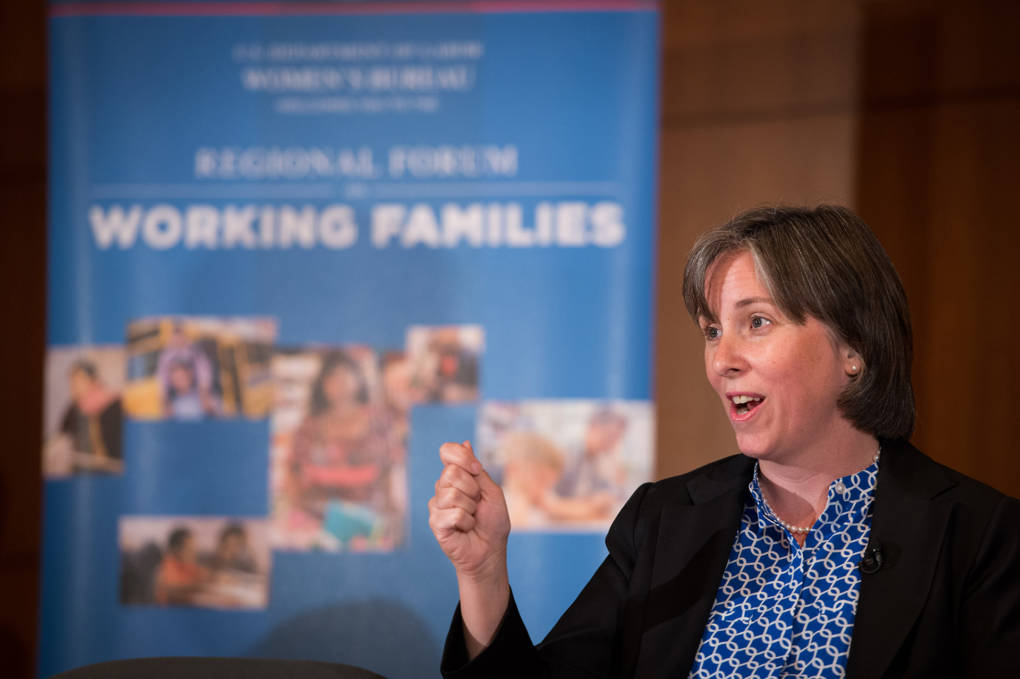
"caption": "Ann O'Leary, then vice president and director of the Children and Families Program at Next Generation, speaks at the Department of Labor Regional Forum in San Francisco on May 27, 2014.",
"description": null,
"title": "Ann-o-leary",
"credit": "U.S. Department of Labor",
"status": "inherit",
"isLoading": false,
"fetchFailed": false
},
"news_11705175": {
"type": "attachments",
"id": "news_11705175",
"meta": {
"index": "attachments_1716263798",
"site": "news",
"id": "11705175",
"found": true
},
"parent": 11705174,
"imgSizes": {
"twentyfourteen-full-width": {
"file": "https://ww2.kqed.org/app/uploads/sites/10/2018/11/GettyImages-1059463226-e1541776867671-1038x576.jpg",
"width": 1038,
"mimeType": "image/jpeg",
"height": 576
},
"thumbnail": {
"file": "https://ww2.kqed.org/app/uploads/sites/10/2018/11/GettyImages-1059463226-e1541776867671-160x107.jpg",
"width": 160,
"mimeType": "image/jpeg",
"height": 107
},
"post-thumbnail": {
"file": "https://ww2.kqed.org/app/uploads/sites/10/2018/11/GettyImages-1059463226-e1541776867671-672x372.jpg",
"width": 672,
"mimeType": "image/jpeg",
"height": 372
},
"kqedFullSize": {
"file": "https://ww2.kqed.org/app/uploads/sites/10/2018/11/GettyImages-1059463226-e1541776867671.jpg",
"width": 1920,
"height": 1280
},
"large": {
"file": "https://ww2.kqed.org/app/uploads/sites/10/2018/11/GettyImages-1059463226-e1541776867671-1020x680.jpg",
"width": 1020,
"mimeType": "image/jpeg",
"height": 680
},
"complete_open_graph": {
"file": "https://ww2.kqed.org/app/uploads/sites/10/2018/11/GettyImages-1059463226-e1541776867671-1200x800.jpg",
"width": 1200,
"mimeType": "image/jpeg",
"height": 800
},
"guest-author-50": {
"file": "https://ww2.kqed.org/app/uploads/sites/10/2018/11/GettyImages-1059463226-e1541776867671-50x50.jpg",
"width": 50,
"mimeType": "image/jpeg",
"height": 50
},
"guest-author-96": {
"file": "https://ww2.kqed.org/app/uploads/sites/10/2018/11/GettyImages-1059463226-e1541776867671-96x96.jpg",
"width": 96,
"mimeType": "image/jpeg",
"height": 96
},
"medium": {
"file": "https://ww2.kqed.org/app/uploads/sites/10/2018/11/GettyImages-1059463226-e1541776867671-800x533.jpg",
"width": 800,
"mimeType": "image/jpeg",
"height": 533
},
"guest-author-64": {
"file": "https://ww2.kqed.org/app/uploads/sites/10/2018/11/GettyImages-1059463226-e1541776867671-64x64.jpg",
"width": 64,
"mimeType": "image/jpeg",
"height": 64
},
"guest-author-32": {
"file": "https://ww2.kqed.org/app/uploads/sites/10/2018/11/GettyImages-1059463226-e1541776867671-32x32.jpg",
"width": 32,
"mimeType": "image/jpeg",
"height": 32
},
"full-width": {
"file": "https://ww2.kqed.org/app/uploads/sites/10/2018/11/GettyImages-1059463226-e1541776867671-1920x1280.jpg",
"width": 1920,
"mimeType": "image/jpeg",
"height": 1280
},
"detail": {
"file": "https://ww2.kqed.org/app/uploads/sites/10/2018/11/GettyImages-1059463226-e1541776867671-150x150.jpg",
"width": 150,
"mimeType": "image/jpeg",
"height": 150
},
"guest-author-128": {
"file": "https://ww2.kqed.org/app/uploads/sites/10/2018/11/GettyImages-1059463226-e1541776867671-128x128.jpg",
"width": 128,
"mimeType": "image/jpeg",
"height": 128
}
},
"publishDate": 1541776816,
"modified": 1553295846,
"caption": "One of the thousands of homes that burned when the Camp Fire raged through the Butte County town of Paradise last November. ",
"description": "One of the many homes last to the Camp Fire raged through the Butte County town of Paradise last November. ",
"title": "Rapidly-Spreading Wildfire In California's Butte County Prompts Evacuations",
"credit": "Justin Sullivan/Getty Images",
"status": "inherit",
"isLoading": false,
"fetchFailed": false
},
"news_11733258": {
"type": "attachments",
"id": "news_11733258",
"meta": {
"index": "attachments_1716263798",
"site": "news",
"id": "11733258",
"found": true
},
"parent": 11733149,
"imgSizes": {
"twentyfourteen-full-width": {
"file": "https://ww2.kqed.org/app/uploads/sites/10/2019/03/NR620_MARQUEE-1038x576.jpg",
"width": 1038,
"mimeType": "image/jpeg",
"height": 576
},
"thumbnail": {
"file": "https://ww2.kqed.org/app/uploads/sites/10/2019/03/NR620_MARQUEE-160x90.jpg",
"width": 160,
"mimeType": "image/jpeg",
"height": 90
},
"post-thumbnail": {
"file": "https://ww2.kqed.org/app/uploads/sites/10/2019/03/NR620_MARQUEE-672x372.jpg",
"width": 672,
"mimeType": "image/jpeg",
"height": 372
},
"kqedFullSize": {
"file": "https://ww2.kqed.org/app/uploads/sites/10/2019/03/NR620_MARQUEE.jpg",
"width": 1280,
"height": 720
},
"large": {
"file": "https://ww2.kqed.org/app/uploads/sites/10/2019/03/NR620_MARQUEE-1020x574.jpg",
"width": 1020,
"mimeType": "image/jpeg",
"height": 574
},
"complete_open_graph": {
"file": "https://ww2.kqed.org/app/uploads/sites/10/2019/03/NR620_MARQUEE-1200x675.jpg",
"width": 1200,
"mimeType": "image/jpeg",
"height": 675
},
"guest-author-50": {
"file": "https://ww2.kqed.org/app/uploads/sites/10/2019/03/NR620_MARQUEE-50x50.jpg",
"width": 50,
"mimeType": "image/jpeg",
"height": 50
},
"guest-author-96": {
"file": "https://ww2.kqed.org/app/uploads/sites/10/2019/03/NR620_MARQUEE-96x96.jpg",
"width": 96,
"mimeType": "image/jpeg",
"height": 96
},
"medium": {
"file": "https://ww2.kqed.org/app/uploads/sites/10/2019/03/NR620_MARQUEE-800x450.jpg",
"width": 800,
"mimeType": "image/jpeg",
"height": 450
},
"guest-author-64": {
"file": "https://ww2.kqed.org/app/uploads/sites/10/2019/03/NR620_MARQUEE-64x64.jpg",
"width": 64,
"mimeType": "image/jpeg",
"height": 64
},
"guest-author-32": {
"file": "https://ww2.kqed.org/app/uploads/sites/10/2019/03/NR620_MARQUEE-32x32.jpg",
"width": 32,
"mimeType": "image/jpeg",
"height": 32
},
"guest-author-128": {
"file": "https://ww2.kqed.org/app/uploads/sites/10/2019/03/NR620_MARQUEE-128x128.jpg",
"width": 128,
"mimeType": "image/jpeg",
"height": 128
}
},
"publishDate": 1552686789,
"modified": 1552686789,
"caption": null,
"description": null,
"title": "NR620_MARQUEE",
"credit": null,
"status": "inherit",
"isLoading": false,
"fetchFailed": false
},
"news_11733092": {
"type": "attachments",
"id": "news_11733092",
"meta": {
"index": "attachments_1716263798",
"site": "news",
"id": "11733092",
"found": true
},
"parent": 11733076,
"imgSizes": {
"twentyfourteen-full-width": {
"file": "https://ww2.kqed.org/app/uploads/sites/10/2019/03/O-leary-1038x576.jpg",
"width": 1038,
"mimeType": "image/jpeg",
"height": 576
},
"thumbnail": {
"file": "https://ww2.kqed.org/app/uploads/sites/10/2019/03/O-leary-160x120.jpg",
"width": 160,
"mimeType": "image/jpeg",
"height": 120
},
"post-thumbnail": {
"file": "https://ww2.kqed.org/app/uploads/sites/10/2019/03/O-leary-672x372.jpg",
"width": 672,
"mimeType": "image/jpeg",
"height": 372
},
"kqedFullSize": {
"file": "https://ww2.kqed.org/app/uploads/sites/10/2019/03/O-leary.jpg",
"width": 2048,
"height": 1536
},
"large": {
"file": "https://ww2.kqed.org/app/uploads/sites/10/2019/03/O-leary-1020x765.jpg",
"width": 1020,
"mimeType": "image/jpeg",
"height": 765
},
"complete_open_graph": {
"file": "https://ww2.kqed.org/app/uploads/sites/10/2019/03/O-leary-1200x900.jpg",
"width": 1200,
"mimeType": "image/jpeg",
"height": 900
},
"guest-author-50": {
"file": "https://ww2.kqed.org/app/uploads/sites/10/2019/03/O-leary-50x50.jpg",
"width": 50,
"mimeType": "image/jpeg",
"height": 50
},
"guest-author-96": {
"file": "https://ww2.kqed.org/app/uploads/sites/10/2019/03/O-leary-96x96.jpg",
"width": 96,
"mimeType": "image/jpeg",
"height": 96
},
"medium": {
"file": "https://ww2.kqed.org/app/uploads/sites/10/2019/03/O-leary-800x600.jpg",
"width": 800,
"mimeType": "image/jpeg",
"height": 600
},
"guest-author-64": {
"file": "https://ww2.kqed.org/app/uploads/sites/10/2019/03/O-leary-64x64.jpg",
"width": 64,
"mimeType": "image/jpeg",
"height": 64
},
"guest-author-32": {
"file": "https://ww2.kqed.org/app/uploads/sites/10/2019/03/O-leary-32x32.jpg",
"width": 32,
"mimeType": "image/jpeg",
"height": 32
},
"full-width": {
"file": "https://ww2.kqed.org/app/uploads/sites/10/2019/03/O-leary-1920x1440.jpg",
"width": 1920,
"mimeType": "image/jpeg",
"height": 1440
},
"guest-author-128": {
"file": "https://ww2.kqed.org/app/uploads/sites/10/2019/03/O-leary-128x128.jpg",
"width": 128,
"mimeType": "image/jpeg",
"height": 128
}
},
"publishDate": 1552618008,
"modified": 1552618039,
"caption": "Ann O'Leary, with KQED Political Breakdown hosts Scott Shafer and Marisa Lagos.",
"description": null,
"title": "O leary",
"credit": "Guy Marzorati/KQED",
"status": "inherit",
"isLoading": false,
"fetchFailed": false
},
"news_11732698": {
"type": "attachments",
"id": "news_11732698",
"meta": {
"index": "attachments_1716263798",
"site": "news",
"id": "11732698",
"found": true
},
"parent": 11732681,
"imgSizes": {
"twentyfourteen-full-width": {
"file": "https://ww2.kqed.org/app/uploads/sites/10/2019/03/reprieved_031319_final-1038x576.jpg",
"width": 1038,
"mimeType": "image/jpeg",
"height": 576
},
"thumbnail": {
"file": "https://ww2.kqed.org/app/uploads/sites/10/2019/03/reprieved_031319_final-160x116.jpg",
"width": 160,
"mimeType": "image/jpeg",
"height": 116
},
"post-thumbnail": {
"file": "https://ww2.kqed.org/app/uploads/sites/10/2019/03/reprieved_031319_final-672x372.jpg",
"width": 672,
"mimeType": "image/jpeg",
"height": 372
},
"kqedFullSize": {
"file": "https://ww2.kqed.org/app/uploads/sites/10/2019/03/reprieved_031319_final.jpg",
"width": 1920,
"height": 1394
},
"large": {
"file": "https://ww2.kqed.org/app/uploads/sites/10/2019/03/reprieved_031319_final-1020x741.jpg",
"width": 1020,
"mimeType": "image/jpeg",
"height": 741
},
"complete_open_graph": {
"file": "https://ww2.kqed.org/app/uploads/sites/10/2019/03/reprieved_031319_final-1200x871.jpg",
"width": 1200,
"mimeType": "image/jpeg",
"height": 871
},
"guest-author-50": {
"file": "https://ww2.kqed.org/app/uploads/sites/10/2019/03/reprieved_031319_final-50x50.jpg",
"width": 50,
"mimeType": "image/jpeg",
"height": 50
},
"guest-author-96": {
"file": "https://ww2.kqed.org/app/uploads/sites/10/2019/03/reprieved_031319_final-96x96.jpg",
"width": 96,
"mimeType": "image/jpeg",
"height": 96
},
"medium": {
"file": "https://ww2.kqed.org/app/uploads/sites/10/2019/03/reprieved_031319_final-800x581.jpg",
"width": 800,
"mimeType": "image/jpeg",
"height": 581
},
"guest-author-64": {
"file": "https://ww2.kqed.org/app/uploads/sites/10/2019/03/reprieved_031319_final-64x64.jpg",
"width": 64,
"mimeType": "image/jpeg",
"height": 64
},
"guest-author-32": {
"file": "https://ww2.kqed.org/app/uploads/sites/10/2019/03/reprieved_031319_final-32x32.jpg",
"width": 32,
"mimeType": "image/jpeg",
"height": 32
},
"full-width": {
"file": "https://ww2.kqed.org/app/uploads/sites/10/2019/03/reprieved_031319_final-1920x1394.jpg",
"width": 1920,
"mimeType": "image/jpeg",
"height": 1394
},
"guest-author-128": {
"file": "https://ww2.kqed.org/app/uploads/sites/10/2019/03/reprieved_031319_final-128x128.jpg",
"width": 128,
"mimeType": "image/jpeg",
"height": 128
}
},
"publishDate": 1552508604,
"modified": 1552508624,
"caption": null,
"description": null,
"title": "reprieved_031319_final",
"credit": null,
"status": "inherit",
"isLoading": false,
"fetchFailed": false
},
"news_11732643": {
"type": "attachments",
"id": "news_11732643",
"meta": {
"index": "attachments_1716263798",
"site": "news",
"id": "11732643",
"found": true
},
"parent": 11732605,
"imgSizes": {
"twentyfourteen-full-width": {
"file": "https://ww2.kqed.org/app/uploads/sites/10/2019/03/Gavin-Newsom-Death-Penalty-1038x576.jpg",
"width": 1038,
"mimeType": "image/jpeg",
"height": 576
},
"thumbnail": {
"file": "https://ww2.kqed.org/app/uploads/sites/10/2019/03/Gavin-Newsom-Death-Penalty-160x109.jpg",
"width": 160,
"mimeType": "image/jpeg",
"height": 109
},
"post-thumbnail": {
"file": "https://ww2.kqed.org/app/uploads/sites/10/2019/03/Gavin-Newsom-Death-Penalty-672x372.jpg",
"width": 672,
"mimeType": "image/jpeg",
"height": 372
},
"kqedFullSize": {
"file": "https://ww2.kqed.org/app/uploads/sites/10/2019/03/Gavin-Newsom-Death-Penalty.jpg",
"width": 1920,
"height": 1311
},
"large": {
"file": "https://ww2.kqed.org/app/uploads/sites/10/2019/03/Gavin-Newsom-Death-Penalty-1020x696.jpg",
"width": 1020,
"mimeType": "image/jpeg",
"height": 696
},
"complete_open_graph": {
"file": "https://ww2.kqed.org/app/uploads/sites/10/2019/03/Gavin-Newsom-Death-Penalty-1200x819.jpg",
"width": 1200,
"mimeType": "image/jpeg",
"height": 819
},
"guest-author-50": {
"file": "https://ww2.kqed.org/app/uploads/sites/10/2019/03/Gavin-Newsom-Death-Penalty-50x50.jpg",
"width": 50,
"mimeType": "image/jpeg",
"height": 50
},
"guest-author-96": {
"file": "https://ww2.kqed.org/app/uploads/sites/10/2019/03/Gavin-Newsom-Death-Penalty-96x96.jpg",
"width": 96,
"mimeType": "image/jpeg",
"height": 96
},
"medium": {
"file": "https://ww2.kqed.org/app/uploads/sites/10/2019/03/Gavin-Newsom-Death-Penalty-800x546.jpg",
"width": 800,
"mimeType": "image/jpeg",
"height": 546
},
"guest-author-64": {
"file": "https://ww2.kqed.org/app/uploads/sites/10/2019/03/Gavin-Newsom-Death-Penalty-64x64.jpg",
"width": 64,
"mimeType": "image/jpeg",
"height": 64
},
"guest-author-32": {
"file": "https://ww2.kqed.org/app/uploads/sites/10/2019/03/Gavin-Newsom-Death-Penalty-32x32.jpg",
"width": 32,
"mimeType": "image/jpeg",
"height": 32
},
"full-width": {
"file": "https://ww2.kqed.org/app/uploads/sites/10/2019/03/Gavin-Newsom-Death-Penalty-1920x1311.jpg",
"width": 1920,
"mimeType": "image/jpeg",
"height": 1311
},
"guest-author-128": {
"file": "https://ww2.kqed.org/app/uploads/sites/10/2019/03/Gavin-Newsom-Death-Penalty-128x128.jpg",
"width": 128,
"mimeType": "image/jpeg",
"height": 128
}
},
"publishDate": 1552502895,
"modified": 1555615721,
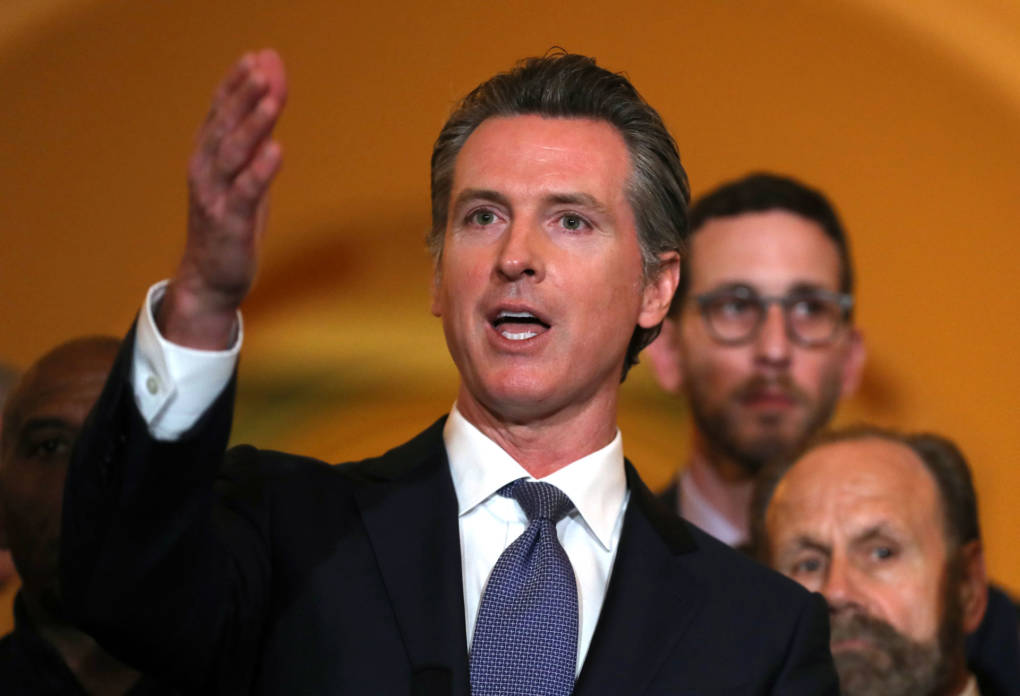
"caption": "Gov. Gavin Newsom speaks during a news conference at the California State Capitol on March 13, 2019 in Sacramento.",
"description": "Gov. Gavin Newsom speaks during a news conference at the California State Capitol on March 13, 2019 in Sacramento.",
"title": "Gavin-Newsom-Death-Penalty",
"credit": "Justin Sullivan/Getty Images",
"status": "inherit",
"isLoading": false,
"fetchFailed": false
},
"news_11732531": {
"type": "attachments",
"id": "news_11732531",
"meta": {
"index": "attachments_1716263798",
"site": "news",
"id": "11732531",
"found": true
},
"parent": 11732471,
"imgSizes": {
"twentyfourteen-full-width": {
"file": "https://ww2.kqed.org/app/uploads/sites/10/2019/03/San-Quentin-Death-Chamber-1038x576.jpg",
"width": 1038,
"mimeType": "image/jpeg",
"height": 576
},
"thumbnail": {
"file": "https://ww2.kqed.org/app/uploads/sites/10/2019/03/San-Quentin-Death-Chamber-160x117.jpg",
"width": 160,
"mimeType": "image/jpeg",
"height": 117
},
"post-thumbnail": {
"file": "https://ww2.kqed.org/app/uploads/sites/10/2019/03/San-Quentin-Death-Chamber-672x372.jpg",
"width": 672,
"mimeType": "image/jpeg",
"height": 372
},
"kqedFullSize": {
"file": "https://ww2.kqed.org/app/uploads/sites/10/2019/03/San-Quentin-Death-Chamber.jpg",
"width": 1920,
"height": 1403
},
"large": {
"file": "https://ww2.kqed.org/app/uploads/sites/10/2019/03/San-Quentin-Death-Chamber-1020x745.jpg",
"width": 1020,
"mimeType": "image/jpeg",
"height": 745
},
"complete_open_graph": {
"file": "https://ww2.kqed.org/app/uploads/sites/10/2019/03/San-Quentin-Death-Chamber-1200x877.jpg",
"width": 1200,
"mimeType": "image/jpeg",
"height": 877
},
"guest-author-50": {
"file": "https://ww2.kqed.org/app/uploads/sites/10/2019/03/San-Quentin-Death-Chamber-50x50.jpg",
"width": 50,
"mimeType": "image/jpeg",
"height": 50
},
"guest-author-96": {
"file": "https://ww2.kqed.org/app/uploads/sites/10/2019/03/San-Quentin-Death-Chamber-96x96.jpg",
"width": 96,
"mimeType": "image/jpeg",
"height": 96
},
"medium": {
"file": "https://ww2.kqed.org/app/uploads/sites/10/2019/03/San-Quentin-Death-Chamber-800x585.jpg",
"width": 800,
"mimeType": "image/jpeg",
"height": 585
},
"guest-author-64": {
"file": "https://ww2.kqed.org/app/uploads/sites/10/2019/03/San-Quentin-Death-Chamber-64x64.jpg",
"width": 64,
"mimeType": "image/jpeg",
"height": 64
},
"guest-author-32": {
"file": "https://ww2.kqed.org/app/uploads/sites/10/2019/03/San-Quentin-Death-Chamber-32x32.jpg",
"width": 32,
"mimeType": "image/jpeg",
"height": 32
},
"full-width": {
"file": "https://ww2.kqed.org/app/uploads/sites/10/2019/03/San-Quentin-Death-Chamber-1920x1403.jpg",
"width": 1920,
"mimeType": "image/jpeg",
"height": 1403
},
"guest-author-128": {
"file": "https://ww2.kqed.org/app/uploads/sites/10/2019/03/San-Quentin-Death-Chamber-128x128.jpg",
"width": 128,
"mimeType": "image/jpeg",
"height": 128
}
},
"publishDate": 1552441801,
"modified": 1552441818,
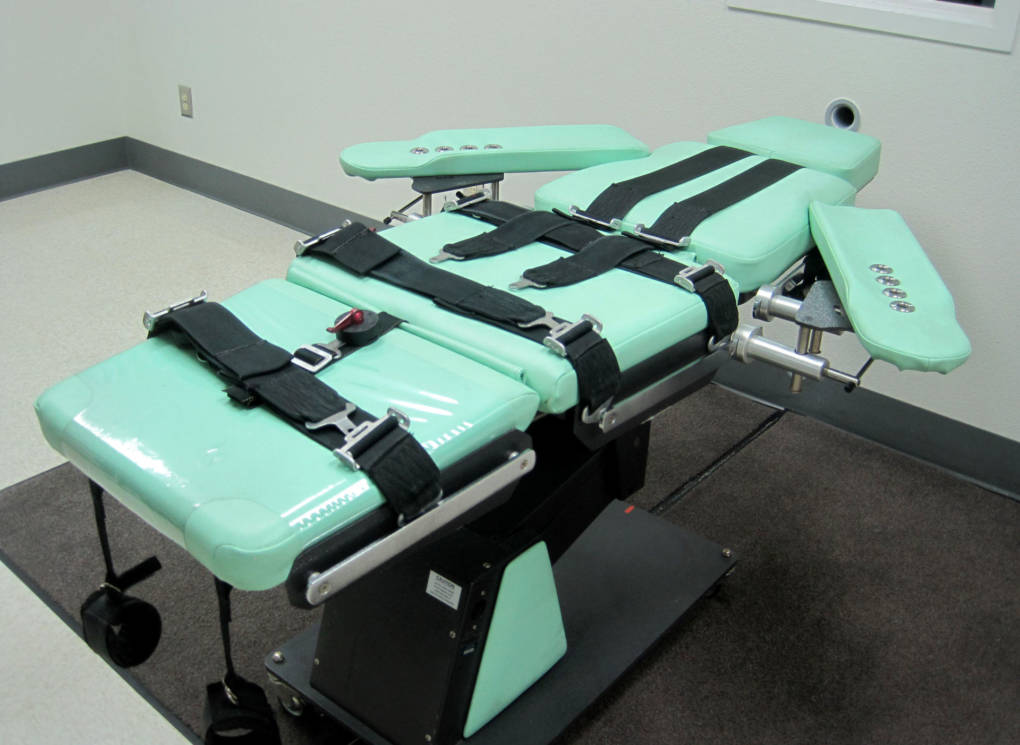
"caption": "The lethal injection chamber at San Quentin State Prison, photographed in 2010.",
"description": null,
"title": "San-Quentin-Death-Chamber",
"credit": "Scott Shafer/KQED",
"status": "inherit",
"isLoading": false,
"fetchFailed": false
},
"news_11732353": {
"type": "attachments",
"id": "news_11732353",
"meta": {
"index": "attachments_1716263798",
"site": "news",
"id": "11732353",
"found": true
},
"parent": 11732336,
"imgSizes": {
"twentyfourteen-full-width": {
"file": "https://ww2.kqed.org/app/uploads/sites/10/2019/03/RS14401_IMG_4149.JPG-qut-1038x576.jpg",
"width": 1038,
"mimeType": "image/jpeg",
"height": 576
},
"thumbnail": {
"file": "https://ww2.kqed.org/app/uploads/sites/10/2019/03/RS14401_IMG_4149.JPG-qut-160x107.jpg",
"width": 160,
"mimeType": "image/jpeg",
"height": 107
},
"post-thumbnail": {
"file": "https://ww2.kqed.org/app/uploads/sites/10/2019/03/RS14401_IMG_4149.JPG-qut-672x372.jpg",
"width": 672,
"mimeType": "image/jpeg",
"height": 372
},
"kqedFullSize": {
"file": "https://ww2.kqed.org/app/uploads/sites/10/2019/03/RS14401_IMG_4149.JPG-qut.jpg",
"width": 1920,
"height": 1280
},
"large": {
"file": "https://ww2.kqed.org/app/uploads/sites/10/2019/03/RS14401_IMG_4149.JPG-qut-1020x680.jpg",
"width": 1020,
"mimeType": "image/jpeg",
"height": 680
},
"complete_open_graph": {
"file": "https://ww2.kqed.org/app/uploads/sites/10/2019/03/RS14401_IMG_4149.JPG-qut-1200x800.jpg",
"width": 1200,
"mimeType": "image/jpeg",
"height": 800
},
"guest-author-50": {
"file": "https://ww2.kqed.org/app/uploads/sites/10/2019/03/RS14401_IMG_4149.JPG-qut-50x50.jpg",
"width": 50,
"mimeType": "image/jpeg",
"height": 50
},
"guest-author-96": {
"file": "https://ww2.kqed.org/app/uploads/sites/10/2019/03/RS14401_IMG_4149.JPG-qut-96x96.jpg",
"width": 96,
"mimeType": "image/jpeg",
"height": 96
},
"medium": {
"file": "https://ww2.kqed.org/app/uploads/sites/10/2019/03/RS14401_IMG_4149.JPG-qut-800x533.jpg",
"width": 800,
"mimeType": "image/jpeg",
"height": 533
},
"guest-author-64": {
"file": "https://ww2.kqed.org/app/uploads/sites/10/2019/03/RS14401_IMG_4149.JPG-qut-64x64.jpg",
"width": 64,
"mimeType": "image/jpeg",
"height": 64
},
"guest-author-32": {
"file": "https://ww2.kqed.org/app/uploads/sites/10/2019/03/RS14401_IMG_4149.JPG-qut-32x32.jpg",
"width": 32,
"mimeType": "image/jpeg",
"height": 32
},
"full-width": {
"file": "https://ww2.kqed.org/app/uploads/sites/10/2019/03/RS14401_IMG_4149.JPG-qut-1920x1280.jpg",
"width": 1920,
"mimeType": "image/jpeg",
"height": 1280
},
"guest-author-128": {
"file": "https://ww2.kqed.org/app/uploads/sites/10/2019/03/RS14401_IMG_4149.JPG-qut-128x128.jpg",
"width": 128,
"mimeType": "image/jpeg",
"height": 128
}
},
"publishDate": 1552352331,
"modified": 1552352384,
"caption": "Newsom hopes to spur more housing development through his state budget plan.",
"description": null,
"title": "RS14401_IMG_4149.JPG-qut",
"credit": "Anya Schultz/KQED",
"status": "inherit",
"isLoading": false,
"fetchFailed": false
}
},
"audioPlayerReducer": {
"postId": "stream_live",
"isPaused": true,
"isPlaying": false,
"pfsActive": false,
"pledgeModalIsOpen": true,
"playerDrawerIsOpen": false,
"liveAudioPlayStartedAt": 0,
"liveAudioPlayContext": ""
},
"authorsReducer": {
"byline_news_11736448": {
"type": "authors",
"id": "byline_news_11736448",
"meta": {
"override": true
},
"slug": "byline_news_11736448",
"name": "\u003cstrong>Elizabeth Aguilera\u003c/strong>",
"isLoading": false
},
"byline_news_11734736": {
"type": "authors",
"id": "byline_news_11734736",
"meta": {
"override": true
},
"slug": "byline_news_11734736",
"name": "Kathleen Ronayne, Associated Press",
"isLoading": false
},
"danbrekke": {
"type": "authors",
"id": "222",
"meta": {
"index": "authors_1716337520",
"id": "222",
"found": true
},
"name": "Dan Brekke",
"firstName": "Dan",
"lastName": "Brekke",
"slug": "danbrekke",
"email": "dbrekke@kqed.org",
"display_author_email": true,
"staff_mastheads": [
"news",
"science"
],
"title": "KQED Editor and Reporter",
"bio": "Dan Brekke is a reporter and editor for KQED News, responsible for coverage of topics ranging from California water issues to the Bay Area's transportation challenges. In a newsroom career that began in Chicago in 1972, Dan has worked for \u003cem>The San Francisco Examiner,\u003c/em> Wired and TechTV and has been published in The New York Times, The New York Times Magazine, Business 2.0, Salon and elsewhere.\r\n\r\nSince joining KQED in 2007, Dan has reported, edited and produced both radio and online features and breaking news pieces. He has shared as both editor and reporter in four Society of Professional Journalists Norcal Excellence in Journalism awards and one Edward R. Murrow regional award. He was chosen for a spring 2017 residency at the Mesa Refuge to advance his research on California salmon.\r\n\r\nEmail Dan at: \u003ca href=\"mailto:dbrekke@kqed.org\">dbrekke@kqed.org\u003c/a>\r\n\r\n\u003cstrong>Twitter:\u003c/strong> \u003ca href=\"https://twitter.com/danbrekke\" rel=\"noopener noreferrer\">twitter.com/danbrekke\u003c/a>\r\n\u003cstrong>Facebook:\u003c/strong> \u003ca href=\"https://www.facebook.com/danbrekke\" rel=\"noopener noreferrer\">www.facebook.com/danbrekke\u003c/a>\r\n\u003cstrong>LinkedIn:\u003c/strong> \u003ca href=\"https://www.linkedin.com/in/danbrekke\" rel=\"noopener noreferrer\">www.linkedin.com/in/danbrekke\u003c/a>",
"avatar": "https://secure.gravatar.com/avatar/c8126230345efca3f7aa89b1a402be45?s=600&d=mm&r=g",
"twitter": "danbrekke",
"facebook": null,
"instagram": "https://www.instagram.com/dan.brekke/",
"linkedin": "https://www.linkedin.com/in/danbrekke/",
"sites": [
{
"site": "news",
"roles": [
"administrator",
"create_posts"
]
},
{
"site": "stateofhealth",
"roles": [
"editor"
]
},
{
"site": "science",
"roles": [
"editor"
]
},
{
"site": "quest",
"roles": [
"contributor"
]
},
{
"site": "food",
"roles": [
"contributor"
]
},
{
"site": "forum",
"roles": [
"contributor"
]
},
{
"site": "liveblog",
"roles": [
"editor"
]
}
],
"headData": {
"title": "Dan Brekke | KQED",
"description": "KQED Editor and Reporter",
"ogImgSrc": "https://secure.gravatar.com/avatar/c8126230345efca3f7aa89b1a402be45?s=600&d=mm&r=g",
"twImgSrc": "https://secure.gravatar.com/avatar/c8126230345efca3f7aa89b1a402be45?s=600&d=mm&r=g"
},
"isLoading": false,
"link": "/author/danbrekke"
},
"gmarzorati": {
"type": "authors",
"id": "227",
"meta": {
"index": "authors_1716337520",
"id": "227",
"found": true
},
"name": "Guy Marzorati",
"firstName": "Guy",
"lastName": "Marzorati",
"slug": "gmarzorati",
"email": "gmarzorati@KQED.org",
"display_author_email": true,
"staff_mastheads": [
"news"
],
"title": "Correspondent",
"bio": "Guy Marzorati is a correspondent on KQED's California Politics and Government Desk, based in San Jose. A graduate of Santa Clara University, Guy joined KQED in 2013. He reports on state and local politics and produces KQED's digital voter guide.",
"avatar": "https://secure.gravatar.com/avatar/e7038b8dbfd55b104369b76b1cd0b9de?s=600&d=blank&r=g",
"twitter": "guymarzorati",
"facebook": null,
"instagram": null,
"linkedin": null,
"sites": [
{
"site": "",
"roles": [
"editor"
]
},
{
"site": "news",
"roles": [
"editor"
]
},
{
"site": "science",
"roles": [
"editor"
]
},
{
"site": "forum",
"roles": [
"editor"
]
},
{
"site": "elections",
"roles": [
"editor"
]
},
{
"site": "liveblog",
"roles": [
"editor"
]
}
],
"headData": {
"title": "Guy Marzorati | KQED",
"description": "Correspondent",
"ogImgSrc": "https://secure.gravatar.com/avatar/e7038b8dbfd55b104369b76b1cd0b9de?s=600&d=blank&r=g",
"twImgSrc": "https://secure.gravatar.com/avatar/e7038b8dbfd55b104369b76b1cd0b9de?s=600&d=blank&r=g"
},
"isLoading": false,
"link": "/author/gmarzorati"
},
"kqed": {
"type": "authors",
"id": "236",
"meta": {
"index": "authors_1716337520",
"id": "236",
"found": true
},
"name": "KQED News Staff",
"firstName": "KQED News Staff",
"lastName": null,
"slug": "kqed",
"email": "faq@kqed.org",
"display_author_email": false,
"staff_mastheads": [],
"title": null,
"bio": null,
"avatar": "https://secure.gravatar.com/avatar/ef0e801a68c4c54afa9180db14084167?s=600&d=blank&r=g",
"twitter": null,
"facebook": null,
"instagram": null,
"linkedin": null,
"sites": [
{
"site": "arts",
"roles": [
"contributor"
]
},
{
"site": "news",
"roles": [
"editor"
]
},
{
"site": "futureofyou",
"roles": [
"author"
]
}
],
"headData": {
"title": "KQED News Staff | KQED",
"description": null,
"ogImgSrc": "https://secure.gravatar.com/avatar/ef0e801a68c4c54afa9180db14084167?s=600&d=blank&r=g",
"twImgSrc": "https://secure.gravatar.com/avatar/ef0e801a68c4c54afa9180db14084167?s=600&d=blank&r=g"
},
"isLoading": false,
"link": "/author/kqed"
},
"scottshafer": {
"type": "authors",
"id": "255",
"meta": {
"index": "authors_1716337520",
"id": "255",
"found": true
},
"name": "Scott Shafer",
"firstName": "Scott",
"lastName": "Shafer",
"slug": "scottshafer",
"email": "sshafer@kqed.org",
"display_author_email": false,
"staff_mastheads": [
"news"
],
"title": "KQED Contributor",
"bio": "Scott Shafer is a senior editor with the KQED Politics and Government desk. He is co-host of Political Breakdown, the award-winning radio show and podcast with a personal take on the world of politics. Scott came to KQED in 1998 to host the statewide\u003cem> California Report\u003c/em>. Prior to that he had extended stints in politics and government\u003cem>.\u003c/em> He uses that inside experience at KQED in his, reporting, hosting and analysis for the politics desk. Scott collaborated \u003cem>Political Breakdown a\u003c/em>nd on \u003cem>The Political Mind of Jerry Brown, \u003c/em>an eight-part series about the life and extraordinary political career of the former governor. For fun, he plays water polo with the San Francisco Tsunami.",
"avatar": "https://secure.gravatar.com/avatar/a62ebae45b79d7aed1a39a0e3bf68104?s=600&d=blank&r=g",
"twitter": "scottshafer",
"bluesky": null,
"facebook": null,
"instagram": null,
"linkedin": null,
"sites": [
{
"site": "news",
"roles": [
"editor"
]
},
{
"site": "stateofhealth",
"roles": [
"author"
]
},
{
"site": "science",
"roles": [
"author"
]
},
{
"site": "forum",
"roles": [
"subscriber"
]
},
{
"site": "liveblog",
"roles": [
"author"
]
}
],
"headData": {
"title": "Scott Shafer | KQED",
"description": "KQED Contributor",
"ogImgSrc": "https://secure.gravatar.com/avatar/a62ebae45b79d7aed1a39a0e3bf68104?s=600&d=blank&r=g",
"twImgSrc": "https://secure.gravatar.com/avatar/a62ebae45b79d7aed1a39a0e3bf68104?s=600&d=blank&r=g"
},
"isLoading": false,
"link": "/author/scottshafer"
},
"markfiore": {
"type": "authors",
"id": "3236",
"meta": {
"index": "authors_1716337520",
"id": "3236",
"found": true
},
"name": "Mark Fiore",
"firstName": "Mark",
"lastName": "Fiore",
"slug": "markfiore",
"email": "mark@markfiore.com",
"display_author_email": false,
"staff_mastheads": [
"news"
],
"title": "KQED News Cartoonist",
"bio": "\u003ca href=\"http://www.MarkFiore.com\">MarkFiore.com\u003c/a> | \u003ca href=\"https://twitter.com/markfiore\">Follow on Twitter\u003c/a> | \u003ca href=\"https://www.facebook.com/pages/Mark-Fiore-Animated-Political-Cartoons/94451707396?ref=bookmarks\">Facebook\u003c/a> | \u003ca href=\"mailto:mark@markfiore.com\">email\u003c/a>\r\n\r\nPulitzer Prize-winner, Mark Fiore, who the Wall Street Journal has called “the undisputed guru of the form,” creates animated political cartoons in San Francisco, where his work has been featured regularly on the San Francisco Chronicle’s web site, SFGate.com. His work has appeared on Newsweek.com, Slate.com, CBSNews.com, MotherJones.com, DailyKos.com and NPR’s web site. Fiore’s political animation has appeared on CNN, Frontline, Bill Moyers Journal, Salon.com and cable and broadcast outlets across the globe.\r\n\r\nBeginning his professional life by drawing traditional political cartoons for newspapers, Fiore’s work appeared in publications ranging from the Washington Post to the Los Angeles Times. In the late 1990s, he began to experiment with animating political cartoons and, after a short stint at the San Jose Mercury News as their staff cartoonist, Fiore devoted all his energies to animation.\r\nGrowing up in California, Fiore also spent a good portion of his life in the backwoods of Idaho. It was this combination that shaped him politically. Mark majored in political science at Colorado College, where, in a perfect send-off for a cartoonist, he received his diploma in 1991 as commencement speaker Dick Cheney smiled approvingly.\r\nMark Fiore was awarded the Pulitzer Prize for political cartooning in 2010, a Robert F. Kennedy Journalism Award in 2004 and has twice received an Online Journalism Award for commentary from the Online News Association (2002, 2008). Fiore has received two awards for his work in new media from the National Cartoonists Society (2001, 2002), and in 2006 received The James Madison Freedom of Information Award from The Society of Professional Journalists.",
"avatar": "https://secure.gravatar.com/avatar/fc4e2a612b15b67bad0c6f0e1db4ca9b?s=600&d=blank&r=g",
"twitter": "MarkFiore",
"facebook": null,
"instagram": "https://www.instagram.com/markfiore/?hl=en",
"linkedin": null,
"sites": [
{
"site": "arts",
"roles": [
"contributor"
]
},
{
"site": "news",
"roles": [
"editor"
]
},
{
"site": "futureofyou",
"roles": [
"editor"
]
},
{
"site": "science",
"roles": [
"editor"
]
}
],
"headData": {
"title": "Mark Fiore | KQED",
"description": "KQED News Cartoonist",
"ogImgSrc": "https://secure.gravatar.com/avatar/fc4e2a612b15b67bad0c6f0e1db4ca9b?s=600&d=blank&r=g",
"twImgSrc": "https://secure.gravatar.com/avatar/fc4e2a612b15b67bad0c6f0e1db4ca9b?s=600&d=blank&r=g"
},
"isLoading": false,
"link": "/author/markfiore"
},
"mlagos": {
"type": "authors",
"id": "3239",
"meta": {
"index": "authors_1716337520",
"id": "3239",
"found": true
},
"name": "Marisa Lagos",
"firstName": "Marisa",
"lastName": "Lagos",
"slug": "mlagos",
"email": "mlagos@kqed.org",
"display_author_email": false,
"staff_mastheads": [
"news"
],
"title": "KQED Contributor",
"bio": "Marisa Lagos is a correspondent for KQED’s California Politics and Government Desk and co-hosts the award-winning show and podcast, Political Breakdown. At KQED, Lagos also conducts reporting, analysis and investigations into state, local and national politics for radio, TV, online and onstage. In 2022, she and co-host, Scott Shafer, moderated the only gubernatorial debate in California. In 2020, the \u003ci>Washington Post\u003c/i> named her one of the top political journalists in California; she was nominated for a Peabody and won several other awards for her work investigating the 2017 California wildfires. She has worked at the \u003ci>San Francisco Chronicle\u003c/i>, \u003ci>San Francisco Examiner\u003c/i> and \u003ci>Los Angeles Times\u003c/i>. A UC Santa Barbara graduate, she lives in San Francisco with her two sons and husband.",
"avatar": "https://secure.gravatar.com/avatar/a261a0d3696fc066871ef96b85b5e7d2?s=600&d=blank&r=g",
"twitter": "@mlagos",
"facebook": null,
"instagram": null,
"linkedin": null,
"sites": [
{
"site": "arts",
"roles": [
"author"
]
},
{
"site": "news",
"roles": [
"editor"
]
},
{
"site": "science",
"roles": [
"editor"
]
},
{
"site": "forum",
"roles": [
"author"
]
},
{
"site": "liveblog",
"roles": [
"author"
]
}
],
"headData": {
"title": "Marisa Lagos | KQED",
"description": "KQED Contributor",
"ogImgSrc": "https://secure.gravatar.com/avatar/a261a0d3696fc066871ef96b85b5e7d2?s=600&d=blank&r=g",
"twImgSrc": "https://secure.gravatar.com/avatar/a261a0d3696fc066871ef96b85b5e7d2?s=600&d=blank&r=g"
},
"isLoading": false,
"link": "/author/mlagos"
},
"korr": {
"type": "authors",
"id": "11200",
"meta": {
"index": "authors_1716337520",
"id": "11200",
"found": true
},
"name": "Katie Orr",
"firstName": "Katie",
"lastName": "Orr",
"slug": "korr",
"email": "korr@kqed.org",
"display_author_email": false,
"staff_mastheads": [],
"title": "KQED Contributor",
"bio": "Katie Orr was a Sacramento-based reporter for KQED's Politics and Government Desk, covering the state Capitol and a variety of issues including women in politics, voting and elections and legislation. Prior to joining KQED in 2016, Katie was state government reporter for Capital Public Radio in Sacramento. She's also worked for KPBS in San Diego, where she covered City Hall.\r\n\r\nKatie received her masters degree in political science from San Diego State University and holds a Bachelors degree in broadcast journalism from Arizona State University.\r\n\r\nIn 2015 Katie won a national Clarion Award for a series of stories she did on women in California politics. She's been honored by the Society for Professional Journalists and, in 2013, was named by \u003cem>The Washington Post\u003c/em> as one of the country's top state Capitol reporters. She's also reported for the award-winning documentary series \u003cem>The View from Here \u003c/em>and was part of the team that won national PRNDI and Gabriel Awards in 2015. She lives in Sacramento with her husband. Twitter: @1KatieOrr",
"avatar": "https://secure.gravatar.com/avatar/41a40b25845adc78f50808670860449e?s=600&d=blank&r=g",
"twitter": "1katieorr",
"facebook": null,
"instagram": null,
"linkedin": null,
"sites": [
{
"site": "news",
"roles": [
"subscriber"
]
},
{
"site": "stateofhealth",
"roles": [
"author"
]
},
{
"site": "forum",
"roles": [
"author"
]
}
],
"headData": {
"title": "Katie Orr | KQED",
"description": "KQED Contributor",
"ogImgSrc": "https://secure.gravatar.com/avatar/41a40b25845adc78f50808670860449e?s=600&d=blank&r=g",
"twImgSrc": "https://secure.gravatar.com/avatar/41a40b25845adc78f50808670860449e?s=600&d=blank&r=g"
},
"isLoading": false,
"link": "/author/korr"
}
},
"pagesReducer": {
"news_tag_gavin-newsom": {
"type": "terms",
"id": "news_16",
"meta": {
"index": "terms_1716263798",
"site": "news",
"id": "16",
"score": 8.936892
},
"featImg": null,
"name": "Gavin Newsom",
"description": null,
"taxonomy": "tag",
"headData": {
"twImgId": null,
"twTitle": null,
"ogTitle": null,
"ogImgId": null,
"twDescription": null,
"description": null,
"title": "Gavin Newsom Archives | KQED News",
"ogDescription": null
},
"ttid": 16,
"slug": "gavin-newsom",
"isLoading": false,
"title": "Gavin Newsom",
"pageMeta": {
"site": "news",
"WpPageTemplate": "page-topic-editorial",
"currentPage": 87
},
"blocks": [
{
"blockName": "kqed/post-list",
"attrs": {
"layout": "cardArticle2",
"query": "posts/news?tag=gavin-newsom",
"seeMore": false,
"paginated": true,
"page": 87
}
},
{
"blockName": "kqed/ad"
}
]
}
},
"pfsSessionReducer": {},
"postsReducer": {
"stream_live": {
"type": "live",
"id": "stream_live",
"audioUrl": "https://streams.kqed.org/kqedradio",
"title": "Live Stream",
"excerpt": "Live Stream information currently unavailable.",
"link": "/radio",
"featImg": "",
"label": {
"name": "KQED Live",
"link": "/"
}
},
"stream_kqedNewscast": {
"type": "posts",
"id": "stream_kqedNewscast",
"audioUrl": "https://www.kqed.org/.stream/anon/radio/RDnews/newscast.mp3?_=1",
"title": "KQED Newscast",
"featImg": "",
"label": {
"name": "88.5 FM",
"link": "/"
}
},
"news_11737005": {
"type": "posts",
"id": "news_11737005",
"meta": {
"index": "posts_1716263798",
"site": "news",
"id": "11737005",
"score": null,
"sort": [
1554188566000
]
},
"guestAuthors": [],
"slug": "california-kids-are-falling-behind-in-education-what-is-the-state-doing-to-help",
"title": "California Kids Are Falling Behind in Education and More. What Is the State Doing to Help?",
"publishDate": 1554188566,
"format": "audio",
"headTitle": "California Kids Are Falling Behind in Education and More. What Is the State Doing to Help? | KQED",
"labelTerm": {
"term": 72,
"site": "news"
},
"content": "\u003cp>\u003cem>In KQED’s new series, \u003ca href=\"https://www.kqed.org/news/series/starting-blocks\">Starting Blocks\u003c/a>, we’ll look more closely at why California has failed to gain traction on addressing the needs of kids and what it will take to change that.\u003c/em>\u003c/p>\n\u003cp>From his first minutes as governor, Gavin Newsom made it clear helping children was going to be a big part of his administration when his two-year-old son, Dutch, walked onto the stage during his inaugural address. Newsom scooped him up and kept talking.\u003c/p>\n\u003cp>“My wife Jennifer and I have four children,” he said. “There’s nothing more important, I hope you can tell, than giving them a good and happy life.”\u003c/p>\n\u003cp>But in that same speech, Newsom made clear he realizes not all kids are as lucky as his own. He listed some of the issues California has to deal with to improve the lives of kids.\u003c/p>\n\u003cp>“An achievement gap in our schools and a readiness gap that holds back millions of our kids. And too many of our children know the ache of chronic hunger,” he said.\u003c/p>\n\u003cp>[ad fullwidth]\u003c/p>\n\u003cp>About \u003ca href=\"https://www.kidsdata.org/region/2/california/summary#37/family-economics\">20 percent of California children live in poverty — that number is higher for black and Latino kids. \u003c/a>And, depending on their grade, nearly 60 percent of school children aren’t proficient in \u003ca href=\"https://www.kidsdata.org/topic/127/readingproficiency/Bar#fmt=133&loc=2&tf=88&pdist=33&ch=1249,1250,623,1251,624,1252,1253,1255&sort=loc\">reading\u003c/a> or \u003ca href=\"https://scorecard.childrennow.org/?ind=mathStandards8&yr=1\">math\u003c/a>.\u003c/p>\n\u003cp>“Kids in California are not faring well and there’s really no excuse for that,” said Ted Lempert, president of Children Now, a California advocacy group.\u003c/p>\n\u003cp>“We’re obviously a strong economy. We’re relatively high in taxes. We’re a progressive state,” Lempert said. “There’s really no excuse for the fact that far too many of our kids aren’t getting the basic support to reach their potential.”\u003c/p>\n\u003cp>\u003c!-- iframe plugin v.4.3 wordpress.org/plugins/iframe/ -->\u003cbr>\n\u003ciframe loading=\"lazy\" src=\"https://scorecard.childrennow.org/\" width=\"100%\" height=\"500\" scrolling=\"yes\" class=\"iframe-class\" frameborder=\"0\">\u003c/iframe>\u003c/p>\n\u003cp>Lempert gives Newsom credit for focusing on early childhood in his budget. The governor has proposed investing in \u003ca href=\"http://www.ebudget.ca.gov/2019-20/pdf/BudgetSummary/EarlyChildhood.pdf\">universal full-day kindergarten, universal preschool and improving access to state subsidized child care\u003c/a>. Lempert said those issues are critical to making sure kids from poor families get equal opportunities.\u003c/p>\n\u003cp>[aside tag='starting-blocks' label='Starting Blocks']\u003c/p>\n\u003cp>“Wealthy families are spending an enormous amount of money to make sure their kids have those services early on. Too many kids have absolutely nothing,” he said.\u003c/p>\n\u003cp>The legislature is trying to address the unequal playing field, too. At a \u003ca href=\"https://speaker.asmdc.org/blue-ribbon-commission-early-childhood-education\">recent hearing on early childhood education\u003c/a>, Assembly Speaker Anthony Rendon said investing in young children is one of the most important things the state can do.\u003c/p>\n\u003cp>“It’s early childhood education that turns around communities,” he said. “It’s early childhood education that breaks the cycle of poverty in families.”\u003c/p>\n\u003cp>Republicans are quick to point out that California’s problems persist despite Democrats controlling the state for nearly a decade.\u003c/p>\n\u003cp>“We have people that don’t feel safe in their own communities. We’ve become 45th when it comes to education. We are the poverty capital of the country,” said Jessica Patterson, chair of the California GOP.\u003c/p>\n\u003cp>[pullquote size='small' align='right' citation='Ted Lempert, president of Children Now']‘There’s really no excuse for the fact that far too many of our kids aren’t getting the basic support to reach their potential.’[/pullquote]\u003c/p>\n\u003cp>While specific rankings vary, California is consistently ranked high when it comes to poverty rates, especially when accounting for cost of living, and it falls toward the bottom of the list for education.\u003c/p>\n\u003cp>Education is just one of the challenges children face, and for too long, there hasn’t been the political will to help them, Lempert said.\u003c/p>\n\u003cp>\u003c/p>\n\u003cp>“We have kids facing huge immigration challenges, kids facing racism, kids facing trauma,” he said. “But the majority of the public is saying we need to make sure every kid has the support they need. And yet that’s not getting translated into political action.”\u003c/p>\n\n",
"blocks": [],
"excerpt": "California's more than nine million kids are dealing with high levels of poverty, the effects of income inequality and uneven educational opportunities.",
"status": "publish",
"parent": 0,
"modified": 1721120532,
"stats": {
"hasAudio": false,
"hasVideo": false,
"hasChartOrMap": true,
"iframeSrcs": [
"https://scorecard.childrennow.org/"
],
"hasGoogleForm": false,
"hasGallery": false,
"hasHearkenModule": false,
"hasPolis": false,
"paragraphCount": 22,
"wordCount": 675
},
"headData": {
"title": "California Kids Are Falling Behind in Education and More. What Is the State Doing to Help? | KQED",
"description": "California's more than nine million kids are dealing with high levels of poverty, the effects of income inequality and uneven educational opportunities.",
"ogTitle": "",
"ogDescription": "",
"ogImgId": "",
"twTitle": "",
"twDescription": "",
"twImgId": "",
"schema": {
"@context": "https://schema.org",
"@type": "NewsArticle",
"headline": "California Kids Are Falling Behind in Education and More. What Is the State Doing to Help?",
"datePublished": "2019-04-02T00:02:46-07:00",
"dateModified": "2024-07-16T02:02:12-07:00",
"image": "https://cdn.kqed.org/wp-content/uploads/2020/02/KQED-OG-Image@1x.png",
"isAccessibleForFree": "True",
"publisher": {
"@type": "NewsMediaOrganization",
"@id": "https://www.kqed.org/#organization",
"name": "KQED",
"logo": "https://cdn.kqed.org/wp-content/uploads/2020/02/KQED-OG-Image@1x.png",
"url": "https://www.kqed.org",
"sameAs": [
"https://www.facebook.com/KQED",
"https://twitter.com/KQED",
"https://www.instagram.com/kqed/",
"https://www.tiktok.com/@kqedofficial",
"https://www.linkedin.com/company/kqed",
"https://www.youtube.com/channel/UCeC0IOo7i1P_61zVUWbJ4nw"
]
}
}
},
"audioUrl": "https://www.kqed.org/.stream/anon/radio/RDnews/2019/04/OrrStartingBlocksPart1.mp3",
"sticky": false,
"audioTrackLength": 232,
"path": "/news/11737005/california-kids-are-falling-behind-in-education-what-is-the-state-doing-to-help",
"audioDuration": 232000,
"parsedContent": [
{
"type": "contentString",
"content": "\u003cdiv class=\"post-body\">\u003cp>\u003cp>\u003cem>In KQED’s new series, \u003ca href=\"https://www.kqed.org/news/series/starting-blocks\">Starting Blocks\u003c/a>, we’ll look more closely at why California has failed to gain traction on addressing the needs of kids and what it will take to change that.\u003c/em>\u003c/p>\n\u003cp>From his first minutes as governor, Gavin Newsom made it clear helping children was going to be a big part of his administration when his two-year-old son, Dutch, walked onto the stage during his inaugural address. Newsom scooped him up and kept talking.\u003c/p>\n\u003cp>“My wife Jennifer and I have four children,” he said. “There’s nothing more important, I hope you can tell, than giving them a good and happy life.”\u003c/p>\n\u003cp>But in that same speech, Newsom made clear he realizes not all kids are as lucky as his own. He listed some of the issues California has to deal with to improve the lives of kids.\u003c/p>\n\u003cp>“An achievement gap in our schools and a readiness gap that holds back millions of our kids. And too many of our children know the ache of chronic hunger,” he said.\u003c/p>\n\u003cp>\u003c/p>\u003c/div>",
"attributes": {
"named": {},
"numeric": []
}
},
{
"type": "component",
"content": "",
"name": "ad",
"attributes": {
"named": {
"label": "fullwidth"
},
"numeric": [
"fullwidth"
]
}
},
{
"type": "contentString",
"content": "\u003cdiv class=\"post-body\">\u003cp>\u003c/p>\n\u003cp>About \u003ca href=\"https://www.kidsdata.org/region/2/california/summary#37/family-economics\">20 percent of California children live in poverty — that number is higher for black and Latino kids. \u003c/a>And, depending on their grade, nearly 60 percent of school children aren’t proficient in \u003ca href=\"https://www.kidsdata.org/topic/127/readingproficiency/Bar#fmt=133&loc=2&tf=88&pdist=33&ch=1249,1250,623,1251,624,1252,1253,1255&sort=loc\">reading\u003c/a> or \u003ca href=\"https://scorecard.childrennow.org/?ind=mathStandards8&yr=1\">math\u003c/a>.\u003c/p>\n\u003cp>“Kids in California are not faring well and there’s really no excuse for that,” said Ted Lempert, president of Children Now, a California advocacy group.\u003c/p>\n\u003cp>“We’re obviously a strong economy. We’re relatively high in taxes. We’re a progressive state,” Lempert said. “There’s really no excuse for the fact that far too many of our kids aren’t getting the basic support to reach their potential.”\u003c/p>\n\u003cp>\u003c!-- iframe plugin v.4.3 wordpress.org/plugins/iframe/ -->\u003cbr>\n\u003ciframe loading=\"lazy\" src=\"https://scorecard.childrennow.org/\" width=\"100%\" height=\"500\" scrolling=\"yes\" class=\"iframe-class\" frameborder=\"0\">\u003c/iframe>\u003c/p>\n\u003cp>Lempert gives Newsom credit for focusing on early childhood in his budget. The governor has proposed investing in \u003ca href=\"http://www.ebudget.ca.gov/2019-20/pdf/BudgetSummary/EarlyChildhood.pdf\">universal full-day kindergarten, universal preschool and improving access to state subsidized child care\u003c/a>. Lempert said those issues are critical to making sure kids from poor families get equal opportunities.\u003c/p>\n\u003cp>\u003c/p>\u003c/div>",
"attributes": {
"named": {},
"numeric": []
}
},
{
"type": "component",
"content": "",
"name": "aside",
"attributes": {
"named": {
"tag": "starting-blocks",
"label": "Starting Blocks "
},
"numeric": []
}
},
{
"type": "contentString",
"content": "\u003cdiv class=\"post-body\">\u003cp>\u003c/p>\n\u003cp>“Wealthy families are spending an enormous amount of money to make sure their kids have those services early on. Too many kids have absolutely nothing,” he said.\u003c/p>\n\u003cp>The legislature is trying to address the unequal playing field, too. At a \u003ca href=\"https://speaker.asmdc.org/blue-ribbon-commission-early-childhood-education\">recent hearing on early childhood education\u003c/a>, Assembly Speaker Anthony Rendon said investing in young children is one of the most important things the state can do.\u003c/p>\n\u003cp>“It’s early childhood education that turns around communities,” he said. “It’s early childhood education that breaks the cycle of poverty in families.”\u003c/p>\n\u003cp>Republicans are quick to point out that California’s problems persist despite Democrats controlling the state for nearly a decade.\u003c/p>\n\u003cp>“We have people that don’t feel safe in their own communities. We’ve become 45th when it comes to education. We are the poverty capital of the country,” said Jessica Patterson, chair of the California GOP.\u003c/p>\n\u003cp>\u003c/p>\u003c/div>",
"attributes": {
"named": {},
"numeric": []
}
},
{
"type": "component",
"content": "‘There’s really no excuse for the fact that far too many of our kids aren’t getting the basic support to reach their potential.’",
"name": "pullquote",
"attributes": {
"named": {
"size": "small",
"align": "right",
"citation": "Ted Lempert, president of Children Now",
"label": ""
},
"numeric": []
}
},
{
"type": "contentString",
"content": "\u003cdiv class=\"post-body\">\u003cp>\u003c/p>\n\u003cp>While specific rankings vary, California is consistently ranked high when it comes to poverty rates, especially when accounting for cost of living, and it falls toward the bottom of the list for education.\u003c/p>\n\u003cp>Education is just one of the challenges children face, and for too long, there hasn’t been the political will to help them, Lempert said.\u003c/p>\n\u003cp>\u003c/p>\n\u003cp>“We have kids facing huge immigration challenges, kids facing racism, kids facing trauma,” he said. “But the majority of the public is saying we need to make sure every kid has the support they need. And yet that’s not getting translated into political action.”\u003c/p>\n\n\u003c/div>\u003c/p>",
"attributes": {
"named": {},
"numeric": []
}
}
],
"link": "/news/11737005/california-kids-are-falling-behind-in-education-what-is-the-state-doing-to-help",
"authors": [
"11200"
],
"programs": [
"news_72"
],
"series": [
"news_25328"
],
"categories": [
"news_18540",
"news_8",
"news_13"
],
"tags": [
"news_2043",
"news_3306",
"news_20013",
"news_19542",
"news_16",
"news_25327",
"news_17041"
],
"featImg": "news_11671745",
"label": "news_72"
},
"news_11736448": {
"type": "posts",
"id": "news_11736448",
"meta": {
"index": "posts_1716263798",
"site": "news",
"id": "11736448",
"score": null,
"sort": [
1553890944000
]
},
"guestAuthors": [],
"slug": "destination-el-salvador-newsoms-first-international-trip-as-governor-is-a-counterpoint-to-trump",
"title": "Destination El Salvador: Newsom's First International Trip As Governor Is A Counterpoint to Trump",
"publishDate": 1553890944,
"format": "standard",
"headTitle": "Destination El Salvador: Newsom’s First International Trip As Governor Is A Counterpoint to Trump | KQED",
"labelTerm": {},
"content": "\u003cp>Gov. Gavin Newsom said he plans to travel to El Salvador next month on a fact-finding mission to learn more about the factors driving Central Americans to flee their countries.\u003c/p>\n\u003cp>Newsom announced his plans, the international trip he’ll take as governor, at a Los Angeles health clinic on Thursday, surrounded by state politicians and community leaders from El Salvador and other Latin American countries. California is home to the largest group of Salvadorans outside of El Salvador.\u003c/p>\n\u003cp>The trip is packed with political symbolism: It’s designed to highlight what Democrats regard as California’s more compassionate approach to newcomers, in sharp contrast to the Trump administration’s aversion to the waves of asylum seekers at the U.S. border.\u003c/p>\n\u003cp>“As a country we’ve lacked a rational policy in Central America, and we are paying the price today,” Newsom said. “You cannot solve the migrant issue by building walls, it is so much more multifaceted and complex. It’s not just violence, it’s not just poverty, it’s about environment and all of these complex issues.”\u003c/p>\n\u003cp>Newsom said he intends to invite other border-state governors and leaders across the nation to help “push back against the dominant narrative that is so destructive in this country that the president of the United States has been advancing.”\u003c/p>\n\u003cp>[ad fullwidth]\u003c/p>\n\u003cp>The morning of Newsom’s announcement, President Trump tweeted his oft-mentioned complaint that Mexico and Central American countries aren’t helping him solve what he has described as a border emergency:\u003c/p>\n\u003cp>https://twitter.com/realDonaldTrump/status/1111212351204835328\u003c/p>\n\u003cp>While immigration policy is set by the federal government, Newsom said the state can take the lead in understanding and addressing the reasons why people are fleeing their countries, and also help those who arrive in California navigate the complicated asylum and immigration system.\u003c/p>\n\u003cp>He has already allocated $5 million for community organizations that are helping asylum seekers, such as a migrant shelter in San Diego.\u003c/p>\n\u003cp>Democratic Assemblywoman Wendy Carrillo, D-Los Angeles, a Salvadoran native, said this is an opportunity for the state “to set a tone as to what it really means to be for human rights, LGBT rights, women’s rights—and to really set a new pathway for our state and country’s relationship” with El Salvador.\u003c/p>\n\u003cp>Central American leaders in Los Angeles said the governor could improve the migration crisis by helping bring more economic opportunity to the region and working with local leaders to reduce the out-of-control levels of violence driving people away.\u003c/p>\n\u003cp>“The only way we can solve this is looking at this long term and investing in (El Salvador),” said Carlos Vaquerano, executive director of Clinica Monseñor Oscar Romero, where the meeting was held. “A young person that has opportunities and a job and a good education — they have no reason to want to leave.”\u003c/p>\n\u003cp>Citing the high incidence of crime in El Salvador, one of the poorest and most violent countries in the world, the U.S. State Department in January again \u003ca href=\"https://travel.state.gov/content/travel/en/traveladvisories/traveladvisories/el-salvador-travel-advisory.html\">warned\u003c/a> U.S. citizens about visiting the country.\u003c/p>\n\u003cp>Newsom said he can envision the state establishing programs in El Salvador, and across Central America, to build trade and promote commerce. He said previous governors, including Ronald Reagan and Jerry Brown, had robust trade offices in those countries at one time, and he would like to do the same.\u003c/p>\n\u003cp>“America needs leadership nationally, and California will assert itself if this administration is walking away,” he said.\u003c/p>\n\u003cp>The governor’s office has not yet publicly released a schedule of Newsom’s four-day trip, with scheduled events beginning April 7.\u003c/p>\n\u003cp>\u003c/p>\n\u003cp>\u003cem>CALmatters.org is a nonprofit, nonpartisan media venture explaining California policy and politics.\u003c/em>\u003c/p>\n\n",
"blocks": [],
"excerpt": "The trip is designed to highlight what Democrats regard as California's more compassionate approach to immigrants, in sharp contrast to the Trump administration's ongoing crackdown.",
"status": "publish",
"parent": 0,
"modified": 1722644701,
"stats": {
"hasAudio": false,
"hasVideo": false,
"hasChartOrMap": false,
"iframeSrcs": [],
"hasGoogleForm": false,
"hasGallery": false,
"hasHearkenModule": false,
"hasPolis": false,
"paragraphCount": 18,
"wordCount": 647
},
"headData": {
"title": "Destination El Salvador: Newsom's First International Trip As Governor Is A Counterpoint to Trump | KQED",
"description": "The trip is designed to highlight what Democrats regard as California's more compassionate approach to immigrants, in sharp contrast to the Trump administration's ongoing crackdown.",
"ogTitle": "",
"ogDescription": "",
"ogImgId": "",
"twTitle": "",
"twDescription": "",
"twImgId": "",
"schema": {
"@context": "https://schema.org",
"@type": "NewsArticle",
"headline": "Destination El Salvador: Newsom's First International Trip As Governor Is A Counterpoint to Trump",
"datePublished": "2019-03-29T13:22:24-07:00",
"dateModified": "2024-08-02T17:25:01-07:00",
"image": "https://cdn.kqed.org/wp-content/uploads/2020/02/KQED-OG-Image@1x.png",
"isAccessibleForFree": "True",
"publisher": {
"@type": "NewsMediaOrganization",
"@id": "https://www.kqed.org/#organization",
"name": "KQED",
"logo": "https://cdn.kqed.org/wp-content/uploads/2020/02/KQED-OG-Image@1x.png",
"url": "https://www.kqed.org",
"sameAs": [
"https://www.facebook.com/KQED",
"https://twitter.com/KQED",
"https://www.instagram.com/kqed/",
"https://www.tiktok.com/@kqedofficial",
"https://www.linkedin.com/company/kqed",
"https://www.youtube.com/channel/UCeC0IOo7i1P_61zVUWbJ4nw"
]
}
}
},
"source": "CALmatters",
"sourceUrl": "https://calmatters.org/",
"sticky": false,
"nprByline": "\u003cstrong>Elizabeth Aguilera\u003c/strong>",
"path": "/news/11736448/destination-el-salvador-newsoms-first-international-trip-as-governor-is-a-counterpoint-to-trump",
"audioTrackLength": null,
"parsedContent": [
{
"type": "contentString",
"content": "\u003cdiv class=\"post-body\">\u003cp>\u003cp>Gov. Gavin Newsom said he plans to travel to El Salvador next month on a fact-finding mission to learn more about the factors driving Central Americans to flee their countries.\u003c/p>\n\u003cp>Newsom announced his plans, the international trip he’ll take as governor, at a Los Angeles health clinic on Thursday, surrounded by state politicians and community leaders from El Salvador and other Latin American countries. California is home to the largest group of Salvadorans outside of El Salvador.\u003c/p>\n\u003cp>The trip is packed with political symbolism: It’s designed to highlight what Democrats regard as California’s more compassionate approach to newcomers, in sharp contrast to the Trump administration’s aversion to the waves of asylum seekers at the U.S. border.\u003c/p>\n\u003cp>“As a country we’ve lacked a rational policy in Central America, and we are paying the price today,” Newsom said. “You cannot solve the migrant issue by building walls, it is so much more multifaceted and complex. It’s not just violence, it’s not just poverty, it’s about environment and all of these complex issues.”\u003c/p>\n\u003cp>Newsom said he intends to invite other border-state governors and leaders across the nation to help “push back against the dominant narrative that is so destructive in this country that the president of the United States has been advancing.”\u003c/p>\n\u003cp>\u003c/p>\u003c/div>",
"attributes": {
"named": {},
"numeric": []
}
},
{
"type": "component",
"content": "",
"name": "ad",
"attributes": {
"named": {
"label": "fullwidth"
},
"numeric": [
"fullwidth"
]
}
},
{
"type": "contentString",
"content": "\u003cdiv class=\"post-body\">\u003cp>\u003c/p>\n\u003cp>The morning of Newsom’s announcement, President Trump tweeted his oft-mentioned complaint that Mexico and Central American countries aren’t helping him solve what he has described as a border emergency:\u003c/p>\u003c/p>\u003c/div>",
"attributes": {
"named": {},
"numeric": []
}
},
{
"type": "component",
"content": "",
"name": "singleTwitterStatus",
"attributes": {
"named": {
"id": "1111212351204835328"
},
"numeric": []
}
},
{
"type": "contentString",
"content": "\u003cdiv class=\"post-body\">\u003cp>\n\u003cp>While immigration policy is set by the federal government, Newsom said the state can take the lead in understanding and addressing the reasons why people are fleeing their countries, and also help those who arrive in California navigate the complicated asylum and immigration system.\u003c/p>\n\u003cp>He has already allocated $5 million for community organizations that are helping asylum seekers, such as a migrant shelter in San Diego.\u003c/p>\n\u003cp>Democratic Assemblywoman Wendy Carrillo, D-Los Angeles, a Salvadoran native, said this is an opportunity for the state “to set a tone as to what it really means to be for human rights, LGBT rights, women’s rights—and to really set a new pathway for our state and country’s relationship” with El Salvador.\u003c/p>\n\u003cp>Central American leaders in Los Angeles said the governor could improve the migration crisis by helping bring more economic opportunity to the region and working with local leaders to reduce the out-of-control levels of violence driving people away.\u003c/p>\n\u003cp>“The only way we can solve this is looking at this long term and investing in (El Salvador),” said Carlos Vaquerano, executive director of Clinica Monseñor Oscar Romero, where the meeting was held. “A young person that has opportunities and a job and a good education — they have no reason to want to leave.”\u003c/p>\n\u003cp>Citing the high incidence of crime in El Salvador, one of the poorest and most violent countries in the world, the U.S. State Department in January again \u003ca href=\"https://travel.state.gov/content/travel/en/traveladvisories/traveladvisories/el-salvador-travel-advisory.html\">warned\u003c/a> U.S. citizens about visiting the country.\u003c/p>\n\u003cp>Newsom said he can envision the state establishing programs in El Salvador, and across Central America, to build trade and promote commerce. He said previous governors, including Ronald Reagan and Jerry Brown, had robust trade offices in those countries at one time, and he would like to do the same.\u003c/p>\n\u003cp>“America needs leadership nationally, and California will assert itself if this administration is walking away,” he said.\u003c/p>\n\u003cp>The governor’s office has not yet publicly released a schedule of Newsom’s four-day trip, with scheduled events beginning April 7.\u003c/p>\n\u003cp>\u003c/p>\n\u003cp>\u003cem>CALmatters.org is a nonprofit, nonpartisan media venture explaining California policy and politics.\u003c/em>\u003c/p>\n\n\u003c/div>\u003c/p>",
"attributes": {
"named": {},
"numeric": []
}
}
],
"link": "/news/11736448/destination-el-salvador-newsoms-first-international-trip-as-governor-is-a-counterpoint-to-trump",
"authors": [
"byline_news_11736448"
],
"programs": [
"news_72"
],
"categories": [
"news_1169",
"news_8",
"news_13"
],
"tags": [
"news_23653",
"news_22334",
"news_16"
],
"featImg": "news_11736476",
"label": "source_news_11736448"
},
"news_11736188": {
"type": "posts",
"id": "news_11736188",
"meta": {
"index": "posts_1716263798",
"site": "news",
"id": "11736188",
"score": null,
"sort": [
1553835622000
]
},
"parent": 0,
"labelTerm": {
"site": "news",
"term": 72
},
"blocks": [],
"publishDate": 1553835622,
"format": "audio",
"disqusTitle": "Governor Blasts PG&E, Says Utility Is Focused on 'Quick Profits' Over Safety",
"title": "Governor Blasts PG&E, Says Utility Is Focused on 'Quick Profits' Over Safety",
"headTitle": "The California Report | KQED News",
"content": "\u003cp>Gov. Gavin Newsom issued a public rebuke to PG&E management on Thursday, charging that the embattled company is about to stack its board of directors with \"hedge fund financiers, out-of-state executives\" and others who have little knowledge of California and lack expertise in how to run a utility safely.\u003c/p>\n\u003cp>\"With this move, PG&E would send a clear message that it is prioritizing quick profits for Wall Street over public safety and reliable and affordable energy service,\" Newsom said in a letter to John Simon, the utility's interim CEO.\u003c/p>\n\u003cp>[aside label=\"KQED's Pacific Gas and Electric Coverage\" tag=\"pge\"]\u003c/p>\n\u003cp>\"Time and again, PG&E has broken the public trust and its responsibilities to ratepayers, wildfire victims, and employees,\" Newsom wrote. \"This board appears to be more of the same. It raises serious doubts about the company’s commitment to make changes needed to deliver safe, reliable and affordable power to Californians.\"\u003c/p>\n\u003cp>Newsom's comments came after \u003ca href=\"https://www.bloomberg.com/news/articles/2019-03-28/pimco-other-pg-e-creditors-said-to-pitch-35-billion-exit-plan\" target=\"_blank\" rel=\"noopener\">a Bloomberg report\u003c/a> that said several large firms that hold the PG&E now-shaky bonds were crafting a plan that would take the utility out of bankruptcy, set up a $14 billion fund to pay victims of fires the utility's equipment started in 2017 and 2018, provide operating capital and repay creditors.\u003c/p>\n\u003cp>A legislative aide to state Sen. Bill Dodd, D-Napa, said the governor had received a list of board nominees but has not shared it. Newsom's office didn't respond immediately to questions about which specific individuals the governor is concerned.\u003c/p>\n\u003cp>The governor's letter said new PG&E board members must \"understand the imperative for change and the need to prioritize the interests of the people of California.\"\u003c/p>\n\u003cp>The board should include \"a majority of Californians who have experience as regulators, safety experts and clean energy leaders. Any new board member should be resolved to change the culture of the company, understand the concerns of ratepayers and demonstrate a commitment to the fair treatment of wildfire victims and employees,\" the letter said.\u003c/p>\n\u003cp>[ad fullwidth]\u003c/p>\n\u003cp>In a statement, PG&E said it understands the governor's concerns and shares his sense of urgency.\u003c/p>\n\u003cp>\"We recognize the importance of adding perspectives to the board that will bring about the right changes in safety, as well as help address the serious operational and financial challenges the business faces now and in the future,\" the company said.\u003c/p>\n\u003cp>PG&E shareholders are scheduled to elect a new board of directors at the company's annual meeting on May 21. The period for nominations has been extended several times and is currently scheduled to end Friday evening.\u003c/p>\n\u003cfigure id=\"attachment_11718112\" class=\"wp-caption aligncenter\" style=\"max-width: 800px\">\u003cimg class=\"size-medium wp-image-11718112\" src=\"https://ww2.kqed.org/news/wp-content/uploads/sites/10/2019/01/NewsomTrumpBrown-800x541.jpg\" alt=\"Then-Lt. Gov. Gavin Newsom, President Trump and then-Gov. Jerry Brown view devastation caused by the Camp Fire in Paradise on Nov. 17, 2018.\" width=\"800\" height=\"541\" srcset=\"https://ww2.kqed.org/app/uploads/sites/10/2019/01/NewsomTrumpBrown-800x541.jpg 800w, https://ww2.kqed.org/app/uploads/sites/10/2019/01/NewsomTrumpBrown-160x108.jpg 160w, https://ww2.kqed.org/app/uploads/sites/10/2019/01/NewsomTrumpBrown-1020x690.jpg 1020w, https://ww2.kqed.org/app/uploads/sites/10/2019/01/NewsomTrumpBrown-1200x812.jpg 1200w, https://ww2.kqed.org/app/uploads/sites/10/2019/01/NewsomTrumpBrown.jpg 1920w\" sizes=\"(max-width: 800px) 100vw, 800px\">\u003cfigcaption class=\"wp-caption-text\">Then-Lt. Gov. Gavin Newsom, President Trump and then-Gov. Jerry Brown view devastation caused by the Camp Fire in Paradise on Nov. 17, 2018. \u003ccite>(SAUL LOEB/AFP/Getty Images)\u003c/cite>\u003c/figcaption>\u003c/figure>\n\u003cp>The future direction and management of the company have been the subject of intense speculation since the day after the Camp Fire erupted in early November. That's when the company acknowledged in a report to the California Public Utilities Commission that the Butte County blaze broke out adjacent to one of its transmission towers along the Feather River.\u003c/p>\n\u003cp>The company has since conceded that it expects investigators to conclude that its equipment started the blaze, which killed 85 people and destroyed nearly 14,000 homes in and around the town of Paradise.\u003c/p>\n\u003cp>PG&E had already faced huge potential liabilities from the 2015 Butte Fire, in Amador and Calaveras counties, and the October 2017 Northern California fire siege. Facing the possibility of having to pay for losses in the Camp Fire as well -- a bill the company said could come to at least $30 billion -- PG&E filed for Chapter 11 bankruptcy protection on Jan. 29.\u003c/p>\n\u003cp>The company already faces one call \u003ca href=\"https://www.kqed.org/news/11729984/large-pge-shareholder-nominates-entirely-new-board-of-directors\" target=\"_blank\" rel=\"noopener\">to replace its entire board\u003c/a> and install directors with more specific experience in utility operations, safety culture, financial turnarounds and California regulatory affairs.\u003c/p>\n\u003cp>BlueMountain Capital Management, a hedge fund that fought the current board's decision to seek bankruptcy protection, said in a statement Thursday that it agrees with Gov. Newsom.\u003c/p>\n\u003cp>\"As we have said previously, PG&E needs a board with proven experience in safety, claims resolution, utility operations, finance and turnarounds, and California business and public policy,\" BlueMountain said. \"These are all qualifications the BlueMountain slate has and we are encouraged to see the governor take an active role here. The current board of PG&E should seat our nominees immediately.\"\u003c/p>\n\u003cp>\u003c/p>\n",
"disqusIdentifier": "11736188 https://ww2.kqed.org/news/?p=11736188",
"disqusUrl": "https://ww2.kqed.org/news/2019/03/28/governor-blasts-pge-charging-utility-is-focused-on-quick-profits-over-safety/",
"stats": {
"hasVideo": false,
"hasChartOrMap": false,
"hasAudio": false,
"hasPolis": false,
"wordCount": 756,
"hasGoogleForm": false,
"hasGallery": false,
"hasHearkenModule": false,
"iframeSrcs": [],
"paragraphCount": 19
},
"modified": 1553892233,
"excerpt": "Newsom responds to speculation that board is about to add 'hedge-fund financiers and out-of-state executives' who have little knowledge of California or utility operations.",
"headData": {
"twImgId": "",
"twTitle": "",
"ogTitle": "",
"ogImgId": "",
"twDescription": "",
"description": "Newsom responds to speculation that board is about to add 'hedge-fund financiers and out-of-state executives' who have little knowledge of California or utility operations.",
"title": "Governor Blasts PG&E, Says Utility Is Focused on 'Quick Profits' Over Safety | KQED",
"ogDescription": "",
"schema": {
"@context": "https://schema.org",
"@type": "NewsArticle",
"headline": "Governor Blasts PG&E, Says Utility Is Focused on 'Quick Profits' Over Safety",
"datePublished": "2019-03-28T22:00:22-07:00",
"dateModified": "2019-03-29T13:43:53-07:00",
"image": "https://cdn.kqed.org/wp-content/uploads/2020/02/KQED-OG-Image@1x.png",
"isAccessibleForFree": "True",
"publisher": {
"@type": "NewsMediaOrganization",
"@id": "https://www.kqed.org/#organization",
"name": "KQED",
"logo": "https://cdn.kqed.org/wp-content/uploads/2020/02/KQED-OG-Image@1x.png",
"url": "https://www.kqed.org",
"sameAs": [
"https://www.facebook.com/KQED",
"https://twitter.com/KQED",
"https://www.instagram.com/kqed/",
"https://www.tiktok.com/@kqedofficial",
"https://www.linkedin.com/company/kqed",
"https://www.youtube.com/channel/UCeC0IOo7i1P_61zVUWbJ4nw"
]
}
}
},
"guestAuthors": [],
"slug": "governor-blasts-pge-charging-utility-is-focused-on-quick-profits-over-safety",
"status": "publish",
"audioUrl": "https://www.kqed.org/.stream/anon/radio/tcr/2019/03/GovNewsomLetterTCRAM.mp3",
"audioTrackLength": 50,
"path": "/news/11736188/governor-blasts-pge-charging-utility-is-focused-on-quick-profits-over-safety",
"audioDuration": 50000,
"parsedContent": [
{
"type": "contentString",
"content": "\u003cdiv class=\"post-body\">\u003cp>\u003cp>Gov. Gavin Newsom issued a public rebuke to PG&E management on Thursday, charging that the embattled company is about to stack its board of directors with \"hedge fund financiers, out-of-state executives\" and others who have little knowledge of California and lack expertise in how to run a utility safely.\u003c/p>\n\u003cp>\"With this move, PG&E would send a clear message that it is prioritizing quick profits for Wall Street over public safety and reliable and affordable energy service,\" Newsom said in a letter to John Simon, the utility's interim CEO.\u003c/p>\n\u003cp>\u003c/p>\u003c/div>",
"attributes": {
"named": {},
"numeric": []
}
},
{
"type": "component",
"content": "",
"name": "aside",
"attributes": {
"named": {
"label": "KQED's Pacific Gas and Electric Coverage ",
"tag": "pge"
},
"numeric": []
}
},
{
"type": "contentString",
"content": "\u003cdiv class=\"post-body\">\u003cp>\u003c/p>\n\u003cp>\"Time and again, PG&E has broken the public trust and its responsibilities to ratepayers, wildfire victims, and employees,\" Newsom wrote. \"This board appears to be more of the same. It raises serious doubts about the company’s commitment to make changes needed to deliver safe, reliable and affordable power to Californians.\"\u003c/p>\n\u003cp>Newsom's comments came after \u003ca href=\"https://www.bloomberg.com/news/articles/2019-03-28/pimco-other-pg-e-creditors-said-to-pitch-35-billion-exit-plan\" target=\"_blank\" rel=\"noopener\">a Bloomberg report\u003c/a> that said several large firms that hold the PG&E now-shaky bonds were crafting a plan that would take the utility out of bankruptcy, set up a $14 billion fund to pay victims of fires the utility's equipment started in 2017 and 2018, provide operating capital and repay creditors.\u003c/p>\n\u003cp>A legislative aide to state Sen. Bill Dodd, D-Napa, said the governor had received a list of board nominees but has not shared it. Newsom's office didn't respond immediately to questions about which specific individuals the governor is concerned.\u003c/p>\n\u003cp>The governor's letter said new PG&E board members must \"understand the imperative for change and the need to prioritize the interests of the people of California.\"\u003c/p>\n\u003cp>The board should include \"a majority of Californians who have experience as regulators, safety experts and clean energy leaders. Any new board member should be resolved to change the culture of the company, understand the concerns of ratepayers and demonstrate a commitment to the fair treatment of wildfire victims and employees,\" the letter said.\u003c/p>\n\u003cp>\u003c/p>\u003c/div>",
"attributes": {
"named": {},
"numeric": []
}
},
{
"type": "component",
"content": "",
"name": "ad",
"attributes": {
"named": {
"label": "fullwidth"
},
"numeric": [
"fullwidth"
]
}
},
{
"type": "contentString",
"content": "\u003cdiv class=\"post-body\">\u003cp>\u003c/p>\n\u003cp>In a statement, PG&E said it understands the governor's concerns and shares his sense of urgency.\u003c/p>\n\u003cp>\"We recognize the importance of adding perspectives to the board that will bring about the right changes in safety, as well as help address the serious operational and financial challenges the business faces now and in the future,\" the company said.\u003c/p>\n\u003cp>PG&E shareholders are scheduled to elect a new board of directors at the company's annual meeting on May 21. The period for nominations has been extended several times and is currently scheduled to end Friday evening.\u003c/p>\n\u003cfigure id=\"attachment_11718112\" class=\"wp-caption aligncenter\" style=\"max-width: 800px\">\u003cimg class=\"size-medium wp-image-11718112\" src=\"https://ww2.kqed.org/news/wp-content/uploads/sites/10/2019/01/NewsomTrumpBrown-800x541.jpg\" alt=\"Then-Lt. Gov. Gavin Newsom, President Trump and then-Gov. Jerry Brown view devastation caused by the Camp Fire in Paradise on Nov. 17, 2018.\" width=\"800\" height=\"541\" srcset=\"https://ww2.kqed.org/app/uploads/sites/10/2019/01/NewsomTrumpBrown-800x541.jpg 800w, https://ww2.kqed.org/app/uploads/sites/10/2019/01/NewsomTrumpBrown-160x108.jpg 160w, https://ww2.kqed.org/app/uploads/sites/10/2019/01/NewsomTrumpBrown-1020x690.jpg 1020w, https://ww2.kqed.org/app/uploads/sites/10/2019/01/NewsomTrumpBrown-1200x812.jpg 1200w, https://ww2.kqed.org/app/uploads/sites/10/2019/01/NewsomTrumpBrown.jpg 1920w\" sizes=\"(max-width: 800px) 100vw, 800px\">\u003cfigcaption class=\"wp-caption-text\">Then-Lt. Gov. Gavin Newsom, President Trump and then-Gov. Jerry Brown view devastation caused by the Camp Fire in Paradise on Nov. 17, 2018. \u003ccite>(SAUL LOEB/AFP/Getty Images)\u003c/cite>\u003c/figcaption>\u003c/figure>\n\u003cp>The future direction and management of the company have been the subject of intense speculation since the day after the Camp Fire erupted in early November. That's when the company acknowledged in a report to the California Public Utilities Commission that the Butte County blaze broke out adjacent to one of its transmission towers along the Feather River.\u003c/p>\n\u003cp>The company has since conceded that it expects investigators to conclude that its equipment started the blaze, which killed 85 people and destroyed nearly 14,000 homes in and around the town of Paradise.\u003c/p>\n\u003cp>PG&E had already faced huge potential liabilities from the 2015 Butte Fire, in Amador and Calaveras counties, and the October 2017 Northern California fire siege. Facing the possibility of having to pay for losses in the Camp Fire as well -- a bill the company said could come to at least $30 billion -- PG&E filed for Chapter 11 bankruptcy protection on Jan. 29.\u003c/p>\n\u003cp>The company already faces one call \u003ca href=\"https://www.kqed.org/news/11729984/large-pge-shareholder-nominates-entirely-new-board-of-directors\" target=\"_blank\" rel=\"noopener\">to replace its entire board\u003c/a> and install directors with more specific experience in utility operations, safety culture, financial turnarounds and California regulatory affairs.\u003c/p>\n\u003cp>BlueMountain Capital Management, a hedge fund that fought the current board's decision to seek bankruptcy protection, said in a statement Thursday that it agrees with Gov. Newsom.\u003c/p>\n\u003cp>\"As we have said previously, PG&E needs a board with proven experience in safety, claims resolution, utility operations, finance and turnarounds, and California business and public policy,\" BlueMountain said. \"These are all qualifications the BlueMountain slate has and we are encouraged to see the governor take an active role here. The current board of PG&E should seat our nominees immediately.\"\u003c/p>\n\u003cp>\u003c/p>\n\u003c/div>\u003c/p>",
"attributes": {
"named": {},
"numeric": []
}
}
],
"link": "/news/11736188/governor-blasts-pge-charging-utility-is-focused-on-quick-profits-over-safety",
"authors": [
"222"
],
"programs": [
"news_72"
],
"categories": [
"news_19906",
"news_8",
"news_13",
"news_356"
],
"tags": [
"news_19542",
"news_16",
"news_140",
"news_24802",
"news_17041",
"news_4463"
],
"featImg": "news_11736249",
"label": "news_72"
},
"news_11735813": {
"type": "posts",
"id": "news_11735813",
"meta": {
"index": "posts_1716263798",
"site": "news",
"id": "11735813",
"score": null,
"sort": [
1553745661000
]
},
"guestAuthors": [],
"slug": "poll-californians-give-newsom-agenda-rave-reviews",
"title": "Poll: Californians Give Newsom Agenda Rave Reviews",
"publishDate": 1553745661,
"format": "audio",
"headTitle": "Poll: Californians Give Newsom Agenda Rave Reviews | KQED",
"labelTerm": {
"term": 72,
"site": "news"
},
"content": "\u003cp>Californians are widely supportive of Gov. Gavin Newsom’s policy agenda, according to a poll released Wednesday by the Public Policy Institute of California.\u003c/p>\n\u003cp>Majorities of likely voters voiced approval for the governor’s proposed investments in housing subsidies, tax credits and wildfire prevention, all outlined in his January budget.\u003c/p>\n\u003cp>Perhaps most surprising, nearly 60 percent of likely voters supported life imprisonment over the death penalty, in a poll taken after Newsom declared a moratorium on executions in the state.\u003c/p>\n\u003cp>“Gov. Newsom’s agenda is receiving very positive reviews from Californians at this point in time,” said Mark Baldassare, PPIC president and CEO. “We found very positive responses to his plans to spend funds for things that Californians view as significant problems.”\u003c/p>\n\u003cp>PPIC surveyed 1,706 California residents from March 10-19. Chief among the problems identified by them is housing affordability: 93 percent rated the issue as a “big problem” or “somewhat of a problem.”\u003c/p>\n\u003cp>[ad fullwidth]\u003c/p>\n\u003cp>Newsom has set an ambitious goal of 3.5 million new units of housing by 2025, a target he aims to achieve with a mix of investments and (more controversial) changes to laws governing zoning and the state’s oversight of local housing approvals.\u003c/p>\n\u003cp>The PPIC poll looked only at the governor’s spending plan, and specifically at his idea to expand state tax credits to developers building low-income and moderate-income housing. That idea was favored by 65 percent of likely voters.\u003c/p>\n\u003cp>[pullquote size='small' align='right' citation='Mark Baldassare, PPIC president and CEO']‘We were really struck with how many people in all the regions of the state view the potential threat of wildfires as a problem.’[/pullquote]\u003c/p>\n\u003cp>Poverty emerged as another top issue for California voters: 87 percent rated it as a “big problem” or “somewhat of a problem.” The poll asked for reaction to Newsom’s budget proposal to increase eligibility for the state’s earned-income tax credit, which 65 percent of likely voters approved.\u003c/p>\n\u003cp>For the first time, the poll asked likely voters about the threat of wildfires, in the wake of the deadliest and most destructive year of fires in the state’s history. Three-quarters of respondents said wildfires were at least “somewhat of a problem,” and 81 percent support Newsom’s plan to spend $415 million on preparing and responding to wildfires.\u003c/p>\n\u003cp>The money would go toward reducing fuel in California’s forests through tree thinning, and pay for more Cal Fire aircrafts and fire engines.\u003c/p>\n\u003cp>“We were really struck with how many people in all the regions of the state view the potential threat of wildfires as a problem, something they’re concerned about,” Baldassare said. “Of all the budget proposals we have tested, the highest support that we’ve seen has been for Gov. Newsom’s proposals to allocate money for wildfire preparedness, response and recovery.”\u003c/p>\n\u003cp>[aside tag='gavin-newsom' label='Coverage of the Newsom administration']\u003c/p>\n\u003cp>Earlier this month, Newsom \u003ca href=\"https://www.kqed.org/news/11732605/gov-newsom-halts-executions-opponents-call-move-an-abuse-of-power\" target=\"_blank\" rel=\"noopener\">announced a moratorium\u003c/a> on executions in the state, taking on an issue that has long divided Californians.\u003c/p>\n\u003cp>The PPIC poll out Wednesday finds support for the death penalty at a historic low. Just 38 percent of likely voters favored execution over life imprisonment with no possibility of parole, as a penalty for first-degree murder.\u003c/p>\n\u003cp>“It’s become a much more polarized issue over time. Independents, similar to Democrats, have become more opposed to the death penalty,” Baldassare said. “This is the shifting policy landscape in which Gov. Newsom announces his intent around the death penalty issue.”\u003c/p>\n\u003cp>It’s important to note that the poll did not ask whether voters would support a repeal of the death penalty. In years past, even as polls showed likely voters preferring life in prison over execution, initiatives to repeal the death penalty lost on the ballot — most recently in 2016, when 53 percent of voters opposed Proposition 62.\u003c/p>\n\u003cp>[aside tag='death-penalty' label='The death penalty in California']\u003c/p>\n\u003cp>Dozens of Democratic lawmakers have signed on to \u003ca href=\"http://leginfo.legislature.ca.gov/faces/billNavClient.xhtml?bill_id=201920200ACA12\" target=\"_blank\" rel=\"noopener\">a proposal\u003c/a> that would put the repeal of the death penalty back on the ballot in 2020.\u003c/p>\n\u003cp>“In previous elections, the opponents to repealing the death penalty have pointed out some terrible circumstances which gave voters pause for thought about whether or not to support a repeal, and this could happen again,” Baldassare said. “But if there is a vote in 2020, I think it’s important to put in context the fact that public opinion has shifted further away from the death penalty.”\u003c/p>\n\u003cp>The poll also asked about Newsom’s plans to curtail projects left over from the last governor, Jerry Brown.\u003c/p>\n\u003cp>Newsom has proposed scaling back the state’s San Francisco to Los Angeles high-speed rail plan, calling instead for a focus on the development of \u003ca href=\"https://www.kqed.org/news/11725636/state-of-the-state-newsom-pulls-plug-on-s-f-to-l-a-high-speed-rail-project\" target=\"_blank\" rel=\"noopener\">segments in the Central Valley\u003c/a>.\u003c/p>\n\u003cp>In December, \u003ca href=\"https://www.ppic.org/wp-content/uploads/ppic-statewide-survey-californians-and-their-government-december-2018.pdf\" target=\"_blank\" rel=\"noopener\">19 percent\u003c/a> of likely voters said building a high-speed rail system should be a high or very high priority for the incoming governor. And in Wednesday’s poll, 45 percent called Newsom’s high-speed rail plan a good idea, versus 42 percent who said it was a bad idea.\u003c/p>\n\u003cp>\u003c/p>\n\u003cp>Newsom’s call for a single tunnel to pipe water under the Sacramento-San Joaquin Delta to Southern California, as opposed to the two tunnels favored by Brown, is supported by 47 percent of likely voters, with 34 percent calling it a bad idea.\u003c/p>\n\n",
"blocks": [],
"excerpt": "A PPIC poll found majorities of likely voters approve the governor's proposed investments, and record-low support for the death penalty. ",
"status": "publish",
"parent": 0,
"modified": 1725923109,
"stats": {
"hasAudio": false,
"hasVideo": false,
"hasChartOrMap": false,
"iframeSrcs": [],
"hasGoogleForm": false,
"hasGallery": false,
"hasHearkenModule": false,
"hasPolis": false,
"paragraphCount": 26,
"wordCount": 945
},
"headData": {
"title": "Poll: Californians Give Newsom Agenda Rave Reviews | KQED",
"description": "A PPIC poll found majorities of likely voters approve the governor's proposed investments, and record-low support for the death penalty. ",
"ogTitle": "",
"ogDescription": "",
"ogImgId": "",
"twTitle": "",
"twDescription": "",
"twImgId": "",
"schema": {
"@context": "https://schema.org",
"@type": "NewsArticle",
"headline": "Poll: Californians Give Newsom Agenda Rave Reviews",
"datePublished": "2019-03-27T21:01:01-07:00",
"dateModified": "2024-09-09T16:05:09-07:00",
"image": "https://cdn.kqed.org/wp-content/uploads/2020/02/KQED-OG-Image@1x.png",
"isAccessibleForFree": "True",
"publisher": {
"@type": "NewsMediaOrganization",
"@id": "https://www.kqed.org/#organization",
"name": "KQED",
"logo": "https://cdn.kqed.org/wp-content/uploads/2020/02/KQED-OG-Image@1x.png",
"url": "https://www.kqed.org",
"sameAs": [
"https://www.facebook.com/KQED",
"https://twitter.com/KQED",
"https://www.instagram.com/kqed/",
"https://www.tiktok.com/@kqedofficial",
"https://www.linkedin.com/company/kqed",
"https://www.youtube.com/channel/UCeC0IOo7i1P_61zVUWbJ4nw"
]
}
}
},
"audioUrl": "https://www.kqed.org/.stream/anon/radio/tcr/2019/03/PPICPollOrrtcram190328.mp3",
"sticky": false,
"audioTrackLength": 68,
"path": "/news/11735813/poll-californians-give-newsom-agenda-rave-reviews",
"parsedContent": [
{
"type": "contentString",
"content": "\u003cdiv class=\"post-body\">\u003cp>\u003cp>Californians are widely supportive of Gov. Gavin Newsom’s policy agenda, according to a poll released Wednesday by the Public Policy Institute of California.\u003c/p>\n\u003cp>Majorities of likely voters voiced approval for the governor’s proposed investments in housing subsidies, tax credits and wildfire prevention, all outlined in his January budget.\u003c/p>\n\u003cp>Perhaps most surprising, nearly 60 percent of likely voters supported life imprisonment over the death penalty, in a poll taken after Newsom declared a moratorium on executions in the state.\u003c/p>\n\u003cp>“Gov. Newsom’s agenda is receiving very positive reviews from Californians at this point in time,” said Mark Baldassare, PPIC president and CEO. “We found very positive responses to his plans to spend funds for things that Californians view as significant problems.”\u003c/p>\n\u003cp>PPIC surveyed 1,706 California residents from March 10-19. Chief among the problems identified by them is housing affordability: 93 percent rated the issue as a “big problem” or “somewhat of a problem.”\u003c/p>\n\u003cp>\u003c/p>\u003c/div>",
"attributes": {
"named": {},
"numeric": []
}
},
{
"type": "component",
"content": "",
"name": "ad",
"attributes": {
"named": {
"label": "fullwidth"
},
"numeric": [
"fullwidth"
]
}
},
{
"type": "contentString",
"content": "\u003cdiv class=\"post-body\">\u003cp>\u003c/p>\n\u003cp>Newsom has set an ambitious goal of 3.5 million new units of housing by 2025, a target he aims to achieve with a mix of investments and (more controversial) changes to laws governing zoning and the state’s oversight of local housing approvals.\u003c/p>\n\u003cp>The PPIC poll looked only at the governor’s spending plan, and specifically at his idea to expand state tax credits to developers building low-income and moderate-income housing. That idea was favored by 65 percent of likely voters.\u003c/p>\n\u003cp>\u003c/p>\u003c/div>",
"attributes": {
"named": {},
"numeric": []
}
},
{
"type": "component",
"content": "‘We were really struck with how many people in all the regions of the state view the potential threat of wildfires as a problem.’",
"name": "pullquote",
"attributes": {
"named": {
"size": "small",
"align": "right",
"citation": "Mark Baldassare, PPIC president and CEO",
"label": ""
},
"numeric": []
}
},
{
"type": "contentString",
"content": "\u003cdiv class=\"post-body\">\u003cp>\u003c/p>\n\u003cp>Poverty emerged as another top issue for California voters: 87 percent rated it as a “big problem” or “somewhat of a problem.” The poll asked for reaction to Newsom’s budget proposal to increase eligibility for the state’s earned-income tax credit, which 65 percent of likely voters approved.\u003c/p>\n\u003cp>For the first time, the poll asked likely voters about the threat of wildfires, in the wake of the deadliest and most destructive year of fires in the state’s history. Three-quarters of respondents said wildfires were at least “somewhat of a problem,” and 81 percent support Newsom’s plan to spend $415 million on preparing and responding to wildfires.\u003c/p>\n\u003cp>The money would go toward reducing fuel in California’s forests through tree thinning, and pay for more Cal Fire aircrafts and fire engines.\u003c/p>\n\u003cp>“We were really struck with how many people in all the regions of the state view the potential threat of wildfires as a problem, something they’re concerned about,” Baldassare said. “Of all the budget proposals we have tested, the highest support that we’ve seen has been for Gov. Newsom’s proposals to allocate money for wildfire preparedness, response and recovery.”\u003c/p>\n\u003cp>\u003c/p>\u003c/div>",
"attributes": {
"named": {},
"numeric": []
}
},
{
"type": "component",
"content": "",
"name": "aside",
"attributes": {
"named": {
"tag": "gavin-newsom",
"label": "Coverage of the Newsom administration "
},
"numeric": []
}
},
{
"type": "contentString",
"content": "\u003cdiv class=\"post-body\">\u003cp>\u003c/p>\n\u003cp>Earlier this month, Newsom \u003ca href=\"https://www.kqed.org/news/11732605/gov-newsom-halts-executions-opponents-call-move-an-abuse-of-power\" target=\"_blank\" rel=\"noopener\">announced a moratorium\u003c/a> on executions in the state, taking on an issue that has long divided Californians.\u003c/p>\n\u003cp>The PPIC poll out Wednesday finds support for the death penalty at a historic low. Just 38 percent of likely voters favored execution over life imprisonment with no possibility of parole, as a penalty for first-degree murder.\u003c/p>\n\u003cp>“It’s become a much more polarized issue over time. Independents, similar to Democrats, have become more opposed to the death penalty,” Baldassare said. “This is the shifting policy landscape in which Gov. Newsom announces his intent around the death penalty issue.”\u003c/p>\n\u003cp>It’s important to note that the poll did not ask whether voters would support a repeal of the death penalty. In years past, even as polls showed likely voters preferring life in prison over execution, initiatives to repeal the death penalty lost on the ballot — most recently in 2016, when 53 percent of voters opposed Proposition 62.\u003c/p>\n\u003cp>\u003c/p>\u003c/div>",
"attributes": {
"named": {},
"numeric": []
}
},
{
"type": "component",
"content": "",
"name": "aside",
"attributes": {
"named": {
"tag": "death-penalty",
"label": "The death penalty in California "
},
"numeric": []
}
},
{
"type": "contentString",
"content": "\u003cdiv class=\"post-body\">\u003cp>\u003c/p>\n\u003cp>Dozens of Democratic lawmakers have signed on to \u003ca href=\"http://leginfo.legislature.ca.gov/faces/billNavClient.xhtml?bill_id=201920200ACA12\" target=\"_blank\" rel=\"noopener\">a proposal\u003c/a> that would put the repeal of the death penalty back on the ballot in 2020.\u003c/p>\n\u003cp>“In previous elections, the opponents to repealing the death penalty have pointed out some terrible circumstances which gave voters pause for thought about whether or not to support a repeal, and this could happen again,” Baldassare said. “But if there is a vote in 2020, I think it’s important to put in context the fact that public opinion has shifted further away from the death penalty.”\u003c/p>\n\u003cp>The poll also asked about Newsom’s plans to curtail projects left over from the last governor, Jerry Brown.\u003c/p>\n\u003cp>Newsom has proposed scaling back the state’s San Francisco to Los Angeles high-speed rail plan, calling instead for a focus on the development of \u003ca href=\"https://www.kqed.org/news/11725636/state-of-the-state-newsom-pulls-plug-on-s-f-to-l-a-high-speed-rail-project\" target=\"_blank\" rel=\"noopener\">segments in the Central Valley\u003c/a>.\u003c/p>\n\u003cp>In December, \u003ca href=\"https://www.ppic.org/wp-content/uploads/ppic-statewide-survey-californians-and-their-government-december-2018.pdf\" target=\"_blank\" rel=\"noopener\">19 percent\u003c/a> of likely voters said building a high-speed rail system should be a high or very high priority for the incoming governor. And in Wednesday’s poll, 45 percent called Newsom’s high-speed rail plan a good idea, versus 42 percent who said it was a bad idea.\u003c/p>\n\u003cp>\u003c/p>\n\u003cp>Newsom’s call for a single tunnel to pipe water under the Sacramento-San Joaquin Delta to Southern California, as opposed to the two tunnels favored by Brown, is supported by 47 percent of likely voters, with 34 percent calling it a bad idea.\u003c/p>\n\n\u003c/div>\u003c/p>",
"attributes": {
"named": {},
"numeric": []
}
}
],
"link": "/news/11735813/poll-californians-give-newsom-agenda-rave-reviews",
"authors": [
"227"
],
"programs": [
"news_72"
],
"categories": [
"news_6266",
"news_8",
"news_13"
],
"tags": [
"news_31711",
"news_2704",
"news_16",
"news_309",
"news_1775",
"news_347",
"news_17041"
],
"featImg": "news_11736114",
"label": "news_72"
},
"news_11734782": {
"type": "posts",
"id": "news_11734782",
"meta": {
"index": "posts_1716263798",
"site": "news",
"id": "11734782",
"score": null,
"sort": [
1553585436000
]
},
"guestAuthors": [],
"slug": "women-shaping-newsom-administration-in-key-roles",
"title": "Women Shaping Newsom Administration in Key Roles",
"publishDate": 1553585436,
"format": "audio",
"headTitle": "Women Shaping Newsom Administration in Key Roles | KQED",
"labelTerm": {
"term": 72,
"site": "news"
},
"content": "\u003cp>When Jerry Brown was governor, he had several strong women advising him — including his wife, Anne Gust Brown, and Chief of Staff Nancy McFadden. Now Gov. Gavin Newsom is adding to that legacy with a new coterie of influential women.\u003c/p>\n\u003cp>[aside postID=\"news_11733076\" label=\"Inside the Horseshoe With Newsom Chief of Staff Ann O'Leary\"]\u003c/p>\n\u003cp>Women like Ann O’Leary. She didn’t think she’d be working in California right now. In the final months of the 2016 presidential election, O’Leary was heading up the transition team for Hillary Clinton, who she fully expected would be the first female president of the United States. That didn’t work out, but O’Leary said she’s thrilled with where she ended up, as Newsom’s chief of staff.\u003c/p>\n\u003cp>“A lot of the agenda that Hillary Clinton had on her plate is similar to Gov. Newsom’s,” O’Leary said. “So I feel like in some sense it’s unfinished business, and I’m really delighted to be here.”\u003c/p>\n\u003cp>That agenda includes taking a comprehensive approach to early childhood education.\u003c/p>\n\u003cp>[ad fullwidth]\u003c/p>\n\u003cp>“We need a master plan for early ed,” she said. “That deals with paid family leave, that deals with high-quality, affordable child care, that deals with preschool, that ensures smart transitions into early elementary school.”\u003c/p>\n\u003cp>O’Leary is working on these issues with several other women, who make up 70 percent of the governor’s office staff. That includes Keely Bosler, director of the California Department of Finance, Surgeon General Nadine Burke Harris and Cabinet Secretary Ana Matosantos.\u003c/p>\n\u003cfigure id=\"attachment_11735215\" class=\"wp-caption alignright\" style=\"max-width: 800px\">\u003cimg loading=\"lazy\" decoding=\"async\" class=\"size-medium wp-image-11735215\" src=\"https://ww2.kqed.org/news/wp-content/uploads/sites/10/2019/03/GettyImages-1085337792-800x628.jpg\" alt=\"\" width=\"800\" height=\"628\">\u003cfigcaption class=\"wp-caption-text\">Jennifer Siebel Newsom speaks onstage at the 2019 Women’s March Los Angeles on Jan. 19, 2019. \u003ccite>(Amanda Edwards/Getty Images for Women's March Los Angeles)\u003c/cite>\u003c/figcaption>\u003c/figure>\n\u003cp>Newsom’s wife, Jennifer Siebel Newsom, who calls herself the First Partner, said even though California has not had a women in the top job yet, women are still leading the state.\u003c/p>\n\u003cp>“We may not be the governor right now,” she said, “but I think all of these women have so much power and influence, and are wielding their power and their influence in really positive ways.”\u003c/p>\n\u003cp>Siebel Newsom said she wants to use her position to lift the voices of other women.\u003c/p>\n\u003cp>“I could see myself continuing to champion work that I care about,” she said, “which is elevating women, making sure that women have seats at the tables of power. Making sure that women’s voices are heard. Making sure that we address all the issues related to pay inequity, the wealth gap, reproductive rights, early childhood, universal preschool.”\u003c/p>\n\u003cp>[pullquote align=\"right\" citation=\"Jennifer Siebel Newsom\"]‘I could see myself continuing to champion work that I care about, which is elevating women, making sure that women have seats at the tables of power. Making sure that women’s voices are heard. Making sure that we address all the issues related to pay inequity, the wealth gap, reproductive rights, early childhood, universal preschool.’[/pullquote]\u003c/p>\n\u003cp>Chief of Staff O’Leary agrees that women hold a lot of sway in the Newsom administration. But she acknowledges there’s still a lot of work to do in making state agencies more diverse and increasing the number of women in the Legislature, who currently hold 36 out of 120 total seats, or 30 percent.\u003c/p>\n\u003cp>\u003c/p>\n\u003cp>“We need to make sure that young women see what we can do and know that this is this is something that can be done,” O’Leary said. “I like to say to people that while I’m the sixth woman to ever have this job, I’m the first woman to do this job while having school-age children.”\u003c/p>\n\n",
"blocks": [],
"excerpt": "Females make up 70 percent of the governor's office staff, and are helping to set priorities and influence policy. ",
"status": "publish",
"parent": 0,
"modified": 1721154506,
"stats": {
"hasAudio": false,
"hasVideo": false,
"hasChartOrMap": false,
"iframeSrcs": [],
"hasGoogleForm": false,
"hasGallery": false,
"hasHearkenModule": false,
"hasPolis": false,
"paragraphCount": 16,
"wordCount": 656
},
"headData": {
"title": "Women Shaping Newsom Administration in Key Roles | KQED",
"description": "Females make up 70 percent of the governor's office staff, and are helping to set priorities and influence policy. ",
"ogTitle": "",
"ogDescription": "",
"ogImgId": "",
"twTitle": "",
"twDescription": "",
"twImgId": "",
"schema": {
"@context": "https://schema.org",
"@type": "NewsArticle",
"headline": "Women Shaping Newsom Administration in Key Roles",
"datePublished": "2019-03-26T00:30:36-07:00",
"dateModified": "2024-07-16T11:28:26-07:00",
"image": "https://cdn.kqed.org/wp-content/uploads/2020/02/KQED-OG-Image@1x.png",
"isAccessibleForFree": "True",
"publisher": {
"@type": "NewsMediaOrganization",
"@id": "https://www.kqed.org/#organization",
"name": "KQED",
"logo": "https://cdn.kqed.org/wp-content/uploads/2020/02/KQED-OG-Image@1x.png",
"url": "https://www.kqed.org",
"sameAs": [
"https://www.facebook.com/KQED",
"https://twitter.com/KQED",
"https://www.instagram.com/kqed/",
"https://www.tiktok.com/@kqedofficial",
"https://www.linkedin.com/company/kqed",
"https://www.youtube.com/channel/UCeC0IOo7i1P_61zVUWbJ4nw"
]
}
}
},
"audioUrl": "https://www.kqed.org/.stream/anon/radio/tcr/2019/04/OrrWomeninNewsomsCabinet.mp3",
"sticky": false,
"audioTrackLength": 158,
"path": "/news/11734782/women-shaping-newsom-administration-in-key-roles",
"parsedContent": [
{
"type": "contentString",
"content": "\u003cdiv class=\"post-body\">\u003cp>\u003cp>When Jerry Brown was governor, he had several strong women advising him — including his wife, Anne Gust Brown, and Chief of Staff Nancy McFadden. Now Gov. Gavin Newsom is adding to that legacy with a new coterie of influential women.\u003c/p>\n\u003cp>\u003c/p>\u003c/div>",
"attributes": {
"named": {},
"numeric": []
}
},
{
"type": "component",
"content": "",
"name": "aside",
"attributes": {
"named": {
"postid": "news_11733076",
"label": "Inside the Horseshoe With Newsom Chief of Staff Ann O'Leary "
},
"numeric": []
}
},
{
"type": "contentString",
"content": "\u003cdiv class=\"post-body\">\u003cp>\u003c/p>\n\u003cp>Women like Ann O’Leary. She didn’t think she’d be working in California right now. In the final months of the 2016 presidential election, O’Leary was heading up the transition team for Hillary Clinton, who she fully expected would be the first female president of the United States. That didn’t work out, but O’Leary said she’s thrilled with where she ended up, as Newsom’s chief of staff.\u003c/p>\n\u003cp>“A lot of the agenda that Hillary Clinton had on her plate is similar to Gov. Newsom’s,” O’Leary said. “So I feel like in some sense it’s unfinished business, and I’m really delighted to be here.”\u003c/p>\n\u003cp>That agenda includes taking a comprehensive approach to early childhood education.\u003c/p>\n\u003cp>\u003c/p>\u003c/div>",
"attributes": {
"named": {},
"numeric": []
}
},
{
"type": "component",
"content": "",
"name": "ad",
"attributes": {
"named": {
"label": "fullwidth"
},
"numeric": [
"fullwidth"
]
}
},
{
"type": "contentString",
"content": "\u003cdiv class=\"post-body\">\u003cp>\u003c/p>\n\u003cp>“We need a master plan for early ed,” she said. “That deals with paid family leave, that deals with high-quality, affordable child care, that deals with preschool, that ensures smart transitions into early elementary school.”\u003c/p>\n\u003cp>O’Leary is working on these issues with several other women, who make up 70 percent of the governor’s office staff. That includes Keely Bosler, director of the California Department of Finance, Surgeon General Nadine Burke Harris and Cabinet Secretary Ana Matosantos.\u003c/p>\n\u003cfigure id=\"attachment_11735215\" class=\"wp-caption alignright\" style=\"max-width: 800px\">\u003cimg loading=\"lazy\" decoding=\"async\" class=\"size-medium wp-image-11735215\" src=\"https://ww2.kqed.org/news/wp-content/uploads/sites/10/2019/03/GettyImages-1085337792-800x628.jpg\" alt=\"\" width=\"800\" height=\"628\">\u003cfigcaption class=\"wp-caption-text\">Jennifer Siebel Newsom speaks onstage at the 2019 Women’s March Los Angeles on Jan. 19, 2019. \u003ccite>(Amanda Edwards/Getty Images for Women's March Los Angeles)\u003c/cite>\u003c/figcaption>\u003c/figure>\n\u003cp>Newsom’s wife, Jennifer Siebel Newsom, who calls herself the First Partner, said even though California has not had a women in the top job yet, women are still leading the state.\u003c/p>\n\u003cp>“We may not be the governor right now,” she said, “but I think all of these women have so much power and influence, and are wielding their power and their influence in really positive ways.”\u003c/p>\n\u003cp>Siebel Newsom said she wants to use her position to lift the voices of other women.\u003c/p>\n\u003cp>“I could see myself continuing to champion work that I care about,” she said, “which is elevating women, making sure that women have seats at the tables of power. Making sure that women’s voices are heard. Making sure that we address all the issues related to pay inequity, the wealth gap, reproductive rights, early childhood, universal preschool.”\u003c/p>\n\u003cp>\u003c/p>\u003c/div>",
"attributes": {
"named": {},
"numeric": []
}
},
{
"type": "component",
"content": "‘I could see myself continuing to champion work that I care about, which is elevating women, making sure that women have seats at the tables of power. Making sure that women’s voices are heard. Making sure that we address all the issues related to pay inequity, the wealth gap, reproductive rights, early childhood, universal preschool.’",
"name": "pullquote",
"attributes": {
"named": {
"align": "right",
"citation": "Jennifer Siebel Newsom",
"label": ""
},
"numeric": []
}
},
{
"type": "contentString",
"content": "\u003cdiv class=\"post-body\">\u003cp>\u003c/p>\n\u003cp>Chief of Staff O’Leary agrees that women hold a lot of sway in the Newsom administration. But she acknowledges there’s still a lot of work to do in making state agencies more diverse and increasing the number of women in the Legislature, who currently hold 36 out of 120 total seats, or 30 percent.\u003c/p>\n\u003cp>\u003c/p>\n\u003cp>“We need to make sure that young women see what we can do and know that this is this is something that can be done,” O’Leary said. “I like to say to people that while I’m the sixth woman to ever have this job, I’m the first woman to do this job while having school-age children.”\u003c/p>\n\n\u003c/div>\u003c/p>",
"attributes": {
"named": {},
"numeric": []
}
}
],
"link": "/news/11734782/women-shaping-newsom-administration-in-key-roles",
"authors": [
"11200"
],
"programs": [
"news_72"
],
"categories": [
"news_8",
"news_13"
],
"tags": [
"news_16",
"news_1852",
"news_17968",
"news_17041",
"news_1932"
],
"featImg": "news_11735223",
"label": "news_72"
},
"news_11734736": {
"type": "posts",
"id": "news_11734736",
"meta": {
"index": "posts_1716263798",
"site": "news",
"id": "11734736",
"score": null,
"sort": [
1553295853000
]
},
"guestAuthors": [],
"slug": "newsom-waives-environmental-rules-for-wildfire-season-prep",
"title": "Newsom Waives Environmental Rules for Wildfire Season Prep",
"publishDate": 1553295853,
"format": "standard",
"headTitle": "Newsom Waives Environmental Rules for Wildfire Season Prep | KQED",
"labelTerm": {
"term": 72,
"site": "news"
},
"content": "\u003cp>Gov. Gavin Newsom declared a state of emergency Friday, waiving certain environmental regulations to hasten local forest management projects throughout the state in preparation for the next wildfire season.\u003c/p>\n\u003cp>“We want to get ahead of this by moving forward in an efficient and effective manner to protect lives and protect property before lives are lost and property is lost,” Newsom told an audience in Lake County, the site of several massive wildfires in recent years.\u003c/p>\n\u003cp>Saying he was declaring “an emergency in advance of an emergency” to protect communities most at risk of wildfire danger, Newsom stressed that the state could no longer afford to wait for fires to begin before deploying emergency resources.\u003c/p>\n\u003cp>“We’ve got to step up our game; dare I say it, get our act together,” he said. “This fire season, it’s right around the corner and we cannot be once again flat-footed and just in a reactive and a suppression mode. We’ve got to be much more proactive.”\u003c/p>\n\u003cp>California experienced two of its most destructive and deadly wildfire seasons in 2017 and 2018, and experts say climate change continues to heighten the risk each year. On recommendations from the California Department of Forestry and Fire Protection, Newsom is pushing to clear dead trees at an expedited pace, a move he said is essential to diminishing future threats.\u003c/p>\n\u003cp>[ad fullwidth]\u003c/p>\n\u003cp>Some state environmental activists, though, were quick to criticize Newsom’s order, likening it to recent statements made by President Donald Trump, who \u003ca href=\"https://apnews.com/a08ad27091674fdc8926c32c310bc4ad\" target=\"_blank\" rel=\"noopener\">blamed\u003c/a> California’s fires on poor forest management, despite scientific evidence showing that climate change is a much greater factor.\u003c/p>\n\u003cp>“Gov. Newsom should reject the Trump approach of logging and rolling back critical environmental protections,” said Shaye Wolf, climate science director for the Center for Biological Diversity.\u003c/p>\n\u003cp>The center and other environmental groups said focusing on retrofitting and creating defensible space around homes is more effective than thinning forests, and that clearing trees might even create more danger by loosening soil that could cause mudslides.\u003c/p>\n\u003cp>Newsom also pledged $50 million for fire preparedness in low-income communities and invited the private sector to introduce innovative fire protection proposals.\u003c/p>\n\u003cp>The order, which will apply to 35 clearance projects in Northern and Central California over the coming year, allows fire officials to work around multiple state regulations. Those include provisions of the California Environmental Quality Act, one of the nation’s strictest state-level regulations.\u003c/p>\n\u003cp>Newsom said sticking with the state’s normal forest management process would drastically slow down the ability to act.\u003c/p>\n\u003cp>“Some of these projects quite literally, not figuratively, could take two years to get done, or we could get them done in the next two months,” he said.\u003c/p>\n\u003cp>The union representing state firefighters praised Newsom’s plan.\u003c/p>\n\u003cp>“These circumstances are unusual, unpredictable, unseen in our lifetime, and courageous decisions that sometimes go against the political winds need to be made,” said Tim Edwards, president of CAL Fire Local 2881.\u003c/p>\n\u003cp>Senate Minority Leader Patricia Bates, R-Laguna Niguel, praised Newsom for acting with urgency ahead of the wildfire season.\u003c/p>\n\u003cp>“I stand ready to assist the Governor with any legislative action to eliminate bureaucratic roadblocks that could slow these projects,” she said in a statement.\u003c/p>\n\u003cp>While environmental groups bristled at Newsom’s plan, they continue to agree with him on a wide range of other issues.\u003c/p>\n\u003cp>“On the whole we see (Newsom) as an ally on environmental issues,” said Kathryn Phillips, director of Sierra Club California. “I think what we’re disagreeing with here is an approach to a problem that we all recognize.”\u003c/p>\n\u003cp>The state’s environmental laws are designed to protect California’s soil stability, watershed and wildlife habitats, she said, and waiving environmental reviews could have unintended consequences.\u003c/p>\n\u003cp>“For some suspension of oversight now, what’s the consequence going to be later?” Phillips asked. “Are we going to end up having huge silt floods and mudslides?”\u003c/p>\n\u003cp>\u003c/p>\n\u003cp>\u003cem>KQED’s Hope McKenney contributed to this report.\u003c/em>\u003c/p>\n\n",
"blocks": [],
"excerpt": "The order will expedite 35 forest thinning projects, mostly in Northern and Central California.",
"status": "publish",
"parent": 0,
"modified": 1722632669,
"stats": {
"hasAudio": false,
"hasVideo": false,
"hasChartOrMap": false,
"iframeSrcs": [],
"hasGoogleForm": false,
"hasGallery": false,
"hasHearkenModule": false,
"hasPolis": false,
"paragraphCount": 23,
"wordCount": 698
},
"headData": {
"title": "Newsom Waives Environmental Rules for Wildfire Season Prep | KQED",
"description": "The order will expedite 35 forest thinning projects, mostly in Northern and Central California.",
"ogTitle": "",
"ogDescription": "",
"ogImgId": "",
"twTitle": "",
"twDescription": "",
"twImgId": "",
"schema": {
"@context": "https://schema.org",
"@type": "NewsArticle",
"headline": "Newsom Waives Environmental Rules for Wildfire Season Prep",
"datePublished": "2019-03-22T16:04:13-07:00",
"dateModified": "2024-08-02T14:04:29-07:00",
"image": "https://cdn.kqed.org/wp-content/uploads/2020/02/KQED-OG-Image@1x.png",
"isAccessibleForFree": "True",
"publisher": {
"@type": "NewsMediaOrganization",
"@id": "https://www.kqed.org/#organization",
"name": "KQED",
"logo": "https://cdn.kqed.org/wp-content/uploads/2020/02/KQED-OG-Image@1x.png",
"url": "https://www.kqed.org",
"sameAs": [
"https://www.facebook.com/KQED",
"https://twitter.com/KQED",
"https://www.instagram.com/kqed/",
"https://www.tiktok.com/@kqedofficial",
"https://www.linkedin.com/company/kqed",
"https://www.youtube.com/channel/UCeC0IOo7i1P_61zVUWbJ4nw"
]
}
}
},
"sticky": false,
"nprByline": "Kathleen Ronayne, Associated Press",
"path": "/news/11734736/newsom-waives-environmental-rules-for-wildfire-season-prep",
"audioTrackLength": null,
"parsedContent": [
{
"type": "contentString",
"content": "\u003cdiv class=\"post-body\">\u003cp>\u003cp>Gov. Gavin Newsom declared a state of emergency Friday, waiving certain environmental regulations to hasten local forest management projects throughout the state in preparation for the next wildfire season.\u003c/p>\n\u003cp>“We want to get ahead of this by moving forward in an efficient and effective manner to protect lives and protect property before lives are lost and property is lost,” Newsom told an audience in Lake County, the site of several massive wildfires in recent years.\u003c/p>\n\u003cp>Saying he was declaring “an emergency in advance of an emergency” to protect communities most at risk of wildfire danger, Newsom stressed that the state could no longer afford to wait for fires to begin before deploying emergency resources.\u003c/p>\n\u003cp>“We’ve got to step up our game; dare I say it, get our act together,” he said. “This fire season, it’s right around the corner and we cannot be once again flat-footed and just in a reactive and a suppression mode. We’ve got to be much more proactive.”\u003c/p>\n\u003cp>California experienced two of its most destructive and deadly wildfire seasons in 2017 and 2018, and experts say climate change continues to heighten the risk each year. On recommendations from the California Department of Forestry and Fire Protection, Newsom is pushing to clear dead trees at an expedited pace, a move he said is essential to diminishing future threats.\u003c/p>\n\u003cp>\u003c/p>\u003c/div>",
"attributes": {
"named": {},
"numeric": []
}
},
{
"type": "component",
"content": "",
"name": "ad",
"attributes": {
"named": {
"label": "fullwidth"
},
"numeric": [
"fullwidth"
]
}
},
{
"type": "contentString",
"content": "\u003cdiv class=\"post-body\">\u003cp>\u003c/p>\n\u003cp>Some state environmental activists, though, were quick to criticize Newsom’s order, likening it to recent statements made by President Donald Trump, who \u003ca href=\"https://apnews.com/a08ad27091674fdc8926c32c310bc4ad\" target=\"_blank\" rel=\"noopener\">blamed\u003c/a> California’s fires on poor forest management, despite scientific evidence showing that climate change is a much greater factor.\u003c/p>\n\u003cp>“Gov. Newsom should reject the Trump approach of logging and rolling back critical environmental protections,” said Shaye Wolf, climate science director for the Center for Biological Diversity.\u003c/p>\n\u003cp>The center and other environmental groups said focusing on retrofitting and creating defensible space around homes is more effective than thinning forests, and that clearing trees might even create more danger by loosening soil that could cause mudslides.\u003c/p>\n\u003cp>Newsom also pledged $50 million for fire preparedness in low-income communities and invited the private sector to introduce innovative fire protection proposals.\u003c/p>\n\u003cp>The order, which will apply to 35 clearance projects in Northern and Central California over the coming year, allows fire officials to work around multiple state regulations. Those include provisions of the California Environmental Quality Act, one of the nation’s strictest state-level regulations.\u003c/p>\n\u003cp>Newsom said sticking with the state’s normal forest management process would drastically slow down the ability to act.\u003c/p>\n\u003cp>“Some of these projects quite literally, not figuratively, could take two years to get done, or we could get them done in the next two months,” he said.\u003c/p>\n\u003cp>The union representing state firefighters praised Newsom’s plan.\u003c/p>\n\u003cp>“These circumstances are unusual, unpredictable, unseen in our lifetime, and courageous decisions that sometimes go against the political winds need to be made,” said Tim Edwards, president of CAL Fire Local 2881.\u003c/p>\n\u003cp>Senate Minority Leader Patricia Bates, R-Laguna Niguel, praised Newsom for acting with urgency ahead of the wildfire season.\u003c/p>\n\u003cp>“I stand ready to assist the Governor with any legislative action to eliminate bureaucratic roadblocks that could slow these projects,” she said in a statement.\u003c/p>\n\u003cp>While environmental groups bristled at Newsom’s plan, they continue to agree with him on a wide range of other issues.\u003c/p>\n\u003cp>“On the whole we see (Newsom) as an ally on environmental issues,” said Kathryn Phillips, director of Sierra Club California. “I think what we’re disagreeing with here is an approach to a problem that we all recognize.”\u003c/p>\n\u003cp>The state’s environmental laws are designed to protect California’s soil stability, watershed and wildlife habitats, she said, and waiving environmental reviews could have unintended consequences.\u003c/p>\n\u003cp>“For some suspension of oversight now, what’s the consequence going to be later?” Phillips asked. “Are we going to end up having huge silt floods and mudslides?”\u003c/p>\n\u003cp>\u003c/p>\n\u003cp>\u003cem>KQED’s Hope McKenney contributed to this report.\u003c/em>\u003c/p>\n\n\u003c/div>\u003c/p>",
"attributes": {
"named": {},
"numeric": []
}
}
],
"link": "/news/11734736/newsom-waives-environmental-rules-for-wildfire-season-prep",
"authors": [
"byline_news_11734736"
],
"programs": [
"news_72"
],
"categories": [
"news_19906",
"news_8"
],
"tags": [
"news_20023",
"news_16",
"news_25282",
"news_4463"
],
"featImg": "news_11705175",
"label": "news_72"
},
"news_11733149": {
"type": "posts",
"id": "news_11733149",
"meta": {
"index": "posts_1716263798",
"site": "news",
"id": "11733149",
"score": null,
"sort": [
1552696865000
]
},
"guestAuthors": [],
"slug": "college-admissions-scandal-sfs-new-public-defender-surveillance-capitalism",
"title": "College Admissions Scandal, SF’s New Public Defender, ‘Surveillance Capitalism’",
"publishDate": 1552696865,
"format": "video",
"headTitle": "College Admissions Scandal, SF’s New Public Defender, ‘Surveillance Capitalism’ | KQED",
"labelTerm": {
"term": 7052,
"site": "news"
},
"content": "\u003cp>\u003cb>College Admissions Scandal and Death Penalty Moratorium\u003cbr>\n\u003c/b>\u003cspan style=\"font-weight: 400\">On Wednesday, Gov. Gavin Newsom signed an executive order halting executions of death row inmates for as long as he is in office. California currently has more than 700 inmates on death row, more than any other state, and has not executed a death row inmate since 2006. Newsom said he cannot sign off on executing hundreds of human beings, knowing there are innocent people among them. Also this week, a number of Californians, including actresses and prominent business figures, have been charged in a widespread college admissions scam involving parents who allegedly bribed athletic coaches or paid people to cheat on college entrance exams to help get their kids into Stanford, USC and other top schools. \u003c/span>\u003c/p>\n\u003cp>\u003cb>Guests:\u003c/b>\u003c/p>\n\u003cul>\n\u003cli style=\"font-weight: 400\">\u003cspan style=\"font-weight: 400\">Scott Shafer, KQED senior editor of California Politics and Government\u003c/span>\u003c/li>\n\u003cli style=\"font-weight: 400\">\u003cspan style=\"font-weight: 400\">Sean Walsh, Republican political consultant, Wilson Walsh Consulting\u003c/span>\u003c/li>\n\u003cli style=\"font-weight: 400\">\u003cspan style=\"font-weight: 400\">Jill Tucker, education reporter, San Francisco Chronicle\u003c/span>\u003c/li>\n\u003c/ul>\n\u003cp>\u003cb>San Francisco’s New Public Defender\u003cbr>\n\u003c/b>\u003cspan style=\"font-weight: 400\">On Monday, San Francisco Mayor London Breed appointed Manohar Raju to be San Francisco’s next public defender. Raju has been with the public defender’s office for 11 years and had been managing its felony division. He will replace Jeff Adachi, who led the office from 2003 until his abrupt death last month at age 59. \u003c/span>\u003c/p>\n\u003cp>\u003cb>Guest: \u003c/b>\u003cspan style=\"font-weight: 400\">Manohar Raju, San Francisco public defender\u003c/span>\u003c/p>\n\u003cp>\u003cb>“The Age of Surveillance Capitalism”\u003cbr>\n\u003c/b>\u003cspan style=\"font-weight: 400\">From smart watches to social media posts to even the words we speak at home, tech companies are capturing enormous amounts of data and then analyzing, bundling and reselling it to third parties. But in a new book, a Harvard Business School professor argues that tech companies aren’t merely mining the intimate details of our lives — they’re also trying to shape and control them, for profit.\u003cbr>\n\u003c/span>\u003cb>\u003cbr>\nGuest:\u003c/b>\u003cspan style=\"font-weight: 400\"> Shoshana Zuboff, author, “The Age of Surveillance Capitalism”\u003c/span>\u003c/p>\n\u003cp>[ad fullwidth]\u003c/p>\u003cp>\u003c/p>\n",
"blocks": [],
"excerpt": "A number of Californians including actresses and prominent business figures have been charged in a widespread college admissions scam.",
"status": "publish",
"parent": 0,
"modified": 1722644707,
"stats": {
"hasAudio": false,
"hasVideo": false,
"hasChartOrMap": false,
"iframeSrcs": [],
"hasGoogleForm": false,
"hasGallery": false,
"hasHearkenModule": false,
"hasPolis": false,
"paragraphCount": 7,
"wordCount": 319
},
"headData": {
"title": "College Admissions Scandal, SF’s New Public Defender, ‘Surveillance Capitalism’ | KQED",
"description": "A number of Californians including actresses and prominent business figures have been charged in a widespread college admissions scam.",
"ogTitle": "",
"ogDescription": "",
"ogImgId": "",
"twTitle": "",
"twDescription": "",
"twImgId": "",
"schema": {
"@context": "https://schema.org",
"@type": "NewsArticle",
"headline": "College Admissions Scandal, SF’s New Public Defender, ‘Surveillance Capitalism’",
"datePublished": "2019-03-15T17:41:05-07:00",
"dateModified": "2024-08-02T17:25:07-07:00",
"image": "https://cdn.kqed.org/wp-content/uploads/2020/02/KQED-OG-Image@1x.png",
"isAccessibleForFree": "True",
"publisher": {
"@type": "NewsMediaOrganization",
"@id": "https://www.kqed.org/#organization",
"name": "KQED",
"logo": "https://cdn.kqed.org/wp-content/uploads/2020/02/KQED-OG-Image@1x.png",
"url": "https://www.kqed.org",
"sameAs": [
"https://www.facebook.com/KQED",
"https://twitter.com/KQED",
"https://www.instagram.com/kqed/",
"https://www.tiktok.com/@kqedofficial",
"https://www.linkedin.com/company/kqed",
"https://www.youtube.com/channel/UCeC0IOo7i1P_61zVUWbJ4nw"
]
}
}
},
"videoEmbed": "https://youtu.be/ygajZp1ZGOM",
"sticky": false,
"path": "/news/11733149/college-admissions-scandal-sfs-new-public-defender-surveillance-capitalism",
"audioTrackLength": null,
"parsedContent": [
{
"type": "contentString",
"content": "\u003cdiv class=\"post-body\">\u003cp>\u003cp>\u003cb>College Admissions Scandal and Death Penalty Moratorium\u003cbr>\n\u003c/b>\u003cspan style=\"font-weight: 400\">On Wednesday, Gov. Gavin Newsom signed an executive order halting executions of death row inmates for as long as he is in office. California currently has more than 700 inmates on death row, more than any other state, and has not executed a death row inmate since 2006. Newsom said he cannot sign off on executing hundreds of human beings, knowing there are innocent people among them. Also this week, a number of Californians, including actresses and prominent business figures, have been charged in a widespread college admissions scam involving parents who allegedly bribed athletic coaches or paid people to cheat on college entrance exams to help get their kids into Stanford, USC and other top schools. \u003c/span>\u003c/p>\n\u003cp>\u003cb>Guests:\u003c/b>\u003c/p>\n\u003cul>\n\u003cli style=\"font-weight: 400\">\u003cspan style=\"font-weight: 400\">Scott Shafer, KQED senior editor of California Politics and Government\u003c/span>\u003c/li>\n\u003cli style=\"font-weight: 400\">\u003cspan style=\"font-weight: 400\">Sean Walsh, Republican political consultant, Wilson Walsh Consulting\u003c/span>\u003c/li>\n\u003cli style=\"font-weight: 400\">\u003cspan style=\"font-weight: 400\">Jill Tucker, education reporter, San Francisco Chronicle\u003c/span>\u003c/li>\n\u003c/ul>\n\u003cp>\u003cb>San Francisco’s New Public Defender\u003cbr>\n\u003c/b>\u003cspan style=\"font-weight: 400\">On Monday, San Francisco Mayor London Breed appointed Manohar Raju to be San Francisco’s next public defender. Raju has been with the public defender’s office for 11 years and had been managing its felony division. He will replace Jeff Adachi, who led the office from 2003 until his abrupt death last month at age 59. \u003c/span>\u003c/p>\n\u003cp>\u003cb>Guest: \u003c/b>\u003cspan style=\"font-weight: 400\">Manohar Raju, San Francisco public defender\u003c/span>\u003c/p>\n\u003cp>\u003cb>“The Age of Surveillance Capitalism”\u003cbr>\n\u003c/b>\u003cspan style=\"font-weight: 400\">From smart watches to social media posts to even the words we speak at home, tech companies are capturing enormous amounts of data and then analyzing, bundling and reselling it to third parties. But in a new book, a Harvard Business School professor argues that tech companies aren’t merely mining the intimate details of our lives — they’re also trying to shape and control them, for profit.\u003cbr>\n\u003c/span>\u003cb>\u003cbr>\nGuest:\u003c/b>\u003cspan style=\"font-weight: 400\"> Shoshana Zuboff, author, “The Age of Surveillance Capitalism”\u003c/span>\u003c/p>\n\u003cp>\u003c/p>\u003c/div>",
"attributes": {
"named": {},
"numeric": []
}
},
{
"type": "component",
"content": "",
"name": "ad",
"attributes": {
"named": {
"label": "fullwidth"
},
"numeric": [
"fullwidth"
]
}
},
{
"type": "contentString",
"content": "\u003cdiv class=\"post-body\">\u003cp>\u003c/p>\u003cp>\u003c/p>\n\u003c/div>\u003c/p>",
"attributes": {
"named": {},
"numeric": []
}
}
],
"link": "/news/11733149/college-admissions-scandal-sfs-new-public-defender-surveillance-capitalism",
"authors": [
"236"
],
"programs": [
"news_7052"
],
"categories": [
"news_18540",
"news_6188",
"news_8",
"news_13",
"news_248"
],
"tags": [
"news_16",
"news_20297",
"news_19177",
"news_17968",
"news_959",
"news_163",
"news_20871"
],
"featImg": "news_11733258",
"label": "news_7052"
},
"news_11733076": {
"type": "posts",
"id": "news_11733076",
"meta": {
"index": "posts_1716263798",
"site": "news",
"id": "11733076",
"score": null,
"sort": [
1552618169000
]
},
"guestAuthors": [],
"slug": "inside-the-horseshoe-with-newsom-chief-of-staff-ann-oleary",
"title": "Inside the Horseshoe With Newsom Chief of Staff Ann O'Leary",
"publishDate": 1552618169,
"format": "audio",
"headTitle": "Inside the Horseshoe With Newsom Chief of Staff Ann O’Leary | KQED",
"labelTerm": {},
"content": "\u003cp>Gavin Newsom places a moratorium on executions in California, and Scott and Marisa delve into the factors that weighed into the governor’s decision. Then, Newsom’s chief of staff Ann O’Leary joins to discuss life inside the governor’s office, her childhood in Maine, clipping newspapers in the Clinton White House, running the Clinton-Kaine transition, and the days leading up to Newsom’s death penalty decision.\u003c/p>\n\u003cp>[ad fullwidth]\u003c/p>\u003cp>\u003c/p>\n",
"blocks": [],
"excerpt": null,
"status": "publish",
"parent": 0,
"modified": 1721154510,
"stats": {
"hasAudio": false,
"hasVideo": false,
"hasChartOrMap": false,
"iframeSrcs": [],
"hasGoogleForm": false,
"hasGallery": false,
"hasHearkenModule": false,
"hasPolis": false,
"paragraphCount": 3,
"wordCount": 77
},
"headData": {
"title": "Inside the Horseshoe With Newsom Chief of Staff Ann O'Leary | KQED",
"description": "Gavin Newsom places a moratorium on executions in California, and Scott and Marisa delve into the factors that weighed into the governor’s decision. Then, Newsom’s chief of staff Ann O’Leary joins to discuss life inside the governor’s office, her childhood in Maine, clipping newspapers in the Clinton White House, running the Clinton-Kaine transition, and the days",
"ogTitle": "",
"ogDescription": "",
"ogImgId": "",
"twTitle": "",
"twDescription": "",
"twImgId": "",
"schema": {
"@context": "https://schema.org",
"@type": "NewsArticle",
"headline": "Inside the Horseshoe With Newsom Chief of Staff Ann O'Leary",
"datePublished": "2019-03-14T19:49:29-07:00",
"dateModified": "2024-07-16T11:28:30-07:00",
"image": "https://cdn.kqed.org/wp-content/uploads/2020/02/KQED-OG-Image@1x.png",
"isAccessibleForFree": "True",
"publisher": {
"@type": "NewsMediaOrganization",
"@id": "https://www.kqed.org/#organization",
"name": "KQED",
"logo": "https://cdn.kqed.org/wp-content/uploads/2020/02/KQED-OG-Image@1x.png",
"url": "https://www.kqed.org",
"sameAs": [
"https://www.facebook.com/KQED",
"https://twitter.com/KQED",
"https://www.instagram.com/kqed/",
"https://www.tiktok.com/@kqedofficial",
"https://www.linkedin.com/company/kqed",
"https://www.youtube.com/channel/UCeC0IOo7i1P_61zVUWbJ4nw"
]
}
}
},
"source": "Political Breakdown",
"audioUrl": "https://www.kqed.org/.stream/anon/radio/politicalbreakdown/2019/03/PoliticalBreakdown0314.mp3",
"sticky": false,
"audioTrackLength": 1717,
"path": "/news/11733076/inside-the-horseshoe-with-newsom-chief-of-staff-ann-oleary",
"audioDuration": 1717000,
"parsedContent": [
{
"type": "contentString",
"content": "\u003cdiv class=\"post-body\">\u003cp>\u003cp>Gavin Newsom places a moratorium on executions in California, and Scott and Marisa delve into the factors that weighed into the governor’s decision. Then, Newsom’s chief of staff Ann O’Leary joins to discuss life inside the governor’s office, her childhood in Maine, clipping newspapers in the Clinton White House, running the Clinton-Kaine transition, and the days leading up to Newsom’s death penalty decision.\u003c/p>\n\u003cp>\u003c/p>\u003c/div>",
"attributes": {
"named": {},
"numeric": []
}
},
{
"type": "component",
"content": "",
"name": "ad",
"attributes": {
"named": {
"label": "fullwidth"
},
"numeric": [
"fullwidth"
]
}
},
{
"type": "contentString",
"content": "\u003cdiv class=\"post-body\">\u003cp>\u003c/p>\u003cp>\u003c/p>\n\u003c/div>\u003c/p>",
"attributes": {
"named": {},
"numeric": []
}
}
],
"link": "/news/11733076/inside-the-horseshoe-with-newsom-chief-of-staff-ann-oleary",
"authors": [
"255",
"3239"
],
"programs": [
"news_33544"
],
"categories": [
"news_8",
"news_33520"
],
"tags": [
"news_16",
"news_22235"
],
"featImg": "news_11733092",
"label": "source_news_11733076"
},
"news_11732681": {
"type": "posts",
"id": "news_11732681",
"meta": {
"index": "posts_1716263798",
"site": "news",
"id": "11732681",
"score": null,
"sort": [
1552509679000
]
},
"guestAuthors": [],
"slug": "gov-newsom-stops-californias-death-penalty-for-now",
"title": "Gov. Newsom Stops California's Death Penalty (For Now)",
"publishDate": 1552509679,
"format": "standard",
"headTitle": "Gov. Newsom Stops California’s Death Penalty (For Now) | KQED",
"labelTerm": {
"term": 18515,
"site": "news"
},
"content": "\u003cp>Gov. Gavin Newsom \u003ca href=\"http://bit.ly/fiorereprieve\" target=\"_blank\" rel=\"noopener\">signed an executive order\u003c/a> that grants a reprieve to California’s 737 death row inmates.\u003c/p>\n\u003cp>It’s still \u003ca href=\"https://www.kqed.org/news/11732471/gov-newsom-to-end-death-penalty-by-executive-order-political-fallout-likely\" target=\"_blank\" rel=\"noopener\">up to the voters\u003c/a> of California to fully repeal capital punishment in the state, but as long as Newsom is governor his executive moratorium that blocks executions will hold.\u003c/p>\n\u003cp>Unless the governor loses in court, of course.\u003c/p>\n\u003cp>Personally, I’ve always wondered how the state killing people will teach people that killing is wrong.\u003c/p>\n\u003cp>[ad fullwidth]\u003c/p>\u003cp>\u003c/p>\n",
"blocks": [],
"excerpt": "Gov. Gavin Newsom has signed an executive order that grants a reprieve to California's 737 death row inmates.",
"status": "publish",
"parent": 0,
"modified": 1722644714,
"stats": {
"hasAudio": false,
"hasVideo": false,
"hasChartOrMap": false,
"iframeSrcs": [],
"hasGoogleForm": false,
"hasGallery": false,
"hasHearkenModule": false,
"hasPolis": false,
"paragraphCount": 6,
"wordCount": 80
},
"headData": {
"title": "Gov. Newsom Stops California's Death Penalty (For Now) | KQED",
"description": "Gov. Gavin Newsom has signed an executive order that grants a reprieve to California's 737 death row inmates.",
"ogTitle": "",
"ogDescription": "",
"ogImgId": "",
"twTitle": "",
"twDescription": "",
"twImgId": "",
"schema": {
"@context": "https://schema.org",
"@type": "NewsArticle",
"headline": "Gov. Newsom Stops California's Death Penalty (For Now)",
"datePublished": "2019-03-13T13:41:19-07:00",
"dateModified": "2024-08-02T17:25:14-07:00",
"image": "https://cdn.kqed.org/wp-content/uploads/2020/02/KQED-OG-Image@1x.png",
"isAccessibleForFree": "True",
"publisher": {
"@type": "NewsMediaOrganization",
"@id": "https://www.kqed.org/#organization",
"name": "KQED",
"logo": "https://cdn.kqed.org/wp-content/uploads/2020/02/KQED-OG-Image@1x.png",
"url": "https://www.kqed.org",
"sameAs": [
"https://www.facebook.com/KQED",
"https://twitter.com/KQED",
"https://www.instagram.com/kqed/",
"https://www.tiktok.com/@kqedofficial",
"https://www.linkedin.com/company/kqed",
"https://www.youtube.com/channel/UCeC0IOo7i1P_61zVUWbJ4nw"
]
}
}
},
"sticky": false,
"path": "/news/11732681/gov-newsom-stops-californias-death-penalty-for-now",
"audioTrackLength": null,
"parsedContent": [
{
"type": "contentString",
"content": "\u003cdiv class=\"post-body\">\u003cp>\u003cp>Gov. Gavin Newsom \u003ca href=\"http://bit.ly/fiorereprieve\" target=\"_blank\" rel=\"noopener\">signed an executive order\u003c/a> that grants a reprieve to California’s 737 death row inmates.\u003c/p>\n\u003cp>It’s still \u003ca href=\"https://www.kqed.org/news/11732471/gov-newsom-to-end-death-penalty-by-executive-order-political-fallout-likely\" target=\"_blank\" rel=\"noopener\">up to the voters\u003c/a> of California to fully repeal capital punishment in the state, but as long as Newsom is governor his executive moratorium that blocks executions will hold.\u003c/p>\n\u003cp>Unless the governor loses in court, of course.\u003c/p>\n\u003cp>Personally, I’ve always wondered how the state killing people will teach people that killing is wrong.\u003c/p>\n\u003cp>\u003c/p>\u003c/div>",
"attributes": {
"named": {},
"numeric": []
}
},
{
"type": "component",
"content": "",
"name": "ad",
"attributes": {
"named": {
"label": "fullwidth"
},
"numeric": [
"fullwidth"
]
}
},
{
"type": "contentString",
"content": "\u003cdiv class=\"post-body\">\u003cp>\u003c/p>\u003cp>\u003c/p>\n\u003c/div>\u003c/p>",
"attributes": {
"named": {},
"numeric": []
}
}
],
"link": "/news/11732681/gov-newsom-stops-californias-death-penalty-for-now",
"authors": [
"3236"
],
"series": [
"news_18515"
],
"categories": [
"news_6188",
"news_8",
"news_13"
],
"tags": [
"news_20126",
"news_18972",
"news_16",
"news_20949",
"news_23"
],
"featImg": "news_11732698",
"label": "news_18515"
},
"news_11732605": {
"type": "posts",
"id": "news_11732605",
"meta": {
"index": "posts_1716263798",
"site": "news",
"id": "11732605",
"score": null,
"sort": [
1552498772000
]
},
"parent": 0,
"labelTerm": {
"site": "news",
"term": 72
},
"blocks": [],
"publishDate": 1552498772,
"format": "standard",
"disqusTitle": "Gov. Newsom Halts Executions; Opponents Call Move an Abuse of Power",
"title": "Gov. Newsom Halts Executions; Opponents Call Move an Abuse of Power",
"headTitle": "The California Report | KQED News",
"content": "\u003cp>Gov. Gavin Newsom signed an executive order Wednesday halting executions in California, saying that the death penalty has been a costly failure that is unfairly applied to people of color and the mentally disabled.\u003c/p>\n\u003cp>[aside label=\"The Death Penalty in California\" tag=\"death-penalty\"]\u003c/p>\n\u003cp>The order grants a reprieve to the 737 inmates on California's death row, a move that seems likely to end the prospect of any executions during Newsom's term, but would allow the next governor to resume capital punishment. He also ordered the closure of the execution chamber at San Quentin State Prison and withdrew the lethal injection protocol — the legal regulatory framework setting out how to put a prisoner to death in California.\u003c/p>\n\u003cp>California hasn't carried out an execution in 13 years, but is close to resuming them. Twenty-five people on death row have exhausted their appeals, Newsom repeatedly said.\u003c/p>\n\u003cp>\"We are considering executing more people than any other state in modern history — to line up human beings, every day, for executions for two-plus years,\" he said. \"Premeditated, state-sponsored executions. ... I cannot sign off on executing hundreds and hundreds of human beings, knowing among them are people who are innocent.\"\u003c/p>\n\u003cp>[pullquote size=\"small\" align=\"right\" citation=\"Gov. Gavin Newsom\"]'We are considering executing more people than any other state in modern history — to line up human beings, every day, for executions for two-plus years. Premeditated, state-sponsored executions. ... I cannot sign off on executing hundreds and hundreds of human beings, knowing among them are people who are innocent.'[/pullquote]\u003c/p>\n\u003cp>Newsom struck a personal tone in those public remarks made shortly after he signed the order at the state Capitol. Flanked by Democratic lawmakers and other elected officials, he spoke about a family friend, Pete Pianezzi, who was convicted of murder and narrowly escaped the death penalty after just one juror opposed it. He was eventually pardoned after a mob hit man flipped and admitted that two other men had carried out the killings.\u003c/p>\n\u003cp>The governor also cited other personal experiences — seeing a man he went to high school with during a tour of death row, and knowing that a former foster brother spent time in San Quentin for crack cocaine dealing. He said those experiences and conversations with victims in recent days — along with the knowledge that the state would be resuming executions soon — led to his decision.\u003c/p>\n\u003cp>\"This has been a 40-year journey for me,\" he said, noting that he spoke with family members of victims on both sides of the issue. One told him that he had a responsibility to \"eradicate evil,\" she said, while another said that he had no right to take another life in the name of her daughter. He acknowledged that those messages were hard to square.\u003c/p>\n\u003cp>\"To the victims, all I can say is, we owe you and we need to do more and do better, more broadly for victims in this state ... but we cannot advance the death penalty in an effort to try to soften the blow of what happened,\" Newsom said.\u003c/p>\n\u003cp>https://youtu.be/qOr62pUZmXM?t=137\u003c/p>\n\u003cp>The move was met with scorn from supporters of the death penalty, who called the blanket reprieves an abuse of power and questioned whether Newsom has the legal authority to withdraw the lethal injection protocol, which is set by the California Department of Corrections and Rehabilitation. But Democrats roundly praised the move, and before Newsom even signed the order, a group of two dozen lawmakers announced legislation to put the abolishment of the death penalty before voters in 2020.\u003c/p>\n\u003cp>Attorney General Xavier Becerra — who would be responsible for defending the governor's order if the state is sued — said Newsom's action \"represents a bold, new direction in California’s march toward perfecting our search for justice.\"\u003c/p>\n\u003cp>California voters have weighed in on the death penalty as recently as 2016, when they narrowly defeated a ballot measure to abolish capital punishment but approved a competing measure aimed at speeding up the death penalty in California. An execution has not been carried out in the state since January 2006, after a federal judge ruled that the lethal injection protocol at the time — a cocktail of three drugs — could lead to unconstitutional suffering.\u003c/p>\n\u003cp>[aside align=\"left\" postID=\"news_10833493\" label=\"Inside Death Row, Inmates Disagree on Capital Punishment\"]\u003c/p>\n\u003cp>It seems likely that someone will challenge Newsom's order in court.\u003c/p>\n\u003cp>Kent Scheidegger, legal director of the Criminal Justice Legal Foundation — a staunch defender of the death penalty — noted that voters have repeatedly upheld the punishment.\u003c/p>\n\u003cp>\"The use of the reprieve power to block the enforcement of a law that the people have voted on, that he simply disagrees with, is a gross abuse of that power,\" Scheidegger said. \"The constitution gives the governor the reprieve power to use where it's needed in individual cases, where there might be a problem with the case, but it's not the purpose of the power to block enforcement of duly enacted laws.\"\u003c/p>\n\u003cp>[pullquote size=\"small\" align=\"right\" citation=\"Kent Scheidegger, legal director of the Criminal Justice Legal Foundation\"]'The use of the reprieve power to block the enforcement of a law that the people have voted on, that he simply disagrees with, is a gross abuse of that power. The constitution gives the governor the reprieve power to use where it's needed in individual cases, where there might be a problem with the case, but it's not the purpose of the power to block enforcement of duly enacted laws.'[/pullquote]\u003c/p>\n\u003cp>Republican lawmakers also lambasted the governor. Assemblywoman Melissa Melendez, R-Lake Elsinore, charged that the governor \"clearly does not represent the majority of people in this state who want to see justice served for these heinous crimes.\" And state Sen, Jim Nielsen, a Republican representing Tehama who spent nearly two decades on the state's parole board, called the order \"an affront to our system of justice\" that betrays both victims and juries.\u003c/p>\n\u003cp>\"The governor has the authority to delay the implementation of the law, but his action is eroding faith of California voters in our democracy and our system of justice,\" he said.\u003c/p>\n\u003cp>Newsom responded during his press conference that while voters did uphold the law recently, they also elected him. And he called on the public to repeal the death penalty.\u003c/p>\n\u003cp>\"The people of California have entrusted me ... with the constitutional right to do what I am doing,\" he said. \"I have been crystal-clear about my opposition to the death penalty, I don't think this comes as a surprise. The constitution and the laws of this state afford me the right to do this. The law does not change. It will only change with voters or the Supreme Court.\"\u003c/p>\n\u003cp>And progressive Democrats, who run both houses of the Legislature, stood squarely with Newsom.\u003c/p>\n\u003cp>\"Practically speaking, we know that our justice system makes errors. It is a human process and humans make mistakes, especially in groups. But the death penalty is irreversible,\" Assembly Speaker Anthony Rendon said in a written statement. \"We have seen many cases of wrongful convictions reversed only after decades. The most convincing exonerating evidence will not bring back a person who has been executed. The costs of our broken capital punishment system — the financial costs — are also extensive and undeniable.\"\u003c/p>\n\u003cp>[ad fullwidth]\u003c/p>\n\u003cp>[ad floatright]\u003c/p>\n",
"disqusIdentifier": "11732605 https://ww2.kqed.org/news/?p=11732605",
"disqusUrl": "https://ww2.kqed.org/news/2019/03/13/gov-newsom-halts-executions-opponents-call-move-an-abuse-of-power/",
"stats": {
"hasVideo": false,
"hasChartOrMap": false,
"hasAudio": false,
"hasPolis": false,
"wordCount": 1242,
"hasGoogleForm": false,
"hasGallery": false,
"hasHearkenModule": false,
"iframeSrcs": [],
"paragraphCount": 26
},
"modified": 1552522949,
"excerpt": "The order grants a reprieve to the 737 inmates on California's death row, a move that seems likely to end the prospect of any executions during Newsom's term, but would allow the next governor to resume capital punishment.",
"headData": {
"twImgId": "",
"twTitle": "",
"ogTitle": "",
"ogImgId": "",
"twDescription": "",
"description": "The order grants a reprieve to the 737 inmates on California's death row, a move that seems likely to end the prospect of any executions during Newsom's term, but would allow the next governor to resume capital punishment.",
"title": "Gov. Newsom Halts Executions; Opponents Call Move an Abuse of Power | KQED",
"ogDescription": "",
"schema": {
"@context": "https://schema.org",
"@type": "NewsArticle",
"headline": "Gov. Newsom Halts Executions; Opponents Call Move an Abuse of Power",
"datePublished": "2019-03-13T10:39:32-07:00",
"dateModified": "2019-03-13T17:22:29-07:00",
"image": "https://cdn.kqed.org/wp-content/uploads/2020/02/KQED-OG-Image@1x.png",
"isAccessibleForFree": "True",
"publisher": {
"@type": "NewsMediaOrganization",
"@id": "https://www.kqed.org/#organization",
"name": "KQED",
"logo": "https://cdn.kqed.org/wp-content/uploads/2020/02/KQED-OG-Image@1x.png",
"url": "https://www.kqed.org",
"sameAs": [
"https://www.facebook.com/KQED",
"https://twitter.com/KQED",
"https://www.instagram.com/kqed/",
"https://www.tiktok.com/@kqedofficial",
"https://www.linkedin.com/company/kqed",
"https://www.youtube.com/channel/UCeC0IOo7i1P_61zVUWbJ4nw"
]
}
}
},
"guestAuthors": [],
"slug": "gov-newsom-halts-executions-opponents-call-move-an-abuse-of-power",
"status": "publish",
"audioTrackLength": 254,
"path": "/news/11732605/gov-newsom-halts-executions-opponents-call-move-an-abuse-of-power",
"audioUrl": "https://www.kqed.org/.stream/anon/radio/RDnews/2019/03/LagosNewsomonDeathPenaltyChange.mp3",
"audioDuration": 254000,
"parsedContent": [
{
"type": "contentString",
"content": "\u003cdiv class=\"post-body\">\u003cp>\u003cp>Gov. Gavin Newsom signed an executive order Wednesday halting executions in California, saying that the death penalty has been a costly failure that is unfairly applied to people of color and the mentally disabled.\u003c/p>\n\u003cp>\u003c/p>\u003c/div>",
"attributes": {
"named": {},
"numeric": []
}
},
{
"type": "component",
"content": "",
"name": "aside",
"attributes": {
"named": {
"label": "The Death Penalty in California ",
"tag": "death-penalty"
},
"numeric": []
}
},
{
"type": "contentString",
"content": "\u003cdiv class=\"post-body\">\u003cp>\u003c/p>\n\u003cp>The order grants a reprieve to the 737 inmates on California's death row, a move that seems likely to end the prospect of any executions during Newsom's term, but would allow the next governor to resume capital punishment. He also ordered the closure of the execution chamber at San Quentin State Prison and withdrew the lethal injection protocol — the legal regulatory framework setting out how to put a prisoner to death in California.\u003c/p>\n\u003cp>California hasn't carried out an execution in 13 years, but is close to resuming them. Twenty-five people on death row have exhausted their appeals, Newsom repeatedly said.\u003c/p>\n\u003cp>\"We are considering executing more people than any other state in modern history — to line up human beings, every day, for executions for two-plus years,\" he said. \"Premeditated, state-sponsored executions. ... I cannot sign off on executing hundreds and hundreds of human beings, knowing among them are people who are innocent.\"\u003c/p>\n\u003cp>\u003c/p>\u003c/div>",
"attributes": {
"named": {},
"numeric": []
}
},
{
"type": "component",
"content": "'We are considering executing more people than any other state in modern history — to line up human beings, every day, for executions for two-plus years. Premeditated, state-sponsored executions. ... I cannot sign off on executing hundreds and hundreds of human beings, knowing among them are people who are innocent.'",
"name": "pullquote",
"attributes": {
"named": {
"size": "small",
"align": "right",
"citation": "Gov. Gavin Newsom",
"label": ""
},
"numeric": []
}
},
{
"type": "contentString",
"content": "\u003cdiv class=\"post-body\">\u003cp>\u003c/p>\n\u003cp>Newsom struck a personal tone in those public remarks made shortly after he signed the order at the state Capitol. Flanked by Democratic lawmakers and other elected officials, he spoke about a family friend, Pete Pianezzi, who was convicted of murder and narrowly escaped the death penalty after just one juror opposed it. He was eventually pardoned after a mob hit man flipped and admitted that two other men had carried out the killings.\u003c/p>\n\u003cp>The governor also cited other personal experiences — seeing a man he went to high school with during a tour of death row, and knowing that a former foster brother spent time in San Quentin for crack cocaine dealing. He said those experiences and conversations with victims in recent days — along with the knowledge that the state would be resuming executions soon — led to his decision.\u003c/p>\n\u003cp>\"This has been a 40-year journey for me,\" he said, noting that he spoke with family members of victims on both sides of the issue. One told him that he had a responsibility to \"eradicate evil,\" she said, while another said that he had no right to take another life in the name of her daughter. He acknowledged that those messages were hard to square.\u003c/p>\n\u003cp>\"To the victims, all I can say is, we owe you and we need to do more and do better, more broadly for victims in this state ... but we cannot advance the death penalty in an effort to try to soften the blow of what happened,\" Newsom said.\u003c/p>\u003c/p>\u003cp>\u003cspan class='utils-parseShortcode-shortcodes-__youtubeShortcode__embedYoutube'>\n \u003cspan class='utils-parseShortcode-shortcodes-__youtubeShortcode__embedYoutubeInside'>\n \u003ciframe\n loading='lazy'\n class='utils-parseShortcode-shortcodes-__youtubeShortcode__youtubePlayer'\n type='text/html'\n src='//www.youtube.com/embed/qOr62pUZmXM'\n title='//www.youtube.com/embed/qOr62pUZmXM'\n allowfullscreen='true'\n style='border:0;'>\u003c/iframe>\n \u003c/span>\n \u003c/span>\u003c/p>\u003cp>\u003cp>The move was met with scorn from supporters of the death penalty, who called the blanket reprieves an abuse of power and questioned whether Newsom has the legal authority to withdraw the lethal injection protocol, which is set by the California Department of Corrections and Rehabilitation. But Democrats roundly praised the move, and before Newsom even signed the order, a group of two dozen lawmakers announced legislation to put the abolishment of the death penalty before voters in 2020.\u003c/p>\n\u003cp>Attorney General Xavier Becerra — who would be responsible for defending the governor's order if the state is sued — said Newsom's action \"represents a bold, new direction in California’s march toward perfecting our search for justice.\"\u003c/p>\n\u003cp>California voters have weighed in on the death penalty as recently as 2016, when they narrowly defeated a ballot measure to abolish capital punishment but approved a competing measure aimed at speeding up the death penalty in California. An execution has not been carried out in the state since January 2006, after a federal judge ruled that the lethal injection protocol at the time — a cocktail of three drugs — could lead to unconstitutional suffering.\u003c/p>\n\u003cp>\u003c/p>\u003c/div>",
"attributes": {
"named": {},
"numeric": []
}
},
{
"type": "component",
"content": "",
"name": "aside",
"attributes": {
"named": {
"align": "left",
"postid": "news_10833493",
"label": "Inside Death Row, Inmates Disagree on Capital Punishment "
},
"numeric": []
}
},
{
"type": "contentString",
"content": "\u003cdiv class=\"post-body\">\u003cp>\u003c/p>\n\u003cp>It seems likely that someone will challenge Newsom's order in court.\u003c/p>\n\u003cp>Kent Scheidegger, legal director of the Criminal Justice Legal Foundation — a staunch defender of the death penalty — noted that voters have repeatedly upheld the punishment.\u003c/p>\n\u003cp>\"The use of the reprieve power to block the enforcement of a law that the people have voted on, that he simply disagrees with, is a gross abuse of that power,\" Scheidegger said. \"The constitution gives the governor the reprieve power to use where it's needed in individual cases, where there might be a problem with the case, but it's not the purpose of the power to block enforcement of duly enacted laws.\"\u003c/p>\n\u003cp>\u003c/p>\u003c/div>",
"attributes": {
"named": {},
"numeric": []
}
},
{
"type": "component",
"content": "'The use of the reprieve power to block the enforcement of a law that the people have voted on, that he simply disagrees with, is a gross abuse of that power. The constitution gives the governor the reprieve power to use where it's needed in individual cases, where there might be a problem with the case, but it's not the purpose of the power to block enforcement of duly enacted laws.'",
"name": "pullquote",
"attributes": {
"named": {
"size": "small",
"align": "right",
"citation": "Kent Scheidegger, legal director of the Criminal Justice Legal Foundation",
"label": ""
},
"numeric": []
}
},
{
"type": "contentString",
"content": "\u003cdiv class=\"post-body\">\u003cp>\u003c/p>\n\u003cp>Republican lawmakers also lambasted the governor. Assemblywoman Melissa Melendez, R-Lake Elsinore, charged that the governor \"clearly does not represent the majority of people in this state who want to see justice served for these heinous crimes.\" And state Sen, Jim Nielsen, a Republican representing Tehama who spent nearly two decades on the state's parole board, called the order \"an affront to our system of justice\" that betrays both victims and juries.\u003c/p>\n\u003cp>\"The governor has the authority to delay the implementation of the law, but his action is eroding faith of California voters in our democracy and our system of justice,\" he said.\u003c/p>\n\u003cp>Newsom responded during his press conference that while voters did uphold the law recently, they also elected him. And he called on the public to repeal the death penalty.\u003c/p>\n\u003cp>\"The people of California have entrusted me ... with the constitutional right to do what I am doing,\" he said. \"I have been crystal-clear about my opposition to the death penalty, I don't think this comes as a surprise. The constitution and the laws of this state afford me the right to do this. The law does not change. It will only change with voters or the Supreme Court.\"\u003c/p>\n\u003cp>And progressive Democrats, who run both houses of the Legislature, stood squarely with Newsom.\u003c/p>\n\u003cp>\"Practically speaking, we know that our justice system makes errors. It is a human process and humans make mistakes, especially in groups. But the death penalty is irreversible,\" Assembly Speaker Anthony Rendon said in a written statement. \"We have seen many cases of wrongful convictions reversed only after decades. The most convincing exonerating evidence will not bring back a person who has been executed. The costs of our broken capital punishment system — the financial costs — are also extensive and undeniable.\"\u003c/p>\n\u003cp>\u003c/p>\u003c/div>",
"attributes": {
"named": {},
"numeric": []
}
},
{
"type": "component",
"content": "",
"name": "ad",
"attributes": {
"named": {
"label": "fullwidth"
},
"numeric": [
"fullwidth"
]
}
},
{
"type": "contentString",
"content": "\u003cdiv class=\"post-body\">\u003cp>\u003c/p>\n\u003cp>\u003c/p>\u003c/div>",
"attributes": {
"named": {},
"numeric": []
}
},
{
"type": "component",
"content": "",
"name": "ad",
"attributes": {
"named": {
"label": "floatright"
},
"numeric": [
"floatright"
]
}
},
{
"type": "contentString",
"content": "\u003cdiv class=\"post-body\">\u003cp>\u003c/p>\n\u003c/div>\u003c/p>",
"attributes": {
"named": {},
"numeric": []
}
}
],
"link": "/news/11732605/gov-newsom-halts-executions-opponents-call-move-an-abuse-of-power",
"authors": [
"3239"
],
"programs": [
"news_72"
],
"categories": [
"news_6188",
"news_8",
"news_13"
],
"tags": [
"news_18282",
"news_19542",
"news_16"
],
"featImg": "news_11732643",
"label": "news_72"
},
"news_11732471": {
"type": "posts",
"id": "news_11732471",
"meta": {
"index": "posts_1716263798",
"site": "news",
"id": "11732471",
"score": null,
"sort": [
1552444979000
]
},
"parent": 0,
"labelTerm": {
"site": "news",
"term": 72
},
"blocks": [],
"publishDate": 1552444979,
"format": "standard",
"disqusTitle": "Gov. Newsom to Suspend Death Penalty by Executive Order; Political Fallout Likely",
"title": "Gov. Newsom to Suspend Death Penalty by Executive Order; Political Fallout Likely",
"headTitle": "The California Report | KQED News",
"content": "\u003cp>Gov. Gavin Newsom will sign a sweeping order on Wednesday putting an executive moratorium on California's troubled death penalty, thus ordering a reprieve for the 737 people on death row.\u003c/p>\n\u003cp>[aside label=\"The Death Penalty in California\" tag=\"death-penalty\"]\u003c/p>\n\u003cp>The action suspends any further executions in California as long as Newsom is governor, his office said. But only the voters can \u003cem>repeal\u003c/em> the death penalty, something they rejected narrowly three years ago.\u003c/p>\n\u003cp>The governor's office said Newsom's order will also immediately close the state's execution chamber at San Quentin Prison, but does not otherwise change any existing convictions or sentences — and will not lead to any death row inmates being released.\u003c/p>\n\u003cp>\"Our death penalty system has been — by any measure — a failure,\" Newsom said in a written statement. \"It has provided no public safety benefit or value as a deterrent. It has wasted billions of taxpayer dollars. But most of all, the death penalty is absolute, irreversible and irreparable in the event of a human error.\"\u003c/p>\n\u003cp>[ad fullwidth]\u003c/p>\n\u003cp>[aside align=\"left\" postID=\"news_10833493\" label=\"Inside Death Row, Inmates Disagree on Capital Punishment\"]\u003c/p>\n\u003cp>The executive order will also argue that capital punishment is inherently unfair — applied more often to people of color and those with a mental disability, according to an administration source.\u003c/p>\n\u003cp>An $853,000 upgrade of the execution chamber at San Quentin was completed in 2010, but it has never been used. The last execution in California occurred Jan. 17, 2006, when Clarence Ray Allen, 76, was put to death. No executions have been carried out since.\u003c/p>\n\u003cp>A court-ordered moratorium on executions has been in place since February 2006, when a federal judge declared that California's lethal injection protocol was unconstitutional. A new execution protocol is under review, but Newsom's order will withdraw it.\u003c/p>\n\u003cp>Public opinion in California on capital punishment has shifted dramatically in the past few decades, with increasing numbers of people preferring the option of life without the possibility of parole to the death penalty in most cases.\u003c/p>\n\u003cp>However, in 2012 and 2016, California voters rejected ballot measures to abolish the death penalty. As they narrowly rejected Proposition 62 three years ago, voters narrowly passed a competing measure, Proposition 66, to expedite executions by shortening the appeals process. The California Supreme Court rejected part of that measure, while keeping most of it intact.\u003c/p>\n\u003cfigure id=\"attachment_11732532\" class=\"wp-caption alignnone\" style=\"max-width: 800px\">\u003cimg class=\"size-medium wp-image-11732532\" src=\"https://ww2.kqed.org/news/wp-content/uploads/sites/10/2019/03/San-Quentin-Death-Chamber-Phones-800x555.jpg\" alt=\"\" width=\"800\" height=\"555\" srcset=\"https://ww2.kqed.org/app/uploads/sites/10/2019/03/San-Quentin-Death-Chamber-Phones-800x555.jpg 800w, https://ww2.kqed.org/app/uploads/sites/10/2019/03/San-Quentin-Death-Chamber-Phones-160x111.jpg 160w, https://ww2.kqed.org/app/uploads/sites/10/2019/03/San-Quentin-Death-Chamber-Phones-1020x708.jpg 1020w, https://ww2.kqed.org/app/uploads/sites/10/2019/03/San-Quentin-Death-Chamber-Phones-1200x833.jpg 1200w, https://ww2.kqed.org/app/uploads/sites/10/2019/03/San-Quentin-Death-Chamber-Phones.jpg 1920w\" sizes=\"(max-width: 800px) 100vw, 800px\">\u003cfigcaption class=\"wp-caption-text\">Phones line a wall of the lethal injection chamber at San Quentin State Prison, photographed in 2010. \u003ccite>(Scott Shafer/KQED)\u003c/cite>\u003c/figcaption>\u003c/figure>\n\u003cp>Newsom's action on the death penalty will no doubt place him in the national spotlight. What might have seemed avant-garde decades ago isn't anymore: The governors of Colorado, Oregon and Washington state have issued moratoriums on executions in recent years.\u003c/p>\n\u003cp>Eighteen other states and the District of Columbia have abolished the death penalty.\u003c/p>\n\u003cp>[pullquote size=\"small\" align=”right” citation=\"Gov. Gavin Newsom\"]'Our death penalty system has been — by any measure — a failure. It has provided no public safety benefit or value as a deterrent. It has wasted billions of taxpayer dollars. But most of all, the death penalty is absolute, irreversible and irreparable in the event of a human error.'[/pullquote]\u003c/p>\n\u003cp>Nonetheless, Newsom's action is the latest indication of how California politics have changed around capital punishment.\u003c/p>\n\u003cp>In 1986, voters essentially recalled California Chief Justice Rose Bird and two associate Supreme Court justices appointed by former Gov. Jerry Brown over their opposition to the death penalty.\u003c/p>\n\u003cp>They were replaced by Brown's successor, Republican tough-on-crime Gov. George Deukmejian, a former attorney general who oversaw a vast expansion of California's prison system before he left the governor's office in 1991.\u003c/p>\n\u003cp>https://www.youtube.com/watch?v=JsSw0tjBEeM\u003c/p>\n\u003cp>In 1990, Dianne Feinstein ran for governor as a pro-death penalty Democrat, views that were booed at the state Democratic Convention that year. She won her party's nomination nonetheless, losing to Republican Pete Wilson in the general election later that year.\u003c/p>\n\u003cp>In 1998, Democratic gubernatorial candidate Gray Davis also ran as a supporter of capital punishment, easily crushing Republican Attorney General Dan Lungren in the general election.\u003c/p>\n\u003cp>But as the state's demographics have changed, so too have California's politics. In 2006, Jerry Brown was elected attorney general promising to uphold the state's death penalty, even though he personally opposed it. Four years later San Francisco District Attorney Kamala Harris, an ardent opponent of capital punishment, was narrowly elected attorney general.\u003c/p>\n\u003cp>\u003c/p>\n\u003cp>Today, it's hard to find a mainstream Democrat in California who supports the death penalty. As for Newsom, highlighting the issue could elevate his national profile, but could also ignite a firestorm of protest by crime victim advocates, President Trump and others. That seems to be a risk he's willing, if not happy, to take.\u003c/p>\n\u003cfigure id=\"attachment_11732541\" class=\"wp-caption alignnone\" style=\"max-width: 800px\">\u003cimg class=\"size-medium wp-image-11732541\" src=\"https://ww2.kqed.org/news/wp-content/uploads/sites/10/2019/03/San-Quentin-Death-Row-Guard-800x544.jpg\" alt=\"\" width=\"800\" height=\"544\" srcset=\"https://ww2.kqed.org/app/uploads/sites/10/2019/03/San-Quentin-Death-Row-Guard-800x544.jpg 800w, https://ww2.kqed.org/app/uploads/sites/10/2019/03/San-Quentin-Death-Row-Guard-160x109.jpg 160w, https://ww2.kqed.org/app/uploads/sites/10/2019/03/San-Quentin-Death-Row-Guard-1020x693.jpg 1020w, https://ww2.kqed.org/app/uploads/sites/10/2019/03/San-Quentin-Death-Row-Guard-1200x816.jpg 1200w, https://ww2.kqed.org/app/uploads/sites/10/2019/03/San-Quentin-Death-Row-Guard.jpg 1920w\" sizes=\"(max-width: 800px) 100vw, 800px\">\u003cfigcaption class=\"wp-caption-text\">An armed California Department of Corrections and Rehabilitation (CDCR) officer stands guard at San Quentin State Prison's death row on Aug. 15, 2016. \u003ccite>(Justin Sullivan/Getty Images)\u003c/cite>\u003c/figcaption>\u003c/figure>\n\n",
"disqusIdentifier": "11732471 https://ww2.kqed.org/news/?p=11732471",
"disqusUrl": "https://ww2.kqed.org/news/2019/03/12/gov-newsom-to-end-death-penalty-by-executive-order-political-fallout-likely/",
"stats": {
"hasVideo": true,
"hasChartOrMap": false,
"hasAudio": false,
"hasPolis": false,
"wordCount": 839,
"hasGoogleForm": false,
"hasGallery": false,
"hasHearkenModule": false,
"iframeSrcs": [],
"paragraphCount": 23
},
"modified": 1552524099,
"excerpt": "The governor's action means none of the 737 people on California's death row will be executed, at least as long as Newsom is governor.",
"headData": {
"twImgId": "",
"twTitle": "",
"ogTitle": "",
"ogImgId": "",
"twDescription": "",
"description": "The governor's action means none of the 737 people on California's death row will be executed, at least as long as Newsom is governor.",
"title": "Gov. Newsom to Suspend Death Penalty by Executive Order; Political Fallout Likely | KQED",
"ogDescription": "",
"schema": {
"@context": "https://schema.org",
"@type": "NewsArticle",
"headline": "Gov. Newsom to Suspend Death Penalty by Executive Order; Political Fallout Likely",
"datePublished": "2019-03-12T19:42:59-07:00",
"dateModified": "2019-03-13T17:41:39-07:00",
"image": "https://cdn.kqed.org/wp-content/uploads/2020/02/KQED-OG-Image@1x.png",
"isAccessibleForFree": "True",
"publisher": {
"@type": "NewsMediaOrganization",
"@id": "https://www.kqed.org/#organization",
"name": "KQED",
"logo": "https://cdn.kqed.org/wp-content/uploads/2020/02/KQED-OG-Image@1x.png",
"url": "https://www.kqed.org",
"sameAs": [
"https://www.facebook.com/KQED",
"https://twitter.com/KQED",
"https://www.instagram.com/kqed/",
"https://www.tiktok.com/@kqedofficial",
"https://www.linkedin.com/company/kqed",
"https://www.youtube.com/channel/UCeC0IOo7i1P_61zVUWbJ4nw"
]
}
}
},
"guestAuthors": [],
"slug": "gov-newsom-to-end-death-penalty-by-executive-order-political-fallout-likely",
"status": "publish",
"path": "/news/11732471/gov-newsom-to-end-death-penalty-by-executive-order-political-fallout-likely",
"audioTrackLength": null,
"parsedContent": [
{
"type": "contentString",
"content": "\u003cdiv class=\"post-body\">\u003cp>\u003cp>Gov. Gavin Newsom will sign a sweeping order on Wednesday putting an executive moratorium on California's troubled death penalty, thus ordering a reprieve for the 737 people on death row.\u003c/p>\n\u003cp>\u003c/p>\u003c/div>",
"attributes": {
"named": {},
"numeric": []
}
},
{
"type": "component",
"content": "",
"name": "aside",
"attributes": {
"named": {
"label": "The Death Penalty in California ",
"tag": "death-penalty"
},
"numeric": []
}
},
{
"type": "contentString",
"content": "\u003cdiv class=\"post-body\">\u003cp>\u003c/p>\n\u003cp>The action suspends any further executions in California as long as Newsom is governor, his office said. But only the voters can \u003cem>repeal\u003c/em> the death penalty, something they rejected narrowly three years ago.\u003c/p>\n\u003cp>The governor's office said Newsom's order will also immediately close the state's execution chamber at San Quentin Prison, but does not otherwise change any existing convictions or sentences — and will not lead to any death row inmates being released.\u003c/p>\n\u003cp>\"Our death penalty system has been — by any measure — a failure,\" Newsom said in a written statement. \"It has provided no public safety benefit or value as a deterrent. It has wasted billions of taxpayer dollars. But most of all, the death penalty is absolute, irreversible and irreparable in the event of a human error.\"\u003c/p>\n\u003cp>\u003c/p>\u003c/div>",
"attributes": {
"named": {},
"numeric": []
}
},
{
"type": "component",
"content": "",
"name": "ad",
"attributes": {
"named": {
"label": "fullwidth"
},
"numeric": [
"fullwidth"
]
}
},
{
"type": "contentString",
"content": "\u003cdiv class=\"post-body\">\u003cp>\u003c/p>\n\u003cp>\u003c/p>\u003c/div>",
"attributes": {
"named": {},
"numeric": []
}
},
{
"type": "component",
"content": "",
"name": "aside",
"attributes": {
"named": {
"align": "left",
"postid": "news_10833493",
"label": "Inside Death Row, Inmates Disagree on Capital Punishment "
},
"numeric": []
}
},
{
"type": "contentString",
"content": "\u003cdiv class=\"post-body\">\u003cp>\u003c/p>\n\u003cp>The executive order will also argue that capital punishment is inherently unfair — applied more often to people of color and those with a mental disability, according to an administration source.\u003c/p>\n\u003cp>An $853,000 upgrade of the execution chamber at San Quentin was completed in 2010, but it has never been used. The last execution in California occurred Jan. 17, 2006, when Clarence Ray Allen, 76, was put to death. No executions have been carried out since.\u003c/p>\n\u003cp>A court-ordered moratorium on executions has been in place since February 2006, when a federal judge declared that California's lethal injection protocol was unconstitutional. A new execution protocol is under review, but Newsom's order will withdraw it.\u003c/p>\n\u003cp>Public opinion in California on capital punishment has shifted dramatically in the past few decades, with increasing numbers of people preferring the option of life without the possibility of parole to the death penalty in most cases.\u003c/p>\n\u003cp>However, in 2012 and 2016, California voters rejected ballot measures to abolish the death penalty. As they narrowly rejected Proposition 62 three years ago, voters narrowly passed a competing measure, Proposition 66, to expedite executions by shortening the appeals process. The California Supreme Court rejected part of that measure, while keeping most of it intact.\u003c/p>\n\u003cfigure id=\"attachment_11732532\" class=\"wp-caption alignnone\" style=\"max-width: 800px\">\u003cimg class=\"size-medium wp-image-11732532\" src=\"https://ww2.kqed.org/news/wp-content/uploads/sites/10/2019/03/San-Quentin-Death-Chamber-Phones-800x555.jpg\" alt=\"\" width=\"800\" height=\"555\" srcset=\"https://ww2.kqed.org/app/uploads/sites/10/2019/03/San-Quentin-Death-Chamber-Phones-800x555.jpg 800w, https://ww2.kqed.org/app/uploads/sites/10/2019/03/San-Quentin-Death-Chamber-Phones-160x111.jpg 160w, https://ww2.kqed.org/app/uploads/sites/10/2019/03/San-Quentin-Death-Chamber-Phones-1020x708.jpg 1020w, https://ww2.kqed.org/app/uploads/sites/10/2019/03/San-Quentin-Death-Chamber-Phones-1200x833.jpg 1200w, https://ww2.kqed.org/app/uploads/sites/10/2019/03/San-Quentin-Death-Chamber-Phones.jpg 1920w\" sizes=\"(max-width: 800px) 100vw, 800px\">\u003cfigcaption class=\"wp-caption-text\">Phones line a wall of the lethal injection chamber at San Quentin State Prison, photographed in 2010. \u003ccite>(Scott Shafer/KQED)\u003c/cite>\u003c/figcaption>\u003c/figure>\n\u003cp>Newsom's action on the death penalty will no doubt place him in the national spotlight. What might have seemed avant-garde decades ago isn't anymore: The governors of Colorado, Oregon and Washington state have issued moratoriums on executions in recent years.\u003c/p>\n\u003cp>Eighteen other states and the District of Columbia have abolished the death penalty.\u003c/p>\n\u003cp>\u003c/p>\u003c/div>",
"attributes": {
"named": {},
"numeric": []
}
},
{
"type": "component",
"content": "'Our death penalty system has been — by any measure — a failure. It has provided no public safety benefit or value as a deterrent. It has wasted billions of taxpayer dollars. But most of all, the death penalty is absolute, irreversible and irreparable in the event of a human error.'",
"name": "pullquote",
"attributes": {
"named": {
"size": "small",
"align": "”right”",
"citation": "Gov. Gavin Newsom",
"label": ""
},
"numeric": []
}
},
{
"type": "contentString",
"content": "\u003cdiv class=\"post-body\">\u003cp>\u003c/p>\n\u003cp>Nonetheless, Newsom's action is the latest indication of how California politics have changed around capital punishment.\u003c/p>\n\u003cp>In 1986, voters essentially recalled California Chief Justice Rose Bird and two associate Supreme Court justices appointed by former Gov. Jerry Brown over their opposition to the death penalty.\u003c/p>\n\u003cp>They were replaced by Brown's successor, Republican tough-on-crime Gov. George Deukmejian, a former attorney general who oversaw a vast expansion of California's prison system before he left the governor's office in 1991.\u003c/p>\u003c/p>\u003cp>\u003cspan class='utils-parseShortcode-shortcodes-__youtubeShortcode__embedYoutube'>\n \u003cspan class='utils-parseShortcode-shortcodes-__youtubeShortcode__embedYoutubeInside'>\n \u003ciframe\n loading='lazy'\n class='utils-parseShortcode-shortcodes-__youtubeShortcode__youtubePlayer'\n type='text/html'\n src='//www.youtube.com/embed/JsSw0tjBEeM'\n title='//www.youtube.com/embed/JsSw0tjBEeM'\n allowfullscreen='true'\n style='border:0;'>\u003c/iframe>\n \u003c/span>\n \u003c/span>\u003c/p>\u003cp>\u003cp>In 1990, Dianne Feinstein ran for governor as a pro-death penalty Democrat, views that were booed at the state Democratic Convention that year. She won her party's nomination nonetheless, losing to Republican Pete Wilson in the general election later that year.\u003c/p>\n\u003cp>In 1998, Democratic gubernatorial candidate Gray Davis also ran as a supporter of capital punishment, easily crushing Republican Attorney General Dan Lungren in the general election.\u003c/p>\n\u003cp>But as the state's demographics have changed, so too have California's politics. In 2006, Jerry Brown was elected attorney general promising to uphold the state's death penalty, even though he personally opposed it. Four years later San Francisco District Attorney Kamala Harris, an ardent opponent of capital punishment, was narrowly elected attorney general.\u003c/p>\n\u003cp>\u003c/p>\n\u003cp>Today, it's hard to find a mainstream Democrat in California who supports the death penalty. As for Newsom, highlighting the issue could elevate his national profile, but could also ignite a firestorm of protest by crime victim advocates, President Trump and others. That seems to be a risk he's willing, if not happy, to take.\u003c/p>\n\u003cfigure id=\"attachment_11732541\" class=\"wp-caption alignnone\" style=\"max-width: 800px\">\u003cimg class=\"size-medium wp-image-11732541\" src=\"https://ww2.kqed.org/news/wp-content/uploads/sites/10/2019/03/San-Quentin-Death-Row-Guard-800x544.jpg\" alt=\"\" width=\"800\" height=\"544\" srcset=\"https://ww2.kqed.org/app/uploads/sites/10/2019/03/San-Quentin-Death-Row-Guard-800x544.jpg 800w, https://ww2.kqed.org/app/uploads/sites/10/2019/03/San-Quentin-Death-Row-Guard-160x109.jpg 160w, https://ww2.kqed.org/app/uploads/sites/10/2019/03/San-Quentin-Death-Row-Guard-1020x693.jpg 1020w, https://ww2.kqed.org/app/uploads/sites/10/2019/03/San-Quentin-Death-Row-Guard-1200x816.jpg 1200w, https://ww2.kqed.org/app/uploads/sites/10/2019/03/San-Quentin-Death-Row-Guard.jpg 1920w\" sizes=\"(max-width: 800px) 100vw, 800px\">\u003cfigcaption class=\"wp-caption-text\">An armed California Department of Corrections and Rehabilitation (CDCR) officer stands guard at San Quentin State Prison's death row on Aug. 15, 2016. \u003ccite>(Justin Sullivan/Getty Images)\u003c/cite>\u003c/figcaption>\u003c/figure>\n\n\u003c/div>\u003c/p>",
"attributes": {
"named": {},
"numeric": []
}
}
],
"link": "/news/11732471/gov-newsom-to-end-death-penalty-by-executive-order-political-fallout-likely",
"authors": [
"255"
],
"programs": [
"news_72"
],
"categories": [
"news_6188",
"news_8",
"news_13"
],
"tags": [
"news_20126",
"news_18282",
"news_19542",
"news_16"
],
"featImg": "news_11732531",
"label": "news_72"
},
"news_11732336": {
"type": "posts",
"id": "news_11732336",
"meta": {
"index": "posts_1716263798",
"site": "news",
"id": "11732336",
"score": null,
"sort": [
1552365678000
]
},
"parent": 0,
"labelTerm": {
"site": "news",
"term": 72
},
"blocks": [],
"publishDate": 1552365678,
"format": "standard",
"disqusTitle": "Newsom Details Housing Plan, But Faces Bipartisan Pushback",
"title": "Newsom Details Housing Plan, But Faces Bipartisan Pushback",
"headTitle": "The California Report | KQED News",
"content": "\u003cp>Governor Gavin Newsom has released details of his budget that aims to address California's housing crisis, including a \u003ca href=\"https://www.kqed.org/news/11729288/legislators-push-back-against-newsom-housing-plan\" target=\"_blank\" rel=\"noopener\">controversial plan\u003c/a> to push cities to plan and approve more units.\u003c/p>\n\u003cp>The governor's idea to link the road maintenance dollars that cities get from the state to the progress they are making on housing development received bipartisan pushback from state lawmakers. And in order for Newsom to even be around for the plan's implementation, he'll have to win a second term.\u003c/p>\n\u003cp>The proposal, originally announced in January, and outlined in a \u003ca href=\"http://dof.ca.gov/Budget/Trailer_Bill_Language/documents/HousingPlanningandProductionGrants.pdf\" target=\"_blank\" rel=\"noopener\">budget trailer bill\u003c/a> on Monday, begins with the establishment of higher goals for the amount of housing that cities need to plan for.\u003c/p>\n\u003cp>It then proposes sending $250 million to local jurisdictions to help with that planning, and $500 million in incentive grants -- money awarded to cities making progress on their housing targets.\u003c/p>\n\u003cp>The governor spoke of the link between housing and transportation during the campaign, and has argued that bold action is needed to meet his lofty goal of building 3.5 million new units in the state by 2025.\u003c/p>\n\u003cp>[ad fullwidth]\u003c/p>\n\u003cp>“Our state’s affordability crisis is undermining the California Dream and the foundations of our economic well-being,” said Newsom in a statement. “Families should be able to live near where they work. They shouldn’t live in constant fear of eviction or spend their whole paycheck to keep a roof overhead. That’s increasingly the case throughout California.”\u003c/p>\n\u003cp>Beginning in 2023, the plan directs road maintenance money to \"be withheld from any jurisdiction that does not have a compliant housing element and has not zoned or entitled for its annual housing goals.\"\u003c/p>\n\u003cp>The policy's kickoff date, not announced during the original rollout of the idea, would take until 2023 -- a relative eternity in politics.\u003c/p>\n\u003cp>That delayed implementation did little to win over state lawmakers on Monday, when the idea took heat from both sides of the aisle.\u003c/p>\n\u003cp>\"Taking away that particular pot of money is probably a very unwise thing to do in the sense that it would defer your road maintenance,\" Senator Jim Beall, D-San Jose, chair of the Senate Transportation Committee, told KQED.\u003c/p>\n\u003cp>Jim Frazier, D-Discovery Bay, chair of the Assembly Transportation committee agreed that no new conditions should be placed on the road maintenance money -- which was raised by an increase in the state gas tax.\u003c/p>\n\u003cp>\"Many of the same people who are hardest hit by the housing crisis depend on local roads and highways for their livelihoods,\" said Frazier in a statement. \"It is not fair, or in good faith, to deny them the benefits of [gas tax money] after they have paid for it, based on local government decisions they have no control over.\"\u003c/p>\n\u003cp>Assembly Republican Leader Marie Waldron also denounced the plan, saying it \"is not fair and it’s not going to solve the problem.\"\u003c/p>\n\u003cp>\u003c/p>\n\u003cp>Newsom must now work with lawmakers to negotiate a budget deal ahead of a mid-June deadline.\u003c/p>\n\n",
"disqusIdentifier": "11732336 https://ww2.kqed.org/news/?p=11732336",
"disqusUrl": "https://ww2.kqed.org/news/2019/03/11/newsom-details-housing-plan-but-faces-bipartisan-pushback/",
"stats": {
"hasVideo": false,
"hasChartOrMap": false,
"hasAudio": false,
"hasPolis": false,
"wordCount": 511,
"hasGoogleForm": false,
"hasGallery": false,
"hasHearkenModule": false,
"iframeSrcs": [],
"paragraphCount": 16
},
"modified": 1552408072,
"excerpt": "The idea to link road maintenance dollars from the gas tax to housing development received bipartisan pushback from state lawmakers. ",
"headData": {
"twImgId": "",
"twTitle": "",
"ogTitle": "",
"ogImgId": "",
"twDescription": "",
"description": "The idea to link road maintenance dollars from the gas tax to housing development received bipartisan pushback from state lawmakers. ",
"title": "Newsom Details Housing Plan, But Faces Bipartisan Pushback | KQED",
"ogDescription": "",
"schema": {
"@context": "https://schema.org",
"@type": "NewsArticle",
"headline": "Newsom Details Housing Plan, But Faces Bipartisan Pushback",
"datePublished": "2019-03-11T21:41:18-07:00",
"dateModified": "2019-03-12T09:27:52-07:00",
"image": "https://cdn.kqed.org/wp-content/uploads/2020/02/KQED-OG-Image@1x.png",
"isAccessibleForFree": "True",
"publisher": {
"@type": "NewsMediaOrganization",
"@id": "https://www.kqed.org/#organization",
"name": "KQED",
"logo": "https://cdn.kqed.org/wp-content/uploads/2020/02/KQED-OG-Image@1x.png",
"url": "https://www.kqed.org",
"sameAs": [
"https://www.facebook.com/KQED",
"https://twitter.com/KQED",
"https://www.instagram.com/kqed/",
"https://www.tiktok.com/@kqedofficial",
"https://www.linkedin.com/company/kqed",
"https://www.youtube.com/channel/UCeC0IOo7i1P_61zVUWbJ4nw"
]
}
}
},
"guestAuthors": [],
"slug": "newsom-details-housing-plan-but-faces-bipartisan-pushback",
"status": "publish",
"path": "/news/11732336/newsom-details-housing-plan-but-faces-bipartisan-pushback",
"audioTrackLength": null,
"parsedContent": [
{
"type": "contentString",
"content": "\u003cdiv class=\"post-body\">\u003cp>\u003cp>Governor Gavin Newsom has released details of his budget that aims to address California's housing crisis, including a \u003ca href=\"https://www.kqed.org/news/11729288/legislators-push-back-against-newsom-housing-plan\" target=\"_blank\" rel=\"noopener\">controversial plan\u003c/a> to push cities to plan and approve more units.\u003c/p>\n\u003cp>The governor's idea to link the road maintenance dollars that cities get from the state to the progress they are making on housing development received bipartisan pushback from state lawmakers. And in order for Newsom to even be around for the plan's implementation, he'll have to win a second term.\u003c/p>\n\u003cp>The proposal, originally announced in January, and outlined in a \u003ca href=\"http://dof.ca.gov/Budget/Trailer_Bill_Language/documents/HousingPlanningandProductionGrants.pdf\" target=\"_blank\" rel=\"noopener\">budget trailer bill\u003c/a> on Monday, begins with the establishment of higher goals for the amount of housing that cities need to plan for.\u003c/p>\n\u003cp>It then proposes sending $250 million to local jurisdictions to help with that planning, and $500 million in incentive grants -- money awarded to cities making progress on their housing targets.\u003c/p>\n\u003cp>The governor spoke of the link between housing and transportation during the campaign, and has argued that bold action is needed to meet his lofty goal of building 3.5 million new units in the state by 2025.\u003c/p>\n\u003cp>\u003c/p>\u003c/div>",
"attributes": {
"named": {},
"numeric": []
}
},
{
"type": "component",
"content": "",
"name": "ad",
"attributes": {
"named": {
"label": "fullwidth"
},
"numeric": [
"fullwidth"
]
}
},
{
"type": "contentString",
"content": "\u003cdiv class=\"post-body\">\u003cp>\u003c/p>\n\u003cp>“Our state’s affordability crisis is undermining the California Dream and the foundations of our economic well-being,” said Newsom in a statement. “Families should be able to live near where they work. They shouldn’t live in constant fear of eviction or spend their whole paycheck to keep a roof overhead. That’s increasingly the case throughout California.”\u003c/p>\n\u003cp>Beginning in 2023, the plan directs road maintenance money to \"be withheld from any jurisdiction that does not have a compliant housing element and has not zoned or entitled for its annual housing goals.\"\u003c/p>\n\u003cp>The policy's kickoff date, not announced during the original rollout of the idea, would take until 2023 -- a relative eternity in politics.\u003c/p>\n\u003cp>That delayed implementation did little to win over state lawmakers on Monday, when the idea took heat from both sides of the aisle.\u003c/p>\n\u003cp>\"Taking away that particular pot of money is probably a very unwise thing to do in the sense that it would defer your road maintenance,\" Senator Jim Beall, D-San Jose, chair of the Senate Transportation Committee, told KQED.\u003c/p>\n\u003cp>Jim Frazier, D-Discovery Bay, chair of the Assembly Transportation committee agreed that no new conditions should be placed on the road maintenance money -- which was raised by an increase in the state gas tax.\u003c/p>\n\u003cp>\"Many of the same people who are hardest hit by the housing crisis depend on local roads and highways for their livelihoods,\" said Frazier in a statement. \"It is not fair, or in good faith, to deny them the benefits of [gas tax money] after they have paid for it, based on local government decisions they have no control over.\"\u003c/p>\n\u003cp>Assembly Republican Leader Marie Waldron also denounced the plan, saying it \"is not fair and it’s not going to solve the problem.\"\u003c/p>\n\u003cp>\u003c/p>\n\u003cp>Newsom must now work with lawmakers to negotiate a budget deal ahead of a mid-June deadline.\u003c/p>\n\n\u003c/div>\u003c/p>",
"attributes": {
"named": {},
"numeric": []
}
}
],
"link": "/news/11732336/newsom-details-housing-plan-but-faces-bipartisan-pushback",
"authors": [
"227"
],
"programs": [
"news_72"
],
"categories": [
"news_6266",
"news_8",
"news_13"
],
"tags": [
"news_2704",
"news_16"
],
"featImg": "news_11732353",
"label": "news_72"
}
},
"podcastsReducer": {
"isFetching": false,
"fetchFailed": false,
"hasFetched": false,
"podcasts": {}
},
"radioProgramsReducer": {
"isFetching": false,
"fetchFailed": false,
"hasFetched": false,
"radioPrograms": {}
},
"radioSearchSegmentsReducer": {},
"programsReducer": {
"all-things-considered": {
"id": "all-things-considered",
"title": "All Things Considered",
"info": "Every weekday, \u003cem>All Things Considered\u003c/em> hosts Robert Siegel, Audie Cornish, Ari Shapiro, and Kelly McEvers present the program's trademark mix of news, interviews, commentaries, reviews, and offbeat features. Michel Martin hosts on the weekends.",
"airtime": "MON-FRI 1pm-2pm, 4:30pm-6:30pm\u003cbr />SAT-SUN 5pm-6pm",
"imageSrc": "https://cdn.kqed.org/wp-content/uploads/2024/04/All-Things-Considered-Podcast-Tile-360x360-1.jpg",
"officialWebsiteLink": "https://www.npr.org/programs/all-things-considered/",
"meta": {
"site": "news",
"source": "npr"
},
"link": "/radio/program/all-things-considered"
},
"american-suburb-podcast": {
"id": "american-suburb-podcast",
"title": "American Suburb: The Podcast",
"tagline": "The flip side of gentrification, told through one town",
"info": "Gentrification is changing cities across America, forcing people from neighborhoods they have long called home. Call them the displaced. Now those priced out of the Bay Area are looking for a better life in an unlikely place. American Suburb follows this migration to one California town along the Delta, 45 miles from San Francisco. But is this once sleepy suburb ready for them?",
"imageSrc": "https://cdn.kqed.org/wp-content/uploads/2024/04/American-Suburb-Podcast-Tile-703x703-1.jpg",
"officialWebsiteLink": "/news/series/american-suburb-podcast",
"meta": {
"site": "news",
"source": "kqed",
"order": 19
},
"link": "/news/series/american-suburb-podcast/",
"subscribe": {
"npr": "https://rpb3r.app.goo.gl/RBrW",
"apple": "https://itunes.apple.com/WebObjects/MZStore.woa/wa/viewPodcast?mt=2&id=1287748328",
"tuneIn": "https://tunein.com/radio/American-Suburb-p1086805/",
"rss": "https://ww2.kqed.org/news/series/american-suburb-podcast/feed/podcast",
"google": "https://podcasts.google.com/feed/aHR0cHM6Ly9mZWVkcy5tZWdhcGhvbmUuZm0vS1FJTkMzMDExODgxNjA5"
}
},
"baycurious": {
"id": "baycurious",
"title": "Bay Curious",
"tagline": "Exploring the Bay Area, one question at a time",
"info": "KQED’s new podcast, Bay Curious, gets to the bottom of the mysteries — both profound and peculiar — that give the Bay Area its unique identity. And we’ll do it with your help! You ask the questions. You decide what Bay Curious investigates. And you join us on the journey to find the answers.",
"imageSrc": "https://cdn.kqed.org/wp-content/uploads/2024/04/Bay-Curious-Podcast-Tile-703x703-1.jpg",
"imageAlt": "KQED Bay Curious",
"officialWebsiteLink": "/news/series/baycurious",
"meta": {
"site": "news",
"source": "kqed",
"order": 3
},
"link": "/podcasts/baycurious",
"subscribe": {
"apple": "https://podcasts.apple.com/us/podcast/bay-curious/id1172473406",
"npr": "https://www.npr.org/podcasts/500557090/bay-curious",
"rss": "https://ww2.kqed.org/news/category/bay-curious-podcast/feed/podcast",
"amazon": "https://music.amazon.com/podcasts/9a90d476-aa04-455d-9a4c-0871ed6216d4/bay-curious",
"stitcher": "https://www.stitcher.com/podcast/kqed/bay-curious",
"spotify": "https://open.spotify.com/show/6O76IdmhixfijmhTZLIJ8k"
}
},
"bbc-world-service": {
"id": "bbc-world-service",
"title": "BBC World Service",
"info": "The day's top stories from BBC News compiled twice daily in the week, once at weekends.",
"airtime": "MON-FRI 9pm-10pm, TUE-FRI 1am-2am",
"imageSrc": "https://cdn.kqed.org/wp-content/uploads/2024/04/BBC-World-Service-Podcast-Tile-360x360-1.jpg",
"officialWebsiteLink": "https://www.bbc.co.uk/sounds/play/live:bbc_world_service",
"meta": {
"site": "news",
"source": "BBC World Service"
},
"link": "/radio/program/bbc-world-service",
"subscribe": {
"apple": "https://itunes.apple.com/us/podcast/global-news-podcast/id135067274?mt=2",
"tuneIn": "https://tunein.com/radio/BBC-World-Service-p455581/",
"rss": "https://podcasts.files.bbci.co.uk/p02nq0gn.rss"
}
},
"californiareport": {
"id": "californiareport",
"title": "The California Report",
"tagline": "California, day by day",
"info": "KQED’s statewide radio news program providing daily coverage of issues, trends and public policy decisions.",
"imageSrc": "https://cdn.kqed.org/wp-content/uploads/2024/04/The-California-Report-Podcast-Tile-703x703-1.jpg",
"imageAlt": "KQED The California Report",
"officialWebsiteLink": "/californiareport",
"meta": {
"site": "news",
"source": "kqed",
"order": 8
},
"link": "/californiareport",
"subscribe": {
"apple": "https://podcasts.apple.com/us/podcast/kqeds-the-california-report/id79681292",
"amazon": "https://music.amazon.com/podcasts/26099305-72af-4542-9dde-ac1807fe36d5/kqed-s-the-california-report",
"npr": "https://www.npr.org/podcasts/432285393/the-california-report",
"stitcher": "https://www.stitcher.com/podcast/kqedfm-kqeds-the-california-report-podcast-8838",
"rss": "https://ww2.kqed.org/news/tag/tcram/feed/podcast"
}
},
"californiareportmagazine": {
"id": "californiareportmagazine",
"title": "The California Report Magazine",
"tagline": "Your state, your stories",
"info": "Every week, The California Report Magazine takes you on a road trip for the ears: to visit the places and meet the people who make California unique. The in-depth storytelling podcast from the California Report.",
"airtime": "FRI 4:30pm-5pm, 6:30pm-7pm, 11pm-11:30pm",
"imageSrc": "https://cdn.kqed.org/wp-content/uploads/2024/04/The-California-Report-Magazine-Podcast-Tile-703x703-1.jpg",
"imageAlt": "KQED The California Report Magazine",
"officialWebsiteLink": "/californiareportmagazine",
"meta": {
"site": "news",
"source": "kqed",
"order": 10
},
"link": "/californiareportmagazine",
"subscribe": {
"apple": "https://podcasts.apple.com/us/podcast/the-california-report-magazine/id1314750545",
"google": "https://podcasts.google.com/feed/aHR0cHM6Ly9mZWVkcy5tZWdhcGhvbmUuZm0vS1FJTkM3NjkwNjk1OTAz",
"npr": "https://www.npr.org/podcasts/564733126/the-california-report-magazine",
"stitcher": "https://www.stitcher.com/podcast/kqed/the-california-report-magazine",
"rss": "https://ww2.kqed.org/news/tag/tcrmag/feed/podcast"
}
},
"city-arts": {
"id": "city-arts",
"title": "City Arts & Lectures",
"info": "A one-hour radio program to hear celebrated writers, artists and thinkers address contemporary ideas and values, often discussing the creative process. Please note: tapes or transcripts are not available",
"imageSrc": "https://ww2.kqed.org/radio/wp-content/uploads/sites/50/2018/05/cityartsandlecture-300x300.jpg",
"officialWebsiteLink": "https://www.cityarts.net/",
"airtime": "SUN 1pm-2pm, TUE 10pm, WED 1am",
"meta": {
"site": "news",
"source": "City Arts & Lectures"
},
"link": "https://www.cityarts.net",
"subscribe": {
"tuneIn": "https://tunein.com/radio/City-Arts-and-Lectures-p692/",
"rss": "https://www.cityarts.net/feed/"
}
},
"closealltabs": {
"id": "closealltabs",
"title": "Close All Tabs",
"tagline": "Your irreverent guide to the trends redefining our world",
"info": "Close All Tabs breaks down how digital culture shapes our world through thoughtful insights and irreverent humor.",
"imageSrc": "https://cdn.kqed.org/wp-content/uploads/2025/02/CAT_2_Tile-scaled.jpg",
"imageAlt": "KQED Close All Tabs",
"officialWebsiteLink": "/podcasts/closealltabs",
"meta": {
"site": "news",
"source": "kqed",
"order": 1
},
"link": "/podcasts/closealltabs",
"subscribe": {
"apple": "https://podcasts.apple.com/us/podcast/close-all-tabs/id214663465",
"rss": "https://feeds.megaphone.fm/KQINC6993880386",
"amazon": "https://music.amazon.com/podcasts/92d9d4ac-67a3-4eed-b10a-fb45d45b1ef2/close-all-tabs",
"spotify": "https://open.spotify.com/show/6LAJFHnGK1pYXYzv6SIol6?si=deb0cae19813417c"
}
},
"code-switch-life-kit": {
"id": "code-switch-life-kit",
"title": "Code Switch / Life Kit",
"info": "\u003cem>Code Switch\u003c/em>, which listeners will hear in the first part of the hour, has fearless and much-needed conversations about race. Hosted by journalists of color, the show tackles the subject of race head-on, exploring how it impacts every part of society — from politics and pop culture to history, sports and more.\u003cbr />\u003cbr />\u003cem>Life Kit\u003c/em>, which will be in the second part of the hour, guides you through spaces and feelings no one prepares you for — from finances to mental health, from workplace microaggressions to imposter syndrome, from relationships to parenting. The show features experts with real world experience and shares their knowledge. Because everyone needs a little help being human.\u003cbr />\u003cbr />\u003ca href=\"https://www.npr.org/podcasts/510312/codeswitch\">\u003cem>Code Switch\u003c/em> offical site and podcast\u003c/a>\u003cbr />\u003ca href=\"https://www.npr.org/lifekit\">\u003cem>Life Kit\u003c/em> offical site and podcast\u003c/a>\u003cbr />",
"airtime": "SUN 9pm-10pm",
"imageSrc": "https://cdn.kqed.org/wp-content/uploads/2024/04/Code-Switch-Life-Kit-Podcast-Tile-360x360-1.jpg",
"meta": {
"site": "radio",
"source": "npr"
},
"link": "/radio/program/code-switch-life-kit",
"subscribe": {
"apple": "https://podcasts.apple.com/podcast/1112190608?mt=2&at=11l79Y&ct=nprdirectory",
"google": "https://podcasts.google.com/feed/aHR0cHM6Ly93d3cubnByLm9yZy9yc3MvcG9kY2FzdC5waHA_aWQ9NTEwMzEy",
"spotify": "https://open.spotify.com/show/3bExJ9JQpkwNhoHvaIIuyV",
"rss": "https://feeds.npr.org/510312/podcast.xml"
}
},
"commonwealth-club": {
"id": "commonwealth-club",
"title": "Commonwealth Club of California Podcast",
"info": "The Commonwealth Club of California is the nation's oldest and largest public affairs forum. As a non-partisan forum, The Club brings to the public airwaves diverse viewpoints on important topics. The Club's weekly radio broadcast - the oldest in the U.S., dating back to 1924 - is carried across the nation on public radio stations and is now podcasting. Our website archive features audio of our recent programs, as well as selected speeches from our long and distinguished history. This podcast feed is usually updated twice a week and is always un-edited.",
"airtime": "THU 10pm, FRI 1am",
"imageSrc": "https://cdn.kqed.org/wp-content/uploads/2024/04/Commonwealth-Club-Podcast-Tile-360x360-1.jpg",
"officialWebsiteLink": "https://www.commonwealthclub.org/podcasts",
"meta": {
"site": "news",
"source": "Commonwealth Club of California"
},
"link": "/radio/program/commonwealth-club",
"subscribe": {
"apple": "https://itunes.apple.com/us/podcast/commonwealth-club-of-california-podcast/id976334034?mt=2",
"google": "https://podcasts.google.com/feed/aHR0cDovL3d3dy5jb21tb253ZWFsdGhjbHViLm9yZy9hdWRpby9wb2RjYXN0L3dlZWtseS54bWw",
"tuneIn": "https://tunein.com/radio/Commonwealth-Club-of-California-p1060/"
}
},
"forum": {
"id": "forum",
"title": "Forum",
"tagline": "The conversation starts here",
"info": "KQED’s live call-in program discussing local, state, national and international issues, as well as in-depth interviews.",
"airtime": "MON-FRI 9am-11am, 10pm-11pm",
"imageSrc": "https://cdn.kqed.org/wp-content/uploads/2024/04/Forum-Podcast-Tile-703x703-1.jpg",
"imageAlt": "KQED Forum with Mina Kim and Alexis Madrigal",
"officialWebsiteLink": "/forum",
"meta": {
"site": "news",
"source": "kqed",
"order": 9
},
"link": "/forum",
"subscribe": {
"apple": "https://podcasts.apple.com/us/podcast/kqeds-forum/id73329719",
"google": "https://podcasts.google.com/feed/aHR0cHM6Ly9mZWVkcy5tZWdhcGhvbmUuZm0vS1FJTkM5NTU3MzgxNjMz",
"npr": "https://www.npr.org/podcasts/432307980/forum",
"stitcher": "https://www.stitcher.com/podcast/kqedfm-kqeds-forum-podcast",
"rss": "https://feeds.megaphone.fm/KQINC9557381633"
}
},
"freakonomics-radio": {
"id": "freakonomics-radio",
"title": "Freakonomics Radio",
"info": "Freakonomics Radio is a one-hour award-winning podcast and public-radio project hosted by Stephen Dubner, with co-author Steve Levitt as a regular guest. It is produced in partnership with WNYC.",
"imageSrc": "https://ww2.kqed.org/news/wp-content/uploads/sites/10/2018/05/freakonomicsRadio.png",
"officialWebsiteLink": "http://freakonomics.com/",
"airtime": "SUN 1am-2am, SAT 3pm-4pm",
"meta": {
"site": "radio",
"source": "WNYC"
},
"link": "/radio/program/freakonomics-radio",
"subscribe": {
"npr": "https://rpb3r.app.goo.gl/4s8b",
"apple": "https://itunes.apple.com/us/podcast/freakonomics-radio/id354668519",
"tuneIn": "https://tunein.com/podcasts/WNYC-Podcasts/Freakonomics-Radio-p272293/",
"rss": "https://feeds.feedburner.com/freakonomicsradio"
}
},
"fresh-air": {
"id": "fresh-air",
"title": "Fresh Air",
"info": "Hosted by Terry Gross, \u003cem>Fresh Air from WHYY\u003c/em> is the Peabody Award-winning weekday magazine of contemporary arts and issues. One of public radio's most popular programs, Fresh Air features intimate conversations with today's biggest luminaries.",
"airtime": "MON-FRI 7pm-8pm",
"imageSrc": "https://cdn.kqed.org/wp-content/uploads/2024/04/Fresh-Air-Podcast-Tile-360x360-1.jpg",
"officialWebsiteLink": "https://www.npr.org/programs/fresh-air/",
"meta": {
"site": "radio",
"source": "npr"
},
"link": "/radio/program/fresh-air",
"subscribe": {
"npr": "https://rpb3r.app.goo.gl/4s8b",
"apple": "https://itunes.apple.com/WebObjects/MZStore.woa/wa/viewPodcast?s=143441&mt=2&id=214089682&at=11l79Y&ct=nprdirectory",
"tuneIn": "https://tunein.com/radio/Fresh-Air-p17/",
"rss": "https://feeds.npr.org/381444908/podcast.xml"
}
},
"here-and-now": {
"id": "here-and-now",
"title": "Here & Now",
"info": "A live production of NPR and WBUR Boston, in collaboration with stations across the country, Here & Now reflects the fluid world of news as it's happening in the middle of the day, with timely, in-depth news, interviews and conversation. Hosted by Robin Young, Jeremy Hobson and Tonya Mosley.",
"airtime": "MON-THU 11am-12pm",
"imageSrc": "https://cdn.kqed.org/wp-content/uploads/2024/04/Here-And-Now-Podcast-Tile-360x360-1.jpg",
"officialWebsiteLink": "http://www.wbur.org/hereandnow",
"meta": {
"site": "news",
"source": "npr"
},
"link": "/radio/program/here-and-now",
"subsdcribe": {
"apple": "https://itunes.apple.com/WebObjects/MZStore.woa/wa/viewPodcast?mt=2&id=426698661",
"tuneIn": "https://tunein.com/radio/Here--Now-p211/",
"rss": "https://feeds.npr.org/510051/podcast.xml"
}
},
"hidden-brain": {
"id": "hidden-brain",
"title": "Hidden Brain",
"info": "Shankar Vedantam uses science and storytelling to reveal the unconscious patterns that drive human behavior, shape our choices and direct our relationships.",
"imageSrc": "https://ww2.kqed.org/radio/wp-content/uploads/sites/50/2018/05/hiddenbrain.jpg",
"officialWebsiteLink": "https://www.npr.org/series/423302056/hidden-brain",
"airtime": "SUN 7pm-8pm",
"meta": {
"site": "news",
"source": "NPR"
},
"link": "/radio/program/hidden-brain",
"subscribe": {
"apple": "https://itunes.apple.com/us/podcast/hidden-brain/id1028908750?mt=2",
"tuneIn": "https://tunein.com/podcasts/Science-Podcasts/Hidden-Brain-p787503/",
"rss": "https://feeds.npr.org/510308/podcast.xml"
}
},
"how-i-built-this": {
"id": "how-i-built-this",
"title": "How I Built This with Guy Raz",
"info": "Guy Raz dives into the stories behind some of the world's best known companies. How I Built This weaves a narrative journey about innovators, entrepreneurs and idealists—and the movements they built.",
"imageSrc": "https://ww2.kqed.org/news/wp-content/uploads/sites/10/2018/05/howIBuiltThis.png",
"officialWebsiteLink": "https://www.npr.org/podcasts/510313/how-i-built-this",
"airtime": "SUN 7:30pm-8pm",
"meta": {
"site": "news",
"source": "npr"
},
"link": "/radio/program/how-i-built-this",
"subscribe": {
"npr": "https://rpb3r.app.goo.gl/3zxy",
"apple": "https://itunes.apple.com/us/podcast/how-i-built-this-with-guy-raz/id1150510297?mt=2",
"tuneIn": "https://tunein.com/podcasts/Arts--Culture-Podcasts/How-I-Built-This-p910896/",
"rss": "https://feeds.npr.org/510313/podcast.xml"
}
},
"hyphenacion": {
"id": "hyphenacion",
"title": "Hyphenación",
"tagline": "Where conversation and cultura meet",
"info": "What kind of no sabo word is Hyphenación? For us, it’s about living within a hyphenation. Like being a third-gen Mexican-American from the Texas border now living that Bay Area Chicano life. Like Xorje! Each week we bring together a couple of hyphenated Latinos to talk all about personal life choices: family, careers, relationships, belonging … everything is on the table. ",
"imageSrc": "https://cdn.kqed.org/wp-content/uploads/2025/03/Hyphenacion_FinalAssets_PodcastTile.png",
"imageAlt": "KQED Hyphenación",
"officialWebsiteLink": "/podcasts/hyphenacion",
"meta": {
"site": "news",
"source": "kqed",
"order": 15
},
"link": "/podcasts/hyphenacion",
"subscribe": {
"apple": "https://podcasts.apple.com/us/podcast/hyphenaci%C3%B3n/id1191591838",
"spotify": "https://open.spotify.com/show/2p3Fifq96nw9BPcmFdIq0o?si=39209f7b25774f38",
"youtube": "https://www.youtube.com/c/kqedarts",
"amazon": "https://music.amazon.com/podcasts/6c3dd23c-93fb-4aab-97ba-1725fa6315f1/hyphenaci%C3%B3n",
"rss": "https://feeds.megaphone.fm/KQINC2275451163"
}
},
"jerrybrown": {
"id": "jerrybrown",
"title": "The Political Mind of Jerry Brown",
"tagline": "Lessons from a lifetime in politics",
"info": "The Political Mind of Jerry Brown brings listeners the wisdom of the former Governor, Mayor, and presidential candidate. Scott Shafer interviewed Brown for more than 40 hours, covering the former governor's life and half-century in the political game – and Brown has some lessons he'd like to share. ",
"imageSrc": "https://cdn.kqed.org/wp-content/uploads/2024/04/The-Political-Mind-of-Jerry-Brown-Podcast-Tile-703x703-1.jpg",
"imageAlt": "KQED The Political Mind of Jerry Brown",
"officialWebsiteLink": "/podcasts/jerrybrown",
"meta": {
"site": "news",
"source": "kqed",
"order": 18
},
"link": "/podcasts/jerrybrown",
"subscribe": {
"npr": "https://www.npr.org/podcasts/790253322/the-political-mind-of-jerry-brown",
"apple": "https://itunes.apple.com/us/podcast/id1492194549",
"rss": "https://ww2.kqed.org/news/series/jerrybrown/feed/podcast/",
"tuneIn": "http://tun.in/pjGcK",
"stitcher": "https://www.stitcher.com/podcast/kqed/the-political-mind-of-jerry-brown",
"spotify": "https://open.spotify.com/show/54C1dmuyFyKMFttY6X2j6r?si=K8SgRCoISNK6ZbjpXrX5-w",
"amazon": "https://music.amazon.com/podcasts/44420f75-3b0e-4301-ab3b-16da6b09e543/the-political-mind-of-jerry-brown"
}
},
"latino-usa": {
"id": "latino-usa",
"title": "Latino USA",
"airtime": "MON 1am-2am, SUN 6pm-7pm",
"info": "Latino USA, the radio journal of news and culture, is the only national, English-language radio program produced from a Latino perspective.",
"imageSrc": "https://ww2.kqed.org/radio/wp-content/uploads/sites/50/2018/04/latinoUsa.jpg",
"officialWebsiteLink": "http://latinousa.org/",
"meta": {
"site": "news",
"source": "npr"
},
"link": "/radio/program/latino-usa",
"subscribe": {
"npr": "https://rpb3r.app.goo.gl/xtTd",
"apple": "https://itunes.apple.com/WebObjects/MZStore.woa/wa/viewPodcast?s=143441&mt=2&id=79681317&at=11l79Y&ct=nprdirectory",
"tuneIn": "https://tunein.com/radio/Latino-USA-p621/",
"rss": "https://feeds.npr.org/510016/podcast.xml"
}
},
"marketplace": {
"id": "marketplace",
"title": "Marketplace",
"info": "Our flagship program, helmed by Kai Ryssdal, examines what the day in money delivered, through stories, conversations, newsworthy numbers and more. Updated Monday through Friday at about 3:30 p.m. PT.",
"airtime": "MON-FRI 4pm-4:30pm, MON-WED 6:30pm-7pm",
"imageSrc": "https://cdn.kqed.org/wp-content/uploads/2024/04/Marketplace-Podcast-Tile-360x360-1.jpg",
"officialWebsiteLink": "https://www.marketplace.org/",
"meta": {
"site": "news",
"source": "American Public Media"
},
"link": "/radio/program/marketplace",
"subscribe": {
"apple": "https://itunes.apple.com/WebObjects/MZStore.woa/wa/viewPodcast?s=143441&mt=2&id=201853034&at=11l79Y&ct=nprdirectory",
"tuneIn": "https://tunein.com/radio/APM-Marketplace-p88/",
"rss": "https://feeds.publicradio.org/public_feeds/marketplace-pm/rss/rss"
}
},
"masters-of-scale": {
"id": "masters-of-scale",
"title": "Masters of Scale",
"info": "Masters of Scale is an original podcast in which LinkedIn co-founder and Greylock Partner Reid Hoffman sets out to describe and prove theories that explain how great entrepreneurs take their companies from zero to a gazillion in ingenious fashion.",
"airtime": "Every other Wednesday June 12 through October 16 at 8pm (repeats Thursdays at 2am)",
"imageSrc": "https://cdn.kqed.org/wp-content/uploads/2024/04/Masters-of-Scale-Podcast-Tile-360x360-1.jpg",
"officialWebsiteLink": "https://mastersofscale.com/",
"meta": {
"site": "radio",
"source": "WaitWhat"
},
"link": "/radio/program/masters-of-scale",
"subscribe": {
"apple": "http://mastersofscale.app.link/",
"rss": "https://rss.art19.com/masters-of-scale"
}
},
"mindshift": {
"id": "mindshift",
"title": "MindShift",
"tagline": "A podcast about the future of learning and how we raise our kids",
"info": "The MindShift podcast explores the innovations in education that are shaping how kids learn. Hosts Ki Sung and Katrina Schwartz introduce listeners to educators, researchers, parents and students who are developing effective ways to improve how kids learn. We cover topics like how fed-up administrators are developing surprising tactics to deal with classroom disruptions; how listening to podcasts are helping kids develop reading skills; the consequences of overparenting; and why interdisciplinary learning can engage students on all ends of the traditional achievement spectrum. This podcast is part of the MindShift education site, a division of KQED News. KQED is an NPR/PBS member station based in San Francisco. You can also visit the MindShift website for episodes and supplemental blog posts or tweet us \u003ca href=\"https://twitter.com/MindShiftKQED\">@MindShiftKQED\u003c/a> or visit us at \u003ca href=\"/mindshift\">MindShift.KQED.org\u003c/a>",
"imageSrc": "https://cdn.kqed.org/wp-content/uploads/2024/04/Mindshift-Podcast-Tile-703x703-1.jpg",
"imageAlt": "KQED MindShift: How We Will Learn",
"officialWebsiteLink": "/mindshift/",
"meta": {
"site": "news",
"source": "kqed",
"order": 12
},
"link": "/podcasts/mindshift",
"subscribe": {
"apple": "https://podcasts.apple.com/us/podcast/mindshift-podcast/id1078765985",
"google": "https://podcasts.google.com/feed/aHR0cHM6Ly9mZWVkcy5tZWdhcGhvbmUuZm0vS1FJTkM1NzY0NjAwNDI5",
"npr": "https://www.npr.org/podcasts/464615685/mind-shift-podcast",
"stitcher": "https://www.stitcher.com/podcast/kqed/stories-teachers-share",
"spotify": "https://open.spotify.com/show/0MxSpNYZKNprFLCl7eEtyx"
}
},
"morning-edition": {
"id": "morning-edition",
"title": "Morning Edition",
"info": "\u003cem>Morning Edition\u003c/em> takes listeners around the country and the world with multi-faceted stories and commentaries every weekday. Hosts Steve Inskeep, David Greene and Rachel Martin bring you the latest breaking news and features to prepare you for the day.",
"airtime": "MON-FRI 3am-9am",
"imageSrc": "https://cdn.kqed.org/wp-content/uploads/2024/04/Morning-Edition-Podcast-Tile-360x360-1.jpg",
"officialWebsiteLink": "https://www.npr.org/programs/morning-edition/",
"meta": {
"site": "news",
"source": "npr"
},
"link": "/radio/program/morning-edition"
},
"onourwatch": {
"id": "onourwatch",
"title": "On Our Watch",
"tagline": "Deeply-reported investigative journalism",
"info": "For decades, the process for how police police themselves has been inconsistent – if not opaque. In some states, like California, these proceedings were completely hidden. After a new police transparency law unsealed scores of internal affairs files, our reporters set out to examine these cases and the shadow world of police discipline. On Our Watch brings listeners into the rooms where officers are questioned and witnesses are interrogated to find out who this system is really protecting. Is it the officers, or the public they've sworn to serve?",
"imageSrc": "https://cdn.kqed.org/wp-content/uploads/2024/04/On-Our-Watch-Podcast-Tile-703x703-1.jpg",
"imageAlt": "On Our Watch from NPR and KQED",
"officialWebsiteLink": "/podcasts/onourwatch",
"meta": {
"site": "news",
"source": "kqed",
"order": 11
},
"link": "/podcasts/onourwatch",
"subscribe": {
"apple": "https://podcasts.apple.com/podcast/id1567098962",
"google": "https://podcasts.google.com/feed/aHR0cHM6Ly9mZWVkcy5ucHIub3JnLzUxMDM2MC9wb2RjYXN0LnhtbD9zYz1nb29nbGVwb2RjYXN0cw",
"npr": "https://rpb3r.app.goo.gl/onourwatch",
"spotify": "https://open.spotify.com/show/0OLWoyizopu6tY1XiuX70x",
"tuneIn": "https://tunein.com/radio/On-Our-Watch-p1436229/",
"stitcher": "https://www.stitcher.com/show/on-our-watch",
"rss": "https://feeds.npr.org/510360/podcast.xml"
}
},
"on-the-media": {
"id": "on-the-media",
"title": "On The Media",
"info": "Our weekly podcast explores how the media 'sausage' is made, casts an incisive eye on fluctuations in the marketplace of ideas, and examines threats to the freedom of information and expression in America and abroad. For one hour a week, the show tries to lift the veil from the process of \"making media,\" especially news media, because it's through that lens that we see the world and the world sees us",
"airtime": "SUN 2pm-3pm, MON 12am-1am",
"imageSrc": "https://ww2.kqed.org/radio/wp-content/uploads/sites/50/2018/04/onTheMedia.png",
"officialWebsiteLink": "https://www.wnycstudios.org/shows/otm",
"meta": {
"site": "news",
"source": "wnyc"
},
"link": "/radio/program/on-the-media",
"subscribe": {
"apple": "https://itunes.apple.com/us/podcast/on-the-media/id73330715?mt=2",
"tuneIn": "https://tunein.com/radio/On-the-Media-p69/",
"rss": "http://feeds.wnyc.org/onthemedia"
}
},
"pbs-newshour": {
"id": "pbs-newshour",
"title": "PBS NewsHour",
"info": "Analysis, background reports and updates from the PBS NewsHour putting today's news in context.",
"airtime": "MON-FRI 3pm-4pm",
"imageSrc": "https://cdn.kqed.org/wp-content/uploads/2024/04/PBS-News-Hour-Podcast-Tile-360x360-1.jpg",
"officialWebsiteLink": "https://www.pbs.org/newshour/",
"meta": {
"site": "news",
"source": "pbs"
},
"link": "/radio/program/pbs-newshour",
"subscribe": {
"apple": "https://itunes.apple.com/us/podcast/pbs-newshour-full-show/id394432287?mt=2",
"tuneIn": "https://tunein.com/radio/PBS-NewsHour---Full-Show-p425698/",
"rss": "https://www.pbs.org/newshour/feeds/rss/podcasts/show"
}
},
"perspectives": {
"id": "perspectives",
"title": "Perspectives",
"tagline": "KQED's series of daily listener commentaries since 1991",
"info": "KQED's series of daily listener commentaries since 1991.",
"imageSrc": "https://cdn.kqed.org/wp-content/uploads/2025/01/Perspectives_Tile_Final.jpg",
"imageAlt": "KQED Perspectives",
"officialWebsiteLink": "/perspectives/",
"meta": {
"site": "radio",
"source": "kqed",
"order": 14
},
"link": "/perspectives",
"subscribe": {
"apple": "https://podcasts.apple.com/us/podcast/id73801135",
"npr": "https://www.npr.org/podcasts/432309616/perspectives",
"rss": "https://ww2.kqed.org/perspectives/category/perspectives/feed/",
"google": "https://podcasts.google.com/feed/aHR0cHM6Ly93dzIua3FlZC5vcmcvcGVyc3BlY3RpdmVzL2NhdGVnb3J5L3BlcnNwZWN0aXZlcy9mZWVkLw"
}
},
"planet-money": {
"id": "planet-money",
"title": "Planet Money",
"info": "The economy explained. Imagine you could call up a friend and say, Meet me at the bar and tell me what's going on with the economy. Now imagine that's actually a fun evening.",
"airtime": "SUN 3pm-4pm",
"imageSrc": "https://ww2.kqed.org/radio/wp-content/uploads/sites/50/2018/04/planetmoney.jpg",
"officialWebsiteLink": "https://www.npr.org/sections/money/",
"meta": {
"site": "news",
"source": "npr"
},
"link": "/radio/program/planet-money",
"subscribe": {
"npr": "https://rpb3r.app.goo.gl/M4f5",
"apple": "https://itunes.apple.com/us/podcast/planet-money/id290783428?mt=2",
"tuneIn": "https://tunein.com/podcasts/Business--Economics-Podcasts/Planet-Money-p164680/",
"rss": "https://feeds.npr.org/510289/podcast.xml"
}
},
"politicalbreakdown": {
"id": "politicalbreakdown",
"title": "Political Breakdown",
"tagline": "Politics from a personal perspective",
"info": "Political Breakdown is a new series that explores the political intersection of California and the nation. Each week hosts Scott Shafer and Marisa Lagos are joined with a new special guest to unpack politics -- with personality — and offer an insider’s glimpse at how politics happens.",
"airtime": "THU 6:30pm-7pm",
"imageSrc": "https://cdn.kqed.org/wp-content/uploads/2024/04/Political-Breakdown-2024-Podcast-Tile-703x703-1.jpg",
"imageAlt": "KQED Political Breakdown",
"officialWebsiteLink": "/podcasts/politicalbreakdown",
"meta": {
"site": "radio",
"source": "kqed",
"order": 5
},
"link": "/podcasts/politicalbreakdown",
"subscribe": {
"apple": "https://podcasts.apple.com/us/podcast/political-breakdown/id1327641087",
"amazon": "https://music.amazon.com/podcasts/e0c2d153-ad36-4c8d-901d-f1da6a724824/political-breakdown",
"npr": "https://www.npr.org/podcasts/572155894/political-breakdown",
"stitcher": "https://www.stitcher.com/podcast/kqed/political-breakdown",
"spotify": "https://open.spotify.com/show/07RVyIjIdk2WDuVehvBMoN",
"rss": "https://ww2.kqed.org/news/tag/political-breakdown/feed/podcast"
}
},
"possible": {
"id": "possible",
"title": "Possible",
"info": "Possible is hosted by entrepreneur Reid Hoffman and writer Aria Finger. Together in Possible, Hoffman and Finger lead enlightening discussions about building a brighter collective future. The show features interviews with visionary guests like Trevor Noah, Sam Altman and Janette Sadik-Khan. Possible paints an optimistic portrait of the world we can create through science, policy, business, art and our shared humanity. It asks: What if everything goes right for once? How can we get there? Each episode also includes a short fiction story generated by advanced AI GPT-4, serving as a thought-provoking springboard to speculate how humanity could leverage technology for good.",
"airtime": "SUN 2pm",
"imageSrc": "https://cdn.kqed.org/wp-content/uploads/2024/04/Possible-Podcast-Tile-360x360-1.jpg",
"officialWebsiteLink": "https://www.possible.fm/",
"meta": {
"site": "news",
"source": "Possible"
},
"link": "/radio/program/possible",
"subscribe": {
"apple": "https://podcasts.apple.com/us/podcast/possible/id1677184070",
"spotify": "https://open.spotify.com/show/730YpdUSNlMyPQwNnyjp4k"
}
},
"pri-the-world": {
"id": "pri-the-world",
"title": "PRI's The World: Latest Edition",
"info": "Each weekday, host Marco Werman and his team of producers bring you the world's most interesting stories in an hour of radio that reminds us just how small our planet really is.",
"airtime": "MON-FRI 2pm-3pm",
"imageSrc": "https://cdn.kqed.org/wp-content/uploads/2024/04/The-World-Podcast-Tile-360x360-1.jpg",
"officialWebsiteLink": "https://www.pri.org/programs/the-world",
"meta": {
"site": "news",
"source": "PRI"
},
"link": "/radio/program/pri-the-world",
"subscribe": {
"apple": "https://itunes.apple.com/us/podcast/pris-the-world-latest-edition/id278196007?mt=2",
"tuneIn": "https://tunein.com/podcasts/News--Politics-Podcasts/PRIs-The-World-p24/",
"rss": "http://feeds.feedburner.com/pri/theworld"
}
},
"radiolab": {
"id": "radiolab",
"title": "Radiolab",
"info": "A two-time Peabody Award-winner, Radiolab is an investigation told through sounds and stories, and centered around one big idea. In the Radiolab world, information sounds like music and science and culture collide. Hosted by Jad Abumrad and Robert Krulwich, the show is designed for listeners who demand skepticism, but appreciate wonder. WNYC Studios is the producer of other leading podcasts including Freakonomics Radio, Death, Sex & Money, On the Media and many more.",
"airtime": "SUN 12am-1am, SAT 2pm-3pm",
"imageSrc": "https://ww2.kqed.org/radio/wp-content/uploads/sites/50/2018/04/radiolab1400.png",
"officialWebsiteLink": "https://www.wnycstudios.org/shows/radiolab/",
"meta": {
"site": "science",
"source": "WNYC"
},
"link": "/radio/program/radiolab",
"subscribe": {
"apple": "https://itunes.apple.com/us/podcast/radiolab/id152249110?mt=2",
"tuneIn": "https://tunein.com/radio/RadioLab-p68032/",
"rss": "https://feeds.wnyc.org/radiolab"
}
},
"reveal": {
"id": "reveal",
"title": "Reveal",
"info": "Created by The Center for Investigative Reporting and PRX, Reveal is public radios first one-hour weekly radio show and podcast dedicated to investigative reporting. Credible, fact based and without a partisan agenda, Reveal combines the power and artistry of driveway moment storytelling with data-rich reporting on critically important issues. The result is stories that inform and inspire, arming our listeners with information to right injustices, hold the powerful accountable and improve lives.Reveal is hosted by Al Letson and showcases the award-winning work of CIR and newsrooms large and small across the nation. In a radio and podcast market crowded with choices, Reveal focuses on important and often surprising stories that illuminate the world for our listeners.",
"airtime": "SAT 4pm-5pm",
"imageSrc": "https://ww2.kqed.org/radio/wp-content/uploads/sites/50/2018/04/reveal300px.png",
"officialWebsiteLink": "https://www.revealnews.org/episodes/",
"meta": {
"site": "news",
"source": "npr"
},
"link": "/radio/program/reveal",
"subscribe": {
"apple": "https://itunes.apple.com/us/podcast/reveal/id886009669",
"tuneIn": "https://tunein.com/radio/Reveal-p679597/",
"rss": "http://feeds.revealradio.org/revealpodcast"
}
},
"rightnowish": {
"id": "rightnowish",
"title": "Rightnowish",
"tagline": "Art is where you find it",
"info": "Rightnowish digs into life in the Bay Area right now… ish. Journalist Pendarvis Harshaw takes us to galleries painted on the sides of liquor stores in West Oakland. We'll dance in warehouses in the Bayview, make smoothies with kids in South Berkeley, and listen to classical music in a 1984 Cutlass Supreme in Richmond. Every week, Pen talks to movers and shakers about how the Bay Area shapes what they create, and how they shape the place we call home.",
"imageSrc": "https://cdn.kqed.org/wp-content/uploads/2024/04/Rightnowish-Podcast-Tile-500x500-1.jpg",
"imageAlt": "KQED Rightnowish with Pendarvis Harshaw",
"officialWebsiteLink": "/podcasts/rightnowish",
"meta": {
"site": "arts",
"source": "kqed",
"order": 16
},
"link": "/podcasts/rightnowish",
"subscribe": {
"npr": "https://www.npr.org/podcasts/721590300/rightnowish",
"rss": "https://ww2.kqed.org/arts/programs/rightnowish/feed/podcast",
"apple": "https://podcasts.apple.com/us/podcast/rightnowish/id1482187648",
"stitcher": "https://www.stitcher.com/podcast/kqed/rightnowish",
"google": "https://podcasts.google.com/feed/aHR0cHM6Ly9mZWVkcy5tZWdhcGhvbmUuZm0vS1FJTkMxMjU5MTY3NDc4",
"spotify": "https://open.spotify.com/show/7kEJuafTzTVan7B78ttz1I"
}
},
"science-friday": {
"id": "science-friday",
"title": "Science Friday",
"info": "Science Friday is a weekly science talk show, broadcast live over public radio stations nationwide. Each week, the show focuses on science topics that are in the news and tries to bring an educated, balanced discussion to bear on the scientific issues at hand. Panels of expert guests join host Ira Flatow, a veteran science journalist, to discuss science and to take questions from listeners during the call-in portion of the program.",
"airtime": "FRI 11am-1pm",
"imageSrc": "https://cdn.kqed.org/wp-content/uploads/2024/04/Science-Friday-Podcast-Tile-360x360-1.jpg",
"officialWebsiteLink": "https://www.wnycstudios.org/shows/science-friday",
"meta": {
"site": "news",
"source": "npr"
},
"link": "/radio/program/science-friday",
"subscribe": {
"apple": "https://itunes.apple.com/WebObjects/MZStore.woa/wa/viewPodcast?s=143441&mt=2&id=73329284&at=11l79Y&ct=nprdirectory",
"tuneIn": "https://tunein.com/radio/Science-Friday-p394/",
"rss": "http://feeds.wnyc.org/science-friday"
}
},
"snap-judgment": {
"id": "snap-judgment",
"title": "Snap Judgment",
"tagline": "Real stories with killer beats",
"info": "The Snap Judgment radio show and podcast mixes real stories with killer beats to produce cinematic, dramatic radio. Snap's musical brand of storytelling dares listeners to see the world through the eyes of another. This is storytelling... with a BEAT!! Snap first aired on public radio stations nationwide in July 2010. Today, Snap Judgment airs on over 450 public radio stations and is brought to the airwaves by KQED & PRX.",
"airtime": "SAT 1pm-2pm, 9pm-10pm",
"imageSrc": "https://cdn.kqed.org/wp-content/uploads/2024/05/Snap-Judgment-Podcast-Tile-703x703-1.jpg",
"imageAlt": "KQED Snap Judgment",
"officialWebsiteLink": "https://snapjudgment.org",
"meta": {
"site": "arts",
"source": "kqed",
"order": 4
},
"link": "https://snapjudgment.org",
"subscribe": {
"apple": "https://podcasts.apple.com/us/podcast/snap-judgment/id283657561",
"npr": "https://www.npr.org/podcasts/449018144/snap-judgment",
"stitcher": "https://www.pandora.com/podcast/snap-judgment/PC:241?source=stitcher-sunset",
"spotify": "https://open.spotify.com/show/3Cct7ZWmxHNAtLgBTqjC5v",
"rss": "https://snap.feed.snapjudgment.org/"
}
},
"soldout": {
"id": "soldout",
"title": "SOLD OUT: Rethinking Housing in America",
"tagline": "A new future for housing",
"info": "Sold Out: Rethinking Housing in America",
"imageSrc": "https://cdn.kqed.org/wp-content/uploads/2024/04/Sold-Out-Podcast-Tile-703x703-1.jpg",
"imageAlt": "KQED Sold Out: Rethinking Housing in America",
"officialWebsiteLink": "/podcasts/soldout",
"meta": {
"site": "news",
"source": "kqed",
"order": 13
},
"link": "/podcasts/soldout",
"subscribe": {
"npr": "https://www.npr.org/podcasts/911586047/s-o-l-d-o-u-t-a-new-future-for-housing",
"apple": "https://podcasts.apple.com/us/podcast/introducing-sold-out-rethinking-housing-in-america/id1531354937",
"rss": "https://feeds.megaphone.fm/soldout",
"spotify": "https://open.spotify.com/show/38dTBSk2ISFoPiyYNoKn1X",
"stitcher": "https://www.stitcher.com/podcast/kqed/sold-out-rethinking-housing-in-america",
"tunein": "https://tunein.com/radio/SOLD-OUT-Rethinking-Housing-in-America-p1365871/"
}
},
"spooked": {
"id": "spooked",
"title": "Spooked",
"tagline": "True-life supernatural stories",
"info": "",
"imageSrc": "https://cdn.kqed.org/wp-content/uploads/2024/10/Spooked-Podcast-Tile-703x703-1.jpg",
"imageAlt": "KQED Spooked",
"officialWebsiteLink": "https://spookedpodcast.org/",
"meta": {
"site": "news",
"source": "kqed",
"order": 7
},
"link": "https://spookedpodcast.org/",
"subscribe": {
"apple": "https://podcasts.apple.com/us/podcast/spooked/id1279361017",
"npr": "https://www.npr.org/podcasts/549547848/snap-judgment-presents-spooked",
"spotify": "https://open.spotify.com/show/76571Rfl3m7PLJQZKQIGCT",
"rss": "https://feeds.simplecast.com/TBotaapn"
}
},
"tech-nation": {
"id": "tech-nation",
"title": "Tech Nation Radio Podcast",
"info": "Tech Nation is a weekly public radio program, hosted by Dr. Moira Gunn. Founded in 1993, it has grown from a simple interview show to a multi-faceted production, featuring conversations with noted technology and science leaders, and a weekly science and technology-related commentary.",
"airtime": "FRI 10pm",
"imageSrc": "https://cdn.kqed.org/wp-content/uploads/2024/04/Tech-Nation-Radio-Podcast-Tile-360x360-1.jpg",
"officialWebsiteLink": "http://technation.podomatic.com/",
"meta": {
"site": "science",
"source": "Tech Nation Media"
},
"link": "/radio/program/tech-nation",
"subscribe": {
"rss": "https://technation.podomatic.com/rss2.xml"
}
},
"ted-radio-hour": {
"id": "ted-radio-hour",
"title": "TED Radio Hour",
"info": "The TED Radio Hour is a journey through fascinating ideas, astonishing inventions, fresh approaches to old problems, and new ways to think and create.",
"airtime": "SUN 3pm-4pm, SAT 10pm-11pm",
"imageSrc": "https://ww2.kqed.org/radio/wp-content/uploads/sites/50/2018/04/tedRadioHour.jpg",
"officialWebsiteLink": "https://www.npr.org/programs/ted-radio-hour/?showDate=2018-06-22",
"meta": {
"site": "news",
"source": "npr"
},
"link": "/radio/program/ted-radio-hour",
"subscribe": {
"npr": "https://rpb3r.app.goo.gl/8vsS",
"apple": "https://itunes.apple.com/WebObjects/MZStore.woa/wa/viewPodcast?s=143441&mt=2&id=523121474&at=11l79Y&ct=nprdirectory",
"tuneIn": "https://tunein.com/radio/TED-Radio-Hour-p418021/",
"rss": "https://feeds.npr.org/510298/podcast.xml"
}
},
"thebay": {
"id": "thebay",
"title": "The Bay",
"tagline": "Local news to keep you rooted",
"info": "Host Devin Katayama walks you through the biggest story of the day with reporters and newsmakers.",
"imageSrc": "https://cdn.kqed.org/wp-content/uploads/2024/04/The-Bay-Podcast-Tile-703x703-1.jpg",
"imageAlt": "KQED The Bay",
"officialWebsiteLink": "/podcasts/thebay",
"meta": {
"site": "radio",
"source": "kqed",
"order": 2
},
"link": "/podcasts/thebay",
"subscribe": {
"apple": "https://podcasts.apple.com/us/podcast/the-bay/id1350043452",
"amazon": "https://music.amazon.com/podcasts/d800ea4c-7a2c-42f2-b861-edaf78a5db0b/the-bay",
"npr": "https://www.npr.org/podcasts/586725995/the-bay",
"stitcher": "https://www.stitcher.com/podcast/kqed/the-bay",
"spotify": "https://open.spotify.com/show/4BIKBKIujizLHlIlBNaAqQ",
"rss": "https://feeds.megaphone.fm/KQINC8259786327"
}
},
"thelatest": {
"id": "thelatest",
"title": "The Latest",
"tagline": "Trusted local news in real time",
"info": "",
"imageSrc": "https://cdn.kqed.org/wp-content/uploads/2025/05/The-Latest-2025-Podcast-Tile-703x703-1.jpg",
"imageAlt": "KQED The Latest",
"officialWebsiteLink": "/thelatest",
"meta": {
"site": "news",
"source": "kqed",
"order": 6
},
"link": "/thelatest",
"subscribe": {
"apple": "https://podcasts.apple.com/us/podcast/the-latest-from-kqed/id1197721799",
"npr": "https://www.npr.org/podcasts/1257949365/the-latest-from-k-q-e-d",
"spotify": "https://open.spotify.com/show/5KIIXMgM9GTi5AepwOYvIZ?si=bd3053fec7244dba",
"rss": "https://feeds.megaphone.fm/KQINC9137121918"
}
},
"theleap": {
"id": "theleap",
"title": "The Leap",
"tagline": "What if you closed your eyes, and jumped?",
"info": "Stories about people making dramatic, risky changes, told by award-winning public radio reporter Judy Campbell.",
"imageSrc": "https://cdn.kqed.org/wp-content/uploads/2024/04/The-Leap-Podcast-Tile-703x703-1.jpg",
"imageAlt": "KQED The Leap",
"officialWebsiteLink": "/podcasts/theleap",
"meta": {
"site": "news",
"source": "kqed",
"order": 17
},
"link": "/podcasts/theleap",
"subscribe": {
"apple": "https://podcasts.apple.com/us/podcast/the-leap/id1046668171",
"npr": "https://www.npr.org/podcasts/447248267/the-leap",
"stitcher": "https://www.stitcher.com/podcast/kqed/the-leap",
"spotify": "https://open.spotify.com/show/3sSlVHHzU0ytLwuGs1SD1U",
"rss": "https://ww2.kqed.org/news/programs/the-leap/feed/podcast"
}
},
"the-moth-radio-hour": {
"id": "the-moth-radio-hour",
"title": "The Moth Radio Hour",
"info": "Since its launch in 1997, The Moth has presented thousands of true stories, told live and without notes, to standing-room-only crowds worldwide. Moth storytellers stand alone, under a spotlight, with only a microphone and a roomful of strangers. The storyteller and the audience embark on a high-wire act of shared experience which is both terrifying and exhilarating. Since 2008, The Moth podcast has featured many of our favorite stories told live on Moth stages around the country. For information on all of our programs and live events, visit themoth.org.",
"airtime": "SAT 8pm-9pm and SUN 11am-12pm",
"imageSrc": "https://ww2.kqed.org/radio/wp-content/uploads/sites/50/2018/04/theMoth.jpg",
"officialWebsiteLink": "https://themoth.org/",
"meta": {
"site": "arts",
"source": "prx"
},
"link": "/radio/program/the-moth-radio-hour",
"subscribe": {
"apple": "https://itunes.apple.com/us/podcast/the-moth-podcast/id275699983?mt=2",
"tuneIn": "https://tunein.com/radio/The-Moth-p273888/",
"rss": "http://feeds.themoth.org/themothpodcast"
}
},
"the-new-yorker-radio-hour": {
"id": "the-new-yorker-radio-hour",
"title": "The New Yorker Radio Hour",
"info": "The New Yorker Radio Hour is a weekly program presented by the magazine's editor, David Remnick, and produced by WNYC Studios and The New Yorker. Each episode features a diverse mix of interviews, profiles, storytelling, and an occasional burst of humor inspired by the magazine, and shaped by its writers, artists, and editors. This isn't a radio version of a magazine, but something all its own, reflecting the rich possibilities of audio storytelling and conversation. Theme music for the show was composed and performed by Merrill Garbus of tUnE-YArDs.",
"airtime": "SAT 10am-11am",
"imageSrc": "https://cdn.kqed.org/wp-content/uploads/2024/04/The-New-Yorker-Podcast-Tile-360x360-1.jpg",
"officialWebsiteLink": "https://www.wnycstudios.org/shows/tnyradiohour",
"meta": {
"site": "arts",
"source": "WNYC"
},
"link": "/radio/program/the-new-yorker-radio-hour",
"subscribe": {
"apple": "https://itunes.apple.com/us/podcast/id1050430296",
"tuneIn": "https://tunein.com/podcasts/WNYC-Podcasts/New-Yorker-Radio-Hour-p803804/",
"rss": "https://feeds.feedburner.com/newyorkerradiohour"
}
},
"the-sam-sanders-show": {
"id": "the-sam-sanders-show",
"title": "The Sam Sanders Show",
"info": "One of public radio's most dynamic voices, Sam Sanders helped launch The NPR Politics Podcast and hosted NPR's hit show It's Been A Minute. Now, the award-winning host returns with something brand new, The Sam Sanders Show. Every week, Sam Sanders and friends dig into the culture that shapes our lives: what's driving the biggest trends, how artists really think, and even the memes you can't stop scrolling past. Sam is beloved for his way of unpacking the world and bringing you up close to fresh currents and engaging conversations. The Sam Sanders Show is smart, funny and always a good time.",
"airtime": "FRI 12-1pm AND SAT 11am-12pm",
"imageSrc": "https://cdn.kqed.org/wp-content/uploads/2025/11/The-Sam-Sanders-Show-Podcast-Tile-400x400-1.jpg",
"officialWebsiteLink": "https://www.kcrw.com/shows/the-sam-sanders-show/latest",
"meta": {
"site": "arts",
"source": "KCRW"
},
"link": "https://www.kcrw.com/shows/the-sam-sanders-show/latest",
"subscribe": {
"rss": "https://feed.cdnstream1.com/zjb/feed/download/ac/28/59/ac28594c-e1d0-4231-8728-61865cdc80e8.xml"
}
},
"the-splendid-table": {
"id": "the-splendid-table",
"title": "The Splendid Table",
"info": "\u003cem>The Splendid Table\u003c/em> hosts our nation's conversations about cooking, sustainability and food culture.",
"imageSrc": "https://cdn.kqed.org/wp-content/uploads/2024/04/The-Splendid-Table-Podcast-Tile-360x360-1.jpg",
"officialWebsiteLink": "https://www.splendidtable.org/",
"airtime": "SUN 10-11 pm",
"meta": {
"site": "radio",
"source": "npr"
},
"link": "/radio/program/the-splendid-table"
},
"this-american-life": {
"id": "this-american-life",
"title": "This American Life",
"info": "This American Life is a weekly public radio show, heard by 2.2 million people on more than 500 stations. Another 2.5 million people download the weekly podcast. It is hosted by Ira Glass, produced in collaboration with Chicago Public Media, delivered to stations by PRX The Public Radio Exchange, and has won all of the major broadcasting awards.",
"airtime": "SAT 12pm-1pm, 7pm-8pm",
"imageSrc": "https://ww2.kqed.org/radio/wp-content/uploads/sites/50/2018/04/thisAmericanLife.png",
"officialWebsiteLink": "https://www.thisamericanlife.org/",
"meta": {
"site": "news",
"source": "wbez"
},
"link": "/radio/program/this-american-life",
"subscribe": {
"apple": "https://itunes.apple.com/WebObjects/MZStore.woa/wa/viewPodcast?s=143441&mt=2&id=201671138&at=11l79Y&ct=nprdirectory",
"rss": "https://www.thisamericanlife.org/podcast/rss.xml"
}
},
"tinydeskradio": {
"id": "tinydeskradio",
"title": "Tiny Desk Radio",
"info": "We're bringing the best of Tiny Desk to the airwaves, only on public radio.",
"airtime": "SUN 8pm and SAT 9pm",
"imageSrc": "https://cdn.kqed.org/wp-content/uploads/2025/04/300x300-For-Member-Station-Logo-Tiny-Desk-Radio-@2x.png",
"officialWebsiteLink": "https://www.npr.org/series/g-s1-52030/tiny-desk-radio",
"meta": {
"site": "news",
"source": "npr"
},
"link": "/radio/program/tinydeskradio",
"subscribe": {
"rss": "https://feeds.npr.org/g-s1-52030/rss.xml"
}
},
"wait-wait-dont-tell-me": {
"id": "wait-wait-dont-tell-me",
"title": "Wait Wait... Don't Tell Me!",
"info": "Peter Sagal and Bill Kurtis host the weekly NPR News quiz show alongside some of the best and brightest news and entertainment personalities.",
"airtime": "SUN 10am-11am, SAT 11am-12pm, SAT 6pm-7pm",
"imageSrc": "https://cdn.kqed.org/wp-content/uploads/2024/04/Wait-Wait-Podcast-Tile-300x300-1.jpg",
"officialWebsiteLink": "https://www.npr.org/programs/wait-wait-dont-tell-me/",
"meta": {
"site": "news",
"source": "npr"
},
"link": "/radio/program/wait-wait-dont-tell-me",
"subscribe": {
"npr": "https://rpb3r.app.goo.gl/Xogv",
"apple": "https://itunes.apple.com/WebObjects/MZStore.woa/wa/viewPodcast?s=143441&mt=2&id=121493804&at=11l79Y&ct=nprdirectory",
"tuneIn": "https://tunein.com/radio/Wait-Wait-Dont-Tell-Me-p46/",
"rss": "https://feeds.npr.org/344098539/podcast.xml"
}
},
"weekend-edition-saturday": {
"id": "weekend-edition-saturday",
"title": "Weekend Edition Saturday",
"info": "Weekend Edition Saturday wraps up the week's news and offers a mix of analysis and features on a wide range of topics, including arts, sports, entertainment, and human interest stories. The two-hour program is hosted by NPR's Peabody Award-winning Scott Simon.",
"airtime": "SAT 5am-10am",
"imageSrc": "https://cdn.kqed.org/wp-content/uploads/2024/04/Weekend-Edition-Podcast-Tile-360x360-1.jpg",
"officialWebsiteLink": "https://www.npr.org/programs/weekend-edition-saturday/",
"meta": {
"site": "news",
"source": "npr"
},
"link": "/radio/program/weekend-edition-saturday"
},
"weekend-edition-sunday": {
"id": "weekend-edition-sunday",
"title": "Weekend Edition Sunday",
"info": "Weekend Edition Sunday features interviews with newsmakers, artists, scientists, politicians, musicians, writers, theologians and historians. The program has covered news events from Nelson Mandela's 1990 release from a South African prison to the capture of Saddam Hussein.",
"airtime": "SUN 5am-10am",
"imageSrc": "https://cdn.kqed.org/wp-content/uploads/2024/04/Weekend-Edition-Podcast-Tile-360x360-1.jpg",
"officialWebsiteLink": "https://www.npr.org/programs/weekend-edition-sunday/",
"meta": {
"site": "news",
"source": "npr"
},
"link": "/radio/program/weekend-edition-sunday"
}
},
"racesReducer": {},
"racesGenElectionReducer": {},
"racesGenElection2026Reducer": {},
"radioSchedulesReducer": {},
"listsReducer": {
"posts/news?tag=gavin-newsom": {
"isFetching": false,
"latestQuery": {
"from": 1032,
"size": 12
},
"vitalsOnly": false,
"totalRequested": 12,
"isLoading": false,
"isLoadingMore": true,
"total": {
"value": 1221,
"relation": "eq"
},
"items": [
"news_11737005",
"news_11736448",
"news_11736188",
"news_11735813",
"news_11734782",
"news_11734736",
"news_11733149",
"news_11733076",
"news_11732681",
"news_11732605",
"news_11732471",
"news_11732336"
],
"complete": true
}
},
"recallGuideReducer": {
"intros": {},
"policy": {},
"candidates": {}
},
"savedArticleReducer": {
"articles": [],
"status": {}
},
"newslettersReducer": {
"isFetching": false,
"fetchFailed": false,
"hasFetched": false,
"newsletters": {},
"isSubscribing": false,
"isUnsubscribing": false,
"subscribedNewsletters": {}
},
"termsReducer": {
"about": {
"name": "About",
"type": "terms",
"id": "about",
"slug": "about",
"link": "/about",
"taxonomy": "site"
},
"arts": {
"name": "Arts & Culture",
"grouping": [
"arts",
"pop",
"trulyca"
],
"description": "KQED Arts provides daily in-depth coverage of the Bay Area's music, art, film, performing arts, literature and arts news, as well as cultural commentary and criticism.",
"type": "terms",
"id": "arts",
"slug": "arts",
"link": "/arts",
"taxonomy": "site"
},
"artschool": {
"name": "Art School",
"parent": "arts",
"type": "terms",
"id": "artschool",
"slug": "artschool",
"link": "/artschool",
"taxonomy": "site"
},
"bayareabites": {
"name": "KQED food",
"grouping": [
"food",
"bayareabites",
"checkplease"
],
"parent": "food",
"type": "terms",
"id": "bayareabites",
"slug": "bayareabites",
"link": "/food",
"taxonomy": "site"
},
"bayareahiphop": {
"name": "Bay Area Hiphop",
"type": "terms",
"id": "bayareahiphop",
"slug": "bayareahiphop",
"link": "/bayareahiphop",
"taxonomy": "site"
},
"campaign21": {
"name": "Campaign 21",
"type": "terms",
"id": "campaign21",
"slug": "campaign21",
"link": "/campaign21",
"taxonomy": "site"
},
"careers": {
"name": "Careers",
"type": "terms",
"id": "careers",
"slug": "careers",
"link": "/careers",
"taxonomy": "site"
},
"checkplease": {
"name": "KQED food",
"grouping": [
"food",
"bayareabites",
"checkplease"
],
"parent": "food",
"type": "terms",
"id": "checkplease",
"slug": "checkplease",
"link": "/food",
"taxonomy": "site"
},
"education": {
"name": "Education",
"grouping": [
"education"
],
"type": "terms",
"id": "education",
"slug": "education",
"link": "/education",
"taxonomy": "site"
},
"elections": {
"name": "Elections",
"type": "terms",
"id": "elections",
"slug": "elections",
"link": "/elections",
"taxonomy": "site"
},
"events": {
"name": "Events",
"type": "terms",
"id": "events",
"slug": "events",
"link": "/events",
"taxonomy": "site"
},
"event": {
"name": "Event",
"alias": "events",
"type": "terms",
"id": "event",
"slug": "event",
"link": "/event",
"taxonomy": "site"
},
"filmschoolshorts": {
"name": "Film School Shorts",
"type": "terms",
"id": "filmschoolshorts",
"slug": "filmschoolshorts",
"link": "/filmschoolshorts",
"taxonomy": "site"
},
"food": {
"name": "KQED food",
"grouping": [
"food",
"bayareabites",
"checkplease"
],
"type": "terms",
"id": "food",
"slug": "food",
"link": "/food",
"taxonomy": "site"
},
"forum": {
"name": "Forum",
"relatedContentQuery": "posts/forum?",
"parent": "news",
"type": "terms",
"id": "forum",
"slug": "forum",
"link": "/forum",
"taxonomy": "site"
},
"futureofyou": {
"name": "Future of You",
"grouping": [
"science",
"futureofyou"
],
"parent": "science",
"type": "terms",
"id": "futureofyou",
"slug": "futureofyou",
"link": "/futureofyou",
"taxonomy": "site"
},
"jpepinheart": {
"name": "KQED food",
"relatedContentQuery": "posts/food,bayareabites,checkplease",
"parent": "food",
"type": "terms",
"id": "jpepinheart",
"slug": "jpepinheart",
"link": "/food",
"taxonomy": "site"
},
"liveblog": {
"name": "Live Blog",
"type": "terms",
"id": "liveblog",
"slug": "liveblog",
"link": "/liveblog",
"taxonomy": "site"
},
"livetv": {
"name": "Live TV",
"parent": "tv",
"type": "terms",
"id": "livetv",
"slug": "livetv",
"link": "/livetv",
"taxonomy": "site"
},
"lowdown": {
"name": "The Lowdown",
"relatedContentQuery": "posts/lowdown?",
"parent": "news",
"type": "terms",
"id": "lowdown",
"slug": "lowdown",
"link": "/lowdown",
"taxonomy": "site"
},
"mindshift": {
"name": "Mindshift",
"parent": "news",
"description": "MindShift explores the future of education by highlighting the innovative – and sometimes counterintuitive – ways educators and parents are helping all children succeed.",
"type": "terms",
"id": "mindshift",
"slug": "mindshift",
"link": "/mindshift",
"taxonomy": "site"
},
"news": {
"name": "News",
"grouping": [
"news",
"forum"
],
"type": "terms",
"id": "news",
"slug": "news",
"link": "/news",
"taxonomy": "site"
},
"newsletters": {
"name": "newsletters",
"type": "terms",
"id": "newsletters",
"slug": "newsletters",
"link": "/newsletters",
"taxonomy": "site"
},
"perspectives": {
"name": "Perspectives",
"parent": "radio",
"type": "terms",
"id": "perspectives",
"slug": "perspectives",
"link": "/perspectives",
"taxonomy": "site"
},
"podcasts": {
"name": "Podcasts",
"type": "terms",
"id": "podcasts",
"slug": "podcasts",
"link": "/podcasts",
"taxonomy": "site"
},
"pop": {
"name": "Pop",
"parent": "arts",
"type": "terms",
"id": "pop",
"slug": "pop",
"link": "/pop",
"taxonomy": "site"
},
"pressroom": {
"name": "Pressroom",
"type": "terms",
"id": "pressroom",
"slug": "pressroom",
"link": "/pressroom",
"taxonomy": "site"
},
"quest": {
"name": "Quest",
"parent": "science",
"type": "terms",
"id": "quest",
"slug": "quest",
"link": "/quest",
"taxonomy": "site"
},
"radio": {
"name": "Radio",
"grouping": [
"forum",
"perspectives"
],
"description": "Listen to KQED Public Radio – home of Forum and The California Report – on 88.5 FM in San Francisco, 89.3 FM in Sacramento, 88.3 FM in Santa Rosa and 88.1 FM in Martinez.",
"type": "terms",
"id": "radio",
"slug": "radio",
"link": "/radio",
"taxonomy": "site"
},
"root": {
"name": "KQED",
"image": "https://ww2.kqed.org/app/uploads/2020/02/KQED-OG-Image@1x.png",
"imageWidth": 1200,
"imageHeight": 630,
"headData": {
"title": "KQED | News, Radio, Podcasts, TV | Public Media for Northern California",
"description": "KQED provides public radio, television, and independent reporting on issues that matter to the Bay Area. We’re the NPR and PBS member station for Northern California."
},
"type": "terms",
"id": "root",
"slug": "root",
"link": "/root",
"taxonomy": "site"
},
"science": {
"name": "Science",
"grouping": [
"science",
"futureofyou"
],
"description": "KQED Science brings you award-winning science and environment coverage from the Bay Area and beyond.",
"type": "terms",
"id": "science",
"slug": "science",
"link": "/science",
"taxonomy": "site"
},
"stateofhealth": {
"name": "State of Health",
"parent": "science",
"type": "terms",
"id": "stateofhealth",
"slug": "stateofhealth",
"link": "/stateofhealth",
"taxonomy": "site"
},
"support": {
"name": "Support",
"type": "terms",
"id": "support",
"slug": "support",
"link": "/support",
"taxonomy": "site"
},
"thedolist": {
"name": "The Do List",
"parent": "arts",
"type": "terms",
"id": "thedolist",
"slug": "thedolist",
"link": "/thedolist",
"taxonomy": "site"
},
"trulyca": {
"name": "Truly CA",
"grouping": [
"arts",
"pop",
"trulyca"
],
"parent": "arts",
"type": "terms",
"id": "trulyca",
"slug": "trulyca",
"link": "/trulyca",
"taxonomy": "site"
},
"tv": {
"name": "TV",
"type": "terms",
"id": "tv",
"slug": "tv",
"link": "/tv",
"taxonomy": "site"
},
"voterguide": {
"name": "Voter Guide",
"parent": "elections",
"alias": "elections",
"type": "terms",
"id": "voterguide",
"slug": "voterguide",
"link": "/voterguide",
"taxonomy": "site"
},
"guiaelectoral": {
"name": "Guia Electoral",
"parent": "elections",
"alias": "elections",
"type": "terms",
"id": "guiaelectoral",
"slug": "guiaelectoral",
"link": "/guiaelectoral",
"taxonomy": "site"
},
"news_tag_gavin-newsom": {
"isLoading": true
},
"news_16": {
"type": "terms",
"id": "news_16",
"meta": {
"index": "terms_1716263798",
"site": "news",
"id": "16",
"found": true
},
"relationships": {},
"featImg": null,
"name": "Gavin Newsom",
"description": null,
"taxonomy": "tag",
"headData": {
"twImgId": null,
"twTitle": null,
"ogTitle": null,
"ogImgId": null,
"twDescription": null,
"description": null,
"title": "Gavin Newsom Archives | KQED News",
"ogDescription": null
},
"ttid": 16,
"slug": "gavin-newsom",
"isLoading": false,
"link": "/news/tag/gavin-newsom"
},
"source_news_11736448": {
"type": "terms",
"id": "source_news_11736448",
"meta": {
"override": true
},
"name": "CALmatters",
"link": "https://calmatters.org/",
"isLoading": false
},
"source_news_11733076": {
"type": "terms",
"id": "source_news_11733076",
"meta": {
"override": true
},
"name": "Political Breakdown",
"isLoading": false
},
"news_72": {
"type": "terms",
"id": "news_72",
"meta": {
"index": "terms_1716263798",
"site": "news",
"id": "72",
"found": true
},
"relationships": {},
"featImg": "https://ww2.kqed.org/app/uploads/sites/10/2014/10/TCR-2-Logo-Web-Banners-03.png",
"name": "The California Report",
"description": null,
"taxonomy": "program",
"headData": {
"twImgId": null,
"twTitle": null,
"ogTitle": null,
"ogImgId": null,
"twDescription": null,
"description": null,
"title": "The California Report Archives | KQED News",
"ogDescription": null
},
"ttid": 6969,
"slug": "the-california-report",
"isLoading": false,
"link": "/news/program/the-california-report"
},
"news_25328": {
"type": "terms",
"id": "news_25328",
"meta": {
"index": "terms_1716263798",
"site": "news",
"id": "25328",
"found": true
},
"relationships": {},
"featImg": null,
"name": "Starting Blocks",
"description": "<img src=\"https://ww2.kqed.org/news/wp-content/uploads/sites/10/2019/03/startingblocks_v1-800x450.jpg\" alt=\"\" width=\"800\" height=\"450\" class=\"alignnone size-medium wp-image-11736117\" />",
"taxonomy": "series",
"headData": {
"twImgId": null,
"twTitle": null,
"ogTitle": null,
"ogImgId": null,
"twDescription": null,
"description": "<img src=\"https://ww2.kqed.org/news/wp-content/uploads/sites/10/2019/03/startingblocks_v1-800x450.jpg\" alt=\"\" width=\"800\" height=\"450\" class=\"alignnone size-medium wp-image-11736117\" />",
"title": "Starting Blocks Archives | KQED News",
"ogDescription": null
},
"ttid": 25345,
"slug": "starting-blocks",
"isLoading": false,
"link": "/news/series/starting-blocks"
},
"news_18540": {
"type": "terms",
"id": "news_18540",
"meta": {
"index": "terms_1716263798",
"site": "news",
"id": "18540",
"found": true
},
"relationships": {},
"featImg": null,
"name": "Education",
"description": null,
"taxonomy": "category",
"headData": {
"twImgId": null,
"twTitle": null,
"ogTitle": null,
"ogImgId": null,
"twDescription": null,
"description": null,
"title": "Education Archives | KQED News",
"ogDescription": null
},
"ttid": 2595,
"slug": "education",
"isLoading": false,
"link": "/news/category/education"
},
"news_8": {
"type": "terms",
"id": "news_8",
"meta": {
"index": "terms_1716263798",
"site": "news",
"id": "8",
"found": true
},
"relationships": {},
"featImg": null,
"name": "News",
"description": null,
"taxonomy": "category",
"headData": {
"twImgId": null,
"twTitle": null,
"ogTitle": null,
"ogImgId": null,
"twDescription": null,
"description": null,
"title": "News Archives | KQED News",
"ogDescription": null
},
"ttid": 8,
"slug": "news",
"isLoading": false,
"link": "/news/category/news"
},
"news_13": {
"type": "terms",
"id": "news_13",
"meta": {
"index": "terms_1716263798",
"site": "news",
"id": "13",
"found": true
},
"relationships": {},
"name": "Politics",
"slug": "politics",
"taxonomy": "category",
"description": null,
"featImg": null,
"headData": {
"title": "Politics | KQED News",
"description": null,
"ogTitle": null,
"ogDescription": null,
"ogImgId": null,
"twTitle": null,
"twDescription": null,
"twImgId": null
},
"ttid": 13,
"isLoading": false,
"link": "/news/category/politics"
},
"news_2043": {
"type": "terms",
"id": "news_2043",
"meta": {
"index": "terms_1716263798",
"site": "news",
"id": "2043",
"found": true
},
"relationships": {},
"featImg": null,
"name": "children",
"description": null,
"taxonomy": "tag",
"headData": {
"twImgId": null,
"twTitle": null,
"ogTitle": null,
"ogImgId": null,
"twDescription": null,
"description": null,
"title": "children Archives | KQED News",
"ogDescription": null
},
"ttid": 2058,
"slug": "children",
"isLoading": false,
"link": "/news/tag/children"
},
"news_3306": {
"type": "terms",
"id": "news_3306",
"meta": {
"index": "terms_1716263798",
"site": "news",
"id": "3306",
"found": true
},
"relationships": {},
"featImg": null,
"name": "Children Now",
"description": null,
"taxonomy": "tag",
"headData": {
"twImgId": null,
"twTitle": null,
"ogTitle": null,
"ogImgId": null,
"twDescription": null,
"description": null,
"title": "Children Now Archives | KQED News",
"ogDescription": null
},
"ttid": 3324,
"slug": "children-now",
"isLoading": false,
"link": "/news/tag/children-now"
},
"news_20013": {
"type": "terms",
"id": "news_20013",
"meta": {
"index": "terms_1716263798",
"site": "news",
"id": "20013",
"found": true
},
"relationships": {},
"featImg": null,
"name": "education",
"description": null,
"taxonomy": "tag",
"headData": {
"twImgId": null,
"twTitle": null,
"ogTitle": null,
"ogImgId": null,
"twDescription": null,
"description": null,
"title": "education Archives | KQED News",
"ogDescription": null
},
"ttid": 20030,
"slug": "education",
"isLoading": false,
"link": "/news/tag/education"
},
"news_19542": {
"type": "terms",
"id": "news_19542",
"meta": {
"index": "terms_1716263798",
"site": "news",
"id": "19542",
"found": true
},
"relationships": {},
"featImg": null,
"name": "featured",
"description": null,
"taxonomy": "tag",
"headData": {
"twImgId": null,
"twTitle": null,
"ogTitle": null,
"ogImgId": null,
"twDescription": null,
"description": null,
"title": "featured Archives | KQED News",
"ogDescription": null
},
"ttid": 19559,
"slug": "featured",
"isLoading": false,
"link": "/news/tag/featured"
},
"news_25327": {
"type": "terms",
"id": "news_25327",
"meta": {
"index": "terms_1716263798",
"site": "news",
"id": "25327",
"found": true
},
"relationships": {},
"featImg": null,
"name": "Starting Blocks",
"description": "\u003cimg class=\"alignnone size-medium wp-image-11736117\" src=\"https://ww2.kqed.org/news/wp-content/uploads/sites/10/2019/03/startingblocks_v1-800x450.jpg\" alt=\"\" width=\"800\" height=\"450\" />\r\n\r\nCalifornia likes to think of itself as “the nation’s coming attractions” or “the place where tomorrow is invented.” No question California does generate ideas, policies and technology that quickly spread across the country. But at the same time, for all California’s wealth, intellectual capital, energy and overall promise the state often fails at providing for the basic needs of its children.",
"taxonomy": "tag",
"headData": {
"twImgId": null,
"twTitle": null,
"ogTitle": null,
"ogImgId": null,
"twDescription": null,
"description": "California likes to think of itself as “the nation’s coming attractions” or “the place where tomorrow is invented.” No question California does generate ideas, policies and technology that quickly spread across the country. But at the same time, for all California’s wealth, intellectual capital, energy and overall promise the state often fails at providing for the basic needs of its children.",
"title": "Starting Blocks Archives | KQED News",
"ogDescription": null
},
"ttid": 25344,
"slug": "starting-blocks",
"isLoading": false,
"link": "/news/tag/starting-blocks"
},
"news_17041": {
"type": "terms",
"id": "news_17041",
"meta": {
"index": "terms_1716263798",
"site": "news",
"id": "17041",
"found": true
},
"relationships": {},
"featImg": null,
"name": "the-california-report-featured",
"description": null,
"taxonomy": "tag",
"headData": {
"twImgId": null,
"twTitle": null,
"ogTitle": null,
"ogImgId": null,
"twDescription": null,
"description": null,
"title": "the-california-report-featured Archives | KQED News",
"ogDescription": null
},
"ttid": 17067,
"slug": "the-california-report-featured",
"isLoading": false,
"link": "/news/tag/the-california-report-featured"
},
"news_1169": {
"type": "terms",
"id": "news_1169",
"meta": {
"index": "terms_1716263798",
"site": "news",
"id": "1169",
"found": true
},
"relationships": {},
"featImg": null,
"name": "Immigration",
"description": null,
"taxonomy": "category",
"headData": {
"twImgId": null,
"twTitle": null,
"ogTitle": null,
"ogImgId": null,
"twDescription": null,
"description": null,
"title": "Immigration Archives | KQED News",
"ogDescription": null
},
"ttid": 1180,
"slug": "immigration",
"isLoading": false,
"link": "/news/category/immigration"
},
"news_23653": {
"type": "terms",
"id": "news_23653",
"meta": {
"index": "terms_1716263798",
"site": "news",
"id": "23653",
"found": true
},
"relationships": {},
"featImg": null,
"name": "Asylum-seekers",
"description": null,
"taxonomy": "tag",
"headData": {
"twImgId": null,
"twTitle": null,
"ogTitle": null,
"ogImgId": null,
"twDescription": null,
"description": null,
"title": "Asylum-seekers Archives | KQED News",
"ogDescription": null
},
"ttid": 23670,
"slug": "asylum-seekers",
"isLoading": false,
"link": "/news/tag/asylum-seekers"
},
"news_22334": {
"type": "terms",
"id": "news_22334",
"meta": {
"index": "terms_1716263798",
"site": "news",
"id": "22334",
"found": true
},
"relationships": {},
"featImg": null,
"name": "El Salvador",
"description": null,
"taxonomy": "tag",
"headData": {
"twImgId": null,
"twTitle": null,
"ogTitle": null,
"ogImgId": null,
"twDescription": null,
"description": null,
"title": "El Salvador Archives | KQED News",
"ogDescription": null
},
"ttid": 22351,
"slug": "el-salvador",
"isLoading": false,
"link": "/news/tag/el-salvador"
},
"news_19906": {
"type": "terms",
"id": "news_19906",
"meta": {
"index": "terms_1716263798",
"site": "news",
"id": "19906",
"found": true
},
"relationships": {},
"featImg": null,
"name": "Environment",
"description": null,
"taxonomy": "category",
"headData": {
"twImgId": null,
"twTitle": null,
"ogTitle": null,
"ogImgId": null,
"twDescription": null,
"description": null,
"title": "Environment Archives | KQED News",
"ogDescription": null
},
"ttid": 19923,
"slug": "environment",
"isLoading": false,
"link": "/news/category/environment"
},
"news_356": {
"type": "terms",
"id": "news_356",
"meta": {
"index": "terms_1716263798",
"site": "news",
"id": "356",
"found": true
},
"relationships": {},
"featImg": null,
"name": "Science",
"description": null,
"taxonomy": "category",
"headData": {
"twImgId": null,
"twTitle": null,
"ogTitle": null,
"ogImgId": null,
"twDescription": null,
"description": null,
"title": "Science Archives | KQED News",
"ogDescription": null
},
"ttid": 364,
"slug": "science",
"isLoading": false,
"link": "/news/category/science"
},
"news_140": {
"type": "terms",
"id": "news_140",
"meta": {
"index": "terms_1716263798",
"site": "news",
"id": "140",
"found": true
},
"relationships": {},
"featImg": null,
"name": "PG&E",
"description": null,
"taxonomy": "tag",
"headData": {
"twImgId": null,
"twTitle": null,
"ogTitle": null,
"ogImgId": null,
"twDescription": null,
"description": null,
"title": "PG&E Archives | KQED News",
"ogDescription": null
},
"ttid": 144,
"slug": "pge",
"isLoading": false,
"link": "/news/tag/pge"
},
"news_24802": {
"type": "terms",
"id": "news_24802",
"meta": {
"index": "terms_1716263798",
"site": "news",
"id": "24802",
"found": true
},
"relationships": {},
"featImg": null,
"name": "PG&E bankruptcy",
"description": null,
"taxonomy": "tag",
"headData": {
"twImgId": null,
"twTitle": null,
"ogTitle": null,
"ogImgId": null,
"twDescription": null,
"description": null,
"title": "PG&E bankruptcy Archives | KQED News",
"ogDescription": null
},
"ttid": 24819,
"slug": "pge-bankruptcy",
"isLoading": false,
"link": "/news/tag/pge-bankruptcy"
},
"news_4463": {
"type": "terms",
"id": "news_4463",
"meta": {
"index": "terms_1716263798",
"site": "news",
"id": "4463",
"found": true
},
"relationships": {},
"featImg": null,
"name": "wildfires",
"description": null,
"taxonomy": "tag",
"headData": {
"twImgId": null,
"twTitle": null,
"ogTitle": null,
"ogImgId": null,
"twDescription": null,
"description": null,
"title": "wildfires Archives | KQED News",
"ogDescription": null
},
"ttid": 4482,
"slug": "wildfires",
"isLoading": false,
"link": "/news/tag/wildfires"
},
"news_6266": {
"type": "terms",
"id": "news_6266",
"meta": {
"index": "terms_1716263798",
"site": "news",
"id": "6266",
"found": true
},
"relationships": {},
"featImg": null,
"name": "Housing",
"description": null,
"taxonomy": "category",
"headData": {
"twImgId": null,
"twTitle": null,
"ogTitle": null,
"ogImgId": null,
"twDescription": null,
"description": null,
"title": "Housing Archives | KQED News",
"ogDescription": null
},
"ttid": 6290,
"slug": "housing",
"isLoading": false,
"link": "/news/category/housing"
},
"news_31711": {
"type": "terms",
"id": "news_31711",
"meta": {
"index": "terms_1716263798",
"site": "news",
"id": "31711",
"found": true
},
"relationships": {},
"name": "#water",
"slug": "water",
"taxonomy": "tag",
"description": null,
"featImg": null,
"headData": {
"title": "#water | KQED News",
"description": null,
"ogTitle": null,
"ogDescription": null,
"ogImgId": null,
"twTitle": null,
"twDescription": null,
"twImgId": null
},
"ttid": 31728,
"isLoading": false,
"link": "/news/tag/water"
},
"news_2704": {
"type": "terms",
"id": "news_2704",
"meta": {
"index": "terms_1716263798",
"site": "news",
"id": "2704",
"found": true
},
"relationships": {},
"featImg": null,
"name": "California Legislature",
"description": null,
"taxonomy": "tag",
"headData": {
"twImgId": null,
"twTitle": null,
"ogTitle": null,
"ogImgId": null,
"twDescription": null,
"description": null,
"title": "California Legislature Archives | KQED News",
"ogDescription": null
},
"ttid": 2722,
"slug": "california-legislature",
"isLoading": false,
"link": "/news/tag/california-legislature"
},
"news_309": {
"type": "terms",
"id": "news_309",
"meta": {
"index": "terms_1716263798",
"site": "news",
"id": "309",
"found": true
},
"relationships": {},
"featImg": null,
"name": "high-speed rail",
"description": null,
"taxonomy": "tag",
"headData": {
"twImgId": null,
"twTitle": null,
"ogTitle": null,
"ogImgId": null,
"twDescription": null,
"description": null,
"title": "high-speed rail Archives | KQED News",
"ogDescription": null
},
"ttid": 317,
"slug": "high-speed-rail",
"isLoading": false,
"link": "/news/tag/high-speed-rail"
},
"news_1775": {
"type": "terms",
"id": "news_1775",
"meta": {
"index": "terms_1716263798",
"site": "news",
"id": "1775",
"found": true
},
"relationships": {},
"featImg": null,
"name": "housing",
"description": null,
"taxonomy": "tag",
"headData": {
"twImgId": null,
"twTitle": null,
"ogTitle": null,
"ogImgId": null,
"twDescription": null,
"description": null,
"title": "housing Archives | KQED News",
"ogDescription": null
},
"ttid": 1790,
"slug": "housing",
"isLoading": false,
"link": "/news/tag/housing"
},
"news_347": {
"type": "terms",
"id": "news_347",
"meta": {
"index": "terms_1716263798",
"site": "news",
"id": "347",
"found": true
},
"relationships": {},
"featImg": null,
"name": "PPIC",
"description": null,
"taxonomy": "tag",
"headData": {
"twImgId": null,
"twTitle": null,
"ogTitle": null,
"ogImgId": null,
"twDescription": null,
"description": null,
"title": "PPIC Archives | KQED News",
"ogDescription": null
},
"ttid": 355,
"slug": "ppic",
"isLoading": false,
"link": "/news/tag/ppic"
},
"news_1852": {
"type": "terms",
"id": "news_1852",
"meta": {
"index": "terms_1716263798",
"site": "news",
"id": "1852",
"found": true
},
"relationships": {},
"featImg": null,
"name": "legislature",
"description": null,
"taxonomy": "tag",
"headData": {
"twImgId": null,
"twTitle": null,
"ogTitle": null,
"ogImgId": null,
"twDescription": null,
"description": null,
"title": "legislature Archives | KQED News",
"ogDescription": null
},
"ttid": 1867,
"slug": "legislature",
"isLoading": false,
"link": "/news/tag/legislature"
},
"news_17968": {
"type": "terms",
"id": "news_17968",
"meta": {
"index": "terms_1716263798",
"site": "news",
"id": "17968",
"found": true
},
"relationships": {},
"name": "Politics",
"slug": "politics",
"taxonomy": "tag",
"description": null,
"featImg": null,
"headData": {
"title": "Politics | KQED News",
"description": null,
"ogTitle": null,
"ogDescription": null,
"ogImgId": null,
"twTitle": null,
"twDescription": null,
"twImgId": null
},
"ttid": 18002,
"isLoading": false,
"link": "/news/tag/politics"
},
"news_1932": {
"type": "terms",
"id": "news_1932",
"meta": {
"index": "terms_1716263798",
"site": "news",
"id": "1932",
"found": true
},
"relationships": {},
"featImg": null,
"name": "women in politics",
"description": null,
"taxonomy": "tag",
"headData": {
"twImgId": null,
"twTitle": null,
"ogTitle": null,
"ogImgId": null,
"twDescription": null,
"description": null,
"title": "women in politics Archives | KQED News",
"ogDescription": null
},
"ttid": 1947,
"slug": "women-in-politics",
"isLoading": false,
"link": "/news/tag/women-in-politics"
},
"news_20023": {
"type": "terms",
"id": "news_20023",
"meta": {
"index": "terms_1716263798",
"site": "news",
"id": "20023",
"found": true
},
"relationships": {},
"featImg": null,
"name": "environment",
"description": null,
"taxonomy": "tag",
"headData": {
"twImgId": null,
"twTitle": null,
"ogTitle": null,
"ogImgId": null,
"twDescription": null,
"description": null,
"title": "environment Archives | KQED News",
"ogDescription": null
},
"ttid": 20040,
"slug": "environment",
"isLoading": false,
"link": "/news/tag/environment"
},
"news_25282": {
"type": "terms",
"id": "news_25282",
"meta": {
"index": "terms_1716263798",
"site": "news",
"id": "25282",
"found": true
},
"relationships": {},
"featImg": null,
"name": "wildfire mitigation",
"description": null,
"taxonomy": "tag",
"headData": {
"twImgId": null,
"twTitle": null,
"ogTitle": null,
"ogImgId": null,
"twDescription": null,
"description": null,
"title": "wildfire mitigation Archives | KQED News",
"ogDescription": null
},
"ttid": 25299,
"slug": "wildfire-mitigation",
"isLoading": false,
"link": "/news/tag/wildfire-mitigation"
},
"news_7052": {
"type": "terms",
"id": "news_7052",
"meta": {
"index": "terms_1716263798",
"site": "news",
"id": "7052",
"found": true
},
"relationships": {
"ogImgId": {
"data": {
"type": "attachments",
"id": "news_117396"
}
}
},
"featImg": "https://ww2.kqed.org/app/uploads/sites/10/2014/10/KQED-Newsroom-Logo-Web-Banners-051.png",
"name": "KQED Newsroom",
"description": null,
"taxonomy": "program",
"headData": {
"twImgId": null,
"twTitle": null,
"ogTitle": "KQED Newsroom",
"ogImgId": "news_117396",
"twDescription": null,
"description": "KQED Newsroom airs every Friday on KQED-9",
"title": "KQED Newsroom | KQED Arts",
"ogDescription": "KQED Newsroom is our weekly show highlighting the issues that matter most to the people of Northern California."
},
"ttid": 7078,
"slug": "kqed-newsroom",
"isLoading": false,
"link": "/news/program/kqed-newsroom"
},
"news_6188": {
"type": "terms",
"id": "news_6188",
"meta": {
"index": "terms_1716263798",
"site": "news",
"id": "6188",
"found": true
},
"relationships": {},
"featImg": null,
"name": "Law and Justice",
"description": null,
"taxonomy": "category",
"headData": {
"twImgId": null,
"twTitle": null,
"ogTitle": null,
"ogImgId": null,
"twDescription": null,
"description": null,
"title": "Law and Justice Archives | KQED News",
"ogDescription": null
},
"ttid": 6212,
"slug": "law-and-justice",
"isLoading": false,
"link": "/news/category/law-and-justice"
},
"news_248": {
"type": "terms",
"id": "news_248",
"meta": {
"index": "terms_1716263798",
"site": "news",
"id": "248",
"found": true
},
"relationships": {},
"featImg": null,
"name": "Technology",
"description": null,
"taxonomy": "category",
"headData": {
"twImgId": null,
"twTitle": null,
"ogTitle": null,
"ogImgId": null,
"twDescription": null,
"description": null,
"title": "Technology Archives | KQED News",
"ogDescription": null
},
"ttid": 256,
"slug": "technology",
"isLoading": false,
"link": "/news/category/technology"
},
"news_20297": {
"type": "terms",
"id": "news_20297",
"meta": {
"index": "terms_1716263798",
"site": "news",
"id": "20297",
"found": true
},
"relationships": {},
"featImg": "https://ww2.kqed.org/app/uploads/sites/10/2014/10/KQED-Newsroom-Logo-Web-Banners-051.png",
"name": "KQED Newsroom Full Episodes",
"description": null,
"taxonomy": "tag",
"headData": {
"twImgId": null,
"twTitle": null,
"ogTitle": null,
"ogImgId": null,
"twDescription": null,
"description": null,
"title": "KQED Newsroom Full Episodes Archives | KQED News",
"ogDescription": null
},
"ttid": 20314,
"slug": "kqed-newsroom-episode",
"isLoading": false,
"link": "/news/tag/kqed-newsroom-episode"
},
"news_19177": {
"type": "terms",
"id": "news_19177",
"meta": {
"index": "terms_1716263798",
"site": "news",
"id": "19177",
"found": true
},
"relationships": {},
"featImg": null,
"name": "kqed-newsroom-featured",
"description": null,
"taxonomy": "tag",
"headData": {
"twImgId": null,
"twTitle": null,
"ogTitle": null,
"ogImgId": null,
"twDescription": null,
"description": null,
"title": "kqed-newsroom-featured Archives | KQED News",
"ogDescription": null
},
"ttid": 19194,
"slug": "kqed-newsroom-featured",
"isLoading": false,
"link": "/news/tag/kqed-newsroom-featured"
},
"news_959": {
"type": "terms",
"id": "news_959",
"meta": {
"index": "terms_1716263798",
"site": "news",
"id": "959",
"found": true
},
"relationships": {},
"featImg": null,
"name": "San Francisco Public Defender",
"description": null,
"taxonomy": "tag",
"headData": {
"twImgId": null,
"twTitle": null,
"ogTitle": null,
"ogImgId": null,
"twDescription": null,
"description": null,
"title": "San Francisco Public Defender Archives | KQED News",
"ogDescription": null
},
"ttid": 969,
"slug": "san-francisco-public-defender",
"isLoading": false,
"link": "/news/tag/san-francisco-public-defender"
},
"news_163": {
"type": "terms",
"id": "news_163",
"meta": {
"index": "terms_1716263798",
"site": "news",
"id": "163",
"found": true
},
"relationships": {},
"featImg": null,
"name": "Scott Shafer",
"description": null,
"taxonomy": "tag",
"headData": {
"twImgId": null,
"twTitle": null,
"ogTitle": null,
"ogImgId": null,
"twDescription": null,
"description": null,
"title": "Scott Shafer Archives | KQED News",
"ogDescription": null
},
"ttid": 170,
"slug": "scott-shafer",
"isLoading": false,
"link": "/news/tag/scott-shafer"
},
"news_20871": {
"type": "terms",
"id": "news_20871",
"meta": {
"index": "terms_1716263798",
"site": "news",
"id": "20871",
"found": true
},
"relationships": {},
"featImg": null,
"name": "sean walsh",
"description": null,
"taxonomy": "tag",
"headData": {
"twImgId": null,
"twTitle": null,
"ogTitle": null,
"ogImgId": null,
"twDescription": null,
"description": null,
"title": "sean walsh Archives | KQED News",
"ogDescription": null
},
"ttid": 20888,
"slug": "sean-walsh",
"isLoading": false,
"link": "/news/tag/sean-walsh"
},
"news_33544": {
"type": "terms",
"id": "news_33544",
"meta": {
"index": "terms_1716263798",
"site": "news",
"id": "33544",
"found": true
},
"relationships": {},
"featImg": null,
"name": "Political Breakdown",
"description": null,
"taxonomy": "program",
"headData": {
"twImgId": null,
"twTitle": null,
"ogTitle": null,
"ogImgId": null,
"twDescription": null,
"description": null,
"title": "Political Breakdown Archives | KQED News",
"ogDescription": null
},
"ttid": 33561,
"slug": "political-breakdown",
"isLoading": false,
"link": "/news/program/political-breakdown"
},
"news_33520": {
"type": "terms",
"id": "news_33520",
"meta": {
"index": "terms_1716263798",
"site": "news",
"id": "33520",
"found": true
},
"relationships": {},
"featImg": null,
"name": "Podcast",
"description": null,
"taxonomy": "category",
"headData": {
"twImgId": null,
"twTitle": null,
"ogTitle": null,
"ogImgId": null,
"twDescription": null,
"description": null,
"title": "Podcast Archives | KQED News",
"ogDescription": null
},
"ttid": 33537,
"slug": "podcast",
"isLoading": false,
"link": "/news/category/podcast"
},
"news_22235": {
"type": "terms",
"id": "news_22235",
"meta": {
"index": "terms_1716263798",
"site": "news",
"id": "22235",
"found": true
},
"relationships": {},
"featImg": null,
"name": "Political Breakdown",
"description": "\u003cimg class=\"alignnone size-medium wp-image-11638190\" src=\"https://ww2.kqed.org/news/wp-content/uploads/sites/10/2018/01/PB-for-FB-links.png\" alt=\"\" />\r\n\r\nJoin hosts\u003cstrong> Scott Shafer\u003c/strong> and \u003cstrong>Marisa Lagos\u003c/strong> as they unpack the week in politics with a California perspective. Featuring interviews with reporters and other insiders involved in the craft of politics—including elected officials, candidates, pollsters, campaign managers, fundraisers, and other political players—\u003ci>Political Breakdown \u003c/i>pulls back the curtain to offer an insider’s glimpse at how politics works today.\r\n\r\n\u003ca href=\"https://itunes.apple.com/us/podcast/political-breakdown/id1327641087?mt=2\">\u003cimg src=\"https://ww2.kqed.org/news/wp-content/uploads/sites/10/2018/01/Listen_on_Apple_Podcasts_sRGB_US-e1515635079510.png\" />\u003c/a>",
"taxonomy": "tag",
"headData": {
"twImgId": null,
"twTitle": null,
"ogTitle": null,
"ogImgId": null,
"twDescription": null,
"description": "Join hosts Scott Shafer and Marisa Lagos as they unpack the week in politics with a California perspective. Featuring interviews with reporters and other insiders involved in the craft of politics—including elected officials, candidates, pollsters, campaign managers, fundraisers, and other political players—Political Breakdown pulls back the curtain to offer an insider’s glimpse at how politics works today.",
"title": "Political Breakdown Archives | KQED News",
"ogDescription": null
},
"ttid": 22252,
"slug": "political-breakdown",
"isLoading": false,
"link": "/news/tag/political-breakdown"
},
"news_18515": {
"type": "terms",
"id": "news_18515",
"meta": {
"index": "terms_1716263798",
"site": "news",
"id": "18515",
"found": true
},
"relationships": {},
"featImg": "https://ww2.kqed.org/app/uploads/sites/10/2015/09/DrawnBayHeader.jpg",
"name": "Mark Fiore: Drawn to the Bay",
"description": "\"Mark Fiore: Drawn to the Bay\" is a look at the Bay Area through the eyes of a longtime local cartoonist. Sometimes current, sometimes quirky, always interesting and engaging, you can find Drawn to the Bay here and on KQED’s Facebook, Twitter and Instagram feeds Monday through Friday. Mark Fiore is a Pulitzer Prize-winning political animator and cartoonist who hatched in California before the Intertubes were even invented.\r\n",
"taxonomy": "series",
"headData": {
"twImgId": null,
"twTitle": null,
"ogTitle": null,
"ogImgId": null,
"twDescription": null,
"description": "\"Mark Fiore: Drawn to the Bay\" is a look at the Bay Area through the eyes of a longtime local cartoonist. Sometimes current, sometimes quirky, always interesting and engaging, you can find Drawn to the Bay here and on KQED’s Facebook, Twitter and Instagram feeds Monday through Friday. Mark Fiore is a Pulitzer Prize-winning political animator and cartoonist who hatched in California before the Intertubes were even invented.",
"title": "Mark Fiore: Drawn to the Bay Archives | KQED News",
"ogDescription": null
},
"ttid": 18549,
"slug": "mark-fiore-drawn-to-the-bay",
"isLoading": false,
"link": "/news/series/mark-fiore-drawn-to-the-bay"
},
"news_20126": {
"type": "terms",
"id": "news_20126",
"meta": {
"index": "terms_1716263798",
"site": "news",
"id": "20126",
"found": true
},
"relationships": {},
"featImg": null,
"name": "capital punishment",
"description": null,
"taxonomy": "tag",
"headData": {
"twImgId": null,
"twTitle": null,
"ogTitle": null,
"ogImgId": null,
"twDescription": null,
"description": null,
"title": "capital punishment Archives | KQED News",
"ogDescription": null
},
"ttid": 20143,
"slug": "capital-punishment",
"isLoading": false,
"link": "/news/tag/capital-punishment"
},
"news_18972": {
"type": "terms",
"id": "news_18972",
"meta": {
"index": "terms_1716263798",
"site": "news",
"id": "18972",
"found": true
},
"relationships": {},
"featImg": null,
"name": "death row",
"description": null,
"taxonomy": "tag",
"headData": {
"twImgId": null,
"twTitle": null,
"ogTitle": null,
"ogImgId": null,
"twDescription": null,
"description": null,
"title": "death row Archives | KQED News",
"ogDescription": null
},
"ttid": 18989,
"slug": "death-row",
"isLoading": false,
"link": "/news/tag/death-row"
},
"news_20949": {
"type": "terms",
"id": "news_20949",
"meta": {
"index": "terms_1716263798",
"site": "news",
"id": "20949",
"found": true
},
"relationships": {},
"featImg": null,
"name": "mark-fiore-drawn-to-the-bay-featured",
"description": null,
"taxonomy": "tag",
"headData": {
"twImgId": null,
"twTitle": null,
"ogTitle": null,
"ogImgId": null,
"twDescription": null,
"description": null,
"title": "mark-fiore-drawn-to-the-bay-featured Archives | KQED News",
"ogDescription": null
},
"ttid": 20966,
"slug": "mark-fiore-drawn-to-the-bay-featured",
"isLoading": false,
"link": "/news/tag/mark-fiore-drawn-to-the-bay-featured"
},
"news_23": {
"type": "terms",
"id": "news_23",
"meta": {
"index": "terms_1716263798",
"site": "news",
"id": "23",
"found": true
},
"relationships": {},
"featImg": null,
"name": "San Quentin State Prison",
"description": null,
"taxonomy": "tag",
"headData": {
"twImgId": null,
"twTitle": null,
"ogTitle": null,
"ogImgId": null,
"twDescription": null,
"description": null,
"title": "San Quentin State Prison Archives | KQED News",
"ogDescription": null
},
"ttid": 23,
"slug": "san-quentin-state-prison",
"isLoading": false,
"link": "/news/tag/san-quentin-state-prison"
},
"news_18282": {
"type": "terms",
"id": "news_18282",
"meta": {
"index": "terms_1716263798",
"site": "news",
"id": "18282",
"found": true
},
"relationships": {},
"featImg": null,
"name": "death penalty",
"description": null,
"taxonomy": "tag",
"headData": {
"twImgId": null,
"twTitle": null,
"ogTitle": null,
"ogImgId": null,
"twDescription": null,
"description": null,
"title": "death penalty Archives | KQED News",
"ogDescription": null
},
"ttid": 18316,
"slug": "death-penalty",
"isLoading": false,
"link": "/news/tag/death-penalty"
}
},
"userPermissionsReducer": {
"wpLoggedIn": false
},
"eventsReducer": {},
"fssReducer": {},
"tvDailyScheduleReducer": {},
"tvWeeklyScheduleReducer": {},
"tvPrimetimeScheduleReducer": {},
"tvMonthlyScheduleReducer": {},
"userAccountReducer": {
"user": {
"email": null,
"emailStatus": "EMAIL_UNVALIDATED",
"loggedStatus": "LOGGED_OUT",
"loggingChecked": false,
"articles": [],
"firstName": null,
"lastName": null,
"phoneNumber": null,
"fetchingMembership": false,
"membershipError": false,
"memberships": [
{
"id": null,
"startDate": null,
"firstName": null,
"lastName": null,
"familyNumber": null,
"memberNumber": null,
"memberSince": null,
"expirationDate": null,
"pfsEligible": false,
"isSustaining": false,
"membershipLevel": "Prospect",
"membershipStatus": "Non Member",
"lastGiftDate": null,
"renewalDate": null,
"lastDonationAmount": null
}
]
},
"authModal": {
"isOpen": false,
"view": "LANDING_VIEW"
},
"error": null
},
"youthMediaReducer": {},
"checkPleaseReducer": {
"filterData": {
"region": {
"key": "Restaurant Region",
"filters": [
"Any Region"
]
},
"cuisine": {
"key": "Restaurant Cuisine",
"filters": [
"Any Cuisine"
]
}
},
"restaurantDataById": {},
"restaurantIdsSorted": [],
"error": null
},
"userAgentReducer": {
"userAgent": "Mozilla/5.0 AppleWebKit/537.36 (KHTML, like Gecko; compatible; ClaudeBot/1.0; +claudebot@anthropic.com)",
"isBot": true
},
"requestOutcomesReducer": {
"notFound": []
}
}